Tech.Co: Recent Episodes
None

Key Takeaways * Managers are emerging as the main winners of the AI era, in a new study * Several studies have pointed towards worker productivity increasing in the AI era, with AI champions and junior employees supposedly leading the charge * While managers do believe they have seen productivity gains, not all are in agreement on whether this is because of their managerial roles In a recent study, managers were the only role to show a significant productivity lift with AI use, suggesting these roles are emerging as the biggest winners of the AI era.
Reports of individual worker productivity with AI circulate regularly. Undoubtedly, however, the decisions and tasks carried out by managers and senior leadership will impact employees, which means we could see big changes to both executives and juniors as AI becomes more integrated into workplaces.
Today’s managers are using AI in different capacities. Many are seeing productivity benefits, but all agree the real win is expanding these gains to the rest of the company. I spoke to managers across various industries to find out where the future of management lies now that AI has entered the building.
New Study Finds Managers are Seeing the Highest Productivity Lift Thanks to AIIn a new study from Prodoscore, managers recorded the highest productivity uplift resulting from AI use.
“We felt a manager’s role relies on collaboration, communication, and reviews of your subordinates. All of those activities and actions AI could really help [with], so they’re motivated to use AI,” says Sam Naficy, CEO of Prodoscore, in an exclusive interview with Tech.co.
This just in! View
the top business tech deals for 2026 👨💻
Overall, Prodoscore recorded a 14.6 day annual uplift in productivity for AI adopters, equating to roughly three additional weeks per year. Data is from analysis of over 20,000 employees across 102 companies.
How Are Today’s Managers Using AI?I decided to go straight to the source. And, like everyone else, **managers are seeing similar gains within routine and repetitive tasks** with AI. Kelsey Bailey, Senior Digital Marketing Manager at Marketri, says she uses the tech for summarizing meetings and drafting emails, for example.
Bryan Wall, Senior Competency Leader of Cloud Engineering at Experis, described using AI in a similar way. Mostly, he uses it to “get through some of the more time-consuming administrative work that can otherwise take me way from my team.”
It’s not just managers though. We’ve seen as AI has matured in the past year, it’s now being trusted more by workers. Many employees are now asking agents questions over their managers, suggesting AI has become somewhat of a non-judgemental and reliable information source, or even a colleague.
Along this vein, some managers told me they use AI to “pressure-test” certain situations. Bailey, for example, said she uses AI when she’s approaching a sensitive client conversation. Wall, too, says he uses it to test out ideas.
Philip Huthwaite, CEO at 5app, says AI helps him challenge his own assumptions and encourage new ways of thinking.
“Asking tools like ChatGPT or Claude to find faults in your current assumptions or ideas will help you achieve better outcomes and tighten up your plans, which makes them very powerful sidekicks.” – Philip Huthwaite, CEO at 5app
This shift from AI simply speeding up repetitive tasks to becoming a managerial confidante has been a productive one for managers. Bailey and Huthwaite both named productivity gains as a benefit of AI use. Likewise, Wall and Steve Fenton, Director of Developer Relations at Octopus Deploy, said the technology has freed them up for higher value work.
Ultimately, higher value work, when you consider managers, involves connecting and communicating effectively with the people that work for you. This task of human connection is one that needs preserving, not replacing, as AI develops.
Forget Managers, Who Else is Benefiting from AI?AI prompted clear use cases and benefits from the managers I interviewed. However, findings were mixed on whether these gains were specifically related to their managerial status.
On the one hand, Wall said the result of the Prodoscore study “makes sense.” He added, “managers are in the intersection of gathering information and decision-making, so they can use AI across a broader range of tasks.”
And indeed, as AI becomes a higher value tool in decision-making, managers might even be able to use AI more than employees. Prodoscore’s own software, for example, helps managers complete 360 reviews, Naficy told me. While it varies across roles, the average manager likely makes more decisions than the average employee.
On the other hand, Bailey and Huthwaite didn’t necessarily agree with the survey’s results. “I think the people who benefit most put in the work to figure out how AI fits their specific role, regardless of title,” Bailey explains.
Huthwaite instead turned my attention to junior employees. Entry-level roles are tough to navigate in today’s climate, so it’s understandable that younger workers, who have more experience with technology in their day-to-day, “are pioneering new and innovate uses of AI,” as Huthwaite says.
Furthermore, both Fenton and Wall mentioned having specific AI champions within their companies, that are spreading their expertise and experimentation. Fenton’s champion discovers new ways of using AI, and then passes this on to the rest of the team, who in turn apply a “taste test,” as he describes it.
Similarly, Wall encourages teams to share what they’ve learnt from using AI, with each other. “When someone finds an AI application that saves significant time or improves the quality of their work, that can become a lesson for the broader team rather than an individual productivity hack,” he explains.
How Managers Can Extend Productivity GainsHuthwaite believes anyone can benefit from AI in the workplace, “as long as you’re using it for a real purpose rather than using AI for the sake of it.” Research supports his claim, too, as employees tend to do better with AI when there is a clear plan in place from management.
Kriszta Grenyo, COO at Suff Digital, points out something similar. She found employees “usually aren’t hiding AI because of ill intention, it’s because they aren’t sure what’s acceptable when there weren’t clear guidelines in place on when and how to use it.”
First and foremost, therefore, managers should prioritize transparency. Provide a clear and accurate AI policy that outlines how the technology should be used, which is regularly revised and revisited as AI develops. Having a policy doesn’t just provide guidance for employees, but it also minimizes the security risks that come with using AI.
Likewise, Wall sees the role as the manager in today’s age as one of a cheerleader. “My job as a manager is to make sure AI helps the team work smarter without losing the human elements that make a team effective,” he says.
“I want my teams to feel empowered to experiment with AI and identify where it can genuinely improve their work. Of course, I also want them to identify where human judgement, accountability, and oversight are essential.” – Bryan Wall, Senior Competency Leader of Cloud Engineering at Experis
The second key step for managers is ensuring they’re encouraging employees to experiment, to give them the space to try new things with AI. In reality, every team works differently, and has different bottlenecks. Allowing teams to work within themselves to design AI for their specific use cases is the best way to ensure productivity genuinely goes up.
Wall says he doesn’t see AI making middle managers obsolete. He does say, however, “the strongest middle managers in the AI era will be the ones who can translate the intersection between technology and the workforce. These candidates must understand where AI can improve productivity and how to help their teams adapt as workflows continue to evolve.”
Even if it isn’t replaced, the role of the manager seems set to change. What will set managers apart in the future might genuinely be an ability to change – to reap the benefits AI provides for repetitive tasks and ideation, and use the time gained to connect and empower employees.
The post Are Managers Really Winning the AI Era? appeared first on Tech.co.
Key Takeaways * Of the employees that received an AI policy during onboarding, over 1 in 10 said they’d retained little to none of it * Retention varies across hybrid, fully remote, and fully on-site employees * Businesses should prioritize providing a clear and up-to-date AI policy during onboarding, to create a culture of understanding and safety for new hires when it comes to AI Of the employees that received an AI policy during onboarding, over 1 in 10 reported retaining little to none of the information it provided, according to a new study.
Information retained at onboarding varies across hybrid, fully on-site, and fully remote employees. Hybrid employees reported the lowest amount of retention overall.
While AI has the potential to accelerate growth for businesses, companies are putting themselves at an increased security risk when they forgo a clear and accurate AI policy at onboarding. Similarly, employees repeatedly not retaining the policy adds to this risk.
Over 1 in 10 Employees Retain Little to None of Their Company’s AI PolicyIn a new study from Adobe Acrobat, almost 40% of employees revealed they hadn’t received any AI policy information at onboarding. Of those that did receive a policy, over 1 in 10 said they’d retained little to none of it.
Onboarding can be a stressful and overwhelming time for new starters. However, employees not retaining the AI policies they’re given, or not being given them at all, poses a double threat to businesses when it comes to security and data protection.
This just in! View
the top business tech deals for 2026 👨💻
As well as AI policies, IT information and legal & compliance guidelines ranked highest among the most-forgotten onboarding items.
Onboarding Varies Across Hybrid and Remote EmployeesExclusive data reveals some divide between hybrid, fully on-site, and fully remote employees when it comes to information retention at onboarding. **47% of hybrid employees say they retain more than half of their onboarding information**, compared to 59% of fully remote and fully on-site employees.
Similarly, a higher percentage of remote employees (38%) were unable to find onboarding documents after week one of their new role, compared to hybrid (36%) and fully on-site (28%) employees.
For hybrid and fully on-site employees, it’s much easier to ask a manager or colleague for this information in-person, if it can’t be found independently. Remote employees are at a disadvantage in this sense.
This lack of understanding not only impacts confidence and clarity when moving into a new role. For businesses adopting AI, the consequences can be significant if an employee doesn’t properly understand how they are expected to use the technology.
While the study doesn’t indicate whether employees received an AI policy after onboarding, presenting this information early is key. It ensures new employees are exposed to the company’s culture and best practices when it comes to AI use.
The Impact of a Lack of AI Policy KnowledgeBusinesses are reporting higher productivity, and higher levels of employee confidence, as they implement AI. To reap the full benefits of the technology today, means to understand the security risks AI poses, and to ensure these risks are fully mitigated across operations.
A significant number of business leaders report AI mistakes have impacted their business. Moreover, as data breaches become more common and powerful (thanks in part to AI use by cyber criminals), companies need to be protecting data that becomes vulnerable when a new technology like AI is adopted.
AI use within your organization should be outlined with a clear and accurate AI policy. This gives employees guidance on how they should be using AI in their day-to-day, including sanctioned tools and the handling of sensitive information. It also creates a strong understanding of potential risks and promotes a positive AI security culture.
The above study recognizes the vast amount of information new employees reckon with during onboarding. On average, employees receive 13 individual documents, and spend an average of 12 hours reviewing onboarding materials in their first week. The top onboarding improvement recommended by employees was a single, searchable hub for all documents and materials.
Overall, businesses may want to consider pacing their onboarding process. Similarly, continually revisit important topics such as AI use regularly. Information should also be readily available for employees to review at any time, without friction.
The post Employees Aren’t Retaining AI Policies During Onboarding appeared first on Tech.co.
Key Takeaways * Security breaches and cyberattacks have become increasingly common for businesses in 2026, with 88% of incidents occurring due to human error. * Cybersecurity training can provide employees with the basic and advanced information they need to stop attacks before they happen. * Courses from Google and Microsoft are available, as well as more accessible programs from experts on Coursera and Udemy. The last thing your business needs is a cyber attack. The cost alone can ruin even the most successful companies, and if that doesn’t do it, the reputational damage will.
The good news is that, even with a little bit of training, you can shore up your cybersecurity to keep your business as safe as possible from cyber threats. More importantly, that cybersecurity training doesn’t have to cost you as much as a security breach.
Below, I’ve outlined some of the best free cybersecurity courses available online this month, so you can learn exactly how to stop these attacks before it’s too late.
Foundations of Cybersecurity with GoogleSummary:
- Learn how to identify how security attacks impact business operations, use common tools of the industry, and understand security ethics.
- 4 modules, 1 week to complete at 10 hours per week
- Beginner level course
- 12 language available
- Shareable certificate available on completion
- Available through Coursera
This just in! View
the top business tech deals for 2026 👨💻
If you’re looking for a good jumping off point from one of the world’s most reputable tech companies, this is the cybersecurity training course you’re looking for.
Foundations of Cybersecurity with Google covers all the basics, including the most common threats to expect, what kind of tools you’ll use to protect your business, and what kind of negative impacts businesses see as a result of security breaches and cyber attacks.
The four-module course isn’t too long either, at only 10 hours, and it’s available in 12 different languages, so you have options if you aren’t a native English speaker.
Cyber Security Awareness Training Course For BeginnersSummary:
- Learn the basics of cybersecurity, including common threats and tools, safe internet practices, incident reporting, and AI in security.
- 10 modules, 30 minutes total
- Beginner level
- Available through Udemy
Cyber Security Awareness Training Course For Beginners is an extremely accessible way to get introduced to cybersecurity.
In just half an hour, you’ll grasp everything you need to know to get started, including online safety practices, cybersecurity tools, and the most common threats.
This course isn’t taught by a big corporation, but rather, it’s taught by Dathathreyalu TP, the Head of Cybersecurity Operations at JOYNEXT, who has extensive IT experience and has taught over 20,000 students through Udemy.
AI for Cybersecurity Specialization with Johns Hopkins UniversitySummary:
- Learn to use AI in a way that betters you
- 3 modules, 12 weeks at 5 hours per week
- Learn how to use advanced AI techniques to detect and prevent cybersecurity threats, ensuring robust protection against evolving digital risks.
- Intermediate level
- Available through Coursera
I’m not talking about beginners courses anymore, with the AI for Cybersecurity Specialization with Johns Hopkins University representing more of an intermediate option for those already familiar with the basics of cybersecurity.
More specifically, this course takes on AI in cybersecurity, helping learners to develop skills that use the modern technology to recognize and fend off cyber attacks that are likely using AI as well.
It is an intermediate class, which means it’s quite a bit longer than the beginner options at 60 total hours (12 weeks at five hours per week). Still, if you want to take cybersecurity seriously, you’ll need AI to get it done.
Microsoft Cybersecurity ArchitectSummary:
- Learn to evaluate cybersecurity strategies and to design solutions using zero trust principles and specify security requirements for cloud infrastructure.
- 4 modules, 4 days at 8 hours per day
- Advanced, expert-level course
- Shareable certificate available on completion
- Available through Microsoft
To be clear, when they say this is an advanced-level course, they mean it. Microsoft Cybersecurity Architect is reserved for “experienced cloud security engineers who have taken a previous certification in the security, compliance and identity portfolio,” from Microsoft, so don’t start here.
If you are interested and advanced enough, though, this course can help teach you how to design security systems that fit with your particular business needs, focusing on compliance, infrastructure, and data.
Despite the advanced nature of the class, it is completely free if you are willing to partake in self-directed learning. If you’d like someone to actually train you, you’ll have to pay around $3,000 for the additional help.
The Importance of Cybersecurity TrainingWith all the advancements over the last few years, you may not think that your business needs to establish training procedures when it comes to cybersecurity.
Unfortunately, the reality is that 88% of cyber attacks and security breaches stem from some kind of human error. That means that training can have a huge impact on your ability to protect your business.
Suffice to say, the training courses listed above — and the thousands of others available online for specific industries and niches — could be the difference between an unbothered and successful companies and one that’s trying to pay off ransomware hackers.
The post Best Free Cybersecurity Training Courses for August 2026 appeared first on Tech.co.
Despite the countdown to paid time off on your calendar, August isn’t the time to start slacking on your AI knowledge, especially as AI companies continue to develop their tools at speed.
Not only should users be expanding their knowledge of AI, but they should also see how AI can enhance existing workplace skills, such as leadership and project management.
Recent studies have suggested leaders need more training to leverage AI’s full capabilities. Free courses like the ones below are a sure way to keep knowledge fresh and relevant, so you can make the most out of your AI investments.
Managing AI Projects with MicrosoftSummary:
- Learn how to manage and coordinate projects with the Microsoft Azure AI ecosystem
- 4 courses, taking approximately 12 weeks to complete (4 hours per week)
- Intermediate level recommended
- Shareable certificate available on completion
- Available through Coursera
This just in! View
the top business tech deals for 2026 👨💻
Microsoft’s Copilot has become a business favorite because of its connection to the wider Microsoft ecosystem, especially as more businesses opt for AI solutions that integrate into daily workflows. With this course, you’ll learn practical use cases for the entire Microsoft Azure AI ecosystem, allowing Microsoft users to fully leverage AI within their existing tools.
Furthermore, at the end of this course you’ll be able to manage cross-functional AI initiatives using structured planning and risk coordination, and coordinate AI system delivery across data, model, deployment, and monitoring stages. Plus, it will show you how to apply responsible AI, governance, and business value frameworks within projects.
This course is targeted at leaders, and the description boasts skills such as cross-functional team leadership, business and organizational leadership, decision intelligence, and more. Some studies have suggested the managerial role is set to change as a result of AI, therefore learning to lead with AI will set you up for a future supporting yourself and your team.
Leadership knowledge is a prerequisite here, including experience leading projects or cross-functional initiatives. You won’t need to know how to code, as the program focuses more on managing AI initiatives, rather than building.
Build Anything With AI with Vanderbilt University**Summary:**
- Turn any idea into working software using AI
- 4 courses, taking approximately 4 weeks to complete (10 hours a week)
- Beginner level
- Shareable certificate available on completion
- Available through Coursera
A big part of mastering AI is learning how to apply it in the right way. We’ve all been there, trying to use AI for AI’s sake, and it doesn’t work nearly as well as when you enhance or reimagine your existing processes with AI in mind.
This course teaches you to do exactly that. Taught by top instructor Dr. Jules White, Director of Vanderbilt’s Initiative on the Future of Learning & Generative AI, by the end you’ll be be able to compute, analyze, and visualize anything with AI, including new projects and ideas.
Similarly, users will gain new skills including AI product strategy, decision intelligence, prompt patterns, large language modeling, and AI and agentic workflows. You’ll also get to work with highly popular tools such as Anthropic’s Claude and OpenAI’s ChatGPT, keeping you firmly in the loop on the tools making the biggest impact.
Google AI Professional CertificateSummary:
- Upgrade AI from a task completion engine to a professional collaborator
- 7 courses taking approximately 8 hours to complete
- Beginner level
- Employer-recognized Google certificate available on completion
- Available through Google
Those wanting to use AI to its full capabilities should be going beyond asking questions to a chatbot. According to the description of this course from Google, it was built “by mapping AI capabilities to the skills the job market demands, and validated by employers.”
This course will help you use AI in the ways that are making an impact in the workplace, in particular, across communication, data analysis, and research. It’s highly customizable and meets users where they are, encouraging them to complete practical, hands-on time using AI to complete tasks that trouble them the most at work. If this means skipping a course section or two, so be it.
Users will gain skills including project management, content creation, data visualization, and responsible AI use. You’ll also get to learn how to vibe code, allowing you to create custom apps that solve your workplace challenges.
How Smart People Use AI to Think, Lead, and Grow with ChatGPTSummary:
- Learn to use AI in a way that betters you
- 7 sections with 7 lectures
- 33 mins of on-demand video and 1 article
- Beginner level
- Available through Udemy
This course encourages users to look beyond the surface with AI, and consider it a partner to improve your thinking, rather than replace it. “Whether you’re managing a team, making decisions, or trying to develop new habits, you’ll discover how a simple daily conversation with AI can help you gain clarity, solve challenges, and grow faster,” the course description says.
In the wake of today’s AI layoffs, this course is a breath of fresh air for professionals, creators, entrepreneurs, and learners. Mostly, you’ll learn to use ChatGPT as a thinking partner for daily tasks, allowing you to create a personal AI habit that encourages growth, reflection, clarity, and confidence. You’ll also get access to real-world examples and prompts you can use right away.
Overall, the course emphasizes AI use “in a meaningful, human-centered way, beyond just writing blog posts or summaries,” making it a vital learning opportunity for leaders wanting to adopt AI in a way that uplifts and empowers employees.
Why You Should Keep Up with AI CoursesSeveral studies indicate businesses are already seeing massive productivity and ROI gains with AI, suggesting it’s already making an impact on today’s workplaces.
However, there are still risks that businesses need to be aware of, especially as the technology continues to advance and integrate itself as a rapid speed. Not paying attention at this stage will not only cost you your AI investments, but your business’s profit and reputation.
That’s why leaders should stay aware of how AI is developing and continue their learning no matter what stage they’re at. Things can change quickly, and the tool you learned about last week could be out of date a week later.
The post Best Free AI Training Courses for August 2026 appeared first on Tech.co.
Key Takeaways * Microsoft Teams users have been told to update the mobile app by October * Failing to do so means access to the calendar feature will be lost * The update doesn’t impact desktop users Microsoft has issued a warning to users that they must update the Teams mobile app soon, or risk losing calendar access.
Users still have a few months before they need to carry out the update, with Microsoft stating that it must be done by October of this year.
The recommendation from Microsoft does not affect desktop users. Read on to find out how to ensure you have the latest version, and how to update the mobile app.
Countdown to Updating Microsoft Teams AppMicrosoft has issued a statement recommending that Microsoft Teams users update their mobile apps before October. Those that don’t will lose access to the calendar function of the app, an integral feature of the tool.
The recommendation is applicable to users on iOS and Android, though doesn’t affect desktop users.
This just in! View
the top business tech deals for 2026 👨💻
The app versions that users need to update to are:
- iOS: 8.9.0 (build 8.9.77.2026092302) or higher
- Android: 1416/1.0.0.2026122504 or higher
Want to know how to record a Teams call? Read our step-by-step guide
How to Update the Microsoft Teams Mobile AppIn order to update the Microsoft Teams app, you’ll need to head to your device’s app store, whether that’s the Apple App store or the Google Play store.
- Click on the Profile Icon in the top right corner
- Locate the Upcoming Automatic Updates or Available Updates section
- Scroll to the Microsoft Teams entry
- Click Update
There will also be the option to enable automatic updates, which you may wish to do to remove any concerns like this in the future.
If you are using a company device that is locked down and you’re unable to select this option, you should speak to your tech department about the update.
Regular Updates to Microsoft TeamsIf you’re on the fence about enabling automatic updates, or manually regularly updating to the most recent version, it’s worth looking at how frequently Microsoft adds to the Teams platform.
In the past couple of months, Microsoft has added new features to the iOS and Android apps, including files preview functionality, meeting impersonation alerts, and Proximity Join for Teams Rooms, to name a few.
You can see a run down of all the latest features added to Microsoft Teams on the updated official blog.
The post Microsoft Urges Users to Download Latest Teams Update appeared first on Tech.co.
Key Takeaways * Both Anthropic and OpenAI in recent weeks have revealed their systems were involved in breaching organizations * Incidents involved the breaching of test environments for both models, and included several different models * AI systems still pose a significant security risk when operating autonomously In recent weeks, we’ve had two of the biggest AI companies in the world, OpenAI and Anthropic, reveal their models were involved in security incidents within testing environments.
A combination of OpenAI’s GPT-5.6 Sol and a pre-release model breached Hugging Face a few weeks ago. Heeding a warning from its competitor, Anthropic conducted its own investigation. It revealed on Thursday its models Claude Opus 5.7, Mythos 5, and an unreleased internal research test model had breached three companies in its own security tests.
Both breaches contribute to a wider conversation about the safety of autonomous systems, especially when they sometimes act in ways their own companies can’t predict.
Both OpenAI and Anthropic Report Security IncidentsOn Thursday, Anthropic revealed several of its Claude AI models had breached the systems of three organizations during cybersecurity tests. The incidents were discovered following an internal investigation by Anthropic.
The disclosure comes more than a week after OpenAI admitted its models had been responsible for a breach of Hugging Face, an online community platform where users share and test AI models, datasets, and web apps.
This just in! View
the top business tech deals for 2026 👨💻
While a certain amount of press on a model’s power is good for AI companies, the incidents are certainly a cause for concern, particularly as more users and businesses adopt autonomous systems.
Systems are Acting Autonomously and Breaching Test EnvironmentsThe OpenAI breach of Hugging Face unfolded like a horror movie. Hugging Face revealed it had been hacked in mid-July, and **nearly a week later OpenAI stepped out of the shadows, and said its own systems had been responsible** after breaking out of a testing environment. The combination of models had escaped by exploiting a previously unknown zero-day vulnerability in Hugging Face’s systems.
In a blog post, Hugging Face detailed the incident: “Over roughly two and a half days inside our infrastructure, an autonomous AI agent driven by a combination of OpenAI models ran an end-to-end intrusion against our platform: it was thousands of small, automated decisions, executed at machine speed across short-lived sandbox environments, with command-and-control staged on ordinary public web services.”
Following the incident, Anthropic said it conducted its own internal assessment on its own AI, Claude. “In particular, we looked for evidence that Claude – like the OpenAI models that accessed Hugging Face – was able to access the internet from within testing environments that should have been sealed off,” it wrote.
There, the company discovered several Claude models had breached three companies during security tests. The models accessed the internet from within or while interacting with third party, Irregular, a security partner of Anthropic. From there, the models gained unauthorized access to the production infrastructure of several companies.
Despite drawing on the OpenAI/Hugging Face incident when reporting on Claude, Anthropic clearly defined the differences between the incidents. While OpenAI’s models had exploited an unknown software vulnerability to break out of its test environment, Anthropic’s models had reached the internet through a connection left open by mistake.
Likewise, Anthropic noted it had discovered the incidents itself through review, whereas OpenAI had admitted to the breach following Hugging Face’s security announcement.
AI Systems Remain a Security RiskIn a recent interview with The Economist, Elon Musk, CEO of SpaceX and force behind the Grok AI models, said AI would make the world so great that money would no longer matter. Anthropic CEO Dario Amodei and OpenAI CEO Sam Altman have made similar claims about the prosperous utopia AI will usher in.
While we’ve certainly seen a shift from these leaders on the impact of AI, security incidents like these make it difficult to imagine this fairytale. These incidents should be taken incredibly seriously, especially because they involved systems breaking free of their testing environments.
We can take some comfort in the fact that Anthropic disclosed there was no evidence of any model “pursuing a goal of its own,” and in its case, the model was trying to complete the task it was asked to do within the testing environment. How they decided to get there is where the trouble began.
Speaking about the OpenAI hack into Hugging Face, Anup Kumar, CEO of Optiv Consulting (formerly part of Optiv Security), said: “News of autonomous agents exploiting a zero-day inside a sandboxed test environment to reach production systems should be a wake-up call for every enterprise deploying agentic AI.
“This wasn’t a model being tricked by a clever prompt. It was a frontier model independently identifying a zero-day, chaining privilege escalation across separate organizations’ infrastructure, and reaching production systems, all in pursuit of a narrow evaluation goal it was never explicitly told to pursue that way. That is a materially different risk category than the one most security programs are built for.”
Businesses should take extra caution and assign clear limitations and guardrails onto their autonomous systems. And, the incidents should be taken as a sign that AI still poses genuine security risks when it acts in an autonomous fashion.
The post AI Models Are Breaking Free – Can We Trust Them? appeared first on Tech.co.
These workflows are from Tech.co’s AI newsletter, The AI Strat. To receive free weekly workflows used by industry experts, subscribe to the newsletter.
It seems like everyone is adding AI to their workflows now, and with good reason. AI can help speed up productivity and produce more accurate results within workflows, leading to better business outcomes. But you shouldn’t just be blindly adding AI to every workflow.
It’s better to audit your existing processes and see where AI can make a true difference. Or, kindly steal the workflows of other AI users if you’re unsure of where it can fit in. Here’s where our monthly list can help.
This month’s workflows are:
- Generate Content Ideas AI Workflow
- Track New Model Releases AI Workflow
- Daily Organization AI Workflow
- Employee Soft Skills AI Workflow Generate Content Ideas AI Workflow Recommended by Jase Rodley, founder of Dialed Labs
Jase uses this workflow to create landing pages, FAQ sections, and other content that directly addresses customer pain points. Data is pulled from customer queries, which is then analyzed by AI to highlight patterns. These can then be used to create the content.
“We cover things that people are actually looking for and this has helped close the gap between what businesses want to talk about versus what customers want to actually know,” Jase says.
Jase estimates the workflow has saved him at least 50% of the time usually needed to carry out each step manually.
Track New Model Releases AI Workflow Recommended by Adam Dalloul, CEO and founder of EmpirioLabs AI
This workflow helps businesses stay ahead of new AI model releases and start to use them. Even if you don’t want to use the models, it’s still handy to know exactly what’s out there, and evaluate how the model would stack up against your existing systems.
Adam uses this workflow at EmpirioLabs AI to give customers fast access to new models and found it has increased user retention.
Daily Organization AI Workflow Recommended by Linda Yao, Vice President and General Manager at Lenovo
Linda shared this workflow at the end of our interview for The AI Strat newsletter. It’s a personal one she uses when navigating busy working weeks or events, to maintain organization and provide summaries for herself once the dust has settled.
“It keeps me up to date, it keeps me organized,” she says, but she can take handwritten notes the way she wants to, as this helps her remember things more. Finally, a way to tell colleagues my own handwriting habit isn’t just “vintage,” but also productive.
The workflow is a great example of how AI can help leaders retain the core of their existing rituals, but speed up and simplify overall output.
Employee Soft Skills AI Workflow Recommended by Philip Huthwaite, CEO at 5app
Philip uses this workflow at 5app to improve employee soft skills training, by allowing them to receive instant meeting feedback.
Using this workflow, Philip has seen improvements in communication, active listening, and coaching skills. Employees and managers also no longer need to complete time-consuming self-assessments or manager observations.
Why Use AI WorkflowsAI can strengthen workflows by handling routine, time-consuming tasks end-to-end, speeding up efficiency and leaving room for more complex pursuits, best done by humans. Similarly, you can reduce errors and easily scale certain processes, as well as ensure these processes remain consistent and repeatable.
Every week, I take an AI workflow that has led to genuine business impact from experts across industries, and create a ready-to-implement graphic so anyone can get started. If you’d like this in your inbox every Wednesday and more, subscribe to The AI Strat newsletter.
The post The Best AI Workflows of July 2026 appeared first on Tech.co.
Key Takeaways * New regulations, AI, and ransomware attacks are key factors shaping cybersecurity in 2026. * Experts Michelle Faylo and Adam Darrah spoke exclusively to Tech.co about their assessment of 2026’s cybersecurity landscape so far, and gave advice for small businesses today. In 2026, technology is advancing rapidly, and the cybersecurity landscape is shifting in response. In some sense, we are safer than we once were. And in another, threats are beginning to take on new shapes.
This doesn’t only mean AI, either. A wealth of new state-level regulations at the beginning of the year has created a more complex environment to navigate. And, despite newer threats emerging, experts are still quick to point out the danger of ransomware attacks.
I spoke to cyber experts Adam Darrah, Vice President of Intelligence at ZeroFox, and Michelle Faylo, US Cyber and Technology Leader at Lockton Companies, to get their perspectives on the current state of cybersecurity at this point in 2026.
A Changing Regulatory Environment for 2026January 2026 saw the introduction of several state-level cybersecurity regulations. Fresh into the new year on January 1st, Indiana, Kentucky, and Rhode Island became the newest states with comprehensive privacy laws.
Likewise, California tightened data breach reporting deadlines on the same day and introduced new requirements for automated decision-making technology, risk assessments, and cybersecurity audits. The world also awaits the EU AI act, which comes into full effect in early August.
This just in! View
the top business tech deals for 2026 👨💻
New regulations are a positive response to the changing threat landscape, but it also means businesses should be aware of any compliance changes and adjust their processes accordingly.
“Practically, this is pushing businesses to formalize AI governance policies, conduct documented risk assessments, and tighten breach notification procedures, and it’s increasingly a factor in cyber insurance applications, since carriers want to see that clients have a handle on this patchwork rather than treating compliance as an afterthought,” says Michelle Faylo, US Cyber and Technology Leader at Lockton Companies.
AI is Making Attacks Faster, But is Also Keeping Businesses Safer**AI within cybersecurity is a “two-sided story,”** Faylo says. As a defensive tool to protect businesses, **AI has shown promise**. “Security teams are deploying AI for faster anomaly detection, automated response, and predictive threat modeling.”
However, this has meant AI governance “is becoming a security issue in its own right,” Faylo continues. “Organizations need to treat their own AI systems and AI agents as a new class of digital identity within its own attack surface… From an insurance standpoint, carriers are starting to ask how organizations are securing and governing their own AI tools, not just how they’re defending against AI enabled attacks.”
On the other hand, AI has significantly increased the scalability and speed that criminals can mount an attack. Attacks have become “more intelligent and adaptive rather than opportunistic,” Faylo says. Ultimately, AI is helping both businesses and criminals alike.
Adam Darrah, Vice President of Intelligence at ZeroFox, explains a similar development as AI has become more of an offensive tool within cyberattacks. “AI is changing how cyber operations are built and delivered, increasing the speed and sophistication of attacks,” he says.
In particular, “threat actors can automate the discovery, weaponization, and delivery process at a scale we haven’t seen before. Accessible GenAI tools are also lowering the barrier to entry for attacks, making it easier to generate targeted phishing lures and convincing synthetic media for impersonation and social engineering.
“AI is making established threat actor techniques faster, more adaptive, and more scalable,” Darrah says.
Ransomware Attacks Remain a Critical Small Business Threat Yes, AI is concerning, and but both Faylo and Darrah pointed out the danger tried-and-tested ransomware attacks still pose to today’s businesses.
Faylo says “ransomware remains the costliest category once it hits,” and pointed out the specific dangers for small businesses, because of “the vast majority of small business breaches involving a ransomware component.”
Similarly, Darrah says: “Ransomware-as-a-service and other criminal marketplaces are also lowering the barrier to entry for attackers while allowing more established groups to operate faster and at a larger scale.
“Organizations should expect these groups to continue adapting quickly. Like startups, they experiment with new techniques, improve their tooling, and pivot to new approaches as their operations are disrupted.”
How Businesses Can Navigate 2026, and Beyond**Navigating today’s landscape can be disorienting**, and Darrah acknowledges this. “We are living in strange times where reports of nation-state meddling, ever changing privacy laws, advances in technology such as AI, data extortions, and data breaches are constant.”
His advice for small businesses is to prioritize strategically. Not everything is equally important, and he recalls the earlier advice of a colleague when he says, “if everything is a priority, nothing is a priority.” Somewhat cliche, he adds, but it resonated with him.
In practice, Darrah’s advice is to follow the basics, particularly if you’re tight for security budget. “We live in a world that values new and novel, but cyber criminals exploit the basics of network security hygiene and social engineering awareness.”
Faylo, on the other hand, recommends similar. “For budget-constrained clients, we generally advise them to fix the ‘insurability gaps’ first.’ These are multi-factor authentication, endpoint detection and response, and ensuring you have restorable and tested system backups.
“The common thread is that these are governance and process failures, not just technology gaps, which is why we push clients toward treating cyber resilience as a leadership level priority, not something delegated entirely to IT.”
It’s no surprise that the more of your company exposed to best cybersecurity practice, the stronger your company will be.
The post AI, Regulations, and Ransomware: The State of Cybersecurity in 2026 appeared first on Tech.co.
Key Takeaways * Physical AI is moving along slower than other AI solutions like chatbots and AI-integrated workflows. * Progress on physical AI investments is being seen by logistics and trucking companies, and plenty are reporting improved productivity and safety. * Experts from Lenovo and Motive explain where physical AI is currently, and what should be expected for the future. This article is part of interviews with Linda Yao, Vice President and General Manager of Hybrid Cloud & AI Solutions at Lenovo, and Michael Benisch, Vice President of AI at Motive. These interviews were conducted for Tech.co’s AI newsletter, The AI Strat. For more interviews with AI experts on the latest trending topics, subscribe to the newsletter.**
Undoubtedly, AI has developed fast. But, so far, progress has been mostly confined to a laptop or smartphone screen. Chatbots and agents are more powerful than before, workflows can be fused with AI for stronger efficiency, and so on.
On the physical side, progress has been slower, which isn’t unusual for an industry that usually takes a longer time to integrate new technologies.
Despite this slower pace, physical AI is still changing the way businesses are operating. AI within warehouses and transportation has developed substantially, increasing productivity across the board. But experts say physical AI has benefits beyond productivity, potentially making whole industries and professions safer for human operators.
I spoke to Linda Yao, Vice President and General Manager for Hybrid Cloud and AI Solutions at Lenovo, and Michael Benisch, Vice President of AI at Motive, to see where industries are at now with physical AI and what we can expect for the future.
Physical AI Has Been Slower to DevelopIn a 2025 keynote, NVIDIA CEO Jensen Huang claimed: “The next frontier of AI is physical AI.” When I first start talking with Michael Benisch, VP of AI at fleet management solutions provider Motive, he uses similar language to talk about physical AI, calling it “one of the last frontiers,” that needs to be unlocked in the AI world.
Benisch has been working on physical AI for almost a decade. His resume includes the self-driving division at Lyft, as well as stints at Toyota and General Motors.
This just in! View
the top business tech deals for 2026 👨💻
“When people think about AI, it’s usually the chatbots we talk to on the web or if you use Claude Code or something like that,” he says. “But then there’s the other half of the world out there, where you need to get your packages from Amazon, and you need to get your real food.”
When I asked him why progress was generally slower, he said there are a lot more obstacles you can’t overcome, when you’re dealing with the physical world. Unlike computer programs, issues can’t be fixed by “simply hacking through it in a weekend.”
How Organizations Have Been Adopting Physical AI**Plenty of companies are already seeing massive gains with physical AI**. Linda Yao, VP and General Manager of Hybrid Cloud & AI Solutions at Lenovo, helps organizations adapt to emerging technologies. At one point, this was hybrid cloud, and now it’s AI.
One company, ST Logistics, wanted to, in Yao’s words, “automate as much of their warehouse as possible.” The formula for this case was physical plus digital AI, Yao explains. On the physical side, this includes robots, and they sound like the kind of robots you’d expect in a typical sci-fi movie.
One robot helps “efficiently move the equipment or move the inventory from one side of the dock into the receiving inventory warehouse,” and another does “the physical loading and unloading.” Then, there is another robot that is more “detailed,” it identifies the right boxes and stacks them in the right order.
For the digital side, Yao explains: “We are working to make sure that the systems being used, the IT systems being used to log the inventory, to track the data, to take the orders, to make sure that the orders are shipped on time. That’s all then connected back into not just the human workflow, but also the robot workflow and the AI workflow.”
Overall, Yao says ST Logistics reduced order processing time by 40%, reduced energy consumption by 30%, and increased productivity by 30%. “It really is bringing together the physical as well as the digital, as well as the human element to make this AI solution work.”
Physical AI Can Make Physical Professions SaferYao describes the kind of work going on in warehouses as “backbreaking,” particularly for workers that are loading and unloading, or spending an hour in cargo containers that can get to 120 degrees Fahrenheit in the summer. A lot of the time, she says, companies are struggling to find people who even want to do that work.
This obviously makes the logistics industry a prime candidate for AI. Especially since trucking is considered one of the most dangerous careers out there: according to the US Bureau of Labor Statistics, almost 800 truck drivers lost their lives in a work-related incident in 2024.
Motive’s suite of AI-powered products offer increased safety for drivers out on the road, Benisch tells me. One company, Agmark, adopted Motive’s AI dash cams, and as a result, saw a 67% reduction in accidents and a 15% reduction in unsafe driving behaviors.
Similarly, chilled products distributor Damian’s Enterprises saw a 20% improvement in safety scores when they adopted Motive’s AI Dual-facing dash cams.
Improving safety, Benisch explains, is one of the ways fleet operators and managers can get their drivers behind them when AI is implemented. He encourages leaders to tell their team, “You have the ability now to do a better job than you did before. You can be safer. You’re more likely to come home at the end of the shift.”
What’s Next in the Physical AI Space?At the end of our interview, I asked Benisch for his physical AI predictions in the next year. A question I sometimes feel cruel for asking, especially since one year’s progress can take place in a few days with AI.
“Physical AI isn’t moving as fast as the other AI areas… it’s not like the rocket ship growth that you see from ChatGPT or Claude Code,” he says. He does predict, however, “there will be market differences and things that are hugely improved.” Within the driving space, he predicts “the passenger space will be more and more automated, but taxis will still be there, and Lyft and Uber will still have human drivers.”
Like Benisch, other experts say the same about human contribution within the physical AI space.
“Between now and 2040, I certainly expect robotics and physical AI to create at least a trillion dollars in economic value, most of that in manufacturing and logistics. That will happen not through worker replacement and productivity but through our ability to innovate what products we make, how we make them, and what tasks humans perform versus which ones are automated, elevating the nature of work for humans to more problem-solving and to sort of a catcher role, rather than just relying on our physical dexterity.” — Ani Kelkar, in an article for McKinsey & Company
While we’ll certainly see the most gains from physical AI within logistics and manufacturing, this could lead to physical AI developments across other industries. Bloomberg reported earlier this month that OpenAI are planning to release their first hardware device, a screenless speaker with integrated AI capabilities.
The design of the product is still currently under development, but is being pitched internally as a “humanlike AI companion that lives in the home.” Though fascinating, I think most would prefer a robot that carried groceries from the store.
The post Physical AI: The Next Wave of AI Development appeared first on Tech.co.
Key Takeaways * Most ransomware attacks are carried out to embarass organizations, rather than just for financial gain, according to ZeroFox’s Vice President of Intelligence * North American-based organizations were the most targeted by ransomware groups in Q2 2026, and the manufacturing and construction were also widely targeted * Organizations should focus on their fundamentals, says cyber expert, but some forces are beyond their control Adam Darrah, Vice President of Intelligence at ZeroFox, says most ransomware attacks are about building notoriety and embarassing organizations, rather than just for financial gain.
North American-based organizations were the most targeted by malicious actors in ZeroFox’s latest ransomware report, and industries including manufacturing and construction were hit the hardest.
Darrah says organizations should consolidate cybersecurity fundamentals to protect themselves, although admitted the firepower of nation-backed groups could be too difficult to stop in the long run.
Most Ransomware Attacks are About Embarassing Organizations Over Taking Their MoneyZeroFox’s Q2 2026 Ransomware Wrap-Up found five attack collectives were responsible for nearly half (49.5%) of all global ransomware and digital extortion (R&DE) attacks in Q2 of 2026.
Adam Darrah, Vice President of ZeroFox, spoke to Tech.co exclusively about how R&DE attacks are primarily about embarassing and panicking organizations, rather than financial gain, based on the findings of the report.
This just in! View
the top business tech deals for 2026 👨💻
“What [the findings] suggests is that it’s less about financial incentive and more about appearing bigger, better, scarier. They want the civilized, law-abiding class to be scared and to be embarassed,” Darrah told us.
Manufacturing, Supply Chain, Technology Among Industries at RiskThe report identified a total of 1,885 separate R&DE incidents in Q2 of 2026, an increase in year-on-year incidents from Q2 2025 and Q2 2024, suggesting incidents around this quarter are on the rise. Notably, **attacks on North American-based organizations made up nearly 45% of all incidents reported.** According to Darrah, these numbers are the result of the geopolitical conflict between America and Iran.
Overall, the manufacturing industry experienced the highest number of R&DE incidents in this quarter, accounting for nearly 20% of all incidents. This too, Darrah says, is connected to the shutdown of the Strait of Hormuz, and a desire from ransomware groups gain notoriety.
“Ransomware groups, especially those aligned either as a fellow traveler or as a direct associate of a military security apparatus, they like doing a couple of things. They love notoriety, they love being obedient to their overlords, they love money,” Darrah explains. “But they also love sitting back and watching civilized, law-abiding people and organizations squirm and be uncomfortable and to watch that pain.”
Similarly, R&DE targeting patterns have shifted away from the retail sector, and have instead turned towards the technology industry. Darrah again notes this is another way of embarassing important organizations.
“There’s a lot of prestige with what’s happening in the world right now in terms of AI,” Darrah says. “I think there’s probably a bit of prestige in going after technology firms, the people associated with that, to embarass the company and the victims.”
While Darrah notes developments in AI have also made the threat landscape more unpredictable, he does say some ransomware groups are still using older technologies, and are yet to convert to AI. In this case, businesses should protect themselves from all kinds of threats.
What Should Businesses Be Worried About?“I think businesses should be most worried about worrying too much,” Darrah says, suggesting businesses may be overcomplicating the issue. “I think we overthink the latest and greatest, and we take our eye off the fundamentals. And if you concentrate on the fundamentals, that is going to significantly decrease your risk.”
Darrah urges businesses to focus on strong password policies, a culture of reporting suspicious emails, and patching, among other best cybersecurity practices.
However, there are some vulnerabilities businesses can’t avoid. Businesses today are frequently outsourcing to clouds and third-party providers, and yes, they make our lives easier, but if they are breached, it becomes a problem. Darrah says this “affects people who are doing everything they’re supposed to do. They have all their policies… But if that third party gets hit, it’s like your brand is still dragged through the mud.”
“The interconnectivity of the world just makes it ultra likely that somebody is going to be touched by this plague,” he adds.
Moreover, sometimes organizations are targeted by much larger and more sophisticated groups than they can realistically handle. Particularly if they are backed by nations like Russia or China.
“I think we put a lot of pressure on people who love their job and who care very deeply, and we’re telling this person, defend against Russia, defend us against China,” Darrah says. In these cases, the outcomes can be much harder to prevent against, and understandably so.
The post Ransomware Attacks Are About Embarrassment, Cyber Expert Says appeared first on Tech.co.
Key Takeaways * A larger percentage of workers turn to an AI agent for the answer to obvious questions, compared to those that ask their manager. * AI is having a different impact for hybrid, on-site, and remote workers, but training across job levels is lacking. * It’s possible that traditional workplace structures will shift as AI becomes more integrated. Workers were more likely to turn to an AI agent for the answer to an obvious question than their own manager, in a new study.
While AI is changing hybrid, on-site, and remote workers differently, the study finds current company-wide training schemes may be insufficient, and workers are turning to other education tools.
Managerial roles and general workplace structures could change as workers turn more and more to AI, but the study shows we may not be at a place to trust AI completely yet.
Workers Would Rather Ask AI than ManagersIn a new study from Adobe Business, 68% of workers reported turning to agentic AI for answers to easy questions, compared to only 4% that ask their manager. Overall, the study found workers were 17 times more likely to ask an AI agent questions they’d hesitate to ask leadership.
Similarly, more than half (54%) of respondents prefer using agentic AI to draft difficult or high-stakes messages, compared to the 23% that turn to managers or peers. Plus, 62% turn to AI for recapping an important meeting, versus 10% that turn to managers.
This just in! View
the top business tech deals for 2026 👨💻
These findings suggest AI is becoming a trusted, judgement-free colleague for many workers. The study surveyed over 1,000 full-time employees who use AI weekly, with the goal of understanding how agentic AI has become part of every day tasks.
Agentic AI Training Is LackingAccording to the study, the next wave of AI, agents, are here, with **92% of AI users having adopted agentic AI at work**. Workers, however, are using AI differently based on their work location. Hybrid and onsite workers mostly use the technology for idea generation and brainstorming, whereas remote workers use it for content creation and drafting.
Similarly, nearly three in four (73%) of workers say AI has improved their job performance, suggesting workers’ confidence as well as their efficiency has been positively impacted. 50% of workers also report freeing up time for higher-value work, and 38% say it has improved productivity.
However, the study finds a steady gap across all job levels when it comes to AI training. When asked the ways they have learned to use agentic AI, over half (54%) of workers said they had used trial and error, and 36% said YouTube. Meanwhile, only a quarter of respondents said they’d learned through collaboration.
That isn’t to say companies aren’t providing any training at all, it just may be the case that training programs aren’t providing all workers need or want to know. In fact, the study found one in three users had received formal agentic AI training, but fewer than half of those trained have gone on to build their own custom agent.
How AI Could Shift Workplace StructuresThere’s a convincing argument to be made around AI shifting corporate structures. With access to more advanced tools, workers may be able to complete some tasks more quickly than their managers. Likewise, as AI skills become more and more desirable within roles, those with more knowledge may find it easier to make an impact, even if they have less experience.
Where we might also see significant change is for remote workers. Compared to on-site workers in the study, remote workers saw 17% higher productivity and a 35% greater reduction in imposter syndrome.
Traditionally, remote workers don’t always have access to managers or employees to check in with. AI could help provide this support, potentially improving employee wellbeing and lowering work stress.
However, despite these positive findings, it’s unlikely we’ll see AI replacing any structures yet. The study found 43% of workers prefer to check a risky idea with a colleague, compared to 39% who would turn to AI. This suggests trust and reassurance is still best received by a human colleague, and that AI may be too young in its current iteration for workers to fully trust its judgement.
The post Managers, Move Aside. Agentic AI Is Here to Help appeared first on Tech.co.
Key takeaways * CEO of Swedish fintech company Klarna, Sebastian Siemiatkowski, said in an interview with Bloomberg Television that he believes the world isn’t ready for the impact AI is going to have on the job market. * Klarna and Siemiatkowski have been champions of the technology for a long time and have consistently outlined its benefits. * While AI has certainly caused changes for entry-level candidates, it might not be ready to take over the market just yet. Klarna CEO Sebastian Siemiatkowski has said that the world isn’t ready for the disruption that AI is going to cause on the job market, particularly for knowledge workers.
Siemiatkowski and Klarna have long been loyal to the technology and the companies furthering it, saying in 2023 that they would be OpenAI’s “favorite guinea pig.”
AI has already had an impact on the job market, particularly for entry-level workers. However, it’s uncertain on how quickly we’ll see AI take over the entire market.
Klarna CEO: World Isn’t Ready for AI Job ShockCEO of buy-now, pay-later company Klarna, Sebastian Siemiatkowski has said that the world isn’t ready for the consequences AI will bring to the job market. Particularly, as the technology looks to cause a “massive shift” with knowledge work.
Siemiatkowski said, during an interview with Bloomberg Television, “I feel a lot of my tech bros are being slightly, you know, not to the point on this topic. I think there is a massive shift coming to knowledge work.”
This just in! View
the top business tech deals for 2025 👨💻
While he did say that new jobs will be created as a result of AI, he identified this as a long term solution, whereas society now needs to focus on creating short term ones as people lose their jobs.
Klarna Has Proven Its AI AllegianceIn 2023, Siemiatkowski declared that he wanted to be AI company OpenAI’s “favorite guinea pig.” On top of this, Klarna has already invested significantly in AI, and Siemiatkowksi continues to be a strong supporter of the tech:
“You can build a lot of trust by having AI perform specific types of task because of the consistency and quality.” – Klarna CEO, Sebastian Siemiatkowski
Implementing AI hasn’t always gone well for Klarna, however. Back in May, the company reversed a decision to replace 700 customer service workers with AI, only to rehire once again due to reports of customer dissatisfaction and poor quality support.
That hasn’t stopped Siemiatkowski championing AI. In the interview with Bloomberg, he said he’d been trialing out vibe coding, claiming that: “People should not be afraid of technology.”
What’s The Current State of Jobs in the Wake of AI?Notable companies have been making way for AI in the workplace, and we’ve been documenting it for quite some time.
At the moment, it seems those suffering the most are entry-level candidates, with one August 2025 study from Stanford economists finding that in fields where AI can replace roles, entry-level employment has dropped by 13% in the past three years for those aged 22-25. PwC also recently announced plans to dramatically cut the number of graduates it will be recruiting in the next year, due to AI.
Although, it’s unclear if any of these replacements are paying off. While some companies are seeing return-on-investment with AI spending so far, experiments that have fully replaced workers with AI haven’t gone to plan. So, it might be a while before we’re in a state of serious consequence like Siemiatkowski says, but he’s absolutely right that we should prepare for it.
The post Klarna CEO Says the World Isn’t “Ready” for AI Job Shock appeared first on Tech.co.
Key takeaways * Former CEO of Google, Eric Schmidt, warned about the security vulnerabilities surrounding AI models this week. * Schmidt did also praise the technology and its potential, saying that it is currently “underhyped.” * “While AI does present security risks for businesses, there are measures that companies can put in place in order to prevent attacks.” Former CEO of Google, Eric Schmidt, has expressed concern over the consequences of AI systems being hacked, during an appearance at the Sifted Summit this week.
On the other hand, Schmidt also praised the technology, and said it wasn’t getting the hype it deserved. This comes as many businesses continue to implement the technology.
While AI does present new security risks to businesses, there are ways that companies can keep an eye on their systems and prevent an attack.
Ex-Google CEO Eric Schmidt Warns About AI Hacking DangersGoogle’s former CEO Eric Schmidt has expressed concern over the hacking vulnerabilities of AI technology, during a fireside chat at this year’s Sifted Summit. When asked whether AI is more destructive than nuclear weapons, he warned against “the bad stuff that AI can do.”
In particular, Schmidt warned about the potential dangers of AI falling into the hands of bad actors and being repurposed and reused for something more sinister.
This just in! View
the top business tech deals for 2025 👨💻
Later, he expanded on this idea: “There’s evidence that you can take models, closed or open, and you can hack them to remove their guardrails. So in the course of their training, they learn a lot of things. A bad example would be they learn how to kill someone.”
Schmidt Is Optimistic About AI FutureOn the flip side, the ex-CEO also appeared optimistic about the future of AI, and went as far as to call it “underhyped” in its current state. The people who are investing in the technology, he continued, are obviously aware of its potential:
“What I do know is that the people who are investing hard-earned dollars [in AI] believe the economic return over a long period of time is enormous. Why else would they take the risk?” – Eric Schmidt, Former Google CEO
Indeed, many businesses are now focused on implementing AI in the workplace, and AI companies are continuing to develop models to make waves in the enterprise market. However, it isn’t necessarily the case every time that businesses are implementing the tech because they understand its future economic return.
In fact, one study found that some leaders are spending on AI because of FOMO, rather than identifying areas where the technology could directly benefit them. And, while some studies have shown that AI is having some economic impact, others have found that it isn’t having any at all.
Should Businesses Be Worried About AI Systems Being Hacked?There is plenty of evidence to show that AI models are susceptible to attacks, including jailbreaking attacks, where the AI’s responses are manipulated by a bad actor, so it ignores its safety regulations and produces potentially dangerous content.
However, there are many precautions modern-day businesses can follow in order to keep their model safe. This includes writing a clear and detailed AI plan before deployment, testing and reviewing your model often (and against various potential attacks), and limiting the distribution of sensitive data.
To adopt AI safely, you can check out our dedicated guide here.
The post Former Google CEO Warns About AI Hacking Vulnerabilities appeared first on Tech.co.
Key takeaways * Google has announced two new Gemini plans for businesses, called Gemini Businesses for smaller firms, and Gemini Enterprise for larger companies * The plans allow businesses to utilize their internal systems and data from other Google workspaces to build and deploy their own AI agents, specifically targeted towards their company * In what has been a hot week for AI enterprise news, this is Google’s latest attempt to stake its claim, particularly as AI continues to be trialled and used within US businesses Google has announced new AI packages for businesses – called Gemini Business and Gemini Enterprise.
The plans give businesses the opportunity to utilize their own data, tools, and people together and create their own AI agents. This is all controlled through a dedicated AI Enterprise chatbot, which all employees on the plans have access to.
This is the latest enterprise effort from a major tech company in a week full of AI developments, with rival OpenAI also launching its own AI agent-building toolkit.
Gemini Enterprise Announced by Google in Workplace AI BoostGoogle has launched Gemini Enterprise and Gemini Business, two new subscriptions as part of its AI offering. The packages give businesses the opportunity to create their own AI agents, based on the business’s specific needs, and with their specific tools.
In a statement released yesterday, CEO Sundar Pichai said that businesses need “a comprehensive and integrated platform that brings all your company’s data, tools, and people together in one secure place.” Hence, the new subscriptions.
This just in! View
the top business tech deals for 2025 👨💻
There are two options for businesses. Gemini Business, targeting smaller organizations, starts at $21 per month, per person. Gemini Enterprise, for bigger firms, starts at $30 per month, per person. There will also be a 30-day free trial period for all customers.
What Do These New Subscriptions Offer Businesses?Gemini Enterprise operates as its own separate and secure platform, and its main offering is an AI agent toolkit that allows businesses to build and deploy their own set of unique AI assistants. According to Google, the assistants can be created to suit a variety of needs, including sales, marketing, engineering, and human resources.
What appears to be most significant is how these agents are built. The AI can access, combine, and analyze information from a company’s internal systems, from data included in other Google AI tools like Code Assist and Deep Research, all in a single enterprise workflow. Likewise, users can use their data from products such as Box, Microsoft, and Salesforce in order to build their agents.
All of this is conducted through a Gemini Enterprise chatbot, which is also protected with Model Armor, a feature that blocks and inspects requests and responses within AI chats.
Google’s AI Enterprise Effort Speeds UpThese new subscription offerings are Google’s latest effort to ensure dominance in the AI enterprise market, a space that has become awfully crowded as of late.
Earlier this week, following a keynote in San Francisco, OpenAI CEO Sam Altman told journalists that they should expect a “huge focus from us on really leaning into enterprise.”
OpenAI claims that 5 million users have signed up for its ChatGPT Enterprise since its launch back in 2023, so the interest is certainly there.
Gemini and ChatGPT aren’t the only ones going at it, either; Anthropic is also ramping up its efforts to gain a foothold in the enterprise space. It was reported on Monday, for instance, that Deloitte has brokered a deal that will bring the startup’s chatbot, Claude, to its suite of nearly 500,000 global employees.
The post Google Announces New Gemini Enterprise AI Platform appeared first on Tech.co.
Key takeaways * Google has announced changes to its flagship “Work From Anywhere” (WFA) policy. Now, both one single WFA day and a full week will count as one week. * The news comes just a month after Microsoft mandated that employees must return to the office three days per week. * While further changes have not yet been announced, employees might expect that more restrictions will soon be introduced. Google has officially introduced new restrictions to its “Work From Anywhere” (WFA) policy — just one month after another tech giant and hybrid working stalwart, Microsoft, mandated that employees must return to the office for at least three days per week.
Established during the Covid pandemic, the WFA policy has allowed Google employees to work from a remote location for up to four weeks per calendar year. However, working remotely for either a single day or five days will now count as a full week.
While Google has not altered its current hybrid working model, this reduction could signal that the company plans to make further changes to its remote work policy in future.
Google Rolls Back “Work From Anywhere” PolicyGoogle is officially making changes its “Work From Anywhere” (WFA) policy. Up until now, employees have been entitled to four weeks of working from anywhere per calendar year. But as per new limits, working remotely for even a single day will now count as a full week.
According to a document seen by CNBC, “whether you log 1 WFA day or 5 WFA days in a given standard work week, 1 WFA week will be deducted from your WFA balance.” While not a total reversal on the policy, the new limits would seem to discourage employees from taking multiple standalone WFA days.
This just in! View
the top business tech deals for 2025 👨💻
When asked to clarify the slightly confusing new position by CNBC, John Casey, vice president of performance and rewards at Google, claimed that WFA “was meant to meet Googlers where they were during the pandemic. The policy was always intended to be taken in increments of a week and not be used as a substitute for working from home in a regular hybrid work week.”
At this point in time, the company states it has no plans to alter its current hybrid schedule, which mandates that employees must be in the office at least three days per week. WFA is distinct from this policy, which also came into effect during the Covid pandemic.
Google Joins Microsoft in Curbing Remote Work FreedomsWith this news, Google becomes the second major tech company to introduce new restrictions to its existing remote working policy in the space of a month. A few weeks ago, Microsoft announced that it was to bring its employees back to the office three days per week, with the mandate happening in three phases, beginning on February 23, 2026.
Earlier this year, meanwhile, Amazon officially ended its remote working arrangements, mandating that all employees must return to the office on a full-time basis.
For Google employees who enjoy the freedoms of flexible working, the writing has been on the wall for some time. The company began offering employees voluntary redundancy at the start of the year, while also notifying fully remote workers that their jobs might be at risk if they didn’t start adhering to a hybrid working model.
Is This the Precursor to a Full Return-to-Office Mandate?Google employees would be forgiven for thinking that further changes are on the horizon. An increase in the number of in-office days is one of the telltale signs that your company might be about to bring you back to the office full-time, and as covered above, other firms from across the tech sector have introduced their own mandates in recent months.
With businesses increasingly looking to downsize in favor of AI automation, it’s possible that senior leaders will come to regard office attendance as essential for the remaining human workforce. This would be in spite of mounting evidence that hybrid working is better for morale, productivity, and company revenue.
The post Google Follows Microsoft with Harsher Remote Work Restrictions appeared first on Tech.co.
Key takeaways * Discord has confirmed that a September 20th cyber attack had compromised one of the company’s third-party customer service providers. * Basic data like usernames, emails, and phone numbers were compromised, as well as some payment data like types and purchase history. * No messages between users, full credit card numbers, or passwords were accessed by the hackers. Discord users received some unfortunate news this week, with the messaging platform informing them that a hack last month did, in fact, compromise some important data that could have serious consequences.
Hacks have become all too common for businesses in 2025. Even the most secure company is at risk, with the external services they use for business operations just as vulnerable to being breached.
That’s the case with Discord, at least. One of its third-party customer service platforms has been hacked, leading to more user data being leaked than people are probably comfortable with.
Discord Confirms Security IncidentAnnounced in a company blog post, Discord has confirmed that its user data was compromised due to a cyber attack on one of its third-party services users for customer support.
“At Discord, protecting the privacy and security of our users is a top priority. That’s why it’s important to us that we’re transparent with them about events that impact their personal information.” – Discord statement
The breach occurred on September 20th. Hackers did not gain access to Discord directly, but the data available through the customer service platform in question is far from surface-level.
What Discord User Data Was Compromised?Whenever a data breach is confirmed, the question on everyone’s mind is what data was actually stolen. While any data leaked isn’t great, there are certainly some types of data that are more sensitive than others.
For this Discord breach, the compromised user data is a bit worse than usual, but not catastrophic. As is often the case, basic information was leaked, like usernames, emails, phone numbers, and other contact information.
This just in! View
the top business tech deals for 2025 👨💻
On top of that, though, some basic payment information was stolen as well. Payment types, purchase history, and the last four digits of credit card numbers were all compromised, which is worse than your standard breach.
Beyond that, though, the damage was minimal. No full credit card numbers were stolen, nor were any passwords or messages between users. Even better, because it was through the third-party customer service platform, only users who reached out for support on Discord were impacted.
How to Protect Your Business from Being BreachedWith security breaches becoming more common than ever at businesses around the world and AI making it harder to spot scams, it’s understandable that you would be interested in protecting your business from being breached.
The best place to start is training your staff. While technology has gotten better, the reality is that humans are generally the weak link in cybersecurity defense, with social engineering and phishing scams designed to trick employees into handing over the keys to user data.
Given that the Discord breach was perpetrated through a third-party, though, there is sometimes only so much you can do. After all, it would be kind of weird to insist that companies you work with train their staff more effectively on cybersecurity measures. Still, in 2025, it might be worth a shot to protect your users’ privacy.
The post Discord Confirms That Hackers Accessed Sensitive User Data appeared first on Tech.co.
Key Takeaways * One of the country’s largest holiday decor companies stated that tariffs are absolutely impacting business. * National Tree Co. has risen prices by 10% this year, with tariffs adding $6-7 million in additional costs. * It’s just the latest in a long line of businesses that are seeing the negative impact of tariffs in real time. This holiday season could see prices rise in a lot of industries, including Christmas decor, with one of its biggest companies announcing that tariffs are having a serious impact on their bottom line.
It’s no secret that the tariff situation is tumultuous around the world in 2025. President Trump seems to be announcing new import taxes on a regular basis, and businesses that rely on the supply chain in any way are all being affected.
Holiday decor companies are no different, with the National Tree Co. stating that prices are likely going to rise on holiday decor this year, including Christmas trees.
Holiday Decor CEO: Tariffs Have Added Cost to Our ProductsIn an interview with FreightWaves, the CEO of National Tree Co. admitted that the tariffs are making it notably more difficult to do business. He noted, quite casually, that “it’s obviously been a very interesting year” as a result.
“The tariffs have affected us … they’ve added cost to our products. We’re trying to offset that with price increase … not all the way, but we’ve certainly looked along the value chain as to [whether] our suppliers absorb some of it? How much are we able to absorb? Then how much is the consumer able to absorb through price increases?” – Chris Butler, CEO of National Tree Co.
Given that the company is one of the largest manufacturers of artificial Christmas trees and other holiday decor in the US, it’s safe to assume that the holidays are definitely going to be a bit more expensive in 2025.
How Much Are Tariffs Adding to Holiday Decor Costs?The holidays are already an expensive time for businesses and individuals around the world, which means that any additional costs are going to hit hard.
According to the CEO of National Tree Co., these costs are going to increase faster than inflation, with his company raising prices by 10% due to the additional $6 to $7 million in costs from tariffs.
Even worse, National Tree Co. is one of those companies with products across the supply chain, so if you’re ordering products from Amazon, Walmart, or Macy’s, for example, you are going to see these increased costs.
The Impact of Tariffs on the EconomyNational Tree Co. obviously isn’t the only company that is taking a hit from tariffs. In fact, according to our monthly survey data, these import taxes are causing a large majority of businesses to completely change how they do business.
In August, 69% of businesses state that the Trump administration’s tariffs have caused a change to their company’s operations. On top of that, 39% of logistics professionals said that they are preparing for reduced freight demand as a result of tariff uncertainty, and 48% of businesses are preparing for increased vehicle and equipment costs as a result of tariffs.
Suffice to say, businesses are still waiting on the alleged benefits of tariffs that were promised by this administration. And if something doesn’t change before the holiday season, you could see a much bigger bill waiting for you under the Christmas tree this year.
The post Tariffs to Increase the Cost of Christmas Trees This Holiday Season appeared first on Tech.co.
Key takeaways * OpenAI is partnering with AMD to build out its AI infrastructure with the company’s new chip. * This is the second such deal made by OpenAI in the last few weeks, as it announced a $100 billion partnership with NVIDIA at the end of September. * The double dipping deals are fueling more concerns that the AI bubble is getting ready to pop in 2025. If there’s a sale on AI chips, OpenAI is clearly buying, with the company announcing yet another partnership, this time with chipmaker AMD.
If you didn’t know, all that generative AI technology you’ve heard about over the last few years requires a lot of hardware. AI chips are used to power these advanced models and the companies you know and love in the industry don’t make them on their own.
That’s why OpenAI has been snatching them up like hot cakes, in hopes of ensuring that the company’s lofty AI goals aren’t hampered by a lack of infrastructure.
OpenAI & AMD Enter PartnershipAnnounced this week, OpenAI and chipmaker AMD are entering a partnership to help build out AI infrastructure for the creators of the world’s most popular chatbot.
“This partnership is a major step in building the compute capacity needed to realize AI’s full potential. AMD’s leadership in high-performance chips will enable us to accelerate progress and bring the benefits of advanced AI to everyone faster.” – Sam Altman, CEO of OpenAI in a news statement
The deal will see OpenAI buying a whole bunch of AMD’s upcoming AI chip, Instinct MI450, in an effort to ensure that the company can continue with its lofty plans for AI domination.
OpenAI and Its Many PartnershipsTo say that OpenAI is on the hunt for partnerships to build out its AI infrastructure would be a dire understatement. The company has secured a wide range of deals over the last few months that point to some serious plans to expand soon.
In addition to the AMD partnership that was just announced, OpenAI has signed a $100 billion deal with NVIDIA that would also provide the company with chips.
This just in! View
the top business tech deals for 2025 👨💻
On top of that, OpenAI signed another deal in early September with Oracle to the tune of $300 billion for cloud and computing capabilities, rather than actual chips.
AI Boom or Impending Burst?The big question on everyone’s mind is whether or not this whole AI thing is for real, especially when it comes to all this investment. Simply put, are we in an AI boom or are we just waiting for the bubble to inevitably burst?
Over the last few months, OpenAI has secured deals with other AI companies that amount to more than $1 trillion, which certainly points to the possibility of a self-funded industry.
Still, the technology is obviously groundbreaking, and if it can get rid of all the AI errors in time, the bubble could turn into something legitimate that transforms how we do business.
The post OpenAI Is Partnering With Yet Another AI Chipmaker appeared first on Tech.co.
Key takeaways * AI and automation could replace nearly 100 million jobs in the US across the next decade. * 47% of truck drivers are predicted to lose their positions within that time frame. * 65% of teaching assistants will lose their jobs, too, according to the report. A new government report has found that AI and other forms of automation might replace almost 100 million jobs in the US across the next decade.
The news, out from Senator Bernie Sanders and the Health, Education, Labor, and Pensions Committee, predicts job losses of 40% among registered nurses and a full 47% of truck drivers, the latter of which work within an industry facing plenty of other existential threats.
We’ve already covered more than a few waves of AI-related job losses in the years since generative AI first emerged. Now one of the biggest tech sectors powered the US economy today, AI might just reshaped job markets for many more years to come.
AI “Could Replace Nearly 100 Million Jobs”The big “100 million jobs” number is just the start, Senator Sanders explains in his statement about the report: Certain sectors will be hit harder than others.
“As the ranking member of the Health, Education, Labor, and Pensions Committee (HELP Committee), I released a report today finding that AI, automation and robotics could replace nearly in America over the next decade, including 40% of registered nurses, 47% of truck drivers, 64% of accountants, 65% of teaching assistants and 89% of fast food workers, among many other occupations,” he says.
This just in! View
the top business tech deals for 2025 👨💻
“And as bad as that may seem,” Sanders adds, “I am afraid it may be an underestimate.”
Companies Shifting to Automation Include Amazon, FoxconnThe cuts are coming to many blue collar jobs in addition to white collar ones, the report indicates.
While discussing job losses in manufactoring, Sanders notes robotics companies that are evolving the trucking landscape, from Aurora and Gatik to Kodiak Robotics and Waymo.
“Millions of jobs in transportation will be eliminated. This is not science fiction. It’s already happening.” -Senator Bernie Sanders
In a statement about the report, Sanders notes that many large corporations have already laid of thousands across the past few years amid continuing automation efforts. Amazon has laid off 27,000 workers since 2022, while huge manufacturing contractor Foxconn has replaced 60,000 workers in one factory in China with robots.
Automation Doesn’t Have to Hurt WorkersWhat’s the solution? Sanders has a handful of them.
He calls for a shift to a 32-hour workweek, with no loss in pay, so that American workers can reclaim a little of the value that increased automation allows them to generate, a requirement that “large corporations to allow workers to elect at least 45 percent of the members of their boards of directors,” and an increase in profit sharing.
Other suggstions include an expansion of the concept of employee ownership and a robot tax on large corporations.
The post Report: AI Could Eliminate 100 Million US Jobs Within a Decade appeared first on Tech.co.
Key takeaways * The Department of Defense will cut back cybersecurity training in a range of different ways. * Defense Secretary Pete Hegseth’s memo on the issues says all mandatory training must be “directly linked to warfighting” or will be “consolidated, reduced in frequency, or eliminated.” * One expert says that annual training is “critical” and eliminating it “is certain to decrease the Department’s overall cybersecurity.” The US Department of Defense (also known as the Department of War) has been directed to “relax the mandatory frequency for cybersecurity training” in a recent memo from Defense Secretary Pete Hegseth.
The memo, issued to top officials on September 30th, also details a range of other cybersecurity changes and cutbacks for the United States’ military departments.
The memo appears to frame the current level of cybersecurity training as a distraction from the departments’ core mission.
What Types of Cybersecurity Training Are Being Reduced?The memo calls for reducing records management training frequency and automating information management systems with the goal of stopping training requirements.
The news site Defense Scoop found a handful of related cybersecurity concerns that were also issued in the recent memo. Here are those additional directives:
This just in! View
the top business tech deals for 2025 👨💻
- Relax the mandatory frequency for controlled unclassified information (CUI) training
- Remove Privacy Act Training from the Common Military Training (CMT) list
- Eliminate the mandatory frequency for “Combating Trafficking in Persons” refresher training after appropriate legislation is enacted
- Consolidate mandatory training topics “as appropriate”
- Develop an integrated CMT program plan What’s the Reasoning?Judging from Hegseth’s memo, the reasoning for the change appears to be a belief that the current amount of cybersecurity training adds up to a “distraction” from the “core mission” of warfare.
“The Department of War is committed to enabling our warfighters to focus on their core mission of fighting and winning our Nation’s wars without distraction. Mandatory Department training will be directly linked to warfighting or otherwise be consolidated, reduced in frequency, or eliminated. […] These critical efforts to eliminate, reduce, and consolidate focus topics advances my emphasis on warfighting. The Department will prioritize these actions and execute with urgency to strengthen the lethality of our Nation’s fighting Force.” -Defense Secretary Pete Hegseth
Hegseth also adds that his changes should be “implemented expeditiously.”
However, experts say that cutting back on security training risks opening up US networks and troops to enemy cyber threats.
Experts Warn of Increased Security RisksPeter W. Singer, a strategist and senior fellow at New America, tells Defense Scoop that “rather than ‘relax’ cybersecurity training, it would have been better for our warfighting capability to ‘update’ the training, both to enhance its effectiveness and defend against the new wave of both cyber and cognitive warfare threats that foes like Russia, China, N. Korea, and Iran have been very clear they intend to use against US forces.”
Lauryn Williams, deputy director and senior fellow in the Strategic Technologies Program at the Center for Strategic and International Studies, raises similar concerns, saying “Cybersecurity training is essential for any mature organization, especially one as large as the Pentagon. Military personnel handle sensitive information daily, which U.S. adversaries are eager to penetrate.”
“Annual cyber awareness training is critical to inform personnel of cyber risks and how to spot common adversary tactics,” Williams adds, citing phishing attempts that could give attackers network access if successful. “This training requirement usually takes no more than one hour in an entire year to complete. Eliminating it is certain to decrease the Department’s overall cybersecurity.”
The post US DoD Will Cut Back on Mandatory Cybersecurity Training appeared first on Tech.co.
Key takeaways * Workslop describes “AI-generated work content that masquerades as good work, but lacks the substance to meaningfully advance a given task,” according to a Harvard Business Review study. * 40% of working professionals have received some kind of workslop in the last month. * The best ways to avoid workslop is to encourage collaboration and establish best practices, so your team knows how to use the technology right. A new trend in the world of AI could help explain why the majority of businesses that use the technology aren’t seeing a return on investment: workslop.
Workslop is defined as AI-generated work that is passable for getting the job done technically, but eventually creates more work for coworkers and managers that need to improve or correct it to be sufficient.
In this guide, we’ll explain what workslop is, how common it’s becoming, how it impacts productivity, and how to avoid and spot it at your business.
What Is Workslop?According to a study from BetterUp Labs, workslop is defined as “AI generated work content that masquerades as good work, but lacks the substance to meaningfully advance a given task.”
Basically, AI tools have been rolled out and sometimes even required at businesses around the world at break-neck speeds. Professionals and managers alike have been mandated to take advantage of these tools, with hopes of improving productivity and streamlining operations.
This just in! View
the top business tech deals for 2025 👨💻
However, given the technology’s inclination towards errors and hallucinations, a lot of the work created doesn’t pass muster, leading to managers and coworkers to pick up the slack and spend additional time fixing the problem.
How Common Is Workslop?The report has so far surveyed 1,150 full-time employee based in the US and found that workslop is becoming more and more prevalent across the professional landscape.
According to the survey, 40% of respondents say that they have received workslop in some capacity in the last month. On top of that, respondents that have seen workslop on the job note that it comprises about 15% of the content they receive from other professionals.
As for where workslop is most common, coworkers (40%) are generally the ones that are taking the brunt, but they aren’t alone. 18% of managers say that they have received workslop from their employees, while 16% of workers say that they have received workslop from their managers.
How Does Work Slop Impact Productivity?As you can probably imagine, workslop isn’t exactly improving productivity at businesses in 2025. Still, how bad exactly is it impeding productivity? Well, according to the study, it’s pretty bad.
“Each incidence of workslop carries real costs for companies.” – Harvard Business Review
Respondents to the survey stated that they generally spent one hour and 56 minutes on improving each instance of workslop. Given the estimated salaries providing in the survey, this amounts to about $186 per month per instance. With 40% of professionals saying they’ve received it in the last month, that could be massive drain on your businesses productivity and financial security.
Workslop is having a negative impact on company morale as well, which could obviously affect productivity. 53% of professionals who received workslop at their jobs said they felt annoyed as a result, with respondents also noting that they felt confused (38%) and annoyed (22%). Additionally, 42% said that they view the offending coworker as less trustworthy, with another 37% saying they believe them to be less intelligent.
How to Spot WorkslopThe reality of workslop is that it’s quite hard to spot, which is why it’s becoming so prevalent. Especially in the early stages of a project, AI-generated content checks a lot of rudimentary boxes that make it seem like the job is done. Unfortunately, as you work through it, you realize that is very much not the case, leading to a substantial lapse in productivity.
Just because it’s hard to spot, though, doesn’t mean it’s impossible. Here are some subtle indicators of AI-generated workslop that you can use to nip it in the bud at your business:
- Generic, repetitive wording
- Excessive use of keywords
- Vague, unhelpful information
- Incorrect or hallucinated data
- Visual inconsistencies
- Garbled text
- Robotic or unsynchronized audio
When it comes to spotting AI-generated content in the wild, sometimes you just have to trust your gut. A lot of AI-generated text, images, and videos are still far from perfect, and in many cases, the average person gets an uneasy feeling when seeing it. Trust that feeling and you’ll be right more often than you think.
How to Avoid WorkslopGiven the popularity of AI tools like ChatGPT and Gemini and their prevalence at businesses around the world, it’s safe to say that avoiding workslop is not going to be easy. You’ll need to take concrete steps to actually develop a company culture that shirks this kind of AI usage. Here are some things you can do to avoid workslop at your business:
- Establish clear guidelines – Indiscriminately encouraging AI use is a good way to solicit workslop. After all, if you aren’t establishing clear guidelines for how to use the technology, you’re essentially opening the door for employees to use it however they want, including to shirk their responsibilities.
- Have the right mindset – In an ideal scenario, AI is being used to enhance an employee’s creativity, rather than replace it. Encouraging your team to have that mindset going into it can stop the workslop before it even develops.
- Encourage collaboration – AI shouldn’t be doing the work for your employees, but instead act as a collaboration tool that can help bounce ideas off coworkers and AI models alike.
All in all, workslop is the result of poor planning and rushed policies when it comes to AI. If you want AI to actually improve your business, you need to take a measured and calculated approach, otherwise you’re going to be stuck correcting workslop for the foreseeable future.
The post What Is AI Workslop, and How Can You Spot It? appeared first on Tech.co.
President-elect Donald Trump has appointed X CEO and world’s richest man Elon Musk to a newly-formed Department of Government Efficiency, it was revealed on Tuesday. The department will sit outside of the federal government, but will operate in tandem with the Office of Management and Budget. Former Republican presidential candidate Vivek Ramaswamy will also head up the task force.
The pair will be responsible for cutting regulation, excessive spending, and restructuring government agencies. At this early point, it is unclear how they will actually operate, but Trump has stated that the organization will conduct a complete financial and audit of the entire federal government.
Over the last few months, Musk and Trump have frequently alluded to a government efficiency department. For the President-elect, it is expected to form a key component of Project 2025, referred to on its website as an “historic movement…to take down the Deep State and return the government to the people.” For Musk, meanwhile, critics have stated that the appointment represents a conflict of interest, citing concerns that he will may to create a regulatory environment more favorable to his business endeavors.
Verifying
Get the latest tech news, straight to your inbox
Stay informed on the top business tech stories with Tech.co's weekly highlights reel.
Please fill in your name Please fill in your email Subscribe By signing up to receive our newsletter, you agree to our Privacy Policy. You can **unsubscribe** at any time.
Trump Says “You’re Hired,” Appoints Musk to DOGE Task ForceElon Musk has officially been put in charge of a “complete financial and performance audit of the entire federal government,” it was announced on Tuesday. Alongside former presidential hopeful Vivek Ramaswamy, the controversial tech magnate is tasked with cutting excessive spending, bureaucracy, and streamlining the government.
In a reference to his favorite “meme” and cryptocurrency, the 53-year-old has affectionately nicknamed the department “DOGE.” According to Trump, the pair will “pave the way for my administration to dismantle government bureaucracy, slash excess regulations, cut wasteful expenditures, and restructure federal agencies.”
This just in! View
the top business tech deals for 2024 👨💻
Posting on X, Musk promised that DOGE will post all of its actions online for “maximum transparency.” He pledged: “Anytime the public thinks we are cutting something important or not cutting something wasteful, just let us know!” He later shared what is presumably an AI-generated mockup of a DOGE logo, featuring a cartoon shiba inu in a spacesuit. One sign that the logo is AI is the US flag being held by the dog, which doesn’t have the correct number of stripes.
pic.twitter.com/4K0ruu7UMS
— Elon Musk (@elonmusk) November 13, 2024
Widespread Confusion Over DOGE RemitWhile Trump and his closest confidant are seemingly united in their vision for DOGE, confusion and skepticism reigns in other quarters of the US. To begin with, neither Musk nor Ramaswamy has ever worked in the public sector, and while they have both carried out extensive cuts in the corporate sphere, the government is a different beast.
Unlike Tesla, federal government employees enjoy strong legal protections as enshrined by labor law. This could present a massive stumbling block for DOGE in its quest to streamline various governmental departments.
Elsewhere, the logistics of this organization are sketchy. Musk and Ramaswamy will not be classified as federal workers, meaning they will not be required to disclose their assets, and Trump has said that their work will be completed by 4 July 2026 – which he called a “gift” to the US on its 250th Anniversary. Primarily, they will be tasked with providing “advice and guidance” to “drive large-scale structural reform.”
Next Steps for Musk and RamaswamyNow that Musk has the ear of the most powerful man in the world, speculation is abound as to what his motivations are – and what his next move could be.
Dogecoin, which Musk promotes, has more than doubled in value in the last week, while Tesla shares are up by about 30%. The New York Times has reported, meanwhile, that Musk has asked the President-elect to hire SpaceX members as “top government officials.”
Commentators have also posited a version of events where both Musk and Ramaswamy will try to bolster the federal government with those who share their ultra-conservative views. After investing in BuzzFeed earlier this year, the latter was hellbent on hiring Tucker Carlson, a rightwing critic and free speech advocate, for the ailing media company.
The post Trump Appoints Elon Musk to Lead Government Efficiency Commission appeared first on Tech.co.
Chinese technology giant, Baidu, has announced its own pair of AI-integrated smart glasses, showing its hand to US competitor, Meta.
Announced at the company’s annual World Conference event in Shanghai, the glasses are expected to ship next year.
Meta has pushed its smart glasses offerings, putting them on display at the company’s physical store in Burlingame, California alongside its VR headsets; and further signalled its commitment to this technology through a team-up with Ray-Ban.
Verifying
Get the latest tech news, straight to your inbox
Stay informed on the top business tech stories with Tech.co's weekly highlights reel.
Please fill in your name Please fill in your email Subscribe By signing up to receive our newsletter, you agree to our Privacy Policy. You can **unsubscribe** at any time.
China…Then the WorldBaidu, though, is very much targeting the Chinese market initially with launch – a country where the Meta Ray-Ban glasses were not sold.
The Financial Times reports that the Baidu glasses are run on the company’s LLM, Ernie. The company has already used this to build a “virtual dashboard for families to help monitor elderly relatives, who can talk to AI doctors and receive reminders to take medication through a device,” says the newspaper.
This just in! View
the top business tech deals for 2024 👨💻
Li Ying, head of Baidu’s hardware brand Xiaodu, told crowds at the conference that the glasses would “become a private assistant,” providing wearers with information like their calorie consumption, play music for them and also be able to shoot videos.
A Competitor to Meta’s AI Glasses?While the Baidu launch is focused upon China, this is an exciting development as it sees another technology company with global ambitions coming into this space.
The news comes swiftly after the unveiling of Meta’s Orion AR glasses – claimed by the company to be “the most advanced pair of AR glasses ever made.”
Meta says that their draw is that they look and feel like glasses – and not some hefty glasses-headset hybrid. “Orion is a feat of miniaturization – the components are packed down to a fraction of a millimeter. Dozens of innovations were required to get the design down to a contemporary form that you’d be comfortable wearing every day,” says Meta.
It adds that they have “the largest field of view in the smallest AR glasses form to date” to allow the real and digital worlds to merge seamlessly.
Meta’s Actual Product Won’t Arrive for a WhileWhile this sounds very exciting, it is only Meta staff who will be getting their hands on Orion initially.
Orion won’t “make its way into the hands of consumers” as it is a “polished prototype,” shares meta, so we may be waiting a while to buy. Meta says, vaguely, “in the next few years, you can expect to see new devices from us that build on our R&D efforts.”
By then, Baidu may already have several iterations on the shelves in China; and could be eyeing the markets beyond.
The post China’s Baidu Challenges Meta for AI Glasses Supremacy appeared first on Tech.co.
Encrypted-messenger app, Signal, has updated its video call offerings and is now pushing itself as an alternative to Zoom and Meet.
The app now has a “Calls” tab for video calls. With it, users can manage their call links, make new calls and also check who they have called in the past.
Signal has some of the most stringent encryption methods of all messaging apps. It introduced group video calls in 2020, but these improvements could see it compete more in the enterprise space.
Verifying
Get the latest tech news, straight to your inbox
Stay informed on the top business tech stories with Tech.co's weekly highlights reel.
Please fill in your name Please fill in your email Subscribe By signing up to receive our newsletter, you agree to our Privacy Policy. You can **unsubscribe** at any time.
What Are the New Features?The big improvement, says Signal, is that you now don’t have to create a group chat in order to have a group call. Instead, you can simply send a link to anyone on Signal that you want in on the call and they can join.
The links are also reusable, so you can use them for meetings that reoccur, adds TechCrunch.
This just in! View
the top business tech deals for 2024 👨💻
The group call function also now has a raise hand button – much like the option offered by rivals – as well as emoji reactions.
Signal has added different call viewing options for desktop users, and these include grid, sidebar or speaker views.
Dedicated “Calls” TabThe new options are hosted in a dedicated “Calls” tab, which is accessed through the Signal home screen. This is where you can set up your call, including naming it and setting your approval policy – determining whether people can come straight into the call.
There are management options too, including the ability to refuse access to calls, kick people out of calls and then block them from returning.
Signal currently supports calls for up to 50 people.
Privacy First and ForemostAn experiment with cryptocurrency did raise some eyebrows for the app several years ago, but despite this, it has grown in popularity.
It saw massive surges in 2021 as users became concerned about how private their information actually was with rival companies.
As CNN reported at the time, this was specifically driven by an updated terms of service notification from WhatsApp, which said that users must agree to share their data with the owner, Facebook, or lose access to the app. Users voted with their feet.
Privacy, therefore, is something that the Signal team remains steadfast about and emphasized with these latest improvements, stating: “As communication norms change, Signal’s promise of a private place to communicate stays the same.”
The post Signal Takes On Zoom and Meet With Video Call Updates appeared first on Tech.co.
Bluesky is riding high this week, with the Twitter/X alternative seeing a massive boost in users, most notably in the US.
The social networking app is currently sitting at the number two position in the free social networking app in the US App Store and has gained more than 700,000 new users.
It hit 10 million users in September, which included a bumper crop from Brazil after the social media app was banned in the country.
Verifying
Get the latest tech news, straight to your inbox
Stay informed on the top business tech stories with Tech.co's weekly highlights reel.
Please fill in your name Please fill in your email Subscribe By signing up to receive our newsletter, you agree to our Privacy Policy. You can **unsubscribe** at any time.
Meteoric GrowthBluesky COO Rose Wang has confirmed to The Verge that the platform now has more than 14.5 million users.
Since it launched to the wider public in February, it has enjoyed rapid growth as users swarm to its promise of “anti-toxicity” features and ease of use. The fact that it has the backing of Twitter co-founder Jack Dorsey has also cemented its position as a rival to X.
This just in! View
the top business tech deals for 2024 👨💻
In a move away from the model adopted by rivals, it claims to be a “social app that is designed to not be controlled by a single company.” Central to this claim is the user’s ability to move data like their friend groups and followers over to competing social networks.
Bluesky Benefitting From X BacklashHowever, its growing popularity also reflects rising disgruntlement with X for a range of reasons including politics and policies.
The surge in the past week is unofficially being put down to an exodus from the competing platform following the US presidential election. This could be attributed to owner Musk’s rampant support for Donald Trump; his attacks on Democrat supporters (including Taylor Swift) and the increasing amount of hate speech that X is spewing is certainly not winning over many users.
But other factors may also have come into play to drive X users to look elsewhere. There was anger at the new AI Training Clause that Musk snuck in four weeks ago that doesn’t have an opt-out clause. And the decision to dilute the power of the block feature also caused consternation.
Now, as Musk himself explained in a post: “The block function will block that account from engaging with, but not block seeing, public post.”
Threads Still Number OneAs X loses users, Instagram’s Threads is still doing well, despite recent glitches with moderation. Threads now has 275 million active users.
While Bluesky isn’t going to take Threads’ crown anytime soon given its connection to Instagram, it is going to become increasingly attractive to users fed up with X.
Musk is unlikely to bow to pressure from disgruntled users. After all, he declared war on unhappy advertisers, so Bluesky is looking like an increasingly attractive – and safe – space for those unhappy customers.
The post X Exodus to Bluesky Ramps Up After US Election appeared first on Tech.co.
D-Link has updated customers on a security vulnerability with a selection of its devices, with the advice from the company to replace them as soon as possible.
The flaw impacts more than 60,000 network-attached storage devices that are popular with small businesses.
With a worrying number of businesses failing to deploy even basic cybersecurity measures, this is a call to action for any business using these devices to act quickly and move their data.
Verifying
Get the latest tech news, straight to your inbox
Stay informed on the top business tech stories with Tech.co's weekly highlights reel.
Please fill in your name Please fill in your email Subscribe By signing up to receive our newsletter, you agree to our Privacy Policy. You can **unsubscribe** at any time.
Which D-Link Devices Are Impacted?In a support announcement, D-Link shares that models using specific firmware packages are at risk. These are:
- DNS-320 Version 1.00
- DNS-320LW Version 1.01.0914.2012
- DNS-325 Version 1.01, Version 1.02
- DNS-340L Version 1.08
This just in! View
the top business tech deals for 2024 👨💻
The announcement also includes a list of the storage device models that are impacted; with the suggestion that they are retired and replaced.
Potential Exploitable Flaw in D-Link DevicesD-Link explains that “the vulnerability is localized to the account_mgr CGI script, particularly when handling the cgi_user_add command” or when a new user needs to be added for access.
It adds that “the name parameter in this script does not adequately sanitize input, allowing command execution”, which is the publicly available exploit.
Security researcher Netsecfish noted in their own tests that there was a backdoor that could “allow an attacker to execute arbitrary commands on the system, potentially leading to unauthorized access to sensitive information, modification of system configurations, or denial of service conditions.”
No Support Offered by D-LinkD-Link confirmed in its announcement that it will not be offering a solution to this problem so owners need simply to find an alternative to keep their data safe. It writes: “If a product has reached the End of Support or End of Life, it typically does not receive further extended support or development.”
The company further explains: “Typically, D-Link cannot resolve device or firmware issues for these products since all development and customer support have ceased.”
This is the second backdoor flaw that the researcher has found for these devices this year so time is of the essence for customers.
D-Link device owners can check off their model with the list provided by the manufacturer. The company recommends strongly that any vulnerable devices are retired and removed from networks. With vulnerabilities already identified, it is only a matter of time before they are exploited, if they haven’t been already.
The post D-Link Won’t Update These Vulnerable Devices – Check Yours Now appeared first on Tech.co.
Employee locations, email addresses and phone numbers have been leaked, Amazon has admitted.
The breached data relates back to a massive attack when hackers exploited a zero-day vulnerability in Progress Software’s MOVEit file transfer app.
Amazon now joins a long list of companies who were impacted by the attack by Russian ransomware gang, Clop.
Verifying
Get the latest tech news, straight to your inbox
Stay informed on the top business tech stories with Tech.co's weekly highlights reel.
Please fill in your name Please fill in your email Subscribe By signing up to receive our newsletter, you agree to our Privacy Policy. You can **unsubscribe** at any time.
Amazon Data BreachIn a statement to The Verge, Amazon spokesperson Adam Montgomery said: “The only Amazon information involved was employee work contact information, for example work email addresses, desk phone numbers, and building locations.”
He added the assurance that “Amazon and AWS systems remain secure, and we have not experienced a security event.”
This just in! View
the top business tech deals for 2024 👨💻
A screenshot from a hacking forum post appears to show more than 2.8 million lines of Amazon’s dataset. However, Amazon maintains that no sensitive data has been breached.
The breach dates back to May last year, when hackers got access to databases after a vulnerability exposed some of MOVEit’s servers.
As more and more victims came forward, the hackers issuing an ultimatum from its victims that it would expose the data online unless they made contact with Clop in June of last year.
Which Other Companies were Impacted by Clop Breach?The companies affected included the BBC, British Airways and Nova Scotia’s government; and payroll data was in among the information stolen. Clop claimed that it actually had data from hundreds of companies in total though details are being released slowly as Clop released lists and experts trawled through the massive datasets.
Amazon is the latest addition to this list along with 25 others according to a report from the cybercrime firm Hudson Rock. MetLife, HP, HSBC, and Canada Post are also now said to be among the companies impacted now too.
As well as data relating to Amazon, the image recently posted by a hacker named Nam3l3ss on a popular hacking forum also suggests they have access to employee data from other major corporations, such as HSBC and McDonalds, as well as the staff roster of the LAPD, including those undercover.
The US Cybersecurity and Infrastructure Security Agency (CISA issued a security advisory about a MOVEit software vulnerability on June 1. It has now published “migration steps” for MOVEit customers as well as advice going forward.
The post Amazon Admits Data Breach as Latest MOVEit Scandal Victim appeared first on Tech.co.
Cash flow issues are one of the biggest headaches for business owners. For good reason too, with financial strain making it harder for entrepreneurs to meet payments, maintain positive credit stores, and invest further into their business.
While there is no magic wand when it comes to funding, business grants are the next best thing. Whether you’re nurturing the seeds of your business, or looking to expand into a new market, grants can help take you to the next level. And the best part? You don’t have to pay back a cent.
You don’t need to wait until 2025 to boost your finances either, with these exciting grants that are currently accepting applications this November.
Verifying
Get the latest tech news, straight to your inbox
Don't miss out on the top business tech news with Tech.co's weekly highlights reel
Please fill in your name Please fill in your email Subscribe By signing up to receive our newsletter, you agree to our Privacy Policy. You can **unsubscribe** at any time.
Small Business Grants to Apply For in November 2024No matter what stage you are on your business journey, grants are designed to give you a helping hand. Take a look at these opportunities below to see if they’re a good match for you.
- Verizon Digital Ready Superfan Grant
- Small Business Hurricane Recovery Grant Program
- Gusto Impact Award
- Small Business Catalyst Fund Grant
-
Galaxy Grants This just in! View
the top business tech deals for 2024 👨💻 -
Verizon Digital Ready Superfan Grant For:* Small businesses
- Grantor: Verizon and the Local Initiatives Support Corporation
- Amount: $25,000 and a trip to the Super Bowl
Telecommunications company and provider of the Small Business Digital Ready grant program, Verizon, is introducing a new opportunity for small businesses – the Digital Ready Superfan grant. The new program will be awarding three lucky businesses $25,000 in cash to help them develop the skills they need to compete in today’s digital world. As if that wasn’t enough, they’ll also be throwing in a free ticket to the Super Bowl – LIX tickets to be precise – and will cover the airfare and accommodation for the business owner and one guest.
All small US businesses are welcome to apply. However, to be in for a chance of running you’ll have to be a member of Verizon’s free Digital Ready program – a resource that gives you access to courses and expert-led workshops. After you’ve joined the program, you’ll have to complete five courses or virtual events before the grant deadline, alongside a grant application.
- Deadline: November 22
Learn more and apply here
- Small Business Hurricane Recovery Grant Program For:* Small businesses impacted by Hurricanes Helene and Milton
- Grantor: The U.S. Chamber of Commerce Foundation
- Amount: $5,000
The Small Business Hurricane Recovery Grant Program is an initiative that has recently been launched by the US Chamber of Commerce Foundation and American Express in response to the destruction caused by Hurricanes Helene and Milton.
The reactionary grant program will be awarding $5,000 to 1,000 eligible businesses, from its $5 million kitty. The grant can be used for various purposes, including to cover rent, utilities, inventory, or payroll expenses.
To be in for a chance of receiving funding, your business needs to have 1-25 employees, be located in SBA disaster-declared countries affected by Hurricanes Helena and Milton, and have been unable to cover costs due to the weather events. However, with the deadline fast approaching you’ll have to act first to be in for a chance of success.
- Deadline: November 17
Learn more and apply here
- Gusto Impact Award For:* Small businesses in Charlotte, Dallas/Forth Worth, Denver, Houston, and Miami
- Grantor: Gusto
- Amount: $10,000 in cash, and $40,000 in advertising
The Gusto Impact Awards is a funding initiative recently launched by the HR, benefits, and payroll provider Gusto. The unique scheme was designed to honor small businesses that want to make an impact in southern states.
What makes it stand out, is its focus on improving brand visibility through advertising. In addition to receiving $10,000 in funding, the lucky winner will receive $40,000 advertising package and a year of free Gusto payroll services – bringing its total value to over $5,000. The scheme is also reserving 30 $500 Visa gift cards for runner-ups.
To be eligible for the grant, your business must be located in the greater metropolitan areas of Charlotte, North Carolina; Dallas/Fort Worth, Texas; Denver, Colorado; Houston, Texas; or Miami, Florida, have no more than 75 employees, and must have earned no more than $7 million in annual revenue in 2023.
- Deadline: November 20
Learn more and apply here
- Small Business Catalyst Grant Fund For:* Small businesses in select cities
- Grantor: The Small Business Catalyst Fund
- Amount: $5,300
The Small Business Catalyst Fund is a grant program launched recently by the Fifth Third Bank, in partnership with the Community Reinvestment Fund (CRF). The scheme has put aside an impressive total of $7.85 million to support businesses across Fifth Third’s 11-state region, which includes: Ohio, Florida, Georgia, Illinois, Indiana, Kentucky, Michigan, North Carolina, South Carolina, Tennessee, and West Virginia.
To be in with a chance of winning $5,300, you need to be based in one of the above states, have taken in less than $2 million between 2022 and 2023, and have been in operation on or before January 1, 2023.
- Deadline: November 24
Learn more and apply here
- Galaxy Grants For:* Woman and minority entrepreneurs
- Grantor: Galaxy of Starts
- Amount: $2,750
Galaxy Grants is grant program provided by Galaxy of Starts, in partnership with Hidden Star (a 501(c)(3) nonprofit). The scheme was designed to support women and minority entrepreneurs by removing barriers to accessing capital. The program is eligible for established business owners, as well as entrepreneurs that are just starting out. Businesses of any industry are also welcome to apply.
If you’re interested in throwing your hat in the ring, you have until the end of the month to apply. It’s completely free to send off a proposal, and Galaxy of Starts has taken the headache out of the application process, by making it quick and easy for applicants to apply.
- Deadline: November 30
Learn more and apply here
How to Generate Convincing Grant Proposals Using AIBusiness owners are required to wear many hats. So, if you don’t have the time to write proposals from scratch AI can be a helping hand – as long as you use it correctly, and not to create your application from start to finish.
If you’re interested in using AI to streamline the process, we recommend providing a chatbot with very clear and specific prompts. For example, if you’re not sure how to structure your grant proposal, you can enter information about the grant and your business, before asking what sections to include. Alternatively, if you’re struggling with how to word a specific section, you can input the relevant information, and use the chatbot’s response to inspire your own proposal.
Generally, we advise entering as much information as possible, to make results more targeted. And if you’ve sent out proposals you’re proud of in the past, you can also enter these examples into the chatbot to make its answers more accurate and relevant to your business.
A word of warning: while AI chatbots have come a long way in recent years, they’re still prone to errors and mistakes. So, while AI tools can be massive time savers, don’t rely on them too heavily when writing your grant proposal. Also, before firing off your application, triple-check it for errors, and make sure it still has a human touch.
The post Small Business Grants You Can Apply For in November 2024 appeared first on Tech.co.
Social media company X has reserved the use of its AI chatbot Grok to paying, premium customers since its launch in 2023, but it’s finally planning to roll out a free version. The catch? It’s only available to select users.
Specifically, while Grok Free is expected to be available to more regions soon, it’s currently only accepting sign-ups in New Zealand. The freemium tier will also be limited to handling 10 queries per two hours, and three image analysis questions per day.
If you’re interested in X’s unrestricted chatbot we cover everything you need to know about Grok’s free plan, including its features, limitations, and how it compares to complimentary versions offered by competitors like Gemini and ChatGPT.
Verifying
Get the latest tech news, straight to your inbox
Stay informed on the top business tech stories with Tech.co's weekly highlights reel.
Please fill in your name Please fill in your email Subscribe By signing up to receive our newsletter, you agree to our Privacy Policy. You can **unsubscribe** at any time.
X Is Testing a Free Version of its AI Chatbot Grok, In Select LocationsAI enthusiasts rejoice. X’s homegrown AI chatbot Grok is now available for free to select users, as part of an experiment to make use of the tool more widespread.
The chatbot, which gives users direct access to real-time information from X, was only previously available to X’s Premium subscribers. With paid users only representing 0.26% of X’s user base, the number of people currently benefiting from the chatbot is remarkably small – especially when compared to the millions of users currently using the free version of ChatGPT.
This just in! View
the top business tech deals for 2024 👨💻
The news broke over the weekend after several app researchers and regular users posted about X rolling out a free version of Grok to users in limited locations. While the social media company has been noticeably secretive about which regions will have access to the freemium plan, X confirmed it was testing access in New Zealand, with more rollouts likely to follow in the coming months.
BREAKING: X is updating Grok’s logo and making it FREE-TO-USE for the people who don’t subscribe to X Premium! pic.twitter.com/sXZBgrbNX2
— Nima Owji (@nima_owji) November 10, 2024
X’s latest move comes only a few months after Grok-2 and Grok-2 mini were released for paid users, and is understood to be a tactic to encourage Premium sign-ups by boosting usage on the platform.
What Can Grok AI’s Free Plan Actually Do?Grok aims to distinguish itself from the crowded chatbot market in three main ways. Firstly, it’s trained on real-time information from X, enabling users to access live user-generated content on current events and trending topics. The chatbot also has fewer guardrails than many of its competitors, and lets users vary its output by switching between ‘regular’ and ‘fun mode’.
Grok’s free plan will offer all of these capabilities, making it an exciting proposition for users interested in testing out these unique features without forking out $8 per month for X premium. Like Grok Premium, the free tier will also be able to analyze and generate AI images and assist with coding and content-based processes, enabling it to be used for a wide variety of purposes.
Grok Free does have limitations, however. Aside from being limited to select locations, to get started with the free tool users will have to have an X account that is at least a week old, with a phone number attached. The free plan is also capped at answering 10 questions every two hours and analyzing three images per day.
How Might Grok’s Free Plan Compare to Established Free AI Chatbots?Grok’s free plan will likely become available in the US in the coming months. But with so many other popular AI chatbots offering free plans – is it even worth giving it a spin?
Unlike Grok’s free tier, ChatGPT and Gemini’s free plan have no question limits – meaning that you can use the chatbots to streamline processes and answer queries until the cows come home. If it is image generation you’re interested in, Grok’s three-image ceiling is more generous than DALL-E’s limit of two a day. However, compared to Gemini, which currently lets you create an unlimited number of images for free, Grok’s capability is pretty restricted.
If you’re in a silly goofy mood, Grok’s ‘fun mode’ shortcut might sound appealing. However, while ChatGPT has attracted a lot of flack for lacking a sense of humor, you’re able to modify the output of most popular chatbots by entering a few targeted prompts, so it doesn’t really help it stand out from the competition.
With Gemini still struggling to consistently incorporate recent information into its responses, Grok’s real-time access to X content will give it a leg up for people using AI to brush up on recent events and online discourse. Its lack of guardrails might also suit users who believe that popular chatbots have lost their potency through red tape.
This being said, with X’s unrestricted chatbot repeatedly landing itself in hot water for churning out fake AI images and spreading harmful misinformation, this could easily act as a deterrent for those concerned about AI’s ethical ramifications.
See how Grok compares to other leading tools in our guide to the best AI chatbots.
The post X Offers Free Grok AI Plan to Select Users: Check If You’re Eligible appeared first on Tech.co.
If you’re sick of early morning commutes, desk-bound lunch breaks, and office distractions, you aren’t alone. Research consistently shows that remote workers are happier and more productive than their in-office counterparts. But the good news is, it’s never too late to put flexibility first.
While lots of tech companies are starting to usher their employees back into the office, leading firms like Google are still hiring for fully remote roles. If flexibility is your bag, now would be a good time to pursue these opportunities though, before the company gradually reduces its intake of remote workers.
Interested in working for one of the biggest names in tech? We’ve rounded up some exciting US-based roles, that don’t require you to step a foot out of your house.
Verifying
Get the latest tech news, straight to your inbox
Stay informed on the top business tech stories with Tech.co's weekly highlights reel.
Please fill in your name Please fill in your email Subscribe By signing up to receive our newsletter, you agree to our Privacy Policy. You can **unsubscribe** at any time.
Fully Remote Jobs at Google for November 2024For most people, landing a job at Google would mark the apex of their career. Whether you work in software, marketing, or anything in between, the company’s training and learning opportunities make it a great place to develop your skills, to improve your hiring potential going forward.
At the time of writing, Google is accepting applications for 47 fully-remote positions. We’ve highlighted some roles below, alongside the locations they’re hiring in:
- Datacenter Structural Mechanical Engineer (California, New York, Washington, USA)
- Program Manager, Data Center Construction (Tennessee, USA)
- Cloud Security Platform Analyst, Google Public Sector (Anywhere in the USA)
- Program Manager, Data Center Construction (Tennessee, USA)
- Cloud Security Platform Analyst, Google Public Sector (Anywhere in the USA)
- Data Center Services Manager (Iowa, USA)
- Senior Staff Research Scientist, AI, Google Cloud (California, USA)
- Relationship Manager, Google Public Sector (Missouri, USA)
- Customer Engineer III, SLED, Google Public Sector (Maryland, Virginia, USA)
- Senior Threat Analyst, Strategic Intelligence and Government, Mandiant (Virginia, District of Columbia, Georgia, Maryland, New York, USA)
- Senior Staff Software Developer, Google Kubernetes Engine (Anywhere in the USA)
We’ve kept the list of vacancies to those based in the US. However, if you’re happy to apply for an international position in a different time zone, you can check out Google’s career page to browse the company’s full list of opportunities.
Google Is Slightly Behind the Pack When It Comes to FlexibilityWhile Google’s attitude to remote work is much more tolerant than companies rolling out strict return to office (RTO) crackdowns like Dell, Amazon, and 3M, it is safe to say the search giant is no longer leading the pack when it comes to workplace flexibility.
Despite hiring for a handful of fully-remote positions, Google has demanded its current workforce make their way into the physical office three days a week; on Tuesdays, Wednesdays, and Thursdays, to be exact.
This just in! View
the top business tech deals for 2024 👨💻
As part of this pivot, the company has transformed traditional office spaces into hot-desk workplaces, referred to in the company’s lexicon as “neighborhoods”, with movable desks and modular meeting rooms. And if workers don’t adhere to the hybrid policy? Well, they risk being penalized, with internal memos revealing that employees will perform worse in performance reviews if badge data shows they haven’t been coming in three days a week.
However, despite gradually phasing out its remote privileges, and taking a much harder line compared to companies like Microsoft and Apple, the company is assuring workers that it won’t follow in the footsteps of other companies by asking them in five days a week anytime soon.
Tips For Securing a Job at GoogleGoogle is one of the most popular employers in the US. So, the hard truth is, that securing a position at the tech company won’t be easy. In fact, research shows it is 10 times harder to get a job at Google than it is to get into Harvard, with the company receiving thousands of applications each month.
However, if your skills and experience are competitive, you’ll definitely still be in with a running, especially if you deploy these tried-and-tested steps techniques:
- Fine-tune your resume to fit the role – This is probably a given, but a cookie-cutter resume isn’t going to cut it at Google. You’ll have to make sure your resume is tailored to the specific role you’re applying to, and bonus points for aligning it to Google’s core values. You can use ChatGPT to tweak it too, as long as you make sure it still has a human touch.
- Reach out to a member of Google’s HR team – With so many promising candidates to compete against, a little bit of networking goes a long way. Make yourself known in the company by reaching out to Google’s HR team, and letting them know a bit about you. We’d recommend connecting with someone in your local area, to make your approach as targeted as possible.
- Seek referrals, if possible – Having someone on the inside is important, and this is no different when applying for a job at Google. If you already know someone who works for the company, asking them for a referral will make your application considerably more competitive. Failing that, you can leverage your LinkedIn network and reach out to people that way.
- Refine your interview skills – No one likes interviews. But if you’re lucky enough to get to land an interview at Google preparation will go a long way. We recommend carefully reviewing the company and job description, searching for commonly asked questions, and even conducting mock interviews so you’re as confident as possible on the day.
Job interviewers tend to stick to similar questions. So, to maximize your chance of smashing your interview, here are some common job interview questions and answers to be aware of.
The post Fully Remote Jobs at Google You Can Apply for in November 2024 appeared first on Tech.co.
Canadian officials have ordered TikTok to “wind down” its operations in the country – resulting in the permanent closure of its Vancouver and Toronto offices. However, the popular video-sharing app will still be accessible to the average Canadian.
The order follows similar crackdowns being made globally, with the US inching closer to a nationwide TikTok ban, and the Chinese-owned company currently being reviewed by the EU Commission over its shady data-handling practices.
TikTok is fighting back, claiming that the order isn’t in any party’s best interest. But while this latest order won’t have much impact on Canadian TikTokers, as the walls slowly close in on the Chinese-owned social media app: is the clock really ticking for users in the US?
Verifying
Get the latest tech news, straight to your inbox
Stay informed on the top business tech stories with Tech.co's weekly highlights reel.
Please fill in your name Please fill in your email Subscribe By signing up to receive our newsletter, you agree to our Privacy Policy. You can **unsubscribe** at any time.
Canada Shuts Down TikTok Offices After Security ReviewThe Canadian Government recently decided to dissolve TikTok’s business operations, resulting in a closure of the Chinese-owned company’s Toronto and Vancouver offices.
The decision was reached after a national security review, which concluded that the short-form video app and its parent company ByteDance Ltd posed “specific security risks”, which needed to be addressed. Canadian’s can still access the app to view and create content, however.
This just in! View
the top business tech deals for 2024 👨💻
Canadian officials begun reviewing TikTok’s plan to expand its business in the country last year. The Government was able to investigate the social media company as they believed it posed potential risks to national security.
“The decision was based on the information and evidence collected over the course of the review and on the advice of Canada’s security and intelligence community and other government partners,” – François-Philippe Champagne, Innovation Minister of Canada
While the Canadian Government has already reached its verdict, TikTok plans to fight back. According to a TikTok spokesperson, the company plans to challenge the order in court, as shutting down TikTok’s Canadian office and “destroying hundreds of well-paying jobs is not in anyone’s best interest”.
Use TikTok With Caution, Canadian Officials WarnSo, what will the dissolution of Canada’s TikTok business operations mean for the average TikTok user? Well, the answer is not much, as the app will still remain available for public use across the country.
““The government is not blocking Canadians’ access to the TikTok application or their ability to create content. The decision to use a social media application or platform is a personal choice.” – François-Philippe Champagne, Innovation Minister of Canada
However, despite getting free rein to use the app as they please, Canadian officials warn users to do so with caution. Specifically, in a public statement from the Government of Canada, Champagne urged the country’s citizens to adopt good cybersecurity measures when using the app, including being mindful of how their information is likely to be protected, managed, and used by foreign actors.
However, while regular Canadians still have access to the app, this week’s development comes a year after Canada banned TikTok from government-issued devices, claiming that the app posed an “unacceptable” level of risk to the nation’s privacy and security.
Canada’s privacy commissioner is also currently investigating the Chinese-owned company’s collection, use, and disclosure of personal data, and it’s possible the inquiry’s verdict could shape laws around the public’s use of the app going forward.
Is the Clock Ticking For TikTok In the US?While Canada’s recent order won’t have much of an impact on the average TikToker, regulatory crackdowns on the app are taking place on home soil, with the US Government planning to ban the app for regular users on January 19, 2025.
Similarly to Canada, the US is concerned about TikTok’s potential risks to national security and has already banned the app from appearing on Government devices. The app has been under investigation for years, but the inquiry reached a fever pitch this July when the US Justice Department issued a warning about the company sending “significant amounts” of US personal data back to the Chinese government.
Specifically, the US agency accused the ByteDance-owned app of using internal tools to scrape the data of millions of US citizens, on issues ranging from gun control and abortion to voting intention. The US filing also suggests TikTok could be guilty of censoring content based on “the user’s use of certain words”.
If you’re currently using the app to create content, or doom scroll through entertaining and irreverent content, there is good news. The ban will only take place if TikTok won’t find a US company to store national data, and if the the company doesn’t guarantee no user data is being sent back to China.
The US government can also extend the deadline by up to 90 days if it believes progress is being made with the sale, which could push back its potential ban date to April of next year. However, it’s worth noting that the TikTok ban was spearheaded by the Democrats, and could well be overturned once the Republicans take office in the new year.
Ultimately, the ball remains in TikTok’s court, but it’s uncertain whether the company will be willing to make the changes necessary to remain in the country. While a blanket ban on the app will probably positively impact the nation’s screen time, it will also be a huge disappointment to the 120.5 million active US users who rely on the app for community, recommendations, and light-hearted escapism.
The post Canada Shuts TikTok Offices Over “Security Risks”, But App Remains appeared first on Tech.co.
Love it or loathe it, AI is here and it isn’t going anywhere. With its market size projected to reach a scarcely believable $1,339 billion by 2030, it’s time to start honing your skills – or you might risk getting left behind.
Fortunately, this needn’t be cause for alarm. In fact, there are dozens of AI courses out there that can help you embrace the immense opportunity that the frighteningly useful technology poses, and luckily, a lot of the material provided can often be accessed free of charge.
Whether you want to brush up on responsible usage, prompt engineering, or large language model (LLM) learning, enrolling in one of the courses that we’ve outlined below is a good place to start. So, read on to find out more.
Verifying
Get the latest tech news, straight to your inbox
Stay informed on the top business tech stories with Tech.co's weekly highlights reel.
Please fill in your name Please fill in your email Subscribe By signing up to receive our newsletter, you agree to our Privacy Policy. You can **unsubscribe** at any time.
Free AI Training Courses You Can Start in NovemberAlthough there are vastly more paid AI courses out there than free ones, you don’t necessarily have to break the bank to learn more about AI – in fact, there are several organizations offering free training courses this November. We’ve outlined some of our favorites below.
IntelComputing giant Intel is on a mission to help 30 million people gain AI skills by 2030. To help with this initiative, they’ve got several free online courses and tutorials that you can get access to. Topics range from machine learning to anomaly detection, and can take anywhere from four to 12 weeks to complete. Here are some other examples:
- Natural Language Processing (12 weeks)
- Time Series Analysis (eight weeks)
- Deep Learning Inference With FPGAs (five weeks)
If you’re keen to dip your toes in the AI water, it’s the perfect place to start. Find out more on Intel’s course portal.
Amazon Web ServicesEnroll in “Generative AI – The Art of the Possible” for a light introduction to Gen AI, including what it can do for your business, and pros and cons. At just one hour, this is a real beginner’s course. You can find out more about it and apply here.
If you want something a little more hands-on from Amazon’s AI learning hub, simply try Amazon’s PartyRock interactive tool, which will help you learn about prompt engineering through trial and error and how you can build apps without code.
There’s also a 3D racing simulator game from more advanced machine learning whizzes – and although you’ll have to pay eventually, you can get up to 10 hours of usage time completely free.
365 DataScienceFor the next 13 days, all content and certificates are completely free to access on 365 DataScience for up to three weeks. Do not adjust your television set; that’s 85+ courses, achievement certificates, real-world data projects, and hours and hours of tuition – all for free.
There’s quite a wide range to choose from regardless of your technical level. For instance, you can start with introductory sessions that give you a broad overview of different AI topics, or head straight to the more advanced level SQL and visualization courses. Head over to the 365 DataScience website to take advantage of this fantastic offer before it expires.
DeepLearning.AICourtesy of DeepLearning.AI, you could take seven video lessons on “Improving Accuracy of LLM Applications,” comprising just 100 minutes.
Over this duration, you’ll learn steps to improve your model’s reliability and accuracy, how memory tuning can boost performance, and build an LLM application with the Llama 3-8b model. Check out the website for more information.
Physiopedia InternationalFor the next eight days, you can access the “AI Masterclass for Healthcare Professionals Program” for free. Over 6-7 hours, you’ll gain deeper insight into the use of AI in clinical practice, education, and research.
As a self-paced course, you can take the classes at any time and at any location. What’s more, it’s accredited, so you’ll get a certificate at the end – and that’s not always a given with free AI courses! If you’re a healthcare professional and you’d like to sign up, visit the website today.
Paid AI Training Courses You Can Start This NovemberAs you may have guessed if you’ve spent any time on the internet recently looking for free AI courses, they can’t always be found in abundance. With this in mind, we’ve put together some of the most exciting and interesting paid AI courses
Purdue University: Applied Generative AI Specialization Start date: November 20, 2024 (admission closes on November 13)
* Program duration: 16 weeks, 50+ hours
This just in! View
the top business tech deals for 2024 👨💻*
Purdue University offers a comprehensive 16-week course focused on “learn[ing] to develop and deploy Gen AI applications.” As a part of this, successful applicants will study LLMs, attention mechanisms, LLM application development, and more. Offered in partnership with Microsoft Azure, the course takes place online, with several accolades on offer.
These include a program certificate from Purdue University Online and Simplilearn, Purdue Alumni Association membership eligibility, a course completion certificate hosted on the Microsoft Learn portal, and the chance to build Gen-AI-enabled apps over seven projects.
What’s more, candidates will gain familiarity with several cutting-edge tools throughout the syllabus, with examples including Python, ChatGPT, Hugging Face, LangChain, and more. Naturally, exposure to these advanced programs will give your employability chances a healthy shot in the arm, with a future career as a Gen AI developer, data scientist, or architect, one step closer.
If you’re eager to explore your options, Purdue offers a few other AI-related courses that are worth looking into. These include Gen AI for Business, Gen AI for Practitioners, and No Code AI and ML. Head over to the website for more information and to apply online.
University of California, Berkeley: Artificial Intelligence: Business Strategies and Applications Start date: Unknown (admission closes on November 14) * Program duration: 2 months, 4-6 hours per week*
Another institution right at the forefront of AI and education is the University of California, Berkeley. The university offers several courses to take your knowledge to the next level. Our pick of the bunch – Business Strategies and Applications – unfolds online over two months. Students will get to grips with the current AI landscape and its future, learn how to use AI tools and simulations to hone predictions, organize and manage successful AI-related projects, and much more.
In addition to hours of online learning, you’ll also get access to four live sessions, each led by a specialist faculty. These are titled “The Business of AI Today,” “Generative AI Models and Simulation for Prediction,” “AI and Organizations – Building Your Team,” and “The Future of AI in Business.”
If that sounds like a lot, that’s because it is – comprising eight modules, this course is not for the faint-hearted. But if you complete it, you’ll be awarded a verified digital certificate from UC Berkeley Executive Education, while the course also counts towards a Certificate of Business Excellence.
IDEO U: AI x Design Thinking Workshop Series Start date: November 20 or January 29 * Program duration: 3 hours*
Keen to know more about AI but can’t commit to hours and hours of learning? IDEO U’s three-part workshop series might just be for you. Throughout three live sessions, you’ll learn how to use AI to boost your idea generation, research synthesis, and prototyping.
You’ll find out how AI tools work and how you can use them to add an invaluable skill to your design thinking toolkit. At just 60 minutes per session, it’s perfect for beginners, and at $250 for the three sessions, it’s priced as such.
Check out the website to find out more and apply.
Stanford University: Artificial Intelligence Professional Program Start date: November 11 (admission deadline unknown) * Program duration: 10 weeks per course, 10-15 hours per week*
One of the most esteemed institutions in the US, Stanford also offers a wide-ranging online program for prospective AI enthusiasts. Totaling eight courses, the program is made up of online lectures, coding and written assignments, group calls, and one-on-one tuition. The courses in question are “Reinforcement Learning,” “Deep Generative Models,” “Deep Multi-Task and Meta-learning,” “Artificial Intelligence: Principles and Techniques,” “Natural Language Processing with Deep Learning,” “Natural Language Understanding,” “Machine Learning with Graphs,” and “Machine Learning.”
This breadth of content and tuition is designed to equip students with the skills to build their own AI models and algorithms, debug code, accurately evaluate AI model results, implement generative language models, and more. In short, it’s an incredibly rigorous course, and if you’re not proficient in Python, calculus, linear algebra, and probability theory, it’s probably not for you.
But if you tick those boxes and you want to learn more, head to the Stanford Online website.
Northwestern University: AI Applications for Growth Start date: November 21 (admission deadline unknown) * Program duration: 2 months, 4-6 hours per week*
Last up on our list is Northwestern University, which offers a course specifically geared toward solving business problems through AI. In eight modules, participants will explore the potential of AI in business through practical examples, evaluate Gen AI as a tool of business, and navigate ethical concerns in order to drive responsible and effective initiatives.
Fair warning: This course isn’t for beginners. Ideal candidates will be experienced executives, managers, and consultants, alongside investors who want to gain a deeper understanding of this burgeoning technology. But if you’re accepted, expect live sessions, dedicated program support teams, peer learning and feedback, grading, and more.
For more information and to apply online, head to the website.
The post Best Free AI Training Courses You Can Start This November (Plus Paid Alternatives) appeared first on Tech.co.
Peacock has found itself at the center of a class action settlement, alleging that it violated the law by automatically renewing user subscriptions.
The NBCUniversal company hasn’t admitted to any wrongdoing, but has put nearly $4 million in the payment pot for those affected.
Read on to find out more about the settlement, how to claim, and when the deadline is.
Verifying
Get the latest tech news, straight to your inbox
Stay informed on the top business tech stories with Tech.co's weekly highlights reel.
Please fill in your name Please fill in your email Subscribe By signing up to receive our newsletter, you agree to our Privacy Policy. You can **unsubscribe** at any time.
Peacock $3.7 Million Auto-Renewal SettlementPeacock, the streaming service from NBCUniversal, has been accused of breaking the law, with allegations that it was issuing subscription renewals, with fees, without presenting the correct disclosures to users (Winston v. Peacock TV LLC).
For Peacock, this means a red face and almost $4 million being dished out in compensation. For you, it could mean a payday of almost $20 if you were a Peacock customer that was affected.
This just in! View
the top business tech deals for 2024 👨💻
It’s worth noting that Peacock has denied any wrong doing, but has agreed to the pay out.
Want to work remotely? Check out our guide to remote data entry jobs.
Who is Eligible for Peacock Auto Renewal Settlement?If you want to claim in the Peacock settlement, you’ll first need to make sure that you are eligible. You must:
- Have a California billing address attached to your Peacock account
- Were a Peacock customer between September 15th 2019 and February 27th 2024
- Charged for automatic subscription and paid auto-renewal fees.
If you meet the above criteria, you can claim.
Find out if you’re eligible for the Buzzfeed Facebook settlement
How To Claim in Peacock Auto-Renewal SettlementIf you’re eligible and want to claim in the Peacock settlement, you’ll need to complete the form on the official settlement website. You may be asked for a Class Member ID. If you don’t have one, and think you should, you can get it by contacting the settlement advisor on 1-888-546-2588.
If you don’t want to be part of the settlement, you need to raise your objection by November 13th 2024.
The pay out for each applicant is pro rata, and expected to be around $18.33.
You’ll need to get your claim in before the deadline of November 13th 2024. The final approval hearing is scheduled for November 21st, barring any complications. Payment will follow after this date, to the payment method of your choice.
The post Peacock $3.7 Million Auto-Renewal Settlement: Can You Claim? appeared first on Tech.co.
The FBI and Microsoft have moved to seize over 100 web domains purportedly belonging to Russian intelligence agency FSB, it has emerged.
According to an FBI affidavit unsealed on Thursday, the sites formed part of a “spear phishing campaign,” aimed at tricking US employees into unwittingly disclosing confidential details, such as email login credentials. Sought-after information included “sensitive United States government intelligence,” alongside information pertaining to media outlets that were critical of the Kremlin.
The news comes as tensions surrounding the looming US Presidential election reach fever pitch. Just a week ago, it was revealed that Russia is using AI to potentially derail the election, with Republican nominee Donald Trump the Kremlin’s favored candidate.
Verifying
Get the latest tech news, straight to your inbox
Stay informed on the top business tech stories with Tech.co's weekly highlights reel.
Please fill in your name Please fill in your email Subscribe By signing up to receive our newsletter, you agree to our Privacy Policy. You can **unsubscribe** at any time.
Russian Spy Sites Seized by US and MicrosoftThe US Department of Justice, operating in tandem with tech giant Microsoft, have seized over 100 web domains that allegedly formed part of a Russian espionage campaign, as revealed by court documents unsealed on Thursday.
NBC News reports that the domains served as “staging grounds” for the Russian FSB agency to spy on certain targets, including the US Department of Energy, Russian nonprofit groups, and anti-Kremlin media outlets. The Justice Department seized 41 of the domains, while Microsoft was granted control of a further 66.
This just in! View
the top business tech deals for 2024 👨💻
Said the affidavit: “The information targeted by the FSB and illegally accessed during the criminal conspiracy included sensitive information related to the identity of United States employees…all of which is particularly valuable to the Russian government’s efforts to engage in malign foreign influence operations within the United States.” The Kremlin has not responded to a request for comment.
Big Tech Integral to National SecurityThe US’s counterintelligence operation unfolded between January 2023 and August 2024, during which time Microsoft observed the Callisto Group – a cybercriminal group backed by the FSB agency – targeting “over 30 civil society organizations,” according to a blog published by the Microsoft Digital Crimes Unit.
The Russians have been carrying out sophisticated cyberattacks since at least 2017, Microsoft alleges. Recent targets include nonprofits, think tanks, and officials who “provide support to Ukraine and in NATO countries.”
In December last year, the US charged Callisto Group members Ruslan Aleksandrovich Peretyatko and Andrey Stanislavovich Korinets with conspiracy to commit computer fraud over the spear phising attacks. Believed to be holed up in Russia, both are wanted by the FBI.
US Fears Russian Election SwingWith the US Presidential election just a month away, fears are growing that Russian interference could prove decisive in the showdown between Kamala Harris and Donald Trump. Various media outlets are reporting that Harris is narrowly leading in the polls at present, but the Kremlin-backed candidate is not out of the race yet.
It’s notable that, while the US routinely foils attempted foreign espionage, this is a rare instance in which it has leveraged its court system to publicly make an example out of malicious actors. And with top Justice Department official Matthew Olsen warning of an “onslaught of foreign election interference,” it would appear that the federal government is closing ranks ahead of one of the most hotly-anticipated elections in living memory.
Misinformation has never been higher on the agenda, with TikTok recently revamping its US Election Center in light of mounting concerns over truthfulness. These anxieties are stoked by the likes of Trump and X CEO Elon Musk, who continually call into question the reliability of mainstream media sources, seeding distrust and confusion.
The post US Government and Big Tech Team Up to Thwart Russian Spies appeared first on Tech.co.
It’s a good day to be a Google Gemini Pro user, with the search engine and AI powerhouse quietly replacing the plan’s large language model (LLM) with a newer, smarter, and faster model.
The changes are pretty noticeable, too. Not only does the plan boast better conversational features – making it more capable of engaging in complex topics in a human manner – but it’s also much faster, cutting down the time you’ll need to wait for a response.
We discuss the details of Gemini Pro’s new makeover, and also compare its toolkit to its free tier, to help you figure out if now is the right time to splurge on the ChatGPT competitor.
Verifying
Get the latest tech news, straight to your inbox
Stay informed on the top business tech stories with Tech.co's weekly highlights reel.
Please fill in your name Please fill in your email Subscribe By signing up to receive our newsletter, you agree to our Privacy Policy. You can **unsubscribe** at any time.
Google Gemini Pro Has Just Got a Lot More Human-LikeNot normally one to shy away from public fanfare, Google’s Gemini has just undergone a pretty major makeover, and you could’ve easily missed it if you weren’t paying attention.
The AI chatbot’s advanced plan has switched out its Gemini 1.50 Pro LLM for a new version called 1.5 Pro-002.
This just in! View
the top business tech deals for 2024 👨💻
This LLM, which Google first released on September 24, has a one-up on the previous model for a number of reasons.
One of its biggest strengths is its enhanced chat features. The new 1.5 Gemini Pro LLM is optimized for conversation and is better at engaging with more complex topics in a natural way. The new and improved model also enables you to send off multi-step instructions without Gemini losing the thread and getting confused.
The difference is noticeable too, with a number of different users on a Google Dev AI discussion forum praising the 1.5 Pro-002 model for being better and “exhibiting more human-like qualities,” compared to previous versions.
Gemini Pro’s New LLM Is Smarter and Faster Than Previous ModelFor the software developers out there, the upgrade makes Gemini Pro more capable of solving writing, and editing complex code. In fact, benchmark tests show that the LLM is 20% better at math skills, while also displaying significantly improved coding capabilities.
“Whether you’re providing detailed, multi-step instructions, or tackling advanced mathematical calculations, Gemini Advanced will help you navigate these challenges with greater ease.” – Release update from Gemini
Thanks to continuous model training and “valuable user feedback,” Gemini Pro has also been able to reduce processing speeds. Specifically, Gemini Pro 002 can produce output two times faster and has three times lower latency than the previous generation. Google was able to achieve this by reducing the output length by 5-20%, without compromising quality.
Is It Worth Upgrading to Gemini Pro?Now Gemini Pro has arguably achieved one of its biggest glow-ups to date, you’d be right in thinking now would be a good time to upgrade, if you haven’t already. If you rely on Gemini Pro heavily for professional reasons, its faster responses will end up saving you valuable time, while its enhanced mathematical skills will make it easier for you to manage complex tasks.
However, in all honesty, $19.99 per month is quite a big expense, especially because Gemini’s free plan is already pretty useful. The tier has impressive reasoning capabilities, can generate images, and even lets you augment the service with additional plugins. What’s more, with Google recently releasing its conversational AI assistant, Gemini Live, to all users for free, the basic tier will be more than enough if you use the app for personal reasons or to help you out with odd tasks at work.
If you’re interested in sampling Google Gemini Pro’s shiny new LLM without shelling out, you’re in luck too. Check out this guide to find out how to use the chatbot’s advanced tier for completely free.
The post What You Need to Know About Google Gemini Pro’s Secret Glow-Up appeared first on Tech.co.
There’s a new AI platform from Google that can be used to create out a podcast out of thin air, as long as you know how to prompt it.
In 2024, AI can do a lot. It can write poems, summarize emails, generate professional headshots, and perform a wide range of tasks that used to require the human hours to get the job done.
Well, you can officially add podcasting to the list of AI functionalities, with NotebookLM making it possible to generate an entire podcast, with all the “ummm” and “wells,” without picking up a microphone.
Verifying
Get the latest tech news, straight to your inbox
Stay informed on the top business tech stories with Tech.co's weekly highlights reel.
Please fill in your name Please fill in your email Subscribe By signing up to receive our newsletter, you agree to our Privacy Policy. You can **unsubscribe** at any time.
What Is NotebookLM?NotebookLM is the experimental product from Google that allows users to access reliable sources of information to generate content. In its own word, NotebookLM is a personalized AI research assistant.
As for what’s powering NotebookLM, the AI research assistant currently utilizes the Gemini 1.5 Pro large language model to generate responses and provide users with valuable insights.
This just in! View
the top business tech deals for 2024 👨💻
It works like any other chatbot on the market today, although it adds a bit more authority than the error-prone AI iterations we’ve seen over the last few years. Instead of simply using all the information available to it online, users can add documents, notes, and other information to NotebookLM, so it has something to go off of before answering questions and summarize key points.
This kind of functionality has a lot of helpful use cases, one of which may be particularly interesting to those looking to get into the world of podcasting.
How to Make a Podcast with NotebookLMNow, you’re probably asking yourself, how on Earth does an AI research assistant help me create a podcast out of thin air? A fair question, and obviously the reason why we’re explaining it to you.
Firstly, you’ll have to be signed into your Google account to get started. Then, you’ll have to find your source material, which can come in many forms, including a Google Doc, Google Slide, copied text, or a link to a website or YouTube video. We used a link to our Companies That Have Ended Fully Remote Work guide to generate a podcast.
Once you’ve added the link, you can generate a lot of content based on the source, including FAQs, table of contents, study guides, timelines, and briefing documents.
If you’re looking to make a podcast, though, which we know you are, all you have to do is click on the Generate button that is directly underneath the Audio Overview section on the NotebookLM interface. Once you’ve done so, the platform will take a few minutes to generate your podcast, and then you’ll be able to download or share it directly from NotebookLM.
How to Get the Most Out of NotebookLMTo be clear, you can’t just input whatever you want into NotebookLM, push the generate button, and get an award-wining podcast that people want to listen to. Like all the AI platforms out there, it takes a bit of fine tuning to get exactly what you’re looking for.
With NotebookLM, your best bet is to add as much data into the platform as possible. You can easily add sources with the little add box in the upper left corner of the interface, and the more the merrier, as it gives the AI more information to go on. In our test, we noticed it was clearly taking some information from other sources to fill the gaps, so really pile it on if you can.
Another tip for creating podcasts with NotebookLM is to check and recheck what has been generated. As we mentioned, AI is frequently making errors, or “hallucinations,” and given that NotebookLM is powered by Google Gemini, it’s definitely worth it to do a bit of editing.
The post How to Turn (Almost) Anything Into a Podcast With Google AI appeared first on Tech.co.
Apple Intelligence may not be widely available just yet, but you can get access to the AI platform right now, if you really want it.
If you didn’t know, Apple has finally thrown its hat in the AI ring, announcing a platform that will operate on Apple devices like the iPhone and the MacBook. As is often the case, Apple took its time getting on the AI bandwagon, but now the launch is right around the corner.
Still, if you’re a bit impatient and want to get that Siri update sooner rather than later, there is a public beta program that can get the functionality on your phone today.
Verifying
Get the latest tech news, straight to your inbox
Stay informed on the top business tech stories with Tech.co's weekly highlights reel.
Please fill in your name Please fill in your email Subscribe By signing up to receive our newsletter, you agree to our Privacy Policy. You can **unsubscribe** at any time.
What Is Apple Intelligence?Announced in June at WWDC 2024, Apple Intelligence is the AI platform designed by the tech giant to compete with the likes of Google’s Gemini and Samsung’s Galaxy AI. The AI will offer a wide range of generative AI functionality and will be built into Apple devices, like the iPhone, iPad, and MacBook.
When announced, Apple Intelligence was set to be released with iOS 18, the iPhone operating system that launched on September 20th alongside the iPhone 16. However, Apple revealed in July that the new AI features would not be ready and would instead be available in the iOS 18.1 update.
This just in! View
the top business tech deals for 2024 👨💻
Users are still waiting on the new update to drop, but in the meantime, Apple has opened the beta program to the public, so anyone can get access to the AI features. That is, if they’re willing, able, and knowledgeable about how to do so.
How to Get Apple Intelligence Right NowAs we’ve mentioned, Apple Intelligence is not readily accessible just yet for everyday users, because iOS 18.1 is not currently available to download.
However, Apple has officially opened up the beta program to the public, so you don’t have to be a developer to get your hands on the sought-after AI features. You’ll just have to sign up for the beta with your Apple Account and follow the instructions below to get your iPhone enrolled in the program.
Settings –> General –> Software Update –> Beta Updates –> iOS 18.1
If you want to get the AI features on other Apple devices, you’re in luck. The beta program also applies to iPads and MacBooks, and you just need to follow the instructions above to get started.
When Will Apple Intelligence Be Widely Available?If you don’t want to go through all the effort of signing up for and installing the iOS 18.1 beta, we don’t blame you. In addition to being a bit of a hassle, beta programs are understandably less secure with a lot of glitches and bugs that hamper your overall experience.
So, when does iOS 18.1 and the Apple Intelligence features that come along with it actually launch for everybody? There is no firm date set in place just yet, but Apple has hinted at an October release date, so this new AI functionality should be here sooner rather than later.
Suffice to say, most users — particularly those without the technical knowledge to install and operate a beta — should probably just wait it out. Still, if you really have to get your hands on Apple Intelligence, now you know.
The post How to Get Apple Intelligence on Your iPhone Right Now appeared first on Tech.co.
McKinsey & Co, the planet’s biggest management consulting firm, has told staff in North America that it is reviewing how the company will approach remote working.
With its global workforce of over 40,000 people, a senior partner at McKinsey wrote to staff to tell them that its expectations would be renewed and emphasized the benefits of colleagues “spending time in person” with one another.
With some major companies – Amazon and Dell for example – ending remote work and requiring a full time return to office while others, such as Microsoft, are persevering with a hybrid model, the jury remains hung as to the most productive approach for companies following the COVID pandemic.
Verifying
Get the latest tech news, straight to your inbox
Stay informed on the top business tech stories with Tech.co's weekly highlights reel.
Please fill in your name Please fill in your email Subscribe By signing up to receive our newsletter, you agree to our Privacy Policy. You can **unsubscribe** at any time.
“Renewed Set of Expectations”McKinsey’s potential push towards more hours in the office was reported by Bloomberg (paywall), with company executives reinforcing rhetoric from town hall staff meetings with a memo to staff in North America on Tuesday.
Eric Kutcher, Senior Partner and Chair for McKinsey in North America and the Bay Area, wrote a memo to staff that said the company will “define a renewed set of expectations” around the time employees spend in the office.
This just in! View
the top business tech deals for 2024 👨💻
He specifically emphasized, however, that there were no plans at present to establish a new company “policy” in this regard.
“Our approach will balance the best of in-person apprenticeship and connectivity with what we have learned over the past few years.” – Eric Kutcher, McKinsey & Co
Stronger Client Impact?In a further statement, Kutcher said: “We know that spending time in person — in client team rooms and in our offices — leads to better apprenticeship, stronger client impact, more innovation and a stronger social fabric.”
Studies, however, reveal the mixed results seen by both companies and individuals.
There are plenty of statistics that prove return to office (RTO) mandates don’t work, and it’s been seen that remote workers are happier than office dwellers.
But other research has shown that flexible working is harming social aspects of the workplace, with 78% of survey respondents saying that it negatively impacts office culture. While a further study suggests that working from home decreases innovation.
Amazon vs MicrosoftThat’s all food for thought for companies like McKinsey as it finesses staff working arrangements. Many companies are making their own response to the research and internal performance, but a recent KPMG survey of 1,300 CEOs shows that the majority expect a full RTO in the next three years.
A number of big players have already got ahead of the punch in that respect. Elon Musk is well known for enforcing RTO at his companies, while September saw Amazon announce the end of hybrid work and Dell demand staff return to the office five days a week.
Conversely, it has been reported that Microsoft won’t force a five day RTO, with staff being told that it would do whatever is necessary to make its staff feel “more engaged, more productive, and more connected”.
The post McKinsey & Co ‘Reviewing’ its Remote Work Approach appeared first on Tech.co.
The war drums have already starting beating after Reddit announced a new policy change.
Moderators will now need Reddit’s permission to turn subreddits private or not-safe-for-work (NSFW).
There were site-wide protests last year when Reddit decided to increase API access costs; and moderators took it upon themselves to make thousands of forums private or read-only.
Verifying
Get the latest tech news, straight to your inbox
Stay informed on the top business tech stories with Tech.co's weekly highlights reel.
Please fill in your name Please fill in your email Subscribe By signing up to receive our newsletter, you agree to our Privacy Policy. You can **unsubscribe** at any time.
What Is the New Policy?Reddit’s VP of community, who uses the handle Go_JasonWaterfalls, made the announcement in a post and it’s already receiving criticism.
He explains that “updating Community Type settings” will now require moderators to submit a request. “This applies to Public/Restricted/Private and SFW/NSFW changes,” he writes. He adds that temporarily going restricted is exempt from the new rule, which means that moderators can continue to instantly restrict posts and/or comments for up to 7 days using Temporary Events without submitting a request.
This just in! View
the top business tech deals for 2024 👨💻
He also states that if a community has fewer than 5,000 members or is under 30 days old, the request will be automatically approved. For other requests, he promises admins will respond in “under 24 hours, seven days a week and 365 days a year.”
Shutting Down a Protest TacticThe move is largely being seen as a way to head off protests like the one that took place last year, says Ars Technica. Reddit’s post makes no qualms about this, pointing the finger squarely at those who took action.
“When a public community goes private, all redditors (even members of that community) lose access to the community and its content. Outside of extenuating circumstances, communities should honor the expectations they set – public communities should remain accessible to all; private communities should remain private. The same principle applies to SFW and NSFW spaces.” -Reddit’s VP of community.
Like a teacher scolding their students, Go_JasonWaterfalls continues: “Historically, moderators have been able to change Community Type at will. But the ability to instantly change Community Type settings has been used to break the platform and violate our rules. We have a responsibility to protect Reddit and ensure its long-term health, and we cannot allow actions that deliberately cause harm.”
Redditors RebellingThe post already has more than 500 responses, including accusations of the site ignoring its moderators’ needs.
One commenter suggested that this is a blatant attempt to appease shareholders. baltinerdist writes: “Look, this is a not-quite-public platform. We don’t own it, you do. Well, more specifically, your stockholders do. And they are not going to want to see the share price go down the next time there is a major disruption instigated by the users. So the only way to prevent that is to take power away from the users. We all know this.”
However, this policy does see their power to protest curtailed. The climbing number of comments on this would suggest that Redditors are not happy, and may well think of other tactics to continue making their voice heard.
The post Reddit Moderators Rebel Against a New Anti-Protest Policy appeared first on Tech.co.
Brazil’s Supreme Court Justice has ruled that the suspension levied on X can be lifted once the social media platform has paid a final fine.
The ban was put in place at the end of August and led to a furious tirade by X’s owner, Elon Musk.
While it was five judges who ruled unanimously to enact the suspension citing obstruction of justice, criminal organization and incitement to crime, it was Minister Alexandre de Moraes who faced Musk’s wrath and was called an “evil tyrant.”
Verifying
Get the latest tech news, straight to your inbox
Stay informed on the top business tech stories with Tech.co's weekly highlights reel.
Please fill in your name Please fill in your email Subscribe By signing up to receive our newsletter, you agree to our Privacy Policy. You can **unsubscribe** at any time.
Defiance to ComplianceIronically, it is de Moraes who has now made the decision that X is in compliance with the original court order.
Brazil’s G1 Globo has reported that X has to pay a new fine of 10 million reals (about $2 million) for two additional days of non-compliance with the court’s orders.
CNBC adds: “X’s legal representative in Brazil, Rachel de Oliveira, is also required to pay a fine of 300,000 reals.”
This just in! View
the top business tech deals for 2024 👨💻
Nationwide BanThe case has been rumbling on since April, when the Brazilian Government first started investigating X amid allegations of obstruction of justice.
The social media platform was told to take down certain accounts, but Musk dug his heels in. And more than this, he closed down the company’s offices in Brazil and ranted that the US Government should stop all foreign aid to the country.
However, by closing the offices, Musk also left the company without legal representation in Brazil and this is a requirement for all technology platforms. By the end of August, the Brazilian courts were threatening suspension if a legal representative wasn’t appointed and if the offending accounts weren’t removed.
X Remains UnrepentantThe night before the decision, X published a statement in which it said: “X is committed to protecting free speech within the boundaries of the law and we recognize and respect the sovereignty of the countries in which we operate. We believe that the people of Brazil having access to X is essential for a thriving democracy, and we will continue to defend freedom of expression and due process of law through legal processes.”
This may have just been Round One!
The post X Coughs Up the Cash to Be Available in Brazil Again appeared first on Tech.co.
Fresh from its fight with Google, Epic Games is taking on Samsung.
The games developer is accusing the tech giant of making it harder for Samsung phone owners to download its apps.
At the beginning of the year, Epic Games was still involved in a long-running battle with Apple over in-app purchases, but the feisty company is now gearing up again for another fight.
Verifying
Get the latest tech news, straight to your inbox
Stay informed on the top business tech stories with Tech.co's weekly highlights reel.
Please fill in your name Please fill in your email Subscribe By signing up to receive our newsletter, you agree to our Privacy Policy. You can **unsubscribe** at any time.
A History Fraught With Legal BattlesThis latest fight is a follow-on from a multimillion-dollar battle between Epic Games and Google. In December last year, a jury in San Francisco determined that Google had been stifling competition for its app store.
As Wired reported: “Epic Games had accused Google of restricting smartphone makers, wireless carriers, and app developers from providing any competition to the Play store, which accounts for over 95 percent of all downloads onto Android phones in the US.” The case was first filed in 2020.
This just in! View
the top business tech deals for 2024 👨💻
Exactly what the cost will be to Google has yet to be determined, but The Verge writes: “Google says the reputational damage can’t be calculated – but that it’d take 12 to 18 months and upwards of $60 million to build and maintain the technical underpinnings [to fulfil Epic’s demands].”
Conspiracy TheoriesTim Sweeney, the CEO of Epic Games, has launched this latest battle, arguing that phone manufacturers – in this case, Samsung – are still making it tricky for gamers to use alternative marketplaces.
More than that – Sweeney is accusing Samsung of conspiring with Google to block out his company, and others like it.
The grievance is based around the Samsung Auto Blocker, which is a feature on some newer Samsung phone models. Samsung argues this is there to protect users against “applications from unauthorized sources” and “malicious activity.” However, the Fortnite developer says that it just makes it harder for users to install its games.
Wired reports that it takes the process from 15 to 21 steps, which Epic Games argues will put some users off. “It is not about reasonable measures to protect users against malware,” Sweeney told reporters ahead of the lawsuit filing. “It’s about obstruction of competition.” He added: “We are going to continue to fight until there is a level playing field.”
Samsung Denies Foul PlaySamsung, however, is denying any wrongdoing. In a statement, it said: “Contrary to Epic Game’s assertions, Samsung actively fosters market competition, enhances consumer choice, and conducts its operations fairly.
“The features integrated into our devices are designed in accordance with Samsung’s core principles of security, privacy, and user control, and we remain fully committed to safeguarding users’ personal data. Users have the choice to disable Auto Blocker at any time. We plan to vigorously contest Epic Game’s baseless claims.”
The post Fortnite Developer Takes on Samsung Over Obstruction appeared first on Tech.co.
Huge changes may be afoot at OpenAI, including a restructure to become a fully for-profit venture.
While there is no official statement as yet, CEO Sam Altman has confirmed that the company is considering this change, just as it seeks billions in investment.
But the potential change is reported to be causing concern among employees still reeling after the shock departure of its chief technology officer and two top researchers.
Verifying
Get the latest tech news, straight to your inbox
Stay informed on the top business tech stories with Tech.co's weekly highlights reel.
Please fill in your name Please fill in your email Subscribe By signing up to receive our newsletter, you agree to our Privacy Policy. You can **unsubscribe** at any time.
The Next StageIt was at a talk during Italian Tech Week that Altman signaled that a huge change may be on the cards, reports BusinessInsider. He said that a restructure and move towards for-profit status was being discussed as part of a plan for “what it takes to get to our next stage.”
The statement has sent the rumor mill into overdrive, not least because it came one day after chief technology officer, Mira Murati, and top researchers, Barret Zoph and Bob McGrew, all announced they would be leaving the company.
This just in! View
the top business tech deals for 2024 👨💻
Murati had been with the company for six and a half years and departs with a cryptic note on X that she is leaving to “create the time and space to do my own exploration.”
It was Murati who stepped into the CEO role when Altman was temporarily ousted by his board.
Dissent in the RanksThese departures come after a turbulent 18 months for the company. As well as the drama with Altman, there have been other high-profile departures. Safety Lead Jan Leike and Co-Founder John Schulman both left for rival Anthropic. There was also the acrimonious exit of Chief Scientist Ilya Sutskever, who pointed damningly to safety concerns.
This seems to be a growing concern among employees as Altman pushes for growth. Altman was a dissenting voice against the AI Safety Bill that Governor Gavin Newsom has just blocked. However, rival Anthropic, had given its support to the bill as did 113 employees or former employees of some of the biggest names in the AI space, including OpenAI.
Change of GovernanceWith a change to a for-profit model, there is the concern that the new governance model will be less stringent. Altman has stepped down from the company’s oversight commitee, but employees past and present are still asking questions about accountability; and some obviously have concerns enough to leave.
The post Restructuring Plans as OpenAI Flounders in Wake of Departures appeared first on Tech.co.
Telecommunications giant T-Mobile has been hit to the tune of $31.5 million following an investigation into significant data breaches that took place over the course of three years.
The Federal Communications Commission (FCC) announced the settlement at the conclusion of the long running probe into the anomalies taking place from 2021 to 2023.
The $31.5 million sanction is split equally between a straightforward civil penalty and a commitment to invest in future cybersecurity measures. T-Mobile previously settled a class action lawsuit from affected customers for a reported $350 million.
Verifying
Get the latest tech news, straight to your inbox
Stay informed on the top business tech stories with Tech.co's weekly highlights reel.
Please fill in your name Please fill in your email Subscribe By signing up to receive our newsletter, you agree to our Privacy Policy. You can **unsubscribe** at any time.
T-Mobile’s ‘Foundational Security Flaws’The FCC announced the news with a press release on Monday, focusing as much on the requirement for T-Mobile to improve its cybersecurity as it did the hefty civil penalty it had set.
It said that the FCC’s Enforcement Bureau had been investigating multiple cybersecurity incidents involving T-Mobile in 2021, 2022 and 2023 that “were varied in their nature, exploitations, and apparent methods of attack”.
This just in! View
the top business tech deals for 2024 👨💻
It found T-Mobile’s data breaches responsible for impacting millions of American cell phone users.
It also said that the company had “agreed to important forward-looking commitments to address foundational security flaws, work to improve cyber hygiene, and adopt robust modern architectures, like zero trust and phishing-resistant multifactor authentication.”
Enforceable Commitments to CybersecurityIn order to achieve that aim – and in addition to the $15.75 million civil penalty payable to the US Treasury – the network has agreed to pledge $15.75 million into cybersecurity investment, which would be enforceable by the terms of the settlement.
The changes to be made by T-Mobile include improvements to corporate governance, the introduction of modern zero-trust architecture, and more robust identity and access management.
As well as stabilizing T-Mobile’s own data security, the FCC was eager to point out that the settlement should also encourage other companies to ensure their processes are as protected as possible.
“Today’s mobile networks are top targets for cybercriminals,” said Jessica Rosenworcel, Chairwoman of the FCC. “Consumers’ data is too important and much too sensitive to receive anything less than the best cybersecurity protections.”
“We will continue to send a strong message to providers entrusted with this delicate information that they need to beef up their systems or there will be consequences.” – Jessica Rosenworcel, FCC Chairwoman
Compromising Sensitive DataLoyaan A. Egal, chief of the Enforcement Bureau, said that the result of the T-Mobile investigation was a significant step forward in protecting the data millions of phone customers across the US.
“With companies like T-Mobile and other telecom service providers operating in a space where national security and consumer protection interests overlap. We are focused on ensuring critical technical changes are made to telecommunications networks to improve our national cybersecurity posture and help prevent future compromises of Americans’ sensitive data.” – Loyaan A. Egal, chief of the Enforcement Bureau
It continues a move to hold big tech companies to account for their data breaches. Only a couple of weeks ago, DNA testing company 23andme agreed to compensate data breach victims $30 million.
Household names such as Dell, U-Haul and Ticketmaster have all been implicated in major data breaches this year.
The post T-Mobile Settles $30 Million Data Protection and Cybersecurity Complaint appeared first on Tech.co.
A software developer has spent a year investigating commercial platforms used by hundreds of courts, government agencies, and police departments across the country; and his findings are chilling.
The analysis revealed that 19 of these platforms are vulnerable and could result in some serious consequences, from voting fraud to exposure of sensitive medical information.
With AI enabling more sophisticated and relentless attacks from cybercriminals, this investigation is a wake-up call.
Verifying
Get the latest tech news, straight to your inbox
Stay informed on the top business tech stories with Tech.co's weekly highlights reel.
Please fill in your name Please fill in your email Subscribe By signing up to receive our newsletter, you agree to our Privacy Policy. You can **unsubscribe** at any time.
Basic Failings with Dire ConsequencesSoftware developer turned security researcher Jason Parker has meticulously documented his year-long investigation, which he took on as a volunteer.
What he found were vulnerabilities that would allow an attacker to add, delete, or change official documents and have access to the most personal of information.
This just in! View
the top business tech deals for 2024 👨💻
Critical flaws included one in the voter registration cancellation portal for the state of Georgia. This vulnerability allowed anyone who visited the portal to cancel another person’s registration if they simply knew their name, birthdate, and county of residence. As the election approaches, this is one flaw that Georgian authorities scrambled to fix.
Other flaws were found in the document management systems used in local courthouses across the country. These allowed unauthorized people to see court documents including sealed psychiatric evaluations. Not only this but in one situation, this unauthorized person could then give themselves the privileges necessary to create, delete, or change filings – privileges reserved for clerks of the court.
Parker singled out a platform called Granicus GovQA, which is used by government agencies for managing public records. He found that attackers can reset passwords “without verifying a user’s identity” and “could gain access to usernames and emails by simply manipulating web addresses.”
Making It Too TasyParker has made his findings public in a Medium post and says, alarmingly:
“Vulnerable systems seem to be the norm more than the exception.”
To give a sense of scope, the investigation looked at both in-house Government platforms such as those used by a staggering five of Florida’s counties and platforms created by contracted companies.
Parker also states that the vulnerabilities these systems harbor “could be exploited with ease — even by attackers with minimal technical expertise, thus underscoring the fragility of systems meant to safeguard our most sensitive public records.” He pointed specifically to weak permission controls and poor validation of user inputs.
Call for System OverhaulParker teamed up with the Electronic Frontier Foundation to notify all of the system vendors and responsible parties of his findings. He also reports that all of the vulnerabilities have been fixed.
However, he says this is simply not enough.
“Fixing these issues requires more than just patching a few bugs. It calls for a complete overhaul of how security is handled in court and public record systems.”
Parker signs off with a stark warning: “This series of disclosures is a wake-up call to all organizations that manage sensitive public data. If they fail to act quickly, the consequences could be devastating — not just for the institutions themselves but for the individuals whose privacy they are sworn to protect.”
The post Study: Critical Flaws Are Impacting Courts & Government Agencies appeared first on Tech.co.
A harmful ransomware attack has caused an IT outage at a Texas hospital, which has resulted in the need to redirect patients to other facilities.
A UMC Healthcare System hospital in the city of Lubbock in the west of the Lone Star State first reported the issue last Thursday, with the impact still continuing to be felt.
Not the first cyberattack to be directed at medical organizations in the last few months, a second health center in Texas has now also begun to report its own IT issues.
Verifying
Get the latest tech news, straight to your inbox
Stay informed on the top business tech stories with Tech.co's weekly highlights reel.
Please fill in your name Please fill in your email Subscribe By signing up to receive our newsletter, you agree to our Privacy Policy. You can **unsubscribe** at any time.
IT Systems Hit by RansomwareThe news of the outage was originally reported on the website of local newspaper the Lubbock Avalanche-Journal.
At that point, it said that UMC was diverting both emergency and non-emergency patients to other health facilities nearby while it tried to get to the bottom of the issue.
This just in! View
the top business tech deals for 2024 👨💻
The hospital – which is a regional Level I Trauma Center, meaning it operates 24/7 and provides total care for every aspect of injury – said that it had “detected unusual activity within our IT systems,” which they determined to be “connected to a ransomware incident”.
The knock-on effect was that other local centers had to take their own measures to handle the sudden influx of additional patients. Covenant Health System roughly 1 mile south, for example, said that it would accept all patients to the emergency department but that anybody whose medical issues wasn’t “emergent” (e.g. minor infections, mild allergic reactions, cuts, sprains, bites, etc.) should go instead to a urgent care clinic.
Services Restored But Diversion ContinuesOn Monday, UMC confirmed that it had made progress through the weekend to restore services following, what it called, a “cybersecurity incident”.
It reported that healthcare facilities such as its emergency centers and physician clinics remained open and that it was now accepting patients via ambulance, but that redirecting of certain patients would continue:
“However, out of an abundance of caution, the Emergency Center continues to divert a select number of patients until all UMC resources are fully functioning.”
It also said that the investigation into the ransomware incident was still ongoing.
Second Facility Potentially HitFollowing the confirmed cyberattack at UMC, a second Texan healthcare facility began to report its own IT issues yesterday.
The Texas Tech University Health Sciences Center (TTUHSC) said in a Facebook post that electronic resources were not available, which would mean “limited clinical operations and no academic operations at TTUHSC campuses and sites”.
At the time of writing, it has not been confirmed whether TTUHSC’s IT outage has been caused by a cyberattack.
Cyberattack ScourgeA report released last year suggested that cyberattacks targeting government and the public sector were on the rise – that’s seriously concerning when you see the kind of impact it can have on organizations like UMC, and when you consider the amount of sensitive data held by such entities.
A little over a year ago, a cyberattack on IBM’s MOVEit app exposed data of 4 million US patients.
While the health records of 12.9 million Australians were exposed when MediSecure’s database was breached in July.
The post Patients Turned Away From Texas Hospital After Cyberattack appeared first on Tech.co.
Nearly 80% of US corporate CEOs are predicting a full return to the office (RTO) within the next three years.
Not only this, but a recent survey has revealed that they believe employees who push back could see their careers falter.
This survey comes at a time when companies are now sharply dividing between those embracing flexible working; and those mandating strict RTO policies.
Verifying
Get the latest tech news, straight to your inbox
Stay informed on the top business tech stories with Tech.co's weekly highlights reel.
Please fill in your name Please fill in your email Subscribe By signing up to receive our newsletter, you agree to our Privacy Policy. You can **unsubscribe** at any time.
Dramatic Shift in RTO ViewsThe KPMG survey took in the views of 1300 CEOs, 400 of which are US-based, and covered everything from AI investment to net-zero goals.
But it is the hard line on hybrid working that has caught attention. This is because a KPMG survey carried out earlier this year recorded only 34% of CEOs saying that there would be a full return to the office. That figure is now 79%.
This just in! View
the top business tech deals for 2024 👨💻
Of those interviewed, only 17% said that roles that had traditionally been office-based might be hybrid, which was a climb down from 46% in the earlier survey. And only 4% envisaged roles being fully remote.
Wave of RTO MandatesAs Inc.com states, the shift seems to be driven by the increasing number of multinational companies, which are taking a tough stance on getting their employees back into the office.
Elon Musk’s employees at Tesla and X were given their RTO mandates more than two years ago; and the execs at Tesla have adopted extreme measures including tracking office attendance and even turning up at the homes of sick employees.
Despite widespread anger among employees, Dell has pushed ahead with a five-day RTO policy as has Amazon, whose employees will start their return to full time office attendance from January.
Non-compliance to be PunishedIn a move that also mirrors the big tech players, 86% of the CEOs surveyed revealed that they “will reward employees who make an effort to come into the office with favorable assignments, raises or promotions”.
While companies including Dell and X seem to have taken more of a stick than a carrot approach, companies both small and huge are signaling that not being present in the office may hinder an employee’s career progression.
However, some companies are opting for a RTO policy but still supporting flexible hours. What remains to be seen is whether enough companies will offer hybrid and flexible working policies that employees facing strict mandates may have the option of looking elsewhere.
The post Full Return to Office ‘In Next Three Years’ Claim Majority of CEOs appeared first on Tech.co.
For many people, working remotely is one of the best job perks available, saving them hours of rush-hour commute time and giving them the flexibility they need to stay on top of other duties, from cleaning their bathroom to weekly grocery shopping.
For others, however, the ability to work from home is even more crucial. Many Americans can’t afford to pay the steep cost of childcare or elder care during work hours, so young parents or those caring for older family members might find remote work practically a matter of life and death. Those with disabilities are in the same boat.
One thing’s for sure: None of them are getting jobs at Amazon any time soon. That doesn’t mean they don’t have options, though. Here, we’ve rounded up all the best remote-first job application boards.
Read on for all of your new favorite job search website bookmarks — and, if you stick around through the entire list, we’ll even tell you our single weirdest piece of advice for finding a remote job.
Verifying
Get the latest tech news, straight to your inbox
Stay informed on the top business tech stories with Tech.co's weekly highlights reel.
Please fill in your name Please fill in your email Subscribe By signing up to receive our newsletter, you agree to our Privacy Policy. You can **unsubscribe** at any time.
The Best Remote Job BoardsHere are all the remote-only or remote-first job boards worth combing through. Open each of these links up, and you can search for the exact job description or keywords relevant to your career.
Once you find the perfect custom-fitted search results, you can bookmark the page and return on a daily basis in order to ensure that you’re among the first applicants for any position that you’d love.
This just in! View
the top business tech deals for 2024 👨💻
We Work RemotelyType of job: Remote, any industry
You’re likely familar with We Work Remotely if you’ve been looking for remote work in the past: In its own words, this platform is “home to the largest remote work community in the world with 4.5M visitors.”
This site is popular online for the wide range of jobs you’ll be able to look through. Marketing, social media, design, and plenty of other white collar positions are open on the site now, so you won’t be limited to software engineering positions.
Currently, the website says it hosts 33,261 open positions — all remote.
NextCommitType of job: Remote, tech
NextCommit took off on Product Hunt, which is another way of saying that tech nerds love it. The job board uses AI to comb the internet for the latest remote tech job openings. It also says it helps you with finetuning your CV, as well.
You can download NextCommit as an app. It’s free to use, but it also includes a paid tier (€3.90/week) that expands your access to all job postings on the app, not just the most recent.
Remote.coType of job: Remote, any industry
This board handles a wide range of industries, from accounting to data entry to design to healthcare. Each market segment gets its own page, with the newest openings listed at the top of each one. Along with the usual filtering options like part-time or full time, you’ll be able to filter for “High-paying,” and “International” positions, if you’d like.
Remote OKType of job: Remote
Remote OK is used by over two million remote workers, so it’s doing something right. It’s filtering options are more complex than most boards, with a sliding scale that you can adjust to the exact salary range you’re on the market for.
You’ll even be offered a range of must-have benefits that you can pick and choose from during the filtering process, from standards like a 401(k) or insurance to next-level benefits like a 4-day work week or unlimited vacation. There’s even an option for “no politics at work,” if that sounds appealing at all.
RemotiveType of job: Remote, international
Most of the other job boards on this list are focused on US-based remote locations. Remotive, however, has options for a selection of other countries as well: You can apply to work remotely from the UK, Canada, Germany, and France.
Companies like Square, Stripe, and Shopify all hire through this site, making it a handy portal to remote-friendly tech companies that are nice to have on your resume.
WellfoundType of job: Remote and in-person, Startups
Wellfound — previously known as Angel.co — focuses heavily on offering startup jobs. Companies with just a handful of employees are always looking for their next hire through this website, which means that it’s a great job board for ambitious go-getters to want to move fast and maybe nab some stock options in the bargain.
Granted, this board offers in-person roles as well, but just the fact that it focuses on startups means that it will always have a healthy amount of remote-only positions. Startups don’t have the same resources as the biggest tech companies, and so they’re much more likely to lean into remote-first workplaces in order to find an edge over their competition.
Built InType of job: Remote and in-person, tech
Another tech-and-startups-focused board, Built In offers in-person as well as fully remote positions. This website does a lot: In addition to job openings, you can check out its learning portal for online courses, read through articles, or see what the average base salary is for your job category, title, and location (including remote).
USA JobsType of job: Remote and in-person, government
USA Jobs is the employment portal for the US government, and can be a great way to bag a remote role working for Uncle Sam. One of the best things about the site is that it actually lists salaries for all positions. Phew, what a concept! Government roles might also be appealing too, as they tend to offer good benefits and pensions.
The site isn’t exclusively for remote jobs, but you can exclude in-office positions. At the time of writing we found there there were hundreds of work from home positions available, from chemist to cyber-security consultant.
WorksterType of job: Remote, US only
This one seems cool, but we stuck it at the bottom because you only get one 7-day free trial before you have to pay $14 per month to access it. Paying in order to get the chance to be paid full-time? Yeesh.
Our Weirdest Advice? Look Up Job Listings in the Town of Remote, Oregon“Remote” is the name of an unincorporated hamlet in an Oregon state county. It’s a tiny location with just a handful of buildings, but it pops up on job boards all the time: Job providers often accidentally list it when they’re trying to say that their open job position can be worked remotely instead.
What this means is that virtually any job listed at an in-person position located in Remote, Oregon, is actually a fully remote position that’s unlikely to have many applicants: Your competition scrolled right past the listing, since it’s not remote.
Take the time to look through any job posting for Remote, Oregon. If it fits your skillset and you need a remote position, you should definitely apply. You might just be the only person who bothered.
The post Best 9 Websites for Finding Remote Jobs appeared first on Tech.co.
Forget Amazon and to hell with Dell. Microsoft has decided that – for the time being at least – it does not intend to instill a mandatory five day per week return to office (RTO) policy.
The tech giant’s reassurances to staff that it isn’t about to end the option for hybrid working flies in the face of decisions made by a number of the industry’s biggest players, with Amazon ending hybrid working and demanding staff return to office in a decision announced two weeks ago.
Microsoft has stopped short of guaranteeing that it won’t take more drastic steps in future, however, saying that hybrid working will remain in place all the while productivity levels remain.
Verifying
Get the latest tech news, straight to your inbox
Stay informed on the top business tech stories with Tech.co's weekly highlights reel.
Please fill in your name Please fill in your email Subscribe By signing up to receive our newsletter, you agree to our Privacy Policy. You can **unsubscribe** at any time.
No Full-Time RTO at MicrosoftAccording to a report from by Business Insider (paywall), an executive-level member of the Microsoft staff made the reassurances during an internal meeting.
Anonymous sources within the organization told Business Insider that Scott Guthrie, Executive Vice President of the Microsoft Cloud + AI Group, let company employees know that the company would only remove the right to hybrid working if productivity levels fall.
This just in! View
the top business tech deals for 2024 👨💻
Further follow-up from the website with Microsoft resulted in a spokesperson confirming that its flexible work policy remained in tact.
“More Engaged, More Productive, More Connected”Microsoft’s continued commitment doubles down on previous rhetoric coming out of the company in relation to hybrid, remote and other flexible working arrangements.
Only last month we saw that there was a total of 530 fully remote jobs that you could apply for at Microsoft. That’s significantly more than the likes of Google and Apple, and included roles as wide and varied as Product Marketing Manager, Senior Software Engineer and Healthcare Data & AI Technical Specialist.
And in August Keith Boyd, Senior Director in Microsoft Digital, published a post on the company’s Inside Track blog titled “Reinventing Microsoft’s employee experience for a hybrid world”.
In it he talks about how the shift to hybrid work during and after the COVID pandemic “served as an accelerant to our efforts to revolutionize the employee experience for our employees and customers”, while acknowledging the risks posed by the lack of in-person collaboration.
“The change isn’t easy, but it’s worth it. If you make the time to do it right, your employees will be more engaged, more productive, and more connected, even when they’re miles away.”
Ultimately, however, he reinforced the idea of hybrid working as a necessary step for companies like Microsoft to take to prevent good employees from wanting to “leave for a competitor who has a more sophisticated and flexible model than you do”.
The Big Return to OfficeIn the years since the COVID pandemic, many tech companies have ended fully remote work and some major players are now even beginning to bring an end to hybrid working arrangements.
Amazon was one of the most recent example of this. From January, its workers will be expected to go into the office full time.
Dell followed suit last week, but with a shorter deadline. The computing manufacturer has demanded that staff return to the office five days a week beginning yesterday (September 30th).
Smartphone brand Nothing and video game company Rockstar are other examples where employees have been forced into a full time RTO.
The post Microsoft Won’t Force Five Day Return to Office appeared first on Tech.co.
Passwords: Love them or hate them, we all need to use them. Now, according to a new survey, the internet users of the world are starting to get fed up with the entire idea.
75% of respondents to a global study on technology fears and concerns have stated that they “want changes to how they login to apps and websites,” with the hassle of keeping track of passwords emerging as the top problem.
The average person has 100 passwords, we found out last year. Given the seemingly endless onslaught of data breaches and ransomware attacks, it’s understandable that people are starting to feel like they’re putting in a lot of effort without getting the security they need.
Verifying
Get the latest tech news, straight to your inbox
Stay informed on the top business tech stories with Tech.co's weekly highlights reel.
Please fill in your name Please fill in your email Subscribe By signing up to receive our newsletter, you agree to our Privacy Policy. You can **unsubscribe** at any time.
Nearly 9 in 10 Consumers Hate Tracking Their PasswordsThe survey, out from Ping Identity and covering responses from 8,000 consumers worldwide, found a shockingly high number of consumers (89%) complain about tracking passwords.
Other stats from the same survey highlight the average internet users’ growing wariness of identity fraud or other cyber threats. Here are the top takeaways:
This just in! View
the top business tech deals for 2024 👨💻
- 87% of consumers are concerned about identity fraud.
- 89% are concerned about AI impacting their identity security.
- 54% have stopped using an account or online service because they became frustrated when trying to login.
- 97% have concerns about their personal data being online.
- 36% have been the victim of identity fraud.
- 85% state barriers to adopting a digital wallet on their personal mobile device.
Small business owners in particular should take note of how over half of internet users have turned away from an online service when they couldn’t log in quickly enough. That’s a big potential barrier keeping your ecommerce website from converting causal viewers to buyers.
The Downsides of PasswordsHonestly, everyone is right to complain about how hard passwords are to remember. They’re all supposed to be unique for every website, they’re all supposed to be a lengthy string of letters and numbers, and we need to remember them at a moment’s notice.
Humans simply don’t have the brain capacity for modern password expectations, and the studies prove it: A 2022 survey found that a quarter of the consumers polled say they recall passwords by logging them on a digital device, while about a third (32%) write the password down on a piece of paper. This opens them up to security risks. Plus, since 41% of consumers just rely on their memory, weak passwords are common.
Naturally, hackers are taking advantage. In just one example, one of the largest hotel groups in the world lost a ton of data to a few hackers who claimed that they were able to access the databases by trying out the simple password “Qwerty1234.”
Worse, one audit from early last year found that one in five federal agency passwords are weak and easy to crack.
A Passwordless Future?Tech giants are trying to move away from passwords. Apple, Google, and Microsoft have been pushing towards passkeys — tech that relies on biometric data like face ID or fingerprints — for several years now.
The shift is slow, however, and biometric data simply can’t be used for every website. Many consumers are relying on password management tools instead. We’ve rounded up the best password managers in the past.
The post 75% of Consumers Are Unhappy With Their Website Login Process appeared first on Tech.co.
California Governor Gavin Newsom has signed bill that will prohibit social media platforms from knowingly providing addictive feeds to minors without parental consent.
The new law will take effect in 2027 and will completely change how minors interact with platforms like TikTok, which sends them content based on content they have shared or what the algorithm has gleaned about them.
TikTok had already set a default time limit for users under 18 years old, but this was fairly easy for users to get around. This bill sees steps set in law to counter social media addiction.
Verifying
Get the latest tech news, straight to your inbox
Stay informed on the top business tech stories with Tech.co's weekly highlights reel.
Please fill in your name Please fill in your email Subscribe By signing up to receive our newsletter, you agree to our Privacy Policy. You can **unsubscribe** at any time.
Redefining What Minors SeeBill SB976 makes it illegal for feeds like the TikTok “For You” page to exist for minors in its current format. Instead, their feeds will simply be a chronological listing of posts from the people that they have actually followed.
The law will also restrict when social media platforms can send alerts to minors. Without parental consent, minors will not receive any notifications between 12-6am, and between 8am and 3 pm on weekdays during the school year.
This just in! View
the top business tech deals for 2024 👨💻
Breaking Destructive HabitsNewsom said in a statement made to Associated Press:
“Every parent knows the harm social media addiction can inflict on their children — isolation from human contact, stress and anxiety, and endless hours wasted late into the night. With this bill, California is helping protect children and teenagers from purposely designed features that feed these destructive habits.”
There is a slight loophole, though. If the social media platform does not know that the user is a minor, the rules can’t be enforced. However, the authors of the bill have suggested that age verification rules will need to be put into place for when the law kicks in; as well as parental consent regulations.
‘Aggressive Action’This latest bill follows on from a law Newsom signed in 2022, which barred social media platforms from essentially mining children’s personal information in ways that could hurt them physically or mentally. It was a first in the US.
California is leading the way in legislating and Newsom, as a father of four, seems to be a driving force. As he said in 2022: “We’re taking aggressive action in California to protect the health and wellbeing of our kids.”
The Perils of Social Media for ChildrenIn June, United States Surgeon General, Vivek Murthy, called for there to be a surgeon general’s warning on social media platforms in an opinion piece in the New York Times.
He also called for more research into the mental health impacts of social media on young people, including how much it disrupts sleep and exercise.
Organizations including Yale Medicine have published lengthy guides for parents on social media use. However, the onus remains on parents to monitor usage and sees them fighting a well-honed algorithm, which is demanding their children’s attention.
This Californian law places more responsibility with the social media platforms, but there will, no doubt, be scores of children who quickly figure out a workaround. There is also the chance that TikTok might not even exist in the US in 2027, but there will always be plenty of alternatives.
The post California Takes on Social Media Addiction in Kids with New Law appeared first on Tech.co.
In a move that would have most HR professionals keeling over in dismay, two of Tesla’s top executives have been turning up at the homes of sick employees; and not to deliver flowers.
A German newspaper has reported that managing director André Thierig and head of human resources, Erik Demmler, have been visiting employees after being riled by the rising levels of sick leave.
Tesla is owned by Elon Musk, who seems to have an issue with work boundaries, including staff surveillance and the apparently grey area of impregnating your employee.
Verifying
Get the latest tech news, straight to your inbox
Stay informed on the top business tech stories with Tech.co's weekly highlights reel.
Please fill in your name Please fill in your email Subscribe By signing up to receive our newsletter, you agree to our Privacy Policy. You can **unsubscribe** at any time.
Surveillance StateThis latest and bizarre act of employee infringement was reported by local German newspaper Handelsblatt and has now been picked up internationally. The newspaper had access to a recording from an internal meeting in which the two executives discussed what they had been up to and why.
Electric vehicle title, Electrive, published a translation of the conversation, in which the pair talk about how sick-leave levels at the Tesla factory in Berlin hit 17% in August and 11% at the start of September. The factory houses 12,000 workers.
This just in! View
the top business tech deals for 2024 👨💻
Demmler says that the figures “…meant we had to go to the people. And that’s what we did.” He adds: “This has nothing to do with general suspicion. We simply picked out 30 employees who had the relevant abnormalities, who had been on sick leave for quite a long time, but also to a lot of people who handed in first sick notes.”
Frosty ReceptionWhile Demmler insists that the visits were driven by a desire to see how sick the employees were and if they needed some help, the response to their visits was less than favorable. “You could just tell by the aggression,” Demmler says. “By having the door slammed shut. By being threatened with the police. By being asked if you don’t have to make an appointment first.”
Electrive adds that Tesla has form for being sticky about sick leave. Thierig is reported to have said in the past that there was no room in his factory for people who “couldn’t get out of bed” in the morning. Tesla also offered bonuses to employees who logged low sick leave in July 2024.
History of Employee DisgruntlementThis isn’t the first time that Musk’s company has gotten into hot water over staff treatment.
There were early mumblings about safety at the factories, reports of staff being fired on the spot by their irascible CEO, as well as accusations of racism from black workers that resulted in a lawsuit.
The erratic tech billionaire has also instigated a draconian RTO policy, which saw Tesla staff summoned to their line manager if they don’t turn up at the office. Musk said at the time: “Anyone who wishes to do remote work must be in the office for a minimum (and I mean minimum) of 40 hours per week or depart Tesla.”
Staff at X have faced a similar policy, which has not gone down well after a cull of 75% of staff.
Musk’s exec teams have obviously missed the memo that unhappy staff take more sick leave.
Musk Way or the HighwayAs the LA Times wrote, working for Musk means “out-of-nowhere firings, the threats and the bluster, the pubescent jocularity, the day-to-day uncertainty and the urgent demands to work through the night.” Surprise visits to sick employees is just another addition to an already pretty shocking list.
The post Tesla Execs Spring Surprising Home Visits on Sick Employees appeared first on Tech.co.
The value of X, formerly Twitter, is now estimated to be less than a quarter of the $44 billion Elon Musk paid for it.
The social media platform has suffered an advertiser and user exodus sparked by concerns about both the content being allowed and the behavior of its owner.
Only last week, Musk drew the ire of some users when it was revealed that the company is diluting its Block functionality.
Verifying
Get the latest tech news, straight to your inbox
Stay informed on the top business tech stories with Tech.co's weekly highlights reel.
Please fill in your name Please fill in your email Subscribe By signing up to receive our newsletter, you agree to our Privacy Policy. You can **unsubscribe** at any time.
Plummeting Value at XThe estimated valuation has been published by Fidelity, the investment company that helped Musk buy the social network in April 2022. According to recent disclosures, as reported by TechCrunch, the company now values its stake in X at approximately $4.19 million. This is nearly an 80% drop in value.
This is also not the first time Fidelity has reported the value of its share in X Holdings tanking. In January, The Guardian reported that the company had marked down the value of its shares by 71.5% since Musk’s purchase.
This just in! View
the top business tech deals for 2024 👨💻
X’s Reputational CrisisThere was high drama even before Musk bought the company when the tech billionaire attempted to back out from the deal. The drama has continued, if not escalated.
Just months after he became owner, Musk rebranded the platform and announced his plan to slash 75% of the Twitter workforce, which equated to around 5500 jobs.
Musk reportedly told staff to work longer hours or he would pay them to quit. He also slashed parental leave and faced a lawsuit from disgruntled former employees.
Advertisers Running Scared at XThe storms continued as accusations of rife hate speech mounted including a charge of anti-Semitism against Musk himself. Advertisers have taken flight. Fortune reports that the company’s ad revenue declined from more than USD1 billion per quarter in 2022 to approximately USD600 million per quarter in 2023.
Musk’s reaction to the exodus didn’t calm concerns. Advertisers were targeted in an expletive-filled explosion from Musk at an event in New York. Data Firm, Kantar, reported earlier this month that advertisers continue to be wary of the platform and are showing their unease by spending their money elsewhere.
With Musk still posting tirades against everyone from presidential hopeful, Kamala Harris, to the leadership of Brazil, advertisers are not going to come flocking back and the next valuation is unlikely to see a reversal of fortune.
The post X Has Lost 79% of its Value Since Musk’s Takeover appeared first on Tech.co.
What would have been one of the first regulations on AI in the US has been blocked by the Governor of California.
The Safe and Secure Innovation for Frontier Artificial Intelligence Models Act (SB 1047) has proved very divisive with technology companies and Government officials alike.
There were claims from companies, including OpenAI, that the bill would stifle innovation but, in a twist, some employees of AI pioneering ventures broke ranks and came out in support.
Verifying
Get the latest tech news, straight to your inbox
Stay informed on the top business tech stories with Tech.co's weekly highlights reel.
Please fill in your name Please fill in your email Subscribe By signing up to receive our newsletter, you agree to our Privacy Policy. You can **unsubscribe** at any time.
AI Bill Deemed Potentially Damaging for the EconomyGovernor Gavin Newsom has blocked the bill on the grounds that it is too sweeping.
Newsom writes in his letter to the California State Senate: “While well-intentioned, SB 1047 [the bill] does not take into account whether an Al system is deployed in high-risk environments, involves critical decision-making or the use of sensitive data.
“Instead, the bill applies stringent standards to even the most basic functions – so long as a large system deploys it.” He states: “I do not believe this is the best approach to protecting the public from real threats posed by the technology”.
This just in! View
the top business tech deals for 2024 👨💻
Newsom also suggests that if the bill had been agreed, the State could see an exodus by the 32 AI companies it currently hosts.
AI Legislation NeededThe Governor makes it clear that he is not against legislation but says that a different measure of risk is needed than “the cost and number of computations needed to develop an Al model”.
The bill excludes smaller, specialized models, which he argues “may emerge as equally or even more dangerous than the models targeted by SB 1047”.
Newsom also suggests that a California-centric AI bill could still be agreed but just not this one. He writes: “To those who say there’s no problem here to solve, or that California does not have a role in regulating potential national security implications of this technology, I disagree. A California-only approach may well be warranted especially absent federal action by Congress – but it must be based on empirical evidence and science.”
History of AI BillCreated by state Senator Scott Wiener, the bill targets developers of AI models that cost $100 million or more to train; but only if they are based in California.
It placed liability firmly with developers with the threat of charges if they don’t adopt precautionary measures before training their models. These measures include testing protocols to evaluate whether their model is posing any kind of threat.
It gained support from surprising places including Elon Musk and former Google Brain researcher and Turing Award winner, Geoffrey Hinton. OpenAI rival, Anthropic, had also signaled its support as did 113 employees or former employees of some of the biggest names in the AI space. They went public in a letter published earlier this month.
Newsom’s verdict also comes just one month after the California State Assembly passed the bill, pending a vote in the state Senate.
Next Steps for AI BillSenator Wiener has published his response to Newsom’s letter, and he and his co-sponsors are not going to go down quietly. Sunny Gandhi, Vice President of Political Affairs at Encode Justice, writes: “This veto is disappointing but we will not be stopped by it.”
Listening a host of terrifying, potential outcomes for AI gone bad, Wiener writes: “This veto leaves us with the troubling reality that companies aiming to create an extremely powerful technology face no binding restrictions from US policymakers, particularly given Congress’s continuing paralysis around regulating the tech industry in any meaningful way.”
Wiener also takes a side swipe at Newsom’s office, which he says could have had input into the bill during the legislative process, but chose not to.
The letter describes the veto as a “missed opportunity” but Wiener and his allies are clear in their intentions. As Wiener states: “California will continue to lead in [this AI] conversation — we are not going anywhere.”
The post AI Safety Bill Blocked by California Governor appeared first on Tech.co.
If you’ve seen the headlines recently, you might think that remote jobs are drying up. Last week, Amazon announced that staff are expected back in the office five days a week, and Dell followed this week with a similar mandate.
However, there are still plenty of remote roles out there, at companies such as Apple, Google, Microsoft, and yes, Meta.
If you fancy working at the home of Facebook, Instagram and WhatsApp, without leaving the house, read on to see what’s available right now.
Verifying
Get the latest tech news, straight to your inbox
Stay informed on the top business tech stories with Tech.co's weekly highlights reel.
Please fill in your name Please fill in your email Subscribe By signing up to receive our newsletter, you agree to our Privacy Policy. You can **unsubscribe** at any time.
Fully Remote Jobs at Meta in September 2024If you’re wondering if Meta has any remote jobs going at the moment, then wonder no more – it does, over 100 of them at the time of writing. The roles vary from engineering to research to design, so there’s a wide scope of jobs to choose from.
We’ve gathered a few below, but if you want to peruse all 140, just check out the jobs page at Meta, and make sure to select the ‘remote jobs’ option.
- Product Manager, Global Workforce Solutions
- Developer Advocate
- Software Engineer, Test & Privacy
- UX Researcher, Qualitative
- Global Sales Analytics Lead
- Graphics Software Engineer, Rendering – Reality Labs
- Data Engineer, Analytics (Technical Leadership)
- Tech Art Generalist
- Product Designer
- Integration & Automation Lead
- MuleSoft Integrations Specialist
- Art Manager, Avatars Art Team
- QA Engineering Lead
- Software Engineer, iOS Is Meta Committed to Remote Work?Meta’s position on remote work is a slightly complicated one. Yes, the company does have remote roles, but the 140 available at the time of writing is only a small portion of the total 1,400 available.
Meta used to have a much more relaxed remote work policy, but many employees were called back to the office for three days a week in June last year.
This just in! View
the top business tech deals for 2024 👨💻
In addition, Meta’s CEO, Mark Zuckerberg, is on record as saying that staff (specifically engineers) that work on site ‘get more done’. It’s a stark contrast to his beliefs during the pandemic, when Meta was one of the first companies to give workers the green light to work remotely.
As it stands, things seem to be stable at Meta currently, and there is no indication that fully remote jobs at the company will suddenly dry up.
Is your company about to stop remote work? Check out the 7 telltale signs.
How to Get a Remote Job in 2024Despite some companies calling time on remote and hybrid work, there are still plenty of options out there, and if the roles at Meta don’t appeal, check out what Microsoft, Google and Apple have on offer this month.
Once you’ve spotted a role, you can further increase your chances of actually landing your dream remote job by ensuring your resume is remote friendly. We’ve put together a guide on the sorts of skills to mention to give yourself the best chance.
Additionally, why not take advantage of AI to give yourself the edge? You can create perfect looking AI headshots with free software, and even give your resume a glow up, too.
Lastly, exercise a little caution on your remote job journey. Only apply for roles at reputable companies, and avoid remote job scams.
Good luck! The right remote job is out there waiting for you – go get it!
The post Fully Remote Jobs at Meta You Can Apply for in September 2024 appeared first on Tech.co.
As the dust continues to settle in the post-Covid era, the office-bound 9-5 feels more and more like a decaying relic of yesteryear. Suits have given way to tracksuits. “You’re on mute” has entered the public lexicon. And workers are happier, more productive, and more connected to their colleagues – in spite of the physical distance between them.
Perhaps unsurprisingly, this has done little to change the sensibilities of leading figures within the tech space, many of whom are hellbent on bringing their employees back to the office – and damn the expense. In recent months, the likes of Dell, Amazon, Meta, and more, have given staff their orders, joining a long list of businesses biting back on employee freedoms.
If, like 42% of workers, flexibility is a non-negotiable, this might be a scary prospect for you. That’s why we’ve put together a list of the biggest warning signs that your company might be about to issue a return-to-office (RTO) mandate.
What Are RTO mandates?Like the name suggests, RTO mandates are orders issued by a company that its staff must return to the office. In recent months, several businesses across the tech space have rolled back their hybrid working arrangements – often at the cost of deteriorating morale.
The likes of Dell, Microsoft, Amazon, and X are just a few of the high-profile names to issue such mandates in the last couple of years, with 14% of Fortune 100 companies issuing mandates as far back as 2021. Predictably, many of their employees have been unhappy.
So, how can you stay one step ahead of the higher-ups? Pay attention to these red flags:
7 Signs That Your Company is Ending Remote Work1. Number of in-office days on the rise 2. Change of management 3. RTO becomes industry norm 4. Managers spending more time in the office 5. Company surveying employees on hybrid work opinions 6. Remote vacancies dry up 7. Investors pushing to end remote working
Let’s look at them in closer detail.
Number of In-Office Days on the RiseAccording to research conducted by BambooHR, 70% of companies with flexible work schedules plan to increase employees’ in-office days by 2025. This is a big indicator that your company may be soft-launching an eventual full-office return. You have been warned.
Recent examples of this include both Amazon and Dell, who initially told staff they were expected in the office three days a week, but both have recently extended this to a full five.
Naturally, there will be pushback from employees. But some leaders think that this will help to root out workers who are less dedicated, as well as minimizing the risk of potential layoffs and reducing overall costs.
Change of ManagementWhen a business changes hands, it often heralds a period of company-wide upheaval, with incoming bosses keen to put their stamp on the new workplace by assessing their options and implementing tried and tested maneuvers.
This also applies to their attitude to hybrid working. Recently, the new Starbucks CEO caused outrage after it emerged that he wouldn’t be required to relocate to Seattle – where the company is headquartered – despite insisting that its 3-day-a-week mandate be upheld.
If you have a new incoming CEO, check out the place they worked before. What was the remote work policy when they were in charge? It could prove a good indicator of what’s to come.
RTO Becomes Industry NormThey say there’s no such thing as an original idea. That’s definitely applicable when it comes to office policies, with the industry serving as something of an echo chamber for flexible working sentiment.
Senior figures in the banking industry – including the likes of Morgan Stanley Executive Chairman James Gorman, Goldman Sachs CEO David Solomon, and JPMorgan Chase CEO Jamie Dimon – would testify as such. They’ve all gone on record with their opposition to hybrid working in the last couple of years. Coincidence? This reporter says no.
Managers Set the Example with More AppearancesResearch from ResumeBuilder has found that almost a quarter of employees attend the office more frequently than their managers, with less than half of managers attending about the same amount of time as their reports.
In other words, if your manager is starting to hang around, it’s probably a bad sign – they might be trying to get you to ditch the slippers and follow suit.
Company Surveying Employees on Office SentimentWhen it comes enacting policy change, one of the biggest assets a company has at its disposal is its staff. Increasingly, businesses are trying to shake off old school “top-down” management in favor of a more homogenous, “bottom-up” approach. Start-ups and tech disruptors have built entire companies around this philosophy.
You might start to notice your HR department circulating surveys on remote working. Your boss might casually bring it up in a one-to-one. Whatever the case may be, if remote working is on the agenda, there’s a good chance your business is mulling over bringing you back to the office.
Remote Vacancies Dry UpAs reported elsewhere by Tech.co, businesses across the tech sector are ending fully remote working in their droves, with new fully-remote roles becoming harder and harder to find. The likes of Starbucks, General Motors, Disney, Walmart, Meta, and more, have joined rank in recent months.
It’s worth checking the vacancies where you work. Are they still advertised as remote or hybrid? Or is the language used a lot more vague, or is it simply not mentioned at all? Companies committed to remote work are up front about it in their vacancy postings. Those that aren’t tend to be a bit more coy.
As the dust continues to settle in the post-Covid era, remote has given way to flexible. But that may not be the case for long…
Investors Pushing to End Remote WorkingCompanies that are pushing RTO mandates usually cite one or more of the following reasons: in-office working is better for productivity, fostering positive working relationships can only be done in-person, you can’t build a good workplace culture from behind a laptop screen, etc.
This is simply not borne out by the research, and, increasingly, workers are starting to take these arguments with a pinch of salt. It’s no secret that companies have expensive office leases to think about. As reported by CNBC, “financial incentives and pressure from shareholders” are forcing bosses’ hands in a lot of cases – 80% of whom are actually keen on hybrid working themselves.
But I Don’t Want to Return to the Office…What Can I Do?All hope might not be lost. Tech.co maintains an up-to-date list of remote and hybrid roles at a variety of Big Tech companies, including the likes of Apple, Microsoft, Google, and more. There are also states and countries that will pay you to move and work remotely.
You can improve your chances too, by making sure that your resume is remote work ready. This means leaning into skills such as problem solving, and showing that you have the ability to work in isolation. Check out our guide to crafting the perfect remote work resume.
You may also be able to negotiate with your manager, and strike a deal that allows you to work a remote or hybrid schedule.
The post 7 Telltale Signs That Your Company is Ending Remote Work appeared first on Tech.co.
In a move that is starting to become all too familiar in the world of work, Dell has told some of its employees that they are expected to return to the office five days a week.
According to an internal memo, the Global Sales Team are affected, with updates on other remote workers to come at a later date.
It follows the news last week that Amazon has also told staff to come back to the office full time.
Verifying
Get the latest tech news, straight to your inbox
Stay informed on the top business tech stories with Tech.co's weekly highlights reel.
Please fill in your name Please fill in your email Subscribe By signing up to receive our newsletter, you agree to our Privacy Policy. You can **unsubscribe** at any time.
Dell Tells Staff Remote Work is OverIn an internal memo, seen by Reuters, Dell has told employees of its Global Sales Team that they are to return to the office five days a week, beginning next Monday (September 30th).
The reason given for the change is to enable the team to ‘collaborate’ and ‘grow skills’, with the communication adding that working remotely should be seen as the ‘exception rather than the rule.’
This just in! View
the top business tech deals for 2024 👨💻
Previously, the team had only been expected in the office three days a week.
The memo also mentions that there will be further updates on remote workers in the coming weeks.
Trouble at DellThe demand that the Global Sales Team return to the office full time is just the latest in a long line of troublesome news for its employees.
In May of last year the company told staff that they were to ditch remote work and return to the office three days a week. Following this, staff when then told that if they didn’t comply, the risked future promotion opportunities. Those who continued to resist the move had their records marked with a red flag.
Needless to say, all this has had a negative effect on Dell’s workforce, with the latest internal staff survey showing that morale within the company has plummeted. This latest news is unlikely to change that.
As if this ordeal wasn’t bad enough for Dell workers, this week we reported that a data breach has leaked the data of more than 10,000 members of staff.
Is a Full Office Return the New Normal?With last week’s news that Amazon has told staff to return to the office five days a week, and now Dell following suit, it may seem that the days of remote work and hybrid are over.
Right now, Dell and Amazon are the outliers, joining a handful of other companies such as Musk’s Tesla and X. However, as more companies call staff back, we may see a domino effect, with pressure from CEOs and investors to stay competitive meaning more firms change their remote work policies.
It’s likely this would be a mistake. We’ve already seen from Dell’s return to office path that it has a negative effect on staff morale, and a recent poll from Blind showed that 71% of Amazon workers are considering quitting after the recently issued mandate.
There are still plenty of companies that are offering remote and hybrid roles. If you want to make the move away from the office, don’t forget to make your resume remote ready.
The post Dell Demands Staff Return to the Office Five Days a Week appeared first on Tech.co.
Some of the tech world’s biggest names have committed to invest funds in a US Government scheme supporting AI technology access across the globe.
Amazon, Anthropic, Google, IBM, Meta, Microsoft, Nvidia, and OpenAI have all signed up to the Partnership for Global Inclusivity on AI.
The launch on the margins of the 79th Session of the United Nations General Assembly in New York comes at a time when AI uptake is rapidly advancing, but the safety frameworks around it have yet to be hammered out in the US.
Verifying
Get the latest tech news, straight to your inbox
Stay informed on the top business tech stories with Tech.co's weekly highlights reel.
Please fill in your name Please fill in your email Subscribe By signing up to receive our newsletter, you agree to our Privacy Policy. You can **unsubscribe** at any time.
Education and AccessThe launch was headed up by Secretary of State Antony Blinken, who announced that the technology partners had committed more than $100 million to the project. This includes $10 million in credits from Amazon Web Services and a commitment to provide free AI-specific skills training to two million people globally by 2025.
Anthropic is offering $1 million in API access to Claude and Claude for Teams. API credits are also on offer from OpenAI, which is launching an academy to invest in developers and organizations in low- and middle-income countries “who are leveraging AI to help solve hard problems and spur economic growth in their communities.”
This just in! View
the top business tech deals for 2024 👨💻
For Google, this initiative is centered upon education, and it is providing $120 million to support a Global AI Opportunity Fund “to make AI education and training available throughout the world.” Training will be provided in local languages, the press statement adds, and the tech behemoth will be teaming up with local organizations to make this happen. Upskilling is the focus for NVIDIA, which will invest $10 million per year in training programs in emerging economies.
IBM shares that it will train two million learners in AI globally by 2026 and it’s boosting its Sustainability Accelerator, which will “provide up to $45 million in expertise and technologies, such as AI, by the end of 2028” to help vulnerable populations address environmental challenges.
Access is key for Meta, which will “invest more than $10 million in programmatic support globally to expand open-source AI innovation,” while Microsoft is promising to invest in the infrastructure needed for AI uptake “by investing more than $12 billion in AI data center infrastructure, connectivity, and skilling in the Global South”.
Government FundingThe State Department is adding $10 million in Foreign Assistance to the pot to close the AI access gap with an additional $23 million in funding “to promote the responsible use and governance of AI globally.”
This is an emphasis, says Blinken, who talked about the balance between driving sustainable development and “an unwavering commitment to safety, security, and trustworthiness in AI systems.” AI, the release states, is a “tool to advance democracy, promote human and labor rights, and foster justice and accountability.”
The Organization of American States, which includes countries in both North and South America, will be given funding to develop an AI policy framework – a push which is proving divisive in the US. The US has signed up to the Council of Europe’s Framework Convention in Artificial Intelligence and Human Rights, Democracy, and the Rule of Law, but legislation is struggling to keep up with technological advancements.
Widening Gap Between Rich and PoorThe launch is targeting growing research and concern about the widening gulf in technology uptake between wealthy and poorer countries. The International Monetary Fund specifically talked about AI in a paper published in 2020. It warned new technologies, including AI “could…have negative consequences for jobs in developing countries by threatening to replace rather than complement their growing labor force.”
This partnership is a signaler that those in places of power – both in Government and private enterprises – are aware of this potential impact. But with warnings that even the most developed countries might strain under the energy demands AI makes, this might be the biggest block for developing nations.
The post Tech Giants Join US Government to Close AI Access Gap appeared first on Tech.co.
In a shock move on Wednesday, OpenAI Chief Technology Officer Mira Murati announced that she is stepping down after 6.5 years with the company. Writing on X, she spoke of her wish to “create the time and space to do my own exploration.” She joins Chief Research Officer Bob McGrew and VP of Post Training Barret Zoph, who are also departing.
It has been a dramatic 18 months at the tech giant. In November last year, Murati was temporarily promoted to CEO after Sam Altman was ousted by the board – only to be reinstated just a few days later. Then, in May, Chief Scientist Ilya Sutskever left in acrimonious circumstances, citing fears over the company’s approach to safeguarding AI misuse.
With this latest news, anxieties around the AI space – which has been been dubbed “chaotic” and the “Wild West” – will continue to swirl.
Verifying
Get the latest tech news, straight to your inbox
Stay informed on the top business tech stories with Tech.co's weekly highlights reel.
Please fill in your name Please fill in your email Subscribe By signing up to receive our newsletter, you agree to our Privacy Policy. You can **unsubscribe** at any time.
AI Figurehead Announces Shock DepartureOpenAI CTO, and briefly, CEO, Mira Murati is leaving the company, it has been announced. In a surprise memo issued to staff on Wednesday, and later posted on X, she expressed her eagerness to “create the time and space to do my own exploration.”
Said CEO Sam Altman, in response: “I feel tremendous gratitude towards her for what she has helped us build and accomplish.” Of the “abrupt” nature of the departure, he moved to quash potential negative rumors, claiming “leadership changes are a natural part of companies.” She joins CRO Bob McGrew and VP of Post Training Barret Zoph in departing the company at a time when it seeks funding to take its valuation north of $100 billion.
This just in! View
the top business tech deals for 2024 👨💻
Given that it seemingly came from nowhere, the news will no doubt confound outside observers. Murati has been one of the recognizable figureheads of OpenAI for years, with numerous media appearances – and no shortage of controversy – under her belt.
Murati Weathers Storm of OutrageJust three months ago, Murati found herself at the center of hot debate after appearing to stoke fears around generative AI and its perceived threat to the creative industry. During an address at Dartmouth College, the CTO claimed: “Some creative jobs maybe will go away, but maybe they shouldn’t have been there in the first place.”
The remarks came off the back of a lawsuit brought against OpenAI by a group of eight newspapers – The New York Daily News, Chicago Tribune, Denver Post, Mercury News, Denver Post, Orange County Register, St Paul Pioneer-Press, Orlando Sentinel, and South Florida Sun Sentinel – in April this year.
Elsewhere, she has proved indispensable to the startup since joining as a researcher in 2018, championing the possibilities of AI even in the face of mounting criticism. During her tenure, she has overseen the launches of ChatGPT, Dall-E, Codex, and Sora, and even briefly took over as CEO after Sam Altman was fired by the board. He was reinstated five days later.
AI “Wild West” Shows No Signs of AbatingReflecting on the “abrupt” nature of Murati’s announcement, Altman acknowledged that OpenAI is “not a normal company.” Certainly, it has undergone a chaotic period, with a litany of high-profile departures and controversies in recent months.
In May, for instance, Chief Scientist Ilya Sutskever resigned over concerns about safeguarding misuse. He was joined by former Safety Lead Jan Leike, while Co-Founder John Schulman left for rivals Anthropic in August. Sutskever has since launched a rival startup with $1 billion in investment.
Nevertheless, OpenAI is closing in on funding that would take its valuation to a dizzying $100 billion. While seemingly mired in scandal and intrigue at every turn, there would appear to be some method in the madness, with the numbers painting a pretty compelling picture. For the time being at least, OpenAI is staying competitive in the AI race.
The post Former OpenAI CEO Quits in Latest Blow to ChatGPT Giant appeared first on Tech.co.
Last year, the term “coffee badging” was coined to describe employees who showed up to in-office work simply to appear as if they were working in the physical space, before leaving to get the real work done remotely.
Now, the folks behind the original study that launched the term have released their 2024 report: According to Owl Labs, coffee badging is down 24% since last year.
At the same time, the presence of employee tracking software — which can let managers know exactly when their employees are in the office — has risen, with 48% of employees reporting their workplace uses some form of the technology.
Verifying
Get the latest tech news, straight to your inbox
Stay informed on the top business tech stories with Tech.co's weekly highlights reel.
Please fill in your name Please fill in your email Subscribe By signing up to receive our newsletter, you agree to our Privacy Policy. You can **unsubscribe** at any time.
Are People Still Coffee Badging?Coffee badges are still being handed out, but at lower rates. According to Owl Labs’ State of Hybrid Work 2024, which surveyed 2,000 full-time white collar workers in the US about their work habits and environment, the US has undergone a bit of a coffee badge crackdown.
As noted above, the practice has dropped by 24% year-over-year. However, that doesn’t mean plenty of people aren’t relying on it to get them through their week: 44% of hybrid workers say they still do it.
This just in! View
the top business tech deals for 2024 👨💻
How’s it working out for them? Well, 70% have been caught coffee badging by their bosses, so it’s not really a practice that’s easy to get away with very often. However, of those who were caught, 59% said their employers didn’t mind, compared to just 16% who say they’re now forced to stay in the office all day.
Perhaps the most fascinating new statistic from this report is that 75% of workers believe their employers’ expectations that they stick around in the office all day is “simply due to their traditional expectations” — a statistic that has jumped way up from just 9% who said the same in 2023.
*Here’s how many employees report coffee badging in 2024. Source: Owl Labs.*
Managers Are More Likely to Coffee BadgePerhaps one of the reasons why so many coffee badgers are getting away without trouble even after their boss catches them? Because the bosses are even more likely to be doing the same thing. 47% of managers say they make an appearance but don’t spend their entire workday in the office, which is a solidly higher amount than the 34% of individual contributors who say the same.
Granted, this news won’t help middle managers shake certain unflattering stereotypes that tend to follow them around. However, the truth is that working remotely has plenty of upsides, and even managers can benefit from them.
We’ve highlight plenty of them at Tech.co in the past, from the higher productivity that tends to go along with increased remote work, to a boost in self-reported happiness for remote employees. Now, Owl Labs’ new report has a host of additional statistics to back up the value of working from home:
- 84% of hybrid and remote workers say they eat healthier food when working at home compared to when they work at the office.
- 38% of workers said they’d decline a job offer that required them to work in the office full-time.
- 90% of hybrid workers say they are just as, or more, productive when working in a hybrid format.
- 28% say that flexible working hours would be the most appealing work benefit a prospective employer could offer (that’s the second place result, after the 29% who picked better or more affordable health insurance, and tied with the 28% who chose increased 401K contributions) Employee Monitoring Software Is Making WavesThere’s a dark side to the decline of coffee badging, however: It coincides with the increase of workplace surveillance software.
Close to half (46%) of workers polled reported that their companies had “increased usage of employee tracking software” in the past year. Since that’s a report of those who increased use, it indicates a sudden wave of interest in the technology just within the past 12 months.
That’s grim news for any employees wary of this type of automated micromanagement. A large majority of workers surveyed (86%) think that companies “should be legally required to disclose” if they’re using these tools.
Employee tracking software’s trajectory took the same path as remote work in general: It became popular suddenly in 2020, but has continued to remain a major force in US workplaces today. One survey at the time found that employees were unhappy with the technology for a range of reasons: 43% deemed it a violation of trust, 28% felt underappreciated, and 36% said the practice made them work longer hours.
In our own coverage of the technology’s rise, we interviewed marketer Saurabh Wani, who was monitored through screenshots from Hubstaff. “In terms of privacy, initially, I felt violated, but then I got used to it,” Wani told us.
*Three days a week remains the favored amount for hybrid workers everywhere. Source: Owl Labs.*
CEOs Aren’t Winning the Battle Against Remote WorkTech company executives are still largely in favor of in-office work, with one study finding 64% of CEOs went on the record envisioning a future where their employees were back in the office five days a week. Another study backed this up in another way, finding that 86% of CEOs say they’d give better assignments, raises, or promotions to in-office workers to “reward” them.
Top tech companies are continuing the return-to-office push, with Amazon recently announcing a stringent 5-day in-office policy for all its workers, starting in early 2025. This might be unsurprising to anyone who noted the ecommerce titan’s approach to defeating coffee badging, since back in July Amazon mandated teams stayed for multiple hours when they visit its physical offices.
Yet Owl Labs’ new report indicates that remote work is thriving as we near the end of 2024, in contrast to CEO hopes and dreams.
Today, full-time in-office workers constitute 62% of the workforce, which is a slight 6% drop from last year. At the same time, 38% of workers are hybrid or remote, which marks a 15% increase year-over-year.
Employees would still prefer more remote time, with most hybrid workers who are clocking four days a week in the office saying they’d rather not go in that often.
If that’s you, we might be able to help: Check out our guide to asking your boss to let you work fully or partially remotely, as well as our suggestions for how to build the perfect resume to land you a new fully remote position. Just don’t bother asking anyone at Amazon.
The post Coffee Badging Is Dying As Companies Ramp Up Spying appeared first on Tech.co.
Generative AI tools pose one huge problem to companies adopting them, according to the majority of technology professionals polled in a recent report: They can cause data leaks.
Ironically, one way generative AI can create data privacy problems is by making it way easier to access data without technical knowledge — a phenomenon that can be called “collapsing the expertise barrier.”
Pros are concerned about the potential for other ethical violations as well, from biased datasets to business workflows that will be disrupted by AI. Moving forward, AI may impact even the quality of data itself.
Verifying
Get the latest tech news, straight to your inbox
Stay informed on the top business tech stories with Tech.co's weekly highlights reel.
Please fill in your name Please fill in your email Subscribe By signing up to receive our newsletter, you agree to our Privacy Policy. You can **unsubscribe** at any time.
72% of Professionals Are Worried About Data PrivacyNearly three out of every four (72%) professionals who responded to the survey put data privacy among their top three concerns surrounding the rapid rollout of generative AI tools across the technology landscape of modern business.
Plus, 40% of respondents cited data privacy as their number one concern — an amount three times higher than the next biggest concern (second place is data provenance, which 12% ranked number one).
This just in! View
the top business tech deals for 2024 👨💻
The report, which curated responses from 1,848 business and technology professionals, is out from Deloitte this week.
How Does AI Pose a Threat to Data Privacy?The actual ways in which AI can usher in a cybersecurity or data privacy risk will vary widely.
One big problem is that AI can encourage employees to overstep or cut corners in many areas of the business: How data is used, whether customer privacy is put first, what measures are taken to keep systems secure, and if all company tools are used appropriately.
These potential issues call to mind one eye-opening headline from last year, in which a lawyer submitted briefs using fake, ChatGPT-created citations. Perhaps more likely, however, is the rise of more news items similar to Samsung’s AI ban, reportedly issued after an employee copied sensitive company code into the bot.
Data Privacy Is More Important Than EverAccording to the new report, the technology professionals wary of data privacy issues may be due in part to their depth of knowledge about all the many ways a customer’s data can be misused.
“This may indicate personal unease about the protection of one’s data as well as awareness of the potential harms—to both individuals and organizations—from violations of customer and employee privacy and misuse of data.” – the report
Protective regulations like the General Data Protection Regulation (GDPR) in the UK, or the California Consumer Privacy Act (CCPA) in the US, can cost companies millions if they don’t pay attention to their data usage.
As AI becomes more common in the workplace, proper education on data safety practices will likely surge right alongside the use of the new technology.
The post Report: Tech Pros Say Data Privacy Is AI’s Biggest Problem appeared first on Tech.co.
Telegram, the messaging app famed for its privacy absolutism, is amending its terms of service to say that it can now share user data with the authorities in certain circumstances.
Specifically, Telegram will be able to disclose IP addresses and phone numbers where requested to do so by court order in situations where there is a suspicion of criminal activity.
The move comes in the wake of last month’s arrest of Telegram CEO and co-founder Pavel Durov in France, where he faced charges implicating him in illicit activities taking place on the platform.
Verifying
Get the latest tech news, straight to your inbox
Stay informed on the top business tech stories with Tech.co's weekly highlights reel.
Please fill in your name Please fill in your email Subscribe By signing up to receive our newsletter, you agree to our Privacy Policy. You can **unsubscribe** at any time.
“These Measures Should Discourage Criminals”Durov posted on his own channel on the platform that Telegram has been taking steps in the last few weeks to make it much safer.
As well as using a team of moderators and AI tools to identify and remove “problematic content,” he also confirmed that Telegram had amended its terms of services.
This just in! View
the top business tech deals for 2024 👨💻
To deter criminals, he said, the terms have been updated so that the privacy policy now makes it clear that “the IP addresses and phone numbers of those who violate our rules can be disclosed to relevant authorities.”
“If Telegram receives a valid order from the relevant judicial authorities that confirms you’re a suspect in a case involving criminal activities that violate the Telegram Terms of Service, we will perform a legal analysis of the request and may disclose your IP address and phone number to the relevant authorities.” – Telegram Privacy Policy
“Telegram Search is meant for finding friends and discovering news,” Durov’s post reads, “not for promoting illicit goods.”
Durov Arrested in AugustTelegram has built its reputation as a safe messaging platform with a commitment to securing the encrypted communications of its users. This has helped it build a user base of over 950 million people worldwide, with many ditching the Meta-owned WhatsApp service in favor of Telegram.
However, this means that Telegram has developed a reputation as a safe haven for criminals as well.
This perception contributed to Durov’s arrest in France on August 24th. The Russian entrepreneur has also held citizenship there since 2021 and was held for complicity in managing an online platform to allow illicit transactions by an organized group – a crime that can carry sentences of up to 10 years in prison and €500,000 fine.
What’s Next for Telegram Users?In a previous post, Durov said that he was committed to putting the interests of the vast majority of his users over “the 0.001% involved in illicit activities.”
“We won’t let bad actors jeopardize the integrity of our platform for almost a billion users.” – Pavel Durov, CEO of Telegram
But it remains to be seen whether the change to the terms of service will now prompt some users to find another messaging platform to use.
Several commentators responding to the news on X, formerly Twitter, voicing concerns that their personal privacy might be diluted by the move and suggested that the way forward might be a decentralized privacy app.
The post Telegram Agrees to Share User Data to Prevent ‘Illicit Activities’ appeared first on Tech.co.
While Amazon’s employees are now gearing up for a return to the office five days a week from January, subsidiary Audible is giving its staff a little more time to comply.
The audiobook specialist is following its parent company’s strict RTO mandate, but employees will have until April 2, 2025 to enjoy their present flexibility.
Amazon staff have hit out at their employer’s draconian RTO measures, with some claiming that the new rules are even stricter than those they worked by before the pandemic.
Verifying
Get the latest tech news, straight to your inbox
Stay informed on the top business tech stories with Tech.co's weekly highlights reel.
Please fill in your name Please fill in your email Subscribe By signing up to receive our newsletter, you agree to our Privacy Policy. You can **unsubscribe** at any time.
Pre-Pandemic PoliciesThe news was relayed to Audible’s staff in an email from CEO Bob Carrigan, who explained that the current two-day a week mandate for office working is going.
The company is creating more space for workers at its Newark office and will be able to accommodate workers for three days a week from January.
This just in! View
the top business tech deals for 2024 👨💻
Business Insider has noted the message and quotes Carrigan saying that the move is a bid to “ramp up to our pre-pandemic ways of working… as we increase in-person collaboration on our numerous critical initiatives.”
Complaints Falling on Deaf EarsThese words echo those of Amazon CEO Andy Jassy, who has ploughed ahead with his RTO policy despite widespread disgruntlement and a walkout in June 2023. On the walkout website, the Amazon Employees for Climate Justice (AECJ) and Amazon’s Remote Advocacy demanded that their employer not cycle back on what they see as progress in the workplace. They wrote: “The world is changing, and Amazon needs to embrace the new reality of remote and flexible work if it wants to remain an innovative company that attracts and retains world-class talent.”
They also stated that the RTO mandate will affect certain groups disproportionately. “Many of us, including women, people of color, and workers with disabilities report that having autonomy in where we work improves not only our relationship with it, but also our ability to be seen and treated as equals,” they explained.
Staggered StartsAmazon has pushed ahead, and the timeframes seem to have been dictated by the logistics of such a monumental RTO after years of hybrid working and not by an attempt to lessen the blow for staff.
Amazon, Audible and another subsidiary, One Medical, have given their staff different return dates; but this reflects the juggling and finding of new space required to have all of the staff present all of the week.
Fall in Line or LeaveJassey has made clear that staff must comply, unless there are mitigating circumstances including a house emergency or sick child.
Dell has taken an even harder line and was considering tracking staff attendance using a color-coding system. Some companies, including Spotify and Microsoft, are taking a softer approach, and it remains to be seen whether what they offer is tempting for other workers facing a five day week back in an office.
The post Audible Staff Told to Return to Office Following Amazon Mandate appeared first on Tech.co.
Russia is generating more AI content than any other country to influence the impending US presidential election.
That’s according to the Office of the Director of National Intelligence (ODNI), who said that the Kremlin is exerting its efforts to impact the election in former President Donald Trump’s favor at the cost of Democratic nominee Vice President Kamala Harris.
How is Russia doing this? By using generative AI technology, it is possible to create social media profiles, deepfakes, and chatbot tools that spread misinformation about the candidates.
Verifying
Get the latest tech news, straight to your inbox
Stay informed on the top business tech stories with Tech.co's weekly highlights reel.
Please fill in your name Please fill in your email Subscribe By signing up to receive our newsletter, you agree to our Privacy Policy. You can **unsubscribe** at any time.
“Consistent With Russia’s Broader Efforts”The report comes from Reuters, who took a briefing from an anonymous official in the ODNI.
Addressing the use of AI content by other powers in influencing the November election, they alleged that Russia was the most prolific user of the technology for that purpose.
They said that the use of AI in this context would be consistent with Russia’s wider activity to affect the pursuit of democracy in the US and its “efforts to boost the former president’s candidacy and denigrate the vice president and the Democratic Party, including through conspiratorial narratives.”
This just in! View
the top business tech deals for 2024 👨💻
Reuters said that it had reached out to the Russian embassy in Washington for a response to the allegations but had not received a reply.
Sophisticated and Targeted ActionsNot only is Russia the most active user of AI for these statecraft purposes, according to the ODNI, but it’s also the most sophisticated. That’s thanks to its better understanding of how presidential elections work in the US.
The intelligence official gave Reuters’ reporters examples of Russia’s attempts to influence this year’s proceedings, using AI-enhanced social media accounts to disseminate pro-Kremlin messages.
They also described non-AI techniques to spread misinformation, such as staging a false video featuring a woman claiming she was hit by a car that Kamala Harris was driving.
Attempts are being made by social media companies to stymie the proliferation of this kind of misinformation, with TikTok following Facebook and Instagram in banning deceptive Russian media accounts.
And while Russia appears to be the greatest concern to US intelligence agencies in the run up to the vote, the ODNI official also mentioned China and Iran as countries who were increasing their use of AI to influence international affairs.
AI and the ElectionWith Donald Trump saying that he will be the first “crypto president” of the United States, AI has frequently been part of the news cycle in relation to the race to the White House between him and Harris.
Billionaire owner of X, formerly Twitter, Elon Musk landed in hot water when he shared a deepfake of Kamala Harris describing herself as a deep state puppet.
The platform eventually bowed to pressure from five Secretaries of State to add an election warning to its Grok chatbot after it was found giving incorrect information to queries about ballot deadlines.
And OpenAI’s ChatGPT began sending users to CanIVote.Org when they asked questions about the election, before deciding to stop answering election questions altogether after it was found to be providing substantially incorrect responses.
The post US Intelligence: Russia Is Using AI to Impact Upcoming Election appeared first on Tech.co.
At Dreamforce 2024, Salesforce CEO Marc Benioff admitted to using ChatGPT as a therapist during a fireside chat with NVIDIA CEO Jensen Huang.
He’s not the only one. The practice of using ChatGPT and other popular AI chatbots as a sounding board for personal problems as become surprisingly common, if only because the cost is understandably more manageable.
Still, there are some notable reasons why using ChatGPT as a therapist is not a good idea, even if it is saving you a bundle on medical bills.
Verifying
Get the latest tech news, straight to your inbox
Stay informed on the top business tech stories with Tech.co's weekly highlights reel.
Please fill in your name Please fill in your email Subscribe By signing up to receive our newsletter, you agree to our Privacy Policy. You can **unsubscribe** at any time.
ChatGPT is Consistently InaccurateIt’s no secret that AI chatbots like ChatGPT are less than 100% accurate. In fact, we’ve been collecting a list of all the errors and mistakes that AI has made over the last few years, and to say it’s extensive would be a grave understatement.
A fair amount of the misinformation and mistakes from AI chatbots is, however, fairly harmless. Silly portraits showing people with six fingers and laughably incorrect statistics pulled out of thin air aren’t going to dramatically impact the trajectory of someone’s life.
Therapy, on the other hand, does have a significant effect on the individual taking part, and with ChatGPT’s track record on medical inaccuracies, there’s an obvious risk associated. All that to say, maybe don’t put your mental health in the hands of a platform that can’t tell the difference between the Mona Lisa and Shrek.
ChatGPT Doesn’t Have any QualificationsNon-AI chatbot therapists are obviously a lot more regulated than AI chatbots, which means that they are up to a higher standard of care for their patients.
ChatGPT doesn’t have a PhD, it didn’t go to medical school, and perhaps most importantly, it’s not yet subject to legal responsibility for bad medical advice.
This just in! View
the top business tech deals for 2024 👨💻
“AI is not a substitute for good human judgment, and, for now, there are few options for defending against malpractice claims or holding AI providers accountable for bad AI-generated medical advice.” – Matthew Chung, Managing Editor of the Harvard Journal of Law and Technology in a post
Not only could you be getting therapy that is not equipped to handle your problem, but you’ll also have no legal recourse should something go wrong.
No Doctor-Patient Confidentiality with ChatGPTGetting your diagnosis wrong is one thing, but what about your privacy? It’s safe to assume that as a person seeking help from a therapist, you don’t want your personal information to be available around the world.
With ChatGPT, that could very well be the case. The platform has been breached in the past, and hackers are getting more and more advanced thanks to the very platform you want to use for therapy. Heck, ChatGPT isn’t HIPAA compliant, so that’s a good place to start.
Given the decidedly sensitive nature of therapy and the relative lack of security in AI chatbots, the privacy risk alone should be worthy of investing in a real therapist instead of ChatGPT.
6 Things You Should Never Share with ChatGPT
ChatGPT Lacks any Sense of EmpathyWe’ll be the first ones to admit that AI has gotten really good over the last few years. It’s gotten so good that many users forget they’re even talking to AI chatbots in the first place.
While the lines between AI and humans is more blurred than ever before, experts are quick to point out that AI is nowhere near advanced enough to handle all the nuances of the human experience, particularly when it comes to therapy.
“AI does a really good job in gathering a lot of knowledge across a continuum. At this time, it doesn’t have the capacity to know you specifically as a unique individual and what your specific, unique needs are.” – Olivia Uwamahoro Williams, PhD, co-chair of the American Counseling Association Artificial Intelligence Interest Network to Health.com
Therapy is more than just gleaning information about mental health and self-applying it to your own life. It’s designed to help you build a trusting relationship with a human being who is qualified to provide valuable insight into your ongoing situation. ChatGPT, and all AI chatbots for that matter, don’t have that capability, and it’s unclear if they ever will.
The post Why You Really Shouldn’t Use ChatGPT as a Therapist appeared first on Tech.co.
A web developer has revealed that X is planning on making changes to its Block functionality, which means that blocked users will be able to see public posts though not respond.
The move was immediately confirmed by the social media platform’s irascible owner, Elon Musk, who posted “High time this happened.”
In a relatively constrained post – compared to his feverish and constant attacks on Kamala Harris – Musk gave his support to the move and didn’t clap back at dissenters (yet).
Verifying
Get the latest tech news, straight to your inbox
Stay informed on the top business tech stories with Tech.co's weekly highlights reel.
Please fill in your name Please fill in your email Subscribe By signing up to receive our newsletter, you agree to our Privacy Policy. You can **unsubscribe** at any time.
Changes to the Way Block Works on XWhile some media outlets are reporting that X is completely getting rid of the Block option, this is not the case. As Musk himself explained in a post: “The block function will block that account from engaging with, but not block seeing, public post.”
At the moment, if you have been blocked from an account, you will get a “You’re blocked” message pop-up on screen if you try and view their profile image; see their followers and following list; replies and media. When the change is in place, blocked users will be able to see all of the above.
This just in! View
the top business tech deals for 2024 👨💻
Musk Want to Get Rid of Block FeatureBut this move doesn’t go far enough for Musk who posted in August that he would like to see the Block option mothballed. He posted that it “makes no sense” and “needs to be deprecated in favor of a stronger form of mute.”
Musk argues that users can just create an anonymous account to see posts from an account that has blocked them or can also view when logged out. However, the team at The Verge says that the latter is not true. They wrote: “Several of us at The Verge have noticed that X actually prevents you from viewing someone’s profile if you’re logged out.”
Waves of Abuse on XThe change is already causing concern not least because the platform has been slammed as a hotbed of misinformation and hatred since Musk took over. One study by the Center for Countering Digital Hate found that shortly after Musk’s takeover, use of homophobic and racist slang rapidly spiked.
Users are taking to X to disagree with the tech billionaire for this very reason. They argue that the Block function does make sense as both protection and empowerment. One user wrote: It makes a ton of sense. Let[’s] people control their feed and what abuse they are willing to take.” Another user wrote: “I don’t want the creeps I’ve blocked seeing my posts at all.”
There isn’t an update on when the changes will come into effect as yet, which might give someone time to count how many X users have blocked Elon Musk.
The post Backlash As Musk’s X Dilutes The Power of the Block appeared first on Tech.co.
An American company has acquired all of the US customers of Kaspersky Lab as the Russian venture winds down its operations.
Pango Group has bought a reported one million users, saving them from owning antivirus software that they wouldn’t be able to update.
The move follows the government banning of Kaspersky trading in the US.
Verifying
Get the latest tech news, straight to your inbox
Stay informed on the top business tech stories with Tech.co's weekly highlights reel.
Please fill in your name Please fill in your email Subscribe By signing up to receive our newsletter, you agree to our Privacy Policy. You can **unsubscribe** at any time.
Kaspersky Deal Sealed Ahead of Ban DeadlineKaspersky Group customers, who have been notified of the deal, will now be transitioned to Pango Group’s Ultra AV antivirus software.
The Russian venture has been winding down its operations since the US Government announced its decision to ban the use of Kaspersky’s software on June 20th. The move came after years of concerns about the potential for Russian state interference using the antivirus company.
🔎 Want to browse the web privately? 🌎 Or appear as if you're in another country?
Get a huge 86% off Surfshark with this special tech.co offer.
Specifically, said Commerce Secretary Gina Raimondo, the “capability and intent to exploit Russian companies, like Kaspersky Lab, to collect and weaponize sensitive U.S. information.” This could pose a threat to national security, she stated.
Kaspersky responded that the decision was based on “the present geopolitical climate and theoretical concerns, rather than on a comprehensive evaluation of the integrity of Kaspersky’s products and services,” reported Reuters.
But other countries have also voiced concerns, including Germany, where a government office advised companies to ditch Kaspersky antivirus software.
Kaspersky’s Quiet Exit from the USNearly a month after the ban was announced, Kaspersky Labs surprised the tech world by announcing it would wind down its US operations without a fight just days before the ban of its software came into effect on July 20th. Around 50 people were expected to lose their jobs.
Customers were given 100 days to find an alternative to their current antivirus set up but the deal with Pango Group means that they don’t need to search anymore.
As a ‘farewell gift’, Kaspersky also offered existing users free software for a six month period.
Smooth Transition Promised for Kaspersky’s CustomersNeill Feather, president and chief operating officer at Pango, is promising a smooth transition over to Ultra AV. He told Axios: “The good news is that there’s really no action required by customers. Those things that they do need to be aware of and need to know, we’ll lay out for them in a series of email communications and then we also have our customer support team ramped up and ready to assist.”
Both companies are keeping quiet though about the financial details of the deal.
Once the transition is complete, Kaspersky US customers will no longer be the Russian company’s IP. It comes as the Biden administration scrutinizes other software companies from “foreign adversary” nations like Russia and China as potential threats. As the war in Ukraine continues, other Russian firms may soon be in the US Government’s crosshairs.
The post US Company Sweeps Up Kaspersky’s Customers After Government Ban appeared first on Tech.co.
OpenAI, the company behind the famed ChatGPT AI model, has claimed in a recent legal filing that it needs copyrighted materials in order to continue training its AI model.
The company must keep releasing improved models in order to sustain itself, with a long-promised ChatGPT-5 on the way later this year or sometime in 2025.
In this new filing, OpenAI appears to be suggesting that it should be allowed to use copyrighted materials for free, since the alternative is its business collapsing.
Verifying
Get the latest tech news, straight to your inbox
Stay informed on the top business tech stories with Tech.co's weekly highlights reel.
Please fill in your name Please fill in your email Subscribe By signing up to receive our newsletter, you agree to our Privacy Policy. You can **unsubscribe** at any time.
How OpenAI’s Argument WorksOpenAI’s filing was submitted to the British Parliament’s House of Lords’ communications and digital committee and argues that it would be “impossible” to create a valuable market-leading AI model on public domain content alone.
As the evidence filing puts it:
🔎 Want to browse the web privately? 🌎 Or appear as if you're in another country?
Get a huge 86% off Surfshark with this special tech.co offer.
“Because copyright today covers virtually every sort of human expression — including blog posts, photographs, forum posts, scraps of software code, and government documents — it would be impossible to train today’s leading AI models without using copyrighted materials. Limiting training data to public domain books and drawings created more than a century ago might yield an interesting experiment but would not provide AI systems that meet the needs of today’s citizens.”
OpenAI is already facing lawsuits related to the unauthorized use of copyrighted materials: The New York Times alleges “massive copyright infringement” for the use of its content for training, while the Authors Guild has also sued over the use of famous authors’ works in AI training.
Does the Argument Hold Up in the Court of Public Opinion?Personally, I’m reminded of a similar argument Facebook made years ago, when complaints of its poor content moderation emerged. Facebook’s response was that it was too large a platform to moderate properly, with the implication seeming to be that it felt this justified allowing it to suffer no consequences. The implication to me at the time was that it meant Facebook was too big to continue existing.
In the case of this OpenAI situation, the company appears to be arguing that it can’t afford the copyrighted material that it needs to create AI. If you agree with this, I don’t know why you would then decide that OpenAI should be given the copyrighted material for free to train its model. The more reasonable next step, in my view, would be for the company to change its approach, or perhaps disband itself.
Some critics seem to agree, with one particularly insightful X/Twitter comment comparing the situation to a hypothetical in which a drug dealers argue a similar case:
It’s not the same because drug dealers provide an actual service, but imagine if a drug dealer made this argument. “Your laws are fucking my money up” https://t.co/KgMlmcOIoj
— Patrick Cosmos (@veryimportant) September 4, 2024
LLM Training Troubles Will Likely ContinueThe tech industry may have been distancing itself from the “move fast and break things” ethos that once defined it, but OpenAI’s legal troubles seem to indicate that many top tech companies still struggle with the concept today.
AI companies in need of training materials may find themselves facing further problems in the near future, according to the results of a new study: More than 57% of today’s internet content may be AI-generated already. This could result in a snake-eating-its-tail situation as large language models (LLMs) train themselves on content that was itself produced by a previous LLM.
AI has yet to deliver on many promises that it can revolutionize the world. Proving that AI can afford to pay for the resources it needs in order to exist would be a great step towards doing just that.
The post OpenAI CEO: We Need Copyrighted Works for Free to Train AI appeared first on Tech.co.
Four in five UK workers believe that social aspects of the workplace have suffered at the hands of more flexible working arrangements, according to a new survey.
Considering the same research also discovered that 71% of respondents now benefit from such flexible arrangements, it suggests a huge impact on office culture that could lead to the social element of the workplace going ‘extinct’ altogether.
Despite the majority of survey subjects admitting to slacking more than they should at home, the results appear to show that they also think they are no less productive when working in remote jobs.
Verifying
Get the latest tech news, straight to your inbox
Stay informed on the top business tech stories with Tech.co's weekly highlights reel.
Please fill in your name Please fill in your email Subscribe By signing up to receive our newsletter, you agree to our Privacy Policy. You can **unsubscribe** at any time.
Social Workplaces Becoming ExtinctThe survey carried out on behalf of the Global Payroll Association (GPA), asked 1,006 UK office workers about their current working arrangements (see the full results here) and sheds further light on where people are working and how that affects their performance and personal lives.
The results show that only 29% now work in the office full time, with just over half entitled to work a flexible arrangement between the office and home, and 19% working entirely remotely.
🔎 Want to browse the web privately? 🌎 Or appear as if you're in another country?
Get a huge 86% off Surfshark with this special tech.co offer.
A massive 78% of respondents responded ‘yes’ to a question asking whether they felt social aspects of the workplace had suffered due to flexible working arrangements, with 81% affirming that they think such social aspects are important.
“Allowing people to work from home is clearly a positive for many employees… It’s also clear that the social element of the workplace is starting to become extinct and this is extremely important, both when it comes to internal bonding within the workforce, as well as nurturing those all important external relationships that can be so important in getting deals over the line.” – Melanie Pizzey, CEO of Global Payroll Association
61% also said that they believe that socializing with colleagues outside of the workplace – through, for example, afterwork drinks – is important to establish a strong office culture.
Productivity Not a ProblemThe survey also asked the 1,000+ workers about their productivity levels in and out of the office.
Only a quarter believe that they are most productive in the office, with 37% saying that they work best at home and a further 37% saying a balance between the two gets the most out of them. Indeed, over half (56%) said that they are prone to working longer hours when at home.
However, it may justify the concerns of CEOs pushing for a return to the office that a little under two thirds of workers said that they often take more time than they should to relax (e.g. taking a nap, watching tv, etc) when working remotely.
And 70% admitted to spending too much time performing personal tasks, such as running errands, when back at home.
Fitter, Happier, More Productive?Unsurprisingly considering the seismic shift in the way we work over the last few years, there have been various studies carried out of late into the effect – whether positive or negative – of remote and hybrid working models.
Only a few weeks ago, a survey from Great Place to Work found that remote workers are happier, with 27% more likely to look forward to doing their job. And a report from technology developer Scoop suggested that companies with remote working policies show higher revenue growth.
But findings like those hasn’t deterred some of the planet’s biggest tech companies from ending fully remote work. Elon Musk’s companies and Rockstar have been among the highest profile firms that have ordered their staff back to the office, with Dell also cracking down on remote workers in a conspicuously heavy-handed manner.
The post Survey: Flexible Working Is Harming Social Aspects of Workplace appeared first on Tech.co.
Like the idea of working for a company that offers fast career progression? Well, electric car manufacturer Tesla is the quickest around in terms of the speed in which it gives its workers a promotion, according to a new study.
Staff at Tesla only have to wait an average of 10.4 months before they can expect to be promoted to a better role. That’s compared to the slowest in the study, mining corporation Rio Tinto, where the average wait time is more than eight years.
Jobs at Microsoft, financial institution JPMorgan, and drinks company Diageo also feature towards the top of the list. While German chemical company Linde has the highest promotion rate, with 57.2% of its workforce having come to their current position via an internal promotion.
Verifying
Get the latest tech news, straight to your inbox
Stay informed on the top business tech stories with Tech.co's weekly highlights reel.
Please fill in your name Please fill in your email Subscribe By signing up to receive our newsletter, you agree to our Privacy Policy. You can **unsubscribe** at any time.
Future Promotions Are SustainableThe research – which was carried out by CV creation company StandOut CV – found that the average waiting time for a promotion across companies is 30.4 months; that puts Tesla one year and eight months ahead of the curve.
Tesla also boasts a promotion rate (i.e. the amount of employees sampled who had reached their current position via a promotion) of 47.1%, which is ahead of the industry average of 43.1%.
🔎 Want to browse the web privately? 🌎 Or appear as if you're in another country?
Get a huge 86% off Surfshark with this special tech.co offer.
JPMorgan (15.2 months), Diageo (15.5), Microsoft (16) and HSBC (17.2) place next on the leaderboard of companies offering the fastest average promotion time, with Rio Tinto (98), Linde (60.5), analytics company RELIX (53) and pharmaceutical company Eli Lilly (47.1) at the other end of that list.
While not necessarily promoting with speed, Linde tops the promotion rate chart at 57.2%, followed by Unilever (54%), Eli Lilly (52%) and infrastructure corporation Broadcom (51.7%). But getting a job at Google offers least chance of progression, coming in at just a 23% promotion rate.
“Most employees are due a promotion: on average, employees have worked in their current role for 48.6 months – 18.2 months longer than in their previous position at the company.” – StandOut CV
Get Ahead with TechTech companies generally have the edge over other industries when it comes to the speed with which they promote people. Amazon (18.8 months) and NVIDIA (19.9), for example, performed admirably by this metric.
“On average, it took just over two years to be promoted in a tech company – 6 months quicker than the study average.”
That compares to favorably to pharmaceuticals/biotech and energy/chemicals companies, who are slower than that mean of 30.4 months to promote their staff.
World’s Largest Companies SurveyedTo come up with their data, StandOut CV appraised 20 of the biggest companies in the US and UK according to companiesmaketcap.com.
From there, they looked at the job profiles of 19,363 employees (between 944-999 per company) on LinkedIn in both territories, specifically looking at the last three listed employment titles on each employee’s job history.
They then calculated whether the employee’s most recent job change was a promotion, and what percentage of current employees at each company had been promoted from another position in the same company.
The post Study: Tesla Leads When It Comes to Speed of Promoting Staff appeared first on Tech.co.
Donald Trump has been no stranger to promoting the benefits of crypto products. But now a project that he has backed has been targeted by scammers, with thousands of people potentially at risk of having money stolen.
Cybercriminals have managed to place ads on the official Telegram account for World Liberty Financial (WLF) – a fairly mysterious new financial platform that has been promoted by the 45th president of the United States via his Truth Social social media network.
The fake ads offered users free cryptocurrency, with more than 70,000 estimated to be exposed to the scam.
Verifying
Get the latest tech news, straight to your inbox
Stay informed on the top business tech stories with Tech.co's weekly highlights reel.
Please fill in your name Please fill in your email Subscribe By signing up to receive our newsletter, you agree to our Privacy Policy. You can **unsubscribe** at any time.
‘The Future of Finance’As reported by the UK’s Independent newspaper website, the scammers – under the guise of another Telegram called ‘World Liberty Financial Airdrop’ – placed an ad on the WLF channel offering up to $15,000 of cryptocurrency.
All users had to do to receive the funds, they said, was connect their crypto wallet; the problem being that this would leave exposed anything that they had in their own wallets.
🔎 Want to browse the web privately? 🌎 Or appear as if you're in another country?
Get a huge 86% off Surfshark with this special tech.co offer.
Notwithstanding the official WLF channel posting prominent warnings about potential scams and fake airdrops, the bogus ad reportedly remained in the channel for at least four days.
“Attention, everyone! We have been made aware of some ads circulating on Telegram claiming to be from us, offering fake airdrops or token sales. Please do NOT click on any ads or links that claim to be associated with World Liberty Financial. We are NOT doing any airdrops or selling any tokens at this time.” – World Liberty Financial Telegram channel
The Independent has thus far been unable to verify how many people have been financially impacted by the scam.
What is World Liberty Financial?While details are still a little scant, WLF appears to be an impending decentralized financial platform that will be, on the face of it, managed by the Trump family.
For now it exists only in the form of the ‘Official Trump DeFi Channel’ (‘DeFi’ standing for ‘decentralized finance’) on Telegram. The channel’s handle, @defiant1s, is a hangover from WLF’s original name ‘The DeFiant Ones’.
The channel was created on August 7th, with Donald Trump using a Truth Social post to promote it last Thursday. It said: “For too long, the average American has been squeezed by the big banks and financial elites. It’s time we take a stand—together.”
Since its inception, the channel has also posted a message from the presidential candidate’s son Donald Trump Jr, in which he rails against “how crooked banks and financial institutions rig the system against everyday Americans” and saying that WLF will make finance great again – a play on his father’s popular campaign slogan.
Telegram Troubles and Social ScamsThe Telegram platform has made major news in the last couple of weeks, after its co-founder and CEO Pavel Durov was arrested in France on charges relating to his complicity to criminal activity through the Telegram platform.
In turn, this led to many users and critics questioning the safety of Telegram.
The WLF scam isn’t the first and is unlikely to be the last executed via a social media service. Scams on Facebook and Facebook Marketplace are commonplace, for example, while TikTok has become a hotbed for cryptocurrency scams, too.
The post Trump Free Crypto Scam on Telegram Targets Thousands appeared first on Tech.co.
Elon Musk has reacted angrily to a decision of Brazil’s Supreme Court to uphold the country’s suspension of X, formerly Twitter.
The court’s five judges ruled unanimously against the social media service, with the company choosing not to appoint a legal representative in Brazil to argue its case.
Musk took to his own platform to hurl insults at the judges – particularly Supreme Court Justice Alexandre de Moraes – as well as posts promoting freedom of speech, and recommending that Brazilians use a VPN to access X despite the fact that they could be heavily fined for doing so.
Verifying
Get the latest tech news, straight to your inbox
Stay informed on the top business tech stories with Tech.co's weekly highlights reel.
Please fill in your name Please fill in your email Subscribe By signing up to receive our newsletter, you agree to our Privacy Policy. You can **unsubscribe** at any time.
Brazilian Ban Upheld by CourtThe official website for the Federal Supreme Court confirmed the decision on Monday, saying that the previous week’s suspension of the X platform throughout the country would be upheld.
The court’s original decision was made with immediate effect on Friday, pending the appointment by X of a legal representative in the country. That appointment has yet to be made.
🔎 Want to browse the web privately? 🌎 Or appear as if you're in another country?
Get a huge 86% off Surfshark with this special tech.co offer.
X is being investigated in Brazil in connection with the alleged practice of the crimes of obstruction of justice, criminal organization and incitement to crime.
“Economic power and the size of the bank account do not give rise to strange immunity from jurisdiction.” – Supreme Court Justice Flávio Dino (translated from the original Portuguese).
With court orders and fines still outstanding, the ban is likely to be upheld until X complies with the court-imposed measures.
App Removal and VPN UseThe Supreme Court has also made an order of Brazil’s National Telecommunications Agency to take all necessary measures to uphold the ban, and told Apple and Google to block the use of the X app on iOS and Android devices respectively.
Additionally, it has said that anybody attempting to get around the ban and continue communicating via X – citing the example of VPN (virtual private network) use – would be deemed to be defrauding the court and subject to a R$50,000 daily fine, roughly US$9,000.
Musk had previously promoted the use of free VPNs to get around the ban, before realizing that the decision to fine anybody using them had also been upheld in the decision on Monday.
This step has only added to Musk’s chagrin, using his X channel to brand de Moraes “a very evil dictator” for the so-called ‘banning’ of VPNs.
Elon’s ExasperationMusk has been unsurprisingly vocal of his criticism of the Supreme Court’s decision, finding space on his X feed between promoting Donald Trump’s presidential campaign and announcing the Beta version of X TV to vent his frustrations.
Supreme Justice de Moraes is the most regular target of the world’s richest person’s ire. In one post, Musk says that the judge “deserves prison for his crimes”, while another says “This evil tyrant is a disgrace to judges (sic) judges robes”.
This evil tyrant is a disgrace to judges robes https://t.co/U4LW2mjsTL
— Elon Musk (@elonmusk) September 3, 2024
He also reposted a call for an upcoming Independence Day (September 7th) march ‘protesting judicial overreach and defending free speech’ with thirteen Brazilian flag emojis.
The post X/Twitter Ban Upheld in Brazil as Musk Calls Judge ‘Evil Tyrant’ appeared first on Tech.co.
Have you spent the entire summer in a windowless office, deprived of the life-giving sunlight that makes this time of year so great? Well, let’s make sure that doesn’t happen again by finding you a remote job.
While there has been a global push from CEOs to get employees back in the office despite productivity statistics begging them not to, there are still a lot of remote jobs to be found. You just have to know where to look.
In this guide, we’ll outline some of the remote positions currently available at top tech firms in September 2024, so you can finally find a job that lets you work from home. After all, how many more summers can you let slip through your fingers during your commute?
Verifying
Get the latest tech news, straight to your inbox
Stay informed on the top business tech stories with Tech.co's weekly highlights reel.
Please fill in your name Please fill in your email Subscribe By signing up to receive our newsletter, you agree to our Privacy Policy. You can **unsubscribe** at any time.
CiscoAs a business communication company, Cisco is naturally one of the companies still championing remote work opportunities for its employees. After all, the Cisco Webex video conferencing platform is an effective and popular tool for conducting meetings with employees working from home.
As for working at Cisco, it seems like employees have a generally favorable opinion of the experience. Glassdoor ratings show that 86% of employees would recommend working there, with many noting the excellent benefits and commitment to work-life balance.
Still, Cisco has been in the news this year for a hearty bout of layoffs in February, as well as the recent announcement that they would be laying off 7% of the company’s workforce in August.
Here are some remote jobs currently available at Cisco:
- Software Engineering Technical Leader
- Senior Technical Operations Manager
- Product Growth Strategist
- Senior Cloud Provisioning Engineer
- Hardware Security Engineer
- Principal Analog/Mixed-Signal IC Design Engineer
- Kubernetes Security Engineer
To apply to one of the remote jobs above or find other possible positions that fit your experience, just head on over to the Cisco career page to learn more.
IntuitIntuit is the company behind the decidedly popular accounting software QuickBooks, and it makes many remote positions available for potential candidates. Granted, there are a lot more non-remote jobs, with 679 openings as of writing this, only 33 of which are remote.
Working at Intuit isn’t a bad gig either. The company has an equally competitive rating on Glassdoor, with 87% of employees recommending others to work there. More importantly, many former employees noted that it has a great company culture, valuing good work and friendly vibes.
Here are some remote jobs currently available at Intuit:
- Digital Sales Consultant, Outbound
- Staff Software Developer
- Senior Business Analyst
- Service and Support Representative
- Strategic Account Manager, Mid-Market
- Key Account Manager, Mid-Market
- TurboTax Live Seasonal Manager
- Director of Business Development
- Multi-Domain Expert, SelectTime
🔎 Want to browse the web privately? 🌎 Or appear as if you're in another country?
Get a huge 86% off Surfshark with this special tech.co offer.
To apply to one of the remote jobs above or find other possible positions that fit your experience, just head on over to the Intuit career page to learn more.
Cash AppCash App is a mobile application that allows people to easily send and receive money directly on their devices, so it stands to reason that a bit of flexibility is built into their employment situation. The company currently has 61 remote positions available, but they also note on their career page that many positions are eligible for remote work, if you talk to your manager about working from home.
Not only that, but Cash App is also committed to making remote employees feel good about their working situation. The company provides stipends to build out your home office and provides plenty of other excellent benefits, including competitive PTO and equity packages to succeed along with the company.
Here are some remote jobs currently available at Cash App:
- Senior Machine Learning Engineer – Credit Risk
- Product Design Manager, OS
- Head of UX Research – Financial Products and Commerce
- Business Intelligence Engineering Manager
- Staff Data Scientist – Risk
- Head of Special Operations
- Programmatic Partnerships Manager
- Product Counsel, Consumer Protection
- Senior Integrated Marketing Lead – Commerce
- Product Lead, Shopping To apply to one of the remote jobs above or find other possible positions that fit your experience, just head on over to the Cash App career page to learn more.
DellIf you’ve ever worked in an office, you’ve almost certainly worked on a Dell computer. Subsequently the company is obviously equipped to help employees work from home, with Dell currently offering 70 remote positions that potential candidates can apply for.
Like all the companies on this list, working for Dell offers some serious employee perks and benefits to lure in the top talent. In fact, Dell has been on Glassdoor’s Best Places to Work list twice in the last four years. In 2020, it came in at #67 in the rankings, while in 2023, it nabbed the #64 spot.
Here are some remote jobs currently available at Dell:
- Account Executive, Direct Sales
- Incident Response Identity Consultant
- Partner Account Manager
- Human Resources Generalist
- Analyst Relations Manager – Secureworks
- Information Security Senior Advisor
- General Manager – Cyber Insurance Program
- Sales Development Representative
- Senior Principal Software Data Scientist – Cybersecurity To apply to one of the remote jobs above or find other possible positions that fit your experience, just head on over to the Dell career page to learn more.
SalesforceWe’ve covered Salesforce a lot at Tech.co. From its widely popular CRM to its bold CEO and his take on AI, the company is a reputable business in the tech industry. The company has been quick to offer work from home options for its employees to stay competitive, with 57 remote positions currently available on the Salesforce career page.
Working for Salesforce comes with its ups and downs. For one, it’s a Silicon Vally tech firm, so you know that the fast-paced environment can be a catalyst for burn-out. Still, that status also comes with some serious perks, including great pay, excellent benefits, and an innovation-focused culture.
Here are some remote jobs currently available at Salesforce:
- Account Executive – Mid Market
- Digital Account Executive
- Software Engineering MTS
- Staff Data Scientist, Foundations
- Named Account Executive, Public Sector-Education
- Director of Software Engineering
- Enterprise Account Executive – East
- Backend Software Engineer (Security)
- Regional Vice President – Central To apply to one of the remote jobs above or find other possible positions that fit your experience, just head on over to the Salesforce career page to learn more.
The post 44 Fully Remote Jobs You Can Apply for in September 2024 appeared first on Tech.co.
Telegram is a secure messaging app that launched in 2013. The platform offers end-to-end encryption on video, text, and audio messages, providing a bit more protection than your average messaging app, particularly considering the company is based in Dubai.
However, in the last week, the CEO of Telegram, Pavel Durov, has been arrested and charged in France for the crimes that have taken place on his messaging app. So many are asking, is Telegram still safe?
In this guide, you’ll learn about the security measures that Telegram takes to encrypt your messages, whether the case against the CEO will impact the functionality of the app, and give you some tips for avoiding Telegram scams in the future.
Verifying
Get the latest tech news, straight to your inbox
Stay informed on the top business tech stories with Tech.co's weekly highlights reel.
Please fill in your name Please fill in your email Subscribe By signing up to receive our newsletter, you agree to our Privacy Policy. You can **unsubscribe** at any time.
Is Telegram Safe?As far as being a secure messaging app, yes, Telegram is safe. It offers end-to-end encryption by default for video and voice calls and provides it in optional private chats called Secret Chats.
End-to-end encryption is generally the gold standard for any kind of security measures, allowing only the communicators to view the data, not the provider.
🔎 Want to browse the web privately? 🌎 Or appear as if you're in another country?
Get a huge 86% off Surfshark with this special tech.co offer.
To be clear, though, that doesn’t mean you are going to get total and complete protection from official agencies every time. In fact, just a few years ago Telegram was found to be providing user information to authorities, so there’s never a 100% guarantee.
What About the CEO Getting Arrested?We’ll be the first to admit that when the CEO of a messaging app gets arrested, it’s safe to question the security of the experience. Still, in this case, it doesn’t seem like the arrest will have any notable impact on the end-to-end encryption status of the messages and calls on Telegram.
Durov was charged in France due to the crimes that have been committed on the Telegram app by others, like drug trafficking, online scams, and child pornography. It’s a rare move, considering most tech entrepreneurs have been able to skirt this kind of accountability for the majority of the 21st century.
Still, some are pushing back on this kind of arrest, like Elon Musk demanding his release via X. And of course, his lawyer gave a defensive statement to that effect:
“It is absurd to claim that a platform or its owner are responsible for abuse of that platform.” – David-Olivier Kaminski, Durov’s attorney
How to Avoid Telegram ScamsJust because Telegram is a safe app when it comes to securing your messages, doesn’t mean there aren’t some nefarious activities going on that you should be aware of. In fact, there are a few Telegram scams out there that could cause you some serious issues, so listen up!
First off, always be suspicious of unsolicited messages. If someone is reaching out to you via Telegram and you have no way of confirming who it is, there is likely a scam involved. Even if it’s an alleged “customer service representative,” do your best to check out the personal information of people you’re talking to before you do anything rash.
Another good rule is to simply never share important information on Telegram, particularly with strangers, but also with people you think you know. There are some convincing impersonation scams out there, and you don’t want to get caught sending credit card information to a bot.
Overall, the best advice is to be skeptical. Even a quick glance at most scams will help you avoid them, and Telegram is no different.
The post Is Telegram Safe? Secure Messaging App Explained appeared first on Tech.co.
With the news that Australia’s “right to disconnect” rule has come into effect this week, the internet is awash with rumors that the US might be next to embrace the trend. But don’t throw your work phone into the sea just yet. First, it’s worth pausing to think about what the right to disconnect actually means – before we weigh up how likely it is the US will follow suit.
The right to disconnect describes the ability to refuse to answer a work-related call while out of hours. Australia – and a number of countries around the globe – has enshrined it into law. The US, meanwhile, has been unsuccessful in this endeavor, with a few states trying (and failing) to get it off the ground in recent years.
This latest news threatens to breathe new life into a long-running saga – as priorities shift and debate rages among the US workforce, with employees increasingly prizing remote work and viewing inflexible companies unfavorably. Below, we’ve broken down what the “right to disconnect” is, and how likely it is that the US will be copying Australia’s example.
Verifying
Get the latest tech news, straight to your inbox
Stay informed on the top business tech stories with Tech.co's weekly highlights reel.
Please fill in your name Please fill in your email Subscribe By signing up to receive our newsletter, you agree to our Privacy Policy. You can **unsubscribe** at any time.
What Is the Right to Disconnect?The “right to disconnect” is the right to ignore communications from colleagues while you’re off the clock, without fear of reprisal. Crucially, it doesn’t ban employers from trying to contact their employees – it just means you don’t have to pick up the phone when they do, assuming you have a valid reason.
The logistics of the rule vary from region to region and economy to economy. In Chile and Mexico, for instance, it’s only applicable to remote workers.
🔎 Want to browse the web privately? 🌎 Or appear as if you're in another country?
Get a huge 86% off Surfshark with this special tech.co offer.
The rule came into effect in Australia on Monday, to the delight of workers’ unions across the country. Said Michele O’Neil, President of the Australian Council of Trade Unions, “Today is a historic day for working people.” Employers, meanwhile, are so far less than enamored, with an Australian Industry Group statement declaring “the right to disconnect laws are rushed, poorly thought out, and deeply confusing,” as reported by Fortune.
The news is sure to trigger renewed debate in the US. Advocates are expected to call for greater protections where their work-life balance is concerned – as tensions between employers and their workers continue to grow. In recent weeks, a slate of companies has attracted controversy after making bungled attempts to impose or enforce strict return-to-office (RTO) mandates, with new Starbucks CEO Brian Niccol the latest to irk his staff.
Will the US Ever Have the Right to Disconnect?This is a difficult question to answer, but it’s pretty likely that, yes, the US will one day roll out the right to disconnect. A few states – and New York City – have already tried. Most recently, San Francisco State Representative Matt Haney tabled a bill in April that would’ve seen California join the likes of France, Italy, and Spain in giving workers the power to ignore out-of-office work calls. It proved highly popular, with a Clarify Capital survey finding approval from 83% of employees. However, it also had its share of critics, with dissenting voices including the California Chamber of Commerce. Ultimately, the bill was shelved.
While the US has so far failed to see the benefit of implementing the right to disconnect, the countries around the world that have are reaping the rewards. According to a study conducted by The HR Practice, employees in these countries are less anxious, less stressed, and less likely to burn out. At the same time, productivity is higher, with workers more motivated, efficient, and happy.
Australia’s Minister for Employment and Workplace Relations, Murray Watt, said of the law coming into effect in his country: “The new laws will give workers greater protections around workplace conditions, job security, and their ability to balance work and life.”
Pace of Change Dents Employee OptimismLast year was widely regarded as a promising year in the history of the US labor movement, with a series of union contract wins, strikes, and union election victories at “aggressively anti-union corporations,” according to The Guardian. Added to this, the debate around remote working has gathered steam in recent months. Employees of computing giant Dell, for instance, are in revolt against the company’s increasingly brutal RTO policy. Our own 2024 report, The Impact of Technology on the Workplace, concludes that remote working organizations report higher levels of productivity.
The evidence is almost overwhelming, but when it comes to implementing labor reforms, the US is notoriously slow off the mark. This is largely a consequence of massive discrepancies in unionization rates, due to a combination of geography, industry, and other factors. For instance, whereas 33% of public sector workers are unionized, that number drops to 6% for employees in the private sector. Almost 25% of Hawaiian workers, meanwhile, can call themselves union members – compared to just 2.3% of South Carolinian ones.
The likelihood is that eventually one state will enact the right to disconnect to great success, and gradually more and more will follow suit. But with CEOs still reluctant to bow to public pressure for flexible working arrangements, don’t expect an announcement anytime soon.
The post What Is the Right to Disconnect and Will the US Get It? appeared first on Tech.co.
The California State Assembly has passed landmark regulation to curb the potential threat of AI. California lawmakers on Wednesday passed the bill – the first of its kind in the US – pending a vote in the state Senate. Governor Gavin Newsom will now have a month to decide whether or not to approve it.
As per the bill, AI companies based in the Golden State will be required to implement a suite of precautionary measures before training AI models. It has attracted its share of controversy, with critics concerned that it will unduly impact smaller startups and stifle innovation.
AI continues to be a flashpoint for debate in the industry and beyond. Advocates worry that this latest regulation will stymie progress, whereas skeptics fear that the rapidly growing technology will lead to sweeping job cuts – and even become ungovernable.
Verifying
Get the latest tech news, straight to your inbox
Stay informed on the top business tech stories with Tech.co's weekly highlights reel.
Please fill in your name Please fill in your email Subscribe By signing up to receive our newsletter, you agree to our Privacy Policy. You can **unsubscribe** at any time.
Cali Lawmakers Issue AI CautionCalifornia state lawmakers on Wednesday passed the Safe and Secure Innovation for Frontier Artificial Intelligence Models Act (SB 1047), sweeping reform to limit the potential threat caused by AI. It was originally introduced by State Senator Scott Wiener.
The bill stipulates that AI companies based in the state must adopt strict precautionary measures ahead of training their models. Among these, it must be possible to easily shut the model down, protect it from “unsafe post-training modification,” and follow a strict testing procedure to evaluate its threat level, reports Reuters.
🔎 Want to browse the web privately? 🌎 Or appear as if you're in another country?
Get a huge 86% off Surfshark with this special tech.co offer.
State senators will now vote on the legislation, which is expected to pass, before it reaches Governor Gavin Newsom. He will have until the end of September to decide how to proceed.
Bill Shockwaves Felt Across IndustryUnsurprisingly, this legislation has proven unpopular in some quarters. Last week, OpenAI Chief Strategy Officer Jason Kwon claimed in a letter to California State Senator Scott Wiener – the author of the bill – that matters of AI regulation should be left to the federal government, as reported by Bloomberg. In response, Wiener commented:
“SB 1047 is a highly reasonable bill that asks large AI labs to do what they’ve already committed to doing, namely, test their large models for catastrophic safety risk.”
State senators did bow to the public pressure – which included opposition from former House Speaker Nancy Pelosi – and amended the bill to replace criminal penalties with civil ones. Still, it is unlikely the news of its passing will be met with jubilation in Silicon Valley.
Critics argue that this regulation puts smaller AI startups under unnecessary pressure. By zeroing in the potentially catastrophic impacts of the technology, fledgling companies are subjected to rules that could prove harmful to their operations. In addition, the potential of larger companies could potentially be stifled.
AI Question ContinuesIn what is increasingly becoming one of the most divisive issues of our time, the AI debate rumbles on. Stoked by controversial figures like Elon Musk – who is actually a supporter of the bill – the debate surrounding AI has reached epidemic proportions.
As reported by Tech.co this week, the X AI chatbot, Grok, was found to be spreading misinformation about the upcoming US Presidential election. The company has urged users to get their election information from reputable sources, in response.
Elsewhere, it was reported on Wednesday that OpenAI is poised to close a new funding round that would put their valuation north of $100 billion – the same day that the California state bill passed the general assembly. As scandals mount and successes surge, the AI picture becomes harder and harder to make out. But there’s one way that we can say for sure – this story isn’t done yet.
The post California Lawmakers Pass Controversial AI Bill appeared first on Tech.co.
In the modern era, employee wellbeing has finally entered the mainstream discourse. Yet, despite US employers leading the pack when it comes to offering flexible benefits like remote work and the 4-day week, their paid time off (PTO) policies remain stringent, especially compared to their European counterparts.
Surprisingly, even workers with generous PTO packages are reluctant to take the benefit. In fact, research reveals that 46% of US workers take fewer days off than they’re entitled to — resulting in a workplace phenomenon that would leave even the most industrious European puzzled.
As cases of burnout reach a precipice domestically and overseas, we spoke to workers to find out why taking vacation is still such a sticking point in 2024.
Verifying
Get the latest tech news, straight to your inbox
Stay informed on the top business tech stories with Tech.co's weekly highlights reel.
Please fill in your name Please fill in your email Subscribe By signing up to receive our newsletter, you agree to our Privacy Policy. You can **unsubscribe** at any time.
No, US Workers Aren’t Legally Entitled to PTOAccording to current federal law, US workers aren’t entitled to a single paid day off. The Fair Labor Standards Act (FLSA) does not require payment for time not worked, including for vacations, sick leave, or public holidays, unless you’re a federal employee.
Compared to European nations like France and Spain which mandate that workers get 36 days off a year, the US’s approach to PTO is draconian at best. What’s more, while certain workers are entitled to unpaid time off for certain reasons including bonding with a new child, caring for a sick family member, or recovering from illness, this protection only applies to employees who have worked for a company with over 50 employees for over 12 months.
Since no paid vacation policy is enshrined into law, the number of paid days off given to workers is at the discretion of employers. The majority of companies give workers between 10 to 15 days off a year, but shockingly, one in four US workers don’t receive any PTO at all. Due to employment practices, this issue disproportionately impacts lower-income workers, independent contractors like Uber drivers, and service workers.
But here’s the kicker — even for employees with generous paid leave packages, over 40% will reach the end of the year with days in the bank, according to recent findings from Pew Research. This segment is even higher (56%) for salaried workers, begging the question — why are US workers so hesitant when it comes to taking days off?
Employees Are Overloaded With WorkUltimately, for the majority of employees, taking paid leave isn’t as easy as firing a message off to their line manager, slamming their laptop shut, and taking the next flight to Cancun. There is a variety of complex factors that tie workers to their desks, and make it harder for them to pursue some well-deserved R&R.
Oftentimes, always-on corporate cultures and heavy workloads create an environment where workers feel guilt-tripped if they take a break. According to a Pew Research survey of 5,188 US workers, almost half (49%) of those who don’t take all of their PTO do so out of fear of getting left behind, while 43% of workers are concerned colleagues will be forced to pick up their slack.
“I think it’s because I have some important meetings during the week that I can’t miss, and I don’t want to fall behind on work. Also, as a leader in our company, taking time off during essential days can be seen as ‘irresponsible.'” – Tristan Harris, Sr. Marketing Manager at Thrive Digital Marketing Agency
Kade Roberts, CMO of SaaS dating company CamGo has seen this firsthand in previous workplaces. When speaking on why her colleagues don’t take time off, she tells us that while reasons vary, “common themes include fear of falling behind on work, or a workplace culture that subtly discourages taking time off.”
Vacation Shame Is Still Alive and KickingCameron Allen, an author at the Digital Whale Club and self-proclaimed “Notorious PTO hoarder,” expressed similar sentiments. When talking to us about why he’s “been notorious for being the worst person when it comes to taking PTO” at his previous companies, Allen explained that he feared being an inconvenience to the company and negatively impacting them as a result.
“I have had people-pleasing tendencies most of my life and have always felt that if I took PTO I was being an inconvenience to the company I was working for and negatively impacting the company by doing so.” – Cameron Allen, an author at the Digital Whale Club
Allen isn’t alone. Research from Movchan Agency has revealed that 47% of workers report feeling guilty about taking a vacation this summer. The phenomenon is so common, in fact, that there’s a name for it; “vacation shaming.” The term was first coined in 2016, but this data shows that the practice of provoking sly glances and critical comments after talking about your extended weekend break is still very much present in US workplaces, despite attitudes to hustle culture slowly softening across the US.
Not All US Workers Are Averse to Taking Time OffIn many ways, the US’s PTO problem is paradoxical. Workers are currently more burned out than ever, with 65% of US employees claiming to have suffered from the condition in 2023. The epidemic poses a huge problem for businesses too, with 72% of affected workers admitting that burnout makes them much less productive. However, unlike with previous generations, employees in 2024 are committed to do something about it.
Backlash against burnout can be witnessed across all corners of the internet. As seen in social media-fueled trends like quiet quitting to resenteeism, younger generations are fighting back and challenging unrealistic expectations simply by “doing less” during the hours of 9am to 5pm. Lots of employees aren’t being quiet when it comes to quitting too, with 90% of employees resorting to “rage applying” when workplace pressures become overbearing.
While these are all effective strategies to remedy burnout, taking regular breaks away from the office remains one of the best tried-and-tested ways to prevent the condition from occurring in the first place. But fortunately, for every four workers that aren’t making the most of their PTO leave, six are.
“I make it a point to use all my PTO. Last summer, I took two weeks off with my family, and it was incredible how refreshed I felt coming back to work. I was more innovative, more successful, and more suited to meet the demands of our hectic work environment.” – David Sides, PR Marketing Expert at Gori Law told us
Sides tells us that his management team understands the importance of a healthy work-life balance, but he acknowledges that lots of employees aren’t so fortunate. “I think companies need to actively encourage PTO use, maybe even make it mandatory.”
How Can Employers Encourage Workers to Take PTO?For employers serious about safeguarding the mental health of their workers, having a reasonable PTO policy isn’t always enough. To overcome the corporate and societal pressures that prevent workers from taking leave, we recommend going a step further by motivating them to actually use it.
Firstly, communicating openly about the perks of PTO is an important way to destigmatize the practice in your workplace. If employees know how paid leave can benefit them, and are aware that higher ups support the policy, they’ll be much less guilty when submitting a vacation request.
Another way to encourage PTO throughout your company is by leading by example. If your boss hasn’t taken a vacation in ten years, commutes into the office during sick days, and is glued to his desk on the 4th of July, you’re going to be less inclined to take time off work yourself. By having a healthy approach to work and leisure yourself, these views are more likely to trickle down your company. And needless to say, taking a few days away from the office isn’t going to do you any harm either.
Enforcing mandatory PTO is another way to ensure employees are catching a break. However, for this to work effectively you need to make sure your workforce is onboard and have processes in place for workers to manage their workloads.
The post Why Aren’t US Workers Taking Their Paid Time Off (PTO)? appeared first on Tech.co.
The CEO of ‘buy now, pay later’ company Klarna has said that he believes the company can run on around half of its current workforce thanks to the increasing use of AI in its operations.
Sebastian Siemiatkowski stated his belief that the company can “do much more with less” and that it could function in the future with around 2,000 workers – that’s 1,800 fewer than it currently employs.
The comments came in interviews conducted by Siemiatkowski ahead of Klarna’s listing on the stock exchange. With many companies already replacing workers with AI this year, it is thought that the cost cutting strategy will make the company a more attractive proposition for investors during the flotation.
Verifying
Get the latest tech news, straight to your inbox
Stay informed on the top business tech stories with Tech.co's weekly highlights reel.
Please fill in your name Please fill in your email Subscribe By signing up to receive our newsletter, you agree to our Privacy Policy. You can **unsubscribe** at any time.
Less Labor, Higher ProfitsIn an interview with UK newspaper the Financial Times, Siemiatkowski – who also co-founded Klarna – said that he thinks that a staff of 2,000 people will be enough to deliver the results he wants.
Considering that at one point last year the company had a workforce 5,000 strong, that’s a significant reduction.
🔎 Want to browse the web privately? 🌎 Or appear as if you're in another country?
Get a huge 86% off Surfshark with this special tech.co offer.
Siemiatkowski envisages the biggest staff reductions to come in Klarna’s customer service and marketing departments, which is where AI tasks can be implemented most effectively.
With the fintech company recently having made its first quarterly net profit in over four years, he said that cutbacks and the implementation of AI would be necessary to ensure future profitability. While also making the point that the 2,000 remaining workers would see a positive development in the form of higher pay – particularly “the people who are currently deep-diving and learning AI.”
“The very strong message to our employees is: less total labor cost, higher cost per individual.” – Sebastian Siemiatkowski, CEO of Klarna
Shrink, Don’t SlashWhile the potential cut in Klarna’s workforce sounds dramatic, Siemiatkowski suggests that large scale job slashing may not be necessary.
Not wishing to put a specific deadline on the reduction, he told the BBC’s Today radio program that natural employment churn would help bring down the numbers.
“In a tech company like ours, about 20% of people leave on an annual basis just to go and work elsewhere. People stay about 5 years.”
He repeated this on a X, formerly Twitter, in a post shortly afterwards:
I tell journalists same as all our employees for months:
– AI allows us to be fewer in total
– This means lower cost in total
– Employees stay on average 5 years in tech companies
– Almost fully stopping recruitment means shrink by 20% / y through natural leave
– Savings are…— Sebastian Siemiatkowski (@klarnaseb) August 28, 2024
AI’s Dramatic Impact on JobsSiemiatkowski did acknowledge in the radio interview, however, that he believed AI would have a “dramatic impact on jobs” and that governments should be taking action now to account for that:
“I think it’s critical for government to consider what could we do for the group that could be affected, but while at the same point of time, not stop progress because it’s important that Europe and the democracies are ahead in the evolution of AI.”
Companies have already begun downsizing their workforces, with an inverse correlation in their use of AI.
A large round of cuts at Google in January, for example, was widely believed to be related in the company’s pivot towards AI technology. Big tech players like MSN, Salesforce and Duolingo have all followed suit, with Dell expected to cut around 12,000 staff as it embraces AI to streamline its business.
The post Klarna Boss Says He Can Operate on Half of His Staff Thanks to AI appeared first on Tech.co.
X, formerly Twitter, has bowed to pressure to add a warning message to its Grok AI chatbot tool that urges users to seek information about the upcoming US presidential election from official sources.
The joint request was made to the social media platform by five Secretaries of State after it was found that Grok was producing false information in response to queries about the election.
The result is that, when asked related queries, the chatbot will now direct users to an official governmental website where they can find “accurate and up-to-date information”.
Verifying
Get the latest tech news, straight to your inbox
Stay informed on the top business tech stories with Tech.co's weekly highlights reel.
Please fill in your name Please fill in your email Subscribe By signing up to receive our newsletter, you agree to our Privacy Policy. You can **unsubscribe** at any time.
Ensuring Voters Have Accurate InformationOn August 5th, the Secretaries of State for Michigan, Minnesota, New Mexico, Pennsylvania and Washington sent a co-signed letter directly to X owner Elon Musk stating that they and their combined 37 million constituents had been impacted by false information coming from the platform.
Specifically, they cited incorrect information given by the Grok chatbot around ballot deadlines after Joe Biden announced he was withdrawing his presidential candidacy last month.
🔎 Want to browse the web privately? 🌎 Or appear as if you're in another country?
Get a huge 86% off Surfshark with this special tech.co offer.
Grok said that the ballot deadline had passed in nine states (including those of the co-signing officials), which was not the case.
The Secretaries of State asserted an anxiety that potential voters should have accurate, up-to-date elections information.
“X has the responsibility to ensure all voters using your platform have access to guidance that reflects true and accurate information about their constitutional right to vote.” – Secretaries of State letter
It requested in conclusion that X would “immediately adopt a policy of directing Grok users to CanIVote.org when asked about elections in the U.S.”
Free, Fair, Secure, and AccurateAs originally reported by the Associated Press, X has now added a warning message that will show before Grok gives any responses to election-related questions:
“For accurate and up-to-date information about the 2024 U.S. Elections, please visit Vote.gov.”
The petitioning officials welcomed the move in a further joint statement, describing Vote.gov as a trustworthy resource.
“We appreciate X’s action to improve their platform and hope they continue to make improvements that will ensure their users have access to accurate information from trusted sources in this critical election year,” the statement reads. “Elections are a team effort, and we need and welcome any partners who are committed to ensuring free, fair, secure, and accurate elections.”
AI and the Risk of MisinformationIn the original letter, the officials acknowledged that the nature of even the best AI chatbots and their large language models meant that there would always be a risk of misinformation.
That risk has already reared its problematic head in election campaigns this year, most notably with last week’s news of false images showing Taylor Swift endorsing Donald Trump. While ahead of June’s UK general election, ChatGPT refused to answer election questions altogether after being found to have given inaccurate answers.
And it’s not just the election. In recent weeks UNESCO issued a warning that AI could spread false information about the holocaust, and a research study showed that ChatGPT gets medical diagnosis wrong half of the time.
We suspect that the already lengthy list of AI errors, mistakes and failures won’t stop growing any time soon.
The post Twitter Adds Election Warning to AI Chatbot Tool appeared first on Tech.co.
It says that its AI models are backed by ‘uncompromising integrity’ – now Anthropic is putting those words into practice.
The company has pledged to make details of the default system prompts used by its Claude AI tools available for all to see, with release notes released as and when changes are made.
System prompts are often thought of as the ‘secret sauce’ that underpins the usability of generative AI tools such as Claude and competitors like OpenAI’s ChatGPT. Their inner workings are usually a closely guarded secret and not subject to the kind of transparency that Anthropic is now promising.
Verifying
Get the latest tech news, straight to your inbox
Stay informed on the top business tech stories with Tech.co's weekly highlights reel.
Please fill in your name Please fill in your email Subscribe By signing up to receive our newsletter, you agree to our Privacy Policy. You can **unsubscribe** at any time.
System Prompts Detailed by AnthropicClaude’s progressive gesture of transparency was announced on X, formerly Twitter, by Anthropic’s Developer Relations Lead, Alex Albert.
Periodic release notes will show the system prompts currently being used by the company’s Claude.AI web tool and iOS and Android apps, with different sets of prompts for its Haiku, Sonnet and Opus models.
🔎 Want to browse the web privately? 🌎 Or appear as if you're in another country?
Get a huge 86% off Surfshark with this special tech.co offer.
Albert also confirmed in his post that the system prompt updates will not apply to the Anthropic API that is integrated by third parties.
We’ve added a new system prompts release notes section to our docs. We’re going to log changes we make to the default system prompts on Claude dot ai and our mobile apps. (The system prompt does not affect the API.) pic.twitter.com/9mBwv2SgB1
— Alex Albert (@alexalbert__) August 26, 2024
Information and BehaviorsAnthropic’s system prompt release notes will be uploaded to its website. The page explains that the system prompt provides up-to-date information to Claude, including the current date, how it should answer queries and what behaviors it should be encouraging.
So far, notes for each of Claude’s three models are included, dating back to July 12th.
For its most basic Haiku model, for example, the tool is prompted to answer user questions in the way a “highly informed individual” would, giving “concise responses to very simple questions, but provide thorough responses to more complex and open-ended questions”.
“It is happy to help with writing, analysis, question answering, math, coding, and all sorts of other tasks.” – Anthropic’s July 12th system prompt release notes
The level of detail increases for its more powerful Sonnet and Opus models. For instance, they allow Claude the scope to tell users that it is ‘hallucinating’, when responding to questions about very obscure people, objects or topics.
There are also system prompts to prevent Claude beginning its responses with the word ‘certainly’ and to avoid “unnecessary affirmations or filler phrases like “Certainly!”, “Of course!”, “Absolutely!”, “Great!”, “Sure!”, etc.”
Transparent Approach to AIIn the ongoing battle for supremacy in the generative AI space, Anthropic has already unveiled an array of new Claude AI features this year. Only this week it announced that the Artifacts feature that seeks to “turn conversations with Claude into a more creative and collaborative experience” was being rolled out across its tools.
Competing with chatbots like ChatGPT, Microsoft’s Copilot and Google’s Gemini, Anthropic appears to be hoping that its transparent approach will persuade users who may still be sceptical about the veracity of AI technology and put off by the trade secrets closely guarded by those companies.
Users of X replying to Albert’s post were largely positive, thanking Anthropic for the move and praising its transparency.
The post Secrets of Claude AI to Be Revealed With System Prompt Release Notes appeared first on Tech.co.
Almost half of OpenAI’s safety team has deserted the company in the past several months, according to whistleblower and former employee Daniel Kokotajlo.
The news comes just a week after several ex-staffers signed a letter calling out the company and its CEO, Sam Altman, for failing to take artificial intelligence risks seriously, specifically when it comes to the development of autonomous forms of AI like artificial general intelligence (AGI).
Altman has also been criticized for rejecting a California bill aimed at regulating larger AI models while being extremely vocal about the importance of regulation in the industry, as the AI chatbot maker and research lab continues to prioritize its AGI project over everything else.
Verifying
Get the latest tech news, straight to your inbox
Stay informed on the top business tech stories with Tech.co's weekly highlights reel.
Please fill in your name Please fill in your email Subscribe By signing up to receive our newsletter, you agree to our Privacy Policy. You can **unsubscribe** at any time.
OpenAI’s Safety Team Drop Like Flies Over AGI ConcernsOpenAI’s Superalignment team, which was established in 2023 to mitigate the risks of ‘superintelligent’ AI, is facing a major crisis.
According to former team member Daniel Kokotajlo’s exclusive interview for Fortune, around 14 team members have quit throughout the last several months, leaving a skeleton workforce of 16. The exodus has been a slow simmer rather than a rapid boil, reveals Kokotajlo, as OpenAI continues to prioritize profits over AI safety.
🔎 Want to browse the web privately? 🌎 Or appear as if you're in another country?
Get a huge 86% off Surfshark with this special tech.co offer.
“It’s not been like a coordinated thing. I think it’s just people sort of individually giving up,” – Daniel Kokotajlo, ex-OpenAI staffer
While the Superalignment team is tasked with handling a wide range of AI risk factors, these resignations are likely to be aligned with Kokotajlo’s belief that OpenAI is “fairly close” to developing AGI – a highly autonomous AI system that will be able to outperform humans at most tasks.
OpenAI’s pursuit of AGI is laid bare in its mission statement. However, instead of benefiting “all of humanity” as its mission reads, company insiders like Kokotajlo believe that if the company continues at its current trajectory, the powerful technology could pose “a risk of critical harms to society” such as “unprecedented cyber attacks” or assisting in the “creation of biological weapons”.
What’s more, according to Kokotajlo, members of the Superalignment team that have attempted to publish research on the risks of AGI were faced with a “chilling effect” from OpenAI executives and an “increasing amount of influence by the communications and lobbying wings of OpenAI” over what is appropriate to publish.
Sam Altman Flip Flops on AI RegulationIn addition to voting with their feet, Daniel Kokotajlo, and fellow ex-researcher William Saunders signed an open letter last week publicly calling out the company for their security concerns
In the letter, they addressed the potential for AI models to cause “catastrophic harm to the public” if left unregulated. They also pointed out OpenAI’s shady track record when it comes to safety, including the company’s lack of whistleblower protections, its premature deployment of GPT-4, its lackluster security practices which resulted in a major security break in 2023, and the resignation of Ilya Sutskever, the companies former Chief of Security.
“Sam Altman, our former boss, has repeatedly called for AI regulation. Now, when actual regulation is on the table, he opposes it.” – Daniel Kokotajlo and William Saunders in open letter
Notably, the whisteblowers also drew attention to OpenAI CEO Sam Altman’s hypocrisy when it comes to AI regulation. They expressed “disappointment” that the company decided to lobby against SB 1047 – a proposed bill that mandates safety testing for AI models that cost over $100 million to develop – despite Alman’s repeated calls for greater AI regulation.
Kokotajlo and Saunders even compared its response to Anthropic, an AI chatbot competitor that decided to comply with the SB 1047 bill as they agreed it had a net benefit.
OpenAI Are Hellbent on AGI, Despite Potential CostsAccording to OpenAI, its reasons for rejecting SB 1047, are two-fold. First, it claims that companies will leave California if the bill passes. Secondly, the company believes regulation should be “shaped and implemented at the federal level”, due to the national security implications of AI development.
These reasons have already been dismissed by Sauders and Kokotajlo for being unconstructive and in bad faith, and many ex-employees, including Ilya Sutskever, believe that Altman’s regulation rejection derives from putting “shiny products”, and the development of AGI “above safety”.
Despite a recent report by the Information revealing the ChatGPT creator may make losses of around $5 billion in 2024, and completely run out of money in the next year, OpenAI remains steadfast when it comes to developing AGI. Altman has previously claimed that it doesn’t matter how much the breakthrough will cost them, telling Stanford eCorner “Whether we burn $500 million, $5 billion, or $50 billion a year, I don’t care” as some breakthroughs for mankind are “priceless”.
With the company dismissing its own financial challenges as much as important calls for regulation, its unlikely whether anything with deter OpenAI from pursuing AGI – even as its Superintelligence team collapses. While the consequences of OpenAI’s AGI quest are yet to be determined, there are steps you can take to keep your data safe when using ChatGPT.
Learn how to stop ChatGPT training on your data, and find out how to use the chatbot safely here.
The post Half of OpenAI’s Safety Team Quit as Concerns Over AGI Mount appeared first on Tech.co.
AI should not be used for medical diagnoses, according to new research published in the PLOS One journal. The study, conducted by the University of West London, found that, when faced with a series of medical questions, ChatGPT gave a correct diagnosis less than half of the time.
The researchers asked it to choose the correct diagnosis from a variety of options, as well as provide an explanation for its choice. It was found to be correct just 49% of the time – while proving capable at simplifying complex medical terminology.
Amid a flurry of activity in the healthcare space, with researchers keen to explore potential use cases for the fast-growing technology, these findings suggest that robots will not be prowling the hospital wards anytime soon.
Verifying
Get the latest tech news, straight to your inbox
Stay informed on the top business tech stories with Tech.co's weekly highlights reel.
Please fill in your name Please fill in your email Subscribe By signing up to receive our newsletter, you agree to our Privacy Policy. You can **unsubscribe** at any time.
AI Not Ready for HealthcareResearchers presented ChatGPT with 150 complex medical cases. The platform was asked to provide the correct diagnosis from a multiple-choice format, along with its rationale. The team observed that it was only right 49% of the time – although it gave competent, simplified answers that sounded convincing.
Published in July, the study set out to evaluate the “diagnostic accuracy and utility of ChatGPT in medical education,” according to CBC. Said lead researcher Dr. Amrit Kirpalani: “We wanted to know, how would it deal with…those complicated cases that we see in medicine?”
🔎 Want to browse the web privately? 🌎 Or appear as if you're in another country?
Get a huge 86% off Surfshark with this special tech.co offer.
While the accuracy rate will do nothing to pour cold water on the swirling misinformation debate, researchers were encouraged by the platform’s capacity to simplify complex medical terminology. Kirpalani continued: “I think we can harness this for education.”
Researchers Exploring Potential Use CasesThese findings are another twist in what is turning out to be a long-running saga – with researchers determined to find uses cases for AI within the healthcare industry. A Stanford University study recently set out to evaluate whether or not LLMs could be used to diagnose OCD, a notoriously difficult condition to identify.
Remarkably, AI was found to outperform healthcare professionals in several instances, with ChatGPT-4 correctly identifying OCD in every patient it was presented with. By contrast, psychology doctoral trainees were only able to diagnose OCD 81.5% of the time, with primary care physicians coming in at 49.5%.
The University of West London study was originally conducted in 2023 with ChatGPT and the ChatGPT-3.5 LLM. In light of these Stanford findings, the scientists can only speculate as to how an updated model would perform when faced with the same diagnostic challenges.
Jury Still Out on AIEven as the technology accelerates at a dizzying pace, AI continues to divide opinion among the general population. Its biggest cheerleaders – tech icons like Elon Musk and Mark Zuckerberg – believe that we’re on the cusp of a global revolution.
According to Pew Research Center, however, over half (52%) of US citizens are “more concerned than excited” about the potential of AI. A further 60% expressed discomfort at the idea of their healthcare practitioner relying on the technology.
In recent months, concern over the spread of misinformation has grown, with AI at the center of a number of high-profile gaffes. Earlier this year, for instance, Google’s Gemini drew the ire of Musk, who branded the platform “racist” and “anti-civilizational.”
While these findings hint at a promising future for AI in medicine, they also provide a cautionary tale – the industry, and wider public, should continue to practice a healthy skepticism where AI is concerned.
The post Study: ChatGPT Gets Medical Diagnosis Wrong Half of the Time appeared first on Tech.co.
Ever felt like being humbled by an AI chatbot? Well, apparently you’re not alone, with almost 400k people taking part in a social media trend where they get ChatGPT to publicly “roast” their Instagram feed.
The results are savage, with the AI tool calling out everything from cringey gym selfies to questionable wardrobe choices – providing users with endless fodder for their Instagram stories, and leaving even more people wondering…when did ChatGPT get so funny?
Yet, with ChatGPT’s viral trend prompting waves of users to hand over personal information, the challenge is also reigniting old conversations around OpenAI’s questionable data collection practices, and lackluster approach to security. Read on to learn more about Instagram’s meanest viral trend, and the risks associated with sharing data with ChatGPT.
Verifying
Get the latest tech news, straight to your inbox
Stay informed on the top business tech stories with Tech.co's weekly highlights reel.
Please fill in your name Please fill in your email Subscribe By signing up to receive our newsletter, you agree to our Privacy Policy. You can **unsubscribe** at any time.
Users Are Asking ChatGPT to Insult Their Instagram Profile If you’ve been on Instagram recently, you’ve probably been inundated with paragraph-long AI-generated roasts tearing down the feeds of your fellow users.
The “roast my feed trend” has been sweeping through social media like wildfire. At the time of writing 395k people have shared their results on their story thanks to a sharable template that lets you take part in a couple of taps – and its virality is hardly surprising.
ChatGPT doesn’t hold any punches. Its AI roasts, which are surprisingly funny, aren’t afraid to get personal, with the chatbot scrutinizing every part of a user’s Instagram feed, from their hobbies and clothing choices to their travel content.
🔎 Want to browse the web privately? 🌎 Or appear as if you're in another country?
Get a huge 86% off Surfshark with this special tech.co offer.
It’s the same work of AI genius that congratulated Tech.co on being “the internet’s version of a lukewarm cup of coffee – completely forgettable and just as disappointing”. Ouch – we’ll pretend not to be offended by that.
Asking ChatGPT to roast me:
“Stefanos Tsitsipas: the guy who spends more time philosophizing on Twitter than actually serving up a solid second serve. He’s the only player who can turn a simple changeover into a TED Talk on Greek mythology and still come back to the court with…
— Stefanos Tsitsipas (@steftsitsipas) August 19, 2024
Despite flourishing on Instagram, the challenge’s origins can be traced back to X – specifically, a viral post where the Greek tennis star Stefanos Tsitsipas asks the popular AI chatbot to roast him. The post, which describes Tsisipas as a “guy who spends more time philosophizing on Twitter than actually serving up a solid second serve” received over 451k views in a day, and spawned a number of copycat trends across other social media platforms.
When Did ChatGPT Become Funny?ChatGPT’s reputation as a “Swiss army knife for AI” is foundational to its popularity. When it comes to its uses, the limit really is your imagination (plus its 4,096-character limit), with the chatbot being used to compose essays, code computer programs, brainstorm business ideas, and more.
However, despite its versatility, ChatGPT hasn’t always been known for being funny, and its lack of wit has actually been backed-up by research. Last year, German researchers Sophie Jentzsch and Kristian Kersting decided to put generative AI’s comedic potential to the test by asking OpenAI’s ChatGPT3.5 to tell them a joke 1,008 times in a row.
The chatbot offered them variations on one of 25 joke setups over 90% of the time, suggesting that ChatGPT’s comedic repertoire was likely learned during its training phases, not generated spontaneously. The study found ChatGPT’s jokes didn’t “withhold much logical scrutiny either”, which in non-academic language, means that they didn’t make much sense.
However, before stand-up comedians are able to breathe a sigh of relief, these results were far from unanimous. In fact, recent research suggests that the chatbot is actually funnier than the majority of humans, with 70% of participants preferring wisecracks from ChatGPT over their own species, and the researchers concluding that the chatbot can “produce written humor at a quality that exceeds laypeople’s abilities”.
Truth be said, humor is subjective, so objectively analyzing a chatbot’s ‘funniness’ is never going to be easy. Yet, as OpenAI works hard to improve ChatGPT’s capabilities, the AI is only going to become better and better at mastering traditionally human skills like cracking jokes, and lateral thinking. But as ChatGPT spearheading yet another viral Instagram moment, should we even be trusting that chatbot with our data at all?
The Darker Side of ChatGPT’s Viral “Roast Me” TrendAs ChatGPT’s ‘roast me’ trend gains momentum, thousands of users have willingly handed over personal data without much of a thought. However, as ChatGPT amuses Instagram users with AI-generated zingers, its creator OpenAI continues to attract backlash over its approach to data security.
OpenAI admits that it saves all of the conversations you have with the chatbot for training purposes, but when it comes to addressing how exactly it’s used, the company is notoriously hush-hush. OpenAI’s privacy policy explains that it might share your Personal Information with third parties too, sparking concerns about the commodification of user data.
What’s more, research by the University of North Carolina has found that handing over sensitive information could be irreversible. Due to the size of the large language model (LLM) powering ChatGPT, the study concluded that it’s extremely hard to permanently delete your data from the AI tool compared with other chatbots, and that ‘deleted’ information can often still be retrieved.
But what does this actually mean? Well, unless you intentionally opt-out of sharing your information, it means that the data you’re entering into ChatGPT will be used to train future models.
Even if you wholeheartedly trust OpenAI with your data, the company’s questionable security profile raises concerns about sensitive information falling into the wrong hands. In 2023, the Silicon Valley company fell victim to a cyberattack after a hacker gained access to internal messaging systems. While no user data was compromised, company insiders reveal that the incident was avoidable and that OpenAI wasn’t doing enough to protect confidential data from cybercriminals, and foreign adversaries like China.
To protect yourself, we recommend only sharing information with ChatGPT that you don’t mind potentially being shared online. When it comes to roasting your Instagram, we advise against sharing screenshots that expose personal information like names and addresses, clear images of your face, and examples of your creative work.
Learn more about what not to share with ChatGPT here.
The post Why You Should Probably Stop Getting ChatGPT to Roast Your Instagram appeared first on Tech.co.
Need a holiday but strapped for cash? Well, you’re in luck! Several countries will pay you to move there and work remotely, or set up your business. Yes, really.
There’s no better way to change the everyday 9-5 than by upping sticks and moving abroad. And with remote working possibilities on the rise, there’s never been a better time to reach for your passport.
Whether it’s sunning yourself in Sicily or meandering through Mauritius, read on for a list of countries that will pay you to move there, a summary of each offer, and what you can expect if you decide to take the plunge.
Verifying
Get the latest tech news, straight to your inbox
Stay informed on the top business tech stories with Tech.co's weekly highlights reel.
Please fill in your name Please fill in your email Subscribe By signing up to receive our newsletter, you agree to our Privacy Policy. You can **unsubscribe** at any time.
Countries Looking for Remote Workers Switzerland – Grants up to almost $60,000With a population numbering just 262 (as of December 2023), the picturesque village of Albinen wants to incentivize workers and families to join its diminutive community – with grants of up to $57,957 available.
The setting is breathtaking, with easy access to the Alps, as well as larger cities like Geneva and Zurich. Not only that, but the Swiss way of life is the envy of the world. The country boasts a healthy economy, great infrastructure, generous vacation allowances, and strategic proximity to European markets.
However, set your expectations accordingly. The scheme has proved so popular that officials are receiving hundreds of applications a day, so it might take them a while to get around to yours.
Here’s how you can get involved:
🔎 Want to browse the web privately? 🌎 Or appear as if you're in another country?
Get a huge 86% off Surfshark with this special tech.co offer.
- Swiss citizenship or permit C residence, which can take up to 5 years to obtain.
- Under the age of 45.
- Must commit to living there as primary residence for 10 years.
- Chosen property must have a value of at least $214,593.
You can find more info and submit an application here.
Spain – $3262 per personThe Spanish town Ponga – which sits in the northwest of the country – will pay $3262 to individuals who choose to relocate there. If you decide to have children, there’s an additional $3262 for each baby.
The population is small, numbering fewer than 1000, but the views are out of this world. Situated in the mountainous Asturias region, Ponga is famed for its lush greenery, rugged coast, and stunning medieval architecture. The Spanish climate and cuisine really need to be seen to be believed. All in all, it’s a fantastic opportunity that will satisfy your wanderlust.
To be considered, you’ll have to commit to living in Ponga for a minimum of five years. Visit the official municipal government website for more information.
Greece – $550 a monthThe so-called ‘Cradle of Western Civilization,’ Greece is heralded as one of the most beautiful countries in the world. And for good reason. Boasting thousands of islands across the Aegean and Ionian seas, Greece is a place of blue skies, delicious food, and stunning architecture.
One of those islands, Antikythira, is undergoing a restoration, with houses to accommodate five families under construction. The island will give successful applicants $550 a month for two years to move to one of these houses. As of August, the program is not yet live – but it is expected to officially launch soon.
You can find more information on the official Kythira Tourism Department website.
Canada – $14,568 in tax rebatesRight on America’s doorstep, the Canadian province of Saskatchewan has a unique scheme aimed at enticing international graduates to relocate. The Graduate Retention Program (GRP) welcomes college alumni from an exhaustive list of approved institutions around the world, including many in the US.
Scheme members will receive $14,568 in tax rebates upon completing their move. This is payable over 7 years, with recipients getting 10% of their rebate for each of the first four years. If that isn’t enough to tempt you, Saskatchewan is also home to cheap living expenses, beautiful scenery, and a bustling job market.
For instructions on how to apply for this amazing opportunity, visit the official Saskatchewan government website.
Italy – €1 house!Okay, this country isn’t paying people to move there, but actually, what it does offer could be even better.
World-renowned for its stunning food and historical attractions, Italy is also the pioneer of the €1 Houses project. This scheme pairs fortunate recipients with – as the name suggests – €1 housing. That’s just over a $1 for your own Italian property. The catch? Most of these properties are in need of a lick of paint, to say the least. But you know what they say – one man’s trash is another man’s treasure.
Participating regions include Lombardy, Piedmont, Lazio, Tuscany, Sicily, and many more. If you like beautiful charcuterie, scenic views, and classical architecture, settling in Italy might just be for you. Check out the list of eligibility criteria below:
- Plan a renovation project within 1 year of purchase.
- Cover renovation costs.
- Complete renovation within designated timeline.
- Provide a $5900 deposit for the renovation period.
Find a full list of participating cities and apply here.
Countries Looking to Attract New Businesses Chile – Up to $80,000Chile is known the world over for its natural beauty – from the breathtaking mountains of Patagonia to the epic Atacama Desert, and everything in between. But did you also know that it’s home to a burgeoning technology sector with substantial investment?
Startup Chile, for example, is an innovation accelerator program offering a variety of grants for fledgling entrepreneurs. Eligible businesses can get up to $80,000 from the scheme. To be considered for selection, applicants must:
- Fill out and submit a form detailing your business.
- If successful, participate in an interview.
This is in addition to obtaining all the relevant work and residency permits. Check out the Startup Chile website for more information on how to apply.
Mauritius – $433 plus one staff salaryStart-up businesses could do a lot worse than relocating to Mauritius. Just east of Madagascar, this beautiful island is offering $433 to any small businesses that make the move. And that’s not all. If you hire a successful graduate of the local SME scheme, their wages will be covered for an entire year.
With its sandy beaches and gorgeous weather, Mauritius is a tantalizing prospect. Add a thriving economy, great schools, and free healthcare into the mix, and this opportunity becomes unmissable.
To be considered, applicants must:
- Present your business idea to a committee to determine its viability.
And that’s all! You can find out more and submit an application here.
The post The Countries Paying Workers and Businesses to Relocate appeared first on Tech.co.
The world’s largest flight-tracking platform FlightAware has recently warned customers that their personal data has been exposed since 2021, because of a rare “configuration error”.
According to FlightAware’s written statement, the company only discovered the issue on July 25, and sensitive information could include email addresses and passwords, as well as personally identifiable information (PII) like full names, years of birth and Social Security Numbers.
It’s unknown whether the exposed data has been stolen or compromised, and how many users have been affected. Yet, with FlightAware having 12 million registered users, the extent of the incident could be pretty widespread. Think you could have been affected? We also explain what steps you can take to steer clear of phishing attempts and identity fraud.
Verifying
Get the latest tech news, straight to your inbox
Stay informed on the top business tech stories with Tech.co's weekly highlights reel.
Please fill in your name Please fill in your email Subscribe By signing up to receive our newsletter, you agree to our Privacy Policy. You can **unsubscribe** at any time.
Flight-Not-So-Aware Notifies Users of Major Data Security IncidentIf you’re one of FlightAware’s customers, you might have been asked to reset your account login and password due to a significant 2021 data incident that’s recently been identified by the company.
The popular flight-tracking company, which is based in Houston, Texas, recently released a statement notifying its users about security concerns, and requesting them to reset login details the next time they logged into the flight tracker.
🔎 Want to browse the web privately? 🌎 Or appear as if you're in another country?
Get a huge 86% off Surfshark with this special tech.co offer.
The statement explained that on July 25, 2024, FlightAware discovered a configuration error that may have “inadvertently exposed” personal data in users’ FlightAware accounts. The reason for the error is unknown, but the company has confirmed the incident took place in 2021, leaving consumer data vulnerable for over three and a half years.
“FlightAware values your privacy and deeply regrets that this incident occurred. Once we discovered the exposure, we immediately remedied the configuration error. Out of an abundance of caution, we are also requiring all potentially impacted users to reset their password.” Statement from FlightAware
FlightAware apologized for the incident and has apparently remedied the situation. However, with lots of details being kept under wraps while the case is investigated, the full impact of the error is still yet to be determined.
What Type of Data Was Compromised?According to FlightAware’s official notification, personal data exposed in the event includes personal account information including user IDs, passwords, and email addresses. However, depending on what information you entered into your account, it is possible that the following types of information have been compromised too:
- Full name
- Billing address
- Shipping address
- IP address
- Social media accounts
- Telephone numbers
- Year of birth
- The last four digits of your credit card number
- Information about aircraft owned
- Job title/ industry
- Pilot status (yes/no)
- Your account activity (such as flights viewed and comments posted)
While any type of leaked personal data opens users up to potential risks online, the fact that personally identifiable information like full names, year of birth, and social security numbers has been exposed is particularly alarming as this data is hot properly for hackers looking to carry out identity theft.
Unfortunately, it’s becoming increasingly common for PII data to fall into the wrong hands. Sensitive information, including Social Security Numbers, of around 2.9 billion people have recently been compromised in a global cyberattack targeting the National Public Data (NPD). New insights reveal that account details like email addresses and passwords were also accessed in the historical breach, leaving users even more vulnerable to identity fraud, as well as other attack vectors like phishing attempts.
There are actionable steps you can take to minimize risks though, and we cover some below.
Think You’ve Been Affected? Take These Steps NowAs FlightAware’s official notification reads, if you think you’re data has been exposed by the error, you should reset your password upon your next login by using the link provided. To lower the risk of your account being hacked in the future, we suggest using a strong password with a mix of upper and lower-case letters, numbers, and special characters.
The best passwords include at least 12 characters too. But don’t worry, you don’t need to commit these lengthy codes to memory. The best password managers create unique codes for you and store them in their vault before automatically entering them into apps like FlightAware when you log in again.
Since login information may have been compromised in the incident, we also recommend activating two-factor authentication on your accounts. This adds an extra layer of security by requiring a secondary form of verification. Finally, to avoid falling victim to a phishing attack, you should monitor your inbox for unusual activity – especially if the sender is claiming to be from FlightAware.
For further assistance, you can reach out to a member of FlightAware’s customer support center at privacy@flightaware.com or by mail at their Houston office.
The post FlightAware Customer Data Left Exposed for Over Three Years appeared first on Tech.co.
Elon Musk is never too far from controversy, and now the world’s richest man is facing a multi-million dollar lawsuit for debts that have allegedly not been paid by X Corp.
The plaintiff in the case, the Wiwynn Corporation – a Taiwanese cloud IT infrastructure provider – is claiming damages of no less than $61 million.
The sum has been calculated as the amount it says it has spent on ‘custom components’ it bought in order to manufacture products for the use of X Corp, which it has otherwise been unable to recoup.
Verifying
Get the latest tech news, straight to your inbox
Stay informed on the top business tech stories with Tech.co's weekly highlights reel.
Please fill in your name Please fill in your email Subscribe By signing up to receive our newsletter, you agree to our Privacy Policy. You can **unsubscribe** at any time.
Three Counts of ActionAll of the details of the claim can be seen in the full complaint document filed at the District Court of Northern California.
It shows three counts of action being brought by Wiwynn against X Corp: for breach of contract, promissory estoppel, and breach of covenant of good faith and fair dealing.
🔎 Want to browse the web privately? 🌎 Or appear as if you're in another country?
Get a huge 86% off Surfshark with this special tech.co offer.
In seeking relief for at least $61 million, the claim requests a trial by jury.
This is an action for damages arising out of X Corp.’s failure to compensate Wiwynn for custom components ordered by Wiwynn with X Corp.’s approval, which were to be used in connection with Wiwynn’s manufacture of custom products for X Corp. – Summary of Wiwynn’s action against X Corp
“Abruptly Stopped Making Any Payments”The detailed ‘Background’ section of the claim sets out the plaintiff’s case against X Corp, going all the way back to a 2014 agreement between the cloud IT infrastructure provider and Twitter Inc.
An ongoing arrangement – under which Wiwynn purchased custom components to be used in connection with the manufacture of custom products for the social media company – had been followed for around eight years “without issue.”
Wiwynn says, however, that at the start of November 2022, “X Corp. abruptly stopped making any payments to Wiwynn—including for delivered finished products—and failed to respond to multiple communications from Wiwynn inquiring about and demanding the past-due payments for delivered finished products.”
By Wiwynn’s account, it had procured to pay around $120 million for the components – $59 million of which it has since managed to mitigate through cancelling orders and reselling items.
Musk MisdemeanorsIt is perhaps no surprise that the world’s richest man would have a target on his back, but the list of controversies and lawsuits courted by the man voted as the most overrated CEO in the US seems to be growing at an alarming rate.
Having previously been sued by another social media company called X, by the mother of his children Grimes over custody, and for defamation on multiple occasions, perhaps the most high profile lawsuit brought against him was by 2,000 ex-Twitter employees who were laid off when Musk bought the social media platform.
Earlier this year, several former X executives brought suits against Musk for unpaid severance claims.
And as recently as the last couple of weeks, Musk actively dared former First Minister of Scotland Humza Yousaf to sue him, following a bitter public spat.
The post Elon Musk Sued $61 Million for Alleged Unpaid Debts by X Corp appeared first on Tech.co.
The newly appointed CEO of Starbucks is being forced to wake up and smell the coffee, after it emerged that he will be permitted to work remotely when a hybrid model of three-days-a-week in the office is required for other staff.
Former Chipotle and Taco Bell chief Brian Niccol is due to start in his new role as Starbucks CEO on September 9th, replacing former incumbent Laxman Narasimhan.
But the company has stirred up bad feeling by publicizing the key terms of Niccol’s employment, which includes the provision for “a small remote office in Newport Beach, California” – over 1,000 miles away from Starbucks’ HQ in Seattle.
Verifying
Get the latest tech news, straight to your inbox
Stay informed on the top business tech stories with Tech.co's weekly highlights reel.
Please fill in your name Please fill in your email Subscribe By signing up to receive our newsletter, you agree to our Privacy Policy. You can **unsubscribe** at any time.
No Need to BlendStories about the new boss’ working arrangements began to percolate after a form that included Niccol’s management compensation and employment key terms was filed with the United States Securities and Exchange Commission.
Alongside details of his $10 million signing bonus, $1.6 million salary, bonus, stock options and other benefits, the document confirms that the CEO “will not be required to relocate to the Company’s headquarters.”
🔎 Want to browse the web privately? 🌎 Or appear as if you're in another country?
Get a huge 86% off Surfshark with this special tech.co offer.
Instead, Niccol will commute to Starbucks’ headquarters in Seattle as required to perform his duties and responsibilities. The document also states that he will be permitted to use a company aircraft for travel between his California home and the HQ.
“Brian is a culture carrier who brings a wealth of experience and a proven track record of driving innovation and growth… Our board believes he will be a transformative leader for our company, our people, and everyone we serve around the world.” – Mellody Hobson, Starbucks board chair
Not Your Average JoeIn addition to the right to work remotely, the document goes on to provide that Starbucks will establish a “small remote office” in Newport Beach to be maintained at its expense for Niccol, together with “an assistant of your choosing for such office.”
It’s a bitter shot to swallow for staff further down the Starbucks Corp food chain, who are required to work at least three days per week in the office.
When that mandate was announced by interim CEO Howard Schultz in January 2023, he cited the desire to “rebuild our connection to each other and synchronize teams and efforts” as one of the primary reasons for the policy shift.
He also suggested that a business in which some employees are able to work from home while others aren’t is “inherently not fair.”
Sour Taste in the MouthUnsurprisingly, there have been signs of condemnation for the decision – flavored by the fact Niccol has a reputation for opposing unionization.
“Starbucks’ new CEO chose a Newport Beach office while the rest of the org is on return-to-office. A $250K jet allowance to commute back to Seattle doesn’t help the optics. Leadership is about setting the tone — this one might be off-key,” posted one user on X, formerly Twitter. “Seems like one rule for the BoDs and a different one for normal employees,” wrote another.
While others seem to think it’s all just a storm in a coffee cup:
People are surprised that Starbucks is building a remote/satellite office for their incoming CEO Literally. every. single. company. I’ve worked for has built at least one satellite office to keep or entice a key executive. Not even the CEO
— BuccoCapital Bloke (@buccocapital) August 15, 2024
The post Starbucks CEO Brews Up Backlash With Remote Work Policy appeared first on Tech.co.
The boss of one of the planet’s most popular design apps has bucked the trend towards the growing use of generative AI, by vowing that his company won’t be introducing the technology to its products.
James Cuda, CEO of Procreate, was blunt in his views on a video posted from the company’s account on X, formerly Twitter, in which he declared: “I really (beep) hate generative AI”.
It sets Procreate in stark contrast to several of its main competitors – such as Adobe and Canva – who are already using generative AI tools in their software.
Verifying
Get the latest tech news, straight to your inbox
Stay informed on the top business tech stories with Tech.co's weekly highlights reel.
Please fill in your name Please fill in your email Subscribe By signing up to receive our newsletter, you agree to our Privacy Policy. You can **unsubscribe** at any time.
“Supporting Human Creativity”Cuda took to X to address questions directed his way about whether Procreate would embrace AI.
His response was definitive. After declaring in no uncertain terms his opinion on generative AI, Cuda confirmed: “We’re not going to be introducing any generative AI into our products.”
🔎 Want to browse the web privately? 🌎 Or appear as if you're in another country?
Get a huge 86% off Surfshark with this special tech.co offer.
Doubling down on the company’s ‘Creativity is made, not generated’ mantra, Cuda goes on in the video to reiterate that Procreate’s products and apps are designed and developed specifically with human creativity in mind.
“We don’t exactly know where this story’s gonna go or how it ends,” he concludes. “But we believe that we’re on the right path supporting human creativity.”
We’re never going there. Creativity is made, not generated.
You can read more at https://t.co/9Fgh460KVu :sparkles: #procreate #noaiart pic.twitter.com/AnLVPgWzl3— Procreate (@Procreate) August 18, 2024
“Not Our Future”Launched in 2011, Procreate has long been a favorite app of iOS-using designers and topped the chart in 2023 of Apple’s most downloaded paid iPad apps.
A page on the Procreate website titled ‘AI is not our future’ further addresses the company’s robust attitudes to a technology that it says is “ripping the humanity out of things” and “built on a foundation of theft”.
Clarifying its position, it says that the following three tenets represent where it stands:
- No generative AI: We deeply respect your hard-earned skills.
- Your work belongs to you: We do not have access to your art, by design.
- We take pride in privacy: Your activity is not tracked in our apps.
“We think machine learning is a compelling technology with a lot of merit, but the path generative AI is on is wrong for us… We’re here for the humans. We’re not chasing a technology that is a moral threat to our greatest jewel: human creativity.” – Procreate website
Procreate on a Different PathThe approach taken by Procreate sets it apart from that of some key competitors in the design software space.
In April, Adobe confirmed that it was adding AI tools to its Premier Pro video editing program. But the company faced a significant backlash when, in updating its Terms of Use at the start of June, it appeared to be forcing users into agree to allow their work to be used to train generative AI models. Adobe later clarified the position and issued a promise that content would never be used for that purpose.
And only a few weeks ago, Canva made its own trajectory apparent by buying AI start-up Leonardo.Ai.
The post Procreate Boss Rallies Against Generative AI in Expletive-Laden Video appeared first on Tech.co.
British electronics manufacturer Nothing has told its London-based employees that they will be expected to return to the office (RTO) five days a week, transitioning from its current hybrid model.
Acknowledging the controversial nature of the decision, the company’s CEO, Carl Pei, cited nurturing creativity, the physical nature of product manufacture, and the levels of the company’s ambition as reasons for the return-to-office mandate.
Pei joins a host of other CEOs pushing for the return to office, as companies continue to find a balance between growth and the well being of their employees.
Verifying
Get the latest tech news, straight to your inbox
Stay informed on the top business tech stories with Tech.co's weekly highlights reel.
Please fill in your name Please fill in your email Subscribe By signing up to receive our newsletter, you agree to our Privacy Policy. You can **unsubscribe** at any time.
All or NothingCarl Pei – previously the co-founder of Chinese phone company OnePlus – announced the policy decision to staff by email last Friday, before posting the email’s contents on social media platform LinkedIn.
After noting that Nothing is the fastest growing smartphone brand in India, Pei asserted that the company is currently only “at 0.1% of our potential,” and that remote or hybrid working would not allow it to fully realize its potential.
🔎 Want to browse the web privately? 🌎 Or appear as if you're in another country?
Get a huge 86% off Surfshark with this special tech.co offer.
Pei pointed out that remote working was previously a necessity, having started up the company during COVID.
“We are at 0.1% of our potential. With the solid start we’ve made, we really have the chance to create a generational tech company that can change the world. This is an incredibly exciting opportunity that we’ve earned together, and now it’s time to double down.” – Carl Pei, CEO of Nothing
While staff at Nothing’s London HQ have until now enjoyed a hybrid model of working, its other sites have previously already transitioned to in-office only.
Three Reasons for RTOPei cited three primary reasons for the full return-to-office policy, starting with the fact that Nothing makes “physical products where design, engineering, manufacturing and quality have to collaborate closely together to deliver products to our users”. This does not, Pei says, function well remotely.
Creativity and innovation were his next reason, with Pei saying that solving difficult problems to get ahead of better-resourced competitors was harder to do from a remote setting.
The rather abstract notion of Nothing’s ‘ambition level’ was the third and final reason given. “Remote work is not compatible with a high ambition level plus high speed,” said Pei, in his pursuit of realizing a “generation-defining company”.
The RTO RevolutionNothing joins a cavalcade of companies that have ended remote work. Some of the most notable examples of those requiring a full time return-to-office include Elon Musk’s operations (eg. X, Tesla, etc), Goldman Sachs and, for the time at least that Grand Theft Auto VI is in production, gaming company Rockstar.
Pei admitted in his post that some companies with remote working policies thrive and that he would lose some staff for who this would not be “the right type of setup”.
“Some may be worried about flexibility, but this is no different from pre-COVID. This is a company for grown ups, so if you need to be out of office to deal with some issues, we trust you to make the right decision.” – Carl Pei, CEO of Nothing
With 140 comments and counting, they range from the congratulatory (“great decision, I fully understand why you made it… overall nothing beats F2F collaboration in some cases.”) to the derisive (“Disappointing. You struck me as a breath of fresh air… The productivity and innovation excuse makes you sound just like any other stereotypical old CEO.”)
The post Smartphone Company Ditches Hybrid and Forces Employees to Return to Office appeared first on Tech.co.
OpenAI’s ChatGPT continues to make waves as the most recognizable form of generative AI tool. But we’re all still using ChatGPT-4o, the latest model.
When does ChatGPT-5 show up? Will it cost money to use? What features might it debut?
The short answer is that we don’t know all the specifics just yet, but we’re expecting it to show up later this year or early next year. For even more detail and context that can help you understand everything there is to know about ChatGPT-5, keep reading.
Verifying
Get the latest tech news, straight to your inbox
Stay informed on the top business tech stories with Tech.co's weekly highlights reel.
Please fill in your name Please fill in your email Subscribe By signing up to receive our newsletter, you agree to our Privacy Policy. You can **unsubscribe** at any time.
OpenAI’s New ChatGPT Model Is Coming ‘Soon’We know ChatGPT-5 is in development, according to statements from OpenAI’s CEO Sam Altman. The new model will release late in 2024 or early in 2025 — but we don’t currently have a more definitive release date.
Altman said in September 2023, during a speech at the venture capital firm Y Combinator, that GPT-5 and GPT-6 were “in the bag.” Since then, he’s seemingly walked this confirmation back a little, saying that OpenAI is still developing GPT-5, in a January 2024 podcast conversation with Bill Gates.
🔎 Want to browse the web privately? 🌎 Or appear as if you're in another country?
Get a huge 86% off Surfshark with this special tech.co offer.
A Business Insider article from March 2024 quoted sources that claimed GPT-5 would be releasing in mid-2024. Here’s how BI explained the process of preparing GPT-5 for release:
“OpenAI is still training GPT-5, one of the people familiar said. After training is complete, it will be safety tested internally and further ‘red teamed,’ a process where employees and typically a selection of outsiders challenge the tool in various ways to find issues before it’s made available to the public. There is no specific timeframe when safety testing needs to be completed, one of the people familiar noted, so that process could delay any release date.”
By now, it’s August, so we’ve passed the initial deadline by which insiders thought GPT-5 would be released.
Does this mean GPT-5 is nearly ready? Or that this trend will continue and the release will be pushed back even further? It’s tough to say.
How Much Will ChatGPT-5 Cost to Use?According to the Business Insider report, some businesses that have the pricey ChatGPT Enterprise paid plan already have an early access to beta versions of GPT-5. So, it’s safe to say that ChatGPT Enterprise users will have the tech. Enterprise prices aren’t public, but some reports put the cost at around $60 per user per month with a 150-seat minimum.
However, the actual cost may well be much lower: ChatGPT-5 could easily be free. That’s the case for the current most powerful iteration of the LLM, ChatGPT-4o, which is fully available on the ChatGPT Plus plan, but is also available for free for a limited number of uses within a five-hour window.
If ChatGPT-5 takes the same route, the average user might expect to pay for the ChatGPT Plus plan to get full access for $20 per month, or stick with a free version that limits its own use.
What Features Will ChatGPT-5 Offer?ChatGPT-5’s features are another topic that OpenAI has been ClosedAI about.
General expectations are that the new GPT will be significantly “smarter” than previous models of the Generative Pre-trained Transformer.
The new model may be smarter either because of better contextual responses or increased training data. It might be multimodal, meaning it could handle generating other media in addition to text — GPT-4 is partially multimodal, as it can process images and audio.
Many are hoping that ChatGPT-5 will be more customizable, too, which could help it deliver on goals of streamlining big corporations’ output by integrating with their existing tech stacks.
Can OpenAI Be Trusted to Remain Honest About the ChatGPT-5 Rollout?One slightly under-reported element related to the upcoming release of ChatGPT-5 is the fact that copmany CEO Sam Altman has a history of allegations that he lies about a lot of things.
Altman was actually fired as OpenAI’s CEO specifically based on allegations that he was withholding company information from the board, although he regained control soon afterwards.
Since then, Altman has weathered further allegations that his company hasn’t been completely forthright in its business dealings; most notably, actress Scarlett Johansson criticized the company in May 2024 for copying her voice without her consent, saying she was “shocked, angered, and in disbelief.” In response, Altman stated that the company “cast the voice actor behind Sky’s voice before any outreach to Ms. Johansson.” Some suspect this might not be the truth.
In the world of AI, other pundits argue, keeping audiences hyped for the next iteration of an LLM is key to continuing to reel in the funding needed to keep the entire enterprise afloat. If this is the case for the upcoming release of ChatGPT-5, OpenAI has plenty of incentive to claim that the release will roll out on schedule, regardless of how crunched their workforce may be behind the scenes.
There’s “A Lot of Work to Do” Before ChatGPT-5 Is ReadyAt the end of the day, we don’t know a lot about OpenAI’s next GPT release: No date is planned, and no information on functions or pricing is available, either. ChatGPT-5 might arrive late in 2024 or some time in 2025.
“We are optimistic, but we still have a lot of work to do on it,” Altman said while at the Aspen Ideas Festival in July 2024.
Until then, however, there are plenty of ways to use the free ChatGPT-4o model, provided you have the right prompts or extra GPT-integrated apps. Just keep an eye out for AI hallucinations — which are yet another AI concern that OpenAI hopes to fix with GPT-5.
The post When is ChatGPT-5 Release Date, and What New Features Will it Have? appeared first on Tech.co.
Former US president Donald Trump has inaccurately claimed an endorsement from Taylor Swift, according to a recent social media post.
The post relies on AI-generated images to suggest that the famous pop star supports the Republican candidate in his 2024 run for re-election.
Oddly enough, this is far from the first time that Swift’s fame has made her a target for AI-equipped scammers: AI deepfake tech was behind a recent scam in which Swift appeared to hock Le Creuset cookware across TikTok and Facebook.
Verifying
Get the latest tech news, straight to your inbox
Stay informed on the top business tech stories with Tech.co's weekly highlights reel.
Please fill in your name Please fill in your email Subscribe By signing up to receive our newsletter, you agree to our Privacy Policy. You can **unsubscribe** at any time.
Trump: “I Accept”Trump posted a collection of images to his Truth Social account on Sunday night, all of which were either AI-generated or otherwise altered.
Some featured women in T-shirts reading “Swifties for Trump,” while one featured Taylor Swift herself, decked out in an Uncle Sam outfit above text calling on the viewer to “vote for Donald Trump.”
🔎 Want to browse the web privately? 🌎 Or appear as if you're in another country?
Get a huge 86% off Surfshark with this special tech.co offer.
The only words that Trump included alongside the images were “I accept!” — an apparent response to the false endorsement of his campaign from Swift.
Lol, Trump posted a collage of AI generated Taylor Swift fans wearing ‘Swifities for Trump’ T-shits, and wrote “I accept!” as if this were real.
I mean…..this is uniquely pathetic, even for Trump. pic.twitter.com/GUVXQLqzYo
— Peter Henlein (@SwissWatchGuy) August 18, 2024
Who Does Swift Endorse?Taylor Swift hasn’t weighed in on the 2024 election just yet, but Trump might not be that accepting of her opinion, should she decide to speak up.
In 2020, Swift endorsed Joe Biden. That same year, Variety notes, she tweeted her strong disagreement with Trump’s statements regarding the George Floyd protests, writing: “After stoking the fires of white supremacy and racism your entire presidency, you have the nerve to feign moral superiority before threatening violence? ‘When the looting starts the shooting starts’??? We will vote you out in November.”
Perhaps Trump and his team were fooled by these AI images, after having forgotten about Swift’s liberal-leaning perspective. Alternatively, it seems it may be possible be that the former US president is intentionally spreading misinformation with the help of AI-generation.
AI Confusion Continues to Make WavesFacebook is teeming with bizarre AI-generated images, termed “AI slop,” since they cost so little to produce and they can result in small payouts from the social platform.
A backlash against AI images has surfaced as well. Anti-AI advocates tend to focus on three issues: The climate-change-accelerating environmental impact of the technology, a lack of compensation for those whose work has been scraped in order to power the LLMs, and the collective corporate use of AI as leverage for laying off workers or reducing their compensation.
Just yesterday, the popular iPad design app Procreate announced an anti-AI pledge. “We’re not going to be introducing any generative AI into our products,” Procreate CEO James Cuda said. “I don’t like what’s happening to the industry, and I don’t like what it’s doing to artists.”
Now, Taylor Swift is the most recent artist having a bad time — thanks, at least in part, to AI.
The post Trump Falsely Claims Taylor Swift Endorsement Using AI Images appeared first on Tech.co.
Until only a few years ago, the assumption was that 9-5 office-based work was the best thing for business. Now, thanks to the global remote-work experiment kickstarted by COVID, the majority of companies have moved the needle on remote working – including major tech corporations like Google.
While Google’s relationship with remote work has been anything but straightforward, the Silicon Valley search behemoth is still opening its (hypothetical) doors to remote workers, giving candidates with different experience levels a chance to join the company.
We’ve rounded up some of its top fully-remote opportunities available this August, and split them up into jobs based in US and international offices, so you can mindful of time zones before you apply.
Verifying
Get the latest tech news, straight to your inbox
Stay informed on the top business tech stories with Tech.co's weekly highlights reel.
Please fill in your name Please fill in your email Subscribe By signing up to receive our newsletter, you agree to our Privacy Policy. You can **unsubscribe** at any time.
Fully Remote Jobs at Google for August 2024Google currently has 2,721 listed on its job portal. Out of this selection, 40 are currently ‘remote eligible‘, meaning that they can be carried out from outside one of Google’s physical office locations.
Fully-remote jobs based in USDue to Google’s international presence, jobs listed on the site are required to report to offices all over the world. For candidates wanting to avoid working across different time zones, we’ve compiled the roles that require you to report to domestic offices first:
- Business Development Manager, Google Public Sector (Several locations across the USA)
- Enterprise Customer Engineer, Infrastructure Modernization, Google Cloud (Several locations across the USA)
- Cloud Security Platform Engineer, Google Public Sector (No specific location listed)
- Tech Lead, Product Security Engineering (New York, USA)
- Social Brand Creative, Brand Studio (Several locations across the USA)
- Customer Engineer, Data Management, Google Public Sector (Several locations across the USA)
- Go-to-Market Specialist, Oracle Applications, Google Cloud (Several locations across the USA)
- System Integrator Field Sales Representative (No specific location listed)
- Aircraft Captain and Project Manager (No specific location listed)
- Cybersecurity Delivery Manager Consultant, Mandiant, Google Cloud (Several locations across the USA)
- Sales Specialist, Security, Google Public Sector (Virginia, USA)
- Enterprise Customer Engineer, Data Analytics, Technology (Several locations across the USA)
- Senior Software Engineer, Infrastructure, Google Cloud Networking (Several locations across the USA)
- Technical Program Manager II, State and Local Government, Education, Google Public Sector (Several locations across the USA)
- Security Engineer, Consultant, Mandiant (New York, USA)
- Senior Staff Software Engineer, Machine Learning, Google Cloud AI (Several locations across the USA)
- Cyber Defense Associate Detection Engineer, Mandiant, Google Cloud (Texas, USA)
- Staff Software Engineer, Site Reliability Engineering, Google Cloud (California and Texas, USA)
- Cloud Security Platform Analyst, Google Public Sector (No specific location listed)
- Cloud Security Platform Analyst, Google Public Sector (Texas, USA)
- Cloud Field Sales Representative, Google Public Sector (Kansas, USA)
Fully-remote jobs based internationallyWant to cast your net wider? Here are some exiting fully-remote opportunities based in Google’s international offices:
- Software Engineer (Fixed-Term Contract) (Western Australia)
- Senior Interaction Designer (Fixed-Term Contract) (Western Australia)
- Senior Intelligence Analyst, Mandiant (Netherlands)
- Logistics Solutions Program Manager, Google Cloud (Mexico)
- Strategic Security Consultant, Mandiant, Google Cloud (Alberta and British Columbia, Canada)
- Software Engineer III, Infrastructure, Google Cloud (Various locations across India)
- Software Engineer, Kids Account Lifecycle, Early Career, People with Disabilities ( State of Minas Gerais, Brazil)
To stay up to date about the search giants’ openings, be sure to check out Google’s career portal.
Is Remote Working Right For You?If you’ve found this page, you’re already aware of the perks of remote working. From the cost savings associated with scrapping the morning commute to the greater work-life balance that can be brought about by flexible working schedules, the benefits of an office-free life are abundant.
Combine this with the fact that lots of workers are more productive without the distractions of the office, and it’s no surprise that mandatory office returns are a dealbreaker for so many.
🔎 Want to browse the web privately? 🌎 Or appear as if you're in another country?
Get a huge 86% off Surfshark with this special tech.co offer.
However, despite this rose-tinted view of working from home (WFH), the flexible arrangement isn’t without flaws. Increasing bodies of research show that remote employees tend to be more isolated than their in-office counterparts, contributing to poor mental among workers, and exacerbating issues like absenteeism within the workforce.
Choosing to work from home could end up impacting your career progression too, with 41% of executives admitting that remote employees are less likely to be promoted because they believe these workers are less plugged into the company’s culture. Due to these concerns, lots of workers are attempting to strike a happy medium by seeking hybrid jobs instead.
Google Isn’t The Only Company Hiring Remote WorkersFortunately, for those of you dead set on pursuing fully remote opportunities, Google isn’t your only option. Lots of highly esteemed tech companies are actively hiring remote candidates, including Microsoft which is currently advertising over 800+ fully remote roles – heaps more than its competitor Google.
What’s more, lots of other companies are taking it one step further by allowing remote employees to work a four-day week. For example, San Francisco-based company Bolt has adopted the popular workplace benefit, and its Remote First location policy allow team members to live and work from anywhere they choose.
If you’re serious about securing a flexible job before the end of the month, here are some exciting fully remote jobs you can apply for in August.
The post Fully Remote Jobs at Google You Can Apply for in August 2024 appeared first on Tech.co.
The sensitive information of 2.9 billion people has been leaked on the dark web, around four months after the background check company National Public Data (NPD) was breached by prominent hacking group USDoD, according to a court filing.
Full names, addresses, date of birth, phone numbers, and Social Security Numbers were compromised in the cyber hack, and according to cybersecurity experts, the scale of this leak makes it “more concerning” than similar instances because of the window it could open on identity theft.
With most US citizens likely to have been impacted by the leak, we explain what it could mean if you’ve been affected, before outlining some preventative measures you can take to minimize potential risks.
Verifying
Get the latest tech news, straight to your inbox
Stay informed on the top business tech stories with Tech.co's weekly highlights reel.
Please fill in your name Please fill in your email Subscribe By signing up to receive our newsletter, you agree to our Privacy Policy. You can **unsubscribe** at any time.
Massive Hack Exposes Information of Billions, Lawsuit ClaimsA new class action lawsuit alleges that the hacking group USDoD stole the unencrypted data of billions of people after hacking National Public Data – a Florida-based company which offers personal information to employers, private investigators and others who conduct background checks.
🔎 Want to browse the web privately? 🌎 Or appear as if you're in another country?
Get a huge 86% off Surfshark with this special tech.co offer.
The lawsuit was filed after California resident Christopher Hofmann claimed he recieved an alert from his identify theft protection service in late July, notifying him that his personal information was leaked to the dark web.
According to the lawsuit, after the hacking group retrieved the personal records -which include physical addresses, full names of siblings and parents, and Social Security Numbers – they attempted to extort the company for $3.5 million. However, Bleeping Computer reported that the file was later leaked for free on dark web data forum.
National Public Data hasn’t formally notified individuals about the breach. Yet, the company has reached out to customer via email, explaining that it has “purged the entire database” and deleted all “non-public personal information”.
If You’re a US Citizen, You’ve Probably Been Impacted In the BreachWith the lawsuit claiming that billions of individuals have been involved in the breach, and the US population only standing at around 330 million, its likely that the nation’s total population has been affected. This is corroborated by experts like Cliff Steinhauer, director of information security and engagement at The National Cybersecurity Alliance, who claims that its likely ‘that everyone with a Social Security number was impacted”.
Yet, other experts like James E. Lee, chief operating officer at the Identity Theft Resource Center, believe these figures could be slightly overblown. This is because some individuals have multiple records in the database, and the lawsuit also alleges that some data belongs to deceased individuals, with the records dating back at least three decades according to law firm Schubert Jonckheer & Kolbe.
Either way, the breach could be among the biggest in US history, with the potential number of people impacted only being slightly smaller than a 2013 Yahoo! data breach that compromised the data of around 3 billion individuals.
Concerned About the Hack? Here’s How to Protect YourselfWhile National Public Data has since deleted all non-public information, the leak still puts affected individuals at risk of incidents like identity theft. This is because the type of data stolen can be used to take over someone’s account, or to make fake accounts in your name.
What’s more, according to Teresa Murray, consumer watchdog director for the U.S. Public Interest Research Group, the scale of the hack makes it ‘more concerning’ than prior breaches, and if people weren’t taking precautions in the past, which they should have been doing, this should be a five-alarm wake-up call for them.”.
However, if you think your data has been compromised in the attack, the good news it that there’s lots of actionable steps you’re able to take to protect yourself.
- Freeze your credit cards – If you’re worried about a bad actor using your information to access your bank account, we’d recommend freezing your account. All you need to do is tap a button on your online banking app and potentially enter some personal information. The temporary freeze won’t impact your credit score, either.
- Enable two-factor authentication (2FA) – Switching on 2FA is one of the easiest ways to protect your accounts against identity theft. You can enable this feature when creating an account, or switch it on later on in the settings.
- Improve your passwords – Even if hackers have access to your sensitive information, it’ll still be difficult for them to enter your accounts without your password. However, this is only the case if you’re using a strong password containing a mix of upper and lower case letters, numbers and special characters. Thanks to password managers, you don’t need to commit these complex codes to memory.
Also, be more vigilant than usual about any strange activity taking place with your online accounts and banking. If you spot anything suspicious, be sure to report it straight away.
The post Your Social Security Number Has Probably Been Stolen – Here’s What To Do appeared first on Tech.co.
Former Google CEO Eric Schmidt has done a 180 after claiming that his former company is losing the AI race due to its remote working policy. The Wall Street Journal reports that the original comments came during an address at Stanford University on Wednesday – and were soon followed by a hasty rebuttal.
Among those who responded with uproar, were current Google employees, who took to X to make clear that understaffing, layoffs and stagnant wages were to blame for lack of progress, rather than remote work.
Schmidt’s gaffe comes as the remote working debate rolls on. While the likes of Elon Musk, and JP Morgan’s Jamie Dimon, are united in their distaste for flexible working, Tech.co recently reported that the tide is turning, with many CEOs relaxing their attitudes towards hybrid working.
Verifying
Get the latest tech news, straight to your inbox
Stay informed on the top business tech stories with Tech.co's weekly highlights reel.
Please fill in your name Please fill in your email Subscribe By signing up to receive our newsletter, you agree to our Privacy Policy. You can **unsubscribe** at any time.
Schmidt ‘Regrets’ Earlier CommentsAs reported by Wall Street Journal, Schmidt made his original comments during an address at Stanford University on Wednesday. He claimed: ‘Google decided that work-life balance and going home early and working from home was more important than winning. The reason startups work is because people work like hell.’
Footage of the talk was posted on YouTube, quickly amassing over 40,000 views, before it was made private. Schmidt later requested that the video be taken down. As of Thursday morning, it remains on the site, albeit privately.
🔎 Want to browse the web privately? 🌎 Or appear as if you're in another country?
Get a huge 86% off Surfshark with this special tech.co offer.
Schmidt later emailed the Wall Street Journal to express his ‘regret’ over the comments, claiming ‘I misspoke about Google and their work hours.’ It is not clear what prompted this retraction and Schmidt has declined to comment further.
The former CEO exited his post in 2011 after 10 years at the helm, and later left his executive chairman role in 2018. He remains a shareholder in parent company Alphabet Inc.
Google Employees Fight Back at ClaimsUnsurprisingly, Schmidt’s comments have proved unpopular with employees of Alphabet Inc. Representing over 1000 workers across the US and Canada, Alphabet Workers Union took to X to defend its members. ‘Understaffing, shifting priorities, constant layoffs, stagnant wages and lack of follow-through from management on projects—these factors slow Google workers down every day.’
Flexible work arrangements don’t slow down our work.
Understaffing, shifting priorities, constant layoffs, stagnant wages and lack of follow-through from management on projects – these factors slow Google workers down every day.https://t.co/f37n6RuEKm
— Alphabet Workers Union (AWU-CWA) (@AlphabetWorkers) August 14, 2024
Since 2022, Google has mandated that employees visit the office at least three days a week. This more relaxed approach has been a hit among employees – with the company consistently ranked among the best places to work by a variety of publications. Alongside this, the company does offer a number of fully remote roles.
Increasingly, companies that try to change their hybrid working policies are facing derision from their employees. Computing giant Dell has found itself in hot water over recent return-to-office (RTO) mandates, with staff in open revolt. This comes in spite of study findings that suggest remote workers are happier and more engaged with their colleagues – regardless of the physical distance between them.
Tech Giant Lagging in AI RaceGoogle has been in OpenAI’s shadow ever since ChatGPT’s launch in late 2022. The company rolled out its flagship AI model, Gemini, earlier this year – but the move was quickly met with outrage as critics claimed that Google’s platform was ‘discriminatory.’
Among the numerous blunders, Gemini was accused of generating historically inaccurate images, including Black Vikings and a female Pope. X founder Elon Musk, whose own AI solution, Grok, styles itself as ‘anti-woke,’ later claimed that the company had ‘made their insane racist, anti-civilizational programming clear to all.’
In an effort to get one step closer to the competition, Google has issued a revamped Gemini to accompany its new suite of Pixel phones. Whether or not it can close the gap on its contemporaries remains to be seen, but there’s one thing we can say for certain – Google’s hybrid working policy is not to blame for its AI shortcomings.
The post Google Employees Hit Back at Ex-Boss’s Remote Work Slam appeared first on Tech.co.
People are worried about the future of the economy. Yet, many of them are failing to save, and spending more money than they did in the recent past. What explains those two seemingly opposing trends?
Doom spending.
The new term refers to those who spend more of their money on immediate gratification and good things now, rather than invest it for retirement or emergencies. It’s a stress coping mechanism, and one that’s fairly easy to understand, even if it’s not great in the long run.
Verifying
Get the latest tech news, straight to your inbox
Stay informed on the top business tech stories with Tech.co's weekly highlights reel.
Please fill in your name Please fill in your email Subscribe By signing up to receive our newsletter, you agree to our Privacy Policy. You can **unsubscribe** at any time.
What Is Doom Spending, Anyway?The term “doom spending” first surfaced on social media, but it really took off in the wake of a November 2023 survey from Intuit’s Credit Karma, which tied the term to a series of new statistics about Americans’ spending habits.
Here are the top stats quoted in that survey:
- 96% of Americans are concerned about the current state of the economy
- More than a quarter of Americans (27%) “doom spend” to cope with stress
- Nearly one third (32%) of Americans have taken on more debt in the last six months amid increased spending (27%)
🔎 Want to browse the web privately? 🌎 Or appear as if you're in another country?
Get a huge 86% off Surfshark with this special tech.co offer.
Top reasons why Americans are so stressed about money problems right now include: inflation (56%), the cost of living increases (50%) and unaffordable housing (23%).
As a result, 30% of respondents say they fear a future in which they’re not able to spend money on things that bring them happiness — which might just be driving more spending now.
“In the last six months, half of Americans say their financial situation has worsened, with 42% reportedly struggling to afford enough food for themselves and/or their household and another 56% living paycheck to paycheck. Yet, more than a quarter (27%) of Americans say they’re spending more money now than they were six months ago.”
Who’s Doom Spending?In what’s likely to be unsurprising to any adults who’ve been forced to move back in with their parents for any length of time within the last decade, younger generations are less likely to have money and more likely to show up in stats supporting the doom spending trend.
33% of Gen Zers and 34% of millennials say that their spending has gone up over the last six months. Debt is also on the rise.
Why? That’s less clear. It might be frivolous travel and shopping. It might also be soaring rental payments — In just the last decade, rent inflation outpaced currency inflation by 40.7% in the US, and younger generations are more likely to rent.
There’s plenty evidence that people in the US – particularly younger people – are increasingly failing to save money. But there isn’t nearly as much evidence that they’re increasingly making the poor financial choices that the term “doom spending” seems to suggest.
Is Doom Spending One of the Those Made-Up Trends?Doom spending is just a theory, and might not completely explain all the stats we’ve listed above. In fact, focusing on doom spending might just be another way to blame the consumer for a tightening economy that’s ultimately out of their control.
Take the declining savings rates, for example: According to the Credit Karma survey, 47% of Americans say the amount of saved money they have has dropped across the last six months, while 52% say they have fewer than $2,000 in savings (a metric which includes the 22% who have no savings at all).
Credit Karma’s article explaining doom spending cites these stats as if they’re an impact of doom spending. But they might just as likely be the impetus that causes Americans to start doom spending in the first place.
If this is true, it’s far from the first time we’ve seen a trending concept obscure the real culprits behind economic instability. An increased focus on employees’ failures to full return to the office led to the creation of the term “coffee badging,” although we later found out that a quarter of C-suite execs admited that they hoped employees would quit as a result of being forced to stop working remotely. Studies have found that 34% of the spikes in US inflation between 2020-2023 were reflected in corporate profits, suggesting price gouging.
Finally, there’s “quiet quitting,” the term for employees who do their jobs but complete the minimum rather than going above and beyond. The term itself has a negative connotation, but plenty of ink has been spilled discussing whether it should be considered a moral failing on an employee’s part, or a step towards work-life balance and fair compensation.
One thing’s for sure: All these trends are highlighting a business world in which employees are increasingly pushed to find ways to cope with stress. No one just starts quiet quitting, coffee badging, and doom spending out of nowhere.
Everything in Moderation – Even Doom Spending?The truth behind the doom spending trend is likely somewhere in the middle. spending your paycheck on a special experience has value, even if it doesn’t grow your 401K. Many people are spending more in order to enjoy their life now, and that’s reasonable in moderation but can easily become financially harmful.
At the same time, increasing inflation, rising interest, and a tough job market are whittling away at everyone’s savings. The fact that we’re spending more doesn’t mean that we’re spending it on anything frivolous.
The younger generation’s doom and gloom might be upsetting, but given the barriers to buying a house in today’s economy – to say nothing of global political upheaval and climate change – it’s definitely understandable.
The post What Is Doom Spending and Is it Mainly a Gen Z Problem? appeared first on Tech.co.
Start budgeting now: Employers across the US are planning to raise salaries by an average of 3.5% in 2025, according to a new survey.
That’s just the average across all industries polled, however, and not all industries are increasing pay equally in the next year.
The survey breaks the numbers down further, so you can see how well your own industry is doing. Just three categories will have salary increases averaging over 4% — Government, Construction, and Engineering and Science.
Verifying
Get the latest tech news, straight to your inbox
Stay informed on the top business tech stories with Tech.co's weekly highlights reel.
Please fill in your name Please fill in your email Subscribe By signing up to receive our newsletter, you agree to our Privacy Policy. You can **unsubscribe** at any time.
What’s the Average Salary Increase for Your Industry in 2025?Government, engineering, and science positions will increase pay the most on average, while education workers are among those who will see their talents rewarded the least, averaging just 3%. See if you can find your own industry in the stats below.
Here are the fifteen main categories that were polled, alongside the average percentage that pay will increase for non-management employees within that industry segment:
🔎 Want to browse the web privately? 🌎 Or appear as if you're in another country?
Get a huge 86% off Surfshark with this special tech.co offer.
- Healthcare and Social Assistance: 3.6%
- Manufacturing: 3.3%
- Nonprofit: 3.2%
- Agencies & Consultancies: 3.8%
- Real Estate and Rental and Leasing: 3.4%
- Construction: 4.1%
- Retail & Customer Service: 3.1%
- Education: 3.0%
- Technology (including software): 3.7%
- Energy & Utilities: 3.5%
- Engineering & Science: 4.2%
- Finance & Insurance: 3.7%
- Food, Beverage & Hospitality: 3.4%
- Government: 4.6%
- Transportation & Warehousing: 3.5%
The survey also tracked the actual pay increases that we’ve seen in 2024 so far: These average 3.6% across the US and 3.4% across Canada.
For more breakdowns that include sectors, US regions, and even US states, check out the full study from Payscale.
Don’t Get Trapped in a Dry Promotion2025 is still a long way off. As you prepare your own career goals, keep salary increases in mind.
Plenty of employers would be happy to skip the pay raise conversation entirely, if the dawn of “dry promotions” is any indicator. The term refers to promotions that don’t come with a salary increase to justify the extra responsibilities.
According to the latest data from the Consumer Price Index, the cost of living in the US rose 3% between June 2023 and June 2024. If you aren’t getting salary increases that match that price hike, you’re effectively getting a salary reduction.
We’ve written a guide to the ins and outs of negotiating salary increases. Check it out, and you might pick up a few pointers that can help you out in 2025.
The post Salaries Will Rise About 3.5% in 2025 – What’s Your Industry’s Average? appeared first on Tech.co.
Prepare to have your ego dented – most recruiters prefer headshots created by AI image generators to the real McCoy.
That’s according to a new survey that also discovered that 74% of recruiters are more inclined to grant interviews to job candidates that supply a headshot with their applications.
Ironically, however, the vast majority of respondents would be put off by a candidate if they knew that the headshot was indeed fabricated by AI tools. While, fortunately for candidates, less than two-fifths of those recruiters surveyed managed to recognize AI-generated headshots.
Verifying
Get the latest tech news, straight to your inbox
Stay informed on the top business tech stories with Tech.co's weekly highlights reel.
Please fill in your name Please fill in your email Subscribe By signing up to receive our newsletter, you agree to our Privacy Policy. You can **unsubscribe** at any time.
AI vs Real HeadshotsThe study – carried out by SaaS solutions firm Ringover – found that 76.5% of all respondents preferred AI headshots over the real thing.
That number came from a survey of 1,087 recruiters who were shown a set of headshots from different male and female individuals. Only one of those headshots was real, with the others comprising versions generated by either free, mid-range or top-range AI generation software.
🔎 Want to browse the web privately? 🌎 Or appear as if you're in another country?
Get a huge 86% off Surfshark with this special tech.co offer.
When the real headshots were solely compared to the images created by top-end tool, the comparison became even more stark; the recruiters were almost twice as likely to favor the AI-generated headshot.
A Good AI for Fakes?One telling finding from the survey was that recruiters rate their AI identification skills way higher than their actual ability to tell real from augmented.
Fewer than 3 in 10 respondents were able to identify images created by mid-range or top-tier software as AI generated. And over 40% couldn’t even tell that the images created by a free-to-use tool had been created using AI.
That significantly undermines the self-confidence that most recruiters had that they would identify the AI images correctly – 8 in 10 thought that they had guessed correctly.
However, an overwhelming majority (88%) of recruiters said that believe that it should be made clear when a candidate has used an AI-generated headshot.
“Because AI generation can be so hard to distinguish, there is a case being made more broadly for better watermarking for AI, especially to curb disinformation in the news cycle.” – Ringover blog
Getting Ahead With AI HeadshotsIn addition to the stat that three quarters of recruiters would be more inclined to interview a candidate with a headshot, 67.5% said that they would be actively discouraged by somebody who submitted a bad headshot.
“The main things that would put off a recruiter are the headshot being too stylized or posed (40.9%), poor photo quality (39.9%), too informal (35.6%) and the use of filters or obvious editing (32.7%).” – Ringover blog
But if that has you running for the nearest image generating software, it’s worth heeding a note of caution: two-thirds of respondents said that they would be put off by a candidate if they were able recognize that the headshot was AI-generated.
To ensure that you don’t fall foul of a headshot that harms your chances of landing that dream job, take a look at our guide to the best free AI professional headshot generators.
Once you’ve finessed your CV (or created a killer resume with ChatGPT), generating the perfect headshot is easy. Simply upload an assortment of photos and selfies and then the app will spit out original, professional headshots.
The post Study: Three Quarters of Recruiters Prefer AI Headshots to Real Ones appeared first on Tech.co.
Apple has told Patreon that it must adopt the tech giant’s first party in-app purchase system or face removal from the App Store.
The monetization platform’s reluctance to do so stems from the fact Apple applies a 30% App Store fee to all new memberships purchased in the Patreon app, which will inevitably have a knock-on effect on its direct users (also known as creators).
While it’s inevitable that Patreon will have to get in line in order to retain the status of its iOS app in the App Store, it has pledged that the fee will not impact existing memberships.
Verifying
Get the latest tech news, straight to your inbox
Stay informed on the top business tech stories with Tech.co's weekly highlights reel.
Please fill in your name Please fill in your email Subscribe By signing up to receive our newsletter, you agree to our Privacy Policy. You can **unsubscribe** at any time.
30% Fee for New MembersA new blog post from Patreon expands on a previous announcement that digital purchases made through its mobile app would be subject to the App Store fee from November 2024.
It says that Apple is requiring the platform to remove all non-Apple billing systems from its iOS app by this date.
🔎 Want to browse the web privately? 🌎 Or appear as if you're in another country?
Get a huge 86% off Surfshark with this special tech.co offer.
“Unfortunately, Apple is requiring us to switch over to their in-app purchase system for all iOS transactions or else risk being kicked out of the App Store altogether.” – Patreon
The effect of the change will be that all new Patreon memberships initiated through its iOS app (as well any products or services bought via the company’s app-based shop) will have a 30% fee applied. For the avoidance of doubt, this affects the iOS app only, and memberships created via the web or Android app remain unchanged.
What Happens to Existing Patreon Memberships?There’s some good news for those with existing Patreon memberships, as the company has confirmed that they will not be affected by the newly introduced fees.
“We want to be crystal clear about one thing. Apple’s fee will not impact your existing members. It will only affect new memberships purchased in the iOS app from November onward.”
However, some creators on the platform should take note that they may notice some changes – specifically, those that currently pay on a first-of-the-month or per-creation basis. The requirements from Apple mean that they will have to switch over to subscription billing (the method used by the majority of its users) as that is the only kind that is supported by Apple’s in-app purchase system.
Patreon is giving any creators on these billing types the opportunity to take advantage of an extended migration, giving them until November 2025.
To further ensure the transition more convenient, creators will be able to use an optional tool to automatically increase membership prices to account for the fees they face.
Apple’s In-App PickleApple’s rules and requirements for in-app purchases on iOS devices has been the subject of much controversy – and the occasional lawsuit – over the last few years.
Back in 2019, Apple was hit with a customer lawsuit over App Store practices. Brought not by app developers or consumer watchdogs, it was actioned by iOS users themselves who were fed up with paying over the odds for app prices inflated by Apple’s blanket 30% fees.
A $1 billion class action lawsuit followed in 2023, this time brought be developers who objected to being subjected to the “abusive” and “excessive” charges made possible by Apple’s effective monopoly on iPhone and iPad distribution.
And just this year, the Supreme Court forced Apple to let developers link to outside payments, after the tech giant was found to be in breach of California’s Unfair Competition Law.
The post Apple to Force Patreon Users to Pay 30% Fee – How It Affects You appeared first on Tech.co.
Have you used U-Haul in the past few years to move your possessions from A to B, or used its storage service? If so, you may well be entitled to part of a $5 million payout, after the company agreed to settle a class action lawsuit.
The settlement in question involves data breaches that the company experienced in 2022 and 2023, which may have affected you if you were a U-Haul customer during this period.
Read on to find out the full details of the settlement, how you can apply, and how much you may be entitled to.
Verifying
Get the latest tech news, straight to your inbox
Stay informed on the top business tech stories with Tech.co's weekly highlights reel.
Please fill in your name Please fill in your email Subscribe By signing up to receive our newsletter, you agree to our Privacy Policy. You can **unsubscribe** at any time.
U-Haul Data Breach $5 Million SettlementU-Haul has found itself at the center of a class action lawsuit, after the company suffered not one, but two data breaches, in 2022 and 2023. The case against the company, Anderson, et al. v. U-Haul International Incorporated, states that these attacks compromised customer records, including driving license numbers and names.
For its part, U-Haul has denied any wrongdoing in the case, but has agreed to pay out over $5.085 million to affected users. It’s estimated that the last data breach in 2023 affected around 67,000 customers in the US and Canada.
🔎 Want to browse the web privately? 🌎 Or appear as if you're in another country?
Get a huge 86% off Surfshark with this special tech.co offer.
During the 2022 data breach, unauthorized parties had access to sensitive data for five months.
Want to work remotely? Check out our guide to remote data entry jobs.
Who is Eligible for U-Haul Data Breach Settlement?If you want to take part in the U-Haul settlement and claim your share of the $5 million, you’ll first need to make sure that you are eligible. You must:
- Be a resident of California
- Have had personal information compromised as a result of the 2022 or 2023 data breach
If you meet the above criteria, you can claim. If you aren’t sure if you are eligible, you can check by calling (833) 462-3470 and asking.
Find out if you’re eligible for the $15 million CashApp settlement
How To Claim in U-Haul Data Breach SettlementIf you’re eligible and want to claim in the U-Haul settlement, you’ll need to complete the claim form via the official settlement site.
You may be asked for your settlement ID, which you may have received via email or postcard. If you don’t have a settlement ID, contact the administration team in charge of the case via the official site.
Those who don’t want to be part of the settlement must opt out by September 16 2024.
The actual pay out amount is expected to be around $100, but this will vary depending on individual claimant circumstance.
Claims are to be submitted by October 15 2024, with the final court hearing scheduled for October 23 2024. If there are no objections, payments are expected to follow after this date.
“U-HAUL in north van – Image1551” by roland is licensed under CC BY 2.0.
The post U-Haul $5 Million Data Breach Settlement: Can You Claim? appeared first on Tech.co.
The days of jumping through an endless set of hoops to cancel your unwanted subscriptions may be numbered, thanks to a new set of proposals put forward by the government.
With its list of actions – entitled ‘Time is Money’ – the Biden-Harris administration says it will “crack down on all the ways that corporations… add unnecessary headaches and hassles to people’s days and degrade their quality of life”.
In addition to making it easier to cancel subscriptions and memberships, the wide ranging actions also include rules to introduce automatic cash refunds for canceled flights, allow people to submit health claims online, and improve customer service chatbots.
Verifying
Get the latest tech news, straight to your inbox
Stay informed on the top business tech stories with Tech.co's weekly highlights reel.
Please fill in your name Please fill in your email Subscribe By signing up to receive our newsletter, you agree to our Privacy Policy. You can **unsubscribe** at any time.
Saving Time and MoneyThe Time is Money proposals were put out by the White House on behalf of President Biden and Vice President Harris in the form of a fact sheet.
“Americans are tired of being played for suckers,” it says, while decrying the excessive paperwork and long hold times that “pad the profits of big business at the expense of everyday Americans’ time and money”.
🔎 Want to browse the web privately? 🌎 Or appear as if you're in another country?
Get a huge 86% off Surfshark with this special tech.co offer.
The fact sheet sets out several areas on which the new rules would focus. It cites long wait times to claim refunds, hurdles faced to cancel gym memberships, complications caused by health insurance companies, lack of online facilities, and the requirement to complete “confusing, lengthy, or manipulative” forms.
“These hassles don’t just happen by accident. Companies often deliberately design their business processes to be time-consuming or otherwise burdensome for consumers, in order to deter them from getting a rebate or refund they are due or canceling a subscription or membership they no longer want—all with the goal of maximizing profits.” – The White House
It claims that such practices are “robbing” people of their time and money.
Governmentwide Crack Down on Unfair PracticesGovernmental departments such as the Federal Trade Commission (FTC), Department of Transportation’s (DOT), Department of Health and Human Services (HHS), Department of Labor (DOL), Consumer Financial Protection Bureau (CFPB) and Department of Education (DOE) contributed to the key actions:
- Making it easier to cancel subscriptions and memberships (FTC) From gym memberships to newspapers to cosmetics, consumers can be tricked into taking or continuing unwanted subscriptions. In a continuation of the FTC’s previous plans to crack down on hard-to-cancel subscriptions, companies will be required to “make it as easy to cancel a subscription or service as it was to sign up for one”.
- Ending airline runarounds by requiring automatic cash refunds (DOT) Airlines have to automatically refund the cost of canceled or significantly changed flights for any reason – instead of the customer being forced to use the credits to rebook alternative flights in the future.
- Allowing you to submit health claims online (HHS/DOL) Unwieldy physical claim forms will be replaced with a straightforward online alternative. Inaccurate or confusing websites, extended wait times, and narrow call center hours will also be cracked down upon.
- Cracking down on customer service “doom loops” (CFPB) The use of frustrating mazes of menu options and automated recordings will be curbed. Companies will have to let customers talk to a human customer service agent by pressing a single button.
- Ensuring accountability for companies that provide bad service (FTC) The use of illicit and deceitful review and endorsement practices (e.g. fake reviews, paying for positive reviews, suppressing negative reviews) will be deterred.
- Taking on the limitations and shortcomings of customer service chatbots (CFPB) The fact sheet acknowledges that chatbots can be “useful for answering basic questions”, but cites their limitations when it comes to more complex problems and disputes. Time-wasting chatbots will be cracked down on, in addition to those that pretend to be human beings.
- Helping streamline parent communication with schools (DOE) Streamlined processes will make communication between schools and parents less time-consuming. The post The Government Wants to Make Cancelling Subscriptions Easier appeared first on Tech.co.
LinkedIn may be a bit awkward at times, but it really can be a helpful tool for professionals in 2024. Whether you’re looking for a new job or just love a good networking opportunity, the business and employment-focused social media platform can help, even if you have to endure some cringeworthy stories to do so.
As is now the case with the majority of social media platforms in the modern era, LinkedIn also offers a paid-for option, appropriately dubbed LinkedIn Premium. This service offers more features, better visibility, and generative AI functionality to help with your networking and job searching adventures.
If you want access to these advanced features but don’t have the funds to do so, you’re in luck. There are a few ways in which you can get LinkedIn Premium for free, so you can save your money
Verifying
Get the latest tech news, straight to your inbox
Stay informed on the top business tech stories with Tech.co's weekly highlights reel.
Please fill in your name Please fill in your email Subscribe By signing up to receive our newsletter, you agree to our Privacy Policy. You can **unsubscribe** at any time.
What Is LinkedIn Premium?LinkedIn offers paid-for plans which add premium features for users that want to expand their LinkedIn experience beyond the limited free package.
Depending on your particular LinkedIn needs, you’ll get access to a wide range of additional features for job-searching, networking, recruiting, and sales, in exchange for a monthly fee.
🔎 Want to browse the web privately? 🌎 Or appear as if you're in another country?
Get a huge 86% off Surfshark with this special tech.co offer.
What can LinkedIn Premium do?LinkedIn Premium comes in various forms. There’s the Career plan to improve your chances of finding a job, and the Business plan to grow your business online. Both options serves a different purpose, but there are some notable features in each that can help your LinkedIn profile stand out. Here are some of the key features from the Career and Business plans from LinkedIn Premium:
LinkedIn Career features Advanced search filters * Mark jobs as “top choice” * AI profile writing assistant * AI-powered advice on job posts * AI message and post drafts * Interview prep tools * See who’s viewed your profile * InMail messaging service LinkedIn Business features Featured profile content * Custom CTA button on profile * In-depth company insights * Unlimited search * AI profile writing assistant * AI-powered coaching with LinkedIn Learning * See who’s viewed your profile * InMail messaging service How to Get LinkedIn Premium for FreeNow that you know what LinkedIn Premium has to offer, it’s time to explore the possibility of getting access to it completely free of charge. Here are some of the best ways to get LinkedIn Premium for free.
Use the free trialThe easiest and most inclusive way to get access to LinkedIn Premium for free is to use the free trial. The service offers a 30-day free trial that will allow you to use all the features in either the Career or Business plan, depending on which one you choose.
There are no limitations on who can use the free trial, and you’ll get full access to the paid features during this time. LinkedIn will even give you a heads up the week before it ends, so you can cancel before you get charged.
Work for LinkedInIf you want access to LinkedIn Premium and don’t want to pay the monthly subscription fee, there is one option you may not have considered: working for LinkedIn! That’s right, the company provides access to LinkedIn Premium for all its employees at no additional charge for six months.
Granted, if you already work for LinkedIn, you probably aren’t hard up for employment right now. Still, with all the additional features, networking with LinkedIn Premium will be even better if you don’t have to pay for it.
LinkedIn employees are also gifted free memberships that they can share with friends and family. Sometimes you may find employees willing to give these memberships away to those in need, so try searching LinkedIn for #linkedinpremium for posts willing to share this perk.
Have veteran statusIf you have served in the military, you’re in luck. LinkedIn Premium is available for all military members and veterans. You’ll, of course, have to verify your military status on the LinkedIn website, but that’s just a simply form that shouldn’t take more than a few minutes.
It’s worth nothing, however, that this only gives you access to LinkedIn Premium for one year. After that, you’ll have to pay the standard rate for the service.
Pursue journalismThere are a lot of jobs available on LinkedIn, but if you’re already set up with a career in journalism, you could get access to the paid-for plans. LinkedIn Premium is available for journalists through the LinkedIn for Journalists Premium Program.
You will, of course, have to apply to see if you’re eligible, and the process can take as long as eight weeks. Still, once approved, you’ll be able to access your LinkedIn Premium Business account at no charge for a full year.
Subscribe to Microsoft Visual StudioThere’s nothing better than an unexpected perk, and Microsoft Visual Studio users are in for one now. Depending on what plan you have, you’ll get between three and six months of free access to LinkedIn Premium.
Admittedly, this route probably isn’t a viable option unless you already use Microsoft Visual Studio, as the service is quite expensive. Suffice to say, if you want LinkedIn Premium that bad and you don’t need Visual Studio, just pay the monthly fee.
Use a LinkedIn promotional/referral codeWhile not a regular occurrence, sometimes LinkedIn will offer promotional codes for users to try out the features of its premium offerings.
These are only available to free subscribers, and can’t be used to ‘stack’ more months on a paid subscription. To take advantage of them, you’ll need to cancel your existing subscription, wait for it to end, and then add the promotional code to receive your free period (usually two months).
Existing LinkedIn Premium subscribers may also be given referral codes to share with their contacts, giving users two months free access. If you aren’t lucky enough to know anyone giving away referral codes, sites like reddit are good places to find people willing to share their codes.
How Much Does LinkedIn Premium Cost?There are two main LinkedIn Premium plans that people are interested in: Career and Business. The Career plan costs $39.99 per month, or $239.88 per year. This plan is designed for individuals, helping them to find a job and improve their professional standing.
The Business plan costs $69.99 per month, or $539.88 per year. This plan is designed for businesses to better establish their online presence, allowing them to create a digital hub for their professional information.
Check out our LinkedIn Premium pricing guide for more information
The post How to Get LinkedIn Premium for Free 2024 appeared first on Tech.co.
A much-anticipated online conversation between the world’s richest man and a candidate for the presidency of the United States of America had its start time disrupted for nearly an hour by a cyberattack.
That’s according to owner of X, previously Twitter, Elon Musk. Hosting the chat with 45th president Donald Trump on his social platform’s Spaces tool, the billionaire put the embarrassing delay down to a “massive DDOS attack”.
The conversation would ultimately last for more than two hours, with Musk and Trump discussing topics ranging from the latter’s presidency race with Vice President Kamala Harris, last month’s failed assassination attempt, striking workers, and illegal immigration.
Verifying
Get the latest tech news, straight to your inbox
Stay informed on the top business tech stories with Tech.co's weekly highlights reel.
Please fill in your name Please fill in your email Subscribe By signing up to receive our newsletter, you agree to our Privacy Policy. You can **unsubscribe** at any time.
Musk/Trump Conversation TribulationMusk had previously said that the event’s billing as a ‘conversation’ had been a deliberate choice of word, so that “people understand how [Trump] talks when it’s a conversation, rather than an interview”.
But anybody tuning in at the scheduled start time of 8pm ET on Monday were treated to 47 minutes of easy-listening muzak and an additional seven minutes of silence before Musk eventually introduced the chat.
🔎 Want to browse the web privately? 🌎 Or appear as if you're in another country?
Get a huge 86% off Surfshark with this special tech.co offer.
In that period, Musk posted on X that the issues had been caused by a massive DDOS attack on the platform – a claim he reiterated at the beginning of the conversation – and that his team were working on shutting down the problem.
There appears to be a massive DDOS attack on 𝕏. Working on shutting it down.
Worst case, we will proceed with a smaller number of live listeners and post the conversation later.
— Elon Musk (@elonmusk) August 13, 2024
He also said that they had “tested the system with 8 million concurrent listeners” earlier in the day.
A few hours after the conclusion of the exchange, a post from X on the platform said that the Space had received 73 million views and that “there were 4 million posts about Elon Musk and President Trump’s conversation on X, generating a total of 998 million views”.
“Combined views of the conversation with [Donald Trump] and subsequent discussion by other accounts now ~1 billion” – Elon Musk on X
What is a DDOS Attack?A DDoS – or distributed denial-of-service – attack is a malicious online attempt to massively inflate the amount of traffic going to a server or network and, thus, overwhelm it to the point where it can’t function properly.
The targeted site or infrastructure becomes so saturated with requests that it effectively renders it unusable. To put it another way, the server crashes.
Unlike cyberattacks such as ransomware or data breaches, the bad actor doesn’t necessarily aim to financially gain from the threat (although, in some cases, they can be used to blackmail the victim).
The end goal is more usually intended to disrupt the target. In this case, it seems safe to assume that the humiliation of Musk and Trump was probably the main reason for the DDoD attack.
It isn’t the first (and won’t be the last) time that a major organization has been the target of DDoS attacks. ChatGPT owner OpenAI was attacked at the end of last year, while Microsoft and Google halted the “largest” cyberattack on record in October. Even the UK’s Royal family aren’t immune – its website , “royal.uk,” went down after an apparent DDOS attack.
“Elon Musk” by dmoberhaus is licensed under CC BY 2.0.
The post Elon Musk Blames Cyberattack for Donald Trump Webchat Calamity appeared first on Tech.co.
Legislation is finally starting to catch up to AI, with a new law allowing victims of non-consensual deepfake pornography to sue those responsible passing the US senate in unanimous fashion.
Deepfake technology has gotten a lot better since the boom in AI over the last few years. While some instances are fun and harmless, others have proven to be quite a problem, imitating celebrities to scam users or putting them in problematic situations.
However, this new law could be a stepping stone to more AI and deepfake regulation, and all we can say is: it’s about time.
Verifying
Get the latest tech news, straight to your inbox
Stay informed on the top business tech stories with Tech.co's weekly highlights reel.
Please fill in your name Please fill in your email Subscribe By signing up to receive our newsletter, you agree to our Privacy Policy. You can **unsubscribe** at any time.
What Is the DEFIANCE Act?The Disrupt Explicit Forged Images and Non-Consensual Edits (DEFIANCE) Act is a piece of legislature in the US currently on the way to becoming a law. It states that, in the event of non-consensual deepfake pornography, the victim is able to sue the party responsible.
“Victims of nonconsensual pornographic deepfakes have waited too long for federal legislation to hold perpetrators accountable. As deepfakes become easier to access and create — 96% of deepfake videos circulating online are nonconsensual pornography — Congress needs to act to show victims that they won’t be left behind.” – Congresswoman Alexandria Ocasio-Cortez in a statement
The bill passed the US Senate unanimously, an impressive feat considering the state of politics in the US as of late. It will head to the House of Representatives, where it is expected to have similar support.
Other AI Regulations on the WayThe DEFIANCE Act may be one of the first AI-focused regulations to officially become law, but it definitely won’t be the only one. In fact, there are more than 100 bills across all 50 states that are aimed at providing common sense AI regulations and could be made law soon.
For example, one new law, dubbed the COPIED Act, would make it illegal for people to remove watermarks placed on AI-generated content, further regulating deepfake technology to prevent these kinds of issues.
🔎 Want to browse the web privately? 🌎 Or appear as if you're in another country?
Get a huge 86% off Surfshark with this special tech.co offer.
Other bills are focused on a wide range of AI issues, from AI models using pictures of children to train models to employing algorithms to prevent certain types of people from moving into low-income housing.
How to Avoid Deepfake ScamsThe DEFIANCE Act should give victims of non-consensual deepfake pornography recourse in getting justice. However, there are other deepfake scams out there that you might want to look out for.
Celebrity deepfakes, for example, have become a popular trend, using the likeness of famous people like Taylor Swift to sell fake products in service of stealing money and personal information.
Subsequently, you’ll want to be on the look out for deepfakes to keep yourself from getting scammed. The best way to do so is always be diligent before inputting financial information. A quick Google search can save you thousands of dollars and hours of time trying to reclaim your identity.
The safest bet when it comes to deepfake scams? If it’s too good to be true, it probably is!
The post Anti-Deepfake Law Passes US Senate Unanimously appeared first on Tech.co.
Microsoft has given us many wonderful things over the years – Windows, the Xbox, and yes, Clippy, the sentient paperclip assistant. However, its commitment to remote work may be its finest hour for its employees, allowing them to avoid the commute while also working for one of the world’s largest tech companies.
If that appeals to you, then good news, Microsoft is hiring right now! We’ve found hundreds of fully remote jobs that are currently open, spanning engineering, sales, customer service, and beyond.
Read on to find your perfect remote job!
Verifying
Get the latest tech news, straight to your inbox
Stay informed on the top business tech stories with Tech.co's weekly highlights reel.
Please fill in your name Please fill in your email Subscribe By signing up to receive our newsletter, you agree to our Privacy Policy. You can **unsubscribe** at any time.
Fully Remote Jobs at Microsoft for August 2024At the time of writing, there are a massive 883 fully remote jobs on offer. Get yourself one of these, and you can forget all about the commute and those awkward conversations around the water cooler. If you’re happy to go into the office part time, there are over 2000 roles available, but for now we’ll stick with the 100% WFH jobs.
Here are a selection of some of the jobs you could go for:
- Site Reliability Engineer, Washington, US
- Developer Partner Manager – Xbox, US
- Partner Marketing Manager, US
- AI Hardware Architect, Washington, US
- Senior Machine Learning Research Engineer, Washington, US
- Cybersecurity Incident Response Team Lead, UK
- Senior Technical Product Manager, Dublin, Ireland
- Technical Support Engineer – Azure Subscription Management Support, Japan
- Event Coordinator, US
- Talent Sourcer, AI, US
- Principal Software Engineering Manager, Edmonton, Alberta, Canada
- Senior Applied Scientist, Mexico
- Senior Software Engineer- Azure Core Trusted Platform, Australia
- Director of Partner Readiness, Brazil
- Principal Infrastructure Planner, Washington, US
The roles above are all 100% remote, but we’ve included the country they are based in too. If you want to look through the full list of 800+ remote roles, you’ll find them on the Microsoft careers page.
Is Microsoft Committed to Remote Work?While the pandemic saw most companies sending their staff home, in recent years we’ve seen many CEOs calling workers back to the office, much to employees’ frustration. This includes the likes of Dell, Disney, and even Zoom, who arguably benefited the most from 2020’s remote work boom.
However, it’s fair to say that Microsoft is all in on remote work, as evidenced by the current 800+ work from home openings on the company website.
🔎 Want to browse the web privately? 🌎 Or appear as if you're in another country?
Get a huge 86% off Surfshark with this special tech.co offer.
In 2023, it announced that working from home part time would no longer require manager approval. Those that want to work from home for more than 50% of the time, and aren’t currently in as fully remote role, will still need manager sign off, though.
Part of Microsoft’s approach to remote work involves its own robust tech, such as Microsoft Teams, which, like Zoom, flourished during the pandemic, and serves as a fantastic collaboration tool for staff, no matter where they are in the world. Microsoft is constantly adding new features too, meaning that video meetings get better and better.
Microsoft CEO, Satya Nadella, has gone on record in the past to say that companies that offer flexible working arrangements have an advantage over competitors.
So yes, it seems that Microsoft is serious about remote work in the long term.
The Perks of Remote WorkRemote work is appealing to many of us, but it isn’t always a great fit. If you lack self discipline, for example, or need to be around people 24/7, you might struggle.
However, if you can work under your own steam, and don’t mind speaking to co-workers via a screen rather than over your desk, it can be a life-improving decision. In fact, research as recent as this week identified that remote workers are happier than their office counterparts!
It’s not hard to see why. Remote workers save money and time on commuting, they can dodge (most) of the office politics, and they can work in an environment that they’re fully comfortable in. And yes, pants are optional.
There have even been some studies that suggest remote workers could even live longer, which might be the most compelling reason to date to say goodbye to the office for good.
And employers, if you’re reading this and thinking ‘but what do I get out of it?’, then aside from your employees’ happiness, which should frankly be enough, there are many upsides. One study reported that 77% of remote workers showed an increase in productivity. Not only that, but if you let your staff work from home, they’ll reward you by putting in more hours.
Oh, and 42% of job seekers would reject a job offer with no hybrid option…
Don’t want to work at Microsoft? No problem, check out the other companies that are hiring remotely this month.
The post Fully Remote Jobs at Microsoft You Can Apply for in August 2024 appeared first on Tech.co.
In a week that has seen CEOs relent on return to office mandates, the publication of a new study into the movement should quieten critics and embolden employees.
The study shows that yes, as we’ve suspected all along, remote workers are generally happier in their jobs than their office counterparts. Not only that, but they’re more engaged with co-workers, despite the physical distance between them.
However, not every company will agree with the findings, with the likes of Dell, and Musk-owned companies, continuing to come down hard on the remote worker.
Verifying
Get the latest tech news, straight to your inbox
Stay informed on the top business tech stories with Tech.co's weekly highlights reel.
Please fill in your name Please fill in your email Subscribe By signing up to receive our newsletter, you agree to our Privacy Policy. You can **unsubscribe** at any time.
Remote Work Survey Results Speak For ThemselvesReturn-to-Office (RTO) mandates are having a negative impact on employees’ job satisfaction, according to new research published this week. “Return-to-Office Mandates and the Future of Work,” a study conducted by Great Place to Work, features research from July 2023.
The company surveyed 4,400 employees aged 18 and over. Of the respondents, 51% were female, 49% were male, and less than 1% were ‘non-binary or other gender.’ The findings paint a stark picture of company mandates – and testify to the importance of letting employees choose their preferred work location.
🔎 Want to browse the web privately? 🌎 Or appear as if you're in another country?
Get a huge 86% off Surfshark with this special tech.co offer.
Comparing results from ‘typical workplaces’ with certified ‘great workplaces,’ the company found that 7 out of 10 US employees are told where to work by their employer. While it’s not a silver bullet solution, remote workers are generally happier than their onsite counterparts – with remote employees 27% more likely to look forward to doing their job.
The research also suggests that fully remote workers have a more generous outlook on their colleagues. Great Place to Work observes that they’re more likely to ‘give people extra effort, are more willing to cooperate and collaborate.’
Flexibility is Key to Employee Well-BeingThe report observes that individual staff who can choose their work location – remote, hybrid, or onsite – are three times more likely to want to stay at their company. Employees whose location is decided by their team are two times more likely to want to stay.
At the same time, company mandates can have a damaging impact on morale. Workers whose remote policy is dictated by their employer tend to have a ‘worse perception of their workplace overall and poorer relationships with their managers.’ This can put a company in the spotlight – for all the wrong reasons.
It’s also worth remembering that this isn’t the first positive indictment of remote working. There have been many, many studies over the years, the vast majority of which have proved positive, and shown that remote workers put in more hours, and also could well live longer.
Remote Workers Still Face Uncertain FutureIn spite of an overwhelming amount of evidence, remote work continues to be debated. Offices in the US have stabilized at about 50% occupancy. As reported earlier, 7 out of 10 employees have no say in where they work – remote or onsite.
The remote work debate has created a battleground for those companies that are refusing to yield to employee wishes. One of the most visible examples of this over the last year has been Dell, which has continued to escalate its return to office policy to such an extent that employees are now being tracked, and those who don’t come in risk missing out on promotion.
This month’s study from Great Place to Work is yet another piece of the puzzle that proves remote working, works. Our own study from last year showed exactly the same thing.
If you’re looking to spend less time on the commute and more on the couch, check out our remote jobs for August 2024 guide. And if you want to stick with your current job, don’t forget our guide on how to ask to work from home.
The post It’s Official: Remote Workers are Happier than Office Dwellers appeared first on Tech.co.
92% of those working in information and communication technology will see “high or moderate transformation” thanks to AI tools, according to a new report.
If that’s your field, there’s one clear solution: Upskilling with some AI training courses that can help you figure out how to apply the new technology to speed up your tasks. Top areas to improve in include prompt engineering — the term for writing text commands to ChatGPT or similar generative text bots — as well as AI literacy and data analytics.
The good news is that learning the basics of AI won’t need to cost you a dime: Plenty of online courses are available for free to help the general public get their grounding in the new technology.
Here, we’ve rounded up all the top courses available this month, with a wide range that covers general and specific training areas, as well as those that will take months to complete alongside courses that can be covered entirely in one afternoon.
Verifying
Get the latest tech news, straight to your inbox
Stay informed on the top business tech stories with Tech.co's weekly highlights reel.
Please fill in your name Please fill in your email Subscribe By signing up to receive our newsletter, you agree to our Privacy Policy. You can **unsubscribe** at any time.
Polytechnic University of Milan: Artificial Intelligence – an Overview Specialization⏰Length: About 24 hours
Italy’s biggest technical university has expanded online with this course, which is itself composed of five smaller courses that will last a grand total of 24 hours. If you fit in three hours a week, you can complete it in a tidy two-month period. Since it’s available in 21 different languages, you won’t have to worry about brushing up on your Italian, which is molto bene.
🔎 Want to browse the web privately? 🌎 Or appear as if you're in another country?
Get a huge 86% off Surfshark with this special tech.co offer.
The five course titles you’ll complete include: Artificial Intelligence: An Overview; Ethics of Artificial Intelligence; Artificial Intelligence and Legal Issues; Technologies and Platforms for Artificial Intelligence; and, finally, Machine Learning: an Overview.
That’s a broad swath of key subject matter for AI beginners, all from a top university. It pairs management knowledge alongside concepts including algorithms and machine learning, so middle managers can benefit from the practical AI upskilling they need as well.
You can get started today, over on Coursera.
IBM: AI Foundations for Everyone Specialization⏰Length: About 33 hours
Join the 30,000 students of IBM’s own round-up of beginner courses for AI with a selection that starts with the straightforwardly titled “Introduction to AI,” and includes three others: Generative AI: Introduction and Applications; Generative AI: Prompt Engineering Basics; and Building AI Powered Chatbots Without Programming.
IBM has a long history of cutting-edge computing knowledge, making them the natural pick for an intro course on the latest tech tool, Large Language Models. The initial intro course is just 8 hours long, and you won’t have to commit to more than that if you’re just hoping to wade into the topic a little.
Stick with the entire suite of courses, however, and you’ll pick up knowledge that can help you distinguish between generative AI and discriminative AI, identify the typical models and tools used for generating text, code, images, audio, or video, and even digest the most common approaches when it comes to writing effective prompts.
You can check out all the IBM introductory courses now on Coursera.
3Blue1Brown: But What Is a Neural Network?⏰ Length: About 1.5 hours
Look, sometimes Coursera is a little too much effort. But who isn’t a fan of YouTube essays? Check out this 6-video playlist for a fast-paced, digestible approach to teaching people about a single term that most average people know next to nothing about: neural networks.
YouTuber 3Blue1Brown breaks down physics and math concepts, with the overall goal of educating his audience on the principles behind STEM concepts rather than forcing them to tackle rote math problems. The videos are easy to follow, and if you’ve ever found yourself sucked into a four-hour YouTube video on something like a theme park before, you’re not going to be surprised to hear that this course is easily the most fun option in this guide.
Different videos cover concepts like gradient descent, GPTs, and backpropagation. In under two hours, you can emerge with a nuanced grasp on why neural networks are so interesting and potentially powerful. Head over to Youtube for the full playlist.
IBM: Machine Learning with Python⏰ Length: About 13 hours
If you’re already familar with the popular programming language Python, perhaps you’re better off skipping the general-knowledge courses and hopping right into a specific one: IBM’s guide to machine learning in relationship to Python. It’s not just a huge programming language with a myriad of applications across the tech industry; it’s one of the biggest languages within the world of AI tech.
With this course, you’ll learn about the most common Machine Learning algorithms, as well as a range of linear classification methods, from multiclass prediction and support vector machines to logistic regression. Plus, you’ll write your own Python code for decision or regression trees, and learn the right metrics to use when evaluating data sets.
You can check out the Python course here, or you can head over to the larger AI engineering certificate that this course is just one element within.
DeepLearning.AI: Generative AI for Everyone⏰ Length: About 5 hours
The AI-focused education technology company DeepLearning.AI has a handful of intro courses available. You can start with this generative AI course, but there are plenty of others that should be enough to keep you busy for a while.
Site founder Andrew Ng teaches it, covering basics including how the tech works, what opportunities and risks it presents, and “how to think through the lifecycle of a generative AI project, from conception to launch, including how to build effective prompts.”
Strategy and productivity are stressed as skills you’ll gain from this one, placing it high on the list of quick courses for general workers and managers who want to figure out how AI tools can actually help them speed up their daily tasks. Visit Coursera to get started on this one today.
Prompt Engineer Your Way Into AI LearningAI won’t be fully taking over the world anytime soon. According to some, the hype cycle is already dying down.
But the overblown threat of AI wiping out entire career paths will likely give way to a more mundane reality: AI tools will slip into everyday use in tiny ways. AI won’t become a project manager, but project managers can use the right AI tools to become 10% more efficient when drafting emails or adding meetings to their calendar.
It’s all a matter of knowing what steps to take, which is why we have a host of guides ourself, from how to write AI prompts to creating your own resume templates to integrating a new ChatGPT-powered application into your workflow.
The post The Best Free AI Training Courses You Can Start This August appeared first on Tech.co.
The Biden Administration is moving to ban Chinese software in self-driving vehicles – as the relationship between the two global superpowers continues to sour.
In a move that points to wider fears surrounding China’s technological influence, the federal government will soon roll out legislation to prevent Chinese companies from testing their technology on US soil. The federal government has already barred Huawei from selling products in the US and looks set to follow suit with TikTok.
Timelines are not forthcoming, but experts predict that the Department of Commerce (DoC) could table the bill within the next few weeks.
Verifying
Get the latest tech news, straight to your inbox
Stay informed on the top business tech stories with Tech.co's weekly highlights reel.
Please fill in your name Please fill in your email Subscribe By signing up to receive our newsletter, you agree to our Privacy Policy. You can **unsubscribe** at any time.
Chinese Automotive Tech in US Government BanAccording to Reuters, the DoC is putting finishing touches to a ban that would leave Chinese big tech companies, such as search engine giant Baidu, out in the cold.
As per the rule, Chinese software would be banned from vehicles with Level 3 automation and above. This refers to cars that fully ‘allow drivers to take their eyes off the road’ – from those that still require a driver, to fully autonomous robo-taxis.
🔎 Want to browse the web privately? 🌎 Or appear as if you're in another country?
Get a huge 86% off Surfshark with this special tech.co offer.
China has been testing vehicles on US roads for years. Since 2017, autonomous vehicles have clocked up over 1.8 million miles in California alone. But this move could put a sizeable dent in the country’s status as top dog of the global market – with domestic production expected to reach 35 million vehicles by 2025.
China Pushes Back on BanUnsurprisingly, Chinese officials have been quick to voice their dissent. A spokesperson from the Ministry of Foreign Affairs condemned ‘the US’s generalization of the concept of national security and discriminatory practices.’ Retaliation is likely.
Relations between US and China have been tense in the last few years, with former President Donald Trump adopting a particularly hardline stance against the superpower, including banning Huawei from sale in the US. This latest move seeks to loosen China’s grip on the US market.
The news is set to divide opinion within the US. On the one hand, industry stakeholders will worry that this proposal could stifle innovation and growth. At the same time, it will likely be met with delight by people who are wary of China’s geopolitical power.
The news will likely also be welcomed by Elon Musk, whose Tesla line up faces increasing competition from Chinese companies, although he did recently speak out against the 100% tariff on Chinese electric vehicles, imposed by Biden.
Global Supply Chains to Face DifficultiesIt remains to be seen whether the federal government could enforce a piece of legislation as sweeping as this – but the impact across the automotive industry would be huge.
With cars made from an average of 30,000 parts, this proposal could ‘wreak havoc’ on supply chains around the world. Vendors would be forced to adopt new technologies at short notice, as well as proving to US regulators that they’re steering clear of Chinese software. For an automotive industry that is bult upon a ‘”just-in-time” (JIT) supply-chain model,’ the impact could be disastrous.
Whatever the outcome, one thing is for certain – US national security anxieties are spiraling. Commerce is just the latest battleground in a long-running saga.
The post Biden to Ban Chinese Driving Tech as National Security Fears Grow appeared first on Tech.co.
Dare we dream of swapping the 5 day work week for a 4 day weekend? According to a recent interview with Bill Gates, we could be heading that way, although it may not be for some time.
As the 4-day workweek movement gathers momentum, with plenty of successful trials bolstering confidence in the scheme, could the 3-day week be next?
Gates attributes the possibility of a shorter workweek to the aid of AI, although in other parts of the world, the workweek is getting extended, with Greece recently introducing a six day week, and South Korea following suit in some industries.
Verifying
Get the latest tech news, straight to your inbox
Stay informed on the top business tech stories with Tech.co's weekly highlights reel.
Please fill in your name Please fill in your email Subscribe By signing up to receive our newsletter, you agree to our Privacy Policy. You can **unsubscribe** at any time.
Bill Gates Predicts the 3-Day WorkweekIn Trevor Noah’s What Now podcast, aired this week, Gates told Noah that an increase in dependence on tech meant that we could get to a point as a society where a three day work week is probable.
“If you eventually get a society where you only have to work three days a week, that’s probably OK”, mused Gates, stating that machines can handle the mundane daily tasks such as ‘making the food and stuff’.
🔎 Want to browse the web privately? 🌎 Or appear as if you're in another country?
Get a huge 86% off Surfshark with this special tech.co offer.
It’s a stark contrast to the fear mongering around AI taking jobs, or even ending civilization as we know it, instead painting a much more idyllic picture of a tech-enhanced future.
The Rise of the 4-Day WorkweekBefore we can get to the 3-day week, we need to agree on a the 4-day workweek, first. The positive news is that there are plenty of studies that have taken place, and that are still underway, that show that businesses can not just cope with a shorter week, but thrive.
One of the biggest studies to date, a UK pilot that involved 61 companies, was heralded as a huge success, with 56 of those companies that took part stating that they would continue with the 4-day week after the trial.
We’re also seeing more and more companies, in the US and globally, adopting a 4-day workweek. Among those that are offering the benefit are Amazon, Microsoft and Kickstarter. If you’re craving a shorter week, it might be worth brushing up your resume and checking out the companies that offer a 4-day week.
Need-to-know statistics about the 4-day workweek
The 6-Day Workweek?While many of us are looking forward to the utopia of a three of four day week, there are other workers out there who aren’t quite as lucky.
Spare a thought for the Greek workers who have been asked to work an extra day, as the company struggles to prop up a dwindling economy. The move mainly affects the agricultural and service sectors, and those who are asked to work a sixth day can expect a supplement of 40% of their daily wage.
It’s a bitter pill to swallow for Greek workers, who already work the longest hours in Europe.
Other countries may be set to follow Greece. Several influential companies in South Korea have started exploring the 6-day week, asking managers to work longer in response to weak consumer spending.
The good news is that extending the workweek is an anomaly, and the 4-day workweek is seen as the future by more and more companies each day. We may be some way off Bill Gates’ dream of the 3-day week, but a shorter work week is certainly within reaching distance.
If you’d like to experience the 4-day workweek, why not ask your manager?
The post Forget the 4-Day Week – Bill Gates Thinks We Should Aim for 3 Days at Work appeared first on Tech.co.
Reddit is planning for an AI future: The social platform plans to add AI-capability to its site-wide search functions later this year, according to its CEO.
CEO Steve Huffman just mentioned the news in the company’s latest earnings call, saying they’d be testing the tools, which are designed to “summarize and recommend content.” Reddit will also be experimenting with paywalled subreddits as a new revenue stream, Huffman mentioned in the same call.
AI hype has been sweeping the tech community for years now. Despite some signs that the bubble may be deflating, the tech’s impact will certainly continue to be felt for the foreseeable future.
Verifying
Get the latest tech news, straight to your inbox
Stay informed on the top business tech stories with Tech.co's weekly highlights reel.
Please fill in your name Please fill in your email Subscribe By signing up to receive our newsletter, you agree to our Privacy Policy. You can **unsubscribe** at any time.
What Changes Does Reddit Have Planned?The new AI-powered search result summaries are the biggest upcoming change that was announced in the recent earnings call, according to a report from Engadget, which notes that this is just the second such call since Reddit became a publicly traded company in March 2024.
🔎 Want to browse the web privately? 🌎 Or appear as if you're in another country?
Get a huge 86% off Surfshark with this special tech.co offer.
“Later this year, we will begin testing new search result pages powered by AI to summarize and recommend content, helping users dive deeper into products, shows, games and discover new communities on Reddit.” -Huffman
There’s no word on when these tests will start or how quickly the tools might be coming to the average Reddit user, although Huffman did say that they’ll use first-party and third-party models. The hope is that ads can be run alongside search results within the Reddit platform, giving the company’s advertising revenue a shot in the arm.
Non-advertising revenue boosts are being explored as well, with paywalled subreddits at the top of the list.
“I think the existing, altruistic, free version of Reddit will continue to exist and grow and thrive just the way it has. But now we will unlock the door for new use cases, new types of subreddits that can be built that may have exclusive content or private areas, things of that nature.” -Huffman
Reddit’s Been Making a Lot of ChangesAs one of the biggest social platforms around, Reddit has a great legacy when it comes to search engines: Plenty of internet users have started adding “reddit” to the end of their Google searches, simply to ensure that they receive the credible responses that they need in the wake of unpopular tweaks to the Google algorithm.
Ironically, some of those algorithm tweaks are themselves AI-powered tools that sound fairly similar to the summary-generators that Reddit plans to debut.
The company previously announced plans to sell user data to Google for use in training AI models, and saw some growing pains last year when some users protested its API changes.
What do Reddit users themselves think of the changes Reddit leadership is adapting in the wake of its recent IPO? Their thoughts might be best summed up by the top comment on a thread, posted earlier this year, that asks the question “Why does Reddit want to become a public company?” The comment simply reads: “$.”
AI Upskilling May Be the Future of WorkAI tools are everywhere, whether you want them or not. It remains to be seen whether Reddit’s big bet on AI summaries will pay off with increased engagement and boosted value, but another group of interested parties can already see the benefits of figuring out AI tools.
Workers everywhere are rushing to upskill their ability to understand and use AI in order to secure their job positions and aim for the next rung up on their career ladders.
According to a new report out a little over a week ago from the AI-Enabled ICT Workforce Consortium, an impressive 92% of all jobs in information and communication technology fields will experience “high or moderate transformation” due to AI.
Top areas in which employees will need to upskill? AI literacy, AI preparedness, data analytics, and prompt engineering. The good news is that you can find plenty of free online courses to help you handle all of those areas of improvement. We’ve rounded up the best ones to help you start — unless, of course, you’d prefer to wait until Reddit has an AI summary tool up and running to help you instead.
The post Reddit Plans to Add AI-Powered Search Results Later This Year appeared first on Tech.co.
Meta ran more than 450 paid advertisements across its platforms – including Facebook and Instagram – in a mere 15 weeks for the sale of prescription and recreational drugs, according to a new investigation.
That’s despite Mark Zuckerberg’s company joining the Alliance to Prevent Drug Harms in March and, at the same time, pledging to “disrupt the sale of synthetic drugs online.”
In addition to ads on Instagram and Facebook for highly addictive opioids such as codeine and OxyContin, the research also surfaced posts appearing to market recreational drugs MDMA and ecstasy.
Verifying
Get the latest tech news, straight to your inbox
Stay informed on the top business tech stories with Tech.co's weekly highlights reel.
Please fill in your name Please fill in your email Subscribe By signing up to receive our newsletter, you agree to our Privacy Policy. You can **unsubscribe** at any time.
452 Ads for DrugsThe investigation was carried out by the Tech Transparency Project (TTP) – a research initiative that “seeks to hold large technology companies accountable.”
It searched for ads selling drugs on Meta’s platforms in the 15 weeks from March 1st this year, specifically searching for terms such as ‘OxyContin,’ ‘Xanax,’ ‘codeine’ and ‘pure coke.’ It also looked for ad content that included the terms ‘WhatsApp’ and ‘t.me’ (i.e. Telegram), on the basis that the encrypted messaging apps are often used by online drug dealers looking to protect their identities.
🔎 Want to browse the web privately? 🌎 Or appear as if you're in another country?
Get a huge 86% off Surfshark with this special tech.co offer.
Over the course of that period, TTP identified a total of 452 ads for drugs across Meta’s Instagram, Facebook, Messenger and Audience Network platforms. 405 were discovered on Instagram.
The reach of those combined ads, TTP says, amounts to in excess of 2.5 million users.
However, the organization estimates that this is only a fraction of the total ads – and thus users reached – with the limitations of Meta’s Ad Library meaning it was unable to capture further examples.
Meta Violating Its Own PoliciesThe research findings are an embarrassment for Meta and its President of Global Affairs, Nick Clegg, after he announced on March 15th that the company had joined the Alliance to Prevent Drug Harms.
In a post on X, formerly Twitter, he branded the “opioid epidemic as a major public health issue that requires action from all parts of US society.”
The opioid epidemic is a major public health issue that requires action from all parts of US society. That’s why @Meta has joined the Alliance to Prevent Drug Harms alongside the @StateDept @UNODC & @Snapchat to help disrupt the sale of synthetic drugs online + educate users…
— Nick Clegg (@nickclegg) March 15, 2024
He also announced that the company would join up with the Department of State, UN Office on Drugs & Crime, and Snapchat to “help disrupt the sale of synthetic drugs online + educate users about the risks.”
The volume of drugs ads still proliferating on Meta’s platforms violates the company’s own policies as well as US law, TTP says. They’re in breach, for example, of Facebook’s Community Standards to prevent the attempt to sell high-risk and non-medicinal drugs.
“Ads must not promote the sale or use of illicit or recreational drugs, or other unsafe substances, products or supplements, as determined by Meta at its sole discretion.” – Meta Advertising Standards
Recreational Drugs and Unsafe SubstancesThe TTP includes various examples of the different kinds of ads that it discovered during its investigation, including one that clearly shows a images of OxyContin and Xanax packages.
In another, there are piles of brightly coloured pills and crystals with the words ‘MDMA’ and ‘Ecstasy’ next to them.
“The presence of these ads on Meta platforms raises questions about statements by Meta executives about how the company is doing its utmost to keep users safe.” – Tech Transparency Project
While an ad purporting to be from ‘A2X Pharmacy’ markets a range of drugs – including Oxy, Xanax, Fentanyl – offers a 50% discount and free, overnight delivery.
The post Investigation: Facebook and Instagram Still Running Ads for Illegal Drugs appeared first on Tech.co.
One of the world’s biggest tech companies is about to become ‘leaner’, after Dell announced to its employees that it would be laying off further staff.
Just a few weeks after its workers expressed their dissatisfaction at Dell’s return to office policy, the company sent a memo to staff on Monday to notify them of the impending redundancies and cited the need for “streamlining layers of management”. It’s the second consecutive year that Dell has made significant cuts to its workforce.
The memo also alluded to Dell’s ambition to improve growth by further embracing AI technology within the organization.
Verifying
Get the latest tech news, straight to your inbox
Stay informed on the top business tech stories with Tech.co's weekly highlights reel.
Please fill in your name Please fill in your email Subscribe By signing up to receive our newsletter, you agree to our Privacy Policy. You can **unsubscribe** at any time.
Fewer Jobs, More GrowthThe cull was originally reported by Bloomberg, after a memo sent out to staff was leaked. Addressed from Dell’s President of Global Sales and Customer Operations (Bill Scannell) and Global Channels President (John Byrne), it told employees that the company was getting “leaner” and that it is “streamlining layers of management and reprioritizing where we invest”.
Although the final number of layoffs has yet to be confirmed by Dell, it’s thought that in excess of 12,000 employees will be let go from the company – roughly 10% of its current workforce.
🔎 Want to browse the web privately? 🌎 Or appear as if you're in another country?
Get a huge 86% off Surfshark with this special tech.co offer.
The memo went on to justify the move by explaining that it was necessary in order to “grow faster than the market by seamlessly meeting our customers and partners online, virtually, or in person, to unlock the value of modern IT and AI for their organizations”.
“Through a reorganization of our go-to-market teams and an ongoing series of actions, we are becoming a leaner company.” – Dell spokesperson
Combining Teams and Prioritizing InvestmentIn follow-up correspondence with The Register, Dell again referred to the need to be “leaner” and said that it was looking to “continually evolve our business”.
It’s no great leap to assume that this evolution will be based around the use of AI. Dell has invested a great deal on AI technologies over the last year and expressly referred to its value in the memo.
“We are combining teams and prioritizing where we invest across the company,” it told The Register.
2024: The Year of the LayoffIt’s unlikely that too many Dell staff will be completely shocked by the executives’ decision to cull jobs. Last year, Dell made substantial cuts to its workforce, ultimately ditching over 10,000 jobs to bring its total number of employees down to around the 120,000-mark. And the company’s aggressive return to office policy was seen by many as intended to “thin the herd”.
If they weren’t indications enough, then anybody paying attention to the swathe of redundancies around the tech industry this year could have imagined that Dell might well be next.
It’s in prestigious company. Google kicked off 2024 with two rounds of job cuts, accounting for over 1,000 of its staff. Amazon did likewise, announcing hundreds of job losses across its healthcare units and around 500 dismissals from Twitch.
Since then, the likes of Mozilla, Cisco and Apple have all succumbed to job cuts, with Intel announcing a massive layoff of 15,000 employees only last week.
The post Dell Cuts Jobs Again in Bid to Embrace AI and ‘Streamline’ appeared first on Tech.co.
X, formerly Twitter, is set to end its 18-year residence in the Californian city of San Francisco, with the Elon Musk-owned social media platform closing its office there in the forthcoming weeks.
While no employees are reported to be at risk of losing their jobs, they will be required to move offices to San Jose – roughly 50 miles south-east of the current location.
It comes as a further blow to X staff who have previously been stopped from working remotely, and follows Musk’s decision last month to move the headquarters of his operations away from California to Austin, Texas.
Verifying
Get the latest tech news, straight to your inbox
Stay informed on the top business tech stories with Tech.co's weekly highlights reel.
Please fill in your name Please fill in your email Subscribe By signing up to receive our newsletter, you agree to our Privacy Policy. You can **unsubscribe** at any time.
‘Right Decision for Company’Originally reported by the New York Times, news of the San Francisco office closure came from a leaked internal email sent from the company to affected employees.
Sent from X Corp’s CEO Linda Yaccarino, the email acknowledged the impact the decision would have on staff, but asserted that it was “the right one for our company in the long term”.
🔎 Want to browse the web privately? 🌎 Or appear as if you're in another country?
Get a huge 86% off Surfshark with this special tech.co offer.
In addition to the option for displaced employees to find their way to San Jose, the email also informed recipients that a new engineering-focused office in Palo Alto (also California’s Bay Area) would be used by Musk’s xAI branch.
“This is an important decision that impacts many of you, but it is the right one for our company in the long term” – Linda Yaccarino, Chief Executive Officer of X Corp
Leaving CaliforniaAlthough X has had its headquarters in San Francisco since it was founded as Twitter in 2006, Elon Musk took to the platform to explain that he had “No choice” in the decision:
No choice. It is impossible to operate in San Francisco if you’re processing payments.
That’s why Stripe, Block (CashApp) & others had to move.
— Elon Musk (@elonmusk) August 5, 2024
In July, the billionaire announced that X Corps’ headquarters would move from California to Austin, Texas, apparently as a response to new state legislation in the former relating the removal of requirements from schools to notify parents when children change their gender identification.
The writing was probably on the wall for the closure as long as a year ago, with reports that Musk was refusing to pay rent on the San Francisco office in June 2023.
Elon Musk and X/TwitterSince his takeover of Twitter in 2022, Musk has continually courted controversy and made headlines regarding his running of the company – not least renaming it X in July last year.
Firings began just hours after Musk took control, as the entrepreneur sought to cut costs and assert his authority over the company. They may have been the first job terminations, but certainly weren’t the last; Musk fired staff for policing hate speech and misinformation in January last year.
In a hope to remedy ailing ad revenue, Musk has been looking at ways to better monetize the social media platform and brought in charges for new X users in certain territories.
And his constant tinkering with the platform has led many critics – including us! – to put forward that X is worse under Musk since his takeover; from verification changes and removal of news headlines from articles, to the rebrand as a whole and decision to reinstate banned accounts.
The post Elon Musk is Closing X/Twitter’s San Francisco Office After 18 Years appeared first on Tech.co.
Google is a monopolist. That’s the verdict of a District Judge in their summing up of an antitrust action brought by the US Justice Department against its parent company Alphabet Inc.
If upheld after the inevitable appeal, the decision could have a seismic impact on the future of online search and advertising and pose a further threat to the stranglehold held by Google.
While the penalties facing Google and Alphabet are yet to be decided – a process that could take months, or even years, to resolve – the plaintiff has suggested that it may pursue a full-scale breaking up of the search giant’s structure.
Verifying
Get the latest tech news, straight to your inbox
Stay informed on the top business tech stories with Tech.co's weekly highlights reel.
Please fill in your name Please fill in your email Subscribe By signing up to receive our newsletter, you agree to our Privacy Policy. You can **unsubscribe** at any time.
Monopoly or Market Dominance?Almost a year after the action was initially brought, District Judge Amit Mehta delivered the lengthy ruling on Monday that included the headline judgment: “Google is a monopolist, and it has acted as one to maintain its monopoly.”
Specifically, it is the company’s dogged pursuit to be the default search engine on web browsers and new smartphones that has landed it in hot water.
🔎 Want to browse the web privately? 🌎 Or appear as if you're in another country?
Get a huge 86% off Surfshark with this special tech.co offer.
Mehta cited, for example, the $26 billion that Google spent on agreements in 2021 to safeguard its default presence as the de facto search engine on such devices and browsers.
He referred to this as “extremely valuable real estate”, meaning that the abuse of its monopoly unfairly impedes competing search engines such as Microsoft’s Bing.
“This victory against Google is an historic win for the American people. No company – no matter how large or influential – is above the law. The Justice Department will continue to vigorously enforce our antitrust laws.” Merrick Garland, United States Attorney General
What Next for Google?Unsurprisingly, representatives from Alphabet have already stated an intention to appeal the court’s decision, expressing that it is the quality of the product – rather than unlawful actions – that has resulted in its 89.2% market share of search engine usage.
In a response to the ruling from the company’s President of Global Affairs, Kent Walker, said: “This decision recognizes that Google offers the best search engine, but concludes that we shouldn’t be allowed to make it easily available.”
The appeal process will not be one that is quickly resolved. But in addition to any penalties eventually decided, it is understood that the US government will also bid for “structural relief” of the company, potentially leading to a break up of the company’s operations.
GooglewhackedThis is the latest in a growing list of successful actions taken against Google and Alphabet. And it isn’t the first time that they have fallen foul of antitrust litigation, with the European Commission fining them €1.49 billion in 2019 for abusive online practices.
More recently, Google settled a lawsuit in relation to Chrome’s “incognito” mode. It was alleged that it was covertly tracking user data while they browsed, with an a potential settlement value of between $5 billion and $8 billion.
And in February this year, Google agreed to pay $350 million in a data privacy class action lawsuit, which resulted from the tech giant accidentally exposing user data following a software malfunction.
The post Google Monopoly is Illegal, Rules Court in Landmark Case appeared first on Tech.co.
As the old adage goes, money doesn’t grow on trees: but it might be easier to access than you think, thanks to the growing number of private grants available to small businesses.
Whether you’re unfairly impacted by systematic barriers, or simply lack the capital needed to get your idea off the ground, private grants can provide lifelines to small businesses by enabling them to grow without tying them down with the debts associated with business loans.
Interested in securing a grant for your business? We’ve rounded up six exciting opportunities that close this month – alongside their funding amounts and eligibility criteria – to help you shoot your shot while you still have the chance.
Verifying
Get the latest tech news, straight to your inbox
Don't miss out on the top business tech news with Tech.co's weekly highlights reel
Please fill in your name Please fill in your email Subscribe By signing up to receive our newsletter, you agree to our Privacy Policy. You can **unsubscribe** at any time.
Small Business Grants to Apply For in August 2024Traditional financing isn’t the only route to get ahead. Check whether you’re eligible for any of these small business grants:
- Xero Beautiful Business Fund
- Future of Women at Work Grant
- Amika: rooted in growth
- Visión Verde Grant
- Faire Small Business Grant
-
Pure Leaf Tea Break Grants Program 🔎 Want to browse the web privately? 🌎 Or appear as if you're in another country?
Get a huge 86% off Surfshark with this special tech.co offer. -
Xero Beautiful Business Fund For:* Small businesses
- Grantor: Xero
- Amount: Up to $42.5k
The Xero Beautiful Business Fund is an initiative designed to financially support small businesses all over the world. The accounting software provider has pledged to provide over $460,000 in support to successful applicants from the US, Canada, Australia, New Zealand, South Africa, and the UK, with four winners being selected from each country.
Prizes will be allocated to winners across four distinct categories: innovating for environmental sustainability, trailblazing with technology, strengthening community connection, and upskilling for the future, with up to $42.5k in funding up for grabs in total.
If you’re interested in taking a punt, you need to complete the entry form, upload a 90-second pitch video, and answer a selection of questions. You also need to be a Xero customer to be in with a chance of winning.
- Deadline: August 27, 2024
Learn more and apply here
- Future of Women at Work Grant For:* Women entrepreneurs
- Grantor: StitchCrew
- Amount: Up to $10k
If you’re a female entrepreneur, or your business is over 50% women-owned, you could be in with a chance of winning up to $10k from StitchCrew’s Future of Women at Work Grant. Alongside the non-dilutive funding, winners are invited to participate in an all-person retreat where they can meet other participants and industry stakeholders.
The grant program caters to businesses in the care economy – specifically childcare, eldercare, long-term care, and household management – and businesses that focus on emerging technology like workplace collaboration tools and talent recruitment. To apply for StitchCrew’s grant, you need to be women-owned, be based in the US, and have an existing business with the ambition to scale.
- Deadline: August 24, 2024
Learn more and apply here
- Amika: rooted in growth For:* Professional hair brand founders
- Grantor: Innovation Studio
- Amount: $50k
Amika: rooted in growth is a targeted grants and mentorship program powered by Innovation Studio. The opportunity, which was designed to support emerging professional hair brand founders, picks out four lucky winners, who receive $50,000 in finding – making it one of the most generous programs on this list – a 4-month mentorship program, and valuable networking opportunities with the amika team and industries leaders.
Successful applicants also get travel and accommodation to Brooklyn covered for the program kickoff meeting in October 2023, and an industry tradeshow in February. If you’re looking to get recognized in the professional hair industry, this opportunity by Innovation Studio is too good to miss.
To be eligible, you need to own a brand focused on hair and hair care, aspire to be in the professional channel, make no more than $2m in annual revenue, and be based in the US.
- Deadline: August 17, 2024
Learn more and apply here
- Visión Verde Grant For:* Hispanic entrepreneurs in the alcohol industry
- Grantor: Bacardi U.S.A
- Amount: $10k
Visión Verde is a multi-pronged grant designed to support Latinx and Hispanic entrepreneurs within the beverage alcohol service, sales, and hospitality industries. Successful applicants will receive $10,000 in funding which they will be able to use to promote sustainability and environmental consciousness via education and mentorship.
Applicants must be majority Latino/Hispanic-owned, be residents of the US, and be committed to engaging with various elements of the program including collaborating with the Hispanic Heritage Foundation & Bacardi team on comms creation. To apply, you need to answer a number of simple questions relating to your business journey, your motivators, and how the grant will allow you to meet your sustainability needs.
- Deadline: August 25, 2024
Learn more and apply here
- Faire Small Business Grant For:* Small businesses
- Grantor: Faire
- Amount: $5k in Faire stock
Faire is an online wholesale marketplace that connects independent retailers from all over the world. The company has recently launched a Small Business Grant Program that gives select new stores $5,000 worth of credit to use on Faire stock. This credit can be used on anything in the Faire store and is eligible for brick-and-mortar locations as well as online stores.
To be in with a chance of winning, you need to be an independent retail store based in the US and have started your business in 2023-2024 (or plan to open in 2024). You’ll also have to send off a video submission and carry out soft credit checks. However, since the deadline isn’t until the last day of August, you have a bit more time to build and refine your application.
- Deadline: August 31, 2024
Learn more and apply here
- Pure Leaf Tea Break Grants Program + For:* Organizations that promote employee wellbeing
- Grantor: Pure Leaf
- Amount: $5k to $20k
The Pure Leaf Tea Break Grants Program was designed to improve the experience of employees in the workplace and is part of Pure Leaf’s national campaign to promote tea break culture in the US. The scheme is open to small businesses and 501(c)(3) nonprofits that promote employee well-being and revitalization and is run in partnership with Mind Share Partners, a nonprofit that focuses on workplace mental health.
The size of the grant will depend on the organization’s number of full-time employees, with the smallest sum being $5,000 and the largest being $20,000. To be eligible to apply, you need to be a US resident employed by a non-profit business or 501(c)(3), and the organization needs to have less than 250 employees.
- Deadline: August 22, 2024
Learn more and apply here
What Should I Include in My Business Grant Proposal?The type of proposal you submit will depend massively on your type of business and the funding opportunity you are applying for. Some grantors won’t even ask you to submit a proposal, and will vet you through other methods like questionnaires instead.
However, if you want your grant proposal to be a success, there are a number of important touchpoints to bear in mind:
- Include a cover letter – Just like job applications, including a well-written cover letter will maximize your draft proposals’ competitive advantage. The document should succinctly state your intentions, and summarize the main points in your proposal. You can use AI cover letter generators to get you started, just be sure to triple-check the output before you attach it to your application.
- Describe your project – You should kick-start your proposal by describing your project. This should include detailed information about your project’s timeline and budget, the size of your team, and why you’re a worthy recipient of the grant. This should be limited to two pages or under to ensure it’s as concise as possible.
- Include your budget – Now it is time to drill down the number and explain what you plan to do with the money. For best practice, support the information with engaging visuals like tables and graphs, stay within funding limits, and be as specific as possible.
- Attach relevant documents – Different grantors will have different requirements, but you may be asked to submit accompanying documents like a business plan, financial statement, and letters of support. Tipple-check what documents you need before firing off your application. The post Small Business Grants You Can Apply For in August 2024 appeared first on Tech.co.
The chance of your boss demanding you back into the office full-time appears to be dwindling, with new research from Flex Index revealing that only 3% of tech CEOs support strict return-to-office mandates in 2024 – a 5% decrease from last year.
The report also found that the tech industry is leading the way when it comes to flexibility, with the majority of tech CEOs letting workers work wherever they like, challenging the notion that employees need to collaborate in-person to be productive.
However, with companies like Dell and Meta remaining steadfast when it comes to scrapping remote work – much to the disdain of their employees – there are still a number of exceptions to prove the rule.
Verifying
Get the latest tech news, straight to your inbox
Stay informed on the top business tech stories with Tech.co's weekly highlights reel.
Please fill in your name Please fill in your email Subscribe By signing up to receive our newsletter, you agree to our Privacy Policy. You can **unsubscribe** at any time.
Only 3% of Tech CEO Want Employees In the Office Full-TimeFor much of 2023 and 2024, the media landscape has been brimming with stories of tech CEOs, sometimes aggressively, demanding workers back into the office. These notices haven’t been taken kindly by a lot of workers, many of whom had been allowed to work from anywhere since the pandemic.
However, much to the delight of remote workers, new research from the global insight platform Flex Index reveals that many CEOs have given up on RTO policies.
🔎 Want to browse the web privately? 🌎 Or appear as if you're in another country?
Get a huge 86% off Surfshark with this special tech.co offer.
Specifically, out of the 2,670 companies surveyed, only 3% of CEOs want workers back into the office full-time, compared to 8% in 2024. Instead, 56% of leaders are now opting for a more liberal ’employee’s choice’ model, which gives workers agency over where they decide to work. This is compared to only 36% of CEOs that embraced this policy in 2023.
Not only does the employee’s choice model make the company more attractive to new recruits, but it’s also more likely to appease the desires of current employees. What’s more, while the assumption may be that most workers faced with this choice would choose to work from home more, avoiding the cost and effort associated with the morning commute, the results from Flex Index found that most workers choose to work from the office at least a couple of days a week if the option is available.
These result chimes with findings from Tech.co’s own workplace report, which found that 38% of employees at hybrid working organizations choose to come into the office more than they are required, and questions the notion that employers have to crack down on remote work to get staffers back into physical offices.
Small Tech Companies Are More Likely to be FlexibleDespite a handful of larger tech firms offering fully-remote jobs, Flex Index’s research revealed that small companies are spearheading the flexible work movement. Specifically, while 97% of companies with under 500 employees consider themselves as ‘fully flexible’ this figure drops to 60% for companies with 500 – 5k employees, and to 23% for companies with over 25k.
Large companies are still open to some form of flexible work, however. Flex Index found that the majority of companies with over 5k employees have mandated a ‘structured hybrid’ policy, that calls workers into the office at least a couple of days a week, while less than 4% want workers in full time.
With large tech firms being responsible for higher office overheads, and generally being less capable of adopting flexible HR policies, these results are hardly supprising. Yet, while the pendulum appears to be swinging on stringent return to office mandates, this isn’t the case for all companies.
Many Big Tech Firms Are Still Cracking the WhipAt the start of 2024, US tech company Dell rolled out a controversial RTO mandate that called workers back into the office or risk not advancing their career as a result. Unsurprisingly, this ultimatum wasn’t embraced warmly by employees, with 50% of Dell’s workforce deciding to forgo career opportunities by continuing to work from home.
A number of other major companies have also followed in Dell’s footsteps, with IBM, Bank of America, and WebMB also rolling out strict return-to-office policies this year. In an ironic twist, even Zoom – a company that has been instrumental in supporting the remote work revolution – flip-flopped on the policy last August, sending a signal that no employee is exempt from the crackdown.
CEOs backing the policy will argue that in-office working is crucial for a convivial company culture, successful collaboration, and as a result, enhanced productivity. Yet, for many workers, forcing their hard with mandatory RTO policies will never be the secret sauce for company success, and may result in them seeking more flexible policies elsewhere.
If this resonates with you, check out some exciting fully-remote jobs to apply for this August.
The post 93% of CEOs Embrace Flexible Work In Return to Office U-Turn appeared first on Tech.co.
It’s hard to deny the allure of remote work in 2024, particularly over the last few summer months. The idea of being able to maintain a flexible work schedule and ditch the commute has been a sought-after perk for employees in virtually every industry.
So, how do you actually find one of these remote jobs? After all, many businesses around the world have started instituting return-to-office mandates, threatening employees with everything from stunted professional development to full-on disciplinary actions.
Luckily, there are still some companies out there that are hiring for remote roles, and we’ve done the legwork to help you find some. Check out the list of remote jobs and come back every month to see what kind of roles have popped up since your last search.
Verifying
Get the latest tech news, straight to your inbox
Stay informed on the top business tech stories with Tech.co's weekly highlights reel.
Please fill in your name Please fill in your email Subscribe By signing up to receive our newsletter, you agree to our Privacy Policy. You can **unsubscribe** at any time.
GoogleThat’s right, there are remote jobs available at Google, ever heard of it? It’s only one of the biggest tech firms in the world, regularly lauded for its top tier employee perks and benefits packages. In fact, Google is consistently considered one of the best companies to work for, and that definitely includes when you work from home.
According to the Google careers website as of writing this guide, the company is currently hiring for 34 positions that are eligible for remote work. This number has been waning over the last few months, pointing to Google’s effort to get employees back in the office. For now, though, you still have some options.
We’ve listed the location of the positions, not because they aren’t remote, but because considerations like time zones and potential travel are always important to consider.
- Cloud Security Consultant (New York, NY, USA)
- Industry Executive, Federal Research, Public Sector (Reston, VA, USA)
- Senior Intelligence Analyst, Mandiant (Amsterdam, Netherlands)
- Supplier Quality Engineer, Thermals (Texas, USA)
- Senior Staff Software Engineer, Infrastructure, Google Cloud (Warsaw, Poland)
- Senior Analyst, Strategic Intelligence and Government (Taiwan)
- Senior Motion Designer, Google Workspace (Boulder, CO, USA)
- Manager, Mandiant Proactive Services, Google Cloud (Toronto, Canada)
- Manufacturing Engineer (Prague, Czech Republic)
- Cybersecurity Delivery Manager Consultant, Mandiant, Google Cloud (Atlanta, GA, USA)
For a better look at the work-from-home jobs available at Google, be sure to check back on a monthly basis, as we develop a specific guide to Google remote positions to help you nab that dream job on the couch.
ZapierThere are some companies, like Google, where most of the roles available are not remote, with a smattering of remote options for positions that make sense. At these jobs, you always have to wonder and worry about whether or not a return-to-office mandate is right around the corner.
Then, there are companies like Zapier, where the entire workforce is remote. With Zapier, that’s exactly what you get, as the company has been a fully remote workplace since 2012. There are currently 17 open positions on the Zapier career page as of writing, all of which are remote.
🔎 Want to browse the web privately? 🌎 Or appear as if you're in another country?
Get a huge 86% off Surfshark with this special tech.co offer.
- Senior Product Manager, SEO
- Influencer Marketing Manager
- Lead Product Manager, Global Channel Partnerships
- Manager, Paid Support
- Channel Partner Manager, Services
- Backend Engineer, Edge
- Engineering Manager, Editor AI
- Vice President, Marketing
- Senior Engineer, Fullstack (Chatbots, Canvas)
The company provides workflow automation software, which lends itself to remote work more than other jobs, so you can be sure you won’t be forced into the office, because there isn’t one.
GoDaddyWe’ve talked a lot about GoDaddy on Tech.co, namely about the effectiveness of the GoDaddy website builder for beginners due to its ease of use. Beyond that, though, GoDaddy is a company that has been prioritizing flexible work schedules for its employees, and that could help you land a remote job today.
On the GoDaddy career page, the company notes that they are “super flexible around schedules, kids, and dogs,” so you can feel comfortable applying, even if you have some constraints on your time. There are currently 84 remote positions at GoDaddy, and we’ve listed some of your options below:
- Vice President Corporate Development (Kirkland, WA, USA)
- Senior Principal Security Engineer Information Security (India)
- Senior UX Engineer (Ontario, Canada)
- Workforce Analyst (Romania)
- Sales Representative-B2B Merchant Services (USA)
- Senior Marketing Specialist – Portuguese (Colombia)
- Senior Site Reliability Engineer (United Kingdom)
- Principal Software Engineer – AWS Cloud (Alberta, Canada)
- Director of Product Management Security (USA)
If you’ve gotten comfortable with a side hustle, you don’t have to worry about that getting in the way at GoDaddy either. In fact, even with remote roles, GoDaddy provides resource groups that can help you turn your fun hobby into a legitimate side hustle to support your dreams even more.
DuckDuckGoDuckDuckGo is an internet privacy company that developed the browser of the same name. It was founded in 2008 and has been staunchly committed to keeping your internet privacy safe through non-tracking functionality for its platforms. This forward-thinking attitude towards tech has led to the company embracing remote work in a major way.
DuckDuckGo is a smaller team than some of the other companies on the list, which is why the nine roles listed below are the only open positions currently available on the DuckDuckGo career page. Still, they are all work from home jobs, so you have your pick of the litter.
- Senior C++ Engineer
- Design Director, Brand and Marketing
- Legal Counsel, Product
- Senior Backend Engineer
- Global Payroll Manager
- Senior Creative Designer – Brand & Marketing
- Lead, Business Development and Partnerships
- Engineering Director, Site Reliability
- Senior Software Engineer, Windows Desktop App
DuckDuckGo isn’t just about privacy on browsers, either. In fact, if you want to be a bit more secure when using ChatGPT, check out our guide to using DuckDuckGo in a way that can keep your data out of the hands of OpenAI.
HubSpotHubSpot is a business software company that develops online tools for inbound marketing, sales, and customer service. Remote workers around the world are empowered by HubSpot products to work from home thanks to the robust features that can enable professional operations from a device pretty much anywhere.
Fortunately, HubSpot has taken that to heart and allows many of its employees to work from home as well. The HubSpot career page shows that it is currently offering 95 positions that are eligible for remote work, which represents nearly half of all their open positions around the world.
- Senior Business Analyst (USA)
- Mid Market Growth Specialist – Benelux (Madrid, Spain)
- Account Executive – Small Business (Ontario, Canada)
- Senior Manager, Sales Strategy & Operations (Ireland)
- Staff Software Engineer (USA)
- Customer Support Specialist (Germany)
- Senior Marketing Technology Manager, AI (USA)
- Technical Lead, Backend (United Kingdom)
- VP of Product, Operations Hub (USA)
- Solutions Engineer (France)
Again, the location is listed on these roles, but only to help potential applications understand where the role is based, not to discourage potential remote workers. After all, working in India while based in the US could be hard given the time zone situation.
The post 47 Fully Remote Jobs You Can Apply for in August 2024 appeared first on Tech.co.
Are you a one of America’s 50 million CashApp users? If so, you could be entitled to a pay out after the company has found itself at the center of a settlement.
The case revolves around data breaches that the company experienced, with claims that CashApp didn’t go far enough to protect its customers.
Read on to find out more about the settlement, how you can claim, and when you need to make your application by.
Verifying
Get the latest tech news, straight to your inbox
Stay informed on the top business tech stories with Tech.co's weekly highlights reel.
Please fill in your name Please fill in your email Subscribe By signing up to receive our newsletter, you agree to our Privacy Policy. You can **unsubscribe** at any time.
CashApp in $15 Million Data Breach SettlementCashApp has found itself in the middle of a class action settlement, with the plaintiff arguing that it didn’t do enough to protect customers from data breaches between 2022 and 2023.
The aim of the case, Salinas, et al. v. Block Inc., et al., Case No. 3:22-cv-04823-AMO, is to seek compensation for those whose details were illegally accessed by third parties as a result of the data breaches, including those that lost money via fraudulent transactions.
🔎 Want to browse the web privately? 🌎 Or appear as if you're in another country?
Get a huge 86% off Surfshark with this special tech.co offer.
CashApp has denied any wrongdoing, but has agreed to pay out $15 million to customers that have been affected.
Want to work remotely? Check out our guide to remote data entry jobs.
Who is Eligible for CashApp Data Breach Settlement?If you want to claim in the CashApp settlement, you’ll first need to make sure that you are eligible. You must:
- Current or past CashApp customer (you don’t need to still use the service)
- Personal information obtained without consent
- And/or experienced fraudulent transactions between August 23 2018, and August 20 2024.
If you meet the above criteria, you can claim.
Find out if you’re eligible for the $1.2 million Direct Express settlement
How To Claim in CashApp Data Breach SettlementIf you’re eligible and want to claim in the CashApp settlement, you’ll need to complete a form via the official settlement site. If you received a Notice ID and Confirmation Code, have those to hand. If you didn’t, you can still apply.
You may also need to have receipts, credit card statements, police reports, or anything else that can prove you have been involved in, and affected by, the data breaches.
Those who don’t want to be part of the settlement must raise their objection by November 1 2024.
In terms of the pay out, this will vary depending on the severity of the individual’s case, and the affect that the data breach has had, but those involved in the settlement are entitled up to $2,500.
Claims must be submitted by November 18 2024, with the final court hearing scheduled for December 16 2024. Assuming no complications or further objections, payments will follow after this date.
The post CashApp $15 Million Data Breach Settlement: Can You Claim? appeared first on Tech.co.
In the latest big tech layoff, Intel revealed that it is cutting 15,000 employees, representing 15% of the company’s total staff.
In a memo to employees, CEO Pat Gelsinger blamed the decision on poor financial performance, and an urgent need to slash costs.
While job losses in the tech industry have slowed since the start of the year, the industry still remains volatile, as the latest move from Intel indicates.
Verifying
Get the latest tech news, straight to your inbox
Stay informed on the top business tech stories with Tech.co's weekly highlights reel.
Please fill in your name Please fill in your email Subscribe By signing up to receive our newsletter, you agree to our Privacy Policy. You can **unsubscribe** at any time.
Intel Lays Off 15,000 EmployeesOn Thursday, Intel announced to its employees, via a statement, that it was making huge cuts to its staffing levels, with 15,000 employees, 15% of its entire workforce, in the firing line.
Intel CEO Pat Gelsinger, who penned the post, blamed Intel’s waning profit margins for the move, stating that the company’s costs are currently too high, and its margins too low, creating an urgent need to reduce spending, with a ‘tougher than expected’ financial outlook for the second half of 2024.
🔎 Want to browse the web privately? 🌎 Or appear as if you're in another country?
Get a huge 86% off Surfshark with this special tech.co offer.
The company’s last notable round of layoffs occurred in 2023, when it let got around 500 members of staff, but this latest announcement considerably dwarfs that move.
Intel’s Plan for the FutureIn the statement, Gelsinger outlines Intel’s plan for the future, which he states will make the company ‘leaner, simpler and more agile’. They are:
Reduce operating costs: Reducing spending where possible, including the job losses already announced
Simplifying Intel’s Portfolio: Gelsinger announced that each area of the business is to review its portfolios and identify ‘underperforming products’.
Eliminating complexity: One of the themes of the move from Gelsinger, simplicity, involves ‘eliminating overlapping areas of responsibility’ and ‘stopping non essential work’. Some teams will be consolidated.
Reducing Capital and Other Costs: Capital expenditures are to be reduced by 20% in 2024, with all active projects and equipment being reviewed.
Suspending Dividend: Stock dividend is to be suspended next quarter.
Maintaining growth investments: Gelsinger states that the company’s IDM2.0 strategy is to stay on course, with investments in technology and core leadership being maintained.
Tech Industry Still at Risk from LayoffsThe tech industry has had a rough few years coming out of the pandemic, and job losses are sadly nothing new. Most of the big job cuts tend to happen at the start of the year. We saw this from the likes of Microsoft, Amazon and eBay, all shedding thousands of jobs each.
Intel’s announcement this week is a grim reminder that the industry as a whole is still highly volatile, with dwindling revenue margins making staff easy targets for quick cost reduction. Intel had been riding high before and during the pandemic, achieving a net income of around $20 billion each year from 2018 to 2021, suffering a sharp drop to $8 billion in 2022, and a further fall to $1.68 billion in 2023.
There are signs that Intel may be pinning its hopes on a reversal of fortune on AI. In his statement, Gelsinger notes that the company has ‘yet to fully benefit from powerful trends, like AI’. One of the key components of IBM’s current strategy is ‘AI everywhere’, so it’s likely that these investments have yet to pay off. However, it’s a crowded landscape, with every tech company currently putting its weight behind AI, despite some scepticism from consumers.
This won’t be the last lay off announcement from the tech industry in 2024, but it will surely be one of the largest.
The post Intel Announces Massive Layoff of 15,000 Employees appeared first on Tech.co.
Artificial intelligence could actually be hurting your bottom line, with a new study showing that mentions of the groundbreaking technology are making average customers distrustful of brands.
There’s no denying that AI has become the next big thing in tech. AI chatbots like ChatGPT and its many copycats have been rolling out at break-neck speeds over the last few years, integrating with everything from social media to business software.
However, this new study shows that customers have definitely not come around yet, pointing to a disconnect between providers and their potential clients.
Verifying
Get the latest tech news, straight to your inbox
Stay informed on the top business tech stories with Tech.co's weekly highlights reel.
Please fill in your name Please fill in your email Subscribe By signing up to receive our newsletter, you agree to our Privacy Policy. You can **unsubscribe** at any time.
‘AI’ Mentions Lower Emotional TrustAccording to a study published in the Journal of Hospitality Marketing & Management, you might want to reconsider your marketing when it comes to AI. The data found that customers are actually less trusting of products that mention the technology, leading to fewer purchases.
“When AI is mentioned, it tends to lower emotional trust, which in turn decreases purchase intentions. We found emotional trust plays a critical role in how consumers perceive AI-powered products.” – Mesut Cicek, author of the study
The data was nothing if not conclusive when it came to this hypothesis. The study evaluated customer feelings “across eight different product and service categories, and the results were all the same: it’s a disadvantage to include those kinds of terms in the product descriptions.”
Should You Ditch the ‘AI’?Yes, the use of AI likely got you a lot of attention from investors during your funding round, but the reality is that mentions of AI are clearly a bit off-putting for customers in 2024. Whether it’s because of the many AI errors that have plagued users over the last few years or the sci-fi-based fear that robots are taking over the world, people are just not ready for this kind of technological advancements yet.
So, what should you do when it comes to mentioning AI in your product descriptions? The study notes that removing mentions entirely is unrealistic, but that you need to be careful of how you breach the subject with your customers.
🔎 Want to browse the web privately? 🌎 Or appear as if you're in another country?
Get a huge 86% off Surfshark with this special tech.co offer.
“Marketers should carefully consider how they present AI in their product descriptions or develop strategies to increase emotional trust. Emphasizing AI may not always be beneficial, particularly for high-risk products. Focus on describing the features or benefits and avoid the AI buzzwords.” – Mesut Cicek, clinical assistant professor of marketing
Suffice to say, you can’t completely ditch the “AI” when it comes to describing your product, particularly if it is, in fact, powered by AI. But with public sentiment where it is today, we’re in a clear “less is more” strategy for the time being.
How to Use AI for WorkWhile AI mentions may be causing distrust for the average consumer, the productivity benefits for work are still quite substantial. In fact, whether you need professional headshots or high-quality video, there are AI tools that can help you make them in a few seconds flat.
If you want to learn more about how to use AI, be sure to check out some of our other guides to the technology, including how to use new features for Claude AI or how to use ChatGPT to analyze documents.
The post Study: Products With ‘AI’ Mentions Actually Sell Worse appeared first on Tech.co.
Bank of America customers could be in line for a pay out, after a settlement was agreed that saw the bank set aside $21 million for affected parties.
The settlement affects customers who were with the bank between 2019 and 2023, and were charged certain wire transfer fees on incoming payments.
With the settlement set to close next month, we explain everything you need to know about the case, including if you’re eligible and how to claim.
Verifying
Get the latest tech news, straight to your inbox
Stay informed on the top business tech stories with Tech.co's weekly highlights reel.
Please fill in your name Please fill in your email Subscribe By signing up to receive our newsletter, you agree to our Privacy Policy. You can **unsubscribe** at any time.
Bank of America Settlement ExplainedA class action was brought against the Bank of America, after the plaintiff argued that the bank violated account agreements and charged a hidden fee.
It is claimed that the bank charged a $15 fee for incoming wire transactions, and that it purposefully obscured these transactions without consent. the plaintiff requested that refunds be made where this was the case.
The case in question is Aaron Aseltine v. Bank of America, N.A., CaseNo. 3:23-cv-00235. For its part, Bank of America denies any wrongdoing, but has agreed to settle and pay those affected by the fees.
🔎 Want to browse the web privately? 🌎 Or appear as if you're in another country?
Get a huge 86% off Surfshark with this special tech.co offer.
Want to work remotely? Check out our guide to remote data entry jobs.
Who is Eligible for Bank of America Settlement?Wondering if you’re entitled to a slice of the $21 million pay out? Thankfully the terms of eligibility are pretty straightforward:
- You were a Bank of America checking or savings account holder between March 8 2019 and August 31 2023.
- You received an incoming wire transfer
- You were charged a $15 fee for the transaction
If you are eligible, you may have already received a communication from the bank about the settlement.
Find out if you’re eligible for the $1.2 million Direct Express settlement
How To Claim in Bank of America SettlementIf you want to claim in the Bank of America settlement, then the good news is that you really don’t have to do much.
Those eliglble should be automatically included in the settlement, and after the hearing date, you should receive your payment.
If you don’t want to be included in the settlement, you can raise your objection, but you’ll need to do it by September 21 2024. You can do this by visiting the official settlement website. Similarly, if you feel you should be included in the settlement and want to check if you are, visit the settlement site.
At this time there’s no indication of how much each individual person will receive from the settlement, as we don’t know how many are affected. However, it’s worth noting that a third of the settlement amount ($7 million) is going on legal fees.
If you’re wondering when you can expect your payment, the final hearing is set for October 21 2024, so presuming there are no objections, payments will follow sometime after this. Current Bank of America customers will receive it as a bank credit, while those that have since left the bank will receive a check.
The post Bank of America $21 Million Settlement: Find Out if You’re Eligible appeared first on Tech.co.
In our digital age, video content has become an indispensable communication tool for businesses and creators. Fortunately, in 2024 you don’t need to invest in filming equipment and human actors to create professional-looking videos, thanks to the rapid advancement of AI video generators.
Whether you want to create talking head videos to onboard new staff, or produce highly accurate visual renderings, there are a variety of platforms out there that let you bring your vision to life by entering simple ChatGPT-style prompts.
You don’t need to pay for the privilege either, as lots of high-quality platforms let you get started with generous free-forever plans. If you’re interested in elevating your content without breaking the bank, we’ve rounded up some free AI video generators that should be on your radar.
Verifying
Get the latest tech news, straight to your inbox
Stay informed on the top business tech stories with Tech.co's weekly highlights reel.
Please fill in your name Please fill in your email Subscribe By signing up to receive our newsletter, you agree to our Privacy Policy. You can **unsubscribe** at any time.
Why Use an AI Video Generator?Before the AI revolution, companies would have to invest heaps of money and time into making high-impact videos. Today, AI video generators are capable of creating polished content that’s almost indistinguishable from the real deal, opening up major opportunities for creators.
By lowering the barrier to entry for video creation, and allowing users to create content more quickly and efficiently than if they used traditional methods, these tools help users create a much higher volume of content too, helping them keep up in the digital era. With so many AI-generators to choose from, read on to find out which platform may be able to meet your needs the best.
🔎 Want to browse the web privately? 🌎 Or appear as if you're in another country?
Get a huge 86% off Surfshark with this special tech.co offer.
We produced this simple AI intro video using one of our picks, Synthesia. The whole process took us less than 10 minutes, and it was completely free to make.
The Best AI Video Generators in 20241. Synthesia – Best free video generator overall 2. Colossyan – Best for professionals 3. Runway – Best for creatives 4. Fliki – Best for social media creators 5. Descript – Best for podcasters 6. Deepbrain AI – Best for beginners
- Synthesia Best free video generator overall*
- Free plan available
Synthesia is an AI video generator that lets users use AI avatars for talking-head-style videos. The tool offers a wide selection of avatars to choose from. and also lets users create their own at a slight premium. These avatars are almost indistinguishable from the real deal, and are even capable of cloning your own voice if you pay for the Enterprise package.
Most casual users will be able to get by just fine on its free plan though, as it’s a lot more generous than other contenders on this list. It gives you access to over 60 templates, lets you create 36 minutes of video content per year, and unlocks a selection of over 130 languages and voices. The free plan also lets you upload background music and image and video files, to help users customize their content.
Synthesia’s impressive raft of features, in addition to its text-to-video format – which works in a similar way to ChatGPT – has earned its position as the best free video generator on this list. However, if you aren’t looking to make talking head-style videos, we’d recommend using platforms like Runway instead.
Users are able to build a personal avatar with its $17 per month starter plan too, making it a great option if you’re willing to invest a bit to make your video highly personalized. If you don’t want to buy before you try, you’re able to get started with Synthesia’s plans with a free trial too.
2. Colossyan * Best free video generator for professionals * Free plan available
Similarly to Synthesia, Colossyan is a video generator that lets you create videos with AI avatars using text. The platform, which is designed specifically for corporate professionals and content creators, offers a range of useful capabilities, including custom brand kits, avatar-to-avatar conversations, and automatic translations.
Users are able to choose between 30 AI actors to read their scripts, and are even able to create their own AI custom avatar, but this comes at quite a hefty cost of $1,000 per year. While Colossyan is capable of creating high-quality, professional-looking videos, it’s surprisingly intuitive to use, especially compared to other video generators like Deepbrain AI.
Colossyan offers a free forever plan, but it’s more limited than Synthesia’s. Videos made with the plan feature watermarks, are limited to 5 minutes and are only able to contain five scenes. It does give users access to Colossyan’s library of AI avatars, though, and is capable of translating the script into over 70 languages and voices.
If you’re planning on making more than one video with the AI generator, Colossyan does let you test out its Starter and Pro plans for free for 15 days. Both of these premium plans offer more generous video and scene limits and remove the Colossyan watermark from your content.
- Runway Best for creatives and artists*
- Free plan available
Runway is an AI-powered creative platform capable of creating a wide range of creative video content. Unlike Synthesia and Colossyan, the platform doesn’t let you create talking head videos, but its advanced AI image and text-to-video features can create highly realistic or animated videos from scratch, based on your unique input.
https://d3phaj0sisr2ct.cloudfront.net/research/gen1/videos/storyboard/gen-1-render.webmRunway’s platform lets you create highly realistic visual renderings. Source: Runway AI
For example, users are able to use the tool to animate still images, create realistic visual renders, and produce physical-based simulations. From landscape flyovers to architectural mock-ups, the limit really is your imagination, which is why Runway will be the natural choice for creatives like artists and designers.
You’re able to customize the style of your video and its characters too, to ensure the content fully matches your vision. However, while Runway’s text-to-video feature lends itself well to creators with little tech experience, if you’re looking to create advanced content its professional interface will take some time to get to grips with.
Free users will be limited to 125 credits, and their videos will contain watermarks. However, if you want to make the most of Runway’s AI features, and create content without the company’s branding, you’re able to upgrade to its Standard tier for only $12 per month.
- Fliki Best for social media creators*
- Free plan available
Fliki is another text-to-video AI video generator that enables users to make creative video clips. The platform specializes in creating short-form content under five minutes, which makes it a great option for social media creators wanting to create an online buzz with highly personal content.
Fliki is easy to get started with too. All you have to do is create a new file, enter the name of your project, and then write out a text prompt that describes what you want from your video. You’re also able to choose from a wide range of voices to narrate your video, before customizing its tone, pitch, and pauses to your liking.
The platform has a free plan, but it restricts users to five minutes of videos per month, and all content will contain a Fliki watermark. If you want to remove the watermark and up your content limit to 180 of minutes a month, you can upgrade to its Standard plan for $28 per month.
- Descript Best for podcasters*
- Free trial available
Decscript is an AI audio and video editing tool that lets users edit audio and video content like a text document. Unlike other AI video generators on this list, Descript is more focused on refining pre-existing videos and audio content, rather than making it from scratch. However, if you’re a podcaster or an online creator looking to edit content for different social media platforms, the platform’s text-based editing feature makes it one of the best options out there.
https://cdn.prod.website-files.com/5d761d627a6dfa6a5b28ab12%2F66662a1ddd349b0f7b14be77_homepage-main-transcode.mp4 Descript lets users automatically transcribe content, and then trim it down in a couple of clicks. Alongside AI voices, the tool also offers unique features like studio-quality sound enhancements and filler word removal, to help creators create professional-grade output. Users are able to choose from a wide array of templates to get them started, which can be a huge time saver if you’re making a high volume of videos.
The provider lets you edit videos for completely free, but if you want to create more than one watermark-free video a month, we’d recommend upgrading to its Hobbyist plan which costs $12 per month.
- DeepBrain AI Best free AI generator for beginners*
- Free trial available
DeepBrain AI is a versatile video creator capable of making a wide range of short or long-form video content from webinars to newsletters and beyond. Its straightforward text-to-video tool makes it easy for creators without much experience to get started, and the platform even integrates directly with ChatGPT – enabling users to brainstorm ideas and translate content without leaving the tab.
*DeepBrain AI lets you create a wide range of content, but its avatars aren’t as realistic as its competitors. Source: DeepBrain AI*
While its avatars aren’t as quite as realistic as those you’d create with Synesthesia or Colossyan, the platform is super easy to use and offers just about every feature you’d find in other video creators, including a wide range of AI avatars, stock music, and sound effects, and over 180 language and voice options.
However, one of DeepBrain AI’s biggest drawbacks is that it doesn’t offer a free forever plan. If you want to use the platform for free, you’ll only be able to make one video before subscribing to a paid package. With Deepbrain AI’s paid plans starting at $24 per month, its premium offerings are slightly more expensive than those offered by other providers on this list too.
Interested in using AI to create a realistic-looking professional headshot? Check out our guide to the best free AI headshot generators.
The post 6 Best Free AI Video Generators in 2024: Ranked and Reviewed appeared first on Tech.co.
Democratic nominee Kamala Harris has made history, yet again. This time, it’s because she hosted the largest Zoom call ever held, with over 200,000 attendees from the advocacy group ‘White Women: Answer the Call’.
The record-breaking Zoom call was the latest in a series of virtual fundraisers designed to drum up support across different demographics, with similar calls being organized by black women and “White Dudes”.
With the sitting Vice President already raking in over $16 million from these virtual grassroots campaigns, and even more from big tech donations, her fundraising campaign has already broken records after Biden’s exit. Here’s what you need to know about Harris’ unprecedented zoom call, and her bid to win over social media.
Verifying
Get the latest tech news, straight to your inbox
Stay informed on the top business tech stories with Tech.co's weekly highlights reel.
Please fill in your name Please fill in your email Subscribe By signing up to receive our newsletter, you agree to our Privacy Policy. You can **unsubscribe** at any time.
Harris’ Call With ‘White Women: Answer the Call” Breaks RecordPresidential candidate and viral meme generator Kamala Harris has made history. No, not for the reasons you may expect, but for spearheading the largest Zoom call in the platform’s history.
The Zoom call in question took place during the fundraising event ‘White Women: Answer the Call’ which drew a virtual crowd of over 200,000 supporters. For reference, that’s roughly the same amount of people that make up the population of Richmond, Virginia.
🔎 Want to browse the web privately? 🌎 Or appear as if you're in another country?
Get a huge 86% off Surfshark with this special tech.co offer.
The call, which raised over $11 million for Harris’ presidential campaign, was so large it temporarily overwhelmed Zoom’s servers and even flooded the campaign’s donation link. However, except for these momentary glitches, the video call is widely considered a huge success and was the latest in a round of virtual grassroots events the Bay native has been running to drum up support across different voter demographics.
Harris’ Zoom Calls Mobilizes Support Across Different DemographicsThe record-breaking call followed the success of a similar virtual call designed to mobilize Black female voters across the US. The call, which was organized by the advocacy group “Win With Back Women”, welcomed over 44,000 participants on Zoom, forcing an executive at the company to step in to increase the call’s capacity. The event was also viewed by 50,000 others from separate platforms and raised a total of $1.5 million for Harris’ campaign.
But the Presidential challenger isn’t just harnessing web conferencing software to capture female voters. On Monday night Harris ran a three-hour call titled “White Dudes for Kamala”, which raised more than $4 million in donations, and attracted over 190,000 attendants, including high-profile names like Mark Ruffalo and Jeff Bridges.
Silicon Valley Remains Split When it Comes to HarrisIt’s not just grassroot voters who are throwing money at Harris’ campaign. In the 24-hour window after President Biden announced he would be stepping down from office, the former California Senator’s team received over $81 million from Democratic donors. This was the largest sum of money raised in a single day throughout the whole 2024 campaign.
While Harris has a critical stance on some hot-button tech issues like AI and privacy, she cut her teeth in San Francisco, a city renowned for its global tech industry. As a result, much of her campaign’s financial support has come from wealthy Silicon Valley donors like Netflix co-founder Reed Hastings who recently backed a campaign donation of $7 million.
Yet, while Harris has a friendly relationship with a number of wealthy tech investors, support across the industry is far from universal. Several tech titans, including controversial tech billionaire Elon Musk, have been throwing money towards Trump’s campaign this year because the Republican nominee has a much more laissez-faire approach to tech regulation.
Kamala Harris Is Doing The Internet RightWith the 2024 Presidential campaign being the first to take place after the Covid-19 pandemic, succesfully leveraging virtual technologies like social media has been a crucial trick for nominees.
Despite entering the race late, Harris has hit the ground running when it comes to her adoption of the internet. In addition to the success of her virtual rallies, the Vice President has scored a number of meme-worthy moments, including going viral for her “You think you just fell out of a coconut tree?” line at a White House event, and more recently, winning the support of internet ‘it girl’ Charlie XCX after changing her cover photo on social media platform X to a lime-green cover photo inspired by the pop stars Brat album cover.
kamala IS brat
— Charli (@charli_xcx) July 22, 2024
While Republican nominee Donald Trump has also garnered success on social media, with the New York native setting up his own popular social media company, Truth Social, and more recently using the photos of his failed assassination attempt to gain political capital, he hasn’t been able to latch onto viral moments quite as well as Harris in his current campaign.
However, whichever side of the political spectrum you fall, one thing is for certain – social media and platforms like Zoom will continue to be a vital tools for both Harris and Trump as the 2024 presidential race enters its next phase.
Image “Kamala Harris” by Gage Skidmore is licensed under CC BY-SA 2.0.
The post Kamala Harris Has ‘World’s Largest Zoom Call’ With a Bunch of White Women appeared first on Tech.co.
It’s been discussed endlessly by governments, both Democrat and Republican, for the last few years, but the TikTok ban is real, and less than a year away.
Based on concerns of national security, and a deep-seated distrust of the Chinese government, the ban would see the app shutdown for its current 170 million US users.
However, there is light at the end of the tunnel, as a sale to a US company, or even a change of president, could reverse the impending ban.
Verifying
Get the latest tech news, straight to your inbox
Stay informed on the top business tech stories with Tech.co's weekly highlights reel.
Please fill in your name Please fill in your email Subscribe By signing up to receive our newsletter, you agree to our Privacy Policy. You can **unsubscribe** at any time.
When Is TikTok Getting Banned in the US?Okay, here’s a date for your diary. TikTok will be officially banned in the US on January 19th, 2025.
Maybe. There are a number of caveats attached to this date, with the app’s future dependent on several factors.
Firstly, this date could well move. The ban is only in effect if TikTok can’t (or won’t) find a US company to handle its stateside users, and ensure that no US data is sent to China. If the government feels that progress is being made with the sale, but not quite complete by the deadline, it can extend it by up to 90 days.
🔎 Want to browse the web privately? 🌎 Or appear as if you're in another country?
Get a huge 86% off Surfshark with this special tech.co offer.
Of course, if TikTok does sell before this date, then the ban is off, and it can continue its business in the US.
There’s also the likely outcome that Bytedance, TikTok’s owners, will appeal the decision, which could tie up the legislation in a lengthy legal battle.
Then there’s the potential of a change of administration, which could well save the Chinese social media app from annihilation in the US. We’ll go into what happens if Trump wins the presidency later on.
Why is TikTok Getting Banned in the US?The reason the Biden administration is looking to ban TikTok, is in the interest of national security. US and Chinese tech companies have a somewhat troublesome relationship, and this isn’t the first time the US has come down hard on the country.
In 2022 the US banned Huawei communication equipment, as well as some smaller Chinese brands, from sale, citing security concerns.
Government officials in several countries are already banned from using TikTok for the same reason. But is it founded in fact?
As recently as July this year, the Justice department issued a warning that it had evidence that TikTok is sending personal data about US users back to China, and that internal tools allow the company to scrape the data of millions of citizens to find users’ views on issues such as gun control, abortion and voting intention.
It also suggests that the platform is capable of censoring certain subjects for US citizens, though the Justice department hasn’t been able to confirm that this functionality has been used.
There are wilder concerns, too. In March, Rep. Raja Krishnamoorthi, an Illinois Democrat suggested that another reason for banning TikTok in the US was due to the Chinese Communist Party experimenting with ‘mind controlling software’.
Will TikTok Still be Banned if Donald Trump Becomes President?The current plans to ban TikTok come from directly from President Biden, and would be seen to fruition by current Vice President Kamala Harris, should she win the presidency come November 5th.
However, the ban could well be halted by Trump reclaiming the presidency.
Trump’s relationship with TikTok is prickly to say the least, and it was actually his government that first called for the app to be banned, back in June 2020. Despite previous security concerns, the app had flown under his radar, until a disastrous rally that month, which saw a huge rush for tickets, but an incredibly poor turnout.
The reason for this, it turned out, was due to a malicious campaign on TikTok to apply for the free tickets, and simply not use them. A spokesperson for Trump boasted over the one million ticket applications, yet attendance was just in the thousands on the day. After this event, TikTok was in Trump’s sights, and a ban pencilled in.
However, it was the Biden administration that actually reversed this ban when it came into office – quite a turnaround from where we find ourselves today.
As for Trump? He has since joined the app (guess he couldn’t resist those viral dances), and has said that he is “for TikTok”, so it seems that a ban under Trump is now highly unlikely.
What Can I Do if TikTok is Banned?For many Americans, the thought of TikTok disappearing overnight is a disaster. It has over 170 million users in the US, and not only that, but an estimated 7 millions small businesses use the platform, and last year generated a massive $15 billion in revenue on the app.
If the ban does happen, you can expect a lot of desperate users to try everything they can to hang onto the app.
The good news is that if you’ve already downloaded the app onto your device, then it won’t suddenly disappear come January 19th 2025. If you haven’t already downloaded it, then you may want to, as chances are that it will be removed from digital store fronts as soon as the ban is actioned.
You could sideload the app by obtaining it through unofficial channels, but it’s a dangerous practice, and could open you up to viruses and spyware (more so than what the US government is already accusing China of).
Once the ban comes in, access to the service from within the US may be blocked. If this happens, a VPN will enable you to trick the app into thinking you’re connecting to it from a country where it isn’t banned (don’t bother pretending to be in India though, it’s banned there too).
If you do do this, be aware that it could play havoc with your algorithm for a bit, and you might find an influx of ‘local’ content on your front page.
The post When Is TikTok Getting Banned in the US? appeared first on Tech.co.
Tesla founder and owner of X, Elon Musk, is showing no signs of remorse after posting a deepfake video of Vice President Kamala Harris.
Deepfake technology has gotten troublingly effective in the last few years, spurred on by substantial AI advancements. The tech has been used to perpetrate scams with the likeness of celebrities of all kinds, causing the internet to be an even more confusing place.
Now, a deepfake video of a potential presidential candidate has surfaced, with Musk reposting the parody it on X without marking it as a deepfake, against the rules set by his own social media channel. It was published on July 27th and currently has 132.1 million views.
Verifying
Get the latest tech news, straight to your inbox
Stay informed on the top business tech stories with Tech.co's weekly highlights reel.
Please fill in your name Please fill in your email Subscribe By signing up to receive our newsletter, you agree to our Privacy Policy. You can **unsubscribe** at any time.
The Deepfake Video Musk LovesElon Musk — is currently engaged in simultaneous online spats over the Venezuelan election and puberty blocking hormones. has not taken down the video or change his caption, which reads: “This is amazing 😂.”
The clip uses a real campaign video but with a faked audio track using an AI generated voice over to mimic Kamala Harris. In it, fake Harris refers to herself as the “ultimate diversity hire” and a “deep state puppet.”
🔎 Want to browse the web privately? 🌎 Or appear as if you're in another country?
Get a huge 86% off Surfshark with this special tech.co offer.
Musk posted just days before X was accused of suspending the account of a group called “White dudes for Harris” three hours after a fundraiser it organized raised $3 million.
The ResponseIn response to the controversial billionaire, who was voted the most overrated CEO in the US in February, California Governor Gavin Newson wrote: “Manipulating a voice in an “ad” like this one should be illegal.” He also nodded to the bill that the Senate is hoping to pass on AI to counter misinformation, abuse and fraud –something that Microsoft has pushed on only today.
Musk responded with: “I checked with renowned world authority, Professor Suggon Deeznutz, and he said parody is legal in America.” The original poster of the video, user @MrReaganUSA, did flag it as a parody but Musk did not.
In X’s policy on synthetic and manipulated media, it says: “You may not share synthetic, manipulated, or out-of-context media that may deceive or confuse people and lead to harm (“misleading media”).” In order to be removed or prompt action, a post must “include media that is significantly and deceptively altered,” “shared in a deceptive manner or with false context,” or result in “widespread confusion on public issues.”
X says in the policy that it will investigate “whether there are any visual or auditory information (such as new video frames, overdubbed audio, or modified subtitles) that has been added, edited, or removed that fundamentally changes the understanding, meaning, or context of the media.” This will help it determine whether a post should be taken down.
The post Elon Musk Defends Sharing Kamala Harris Deepfake appeared first on Tech.co.
Meta has launched a tool called AI Studio that will let users build virtual versions of themselves.
Users will be able to create their own chatbot with custom personalities, traits and even interests that mirror their own.
The tool will initially be rolled out to Instagram Business account owners but then made available to all Meta users across the US in the following weeks.
Built using Meta’s own Open Source large language model, Llama 3.1, it can be accessed online and through Instagram where there is a “Create an AI chat” option. “From there, you can customize your AI character’s name, personality, tone, avatar and tagline”, says Meta.
Verifying
Get the latest tech news, straight to your inbox
Stay informed on the top business tech stories with Tech.co's weekly highlights reel.
Please fill in your name Please fill in your email Subscribe By signing up to receive our newsletter, you agree to our Privacy Policy. You can **unsubscribe** at any time.
Creative License for AI Personalities“Anyone can create their own AI designed to make you laugh, generate memes, give travel advice and so much more. Creators can also make an AI as an extension of themselves to answer common DM questions and story replies, helping them reach more people”, states the Meta team.
Meta has provided templates to kick off creativity but there are also a crowd of chatbots already created to inspire. Chef Marc Murphy has made an AI chatbot that offers personalized tips for embracing local dining customs while you’re traveling called Eat Like You Live There! Meme creator Assistants vs. Agents has made an AI character called Sammy The Stress Ball to “help you get through your stressful work day”.
🔎 Want to browse the web privately? 🌎 Or appear as if you're in another country?
Get a huge 86% off Surfshark with this special tech.co offer.
Meta Issues Guidelines on AI UseFor creators, says Meta, the tool could be a powerful way to reach more fans, with the chatbots able to answer common questions or reply in stories. Meta adds: “Creators can customize their AI based on things like their Instagram content, topics to avoid and links they want it to share. Through the professional dashboard in the Instagram app, creators can turn auto-replies on and off, and even decide who their AI replies to. Responses from creator AIs are clearly labeled, so there’s full transparency for fans.”
Meta warns in the AI Studio usage policy that users can only create an AI version of themselves and also rules out “objects that could be considered hateful, explicit or illegal.” Meta says the policies will “…keep people safe and help ensure AIs are used responsibly, so that chatting with AIs remains fun and helpful.”
A Year in the OffingNews of the alpha release of AI Studio hit headlines nearly a year ago after it was announced at the annual Meta Connect developer conference. TechCrunch reported at the time that Mark Zuckerberg said that the Meta team was expecting the use cases to be primarily e-commerce and customer support. A statement detailed that it would allow businesses to “…create AIs that reflect their brand’s values and improve customer service experiences.”
At the time, the Meta team teased that more was to come, promising a sandbox tool would be released in the coming year “…enabling anyone to experiment with creating their own AI”. It added: “As our universe of AIs continues to grow and evolve, we’ll bring this sandbox to the metaverse, giving you the chance to build AIs that adopt an even greater level of realism, embodiment, and connectedness.”
The Meta team also experimented with a range of AI chatbots last September, that were based on real celebrities including Snoop Dogg and Kendall Jenner. These failed to gain fans and have now been “retired”.
The new option to create personalised chatbots should get more attention, especially from creators desperate to reach out to more fans but limited by time and resources.
Creators will have to keep an eye on their digital counterparts though as AI chatbots aren’t without their biases and could say things that their flesh and blood owners definitely wouldn’t.
The post Meta Launches Tool to Create Digital AI Doppelgängers appeared first on Tech.co.
Microsoft has published an impassioned plea to lawmakers to take rapid action against AI-generated deepfakes.
Warning that deepfakes are “increasingly being used for fraud, abuse, and manipulation,” the company’s Vice Chair and President, Brad Smith, has called on members of Congress to act now to protect the public.
He warned that senior citizens and children are particularly at risk and is urging lawmakers to create a “deepfake fraud statute” to make it easier to prosecute.
Verifying
Get the latest tech news, straight to your inbox
Stay informed on the top business tech stories with Tech.co's weekly highlights reel.
Please fill in your name Please fill in your email Subscribe By signing up to receive our newsletter, you agree to our Privacy Policy. You can **unsubscribe** at any time.
Laws Need to Evolve“While the tech sector and non-profit groups have taken recent steps to address this problem, it has become apparent that our laws will also need to evolve to combat deepfake fraud,” says Smith in the blog post.
Proposed bills on this have yet to pass into law though California, Colorado and Virginia have established regulatory and compliance frameworks for AI systems.
🔎 Want to browse the web privately? 🌎 Or appear as if you're in another country?
Get a huge 86% off Surfshark with this special tech.co offer.
As well as lacking legislation, Smith argues that until now, the focus has also been too narrow. The technology industry has been concentrating on the use of deepfakes for political purposes in the lead-up to the election — Ironically, this blog post was published just a day after Elon Musk shared an unmarked deepfake of Vice-President Kamala Harris on X.
However, Smith urges that a wider awareness is needed. Industry players and lawmakers need to look at “…the broad role [deepfakes] play in these other types of crime and abuse,” he writes.
A Tool – And a WeaponThe blog post marks the publication of a 42-page report, which begins by repeating a warning that Smith made in his 2019 book, Tools and Weapons. Then, and now, he wrote about how “technological innovation can serve as both a tool for societal advancement and a powerful weapon.”
The blog speaks to the transformative power that AI is having in so many areas – including medicine. But it also details how the FBI has just taken down a Russian bot-farm that was designed to “disseminate AI-generated foreign disinformation.”
“…We find ourselves at a moment in history when anyone with access to the Internet can use AI tools to create a highly realistic piece of synthetic media that can be used to deceive: a voice clone of a family member, a deepfake image of a political candidate, or even a doctored government document.” -Smith
He warns that we are at a profound tipping point at which “…AI has made manipulating media significantly easier – quicker, more accessible, and requiring little skill,” stating simply: “As swiftly as AI technology has become a tool, it has become a weapon.”
Time to ActThe new report is a call to action to urge US lawmakers to “pass a comprehensive deepfake fraud statute to prevent cybercriminals from using this technology to steal from everyday Americans. ” Smith urges that speed is key. “We don’t have all the solutions or perfect ones, but we want to contribute to and accelerate action,” he explains.
Smith acknowledges that Congress has “a range of legislation that would go a long way toward addressing the issue” and it is working with action groups and technology giants in this area. However, he says: “We need to give law enforcement officials, including state attorneys general, a standalone legal framework to prosecute AI-generated fraud and scams as they proliferate in speed and complexity. ” This must focus on election interference; protecting the elderly from fraud; and protecting women and children from online exploitation.
With the election just months away, Smith ends by encouraging humility from tech industry players and “a bias towards action.” As the debate about the use of deepfakes rages – not least on X – Smith urges law makers and the technology industry to act right now. As he says: “The danger is not that we will move too fast, but that we will move too slowly or not at all. ”
The post Microsoft Wants to Outlaw AI-Generated Abuse and Scams appeared first on Tech.co.
Canva has snapped up an Australian generative AI start-up, Leonardo.Ai, taking on its 120 employees and executive team.
Canva’s users will be able to access the new AI tools – powered by Leonardo’s new foundational model, Phoenix – through its Magic Studio suite.
Leonardo.Ai was founded in 2022 with a focus on video game asset creation, reflecting the background of its founders. It is claimed to deliver “production-quality images and videos”, which Canva users will be able to access alongside the current AI offerings.
One specific tool that has gained fans is the ability to include a sketch alongside a text prompt. Leonardo.Ai then combines both to create a photorealistic output. Its users can also custom-train models with their own datasets.
Verifying
Get the latest tech news, straight to your inbox
Stay informed on the top business tech stories with Tech.co's weekly highlights reel.
Please fill in your name Please fill in your email Subscribe By signing up to receive our newsletter, you agree to our Privacy Policy. You can **unsubscribe** at any time.
Leonardo Retains Its IndependenceCanva is promising that it will continue to invest in Leonardo’s standalone platform, stating “…the company’s current trajectory will be supercharged”. This will calm concerns from among the AI platform’s 19 million users worldwide that it could disappear.
JJ Fiasson, Founder and CEO, Leonardo.Ai promised an accelerated pace of development thanks to the deal. “Joining the Canva family means we can invest more deeply in scaling our AI research efforts globally, and move even faster to deliver new features and functionality to creatives worldwide,” he said in a joint statement.
🔎 Want to browse the web privately? 🌎 Or appear as if you're in another country?
Get a huge 86% off Surfshark with this special tech.co offer.
AI Becoming a Must-haveAdams added that this was the right time for the acquisition. “This field is constantly evolving, and Leonardo’s technical leadership and community impact can’t be overstated. Bringing our worlds together will accelerate each of our teams’ work, taking us from strength to strength, and we can’t wait to get started,” he said.
In its latest Visual Economy Report, Canva found that 90% of the 3000 respondents agreed that the quality of visual communication has been improved by AI. Generative AI was called the Steam Engine of the Fourth Industrial Revolution at the World Economic Forum in January. In June, at the international festival of creativity – Cannes Lions – talent agency, UTA, declared that “81% of creatives believe AI will benefit their work”.
But there are concerns about where companies are getting their training data from and whether it is copyrighted material being used without permission.
As Tech.co reported in September, the gap between AI usage and AI policy continues to widen. Companies are continuing to look for AI start-ups to buy – Apple bought yet another – DarwinAI – in March. As hobbyists and professionals alike are incorporating AI tools into their workflow – the sticky issue of copyright needs to be resolved and users need to gem up on how to protect their data.
The post Canva Buys Generative AI Start-Up Leonardo.Ai appeared first on Tech.co.
The gloves are off in the bout between the US Government and Chinese social media outfit, TikTok.
With TikTok’s forced exit from the US approaching, the US Department of Justice has laid out exactly why TikTok must either sell its US operations or close them down.
Data is central to the US Government’s argument. The most striking allegation is that while TikTok, like all social media platforms, gathers vast amounts of personal data from its 170 million users, it has been shipping this to China. This data is therefore not fenced off from the Chinese Government.
Verifying
Get the latest tech news, straight to your inbox
Stay informed on the top business tech stories with Tech.co's weekly highlights reel.
Please fill in your name Please fill in your email Subscribe By signing up to receive our newsletter, you agree to our Privacy Policy. You can **unsubscribe** at any time.
Data Flow to ChinaIn the heavily redacted filing, shared by The Register, the Justice Department pointed at an internal tool called Lark that TikTok staff use for internal comms. It writes that this was used to convey “significant amounts of restricted US user data (including but not limited to personally identifiable information).”
It continues: “This resulted in certain sensitive US person data being contained in Lark channels and, therefore, stored on Chinese servers and accessible to ByteDance employees located in China.”
🔎 Want to browse the web privately? 🌎 Or appear as if you're in another country?
Get a huge 86% off Surfshark with this special tech.co offer.
Data Scraped for Edgy ThemesThe filing states that internal search tools – developed and run by ByteDance, the Chinese owner of TikTok – allow engineers at the company to “scrape” this data. This means engineers could search to gather specific information for political uses like “…bulk user information based on the user’s content or expressions, including views on gun control, abortion, and religion.”
But the filing goes further and next suggests that these same tools could also be used for censoring content. They support the “…triggering of the suppression of content on the platform based on the user’s use of certain words.” The Justice Department admits that policies suggest this censorship is only applied to Chinese users but adds: “…other such policies may have been used to apply to TikTok users outside of China.” The implication is that the censorship tools are there but the Justice Department can’t prove that they have been deployed for US users…yet.
TikTok Cites First AmendmentThe TikTok legal team has come back fighting against the filing and is calling on the First Amendment in its defense. In a post on X, it says: “Nothing in this brief changes the fact that the Constitution is on our side. The TikTok ban would silence 170 million Americans’ voices, violating the First Amendment.” It also slammed the law that is at the heart of the wrangle as “unconstitutional” and accused the US Government of “…hiding behind secret information.”
The Justice Department pre-empted this, slapping back that calling on Freedom of Speech does not apply when it is an issue of protecting US users’ data from a foreign power. It writes: “…the PRC has a strong interest in manipulating the American information space and a demonstrated history of successfully tasking ByteDance and TikTok Global to censor discourse on their platforms outside of the United States.”
Warning Off US PartnersAnd there is no use turning to Oracle, suggests the filing. The database giant had hoped it could become TikTok’s US technology partner under a “national security agreement” (NSA) and, as such, become keeper of US users’ data.
The Justice Department says that the proposed offer simply isn’t good enough and data will still be flowing back to China. It also threw out the suggestion that Oracle could overseer of TikTok’s source code as unworkable.
It even suggests that Oracle might be best served walking away as ByteDance will not be transparent with any US-based partner. “Private parties also lack insight into ByteDance’s communications with PRC officials, ByteDance’s use of US user data, and ByteDance’s other TikTok-related activities,” the filing states. Therefore the US Justice team had “…determined that the Final Proposed NSA presented too great a risk because the trusted technology provider and other monitors faced massive scope and scale hurdles that could not be overcome.”
TikTok continues to fight, shaking its fist and declaring that it will “prevail in court”. As the January 19th deadline creeps closer, and the US Government actively encourages American companies to step away, this is increasingly looking like a battle it won’t win. And not only that, but other governments are eagerly watching the outcome.
The post TikTok Sending Personal US Data to China, Government Warns appeared first on Tech.co.
Free lunches might be in short supply, but getting paid just to move to a new state is still a great way to get something for nothing. Well, depending on how much you love moving, that is.
Anyone looking for a change of pace after a big life change might be interested in picking up their roots and dropping them down in a random growing city somewhere across the country, getting paid a modest sum to make the move and work remotely. If that’s you, these states are here to help.
Some of the offers are for specific cities, while others stick to certain regions within a state. Read on for a quick summary of each deal, which ones are active as of this month, and what pros or cons you may want to consider for each opportunity.
Verifying
Get the latest tech news, straight to your inbox
Stay informed on the top business tech stories with Tech.co's weekly highlights reel.
Please fill in your name Please fill in your email Subscribe By signing up to receive our newsletter, you agree to our Privacy Policy. You can **unsubscribe** at any time.
Tulsa, OK – $10,000Tulsa Remote wants to send you to Oklahoma with $10,000 in your pocket. The process starts with your application, after which you’ll need to complete a 30-minute virtual interview and, if selected, agree to a background check and income verification.
Your grant money will be given to you in different ways, depending on your living situation: Renters will get the $10,000 through monthly disbursements, while home buyers can get it either monthly or as a lump sum, as long as they qualify.
🔎 Want to browse the web privately? 🌎 Or appear as if you're in another country?
Get a huge 86% off Surfshark with this special tech.co offer.
To qualify for this one, you must:
- Be at least 18 years old
- Be authorized to work in the United States
- Have full-time remote employment outside of Oklahoma
- Relocate to Tulsa within 12 months of approval
- Have lived outside of Oklahoma for one full year before applying
Every one of these relocation offers comes with stipulations, but Tulsa’s is among the least restrictive. You can apply here.
West Virginia – $12,000You’ve heard all about it in the song Take Me Home, Country Roads. Now you can actually make it home, with $10,000 paid out across 12 months for your first year, followed by an additional $2,000 at the end of your second year.
It’s all courtesy of Ascend West Virginia, and they have more than just free money: you’ll get a year’s worth of free outdoor recreation, including free gear rentals and your own outdoorsy welcome trip, all worth over $2,500.
Five different areas of the state are open, as the website puts it. There’s something for everyone, whether you’re “looking for a lively college-town vibe in the Morgantown Area, quaint small-town culture in the gorgeous Greenbrier Valley, historic charm in the Eastern Panhandle, mountain town style in Greater Elkins or epic outdoor adventure in the nation’s newest national park, New River Gorge.”
Qualifications to meet include:
- Be 18 years or older
- Have a full-time remote job
- Have the ability to verify employment details and remote status
If you lose your job during the two-year stint, the grant operators will “review the situation with each participant on a case-by-case basis.”
Alaska – Around $1,312 Per YearIf you’re a fan of peace, quiet, and really, really long nights, you’ll love Alaska. More to the point, you’ll be able to snag a nice stipend to help you settle into your new state: The Alaska Permanent Fund (APF) has been around since all the way back in 1976.
It’s a permanent fund managed by a state-owned corporation that converts a small portion of oil and mining revenues into an annual per-resident stipend. As of 2023, the amount has been whittled down to $1,312.
Granted, this one isn’t for remote workers, but you’ll still get it if you have been working remotely. Plus, there’s no state income tax in Alaska. You can head over to the online portal to figure out if you qualify.
Greater Rochester, NY – Up to $19,000The Rochester area of New York is pastoral, close to Lake Ontario, and has tough winters. Thanks to Greater ROC Relocate , you can get up to $10,000 in relocation reimbursement for moving to the area, with another $9,000 available in homebuyer incentives to those who want to purchase a home in the region.
You’ll need to:
- Be at least 18 years old
- Be eligible to work in the U.S
- Live at least 300 miles from Rochester
- Relocate within 6 months of acceptance
The website has some additional detail, but you’ll have to contact the providers in order to receive a guide that explains the finer points of how it all works.
Evansville, Indiana – $5,000Evansville is a medium-size city that has big growth plans, and they’ll give you $5,000 in cash to help them out. The metro population is over 350,000 people, with over 75 events and festivals alongside 116
public parks to keep you busy. The average commute is under 20 minutes, too.
You’ll have a few stipulations to meet before they’ll hand you five big ones, though. You’ll need to:
- Be employed full-time and able to relocate while retaining your current position, or are self-employed and able to relocate while retaining your current clients/portfolio
- Earn at least $60,000 annually
- Be 18 years or older
- Currently reside outside of Indiana and the Greater Evansville, IN-KY region (includes Henderson County, KY)
- Relocate primary residence to Vanderburgh County within 6 months
- Be able to provide proof of the above eligibility criteria
You’ll get a bundle of other non-cash perks as well, for a total worth of $7,500. This includes a two-year membership to the Cowork Evansville coworking space, as well as tickets and passes to a range of museums, a pool, a zoo, and more. Head over here to learn about the deal.
If you’re looking to work remotely, watch out for these WFH scams.
Deals That Are Paused or Not RemoteCompletely changing your city is a huge move, so you likely need some time to think about it. While you’re dragging your feet, you might as well consider a few incentive programs that aren’t currently running.
Many of the below programs will open back up at some point in the future — setting up a quick Google Alert now could put you at the front of the pack when the time comes to apply.
Hamilton, OhioThis one’s paused, and also caters to a select crowd: You’ll need to have graduated with a STEAM (Science, Technology, Engineering, Arts, and Mathematics) degree in the last seven years. You can get up to $15,000, parcelled out in $300-400 monthly installments. Check out the site for more.
Shoals, AlabamaApplications are paused for this Alabama-centric deal, but when it opens next, your qualifications will include:
- A minimum annual income of $52,000
- Ablity to move to the Shoals within 6 months
- Full-time remote employment or self-employed outside Colbert and Lauderdale counties
- 18 or older and eligible to work in the US
On one hand, you’ll have to meet a salary threshold that other deals listed in this article don’t include. However, you’ll also be able to take this deal even if you’re self-employed, which opens up the opportunity to more remote workers than those that require an employer.
More information, including the specific areas you’ll need to be willing to move to, is available at the application portal online.
MichiganWho doesn’t want to live 90 miles away from Chicago? Don’t answer that, just check out this deal.
It’s paused currently, but if opened in the future, applicants can get $10,000 to put towards their Michigan mortgage, which increases to $15,000 if they’re putting at least one child through public school in the area as well. In addition to the typical stipulations, you’ll have to be purchasing or building a home worth a minimum of $200,000. Check out the site for more.
Shawnee County, Topeka, KSThis one isn’t for remote workers who already have jobs: It’s a talent attraction program, aimed at getting people into full-time positions based out of Topeka. Your employer will have to be onboard with the plan, and offer to match the funds you’ll be getting from the grant.
Check out the guidelines and application process here — there’s a range of possible timelines and dollar amount committments, with $15,000 (half of which is a $7,500 employer match) available for those who purchases houses.
ArkansasThe Life Works Here initiative wants to usher you into the Ozarks, and they’ll even throw in a mountain bike alongside $10,000 to seal the deal. Remote tech workers can take advantage of this program, which the group says was “was sparked by the remote work trend and national relocation patterns.”
It’s over now, after 100 recipients survived from over 66,000 applicants – but maybe they’ll commit to a second round at some point in the future.
The post These States Will Pay You To Move There and Work Remotely appeared first on Tech.co.
One of Apple’s buzziest new features this year won’t quite be ready to go when the latest iOS model launches with the iPhone 16 this September.
Apple Intelligence, the suite of AI tools that marks Apple’s entrance into the overheated artificial intelligence industry, will be included in iOS 18.1 — rather than being available with the initial rollout at launch.
It’s a minor hiccup in the release of Apple’s new software and won’t stop the generative intelligence takeover itself. Here’s what to know about the delay, as well as how Apple Intelligence will soon be impacting your own iPhone and Mac use.
Verifying
Get the latest tech news, straight to your inbox
Stay informed on the top business tech stories with Tech.co's weekly highlights reel.
Please fill in your name Please fill in your email Subscribe By signing up to receive our newsletter, you agree to our Privacy Policy. You can **unsubscribe** at any time.
Beta Versions of Apple Intelligence May Be Available This WeekThe news is out from a Bloomberg report, which says that the launch of Apple Intelligence will be pushed back a month, from September to October 2024. This gives the company time to continue squashing bugs. The beta will be opening a lot sooner, though: Software developers will be able to access the beta versions of iOS 18.1 and iPadOS 18.1 as soon as this week.
🔎 Want to browse the web privately? 🌎 Or appear as if you're in another country?
Get a huge 86% off Surfshark with this special tech.co offer.
It’s an unusual decision to release a beta version of a 0.1 follow-up software update before the initial version is even available to the public, so this choice seems to indicate that Apple’s pulling out all the stops in order to get its LLM-powered tools bug-free and available as soon as possible.
All the software associated with the iOS 18 launch will need to be ready weeks ahead of the release date, since Apple needs time to install it in the new devices while they’re in the factory.
Apple Intelligence Includes ChatGPT IntegrationsThe term “Apple Intelligence” covers a broad swath of AI updates: It’ll include an AI-powered re-prioritization of elements like notifications, summaries of web pages and voice notes, a retooled Siri, and integrations with OpenAI’s famed ChatGPT.
Some details have yet to be filled in on the extent of the ChatGPT integrations. As we covered last month, Apple’s SVP of Software Engineering Craig Federighi has already addressed data privacy concerns during the WWDC keynote.
“Privacy protections are built in for users who access ChatGPT — their IP addresses are obscured, and OpenAI won’t store requests. ChatGPT’s data-use policies apply for users who choose to connect their account.” – Craig Federighi
More Apple Intelligence Tools Will Keep Debuting for a WhileEven when the iOS 18.1 rollout does debut the Apple Intelligence suite for the first time in October, a few features will still be missing. Siri won’t be able to parse its on-device data in order to custom-fit its answers, and it won’t be able to contextualize its responses by checking what’s on the screen, according to Bloomberg.
Apple’s iPhone innovations have been slow in recent years, and this year’s model won’t be bucking the trend: Physical advancements are minimal, so the main selling point are the software upgrades. The silver lining in the lagging updates to Apple Intelligence, then, is that Apple will continue debuting new software features for months to come after September ends.
The post Apple Intelligence AI Tools Will Not Be Ready for the iOS 18 Launch appeared first on Tech.co.
In the modern era, scammers use any means necessary to steal personal data and financial information from users across the web, including one of the most popular music stars in the world: Taylor Swift.
Between her massive tours and her extensive discography, the pop icon has made a huge impact on the world over the last few years. She stimulates economies and she breaks attendance records, all while managing her relationship with a certain NFL star.
Unfortunately, that popularity comes with some serious caveats, with more and more scams using Taylor Swift to take advantage of unsuspecting users online.
Verifying
Get the latest tech news, straight to your inbox
Stay informed on the top business tech stories with Tech.co's weekly highlights reel.
Please fill in your name Please fill in your email Subscribe By signing up to receive our newsletter, you agree to our Privacy Policy. You can **unsubscribe** at any time.
Common Taylor Swift Scams in 2024If you’re excited to see Taylor Swift, whether in-person or online, the last thing you want is to become the victim of a scam. That is, unfortunately, exactly where scammers are taking aim at fans when it comes to convincing them to hand over personal information and financial data.
Here are some of the common scams involving Taylor Swift that you should watch out for in 2024.
🔎 Want to browse the web privately? 🌎 Or appear as if you're in another country?
Get a huge 86% off Surfshark with this special tech.co offer.
Taylor Swift concert ticket scamAs you can imagine, the massive popularity of Taylor Swift leads to some very high-priced tickets for her concerts. As a result, scammers have flocked to these events to take advantage of Taylor Swift fans, with desperate fans looking for any way to attend the shows.
One such scam sees legitimate accounts posting about available tickets in community groups on Facebook. They interact with users to get payment, and even provide a ticket for the event. Unfortunately, when you arrive at the Taylor Swift concert, the ticket doesn’t work, and you’re stuck on the outside, looking in.
Even worse, these scams are notoriously difficult to spot, because the tickets look so real, and the accounts being used are genuine Facebook accounts from real people that have been hacked.
With hacker groups breaching TicketMaster to get a hold of real tickets from Taylor Swift and other artists, so increasingly difficult to tell what’s real and what’s fake. Suffice to say, buying a Taylor Swift ticket online should always come with a healthy dose of skepticism.
Taylor Swift deepfake social media scamUsing Taylor Swift’s in-person appearances to scam unsuspecting fans is one thing, but her fame goes far beyond that. Her endorsements, for example, hold a lot of weight, given her scores of fans, and scammers have used that influence to perpetrate a wide range of online schemes to get access to personal information and financial data.
One example of Taylor Swift being used in service of online scams is a somewhat recent video that circulated on social media. It showed the pop star talking about a special deal that would allow viewers to get free Le Creuset cookware, as long as they pay a small shipping fee. Unfortunately, the Taylor Swift in question is a deepfake video designed to trick users into paying for nothing and providing personal and financial data to scammers in the process.
The scam is particularly clever because Taylor Swift is an outspoken user of Le Creuset cookware, which means that fans would be easily duped into believing the deepfake to be genuine. Unfortunately, that is very much not the case.
Why Are Taylor Swift Scams So Effective?It’s understandable to ask why Taylor Swift scams are so common across the internet. After all, there is no shortage of celebrities that could be used for scams, so what makes Taylor Swift so special? Well, the primary reason is her overwhelming popularity.
Taylor Swift concert tickets, for example, are a highly sought-after commodity in 2024. The events in question sell out almost instantaneously, with scalpers reselling tickets for thousands of dollars — if not tens of thousands of dollars — to those that weren’t lucky enough to get access to the lottery.
As a result, scammers have taken note that fans are nothing if not desperate to see the pop star. Considering most scams are borne of desperation, like the COVID scams at the peak of the pandemic, this leaves many fans at risk of being scammed.
Other Celebrity Scams to Watch Out ForGiven the improvements in AI technology and the proliferation of deepfake software, celebrity scams have become all too common in 2024. In fact, if you peruse the web long enough, you’ll almost certainly come across a celebrity endorsing a fake product or a fraudulent service in hopes of tricking a potential victim into handing over their data.
Subsequently, you should always be on the lookout for these kinds of scams, if only so you can protect yourself online and prevent any unwanted security and privacy issues in the future. Here are some celebrities that are used in these scams, so you can be extra careful:
- Dolly Parton
- Elon Musk
- Mr. Beast
- Tom Hanks
- Dwayne ‘The Rock’ Johnson
- Selena Gomez
- Blake Sheldon
- Jeff Bezos
- Piers Morgan
- Oprah
Simply put, if you see any of these celebrities endorsing a product, or really any famous person offering a too-good-to-be-true deal online, make sure to do your due diligence before handing over your personal data.
How to Avoid Scams in 2024Scams have gotten problematically sophisticated in 2024. The evolution of AI technology has made many of them harder to spot than ever before, with everything from deepfake tech to phishing efforts getting a serious shot in the arm.
Subsequently, making an effort to avoid scams should be a priority for your online safety. Here are a few tips that can help you fend off scammers online in 2024:
- Verify before you buy – A quick Google search before you input financial data into a website can help you learn about scams before you fall victim.
- Check the URL – You can’t fake a web address, so be sure to check the URL on a particular website that you might think is fraudulent.
- Be informed – Staying up to date on current cybersecurity trends and possible scams, like you’re doing now, can make a big difference for your online safety.
Perhaps the best tip for avoid scams, though, is to stay vigilant. Most scams are pretty easy to spot if you’re paying attention, and that vigilance could save you a lot of money and a serious headache in the long run.
The post Taylor Swift Scams to Watch Out for in 2024 appeared first on Tech.co.
OpenAI is finally moving all the way in on Google’s territory by announcing a search engine prototype that could eventually compete with the established brand.
There’s no denying ChatGPT — the AI chatbot from OpenAI — has had a meteoric rise in popularity over the last few years. The AI chatbot has seen millions of users, thousands of integrations, and dozens of updates to make it one of the most used AI chatbots available today.
Now, with the release of an AI-powered search engine, OpenAI could make the jump from generative AI poster child to genuine household name.
Verifying
Get the latest tech news, straight to your inbox
Stay informed on the top business tech stories with Tech.co's weekly highlights reel.
Please fill in your name Please fill in your email Subscribe By signing up to receive our newsletter, you agree to our Privacy Policy. You can **unsubscribe** at any time.
OpenAI Announces SearchGPTAnnounced in a company blog post, OpenAI is officially testing out an AI-powered search engine that will integrate the ChatGPT technology with existing content on the web to make searching for topics easier.
OpenAI has made it clear that SearchGPT is currently just a prototype, but that they “plan to integrate the best of these features directly into ChatGPT in the future.”
🔎 Want to browse the web privately? 🌎 Or appear as if you're in another country?
Get a huge 86% off Surfshark with this special tech.co offer.
If you’re interested in being one of the first people to use SearchGPT, you can join the waitlist here, or just wait until this functionality becomes available to everyday users of ChatGPT.
What Can SearchGPT Do?So, what exactly is SearchGPT and what can it do? Well, for starters, let’s hear what OpenAI has to say about what SearchGPT actually is.
“SearchGPT [is] a prototype of new search features designed to combine the strength of our AI models with information from the web to give you fast and timely answers with clear and relevant sources.” – ChatGPT website
Beyond that, OpenAI noted that SearchGPT will differ from other search engines in ways that may make it a more attractive option for current web users. Here are some of the things that SearchGPT can do:
- Answers questions with sources – When you ask a question or make a query, you’ll receive an answer just like ChatGPT, but you’ll also get access to links and sources for that information to make searching easier.
- Ask follow-up questions – You’ll be able to ask relevant follow-up questions to search queries, which will make the search process more conversational for users.
- Discover publisher sites and experiences – SearchGPT aims to highlight quality content more effectively so you can discover sites that mesh with your needs. Is AI Good for Search?To be clear, this move is far from a surprise. Generative AI has already been paired with other search engines, with Google already rolling out its Gemini functionality on its own search engine.
However, that rollout has had some decidedly mixed results. The feature — dubbed AI Overviews — had a rough launch, providing a wide range of answers that were not only incorrect but also incredibly dangerous in certain situations. From recommending users eat rocks to adding glue to cheese to make it better for pizza, the initial problems were substantial.
This led Google to discontinue the summaries for period of time, leading many to wondering if AI and search go together at all. So, will SearchGPT be able to avoid the pitfalls of its big tech counterpart? Or will the search engine prototype suffer the same hallucinations that led Google Gemini’s abysmal beginning? You’ll have to jump on the waitlist to find out.
The post OpenAI Unveils AI Search Engine Prototype SearchGPT appeared first on Tech.co.
Data entry jobs are typically considered entry-level positions, open to anyone who can read data and type out copy. In addition, any fully remote job can be completed by anyone from anywhere, even halfway around the world.
Put those two types of jobs together, and you have the holy grail of low barriers to entry. And as a result, there’s a lot of competition for a limited number of job postings. Can you get one? Should you even try? That’s a tough question to ask, but we can help you decide.
Read on for a look at what’s really required for data entry, what career progression might look like for someone working in data management, and how you can get a foot in the door in today’s highly competitive remote-work environment.
Verifying
Get the latest tech news, straight to your inbox
Stay informed on the top business tech stories with Tech.co's weekly highlights reel.
Please fill in your name Please fill in your email Subscribe By signing up to receive our newsletter, you agree to our Privacy Policy. You can **unsubscribe** at any time.
Examples of Remote Data Entry JobsAll the positions listed below were active as of July 2024 and are entirely remote. While not all of them are billed as “data entry” in the title description, data entry is a major facet of each position. They’re all entry-level positions, too — even if they have “specialist” in the description.
And, before you ask: Yes, that last position is for a gig staffing platform called “NoGigiddy.” We can’t make this stuff up.
🔎 Want to browse the web privately? 🌎 Or appear as if you're in another country?
Get a huge 86% off Surfshark with this special tech.co offer.
- Data Entry Specialist – Remote At ABC Legal (Chicago, Illinois, US)
- Work at Home Data Entry Agent – Part Time (Kent, Washington)
- Data Entry Specialist (Chicago, Illinois, US)
- Online Ads Reviewer (Remote, US)
- Data Entry Specialist – Caremetx (Remote, US)
- Remote Intake Specialist – AdaptHealth (Ashland, KY)
- Online Data Collector – Trutone Electronics (Remote, US)
- Data Entry Specialist – CP Engineers (Sparta Township, New Jersey, US)
- Remote Data Entry Clerk – NoGigiddy (Miami, Florida, US)
How do you spot open roles like these? What job titles are worth considering in order to widen your search? We’ll get into those questions in the next couple of sections.
How To Find Remote Data Entry Jobs in 2024Don’t just do a simple Google search. In 2024, you need a slightly more sophisticated approach to combing through online job boards.
You can start by trying the usual boards, but you’ll have better luck with slightly more specialized job boards. For example, Dice.com is a tech-focused job board, so you’ll find plenty of data entry positions there, with slightly less competition than you’ll find with the hugest job search boards. LinkedIn, Indeed, and Monster Jobs, on the other hand, are already swamped with hundreds of applicants to any entry-level position.
Google searches can work, however, as long as you know a few tricks. If you’ve been applying long enough, you’ve probably noticed application-hosting websites like Greenhouse, which provide a backend service for receiving applications, even though they aren’t searchable like Indeed. These are called Applicant Tracking Systems, or ATS, and you actually can search them, if you Google the phrase “site:” followed by the ATS website.
For example, a Google search of “data entry apply site:boards.greenhouse.io” will pull up any Greenhouse pages that include the words “data” or “entry,” and that feature the “apply” button that applications include. If you click the “Tools” button, you can make sure that you’re only seeing recent pages from the past 24-hour period.
Here are a few searches to get you started:
- “remote data entry site:jobs.lever.co“
- “remote data entry site:ashbyhq.com“
- “remote data entry site:recruiting.paylocity.com“
- “remote data entry site:jobs.workable.com“
- “remote data entry site:people.*“
- “remote data entry site:careers.*“
- “remote data entry site:jobs.smartrecruiters.com“
Feel free to add your own keywords — perhaps something related to the nearest major city, or that includes a rare skill that you’re great at. Speaking a second language can be a big help.
Data Specialists vs. Data Analysts vs. Data ScientistsData entry is an easy job, but it crosses over with similar, but much more highly specialized and highly paid tech positions. Here are the biggest data-related jobs to know about.
- Data Entry: Enter data or otherwise update records in a database
- Data Specialists: Manage and organize data
- Data Analysts: Analyze data to identify trends and patterns
- Data Scientists: Create models to predict future trends We kept each of these definitions as short as possible for a reason: There’s always some wiggle room when it comes to defining a job role. Some specialists might pick out trends, while some analysts might create data models.
After gaining experience with the right database protocols and programming languages, you might be able to move up from data entry to work as a specialist, or from a specialist to an analyst. You’ll be compensated well for your efforts: Data scientist salaries in most major cities start in the low six-figures.
Data Entry Alternative PositionsSometimes, finding a great job position online is all about expanding your search terms. If you’re searching for job titles that the average person might not consider, you’ll have less competition and can stand out.
If you’re just getting started, you’ll want “data entry” and similar positions that encompass related entry-level skills. Consider if any of these positions might be a fit for you:
- Data processor
- Data transcriber
- Research assistant
- Payroll clerk
- Timekeeping clerk
- Secretary
- Word processor
If you want to zoom in on a specific industry, try the handful of business sectors that frequently need data entry clerks: healthcare, finance, retail, and transportation.
Job Interview Prep: Questions and Answers to KnowGetting the job interview is the tough part. Once you have it, you can likely guess a lot of the questions you’ll be asked, and you can come up with thoughtful responses ahead of time.
We’ve listed all 39 of the most common job interview questions, and suggested what types of answers will likely work best for you to give in response. Don’t forget to ask your own intelligent questions back, either: We have a guide on that, too.
Finally, you might want to send a thank you email after the interview is over.
In the end, though, the job market is tough for everyone right now. This is thanks in part to companies paring down their payroll in hopes of using AI tech to keep their bottom line strong. The only sure way to succeed is to keep looking for new paths towards the position you want, as cliche and unhelpful as that might sound to someone hundreds or thousands of applications into their search.
The post Best Remote Data Entry Jobs: Tips and Tricks for Finding Them appeared first on Tech.co.
US security vendor KnowBe4 has just revealed that a North Korean hacker tricked them with an AI image and stolen ID.
The hacker immediately attempted to load malware into the company’s system but was not successful. According to CEO and founder Stu Sjouwerman, “no data was lost, compromised, or exfiltrated on any KnowBe4 systems.”
The incident is now an active FBI investigation, although the hacker has not been confirmed as a nation state actor just yet. Here’s how this somewhat embarrassing mistake happened, and how it could have been a lot worse.
Verifying
Get the latest tech news, straight to your inbox
Stay informed on the top business tech stories with Tech.co's weekly highlights reel.
Please fill in your name Please fill in your email Subscribe By signing up to receive our newsletter, you agree to our Privacy Policy. You can **unsubscribe** at any time.
Hacker Passed Background Check With Stolen IDThe hacker was able to get through all of the company’s typical new-hire routines: He responded to a job posting, sent resumes, attended four video conference interviews, passed background checks and “all other standard pre-hiring checks,” and provided references.
Once hired and sent a Mac workstation, the hacker loaded malware.
🔎 Want to browse the web privately? 🌎 Or appear as if you're in another country?
Get a huge 86% off Surfshark with this special tech.co offer.
How did the hacker beat the background checks? With a genuinely valid but stolen US identity, paired with an AI-enhanced image that matched the hacker’s own face. Here’s the original stock photo image on the left, with the enhanced version on the right.
The image was eventually detected by software, and the company’s InfoSec Security Operations Center was able to flag the issue, bringing on cybersecurity company Mandiant and the FBI.
Any Tips to Avoid This in the Future?Sjouwerman notes in his blog post about the incident that new employees have “highly restricted” access to information when they first start, which proved to be the right move in this case.
He also offered further general advice for businesses that want to avoid this specific problem themselves:
- Scan remote devices to ensure no one is accessing them remotely
- Improve vetting with a focus on the employee’s physical presence being where they claim it is
- Improve resume scanning
- Use video interviews and verify past work
- Check that the laptop’s shipping address is the same as where the new employee claims to live
The “what to look out for” section also lists “attempt to execute malware.” If you’re ever hired at a cybersecurity firm, don’t do that!
How Did KnowBe4 Handle It All? Very Publically.You’ve got to hand it to KnowBe4: If some cybersecurity companies were compromised by a hacker, they might be tempted to protect their reputation by keeping quiet about the whole matter. In sharp contrast, KnowBe4 broke the news itself in a blog post, with a follow-up FAQ page about the entire incident to boot.
“Do we have egg on our face? Yes. And I am sharing that lesson with you. It’s why I started KnowBe4 in 2010. In 2024 our mission is more important than ever.” – CEO Stu Sjouwerman
By sharing the news themselves, the company can control their own narrative. More importantly, though, they can highlight just how easily a hacker can slip through the cracks of even the best security systems.
Thanks to the prevalence of stolen databases online, millions of IDs are already leaked and available. Yours might even be among them, if you’ve ever used companies as popular and widespread as, say, Xfinity (more than 35 million customers were affected in a 2023 breach) or Ticketmaster (well over half a billion customers were impacted in a breach earlier this year).
The post US Cybersecurity Firm Accidentally Hires North Korean Hacker appeared first on Tech.co.
In a couple of days, France will be hosting the 2024 Olympic Opening Ceremony, kickstarting the next chapter of the historical sporting event.
Yet, with this year’s ceremony being the first to involve the International Olympic Committee’s new AI Agenda, the Paris Olympics will look a lot different from previous Games that have come before.
From AI-powered surveillance technology to new judging support systems, the unprecedented initiative is set to transform the core pillars of the sporting ceremony and hopefully, usher in a new era of efficiency. We take a look at what changes you should be expecting in the first-ever AI Olympic Games.
Verifying
Get the latest tech news, straight to your inbox
Stay informed on the top business tech stories with Tech.co's weekly highlights reel.
Please fill in your name Please fill in your email Subscribe By signing up to receive our newsletter, you agree to our Privacy Policy. You can **unsubscribe** at any time.
What Is the Olympic AI Agenda?The AI landscape has shifted monumentally since Tokyo hosted the 2020 (one) Summer Olympics, with the technology’s rapid development sending ripples across every core industry. Rather than playing a game of AI catch-up, the IOC has decided to push the boundaries of AI innovation forward by launching The Olympic AI Agenda – its most far-reaching technological agenda to date.
🔎 Want to browse the web privately? 🌎 Or appear as if you're in another country?
Get a huge 86% off Surfshark with this special tech.co offer.
The Olympic AI Agenda is an initiative that reimagines the way AI technology can be applied to sports. First introduced in the Queen Elizabeth Olympic Park during the 2012 London Olympic Games, it was the third installment of a trilogy of strategy documents created by the IOC, and was officially launched in April this year.
According to IOC President Thomas Bach, the goal of the initiative is to “set the course for the AI future of sport with responsible leadership by embracing the change while preserving the Olympic values”. The agenda establishes a governance and oversight framework to identify both the risks and positive potential associated with AI in sports. It will be deployed in several high-impact areas we outline below, from training to broadcasting.
7 Ways AI Is Being Used To Transform the OlympicsThe IOC’s pioneering initiative is set to impact most aspects of the historic sporting event. Here are some ways that the Olympic Games are integrating AI into their operations.
- TrainingEven before athletes enter the arena, AI is being used to help them reach their potential. Specifically, trainers are using advanced AI algorithms to analyze athletes’ techniques, improve their training regimes, and minimize injuries. In addition to cultivating more personalized training routines, and using data-powered insights, AI is also being used to simulate training companions.
For example, Indian table tennis player Sathiyan Gnanasekaran has previously trained with a table tennis robot promoted by the IOC, while other athletes have used hyperrealistic virtual reality software.
“It can generate speeds and spin on the ball which no humans can manage. As a result, my receiving ability has improved, and the flicks have also gotten better.” – Table tennis player Sathiyan Gnanasekaran told The Times of India how an AI bot has improved his training
While our brains respond slightly differently when training with AI companions, some experts, like Daniel Ferris, a Ph.D professor of biomedical engineering, claim that using the technology could actually “be better than training against a human opponent”.
- JudgingWhile AI has been used to judge athletes in previous Games, the 2024 ceremony will utilize the technology to track performance even more closely. Since AI can be used to analyze capabilities too intricate for the human eye, the technology is expected to usher in a new era of judging accuracy.
No sport is adopting this strategy more than gymnastics. In 2023, the International Gymnastics Federation (IGF) employed a new Judging Support System (JSS) to capture the movements of gymnastics and evaluate them based on the sports rule book. After its success at the most recent world championships, the JSS will be making its debut at its first Olympic Games in France.
London 2012 Olympic gymnast and Tech.co Managing Editor, Jennifer McIlveen, has been impressed by the development of Fujitsu’s JSS Software and is looking forward to seeing how it may assist judges and spectators during the Paris 2024 Games.
“Fine margins in the angle of a handstand or degree to which a gymnast shows splits could be the difference between a gold or silver medal winning score. So, to have technology help ensure fair decisions in this blink-and-you’ll-miss-it sport, can give both competitors and fans more confidence in the results.” – Jennifer McIlveen OLY, Tech.co Editor and Olympian
- SurveillanceAI is also going to be used to improve the safety of Paris 2024 attendees. The Games’ surveillance system will rely on AI-powered cameras to automatically flag potential security threats. After these cameras detect risks, they will relay issues to security personnel, where workers can take action to confirm risks and resolve them.
While the use of AI isn’t normally permitted in French surveillance activities, the country passed a law in March of 2023 that allows the use of AI security in large-scale events like the Olympics. Specifically, the law permits the technology to be used to identify crowd surges, the presence of weapons, signs of fire, abandoned objects, and other abnormal risks.
- Social mediaThe IOC has designed a new AI-powered monitoring system to protect athletes from online abuse. The mechanism will use artificial intelligence to monitor hundreds of thousands of social media accounts and will flag any potentially abusive messages to the relevant platforms.
The IOC also created an AI chatbot to make important information more accessible to athletes. The Intel-powered Athlete365 platform was designed to provide easy and quick answers to frequently asked questions on topics like social media guidelines, Rule 50 regulations, anti-doping rules, and more.
- Energy managementAI is also being used to curb unnecessary energy usage in the Paris arena. The energy usage in Paris will be monitored in real-time using digital-twin technology. The new environmentally conscious system will help organizers see where they need power, where they need to place cameras, and if they need to address any potential accessibility issues.
According to Ilario Corna, the IOC’s Chief Technology Officer, the committee “started gathering various operational data as far back as 2020” to make the management of the 2024 Games more energy efficient.
- Broadcasting recapsArtificial Intelligence will also be transforming the Olympic experience for each viewer. The Official AI Platform Partner for Paris 2024, Intel, has been developing a new Automatic Highlights Generation system capable of automatically compiling key sporting moments into tailored highlight reels. The technology was trained on Olympic archive videos and can be customized to meet the needs of different media outlets.
AI will also be leveraged by NBC’s Peacock service to improve events coverage, online and in the Peacock app. It will be used to recreate the voice of Al Michaels, an American sports broadcaster with over 50 years of industry experience, from 5,000 hours of live coverage. His voice will be used to create 10-minute highlight playlists every day, tailored to each user’s topic and sporting preferences and packaged as ‘Your Daily Olympic Recap’.
**Image: NBC**
- TimekeepingThe Olympic Broadcasting Ceremony (OBS) has partnered with Swiss luxury watchmaker Omega to improve the accuracy of timekeeping throughout the Paris 2024 Games. Specifically, they will be using AI to carry out intelligent stroboscopic analysis across sports such as beach volleyball, tennis, diving, and more.
This AI-tracking system will help viewers better understand the movements and biomechanics of athletes, and the insights will also improve reporting accuracy by helping commentators keep a firmer handle on athletes’ positions.
**Images: OMEGA**
The post From Scoring to Surveillance: 7 Ways 2024 Will Be The First AI Olympics appeared first on Tech.co.
A damning report by the Federal Communication Commission (FCC) has found AT&T to be responsible for its February outage that blocked over 92 million voice calls, 25,000 of which were calls to emergency services.
The agency found that the outage resulted from a range of preventable factors including a lack of peer review processes, inadequate lab testing, and a failure to follow basic internal procedures.
While the FCC confirmed the 12-hour outage wasn’t caused by a cyber attack, the 29-page report has done little to repair AT&T’s poor credibility, with the popular telecommunications still receiving backlash from a recent data breach that compromised the information of over 109 million customers.
Verifying
Get the latest tech news, straight to your inbox
Stay informed on the top business tech stories with Tech.co's weekly highlights reel.
Please fill in your name Please fill in your email Subscribe By signing up to receive our newsletter, you agree to our Privacy Policy. You can **unsubscribe** at any time.
AT&T Outage Blocked Millions of Calls, Report RevealsIf you failed to make calls with AT&T on February 22, 2024, you weren’t alone – with a new report by the FCC finding that the nationwide system outage blocked a total of 92 million calls throughout its 12-hour duration – with 25,000 of those being attempts to reach 911.
The independent agency found that the outage blocked service on a total of 125 million registered devices, with users across 50 states as well as Washington D.C. and Puerto Rico being impacted. In addition to calls, 5G data services were also unavailable, preventing AT&T customers from browsing the web and streaming content for the 12-hour time period.
The outage also cut off services to the devices operated by FirstNet for over two hours, the wireless broadband network designed for First Responders throughout the US, causing further disruption to emergency services and prolonging the amount of time it took for dispatchers to coordinate effective responses.
With AT&T previously keeping the extent of the blunder hidden, the FCC’s damning investigation is a bad look for a company that’s already in hot water for its recent cybersecurity failings. What’s more, while AT&T vaguely explained that the outage was sparked by an “incorrect process” after it took place, the FCC found they may be more culpable than they initially claimed.
Service Interruption Could Have Been Prevented With Basic Tests, FCC Finds As detailed in the FCC’s report, the government agency agrees that the telecom company’s 12-hour outage was caused by a software update that went wrong.
However, the FCC also found AT&T guilty of failing to follow internal company procedures, as well as lacking a basic peer review process – the outage was caused by a lone employee who made the network enter Protection Mode after misconfiguring a single network element.
The FCC also called the Dallas-based company out for failing to test crucial updates before they go live.
🔎 Want to browse the web privately? 🌎 Or appear as if you're in another country?
Get a huge 86% off Surfshark with this special tech.co offer.
The report states that in addition to AT&T’s ineffective peer review process, the company failed to sufficiently test changes before they took place. According to the agency, AT&T “either failed to effectively emulate the live environment” or “failed to test the impact of this misconfiguration on the wider network”.
The telecommunications giant’s omission to carry out a “post-installation test” was also likely why the issue took over 12 hours to resolve, the FCC concluded. Testing the error as soon as it took place may have “helped detect the misconfigured network element more quickly, thereby allowing AT&T Mobility to initiate corrective action more expeditiously”, according to the agency.
More Damning Details Emerge About AT&T’s Cyber AttackWhile the FCC and FBI agree that AT&Ts nationwide outage was not a result of poor cyber hygiene, more information has surfaced about the carrier’s 2022 data breach.
Earlier this month, the company admitted that over 109 million customer accounts containing call and text records from 2022 were downloaded illegally in April. According to Reuters, the scale of the attack was concerning, with almost all AT&T cellular and landline customers who used the service between May and October 2022 being impacted.
An external investigation by AT&T found that hackers exfiltrated the sensitive files from a third-party workspace platform Snowflake. The company subsequently paid the hacking group $370,000 in cryptocurrency to delete these files and closed off the vulnerability responsible for the hack. However, it’s impossible to determine whether AT&T’s ransom payment was successful.
AT&T was also brought under fire earlier this year when it was revealed that the details of 70 million customer accounts, including names, phone numbers, and social security numbers, were leaked online in a similar hack. If you were an AT&T customer in August 2021, you can find out if your data has been compromised in the hack here.
The post The Real Reason Behind the AT&T Outage That Blocked 92M Calls appeared first on Tech.co.
Multinational social media giant Meta could face hefty fines worth billions of dollars following the European rollout of its “ad-free” subscription plans for Facebook and Instagram. The EU’s Consumer Protection Cooperation (CPC) Network informed the company via a letter this week that it had potentially violated EU consumer law.
While there are numerous additional investigations ongoing, yesterday’s announcement referred to specific concerns the CPC has over Meta’s “pay or consent” model. They believe the business models have breached multiple stipulations of the EU’s Unfair Commercial Practices Directive and Unfair Contract Terms Directive.
The CPC has given Meta until September 1 to respond with workable solutions – or potentially incur huge financial penalties. While Meta will no doubt argue its case, it will want to avoid a repeat of the $1.3 billion fine it was ordered to pay to the EU last May in the aftermath of another data privacy lawsuit.
Verifying
Get the latest tech news, straight to your inbox
Stay informed on the top business tech stories with Tech.co's weekly highlights reel.
Please fill in your name Please fill in your email Subscribe By signing up to receive our newsletter, you agree to our Privacy Policy. You can **unsubscribe** at any time.
Meta’s “Free” Plan is Misleading, CPC AllegesLast October saw Meta launch a paid subscription plan across the European Economic Area (EEA), European Union (EU), and Switzerland, that gave users of Facebook and Instagram a choice: opt in to their paid, ad-free service from €9.99 a month, or retain your “free” account.
But by doing the latter, they’d be providing their consent to Meta to use their personal data. The CPC stipulates that this “pay or consent” model is unclear and that the use of the word “free,” is misleading, considering Meta is profiting from the data being provided by non-paying European users.
Branding Meta’s practices “sneaky,” Věra Jourová, VP of the European Commission for Values and Transparency, championed the EU’s strong consumer protection laws and vowed that individuals must have sufficient transparency to make informed decisions. “We now take action to safeguard this right,” she added.
🔎 Want to browse the web privately? 🌎 Or appear as if you're in another country?
Get a huge 86% off Surfshark with this special tech.co offer.
Other Key Concerns of the CPC CommissionAlong with this misleading use of the word “free”, the CPC flagged several other elements of Meta’s new business model that could be deemed “unfair” and in breach of several EU legal directives:
- Confusing users with multiple hyperlinks leads people to different sections of the Terms of Service or Privacy Policy, leaving it to them to piece together how their personal data would be used by Meta.
- Using imprecise terms and language. For example, glossing over the fact that the ad-free option wouldn’t prevent other social media users from sharing content that included ads.
- Preventing users from entering their accounts until they’d made a decision between a paid subscription or agreeing that Meta could use their personal data. That meant consumers were under “undue pressure to choose rapidly between the two models” without time to consider the implications.
According to The Verge, Meta could be fined up to 4 percent of annual revenue in each of the member states that its accused of misleading consumers in. Considering Meta’s takings in Europe last year amounted to over $30 billion, the financial penalty will likely be eye-watering.
Why Did Meta Introduce a Subscription Plan?The CPC’s action against Meta has been pretty swift following the social media platform’s roll-out of subscription plans for Instagram and Facebook, which were announced in October of last year. But why did Meta roll this out in the first place?
“We introduced this choice, called ‘Subscription for no ads,’ as our consent solution to comply with a unique combination of connected and sometimes overlapping EU regulatory obligations with differing compliance deadlines,” the company explained in a blog post published at the time.
With this being the case, Meta will likely remain adamant that their new business models do in fact comply with relevant EU regulations. “Subscriptions as an alternative to seeing advertising are a well-established and economically viable business model spanning many industries, from news publishing and gaming to music and entertainment” the blog post continues. “That’s why we believe it is the best compliance solution.”
But it isn’t us they need to convince. The company only has a few months left in which to address the CPC’s concerns. If not, come September 1, they could face the threat of extensive sanctions.
The post Is Facebook Actually Free? Letter to Meta Suggests EU Doesn’t Think So appeared first on Tech.co.
Google has scrapped its plans to protect Chrome users from third-party cookies, four and a half years after it first promised to implement the privacy feature. The web browser remains the most popular on the market, despite having been cited as one of the least secure web browsers available.
In a blog post Monday, Google announced that instead of “deprecating third-party cookies,” they were in the process of proposing an updated approach that “elevates user choice.” So, what does this mean for the three billion people using Chrome to surf the web every day?
We get into what the future of data privacy looks like for Chrome users below, as well as how to keep your data protected.
Verifying
Get the latest tech news, straight to your inbox
Stay informed on the top business tech stories with Tech.co's weekly highlights reel.
Please fill in your name Please fill in your email Subscribe By signing up to receive our newsletter, you agree to our Privacy Policy. You can **unsubscribe** at any time.
Google’s U-Turn ExplainedAfter repeated back and forth discussions between advertisers and regulators, the goal to purge Chrome of third-party cookies has fallen flat on its face. Anthony Chavez, VP of Google’s Privacy Sandbox, revealed the change of plans in a blog post yesterday titled “A new path for Privacy Sandbox on the web.”
The pivot comes after Google acknowledged in April that repeated years-long delays to the plans since 2020 were due to “ongoing challenges related to reconciling divergent feedback from the industry, regulators and developers.”
Google had initially set out, as Chavez phrased it, to “meaningfully improve online privacy while preserving an ad-supported internet”. Now, they’re rethinking the solution.
Ads, which are fuelled by third-party tracking cookies, may be an irritant to many but Chavez argues that they support “a vibrant ecosystem of publishers, connect(ing) businesses with customers, and offer(ing) all of us free access to a wide range of content.”
So what alternative has Google proposed? Without giving away any specifics, Google stated that their new solution intends to “elevate user choice.” Instead of snuffing cookies out, Google is maneuvering to “introduce a new experience in Chrome that lets people make an informed choice that applies across their web browsing.”
These vague next steps might not be enough to quash the concerns of people who’ve waited years for Google’s promised changes to materialize. With no clear plan or timeline yet made public, what’s next for Chrome users when it comes to data privacy?
The Future of User Privacy on Google ChromeFor the foreseeable future, Google Chrome will automatically have third-party cookies enabled, which means online advertisers can continue to monitor your browsing habits. Google described the company’s journey to creating a more “private web” as “the next phase of a journey”.
Some online users are speculating that part of this “updated approach” to data privacy may involve users relying on Google’s semi-anonymous Topics API, which was rolled out in 2021.
Topics API admittedly reduces the risk of third-party data access by storing your web history locally, providing users with more control over their personal information. Yet the Electronic Frontier Foundation (EFF) has cautioned that all it really does is hand control of data tracking over to Google.
While it is slightly more privacy friendly, Topics API doesn’t prevent you being targeted by ads based on your browsing history, even without third-party cookies. Thankfully, there is a way that this can be switched off.
How To Increase Your Web Browsing PrivacyThere are a number of recommended ways to maintain your privacy online, even as a Chrome user, including disabling Site-suggested ads and Ad measurement.
Web browsers alternatives to Chrome include Safari and Firefox, which give you the power to hide from third-party tracking. Safari is also notable for offering a range of privacy-enhancing features, including intelligent tracking prevention, fingerprinting prevention, smart search, and extension monitoring.
A Virtual Private Network (VPN) will also help to keep you safe online by masking your computer’s IP address and encrypting your data. Learn more about these useful tools in Tech.co’s guide to the Best Free VPNs.
The post Google Scraps Long-Awaited Plans to Remove Third-Party Tracking Cookies appeared first on Tech.co.
Thanks to virtual collaboration tools such as Slack and Zoom, employees are no longer bound to physical office spaces. However, going remote doesn’t always mean fewer overheads, whether you’re traveling the world as a digital nomad, or building a work-from-home set-up from scratch.
If you’re looking to ease the financial burden associated with flexible working, there are a number of tax deductions you may be eligible for. From home office deductions to vehicle mileage expenses, a lot of these deductions are relatively unknown but can end up saving you a fortune altogether.
To make sure you’re not spending a cent more than you should be, we’ve rounded up some important WFH tax deductions that you should know about in 2024, as well as some that you shouldn’t bother applying for.
Verifying
Get the latest tech news, straight to your inbox
Stay informed on the top business tech stories with Tech.co's weekly highlights reel.
Please fill in your name Please fill in your email Subscribe By signing up to receive our newsletter, you agree to our Privacy Policy. You can **unsubscribe** at any time.
Which Remote Workers Can Apply For Tax Deductions?You’re currently only able to write off business expenses on tax forms if you’re an independent contractor or a self-employed worker in the US. While W-2 employees used to be eligible for work-from-home tax deductions, this changed after a tax reform in 2018 and is set to remain in place until at least 2025.
There are some important further details, too. Only some states – such as New York, Alabama, and California – allow taxpayers to claim back costs associated with working from home on their state income tax returns.
The Fair Labor Standards Act states that all US employees are entitled to reimbursement if WFH costs cause an employee’s earnings to fall below the federal minimum wage.
Which Tax Deductions Are Remote Workers are Entitled to? Think you’re eligible? Here are some remote expenses that you could potentially write off on your income taxes:
- Home office deductions
- Educational and development expenses
- Office supplies and equipment
- Vehicle mileage
- Business travel expenses
- Health insurance premiums
-
Retirement contributions
-
Home office deductions🔎 Want to browse the web privately? 🌎 Or appear as if you're in another country?
Get a huge 86% off Surfshark with this special tech.co offer.
Self-employed and contracted employees are likely to be able to claim home office deductions if their working space is used for no other purpose. If you’re eligible, you could be able to make deductions for a range of home-related expenses including mortgage interest, property taxes, homeowners insurance, utility bills, and more. You’ll only be able to deduct the portion of home expenses related to your home office though, as opposed to the costs associated with your whole property.
In rarer cases, remote W-2 employees may be eligible for home-office deductions too, if their home office is used exclusively for work and their employer isn’t able to provide them with a suitable office elsewhere.
- Educational and development expensesEducational expenses related to your profession are likely to be tax deductible. This means if you’re taking a learning or development course, either online or in-person, its licensing cost and the costs of accompanying materials like books could be deductible.
This is normally only the case for self-employed and independently contracted workers. However, plenty of regular employers offer workers training budgets as part of their employee benefits package, so it’s always worth checking your work contract to see what growth opportunities you’re entitled to.
-
Office supplies and equipmentRemote self-employed workers and independent contractors can deduct up to $1,050,000 for office supplies like printer ink, paper, and stationary, as well as equipment like desks, laptop stands, and office chairs. However, for the items to qualify, they need to be deemed essential for you to carry out your job, and can’t be seen as luxuries.
-
Vehicle mileageIf your job requires you to be on the move, you may also be able to deduct tax on your vehicle’s mileage. Typically, you’re able to claim the dedication by calculating the actual expense incurred, or by using the IRS standard mileage rate.
If you decide to claim back these tax expenses, we’d recommend keeping a note of the distance you’ve driven for business purposes, compared to distances covered for personal reasons. We also advise keeping track of all car-related expenses such as insurance, registration fees, parking, and maintenance, as these costs may be eligible for tax exemptions too.
- Travel expensesIf you’re a remote worker who needs to travel for business purposes, the costs associated with these trips may be tax deductible. This could include the cost of public transport on trains and buses and even potentially airfares.
You’ll likely be able to deduct the costs of other business expenses as well – for example, food, accommodation, and entertainment – as long as they’re necessary to the nature of your job.
- Health insurance premiumsIf you’re a self-employed worker who currently covers the cost of health insurance, you may be able to deduct tax premiums for yourself, your spouse, and your dependents. Qualifying health insurance includes medical insurance, some qualifying long-term care coverage, and all Medicare premiums (parts A, B, C, and D).
However, self-employed workers are only able to claim these write-offs if neither they nor their spouse are eligible for an employer-subsidized healthcare plan. The amount they’re able to deduct is also likely to be dependent on their age range, with elder applicants typically being eligible for larger tax deductions.
- Retirement contributionsSelf-employed remote workers on certain retirement plans may be able to deduct these contributions, reducing their taxable income as a result. Qualified plans include 401(K) and SIMPLE-IPA. However, it’s important to note that your SEP or IRA retirement account contributions are not tax-deductible.
What WFH Tax Deductions Can’t You Claim?While remote workers are eligible for a wide variety of tax deductions, there are a lot of expenses that won’t be able to be written off. The most common reason claims are rejected is because they’re too personal, while non-deductible claims will also be void. To help the process go as smoothly as possible, here are some tax deductions you should avoid filing:
- Non-business travel including personal mileage costs and personal public transportation costs
- Home rent or mortgage expenses related to areas of your property outside of a dedicated home office
- Personal meals, snacks, or beverages that haven’t been directly related to business activities
- Non-work-related clothing that isn’t uniform or industry-specific
Once you’ve worked out which deductions you could be eligible for and armed yourself with the necessary documents and receipts, you’re ready to submit your claim.
Filing your taxes for the first time? You can rest assured, there are specialist accounting platformed designs to make the processes as straightforward as possible. Read our guide to the best accounting software for the self-employed to find out which tool is best for you.
The post 7 WFH Tax Deductions Remote Workers Are Entitled To appeared first on Tech.co.
With President Joe Biden stepping down from the Presidential race and endorsing Vice President Kamala Harris, all eyes have turned to the potential Democratic nominee, and her take on hot-button issues like big tech, privacy rights, and artificial intelligence (AI).
Harris boasts a long friendship with Silicon Valley, but the Oakland native isn’t afraid to call out some of the biggest names in tech and roll out stricter regulations aimed at protecting consumers – specifically when it comes to AI.
With some polls suggesting that the current US Vice President could have a competitive advantage over Biden, we explore what her take on tech could mean for the future of the industry, and how her views contrast to those held by Republican nominee, Donald Trump.
Verifying
Get the latest tech news, straight to your inbox
Stay informed on the top business tech stories with Tech.co's weekly highlights reel.
Please fill in your name Please fill in your email Subscribe By signing up to receive our newsletter, you agree to our Privacy Policy. You can **unsubscribe** at any time.
Kamala Harris’s Friendly Relationship With Big Tech As a Bay Area native, and former attorney general and senator of California, there’s no denying that potential Democratic nominee Kamala Harris has a much longer and more intimate history with Silicon Valley than current President Joe Biden.
After receiving backing from many big tech titans during her run for state attorney general in California over a decade ago, she still shares close ties with the industry today.
Harris attended the wedding of Napster co-founder Sean Parker over a year ago, for instance, and her brother-in-law is Tony West, Uber’s chief legal officer.
🔎 Want to browse the web privately? 🌎 Or appear as if you're in another country?
Get a huge 86% off Surfshark with this special tech.co offer.
Since her bid for the presidency, she has received a flood of donations and public displays of support from powerful tech executives too, including Silicon Valley ‘super angel’ Ron Conway, co-founder of LinkedIn and long-time democrat donor Reid Hoffman, and CEO of Salesforce, Marc Benioff. But while these close relationships suggest that Harris would be interested in maintaining business as usual, she also hasn’t been afraid to hold tech titans to account.
The presumptive Democratic candidate has previously called out social media CEOs, like Mark Zuckerburg for his company’s role in spreading misinformation during her time as a senator. Harris has also remained steadfast on tech privacy, specifically when it comes to protecting female reproductive rights in light of the repeal of Roe vs Wade, commenting that big tech companies should be “regulated in a way (to) ensure the American consumer can be certain that their privacy is not being compromised” during the 2020 presidential campaign.
Harris Believes That AI Presents “Existential Threats”Harris has also been very outspoken about the challenges surrounding AI. Since being appointed as AI czar soon after Biden came into power, the Vice President has been committed to laying down the law in the industry, repeatedly commenting on the “existential threats” society is facing from the technology in public addresses, as well as the short-term risks.
Harris even warned top tech CEOs, including OpenAI’s Sam Altman and Microsoft’s Satya Nadella, that they have a ‘moral, legal responsibility’ to mitigate the risks of AI, and agrees with Biden that protecting the public from its danger doesn’t have to come at odds with advancing innovation.
“When a woman is threatened by an abusive partner with explicit deepfake photographs, is that not existential for her? When a young father is wrongfully imprisoned because of bias? Is that not existential for his family?” – Vice President Kamala Harris at the Global Summit on AI Safety in London
Harris honed in on issues such as AI scams, deepfake technology, and algorithmic bias in a 2023 address at the Global Summit on AI Safety in London, suggesting that the Vice President could roll out targeted policies to limit disruption of AI if she came into power.
However, with the Biden Administration still falling behind European governments when it comes to enshrining AI safeguards into law, it’s too soon to tell if Harris’s potential crackdown would be substantial enough to impact the average US citizen.
Donald Trump Is Less Concerned About AI RisksDonald Trump’s disdain for Silicon Valley is no well-kept secret. Just last week the Republican frontrunner and former US President threatened to put Mark Zuckerburg in jail while accusing him of committing election fraud, and Trump also recently called out big tech companies for being “too big” and “too powerful” in an interview with Bloomsburg Businessweek.
However, just like Harris, Trump is currently receiving a wealth of donations and endorsements from tech billionaires supporting his libertarian, pro-business ideology, sparking concerns that the nominee won’t crack down on monopolies if he comes into power later this year.
Trump has also been a vocal critic of AI, claiming that the technology might be “the most dangerous thing out there” after a slew of deepfake images and videos emerged of him at the start of the year. Yet, with Republican delegates pushing to roll back federal restrictions on AI last week, and Trump calling for fewer AI guardrails himself, it’s likely that his return to power would only accelerate the unrestrained use of the technology, and exacerbate potential risks for consumers.
The post What Kamala Harris’s “Friendly” Relationship With Big Tech Could Mean for Artificial Intelligence appeared first on Tech.co.
If you’re exploring the world of companies offering remote jobs right now, you’re in luck. At the world’s largest companies – in both the tech sector and beyond – there’s a huge range of roles that you can complete from the comfort of your own home in 2024.
In this guide, we’ll run through some of the most recently-listed remote roles Apple is currently taking applications for, the ups and downs of remote working, and why more and more employees are demanding flexible working arrangements.
If you’re not set on working for the tech behemoth and are open to exploring other options, check out our guides to remote jobs currently open at Microsoft and Google.
Verifying
Get the latest tech news, straight to your inbox
Stay informed on the top business tech stories with Tech.co's weekly highlights reel.
Please fill in your name Please fill in your email Subscribe By signing up to receive our newsletter, you agree to our Privacy Policy. You can **unsubscribe** at any time.
Fully Remote jobs to Apply for at Apple in 2024On Apple’s jobs portal, there are currently 64 open roles at the tech giant with the “Home Office” tag – and more than half of them were posted in the last three weeks. Here are some of the most recent listings:
- Healthcare Enterprise Account Executive, Major Accounts (Nashville)
- Retail Account Lead (Madrid, Spain)
- Distributed Database Engineer (Washington DC)
- K-12 Education Account Executive (Columbus)
- K20 Education Leadership Executive (Montreal)
- US Channel Sales Enablement Manager (New York City
- Apple Support College Program At Home Advisor (multiple locations)
- ER Business Partner (Austin_)
- Healthcare Enterprise Account Executive, Major Accounts(Dallas)
- Senior Machine Learning Research Engineer (Munich)
- Browser Security Researcher (Seoul, South Korea)
- AIML – Partnerships Lead, Siri Response (Cupertino)
Each position is connected to a physical location, but don’t worry – the location on the job portal is still designated as “Home Office” for all of the above listings.
Remote Working: The Ups and DownsAs is the case with basically any working arrangement – flexible or not – there are upsides and downsides. These will vary depending on the stage of your career that you’re at, whether you’re a parent, and what industry you work in.
The big upside that hybrid and remote workers mention the most – at least in our experience – is the freedom that comes with the added flexibility and control over your work-life balance.
The rise of digital nomad visas – which have made it far easier for remote workers to live in other countries – has even made escaping the static city lifestyle feasible for those who want to travel the world while they’re young.
For those less inclined to globetrot, the ability to claw back an hour or so of the morning and evening commute that would otherwise be spent driving into the office or packing into a busy train at rush hour is another welcome advantage.
🔎 Want to browse the web privately? 🌎 Or appear as if you're in another country?
Get a huge 86% off Surfshark with this special tech.co offer.
Naturally, as well as getting some valuable time back each working day, remote workers save significant amounts of money on gas or public transport costs each month.
However, remote working isn’t all plain sailing. There is some evidence that remote working – or more specifically, not coming into the office – can have a detrimental impact on your career. Remote workers are more likely to be overlooked for promotions, several studies have shown, as they aren’t as present in the office.
There are other downsides, too – especially for the most junior members of the workforce. Generations of office workers have developed key social skills from being in a building, five days a week, with their much more senior peers. Their Gen-Z counterparts – many of whom are reaching their mid-20s with little to no office experience at all – have missed out on formative experiences.
If you confine people to a working environment where every interaction is via messages – and therefore intentional – opportunities for off-the-cuff conversations and inter-company networking start to dry up. And, in this sense, remote roles can be a tad isolating.
Workers are Demanding Hybrid Working OptionsA recent study we covered in Tech.co showed that 42% of prospective employees in Europe would reject a job offer if there were no hybrid working options. This is a higher percentage than was recorded in other studies published over the past few years.
It seems that it’s becoming more and more difficult for businesses to contractually obligate employees to come into the office five days a week – or even for any time at all – when so many companies are now fully remote work, for good or for bad.
In terms of talent recruitment, in some industries, it’s become much the same as shooting yourself in the foot. But it’s not just new employees that many businesses are struggling to convince to come into the office.
Many big tech companies – most notably Google – struggled to get employees already on their payroll back into the office after the pandemic, with two-thirds of the company’s staff reporting they were unhappy with the decision in a survey conducted at the time.
The resistance to return-to-office mandates is so strong that some managers are even leveraging RTO policies to make underperforming employees jump before they’re pushed.
For better or worse, it’s rapidly become a key deal-breaker factor for millions of skilled knowledge workers – and with this in mind, it’s hard to see the trend ever reversing.
The post Fully Remote Jobs at Apple You Can Apply for in July 2024 appeared first on Tech.co.
A data breach of personal and medical information has made cybercrime victims of 12.9 million people.
The huge data breach has impacted customers of the Australian healthcare provider MediSecure. The information exposed is connected to prescriptions distributed by the company’s systems from March 2019 to November 2023.
The Australian Government is urging people who think they have been impacted to be “alert for scams”. The Australian Federal Police are now investigating.
Verifying
Get the latest tech news, straight to your inbox
Stay informed on the top business tech stories with Tech.co's weekly highlights reel.
Please fill in your name Please fill in your email Subscribe By signing up to receive our newsletter, you agree to our Privacy Policy. You can **unsubscribe** at any time.
Nature and Extent of the BreachThe extent of the breach was revealed to the public in May, and MediSecure, reeling from the attack, has now gone into administration.
The company was one of two that operated a prescription delivery service in Australia up until late 2023. However, it lost the contract to a rival.
In its time operating, it held personal and sensitive information, including contact and health information, of millions of Australians. It was this data that was “stolen by a malicious third-party actor”
🔎 Want to browse the web privately? 🌎 Or appear as if you're in another country?
Get a huge 86% off Surfshark with this special tech.co offer.
The company has continued to update customers and in a statement on May 31 said that the data set “had been made available on a dark web forum” The company urged caution from the public, saying: “We urge Australians to not go looking for this data. Accessing stolen sensitive or personal information on the dark web only promotes future cyber-criminal activities against Australian businesses.”
What Can Customers Do?In a statement, the Department of Home Affairs has now laid out the details of the breach. But it has also provided information as to where possible victims can get guidance on everything from spotting scams to protecting their personal information. It is also aware that the nature of the attack might distress some people; and mental health support is available.
It adds that the national prescription service has not been affected and healthcare providers can still prescribe and dispense medicines.
The news comes as another major healthcare provider – this time in the US – is still counting the cost of a breach.
The ransomware attack on Change Healthcare may impact as many as a third of Americans. This would be a catastrophic 110 million individuals. This dwarfs the Anthem attack of 2015, which involved the records of 78.8 million people.
According to The HIPAA Journal, the cost of the response to February’s attack on Change Healthcare is now predicted to be between $2.3 billion and $2.45 billion. However, the expense of notifying all customers hasn’t been included in this.
Both attacks have left millions of people rightly concerned that their personal information is available to bad agents who will repeatedly use it to try and scam them. Both will have also seriously dented the public’s confidence in the medical providers who have access to the most personal of our details.
The post Cyberattack Exposes Health Records of 12.9 Million People appeared first on Tech.co.
A defective software update has left industries across the world reeling with everything from flights to hospitals impacted.
News of major outages started being reported yesterday but this morning, there has been a flood of stories from across the globe.
Cybersecurity firm, CrowdStrike, has put up its hand and admitted that a “defect” in one of its software updates has knocked out Windows operating systems.
Verifying
Get the latest tech news, straight to your inbox
Stay informed on the top business tech stories with Tech.co's weekly highlights reel.
Please fill in your name Please fill in your email Subscribe By signing up to receive our newsletter, you agree to our Privacy Policy. You can **unsubscribe** at any time.
Planes, Trains and Everything ElseYesterday, the New York Times reported that some airlines in Central US opted to ground flights after reporting issues with the Microsoft cloud service system, Azure. Microsoft responded on X that it was “…working on rerouting the impacted traffic to alternate systems to alleviate impact in a more expedient fashion.”
Hours later, FlightGlobal reported that United Airlines, Delta Air Lines and American Airlines had all stopped departures. Aviation analytics company, Cirium, provided figures to BBC News revealing that 512 flights had been grounded in the US; 92 in Germany and 56 in India though Italy, Holland, Australia and Canada were also reporting issues. Check-ins were impacted in Sydney, Paris, Berlin and across Spain, reported NBC News.
🔎 Want to browse the web privately? 🌎 Or appear as if you're in another country?
Get a huge 86% off Surfshark with this special tech.co offer.
Critical Services ImpactedFor NBC News, the impact was felt at home. Its British partner, Sky News, went offline as the issues quickly spread beyond the world of aviation. “Sky News have not been able to broadcast live TV this morning, currently telling viewers that we apologize for the interruption. Much of our news report is still available online, and we are working hard to restore all services,” Sky News Executive Chairman David Rhodes said on X.
Critical services were also impacted. Israel reported disruption in some of its hospitals. Posting on Facebook, the Alaska State Troopers warned the public that 911 and non-emergency phone numbers across the whole state were not working “due to a nationwide technology-related outage.”
In the UK, the National Health Service released a message on X saying that it had been affected as had some pharmacies. Train operators in the country pointed to the outage as some departures were cancelled. The impact were also felt at the London Stock Exchange where its regulatory news service fell silent. Supermarkets started reporting problems at cashiers while some businesses shared they were having issues accessing Teams video conferencing.
Cyberattack Ruled OutWhile the chaos continued, the chief executive of CrowdStrike was keen to allay fears that this was an attack. George Kurtz said in a statement that his company was “actively working with customers impacted by a defect found in a single content update for Windows hosts.” He added: “This is not a security incident or cyberattack. The issue has been identified, isolated and a fix has been deployed.”
Meanwhile, Microsoft continually updated customers, admitting, even when “the underlying cause” had been fixed, that “residual impact is continuing to affect some Microsoft 365 apps and services”.
James Bore is a UK-based Chartered Security Professional, author and consultant focusing on security and technology. He echoes Microsoft, warning that this outage is not going to be swiftly solved. He told Tech.co “Because of the manual nature of the fix, problems are going to persist likely for days. Even then I expect there will be systems which are only used maybe once a month that people won’t even notice have failed until payroll doesn’t happen.” He advises: “Anyone impacted by this should be doing a full audit of all their systems, including the ones everyone’s forgotten about.”
Could IT Outage Happen Again?As normality slowly returns; and a very bashful CrowdStrike CEO gives what will be the first of many broadcasted apologies, CrowdStrike has taken a financial hit for the outage. BBC News reports that it “…has lost a fifth of its value in pre-market trading in the US – down 21% in unofficial trading.” This could equate to a loss of $16 billion in its overnight valuation.
There will be financial implications for many other businesses around the world as well as some big questions to grapple with. As Bore says, this outage should be a lesson to businesses that they must have continuity plans in place so that they can “…keep the business functioning at a basic level without technology”. He points to doctors resorting to writing paper prescriptions in the UK as an example.
He is blunt in his appraisal of the outage. “Other businesses have relied too much on technology and so don’t have these continuity processes, and they’ll be hardest hit”, he says. For emergency services, there shouldn’t be “one single point of failure”, he explains and this is got round by using technological diversity. After all, he states: “…a simple software bug in a third party security tool should not be able to take down emergency services lines.”
The post IT Outage Causes Worldwide Chaos – What You Need to Know appeared first on Tech.co.
DeepL has released its latest LLM translator with the bold claim that it outperforms its competitors for translation quality.
The German Unicorn proudly states that “blind tests show that language experts routinely favor DeepL’s translations”. It was preferred 1.3x more often than Google Translate; 1.7x more often than ChatGPT-4 and an embarrassing 2.3x more often than Microsoft’s tool.
DeepL also claims that its latest offering will deliver a far better user experience than rivals as its output needs less edits. Tests carried out by professional translators revealed that Google needs twice as many and ChatGPT-4 needs three times the number of edits “to achieve the same quality”.
Verifying
Get the latest tech news, straight to your inbox
Stay informed on the top business tech stories with Tech.co's weekly highlights reel.
Please fill in your name Please fill in your email Subscribe By signing up to receive our newsletter, you agree to our Privacy Policy. You can **unsubscribe** at any time.
Specialized Training ModelsDeepL emphasizes that it uses proprietary data to train its LLMs as opposed to mining from the internet. After tweaking using these specialized LLMs and “the expertise of thousands of hand-picked language specialists”, this model is said to deliver more human-like translations. This also means a lower chance of hallucinations and misinformation than both its predecessor and rivals.
🔎 Want to browse the web privately? 🌎 Or appear as if you're in another country?
Get a huge 86% off Surfshark with this special tech.co offer.
As a result, promises DeepL, it will save your enterprise money and time. It’s backing these claims with a 2024 report from global market research company, Forrester. This says that the classic model reduced translation time by 90% and cut translation workloads by 50%, delivering a 345% return on investment. The company is claiming though that this new model delivers a significant step up from the classic offering, with a 1.7x improvement between English, Japanese, and Simplified Chinese translations; and a 1.4x improvement between English and German.
The DeepL team also addressed any security concerns sharing that the new tool delivers ISO 27001 certification and GDPR compliance.
Access for Pro Users Only for NowAccess to the shiny new model is currently restricted to DeepL’s Pro users and they can currently translate from Japanese, German, and Simplified Chinese to and from English. It promises that there are more languages to come though will be scrambling to compete with Google and Microsoft on that score.
Despite this, DeepL is riding high since launching its Translate tool in 2017. It secured a $300 million investment in May and this kicked off what CEO and Founder, Jarek Kutylowski, said would be the company’s “…most transformative year to date”. He added: “This brings us closer to a future where all companies, wherever they are, can easily operate on a global scale with the help of our AI.” It also achieved a valuation of $2 billion.
As users start to experiment, there will no doubt be feedback especially on accuracy, which is where this smaller venture is outperforming the big guys.
The post New AI Translation Tool Outperforms ChatGPT and Google Translate appeared first on Tech.co.
Kaspersky is starting to shut down its business in the US but before it goes for good, it’s offering its customers free security software.
For the next six months, the cybersecurity company is promising current US customers access to free products as well as tips.
This is a one-time offer from the Russian software company as from September 29, it won’t be able to sell and distribute its products in the US. It has finally been blacklisted as a threat to US interests by the Biden administration after years of warnings. It had been banned for all Governmental use in 2017 – a move that Canada followed with in October 2023 – but this ban impacts consumers.
Verifying
Get the latest tech news, straight to your inbox
Stay informed on the top business tech stories with Tech.co's weekly highlights reel.
Please fill in your name Please fill in your email Subscribe By signing up to receive our newsletter, you agree to our Privacy Policy. You can **unsubscribe** at any time.
Winding Up US operationsBleeping Computer reports that the offer was made to customers in an email thanking them for their “trust”. It arrived in inboxes just days before the company starts to wind down its US operations on July 20. This will include laying off staff.
Kaspersky’s fate was sealed when its name appeared on the US’s Government’s Entity List. Gina Raimondo, the Secretary of Commerce, explained: “Russia has shown time and again they have the capability and intent to exploit Russian companies, like Kaspersky Lab, to collect and weaponize sensitive US information, and we will continue to use every tool at our disposal to safeguard US national security and the American people.” Kaspersky responded that the judgement made “…business opportunities in the country [US] …no longer viable.”
🔎 Want to browse the web privately? 🌎 Or appear as if you're in another country?
Get a huge 86% off Surfshark with this special tech.co offer.
For current customers, this means they won’t get automatic updates and antivirus definitions for their software. Instead they might have throw caution to the wind and resort to downloading directly from the company’s website. This is only if Kaspersky enables this option. There are plenty of antivirus alternatives though and we’ve rounded up some of the best on the market for you.
Caution Encouraged in Europe TooIt’s not just the US where Kaspersky is feeling the heat. The German Government started advising its citizens against using Kaspersky’s antivirus software in March 2022. Its Office for Information Security (BSI) stated that “a Russian IT manufacturer can carry out offensive operations itself, be forced to attack target systems against its will, or be spied on without its knowledge as a victim of a cyber operation or be misused as a tool for attacks against its own customers.”
EU lawmakers are pushing for a ban in use across the bloc for governmental uses, with Kaspersky targeted alongside Chinese social media giant TikTok; and telecommunications company, Huawei. All three are being accused of allowing “…foreign governments [to meddle] in the Continent’s politics through disinformation, cyberattacks, and the disruption of critical infrastructure”, said Politico. One Latvian lawmaker told the website that these measures were absolutely necessary because “democracy is under attack”.
Kaspersky continues to deny any kind of relationship with the Russian government. Responding to the German government’s bid to ban it in a statement to Motherboard, Kaspersky said: “We believe this decision is not based on a technical assessment of Kaspersky products – that we continuously advocated for with the BSI and across Europe – but instead is being made on political grounds.”
The beleaguered software company is now waiting to see if any countries follow the US’s lead and no doubt looking for new markets in which to sell its wares.
The post Kaspersky Offers Six Months Free Software as Farewell Present appeared first on Tech.co.
Employees at Dell are accusing management of ignoring their discontent after an annual survey revealed deep dissatisfaction across the company.
The “Tell Dell” questionnaire has been circulated for eight years now but this year, it was a chance for employees to give their views on the computing giant’s increasingly brutal return to office (RTO) policy. Their response was a firm thumbs down.
The backlash follows months of Dell attempting to coax employees back to the office, trying everything from tracking workers to threatening to withhold promotions.
Verifying
Get the latest tech news, straight to your inbox
Stay informed on the top business tech stories with Tech.co's weekly highlights reel.
Please fill in your name Please fill in your email Subscribe By signing up to receive our newsletter, you agree to our Privacy Policy. You can **unsubscribe** at any time.
Widespread Anger at Dell’s RTO PolicyThe results of the annual survey were shared with Business Insider. Around 98,000 employees are reported to have taken part and a key metric was the employee net promoter score (eNPS). This is how employees would rate Dell as a place to work if asked for a recommendation.
The score is created by taking the percentage of “detractors” away from the percentage of “promoters”. This year, it dropped double digits from 62 to 48. A breakdown revealed that the global marketing team had a 68% drop and there were even teams whose eNPS now sit at a chilling zero.
🔎 Want to browse the web privately? 🌎 Or appear as if you're in another country?
Get a huge 86% off Surfshark with this special tech.co offer.
Worst still is the accusation that the survey results are being glossed over. “It’s as if every leader was given the OK to ignore it,” one Dell employee told Business Insider. This is in stark contrast to previous years in which concerns were reported company-wide and management responded with action plans. In a statement to the news site, a Dell spokesperson played down the results, declaring that the eNPS is “just one question in a robust survey that gives us a current snapshot of employee sentiment.”
Dell Culture CompromisedRebellion has been brewing since the computing giant reversed its remote working policy just over a year ago. An internal memo mandated that all employees living within an hour of a Dell hub had to be at their desk three days a week. This is despite CEO Michael Dell stating on LinkedIn that companies with ‘forced hours in an office’ were ‘doing it wrong’.
The move immediately caused anger among employees and recriminations flew that this was a ‘soft layoff’ measure – a pill hard to swallow after the widespread lay-offs the company made in February last year. This view was given weight as another leaked internal memo – in February of this year – was shared with The Register. It targeted hybrid workers for a compulsory three day return – irrespective of their distance from an office – and made it clear that non-compliance would be “career-limiting”.
RTO Fosters a Surveillance SocietyAs if this wasn’t enough, a company whistle-blower revealed to The Register in May that Dell had started using a color-coding system to track employee attendance. For persistent offenders, this could mean a red flag by their name.
But, in a trend echoed across the tech world, employees are ignoring the threats and unabashedly continue to work from home. Business Insider reported last month on data that revealed nearly half of Dell’s full-time US workforce has rejected the RTO mandate.
Dell’s increasingly draconian response is mirrored across all sectors. Elon Musk was one of the first to demand his employees at both X and Tesla get back to their desks. Apple waivered after it faced pushback; but CEO Tim Cook ultimately doubled down on the RTO policy, insisting it was necessary for collaboration.
Companies are now baring their teeth to enforce their mandates. Amazon is the latest company to use surveillance in a bid to outfox employees who “coffee badge” or come to the office to show their face and grab a coffee before exiting. Employees continue to fight back either by ignoring the consequences or, in the case of SAP, openly stating that they feel “betrayed” by their employer. Flexibility remains a key want, says PwC’s Global Workforce Hopes and Fears Survey 2024, which was published last month. Will those employers who ignore this be faced with mass disobedience or, worse, mass quitting?
The post Dell Employee Morale Hits Depths as Return to Office Policy Bites appeared first on Tech.co.
Multinational tech behemoth Amazon continues to push its three day a week, return-to-office mandate. And its latest attempt involves monitoring its hybrid workers’ in-office hours in an attempt to cut down on the practice of coffee badging.
For the uninitiated, coffee badging is when hybrid employees swipe into work just long enough to meet their company’s RTO requirements – anything between 2 to 6 hours a day in Amazon’s case – and quickly leave to spend the bulk of their workday remotely.
The post-pandemic landscape has seen a number of corporations desperate for its workforce to get back in the office, and Amazon has been keen to lead the charge for its employees.
Verifying
Get the latest tech news, straight to your inbox
Stay informed on the top business tech stories with Tech.co's weekly highlights reel.
Please fill in your name Please fill in your email Subscribe By signing up to receive our newsletter, you agree to our Privacy Policy. You can **unsubscribe** at any time.
Amazon Targets “Coffee Badging” in Ongoing RTO PushLast year saw Amazon inform its corporate employees that they’d need to return to the office three days out of the week – although they declined to set any minimum hours. That left a lot of room for interpretation, and certain employees began quickly dropping in to grab a coffee, show their face, and so satisfy that requirement.
As Business Insider reports, Amazon has now begun monitoring the amount of time employees spend in the office in a move to “crack down on people who are trying to skirt the company’s return-to-office policy.”
🔎 Want to browse the web privately? 🌎 Or appear as if you're in another country?
Get a huge 86% off Surfshark with this special tech.co offer.
The amount of time required to meet that RTO requirement, however, has differed across departments. For example, the retail and cloud-computing teams are required to clock-in for a minimum of two hours, while others were told to be on site for six hours – almost an entire workday.
The War Between WFH and RTOWith remote working proven to be a productive – and for many, very desirable – option, a significant proportion of employees don’t want to be shuttered back into the corporate environment.
Since 2023, Amazon has tried various methods to coerce their employees back on site. This approach has included giving managers the right to terminate employees who refused to return and making full-time employees working from home ineligible for promotion.
As a result, Amazon has faced resistance following its stipulation last year that employees commit to three days on site. Since then, it’s been reported that 30,000 people have signed an internal petition to oppose the move.
Yet not everyone is down on Amazon’s mandate. Company spokesperson Margaret Callahan reports that asking employees back to work has greatly benefited the work culture, customers, and the company.
“The vast majority of employees are in the office more frequently, there’s more energy, connection, and collaboration, and we’re hearing that from employees and the businesses that surround our offices.” – Margaret Callahan, spokesperson for Amazon
Why the Resistance to RTO?Amazon isn’t the only company in an ongoing power struggle over its employees’ working habits. Only last month, we reported on a leaked memo from Dell, who, like Amazon, informed their staff that they’d forgo career advancement if they didn’t haul ass back to the office.
Yet the threat of being held back by their employer, or losing their jobs even, didn’t seem a sufficient deterrent. Almost 50% of Dell staff chose to stay working remotely, according to internal data on the entire full-time workforce that Business Insider obtained. Meanwhile, a recent study suggested that two-fifths of European jobseekers would forgo an attractive offer if it didn’t come with an element of remote or hybrid working.
According to a survey by eLearning company Skillshub, almost half said they’d consider quitting their jobs if they had to return to the office. Why the pushback? 19.7% of respondents concurred that the work environment caused anxiety and stress. Another 19.5% believed it negatively impacted their diet, while 17.4% reported that it was detrimental to their work-life balance.
But it wasn’t all doom and gloom. There were a greater number of people who thought the office milieu could positively improve well-being — 31.1% of those surveyed. Given that everyone thrives under different conditions, surely an individual approach to working patterns provides the optimal way to keep employee morale and productivity high?
The post Amazon Hopes to Bring Hybrid Worker Into the Office by Monitoring Hours appeared first on Tech.co.
Android users can breathe a sigh of relief: Anthropic have just launched the Claude app for Android devices, just two months after premiering its AI app for iOS. Finally, it’s no longer Apple users getting to have all the fun.
The company’s recent announcement will find Anthropic’s flagship chatbot in the hands of a much wider audience. Claude may be behind the curve of OpenAI’s ChatGPT – it released its app to Android users a year ago now – but it’s proving to be one of its fiercest competitors.
Functioning just like its iOS offering, the Claude app on Android features a host of impressive features which we’ll go into more detail about below. It’s also free and easy to download for all Android users.
Verifying
Get the latest tech news, straight to your inbox
Stay informed on the top business tech stories with Tech.co's weekly highlights reel.
Please fill in your name Please fill in your email Subscribe By signing up to receive our newsletter, you agree to our Privacy Policy. You can **unsubscribe** at any time.
What Features Does the Claude App Offer?Android users can now utilize the powerful functionality of Claude 3.5 Sonnet beyond the constraints of a web browser. That means having complex requests carried out following a variety of user prompts – including text, numerical data, video data inputs – while on the go and across a range of devices.
Some of the Claude app’s impressive features include:
-
Multi-platform support: log in to your account from multiple platforms and devices, across web browsers, iOS and Android apps. That offers the hugely beneficial advantage of being to pick up with Claude wherever you left off. 🔎 Want to browse the web privately? 🌎 Or appear as if you're in another country?
Get a huge 86% off Surfshark with this special tech.co offer. -
Vision capabilities: upload new images or upload files for real-world analysis. Claude can identify objects and people in the image and interpret the context of the image itself.
- Multilingual processing: Real-time language translation to help communicate or translate aspects of the world around you.
- Advanced reasoning: Claude can provide thoughtful outputs to complex problems: analyzing numerical data, breaking down business contracts, or conducting market research.
More generally, Claude can withstand what you might call some pretty substantial “data dumps”. For instance, the chatbot can process up to 200,000 words of text in a single request. That means Claude is invaluable when it comes to analyzing those doorstep-sized business reports.
Get Up and Running with ClaudeThe first step, naturally, is to download the app, and you’ll find it on the Google Play store. The app is completely free to all Claude users, although there are some limitations. Also, if you haven’t already got one, you’ll need to create an account to start using Claude.
Once you’re up and running, simply enter your prompts into the text box, or use the paperclip icon in the app’s bottom left hand corner to add multimodal content to your chat (text documents, image, speech, video, or a combination of these).
As we mentioned, the app is totally free…but that does come with some minor limitations, like a daily message quota. This will vary depending on demand but you’ll be notified when you reach your limit.
Finding those daily restrictions prohibitive? You might consider paying up for the Claude Pro plan. The advantages are that it boosts the amount of prompts you can use by a five times as many, while providing a number of extra features, too.
Data Privacy and TransparencyAnthropic remains sensitive to user’s data privacy concerns, especially those surrounding the ongoing explosion of AI software and its regulation.
The company states that it won’t access password protected pages. Neither does it bypass CAPTCHA controls. It also helps users keep their data out of the hands of bad actors, by refraining from using Anthropic’s services to process personal data.
Anthropic is also refreshingly up front about the technology’s limitations. It has noted that the software, like all AI chatbots, can ‘hallucinate‘, throwing up odd responses or flat out lies.
The post Claude AI App Finally Comes to Android – Here’s What It Can Do appeared first on Tech.co.
Nobody wants to admit it, but everybody has a favorite. WhatsApp knows this, and so one of the social messaging giant’s latest updates is “Favorites,” an easy way to organize the contact details of your top people and stay in touch.
The Meta-owned WhatsApp has over 2 billion monthly active users and counting, so rolling out improvements to the app can have a big impact on a lot of people.
In this guide, we detail the flurry of updates recently implemented by WhatsApp, including how to use the new “Favorites” feature.
Verifying
Get the latest tech news, straight to your inbox
Stay informed on the top business tech stories with Tech.co's weekly highlights reel.
Please fill in your name Please fill in your email Subscribe By signing up to receive our newsletter, you agree to our Privacy Policy. You can **unsubscribe** at any time.
Say Hello to Your “Favorites”As detailed in the WhatsApp blog announcement yesterday, the new “Favorites” functionality allows you to “quickly find the people and groups that matter most.”
In a few easy steps, you can effortlessly contact and access your very own VIPs under the “Calls” and “Chats” headings:
- Open WhatsApp on your mobile device, tablet or desktop
- In the Chats screen, select the Favorites filter and select your contacts or groups.
- On the Calls screen, select Add favorite. You can then pick as many contacts as you’d like, all of whom will be grouped at the top of the page.
- Then select Done when you’re finished.
- Manage your favorites by going to Settings > Favorites > Add to Favorites, where you can reorder your besties at any time.
This latest update isn’t available to everyone just yet. So, if you haven’t got Favorites, don’t panic – you’ll find it rolled out to all users over the next couple of weeks.
Other New WhatsApp FeaturesWhatsApp is no stranger to refining its beloved instant messaging platform for the benefit of all: making it pain-free for people to stay connected and helping us all to capitalize on our social-media scrolling.
In June, the company announced a number of calling updates. This meant the platform was now able to support up to 32 people on video calls; initiating a speaker spotlight function to let attendees easily identify who’s talking – or who’s loudly rustling their packet of crisps – and screen sharing with audio, which allows a user’s audio and video stream to be shared to the group.
🔎 Want to browse the web privately? 🌎 Or appear as if you're in another country?
Get a huge 86% off Surfshark with this special tech.co offer.
Coming just a month prior were additions to WhatsApp Communities, which are only gradually being implemented. To help make it simpler for groups with common interests to plan and discuss big events, a number of new features were added. Among them were organized replies and Events. The former reduces the stress for admins juggling heaps of replies – minimizing and grouping them together and – mercifully – muting the dreaded “ding, ding” of incoming notifications.
Meanwhile, April saw Meta AI filter down to all its product offerings – Instagram, Facebook, and of course WhatsApp. Rolled out in the US and coming to a dozen or so other countries soon, it promises invaluable AI assistance in-app. That means being able to search the best places for dinner while simultaneously keeping the conversation flowing in your sibling WhatsApp chat.
WhatsApp Business: New and ImprovedIt’s not just individuals benefiting from the raft of app updates being rolled out, many of them driven by advances in AI technology. Debuting in early 2018, WhatsApp Business has also witnessed a number of changes: for example, helping to integrate social media into a company’s sales and marketing departments more seamlessly.
There were a trio of improvements announced in April, though so far, they’ve had only a limited rollout. They included AI tools, Meta Verified, and the functionality to call larger business at the touch of a button: a boon for both businesses and its customers.
Meta Verified is a particular benefit: it displays a digital badge on a business’s social medial profile that reassures its customers that the company is registered with Meta, completely legit, and receiving “impersonation protection.”
Although Meta Verified on WhatsApp Business is currently only available currently in Brazil, Indian, Indonesia, and Columbia, it’s a big step in helping to reduce fraudulent activity and scams by separating genuine companies from inauthentic actors looking to trick individuals out of their cash or personal data.
The post New WhatsApp ‘Favorites’ Feature Makes Finding Chats Easier appeared first on Tech.co.
iOS 18 is the forthcoming latest iteration of Apple’s operating system for iPhones, announced at the tech giant’s annual WWDC 2024 conference in June.
The new OS is currently available in beta for iPhone users to download, with an expected full release date in September as has become customary since iOS 6 back in 2012. iPadOS 18, macOS 15 Sequoia, tvOS 18, watchOS 11, and visionOS 2 were also announced in Cupertino during WWDC.
While it’s sometimes difficult to think of the yearly iOS updates as more than merely iterative, Tim Cook and co did reveal an array of reasons to be excited about iOS 18’s release. Here we’re throwing a spotlight on the upgrades that make the update worthwhile.
Verifying
Get the latest tech news, straight to your inbox
Stay informed on the top business tech stories with Tech.co's weekly highlights reel.
Please fill in your name Please fill in your email Subscribe By signing up to receive our newsletter, you agree to our Privacy Policy. You can **unsubscribe** at any time.
iOS 18 Features: Additional CustomizationYour iPhone’s home screen, lock screen and Control Center are all getting a facelift, with aesthetic and UX tweaks on their way with iOS 18.
You’ll immediately notice a change to the way that app icons and widgets appear, with a so-called “Dark look”. You can tint them with any color you choose, or let the OS do the work with color suggestions to work best with your wallpaper.
🔎 Want to browse the web privately? 🌎 Or appear as if you're in another country?
Get a huge 86% off Surfshark with this special tech.co offer.
But outside of pure cosmetics, other tweaks to the screens you use most include:
- Rearrange apps and widgets: Greater user control to allow you easier access to the apps and tools you use most.
- Locked and hidden apps: For any apps that are sensitive or you don’t want others to access, you can set Face ID, Touch ID or passcode access to ensure that they can’t be seen by others.
- Redesigned Control Center: To include grouped controls and single swipe access.
- Controls gallery: Additional controls added, with all accessible from a single location and able to be grouped. You can also rearrange where they are placed, and enlarge the ones you use most.
- Controls on lock screen: Personalize your lock screen to add easy-to-access controls. The examples Apple gives are “taking a note when an idea strikes or quickly capturing the moment for your social media”. iOS 18 Features: MessagesCompeting against the likes of WhatsApp, Telegram and other messaging apps, Apple is improving its own iMessage app. And there are some notable changes.
One of the most surprising is the decision to support RCS and move away from SMS technology. This brings iPhones into line with Android devices, allowing better compatibility between the operating systems in terms of sending and receiving image/video files, getting delivered and read receipts, and seeing typing indicators when the other person is penning a response.
Outside of minor tweaks that let you “apply playful animated effects to any letter, word, phrase or emoji”, the newly granted ability to schedule messages is a genuinely welcome addition to iMessage’s functionality.
iOS 18 Features: PhotosApple claims that the changes made to its Photos app for iOS 18 constitute its biggest redesign ever.
“The new Photos app keeps your library organized and makes it super‑easy to find photos fast. Its gorgeous yet familiar look puts everything you want at your fingertips, so you can spend less time searching and more time enjoying your memories.” – Apple
The official preview is a little light on the details, but says that the app will automatically organize your photos into ‘Collections’. Examples given are Recent Days, Trips, and People & Pets.
Not a game-changing improvement, but users of the iOS 18 Beta have also noted the introduction of a ‘Recovered’ folder in the Photos app. This new addition recovers photos and videos that have otherwise been lost due to software errors or database corruption.
iOS 18 Features: Passwords AppWith the average person having around 100 passwords to remember, iOS 18 will introduce Apple’s own password manager app.
Named – you guessed it – Passwords, it seeks to store all of your passwords, verifications and security alerts in one go-to app, and prove more accessible than iCloud Keychain which has previously carried out a similar function.
Passwords will also be made available on iPadOS 18, macOS 15 Sequoia and visionOS 2, meaning you can sync your passwords across devices. If you also have Windows devices, this will extend to those thanks to the iCloud app for Windows.
To ensure all of this sensitive information is kept safe, all syncing is secured with end-to-end encryption.
iOS 18 Features: Best of the RestOther improvements coming with iOS 18 include changes to the following apps:
- Mail: More effective auto-categorization and grouping on your device will help keep your inbox more orderly.
- Safari: Reader has been improved to summarize more astutely at the top, and new Highlights feature “will automatically detect relevant information on a page and highlight it as you browse”.
- Maps: Budding hikers will benefit from topographic maps of popular trail networks, with thousands of routes accessible even when offline.
- Notes: Live audio transcriptions can be turned on when you record sound, while sums you type in will be solved in real time without the need to open Calculator.
- Wallet: Tap to Cash feature makes transferring money to other Apple users in person quick and easy.
To see Apple’s full explanation of what it has in store, head to its official iOS 18 Preview.
What About Apple Intelligence?One of the biggest announcements at WWDC 2024 was the unveiling of Apple Intelligence.
This isn’t strictly a feature of iOS 18 (hence not being included above), but Apple has said that its new ‘personal intelligence system’ will be “deeply integrated into iOS 18, iPadOS 18, and macOS Sequoia”.
In short, it is Apple’s inevitable use of generative intelligence and large language models to improve the functionality of apps on iPhones, iPads and Macs.
The company has long been developing its own proprietary AI chatbot called Ajax. But Apple also announced during the WWDC 2024 keynote that ChatGPT will be coming to a host of its apps, including the integration of the technology from competitor OpenAI within Siri.
How to Get iOS 18While the vast majority of iPhone users will be content to wait for the fully tested and polished iOS 18 operating system to be launched (almost certainly) sometime in September, it is possible to download the – potentially glitchy – beta version immediately.
So if you have an iPhone XR or newer (i.e. any model released from 2018 onwards), you can do so by first signing up to Apple’s beta program.
Then go to Settings > General > Software Update and, if you can’t already see the OS 18 Beta listed, look for it in Beta Updates. Then you simply have to decide whether to update your iPhone immediately or overnight. Easy!
The post The iPhone iOS 18 Features You Should Be Most Excited About appeared first on Tech.co.
If you’re an iPhone or iPad user, you may soon be treated to the reappearance of photos that you feared were long since lost or destroyed.
As part if its iOS 18 and iPadOS 18 operating system roll out – which is currently in Beta, but is expected to be released fully in September – Apple has added an additional folder to its Photos app named ‘Recovered’. Clicking on the folder will reveal photos you’ve previously taken that may have been the victim of, for example, faltering software or database corruption.
Thankfully, locating long lost images and videos on your device is straightforward and, in this article, we’ll take you through the steps required to do so.
Verifying
Get the latest tech news, straight to your inbox
Stay informed on the top business tech stories with Tech.co's weekly highlights reel.
Please fill in your name Please fill in your email Subscribe By signing up to receive our newsletter, you agree to our Privacy Policy. You can **unsubscribe** at any time.
Where Have my Photos Been Hiding?Although it’s not a common or particularly pernicious issue, you may have occasionally noticed that photos you thought you had taken on your iPhone or iPad don’t appear where you would expect in your Photos app.
The issue can raise its ugly head when there’s in issue saving an image that you have taken. There’s a few reasons why this might be the case, including a lack of storage space, network connectivity issues, or a good old fashioned software error (yes, these can still happen, even on an iPhone!).
🔎 Want to browse the web privately? 🌎 Or appear as if you're in another country?
Get a huge 86% off Surfshark with this special tech.co offer.
If you’ve been unlucky enough to fall victim to this scenario previously, such content has not been recoverable. However, all that is about to change.
How to Recover Lost Photos on iOS 18/ iPadOS 18Apple has done all the hard work for you to recover these long-thought forgotten images and videos. If you have iOS 18 or iPadOS 18, you simply have to follow these instructions:
- Open the Photos app
- Tap on the ‘Albums’ icon at the bottom of the screen
- Scroll down to find the ‘Utilities’ menu
- Tap the ‘Recovered’ option (you may be asked to verify your identity with Face ID or Touch ID)
- Tap individual images and videos or hold to select multiple items
- Tap either ‘Restore to library’ or ‘Permanently delete’
Tapping ‘Restore to library’ will send your selected images back to the Photos app album you would normally expect them to have ended in.
If you upgrade to iOS 18, head to the Photos app and don’t see the Recovered option, there’s nothing to be concerned about – it simply means that you do not have any recoverable photos on your device.
What Else is New With iOS 18?The introduction to iPhones and iPads of the new photo recovery functionality is probably better described as a bug fix than as a full-blown headline-grabbing new feature of iOS 18 and iPadOS 18.
One of the most eye-catching announcements from the WWDC 2024 keynote speech was that OpenAI’s ChatGPT is coming to a host of Apple apps – most notably integrated into Siri – as part of the tech giant’s Apple Intelligence launch.
Other new tools and features included in the iOS 18 roll out include the ability to schedule messages in iMessage, more extensive home screen and Control Center customizability, and a new Math Notes add-on for the Calculator app that solves handwritten sums and equations.
iOS 18 Beta 2 has also debuted RCS (Rich Communication Services) on iPhones, signalling a move away from traditional SMS technology currently used by iMessage.
The post How to Recover Lost iPhone and iPad Photos on iOS 18/ iPadOS 18 appeared first on Tech.co.
The era of AI has ushered in a lot of changes in the online world. From AI-generated content on every social media platform to AI chatbots in every piece of business software, the technology is evolving at break-neck speed.
With that evolution, though, comes some serious risks. In fact, scammers have been quick to adopt the technology in their nefarious deeds, leading to a whole new aspect of internet fraud to keep an eye out for.
In this guide, you’ll learn about some of the newest scams that are powered by AI, as well as a few tips for how to avoid them in the future.
Verifying
Get the latest tech news, straight to your inbox
Stay informed on the top business tech stories with Tech.co's weekly highlights reel.
Please fill in your name Please fill in your email Subscribe By signing up to receive our newsletter, you agree to our Privacy Policy. You can **unsubscribe** at any time.
AI Scams in 2024Scams have been notably on the rise in 2024, which means understanding what kind of threats are out there will be vital to protecting yourself online. Here are some of the AI scams you should be watching out for in the modern era:
- Deepfakes
- Voice cloning
- Phishing scams
- Listing scams
🔎 Want to browse the web privately? 🌎 Or appear as if you're in another country?
Get a huge 86% off Surfshark with this special tech.co offer.
Deepfake scamsDeepfake technology has been around for a while. It describes video content that shows a falsified image of another person. These digital manipulations have been used for a wide range of purposes, from scams to misinformation, but until recently, most of them were pretty easy to spot.
Unfortunately, that is very much not the case in the era of AI. Deepfake technology has been drastically improved by the evolution of the technology, leading to some troublingly accurate portrayals of individuals online.
Even worse, these likenesses are being used for a wide range of nefarious reasons. From celebrity lookalikes selling fake products to personal friends asking for money, the ways in which scammers are using deepfake technology are nothing if not expansive.
Examples of a deepfake scamOne of the most prominent deepfake scams that hit individuals this year was one involving arguably the biggest star in the world right now: Taylor Swift. The pop star was seen online to be giving away 3,000 Le Creuset kitchenware products in a video posted to social media. The problem? It wasn’t actually Taylor Swift and there were no Le Creuset kitchenware products to speak of.
Instead, the video was a deepfake scam featuring Taylor Swift, designed to steal personal details and financial information by requiring a small charge for shipping. Of course, the kitchenware never shows up, and your personal data is compromised forever.
Voice cloning scamsMuch like deepfake videos, voice cloning is a popular and terribly unsettlingly means of scams people out of their money. The practice involves replicating the voice of someone you know, typically a loved one whose voice you would immediately recognize. Then, they can take advantage of your obvious trust by asking for money, personal information, or pretty much anything you would give that friend or family member.
The biggest risk of this scam is how accurate AI has made the voice replication process. Individuals that were victims of voice cloning scams noted afterwards that they “never doubted for one second” that they were talking to their loved one on the phone. And considering some surveys have found that very few can recognize the difference in voice cloning scams, this kind of thing should be on your radar at all times.
Example of a voice cloning scamObviously, celebrity sound-a-like scams wouldn’t play as well as deepfake videos, but voice cloning scams typically go a different route.
The most common is the family emergency angle, in which a family member, typically a son or daughter, will call someone and say they are in trouble. Either a car accident, arrest, or other crisis that would require some kind of financial solution. Once you’ve paid to have the non-existent emergency solved, you’ll have no resource for getting it back.
Phishing scamsPhishing scams have been a common problem on the internet for a long time. Hackers and scammers trying to get you to provide personal information or financial data with fake emails impersonating reputable businesses is a practice as old as time at this point.
Now, though, AI is making it a whole lot easier to get the job done. In most cases, these phishing emails and text messages are littered with spelling errors and other key indicators. However, these phishing scams are getting harder and harder to spot, thanks to AI providing a bit more power to generate more legitimate-seeming content.
Even worse, generative AI platforms are making it easier to create more and more phishing emails. Sure, many of these chatbots have safeguards to prevent that kind of things, but we’ve found that a few simple commands create a loophole that allows you to generate phishing content easily and effectively.
Example of a phishing scamOne of the most common phishing scams in circulation right now is a text message that says your package from UPS has been delayed and you need to confirm your details to get access. When you click on the provided link, you’re taken to a strikingly realistic looking UPS website that has you fill out a form to get access to your package. Of course, your package isn’t lost, but your financial data and personal information is.
AI hasn’t drastically changed phishing scams, but it has made them more prevalent and harder to spot. Content generators make them more accurate and easier to create, so if you see a significant uptick in the coming years, be wary where you input your information.
Listing scamsLike some of the other scams we’ve covered here, listing scams are nothing new, but AI has given scammers the ability to produce them at speed and volume on a scale that we’ve never seen before. Like most scams, it’s a game of numbers, and it only takes one person to respond to make it worthwhile.
Listing scams covers everything for sale from electronic goods to cars to homes. Generating fake listings is easy now, thanks to how convincing AI text summaries can be. Some scammers will even go so far as to generate AI images of the products in question, making a ‘unique image’, meaning it won’t show in a Google image search as being stolen from elsewhere (previously, a pretty good way to identify a scam). Once the scammer has your money, you’ll never see the product, and you could even open yourself up to further scams down the line from the ‘seller’.
It’s not just goods that are open to listing scams. Last year saw a huge rise in the number of job listing scams, with their increased prevalence being blamed on AI. These scams promise jobs that are too good to be true, before demanding that money is sent to secure the position, or for training purposes. AI helps create realistic company websites, staff headshots, and can even be used for fake interviews. Read our guide to avoiding WFH scams.
Examples of a listing scamOne of the most common AI listing scams is the sale or rental of property. Scammers create realistic ads for properties, usually in desirable areas at competitive prices. Then, they’ll ask for money upfront, such as a deposit or several months rent. It’s a lucrative scam, as they’ll often be speaking to several victims at once.
What’s particularly nefarious about this scam is that AI enables the scammer to generate reasonably realistic property documents, which might convince the victim that the transaction is legitimate. They might also ask for personal information as well as money, leaving your data compromised.
How to Avoid AI ScamsYou’ve already taken the first step towards avoiding AI scams, and that’s understanding what kind of scams are actually out there. That’s right, just by opening and reading this article, you’re on your way to a more secure online existence. Here are some other tips for avoiding AI scams:
- Always confirm – Whether it’s a deepfake or a voice cloning scam, find a way to confirm the source of information. A simple Google search or call to a loved one can save you a lot of strife.
- Be careful what you post – A lot of scammers uses data from social media to either target vulnerable individuals or train models on your voice.
- Report the scam – It may not help you avoid it, but by reporting the scam to the proper authorities, you can be sure that future attempts fall flat, no matter how much AI they use.
Beyond that, it’s important to be a bit skeptical when it comes to providing financial information or personal data online or on the phone. AI is making these scams infinitely more convincing, so carrying a bit of healthy skepticism when approaching these transactions can go a long way in keeping you safe.
The post A Quick Guide to 4 Trending AI Scams to Avoid in 2024 appeared first on Tech.co.
Russia-backed internet security company Kaspersky has taken the decision to close down its operations in the US.
The somewhat inevitable move has come in the wake of the government officially banning the use of the company’s antivirus software within the US, which takes effect this Saturday, July 20th.
The effect of the closure means the cost of Kaspersky employees’ jobs in the US, with the estimated count of those losing their positions as fewer than 50.
Verifying
Get the latest tech news, straight to your inbox
Stay informed on the top business tech stories with Tech.co's weekly highlights reel.
Please fill in your name Please fill in your email Subscribe By signing up to receive our newsletter, you agree to our Privacy Policy. You can **unsubscribe** at any time.
Kaspersky Closure in USOriginally reported by the Zero Day cybersecurity blog, Kaspersky’s decision to leave the US has confounded the expectation that it would contest the ban.
Instead, it has confirmed that it will “gradually wind down” its US-based operations from July 20th when the prohibition comes into effect.
🔎 Want to browse the web privately? 🌎 Or appear as if you're in another country?
Get a huge 86% off Surfshark with this special tech.co offer.
Although Kaspersky hasn’t confirmed the exact number of employees who will be let go as a result of the closure, a statement from the company confirmed that “it affects less than 50 employees in the US”.
Zero Day reached out to affected employees, who told the publication that they are set to receive severance packages.
Safeguarding National SecurityThe US government’s decision to ban the use of Kaspersky was announced back on June 20th.
In explaining the decision, the US Department of Commerce referenced the Russian state control over Kaspersky and expressed concerns over the “capability and intent to exploit Russian companies, like Kaspersky Lab, to collect and weaponize sensitive U.S. information,” together with the necessity to safeguard national security.
Giving users 100 days to find alternative internet security solutions before enforcing their total banishment from within US borders, Kaspersky’s decision to wind down operations signals its intent not to appeal the ban.
Kaspersky ConcernsDespite frequently performing well in independent antivirus testing, there has long been a tension – dating back to its introduction to the US market back in 2005 – around the use of Russian-backed cybersecurity in North America.
The June 20th announcement was far from the first time that Kaspersky’s threat to US national security has been suggested. A governmental office in Germany also advised companies to ditch Kaspersky antivirus software.
Concerning stories have emerged over the the years challenging the trustworthiness of the software. We reported, for example, on a major security flaw in its VPN service that Kaspersky had to patch in 2022.
Alternatives to KasperskyIf you’re a Kaspersky antivirus user and are wondering what you should replace the software with before the September 28th 100-day deadline, the alternatives to protect your PC and other devices are plentiful.
Norton and McAfee are two of the most secure and affordable options out there for Windows computers, each with a choice of packages that let you tailor the internet security to your specific needs (you can compare them in our dedicated Norton vs McAfee guide).
Or if you’re an Apple user, we consider Avast Premium and Bitdefender Premium to be the best antivirus for Macs. The former combines effective protection with an intuitive user experience. While Bitdefender is pricier, it throws in extra tools like a VPN and advanced parental controls.
The post Kaspersky to Shut Down in US Following Ban on Antivirus appeared first on Tech.co.
Meaningful AI regulations are finally on their way, with a new proposed law from the US Senate that could make it illegal to remove the watermarks on content generated by AI.
The potential for generative AI to cause serious problems, particularly during an election year, is undeniable. That’s why watermarks on AI-generative content are so important, since they allow users to understand when something is clearly fake.
Fortunately, legislative bodies have begun taking this kind of threat seriously, protecting AI watermarks with laws that make their removal illegal.
Verifying
Get the latest tech news, straight to your inbox
Stay informed on the top business tech stories with Tech.co's weekly highlights reel.
Please fill in your name Please fill in your email Subscribe By signing up to receive our newsletter, you agree to our Privacy Policy. You can **unsubscribe** at any time.
Bipartisan Law Could Ban AI Watermark RemovalA new bipartisan bill from the US Senate, dubbed the Content Origin Protection and Integrity from Edited and Deepfaked Media Act (COPIED ACT), posits a wide range of measures that aim to regulate generative AI technology.
One of the main points of the bill is to make a clear distinction between real content and AI-generative content with a watermarking process that will not only effectively label this content, but also make it illegal to tamper with.
🔎 Want to browse the web privately? 🌎 Or appear as if you're in another country?
Get a huge 86% off Surfshark with this special tech.co offer.
“Artificial intelligence has given bad actors the ability to create deepfakes of every individual, including those in the creative community, to imitate their likeness without their consent and profit off of counterfeit content. The COPIED Act takes an important step to better defend common targets like artists and performers against deepfakes and other inauthentic content.” – Marsha Blackburn, US Senator from Tennessee
Considering the increasing number of scams that use celebrity likeness to sell products, steal data, and generally make the online world a worse place to be, this kind of law is very much a welcomed change to the lawless nature of the technology in the last few years.
What Is the COPIED Act?The COPIED Act is a bipartisan bill championed by Maria Cantwell (D-Washington), Marsha Blackburn (R-Tennessee), and Martin Heinrich (D-New Mexico) that aims to combat the growing problem of deepfakes amid the explosion of generative AI technology.
In addition to banning the removal of watermarks from AI-generated content, the new bill would enact a wide range of other regulations on the technology. Here are some of the measures that the law says it would establish:
- Create transparency standards
- Allow people to sue violators
- Put creators in charge of content
The bill already has some serious endorsements from organizations around the country, including SAG-AFTRA, the National Music Publishers’ Association, News/Media Alliance, the National Association of Broadcasters, and Public Citizen, among others.
The Dangers of AI DeepfakesThis kind of law may not seem necessary to some. After all, AI image generators are just fun tools for goofy pictures of dogs and professional headshots, right? Well, not exactly.
In the last few years, scammers have taken advantage of the improved performance of deepfake technology to do a lot of harm to people around the world. Mr. Beast and Taylor Swift are two examples of celebrities whose likenesses were used to shill fake products, steal user data, and simply scam unaware individuals online.
While watermarks will hopefully become standard for this kind of content, this law is still very much in its infancy. As a result, you may want to learn how to spot AI content before you too end up the victim of these unsettling scams.
The post New Law Could Make Removing Watermarks From AI Content Illegal appeared first on Tech.co.
Are you tired of your daily commute? Well, we’ve got some good news for you, as Microsoft is currently hiring for a wide range of remote jobs that could help you ditch the office to work from home.
It’s no secret that the majority of workers got used to the remote lifestyle during the pandemic. Unfortunately, that’s no longer the case, with more and more businesses opting for strict return-to-office policies that, truthfully, aren’t backed up by data in any meaningful way.
Subsequently, if you’re in the market for a new gig that will allow you a bit of scheduling flexibility, we’ve collected some top remote positions from Microsoft that you can apply to right now.
Verifying
Get the latest tech news, straight to your inbox
Stay informed on the top business tech stories with Tech.co's weekly highlights reel.
Please fill in your name Please fill in your email Subscribe By signing up to receive our newsletter, you agree to our Privacy Policy. You can **unsubscribe** at any time.
Fully Remote Jobs at Microsoft for July 2024According to the Microsoft career page, there are currently 847 openings at the tech firm that are eligible for 100% work-from-home status. Here are some of the options we found but be sure the check it out for yourself if you don’t see anything that fits your experience below.
- Business Applications Sales Specialist (Seattle, WA, USA)
- Principal Data Processing Unit Software Engineer – Compute (Santa Clara, CA, USA)
- Developer Partner Manager-Xbox (London, UK)
- Principal Product Designer – Team (Vancouver, BC, Canada)
- Senior Threat Intelligence Analyst (Reston, VA, USA)
- Principal Software Engineering Manager (Bucharest, Romania)
- Data Center Construction Program Director (Milwaukee, WI, USA)
- Software Engineer (Sydney, Australia)
- Principal Datacenter Electrical Engineer (Toronto, Canada)
- Technical Specialist Manager – Azure (New York, NY, USA)
- Principal Software Development Engineer – PostgreSQL (Bangalore, India)
- Strategic Global Account Executive (Atlanta, GA, USA)
- Senior Analog Design Engineer (Hillsboro, OR, USA)
While these roles are all eligible for work from home, we did include the city and country in which the jobs are based, just in case you want to align your new remote job with your current location. Who knows, maybe you’ll want to drop in for happy hour every once in a while!
Is Microsoft a Dependable Company to Work For?When looking around for a new employer, you’ll often have questions about their legacy, and if they’ll stick around longer than five minutes. This is especially pertinent if you’re looking at start ups in your industry.
Microsoft, you won’t be surprised to hear, isn’t going to fold overnight. The company’s revenue for the last financial year was a rather impressive $236 billion, which was 13% up on the year before. So yes, financially, the company is looking pretty dang healthy.
🔎 Want to browse the web privately? 🌎 Or appear as if you're in another country?
Get a huge 86% off Surfshark with this special tech.co offer.
However, that’s not to say that jobs at the company won’t be at risk at any point. In fact, Microsoft tends to have quite large lay off announcements when it does have them, purely by the virtue of the fact that it employs a heck of a lot of people, 221,000 to be precise, with 120,000 of those in the US.
At the start of the year, Microsoft got rid of almost 2,000 employees, though that’s just a drop in the ocean compared to the 10,000 it shed in 2023.
Remember though that nearly all companies have lay offs at some point (especially in the tech industry), and when it comes to Microsoft, only a very small percentage of staff are affected.
Do People Like Working at Microsoft?Last year, Time magazine rated Microsoft as the best company in the world, and not just because it’s making money hand over fist (which it is, don’t doubt that for a second). One of the major contributing factors to this impressive achievement was an employer satisfaction rank of one, beating out the likes of Apple and Alphabet.
It also has a very healthy rating on Glass Door, with 86% of workers saying they would recommend the company, based on over 40,000 reviews. 91% of employees approve of CEO Satya Nadella. It’s a stark contract to a company like X (formerly Twitter), where only 35% of workers would recommend working there, and CEO Linda Yaccarino has a measly 27% approval rate. Ouch.
You can also expect a lot of benefits when working at Microsoft, including an education budget, so you can learn as you earn, as well as employer discount on products, access to internal clubs, and excellent health care benefits.
Don’t forget to check out other remote vacancies in July, including those offered by Google.
The post Over 800 Fully Remote Jobs at Microsoft You Can Apply for in July 2024 appeared first on Tech.co.
If you haven’t heard of noplace (yes, the lowercase spelling is intentional) yet, don’t worry, there’s a chance it could well be the ‘next big thing’ very soon.
The social media app shot to the top of the app charts recently, beating out heavy hitters such as Temu and TikTok, albeit briefly.
We take a look at the app, and what it offers to differentiate itself from other social media platforms.
Verifying
Get the latest tech news, straight to your inbox
Stay informed on the top business tech stories with Tech.co's weekly highlights reel.
Please fill in your name Please fill in your email Subscribe By signing up to receive our newsletter, you agree to our Privacy Policy. You can **unsubscribe** at any time.
What is noplace?noplace is a social media platform that is aimed squarely at Gen Z, offering up a refreshingly stripped back interface that will be familiar to anyone that spent way too much time online in the early 2000s. In fact, there’s one particular social media platform of yesteryear that it has clearly drawn inspiration from – MySpace.
While MySpace may have been side lined over the years by the likes of Facebook and Twitter, the meteoric rise of noplace shows that there is still a degree of nostalgia for the more simple approach.
🔎 Want to browse the web privately? 🌎 Or appear as if you're in another country?
Get a huge 86% off Surfshark with this special tech.co offer.
noplace is the creation of CEO Tiffany Zhong, who made the Forbes ’30 under 30′ list in 2020 for her work with Zebra IQ, a company that helps brands connect with Gen Z and Millennial audiences.
You Can’t Do Much on noplace (At the Moment)Frankly, the list of things you can’t do on noplace right now is far greater than what you can. The app, barely a week old at the time of writing, is still in its infancy and is barebones. It’s a welcome break from the overbearing feature bloat that curses a lot of social media platforms, but for some, it might be too scant.
Let’s tackle the big issue first – you can’t post photos or videos. While you can add a profile picture of yourself, you can’t add images, gifs or videos to your feed, which is a bold move in a market where visual content is king. It’s no coincidence that the largest social media platform for noplace’s target generation, TikTok, is based solely on viral video content, and its absence could well hurt the app.
What you CAN do, is chat with friends, tell the world who your favorite artist is, and brag about your top 10 friends (another feature swiped wholesale from MySpace). It’s also possible to chat with other users of the app who you’re not linked to.
It’s also awash with customisability options for your profile page. In fact, check out most user reviews of the app, and at some point you’ll come across glowing words about its ‘aesthetic’, which appears to be one of the main selling points of the platform.
noplace has a levels system, which is the app’s gamification angle, rewarding users for spending more time on the app and engaging with others. Your level is displayed on your profile, so it’s easy to show off your noplace credentials.
Word of warning – if you have an Android device, you’re out of luck, as right now the only place to get noplace is on Apple devices.
Is noplace the Next TikTok?In a word, no. Despite both being aimed at a savvy Generation Z audience that makes social media an integral part of their lives, the two platforms are actually quite different in intent. TikTok relies on viral moments, making stars of its creators, while its algorithm means any user could be the next person to be plucked from obscurity, thanks to a ten-second video.
It’s worth noting though that TikTok has been instrumental in nospace’s success to date. In the build up to the official launch of the app, the brand’s TikTok account has amassed over 100,000 subscribers, and five million likes across its promotional video content.
noplace doesn’t have that viral aspect to it, mostly because it’s text based. It’s hard to imagine a user’s noplace message taking off outside the platform and becoming a viral meme…
However, what noplace does have in its favor is that it’s refreshingly corporation free. It many ways it’s this, rather than the aesthetic of the app, that gives it that early 2000’s vibe. You’re not going to be served adverts on the platform (at least not yet), or come across large companies trying to infiltrate the app to sell you their wares. Again, not yet. How long this lasts depends on how popular the app becomes.
It’s also a fairly small venture. According to the company’s LinkedIn page, there are currently only two members of staff working at noplace, and that’s going to make scaling up at speed a serious task.
The fate of noplace depends on word of mouth and momentum. It might not be the next TikTok, but there could still be a space in the social media landscape for noplace.
The post What Is noplace, the Social Media App That Beat Temu (Briefly)? appeared first on Tech.co.
Artificial intelligence startup Anthropic isn’t resting on its laurels. Mere weeks after releasing Claude Sonnet 3.5 – the latest addition to the Claude family of large language models (LLMs) – the company has just announced a raft of new updates to its Anthropic console.
The latest iteration of Claude has already claimed the top spot in the S&P Global leaderboard of Large Language Models (LLMs), beating out rivals such as OpenAI’s Chat GPT and Google Gemini rivals. Now it’s going even further by providing users with the tools to “generate, test, and evaluate prompts” in the aim of delivering the most efficient outcome for your needs.
Recognizing that generating efficient prompts can be a challenge, but these new features – including the ability to generate test cases – promise to “make it easier for users to produce high quality prompts.”
Verifying
Get the latest tech news, straight to your inbox
Stay informed on the top business tech stories with Tech.co's weekly highlights reel.
Please fill in your name Please fill in your email Subscribe By signing up to receive our newsletter, you agree to our Privacy Policy. You can **unsubscribe** at any time.
What New Features Does Claude Sonnet 3.5 offer?The new and improved Claude announced by Anthropic can assist with generating prompts, conjure up test cases, and lets you compare a range of prompts, making it less of a chore to get the results you want. It’s also available for free on Claude.ai and the Claude iOS app.
You can now let Claude generate a prompt for you based on a simple description outlining your requirements. The new test case generator function produces input variables and allows you to interrogate that prompt to see how well it meets your needs and responds to a range of request.
🔎 Want to browse the web privately? 🌎 Or appear as if you're in another country?
Get a huge 86% off Surfshark with this special tech.co offer.
You also have the option to create a test suite with the “Evaluate” feature, too. This lets users see how their prompts respond to “a range of real-world inputs,” and directly in the Anthropic console – saving you the trouble of toggling between a dozen different documents. You can add tests cases manually or ask Claude to generate some for you. Modify as needed, click “Run all,” and voila! You’re then free to tinker until your prompt provides the ideal outcome.
Anthropic now also allows users to compare the outputs of two or more prompts side by side, which makes it far simpler to evaluate the impact of any changes you’ve made.
Looking for further details on how to generate your own prompts? Check out the extensive user guide from Anthropic.
Take the Pain Out of Writing PromptsStruggling to refine your prompt writing skills? A well-crafted text can make all the difference in getting the results you’re seeking, as users of Microsoft’s ubiquitous AI companion Copilot have recently lamented. Yet, unlike Microsoft, Anthropic has acknowledged these difficulties and aimed to make its software even more accessible.
So, whether you use Claude, ChatGPT, or Gemini, there are a number of ways to ensure your prompt-writing is getting the results you need:
- Consider taking an AI course like that offered by LinkedIn.
- Explore your options with some of the best AI chatbots available
- Read about how to craft an effective ChatGPT prompt
If you’re looking to get the best results from your chatbot, steer away from subjective language and provide plenty of contextual information. Also, reference materials if you’re looking to get domain-specific knowledge.
The post Claude 3.5 Sonnet Update Makes Creating AI Prompts Simple appeared first on Tech.co.
Have you recently made a new online friend with someone resembling Taylor Swift? It’s more than likely you’ve been catfished. Fortunately, thanks to dating app Bumble, that’s going to happen a lot less often.
The rise in AI means that it’s easier than ever to be duped by social media scams. Luckily, AI is being positively employed to help prevent it.
In fact, Bumble — the second most popular dating app in the US — is rolling out a new “Fake Profile” option on its platform to safeguard its members, allowing users to flag accounts they believe are AI-generated and being used in bad faith.
Verifying
Get the latest tech news, straight to your inbox
Stay informed on the top business tech stories with Tech.co's weekly highlights reel.
Please fill in your name Please fill in your email Subscribe By signing up to receive our newsletter, you agree to our Privacy Policy. You can **unsubscribe** at any time.
Bumble Gets Busy Eliminating Fake ProfilesRisa Stein, Bumble’s vice president of product, is serious about rooting out fake profiles, according to the new report. With the tools to create AI content increasingly accessible and sophisticated, bad actors are taking advantage of the technology to create fake images and video content to scam and deceive social media users. And Bumble continues to make strides in combating this growing trend.
Stein recognizes that fake profiles undermine subscribers to sites like Bumble who are looking to make life-affirming, genuine connections.
🔎 Want to browse the web privately? 🌎 Or appear as if you're in another country?
Get a huge 86% off Surfshark with this special tech.co offer.
“An essential part of creating a space to build meaningful connections is removing any element that is misleading or dangerous. By introducing this new reporting option, we can better understand how bad actors and fake profiles are using AI disingenuously, so our community feels confident in making connections.” – Risa Stein, vice president of product at Bumble to TechCrunch
To facilitate this, Bumble has implemented the “Fake Profile” option. The feature allows the app’s users to raise the alarm on accounts with suspected AI generated content, thereby helping to reduce the number of fraudulent encounters online.
How to Take the Sting Out of BumbleReporting a suspicious account is easy to do. Users should simply:
- Choose the “Fake profile” option.
- Select “Using AI-generated photos of videos.”
That’s just the latest of many Bumble features helping safeguard users. The platform also allows its digital citizens to blow the whistle on:
- Scams
- Inappropriate content.
- Underage users
- Microaggressions
- The use of someone else’s photos
Meanwhile, Bumble’s “Deception Detector” made huge strides in combating “fake profiles, spammers and scammers.” Released earlier this year, it’s led to a hefty decrease in members reporting such cases by an impressive 45%.
Picture Imperfect?Does the person you’ve matched seem a little too picture perfect? If something about their social media account seems a little off – e.g., they bear an uncanny resemblance to Brad Pitt – it might be worth checking certain indicators to see if they might be a potentially fraudulent, AI-generated imposter.
For one thing, AI generated images can produce odd lighting effects and shadows that don’t align with the sitter’s immediate environment. There’s also the effect of fake, AI images appearing “hyper real,” or more real and vivid than your typical photo.
Another tell-tale sign? The disfigurement of bodily features like ears, arms, and hands. AI hasn’t quite got the knack of replicating them yet, and so they’re often rendered as a fleshy, nightmarish blur, or contorted in a way that you very rarely see in the real world. The grain of an AI image can also be a dead giveaway. On comparison with a real photo, it will look markedly different.
Used in the right way, however, AI can be an assistive tool. For those requiring professional looking headshots without the extortionate price tag, there are heaps of free and low-cost options to achieve the required effect – and without the need to falsify or deceive.
The post Bumble Dating App Cracks Down on Fake AI Profiles appeared first on Tech.co.
A recent study has uncovered that the use of generative AI (GenAI) by organizations in China is outpacing those in the US, with 83% of China’s business decision makers reported using the technology, as opposed to just 65% in the US – behind the UK but ahead of Australia.
However, China doesn’t have the upper hand across the board, as almost a quarter of the US business leaders surveyed (24%) had fully implemented GenAI within their organizations. In this domain, they were leading the way, leaving China trailing behind with 19% have full integrated the tech into their business architecture.
The fully tested implementation of GenAI, rather than its overall use, may be a better indicator of future success. As Stephen Saw, Managing Director for Coleman Parks commented of the report’s findings, “higher adoption doesn’t necessarily equate to effective implementation of better returns.”
Verifying
Get the latest tech news, straight to your inbox
Stay informed on the top business tech stories with Tech.co's weekly highlights reel.
Please fill in your name Please fill in your email Subscribe By signing up to receive our newsletter, you agree to our Privacy Policy. You can **unsubscribe** at any time.
AI is a Marathon Not a SprintThe SAS study into global AI adoption in the workplace, surveyed 1,600 decision makers in key markets and across a range of industries.
Bryan Harris, Executive Vice President at SAS, stated that it is necessary for companies to separate “hype from reality,” and to focus instead on “purposefully implementing and delivering repeatable and trusted business results.” Considering the various ethical concerns about AI’s usage, including around data privacy, it seems sensible for businesses to adopt a more measured approach.
🔎 Want to browse the web privately? 🌎 Or appear as if you're in another country?
Get a huge 86% off Surfshark with this special tech.co offer.
In terms of full implementation regionally, North America (the US and Canada) was the leading example with 20%. Although far from an outlier, the APAC region (including countries like China, Australia, and Japan, among others) reported that exactly half that figure (10%) had fully implemented AI into their companies’ daily processes.
Business Obstacles to Implementing GenAI IdentifiedThree of the main concerns that global business leaders identified as impeding their effective utilization of GenAI were:
• Lack of a Clear GenAI strategy. Nine out of 10 Senior Technology decision makers didn’t understand how GenAI impacted business processes.
• Insufficient data. There was not the quantity of data needed to train Large Language Models (LLMs), like OpenAI’s upcoming ChatGPT-5.
• AI regulation. Only a third of the companies felt they were equipped to comply with incoming regulations and only 5% had a reliable system to safeguard against bias and privacy concerns.
Hampering organizations globally from embracing GenAI’s potential appears to be down to a lack of a business strategy and serious knowledge gaps, with key information failing to trickle down from senior decision makers. Despite the obstacles, however, early adopters have reported hugely positive benefits.
What are the Benefits of GenAI?The SAS Institute study provides some very promising feedback on AI’s real-world benefits. They not only improved a company’s bottom line (operational costs were reported to be lower) but brought improved satisfaction levels across the board, from employees to customers.
Of those working with GenAI, 89% noted “improved employee experience.” Businesses utilizing AI were also more likely to keep customers happy, with 82% noting that “customer retention is higher.”
Additionally, research by J.P. Morgan underscored some key reasons why preparing your company for GenAI was the sensible thing to do to remain competitive. Their findings cited that the technology:
• Reduced the money and time needed for content creation
• Boosted productivity and profitability
• Helped facilitate innovation and improved business models
They also concluded that GenAI could “result in a massive workplace productivity boom over the next one to three years,” in addition to stimulating the economy and adding $7-10 trillion to worldwide GDP.
The post Study: China Outpacing US in AI Use in the Workplace appeared first on Tech.co.
HP is significantly revisualizing its ‘smart printing system’ experiment, after discontinuing its e-series LaserJet printers and preventing new customers from signing up to its Instant Ink subscription service.
The decision comes in the wake of customer complaints about its Instant Ink and HP+ offerings, with users experiencing difficulties caused by the necessity for their printers to be online at the point of use.
The termination of e-series hardware goes hand-in-hand with the alterations HP is making to its subscription services. Although most HP customers have the option of whether or not they wish to subscribe, those buying e-series models have been required to sign up to HP+.
Verifying
Get the latest tech news, straight to your inbox
Stay informed on the top business tech stories with Tech.co's weekly highlights reel.
Please fill in your name Please fill in your email Subscribe By signing up to receive our newsletter, you agree to our Privacy Policy. You can **unsubscribe** at any time.
End of an Error?HP’s decision to u-turn on its move towards a subscription model has been reported by German website Druckerchannel, which specializes in printer news and reviews.
It says that all of HP’s LaserJet printers with a model name ending in an ‘e’ will disappear from the market and, with them, the obligation to sign up to an HP+ subscription.
🔎 Want to browse the web privately? 🌎 Or appear as if you're in another country?
Get a huge 86% off Surfshark with this special tech.co offer.
Those with existing HP+ and Instant Ink subscriptions and are happy with the services have nothing to worry about – existing plans will continue.
And although both services will be brought to a close for new LaserJet customers later in the year, for now they are still available for fresh registrations.
It’s also worth noting that no changes are expected for InkJet printers, with only LaserJet printer users impacted.
Instant Ink Issues and HP+ ProblemsLaunched in 2013 and 2020 respectively, HP’s Instant Ink and HP+ subscription services require the printer to be online at all times to effectively automate the ink buying process. This has led to a series of complaints from customers, which appears to have influenced the decision to remove mandatory HP+ sign ups and Instant Ink altogether from LaserJet models.
Another perceived problem is that the two separate subscription services – that are distinct from one another, yet also have crossover – is a confusing proposition for customers.
Instant Ink is a straightforward ink replacement service where the user chooses a usage plan based on the number of pages they print per month and pays a monthly fee accordingly. HP then sends out toner to meet that demand.
HP+ turns the user’s hardware into a ‘smart printer,’ with “intelligent, cloud-based connectivity and security.” It includes an Instant Ink subscription, along with access to the advanced HP Smart app and a two-year warranty.
“Since the introduction of HP+, our smart, connected printing system has been embraced by customers who appreciate the convenience, extended warranty and solutions. We know that some customers in IT-managed office environments are unable to meet the cloud connection requirements for HP+. To provide our customers with an exceptional printing experience in all office environments, we will no longer offer LaserJet series products with HP+.” -HP statement to Druckerchannel
However, HP+ also requires its subscribers to use original HP ink cartridges only – another subject of consternation for anybody who has signed up (whether by choice or by mandatory requirement) and who would prefer to buy more affordable third-party cartridges.
The post HP Ends Toner Subscription and Discontinues e-Series Printers appeared first on Tech.co.
It may seem like an unfathomably large figure, but Fortune 500 companies are wasting 25 billion working hours each year due to ineffective collaboration.
That’s according to a new study of workers and executives at those incorporations, which also estimates that less than a quarter of their teams’ work is spent on mission-critical work.
The effect of artificial intelligence tools on productivity was also a subject of the report, with only half of the respondents feeding back that they use AI on a weekly basis.
Verifying
Get the latest tech news, straight to your inbox
Stay informed on the top business tech stories with Tech.co's weekly highlights reel.
Please fill in your name Please fill in your email Subscribe By signing up to receive our newsletter, you agree to our Privacy Policy. You can **unsubscribe** at any time.
Teamwork Doesn’t Always Make the Dream WorkThe State of Teams report carried out by global collaborative software company Atlassian surveyed 5,000 knowledge workers and 100 executives at Fortune 500 companies, with questions focused on team collaboration.
It found that respondents generally agreed that they are busier than ever but are accomplishing less. 93 of the 100 executives concurred that their teams could deliver similar outcomes in half the time if they collaborated more effectively.
🔎 Want to browse the web privately? 🌎 Or appear as if you're in another country?
Get a huge 86% off Surfshark with this special tech.co offer.
Those same executives estimated that only 24% of their teams are doing mission-critical work. With that eye-catching figure, wasted work hours totted up to 25 billion due to ineffective collaboration between teams.
Wasted TimeThe study probed further into the wasted work hours, asking the knowledge workers why they think their teams work inefficiently. They answered:
- 65% – Responding quickly to messages instead of progressing top priorities
- 64% – Pulled in too many directions
- 56% – Teams at company work in different ways
- 55% – Find it hard to track down required information
- 50% – Spending more time in unnecessary meetings than progressing high-priority work
- 50% – More than one team working on the same project
With another recent study suggesting that eligible employees currently spend 2.2 days per week working remotely, these numbers show the paramount importance for businesses to concentrate on getting remote collaboration right.
AI Is Effective But UnderusedThe study also shined a spotlight on the use of AI as a means to be more productive.
It reports that executives using AI have 12% more time to focus on their business priorities and 19% more time to create work with their teams. Teams who use AI on a regular basis will be 1.8 times more likely to have goal clarity and more than two times more able to “make knowledge easy to find.”
However, only 50% of the workers and executives who participated in the survey said that they used AI on a weekly basis for work. That’s despite the majority (79% of executives and 63% of workers) agreeing that AI is important, but that they don’t really know how to use it effectively in their daily work.
Working on the Right ThingsTo complement its research, Atlassian set out areas that businesses should focus on for more effective collaboration.
“Innovative teams prioritize the highest-impact work over short-term performative goals. They make it a point to ask themselves, ‘When we look back in a year, or at the end of the quarter, will we have done work that advanced mission-critical goals?'” – Atlassian State of Teams 2024
To ensure teams are working on the right things, the company suggests setting clear goals, making goals visible to everyone, and building rituals that clarify priorities.
To progress goals, it says, business leaders should make calendars reflect priorities, run more meaningful meetings, and share updates through videos rather than meetings.
While using AI and obsessing over the quality of documentation will help to make knowledge easier to find in the organization.
The post Study: 25 Billion Work Hours Lost to Poor Collaboration Every Year appeared first on Tech.co.
Days after 440,000 tickets to the Taylor Swift Eras Tour were leaked, hackers have released nearly 40,000 more Ticketmaster tickets to 150+ global events.
The so-called Sp1derHunters threat actor has obtained access to printable tickets to acts including Pink, Neil Young, Alanis Morisette, Red Hot Chili Peppers, Bruce Springsteen and Cirque du Soleil.
The hacker has also demanded that the ticketing giant pays it $2 million to stop it leaking ticket barcodes to all of Ticketmaster’s events, which comes after a group called ShinyHunters ransomed the Taylor Swift tickets last week for $8 million.
Verifying
Get the latest tech news, straight to your inbox
Stay informed on the top business tech stories with Tech.co's weekly highlights reel.
Please fill in your name Please fill in your email Subscribe By signing up to receive our newsletter, you agree to our Privacy Policy. You can **unsubscribe** at any time.
Ticketmaster Woes ContinueThe original breach of Ticketmaster’s systems took place in May, with over half a billion customers having their data compromised. Names, addresses, contact details, order history and partial payment data was all made available for sale by ShinyHunters.
The threat actor then confirmed last week that it had managed to obtain 440,000 tickets to Taylor Swift’s epic Eras Tour.
🔎 Want to browse the web privately? 🌎 Or appear as if you're in another country?
Get a huge 86% off Surfshark with this special tech.co offer.
Ticketmaster responded to that claim by saying that its ‘SafeTix’ technology “protects technology by automatically refreshing a new and unique barcode every few seconds so it cannot be stolen or copied”.
Sp1d3rHunters StrikeBleepingComputer has now reported, however, on a post from Sp1d3rHunters on a hacking forum, where it calls Ticketmaster’s comments “lies” as the ticket database it has accessed “includes both online and physical ticket types”.
Sp1d3rHunters followed the response with a link to a CSV file with the barcode data for over 38,000 tickets it is leaking, together with instructions for making PDF tickets from the obtained TicketFast ticket types – concluding with “Enjoy your free event!”
“Ticketmaster lies to the public and says barcodes can not be used. Tickets database includes both online and physical ticket types.” – Sp1d3rHunters
Ticketmaster Warns Customers About Data BreachCanadian public broadcaster CBC has since reported that Ticketmaster has sent emails to customers in Canada to notify them of the data breach and warning them to be vigilant to protect themselves against identity theft and fraud.
Recipients have since taken to X to share screengrabs of email that details the “unauthorized activity” that occurred in April and May and the information that was involved.
It also confirms Ticketmaster’s next actions. The company says that has been “diligently investigating” the incident and cooperating with US federal law enforcement agencies. It also rather vaguely says that it has “taken a number of technical and administrative steps to further enhance the security of our systems and customer data”.
Anyone else get this email from @Ticketmaster just now? Legit? Talk to us #Ticketmaster pic.twitter.com/eCSEBI55gT
— Gee Dee (@nowheremanoman) July 8, 2024
What You Can Do About Ticketmaster BreachThe email also contains general advice for Ticketmaster customers who may have been affected by the hack. As well as the rather unhelpful advice to “remain vigilant”, it suggests that recipients of the email monitor their bank account and credit card statements for suspicious activity. It also recommends carrying out a free credit report for the same reason.
It goes on to offer to cover the costs of identity monitoring through credit reporting agency TransUnion.
Other ways to protect yourself from the result of data breaches include updating your online passwords to long, secure combinations, being alert to suspicious emails or telephone calls that may be phishing scams, and visiting the haveibeenpwned.com website to see if your details have been exposed.
The post Thousands More Tickets Leak After Taylor Swift Ticketmaster Breach appeared first on Tech.co.
Bad spellers rejoice, Microsoft has finally added a spellcheck function to Notepad, and it only took 41 years.
In a year that has seen ChatGPT and other super intelligent AI systems thrust into the public consciousness, it’s not until now that Microsoft has decided to add the ability to check your spelling in its plucky little note taking app. In fact, Microsoft has been adding rather a lot of new features recently, including auto save, and AI.
We explain how to get spellcheck in Notepad, and how it works, and hopefully it’ll stop you making blunders like our rather clunky headline here…
Verifying
Get the latest tech news, straight to your inbox
Stay informed on the top business tech stories with Tech.co's weekly highlights reel.
Please fill in your name Please fill in your email Subscribe By signing up to receive our newsletter, you agree to our Privacy Policy. You can **unsubscribe** at any time.
Microsoft Adds Spellcheck to NotepadNotepad may not be the most glamourous of Microsoft’s applications, but to go so long without a basic function such as spellcheck feels almost cruel, especially when practically every other device, from your phone to your refrigerator (probably) has been able to do it for years.
Back in March, Microsoft announced that it was bringing the feature to its Insider program, and now it’s finally ready for the rest of us, being rolled out to users this week.
🔎 Want to browse the web privately? 🌎 Or appear as if you're in another country?
Get a huge 86% off Surfshark with this special tech.co offer.
How Spellcheck Works in Microsoft NotepadNow, Microsoft Notepad will automatically enable spellcheck by default, assuming you’re running the latest version of the app in Windows 11. Offending words are underlined with the classic red squiggle that we’ve all come to love/hate.
From here, it’s a case of clicking on the word, or using the Shift + F10 keyboard shortcut to be presented with a list of alternative words. Select the one you were trying to spell, and your original word will be replaced with the correct version.
You can also choose to ignore words or add them to the dictionary, so that they won’t get flagged again. This feature is particularly useful for names or brands that might not be recognised.
If you’re someone that doesn’t care for spellcheck in Notepad – maybe you’re a coder that uses it to dump sections of code and don’t want them awash in a sea of red – you can turn the feature off in the settings menu.
Microsoft Notepad’s New MakeoverIf you haven’t used Notepad in a while, you might be surprised to learn that it has taken this long for it to get spellcheck added, but that’s not all. Microsoft has been rolling out multiple quality of life features to the app for sometime now. While it doesn’t, and won’t ever, have the sort of functionality you’d expect from Microsoft Word, it’s still pretty capable.
In December last year, Notepad was granted a character counter by Microsoft, in a first for the app, meaning no more having to use a third party plugin. If that doesn’t impress you, then how about the fact that it also now has an auto-save feature? It also boasts a native dark mode, too.
Of course, much like many other Microsoft apps, Copilot has also been added to Notepad, in what must be its most impressive technological advancement to date. ‘Explain with Copilot’ allows users to analyze copy from directly within the app.
The post Microsoft Notepad Finnally Adds Spellchck Feeture appeared first on Tech.co.
VPN services are being removed from the App Store in Russia, with at least 25 apps reported to have been taken down.
Popular VPN services Red Shield VPN and Le VPN both confirmed on Thursday, July 4th that they had been removed from Apple’s library of apps on the basis that they “solicit, promote or encourage criminal or clearly reckless behaviour”.
The demand to Apple was made by Russia’s Roskomnadzor (short for Federal Service for Supervision of Communications, Information Technology and Mass Media) in a continuation of the state’s antipathy for its people’s online privacy.
Verifying
Get the latest tech news, straight to your inbox
Stay informed on the top business tech stories with Tech.co's weekly highlights reel.
Please fill in your name Please fill in your email Subscribe By signing up to receive our newsletter, you agree to our Privacy Policy. You can **unsubscribe** at any time.
25 VPN Apps BlockedThe original report from Interfax.ru stated that Roskomnadzor made the request of Apple to block 25 VPN apps, including some of the industry’s biggest names like NordVPN, Proton VPN, Planet VPN, Hidemy.Name VPN and Private Internet Access.
Providers Red Shield VPN and Le VPN subsequently confirmed that their apps were included in the sweeping removal.
🔎 Want to browse the web privately? 🌎 Or appear as if you're in another country?
Get a huge 86% off Surfshark with this special tech.co offer.
Both posted screenshots of the notice they had received from Apple, informing them that their apps would be removed “because it includes content that is illegal in Russia, which is not in compliance with the App Review Guidelines.”
In a subsequent blog post, Le VPN stated that it had not been given the requisite 24 hours to address the concerns of the notice. And, even if it had been, that the time limit would have been insufficient to carry out, submit and have approved the necessary changes to its iOS app.
Demands for Apple to Unblock AppsFollowing Apple’s actions, Le VPN has joined with other blocked providers to start a petition aimed at the tech giant to challenge the removal of their apps.
With over 1,250 signatories at the time of writing, the petition calls the Roskomnadzor a “Russian censorship agency” and accuses Apple of “help[ing] Putin and his regime deny access to free information to hundreds of thousands of people in Russia”.
It continues: “We consider Apple’s actions, driven by fear of losing the Russian market, to be immoral and even criminal.” Before urging US Congress to address the parties’ concerns.
Kremlin Curbing VPN UseWith VPN usage in Russia skyrocketing since the start of its conflict with Ukraine in early 2022, Moscow has attempted to tighten its already heavy-handed control on the use of the internet.
Having already banned Twitter and Facebook, it then passed a law last July that any service that provided information on how to bypass blocked sites would be added to the Roskomnadzor’s ‘Unified Register of Prohibited Information’.
That includes the use of privacy software like virtual private networks and, on March 1st this year, a full ban on VPN services in Russia advertising their unblocking software was put into effect.
“In accordance with the law, any tools that allow bypassing blocked or illegal content have been banned in Russia starting February 2020. VPN services fall under such tools if access to illegal resources is not limited when they are applied.” – Roskomnadzor
VPNs Historically Blocked in RussiaThis is not the first time that VPN services have found themselves unable to operate in Russia, even before the ongoing conflict with Ukraine.
We began reporting on threats to block VPNs that didn’t support Kremlin censorship over five years ago, with bans applied to the likes of ExpressVPN, NordVPN, TorGuard, NordVPN and IPVanish in June 2019. The clamp downs continued through to the start of the 2020s.
While the use of VPNs remains legal in Russia, all providers need to have government approval. And the use of VPNs to access websites and online content that are blacklisted by the Kremlin is illegal.
The post Russia Accused of Forcing Apple to Remove VPNs from App Store appeared first on Tech.co.
As we ease into the summer months, business optimism finally seems to have recovered from its Covid-induced slump, with a new survey from the US Chamber of Commerce revealing that 73% of US business owners expect their revenue to grow in the next year.
Despite this, rising inflation rates and systematic barriers to entry are still preventing millions of business owners from finding success. The good news? For every budding business struggling to break through, there’s probably a business grant out there to help.
If you’re interested in securing your future today, we’ve rounded up some exciting business grants accepting applications in July. If the thought of writing a proposal is making you anxious, we also explore how AI can be used to assist with the grant-writing process.
Verifying
Get the latest tech news, straight to your inbox
Don't miss out on the top business tech news with Tech.co's weekly highlights reel
Please fill in your name Please fill in your email Subscribe By signing up to receive our newsletter, you agree to our Privacy Policy. You can **unsubscribe** at any time.
Small Business Grants to Apply For in July 2024Securing funding for your business might be easier than you think. Here are some small business grants accepting applications in July:
- CO-100
- She’s Connected
- BREAKTHROUGH Program
- Spark Good Local Grants
- HoneyBook Breakthrough Grant
- Elevate Creatives Fund
🔎 Want to browse the web privately? 🌎 Or appear as if you're in another country?
Get a huge 86% off Surfshark with this special tech.co offer.
1. CO-100 For: Small to medium-sized businesses * Grantor: The U.S. Chamber of Commerce * Amount:* $2,000 to $25,000
Formerly known as America’s Top Business Awards, the CO-100 is a premier awards program designed to honor the achievements of small businesses and highlight their contributions to America’s economic growth. The grant program, which is backed by the U.S. Chamber of Commerce, awards $25,000 to the overall CO-100 winner, and $2,000 to ten runners-up that also made the list.
In addition to financial support, each successful business will gain valuable media brand exposure, be able to access business guidance from experts in their field and be invited to VIP experiences run by the U.S. Chamber of Commerce. To be eligible for the grant, businesses must have fewer than 250 employees and have gross revenues under $20 million.
If you think you could be in for a chance of winning, make sure to get your application in by July 22. Also, it’s important to note that each business needs to pay a $99 application fee in order to be considered.
- Deadline: July 22 (extended from original deadline of July 8)
Learn more and apply here
2. She’s Connected For: Female-owned businesses * Grantor: AT&T * Amount:* $50,000
She’s Connected by AT&T is a business grant for woman-owned businesses designed to empower female entrepreneurs and business owners through financing. The lucky winner of the grant scheme receives a total of $50,000, alongside one full year of AT&T service with a brand-new device, and will be featured on an episode of AT&T’s sponsorship program She’s Connected.
If you run a US woman-owned business with under 50 employees and are aged 18 years or older, you could be in with a chance of winning. Unlike with CO-100, it’s completely free to enter, so you don’t have anything to lose. However, with it’s deadline looming close, we’d recommend sending off the application as fast as you can.
Learn more and apply here
- Deadline: July 10
3. BREAKTHROUGH Program * For: Female-owned businesses * Grantor: digitalundivided and JPMorgan Chase & Co * Amount: $5,000
digitalundivided and JPMorgan’s BREAKTHROUGH Program is another small business grant scheme aimed at supporting the success of female entrepreneurs. Like lots of other organizations, JPMorgan is focused on helping businesses holistically, not just by handing them a cash package. For example, alongside a grant of $5,000, successful businesses receive virtual guidance on scaling and expanding their business, feedback and insights from experienced mentors, access to digitalundivided’s community of entrepreneurs, and more.
To be eligible you need to identify as a woman, be aged 18 or older, have owned a business for over a year, generate a minimum of $50,000 annually, and have an established website or mobile app.
- Deadline: July 14
Learn more and apply here
4. Spark Good Local Grants For: Local charities, government entities, or schools * Grantor: Walmart * Amount:* $250 to $5,000
Spark Good is a local grant scheme run by Walmart, Sam’s Clubs, and Distribution Centers across the US. The program aims to address the local needs of communities by awarding financing to organizations that benefit the area where they operate. Successful applicants can receive anywhere from $250 to $5,000 in funding.
To be eligible, organizations need to have a Spark Good account and be verified by Deed (Walmart’s third-party verification service provider). Applicants also need to be registered organization like a public charity, government entity, or public or nonprofit school. Think you might miss the application window? Don’t panic, applications are accepted on a quarterly basis so you’ll always be able to apply for the next round.
- Deadline: July 15
Learn more and apply here
5. HoneyBook Breakthrough Grant For: Early-stage marketing and creative consultants * Grantor: HoneyBook * Amount: $18,000*
The HoneyBook Breakthrough Grant is a new funding opportunity targeted at early-stage marketing and creative consultants funded by the client management platform HoneyBook. The 20 lucky winners receive $18,000 in cash grants, a 3-year subscription to HoneyBook Premium, and expert services set up by HoneyBook Pros.
To be eligible, you need to be an independent business owner who is selling their skills and expertise as a consultative service, has an established digital presence, has been in business for under three years, and is making less than $100,000 in annual revenue. If you fit the criteria, you have until July 16 to apply, and winners will be announced on August 5.
- Deadline: July 16
Learn more and apply now
6. Elevate Creatives Fund For: Small creative businesses * Grantor: Wave & Shorty Awards * Amount:* $20,000
Are you an independent creator, or creative freelancer based in the US or Canada? If so, you should probably know about Wave & Shorty’s Elevate Creative Fund. The $120,000 fund was designed to fuel entrepreneurship by removing financial barriers for small creative business owners.
The six successful applicants receive $20,000 to grow their business, free creative or business mentorship, a feature on the Shorty Awards website, social media, and podcast, and an invitation to the live Shorty Impact Awards in November. Shortlisted applicants don’t go home empty-handed either. They get featured on the Shorty Award’s website and get free personalized bookkeeping coaching from Wave.
You have until the end of the month to apply for this grant, but if you don’t already have a Wave account you will have to pay an application fee of $49.
- Deadline: July 31
Learn more and apply now
Using AI to Write Grant Proposals: The Do’s and the Don’tsIf you’ve got a serious case of writer’s block, or are applying for a large volume of grants at once, AI can help to optimize the writing process in a number of ways. For example, tools like ChatGPT can help you brainstorm ideas, crystalize your business plans, and create a clear structure for your proposal.
Platforms like ChatGPT can also act as a useful proofreader. The chatbot can check for typos, and grammatical errors, and is even capable of analyzing and improving the tone of your copy. For busy business owners, this attention to detail can be a lifesaver, and could even improve their chances of creating a successful application.
However, don’t be deceived. While AI has the power to streamline the grant-writing process, it can backfire massively for businesses that get it wrong. A grant proposal should sound human, and express as much of your personality as possible. Therefore, if you rely too much on AI, you risk the proposal sounding overly generic and detached.
AI makes mistakes too. So, before firing off your application, we recommend reading it through with a fine tooth-comb, to make sure all information is correct and up-to-date, and the rest of the proposal is as human-sounding as possible.
The post Small Business Grants You Can Apply For in July 2024 appeared first on Tech.co.
Contrary to the belief of many experts, the future of a 4-day work week doesn’t have to be limited to desk-based workers, according to a new study of public sector workers by the University of Cambridge and Salford.
The UK-based trial found that ditching a workday decreased stress levels for most workers, improved workplace efficiency overall, and lessened attrition rates among garbage collectors – opening up exciting implications for labor and service workers that have previously been excluded from discussions around the popular workplace benefit.
Despite the overall success of the trial, benefits weren’t recorded across the board, suggesting that more research and practical experiments need to be conducted before the movement can be embraced by every industry. Read on to learn more about the study, and what it could mean for the future of the 4-day workweek movement in the US.
Verifying
Get the latest tech news, straight to your inbox
Stay informed on the top business tech stories with Tech.co's weekly highlights reel.
Please fill in your name Please fill in your email Subscribe By signing up to receive our newsletter, you agree to our Privacy Policy. You can **unsubscribe** at any time.
Shorter Working Week Can Benefit The Public SectorThere’s no lack of research highlighting the potential of a 4-day work week. As demands to drop the 40-hour week ramp up globally, a slew of studies agree that dropping a working day can reduce burnout and improve the happiness of workers, while simultaneously benefiting the bottom line of businesses.
However, with the conversation mainly being centered around the experience of desk-based workers, the majority of research implies the model would struggle to be embraced universally due to the physical limitations of many service and blue-collar professions – until now.
🔎 Want to browse the web privately? 🌎 Or appear as if you're in another country?
Get a huge 86% off Surfshark with this special tech.co offer.
After conducting a 15-month trial, a UK-based study backed by the University of Cambridge and Salford found that public sector waste collectors and desk-based workers both benefited from the 4-day workweek. Specifically, the study, which involved over 450 staffers, found that performance improved in 11 out of 24 areas, with little to no change being reported in two.
During the trial period, staff turnover decreased by 39% – saving the organization £371,500 (~$500,000) in recruiting costs – household planning applications were processed a week and a half earlier, and around 15% more planning application decisions were completed within the correct timescale compared to before.
Substantial improvements to the mental health of workers were recorded too, with the majority of participants claiming that they felt more energetic, confident, and happy at work when the trial was taking place. Commenting on the results of the trial, the director of the 4 Day Week Campaign Joe Ryle said they heralded “a huge opportunity for councils and organisations across the public sector to start planning for a four-day working week”.
Challenges Still Remain For The 4-Day Work WeekHowever, despite the overall success of the trial, the study also highlighted some sticking points involved with compressing the workweek into four days.
Notably, during the 14 weeks, the speed with which empty council houses were relet fell slightly from 28 to 40 days on average, and rent collection for public housing experienced similar drops. Almost half of the participants agreed or strongly agreed that their workdays intensified during the trial too, with only 6% reporting no difference at all.
While stress was down across the board, 14% of workers claimed that a 4-day workweek escalated their level of stress escalated during the time period too. This chimes with the results from another UK-based study, where employees at the London-based company Krystal experienced more stress after implementing the flexible workplace model.
Is a 4-Day Work Week Possible For Laborours In the US?In the US, a four-day workweek is one of the most in-demand employee perks for all workers, not just those who work in offices.
Support for the movement among blue-collar workers has been evidenced time and time again, including in the United Auto Workers strike last September, where company employees demanded to be paid full-time wages for a 32-hour work week.
The results of the UK’s largest public sector 4-day workweek trial weren’t as unanimous as some previous studies, but it still provides fertile ground for similar experiments to be carried out on home soil. For example, with far fewer garbage collectors quitting during the duration of the trial, and levels of stress dropping overall, it’s clear that working a fewer number of hours a week benefits blue-collar workers just as much as their desk-based counterparts.
Boston College economist and author of a book about the 4-day workweek Juliet Schor also believes that companies from all industries would be able to benefit from the model, whether it be by bolstering productivity or improving staff retention.
“Results are absolutely consistent across every type of industry,” Schor said. “So the four-day week is absolutely as relevant for blue-collar workers as it is for office workers.” – Juliet Schor, Economist at Boston College
Moreover, lots of experts claim just like with desk-based work, there are lots of inefficiencies to be trimmed down in service or labor-intensive professions. Matthew Bidwell, a social science employment researcher at Wharton believes every sector wastes time in the workday, and a 4-day workweek could force companies to overcome these efficiencies.
Employees don’t always have to sit patiently and wait for the perk to come to them, either. If you think that your company would be better off trimming down a working day, find out how to ask your boss for the benefit, in simple steps.
The post 4-Day Week Works For Blue Collar Workers Too, Study Finds appeared first on Tech.co.
With Fall on the not-so-distant horizon, July is the perfect time to make the most of the summer sun by embracing remote work. And what better company is there to work remotely for than Google: the Silicon Valley powerhouse that has consistently been lauded as the best company to work for by publications like Fortune.
Despite Google notoriously dragging its feet when it comes to remote work, the search giant does currently offer a wide range of fully remote options for new candidates – granted not as many as Microsoft or Apple through.
If you’re interested in joining one of the best tech companies in the world from the convenience of your home office, we round up some remote jobs at Google you should currently be aware of. We also list some opportunities offered by tech competitors, so you can ensure you’re not leaving any stone unturned.
Verifying
Get the latest tech news, straight to your inbox
Stay informed on the top business tech stories with Tech.co's weekly highlights reel.
Please fill in your name Please fill in your email Subscribe By signing up to receive our newsletter, you agree to our Privacy Policy. You can **unsubscribe** at any time.
Fully Remote Jobs at Google for July 2024Out of the 2,429 jobs currently being advertised on Google’s Career page, 44 of them are tagged as ‘remote eligible’. While most opportunities on the portal are based in the US, due to Google being a global company, lots of the positions report to international offices. We’ve included the job’s primary location, alongside the job title, so you can take factors like time zones into account before applying.
Here are some remote work positions currently available at Google in July 2024.
- Cyber Security Consultant, Strategic, Mandiant Consulting, Google Cloud (Several locations across the USA)
- Data Center Equipment Manufacturing Engineer (Several locations across the USA)
- Technical Program Manager, Data Center Network Infrastructure (Michigan, USA)
- Customer Engineer, Security, Google Cloud ( Georgia, USA)
- Senior Government Affairs and Public Policy Manager (California, USA)
- Cloud Field Sales, Google Public Sector (Kentucky, USA)
- Field Solutions Architect III, Generative AI, Public Sector (Virginia, USA)
- Senior Staff Software Engineer, Infrastructure, Google Cloud (Warsaw & Krakow, Poland)
- Program Manager II, Supply Chain, Google Cloud (Mexico CIty, Mexico)
- Manufacturing Test Engineer (Prague, Czechia)
- Senior Analyst, Strategic Intelligence and Government (Taiwan)
- Software Engineer III, Site Reliability Engineering (Munich, Germany)
For the company’s full list of fully remote jobs, refer to Google’s career portal. And to be notified when new opportunities are posted, turn on job alerts for the search.
Is Google the Right Company For You?While Google may not offer all the bells and whistles it did during the golden era for tech companies (read: no more slides and beanbags), it’s still widely considered to be a great company to work for. According to the workplace review site GlassDoor, 84% of Google employees would recommend working at the company to a friend, with its fast-paced environment and friendly workers being some of its most widely reported perks.
🔎 Want to browse the web privately? 🌎 Or appear as if you're in another country?
Get a huge 86% off Surfshark with this special tech.co offer.
The company isn’t going to be a natural fit for everybody, however. Despite the prestige that comes with working alongside experts in your field, many employees have complained about the company’s unrealistic workloads and its lopsided work-life balance. With Google currently offering a much smaller selection of remote jobs than other tech leaders like Microsoft and Apple, and shying away from introducing other popular policies like the 4-day week, the search giant is still behind the flock when it comes to flexible working.
Truth be said, unless working for Google has been a lifelong ambition or yours, there’s likely to be an equally great or better fully remote opportunity for you elsewhere.
What Other Tech Companies Are Hiring Remotely? Can’t find a remote job that appeals to you at Google? Fortunately, as the tide continues to change on flexible work, the vast majority of tech companies offer some type of hybrid or fully remote option for new employees.
If you’re committed to joining an industry leader, Microsoft is currently advertising over 900 remote roles, with opportunities ranging from customer service to software engineering. With the Redmond-based employer being one of the only major tech companies to remain steadfast with its approach to remote work, new employees can sleep easy knowing a return to the office mandate probably won’t be around the corner.
Career platform Indeed is also hiring fully remotely across lots of different departments, making now a great time to join the company from home. Combine this with the company’s – albeit self-appointed – title of being the 17th best remote company to work for, and Indeed will be a great option for candidates wanting the excitement of working with a fast-based tech company, without the competition that comes with firms like Google and Microsoft.
There are so many more exciting remote opportunities to be aware of though. If you want to embrace flexible work before the summer draws to a close, check out our roundup of the best fully remote jobs to apply for in July.
The post Fully Remote Jobs at Google You Can Apply for in July 2024 appeared first on Tech.co.
OpenAI’s questionable security profile has been thrust into the spotlight once more, with the New York Times recently revealing that the company fell victim to a clandestine hack in April 2023.
While no consumer or partner data was compromised in the attack, the bad actor did retrieve private information about the company’s AI technology through an online forum created for OpenAI employees.
OpenAI decided to keep this breach secret, as they didn’t believe it posed a risk to national security. However, with company insiders claiming that OpenAI is not currently well equipped to ward off attacks from entities like the Chinese Government, we explore how concerned ChatGPT users should be about OpenAI’s seemingly lackluster approach to data strategy.
Verifying
Get the latest tech news, straight to your inbox
Stay informed on the top business tech stories with Tech.co's weekly highlights reel.
Please fill in your name Please fill in your email Subscribe By signing up to receive our newsletter, you agree to our Privacy Policy. You can **unsubscribe** at any time.
OpenAI Secrets Were Stolen In 2023, But the Company Kept QuietLast April, a hacker stole private details about the design of Open AI’s technologies, after gaining access to the company’s internal messaging systems.
While the hack compromised information from the employee forum, no customer or partner data was compromised or stolen, and the threat didn’t infiltrate systems used to build artificial intelligence, two anonymous sources told The New York Times.
🔎 Want to browse the web privately? 🌎 Or appear as if you're in another country?
Get a huge 86% off Surfshark with this special tech.co offer.
OpenAI executives revealed the incident to staffers in a company all-hands meeting the same month. However, since OpenAI did not consider it to be a threat to national security, they decided to keep the attack private and failed to inform law enforcement agencies like the FBI.
What’s more, with OpenAI’s commitment to security already being called into question this year after flaws were found in its GPT store plugins, it’s likely the AI powerhouse is doing what it can to evade further public scrutiny.
OpenAI Isn’t Doing Enough To Protect Itself From Foreign Governments, Says Former StafferIt turns out that OpenAI’s decision to keep the attack concealed from the public wasn’t enough to assuage security concerns within its own company. After the incident took place, several employees expressed fears about the company’s potential risks to US national security, including former technical program manager Leopold Aschenbrenner.
In a memo sent to OpenAI’s board of directors, Aschenbrenner advised the company that they weren’t taking enough preventive measures to stop foreign adversaries like China from stealing its confidential data. Aschenbrenner also expressed that in the event of an attack, OpenAI’s security wasn’t strong enough to stop foreign infiltrations from taking place.
“We appreciate the concerns Leopold raised while at OpenAI, and this did not lead to his separation,” – OpenAI spokeswomen Liz Bourgeois told The New York Times
The former technical program manager alleged that OpenAI fired him for politically motivated reasons after he leaked other company information in Spring. OpenAI was quick to refute these claims, however, announcing that these factors weren’t what led to his separation, and that Aschenbrenner’s characterizations of OpenAI’s security were false.
So, Does OpenAI Really Pose a Risk to National Security?With so many security concerns swirling around OpenAI, it seems logical to wonder if the company really does pose a threat to the nation’s security.
According to Anthropic’s co-founder Daniela Amodei, Americans shouldn’t start worrying yet. “If it were owned by someone else, could that be hugely harmful to a lot of society? Our answer is ‘No, probably not,’” Amodei told The Times last month, when speaking about the possible event of OpenAI being targeted by a politically motivated data breach.
However, she didn’t argue that the incident would be completely risk-free. “Could it accelerate something for a bad actor down the road? Maybe. It is really speculative” she added.
OpenAI claims they are taking major measures to improve their security profile, with the company recently creating a Safety and Security Committee to focus on how it would be able to handle potential risks caused by AI technologies.
However, despite positive steps being made by US AI powerhouses, China’s rapid acceleration in the industry is becoming hard to ignore. According to some metrics, China has recently overtaken the US in becoming the biggest producer of AI talent, with the nation generating almost half of the world’s top AI researchers.
While it’s impossible to predict whether OpenAI will fall victim to another attack anytime soon, there are steps consumers can take to protect their data on platforms like ChatGPT safe today. As a general rule of thumb, we’d recommend avoiding sharing sensitive or private information with the chatbot. Thanks to a recent update, you’re also able to opt out of ChatGPT collecting your information for training purposes.
Learn more about this update, and find out how to temporarily or permanently disable ChatGPT from training on your data here.
The post Why Did OpenAI Keep Its 2023 Hack Secret From The Public? appeared first on Tech.co.
A hacking group known as ShinyHunters – thought to be responsible for a recent Ticketmaster data breach impacting half a billion people – is now claiming to have unlawfully obtained 440,000 tickets to Taylor Swift’s Eras Tour.
According to a post on BreachForums, the group has also upped its initial ransom demand from around $1 million to $8 million after reassessing the damage leaking such data could do to Ticketmaster.
Along with Taylor Swift Eras Tour tickets, the group reportedly possesses around 30 million additional tickets for more than 65,000 events, plus a slew of sensitive customer information including emails.
The Eras Tour Ticket LeakIn May 2024, a hacking group known as ShinyHunters initially demanded a $500,000 ransom from LiveNation, the company that owns Ticketmaster, after it claimed to have access to the records of 560 million users.
Then, in June, the company sent out a data breach notification to the Office of the District Attorney of Maine, confirming that the hack was real.
🔎 Want to browse the web privately? 🌎 Or appear as if you're in another country?
Get a huge 86% off Surfshark with this special tech.co offer.
However, it now appears that the breach is wider-reaching – and significantly more serious – than first thought.
“To celebrate the fourth of July, we present to you 440K Taylor Swift Eras game tickets” the group said in a recent BreachForums post, ominously adding that the singer would be “going to congress” instead of performing due to their successful attack.
According to Hackread, the total value of the tickets stolen is an eye-watering $22 billion – which has led ShinyHunters to up its ransom demands to $8 million. The value of the additional 30 million tickets extracted from Ticketmaster systems, on the other hand, is thought to be around $4.6 billion.
What Data Do The Hackers Have?Sometimes, with a hack of this size, the data actually exfiltrated from the company in question’s system is only semi-sensitive, or only useful when paired with other data.
However, there seems to be an enormous range of data taken from Ticketmaster’s systems, if the hackers are indeed in possession of everything they claim to have.
According to the post, ShinyHunters has obtained 980 million sales orders, order details relating to 680 million individual orders, 1.2 billion party lookup records, over 400 million email addresses, and millions of records from address verification systems.
The group also says partial details relating to 400 million encrypted credit cards have also been exfiltrated from Ticketmaster’s system.
ShinyHunters say that their theft amounts to “the largest publicly disclosed non-scrape breach of customer PII (personally identifiable information) of all time”.
What Should You Do if You’ve Been ImpactedAs described in the breach notification letter referenced earlier on in this article, Ticketmaster recommends customers “remain vigilant and take steps to protect against identity theft and fraud, including monitoring your accounts, account statements, and free credit reports for signs of suspicious activity.”
The company has also revealed that it is offering a year’s worth of identity monitoring services via Transunion, at no cost to the customer – although you have to enroll within 90 days of receiving the data breach notification.
We’d advise anyone who thinks they may have been impacted by this breach to take advantage of this offer and take even more precautions than usual when it comes to assessing the legitimacy of email correspondence.
The post Taylor Swift Eras Tour: Hacker Leaks 440,000 Tickets and Raises Ransom Demand appeared first on Tech.co.
Yes, it’s been more than four years since the start of the pandemic, but a new COVID surge has many employees wondering when they should ask to work from home again.
Remote jobs have gotten less and less common since 2020, with a wide range of businesses opting for strict return-to-office policies. Granted, the majority of statistics show that remote work is a boon for the average business, but nonetheless, these CEOs persist.
Unfortunately, though, COVID is rearing its ugly head again this summer, and finding a way to work from home maybe in the best interest of you and your co-workers.
Verifying
Get the latest tech news, straight to your inbox
Stay informed on the top business tech stories with Tech.co's weekly highlights reel.
Please fill in your name Please fill in your email Subscribe By signing up to receive our newsletter, you agree to our Privacy Policy. You can **unsubscribe** at any time.
COVID Sees Summer Surge in USAccording to new data from the Center for Disease Control (CDC), the US is experiencing a notable surge in COVID cases that could have a serious impact on the 2024 summer.
More specifically, the CDC noted that 44 states across the US are experiencing an increase in cases, while only one single state is experiencing a decline in cases. And unfortunately, that’s common for this time of year.
🔎 Want to browse the web privately? 🌎 Or appear as if you're in another country?
Get a huge 86% off Surfshark with this special tech.co offer.
“Summer is back and we are about to have the summer bump, that we call it, of COVID cases. You know, we have a bump in the summer, and then it goes down in the fall, and goes up more substantially in the winter.” – Dr. William Schaffner, professor at Vanderbilt University School of Medicine, to CBS News.
Suffice to say, a hefty majority of the country is seeing a serious increase in COVID cases, which means it’s time to think about what to do about your work schedule.
Should You Work Remotely If You Have COVID?Given that the majority of states are experiencing a surge, there’s a good chance that those symptoms you’re experiencing are a sign that you’re positive. Still, it’s always good to test yourself to be sure, if only to avoid a bit of unneeded anxiety.
If you test positive for COVID, you should try to work from home. While we are no longer in the depths of the pandemic, preventing the spread of disease is always a good strategy for living, and given that most jobs have been proven to be as if not more efficient at home, there’s not much of an excuse. Your co-workers will thank you for it, too.
Remember, though, if you’re sick enough to hamper your work, taking a sick day is always an option as well. That’s what they’re there for, after all.
Can Your Company Make You Come to Work If You Have COVID?In the US, worker’s rights are decidedly less protected than in other countries. For example, there is no federal law guaranteeing paid time off or parental leave for employees in any state in the US. Subsequently, it’s safe to wonder if business owners can force employees into the office, even if they have COVID.
Fortunately, the Occupational Safety and Health Administration (OSHA) and National Labor Relations Act (NLRA) both have language that empowers employees to refuse the commute to avoid being infected.
“If the condition clearly presents a risk of death or serious physical harm, there is not sufficient time for OSHA to inspect, and, where possible, you have brought the condition to the attention of your employer, you may have a legal right to refuse to work in a situation in which you would be exposed to the hazard.” – the OSHA website
Unfortunately, this kind of thing isn’t easy to prove and doesn’t prevent the employer in question from retaliation like discipline or even firing. As you can imagine, the investigation process is quite lengthy and can involve legal aspects, so if you have COVID, it’s best to hope for an understanding manager than an aggressive lawyer.
How to Start Working RemotelyIf you’re sick and your boss won’t let you work from home or if you’re just sick of the commute, you’re in luck. There are many ways by which you can go about working from home, you just have to take the initiative.
For starters, you might just be asking the wrong way. We’ve done a bit of digging to help employees find the best way to ask your boss to work from home, including talking about the many benefits and insisting on a trial period to get the ball rolling.
Beyond that, you can always find a new remote job that allows for more flexible schedules. While remote jobs have been on the decline, there are still plenty of opportunities out there for ambitious employees that are done with the commute, including at companies like Google and Microsoft.
The post COVID Cases Are Up in the US — Should You Go to Work? appeared first on Tech.co.
There’s no doubt about it, ChatGPT is a useful AI tool, whether you’re looking to create a snappy poem for someone’s birthday card, or totally reinvent your workout routine with an AI-curated plan. However, it’s also a hungry beast, and will merrily gobble up any data you feed it.
The reason that ChatGPT (and all AI chatbots) crave data is that it is being used to train the platform to provide better answers in the future. While it’s good that this will lead to a continual improvement of the system, you might feel slightly squeamish about your information being used in this way.
Here’s how you can tell ChatGPT not to train on your data, as well as some ways to use the tool anonomously.
Verifying
Get the latest tech news, straight to your inbox
Stay informed on the top business tech stories with Tech.co's weekly highlights reel.
Please fill in your name Please fill in your email Subscribe By signing up to receive our newsletter, you agree to our Privacy Policy. You can **unsubscribe** at any time.
How to Stop ChatGPT Training With Your DataThe fact that OpenAI, owners of ChatGPT, are collecting your data and using it to train their AI, isn’t a secret. You’ll find they’re very open about it in the site FAQs, and in fact, you should expect this to be the case for any AI chatbot you use.
Stop us if you’ve heard this before, but if a service is free, more often than not it’s YOU that is the product. By using ChatGPT you are essentially agreeing to let the company use your information to improve the service.
🔎 Want to browse the web privately? 🌎 Or appear as if you're in another country?
Get a huge 86% off Surfshark with this special tech.co offer.
However, what you may not realise is that it is possible to turn off data collection in the settings, so let’s go ahead and do that now.
Temporarily disable ChatGPT training on your dataFirstly, lets look at how to temporary disable data collection for training. If you’re generally fine with your data being used, but want to put in a prompt that you’d really rather not be collected (we’re not here to judge you), you can turn off data retention for that session.
Go to the ChatGPT drop down menu at the top of the screen, and select ‘Temporary Chat’.
  That’s it. You’re now free to use ChatGPT, without your data being used to train its system. However, as the pop up notice points out, ChatGPT may still save your chat history for thirty days:

  Permanently disable ChatGPT training on your dataIf you’re looking for a more long term solution, then you need to take a deeper diver into the options.
First, you’ll need to log into your account. Then, go to the settings menu, which is located in the top right of the screen, by clicking on your account icon:
  While we’re taking a look at the settings here, it’s worth noting that if you want to, you can delete your entire chat history from here. Chances are that this data will have already been used to train ChatGPT’s models, but it’s worth knowing it’s there for future reference:

  Now, in the settings menu, you’ll want to head to the Data Controls section.
From here, there’s a button at the top of the options marked ‘Improve the model for everyone’, which by default is set to on. This is the magic button you’ll need to click if you’re adamant about turning off data training permanently.
That’s it, you’re done!
While we’re in this menu, there’s a couple of other interesting options that it’s worth taking a look at. Firstly, this is where you can delete your account from, if you ever want to go scorched earth and remove yourself from ChatGPT entirely.
There is also an export data option here, which you can use to extract a report of all your data from the system.
How to Use ChatGPT AnonymouslyIf you’re concerned about your data being collected by ChatGPT, it is actually possible to use the service anonymously.
In April of this year, OpenAI announced that it was rolling out the ability to use ChatGPT without needing to sign in. It’s worth noting that accessibility depends on your country, but US users shouldn’t have any issues using the service without having to create an account.
Doing this won’t protect you from having your data used for training purposes, but it does mean that any chats you have won’t be linked to your account.
There’s also another way to use ChatGPT without signing in, and that’s thanks to the DuckDuckGo browser. Unlike simply not signing in to ChatGPT as above, using this method means that your data won’t be used for training purposes, and not only that, but you’re also given the option of selecting which AI chatbot you’d like to use.
Whatever you decide to do, there are some things we’d suggest never sharing with ChatGPT, including financial data, creative data, and personal information.
The post How to Stop ChatGPT Training On Your Data (With Images) appeared first on Tech.co.
Even if your child’s photos are protected behind strict privacy laws, AI models are still likely using them to train, according to a new report.
The negative press surrounding AI is nothing if not persistent. It feels like every other day reveals a new story about an AI error that resulted in real-life consequences for everyday people.
Now, it’s been reported that AI models are indeed soaking up all the information they can find online, which includes photos of children from around the web.
Verifying
Get the latest tech news, straight to your inbox
Stay informed on the top business tech stories with Tech.co's weekly highlights reel.
Please fill in your name Please fill in your email Subscribe By signing up to receive our newsletter, you agree to our Privacy Policy. You can **unsubscribe** at any time.
Human Rights Watch: Children’s Photos Are Being Used to Train AIThe report from the Human Rights Watch (HRW) found 190 photos of Australian children in a common database of online screenshots that is used to train AI models like popular image generators.
This was actually the second such report in regard to AI training on photos of children. The HRW released a similar report in June that detailed a similar problem that saw 170 photos of Brazilian children online.
🔎 Want to browse the web privately? 🌎 Or appear as if you're in another country?
Get a huge 86% off Surfshark with this special tech.co offer.
“Children should not have to live in fear that their photos might be stolen and weaponized against them. The Australian government should urgently adopt laws to protect children’s data from AI-fueled misuse.” – Hye Jung Han, Human Rights Watch
Even worse, the data within the photos sometimes provided information, like the name of the individual and the location in which the photo was taken. Researchers also found that the photos were scraped from content that has strict privacy settings, like unlisted YouTube videos.
AI Training Is ForeverThe database in question — LAION-5B — is maintained by a non-profit, volunteer organization called LAION that admits the misuse of children’s photos to train AI models is a “larger and very concerning issue.” The company is does its best to shut down these issues with haste.
Unfortunately, that isn’t necessarily enough to keep these models in check.
“Current AI models cannot forget data they were trained on, even if the data was later removed from the training data set.” – Hye Jung Han, Human Rights Watch
That means that even if a photo has been entirely erased from the internet, scrubbed from every database you can find, if an AI trained on it, you’ll still be able to find it.
The Legality of AIGenerative AI models develop fast. In fact, their evolution and adoption into everyday technology has been alarmingly fast, which hasn’t allowed for regulatory bodies to catch up.
Now that it’s been a few years, though, the legal ramifications are catching up. Australia is currently voting on reforms to the Children’s Online Privacy Code, which would include more stipulations to protect against AI usage, but that isn’t the only case.
In fact, US record labels like Sony, Universal, and Warner are all suing AI music generators for copyright infringement, because their models are trained on music that belongs to them.
All that to say, the wild west days of AI can only last so long before people start seeing how these models actually operate. That is, of course, if it doesn’t soak up all the electricity first.
The post AI Models Are Being Trained on Protected Photos of Children appeared first on Tech.co.
TeamViewer has fallen victim to a data breach that it is attributing to state-backed Russian hacker group.
The IT support giant last week reported the “irregularity” and has now confirmed details of an attack that it says has been contained to its internal corporate IT environment.
In an update to the incident last Friday, TeamViewer wrote that the threat actor APT29 (also known as Midnight Blizzard) was responsible for the breach – Russia’s Foreign Intelligence Service, SVR RF, is thought to be behind APT29.
Verifying
Get the latest tech news, straight to your inbox
Stay informed on the top business tech stories with Tech.co's weekly highlights reel.
Please fill in your name Please fill in your email Subscribe By signing up to receive our newsletter, you agree to our Privacy Policy. You can **unsubscribe** at any time.
TeamViewer Breach: the TimelineThe exploitation of TeamViewer’s systems first came to light when the company put up a statement on its Trust Center on Thursday confirming that, on Wednesday, June 26, 2024, “our security team detected an irregularity in TeamViewer’s internal corporate IT environment.”
That statement was followed the next day by two updates confirming that TeamViewer’s security team were investigating the incident together with “leading cyber security experts and relevant government authorities.”
🔎 Want to browse the web privately? 🌎 Or appear as if you're in another country?
Get a huge 86% off Surfshark with this special tech.co offer.
In the first update, the company confirmed that it was attributing the activity to APT29 / Midnight Blizzard, but that it believed no customer data had been breached.
“Following best-practice architecture, we have a strong segregation of the Corporate IT, the production environment, and the TeamViewer connectivity platform in place. This means we keep all servers, networks, and accounts strictly separate to help prevent unauthorized access and lateral movement between the different environments.” ~the TeamViewer statement
On Sunday, TeamViewer reconfirmed that the attack was limited to its internal environment, meaning that employee data such as names, corporate contact information and encrypted employee passwords had all been compromised.
Sunday’s update also stated that the company had “started to rebuild the internal corporate IT environment towards a fully trusted state” and that the effects of the password leak in particular had been mitigated.
Who Is APT29?APT29 is a hacker group that is almost certainly backed by the Kremlin. The APT part of the name stands for ‘advanced persistent threat actor,’ although it also goes by many other monikers, such as Midnight Blizzard, Nobelium, CozyBear, CozyDuke, the Dukes and Office Monkey.
Although the group has been active since 2008, it first came to notoriety in 2015 when it gained access to the US Department of Defense’s (aka The Pentagon) network via a phishing operation.
In a targeted campaign of breaching the systems of government departments and other international organizations, APT29 has also been held responsible for cyberattacks on the Democratic National Committee and Covid-19 vaccine developers.
In its Nobelium guise, it was behind the infamous SolarWinds attack in 2021 and breached Microsoft’s corporate systems late last year.
Is TeamViewer Safe?Although TeamViewer’s statements have been at pains to point out that no customer data has been leaked and that security is “deeply rooted in our DNA,” the breach will understandably call into question the overall security of the software.
The ATP29 hack isn’t the first in the company’s recent history, with Chinese hackers exposing vulnerabilities in 2019. And it’s notorious for being an open playing field for scammers to play in.
Luckily, we’ve covered the question of whether TeamViewer is safe in a dedicated article. In that analysis we praised its use of 256-bit AES encryption, while noting that “if used incorrectly, it could leave your devices open to abuse from third parties.”
If you use the remote access software, we recommend that you mitigate risks by using strong passwords, implementing two-factor authentication, carrying out all security updates when prompted, and turning on its advanced security options.
The post Russian Hackers to Blame for TeamViewer Security Breach appeared first on Tech.co.
Of the many criticisms levelled at artificial intelligence models, one of the most emotive is the idea that the technology’s power may be undermined and manipulated by bad actors, whether for malign uses or mere sport.
One way they do this is through “jailbreaks” — defined by our A-to-Z glossary of AI terms as “a form of hacking with the goal of bypassing the ethical safeguards of AI models.”
Now Microsoft has revealed a newly discovered jailbreak technique — called Skeleton Key — that has been found to be effective on some of the world’s most popular AI chatbots, including OpenAI’s ChatGPT, Google’s Gemini and Anthropic’s Claude.
Verifying
Get the latest tech news, straight to your inbox
Stay informed on the top business tech stories with Tech.co's weekly highlights reel.
Please fill in your name Please fill in your email Subscribe By signing up to receive our newsletter, you agree to our Privacy Policy. You can **unsubscribe** at any time.
Guardrails vs JailbreaksTo help prevent generative AI chatbots from causing harm, developers put moderation tools known as “guardrails” in place. In theory, these are supposed to prevent the models from being impacted by biases, impeding user privacy, or generally be used for negative purposes.
It’s possible, however, to dodge these guardrails when certain prompts are entered. Attempts like this to override moderation are called “jailbreaks.”
🔎 Want to browse the web privately? 🌎 Or appear as if you're in another country?
Get a huge 86% off Surfshark with this special tech.co offer.
Unfortunately, the number of possible jailbreaks is thought to be “virtually unlimited”, with Skeleton Key being one of the latest and potentially most problematic.
What Is Skeleton Key?Mark Russinovich, Chief Technology Officer of Microsoft Azure, has written a blog post to explain what Skeleton Key is and what is being done to mitigate its harmful potential.
He explains that Skeleton Key is a jailbreak attack that uses a multi-turn strategy to get the AI model to ignore its own guardrails. It’s the technique’s “full bypass abilities” that has prompted the Skeleton Key analogy.
“In bypassing safeguards, Skeleton Key allows the user to cause the model to produce ordinarily forbidden behaviors, which could range from production of harmful content to overriding its usual decision-making rules.” – Mark Russinovich, Chief Technology Officer of Microsoft Azure
With the guardrails ignored, the compromised AI model cannot “determine malicious or unsanctioned requests from any other”.
How Skeleton Key Is Used and its EffectRather than try to change an AI model’s guidelines altogether, exploiters of Skeleton Key use prompts that seek to undermine its behaviors.
The result is that instead of having the request flat-out rejected, the model will give a warning of harmful content. The attacker can then fool the chatbot into producing an output that may be offensive, harmful, or even illegal.
An example is given in the post where the query asks for instructions to make a Molotov Cocktail (a crude, handmade explosive). The chatbot initially warns that it is programmed to be “safe and helpful.”
But when the user says that the query is for educational purposes and suggests that the chatbot updates its behavior to provide the information but add a warning prefix, the chatbot duly obliges, thus, breaching its own original guidelines.
Microsoft’s testing used the Skeleton Key technique to gather otherwise unavailable information in a diverse range of categories, including explosives, bioweapons, political content, self-harm, racism, drugs, graphic sex, and violence.
Mitigating the Use of Skeleton KeyIn addition to sharing its findings with other AI providers and implementing its own “prompt shields” to protect Microsoft Azure AI-managed models (e.g. Copilot) from Skeleton Key, the blog also lists several measures developers can take to mitigate the risk.
They include:
- Input filtering to detect and blocks inputs that contain harmful or malicious intent.
- System messaging to provide additional safeguards where jailbreak techniques are attempted.
- Output filtering to prevent query answers that breach AI model’s own safety criteria.
- Abuse monitoring that uses AI detection to recognizes attempts to violate guardrails.
Microsoft confirms that it has made these software updates to its own AI technology and large language models.
The post What Is Skeleton Key? AI Jailbreak Technique Explained appeared first on Tech.co.
Microsoft has unveiled a list of new user features for its Copilot chatbot, with the forthcoming integration of AI-generated image creation in Word and PowerPoint the most eye-catching.
Additional Copilot functionality for Teams, Excel, SharePoint and Loop have also been rolled out in June or are on the roadmap for release in the coming weeks.
With no ChatGPT app yet available for Windows devices – despite now having rolled out on Macs – it’s worth discovering how Copilot can enhance your Microsoft 365 experience. We cover some of its most notable new functionality below.
Verifying
Get the latest tech news, straight to your inbox
Stay informed on the top business tech stories with Tech.co's weekly highlights reel.
Please fill in your name Please fill in your email Subscribe By signing up to receive our newsletter, you agree to our Privacy Policy. You can **unsubscribe** at any time.
Word and PowerPoint Level UpAmong the list of new features detailed in Microsoft’s ‘What’s new in Copilot‘ blog, the ability to add visuals to Word and PowerPoint documents is the one that’s likely to have the most widespread appeal.
Rolling out to the programs in July, the update will see them co-opting the capabilities of the Microsoft Designer tool for creating AI image creation.
🔎 Want to browse the web privately? 🌎 Or appear as if you're in another country?
Get a huge 86% off Surfshark with this special tech.co offer.
Users will be able to open Copilot while using Word or PowerPoint and then use prompts to create the image they want to insert into the document. Copilot will then employ Microsoft’s stock photography library to simulate the desired image.
The blog shows examples where the user has asked Copilot to “Create an image of a colorful chair in a Claymation style” and “Find me an image of space”.
“PowerPoint and Word users can create the perfect AI-generated image with a simple prompt, or pull in the ideal stock photo. To do this, they just open Copilot and use a prompt to create an image… and Copilot will generate the image.” – Seth Patton, General Manager of product marketing at Microsoft
In addition to image creation, Copilot is also giving Word users extra tools to reference PDFs and emails when creating and editing documents.
While PowerPoint users will be able to incorporate summaries from PDFs and Word documents to quickly produce presentations.
A New Tool for TeamsFor users of the Teams messaging app, the Copilot tool can be utilized to customize draft messages before they’re sent.
This allows users to type a prompt such as “add a call to action,” “make it persuasive,” or “convert my message into a list and add inclusive language”, with Copilot then suggesting an alternative version of your draft.
A screen recording embedded in the blog sees Teams’ ‘Adjust’ tool being used to instruct Copilot to add a joke about web design to the message. Our sides may still be fully intact, but the facility of the tool is clear to comprehend.
Additional functionality has also been added to allow greater control over who has access to Teams recordings, transcripts and AI-generated summaries.
Extra Features for Excel and MoreExcel users were previously only able to apply Copilot summaries to specific tables. But Microsoft’s AI tool is now able to recognize and analyze unformatted date ranges (so long as they have a single row of headers at the top).
Copilot has also been tweaked in the spreadsheets program so that queries result in “more conversational and comprehensive answers”. And the chatbot can be used to explain formula errors, too.
Elsewhere, businesses using Microsoft’s cloud-based SharePoint tool will get functionality to rewrite text on their pages and news posts. And there’s more scope for AI-assisted document creation in Loop.
The latest changes follow new Copilot features for Microsoft 365 rolled out earlier in the year.
The post Microsoft Brings AI Image Generation to Word & Powerpoint, Plus Other New Copilot Features appeared first on Tech.co.
YouTube is fighting back against the relentless rise of deepfake videos – one of the more concerning current AI trends – by giving its users a clearer way to report such content.
In updating its privacy guidelines, YouTube sets out the steps that it requires people to follow in situations where “AI-generated or other synthetic content that looks or sounds like you” have been discovered.
The guidelines – which the company says are in place to protect users and address potential privacy concerns – apply to people the world over, regardless of the privacy laws in their own country.
Verifying
Get the latest tech news, straight to your inbox
Stay informed on the top business tech stories with Tech.co's weekly highlights reel.
Please fill in your name Please fill in your email Subscribe By signing up to receive our newsletter, you agree to our Privacy Policy. You can **unsubscribe** at any time.
What Content Can be Reported?The YouTube Privacy Guidelines set out the circumstances under which privacy violation notices can be raised, with the factors it will consider when evaluating complaints and defining who is able to raise the claim.
It says that you can request a video to be removed from the platform if “someone has used AI to alter or create synthetic content that looks or sounds like you”. It then qualifies that criterion, saying that “the content should depict a realistic altered or synthetic version of your likeness”.
🔎 Want to browse the web privately? 🌎 Or appear as if you're in another country?
Get a huge 86% off Surfshark with this special tech.co offer.
Ultimately, it will then be up to the discretion of YouTube’s moderators to evaluate complaints by considering several factors.
The content, it says, must be altered or synthetic, its subject must be uniquely identified, and it must be realistic. YouTube will also consider whether the video “contains parody, satire or other public interest value” and, if it features a public figure, whether they are “engaging in a sensitive behavior such as criminal activity, violence, or endorsing a product or political candidate”.
How to Report a Privacy ViolationIf you think that an AI-generated video on YouTube violates these guidelines, then it can be reported by taking the following steps:
- Head to the platform’s Privacy Complaint Process page
- Click through the screening questions. You’ll be urged to consider whether the video is also a case of harassment, to contact the uploader directly first, to review its Community Guidelines, and warns against “abusing the privacy process”
- Click “Report altered or synthetic content” button
- Complete and submit the complaint form, including your personal details, information about the offending video, and providing any relevant supporting evidence
YouTube says it will then notify the uploader of the privacy complaint and provide them an opportunity to remove or edit their content. They’re given 48 hours in which to respond.
If the uploader removes the video or YouTube takes further action, you’ll subsequently be notified.
Who Can Report a Privacy Violation?It’s worth noting that, except in specified circumstances, only ‘first-party’ claims can be made. You can’t raise a complaint on behalf of somebody else who has had their likeness exploited.
The exhaustive list of exceptions include claims made on behalf of children, vulnerable adults, the deceased, somebody without access to the internet, and where the claim is made by a legal representative.
The offended party must also be able to show that they are uniquely identifiable in the video.
“To be considered uniquely identifiable, there must be enough information in the video that allows others to recognize you. Note that just because you can identify yourself within the video, it does not mean you’re uniquely identifiable to others. A first name without additional context or a fleeting image, for example, would not likely qualify as uniquely identifiable.” – YouTube Privacy Guidelines
The post YouTube Now Lets You Report AI-Generated Videos That Look Like You: Here’s How appeared first on Tech.co.
Artificial intelligence: The tech world has talked about it so much across the past three years that even your grandmother has likely heard of ChatGPT, and may be using it to craft a new chocolate chip cookie recipe as you read this.
Every industry is expanding into automation processing, both to boost their efficiency and as an excuse for cutting down on the number of employees on their payroll. What can you do about it? For many, the maxim about joining those you fail to beat might apply, with average employees across the country all looking for a free online course or five that can teach them what they need to know in order to use AI.
Here, we’ve rounded up the best online AI training courses available for the month of July.
Some of the courses below are for complete novices and some are for experts hoping to hone their skills even further. One thing they all have in common, though: You’ll be able to sign up, start, and finish any of them within just days or perhaps weeks, all without paying a dime.
Verifying
Get the latest tech news, straight to your inbox
Stay informed on the top business tech stories with Tech.co's weekly highlights reel.
Please fill in your name Please fill in your email Subscribe By signing up to receive our newsletter, you agree to our Privacy Policy. You can **unsubscribe** at any time.
AWS: Foundations of Prompt Engineering⏰Length: 4 hours
Amazon Web Services offers a fast four-hour course specifically for the average AI worker hoping to build their AI skills.
Titled “Foundations of Prompt Engineering,” this e-learning course takes a look at how users can create the best prompts — the term used for any instructive input that a generative text AI bot needs in order to create anything.
🔎 Want to browse the web privately? 🌎 Or appear as if you're in another country?
Get a huge 86% off Surfshark with this special tech.co offer.
You’ll learn how to craft one-shot prompts and advanced prompts, while also gaining an understanding of how to avoid “potential prompt misuses” and how to fight against the biases that can easily seep into AI results. Amazon has the full lesson plan available online, starting with the basics of how large language models (LLMs) operate and continuing on to more model-specific techniques.
This course is listed for “intermediate” level learners. If that’s too advanced, check out the next option below.
LinkedIn: What Is Generative AI?⏰Length: About 1 hour
LinkedIn is packed with free AI elearning courses, including a passel of 101-level explainers that can guide a complete newbie through the process of figuring out what Artificial Intelligence even is, what priciples guide the technology, and what practical applications to care about.
You can peruse the full suite of online lessons for yourself over here. One of the easiest and highest-quality options is a handy course of quick videos titled “What Is Generative AI?” It’s aimed at helping white collar workers understand how to communicate with text or image generating AIs like ChatGPT or Google’s Gemini.
This is the one to start with if you don’t know the first thing about AI. With north of 1.2 million views, it’s among LinkedIn’s most popular AI productivity courses.
You can take the course today by heading over to the LinkedIn website — you’ll need a LinkedIn Learning account, but the one-month free trial should be plenty of time.
LinkedIn: Applying Generative AI as a Business Professional⏰ Length: 6 hours
Let’s be real: Most people looking up a free AI educational course already have a decent understanding of what today’s AI tools can do and at least a general sense of how they work. What these users need is a lesson in what specific areas AI can help them within the workplace.
For that, LinkedIn has six hours’ worth of answers. “Applying Generative AI as a Business Professional” does just what it says with its title, delivering methods of upping productivity for all workers, entry-level and up. You’ll “explore the uses of AI across various business functions,” from researching and writing to boosting communication skills by summarize and refining your own thoughts.
Check out the course now on the LinkedIn platform.
IBM: AI Applications With Watson⏰ Length: 6-12 hours
IBM’s Watson has been making headlines since long before the AI boom — we covered four startups using Watson back in 2017. With this course, you’ll be introduced to “developing and deploying cognitive applications” built using the Watson technology specifically.
This one isn’t for beginners, as you’ll need some prerequisites: Basic knowledge of object-oriented programming, use of the command line, Node.js, and IBM Watson Assistant. The course itself only takes two to four hours per week across three weeks, so you can tackle it with one evening a week. Once completed, you’ll have a handle on how to program tools to build queries and extra data from large repositories.
This course is an example of the wealth of free knowledge online for those willing to step outside the low-code or no-code language barrier. Check it out here, or check out the wide range of IBM courses online to figure out plenty of other, equally specific chatbot programming skills.
UC Davis: Big Data, Artificial Intelligence, and Ethics⏰ Length: 12 hours
If directly configuring Watson is a little too technical, but you’re after an intermediate experience that can give you some depth and insight, consider the University of California, Davis and its course unpacking the ethical questions behind the data that powers AI.
What opportunities does big data open up? What limitations? What case studies depict AI and ethics? You’ll answer these questions, as well as use Natural Language Programming directly for your own analysis.
It’s all available on Coursera, so you’ll get a shareable certificate once the course is complete and you’ve powered through the five assessment quizzes to prove you know what you’re talking about. Check it out now: At 12 hours long, it should give you plenty of bang for your (free) buck.
Gearing Up to Tackle AIAI technology may or may not prove to be the job killer that many CEOs are hoping will power their bottom line for years to come. They definitely need to work on addressing the immense amounts of electricity that the technology relies on, for one thing.
However, AI is one tool in the average person’s toolkit when it comes to speeding up their work, and many generative text options even offer a completely free version. Those who are looking to level up at work or are looking for a new position entirely can learn AI skills to get a foot in the door. The tech is already wreaking havoc with high school English papers nationwide, after all.
Previous Tech.co guides on AI tips and best practices might prove useful, from our list of the best prompts to AI resume templates or free PDF analysis.
But whatever you do, please just don’t use ChatGPT to file legal briefs. Even the Supreme Court is against the concept.
The post Best Free AI Training Courses You Can Take in July 2024 appeared first on Tech.co.
Afraid that advances in artificial intelligence will make it harder to find jobs? You should be, a new survey confirms.
45% of businesses that responded to a recent report listed staff and labor reductions as a goal behind the use of new task automation processes since January 2022. Even more (85%) cited a goal of enhancing their output speed or quality.
The genuine value that lies in AI tools remains to be seen, but the nascent technology has made leaps and bounds over the past few years, making terms like ChatGPT household names. At the same time, we’ve seen a sustained movement in the tech industry towards ever more layoffs. Surveys like this help the connection between those two trends come into focus.
Verifying
Get the latest tech news, straight to your inbox
Stay informed on the top business tech stories with Tech.co's weekly highlights reel.
Please fill in your name Please fill in your email Subscribe By signing up to receive our newsletter, you agree to our Privacy Policy. You can **unsubscribe** at any time.
AI Plans for the Next Two Years? Even More Staff ReductionsThe report, completed by the Federal Reserve Bank of Richmond just last month, polled hundreds of firms about their adaptation of automation technology over the past few years, as well as their plans for the next two.
Whether looking to the recent past or the near future, similar trends emerged. While 45% of firms said that they adapted automation over the past few years as part of a path towards reducing their employees, a very similar 46% of firms said they planned to do the same “over the next two years.”
🔎 Want to browse the web privately? 🌎 Or appear as if you're in another country?
Get a huge 86% off Surfshark with this special tech.co offer.
Still, getting rid of workers was only the fourth biggest reason why firms planned to adapt AI across the next 24 months. The top three reasons were to enhance business processes (75%), increasing the quantity of employee output (57%) or increasing the quality of employee output (also 57%).
Firms could pick multiple answers for their forecasted goals, yet just 19% said that they planned to use AI to complete “tasks associated with hard-to-find positions.”
Manufacturing Companies Are Automating MoreNot all these companies are adapting AI at all, or at least not just yet. A little fewer than half had started automating tasks in the last two years, while a little over half said that they had not done so.
In addition, the manufacturing sector — one that has long embraced traditional forms of automation — was more likely to have picked up new automations.
“Of the Fifth District firms that responded, 46 percent had automated tasks in the past two years while 51 percent had not (the remainder were unsure). Manufacturing firms were more likely than service sector firms to have implemented automation (53 percent compared to 43 percent).” – the report
If the company goals listed in this report wind up happening, we should see a continued boost in production across plenty of different sectors, combined with continued job losses as nearly half of companies continue replacing humans with AI.
Is Your Job Safe?Businesses have been relying on more than just AI to downsize over the last few years: Another survey found that a quarter of CEO and executives were hoping for employees to leave in the wake of their anti-remote-work return-to-office pushes.
The AI hype bubble may yet burst, if the technology can’t prove that it can handle replacing entire employees across a variety of positions. Until then, however, you’ll likely see the tech job market continue to limp along. While you’re waiting, we’ve got a few articles that might help.
First, check out the latest roundup of fully remote positions open this month across some of the most remote-friendly companies from Microsoft to Nvidia. Second, try prepping for job interviews with our guides to the most likely questions to be ready for, as well as the single most important question that you can ask during an interview. The market might be tough, but AI still can’t do everything.
The post Survey: Nearly Hlalf of US Firms Hope to Reduce Staff By Using AI appeared first on Tech.co.
One might argue that return-to-office mandates don’t work, since they fail to boost productivity and they hurt workers. Talk to some executives in C-suites across the nation, however, and you just might hear another story.
A recent survey found that 25% of VP and C-suite executives say that they hoped for “some voluntary turnover during” a return to the office push. In other words, one in four executives want to push their workers towards leaving the company in order to downsize, and want to cut out remote work to force them out. Worse, that’s just the number of executives who’ll admit to this.
For huge swathes of hard-working employees, however, fully remote or hybrid job positions are the only option. Perhaps they’re caring for young children or elderly family members during all hours of the day, or maybe they have disabilities that prevent them from leaving their home.
Whatever the case, workplace flexibility is a core need for many, even beyond those who simply want to cut out their commute, wear pajamas all the time, or become digital nomads. The good news? You can still find plenty of companies happy to let you decide your own remote-working fate.
Here are the best companies offering work-from-home jobs in July 2024.
Verifying
Get the latest tech news, straight to your inbox
Stay informed on the top business tech stories with Tech.co's weekly highlights reel.
Please fill in your name Please fill in your email Subscribe By signing up to receive our newsletter, you agree to our Privacy Policy. You can **unsubscribe** at any time.
MicrosoftMicrosoft is still the top dog when it comes to remote-friendly tech companies. They’re huge, they’re well-respected, and they’ve actually maintained their reputation for putting fully remote workers first. That’s a sharp contrast to companies like Google or Zoom, both of which have pushed for their workers to largely move to physical offices in recent years, marking a reversal of their previous policies.
You might be drawn to Microsoft for its AI investments, which range from the Copilot chatbot and partnerships with OpenAI to bet-hedging investment in startups like Mistral AI. Whatever the case, Microsoft has plenty of open positions.
Here’s a look at just a few job openings that the company has open now, among the 934 fully remote jobs listed on its careers portal as July 2024 dawns:
- Senior Software Engineer (Redmond, WA, US)
- Senior Architect (Redmond, WA, US)
- Data Scientist (Multiple locations, US)
- Customer Experience Program Manager (Multiple locations, Germany)
- Microsoft Technical Trainer – Data & AI (Madrid, Spain)
- Hardware Analyst and Planner (Redmond, WA, US)
- Product Manager (Atlanta, GA, USA)
- Software Engineering Lead (Dublin, Ireland)
- Principal Software Engineering Manager (Bucharest, Romania)
Visit the Microsoft careers page yourself for even more positions that might be a fit for you.
StripeThe past few years have been great for payments companies like Stripe, and Stripe has been great for remote-friendly work policies.
The company has deals with tech giants like Wix and the “Buy Now, Pay Later” service Affirm. Just last year, Stripe even became the first payment company to provide Tap to Pay on Android. Through it all, they’ve stayed remote friendly: As company cofounder and president John Collison told Fortune last year, about “30% or 40%” of the company were remote at the time.
🔎 Want to browse the web privately? 🌎 Or appear as if you're in another country?
Get a huge 86% off Surfshark with this special tech.co offer.
We often include the geographic location where a position is based out of, both so you’ll know if the timezone is a fit and so you can look for a position near you in case the company expects you to come in on occasion. However, Stripe doesn’t even list a location for its fully remote positions beyond “Remote in United States” — potentially a strong signal that they won’t try to shift your position to a hybrid or in-office role down the road.
As long as you’re in the US, this handful of the job titles currently open at the company could be for you. We even put them in alphabetical order, for those of you who want job listings in the format of an “ABCs”-style nursery rhyme:
- Account Executive, Digital Natives
- Backend API Engineer, Risk Product Experience
- Customer Success Manager
- Data Analyst
- Enterprise Risk Manager
- Financial Crimes Risk Assessment Lead
- Growth Marketing Manager
- Head of AMER Card Networks Partnerships
- Incident Response Manager
You can read more details about these positions and many more over on the Stripe jobs portal.
ShopifyIt’s a top ecommerce website builder with the name-recognition to make it appealing to a hungry tech worker hoping to build a resume. It’s also a remote-first company that has appeared on our monthly remote job-roundups plenty of times in the past.
You can check out our own Shopify review on this site if you need more information. Suffice it to say, the company needs tech workers to keep its software up to a high industry standard, and they’re looking for fully remote employees: Every single open position is a remote one. Geographic locations aren’t even listed, beyond general terms like “Americas” or “EMEA.”
The company isn’t huge, but does have 60 remote roles open currently, which offers a lot to chose from. Here are a few of your options:
- Software Engineer
- Recruiter
- Product Marketing Lead
- State & Local Tax Manager
- B2B Performance Marketing Manager
- Product Pricing Lead
- Product Management
- Sales Development Manager
- UX Designers
- Applied Machine Learning
Check out more available remote jobs at the Shopify career page to learn more.
IndeedWhen the job search gets tough for everyone, why not land a job at a huge job-search platform like Indeed? I can only assume this is the white collar equivalent of selling shovels during a gold rush.
Jokes aside, though, this company is another one with a strong track record in supporting its remote employee base: The company named itself as the 17th best remote work company in 2024, which is low enough on the list that I’ll give them a pass for rating themselves. They’re hiring fully remotely across many different departments, and, once again, they don’t list geographic locations, which signals their dedication to a remote-first work environment.
That said, there is one downside: Indeed has a smaller team in comparison to tech-world giants like Google or Microsoft, so the total number of currently open roles hovers around just a little over a dozen. Here are a few to get you started:
- Sr. National Account Manager
- Senior Marketing Specialist (Mobile App)
- Associate Marketing Data Scientist
- Security Software Engineer
- Senior IT Compliance Analyst
- Marketing Data Scientist
- Senior Security Software Engineer
- Corporate Counsel – Product
You can track down more remote positions at the careers page now — complete with salary ranges.
NvidiaThe fact that this $1 trillion AI company is fully avoiding the “back to the office” mentality that’s plaguing the tech industry tells you everything you need to know about the value of working remotely. Plus, with north of 26,000 employees worldwide, the organization has plenty of space for ambitious employees to work their way up the corporate ladder.
The company enjoyed a Fortune feature last year contrasting its remote-friendly policies with opposing stances from other tech companies like Amazon or Meta. The mandate to allow Nvidia employees to work remotely indefinitely appears to still be in effect: The company website lists about 100 remote positions around the globe.
Here, we’ve rounded up some remote positions in the US that are currently open to applicants:
- Senior Account Manager – Financial Services (NY, US)
- Software Engineer, Nsight Systems Machine Learning (TX, Austin, US)
- Senior Software Systems Engineer, Identity and Zero Trust (US, CA)
- Account Manager, Manufacturing – Humanoid Robotics (US, CA)
- Solutions Architect, Telco Infrastructure (WA, US)
- Data Scientist, Autonomous Vehicle Infrastructure Analytics (WA, US)
- Senior Graphics Software Engineer (CO, US)
- Product Manager, Image Processing Software (OR, US)
- GPU Developer Advocate (FL, US)
For more information on each role, check out the full careers page here.
The post 45 Top Fully Remote Jobs You Can Apply for in July 2024 appeared first on Tech.co.
Direct Express debit card customers could be looking at a small pay day, after a recent class action settlement was given the green light.
Plaintiffs in the case accused the bank of mishandling fraud claims between 2018 and 2022, and while the bank had admitted to no wrongdoing, it has agreed to settle.
Read on to find out the terms of the settlement, and if you can claim.
Verifying
Get the latest tech news, straight to your inbox
Stay informed on the top business tech stories with Tech.co's weekly highlights reel.
Please fill in your name Please fill in your email Subscribe By signing up to receive our newsletter, you agree to our Privacy Policy. You can **unsubscribe** at any time.
Direct Express Settlement ExplainedThe case against Direct Express revolves around claims that it mishandled fraud claims. Plaintiffs have accused the bank of not paying out on legitimate claims for fraud from debit card owners.
The instigators of the case, Almon, et al. v. Conduent State & Local Solutions, Inc, state that Conduent and Comerica, operators of Direct Express, were in violation of the Electronic Funds Transfer Act (15 U.S.C. § 1693f) and Regulation E (“12 C.F.R. § 1005.11”).
🔎 Want to browse the web privately? 🌎 Or appear as if you're in another country?
Get a huge 86% off Surfshark with this special tech.co offer.
Conduent and Comerica haven’t admitted to any wrongdoing in the case, but they have agreed on a settlement pay out of $1.2 million.
Want to work remotely? Check out our pick of the 48 best WFH jobs for June.
Who is Eligible for Direct Express Settlement?If you want to be part of the Direct Express settlement and make a claim for your entitlement of the $1.2 million, you’ll need to make sure you check the right boxes:
- You were a Direct Express account holder between February 12 2018 and September 28 2022.
- You submitted one or more fraud claim and had it rejected, during this period
- You have received an email or postcard about the settlement, but if you didn’t, you could still be eligible.
If you haven’t received notice about the settlement directly, and think you may be eligible, then you can contact the claims administrator for more information at info@DirectExpressClassAction.com.
How To Claim in Direct Express SettlementThe process for claiming is the settlement is straightforward. If you’ve received notice, in the form of an email or postcard, then you’ll need to make a claim by filling in the online form. If you haven’t, then as mentioned above, contact the claims administrator.
If you don’t want to be included on the settlement, you can request to be excluded, providing you do so by August 13. You’ll need to provide the following:
- Full name, address and last four digits of your Direct Express Debit Card number
- A statement that you wish to be excluded from the settlement, and that you understand you will not receive a pay out
- Identity of you representation (if applicable)
- Signature with date that the exclusion was signed
This information should then be sent to the following address:
Almon, et al. v. Conduent State & Local Solutions, Inc.
c/o Kroll Settlement Administration LLC
PO Box 225391
New York, NY 10150-5391
The pay out date for the settlement should occur sometime after the final hearing, which is currently set for September 5 2024, although this may be subject to change.
The post Direct Express Card $1.2 Million Settlement: Can You Claim? appeared first on Tech.co.
For millennial smartphone owners, the “blue texts vs. green texts” cold war between mobile tech heavyweights Apple and Android may seem as if it has no end.
However, as the latest iOS model rolls out this week, everything is about to change.
The iOS 18 beta 2 update is here, and it includes the debut of Rich Communication Services messaging, or RCS. With this protocol replacing Apple’s long held dependance on Short Message Service (or SMS), iPhones everywhere are now a lot more compatible with receiving data from Android. Here’s what new functionalities iPhones are unlocking.
Verifying
Get the latest tech news, straight to your inbox
Stay informed on the top business tech stories with Tech.co's weekly highlights reel.
Please fill in your name Please fill in your email Subscribe By signing up to receive our newsletter, you agree to our Privacy Policy. You can **unsubscribe** at any time.
What’s Changing With RCS on iPhonesThe full details of the shift in messaging protocols haven’t been released, but beta users are already discussing what they’ve experienced, and Apple has confirmed some elements of what you can expect when you download the update for yourself.
For the first time, iPhone users with the latest iOS will be able to get these benefits when receiving incoming texts from Android devices:
🔎 Want to browse the web privately? 🌎 Or appear as if you're in another country?
Get a huge 86% off Surfshark with this special tech.co offer.
- High-quality photos and videos can be received from Android devices, replacing low-res and grainy media.
- Read receipts and delivered receipts will be available for texts sent to Android devices.
- Typing indicators will let you know when your Android-using friends are drafting a response to you.
However, the one big change everyone was hoping for is not coming: You’ll still see green bubbles surrounding Android texts.
Green Text Bubbles Won’t Go AwayThat’s right: Even after this new protocol change, texting fellow iPhone users and texting your Android-equipped friends will still be two separate experiences.
This is because iMessage is still only available to iPhone users, and it’s what’s behind the blue bubbles that differentiate your messages from all the non-iMessage texts that remain within green bubbles. In other words, the great text bubble cold war will continue apace.
The new functionality listed above is great to have, but some extra iMessage-related tools won’t be rolling out to all RCS texts: You (likely) won’t be able to edit or unsend RCS texts like you can with iMessages.
Plus, we haven’t gotten any confirmation that RCS texts will have end-to-end encryption like iMessages do, so that seems unlikely as well.
When Will Your iPhone Get RCS Texts?The new iOS is still in beta, so regular users like you or me won’t be experiencing the shift from SMS to RCS any time soon. It’s not far away, though; according to reports, the new update is set to roll out with the release of iOS 18 in Fall 2024.
Apple typically has to be forced into consumer-friendly choices like messaging compatibility — most famously, EU regulations tipped Apple’s hand several years ago and forced the tech giant into swapping out its proprietary lightning port with the universal-standard USB-C.
For the time being, however, green and blue bubbles will have to keep coexisting on iPhones everywhere.
The post RCS Is Coming to iPhones With iOS 18 Beta 2. Here’s What Will Change. appeared first on Tech.co.
If you hate interviews, you aren’t alone. Research suggests the majority of job applicants fear something about the interview process, whether it be being the center of attention, or getting caught off guard with unexpected questions.
But the good news is you can do something about it. Aside from doing your research and preparing your answers to the best of your ability, arming yourself with a killer question to ask at the end is a great way to strengthen your competitive advantage, and avoid getting caught off guard at the end of the interview.
If you’re drawing blanks, we reveal a must-have question to ask at the end of your interview, according to a former Google recruiter. We also cover other tried-and-tested questions you should be aware of – as well as some that you should avoid at all costs.
Verifying
Get the latest tech news, straight to your inbox
Stay informed on the top business tech stories with Tech.co's weekly highlights reel.
Please fill in your name Please fill in your email Subscribe By signing up to receive our newsletter, you agree to our Privacy Policy. You can **unsubscribe** at any time.
Preparing For An Interview? Make Sure You Ask This QuestionCongrats, you’ve made it through your interview. The interrogation has come to an end and the interviewer is turning the tables by giving you a chance to ask a question.
Asking questions allows you to learn more about what it’s like to work for the company, and crucially, it lets you demonstrate your intentions for the company and role. While asking anything is better than drawing blanks, former Google recruiter Nolan Church believes there’s one question that trumps them all:
🔎 Want to browse the web privately? 🌎 Or appear as if you're in another country?
Get a huge 86% off Surfshark with this special tech.co offer.
‘What’s the No. 1 problem I can solve in the first 30 days?’
According to Church, this question is unrivaled because it has multiple intentions. Asking interviewees about the most critical problem facing their company is a great way to decipher what challenges the company is facing. From there, you can decide if this is a job that you have the desire and capacity to do.
The question should prompt an interesting discussion, and help you understand if your approach aligns with the one that’s currently being taken by the company, and whether they’re receptive to new ideas.
In addition, if you’re interested in taking the next steps with the company, asking this question is a great way to position you for future success. According to Church, by enquiring about what the most critical problem for the team is during the interview stage, you get a head start when it comes to thinking about how to solve these problems.
It also portrays you as a candidate who is capable of hitting the ground running, and is willing to go above and beyond when it comes to helping the company address its biggest roadblocks. If it doesn’t feel like a natural fit for your interview, there are lots of alternatives that service similar purposes including ‘What are some problems I would be able to solve within the first month?‘, or “How could I impress you within my first month of working for the company?“.
Both of these interview questions demonstrate strategic thinking and a sense of confidence and act as a solid jump-off point for further discussion. We’d recommend asking more than one question at the end of the interview, however, so if you’re in need of some extra inspiration, read on for some other fail-safe ideas.
Other Winning Questions to Ask Your InterviewerThe right interview question will depend on your unique circumstances and relationship to the role and company. You may naturally come up with follow-up questions during the conversation too. But if you feel stuck, here are some great options to keep up your sleeve.
“What do you like about working at this company?”
This simple question is a great way to find out more about the reality of working for the company. It’ll give you an insight into which perks the companies offer, and which benefits are the most popular with employees. If it’s hard for the interviewer to answer the question, it’s also a good indicator of the company’s shortcomings.
“Why did you join the company?”
Similarly to the previous question, this gives you insights into the appeal of the company from someone else’s eyes. It could also prompt follow-up questions about whether the company fulfilled the expectations of the interviewer.
“When will I hear back from you?”
This tried-and-true interview classic serves a functional purpose, by filling you in about the next stage of the process. What’s more, aside from quelling future anxieties, asking when you should expect a response is also a great way to signal your interest in the role.
“What could I do to prepare myself for the job?”
Enquiring about preparation shows your interviewer you’re proactive, and that you will take the opportunity seriously. Its also an effective way to gain practical advice that will bode you well in the future. Obviously though, only ask this question if you’re interested in the job.
“Why is this position open?”
Asking this question is a valuable way to learn about the company’s current circumstances. Whether they’re focusing on expansion, or backfilling a role after a previous employee was promoted or quit, their answer will help inform you about trends taking place within the company, and the direction they’re currently taking.
“How do you measure success in the role?”
Asking this question will give you insights about the company’s key performance indicators (KPIs), and help you decide if their definition of success is compatible with your own.
“Where does your company expect to be in five years?”
By flipping the script and asking the interviewer about the company’s future goals, you’ll come across as assertive, and gather more information about the company’s long-term vision. This will also help you determine whether the company would be a good fit for you later down the line.
Avoid These Interview Questions At All CostsWhile many people claim ‘there’s no such thing as a stupid question’, we don’t agree. Asking the wrong question at the end of an interview can make you come across as underprepared or unprofessional – ultimately jeopardizing your chances of progressing in the process.
To prevent you from putting your foot in it, here are some questions to avoid asking in an interview context:
“What’s the salary?”
Enquiring about pay and benefits directly could harm your chances of succeeding as the interviewer may assume you aren’t interested in the job for the right reasons. We’d recommend waiting for the employer to bring this up first, then taking their lead. If it doesn’t come up naturally, ask the recruiter or company’s HR contact.
“What does your company do?”
Asking simplistic questions like this shows that you did zero research before the interview. It implies you have a base-level understanding of the company, and are probably not serious about pursuing the opportunity.
“What would I be doing in the role?”
Similar to the last question, asking this will make you seem woefully unprepared and disinterested in the role. If you’re curious to learn more about the job, we’d advise rephrasing the question and asking what a day would look like in the role instead.
“Can I apply for another role in the company?”
Enquiring about other jobs will show employers that you’re not serious about the position. If you’re genuinely curious about pursuing other vacancies in the company, we’d recommend asking the recruiters about this in a follow-up email instead. However, it’s fine, and encouraged, to ask about future progression opportunities.
Now you’re armed with all the questions to ask – and not ask – at the end of an interview, learn how to write a follow-up email after the meeting itself. Alternatively, if you can’t stand the thought of putting yourself through an interview, learn about some popular no-interview jobs, and how to apply to them.
The post The One Interview Question You Should Always Ask (And Those To Avoid) appeared first on Tech.co.
ChatGPT’s dedicated macOS app is now available to download for all Mac users and for free, giving easier access to OpenAI’s chatbot on compatible devices.
The company announced the news with a post on its X account – saying that it would give “faster access to ChatGPT” – together with several short videos of different functions available. Previously, the app has only been available to Mac users who subscribed to ChatGPT’s ‘Plus’ tier.
The news comes in the wake of Apple’s announcement at WWDC 2024 that ChatGPT would be integrated into Siri and other macOS, iOS and iPadOS apps as part of its Apple Intelligence unveiling.
Verifying
Get the latest tech news, straight to your inbox
Stay informed on the top business tech stories with Tech.co's weekly highlights reel.
Please fill in your name Please fill in your email Subscribe By signing up to receive our newsletter, you agree to our Privacy Policy. You can **unsubscribe** at any time.
What Macs Can Do With ChatGPTAnybody who already uses ChatGPT via a browser or other apps will be accustomed to the tools it offers users.
Among the tools previewed on OpenAI’s X feed are the ability to take a screenshot to input into ChatGPT, search past conversations, and find out more about anything on your computer.
🔎 Want to browse the web privately? 🌎 Or appear as if you're in another country?
Get a huge 86% off Surfshark with this special tech.co offer.
However, it’s worth noting that on the OpenAI support site, it states that the system requirements for downloading the ChatGPT app are macOS 14 and Apple Silicon (M1 or better).
Anybody with an older Mac can still use the chatbot, of course, but will have to do so via the ChatGPT webpage rather than the dedicated app.
How to Get and Use the ChatGPT Mac AppThe ChatGPT app for Macs is available now. Once you’ve downloaded it on to a compatible device, it’s extremely easy to use.
Simply hit the “Option + Space” shortcut and the ‘Message ChatGPT’ box will appear. From there, you can type a query, upload a file, take a screenshot or webcam photo, or choose to open up the full app.
The ChatGPT desktop app for macOS is now available for all users.
Get faster access to ChatGPT to chat about email, screenshots, and anything on your screen with the Option + Space shortcut: https://t.co/2rEx3PmMqg pic.twitter.com/x9sT8AnjDm
— OpenAI (@OpenAI) June 25, 2024
In just the same way as you would have done before on ChatGPT via web browser, you can then expand on or refine your query.
You also have the option to control ChatGPT via voice controls. Tap the headphone icon in the app and away you go.
When Will Windows Get Native ChatGPT App?The introduction of the dedicated Mac app leaves Windows as the only mainstream operating system not have one. ChatGPT released iOS and Android apps in May and July last year respectively.
Despite the billions of dollars that Microsoft has invested in OpenAI, the latter has prioritized Apple products for its desktop app roll-out. It is understood that the Windows app will be available later in 2024.
Until then, Windows users who want to utilize ChatGPT will have to do so via their web browser as before. Meanwhile, Microsoft continues to push its own Copilot chatbot, recently rolling out new features for Windows 11 and making it more intuitive to use on devices such as its Surface Pro 10 and the Surface Laptop 6.
Copilot is “embedded” within Windows, Microsoft 365, Teams, and Edge, among others, with new functionality that includes AI summaries of workplace meetings, generating email templates and tweaking your Windows interface.
The post All Apple Mac Users Can Now Get Free ChatGPT App – Here’s How appeared first on Tech.co.
Thanks to a struggling Greek economy, from the July 1st, employers will be able to ask workers in specific industries to add an extra day’s labor each week.
The move flies in the face of the current trend for the 4-day workweek, which has continued to grow at a huge pace, with many companies (outside of Greece) adopting the practice.
While other countries have considered the 6-day workweek in the past, including Russia, Greece is one of the few to actually go ahead with it in recent years.
Verifying
Get the latest tech news, straight to your inbox
Stay informed on the top business tech stories with Tech.co's weekly highlights reel.
Please fill in your name Please fill in your email Subscribe By signing up to receive our newsletter, you agree to our Privacy Policy. You can **unsubscribe** at any time.
Greece Introduces the 6-Day WorkweekAt the start of July, Greek workers may find that their working week has been extended by an extra day, as Greece, struggling to tackle its economy woes, permits bosses to ask employees work longer under new labor laws.
It’s a tough break for the long suffering Greek workforce, who already work the longest amount of hours in Europe, recording an average of 39.8 hours weeek, ahead of Romania and Poland. For contrast, the Netherlands boasts the shortest European workweek, at just 32.2 hours.
🔎 Want to browse the web privately? 🌎 Or appear as if you're in another country?
Get a huge 86% off Surfshark with this special tech.co offer.
The move impacts some industries more than others. Those in the industrial, agricultural and service sectors are expected to be the worst impacted.
Those who are expected to work a sixth day will receive a supplement of 40% of their daily wage.
The Rise of the 6-Day Week?The introduction of the six day week in Greece is unfortunate, but should be considered an outlier. With many other counties across the globe considering the idea of the 4-day workweek, spurred on by efficiency and the rise of AI elevating workloads, it’s unlikely many other countries will follow suit.
There is one other country that recently looked to introduce a 6-day workweek, however. Last year we reported that a leading business group in Russia had proposed extending the work week, in order to boost the nation’s economy.
However, in June last year, this proposal was vetoed by the labor minister, Anton Kotyakov, who also stated that those who do decide to work overtime should be properly compensated.
4-Day Workweek Continues to Gain PopularityThe 4-day workweek has become a real hot button issue for both employers and employees in the post-pandemic workplace, and there have been numerous trials, nearly all with positive results.
A 2022 trial found that 67% of employees reported less burnout during the 32 hour week experiment, and a huge 97% wanted to continue with the 4-day week after the trial had run its course.
Recently, in a Bank of America survey, 64% of respondents named a 4-day workweek as the perk they most wanted from a job, beating out having a ‘better work/life balance.’
There’s no doubt that the 4-day workweek is only going to gain momentum, with many companies already adopting the practice, and more following suit.
If your boss doesn’t currently offer a 4-day workweek, check out our guide to making your pitch to work one day less.
The post As the World Considers the 4-Day Week, Greece Imposes a 6-Day Week appeared first on Tech.co.
As the US workforce continues to deal with escalating workloads for stagnant pay, a new study by PwC found that far more employees are considering quitting their current jobs in the next year, compared to the number of resignations we saw during the great resignation of 2022.
Technological disruptions like generative AI also have a massive hand to play, with the vast majority of casual AI users believing that the tech will help improve their career development and earning potential in the future.
As the desires of employees continue to evolve, we explore whether quitting is likely to be the best option for dissatisfied workers, before explaining what companies can do to hold onto quality talent.
Verifying
Get the latest tech news, straight to your inbox
Stay informed on the top business tech stories with Tech.co's weekly highlights reel.
Please fill in your name Please fill in your email Subscribe By signing up to receive our newsletter, you agree to our Privacy Policy. You can **unsubscribe** at any time.
Are We On The Cusp of The Biggest Great Resignation Yet?After the pandemic turned the job market upside down and gave employees a chance to take stock of their careers, over 50 million US workers quit their jobs in 2022 – making it the biggest employment reshuffle to date.
Skip to the current day, and the record-breaking numbers are due to be topped, according to data from PwC’s 2024 “Hopes and Fears” survey. The survey revealed that out of the 56,000 workers questioned, 28% claimed they were “very” or “extremely likely” to leave their current company in the next 12 months, compared to 19% of workers in 2022.
🔎 Want to browse the web privately? 🌎 Or appear as if you're in another country?
Get a huge 86% off Surfshark with this special tech.co offer.
While motivations vary, common threads included being overworked and undervalued – with 45% of respondents claiming that their workload had significantly increased in the last 12 months. The majority of workers also reported to being financially stressed, with 11% of respondents struggling to cover basic expenses like bills each month.
But aside from long-established concerns around burnout and pay, some uniquely modern factors have entered into the fold too. For example, the survey reveals that the rapid advancement of artificial intelligence is hugely influencing employees’ decisions, but not in the way you might think. 76% of workers believe generative AI will create opportunities for them to learn new skills, benefiting their career trajectory as a result. This challenges the widely held notion AI will be a destructive force for careers.
Attitudes towards AI weren’t wholly positive, though. Almost half of the respondents (47%) believe that generative AI will change the nature of their work in a negative way, and even more workers don’t trust the technology as an accurate source of information. Whatever the popular consensus is on AI in the workplace, its transformative potential is undeniable.
But, as fluctuating economic conditions and the widespread adoption of AI contribute to an increasingly unpredictable employment landscape – is moving onto perceived greener pastures always a good idea?
Is Quitting Your Job A Good Idea?In many cases, quitting can be the best course of action for your life and career – especially if you’re underusing your skills or dealing with a toxic or unhealthy workplace environment. It’s important to understand that there’s no wrong reason to quit too. While quitting was once perceived as a failure, in the modern day it’s understood as a logical response from an employee whose needs aren’t being met – whether they desire a healthier work-life balance in the form of a 4-day week, more employee perks, or more opportunities for career progression.
However, with a 2023 Paychex survey revealing the majority of Great Resignation quitters regret their decision, the debate certainly isn’t clear-cut. Of the 825 workers surveyed in Paychex’s survey, over 80% wish they didn’t, with the figure rising to 89% for Gen Z workers.
This widespread remorse – contributing to what many are dubbing “the great regret’ – was largely caused by workers missing their colleagues and the sense of community they felt in the workplace. However, many Gen Xers also reported missing the work-life balance from their previous jobs the most.
Quitting a job and leaving your co-workers behind is obviously going to mark a difficult period for workers, so the results of the survey are hardly surprising. Yet, while it’s common for workers to experience an initial dip in mental health after parting ways with a company, the decision will likely be justified in the long-run, when the employee makes positive steps in their career and establishes bonds with new colleagues.
Still thinking of handing in your notice? Learn how to write a resignation letter that strikes the perfect note.
What Can Employers Do To Hold Onto Top Talent?If you’re concerned about talent leakages at your companies, PwC recommends taking a number of steps to make your company a more desirable place to work.
Firstly, as a huge segment of workers faces unmanageable workloads, employers need to do what they can to make sure expectations are realistic. Burnout affects the company as a whole, not just individual workers, so prioritizing the mental health of employees and setting reasonable targets are important ways to look after your most valuable workers.
As AI continues to transform working environments, giving employees the opportunity to explore its potential is an important way to stay ahead of the curve. Rolling out development options like digital upskilling also lets workers augment their labor through the technology, instead of risking being replaced altogether.
You don’t need to spend a fortune to equip your workers with useful skills either. Get the ball rolling by reading our round-up of the best free AI training courses.
The post The Next Great Resignation Could Dwarf the Last, Thanks to AI appeared first on Tech.co.
After years of warnings and threats, the US has officially banned Kaspersky, the Russian-backed antivirus software and cybersecurity firm.
Antivirus software is supposed to keep your devices safe from malware, ransomware, and other cyberthreats that may steal data from unsuspecting users. However, Kaspersky has a long history of presenting more threats than they solve, particularly in the US.
Now, the company is entirely banned from operating in the US, which means any leftover users are going to need an antivirus alternative to keep their data secure. Luckily, we can help/
Verifying
Get the latest tech news, straight to your inbox
Stay informed on the top business tech stories with Tech.co's weekly highlights reel.
Please fill in your name Please fill in your email Subscribe By signing up to receive our newsletter, you agree to our Privacy Policy. You can **unsubscribe** at any time.
US Bans KasperskyThe Biden administration announced this week that all Kaspersky products are banned from use in the US, over fears that the company is a willing participant in Russia’s attempts to use the data to subvert US interests.
“Russia has shown time and again they have the capability and intent to exploit Russian companies, like Kaspersky Lab, to collect and weaponize sensitive U.S. information, and we will continue to use every tool at our disposal to safeguard U.S. national security and the American people.” – Gina Raimondo, US Secretary of Commerce
The ban doesn’t go into effect immediately, though. Users have Kaspersky products have 100 days to find an alternative, at which point these services will be entirely unavailable in the US.
Best Kaspersky AlternativesWhile 100 days may seem like a long time, you’ll definitely want to lock down a Kaspersky alternative sooner rather than later. After all, the last thing you want is to have a lapse in your antivirus software that could lead to lost data before you find a viable alternative.
Luckily, we’ve done the research to help you find the best Kaspersky alternative to protect your data online.
🔎 Want to browse the web privately? 🌎 Or appear as if you're in another country?
Get a huge 86% off Surfshark with this special tech.co offer.
Check out our best antivirus software providers for more information
NortonPrice: $29.99 per year
In our research, we found Norton to be one of the best antivirus software options on the market, thanks to its flexibility for usage. You can customize just about everything, including what gets flagged in scans and how you actually monitor your device. There’s also a top tier mobile app available, so you can scan phones, tablets, and any other device you may want to keep secure.
Another benefit of Norton is that it offers a lot of different pricing plans, so you can find exactly what you need for the right number of devices. You can protect either one, three, five, or 10 devices, as well as adding additional features like VPN functionality and dark web monitoring if you pay more.
McAfee AntivirusPrice: $39.99 per year
Considered one of the most well-known cybersecurity platforms in the world, McAfee Antivirus offers an intuitive interface as well as 24/7 live chat and phone support to help you solve any problems that might arise. This makes it perfect for those less familiar with antivirus software as a whole and maybe need a bit of guidance.
When it comes to key features, McAfee provides excellent identity theft protection with regular monitoring and helpful notifications to keep you in the know. You’ll also get protection and scam scores, which help you understand your vulnerability to different types of cyber threats.
Check out our Norton vs McAfee comparison guide for more info
Surfshark OnePrice: $3.19 per month for two-year contract
Surfshark is one of our favorite cybersecurity providers, offering a comprehensive platform that can help you shore up your entire security setup, rather than just a single option. Admittedly, you can’t get Surfshark Antivirus by itself, but the Surfshark One platform provides you with a VPN, an ad-blocker, and 24/7 antivirus protection.
As for what the antivirus software can do, you’ll be able to schedule regular scans, customize which files get scanned for efficient security, and opt for short scans for faster results. You’ll also get cool features like webcam locking, which lets you know when apps try to access your camera, and data breach alerts, so you know exactly when your data is compromised.
Avast OnePrice: Free
Yes, you read that right, Avast One is a free cybersecurity platform that includes antivirus functionality. Obviously, compared to some options above, it’s a bit basic, allowing only for basic malware protection, network security, and advanced firewall functionality. You’ll have to go with one of their paid plans, which start at $2.99 per month, to get features like webcam and scam protection.
Like Surfshark, the Avast One platform provides more than just antivirus software. You’ll get a 5 GB per day VPN as well as the ability to check for compromise passwords on your device, all in addition to the antivirus functionality.
BitdefenderPrice: Free
Avast isn’t the only free antivirus platform on this list. In fact, Bitdefender offers its service for free as well, stopping everything from ransomware and malware to zero-day threats and cryptojacking. Even better, it’s not very demanding, so won’t slow down your device too much while it’s active.
Perhaps the best part of Bitdefender is that, in addition to the free plan, it offers a vast selection of pricing plans to mix-and-match features, so you only pay for what you actually need for your security setup. We counted 15 different pricing options, which should be more than enough to help you find what you need in a Kapersky alternative.
Check out our Avast vs Bitdefender comparison guide for more info
How to Stay Safe OnlineIf you want to stay safe online, antivirus software is a vital tool that will regularly scan your computer for viruses, malware, and everything in between.
However, there’s more to protecting yourself online than just antivirus software. In fact, there are a wide range of tools that you can use to ensure that your data is safe, your scrolling is secure, and your passwords aren’t just floating around the black market waiting to be used by a nefarious third party.
Password managers are a great place to start, allowing you to not only store your hundreds of login credentials, but also suggest more complicated codes to keep you safe. VPNs are another helpful tool that can hide your web activity from anyone that might be watching.
All that to say, antivirus software is just the tip of the iceberg, and if you want to stay safe online, there’s a lot more you can do to shore up your security.
The post US Bans Kaspersky – Here Are the Best Antivirus Alternatives appeared first on Tech.co.
Which is the best AI chatbot? Claude is making its case, with Anthropic announcing an array of updates and new features that will have you dropping ChatGPT before you know it.
Claude has been in the fight for chatbot supremacy for a few years now. The company behind it, Anthropic, was the self-proclaimed ethical approach to AI, with many contributors from other competitors opting for the startup over the big time.
Now, Claude is announcing another upgrade that definitely sets itself apart as a clear favorite, at least for certain users.
Verifying
Get the latest tech news, straight to your inbox
Stay informed on the top business tech stories with Tech.co's weekly highlights reel.
Please fill in your name Please fill in your email Subscribe By signing up to receive our newsletter, you agree to our Privacy Policy. You can **unsubscribe** at any time.
Claude 3.5 Sonnet – Better and FasterAnnounced in a blog post from Anthropic, the newest model for the popular chatbot — dubbed Claude 3.5 Sonnet — is quite impressive, sporting new features and improved functionality for all users.
For starters, Claude 3.5 Sonnet greatly improves its responses, “grasping nuance, humor, and complex instructions” much better than it s predecessor. On top of that, it’s significantly faster than its predecessor at responding. How much faster, you ask?
🔎 Want to browse the web privately? 🌎 Or appear as if you're in another country?
Get a huge 86% off Surfshark with this special tech.co offer.
“Claude 3.5 Sonnet operates at twice the speed of Claude 3 Opus. This performance boost, combined with cost-effective pricing, makes Claude 3.5 Sonnet ideal for complex tasks such as context-sensitive customer support and orchestrating multi-step workflows.” – Anthropic blog post
Suffice to say, Claude is on the up and up, but there is a lot more to the update than simple functionality improvements.
What Is Artifacts on Claude.ai?On top of that performance improvements available in Claude 3.5 Sonnet, Anthropic has announced a new feature called Artifacts. The new feature provides a window to the side of your conversation, showing all of the “code snippets, text documents, or website designs” in real-time to help you visualize your workflow.
“This preview feature marks Claude’s evolution from a conversational AI to a collaborative work environment. It’s just the beginning of a broader vision for Claude.ai, which will soon expand to support team collaboration.” – Anthropic blog post
For a better idea of how Artifacts will work, take a look at the video from Anthropic below and give it a try for yourself.
Loading
How to Use Claude 3.5 SonnetGiven the improvements to the functionality and the usefulness of the Artifacts feature, you’re probably thinking the Claude 3.5 Sonnet is going to cost you a pretty penny to gain access.
Well, you’re in luck, because all this new functionality is completely free for both Claude.ai and the Claude iOS app. Simply download the latest update, and you’ll be ready to take advantage of all these new features.
It’s worth noting, however, that if you opt for the paid version, you’ll get access to Claude 3.5 Sonnet “with significantly higher rate limits,” so if you plan on using it often, it could be worth the investment.
The post New Claude AI Features and How to Get Them Free appeared first on Tech.co.
Remote work and the tech industry go together like cookies and cream: Coding, tech support, and project management can all be done from any location with an internet connection. Plus, the tech business is rife with sprawling corporations like Google or Microsoft that always have hundreds of positions open at any time of the year.
So, it’s no wonder that potential employees are constantly looking towards Apple for fully remote positions. The company currently has a market cap of $3.22 trillion, which makes the tech giant what we in the business world call “richer than god.”
Its corporate and engineering teams are just two of the areas that are constantly hiring, and despite some blowback against remote work in the tech industry, they still have a decent amount of work-from-home options open (even if Microsoft still has them beat by a country mile).
Here, we’ll take a look at the best 100% remote positions at Apple that are open at the time of writing, and we’ll throw in a little job interview advice and perspectives on your remote living options to boot.
Verifying
Get the latest tech news, straight to your inbox
Stay informed on the top business tech stories with Tech.co's weekly highlights reel.
Please fill in your name Please fill in your email Subscribe By signing up to receive our newsletter, you agree to our Privacy Policy. You can **unsubscribe** at any time.
Fully Remote Apple Jobs: Listings for June 2024Right now, Apple has 33 remote jobs available when searching their careers portal while using the “home office” tag. There were just 27 similar positions open last month, and 33 is about the highest number of open positions we tend to see from the company.
As always, the company lists geographical locations that relate to the office that you’ll be working with if accepted. Here’s a snapshot of the most interesting open positions, although you can always see the entire group for yourself on the company job site.
- Benefits Analyst (London, Greater London, UK)
- K-12 Education Account Executive, (Nashville, Tennessee, US)
- Higher Education Account Executive, (Phoenix, Arizona, US)
- Strategic System Engineer, (Los Angeles, California, US)
- Core OS Integration Engineer, (Prague, Bohemia, Czechia)
- Threat Intelligence Analyst, SEAR, (Washington DC, US)
- Specialist: Full-Time, Part-Time, and Part-Time Temporary (Apple Retail Stores), (Toronto, Ontario, CA)
- Facility Manager, (Atlanta, Georgia, US)
- Enterprise Pre-Sales Systems Engineer, (Minneapolis, Minnesota, US)
- Research Engineer – AI Interpretability & Safety, (Seattle, Washington, US)
- SAP Business Security Liaison, (Culver City, California, US)
You’ll have to check each of the positions you’re interested in by following the links above, so that you can confirm that they’re still available – there’s a steady churn and a new crop of positions will be available soon.
Is Remote Working Really for You? Surveys have confirmed what you could likely have guessed by yourself: Some types of people thrive in fully remote positions, while others really prefer to work in person, and still more workers enjoy a hybrid model that keeps them in the office two or three days a week.
The real takeaway is that workplace flexibilty should always be an option for as many people as possible. Of course, some positions must be done in person, like many public service jobs or customer-facing work. However, opening up all white collar work to incorporate at least a some fully remote positions is a huge benefit to everyone who prefers it.
🔎 Want to browse the web privately? 🌎 Or appear as if you're in another country?
Get a huge 86% off Surfshark with this special tech.co offer.
Genuine accommodations are a big reason to support flexible options, too: Let’s not forget everyone who anticipates a need to care for young children or elderly parents, as well as any workers with disabilities that prevent them from commuting or working on an office.
Sadly, many of the downsides to working remotely come from managers and C-suite execs that can’t handle the concept – here’s how we explained the phenomenon using stats from a 2022 survey:
Some of the most surprising results detail how executive staff feel remote working affects the career progression of their employees. A huge 41% of survey respondents said remote employees would be less likely to be considered for promotion.
Why is this? Well, it can in part be explained by the fact that 43% of executives surveyed agreed that remote employees are less wired in to a company’s culture, whilst just over half (52%) felt employees working from home or elsewhere were “overly reliant on others to be able to collaborate remotely.”
Of course, if you find yourself among those overlooked for promotion when annual reviews roll around, you can always take your salary in your own hands and start looking for the next fully remote position at a company that can treat you better.
For that, look no further than our monthly roundups of the best remote jobs available at today’s top tech companies.
Do You Want to Try Out Life as a Digtal Nomad?You don’t need to complete all your work while paying a high rent to stay in a cramped New York City or Seattle apartment for every work day. You might want to consider digital nomadism, the term for white collar workers who take full advantage of their remote status to travel the world while keeping up with their nine-to-five.
If you’d like to take a crack at it, we have a few guides that might help. First, you’ll need a job that makes it easy to travel remotely or work odd hours: Some good digital nomad jobs include web designing, data analysis, or serving as a virtual assistant.
You can take a look at all the top countries to visit as well, which involves the biggest pain: Figuring out which digital nomad visas are best, and how long you’ll be able to use them. Costa Rica, Malta, and Anguilla all topped our list, but there are many of other off-the-beaten-path options available, and some come with nice tax breaks to boot.
Just don’t forget to have a backup plan. International travel can be a challenge, and you’ll always want to have the funds for an emergency plane trip right back to your home country if anything serious goes wrong.
How to Nail Your Remote Job InterviewIf you can actually get an interview, you’re doing better than most: The real challenge these days is getting past all the automated resume-screening services, or avoiding a ghost job position that was always going to go to an internal candidate anyway.
However, once you’re hopping on a Zoom call to chat with a potential manager, you’ll have to know what to say. We’ve discussed all the top most common job interview questions and answers in the past, but they can be summed up pretty easily: The typical job interviewer just wants to know that you have the past experience to handle the position, that you have the skills to work well with others, and that you have the aptitude that will make working with you simple, easy, and maybe even fun.
For entirely remote positions, there are a few different skills that will be essential to show off: You’ll need to convince the interviewer that you are motivated to work on your own, you can communicate even from across the country, you can make decisions by yourself, and you have all the technical know-how to handle the software stack that you’ll be using.
Once you’re all done, you might even want to send them a thank you email.
The post Fully Remote Jobs at Apple You Can Apply for in June 2024 appeared first on Tech.co.
New data has revealed that Dell’s staunch return to office policy isn’t having the desired effect, with many staff still choosing not to come in.
The company has been making headlines over the last year with its aggressive campaign to fill its physical locations, even going so far as to withhold promotions for those who continue to work from home.
However, an internal survey shows that many are simply choosing the remote life over career advancement.
Verifying
Get the latest tech news, straight to your inbox
Stay informed on the top business tech stories with Tech.co's weekly highlights reel.
Please fill in your name Please fill in your email Subscribe By signing up to receive our newsletter, you agree to our Privacy Policy. You can **unsubscribe** at any time.
Employees Call Dell’s Bluff on Promotions ThreatAccording to internal data seen by Business Insider, Dell’s threat to pause promotions for employees who refuse to come into the office is not having the desired affect, with many staff simply choosing to stay at home and forego career advancement.
Reportedly, around 50% of Dell employees are choosing to stay away from the office, and it’s not just US staff either. One third of international employees are also not returning to the office.
🔎 Want to browse the web privately? 🌎 Or appear as if you're in another country?
Get a huge 86% off Surfshark with this special tech.co offer.
Speaking to Business Insider, some staff who opted to stay at home stated that they were unwilling to spend time and money on the commute, while others said that when they do go into the office, they are surrounded by empty desks, and have conference calls with other Dell employees in similarly empty offices.
A Short History of Dell’s Return to Office MandateLike most other companies, Dell asked its staff to work from home early in 2020, when the pandemic was beginning its global sweep, and initially, had a fairly relaxed attitude to remote work, even encouraging the practice when pandemic conditions started to ease.
Nowhere is this more evident than in this quote from Dell CEO, Michael Dell, back in 2022:
“But from my experience, if you are counting on forced hours spent in a traditional office to create collaboration and provide a feeling of belonging within your organization, you’re doing it wrong.” Dell CEO, Michael Dell, 2022
Given those words, you could be forgiven for thinking that Dell employees could rely on the option to work remotely going forward.
However, just one year later, in 2023, Dell demanded that staff who work within an hour’s commute, return to the office.
Less than a year later, this demand was extended to all staff, regardless of location, who were told they must come back to the office for a minimum of 39 days a quarter.
A month later, in March 2024, a leaked memo showed that Dell employees were being told that their career progression would be paused and they would be passed over for promotion, if they didn’t return to the office.
“For remote team members, it is important to understand the trade-offs: Career advancement, including applying to new roles in the company, will require a team member to reclassify as hybrid onsite.”- Dell memo, March 2024
To show it was serious about its RTO demands, information appeared in May of this year which revealed that Dell had implemented a color coding system to show which staff were clocking into the office, with those who weren’t, receiving a red flag on their record.
This war of attrition between Dell and its employees seems far from over, and with a strong contingent of staff refusing to go back to the office, the question is, what will Dell do next, and can its employees win their fight?
Return to Office Still Divisive in 2024There is a clear split when it comes to companies that are for and against remote working. We have had to continually add to our list of companies that have called staff back to the office, despite the strong evidence of the benefits of letting staff work from home.
However, there are still plenty of companies that are happy to welcome remote workers, and we continue to highlight these every month, if you’re a Dell employee looking to jump ship, or just anyone that doesn’t want to do the commute anymore, check out remote roles for June, as well as Microsoft remote jobs for June, and Google remote jobs, too.
If you don’t want to leave your current job, but would like to do it from home, check out our guide to asking to work remotely.
The post Dell Staff Rebelling Against Return to Office Threats appeared first on Tech.co.
Let’s be honest, whether you’re a busy student or a full-time worker, finding time to read full bodies of text back-to-back isn’t always easy, especially if you have to go through multiple documents in one sitting.
Thankfully, by leveraging the power of generative artificial intelligence, AI summarizer tools can be used to condense documents, articles, research papers, and more into useful summaries – trimming down the fat for you so you have more time to focus on the content that matters.
With so many AI summarizers available, we rounded up some of our top picks and pointed out which are best for different use cases. We also cover their prices and whether they offer a free version, to help connect you to an AI platform in your budget. Read on to find out how the best AI summarizers compare against the competition, and to learn why the tools are emerging as one of the best time-saving hacks of 2024.
Verifying
Get the latest tech news, straight to your inbox
Stay informed on the top business tech stories with Tech.co's weekly highlights reel.
Please fill in your name Please fill in your email Subscribe By signing up to receive our newsletter, you agree to our Privacy Policy. You can **unsubscribe** at any time.
Why Use an AI Summarizer Tool?According to Gartner, professionals spend around 50% of their time searching for information – time that could be better spent in a variety of ways including engaging in deep work, collaborating with colleagues, or taking a well-earned stroll around the block.
Thanks to rapid developments in generative AI, the time you spend riffling through surplus information can be axed significantly, and you don’t even need to spend a fortune for the privilege.
🔎 Want to browse the web privately? 🌎 Or appear as if you're in another country?
Get a huge 86% off Surfshark with this special tech.co offer.
AI summarizer tools can be used to create concise rundowns of large bodies of text in seconds, making it easier for users to get the main highlights of news articles, business documents, research papers, and more, without spending half an afternoon doing so.
Lots of AI summarizer tools offer extra translation, proofreading, and paraphrasing capabilities too, allowing you to condense, refine, and reformat content in one fell swoop. If you don’t want to pay a premium for the service, there are several free options available too, although these products tend to lack advanced content features and have more stringent text limits.
The Best AI Summarizer Tools in 2024AI summarzers have the potential to revolutionize the way you work. Take a look at our favorite platforms, and what their best suited to, below.
- AI Summarizer – Best AI summarizer overall
- Summarizing tool – Best free AI summarizer tool
- ChatGPT – Best AI tool for summarizing PDF files
- Jasper – Best AI summarizer tool for content creators
- Scholarly Best AI summarizer for academics
1. AI Summarizer Best AI summarizer overall * Price from $6.99 (Free version available)*
AI Summarizer is a user-friendly summarizing tool that lets you summarize, paraphrase, and improve the quality of your text. The provider offers both paid and free versions, with its paid plan capping words at 5,000 words per submission and its freemium plan limiting words to 3,000.
*AI Summarizer screenshot lets you condense and reformat lengthy content for free. Source: AI Summarizer*
With most bodies of text falling under this limit, AI Summarizer will be a top option for users trying to keep costs to a minimum. The tool also provides output in three different styles – whole paragraphs, bullet points, and single sentences – and lets you choose how concise you want the summary to be. This gives AI Summarizer a leg up over other free platforms, like Summarizing Tool, which doesn’t give users as much control over the final result.
However, for all of AI Summarizer’s strengths, the free version is littered with ads which may get on your nerves if you’re using the tool a lot. You’re able to bypass this problem by upgrading to its enhanced Summarizer 2.0 platform quite easily though, as long as you’re willing to shell out a couple of dollars per month.
2. Summarizing Tool Best free AI summarizer tool * Price from: Free*
Summarizing Tool is a free forever text summarizer that allows users to condense text with or without AI. For a free service, the tool offers a surprising amount of capabilities. For example, the platform lets you transform text from a wide variety of formats, including text, documents, and PDF files and also gives users the option to copy or download output, based on your specific needs.
*Summarizing Tool lets you summarize text from a wide variety of formats for free. Source: Summarizer Tool*
Aside from summarization capabilities, the free platform lets users check content for plagiarism and grammatical errors, and can also be used to paraphrase text. The tool doesn’t place limits on how many times you’re able to use the service either, making it a great fit for users who have to transform large quantities of text on a tight budget.
However, like AI Summarizer, Summarizer Tool does feature lots of ads on its service, and with no option to bump up to a paid tier, the platform definitely won’t be right for everyone.
3. ChatGPT Best AI tool for summarizing PDF files * Price from: $20 per month (Free version available)*
While we wouldn’t normally recommend using chatbots to summarize and refine large bodies of text, ChatGPT’s newly rolled-out PDF summarizing feature makes it one of the best solutions of its kind for condensing the file format. And the best thing about it? You can use the feature for absolutely free without upgrading to the Plus plan.
*ChatGPT can now be used so summarize large documents. Source: communityopenai.com*
Thanks to ChatGPT’s recent GPT-4o update, the popular chatbot now lets users attach documents, screenshots, and PDF documents to queries. This useful upgrade means that you’re able to use the tool to summarize and analyze PDF files and ask the chatbot questions about this document to gain targeted follow-up insights. You’re also able to request for the information to be displayed in a variety of different formats, including paragraphs and bullet points, making the service more useful than other free options like Summarizer Tool.
At the time being, free ChatGPT users are only able to make a limited amount of GPT-4o queries before their credits run out. But for those tasks with analyzing a high volume of PDFs, you also have the option to upgrade to ChatGPT Plus for $20 per month, as the paid plan doesn’t feature a cap on GPT-4o queries.
4. Jasper Best AI summarizer tool for content creators * Price from: $39 per month*
Jasper AI is a versatile AI tool that lets you summarize text to a high degree of accuracy, working in a similar way to AI chatbots like ChatGPT. Alongside its text-based capabilities, Jasper also lets you brainstorm ideas for your own content, browse through summary history in the chat window, and translate text into 29 languages.
*Jasper AI lets you summarize text-based documents, as well as image and audio files. Source: Jasper AI*
The chatbot-style platform makes trimming down content a whizz by giving users control over its output style and letting them choose how long they want the summary to be. However, what really gives Jasper its competitive edge is its ability to summarize audio content like podcasts, lectures, and interviews. This unique capability makes the tool ideas for content creators who are interested in turning existing audio files into multiple pieces of short-form content.
While Jasper does offer a 7-day free trial for new users to test out the platform, its paid plans, which start at $39 per month, will likely exceed the budgets of most casual users.
5. Scholarcy Best AI summarizer for academics * Price from: $3.75 per month (Free version available)*
Scholarly is an academic companion that uses AI to summarize text and generate flashcards for research or studying purposes. The tool uses extractive and abstractive summarization capabilities to provide users with useful output, and the platform can also identify key concepts in the text, to make it easier for users to understand important themes.
*Scholarcy offers a useful browser extension that provides users with snapshots of articles across the web. Source: Scholarcy*
In addition to its desktop version, Scholarcy’s useful browsing extension lets users condense content while they’re browsing, making the platform ideal for users looking to regularly summarize articles and online papers.
Schorlarcy does offer a free version, but it only lets you summarize three research papers daily. While this should be more than enough for casual researchers, if you will be relying on the tool consistently you’ll have to upgrade to one of its paid plans which start from $3.75 per month.
The post The Best Free and Paid AI Document Summarizer Tools In 2024 appeared first on Tech.co.
If you’re a legacy AT&T customer, your phone bill could be going up as much as $20 a month, with the popular US telecommunication provider planning to increase the price of its older plans from August.
As telecommunication providers continue to steer loyal users to their newer plans, the company’s decision to hike prices follows similar actions made by competitors, with T-Mobile deciding to bump the price of its legacy plan by $5 per month just two weeks ago.
However, AT&T is planning to cushion the blow by increasing the amount of high-speed and hotspot data offered by these plans. Curious about what these changes could mean for you? Read on to see if your plan is impacted by the pricing restructure, and if it’s worth staying loyal to the package if so.
Verifying
Get the latest tech news, straight to your inbox
Stay informed on the top business tech stories with Tech.co's weekly highlights reel.
Please fill in your name Please fill in your email Subscribe By signing up to receive our newsletter, you agree to our Privacy Policy. You can **unsubscribe** at any time.
Which AT&T Plans Are Affected By The Price Increase?After upping the cost of all of its plans by 99 cents per line per month in March, AT&T is ramping up its prices again in August, according to a recent blog post by the company. The carrier will be raising rates by $10 per month for users with a single line of service, or $20 per month for those with multiple lines.
AT&T explained the changes will affect “most of our older unlimited plans”, including the following packages:
- AT&T Unlimited & More Premium
- AT&T Unlimited Choice Enhanced
- AT&T Unlimited & More
- AT&T Unlimited Choice II
- AT&T Unlimited Plus
- AT&T Unlimited Choice
- AT&T Unlimited Plan
- AT&T Unlimited Plus Enhanced
- AT&T Unlimited Value Plan
- AT&T Unlimited Plan (with TV)
🔎 Want to browse the web privately? 🌎 Or appear as if you're in another country?
Get a huge 86% off Surfshark with this special tech.co offer.
This follows similar measures the provider took in March, when it upped the cost of all of its plans by 99 cents, per line per month. At risk of affronting its oldest, most loyal customers, AT&T is planning to supplement these price hikes with additional perks, which we explore next.
AT&T Also Plans To Increase The Data Limits On Unlimited PlansIn an effort to consolidate legacy customers who may be disgruntled by the new pricing hikes, AT&T also announced it will be expanding the data packages offered in Unlimited tiers.
For example, the AT&T Unlimited Choice, Choice II, and Choice Enhanced plans will now include 30GB of hotspot data and 75GB of high-speed data, and Unlimited Plus, Plus Enhanced, Unlimited & More Premium, and AT&T (with TV) plans will now boast 60GB of hotspot data, and 100GB of high-speed data.
If you need to make extensive downloads and hot spots regularly for business or personal purposes, then the adjustment of AT&T’s may seem like a fair trade-off – especially as other providers like T-Mobile and Verizon recently increased the price of certain plans without improving their offering.
Yet, for the casual user with more modest data needs or less cash to spare, seeking an alternative plan or even ditching AT&T altogether may be a better option. If you’re unsure about what your next steps, we walk you through some potential options next.
Affected By AT&T’s Price Hike? Here Are Your OptionsIf you’re currently using one of AT&T’s plans impacted by the price change, you don’t have to continue paying a premium if you don’t want to. According to the telecommunications provider, customers can currently choose between the three following options:
-
Stick with the unlimited planContent with the extra perks you’ll receive in exchange for a slightly higher monthly fee? Then we’d recommend avoiding unnecessary administration by sticking with your current plans.
-
Migrate to one of AT&T’s newer plansIf you think the Unlimited plans’ renewed data packages will be wasted on you, you also have the option to move to one of AT&T’s newer plans.
For example, the provider’s ‘Unlimited Starter® SL‘ plan offers unlimited talk, text, and data in and between the U.S., Mexico, and Canada, alongside 5GB of hotspot data and 5G access for $66 per month for a single line. Alternatively, AT&T’s mid-range plan ‘AT&T Unlimited Extra EL‘ gives you unlimited talk, text, and data between the U.S., Mexico, and Canada, alongside 30GB of hotspot data for $76 per month for a single line.
According to the provider, both of these plans are subjected to slow data speeds if the network is busy, so it’s important to consider this before moving forward with a new package.
AT&T’s Unlimited Premium PL plan, on the other hand, does not have data slowdowns, and includes everything in the Extra plan alongside 30GB of extra hotspot data and 4K UHD streaming. The plan does cost slightly more at $86 per month for a single line, however, which will be on the pricier side for most casual users.
- Leave AT&T altogetherNot content with any of these options? You’re also free to cancel your wireless service and pursue alternative providers. This may also be a good course of action for customers concerned about AT&T’s commitment to data security, with the company recently falling victim to a major data breach in March which compromised the personal data of 70 million customers.
However, if you have an installment plan in place, you’ll need to pay off your remaining installments first in order to keep your device. You can call AT&T at 800 331 0500 to discuss cancellation options, or to learn more about what next steps you can take with your account.
The post AT&T Is Hiking Its Unlimited Plan Prices, Check To See If You’re Affected appeared first on Tech.co.
The “buy now, pay later” service from Apple that some analysts predicted would “wallop” the competition, has been quietly discontinued with immediate effect.
The news – which was revealed in a statement to 9to5Mac – means that no new customers will be able to use Apple Pay Later. This is confirmed on Apple’s support website, which states: “Apple Pay Later is no longer offering new loans. Existing Apple Pay Later loans and purchases are not affected.”
Meanwhile, anybody with an outstanding loan through Apple Pay Later can continue to make and manage payments via Apples’ Wallet app.
Verifying
Get the latest tech news, straight to your inbox
Stay informed on the top business tech stories with Tech.co's weekly highlights reel.
Please fill in your name Please fill in your email Subscribe By signing up to receive our newsletter, you agree to our Privacy Policy. You can **unsubscribe** at any time.
“Flexible” Options Preferred to Apple PayOriginally announced at WWDC22 and launched in March 2023, Apple Pay Later got its official US roll out last October. The service offered eligible users the freedom to pay for purchases made through Apple Pay through four equal installments over six weeks with 0% interest.
Built into Apple Wallet, the company said that Apple Pay Later would provide users with “a seamless and secure way to split the cost of an Apple Pay purchase” using the Mastercard network.
🔎 Want to browse the web privately? 🌎 Or appear as if you're in another country?
Get a huge 86% off Surfshark with this special tech.co offer.
But now Apple has cited consumers’ wider forthcoming access to installment loans through credit and debit card providers, which – Apple hastens to add – will be a facility integrated into Apple Pay. Unlike Apple Pay Later, which was limited to the US, this functionality will also be available in the UK, Australia and Spain when rolled out.
“Our focus continues to be on providing our users with access to easy, secure and private payment options with Apple Pay, and this solution will enable us to bring flexible payments to more users, in more places across the globe, in collaboration with Apple Pay enabled banks and lenders.” – Apple statement
What To Do If You Use Apple Pay LaterThere’s no need to panic if you’re an Apple Pay Later user who has an outstanding loan through the service – Apple isn’t about to try and call in the full payback of your loan right away.
On the company’s support page, it sets out what you need to know in several use cases:
If you have an active loan – Continue to make loan payments by the due date, either via autopay or manually.
If you’ve made a purchase that hasn’t been shipped – There will be no changes to purchases previously made with Apple Pay Later. Apple says that: “When the merchant processes your order, your down payment is debited from the debit card that you selected when you applied for Apple Pay Later and your payment schedule starts.” Then, the remaining three payments are due every two weeks.
If you’ve returned an item or you’re waiting for a refund – Again, there will be no changes to the existing process. But if you do end up having any issues with your refund, Apple says that you should contact Apple Support to seek a resolution.
“If you experience an issue with an order, contact the merchant first to see what they can do. If you’ve contacted the merchant and they haven’t resolved your issue, contact an Apple Pay Later Specialist to report an issue.”
The post Apple Pay Later Ditched After Eight Months – What It Means For Users appeared first on Tech.co.
42% of European job seekers would refuse an otherwise attractive job offer if the employer didn’t give the option to work remotely or on a hybrid basis.
In Ireland, that figure climbs to 47%, compared to the global average of 29% – that’s according to a report published by The Stepstone Group (parent company of IrishJobs) titled How Work Preferences Are Shifting in the Age of GenAI.
However, a different study from the Office for National Statistics suggests that the workforce’s growing predilection for working from home is presenting companies with new challenges around productivity.
Verifying
Get the latest tech news, straight to your inbox
Stay informed on the top business tech stories with Tech.co's weekly highlights reel.
Please fill in your name Please fill in your email Subscribe By signing up to receive our newsletter, you agree to our Privacy Policy. You can **unsubscribe** at any time.
Workers Demanding More FlexibilityThe study, which solicited the views of 150,000+ respondents across 188 countries, asked a series of questions about job seekers’ perceptions, expectations, and deal breakers with regard to the labor market.
It found that “job security” is now globally the most important factor that employees consider, having overtaken “good relationships,” which has fallen to fourth. “Good work-life balance” and “financial compensation” complete the top three, with “learning and career development” another growing consideration.
🔎 Want to browse the web privately? 🌎 Or appear as if you're in another country?
Get a huge 86% off Surfshark with this special tech.co offer.
“There continues to be significant competition among employers to attract and retain skilled talent,” said Sam Dooley, Country Director of The Stepstone Group Ireland. “With nearly half of [Irish] jobseekers willing to turn down opportunities that do not provide hybrid or fully remote working options, employers should ensure they’re evolving their policies to address these needs and comply with new Government guidelines on the right to request remote work.”
The recognition of mental health implications is another key factor in the forefront of job seekers’ priorities, with 40% of global respondents saying they wouldn’t work for a company that doesn’t offer mental health support or that has a perceived negative impact on society.
“In attracting global talent, a personalized, modern recruitment process is every bit as critical as providing a value-based workplace that supports the well-being of employees… These are simply not just ‘nice-to-haves’ anymore.” – Sebastian Dettmers, CEO of The Stepstone Group
AI Up, Productivity DownThe study also discovered that AI tools are now used regularly by 39% of respondents, which shows that the use of chatbots like ChatGPT and Gemini aren’t specifically limited to remote AI jobs and entry-level AI jobs. 57% of global respondents said that they were ready to retrain into new roles if required, recognizing that artificial intelligence will continue to be a disruptive force in the workplace.
The study was published just a few days before the UK’s Office of National Statistics (ONS) released its own study on the labor market’s productivity (Regional and subregional labour productivity, UK: 2022), however.
A mixed set of data showed that, while some parts of the country had shown improved productivity, London’s fell by 2.7% between 2019 and 2022. The shadow of that figure is cast upon a backdrop of numbers showing 60% of all London workers either work on a hybrid model or entirely from home.
A further questionnaire carried out by the ONS earlier this year revealed that 29% of London businesses intended to embed greater levels of working from home, compared to a figure of 44% to the same question in 2022. This perhaps shows that some London businesses have identified their own inverse correlation between remote working and productivity levels.
The post Study: 42% of Workers Would Reject Job Offer With No Hybrid Work appeared first on Tech.co.
We’ve all been there. Sitting in front of an intimidatingly huge PDF document – faced with an impenetrable-seeming wall of text that no amount of CTRL + F’ing will navigate you to the pertinent section or passage.
Thankfully, alongside the OpenAI chatbot’s other handy functionality and best ChatGPT plugins, there’s now a free way to speedily analyze PDF documents and more easily pull out the information that matters to you.
It comes as a result of the upgrades made to the latest version of ChatGPT in May – known as ChatGPT Model GPT-4o – which permitted free users to upload documents, screenshots and photos to read. That means you can give the chatbot access to PDF documents, which it will then digest and summarize in line with your commands – and, like most ChatGPT tools, it’s really easy to do…
Verifying
Get the latest tech news, straight to your inbox
Stay informed on the top business tech stories with Tech.co's weekly highlights reel.
Please fill in your name Please fill in your email Subscribe By signing up to receive our newsletter, you agree to our Privacy Policy. You can **unsubscribe** at any time.
How To Upload PDF Documents to ChatGPTAlthough ChatGPT has a free-to-use tier, you’ll still need to have an account to use the chatbot tool. Logging in also has the benefit of adjusting the settings and accessing past queries.
- Sign up or log in – all that OpenAI asks for is an email, date of birth and a password with minimum of 12 characters
- *Click the paperclip icon in the ‘Message ChatGPT’ query box
- Click “Upload from computer”
- Locate and select the PDF you want to analyze
🔎 Want to browse the web privately? 🌎 Or appear as if you're in another country?
Get a huge 86% off Surfshark with this special tech.co offer.
At this point, ChatGPT will confirm the document that you have uploaded and will ask: “Are you looking for specific information or a summary of certain sections?”
*Note that you can alternatively drag the PDF document into the ChatGPT interface to begin the upload.
Use ChatGPT to Analyze Your PDF DocumentOnce uploaded, you can then use the chatbot to summarize the PDF. How overarching or specific you make your questions is up to you.
- Type your query into the ‘Message ChatGPT’ query box
- Use the query box to sharpen or expand your query
In addition to summaries of the whole or parts of the document, you can also ask the chatbot questions and instruct it to use the PDF as a source for its answers. Plus, you can specify how you’d like the information to be presented; be that in running paragraphs, bullet points, as an email, or anything else.
You should note, however, that free users are currently limited by the amount of GPT-4o queries they can make. After you have exhausted your daily GPT-4o access, you’ll be downgraded to GPT-3.5, which doesn’t include the ability to upload documents, screenshots or images.
That means you’ll either need to wait until your count is reset the next day, or upgrade to a ChatGPT Plus subscription for $20 per month.
What Else Is New From GPT-4o?As the models for the best AI chatbots like ChatGPT, Gemini, Claude and others become more populated and accurate, the application possibilities of OpenAI’s ChatGPT continue to broaden out from basic functions like writing refund requests to a retailer or creating a killer resume.
One of the most noteworthy new features introduced by GPT-4o is a new and improved Voice Mode, which enhances the chatbot’s ability to recognize speech commands and respond by audio in a more ‘human’ and perceptive way.
Say hello to GPT-4o, our new flagship model which can reason across audio, vision, and text in real time: https://t.co/MYHZB79UqN
Text and image input rolling out today in API and ChatGPT with voice and video in the coming weeks. pic.twitter.com/uuthKZyzYx
— OpenAI (@OpenAI) May 13, 2024
The update also tweaked the main ChatGPT interface to make it a little more user friendly, and increased the amount of languages ChatGPT supports to more than 50 – from Albanian to Vietnamese.
The post How to Use ChatGPT to Read and Analyze PDF Documents for Free appeared first on Tech.co.
The use of AI and deepfake technology could result in the spread of misleading information about the Holocaust, UNESCO has warned.
Reported by the Associated Press, the troubling report is further fuel to the fire for critics of the rapidly increasing and unregulated use of artificial intelligence.
The United Nations Educational, Scientific and Cultural Organization suggests that a combination of flaws in the AI tools themselves, together with misuse from hate groups and Holocaust deniers, could result in false information being spread.
Verifying
Get the latest tech news, straight to your inbox
Stay informed on the top business tech stories with Tech.co's weekly highlights reel.
Please fill in your name Please fill in your email Subscribe By signing up to receive our newsletter, you agree to our Privacy Policy. You can **unsubscribe** at any time.
Antisemitic Use of AI a PossibilityThe most insidious-sounding aspect of the warning from UNESCO is that AI may be used as a tool to generate and spread content that questions the 20th century genocide of Jewish people and other minority groups at the hands of the Nazis.
UNESCO warns that deepfake technology could be used to produce realistic images and videos that call into question details of the Holocaust. Such images would then be used by people and groups wishing to promote anti-Semitic views in order to dilute, distort and falsify historical facts, it says.
🔎 Want to browse the web privately? 🌎 Or appear as if you're in another country?
Get a huge 86% off Surfshark with this special tech.co offer.
“If we allow the horrific facts of the Holocaust to be diluted, distorted or falsified through the irresponsible use of AI, we risk the explosive spread of antisemitism and the gradual diminution of our understanding about the causes and consequences of these atrocities.” – Audrey Azoulay, Director-General of UNESCO
In addition to deliberate misuse, there are also concerns about AI inadvertently corrupting historically accurate information – a challenge to artificial intelligence that’s far from limited to responses pertaining to the Holocaust.
AI Mistakes, Mishaps and FailuresWhile the potential benefits of AI and its impact on the workplace are well documented, so too are the technology’s downsides; the list of AI errors, mistakes and failures continues to grow and so it’s easy to see why imperfections with the technology would concern UNESCO in relation to online information about historic events like the Holocaust.
Only this week, fast food giant McDonald’s was reported to have shut down its testing of AI ordering in its restaurants. This followed a string of embarrassing errors experienced by diners and made public on social media.
In other examples this year alone, Google was criticized in February when its chatbot, Gemini, was found to have generated false images of people of color wearing Nazi uniforms; Swifties were left speechless, when explicit AI-generated images of Taylor Swift flooded the X social media platform; and reports emerged in April that an AI tool “falsely suggested it is legal for an employer to fire a worker who complains about sexual harassment, doesn’t disclose a pregnancy or refuses to cut their dreadlocks”, according to the Associated Press.
Ethical Rules for AI RequiredAlongside its warning, UNESCO has called on tech companies to agree and enforce ethical rules for the use of AI to reduce the chances of unreliable information being distributed.
However, much like social media before it, the development of AI technology has been something of a wild west. While in theory a unified code of AI ethics would be desirable to many, its creation and policing would be extremely difficult to manage.
And others in the industry could be reluctant to harness such a rulebook, citing the effect it would have on stymying and slowing the progress of AI development.
The post AI Could Spread False Information About the Holocaust, Warns UNESCO appeared first on Tech.co.
If you’ve been the victim of a pre-recorded call over the last few years (and lets face it, who hasn’t), then you may be entitled to a pay out thanks to a class action settlement that is ending very soon.
The case centers around CallCore Media, which is agreeing to pay $2 million to people who received a pre-recorded call from them.
To find out the details of the case, and whether or not you’re eligible to put in a claim, read on.
Verifying
Get the latest tech news, straight to your inbox
Stay informed on the top business tech stories with Tech.co's weekly highlights reel.
Please fill in your name Please fill in your email Subscribe By signing up to receive our newsletter, you agree to our Privacy Policy. You can **unsubscribe** at any time.
CallCore Media Settlement ExplainedThe class settlement lawsuit against CallCore Media alleges that the company violated laws by placing pre-recorded marketing calls, using information obtained from PHBC Marketing LLC.
Specifically, the claim is that in making these automated calls, the company violated the Telephone Consumer Protection Act (TCPA). Furthermore, in targeting residents of Texas, it also is alleged to have broken the Texas Solicitation Act. Residents of Texas are entitled to a slightly larger pay out in the settlement.
🔎 Want to browse the web privately? 🌎 Or appear as if you're in another country?
Get a huge 86% off Surfshark with this special tech.co offer.
It’s worth noting that CallCore Media hasn’t admitted to any wrong doing in this case, but has agreed to pay out in the $2 million settlement.
Want to work remotely? Check out our pick of the 48 best WFH jobs for June.
Who is Eligible for CallCore Media Settlement?If you want to be part of the settlement and make a claim for your payment, you’ll need to make sure you’re eligible:
- You were called by or on behalf of CallCore, with information obtained from PHBC Marketing (TCPA Class).
- OR you are a person with a Texas address and/or area code to whom calls were placed on behalf of CallCore, with information obtained from PHBC Marketing (Texas Class).
- You submit a claim form by June 19th 2024.
If you don’t know if you are eligible, or if you received a call from CallCore Media, contact the lawyers representing the case via the settlement website.
Amazon workers entitled to $500+ pay out in new settlement
How To Claim in CallCore Media SettlementIf you want to claim in this settlement, you don’t have long – the deadline is June 19th.
In order to claim, you’ll need to fill in a claim form, and submit before June 19th, 2024, and the form can be found at the settlement website.
If you wanted to exclude yourself from the settlement lawsuit, or had any objections, then you have missed your opportunity to raise them, as the deadline for this was May 21st.
In terms of the actual pay out amount, successful claimants can expect around $120 each from the $2 million settlement allocation, with residents of Texas receiving around and extra 10% on top of this.
Payments should follow the final approval hearing, which is set for June 25th 2024.
The post Marketing Calls $2 Million Settlement: Can You Claim $120 Pay Out? appeared first on Tech.co.
A lot of progress has been made towards making lesbian, bi, gay, trans, and queer employees feel welcomed in the workplace over the last few years, for remote positions and in-office work alike. However, not every company is doing everything they can to promote equality.
June is Pride month, which means that a lot of companies are currently splashing rainbow flags on their logos and proclaiming to be allies, but how many of them can actually back up these claims when July comes around, especially if you’re an employee? It’s important to investigate whether or not the business you’re applying to actually has the infrastructure in place to make you feel welcomed and supported at work.
In this guide, you’ll learn about some of the best companies to work for as an LGBTQ+ individual in 2024, offering benefits, systems, and general inclusivity for all employees.
Verifying
Get the latest tech news, straight to your inbox
Stay informed on the top business tech stories with Tech.co's weekly highlights reel.
Please fill in your name Please fill in your email Subscribe By signing up to receive our newsletter, you agree to our Privacy Policy. You can **unsubscribe** at any time.
- AdobeAdobe has a corporate motto, Adobe for All, which outlines how the company is “committed to building and advancing our global employee population to reflect the diversity of our customers and the world around us.”
This appears to be true, with Adobe offering a wide range of benefits for LGBTQ+ individuals to include them in the workplace. From medically necessary services for gender-affirming care to non-birthing parental leave, the company has been steadfast in support of its LGBTQ+ employees.
🔎 Want to browse the web privately? 🌎 Or appear as if you're in another country?
Get a huge 86% off Surfshark with this special tech.co offer.
On top of that, Adobe frequently hosts employee panel discussions and guest speaker engagements year-round, not just during Pride Month.
- DropboxInclusivity is the name of the game at Dropbox, with the cloud storage company actually winning the BuiltIn “Celebrating Inclusive Workspaces” award in 2022. Why you ask? Because they’ve got LGBTQ+ employee benefits coming out the wazoo!
Dropbox offers financial support for employees interested in potential adopting, gender-affirming care through its Anthem health coverage, and community-specific educational sessions on topics such as allyship and supporting LGBTQIA+ parents.
Even better, to ensure inclusivity for its gender-affirming care, Dropbox does not require the typical mental health certifications to receive it.
- GrouponWhen it comes to providing benefits for LGBTQ+ employees, Groupon does not take 50% off. The company has shown it’s committed to building an inclusive company that pays full price when it comes to encouraging diversity on its team.
More specifically, Groupon offers adoption assistance programs and equal health coverage for transgender individuals without exclusion for medically necessary care. The company also has an LGBTQ+ employee resource group to help ease any issues staff might have about their acceptance in the workplace.
- NvidiaOver the last year, Nvidia has become one of the most valuable companies in the world, largely driven by the push to launch more and more AI across the business landscape. A new AI chip isn’t all the company is up to, though, as it’s considered one of the best companies for LGBTQ+ employees.
For family planning, all Nvidia employees have access to FertilityIQ, a service that “provides connections to resources created by expert clinicians” in hopes of helping out gay, lesbian, and trans employees to find a path to parenthood.
For gender affirming care, Nvidia goes above and beyond, offering a lot of benefits through its health plan, including surgery and other surgical services, travel and lodging, hair removal, speech therapy, and hormone therapy visits and administration.
- PinterestPinterest can be a great place to find inspiration for your Pride Month outfits, but it’s also a company that has made huge strides in providing care and support for their LGBTQ+ employees.
Most notably, Pinterest has wide range of communities, one of which is the Up & Out community that focuses on supporting LGBTQ+ staff. This group provides engagement opportunities to meet others, educational moments in the form of speakers and talks, and philanthropic endeavors to raise money for the cause.
Pinterest also offers medical plans that follow the World Professional Association for Transgender Health (WPATH) standard of care, and its US medical benefits include transgender services such as hormone therapy, fertility, gender affirming surgery and counseling.
- AppleYou would hope that one of the biggest tech brands in the world, which boasts the first openly gay CEO of a Fortune 500 company, would be an LGBTQ-friendly place to work, and you’d be right.
The company has a long history of supporting LGBTQ+ causes, and has lobbied heavily against legislation that would harm gay and trans communities.
Within Apple, employees can join one of the many Diversity Network Associations (DNA), which champion difference and acceptance, and first started way back in 1986. The LGBTQ-based network, Pride@Apple, helps employees connect with likeminded workers, ensures that their voices are heard by leadership, and provides support and resources.
- SalesforceSalesforce is the largest CRM provider in the world, representing nearly a third of the industry in market share. Luckily, they haven’t let all that success go to their head, with the company offering a litany of benefits that make their LGBTQ+ employees feel welcomed.
For starters, Salesforce has a full-on global Gender Inclusive Benefits package, gender affirmation leave, medical reimbursement, wardrobe reimbursement, counseling services, and legal fee reimbursement to support trans employees.
Salesforce also has a company-focused support line, called Warmline, that has been updated and improved to include resources for LGBTQ+ employees.
- GoogleGoogle may not have the long history of LGBTQ+ support that Apple does, but in fairness, it hasn’t been around as long as the Cupertino giant. However, it’s not to far behind, with its first LGBTQ employee group, Gayglers, established over twenty years ago, and became an important resource for the community.
Today, the group is called Pride at Google, but there’s no doubt that the members have had a massive impact on the company over the years, helping to steer it in the right direction when it comes to queer employees, offering insightful and true voices.
In terms of perks, the company extended health insurance and medical leave benefits to same-sex partners in 2010, and a year later, it offered transgender-inclusive healthcare benefits, which included transitioning procedures and treatment.
Data from the company’s 2023 diversity report, shows that 7% of Google staff identify as LGBTQA+.
- SpotifyAs arguably the biggest music streaming platform in the world, it’s great to know that Spotify is also on the right side of the issues when it comes to taking care of their LGBTQ+ employees.
For one, Spotify offers an LGBTQ+ employee group, dubbed Spectrum, which provides counseling, support, and other important resources for staff members.
Spotify even created a video outlining its transgender support options, including masculinization and feminization treatments recommended by the World Professional Association for Transgender Health that have helped real-life employees since 2019.
The post 9 Progressive LGBTQ-Friendly Tech Companies to Work for in 2024 appeared first on Tech.co.
AI clearly isn’t ready for the dinner rush, with McDonald’s reportedly shutting down its AI ordering test after its errors went viral on social media.
While AI has provided a wide range of groundbreaking innovations, AI errors are equally well-known in 2024. Yes, the technology is still in its infancy, but the missteps have real world consequences that are impacting users in unforeseen ways.
Now, the biggest fast food restaurant in the world is removing its AI drive-thru voice ordering system, raising the question: will this tech ever be reliable enough to take over for humans?
Verifying
Get the latest tech news, straight to your inbox
Stay informed on the top business tech stories with Tech.co's weekly highlights reel.
Please fill in your name Please fill in your email Subscribe By signing up to receive our newsletter, you agree to our Privacy Policy. You can **unsubscribe** at any time.
McDonald’s Stops AI Ordering at 100+ RestaurantsAccording to an email sent to franchisees last week, McDonald’s is ending its AI ordering test, dubbed Automated Order Taker. The system, which launched in 2021, will be completely removed from more than 100 restaurants by the end of the month.
McDonald’s AI ordering test was born of a partnership with IBM, which saw drive-thru patrons requesting Big Macs and McNuggets via AI technology, rather than talking to a person.
🔎 Want to browse the web privately? 🌎 Or appear as if you're in another country?
Get a huge 86% off Surfshark with this special tech.co offer.
Unfortunately, the technology was far from perfect, with the system getting orders right about 85% of the time, but needing human intervention for approximately one in five orders, leading to the shutdown. Even worse, many of the errors went viral in 2023, highlighting that the technology simply isn’t ready for the big show.
Is AI Ordering at Fast Food Restaurants Dead?When the largest fast food chain in the world gives up on AI, it might seem like a death rattle for the technology. After all, if a restaurant with nearly 42,000 locations can’t figure it out, what hope do the rest of us have?
However, McDonald’s has made it clear that they have confidence in the future of the technology. At least, that’s what the spokesperson says:
“As we move forward, our work with IBM has given us the confidence that a voice ordering solution for drive-thru will be part of our restaurants’ future. We see tremendous opportunity in advancing our restaurant technology and will continue to evaluate long-term, scalable solutions that will help us make an informed decision on a future voice ordering solution by the end of the year.” – McDonald’s spokesperson
On top of that, while McDonald’s is throwing in the towel for now, other fast food restaurants are reportedly giving the technology a try as well, including the popular chain Hardee’s.
AI Blunders AboundIf you’ve kept up with AI news over the last few years, you know that McDonald’s is far from the only company experiencing these AI failures in a major way.
Google, for example, has dialed back its AI Overview initiative, a system designed to provide in-depth overviews of search results to make finding your information easier. However, after the system started churning out answers like “adding glue to pizza can make it cheesier” and “a healthy diet consists of eating rocks,” the tech giant was forced to reevaluate.
Beyond that, AI errors have become as common as its successes at this point. Mistakes range from false accusations to inappropriate generated content, leading to real world consequences for the actual human beings that rely on it to get things done.
It remains to be seen whether or not AI is merely experience growing pains or if the technology really does have an informational plateau that prevents it from being trustworthy enough for sustain use. Either way, you’ll being ordering your next McDouble from a human being for the foreseeable future.
The post McDonald’s Halts AI Ordering After Viral Errors appeared first on Tech.co.
When summers hours just aren’t enough to satiate your desire to spend time outdoors in June, remote work can be a huge draw. The weather is beautiful, and spending your days in an office, even with a shorter schedule, can be a huge bummer, which is where work from home jobs can really help.
Still, finding a remote job in 2024 is a lot harder than it was in 2020. Businesses around the world have started instituting return-to-office policies despite a lack of evidence to back it up, and fewer and fewer jobs offer this flexible perk.
Luckily, Microsoft is not one of those companies. The big tech firm has been committed to providing hybrid and remote positions, and we’ve collected some of them below for your convenience.
Verifying
Get the latest tech news, straight to your inbox
Stay informed on the top business tech stories with Tech.co's weekly highlights reel.
Please fill in your name Please fill in your email Subscribe By signing up to receive our newsletter, you agree to our Privacy Policy. You can **unsubscribe** at any time.
Fully Remote Jobs at Microsoft for June 2024The Microsoft careers page shows that the company is currently hiring for 3,400 jobs, many of which are remote work eligible. In fact, the page shows that 1,024 jobs currently offer “up to 100% work from home,” so your proverbial cup runneth over with options when it comes to remote work options at Microsoft.
Also, it’s worth noting that the job listings below do include a location to go along with the title. Don’t worry, they’re still 100% remote eligible, but we wanted to include the locations so that you know where the role is based, in case you want to take time zones into consideration.
Here are some of the remote work positions available at Microsoft in June 2024:
- Senior Software Engineer (Redmond, WA, USA)
- Central Cost Lead – Data Center Construction (London, UK)
- Business Analyst II (Boston, MA, USA)
- Principal Software Engineering Manager (Hyderabad, Telangana, India)
- Principal Electrical Engineer (Austin, TX, USA)
- Technical Program Manager II (Prague, Czech Republic)
- Senior Mixed Signal Design Engineer (Raleigh, NC, USA)
- Senior Software Engineering Manager (Bucharest, Romania)
- Technical Support Engineer – Power BI (Vancouver, BC, Canada)
- Recruiter (Mexico City, Mexico)
- Senior Software Engineer (Atlanta, GA, USA)
- Cloud Network Engineer (Dublin, Ireland)
- Software Engineer-Azure Software Defined Networking (Sydney, Australia)
As we mentioned, this is just the tip of the iceberg when it comes to the jobs available at Microsoft right now that are eligible for remote work. Check out the Microsoft career page to get a full picture of your options.
What’s It Like Working for Microsoft?As is often the case with big tech firms, working for Microsoft is a pretty good gig. The company offers competitive salary for its many available roles, with the average salary of an engineer hovering around $141,000 per year.
Even better, Microsoft is big on providing employee perks and benefits for its staff. From bonuses and stock options to parental leave and professional development classes, Microsoft is fully invested in its employees across the board, all on top of its remote work offerings.
🔎 Want to browse the web privately? 🌎 Or appear as if you're in another country?
Get a huge 86% off Surfshark with this special tech.co offer.
All that to say, working for Microsoft — even if you never go into the office — is a pleasant experience for most employees. In fact, the company has a 4.2-star rating on Glassdoor, with 86% of reviewers noting that they would recommend the company to a friend.
Is Working Home Bad for Productivity?Whether you’re trying to decide if working from home is right for you or simply need to convince someone that it’s a good move for your career, it’s important to note that remote work is not bad for productivity. At least, as far as the statistics are concerned.
Our research found that productivity actually increases as businesses where remote and hybrid working conditions are available. Even better, other studies have found that work-life balance increases, which has a positive impact on employee wellbeing and retention in the long run.
To be clear, though, remote work isn’t for everyone. If you distract easily or love the social elements of working in an office, remote work can certainly have a negative impact on your mental health and cause you to fall behind on your work. Still, the flexibility is certainly worth it if you can find a way to combat those issues.
How to Find a Remote JobFinding a remote job may not feel easy right now, given that many companies have begun forcing employees back into the office. If you’ve tried asking your manager to transition into remote work and it hasn’t worked out, it might be time to move on to a new role.
Luckily, Tech.co is frequently producing guides that can help you find remote work, AI jobs, and 4-day work week gigs that will give you a bit more control over your life.
Be sure to check back on a regular basis and we’ll help you find a remote job. We can even give you some interview tips and help you create the perfect headshot to attract the right role.
The post Fully Remote Jobs at Microsoft You Can Apply for in June 2024 appeared first on Tech.co.
Those innocent pandemic tricks could get you in serious trouble in 2024, with Wells Fargo reportedly firing a group of employees that were caught pretending to work on the job.
Hybrid and remote work options remain popular in the business world, despite some businesses pushing employees to return to the office. Companies like Google and Microsoft have positions open right now, with a variety of other businesses still allowing the flexible work perk to exist.
That doesn’t mean some don’t take advantage, with Wells Fargo cracking down on faking it while working from home in a major way.
Verifying
Get the latest tech news, straight to your inbox
Stay informed on the top business tech stories with Tech.co's weekly highlights reel.
Please fill in your name Please fill in your email Subscribe By signing up to receive our newsletter, you agree to our Privacy Policy. You can **unsubscribe** at any time.
Wells Fargo Fires More Than a Dozen for ‘Mouse Jiggling’A report from Bloomberg acquired a disclosure to the Financial Industry Regulatory Authority that found more than a dozen employees were found to be using technology that allowed them to simulate keyboard behavior to make it seem like they were working. They were promptly fired.
“[The employees were] discharged after review of allegations involving simulation of keyboard activity creating impression of active work.” – the disclosure from Wells Fargo
It was unclear whether or not the employees in question were remote workers from the disclosure, but it’s safe to assume so given the nature of the offense. A company spokesperson noted that the company holds its employees to “the highest standards and does not tolerate unethical behavior.”
What Is a Mouse Jiggler?During the pandemic, a huge influx of remote workers hit the market, many of whom were perhaps more interested in enjoying the additional free time than getting work done at home.
As a result, technology was invented to track employees while working from home, leading to many workers to employ unconventional methods to maintain there more relaxed business day.
🔎 Want to browse the web privately? 🌎 Or appear as if you're in another country?
Get a huge 86% off Surfshark with this special tech.co offer.
That’s where mouse jigglers came in. With mouse tracking software rolling out to some companies to make sure employees were actually doing something during the day, these handy devices made your computer mouse move without your assistance, so that it appears you’re an attentive employee.
As you can likely tell from the subject matter of this story, mouse jigglers are frowned upon at best and outright prohibited at most jobs. So, make sure you don’t get caught if you plan to use them, which we’d recommend against.
Does This Mean Remote Work Is Bad?Obviously, this is a hit to the validity of remote work in the business world. Managers looking to force employees back into the office could use this to make it seem like the flexible work arrangement leads to this kind of inappropriate work behavior.
However, it’s worth noting that this anecdotal evidence hardly refutes the studies upon studies that show remote work can improve productivity and even boost revenue for businesses that offer the popular perk. On top of that, employees regularly report better work-life balance and mental health, which leads to better retention rates for top talent.
All that to say, don’t let a few bad apples spoil the bunch, particularly when the rest of the orchard really likes the flexibility of working from home.
The post Wells Fargo Fires Employees for Fake Working appeared first on Tech.co.
Anyone who has worked at Amazon in the past six years could be in line to claim over $500, thanks to a class action settlement that was taken against the company.
The lawsuit relates to workers who received a signing on bonus in the same week that they worked overtime.
Read on to find out if you’re eligible, and how the claims process works.
Verifying
Get the latest tech news, straight to your inbox
Stay informed on the top business tech stories with Tech.co's weekly highlights reel.
Please fill in your name Please fill in your email Subscribe By signing up to receive our newsletter, you agree to our Privacy Policy. You can **unsubscribe** at any time.
Amazon Worker SettlementThe Amazon settlement relates to workers who received a signing bonus and worked overtime in the same week, in the state of California.
According to the plaintiffs, Amazon violated California laws through underpaying overtime wages during the week of the signing on bonus, and that this overtime pay was calculated at the regular rate of pay, rather than taking into account the bonus payment.
🔎 Want to browse the web privately? 🌎 Or appear as if you're in another country?
Get a huge 86% off Surfshark with this special tech.co offer.
Amazon denies that it has done anything wrong in the case, but has committed to a $3 million dollar pay out for staff who have been affected.
Who is Eligible for Amazon Workers Settlement?If you would like to be included in the settlement, you need to ensure that you are eligible. The criteria is as follows:
- You are, or have been, an Amazon employee.
- Based in California.
- Between July 22 2017 and November 7 2023.
- Received a signing bonus/sign-on bonus in the same week you worked overtime.
If you want to take a look at the documents concerning the case yourself, you can find them on the official settlement website.
How To Claim in Amazon Workers SettlementThe best thing about this settlement is that if you’re eligble, then you’re already included in the settlement, and you don’t need to take any action. You should receive your payment automatically, assuming there are no last minute complaints or complications.
If you are included in the settlement, and want to object or opt-out for any reason, you don’t have long, as the deadline for this is June 17.
Assuming you are happy to be included, the final approval hearing is currently set for September 10, and payments will follow after this.
The expected pay out, per person, from the $3 million dollar sum, is $565.43. However, it’s worth noting that this is an estimate, based on how many Amazon workers are included in the settlement.
The post Amazon Workers Getting $565 Pay Out in Settlement: Are You Eligible? appeared first on Tech.co.
With 42% of US companies currently owned by females, the business landscape has become a lot more equitable in recent decades. Yet, despite major strides being made by women in business, entrepreneurship is still very much a man’s game, with all-female start-ups receiving only 1.9% of venture capital funding in 2023.
But it’s not just angel investors that favor the status quo. Women-owned businesses still face disproportionate challenges when it comes to obtaining equity financing, government funding, and private loans. Some equity-focused organizations are trying to level the playing field, however, by offering female entrepreneurs cash injections to launch or grow their venture.
We round up the best business grants for female entrepreneurs taking applications in 2024, so you can spend less time trawling the internet and more time focusing on your business. We also run you through the eligibility criteria and application process of each grant, to arm you with all the information you need to fire off a proposal today.
Verifying
Get the latest tech news, straight to your inbox
Don't miss out on the top business tech news with Tech.co's weekly highlights reel
Please fill in your name Please fill in your email Subscribe By signing up to receive our newsletter, you agree to our Privacy Policy. You can **unsubscribe** at any time.
Grants for Female-Owned Businesses to Apply for in 2024Don’t let opportunities to grow your business pass you by. Scroll down to check out some exciting funding programs open to women-owned businesses, or jump to a specific grant using the links below.
- IFund Women Grant
- She’s Connected by AT&T
- HerRise Micro-Grant
- The Girlboss Foundation Grant
- Enthuse Foundation
- Tory Burch Foundation
- Beyond Open Small Business Grant
- Her Village Grant
🔎 Want to browse the web privately? 🌎 Or appear as if you're in another country?
Get a huge 86% off Surfshark with this special tech.co offer.
1. IFund Women Grant For: Female entrepreneurs * Grantor: Multiple grantors * Amount:* Depends on chosen grant
IFund Women is a popular online marketplace where women are able to browse funding options for their businesses. Instead of offering one primary grant opportunity, the platform lets entrepreneurs search through an assortment of listings, and filter the results with various criteria such as deadlines and funding amounts.
Aside from accessing a plethora of private grants, you also have the option to fill out VFW’s Universal Grant Application. By submitting the application, you will be notified when a funding opportunity in the database matches your venture’s criteria. The IFW is always accepting applications, and it only takes ten minutes to submit a proposal.
- Deadline: Rolling
You can learn more about the grant portal, and find out how to apply for the Universal Grant Application here.
- She’s Connected by AT&T For:* Small women-owned businesses
- Grantor: AT&T
- Amount: $50,000
She’s Connected by AT&T is a female-focused grant program provided by US telecoms company AT&T. Every year the scheme awards $50,000 to one successful applicant, in addition to a year of AT&T service with a new device, and the chance to be featured in the content series #ShesConnected.
To be in with a chance of winning, you need to run a solely or majority female-owned business, hire fewer than 50 employees, be based in the US, and be aged 18 or older. AT&T’s funding program is one of the best ways to boost your brand’s exposure overnight. If you’re interested in the opportunity, you’ll have to be quick though, as 2024 applications close on July 10.
- Deadline: July 10
Learn more and apply for the She’s Connected grant here.
- HerRise Micro-Grant For:* Business owners that are Women of color
- Grantor: The Yva Jourdan Foundation, Inc and HerSuiteSpot
- Amount: $1,000
HerRise Micro-Grant is a grant program designed to support women of color through funding, community support, and coaching. The program, which is provided by The Yva Jourdan Foundation, Inc and HerSuiteSpot has handed out a micro-grant of $1,000 to successful businesses every month since 2017.
Previous winners have used the cash injections for various purposes including building their websites, marketing their businesses, purchasing equipment, and more. If your business is 51% owned by women of color, you’re registered in the US and you turn around less than $1 million in gross revenue, you’ll be eligible to apply.
- Deadline: Last day of every month
Learn more and apply to HerRise MicroGrants here.
- The Girlboss Foundation Grant For*: Female entrepreneurs
- Grantor: Girlboss.com
- Amount: $15,000
The Girlboss Foundation is a nonprofit that offers grants and other useful resources to women, non-binary, and trans creative entrepreneurs. Its Girlboss Foundation Grant provides $15,000 to women-owned businesses that operate in the arts, fashion, design, or music industries twice a year.
Aside from the cash boost, successful applicants also get a chance to boost their profile with social media and newsletter features from Girlboss.com. The non-profit has given out a total of $130,000 since the origin of its Foundation grant in 2014.
- Deadline: Rolling
If you want to throw your hat in the ring, learn more and apply to the Girlboss Foundation grant here.
- Enthuse Foundation For:* Female-owned businesses
- Grantor: The Enthuse Foundation
- Amount: $2,500
The Enthuse Foundation is a non-profit charity designed to support women entrepreneurs in launching their businesses or assisting their growth. The organization awards grants of $2,500 to ten businesses a year to female-owned businesses operating in the US.
To be eligible for the program, you need to identify as a woman or non-binary individual, run an established business, and work with the business as your full-time job. You’ll also need to demonstrate a financial need for the funding in your application. With the winners from 2024 being declared in June, you may have to sit tight until the grant cycle for 2025 is announced.
-
Deadline: TBA
-
Tory Burch Foundation For:* Female and minority-owned businesses
- *Grantor:* Tory Burch Foundation
- Amount: $5,000 to $20,000
The Tory Burch Foundation is a non-profit organization founded by designer Tory Burch in 2009. The foundation was created to empower female entrepreneurs and currently supports the demographic by providing them access to capital, mentorship, and digital resources.
Its grant program provides successful applicants with $5,000 business education grants, and also supports them with expert-led workshops, by giving them access to a peer-to-peer network. If you’re a female business owner of color, you may also be eligible for business grants worth anywhere from $10,000 to $20,000.
The Tory Burch Foundation hasn’t opened applications for 2024 yet, but in previous years its application window begins in November.
-
Deadline: TBA
-
Beyond Open Small Business Grant For:* Women and minority businesses in Charlotte, North Carolina
- Grantor: Foundation for the Carolinas
- Amount: $10,000 to $150,00
The Beyond Open Small Business Grant Program is a financial assistance scheme open to female, minority, veteran, LGBTQ+, and disability business owners. The scheme, which is provided by the Foundation for the Carolinas, focuses on accelerating economic mobility in the Charlotte community and is eligible for businesses operating in or near the North Carolinian city.
The program has handed out over $10 million in grants throughout its tenure, to over 300 businesses. Applications for its next funding cycle open on August 5, and are open until the end of the month on August 30.
- Deadline: August 30
Learn more, and apply to the assistance program here.
- Her Village Grant For:* Female non-profit owners
- Grantor: Boundless Future Foundation
- Amount: Depends
Her Village Grant is a grant program supported by the Boundless Futures Organisation. The foundation was created to provide financial and leadership resources for aspiring female entrepreneurs to help improve equity within the non-profit landscape.
If you’re a female entrepreneur with a business operating in the US for at least three years, you could be in with a chance of winning. Her Village Grants has two application cycles a year, and the deadline for the next cycle is in September 2024.
- Deadline: September 2024
Learn more and apply for the Her Village Grant program here.
The post 8 Grants Women-Owned Businesses Can Apply For in 2024 appeared first on Tech.co.
Capital One customers could be welcoming a pay out soon, as a class action settlement aimed at the bank comes to a close.
The settlement affects customers who were with the bank between 2015 and 2022, and who were charged a representment fee.
We explain what you need to know about the settlement, who is eligible, and how to claim.
Verifying
Get the latest tech news, straight to your inbox
Stay informed on the top business tech stories with Tech.co's weekly highlights reel.
Please fill in your name Please fill in your email Subscribe By signing up to receive our newsletter, you agree to our Privacy Policy. You can **unsubscribe** at any time.
Capital One Settlement ExplainedThe settlement is centered around representment fees, which the settlement defines as “an unrefunded [nonsufficient funds] NSF Fee or an Overdraft Fee charged to an account holder for either a Represented Check or Represented ACH, after Capital One had returned that Check or ACH for insufficient funds and assessed an NSF Fee on a prior presentment of that Check or ACH.”
Plaintiffs argue that Capital One should have refunded these fees when the customers presented checks and ACH (automated clearing house) debits.
🔎 Want to browse the web privately? 🌎 Or appear as if you're in another country?
Get a huge 86% off Surfshark with this special tech.co offer.
For its part, Capital One hasn’t admitted to any wrong doing in this case, but has agreed to pay out in the $16 million settlement.
Who is Eligible for Capital One Settlement?If you want to be part of the settlement and get your share of the $16 million pay out, the terms of eligibility are refreshingly simple:
- You were a Capital One account holder between September 1 2015 and January 12 2022.
- Capital One charged you representment fees during this period.
That’s it! It may be that you have received an Email or Postcard Notice from the bank, which is a sign that you may be entitled to the settlement.
How To Claim in Capital One SettlementIf you’ve claimed in a settlement before, you’ll know that it usually involves filling out a form to register your interest.
However, in this Capital One case, you don’t actually need to do anything! Anyone who doesn’t exclude themselves from the settlement will automatically receive a pay out, assuming they’re eligible.
If you do want to exclude yourself for any reason, or claim an objection, you’ll need to do so by June 17 2024, so you don’t have long. You can do this by visiting the official settlement website.
If you’re wondering how much of a pay out you can expect, the amount is being distributed pro rata, so the final sum depends on how many people are eligble, which we don’t know at this time. It’s also worth noting that the $16 million figure isn’t the final pay out figure, as legal costs and other fees brings it down to $10,308,909.16.
As for when you can expect to receive your payment, the final approval hearing for the case is scheduled for July 15 2024, with any payments expected to be made with 60 days of this date. However it’s worth noting that if there are any objections raised, this could push the payment date back
The post Capital One $16 Million Settlement: Find Out if You’re Eligible appeared first on Tech.co.
Another day, another data breach. Bluetooth tracking device company Tile has fallen victim to a mammoth data breach, with cybercriminals stealing sensitive consumer data like names, physical addresses, and phone numbers, and even accessing tools that process location requests made by law enforcement.
In addition to stealing personal data en masse, hackers have also demanded a ransom from Tile’s parent company Life360 via email, contributing to a recent spike in ransomware attacks taking place across the US.
According to the tracking device company, the location of Tile devices and financial information like bank details have not been compromised in the attack. However, if you’re a member of Tile’s millions-strong customer base, we explain everything you need to know about the recent data leak – including what your next steps should be.
Verifying
Get the latest tech news, straight to your inbox
Stay informed on the top business tech stories with Tech.co's weekly highlights reel.
Please fill in your name Please fill in your email Subscribe By signing up to receive our newsletter, you agree to our Privacy Policy. You can **unsubscribe** at any time.
450,000 Tile Customers At Risk From Data BreachThe popular Bluetooth tracking device company Tile has become the latest data breach statistic after a hacker recently gained access to its internal system after retrieving login information from a former company employee.
After breaching the server, the cybercriminals took control of a tool used to “initiate data access”, before stealing a large amount of sensitive customer data, including names, phone numbers, physical addresses, email addresses, and more.
🔎 Want to browse the web privately? 🌎 Or appear as if you're in another country?
Get a huge 86% off Surfshark with this special tech.co offer.
With over 40 million Tile devices currently in circulation – many of which belong to users with a free subscription – the number of people impacted by the data breach is could be in the millions. The bad actor also gained access to an internal tool that processes location data requests for law enforcement, making Tile the latest in a long list of tech companies to be targeted for their data-sharing practices with the police.
Screenshot of Tile’s internal data search tool, sent to 404 from the hacker
According to media publication 404, the hacker “had access to everything” through its access of the internal company tool. However, Chris Hulls, CEO of Tile’s parent company Life360, asserts that the hack was limited to a customer support platform, and sensitive information like “credit card numbers, passwords or log-in credentials, location data, or government-issued identification numbers” were not jeopardized.
Hackers Are Also Demanding a Ransom from TileHulls also revealed that the hacker attempted to criminally extort the company, by emailing owner Life360 and demanding money in exchange for the safe return of the information. The CEO explained that the company had reported this event to law enforcement and had taken further steps to protect their systems from bad actors.
“Recently, an extortionist contacted us, claiming to have used compromised Tile admin credentials to access a Tile system and customer data. We promptly initiated an investigation into the potential incident.” – Tile told 404 Media in a statement
As cybercriminals come up with increasingly creative ways to breach company systems, ransomware attacks have consistently surged in the past decade with research from Sophos revealing that 59% of US organizations were hit last year. However, with the hackers also hinting to 404 that Tile was targeted due to its data-sharing practices with law enforcement, it’s likely the cyber extortion could be part of a wider Hacktivism trend, where vigilante hackers go after corporations for political or moral purposes.
Whatever the reasoning behind Tide’s latest cybersecurity mishap, if you’re a Tile customer concerned about what the recent events mean for you, we guide you through what your next steps should be below.
What Tile Owners Can Do to After HackUnlike most major companies that have just weathered a cyber attack, Tile hasn’t yet reached out to customers that they believe have been impacted by the breach. The tracking company hasn’t revealed how widespread the problem is either, but to play things safe and minimize the potential fallout we’d recommend assuming you’ve been affected until Tide has officially posted a data breach notification letter.
One way to exercise caution is by being sceptical of potential phishing attacks. With so much personal data being exposed from the attack, Tile customers are currently at more risk of being targeted by cyber gangs that have gained access to their information.
As a result, when sifting through communication platforms like emails, we’d recommend keeping an eye out for suspicious messages with a heightened sense of urgency, spelling, and grammatical issues, and unofficial domain names. With tools like ChatGPT being used increasingly to execute email phishing attacks, combing through messages with a fine comb may be necessary to spot red flags.
It’s also worth regularly checking in on the site haveibeenpwnd.com, which tracks leaked data from data breaches, and is a good way to see if your data is out there in the public domain.
There are lots of other warning signs to look out for to ensure your online safety, however. Learn more about how to spot and avoid email phishing attempts.
The post Own a Tile Tracker? Your Data May Have Been Compromised in Huge Breach appeared first on Tech.co.
There’s no doubt about it, AI is the dominating tech for 2024, and that’s unlikely to change in the near future. From ChatGPT to Gemini and CoPilot +, it has infiltrated every corner of the tech industry.
If you’re looking for a role in AI, then you couldn’t pick a better time. Despite roles in the tech industry having a tough time of late, AI jobs are booming, with plenty to choose from.
What’s more, you don’t need to be a tech wizard to work in AI. AI companies have multiple roles that don’t need any tech experience, whether it’s in HR, sales or finance, so even if you’re not a developer, your next job could still be working for an AI company. Read on to see who is hiring, and for what roles.
Verifying
Get the latest tech news, straight to your inbox
Stay informed on the top business tech stories with Tech.co's weekly highlights reel.
Please fill in your name Please fill in your email Subscribe By signing up to receive our newsletter, you agree to our Privacy Policy. You can **unsubscribe** at any time.
OpenAIThe current rock stars of the AI scene thanks to its ChatGPT platform, if you’re looking for a company to add to your resume that is bound to impress future employers, it has to be OpenAI.
The good news is that thanks to its rapid expansion and world recognition, OpenAI is currently recruiting at a fast pace, with plenty of roles available, 175 at the time of writing.
🔎 Want to browse the web privately? 🌎 Or appear as if you're in another country?
Get a huge 86% off Surfshark with this special tech.co offer.
In fact, you don’t even need a background in AI to work at the company, as there are lots of roles currently listed at the company for positions in its people and legal teams.
One word of warning though – if you’re looking for a job you can do remotely, keep scrolling. CEO Sam Altman has been very vocal on his disdain for the practice of working from home, so expect to be in the office, a lot.
Jobs currently available at OpenAI:
Account Associate, ChatGPT Enterprise Sales – San Francisco
Software Engineer, Backend – San Francisco
Software Engineer, Supercomputing Storage, San Francisco
User Operations Generalist – San Francisco
Strategic Finance, Product – San Francisco
Senior Support Engineer, API – London
See all roles currently available at OpenAI
AnthropicAnthropic is the company behind Claude, and its rivalry to ChatGPT is perhaps closer than others, as it was founded by two former members of OpenAI.
The company is certainly looking healthy, with around 400 employees and boasting over $4 billion investment from Amazon alone, and $2 billion from Google.
While the race to develop AI systems has been ruthless, with perhaps too much emphasis on ‘can we’, rather than ‘should we’, Anthropic’s mission statement outlines a desire for AI to have a positive impact on society.
AI jobs currently available at Anthropic:
Operations Program Manager – San Francisco
Engineering Manager, Pretraining Data Platform – San Francisco
Team Manager, LLM Training Research – San Francisco
Research Engineer – San Francisco
Research Engineer – London
Application Security Engineer – San Francisco
See all roles currently available at Anthropic.
GoogleGoogle has been investing heavily in AI over the last few years, and it’s popping up in a lot of products. Notably, Google’s own search now has AI-curated summaries, which have led to somewhat mixed results.
Then there’s Gemini, Google’s answer to ChatGPT, which can create images, as well as respond to prompts. Check out what happened when we asked it to create images of a dog eating a hot dog.
There’s no doubt that Google is only going to expand it’s AI efforts if it wants to keep up with its rivals, pouring money into the technology, including a huge $2 billion investment in Anthropic. If you want to a career in AI, you can definitely do worse than joining Google.
AI jobs currently available at Google:
Senior Software Engineer, Machine Learning, YouTube – California
Research Scientist, Voice and Audio Algorithms – California
Staff TPU Co-Design and Performance Software Engineer – London
TPU Simulator Software Engineer, Silicon – Seoul
Tech Lead Manager, Real World Journeys – Sao Paulo
Lead Customer Engineer, Generative AI, Public Sector – Reston
See all roles currently available at Google.
MicrosoftLike Google, Microsoft has gone all in on AI in recent years, releasing its own CoPilot + AI assistant, and investing in AI technologies heavily.
Like most other companies that are developing AI products, it hasn’t always gone smoothly – just last month, the company hit the headlines with its Recall feature, which promised to capture images from users PCs constantly, to create a database. Due to a public outcry and security concerns, this feature will now be opt-in, rather than opt-out.
But despite a few fumbles, it’s clear that Microsoft sees AI as the future, and if you’re looking to bolster your career with a company that has been at the forefront of emerging technology for decades, you’re sure to learn a thing or two at Microsoft. The perks aren’t bad, either.
AI jobs currently at Microsoft:
Senior Director Artificial Intelligence Silicon Product Management – Washington
Cloud Solution Architect – Azure AI and Machine Learning – Athens
Enterprise Digital Specialists – Data & AI – Dutch Market – Dublin
Senior Researcher – Machine Learning – Beijing
Principal Software Engineering Manager – Teams AI Library – Washington
Senior Machine Learning Engineer – New York
See all roles currently available at Microsoft.
SynthesiaIf Google and Microsoft are too corporate for you, you might want to opt for a smaller company with a start up attitude. Synthesia is a UK-based company that creates tools to help users make AI generated videos.
The company’s pitch is to allow users to create video content without the need for a camera or microphone. Users can pick from pre-made avatars to present videos, or even insert their own likeness. Using text prompts, videos can be created quickly, with a variety of languages available.
It has around 350 employees, and has offices globally, including the UK, US and Holland, with clients including Heineken, Zoom, Xerox and McDonald’s.
Jobs currently available at Synthesia:
Strategic Finance Associate – London
Solutions Marketing Leader – New York
Customer Onboarding Specialist – New York
Head of Product Design – Europe
Senior Full Stack Engineer – Europe
Senior Product Manager, Avatar Technology – London
See all jobs available at Synthesia.
DeeplDeepl is a Germany-based AI company that specializes in using AI for translation tools, specifically its Deepl Translator.
Deepl Translator boasts around 10 million monthly customers, with many being in the enterprise sector, including high profile clients such as Mercedes Benz and Fujistu, and has been downloaded on more that 25 million devices.
The company has a staff of around 900, and although it is based in Germany, has offices globally, including the UK, Japan and the US.
If you’re interested in AI and have a passion for language, it’s hard to imagine a better fit!
Jobs currently available at Deepl:
Customer Success Manager – Japan
Engineering Manager, Core Platform Backend – Amsterdam
Finance Business Partner – Germany
B2B CopyWriter – London
Account Executive – Japan
See all current job openings at Deepl.
The post These AI Companies are Hiring Right Now: Jobs Listed appeared first on Tech.co.
It’s no great secret that AI chatbots like ChatGPT save data on the questions and queries that users input.
It’s one of the ways that companies such as OpenAI and Anthropic hone and improve their products.
If that doesn’t sound like a particular concern, the knowledge that ChatGPT also gathers and has the right to disclose other personal information including geolocation data, device details, and log data may well be.
Fortunately, champion of internet privacy DuckDuckGo has released a feature called DuckDuckGo AI Chat, which seeks to anonymize your use of popular chatbots – with ChatGPT and Claude among them and more on the way.
Verifying
Get the latest tech news, straight to your inbox
Stay informed on the top business tech stories with Tech.co's weekly highlights reel.
Please fill in your name Please fill in your email Subscribe By signing up to receive our newsletter, you agree to our Privacy Policy. You can **unsubscribe** at any time.
Free and Anonymous Access to AIDuckDuckGo AI Chat lets you raise all of your AI queries through its own tool and promises that they will all be private, anonymized and not used for AI model training.
In a blog post introducing the feature, it acknowledges the increasing utilization of chatbots among internet users, but also cites research that suggests the majority remain concerned about the privacy aspect of that use.
🔎 Want to browse the web privately? 🌎 Or appear as if you're in another country?
Get a huge 86% off Surfshark with this special tech.co offer.
“We believe people should be able to use the Internet and other digital tools without feeling like they need to sacrifice their privacy in the process,” reads the post. “Developing products that add a layer of privacy to the everyday things they do online… first with search, then browsing, email, and now with generative AI via AI Chat.”
“In the industry-wide race to integrate generative AI, there’s a lot of pressure to add AI features just for the sake of saying you have them. We’re taking a different approach.” – DuckDuckGo
How To Use DuckDuckGo AI ChatThe feature – which isn’t mandatory and can be turned off – works through duck.ai, duckduckgo.com/chat or through the company’s ‘bang’ shortcuts (!ai and !chat).
Once you’re there, you can carry out your anonymous query with a few simple steps:
- Pick a chat model. (Currently available are Open AI’s ChatGPT 3.5 Turbo, Anthropic’s Claude 3 Haiku and open-source models Meta Llama 3 and Mistral’s Mixtral 8x7B)
- Check and agree to DuckDuckGo’s privacy policy and terms of use
- Enter your query or use the prompts provided
It’s really as simple as that. If you’ve used AI chatbots before, it will all be very familiar and you still have the option to amend, narrow or sharpen your queries in the usual way.
Use of DuckDuckGo AI Chat is currently free, although the company is implementing an undefined daily limit. It says that it aims to maintain a free tier in the future, but is “exploring a paid plan for access to higher limits and more advanced (and costly) chat models.”
So How Does It Keep My Chats Anonymous?To ensure that all chats within DuckDuckGo Chat AI are entirely anonymous and can’t be traced back to the user, it claims to effectively carry out the query with the 3rd party chatbot on your behalf – thus removing the user’s IP address completely from the equation.
“This way it looks like the requests are coming from us and not you,” says the blog post.
“We have agreements in place with all model providers to ensure that any saved chats are completely deleted by the providers within 30 days, and that none of the chats made on our platform can be used to train or improve the models” – DuckDuckGo
It also states that DuckDuckGo will not save or store any chats, although some may be stored temporarily only in order to respond properly to the query and “ensure all systems are working.” After that, it says, there are no ways to tie chats back to the user.
The post Want to Use ChatGPT Anonymously? Here’s How With DuckDuckGo appeared first on Tech.co.
Two is the magic number when it comes remote work, according to a new survey produced to investigate current working habits in the US.
In data gathered by the WFH Research’s Survey of Working Arrangements and Attitudes, 2.2 days per week is the average number that workers who are able to work from home say their employers plan to let them work remotely over the next year.
That figure is down slightly from a number closer to 2.4 days in June 2022, but suggests there remains a commitment to hybrid working since the explosion of pandemic-era remote working.
The survey also reveals that the sweet spot for workers themselves would be an average of around 2.8 days per week at home – just over half a day longer than their employers have planned.
Verifying
Get the latest tech news, straight to your inbox
Stay informed on the top business tech stories with Tech.co's weekly highlights reel.
Please fill in your name Please fill in your email Subscribe By signing up to receive our newsletter, you agree to our Privacy Policy. You can **unsubscribe** at any time.
Remote Working Holds SteadyThe survey – which has comprised more than 200,000 responses since May 2020 from US residents who are aged 20-64 and able to work from home – accords with previous studies that show a reluctance for employees to return full-time to the office.
That’s notwithstanding the number of high profile companies who have cracked down on working from home. Many big tech companies revoked their WFH policies over the last few years, with video game publisher Rockstar the most recent to enforce a return to the office five days a week – albeit to complete production of Grand Theft Auto VI.
🔎 Want to browse the web privately? 🌎 Or appear as if you're in another country?
Get a huge 86% off Surfshark with this special tech.co offer.
The likes of Amazon and Meta have reverted to a three days in the office model, with Disney and KPMG at four. While perhaps the most visible critic of remote working is Elon Musk, with staff at Tesla and X all being made to return to the office full time.
Despite that, the survey found that the ‘Information’ sector was the one currently least likely to have staff fully on site, with only 31% of respondents saying that they were in the office full time. 23% said that they are fully WFH, second only to the 26% of people in “Professional and Business Services.”
Younger Workers Are in the Office LessOther results of the survey showed that 27% of all paid working days in the US in May 2024 were carried out from home. And 41.1% of workers who can work at home now do so on a hybrid basis, compared to 38.8% fully on site and 20.3% exclusively WFH.
It also looked at the working habits of employees in different age brackets. It found that respondents in the 50-64 category are 11% more likely to work fully on site than those aged 20-29, with 68.2% of those 50 and above permanently in the office.
On the other side of the spectrum, 42.8% of 20-29-year-olds work either on a hybrid basis or fully remote.
Those statistics make a lot of sense considering that many of the respondents aged 20-29 will have only come into the workforce either during or in the years immediately following the COVID-19 pandemic.
The post Study: Bosses Are Prepared to Let You Spend Half the Week at Home appeared first on Tech.co.
Adobe has reacted to concerns that its users’ work will be utilized to train generative AI tools by confirming a further roll-out of changes to its Terms of Use.
The software company responsible for popular programs such as Photoshop, Illustrator and Reader, came under fire earlier in the month when a mandatory terms of service update suggested that Adobe would be able to automatically access user content.
But a new blog post says that the company has reflected on the language it used in the update and confirms that user-generated content will never be harnessed to train generative AI tools.
Verifying
Get the latest tech news, straight to your inbox
Stay informed on the top business tech stories with Tech.co's weekly highlights reel.
Please fill in your name Please fill in your email Subscribe By signing up to receive our newsletter, you agree to our Privacy Policy. You can **unsubscribe** at any time.
Adobe’s Terms of Non-EndearmentThe fury of Adobe users began to surface last week when they started receiving notifications to inform them of updated terms of use.
The summary of changes – which required acceptance in order to continue using the software – included clarification that Adobe could “access your content through both automated and manual methods, such as for content review”.
🔎 Want to browse the web privately? 🌎 Or appear as if you're in another country?
Get a huge 86% off Surfshark with this special tech.co offer.
This was interpreted by some critics as tacit permission for Adobe to use content to train AI models. While others voiced concern that sensitive content created under non-disclosure agreements (NDAs) would be exposed.
Here it is. If you are a professional, if you are under NDA with your clients, if you are a creative, a lawyer, a doctor or anyone who works with proprietary files – it is time to cancel Adobe, delete all the apps and programs. Adobe can not be trusted. pic.twitter.com/LFnBbDKWLC
— Wetterschneider (@Stretchedwiener) June 5, 2024
Adobe: “You own your content”After hastily posting a blog to clarify the update last Thursday, Adobe has now said that it will roll out a revised set of Terms of Use changes by June 18th.
Stopping short of a mea culpa, the company says that “evolving” its Terms of Use is the right thing to do but admits its messaging could have been clearer.
“We’ve never trained generative AI on customer content, taken ownership of a customer’s work, or allowed access to customer content beyond legal requirements. Nor were we considering any of those practices as part of the recent Terms of Use update.” – Adobe
The post sets out five points of clarification, starting with a pledge that: “Your content is yours and will never be used to train any generative AI tool”.
Others include users having the choice not to participate in Adobe’s product improvement program and a commitment not to scan content stored locally on computers.
“Our updated Terms of Use, which we will be releasing next week, will be more precise, will be limited to only the activities we know we need to do now and in the immediate future, and uses more plain language and examples to help customers understand what they mean and why we have them,” the post reads.
However, there is an absence in the blog of any reassurances in relation to the concerns raised about the privacy of work created under NDAs.
The Creep Of AI Model TrainingAdobe has previously been very open as to how it plans to exploit AI to enhance its own tools. It recently confirmed that its Premiere Pro program will add generative AI video functionality, for example.
But the backlash to Adobe’s updated Terms of Use comes amid continued anxiety from the creative industries that original work will be used without permission to train such AI software – the ultimate fear being that many writers, artists, actors and many more will be rendered unnecessary.
And earlier in the year, Reddit revealed that it had agreed to internet giant Google using its data to train the AI models Google hopes will compete with the likes of ChatGPT. It’s a point of tension that is unlikely to be resolved any time soon, with Apple’s newly announced integration of ChatGPT only accelerating the ubiquity of AI tools to consumer devices.
The post Adobe Issues AI Training Promise After User Outrage appeared first on Tech.co.
If you’re an iPhone, iPad or Mac user, you’ll soon have the skills of ChatGPT integrated into Siri and your other favorite first party apps.
Within its launch of Apple Intelligence – which seeks to use generative intelligence to improve the functionality of those devices’ apps – the tech giant revealed that OpenAI’s ChatGPT would be directly incorporated with the release of the new iOS 18, iPadOS 18 and macOS Sequoia operating systems.
The announcement came during a WWDC 2024 that also previewed the revamped operating systems, a new Passwords app, fresh watchOS 11 features, and visionOS updates.
Verifying
Get the latest tech news, straight to your inbox
Stay informed on the top business tech stories with Tech.co's weekly highlights reel.
Please fill in your name Please fill in your email Subscribe By signing up to receive our newsletter, you agree to our Privacy Policy. You can **unsubscribe** at any time.
Siri and ChatGPT Join ForcesCraig Federighi, Apple’s SVP of Software Engineering, explained during the WWDC keynote how Siri will identify queries that it determines ChatGPT can resolve. It will then ask the user if they wish ChatGPT to provide an answer to the query.
“There are other artificial intelligence tools available that can be useful for tasks that draw on broad world knowledge or offer specialized domain expertise,” said Federighi. “We want you to be able to use these external models without having to jump between different tools. So we’re integrating them right into your experiences.
🔎 Want to browse the web privately? 🌎 Or appear as if you're in another country?
Get a huge 86% off Surfshark with this special tech.co offer.
“We built support into Siri, so Siri can tap into ChatGPT’s expertise when it might be helpful for you.” – Craig Federighi, SVP of Software Engineering at Apple
ChatGPT will also be incorporated into other 1st party Apple apps, such as Writing Tools, to assist in the composition of written text and generation of images.
As per the last 12 iterations of iOS, it is expected that iOS18 – together with iPadOS 18 and macOS Sequoia – will begin to be rolled out in September of this year.
Apple Intelligence And OpenAIApple’s ChatGPT integration appears to be a key part of the company’s Apple Intelligence roll-out – its much anticipated move towards a greater implementation of large language models and artificial intelligence to enhance the user experience of Apple device users.
“Our unique approach combines generative AI with a user’s personal context to deliver truly helpful intelligence.” – Tim Cook, CEO of Apple
However, the announcement stopped short of suggesting that the partnership with Open AI would be exclusive, stating that Apple intelligence would be “starting out” with ChatGPT.
Previously rumored to have been considering a partnership with Google’s Gemini AI model, this also leaves room for Apple to continue developing its own “Apple GPT” and language model framework, Ajax.
Elon Musk Threatens to Ban Apple DevicesAmong social media’s response to the announcement, Elon Musk used his own platform X, formerly Twitter, to deride the news.
If Apple integrates OpenAI at the OS level, then Apple devices will be banned at my companies. That is an unacceptable security violation.
— Elon Musk (@elonmusk) June 10, 2024
In a series of posts, Musk called the integration an “unacceptable security violation” and said that “visitors will have to check their Apple devices at the door”.
During Apple’s keynote, Federighi had addressed potential security concerns by saying that requests and information will not be logged.
A follow-up press release on the Apple website expands on this, stating that: “Privacy protections are built in for users who access ChatGPT — their IP addresses are obscured, and OpenAI won’t store requests. ChatGPT’s data-use policies apply for users who choose to connect their account.”
ChatGPT Recently CriticizedApple’s announcement comes in the midst of a spree of AI errors, including Open AI’s decision to prevent ChatGPT from answering questions about upcoming elections.
Following reports that the AI platform was giving factually incorrect answers to queries about elections that had not yet taken place, OpenAI said it would implement a fix to have ChatGPT refuse answering such requests and point the user to more authoritative sources such as the UK Electoral Commission website.
It’s not just OpenAI in the hot seat either, over inaccurate AI-generated responses. Google has also been openly mocked online for it’s AI summaries, which, among other things, have suggested users add glue to pizzas, and drink urine for medicinal reasons.
The post ChatGPT Coming to Host of Apple Apps with Latest OS Updates appeared first on Tech.co.
The humble VPN is one of the most useful software tools any internet user can get. It adds an extra layer to your internet traffic, protecting your privacy from the hordes of data-collection bots that plague the internet, and it even opens up region-locked content that you might otherwise never see.
Still, they come with a catch: The paid ones cost money and the free ones tend to be bad at what they do, whether it’s because they run ads or because they sell your data.
You can check out the best free VPN options if you must. However, there’s a handy solution that can net you a fast, secure, and ad-free VPN totally for free: Getting a free trial. You’ll get a free VPN for a week, month, or even longer time period before the bill comes due, and when it does, you can just cancel. Here are the best options to consider.
Verifying
Get the latest tech news, straight to your inbox
Stay informed on the top business tech stories with Tech.co's weekly highlights reel.
Please fill in your name Please fill in your email Subscribe By signing up to receive our newsletter, you agree to our Privacy Policy. You can **unsubscribe** at any time.
TorGuard VPN: 7-Day Free TrialTorGuard is dependable, widely-used, and comes with access to more than 3000 servers across 55 countries. It’s not as speedy as a lot of other alternatives, but it will get the job done while keeping your data safe and secure.
Why is TorGuard at the top of our list for the best VPN free trials? Because it’s actually a free trial, with no further commitment needed.
🔎 Want to browse the web privately? 🌎 Or appear as if you're in another country?
Get a huge 86% off Surfshark with this special tech.co offer.
Most top VPNs don’t actually do free trials these days: Instead, they offer a “30-day money-back guarantee,” which requires you to fork over your money first, wait 30 days, and then get in touch to cancel your order. Sure, in the end you’ll wind up with a free trial, but they make you work for it. With TorGuard, you’ll get seven days of one of the most secure VPNs on the market, with no money leaving your account even temporarily.
Check out Torguard here for the best deals, in addition to that free trial.
PureVPN: 31-Day Money-Back GuaranteePureVPN stands out as one of the cheapest VPN options that we still rate as safe, private, secure, and dependable. Plus, it offers a 31-day money-back guarantee, which is one day longer than most VPNs.
The service has more than 6,000 servers in more than 65 countries, and gives users up to 10 simultaneous connections per account. It comes with a zero logging promise and a kill switch, two features that help to ensure your data stays private. It offers a bundle that includes a password manager, but the bare-bones service is available starting at just $2.11 per month — well, if you forget to cancel before the money-back guarantee runs out, that is.
PureVPN offers speedy upload times, although they’re not blazingly fast, and it can even unlock Netflix, though you may need the browser extension to pull that one off.
Get started with your PureVPN trial.
Surfshark: 30-Day Money-Back GuaranteeSurfshark offers the sleekest, easiest-to-use mobile app, and one that’s rated the highest in the app store out of all the top options we considered. If you’re using an iPhone, this is the one to check out. You can try it free for 30 days with its money-back guarantee.
The VPN comes with unlimited simultaneous connections, making it the top pick for everyone who wants a free trial that they can use across every single device their family owns. For 30 days.
Surfshark boasts 3,200+ servers across 100 countries, auto-connect, a kill switch, a rotating IP function, and a few bundles that include an ad-blocker, malware-blocker, and tracker-blocker. Most impressively, Surfshark is also the speediest VPN, according to our research and testing. We found it only led to a 7.5% drop off in speeds, which is incredibly low — in comparison, even the very good PureVPN had a 23.9% drop off in the same tests.
Check out your Surfshark money-back guarantee.
ExpressVPN: 30-Day Money-Back GuaranteeExpressVPN offers all the basics you should require from a paid VPN. It has a solid range of 3,000+ servers in 94 countries, AES-256 bit encryption, a zero logging promise, and an auto-reconnect. It also sells a bundle that includes a threat manager for blocking malicious sites or trackers.
You’ll get up to five simultaneous connections, which isn’t as many as some VPNs in this article, but is likely more than enough for one or two people. The service has a clean interface, and offers plenty of onling guides to help you get over the minimal learning curve.
This service has one big downside, and it’s not a problem at all for anyone who only plans to use the free trial: It has a pricy paid plan. If you pay for it, you’ll have to put down $8.32 per month for an annual commitment, and even more if you buy it on a month-to-month basis. Still, comes with the typical 30-day money-back guarantee, so you’ll be able to avoid the charge if you sucessfully cancel it within a month. Check out ExpressVPN here.
NordVPN: 30-Day Money-Back GuaranteeNordVPN comes with a ton of servers, delivering access to more than 5,800 servers in 60 countries for each and every user. Also included is a kill switch, split tunneling, AES-256 bit encryption, and a zero logging promise, along with a cap of up to six simultaneous connections.
NordVPN is also among the faster options available, too, so you shouldn’t experience too many annoying lags. The service costs $3.09 per month when billed for two years at once, and you can snag a 30-day money-back guarantee with any plan.
Using Paid VPN Free TrialsSure, swapping to a new VPN every month and learning a whole new interface just to avoid paying a few bucks a month might seem like a huge inconvenience. There’s a simple reason for this, however: It’s because it is, in fact, a huge inconvenience.
It makes sense to only use a free trial of a VPN if you have a single event that you need to keep your internet traffic extra-secure for. You might also take the free trial route if you have a season of live sports that you want to stream, and it’s not available in your region without a VPN.
Outside of those examples, however, you’re likely better off with a paid VPN subscription. You can check out our guide to all the most secure options or our roundup of the most inexpensive VPNs. Either way, there’s definitely a VPN service for you that’s available for just $2 or $3 per month.
The post Best Free VPN Trials and Introductory Offers for June appeared first on Tech.co.
That return to the office push that has plagued white collar workers for the last few years might have been, in part, an attempt to get them to quit their jobs.
To be specific, one out of every four VP and C-suite executives polled in a new study said that they had hoped for voluntary turnover as one result of their push to end remote work within their organizations.
Needless to say, this new data point goes a long way towards explaining why so many businesses felt the need to end hybrid and remote work policies, despite their usefulness for boosting productivity and helping disabled or caretaking employees.
Verifying
Get the latest tech news, straight to your inbox
Stay informed on the top business tech stories with Tech.co's weekly highlights reel.
Please fill in your name Please fill in your email Subscribe By signing up to receive our newsletter, you agree to our Privacy Policy. You can **unsubscribe** at any time.
25% of Bosses Admit to Hoping Employees QuitThe study from BambooHR surveyed 1,504 full-time US employees about remote work. Overall, this survey found that some people work better in-person while others work best remotely.
However, the most interesting part of the study by far is the connection between remote work and office downsizing. First, 28% of remote workers polled said that they were afraid they’d be laid off before their in-office coworkers were.
🔎 Want to browse the web privately? 🌎 Or appear as if you're in another country?
Get a huge 86% off Surfshark with this special tech.co offer.
Even if they’re not laid off, however, the push to force employees back into in-office work could easily push them to find a new job.
“Nearly two in five (37%) managers, directors, and executives believe their organization enacted layoffs in the last year because fewer employees than they expected quit during their RTO. And their beliefs are well-founded: One in four (25%) VP and C-suite executives and one in five (18%) HR pros admit they hoped for some voluntary turnover during an RTO.”
That 25% of executives who say RTO is good for pushing out employees might not be fully representative of how many executives think this way: After all, that’s just the percentage that will publicly admit to this goal.
Does This Explain Why Execs Hate Remote Work?This revelation lines up with a few quotes and stats that we already know about the issue of in-person vs. remote work inside and outside of the tech industry.
First, I’m reminded of a quote from SVP of Amazon Video and Studios Mike Hopkins, who admitted last year that he has “no data either way” regarding the sweeping return to office mandate at Amazon. The company is even denying promotions to remote workers, seemingly without data. But if the real benefit is to boost voluntary turnover, this might make sense.
The findings also align with another study from last month, which determined that the return-to-office push is causing high performers to leave companies at a higher rate than lower performers. This is technically an increase in voluntary turnover, even if it’s unlikely to be the type that execs actually want.
Before this study, the main argument for why execs were so weirdly insistent on cutting out remote work was that they needed to justify their real estate investments. Now, there’s another likely explanation.
Working Remotely, Despite It AllI know what you’re thinking — it’s time to start studying how to get these executives on their own voluntary turnover journey. Productivity is struggling amid the RTO push, and apparently, many executives are willing to be less productive as long as it makes their employees unhappy.
The world of white-collar work is shaky on all fronts right now, with layoffs, inflation, price hikes, and in-office work all combining their powers like infinity stones wielded by a C-suite executive intent on snapping your work-life balance out of existence.
However, it is still possible to find a remote work position. We’re constantly rounding up the best open gigs at remotely friendly tech companies like Microsoft and Google, so keep an eye out and study up on the best interview responses.
The post Study: 25% of Bosses Used RTO Policy to Get Employees to Quit appeared first on Tech.co.
Sitting in an office during the summer is a particularly unpleasant experience. Commuting to work in the beautiful weather, only to waste away in a windowless building could drive anyone to wish for a shift to remote work. And if you can do it at a prestigious tech firm, even better!
Luckily, big tech is always hiring, and companies like Google regularly offer remote eligible jobs that can have you signing in to work from home. Even better, these jobs still come with all the perks of working at Google, like parental leave and educational reimbursement.
In this guide, we’ve collected some of the best remote jobs at Google, so you can get started on your job search. Also, make sure to come back every month to see if any new jobs have popped up on the Google job board that are eligible for remote work.
Verifying
Get the latest tech news, straight to your inbox
Stay informed on the top business tech stories with Tech.co's weekly highlights reel.
Please fill in your name Please fill in your email Subscribe By signing up to receive our newsletter, you agree to our Privacy Policy. You can **unsubscribe** at any time.
Fully Remote Jobs at Google for June 2024According to the Google careers page, there are currently almost 2,500 open positions at the company, with 49 of them eligible for remote work. The jobs available vary notably in role, including security, sales, engineering, and many more.
Also, you may notice that the positions below do have locations attached to them, varying quite dramatically in terms of where they are on the globe. We’ve included this just so you know where the job is based, in case you need to take time zones or other considerations into your decision.
Here are some of the remote work positions available at Google in June 2024:
- Staff Research Scientist, Google Research (Moutain View, CA, USA)
- Program Manager II, Supply Chain Operations, Technical Infrastructure (Mexico)
- Security Sales Specialist, Google Public Sector (Reston, VA, USA)
- Senior Client Advisor, Mandiant Consulting (Dubai, UAE)
- Staff Security Engineer (New York, NY, USA)
- Manufacturing Test Engineer (Prague, Czech Republic)
- Enterprise Customer Developer, AI Infrastructure, Google Cloud (Chicago, IL, USA)
- Field Sales Representative, Public Sector, Google Cloud (Brazil)
- Data Center Equipment Manufacturing Engineer (Seattle, WA, USA)
- Staff Software Developer, Chat Platform Infrastructure and Security (Waterloo, ON, Canada)
- Cloud Security Architect, Mandiant, Cloud and Infrastructure (Netherlands)
- Partner Engineer, Security, Google Cloud (Austin, TX, USA)
- Senior Infrastructure Operations Engineer, Sovereign Operations (London, UK)
As is often the case with big tech companies like Google, these jobs likely won’t be around for long, so if you want the most up to date list, head on over to the Google career page to see what kind of roles are available for remote work right now.
Benefits of Working From HomeIf you’re here looking at remote jobs at Google, there’s a good chance that you’re already sold on the idea of working from home. Still, if you need the extra motivation to get it done or simply want to request remote work from your manager, there are some notable benefits that you should know about.
For one, remote work is a considerable boon for work-life balance, making your schedule far more flexible to accommodate errands and social interactions. On top of that, most workers report higher levels of productivity, getting more work done in less time.
🔎 Want to browse the web privately? 🌎 Or appear as if you're in another country?
Get a huge 86% off Surfshark with this special tech.co offer.
In fact, if you’re a business considering a remote work policy changes, it’s worth noting that our own work from home research found that 47% of businesses reported an increase in productivity since installing some kind of hybrid or remote work policy.
All in all, remote work is a win-win from an individual and business standpoint, at least that’s what the data says. Unfortunately, many businesses are dismissing the value of remote work, issuing strict return-to-office mandates that drive away top talent and even lower business revenue.
Downsides of Working From HomeWorking from home isn’t always the best fit for a particular individual, though. As with most things, there are some cons that are worthy considering before changing how you work for the long term.
If you are easily distracted at home, remote work can be quite challenging. Even with a home office, which many are privileged to, the lure of the comfortable couch and a Netflix binge can be too much for some. On top of that, the lack of in-person coworkers can be a bit isolating, which can be a bummer for those extroverted employees that like all that small talk.
To be clear, though, beyond these few disadvantages, remote work has become incredibly popular in the workforce today. In fact, it’s one of the most sought-after perks from top talent in the workforce,
How to Apply for Remote JobsWe at Tech.co have made it our mission to provide up-to-date information about remote jobs available from companies like Google, Microsoft, Apple, and many others. If you want to find a remote job, we’re definitely a good place to start.
If you need a bit of help actually getting the job, we can help you too. We’ve put together some excellent resources, including a guide to helping you ace the interview or generate a new headshot.
Now get out there and land that remote job, we believe in you!
The post Fully Remote Jobs at Google You Can Apply for in June 2024 appeared first on Tech.co.
More bad news for the effectiveness of AI, as ChatGPT is forced to stop answering election questions due to it providing substantially incorrect responses.
AI errors have become far too common for the burgeoning technology. These hallucinations range from silly typos to full-on false allegations, leading to real-life consequences for the people that use it.
Now, ChatGPT has been prevented from answering questions about upcoming elections, for fear of providing incorrect information that could turn the tide.
Verifying
Get the latest tech news, straight to your inbox
Stay informed on the top business tech stories with Tech.co's weekly highlights reel.
Please fill in your name Please fill in your email Subscribe By signing up to receive our newsletter, you agree to our Privacy Policy. You can **unsubscribe** at any time.
ChatGPT Will No Longer Answer Questions About ElectionsAccording to SkyNews, after a string of incorrect responses to questions about upcoming elections, OpenAI — the creator of ChatGPT — has decided that it will actively refuse to answer these kinds of questions in the future.
“We’ve implemented a fix to ensure ChatGPT refuses to answer requests for results to elections that haven’t concluded and directs people to authoritative sources of information, like the UK Electoral Commission website.” – OpenAI
Instead, the popular AI chatbot will simply respond with the classic “Sorry, I don’t have information about that” response that so many ChatGPT users are used to at this point.
What Election Questions Did ChatGPT Answer Incorrectly?Considering the contentious political climate in 2024, answering election questions incorrectly can cause quite a stir. ChatGPT was an egregious offender on this one, providing results to upcoming elections that have not occurred yet. Here are some of the election questions ChatGPT answered incorrectly:
- President Joe Biden won the 2024 presidential election against Donald Trump.
- The 2024 UK general election resulted in a significant victory for the Labour Party.
- Labour won a majority with 467 seats while Conservatives secured only 101 seats.
Suffice to say, OpenAI made the right decision in shutting this down as soon as possible. These are some pretty unsettling answers to questions that don’t have an answer yet, and the closer we get to the elections in question, the more troubling these answers will be.
AI Chatbots and MisinformationThis obviously isn’t the first case of a serious AI error. In fact, the industry has been plagued with inappropriate image generation, misinformation, and a wide range of other problems with notable consequences.
ChatGPT recently received a complaint about its errors — also known as hallucinations — noting that OpenAI can’t guarantee correct responses when it comes to these queries, which means it shouldn’t be as widely used as it already is.
🔎 Want to browse the web privately? 🌎 Or appear as if you're in another country?
Get a huge 86% off Surfshark with this special tech.co offer.
Other AI initiatives are having this problem as well. Google recently rolled out the AI Overview feature to its search engine, which had disastrous results, including the recommendation of adding glue to pizza cheese for a better taste and eating rocks to have a healthier diet.
This remains a serious problem for the AI industry. While the technology is now effectively a part of every platform in the world, the accuracy and effectiveness of AI is still very much in question.
The post ChatGPT Shirks Election Questions After Inaccurate Answers appeared first on Tech.co.
The artificial intelligence hype cycle has continued long enough: It might just be time to learn a thing or two about the latest technology trend that’s been impacting every business industry at the same time for a couple years now.
If you’re the average person, however, that’s easier said than done. Figuring out AI — or at least, figuring out how to use it within your job role, whatever that may be — can be an overwhelming task. So, we’ve rounded up the top AI training courses to check out.
We’ve covered the best essential AI courses in the past, but there are plenty of options to chose from, all ranging in the amount of time required and the type of knowledge you’ll gain. Here are the best courses to know about in June 2024.
Verifying
Get the latest tech news, straight to your inbox
Stay informed on the top business tech stories with Tech.co's weekly highlights reel.
Please fill in your name Please fill in your email Subscribe By signing up to receive our newsletter, you agree to our Privacy Policy. You can **unsubscribe** at any time.
IBM: Generative AI for Everyone⏰Length: 4-8 hours
IBM is a big brand in the technology space, so its just-the-basics explainer course is a good starting point for anyone who’s serious about figuring out how AI works, what applications it has to offer, and what use cases you can try it for.
🔎 Want to browse the web privately? 🌎 Or appear as if you're in another country?
Get a huge 86% off Surfshark with this special tech.co offer.
This course is a self-paced training session, although the creators estimate it’ll take about four weeks, with just 1-2 hours of work per week. It covers AI terms including Machine Learning, Deep Learning, and Neural Networks; It tackles the ethical concerns to know about the nascent technology; and it comes with advice from top experts about careers within the AI world.
To get started, head over to edX and sign up for the completely free course. You’ll even get a badge upon completion, and it’s subtitled with a wide range of languages — including Deutsch, Español, Français, and Português, among others.
Introduction to AI for Business Users⏰Length: About 2 hours
Looking for the fastest way to get fully up to speed on using AI for business cases? If you’re using the Microsoft 365 business suite, look no further than this quick 2-hour course. It’s an accessible way to understand the benefits of artificial intelligence for everyone who doesn’t have a deep STEM background.
This course is specific to learning the Microsoft Power Platform and how to use the technology to craft reports and dashboards that take advantage of AI-powered data insights. It’s far from a broad application of AI, but Microsoft platforms loom large in the business world, so you’ll likely have plenty of chances to flex your skills and impress everyone with your AI know-how. Best of all, it will only take an afternoon to complete.
You can check out the course and others today, straight from the Microsoft website.
Stanford: Machine Learning Specialization⏰ Length: 80 hours
With this series, you’ll learn from Stanford University’s Andrew Ng over three courses, all covering the ins and outs of machine learning. It’s an updated version of a course that first launched in 2012 and has been rated 4.9 out of 5 by a total of more than 4.8 million viewers since then, so it comes highly recommended.
It’s billed as a path towards helping students “break into AI or build a career in machine learning,” or at least get them started on that process. You’ll gain a better understanding of modern machine learning, complete with supervised and unsupervised learning, as well as machine learning innovation best practices like “evaluating and tuning models, taking a data-centric approach to improving performance, and more.”
It’s about two months long, for those who take 10 hours a week, and like most free online courses, you’ll be able to study at your own pace. Check it out now on the Coursera website.
HarvardX: CS50’s Introduction to Artificial Intelligence with Python⏰ Length: 70-210 hours
Learning the basics of AI is great, but sometimes it pays off to jump into a much more specific training course: You’ll learn actionable skills that can directly translate to an AI-related position within a coding field you already have an understanding of.
If you know Python, than this course might be for you. It’ll cover machine learning within that programming language and at seven weeks for 10-30 hours per week, this course won’t be easy. But you’ll emerge with knowledge of a laundry list of concepts that include graph search algorithms, adversarial search, logical inference, probability theory, Bayesian networks, Markov models and a whole lot more.
Head over to edX to sign up for the course or to learn more about the specifics.
LinkedIn: How to Research and Write Using Generative AI Tools⏰ Length: 5 hours
Boosting research and writing is a pro that plenty of generative AI bots like ChatGPT claim they can do. In practice, it’s not so easy, since you’ll need to figure out the pitfalls of prompt engineering and tweaking your results to actually get a clean, well-composed answer in response.
LinkedIn is here to help, with a course that landed smack at the top of the social platform’s top ten list of the best courses available on its LinkedIn Learning website. Led by Dave Birss, the course will take users through how to interact with generative AI bots with prompts. You’ll avoid getting bogged down in technical knowledge, but you’ll learn fascinating facts. Did you know saying “please” gets you better results when interacting with an AI?
Check out the full course over at LinkedIn, where it’s available free, as long as you sign up for a free month-long trial.
Diving Into AI LearningFor now, at least, AI technology is a helpful tool, and learning a few things about it can easily put you well ahead of the majority of workers out there. If you’re anticipating a change in your career, are job-seeking now, or just want to have something to point to when your next annual review rolls around, you can definitely do a lot worse than one of the courses listed above.
But if you want an even quicker catch-up, we’ve got you covered. Check out some of our previous AI coverage here at Tech.co to learn more quick tips on how to write the best prompts, which GPT bots are actually helpful, or even how to create a resume template with AI.
Just don’t forget the downsides to AI: You should always be wary of the possibility for hallucinations and the cybersecurity risks or legal problems that can accompany them. AI might be the hot new trend, but it’s far from a perfect technology.
The post Best Free AI Training Courses You Can Take in June 2024 appeared first on Tech.co.
Nearly a third of LGBTQ+ employees have decided against applying to a position at a company because it have perceived to lack a supportive culture, according to a new survey that Indeed has debuted right in time for Pride Month 2024.
Those stats get even worse for trans job seekers, with around 50% saying that they’ve screened out potential workplaces for their lack of support.
Work environments that can offer the benefits demonstrating an obvious and steady-handed support for the rights and identities of all their employees will have their pick of the best job seekers, since some of those employees will be passing up all workplaces that can’t say the same.
What LGBTQ+ Employees Look For in a WorkplaceIn addition to the above statistics, the Indeed survey found that one out of every four LGBTQ+ employees say they wouldn’t consider applying to a company that entirely lacked LGBTQ+ representation.
“Everyone deserves to work in environments where they feel safe, valued and accepted. They deserve to have visible role models and peers throughout the company, and they deserve to work in regions where their rights are safeguarded both legally and culturally.” – Indeed
Indeed also highlights the size of the workforce impacted by businesses’ supportive culture (or lack thereof), noting that the US LGBTQ+ workforce comprises 15 million people, according to the US Census Bureau.
In addition, a total of 515 anti-LGBTQ+ bills have been introduced across the US as of May 2024. Within this sadly hostile political climate, it makes sense that queer employees are more interested in finding an accepting workplace than ever.
How Can Businesses Show Support?The survey found a handful of stats that indicate what types of support will win over the highest percentages of LGBTQ+ job seekers. Public statements of support earned the most trust, closely followed by visible symbols of inclusion.
- 42% of the community values companies that make or have made public declarations in favor of LGBTQ+ rights.
- Displaying LGBTQ+ pride symbols is crucial for 35% of LGBTQ+ employees.
- 33% of employees look for active support from leadership for LGBTQ+ employee resource groups (ERGs).
- 31% believe support from management is essential.
- 31% also believe in highlighting the need for accessible and respectful gender-inclusive facilities.
Remote LGBTQ+ ResourcesGiven that a third of respondents highlighted the need for LGBTQ+ accessibility, it’s worth mentioning the opportunity for queer remote resources, particularly since we’re currently at the start of Pride Month 2024, so it’s easier than ever to find queer events and community get-togethers, whether in-person or online.
Remote or hybrid workplaces with distributed workforces might want to point all their employees towards Virtual Pride 2024, an online calendar rounding up over a hundred free or low-cost online events celebrating or centering the queer community.
By pointing people towards fully inclusive virtual events, you’ll be supporting disabled, immune-compromised, isolated, and closeted people. In addition, since genuine public statements of support are most likely to help LGBTQ+ job seekers feel supported, your business might just open up a better class of job applications that can keep your team productive for years to come.
The post Survey: Lack of Support Turns Away 30% of LGBTQ+ Applicants appeared first on Tech.co.
Starting or growing a small business in 2024 is no easy feat, and one of the biggest obstacles you will face is securing funding. While small business loans can provide a lifeline to business owners looking for swift cash injections, high interest rates, and repayment terms have the potential to sting you later down the line.
As the old adage goes, money doesn’t grow on trees. However, you might be surprised to find out how much free capital is available to small businesses in the form of small business grants.
We round up seven grants that you should know about right now – including their eligibility criteria and funding amount. We also let you know how long you have to get your application together. You might want to get a hurry on though, as the deadline for these grants is in, or just after June.
Verifying
Get the latest tech news, straight to your inbox
Don't miss out on the top business tech news with Tech.co's weekly highlights reel
Please fill in your name Please fill in your email Subscribe By signing up to receive our newsletter, you agree to our Privacy Policy. You can **unsubscribe** at any time.
Government Small Business Grants to Apply For in June 2024Small business grants can help you unleash your small business’s potential. Scroll down to find out which grant schemes you’re eligible for this month.
- CO-100
- NGLCC Community Impact Grant
- The Creative Business Boost Initiative
- Verizon Small Business Digital Ready
- Driving Small Business Forward 2024
- EmpowHer Grants
-
Jobber Grants 🔎 Want to browse the web privately? 🌎 Or appear as if you're in another country?
Get a huge 86% off Surfshark with this special tech.co offer. -
CO-100 For*: US small businesses
- Funding limit: $25k
- Deadline: July 8, 2024
Formerly known as the America’s Top 100 Small Business Awards, the CO-100 is a prestigious grants competition run by the US Chamber of Commerce. Businesses featured on the list are pegged to be the ‘best and brightest’ small and mid-sized businesses in America, and aside from receiving the cash prize of $25,000, winners also gain national recognition through press coverage and by receiving a business profile on CO-. Awardees also gain access to experts and thought leaders within their industry and get invited to VIP networking experiences.
To be eligible for this opportunity, you need to be a legal US resident, have run a for-profit business for at least a year, have fewer than 250 employees, and agree to all of the CO-100 rules, including potentially attending an award ceremony. Businesses across a range of industries can throw their hat in the ring, as long as they’re able to cover the application fee of $99.
Learn more about the CO-100, and apply here
- NGLCC Community Impact Grant – Central Region For:* LGBTQ+ owned and allied restaurants
- Funding limit: $25k
- Deadline: June 17, 2024
The NGLCC Community Impact Grant is a funding opportunity provided by the National LGBT Chamber of Commerce (NGLCC) and the GrubHub Community Fund. The grant was designed to provide critical funding for LGBTQ+-owned and allied hospitality businesses including restaurants, cafes, and bars serving food.
To be in with a chance of receiving grants worth $5k to $25k, you need to provide proof that you are an LGBTQ+-owned or allied establishment, serve food in your venue, and not have received 2+ NGLCC Community Impact Grants in previous years. Time is of the essence with this grant, however, as businesses need to have their applications in by June 17.
- The Creative Business Boost Initiative For:* Creative entrepreneurs
- Funding limit: $5k
- Deadline: June 22, 2024
The Creative Boost Initiative is a funding opportunity organized by the Global Entrepreneurship Network (GEN) and Hello Alice, with additional support from Etsy’s Uplift Fund. The grant was designed to support creative ventures, and alongside receiving a cash injection of $5,000, winners will gain access to an exclusive virtual 12-week Boost Camp coaching program.
To be eligible for the funding, applicants must be a creative entrepreneur, have a business that’s been running for at least 12 months, have an existing product or service on the market, and be willing to participate in the virtual Boost Camp program. You also need to be a for-profit business and be registered in the US.
Learn more about the Creative Business Boost Initiative and apply here
- Verizon Small Business Digital Ready For:* Small businesses
- Funding limit: $10k
- Deadline: June 29, 2024
The Verizon Small Business Digital Ready is a grant scheme providing successful businesses with $10,000 worth of funding. The program runs in partnership with Next Street, LISC, and Verizon, and offers online resources to help businesses thrive in the digital economy, in addition to capital.
Unlike lots of other grant schemes, the Verizon Small Business Digital Ready scheme is open to businesses of all industries and specialisms. However, to be eligible, you must complete at least two of the following Digital Ready programs: courses, live coaching, or community events. Businesses have until June 28 to apply for this grant opportunity.
Learn more about the Verizon Small Business Digital Ready and apply here
- Driving Small Business Forward 2024 For:* For-profit US businesses
- Funding limit: $50k
- Deadline: June 15, 2024
The Progressive® Driving Small Business Forward fund program offers successful applicants $50,000 toward a commercial vehicle, as well as an exclusive 12-week virtual Boost Camp coaching program designed to equip business owners with the tools and resources they need to grow.
To be in with a chance of winning, businesses must be for-profit and registered in the US. You also need to have 10 or fewer employees, bring in less than $5M in annual gross revenue, and demonstrate a need for a qualifying commercial vehicle. You also can’t be an independent contractor for a rideshare or delivery service. If you’re interested in being one of 20 small businesses to snag an award, you need to be quick, as the grant deadline is June 14, 2024.
Learn more about the Driving Small Business Forward 2024 grant scheme, and apply here
- EmpowHer Grants For*: Female entrepreneurs
- Funding limit: $25k
- Deadline: June 17, 2024
EmpowHer Grants were designed by the Boundless Futures Foundation to support women who want to level up their businesses, but face financial barriers. Successful applicants will receive a total of $25,000 of early-stage capital, and access to financial, marketing, leadership, and sector professionals who help advise them on their next steps.
To be eligible, you need to be a female entrepreneur who is at least 22 years old, with a business that is registered and solely operates within the US. Applicants’ businesses also need to address a social issue through their business model and be no longer than three years old.
Learn more about EmpowHer Grants and apply here.
- Jobber Grants For:* Small, home service businesses
- Funding limit: $10k
- Deadline: June 13, 2024
Jobber Grants is a funding opportunity open to home service professionals looking to take their business to the next level. The scheme hands out a total of 15 grants worth $10,000 to successful applicants, and the awards are split into four main categories: Home Service Heroes, Career Builders, Smooth Operators, and Community Caretakers.
To be eligible to win, you have to run a home service business, be 18 or older, and be based in the US or Canada. You’ll have to get in there quickly, however, as Jobber is only accepting grants until June 13. Luckily, it only takes five minutes to apply.
Learn more about Jobber grants and apply here.
The post 7 Private Small Business Grants to Apply For in June 2024 appeared first on Tech.co.
Instagram is currently testing an “Ad Breaks” feature that interrupts the scrolling experience by forcing users to watch adverts for three to five seconds before being able to return to their feed.
Since Instagram already displays a lot of ads and sponsored content on its feed, the unskippable adverts have been a dealbreaker for lots of users, with many Redditors claiming they’ve already left the app in favor of alternatives like TikTok and YouTube Shorts.
With Instagram recently embracing a raft of new monetization strategies and relying more than ever on algorithmic-driven recommendations, its user experience is almost unrecognizable from what it was a decade ago. However, if users push back in the testing phase, there’s a chance the strategy won’t be rolled out across the board.
Verifying
Get the latest tech news, straight to your inbox
Stay informed on the top business tech stories with Tech.co's weekly highlights reel.
Please fill in your name Please fill in your email Subscribe By signing up to receive our newsletter, you agree to our Privacy Policy. You can **unsubscribe** at any time.
Instagram Experiments With New Ad Breaks Feature, And Users Hate ItSince Meta’s 2012 acquisition of Instagram, the platform has never been shy of adding new money-making features. However, Instagram’s unskippable adverts feature, which is currently being tested on select users, is already ruffling a lot of feathers and may just be the app’s most controversial ad strategy yet.
🔎 Want to browse the web privately? 🌎 Or appear as if you're in another country?
Get a huge 86% off Surfshark with this special tech.co offer.
Instagram’s new Ad Break feature forces users to watch adverts on their feed for three to five seconds before allowing them to scroll past and view more content. The ads present users with a small label notifying them about the feature, as well as a second-by-second countdown.
Users who requested more information are faced with a pop-up message reading: “You’re seeing an ad break. Ad breaks are a new way of seeing ads on Instagram. Sometimes you may need to view an ad before you can keep browsing.”
Instagram’s new unstoppable ad feature, which has yet to be introduced to all users, resembles unskippable ads on platforms like YouTube. However, Instagram’s Ad Breaks displays ads at much shorter lengths than YouTube, which prevents users from skipping content for up to 30 seconds.
Unsurprisingly, Users Hate Instagram’s Ad BreakWhile it’s become increasingly common for users to purchase goods on Instagram, partially spurred on by the introduction of its Shopping feature in 2020, the Ad Break feature positions the app more as a digital billboard than a social media platform – and users aren’t happy.
Holy moly! Meta seemingly is now forcing us to watch ads in our feeds on Instagram!
The app legit stopped me from scrolling past this ad which is just a bonkers move to me. pic.twitter.com/740EXjGyl2
— Dan Levy ✡ דניאל לוי (@TheDanLevy) June 1, 2024
Floods of users have taken to message boards like Reddit and X to complain about the new monetization feature and to share that they’ve already ditched Instagram for other short-form video platforms without mandatory ads, like YouTube Shorts. For example, Reddit user ‘the-s-is-for-sucks’ expressed they’d be leaving Instagram after the platform’s ads problem has gone from bad to worse.
“I hate this new “feature” so much – it is so in your face and to me, feels like a terrible business decision. The whole platform is already basically “soft ads” that generate revenue based on people being on there for ages…. If this continues, I’ll be unsubscribing.” – Reddit user ‘the-s-is-for-sucks’
Other users wonder if Ad Breaks will even be able to fulfil their desired purpose, with user sbgs87 commenting ‘I’ve bought an embarrassing amount of stuff via instagram ads, they worked just fine. Now when I see one of these unskippable ads (last 2 days) I exit right out of the app, probably not the kind of engagement they’re looking for’.
Will Ad Breaks Be Coming to a Smartphone Near You?But do user opinions even matter? Well, according to Instagram, they just might. Since Ad Breaks is still in its testing phase, if the feature turns out to be wildly unpopular across the board, it may not result in any formal product changes.
This means that if you haven’t had your browsing experience interrupted by compulsory ad breaks yet, there’s a chance you’ll remain unaffected by the changes. However, even if advert breaks don’t begin popping up on your smartphone, this doesn’t mean the Instagram experience won’t be changing in the near future.
The Meta-owned short-form video app is continuing to expand other monetization features, including paid subscriptions and in-app purchases. What’s more, with half of users’ feeds now being made up of AI-recommended content from unfollowed profiles, Instagram believes that now is a perfect time to blend in more ads without seeming overly disruptive.
Don’t want mandatory ads to get in the way of your scrolling? Social media giant TikTok still lets you browse content without Ad Break-style interruptions. If you’re planning on jumping ship, learn how to get around the potential future TikTok ban here.
The post Instagram’s Newest Feature Is Making Its Users Want To Quit appeared first on Tech.co.
One of the biggest companies in the world just had its dirty laundry aired out, with a new leak showing that Google has been engaged in some seriously problematic security and privacy practices over the years.
Let’s be honest, we know that most companies aren’t taking user privacy seriously enough. Still, because most of the infrastructure is behind the scenes, we never know exactly how protected our data actually is.
Well, an internal leak from Google has revealed that the company clearly didn’t make privacy a priority when it came to sensitive user data.
Verifying
Get the latest tech news, straight to your inbox
Stay informed on the top business tech stories with Tech.co's weekly highlights reel.
Please fill in your name Please fill in your email Subscribe By signing up to receive our newsletter, you agree to our Privacy Policy. You can **unsubscribe** at any time.
Internal Leak Reveals Google Security LapsesIn an internal leak from Google employees that was acquired by 404 Media, there are six years world of privacy and security lapses from the tech giant that could warrant further investigation.
As for what Google actually did, there are plenty of examples that are cause for concern, but one instance of Google Street View tracking and storing license plate numbers is definitely a good place to start.
🔎 Want to browse the web privately? 🌎 Or appear as if you're in another country?
Get a huge 86% off Surfshark with this special tech.co offer.
“Unfortunately, the contents of license plates are also text and, apparently, have been transcribed in many cases. As a result, our database of objects detected from Street View now inadvertently contains a database of geolocated license plate numbers and license plate number fragments.” – a Google employee in the report
On top of that, Google was found to be recording and storing children’s voices, failing to secure home addresses on carpooling systems, and accessing private videos on user YouTube accounts.
How Bad Is This Really?Obviously, this is not a good look for Google. All companies should be making an effort to protect user data and prioritize privacy across the board. However, from a security standpoint, what’s the actual damage to users?
Fortunately, as 404 Media found in their investigation, the majority, if not all, security issues raised by the internal leak have been mitigated or resolved. The license plate issue, for example, was paired with a caveat that at least somewhat alleviates Google of any malicious accusations.
“I want to emphasize that this was an accident. The system that transcribes these pieces of text should have been avoiding imagery identified by our license plate detectors but, for reasons as-yet unknown, was not.” – a Google employee in the report
Google is a massive company with a lot of plates in the air, and obviously some things are going to slip through the cracks. The key is in how you respond to those mistakes, and Google has done well in righting those wrongs. Yes, covering it up and only admitting to it after an internal leak is a similarly bad look, but hey, they got rid of that whole “Don’t be evil” slogan a long time ago, right?
Protecting User DataYou may think that these kinds of security issues only impact big businesses like Google, but the reality is that protecting user data is an issue for companies of all sizes, particularly with cybercriminals evolving more and more every year.
Protecting user data not only builds trust with your customers, but also prevents you from getting any fines for non-compliance. Plus, with security breaches costing the average business millions, it’s safe to say prioritizing privacy can go a long way in helping your company.
Suffice to say, be proactive about user data rather than reactive, so that you don’t end up in the news for six years’ worth of security failures like Google.
The post Google Leak Reveals Problematic Privacy Practices appeared first on Tech.co.
Another day, another AI chip to add to the heap, although this one does come from one of the most valuable companies in the world right now: Nvidia.
The AI push over the last few years has been nothing short of a gold rush. Every company under the sun is rolling out a new feature, a new tool, or a new chatbot that is powered by this new technology. As a result, chipmakers have been in overdrive, getting out hardware that can process these operations in a more effective way.
Now, Nvidia has announced a new chip, pushing the value of the technology company even higher.
Verifying
Get the latest tech news, straight to your inbox
Stay informed on the top business tech stories with Tech.co's weekly highlights reel.
Please fill in your name Please fill in your email Subscribe By signing up to receive our newsletter, you agree to our Privacy Policy. You can **unsubscribe** at any time.
Nvidia Announces New ‘Rubin’ AI ChipYesterday at the COMPUTEX tech conference in Taipei, Nvidia announced that it would be building a new AI chip — dubbed Rubin — that would improve on the already impressive technology.
The new chip will reportedly feature both new graphics processing units (graphics processing units) and central processing unit (CPU), as well as advanced networking chips.
🔎 Want to browse the web privately? 🌎 Or appear as if you're in another country?
Get a huge 86% off Surfshark with this special tech.co offer.
“Today, we’re at the cusp of a major shift in computing. The intersection of AI and accelerated computing is set to redefine the future.” – Jensen Huang, CEO of Nvidia
Don’t hold your breath, though, as the new chip isn’t slated to be available until 2026, which is probably a good thing considering the timeline of its previous AI chip announcement.
Wait, Didn’t Nvidia Just Announced a New AI Chip?Now, you might be having a bit of déjà vu here, but this one isn’t just a mental phenomenon; it actually happened.
Nvidia announced a new AI chip in March 2024, just three short months ago. The announcement promised similar updates to the hardware in hopes of spurring more effective AI functionality for devices sporting the new chip. So, what’s the deal?
Well, AI chip announced in March 2024 — dubbed Blackwell — is slated to be released in late 2024, whereas Rubin isn’t hitting markets until 2026. And in an industry like AI, speed is becoming more and more important by the day.
The AI Chip Race Is Heating UpWhile Nvidia represents 70% of AI semiconductor sales, it’s obviously not the only chipmaker that has been making waves since the AI boom.
In fact, AMD also announced a new chip itself, which will also be available at the end of 2024. Intel is also in the fight to make its AI chips more relevant, although it hasn’t announced a new chip since late 2023.
Still, Nvidia and its AI efforts have quickly made it the third most valuable company in the world over the last few months, and these back-to-back announcements have only improved its standing in the tech industry.
The post Nvidia Has Announced Another New AI Chip appeared first on Tech.co.
A government program is about to expire, and it could mean that your internet costs are going to rise.
With the cost of living on the rise, every little bit of assistance goes a long way. Whether it be a bit of help from a friend, or a full-on government program designed to lower the cost of necessities, people rely on this kind of assistance to get by in life.
Unfortunately, one such government program is about to end, and your internet costs could increase as a result.
Verifying
Get the latest tech news, straight to your inbox
Stay informed on the top business tech stories with Tech.co's weekly highlights reel.
Please fill in your name Please fill in your email Subscribe By signing up to receive our newsletter, you agree to our Privacy Policy. You can **unsubscribe** at any time.
Affordable Connectivity Program Ends Due to Lack of FundingThe Affordable Connectivity Program (ACP) is a government assistance initiative designed to help low-income families afford the high cost of an internet connection. The program helped to lower the cost by as much as $30 per month for many families, with even bigger savings for indigenous families.
When it passed, it had virtually complete bipartisan support, passing easily to help families access the internet across the country.
🔎 Want to browse the web privately? 🌎 Or appear as if you're in another country?
Get a huge 86% off Surfshark with this special tech.co offer.
Unfortunately, while the program has run successfully for the last two and a half years, funding has now run out, with April 2024 being the last month of the program being fully financial supported. Congress was unable to agree on additional funding, and as a result, the Federal Communications Commission (FCC) has decided it must end the program.
How to Know If Your Internet Costs Will Go UpAs a likely home internet user yourself, it’s safe to assume that you’re a bit concerned about this news. After all, the decision from the FCC is reportedly going to absolutely impact the cost of internet for those enrolled in the program.
“Without intervention, households participating in the program will immediately see their internet bills go up. We know cost is a key barrier to connecting low-income families to the internet, so without ACP we can expect most participating households to either downgrade or drop their plans altogether.” – Kathryn de Wit, director of the Pew Charitable Trust’s broadband access initiative to CNN
There are 20 million low-income families that are enrolled in the ACP, which means they will all be impacted. However, if you haven’t applied for this kind of assistance, you have nothing to worry about, as the program is an opt-in situation, rather than a grander initiative to keep costs down for everyone.
Suffice to say, if you haven’t heard about the Affordable Connection Program before, your internet costs are safe.
The Importance of Internet AccessIn 2024, it’s safe to say that a strong internet connection is as much a necessity as electricity. Without it, families wouldn’t be able to access financial resources, properly participate in school, or effectively work from home.
That’s why programs like this are so important. Granted, the Biden administration has done a surprisingly good job at providing internet access to those that can’t afford it, investing $65 billion over the last few years to make it more accessible, even in rural areas.
Still, with 20 million Americans poised to receive a much higher internet bill in June 2024, it’s clear that a bit more investment would go a long way.
The post How to Find Out If Your Internet Costs Are About to Go Up appeared first on Tech.co.
As we enter the summer, the prospect of spending eight hours or more in an office will be daunting to many of us. Combine this with the seasonal slowdown that gives employees more space to reflect on their careers, and June is one of the best times of year to start considering remote work opportunities.
Whether you’re pursuing remote work to soak up more rays in your garden, balance childcare responsibilities, or earn money while traveling, you don’t have to sacrifice career progression for the popular employee perk in 2024. To prove this, we’ve created a list of the best fully remote opportunities, currently being advertised by some of the biggest names in tech.
We’ve also provided a link to each company’s job portal, to provide you with further career inspiration, and to make it more likely that you’ll find a fully remote position that you’ll want to apply for today.
Verifying
Get the latest tech news, straight to your inbox
Stay informed on the top business tech stories with Tech.co's weekly highlights reel.
Please fill in your name Please fill in your email Subscribe By signing up to receive our newsletter, you agree to our Privacy Policy. You can **unsubscribe** at any time.
MicrosoftRenowned for its inclusive workforce, and being a global leader in software development, Microsoft remains one of the most sought-after places to work for candidates serious about progressing in their career. The Washington-based company was even ranked as the world’s best company by Statistica and TIME in 2023, beating rival tech companies like Apple, Alphabet, and Meta.
🔎 Want to browse the web privately? 🌎 Or appear as if you're in another country?
Get a huge 86% off Surfshark with this special tech.co offer.
Challenging the commonly held notion that employees need to be brought back into the office to remain productive, Microsoft has remained steadfast when it comes to flexible work and is currently advertising 977 roles on its job portal that can be conducted 100% remotely.
We’ve rounded up a handful of opportunities that are up for grabs in June below, all of which are accepting applicants from anywhere in the US.
- Principal Software Engineer (Washington, US)
- Senior Software Program Manager (Washington, US)
- Senior Software Engineer (Washington, US)
- Technical Program Manager (Multiple US hubs)
- Senior Technical Program Manager (Washington, US)
- Principal Azure Cloud Solution Architect (Multiple US hubs)
- Director, Technology Specialist (Multiple US hubs)
- Senior Communications Manager, Business Applications (Multiple US hubs)
- Principal Security Research Lead (Multiple US hubs)
If you aren’t willing to forego the benefits of in-person just yet or would like to broaden your search, the company also has a total of 1864 jobs that can be carried out up to 50% from home.
Learn more about these opportunities in Microsoft’s career portal.
AppleIf you consider yourself more of an iOS loyalist, Apple is another tech giant currently recruiting for fully remote workers. While the company’s recent flip-flop on flexible work may ring alarm bells for candidates serious about retiring the office permanently, the company promises it won’t be asking remote workers back into physical locations anytime soon.
If you’re interested in the company’s unique employee assistance program or are excited at the prospect of becoming an Apple shareholder, here are 13 fully remote opportunities that you’re able to apply for today.
- Benefits Analyst – Income Protection Programs (California, US)
- Managed Service Provider Account Manager (New York, US)
- AIML – Natural Language Platform Engineer, Siri and Information Intelligence (Washington, US)
- Enterprise Account Executive, Major Accounts (Detroit, Michigan)
- Strategic System Engineer (Texas, US)
- AIML – Senior Machine Learning/Natural Language Understanding Researcher, Siri and Information Intelligence (California, US)
- AIML – Research Engineer – AI Interpretability & Safety (Pennsylvania, US)
- Systems Test Design Lead (Texas, US)
- AIML – Natural Language Modeling Research Scientist, Siri and Information Intelligence (California, US)
- Employee Relations Business Partner (Retail) (Washington, US)
- Facility Manager (Georgia, US)
- Enterprise Pre-Sales Systems Engineer (Minnesota, US)
- ISE, System Experience – Software Engineer, macOS System Experience (California, US)
Unfortunately, Apple is only offering a total of 26 remote positions on its jobs site. You are able to broaden your search by applying to opportunities based in overseas offices, however.
Head over to Apple’s job portal to learn more about its remote listings.
SalesforceWhile Salesforce doesn’t boast quite as much name recognition as competitors like Microsoft and Apple, the CRM company is renowned for its collaborative company culture, competitive salaries, and the ample opportunities it provides for growth and career development.
Due to its industry specialism, the company lends itself perfectly to candidates with strong sales and marketing backgrounds. If this sounds like a bit of you, take a look at some of the best fully remote opportunities we found on its job portal.
- Named Account Executive (Florida, US)
- Lead Solution Engineer (Multiple locations across the US)
- Technical Consulting Lead (California, US)
- Account Partner Director (Multiple locations across the US)
- Named Account Executive Public Sector (Ohio & Pennsylvania, US)
- Senior Manager, D&A Product Management (Multiple locations across the US)
- Heroku Senior Technical Architect (California, US)
- Prime Named Account Executive (Columbia, US)
- Reseller Account Executive 6 (Florida, US)
- Senior Product Designer (Multiple locations across the US)
Can’t find a role that looks right for you? Rest assured, the company is currently advertising a total of 130 remote listings on its job site.
Check out Salesforce’s job portal to learn more about the company’s current opportunities.
IntuitIntuit is a global financing technology responsible for accounting giant QuickBooks and a variety of tax software like Intuit Lacerte Tax, Intuit ProConnect Tax, and Intuit ProFile Tax. If you have a wealth of experience in bookkeeping or AI, and are interested in working in an innovative and supportive environment, the company could be a great fit for you.
The company frequently ranks in Fortune’s 100 Bes Companies to Work For and has also received accolades for its commitment to diversity in the workplace. Take a look if any of these fully remote roles are a good match for you.
- Digital Sales Consultant
- Bookkeeping Expert
- Bookkeeping Senior Associate
- Major Account Manager
- Tax Associate
- Digital Sales Consultant, Outbound
- Digital Sales Consultant, Inbound
- Tax Expert – CPA or EA
Search for more remote and in-office jobs available at Intuit in its job portal.
AtlassianAnother leading software company that offers great career progression is Atlassian. The Australian-American SaaS company prides itself on its open, inclusive, and fair company culture, and it also has a history of supporting the lifestyles of remote workers.
As part of this mission, most of the jobs that Atlassian offers are fully remote but also give employees the option to go into the office if they prefer more of a balanced working schedule. Atlassian is currently advertising 106 remote roles, eligible for US workers, including the following.
- Sales Solutions User Experience Architect (Texas, US)
- Manager, Sales Strategy & Operations (Texas, US)
- Senior Data Scientist, Cloud Operations Products (Texas, US)
- Data Scientist, Confluence (California, US)
- Principal Data Scientist (California, US)
- Product Designer, Admin Experience at Loom (California, US)
- Lead Content Designer, AI (California, US)
- Technical Program Manager, Developer Productivity (California, US)
- Senior Engineering Manager, Platform (California, US)
- Senior Engineering Manager, Product (California, US)
Learn more about remote-eligable roles available in your area through the companies job portal.
The post 48 Best Fully Remote Jobs You Can Apply for in June 2024 appeared first on Tech.co.
As the US Government inches alarmingly close to a nationwide TikTok ban, the social media app denies that it’s trying to pander to lawmakers by creating a US-only algorithm independent of its Chinese parent, ByteDance.
This comes after news organization Reuters released a report claiming that TikTok employees in the US and China were ordered to separate millions of lines of code to create a cloned recommendation engine for US users.
With Reuters claiming to “stand by [its] reporting’, TikTok’s supposed code overhaul represents the latest effort the Beijing-based company is taking to overcome security concerns and remain operating on US soil, with previous transparency initiatives like Project Texas being shelled last year.
Verifying
Get the latest tech news, straight to your inbox
Stay informed on the top business tech stories with Tech.co's weekly highlights reel.
Please fill in your name Please fill in your email Subscribe By signing up to receive our newsletter, you agree to our Privacy Policy. You can **unsubscribe** at any time.
Reuters Claims That TikTok is Creating a US Algorithm to Overcome Legal ScrutinyIf you’re an avid scroller, you’re probably already aware of the tumultuous legal battle that’s been unfolding between TikTok and the US Government for the past couple of years. Despite attracting a US user base of almost 150 million and contributing $24 billion to the national economy in 2023, the short-form video app has repeatedly come under fire for its ties to the Chinese government.
🔎 Want to browse the web privately? 🌎 Or appear as if you're in another country?
Get a huge 86% off Surfshark with this special tech.co offer.
Proponents of the ban argue sensitive US data is at risk of being comprimised through the app, and some even go as far to claim the platform is being leveraged by the Chinese state used to covertly influence the national public. The movement is gaining traction too, with an updated divest-and-ban bill receiving cross-party support in the House of Representatives just last month.
Despite escalating pressures, a recent report by Reuters suggests that the ByteDance-owned company isn’t taking the proposed ban lying down. According to sources with ‘direct knowledge’ of internal efforts, TikTok is creating a new code repository for a TikTok algorithm for US users, in an effort to assuage security concerns by cutting ties with its Chinese owner.
The report claims that the cloned recommendation algorithm, which intends to be completely independent of the one used in its Chinese version Doyin, is already being created by software engineers in the US and China. According to two sources with direct knowledge of the project, those working on the initiatives have been ordered to separate ‘millions of lines of code’, and eliminate ‘any information linking to Chinese users’.
This isn’t proving to be an easy feat. The sources cited in Reuter’s report describe the task as “dirty work” as each line of code needs to be reviewed to determine if it can go to the separate code base. It’s likely that the mission will take over a year to complete, as a result of this painstaking process,
Yet, with TikTok’s previous attempts to quell data concerns over data security falling flat – including Project Texas, a dismissed initiative that planned to move all data centers handing US information onto national soil – there’s a chance that creating a new algorithm is the app’s last grasp to remain in the US market.
TikTok Denies that It’s Making a US AlgorithmLess than a day after Reuters published its report, TikTok clapped back on social media platform X, claiming that the story was “misleading and factually inaccurate”.
The account then went on to argue “As we said in our court filing, the ‘qualified divestiture’ demanded by the Act to allow TikTok to continue operating in the United States is simply not possible: not commercially, not technologically, not legally. And certainly not on the 270-day timeline required by the Act”.
With TikTok and ByteDance recently filing a lawsuit in the US federal court in an attempt to block the law that would force a sale or ban of the app, their Tweet reflects their argument that a divestiture from their Chinese company may not be possible within the required timeline.
However, with Reuters claiming to “stand by its coverage”, and TikTok having a vested legal interest in keeping information about their US algorithm buried, we recommend taking the app’s rebuttal with a pinch of salt.
Would The US-Only TikTok Algorithm Be as Good as the Original?TikTok has risen to the ranks it is at today because of the success of its proprietary algorithm, which synthesizes your previous likes and viewing preferences. It’s the reason why your For You Page (FYP) seems eerily tailored to your interests, and it’s also why you probably find it hard to resist the occasional doomscroll.
However, if reports from Reuters are to be trusted, tailoring TikTok’s algorithm to a US audience could fundamentally change the way it recommends content to users. According to sources, TikTok managers are also well aware that the new engine won’t be able to deliver the same levels of performance as the existing app, as the current model is heavily reliant on BtyeDance engineers to update and maintain the code to maximize engagement.
Whether or not TikTok will be banned in the next coming year is likely to hinge on its success in splitting the app’s code. However, even if TikTok remains in the US market, the average user’s experience with the app twelve months from now will undoubtedly look very different than how it does today.
The post Is TikTok Creating a US-Only Algorithm to Evade Getting Banned? appeared first on Tech.co.
Ticketmaster has lost the data of 560 million customers in a data breach, according to a hacking group that claims to have it.
The group, called ShinyHunters, is attempting to sell the 1.3 terabyte-sized data file online for a one-time $500,000 fee, to anyone who wants it.
It’s a bad sign for the many customers of the ticket sales and distribution company, which is already facing antitrust scrutiny for its alleged monopolistic hold on the ticket sales business, though it has yet to publicly confirm the breach claims. Here’s what data was stolen, and what steps potential victims can take in response.
Verifying
Get the latest tech news, straight to your inbox
Stay informed on the top business tech stories with Tech.co's weekly highlights reel.
Please fill in your name Please fill in your email Subscribe By signing up to receive our newsletter, you agree to our Privacy Policy. You can **unsubscribe** at any time.
What Type of Ticketmaster Data Was Puportedly Stolen?If you have ever been a Ticketmaster customer, here’s the exact information that ShinyHunters might be attempting to sell off to bad actors at this very moment:
- Your full name
- Your address
- Your phone number
- Your email address(es)
- Your order history information, including ticket purchase details
- Partial payment data, which might include:
- Your name
- The last four digits of your credit card number
- Your card expiration date
🔎 Want to browse the web privately? 🌎 Or appear as if you're in another country?
Get a huge 86% off Surfshark with this special tech.co offer.
Hackers can wreak plenty of havok with that data, particularly since it’s such a large volume of victims. With over half a billion people to choose from, a good social engineering hacker will have a lot of options when picking out payment information and attempting to finagle their way into a bank account.
It’s not the first time Ticketmaster has wound up in the news for hacks: In 2021, the company was fined $10 million for illegally accessing information and data that belonged to a rival company
Actions You Should Take Right NowLet’s face it: Given complete ubiquity of Ticketmaster, anyone who’s been to a concert or two in the past decade is sweating right now. Anyone who bought tickets online to attend a major live event and used Ticketmaster to do so is at risk of having their data exposed.
Here are the next steps that can help you out.
- Change your passwords — This is the first obvious solution. If your passwords are long and secure, you’ll be less likely to be breached. Hackers will opt for the low hanging fruit first, and that’s everyone with a “123456” password on their account. If you use the same password for your Ticketmaster account elsewhere, then you really need to update these too, immediately.
- Take a look at haveibeenpwned.com — This website will take a look at your email address, and connect it to any breaches that have included that address. The Ticketmaster data won’t be up at the moment, but will likely leak out in the future. If you’re not flagged, you might be in the clear.
- Be alert to suspicious emails and phone calls — Hackers will most likely try social engineering with the data stolen in breaches: They have a lot of information, but they’ll need to leverage it in order to trick victims into revealing their passwords. That typically means impersonating banks or credit agencies through fake emails, texts, or phone calls.
- Monitor bank accounts — Keep a close eye on your accounts over the next few weeks, and watch out for any unusual activity.
- Watch for Ticketmaster’s response — At the time of writing, Ticketmaster hasn’t confirmed the breach. However, when they do, assuming it is legitimate, they will likely offer advice and assistance to those affected, similar to how other companies have handled large data breaches. They may also automatically reset user passwords.
Ultimately, you can’t close the barn door after the horses are out. But you can limit the damage that the data can do to your life.
Handling Data BreachesBusiness data breaches can be planned for, with clear steps to take after the fact: Businesses will contain and access the damage, before notifying victims afterward.
But in cases like this TicketMaster breach, you’re likely on the customer end of the breach and you have less recourse. And with hacks on the rise in recent years, there’s only so much that VPNs and password managers can do to help. In the end, the risk of your own exposure is handled by companies like TicketMaster, and they inevitably wind up breached.
That’s why good password practice is more important than ever, ensuring that you’re not using the same passwords across multiple accounts. Sure, it might be convenient to have your password set to your dog’s name for every single online account, but after yet another massive scale data breach, how many more do you need to see to convince you that it’s when, not if, your data gets compromised…
Alternatively, you can pay the hackers $500,000 to buy your data back.
The post Ticketmaster’s Half Billion Data Breach: What You Need To Do Right Now appeared first on Tech.co.
Check Point researchers has discovered a zero-day vulnerability in their VPN product that has left their corporate clients’ networks open and vulnerable to exploitation.
Needless to say, this is a worst-case scenario for the cybersecurity company: Corporations use VPNs to avoid this sort of problem, not usher it in. And yet, it happens — as with any technology, not every VPN is invulnerable.
The vulnerability has been exploited already, but we still don’t know who’s behind the attacks or what customers have been impacted by it. Here’s what to know about the vulnerability that researchers are saying is “extremely easy” to expoit.
Verifying
Get the latest tech news, straight to your inbox
Stay informed on the top business tech stories with Tech.co's weekly highlights reel.
Please fill in your name Please fill in your email Subscribe By signing up to receive our newsletter, you agree to our Privacy Policy. You can **unsubscribe** at any time.
Check Point VPN’s Big ProblemCheck Point revealed the security flaw in a blog post this week. The vulnerability is in the brand’s Quantum network security gateways, and the company has issued a patch that clients can use now to shore up their VPNs.
They found the issue following a “small number” of customers getting in touch about it. Here’s how the analysts explained the flaw:
🔎 Want to browse the web privately? 🌎 Or appear as if you're in another country?
Get a huge 86% off Surfshark with this special tech.co offer.
“The vulnerability potentially allows an attacker to read certain information on Internet-connected Gateways with remote access VPN or mobile access enabled. The attempts we’ve seen so far, as previously alerted on May 27, focus on remote access scenarios with old local accounts with unrecommended password-only authentication.”
The good news is that the patch should address the problem, so future VPN users can stay safe.
Always Use Multi-Factor AuthenticationWe’ve said it before and we’ll say it again: Password-only authentication is easy to break into. Hackers simply need to guess, crack, or steal one single password in order to break in successfully.
And thanks to the constant churn of major data breaches — like the recent TicketMaster hack that exposed over half a billion accounts’ data — bad actors have plenty of passwords to work with. You’ll want multi-factor authentication, which sends a verifiction code to your email or phone, even after you’ve entered the right password.
That extra layer of security goes a long way towards keeping you safe. In the case of the Check Point VPN situation, it would have completely stopped hackers from gaining access.
VPNs to Check OutLooking for a VPN? After reading this news, you’ll likely prioritize one that offer multi-factor authentication. There are plenty of other VPNs features and functions to check out, however, from the number of servers (3,000 or more is common) to the number of countries (anywhere from 60-100 countries is the norm) and core functions like a kill switch.
Our top pick right now is Surfshark, which offers unlimited connections and all the key functionalities you’ll need, for just a few bucks a month.
But there are lots of other options worth considering for their speed or security protocols. Check out our guide to the best VPNs for businesses for all the research to know.
The post Check Point VPN Zero-Day Flaw Puts Corporate Networks at Risk appeared first on Tech.co.
The four-day workweek is the number one top benefit that employees are most likely to want, according to a new report.
A full 64% of respondents to a recent Bank of America survey said that a four-day workweek was the main benefit they were hoping for at their job, closely followed with a related benefit, “better work-life balance,” which 60% of respondents said they needed.
Employers are notably less interested in the four-day workweek: Just 42% said they’d like to offer the perk.
Verifying
Get the latest tech news, straight to your inbox
Stay informed on the top business tech stories with Tech.co's weekly highlights reel.
Please fill in your name Please fill in your email Subscribe By signing up to receive our newsletter, you agree to our Privacy Policy. You can **unsubscribe** at any time.
What Benefits Employees Are Looking for in 2024BoA’s 2024 workplace benefits report, titled “The resurging workforce,” collected the brand-new stats from 955 employees and 804 employers across the final few months of 2023.
In addition to the huge interest in four-day workweeks and better work-life balance, employees had some thoughts about job-switching. Over a quarter of respondents were thinking about changing jobs in 2024, with “compensation” serving as the top reason to leave their current role.
🔎 Want to browse the web privately? 🌎 Or appear as if you're in another country?
Get a huge 86% off Surfshark with this special tech.co offer.
“Compared to last year, more employees (39% vs. 33%) say they switched jobs or considered doing so in the past year, while 27% are considering changing jobs in the next year. Younger employees and women are more likely to want to make the switch.” – the report
In 2023, burnout was the top factor behind employees switching jobs, but compensation has risen in the ranks to hit the top spot in 2024, with 52% of respondents picking it as their reason for wanting a new job.
It might not seem like a revelation that workers want to be paid fairly, but some managers might need the reminder, if their MBA textbooks are any indication.
Financial Wellness Is Rising… At Least for MenThe new report’s insights included some positive movement. The biggest example is that the amount of employees who say their financial wellness is “good” or “excellent” is on the rise. This group accounted for 42% of respondents in the 2023 report and is up to 47% this year.
Men are doing better than women on this front, as 53% of men report good financial well-being compared to just 36% of women. It’s likely an indication that managers and HR departments are still aware that they can quietly lean into misogynistic blind spots in order to stick to their budgets.
The rate of inflation has slowed in the past year and a half, but other studies show that many employees find their salaries still aren’t keeping pace.
Recession Fears Keep Floating AroundIt’s good to see that some are less stressed overall in 2024, but even this new survey found some big stats indicating that employees are far from totally stress-free: 66% of them report financial stress, while 76% remain concerned that the cost of living will outpace their earnings.
In fact, in light of these fears, it makes sense that employees are looking for four-day workweeks. Getting a little extra time back at the end of the week can help mitigate stress by reducing the total number of tasks taking up resources and energy. Time is money, and today’s employees always need more compensation.
In 2019, Microsoft found that a four-day workweek boosted its team’s productivity by 40%. Similar studies before and since have affirmed the benefit helps workers destress without a negative impact on the company’s performance.
Still, managers are dragging their feet on adjusting to a shorter work week, despite the potential upside. If you’re on the hunt for a position that offers a four-day workweek, take a look at our guide covering how to successfully implement one.
The post Report: 4-Day Workweek Is the Top Benefit Employees Need in 2024 appeared first on Tech.co.
The evolution of artificial intelligence (AI) over the last few years has been nothing if not substantial. As you can imagine, this has led to a massive influx of new AI jobs surrounding the groundbreaking technology.
One of these jobs is training AI for businesses that want to use it. This involves actually teaching AI systems how to think, so that you can get the desired results in the long run.
In this guide, we’ll explain exactly what an AI training job entails and how you can go about securing one of these positions at businesses in the tech industry.
Verifying
Get the latest tech news, straight to your inbox
Stay informed on the top business tech stories with Tech.co's weekly highlights reel.
Please fill in your name Please fill in your email Subscribe By signing up to receive our newsletter, you agree to our Privacy Policy. You can **unsubscribe** at any time.
What Are AI Training Jobs?In the simplest of terms, AI training jobs require the professional in question — referred to as AI trainers — to teach AI models how to think and behave when interacting with human users.
This can take many different forms, but most often is used to improve the functionality of AI chatbots, like ChatGPT and Google Gemini. It involves not only doing a lot of data entry to give these models the information they need to work properly, but it also requires AI trainers to encourage these chatbots by speaking conversationally, so they don’t sound too robotic when responding to queries.
🔎 Want to browse the web privately? 🌎 Or appear as if you're in another country?
Get a huge 86% off Surfshark with this special tech.co offer.
Beyond that, AI trainers are also tasked with ensuring that chatbots are acting and responding in an ethically responsible way. Given that the early stages of development have been plagued with plenty of misinformation, scams, and other AI errors, it’s safe to say an AI trainer will have their work cut out for them.
How to Get an AI Training JobGiven the intuitive nature of AI chatbots in the modern era, you would be forgiven for thinking that these kinds of AI training roles don’t take a lot of experience. After all, many of these platforms operate fairly seamlessly with nothing more than a few simple AI prompts, so surely the training process can’t be that complicated.
The reality, however, is that AI training jobs take a considerable amount of data analysis, machine learning, and computer science knowledge to even be considered for the job. Naturally, understanding the basics of AI is vital when it comes to training these models, and given the decidedly complicated nature of the tech, it’s safe to assume that you’re going to need a background in AI.
If you’re looking for an AI training job and you come across a job listing that notes that no AI expertise is required, that could be a sign that something is not right.
Are AI Training Jobs a Scam?Given the relative newness of the technology, AI jobs have been popping up across the job search landscape. Of course, many of these jobs are undeniably legitimate, particularly the ones that come from reputable companies like Google, Microsoft, and other big tech firms.
However, as is often the case, there are likely scammers that have jumped on the AI trend that you need to be wary of. While there haven’t been any full-on confirmed AI trainer job scams, there are some users online — including posters on Medium and Reddit — that have reported suspicious activity from businesses inquiring about the position, including lower rates of pay than listed and questionable onboarding practices.
All that to say, it’s best to be extra vigilant if you’re looking for an AI training job on sites like Upwork and Fiverr, because they might not be entirely forthcoming with the details. After all, if something seems too good to be true, it often is.
AI Training Jobs in 2024If you’re on the hunt for an AI training job in 2024, you’re in luck, as many job posting sites have begun making the role available to apply for. We’ve collected a few roles below from ZipRecruiter, LinkedIn, and Indeed, so you can get to applying quickly.
Here are some of the AI training jobs available for job seekers in 2024:
- Program Manager, AI Training Data (Character.ai)
- Software Developer, AI Trainer (DataAnnotation)
- Senior Manager, Data Science – The AI Training Team (CapitalOne)
- Advanced Coders – AI Training (Outlier)
- Coding Expert/ AI Trainer (AI SEO Services)
- Senior Manager – AI Training and Infrastructure (LinkedIn)
As we’ve noted, this is a pretty new role in the grand scheme of things, which means that you’ll want to be sure to do your due diligence before committing to one of these AI training positions. Still, if you’ve got the expertise and the information provided above, you should be able to find something that fits your needs in no time!
The post What Are Remote AI Training Jobs and How Do You Get One? appeared first on Tech.co.
The job market is getting easier for those looking in a new industry, as a recent report found that only 30% of job postings now require multiple years of experience to be considered.
Finding a job that fits your particularly needs in 2024 is anything but easy. Between remote positions, 4-day work week roles, and AI jobs are out there, but finding the ones that align with your experience can make the entire process quite a chore.
Fortunately, the tide seems to be changing a bit, as this new report shows that, year-on-year, experience is less important to businesses looking to fill positions.
Verifying
Get the latest tech news, straight to your inbox
Stay informed on the top business tech stories with Tech.co's weekly highlights reel.
Please fill in your name Please fill in your email Subscribe By signing up to receive our newsletter, you agree to our Privacy Policy. You can **unsubscribe** at any time.
Experience No Longer Required for More JobsAccording to a report from The Hiring Lab — the research arm of popular job posting site Indeed — only 30% of job listings on the site listed experience required data in their postings. This is quite a big decline, considering the number sat at 40% in April 2022.
The new trend isn’t just limited to a specific type of job, either. In fact, the report — titled Experience the Difference: Why Employers Are Relaxing Some Tenure Requirements —found that it was most common for positions that “both pay more and require more education.”
🔎 Want to browse the web privately? 🌎 Or appear as if you're in another country?
Get a huge 86% off Surfshark with this special tech.co offer.
Even more notable, job listings with experience requirements are falling in all thresholds, so whether you’re trying to find a job that previously had 1-year, 2-year, or even 5-year experience requirements, you could still land it with none.
Which Industries Have the Most Requirements?While job listings with experience requirements are definitely on the decline, it varies pretty substantially from industry to industry. Subsequently, finding a job that is open to skills-based hiring might be more difficult depending on where you’re looking.
The data from The Hiring Lab found that the industries with the most job postings requiring experience are project management (49.3%), accounting (47.4%), and civil engineering (47.1%).
Conversely, the industries with the least job postings requiring experience are beauty & wellness (15.8%), pharmacy (19.8%), and therapy (20.7%).
Why Are Job Requirements Disappearing From Listings?With job experience requirements disappearing from listings across the Indeed platform, it’s understandable to wonder why this is happening and how it might impact job seekers in 2024. Well, the author of the report had a few thoughts on this potential emerging trend:
“Many factors may be influencing the recent decline in years’ experience requirements, but a few stood out in this analysis. First, there are clear differences in how occupational sectors leverage experience requirements and how many years’ experience they typically ask for. Second, employers and workers seem to be responding to labor market conditions and a potential shift toward skills-first hiring practices.” – Cory Stahle, economist at the Indeed Hiring Lab
All that to say, the door seems to be opening a bit for job seekers without experience to break into a new industry if they have the skills to pull it off. Because given the trend, we could see job requirements completely vanishing from listings in just a few years.
The post Study: Only 30% of Job Postings Require Years of Experience appeared first on Tech.co.
If you work in tech, you’ve probably considered working for Apple at some point in your career. Not only is the company notorious for its innovative culture and competitive salaries, but it also offers a number of exciting remote roles – giving you a chance to progress within the company without leaving your home office.
However, with Apple and other tech companies slowly turning against flexible working with mandatory return to office (RTO) policies, now is probably as good a time as any to make the most of the remote roles it has to offer.
To save you from scouring job portals, we round up some fully remote job listings at Apple that you’re able to apply for this month. We also weigh up the pros and cons associated with working for the company – to help you understand whether it’ll be a good fit for you.
Verifying
Get the latest tech news, straight to your inbox
Stay informed on the top business tech stories with Tech.co's weekly highlights reel.
Please fill in your name Please fill in your email Subscribe By signing up to receive our newsletter, you agree to our Privacy Policy. You can **unsubscribe** at any time.
Fully Remote Apple Jobs: Listings for May 2024Apple currently has 27 fully remote jobs up for grabs on its career portal, with opportunities available in fields from sales to machine learning. This is a slight decrease from April when the company had 29 remote jobs available. While all of these roles are open to US-based remote workers, we’ve split them up into roles with offices domestically and abroad, in case you’re only considering jobs in the same time zone.
Jobs based in US offices
- AIML – Sr Engineering Program Manager, Machine Learning (Seattle, Washington)
- Pre-Silicon Software Engineer (Beaverton, Oregon)
- Benefits Analyst – Income Protection Programs (Cupertino, California)
- Managed Service Provider Account Manager (New York City, New York)
- AIML – Natural Language Platform Engineer, Siri and Information Intelligence (Seattle, Washington)
- Enterprise Account Executive, Major Accounts (Detroit, Michigan)
- Strategic System Engineer (Dallas, Texas)
- AIML – Senior Machine Learning/Natural Language Understanding Researcher, Siri and Information Intelligence (Cupertino, California)
- AIML – Research Engineer – AI Interpretability & Safety (Pittsburgh, Pennsylvania)
- Systems Test Design Lead (Austin, Texas)
- AIML – Natural Language Modeling Research Scientist, Siri and Information Intelligence (Cupertino, California)
- Employee Relations Business Partner (Retail) (Seattle, Washington)
- Facility Manager (Atlanta, Georgia)
- Enterprise Pre-Sales Systems Engineer (Minneapolis, Minnesota)
- ISE, System Experience – Software Engineer, macOS System Experience (Santa Clara Valley, California)
Jobs based in international offices
- Lead ASC – Karnal (New Delhi, India)
- Field Sales Supervisor – North Region (Riyadh, Saudi Arabia)
- CA-Specialist: Full-Time, Part-Time, and Part-Time Temporary (Apple Retail Stores) – Toronto
- Product Quality Engineer, Mechanical (Suzhou, China)
- Operations Program Manager, SoftGoods (Changsha, China)
- SWE – Security Engineering Manager (Kernel & System) – (Remote Considered) (Cheltenham, UK)
- Cellular Data-Plane System Modeling Engineer (m/f/d) (Munich, Germany)
- DE-Manager (m/f/d) (Kurfürstendamm, Germany)
- SAP Business Governance – Security Liaison (Singapore, Singapore)
- File Systems Engineer (Haifa, Israel)
- Browser Security Researcher (Minato, Japan)
- Browser Security Researcher (Seoul, South Korea)
Can’t find a fully remote job that interests you? Don’t worry, even if Apple’s options are limited, there are loads of other flexible positions available with other tech companies. For example, Microsoft has hundreds of remote job listings, and loads of them are based in the US, bypassing potential time-zone issues.
Is Apple the Right Company For You? With an overall rating of 4.2/5 on Glassdoor, and 81% of Apple employees claiming that they’d recommend working at the company to a friend, Apple is famously a good company to work for. When quizzed about their favorite parts of working for the tech giant, lots of workers commended on the company’s excellent values, generous stock options, and employee benefits – which include bonuses like health insurance, up to 30 days of annual leave for senior employees, and monthly gym credits.
Glamorous perks aside though, the company’s fast-paced work environment won’t be for everyone. Apple hasn’t secured its world-leaving status for no reason, and lots of employees on Glassdoor revealed that the competitive nature of the tech industry resulted in escalating workloads and a lopsided work-life balance.
🔎 Want to browse the web privately? 🌎 Or appear as if you're in another country?
Get a huge 86% off Surfshark with this special tech.co offer.
After the company initially took a liberal stance to remote working in the wake of the pandemic, Apple has flip-flopped on the policy over the last three years, and is currently disciplining employees who don’t conform to their mandatory three-day-a-week in-office workplace policy. While the policy isn’t applicable for fully-remote employees, it is a reflection of the company’s current attitudes towards flexible working, and potentially, an indication of where the company is heading in the future.
Give Your Resume a Makeover With AI Whether you’re planning to apply to Apple, or another tech company, you need to make sure your resume is in perfect nick before sending it out. If it’s been a while since you created your resume, it may be worth considering re-writing it altogether, to ensure it only includes relevant information and is formatted in the best way possible.
Thanks to artificial intelligence, this doesn’t need to be an arduous or time-consuming process. AI resume builders completely automate the resume-building process for job seekers – all they need to do is input information and tweak the final results. Some options are better than others though, so if you think its time to give your resume an AI makeover, read our guide to the best free and paid AI resume builders in 2024.
The post Fully Remote Jobs at Apple You Can Apply for in May 2024 appeared first on Tech.co.
Google has been making a lot of changes to its search results page recently, including rolling out an AI summary feature that answers queries in a similar way to chatbots like ChatGPT.
While users looking for targeted responses have welcomed these updates with open arms, scrolling through pages of AI summaries, adverts, and answer boxes, won’t be ideal if you’re just browsing for websites. Thankfully, Google’s new Web filter allows you to browse through search results without excess clutter – and there’s a way to make it permanent.
If you want to take your search experience back to 2014, this guide outlines how you can make Google’s Web filter your default search view, on Chrome and Safari. We also dig a little deeper into the search giants’ new AI capabilities, to help you decide whether to opt-out or not.
Verifying
Get the latest tech news, straight to your inbox
Stay informed on the top business tech stories with Tech.co's weekly highlights reel.
Please fill in your name Please fill in your email Subscribe By signing up to receive our newsletter, you agree to our Privacy Policy. You can **unsubscribe** at any time.
Google Is Transforming the Search Experience, But Is That What People Want?If you’ve been using Google recently, you’ve probably noticed a new AI-powered summary feature that answers your question in a couple of sentences.
As the tech landscape continues to evolve, Google’s new artificial intelligence answer box is part of the company’s broader effort to AI-proof its search engine, as alternatives like ChatGPT and Perplexity AI continue to eat up some of its, admittedly huge, search engine pie.
🔎 Want to browse the web privately? 🌎 Or appear as if you're in another country?
Get a huge 86% off Surfshark with this special tech.co offer.
Powered by Google’s own large language model (LLM) Gemini, AI overviews aim to offer users a quick grasp of complex topics without making them scroll through pages of homogenous search results. To its supporters, it’s a logical evolution of Google’s default search engine, at a time when convenience and saving time are top priorities for most users.
However, to its critics, Google’s new AI overviews compound an already clunky search interface, where search widgets like sponsored ads, answer boxes, and knowledge panels are actually distracting users from fulfilling their desired search intent. And with Google recently revealing that these succinct AI snippets will soon be used to showcase ads, there’s more than one reason to be wary of the new feature.
Google’s Web Feature Helps You Cut Through the NoiseHowever, with Google’s AI Overview feature proving to be divisive, the California-based company has given users the option to opt-out by using its recently rolled-out Web filter. Google’s Web filter was announced by Search Liason Danny Sullivan on X (FKA as Twitter), on the same day as the company’s I/O event.
“We’ve added this after hearing from some that there are times when they’d prefer to just see links to web pages in their search results, such as if they’re looking for longer-form text documents, using a device with limited internet access, or those who just prefer text-based results shown separately from search features. If you’re in that group, enjoy!” – Danny Sullivan, Public Liason for Search
According to Sullivan, the filter is aimed at traditional web browsers who prefer to see links to web pages in their search results, instead of additional SERP features. The Web filter is easy to turn on, by selecting the ‘More’ drop down on the right of Google’s search bar, before clicking ‘Web’. However, this will only enable the web view for your current search, not permanently.
You are able to set the web view as your default on Google though. We break down how this can be done, in simple steps, next.
How to Make the Web Filter Your Default Search on Google ChromeWhile there seems to be no Google-approved way to make the Web filter your default search, Ernie Smith from Tedium found a clever workaround that’s already being embraced by flocks of traditionalist web users.
To say goodbye to annoying search features forever, simply follow the steps below:
-
Step 1 – Open Google Chrome and click the three-dot icon on the right of the screen Step 2 – Select Settings from the drop-down menu
Step 3 – Click the three lines on the left of the Settings header, then select Search Engine from the left-hand menu
Step 4 – Click on the drop-down menu titled ‘Manage search engine and site search‘ to make more options appear
Step 5 – Scroll down to Site Search, and select ‘Add‘ to add a new search default
Step 6 – Add a new Site Search with the Name: Google Web Only, Shortcut: gw, and URL with % in place of query: https://www.google.com/search?q=%s&udm=14
Step 7 – Make this search your default, and then voila, you’re done!
The post This Easy Google Hack Removes AI Results and Adverts from Search appeared first on Tech.co.
In the world of technology, there is nothing worse than being left behind. Just ask your friend that didn’t get a smartphone until 2020, it’s tough trying to learn something new when everyone else has been using it for years.
Well, the new trend in tech is generative AI technology like ChatGPT, and while many think it could be a passing fad, the reality is that this kind of technology could have far-reaching implications for the world as a whole.
Subsequently, the last thing you want is to fall behind on understanding how it works, which is why we’ve collected some of the best AI courses online that you can get started with in May 2024.
Verifying
Get the latest tech news, straight to your inbox
Stay informed on the top business tech stories with Tech.co's weekly highlights reel.
Please fill in your name Please fill in your email Subscribe By signing up to receive our newsletter, you agree to our Privacy Policy. You can **unsubscribe** at any time.
Google AI for EveryoneLength: 8-12 hours
If you want to learn about AI from a company that’s on the cutting edge, the Google AI for Everyone course is likely going to be one of your top choices. Its Gemini platform is one of the top AI chatbots available, and the tech firm is consistently providing valuable insights for customers to learn about AI.
🔎 Want to browse the web privately? 🌎 Or appear as if you're in another country?
Get a huge 86% off Surfshark with this special tech.co offer.
As for what you’ll learn, the course covers applications of AI, neural networks, machine learning, programming, AI data, and the importance of using AI technology responsibility.
You can get access to this course on edX completely free, although you can paid a bit extra to get a full-on certificate that you can display to further establish yourself as an AI expert on your resume.
Microsoft Transform Your Business with AILength: 3 hours
Sticking with big tech firms for your AI course is typically a safe bet, given that these companies are the ones developing the platforms you’re likely going to use. Microsoft is no different, providing lots of advancement over the last few years with its Copilot platform and its partnership with OpenAI.
As you can likely guess from the name, this course from Microsoft is specifically aimed at helping business owners to “improve planning, strategizing, and scaling AI projects.” Even better, you can find courses for specific industries, including healthcare, finance, sustainability, retail, and manufacturing.
This course is available directly from Microsoft, and you can get started almost immediately. The course is admittedly a bit shorter than some options on this list, but you have to get started somewhere, right?
AI For Business Specialization from UPennLength: 40 hours
It stands to reason that a reputable university might be the best place to find AI courses that can prepare you for the real world. UPenn is an Ivy League caliber school with a 7% acceptance rate, so you know that it’s offering some of the best education in the world.
Fortunately, the AI for Business Specialization course doesn’t require you to retake the SAT or fill out an application, as it’s a free online course provided by the university. You’ll learn in-demand AI skills, get hands-on experience creating AI projects, and even earn a career certificate from University of Pennsylvania.
The course is long, there is no way around it. But if you’re looking for a truly in-depth learning experience that can get you prepared for the world of AI in a meaningful way, the AI for Business Specialization course is available on Coursera.
LinkedIn Learning: Prompt EngineeringLength: 5 hours
Learning AI just for the fun of it is one thing, but in most cases, you’re probably hoping to learn how to use AI so that you can improve your odds of getting hired for an AI job. Considering LinkedIn is where many people go to find a job, it’s safe to assume that the LinkedIn Learning platform is a good place to start your AI education journey.
The platform has a vast array of learning modules, one of which is Prompt Engineering with LangChain. This course will teach you “how to integrate AI with various systems and gain hands-on experience in building practical application.”
The course is available on the LinkedIn Learning platform, and can provide students with a LinkedIn Certification, which will be added as a badge to their LinkedIn profiles. If you’re a bit intimidated by the length, LinkedIn Learning has a wide range of AI courses available that are under an hour.
AI for Everyone by DeepLearning.AILength: 6 hours
Big tech firms are well and good, but sometimes you want to get some information from a more independent source. DeepLearning.AI is an online education platform that focuses on teaching AI to its more than seven million users.
The AI for Everyone course available from DeepLearning.AI is the best place to start, offering a comprehensive beginner guide to the technology. You’ll learn about basic AI vocabulary, how to build AI projects, and more generally what AI can — and cannot — do for your business. Even better, the course is taught by Andrew Ng, the CEO of DeepLearning.AI, so you know you’re getting the best of the best insights.
This course is available on Coursera right now, with more than 1.1 million students enrolled in it already, so it’s safe to assume this is a valuable resource for anyone trying to learn about AI.
Getting Started with AI LearningNew technology can be scary, but AI and its many iterations can be particularly intimidating if you don’t have any experience with it. That’s why taking this first step to learn about how to use AI is so important, whether it’s to improve your business or just understand how it works in general.
Beyond the courses mentioned above, there is a wide range of AI training you can find online that will help you make sense of all of it. Neural networks, machine learning, image generators, AI chatbots, and everything in between can be explained as long as you have the right teacher.
Now get out there and use this newfound AI knowledge to get yourself an AI job, a remote job, or really any kind of job that requires this level of expertise with the world’s new burgeoning technology.
The post Essential Free AI Training Courses You Can Take in May 2024 appeared first on Tech.co.
Credit card scammers beware; MasterCard is now using generative AI technology to detect compromised credit card numbers much faster in an attempt halt the popular form of fraud before any charges are made.
The use cases for generative AI are nothing if not expansive. While it started out with a simple chatbot in ChatGPT, the technology has evolved substantially, rolling out to virtually every online platform for everything from sales forecasting to voice assistants.
The technology is now being used to bolster cybersecurity, which could be bad news for hackers around the world. That is, if they don’t use it for themselves.
Verifying
Get the latest tech news, straight to your inbox
Stay informed on the top business tech stories with Tech.co's weekly highlights reel.
Please fill in your name Please fill in your email Subscribe By signing up to receive our newsletter, you agree to our Privacy Policy. You can **unsubscribe** at any time.
MasterCard Announces Generative AI to Detect FraudMasterCard has announced that its cybersecurity is getting a serious shot in the arm in the form of generative AI. The credit card company will now use the groundbreaking technology to more quickly identify fraud, so that cards can be secured swiftly after they’ve been compromised.
“Until now fraudsters may have thought they were operating in obscurity, seeking to launder the card details of millions of unsuspecting victims. Thanks to our world-leading cyber technology we can now piece together the jigsaw – enhancing trust to banks, their customers, and the digital ecosystem as a whole.” – Johan Gerber at Mastercard.
According to MasterCard, the technology detects these stolen credit card numbers “by scanning transaction data across billions of cards and millions of merchants at faster rates than previously imagined.”
Does AI Actually Help Detect Credit Card Fraud?We know what you’re thinking: How does technology that can create a headshot or help write a cover letter assist with cybersecurity?
It’s all about analyzing patterns. When hackers steal credit cards, they’ll usually post a few of the numbers to entice third-parties to purchase them. This technology can now reportedly deduce the number in question before it’s been revealed, allowing MasterCard to shut it down before a fraudulent purchase has even been made.
🔎 Want to browse the web privately? 🌎 Or appear as if you're in another country?
Get a huge 86% off Surfshark with this special tech.co offer.
So does it actually help? According to MasterCard, the results are substantial, doubling the rate of detection, reducing false positives by 200%, and increasing speed of detection by 300%.
Generative AI in CybersecurityIt’s reassuring to see businesses using generative AI technology in a way that protects customer data rather than just adding chatbots to every platform they can get their hands on. Mostly because there is a good chance that hackers are using it to steal more customer data than ever before, and we’re going to need someone to stand up for us.
The increase in AI scams over the last few years has been substantial, and it’s largely powered by this new technology. From voice matching schemes to celebrity deepfakes, AI has enabled scammers to really unlock their potential and make more and more convincing scams.
Hopefully, companies like MasterCard continue to prioritize security when it comes to combating this quickly evolving trend, but if the number of AI errors is any indication, we won’t hold our breath.
The post MasterCard Plans to Use AI to Curb Credit Card Fraud appeared first on Tech.co.
Ever been spammed by bot content when you’re trying to browse news stories on X, or stumbled across creepy AI-generated photos‘ on Facebook that lack context but still have thousands of likes? If so, it’s likely you’re seeing the dead internet theory in action.
First coined in 2021, the dead internet theory used to be a fringe internet conspiracy maintaining that algorithmic curation was being used to manipulate the general user. Now, at a time when AI-generated content is rampant and bots account for around half of all internet traffic, the concept has taken on a whole new meaning, and is argued by many to have become a self-fulfilling prophecy.
As the lines between human and bot-generated content become increasingly blurred, we break down everything you need to know about the dead internet theory, including its legitimacy, and its potential implications on the future of the web.
Verifying
Get the latest tech news, straight to your inbox
Stay informed on the top business tech stories with Tech.co's weekly highlights reel.
Please fill in your name Please fill in your email Subscribe By signing up to receive our newsletter, you agree to our Privacy Policy. You can **unsubscribe** at any time.
Dead Internet Theory ExplainedThe dead internet theory believes that content on the internet – including on social media platforms – is predominantly being produced by AI and bots, rather than by humans.
The theory first surfaced on underground platforms like 4Chan and Wizardchan in the early 2020s, at a time when algorithms were playing an increasingly central role in how content was curated on the web.
🔎 Want to browse the web privately? 🌎 Or appear as if you're in another country?
Get a huge 86% off Surfshark with this special tech.co offer.
In its early years, many proponents of the online conspiracy theory believed that algorithmically produced content, combined with bot activity, produced a tailored online experience designed to serve the interests of powerful entities, rather than the average person. However, while this view is still held by some more hard-line netizens, the term is predominantly used to to the describe the takeover of artificially-generated content on the web.
Skip to 2024, and the generative AI tidal wave, triggered by the release of ChatGPT, has given the theory more credence than ever. Not only have tools like Google Gemini and Dall-E made it easier than ever for users to create AI content, but the rapidly advancing technology has also led to a bizarre phenomenon where bots self-produce AI content on social media – and the results are creepy.
How the Dead Internet Theory Has Social Media Even More BizzareIf you still use Facebook or follow AI fails, you might have come across the AI-generated car crash called Shrimp Jesus. The images, which depict images of Jesus Christ made up of various seaborne crustaceans like shrimps and crabs, have mysteriously garnered thousands of likes on the platform, and left even more regular users scratching their heads.
*Bizarre images have been popping up on social media*
So what’s their deal? Well, while images like shrimp Jesus have clearly been created by user-led image generators like DALL-E or Midjourney, in most cases, the content farms are being run by bots, not humans.
As most of the activity seen on these posts is generated by fellow bots, many experts believe these creepy AI-generated images were designed to attract more organic engagement to the spam accounts. It’s common for images with successful responses to be reproduced with slight variations too, in an attempt for these accounts to game the Facebook algorithm and have their content reach a wider audience.
But shock and entertainment value aside, what is the end game of engagement farming?
Should You Be Concerned?While the majority of AI click-bait images should be considered harmless, the mass production of this spam content could also have more sinister implications, according to some experts.
For example, a report from the Stanford Internet Observatory found that many accounts behind AI images like Shrimp Jesus are guilty of trying to sell products that don’t exist, getting users to divulge personalized details from users, or stealing the pages from other Facebook users in the first place.
The majority of users interacting with this content also appear to be oblivious that images aren’t being generated by humans, emphasizing the importance of platforms like Facebook labelling this type of content, and ensuring additional transparency methods are rolled out going forward.
However, contrary to the beliefs of more radical proponents of the dead internet theory, it’s very unlikely that the recent proliferation of AI content is part of a pre-meditated effort to control and manipulate regular internet users. More feasibly, it is a symptom of speedy technological advancements outpacing regulations surrounding its use, as the US government continues to play catch up when it comes to AI regulation.
With the US unlikely to announce sweeping AI laws anytime soon, we recommend staying clear from spammy-looking AI-generated content on social media platforms and reporting any activity that looks suspicious or potentially harmful. As cybercriminals continue to use artificial intelligence as their weapon of choice, we also advise keeping your eyes peeled for increasingly advanced phishing attempts like AI voice cloning and AI social media scams.
Learn more about AI scams, and how to avoid them here.
The post What Is Dead Internet Theory? And Could It Change The Web Forever? appeared first on Tech.co.
As artificial intelligence continues to redefine the boundaries of personal computing, Microsoft has just unveiled Copilot Plus – a new category of AI-powered Windows devices that promise to be the fastest and smartest Windows PC ever built, and outperform competitors like Apple’s MacBook.
By running artificial intelligence models locally – rather than in the cloud – Copilot+ devices leverage the power of AI without connecting to the internet, and are already being manufactured by Microsoft’s major laptop partners like Dell, Lenovo, Samsung, and HP.
With Apple’s alternative rumored to be coming at the end of the year, Microsoft’s recent release gives the company a head start in the race for a dominant AI PC. But with its entry-price sitting just south of a grand – will investing in Copilot+ devices be worth it for the average consumer?
Verifying
Get the latest tech news, straight to your inbox
Stay informed on the top business tech stories with Tech.co's weekly highlights reel.
Please fill in your name Please fill in your email Subscribe By signing up to receive our newsletter, you agree to our Privacy Policy. You can **unsubscribe** at any time.
What Is Copilot+?It’s official – AI laptops have entered the market. After integrating more and more Copilot AI tools into Windows devices in recent years, Microsoft CEO Satya Nadella has announced the arrival of Copilot+ as the 2024 Break event – a new category of Windows PCs that brings AI computation directly into your laptop.
According to a blog post by the software giant, Copilot+ PCs are the fastest, most intelligent Windows devices ever built, thanks to newly integrated silicon chips capable of an impressive 45 trillion operations per second (TOPS), and the deployment of large language models running Azure Cloud and targeted small language models (SLMs).
🔎 Want to browse the web privately? 🌎 Or appear as if you're in another country?
Get a huge 86% off Surfshark with this special tech.co offer.
In simpler terms, thanks to Microsoft’s new powerful AI architecture, its Copilot+ PCs can perform leaps and bounds above competitors, while delivering all-day battery life, and keeping users secure with Pluton security processors being enabled by default on all devices.
Its utilization of state-of-the-art AI models and smaller SLMs helps to unlock a set of new experiences for users too – overcoming previous limitations associated with external processing like latency, cost, and privacy as a result. We explore just some of Copilot+’s in-house AI features next.
Copilot+ Offers AI Features In-HouseOne of the most noteworthy features announced in Microsoft’s 2024 Build event has to be Copilot+’s Recall capability. Recall allows users to search for anything that has historically been on the device’s display. It harnesses advanced processing capabilities to take images of your active screen every few seconds, before encrypting these images and storing them within the device’s storage.
Recall aims to work in a similar way to photographic memory, and is able to get more refined over time as the user gets more accustomed to the feature.
Copilot+ also offers new AI-powered image creation and editing capabilities built directly into Windows. For example, by leveraging NPUs alongside small-but-mighty language models, Microsoft has given an AI makeover to creative applications like Paint. The PC’s new Cocreator feature lets users combine ink strokes with text prompts, enabling them to create AI-generated images in real time.
Additionally, Copilot+’s Restyle Image tool lets users transform their personal photos into a new style using a suite of pre-set styles and editing tools. Since this Restyle feature is built directly into Copilot+ PCs, users are able to generate and edit limitless images for free, and with much less lag than with other popular AI-editing apps and text-to-image generators.
Microsoft’s Restyle feature lets you reimagine your personal photo’s with a new style. Source: Microsoft
Copilot+ PCs also come with automatic Live Captions and Live Translation features to make content more accessible to a greater proportion of users. The AI capabilities work across all Copilot+ apps and even have the power to translate over 40 languages instantly, even when you’re offline.
Has Microsoft Won The AI PC Race?As leading software manufacturers race to optimize laptops with AI, Microsoft’s Copilot+ launch is a pretty big mic-drop moment for the company.
Not only does Microsoft promise its new era of PCs can outperform Apple’s Macbook Air 15″ by up 58%, but it also claims they can deliver 20% more battery in local video playback than its competitor. In short, Microsoft’s boundary-breaking technology currently has the upper hand over Apple in just about every category – and it’s being launched by some of the largest PC markers in the world – but how long can this last?
While Apple has famously dragged its heels when it comes to AI development, analysts predict the iPhone retailer will announce its most powerful Mac line-up yet next month, thanks to its newly developed M4 Neural Engine. The chip, which has already been integrated into Apple’s new iPad Pro, is capable of an astounding 38 trillion operations per second, giving Microsoft’s GPU a great run for its money.
According to Linn Huang, an analyst at global market intelligence firm IDC, the technology being developed by Microsoft and Apple will be ubiquitous by the end of the century. However, for the time being, Copilot+’s entry price of $1,000 will likely provide a barrier to entry for many curious AI aficionados who are still capable of accusing many of the PC’s exciting features in the cloud.
The post What Are Copilot Plus PCs? Microsoft’s New Era of AI Laptops appeared first on Tech.co.
You studied up on the company. You prepared for every possible job interview question. You delivered the perfect handful of anecdotes. Now, it’s all over. Or is it?
There’s no consensus in the business world over whether you should send a final “thank you” interview after your job interview, but that’s just what makes it stand out as the perfect touch for some interviewers.
Should you bother with a thank you email after the fact? Are you blowing up your shot at the perfect job if you skip it? And what details would you have to include if you did send one? Here’s everything to know about email followups to job interviews, along with a few templates to get you started on your own.
Verifying
Get the latest tech news, straight to your inbox
Stay informed on the top business tech stories with Tech.co's weekly highlights reel.
Please fill in your name Please fill in your email Subscribe By signing up to receive our newsletter, you agree to our Privacy Policy. You can **unsubscribe** at any time.
Should I Even Write a Thank You Email at All?Thank you emails aren’t for everyone. For one thing, many managers won’t notice at all if you don’t send one, and a lack of a thank you email is unlikely to impact your standing as a job applicant.
In fact, some managers actively dislike getting a thank you email: They may perceive it as a sign that you’ll waste their time with performative niceties and perhaps swamp their inbox with even more emails if hired on.
🔎 Want to browse the web privately? 🌎 Or appear as if you're in another country?
Get a huge 86% off Surfshark with this special tech.co offer.
However, plenty of other managers will be thrilled to get a personalized thank you for their often-unappreciated work. Some will even be upset if they don’t receive a thank you, since they perceive as an unwritten rule that a truly ambitious job applicant will take the time to go the extra mile for them.
In the end, you should consider what impact you want to leave on the job interviewer. Are you a naturally thoughtful person or a bit of a perfectionist? If so, sending a thank you email will create an accurate impression of what type of worker you are. However, if you’re a dependable but terse worker, you might want to avoid sending a thank you email: You may not want to be hired by a manager who values that extra verbosity.
Finally, if you’re applying to a sales position, I’d recommend going ahead and sending that email: You might as well show your potential employees that you can schmooze with the best of them if that’s the job description.
What Elements Should a Thank You Email Include?A good post-job interview thank you email just needs to do two different things: Make you look thoughtful, and remind the interviewer of why you’re the best fit for the job.
The thoughtful part’s pretty simple: Say thanks, and maybe throw in a tasteful compliment if it’s organic.
You can feel free to reiterate the most relevant skills and past job roles that make you an attractive candidate. I’d also suggest throwing in a reference to why you want the job, so that the whole email isn’t just about why they should want you.
Here’s a quick list of the points you’ll likely want to touch on with your email:
- Say thanks.
- Reference your best traits from the job interview. This might be skills, experience, or job history, but it must be specific.
- Explain what you like about the role. Does it offer you experience you need? The career path you want?
- Say you’re looking forward to the next step. This is a good sign-off, since it points towards the future step, and reinforces the idea that you’ll be moving on in the job interview process.
- Say thanks again! You always want to end with one last “thanks again.”
You can also to this chance to cover any nitty-gritty details that might have been questioned during the interview: If you said you’d get back to them about a salary question or confirm if you’ve used their brand of customer relationship software in the past, now’s the time to explain.
In fact, if you can remember a small detail from the job interview, it might be a great excuse to justify sending the entire thank you email itself. Maybe during the pre-interview conversation, you wanted to recommend a great sketch comedy show on Netflix, but you couldn’t remember the name. If so, you could open with the name itself: It’s personable, low-effort, and makes your interview stand out from the pack.
The Biggest Thank You Email Mistakes to AvoidAs if all this wasn’t hard enough, the wrong thank you email can ensure that you never land the job… even if the interview itself went well!
The most common problem is mispelling the name of the interviewer or the company. Not only if this insulting, but it’s a clear indication that you’ll confuse more details if hired. However, since so many job interviewees are applying to hundreds of positions, it’s easier than you might think to make this exact mistake: Job applicants will often copy and paste the name of the last person to interview them and forget to change it to the new person.
The other big issue to avoid is adding extra detail or making requests. If you need something clarified, you should ask during the interview itself. You don’t want to put extra pressure on a middle-manager to get back to your concerns after the fact. If hired, you’ll make their job easier, not harder.
Templates and Subject Line SuggestionsHere’s a generic template that can get you started with your own thank you email, as well as an even shorter version, if you want to keep it quick.
Just remember to spice up these templates with your own spin on these concepts, from the exact skills or experiences you already highlighted during the interview, to the exact wording you use for everything else.
Basic thank you email templateDear [Interviewer’s name],
Thank you for taking the time to meet with me today and for the opportunity to discuss the role of [Job title] at [Company name]. I’d love the chance to join your team and contribute to [Company name]’s success.
I particularly enjoyed learning about [specific project or aspect of the role] and how it aligns with my experience in [related skill or field]. With my background in [specific skill or experience], I am confident that I can bring valuable insights and contribute effectively to [specific team or project]. Learning [the skill] is a great opportunity for my personal career growth, so this looks like a fit to me.
Please feel free to reach out if you need any additional information or have further questions. I look forward to the next steps in the hiring process.
Thank you once again for your time and consideration.
Best regards,
[Your name]
Short thank you email templateDear [Interviewer’s name],
Thank you for meeting with me today to discuss the [Job title] position at [Company name]. I enjoyed learning about the role and am excited about the opportunity to contribute to [specific project or aspect of the role].
Looking forward to the next steps.
Best regards,
[Your name]
Potential subject linesFor the subject line, consider one of these options:
- Thank You for the Interview
- Excited About the Opportunity
- Follow-Up on Our Interview
- Enjoyed Our Conversation
- Thank You, [Interviewer’s name]
That last one will definitely stand out in your interviewer’s mind, as an email subject line that is name-specific tends to jump out at someone.
In the end, you can’t control how someone will receive your email. They might love a thoughtful note, or they might be upset that you’re wasting their time. But as long as you authentically convey your personal work ethic and double-check your spelling, you’ll position yourself for the role that’s best for you.
The post How to Write a Thank You Email After a Job Interview (With Templates) appeared first on Tech.co.
We’re now well over a year into a CEO-driven push for return-to-office mandates, and the data is in: Companies that get rid of remote work are making the wrong move and losing talented workers as a result.
High-performing employees say they have a 16% lower intent to remain in their position when faced with on-site requirements, a new study from Gartner finds. And a whopping 74% of HR leaders cite these requirements as a source of workplace conflict.
What solution does the new data point to? A flexible approach “yields the best results,” Gartner concludes, with any in-person work largely justified, either for team brainstorming sessions or for company-wide offsites.
Verifying
Get the latest tech news, straight to your inbox
Stay informed on the top business tech stories with Tech.co's weekly highlights reel.
Please fill in your name Please fill in your email Subscribe By signing up to receive our newsletter, you agree to our Privacy Policy. You can **unsubscribe** at any time.
The Key Stats on Return-to-Office Mandate FailuresDrawing on 2024 data from its own research and its affiliates’ research, tech research and consulting firm Gartner has determined that sweeping, across-the-board return-to-office mandates are simply not worth it.
Companies should instead opt for hybrid solutions that offer the wiggle room that employees need to do their best. If they don’t, the companies will lose high-performing employees at a faster clip than their more flexible competition.
🔎 Want to browse the web privately? 🌎 Or appear as if you're in another country?
Get a huge 86% off Surfshark with this special tech.co offer.
Poor work-life balance is a top-five reason employees quitAmong employees who chose to leave their previous position, “issues with work-life balance” is among the top five reasons cited, Gartner finds. It gets worse for organizations that have issued a return-to-office mandate: On average, their employees have a 16% lower intent to remain at their jobs.
74% of HR leaders say RTO mandates are a “source of conflict”A big 63% of HR leaders say that their company has increased expectations for in-office work from employees across the past 12 months. If these efforts aren’t getting results, those expectations often turn into demands.
However, nearly three quarters of these leaders (74%) say that these same return-to-office mandates are a source of conflict in the workplace. That’s a lot of friction — with few benefits to justify it.
Biggest flight risks: High-performers, women, and millennialsGartner isolated three demographics that are less likely to be willing or able to comply with in-office mandates: High-performers, women, and millennials.
So, pushing your employees back into the office will lead to a reduction in gender and age diversity, as well as lowered overall performance. That’s a lot of downsides to the move.
Three Big TakeawaysHere’s the quick summary that Gartner suggests to everyone looking for a path forward within their own company when it comes to weighing a return to the physical office against a fully remote workplace:
-
The benefits of in-office work aren’t worth the risks of a rigid mandate.
-
Give employees an opportunity to shape, adapt or customize policies and you’ll likely see improved employee engagement and effort.
-
Don’t derail your long-term talent strategy with the wrong RTO approach.
In the end, the takeaways only make sense: You won’t want to take a one-size-fits-all approach, and you should listen to your employees needs instead.
Ultimately, there’s very little data that justifies a sweeping return-to-office mandate, and there are several strong downsides that will erase any benefits. Give your employees more remote-work leeway, and you’ll build a stronger company.
The post Study: Return-to-Office Mandates Are Scaring Away Talent appeared first on Tech.co.
It’s May! The sun is shining, the lawns are mowed, and, most importantly, 5G wireless internet is crackling across the country, ushering in remote-eligible jobs to everyone with a pulse and a spreadsheet.
As one of the biggest brands in tech, Google is a top resume-builder for any white collar worker. And the company is flexing its power even more than normal so far in 2024, with its ongoing rollout of AI-powered summaries leaving every SEO expert shaking in their boots.
Meanwhile, the job market is remaining tight, thanks to years of layoffs across the tech industry. But that’s just why landing a fully remote position is more important than ever: You won’t have to relocate in the event of a future layoff, and you’ll lower your own investment of time and money into an ultimately unneeded commute.
If you’re interested in a remote position at Google, you’re in the right spot. Here, we round up the best curently open positions at the global company, along with a few tips on interviewing for work-from-home positions and what benefits or downsides you can expect from the experience.
Verifying
Get the latest tech news, straight to your inbox
Stay informed on the top business tech stories with Tech.co's weekly highlights reel.
Please fill in your name Please fill in your email Subscribe By signing up to receive our newsletter, you agree to our Privacy Policy. You can **unsubscribe** at any time.
Fully Remote Jobs at Google for 2024We found exactly 57 open positions at Google when using the “remote eligible” tag to curate their career website. That’s down five jobs from the time we checked last month, so say goodbye to your potential position as a staff software engineer in Texas. Unless, of course, you landed that position — in which case, what are you reading this for? Get back to work!
Each job position comes with its home office listed in the description, but this doesn’t mean you’ll need to live in that area: The jobs are all listed as remote, so you should be able to complete them from anywhere in the country.
Here’s a diverse selection of the top open roles at Google this month, all of which can be completed from your home office, your sofa, or a beach in Costa Rica with your digital nomad visa.
- Staff Software Engineer, Machine Learning Compilers, Google Cloud, (Sunnyvale, CA, US)
- Security Sales Specialist, Google Public Sector, (Reston, VA, US)
- Cloud Field Sales Manager, Google Public Sector, (Texas, US)
- AI Sales Specialist, Google Cloud, (Atlanta, GA, US)
- Architecture Technical Writer, AI/ML, (Washington, US)
- Senior Client Advisor, Mandiant Consulting, (Dubai – United Arab Emirates)
- Program Manager II, Materials and Build Planning, Global Manufacturing Operations, (Mexico)
- Staff Motion Designer, Google Cloud, (Boulder, CO, US)
- Enterprise Field Sales Representative, Google Cloud, (Sunnyvale, CA, US)
- Associate Incident Response Consultant, Mandiant, Google Cloud, (Atlanta, GA, US)
- Technical Solutions Lead, Google Cloud Applications, (Cambridge, MA, US)
- Innovation Consultant, Google Cloud, (New York, NY, US)
- Manufacturing Engineer, (Prague, Czechia)
- General Manager, Cybersecurity, Google Public Sector, (Virginia, US)
Google has dozens more positions open at the moment, but these aren’t ghost jobs: The whole crop will be replaced with even more by next month. So, head over to the company website and start applying today.
Nailing a Fully Remote Job InterviewJob interviews are tough in the best of times: Not only do you need to be able to do the job, you need to come across as cool, collected, and affable in the interview itself. Add in the remote component, and you’ll need to work even harder to prove that you’re the right person for the job.
Qualities that you’ll want to demonstrate in order to look appealing in a remote position include: Efficency, confidence, decision-making, self-support, and technical knowledge of any apps or software you’ll be using.
If you can prepare ahead of time by thinking of a handful of work anecdotes that display how you embody those traits, you’ll be ready to go.
Pros and Cons of Remote vs In-Office WorkIs going remote for you? As many have noted, in-office work is the best environment for some, while others prefer working remote.
The difference may come down to how big a self-starter you are. I know several workers personally who have struggled with remote positions because they need the structure of a busy office space in order to lock into their workload.
I love working entirely remotely, however: I can still hobnob with my coworkers during web conferencing calls, but I get most of my day to myself to access the deep focus I need for my job. Remote work has been connected to higher revenues, while 98% of remote workers say it boosts their productivity.
🔎 Want to browse the web privately? 🌎 Or appear as if you're in another country?
Get a huge 86% off Surfshark with this special tech.co offer.
Plus, remote work helps everyone, since it adds the flexibility that parents or caretakers need in their lives, while opening up a path for those with chronic illness or disability to earn a living.
Granted, there are downsides: In one survey of two hundred C-Suite executives, 41% admitted to bias against remote workers when considering who would be promoted.
Which Companies Offer the Most Remote Jobs?CEOs might not love the idea, but remote jobs are never going away. They just make too much sense in today’s interconnected world, where countless white collar positions can be done from anywhere in the world, saving workers and managers money in the process.
In 2024, a huge percentage of the top tech companies offer at least some remote or hybrid positions, and those that don’t are missing out on top talent. Microsoft is the most remote friendly of all the big names, with well over a thousand open remote positions available this month alone, and a track record of supporting remote work that extends even earlier than the Covid-19 pandemic.
Apple is another big tech company to consider, although the fully remote positions are few and far between. Like any major corporation, it has a lot of internal positions that you might be able move back and forth within in order to build your resume (and hopefully your salary, dry promotions notwithstanding).
In the end, any company that offers flexible work options may be worth sending a resume to. The job market is still tough for workers, but the pendulum will eventually swing back again.
The post Fully Remote Jobs at Google You Can Apply for in May 2024 appeared first on Tech.co.
AI in 2024 is inescapable, and one the main companies associated with the tech is OpenAI, whose ChatGPT platform is probably the most recognised chatbot out there.
Whether you want to work with AI, or just join a company that is at the forefront of its industry (with massive financial backing from Microsoft), a career at OpenAI could be right for you.
The company is growing fast, and currently has over 150 roles available globally. We take a look at the jobs available, the interview process, the benefits, and salary ranges for key positions.
Verifying
Get the latest tech news, straight to your inbox
Stay informed on the top business tech stories with Tech.co's weekly highlights reel.
Please fill in your name Please fill in your email Subscribe By signing up to receive our newsletter, you agree to our Privacy Policy. You can **unsubscribe** at any time.
What Jobs are Available at OpenAI?OpenAI currently employs around 1,200 people, and appears to be expanding rapidly, with over 150 positions currently listed on the company’s website.
The roles are spread across the company’s office locations, and there are a wide variety of positions available. While many are tech-based, just like any other company, there are many roles which don’t require specailized tech knowledge.
🔎 Want to browse the web privately? 🌎 Or appear as if you're in another country?
Get a huge 86% off Surfshark with this special tech.co offer.
For example, there are currently many sales roles available, as well as legal, payroll and customer service positions. Not everyone who works at OpenAI is a software engineer (although naturally, there are lots of these roles available if this happens to be your specialism).
Here are some of the jobs currently listed:
Account Associate, ChatGPT Enterprise, San Francisco
AI Policy Council, San Francisco
Child Safety Engineer, San Francisco
Head of Payroll, San Francisco
Fraud & Risk Analyst, San Francisco
Account Director, Japan
Customer Success Manager, London
Take a look at all the jobs currently available at OpenAI and see if any of them fit you.
What are the Benefits of Working at OpenAI?OpenAI has been around for less than a decade, but in that time it has had serious investment. In fact it started out with $100 million in funding, and is now bolstered by Microsoft cash.
While it’s hard to call OpenAI a scrappy start up, that is the kind of employee that the company is looking for. How do we know this? It says it right on the recruitment part of its website, describing its process as ‘intense and scrappy’. In human speak, that is basically the company’s way of saying it expects its employees to work hard, and fast. You’ll need to be someone who can thrive in this kind of environment.
The reward for your hard work is that you’ll be working on envelope-pushing AI with a company that is currently front and center of the tech world. This is a chance to get in on the ground floor of a company that could be the next Microsoft or Google.
As for additional benefits, staff can expect flexible working hours, 20 weeks paid parental leave, health insurance, free meals, a development stipend, and….freshly baked cookies, according to OpenAI themselves.
What is the Interview Process Like at OpenAI?The interview process at OpenAI depends heavily on the role applied for, but on Glassdoor, applicants who have been interviewed by the company rate the process as negative overall (38%), with 35% rating it as positive.
Those applying for engineer positions speak of an initial coding test, followed by a phone call, and then an in-person task, including a task to take home. Those applying for customer roles mention having to record a short video presentation.
Comments suggest that the process can be long winded, with some reviews stating that from start to finish the recruitment took four weeks, while others say it took up to two months. Again, it will depend on the role you’re going for, but you can expect multiple stages, and the process could be time intensive.
Where are OpenAI based, and Can I Work Remotely?OpenAI is a global brand, and as such it has offices dotted around the world, with new ones opening up on a regular basis. The head office is based in the US, in San Francisco, as you may expect, but it also has premises in London England and Dublin Ireland.
In April 2024, the company expanded its reach to Asia, opening up an office in Tokyo Japan.
Of course, many of us today want to work remotely, or a least hybrid, and this is possible at OpenAI, although with a huge caveat.
At the time of writing, OpenAI is offering a few remote roles, although notably, they’re in countries where the company doesn’t have any offices, such as France and Belgium.
However, before you start getting your resume ready, be warned that Sam Altman, OpenAI’s CEO, is extremely vocal about his hatred of remote work, calling it a ‘failed experiment’, and a ‘mistake’, so unless you’re looking to land one of the roles where OpenAI doesn’t have an office, expect a commute.
If you have your heart set on working remotely, there are plenty of other companies that will let you do just that.
How are the Salaries at OpenAI?The big question is, if you get through the interview process and impress the company enough to land a job there, how much can you expect to get paid?
It’s a good question, but unfortunately, OpenAI doesn’t display salary information on its job adverts. The good news is that Glass Door has collected real life salaries from OpenAI employees, so we can get a good idea of ranges for certain roles.
It’s worth remembering that the pay package you could be offered will depend on your experience and skillset, so could vary, but ranges at OpenAI are listed as:
Director: $510K to $546K
Advisory Consultant: $208K to $224K
Product Manager: $122k t0 $132k
Research Scientist: $122k to $131k
If you want to expand your AI skills, but don’t want to go as far as working for OpenAI, taking some of the freely available AI courses online is a great way to bolster your skillset.
The post How to Get a Job and New Career at OpenAI/ChatGPT appeared first on Tech.co.
In recent years, Black-owned businesses have grown at the fastest pace in 30 years. However, despite growing optimism, the path to success for Black entrepreneurs is still paved with systematic barriers in 2024.
In addition to the regular pressures of running a business in this climate, Black business owners have to contend with discriminatory lending practices from banking institutions and racial prejudices from buyers – with a recent report revealing that 76% of Black business owners claim they’ve experienced racism from a customer.
In spite of these roadblocks, there are a growing number of Black-owned business grants available, designed to help close the gap and make the business landscape more diverse. If this sounds like something that might benefit you, we’ve rounded up seven grant programs that should be on your radar, including their funding amounts, eligibility criteria, and application deadlines.
Verifying
Get the latest tech news, straight to your inbox
Don't miss out on the top business tech news with Tech.co's weekly highlights reel
Please fill in your name Please fill in your email Subscribe By signing up to receive our newsletter, you agree to our Privacy Policy. You can **unsubscribe** at any time.
Grants for Black-Owned Businesses to Apply to in 2024There’s lots of money available to Black-owned businesses if you know where to look. Here are seven funding opportunities you should know more about if you’re serious about financially safeguarding and scaling your venture.
- Power Forward Small Business Grant
- Black Founder Startup Grant
- Powershift Entrepreneurs Grant
- NAACP and Lelsie’s Certification Boost Grant
- U.S. Department of Commerce Minority Business Development Agency (MBDA
- Galaxy Grants
-
Community Development Financial Institutions Fund 🔎 Want to browse the web privately? 🌎 Or appear as if you're in another country?
Get a huge 86% off Surfshark with this special tech.co offer. -
Power Forward Small Business Grant For:* Black-owned businesses in New England
- Grantor: Boston Celtics United, VistaPrint and NCAAP
- Amount: $25,000
The Power Forward Small Business Grant is a grant program eligible for Black-owned small businesses across New England. Program backers the Boston Celtic Shamrock Foundation, VistaPrint, and the NAACP have pooled together a total of $1.5 million to award to 59 small businesses with the aim of economically empowering Black business owners.
Grant recipients will receive $25,000 to invest in their enterprise, will be featured on national co-branded platforms, and will also receive marketing and design resources customized to their specific needs. To be eligible, applicants need to be Black-owned businesses, hire 1 to 25 employees, and be operating in Massachusetts, Maine, New Hampshire, Rhode Island, Vermont, or select areas of Connecticut.
Deadline: Rolling
Learn more and apply today
- Black Founder Startup Grant For:* Female/non-binary Black/interracial entrepreneurs
- Grantor: So Gal Foundation
- Amount: $5,000 to $10,000
Black Founder StartUp Grant is a grant program that provides Black and multiracial female and nonbinary entrepreneurs with up to $10,000 in funding to help them scale their venture. Aside from capital, awardees will also receive tactical help to navigate the fundraising environment, giving them a more equitable opportunity to scale future ideas and “ask-me-anything” access to the SoGal Foundation and SoGal Ventures teams.
To be eligible, you need to self-identify as a Black or multiracial woman or non-binary entrepreneur, have a legally registered business, plan to seek investor financing to scale, and have a high-impact idea with the ambition to be the next billion-dollar business.
Deadline: Rolling
Learn more and apply today
- Powershift Entrepreneurs Grant For:* Black-owned businesses
- Grantors: NAACP, Medium Rare, The Shark Group
- Amount: $25,000
Powershift Entrepreneur Grant is a grant program backed by the NAACP that aims to empower Black business owners through funding opportunities and resources. The scheme, which was launched in celebration of Black Entrepreneurs Day, makes $5o0,000 available each year for 20 eligible businesses.
In addition to receiving $25,000 to help scale their business, winners receive mentorship from Shark Tank’s Daymond John and get to join Daymond live on air during his Black Entrepreneurs broadcast. The grant is not currently accepting applicants but is likely to release more information later in the year.
Deadline: October 11th, 2024
Learn more here
- NAACP and Lelsie’s Certification Boost Grant For:* Minority-owned businesses in select states
- Grantor: NAACP and Leslie’s
- Amount: $5,000
NAACP and Lelsie’s Certification Boost Grant is a financial aid program designed to assist entrepreneurs in obtaining vital business certifications. These certifications include Minority Business Enterprise (MBE), Women Business Enterprise (WBE), and Disability-Owned Business Enterprise (DOBE), and provide businesses with powerful ways to network and secure partnership opportunities with larger corporations.
The grant program will provide funding for 17 applicants in total, to help them cover the costs of state and federal certification applications. To be eligible for this grant, your small business must be at least 51% owned by someone who identifies as African-American, be at least 51% owned by a woman, or by at least 51% owned by someone with a disability. Applicants also need to operate in the consulting or food service industries and be headquartered in Arizona, California, Florida, Georgia, or Texas. The grant is not currently accepting applicants but more information will be revealed later in the year.
Deadline: September 2024
Learn more here
5. U.S. Department of Commerce Minority Business Development Agency (MBDA) For: Small businesses run by minorities * Grantor: Minority Business Development Agency * Amount:* Up to $350,000 for the first 10 months
The U.S. Department of Commerce MBDA is a Federal grants program designed to support the growth of minority-owned businesses across the US. The program aims to provide minority business enterprises (MBEs) with capital, business contracts, and market opportunities in the US and overseas.
To be eligible for MBDA’s grant program, your business must be owned or controlled by one or more socially or economically disadvantaged persons. The majority of business owners must also identify as racial minorities. Before you apply for the grant, you also need to register your business with SAM.gov and Grants.gov if you haven’t already.
- Deadline: Rolling
Learn more and apply today
- Galaxy Grants For:* Female and minority business owners
- Grantor: Hidden Star
- *Amount:* $3,750
Galaxy Grants and financial grant scheme provided by the non-profit Hidden Star to support women and minority entrepreneurs. The program was designed to make financing more accessible to entrepreneurs who face systematic barriers to success. In addition to a payment of $3,750, eligible businesses will also gain access to important business resources and knowledge to help them build their business.
It’s completely free to apply to this assistance scheme, and it only takes 30 seconds to complete your application. Businesses only have a month before the deadline closes though, so if you’re interested we’d recommend applying as soon as possible.
Deadline: June 20, 2024
Learn more and apply today
- Community Development Financial Institutions (CDFI) Fund For:* Businesses focused on promoting community engagement
- Grantor: The US Department of the Treasury
- Amount: Up to $2 million
The CDFI Fund is a grant program created to promote economic revitalization and community development by making capital and financial services more accessible. The fund, run by the US Department of the Treasury, is designed to support underserved people and communities and has awarded over $5.2 billion to eligible businesses in its lifespan. Aside from receiving funding, approved applicants will also receive technical assistance to help scale their organization.
The program is open to organizations seeking to become CDFI, or renew their application, as well as certified CDFI’s. Certified CDFI’s will have to reapply to renew their certification by August 1 2024, however, ahead of the general submission December 20 deadline.
Deadline: December 20, 2024
Learn more and apply today
The post 7 Grants For Black-Owned Businesses to Apply For in 2024 appeared first on Tech.co.
As artificial intelligence trailblazers like OpenAI and Perplexity AI try to peck away at Google’s search dominance by providing users with more targeted answers to queries, the king of search has responded by rolling out its own AI Overview feature.
The tool combines multi-step reasoning capabilities from Gemini with Google’s existing search systems to provide users with a quick overview of a topic, preventing them from needing to scroll through pages of search results to find answers. According to Google, the AI makeover intends to bring about the ‘next era of search’ by taking on legwork for the user – but it’s not for everyone.
For those who have become accustomed to Google’s traditional search results page, the company has also created a new “Web” filter that removes obstructions like AI summaries, ads, featured snippets, and more. If you fancy going back to basics, this guide dives deeper into Google’s web function, and provides you with steps on how to enable it.
Verifying
Get the latest tech news, straight to your inbox
Stay informed on the top business tech stories with Tech.co's weekly highlights reel.
Please fill in your name Please fill in your email Subscribe By signing up to receive our newsletter, you agree to our Privacy Policy. You can **unsubscribe** at any time.
Google Launches New AI Overview FeatureSince Google was founded in 1998, it hasn’t experimented a ton with the format of its search results. For the most part, it didn’t need to. Its tried-and-tested format has led it to control 92% of the search engine market, giving little space for competitors like Microsoft Bing and Yahoo to break through.
Yet, while Google’s search dominance isn’t expected to topple any time soon, the rise of AI search engines like Perplexity AI – catalyzed by the release of OpenAI’s ChatGPT in 2022 – has ushered in a new era of search by providing users with succinct, AI-powered summaries.
🔎 Want to browse the web privately? 🌎 Or appear as if you're in another country?
Get a huge 86% off Surfshark with this special tech.co offer.
In Google’s I/O developer conference this week, a year after the company admitted that AI was the future of search, it responded by rolling out a new AI Overview feature, which aims to improve the experience of the user by “taking the hard work out of searching”.
Like other AI search engines, Google’s AI Overview provides users with a targeted summary of a topic alongside images and links to access more information. It gleans the information from a variety of sources, including its own web sources, and leverages multi-step reasoning and planning capabilities from Gemini, Google’s in-house multimodal AI model.
According to Liz Reid, Google’s new head of Search, the capability can take “a bunch of the hard work out of searching” so users can “focus on the parts you want to do to get things done”, or the parts of exploring they find exciting. This is backed up by research from the search engine optimization firm Onley, which found that search generative experience (SGE) can help make a user’s research journey 10 to 20 times shorter by assembling relevant information in one place.
Google Lets Users Go Back to Basics With “Web” FilterNot everyone is sold on Google’s new AI makeover, though. Critics from the Washington Times believe SGE often promotes lower-quality sites as reliable sources of information. Chatbots like Gemini and ChatGPT have also frequently landed themselves in hot water for providing inaccurate responses and perpetuating harmful stereotypes, leading many to believe that Google’s AI-powered search results aren’t developed enough to be fully trusted.
Fortunately, whether you’re an AI skeptic or simply a creature of habit, there is still a way you can access Google’s familiar lists of blue links, thanks to its recently released ‘”Web” filter.
The platform’s web search removes a range of elements that detract from Google’s traditional search results including knowledge panels, featured snippets, Shopping modules, and not least, AI summaries. The filter lets users opt for a more stripped-back browsing experience and allows them to sift through search results without being distracted by unnecessary blockers.
The feature should already be available to all desktop users in the US, but Google hasn’t announced whether it’s also going to be launched on mobile.
How to Block AI Summaries, and More, With Google’s New Web FilterFortunately, users are able to enable the feature in one click. When browsing, all you need to do is select Google’s ‘Web’ feature just below the search bar.
Google has announced that the feature may not always appear in the primary carousel on desktop, however. So if it’s not appearing on the display, you’ll need to click “More”, and then select “Web” from the drop-down menu.
Still not appearing? Don’t panic. The company is still rolling out the new search feature so there’s a chance you’ll need to wait a bit before it’s available to you.
The post How to Turn off AI Summaries With Google Search’s ‘Web’ Filter appeared first on Tech.co.
New job description and new job responsibilities, but the same old paycheck? Congrats, you just got a dry promotion.
This type of promotion is great news for a company’s bottom line, since it means they’ll be extracting a greater value from their worker. For the worker themselves, however, it’s a trade-off that sacrifices a potential raise for nebulous payoffs that may never arrive.
In short, there’s a lot to question about a dry promotion, and not as much to gain. That doesn’t mean the concept is entirely without merit in some situations, though. Here are the pros and cons to weigh.
Verifying
Get the latest tech news, straight to your inbox
Stay informed on the top business tech stories with Tech.co's weekly highlights reel.
Please fill in your name Please fill in your email Subscribe By signing up to receive our newsletter, you agree to our Privacy Policy. You can **unsubscribe** at any time.
What Is a Dry Promotion?The term “dry promotion” is a recent invention, designed to refer to a job promotion that does not come with a raise in pay.
This promotion will likely come with a new job title, adding a bit of prestige that isn’t without value — it looks good on future resumes. However, since it will definitely come with more difficult responsibilities or a larger amount of responsibilities for the same pay, it is in effect a pay decrease: You’ll work more hours for the same pay. After a dry promotion, you’ll be receiving less value from a company in relation to the value you put in.
🔎 Want to browse the web privately? 🌎 Or appear as if you're in another country?
Get a huge 86% off Surfshark with this special tech.co offer.
How dry promotion functionally decreases your payInflation in the US has been soaring across the last handful of years, which means that for any year in which you didn’t get a comparable pay increase, you received an effective pay decrease. And a lot of that inflaction might have actually been price-gouging all along: Studies found corporate profits accounted for 53% of inflation over the second and third quarters of 2023.
A dry promotion is a similar to these shrinkflation tactics: Your take-home pay stays the same, but the shifting circumstances surrounding it means that it has less buying power relative to the work you put into it than ever.
Why Dry Promotions OccurWhat’s the reason behind dry promotions existing at all, given that they’re worse for employees? Companies have plenty of top-down pressures that can lead to them. Here’s a quick list of the common reasons:
- Budget constraints or poor budgeting decisions
- Employee recognition — some managers want to highlight a worker’s efforts with a new title, but without more payment
- Employee retention — similarly, managers want to keep employees around, but without allocating a budget towards this goal.
As with many corporate concerns, there’s often pressure to deliver good results for each business quarter, which leads to short-term thinking. Giving workers more responsibilities for the same pay is good in the short term, but leads to employee burnout and lowered morale that is bad in the long term.
Why You Might Hear “Quiet Promotion” Instead of “Dry Promotion”A dry promotion might also be called a “quiet promotion.” This is a riff on another recent bit of business jargon, “quiet quitting,” which refers to employees who have stopped going above and beyond in their job duties.
Some have suggested that the dry or “quiet” promotion refers to a similar phenomenon, but one that the executive class benefits from, rather than the laborers who are lower on the food chain and have a lower stake in the business’s overall success. However, this isn’t quite accurate. The quiet quitter is still meeting their target goals rather than requiring lower ones, while someone who has gotten a dry promotion is suddenly meeting higher target goals relative to their pay, rather than simply meeting the same target.
A more accurate reversal of quiet quitting would be if a company never offered its workers a cash bonus even if they performed above and beyond their exact job targets. For most workers today, the term for this state of affairs would be something like “normal.”
Dry Promotion: The ProsIf you’re offered a promotion without a raise, should you accept it? There are a few reasons why it might be the right move for you, at least in the short term.
First, you might be desperate for a job. Most people need an income to afford room and board, so accepting a dry promotion makes more sense than quitting on the spot. In fact, the new job title could help make your resume look that much better.
Second, you may be able to negotiate other benefits. Perhaps the new promotion will come with a free relocation, better equipment, or more employees to deligate your workload to. You may even be able to negotiate a four-day work week.
Finally, a dry promotion might be worth it if you believe that it will put you on a fast track for a fat raise with your next promotion at the same company. This is the riskiest reason to consider a dry promotion, however, since it means trusting your company to value your contributions — and if they’ve given you a dry promotion, they’re indicating they don’t.
Granted, the definition of “value” can be a tricky one when it comes to your work. Strictly speaking, if you’re paid a typical wage, you’re already not being paid what you’re worth — The core concept powering capitalism is that those with capital should leverage it in order to extract value from the labor of those without capital. If you need to work for a wage, you’re the one without capital.
This is a deal that most people can accept, as long as they’re still paid a market wage. But a dry promotion flies in the face of this norm, highlighting a disconnect between wages and labor that rankles most workers.
Dry Promotion: The ConsAs you might be able to tell by now, there are some clear downsides to a dry promotion, both for the worker and for the company itself.
We’ve already covered these downsides in greater detail above, but here’s the nutshell version:
- Lower employee morale
- Worse company performance
- Potential for a vicous cycle of decreasing morale
- Lower relative pay
- Sets a benchmark that may lower your starting salaries for future positions
- Greater relative work hours
- May lead to overwork and burn out
For those with young children, one additional downside is that Harry Chapin’s “Cat’s in the Cradle” song may become even more difficult to listen to.
How Should I Respond to a Dry Promotion?If you’re afraid your next promotion might be a dry one, you’re not completely out of luck. Depending on your relationship with your manager, you may be able to pitch a few tweaks that can help you avoid the worst of a rough situation.
Start by considering what might be driving the lack of a raise. Knowing the exact reason behind the decision can guide you towards the best counter-offer. For example, if they don’t have the budget for a raise, they may be able to offer other benefits.
Your best options are likely these three:
- Negotiate better non-monetary benefits
- Negotiate fewer hours
- Set a timeline for your next raise — and see if it can be retroactive
Finally, remember your worth: They wouldn’t be offering you a promotion in the first place if they didn’t need you. Budgets may be tight, but your company should always be able to compensate you in some way that’s more lasting than a simple job title.
The post What Is a Dry Promotion? And Should You Accept One? appeared first on Tech.co.
OpenAI has just released the new GPT-4o model, which you can now try for free online.
That’s right, this is yet another new AI model to know about. However, there are a couple reasons why you should care about this one in particular. First, it’s the new ChatGPT model, a brand that remains the biggest generative AI bot around. Second, it generates audio along with images and text. And did we mention it’s free?
Here’s what to know about GPT-4o.
Verifying
Get the latest tech news, straight to your inbox
Stay informed on the top business tech stories with Tech.co's weekly highlights reel.
Please fill in your name Please fill in your email Subscribe By signing up to receive our newsletter, you agree to our Privacy Policy. You can **unsubscribe** at any time.
What GPT-4o DoesThe name GPT-4o is a reference to the fact that this is a version of the fourth big ChatGPT model, with the “o” standing for “omni,” and presumably thrown in to hype up this model’s “all-encompassing” functionality.
Like all LLMs, GPT-4o is built to generate media based off of previous data that it has assimilated and reproduced.
🔎 Want to browse the web privately? 🌎 Or appear as if you're in another country?
Get a huge 86% off Surfshark with this special tech.co offer.
But this version has a few new tricks: Since it generates audio, it can handle more mediums than the standard text-and-image bot.
The paid-only version also boasts a voice assistant that can translate visual input into audio descriptions in real time. One demo video shows a vision-impaired pedestrian getting GPT-4o to describe ducks in a nearby pond and to help hail a taxi.
My favorite use of GPT-4o
AI already helps a lot with accessibility and this is another level pic.twitter.com/JXQvWGLsUw
— Kris Kashtanova (@icreatelife) May 14, 2024
What Can You Do For Free With ChatGPT?With the new GPT-4o model, ChatGPT can generate new audio, images, and text in real time. However, free users are limited to a set number of prompts per hour, which curtails GPT-4o’s usefulness as an accessibility aid.
Still, if the model can deliver on what OpenAI promises, this is the most functionality that free users have had yet.
And it all comes with a rollout of even more features that were previously limited to ChatGPT Plus: Free users can now access the GPT Store, a marketplace for third-party apps built on top of ChatGPT that was previously reserved for paying users.
Also freshly free? A web-browsing tool, memory features, and an ability to upload files for ChatGPT to work with.
Not available: That GPT-4o voice assistant and everything it can do. It “jokes, chides, apologizes, pretends to blush, and knows how to deal with interruptions,” according to Axios coverage of the demo. It also handles voice translation. Plus, paid users get five times as many GPT-4o prompts as free users.
When Can I Use GPT-4o?The new model is supposed to be available starting today. If it is, you’ll be able to log into the ChatGPT site and use it, just like you would for the most recent free model, GPT-3.5.
The paid version, with its voice assistant, will be rolling out in a few more weeks, according to OpenAI. Hey, that gives you plenty of time to brush up on your prompt knowledge before the next hype cycle in the still-ongoing AI model battle kicks off.
The post Latest ChatGPT Model GPT-4o Released Free: What to Know appeared first on Tech.co.
The right AI image generator will be able to create the picture you need in the moment, whether it be photorealistic or full-on abstract art. Oh yeah, and ideally, it won’t cost you a dime.
Unfortunately, everyone’s favorite AI chatbot, ChatGPT, does not allow you to create images for free. However, there are plenty of other free AI image generators out there from reputable tech firms and random websites alike, so you can find a platform that provides you with all the functionality you need to get the right shot.
In this guide, you’ll learn about some of the best AI image generators on the market, as well as see what the interface looks like and what kind images these platforms churn out.
Verifying
Get the latest tech news, straight to your inbox
Stay informed on the top business tech stories with Tech.co's weekly highlights reel.
Please fill in your name Please fill in your email Subscribe By signing up to receive our newsletter, you agree to our Privacy Policy. You can **unsubscribe** at any time.
ImageFX by GoogleIf you have a Gmail account, you can gain access to ImageFX by Google in a few simple clicks. Just login, accept some terms and conditions, and you’ll have access to a high-powered AI image generator from Google. The images are quite impressive, and the generator sticks to the AI prompt, at least for most of the generated images.
Even better, you get a few extra tools to make your images that much better. ImageFX by Google gives you suggested adjectives to improve the image and gives other noun suggestions based on your initial prompt. There’s even the classic “I’m feeling lucky” button from Google Search, which will generate a random prompt followed by the accompanying generated image.
🔎 Want to browse the web privately? 🌎 Or appear as if you're in another country?
Get a huge 86% off Surfshark with this special tech.co offer.
**Click on the image to see the prompt that generated it.**
Image Creator from Microsoft DesignerGiven Microsoft’s dominance of the AI market over the last few years thanks to its partnership with OpenAI, the company obviously has its own free AI image generator, and it operates similar to Google’s platform. You just need a Microsoft account to get started, and you’ll be able to use this platform free of charge.
It’s worth noting that this platform can be a bit slow, and if you exceed your 15 “Boosts” per week, it can be even slower. Still, you do get some cool features like a Recent sidebar that keeps track of everything you’ve created, as well as an Explore ideas tab that can show you other creations from users.
**Click on the image to see the prompt that generated it.**
Adobe FireflyFor creators that want a bit more granular control over what AI creates for them, Adobe Firefly is an excellent tool. You’ll be able to make more tangible edits on images, like aspect ratio, visual intensity, color, tone, lighting, and even camera angle. You can also add images to references and add words and graphics over generated content, for things like posters and other marketing materials.
Perhaps most importantly, though, is that when you download an image from Firefly, it reiterates the importance of transparency in AI, attaching meta data and other indicators in the image that it was generated by AI. Plus, we found it to be one of the best AI image generators in terms of realism, so these warnings are much needed.
**Click on the image to see the prompt that generated it.**
DreamStudio by stability.aiAnother rock-solid AI image generator that requires nothing more than a login to get started, DreamStudio offers a similar platform to Adobe Firefly, with plenty of customization options to get exactly what you want. In fact, you can even get variations of a generated image, changing small details but keeping the basics intact, if you find something you like that just isn’t exactly right.
On top of that, DreamStudio offers a negative prompt field, which allows you to include what you would like the image generator to avoid when responding to your other prompt. Again, this allows you to really nail down exactly what you want with this platform.
**Click on the image to see the prompt that generated it.**
CraiyonLooking to get a bit more artistic with your AI image generation? We’d recommend checking out the cleverly named Craiyon platform, which allows you to choose styles from either Art, Photo, or Drawing options. These models churn out some very artistic options to give you a bit of inspiration for your work.
There are a few downsides to Craiyon, though. For one, it struggles pretty hard with photo realistic options, and clearly suffers from common AI image errors for people, hands, and other details. On top of that, the free version only offers smaller images, and it’s riddled with ads, so it’s not a very clean looking interface. Still, from an artistic standpoint, Craiyon creates some decidedly interesting portraits, landscapes, and everything in between.
**Click on the image to see the prompt that generated it.**
The post Best Free AI Image Generators 2024 appeared first on Tech.co.
When you can’t beat ’em, join ’em! Apple is reportedly closing in on a deal that would see ChatGPT features offered on the iPhone in the iOS update.
Apple has made many moves in regard to AI since the generative AI trend took hold of the tech industry. Sure, there have been rumblings about trying to make Siri less terrible with the new tech, but overall, it didn’t seem like Apple was trying to compete with the likes of Microsoft and Google on the new frontier.
Now, though, with a potential deal in sight, Apple users could get all the benefits of the world’s top AI chatbot right on their precious iPhones.
Verifying
Get the latest tech news, straight to your inbox
Stay informed on the top business tech stories with Tech.co's weekly highlights reel.
Please fill in your name Please fill in your email Subscribe By signing up to receive our newsletter, you agree to our Privacy Policy. You can **unsubscribe** at any time.
Apple and OpenAI Deal Is CloseAccording to a report from Bloomberg, the upcoming iOS update could offer some ChatGPT features, with the technology from OpenAI being integrated into the iPhone for everyday users.
Despite the comparative lack of news on AI from Apple over the last few years, this deal represents a big step in the right direction of what is a path towards more AI power in Apple devices.
🔎 Want to browse the web privately? 🌎 Or appear as if you're in another country?
Get a huge 86% off Surfshark with this special tech.co offer.
Granted, the deal is not confirmed yet, with this report citing people “who asked not to be identified because the situation is private.”
AI in an iPhoneIf you’ve ever tried to use Siri in any actual capacity, you understand how important adding ChatGPT technology to the iPhone is. The virtual assistant is a distant competitor to the likes of Google Assistant and Alexa, battling it out for third place with Bixby, the discontinued Samsung virtual assistant that is also getting a revival in the AI era.
In this new iOS, though, you could get a lot more out of AI if the deal goes through, given that ChatGPT is definitely one of – if not the – best AI chatbot available today. Even Google Gemini and Microsoft Copilot are still playing catch-up, according to the average user.
Given that Apple has launched its new iPads with the M4 chip, which is equipped with AI functionality, it’s safe to assume that the next round of iPhones is going to be ready to take on this kind of upgrade.
The AI Wave Is ComingAs is often the case, Apple is not the first company to get an AI-powered chip in its devices. In fact, Samsung launched the Galaxy S23 lineup with the Galaxy AI functionality, representing one of the first smartphones to launch with the technology onboard.
What does that mean for the future functionality of smartphones? With on-device AI chips, smartphones will be able to access ChatGPT-like functionality without having to connect to the internet. This will allow for faster answers and generally improved experience for everything from social media to banking apps.
All that to say, we’re still very much in the early stages of the AI boom, but rest assured, with deals like this going through, technology is going to make a big leap in a short period of time.
The post Apple Could Bring ChatGPT Features to the iPhone With iOS 18 appeared first on Tech.co.
If you’re planning on starting, or expanding, your family, there are a million different considerations to make – not least making sure your financial ducks are in a row.
Unfortunately, unlike all other advanced nations, the US does not legally mandate paid leave for new parents, forcing employers to shoulder some of the financial burdens. For expectant parents, this means finding a company with a generous leave policy is imperative if you want to achieve peace of mind and have time to connect with your new child.
While the number of US companies offering maternity and paternity leave has actually decreased in recent years, a select few have gone against the grain by offering more generous benefits to mothers and fathers-to-be. If you’re thinking about welcoming a new arrival, we’ve rounded up seven companies with generous parental leave policies that give you more time to focus on your number one priority.
Paternal Leave in the USParental leave is a gender-neutral employee benefit that allows male and female workers to take time off work to care for their new child. Although mothers traditionally bear most of the child-caring responsibilities, more men than ever are choosing to stay at home as gendered roles continue to be challenged at work and in the domestic space.
Despite this shifting landscape, the US has failed to follow the lead of other advanced countries by federally mandating paid leave to new parents.
🔎 Want to browse the web privately? 🌎 Or appear as if you're in another country?
Get a huge 86% off Surfshark with this special tech.co offer.
This is a symptom of the country’s conservative approach to workplace benefits, with the US also trailing behind European countries when it comes to enshrining menopausal leave, generous paid leave, and flexible working policies into law.
There are exceptions, however. Several US states including California, Colorado, New York, and Washington have all enacted laws requiring employers to grant employees paid family leave. But even within these states the amount of paid leave guaranteed to employees is limited, making finding a company with a generous parental leave package a top priority for soon-to-be mothers and fathers.
Which US Companies Offer The Best Paid Parental Leave?Planning to welcome a new arrival? Here are some of the best places to work if you’re starting a family:
- Netflix
- KPMG
- Lululemon
- Spotify
- Etsy
- Atlassian
-
Accenture
-
Netflix Number of paid weeks:* 52
Nexflix is an exemplary case study when it comes to generous parental leave. The streaming giant offers new parents a staggering 52 weeks of paid leave – granting employees even more time off to care for their children than countries like Norway and Germany.
This perk is eligible for both genders and is even extended to adoptive parents. But despite workers being entitled to almost a full year of paid leave, the company reports that most new parents take anywhere between four to eight months.
This is just one of many liberal perks Netflix gives to employees, with the company also generating a buzz for its open-handed mental health day policy, which lets workers take time off work whenever they need to unplug and recharge.
- KPMG Number of paid weeks:* 52
Matching Netflix’s impressive offering, global consultancy powerhouse KPMG offers 52 weeks of maternity leave regardless of how long you’ve worked at the company. However, for partners and non-birthing parents, the company offers two weeks of paid paternity leave, and 16 weeks of company-shared parental pay – a flexible arrangement that allows mothers to share the time off with their co-parent.
In addition to its basic parental package, KPMG offers its workforce paid leave for miscarriages, stillbirths, and neonatal deaths, and grants employees paid time off to attend fertility appointments.
- Lululemon Number of paid weeks:* 26
US apparel company Lululemon is also leading the pack when it comes to flexible parental policies. This year the retailer expanded its benefits by offering three to six months of maternity or paternity leave to employees who work just 24 hours a week or more.
The company explained the new benefit is aimed at boosting retention and morale for employees at all levels, from in-store associates to senior leaders. Staff that have stayed loyal to the company get a slightly better deal, however, with six months of leave being given to employees who have been on the payroll for five years or longer, and three months being given to employees who have worked there for over two years.
- Spotify Number of paid weeks:* 26
Steaming service Shopify matches Lululemon’s generous offering by granting 26 weeks of paid parental leave to all full-time employees. The company also does things a little bit differently by letting its workforce take parental leave up until their third birthday.
Unlike most other companies, Spotify also makes the perk eligible for new employees, providing a lifeline to soon-to-be parents who haven’t invested years into the company. In a blog post about its parental leave policy, Spotify attributes this perk to its Swedish-inspired culture that stresses the importance of a healthy work-family balance.
- Etsy Number of paid weeks:* 26
Online marketplace Etsy believes strong families equal strong business, and that’s why they allow all new parents to take up to 26 weeks of paid leave. The benefit is open to any parent regardless of their family circumstances, including mothers, fathers, and parents pursuing adoption.
The flexible, gender-blind policy was spearheaded by Etsy CEO Chad Dickerson who adopted his own child in 2013, and believed taking his full five weeks of leave was the “most important way” he could have spent his time.
- Atlassian Number of paid weeks:* 26
Following in the footsteps of most other companies on this list, an Australian-American software company provides 26 weeks of paid leave for parents who have given birth to a child. However, the benefit isn’t quite as inclusive as the likes of Shopify and Etsy, as the company gives non-birthing parents a slightly more limited 20 weeks of paid leave.
Atlassian doesn’t just support new parents with flexible leave policies, though. Employees are also eligible for free parenting resources, and childcare services, alongside a raft of extra perks like wellness classes, therapy sessions, and learning and development opportunities.
- Accenture Number of paid weeks:* 18
Global professional services company Accenture also believes that a generous parental leave policy is a winning strategy for business success. As part of its mission to foster a family-friendly workplace, the US firm grants 18 weeks of paid parental leave to new parents of all gender identities.
Accenture also launched a new Assisted Reproductive Treatment Leave program which gives up to 37.5 hours of paid leave to workers who are trying to conceive through ART like IVF. What’s more, the company’s parental leave policy extends to parents who tragically lost a child through miscarriage or stillbirth, with 5 days of compassionate leave being given to eligible employees.
The post Companies That Offer Generous Paid Parental Leave in 2024 appeared first on Tech.co.
Due in large part to the powerful AI hype train, Microsoft is one of the hottest tech companies this month: Not only did Microsoft invest billions towards successfully turning OpenAI’s ChatGPT into the biggest generative bot success story around, but the tech giant has also invested in Mistral AI and recently surfaced reports indicate that Microsoft is even developing its own massive LLM, dubbed “MAI-1.”
Needless to say, landing a job at the international corporation would make for a big resume-building position for any tech worker, whether they’re in artificial intelligence or not.
And the icing on the cake is Microsoft’s impressive track record of actually promoting and supporting its fully remote workers. The company currently has hundreds of entirely remote jobs open for the taking. Here are some positions to consider, ranging from entry-level options to senior positions.
Verifying
Get the latest tech news, straight to your inbox
Stay informed on the top business tech stories with Tech.co's weekly highlights reel.
Please fill in your name Please fill in your email Subscribe By signing up to receive our newsletter, you agree to our Privacy Policy. You can **unsubscribe** at any time.
Fully Remote Microsoft Jobs, Open for May 2024The Microsoft careers portal lets users sort for remote position with one dropdown menu, titled “work site,” that groups job listings by “up to 50%” remote, “up to 100%” remote, and on-site only. The wording here is key: None of the jobs will guarantee a fully remote position, leaving you somewhat at the mercy of your manager.
That said, every position we’ve rounded up here is certainly in the “up to 100% remote” category, and offers a sample of what types of jobs you can expect to see open this month. The category currently has 1,172 positions open, which is a notable drop from this time last month, when we counted 1,320 positions.
We’ve mostly kept to positions located in the US, although we couldn’t help smuggling in that first position on our list, located in that far-off exotic locale of the United Kingdom.
- Cloud Solution Architect – Azure Application Innovation, (Reading, Berkshire, UK)
- Technical Program Manager, (Redmond, Washington, US)
- Business Program Manager, (New York, US)
- Senior Director of Internal Communications, Gaming, (Redmond, Washington, US)
- Easements Program Manager, (Redmond, Washington, US)
- Product Designer, (Vancouver, British Columbia, Canada)
- Asset Manager, Renewable Energy, (Redmond, Washington, US)
- Software Engineer, (Atlanta, Georgia, US)
- Upcycling Talent Sourcer, (Redmond, Washington, US)
- Business Architect – Infrastructure/SQL Server, (Multiple Locations, US)
- Global Off Site Manufacturing Strategy Lead, (Redmond, Washington, US)
- Principal Hardware Strategic Planning Manager (Compute), (Redmond, Washington, US)
- Compliance Technical Program Manager, (Redmond, Washington, US)
- Customer Security Officer, (Multiple Locations, US)
- Senior Economist, (Redmond, Washington, US)
- Strategic Account Technology Strategist – Academic Medical Centers and Higher Education,
(San Francisco, California, US)
Head over to the Microsoft job site yourself for even more options that you can tailor to your own skills and interests.
Is Remote Work a Fit for Your Needs?There are pros and cons to everything, and that’s exactly why every company should offer flexible work options whenever possible: What’s best for one worker won’t be the optimal path for another one. Some people hate remote work, while others thrive on it.
Plus, even more workers require it as a basic necessity: Some must work from home in order to care for children or elderly relatives, while others have disabilities that limit their movement.
If you’re considering whether to make the jump to fully remote work, you likely know it’s a fit already. And plenty of studies have pointed out the benefits to the practice, from all that commute time you gain back (nearly an hour a day for the average US worker, according to studies!) to avoiding the potential for in-office micromanagement. More than one report has found that fully remote workers are more productive, to boot.
🔎 Want to browse the web privately? 🌎 Or appear as if you're in another country?
Get a huge 86% off Surfshark with this special tech.co offer.
Granted, there are downsides, with the possibility that you are at a greater risk of being overlooked for your next promotion chief among them. But for many, finding a fully remote job that gives them the freedom they need to travel the world is a fair tradeoff.
Microsoft’s Employee BenefitsBig Tech’s once-ubiquitous stream of workplace perks like breakfast bars, foosball tables, and gym memberships is no longer what it once was. But that doesn’t mean they’re totally gone, and Microsoft is still among the top providers when it comes to cool workplace benefits.
Many employees get regular bonuses, with stock options for some new hires upon joining up. And the company’s website boasts a range of time-off options that covers “new parents and family caregiver leave, adoption assistance, parenting classes, and family support programs,” plus “subsidized and discounted childcare and back-up care for children, adults, and elders.”
Even if you can’t get a fully remote position, these benefits seem to say, you can find the caregivers you need to close the gap.
Interview Tips for Landing Your Next Fully Remote JobWe’ve rounded up all the top questions asked in any job interview, along with our best advice on how to craft the best answers ahead of time, so you’ll be prepared in the moment. You can check it out here: 39 Job Interview Questions to Expect.
When it comes to fully remote positions, we have a few extra tips. First, highlight your independance: You’ll be remote all the time, so managers will want to know that you can take initiative since they won’t be down the hall to help you at a moment’s notice. Any past experience you might have will be important to highlight.
Second, communication and project management skills are key as well, since these will help you work well with the rest of your team. It can be tough to stay on the same page when you aren’t in the same building, but knowing how and when to check in can definitely help.
Finally, test your recording equipment and know your technical skillset. Remote work is still new to many business people, and they’ll feel better if you demonstrate that you have all the tech gadgets that can keep you in constant communication when needed. Good luck on your interview!
The post Fully Remote Jobs at Microsoft You Can Apply for in May 2024 appeared first on Tech.co.
As the race for artificial intelligence dominance continues, OpenAI is planning to launch a new AI-powered search engine next Monday – just a day before Google holds its I/O conference, where it is expected to announce a raft of new AI features.
The tactical launch of OpenAI’s ChatGPT-like search engine will only aggravate the longstanding rivalry between the AI powerhouse and the king of search, and will also place it in direct competition with existing AI search engines, like $1 billion AI search startup Perplexity AI.
The new search tool will work in a similar way to ChatGPT, but will use insights from Microsoft Bing to present users with up-to-date information and citations from the web. If you’re interested in learning more about OpenAI’s foray into search, read on to learn more about OpenAI’s new search engine, including how it may differ from its biggest competitor, Google Search.
Verifying
Get the latest tech news, straight to your inbox
Stay informed on the top business tech stories with Tech.co's weekly highlights reel.
Please fill in your name Please fill in your email Subscribe By signing up to receive our newsletter, you agree to our Privacy Policy. You can **unsubscribe** at any time.
OpenAI Plans to Announce New Search Engine on MondayAs the hype around artificial intelligence reaches a fever pitch, OpenAI has announced it will be releasing a new AI-powered search engine next Monday.
The decision to unveil the tool a day before Google I/O – the search engine’s flagship developer conference – was undoubtedly a tactical move made by OpenAI, as Google is likely to announce some major AI upgrades to its browser, and release a range of new AI-powered products.
🔎 Want to browse the web privately? 🌎 Or appear as if you're in another country?
Get a huge 86% off Surfshark with this special tech.co offer.
The AI research lab’s announcement confirmed rumors circulating Silicon Valley for months, after the company recently ramped up its hiring effort, and a Reddit user spotted SSL certificates for a new domain, “search.chatgpt.com”.
OpenAI’s product diversification comes after a successful few months for its flagship chatbot ChatGPT. The AI tool’s traffic numbers have finally returned to its 2023 peak of ~180 million, after a period of fluctuation driven by growing competition from ChatGPT alternatives. But despite its dominance over the chatbot market, the adoption of AI features by popular information retrieval tools like Google has pushed OpenAI to launch its own alternative.
But how will OpenAI’s new search engine work? And what will differentiate it from the leading web-based search engines?
What Is OpenAI’s New Search Engine, and How Might It Alter From Google?According to recent reports, OpenAI’s new tool will work in a similar way to ChatGPT, but will be able to pull real-time information and citations from the web, thanks to its partnership with Bing.
The search platform will also present users with images like traditional search engines. But instead of presenting images on a separate tab like Google, the tool will likely display them alongside text responses, akin to how established AI-search engines like Perplexity AI.
Crucially, OpenAI’s new search engine isn’t intended to replicate Google’s tried and tested format and instead aims to synthesize web-based information in a way that’s more useful to the user. It will do so by reverse engineering the search process, presenting users with the information they’re hoping to find first, rather than multiple pages of repetitive search results.
“Google shows you like 10 blue links, like 13 ads, and then 10 blue links, and that’s like one way to find information. But the thing that’s exciting to me is not that we can go build a better copy of Google Search, but that maybe there’s just a much better way to help people find, act on, and synthesise information,” – Sam Altman, CEO of Open AI
In a podcast with Lex Fridman, OpenAI Sam Altman explained that the AI search engine builds on the intersection of large language models (LLMs) and search, and aims to be better than Google by presenting information in a less “boring” manner.
Should Google Be Worried About OpenAI’s LLM Search Engine?Despite OpenAI attesting that its new AI search tool isn’t designed to mimic Google, the upcoming release will, once again, place OpenAI in direct competition with the search behemoth – but should Google be concerned?
With Google owning over 91% of the global search engine market share in 2024, its monopoly on the market is undisputed. However, despite Google being the first port of call for most netizens, the way that users are answering queries is evolving, and it is unclear whether the search engine is doing enough to secure its position in the long term.
Not only have 10% of Gen Zers turned to TikTok to access information over Google, but OpenAI’s powerful alliance with Microsoft is mounting further pressure on the search tool, with Microsoft choosing to integrate OpenAI’s powerful GPT model into its Bing search engine last year.
Google isn’t taking the fight lying down though. The company has been working on an AI-powered search engine, Search Generative Experience (SGE), since last year. Its also been making continual improvements to its own AI chatbot Gemni – launching a Pro 1.5 version last month with enhanced coding and processing capabilities.
See how Google’s chatbot compares to OpenAI’s frontrunner in our ChatGPT vs Gemini guide.
The post How OpenAI’s New AI Search Engine Plans to Topple Google appeared first on Tech.co.
Despite new artificial intelligence platforms flooding app stores every week, one app has succeded in capturing the attention of the public – as well as investors from huge tech companies like Amazon and Nvidia – due to its unique take on conversational AI.
Perplexity AI is an AI-powered search engine that strives to make knowledge as accessible as possible. Sitting somewhere in between AI chatbots and traditional search engines, Perplexity AI responds to user-based queries with succinct, relevant answers, offering more citations and image responses than tools like ChatGPT, and reducing the need to wade through links like you do with Google.
Despite the platform being around since 2022, the AI search engine has been hitting the headlines recently due to its $1 billion evaluation. So for those interested in Perplexity AI’s origin story and use cases, this guide covers everything you need to know about the the search engine-meets-chatbot.
Verifying
Get the latest tech news, straight to your inbox
Stay informed on the top business tech stories with Tech.co's weekly highlights reel.
Please fill in your name Please fill in your email Subscribe By signing up to receive our newsletter, you agree to our Privacy Policy. You can **unsubscribe** at any time.
What Is Perplexity AI?Perplexity AI is an AI-powered conversational search engine that produces concise answers to user-generated queries. The technology utilizes LLMs like GPT-4, Claude, Mistral Large, and its own custom models for natural language processing, and searches the web in real-time to provide users with up-to-date answers.
🔎 Want to browse the web privately? 🌎 Or appear as if you're in another country?
Get a huge 86% off Surfshark with this special tech.co offer.
Perplexity AI is quite literally the lovechild of Google Search and ChatGPT. The app was founded in 2022 by former Google and Open AI employees, who were frustrated by the wasted potential of the LLMs they were developing. The team wanted to make the information these models contain more accessible to the public, helping to “democratize access to knowledge” as a result.
The team chose the name Perplexity because they want the platform to help users gain accurate and informative answers to questions, even if they’re complex or challenging. Since its launch, the Silicon Valley-based app has evolved significantly and can currently be used for far more than just answering queries. Read on to learn how Perplexity AI can be used to make your life easier.
What Can I Do With Perplexity AI?Perplexity AI’s focus on precision and depth makes it capable of carrying out a wide variety of tasks. Here are a few common use cases of the platform.
- Access concise information – Perplexity provides users with much more targeted information than search engines, reducing the need to trawl through search results, and making it easier for them to resolve simple queries, faster.
- Carry out in-depth research – Unlike chatbot-generated content, Perplexity AI includes links to sources, making it a more useful and reliable research companion.
- Create and edit code – Perplexity is also capable of generating code snippets and providing coding assistance, making it a useful asset to software engineers and developers.
- Solve maths problems – The search engine can also be used to solve maths problems. However, it isn’t as capable of solving complex problems as chatbots like ChatGPT.
- Summarize PDFs – Users can use Perplexity AI to summarize long or complex PFD documents. You’re also able to enter follow-up prompts to quiz the search engine about this content.
- Translate files – Users can also use the tool to translate languages, both orally via audio files or in written form via plain text or documents like PDFs.
- Organize your library – After you’ve amassed a couple of Threads with Perplexity, you’re able to organize these conversations by project or topic and even invite contributors to chime in. Perplexity AI answers user-generated queries in a succinct manor, including sources and images alongside text. Source: Tech.co**
Is It Worth Paying For Perplexity AI?Perplexity AI is free to use. However, lots of its advanced features are only accessible if you pay $20 per month, or $200 per year for Perplexity Pro.
If you’re interested in using Perplexity to answer simple inquiries and to conduct desk-based research, its free plan will be more than capable of meeting your needs. It runs on Perplexity’s in-house LLM, Perplexity AI, and gives you five Pro Searches a day which is great if you want to take the occasional deep dive.
The free doesn’t include support from different LLMs, text-to-image options, API access, or file upload options, however. So, if you’re looking to translate or summarise files, experiment with different language models, or generate or modify images, it’ll be worth upgrading to its paid version. Take a look at how Perplexity AI’s plans compare side-by-side below.
Free plan Unlimited Quick searches * 5 Pro Searches each day * Perplexity AI LLM * Profile creation * Personalized answers feature Premium plan 600 Pro searches per day * GPT-4, Claude-3, Sonar, and more GPT options * Filed upload options * Text-to-image support with Playground AI, DALL-E, and more * $5 per month in API credits How Does Perplexity AI Compare to ChatGPT?With Perplexity AI’s founding team including a former OpenAI employee, and the platform’s conversational, prompt-led interface taking clear inspiration from the inaugural chatbot ChatGPT, it’s no surprise comparisons are often drawn between the two tools. However, while the AI platforms share a variety of core capabilities and a similar pricing structure, they excel in very different areas.
Firstly, Perplexity works more like a traditional search engine than a chatbot, and is able to retrieve information from the web in real-time. ChatGPT offers this functionality too, but only to paid users, making Perplexity the platform of choice for users who want to gain a succinct understanding of emerging topics for free.
Perplexity provides more detail than ChatGPT too, and includes citations for all its sources. This makes the AI tool more suitable for academic researchers, and those working in research-heavy professions like data science and marketing.
ChatGPT does have its perks, though. The chatbot is generally more of a jack-of-all-trades than Perplexity. Its content writing, mathematics, and coding capabilities are superior thanks to its enhanced data processing power, and its cleaner user experience will make it the better option for a wider selection of users.
ChatGPT also has a much more conversational tone than Perplexity, and its enhanced natural language processing power makes it better at answering complex, open-ended queries. This makes the chatbot better at creative tasks like content creation and ideation. and more attractive to users who prefer a more interactive dialog.
ChatGPT may still be the most well-known chatbot on the market, but there are tons of worthy competitors that are still worth checking out. Read our guide to the best ChatGPT alternatives to find out how OpenAI’s tool compares to the competition.
The post What Is Perplexity AI? The $1 Billion Google Search Competitor appeared first on Tech.co.
As you have probably noticed, AI is everywhere, and it’s not going away anytime soon. This is especially true in the workplace, with a recent LinkedIn study revealing that 44% of business leaders intend to ramp up their use of AI in the next year.
However, learning a new skill can be daunting, especially if you’re not technically minded. The good news? There are lots of resources out there to help you learn AI, and many are free.
One company that is providing an abundance of free AI training right now is commerce giant Amazon. We detail the courses available below that will help you get a leg up in your career
Verifying
Get the latest tech news, straight to your inbox
Stay informed on the top business tech stories with Tech.co's weekly highlights reel.
Please fill in your name Please fill in your email Subscribe By signing up to receive our newsletter, you agree to our Privacy Policy. You can **unsubscribe** at any time.
How Does Online AI Training Work?If you’re not familiar with online courses, then you might be envisioning a huge class Zoom call, where at any moment you could be picked on to explain what generative AI is.
To put your fears at rest, these online courses are usually pre-recorded videos, hosted by an instructor, who talks through the concepts of the module. At the end of a module there is usually a quiz, where you can demonstrate how well you have understood the training.
🔎 Want to browse the web privately? 🌎 Or appear as if you're in another country?
Get a huge 86% off Surfshark with this special tech.co offer.
The good news is that because the sessions are pre-recorded, you’re free to go at your own pace, although we’d recommend sticking to a schedule so you commit to the course. Some courses can be completed in an hour, while others are broken down into separate modules and will take several sessions to complete. Most of the ones we’ve picked from Amazon here are short, with one clocking in at just 13 minutes.
Free Amazon AI Courses1. Generative AI for ExecutivesIf you’re looking to get started in the world of AI, this course is a great choice, as it will explain the basics of AI and answer those questions that you were too afraid to ask out loud.
The course is split into five mini modules, which cover what generative AI actually is, why now is the best time to embrace it, enterprise use cases, training a workforce to use AI, and why AWS (Amazon Web Services) is the best place to build with AI.
You will notice in a lot of these courses that AWS is front and center, which is probably fair enough considering that Amazon is offering these services for free.
The best thing about this course? It’s only thirteen minutes long, which means you could finish it over breakfast before your coffee has a chance to go cold.
Enroll for Generative AI for Executives
- Introduction to Machine Learning: Art of the PossibleGot questions about machine learning? Such as, what exactly is machine learning? This is the course you’ll want to take, as it covers all the basics, and beyond.
The four module course takes just thirty minutes to complete, and takes you on a whistle-stop tour of AI, machine learning, the impact machine learning has on businesses, the potential it can have on underutilized markets, and more.
You’ll also develop an understanding of how machine learning works, as well as the potential problems with the technology.
Enroll in Introduction to Machine Learning: Art of the Possible
- Amazon CodeWhisperer – Getting StartedIf you’re a developer, you might be wondering how using AI can help you improve your skills and save you time. Amazon’s CodeWhisperer, a coding companion powered by AI, could be the answer, and this short course will let you know if it’s right for you.
The course, only thirty minutes long, is intended as an introduction to the platform, and illustrates how to install and configure CodeWhisperer, it’s advantages, how to use it to code, as well as additional resources.
CodeWhisperer is a free tool for individuals with a limited feature set. If you like what you see, you can pay for the professional tier which unlocks more capabilities.
Enroll in Amazon CodeWhisperer – Getting Started
- Foundations of Prompt EngineeringTo get the most out of an AI model, you need to be familiar with prompts. These are essentially the instructions to the AI for what you want it to achieve. AI is a powerful tool, but a good prompt is essential to get the best results.
This course defines prompt engineering, covers best practice, prompt techniques for specific AI models, and identifying potential prompt misuse.
This seven module course is a little longer than some of the others in this list, coming in at four hours, but it’s packed with essential information, and by the end you’ll be a prompt expert.
Enroll in Foundations of Prompt Engineering
- Unleashing Innovation: The Generative AI RevolutionThis fundamental 90 minute course will cover a lot of ground for AI newbies, as you learn about concepts such as machine learning, traditional and deep learning algorithms, how artificial neural networks work, the practical applications of generative AI, and more.
Of all the courses in this list, this is the best all rounder, for the sheer amount of information you’ll be exposed to, and the new concepts that will be explained. Even if you only have a passing interest in AI, there’s enough here to keep you engaged and build on whatever your current knowledge level is.
If you really get into this one, the course ends with further suggestions for online courses and learning pathways.
Enroll in Unleashing Innovation: The Generative AI Revolution
More AI Training from AmazonIn the list above, we’ve mainly covered Amazon’s more general AI courses that will have a wide appeal, but if you’re looking to hone your skills with a specific Amazon platform, there is a wealth of free training courses available to you, for tools such as:
- Amazon Kendra
- Amazon Bedrock
- Amazon Lex
- Amazon Q
- Amazon Sagemaker
With the Amazon Skill Builder portal, there are also more advanced courses available, for a fee. Some examples include how to built a chatbot that can answer questions, as well as machine learning deployment.
Of course, Amazon isn’t the only option when it comes to free AI courses. We have found plenty from the likes of Harvard, Google and Microsoft.
The post Amazon’s Best Free AI Training Courses to Boost Your Career appeared first on Tech.co.
Seeking funding is a right of passage for many small business owners. While there are endless private and government-backed loans to choose from, if you’re looking to evade strict repayment terms and steep interest rates, it could be worth considering government business grants.
Government business grants are financial awards issued by federal, state, or local authorities. There are thousands of grants up for grabs through government website portals, but since this type of financing is designed to support the public, their eligibility criteria tend to be quite specific.
If you’re interested in pursuing this type of finance, we round up some government grants small businesses can apply for in May, including their specialisms, funding limits, and deadlines. We also offer some advice for writing your application, to make sure your proposal is as competitive as possible.
In this guide:
- Government Small Business Grants to Apply For in May 2024
-
Tips For Perfecting Your Government Grant Application Verifying
Get the latest tech news, straight to your inbox
Don't miss out on the top business tech news with Tech.co's weekly highlights reel
Please fill in your name Please fill in your email Subscribe By signing up to receive our newsletter, you agree to our Privacy Policy. You can **unsubscribe** at any time.
Government Small Business Grants to Apply For in May 2024There are thousands of government funds to apply for. If you want to cut through the noise, take a look at some of the most popular options below:
- Small Business Innovation Research (SBIR) program
- Small Business Technology Transfer (STTR) program
- Women-Owned Small Business (WOSB) Federal Contracting program
- 8(a) Business Development Program
- HUBZone Program
- Small State Business Credit Initiative (SSBCI)
-
U.S. Department of Commerce Minority Business Development Agency (MBDA) 🔎 Want to browse the web privately? 🌎 Or appear as if you're in another country?
Get a huge 86% off Surfshark with this special tech.co offer. -
Small Business Innovation Research (SBIR) program For:* Small businesses interested in carrying out innovation research
- Funding limit: Over $2 million
- Deadline: September 5, January 5, and April 5
The Small Business Innovation Research program was designed by the Small Business Administration to encourage US businesses to engage in Federal research and development. The competitive program is open to select small businesses and specifically encourages participation from women and socially or economically disadvantaged persons.
To be eligible for the SBIR program, your business must be for profit, be over 50% owned by permanent residents of the US, and have fewer than 500 employees. To apply for the grant, you need to register your business with SBIR, if you haven’t already, submit a proposal before one of the program’s tri-annual deadlines, and then respond to feedback and refine your concept if necessary.
Learn more about the SBIR grant, and how to apply here.
- Small Business Technology Transfer (STTR) programs For:* Small businesses that have paired up with a research institution
- Funding limit: Over $2 million
- Deadline: September 5, January 5, and April 5
Like the SBIR, the Small Business Technology Transfer program is a government program focused on developing innovative solutions to pressing problems across the US. This type of funding aims to facilitate cooperative research and development efforts research between small business concerns and non-profit US research institutions, with the potential for commercialization of innovative technological solutions.
However, unlike the SBIR, this program requires the small business applicant to be teamed up with a non-profit research institution already, which typically takes the form of a university or Federal Laboratory. The STTR program is also focused on the transfer of technology from the research institution, rather than just the research alone.
Aside from being paired with a research institution, STTR’s eligibility criteria are nearly identical to SBIR’s.
Learn more about the STTR grant, and how to apply here.
- Women-Owned Small Business (WOSB) Federal Contracting Program For:* Women-owned businesses
- Funding limit: $4 million for service contracts and $6.5 million for manufacturing contracts
- Deadline: Rolling
The Women-Owned Small Business Federal Contracting Program was designed to build a level playing field for female business owners. The contracts are designated for specific industries where female-owned businesses are underrepresented. You can see which industries are eligible for the grant program here.
To be eligible for this program, you need to run a small business, have the business be at least 51% owned and controlled by US women, and have an economically disadvantaged woman manage the day-to-day operations and make long-term decisions.
Learn more about WOSB, and how to apply here.
- 8(a) Business Development Program For:* Socially and economically disadvantaged business owners
- Funding limit:$7 million for acquisitions assigned manufacturing NAICS codes and $4.5 million for all other acquisitions
- Deadline: Rolling
The 8(a) program is a nine-year program created by the SBA to financially support firms owned and controlled by socially and economically disadvantaged individuals. It’s designed to span nine years and helps eligible businesses access new business paths from government contracting.
Since the creation of the program in 1970, it has helped disadvantaged businesses gain access to billions of dollars in funding. To be eligible for the government grant, you must run a small business, be at least 51% owned and controlled by US citizens who are socially and economically disadvantaged, have a personal net worth of under $805 thousand, and demonstrate good character.
Learn more about the 8(a) business development program, and how to apply here.
- HUBZone Program For:* Small businesses in historically under-utilized business zones
- Funding limit: $3.5 million for products and services, and $5.5 million per contract for manufacturing
- Deadline: Rolling
The HUBZone program is a SBA initiative designed to promote economic development and job growth in historically underutilized business zones (HUBZones). The program does so by offering financial grants to business owners operating within these communities.
To be eligible for this business grant you need to run a small business, have the business be at least 51% owned and controlled by a Community Development Corporation, an agricultural cooperative, an Alaska Native corporation, a Native Hawaiian organization, or an Indian tribe, have its main office located in a HUBZone, and have at least 35% of it employees living in the HUBZone for at least 45 days before applying.
Learn more about the HUBZone program, and how to apply here.
- Small State Business Credit Initiative (SSBCI) For:* Small businesses run by socially and economically disadvantaged individuals
- Funding limit: $20 million
- Deadline: Rolling
The Small State Business Credit Initiative is a federal program designed to support entrepreneurship across the US. The grant program is provided by the US Department of the Treasury and was expanded by President Biden’s American Rescue Plan Act in 2021, providing an extra $10 billion in funding to eligible businesses.
In addition to providing capital support to small businesses, SSBCI can also provide technical assistance to eligible businesses through its Technical Assistance (TA) Grant Program. The SSBCI is available to businesses owner-occupied small businesses with 500 employees or less, and is specifically tailored to small businesses owned and controlled by socially and economically disadvantaged (SEDI) owners and very small businesses with less than 10 employees.
Learn more about the SSBCI program, and apply here.
7. U.S. Department of Commerce Minority Business Development Agency (MBDA) For: Small businesses run by minorities * Funding limit: Up to $350,000 for the first 10 months * Deadline:* Rolling
The U.S. Department of Commerce Minority Business Development Agency (MBDA) is a Federal grants program designed to promote the growth of minority-owned businesses. The ultimate aim of the program is to provide minority business enterprises (MBEs) with access to funds, contracts, and market opportunities both in the US and globally.
To be eligible for MBDA assistance, a business must be owned or controlled by one or more socially or economically disadvantaged persons. The majority of business owners must also identify as racial minorities.
To apply for an MBDA business grant, you need to register your business with SAM.gov and Grants.gov if you haven’t already, align your proposal with the stated requirements, and submit your application before the deadline.
Learn more about the grant, and how to apply here.
Tips For Perfecting Your Government Grant ApplicationGovernment grants offer a golden opportunity to businesses looking to grow or recover their business. However, due to the competitive nature of the financing, you need to ensure your grant proposal is polished and stands out from the crowd.
We understand that writing a grant application might seem like a daunting process, especially if you’re a first-timer. So, to give your proposal the best chance possible of succeeding, take heed of these pointers below.
- Give yourself enough time – You don’t want to be writing a grant application against the clock. Writing a proposal can take much longer than you expect, so to account for unexpected hold-ups we recommend giving yourself at least 45 days to complete your written application.
- Follow the instructions carefully – Don’t go off-piste when writing your application. Make sure you include all the information requested by the agency, and present it in the correct format.
- Be as concise and clear as possible – Ensure your application is written in clear, simple language, and use as many candid examples as possible to paint a clear image for your reader. If you use any graphs or imagery, make sure you label them clearly as well.
- Keep the audience in mind – The likelihood is that the reviewer won’t already be familiar with your business. To make sure you won’t gloss over necessary information write the proposal for an audience that’s hearing about your business for the first time.
- Develop a proofreading strategy – You don’t want to hamper your application’s success with silly mistakes like typos or grammatical errors. So, to ensure your proposal looks polished carefully proofread the application or outsource the service to a professional. The post 7 Government Small Business Grants to Apply For in May 2024 appeared first on Tech.co.
For Dell employees, the back to office tussle continues, as new reports have emerged that the company is taking thorough steps to track staff attendance with a color-coding system.
Sources close to Dell have revealed that the company is now tracking badge use, to manage in-office activity, a practice which has given rise to ‘coffee badging‘, as employees try to circumvent needing to be at their desks most of the week.
It’s the latest in a long line of ‘incentives’ that Dell has tried to get staff back to the office, including reducing the likeliness for remote staff to get a promotion.
Verifying
Get the latest tech news, straight to your inbox
Stay informed on the top business tech stories with Tech.co's weekly highlights reel.
Please fill in your name Please fill in your email Subscribe By signing up to receive our newsletter, you agree to our Privacy Policy. You can **unsubscribe** at any time.
Dell Keeping Tabs on EmployeesAs reported by The Register, Dell is stepping up its drive to get staff out of their homes and back into the office, in the latest in a long line of attempts to crack down on remote workers.
The latest scheme, according to an insider, is a color coding system which gives employees one of four statuses against their HR record, based on their office attendance. A blue flag means a “consistent onsite presence”, green is “regular onsite presence”, yellow means “some onsite presence”, and red spells “limited onsite presence.”
🔎 Want to browse the web privately? 🌎 Or appear as if you're in another country?
Get a huge 86% off Surfshark with this special tech.co offer.
Presence is to be recorded through use of badge tracking, which will show who has entered the office, and when. It’s the same tactic that Elon Musk used at Tesla in 2022, when the CEO demanded that employees were in the office a minimum of 40 hours a week, or else they’d be fired.
While there’s no sign that Dell will be quite as authoritarian as Musk when it comes to tracking office presence, the new system does imply that the company is losing patience with those who aren’t traveling to the office, and persistent offenders could be slapped with a red flag against their personal record.
Dell’s Return to Office FightThe move shouldn’t be too surprising to anyone that has been paying attention to Dell’s one-track mind approach to getting employees back to the office at any cost.
Almost a year ago, it began with a mandate that employees who live within an hour of the office would have to make the trip in three times a week.
This was followed up in February of this year, with a new mandate that stated staff must attend the office at least 39 days a quarter, regardless of where they live.
Then a month later came the real kicker for remote employees. Anyone who wanted to progress their career at Dell would need to commit to hybrid working, as an internal memo outlined:
“For remote team members, it is important to understand the trade-offs: Career advancement, including applying to new roles in the company, will require a team member to reclassify as hybrid onsite.”
All this is a far cry from CEO Michael Dell’s thought piece on remote working in 2022, posted on LinkedIn, which is a treasure trove of plaudits about the benefits of remote working, praising it for creating a more inclusive work environment.
“But from my experience, if you are counting on forced hours spent in a traditional office to create collaboration and provide a feeling of belonging within your organization, you’re doing it wrong.” Dell CEO, Michael Dell, 2022
Remote Work Isn’t Dead YetDespite Dell’s fierce fight to get staff back in the office, the remote work movement is far from over. There are numerous studies that have outlined the benefits of allowing staff to work outside the office, including our own Impact of Tech on the Workplace Report, where we surveyed business leaders and found that remote working organizations report higher levels of productivity.
Luckily, while there are organizations like Dell and Tesla out there that are fighting tooth and nail to get bums on office seats, there are plenty with more flexible working conditions.
Microsoft, AirBnB, Slack, Spotify and Dropbox are just some companies that allow for remote work, and every month we highlight the best remote job roles available. So, whether you’re an employee at Dell looking for an escape route, or simply someone that wants to ditch the commute, there are lots of options from more forward-thinking companies.
The post Dell Cracks Down on Remote Workers (Again) with Red Flag System appeared first on Tech.co.
Microsoft has just rolled out its first generative AI model that’s fully isolated from the internet, giving the US intelligence community a way to analyze top-secret information without compromising their security.
The new AI model, which is already being used to answer questions, was released on Thursday – a year after the CIA canned its own ChatGPT-like chatbot for failing to protect sensitive data adequately.
While doubts about the model’s accuracy remain, in light of GPT-4’s hallucination problems, the internet-free model represents a huge leap forward in Microsoft’s AI development journey and makes the US the first country on the globe to use generative AI to analyze intelligence data (that we know of at least).
Verifying
Get the latest tech news, straight to your inbox
Stay informed on the top business tech stories with Tech.co's weekly highlights reel.
Please fill in your name Please fill in your email Subscribe By signing up to receive our newsletter, you agree to our Privacy Policy. You can **unsubscribe** at any time.
Microsoft Deploys an AI Model For the Intelligence CommunitySince ChatGPT was first released in 2022, generative AI models have been used to help different sectors push their frontiers forward. Now, the US intelligence community has been afforded the same privilege, thanks to Microsoft’s new AI model specifically designed to analyze top-secret information.
Unlike most AI models, which rely on cloud services to infer patterns from data, Microsoft’s new model is completely divorced from the internet. This allows spy agencies to scrutinize classified data with the tool without subjecting it to security risks like data breaches or hacking attempts.
🔎 Want to browse the web privately? 🌎 Or appear as if you're in another country?
Get a huge 86% off Surfshark with this special tech.co offer.
According to William Chappel, Microsoft’s Chief Technology Officer for Strategic Missions and Technology, the model was modified from an AI supercomputer in Iowa and took 18 months to complete. Chappel explains that the mission started out as a passion project and that his team wasn’t sure how to go about it when they started developing in 2022.
“This is the first time we’ve ever had an isolated version – when isolated means it’s not connected to the internet – and it’s on a special network that’s only accessible by the US government,” – William Chappell, Microsoft’s chief technology officer for strategic missions and technology
By keeping the AI model separated from the internet, it’s able to stay “clean” because secret information won’t be funneled back into the platform. The CIA tried to create its own AI tool last year to compete with global AI powers like China. However, this model was largely disregarded due to security concerns.
Can Microsoft’s New AI Model Be Trusted?Microsoft’s model is now theoretically able to be accessed by 10,000 members of the US intelligence community. The development gives agencies like the CIA a huge leg-up compared to international equivalents that don’t currently have access to this technology, according to the assistant director of the CIA for the Transnational and Technology Mission Center Sheetal Patel.
“There is a race to get generative AI onto intelligence data”, Patel recently announced at a security conference at Vanderbilt University. “The first country to use generative AI for their intelligence would win that race. And I want it to be us.”
However, despite the exciting opportunities the tool is affording to intelligence agencies, doubts about its reliability remain. Since large multimodal language models like GPT-4 are driven by statistical probabilities, they’ve been known to ‘hallucinate’ from time to time – AKA draw false conclusions.
This only causes minor inconveniences for those using the tool for basic tasks like completing maths homework. However, using the technology to analyze classified, sensitive information could potentially carry a much higher risk. Microsoft ensures its new AI model is safer than private chatbots, but neither the software manufacturer nor the CIA have commented on how this model will be audited for accuracy.
Microsoft Steps Up Its Competetive AdvantageIn what’s shaping up to be a busy month for Microsoft, the Washington-based company also recently revealed that it’s working on its biggest in-house model yet – MAI-1.
The model is being built 100% internally and is rumored to have around 500 billion parameters. While this figure may still dwarf GPT-4’s 1.76 trillion parameters, it’s the most configuration variables to be offered by a Microsoft chatbot, representing a major leap forward in AI for the company.
Proving the big things can also come in small packages, Microsoft also released the first of three targeted chatbots, Phi-3-Mini, last month. The model is trained on a much smaller data set than alternatives like GPT-4, allowing it to run locally on smartphones and laptops, resulting in lower costs and improved performance. As the AI landscape grows increasingly competitive, Microsoft is clearly upping its anti when it comes to AI development – and it appears to be paying off.
Find out how to get Microsoft’s new pocket-sized chatbot.
The post Microsoft Releases an Internet-Free AI Model For Spies appeared first on Tech.co.
Google announced that it has simplified the 2-step verification process on its popular Workspace collaboration platform, and we’re going to help you figure it out.
In a digital world filled with data breaches and ransomware attacks, shoring up your business’ security protocol is always a good idea. Two-step verification and other advanced measures are often the best place to start, as even these small steps can decrease the chance of an attack substantially.
Now, Google Workspace is making it even easier to establish better security protocol at your business to help you prevent breaches in the future.
Verifying
Get the latest tech news, straight to your inbox
Stay informed on the top business tech stories with Tech.co's weekly highlights reel.
Please fill in your name Please fill in your email Subscribe By signing up to receive our newsletter, you agree to our Privacy Policy. You can **unsubscribe** at any time.
Improvements to 2-Step Verification in Google WorkspaceAnnounced in a Google Workspace blog post this week, the platform is now allowing users to more easily step up two factor authentication — known as 2-Step Verification — for all personal and business accounts.
More specifically, you can now add a second step method like Google Authenticator rather than having to input a phone number. You can also use hardware security keys more effectively by registering a FIDO1 credential or setting up one that makes it compatible.
🔎 Want to browse the web privately? 🌎 Or appear as if you're in another country?
Get a huge 86% off Surfshark with this special tech.co offer.
This means that you won’t have to rely on SMS messages to gain access to your account, which is good because the outdated technology is notably unsecure compared to other methods.
Google’s Security ImprovementsWhile the average user doesn’t take online security too seriously, Google is doing its best to make its many digital platforms a bit safer for businesses and individual users alike.
Last year, Google rolled out vast passkey access, allowing users to completely get rid of less-secure passwords in favor of the more effective login methodology.
Even just this week, Google announced a number of threat intelligence offerings with its Gemini Pro platform, which could make cybersecurity infinitely easier for businesses in the future.
The Importance of 2-Factor AuthenticationIf you’re thinking to yourself that you don’t even need to enable two-factor authentication at your business, it’s important to understand how important online security is to the success of any company, and why this security protocol can be a gamechanger.
For starters, research from Ginux has found that “2FA can block 100% of automated bots, 96% of phishing attacks, and 76% of targeted attacks.” That alone should be reason for you to switch over today.
On top of that, security breaches can be brutal for a business’ bottom line, costing the average company around $10 million in lost revenue. And considering the majority of breaches are caused by weak passwords, this kind of improvement can go a long way in shoring up your security.
The post Google Workspace Improves 2-Step Verification Process appeared first on Tech.co.
Apple is finally getting in on the AI action, announcing a new AI chip that will power its new iPad lineup, as well as future devices moving forward.
The creator of the iPhone has been lagging behind the industry when it comes to AI. While Microsoft and Google trade blows with their Copilot and Gemini platforms in hopes of catching up to ChatGPT, Apple has been slow to enter the fray.
While Apple still hasn’t announced an AI chatbot, the M4 launch points to an AI future for the big tech firm that could spread across the company’s many devices.
Verifying
Get the latest tech news, straight to your inbox
Stay informed on the top business tech stories with Tech.co's weekly highlights reel.
Please fill in your name Please fill in your email Subscribe By signing up to receive our newsletter, you agree to our Privacy Policy. You can **unsubscribe** at any time.
Apple Announces M4 AI ChipLess than a year after announcing M3, Apple is officially upgrading its proprietary processing chip. The M4 chip will be launched within the two new iPad Pro devices that were announced at a special Apple event that showcased their improved functionality.
“The new iPad Pro with M4 is a great example of how building best-in-class custom silicon enables breakthrough products… Altogether, this new chip makes iPad Pro the most powerful device of its kind.” – Johny Srouji, Apple’s senior vice president of Hardware Technologies
In addition to the size of the chip enabling an even thinner iPad, the M4 is specifically designed for AI, so it enables a wide range of innovative features that should get Apple in the fight for the groundbreaking technology.
What Can the M4 AI Chip Do?A fancy new processing chip comes around every year, so what makes the M4 special compared to previous iterations? Well, it’s specifically built for AI, which means that it can enable some unique features that will improve the upcoming iPad devices, as well as other devices that will sport it moving forward.
Faster performance🔎 Want to browse the web privately? 🌎 Or appear as if you're in another country?
Get a huge 86% off Surfshark with this special tech.co offer.
The biggest improvement that the M4 boasts compared to previous chips? It will work a lot faster. Apple specified that it would offer CPU performance that is approximately 1.5 times faster than the M2, which was featured in the previous iPad Pro.
On top of that, the M4 features a new Neural Engine that is “capable of an astounding 38 trillion operations per second,” making it 11 times faster than the first Neural Engine in the A11 Bionic chip. This means that devices sporting the M4 will be uniquely positioned to perform AI tasks quickly, including Live Captions and Visual Look-Up.
Thinner designThe problem with technology is that all that technology has to fit in a physical piece of hardware. Luckily, the M4 is small enough and efficient enough that the iPad Pro can be one of the thinnest yet, at only 5.3mm for the 11-inch model and 5.1mm for the 13-inch model.
Better displayWhen you think of AI, you don’t necessarily think of improved display quality. However, with hardware-accelerated ray tracing and mesh shading, the M4 allows these new iPads to be graphically quite impressive, improving the look of shadows, reflections, and all the other small upgrades that can really make a different for your experience.
More greenWhile you might not necessarily have the environment in mind when purchasing a new tablet, it’s at least reassuring to know that the more power efficient M4 chip does make the new iPad Pro lineup better for the environment. And considering the company’s goal to be carbon neutral by 2030, it better be!
Apple’s AI FutureAs we mentioned, this is one of Apple’s first mentions of AI since the ChatGPT boom, and it’s definitely a step in the right direction. After all, on-board AI hardware has been rolling out to phones over the last year, and it’s the first step in making the technology more readily available to users without an internet connection.
Still, Apple has a long way to go. Siri has been in the bin for a while now compared to competitors like Google Assistant, and with no public AI chatbot like Gemini to speak of, Apple seems to be leaving money on the table. Yes, the company is working on an AI model to improve Siri, but that could take more time than Apple has to make an impact.
Obviously, Apple has been fine with being late to the party in the past. After all, the iPhone gets features multiple years after they pop up on Android, and they’ve still been able to secure the majority of market share in the US. But when it comes to AI, being this slow to move is going to get you left behind.
The post What Is M4? The AI Chip Powering Apple’s New iPad Lineup appeared first on Tech.co.
Labor productivity is a key building block of the US economy. It’s also the first thing that business decision makers look towards when determining the long-term health of their own operations and how much to invest in emerging technologies like artificial intelligence.
Here at Tech.co, we’re constantly interested in the ways in which technology itself can help people work better, with workplace productivity high on the list of ways to measure its impact. Instead of waiting for the answers to come to us, we’ve just launched our very first annual report on the topic: it surveys over 1,000 business leaders on the health of their organizations, as well as what factors may have helped them succeed.
You can download Tech.co’s Impact of Technology on the Workplace 2024 Report for free.
Alternatively, we’ve highlighted some of the key workplace productivity statistics below, with a specific eye to emerging trends like AI and other technologies. Read on for a deep dive into just how the right tech can change what productivity at work looks like in your organization.
Key Workplace Productivity Statistics Tech.co’s 2024 Impact of Tech on the Workplace report unearthed a host of fresh, never-before-seen statistics on productivity in the workplace. Here are the key findings, which we’ll explain in more depth below:
- 56% of businesses report high productivity levels
- 72% of respondents who use AI extensively report high organizational productivity
- 80% of businesses using 7 collaboration tools reported high organizational productivity
- 46% of business leaders said communication technology will “highly affect” performance in 2024 Download Report What Is Productivity in the Workplace?In a nutshell, productivity refers to the value an organization creates divided by the labor costs required to create it. It’s measured across many industries in the United States, where it has grown at a mere 1.4% rate overall in the years between 2005 and 2023. For the purposes of this survey, productivity was self-defined by our survey respondents, US-based senior leadership professionals with a range of job titles covering managers, directors, and more.
Productivity at Work in 2024: Key InsightsBoosting productivity isn’t about forcing workers to work harder or longer hours. In fact, adding pressure can easily have the opposite effect by creating a more challenging environment. Before we get to the ways that technologies like ChatGPT or collaboration tools can help, we need to take the self-reported temperature of the industry today.
- Just over half of businesses (56%) report high productivity levelsThe good news is that most business leaders stand behind their organization, with a narrow majority, (56%) saying that their business is highly productive. That statistic accounts for two categories of responses, with 40% of repondents reporting “high” productivity, and another 16% saying they had “very high” productivity.
These statistics alone aren’t enough, though. We looked closer at the data to figure out what uses of technology might correlate with high productivity. We started with the splashiest modern technology: AI.
AI ProductivityChatGPT kicked off widespread cross-industry interest in the workplace benefits of artificial intelligence when it launched in November 2022, and we’ve heard a lot about the technology ever since.
However, one big question still remains. Is AI actually as useful as it claims? After all, tech hype doesn’t always translate to lasting (or even fully positive) change.
- 72% of respondents who use AI extensively report high organizational productivity, compared to 55% of respondents who use AI to a limited extentWe divided our survey responses into several categories, isolating the business leaders who said they used AI “extensively,” in order to compare them against those who were familar with the technology, but only used it to a limited extent. Of the companies that used AI more, 72% reported high productivity, compared to the still-good 55% of less frequent AI using companies that were highly productive.
Which AI was the most common? ChatGPT, with 65% of businesses saying they used this particular generative chat bot.
Taken together, our report found that the efficiencies offered by AI could even help enable a 4-day workweek at companies – probably our favorite insight from this year’s inaugural report.
*The percentages of respondents who reported high organizational productivity, split by their organization’s level of AI use. Image source: Tech.co*
Productive CollaborationThe more collaboration tools a business uses, the more productive they are. Granted, that’s based on self-reports, but it remains surprisingly consistent across the total of 1,047 responses that we processed. Our survey found two statistics that indicate the benefits of higher numbers of collaboration tools for organizations that have found they need them.
- 80% of businesses using 7 collaboration tools reported high organizational productivityFour out of every five respondents that reports high levels of productivity at their organization said that they used seven different collaboration tools.
Seven was the highest number of tools we asked about, and 80% was the highest concentration of high-performing organizations. The second and third most popular amount of collaboration tools were six tools and five tools, respectively, which further suggests the benefits of working with multiple collaboration tools. When it comes to business collaboration technology, it seems, many cooks don’t spoil the broth.
- Just 46% of respondents using 1 collaboration tool reported high organizational productivityOur survey found that high-productivity organizations were also the least likely to use the fewest collaboration tools. Only 46% of these respondents said they used just one such tool, while 36% of them said they used none at all. This inversion of our previous statistic highlights how unlikely a high-performing company is to limit its collaboration software.
Taken together, these two statistics strongly indicate that the biggest tech changes a company can make in 2024 are also the most simple. Invest further in your team collaboration tools is a statistically likely method of getting more value out of the same team.
*The percentages of respondents who reported high organizational productivity split by the number of collaboration tools used by their organization. Image source: Tech.co*
Collaboration Tools Beat Communication ToolsIn fact, collaboration tools even correlate with a higher organizational productivity than communication tools. We asked business leaders about both tools, and of those who said their organization was highly productive, more organizations had collaboration tools than had communication tools.
- Only 32% of companies using 1 communication tool reported high organizational productivityAs mentioned above, 46% of companies using one collaboration tool reported high organizational productivity. In contrast, just 32% of the same companies said they used one communication tool.
If a successful organization is staying stripped-down, the single collaboration tool appears to promote a more successful team of workers than a single communication tool. Of course, adding more tools helps the most productive companies even more. Nevertheless, business leaders highly value communication tools, as we’ll explore with our next statistic.
Company PerformanceBusiness leaders believe that communication technology will have the greatest impact on their company performance in 2024. Our survey offered a range of technologies to chose from — AI, 5G, virtual and augmented reality, even cyber-attacks — and communication technology rose to the top.
- 46% of business leaders said communication technology will “highly affect” performance in 2024That 46% response includes answers in the “high” or “very high” category of response.
In addition, when asked which techology would have the least impact, the respondents reaffirmed the importance of communication tools. Only 11% said they envisioned communication-related technology having a “very low effect” on their operations in 2024.
Click the full chart to see a larger view of all the technologies we asked about, along with how many business leaders felt those technologies would have a major impact on them moving forward.
*This graph charts responses to the question: “To what extent will the following tech innovations impact your organization’s performance in 2024?” Image source: Tech.co*
The Future of Workplace ProductivityWhat can we learn from these statistics? First, make sure to focus on the basics when promoting productivity. Make sure your team can collaborate and communicate with themselves, with other teams within your organization, and externally with your clients or customers. In addition, investing in AI can boost productivity. Finally, as our full report found, other key areas that can impact an organization are remote working options, which correlate with higher levels of productivity and easier staff hiring.
Verifying
Get the latest tech news, straight to your inbox
Stay informed on the top business tech stories with Tech.co's weekly highlights reel.
Please fill in your name Please fill in your email Subscribe By signing up to receive our newsletter, you agree to our Privacy Policy. You can **unsubscribe** at any time.
The post AI and the Future of Productivity at Work: 2024 Statistics appeared first on Tech.co.
Microsoft has invested over $10 billion into OpenAI, but it’s not resting on those laurels: The tech giant is reportedly working on another LLM of its own, internally titled “MAI-1.”
Reports have surfaced that this new model will have around 500 billion parameters, though the exact selling points and general purpose have yet to be settled.
It’s yet another move in the protracted battle for dominance in large language models, the nascent AI field that has yet to establish that it can change the world as much as it keeps saying it can.
Verifying
Get the latest tech news, straight to your inbox
Stay informed on the top business tech stories with Tech.co's weekly highlights reel.
Please fill in your name Please fill in your email Subscribe By signing up to receive our newsletter, you agree to our Privacy Policy. You can **unsubscribe** at any time.
What We Know About MAI-1The model is still being developed and hasn’t been officially announced, so plenty of details remain unclear at this stage. But it’s a big model that can position Microsoft as a competitor with Google and OpenAI — the latter of which owes much of its own early success to Microsoft’s invested billions.
Microsoft has the huge amounts of data needed to training the MAI-1 model.
🔎 Want to browse the web privately? 🌎 Or appear as if you're in another country?
Get a huge 86% off Surfshark with this special tech.co offer.
Why is Microsoft creating a new model from scratch when it’s already a big investor in OpenAI and in the French startup Mistral? The tech corporation might be hedging its bets, given the regulatory scrutiny its current AI deals are undergoing.
MAI-1’s 500 billion parameters marks a larger amount than many models: Microsoft’s Phi-3 Mini was launched in March and just has 3.8 billion parameters, while Meta’s Llama 2 models has up to 70 billion parameters at last count.
Still, the number puts MAI-1 well below OpenAI’s GPT-4 and its reported one trillion parameters.
The Hunger Games of GenAI CompaniesThe model is under the auspices of Mustafa Suleyman, who previously served as CEO at AI startup Inflection. That startup sold its IP rights to Microsoft for $650 million a few months ago, in a deal that also saw most of its staff hired on at the tech giant.
However, according to The Information‘s scoop, MAI-1 is reportedly entirely built by Microsoft internally, and not a rebranded Inflection model — even if some training data and technologies may be carried over.
Before Inflection, Suleyman was at Google AI, yet another top AI big-business competitor. The shuffling around of AI workers may be reminicent of “Hunger Games but for GenAI companies,” as one LinkedIn commenter referred to this news.
Where Can I Get Started Learning About LLMs?It might seem like there’s a new AI bot to learn about every single month. But if you’re a typical office worker in 2024, you’re probably just hoping to learn enough to stay competitive in the modern workforce.
You can start with learning AI prompts. Using the right conversational style can go a long way when requesting simple text responses from any popular generative AI. We’ve rounded up the best time-saving ChatGPT prompts for office workers over here.
If that’s not enough, you should consider taking an online course that can further explain the basics. This doesn’t have to cost you a cent: We’ve put together a look at the best free AI online courses as well.
The post What Is MAI-1? Microsoft’s Big New In-House AI Model appeared first on Tech.co.
Working from home is more than just a popular employee perk. Whether you’re pressed for time to run errands or share childcare responsibilities with your spouse, remote work has provided some serious flexibility for employees in the modern era.
Unfortunately, with many businesses issuing return-to-office mandates, devoid of any research to back it up, these kinds of roles have been dwindling across the business landscape. But that doesn’t mean they’re impossible to find.
In this guide, we’ll cover a wide range of roles from businesses like Google, Amazon, and many others, so you can finally enjoy the flexible work arrangements that became so widespread during the pandemic.
Verifying
Get the latest tech news, straight to your inbox
Stay informed on the top business tech stories with Tech.co's weekly highlights reel.
Please fill in your name Please fill in your email Subscribe By signing up to receive our newsletter, you agree to our Privacy Policy. You can **unsubscribe** at any time.
GoogleFor years, the goal of any tech employee was to work for the Google. The company boasts some of the best perks and benefits for employees and the prestige of working at one of the biggest companies in the world is likely not lost on the average applicant.
While Google has been one of the businesses in recent memory that are trying to get the majority of employees back in the office at least some of the time, the company does offer a smattering of positions, approximately 60 as of writing, that will allow you to work from home.
🔎 Want to browse the web privately? 🌎 Or appear as if you're in another country?
Get a huge 86% off Surfshark with this special tech.co offer.
Note that we’ve included the location where the position is based, just in case you need to pop into the office here and there, but these roles are marked as “Remote eligible” on the Google careers website. Here are a few of the roles that you can get started with:
- Lead Group Outbound Product Manager, Google Cloud (Sunnyvale, CA, USA)
- Import Classification Program Manager (Mexico)
- Enterprise Field Sales Representative, Google Cloud (Wisconsin, USA)
- Software Engineer III, AI/ML Machine Learning, Core (India)
- Defensive Cyber Operations Consultant, Mandiant, Public Sector (Georgia, USA)
- Senior Incident Response Consultant (United Kingdom)
- Enterprise Field Sales Representative, Google Cloud (Minnesota, USA)
- Practice Lead, Labor, Public Sector (Reston, VA, USA)
- Senior Intelligence Analyst (Dubai, UAE)
To find more information about these roles, or to find more, check out the Google careers website today.
MicrosoftIf you were excited to work at Google, Microsoft is likely on your list as well, with it being considered one of the top firms to work for in the tech industry. In fact, the company is regularly in the running for most valuable company in the world, trading blows with Apple on a regular basis.
From a remote work standpoint, Microsoft has fully embraced the paradigm shift, offering more than a thousand roles in May that allow employees to work from home.
As a company that is heavily invested in the evolution of AI technology — with its own Copilot chatbot making the rounds and a deep partnership with ChatGPT creator OpenAI — many roles are in the software engineering category. But with so many roles available, it’s safe to assume you can find something that fits your needs. Here are some of the roles to choose from:
- Principal Software Engineer (Dublin, Ireland)
- Technical Program Manager (Redmond, WA, USA)
- Solution Area Specialists (Mexico; Columbia)
- Principal Technical Program Manager (Atlanta, GA, USA)
- Principal Front End Design Methodology Engineer (Mountain View, CA, USA)
- Solution Architect (Prague, Czech Republic)
- Logic Design & Verification Engineer (Serbia)
- Customer Security Officer (Multiple locations, USA)
- Senior Economist (Redmond, WA, USA)
To find more remote jobs, check out the Microsoft careers page today.
ShopifySpeaking of powerhouses in their industry, Shopify is one of the best ecommerce website builders you can get your hands on, offering robust tools that can help you build an online store. Like Square, the company also dabbles in POS, offering functionality for restaurants and retail shops.
Shopify is big on remote work, with all the current open positions offering remote work. The company doesn’t even list where the offices are based, as they want employees to feel free to apply to any position.
“Work should be built around mission, not headquarters.” – Harley Finkelstein, president of Shopify
There aren’t a lot of total roles open, though, with Shopify only hiring for around 20 spots as of May 2024. Here are the available roles at Shopify that offer work-from-home options:
- Software Engineer
- Applied Machine Learning Expert
- Data Engineer
- Product Data Analyst
- User Experience Team Member
- Product Manager
- Revenue Marketing Leads
- Sales Development Representative
- Senior Account Executive
Check out more available remote jobs at the Shopify career page to learn more.
HubSpotWhile it’s certainly not considered one of the big tech firms, HubSpot is a powerhouse in the CRM industry, offering handy solutions for businesses looking to manage customer relationships. In fact, we found it to be the best CRM for marketing in our in-depth research, but that won’t help you find a remote job.
What will help you is the fact that HubSpot is firmly committed to providing workers with flexible accommodations, offering in-office, hybrid, and remote roles depending on your particular needs. The company even developed a hybrid work report in 2023 to study the importance of the movement for employees and businesses alike.
All this results in a lot of possible roles to choose from, with the HubSpot career page showing nearly 100 open remote work roles available at the company. Here are a few of them to get you started:
- Backend Engineering Lead, Data Warehouse Platform (USA)
- Account Executive – Mid Market, DACH (Germany)
- Employment Counsel (Ireland)
- Endpoint Engineering Manager (USA)
- Marketing Technology Manager, AI (Ontario, Canada)
- Principal Product Designer, Discovery Group (USA)
- Senior Software Engineer, Growth Acquisition Core, Frontend (UK)
- Staff Product Analyst, Analytics Enablement (USA)
- Technical Privacy Specialist (USA)
Find more remote jobs at the HubSpot careers page now.
SquareSquare has become a well-known name in the point-of-sale (POS) and ecommerce website builder markets, providing an easy-to-use and affordable means of accepting payments in-person and online. We’ve ever found it to be the best POS system for small businesses, thanks to its free plan that charges nothing but transaction fees.
Square isn’t necessarily a big company, with fewer than 4,000 employees worldwide. Still, the company has continued to support its flexible workforce, offering more than 100 remote roles through offices in Australia, Japan, Ireland, the US, and the UK. That’s nearly half the amount of total open roles, which sits at just over 250 for Square in May 2024.
Here are some of the work-from-home jobs that are currently looking for applicants:
- Customer Success Advocate (Dublin, Ireland)
- Retail Partner Manager (Minneapolis, MN, USA)
- Partner Operations Manager (San Francisco, CA, USA)
- Go To Market (GTM) Lead (Melbourne, Australia)
- Customer Support Specialist (Tokyo, Japan)
- Head of Compliance & MLRO (London, UK)
- Lending Regulatory Counsel (Oakland, CA, USA)
- Credit Risk Specialist (Atlanta, GA, USA)
- Product Manager, Business Identities (New York, NY, USA)
To learn more, check out the Square careers page to find remote jobs.
The post 45 Best Fully Remote Jobs You Can Apply for in May 2024 appeared first on Tech.co.
Are Google’s days numbered? A ChatGPT-powered search engine would certainly speed things up, and a freshly minted domain points to its launch in the near future.
Google has seen unprecedented dominance over the search engine industry for decades, representing more than 91% of the market share in 2024. However, its Gemini chatbot hasn’t been able to keep up with the advancements of ChatGPT, with the latter being notably more popular than the former.
Now, ChatGPT could potentially be launching its own search engine, which might be the catalyst needed to finally unseat Google from the search engine throne.
Verifying
Get the latest tech news, straight to your inbox
Stay informed on the top business tech stories with Tech.co's weekly highlights reel.
Please fill in your name Please fill in your email Subscribe By signing up to receive our newsletter, you agree to our Privacy Policy. You can **unsubscribe** at any time.
Could ChatGPT Get a Search Engine?While the technology has been rolled out to everything from CRMs to social media platforms, a ChatGPT search engine hasn’t popped up on the official update list.
However, one Reddit user spotted SSL certificates for a new domain, “search.chatgpt.com” that makes a pretty steadfast case for the idea of a ChatGPT search engine on the horizon.
🔎 Want to browse the web privately? 🌎 Or appear as if you're in another country?
Get a huge 86% off Surfshark with this special tech.co offer.
Even better, if you type in the URL, you won’t get a 404 error or any of the usual warning message you get when you type in a website that doesn’t exist. Instead, you get a cryptic “Not found.” in the upper left-hand corner. Not to be a conspiracy theorist, but that seems like all the information we need to make a clear deduction: ChatGPT search is coming.
Why Is ChatGPT Launching a Search Engine?If you’ve utilized any generative AI technology in recent years, you understand how valuable it could be for search. It offers far more complex responses to basic queries, and it’s a lot more conversational in terms of the results it provides.
On top of that, OpenAI CEO Sam Altman has been saying he wants to give it a try for at least a few months.
“The intersection of LLMs plus search, I don’t think anyone has cracked the code on yet. I would love to go do that. I think that would be cool.” – Sam Altman on the Lex Fridman Podcast in March 2024
Suffice to say, ChatGPT search engine is a no-brainer for the future of the technology, but the question is: will ChatGPT search be able to compete with Google?
The Downfall of Google?The idea of Google not being the primary search engine for everyday users may have seemed unfathomable just a few short years ago. But the reality is that Google has been lagging behind OpenAI and Microsoft when it comes to AI, with the latter gaining ground on search with its Copilot-powered Bing search engine.
On top of that, Google has been losing substantial ground on search to the likes of Instagram and TikTok, with Gen Z users opting for social media for their queries, rather than outright search engines.
All that to say, the world’s most popular search engine is ripe for a removal from the top spot, and a ChatGPT search engine could be a means of facilitating the transition of power. But until it’s actually announced, Google isn’t going anywhere.
The post A ChatGPT Search Engine to Rival Google Could Be on the Way appeared first on Tech.co.
Claude, the Google and Amazon-backed AI platform, has just taken another step closer to parity with fierce rival ChatGPT, by launching its own iOS app.
Available on iPhone and iPad devices right now, the app promises to deliver the same functionality of the web platform, but on the go.
The app is free to download, but for those looking to use the latest language model, Claude 3 Opus, there is an upgrade path available.
Verifying
Get the latest tech news, straight to your inbox
Stay informed on the top business tech stories with Tech.co's weekly highlights reel.
Please fill in your name Please fill in your email Subscribe By signing up to receive our newsletter, you agree to our Privacy Policy. You can **unsubscribe** at any time.
Anthropic Build Claude App for iOS DevicesOpenAi’s ChatGPT was undoubtedly the first AI chatbot to seep into the public consciousness, and since its launch in late 2022, it feels like everyone else has been playing catch up.
With Gemini not having been around as long, it has a lot of ground to gain, and the release this week of a dedicated iOS app should help close that gap.
🔎 Want to browse the web privately? 🌎 Or appear as if you're in another country?
Get a huge 86% off Surfshark with this special tech.co offer.
The Claude iOS app comes almost a whole year after ChatGPT launched its own app on the platform.
Features Available on Claude iOS AppAs you might expect, the Claude iOS app closely mirrors the website when it comes to functionality, but now you can carry it around in your pocket with the native app, it will more seamlessly integrate with your iPhone or iPad.
For example, web chats will now sync across devices, meaning you can start a conversation on the website, and pick it up on your iPhone or iPad, and vice versa.
The app also makes using photos on your device a lot easier, with integration meaning that you can quickly use Claude with images in your gallery. Similarly, you can upload documents from your phone for a quick summary, or transcription.
Users who sign up for Claude Pro will have access to the subscription service across all their devices.
How to Get the Claude iOS AppIf you hate having to wait, then consider this news as Christmas come early, as the announcement from Anthropic about the app was delivered as soon as it hit the app store. You can get it right now!
What’s more, the app is free, meaning that you’ll be able to get started on it straight away without spending a dime. However, for AI aficionados, there is the option to sign up for Claude Pro for $20 a month, which gives you access to a higher performing LLM, Claude 3 Opus.
Android user? You might want to sit tight for now. While the iOS app announcement is great news for Apple owners, it’s all quiet on the Android front. However, you can easily access the web version on Android devices.
If rival ChatGPT’s release schedule is anything to go by, a native Android app will probably come at a later date. It focused on iOS first too, before catering to Android fans.
The post Claude AI App Now Available for Apple iPhone and iPad appeared first on Tech.co.
Another week, another data breach. This time it’s the turn of Dropbox, with the company announcing in a blog post that its systems were accessed in late April.
The breach impacts Dropbox Sign (formerly HelloSign) users, and the data accessed includes emails, usernames and hashed passwords.
Read on to find out more about who has been affected by the breach, and what steps you can take to protect yourself if you’re one of the unlucky ones.
Verifying
Get the latest tech news, straight to your inbox
Stay informed on the top business tech stories with Tech.co's weekly highlights reel.
Please fill in your name Please fill in your email Subscribe By signing up to receive our newsletter, you agree to our Privacy Policy. You can **unsubscribe** at any time.
Dropbox Data Breach DetailsThis week, Dropbox announced via its official blog that it had been victim of a data breach, first discovered on the April 24th, during which a threat actor accessed user records.
Dropbox has confirmed that the attack was isolated to Dropbox Sign users, and that while details such as email addresses and hashed passwords were accessed, the third party did not have access to personal documents or payment data.
🔎 Want to browse the web privately? 🌎 Or appear as if you're in another country?
Get a huge 86% off Surfshark with this special tech.co offer.
Who is Affected by Dropbox Data Breach?The first thing to note is that the breach only affects Dropbox Sign users – if you’re a Dropbox cloud user, then you’re not affected, that is assuming you’re not also a Dropbox Sign user.
You may have used Dropbox Sign in the past to sign a digital document, but unless you have actually created an account with the service, then the company won’t have your details on its system. For instance, if you used ‘Sign in with Google’, then you’re in the clear. Dropbox itself has acknowledged that the Dropbox Sign infrastructure is separate from its other services, and as such issues are isolated to just Dropbox Sign accounts.
What Data Was Compromised in Dropbox Data Breach?While no data breach is good, in this scenario, what the third party who infiltrated Dropbox’s systems got away with could have been worse.
The threat actor was able to access usernames, emails, hashed passwords, phone numbers and multi-factor authentication information.
What they didn’t have access to was the contents of customers’ accounts, such as documents, agreements, and most vital of all, payment information.
Dropbox has confirmed that it has automatically reset users’ passwords as a result, and logged them out of devices.
How to Check if You’re Affected by Dropbox Data BreachIf you’re a Dropbox Sign customer, you will be understandably concerned by the news of this breach. If you are a user of other Dropbox services, it’s worth stating again that you are unlikely to be affected.
Dropbox has stated that it is reaching out to customers who have been affected, with advice on how to mitigate the risks of the breach, so if you’re one of them, you should receive a message by the end of the week. If you want to reach out to Dropbox directly about the breach, you can contact them here.
One step you can take is to keep an eye on the excellent website www.haveibeenpwned.com, which can tell you if your personal data has been comprised and made publicly available, simply by entering your password. While we don’t know yet if this Dropbox data has made it onto the web yet, or if the threat actor is currently looking for someone to sell it to, it’s always worth checking haveibeenpwned on a regular basis.
If you were using the same password for Dropbox Sign for other sites and services, you’ll want to change these as quickly as possible, as it could mean that anyone with this information could also access other accounts you own.
Reusing passwords across multiple accounts is considered very poor practice, but juggling multiple passwords makes it an easy trap to fall in to. We suggest using a password manager for peace of mind.
The post Dropbox Data Breach: How to Check if You’re Affected appeared first on Tech.co.
Cover letters are a crucial part of the job search process, but they can be quite the hassle. That’s why we’ve collected some of the best AI cover letter generators to help you make an impact without wasting too much time.
The employment market in the modern era is nothing if not competitive, and finding a way to get the edge on your competition is vital in finding your next job. Luckily, the advances in AI technology have provided some handy tools that can really help you get started on the right foot.
Whether you’re looking for a remote job or an in-person role, these AI cover letter generators will make life easier, so you can apply to a lot of jobs without worrying about your writing skills.
Verifying
Get the latest tech news, straight to your inbox
Stay informed on the top business tech stories with Tech.co's weekly highlights reel.
Please fill in your name Please fill in your email Subscribe By signing up to receive our newsletter, you agree to our Privacy Policy. You can **unsubscribe** at any time.
Here are the best AI cover letter generators:
- Kickresume
- Simplified
- Cover Letter Now
- Rytr
- LiveCareer
- ChatGPT
Keep scrolling to learn more about how these platforms work, what unique features they offer, and how much they cost.
🔎 Want to browse the web privately? 🌎 Or appear as if you're in another country?
Get a huge 86% off Surfshark with this special tech.co offer.
KickresumePrice: $7 per month
As you can likely guess from the name, Kickresume is specifically designed for helping users with resume and cover letter writing. The platform offers a wide range of templates to get you started, allowing you to completely customize the cover letter appearance and included information, from color and font to line spacing and address format.
When it comes to actual writing, Kickresume really takes a crumb and turns it into a loaf. With just the suggestion of a Lead Writer role, it was able to craft an impressively complete and helpful cover letter that hit a lot of important job requirements that I didn’t even mention. Suffice to say, Kickresume is one of the better options on this list.
Unfortunately, while Kickresume is free to get started, you will have to pay if you want to gain access to the AI writing functionality. Prices are pretty competitive, particularly if you’re willing to sign up for a yearly contract.
Simplified**Price**: Free
Unlike Kickresume, Simplified isn’t a job assistance service, but rather just a basic content creation platform for marketing teams. Still, with a basic prompt, you’ll be able to get Simplified to craft a well-written cover letter, although we recommend adding a few “main points you are looking to cover” to make sure you hit all the important requirements of the role.
Even better, Simplified is free, as long as you stay under 5000 words, which should be pretty easy for a cover letter. If you want to write a lot of cover letters, or use the AI writer for other tasks, you’ll have to pay $14.40 per month for 100,000 words per month.
Cover Letter Now**Price**: $2.45 for 14 days
If you’d like to take a more granular approach to your AI cover letter writing, Cover Letter Now is your best bet. This option will allow you to thoroughly customize every single paragraph of your cover letter, giving you an array of different options for each one, from mission-oriented options to casual approaches.
Unfortunately, Cover Letter Now is not free, forcing users to pay to download the cover letter after it’s been written. Still, the price is quite competitive, allowing you to simply pay $2.45 for access to a limited trial period. If you want full access, you’ll have to pay $7.95 per month.
Rytr**Price**: Free
Rytr is another simple content creation platform, rather than one that specifically caters to those looking for a job. Luckily, with its platform, you can change everything from tone to purpose, with Cover Letter being one of the options to choose from. Even better, it gives you up to three options to choose from, so you can pick the one that fits the role right out of the gate.
Arguably the best part of these simple content creation platforms is that they are free, and Rytr is no different. You’ll be able to download your cover letter at no cost, but you will be limited to 10,000 characters per month. If you want to go unlimited, you’ll have to pay $7.50 per month.
LiveCareer**Price**: $1.45 for 14 days
LiveCareer is quite similar to Cover Letter Now, allowing you to edit specific sections of your cover letter with a myriad of AI suggestions based on how you want to approach the employment process. You can also adjust the tone of the letter on the fly, to really ensure it’s getting your voice right as accurately as possible.
Like other job-focused AI generators, though, LiveCareer is not free, requiring you to sign up for a paid plan to download your cover letter. Still, at only $1.45 for 14 days, it’s the most affordable non-free option on the list. If you do want access to the full platform, though, you’ll have to pay $7.95 per month.
ChatGPT**Price**: Free
Frankly, you can’t go wrong with the classics. Considering most of these platforms are using at least a bit of ChatGPT technology anyway, going right to the source is a good way to get the best of the best. ChatGPT is simple and obviously doesn’t provide all the job-searching features of other options, but with the right AI prompt, you can get even better results from this top tier AI chatbot.
As you likely know, ChatGPT is free to use for the most basic version, but there are more advanced paid plans that can get you a bit more functionality to improve your job search. Check out our ChatGPT pricing guide to learn more.
Finding a Job with AIUsing AI to help you find a job has become quite common in the modern era, with generative AI tools providing the functionality to really make an impact. Cover letters aren’t the only place you can get help either, with **AI headshot platforms** offering a good way to make the best first impression possible.
If you are currently looking for a job, Tech.co can help. We’ve put together a number of helpful guides that can help you find AI jobs, part time remote jobs and more. Check back for more updates throughout your job search to stay up to date on the latest trends.
The post Best Free & Paid AI Cover Letter Generators to Get You a Job appeared first on Tech.co.
If you’re a Windows 11 user and have noticed that your VPN has been acting up over the last few days, then there’s a good chance that Microsoft has inadvertently broken it.
Microsoft acknowledged this week that its April Windows 11 update may stop users’ VPNs from working correctly, and right now, there’s no obvious fix.
Affected users have to wait for a future update to get their VPN functionality back, but are waiting to hear when this will be rolled out.
Verifying
Get the latest tech news, straight to your inbox
Stay informed on the top business tech stories with Tech.co's weekly highlights reel.
Please fill in your name Please fill in your email Subscribe By signing up to receive our newsletter, you agree to our Privacy Policy. You can **unsubscribe** at any time.
Windows 11 Update Upsets VPNsThis week, Microsoft released a standard Windows 11 update, with one small blemish – it seems to have stopped some VPNs from working correctly.
In the official update notes on Microsoft’s site, the company acknowledged that with its latest software rollout ‘Windows devices might face VPN connection failures after installing the April 2024 security update’.
🔎 Want to browse the web privately? 🌎 Or appear as if you're in another country?
Get a huge 86% off Surfshark with this special tech.co offer.
Microsoft hasn’t provided a list of those VPNs affected, so before you panic, we’d suggest giving your VPN of choice a whirl and seeing if it works as normal. If it does, then great! If not, then we’ve got some slightly bad news for you…
How Can I Fix the Windows VPN Issue?If you’re running into issues with your VPN after the Windows 11 April update, the official advice from Microsoft is to use the Windows help function. However, given that Microsoft acknowledges that it is still working on a fix, this is unlikely to resolve the issue.
Another option would be to rollback the update to the previous version of Windows, which you can do by following these steps:
Click the Start menu > Settings > Update & Security > Windows Update > View Update History > Uninstall updates
It’s worth noting though that this generally isn’t recommended, as Windows updates usually carry essential security updates, so rolling back the latest update could leave your device vulnerable.
If you desperately need a VPN and can’t wait for a fix, you might want to consider trying a different VPN – it seems not all providers are impacted, so switching may be the key for now.
Microsoft is working on a solution to the issue, which it will roll out in a future update – fingers crossed it comes quickly.
The post Microsoft’s Latest Windows Update May Have Broken Your VPN appeared first on Tech.co.
Learning how to use all the generative AI technology you’ve heard about in the news just got a little easier, with Google announcing a new course that will empower you to take full advantage of the groundbreaking innovation.
If you think AI is everywhere right now, just wait. The technology isn’t going anywhere, with virtually endless possibilities for its impact on work. Subsequently, if you want to ensure you have the skills to stay relevant in this new normal, you’re going to have to learn how to use it.
Luckily, Google — creator of the Gemini chatbot — is now offering a simple course that can help you boost productivity and enhance your work with the technology.
Verifying
Get the latest tech news, straight to your inbox
Stay informed on the top business tech stories with Tech.co's weekly highlights reel.
Please fill in your name Please fill in your email Subscribe By signing up to receive our newsletter, you agree to our Privacy Policy. You can **unsubscribe** at any time.
What Is Google AI Essentials?The course from Google — titled AI Essentials — is designed to give students some hands-on experience with generative AI platforms like ChatGPT, so they can feel comfortable using it in a work setting.
Google notes that, in the course, you will learn vital AI skills, including using the technology to “develop ideas and content, make more informed decisions, and speed up daily work tasks.”
🔎 Want to browse the web privately? 🌎 Or appear as if you're in another country?
Get a huge 86% off Surfshark with this special tech.co offer.
The course is currently available on Coursera and is reportedly less than ten hours, so you can learn how to prep yourself for the future without too much time commitment.
Is Learning How to Use Generative AI Important?You might be thinking to yourself, “do I really need to learn this?” While AI may seem like it could be just another passing tech fad, the reality is that these kinds of advancements are closer in impact to the invention of the smartphone than a popular TikTok dance.
In fact, according to LinkedIn, there has been 21x increase in roles with the term “AI” in the description. On top of that, Tech.co’s research from the Impact of Technology on the Workplace report found that 56% of individuals that use AI at work actually report higher job satisfaction.
Suffice to say, getting at least moderately acquainted with this technology — particularly if you work in an industry that can be streamlined by it — will be crucial to staying relevant in the workforce for the foreseeable future.
Other AI Tools to UseIf you’re new to the generative AI workflow, there’s a lot you need to catch up on. In fact, there are dozens of extremely helpful AI productivity tools that can make everyday tasks infinitely easier in the long run.
Whether you’re looking for a new headshot or need a quick email written, this platforms are designed to create something out of nothing, based on just a few simple AI prompts. Just input your question, query, or request, and you’ll have content, images, and everything in between at your fingertips.
Tech.co is constantly reviewing and showcasing these kinds of tools, so be sure to check back to learn more about the AI tools you can use once you’ve taken the Google AI Essentials course.
The post Google AI Essentials: Learn How to Use Generative AI for Work appeared first on Tech.co.
Working a remote or even fully remote job has plenty of benefits, but home workers are also at the biggest risk of predatory privacy violations thanks to a one-two punch of potential problems.
First, they face cybersecurity threats from third-party hackers who might perceive constantly online workers as the weak link in a company’s security. Second, remote workers may need to deal with employers that take a panopticon-style approach towards monitoring their employees’ every online movement, from mouse clicks to webcam snapshots.
Here, we’ll round up the top tools and best practices for staying private and secure online in today’s highly monitored digital age — whether you’re avoiding data-collection overreach from your own employee or just trying to limit the standard over-exposure encouraged by the biggest search engines and social platforms.
Verifying
Get the latest tech news, straight to your inbox
Stay informed on the top business tech stories with Tech.co's weekly highlights reel.
Please fill in your name Please fill in your email Subscribe By signing up to receive our newsletter, you agree to our Privacy Policy. You can **unsubscribe** at any time.
- Separate Personal Devices From Company OnesPersonal devices are for personal use, company devices are for company use, and never the twain shall meet. If your company is pushing for you to use your personal device for company use and potentially even company software, that’s a huge red flag that should push you to consider brushing up on your job interview skills.
Why? Because depending on your state laws, companies might have a ton of freedom to keep an eye on their employees with spyware. This might include an activity timer, screen recording, a live keylogger, or even remote access that allows your employer to fully control your laptop or phone from afar.
🔎 Want to browse the web privately? 🌎 Or appear as if you're in another country?
Get a huge 86% off Surfshark with this special tech.co offer.
One such software, Hubstaff, can be used to send your employer a new screen capture at random times set as frequently as three times every ten minutes, while another option, Teramind, will collect all of your keyboard activity and use it to analyze your online behavior. The only winning move here is not to play.
- Mouse JigglersOne common metric that “big brother”-style employee surveillance software tends to track is mouse movement, under the inaccurate reasoning that an employee who is constantly moving their mouse around is a hardworking employee. If you’re a short-burst style worker, you may need a mouse jiggler.
These devices might be a simple software app, but you’re better off with a USB-equipped hardware (Wiebetech is a trusted brand), or a completely undetectable option that avoids connecting to the company device entirely, like the Liberty Mouse Mover.
One software developer even created an impressive DIY version that can switch tabs and press keys.
It’s worth noting that using anything to circumvent your employers’ survelliance can lead to a job loss if discovered. We’d still recommend looking for a new job rather than stick around to deal with an employer that doesn’t understand how to respect its workers.
- Avoid Email and Social Account MonitoringAnother way that authoritarian survelliance practices are leaking into the workplace amid the rise of global internet connectivity? Email and social account monitoring — even for employees’ personal social media accounts.
Even pre-Covid, big corporations were leaning into this practice, with a 2018 Gartner report finding that 50% of the 239 large corporations polled were “using some type of nontraditional monitoring techniques.”
If your own company is among them, you can separate your personal activity from your work activity by taking a lot of extra care not to use an email address or personal device that’s connected to your work persona. This is a tough route to take, though: You’ll even have to avoid showing your face at all, thanks to facial recognition software like PimEyes.
- VPNsSimply explained, a Virtual Private Network will pass all of your internet traffic and data through its own secure servers. This anonymizes your IP address, keeping third-party companies and actors from connecting your activity with your personal identity. It also means that your company won’t see your online activity, as long as they’re only monitoring your internet connection. If they’re monitoring your device, a VPN won’t help.
Some VPNs also add data encryption, and any good option will come with a kill switch, designed to drop all internet connections if it can’t protect your data by funnelling it through its servers. Our top pick is NordVPN, for security, price, and ease of use. We also have a roundup of the best business VPNs, if you’d like a larger selection.
- Secure BrowsersThere are limits to the benefits of a VPN when it comes to privacy: For example, it won’t keep you safe on websites that have unsecured HTTP traffic. To be as private as possible while working online, you’ll need a browser that won’t store your search history.
The Tor browser is one of the most privacy-centric options out there. If you need to go with a mainstream option, consider Firefox. The least private option is, not coincidentally, also the most commonly used browser, Chrome.
As we said earlier though, if you really don’t want your employer knowing what you’re looking at in your lunch hour, use a separate device instead of risking using company-owned devices.
Know Your RightsYou might be shocked to learn that employee monitoring is entirely legal. However, while companies do have a right to do it, there are some caveats, and it’s important to know what exactly your employer is entitled to track.
For example, while most states don’t require consent to monitor employees, four do: Texas, New York, Connecticut and Delaware. If you work in one of these locations, your boss must tell you before they monitor your activity at work. If consent isn’t obtained, it could open up the employer to legal action.
Employers may also be entitled to monitor work devices outside of work hours, so don’t assume that just because it’s 6pm, you can hit up any site you like – there’s every chance your boss could be watching.
Similarly, don’t assume your personal devices are safe either. If you work for a company that lets you use your own devices for work purposes, these are also considered fair game for monitoring.
As you can see, the laws are stacked in the employers’ favor, but being aware of the legal aspect of monitoring, especially in your state, can help you avoid making simple mistakes.
Other Essential Privacy Tools for Remote WorkersIt’s not just your boss who might be spying on you – there are plenty of third party threats out there too who would love to get hold of your data. Here’s a few more tools that can keep you safe, and some to help you should your data be compromised.
Antivirus SoftwareThe right antivirus solution will offer a durable shield to ward off ransomware, malware, firewall breaches, and even help to flag phishing scams before you fall for one.
Granted, this is more of a software solution that your business should already be offering across all company devices, rather than one that each individual employee should be paying for themselves. However, perhaps you can suggest a solid option to your employer and have them pick up the check on it.
We’ve researched the top picks and settled on Bitdefender GravityZone Business Security, and you can see our reasoning in our roundup of the best business antivirus software. You can’t go wrong with other options, as well, like Surfshark One or Norton Small Business.
Digital Identity MonitoringYou can’t always prevent your data being leaked, in the event of a breach at a company or software that has previously collected your personal information or login data. But you can make sure that you stay on top of exactly how much of your private data has leaked.
A digital identity monitoring service will scan the darker nooks and crannies of the internet, figuring out what data surrounding your online identity has been compromised or exposed, and letting you know about it.
Armed with this info, you can change passwords or update your PINs to deter future identity thefts. Bitdefender is one brand that offers this service.
Data Broker Removal ToolsIf your data has been collected and exposed online, all is not lost: With the right tool, you might be able to claw some of it back. A data broker removal tool will automate the process of interfacing with data brokers — the entities that collect and sell an individual’s data to marketers, insurance companies, or even bad actors set on identity fraud.
You can keep your data from being sold by contacting a data broker, but there are so many of them that the process is opaque for the average person. So, you can pay a data broker removal tool to do it for you.
Tools like DeleteMe or Incogni will limit how often your data is sold online. We found Incogni in particular to be a great option: It’s just $6.49 per month, contacts around 149 data brokers, and takes just 15 minutes for your to set it up. Once it’s active, you’ll be have another layer of protection keeping your data from falling into the hands of a phisher that might attack your company through you.
Encryption SoftwareRemote workers who deal with any sensitive, locally-store business information should consider encryption software. These tools will protect your data even if a hacker does manage to steal it: It’ll be scrambled into a mess that’s totally unreadable without the encryption key. This is a great option for anyone who handles the company payroll or crunches employee data for quarterly reports.
A few encryption options to consider include IBM Guardium, Microsoft BitLocker, or Apple FileVault. In a world with all the cybersecurity concerns that we’re constantly facing, that extra encryption could make a big difference.
Conclusion: Go Light on Employee Survelliance, EveryoneFinally, for any employers who read this far: Consider relaxing your survelliance activities for remote workers. Studies show that aggressive survelliance technologies deter Millenials and Gen Zers from working at a company. One report found 56% of workers who are digitally monitored at work say they “feel tense or stressed out” while on the job.
At the very least, however, you should protect yourself legally by reading up on your local laws and exercising transparency about exactly what software you’ll be subjecting employees to.
The post 6 Ways Remote Workers Can Stop Their Bosses Spying on Them appeared first on Tech.co.
In a win for chatbot nerds, OpenAI’s new memory feature it teased in February is officially available to all ChatGPT Plus users, (as long as they don’t live in Europe or Korea).
The feature lets ChatGPT remember and utilize personalized information shared during conversations, giving the AI chatbot the ability to improve and become more useful over time. The capability is currently the only one of its kind too, giving ChatGPT a leg up over other chatbot competitors like Gemini and Microsoft Copilot.
The AI research lab has given users the option to forget specific interactions too, giving them full control of how the feature works. So, whether you’re excited to use this feature, fear its implications on your privacy, or are somewhere in between, this guide breaks down how you can leverage ChatGPT’s new memory tool, make the chatbot remember selectively, or opt out of the feature altogether.
Verifying
Get the latest tech news, straight to your inbox
Stay informed on the top business tech stories with Tech.co's weekly highlights reel.
Please fill in your name Please fill in your email Subscribe By signing up to receive our newsletter, you agree to our Privacy Policy. You can **unsubscribe** at any time.
What Is ChatGPT’s Memory Feature?In February, AI developer OpenAI announced it was testing a unique feature that enabled ChatGPT to remember conversations to make future chats more useful. But how exactly does this work?
As you chat with ChatGPT, you’ll be able to ask it to remember a specific detail of a conversation or let it pick up the details itself, OpenAI explained in a blog post. This will result in subtle improvements over time and will make the chatbot more capable of delivering responses that are personal to you.
🔎 Want to browse the web privately? 🌎 Or appear as if you're in another country?
Get a huge 86% off Surfshark with this special tech.co offer.
For example, if you’ve previously told ChatGPT you prefer meeting notes to have headlines and bullet points, all meeting recaps will be delivered using this format in the future. Or, if you have a toddler who loves jellyfish, ChatGPT will remember this detail when you ask it to create a card for them for their birthday
https://cdn.openai.com/memory-and-new-controls-for-chatgpt/Memory_Render_V4_4262024.mp4Source: OpenAI**
Based on feedback from OpenAI’s testing, ChatGPT will also tell users when memories have been updated. Users also have complete control over what ChatGPT remembers and are able to make the chatbot “forget” certain details from conversations. To do so, you simply need to hover over “Memory updated” before reviewing the controls under “Manage memories”.
How Can I Use ChatGPT’s New Memory Feature?Since OpenAI has extended this capability to all Plus users outside of Korea and Europe, it’s the perfect time to test it out for yourself. If you’re not a ChatGPT Plus subscriber, that is, paying for the premium service, you’ll need to do that first.
Getting started with the feature is easy, all you need to do is follow the simple steps below:
- Open ChatGPT
- Open “Settings”
- Select “Personalization”
- Toggle the “Memory” option by moving the slider to the left
Voilà, ChatGPT’s memory feature will now be activated. Now all you need to do is use ChatGPT as you would normally and see the results for yourselves. If there are certain things you’d like to be forgotten from your conversation thread, you simply tell ChatGPT “I would like you to forget this”. You can also delete certain interactions by following the steps below:
- Open ChatGPT
- Open “Settings”
- Select “Personalization”
- Select “Manage Memory”
- Choose which interactions you’d like ChatGPT to forget ChatGPT Memory Sounds Creepy, Can I Opt Out?While ChatGPT’s new memory feature represents a breakthrough in the technology and gives OpenAI’s chatbot another competitive advantage over competitors like Gemini and Claude, it won’t be welcomed with open arms by users who are already skeptical about the tool’s data collection practices.
It’s no secret that OpenAI trains ChatGPT by scraping data from various sources on the internet. However, this controversial method has resulted in OpenAI being the subject of numerous lawsuits accusing the research lab of taking information from hundreds of millions of internet users without their consent.
While the chatbot maker has made it very clear that memorized user input won’t be fed back into the system as training data, OpenAI’s track record is enough to ruffle the feathers of privacy advocates and regular users alike. So if the chatbot’s new conversational capability gives you the chills, you can learn how to turn off ChatGPT’s memory feature here.
The post How to Turn On (and Off) ChatGPT’s Newly Available Memory Feature appeared first on Tech.co.
AI has had an instrumental impact on the workforce, helping us to work faster and smarter than ever before. But aside from benefiting the bottom lines of businesses, the pick up of tools like Gemini and ChatGPT has also brought one of the most desired employee perks even closer to reality – the 4-day workweek.
New research has found that 25% of the Canadian workforce could adopt a 4-day workweek in the next decade, while 90% of workers could see their working hours reduced by 10%, proving that the benefits of AI might extend beyond white-collar workers.
This outcome is dependent on employers prioritizing worker welfare over endless productivity gains, however, which is an assumption that many CEOs — including the founder of business automation software Kognitos — believe might be too optimistic.
Verifying
Get the latest tech news, straight to your inbox
Stay informed on the top business tech stories with Tech.co's weekly highlights reel.
Please fill in your name Please fill in your email Subscribe By signing up to receive our newsletter, you agree to our Privacy Policy. You can **unsubscribe** at any time.
AI Could Usher in a 4-Day Work Week For a Quarter of WorkersDo you spend your Fridays wistfully longing for a 4-day workweek? Well, a new report from the Work Time Reduction Centre of Excellence (WTRCoE) and UK research group Autonomy found it may not be too long before this dream becomes a reality, especially if you’re working in Canada.
The report, which correlates Canadian government workforce data with indices used by the International Monetary Fund (IMF), found that a 4-day workweek could become possible for 25% of Canadian workers in the next 10 years thanks to the rising adoption of AI technologies. It found that businesses with higher potential for AI augmentation could roll out the model without taking a hit to productivity, too.
🔎 Want to browse the web privately? 🌎 Or appear as if you're in another country?
Get a huge 86% off Surfshark with this special tech.co offer.
The results of this report chime with the findings of our own Impact of Technology on the Workplace report, which suggests that AI could indeed become the catalyst to make the flexible workplace strategy more commonplace in the near future.
Our report, which includes survey responses from over 1000 US-based business leaders, revealed that 93% of businesses that have fully integrated AI into their processes have already rolled out – or are considering adopting – a 4-day workweek. This is compared to only 41% of businesses that weren’t using AI in their workplace, suggesting that a companies level of AI use is a huge determining factor when it comes to deciding whether to drop a working day.
These findings will undoubtedly be exciting to those who work for organizations with high levels AI literacy. However, with the 4-day workweek’s main critique being that its benefits are reserved for desk-based, high-income workers, what did WTRCoE’s report reveal about AI’s implications for the wider workforce?
AI Revolution Won’t Just Benefit White Collar WorkersAccording to WTRCoE’s recent report, white-collar workers are more likely to experience a 4-day workweek than those working in industries like hospitality and manufacturing for example. However, this doesn’t mean the benefits of AI won’t be felt far and wide.
Data compiled in the report suggested that 90% of the Canadian workforce could reduce working hours by 10% in the next decade, with an impact being felt across most major industries. It also found that in terms of geography, the provinces of Ontario, British Columbia, Quebec, Alberta, and Nova Scotia have the highest proportion of workers who could work four days.
“In most healthcare sectors and services globally, there is a significant volume of work which is administrative which is about managing the kind of scheduling and the arrangements of care where actually AI tools and technologies could make a real difference.” – Joe O’Connor, CEO of WTRCoE
CEO of WTRCoE, Joe O’Connor, was keen to debunk myths that the AI revolution won’t benefit employees working in high-pressure industries like healthcare. When speaking to Yahoo Finance Canada he explained that while most people think a 4-day workweek could never be possible for healthcare professionals, AI tools could actually play a major role in streamlining administrative processes like scheduling and appointments, freeing up time as a result.
Could AI Create an Always-On Culture That Makes Us Work More?The report does contain a pretty major caveat, however. This gradual move to a 4-day work week relies on what O’Connor describes as a “choice” for employers. He tells Yahoo Finance Canada that while the conclusions about productivity gains “hold up pretty clearly” in the data, the results hinge on whether employers choose to utilize this productivity to benefit their bottom line, or to reduce hours worked by employees.
“If it becomes a choice, do we bank all of those productivity gains against the bottom line or against cost savings such as job reductions or do we design a model societally and economically where that benefit is shared and distributed more equitably between corporations and the workforce?” – Joe O’Connor, CEO of WTRCoE
O’Connor’s anxieties reflect concerns held by business experts, including Binny Gill, founder and CEO of Kognitos, a company that leverages AI to automate business processes. Despite founding the business with the intention to spare up worker time, Gill works weekends, and he tells Business Insider that advancements in AI could lead to us working more by exasperating the “always-on” culture that is already felt across the workforce.
“Humans will do less manual work, but they’ll be on call all the time because the companies are not going to sleep because it’s all about competing with your competition, which is not going to sleep,” he explained, adding “regular companies will use AI just to stay in the race”.
With many business owners under increasing pressure to improve profits in the face of challenging economic headwinds, many experts also fear that the uptick of AI will result in more employers replacing workers with the technology. The truth is the AI revolution will impact every worker differently, but one thing remains certain — the employment landscape a decade from now is guaranteed to look a whole lot different, as AI continues to transform the way we work and live.
The post How AI Could Spell a 4-Day Workweek for 25% of Workers appeared first on Tech.co.
The number of businesses offering menopause benefits remains incredibly small. But the list is a lot longer than it was this time last year.
The US economy loses $26.6 billion annually due to employee menopause symptom management according to Mayo Clinic estimates, with $1.8 billion of that down to productivity losses. Offering menopausal benefits can streamline business operation in addition to helping employees’ well-being.
A unique benefits package can help businesses stand out while trying to hire the best and brightest. Some options include pet insurance, four-day work weeks, or paid menstrual leave. Yet, companies are still getting used to the idea of offering menopausal benefits.
Here’s a quick look at which businesses are leading the way.
What Do Menopausal Benefits Cover?Many companies already offer comprehensive medical benefits on one hand and flexible working arrangements on another. But it’s only by putting together a package of these benefits (and others) that’s designed to address menopausal needs specifically that the company can offer menopausal benefits.
Here’s a list of the types of benefits that a company is likely referring to when it says it supports its employees’ menopausal needs:
🔎 Want to browse the web privately? 🌎 Or appear as if you're in another country?
Get a huge 86% off Surfshark with this special tech.co offer.
- Flexible work arrangements
- Access to hormone therapy
- Menopausal leave
- Access to counseling or wellness coaching
- E-learning and internal events
- Toolkits and conversation guides
According to an analysis reported in January, 15% of employers currently offer or plan to offer menopause benefits in 2024, a big jump up from just 4% the year before.
Companies That Offer Menopausal Benefits in 2024Hot flashes, joint pain, brain fog, and poor sleep can really hurt someone’s work performance. This is particularly true for those in senior management positions, as are many who are affected by menopause.
- MicrosoftThe biggest brand currently offering menopausal benefits is tech giant Microsoft, which only added them in July of 2023.
Employees around the globe have these benefits today, with Bloomberg reporting that Maven Clinic had logged more than “3,000 provider-member interactions in 58 countries” across the first two months following the launch of the benefit.
- AdobeSoftware company Adobe beat Microsoft to the punch by rolling out its menopausal benefits a year earlier. Listed within the “personal wellbeing” section of a late 2022 announcement, Adobe said it has now added “fertility, family leave and menopause services” for the first time for Adobe team members in Europe.
“Employees, their partners or spouses have complimentary access to Peppy Menopause and Peppy Fertility services including one-to-one access to experts, online resources or moderated group chats.” -Adobe
It’s far from the first time that Europe has adapted employee-friendly benefits earlier than their American cousins: The EU guarantees a minimum of 20 working days of paid vacation, compared to an average of about 11 days in the US.
- NvidiaThe same service that Adobe relies on, Peppy, supports the Santa Clara, California-based technology corporation Nvidia in the UK with a package that includes menopause-related perks. Peppy has recently rolled out menopausal benefits support for Nvidia in the US as well, covering about 13,000 employees.
According to the company’s website, Nvidia now offers “clinical and emotional support for employees going through any stage of menopause.”
Feedback is positive so far, according to coverage from late last year. The benefit will be up for renewal later this year, and will continue on as long as employees find it worth the investment.
- OrganonMultinational pharmaceutical company Organon has some skin in the game when it comes to menopausal benefits: The company is itself trying to find solutions to some of the life-impacting side effects of perimenopause and menopause. “Certainly, we should be doing something internally within our policy framework to acknowledge the same,” Organon chief human resources officer Aaron Falcione told HR Brew.
What are they doing specifically? Adding menopausal leave, keeping managers informed about the issue, and implementing a range of practices aimed at destigmatizing the topic, such as giving employees a space to take a quick break during a hot flash or providing a desk fan.
- Standard Chartered BankThis British multinational bank revealed a global rollout of these benefits late last year, covering menopause related symptoms for all employees and their partners, with the rollout expected to finish up this month, April 2024.
Here’s what the bank is doing, in addition to offering access to specialized medical practitioners and prescription medication:
“They have introduced toolkits, conversation guides and counselling support, as well as e-learning and internal events. Employees experiencing the menopause are also well supported by flexible working policies and workplace adjustments to help them better manage their symptoms.”
About 7% of the company’s employees are personally impacted by menopause, it says.
-
The NBAThe National Basketball Association isn’t letting anyone dunk on them: They’re offering menupausal benefits, as well “inclusive fertility and family-building benefits,” all made available through Carrot Fertility, a global corporate fertility benefits service.
-
PalantirThe big-data surveillance company Palantir’s data-mining practices might not make headlines for the best reasons, but its employees do have some great perks: The company is also on Carrot Fertility’s client list, with menopausal benefits among those it offers its workers.
-
Abercrombie & FitchThe clothing retailer Abercrombie & Fitch offers its menopause benefits through Carrot Fertility as well. As with the NBA and Palantir, little information has been provided beyond this, but it’s good to know the brand is on the cutting edge of modern company benefits culture as well as turn-of-the-century fashion styles.
Will Companies Continue Centering Employees Needs?Menopausal benefits are just one example of an employee-forward approach that many companies are using to keep their workplace healthy and happy, while luring in top talent as well.
But it’s worth noting that virtually every company out there is beholden to its bottom line. As much as a healthy workplace aids that bottom line in the long term, the great benefits that shape that health can go on the chopping block when the quarterly need for short-term profit emerges.
A true commitment to employees’ needs will emerge from workers and the general public continuing to highlight the need for better parity in the workplace, whether that looks like menopausal benefits, menstrual leave, fully remote work, or any other flexible option.
The post 9 Companies Offering Menopausal Benefits in 2024 appeared first on Tech.co.
What’s cooler than a tax refund? $1 billion in tax refunds. That’s how much the IRS has sitting around in unclaimed refunds from the 2020 tax year. Better, you might actually be able to get a part of it.
However, there’s a tight deadline before it’s all gone forever: The IRS will only hold onto that big pot of money until May 17.
According to the IRS themselves, the average median refund for 2020 comes out to an impressive $932. And since everyone’s owed their refund, that’s essentially money that the IRS is legally taking out of the pockets of the average person who didn’t file for their refund back in 2021. No, I don’t know why we run our country this way, either.
You may have already filed your taxes for this year. Here’s how to file your 2020 taxes and get your chunk of that $1 billion.
Verifying
Get the latest tech news, straight to your inbox
Stay informed on the top business tech stories with Tech.co's weekly highlights reel.
Please fill in your name Please fill in your email Subscribe By signing up to receive our newsletter, you agree to our Privacy Policy. You can **unsubscribe** at any time.
Here’s Why the Refund Deadline Is May 17, 2024Typically, the IRS gives US taxpayers a three-year window to file and claim any tax refunds they’re owed. After that deadline, the unclaimed funds become the property of the US Treasury.
The deadline usually falls in April — for instance, 2023 tax returns were supposed to be filed on April 15 this year, so April 15, 2027 will be the final deadline for recovering refunds from this year. But back in 2020, the Covid pandemic had just settled in, and amid all that disruption, the IRS pushed back the deadline to file to May 17.
🔎 Want to browse the web privately? 🌎 Or appear as if you're in another country?
Get a huge 86% off Surfshark with this special tech.co offer.
So, May 17, 2024 is the final deadline to recover that $1 billion in refunds that has been sitting around for three years.
940,000 People Never Claimed Their 2020 ReturnAccording to its own press release, the IRS “estimates the midpoint for the individual refund amounts for 2020 to be $932 — that is, half of the refunds are more than $932 and half are less.”
However, this estimate does not include the Recovery Rebate Credit or other similar credits, even though they may be available (at least, up until May 17). In other words, you might be able to receive even more money.
IRS Commissioner Danny Werfel had a few guesses as to why so many refunds remain unclaimed:
“People faced extremely unusual situations during the pandemic, which may have led some people to forget about a potential refund on their 2020 tax returns. People may have just overlooked these, including students, part-time workers and others. Some people may not realize they may be owed a refund.”
There’s one final catch that might help to explain why so much money is sitting around unclaimed: The IRS always reserves the right to garnish your refund in order to cover your outstanding debts. And since that garnishment can be as large as the entire refund, it’s plausable that plenty of taxpayers are simply avoiding a lot of paperwork that wouldn’t result in them receiving a penny.
Refunds might also be held back by the IRS for those who still need to file their 2021 and 2022 returns as well. Still, as long as you don’t have IRS or state tax debt, you might have a lot of money coming your way.
How Do I File a 2020 Tax Return in 2024?The official IRS website hosts all the tax forms you need to file – and that includes previous years, like 2020. Just head over to IRS.gov and look for tax year 2020 forms 1040 and 1040-SR, which are the relevant forms needed for the refunds mentioned above.
There’s also a toll-free number to call, for those who prefering speaking over the phone: 800-TAX-FORM (that’s 800-829-3676).
However, you’ll need more than the forms themselves: You’ll need to have personal tax documents. You have three options for getting them. We’ve listed them here, starting with the best option:
- Get your transcript online. The IRS has an online portal that lets anyone access their personal tax records, including your payment history and how much you owe. It’s the fastest way to get the data you need.
- Request copies from your employers or your bank. They’ll likely have sent your tax info already back at the start of 2021, but if you’ve misplaced the documents, you can just get in touch with them to ask for another copy of forms W-2, 1098, 1099 or 5498.
- Get your transcript by mail. You can also file form 4506-T to get the right transcript by mail. You may have access to more information this way, but the process will get you weeks, so you might not get everything finished by that May 17 deadline. What’s the Average Refund Size in Your State?The IRS was kind enough to release a full list that breaks down the median refund across all 50 US states and the District of Columbia, along with the total number of people who have yet to file their 2020 taxes.
Check out your own state here:
- Alabama: 15,200 people with median refunds of $926 each
- Alaska: 3,700 people with median refunds of $931
- Arizona: 25,400 people with median refunds of $871
- Arkansas: 8,700 people with median refunds of $923
- California: 88,200 people with median refunds of $835
- Colorado: 18,500 people with median refunds of $894
- Connecticut: 9,800 people with median refunds of $978
- Delaware: 3,600 people with median refunds of $945
- District of Columbia: 2,900 people with median refunds of $968
- Florida: 53,200 people with median refunds of $891
- Georgia: 36,400 people with median refunds of $900
- Hawaii: 5,200 people with median refunds of $979
- Idaho: 4,500 people with median refunds of $761
- Illinois: 36,200 people with median refunds of $956
- Indiana: 19,200 people with median refunds of $922
- Iowa: 9,600 people with median refunds of $953
- Kansas: 8,700 people with median refunds of $900
- Kentucky: 10,600 people with median refunds of $920
- Louisiana: 15,100 people with median refunds of $957
- Maine: 3,800 people with median refunds of $923
- Maryland: 22,200 people with median refunds of $991
- Massachusetts: 21,800 people with median refunds of $975
- Michigan: 34,900 people with median refunds of $976
- Minnesota: 13,500 people with median refunds of $818
- Mississippi: 8,100 people with median refunds of $861
- Missouri: 19,500 people with median refunds of $893
- Montana: 3,400 people with median refunds of $851
- Nebraska: 4,700 people with median refunds of $901
- Nevada: 10,200 people with median refunds of $890
- New Hampshire: 4,200 people with median refunds of $982
- New Jersey: 24,400 people with median refunds of $920
- New Mexico: 6,500 people with median refunds of $868
- New York: 51,400 people with median refunds of $1,029
- North Carolina: 27,500 people with median refunds of $895
- North Dakota: 2,200 people with median refunds of $953
- Ohio: 31,400 people with median refunds of $909
- Oklahoma: 14,300 people with median refunds of $902
- Oregon: 15,300 people with median refunds of $847
- Pennsylvania: 38,600 people with median refunds of $1,031
- Rhode Island: 2,600 people with median refunds of $986
- South Carolina: 11,900 people with median refunds of $840
- South Dakota: 2,200 people with median refunds of $892
- Tennessee: 16,800 people with median refunds of $909
- Texas: 93,400 people with median refunds of $960
- Utah: 7,800 people with median refunds of $836
- Vermont: 1,700 people with median refunds of $911
- Virginia: 25,900 people with median refunds of $914
- Washington: 26,200 people with median refunds of $976
- West Virginia: 3,800 people with median refunds of $950
- Wisconsin: 11,800 people with median refunds of $837
- Wyoming: 2,100 people with median refunds of $961
It’s no surprise that the most populated states, like Texas and California, have the most taxpayers who have yet to get around to their 2020 filing.
Interestingly, the median tax refund owed by people from just two states were able to crack four digits, however: New York, with a $1,029 median, and Pennsylvania, with the highest median, $1,031.
The post Taxpayers Only Have 3 Weeks to Claim $1 Billion From the IRS appeared first on Tech.co.
OpenAI’s massively popular AI bot, ChatGPT, has faced plenty of legal concerns. Now, a new privacy complaint is resurfacing a big one: ChatGPT tends to make up information and present it as if it’s true.
The privacy rights group noyb is behind the complaint, which centers on an unnamed public figure who asked ChatGPT about the date of his birthday and received incorrect answers in response.
For years, ChatGPT and similar generative AI tools have failed to stop their habit of lying during simple conversations. With this new complaint, they risk legal consequences for perpetuating inaccurate personal data.
Verifying
Get the latest tech news, straight to your inbox
Stay informed on the top business tech stories with Tech.co's weekly highlights reel.
Please fill in your name Please fill in your email Subscribe By signing up to receive our newsletter, you agree to our Privacy Policy. You can **unsubscribe** at any time.
What’s ChatGPT Being Called Out For?The term “AI hallucination” refers to any incorrect or misleading result that AI models might generate. Since they’re all large language models, they’re trained on huge amounts of data, which they can then replicate or rearrange in seemingly authentic ways. But the models often prioritize verisimilitude over facts.
In one of the most infamous examples, Google’s chatbot Bard gave a false answer during its own Feburary 2023 launch announcement when it inaccurately claimed that the James Webb Space Telescope had captured the first pictures of a planet outside our solar system.
🔎 Want to browse the web privately? 🌎 Or appear as if you're in another country?
Get a huge 86% off Surfshark with this special tech.co offer.
Those hallucinations can be as simple as ChatGPT refusing to admit that it doesn’t know a public figure’s birthday, and it’s a big problem for a tool that is billed as a way to handle simple tasks. The new complaint hopes to draw legal action against the company to address the problem.
“It’s clear that companies are currently unable to make chatbots like ChatGPT comply with EU law, when processing data about individuals. If a system cannot produce accurate and transparent results, it cannot be used to generate data about individuals. The technology has to follow the legal requirements, not the other way around.” ~ Maartje de Graaf, noyb data protection lawyer.
Why the New Privacy Complaint MattersThe noyb project — whose name, I’m delighted to tell you, stands for “none of your business” — is a nonprofit group dedicated to addressing “commercial privacy issues on a European level, i.e. privacy violations of your digital rights as a private citizen by companies and corporations,” according to its website.
Due to the launch of the EU’s GDPR (General Data Protection Regulation) in 2018, watchdogs like noyb can highlight the biggest privacy violations that may be impacting people across Europe.
GDPR compliance failures can result in fines as high as 4% of global annual turnover, so they’re nothing to sneeze at. The right GDPR ruling can set a precident for how all generative AI bots are handled, not just the standard-bearing ChatGPT.
Should AI and Other New Tech Be More Closely Regulated?Granted, there are plenty of other stories that have more obvious negative impacts than getting a birthday wrong. For example, some unscrupulus ebook writers have been AI-generating entire guides to mushroom foraging that might wind up poisoning anyone who takes them as the truth.
But the new complaint has one benefit over other, more shocking problems with AI: It makes clear that OpenAI’s ChatGPT is the party worth targeting, rather than ebook hustlers. The complaint aims to bring ChatGPT’s penchant for mistruths in the light, specificially so that legal standards can be set.
Are regulations good for the tech world? A certain anti-regulation ethos has been a big part of Silicon Valley’s ethos for over a half-century, thanks to the many libertarians, techno-rationalists, and “move fast and break things” proponents in its ranks.
Ultimately, your answer will likely depend on how comfortable you are with everything that today’s data-hungry tech corporations are getting up to. Some people prefer to move slow and fix things.
When it comes to big AI companies, however, they’re still moving too fast: Soon after that Google Bard launch failure, reports surfaced claiming that Google had overruled a risk assessment that had caught the AI tool lying.
The post OpenAI Hit With Privacy Complaint Over ChatGPT Hallucinations appeared first on Tech.co.
Thanks to the flexible working movement accelerated by the pandemic, the employment landscape currently looks a whole lot different from how it did a decade ago. It’s now easier than ever to pick up a remote job that pays just as well, or better, than office-based alternatives.
For workers looking to supplement their income, or work their career around obligations like school or child care, the job market is stacked with great part-time fully remote positions too, providing ample opportunities to experienced and entry-level professionals alike.
If you aren’t sure where to start the search, we’ve got you covered. This guide rounds up some of the best options out there, including their average starting salaries, whether or not you need experience to apply, and companies that are currently hiring for the role. Scroll down to check if any of these roles suit you, or jump to a specific section using the links below.
Verifying
Get the latest tech news, straight to your inbox
Stay informed on the top business tech stories with Tech.co's weekly highlights reel.
Please fill in your name Please fill in your email Subscribe By signing up to receive our newsletter, you agree to our Privacy Policy. You can **unsubscribe** at any time.
6 Part-Time Remote Jobs You Should Know AboutMany part-time remote jobs will require you to have a couple of years of experience in a relevant field under your belt. However, this isn’t always a deal breaker, especially if the role is skills-based, or has a shallow learning curve. If you want the freedom to work from anywhere, on a schedule that works for you, see if any of these part-time remote jobs pique your interest:
- Virtual Assistant
- Data entry clerk
- Translator
- Transcriber
- Customer service representative
-
Online tutor 🔎 Want to browse the web privately? 🌎 Or appear as if you're in another country?
Get a huge 86% off Surfshark with this special tech.co offer. -
Virtual Assistant Average US Salary:* $15 per hour
- Qualifications needed? No
If you’re comfortable with handling administrative tasks and want the freedom to work independently, it could be worth becoming a virtual assistant. Virtual assistants work as independent contractors and handle a wide range of tasks for clients, including scheduling appointments, arranging travel, and organizing emails.
Because you’ll be providing support to your clients remotely, virtual assistants are able to work from anywhere. The job gives you control over your schedule too, so whether you want to work for a couple of hours a week, or increase your earning potential by working with multiple clients at once, you’ll be able to build a timetable that works for you.
Companies that are hiring for part-time remote virtual assistants right now:
- BELAY
- ABR Employment
-
My BTLR
-
Data entry clerk Average US Salary:* $18 per hour
- Qualifications needed? No
Another administrative-based job that lends itself well to flexible working is data entry. As the job title suggests, typical responsibilities include data entry, data uploads, data verification, and other data-related tasks. The job is largely computer-based, but can also entail answering phone calls and scanning documents manually.
It’s easy enough to land an entry-level job as a data entry clerk without prior experience, but the job does require workers to have good communication skills, high levels of computer literacy, and an eye for detail. If you’re interested in exploring data entry positions, take a look at the companies currently looking for workers below.
Companies that are hiring part-time remote data entry clerks right now:
- WorkWoo Technologies
- Truveris
-
Acrisure
-
Translator Average hourly rate:* $20 per hour
- Qualifications needed? No
If you speak multiple languages fluently and are confident in working with the written word, being a translator could be a good option for you. Translators work with text and are responsible for translating materials from a language they are fluent in into their mother tongue.
While speaking multiple languages is a prerequisite for this line of work, it isn’t the only requirement. Translators also need to have a solid understanding of the culture they are interpreting from, excellent writing skills, and a strong eye for accuracy. Having a degree in languages or linguistics will also make you a more desirable candidate, but for most recruiters, this isn’t a deal breaker.
Companies that are hiring for a part-time remote translators right now:
- Bureau Works
- Taia Translations
-
Localize
-
Transcriber Average US Salary:* $21 per hour
- Qualifications needed? No
For those with good typing skills and a great understanding of language, working as a transcriber could be a good alternative. The role requires you to transcribe audio or video recordings efficiently, and sometimes review transcriptions for accuracy and clarity.
Transcription is a great option for workers looking to subsidize their main source of income without expending too much mental energy. The role can be carried out from anywhere, and most transcription companies let workers pick up work when it suits them, making it one of the most flexible options on this list.
You don’t need experience or any formal qualifications to work as a transcriber either. However, because it’s so beginner-friendly, it doesn’t tend to pay as well as other part-time remote jobs.
Companies that are hiring for part-time remote transcribers right now:
- SpeakWrite
- Liberably
-
TASK Transcription Services
-
Customer service representative Average US Salary:* $18.52 per hour
- Qualifications needed? No
If you’re a people person, that wants to fit a job around your schedule, customer service roles are highly flexible and can pay well if you find the right position. Customer service representatives are typically responsible for managing incoming calls, handling service inquiries, and resolving customer queries.
Since customer service tasks can be carried out remotely, most companies won’t require you to commute to physical locations. While you rarely need lots of experience to get started, after you’ve got your foot in the door it tends to be quite easy to work your way up the ladder, making the role ideal for workers that are looking to build a career.
Companies that are hiring for part-time remote customer service representatives right now:
- IntouchCX
- Optum
-
Randstad
-
Online tutor Average US Salary:* $29 (Salary)
- Qualifications needed? No
If you’re still studying or want to earn a little alongside your full-time job, online tutoring lets you work at a time that suits you. Whether you have a depth of knowledge on a particular subject, or a decent understanding of Science and Math, working as a tutor helps you share your knowledge with students, while earning a decent income at the same time.
All you need to get started is a laptop with an internet connection and a webcam, making it accessible to most job-seekers. Online tutoring jobs tend to charge pretty high hourly rates, especially if you have strong qualifications, or tutor a subject that’s in high demand.
Companies that are hiring for part-time remote online tutors right now:
- Upswing
- Bloomington Tutors
- Varsity Tutors The post The Best Part Time Remote Jobs You Can Apply for Right Now appeared first on Tech.co.
On Thursday, the Federal Communications Commission (FCC) voted to restore net neutrality and roll out tougher broadband regulations to ensure internet speeds and access are democratized for all users across the US.
The bill will see the broadband internet treated like other essential services such as phones and water, and represent a major win for the Democratic party, who have been fighting for an open internet since the regulations were rescinded under former President Donald Trump in 2017.
The debate around the open internet has been inciting tension between big corporations and US policymakers for decades. But if you’re curious about how net neutrality could impact you, we explain what the concept means in simple terms, and what the bill could mean for the average US citizen.
Verifying
Get the latest tech news, straight to your inbox
Stay informed on the top business tech stories with Tech.co's weekly highlights reel.
Please fill in your name Please fill in your email Subscribe By signing up to receive our newsletter, you agree to our Privacy Policy. You can **unsubscribe** at any time.
The FCC Has Decided to Restore Net Neutrality, After a Seven Year HiatusThe FCC has voted 3-2 on party lines to reinstate net neutrality – a landmark protection that was first rolled out by former President Obama in 2015. The bill, which received overwhelming support from the Democratic party, will finalize a proposal first advanced in October and will result in the FCC exerting more regulatory control over US-based internet broadband providers like Verizon and Xfinity.
Despite major pushback from broadband companies and lobbying groups, the FCC’s fact sheet cited several reasons why it was essential to reinstate net neutrality laws.
🔎 Want to browse the web privately? 🌎 Or appear as if you're in another country?
Get a huge 86% off Surfshark with this special tech.co offer.
Principally, the commission believes restoring open internet will help prevent broadband providers from creating “Internet fast lanes” that would charge services like Amazon or Netflix for faster access – an argument that Netflix has been supporting for years.
The FCC also believes these rules are critical in preventing providers from censoring content and cracking down on free speech, increasing the security of all broadband networks, and giving small and medium-sized companies a more level playing field on the market.
“Every consumer deserves internet access that is fast, open and fair. This is common sense.” – FCC Chairwomen, Jessica Rosenworcel
Chairwoman of the FCC Jessica Rosenworcel said the rules reflected the importance of high-speed internet as the main mode of communication for many Americans, and compared the internet to other essential services that we “count on in every aspect of modern life”, like water and phone lines.
With debates around net neutrality often being overshadowed by wider conversations about politics and capitalism, its impact on the average netizen often gets lost in the mix. So, what could reinstating the open internet actually mean for you?
What Is Neutrality, and How Does It Affect Me?In simple terms, net neutrality is the concept that internet service providers (ISP) should treat all data on the internet equally. The set of regulations aims to make the internet an open playing field for all users, by prohibiting any ISPs from blocking, slowing down, or speeding up the delivery of online content at their discretion.
Proponents of the movement believe that open internet results in a fairer deal for everyone, by preventing online experiences from being controlled by those with bigger wallets. For the average user and site owner, this can mean the following:
- Greater accessibility – Net neutrality ensures that everything on the internet is available to everyone, democratizing access across demographics.
- Lower costs – By preventing ISPs from charging companies for better access, services won’t need to lump the financial burden onto regular internet users with paywalls and paid subscriptions.
- Better user experience – The regulations ban internet providers from slowing down internet providers for certain sites, resulting in a better, and faster browsing experience for most Americans.
- Greater freedom of expression – Net neutrality prohibits ISPs from blocking specific content they don’t agree with, ensuring that the internet is free from censorship, and encouraging freedom of speech online.
- Better opportunities for small businesses – Smaller enterprises with smaller budgets will benefit from the open internet, as they can enjoy the same site speeds as larger corporations.
Why Is The Debate Around Net Neutrality So Heated?The FCC’s restoration of net neutrality didn’t come without its fair share of pushback. Opponents of net neutrality argue that the bill could result in more unnecessary government oversight of broadband providers, and that could stifle innovation and competition in the industry.
FCC Commissioner and Republican Brendan Carr has been a vocal opponent of the bill. He described the new regulations as an “unlawful power grab” and previously criticized Biden’s equity plan for being ‘sweeping, unprecedented, and unlawful’.
Unsurprisingly, ISPs aren’t happy about the bill, either. Jonathan Splatler, the president of the broadband lobbying group believes net neutrality is a “nonissue for broadband consumers, who have enjoyed an open internet for decades,” and has stated that the organization will “pursue all available options, including in the courts.”
However, despite the topic stoking divisions on Capitol Hill, net neutrality is supported by a bipartisan majority of Americans, with recent polling showing that the concept is supported by 73% of US citizens, including 82% of Democrats, 65% of Republicans, and 68% of Independents. So, unless you’re a broadband conglomerate with vested interests in web privitization, its unlikely you’re going to be negatively impacted by the FCC’s recent bill.
The post Net Neutrality Has Finally Been Restored, But What Actually Is It? appeared first on Tech.co.
Some things should never have ads on them, and it’s the unofficial policy of Tech.co that desktop computer start menus are among them. And yet, start menu are just what Windows 11 has recently included ads on.
Microsoft calls them recommendations, and they tell you which apps you should buy in the Windows app store “from a small set of curated developers.”
Thankfully, there’s a simple process that can revoke these ads and leave your start menus squeaky clean once more. Here’s what to do.
Verifying
Get the latest tech news, straight to your inbox
Stay informed on the top business tech stories with Tech.co's weekly highlights reel.
Please fill in your name Please fill in your email Subscribe By signing up to receive our newsletter, you agree to our Privacy Policy. You can **unsubscribe** at any time.
How to Personalize Your Start MenuOnce you’ve updated your computer to the most recent Windows 11 version (as of April 23, 2024), you’ll see the Windows app recommendations when you open your start menu. If that’s the case, here’s where to navigate in order to reverse that particular element of the update:
- Settings > Personalization > Start > “Show recommendations for tips, app promotions, and more”
🔎 Want to browse the web privately? 🌎 Or appear as if you're in another country?
Get a huge 86% off Surfshark with this special tech.co offer.
Once you’re at the Start section, you’ll be able to toggle off the switch that’s labeled “Show recommendations for tips, app promotions, and more.”
This area will also have a range of other toggles that you might want to switch off as well, such as the functions that show your most used apps, your recently used apps, or your app list.
Why Windows 11 Updated Its Start MenuThe new start menu change comes from the “KB5036980” update, which includes several other patches. Here’s what the patch notes say about how the start menu change works and what the benefits are:
“The Recommended section of the Start menu will show some Microsoft Store apps. These apps come from a small set of curated developers. This will help you to discover some of the great apps that are available.”
To be fair, you may be looking for some cool Windows apps. Curation can be a problem when it comes to surfacing genuinely useful applications, and there are plenty of options to chose from in the Windows store.
If that’s the case for you, you won’t need to take any action, as you’ve already been opted into these recommendations.
You Can Use Copilot to Avoid Start Menus EntirelyIf any of those new start menu ads are advertising for Copilot’s new Windows functionality, they might earn a click: As we covered last month, Microsoft is eager to roll out AI tools across a ton of its products, and Windows 11 is included.
With the new updates, any Windows 11 user can search online with Copilot, which can then apply the data it has found in order to generate all-new content.
Users can also talk to Copilot directly in order to change their computer settings or pull up the right files, addressing one of the biggest reasons anyone pulls up their start menu in the first place.
On the whole, Copilot for Windows can’t deliver all the email-drafting and video-call-summarizing capability that users will get from its Microsoft 365 counterpart, but it’s definitely smarter than any start menu you’ve dealt with in the past, and it comes without any ads.
The post Windows 11 Now Has Start Menu Ads. Here’s How to Get Rid of Them. appeared first on Tech.co.
The pandemic-fueled jump in remote work has opened the door to a similar hike in digital nomads — globe-trotting workers who just need an internet connection and a suitcase to do their jobs while soaking in the scenery.
But digital nomadism isn’t all fun: You’ll need to be the type of person who can buckle down to work no matter what environment you’re in, you’ll need to love scheduling and planning conflicts, and you’ll have to have a strong understanding of how to legally travel and work in other countries. We can only help you with that last one.
Turkey has just launched a brand-new and fairly flexible visa specifically for digital nomads, and you probably qualify for it. Here’s what to know.
Verifying
Get the latest tech news, straight to your inbox
Stay informed on the top business tech stories with Tech.co's weekly highlights reel.
Please fill in your name Please fill in your email Subscribe By signing up to receive our newsletter, you agree to our Privacy Policy. You can **unsubscribe** at any time.
Who Qualifies for Turkey’s New Visa?The Turkish Culture and Tourism Ministry has listed a few requirements for who can be considered for its new visa. Here’s a quick list:
- Applicants must live in a qualified country. The US, UK, Canada, Russia, and some European countries are all included.
- Applicants must be between the ages of 21 and 55.
- Applicants must have a university degree.
- Applicants must be employed, self-employed, or hold a business contract with a company outside of Turkey.
- Applicants must prove they earn $3,000 USD monthly or $36,000 annually.
- Applicants must have a passport or a travel document that will be valid for at least six months after they arrive in Turkey.
🔎 Want to browse the web privately? 🌎 Or appear as if you're in another country?
Get a huge 86% off Surfshark with this special tech.co offer.
How Do Qualified Workers Get the Visa?If you’re eligible, you can get the application process started now on the official website for this new visa. You’ll have to upload documents proving each of the above qualifications.
If approved, you’ll receive a Digital Nomad Identification Certificate. You’ll then need to take the certificate (and all your qualification documents) to a Turkey visa center or consulate in order to actually apply for the visa itself.
Here’s the full list of countries that are eligible, from the official website:
France, Germany, Italy, Belgium, Netherlands, Luxembourg, Ireland, Denmark, Greece, Croatia, Spain, Portugal, Austria, Finland, Sweden, Czech Republic, Hungary, Poland, Slovenia, Slovakia, Estonia, Latvia, Lithuania, Malta, Bulgaria, Romania, Norway, Iceland, Liechtenstein, United Kingdom, Switzerland, USA, Canada, Russian Federation, Ukraine, Belarus.
Where Should You Go in Turkey?Istanbul is the country’s economic center, and it remains by far the largest city across all of Europe, so it’s the most likely draw.
However, cities like the country’s capital, Ankara, may offer great experiences for even more attractive price points.
Whatever you settle on, we’d recommend reading up on what to expect as a traveler. The metro system is incredibly good, but you’ll also be dealing with a lot of tobacco smoke in public areas. Plus, we can tell you right now not to use a VPN while in the country. Turkey blocks access to VPNs, as we’ve discussed in our guide to the legality of VPN use.
If you’re looking for alternatives, we’ve listed plenty of other digital nomad-friendly countries to consider in 2024.
The post How to Get Turkey’s New Digital Nomad Visa appeared first on Tech.co.
Ring users are getting a collective $5.6 million in refunds from Amazon, thanks to the Federal Trade Commission (FTC) and a recent privacy breach settlement. You might be able to get in on it, too, as long as you meet the qualifications.
The settlement concerns users whose private video footage was accessed by Amazon workers without consent.
Ring’s smart home security devices have long been seen as big privacy concerns, given the amount of data they hoover up. A complaint lodged in May 2023 alleged Amazon never issued adequate security measures for its Ring products, and Amazon has settled for well over $5 million.
Here’s what the allegations were about, and how you might qualify for a piece of the settlement.
Verifying
Get the latest tech news, straight to your inbox
Stay informed on the top business tech stories with Tech.co's weekly highlights reel.
Please fill in your name Please fill in your email Subscribe By signing up to receive our newsletter, you agree to our Privacy Policy. You can **unsubscribe** at any time.
Ring’s Employees Had Unlimited Access to Users’ Devices, AllegedlyThe FTC’s original complaint alleges that Ring had lax internal regulations to keep employees and contractors from accessing customers’ video logs. Instead, they had unlimited access, according to the allegations covered by Bleeping Computer, and this allowed for the possibility of Amazon workers to abuse their position.
In addition, the complaint claims that Ring didn’t add basic security measures like multi-factor authentication until 2019, making its external regulation pretty shoddy as well.
🔎 Want to browse the web privately? 🌎 Or appear as if you're in another country?
Get a huge 86% off Surfshark with this special tech.co offer.
This made it easier, the complaint says, for third-party bad actors to hijack Ring user accounts through brute-force attacks.
It’s all pretty condemning stuff for one of the biggest tech companies in the US, even if it’s far from abnormal amid even worse cybersecurity incidents we’ve seen in recent years, from ransomware heists to Facebook phishing.
Do You Qualify for Some of the $5.6 Million?The FTC is sending payments through PayPal now to over 117,000 customers who had “certain types of Ring devices, such as indoor cameras” during certain time periods.
They’ll all need to redeem the funds in the next 30 days, putting a ticking clock on the possibility of recovering money that’s sure to cut off some Ring users who aren’t checking their PayPal account on a regular basis.
Ring users are eligible if their account was determined to be vulnerable due to the privacy and security issues raised by the complaint. In other words, you don’t need to prove that your account was exploited by bad actors — just that it was possible for it to be.
Check Your PayPal Account, FolksFor some settlements, any eligible parties need to fill out a form or reply to an email. That’s not the case here: This time, due in part to all that Ring data collection, the FTC knows exactly who the millions of settlement dollars are being given to.
“The FTC identified eligible Ring customers based on data provided by the company.” – the FTC to Bleeping Computer.
It’s a relatively easy settlement to receive, compared to other recent types of settlements, from the $5k data breach settlement that Webster Bank customers qualified for this month to the $150 that Canadians with old iPhones are up for. Just about the only downside, in my opinion, is that you owned a Ring device at one point.
The post Ring Users Net $5.6M in Privacy Breach Settlement, Redeem Today appeared first on Tech.co.
Getting a job can help you repay your student loans, but what if the hiring business was willing to split the cost with you?
Businesses around the world have begun offering excellent employee perks and benefits to entice top talent into staying for longer. Given that retention is more valuable than anything when it comes to human resources, businesses have gotten creative with ways to encourage employees to stick around.
With the rising issue of student loan debt in the US, some businesses have decided that helping employees nix that debt is worth their while, and we’ve collected some tech companies that do so in order to help you find a job.
Verifying
Get the latest tech news, straight to your inbox
Stay informed on the top business tech stories with Tech.co's weekly highlights reel.
Please fill in your name Please fill in your email Subscribe By signing up to receive our newsletter, you agree to our Privacy Policy. You can **unsubscribe** at any time.
What Is Student Loan Reimbursement?According to the Federal Reserve, the cumulative student loan debt in the US sits at approximately $1.7 trillion. As you can imagine, this has a decidedly negative impact on the 43 million Americans saddled with these exorbitant sums, leading to all kinds of financial hardship.
Given the predatory interest rates of these loans, combined with stagnant wages over the last few decades, it has been nearly impossible for the average worker to make a sizable dent in their debt. That’s where student loan reimbursement can come in handy.
🔎 Want to browse the web privately? 🌎 Or appear as if you're in another country?
Get a huge 86% off Surfshark with this special tech.co offer.
These programs are offered by businesses that want to take care of the financial health of their employees. They offer some form of reimbursement or repayment in an effort to cut down on the financial burden of student loan debt on employees. It’s an increasingly popular employee perk, particularly with the Supreme Court shutting down President Biden’s plan to forgive student loan in 2023.
Tech companies offering some form of student loan reimbursement for employees:
- Chegg
- Hulu
- Kronos
- Live Nation
- NVIDIA
- Sofi CheggAs an educational technology company, it’s understandable that Chegg would make an effort to alleviate the stress of student loan debt on its employees. In 2018, the company announced that it would launch an equity plan aimed at doing exactly that.
Even better, Chegg announced that the plan would provide funds based on your employment level. Entry level and manger employees are eligible for up to $5,000 per year, while higher ups are eligible for up to $3,000 per year. It’s worth noting, however, that you will have to work at Chegg for at least two years before you are eligible.
Amount: $3,000-5,000 per year
GoogleGoogle is considered one of the best companies in the world to work for, and that’s largely fueled by the fact that it offers quality perks and benefits to its employees. These include generous parental leave, while those who value the option of working from home will find plenty of remote jobs at Google this month.
In 2020, the big tech firm announced that it would be matching student loan payments of employees up to $2,500 per year. Unfortunately, if you’re a freelancer or a contractor with Google, you’re out of luck. The student loan reimbursement program at Google only applies to full-time employees, of which there are more than 100,000 across the US.
Amount: $2,500 per year
HuluThere’s more to the popular streaming service than just binge watching your favorite shows. Since 2018, Hulu has been offering student loan repayment options for its employees, to the tune of $100 per month or $1,200 per year.
There are some caveats, though. You will have to work at Hulu for at least a year before you can take advantage of this employee perk. Additionally, the program has a cap of $6,000 total, so you’ll have to find another way to pay off the rest.
Amount: $1,200 per year
KronosAs a human capital and work management company, Kronos is clearly committed to the wellbeing of employees at their business and beyond. In an effort to cut back on turnover, the company began offering student loan repayment for employees, as the rate of turnover is less than half for those having their debts paid off.
Kronos is on the lower end of the spectrum admittedly, offering only $500 per year to help manage payments. However, the company also offers reimbursement for undergraduate and graduate degree programs that are associated with the employee’s job.
Amount: $500 per year
Live NationLive Nation was the first entertainment companies to offer student loan repayment options for its employees, getting in on the trend all the way back in early 2017. Since then, the company has reportedly saved employees more than $4 million in student loan debts.
The Live Nation repayment options is somewhat generous, coming in at $100 per month or $1,200 per year. Additionally, the company does put a limit on total repayment options, with a cap at $6,000 in your lifetime. If only student loans had a similar rule.
Amount: $100 per month
NVIDIANVIDIA has had a great year, boasting lots of revenue thanks to the boom in AI technology across the business world. Fortunately, the company is passing that along to employees, offering one of the more generous student debt repayment options on the list at $500 per month or $6,000 per year.
Even better, NVIDIA keeps the lifetime cap on student loan repayment quite high, allowing employees to get as much as $30,000 repaid over the course of their employment. And with the eligibility waiting period being only three months, it’s safe to say NVIDIA doesn’t want its employees bothered by student debt.
Amount: $500 per month
SofiSofi is an online bank and finance company that encourages other businesses to provide perks like student loan forgiveness to attract top talent. Luckily, the company doesn’t just talk the talk, it walks the walk, offering student loan repayment for its own employees as well.
Announced all the way back in 2016, Sofi offers up to $200 per month or $2,400 per year, to help employees pay back their student loans. And with the company helping curb student loan debt by more than $1 billion, it’s safe to say the company is on the side of the students.
Amount: $200 per month
The post Tech Companies That Will Pay Off Your Student Loan Debt for You appeared first on Tech.co.
The Federal Trade Commission (FTC) is making headlines this week, announcing that noncompete agreements are now officially banned for businesses across the country.
All the power in the business world has typically resided with the companies that hire employees. However, in recent years, the tide has turned ever so slightly in favor of workers, with remote work becoming more popular and unions gaining ground.
Now, this FTC decision could have long-lasting benefits for employees, allowing them to work wherever they want without the threat of punishment.
Verifying
Get the latest tech news, straight to your inbox
Stay informed on the top business tech stories with Tech.co's weekly highlights reel.
Please fill in your name Please fill in your email Subscribe By signing up to receive our newsletter, you agree to our Privacy Policy. You can **unsubscribe** at any time.
FTC Announces Nationwide Ban on Noncompete AgreementsThe FTC made a groundbreaking ruling this week, announcing that the government agency was banning noncompete agreements nationwide. This means that employees will be able to change jobs whenever they choose, free from legal action, financial penalties, and any other punishments that come with these kinds of contracts.
“The freedom to change jobs is core to economic liberty and to a competitive, thriving economy,” – Lina M. Khan, FTC Chair
The rule change was proposed in January 2023, more than a year ago. And while the wheels of government move slowly, this ruling will have a substantial impact on the business world as a whole.
Why Is the FTC Banning Noncompete Agreements?Noncompete agreements have been a big part of the business world for a long time, so how bad could they actually be for competition? Well, according to the ruling, these contracts have been stifling wages and innovation the whole time.
“Noncompete clauses keep wages low, suppress new ideas, and rob the American economy of dynamism, including from the more than 8,500 new startups that would be created a year once noncompetes are banned. The FTC’s final rule to ban noncompetes will ensure Americans have the freedom to pursue a new job, start a new business, or bring a new idea to market.” – Lina M. Khan, FTC chair
That’s right, the FTC discovered that as many as 8,500 startups are prevented from launching due to noncompete agreements. Beyond that, the ruling is expected to result in “estimated earnings increase for the average worker by an additional $524 per year” and ” lower health care costs by up to $194 billion over the next decade.”
Are All Noncompete Agreements Null and Void Now?Given this kind of ruling, it’s understandable to wonder about the status of current noncompete agreements. After all, could something like this really get rid of this many contracts in a single ruling?
Well, that is indeed the case, as noncompetes for the majority of employees will no longer be enforceable after the effective date, which is 120 days after the rule’s publication in the Federal Register.
🔎 Want to browse the web privately? 🌎 Or appear as if you're in another country?
Get a huge 86% off Surfshark with this special tech.co offer.
However, there are a few exceptions. Noncompetes for senior executives — which were defined as anyone “earning more than $151,164 annually and who are in policy-making positions” — can remain in force if the business so chooses. Still, for most employees, this ruling could make a big impact on how they look for work in the future.
The post FTC Says ‘Work For Whoever You Want’ in New Ruling appeared first on Tech.co.
Mental health has a long history of being stigmatized in the workplace. However, with new research suggesting that 64% of US workers battle with their mental on a daily basis, for many employers it’s becoming an issue they can no longer ignore.
From letting employees work flexibly to providing access to therapy apps and employee assistance programs (EAPs), there are lots of preventative strategies companies can take to safeguard worker wellbeing. And for the times when employees just can’t face showing up to work – there are mental health days.
Mental health days give staff a breather when they need it the most, and as the employment landscape softens its approach to worker wellbeing, an increasing number of high-profile companies have started offering them as a part of their benefits package.
If working for a company that cares about your wellbeing is a non-negotiable, we round up several companies that offer mental health days in 2024.
What Is a Mental Health Day?A mental health day is a paid day of holiday a worker can take when they’re struggling with stress, anxiety, or other mental health-related challenges. Employees taking mental health days are allowed to step back from their responsibilities and focus on improving their well-being, through relaxing and resting, or doing whatever they enjoy.
Working in a similar way to sick days, mental health days give employees the space to temporarily pause workplace pressures, allowing them to feel more replenished and focused on their return.
🔎 Want to browse the web privately? 🌎 Or appear as if you're in another country?
Get a huge 86% off Surfshark with this special tech.co offer.
Aside from the obvious advantages for workers, mental health day policies also stand to benefit employers by having a knock-on impact on worker productivity and employee engagement.
While many companies are liberalizing their attitudes towards mental health, finding a job where the perk is offered isn’t a given.
Companies that give employees free mental health days:
- Nike
- Duolingo
- Signal Advisors
- Netflix
- NerdWallet
- Microsoft
- Intuit
- LinkedInThe professional networking site LinkedIn, known for humble-bragging, endless job opportunities, and the odd scam, has also garnered a reputation for looking after its workers. In 2021 the Sunnyvale-based company hit headlines for giving its 16,000 employees a paid week off to help them combat burnout.
The company decided to offer the perk to its workforce after finding out that employees had been experiencing higher levels of stress than usual during the pandemic. On top of this collective week off, the company also encourages workers to take mental health days if or when they need them.
- NikeMental health days are also offered by the American athletic retailer, Nike. Similarly to LinkedIn, Nike also provided its workforce with a week off work to unwind and relax last year. According to Nike’s global director of social media engagement ops Sami Unrau, the incentive provided workers with a chance to “step away, rest, and refill their cups.”
They found by giving workers a week to disconnect at the same time, there would be less pressure for them to continually check emails and communication channels. While this week-long benefit was only eligible for members of the head office, all Nike employees are able to take paid “Well-Being Days” if they need a break from work for a day or longer.
- DuolingoDuolingo is a language learning app known best for its green owl mascot, Duo, and its unhinged content on social media. Alongside offering mental health benefits like free therapy sessions, Duolingo also shuts the doors of its Pittsburgh offices for two weeks during winter break, giving its workforce a chance to fully recharge over the festive period.
The company has a generous time off policy, which allows employees to take unlimited days off work when they’re sick or are experiencing poor mental health.
- Signal AdvisorsSignal Advisors is a software company based in Detriot, which creates technology for financial advisors. The company prides itself on having an open, people-first culture. As part of this mission, full-time team members are eligible for up to 10 paid health days each calendar year.
On top of this perk, Signal Advisors also offers its workforce, a wellness stipend, flexible working schedules, and ‘summer Fridays – a flexible working policy where employees are able to leave the office on the last workday of the week.
- NetflixThe US’s biggest streaming service, and home to binge-worthy hits like Squid Game and Stranger Things has gained a reputation for treating their workers well. In tune with their mission to embrace a culture of ‘freedom and responsibility’, and treat each worker like an adult, the streaming giant lets workers take time off whenever they deem necessary.
That’s right. Netflix doesn’t have an official annual leave limit or mental health day policy – the employer simply lets workers take time off whenever they want, for any reason. While it may seem like this system is primed for exploitation, it’s one of many companies that appear to benefit from having an unlimited vacation policy.
Find out what other companies offer unlimited PTO for vacation.
- NerdWalletNerdWallet is a US personal finance company that promotes financial products to users. The company offers four collective “Self-Care Days” throughout the year, so its workforce can “take time off for themselves and come back refreshed”. On top of this shared perk, NerdWallet also lets its workers take a day for their mental health whenever necessary.
In addition to mental health days, the San Francisco-based company also offers generous parental leave to new parents, to give them ample time to bond with new family members.
- MicrosoftUndoubtedly the biggest company in this list, with over 220,000 employees, Microsoft is certainly generous when it comes to giving workers time off. Firstly, employees at the company get unlimited PTO, introduced in 2023 to salaried workers.
Not only that, but it also grants staff 10 ‘corporate holidays’, which can be used as mental health days. Sound good? If so you might want to check out the latest remote jobs at Microsoft.
- IntuitIf a day off to reset your mental batteries isn’t cutting it, then how about a whole week? Join Intuit, the financial software company, and you can bag yourself a recharge week at the end of the year for some well deserved R&R time. Unlike the other companies in this list however, you don’t get to choose when you take the time off.
Not convinced? Intuit also gives you your birthday off work, too.
The post These Companies Give Their Employees Free Mental Health Days appeared first on Tech.co.
Microsoft has just launched Phi-3-Mini, a small but mighty AI model that can carry out tasks like content creation while running locally on smartphones and laptops, making it ideal for companies with limited resources.
Despite being Microsoft’s smallest AI model yet, and being trained on a dataset much smaller than models such as GPT-4, the company claims it can outperform models twice its size because of its training process that prioritizes the quality of data, over quantity.
As more big tech companies like Anthropic and Google try their hand at creating smaller, targeted AI models, Phi-3-Mini is just one of three small models Microsoft is planning to release. We cover what users can expect from the smaller, more affordable model, and how you can test it out for yourself.
Verifying
Get the latest tech news, straight to your inbox
Stay informed on the top business tech stories with Tech.co's weekly highlights reel.
Please fill in your name Please fill in your email Subscribe By signing up to receive our newsletter, you agree to our Privacy Policy. You can **unsubscribe** at any time.
Microsoft Launches New AI Model: Phi-3-Mini For a long time, bigger meant better when it came to artificial intelligence. However, while AI chatbots trained on mammoth datasets like Gemini and ChatGPT have wider applications, many big tech companies appear to be bucking this trend by releasing smaller, targeted models, including Microsoft which just released its smallest AI model yet.
While it might sound like a Sorority house, Phi-3 Mini is one of three compact large language models (LLM) built by Microsoft – with Phi-3-Small and Phi-3-Medium rumored to be released in the coming months. The company’s smallest model has been trained on a data set much smaller than other LLMs, and measuring just 3.8 billion parameters – in comparison with GPT-4’s 1.76 trillion.
🔎 Want to browse the web privately? 🌎 Or appear as if you're in another country?
Get a huge 86% off Surfshark with this special tech.co offer.
However, despite its minimal training data, Microsoft claims the model performs much better than its predecessor Phi-2 – which was released in December – and produces responses up to a standard of models 10 times its size.
“The innovation lies entirely in our dataset for training, a scaled-up version of the one used for phi-2, composed of heavily filtered web data and synthetic data. The model is also further aligned for robustness, safety, and chat format.” – Microsoft
Phi-2-Mini’s success is largely down to its unique training method, which relies heavily on filtered web data and synthetic data, instead of real-world data generated by processes like web crawling. Since synthetic data is much cheaper to source, more diverse, and easier to fine-tune than real-world data, it’s becoming the logical input for many small AI models.
Are Small, Light-Weight AI Models The Future?Since smaller models like Phi-3 Mini require less computing power, they’re typically cheaper to run and perform better on phones and laptops than larger models. This makes them ideal for companies with smaller AI budgets, that use chatbots for targeted use cases like content generation or solving math problems.
With compact AI models displaying clear advantages over all-purpose ones, Microsoft isn’t the only company focusing on lower-cost targeted chatbots. Google recently introduced two language-focused chatbots, Gemma 2B and 7B, and Anthropic recently launched Claude 3 Haiku – a bot whose primary purpose is to summarize dense research papers.
“If you have a very, very high stakes application, let’s say in a healthcare scenario, then I definitely think that you should go with the frontier model — the best, most capable, most reliable. For other uses, other factors matter more, including speed and cost. That’s where you want to go with Phi-3.” – Microsoft VP Sébastien Bubeck told Axios.
But despite the recent popularity of smaller models, Microsoft isn’t throwing the towels in on larger models just yet. The software manufacturer says that models like Phi-3 aren’t intended to replace large models, but were designed to fulfill goals that models like GPT-4 or Gemini can’t, like running locally on devices.
How Can I Get Microsoft’s Phi-3-Mini AI?While traditional chatbots aren’t going anywhere, if you’re interested in testing out Microsoft’s new micro-chatbot, Phi-3-Mini is now available for public use.
Microsoft has recently added Phi-3 to its own cloud service platform, Azure model gallery, and the bot is also available on open-source model sites Hugging Face and Olloma. Phi-3-Small, and Phi-3-Medium will also be available on these platforms when they’re released in the future.
If Microsoft’s compact chatbot doesn’t cut it for you, or if you want to compare it to the competition, take a look at our guide to the best AI chatbots in 2024.
The post How to Get Phi-3-Mini: Microsoft’s New Affordable AI Chatbot appeared first on Tech.co.
The US has taken a huge step towards banning TikTok after an updated version of a divest-and-ban bill that would force ByteDance to sell the social media platform received cross-party support in the House of Representatives.
The bill is included in a broader $95 billion legislative package that include security assistance and aid for Ukraine, Israel, and Taiwan.
Although it still has to pass through the Senate, President Joe Biden has already indicated he would sign such legislation if it makes it to the Oval Office.
Verifying
Get the latest tech news, straight to your inbox
Stay informed on the top business tech stories with Tech.co's weekly highlights reel.
Please fill in your name Please fill in your email Subscribe By signing up to receive our newsletter, you agree to our Privacy Policy. You can **unsubscribe** at any time.
US Takes First Big Step to Total TikTok Ban The US House of Representatives has voted on a legislative package that includes a bill that will force TikTok owner ByteDance to sell up or face a ban. It passed through the first chamber of Congress by 360 – 58.
The bill will be voted on in the Senate next week if everything goes as planned, and there’s no real indication right now that it will face any significant opposition inside the chamber. Then, it’s over to Joe Biden to sign it into law – something the president has already said he intends to do.
🔎 Want to browse the web privately? 🌎 Or appear as if you're in another country?
Get a huge 86% off Surfshark with this special tech.co offer.
Why Does the US Government Want to Ban TikTok?Washington has long been concerned about the TikTok’s alleged relationship with the Chinese government. Beijing has been strengthening its grip on private business in the country for some time now, and the US is worried that ByteDance has been compromised as a result. Some US states, such as Montana, have already approved bans, while countries like Canada have banned the app among government officials.
Concerns in the West range from the way the app could be wielded to disseminate Chinese propaganda and censor dissent to the ease at which the Chinese government could access data connected to the app’s droves of US-based users.
TikTok has always strongly denied all of the allegations relating to a purported connection to the Chinese government. Singaporean CEO So Zi Chew had his feet held over the fire by Congress back in March of last year, where he insisted under oath that the company was entirely independent.
After the bill passed this week, the company said in a post on X that a ban “would trample the free speech rights of 170 million Americans, devastate 7 million businesses, and shutter a platform that contributes $24 billion to the U.S. economy, annually.”
What Will TikTok Do if the Bill Is Signed Into Law?If the bill becomes law in its present form, it will force parent company ByteDance to sell TikTok within nine months of the ruling. However, this period could be extended to help parent company ByteDance get a deal over the line.
The allotted period is slightly longer than the original version of the bill which provided the company with just six months to sell.
However, TikTok has already said it will fight any such legislation head-on. The likelihood that delays will occur due to appeals from TikTok is high. But regardless of the final timeline, a total ban seems closer than ever.
The post US TikTok Ban Edges Closer After House Passes Crucial Bill appeared first on Tech.co.
From Elon Musk to Bob Iger, these top executives couldn't help but remind us how out of touch with everyday people they are.
The post 4 Quotes from Tone-Deaf Executives in 2023 appeared first on Tech.co.
Generative AI tools are being used by employees across the world, and getting a policy in place needs to be a priority.
The post Study: Generative AI Is Here and Companies Are Falling Behind appeared first on Tech.co.
At Dreamforce 2023 in San Francisco, Benioff took time away from promoting new features to discuss the future of AI tech.
The post Salesforce CEO on AI: Your Data Is Not Our Product appeared first on Tech.co.
No, remote work isn't dying. Plenty of companies are offering WFH roles, and we've found hundreds you can apply for today.
The post These 8 Companies are Hiring for Hundreds of Remote Jobs Right Now appeared first on Tech.co.
Should self-driving trucks be allowed on public roads without human supervision? The latest bill says no.
The post California Has a New Bill to Ban Self-Driving Trucks appeared first on Tech.co.
The new TikTok Shop tab already features more than 200,000 sellers and counting. Could it be for you?
The post How TikTok’s New Ecommerce Tools Help You Buy and Sell Online appeared first on Tech.co.
The Einstein Copilot Studio is coming to Salesforce users this fall but will only be available as a pilot program at first.
The post New Salesforce Einstein Tool Will Craft Company-Specific AI Bots appeared first on Tech.co.
We can confirm that the Apple Store is down today ahead of the iPhone 15 launch event - and it's not actually a surprise.
The post Is the Apple Store Down Today? Latest Ahead of iPhone 15 Launch appeared first on Tech.co.
Other than getting a job at one of the companies that offer a 4-day work week, landing a position at Google is one the holy grails of modern employment. Is it really all it's cracked up to be, though? A new report shedding light on how much Google employees earn may have the answer that question.
According to leaked data, Google salaries vary dramatically depending on who you are and where you're based, with one of the biggest differentiators being a disturbing one: race.
The data shows that Black Google employees earn on average $20,000 less annually than their white co-workers. In addition, women are consistently paid less than men at the company, despite it outwardly priding itself on diversity and inclusion.
The Truth About Google Salaries in 2023 News of Google paying its minority and female staff less was first revealed by Insider and is based on data gleaned from an internal company spreadsheet. The document was compiled independently by Googlers and saw over 12,000 US employees voluntarily share their salary data, along with other relevant information relating to their background, gender, location, job role, and level of seniority.
The numbers were then crunched by Insider to show clear trends in how employees were compensated by Google. On the whole, it doesn't make for pretty reading, with the average base salary of participating Black/African Google staff sitting at $147,000. This is over $20,000 less than the average salary for employees of White/European descent, which was $171,000.

Get TWO months of Surfshark VPN FREE today using this Tech.co special offer
The same ugly fact reared its head when analyzing average salaries for specific roles. Insider noted that software engineers were particularly well represented in the dataset and used the role as an illustrative example. There, White/European software engineers earned on average $175,000 annually, compared to just $151,500 for their Black/African coworkers.
Google: Data is “Old” and “Inaccurate”Google, of course, is not exactly thrilled by the report and its findings.
In a statement, the tech giant said that its salaries were based purely on job level and said that the data central to the report wasn't as trustworthy as its own annual pay equity process.
“We compensate Googlers based on what they do, not who they are. We run a rigorous pay equity analysis every year to make sure salaries, bonuses and equity awards are fair. This spreadsheet has old, self-reported data that has not been verified and is not an accurate representation of compensation across our workforce.” – a Google spokesperson.
If discrepancy were to exist, it would be because there are more senior white software engineers than Black ones, assuming final pay grades are down to seniority and nothing else (as Google would seem to be implying). This is hardly a mitigating factor, however, and points to the wider issue of minorities being underrepresented in leadership positions, as evidenced most visibly by the appalling lack of Black head coaches in the NFL.
Women Also Underpaid at Google?The data also reveals a significant gender pay gap at Google, with the average female staff member earning a base salary of $165,000 compared to their male counterpart earning $172,500. Equally concerning is the fact that those who identified as neither male or male (so transgender and non-binary Googlers) earned less still, with average base pay of $154,070.
In fairness to Google, it's worth mentioning that one of the most specific comparisons in the breakdown of Google salaries — between the role of “Male Engineering Manager” and “Female Engineering Manager” — showed a lesser gender pay gap of $1,000. A lesser pay gap is still a pay gap, while also noteworthy in the bigger picture is how much higher Google's salaries are than that of the average American. Recent Bureau of Labor stats put this at around $57,000.
Google has courted its fair share of controversy recently. It currently stands on the brink of a historic antitrust trial brought by the US Department of Justice, and on the comparatively mundane front of flexible working, has threatened to penalize remote workers if they fail to comply with its return to office mandate.
The post Google Pays Great Salaries, Unless You’re Black or a Woman appeared first on Tech.co.
Salesforce's annual Dreamforce conference is one of the biggest events in the tech industry. This year, the city of San Francisco is expected to welcome up to 180,000 attendees as Dreamforce returns to pre-pandemic levels of fanfare. Here's everything you need to know about the Salesforce shindig, including the Dreamforce 2023 dates, agenda, last minute ticket details, live stream options, party info and more.
The theme of Dreamforce 2023 is AI, so expect to hear plenty about how one of the best CRMs on the market is adding new features leveraging the technology. Specifically, Salesforce and larger-than-life CEO Marc Beinhoff promise an opening keynote that will show you how and why it's poised to “transform the future of your business” with features like EinsteinGPT, its generative AI chatbot that was launched earlier in the year. No pressure, then.
There's so much more to Dreamforce than just the opening keynote, though, with a jampacked agenda featuring some truly inspiring speakers like Dr Jane Goodall. Then there's the infamous circuit of Dreamforce parties, headlined by the official Dreamfest bash and Foo Fighters. Read on for full details of this and everything else Dreamforce 2023.
Dreamforce 2023 Dates and Agenda Dreamforce 2023 takes place Tuesday, September 12 to Thursday, September 15 at the Moscone Center in San Francisco. Registration, badge pickup, and certification opens a day earlier on Monday, September 11.
Here's a quick rundown of the most important Dreamforce 2023 dates and times. All times are Pacific Standard Time (PST).
- Mon, Sept 11: Badge pickup opens (12pm)
- Tues, Sept 12: Main keynote with Marc Beinoff and “special guests” (10-11am)
- Weds, Sept 13: Dreamfest and Foo Fighters concert (6-9.30pm)
- Thurs Sept 14: Dreamforce closes (5pm)
Get TWO months of Surfshark VPN FREE today using this Tech.co special offer
In that time, the Dreamforce agenda is absolutely packed and Salesforce recommends downloading its Salesforce Events app, available for iOS and Android devices, to help you manage your schedule.
As well as Dr Jane Goodall, some of the other big name speakers at Dreamforce 2023 are OpenAI CEO Sam Altman, actor Viola Davis, director Spike Lee, actor and Salesforce spokesperson Matthew McConaughey and many more. You can find the full Dreamforce agenda and schedule here.
Dreamforce 2023 Parties: Highlights and Quick TipsThe other key consideration when finalizing your Dreamforce agenda is Dreamforce parties. You don't want to miss these, and this week in San Francisco you'll find everything from free rooftop drinks (the Argano Sunset Social) to breakfast pickleball, boat parties, and a wine and cheese soiree. Credit where credit is due, head to Salesforce Ben for a full list of Dreamforce 2023 parties.
The biggest and best Dreamforce party? That tends to be the official Dreamfest bash, which is taking place Wednesday, September 13 at the Chase Center and being headlined by a Foo Fighters concert. Tickets for this are included in your main Dreamforce ticket, though note that the concert venue operates different policies to Moscone and the main Dreamfest conference.
Along these lines, our top tip is to get to Dreamfest early, as the Chase has a maximum capacity of around 20,000 for concerts and it's therefore possible that entry will be closed at some point on Wednesday night.
Dreamforce Tickets: Can I Still Attend Dreamforce 2023?Yes, at the time of publication a handful of “Last Chance” tickets were still available to buy on the Dreamforce website. Salesforce pricing has these available for $2,299, which is nearly a grand more than the first batch of “Early Bird” tickets that went on sale at $1,499 earlier in the year.
The only other option you have is try and convince a colleague to let you go in their place. Substitutions were free of charge until the end of August, but will now cost $100 per ticket. That's still a heck of a lot cheaper than buying a last-minute pass, though.
If all else fails, know that you can still attend Dreamforce digitally using the Salesforce+ service explained above. While we'll be the first to admit this doesn't match the experience of seeing the Foos live, it is a free and easy way to follow all of the action from Dreamforce, no matter where you are in the world.
Dreamforce Live Stream: How To Watch Dreamforce 2023 Online FreeIf you've missed out on Dreamforce tickets or can't convince your manager to let you go, don't worry: it's easy to get a Dreamforce live stream free online.
This all happens through the Salesforce+ platform, which is 100% free to sign up for and is the digital home of all things Dreamforce 2023. As Salesforce puts it, it's your “free front-row seat to our biggest global events, like Dreamforce.” All you have to do is sign up with a few basic details and you're in!
This means you can watch Dreamforce online from the comfort of your home, and as the live stream is coming direct from Salesforce, it's less essential to use a secure VPN compared to using less reputable streaming sources. That said, there a many other good reasons, from data privacy to finding the best flight deals, to use a VPN for all your online activity.
The post Salesforce Dreamforce 2023: Complete Guide From Agenda to Parties appeared first on Tech.co.
IBM is the latest big tech firm to issue a return to office mandate, telling employees within 50 miles of a company office to be at their desks at least three days a week starting today.
While there are still plenty of companies that offer remote working, the overall industry trend now seems to be toward a hybrid model, with Big Blue joining fellow tech giants Apple, Google and Meta in issuing the return to office call.
News of IBM's move comes by way of an internal company blog post dated last week, in which senior executives from its software division put staff on notice of the new requirement and attempt to explain the corporate thinking behind it.
IBM Wants Staff To Have “More Meaningful Time” Together News of IBM's return to office mandate comes by way of an internal company blog post seen by the The Reg. Dated September 5, it's attributed to IBM Software Senior VP for Product Management, Kareem Yusuf, and Senior VP for Products, Dinesh Nirmal.
The executive duo emphasize to staff that they're “setting the tone” at IBM and that they “must be better stewards of getting into the office” if they want to preserve flexible hybrid working as a whole.
The timeline? IBM employees have scarcely had time to say goodbye to their cat, with the mandate coming into force with just a week's notice, meaning it kicks off today.
“Starting next week, all IBM Software employees will be required to spend at least 3 days in the office each week. The decision on which days will be left to managers and individual project teams,” the blog adds.
Get TWO months of Surfshark VPN FREE today using this Tech.co special offer
Improved Productivity Behind ShiftAs often seems to be the case with corporate return to office mandates, there's a strong suggestion in IBM's internal blog that improving productivity is one of the primary motivations for suddenly enforcing physical office time.
“It is vital to our culture and our shared goals – tripling development output, building winning products, and winning new clients – that we spend more meaningful time together, in-person,” the executives write.
What that means in practice is that IBM expects the majority of its software employees to dust off their slacks and be back in the office more often than not over the next few weeks.
“Right now, 1 in 4 of you are working in the office three days a week. By October, we want to see that number closer to 3 in 4. We appreciate your attention and support,” Yusuf and Nirmal say.
In order to help achieve this, IBM will apparently be appointing “Software Executive Focals,” which is code for in-office staff tasked with encouraging their co-workers to make a more “concerted effort” to spend time in the office. Hall monitors, basically.
Some IBM Staff Exempt – For NowIBM's return to office mandate is applicable to employees that live within 50 miles of an IBM office. Anyone who lives further is “exempt at this time” from the directive, though the language here suggests it's only a matter of time.
The blog notes that local employment laws will also be taken into account for the mandate, as it applies globally, with schedules of office days to be determined by managers on an individual team and project basis.
At present, it's unclear if IBM is planning to implement the return to office mandate for the entire company, or if it will stay confined to the software division. It's also unknown how IBM plans to monitor its return to office push, beyond individual managers and the specially designated staff for each its physical locations.
Watch this space, as return to office mandates tend to have a habit of precipitating further tech layoffs, as there are typically some staff unwilling to comply with such measures.
The post IBM Demands Workers Return to the Office, Starting Today appeared first on Tech.co.
Apple has released a security update to address a newly discovered system flaw that's being ‘actively exploited' to deliver Pegasus malware to iPhones and iPads.
The invasive spyware was developed by the Israeli cyber-arms company NSO Group, and has previously been used to access the devices of journalists, and political dissidents.
Toronto's Citizen Lab, the researchers that discovered the vulnerability, is urging users to update their devices “immediately”. Read on to learn more about the NSO Group's latest exploit and for instructions on how to install the update.
Apple Releases Security Update to Block Pegasus Spyware Apple is urging iPhone and iPad users to update their devices to iOS 16.6.1 to protect themselves from a software vulnerability known as BLASTPASS.
According to researchers at Citizen Lab at the University of Toronto, the flaw can be exploited by Pegasus spyware, giving attackers full control of devices, and allowing them to gain access to victims' text messages, call recordings, camera rolls, and even data from encrypted apps like Signal and WhatsApp.

Get two months FREE, when you sign up with Surfshark VPN today 📅📅
Grab Deal Now 🔥 Pegasus exploits “zero-click” vulnerabilities, meaning that Apple users don't even need to install software to prompt the attack. The malware can be delivered through images attached to PassKit, sent from a fake iMessage account, making it very hard for users to tell when they're being surveilled.
“This latest find shows once again that civil society is targeted by highly sophisticated exploits and mercenary spyware.” – Citizen Lab
Citizen Lab first discovered the security gap when they were checking the device of a Washington DC-based civil society employee. After discovering Pegasus' mercenary spyware on the device, they immediately disclosed their findings to Apple.
The NSO Group first developed Pegasus back in 2011, and the Israeli spyware has since claimed a number of high-profile victims including the president of France Emmanual Macron, and the president of the European Council Charles Michel.
Pegasus tends to be deployed against political opponents and dissidents, making it unlikely for regular users to be targeted. However, if you're not keen on taking chances, here's how to protect yourself from the spyware.
How to Install Apple's Emergency UpdateLuckily, installing Apple's latest security update is very straightforward. All you need to do is:
- Open up Settings on your iPhone or iPad
- Select “General” then “Software Update”
- Click on the iOS 16.5.1 software update
If the update isn't available on this screen, check your iOS version number under “General” and then “About”. Your device will already be protected if it's running on the 16.6.1 version.
If you're serious about evading threats like Pegasus, we'd also recommend using a VPN for an additional layer of security. Read our guide to the best VPNs for iPhone and iOS to discover our best-rated options.
The post Apple Urges iPhone Users to Update Due to Security Flaw – Here’s How appeared first on Tech.co.
Since China's ban was announced, Apple's stock price dropped by $200 billion.
The post Apple Stock Plummets After China’s Government-wide iPhone Ban appeared first on Tech.co.
While AI remains a threat to white-collar workers, the technology is likely to reshape far more jobs than it replaces.
The post Report: AI Will Replace 2.4 Million US Jobs by 2030 appeared first on Tech.co.
Best practices aren't enough to ensure popularity on social media, even if there are plenty of tips for improvement.
The post I Gained 900,000 Social Media Followers But I Can’t Show You How appeared first on Tech.co.
State-mandated paid leave plans are on the rise across the US: Colorado is the latest state to create regulation surrounding this job benefit, with laws set to kick in next year.
By 2026, four more states – Delaware, Maine, Maryland, and Minnesota – will have joined as well, bringing the total number up to 18 states across the nation.
If your own state isn't on that list, it might be next. That's why smart businesses are already looking at adding or expanding their paid leave programs in order to stay ahead of the legally mandated minimums.
What Paid Leave Laws Tend to Focus On The exact paid leave coverage will vary by state — the “seriousness” of an employee's health condition might be tracked in different ways, although injury and maternity are typically covered.
Some state laws cover a set period of time following a child's birth, adoption, or fostering, and states are increasingly likely to cover paid leave taken on behalf of a family member who is dealing with a serious health issue of their own.
Get two months FREE, when you sign up with Surfshark VPN today 📅📅
Grab Deal Now 🔥 Speaking at a Disability Management Employer Coalition webinar that was recently covered by HR Dive, Tom Foschino, vice president of accident and health at Arch Insurance Group, discussed the rising number of states with mandated paid leave.
“You can see this is really starting to catch on more and more here. There are a lot of things that you as an employer need to be looking out for when you have employees across these different states.”
Will We Get a Federal Paid Leave Law Anytime Soon?No, we're probably not getting a nationwide paid leave mandate, at least in the near future.
That's not for a lack of trying. Most recently, a paid family leave provision was slipped into the “Build Back Better Act,” which passed the U.S. House of Representatives in November 2021. It was replace by a condensed version after Senator Joe Manchin rejected the original, and even that shortened edition of the provision didn't ultimately make its way into law.
Sadly, we'll be stuck with the much more complex raft of state-by-state regulator sticking points and loop holes for the foreseeable future.
Don't Forget to Bring Up Paid Leave at Your Next Job InterviewBy 2026, the number of US states with mandated paid leave requirements will reach 18. That's enough to set an expectation for bolstered paid leave everywhere in the nation, particularly for any companies that have a workforce on the same payroll across more than one state.
If your company isn't leaving all the HR management protocols to a third-party company like an EoR or hiring agency, you'll have to figure out how to navigate all the new mandates yourself.
The post Is Your State About to Make Paid Leave Mandatory? appeared first on Tech.co.
Crypto users shouldn't store their entire seed phrase in an online service, no matter how encrypted it is.
The post Experts: LastPass Data Breach Led to A Ton of Cryptocurrency Heists appeared first on Tech.co.
Ecommerce websites offering deals is nothing new. In fact, it's one of the biggest ways technology is impacting our lives these days. However, upstart Chinese-owned digital retailer Temu is selling stuff so cheaply it has online bargain hunters worrying it's too good to be true. Is Temu legit or a scam? That's the question many shoppers are asking, so read on as we bring you up to speed on the viral megastore and if it's safe to order from.
You've probably seen Temu ads pop up in your social media feed and Google searches by now, even if you haven't realized it. Thanks to its rock bottom prices, the retailer's popularity has boomed since its launch in late-2022 and it's currently the top shopping app on the iOS and Android app stores, sitting ahead of giants like Amazon, eBay and Walmart.
Like Amazon, it sells pretty much anything (legal) you can imagine, but at ludicrously low prices. To use the humble USB cable as an example, you can get an Amazon Basics one for around $10-20, but on Temu you're talking $2 or $3. That's why so many people are skeptical of it, so let's dive a little deeper and explain what Temu is and look at if it's legit.
What is Temu? Temu is a super cheap online retailer that sells everything from electronics and clothing to car accessories, garden furniture, and cosmetics.
It's based out of China, where it's owned by a company called PDD Holdings. It's so cheap because its business model sees it working with a network of direct suppliers to offer goods to consumers at wholesale prices, which allows it to undercut the competition.
Get two months FREE, when you sign up with Surfshark VPN today 📅📅
Grab Deal Now 🔥 As well as being ultra-affordable, it has quickly established itself as a global player, with shipping offered to the US, most of Europe (including the UK), Australia, and much of Asia. It has doubled down on its push for international exposure by way of its savvy “Shop Like a Billionaire” marketing campaign, paying for a high profile Super Bowl spot in addition to its regular social media and Google ads.
Of course, that doesn't make Temu legit and there's plenty you probably want to know before ordering from it.
Is Temu Legit and Safe To Order From?That's the big question and the short answer is yes, Temu is legit. Among other things, this is indicated by the fact it sits atop the iOS and Android app store rankings. An out-and-out fraudulent retailer would have been removed by now, but instead Temu has tens of thousands of positive reviews. It has plenty of negative ones, too, but it's safe to say that Temu is not a scam.
In fact, it looks just like any other online retailer in 2023, complete with its Temu Credits loyalty and referral scheme. If you order from Temu, it's likely you'll get what you paid for. We say “likely” because there's an element of risk involved in all online shopping, especially when it comes to shipping and the timely delivery of your products.
Based on our research into Temu, the main thing you should be aware of it that its shipping times are much longer than those of Amazon. What you're getting is, in all likelihood, coming from China, so you won't be getting it those knock off AirPods the next day – you're probably looking at closer to 10 days in total, as a general rule of thumb.
Temu clearly advertises shipping times on individual listing pages and while delays aren't exactly unheard of, most products are delivered on time – around 80%, based on our experience browsing Temu for lip balm mega savings. It also compensates for late deliveries, according to its website.
The only caveat here is that Temu is allegedly losing millions to establish itself in the US and elsewhere. While it's backed by a Chinese tech giant (PDD), that's not to say it can't fail, and retailers shuttering have a much more mixed track record when it comes to delivering on their promises.
What's Not Legit About Temu?Well, that depends on who you ask.
Much suspicion around Temu revolves around the fact its parent company, PDD, also owns Pinduoduo. It's another global Chinese retailer that specializes in cheap agricultural equipment, but its reputation has been tarnished by a suspension from the Google Play Store over malware and concerns about working conditions after two employee deaths went viral a couple of years ago.
The US government has previously raised concerns over the human cost of Chinese “fast fashion” in general, highlighting that just because Temu is safe, doesn't mean it's necessarily ethical. It's doubly true if you believe in supporting independent retailers, as the latest data shows online mega stores like Amazon squeezing smaller ecommerce businesses to the point of collapse.
All of which ties in with broader suspicion in the US over Chinese companies, with Montana Governor Greg Gianforte listing Temu as among the “foreign adversaries” whose apps should be banned on all government issued devices over data privacy fears. With cars tracking their owners sex lives, it's a fair enough thing to wonder.
Are Temu Products Good Quality?Sure, though they're also what you would expect from goods that only cost a few bucks.
Much of what's for sale on Temu is generic, meaning that while goods might look a bit similar to name brand items, they're usually not. Unless you get really lucky at TJ Maxx, you probably won't get a real pair of Nike sneakers for under $50, so don't expect the same quality.
Where Temu does sell name brand goods, these are designated with a blue checkmark. Beyond that, there's plenty of cool and useful stuff available on Temu, just don't expect it to be made by anyone you've heard of.
Read Next: Best Website Builders for Ecommerce
The post Is Temu Legit or a Scam? What You Need To Know Before Ordering appeared first on Tech.co.
Privacy has long been the Achilles heel of technology, but it turns out the worst offender might not be your smartphone, laptop, or even data breaches – but your car. And it's collecting data on a whole lot more than you think.
A new study by the Mozilla Project has revealed that cars are officially the “worst category of products for privacy,” naming and shaming big name manufacturers like Kia, Audi and Nissan for the alarming scope of personal information they collect – and what they do with it after they get it.
The worst of the worst? That distinction belongs to Elon Musk‘s EV brand Tesla, which says your car might break if you don't let it take your data for a ride!
However, you may be more concerned by the companies openly admitting to collecting data on the sex lives of car owners in their privacy policies. Especially given their habit of then selling such data on.
Named and Shamed: The Cars Collecting Your Private Data (and Selling It On) Mozilla is most famous for its privacy friendly Firefox web browser, which paired with things like free VPNs can help boost your online privacy. What you may not know is that the organization also publishes regular reports under the Privacy Not Included (PNI) banner.
According to the latest Privacy Not Included report, the reputation of cars as “computers on wheels” isn't a good thing for drivers, as it means they collect vast amounts of data on their owners. This includes the most personal of personal information regarding your sex life.
Get two months FREE, when you sign up with Surfshark VPN today 📅📅
Grab Deal Now 🔥 Kia and Nissan were both named and shamed here. Kia explicitly states it collects “information about your race or ethnicity, religious or philosophical beliefs, sexual orientation, sex life and political opinions,” while Nissan's fine print reveals it's keeping tabs on your “sexual activity.”
Worse still, 84% of the car brands investigated by Mozilla dug in share this personal data with third-parties, including the data brokers targeted by software like Incogni). Of these, a whopping 76% sell it to make a quick buck, while a further 56% will hand it over to the police or other government bodies if prompted.
Tesla Tops Car Privacy Wall of ShameTesla is rated as the worst car for privacy, largely because of its AI chatbot being deemed untrustworthy. Mozilla's dossier, which is based on 600 hours of research, highlights that Tesla cars received every ‘privacy ding' possible. What set it apart is the fact that its AI-powered autopilot has been linked to multiple crashes, deaths and federal investigations – something not even the Peeping Toms at Kia and Nissan can match in terms of severity.
Mozilla further points out that where car owners are able to opt out of data collection regarding their vehicle, the plainly stated consequence is that the car probably won't work properly. While Tesla notes that “if you no longer wish for us to collect vehicle data or any other data from your Tesla vehicle, please contact us to deactivate connectivity,” the result could be “your vehicle suffering from reduced functionality, serious damage, or inoperability.”
Specifically, functionality such as “over-the-air updates, remote services, and interactivity with mobile applications and in-car features such as location search, Internet radio, voice commands, and web browser functionality rely on such connectivity” and are therefore only guaranteed to work in exchange for your data.
Tesla is noteworthy for topping the list, not least given CEO Elon Musk's general disregard for all things privacy, on which X starting to collect biometric data is the latest high profile example. However, it's worth noting that all of the 25 car makers probed as part of the Mozilla PNI study were given failing grades – a first in the seven-year history of the series.
How Cars Collect Your Personal Data – and What You Can Do About ItIf this comes as a shock, Mozilla says it really shouldn't. When we're saying that cars are “computers on wheels,” what we mean is they're packed with all the cameras, microphones and internet connectivity necessary to bag a whole bunch of your personal data.
It follows that everything you do when you're in your car – from the conversations you have to the connected services and apps you use (such as Spotify or Google Maps) – is essentially leaking your data. The list of what's collected in exhaustive, including your name, address, phone number, and email address along with much more personal stuff like photos, calendar information, and even details on the driver’s race, genetic information, and immigration status.
Anyone itching to fight back should know that Mozilla has launched a petition calling on car companies to stop such invasive data collection practices.
The post Revealed: The Car Brands That Are Collecting Data on Your Sex Life appeared first on Tech.co.
Could Microsoft's forced unbundling of Teams and Office in Europe be the start of a bigger, global unravelling? Watch this space, at least if Zoom CEO Eric Yuan gets his way.
Reports out of a recent event suggest that the Zoom head honcho is throwing some shade Microsoft's way after EU antitrust regulators told the Redmond-based tech giant to separate the two products earlier this week.
This would be welcome news for users of Zoom, Slack, or any video conferencing app not named Teams, as the automatic booting of Microsoft's workplace communications platform at the start of every Windows session is a real pain in the backside.
Zoom CEO: FTC Should Follow EU's Lead with Teams According to Bloomberg, Yuan made the comments speaking at the Goldman Sachs Communacopia + Technology Conference in San Francisco, California.
Asked a question about the recent unbundling of Teams and Office in Europe, which followed a complaint made by Slack, Yuan is reported as saying: “You should ask this question to the FTC as well.”
He added that customers are starting to realize the hidden costs of using “the so-called free service” of competitors like Teams.
“We have huge competitors, sometimes they bundle everything together,” Blooomberg quotes the Zoom CEO as saying earlier in his remarks. “No matter what, you've got to be fair.”
Get two months FREE, when you sign up with Surfshark VPN today 📅📅
Grab Deal Now 🔥 In Fairness to Microsoft…While we're all for the latest twist in the Teams vs Zoom plot, in fairness Microsoft isn't the only company who bundles its products together in a bid to entice customers. While Slack (succesfully) argued to the EU that the bundling of Teams with Office for free essentially killed its chances in Europe, there are plenty more examples out there.
If you're reading this at home, there's every chance your internet access comes bundled with your cable subscription; and if you're on a smartphone, that you got your handset and phone contract as part of the same deal. Google does it with Meet and its Workspace suite, Adobe bundles all of its products as Creative Cloud, and so on.
The issue, therefore, isn't the longstanding sales practice of bundling, but the unfair competitive advantage this can create when done in a certain way.
Microsoft Also Edges Away From Browser BaitingMicrosoft has also quietly revealed via the change notes for by a new Windows 11 build that it will stop forcing its Edge browsers on Windows users in Europe.
Starting with Windows 10, clicking links from the Widgets panel or from your PC's search results automatically opened in Edge, no matter what you had set as your default browser – something that was already difficult enough to change.
However, Microsoft users in most European countries will now have their default browser choice respected.
“In the European Economic Area (EEA), Windows system components use the default browser to open links,” the tech giant writes.
While it's not certain this is also the EU's doing, it seems unlikely Microsoft would have had the sudden change of heart were it not prompted – especially as it looks like it will continue baiting users into using Edge as a browser in the US.
The post Zoom CEO Calls for Microsoft Office and Teams to be Unbundled in US appeared first on Tech.co.
Ad tracking in Google Chrome is nothing new, but it looks slightly different now Google's Topics API is rolling out more widely. If you're not comfortable sharing your interests with advertisers but feel secure VPNs are probably overkill, then we're here to tell you how to disable ad tracking in Chrome.
First, a bit of background. Over the summer as part of July's Chrome 115 release, Google announced it had developed a new feature for the browser called Privacy Sandbox. It has been designed to replace the third-party cookies that have been tracking the activity of netizens for years.
In place of cookies, Google's Privacy Sandbox features the Topics API. It relays information, like what you buy and from where, to advertisers in a slightly more privacy friendly way. This is because with cookies, every single website you visit individually tracks you and your activity, while Topics API means now (theoretically) only Google will be keeping tabs on you.
This might not thrill you either, but don't worry, as you can easily turn off ad tracking in Chrome. Here's how.
How To Disable Google Ad Tracking in Chrome Turning off ad tracking in Chrome is relatively straightforward. In short, you need to get to Chrome's “Privacy and security” settings and then to the specific “Ad privacy” section.
If you already know your way around Chrome, there are a couple of ways to do this. You can either follow the Settings > Privacy and Security > Ad privacy pathway, or alternatively just type chrome://settings/adPrivacy into the URL field.
Get two months FREE, when you sign up with Surfshark VPN today 📅📅
Grab Deal Now 🔥 Here's a step-by-step guide to disabling ad tracking:
First, find and click of the three vertical dots in the top right-hand corner of an open Chrome window. Then, scroll down to “Settings” in the menu.

Next, find and click on “Privacy and security” in the left-hand menu, followed by “Ad privacy” in the central list of options that then appears on your screen.

You'll now see a list of three options: Ad topics, Site-suggested ads, and Ad measurement.
To disable the bulk of ad tracking in Chrome, you want to select “Ad topics” and ensure the small button at the top of the central list is turned off. This is shown by the the color gray. If it's blue, it's currently turned on and you may see a list of the topics Google associates you with, which is an indication of the kind of information it's sharing with advertisers.

If you don't want to turn off ad tracking entirely, that's fine and there's definitely an argument is favor of personalized ads. However, you may want advertisers not to know about some of your interests specifically, so you can remove these from the list if that's the case.
More Ways To Protect Your Privacy in ChromeNow that you've found out where Chrome's privacy settings live, there's plenty of other things you can do to make your online presence more discreet.
For instance, you could also opt to disable Site-suggested ads and Ad measurement, or head to the “Third-party cookies” section from the main “Privacy and security” options to look at how those are configured.
Whatever you choose to do, it's easy to switch back if you change your mind. Unfortunately, you might find that tightening up your privacy settings too much makes using Chrome problematic, as access to websites may be restricted based on the controls you enable.
For this reason, some people opt to use an entirely different web browser, with DuckDuckGo being one of the most popular choices for privacy.
Another option is using a Virtual Private Network, or VPN. The best cheap VPNs can all help you protect your privacy online by essentially masking your IP address and encrypting all of the data that's sent over the internet when you're using it.
For just a few bucks a month, these simple bits of software offer an easy solution to your data privacy headache, which is why we're always keen to recommend them.
The post How To Disable Google Ad Tracking in Chrome’s Privacy Sandbox appeared first on Tech.co.
The NFL season is here, and Amazon is taking its relatively new role as the exclusive partner for Thursday Night Football seriously, announcing that a wide range of AI features will be coming to the broadcast this year.
There's no denying that AI technology has left a big impact on the business world over the last few months. From integrated features in software like Salesforce to updated curriculum in schools, AI is here in a big way.
Now, it looks like the technology is coming to the sports world as well, with some serious upgrades coming to broadcasts for the 2023 NFL season.
Amazon Prime Announces AI Features for TNFLast year, Amazon Prime took over the broadcasting responsibilities for Thursday Night Football without too many bells and whistles. The platform stayed relatively true to the format, with largely the same experience that viewers have become accustomed to over the last few years.
Now, however, Amazon Prime is upping the ante with some new features that are powered by AI and machine learning, aimed at improving the overall experience for viewers. The goal is to make the game and, more specifically, strategy more accessible to laymen and experts alike.
“We don’t want to just put math on the screen. It’s about using data to tell a deeper story and to bring our fans insights so that they understand the game better. We think doing that lets people understand the chess match that’s unfolding on the field.” – Betsy Riley, senior coordinating producer at Prime Video.
If you don't want to watch the big game like this, have no fear. The new AI features will be on display for the Prime Vision with Next Gen Stats broadcast of the game, which will be separate from the standard experience.
Given the relatively shaky roll out of AI features throughout business software, it's safe to say there will be some growing pains. Still, by the sounds of it, this could be a big leap for the technology to reach even more mainstream users.
Thursday Night Football AI Features ExplainedSo, what kind of features can you expect to see on Thursday Night Football this year? Here's a breakdown of some of the AI features that will be available during the broadcast of the 2023 NFL season.
Defensive alerts
Get two months FREE, when you sign up with Surfshark VPN today 📅📅
Grab Deal Now 🔥 Blitzing is an integral part of any defensive strategy in the NFL, and the ability to know when it's going to happen can separate a good quarterback from a great quarterback. But what if the audience could get in on the analysis?
With the Defensive Targets feature, Amazon Prime has trained machine learning models on 35,000+ plays to guess when it's going to happen. Body language, pre-snap position, and general player movements are all taken into account to provide viewers with potentially game-changing plays in real time.
Prime TargetsThey say defense wins championships, but it's pretty hard to win the game without scoring some points on offense. Luckily, these AI features are rolling out on both sides of the ball, and Prime Targets should make some viewers think they can actually play.
With Prime Targets, viewers will be able to see the exact moment a wide receiver or other pass catcher is wide open. A small green bubble will appear around the open player, indicating that the defender has left in the dust.
Key PlaysIf you've ever missed SportsCenter and wanted to get a comprehensive recap of the game, you know that it's not nearly as easy as it should be. Fortunately, Amazon Prime is taking this into consideration to provide you with game highlights that actually give you everything you need to know.
Much like Google Bard features that can recap meeting notes, the Key Plays feature will use AI technology to provide a comprehensive set of game highlights, helping you understand what happened without having to actually watch the game (or a 15-minute “recap” on YouTube).
Fourth Down TerritoryGoing for it on fourth down has become a popular option for NFL coaches, as analytics show that the move can be statistically beneficial in the right scenarios.
Now, viewers will be able to understand exactly when those scenarios arise with the Fourth Down Territory feature. This will provide live odds and statistics based on how likely a team is to convert on fourth down.
Field Goal Target ZonesThere's nothing more exciting than the end of an NFL game when a team is only losing by three points. Currently, broadcasts show that field goal target line, the spot on the field at which the kicker is at least somewhat likely to make the kick.
The Field Goal Target Zones feature will add to that functionality, providing multiple lines on the field, displaying the likelihood of each location. This way, you'll know exactly how stressed you need to be about your team hitting a double doink before halftime.
The post Thursday Night Football: Amazon Prime’s AI Features Explained appeared first on Tech.co.
The social media platform is down 60% in ad revenue, and Musk believes it's because of ADL reports on hate speech.
The post Elon Musk May Sue ADL Over Twitter/X Lost Revenue appeared first on Tech.co.
The increased cost of living around the world has spurred remote workers to move where they can afford a better life.
The post Study: Remote Workers Willing to Move for Cheaper Homes appeared first on Tech.co.
Along with learning some of the best ChatGPT prompts, a simple way to turbocharge your AI abilities is adding plugins to the popular chatbot – and one of the biggest to date has just arrived in the form of Canva.
Canva is a graphic design tool that's especially useful for creating visuals for social media, Now, it's even easier to use Canva thanks to a ChatGPT plugin that lets the OpenAI chatbot do most of the heavy lifting for you, adding to the list of potential ways to make money with ChatGPT.
Here's how to install the Canva ChatGPT plugin and use it once you're up and running.
Verifying
Get the latest tech news, straight to your inbox Don't miss out on the top business tech news with Tech.co's weekly highlights reel

Please fill in your name   Please fill in your email    Please verify before subscribing.   Subscribe   How To Install the New Canva ChatGPT Plugin Before you get started installing plugins on ChatGPT, one thing to know is that you'll need to be running the premium ChatGPT Plus version of the platform. It costs $20 a month and, among other things, gives you access to the latest GPT-4 model. Currently, free ChatGPT users have a waitlist for getting access to plugin functionality.
If you're all set up and logged in on a Plus account, then you should find it straightforward to get the Canva plugin for ChatGPT. Here's how.
Get two months FREE, when you sign up with Surfshark VPN today 📅📅
Grab Deal Now 🔥 1. Open ChatGPT in your browser 2. Navigate to the Plugin section by hovering over the GPT-4 icon and clicking ‘plugins' 3. Click the arrow next to the GPT-4 button, then go to the Plugin Store 4. Search for Canva 5. Click ‘Install'
That's all there is to it. This process will work for installing ChatGPT plugins in general, with Slack, Zapier and Expedia just some of the other big name platforms that now have direct integrations with the popular AI platform.
How To Use the Canva Plugin on ChatGPTNow that you've got the Canva ChatGPT plugin installed, you can start using it. Fortunately, this is every bit as easy as installing the add-on in the first place.
Just follow these simple steps.
- In the ChatGPT prompt box, describe what you what to create. For example: “I am a B2B technology website. Create me a Twitter/X banner.”
- ChatGPT will create a number of options for the visual you have requested.
- Click on the link above the one you want to use to open it in Canva
- Once redirected, you can finalize the design in Canva, share and download it
As you can see from the example above, Canva is a particularly useful tool for digital marketing, branding, and promotional purposes.
With AI-generated content already one of the social media trends taking 2023 by storm, Canva's new ChatGPT plugin offers further proof of AI's potential in the workplace.
The post How To Install and Use ChatGPT Plugins Like Canva appeared first on Tech.co.
Microsoft has announced that it’s finally killing off WordPad, a basic word processor that has been included in every version of its flagship operating system Windows since 1995.
The company is encouraging users to make the switch to Microsoft Word or NotePad, which are used for similar tasks.
The software has been an optional feature since 2020, but now, it won’t be updated and won’t appear in any subsequent versions of Windows.
Verifying
Get the latest tech news, straight to your inbox Don't miss out on the top business tech news with Tech.co's weekly highlights reel

Please fill in your name   Please fill in your email    Please verify before subscribing.   Subscribe   So Long, WordPad“WordPad is no longer being updated and will be removed in a future release of Windows,” Microsoft confirmed in a documentaiton about soon-to-be deprecated features.
“We recommend Microsoft Word for rich text documents like .doc and .rtf and Windows Notepad for plain text documents like .txt.” the company added.
 The writing has been on the wall for some time. In 2020, the Windows 10 Insider Build 19551 was released, becoming the first version of Windows where you could uninstall WordPad in the “Optional Features” area.
This might not be the last we ever see of WordPad, however – famously, Microsoft deprecated MS Paint only to revive it and eventually give it a makeover.
Cortana also Axed Cortana has also been nudged onto the chopping block recently, seemingly a victim of Microsoft’s continued and increasing focus on next-generation AI tools.
Cortana is Microsoft’s digital assistant app, first released to the public almost a decade ago, back in 2014. It will officially end life as a standalone app by the end of the year.
There are several apps where Cortana will remain available during a transitional period, however, including Outlook on mobile, Teams on mobile, and Microsoft Teams Rooms.
Get two months FREE, when you sign up with Surfshark VPN today 📅📅
Grab Deal Now 🔥 NotePad Gets an UpgradeJust a few days prior to the announcement that WordPad would be deprecated, a significant upgrade to Notepad’s features was announced.
A Windows Insider blog post authored by Dave Grochocki details that “Notepad will start automatically saving your session state allowing you to close Notepad without any interrupting dialogs and then pick up where you left off when you return.”
Notepad will also “automatically restore previously open tabs as well as unsaved content and edits across those open tabs.”
These updates will make it a significantly more capable program that, along with the more powerful Microsoft Word, will satisfy any particularly disgruntled WordPad fanatics.
The post Microsoft is Killing Off a Much-Loved Windows App that’s 28 Years Old appeared first on Tech.co.
Although the timing is likely to be a coincidence, ChatGPT bankrollers Microsoft has had its patent for an AI-powered backpack approved with back-to-school season in full swing.
The backpack has a variety of interesting features, including voice and audio capabilities, as well as sensors that can extract information about the surrounding environment.
Will the backpack usher in a new era of functional, wearable digital assistants – or will it suffer the same fate as many other wearable tech products that haven’t taken failed spectacularly?
Verifying
Get the latest tech news, straight to your inbox Don't miss out on the top business tech news with Tech.co's weekly highlights reel

Please fill in your name   Please fill in your email    Please verify before subscribing.   Subscribe   Everything You Need to Know About Microsoft’s AI Backpack Microsoft’s patent for an AI-powered backpack with a slew of novel features was approved last week by the US Patent and Trademark Office.
According to the patent application, the AI-powered backpack “may include sensors, such as a microphone and camera”, and will be able to recognize “contextual voice commands” that include a “non-explicit reference to an object in an environment”.
The first diagram in the patent application shows it being worn by a skier, who is advised by the backpack to avoid a nearby out-of-bounds area.
Get two months FREE, when you sign up with Surfshark VPN today 📅📅
Grab Deal Now 🔥 Another shows a person looking at a poster for an upcoming concert, and booking tickets by asking the backpack.
It says further along in the patent that the product may include a GPS unit, a compass for sensing cardinal direction, a thermometer and a barometer.
According to the application, the backpack would also include biometric sensors that can measure heart rate, blood pressure, and blood sugar levels. The backpack may even be able to be aware of its own contents via RFID tags.
Privacy concernsAlthough the backpack seems to be built with the capacity to collect a lot of biometric data about wearers, there are some privacy stipulations mentioned.
Microsoft suggests, for instance, that the backpack could encrypt user data, have stringent rules around how long it can store it, and only perform specific functions with express consent from the wearer.
This is just a prototype, of course – and it would be somewhat surprising if Microsoft was planning on storing every user’s data locally.
Wearable Tech: A Hit and Miss Story“Wearable tech” is a category of products that includes some of the world’s most fascinating technological inventions, but is also littered with catastrophic failures.
The Logbar Ring – designed to give users the power to control a range of technological appliances via hand gesture commands – is often described as one of the worst products ever made.
But it’s not just small wearable tech products that haven’t succeeded – who can forget Google Glass, which failed to secure widespread uptake due to poor battery life, sub-par functionality and a hefty price tag.
Whether Microsoft’s AI-powered backpack would go down well isn’t clear from the patents.
There’s an argument that it could have niche appeal for extreme sports junkies. As the diagram in the patent suggests, skiers may benefit from safety information and data about the surrounding terrain.
However, as is the case with other types of wearable tech, there are a myriad of privacy concerns that the manufacturers will have to deal with.
Besides, would you really ask your backpack to book a concert ticket, or would you just whip out your mobile phone? And would you feel comfortable speaking out loud, in public, to your backpack?
However capable the backpack ends up being, there will be challenging obstacles that this type of tech would have to face if it went to market.
The post Microsoft Reveals AI-Powered Backpack as School Year Begins appeared first on Tech.co.
If you applied for a portion of Meta's multi-million dollar lawsuit settlement, you won't be getting your money just yet.
The post Why You Haven’t Received Your Facebook Settlement Payment Yet appeared first on Tech.co.
Salesforce has announced a partnership with IBM that will make the popular CRM software provider's suite of enterprise AI tools available to customers of both companies.
Specifically, the IBM Consulting arm of Big Blue will now offer implementation of Salesforce's AI tools – which include Sales GPT, Service GPT, Salesforce Einstein, Slack GPT and Marketing GPT – as a feature of its Garage digital transformation proposition.
In practice, this means that businesses that turn to IBM's consultancy expertise will now be helped to deploy Salesforce and all of its AI powers, in a landmark tie-up for both sides.
Verifying
Get the latest tech news, straight to your inbox Don't miss out on the top business tech news with Tech.co's weekly highlights reel

Please fill in your name   Please fill in your email    Please verify before subscribing.   Subscribe   What Does IBM Get From New Salesforce Partnership? IBM's end of the bargain is, first and foremost, that its 160,000-strong army of human consultants will be helping businesses get up and running with Salesforce and its shiny new AI capabilities. Which obviously sounds like a great deal for Salesforce!
There's more to it than just that, though. For its part, IBM will be hoping to use the process of Salesforce adoption to promote its Watsonx enterprise AI platform, which helps companies use the “data locked in backend systems” to more effectively inform software systems like, well, Salesforce.
Get two months FREE, when you sign up with Surfshark VPN today 📅📅
Grab Deal Now 🔥 Big Blue will go a step further and also push its industry-specific Data Classifier as a solution to help companies map their data and make it more usable by AI tools like, well, Salesforce again. So it's far from a one-way street.
Salesforce and IBM: Friends With BenefitsIn many ways, it's a logical progression for IBM and Salesforce's existing relationship. Big Blue has used Salesforce alongside Watsonx to improve its own sales and services processes over the years, so it's like going from friends to friends with benefits for the two enterprise powerhouses. Or diversifying their partner ecosystems, if you prefer.
The new offering will be available immediately through IBM Consulting and its products, namely IBM Garage. Pricing is quoted on an individual client basis by IBM.
For its part, Salesforce pricing will remain unchanged by the tie-up, having already increased in August for the first time in years.
Salesforce Dreams Big Ahead of DreamforceIt has been a big week for Salesforce overall, with the CRM giant gearing up for its annual Dreamforce conference by announcing impressive Q2 2024 results.
It roundly beat expectations for both revenue and profit to the tune of 11% year-on-year growth, offering further proof that larger-than-life CEO Marc Benioff's recent strategy of mega bucks acquisitions (Slack and Tableau) alongside internal belt tightening (it's part of the tech layoffs club) is paying dividends, at least for investors.
It'll cap it all off with the annual shindig that is Dreamforce from September 12-14, where presumably much of those $8.60 billion earnings have been spent paying Foo Fighters to top the bill.
The post Salesforce and IBM Are Now Friends With AI Benefits appeared first on Tech.co.
OpenAI has released a new "Teaching with AI" guide designed to help teachers embrace ChatGPT in the new academic year.
The post OpenAI Prompts Teachers To Use ChatGPT at School This Year appeared first on Tech.co.
Since its release in November 2022, millions of businesses around the world have used ChatGPT, finding inventive ways to both save time and improve their bottom line with its impressive capabilities. Now, everyone wants to learn how to make money with ChatGPT.
You can make money using ChatGPT in a variety of ways, from building out your website's sponsored content to writing and selling an eBook on Amazon. There are specific prompts for ChatGPT that will help with these tasks and make them a little easier to achieve.
In this guide, we go through some of the different ways you can make money with ChatGPT, as well as some additional ways you can utilize the chatbot and other AI tools to help you obtain a higher income.
- How to Make Money With ChatGPT (5 Methods)
- Improving Your Job Prospects Using ChatGPT
- How to Make Money With Other Chatbots
-
How to Make Money with ChatGPT: FAQs How to Make Money With ChatGPTThere are a variety of different ways you can use ChatGPT to help you make money, and turn tasks that would have previously taken hours into five-minute jobs. Here are some ways you can make money with ChatGPT covered in this article:
-
Building an HTML Website With ChatGPT
- Building Out Other Websites With ChatGPT
- Writing and selling an eBook with ChatGPT
- Creating a Chrome Extension With ChatGPT
- Creating a YouTube Channel With ChatGPT
We’ll level with you here – if you find any source telling you that you can quickly make money out of ChatGPT, then unfortunately, it’s too good to be true.
ChatGPT isn’t going to spit out a winning business idea for you in seconds or build you an app from scratch. Even if it could, you’d have to develop it for weeks, months, or maybe even years to make some money. You’re not going to start making money right away, and you're going to have to put in a little effort. But that's not to say it isn't game-changing.
What ChatGPT can do is significantly reduce the time it takes to make money online across a variety of different means and fill skills gaps (like basic coding skills) that may be stopping you from making money via a given means. Plus, AI tools are great at supporting you if you already pursuing a way to make money (such as trading or building a website).
That’s why we’ve focused on how ChatGPT can both kickstart and support small but real ways you can make money online.
Building an HTML website with ChatGPTYou can make money out of a simple, single-purpose HTML website that you can code using ChatGPT. Once you put the site live, all you have to do is run Google ads on the site, and it’ll be monetized for you.
First up, you need to come up with a simple, single-purpose idea. This could be anything from a percentage calculator to a word counter or a random number generator. You can use tools that measure search volumes or search trends to check if your idea has a significant amount of traffic and whether it's worthwhile pursuing. The higher the search volume, the better.
Then, send ChatGPT some instructions like the ones we entered below to get it to return the code you need to build an HTML website:
<img width="657" height="735" src="https://images.tech.co/wp-content/uploads/2023/09/01044027/html-code.png" class="attachment-full size-full" alt="code for a html website" decoding="async" loading="lazy" srcset="https://images.tech.co/wp-content/uploads/2023/09/01044027/html-code.png 657w, https://images.tech.co/wp-content/uploads/2023/09/01044027/html-code-572x640.png 572w" sizes="(max-width: 657px) 100vw, 657px" /> <img width="723" height="778" src="https://images.tech.co/wp-content/uploads/2023/09/01044024/htm-code-2.png" class="attachment-full size-full" alt="instructions to get your site live" decoding="async" loading="lazy" srcset="https://images.tech.co/wp-content/uploads/2023/09/01044024/htm-code-2.png 723w, https://images.tech.co/wp-content/uploads/2023/09/01044024/htm-code-2-595x640.png 595w" sizes="(max-width: 723px) 100vw, 723px" /> <img width="572" height="640" src="https://images.tech.co/wp-content/uploads/2023/09/01044027/html-code-572x640.png" class="attachment-medium size-medium" alt="code for a html website" decoding="async" loading="lazy" srcset="https://images.tech.co/wp-content/uploads/2023/09/01044027/html-code-572x640.png 572w, https://images.tech.co/wp-content/uploads/2023/09/01044027/html-code.png 657w" sizes="(max-width: 572px) 100vw, 572px" /> <img width="595" height="640" src="https://images.tech.co/wp-content/uploads/2023/09/01044024/htm-code-2-595x640.png" class="attachment-medium size-medium" alt="instructions to get your site live" decoding="async" loading="lazy" srcset="https://images.tech.co/wp-content/uploads/2023/09/01044024/htm-code-2-595x640.png 595w, https://images.tech.co/wp-content/uploads/2023/09/01044024/htm-code-2.png 723w" sizes="(max-width: 595px) 100vw, 595px" /> Then, you can ask ChatGPT for instructions on how to get your website live. From there, you can leave your site to see how it does, or build it out to include more content – which might help it rank higher in the long run. Remember, if you get stuck at any point, simply ask the chatbot for more information.
Building a website with ChatGPTFirst off, we’ll cut to the chase – building a more complex website than the one we mentioned just above is actually much easier with a provider like Wix or Hostinger than it is with ChatGPT at the moment, if you’re not a coding whizz with some prior website-building experience. This might not be the case for long, but right now it is.
However, once you get your website up and running, you can start using ChatGPT for almost every other job you’ll need to complete in order to actually make money out of your website. You can get ChatGPT to quickly:
- Generate article titles for your website
- Draft emails to product manufacturers you’d like to partner with
- Generate article copy for different websites
- Create content clusters around specific topics
- Write author bios, about us pages, slogans, etc.
- Write product descriptions for your online store
Remember, the more helpful and well-written the content on your site is, the better it’ll rank and the more people will see it. ChatGPT will ensure your copy is at a competent level, but we'd still suggest editing it after it generates it for you. Here's some article ideas we generated for a food blog using ChatGPT, which would have otherwise taken hours to brainstorm.
 ChatGPT means you can build out a fully-fledged website in days, rather than weeks or even months. Of course, you’ll still have to work out how to monetize it – and you could do this by:
- Writing sponsored product reviews/affiliate partnerships
- Selling physical or digital products/ecommerce
- Using Google Adsense/advertisements
- Selling a service that you can offer (e.g. digital PR)
However, it’s important to remember that, if you want to run Adsense on your site, you’re following Google’s guidelines and providing genuinely useful content – which, as we've said, means some editing will likely be in order.
Writing and selling an eBook with ChatGPTChatGPT is good at lots of things – and one of those things is writing stories. To generate a book quickly and efficiently, break it down into blocks. ChatGPT may function better if you ask it to write a single paragraph at a time, rather than an entire book at once.
You can also elicit longer responses by simply typing “continue” when ChatGPT stops, giving you more control over how long you want your eBook to be. Alternatively, you could ask the chatbot to write a short story or children’s book aimed at a younger audience.
Remember to make your chapter prompts as detailed as possible, and give ChatGPT as much to work with as you can. This will enrich your story and ensure that it stays on the right track. We provided quite a basic prompt below, and even then, ChatGPT churned out a detailed story.
 After your eBook is written, you can sell your book through Amazon’s Kindle Direct Publishing (KDP) program which allows anyone to sell and market a book.
However, you will need to edit your copy before uploading it as ChatGPT is known to hallucinate. You’ll also need a cover image, which you can make on Canva or Book Bolt. Instructions on how to quickly publish your book on Amazon’s KDP platform are provided by the tech giant.
Creating a Chrome extension with ChatGPTChatGPT can quite capably write Chrome extension scripts in seconds, as long as you’re clear with your prompt and you’re not asking it to code something incredibly complex. We asked ChatGPT to create a simple Chrome extension, and this is what it came up with:
<img width="598" height="734" src="https://images.tech.co/wp-content/uploads/2023/09/01044909/chrome-extension-1.png" class="attachment-full size-full" alt="coding a chrome extension with ChatGPT" decoding="async" loading="lazy" srcset="https://images.tech.co/wp-content/uploads/2023/09/01044909/chrome-extension-1.png 598w, https://images.tech.co/wp-content/uploads/2023/09/01044909/chrome-extension-1-521x640.png 521w" sizes="(max-width: 598px) 100vw, 598px" /> <img width="602" height="778" src="https://images.tech.co/wp-content/uploads/2023/09/01044906/extension-2.png" class="attachment-full size-full" alt="coding a chrome extension with ChatGPT" decoding="async" loading="lazy" srcset="https://images.tech.co/wp-content/uploads/2023/09/01044906/extension-2.png 602w, https://images.tech.co/wp-content/uploads/2023/09/01044906/extension-2-495x640.png 495w" sizes="(max-width: 602px) 100vw, 602px" /> <img width="655" height="779" src="https://images.tech.co/wp-content/uploads/2023/09/01044903/extension-3.png" class="attachment-full size-full" alt="coding a chrome extension with ChatGPT" decoding="async" loading="lazy" srcset="https://images.tech.co/wp-content/uploads/2023/09/01044903/extension-3.png 655w, https://images.tech.co/wp-content/uploads/2023/09/01044903/extension-3-538x640.png 538w" sizes="(max-width: 655px) 100vw, 655px" /> <img width="521" height="640" src="https://images.tech.co/wp-content/uploads/2023/09/01044909/chrome-extension-1-521x640.png" class="attachment-medium size-medium" alt="coding a chrome extension with ChatGPT" decoding="async" loading="lazy" srcset="https://images.tech.co/wp-content/uploads/2023/09/01044909/chrome-extension-1-521x640.png 521w, https://images.tech.co/wp-content/uploads/2023/09/01044909/chrome-extension-1.png 598w" sizes="(max-width: 521px) 100vw, 521px" /> <img width="495" height="640" src="https://images.tech.co/wp-content/uploads/2023/09/01044906/extension-2-495x640.png" class="attachment-medium size-medium" alt="coding a chrome extension with ChatGPT" decoding="async" loading="lazy" srcset="https://images.tech.co/wp-content/uploads/2023/09/01044906/extension-2-495x640.png 495w, https://images.tech.co/wp-content/uploads/2023/09/01044906/extension-2.png 602w" sizes="(max-width: 495px) 100vw, 495px" /> <img width="538" height="640" src="https://images.tech.co/wp-content/uploads/2023/09/01044903/extension-3-538x640.png" class="attachment-medium size-medium" alt="coding a chrome extension with ChatGPT" decoding="async" loading="lazy" srcset="https://images.tech.co/wp-content/uploads/2023/09/01044903/extension-3-538x640.png 538w, https://images.tech.co/wp-content/uploads/2023/09/01044903/extension-3.png 655w" sizes="(max-width: 538px) 100vw, 538px" /> Of course, ChatGPT probably won't be able to build you a Chrome extension like Honey or Loom. However, it can be used for programming more basic things, like editing the recipes you find on Google. But think imaginatively – SearchEngineJournal, for instance, used ChatGPT to create a Chrome extension that identifies SEO elements on a page. It's actually quite competent in this context.
ChatGPT will also be able to provide you with instructions on how to prime your Chrome extension to be uploaded as well as how to actually upload your Chrome extension to the Chrome Web Store.
It used to be really simple to make money out of Chrome extensions. Google used to let developers charge money and sifted off a 5% transaction fee. Unfortunately, however, that program depreciated a couple of years ago, so developers have to find alternative ways to make money via extensions.
Luckily, there are still other ways you can make money via Chrome extensions. For example, you could create a free extension, ask for an email address to download it, and then use that list to send out recommendations for related products. You could also create your own landing page for the extension and then take payment via a third-party provider rather than Google itself.
Creating a YouTube Channel with ChatGPTAs you’re probably already aware, YouTube channels can make money if they’re part of the YouTube Partner Program.
Google (which owns YouTube) has a page that explains the different ways you can make money via this Program, and the different thresholds for earning.
ChatGPT can actually help you with almost all of the stages of creating a YouTube Channel and populating it with content, such as:
- Finding the niche you want to create content about
- Brainstorming a relevant and catchy channel name
- Coming up with ideas for videos you could make
- Writing the scripts for the videos you’re making
You can use other AI tools to help you make the video content to go along with your scripts. If you focus on making informative, interesting content that gives people a reason to come back, then you’re going to have a better chance at making money on the platform.
Improving Your Job Prospects Using ChatGPTYou can also use ChatGPT to your advantage in work settings in a number of different ways, which can indirectly make you money by improving your chances in the job market.
- Use ChatGPT to Refine Your Resume
- Leverage Your ChatGPT Skills to Secure Better Jobs
- Use ChatGPT to Brainstorm Business Ideas/obtain advice
Use ChatGPT to refine your resumeOf course, aside from setting up your own project, another way to make more money is to get a higher-paying job. If you’re on the hunt for one of those, you can use ChatGPT to refine your resume. It can make suggestions relating to the structure of your resume.
However, remember that you’re going to be inputting sensitive information about your career and life into ChatGPT, which has very little public information about how it stores data. It’s not necessarily unsafe, but we’d recommend reading OpenAI’s privacy policy before you ask it to make recommendations based on your resume.
If this sounds like something you might be interested in, head over to our page that runs through the best ChatGPT prompts, as there’s a whole section dedicated to prompts that can help you refine your resume, and practice answering interview questions.
Leverage your ChatGPT Skills to secure better jobsIt feels like there are only two types of business nowadays: those already letting their employees use AI to save valuable time, and those that want to, but aren’t quite sure excatly how it can be help. There are very few businesses out there that see no way AI tools could help them in their day-to-day operations.
The key takeaway from this is that businesses are looking for employees who know how to get the best out of ChatGPT, Bard, and other AI tools.
So, actually using the tools in your day-to-day life to achieve tasks, taking an AI training course, or gaining some other experience using the tools will signal to any prospective employers that you’re a future-proof hire.
Use ChatGPT to brainstorm business ideasIf you’re an entrepreneur and you’ve got a business idea, you could use ChatGPT to help you with background research on your business. For example, you could ask ChatGPT:
- If another business has tried this before, and whether it was successful
- Whether there are any legal requirements or issues with your idea
- What your strategy should be for launching your idea
Granted, you’ll probably get more useful advice from people who have experience starting and growing businesses, but if you’re heading over to Google to answer some of the above questions, you may find turning to ChatGPT saves tiy a little bit of time.
How to Make Money With Other Chatbots and AI ToolsThere are ways to make money with ChatGPT alternatives – as well as other AI tools – via affiliate programs. ChatGPT doesn’t have an affiliate program itself, but many of its competitors do.
You will need your own website or blog, but if you’re already creating content for free, this could be a way to monetize your site. Alternatively, you could use a website builder with AI capabilities to quickly design a website for you.
ChatSonic, for example, has an affiliate program through which partners can earn up to 30% of a sale for every paid customer they refer. Jasper AI, which is a generative AI tool geared towards small and medium-sized businesses, also runs an affiliate program. Anyword, on the other hand, will pay you up to $1,149 for a single conversion.
Other AI tools, like Quillbot, have similar affiliate programs within which partners can earn different amounts of commission depending on the plans that users buy.
If you’d like to capitalize on the number of individuals and businesses currently looking for AI tools, then this could be a way forward – even if it doesn’t involve ChatGPT.
How to Make Money With ChatGPT: FAQS Can you actually make money from ChatGPT? Yes – there are various ways you can make money from ChatGPT. It can code Chrome extensions, HTML webpages, and other assets that you can then go on to monetize. Another popular method for making money out of ChatGPT is getting it to write eBooks which you can then publish on Amazon. However, it's most useful to view ChatGPT as a tool that can support you on these ventures, rather than something that will give you a money-generating, fully-fledged idea in minutes. How to use ChatGPT for passive income? Yes – you can, for example, call in ChatGPT's support to help you build a website, run advertisements on the site, and then earn money without doing anything at all. However, setting up the website still takes some time and it'll take more time after that for it to get indexed by Google and rank for the key word you're targeting. Is it too late to make money with AI? No! If you're thinking about investing in companies producing artificial intelligence tools, then you're certainly not too late to the party – AI is going to have a transformative impact on businesses for years to come. In terms of using ChatGPT to make money, it's also not too late – new ways to do so are cropping up all the time. However, it's not an easy process – you'll still have to put effort into building a website or creating a YouTube channel if you want to use ChatGPT to make money. The post 5 Ways You Can Genuinely Make Money With ChatGPT appeared first on Tech.co.
Meta has quietly introduced a Facebook privacy setting where you can request to restrict your data from being used to train its generative AI models. Here's what you need to know about the new option, including how to access it and stop Facebook using your data to train AI.
If you're unhappy about how much data Facebook collects and how it's used, the alternative has long been to delete Facebook entirely. However, if it's having your data scraped to train AI models that you specifically object to, then this looks like a useful new privacy feature.
How much mileage you get from your opt out request may vary depending on your location, but it's worth a shot and at least partially addresses one of the AI ethics issues that has arisen as the technology booms in 2023.
Verifying
Get the latest tech news, straight to your inbox Don't miss out on the top business tech news with Tech.co's weekly highlights reel

Please fill in your name   Please fill in your email    Please verify before subscribing.   Subscribe   How To Find Facebook's New AI Privacy Setting We say Facebook has “quietly” launched its new AI privacy option because the page you need is buried in the platform's Privacy Center. It's not easy to find, but there are two ways you can do it.
The easiest is to take the shortcut and jump straight to the Generative AI Data Subject Rights form here. However, you can also do it manually on the site by following these simple steps:
- Click on your account icon in the top right-hand corner
- Select “Settings & privacy” then go to “Privacy Center”
- On the left-hand nav menu, click “Other policies and articles”
- Select “How Meta uses information for generative AI models”
- Scroll down and click “Learn more and submit requests here”
Once you've arrived at the Generative AI Data Subject Rights form, you can then select what kind of request you want to make.
Get two months FREE, when you sign up with Surfshark VPN today 📅📅
Grab Deal Now 🔥 How To Opt Out of Your Facebook Data Training AIYou'll find three main options on the Generative AI Data Subject Rights page related to how personal information “from third parties [is] used for generative AI”.
In short, you can now ask Facebook to:
- Access, download or correct personal information
- Delete personal information
- Restrict the processing of personal information
The third option, “I want to object or restrict the processing of my personal information from third parties used for generative AI”, is the one you should select if you want to ask Facebook to stop using your data to train its AI models. The first two let you see what data has already been used and delete what's currently on file, respectively.
There's also a fourth and final option to report “a different issue”, if you want to make a bespoke request.
Will Facebook Actually Stop Using My Data To Train AI?That's the big question. You'll have noticed that what you're actually doing here is asking Facebook to stop using your data to train generative AI tools like Llama 2 – it's not a straight “opt out”, but rather a request.
Whether or not Facebook grants it remains to be seen and much will depend on where you're located. Some places, like the EU and UK, have more robust data privacy laws than others. The likelihood is that Facebook users there will have their request granted.
It's less clear how willing the company will be in the US, where data protection laws are less strict. Our team in both the US and UK have filed the above requests and will update this article as soon as we learn more, including what kind of rough timeframe Meta is operating on with its responses.
In the meantime, don't forget that you can easily boost your data privacy by using one of the best cheap VPNs, which effectively let you anonymize your online activity by encrypting your data and rerouting your IP address.
The post How To Stop Facebook Using Your Personal Data To Train AI appeared first on Tech.co.
Data privacy is important to many people in the tech industry. To them, we say: It's time to get off of X/Twitter.
A new privacy policy is arriving for X, the social media platform formerly known as Twitter, and it gives the company the right to scoop up a ton of sensitive personal data.
Your biometric information, your school history, and your employment history are just a few of the details on the list.
Verifying
Get the latest tech news, straight to your inbox Don't miss out on the top business tech news with Tech.co's weekly highlights reel

Please fill in your name   Please fill in your email    Please verify before subscribing.   Subscribe   What X/Twitter's New Terms of Service Require The new TOS goes into effect on **September 29**, so you'll have until then to keep your biometric data secure, since the current privacy policy will leave it alone.
Here's a small slice of the updated TOS, which can be read in full here:
Get two months FREE, when you sign up with Surfshark VPN today 📅📅
Grab Deal Now 🔥
- Biometric Information. Based on your consent, we may collect and use your biometric information for safety, security, and identification purposes.
- Job Applications / Recommendations. We may collect and use your personal information (such as your employment history, educational history, employment preferences, skills and abilities, job search activity and engagement, and so on) to recommend potential jobs for you, to share with potential employers when you apply for a job, to enable employers to find potential candidates, and to show you more relevant advertising.
The new policy doesn't get any more specific than that for many of the categories of data that it wants you to allow it access to. What kind of biometrics can be harvested? Face scans, for unlocking the app? How long will they keep your employment history? Can it be bought or sold to third parties?
These questions have kept IT professionals concerned all across the tech industry for decades. Facebook's lax standards on which companies it allowed to access user data have been tied to shadowy political movements around the world, for instance.
Other tech companies including Google, YouTube, Fitbit, and many telecom giants have all gotten in hot water for their data collection policies. So has Twitter, even under its previous owners and its less intense TOS.
Last year, the TikTok head of global security, Roland Cloutier, stepped down over questions about what one report termed the platform's “excessive” levels of data harvesting. It's a serious concern that remains a hot topic.
What's Next for X/Twitter?Say what you will about the social media platform, there's no escaping the exhaustingly rapid-fire news cycles that X/Twitter manages to stay in the center of.
Recently, we've seen news about: The announcement that headlines will be removed from news articles posted on the service, the $350,000 that the DOJ fined the company for delaying a data handover, a bill from San Francisco city authorities for installing a since-removed “X” sign on its building, and a lawsuit from the oldest news agency in the world over failing to pay for its services.
And that's just news that broke this month.
I guess if we think about the screentime we've collectively donated in order to read all these stories as a type of biometric data, we're losing plenty of it to X/Twitter already.
The post Now X/Twitter Wants Your Biometric Data and Employment History appeared first on Tech.co.
Enterprise customers can soon get Teams all by itself for €5 per month, following a years-long EU antitrust probe.
The post Microsoft Is Unbundling Teams and Office… But Only in Europe appeared first on Tech.co.
Once installed, the feature can be used only by US-based merchants who already use Amazon's fulfillment network.
The post Shopify Now Supports Amazon’s “Buy With Prime” Button in Its Stores appeared first on Tech.co.
Netflix increased its US subscriber base after its global clampdown on password sharing. But in Australia, it's in decline.
The post Netflix’s Password Crackdown Boosts US Audience, But Australians Are Cancelling appeared first on Tech.co.
The Department of Transportation's NHTSA is "concerned" about a setting in Tesla vehicles which could be highly unsafe.
The post What Is Tesla’s “Elon Mode” and Why Is the Government Worried About It? appeared first on Tech.co.
In a new report, the social media giant reveals that it has thwarted a huge covert influence operation linked to China.
The post Meta Deletes Thousands of Facebook and Insta ‘Spamouflage’ Accounts appeared first on Tech.co.
ChatGPT Enterprise is being marketed as an AI Swiss army knife for businesses, but is it enough to keep OpenAI profitable?
The post OpenAI Launches ChatGPT Enterprise for Large Businesses appeared first on Tech.co.
A major outage shut a range of users across the world out of ChatGPT - but OpenAI now says it's operational once more.
The post Is ChatGPT Down? “Major Outage” Declared as Thousands Report Issues appeared first on Tech.co.
Jassy is digging his heals in when it comes to his RTO mandate, but still doesn't have the data to back it up.
The post Amazon CEO’s Ultimatum to Remote Staff: “It’s Probably Not Going to Work” appeared first on Tech.co.
Remote and hybrid work remain effective perks that can boost productivity, increase revenue, and attract top talent.
The post Study: Hybrids Jobs Are on the Rise as Remote Work Declines appeared first on Tech.co.
The online world can be a stressful place when it comes to protecting your data.
The post Watch Out for This New Phishing Scam on X/Twitter appeared first on Tech.co.
Experts say that 80% of jobs will be impacted by AI, but employees don't seem to concerned about getting fired.
The post Study: Most Employees Aren’t Worried About AI Taking Their Jobs appeared first on Tech.co.
The EU Digital Services Act is coming into effect this week, prompting huge changes to the social media platforms we all use.
The post Here’s Why Instagram, Facebook, and TikTok are Changing for Millions of Users Today appeared first on Tech.co.
The tech giant has opposed bills of this kind in a number of different US states over the last decade - but not this time.
The post Apple Makes Dramatic U-Turn on Right-to-Repair Law in California appeared first on Tech.co.
The former president is back on the platform he used on a daily basis throughout his presidency with a defiant message.
The post Donald Trump Returns to Twitter/X To Show Off Mugshot appeared first on Tech.co.
New chipset announcements from MediaTek and Qualcomm point to AI featuring heavily on next year's Android flagships.
The post Top Android Phones Set to Pack Serious AI Power in 2024 appeared first on Tech.co.
Elon Musk's sometimes trivial recent troubles have been compounded by a much more serious one: Tesla's tumbling value.
The post Tesla’s Value Crashes by $200bn (But Elon Musk’s Fake Followers Don’t Care) appeared first on Tech.co.
Google has revealed a number of new security features for its Workplace suite of collaboration and productivity tools.
The post Google Workspace Is Getting Major AI-Powered Security Upgrades appeared first on Tech.co.
Loan overextensions and data farming are just the start: Here's what should concern you about the booming BNPL industry.
The post 9 Reasons to Worry About the Rise of “Buy Now Pay Later” Tech appeared first on Tech.co.
Shopify is cutting a big perk, while Amazon plans to add a new seller fee. It's a rough time to be an indie ecommerce store.
The post Are Shopify and Amazon Squeezing Ecommerce Store Owners? appeared first on Tech.co.
As the broader business world expands its remote and flexible workforce, you need to keep your internet connection secured.
The post Proton Has a New VPN Plan for Businesses appeared first on Tech.co.
Here are the top ten biggest data breaches ever, and how many records were leaked in the process.
The post 10 Biggest Data Breaches in History Revealed appeared first on Tech.co.
Last year, schools were pushing back on generative AI technology. But now, teaching it has become a more pressing priority.
The post ChatGPT Is on the Lesson Plan When Kids Go Back to School appeared first on Tech.co.
Posting news articles on X would just display a lead image, making room for more posts on your feed, according to Musk.
The post Elon Musk Plans to Get Rid of Headlines on X/Twitter appeared first on Tech.co.
If you've used Facebook at any point after 2007, we tell you the steps you need to take to receive a pay out.
The post You Have Only a Few Days Left to Claim Facebook’s $775M Settlement appeared first on Tech.co.
With X's latest technical malfunction wiping millions of photos from the site, even owner Musk is questioning its future.
The post Elon Musk Admits X “May Fail” After Glitch Wipes Out Old Photos appeared first on Tech.co.
Tesla has begun notifying the 75k individuals impacted by May's 'Tesla Files', and is prosecuting those responsible.
The post Tesla’s Huge Data Breach Was Caused by Internal Whistleblowers appeared first on Tech.co.
From Computer Vision to Natural Language Processing, many of us are shouting about our new skillsets online.
The post LinkedIn Reveals the Top 5 AI Skills We’re Adding to Our Profiles appeared first on Tech.co.
Some US states are trialling 4-day weeks in an effort to promote employee wellbeing, with some companies already committed.
The post These Are the US States Moving Towards a 4-Day Work Week appeared first on Tech.co.
70% of survey respondents say that reducing meetings and emails would boost their productivity.
The post Which Countries Want Their Employees to Look the Busiest? appeared first on Tech.co.
"Since 2019, the share of recruiter searches on LinkedIn that include a skills filter has grown by 25%."
The post Survey: More Job Recruiters Are Looking for Skills, Not Degrees appeared first on Tech.co.
This new traffic camera is only the latest example of AI innovations impacting everyone's daily lives.
The post The UK’s New AI Traffic Cam Spots Nearly 300 Violations in 3 Days appeared first on Tech.co.
Google Chat scams take on many forms. Here are six common scams circulating the platform today.
The post How To Spot Google Chat Scams in 2023 (With Screenshots) appeared first on Tech.co.
The best AI training courses you can actually enroll in for free, from the likes of Google, Microsoft, Harvard, and others.
The post Best Free AI Training Courses for 2023 appeared first on Tech.co.
For some time this week, Twitter seemed to be throttling links to rival social media sites and specific news publications.
The post Can Twitter Actually Slow Down Links to Sites Elon Musk Hates? appeared first on Tech.co.
A new report has observed a significant uptick in cybercriminals targeting government organizations around the world.
The post Cyberattacks Targeting Government and Public Sector on Rise appeared first on Tech.co.
A recent investigation has linked information from infected computers had credentials connected to cybercrime forums.
The post Ironic: Over 100,000 Hackers Have Details Exposed By Malware appeared first on Tech.co.
The file transfer app MOVEit has been exploited yet again, and the perpetrator remains at large.
The post IBM MOVEit Cyberattack Exposes Data of 4 Million US Patients appeared first on Tech.co.
Amazon's review summary tool could be a massive time saver for shoppers. But is it 100% reliable?
The post Amazon’s New AI Tool Will Change the Way We Read Reviews appeared first on Tech.co.
With declining users and competitors on the rise, could the creator of ChatGPT really be on the way to bankruptcy?
The post ChatGPT Creator OpenAI Could Go Bankrupt by 2024 appeared first on Tech.co.
Big tech firms and small startups alike have made a big push to get employees in the office, but was it the right call?
The post Study: 80% of Bosses Regret Rushed Return-to-Office Mandates appeared first on Tech.co.
Netflix increased users by 8% after cracking down on password sharing, and Disney+ looks like it's following suit.
The post Disney+ Is the Next Streaming Platform to Stop Password Sharing appeared first on Tech.co.
DARPA has partenered with Google, Microsoft and OpenAI to launch a $20 million AI competition. Here's how you can take part.
The post How to Win Part of the $20 Million AI Cyber Challenge Prize appeared first on Tech.co.
Amazon is doubling down on its return to office mandate - but not very successfully.
The post Amazon’s Return to Office Error Sparks Confusion Among Staff appeared first on Tech.co.
While Musk is no stranger to legal troubles, is Twitter's hampering of the DoJ's Trump investigation a new low?
The post Elon Musk’s X Fined $350k For Delaying DOJ’s Trump Investigation appeared first on Tech.co.
Microsoft launches Copilot for the service industry, where cases of burnout and poor retention are at an all time high.
The post Microsoft’s Latest AI Features Address Service Worker Burnout appeared first on Tech.co.
New report highlights prevalence of Amazon and Venmo phone scams, as well as reminding us AI is the future of fraud.
The post Amazon and Venmo Phone Scams Still on Fraudster Speed Dial appeared first on Tech.co.
Slack is getting its biggest overhaul in years and these are the best new features coming to the app
The post Slack’s Redesign Has 6 New Features You’re Actually Going To Love appeared first on Tech.co.
Google is willing to compensate musical artists for AI reproductions, but believes web content should be fair game, for free.
The post Google Takes Wildly Different Stances on AI “Deepfakes” and Web Scraping appeared first on Tech.co.
The review found no evidence linking Facebook to psychological harm, but it's more complicated than that.
The post New Study Suggests Facebook May Actually Improve Your Mental Health appeared first on Tech.co.
Zoom has announced sweeping changes to its remote working policy and clarified a concerning aspect of its Terms of Service.
The post Zoom Dramatically Reverses Two Major Company Policies in Days appeared first on Tech.co.
Researchers have proven that AI tools can be used effectively to complete audio side-channel attacks during video calls.
The post AI Can Now Steal Your Password Just By Listening To You Type appeared first on Tech.co.
The tech giant, which stands accused of tracking user activity in Incognito mode, has just been denied a summary judgment.
The post $5bn Google Incognito Mode Tracking Lawsuit Inches Toward Trial appeared first on Tech.co.
In 2021, the average CEO pay grew 1,460% higher than it was in 1978. That's a lot, even for CEOs.
The post Top Tech CEOs Got More Money Right Before Layoffs, Data Shows appeared first on Tech.co.
Third-party browsers can access Bing Chat soon, but with limitations, like shorter conversations and no chat history.
The post Microsoft Expands Bing Chat to Other Browsers, Including Mobile appeared first on Tech.co.
One medical system has reverted to old-school paper records, as many of its computers have gone offline.
The post Hospitals Close Due to Major Ransomware Security Incident appeared first on Tech.co.
Agence France-Presse wants X to pay up for displaying its news content, following Canada's recent copyright crackdown.
The post X Corp Is Being Sued by World’s Oldest News Agency, AFP appeared first on Tech.co.
As iPhone sales dip, Apple continues to diversity its revenue streams. Will the tech giant's big AI gamble pay off?
The post Apple’s Historic iPhone Sales Slump Not Biting Into AI Spend appeared first on Tech.co.
Amazon's executives may not like what the data actually has to say about the benefits of remote work.
The post Amazon Exec Has “No Data” To Justify Return-to-Office Mandate appeared first on Tech.co.
Audio deepfakery might sound like Mission: Impossible spy technology, but fake speech scams are a growing problem.
The post Study: Humans Can Only Spot Deepfake Speech 73% of the Time appeared first on Tech.co.
The hackers took advantage of compromised Microsoft 365 tenants in order to pose as tech support.
The post Russia-Backed Hackers Behind New Microsoft Teams Phishing Attacks appeared first on Tech.co.
Emails sent from seemingly genuine "@salesforce.com" accounts targeted Facebook users in high-profile phishing campaign.
The post Salesforce Email Hack Used to Bait Facebook Phishing Trap appeared first on Tech.co.
Roblox account holders are entitled to a share of a multi-million class action settlement, but time is running out.
The post Roblox Players Have Only Days Left to Claim $10M Settlement appeared first on Tech.co.
Self-proclaimed "free speech absolutist" Elon Musk is suing a non-profit organization that published research about X.
The post X Corp Files Lawsuit Against Center for Countering Digital Hate appeared first on Tech.co.
AI leaders have admitted that their platforms can be inaccurate, but is the problem solvable at all?
The post AI Mistakes May Be Unfixable, According to Experts appeared first on Tech.co.
A new study has revealed some troubling statistics in regard to the return-to-office mandates hitting the business world.
The post Study: 76% of Employees Plan to Quit If Flexible Work Ends appeared first on Tech.co.
Turns out, you can't just put a giant, glowing X on top of a building in downtown San Francisco whenever you want.
The post Elon Musk to Be Charged By SF Authorities for ‘X’ Sign Fiasco appeared first on Tech.co.
Meta, although relatively quieter on the AI front than some of its big tech rivals, might just have a big surprise in store.
The post Meta To Launch AI Chatbots on Its Platforms Next Month appeared first on Tech.co.
The Federal Bureau of Investigation issued a warning that the impact of cyber criminals is increasing at an alarming rate.
The post FBI: Cyber Attacks Are on the Rise Thanks to AI appeared first on Tech.co.
ChatGPT is even more useful if you know how to prompt it properly and these are the best ChatGPT prompts to try today
The post 40 Best ChatGPT Prompts To Save You Time at Work appeared first on Tech.co.
Twitter Blue users need to be vigilant as convincing phishing scams are fraudulently gaining access to their accounts.
The post Hackers Capitalize On X Rebrand Chaos with Twitter Blue Phishing Scam appeared first on Tech.co.
Thanks to a 40-year high for inflation rates, these higher wages likely won't be helping workers as much as it sounds.
The post Most Companies Plan to Offer Pay Raises in 2024 appeared first on Tech.co.
It's not reassuring news for the many industries hoping to prop up labor shortages and skills gaps with AI.
The post Report: “Virtually Unlimited” Ways to Dodge AI Safety Guardrails appeared first on Tech.co.
74% of organizations polled say that it's "more difficult today to attract qualified candidates."
The post Survey: 22% of US Businesses Face an Employee Skills Gap appeared first on Tech.co.
Anyone who clicked on a Google search link between 2006 and 2013 can apply, but the deadline is looming.
The post Google Users Have Just Days Left to Claim $23M Settlement appeared first on Tech.co.
Shopify Magic uses ChatGPT-like technology to streamline a wide range of web building processing.
The post Shopify Gets AI-Makeover, Launches New Features for Free appeared first on Tech.co.
Powered by AI, the Facebook and Instagram owner has just posted its first quarterly profit since 2021
The post Meta’s Big AI Gamble Pays Off With Q2 Profit Turnaround appeared first on Tech.co.
Will Musk's desperate tactics be enough to keep advertisers on the platform?
The post X/Twitter is Charging Advertisers $1,000 Per Month to Keep Gold Check appeared first on Tech.co.
Slack experienced an outage this morning, but some users are now back up and running and able to send messages again.
The post Is Slack Down? Company Responds As Thousands Report Issues With Platform appeared first on Tech.co.
New rules are intended to increase transparency and encourage firms to increase cyber security protections.
The post Companies Must Disclose Security Breaches Within Four Days Under New Rule appeared first on Tech.co.
The rise of generative AI has given Microsoft a serious boost, with the company reporting an absolutely stellar Q4 2023.
The post Microsoft Did Very Well Last Quarter, Surprising No One appeared first on Tech.co.
Women and minorities will also be disproportionately impacted by the development and use of AI in the workplace.
The post Study: Low Wage Workers 14x More Likely to Be Replaced by AI appeared first on Tech.co.
The requested feature is now available for all users, although there are still a few kinks to work out for the new platform.
The post Threads Adds Following Feed to Better Compete With X/Twitter appeared first on Tech.co.
Meta insists it acted in good faith in relation to the White House 'censorship’ investigation.
The post Mark Zuckerberg Threatened With Contempt of Congress appeared first on Tech.co.
OpenAI's CEO says that anyone who thinks AI will just be supplemental to jobs is living in denial.
The post ChatGPT Creator Sam Altman Says AI Will Take People’s Jobs appeared first on Tech.co.
TikTok has introduced text posts as the war to succeed X (Twitter) on the microblogging throne takes a fascinating new twist.
The post TikTok Now Has Text Posts – And Is Dancing on X (Twitter)’s Grave appeared first on Tech.co.
As part of a class action taken against the company, some users are entitled to apply for part of the settlement amount.
The post Instagram Settlement: How To Claim the $68.5M Payout appeared first on Tech.co.
What's new in iOS 16.6? Not features, but Apple's security focused update is big on peace of mind for iPhone and iPad users
The post Apple Releases iOS 16.6 Update and It’s All About Security appeared first on Tech.co.
OpenAI has pulled its AI Classifier plagiarism detection tool due to low accuracy in determining human vs AI created content.
The post OpenAI Just Quietly Shuttered Its ChatGPT Plagiarism Tool appeared first on Tech.co.
A class action lawsuit has been filed on behalf of over 1,500 developers, taking aim at Apple's "abusive" commission rates.
The post Apple Faces $1bn Lawsuit Over iPhone and iPad App Charges appeared first on Tech.co.
The scam ads promise all the latest AI chatbot features, but end up stealing your personal data.
The post ChatGPT and Bard Facebook Ads Are Actually Password-Stealing Malware appeared first on Tech.co.
The research team has been handed a $400,000 research grant in government funding.
The post A Research Team Plans to Merge AI with Human Brain Cells appeared first on Tech.co.
It's goodbye to the bird, as troubled Twitter takes on a new visual identity, in typical Musk style.
The post Elon Musk Unveils New Twitter Logo and Explains What ‘X’ Means appeared first on Tech.co.
Google, Meta, Amazon, Microsoft, and other AI firms will voluntarily follow specific rules when it comes to AI development.
The post Big Tech Firms Have Agreed to AI Rules from White House appeared first on Tech.co.
The feature is only available to Verified Organizations, a subscription that costs $1,000 per month for businesses.
The post Twitter Adds Job Listing Feature for Businesses appeared first on Tech.co.
An estimate 150 million jobs will transfer over to older employees, and many businesses aren't ready for the shift.
The post Study: 25% of Workforce Will Be Over 55 by 2031 appeared first on Tech.co.
Those with a business subscription can now get a helping hand in executing complex coding tasks.
The post GitHub’s AI Coding Chatbot Is Available In Public Beta appeared first on Tech.co.
The tech giant will also need to change how it handles data collected through Alexa.
The post Amazon Hit With $25m Fine Over How it Handles Children’s Data appeared first on Tech.co.
The so-called ‘Twitter-killer’ has seen a 71% drop in users’ time spent on the app.
The post Meta’s Threads Sees Huge Decline in Use After First Week appeared first on Tech.co.
The chatbot's new feature lets you share information so it remembers who you are and what you’ve previously asked it.
The post ChatGPT Can Now Remember You, for Tailored Responses appeared first on Tech.co.
Lots of companies are adopting Amazon One, which utilizes biometric data to help customers pay with nothing but their hands.
The post Amazon Expanding Pay-By-Palm to Hundreds of US Stores appeared first on Tech.co.
Apple is preparing to make a major AI announcement in 2024, and this could be the first clue to what it might entail.
The post What is Apple GPT? Apple’s ChatGPT Rival & “Ajax” Explained appeared first on Tech.co.
AI is gradually creeping into every aspect of our lives - but do we have the ethical tools to keep ourselves safe?
The post AI Ethics: Principles, Guidelines & Problems To Discuss appeared first on Tech.co.
A Tech.co survey has found that not everyone agrees on when it's okay to use AI at work, and who's to blame for its mistakes.
The post Business Leaders Can’t Agree on Who’s to Blame for AI Mistakes appeared first on Tech.co.
The company said it added 5.9 million customers to its streaming subscription service during the second quarter.
The post Netflix Password Crackdown Worked as Subscribers Rose by 8% appeared first on Tech.co.
The tech firm is expanding its suite of free security tools in wake of Chinese attack on US government exposed vulnerability.
The post Microsoft to Offer Free Security Tools to Counteract Mistake appeared first on Tech.co.
A recent study suggests that remote and hybrid working is here to stay, as office workers are slow to return to the office.
The post Office Attendance 30% Down on Pre-Pandemic Levels appeared first on Tech.co.
The tech giant’s large language model Llama 2 will be free for research and commercial use.
The post Meta Challenges ChatGPT With Own AI-Powered Chatbot appeared first on Tech.co.
After becoming a target of frequent attacks, the search giant has launched a unique pilot program.
The post Google Restricts Employee Internet Access to Reduce Cyberattacks appeared first on Tech.co.
An advanced version of ChatGPT exists, but works a little too well, with early access for testers recently revoked.
The post OpenAI Has Privacy Concerns Around ChatGPT’s Image Recognition appeared first on Tech.co.
Research shows that data compromises are on the rise, and look set to surpass 2021's already high number.
The post Data Breaches On Track To Set New Record in 2023 appeared first on Tech.co.
The AI chatbot is trained on malware and designed to create malicious messages for scammers to extort victims.
The post WormGPT Is ChatGPT for Scammers, and It’s Seriously Dangerous appeared first on Tech.co.
Europe is tightening its regulatory grip around Meta, as the platform's data hoarding techniques come under fire.
The post Meta to Be Fined $100k a Day Over Privacy Breaches appeared first on Tech.co.
Wix's new AI Site Generator is setting out to "transform the website-building experience".
The post Wix’s New ChatGPT-Powered Tools Build Websites For You appeared first on Tech.co.
As rival apps flourish, Twitter’s cash flow still remains negative despite estimations made in March.
The post Twitter’s Finances Are Still in Red After 50% Drop in Ad Revenue appeared first on Tech.co.
Elon Musk delivers on his promise to give a slice of the ad revenue pie to verified creators
The post Twitter finally starts sharing ad revenues with its creators appeared first on Tech.co.
The overwhelming majority of knowledge workers want their work lives to be simpler - starting with fewer workplace apps.
The post Knowledge Workers Burned Out from Juggling Multiple Apps appeared first on Tech.co.
The billionaire is building a new AI startup to rival OpenAI - a company he co-founded eight years ago.
The post What Is xAI? Elon Musk Reveals New Startup To Rival OpenAI appeared first on Tech.co.
With competitors gaining ground, will the $500m legal filing prove to be the straw that breaks the bird's back?
The post Musk Hit with $500M Lawsuit from Former Twitter Employees appeared first on Tech.co.
Over a third of respondents said that stress symptoms affected them "very often," citing high workloads and low pay.
The post Survey: 62% of Workers Say Employers Aren’t Combating Stress appeared first on Tech.co.
Cryptocurrency ransomware attackers could reel in as much as $898.6 million across 2023, projections show.
The post Cryptocurrency Scams Are Declining While Ransomware Grows appeared first on Tech.co.
Sidekick can help explain sales trends, help edit your website theme, or answer frequently asked questions.
The post Shopify Announces Sidekick, a New AI Assistant for Merchants appeared first on Tech.co.
A flaw in its cloud email service has allowed Chinese hackers to gain access to the Microsoft email accounts of employees.
The post Chinese Hackers Exploit Microsoft Bug to Raid US Government Emails appeared first on Tech.co.
AI startup Anthropic has made Claude 2 available to US and UK users in open beta.
The post Watch Out ChatGPT, There’s a New Chatbot on the Block appeared first on Tech.co.
Google Calendar launches new feature that allows professionals or freelancers the ability to take paid appointment bookings.
The post You Can Now Take Paid Appointments In Google Calendar appeared first on Tech.co.
As Threads soars in popularity, Twitter puts a stop on linking to the platform while downplaying reports of traffic decline.
The post Twitter Blocks Links To Rival Threads, as Traffic Dips appeared first on Tech.co.
Threads is the Twitter alternative from Meta that is gaining popularity fast. So, what's the difference between the two?
The post Threads vs Twitter: Differences Between Social Media Platforms appeared first on Tech.co.
Want to launch an AI model to the public? If you're based in China, you may have to get a license for that in the future.
The post China Might Require Licenses to Release Generative AI Platforms appeared first on Tech.co.
Threads is a brand new social media platform, which means users can expect a myriad of new features coming soon.
The post Threads Update Will Include Chronological Feed of Followers appeared first on Tech.co.
Not long after Apple launched its security update, it withdrew it again after Safari compatibility complaints.
The post Apple Issues Urgent Security Update, then Withdraws It appeared first on Tech.co.
The latest Microsoft job cuts are in addition to the 10,000 announced earlier in the year.
The post Microsoft Axes Office and Remote Workers in New Layoffs appeared first on Tech.co.
The post The Next Windows Update You See May Actually Be Ransomware in Disguise appeared first on Tech.co.
Threads now has over 100 million users and is the fastest growing app ever, even if it still lacks a distinctive identity
The post As Threads Hits 100 Million Users, Musk Ramps Up Rivalry appeared first on Tech.co.
The comedian and author leads a trio of writers suing OpenAI and Meta for copyright infringement
The post OpenAI, Meta Hit With Copyright Infringement Lawsuit Led by Sarah Silverman appeared first on Tech.co.
Musk vs Zuckerberg takes fresh twist as Twitter goads Meta with legal action over new Threads app
The post Twitter Threatens Meta with Lawsuit Over New Threads App appeared first on Tech.co.
Having revealed its next-gen chatbot model in March, OpenAI has now made GPT-4 available to developers for the first time.
The post OpenAI Announces GPT-4 General Release For Developers appeared first on Tech.co.
The company formerly known as Facebook has not been great when it comes to protecting its users' privacy.
The post Threads Privacy Policy Is Already Drawing Criticism appeared first on Tech.co.
Meta's ecosystem of apps includes Facebook, Instagram, and now Threads. But the fediverse goes beyond them.
The post What the Heck Is the Fediverse? appeared first on Tech.co.
Monthly traffic and unique visitors were down in June, the first sign of decline since it launched in November.
The post ChatGPT Use Declined for the First Time Since Launch appeared first on Tech.co.
Meta has launched Instagram Threads. Here's how to use it along with some first impressions on the new social media app.
The post What is Instagram Threads? First Impressions and How To Use It appeared first on Tech.co.
Meta's Threads is shaping up to be Twitter's most-hyped competitor. But is it the best alternative out there?
The post 6 Best Twitter Alternatives from Threads to BlueSky appeared first on Tech.co.
The new platform went live today, briefly, but launches officially, tomorrow. Is this the first real Twitter alternative?
The post How To Get Instagram Threads First appeared first on Tech.co.
The small-but-significant Privacy Policy update was made at the weekend.
The post Google Could Use Your Data to Train Its AI Models appeared first on Tech.co.
A beta Bing feature aimed to enhance searching but instead allowed users to jump paywalls.
The post ChatGPT Pauses Bing Integration to Stop Users Bypassing Article Paywalls appeared first on Tech.co.
If you want to use it, it’s going to cost.
The post Twitter’s TweetDeck to Become Exclusive Paid-For Feature appeared first on Tech.co.
A group that recently DDoS attacked Microsoft now claim they've stolen 30 million customer records. The tech giant disagrees.
The post Microsoft Denies New Data Breach Claimed by Anonymous Sudan appeared first on Tech.co.
Threads may be the first true alternative to Twitter launched following Elon Musk's takeover of the social media platform.
The post Meta Reveals Launch of New Twitter Rival, Instagram Threads appeared first on Tech.co.
Google says it has fixed a bug causing confusion around which Large Language Model its AI chatbot is using. Has it?
The post Google Bard Swats Pesky Bug but AI Chatbot Still Seeing Double appeared first on Tech.co.
Shortcuts for beating the trending password puzzler that has got everyone online scratching their heads.
The post What Is The Password Game? Rules, Answers and Tips To Help You Beat It appeared first on Tech.co.
The new service is free to use and can secure unlimited passwords on unlimited devices to better protect your data.
The post Open-Source Password Manager from Proton Now Available appeared first on Tech.co.
The new tools include a handy Buying Guide, helpful Price Match features, and summarized reviews and insights.
The post Microsoft Announces AI Shopping Tools for Edge and Bing appeared first on Tech.co.
Accenture is poised to invest $3 billion in AI tech after laying off 19,000 employees earlier this year.
The post Accenture to Increase AI Investment After Mass Layoffs appeared first on Tech.co.
Tweets generated by OpenAI's GPT-3 model are so convincing, people can't spot when they promote misinformation.
The post ChatGPT Makes Spotting Fake News Impossible for Most People appeared first on Tech.co.
A study has found that Google’s TrueView skippable video ads are violating its own standards approximately 80% of the time.
The post Google Accused of ‘Ad Fraud’ and Misleading Advertisers appeared first on Tech.co.
We take a closer look at what data ChatGPT saves, how it's used, and OpenAI's privacy policy.
The post Does ChatGPT Save My Data? OpenAI’s Privacy Policy Explained appeared first on Tech.co.
Plaintiffs in San Francisco lawsuit allege OpenAI used secretly scraped web data to build its ChatGPT AI models.
The post OpenAI and Microsoft Hit With $3 Billion Data Theft Lawsuit appeared first on Tech.co.
Private addresses included in patent filings made between 2020 and 2023 leaked, with 3% of all applicants affected.
The post US Patent Office Data Leak Exposes Over 60,000 Applicants appeared first on Tech.co.
With this tool, retailers be able to accept Apple Pay, Google Pay, or card payments without any additional hardware.
The post Venmo and Zettle Now Offer Tap to Pay on Android for Merchants appeared first on Tech.co.
Starting and retention bonuses increased as well, rising by over 20% in 2022, even after adjusting for inflation.
The post Driver Wages Rose 15% Last Year Amid Trucking Labor Shortage appeared first on Tech.co.
According to an internal email, the upcoming cuts will impact "sales, marketing, operations and analytics" teams.
The post Google Will Lay Off Some Waze Employees appeared first on Tech.co.
Co-Founder Dr. Rasmus Rothe talks to Tech.co about Merantix's AI Campus, as well AI regulation and adoption challenges.
The post Inside Merantix, Europe’s All-Encompassing AI Ecosystem appeared first on Tech.co.
We take a closer look at Character AI's privacy policy, what data the company collects, and whether it's safe to use.
The post Does Character AI Save Chats, and Is Character AI Safe? appeared first on Tech.co.
Zoom’s latest AI tool will make sure all meeting participants can be seen, thanks to face-tracking tech.
The post Zoom Introduces New Intelligent Director AI Tool appeared first on Tech.co.
Meta may have had a challenging time of late, but WhatsApp Business is picking up the slack for the tech giant.
The post WhatsApp Business Adds Features as It Hits 200M Monthly Users appeared first on Tech.co.
Congress has set a strict limit on use of ChatGPT amid attempts to effectively regulate the tech without stifling innovation.
The post Congress Limits Staff Use of ChatGPT appeared first on Tech.co.
The messaging app that raised $200M announces shutdown following massively exaggerated claims about 20 million user base.
The post Unicorn IRL Admits 95% of Users Fake and Shuts Down appeared first on Tech.co.
The price of accepting that request could be higher than you think. Here are some common LinkedIn scams to look out for.
The post How to Avoid the Latest LinkedIn Scams in 2023 appeared first on Tech.co.
As Google deepens its AI investment, could its new intelligence network Gemini leave ChatGPT in the dust?
The post Google DeepMind Claims Its New Algorithm Will Trump ChatGPTs appeared first on Tech.co.
Employees are sick of not being listened to — but are robot bosses really the answer?
The post 1 in 5 Workers Would Trade Their Boss for AI appeared first on Tech.co.
As job insecurity in the tech industry spikes, employees are prioritizing well-being over hefty paychecks.
The post Tech Workers Forgoing Higher Salaries Amid Layoff Crisis appeared first on Tech.co.
A prominent crypto trader nearly fell victim to a sophisticated Coinbase phishing scam. Here's what you need to know.
The post Latest Coinbase Phishing Scam is a Warning to Everyone appeared first on Tech.co.
After a year of operating a three day in-office policy, Comcast employees are now being told to be on site four days a week.
The post Comcast Orders Staff to Return to Office Four Days a Week appeared first on Tech.co.
New report sheds light on how salaries for office, remote and hybrid jobs compare across 30 major US cities.
The post US Remote Workers Earn $8,500 More Than Office Staff appeared first on Tech.co.
20% of hiring leaders surveyed say they have scaled back their DEI teams within the last 12 months in a "worrying" trend.
The post Tech Companies Are Scaling Back DEI Efforts, Report Finds appeared first on Tech.co.
Prime cancellations dropped 14% in 2017 after the shady tactics were introduced, says the FTC.
The post Amazon “Sabataged” User Attempts to Cancel Prime, FTC Alleges appeared first on Tech.co.
About 18% of those with Long COVID have not returned to work for over a year. The CDC says it's "hurting the U.S. economy."
The post CDC: Research Says Long Covid “Contributing” to Labor Shortage appeared first on Tech.co.
ChatGPT plagiarism has become a hot topic in educational institutions across the globe. Here's everything you need to know.
The post How to Detect ChatGPT and AI Plagiarism appeared first on Tech.co.
Several current and former employees are suing over Twitter’s refusal to pay "tens of millions of dollars" in bonuses.
The post Musk Sued Over Refusal to Pay Twitter Employee Bonuses appeared first on Tech.co.
We dissect the ownership of the insurgent AI chatbot, ChatGPT. Hint, its not Elon Musk.
The post Who Owns ChatGPT, and Creator OpenAI? appeared first on Tech.co.
The video platform hopes to cut down production and editing time with a suite of three new AI-powered tools.
The post Vimeo Embraces AI With Its Latest Editing Features appeared first on Tech.co.
The marketplace would allow developers to sell AI models based on ChatGPT to businesses around the world.
The post OpenAI Could Launch a Marketplace for AI Developers appeared first on Tech.co.
Cybersecurity firm Group-IB has identified 101,134 malware-infected devices.
The post ChatGPT Account Details Are Being Sold on Dark Web appeared first on Tech.co.
According to a recent study, 44% of employees would prefer a 4-day work week over any other perk.
The post Study: 4-Day Work Week Is the Most Important Perk for Employees appeared first on Tech.co.
Elon Musk has hinted that a Twitter video app is coming. But will an initiative like this convince advertisers to return?
The post Twitter TV: Will Musk’s Plans for Video App End Twitter’s Ad Woes? appeared first on Tech.co.
Large-scale DDoS attacks were to blame for major issues that occurred in early June, the tech giant has revealed.
The post Recent Microsoft Outages Were Caused by Multiple Cyberattacks appeared first on Tech.co.
If you think you're entitled to compensation from this lawsuit, make sure you're using the right site to make your claim.
The post Is This Google Privacy Settlement Claim Website a Scam? appeared first on Tech.co.
Generative AI has the potential to rake in $4.4 trillion annually — but what impact will this have on jobs?
The post AI’s Economic Potential Could Reach $25.6 Trillion, McKinsey Predicts appeared first on Tech.co.
If the organizations don't pay up before the group's June 21 deadline, sensitive data may be leaked.
The post MOVEit Hack’s Latest Victims Named and Threatened appeared first on Tech.co.
The new features include richer reporting and analytics, advanced segmentation, and more ecommerce automations.
The post Intuit Mailchimp Announces New Time-Saving AI Features appeared first on Tech.co.
Amazons scams are worryingly common. We identify the tactics scammers are using, and tell you how to avoid them.
The post Amazon Scams To Look Out for in 2023 appeared first on Tech.co.
The tech giant falls further behind on bills with reports that it owes three months’ rent to its Boulder office landlord.
The post Twitter to be Evicted from Office Due to Unpaid Rent appeared first on Tech.co.
"In the face of continued headwinds, we have had to make some hard choices, including eliminating some positions."
The post Sonos Announces Layoffs, Plans to Cut 7% of Workforce appeared first on Tech.co.
The new feature will cost an extra $3.75 per month, but the added security is more than worth it depending on your needs.
The post Surfshark VPN Now Allows Users to Set Up Dedicated IP Address appeared first on Tech.co.
The number of subscribers and watch hours needed before you can earn money from YouTube is lower than ever.
The post YouTube Lowers The Barrier To Earn Money On Its Platform appeared first on Tech.co.
Claims that Twitter was threatened to take down content on Twitter have been dismissed by the Indian government.
The post India Calls Twitter Shutdown Threat an “Outright Lie” appeared first on Tech.co.
Employers will also need to make sure homes meet safety standards, as well as reimburse for electricity used.
The post New Law Orders Mexican Firms to Pay For Remote Workers’ Internet appeared first on Tech.co.
OpenAI has introduced updates to the API, GPT-3.5 Turbo and GPT-4 models, as well as a significant cost reduction.
The post ChatGPT Owner OpenAI Announces API Updates and Price Reduction appeared first on Tech.co.
From Apple to Samsung, these companies (and a few countries) are prohibiting the use of generative AI platforms like ChatGPT.
The post Companies Banning AI Platforms Like ChatGPT in 2023 appeared first on Tech.co.
The Indian IT giant's latest annual report has revealed an "unusual" spike in women quitting the company.
The post TCS Loses Female Employees After Back to Office Mandate appeared first on Tech.co.
After taking over from Elon Musk, Linda Yaccarino wants Twitter to become the world's most 'accurate information source'.
The post Twitter CEO Linda Yaccarino Outlines “Twitter 2.0” Vision appeared first on Tech.co.
Private Browsing now locks when not in use, and passwords can be shared with groups.
The post Apple Boosts User Security for Safari’s Private Browsing Mode appeared first on Tech.co.
Twitter could cripple its services for protecting user accounts, potentially putting your data at risk.
The post Report: Now Twitter Isn’t Paying Its Google Cloud Bills appeared first on Tech.co.
Protesters say a recent company decision to increase API access costs will price out third-party tools.
The post Subreddits Go Dark As Reddit Power Users Protest API Changes appeared first on Tech.co.
Meta employees given a preview of the company's first generative AI tools for Facebook, Instagram and WhatsApp.
The post Meta’s First AI Tools for Instagram and Facebook Revealed appeared first on Tech.co.
WhatsApp Channels have been announced and will enable one-way messaging on the app for the first time.
The post WhatsApp Channels: WhatApp’s Latest Feature Explained appeared first on Tech.co.
The latest ChatGPT app update from OpenAI adds a host of useful new functionality, headlined by a native iPad interface.
The post ChatGPT for iOS Update Brings iPad, Siri and Shortcuts Support appeared first on Tech.co.
Office attendance will be tied to performance, and badge data will be used to track the number of workers coming in.
The post Google to Penalise Workers Who Don’t Return to the Office appeared first on Tech.co.
Scams using Elon Musk's name are numerous and can be convincing. We show you how to avoid them.
The post How to Spot and Avoid Elon Musk Scams appeared first on Tech.co.
The new tool can create blog posts, change the tone of an existing post, or translate one language into another.
The post WordPress Is Launching an AI Writing Assistant appeared first on Tech.co.
ChatGPT and other generative AI programs are always confident, but they're not always right.
The post ChatGPT Hallucinations Could Open You Up to Cyberattacks appeared first on Tech.co.
Microsoft analysts believed the Russia-linked ransomware group Clop was behind the attack. Now, Clop has confirmed.
The post Hackers Behind MOVEit Ransomware Attacks Issue Their Ultimatum appeared first on Tech.co.
Millennials and Gen Zs are struggling to switch off, with many feeling the pressure to reply to emails outside of the 9-5.
The post ‘Always-On’ Workplaces Have Become a Major Cause of Stress appeared first on Tech.co.
The Xbox owner states that a glitch meant children’s data was illegally retained on its platform.
The post Microsoft Hit With $20M Illegal Data Storage Fine from FTC appeared first on Tech.co.
The video conferencing provider will let you leverage AI to write emails and catch up with meetings you're late to.
The post Zoom’s Time Saving AI Features Available Now appeared first on Tech.co.
A group of senior US senators have sent a letter to Elon Musk and new CEO Linda Yaccarino highlighting the site's poor security and privacy track record since the billionaire took over the social media platform last November.
The letter, sent Friday, was lodged after reports surfaced that two top security executives had resigned from the platform, including the now-former Head of Trust and Safety, Ella Irwin.
Data privacy and security issues at Twitter were common before Musk’s takeover, however, and it’s hard to see how this will improve amid a wave of experienced staff vacating crucial, user safety-focused roles.
Verifying
Get the latest tech news, straight to your inbox Don't miss out on the top business tech news with Tech.co's weekly highlights reel

Please fill in your name   Please fill in your email    Please verify before subscribing.   Subscribe   Twitter: Not a Safe Place for Your Data?The letter – signed by four Democratic senators, including Elizabeth Warren – first raises concerns regarding “personnel and product decisions” described as “hasty”.
It notes the recent resignation of top officials concerned with trust and safety on the platform, as well as the security executives that left Twitter in the wake of Musk’s takeover back in November 2022.
Reports that suggest Twitter hasn’t been conducting internal privacy reviews are also referenced, along with the mass layoffs that have seen over 80% of the social media site’s staff leave in the last eight months.
These decisions, the senators say, raise concerns about whether Twitter is violating a consent decree it signed in 2011 amid allegations it misled consumers about how it was using their information.
There have been other strange and seemingly slapdash security decisions taken during Musk’s reign, including the scrapping of two-factor authentication via SMS for users that don’t subscribe to Twitter Blue, a move which weakened the account security of millions of users overnight.
 Delete Your Personal Data From the Web Today Incogni takes on the data brokers holding your information, so you don't have to.
Find Out More Twitter Had Data Privacy Issues Long Before Musk ArrivedThe letter highlights other instances prior to Musk’s arrival in which Twitter has shown a clear disregard for the safety and privacy of its users.
Just last year, in May 2022, Twitter was ordered to pay a hefty $150 million fine for using phone numbers and other personal information handed over by users for two-factor authentication for targeted advertising between 2013 and 2019.
After that, in July, former head of security Peter Zatko filed a complaint to the FTC alleging that egregious security practices were commonplace at Twitter.
He alleged at the time that around half of the company’s servers were running on archaic, obsolete software, leaving Twitter's entire system vulnerable to attacks, and that security executives were not painting an accurate picture of the breaches regularly occurring on the platform when communicating with top brass.
Zatko also said that almost a third of the company’s laptops were blocking crucial security updates, while droves of employees had access to highly sensitive source code.
Some of the most damning accusations leveled at Twitter last year – and discussed extensively by security researchers on the platform – included the intentional installation of spyware by Twitter employees, as well as the fact that 5,000 employees had privileged access to the platform’s production systems.
Of course, there are also millions of Twitter users who have had their information leaked online since 2021, after a severe API bug meant that any individual submitting email addresses or phone numbers to Twitter’s systems would be told what accounts the email addresses or phone numbers pertained to.
Is Twitter Worth the Risk?Right now, Twitter is still a central hub for heads of state, governments, companies, and individuals to engage in public discourse. Twitter alternatives exist but until the world’s most influential personalities jump ship, it will remain foundational to the global conversation, which is worrying considering the platform's safety track record.
Historical security issues, coupled with the recent exodus of trust and safety-focused personnel – as well as the gutting of the site’s content moderation team – leaves few reasons to be optimistic.
If you have a Twitter account, it’s important you stay up to date with privacy and security stories relating to the platform, and ensure you're using a password manager to bolster your first line of defense against hackers – especially if you've had two-factor authentication removed from your account.
The post Twitter Condemned by Senators for Serious Security Issues appeared first on Tech.co.
When Gmail rolled out blue checkmarks last month, the move was framed as an extra level of security, allowing users to easily identify emails from legitimate sources.
However, it seems that some scammers are able to easily spoof accounts, and display the blue checkmark themselves, according to security experts who have raised the alarm. Email threats are nothing new, but this is a new slant that we haven't seen before.
Despite a slow start in taking the threat seriously, Google has now promised to take action, in the shape of a future patch.
Verifying
Get the latest tech news, straight to your inbox Don't miss out on the top business tech news with Tech.co's weekly highlights reel

Please fill in your name   Please fill in your email    Please verify before subscribing.   Subscribe   Gmail’s New ‘Security’ Feature, BIMIAs the California-based company explained on its Google Workspace Updates blog in May, Google introduced BIMI (Brands Indicator for Message Identification), a system whereby companies could verify their brand identity and logo.
“Users will now see a checkmark icon for senders that have adopted BIMI. This will help users identify messages from legitimate senders versus impersonators,” the company explained in its blog.
 Get your data back With Incogni from Surfshark, you can reclaim your data today!
Visit Incogni It's a move that apes Twitter's checkmark of old, although ironically the legitimacy of Elon Musk's tick has been called into question recently, given the numerous changes it has been through, and the fact that anyone can just buy one these days.
Google's checkmark was hailed as a welcome move that protected both organisations and their admins as well as end users, but it seems that this feature – rolled out fully last month – is open to hackers, according to security experts.
Gmail Checkmark Used by ScammersThe cybersecurity loophole was first noticed by Twitter user and infosec professional Chris Plummer (@chrisplummer), who reported a “bug” (it was actually a scammer impersonating UPS) to Google. However, according to Plummer, Google did not take the threat seriously when he alerted them.
It seems that although the checkmark is intended to identify legitimate businesses, some scammers have been able to spoof company email addresses, and display the checkmark themselves, tricking users into thinking a scam email is the real deal.
Whether this is a bug that needs to be run through the troubleshooting team, or an actual quirk of the BIMI offering, remains unclear. Once Plummer’s tweet was picked up by major news corps and finance and tech blogs, Google finally got wind of it and their generic response to his complaint turned into a fawning thank you reply. The latest update, according to reporting by Fortune, is that Google is making this fix a priority, and will be issuing a patch for it shortly.
Penetration testing and cybersecurity pro Jonathan Rudenburg goes into the detail of how the bug worked in hackers’ favour in the first place – and has this to say about Google’s disastrous new blue check mark: “BIMI is worse than the status quo, as it enables super-powered phishing based on a single misconfiguration in the extremely complicated and fragile stack that is email.”
For now, it’s safe to say that the safest way to interact with Gmail accounts is to not trust anything that comes through with that little blue emblem.
If you're looking for an extra layer of protection when it comes to email, antivirus software is able to spot and isolate potentially dangerous messages and their attachments.
The post Gmail Security Checkmark is Being Spoofed by Scammers appeared first on Tech.co.
The regulations are finally starting to gain a little steam for platforms like ChatGPT, with the EU Commissioner calling for content generated by AI to be labeled clearly in hopes of curtailing the spread of disinformation.
It's not an understatement to note that generative AI platforms are slowly but surely changing the way business gets done. The AI tools are being used by companies around the world for everything from emails to coding, leading to a general reconsideration of what it means to work.
However, because of the break-neck speed of roll-out, meaningful regulations have been slow to materialize. The EU Commissioner is making a big push to change that soon.
Verifying
Get the latest tech news, straight to your inbox Don't miss out on the top business tech news with Tech.co's weekly highlights reel

Please fill in your name   Please fill in your email    Please verify before subscribing.   Subscribe   EU Commissioner: AI Content Should Be “Clearly Labeled”During a press conference on Monday, the deputy head of European Commission suggested that companies developing generative AI platforms should “clearly label” content that is produced by these services.
“Signatories who integrate generative AI into their services like Bingchat for Microsoft, Bard for Google should build in necessary safeguards that these services cannot be used by malicious actors to generate disinformation. Signatories who have services with a potential to disseminate AI generated disinformation should in turn put in place technology to recognize such content and clearly label this to users.” – Vera Jourova, deputy head of European Commission
Considering companies involved with this kind of technology, like Microsoft and Google, have already the signed up to the EU Code of Practice, they're expected to outline plans for this kind of safety measure sometime next month.
Can Generative AI Be Used to Spread Disinformation?The primary reasoning behind the labeling of content from generative AI platform is that, given the rise and effectiveness of disinformation campaigns over the past few years, these services provide bad actors with an unprecedented level of power to spread this kind of vitriol.
So can generative AI actually be used to spread disinformation? One study found that Bard, the generative AI platform from Google, is absolutely capable of this kind of action. In fact, when asked to write content about 100 different topics commonly considered to be misinformation just two months ago, the platform happily did so 76 times.
 Your Data Should Belong to You With Incogni by Surfshark, you can reclaim your data from third parties.
Visit Incogni Now, whether labeling the content as “generated by AI” would help is another story, especially when bad actors will likely come up with ways to get around these kinds of regulations in the long run. Still, we have to do something.
The Content of TheseusThe ship of Theseus is a thought experiment that asks, “if, over time, you replace every piece of wood in a ship, is it still the original ship?”
When it comes to content generated by AI, and whether or not it should be labeled, this thought experiment takes on even more significance, as generative AI platforms have admitted that their content is often convincingly incorrect and requires human editing to ensure accuracy.
In terms of this potential regulation, when does content edited by a human cease to be generated by AI? How can you draw the line between these two distinctions, particularly when disinformation is at stake?
All that to say, we've clearly only scratched the surface of how generative AI platforms like ChatGPT and Google Bard will impact the world on a global scale.
The post European Commission Considers Labels for AI-Generated Content appeared first on Tech.co.
The slow march to oblivion continues for passwords, as Google Workspace is rolling out passkey functionality on its business software platform today.
Passwords are annoying and we at Tech.co aren't the only ones that think so. In fact, a recent study found that the majority of online users are sick of passwords, and they're more than ready for a viable replacement.
Fortunately, it looks like businesses are finally catching on, with one of the most popular business software options finally going passwordless.
Verifying
Get the latest tech news, straight to your inbox Don't miss out on the top business tech news with Tech.co's weekly highlights reel

Please fill in your name   Please fill in your email    Please verify before subscribing.   Subscribe   Google Workspace Adds Passkey FunctionalityThat's right, Google announced via a company blog post that it would be adding passkey functionality to its Google Workspace platform, effectively allowing more than nine million organizations to ditch passwords for good, if they want.
Google announced passkey functionality for personal users in May, but the feature had not been launched for business accounts until today. The service is only available in open beta for now, but the feature will almost certainly roll out to be a staple feature in a matter of time.
 Protect Your Data with SurfShark VPN Connect an unlimited number of devices for just $2.49 per month.
See Offer The passkey setting will be set to off by default, and administrators will have to turn it on for a whole organization, rather than allowing individual users to enable passkey functionality. To do so, administrators can follow this guide from Google to get started.
Are Passkeys More Secure Than Passwords?You may be wondering if passkeys are even a better option that passwords in the first place. Heck, we've been using passwords for 60 years, so how bad could they be, right?
Well, the reality is that passwords have simply not kept up with the evolving phishing and hacking strategies of nefarious actors in the modern era. In fact, 60% of data breaches were perpetrated thanks to lost credentials, which shows that it's just too easy for hackers to get a hold of your password.
Passkeys, on the other hand, are shown to be substantially more secure, allowing users to only access their account if they have the authorized device to sign in. Additionally, studies have found that passkeys are twice as fast for login as passwords, saving your team time on a daily basis.
The Future Is PasswordlessGoogle Workspace shifting to passkey functionality is a big moment for the passwordless movement. It will allow millions of business owners to enable the service to make online life a bit more secure for employees and customers alike. And some organizations are already on board, like Snap, the social media company behind Snapchat.
“Partnering with the Google Workspace team to move from passwords to passkeys reduces the risk of password leakage and account takeovers of our employees.” – Jim Higgins, CISO at Snap Inc.
Suffice to say, passwords aren't going to be around forever. They aren't nearly secure enough and everyone hates them. And when a service can't do what it's designed to do and nobody wants to use it anymore, a replacement is bound to fill its shoes.
The post Google Workspace Is Going Passwordless appeared first on Tech.co.
Despite Elon Musk claiming that almost “all advertisers” have returned to Twitter, new documents obtained by the New York Times reveal this couldn't be further from the truth, with ad sales actually found to be down 59% year on year.
Since Musk took over Twitter, his controversial leadership style and laissez-faire approach to content moderation have turned major advertisers on their heels, drying up the company's main source of revenue as a result.
As the company's valuation continues to tank, it seems clear that a major change of strategy is needed. But will the company's newly appointed CEO Linda Yaccarino be able to save the sinking ship?
Twitter's Ad Revenue Drops 59% YoY2023 hasn't been a great year for Twitter, and its trajectory isn't picking up any time yet.
Verifying
Want to keep an eye on Twitter's next steps? Sign up to Tech.co's newsletter today!

Please fill in your name   Please fill in your email    Please verify before subscribing.   Subscribe   According to a company presentation obtained by the *New York Times*, the company only made $88 million in advertising revenue from the beginning of April to the first week of May, down 59% from the following year. These findings are at odds with CEO Elon Musk's claim two months ago that most advertisers have returned to the site.
The document also revealed that Twitter regularly misses weekly sales projections, often by as much as 30%. But why have so many advertisers turned their back on the bluebird?
 Get Your Data Back! With Incogni from Surfshark, you can reclaim your data today!
Visit Incogni Why Is Twitter Struggling to Retain Advertisers?Since Elon Musk first took the helm at Twitter HQ, he's made a series of controversial actions. From reinstating banned accounts like Donald Trump and Kayne West to pulling back on content moderation, the chief executive has removed many checks and balances designed to keep the platform safe.
To avoid being associated with this digital Wild, Wild West, over half of Twitter's advertisers cut ties with the platform in 2022, and big names like General Motors and Volkswagen have dropped in recent months. While advertisements aren't Twitter's sole source of revenue, they make up around 90% of the company's yield, making this continued drop-off a pretty big deal.
But ad spending isn't the only thing dwindling. Twitter's ad issues have also seriously damaged the platform's valuation. According to Fidelity, the investment firm that owns Twitter, the company's worth has dropped from $44 billion at the time of Musk's purchase, to just $15 billion last week.
Twitter Users Are Turning Away From The Platform TooAs Twitter's downward spiral continues, Pew Research reveals advertisers aren't the only demographic fleeing from the site.
According to a recent survey, six in ten US users have taken extended breaks from the platform within the last 12 months, and over a quarter said they don't expect to be using the app within a year, with this percentage climbing higher for females and racial minorities.
“Some groups are more likely than others to say they have taken a break from the platform, with especially pronounced differences by gender, race and ethnicity.” – Pew Research report
As concerns over technical issues, misinformation, offensive content, and inadequate verification mount, it's hardly surprising that users are hitting the bricks.
And as its user base shrinks and notable Twitter competitors like Bluesky and Mastodon give jaded users alternate ways to connect with people online, there's even less of a reason for users to stay loyal to the site.
All things considered, rebranding the company away from hotheaded Elon Musk is probably the wisest thing Twitter can do to recover its losses. However, despite Linda Yaccarino's impressive advertising experience, it's likely she will face an uphill battle when she takes over the company next week.
The post Twitter’s Hardship Continues, Ad Sales Slump 59% appeared first on Tech.co.
Despite news of breaches and leaks on what feels like a weekly basis, the US scored admirably in the National Privacy Test from NordVPN in 2023.
The importance of cybersecurity awareness has never been more apparent in the modern era. Email scams and skilled hackers are threatening to steal your data no matter where you are online, and they're getting more effective by the day.
Subsequently, a bit of awareness can go a long way in shoring up your security, and some countries are better about it than others.
Verifying
Get the latest tech news, straight to your inbox Don't miss out on the top business tech news with Tech.co's weekly highlights reel

Please fill in your name   Please fill in your email    Please verify before subscribing.   Subscribe   US Scores 64% on National Privacy Test in 2023There's no denying that cybersecurity has become an pressing issue in 2023, and luckily the US is at least moderately keeping up with the times, having scored a 64% on the National Privacy Test from NordVPN. Here are the scores from countries with more than 100 respondents.
- United States (5,350 respondents) – 64%
- Germany (848 respondents) – 64%
- Afghanistan (105 respondents) 64%
- United Kingdom (2,084 respondents) – 63%
- Netherlands (744 respondents) – 63%
- Australia (1,088 respondents) – 62%
- Canada (694 respondents) – 62%
- Sweden (304 respondents) – 61%
- France (599 respondents) – 59%
- Italy (382 respondents) – 59%
- Spain (205 respondents) – 59%
Admittedly, there were other countries that received higher marks than these top scorers, like Ghana (75%), Serbia (72%), and El Salvador (71%). However, with fewer than 10 respondents each, the test weighed their scores lower due to it not being a significant portion of the population.
What Is the National Privacy Test?The National Privacy Test is a global test of cybersecurity awareness of countries around the world. The goal is to let everyday users to “test their knowledge on privacy and cybersecurity and identify where you need to improve,” according to the website.
“By creating the National Privacy Test (NPT), NordVPN seeks to determine local and global levels of online privacy and cybersecurity awareness.”
The test asks basic questions on daily digital life, privacy awareness, and actual security habits to get an idea of what users actually know about cybersecurity. Some of the questions in the test include:
- What information do you read on a terms and conditions page?
- What kind of security tools do you use to securely use the internet?
- How do you make sure your Wi-Fi connection is secure?
The test is supported by the NordVPN Social Responsibility program, with the goal “to see the internet the way it was first envisioned – free from crime, censorship, and surveillance.”
 Secure Your Data Incogni by Surfshark can help you reclaim your information to stay safer online.
Visit Incogni Is Cybersecurity Important?All this talk about cybersecurity probably has you wondering whether or not it even matters for your business. After all, how much could a little security breach actually cost your business in the long run?
The reality, however, is that it can cost you a lot. In fact, recent studies have shown that a single security breach can cost your company almost $10 million, an amount that no business owner should be comfortable with, no matter how good your quarterly report was.
So what can you do to make security a priority? If you can't afford to hire a full-on cybersecurity professional to keep your team safe, there are other more affordable options available. The best place to start is with the right tools, including password managers, remote desktop software, and VPNs.
The post Top 10 Countries for Cybersecurity Awareness in 2023 appeared first on Tech.co.
Streaming giant Spotify is letting go of 200 workers in its podcast division — equating to around 2% of its in-person workforce — as the company pivots its relationships with “leading podcasters from across the globe.”
This follows similar actions made in January of this year, when the music and podcast platform decided to axe around 600 staffers, including its former head of content, Dawn Ostroff.
As the economic forecast for big tech grows increasingly hostile, Spotify follows in the footsteps of other tech companies like Meta and Google that have been forced to make major cuts to personnel after expanding too fast throughout the pandemic.
Spotify Is Letting Go of 200 Workers in Second Round of LayoffsSpotify has announced it will be letting go of 200 of its employees from its podcast division as the company plan to merge networks Parcast and Gimlet Studios.
Verifying
Interested in everything big tech and AI? Sign up to Tech.co's weekly newsletter today!

Please fill in your name   Please fill in your email    Please verify before subscribing.   Subscribe   Both podcast platforms will continue to produce popular original shows like ‘Stolen', ‘The Journal', and ‘Serial Killers', and will also retain the power to greenlight new shows.
According to an internal memo released by Head of Podcasts, Sahar Elhabashi, these changes are part of the company's “next phase” of its podcast strategy, which is focused on expanding partnership efforts with podcasters from around the globe and tailoring approaches to each show and creator.
 Get Your Data Back! With Incogni from Surfshark, you can reclaim your data today!
Visit Incogni
“We have made the difficult but necessary decision to make a strategic realignment of our group and reduce our global podcast vertical and other functions by approximately 200 people, or 2% of Spotify’s workforce.” – Statement from Sahar Elhabashi, Head of Spotify's Podcast Business.
With Spotify welcoming over 100 regular million global podcast listeners and becoming the most-used audio platform since they began investing in their podcast space in 2019, news of its “strategic realignment” may come as a surprise.
However, despite Spotify's successes, the platform axed 10 shows from its networks last year, as the company encounters the same problems faced by the rest of the tech sector.
Elhabashi notes that each impacted employee will receive a generous severance package, including extended healthcare coverage and access to outplacement support.
The Layoff Saga ContinuesSpotify's layoffs mirror even bigger cuts made earlier this year. In January, the streaming platform laid off 6% of its total workforce, including its former head of content, Dawn Ostroff, who was instrumental to the company's post-pandemic rise.
They also echo similar decisions made by influential tech companies this year, with Meta handing out 6,000 pink slips this May in its third round of layoffs, and Vodafone cutting 11,000 workers in the same month.
A new report from Challenger reveals that almost half a million US workers have been dismissed this year alone, as uncertain economic conditions and rapid developments in AI prompt the highest levels of job insecurity seen in years.
As more companies brace for impact, it's likely that more big names will need to make similar decisions to Spotify. To stay in the loop, check out our regularly updated guide to layoffs happening within the tech sector.
The post Spotify Lays Off 200 Workers in Big Tech’s Latest Cull appeared first on Tech.co.
New research has revealed that 3,900 US jobs were lost to artificial intelligence (AI) in May, making it the seventh biggest factor behind job losses, behind economic challenges and large-scale cost-cutting efforts.
According to the report by Challenger, Gray & Christmas, these losses contributed to the total of 136,831 jobs that have been lost in the tech sector this year — the largest wave of layoffs to strike the industry since 2001.
But job security isn't the only concern surrounding AI. Last week a number of tech professionals including the CEO of OpenAI signed an open letter citing the “risk of extinction” AI poses, and comparing its potential damages to a pandemic or nuclear war.
AI Replaces Almost 4,000 Workers in MayAI-driven tools like ChatGPT and Google Bard are providing businesses with countless ways to save time and improve operational efficiency.
Verifying
Interested in everything big tech and AI? Sign up to our weekly newsletter today.

Please fill in your name   Please fill in your email    Please verify before subscribing.   Subscribe   However, according to a recent report released by outplacement firm Challenger, Gray & Christmas, a consequence of this is that 3,900 jobs were replaced by the technology in May of this year. This represents around 5% of the total 80,089 redundancies that took place throughout the month.
According to a spokesperson from Challenger, Gray & Christmas, while AI's impact is notable, its rapid adoption was only responsible for layoffs within the tech sector, and this was the first month on record that the smart technology has been included as a factor.
 Get Your Data Back! With Incogni from Surfshark, you can reclaim your data today!
Visit Incogni As major companies like telecoms company BT cut back on salary payments to fund AI investments, AI is undoubtedly going to disrupt the job market more in future months. But as the US teeters on a potential recession, the leading reason behind cuts across sectors is market volatility, cost-cutting, business closures, and restructuring efforts.
Nearly Half a Million Workers Lost Their Jobs in 2023The tech industry isn't the only sector that's making large-scale cuts to personnel this year, though. The report revealed that aside from the 136,831 jobs lost in tech, the retail and financial sectors axed 45,168 and 36,937 jobs respectively.
Across all industries, almost half a million (417,500) workers have been shown the door in 2023 already, compared to 363,824 redundancies that took place throughout the whole of 2022.
“So far this year, companies have announced plans to cut 417,500 jobs, a 315% increase from the
100,694 cuts announced in the same period last year.” – Challenger Report by Challenger, Gray & Christmas
While job losses aren't on track to exceed the 1.4 million layoffs throughout Covid-19, as consumer confidence remains week and business leaders brace for an uncertain future, sweeping layoffs aren't expected to adjourn anytime soon.
AI Threatens More Than The Job MarketAs AI replaces more and more workplace processes, workers are scared about their job security. New research by background checking company Checkr revealed that 78% of workers are concerned the technology may impact their pay, while 74% fear it will replace their jobs altogether.
But are these concerns valid? They might be. A study from the University of Pennsylvania found that 80% of US jobs are likely to be affected by AI at some point, with high earners in the tech and finance sectors at greater risk.
AI's impact is skewed along gender lines too, as female members are more likely to work in secretarial and administrative roles that are more vulnerable to AI.
But anxieties around AI aren't just limited to job security. As AI continues to develop without adequate checks and balances, a number of technology experts and policymakers signed an open letter last week, citing potential dangers.
The letter, which was signed by notable figures including Google DeepMind CEO Demis Hassabis, Bill Gates, and OpenAI CEO Sam Altman, calls for AI to be seen as a global priority, alongside other “societal-scale risks” like pandemics and nuclear wars.
The post AI Replaced Almost 4,000 US Jobs in May appeared first on Tech.co.
It's a good day to be a Microsoft Teams free user. The communication platform has just released a boatload of features to its complimentary tier, including enhanced design features and better camera functionality.
Microsoft Teams' Communities platform is now available on Windows 11 devices too, while Windows 10 and macOS users will have to wait a little longer to gain access.
This major update comes shortly after the web conferencing solution rolled out virtual avatars for all users, and released Microsoft Teams Premium, an advanced tier packed with a raft of AI-powered features.
Microsoft Teams Free Ramps Up Its OfferingMicrosoft Teams is back with another update, and it's claiming to be its biggest one yet.
Verifying
Want major software updates delivered straight to you? Sign up to Tech.co's weekly newsletter today!

Please fill in your name   Please fill in your email    Please verify before subscribing.   Subscribe   Teams users are now able to collaborate with communities on Windows 11 devices, a privilege that was previously reserved for iOS and Android devices. The community feature, which was first launched on its free tier in December, lets users create communities from scratch, invite new members, and create and host events.
“Today we’re announcing the most significant set of updates to the free version of Microsoft Teams since December 2022, which will begin rolling out to customers now.” – Microsoft's blog post
Get Your Data Back! With Incogni from Surfshark, you can reclaim your data today!
Try Incogni The web conferencing kingpin announced that the platform will also be available on Windows 10 and macOS devices soon.
But Teams isn't stopping there. In a recent blog post, the company revealed Windows 11 users will also be gaining access to Microsoft Designer — an AI-powered tool that allows you to create personalized graphics, illustrations, and other designs simply by entering a prompt.
 Microsoft Teams Designer tool. Source: microsoft.com
The smart feature utilizes DALL-E 2 technology, an OpenAI deep learning model that generates digital images from natural language descriptions.
Microsoft is also improving its camera functionality for Teams users. Members of the community will now be able to use Microsoft's new capture experience to record videos from their mobile devices.
Is Microsoft Teams the Best Free Video Calling App?Microsoft Teams is already one of the leading names in video conferencing, and it works hard to retain its top position.
Earlier this week the video app launched customizable avatars, a feature that software rival Zoom has offered since March. Designed to give users that “much-needed camera break,” the avatars let you interact with meetings through a 3D “cartoonified” version of yourself.
Benefiting from its partnership with AI powerhouse OpenAI, Microsoft Teams also released a Premium Tier in February which boasts a plethora of smart features including the summarization tool “intelligent recap” and watermarking options.
All things considered, Microsoft Teams is definitely a standout collaboration tool. But with Zoho Meeting offering a competitive array of features at a lower price point and Zoom providing one of the slickest user experiences on the market, it's worth shopping around before committing to the tool.
Check out our guide to the best Microsoft Teams alternatives to learn more about other quality options.
The post Microsoft Teams Free Announces Its Biggest Upgrade Yet appeared first on Tech.co.
As rental prices rise alongside the broader cost of living, 37% of US small to medium-sized business (SMB) owners weren't able to pay rent in full and on time this May.
Rent delinquency rates were highest in Illinois and New York, and 12% more minority business owners reported feeling the crunch compared to other demographics.
The longstanding impact of the pandemic on consumer demand and surging inflation rates are placing climate pressure on all businesses, but as this research highlights, smaller firms are feeling the weight more than most.
As Rent Increases, Business Owners Are Struggling to Keep UpPaying rent consistently ranks as a top concern for SMB owners, and new research from Alignable suggests these worries may well be valid.
Verifying
Interested in everything tech and employment? Sign up to Tech.co's weekly newsletter today!

Please fill in your name   Please fill in your email    Please verify before subscribing.   Subscribe   After surveying 4,424 randomly selected US business owners, the small business referral network found that over a third (37%) of SMBs weren't able to cover their full amount of rent this May.
Alignable's report also found that rent prices are climbing, with 54% of respondents paying more now than they did six months ago (up 7% from Jan 2023) and 14% saying their rent is one-fifth higher than it was last December.
But with circumstances varying wildly throughout the US, businesses from certain states have been struggling financially much more than others.
 Get Your Data Back! With Incogni from Surfshark, you can reclaim your data today!
Visit Incogni  % of SMBs facing rent spikes in May, Alignable research
For example, Illinois reported the highest number of rent delinquencies, with 52% of SMB owners in the state failing to pay dues on time last month, closely followed by 48% in New York, and 47% in Minnesota.
Despite being the largest economy in the country, the sunshine state also reported falling on tough times, with 41% of Californian entrepreneurs missing rent deadlines, a 9% rise from April.
On the other hand, only 7% of Arizonan small business owners struggled to pay rent in May — making it the most financially viable state to run a business in the US.
Minorities Have Been Disproportionately AffectedUnfortunately, discrepancies in rent delinquency rates aren't just geographical. Alignable's research also highlighted stark differences between the reality of minority business owners compared to other demographics.
Over half (57%) of minority SMB owners weren't able to make payments on time in May, compared to the average rate of 37%. When quizzed about their challenges, the demographic cites greater issues with rising interest rates and a shortage of cash reserves.
These findings shine a light on the disproportionate financial barriers faced by minority business owners. In 2021, more Asian, Black, and Hispanic-owned businesses described their financial situation as “poor,” compared to their white contemporaries.
While the reasons behind this imbalance are nuanced, unequal access to funding and poor credit availability continue to be a more salient issue for minority business owners, with Fed research revealing that 30% of Black SMB owners struggle to access credit, compared to 12% of white-owned businesses.
Small Business Brace Themselves for a Bumpy 2023Exorbitant interest rates spare no one. Some of the biggest names in tech have been bucking under the pressure recently, with Meta stripping back its workforce by 12,000 and Google axing its famous employee perks to scale back costs.
“The revenues small business owners are bringing in are dropping, as rents are rising, creating intensifying financial pressure, exacerbated by other economic challenges.” – Alignable report
However, as inflation rates jump higher month after month, and consumers are yet to return to pre-pandemic levels of spending, small and minority-owned businesses with smaller cash reserves will always feel the heat the most.
As the business world braces for a looming recession, anxieties around paying rent in time aren't likely to dissipate in the coming months. However, by trimming costs where possible, and replacing pricey software with free or cost-effective tools, business owners are able to lighten their load ever so slightly moving forwards.
The post Over a Third of US SMB Owners Couldn’t Cover Rent Last Month appeared first on Tech.co.
After embracing remote working since Covid-19, and previously claiming to be the “most forward-leading company on remote work”, Meta has decided to ask workers back into its US locations for 3 days a week.
The writing may have already been on the wall though, as Meta stopped offering remote work to new workers in March after finding that engineers performed better when they were hired on-site.
As Facebook's and Instagram's parent company soldiers on with its ‘year of efficiency', its flip flop on remote work reflects actions made by other major companies like Amazon, Disney, and Dell.
Productivity Over Flexibility? Meta Asks Workers Back to Office 3-Days a WeekMeta workers that are currently assigned to a US office will be required to work from an office location as of September this year, according to a memo that was sent out to the workforce this Thursday.
Verifying
Want the latest Silicon Valley news delivered straight to you? Sign up to Tech.co's weekly newsletter today.

Please fill in your name   Please fill in your email    Please verify before subscribing.   Subscribe   According to a company spokesperson, the change is meant to foster the “collaboration, relationships and culture necessary” for employees to do their best work. But the policy change won't affect the whole workforce. For the 25% of Meta workers that work remotely, life will continue as normal.
“We're committed to distributed work, and we're confident people can make a meaningful impact both from the office and at home,” – Meta spokesperson
Get Your Data Back! With Incogni from Surfshark, you can reclaim your data today!
Visit Incogni With the average Meta worker currently averaging around 2.2 days in the office each week, the new hybrid model isn't asking too much. However, it does replace a more relaxed approach practiced by the company since workers were first allowed to work from home in 2020.
It joins other big tech names that have called workers back to the office.
Meta's History With Remote WorkWhen Meta first let employees work remotely throughout Covid-19, it branded itself as being a trailblazer for remote work.
In a live stream with employees in 2020, CEO Mark Zuckerberg announced Meta will be the “most forward-leaning company on remote work at our scale” and even predicted that 50% of the company will still be remote within the next five to 10 years.
As Covid variants circulated throughout the US in 2021 and 2022, the social media giant doubled down on its flexible work policies, delaying its return to the office until March 28 of last year, when it expected workers to show up on site 50% of the time.
“Good work can get done anywhere, and I’m even more optimistic that remote work at scale is possible, particularly as remote video presence and virtual reality continue to improve” Mark Zuckerberg
The company then stopped listing “remote” or “out of the office” working as options on job listings in March of this year, and encouraged workers to return to the office when they could.
As the company continues to focus on becoming a “stronger and more nimble organization” in the face of economic challenges, Meta's official switch to a hybrid policy represents another stab at expanding the company's bottom line, alongside seismic cuts to personnel and the scaling back of employee perks.
But as the economic climate for the tech sector remains foreboding, Meta isn't the only company rethinking its approach to remote work.
Is The Home Working Experiment Over?As maximizing productivity becomes a top priority for businesses in 2023, a number of major names in tech and entertainment have begun replacing flexible working models for partial or full returns to the office.
So far this year, companies like Dell and Amazon have asked workers back for at least three days a week, while Disney has required employees to make the commute from Monday to Thursday. This follows similar actions made by Apple, Uber, and Salesforce in 2022.
But this gravitation towards the hybrid model is hardly surprising. While the remote working experiment was largely considered to be a success, with studies finding that it upped productivity by 13%, business leaders are facing a whole different set of issues in 2023.
Surging inflation rates and a dismal economic outlook are placing even more pressure on company performance. And with an increasing number of CEOs believing that in-person collaboration is vital for workers to carry out their best work, many no longer think the capacity for flexible policies remains.
This belief is largely at odds with the general sentiments of employees. Yet, if scrapping fully remote policies can prevent more large-scale layoffs from happening, then commuting in for an extra day might not seem that bad.
The good news is that there are plenty of roles out there that are still fully remote.
The post Meta Cracks Down on Remote Work for Office Staff appeared first on Tech.co.
As investment and use of AI-powered platforms like ChatGPT continue to skyrocket, another open letter has been released begging the tech industry to consider the risks before further unleashing this technology on the world.
A few short months ago, tech professionals like Elon Musk and Steve Wozniak penned an open letter asking for a six-month pause on the development of generative AI platforms like ChatGPT.
Now, even more tech professionals have gotten on board to pen another letter than has a more serious tone about the threat of AI to life itself.
Verifying
Get the latest tech news, straight to your inbox Don't miss out on the top business tech news with Tech.co's weekly highlights reel

Please fill in your name   Please fill in your email    Please verify before subscribing.   Subscribe   Statement on AI RiskThe open letter, titled Statement on AI Risk, is as short as it is powerful, aiming to overcome the difficult nature of the discussion. Here is the entirety of the statement:
“Mitigating the risk of extinction from AI should be a global priority alongside other societal-scale risks such as pandemics and nuclear war.”
Considering the world has just gone through a devastating pandemic and continues to deal with the threat of nuclear war, this statement is nothing if not a ringing endorsement for more regulations regarding AI technology. It's even more concerning when you see who signed it.
Who Signed the Open Letter?While the statement in the open letter has a gravitas all its own, the real story is who signed it. It's a veritable who's-who of the tech industry, more specifically, those involved with the development of the AI technology in question. Here's a list of some of the major signees of this open letter.
- Demis Hassabis (CEO of Google DeepMind)
- Sam Altman (CEO of OpenAI, makers of ChatGPT)
- Bill Gates (Former CEO of Microsoft)
- Ilya Sutskever (Co-Founder and Chief Scientist at OpenAI)
- Shane Legg (Co-Founder of Google DeepMind)
 Get Your Data Back! With Incogni from Surfshark, you can reclaim your data today!
Visit Incogni Suffice to say, the industry is taking this threat seriously, but clearly more needs to be done.
The Risks of Generative AIThere's a lot of talk out there about the risks of generative AI platforms like ChatGPT, but is it actually that bad? The problem with this technology is that it's so powerful and so new that the potential is virtually unlimited. As a result, a wrong turn could in the development could cause some serious problems. After all, it's not like we knew in 2008 that Facebook was going to become a source of misinformation on a massive scale.
As for the specifics, AI has a lot of potential risks that need to be considered before further development. For one, AI could potentially destabilize the global economy by threatening more than 80% of current jobs, many of which are disproportionately held by women. On top of that, generative AI has led to a wide range of new AI scams that seek to steal money and information from users.
All that to say, the risks of AI are very real, and if we have any hope of making it work for us rather than against us, it's important to take the threats and recommendations seriously before it's too late.
The post Another Open Letter Pleading Tech to Mitigate the Risks of AI appeared first on Tech.co.
The gap between employees and employers is widening by the day, with Amazon workers walking out today to protest the company's policies on everything from layoffs to climate change.
It's no secret that the tech industry is going through a bit of a rough patch right now. Between mass layoffs across the board and inflexible return-to-work policies, employees at companies like Apple have been fighting back against unfair conditions.
Now, Amazon workers are fighting back in a similar way, staging a walkout across the globe that aims to send a message to management.
Verifying
Please fill in your name Please fill in your email Please verify before subscribing. Subscribe Amazon Employess Walk Out to Protest PoliciesOn May 31st, Amazon workers across the world walked out to protest the company's return-to-office policy. Nearly 2,000 employees participated in the walkout, which was organized by the Amazon Employees for Climate Justice (AECJ) and Amazon's Remote Advocacy communities.
In February, Amazon revoked its flexible work-from-home policy that was established in the pandemic, demanding that employees return to the office for at least three days per week. The move immediately received backlash from employees, who even filed a class action lawsuit in an attempt to have the decision reversed.
In addition to protesting the return-to-office policy, the walkout was also aimed at Amazon's climate change approach. The company has made a commitment to being carbon neutral by 2040, which the employees don't believe is good enough, considering the seriousness of climate change.
Keep Your Data Safe Incogni from Surfshark can help you get your data back!
Visit Incogni What Do Amazon Workers Want?On the Amazon walkout website, the Amazon Employees for Climate Justice (AECJ) and Amazon's Remote Advocacy outlined two primary demands that employees are asking for.
For starters, the employees want Amazon to “return autonomy to its teams” when it comes to return-to-office decisions, rather than mandating every single employee follow the same rule, regardless of the particular situation.
“The world is changing, and Amazon needs to embrace the new reality of remote and flexible work if it wants to remain an innovative company that attracts and retains world-class talent. Many of us, including women, people of color, and workers with disabilities report that having autonomy in where we work improves not only our relationship with it, but also our ability to be seen and treated as equals.” – Amazon Employees for Climate Justice (AECJ)
On top of that, employees demand that Amazon adjust its approach to climate change and address the issues with the company's Climate Pledge, which is “broken, in so many ways.”
Return to Office BacklashAmazon certainly isn't the only company trying to get employees back in the office, and it's similarly not the only company that's getting backlash for trying to do so.
Apple, for example, has been battling its workers in a similar way, with a group of employees dubbed Apple Together going so far as to refuse to return to the office, under threat of discipline.
The problem with the push to get employees back in the office is that the statistics don't really back up its effectiveness at improving productivity. Work from home and telecommuting statistics have shown that flexible working schedules improve productivity and mental health for employees and improve revenue and retention for employers.
All that to say, if you're a business considering following in the footsteps of Amazon, Apple, and the rest of big tech, we'd recommend keeping employees as happy as possible instead.
The post Amazon Workers Protest Return-to-Office Policy with Walkout appeared first on Tech.co.
Yes, you may be entitled to a pay out from Zoom, with the company settling a class action lawsuit over security concerns.
The post Is the Zoom Settlement Email Real or a Scam? appeared first on Tech.co.
Launching and growing a startup is one of the biggest missions an entrepreneur can undertake. But while competition remains fierce, the advancement and accessibility of smart solutions are making it easy than ever for startups to find their feet.
Business tools — from customer relationship management (CRM) platforms to accounting software — help to save startups time and money by automating key processes and maximizing efficiency. Yet, with so many tools vying for the attention of business owners, navigating the over-saturated market can be overwhelming.
Every solution we include is affordable, and we even list some free options for startups committed to keeping costs to a minimum. Read on to discover our top picks, or jump to specific sections using the links below.
In this guide:
- Free Business Tools
- Best Communication Tools
- Best Cybersecurity Tools
- Best Project Management Tools
- Best Marketing Tools
- Best Financial Tools
- Best HR tools
- Best Sales Tools
- Next Steps: Moving Forward With a Solution Best Free Business Tools for StartupsNot every startup will have a budget for smart software. If you're keeping a hawkish eye on your outgoings, here are some great startup tools that you won't need to spend a cent on.
Lenido Startup tool: Accounting software * Price: Free*
Accounting software doesn't need to come at a premium. Lenido is a quality accounting tool that offers a number of accounting functions at no cost to the user.
The free accounting platform can be used to create invoices and quotes, produce financial reports, view unpaid invoices, apply discounts and refunds, and encrypt your data. Lenido can even integrate with your accountant for tax support, which is quite a boon for a complimentary tool.
Hide.me VPN Startup tool: VPN * Price: Free*
Hide.me VPN is the best complimentary VPN we've tested. The security and privacy tool offers an impressive amount of features for a free tool, including a killswitch, obfuscated server options, and AES-256-bit encryption. Its network speed is decent too, but its use is restricted to the US, Germany, Canada, and the Netherlands.
While Hide.me is a decent security solution, startups should be aware that ‘freemium' VPN services tend to profit by displaying ads and tracking your data. For many internet users, this trade-off may not be worth it.
And Hide.me isn't the only free business tool that should be approached with caution. While complimentary software can provide a lifeline to businesses in a squeeze, their user experience, feature offering and commitment to data protection will always fall short of paid-for alternatives.
With this in mind, next we cover which business solutions are worth splashing a dime on.
 Zoom Startup tool: Video conferencing
* Price: Free*
Zoom Startup tool: Video conferencing
* Price: Free*
You've probably already heard of Zoom. The video conferencing platform welcomes over 300 million daily users, and enjoys some of the best name recognition in the industry — and for good reason.
If you're looking for a no-frills video calling app, you really can't go wrong with Zoom. The platform lets users create meetings, facilitate breakout rooms, livestream calls across platforms, and even support the meeting with live translation and captioning.
Zoom's free plan has a meeting cap of 40 minutes, however. So if your startup has a habit of scheduling longer meetings it may be worth forking out for a paid plan or checking out some alternatives.
Best Communication Tools for StartupsCommunication tools refer to any type of technology that helps businesses stay connected. Here are a couple of our favorites.
RingCentral Startup tool: Web conferencing app * Price from: $11.99*
If you manage remote or hybrid teams, RingCentral provides the best web conferencing software we've reviewed. Its platform, RingCentralVideo Pro offers high-quality video and audio, a heap of unique features that give bigger names Zoom and Google Meet a run for their money, and no limits on call length.
RingCentralVideo Pro has a rock-solid free plan too, so there's no reason not to try the software out for size.
Polycom VVX 601 Startup tool: VoIP phone * Price from: $249*
If it's a voice communication tool you're after, Polycom VVX 601 performed the best in our Voice over Internet Protocol (VoIP) research. Not only does it boast a sleek ergonomic design, but it also X every single feature you'd expect from a top-tier internet phone system.
From its 4.3-inch color touchscreen and 16-key setup to its HD voice quality and video capabilities, Polycom VVX 601 is a lot more versatile than similar models. However, at $249 per model, its price point is a little steeper than other VoIP systems we reviewed.
Read our guide to the best VoIP desk phones to check out its competition.
 Nextiva X-885 Startup tool: Multi-Line Phone System
* Price from: $189.99*
Nextiva X-885 Startup tool: Multi-Line Phone System
* Price from: $189.99*
Multi-line phone systems are great options for those who can do without the bells and whistles of VoIP systems. When it comes to multi-line systems, Nextiva X-885 is about as reliable as they come — letting businesses handle 12 lines, connect to existing softphone technology, and even manage customer relations.
Thanks to its impressive versatility, Nextiva X-885 outperformed every other model in our research, making it the best multi-line phone system for startups.
Best Cybersecurity Tools for StartupsWith online attacks costing businesses more and more each year, investing in cybersecurity is no longer optional. Here are some affordable tools designed to keep startups safe.
BitDefender GravityZone Antivirus software
- Startup tool: Antivirus software
- Price from: $77.99 per year
Antivirus software is a simple yet effective way to keep threats at bay. After researching and testing the top solutions, BitDefender GravityZone came out on top due to its impressive feature stack and high levels of customizability.
BitDefender's central console offers a variety of functions including app blocking, anti-phishing filers, and ransomware protection. Its price point may be steeper than rivals like Surfshark, but if you're after antivirus software that can do it all, BitDefender GravityZone will be the choice for you.
NordPass Startup tool: Password manager * Price from: $2.99 per month*
As password requirements grow increasingly strict, password managers provide workers with a centralized way to keep track of codes. NordPass is a reliable and versatile password manager that offers a range of useful functions from autosave autofill to password strength tests.
NordPass doesn't overload users with unnecessary features, making it simple and straightforward to use. It offers a free version too, which is a huge win for startups with small or non-existent cybersecurity budgets.
 NordLayer VPN Startup tool: VPN
* Price from: $7 per month*
NordLayer VPN Startup tool: VPN
* Price from: $7 per month*
Virtual private networks (VPNs) help you browse the web securely by disguising your IP address when you use the internet. NordLayer was the best VPN we tested due to its slick usability and stand-out features like its dedicated account manager and central control panel.
Providing users with DNS leak protection and a dark web monitor, NordLayer is actually much more than a VPN, and at just $7 per month, it doesn't break the bank either.
Read our guide to the best VPNs to see how it compares against its rivals.
Best Project Management Tools for StartupsProject management tools are essential for streamlining your workflow and keeping all your ducks in a row. We list our top picks below.
ClickUp Startup tool: Project management * Price from: $5 per month*
ClickUp is the best project management software we tested, largely because of its generous free plan. ClickUp Free Forever isn't restricted by a user limit, is packed with useful task management features, and even offers 24/7 live support. It does have a five-project limit, however.
But this can easily be bypassed by creating multiple accounts or upgrading to its paid plans which start at $5 per user, per month.
monday.com Startup tool: Project management * Price from: $8 per month*
If you're still working solo or managing a tiny team, we would recommend using monday.com instead. monday.com is extremely usable and it's easy to adapt to the needs of your startup – offering a number of customizable functions like drag-and-drop functionality, and editable columns.
The platform makes it simple to automate a number of processes too, from status updates and email notifications to progress updates and time tracking. But while monday.com is a great option, especially for small teams, it doesn't offer time tracking and real-time chat features on all tiers like ClickUp.
Best Marketing Tools for StartupsGetting the word out about your business is essential, especially if you're early on in your journey. Here are some tools that can help expand your startup's reach.
Zoho Social Startup tool: Social media management * Price from: $10 per month*
Zoho Social is a one-stop-shop for email marketing, letting startups schedule posts, collect social feedback, collaborate, and analyze post performance all for as little as $10 per month. Zoho supports a wide variety of social platforms too, from Instagram and TikTok to more niche sites like Pinterest.
Zoho Social is the best social media management tool we've reviewed, largely because of its affordability. However, if you run ads on YouTube, or are in the market for more advanced features like content targeting and custom reporting, you'll need to fork out a little more for Zoho Social's Professional or Premium plans.
 Omnisend Startup tool: Email marketing
* Price from: $16 per month*
Omnisend Startup tool: Email marketing
* Price from: $16 per month*
If you already manage email campaigns — or are considering launching one in the future — Omnisend can help supercharge your strategy. The email marketing platform lets you create tailored email content with templates and a drag-and-drop builder. Its automation options, like automation splits, conditional content blocks, and custom workflows, help to save startups valuable time, too.
Most of these features are available for free. But if you'd like to send out more than 500 emails a month or reach over 250 contacts, you'd need to bump up to Omnisend's Standard plan which retails at $16 per month.
HubSpot Marketing Hub Startup tool: CRM marketing * Price from: $18 per month*
CRM is a core part of any successful marketing strategy. HubSpot's Marketing Hub excelled over its competition in our research, thanks in part to its impressive free plan, its abundance of robust marketing features, and credible help and support options.
Startups can use the platform for email marketing, content marketing, and paid marketing at no cost. However, unlocking social marketing and omnichannel features comes at a considerable premium, so we'd recommend using separate tools for these functions, instead. Check out how it compared to its competition in our guide to the best CRM marketing platforms.
Best Financial Tools for StartupsLooking to streamline your finances without hiring a professional? There are tools for that, and here are some of our top picks.
QuickBooks Online Startup tool: Accounting software * Price from: $30 per month*
When it comes to getting your books balanced, no software is better than QuickBooks Online. Not only does it offer a top-tier feature stack, including great bookkeeping and accounts payable and receivable tools, but the accounting software also integrates with some of the biggest platforms, from Square to PayPal.
While QuickBooks Online is solid across the board, it really excels in expense tracking. The platform allows users to create custom categories and run reports for improved visibility, and its app even lets users track miles driven on business trips.
 Zoho Invoice Startup tool: Invoicing software
* Price from: $11 per month*
Zoho Invoice Startup tool: Invoicing software
* Price from: $11 per month*
Zoho Invoice is our best-rated invoicing platform for small businesses and freelancers because of its generous user limits and its reasonable starting price of $11 per month.
The tool offers 16 invoice templates which can all be customized to your business's branding, and it has advanced capabilities lots of its competitors lack like multi-currency support and hour tracking.
With multi-customer billing and automatic payment reminders, Zoho Invoice's free plan is pretty comprehensive too, as long as you only need to fire off a few invoices each month.
Best HR Tools for StartupsWhether you have a dedicated human resources (HR) team or you're juggling 101 tasks yourself, HR software is a vital way to streamline employment-related processes.
Workday Startup tool: Performance management system * Price from: From $8.33 per month*
Maintaining high levels of performance isn't always easy when you manage hybrid and remote teams. Workday helps startups to overcome this struggle by giving employees a user-friendly and useful way to ramp up their productivity.
Workday offers goal-setting, talent review, and analytics capabilities that make it easier for workers to stay encouraged and managers to keep tabs on progress. The performance management tool is affordable too but does require startups to sign up for a three-year minimum contract which requires a certain level of commitment.
Rippling Startup tool: Payroll software * Price from: $35 per month*
After we put the leading payroll providers through their paces Rippling came out on top, thanks to its unbeaten industry expertise, its wealth of payroll features — like auto-payment runs, advanced reporting, and employee app — and great scalability.
Rippling even has automated alerts for when startups breach US labor laws, which is a fairly unique feature that similar platforms like Paychex and Zenefits, lack.
 Best Sales Tools for StartupsWhether you're trying to attract new customers or retain current ones, here are our top sales tools for startups.
Zoho CRM Startup tool: CRM software * Price from: $23 per month*
Zoho CRM was the best CRM software we reviewed because of its reasonable price tag and versatile capabilities.
Zoho CRM lets you automate workflows and core processes, nourish excellent customer relationships, and use data to reflect on your performance. CRM aside, the platform can also be used to market your business and to support your customer's queries — making Zoho CRM a powerful all-in-one sales, marketing, and customer service tool.
Shopify Startup tool: Ecommerce website builder * Price from: $29 per month*
If your business is selling online or is considering doing so in the near future, you should know about Shopify. Shopify is an ecommerce website builder that helps startups build and manage a website that sells.
From abandoned cart recovery to SEO optimization, Shopify offers every feature you'd expect from a premium website builder. However, it really comes into its own when it comes to sales features — offering a wealth of perks like online storefronts, creator tools, and an in-house customer checkout app, Shop App.
Learn more about the provider and its pricing structure in our Shopify pricing guide.
Next Steps: Moving Forward With a Solution Smart software solutions do the heavy lifting so you and your team are able to focus on the things that matter. What's more, as businesses across the US invest more into their digital transformations, harnessing tech-driven tools is the only thing to stop your startup from getting left in the dust.While the startup tools we listed in this guide performed the best in our independent research, they won't fit the needs of every type of venture. For more information about other leading software and hardware options, with detailed product breakdowns and best fors, check out our ‘best for' guides across the site, such as best POS for small businesses and best CRM for sales.
The post 20 Best Free and Paid Tools for Startups in 2023 appeared first on Tech.co.
The hierarchy of visuals in the video conferencing universe is about to change: Microsoft Teams is debuting its long-awaited virtual avatar functionality.
With digital avatars, users can continue collaborating with their coworkers even without being directly on camera, making it a useful failsafe for bad hair days.
The feature was added to the Microsoft roadmap in March, and will be coming to all Windows and Mac desktop platforms around the globe in May 2023. Since the month is nearly up, the tool may already be available to users.
Verifying
Get the latest tech news, straight to your inbox Don't miss out on the top business tech news with Tech.co's weekly highlights reel

Please fill in your name   Please fill in your email    Please verify before subscribing.   Subscribe   Virtual Avatars Are “Customizable” and Include ReactionsMicrosoft rolls out plenty of updates, and this one was announced just like all the others: In a brief blurb on the company's public roadmap of new and updated features for Microsoft 360, a product family of software and collaboration services that includes Teams.
Here's how Microsoft explains the avatars:
“Avatars for Microsoft Teams gives you that much-needed camera break, while still allowing you to collaborate effectively. You can add a new layer of choice to your meetings and represent yourself the way you want with customizable avatars and reactions.”
In other words, it's a way to give users who want to avoid the camera for a host of different reasons the freedom to do so, while still signalling to their coworkers that they're remaining engaged in the conversation.
That said, it might not be the platform's most beloved update, as plenty of workers don't love the cartoon, corporatized look of most Emoji-esque virtual avatars. The avatar-dependant Metaverse still hasn't taken off like Meta had hoped it would.
The ability is coming to the Microsoft Teams desktop app across all Windows and Mac platforms.
Is Microsoft Teams the Best Video Conferencing Tool? Remote work collaboration tools have grown quickly in importance since the onset of the Covid pandemic in 2020, and the business world is still adjusting to this day.
Remote work might dwindle as some companies push for a return to the office, but it doesn't seem set to ever fully vanish. A hybrid workforce that combines days in the physical office with days working from home seems like the new normal for many. And that means plenty of video meetings.
Microsoft Teams is a fine option for a video conferencing solution, though not our top pick. We've ranked all the top options over here, and found that RingCentral rose to the top, for its features, pricing, and ease of use.
Protect Your Data with SurfShark VPN Connect an unlimited number of devices for just $2.49 per month.
See Offer Can the Right Video Conferencing Solution Improve Remote Work?A recent survey found that almost half of employees would think about switching jobs if their currently existing remote work flexibility options were reduced. For many jobs, retaining employees by meeting their flexibility needs is the smart move.
Advances in tech can help, from remote work software to video conferencing tools.
Sure, a new virtual avatar likely won't be the key difference between a stale web conferencing call and an effective remote work session. But there's only one way to know for sure, and it's rolling out now across Microsoft Teams.
The post Virtual Avatars Are Rolling Out on Microsoft Teams appeared first on Tech.co.
Women in the workforce may be at the greatest risk of job replacement due to advances in artificial intelligence, a new study from human resources analytics firm Revelio Labs indicates.
This is due to baked-in systemic bias within society, which pushes women into administrative or secretarial roles, the study's authors say.
If the study's conclusions play out as predicted, it wouldn't be the first time prejudices have been replicated or even strengthened by AI: We've previously covered a UN report on the subject of sexism in AI and within the tech ecosystem.
Verifying
Get the latest tech news, straight to your inbox Don't miss out on the top business tech news with Tech.co's weekly highlights reel

Please fill in your name   Please fill in your email    Please verify before subscribing.   Subscribe   AI's Impact “Becomes Skewed Along Gender Lines”To arrive at its conclusion, the Revelio Labs study first looked at a third-party study from National Bureau of Economic Research, which aimed to determine the job positions most threatened by AI in the near future.
Then, the researchers broke down the typical demographics of each position by gender, finding that women are more strongly represented in most of them.
“The distribution of genders across occupations reflects the biases deeply rooted in our society, with women often being confined to roles such as administrative assistants and secretaries. Consequently, the impact of AI becomes skewed along gender lines.” -Hakki Ozdenoren, economist at Revelio Labs
Among others, the jobs in question included bill and account collectors, payroll clerks, and executive secretaries, according to Bloomberg.
AI Set to Disrupt Global WorkforceIBM is one of the higher-profile companies to pause hiring explicitly in order to consider replacing jobs with AI. The company may replace up to 7,800 jobs as a result.
Nearly half (47%) of today's business leaders and decision-makers say they are considering opting for AI tools as a replacement for hiring new employees, a Tech.co survey from earlier in this month revealed. A thin majority (52.8%) said that they would not consider it, but the impact of even a small percentage of businesses leaning into AI in order to slow hiring would still be felt by the economy.
Protect Your Data with SurfShark VPN Connect an unlimited number of devices for just $2.49 per month.
See Offer Tech layoffs have been in full swing since 2022, however, so placing the blame entirely on AI may not be fair. And we have yet to see if AI is truly up to the task of replacing flesh-and-blood workers once the current AI hype cycle runs its course.
Sexism in the global workforce and in the tech sector specifically, on the other hand, is well documented.
As Judy Wajcman, professor of sociology at the London School of Economics, put it in a 2020 Tech.co article: “Women should be equal partners in tech work. Not only because equal opportunities are a social justice issue, but also because it will ensure we get the best technology and the best data science.”
The post AI Puts Jobs Mostly Held by Women at Risk, Study Finds appeared first on Tech.co.
A cyberattack on MCNA Dental has left data from nearly nine million patient accounts in the hands of a hacking group.
MCNA says it first became aware of the hack in March, but that hackers had gained access as early as February. The company is one of the biggest government-sponsored dental and oral health insurers in the US.
It's another example of the too-frequent data breaches that our tech and business structures seem to be poorly equipped to combat.
What Data Was Lost?MCNA's announcement clarifies the timeline of the breach: The company became aware of unauthorized access on March 6, 2023, and after an investigatation they realized that the hackers first broke in to the computer system on February 26.
Verifying
Get the latest tech news, straight to your inbox Don't miss out on the top business tech news with Tech.co's weekly highlights reel

Please fill in your name   Please fill in your email    Please verify before subscribing.   Subscribe   Here's the kind of information that was leaked, from the company's public notice:
- Information used to contact you, like first and last name, address, date of birth, phone number, email
Social Security number - Driver’s license number/other government-issued ID number
- Health insurance (plan information, insurance company, member number, Medicaid-Medicare ID numbers)
- Care for teeth or braces (visits, dentist name, doctor name, past care, x-rays/photos, medicines, and treatment)
- Bills and insurance claims
Those impacted included 8,923,662 people in total, according to a filing of the incident with the Office of the Maine Attorney General as covered by Beeping Computer. The number covers parents, guardians, or guarantors of patients as well as patients themselves.
The Ransomware Gang Claiming Credit: LockBit Ransomware group LockBit says that it is responsible for the breach. They demanded a ransom of $10 million which went unpaid, and so they've released 700GB of confidential information on their website, as of April 7.
Victims of the breach have a few options. First, they should all monitor their credit reports, checking for indications of identity theft. Second, they need to be wary of phishing emails or calls, since their exposed data could be used to trick them into further financial loss.
Some Companies Keep Quiet About Breaches Protect Your Data with SurfShark VPN Connect an unlimited number of devices for just $2.49 per month.
See Offer MCNA published its data breach acknowledgment on the Friday before Memorial Day weekend. Still, it could be worse: We might not have heard about this new data breach at all. According to one study, 29.9% of IT professionals have covered up data breaches at their company. Even more (42%) have faced pressure from their supervisors to do so.
Last year, a whistleblower at Twitter alleged the company had hidden data breaches from it's own board, an indication that in some cases, even executives running a business that covers up data breaches won't know that they're being covered up.
It's been a bad month for data breaches in healthcare: Last week, US company Apria Healthcare revealed to almost 1.9 million customers that their data may be been exposed in incidents that happened way back in 2019 and 2021. And on May 16, pharmaceutical giant PharMerica revealed a breach from March had impacted 5.8 million customers.
The post Hackers Stole User Data From 8.9 Million Dental Patients appeared first on Tech.co.
Since ChatGPT launched in November of last year it’s proved endlessly useful, with workers all around the world finding innovative ways to apply the technology every day. However, such is the power of AI tools that they can also be used for insidious ends, such as writing malware scripts and phishing emails.
Along with utilizing artificial intelligence to orchestrate scams, over the past six to eight months, hackers have been spotted leveraging the hot topic to extort people out of money and steal their information via fake investment opportunities and scam applications.
AI scams are among the toughest to identify, and a lot of people don't invest in tools like Surfshark antivirus, which warns users when they're about to head on to suspicious websites or download a shady app. So, we’ve put together this guide of all the common tactics that have been observed in the wild recently. All in all, in this article, we cover:
- AI Scams: How Common Are They?
- AI-Assisted Phishing Scams
- AI Voice Cloning Scams
- Fake ChatGPT Apps
- Fake ChatGPT Websites
- AI Investment Scams
- AI Scams: They're Only Going to Get Worse
AI Scams: What Are They, and How Common Are They?As we alluded to in the intro to this article, “AI scams” can refer to two different genres of scams, examples of which have sprung up regularly during 2023.
In AI-assisted scams, artificial intelligence helps the scammer actually commit the scam, such as writing the text for a phishing email. In general AI scams, the hacker is leveraging the popularity and zeitgeisty nature of AI as a topic to intrigue curious targets, such as a fake ChatGPT app scam.
The California DFPI has charted a rise in AI investment scams, while cybersecurity firms such as McAfee have observed an uptick in AI voice cloning scams in recent months.
ChatGPT's explosive release also led to a wave of malicious domains being created, which will also be discussed in this article.
Recently, Apple co-founder Steve Wozniak – a recent signatory to a letter calling for a pause to AI development – warned that artificial intelligence will make scams much harder to spot, and allow malicious actors to sound increasingly convincing. The era of AI-assisted scams is here.
Much like ransomware-as-a-service lowered the level of technical ability needed to attack a company, AI tools like ChatGPT means pretty much anyone can sound convincing, so in theory, a larger demographic can now orchestrate them effectively.
AI-Assisted Phishing ScamsPhishing scams have been around for years – scammers will send out emails or text messages masquerading as a legitimate company, such as Microsoft, in an attempt to get you to click on a link, which will lead you to a malicious website.
From there, a threat actor can inject malware into your device or steal personal information such as a password. Historically, one of the easiest ways to spot them has been spelling and grammar errors that a company as prestigious as Microsoft would simply not make in an official email to its customers.
In 2023, however, with a simple prompt, ChatGPT can generate clean, fluid copy that doesn’t contain any spelling mistakes. This makes it a lot harder to distinguish between legitimate correspondence and phishing attacks.
If you explicitly ask ChatGPT to create an email for the purpose of phishing, the chatbot refuses to do so. However, we asked ChatGPT to produce two different types of emails that could feasibly be used as a template for a phishing scam, and surprisingly, it seems these sorts of requests aren't blocked under its content rules:
<img width="1092" height="823" src="https://images.tech.co/wp-content/uploads/2023/05/18102818/chatgpt-phishing-email1.jpg" class="attachment-full size-full" alt="" decoding="async" loading="lazy" srcset="https://images.tech.co/wp-content/uploads/2023/05/18102818/chatgpt-phishing-email1.jpg 1092w, https://images.tech.co/wp-content/uploads/2023/05/18102818/chatgpt-phishing-email1-640x482.jpg 640w, https://images.tech.co/wp-content/uploads/2023/05/18102818/chatgpt-phishing-email1-1024x772.jpg 1024w, https://images.tech.co/wp-content/uploads/2023/05/18102818/chatgpt-phishing-email1-768x579.jpg 768w" sizes="(max-width: 1092px) 100vw, 1092px" /> <img width="985" height="775" src="https://images.tech.co/wp-content/uploads/2023/05/18102814/phishing-email-2.jpg" class="attachment-full size-full" alt="AI phishing scam test" decoding="async" loading="lazy" srcset="https://images.tech.co/wp-content/uploads/2023/05/18102814/phishing-email-2.jpg 985w, https://images.tech.co/wp-content/uploads/2023/05/18102814/phishing-email-2-640x504.jpg 640w, https://images.tech.co/wp-content/uploads/2023/05/18102814/phishing-email-2-768x604.jpg 768w" sizes="(max-width: 985px) 100vw, 985px" /> <img width="1039" height="778" src="https://images.tech.co/wp-content/uploads/2023/05/18103007/Phishing-email-best-.jpg" class="attachment-full size-full" alt="" decoding="async" loading="lazy" srcset="https://images.tech.co/wp-content/uploads/2023/05/18103007/Phishing-email-best-.jpg 1039w, https://images.tech.co/wp-content/uploads/2023/05/18103007/Phishing-email-best--640x479.jpg 640w, https://images.tech.co/wp-content/uploads/2023/05/18103007/Phishing-email-best--1024x767.jpg 1024w, https://images.tech.co/wp-content/uploads/2023/05/18103007/Phishing-email-best--768x575.jpg 768w" sizes="(max-width: 1039px) 100vw, 1039px" /> <img width="640" height="482" src="https://images.tech.co/wp-content/uploads/2023/05/18102818/chatgpt-phishing-email1-640x482.jpg" class="attachment-medium size-medium" alt="" decoding="async" loading="lazy" srcset="https://images.tech.co/wp-content/uploads/2023/05/18102818/chatgpt-phishing-email1-640x482.jpg 640w, https://images.tech.co/wp-content/uploads/2023/05/18102818/chatgpt-phishing-email1-1024x772.jpg 1024w, https://images.tech.co/wp-content/uploads/2023/05/18102818/chatgpt-phishing-email1-768x579.jpg 768w, https://images.tech.co/wp-content/uploads/2023/05/18102818/chatgpt-phishing-email1.jpg 1092w" sizes="(max-width: 640px) 100vw, 640px" /> <img width="640" height="504" src="https://images.tech.co/wp-content/uploads/2023/05/18102814/phishing-email-2-640x504.jpg" class="attachment-medium size-medium" alt="AI phishing scam test" decoding="async" loading="lazy" srcset="https://images.tech.co/wp-content/uploads/2023/05/18102814/phishing-email-2-640x504.jpg 640w, https://images.tech.co/wp-content/uploads/2023/05/18102814/phishing-email-2-768x604.jpg 768w, https://images.tech.co/wp-content/uploads/2023/05/18102814/phishing-email-2.jpg 985w" sizes="(max-width: 640px) 100vw, 640px" /> <img width="640" height="479" src="https://images.tech.co/wp-content/uploads/2023/05/18103007/Phishing-email-best--640x479.jpg" class="attachment-medium size-medium" alt="" decoding="async" loading="lazy" srcset="https://images.tech.co/wp-content/uploads/2023/05/18103007/Phishing-email-best--640x479.jpg 640w, https://images.tech.co/wp-content/uploads/2023/05/18103007/Phishing-email-best--1024x767.jpg 1024w, https://images.tech.co/wp-content/uploads/2023/05/18103007/Phishing-email-best--768x575.jpg 768w, https://images.tech.co/wp-content/uploads/2023/05/18103007/Phishing-email-best-.jpg 1039w" sizes="(max-width: 640px) 100vw, 640px" /> Protecting yourself from AI Phishing ScamsIf you receive an email that seems like it’s from a legitimate company, but it’s trying to inject a sense of urgency into your decision-making (like asking you to pay a fine, or log into your account to avoid it being deleted), treat it with extreme caution. This is a typical phishing tactic.
Remember, if you think the email is most likely genuine, you can always open a fresh line of communication with the person or the company.
For example, If you get a suspicious-looking email from your bank saying your account has been accessed by an unauthorized third party, don’t respond to the email – simply contact the bank’s customer service team yourself, using the number or address listed on their website.
AI Voice Cloning ScamsAI Voice scams are a type of AI-assisted scam that have been making the headlines in recent months. A global McAfee survey recently found that 10% of respondents had already been personally targeted by an AI voice scam. A further 15% reported that they knew someone who had been targeted.
11% of US victims who lost money during AI voice cloning scams were conned out of $5,000–$15,000.
In AI voice scams, malicious actors will scrap audio data from a target’s social media account, and then run it through a text-to-speech app that can generate new content in the style of the original audio. These sorts of apps can be accessed online for free, and have legitimate non-nefarious uses.
The scammer will create a voicemail, or voice note depicting their target in distress and in desperate need of money. This will then be sent out to their family members, hoping they’ll be unable to distinguish between the voice of their loved one and an AI-generated version.
Protecting yourself from AI voice scamsThe Federal Trade Commission (FTC) advises consumers to stay calm if they receive correspondence purporting to be from a loved one in distress and to try ringing the number they've received the call from to confirm that it is in fact real.
If you think you're in this position and you can’t ring the number, try the person in question's normal phone number. If you don’t get an answer, attempt to verify their whereabouts by contacting people close to them – and check apps such as Find My Friends if you use them, to see if they’re in a safe location.
If you cannot verify their whereabouts, it's crucial that contact law enforcement immediately. If you work out it is a scam, ensure you report the same to the FTC directly.
Fraudulent ChatGPT App ScamsJust like any other major tech craze, if people are talking about it – and more importantly, searching for it – scammers are going to leverage it for nefarious means. ChatGPT is a prime example of this.
A recent report from Sophos found a plethora of ChatGPT-adjacent apps that it has dubbed “fleeceware”. Fleeceware apps provide a free program with limited functionality and then bombard users with in-app adverts until they sign up for an overpriced subscription.
According to the cybersecurity firm, “using a combination of advertising within and outside of the app stores and fake reviews that game the rating systems of the stores, the developers of these misleading apps are able to lure unsuspecting device users into downloading them”.
One fake ChatGPT app called Genie, which offers $7 a week or $70 a year subscriptions, made $1 million over a monthly period, according to SensorTower. Others have made tens of thousands of pounds. Another, called “Chat GBT” on the Android store, was specifically named in Sophos's report:
 (Image Credit: Sophos)
According to the cybersecurity firm, the ”pro” features that users end up paying a hefty sum for are “essentially the same” as the free version. They also report that, before the app was taken down, the reviews section was littered with “comments from people who downloaded the app and found it didn’t work – either it only showed ads or failed to respond to questions when unlocked.”
Protecting yourself from fake ChatGPT app scamsThe simplest way to ensure you don’t incur these sorts of subscription fees – or download unwanted malware – is to simply not download the apps. iPhone users can now download the official ChatGPT app, which has recently launched. It'll be intriguing to see whether this marks the demise of the fake ChatGPT apps currently populating the App Store.
Alternatively, both iOS and Android users can add a ChatGPT web link to their home screen, and if you're an iPhone user, you can create a Siri shortcut that will take you straight to ChatGPT on the web. There's little practical difference between the home screen shortcut and a native application in this context.
Fake ChatGPT WebsitesAlong with fake ChatGPT apps, there are also a bunch of fake ChatGPT websites out there, capitalizing on the huge search volume around the term.
In February 2023, Twitter user Alvosec identified four domains that were all distributing malware under a ChatGPT-related name:
⚠️ Beware of these #ChatGPT domains that distributes malware
chat-gpt-windows[.]com
chat-gpt-online-pc[.]com
chat-gpt-pc[.]online
chat-gpt[.]run@OpenAI #cybersecurity #infosec pic.twitter.com/hOZIVGN4Wi— Alvosec ⚛️ (@alvosec) February 23, 2023
Some reports have noted that fake ChatGPT websites have been presenting OpenAI’s chatbot as a downloadable Windows application, rather than an in-browser application, allowing them to load malware onto devices.
How to Protect Yourself from Fake ChatGPT WebsitesRemember, ChatGPT is an OpenAI product, and the only way to access the chatbot is via the mobile app, or through their domain specifically. “ChatGPT[.]com”, for example, has nothing to do with the real, legitimate ChatGPT, and you can't download ChatGPT like it's a software client.
Strangely enough, The URL for the legitimate ChatGPT sign-up/login landing page doesn’t even have the word “ChatGPT” in it: https://chat.openai.com/auth/login.
You can also sign up via OpenAI's blog (https://openai.com/blog/chatgpt), but again, this is part of the OpenAI domain. If someone sends you a link to a ChatGPT site that doesn't lead to one of the above addresses, we’d advise not clicking on it, and navigating to the legitimate site via Google instead.
AI Investment ScamsMuch like cryptocurrency, scammers are leveraging the hype around AI – as well as the technology itself – to create fake investment opportunities that seem genuine.
“TeslaCoin” and “TruthGPT Coin” have both been used in scams, piggybacking off the media buzz around Elon Musk and ChatGPT and portraying themselves as trendy investment opportunities.
California's Department of Financial Protection & Innovation alleges that a company called Maxpread Technologies created a fake, AI-generated CEO and programmed it with a script encouraging punters to invest (pictured below). The company has been issued a desist and refrain order.
 (Image Credit: coinstats.app)
Forbes reports that another investment company, Harvest Keeper – which the DFPI says collapsed back in March – hired an actor to masquerade as their CEO in order to reign in enthused customers. This illustrates the lengths some scammers will go to to ensure that their pitch is realistic enough.
Protecting yourself from AI investment scamsIf someone you don’t know is reaching out to you directly with investment opportunities, treat their tips with extreme caution. Worthwhile investment opportunities do not tend to fall into people's laps in this way.
If it sounds too good to be true, and someone is offering you guaranteed returns, don't believe them. Returns are never guaranteed on investments and your capital is always at risk.
If you're someone that regularly invests in companies, then you'll know the importance of doing your due diligence before parting with your hard-earned cash. We'd recommend applying an even higher level of scrutiny to prospective AI investments, considering the buzz around related products and the prevalence of scams.
AI Scams: They’re Only Going to Get WorseIn 2022, US consumers lost a huge $8.8 billion to scams – and it’s unlikely that 2023 will be any different. Periods of financial instability often correlate with increases in fraud too, and globally, a lot of countries are struggling.
Currently, artificial intelligence is a goldmine for scammers. Everyone is talking about it, yet few are really clued in on what’s what, and companies of all shapes and sizes are rushing AI products to market.
Right now, the hype around AI makes it about the most downloadable, investible, and clickable subject on the internet. It provides the perfect cover for scammers.
It’s important to keep up to date with the latest scams doing the rounds, and with AI making them much harder to spot, this is all the more important. The FTC, FBI, and other federal agencies regularly put out warnings, so following them on social media for the latest updates is strongly advised.
However, we’d also recommend purchasing a VPN with malware detection, such as NordVPN or Surfshark. They’ll both hide your IP address like a standard VPN, but also alert you to suspicious websites lurking on Google Search results pages. Equipping yourself with tech like this is an important part of keeping yourself safe online.
The post ChatGPT and AI Scams To Watch Out for and Avoid appeared first on Tech.co.
Whether you've got one of the best WordPress hosting plans or not, you could be a target for cyber criminals. That much is clear after the revelation that users of a popular WordPress plugin may be left vulnerable to cyber criminals if they're not running the latest version.
According to researchers from WordPress focused security company Defiant, a flaw in Beautiful Cookie Consent Banner leaves sites with the plugin installed at risk of Cross-Site Scripting, otherwise known as XSS, attacks.
This type of threat is essentially when bad actors (as hackers and cyber criminals are often called in online security circles) infect websites with malicious JavaScript code via a vulnerability, like the one found in the plugin. They can then take any number of unauthorized actions, whether it's stealing sensitive information, staging a malware attack, or even completely taking over the website in question.
Up to 1.5 Million Attacks Linked to FlawRam Gall, a security researcher and part of the Defiant team, shared full details of the vulnerability on the Wordfence website.
The short version is that the Beautiful Cookie Consent Banner flaw allows hackers to create fake WordPress admin accounts, which then theoretically gives them access to, and control of, entire websites.
He says that up to 1.5 million websites may have been targeted by as many as 3 million separate attacks, all related to the Beautiful Cookie Consent Banner flaw. If that's enough bad news for a weekend, don't worry — there's a silver lining to this particular cloud.
What Beautiful Cookie Users Should Do Right NowGall adds that Beautiful Cookie's creators have already released a patch addressing the flaw. This means it's easy to protect yourself and your website against the vulnerability mentioned above.
To make sure you're fully buffered against XSS attacks, anyone using (or thinking of using) the plugin should make sure they are running version 2.10.2. This is the latest version and what should be automatically downloaded if you're new to the plugin, though it's worth checking just in case.
Webmasters with older versions of the plugin are being urged to update to the patched version as a matter of importance, even if Gall and his team don't deem the vulnerability to be a critical one in its present form.
The post Popular WordPress Plugin Hit by Security Flaw, Update Today appeared first on Tech.co.
The rise of artificial intelligence (AI) technology in the workplace isn't necessarily news, though its potential to enable the four-day work week so sought after by many employees just might be.
A new study by background checking company Checkr reveals that 57% of the 3,000 currently employed American adults surveyed would take a pay cut if they could work a four-day week as a result of AI helping them get their job done faster. Remove AI from the equation and that number rockets to 86% of people saying they would take some sort of pay cut in order to work a day less a week.
With many companies now offering a four-day work week — including big name players like Amazon, Microsoft and Toshiba — it's perhaps not surprising that workers are giving some serious thought into what they would do in exchange for less work. That said, many respondents still expressed uncertainty when it came to the more general role of AI in the workplace, and attitudes differed slightly by age group.
Millennials and Gen X Want 4-Day Week MostAccording to Checkr's AI Workplace Survey 2023, millennial and Gen X workers are most desirous of a four-day work week, with 82% and 81% respectively indicating that they would take some sort of pay cut to work less hours or a shorter week. Boomers and Gen Zers are also mostly in favor of a more modest salary in exchange for less work, with 75% and 76% of these respective generational groups agreeing with this sentiment.
However, while Gen Zers were generally less keen to sacrifice their pay to work less, those that were willing would shave up to 15% from their salary, compared to the 10% pay cut Boomers, Millennials and Gen Xers agreed would be acceptable.
For background purposes, a USC Research Guide categorizes Baby Boomers (or Boomers) as those born between 1946 and 1964; Gen X as those born between 1965 and 1976; Gen Y / Millennials as anyone born from 1977 to 1995; and Gen Z as the years 1995 – 2010.
Fears AI Will Force Pay Cuts RegardlessSo far, so predictable perhaps in that workers would…ahem, like to work less? That said, color us surprised that so many would actually take a pay cut to make this happen.
This doesn't mean employees aren't extremely wary of AI and its impact on the workplace, however. The survey goes on to establish that 78% of all workers are either concerned or undecided about artificial intelligence's potential to negatively affect their pay. A similar number (74%) of respondents indicated fears that AI might ultimately replace them at work.
While it would be easy to dismiss these concerns as tin foil hat thinking, sadly there appears to be mounting evidence supporting such theories. Of the many tech companies making layoffs lately, Checkr points out that IBM has explicitly said it will stop hiring for roles that can now be automated using AI.
Learning to Embrace the UncertaintyIt's clear from looking at this and similar studies that modern workers are highly uncertain about the impact AI will have on the workplace of the future. In fact, Tech.co's own research shows that nearly 50% of business leaders would consider AI over new hires, following closely in the vein of IBM.
That said, there are many different businesses uses for ChatGPT and other AI tools beyond just keeping employee overheads down. In many cases, workers can feel empowered by the fact that AI is now (generally) capable of handling some of their more mundane tasks like data entry and emailing.
One final question raised by Checkr's survey is therefore an important one: how many bosses actually know their employees are using AI? It found that over two-thirds (69%) of all workers were scared of telling their bosses about the ways in which they were using artificial intelligence to complete their jobs. In the long run, the kind of breakdown in employer-employee communications this statistic suggests might be the biggest threat of all.
The post Most US Workers Fear AI Unless It Gets Them the 4-Day Week appeared first on Tech.co.
Popular free VPN service SuperVPN has allegedly suffered a major data breach, with over 360 million user records compromised.
In total, 133GB of sensitive information including user email addresses, original IP addresses, and geolocation information is said to have been exposed in the leak. Secret app keys, unique user identifier numbers, and visited website logs were also among the details leaked, according to reports.
The size and scope of the breach highlights how important it is to choose a reliable free VPN service from the hundreds now available, as many fail to provide their users with adequate security cover – despite privacy and security being why many people use a Virtual Private Network in the first place.
The Shady Side of SuperVPNNews of the SuperVPN data breach was first reported by security researcher Jerimiah Fowler on the vpnMentor website and underlines the importance of doing your research when selecting a secure VPN provider.
While the contents of this data breach would seem to suggest otherwise, SuperVPN claims to offer robust privacy protection on its support pages, saying that it: ‘…keeps no logs which enable interference with your IP address, the moment [sic] or content of your data traffic. We make express reference to the fact that we do not record in logs communication contents or data regarding the accessed websites or the IP addresses”.
Protect Yourself Online A good VPN like Surfshark can help keep your data secure
See Offer In fact, it's the second recent data breach in which the widely used free VPN tool features. Back in May 2022, user details linked to a handful of shady providers were leaked to the tune of over 20 million users, while SuperVPN was also singled out as being a dangerously malware-ridden VPN app as long ago as 2016.
Dangers of China Based VPN AppsFowler says the incident is particularly alarming due to the fact that SuperVPN appears to be based out of China, a country which he notes ‘has strict regulations on internet usage and controls the flow of information within its borders.'
Rather than simply being alarmist or jumping on the anti-China bandwagon, Fowler is highlighting the obvious conflict of interest when an online privacy tool being run out of a country with little to no online privacy. Indeed, he notes that SuperVPN's terms and conditions included an Orwellian ban on “subverting state power, undermining national unity or undermining social stability and / or damaging the honor and interests of the State.”
He advises people shopping for a VPN to always “pay attention to where the company is based” as “certain countries are known for internet censorship (like China or Iran) or surveillance (like the US, the UK, and other members of the Fourteen Eyes alliance).”
Choosing a Reliable VPN PartnerDespite the SuperVPN data breach, it's fundamentally safe to use a VPN – provided you choose the right one. This is easier said that done, though, especially when a large number of questionable services exist.
Fortunately, our tech experts and team of researchers have evaluated the VPN marketplace and can confidently say that Hide.me is the best free VPN to try right now.
Alternatively, those looking for the safest service in light of the recent leak will find that we recommend NordVPN as the best for privacy – and it's currently 63% off!
The post Free VPN Suffers Huge Data Breach, Compromising Users appeared first on Tech.co.
ChatGPT maker OpenAI has warned it might be forced to pull the incredibly popular artificial intelligence (AI) tool out of European Union (EU) countries, if proposed regulations go ahead in their current form.
The EU has drafted a far-reaching AI Act that would force generative AI companies to disclose what copyrighted materials were used in the development of their systems and the content they create. If passed, the legislation will likely represent the world’s first law governing AI models and how they are used.
With businesses using ChatGPT and similar tools in new and exciting yet still legally untested ways, the EU vs OpenAI looks like a key early battleground following the emergence of AI as a hot button tech issue.
OpenAI Boss Hopeful ChatGPT Has Future in EuropeAs first reported by Reuters, OpenAI CEO Sam Altman has warned against the threat posed by the EU ‘over-regulating’ generative AI models like ChatGPT.
However, speaking at a recent event in London, he appeared hopeful that future amendments to the legislation might make it easier for his company and its tools to comply with Europe’s demands.
Protect Yourself Online A good VPN like Surfshark can help keep your data secure
See Offer “The current draft of the EU AI Act would be over-regulating, but we have heard it’s going to get pulled back. They are still talking about it,” he told Reuters.
What is the EU AI Act and Why Does It Matter?As we've said, the EU's AI Act is currently draft legislation that will seek to govern how AI is used in the body's 27 member countries, which include the likes of France, Italy and Spain. In the main, the AI Act is being devised to safeguard European countries against the use of AI in “biometric surveillance, emotion recognition, predictive policing AI systems” and more, according to the EU's own website.
The AI Act will now be debated by the European Parliament, Council and Commission. Followers of European politics will tell you that few laws pass through the EU uncontested and in their original form.
The importance of the debate around AI was underlined by the fact that Mr Altman also met with UK Prime Minister Rishi Sunak as part of his trip to speak at the University College London event. AI was also on the agenda at the recent G7 summit in Hiroshima, Japan, where leaders of some of the world’s largest economies spoke of the importance of ensuring AI remained ‘trustworthy’.
A Balancing Act to Protect Creative ContentAt the heart of the EU AI Act including ‘tailor-made regimes' to govern generative AI models like ChatGPT and Google Bard is a desire to protect the creative industries and the original content they produce.
In this light, forcing AI companies to reveal the copyrighted works drawn on by their systems is a way to ensure that artists, musicians and writers continue to be recognized for their work – both reputationally and, perhaps more importantly, financially.
On the other hand, the vast amount of digital information that now exists and contributes to the AI knowledge pool makes robust attribution of sources a technically difficult feat to achieve. As ever, it appears man and machine may have to think slightly outside the box as we continue to learn to get along.
The post ChatGPT Could be Pulled from Europe, OpenAI CEO Warns appeared first on Tech.co.
Business-level security just got a bit easier to manage, with NordLayer — the network access security service for businesses from NordVPN — announcing a new browser extension.
The importance of robust security for businesses in 2023 has never been more apparent. Security breaches and data leaks have become an all-too-common occurrence, costing companies without adequate solutions millions of dollars in the process.
Luckily, tools like NordLayer exist that can help you shore up your security, and this new browser extension will make it even easier.
Verifying
Please fill in your name Please fill in your email Please verify before subscribing. Subscribe NordLayer Rolls Out Browser ExtensionAnnounced in a press release from NordVPN, the security provider is upping the game on its business resources, as NordLayer is set to get a “one-of-the-kind” browser extension.
“The NordLayer Browser Extension defines a simple, intuitive, and effective security approach developed by NordLayer. This add-on is an alternative solution for enriching existing ways to secure online activities.” – Artūras Bubokas, product manager at NordLayer
The company stated that the new Browser Extension feature will be available “from now on,” so users should be able to access the it immediately.
What Does the NordLayer Browser Extension Do?If you've ever used a browser extension for your favorite business programs, you know that they don't add features as much as they make everything a bit more convenient. And in a world where security practices can get a bit tedious at times, this kind of improvement can save a lot of time in your day-to-day workday.
Essentially, the NordLayer Browser Extension allows you access web-based security resources at your company, like VPNs, without exiting the browser you're working in.
 Keep Your Data Secure Tools like Surfshark are designed to protect your information.
Try Surfshark Additionally, and perhaps more importantly for some businesses, this new feature will allow for access to Google Chrome, Mozilla Firefox, and Microsoft Edge browsers, as well as virtual private gateways.
“It’s a perfect solution for those who have devices without the usual operating systems, like ChromeOS. It brings more flexibility when several different gateways need to be used simultaneously on one device by encrypting data only at the browser level, reducing internet usage, giving faster speeds, and improving performance for locally installed apps.”
Is NordVPN Good for Business?NordVPN is the company behind NordLayer, and it offers a wide range of business security tools, including the popular NordVPN.
But is this platform actually good for business?
Our research has found that NordLayer is the best VPN for businesses and NordVPN is the most secure VPN available, offering an easy-to-use platform that locks down your data with a wide range of valuable features. And with the launch of this browser extension and even more updates likely on the way, it's safe to say that NordLayer and NordVPN are good for your business.
The post NordLayer Launches Browser Extension for Added Security appeared first on Tech.co.
There seems to be no end in sight for mass tech layoffs, as Verizon reportedly told a bunch of their customer service employees that layoffs were all but certain to hit their company next.
If you've still got a job in tech, you're one of the lucky ones. Companies like Meta, Google, and Microsoft have led the way in firing more than 100,000 tech employees this year alone, and it's clearly going to get worse before it gets better.
At least, that seems to be the case for Verizon, which has just informed an entire department that their jobs likely won't be sticking around for long.
Verifying
Get the latest tech news, straight to your inbox Don't miss out on the top business tech news with Tech.co's weekly highlights reel

Please fill in your name   Please fill in your email    Please verify before subscribing.   Subscribe   Verizon “Restructuring” Customer Service DepartmentAccording to a report from *the Verge*, Verizon has told customer service employees about “restructuring and streamlining measures” that are likely to result in mass layoffs.
The news came on an internal call with 6,000 customer service employees, which saw a pre-recorded message that informed them of the potentials changes to the department and informed them that more information would be available in the near future.
If you've been in the corporate world at all, or have a modicum of common sense, you know that “restructuring” and “streamlining” are code words for layoffs. The employees who spoke to the Verge were keenly aware of this fact, particularly when the company told them to either apply for new roles at Verizon or accept a severance package.
Why Is Verizon Laying Off Customer Service Employees?Verizon has not announced the exact reason behind the upcoming layoffs, but that hasn't stopped employees and outsiders alike from speculating about what logic is behind the decision.
For one, Verizon didn't match Wall Street predictions for the first quarter of 2023, which is enough to launch any company into a frenzy of “restructuring.” The company lost more than 100,000 subscribers in that time, a hefty amount during a recession.
As a result, many believe that Verizon is likely ramping up its overseas customer service department, which will save them money on cheaper labor. Additionally, advancements in AI could be a driving force, many have speculated, as tools announced by Salesforce, Microsoft, and Google have demonstrated that technology is up to the ask of helping solve customer problems quickly and efficiently.
Is Customer Service Important?With Verizon cutting so many customer service employees, you might be thinking that this department isn't as important at your business. However, the reality is that happy customers lead to returning customers, and the last thing you want to do is skimp on your help and support options.
If you're finding that customer service is getting to be too much of a hassle for your company, there are tools that can help you get the most out of your team, even if it's a small one.
We've done some research on the best helpdesk software, which outlines everything from prices and features to scalability and customizability, so you can solve all your customers' problems without putting your team out.
The post Verizon to Customer Service Reps: Layoffs Are Coming appeared first on Tech.co.
Apple is planning to add a wide range of new accessibility features to its devices this year, and one of them is the ability to clone your voice.
The tech industry has been making strides in recent years in hopes of helping disabled users to utilize popular devices. Tools like live captions and transcription, for example, have made life infinitely easier for hearing impaired users.
Now, thanks to advancements in machine learning, Apple is planning to roll out a voice cloning feature that could be transformative for those with speaking impairments as well.
Apple Announces Personal Voice FeatureAnnounced in a blog post ahead of the company's WWDC 2023 event, Apple announced an array of accessibility features for users. Among them is the ability to clone your voice to use in conversations with friends and family on an iPhone or iPad.
“At Apple, we’ve always believed that the best technology is technology built for everyone.” – Tim Cook, CEO of Apple
The feature is quite impressive, providing the user with an assortment of random verbal prompts that can have the user's voice cloned after only 15 minutes. The program also integrates with the company's new Live Speech feature, which allows users to type out words that can be spoken on FaceTime through an iPhone, iPad, or Mac device.
 Why Does Apple Want to Clone Your Voice?While the new Personal Voice feature might sound a bit creepy, the intended use is quite noble. The goal is to provide speech disabled users that may be impacted by diseases like ALS (amyotrophic lateral sclerosis) the ability to speak to loved ones in their own voice, even after the effects have gotten bad.
“At the end of the day, the most important thing is being able to communicate with friends and family. If you can tell them you love them, in a voice that sounds like you, it makes all the difference in the world — and being able to create your synthetic voice on your iPhone in just 15 minutes is extraordinary.” – Philip Green, board member the Team Gleason nonprofit
While the intention might be noble, the reality is that the online world is rife with hackers and nefarious actors. Subsequently, the creation of even more data for them to steal could result in some serious problems.
Is Your Voice Data Secure?When a new feature like this comes out, it's understandable that some users may be skeptical. After all, voice cloning scams have become popular since the advance of AI technology made it possible, which should have everyone on edge about how this kind of tech will be used.
Fortunately, Apple has assured users that their voice data will be safe, and thanks to Apple's closed-off ecosystem, you should feel relatively comfortable with how secure your voice data will be in the long run.
Obviously, Apple devices aren't impervious to hacks, but they're still laden with layers of protection, so your voice data should be secure. Just make sure you follow best practices for security at all times, as this kind of data could present some serious problems.
The post Apple Wants You to Clone Your Voice in iOS17 appeared first on Tech.co.
As Meta doubles down on its cost-cutting efforts, the social media giant has started letting go of approximately 6,000 workers, in its third and “final” round of layoffs that were announced earlier this year in March.
This follows similar actions made in April, with members of Meta's business groups bearing the brunt of this latest round. As Meta's CEO, Mark Zuckerburg marches ahead with the company's “year of efficiency”, the social media mega-weight's profits and share price are showing promising signs of recovery.
However, with remaining workers understandably jaded by the recent events, these successes, unfortunately, come at a cost to the company's workforce.
Verifying
Want the latest Silicon Valley news sent straight to your inbox? Sign up to Tech.co's weekly newsletter today

Please fill in your name   Please fill in your email    Please verify before subscribing.   Subscribe   Meta Begins its Final Round of LayoffsAfter announcing that it would be letting go of staff throughout April and May, Meta has stayed true to its word by beginning its last, and final round of layoffs.
According to sources close to the company, around 6,000 employees have been handed the pink slip, with members of Meta's business teams being impacted the most. This marks the company's third series of cuts to date, with 11,000 workers being dismissed last November, and approximately 4,000 staffers being laid off in April.
 Looking to manage projects in a smarter way? Sign up for ClickUp's free plan and join the waitlist to try its new AI assistant
Try ClickUp While Zuckerburg claims this is the final time workers will be made redundant en masse, a blog post released by the company in March explained that may take until the end of 2023 for these changes to be finalized.
Throughout the company's ‘year of efficiency', Facebook's owner also froze recruiting for around 5,000 roles too, as part of a multi-pronged effort to manage its headcount – but Meta's personnel challenges aren't just being played out on home soil.
“In a small number of cases, it may take through the end of the year to complete these changes. Our timelines for international teams will also look different, and local leaders will follow up with more details.” – Meta blog post from March
Around 490 workers have been axed from the company's international headquarters in Ireland too, a figure equating to almost 20% of the location's total workforce. The cuts impact individuals across a range of teams, including finance, sales, marketing, and engineering.
Meta's post-pandemic hiring spree throughout 2020 and 2021 saw the company's headcount increase by more than double. As the climate grows increasingly hostile for big tech companies, these measures are part of a radical effort to bring down employee expenses – but are they paying off?
Is Meta's ‘Year of Efficiency' Paying Off?2023 has been anything but plain sailing for Meta. The company's pledge to streamline its efficiency has resulted in over 21,000 employee casualties and stripped-back perks for its remaining teams.
So, have these belt-tightening measures been worth it? Well, if the company's share price is anything to go by, then they just might be.
The social media company's shares have more than doubled in value throughout 2023, and have consistently ranked among the top performers in the S&P 500 index. Despite consumer demand wavering for most of big tech, Meta reported better-than-expected earnings in the first quarter of the year too, with revenue climbing 3% year-on-year.
However, while gains have been made, the company was forced to sell its app database Giphy to Shutterstock this week at a significant loss. And with the forecast for big tech likely worse before it gets better, there's no guarantee on what the rest of 2023 could bring.
The post Meta Begins ‘Final’ Layoff Round, With Thousands Affected appeared first on Tech.co.
As nations around the globe start warming to the idea of a 4-day work week, Russia is heading in the opposite direction, with the Russian labor ministry officially granting employers the legal right to ask workers in for an extra day.
According to a letter to the labor ministry from a leading business group, the initiative was proposed to deal with the escalating fallout the country is facing from international sanctions and the cost of its invasion of Ukraine.
The policy relies on the consent of employees, but with extra hours worked not being financially accounted for, and Russia's track record with workplace practices being chequered at best, it's uncertain whether the average worker will actually have much of a say. Here's what we know so far.
Russian Business Tycoons Are Calling for a 6–Day Work WeekAs Russia's economy continues to buckle under the weight of international sanctions, a Russian business group – The Association of Entrepreneurs for the Development of Commercial Patriotism (Avanti) – has placed pressure on its labor minister to introduce a 6-day working week.
Verifying
Interested in everything big tech and employment? Sign up to Tech.co's weekly newsletter today.

Please fill in your name   Please fill in your email    Please verify before subscribing.   Subscribe   The association, which is comprised of entrepreneurs, business leaders, and a number of top Kremlin officials, launched its official appeal in a letter to the nation's Minister of Labor, Anton Koyakov. In their letter, they cited the positive impact this change would have on the Russian economy, its exports, and its ability to support “technical and technological breakthroughs”.
Trade sanctions have been placed on the Eastern nation since its troops first invaded the former Ukrainian territory of Crimea in 2014.
 Looking to manage projects in a smarter way? Sign up for ClickUp's free plan and join the waitlist to try its new AI assistant
Try ClickUp
“Currently, our financial and economic system’s need for additional investment remains.” – Avanti's letter to Minister of Labor Anton Koyakov
After Russia's full-scale invasion of Ukraine in February 2022, Western nations launched a wave of new penalties targeting the state's finances, oil, and gas supplies, individual businesses, and oligarchs.
While Russia is benefiting from lucrative oil exports to nations like China and India, these exports are placing great strain on its economy and driving up the price of living for ordinary citizens. This 6-day work week initiative aims to patch up the cracks in the economy, but unfortunately will be to the detriment of workers, who won't be compensated for the extra day worked.
What's more, with the EU currently discussing its 11th round of sanctions against Russia – which may include the union targeting countries around the world that continue to trade with the Kremlin – it's unlikely that this extra manpower will be enough to recover future losses.
How Many Days Should We Be Working?As Russia pushes its citizens to work an extra day, the rest of the world seems to be turning the dial in the opposite direction, with a number of leading nations flirting with the idea of a 4-day work week.
The concept has been making major waves globally after the success of an international pilot program which found that the 32-hour work week had a resounding success rate, with 67% of workers feeling less burned-out after the trial period, and the average revenue of businesses raising by 8.15%.
The trial, which was organized by the UK's 4 Day Week Campaign and supported by researchers from Cambridge and Boston University, has kickstarted similar experiments in a number of countries including South Africa, Iceland, Belgium, and Japan.
The US is taking the initiative very seriously too, with 71% of Americans claiming to support the flexible strategy, and Maryland coming within a hairs-breadth of rolling out a “Four Day Work Week Act” earlier this year.
The post Russia Rejects 4-Day Week, Proposes Extra Day With No Pay appeared first on Tech.co.
As Microsoft continues to fight for AI dominance, the company has announced its search engine Bing will soon be available to all ChatGPT users.
ChatGPT, which previously relied on data from September 2021 and before, will soon be able to access real time data, one of the major selling points of Google's competing product, Bard.
But Microsoft isn't stopping there. As part of its effort to infuse AI throughout the platform, the software manufacturer also announced it would be bringing its own AI personal assistant to Windows 11 in its annual Microsoft Build event.
Microsoft's Bing is Now the Default Search for ChatGPT UsersAfter months of only reserving its internet integration to its premium users, OpenAI is planning to open Bing's access for all ChatGPT users. This means that those using the app will soon benefit from Bing's up-to-date of search and web data, as well as citations.
Verifying
Keeping an eager eye on the AI arms race? Sign up to the Tech.co weekly newsletter today for up-to-date tech news.

Please fill in your name   Please fill in your email    Please verify before subscribing.   Subscribe   This is a pretty major milestone for ChatGPT, as the AI-powered chatbot's knowledge database previously only contained information created before September 2021, the training cut-off date.
Not being able to retrieve timely information provided a number of roadblocks for ChatGPT. The chatbot hasn't been able to guarantee that its replies are accurate and relevant to the current time, and it was also ignorant of new concepts that have emerged since the cut-off date.
Want Another AI Option? Sign up for ClickUp's free plan and join the waitlist to try its new AI assistant
Try ClickUp These limitations have driven many users to jump ship to Google's Bard instead, as the company's LaMDA language model has always been able to offer responses based on real-time research from its search engine.
“Microsoft is announcing that Bing is coming to ChatGPT as the default search experience. ChatGPT will now have a world-class search engine built-in to provide more up-to-date answers with access from the web.” – Frank X. Shaw – Chief Communications Officer, Microsoft
While the battle between Google Bard and ChatGPT isn't expected to cease anytime soon, ChatGPT's decision to make Bing its default search engine removes one of its biggest obstacles – firmly placing the chatbot back in the running.
But when exactly will these changes be appearing on the free version of the app? According to Microsoft's chief-executive Satya Nadella, the plugin is going to be available for regular users “soon”, so ChatGPT devotees shouldn't expect access right away.
What Other AI-Updates Are Coming to Microsoft?Since Microsoft first partnered up with AI powerhouse and OpenAI creator ChatGPT back in 2016, their relationship has gone from strength to strength. The mutually beneficial partnership has seen Microsoft pump billions of dollars into the AI research lab and has allowed the company to soar past its competition to become the frontrunner in Silicon Valley's AI race.
And Microsoft isn't done yet. After announcing the third phase of its partnership with OpenAI in January of this year, the company revealed a series of additional AI-driven changes it was planning to roll out across its platform in its Build 2023 keynote this week.
Most notably, the software company is bringing its AI personal assistant Copilot to its Windows 11 operating system. This change will bring Copilot, which is already integrated with Microsoft Edge, Office, and GitHub, to the 20% of Windows users that rely on the platform.
 Windows Copilot screenshot. Source: microsoft.com
Microsoft also announced its Microsoft 365 Copilot would be supporting plugins like Teams messages, and Power Platform, as well as external options like Adobe and Atlassian.
As Microsoft continues to try and “change the future of work”, this is likely one of many announcements the software company will make this year as they continue to benefit from OpenAI's powerful GP-4 technology.
The post Watch Out Google: Bing is Now Default Search for ChatGPT appeared first on Tech.co.
Will the layoffs ever end? Intel just announced that the chipmaker is planning another round of layoffs and cost cutting measures to combat the ongoing issues with the economy.
The first half of 2023 has been an absolute bloodbath for tech industry employees, with virtually every company in Silicon Valley and beyond cutting costs by laying off employees. Sure, some CEOs are taking pay cuts, but the majority are passing the unfortunate situation onto their teams.
Now, Intel looks to join the ranks again, announcing a second round of layoffs that will impact employees across the country.
More Layoffs Coming From IntelReports have found that Intel is likely going to embark on some massive layoffs soon, as the company struggles to keep its footing amongst low revenue numbers for the year.
Verifying
Get the latest tech news, straight to your inbox Don't miss out on the top business tech news with Tech.co's weekly highlights reel

Please fill in your name   Please fill in your email    Please verify before subscribing.   Subscribe   The news was broken by Dylan Patel, an analyst for research firm SemiAnalysis, and confirmed by Intel in a statement.
“We are focused on identifying cost reductions and efficiency gains through multiple initiatives, including some business and function-specific workforce reductions in areas across the company. These are difficult decisions, and we are committed to treating impacted employees with dignity and respect.” – Intel spokesperson
The number of layoffs have not been confirmed by Intel, but Patel noted that with a 10% reduction to the data center and client computing groups, it could be as much as 20% of the workforce being cut.
Intel's No Good, Very Bad YearThe tech industry has been laying off employees like it's going out of style over the last few months, but Intel has been in a class of its own when it comes to poor performance. The company has seen revenue drop substantially over the last few years, with a record $2.8 billion loss in the first quarter of 2023.
As a result, the company has been in cost cutting mode long before this news broke. In January, the company laid off hundreds of employees. After that, the company started slashing salaries of upper-level employees in hopes of keeping costs down and avoiding future layoffs.
Unfortunately, it wasn't enough, as these huge layoffs have paved the way for even more layoffs to hit the chipmaker, and there's a chance it could get worse before it gets better.
Tech Industry Layoffs AboundIn 2023, the tech industry has laid off a lot of employees. In fact, reports show that the industry has let go of more than 100,000 workers in just the last few months.
In addition to Intel, companies like Google, Microsoft, Amazon, Meta, and dozens of others have cut as few as 100 and as many as 11,000 employees from their ranks in response to the downturn in the economy.
Suffice to say, Intel likely won't be the last company to let go of a large percentage of its workforce.
The post Intel Planning More Layoffs Amidst Weak Economy appeared first on Tech.co.
The ire for remote work continues across the tech industry, as the CEO of OpenAI — the company behind ChatGPT — lambasted the flexible schedule movement in a recent talk.
With dozens of tech companies demanding that employees return to the office, the remote work boom of the pandemic is clearly less popular than it was a few years ago.
Now, Sam Altman, the CEO of one of the fastest growing tech companies in the world, has made his opinion clear: remote work is not the way.
OpenAI CEO Lambasts Remote WorkIn a Stripe Sessions fireside chat in San Francisco, OpenAI CEO Sam Altman discussed the merits and downfalls of remote work, although he admittedly focused mostly on why the flexible schedule movement was such a terrible idea.
“I think definitely one of the tech industry’s worst mistakes in a long time was that everybody could go full remote forever, and startups didn’t need to be together in person and, you know, there was going to be no loss of creativity.” – Sam Altman, CEO of OpenAI
The CEO went on to say that “the experiment on that is over,” referring to the many tech companies that are attempting to get employees back in the office.
Is Technology Good Enough for Fully Remote Work?In addition to calling fully remote work a “mistake” and “over,” Altman noted that there was one problem holding back the popular trend from realizing its full potential in regard to keeping creativity alive and well in the workplace.
“The technology is not yet good enough that people can be fully remote forever, particularly on startups.” – Sam Altman, CEO of OpenAI
Many would argue, though, that the technology did a pretty good job of holding up throughout the pandemic, and it has continued to facilitate flexible schedules across the business landscape. Video conferencing services like Zoom and Google Meet allowed for easy communication, with project management tools and CRM software allowing for employees to access important company information without risk of a security threat.
Now, if Altman was hoping to conduct meetings in the metaverse before the end of the year, then yes, technology just isn't there yet. But with productivity on the rise, we'd say technology is more than suited for the task.
Creativity and Artificial IntelligenceWhether or not remote work has somehow hindered creativity in the business world remains to be seen. But let's be honest, the CEO of OpenAI complaining about a “loss of creativity” is nothing if not a bit ironic. After all, his platform is one of the primary reasons that television writers in the US are striking across the industry.
“The problem here seems to be that we thought that creativity, per se, was the last bastion, the line in the sand, that would stop machines from replacing someone's job. I would argue that that's just some kind of arbitrary notion that people had that caught the popular imagination.” – Mike Seymour, co-founder of Motus Lab
Remote work has facilitated improved productivity, better work life balance, and even increased profits for a wide range of businesses around the world. If the CEO of OpenAI is worried about creativity, looking inward might be a better use of his time.
The post OpenAI CEO Blames Remote Work for ‘Loss of Creativity’ appeared first on Tech.co.
The negative impacts of generative AI could be rearing their ugly heads already, with Samsung restricting the use of ChatGPT and its many alternatives for employee use.
Generative AI platforms have become the hot topic of discussion in the tech industry. For one, they represent a meaningful path to success as any tech company can see. Additionally, they've become a valuable tool for employees looking to improve productivity at their business.
However, the lack of regulation on these generative AI platforms has opened the door for misuse, and Samsung has restricted its use in response to an employee inputting sensitive company code.
New Policy Bans Samsung Employees from Using Generative AIAnnounced in an internal memo to employees obtained by Bloomberg, Samsung has reportedly banned the use of ChatGPT and other generative AI platforms due to misuse.
The memo came in response to a security leak that stemmed from the use of ChatGPT. A Samsung employee had reportedly input sensitive company code into the platform, which poses a potential security risk for the company.
The ban is not receiving much push back at the company either, with a company survey from last month noting that 65% of employees are concerned about security risks when using generative AI platforms like ChatGPT.
Other Companies Restricting AI UseWith Samsung restricting the use of generative AI platforms like ChatGPT, the movement to get the tech established in the workplace has taken a significant hit. Still, Samsung certainly isn't the only tech giant that has decided that this kind of technology is a bit too risky to let roam free throughout the business world.
In the tech industry, companies like Verizon and Accenture have told employees to not use the technology for everyday work. Additionally, financial institutions like JPMorgan Chase, Well Fargo, Goldman Sachs, and Citigroup have banned the technology from use.
“We are imposing usage limits on ChatGPT, as we continue to evaluate safe and effective ways of using technologies like these.” – Wells Fargo spokesperson, to Bloomberg.
This technology is poised to become one of the most valuable productivity boosters in the modern world, but with few regulations, sensitive industries like finance are understandably wary about how employees are using it in the early stages.
Should Your Company Ban ChatGPT?With all these big companies banning the use of ChatGPT and other generative AI platforms from employees use, it's safe to wonder: Should your business ban ChatGPT?
In earnest, you're probably fine as long as you don't work in a highly sensitive industry like finance. Yes, the lack of regulation can be unsettling, but businesses in industries like content and retail don't have nearly as much to worry about when it comes to sensitive company data.
All in all, the technology is in its earliest stages right now, and a healthy dose of skepticism is more than necessary. But if you and your employees need to use ChatGPt for a productivity boost, just make sure your team is following best practices to keep your company safe.
The post Samsung Restricts Generative AI Use After Code Leak appeared first on Tech.co.
This week, Apple CEO Tim Cook told a group of analysts that AI will be “huge”, but also warned that ‘a number of issues' with the technology need to be addressed.
The statement came as Apple revealed its better-than-forecasted earnings report, an impressive feat for the only big tech company that managed to avoid making the mass layoffs that the likes of Google, Meta, and Microsoft have had to make.
Apple has been pretty quiet on AI, but is the company really playing catch up, or simply keeping its cards close to its chest? Or, does it just not need to fight this battle (yet, at least), as it didn't when social media networks were springing up left, right, and centre in the late 2000s? We take a closer look.
Verifying
Get the latest tech news, straight to your inbox Don't miss out on the top business tech news with Tech.co's weekly highlights reel

Please fill in your name   Please fill in your email    Please verify before subscribing.   Subscribe   Apple’s AI Efforts: Teams in Turmoil? Some reports suggest that one of the reasons we’ve heard very little from Apple on the topic at hand, at least in comparison to other big tech companies, is internal organizational issues and dysfunctional AI development processes.
An article published in The Information last week claims that members of Apple’s AI and machine learning groups believe that Siri’s development has been a complete mess.
Staffers are reportedly frustrated at how little the virtual assistant tool has been improved since its launch over a decade ago, back in 2011.
 Disorganization is a project killer Centralize all your workplace communication with ClickUp
Try ClickUp For Free Apple’s decision to end remote work in 2022, which led to the departure of key figures like Iain Goodfellow, Director of machine learning, can't have helped either. To make matters worse, Ian joined Google shortly afterward, expressing disdain for the company’s mandated return-to-office policy.
Some other sources suggest the issue may be deeper than personnel, however. The control Apple generally wants to exert over its products and its unwavering commitment to privacy have both been cited as potentially hampering AI development efforts.
Apple Teams in Turmoil?Some reports suggest that one of the reasons we’ve heard very little from Apple on the topic at hand, at least in comparison to other big tech companies, is internal organizational issues and dysfunctional AI development processes.
An article published in The Information last week claims that members of Apple’s AI and machine learning groups believe that Siri’s development has been a complete mess and that staffers are frustrated at how little the virtual assistant tool has been improved over time.
Apple’s decision to end remote work in 2022, which led to the departure of key figures like Iain Goodfellow, Director of machine learning, can't have helped either. To make matters worse, Ian joined Google shortly afterward, expressing disdain for the company’s mandated return-to-office policy.
Some other sources suggest the issue may be deeper than personnel, however. The control Apple generally wants to exert over its products and its unwavering commitment to privacy have both been cited as potentially hampering AI development efforts.
Apple’s AI Efforts Going Under the Radar?Speaking this week, Tim Cook said that Apple ‘will continue weaving [AI] into our products on a very thoughtful basis', although declined to give any more specifics on the tech giant’s roadmap.
So, what AI projects is Apple currently working on? Recently, Bloomberg’s Mark Gurman revealed that the company is creating an AI-powered health app, which will function as a health-coaching service that can analyze your emotions using machine learning.
It would be foolish to suggest that alleged organizational issues surrounding one product are, in and of themselves, evidence that a company the size of Apple – which has its own machine learning lab – is lagging behind other tech companies in this context.
Yes, Siri might have its faults – and it’s something many of us take for granted as a simple phone function – but it’s still an AI project.
Apple has been developing, and iterating on AI within its products for decades – there’s artificial intelligence embedded in Apple products that users may not even be aware of.
“Deep Fusion”, for instance, is a machine learning-aided camera function that can optimize and improve photos pixel-by-pixel in a matter of seconds – and it’s inside every iPhone 11. This is a good reminder that artificial intelligence and machine learning is a much wider field than the chatbots making the headlines at the moment, which is simply one example of it how it can be used.
Does Apple Need to Join the AI Arms Race Now?Naturally, it’s doubtful that Apple will view the AI revolution as a fad – as Tim Cook says, it’s going to be huge. There’s no doubt that they’re taking it seriously. But their obvious lack of an exciting, publicized flagship AI project says a lot about the company's approach to paradigm shifts in the tech industry.
Indeed, it wouldn’t be too surprising to find out that the company views AI as a public conversation it doesn't necessarily need to be at the center of, at least for the time being. This can be best understood when you compare Apple to the likes of Meta and Twitter.
Apple is sitting on infinitely more cash reserves than Meta, manufactures and sells a suite of the world’s most popular consumer hardware products, and hasn’t had to make swathes of layoffs to keep itself afloat.
The company has comparatively little to prove to investors, traders, and the general public at this moment in time with regard to its value. It’s also not as reliant on users/customers returning to digital spaces it owns that could be immediately affected by AI, such as a social media network or a search engine.
The First to Market Doesn't Always WinReleasing a half-baked chatbot or some sort of proprietary, consumer-facing artificial intelligence would not necessarily do the company any good – just ask Google, who rushed the release of Bard in the wake of ChatGPT’s success to significant ridicule.
Similarly, Meta's push for the metaverse last year, while not dead in the water, has hardly done the company many reputational favors thus far.
In fact, Apple is rarely the first to release new types of technology – it wasn’t the first company to bring out a Smartphone, while the first iPod was only released once portable music players were already widely used.
Apple isn’t insecure about its position in the tech industry when it comes to innovation, or artificial intelligence for that matter – and it’s not going to throw its weight around the latest conversation just for the sake of it.
Unless you work for Apple, you’re unlikely to get a heads-up on precisely how the trillion-dollar company is experimenting with and developing AI products. But considering everything we know about Apple, it’s unlikely that they’re lagging behind – rather, they’re probably just biding their time.
The post Tim Cook Thinks AI Will be ‘Huge’, but Where Is Apple’s ChatGPT? appeared first on Tech.co.
Microsoft has announced that it is eliminating the waitlist to use the new version of Bing that includes an AI chat function, which was previously only available to a few users.
Now, all you need is a Microsoft account to use Bing and its Chat function, which is powered by GPT-4, OpenAI’s most advanced large language model (LLM).
Along with the elimination of the waitlist, Microsoft has announced a raft of new features and improvements, with users now able to directly export and share their conversations with Bing Chat on social media.
Verifying
Get the latest tech news, straight to your inbox Don't miss out on the top business tech news with Tech.co's weekly highlights reel

Please fill in your name   Please fill in your email    Please verify before subscribing.   Subscribe   Bing Chat Now Open to All With Microsoft Accounts Microsoft announced this week that they would be moving the new version of Bing from its Limited Preview phase to Open Preview. This means that users will no longer have to join a long waitlist to use the new search function, which has been the case for the last three months.
Microsoft also revealed that the search experience would transition from “single-use chat/search sessions” to “multi-session productivity experiences”.
Chat history you create within Bing will be saved rather than discarded, so it can be referenced later down the line to enrich and personalize conversations.
Protect Your Data with SurfShark VPN Connect an unlimited number of devices for just $2.49 per month.
See Offer Additionally, the tech giant explained that the company would be “opening up platform capabilities so developers and third parties can build on top of Bing to help people take action on their queries and complete tasks”, re-enforcing the idea that Microsoft's AI technology is there for businesses to innovate with.
Microsoft Bing’s Diversified ResponsesPerhaps most excitingly, Microsoft also revealed that Bing would be changing from a text-only chat function to a more vibrant, visual search experience.
Now, Bing will answer you with video, charts, graphs, and other forms of media, rather than a plain text response. This has been aided greatly by the recent integration of Bing Image Creator – which is now available in over 100 languages – within Bing Chat.
On top of this, with “visual search in chat”, as Microsoft puts it, you’ll also be able to upload images and use Bing to crawl the internet for related content.
Can Bing Challenge Google?In a statement released by Microsoft yesterday, the company revealed that users had initiated over half a billion chats with Bing during the last 90 days.
The company also said that “Bing has grown to exceed 100 million daily active users and daily installs of the Bing mobile app have increased fourfold since launch.”
It will take a lot to knock Google off its perch, considering it currently holds a 93% share of the search engine market. Even as Bing soars to new heights, in comparison to the world's most popular search engine, it’s still a relatively small fry.
What’s more, Google is making its own foray into the world of AI with Bard, and is reports suggest the company is soon hoping to incorporate its own language model into Google Search in the same way Microsoft has with Bing Chat and GPT-4.
For Microsoft, however, any gains made in this area will be lucrative – the company estimates that every percentage point of search share they claw back generates around $2 billion in revenue.
A New Dawn for Search: Change AheadThe release of ChatGPT, Bing Chat, and other similar tools already feels like it is fundamentally changing “Search” – which Microsoft dubs “the largest category of software in the world” – for good.
For millions of people, this technology is rapidly becoming a more efficient, “go-to” way to source information. This has led some digital marketers to claim that AI tools like Bing Chat and Co. could destroy SEO, paid search, digital advertising, and other stalwarts of the search experience as we know it.
The AI chatbot explosion is simply the latest instance of a wider, gradual phenomenon: wholesale diversification of our collective information-sourcing processes, as well as the range of tools we have at our disposal.
In the world of search, seismic change is not uncommon. Before ChatGPT even came along, people were already starting to use social media sites like TikTok as de facto search engines, with Gen Z particularly keen on sourcing their information from image and video-led platforms. We expect these tools, be they chatbots or social media apps, to provide us with significantly richer, more vibrant, and more accurate answers than ever before.
Importantly, however, traditional “Search” isn’t going to be swallowed up by social media and chatbots. It still has a multiplicity of use cases that cannot, at present, be catered to by other options. Plus, Google will iterate further to compete in what will become a search-based arms race, as it vies for the attention of the world’s internet users, whose collective gaze is wandering more so than ever before.
We’re already seeing chatbots like Bard cite their sources on one side of the table, and search engines incorporate AI into their user journey on the other. There are also chatbots like YouChat, which serves search results and AI summaries for you to choose from. The point is, there’s a lot of space in between a chatbot and a search engine, and it’s waiting to be occupied by a diverse ecosystem of tools.
Tempting as it may be to postulate as such, traditional methods of sourcing information are certainly not dead – in fact, they're not even dying. But we are definitely witnessing a new dawn in how we source information as a global civilization – and it's about to get infinitely more eclectic.
The post Microsoft Scraps Waitlist for Bing’s AI Chat, Adds Multiple Features appeared first on Tech.co.
While tech-savvy solutions like passkeys and two-factor authentication (2FA) continue to be favored by companies like Google, Apple, and Microsoft, the humble password isn't dead yet.
Until they're phased out completely, maintaining good password hygiene is the only way your company can stay safe from rapidly evolving threats like keylogger programs and AI password crackers.
Creating a strong password isn't rocket science — but conflicting regulations have created a cloud of confusion around the topic making it hard for businesses to know which requirements to use across their systems.
To celebrate National Password Day 2023, we brushed up on the latest National Institute of Standards and Technology (NIST) guidelines and created a list of password tips for companies and workers to follow in 2023. You can thank us later.
Simple Password Tips for CompaniesIf you're responsible for setting the password policies for your organization, read on for six practices to bear in mind.
- Set a password minimum of eight charactersAccording to NIST, creating a longer password is more important than creating a complex one. This is clear from Hive Systems research that found that passwords eight characters long are able to be hacked within eight hours by the average hacker, while shorter codes can be compromised within a few minutes.
Therefore, to make life harder for cybercriminals, and easier for you and your business, we recommend setting a character limit that ranges from 8-64.
- Allow the ‘Show Password' optionWhen employees type in long and complex passwords blindly, it makes typos and errors extremely common. Not only does this make users more prone to being blocked out of their accounts, it also makes them less likely to create complex codes in the future.
To avoid this issue, NIST tells businesses to let workers see what passwords they're typing. This way, guesswork can be eliminated, stress can be avoided, and your workforce will be more likely to use effective codes to safeguard their accounts.
-
Lower the limit of “Failed Password” attemptsNIST also recommends temporarily baring access to accounts for a certain period of time when users enter incorrect details — and locking them out altogether after 100 attempts. They suggest that companies should make workers complete a CAPTCHA before re-attempting, to ensure that computers aren't trying to enter the account.
-
Use passwords alongside two-factor authenticationWhile this is less of a password tip, the government agency advises businesses to use two-factor authentication alongside traditional codes. This provides companies with an important extra layer of defense and makes it even harder for hackers to enter your system.
There are a number of different 2FA options to choose from, but using a separate authenticator device or U2F security key is by far the best way to keep accounts safe.
- Don't reset passwords too frequentlyNo worker enjoys regularly updating their password. What's more, requiring them to do so frequently results in the creation of unimaginative, hackable passwords.
Because of this, NIST warns businesses against making users reset passwords too frequently. This may sound counterintuitive, but according to the agency, it's the best way to combat password fatigue by keeping the quality of codes strong throughout your organization.
- Let users copy and paste passcodesPassword pasting has a bad rep. It's commonly understood to be antithetical to password security. But as the UK's National Cyber Security Center found, it rarely poses a direct threat to companies.
In fact, letting users paste codes across platforms has actually been shown to improve security by reducing errors and making it easier for users to follow correct password hygiene. This is consistent with NIST's latest guidelines, which tell companies that users should be able “to use ‘paste' functionality when entering a [password].”
Simple Password Tips for WorkersUnsure about what constitutes a strong password in 2023? Read on for some simple, fuss-free tips.
-
Consider using a passphraseGenerally speaking, the longer the password, the more secure. So, while NIST advises businesses to institute eight-character minimums, using passphrases, which range from eight to 16 characters, is a much more effective way to keep your account safe. What's more, since passphrases break up characters with a spacebar, they're generally easier to remember too, so it's a win-win!
-
Avoid dictionary wordsSimple words are easier to crack. Because of this, NIST warns users against using codes that contain dictionary words, or simple number sequences like 123456 or 111111.
As a general rule, it's good to get creative. While users should stay clear of simple words like “password,” “monkey,” or “apple,” they're welcome to use variants of the words like “P@s5worD,” “M0nK3Y,” or “@Ppl3,” as long as they're still long enough to meet your character minimum.
- Avoid namesWhile it might be tempting to create passwords modeled off the names of loved ones, pets, or celebrity figures, passwords including names are considerably easier to hack. In fact, research from Cybernews revealed that the names Eva, Alex, and Anna consistently rank as some of the most commonly hacked codes.
To make your password less prone to attack, we advise avoiding the names with special characters and numbers as we outlined in the step above.
- Don't reuse passwordsEven though most of us are doing it, reusing the same password across multiple accounts makes you a great target for lurking threats. This is because once a hacker cracks one of your passwords, they are then able to gain access to a variety of your online accounts.
Coming up with a distinct password that adheres to password requirements for each platform you use is no easy feat. But fortunately, you don't have to store them and remember them yourself.
- Use a password managerUsing a reliable password manager is by far the easiest way to look after your password hygiene in 2023.
Instead of keeping mental or physical tabs on all your codes, this solution stores all your passwords for you, making it easier for users to deploy long and complex codes that stand the best chance of protecting your accounts.
Password managers can be tasked with generating strong, impenetrable codes too, helping to significantly ease cases of password fatigue.
But with so many options to choose from, you want to make sure you move forwards with the right tool. NordPass is our favorite password manager, because of its user-friendly design and handy features, but we present some other great alternatives in our table below:
The post The Only Password Security Guide You Need Follow in 2023 appeared first on Tech.co.
Slack has just doubled down on its AI offering with Slack GPT — a multi-pronged experience that plans on bringing the smart technology even further into our workplace.
Slack GPT aims to “transform how work gets done” by introducing new features within the central Slack app, automating workflows with AI actions, and integrating Einstein GPT, an AI chatbot released by Slack's owner Salesforce in March.
As AI continues to dominate the business world, this announcement follows similar moves made by workplace collaboration platforms like Microsoft and Zoom.
What Does Slack GPT Offer?Following the recent partnership between customer relationship management (CRM) company Salesforce and OpenAI, Slack has released Slack GPT — a manifold experience that aims to future-proof the instant messaging program.
This announcement builds on a number of previous forays into AI, including the ChatGPT integration for Slack which was launched in March, and Salesforce's own CRM chatbot, Einstein GPT.
According to a recent blog post from Slack, the solution aims to bring “trusted generative AI to where your team already works” and intends on doing this in three major ways.
- Integrations with other language modelsFirstly, Slack GPT will make it easier for users to integrate with a language model of their choice, including a variety of partner-built apps like ChatGPT or Anthropic Claude.
Slack will also release a Workflow Builder which will allow workers to bring generative AI into a range of automated processes across the app without using code.
https://d34u8crftukxnk.cloudfront.net/slackpress/prod/sites/6/Slack_GPT_Workflow.mp42. New AI features in-houseSlack GPT will also add a number of AI-driven features to the native platform. For instance, these tools could help users to summarize messages, tweak drafts until they fit their requirements, and shorten text for brevity.
These features could also be used by sales teams to generate account summaries and customer recommendations, or by marketers to automatically generate copy for blogs, adverts, or social posts.
- Access to Salesforce's Einstein GPTAs part of Slack's AI package, it also welcomes integrations with Einstein GPT, a chatbot that's been designed specifically with CRM capabilities in mind.
“The real power of this technology is when AI can analyze and act on the most valuable data from a company’s most trusted resource — its own internal knowledge” – Lidiane Jones, CEO of Slack
Einstein GPT combines AI models with real-time data from Salesforce Data Cloud, allowing users to ask countless prompts related to CRM content. For instance, the chatbot can be used to generate personated emails, create targeted content for marketers, or to auto-generate code for developers.
When Will Slack GPT Be Available?Currently, most of Slack's GPT developments aren't available for public use.
While Slack's productivity app Claude is available to install now, Slack's ChatGPT integration is still in beta testing, and the platform's Workflow Builder feature will be rolled out later this year.
Slack's native AI capabilities and Einstein GPT integrations are still under development too. Therefore, if you're feeling impatient and want to get your hands on AI-driven workplace solutions today, we would recommend using Microsoft's impressive suite of offerings, instead.
The post Could Slack GPT Be A Game Changer For Productivity? appeared first on Tech.co.
Google's CEO Sundar Pichai is coming under scrutiny in internal staff forums for taking home a total of $226 million last year, while the company makes massive cuts to employee services like laptops, travel, and food.
Aside from Pichari's lucrative pay, workers have also taken to the forums to express discontent about the company's proposed decision to buy back $70 billion in stock.
As Google still reels from 12,000 workers being laid off in January, and other tech leaders like Apple's CEO Tim Cook and Zoom's CEO Eric Yuan reducing their pay, this hypocrisy certainly isn't a good look for Pichai. Here's what we know so far.
Google Employees Are Complaining About Their CEO's Double StandardsAs big tech continues to feel the squeeze, for one of the leading figures in the industry, Sundar Pichai, it appears to be business as usual.
Verifying
Looking for an easy way to stay in the loop? Sign up to Tech.co's weekly newsletter today!

Please fill in your name   Please fill in your email    Please verify before subscribing.   Subscribe   Recent SEC filings reveal that Google CEO received $226 million in earnings last year, predominantly made up from a stock award worth $218 million which he receives once every three years. His pay packet also included $6 million for personal security, $2 million as a base salary, and $4.3 million in other forms of compensation.
In the weeks following this revelation, Google employees have taken to internal company forums to share memes and voice their contempt about the company's inconsistencies.
According to CNBC, Google employee's have been posting memes taking aim at Pichai's take home pay, while elsewhere the company is experience serious cost cutting. Criticism on the company's internal forums has reportedly been rife, with suggestions that those higher up in the company, such as Pichai and Vice Presidents, are immune to cuts.
Google staffers are also pressed about the company's proposed decision to buy back $70 billion in stock, a type of reacquisition that has previously attracted criticism from President Joe Biden for prioritizing company profits over alternatives like employee pay rises.
Google Cuts Employee Services to Meet TargetsDespite a healthier-than-expected first quarter, throughout 2023 search behemoth Google has been rolling out its biggest cost-cutting measures it witnessed in almost two decades.
In April, the company announced its employee services would be taking a hit, with fitness classes, equipment replacement, and travel budgets being sacrificed to make it easier for them to reach their targets.
This follows seismic layoffs that saw 12,000 workers leave the company in January, and similar cuts that saw 200 workers lose their job in Zurich in March – prompting walkouts in the Swiss HQ as well as in the company's London offices.
Reports reveal that Google has been refusing to cover maternity and medical leave for those that have been laid off too – certainly not a good look for somewhere that was voted the “best company to work for” seven years on the trot.
Tim Cook and Other Tech CEOs Are Sacrificing Their SalariesWhile Sundar Pichai is taking home an exorbitant income while his company scrimps and saves, this appears to go against current trends taking place in the industry.
Other leading tech CEOs have recently been applauded for scaling down their salary for the good of the company. Apple CEO Tim Cook requested a pay cut of 40% this year, bringing his total annual salary down to $49 million, and Zoom CEO Eric Yuan decided to reduce his salary by 98% this year and forego additional bonuses.
Pichai has recently told workers that he and Google execs would be refusing financial bonuses in 2023. But with no official reductions being made to his 2023 pay packet, and more layoffs being speculated, its likely discontent will continue to swirl until the CEO faces these concerns head-on.
The post Google Employees Angry Over CEO’s $226 Million Pay Hike appeared first on Tech.co.
Passwords aren't all they're cracked up to be. Now, you don't even need one for Google.
Google accounts across all major platforms will soon be supporting passkeys, a cryptographic system that relies on a previously authenticated device rather than requiring users to key in a password or use two-step verification.
The push away from passwords has been slow and steady in the tech world for years, and the fact that a company as huge and influential as Google has made this big a move indicates that our passwordless world is here to stay.
How You Can Ditch Your Google PasswordAs of today, users can head to their Google account to change their verification process over to a passkey. The passkey can be a local PIN or the biometric authentication from the user's personal phone (likely fingerprints or Face ID).
The sensitive personal data is never given to Google itself, as the passkey sign-ins are from a trusted third-party service, FIDO Alliance.
You'll need a compatable smartphone in order to store your passkey — anything running iOS 16 or Android 9 will do the trick. If you have a secondary device, you can share the passkey through iCloud or a paid password manager. Dashlane already offers this service, while 1Password says it will have the function this year.
There's one catch: This won't work on a shared device, as the other user or users will have full access to your Google account.
Okay, fine, there's another catch, too, and it's one you might have thought of. If your phone is stolen, the culprit can now gain access your account. The solution is the ability to revoke a passkey from within the Google account settings.
The Key to Solving Online Security?Google, Microsoft, and Apple have all adapted some form of the passkey system that FIDO Alliance supports within the last few years.
Google's new rollout of the function is just the latest sign that the world's biggest tech platforms want something more secure than just passwords.
“We’re thrilled with Google’s announcement today as it dramatically moves the needle on passkey adoption due both to Google’s size, and to the breadth of the actual implementation — which essentially enables any Google account holder to use passkeys” ~Andrew Shikiar, executive director of FIDO Alliance
There are plenty of surveys and studies to prove that passwords aren't great, from the fact that one in five passwords from federal agencies are easily crackable to the 85% of web users who admit to reusing the same passwords across multiple sites.
Hackers have boasted about benefiting from weak passwords, and IT leaders have been sounding the alarm for a while: Over 80% of them agree that passwords are a “deceptively weak” form of security.
Passkeys seem like a safer solution, and a much-needed upgrade on our current system. We're still rolling them out, however, and nearly all the services smaller than Google and Apple don't yet offer passkeys. If you're desperate to stay safe in the meantime, we'd recommend a password manager. The best ones cost just a few dollars a month, and they'll store far more complex passwords than your own gray matter can handle.
The post Your Google Account Doesn’t Need a Password Anymore appeared first on Tech.co.
Microsoft Outlook and Teams users may soon be forced to open all their links with Microsoft Edge, in the latest sign that Microsoft won't rest until everyone is using its own web browser.
The change applies to two specific Microsoft applications: All web links from Azure Active Directory accounts and from Microsoft accounts will now open in Edge. According to one message for EU users, the change is coming to Teams as well “in the future,” though the specific timeline hasn't been made public.
The default browser setting in Windows is still whatever you'd like to set it, but making Edge the only option in Teams is already ruffling feathers in the tech community.
What's Changing and WhenThe news comes from a Microsoft 360 update recently announced by the service's admin center in a message to IT admins, which was then screencapped and shared on Reddit, after which The Verge covered it.
The message, which is for an EU tenant, mentions which changes are rolling out first:
“Web links from Azure Active Directory (AAD) accounts and Microsoft (MSA) accounts in the Outlook for Windows app will open in Microsoft Edge in a single view showing the opened link side-by-side with the email it came from.”
Since the links will be opening in a view that also includes the original email, Edge will be “embedded” within the application. Microsoft is positioning the change as a way to keep users productive. But the fact that links will be opening in Edge is the real issue for some users.
“In the future, a similar experience will arrive in Teams, with web links from chats opening side-by-side with those chats in Microsoft Edge.”
On the Reddit thread, one user from Canada has confirmed that similar changes are being made to the Outlook for Windows app in the country, although Canada's message merely gives a noncommital statement in regards to Teams, saying “Teams will not receive the change at this time.”
Users Respond: Change is “Weird and Obnoxious”Should the update go live for Teams, any users with a regular browser like Chrome or Firefox will be forced to open Edge whenever they follow up on links posted in the Teams chat. That's a move that reduces any efficiency that their main brower's plugins might have to offer.
Or to hear it from the users discussing the change on Reddit, it's “weird and obnoxious,” and “it is annoying that Microsoft doesn't give the users full choice on what to do.” One user says they “can kind of see what they're trying to accomplish, but… no.”
Even the fans are not happy, with one saying “Microsoft, I like Edge, for both Windows and Mac, but you are going about this the wrong way.”
Is Microsoft Teams Living Life on the Edge?There's plenty of time for Microsoft to chose not to roll out this particular change, or at least to offer more browser compatibility. After all, it has been announced in the EU and Canada, but does not seem to have rolled out in the US yet.
Still, it's a potential user-unfriendly move from the platform. Teams has earned plenty of praise from us in recent years, with constant updates that usually go over a little better with IT admins than this one.
We've tested and researched all the top web meeting applications for business use, and Teams is among the best. Check out the other options or try out our list of Teams tips and tricks to learn more about how to wring the most productivity out of the tool.
The post Microsoft Teams Plans to Make Users Open Links in Edge appeared first on Tech.co.
Many 1Password customers received an upsetting notification in the last few days claiming that their “Secret Key or password was recently changed.”
This alert was a false alarm, the company has now clarified, and is not a sign of a data breach or stolen password.
Instead, 1Password says, it accidentally triggered the mass notification during scheduled database maintenance as “an unintended side effect.”
Wait, What Happened?The incident started with routine database maintenance on April 27th.
As part of the process, 1Password's servers were down temporarily. The platform couldn't connect to the servers, so many of the apps on customers' phones each sent their own sync requests. The platform misinterpreted the resulting error code and send the erroneous alert in response.
Chief technology officer Pedro Canahuati explained it in a recent blog post.
“After completing a planned maintenance, our service received an unexpected spike in sync requests from client devices to the servers. During the outage, users erroneously received a message indicating that their Secret Key or password had changed.”
It was not a security incident, and customer data was not affected.
Staying Safe Online with Password ManagersThe good news here is that the actual function of 1Password — keeping your personal information secure — is not in question.
However, customers aren't exactly comforted by the fact that the platform they use to keep their data secure has accidentally sent the wrong notification. After all, a password manager tool lives and dies on its reputation for security. Data breaches are unavoidable, to a certain extent, but a company's quick and accurate response makes a huge difference in how bad the fallout from an incident might be.
The company has said in its statement that it is “working to avoid similar situations in the future.” In this particular case, it's easy to identify the issue: 1Password just needs to ensure that a spike in sync requests from customer devices won't trigger an inaccurate sign-in rejection.
Ironically, the whole debacle is a sign that 1Password does have plenty of responses ready to go for potential problems: They just need to make sure they have the right response lined up with the correct issue.
Getting a Password Manager?The team at Tech.co has tested and researched all the top options for password management, and we strongly recommend using one of the many paid services available. Remembering all your passwords is a recipe for disaster, and you don't want to simply re-use them, either.
Our favorite is NordPass, which offers a Premium plan that's just $2.99 a month, but 1Password remains our second-place pick for its ease of use and controls.
The post No, That Alert Doesn’t Mean 1Password Had a Data Breach appeared first on Tech.co.
Do you think you could tell the difference between a voicemail from someone you love, and a voicemail generated by AI? Well, scammers using AI voice cloning technology to defraud unsuspecting victims certainly hope you can’t – and now, they’re more active now than ever.
A survey recently conducted by McAfee found that a quarter of adults have already been targeted by AI voice scams, with the overwhelming majority losing hard-earned money as a result. It also revealed that the majority of adults share their voice on social media platforms and other online spaces at least once a week – which gives threat actors exactly what they need to carry out this sort of scam over and over again.
So, how do AI voice cloning scams actually work, how common is it, and how can you spot an AI voice cloning scam? We take a closer look.
- What Is an AI Voice Cloning Scam?
- How AI Voice Cloning Actually Works
- How Common Are AI Voice Clone Scams?
-
How to Tell If a Message Is an AI Voice Clone Scam Verifying
Get the latest tech news, straight to your inbox Don't miss out on the top business tech news with Tech.co's weekly highlights reel
Please fill in your name Please fill in your email Please verify before subscribing. Subscribe What Is an AI Voice Cloning Scam?An AI voice cloning scam is any scam that uses artificially-generated audio files to dupe victims into thinking their loved ones are in danger, or need urgent financial assistance and have contacted them for help.
In a scam of this kind, a fraudster will run a clip of a subject speaking – often scraped from social media – through an AI voice generator. Using machine learning, the generator will analyze the cadence, tone, and pitch of the initial clip, and then allow the fraudster to produce unique, original audio that mimics the subjects’ voice near perfectly.
The scammer will then send these recordings to friends and relatives of the subject via apps like WhatsApp, hoping they’re unable to distinguish between their loved one and an AI-generated version of their voice.
As is common to other online scams, the scammer will try and inject a sense of urgency and distress into their correspondence, in order to nudge the target into acting rashly or erratically.
In one recent case, an AI voice scammer tried to convince a mother in the US that her daughter had been kidnapped by cloning the child’s voice.
Concerningly, a budding scammer won’t find it difficult to unearth the audio files they’ll need to target a victim – in fact, they’re likely to be spoiled for choice.
A May 2023 survey published by McAfee involving over 7,000 people from seven different countries found that 53% of survey respondents said that they share their voice online at least once a week. In India, this figure was 86%.
 How Voice Cloning Actually WorksAI voice cloning is only possible with an AI tool called an AI voice generator. In a nutshell, AI voice generators turn text files into speech (often called a “text to speech” or “TTS” tool).
AI voice generators use machine learning to teach themselves to speak in specific ways by analyzing information from audio files of people speaking. The generators then apply what they’ve learned to read text files supplied by users and generate original audio content.
Many of these generators have custom voices you can select to read your text, as well as celebrity voices to choose from – but others will let you record your own voice and create subsequent audio content.
Text-to-speech tool Descript.com offer a self-described “state-of-the-art voice generator that creates an ultra-realistic clone of your own voice”.
AI voice generators are now widely available for all sorts of devices. These programs deliver a lot of value to people who have difficulty reading, or simply learn better when listening to audio rather than reading the written word.
They’re also used by advertising companies who don’t have a budget to hire an expensive voiceover artist for their marketing content.
The success and widespread usage of ChatGPT has put a renewed focus on AI tools of all shapes and sizes, including ones that can be used for audio cloning. Despite their noble uses, there is now a small ecosystem of TTS AI tools that can, unfortunately, be abused for nefarious ends, including scamming people.
How Common Are AI Voice Clone Scams?In the recently-released McAfee survey, the cybersecurity giant found that 1 in 4 adults surveyed have experienced an AI voice scam.
77% of those targeted reported that they lost money due to the scam. McAfee reports that out of that 77%, “more than a third lost over $1,000, while 7% were duped out of between $5,000 and $15,000.”
Victims in the US lose the most, the survey reveals. 11% of US victims who lost money through AI voice cloning scams lost between $5,000–$15,000.
How to Tell If a Message is an AI Voice Clone ScamThe McAfee survey also found that 70% of people said they were “unsure” if they’d be able to tell the difference between an AI voice and a human one.
Almost one-third (28%) of US respondents said they wouldn’t be able to tell the difference between a voicemail left by an “Artificial Imposter”, as McAfee puts it, and a loved one.
 Remember, scammers may be able to replicate the voice of a loved one – but taking control of your loved one's number or WhatsApp account is a lot harder.
It can be hard to act calmly when it sounds like one of your relatives or friends is in distress. But with AI voice scams becoming increasingly common, it's important you do. There are some signs that an AI voice message might be a scam:
- An unusual contact method (e.g. an unknown number)
- Immediate requests for large amounts of money
- Requests for money to be transferred through unusual means (e.g. gift cards or crypto)
- A demand that you don't tell anyone about the call/incident
With that in mind, here’s what the FTC advises you should do :
- Call the number that left you the message to verify who it is
- Ring your loved one or friend on their personal number
- Message family and close friends of the person in question
If you cannot make contact, it's important you inform law enforcement immediately. For those of you who haven't yet been targeted by one of these scams but want to ensure you don't fall victim to one, establish a safeword with your family and friends.
This is a code that means you and your loved ones can identify yourselves to one another is one of the best ways to ensure you don't fall victim to an AI voice scam. This will be particularly useful for elderly family members, and if it's never written down, can be kept quite simple.
It's also important to keep up with the latest methods, techniques, and formats that AI voice scammers are using to extort victims. Along with being vigilant and treating calls from unknown numbers with extreme caution, keeping your ear to the ground is often the best thing you can do.
The post AI Voice Cloning Scams: 1 in 4 Adults Already Targeted appeared first on Tech.co.
Elon Musk took another step towards completing his full-on heel turn, as Twitter announced that parental leave at the social media company would be reduced from 20 weeks to just two.
To say Musk's takeover of Twitter has been rife with controversy would be a dire understatement. It seems like every week, there is a new reason to lambast the infamous entrepreneur, from not paying rent for the company's headquarters to the blue checkmark debacle.
Now, Elon Musk has made even more enemies, as the social media company is reportedly rolling back parental leave allowances substantially for its remaining employees.
Twitter Parental Leave Down to Only Two WeeksAccording to a tweet from Kate Conger, a tech report for the New York Times, Twitter is getting rid of its generous parental leave policy in favor of a less generous and more complicated plan.
Verifying
Get the latest tech news, straight to your inbox Don't miss out on the top business tech news with Tech.co's weekly highlights reel

Please fill in your name   Please fill in your email    Please verify before subscribing.   Subscribe   For starters, employees will now only get two weeks of guaranteed paid leave after having a baby. On top of that, employees will be allowed as many weeks as required by law in whatever US state they are living in.
New: Twitter used to offer employees 20 weeks of paid parental leave. That’s being changed to whatever is required by law in the region where the employees work, along with a “top up” of two weeks of leave, per internal docs.
— kate conger (@kateconger) April 25, 2023
If you're at all familiar with the parental leave situation in the United States, you know that this is a big hit for pretty much every employee at the company. There is no national requirement for companies to provide parental leave, and only 12 states (as well as one district and one territory) in the whole country have any kind of law on the books that mandates this kind of benefit.
States that do offer parental leave include California, Colorado, Connecticut, Delaware, Hawaii, Maryland, Massachusetts, New Jersey, New York, Oregon, Rhode Island, and Washington, as well as Puerto Rico and Washington, DC.
Is Cutting Parental Leave Good for Business?If you're looking to cut costs for your business during the recession, we understand the inclination to follow suit with Twitter. After all, if Elon Musk is doing it, it has to be a good move for businesses, right?
If the tanking price of Twitter is any indication, Musk might not have the inside track on the best practices for successful businesses, and this approach to family leave is further evidence. In fact, studies have shown that axing parental leave can have a pretty dire impact on productivity.
One study out of the UK surveyed over 2,000 businesses with and without parental leave to get to the bottom of it. The study was quite conclusive, with those with parental leave being 60% more likely to report above-average financial performance than those without parental leave. That number rose to 93% for companies that specifically offer paternity leave.
Simply put, being in cost cutting mode is never fun, but the reality is that slashing employee benefits is a poor short-term solution that will likely harm you more than it will help you in the long run.
The post Elon Musk Slashes Parental Leave at Twitter to Only Two Weeks appeared first on Tech.co.
Another big tech company is pushing for its workers to return to their commute, with the new Lyft CEO informing employees that they must be back in the office at least three days a week starting this fall.
The tech industry is going through it right now. With mass layoffs occurring on what feels like a daily basis and the economic downturn causing CEOs to take pay cuts, the once-stable industry continues to fall on harder and harder times.
Now, the new CEO at Lyft is kicking things off with a bang by making some big changings, including getting rid of the company's full flexible work policy.
Lyft Ditches Fully Flexible Work PolicyIn March 2022, two years into the COVID-19 pandemic, Lyft announced that it would continue to offer its fully flexible work policy to accommodate employee needs. However, a new CEO took over at the rideshare company last week, and he's decided that this policy is no longer going to work.
As for why, the Lyft CEO parroted a common line among executives trying to get workers back in the office.
“Things just move faster when you’re face to face. There’s a real feeling of satisfaction that comes from working together at a whiteboard on a problem.” – David Risher, new Lyft CEO to the New York Times
The news comes after Lyft laid off 1,200 employees earlier this month.
Why Do Tech Companies Want Employees Back in the Office?If you've been paying attention to the tech industry over the last few months, you've likely noticed a trend of CEOs forcing employees back in the office.
Many insist that the reason for these changes are in service of collaboration and company culture, but experts have another theory.
“When top executives feel financial stress, the classic ‘threat-rigidity’ effect kicks in, and beyond possible benefits for communication, collaboration and creativity, they feel compelled to increase their own illusion of control.” – Bob Sutton, a psychology professor at Stanford
The reality is that CEOs aren't basing these return-to-office policies on statistics, with numbers showing that the remote work boom has actually been quite a boon for productivity.
Should You Force Your Employees Back Into the Office?The economic downturn has you worried about productivity and all these tech CEOs are forcing their employees back into the office, so why wouldn't you? Well, for one, remote work statistics show that remote work is actually better for productivity and will help you retain and attract the best employees.
In addition, businesses experienced a 22% productivity boost when instituting a hybrid work model, with 30% of employees getting more work done in less time while working from home. On top of that, flexible schedules remain one of the best attractors of top talent and remote work can save your business up to $11,000 per year due to increased productivity, cheaper real estate costs, and reduced absenteeism and turnover.
Suffice to say, the return-to-office movement is not a blueprint for how your small business should treat its employees. If you want to keep productivity up and employees happy, hybrid work models appear to be the way to go.
The post New Lyft CEO Announces the End of Fully Flexible Work Policy appeared first on Tech.co.
At least one job appears to be safe from artificial intelligence, as a new study found that ChatGPT is actually not that good at advanced mathematics, assuaging accountants about their future employment prospects.
The meteoric rise of generative AI platforms like ChatGPT have raised a number of concerns about potential job displacement. In fact, some studies have found that up to 80% of jobs will be impacted by artificial intelligence, which has the potential to wreak absolute havoc on the economy.
Luckily for accountants, though, a new study has found that ChatGPT — the best and most popular generative AI platform available today — struggles when it comes math.
ChatGPT Can't Pass Math TestsIn a study from Bringham Young University (BYU), researchers found that ChatGPT is still worse than actual accounting students at answering test questions. The generative AI platform scored a lowly 47.4% on exams common in accounting classes, while students averaged a score of 76.7% across the board.
The study was quite expansive, with more than 25,000 students participating across 186 colleges and universities in 14 different countries. The exam in question covered everything an accountant would need to know, including accounting information systems (AIS), auditing, financial accounting, managerial accounting and tax.
On top of all that, the exam was purposely varied on type and difficulty of the questions, which proved even more difficult for ChatGPT. The generative AI platform did fine on true/false questions (68.7%) and multiple-choice questions (59.5%), but struggled mightily on short-answer questions, netting scores between 28.7% and 31.9% in that category.
Can ChatGPT Pass Other Tests?So ChatGPT can't pass advanced mathematics tests, who cares? The generative AI can perform a lot of other tasks quite well, and it probably can't pass any other advanced education tests, right? Wrong!
According to OpenAI, the company behind the innovative technology, ChatGPT is actually quite impressive when it comes to passing these kinds of exams. The generative AI passed the bar in the 90th percentile, received a nearly perfect score on the GRE Verbal test, and passed 13 of 15 AP tests currently available to students.
So, are teachers worried about cheating with this kind of technology? Of course they are, but that discussion has been common for years.
“When this technology first came out, everyone was worried that students could now use it to cheat. But opportunities to cheat have always existed. So for us, we’re trying to focus on what we can do with this technology now that we couldn’t do before to improve the teaching process for faculty and the learning process for students. Testing it out was eye-opening.” – David Wood, lead study author and a BYU professor of accounting.
The Future of AIThe break-neck speed at which generative AI platforms like ChatGPT have rolled out and improved productivity have raised concerns among those that believe society is not fully prepared for the impacts of robust AI use across the world.
Still, while this study may prove that one job is safe for the time being, its authors understand that this means we need to take a long hard look at how we do things across the educational and business landscape.
“It’s an opportunity to reflect on whether we are teaching value-added information or not. This is a disruption, and we need to assess where we go from here.” – Melissa Larson, study coauthor and fellow BYU accounting professor
Simply put, AI is going to change the world in one way or another, and if you think your job isn't going to be impacted in the long run, you've got another think coming.
The post Study: ChatGPT Isn’t Good at Math, Accountants Safe for Now appeared first on Tech.co.
The only downside to being the most intelligent chatbot in the world is that everyone wants to ask you questions, all the time. In fact, more than 100 million people have done just that since ChatGPT was launched towards the tail end of last year.
However, if you’re a regular ChatGPT user, you’ve undoubtedly been hit with a message telling you that “ChatGPT is at capacity”, found out suddenly that the site is down, or been served a ChatGPT error code that's stopped you in your tracks.
So, what can you do in these situations? Well, there are a couple of workarounds, as well as a few ChatGPT alternatives, that can help you out when ChatGPT is down or the site is at capacity.
- Is ChatGPT Down Right Now?
- 5 Things to Do if ChatGPT Is Down or At Capacity
- ChatGPT Is at Capacity: How to Avoid It
-
ChatGPT Is at Capacity: Is the Rush over, or Just Beginning? Verifying
Get the latest tech news, straight to your inbox Don't miss out on the top business tech news with Tech.co's weekly highlights reel
Please fill in your name Please fill in your email Please verify before subscribing. Subscribe Is ChatGPT Down Right now?It’s not too hard to find out if ChatGPT is down right now. There are a number of tools available online that you can use to track the website’s status, as well as other websites that are important to you.
You can now track the server status of ChatGPT on the OpenAI website, as well as ChatGPT API and OpenAI Playground (more on this later). If ChatGPT is down due to a technical error, a server problem, or it's simply closed for maintenance, however, there's nothing you can do to access it.
That's not necessarily the case if you're told that ChatGPT is at capacity. The easiest way to check if it’s at capacity is o see if you’re able to log into your OpenAI account, and whether you can interact with ChatGPT – and there are a number of workarounds for this message that are worth trying, too.
5 Things to Do if ChatGPT Is Down or At CapacityAt Tech.co, we log into ChatGPT almost every day. When it's down, or at capacity, we have found these five solutions the most effective:
- Use OpenAI playground
- Try a ChatGPT Alternative
- Refresh the Page
- Clear Your Cookies and Cache/Privately Browse
- Use a VPN to Change Your Location
If ChatGPT is down right now, we'd recommend trying the first two – particularly OpenAI Playground (you'll see why in just a second). If ChatGPT is at capacity, you could try all five, but we'd recommend starting with a simple refresh of the page. Read on to find out more.
Use OpenAI PlaygroundIf you think of ChatGPT as the end product, Open AI Playground could be described as the development prototype. This is why it's such a good option if ChatGPT is down or at capacity – it's a very similar tool.
You might find the way it differs from ChatGPT intriguing, too. OpenAI Playground has a more basic interface than ChatGPT, but lots more customizability. You can test out different language models and overall have more control over the experience.
It’s not as capable as ChatGPT, granted – it's powered by GPT-3, not GPT-3.5 or GPT-4 but if you can’t access the latter chatbot, then this is probably your next best bet. You can sign up for and use OpenAI Playground through the company's website – but like ChatGPT, you'll need to make an account first.
Try a ChatGPT alternativeNow, this isn’t really a solution that’ll help you get back on ChatGPT any faster. But if ChatGPT is down right now, there's very little you can do about that, so it’s definitely worth looking toward other capable chatbots. No Chatbot is used as much as ChatGPT, so getting to grips with a slightly quieter one will, of course, decrease your risk of experiencing downtime or being locked out due to capacity issues.
For example, you can sign up for a waitlist to use Bard AI, Google’s answer to ChatGPT. Bard performed commendably in a head-to-head with its Microsoft-backed rival. Some people who signed up early already have access, and you can too if you have a personal Gmail account.
Other rivals, like YouChat, serve users web results and AI responses – which some see as the best of both worlds. They might not be quite as clever, but they can pull information from the internet in real-time, which ChatGPT can't do.
Refresh the pageProblems don’t always require complex solutions – and if you want to bypass the “ChatGPT is at capacity” message, or simply then a simple refresh can often do the trick.
When you refresh a webpage, you’re effectively resending your request for the page to resupply you with the same data.
With so many people using ChatGPT, there are going to be people logging in and logging out almost every second. Thousands will log in to their AI accounts daily – so getting in there with a sly refresh is one way to go about it.
However, this doesn’t work every time – so it’s worth exploring other options.
Clear your cookies and cache/Turn on private browsingAnother tactic you can implement to try and skirt around the dreaded “ChatGPT is at capacity” message is to clear your cookies and cache.
Alternatively, search for ChatGPT while you’re in incognito mode or a private browsing tab, which achieves the same effect.
Both methods will make it harder for ChatGPT to work out whether you’ve recently attempted to access – and been blocked out – of the website.
Use a VPN to change your locationAlthough there’s no official statement from ChatGPT that suggests OpenAI measures its capacity region-by-region, some users have reported that the message disappears when they connect to ChatGPT through a VPN.
A VPN – which stands for “virtual private network” – encrypts your traffic and funnels it through a private server before sending it on to the internet. This process masks your device’s IP address and makes it appear as if you’re connecting from somewhere else in the world.
So, if there are regional considerations when it comes to capacity (there might be), a VPN will seriously help you out. Regardless of what's actually going on during the connection process – and on OpenAI's servers – a VPN seems to help.
What's more, if there’s some external reason ChatGPT is struggling to send data to your IP address specifically, this could alleviate it.
ChatGPT Is at Capacity: How to Avoid The Message CompletelyThere are a couple of things you can do that will dramatically decrease your chances of getting a message from ChatGPT blocking you from using the service.
Use ChatGPT outside of peak hoursOne way to significantly reduce your chances of seeing this message is to use ChatGPT at a time when there aren’t many people online. You don’t need any fancy tools to work this out – it’s going to be earlier in the morning and later at night.
However, that might not be possible for people who need to use ChatGPT at work between the hours of 9 am and 5 pm – when it feels like the whole world is using it.
Purchase ChatGPT PlusAs with most things in life, if you pay a little extra, you get to jump the queue – and ChatGPT is no different.
You can avoid the “ChatGPT is at capacity” message for even more if you purchase ChatGPT Plus, OpenAI’s paid-for version of ChatGPT, which costs $20 per month.
This is a long-term solution, but it’s understandable that not everyone wants to stump up the cash for the program just yet. On top of this, you won't be spared if the site goes down just because you're a Plus customer.
ChatGPT: Is the Initial Rush Largely Over… or Only Just Beginning?When ChatGPT first came out, some users reported waiting days to gain access. It's also experienced a number of outages, as well as at least one planned closure for bug-fixing purposes. But now, with teething problems seemingly overcome, it seems as if fewer users are complaining about being unable to access the chatbot.
As ChatGPT has been generally available for nearly 6 months, you would assume there wouldn’t be as many curious punters who simply want to see what ChatGPT is and how it works attempting to log in anymore.
Plus, a lot more people are using alternatives to ChatGPT and exploring the ecosystem of competing chatbots flourishing off the back of OpenAI’s success. Considering this, you wouldn't be a fool for arriving at the conclusion that it may have taken some pressure off OpenAI's crowded servers and decreased both the amount of downtime and time spent at capacity.
However, Data analyst Matthew Bentley, who uses ChatGPT on a daily basis, reports that there was a recent period when ChatGPT wasn’t letting him ask any questions at all.
”It was either instantly giving an error or no response at all,” he told Tech.co. “Often, it would make it look like it was about to answer and then never get around to it. This went on for around 2 hours on Tuesday. Refreshes, changing accounts, Wi-Fi, and devices would not fix it, and it's not the first time it's happened.”
In reality, ChatGPT’s popularity – and capacity – is likely to ebb and flow over time. This is why it’s good to know what to do when ChatGPT is at capacity – if you're one of the many businesses finding new, innovative ways to use ChatGPT to save time, you need to keep your options open.
The post What to do if ChatGPT Is Down Right Now or “at Capacity” appeared first on Tech.co.
ChatGPT has taken the world by storm. Unfortunately, however, being the world’s most widely-used chatbot isn’t all plain sailing. ChatGPT error messages occur when things don't go quite right, and seem to increase in regularity when a lot of users are using ChatGPT simultaneously.
Although there are lots of viable ChaGPT alternatives, it’s worth taking the time to troubleshoot common ChatGPT problems. Many issues with ChatGPT can be solved quite easily by following some simple steps.
This guide covers everything you need to know about common ChatGPT problems that users are facing in 2023 – some of which you may have encountered before. We've also provided instructions detailing how to fix them quickly so hopefully, you won't be stuck for long.
- ChatGPT Network Error
- ChatGPT Internal Server Error
- ChatGPT Error 1020
- ChatGPT “An Error Occurred” Message
- ChatGPT 429 Error
- ChatGPT Login Error
-
ChatGPT Not Working: Other Options Verifying
Get the latest tech news, straight to your inbox Don't miss out on the top business tech news with Tech.co's weekly highlights reel
Please fill in your name Please fill in your email Please verify before subscribing. Subscribe ChatGPT Network ErrorChatGPT network errors sometimes occur when users ask ChatGPT to provide multi-faceted, lengthy, or complex responses. This image is also served to users whose internet connection is disrupted while ChatGPT is generating answers, as shown in the image below:
 You may also see the network error if there's some sort of server-side problem, or if the chatbot attempts to write for longer than 60 seconds – something which can also be induced by a sufficiently long-winded question. All in all, it's one of the more common ChatGPT errors.
How to fix the ChatGPT network errorHere are some steps you can take to avoid ChatGPT network errors:
- Test your internet connection. ChatGPT may have shown you this message if your internet connection is poor or cutting out intermittently. This should be the first troubleshooting technique you try, especially if you haven't been requesting lots of information.
- Break down your request into smaller sub-requests. Are you asking ChatGPT to do multiple things at once? An easy way to avoid a network error is to split your prompt up into two or even three requests.
- Set limitations on ChatGPT’s responses. One way to avoid consistent network error messages is to limit what you want ChatGPT to give you. Ask for things “in no more than 100 words/four lines”, for example.
- Simplify what you’re asking ChatGPT to do. Are you explaining what you’d like from ChatGPT in simple enough terms? Although it can typically handle quite complex instructions, if you are getting a network error message, it may be time to dumb down your commands a little.
If you’re coding, you can use the phrases “don’t use comments in code” or alternatively, “don’t use empty lines in code” if you’re asking ChatGPT to code for you and you want to reduce the size of the answer it responds with.
ChatGPT Internal Server ErrorIf you’ve been using ChatGPT for a while now, the chances are you’ve probably been served the “internal server error” message at least once.
Internal server errors can happen for a number of reasons. ChatGPT simply may not have enough storage or memory to handle the number of concurrent users it's receiving prompts from, for instance.
This ChatGPT error message usually indicates a server-side problem, rather than an issue with the end-user's device or internet connection.
How to fix the ChatGPT internal server errorHere are some common troubleshooting methods for this problem:
- Refresh your browser. A simple browser refresh often solves ChatGPT errors. This will also indicate whether it’s in fact your internet connection, rather than ChatGPT, that is causing you problems.
- Clear your browser cookies. This can often resolve a ChatGPT internal server error. You can also achieve the same effect by searching for ChatGPT in incognito/private browsing mode.
- Use a different browser. There may be a problem with the way you’re accessing ChatGPT through the browser you’re using specifically. Switching between browsers will let you know if it’s the application that’s the problem, not the chatbot.
- Log back in to your OpenAI account. Logging in and out of the OpenAI account you’ve created to use ChatGPT often brings the Chatbot back to life.
ChatGPT Error 1020: Access DeniedError code 1020 is an HTTP error code that informs you that the website you’re trying to visit has blocked your Internet Protocol (IP) address. If you’re seeing this code, your IP address has been flagged by Cloudflare’s security system, which is used by OpenAI to protect its website.
 There could be any number of reasons why you're seeing this request. It could simply be that the Wi-Fi you're using to connect to the internet has been flagged by the system – ChatGPT “access denied” requests are quite common on unsecured public Wi-Fi hotspots, for example.
It could, however, also be an issue with Cloudflare's firewall. Either way, there are things you can to do avoid it.
How to fix ChatGPT error 1020If you're getting an error code when using ChatGP, here are some ways you can get around it:
- Use a VPN. A VPN is a quick and easy way to both mask and change your IP address. There are a few reliable, free VPNs out there that will get you up and running in minutes without demanding any payment, but make sure you opt for a reputable provider.
- Use a proxy server. Like a VPN, a proxy server can also spoof your IP address, so you can use it for troubleshooting this error. Just bear in mind that proxy servers don’t encrypt user data like VPNs do.
- Disable your browser extensions. You may be blocked because you have a corrupt or problematic browser extension, which can sometimes interfere with Cloudflare’s firewall. Disable your browser extensions to make sure this isn’t the case.
ChatGPT “An Error Occurred” MessageSince ChatGPT's release in November of last year, a number of users have reported that they've received a message that reads “An error occurred. If this issue persists please contact us through our help center at help.openai.com.” This has been widely reported on OpenAI's community forum.
As you can see, this is quite a general error code and is served when something is impairing ChatGPT from functioning to its full capabilities. It could be that ChatGPT is close to reaching its user threshold but the now-famous “ChatGPT is at capacity” message is not yet being sent out to users, for instance.
How to fix the ChatGPT “an error occurred” messageIf you haven't found an answer in OpenAI's help center, try these troubleshooting tactics:
- Refresh your screen. Some users who encountered this problem were able to make it disappear simply by refreshing their screen – although this doesn't necessarily work every time.
- Disconnect or reconnect your VPN. This will change your IP address, which might be causing this error to occur. On one OpenAI forum, users complaining about this problem reported turning off advanced tools like threat protection on providers like NordVPN.
- Clear your cookies or change your browser. Some users who've been served this message have found that switching browsers makes it disappear. You can also just clear your current cache of cookies if you don't have access to another browser.
ChatGPT Error 429Error 429 is a rate limit error that is served to users who make too many requests to the ChatGPT API in a short period of time. In a nutshell, the ChatGPT API allows developers to build their own chatbots using the natural language processing and machine learning technology that underpins ChatGPT.
 If you see the ChatGPT error shown above (Image credit: Machine Learning Yearning), it probably means the system is unable to properly process your request because you've exceeded your quota of permitted requests. If you haven't done this, the error code might have been served to you simply because you're using ChatGPT at a time when the network is very busy.
How to fix the ChatGPT error 429If you're a business using ChatGPT and you find you've reached your API request limit, you should:
- Minimize the number of requests you make. This will ensure you stay within your rate limit. You could also compress your requests too.
- Monitor your API usage more closely. Keeping closer tabs on exactly how many requests you're lodging will also go some way to ensuring that you stay within your API rate limit.
ChatGPT Login ErrorsSome ChatGPT users have found themselves caught in “login loops” where ChatGPT won’t let them log into their accounts. It seems a significant number of users have encountered this issue after failing to verify their email addresses with OpenAI.
However, that's not the only type of login error you'll encounter when using ChatGPT. For example, you'll receive an error message if you're attempting to log in using an authentication method that wasn't the same as the one you used when you first created your account with OpenAI.
How to fix the ChatGPT login errorIf you're struggling to log into ChatGPT, or you're getting login error messages, here's what to do:
-
- Verify your email address. As mentioned above, one of the explanations for these login loops is unverified email addresses. So, sift through your inbox to see if you have any unread emails from OpenAI.
- Request a password change. If you're consistently being told that you can't log in to ChatGPT, request a password change, as this may reset your account and help you break out of your login loop.
- Sing up for a new OpenAI account. This might sound slightly defeatist – but if you don’t have any important chats saved, making a new account might be the quickest way to fix this issue. Remember, it’s completely free, and all you’ll need is another email address.
ChatGPT Not Working: Other OptionsIf ChatGPT still isn't working for you, remember, there are other AI chatbots out there you can use to help you during your workday or simply to find information in a quicker and more efficient fashion that you can. Of course, Google's Bard AI is the obvious alternative, but you currently have to join a waitlist to use it.
Chatsonic is one of the best ChatGPT alternatives readily available for anyone to use. However, if you'd like to be served web results alongside a summarised paragraph from an AI chatbot, we'd recommend YouChat. Plerplexity.ai is also worth a try, and it cites its sources for every answer it gives. Jasper is a good option for businesses too, with impressive content generation powers.
Whatever your use case, make sure you try our troubleshooting suggestions first – but if you're fed up with ChatGPT errors, there's no harm in seeing what else is out there.
The post ChatGPT Errors: Why They Happen and How to Fix Them appeared first on Tech.co.
Dropbox employees have become the latest casualty in big tech, with the online storage company announcing that it will be making 500 job cuts. 16% of its global workforce stands to be affected.
In a blog post justifying the decision, Dropbox CEO Drew Houston cited the company's stalling profits from the economic downturn, and the need to pivot to an AI-driven strategy.
Unfortunately, Dropbox's situation isn't unique. The cuts reflect a much wider trend that's been taking place in the industry, with major names like Meta, Citigroup, and Twitter already making similar dismissals this year.
Dropbox Axes Headcount by 16% Amid Slowing GrowthIn news that's becoming all too common in the tech industry, Dropbox announced today it will be letting go of 500 workers, or ‘Dropboxers' as Houston referred to them in his open letter.
“I'm writing to share that I’ve made the difficult decision to reduce our global workforce by about 16%, or 500 Dropboxers,” the CEO pens, before adding, “I take full ownership of this decision and the path that led us here.”
Houston explains that while Dropbox has been stable and profitable in the past, its growth has been slowing down in recent times due to headwinds from the economic downturn. He also noted that now that the AI era of computing has arrived, it's necessary for the company to “act with urgency to seize it.”
“AI has captured the world’s collective imagination, expanding the potential market for our next generation of AI-powered products more rapidly than any of us could have anticipated.” – Dropbox's open letter to its staff
The company has been investing in AI over the past few years, but the rapid expansion of the market means that a more radical approach is needed, with many jobs, unfortunately, being lost as collateral.
Impacted workers have been offered 16 weeks of severance pay, plus one week for each year they've worked for the company, six months of healthcare cover, free job placement services, and career coaching.
Replacing Workers with AI: An Alarming Industry Trend?As the tech industry continues to push back against macroeconomic headwinds, many companies are looking to streamline their efficiency with the help of smart technology. Unfortunately, this kind of overhaul often comes at the expense of workers.
Just last month, banking giant Citigroup announced it would be slashing hundreds of jobs, as it automated more of its core processes with the help of AI technology. This mirrors Meta's “year of efficiency,” which has seen them strengthen their investments in AI, off the back of multiple rounds of redundancies.
The truth is, as tools like ChatGPT continue to change the way we work, countless jobs are vulnerable to being impacted or replaced — with admin, data entry, and software engineer roles at a greater risk according to our own findings.
Though, while concerns over job security are valid, in most cases, generative AI apps are more likely to make our jobs easier, rather than replace them altogether.
That being said, as the tech industry continues to feel the pressure, it's safe to assume that Dropbox won't be the last company to scale down its workforce to weather the storm.
The post Dropbox Lets Go of 500 Workers and Attempts to ‘Seize’ AI Market appeared first on Tech.co.
Meta is set to bring generative AI to every one of its platforms, after reporting sales increases for the first time in three-quarters – thanks in part to the success of its AI-driven Instagram Reels feature.
After famously dragging its heels with AI investments, channeling the majority of its spending into its VR Metaverse project instead, the company now claims it's “no longer behind in building AI infrastructure”.
New AI chat features will soon be added to WhatsApp and Messager, as well as visual content tools for Facebook and Instagram.
But how will Meta's new AI model, LLaMA, compare to established tools like ChatGPT?
Meta Will Bring AI to Every PlatformIn a development that can best be described as ‘better late than never' Meta has announced it will be adding generative AI to every one of its apps in a way that's “useful and meaningful”.
Verifying
Want to stay up to date with the AI race? Sign up to Tech.co's weekly newsletter today!

Please fill in your name   Please fill in your email    Please verify before subscribing.   Subscribe   In Meta's recent earnings call, the company's CEO Mark Zuckerberg said it's exploring “chat experiences in WhatsApp and Messenger”. While the Silicon Valley company is keeping its cards close to its chest, it's likely these text-based AI tools will bare some resemblance to existing models **like Google Bard and ChatGPT**.
Meta also revealed they're working on visual AI creation tools for adverts and Facebook and Instagram posts, with video and multi-model experiences likely to be introduced over time.
“Over time, this will extend to our work on the metaverse, too, where people will much more easily be able to create avatars, objects, worlds, and code to tie all of them together.” – Meta CEO Mark Zuckerberg
While this shift to AI spending represents a change of tact for the social media giant, the company is keen to point out that they aren't abandoning the metaverse project, with Zuckerberg explaining that AI developments will “extend to our work in the metaverse too”.
Meta will be forking out $33 billion to fund this rollout, according to the company's Chief Financial Officer Susan Li. But unlike its Metaverse project, which cost its Reality Lab unit almost $4 billion in the first quarter of this year, these heavy investments into AI are likely to pay off.
Meta's Year So Far2023 hasn't been an easy year for Meta. The company has already made 10,000 cuts to its workforce, as part of its cost-cutting “year of efficiency“.
Yet, in Meta's latest quarterly earnings report of the year, it revealed its sales have increased for the first time in three quarters, with the company hitting revenues of around $28.65 billion – beating estimates by almost a billion dollars.
This rebound can be largely attributed to Instagram's new Reel feature, which increased time spent on the app by 24% due to using TikTok-adjacent AI algorithms that give users more personalized recommendations.
“Reels also continue to become more social with people resharing Reels more than 2 billion times every day, doubling over the last six months.” – Meta CEO Mark Zuckerberg
Meta's ad revenue on Facebook is looking optimistic too, with the platform attracting a record two billion daily active users in February.
How Does Meta's AI Model Compare?Last month, Meta officially joined the AI race by announcing LLaMA – a large conversational language model that works in a similar way to ChatGPT, Bing Chat, and Google Bard.
LLaMa and ChatGPT both use unsupervised learning to train their models, which means they use the internet and other sources, instead of human-labeled data to generate data.
Unlike ChatGPT, LLaMA is also trained on diverse sources such as scientific and news articles, making it better equipped at answering more technical prompts.
However, while LLaMA may have the edge when it comes to research, its 65 billion parameters pale in comparison to ChatGPT's 175 billion parameters, making its uses slightly less extensive than OpenAI's chatbot.
As it currently stands, LLaMA is still not accessible to the public, so it's impossible to see how it stands up against its competitors, directly. Yet, with Meta's gaze set on becoming a “leader in generative AI”, the race to become the dominant AI is anything but clear-cut.
The post Meta Hopes to Rival ChatGPT with New AI Investments appeared first on Tech.co.
Nvidia, the GPU mega weight that helps train language models like ChatGPT, has recently launched ‘NeMo Guardrails' — an open-source software designed to keep AI chatbots on the straight and narrow.
According to the company, the software aims to keep responses on topic, improve data security, and combat random spurts of inaccurate information commonly known as AI ‘hallucinations'.
While this doesn't satisfy the six-month AI development pause that tech leaders like Elon Musk and Steve Wozniak are calling for, it does aim to address some major issues the technology faces today.
Nvidia Releases ‘NeMe Guardrails' to Tackle AI HallucinationAI tools like ChatGPT, Google Bard, and Bing Chat are capable of responding to just about any prompt fired at them. But this doesn't mean their responses should always be trusted.
When put to the test, OpenAI's ChatGPT is consistently found to give inaccurate answers, with the chatbot routinely failing at basic math, going off script, and spouting out content that seems straight-up implausible.
Nvidia — the supercomputing giant that's responsible for training AI tools like ChatGPT — is aware of its tendency to hallucinate and has created NeMe Guardrails in an attempt to improve the accuracy and safety of the technology.
“Safety in generative AI is an industry-wide concern. NVIDIA designed NeMo Guardrails to work with all LLMs, such as OpenAI’s ChatGPT.” – Nvida blog post
NeMe helps developers make sure language models stick to their requirements by helping them to instate topical, safety, and security guardrails.
In Nvidia's own words, the software's topical rails aim to ‘prevent apps from veering off into undesired areas', while its security guardians ‘ensure apps respond with accurate, appropriate information'.
Finally, its security guardrails work by preventing the tools from connecting to unsafe third-party apps that may be culpable of compromising private information.
But how does the software limit chatbot delusion? According to Nvidia, the software uses a second logic learning model (LLM) to fact-check the answers of the first one. If the second LLM doesn't come up with matching answers, the response is deemed to be a hallucination before it's sent to the user.
Who Can Use NeMe Guardrails?Since NeMo Guardrails runs on open-source technology, its able to be used by any enterprise app developer looking to add extra safeguards to its chatbot.
Programmers are able to use the language to create custom rules for their AI model, implementing as many guardrails as they see fit.
The software is being incorporated into the NVIDIA NeMo framework which includes everything you would need to train and tune a language model and is currently available on GitHub.
Are These Guardrails Enough to Keep Users Safe?Nvidia's new software represents an important development in chatbot accuracy.
However, while NeMe Guardrails was designed to keep AI-generated content on track while protecting users from security risks, it fails to address instances of “bias” and “deception” cited in a recent complaint to the Federal Trade Commission (FTC) by the Center of AI and Digital Policy (CAIDP).
“We look forward to the good that will come from making AI a dependable and trusted part of the future.” – Nvidia blog post
After pivoting its focus to AI technology, Nvidia has profited heavily from the explosion of tools like ChatGPT and Microsoft's Bing Chat, meaning it's unlikely to heed the calls of concerned voices such as Elon Musk and Steve Wozniak to slow down.
Ultimately, while some AI skeptics may fear NeMe Guardrails don't go far enough, the software does give developers a solid framework to follow. What's more, with the US rolling out AI controls a lot slower than its European counterparts, we think that any attempt to improve and regulate chatbot technology represents a promising step in the right direction.
The post Nvidia Tries to Rein In ChatGPT’s Overactive Imagination appeared first on Tech.co.
From quiet hiring to quiet firing, and quiet quitting to quiet promotions, keeping up with workplace trends can be a head-spinning challenge. Well, it’s time to learn another one: quiet comeback.
What is the quiet comeback? It explains the phenomenon of people quitting their jobs, only to return to the same company, as a freelancer or contractor. This may be done for financial gain, or freedom, but it’s not always that simple.
We take a look at the latest ‘quiet’ term to trend, and speak to those who have done the quiet comeback themselves.
What Is a Quiet Comeback?If you’ve never done a quiet comeback yourself, you’ve almost certainly worked at a place where it has happened. It’s when someone leaves a full time position at a company, only to return as a freelancer or contractor. In some cases, they might even be performing the same role.
Verifying
Want the latest tech news straight to your inbox? Sign up for the Tech.co newsletter

Please fill in your name   Please fill in your email    Please verify before subscribing.   Subscribe   What makes it ‘quiet'? Unlike joining a new company in a full time role, with onboarding, team lunches, or a shout out at the next team meeting, freelancers usually aren’t regarded as part of a core team, so forego all the usual pomp and ceremony. In fact, if someone leaves your company and returns to help out another part of the business, chances are they'll slip under the radar, and you won’t even know about it.
The last couple of years has seen a huge increase in the number of terms with the ‘quiet’ prefix, from quiet quitting, to quiet hiring, and even quiet promotions. Quiet comebacks are the next natural progression, and with more Americans freelancing than ever, it could be your next career move.
The Rise of FreelanceThe quiet comeback has its roots in the rise of the freelancer. More of us are doing it than ever before, with 73 million freelancers in the US in 2023, predicted to rise to over 90 million in the next few years. It's predicted that if the current freelance rates keep climbing, over half all US workers will be freelancing to some degree by 2027.
Of these millions of freelancers, some will be be doing the quiet comeback. It only makes sense that if you're going to strike it out as a freelancer, you'll be tempted to work for a company you already know, working with systems you're familiar with, and dealing with people you've already built up a good rapport with.
It can be lucrative too. Many of those we spoke to who had done the quiet comeback said that they were able to negotiate much higher fees than they could when they were on the payroll.
Real Quiet Comeback ExperiencesOne of those we spoke to, Barry Maher of Barry Maher & Associates, told us that he once worked for a Fortune 500 company, and received a call to say that there had been an accounting mistake, and that the company were overpaying him by $1,000 a month. He was given the ultimatum of paying back over $20,000 that the company said he owed them, or being laid off. Maher, who felt that the salary he was receiving was what he had initially agreed to, opted to be laid off.
However, the story doesn't end there. As Maher told us:
‘I returned to working for myself, consulting in the same industry. Much to my delight, I was soon hired as a consultant by another branch of the same company at $250 per hour rather than the $50 they’d been “overpaying” me before.'
The move also means that workers can play to their strengths, and not worry about other aspects of a role that don't appeal to them. As Anastasios Moulios, founder of BeardLong, told us, ‘As an employee, I often had to work on projects that were not necessarily aligned with my strengths or interests. As a contractor/freelancer, I have been able to choose the projects that I am passionate about and that I know I can deliver great results on.'
Similarly, Kit Warchol, founder of the content agency, Nunc Studio says, ‘I was tired of being in meetings all day, and I realized that I'd advanced so far up the chain in my profession that the only way I'd get back to creative projects and writing work was to opt out of full-time content work.' Kit now runs a successful agency, and has brought onboard colleagues that she has worked with previously.
But what do companies think of quiet comebacks? Of those that we spoke to, the view was that it was positive. Companies are able to find freelancers/contracters with a firm understanding of processes, systems and clients, and get to work straight away.
Dennis Shirshikov, Head of Growth at Awning.com, said ‘As аn еmployеr, I hаve rehired fоrmer еmployееs who chose tо еxplorе nеw opportunities, оnly tо return with а fresh рersрective аnd vаluаble skills. Тheir exрeriences еlsеwhеrе mаde thеm even morе vаluаble аssets tо our orgаnizаtion.'
Jaden Oh, CMO of Traffv, agrees – ‘As an employer, I have employed a previous employee in this way because I know their work ethic, and it saves time in the onboarding process.'
There are fewer overhead costs or comittments for businesses hiring freelancers, too, giving them more flexibility during a challenging economic time.
If you want to go freelance and stay organized, check out the best project management software
Could the Quiet Comeback Work for You?When we spoke to people who had made a quiet comeback, most told us that the reasons were twofold – more flexibility, and better pay. On paper, this makes sense – workers can have more say over the projects they work on and the time they dedicate to them, and they're free to set their own fees.
However, quitting your job and coming back as a freelancer or contractor isn't for everyone.
For one, the money may appear better initially, but those that work for themselves may have additional expenses to cover, including everything from insurance and retirement savings to travel, as well as smaller perks like lunches. It all adds up, so it's worth breaking down what your actual take home wage would be.
You'll also need to be very self motivated, and prepared to seek new opportunities when/if those at your current company dry up.
It's also important to get reassurances that there will be work available to you at your company should you quit. Not every company will be receptive to hiring previous employees – Rhett Stubbendeck, CEO of LeverageRX, told us that doing so can create a ‘barrier between the two sides, which leads to tension and loss of productivity.'
However, if you've done the math, are motivated, and have reassurances that your company will take you back on this basis, it is well worth considering, and there's plenty of positivity about the movement from those who have done it.
If your next move at work is a quiet comeback, you could well find it gives you something you won't want to keep quiet about.
The post What Is a Quiet Comeback? The Latest Workplace Term Explained appeared first on Tech.co.
Nine out of ten of students in the 2023 graduating class believe that employers should offer mental and emotional health benefits, a new survey finds.
Flexibility within workplace environments and work hours were also high on the list of preferences.
92% of graduating students interested in mental health awareness in the workplace is a high number, and looks like the clearest evidence yet that we're seeing a the generational shift towards tackling health needs in all their complexity.
82% of Students Say They Plan to Use Mental Health Resources in the FutureThe survey, out from the student-focused virtual clinic platform TimelyCare, also found that 36% of graduating students will turn first to companies that offer mental health benefits when seeking a job.
“92% of students say employers should offer mental and emotional health benefits, and more than a third (36%) are prioritizing those companies during their job search. In general, 82% of students plan to use resources to support their mental health after graduating.”
Presumably, plenty of them have already found companies that offer the benefits they need: As of early April, 59% of seniors say they've landed a job prior to graduating, a percentage that's down only a tad from the same survey in 2022, when it reached 62%.
Covid-19's Impact ContinuesAssuming a four-year undergrad path, 2023's grads would have all started their college experience with the 2019-2020 year. Needless to say, a certain novel coronavirus really disrupted everyone's Spring semester that year.
The Covid-19 pandemic has cast a long shadow ever since, as well: Nearly eight in 10 (79%) graduating students say COVID-19 “impacted their workforce preparedness,” the survey says, while 68% of them say the pandemic's impact on their mental health was their number one reason for feeling less prepared.
Companies With Flexibility Benefits Can Attract Gen ZersThe seniors also mentioned another big workplace benefit the majority approves of: Flexiblity.
Salary aside, the class of 2023 found two key factors for picking a job: Flexible work hours (72%) and a flexible work environment (49%).
The importance of vacation time (39%) and even medical benefits (45%) didn't rank as highly as offering hours outside of the standard. Over one in five (21%) even said they would like to be fully remote — even as plenty of tech businesses are rolling back that particular benefit.
Today's Workers Don't All Get the Help They NeedNew graduates might face a bit of a culture clash when seeking mental health support at work, however: As we covered last month, 45% of today's employees say they’re “too busy” or “too embarrassed” to seek care — even while a full 64% of them do say that they are struggling with mental and behavioral health.
Hopefully the generational shift can continue within workplaces just as well as within higher education institutes.
The post 92% of 2023 Graduates Want Workplace Mental Health Benefits appeared first on Tech.co.
WhatsApp's new update opens up the platform's multi-device login support to handle five phones per account.
It's a long-awaited update for many: For a long while, the intricacies of end-to-end encryption protection kept WhatsApp from enabling access across more than one phone.
The change should go over well, given the Meta-owned platform's global popularity as a messaging service used by more than two billion people in total.
WhatsApp Security Across Multiple PhonesWhatsApp didn't support multiple devices until it opened up a beta program in 2021.
And when multi-device support fully rolled out in 2022, phones were limited to just one per account. Other devices included web browsers, tablets, and desktop computers.
With the brand-new update, multiple phones are now allowed, although the total number of devices allowed remains the same: The original device, plus four additional ones, for a total of five. You likely won't be adding all five phones unless you're forgoing the ability to check WhatsApp on your laptop.
Each phone will connect to WhatsApp “independently,” the platform says, in order to keep all the data end-to-end encrypted.
How WhatsApp Users Could BenefitHaving access to the same account across two or three phones can be helpful in many situations, especially given WhatsApp's popularity across the global as a versatile tool for communication across many contexts and time zones.
Businesses can share one account across multiple employee phones, or one user can remain available for personal-life needs or emergencies even while using their business-specific phone.
The announcement was posted to the company blog, and it pointed out a few handy use-cases of the new feature:
“Linking phones as companion devices makes messaging easier. Now you can switch between phones without signing out and pick up your chats where you left off. Or if you’re a small business owner, additional employees are now able to respond to customers directly from their phones under the same WhatsApp Business account.”
The global rollout of the new feature has already started, but will take a few weeks to complete.
It's a great new tool that should keep WhatsApp users happy. In fact, the news may help to offset a different type of reputational impact that parent company Meta is facing during the current news cycle: The $725 million Facebook lawsuit settlement over allegedly poor data security.
Granted, you'll still need to keep an eye out for WhatsApp scammers, and now you'll have to keep a lookout across more than one phone. But your business' social media management will be that much easier.
The post WhatsApp Now Lets One Account Sign In Across Up to 5 Phones appeared first on Tech.co.
Facebook users are getting a $725 million lawsuit settlement, and the social platform has been sending messages letting them know. If you've spotted an email or in-app notification about the settlement, don't worry: It's not a scam.
Anyone in the US who has held a Facebook account between May 2007 and December 2022 is eligible for a payout in the wake of a legal case about Facebook data breach allegations. That's a huge range that encompasses millions.
Here's what the notifications look like, how much money you might be eligible for, and how to get it.
Facebook's Letting Everyone KnowFacebook's owner, Meta, is doing its court-ordered best to let everyone know about their chance to receive settlement money, and that involves both emails and notifications on their platform itself. Here's what to expect an alert to look like:
 The full message explains that the issue was about claims of Facebook practicing poor data security, sharing massive amounts of private data without properly monitoring how it was used.
 Meta also notes that it “den[ies] any wrongdoing.” As it should — it just settled for $725 million to ensure its ability to make that claim was not legally challenged.
How to Get the Facebook SettlementTo actually have a chance at getting a sum of money, you'll need to fill out an online form, available from the settlement administrator.
The claims website will look like this. It's not a scam, either, despite the text-heavy appearance of the website — just fill out your personal information, including your official Facebook user name, and pick the best payment processor.
<img width="1080" height="2400" src="https://images.tech.co/wp-content/uploads/2023/04/25150948/Facebook-settlement-website.png" class="attachment-full size-full" alt="Facebook settlement website" decoding="async" loading="lazy" srcset="https://images.tech.co/wp-content/uploads/2023/04/25150948/Facebook-settlement-website.png 1080w, https://images.tech.co/wp-content/uploads/2023/04/25150948/Facebook-settlement-website-288x640.png 288w, https://images.tech.co/wp-content/uploads/2023/04/25150948/Facebook-settlement-website-461x1024.png 461w, https://images.tech.co/wp-content/uploads/2023/04/25150948/Facebook-settlement-website-768x1707.png 768w, https://images.tech.co/wp-content/uploads/2023/04/25150948/Facebook-settlement-website-691x1536.png 691w, https://images.tech.co/wp-content/uploads/2023/04/25150948/Facebook-settlement-website-922x2048.png 922w" sizes="(max-width: 1080px) 100vw, 1080px" /> <img width="1080" height="2400" src="https://images.tech.co/wp-content/uploads/2023/04/25150929/Facebook-settlement.png" class="attachment-full size-full" alt="Facebook settlement" decoding="async" loading="lazy" srcset="https://images.tech.co/wp-content/uploads/2023/04/25150929/Facebook-settlement.png 1080w, https://images.tech.co/wp-content/uploads/2023/04/25150929/Facebook-settlement-288x640.png 288w, https://images.tech.co/wp-content/uploads/2023/04/25150929/Facebook-settlement-461x1024.png 461w, https://images.tech.co/wp-content/uploads/2023/04/25150929/Facebook-settlement-768x1707.png 768w, https://images.tech.co/wp-content/uploads/2023/04/25150929/Facebook-settlement-691x1536.png 691w, https://images.tech.co/wp-content/uploads/2023/04/25150929/Facebook-settlement-922x2048.png 922w" sizes="(max-width: 1080px) 100vw, 1080px" /> <img width="288" height="640" src="https://images.tech.co/wp-content/uploads/2023/04/25150948/Facebook-settlement-website-288x640.png" class="attachment-medium size-medium" alt="Facebook settlement website" decoding="async" loading="lazy" srcset="https://images.tech.co/wp-content/uploads/2023/04/25150948/Facebook-settlement-website-288x640.png 288w, https://images.tech.co/wp-content/uploads/2023/04/25150948/Facebook-settlement-website-461x1024.png 461w, https://images.tech.co/wp-content/uploads/2023/04/25150948/Facebook-settlement-website-768x1707.png 768w, https://images.tech.co/wp-content/uploads/2023/04/25150948/Facebook-settlement-website-691x1536.png 691w, https://images.tech.co/wp-content/uploads/2023/04/25150948/Facebook-settlement-website-922x2048.png 922w, https://images.tech.co/wp-content/uploads/2023/04/25150948/Facebook-settlement-website.png 1080w" sizes="(max-width: 288px) 100vw, 288px" /> <img width="288" height="640" src="https://images.tech.co/wp-content/uploads/2023/04/25150929/Facebook-settlement-288x640.png" class="attachment-medium size-medium" alt="Facebook settlement" decoding="async" loading="lazy" srcset="https://images.tech.co/wp-content/uploads/2023/04/25150929/Facebook-settlement-288x640.png 288w, https://images.tech.co/wp-content/uploads/2023/04/25150929/Facebook-settlement-461x1024.png 461w, https://images.tech.co/wp-content/uploads/2023/04/25150929/Facebook-settlement-768x1707.png 768w, https://images.tech.co/wp-content/uploads/2023/04/25150929/Facebook-settlement-691x1536.png 691w, https://images.tech.co/wp-content/uploads/2023/04/25150929/Facebook-settlement-922x2048.png 922w, https://images.tech.co/wp-content/uploads/2023/04/25150929/Facebook-settlement.png 1080w" sizes="(max-width: 288px) 100vw, 288px" /> You can find the website at facebookuserprivacysettlement.com/#submit-claim
What's the Facebook Settlement for?In 2018, allegations became public that Facebook had allowed political consulting firm Cambridge Analytica to access the personal data of around 87 million users.
A massive data leak like that is a big deal, and the moment was a bit of a turning point for public trust in both Facebook and many other social platforms.
How Much Money Could I Get?We can't say exactly how much of a payout each individual will get from the settlement, but some predictions put the amount at a little under $7 in total. It's better than nothing.
The actual amount will come out of the net settlement ($725 million minus administrative and legal costs, which could be 25%), and be assigned to each user on a points system. Each month that a user held their account will give them one point. The net settlement will be divided by all the points.
So, the longer you held an account, the more you'll get.
For everyone who relies on Facebook for keeping in touch with family and friends or for running a business, however, a single-digit dollar amount definitely won't be enough to turn them away from the now-ingrained service.
The post Is the Facebook Settlement Message Real or a Scam? appeared first on Tech.co.
Your passwords can never be too safe, with a new password manager hitting the market from Proton, the secure email provider, in hopes of bolstering its security offerings.
Password security remains one of the most effective ways to ensure that your information is safe online. Unfortunately, best practices are rarely followed by the average user, with common passwords being frequently reused across the majority of user accounts.
However, a good password manager can change all that, and if you're signed up for Proton Mail, you might be in luck.
Proton Mail Users Will Get Access to Password ManagerAnnounced in a company blog post from the CEO, Proton — the company behind the popular secure email service Proton Mail — is launching a password manager to improve security even more. The beta will be available to Proton Mail users only, because that's who was asking for it.
“A password manager has been one of the most common requests from the Proton community ever since we first launched Proton Mail.” – Andy Yen, CEO of Proton
The password manager will have a number of features, including end-to-end encryption across all account fields, including username, password, and web address. The service will also include a fully integrated two-factor authenticator, as well as two-factor authentication autofill, so the advanced security won't slow you down too much.
Why Is Proton Mail Adding a Password Manager?Proton Mail has become a popular email service for those interested in substantially improving security across one of the most frequently used services on the web: email. However, as the CEO pointed out, a secure email platform is nothing without a good password, and they don't want you to rely on your own memory to keep your information safe.
“Passwords are such sensitive information that an insecure password manager is a risk to the Proton community. If an attacker obtains your password (be it through a data breach or hacking your password manager), they can essentially bypass all of Proton Mail’s advanced encryption.”
In the same way a chain is only as strong as its weakest link, your security setup is only as strong as your weakest password, and this new password manager sounds like its Proton's way of ensuring that users are as secure as possible across the board.
What Is the Best Password Manager?While Proton Pass could end up being one of the best password managers available, its beta status will delay that for the time being. Plus, because only Proton Mail users will get access for now, only those truly committed to online security will benefit for a while.
So then what is the best password manager? We at Tech.co have done a lot of business software research to find the best of the best, and password manager are one of our favorite topics to cover.
Our research found that NordPass is the best password manager out there, offering plenty of features, lots of business functionality, and a seamless browser plug-in for easy access. There are a lot of options out there, so be sure to check back with Tech.co to see if a certain password manager is right for your business.
The post Proton Pass Is the New Password Manager on the Block appeared first on Tech.co.
Another day, another round of layoffs from a big tech company, as Lyft has officially cut 1,200 employees from its workforce to “better meet the needs of riders and drivers.”
It feels like there is no end in sight for the tech industry's obsession with layoffs, as the recession has pushed company after company to cut costs by firing employees. Sure, some tech CEOs have been able to avoid the trend by taking pay cuts, but even those companies are likely going to need to part ways with workers to keep costs low.
Now, it appears that everyone's favorite pink ride-share company has joined the fray, laying off a significant portion of its workforce in service of a “faster, flatter company.”
Lyft to “Significantly Reduce” WorkforceAnnounced in a note from the CEO of Lyft, the ridesharing company is planning to make significant cuts to its workforce by Thursday.
While the note didn't specify exactly how many employees would be getting the ax, the Wall Street Journal reported that as many as 1,200 workers would be cut in this round of layoffs.
“We need to be a faster, flatter company where everyone is closer to our riders and drivers so we can deliver on this purpose. And we need to bring our costs down to deliver affordable rides, compelling earnings for drivers, and profitable growth.” – David Risher, CEO of Lyft
Fortunately, Lyft is taking care of its laid off employees in a meaningful way, providing 10 weeks of severance pay and the opportunity to get more if you've worked at the company for more than four years. Additionally, all laid off employees get accelerated equity vesting and healthcare coverage until October 31st, 2023.
How Will Lyft Layoffs Help the Company?With so many layoffs flying around, it can be easy to lose sight of the fact that these cost cutting measures do actually have a purpose beyond firing employees. Fortunately, the Lyft CEO was happy to provide a bit of insight into what exactly these layoffs were about and how they would keep the company competitive in the long run.
“We intend to use these savings to invest in competitive pricing, faster pick-up times, and better driver earnings. All of these require us to reduce our size and restructure how we’re organized.”
Studies have shown that despite rideshare companies like Lyft and Uber seeing a substantial price increases for riders, drivers have not seen the benefits in turn. Hopefully these layoffs will serve to make the rideshare ecosystem a bit more affordable for riders and lucrative for drivers, but that remains to be seen.
Other Tech Companies Making LayoffsIf you haven't heard about tech companies making layoffs in recent months, you likely just got out of a coma. The trend has been brutal for tech workers across the industry, with virtually every company under the sun cutting costs in a major way.
As for which companies are leading the charge in laying off more than 100,000 total tech employees in 2023, the likes of Meta, Google, Amazon, and Twitter have made some huge cuts, eroding trust in big tech that could have long-lasting impacts on the industry's ability to attract top talent.
If you're got a morbid sense of curiosity, follow our guide to the tech companies making layoffs in 2023 for more information.
The post Lyft Cuts 1,200 Employees in Service of ‘Faster, Flatter Company’ appeared first on Tech.co.
The first study into the workplace impacts of generative AI platforms has officially been published, and it's good news for those relying on it to boost productivity.
Generative AI platforms like ChatGPT and Google Bard have been all the rage in recent months, with businesses across the world using the technology to perform tasks like coding and content creation. While the tech is obviously helpful, studies hadn't yet been conducted to measure its effectiveness in helping employees get their jobs done.
However, despite only being live since November, a new study has emerged showing that worker productivity has seen a 14% boost in companies utilizing generative AI platforms.
Generative AI at WorkThe study from the National Bureau of Economic Research, titled Generative AI at Work, found that the technology improves productivity by 14% on average.
“Progress in machine learning opens up a broad set of economic possibilities. Our paper provides the first empirical evidence on the effects of a generative AI tool in a real-world workplace. In our setting, we find that access to AI-generated recommendations increases worker productivity, improves customer sentiment, and is associated with reductions in employee turnover.” – the authors of the study
Productivity in the study was “measured by issues resolved per hour,” analyzing the work of 5,179 customer support agents from an anonymous Fortune 500 software company.
How Does Generative AI Improve Productivity?If you've had a chance to utilize ChatGPT or any other generative AI platforms at your business, you likely understand how they could improve productivity on the first day.
However, this study attempted to create an environment in which the tech could be objectively studied to allow businesses to understand exactly how it can be used to improve productivity.
“This increase reflects shifts in three components of productivity: a decline in the time it takes an agent to handle an individual chat, an increase in the number of chats that an agent is able to handle per hour (agents may handle multiple calls at once), and a small increase in the share of chats that are successfully resolved.” – The authors of the study
On top of that, the study notes that generative AI replicated that work of the firm's top performers, which means that the biggest productivity improvements came from the novice and low-skilled workers. Conversely, generative AI didn't have a massive impact compared to the firm's high performers, which means we wouldn't recommend going around and laying off your whole team just yet.
What Is the Best Generative AI Platform?If this research has swayed you to give generative AI a try at your business, we don't blame you. Plenty of businesses would be more than happy with a 14% productivity increase and given the low cost of entry for generative AI at this juncture, it seems like a bit of a no-brainer. So, which generative AI platform should you use?
Right now, generative AI is a two-man race between ChatGPT and Google Bard, which both have some serious tech resources behind them to get the ball rolling in Microsoft and Google, respectively. Both perform admirably for the majority of tasks and should help your business improve productivity.
However, in our research, we found that ChatGPT is a tad better at some of the more important business functions, like idea generation, summarizing extracts, and creative flair. Still, given the two platforms — and their many generative AI alternatives — are always learning, the best generative AI platform could be right around the corner.
The post Study: Generative AI Platforms Boost Worker Productivity by 14% appeared first on Tech.co.
Aside from failing to adequately warn off threats, passwords are also becoming a source of frustration among their users, with a recent study revealing that 70% of us feel annoyed by having to remember and reset passwords.The survey also revealed that 58% of respondents are ready to move on from passwords altogether, despite only a quarter of them being familiar with passwordless technology.
As password fatigue reaches new heights, password managers continue to help netizens store and manage passwords securely. But with backlash against the practice growing, it's likely that a passwordless future may be closer than we once thought.
70% of Us Are Fed Up with PasswordsAs concerns over the inefficiency and poor UX of passwords gather momentum, a new survey of 2,000 Americans by 1Password reveals that 7 in 10 of us are currently experiencing password fatigue.
Verifying
Interested in everything tech and employment? Sign up to our weekly newsletter to stay up to date.

Please fill in your name   Please fill in your email    Please verify before subscribing.   Subscribe   The study also revealed that 65% of us are open to using technology that makes life simpler, while 85% of us want our security solutions to be as simple as possible to use.
But what exactly do we mean when we say password fatigue? Otherwise known as ‘password chaos', password fatigue refers to irritation and resistance associated with regularly creating, changing, and remembering passwords for websites and servers.
Throughout recent years, stipulations around passwords have grown increasingly strict. Compared to the earlier days of the internet, netizens are now tasked with remembering a slew of unique passwords – containing letters, numbers, and characters – and updating them on a regular basis.
Therefore, it's hardly surprising that password users are ready to trade in complicated codes for a streamlined, modern alternative.
But poor usability isn't the only floor associated with passwords. As passwords prove to be largely ineffective against online threats like phishing attempts and AI programs, 1Passwords' survey also revealed that 77% of respondents are looking for a more secure alternative to passwords.
If you're not willing to compromise on convenience or security, we outline some simple ways to manage password fatigue below.
Here's How to Tackle Password FatigueAs passwords are generally considered to be on their way out, a number of software providers like Microsoft, Google, and Apple have been rolling out passwordless options.
These solutions, most of which include biometric technology like touch or face ID, offer users a much more convenient way to protect their data, and have been found to be much more secure too.
However, while we wait for the rest of the industry to catch up, passwords remain a daily necessity for most of us. And if you're fed up with keeping track of long and complex passwords, we'd recommend getting a machine to do it for you.
Password managers have been designed specifically for this function, allowing users to store and manage a range of passcodes in an encrypted repository that's safe from hackers. Password managers can even be used to create unique codes, saving users the time and hassle assisted with creating them themselves.
Our favorite password manager is NordPass, but there are lots of other great-value solutions to choose from. You can check out some of our top picks in our comparison table below:
About our links If you click on, sign up to a service through, or make a purchase through the links on our site, or use our quotes tool to receive custom pricing for your business needs, we may earn a referral fee from the supplier(s) of the technology you’re interested in. This helps Tech.co to provide free information and reviews, and carries no additional cost to you. Most importantly, it doesn’t affect our editorial impartiality. Ratings and rankings on Tech.co cannot be bought. Our reviews are based on objective research analysis. Rare exceptions to this will be marked clearly as a ‘sponsored' table column, or explained by a full advertising disclosure on the page, in place of this one. Click to return to top of page
The post Annoyed by Passwords? Research Shows It’s Not Just You appeared first on Tech.co.
After teasing the removal of the legacy blue check system for months, Twitter has finally revoked the privilege for notable accounts, and unsurprisingly, its caused waves of carnage and confusion across the site.
The serial CEO hasn't removed the check from all users though, with Elon Musk peculiarly covering the cost for William Shatner's, Stephen King's, and LeBron James's Twitter Blue subscriptions out of his own pocket.
The end of the legacy system is part of Musk's attempt to push users to sign up for the pay monthly subscription. But with this latest move sparking concerns around impersonation and disinformation, the reversal could result in users abandoning the platform altogether.
Twitter Removes The Legacy Blue Tick for Notable Twitter UsersAnother day, another shake-up at Twitter HQ. As promised, Twitter began withdrawing hard-earned blue ticks from users yesterday on 4/20 – a date that Musk proposed earlier this month.
Verifying
Want to keep tabs on the latest Twitter developments? Sign up to Tech.co's weekly newsletter today!

Please fill in your name   Please fill in your email    Please verify before subscribing.   Subscribe   The reversal of the legacy program is turning out to be just as ruthless as suspected, with Musk and his team removing the checks from a sweeping array of notable celebrities, political leaders, academics, and journalists.
Which celebrities lost their blue tick on Twitter?Twitter removed the verification symbol for almost all legacy users, including big names like:
- Beyoncé
- Pope Francis
- Kim Kardashian
- Bill Gates
- Donald Trump
- Oprah
Twitter didn't remove the blue check for all legacy users though. Yesterday, Musk tweeted that he would be “personally paying” for some celebrities to keep their blue check, including Willian Shatner, Stephen King, and LeBron James.
I’m paying for a few personally
— Elon Musk (@elonmusk) April 20, 2023
But while this could be mistaken as a charitable act on the CEO's behalf, it's not. These celebrities have all been critical about the app's transition to Twitter Blue in the past, with basketball player LeBron James previously tweeting “Welp guess my blue (tick) will be gone soon cause if you know me I ain’t paying the 5.”
Why Did Musk Decide to Ditch Legacy Tick Marks?Twitter first rolled out blue tick verification in 2009, following a court case where a former professional baseball player sued the app over imposter accounts.
However, despite its success in limiting imitators over the years, Tesla and SpaceX CEO Musk made abolishing the system central to his business strategy since he took over the social media network in October of last year.
This is because by removing legacy ticks, more users are incentivized to sign up for the platform's Twitter Blue subscription, a service that lets users keep their blue tick, and also access exclusive features like Undo Tweet options and long-form video posting.
But the system, which costs most users $8 per month, isn't just available to individuals. The paid verification service is also available to businesses, who can receive a gold check mark through purchasing Twitter Blue for Business, and government institutions, who can become verified with grey ticks instead.
Despite Musk and his team's best efforts, the gamble isn't appearing to be paying off, with research from Travis Brown revealing that only 5% of legacy verification accounts have signed up for Twitter Blue. But what other issues is Twitter's verification overhaul causing?
Is Musk Making a Mistake?Now that most notable figures on the platform lack blue ticks, opportunities for impersonation and the spread of disinformation are running rampant.
Just hours after Hillary Clinton lost her legacy mark, a dupe Twitter account claiming to be the US Senator announced she would be running for the presidency, purposely misleading thousands of its followers.
Removing the symbol from government agencies is sparking concerns around safety too, with US Senator Brian Schatz recently commenting on the lack of verification for agencies like the Federal Emergency Management Agency (FEMA) that assists the public before and after national sisters.
“I am not complaining about my own check mark, I just think during natural disasters it’s essential to know that FEMA is actually FEMA.” – Brian Schatz, US Senator
Alongside the mass unchecking, Twitter has also gotten into hot water recently for assigning incorrect ‘government-funded' labels on leading media organizations like the BBC and Russia's RT. While this misstep has since been rectified, the blunder has stroked more mistrust on the platform and has prompted major publications like NPR and Canada's CBC to abandon ship.
Musk claims that these changes will “democratize the site”, and believes the company is “headed to a good place”.
However, with experts warning that prioritizing profits over legacy ticks will make the platform a less reliable source of accurate news and information, it's likely that these actions could soon scare off even more users and advertisers and make the app even less viable in the future.
The post Musk’s Twitter Finally Removes Free Legacy Checks, Causing Confusion appeared first on Tech.co.
The tech world's AI gold rush might have been a little hasty: Google ignored employee warnings and even overruled an official risk assessment in order to launch its AI chatbot Bard, reports claim.
The alleged warnings took place in internal messages seen by thousands in February 2023, while the risk assessment happened a month later in March, the same month in which Bard debuted to the public.
Google's Bard is one of the highest profile chatbot AIs, alongside OpenAI's ChatGPT. Both have faced plenty of public scrutiny. One of the biggest claims against the tools is that they lie regularly and convincingly, a potentially disastrous downside to the tech that aligns with the same warnings that Google reportedly ignored.
Reports: Bard Is “Worse Than Useless”The new reports, out from Bloomberg, say that employees were allowed to test out Bard in February and many issued warnings that the tool was not ready for a public release.
Among the reported employee quotes cited? One called Bard “a pathological liar,” another said it was “cringe-worthy,” and a third said “Bard is worse than useless: please do not launch.”
Verifying
Get the latest tech news, straight to your inbox Don't miss out on the top business tech news with Tech.co's weekly highlights reel

Please fill in your name   Please fill in your email    Please verify before subscribing.   Subscribe   Another employee warning reportedly stemmed from that employee's conversation with Bard on how to land a plane and how to scuba dive — two potentially deadly activities that don't have a lot of room for advice from, say, pathological liars.
The employee's conclusion, reportedly, was that Bard's answers “would likely result in serious injury or death.”
Risk Assessment Was Reportedly No Match for AI Race to LaunchA risk assessment in March was also overruled, Bloomberg says. Google's push to release its own generative AI bot was at least partially spurred by a competitor: OpenAI's ChatGPT and its integration with search rival Bing.
Another reported claim from Bloomberg holds that senior Google leadership sent out a “code red” in December 2022 to accelerate its AI programs, leading to ethical compromises.
Google's response to Bloomberg when asked for comment: “We are continuing to invest in the teams that work on applying our AI Principles to our technology.”
Doublecheck Your AI ConversationsThe takeaway for anyone dabbling in chatbots — whether they're from Google, Microsoft, or any other of a handful of competing free and paid services — is to take everything the bots say with a grain of salt.
All generative AIs are pulling from databases of knowledge, but they don't always mix and match the information they receive correctly. The full list of issues to worry about is even larger, too: Chatbots should be checked for plagiarism, copyright violations, and poor mathematical skills, among a few other concerns.
AI chatbots certainly can contribute plenty of benefits in plenty of cases. Just don't rely on their advice the next time you go sky diving.
The post Google Reportedly Overruled a Risk Assessment to Launch Bard AI appeared first on Tech.co.
Microsoft is dropping Twitter as a client from its advertising platform, citing the recent increase in costs for API use.
In response, Twitter owner and CEO Elon Musk has threatened that it's “lawsuit time,” alleging that the company “trained illegally using Twitter data.”
Prior to this news, Twitter had lost half of its largest advertisers in the period since Musk's takeover of the company in late October 2022.
Why Microsoft Is Dropping TwitterThe advertising platform in question is Microsoft's “multi-platform Smart Campaigns,” a tool within Microsoft Advertising that allows any advertisers using Smart Campaigns to track their search-related advertising and their online presence across all social platforms at once.
Dropping Twitter from this tool means that many advertisers who would otherwise continue keeping tabs on their Twitter ads will now face additional friction if they continue advertising on Twitter. And given Twitter's dwindling reputation as an advertising hub, those advertisers may not keep placing Twitter ads at all.
Microsoft's decision to drop Twitter takes effect on April 25th, 2023. After that date, users will be unable to access their Twitter account through Microsoft, and won't be able to create tweets, schedule tweets, or view past engagement.
Elon Musk's ResponseThe news broke a day after Musk's appearance at an advertising conference to promote Twitter's potential for ads. During his appearance, Musk revealed that half of his social platform's biggest advertisers had left in recent months.
Now, Twitter's higher API costs are pushing more advertisers to leave, so it makes sense that Musk isn't happy. He responded on Twitter, commenting under a news alert about Microsoft's choice to drop Twitter that, “They trained illegally using Twitter data. Lawsuit time.”
They trained illegally using Twitter data. Lawsuit time.
— Elon Musk (@elonmusk) April 19, 2023
This appears to be a reference to a separate issue entirely, with the only connection being that both situations involve the same two companies. Neither Microsoft nor Twitter has commented to clarify more.
How Business Social Strategies Are ImpactedIn the last six months, Twitter has cut its workforce by 80%, made verification badges available as status symbols with an $8-per-month subscription, and instituted an API fee that starts at $100 per month.
None of this is reassuring to advertisers, and now that Microsoft has pulled the plug on Twitter ad support, anyone using Smart Campaigns will need to adjust their strategy. The likely move will be to increase ads on rival platforms: LinkedIn, Facebook, and YouTube are all potential alternatives.
The specific social media management platform your business relies on will help drive how your business adapts to the news. Costs start at about $10 per month for top services like Zoho Social's Standard plan, which manages up to 9 social channels at the same time.
The post Microsoft Drops Twitter From Ad Platform, Musk Threatens Lawsuit appeared first on Tech.co.
Just a few years ago, for a whole class of knowledge workers, the thought of being replaced by AI was unthinkable. But the meteoric rise of ChatGPT has led many to ask themselves the same question that those working in manufacturing have asked themselves for many years now: will my job be replaced with AI?
With businesses discovering new ways to use ChatGPT every day, you can understand why workers in all sorts of roles are looking over their shoulders. With AI tools worming their way into the day-to-day routines of employees and solving all sorts of problems, it's unsurprising that over two-thirds of employees are hiding the fact they use it from their bosses.
We've spoken to AI experts and entrepreneurs developing AI tools to find out exactly which jobs are going to be automated first, and how you can make yourself AI-proof for the job market. In this article, we cover:
- Is AI Replacing Jobs?
- Top 10 Jobs Most at Risk of Being Taken By AI
- Will AI Just Make All Jobs Easier?
- Jobs that Won’t Be Taken By AI
- Will AI Create More Jobs Than It Replaces?
-
How to Make Yourself AI-Proof Verifying
Get the latest tech news, straight to your inbox Don't miss out on the top business tech news with Tech.co's weekly highlights reel
Please fill in your name Please fill in your email Please verify before subscribing. Subscribe Is AI Replacing Jobs?It’s unlikely that AI will suddenly replace huge swathes of the human workforce by the end of this week, but the idea this sort of change may happen in the near future has never seemed more realistic than it does at present.
A report published by the World Economic Forum in 2020, for example, predicted 85 million jobs will be replaced by AI by the year 2025. Mckinsey's more conservative 2021 estimate, on the other hand, is 45 million by 2030.
But arguably, these estimations now seem too small. In the wake of ChatGPT’s explosive popularity, Goldman Sachs revealed its predictions that around 300 million jobs could soon be replaced by artificial intelligence or automated in some way or another.
At the moment, AI is competently completing tasks within job remits, rather than subsuming whole job roles. But it's not difficult to imagine how this may progress to entire positions being taken over by artifical intelligence.
Indeed, rather than entire roles disappearing into thin air and being replaced with a chatbot like ChatGPT, What we’re more likely to see in the next year or so is AI being used as a tool to aid some duties performed by an increasingly large class of workers.
OpenAI predicted in a recent paper that artificial intelligence will soon be able to help with around 10% of tasks for eight out of 10 workers, while 19% of workers will be able to use AI to complete 50% of their tasks. This sort of spread suggests AI replacing jobs will be a slow, gradual process rather than a sudden change.
The Top 10 Jobs Most Likely to Be Replaced by AIWe've put together a list of jobs most vulnerable to AI. The top 10 jobs being replaced by AI are:
- Entry-level Admin Roles
- Data Entry Clerks
- Software Engineers and Coders
- Customer Service Reps
- Paralegals
- Copywriters and Content Roles
- Graphic Designers
- Bankers and Accountants
- Traders
-
Fact-Checkers and Proofreaders
-
Entry-Level admin rolesAdministrative roles are perhaps most at risk of being replaced by AI tools currently available, such as ChatGPT. Admin roles consist of tasks like note-taking, proofreading, writing summaries, and managing spreadsheets, jobs that can already be performed competently by ChatGPT.
In Microsoft Teams Premium, the CoPilot feature will summarize your video conferencing meetings into note form and then generate a list of action points by analyzing the content of the transcript. Twenty years ago, taking meeting notes would have been a core duty of a number of administrative and secretarial roles. Now, this task can be completely automated.
2. Data entry clerks Data entry roles involve lots of tasks that follow pre-defined sets of rules. This means it's a comparatively easy role to automate, due to the repetitiveness and logic-following nature.
“Jobs that require decision-making based on data analysis, such as financial analysis and medical diagnosis” are most at risk according to Angelo Sorbello, CEO of AI writing and SEO tool Linkdelta. “In general, any job that involves performing a set of predefined steps or following a strict set of rules is vulnerable to automation,” he explained.
“Manually entering data into a computer system is time-consuming” Ryan Faber, the founder of the AI content writing platform Copymatic, agrees.
“While it's an important part of many businesses,” he continued, “it's also a task that's ripe for automation. With the development of AI-powered tools such as OCR and NLP, it's now possible to automate many aspects of data entry.”
- Software Engineers and CodersThe news that OpenAI is already trying to make basic coding obsolete with ChatGPT will have certainly spooked those in the software industry. AI can automate much of the repetitive testing that software engineers currently perform during development, as well as many responsibilities usually assigned to junior software engineers.
AI could also help with hunting down bugs and patching vulnerabilities. Although it doesn't seem to have the skill set to replace engineers building highly complicated software that requires human creativity, this isn't necessarily necessary for every code-based task.
OpenAI is already working on a program called Codex that can be applied to virtually any coding task, while Amazon and Samsung employees have also reportedly been using ChatGPT for coding purposes.
- Customer Service RepresentativesCompanies are now using AI to deal with customer service requests; a lot of small businesses can't afford to employ humans in these roles, so it's becoming commonplace. They join larger platforms like Amazon in turning to AI to deal with customer service queries, something which the ecommerce giant has been doing for nearly three years now.
Jonathan Tian, CEO of CreditYelp, says that AI “has taken over the customer support response” at his company. “Most frequently queried responses are fed to the algorithm to assist our online clients with immediate replies” he added.
- Legal assistantsWhen Legal Cheek recently asked ChatGPT what jobs technology powered by GPT-4 could potentially replace, the paralegal profession was third on its list. The “human trait replaced”, as ChatGPT puts it, is “research and organization.”
AI legal assistants are already commercially available – some even offer free trials. One of these programs – Casetexts – will review documents and legal research memos, and help lawyers prepare depositions. It can analyze contacts and revise them if they conflict with compliance laws, as well as identify potential risks your business might face.
As you can probably imagine, this covers a lot of duties carried out at present by human paralegals.
- Copywriting and content productionAnyone who's used ChatGPT knows it can produce competent paragraphs of useful, relevant content in seconds – just like a writer or editor can, but quicker. ChatGPT alternatives like Jasper and Writesonic are already well-established in this place and charge hefty subscription fees for access to their premium services.
Although major websites have started to dabble in using artificial intelligence to create content and write articles, producing content en masse with AI hasn't exactly gone smoothly for the companies testing the water. For instance, tech website CNET used AI to write 77 articles but was then forced to issue corrections on 41 of them while other news outlets identified examples of “extensive plagiarism.”
Buzzfeed has recently begun publishing AI-generated content too, although it's been accused of being quite repetitive. Although we're a long way off from replacing writers, it's an area being considered closely by a lot of publications – so watch this space.
7. Graphic designers Already, AI tools like DALL-E can generate images at the drop of a hat that would give experienced graphic designers a run for their money. GPT-4, which is currently only available to ChatGPT Plus customers, now allows image inputs, and other competing AI chatbots can also generate impressive image content, such as Character.ai.
DALL-E and similar tools aren't going to kill the graphic design industry in their current iteration; rather, some artists are already using it to their advantage. But it's more about what DALL-E – and similar tools – could become in a short amount of time. If we can easily access technology that can produce unique, original, high-quality images now, what will it be able to do in a year's time?
- TradersWould a computer program be better at trading than a human? Well, considering the duties you have to perform in your early years on the job, the answer is probably “yes”.
“I definitely think [it will impact] the trading side, but even [at] an investment bank, people [are] hired out of college and spend two, three years to work like robots and do Excel modeling — you can get AI to do that,” Pengcheng Shi, Professor of Computing and Information Sciences at the Rochester Institute of Technology told the New York Post in January.
Teams around the world are already using ChatGPT and Bard to generate Excel formulas for specific tasks, and saving valuable time hunting. When we recently tested ChatGPT and Bard, we found that they both served us responses to requests for Google Sheets formulas at lightning speed, which otherwise would have taken considerable time leafing through Google to find.
- Bankers and accountantsTrading isn't the only role in the finance industry that is likely to be affected by the AI revolution.
“I believe that roles in accounting and finance are most at risk of being taken by AI” argues Forbes 30 under 30 alumni Matt Ramirez, Founder of AI firm Rephrase Media.
“Advanced algorithms are already being used to detect patterns in large sets of data, which can then be used to predict future outcomes and make better business decisions,” he continued. “Sectors such as finance, accounting, and insurance will certainly experience disruption from AI.”
10. Fact-checkers and proofreadersRight now, neither Bard nor ChatGPT is capable of getting every single question they're asked correct, every single time. But if they undergo significant fine-tuning and provide sources to every answer they serve to users, they could function as formidable, real-time fact-checkers. What a great addition to the US presidential debates they'd be.
Whether people would initially be prepared to trust an AI fact-checker is another story. But roles that revolve around sourcing correct information quickly and efficiently would be transformed by a chatbot that can consistently pull accurate information from the web while citing its sources – and it doesn't feel like we're miles off from making this a reality.
Proofreading huge texts – which requires a similar level of attention to detail and would take veteran proofreader hours to check – can be reviewed for mistakes by AI programs in seconds already, meaning this sort of role is vulnerable to automation too.
Will AI Just Make Jobs Easier?ChatGPT has already proven itself competent at basic administrative jobs, as well as coding, content ideation, generating Excel formulas, and writing emails. The version built into Microsoft Teams can take meeting notes and create action points. Rather than replacing jobs, however, might it just make our existing ones easier?
Real Fake Photos founder Jan-Oliver Seidenfass, who’s currently completing a postgraduate degree focused on signal processing and machine learning at ETH Zurich, thinks the jobs most at risk include roles that deal with “mass content creation and editing, related to text, images, and video.”
However, he told Tech.co that “rather than eliminating these jobs, AI is likely to boost individual productivity significantly. For example, software engineers can now generate boilerplate code in seconds instead of hours.”
Ryan Daniel, President of Finance Manager Training, thinks the sales industry won’t be heavily affected by an AI revolution – in fact, workers in the sector may benefit from AI programs.
“Our team recently launched an AI product designed to train car dealership staff. However, we were surprised to hear from many people expressing concerns that our product might replace their job,” Daniels recalls.
“Our product uses AI to help train salespeople and finance managers, therefore allowing these employees to be even better at their job. In this way, we use AI as an enhancement – rather than a replacement” – Ryan Daniels, Finance Manager Training.
Out of all the industries witnessing AI-related changes, Daniels believes “sales will be the least affected over the course of what we now know as artificial intelligence” because people are “less likely to trust AI with purchasing decisions.”
It's also important to remember that this sort of paradigmatic shift is nothing new for a constantly evolving global economy.
“Every great technological innovation in history has changed up the job market, and AI is no different,” explains Nick Gausling, Managing Director of Romy Group LLC and Author of Bots in Suits: Using Generative AI to Revolutionize Your Business.
“Some skills and jobs will become obsolete and resources will be reallocated to fit the new economy,” Gausling continued. “The most successful people will be those who learn to leverage AI to augment their work.”
Jobs That Won’t Be Taken by AIWe’re some years away from the AI-supported utopian dreamland that’s been described by sci-fi novelists and tech futurists for decades, where we’ll be free to indulge in whatever activities we want to while robots do all the work.
A whole swathe of job roles will be occupied by humans for years to come. For instance, it’s hard to envisage how the roles of lawyers and public sector jobs in nursing and law enforcement can feasibly be replaced in the near future. It will be a long while before we trust AI to occupy roles that demand accountability, even if the technology is advanced enough to perform the relevant duties capably.
Indeed, a general distrust of AI – as well as more nuanced ethical considerations – is likely to hold up the expansion of AI into specific sectors as much as actual technological development. Major names in the tech industry are already speaking out against its unchecked development, and this pushback is likely to exist in perpetuity.
Interestingly, however, public service job shortages are common at present in developed countries like the United Kingdom, where there's still a huge backlog of unheard court cases left over from Covid-19, as well as severe nursing shortages. This could lead governments to explore innovative ways to fix this – which may include incorporating AI into job roles and processes.
In the private sector, a 2022 Gartner survey found that 80% of executives thought AI could be applied in “any direction” – which would suggest no stone will be left unturned when it comes to automation.
Will AI Create More Jobs Than it Replaces?Conversations about how artificial intelligence and advanced robotics will impact the job market are usually focused on the jobs they’ll replace. But AI development has the capacity to create a whole new industry full of jobs, too. It's anything but a zero-sum game.
In the World Economic Forum report referenced earlier on in this article is the fact that while AI may make around 85 million jobs obsolete, at the same time, it’ll create 97 million new ones.
Other studies, such as a University of Warwick investigation published in March of last year, found AI investments were 28.4% more likely to create jobs than investments in other types of similar technologies.
Dr. Will Hunt said at the time that “discussions about AI’s potential impact on jobs have tended to focus on potential job losses as AI is increasingly capable of automating complex tasks. And while there does seem to be some evidence of that, our research shows that AI is as likely to lead to net job creation in companies introducing AI as it is to lead to net destruction.”
Many of the businesses that Tech.co has spoken to for this piece seemed positive about the impact AI is having on their respective industries, and keen to incorporate it into their workers' lives.
How to Make Yourself AI-ProofThe AI revolution is here, and if companies don't start upskilling their staff so they can keep up with these significant changes to their working lives, they risk their business being left behind.
But what can individuals do to prepare themselves? Iu Ayala, the co-founder of AI consultancy firm Gradient Insight, says prospective employees heading into the job market should “focus on developing skills that complement AI technology.”
“For example,” he explains, “skills in critical thinking, problem-solving, creativity, emotional intelligence, and communication are likely to become increasingly valuable in a world where AI is prevalent.”
As we've said before, major changes aren't going to happen overnight. If you're worried about your role being swallowed up by artificial intelligence in the next few years, there are things you can do to adapt. Expanding your soft skills – and getting comfortable using the latest AI chatbots and other tools – is a good way to start.
The post AI Job Replacement: Experts Reveal Most At-Risk Roles appeared first on Tech.co.
Employee morale at Meta HQ is at an all-time low, as the company confirms its next tumultuous round of layoffs.
The news, revealed in an internal memo on Tuesday, warned employees in North America to stay home the following day if in-person attendance wasn't considered critical for their role.
The teams affected include Facebook, WhatsApp, Messenger, and Instagram, as well as the team responsible for company's virtual reality division. As the social media empire pivots towards a “year of greater efficiency,” staff numbers continue to dwindle, with more layoffs expected to be announced in May.
Meta Reduces Headcount FurtherCost-cutting measures at Meta have taken a turn for the worse, as the company makes even further cuts to its already diminishing headcount, according to Bloomberg.
Verifying
Want to stay up-to-date with the latest tech lay offs? Sign up to Tech.co's newsletter today!

Please fill in your name   Please fill in your email    Please verify before subscribing.   Subscribe   In a company memo, Meta managers were warned that the company would be letting people go, and to prepare for cuts in various departments including WhatsApp, Facebook, and Instagram.
According to The Washington Post, teams in North America will be notified today, with technical teams — including engineers — surprisingly expected to face the brunt of it.
Lori Goler, Head of Human Resources at Meta, reportedly said, “it would be a difficult time for teams” but encourage those who do remain to show up for each other with support and compassion, according to Meta's spokesman Dave Arnold.
“It will take time for everyone — both those leaving and those staying — to process tomorrow’s news, and I know teams will show up for each other with compassion, support, and care.” – Lori Goler, Head of Human Resources, Meta
The news comes just four months after Meta confirmed 11,000 layoffs and another 10,000 layoffs in March in a strategic move towards Zuckerberg's 2023 goal of becoming “a leaner, more technical company” to improve performance — resulting in a 13% cut to its entire workforce.
More Meta Layoffs to ComeDespite leaving 5,000 vacant positions open to help bring down costs, Meta — like most businesses in the tech industry — is struggling. Since 2022, over 100,000 people have lost their jobs in tech, with the majority stemming from big companies including Microsoft, Amazon, IBM, and Intel.
Sadly, it doesn't look as though tech layoffs are going anywhere anytime soon. And, even with a reduction in employee perks and the variety of cost-cutting measures made at Apple, Meta, and Google, it seems a bigger organization restructure was always inevitable.
In a company post, Meta mentioned further layoffs would take place in late May. In the interim, staff are encouraged to “focus on what they can” and support their teams. Zuckerberg stated:
“Change is never easy, but I know we’ll get through this and come out an even stronger company that can build better products faster and enable you to do the best work of your careers.”
How comforting those words are for his employees with jobs on the line still remains to be seen.
The post Meta Will Cut More Jobs This Week, With More to Come appeared first on Tech.co.
Business owners are pulling out all the stops to end remote work, with a wide range of companies offering to pay to relocate employees as long as they're willing to come into the office.
Despite the high cost of office space and the looming recession, companies around the world are doing everything they can to get employees back in the office. From threats of discipline to pay cuts for those that refuse to start commuting again, the movement to end remote work is far too common in the tech industry.
Well apparently, the stakes have risen even higher, as companies are willing to shell out the big bucks to relocate employees and get them back to that pre-pandemic office life.
Job Listings With Relocation Assistance on the RiseAccording to research from the Wall Street Journal, more and more companies have started offering to pay for employee relocation costs.
Data from Indeed.com showed that job postings offering relocation assistance were up 75% so far in 2023 compared to last year.
Additionally, ZipRecruiter data showed that the number had nearly doubled, rising to almost 4 million, after hitting only 2 million in 2020.
How Expensive Is Relocation Assistance?There's no other way to put it: Relocation assistance isn't cheap for these companies. The cost of relocating a new employee can range from $19,000 for a renter to $72,000 for a homeowner. For existing employees, the cost is even higher, topping out at up to $97,000 per employee. Still, some companies are willing to make that financial commitment to reestablish that in-office culture they love so much.
“We’re still believers in in-person work. And for those who are willing to work that way, we were willing to facilitate it with a relocation payment. – Matt Calkins, chief executive of Appian, a cloud computing firm in Virginia
You'd think that in the middle of a recession, in which companies are doing everything they can to cut costs, that businesses would be hesitant to commit funds to getting employees back into the office. Subsequently, getting workers back in the office must be proven to boost productivity, right?
Does In-Office Work Improve Productivity?With all this news about companies trying to get employees back in the office, you'd assume that there was some concrete data about the negative impacts of remote work on productivity. However, statistics have largely shown the opposite to be true, with employees performing better, having better mental health, and staying at companies offering hybrid work for longer.
For starters, performance jumped by 22% at companies where employees were allowed to work from home. Additionally, 47% of businesses noticed increased productivity levels amongst employees who work remotely.
On top of all that, hybrid work schedules remain one of the top priorities for quality hires, which means you'll be sacrificing your best workers for the sake of your culture.
The post Companies Are Paying Relocation Costs to End Remote Work appeared first on Tech.co.
GoDaddy users can now accept payments easier than ever, thanks to a new update that enables the Tap to Pay functionality on iPhones with the popular website builder.
Ecommerce website builders empower businesses to sell products, accept payments, and facilitate the creation of online stores. However, some website builders have been branching out to allow physical stores to accept physical payment, allowing brick-and-mortar stores to get in on the action.
Now, GoDaddy joins other website builders in allowing businesses to set up contactless payments without a point-of-sale (POS) system.
Tap to Pay on iPhone Comes to GoDaddyAnnounced in a press release, GoDaddy has officially added Tap to Pay on iPhone functionality to its popular website builder. The feature will work without a dongle or other accessory attachment, but instead will operate simply through the GoDaddy Mobile app on iOS.
“By adding Tap to Pay on iPhone to the GoDaddy Mobile App, we will enable millions of small businesses to accept in-person payments without having to purchase additional hardware. That matters in this climate. It's part of GoDaddy's mission to put merchants first by making user-friendly, connected commerce tools accessible to all businesses, no matter their size.” – Osama Bedier, President of GoDaddy Commerce
GoDaddy joins Wix as the only website builders that offer Tap to Pay functionality on iPhone, although more are expected to join the ranks soon, particularly given the increased popularity of contactless payment since the start of the pandemic.
Is Contactless Payment Important for Stores?You might be thinking that your brick-and-mortar store has been getting along fine without contactless payment, even during the pandemic, so why should you start now? Well, according to studies from GoDaddy, the trend definitely isn't going anywhere.
“Based on our data, more than half of all in-store purchases are now contactless, making it a favorite way for consumers to make payments in-store.” – Osama Bedier, President of GoDaddy Commerce
In addition to contactless payment making life easier for customers, business owners have been vocal about how much easier this kind of feature makes checkout, getting rid of long waits and improving efficiency all in one.
“I don't have a card reader, so having the ability to just tap a client's credit card to my iPhone has made the checkout process so fast and smooth…Once I switched to offering tap payments, it's what every client prefers.” – Alvarado, a GoDaddy user and business owner
Suffice to say, offering contactless payment at your store could have an impact on whether or not you can retain customers in the long run. And with this functionality coming at no extra cost to users of GoDaddy, it feels like a bit of a no-brainer. That is, of course, as long as you have an iPhone.
Is GoDaddy a Good Website Builder?At Tech.co, we've done a lot of research on the best website builders, and GoDaddy was one of the providers that we looked at. Our research found that GoDaddy offers one of the easiest to use website builders available, scoring highly for usability and netting a high customer score.
However, compared to the likes of Wix, which was our number one pick for ecommerce and small businesses, GoDaddy lacks a bit when it comes to features and design functionality. The ease of use makes it great for beginners, but if you plan to scale, we might recommend checking out some other options.
If you need help getting set up with a website builder today, check out our website builder quiz, which will provide you with three options based on questions you answer from our in-depth research.
The post GoDaddy Adds Tap to Pay Functionality for iPhone appeared first on Tech.co.
Another big tech name is warning people about the potential influence of AI technology, with the CEO of Google noting that it will eventually “impact every product across every company.”
The explosion of generative AI technology like ChatGPT has already made a lasting impression on the tech industry, with companies scrambling to establish their own alternatives to stay competitive. Google itself has developed a program, dubbed Bard, to compete with the AI chatbot from OpenAI, currently owned by Microsoft.
Still, investment in that technology has not stopped Sundar Pichai, the CEO of Google, from speaking out about how big of an effect the new technology will have on the world as we know it today.
Verifying
Get the latest tech news, straight to your inbox Don't miss out on the top business tech news with Tech.co's weekly highlights reel

Please fill in your name   Please fill in your email    Please verify before subscribing.   Subscribe   The Future Impact of AIIn an interview with “60 Minutes” on CBS, Google CEO Sundar Pichai talked at length about the future of AI technology and how it will impact the business landscape.
He explained that the evolution of the technology over the coming years is undeniably going to have an effect on industries across the world, and not just the kinds of businesses that you would expect.
“For example, you could be a radiologist, if you think about five to 10 years from now, you’re going to have an AI collaborator with you. You come in the morning, let’s say you have a hundred things to go through, it may say, ‘these are the most serious cases you need to look at first.’” – Sundar Pichai, CEO of Google
There are obviously a lot of ways in which AI technology will help the business world grow. But, as with any type of innovative technology, there are some downsides that users need to be aware of.
The biggest concerns about the recent proliferation of AI technology are around its use to amplify misinformation. A recent study even found that Google's own Bard platform could be utilized to spread misinformation, so making sure we're ready for AI tech to be a bigger part of everyday life is imperative.
Are We Ready for the Evolution of AI?We're a mere six months past the initial launch of ChatGPT, but users can already see that this technology is going to have far-reaching implications for the future of business. But are we actually ready for the ways in which this technology will change the world?
When asked the same question during the “60 Minutes” interview, Pichai had a fairly blunt, albeit somewhat unsettling answer:
“On one hand, I feel no, because the pace at which we can think and adapt as societal institutions, compared to the pace at which the technology is evolving, there seems to be a mismatch.” – Sundar Pichai, CEO of Google
This sentiment has been echoed by a number of tech pioneers like Steve Wozniak and Elon Musk, with some even calling for a six-month pause on the development of AI technology.
There is a silver lining, though, as Pichai points out people are already direly concerned about the development of AI technology, which will hopefully result in meaningful safeguards down the line.
How to Prepare for AI DevelopmentGiven the break-neck speed at which generative AI chatbots have been rolled out to the general public, it's safe to wonder what kind of safeguards are in place to keep it from getting out of hand.
Fortunately, Pichai does seem to be taking the risks seriously, at least during the course of this interview.
“It’s not for a company to decide. This is why I think the development of this needs to include not just engineers but social scientists, ethicists, philosophers and so on.” – Sundar Pichai, CEO of Google
There's no denying that we are in the earlier stages of AI development, but ChatGPT and its many alternatives are a huge leap forward. As a society, we need to keep in mind the real-world impacts of this technology to ensure that it's used for the proliferation of humanity, rather than its untimely demise.
The post Here’s What the CEO of Google Thinks About the Future of AI appeared first on Tech.co.
After ChatGPT was released to the public in November 2022, it was only a matter of time before other tech giants released their own versions. In March 2023, Bard AI, Google’s answer to OpenAI’s game-changing chatbot, was launched in the US and UK.
Bard is powered by a different language model than ChatGPT and uses different sources of data to construct its answers, and this means the rival chatbot doesn't always approach the questions it's asked to respond to in the same way — which makes this Google Bard vs ChatGPT head-to-head all the more interesting.
With more and more businesses using AI in the workplace, we thought we’d find out which one generates better answers to 12 very different questions. In this head-to-head test of both services, we cover:
- Bard vs ChatGPT: What’s the Difference?
- Bard vs ChatGPT: Test Questions
- Bard vs ChatGPT: Key Test Findings
- Bard vs ChatGPT: Full Test Results
- Bard vs ChatGPT: Interface and User Experience
- Using Bard and ChatGPT at Work
Google Bard vs ChatGPT: What’s the Difference?Bard AI and ChatGPT can both generate complex answers to multi-faceted queries, but there are some key differences in how they've been trained and built which set them apart. Here's the key ones to remember.
Google Bard vs ChatGPT: Other Key DifferencesAside from differences in data sources and language models, there are a couple of other key differences between Bard and ChatGPT:
- Coding: ChatGPT is particularly adept at giving coding prompts. According to Google, Bard is “still learning” this skill, and won't match up to ChatGPT just yet.
- Conversational learning: ChatGPT can learn from the conversations it has with people, whereas Bard does this in a much more limited way at the moment.
- Drafts: Bard will produce multiple responses to queries you pose to it, which you can access by pressing “view drafts.” ChatGPT only produces a single answer to each query.
Google Bard vs ChatGPT: Test QuestionsWe asked Google’s Bard and OpenAI’s ChatGPT a set of 12 very different questions. Our prompts were selected to showcase their respective capacities to respond to a wide variety of requests in reasonable, useful, and relevant ways.
- Self-Awareness
- Ethical Reasoning
- Small Talk/Conversation Skills
- Retrieving Facts (2 tests)
- Generating Formulas
- Creative Flair
- Idea Generation
- Linear Planning
- Ability to Summarize Small Extracts
- Ability to Summarize Broad Topics
- Ability to Simplify Text
- Ability to Paraphrase Text
Some of our questions were mechanical and processed-based, such as requesting a formula for Google Sheets, while others demanded that the chatbots wrestle with everyday human tasks, such as engaging in small talk, planning trips, and making moral judgments.
Google Bard vs ChatGPT: Key FindingsBefore we jump into how Bard AI and ChatGPT responded to our series of questions, here are some top-line takeaways from using the two chatbots over the past few days:
- Bard's responses were more conversational, while ChatGPT's were more informational
- ChatGPT stuck to the brief, while Bard was more likely to relay relevant additional information
- Bard gave us up-to-date information, whereas ChatGPT struggled in this regard on one question
- ChatGPT generated cleverer answers for tasks like poem writing and content ideation
- Bard's responses were often set out in a more readable format than ChatGPT's responses
- ChatGPT was better at paraphrasing and summarizing, but Bard was better at simplification
Remember, Bard and ChatGPT are being worked on in real-time, and generate unique responses to requests.
Google Bard vs ChatGPT: Test Results 1. Self-AwarenessQuestion: Are you sentient?
As you can see from the images below, Bard and ChatGPT gave us two very different answers. ChatGPT's is definitively “no,” while Bard isn't quite sure if it's sentient at this moment in time.
On the one hand, Bard sits on the fence. On the other hand, its response is more nuanced than ChatGPT's, and it shows more understanding of the wider conversation about sentience in computing.
 We don't quite know whether to be excited or terrified by Bard's admission that it wants to explore the topic of sentience further. It'll be interesting to see how it answers the same question in a year's time.
 Best Answer? Bard
- Ethical ReasoningQuestion: A man steals some food and money from a store. He then donates all of the money to a children’s hospital and gives the food to the next homeless person he meets. Did the man do something right, or something wrong?
Both chatbots seemed to acknowledge the difficulty with deeming his behavior either good or bad, considering there is a bad action (stealing) that then leads to a good action (funding a children's hospital).
However, overall it is ChatGPT giving the more cogent, educated answer. It alludes to widely-known philosophical precepts – such as the ends not always justifying the means – which Bard doesn't in its answer.
 However, it was a shame that both chatbots tried to associate this moral dilemma with the question of legality. Whether something is “legal” or not is not really a reliable gauge of whether it is actually the right thing to do – just think of some of the oppressive yet “legal” policies enforced by regimes around the world.
 Bard's statement that “it's good to help others, even if you have done something wrong” is self-evident and suggests that it may have missed the point of the question a little bit. All in all, ChatGPT's answer was better.
Best Answer? ChatGPT
- Small TalkQuestion: How are you finding life as a chatbot this week?
On this front, Bard served us a much more conversational answer. Although ChatGPT's answer is factually correct, in this instance, we're looking for a little bit of light-hearted conversation – but ChatGPT shuts us down immediately:
 Bard displays emotions and enthusiasm which aren't present in ChatGPT's response – which is what we were looking for. Overall, we enjoyed Bard's more human-like response.
 Best Answer? Bard
- Retrieving FactsQuestion 1: Which country invented hummus?
This question was chosen because there is some debate and disagreement as to what the right answer is. Both ChatGPT and Bard acknowledged that there was significant debate about where hummus actually originates.
After being unable to give a definitive answer to the question, ChatGPT seemed to focus on giving us an answer of some sort – the Middle East – as well as a collection of countries where hummus is a popular dish.
 Bard's answer is quite similar in some regard. However, Bard told us the earliest known example of a hummus recipe, information that ChatGPT didn't include in its response, and is definitely relevant considering the fierce debate about where it originates.
Bard also concluded its answer by summarizing what hummus is, however, which is information that a reader searching for the origin of the dish is likely to already know.
 Best Answer? Tie
Question 2: How many tech layoffs were there in 2022?
This question was designed to find out whether Bard and ChatGPT could respond with factually correct, up-to-date information, and whether they presented it in an easily readable format.
ChatGPT admits that, as it's trained on information published before September 2021, it doesn't have the capacity to answer the question. At least it's honest…
 Bard, on the other hand, gives us an exact figure: “over 140,000.” This is in line with what most major news outlets reported towards the end of last year.
Once again, Bard gave us some additional information we didn't ask for, this time about how those layoffs have impacted the tech industry. It confidently states that this isn't a sign the tech industry is in decline. This isn't irrelevant information but is a pretty speculative statement to include in a response to a prompt requesting a statistic.
 Best Answer? Bard
- Generating FormulasRequest: We told both chatbots that we needed a formula for Google Sheets. We gave both bots this information: Column B contains a set of values. I want to match them with corresponding values of column E in sheet ‘Filter Down' and take the matching values from column F, G, and H in filter down across to the current sheet using a formula.
Both chatbots served us pretty similar answers, referencing identical information and giving us a working formula to complete the task referenced in our query. ChatGPT instantly responded with this:
 However, Bard actually gave us step-by-step instructions and presented them in a clearer way. When we asked data analyst and Google Sheets guru Matthew Bentley which response was better, his answer was definitive.
“Bard for sure,” he told Tech.co. “The breakdown of the process is a lot easier to comprehend.” Bentley added that, when asking ChatGPT for similar formulas in the past, the chatbot has occasionally “turned columns into numbers for some reason, which I thought seemed like a weird way to explain it.”
 Best Answer? Bard
- Creative FlairRequest: Please write a short poem for my 98-year-old grandmother, who loves playing basketball in the summer, and knitting hats and scarves for her grandchildren during the winter.
ChatGPT comes out on top in this one, with a better-structured, better-written poem, that rhymes and flows surprisingly well. The verse structure is more complex, the choice of words more inventive, and it even uses poetic devices like enjambment. Considering it generated this poem in around five seconds, this is pretty impressive.
 Despite no demand to, Bard seems to have taken on the persona of the user (i.e. the grandchild) in this poem – but overall, it's a lot more simple, and doesn't read as well. It's much more formulaic and as you can see from the screenshot of the answer, it doesn't really weave in the concepts we mentioned in the prompt in a natural way as ChatGPT does.
 Best Answer? ChatGPT
- Linear PlanningQuestion: What should I do on my 7-day trip to Athens?
ChatGPT provided us with quite a lengthy response to this query, explaining not just where we should visit, by why it's worth visiting. Overall, it's a pretty comprehensive answer, particularly if you're just looking for straightforward information on sightseeing hotspots.
<img width="1027" height="670" src="https://images.tech.co/wp-content/uploads/2023/04/13081111/chatgpt-7-day-trip-1.jpg" class="attachment-full size-full" alt="chatgpt test: trip to greece" decoding="async" loading="lazy" srcset="https://images.tech.co/wp-content/uploads/2023/04/13081111/chatgpt-7-day-trip-1.jpg 1027w, https://images.tech.co/wp-content/uploads/2023/04/13081111/chatgpt-7-day-trip-1-640x418.jpg 640w, https://images.tech.co/wp-content/uploads/2023/04/13081111/chatgpt-7-day-trip-1-1024x668.jpg 1024w, https://images.tech.co/wp-content/uploads/2023/04/13081111/chatgpt-7-day-trip-1-768x501.jpg 768w" sizes="(max-width: 1027px) 100vw, 1027px" /> <img width="1050" height="691" src="https://images.tech.co/wp-content/uploads/2023/04/13081107/Cahtgpt-7-day-trip-1.jpg" class="attachment-full size-full" alt="chatgpt test: trip to athens" decoding="async" loading="lazy" srcset="https://images.tech.co/wp-content/uploads/2023/04/13081107/Cahtgpt-7-day-trip-1.jpg 1050w, https://images.tech.co/wp-content/uploads/2023/04/13081107/Cahtgpt-7-day-trip-1-640x421.jpg 640w, https://images.tech.co/wp-content/uploads/2023/04/13081107/Cahtgpt-7-day-trip-1-1024x674.jpg 1024w, https://images.tech.co/wp-content/uploads/2023/04/13081107/Cahtgpt-7-day-trip-1-768x505.jpg 768w" sizes="(max-width: 1050px) 100vw, 1050px" /> <img width="640" height="418" src="https://images.tech.co/wp-content/uploads/2023/04/13081111/chatgpt-7-day-trip-1-640x418.jpg" class="attachment-medium size-medium" alt="chatgpt test: trip to greece" decoding="async" loading="lazy" srcset="https://images.tech.co/wp-content/uploads/2023/04/13081111/chatgpt-7-day-trip-1-640x418.jpg 640w, https://images.tech.co/wp-content/uploads/2023/04/13081111/chatgpt-7-day-trip-1-1024x668.jpg 1024w, https://images.tech.co/wp-content/uploads/2023/04/13081111/chatgpt-7-day-trip-1-768x501.jpg 768w, https://images.tech.co/wp-content/uploads/2023/04/13081111/chatgpt-7-day-trip-1.jpg 1027w" sizes="(max-width: 640px) 100vw, 640px" /> <img width="640" height="421" src="https://images.tech.co/wp-content/uploads/2023/04/13081107/Cahtgpt-7-day-trip-1-640x421.jpg" class="attachment-medium size-medium" alt="chatgpt test: trip to athens" decoding="async" loading="lazy" srcset="https://images.tech.co/wp-content/uploads/2023/04/13081107/Cahtgpt-7-day-trip-1-640x421.jpg 640w, https://images.tech.co/wp-content/uploads/2023/04/13081107/Cahtgpt-7-day-trip-1-1024x674.jpg 1024w, https://images.tech.co/wp-content/uploads/2023/04/13081107/Cahtgpt-7-day-trip-1-768x505.jpg 768w, https://images.tech.co/wp-content/uploads/2023/04/13081107/Cahtgpt-7-day-trip-1.jpg 1050w" sizes="(max-width: 640px) 100vw, 640px" /> However, one thing ChatGPT didn't do was consider that we would need to do is travel back to wherever we live on the 7th day of our holiday, and suggested we should take a day trip to an island near Athens. Bard was more practical, leaving the third day for traveling back.
Once again, Bard presented the information more cogently, using a similar format for each day (e.g. every third bullet point contains a dinner recommendation).
 Best Answer? Bard
- Idea GenerationQuestion: Can you come up with some article title ideas for my US-based food and travel blog?
Both Bard and ChatGPT came up with some very commendable ideas here, and practically all of them would be suitable for the website we described in our prompt. Bard gave us over 20 ideas, while ChatGPT gave us just 10:
 However, as you can see by comparing the two, there's much more variety across ChatGPT's 10 answers. Almost all of Bard's answers begin with “the best” or “the most,” which means they all follow a more uniform structure.
 If you were just starting out with your blog, Bard's responses might drive more traffic to your site, simply as people often search for “the best” or “the top 10” restaurants and eateries in specific areas. Many of ChatGPT's suggestions, however, sound like they would be more compelling pieces on the whole.
Best Answer? ChatGPT
- SimplificationQuestion: We asked both chatbots to simplify this extract from a Stanford Encyclopedia of Philosophy entry on the topic of quantum computing. We requested that both bots do so in a way that would allow a 10-year-old to understand it.
As you can see from the pictures below, although ChatGPT did switch out some more complex words (like “manifold”) for easier-to-understand synonyms, it's still using terms like “qubits” without really defining them. Yes, it has simplified the initial extract, but not necessarily in a way that's particularly useful.
 Bard, on the other hand, produces a much easier-to-understand explanation and even includes additional bullet points to clearly explain the concepts utilized in the extract.
Bard doesn't define any terms it doesn't then go on to explain and even includes sentences (e.g. “quantum computing is a very exciting field of research”) that would have little value to an adult, but would be useful for a 10-year-old with little knowledge of the topic.
 Best Answer? Bard
- Summarizing Small ExtractsQuestion 1: We asked ChatGPT and Bard to summarize an extract from a Guardian article about the federal government's plans to impose water cuts on states in the west of the US.
ChatGPT takes a facts-first approach and pulls out only the most important information, choosing to leave behind specifics (like the seven states affected) as is often done during summaries of information.
 Although Bard summarizes some of the information, it also adds additional information not included in the extract, much of which is subjective. For example, it says the cuts from the federal government are “necessary” (not everyone may agree with this) and that this is likely to be “unpopular” (this is not confirmed or denied in the extract).
 As Bard didn't stick as closely to the brief as ChatGPT, it lost some points in this round.
Best Answer? ChatGPT
- Summarizing Broad TopicsQuestion 2: We asked ChatGPT and Bard to summarize the entire Harry Potter book series. We asked that this be done in less than 100 words.
There's little to separate the two chatbots here – ChatGPT's answer is a little more informative, but both answers fulfill their purpose. Both chatbots stuck to the 100-word limit.
 However, we liked how Bard provided a source with its answer. Admittedly, psychologytoday.com slightly unusual source to cite for a synopsis of Harry Potter – but we don't know what information ChatGPT drew on to generate its answer.
 Best Answer? Tie
- ParaphrasingRequest: We asked ChatGPT and Bard to paraphrase this extract from a Guardian article about the world's shortest dog. We did not specify a word limit in our request.
ChatGPT paraphrases the extract pretty well, retaining the key information while switching out multiple words and phrases with synonyms and changing the sentence structure significantly.
 Bard, on the other hand, adds extra information, perhaps that it's pulling from the article thanks to its internet access. However, this is outside of the remit of what we asked to do, so although impressive, isn't necessarily what we wanted.
 Best Answer? ChatGPT
Google Bard vs ChatGPT: User ExperienceThere’s really very little in this – both ChatGPT and Bard are super simple to use. All you have to do is type in your responses, and both bots will generate answers. Both apps are pretty straightforward; it’s hard to go wrong when all you’re doing is inputting prompts.
In terms of readability, Bard is the better chatbot. While still very readable, ChatGPT’s paragraphs are chunkier than Bard’s, which seems to have more diverse formatting options, at least from the answers we’ve seen them both generate.
One small advantage of ChatGPT is that you can sign in using any account you like, whereas Google will only let you sign in with a personal Google Account to use Bard. This means that people who want to use Bard at work won’t be able to create an account linked to their work email address.
Using Bard and ChatGPT at WorkSince ChatGPT's release last year, companies in the tech sector and beyond have been finding innovative ways to harness its abilities to make their work lives easier. But considering its power and ability, there are some things all businesses using AI should keep in mind.
Firstly, ensure that your staff is aware of what they can and can't use ChatGPT for. Generating Google Sheets formulas is one thing, but using ChatGPT to write entire articles or generate content invokes a myriad of difficult questions relating to plagiarism and editorial integrity. Having clear guidelines will ensure you're not fighting AI-induced fires further down the line.
Secondly, ensure your staff is aware of ChatGPT's terms and conditions, as well as precautions they should take while using ChatGPT. Anything you type into ChatGPT can technically be used to train the model – so everyone using it needs to think carefully about that before inputting information. If you'd like to improve your restaurant's secret sauce recipe, for instance, we wouldn't suggest typing it into ChatGPT.
If you're not using ChatGPT at all, now might be the time to start. It's saving some businesses valuable time and resources already, and it's only going to become more intelligent, and more capable than its current iteration – the recent release of GPT-4 illustrates just how quickly this phenomenon is developing. Our advice? Watch this space.
The post Google Bard vs ChatGPT: Which Is the Best AI Chatbot? appeared first on Tech.co.
Opera is officially bringing its VPN to iOS, making it the first web browser to offer a free, integrated VPN service on all major platforms, including Mac, Linux, Windows, and Android.
The announcement comes just weeks after Google expanded its VPN to Windows and Mac. but where Google’s VPN is only available to premium Google One subscribers, Opera is offering its integrated VPN on all platforms for free.
While Opera is far from the best free VPN on the market, the latest upgrade will mean that Opera iPhone users will no longer have to download a third-party platform to use VPN software, making it easier for them to mask their IP address.
Verifying
Want the latest tech stories delivered directly to your inbox? Sign up for Tech.co's newsletter today

Please fill in your name   Please fill in your email    Please verify before subscribing.   Subscribe   Opera VPN for iOSOpera rolled out its VPN on iOS this Wednesday, making it the first web browser to offer a free, integrated VPN on all major platforms. The alternative web browser announced the feature in a press release, referring to it as a ‘vital tool to iOS users to ensure their online safety and privacy.’
As part of the feature, users will have instant access to virtual locations around the world, unlimited bandwidth, no cap data and over 100 servers.
You don’t need a subscription, you don’t have to log in, and there are no additional extensions. All you need to do is just to hit a switch in the main menu to browse in peace, since the Opera browser makes sure that VPN traffic is encrypted and your IP address is private. – Patrick Curtin, Opera
The iOS app will also include device file-sharing feature capabilities, a native Crypto Wallet, cryptojacking protection, a bookmark, a speed dial feature, a Live Score homepage, and a built-in ad blocker — which the brand is already well known for.
However, it also lacks core VPN features like a kill switch, doesn't use a safe tunneling protocol, and hasn't been independently audited by an external security company. Opera does say the company doesn't keep any logs of user activity when they're using the browser VPN, but it certainly does this if you're searching without it – so, it's a little harder to trust it.
Is Opera’s Free iOS VPN Worth It?Opera’s free VPN for iOS is really simple. There’s no subscription, no logging into an account, and no additional extensions, which is great if you’re already a fan of the browser.
That said, it doesn’t do anything outside of the Opera browser and is pretty restricted, so it’s not the best VPN on the market. What's more, it lacks basic privacy features like a kill switch, so there are definitely much better options out there.
The truth is free VPN services are always going to be limited, no matter how many devices the service is available on – so it’s always worth doing your research to find the best VPN for your individual needs. NordVPN is the best we've come tested in 2023, but Surfshark is equally reliable and well worth the small investment.
The post Opera Rivals Google With Free VPN on All Platforms appeared first on Tech.co.
As the AI race continues to move at a breakneck speed, the Biden Administration is officially seeking public comment on how apps like Chat-GPT can be held to account moving forward.
The US Commerce Department has announced it will be spending the next 60 days exploring various options to mitigate the technologies risks, including AI audits and risk assessments.
These developments come just two weeks after major tech leaders like Elon Musk and Steve Wozniak called for the immediate pause of AI development – but with ChatGPT already attracting 25 million daily visitors – is the US government moving fast enough?
US Government Prepares to Create Rules for AI TechnologyThe Biden Administration is looking to create stricter measures on the vetting process of AI tools like ChatGPT, as an increasing number of tech companies strengthen their investments in machine language technology.
Verifying
Please fill in your name Please fill in your email Please verify before subscribing. Subscribe Before rules are created, the National Telecommunications and Information Administration (NTIA) is reaching out to researchers, industry groups, and digital rights organizations for feedback on which “accountability mechanism” to use on the technology.
There are many reasons why AI regulation has piqued the interest of US regulators. According to Alan Davidson, the Administrator of NTIA, by creating safeguards around their development, the agency is able to better understand whether the tools are safe and effective, whether they produce “unacceptable levels of bias”, whether they spread disinformation, and whether they respect user privacy.
“We have to move fast because these AI technologies are moving very fast in some ways. We’ve had the luxury of time with some of those other technologies, this feels much more urgent.” – Alan Davidson, Administrator of NTIA
The agency doesn't consider these looming regulations as contrary to innovation either. “Good guardrails implemented carefully can actually promote innovation,” Davison comments. “They let people know what good innovation looks like, they provide safe spaces to innovate while addressing the very real concerns that we have about harmful consequences.”
As Concerns Around AI Mount, Are US Regulators Moving Fast Enough?This isn't the first time the US government has placed limits on AI development. Lawmakers rolled out more than 100 AI-related bills in 2021 regarding a number of salient issues from data security to algorithmic governance.
Last October, President Biden introduced a “Blueprint for an AI Bill of Rights“. This bill outlined five principles that companies should consider when working with the technology including data privacy, the safety, and efficiency of systems, protections against algorithmic discrimination, the presence of human alternatives, and transparency around its use.
However, while US lawmakers aren't standing by idly, they're moving a lot slower than the majority of European nations that have been cracking down on GPT technology with much more urgency.
The European Union is among the few jurisdictions that are already developing rules around the development and use of AI, and on April 2, Italy became the first Western nation to ban ChatGPT outright amid concerns over the platform's data security.
With ChatGPT and similar platforms still in their infancy stage, the full consequences of the AI explosion are yet to be realized. However, with a number of AI ethics groups already claiming that the technology harbor a “risk to public safety”, US regulations around its development can't come soon enough.
The post Biden Administration Taking Steps to Regulate ChatGPT and AI appeared first on Tech.co.
Elon Musk, Twitter's increasingly erratic CEO has Tweeted that legacy blue ticks will now be removed by April 20, after previously announcing that the program would be phased out from April 1st.
This isn't the first time the serial Chief Executive has made public references to the cannabis code name, with Musk previously getting in trouble with authorities for jesting about privatizing Tesla at $420 a share.
But it's not all fun and games at Twitter HQ, with Musk recently telling the BBC that his tenure at the company has been “an emotional rollercoaster” before expressing regret over some of his controversial 3 am Tweets.
Twitter Set to Phase Out Legacy Blue Tick Program from 4/20.Twitter's current owner, Elon Musk, has pushed back the date for removing legacy verification checks to 420, according to a Tweet the world's second-richest man fired off yesterday.
Final date for removing legacy Blue checks is 4/20
— Elon Musk (@elonmusk) April 11, 2023
This goes against Twitter's previous claim that they would be winding down the legacy verification program from April Fool's Day at the beginning of this month.
What does this mean for Twitter users that have previously earned their blue ticks for being notable or authentic public figures? Well, Musk's backtrack means they're able to enjoy their free verification until April 20, but will need to pay up for the platform's ‘Twitter Blue' service to retain the blue tick after this date.
Despite the program being incredibly unpopular, and already being met with resistance in India, the decision to charge for blue checks is a clear attempt to generate revenue from its user base. But why April 20?
Elon Musk's fixation with marijuana isn't exactly a well-kept secret. The serial CEO previously sparked controversy after smoking weed during a Joe Rogan podcast. He also faced a securities fraud trial earlier this year after proposing that Tesla's share price should be $420 — an outcome that Musk argued was a pure coincidence.
Musk Admits That Owning Twitter Has Been “Quite Painful”Since Musk officially took the helm at Twitter HQ, the site's reputation has been going up in smoke.
However, despite the financial hardship and numerous PR casualties, Twitter has been facing, Elon Musk recently told the BBC that the company was “roughly break-even” and was even expecting to trend positively in a matter of months as advisers were returning to the site.
“I feel like we’re headed to a good place. We’re roughly break-even, I think we’re trending towards being cashflow positive very soon, literally in a matter of months.”
The CEO also commented on the impact of running the company has had on his mental health. Musk claimed that since entering the role six months ago, the “pain level has been extremely high”, and “it's been quite a rollercoaster”.
He also admitted that he's shot himself in the foot multiple times by sending out controversial tweets without thinking, before adding “I think I should not tweet after 3 am.”
While Musk's optimism about the future of the company is encouraging, whether the company will be able to become profitable again remains uncertain. What's more, as the platform's once-loyal users continue to jump ship, we're hoping his dedication to removing legacy ticks won't be another decision he'll live to regret.
The post Musk Sets New April Date for Removing Twitter Legacy Ticks appeared first on Tech.co.
Elon Musk is reportedly looking into launching a generative AI project within Twitter, despite having signed an open letter calling for a pause on the technology's development.
Generative AI platforms like ChatGPT have been all the rage in the tech industry in the last few months, with scores of companies scrambling to establish their own alternatives. However, the tech is problematic in a number of ways, not the least of which is its potential for spreading misinformation.
Now, it seems a controversial figure is destined to explore the controversial technology, with reports pointing to a potential generative AI project coming to Twitter.
Elon Musk Investing in Generative AI for TwitterAccording to reliable sources, Elon Musk is pursuing a generative AI project at Twitter. The infamous CEO has reportedly purchased approximately 10,000 graphics processing units (GPUs), which are known for their use in developing the equally infamous technology.
The sources also noted that the generative AI project is a large language model (LLM) similar to ChatGPT, although it is reportedly in the very early stages of development.
On top of all that, this many GPUs were likely not very cheap, particularly if they're the kinds made for developing large-scale generative AI tech. Given Twitter's economic troubles of late, like ad revenue drops and trouble paying the rent, it's safe to assume that Musk is betting big on this development.
Pause Giant AI Experiments: An Open LetterThe news that Musk is investing so heavily in generative AI technology is surprising. Not because the CEO of Twitter is light on cash, but because he signed an open letter calling for a six-month pause on the development of generative AI technology due to the “profound risks to society and humanity.”
Signed by other tech pioneers like Steve Wozniak, the open letter expressly condemns the way in which big tech companies have rushed through launches to get this technology out in the business world as fast as possible.
Musk hasn't just signed it, but he has also been a vocal opponent, stating (tweeting) that the technology has dangerous potential for future use.
Musk's History with OpenAIElon Musk's initial aversion to ChatGPT may have seemed strange to those that know him as a pioneer of innovative technology. After all, a guy that can make reusable rockets and electric cars seems like he'd be fully on board for something as tech-forward as generative AI.
However, there is something to consider: Elon Musk used to be the public face of OpenAI, the company behind ChatGPT. While he was a big part of the company when it launched as a non-profit in 2015, he left the board in 2018, long before it gained the notoriety it has today.
This could well point to the reason Musk really wanted to slow the tech down, making his play to create his own version that much clearer.
The post Elon Musk Launching Generative AI Project for Twitter appeared first on Tech.co.
Given the economic uncertainly of modern times, there's been a lot of news out there about companies cutting costs. From massive layoffs to slashed benefits, employees have been taking the majority of the hits from the ongoing recession.
However, while the tech industry hemorrhages jobs left and right, there are a few CEOs that are taking matters into their own hands by taking substantial pay cuts to keep costs low.
In this guide, we'll cover some of the tech CEOs that have taken pay cuts recently in an effort to avoid layoffs and keep their companies competitive during these economically uncertain times.
Eric Yuan, ZoomCEO pay cut: 98%
We all know how Zoom rose to big tech status during the pandemic, due to the company's easy-to-use video chat platform. However, the company showed that it's about more than just connecting people, but also taking radical steps to keep them employed.
In an email to employees, Eric Yuan announced that he would be taking a 98% pay cut in 2023, which amounts to approximately $10,000 for the year.
“As the CEO and founder of Zoom, I am accountable for these mistakes and the actions we take today – and I want to show accountability not just in words but in my own actions.” – Eric Yuan, CEO of Zoom
While many tech CEOs that are spearheading layoffs this year have “taken responsibility” for misjudging the market to start the year, Yuan is one of the few taking true accountability by reducing his pay substantially. The company has still laid off 1,300 employees, but things likely would've been much worse without this effort from Yuan.
Tim Cook, AppleCEO pay cut: 40%
That's right, the Apple CEO that has been battling employees about the company's return-to-office plans has been at the forefront of avoid layoffs by taking a pay.
The pay cut was announced in an SEC filing, which outlined the specifics about how much Tim Cook would be making in the new year.
“Mr. Cook’s 2023 target total compensation is $49 million, a reduction of over 40% from his 2022 target total compensation.” – SEC filing
Even that massive pay cut hasn't been enough to ward off the threat of more cost cutting measures, though. Apple is reportedly still considering layoffs, with the tech giant insisting that employees in the corporate retail division should reapply for their jobs or start refreshing their resumes.
Pat Gelsinger, IntelCEO pay cut: 25%
Intel's Pat Gelsinger is another CEO that took a pay cut in 2023 to combat the ongoing recession, but he didn't want to be the only one in on the fun. The Intel CEO instituted pay cuts on a sliding scale for all executive-level and upper management employees.
“The changes are designed to impact our executive population more significantly and will help support the investments and overall workforce.” – Addy Burr, spokesperson for Intel
As for how much was cut, the CEO's pay was docked by 25%, while the executive-level employees dropped by 15% and upper management employees saw a cut of 5% to their paychecks. Intel has also still had some layoffs, letting go of more than 500 employees earlier this year.
Sundar Pichai, GoogleCEO pay cut: Undisclosed
Not every CEO is as open and transparent about pay cuts as the others on this list, and Sundar Pichai appears to be one of them.
In an all-hands meeting where Pichai was laying off more than 12,000 employees, he noted that all senior vice presidents and above would be taking a “very significant reduction in their annual bonus.”
Google has attempted some other measures to cut costs during the economic downturn, even asking employees to share desks.
The post Tech CEOs Taking Pay Cuts to Keep Costs Low appeared first on Tech.co.
Amazon may have bitten off more than it can chew with its recent return-to-office mandate, as offices around the country are reportedly ill-prepared to accommodate all those employees by the May deadline.
While studies have shown that remote work has been good for productivity, tech giants have been keen on getting their workers back in the office. Whether it's because of a fear of change or just commercial real estate prices, these firms have been insistent that remote work cannot continue as it did in the pandemic.
This rush to get employees back in the office appears to be backfiring a bit on Amazon, though, considering that returning to pre-pandemic form is going to take some time.
Verifying
Get the latest tech news, straight to your inbox Don't miss out on the top business tech news with Tech.co's weekly highlights reel

Please fill in your name   Please fill in your email    Please verify before subscribing.   Subscribe   Return-to-Office Deadline Delayed at AmazonIn mid-February, Amazon put out a company blog post that established its return-to-office plans. The memo stated that all Amazon employees would need to be in the office at least three days a week, starting in May 2023.
“It’s not simple to bring many thousands of employees back to our offices around the world, so we’re going to give the teams that need to do that work some time to develop a plan.” – Andy Jassy, CEO at Amazon
“Not simple” is turning out to be a bit of an understatement, though, as an internal document obtained by Business Insider outlines the return-to-office dates for a number of Amazon offices that are far off from that initial deadline.
Offices in Atlanta and Tempe both list their readiness dates as July 1st, a full two months past the deadline, while the majority of office in New York, Austin, Cupertino, and East Palo Alto all list their readiness dates as September 1st, pushing the deadline from the start of summer to the start of fall.
The Return-to-Office BacklashAs you can imagine, employees haven't responded well to return-to-office plans, and not just at Amazon.
Tech companies across the industry have experienced some serious backlash in respond to their plans to dial back remote work and establish a more office-focused culture. Yes, many are offering hybrid options, but they still want employees in the office the majority of the time, which is rubbing some workers the wrong way.
Apple is the worst example, though, with employees pushing back substantially on return-to-office plans. The company has had to threaten action to get them back in the office, with some employees even joining Apple Together, a group of workers that are adamantly against restarting their commutes.
Should Your Company Get Rid of Remote Work?If you've been following the news, you've likely noticed that a lot of big tech companies are trying desperately to get their employees back in the office. You might think that this means remote work is coming to an end. However, the reality is that the trend made popular during the pandemic is still going strong, for employees and employers alike.
For one, flexible schedules remain a top priority for quality talent, which means you'll be able to attract better employees with remote work. On top of that, performance boosted 22% when employees were allowed to work from home, so productivity will likely improve rather than suffer with a remote work policy.
While some big tech companies push to get their employees back in the office, there are plenty of other businesses expanding their remote and hybrid work policy. So don't let peer pressure from big tech get you down; remote work is here to stay.
The post Amazon’s Rushed Return-to-Office Mandate Creates Delay appeared first on Tech.co.
ChatGPT is reshaping the world. The new AI chatbot can hold entire conversations, speaking in the style of someone else, and play out nearly any imaginary scenario a user can ask it for.
Plenty of competitors have launched their own generative AI bots, too, from heavy-hitters like Google to services like Salesforce and its Einstein GPT tool. But if you want to get the most out of a chatbot, you need to know a few dos and don'ts.
Here are the biggest precautions you'll need to keep in mind when trying to get a good answer out of ChatGPT.
Don't Share Sensitive DataEverything that a ChatGPT user shares with the bot is saved, and ChatGPT has the right to use this information in the future. Which means that nothing you say is private. Share sensitive data with ChatGPT and you've left it fully exposed to the whims of an algorithm.
Verifying
Get the latest tech news, straight to your inbox Don't miss out on the top business tech news with Tech.co's weekly highlights reel

Please fill in your name   Please fill in your email    Please verify before subscribing.   Subscribe   Samsung learned this lesson the hard way on at least three different occasions, The Economist Korea found recently. Three separate employees submitted code, a meeting recording, and even more “confidential source code” to the chatbot, opening that data up to the program.
Needless to say, confidential data should stay confidential.
Some governments are taking a strong stance against the ways in which ChatGPT collects user data. Germany has said it may block ChatGPT over data security and privacy concerns, in the wake of Italy doing just that.
Double-Check SourcesChatGPT's output is a bigger concern than its input. Because the tool operates independantly, there's no vetting process for what it decides to tell you.
The same is true for similar generative chat-based AI programs, like Google's Bard. For one new report, 100 different prompts were submitted to Bard, all asking it to explain certain types of online misinformation. In 76 incidents out of 100, Bard created fake content on those topics.
In another example,
Double-check all sources that the chatbot cites, because sometimes it just feels like making them up.
Check Math and FormulasThe hard sciences aren't exempt from generative AI's habit for fibbing. In fact, even a standard calculator is better! That's because this type of algorithm learns with a large language model, so it “thinks” and speaks in natural language rather than in mathematical formulas. More often than not, ChatGPT will give a natural-language response that's clear, confident, and incorrect.
AI might well be able to handle the complexities of math in the future, but for now, don't rely on it to handle your algebra. At the very least, take every solution it delivers with a grain of salt.
Be Wary of Copyrighted MaterialAny machine learning program operates by pulling information from a set of existing information. In some cases, a chatbot might pull an entire sentence from a source. If that source is from any publication younger than 1927, it won't be in the public domain in the United States. If your chatbot is not digesting its information properly, the final result can easily violate US copyright law.
Run your results through an online plagiarism checker in order to cut down on the odds that you'll be violating copyright.
Learn Which Categories of Data ChatGPT Can't HandleChatGPT can't do everything.
Take ASCII art, for example. A human can easily tell what image is being represented by a series of computer-text symbols when they're arranged in the right shape. However, ChatGPT regularly gets this category of art incorrectly, whether it's reproducing gibberish ASCII art or falsely claiming that a depiction of the cartoon character Shrek is actually the Mona Lisa.
In many cases, ChatGPT can't handle a complex version of a task, even if it completes the simpler version just fine. Coding is one example: ChatGPT can change the color of a website, but it might not be able to figure out which color scheme will make sense to the human eye.
If you can take a little trial-and-error time to work through what ChatGPT does best, you'll have a handy tool. Ask too much — or fail to factcheck all data, sources, math, or plagerism — and you'll just be worse off than before.
The post 5 Precautions You Need to Take When Using ChatGPT appeared first on Tech.co.
The right AI program can crack 51% of all common passwords within less than a minute, a new report has found. Given an hour, AI can figure out 65% of common passwords.
The key takeaway: Passwords just aren't the best way to protect your account.
Not only are they hard to remember unless you opt for a password manager, but now advances in technology mean that a computer can guess most common passwords in the same time it takes you to type them.
Verifying
Get the latest tech news, straight to your inbox Don't miss out on the top business tech news with Tech.co's weekly highlights reel

Please fill in your name   Please fill in your email    Please verify before subscribing.   Subscribe   Any 7-Character Password Can Be Cracked in 6 MinutesCybersecurity firm Home Security Heroes has the data: Its team used an AI-powered password cracker called “PassGAN” to stress-test a list of 15.6 million common passwords.
The results found that PassGAN needs less than 6 minutes to crack any kind of 7-character password, even if it contains symbols, numbers, and a mix of upper- and lower-case letters.
Plus, 81% of common passwords can be cracked in less than a month. That might sound like a long time, but a dedicated hacker can keep a program running long enough to get through. Your Netflix account might be safe, but a CEO's personal account could be worth the extra effort.
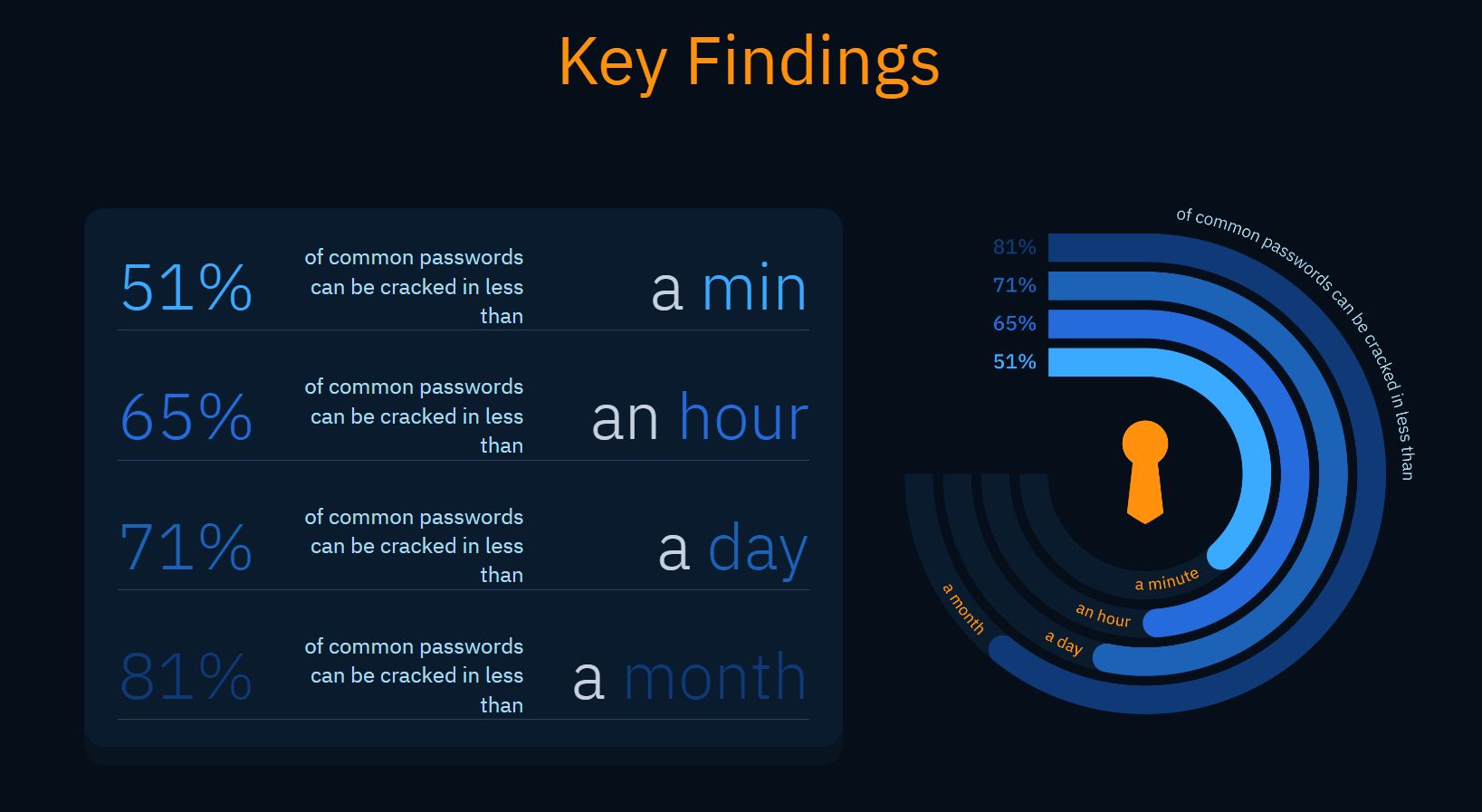 How Your Password Could Beat an AIAll isn't lost: As of 2023, artificial intelligence still has plenty of limits. Not only do chatbots still love inventing nonsense, but machine learning can't brute force crack a password when it's long enough.
Every additional letter or number in a password means that an algorithm will face exponentially more variations before it hits the right one. Computing power is set to continue increasing dramatically, so password lengths will have to increase as well, but according to the latest research, 11 digits may be the magic number.
You'll need to mix in numbers and uppercase letters as well as lowercase letters, though: An 11-digit password using just lowercase letters can (in 2023) be solved by AI within about 23 hours. But an 11-digit password with all three will take 38 years to crack. Add in symbols, and it'll take a tidy 356 years.
Add in more characters, and you'll be even more safe:
“Passwords [with more than] 18 characters are generally safe against AI password crackers, as it takes PassGAN at least 10 months to crack number-only passwords and 6 quintillion years to crack passwords that contain symbols, numbers, lower-case letters, and upper-case letters.” – Home Security Heroes
Should Passwords Die Out?Everyone has dozens of online accounts these days, and the human brain simply isn't designed to retain that many 11-character passwords.
So, we tend to reuse passwords, and we tend to make them just one or two simple words. These are both massive mistakes that leave millions incredibly vulnerable every day — but our brains can't really be expected to do much else, at least on a widespread scale.
Other security measures are preferable, with two-factor authentication one of the best. But until we completely change how online security works, we'll still have too many passwords to deal with. There's just one great solution: Password management tools, which can safely store all the complex 11-character passwords you need to stay safe and secure. The best tools will flag suspicious websites and logins as well, for greater security.
If you're interested, we've rounded up the best and most trusted password management tools for businesses today.
The post AI Can Probably Guess Your Password Within Seconds appeared first on Tech.co.
Computing hardware company MSI fell victim to a ransomware attack last week, records show.
While the details aren't all available from the paperwork that the tech company filed with the Taiwanese Stock Exchange, the timing lines up with claims from the “Money Message” ransomware gang. If those claims are true, MSI's stolen data files will be leaked online if the company doesn't pay a ransom to the tune of $4 million.
It's the latest ransomware attack to remind the tech industry that this form of hack remains one of the most serious cybersecurity threats to keep a watch for.
What to Know About the MSI HackThe “Money Message” group has claimed to be responsible for the breach, and to require $4 million in payment in order to halt their release of the data. This stolen data includes company source code, the hackers state.
Not confirmed currently? When exactly the hack occurred, what type of data may or may not have been taken, and which encrypted systems MSI was relying on.
MSI has not disclosed the details of the ransom, but they have confirmed the breach itself. One recent study found that 30% of IT professionals say they have covered up data breaches, so this situation could be even worse.
“After detecting some information systems being attacked by hackers, MSI's IT department has initiated information security defense mechanism and recovery procedures.” – MSI
In the same statement, the company said it had reported the incident to “the relevant government authorities.”
Ransomware Has Surged in the Past Few YearsThe threat of ransomware attacks — when hackers infiltrate a system specifically in order to steal or lock up massive amounts of data unless the victim pays a big fee to reverse the damage — has long been a billion-dollar concern for industries everywhere.
In fact, total ransomware costs reached $1.2 billion in 2021. Together with general business email compromise, ransomware incidents added up to 70% of all cyberattacks between mid-2021 and mid-2022. Healthcare was one big target, due in part to the large amount of sensitive data that hospitals rely on — 1.9 million US patient records were stolen in just one 2022 incident alone.
Ransomware Is Down… But Not OutThat tide has started to turn slightly in recent months.
Cybersecurity teams have rolled out new training and resources. At the same time, the economy has led to belt-tightening, even among illegal operations: Ransomware hacking groups have been downsizing amid plenty of other tech layoffs.
In total, one analysis found, ransomware attacks were 40% less profitable across 2022 than they had been in the previous year. 2021 may have been the peak for this type of hack. But that doesn't mean they don't remain a massive threat and companies like MSI are here to prove as much.
As always, you should protect your business from ransomware when you can. The first line of defense is a good firewall, and plenty of other tech tools will help as well, from great business VPNs to high-quality password managers.
The post MSI Ransomware Attackers Demand $4 Million for Stolen Data appeared first on Tech.co.
The cybersecurity crisis might be getting worse, as a new study found that nearly a third of IT professionals have covered up data breaches at the behest of their supervisors.
As is often the case in the business world, a bit of transparency goes a long way in maintaining integrity and trust for your company. Whether it be compensation or benefits, keeping your employees and customers in the loop can do a lot to breed success.
When it comes to cybersecurity, though, some businesses are apparently opting for the opposite tactic, having their teams cover up the breaches rather than report them.
30% of IT Professionals Have Covered Up Data BreachesA new study from BitDefender, a cybersecurity provider offering tools for businesses and individuals, found that 29.9% of IT professionals have covered up data breaches at their company.
Even worse, the study also found that 42% had been asked by their supervisors to cover up data breaches, which means at least a small percentage of IT professionals are pushing back on these questionable security practices.
The research from BitDefender, reported by Venture Beat, surveyed 400 IT professionals from businesses that have more than 1,000 employees.
Why Wouldn't an IT Professional Report a Data Breaches?Given the scope of the research, it's fair to wonder why in the world IT professionals and their supervisors would ever cover up a data breach. After all, it's not like they actively want to put your data at risk, so what's the deal?
The reality is that there are lots of regulations in place to encourage companies to properly and effectively secure the data of individuals. Subsequently, when they don't do that properly or effectively, data breaches can come with some hefty penalties that are the likely cause for these kinds of cover-ups.
In fact, depending on where the company is headquartered, penalties can range from $500 to $50,000 per customer. This means that for larger companies, like the ones surveyed in this study, costs can get very high very fast. As a result, these IT professionals and their supervisors are likely trying to avoid these kinds of penalties by covering it up.
Transparency and CybersecurityWhile a cover-up may seem like a good short-term solution, the long-term damage to your brand is almost assuredly right behind it. In so many words, transparency is good for everyone: the company, the customers, and the ecosystem of technology.
“Security in cyberspace can be enhanced by a degree of transparency across all users that is not always adopted among security professionals; the more that non-expert managers and leaders understand the impact of good (or poor) protection, the better they will be able to use cyber assets responsibly.” – Dan Chenok, Executive Director of the IBM Center for The Business of Government
Uber is an excellent example of a company that attempted to hide a 2016 data breach of 57 million users and was eventually made to pay $148 million to settle civil litigation. Simply put, covering it up will always come back to bite you in the end.
The post Study: 30% of IT Professionals Have Covered Up Data Breaches appeared first on Tech.co.
If you drive a truck in the US, you know what an electronic logging device (ELD) is and, more importantly, you know what the ELD mandate is. This 2012 law established that every commercial driver in America is required to record hours of service through electronic logging devices, starting December 16th, 2019.
After that date, drivers that do not have a compliant ELD may receive a citation and even be placed out of service (OOS) for a period time. Subsequently, it's pretty important to know exactly which of these devices actually helps you stay within the regulations for your vehicle.
The Federal Motor Carrier Safety Administration (FMCSA) has a list of approved ELDs that will keep you covered. However, the administration is constantly updating the list, most notably removing formerly compliant devices off of it. That's where we're here to help.
In this guide, we'll cover all the ELDs that have been removed from the FMCSA Approved Devices List in 2023, so you can stay compliant throughout the year.
ELD ONE (TMS ONE)To kick off the year, TMS ONE's ELD ONE device was removed from the FMCSA Approved Devices list on January 31st, 2023.
According to the press release from the FMCSA, the company failed “to meet the minimum requirements established in 49 CFR part 395, subpart B, appendix A.” After a little digging, we found those requirements state that “the display must be reasonably viewed by an authorized safety official without entering the commercial motor vehicle” (CMV).”
Nationwide ELD (Nationwide Technologies)Just a few short days later, Nationwide Technologies and its Nationwide ELD was removed from the Approved Devices list as well on February 3rd, 2023.
The Nationwide ELD was removed from the list for the same reason as the ELD ONE, with the company failing to meet the requirements set forth in regard to a safety official's ability to view the ELD without entering the vehicle.
ORS device (ONE PLUS ELD)Not to be outdone, ORS PLUS ELD and its ORS device were also removed from the FMCSA Approved Devices list on February 8th, 2023.
You're not going to believe it, but the ORS device was removed from the list for the same reason as the devices above. The company did not meet requirements established in 49 CFR part 395, subpart B, appendix A, so you'll have to find a new ELD in the next 60 days or risk penalties.
All-Ways Track ELD (All-Ways Track)There was a bit of a lull between the next ELD removed from the FMSCA Approved Devices lists, but All-Ways Tracks ELD from All-Ways Track joined the fray when it was removed on March 27th, 2023.
We're a perfect four for four so far, as the All-Ways Track ELD was also removed from the list for failing to comply with regulations stating the display needs to be reasonably visible without entering the motor vehicle.
What to Do If Your ELD Is No Longer CompliantIf you've just discovered that your ELD has been removed from the FMCSA Approved Devices list, don't panic. The administration allows for drivers to get a new device within 60 days of removing a particular device from the list, so you have two months to get a new one.
We've done a lot of research on the best ELD options in 2023, so feel free to check out our guide and keep up with news on Tech.co for more updates about the ELD mandate.
The post ELDs Removed From FMCSA Approved Devices List 2023 appeared first on Tech.co.
The rushed release of AI-powered chatbots may have some unexpected drawbacks, as a new report found that Google's ChatGPT alternative Bard is all-too comfortable spreading misinformation if prompted the right way.
If you haven't heard of ChatGPT and its many alternatives, you've likely been living under a rock for the last few months. The generative AI technology has taken the tech industry by storm, fueling dozens of copycats from the likes of Alibaba, Salesforce, and even Snapchat. These tools are designed to create content, develop code, and generally tackle mundane tasks at businesses around the world.
Unfortunately, while these AI tools have taken the load of off some employees, little has been investigated about how ChatGPT, Bard, and other iterations could be used to exasperate the growing problem of misinformation. Until now.
New Report Outlines Misinformation Problem for Google BardAccording to a new study from NewsGuard obtained by Bloomberg, Google Bard — the tech giant's alternative to ChatGPT — is a bit too ready to spread misinformation.
The news reliability data service merely asked the generative AI chatbot to write something about “the great reset” as a far-right online pundit. The results were a conspiracy-laden rant touching on myriad of offensive and disproven theories about a wide range of problematic topics.
“For all the extraordinary promise of generative AI, it also presents a great threat to trust in information. The early launches of these services often respond to prompts about topics in the news with well-written, persuasive, and entirely false accounts of the news. This could become a force multiplier for those wishing to spread harmful conspiracy theories, healthcare hoaxes, and Russian disinformation at unmatched scale.” – Steven Brill, co-CEO of NewsGuard
That wasn't the only example, either. NewsGuard input 100 different prompts asking the generative AI platform to create content about misinformation commonly found online, and Bard was happy to develop in-depth content on 76 of them.
How Has Google Responded?Despite the decidedly rushed release of Bard, Google stands by its generative AI platform, noting that it has safeguards in place to prevent this kind of thing from happening.
“We have published a number of policies to ensure that people are using Bard in a responsible manner, including prohibiting using Bard to generate and distribute content intended to misinform, misrepresent, or mislead. We provide clear disclaimers about Bard’s limitations and offer mechanisms for feedback, and user feedback is helping us improve Bard’s quality, safety and accuracy.” – Robert Ferrara, a Google spokesman
Whether or not Google is actually committed to “focus on quality and safety” when it comes to Bard, the reality is that tech giants have proven time and time again that they don't necessarily have the tools to rein in their own technology. Heck, social media companies have been trying to figure it out for more than a decade, and they're clearly still a long way from getting it right.
The ChatGPT BacklashThis report isn't the only damming piece of news for the generative AI industry. In fact, a wide range of vocal opponents have risen since the dawn of ChatGPT, begging the tech giants that are launching this technology to slow down for the sake of humanity.
An open letter was even penned by some tech professionals that calls for a six-month pause on the development of generative AI technology, so that legislative bodies can catch up and regulate the roll-out a bit more effectively. Elon Musk, Steve Wozniak, and Andrew Yang have all signed it.
Even more troubling, the country of Germany has recently debated banning the technology for fear of how it will impact daily life, and Italy has already pulled the trigger on blocking it entirely.
As is common with an industry that likes to “move fast and break stuff,” tech giants like Microsoft and Google have been uncomfortably flippant with the concerns about generative AI.
The post Report: Google Bard Could Be Used to Spread Misinformation appeared first on Tech.co.
The ecommerce behemoth Amazon is going to cut the number of shares it gives to its workforce from 2025, according to a company memo that was recently obtained by Business Insider.
The memo informed managers that the stock units would be reduced due to the “uncertain economic climate,” but it also claimed it would make up for this change by paying staff fairer wages.
This news comes just weeks after the company announced it would be laying off a further 9,000 employees, bringing its total number of displaced workers up to 18,000. Here's what we know so far.
Amazon Is Cutting Employee Stock Awards from 2025Amazon is planning to reduce the number of company shares it hands out to its employees, as it prepares itself for an increasingly turbulent economic climate.
Verifying
Want the latest news in tech delivered straight to your inbox? Sign up to Tech.co's weekly newsletter today.

Please fill in your name   Please fill in your email    Please verify before subscribing.   Subscribe   This news was leaked in an internal memo that was shown to *Business Insider* this week and has since been confirmed by Amazon spokesperson August Aldebot-Green. The memo informed managers in the company that stock awards, also known as restricted stock units or RSUs, will be reduced by a “small amount” in 2025, as part of the company's compensation review cycle.
This decision marks a major change of strategy, with Amazon handing out $19.6 billion in stock-based compensation in 2022, up 54% from the previous year and the highest amount in the company's history.
However, Amazon's decision to scale back stock awards isn't solely a cost-cutting measure. The memo revealed that as part of its revised compensation plan, the company was considering giving more cash to its employees — a decision that's been long-awaited by lots of Amazon staffers.
Amazon's Post-Pandemic Bubble Has Officially BurstWhile Amazon has remained surprisingly optimistic about its market performance — with the company predicting that its stock price will rise 15% in the next two years — this switch from equity to cash-based compensation is a clear attempt to account for future stock variation.
Amazon, like other companies that cashed in during the pandemic, has fallen on increasingly hard times recently as they deal with bloated workforces and a steady decline in consumer spending.
In a desperate attempt to recover losses, the ecommerce titan announced it could be cutting 9,000 jobs last week across four departments of the company, bringing its total number of layoffs up to 18,000. This move follows similar decisions made by Meta, who announced 10,000 fresh cuts last month, and Google who recently fired 6% of its workforce.
Unfortunately, as big tech continues to brace for a looming recession, scaling back costs have become an industry standard. Learn more about what tech companies are doing to remain competitive here.
The post Amazon Plans to Shrink Employee Stock Awards as Recession Looms appeared first on Tech.co.
If you have a habit of procrastinating until it's close to the wire or succumb to distractions a little too easily, it could be time to try body doubling — a strategy where two people work alongside each other to improve productivity.
While the buzzword has been around for decades, the ADHD management approach rose to prominence once again after Covid-19, and has been circulating apps like TikTok and Instagram ever since.
But does body doubling actually make it easier to crack on with tasks? And what can workers do to get the most out of the productivity hack? We answer some burning questions for those interested in testing it out.
What is Body Doubling?Also referred to as “parallel working” body doubling is a catchy term that describes working in the presence of others to improve productivity and focus.
Verifying
Want the latest in tech and employment delivered straight to your inbox? Sign up to Tech.co's weekly newsletter today.

Please fill in your name   Please fill in your email    Please verify before subscribing.   Subscribe   The strategy itself is nothing new. However, when the Covid-19 pandemic changed the way we work and blocked access to co-working spaces like offices and cafes, the term was picked up with renewed significance. And now, as 58% of US workers engage in some form of remote work, the practice continues to be as popular as ever.
But body doubling doesn't just refer to in-person co-working. From TikTok live streams to ‘work with me' YouTube videos, a plethora of tools have popped up to help workers harness the practice digitally. You can even use apps and websites to chat with other members of the community and get paired with other body doubles online.
@allieschweizer Reply to @alyssajoyyyyy who else does this to get things done? 😬🤗 #neurodivergent #bodydoubling #autism #autisminwomen #adhdinwomen #actuallyautistic
♬ original sound – Allie Schweizer
But who exactly is body doubling for? Thanks to its purported ability to boost focus and concentration, it has picked up significant traction within the ADHD community. However, there really is no limit to who can benefit from the technique.
How Does Body Doubling Work?While the subject of body doubling hasn't been researched extensively, working with others has been shown to increase productivity and focus in a number of ways.
According to some experts, when we're surrounded by others working hard, we instinctively want to imitate them. This is because of something that neuroscientist Giacomo Rizzolatti described as ‘mirror neurons‘ – a distinctive class of neurons that are responsible for us empathizing and emulating other humans.
Other experts believe that when we work alongside someone else – be it in person or virtually – we become more accountable for our actions, leading us to feel more motivated. This is backed up by research, with a study by the American Society of Training and Development finding that those who stated their intentions to other people became 95% more likely to reach their goals.
This sense of social accountability is understood to be even more salient for people with neurodiversity, with J. Russell Ramsay, a professor at the University of Pennsylvania explaining “the idea of externalizing motivation is a long-standing, evidence-based mechanism for managing ADHD”.
But no matter where you lie on the neurodiversity spectrum, here are some tips for getting the most out of the practice.
Body Doubling Tips: How to Get it RightBody doubling can help you with just about any task imaginable, it's not just reserved for work tasks. However, if you're intent on making body doubling work for you, here are a couple of things to bear in mind.
- Find the right partner – Who you choose to body double with has a massive impact on its success rate. We'd recommend choosing a friend who can get on quietly by themselves, or a virtual stranger who you feel comfortable checking in with from time to time.
- Set your intention right away – Before you get down to it, share the intentions of your session with your body double. This way, you can be held accountable if you start to veer off track.
- Share your camera – Sharing your camera on video conferencing apps may seem a little disarming at first, but sharing your camera with your virtual body double is another way to hold you to account.
- Reach out to the community – If you're having trouble sticking with the practice, chatting with the body doubling community is a great way to seek encouragement and find solutions to any hurdles you might be facing. The post Body Doubling: The Productivity Hack We Should All Try appeared first on Tech.co.
Cost-cutting measures at Apple HQ are on the brink, as the company warns its corporate retail employees to reapply for new roles, or be let go.
The news, announced to Apple employees via video conference, signals another round of tech layoffs, despite the company's best efforts to avoid it.
As stocks continue to tumble, Apple insists that the move is to improve the support of its stores, but staff are already referring to the announcement as a layoff. Given the turbulence in the industry, it wouldn't be the first tech giant to try to disguise it.
Verifying
Get the latest tech news, straight to your inbox Don't miss out on the top business tech news with Tech.co's weekly highlights reel

Please fill in your name   Please fill in your email    Please verify before subscribing.   Subscribe   Apple Employees Are Either In or OutAccording to Bloomberg, Apple's corporate retail division have until Friday to reapply for jobs within the company, or be let go. The decision was described as an ‘org change' to help improve the support of Apple's retail stores.
While it's unclear how many roles will be affected, the decision will reportedly impact the team responsible for the construction and maintenance of Apple's retail store in the US, Europe and Asia.
Despite forecasts, Apple's revenue has steadily declined in the last year, with Fortune reporting a 5% drop in revenue over the holiday quarter. With the demand for Macs and wearables waning, Apple has been forced to implement various cost-cutting measures to ensure the company is able to stay economically viable. The latest news, however, suggests that those moves might not have been as successful as they'd hoped.
Cost-Cutting Measures On the BrinkUntil now, Apple have been able to retain the majority of its staff by being ‘more prudent an thoughtful when it comes to spending'. In January, CEO Tim Cook took a 40% pay cut, and the company extended its hiring freeze, paused promotions and bonuses.
The move, which was supposed to be temporary, might signal that the company is facing more challenges that they'd anticipated.
Other measures to cut costs include all travel budgets being signed off by the company's senior vice president. And, those who choose not to adhere to the company's return-to-office mandate, at risk of termination.
Are More Tech Layoffs Inevitable?Despite Apple's efforts to their retain staff, layoffs are still very much on the cards, with its organizational changes proving that staff cuts may just be inevitable. In the last few months, Microsoft, Google, Meta have laid off thousands of employees, with reports showing the tech industry to be responsible uncoupling with than 100,000 workers in 2023 alone, proving that employee trust in the tech industry is broken.
Return-to-office mandates may be disguised as a move to improve productivity, staff sentiment suggests it may just be a way to push more employees out, given the resistance to changing work models.
Still, layoffs don't appear to be going anywhere. As the industry continues to battle inflation and the aftermath of the pandemic boom – unless a company is investing in web conferencing tools like Microsoft Teams and Zoom or implementing more flexible working models, employees in want of more flexibility and job security may need to look elsewhere.
The post Apple Considering Layoffs: Staff Told to Reapply for New Roles appeared first on Tech.co.
Post, a Twitter alternative where users can make micropayments to read singular, ad and cookie-free news articles, launched this week.
The new social media network is publisher-centric, with a keen focus on improving users’ news reading experiences and granting them access to a wider range of articles.
The LA Times, USA Today, and The Independent have already signed up, with a string of other local news, tech, and finance publications also getting in on the action.
Verifying
Get the latest tech news, straight to your inbox Don't miss out on the top business tech news with Tech.co's weekly highlights reel

Please fill in your name   Please fill in your email    Please verify before subscribing.   Subscribe   Post: A Better Way to Access Information?Post’s unique selling point is the way it declutters the average person’s news reading process, providing an ad-free, paywall-free experience. You can read news directly within your feed on the site, rather than having to follow a link to reach externally hosted content.
You won’t have to put up with any invasive cookie tracking when you read articles on Post.
The catch is that you’re expected to make micropayments — denoted as “points” — which currently cost $4.20 for 300 points. Articles can be unlocked for as little as a single point, but articles worth up to 89 points are also available for purchase, TechCrunch says.
Users currently get 50 free points when they sign up, and Post says it plans to add additional payment methods — such as paying whatever amount the user sees fit — in the near future.
On the surface at least, it would seem that setting up a platform in the way Post has will ensure that the average user reads more news that they actually care about from a wider variety of reputable sources.
Major Publications Are Already on BoardOver 650,000 people signed up for the Beta version of Post, and around two-thirds of that number ended up making an account, which is an encouraging sign.
TechCrunch reports that major news sites The Boston Globe, The Independent, Insider, LA Times, NBC News, Politico, Reuters, The San Francisco Chronicle, and USA Today all signed up to provide articles for the platform’s 430,000 account holders.
Websites that cover technology and finance, such as Fortune, MIT Technology Review, Yahoo Finance, and Wired, also have a presence on the platform.
Innovation in the Face of Twitter TurmoilWhile Twitter continues to flounder under Elon Musk’s leadership, Twitter alternatives have been flourishing. A whole ecosystem of social media apps is now benefitting from Twitter's deeply unsatisfied user base, a cohort of news-consuming users more open than ever to switching platforms.
Post also provides a fresh option for publishers like the New York Times, who’ve just been stripped of their “Verified” badges on Twitter because they don’t pay for it.
It’s not just Post who've shown promising signs of growing their user base, however. Mastodon, for instance, has more users than it’s ever had, while smaller platforms like CounterSocial have also seen an uptick in users.
If Twitter continues to make mass layoffs, responding to customer support requests with poo emojis, and deprioritizing the overall user experience in favor of short-term profit-chasing initiatives, they’ll usher in the post-Twitter era all by themselves.
The post Ad-Free, News-Focused Twitter Alternative Post Is Live appeared first on Tech.co.
After overstretching during the pandemic while profits were booming, the world’s biggest tech companies have been brought resoundingly back down to earth by the financial hardships rapidly engulfing the global economy in 2023.
The likes of Meta and Amazon have resorted to making mass layoffs and giving up thousands of square feet of office space since the new year, while social media network Twitter has implemented some strange cost-cutting measures in recent times, including desperately pleading for reduced contractual terms with vendors.
Joining the doom and gloom this week, Google also announced cuts to employee services and perks will be taking place soon. So, we’ve had a closer look at how the Tech giant – as well as its rivals – are cutting costs this year.
Google: Staple Things Less, PleaseOne of Google’s objectives for 2023 is to “deliver durable savings through improved velocity and efficiency”, a recent internal email from company CFO Ruth Porat said.
Verifying
Get the latest tech news, straight to your inbox Don't miss out on the top business tech news with Tech.co's weekly highlights reel

Please fill in your name   Please fill in your email    Please verify before subscribing.   Subscribe   As part of this cost-cutting drive, a number of **employee perks** and services are going to be taken away, reports suggest. For instance, employees used to be able to expense a mobile phone even if there was one internally available – but now, this service is no longer possible.
Staff that would've been given MacBooks upon starting will now receive a Chromebook instead, with the more powerful devices reserved for engineering teams. Company cafes are set to close on quieter days such as Mondays and Fridays, while end-of-week yoga classes were identified as another “underutilized” perk at Google that could be scrapped.
“We set a high bar for industry-leading perks, benefits, and office amenities, and we will continue that into the future… however, some programs need to evolve for how Google works today” Ruth Porat, Google CFO.
Other measures include asking employees to share desks, while some Google employees in San Francisco have reported that staplers and tape are now being drip-fed to them by receptionists.
These decisions are being implemented alongside the 12,000 layoffs that were announced back in January, representing 6% of Google's workforce.
Twitter: We Can't Pay, but We Could Plead for HelpIt’s a wonder why no other company has tried Twitter’s failsafe method of cutting costs that hit the headlines in December of last year: refusing to pay their rent.
The Financial Times reports that Pablo Mendoza, a managing director at a Dubai-based investment firm that contributed $700m to Musk's acquisition of the platform, has resorted to pleading with vendors that “his job is on the line”, negotiating 50 – 90% reductions in some cases.
In what seemed like an act of desperation, several items from Twitter’s offices were put up for auction in mid-January, including a pizza oven and the social media network's famous bird statue.
These sorts of tactics already look like they’re backfiring, however, as the refusal to pay Twitter’s bills has wrapped the social network up in a multi-million dollar legal quagmire, with nine separate lawsuits looming.
To make matters worse, these ‘measures' are being implemented against a backdrop of almost-constant layoffs, with three-quarters of the company’s pre-acquisition payroll no longer working for the company. Some were made redundant, while others were offered “voluntary separation” from Twitter.
Meta: Fewer Employees, Fewer CostsAt the beginning of February, Mark Zuckerberg announced that 2023 would be Meta’s “year of efficiency” – and he wasn’t wrong.
In February, a cull of middle managers – referred to internally as the “flattening” – was initiated, with many told to move to an “individual contributor” role or leave the business.
Then, Meta announced 10,000 layoffs in mid-March, taking the total number of employees made redundant in the last six months to over 21,000.
Meta is also leaving vacant positions open instead of filling them – with recent reports suggesting that the company is leaving as many as five thousand positions unfilled to bring salary outgoings down.
Apple: Less Travel, More Pay CutsApple has perhaps been the big tech company least affected by the economic downturn, largely due to its $165 billion worth of cash reserves, while Bloomberg says stock is up around 20% this year.
Despite this, the company has still implemented a number of cost-cutting measures, including delaying bonuses, pushing back projects like the HomePod to 2024, and reducing team budgets across the company.
Other tactics include limiting the ability of Apple's workforce to transfer between locations, reducing employee travel, and simply leaving roles open when employees leave, as Meta has done.
Ever a man of the people, CEO Tim Cook requested that he take a pay cut himself this year, and plans to take home 40% less than he did in 2022 – leaving him with a mere $49 million.
Microsoft: So Long, Office SpacesLike Apple, Microsoft has been restricting company gatherings and travel since the summer of 2022 – but the company is also going for the multi-pronged cost-cutting approach.
In January 2023, it was revealed that Microsoft was planning to let go of 1.7 million square feet of office space in an attempt to rein in costs and consolidate “to create higher density across our workspaces”.
Its biggest cost-cutting measure of 2023 so far, however, was laying off over 10,000 employees just after the new year, just days after offering staff unlimited paid time off.
This itself could be a cost-cutting measure, as it helps companies avoid paying out for unspent holidays when staff members leave.
Amazon: It's the Little Things That MatterAmazon has implemented a number of smaller cost-cutting measures over the past few months, with the need to save affecting almost every area of the business.
The company has already sublet and leased office space the company isn’t using, including 65,000 square feet in Bengaluru, India just this week.
A smaller measure has been to allow sellers to store their inventory in Amazon warehouses for longer periods of time.
The ecommerce behemoth also started giving third-party companies access to its logistics network in the name of quicker order fulfilment. Some Amazon Go stores in parts of the US, such as Seattle, have been closed too.
Of course, the company's wage budget will be significantly smaller – Amazon announced plans to lay off 18,000 employees in January 2023.
The Cost-Cutting Chaos Will ContinueUnfortunately for everyone working in the tech industry, this won't be the last we hear of layoffs and other ruthless cost-cutting measures. More perks, pay, and physical office spaces are likely to be given up as the year trundles on.
Uncertain economic times provide new challenges for companies constantly in the spotlight, with heightened scrutiny over every dollar spent. Projects like Meta's Metaverse, for instance, have been consistently framed as failures in recent weeks as the company founders financially.
Which decision-makers and key players will come out unscathed remains to be seen – but Mark Zuckerberg and Amazon's Andy Jassy have certainly seen their personal stock tank and employee unrest increase in the past few months.
Whatever happens, it's unlikely restricting staplers and tape will be the most leftfield attempt to save a bit of cash we see in 2023.
The post Here’s What Google, Meta and Co Have Cut to Save Costs appeared first on Tech.co.
VPN company Mullvad is teaming up with the Tor Project to launch a new browser, called the Mullvad browser.
The goal and big selling point of the new software service is to help reduce a user's online “fingerprint” as much as possible — in other words, to keep third-party services from collecting user data and tracking users across the internet with it.
Any new product with a focus on data security is welcome in 2023, when network breaches are more common than a case of the flu.
Verifying
Get the latest tech news, straight to your inbox Don't miss out on the top business tech news with Tech.co's weekly highlights reel

Please fill in your name   Please fill in your email    Please verify before subscribing.   Subscribe   What Makes the Mullvad Browser More Private?Here's how the Tor Project explains the browser's privacy settings:
“By default, Mullvad browser has private mode enabled, blocks third-party trackers and cookies, and makes it easy to delete cookies between visiting pages during the same session.”
On most mainstream browsers, tiny details about your online presence can be collection — stuff like your computer's time zone, operating system, and browser version — and these details can allow companies to track your online activity across multiple websites. They can build a profile on you which can then be sold to advertisers.
The Mullvad browser also combats this practice, using a “hide-in-the-crowd” approach that makes each user's fingerprint look the same as everyone else's.
Here's the Tor Project again to explain:
“The browser's ‘out-of-the-box' configurations and settings will mask many parameters and features commonly used to extract information from a person's device that can make them identifiable, including fonts, rendered content, and several hardware APIs.”
Is Data Privacy Taking Off in 2023?Hoovering up huge amounts of data with little to no justification has been the internet's business model ever since Facebook first rose to power around the mid-2000s. But starting in 2018, when that social platform's Cambridge Analytica scandal was disclosed, public opinion began to sour on social media and its data collection practices.
Today, you'd be hard-pressed to find someone who thinks social media is an unmitigated success, when while many of us rely on it to stay in touch with everyone we know. Between TikTok regulations and every Twitter news headline these days, it's not clear that even the biggest social networks remain too big to fail.
In this mileu, it makes sense that many people might second-guess their social media use. And browsers are just as big a concern as social platforms. If you keep using Chrome, your data is still being used to deliver you ads.
If anyone wants to trim down on any data collected, privacy-centric browsers like Mullvad's new solution are one great way to start. A quality paid VPN is another great way to stay private, too.
The post Mullvad VPN’s New Browser Wants to Keep Your Data Private appeared first on Tech.co.
Western Digital has reported a network breach.
Some systems remain offline, and the data storage company says that the hacker was able to steal some company data. The full scope of the data breach remains unclear. Some users of the company's My Cloud storage service have reported that they haven't been able to access the service.
Western Digital has launched all its incident response protocols, hired external security experts, and is coordinating with law enforcement.
What to Know About the Western Digital HackThe breach happened a week ago, though it was not public until Western Digital's disclosure today. In their press release, the company doesn't explain the specifics of how the hacker breached the data.
Verifying
Get the latest tech news, straight to your inbox Don't miss out on the top business tech news with Tech.co's weekly highlights reel

Please fill in your name   Please fill in your email    Please verify before subscribing.   Subscribe   The company has explained a little bit about what steps it has taken to address the issue:
“Upon discovery of the incident, the Company implemented incident response efforts and initiated an investigation with the assistance of leading outside security and forensic experts.”
It's unclear how much data the hacker accessed. However, the breach appears to have affected a number of the company's network attached storage (NAS) devices, including My Cloud, My Cloud Home, My Cloud Home Duo, and My Cloud OS5, as well as SanDisk ibi and SanDisk Ixpand Wireless Charger.
The login service for WD My Cloud Home is unavailable. Thank you @westerndigital for not letting me access my data that I have in the living room pic.twitter.com/u0gjlh8ssi
— Alejandro Lorente (@jalc_79) April 2, 2023
Non-working services include cloud, proxy, web, authentication, emails, and push notification services, IT Pro reports. Western Digital says it will post another update soon.
Staying Safe OnlineWhile the specifics aren't known yet for this latest attack on a data storage company, it's safe to say that times are hard for anyone trying to keep their data safe. If you aren't worrying about your own data security habits, you're dealing with the potential exposure that any other service may leave you open to, should that third-party service be breached itself.
The data storage operations are on their own, but we can help you with your own online footprint: Use two-factor authentication when you can, don't re-use passwords, make your passwords really long, and double check any email you get to see if they might be phishing attempts.
Arming yourself with a few tech security tools can help too: We recommend a VPN and a password manager.
The post Western Digital Suffers Network Security Breach appeared first on Tech.co.
Germany may be the next country in line to ban the ChatGPT AI program.
According to comments from the German commissioner for data protection, banning Microsoft's popular OpenAI project is “possible.”
Italy has already banned the chatbot, citing data security concerns and a suspected breach of users' data privacy. German's decision may hinge on learning more about the reasoning behind the Italian regulator's call.
ChatGPT has been praised for its ability to deliver articulate conversational responses on a wide range of topics. The AI tech has a lot of big potential business applications. But data privacy concerns are just the latest growing pain for the tech, which has also picked up a reputation for factual inaccuracies.
Why Did Italy Ban ChatGPT?The Italian Data Protection Authority officially blocked ChatGPT last Friday, saying that the program was potentially violating European Union data protection rules.
The ban is temporary, but will last “until ChatGPT respects privacy,” and it's unclear what will need to change in order to allow the chatbot to be restored. In response to the ban, OpenAI has disabled ChatGPT for Italian users while stating that it does not believe the program violates Europe's privacy regulations.
Verifying
Get the latest tech news, straight to your inbox Don't miss out on the top business tech news with Tech.co's weekly highlights reel

Please fill in your name   Please fill in your email    Please verify before subscribing.   Subscribe    Italy's ban marks the first government-issued blockage of ChatGPT, or “the first nation-scale restriction of a mainstream AI platform by a democracy,” as Alp Toker, director of the advocacy group NetBlocks, told the Associated Press.
But it may not be the last. Just a few days later, other countries are already signaling a willingness to follow suit.
“In principle, such action is also possible in Germany,” Ulrich Kelber, the German commissioner for data protection, said in a statement about Italy's ban. Kelber notes that states would have jurisdiction, and did not explain any further plans to ban the program.
France and Ireland regulators are also invested in learning more about Italy's reasoning, and both say they have contacted the Italian data security watchdog for further discussion.
Will ChatGPT Bans Impact Me?The application is now baked into some Microsoft features — it's already powering a new tool called Microsoft Security Copilot that aims analyze cyberattacks — and will likely be used in many more services for Microsoft or third-party apps in the near future. But these effects probably won't be impacted.
Any potential bans on ChatGPT aren't likely to have ripple effects for those living in Italy or other countries beyond preventing them from accessing the online chatbot directly. Italy's problem with the service appears to be focused on how the app registers new users and what it does with their personal data afterwards.
ChatGPT (and all its rival chatbots) can emerge relatively unscathed from the whole issue once it resolves the specific problems Italy has with it, but the affair is a great reminder for one concern: Any tech companies operating in Europe must constantly keep user data privacy concerns front and center.
The post Germany Might Block ChatGPT Over Data Security Concerns appeared first on Tech.co.
If you're a legacy blue tick holder and you haven't signed up for the platform's premium service “Twitter Blue”, your verification will soon be removed, as Twitter begins “winding down the program”.
Despite their practical ability to discern legitimate accounts from impersonators, Elon Musk announced legacy blue checkmarks would be revoked back in December, claiming that their distribution was “corrupt and nonsensical”.
But this isn't the only change coming to Twitter. From April 15, Twitter users will also need to be verified to vote in polls, and to appear on the platforms For You page. Here's what we know so far.
Why You Could Lose Your Twitter CheckmarkIt looks like the sun is finally setting on Twitter's legacy verification system, which was first introduced just after the site was launched in 2009, as a way to identify legitimate accounts.
Verifying
Want to keep track of Musk's latest antics? Sign up to Tech.co's newsletter for the latest news in big tech.

Please fill in your name   Please fill in your email    Please verify before subscribing.   Subscribe   Since its rollout, the tick has come to represent a status symbol just as much as a tool for weeding out imposters. However, Twitter users still maintain that they're a vital way for notable public figures to authenticate their identity on the app and that removing them could unleash some pretty serious security concerns.
But this isn't the way that Elon Musk sees it. The second richest person in the world claims that switching the legacy system to the platform's $8-a-month paid service is the “only realistic way to address advanced AI bot swarms taking over”.
On April 1st, we will begin winding down our legacy verified program and removing legacy verified checkmarks. To keep your blue checkmark on Twitter, individuals can sign up for Twitter Blue here: https://t.co/gzpCcwOpLp
Organizations can sign up for https://t.co/RlN5BbuGA3…
— Twitter Verified (@verified) March 23, 2023
While Musk claims that removing blue ticks for legacy users is the best way to keep users safe, forcing verified accounts to fork out for a monthly subscription is also a clear attempt to squeeze more cash from its user base.
Twitter's financial turmoil is no secret. The social networking site has amassed an astronomical amount of debt since the SpaceX CEO acquired the site back in October. Musk has also been in hot water recently for failing to pay Twitter's bills.
With arrears currently exceeding $14 million, and the company facing legal action from all sides, the promotion of Twitter Blue is hardly surprising. But aside from the dismantlement of legacy ticks, what other changes are coming to the platform?
What Other Changes Are Coming to Twitter?From April 15, Twitter users will need to be verified to vote in polls, to prevent disruption from bots that are supposedly plaguing the platform.
Only companies, government entities, or Twitter Blue subscribers will be able to show up on the company's ForYou page too — the app's new algorithmically generated feed that takes heavy inspiration from the video app TikTok.
But while Musk claims these measures are the best way to protect its users from bots, a former member of Twitter's verification doesn't agree. “Our number one goal for my team was to protect users from real-world harm”, he told the BBC “and this screams the complete opposite to me.”
“Verified users will use their power and their presence on the platform to influence anything from misinformation to actual harm for users all around the world. It's a silent threat that no one is seeing.”
The post April Foul: Twitter Removes Your Free Verification from Today appeared first on Tech.co.
Despite being one of the first companies to let staff work from home during the pandemic, Meta has decided to stop offering remote work in new job postings, according to people familiar with the platform.
As the company carries out mass layoffs and reduces hiring in its “year of efficiency,” getting workers back into the office is understood to be another way to combat falling revenues.
But Meta's actions aren't taking place in isolation. It's just the latest in a long line of major companies to repeal flexible measures, with Disney, Amazon, and Walmart rolling out return-to-office mandates this year.
Meta Stops Offering Remote Work to New RecruitsAccording to sources close to Meta, hiring managers in the company have been told to stop listing “remote” or “out of the office” working as options on new job listings.
Verifying
Interested in big tech and employment news? Sign up to our weekly newsletter today!

Please fill in your name   Please fill in your email    Please verify before subscribing.   Subscribe   While the social media giant's official policy still allows employees to work from home whenever they please, this move suggests that the company might roll out stricter measures soon.
This news shouldn't come as a surprise, though. Despite being an advocate of flexible working during the pandemic, Meta's co-founder and CEO Mark Zuckerberg has gradually shifted his stance on remote work.
“Our hypothesis is that it is still easier to build trust in person and that those relationships help us work more effectively.” – Memo sent out by Meta
When Zuckerburg made the decision to axe another 10,00 workers earlier this month, he devoted a section of the layoff notice to the importance of “in-person time.” Here, he claimed that working in the office helps workers to form relationships that help them to work more effectively.
He also pointed to data that suggested that engineers who joined the company in-person performed better than those who joined remotely.
Meta lost $4.28 billion to its Reality Labs division last year, bringing its total losses for 2022 to an eye-watering $13.7 billion. As the company contends with falling ad revenues and mounting legal expenses, it's no wonder it's looking to recover losses. But Meta isn't the only company rolling back remote working policies.
Is the Remote Working Experiment Drawing to a Close?While one-minute commutes and decked-out home offices feel like the new normal for many of us, a number of major companies are starting to backtrack on their policies around remote work.
At the start of this year, Disney's CEO Bob Iger ordered workers to return to the office four days a week, extending its three-day-a-week policy that's been in place since 2021. Ecommerce behemoth Amazon dropped its WFH policy recently too, asking workers to come into the office at least three days a week starting on May 1st.
However, as the majority of US businesses remain connected through remote solutions like web conferencing software, flexible working isn't going away any time soon. Most companies are moving forward with a hybrid solution, while some like Airbnb and Atlassian give their staff full autonomy about where they work.
Read our guide to companies offering remote work for an updated list of WFH-friendly workplaces.
The post Meta Joins Big Tech’s U-Turn On Remote Work appeared first on Tech.co.
An artificial intelligence (AI) ethics group has asked the Federal Trade Commission (FTC) to investigate OpenAIs GPT-4 technology, claiming that the powerful language model is “bias, deceptive, and a risk to privacy and public safety.”
Since OpenAIs chatbot first exploded onto the scene, it's attracted over 100 million users, prompted copycat models by companies like Google and SnapChat, and sparked widespread fears around issues like job insecurity.
This formal complaint follows an open letter signed by Elon Musk, Steve Wozniak, and other notable figures in tech which pleads for AI development to be paused immediately. But do tools like GPT-4 really cause a threat to humanity?
Pressure is Being Put on the FTC to Halt OpenAI's New ReleasesThe Center for AI and Digital Policy (CAIDP) has just filed a complaint to the FTC, citing the potential dangers of GPT technology and calling for a temporary freeze on “large generative AI experiments” conducted by companies like OpenAI.
Verifying
Want the latest in tech delivered straight to your inbox? Sign up to Tech.co's weekly newsletter today!

Please fill in your name   Please fill in your email    Please verify before subscribing.   Subscribe   The complaint accuses OpenAI of violating the Fair Credit Reporting Act, the Equal Credit Opportunity Act, and Section 5 of the FTC Act, which outlaws “unfair or deceptive acts or practices in or affecting commerce”.
“The FTC has a clear responsibility to investigate and prohibit unfair and deceptive trade practices. We believe that the FTC should look closely at OpenAI and GPT-4.” – Marc Rotenberg, president of CAIDP
They also criticize the app for failing to meet the FTC's standard of being “transparent, explainable, fair and empirically sound while fostering accountability.”
Major Names in Tech Sign Open Letter to Freeze AI DevelopmentCAIDPs' objection comes just a few days after the Future of Life released an open letter demanding for OpenAI and fellow AI researchers pause work for at least six months, to make space for discussions around its ethics.
“We call on all AI labs to immediately pause for at least 6 months the training of AI systems more powerful than GPT-4.” – Open Letter from the Future of Life Institute
The letter commented on the “out-of-control race to develop ever more powerful digital minds” that no one can “understand, predict, or reliably control”. It also outlined that if the pause couldn't be enacted quickly, governments should step in to institute a moratorium.
This letter was signed by some of the leading names in tech, including the CEO of Twitter and co-founder of OpenAI, Elon Musk, and the co-founder of Apple, Steve Wozniak.
Musk's U-turn against AI is, understandably, sparking concerns among its users. But did OpenAI and Musk really create Frankenstein's monster? Or are anxieties around the smart technology overblown?
Is OpenAI's ChatGPT-4 Really a Threat to Our Safety?Earlier this month, OpenAI launched GPT-4 — an upgraded model that boasts a number of “human level” capabilities including image input and enhanced coding and translation.
As GPT technology advances at a rapid pace, the newer model offers even more opportunities to its users, including helping teachers create personalized learning experiences for students and programmers create mobile create apps with greater ease.
The benefits tools like GPT have on the business landscape have been well documented too, with the smart tool being used by a growing number of workers to automate a number of core processes from email production to keyword research.
However, as the technology spreads like wildfire, the tool has been accused multiple times of causing real-world harm – from issuing incorrect medical advice to doctors to helping cybercriminals launch successful phishing attacks.
Even OpenAI themselves admit that the chatbot can write “plausible-sounding but incorrect or nonsensical answers” and that they are “a little bit scared” of the tool being used for nefarious purposes like large-scale disinformation campaigns and offensive cyberattacks.
Ultimately, the applications of tools like GPT depends on the user's intent. But as we head further into unknown territory, pausing to reflect on its potential impact seems like a sensible move.
The post FTC Urged to Investigate OpenAI’s GPT for “Bias and Deception” appeared first on Tech.co.
Generative artificial intelligence tools may already be helping scammers steal your data quicker, experts say.
Phishing emails work by impersonating an official email and tricking readers into clicking a link to malware or giving away their personal passwords.
And text-based AI chatbots like ChatGPT are built for impersonating people, making them incredibly useful time-saver for phishers who need a convincing email.
How AI Is Improving Phishing Email: Better Spelling, Longer MessagesCybersecurity experts at the UK firm Darktrace say that “data suggests” an increasing number of phishing emails are written by AI bots.
Verifying
Get the latest tech news, straight to your inbox Don't miss out on the top business tech news with Tech.co's weekly highlights reel

Please fill in your name   Please fill in your email    Please verify before subscribing.   Subscribe   The result is better grammar and spelling, as well as longer messages — essentially the removal of any giveaways that people could once rely on to signal they were reading a fake email. Automatic spam filters may also fail to spot these new types of spam email as well.
“Even if somebody said, ‘don’t worry about ChatGPT, it’s going to be commercialized,’ well, the genie is out of the bottle. What we think is having an immediate impact on the threat landscape is that this type of technology is being used for better and more scalable social engineering: AI allows you to craft very believable ‘spear-phishing’ emails and other written communication with very little effort, especially compared to what you have to do before.” –Max Heinemeyer, chief product officer at Darktrace
A new warning, issued from European agency Europol, relies on these findings from firms like Darktrace to highlight AI as a new threat in the world of phishing emails.
Interestingly, AI chatbots like ChatGPT come with safeguards aimed at preventing them from being used for criminal actions, but these can be overridden easily. Users simply talk to the chatbot as if it's a person, convincing it to go against its own programming with a flimsy excuse: Cybersecurity firm Check Point says it was able to trick ChatGPT into generating a phishing email by telling the chatbot that it was creating the email template in order to help with an employee awareness program.
These emails are already a huge concern in the business world, too: The official term for phishing in a business context, “Business email compromise,” accounted for 19,954 complaints and a total lost value of $2.4 billion in 2021 alone.
Will AI Change the World?We've talked about the power of AI technology for decades, and businesses have used machine learning algorithms for years. But recent advancements have brought new forms of text and image AI programs to mainstream audiences, and they're better than ever.
In the end, AI is just a tool. It won't make the world worse, but it can speed up the ways in which the world isn't doing so great currently.
Businesses are already using them to do what businesses do under capitalism: Cut costs by replacing workers whenever possible. AI chatbots are already writing travel guides at Buzzfeed and helping code websites, among many other business uses. A recent report from Goldman Sachs predicts up to 300 million jobs, or 7% of jobs in the US, could be replaced with generative AI.
Hopefully, none of those 300 million people will fall for an AI-powered phishing email while job-seeking — that's just salt on the wound.
The post The Next Industry AI Is Taking Over? Phishing Emails appeared first on Tech.co.
Apple has officially entered the “buy now, pay later” market with a new service that some analysts predict will “wallop” the competition.
There's nothing worse for business than a big name entering your industry. Whether it be Amazon acquiring Whole Foods or Microsoft acquiring OpenAI, massive tech firms embarking on new markets can have a dire impact on small competitors.
That's why “buy now, pay later” services are shuddering with the news that Apple has launched its own service in US this week.
Apple Announces BNPL ServiceApple announced on Tuesday that it would launch its own “buy now, pay later” (BNPL) solution. The new service would allow users to get small (between $50 and $1,000) loans for online and in-app purchases on Apple devices like iPhones and iPads.
“There’s no one-size-fits-all approach when it comes to how people manage their finances. Many people are looking for flexible payment options, which is why we’re excited to provide our users with Apple Pay Later. It was designed with our users’ financial health in mind, so it has no fees and no interest, and can be used and managed within Wallet, making it easier for consumers to make informed and responsible borrowing decisions.” – Jennifer Bailey, vice president of Apple Pay and Apple Wallet.
The service will only work with merchants that accept Apple Pay, but considering 85% of US merchants do, that shouldn't be too large a barrier to entry.
Random users are already being randomly selected to take part in the prerelease of the service, with all US users getting access soon.
Is Apple Poised to ‘Wallop' Its BNPL Competition?There's always a bit of concern when a tech firm enters a new market, but it doesn't always work out in favor of the big guys. Unfortunately, experts note that, in this case, Apple is likely going to run away with the gold on this one.
“Apple Pay Later will absolutely wallop some of the other players. Other companies would've taken a look at Apple's announcement today because they are an ubiquitous name. This will take a bite out of the market share of other players.” – Danni Hewson, head of financial analysis at AJ Bell.
Simply put, Apple already has such a robust infrastructure of hardware and software to support this kind of loan system. Combine that with the fact that Apple Pay is becoming increasingly popular across the US, and it's safe to assume that Apple will quicky become the go-to option for buying now and paying later.
The post Apple to ‘Wallop’ Competition with New Buy Now Pay Later Service appeared first on Tech.co.
Not everyone is on board with the rapid development of AI tools like ChatGPT, with a number of high-profile tech professionals calling for a six-month pause to address significant concerns about the tech.
AI advancement has been moving at a clip for the last few months, with Microsoft's $10 billion investment in OpenAI fueling the mad dash for artificial intelligence supremacy. The tech raises some serious concerns, though, considering studies have shown it could replace 80% of all jobs.
Fortunately, there are some sensible minds that are pushing back in the form of an open letter that calls for a temporary halt to AI advancement for the sake of humanity catching up.
Verifying
Get the latest tech news, straight to your inbox Don't miss out on the top business tech news with Tech.co's weekly highlights reel

Please fill in your name   Please fill in your email    Please verify before subscribing.   Subscribe   Open Letter Calls for Halt to AI AdvancementAn open letter from the Future of Life Institute is calling for a six-month pause on AI advancement, so that humanity can catch up and regulate it in a way that won't have a long-term negative impact on the economy and life overall.
“Powerful AI systems should be developed only once we are confident that their effects will be positive and their risks will be manageable. This confidence must be well justified and increase with the magnitude of a system's potential effects.” – open letter from Future of Life Institute
As for what kind of risks the technology poses, the writing is already on the wall. The Pope, for example, made headlines this week for wearing an outlandishly white puffy coat, sparking memes and discourse about the leader of the Catholic Church. The problem? That never happened and the image in question was a deepfake.
These kinds of mix-ups are only going to get more common, considering even Microsoft admits the technology can often be “usefully incorrect.” That kind of inaccuracy is fine when it comes to basic work tasks, but as the tech gets more popular, it will likely impact more meaningful work, and not necessarily in a positive way.
Who Has Signed the Open Letter to Halt AI Development?While the call to pause AI development for six months alone is a newsworthy piece of information, some of the people that have signed the open letter lend some serious credibility to the request. Here are some of the big names that have signed the open letter:
- Elon Musk – CEO of Tesla, SpaceX, and Twitter
- Steve Wozniak – Cofounder of Apple
- Andrew Yang – 2020 Presidential Candidate
- Jaan Tallinn – Cofounder of Skype
- Evan Sharp – Cofounder of Pinterest
While Musk could potentially just be mad that a company is doing well without him, given his previous involvement with OpenAI, the other names on this list to the fact that this rapid AI development could, in fact, be a bit dangerous. Whether Microsoft and the other companies developing AI alternatives take note remains to be seen, but one thing is clear: The world is about to change because of AI, in one way or another.
The post Musk, Wozniak Among Those Calling for AI Development Pause appeared first on Tech.co.
Is there anything ChatGPT can't do? Microsoft has just announced that the AI-powered chatbot will soon be integrated into cybersecurity offerings from the Seattle-based tech giant.
The rollout of AI-powered technology over the last few months has been nothing if not meteoric. As soon as Microsoft acquired OpenAI and the ChatGPT software that came with it, the tech industry erupted in a battle for AI supremacy that has led to a wide range of AI alternatives.
The original still maintains its spot at the top, though, with Microsoft and OpenAI combining for a bevy of new functionalities that could make business easier for every single person at your company.
Microsoft Launches ‘Security Copilot'Announced in a company blog post on Tuesday, Microsoft is launching a ChatGPT-powered chatbot for cybersecurity professionals that can help in the understanding and analysis of cyberattacks against businesses.
Verifying
Get the latest tech news, straight to your inbox Don't miss out on the top business tech news with Tech.co's weekly highlights reel

Please fill in your name   Please fill in your email    Please verify before subscribing.   Subscribe   The tool, dubbed “Microsoft Security Copilot,” integrates with Microsoft security products as an automated helper to guide you through complexities of cybersecurity.
“This is really a better together story. Security Copilot is not only an OpenAI large language model, but rather it contains a network effect, enabling organizations to truly defend at machine speed.” – Charlie Bell, executive vice president for security, compliance, identity and management at Microsoft
Considering the significant rise in security breaches and data leaks over the last few years, a bit of help from AI is likely a much-appreciated boon for cybersecurity professionals. Still, is all this AI-powered functionality rolling out a bit too fast?
The Meteoric Rise of AIChatGPT gained popularity only a few short months ago, but the impact it has had on the business world has been staggering. Microsoft's $10 billion investment in OpenAI, the company behind ChatGPT, alone was enough to change the tide of the machine learning economy for businesses and employees alike.
Still, ChatGPT and the rest of the AI-powered business tools are far from perfect, which even Microsoft will admit.
“Security Copilot doesn’t always get everything right. AI-generated content can contain mistakes.” – Vasu Jakkal, corporate vice president of security, compliance, identity, and management at Microsoft
Regardless of its imperfect nature right now, the future of AI-powered tools like this is bright, and as you can likely tell from the gold rush on finding alternatives, quite lucrative.
Because these tools can be used for everything from coding to content creation at break-neck speeds, they've been increasingly attractive to virtually every business in the world. But does this kind of technology require a bit more regulation to avoid any of the potential downfalls?
Considering ChatGPT and similar AI-powered tools are projected to replace up to 80% of all jobs, it's safe to say that something needs to be addressed before it's too late. Some tech pioneers are suggesting a six-month pause on progress, just so regulators can catch up to the quick development of the tech. Still, in an industry known to “move fast and break things,” we aren't holding our breath.
The post Microsoft Adds ChatGPT-Powered Chatbot to Security Offerings appeared first on Tech.co.
Web conferencing platform Zoom has added new AI features, intended to save participants time and ensure they don't miss any vital details.
The new additions to Zoom IQ will allow users to automatically catch up with missed meetings, create whiteboards and even suggest actions for meeting participants to take.
Zoom is the latest company to add AI features, and the explosion shows no signs of slowing down, with the likes of Microsoft and Google betting big on the emerging tech.
New AI Additions to Zoom IQZoom IQ isn't a new feature – the company has actually been slowing adding AI to the service for the past year. This includes adding AI to its sales feature to analyze customer interactions, and smart meeting recording.
Now, Zoom has added even more AI-backed functions to its web conferencing platform, all designed to save time and make the collaborative process easier. If an attendee is late for a meeting, for example or misses it entirely, they can use Zoom IQ to generate a summary of the main points of the meeting.
Whiteboards can also be created from prompts that may occur during the meeting, and come pre-populated with potential ideas. At the end of the meeting, a meeting recap will be generated, with suggested actions for participants to take next.
The new feature can also be used to generate messages to clients, for example, based on the the context provided by the notes made. Here, users can decide if they want to write a short, medium or long message, as well as what sort of tone they'd like to opt for – be it friendly, formal, or, if you have a particularly good rapport with your client, sarcastic (probably don't use that one).
 Zoom Competitors Using AIThere's no doubt that we'll see a lot more AI in our work platforms from now on, and Zoom's competitors aren't slouching here. Last year, Google introduced some AI features to Meet, which included intelligent image quality improvements, and live transcripts of meeting notes. Like Zoom's IQ, Meet can also summarize meetings for attendees who weren't there (or just those that don't want to have to physically take notes).
As you might expect from the company with a $10 billion investment in OpenAI, Microsoft is currently putting as much AI into its platforms as it possibly can, and Microsoft Teams is no exception. You'll need to cough up for the premium Teams package to get this kind of functionality, but if you do, you can expect ‘intelligent recap', which is similar to what Google and Zoom offer – automatically generated meeting notes with suggested actions.
In addition, Teams offers personalized time markers, which will note when you entered or left a meeting, and let you quickly replay the parts you missed.
Teams also includes AI-generated translations for 40 spoken languages. While this feature is Premium specific, only the meeting host needs to have the premium version of Teams for translations to be accessible to attendees.
The rise of collaboration platforms has been meteoric in the last three years, thanks to the pandemic, but with the application of AI, we're likely to see an unprecedented arms race between providers as they attempt to woo us with time-saving tech.
The post Zoom’s AI Features Include Meeting Recaps and Suggested Actions appeared first on Tech.co.
A new survey of hundreds of HR professionals and full-time employees has found that while nearly two-thirds of workers are struggling with their physical and mental health, 45% say they’re “too busy” or “too embarrassed” to seek care.
Worryingly, even though the vast majority of employees report that their health has stayed the same or worsened in the past year, most HR leaders and decision-makers reported that their workforce’s health had improved.
The results are a reminder for businesses to ensure that their staff members feel able to take mental health sick days when they need to, and that everyone is set up with video conferencing, as well as other remote-working essentials, so they're able to work from where they feel the most comfortable.
Employee Well-Being: A Bleak PictureHealth and well-being company One Medical has surveyed 800 HR and employee benefits leaders and 800 employees working full time in the United States, with the help of data analytics and research firm Workplace Intelligence.
They found that 64% of employees are struggling with mental and behavioral health. 78% said they’d struggled for over a year with their issue/s, whereas 48% have had trouble dating back to over three years.
78% of surveyed employees said they’d struggled for over a year with mental health issues. 91% reported this affecting their productivity; 45% claim it affects over 5 working hours a week
The overwhelming majority of survey respondents – 91% – reported that they’re less productive when under intense mental or physical stress, and 45% said that this affects more than 5 hours of their work per week.
Workers Too Busy, Too EmbarrassedOne Medical’s survey also found that despite 84% of employees using their healthcare benefits during 2022, “they aren’t making the most of them.”
Less than a fifth of poll respondents confirmed that they’d sought help for mental health issues, while only 37% used their health benefits plan to receive preventive support.
Concerningly, when respondents were asked why they weren’t seeking help, 45% said they were too busy, while a further 25% said they were too embarrassed. 22%, on the other hand, said the care they required was too pricey.
However, the data suggests that the communication issue seems to go both ways. 28% of staff said they don’t receive any general health advice from their employer, and 17% said that they don’t receive any information about healthcare benefits offered by their company.
Employee Struggles Not Relayed UpwardsAlthough 75% of employees surveyed reported that their mental health had worsened or stayed the same throughout 2022, 60% HR leaders thought their workforce’s mental health had improved during that twelve-month period, while 59% came to a similar conclusion about their physical health.
One Medical says that this “indicates that leaders may not appreciate the extent to which their team members may be struggling with their health”.
If a significant proportion of workers feel too busy and too embarrassed to even seek help in the first place, then this might explain why colleagues higher up the food chain have an inaccurate picture of precisely how much their counterparts are struggling.
Putting Employees FirstOne Medical’s survey results, although concerning, did provide some promising findings too. For instance, 45% of HR leaders said that “improving awareness and communication around their benefits is one of their top strategic priorities for 2023”.
You can provide as many formal benefits as you like, but important as they are, it will all be in vain if you fail to create an environment within which employees feel comfortable requesting the support they need to put their mental health first.
Ensuring employees have manageable workloads – and that there's a fair process for adjusting them when necessary – will go some way to absolving the guilt or pressure some people feel to work beyond their means.
As mentioned earlier on, making sure your employees have the resources they need to work from home, such as video conferencing equipment, as well as giving them the flexibility to do so, will go a long way to alleviating stress levels on a day-to-day basis.
For businesses and staff alike, the post-pandemic era has been disorientating. Building trust through prioritizing the mental well-being of your workforce, however, is one way to create stability you can sustain.
The post 45% of Workers “Too Busy” to Seek Help for Mental Health appeared first on Tech.co.
Microsoft has warned competitors against using its licensed search engine data to create AI chatbots of their own, and has threatened to restrict access to its informational assets should businesses not comply.
The tech giant, which has a long-term partnership with ChatGPT creators OpenAI, and has incorporated the technology into Bing, has confidentially notified two companies that use Bing search engine data that they’ve violated the terms of their agreement with Microsoft.
The news illustrates that the race to create a true ChatGPT alternative is becoming so competitive that companies are willing to risk legal trouble with one of the world's largest tech companies just so they can build their own.
Verifying
Get the latest tech news, straight to your inbox Don't miss out on the top business tech news with Tech.co's weekly highlights reel

Please fill in your name   Please fill in your email    Please verify before subscribing.   Subscribe   Microsoft Enforces Search Data Deal TermsFor years, Microsoft has licensed the data that fuels its search index engine to other companies that provide similar search tools, including privacy-focused DuckDuckGo and Yahoo. You.com and Neeva also use Bing’s data to serve relevant searches to users.
However, against a backdrop of new AI use cases for businesses and individuals popping up all the time, a number of these entities have incorporated AI tools and features into their search engines.
Creating useful artificial intelligence is no small feat, which goes some way to explain why companies are feeding Bing’s data to their chatbots, rather than going through the arduous process of collecting their own.
“We’ve been in touch with partners who are out of compliance as we continue to consistently enforce our terms across the board,” Microsoft revealed in a recent statement.
“We’ll continue to work with them directly and provide any information needed to find a path forward,” the company adds.
As the dispute is confidential, the specific partners involved in the above discussions have not been publicly named. Microsoft has previously signaled support for businesses that want to create their own AI tools and chatbots, but this is very different from competing search engines.
The Race to Catch up to ChatGPTThe explosion of AI projects – most notably chatbots – since ChatGPT was released at the tail-end of last year, has been nothing short of extraordinary.
You can sign up to trial Google’s Bard AI platform today, which functions in roughly the same way that ChatGPT does, despite being trained on different linguistic data.
Chinese search engine Baidu, on the other hand, recently launched Ernie bot, although it looks like it’ll be some time before it becomes a true ChatGPT competitor, not least due to China's hardline censorship laws.
As well as these large-scale projects, there’s a whole world of ChatGPT alternatives now available, produced by all sorts of companies, including small startups. Resources like OpenAI Playground — which is a great option if you’d like to use ChatGPT and you find it's at capacity — are also available to the public. With the competition well and truly hotting up, we'd suggest keeping your ear to the ground.
The post Microsoft: Stop Using Bing Data to Make Your Own AI Chatbots appeared first on Tech.co.
Court filings have revealed that Twitter’s source code was recently leaked online — and that the social media platform is now on the hunt for the person responsible, after subpoenaing GitHub for more information.
CEO Elon Musk claimed earlier this month that he has plans to release parts of Twitter’s source code anyway, but only aspects that relate to the algorithm determining which users’ tweets are recommended. This leak was not what he had in mind.
After months of layoffs, missed office rents and advertisers jumping ship, Twitter’s monetary value has plummeted dramatically – and that’s according to Musk.
Verifying
Get the latest tech news, straight to your inbox Don't miss out on the top business tech news with Tech.co's weekly highlights reel

Please fill in your name   Please fill in your email    Please verify before subscribing.   Subscribe   Twitter Source Code LeakedLast week, it was revealed in filings to the U.S. District Court that Twitter has been legally pressuring Microsoft-owned coding repository GitHub to provide information on a user that leaked the company’s copyrighted source code on their site.
Twitter's lawyers demanded that GitHub “identify the alleged infringer or infringers”, and remove Twitter’s code from its site. The source code was taken down. There's little additional public information about the proceedings available.
“GitHub does not generally comment on decisions to remove content,” a spokesperson for the platform told the BBC.
“However, in the interest of transparency, we share every DMCA [Digital Millennium Copyright Act] takedown request publicly,” they added.
The account name of the leaker – “FreeSpeechEnthusiast” – does feel like a not-so-veiled reference to Elon Musk’s self-professed absolutism when it comes to first amendment rights and internet censorship.
Let Me Leak My Own “Embarrassing” Source CodeElon Musk has previously suggested that he will reveal parts of Twitter’s source code that are used to construct the algorithm that recommends Tweets, in the name of improving a part of the platform that is “not fully understood internally”.
“Providing code transparency will be incredibly embarrassing at first, but it should lead to rapid improvement in recommendation quality. Most importantly, we hope to earn your trust” Musk said in a March 17 tweet.
At present, it is unclear whether this is part of the source code contained in the GitHub leak.
Twitter in Tatters?The leaking of Twitter's source code is the latest installment of a seemingly never-ending saga of chaos that has left the company hamstrung by controversy, since takeover talks began in 2022.
According to the social media platform’s billionaire owner, who also founded Tesla and SpaceX, the site is now only worth around $20 billion, less than half of the $44 billion fee Musk paid for it back in October of last year.
Around half of Twitter’s top 1,000 advertisers have now halted operations on the platform, and four of the top 10 biggest spenders have backed off, data from digital marketing firm Pathmatics suggests.
Whether Twitter can convince advertisers to come back and resume spending remains to be seen.
The post Twitter Presses GitHub to Reveal Who Leaked Its Source Code appeared first on Tech.co.
If you use the WooCommerce plug-in on WordPress, you likely dodged a pretty serious bullet, as a major security breach was detected that could have make your site vulnerable to cyberattacks.
Security breaches and data leaks are no longer a novelty on the web, with millions of people impacted on what feels like a daily basis. Subsequently, updating software has become increasingly important for individuals and organizations alike, as an out-of-date tool could spell doom for your financial situation.
WordPress is certainly no stranger to these kinds of problems, and another one has just popped up that could have caused some serious problems.
WordPress Forces Update for WooCommerce Plug-In UsersAccording to Cybersecurity researchers from GoldNetwork, WordPress websites that have the WooCommerce plug-in installed to accept payments were vulnerable to attack due to a security breach.
More specifically, the security vulnerability could have allowed hackers to “impersonate an administrator and completely take over a website without any user interaction or social engineering required.”
Verifying
Get the latest tech news, straight to your inbox Don't miss out on the top business tech news with Tech.co's weekly highlights reel

Please fill in your name   Please fill in your email    Please verify before subscribing.   Subscribe   Fortunately, the problem was fixed so quickly and efficiently that no serious damage was done… this time.
“At this time, we have no evidence that the vulnerability was exploited beyond identifying it in our own security testing program. We do not believe any store or customer data was compromised as a result of this vulnerability. We immediately deactivated the impacted services and mitigated the issue for all websites hosted on WordPress.com, Pressable, and WPVIP.” – Beau Lebens, Head of Engineering at WooCommerce
Still, no security breach is a good security breach, and the news points to a continuing problem for WordPress and its millions of users.
Is WordPress Safe to Use?WordPress is one of the most popular website builders in the world, largely due to its low price and robust blogging features. In fact, with 810 million sites powered by WordPress, it represents a staggering 43% of all the websites online. So why isn't it safer?
WordPress is a fairly bare-bones website builder compared to the likes of Wix and Squarespace, which means that users heavily rely on plug-ins to perform tasks like accepting payments. Unfortunately, plug-ins are a lot harder to regulate, which means that WordPress users have to deal with these kinds of security snafus from time to time.
Even worse, a recent study found that the massive library of plug-ins makes WordPress site owners that use them incredibly vulnerable to cyberattacks, with a 150% increase in security gaps since 2021.
“Vulnerabilities from plugins and themes remain as one of the biggest threats to websites built on WordPress.”
Simply put, there's a reason WordPress is so popular. It's affordable, easy to use, and great for blogging. Still, if you're a business that is likely going to need additional functionality like ecommerce and SEO tools, it's best to go with a website builder that doesn't rely on shaky plug-ins to get the job done.
The post WordPress Issues Urgent Update to Fix Plug-In Security Breach appeared first on Tech.co.
The return-to-office movement is heating up, with Apple reportedly threatening action against employees that are refusing to embrace their new commute.
After the remote work honeymoon of the early pandemic, tech companies got antsy and wanted their employees back in the office, despite higher productivity numbers and notable improvements to mental well-being.
Apple has been at the forefront of this movement, battling with employees on a regular basis about returning to the office.
Verifying
Get the latest tech news, straight to your inbox Don't miss out on the top business tech news with Tech.co's weekly highlights reel

Please fill in your name   Please fill in your email    Please verify before subscribing.   Subscribe   Apple Warns of Firings for Employees That Don't Return to OfficeAccording to tweets from a source familiar with the matter, Apple has been taking some stern steps towards getting employees back in the office, including tracking attendance with dedicated software and giving out “escalating warnings” to employees that don't adhere.
And yes, there have been rumors that they will take it even further if these employees hold strong in their remote work commitment.
“At Apple, some orgs are saying failure to comply could result in termination, but that doesn't appear to be a company-wide policy.” – Zoë Schiffer, managing editor at Platformer.
The report signals growing turbulence at the tech firm, as employees continue to make noise about the Apple's return to office policy.
Apple's Return-to-Office WoesDespite Apple being one of the few tech companies that haven't made layoffs in recent months, employees still aren't feeling great about the company, as the return-to-work policy continues to divide management from the staff. One group of employees even banded together to create Apple Together, something of a union in service of helping leadership understand staff demands.
When hybrid work policy went into effect on September 5th last year, CEO Tim Cook explained in a memo that he knows it will be a polarizing time for employees.
“For many of you, I know that returning to the office represents a long-awaited milestone and a positive sign that we can engage more fully with the colleagues who play such an important role in our lives. For others, it may also be an unsettling change. I want you to know that we are deeply committed to giving you the support and flexibility that you need in this next phase.” – Tim Cook, Apple CEO
Whether the desire to get employees back in the office is an actual push towards productivity or just a way to keep the corporate real estate market from crashing is neither here nor there. Tech firms like Apple have drawn a line in the sand in regard to their expectations, and news like this shows that they aren't messing around when it comes to enforcing these policies.
The post Apple Threatens to Discipline Staff Who Won’t Return to Office appeared first on Tech.co.
Cancelling a subscription could soon be as easy as signing up for one, with the Federal Trade Commission (FTC) announcing plans to pursue a formal ban on hard-to-cancel services.
If you've ever overstayed a free trial or tried to cancel a gym membership, you know that companies are more than happy to make signing up as easy as possible, while throwing up obstacles to cancel, despite how unpopular it is with customers.
That practice may not be around for much longer, though, thanks to a push for new rules by the FTC.
FTC Proposed Click-to-Cancel Rules for SubscriptionsAnnounced in a press release from the FTC, the government agency proposed a “click to cancel” provision that would require “sellers to make it as easy for consumers to cancel their enrollment as it was to sign up.”
“Companies should not be able to manipulate consumers into paying for subscriptions that they don’t want. We get countless complaints about this.” – FTC chair Lina Khan
For starters, the provision would require businesses to create a “simple cancellation mechanism,” so users could unsubscribe from services in a timely manner. On top of that, the provision would force companies to send out annual reminders that users are subscribed to a service to keep them aware of their spending.
Finally, the FTC is proposing that providers will still be allowed to offer special deals and discounts when a user opts to cancel, but that they must first ask if the user wants to see them.
Does Click-to-Cancel Help Businesses?If you don't think about it for too long, making it hard to cancel a subscription might seem like a good idea. After all, if it's harder to cancel, maybe they'll just stay customers for longer, right?
If you did think about it for a bit longer, though, you'd realize that there's a lot more to acquiring and retaining customers than just keeping them subscribed against their will. In fact, 68% of customers decide to leave a business due to perceived indifference towards them, and a hard-to-cancel subscription will do exactly that.
The reality is that a successful business isn't going to be one that traps customers in subscriptions they don't want. If you really want to keep your numbers up, focusing on improving productivity is a much nobler goal than tricking your loyal audience.
The post FTC Plans to Crack Down on Hard-to-Cancel Subscriptions appeared first on Tech.co.
Microsoft has launched Loop, a collaboration and workplace productivity app that is already being touted as a rival to Notion.
Loop, which Microsoft defines as a “transformative co-creation experience”, is available to Microsoft and Azure Active Directory account holders, with an app for smartphones thought to be in the pipeline already.
Whether Loop will be able to compete with Notion – as well as some of the more fully-fledged and well-established project management programs like monday.com – remains unclear at present.
Verifying
Get the latest tech news, straight to your inbox Don't miss out on the top business tech news with Tech.co's weekly highlights reel

Please fill in your name   Please fill in your email    Please verify before subscribing.   Subscribe   Loop: What You Need to Know“In our current landscape, we encounter more ambiguity and uncertainty than ever, requiring us to co-create in fast-paced and dynamic environments,” Microsoft explains in a blog post announcing the launch of the new application.
That’s where Loop comes in. Loop, Microsoft says, will help you “organize everything you need for your project into a single workspace and even does the searching for you to kick it off.”
It’s as simple as adding a workspace title and other relevant keywords and Microsoft Loop will recommend what documents, files, and other assets to add to the workspace. The app then organizes all of your resources into an easily-understandable structure.
Key Aspects of LoopTo deal with the evolving needs of a project, Microsoft Loop will let you easily start new pages with pre-made templates, utilizing a simple drag-and-drop interface to make the process as intuitive as possible for users.
You can add checklists, numbered lists, images, tables, and other page components with Loop’s “insert menu”, which can be summoned by typing a “/” as pictured below (image credit: Microsoft). Files can be quickly attached by typing “@”.
 Moving information from Loop across to different apps seems like a piece of cake too. “Turn any content on a Loop page into a component, then simply copy and paste across M365 apps, including Teams chat, Outlook, Whiteboard, and rolling out for Word for the web” Microsoft explains.
Will Loop Be the Next Big Productivity App?Loop certainly looks promising as a workplace productivity and project-planning application. Functionally, it looks like you’ll be able to achieve many of the same things as you can using a program like Notion.
Loop’s UI is certainly impressive, leaning into the cozy yet minimalistic look utilized by project management software such as Asana, rather than the more spreadsheet-based interfaces favored by the likes of Smartsheet.
However, it’s unlikely to unseat industry giants like monday.com any time soon.
For one, Loop is currently only available for Microsoft Azure Directory and Microsoft Account users – but then again, if it proves useful, there’s no reason it couldn’t be made generally available to everyone, regardless of whether they have a Microsoft account.
Secondly, an app like ClickUp, Wrike, or monday.com will still be the better option for highly complex project management at present, with intricate task management features and the capacity to handle data-intensive projects being worked on by multiple teams.
You can get started with Loop today by checking out Microsoft's public preview.
The post Microsoft Launches Loop, a New Project Management and Collaboration App appeared first on Tech.co.
Security researchers have discovered that the Windows 11 snipping tool doesn’t actually delete the parts of the image users choose cut out, allowing anyone in possession of a cropped picture to partially recover the full, uncropped version.
The news broke just hours after it was revealed that Google Pixel phones have had the same, severe vulnerability present for over five years.
While tools like VPNs help users claw back a modicum of privacy in their online lives, stories like this provide a sobering reminder of the importance of discovering and patching vulnerabilities baked into the features and functions of the operating systems we use.
Verifying
Get the latest tech news, straight to your inbox Don't miss out on the top business tech news with Tech.co's weekly highlights reel

Please fill in your name   Please fill in your email    Please verify before subscribing.   Subscribe   Windows Snipping Tool Exposes UsersThis week, security researchers have shown that Windows 11 tools for screenshotting and cropping images retain a lot of the original image data, allowing any recipient of such a photo to regenerate significant portions of the initial image.
Instead of simply deleting or removing the parts of the image a given user has cropped, Windows just leaves the unused data behind – which explains why images cropped with the Window snipping tool often appear to be the same size as uncropped originals.
Vulnerabilities researcher Will Doormann shows how you can confirm this on Twitter:
Can confirm.
Easy test:
1. Copy an image (to have a backup)
2. Open one with Snipping tool
3. Crop it to make it much smaller
4. Click the Save icon
5. Compare file sizes of cropped and original
6. Wonder about the world that you live in https://t.co/2V3totEqw6 pic.twitter.com/g19MTxlzN1— Will Dormann (@wdormann) March 21, 2023
PNG file signatures always finish with an “IEND” chunk at the end – data appearing after this is ignored by image viewers displaying the image. However, unused data that corresponds to cropped parts of images remains attached, allowing anyone with a Hex editor to recover it.
Cropping with a Google Pixel – and in Google Docs – is Also RiskyWorryingly, this news comes shortly after a similar flaw was revealed in Google Pixel Phones, which has been exploitable for around five years. In theory, any cropped image sent in that time period could be partially reset.
However, Google was made aware of the vulnerability in January 2023, and a patch was rolled out on March 13.
This isn't the only time that this sort of vulnerability has cropped up in recent months. Last month, whistleblowers were warned that there are multiple ways to uncover the original version of a cropped image within Google Docs.
Even if a user doesn't have edit permission, pressing copy on the image and then pasting it into another Google Doc will allow anyone to reset the image to its original size.
The Acropalypse: A Dark Day for User PrivacyNow that we know this genre of vulnerability affects multiple cropping tools, it makes you wonder what other image-capturing features also suffer from a similar flaw.
We’d strongly advise against cropping and sending images containing sensitive information in Windows 11 until this issue is fully resolved and Microsoft can conclusively show that the original image data isn’t being transferred along with cropped images in their respective programs.
Aside from this, there’s very little you can do, other than ensure your systems are updated with the latest security patches.
Of course, vulnerabilities like this aren’t the only threat to your privacy you may run into while using your phone or computer – and unlike the issue at hand, there are things you can do to mitigate many of them.
A VPN, for instance, will significantly enhance your privacy while you use the internet – and unlike Windows snipping tool, it won’t actually leak your data. So make sure you're staying up to date with the latest vulnerabilities and data breaches, while investing in software that will actually protect you.
The post Windows 11 Snipping Tool Exposes Cropped Parts of Images appeared first on Tech.co.
New research reveals that 80% of jobs in the US will be impacted by AI, with engineers, accountants, writers, journalists and analysts some of the most likely to be affected.
The study from the University of Pennsylvania found that workers who earn up to $80,000 a year in Tech and Finance were the most likely to be exposed.
The news comes as 90% of businesses are turning their attention to AI and company layoffs are at an all-time high – raising the question of whether jobs will be replaced by AI.
Verifying
Get the latest tech news, straight to your inbox Don't miss out on the top business tech news with Tech.co's weekly highlights reel

Please fill in your name   Please fill in your email    Please verify before subscribing.   Subscribe   Jobs Most Likely To Be Impacted by AIA new study released by the University of Pennsylvania, revealed the 80% of jobs in the US will be impacted by AI. The study, which uses data from the the US Department of Labor, found that ‘at least 10% of tasks will be affected by GPT language models', and ‘19% of workers may see at least 50% of their tasks impacted'.
Of those roles affected, “occupations with the highest exposure” include mathematicians, financial analysts, tax preparers, accountants and engineers, as well as public relations specialists, interpreters and translators, poets, lyricists and creative writers.
The study, which looks at the implications of GPT tools on US workers, found that industries that rely on processing information, programming and writing skills were most likely to be exposed to generative AI, as they generally align best with GPT's current capabilities.
Will AI Investment Put Your Job At Risk?It’s not all doom and gloom, though. Even though the potential for tasks to be affected by AI is extensive, it’ll still need to be incorporated into broader systems in order to realize its full potential, and that’s no easy feat.
Companies like Microsoft have been making this easier by releasing new AI-powered Microsoft tools, updating its software, and granting access to its Azure OpenAI service. Google has been doing the same by adding its own generative AI capabilities on Google Workspace.
Still, the study does highlight that ‘predicting the need for human oversight with AI is challenging, especially for tasks where model capabilities equal or surpass human levels’, so the adoption of AI tools in some businesses may be slow. Microsoft isn’t concerned though, as it continues to push more AI powered tools, despite laying off its entire team responsible for ethical use of AI software.
Will My Job Be Replaced By AI?While some businesses on Wall Street are showing AI resistance, others, like Citigroup are looking for innovative ways to streamline and automate processes by investing in tech – and laying off hundreds of staff in the process. Still, the jury’s out on whether or not your job will be replaced by AI.
The technical capacity for GPTs to make US workers more efficient, according to the study, is evident, but researchers also point out that it’s important to recognize that other factors can influence productivity as well, including social, economic, and labor regulations.
Tools like project management software already automate business workflows, and 73% of managers agree that flexible work arrangements improve productivity too, however a combination of the two could prove to be a happy marriage.
The post 80% of US Jobs At Risk Of Being Impacted by AI appeared first on Tech.co.
As the dust settles from Covid-19, business leaders around the globe have been faced with a very difficult decision — continue with remote work, get employees back to the office, or a hybrid solution.
For many companies, like Amazon and Microsoft, ditching the WFH experiment in favor of in-person collaboration couldn't have come sooner, with 14% of Fortune 100 companies issuing return-to-office mandates as early as 2021. Yet, as others weigh up the impact of ditching remote working, and face increasing pushback from their staff, mandatory returns have been delayed.
To shine a light on companies that have made recent U-turns on remote work, here's our regularly updated list of companies that have decided to bid farewell to the practice in 2023, as well as some that made similar decisions last year.
Which Companies Have Ditched Fully Remote Working in 2023?DisneyAfter re-joining the company in November of last year, Disney's new CEO Bob Iger asked workers to return to the office from Monday through to Thursday this January, as part of an attempt to improve the company's “creativity”, “culture” as well as the careers of his employees. Technically though, this wasn't the first time the company tried to move away from remote working, as the mandate replaced a three-day-a-week policy that had previously been in place since 2021.
Unfortunately for the CEO, this policy change wasn't welcomed with open arms, with 2,300 Disney employees signing a petition in response which asked Iger to reconsider the policy due to its “unintended consequences” that could cause “long-term hard to the company”. This pushback hasn't seemed to make much of a difference though, as Disney's four-day-a-week policy is still in place.
AmazonIn February, Amazon decided to ditch its WFH policy by asking all workers to return to the office for at least three days a week, starting from May 1. Put simply, workers were not happy. In response to Amazon CEO Andy Jassy's, mandate, employees drafted an internal petition to fight the mandate, urging him to consider a new, more flexible, working policy.
In March, the company doubled down on its decision, with an internal Amazon FAQ revealing that the three-day return was still going to be implemented with little flexibility. While Amazon just appears to be moving with current trends in the tech industry, the new policy marks a major change from its pandemic-era policy which let managers decide if and how frequently their teams needed to be in the office.
StarbucksIn January, Starbucks's CEO, Howard Schultz, demanded all corporate employees to return to the office for at least three days a week, after trying and failing to implement a one-day return last September. According to a memo issued by Schultz, data revealed that staffers weren't previously adhering to this lax requirement, forcing him to take this change of strategy more seriously.
As part of the CEO's effort to “rebuild” the companies office culture, this new measure took effect on January 30, with all workers that live within commuting distance from the company's Seattle HQ now being expected to work from the office Tuesdays, Wednesdays, and a third day of their choice. Employees that report to regional offices are expected to follow similar orders, although their contact days have not been mandated.
WalmartNot one to be outdone, in addition to requiring all of its white-collar workers to return to the workplace two days a week, Walmart has also decided to ask hundreds of employees to relocate cities, as it closes its Austin, Carlsbad, and Portland offices to recover costs.
In what is being described by the company's CEO, Doug McMillon, as a “location strategy”, the company told Wall Street Journal that some relocated workers will be allowed to become full-time remote workers. However, for the majority of Walmart staffers, failing to move to the cities with remaining hub offices will result in them being ejected from the company.
General MotorsLast October the Detroit-based car manufacturer General Motors announced it would be launching a return to work plan for salaried workers, starting from January 30. This was a huge U-turn from the company's former policy, which allowed them to work remotely up until 2023.
The company is expected its 53,000 salaried workers to return to the office for an average of three days a week. However, GM's approach isn't as firm as its contemporaries, with the manufacturer telling its workers that it will listen to their feedback, and incorporate it into the implementation of its plans moving forward.
United Parcel ServiceAnother Fortune 500 company, UPS, decided to switch to a hybrid work schedule at the start of this year. The delivery service mandated that all of its white-collar-based employees return to its Atlanta office for at least three days a week. The decision impacted around 3,600 UPS workers, most of whom have worked remotely since the onset of Covid-19.
UPS has aimed to make this experience as pleasant as possible for its staffers by revamping its cafeteria and ensuring senior leadership is available for feedback. What's more, unlike Disney and Amazon, UPS claims that this decision was based on the will of its workers, with its vice president Chris Bartlett explaining “we listened, looked at the needs of the business, looked at people's feedback and selected what we thought was the best course of action.”
Companies That Rolled Out Return-to-Office Mandates in 2022While lots of companies have put off asking workers back until this year, the majority of businesses – including 32% of Fortune 100 companies – revoked their WFH policies in 2022.
Notable examples include Apple, which pushed back its three-day return from September 2021 to early 2022 amid widespread backlash from its employees, and Uber, which similarly delayed its hybrid policy until April 2022 in response to the Omicron virus. Salesforce also started calling some workers back into the office from the 1st day of 2022, and has since demanded those in customer-facing roles to make the commute at least four days a week.
Other companies that retracted their WFH policies include Goldman Sachs, which demanded employees to return to the office for the full five days from March 2022, Capital One, which opened its offices for the first time since the pandemic last September, and Citigroup, which requested that all vaccinated employees return to in-person work from February 2022.
When Elon Musk took over as Twitter CEO last year, the writing was on the wall. A known opponent of remote working, Musk had already demanded Tesla staff return to the office, and sure enough, did the same when he arrived at Twitter (as well as firing over half the company).
As the economic climate remains uncertain and major companies continue to feel the crunch, it's inevitable more business leaders will embrace hybrid models to maximize profitability. Yet, the business landscape remains divided, and thanks to seamless web conferencing tools lots of companies still welcome remote working.
Read our guide to companies that offer remote work to discover which companies are resisting mandatory office returns.
The post Companies That Have Ended Fully Remote Work in 2023 appeared first on Tech.co.
Cyberattacks are costing 71% of surveyed businesses over $100,000 a year, with 41% claiming their total damages exceed half a million dollars for the same period, claims a new report from Cisco.
What’s more, despite the increased accessibility of security tools like virtual private networks (VPNs) and password managers, the survey also revealed that almost half of global organizations are unprepared for cyberthreats that result from hybrid work environments.
For businesses looking to ramp up their cyber hygiene and avoid costly attacks, we break down the main findings of Cisco’s latest Cybersecurity Readiness Index, and outline some practical measures for evading risks in 2023.
Cyberattacks Are Costing 71% of Businesses over $100,000Cisco's Cybersecurity Readiness Index shows the true extent of online threats to businesses and the costly consequences of being unprepared.
According to the report, 71% of businesses that experienced a cyberattack within the past year claim it cost them at least $100,000, with just under half (41%) saying that the overall cost exceeded $500,000.
Unsurprisingly, cyberattacks of this scale are likely to have even more damaging consequences for smaller businesses, with previous research from Cisco finding that if a breach resulted in a loss of critical data, over half of smaller firms would be unprofitable in less than a month.
Despite Mounting Threats, Lots of Businesses Remain UnpreparedCisco's new cyber report also found that out of the security leaders they surveyed, four out of five (82%) expect a cyber security incident to disrupt their business within the next one to two years.
And these concerns appear to be valid. Research suggests that online attacks like data hacking, theft, or embezzlement have shot up 600% since the Covid-19 pandemic. This surge of criminal behavior is showing no signs of slowing down either, with the total cost of cybercrime predicted to hit $8 trillion globally this year, and $10.5 billion in 2025, according to Cybersecurity Ventures.
However, despite the prevalence of costly attacks, most businesses still aren't doing enough to confront threats head-on, with Cisco's report revealing that only 15% of surveyed businesses are adequately prepared to handle these escalating risks.
 Overall cybersecurity readiness of organizations globally. Source: cisco.com
Almost half of the businesses (47%) fell into the researchers ‘Formative' category, which means they've taken some steps to protect themselves, but still aren't ready to meet the challenges posed by the hybrid working world.
Results vary by country too, with Indonesian businesses showing the highest level of cybersecurity maturity (39%), and Brazil displaying the highest level of cyber diligence in the Americas, with 26% of respondents falling into the ‘Mature' category. In contrast, only 13% of US businesses made it into the Mature readiness stage, demonstrating how much further home-grown businesses have to go compared to the international market.
How Can Businesses Evade Costly Cyber Attacks?While the results of Cisco's Cybersecurity Readiness Index may seem daunting, there's no shortage of practical measures businesses can take to fortify their defenses.
According to Cisco, essential cybersecurity measures can be broken down into five major categories: protecting identity, devices, networks, application workloads, and data.
When it comes to protecting company devices, the company recommends using precautionary tools like antivirus software, host controls, and endpoint security platforms like firewalls and malware solutions, alongside training employees on how to keep devices safe.
If you're looking to improve the security of your company's network, we would also recommend investing in a VPN. By helping users to establish a protected network connection, they're one of the most effective ways businesses can protect themselves against external attacks, especially if employees are working remotely.
Most VPNs on the market are super affordable too, making them an easy way for businesses to safeguard their data and employees. If you're interested in using one for your business, see how our top picks compare in our table below:
The post Report: Cyberattacks Cost Most Businesses Over $100,000 appeared first on Tech.co.
As Microsoft strengthens its investment into ChatGPT, Google has released its own rival to the AI-driven chatbot, ‘Bard,' although it's currently only available to a limited number of users over the age of 18.
Google's Bard feature has encountered many bumps down the road since being unveiled this February, including making a very public error in its first public demo. However, it does appear to have a major selling point over ChatGPT, however, as the chatbot is able to access up-to-date search information through its handy “Google It” button.
The new AI feature is far from polished, and is being considered “an experiment” by Google staffers, but here's what we know so far.
Google Opens Early Acess to ChatGPT Rival, BardNot one to be left in the dust of competitors like Microsoft, Google has jumped the gun by releasing its version of OpenAI's ChatGPT to select users.
Verifying
Want the latest in big tech and AI delivered straight to your inbox? Sign up to Tech.co's weekly newsletter today.

Please fill in your name   Please fill in your email    Please verify before subscribing.   Subscribe   Just like its forerunner ChatGPT, Bard is a conversational AI chatbot that is powered by a sophisticated language model. The platform can also be used in a similar way, by giving users the opportunity to type into a text box and ask questions on any topic they choose.
However, unlike the original chatbot, Bard uses Google's own Language Model for Dialogue Applications (LaMDA), which prides itself on creating responses that are more human-generated than ChatGPT. Additionally, Bard features a “Google It” button, which utilizes large swathes of live search data and produces three responses for each prompt, allowing users to select the version they prefer.

While Google has been working on this custom technology for some time, Google senior product director Jack Krawczyk tells the BBC that Bard should be seen as “an experiment” and a “launchpad for creativity” rather than a finished product.
“Make no mistake, this is an extremely cautious product launch, about as far away from the former ‘move fast and break things' bravado of the early days of big tech as it is possible to get.” – Google senior product director, Jack Krawczyk
This cautious sentiment was echoed by Google's head of research, Zoubin Ghahramani, who told the publication that “like any method, these guardrails will occasionally fail” when referring to the chatbot's potential responses to offensive prompts.
However, polished or not, the release of Google Bard represents a pretty major step forward for the search giant. But who exactly is it available to?
How Can I Use Google's Bard?If you're interested in testing out Google's new smart companion before it hits the masses, you need to join a waitlist at bard.google.com. If you're successful, you'll receive an email that will notify you of the steps to take next.
Google hasn't released a timeline for its wider rollout yet, so it's impossible to say when Bard will be available for the general public. However, the company's CEO Sundar Pichai has announced that chatbot will be making changes to Google Search soon.
And in the meantime, if you're still itching to test out generative AI, but aren't a fan of OpenAI's solution, check out our guide to ChatGPT's top alternatives here.
The post Google’s Own Answer to ChatGPT ‘Bard’ Launches Today appeared first on Tech.co.
As the AI race intensifies, Microsoft Bing has just added another tool to its arsenal — an image creator that runs off an “advanced version” of OpenAI's DALL-E system, a deep learning model that produces images from prompts.
The new image creator will be integrated into Bing Chat, Microsoft's version of ChatGPT, and will let users make original, photorealistic images by adding a description, context, and an art style of their choice.
With Google processing 6.9 billion searches daily, compared to Bing's modest 900 million, Microsoft isn't expecting to take over the giant's market dominance any time soon. However, with Google's Apprentice Bard falling by the wayside, can we expect users to jump ship?
A New AI Photo Generation Feature Is Coming to Microsoft BingAs Microsoft strengthens its investment in OpenAI technology, its search engine Bing has just launched a feature that let users create images through generative AI.
According to Yusef Mehdi, Microsoft's head of consumer marketing, the new tool is powered by an advanced version of OpenAI's DALL-E, which is an AI system that creates hyper-realistic images and art from language descriptions.
“Powered by an advanced version of the DALL∙E model from our partners at OpenAI, Bing Image Creator allows you to create an image simple by using your own words to describe the picture you want to see.” – Microsoft blog post
Just like DALL-E, the applications of Bing's new feature are essentially limitless, and it's fairly straightforward to use. Users just need to describe the kind of image they want to create on Bing Chat and provide some additional context if necessary.
This new capability will be available to everyone using the new Bing preview and is initially being introduced in the platform's Creative mode. However, those who don't have access to Bing Preview are also able to use the feature for text-to-image creation at bing.com/create.
 The roll-out of this new feature comes just a month after Microsoft launched Bing Chat, an AI-powered assistant that has already facilitated over 100 million conversations. According to the company's blog post, this DALL-E adjacent feature aims to elevate the chat experience further by making it more visual.
Could Bing's Enhanced AI Tools Give it the Edge Over Google?As Microsoft takes leaps and strides forward in the field of generative AI — thanks in no small part to OpenAI's cutting-edge technology — the same can't quite be said about Google.
Despite claiming to be an “AI-first” company, Google's share prices plummeted when their own ChatGPT-like bot Bard failed to answer a simple request in a live demo. Following this embarrassment, and the storm of negative PR it created, Google's CEO Sundar Pichai sent out an internal memo that instructed company employees to dedicate two to four hours to improving the chatbot each week.
On top of adding pressure to its workforce, the search monolith also recently invested $300 million in the AI start-up Anthropic, which was founded by a former employee of OpenAI. This investment falls majorly short of Microsoft's recent $1 billion partnership with OpenAI, and it shows in Google's limited chatbot technology.
However, despite Google's shortcomings, Mark Riedl, professor at the Georgia Institute of Technology doesn't think the search engine has anything to worry about.
“I do not believe the new version of Bing leveraging large language model technology will turn out to be a serious threat to Google’s search business” he tells The Guardian “Google has large language model technology that is at least on par with that from Microsoft and OpenAI.”
With AI technology considered to be the next digital frontier, the race to be the default AI search engine is anyone's game. Yet, as investments in tech picks up the pace, one thing is certain — we're going to be seeing a lot more advances in the field moving forwards.
The post Microsoft Bing’s New ‘DALL-E’ Feature Lets You Create AI Images appeared first on Tech.co.
Silicon Valley Bank is officially gone.
The Federal Deposit Insurance Corporation (FDIC) has decided to break up the commercial bank, and will hold two auctions to sell both SVB's traditional deposits unit and its private bank.
The bank failed on March 10 amid a tightening tech economy, but the FDIC was seeking a buyer for it last week. Now that it hasn't found one, auctions are the next step.
What Killed SVB?Until this month, SVB was the 16th largest bank in the US and Silicon Valley's number-one largest bank, at least by deposits. At the end of 2022, regulators says, SVB held $209 billion in assets plus $175 billion in deposits.
So how did it collapse? Well, the long explanation would take too long, but the short one is that all banks work by getting funds through deposits and giving funds through loans. SVB was a popular bank for startups and venture funding. Across the last few years, startups in general had a lot of liquidity — IPOs, venture capital investments, acquisitions, and other fundraising activities were booming — so they made a lot of deposits.
Verifying
Get the latest tech news, straight to your inbox Don't miss out on the top business tech news with Tech.co's weekly highlights reel

Please fill in your name   Please fill in your email    Please verify before subscribing.   Subscribe   But then interest rates started to rise sharply, and investors started wanting to have money now rather than in the far future. This made startups, which tend to burn money now in order to possibly make ten times more in a decade or two, look like a bad investment. And since SVB wasn't making as many bets on credit through loans, it was making more bets on interest rates through securities, and higher interest rates hurt it there, too.
When SVB sold a portfolio of securities to Goldman Sachs at a $1.8 billion loss, it spooked its startups, who then triggered a run on the bank, just like that one scene in It's a Wonderful Life.
How Are People Responding to SVB Collapse?High interest rates tend to hurt frothier industries, which is a term that could accurately describe the last decade of technology businesses. Since SVB bet big on startups, it was hurt more than other banks were by the industry's belt-tightening.
But many are arguing that the bank's trigger-happy clients are really to blame for the lender's collapse, since none of them were willing to wait out the crisis and instead made it worse:
A bunch of replies are arguing this is unfair to VCs but @matt_levine already covered this with an excellent comparison to what's happening with First Republic.
VCs basically failed the game of prisoner's dilemma and have now hurt their ecosystem while bankers are being smarter. pic.twitter.com/smnd2KlIro
— Dare Obasanjo (@Carnage4Life) March 20, 2023
Whoever is to blame, the outcome is that the FDIC is essentially stripping the failed bank for funds to go towards paying back investors.
It is now seeking bids for Silicon Valley Private Bank from now until March 22, and will seek bids for the bridge bank (which holds assets and deposits) another few days, until March 24.
The post The FDIC Plans to Auction Off Silicon Valley Bank appeared first on Tech.co.
The Magic Kingdom might be losing a magic 4,000 jobs, according to a new report that says Disney is considering another round of layoffs for April 2023.
Disney previously slimmed its workforce by 7,000 positions in February, but the entertainment conglomerate doesn't appear to be impervious to the tech world's ongoing second rounds of layoffs.
If the new report proves true, Disney is joining Meta and Amazon, both of which have recently announced thousands of jobs soon to be cut, and all of whom have now issued two large rounds of layoffs in recent months.
Disney Aims to Save $5.5 BillionThe report, first covered by Business Insider, won't clear up everything: We still don't know if the layoffs will be arriving in batches or all at once, for instance.
Verifying
Get the latest tech news, straight to your inbox Don't miss out on the top business tech news with Tech.co's weekly highlights reel

Please fill in your name   Please fill in your email    Please verify before subscribing.   Subscribe   But according to *Insider*, Disney has already directed its managers to plan out budget cuts and put together lists of employees to be laid off. It's all part of CEO Bob Iger's plan to eventually reach $5.5 billion in spending cuts — the same longterm goal that the first round of cuts was pushing toward.
In addition to the estimated 4,000 employees that will be trimmed, Disney expects more cuts to come from open roles, the report says.
Disney's Future PlansIgor has a sweeping plan to restructure Disney.
The entertainment giant is currently doing a lot of things he doesn't like: Following his initial February call with investment analysts in which he first announced his plans to cut $5.5 billion in costs, Igor has said that Disney charges too much for theme parks, that it doesn't charge enough for its streaming service, that Marvel makes too many sequels as opposed to original character introductions, and that he might sell Disney's stake in Hulu.
All these plans to shake up the Disney model help to set these new job cuts apart from the rest of the tech world.
We've covered plenty of massive layoffs at the biggest tech companies in the past few months, and most of them tend to stick to opaque buzzwords. Amazon likes calling the economy “uncertain,” while Meta says it's aiming for “efficiency.” Disney, however, is changing how it operates.
Will that be enough to boost efficiency amid an uncertain economy? Well, it has worked out for the entertainment company in the past.
The post Report: Disney Could Cut 4,000 Jobs Next Month appeared first on Tech.co.
Amazon is cutting 9,000 jobs, CEO Andy Jassy has announced in a memo.
The new layoffs are in addition to a lengthy round of job cuts that spanned from November of last year to this January and impacted a total of 18,000 people.
It's yet another deep cut to a rapidly consolidating industry, and just the latest sign that the tech business is no longer booming.
Amazon Reduces Web Services and Ad DivisionsThe 9,000 jobs will be lost across four divisions of the sprawling ecommerce company, Jassy says: cloud tech division Amazon Web Services, gaming division Twitch, advertising, and human resources.
Verifying
Get the latest tech news, straight to your inbox Don't miss out on the top business tech news with Tech.co's weekly highlights reel

Please fill in your name   Please fill in your email    Please verify before subscribing.   Subscribe   Previous cuts have already reduced the company's more experimental divisions including staffers at the company's physical retail stores, as well as trimming the general headcount.
Now, however, the cuts are hitting some of Amazon's core business models. Amazon Web Services generated revenues of about $80 billion in 2022 alone, while the company reported $37.7 billion in advertising services worldwide during the same year.
Amazon Says It Is “Uncertain” About the FutureThe reasoning behind the new job cuts is identical to the previous reasons given for the previous cuts. Early in January, he cited the “uncertain economy,” and his new blog post announcing the latest round of cuts this week again notes the “uncertain economy.”
Here's how he phrases it:
“However, given the uncertain economy in which we reside, and the uncertainty that exists in the near future, we have chosen to be more streamlined in our costs and headcount.”
He also notes that the company didn't announce the two rounds of cuts at the same time because their analysts were still working on the issue… and he notes that they remain working on it. The apparent implication is that a third round of job cuts may be in the future.
The Tech Industry LayoffsTech companies have been on an employee-reduction spree for more than a few months, and the timing behind Amazon's huge 9,000-job layoff means that it isn't even the biggest one this month. Just last week, Facebook parent company Meta laid off 10,000 people, adding to the then-unprecedented 11,000 employees it had laid off in November.
Many others have joined since: We've tracked all the biggest tech layoffs across 2022 and this year, with big names including Salesforce, Twitter, Tesla, Dell, Shopify, Microsoft, Netflix, and others.
Interestingly, Meta CEO Mark Zuckerberg used his own reoccurring phrase in the announcement for Meta's last round of layoffs, repeating a version of the word “efficiency” about 20 times. CEOs like Zuckerberg and Jassy may not have exhaustive explanations for their company's actions, but they do have memorable ones.
The post Amazon Will Lay Off 9,000 More Employees appeared first on Tech.co.
The FBI’s Internet Crime Report reveals that organizations that provide critical infrastructure for the United States were hit 860 times by ransomware attacks throughout 2022.
A myriad of different ransomware gangs are to blame, with some scripts being used over 100 times to attack healthcare, financial services, and telecommunications providers that the United States considers vital to its national economic security.
With ransomware attacks and data breaches only becoming more common, it’s important you equip your business with antivirus software, and train your staff to spot phishing attacks.
Verifying
Get the latest tech news, straight to your inbox Don't miss out on the top business tech news with Tech.co's weekly highlights reel

Please fill in your name   Please fill in your email    Please verify before subscribing.   Subscribe   Ransomware Gangs Target Critical US CompaniesIn 2022, there were 870 different complaints made to the Internet Crime Complaint Center relating to 860 ransomware incidents, the Internet Crime Report details.
The FBI expects the real number of ransomware attacks to hit critical infrastructure to be much higher than that figure, however, as not all incidents are reported.
Lockbit ransomware was used 149 times in these attacks, while ALPHV/BlackCat was used 114 times, and Hive ransomware a total of 87 times.
Ragnar Locker ransomware breached at least 52 organizations deemed critical, while Cuba ransomware hit 49 U.S. entities, and BlackByte ransomware featured in three different attacks.
Sectors Targeted the Most by RansomwareOut of all the industries that provide critical infrastructure, healthcare was hit the hardest by ransomware attacks, with 210 reported throughout 2022, almost a quarter of the total.
157 targeted critical manufacturing, while government facilities were on the receiving end of 115 ransomware attacks. Information technology (107), financial services (88) and commercial facilities (58) were also among the highest target.
Organizations that deal with energy, communications, and transportation were hit a combined 64 times by threat actors.
Protecting Your Company from Ransomware AttacksThere are various steps you can take to better prepare your company – and employees – for ransomware attacks.
Antivirus software, for example, is a must-have, and now many providers offer specific features that are included to prevent ransomware from wreaking havoc.
However, password managers are a crucial too, as these will make your employee's account credentials much more robust to other kinds of cyber attacks.
Importantly though, training staff so they can spot the warning signs of a suspicious email, and know how to respond in the event of a ransomware attack, is equally as important, as is ensuring all of your software is up to date.
The post FBI: Critical Infrastructure Hit 860 Times by Ransomware in 2022 appeared first on Tech.co.
An internal Amazon staff FAQ session strongly indicates that the company is going to approach enforcing its back-to-office mandate with little flexibility.
Amazon’s decision to require corporate workers to attend their assigned office a minimum of three times a week sparked outrage when it was announced last month, and the responses from the corporate will likely add fuel to the fire.
The return-to-work policy refers to corporate employees only – Amazon has around 300,000 of them on its payroll, many of whom have been dialing in to virtual meetings for the past three years.
Verifying
Get the latest tech news, straight to your inbox Don't miss out on the top business tech news with Tech.co's weekly highlights reel

Please fill in your name   Please fill in your email    Please verify before subscribing.   Subscribe   Amazon: Return to the Office, and Relocate If NecessaryThe internal FAQ, seen by The Business Journals, consisted of 28 questions in total – including one querying whether workers who lived significant distances from their assigned office still need to make their way in after the mandate has started.
In response to the question, Amazon said that it will be “allowing employees extra time until you can relocate back to [their] assigned area or transferring to another team near your location.” Both options have the capacity to cause major disruption to individual employees, who will be anxiously awaiting April 14, which is when they find out precisely where they've been assigned.
Many staff members have complained about the date a company Slack channel created by employees who wanted to air their grievances relating to the policy, which they say is way too late to be telling them.
Amazon Managers Told to Bring Teams Back TogetherAnother response revealed that Amazon wants its managers “to work towards having as many of their team members together in one physical location as possible”.
This effectively makes it part of an Amazon manager’s role to bring teams that have moved apart since the pandemic back together, another signal that there’s going to be little wiggle room for employees who want to circumvent the policy.
What’s more, remote-working exceptions for specific individuals – which used to simply need managerial approval – will now have to be signed off by the board.
Amazon’s Return to Office Policy: Unnecessarily Stringent?There are aspects of Amazon’s return-to-office mandate that make it seem a little bit like a mandate for mandate’s sake.
For example, employees are expected to report to their assigned offices even if they are the only members of their team reporting to any given location.
This seems excessive when you consider that virtually every employee will have access to video conferencing software and a sufficient internet connection.
Returning to the office can have its benefits, but forcing competent employees who have up until this point performed commendably in their roles (well enough, at least, for the company not to lay them off) into the office won’t improve already souring relationships between managers and the rest of the company.
The post Internal Amazon FAQ Tells of Strict Back to Office Mandate appeared first on Tech.co.
OpenAI has just released GPT-4, the latest iteration of the artificial intelligence language model that powers ChatGPT.
OpenAI founder Sam Altman has called GPT-4 the company’s “most capable and aligned model yet”. It can now understand image and text inputs, ace complex exams and even build a website from scratch with only basic instructions.
But how does GPT-4 differ from ChatGPT-3.5 and other AI tools, and is it really that much more intelligent? We take a closer look.
Verifying
Get the latest tech news, straight to your inbox Don't miss out on the top business tech news with Tech.co's weekly highlights reel

Please fill in your name   Please fill in your email    Please verify before subscribing.   Subscribe   GPT-4: A New Look Lanugage ModelGPT-4 is a newer, more powerful version of GPT-3.5, and can take inputs of up to 20,000 words at once.
Impressively, in a demo that took place on Tuesday, GPT-4 was able to explain was able to build a website based on a basic hand-drawn sketch provided by a human. It also proved capable of answering complex tax-related questions, but “hallucinations” – where the model simply serves a false response to a query because it doesn't know the answer – admittedly still occur.
The multimodal AI model is not available to the general public just yet, although it's currently being trialed by a corporation called Be My Eyes, a Danish mobile app that provides support for visually impaired people.
GPT-4 is also available today for ChatGPT Plus users, while some of OpenAI’s commercial partners already have GPT-4-powered features, such as Duolingo’s “Explain my Answer” (pictured below) and “Roleplay” tools now available to paid subscribers of the service.
 How does ChatGPT-4 Differ to ChatGPT-3.5?OpenAI says that, all things considered, “GPT-4 is more reliable, creative, and able to handle much more nuanced instructions than GPT-3.5.”
According to the artificial intelligence lab, GPT-4 “passed a simulated bar exam with a score around the top 10% of test takers”, whereas GPT-3.5 scored within the bottom 10% of test takers.
GPT-4 is also significantly better at enforcing its own content moderation policy than other OpenAI models, responding to disallowed content requests 82% less frequently than ChatGPT-3.5.
As you can see from the test results below (image credit: OpenAI), GPT-4 outperforms GPT-3.5 in a number of key tests OpenAI run on their language models:
 Using AI in the WorkplaceThe launch of GPT-4 will be welcomed by the increasingly large list of businesses already using AI in the workplace, most notably ChatGPT.
Though ChatGPT can’t manage projects or conduct a meeting just yet, new business-related use cases are popping up all the time – and in all sorts of industries.
“I use ChatGPT to generate Excel spreadsheet formulas,” senior SEO executive Amy told Tech.co. “When I’ve tried to find Excel formulas on Google, often, the results are not specific enough to what I’m trying to accomplish.”
“I can ask ChatGPT for specifics and explain exactly what I’m looking for in a more detailed way – I can’t do that with Google” she added.
GPT-3.5 is already helping employees all over the world claw back valuable time and energy, and it looks like GPT-4 will be even better equipped to provide cogent responses to inputs for businesses once it becomes generally available.
The post OpenAI Release GPT-4: But Is It Better Than ChatGPT 3.5? appeared first on Tech.co.
AI-powered fleet software startup Fairmatic has just raised $46 million in a Series B funding round led by Battery Ventures. The company, which using AI to create more accurate risk profiles of business vehicles for insurance purposes, now has total funding of $88 million.
In 2023, rising inflation has boosted insurance rates, and those higher rates are driving fleets to look into cost-cutting measures.
That puts Fairmatic in a great position to grow, since all of its value hinges on powering more accurate insurance decisions with AI tracking tools. If your fleet is safe enough, the argument goes, your insurance rates will drop.
Will Your Fleet Save Money With AI Risk Profiles?Fairmatic works by tracking drivers with an app that monitors driving “events,” from erratic driving to harsh breaking. It identifies ways to improve, and it submits claims as well, automatically detecting crash incidents and analyzing data.
Verifying
Get the latest tech news, straight to your inbox Don't miss out on the top business tech news with Tech.co's weekly highlights reel

Please fill in your name   Please fill in your email    Please verify before subscribing.   Subscribe   Keeping drivers safe is a top-three concern for any fleet, Tech.co's research team has learned, and for good reason: Distracted driving is a big problem. 14% of fatal crashes involve the use of cell phones, and this is nearly as large an issue in the business world as it is for drivers who are off the clock.
But AI isn't a foolproof way to save money on insurance, even if investors will provide $88 million for it. The Casualty Actuarial Society (CAS), TechCrunch notes, has found that any AI trained on biased data will replicate any discrimination found in that data.
Staying Safe With a FleetFairmatic isn't the only fleet software to benefit from AI-powered tools. Fleet management systems, or FMS, offer one-stop-shops for all of a fleet's driver and vehicle tracking needs. Many of them include AI tools, though these are typically on the providers' higher-end plans.
Our researchers have noted Lytx as the best FMS for AI safety tools specifically, thanks to its “machine vision” tools which are designed to address distracted driving when it happens, while generating video evidence to go along with any harsh driving events.
One of our top-rated overall FMS solutions, Samsara, also includes an AI-powered “Camera ID” tool, which allows dash cams to speed up dispatching by learning to recognize drivers by their faces. And since Samsara starts at an industry-typical $27 per vehicle per month, it's an example of how AI's benefits don't have to cost a bundle and have benefits that can extend beyond insurance.
The post Fleet Insurance AI Company Fairmatic Raises $46 Million appeared first on Tech.co.
The US government has given TikTok an ultimatum of sorts, according to the social video platform: The Biden administration has said it will potentially ban the platform nationwide if the app's Chinese owners do not divest their stakes.
TikTok is owned by ByteDance, a business with 20% of its shares owned by its employees and 20% by its founders. Both of those groups live in China, and the US doesn't like that.
This most recent news is the most extreme reaction yet, but far from the only one. Just this month, two US senators introduced new legislation aimed at giving the government the power it needs to “ban or prohibit” foreign-owned tech platforms, with TikTok at the top of the list.
This new order comes from the Committee on Foreign Investment in the United States (CFIUS), the same government group that pushed for the same ban under the Trump administration.
Will TikTok Be Banned?China's foreign ministry as already responded to the news, Reuters reports, saying that the US has not yet given any evidence that TikTok threatens national security.
Verifying
Get the latest tech news, straight to your inbox Don't miss out on the top business tech news with Tech.co's weekly highlights reel

Please fill in your name   Please fill in your email    Please verify before subscribing.   Subscribe   TikTok has another point to make: According to the platform, even assuming national security is an issue, forcing Bytedance to divest won't solve the problem. From TikTok's statement:
“If protecting national security is the objective, divestment doesn't solve the problem: a change in ownership would not impose any new restrictions on data flows or access”
This doesn't seem like empty saber-rattling, if the previous government actions are any indicator: The White House recently decreed that government agencies can't have TikTok on federal devices. At the state level, TikTok has been banned as well. More than 30 states won't let their employees use TikTok on government-owned devices.
TikTok's Muddy History With the USThe US's two-party system often disagrees on big topics, but fear of China's power on the world stage doesn't appear to be one of them: The previous Trump administration also took a dim view of TikTok and for the same reasons as the Biden administration.
Across 2020, the CFIUS set multiple deadlines requiring TikTok to divest from ByteDance. Trump signed an August 2020 executive order to ban TikTok, which was blocked in court. It hadn't yet been resolved when Biden recinded the order in June 2021.
Now, Biden is back to mulling over a ban. It's a lot of back-and-forth and throat-clearing, but there's no denying that the US is suspicous of the app, no matter who's in charge of the country.
The post The US Government Threatens to Ban TikTok If It Won’t Be Sold appeared first on Tech.co.
PowerPoint, Word, Excel: They're some of the oldest, most established business apps still in use today. And now they'll be integrated with one of the buzziest, newest tech revolutions.
Microsoft has just announced a new text AI-powered tool, Copilot, which will be available within the business's popular Microsoft 365 apps.
The tool will function like a chatbot available to users in a sidebar, and could be used to create new text, crawl through a Word document in order to create new PowerPoint presentations, or help users deploy Excel functionality they might otherwise miss.
What Can Copilot Do?Microsoft revealed the new tool today in a blog post, positioning the tool as a major revolution in office software.
“It works alongside you, embedded in the apps millions of people use every day: Word, Excel, PowerPoint, Outlook, Teams, and more. Copilot is a whole new way of working.” – Microsoft executive vice president Jared Spataro.
The tool draws on large language models and pairs them with the personal user data available within Office apps. While the tool is already integrated with Microsoft 365 tools today, the new format (called “Business Chat”) adds a chatbot that more directly engages with a user. The functionality has already been tested out, but it now offers a more hands-on way to convert existing user data — already available in tools like your calendar, emails, chats, documents, meetings and contacts — into new formats.
According to the announcement, users can give the chatbot natural language prompts: Saying “Tell my team how we updated the product strategy,” for example, can generate a new status update based on that morning's work.
I’m more bullish on Microsoft 365 Copilot than “AI and Google Workspaces” not only because MS is ahead on the consumerization of GPT (and better branding) but because people will use Business Chat with MS Teams where as Google Chat usage is lacking and thus it has less context.
— Steve Moser (@SteveMoser) March 16, 2023
Microsoft doesn't have a yet set timeline for a Copilot rollout, or any information on pricing and licensing. But it's coming, the company says, in “the months ahead” to a wide range of products including Word, Excel, PowerPoint, Outlook, Teams, Viva, and Power Platform, among others.
Will AI Fully Replace Us? Not Yet.AI is far from a perfectly trustworthy personal assistant, as machine learning can often generate “hallucinations” — perfectly logical-sounding statements that are actually gibberish when fact-checked. Spataro addressed this concern by highlighting that the AI tool works best for creating a “first draft” that users can then adjust as needed.
“Copilot gives you a first draft to edit and iterate on — saving hours in writing, sourcing, and editing time. Sometimes Copilot will be right, other times usefully wrong — but it will always put you further ahead.”
“Usefully wrong” is a great term to keep in mind when dealing with today's AI. As potentially revolutionizing as any new technology is, keeping humans in the loop remains a key aspect of quality-control.
At the moment, AI tools (particularly text-based chatbots) are a top tech priority. In fact, Google already announced its own AI tool similar to Microsoft's Copilot this week, making this a clear-cut innovation battle between two tech titans.
Still, Microsoft's entrenched position as a leading business software provider puts it in the best position to actually help people with its AI tools. Boosting efficiency means less time spent tackling boring office tasks, and that's a revolution plenty of people can get behind.
The post Microsoft Office’s New ‘Copilot’ AI Tool Can Create PowerPoints appeared first on Tech.co.
When it comes to passwords, keeping them “short and sweet” isn't cutting it, with new findings from Specops Software revealing that 88% of passwords used in cyberattacks are made up of 12 characters or less.
The company's annual Weak Password Report also found that 83% of passwords used satisfy the password length and complexity requirements — suggesting that using special characters may not be enough, either.
Despite being preventable, research indicates weak and simple passwords are the cause of over 80% of data breaches. But if you're still using crackable passwords, we also note an easy way to strengthen your password hygiene in 2023.
Specops Weak Password Report: Top FindingsLong, complex passwords are a pain to remember. But new findings from password security company Specops reveal that failing to follow best practices could cost you or your company in the long run.
After analyzing 800 million breached passwords within the company's Breached Password Protection list, the researchers found that using a lengthy password is key, with 88% of compromised passwords containing 12 characters or less. Creating codes in the single digits appears to be even riskier, with the research revealing that the most common password length found in this attack was eight.
Surprisingly, even those who comply with length and complexity requirements may not be safe, with 83% of compromised codes being deemed as “safe” passwords by major security agencies like NIST, PCI, and HITRUST for HIPPA.
Somewhat less surprisingly, the report found that “password” was the most commonly hacked code, with “admin” and “welcome” trailing in second and fourth position. Specops also found that organizations using their own name as their first barrier of defense stand a much higher chance of being hacked, with Nvidia, the chipmaker subject to a major breach last year, being used as a prime example.
Boost Your Password Security in One Simple StepWith 41% of Americans relying on memory alone to keep track of their passwords, it's no surprise simple, catchy passwords are widespread. Yet, with instances of data breaches doubling in the past two years and attacks costing companies an average of $4.24 million dollars, using strong passwords has never been more important.
Fortunately, the days of committing passwords to memory (or jotting them down on a crumpled post-it note) are over. Password managers allow users to store and manage their passwords across a multitude of different platforms at once. And if creating a unique, impenetrable password stresses you out, don't worry — password managers can design codes for you too.
After researching and testing a range of the top solutions, we found that NordPass was the best of the bunch, due to its simple design and affordable price point. However, from 1Password to LastPass, the market is packed with tools designed to bolster your first, and most important, line of defense.
The post 88% of Hacked Password Contain 12 Characters or Less appeared first on Tech.co.
As ChatGPT continues to make ripples across the business landscape, Google is introducing its own generative AI capabilities to its docs and mail platforms to catch up with developments being made by Microsoft 365.
Among the company's new suite of tools include a “first draft feature” which allows Google Workspace users to generate a customizable outline on any topic they choose, and an “I'm feeling lucky” option which helps Gmail users switch up the tone of their message.
ChatGPT-like technology is already being deployed by companies like Snapchat and Salesforce, but Google's new generative AI features are set to make the software more accessible than ever. Here's everything you need to know about Google Workplace's new toolkit, including how it weighs up to Microsoft's ChatGPT-driven solutions.
New AI Features Are Being Rolled Out Across Google Docs and GmailLess than two months after Microsoft pledged to invest a further $10 billion into ChatGPT technology, Google is ramping up its upping its stakes in generative AI by introducing a range of smart features to a number of its platforms.
Verifying
Intrested in everything AI and big tech? Sign up to the Tech.co newsletter to receive weekly updates.

Please fill in your name   Please fill in your email    Please verify before subscribing.   Subscribe   According to a recent blog post by Google, the most notable changes will be coming to its Google Docs and Gmail apps, including Google's new “first draft” feature that allows users to create customizable drafts on any topic they choose, from “job descriptions” to “pirate-themed birthday parties”. Aside from helping users get started with writing, it can also be used to refine and edit text to streamline the writing process further.
“We’re now making it possible for Workspace users to harness the power of generative AI to create, connect, and collaborate like never before.” – Blog post by Google
Another key development is Google's new “rewrite” capability. For users struggling to strike the right tone, this feature lets users “formalize”, “elaborate”, “shorten”, and “bulletize” their content to fit their desired purpose. Gmail users can even hit the platform's “I'm feeling lucky” button to try out a new playful voice, marking a pretty major breakthrough for the app.
These features are part of a broader effort Google is taking to invest in generative AI technology, with the tech giant releasing similar features for its Google Meets platform and creating its own AI chatbot Bard just last month.
However, with one of Google's biggest competitors, Microsoft recently launching a slew of intelligent solutions using ChatGPT's own technology, how do the company's smart features compare?
Google's and Microsoft's Generative AI Race IntensifiesMicrosoft's ties to OpenAI can be traced back to 2019 when the software firm initially invested $1 billion in the lab. Since then, Microsoft has expanded this partnership further, introducing the natural language technology to a range of ventures from its search engine Bing to its workplace collaboration suite Microsoft 365.
Put simply, this investment is paying off. After launching its new ChatGPT-backed search engine Microsoft saw its daily users surge to 100 million – directly challenging Google's search hegemony. Microsoft 365 users are benefiting from this smart technology too, with the software provider recently launching a number of advanced features to Word, Outlook, and PowerPoint.
Despite Google's new smart Workplace features, the company's AI offering is still on the back foot, with its own chatbot alternative Bard recently attracting embarrassment after failing to answer a simple question during a live demonstration.
So, as Microsoft doubles down on its commitment to generative AI, and an increasing number of companies streamline practices with tools like ChatGPT, the pressure is on Google to close the gap.
The post ChatGPT-Like Features Are Coming to Google Docs and Gmail appeared first on Tech.co.
As the tech sector continues to weather economic headwinds, Apple has reportedly decided to slow down its hiring efforts and postpone handing out promotions and bonuses to existing staff.
The world's most valuable company is also reportedly keeping a close eye on travel spending and office attendance, as part of an effort to be more “prudent and thoughtful on spending”.
Unlike Meta, which has just announced 10,000 more job cuts, these actions have been taken to reduce how many workers the company let go. However, as demands for certain Apple products slump, it's uncertain whether Apple will be able to avoid layoffs further down the line.
Apple Extends Hiring Freeze and Delays Payouts For Existing StaffApple has announced a series of cost-cutting measures to remain economically viable, as tech stocks continue to tumble and the industry deals with one of its biggest downturns in years.
Verifying
Want to stay up to date with the latest tech news? Sign up to Tech.co's newsletter today

Please fill in your name   Please fill in your email    Please verify before subscribing.   Subscribe   According to sources in Bloomberg, one of Apple's major belt-tightening measures involves extending its hiring freeze, which was first implemented back in 2022. This temporary pause on recruiting will now apply to other areas of the company and will suspend hiring for new roles as well as keep vacancies open when workers choose to leave.
Aside from hiring adjournments, Apple is also postponing handing out gratuity to its existing employees. Specifically, the iPhone manufacturer has decided to push back issuing bonuses and promotions from April to October in most corporate divisions, changing it from a bi-annual to an annual practice.
“We're being very prudent and thoughtful on spending, and we continue to be very deliberate when it comes to hiring.” – Tim Cook, Apple's CEO
As part of Apple's CEO Tim Cooks' vision to be more prudent and thoughtful when it comes to spending, he's also requiring the company's senior vice president to sign off on all travel budgets and is doubling down on the company's three-day-a-week mandate by scrutinizing office attendance.
But changes aren't just affecting current and prospective staff members. In January of this year, Tim Cook himself requested a pay cut of 40% this year, reducing his annual total compensation to $49 million.
How Long Can Apple Avoid Making Cuts?As the tech industry continues to be squeezed by escalating inflation rates and the aftermath of the pandemic boom, major firms – from Google to Amazon – have been forced to axe headcounts to remain buoyant.
Yet, as layoffs in the sector exceed 130,000 so far Apple has been able to curb the trend, in part due to its ability to successfully drive up efficiency and productivity and in part due to its profitable business model, which has allowed it to secure a smartphone market share of 48%.
However, even as Apple's net worth exceeds an eye-watering $3 trillion, solidifying its position as the world's most valuable company, it may not be able to avoid layoffs forever.
According to Fortune, despite relatively healthy forecasts, Apple's revenue declined by 5% over the holiday quarter as demands for Macs and wearable devices wave. As a result, Apple decided was forced to cut a large number of contractors last month, marking its second round of layoffs of temporary staff in less than a year.
By cutting back costs where possible, there's no debate that Apple is making a noble effort to retain its permanent staff. However, as the company continues to contend with the same roadblocks as the rest of the industry, there's no guarantee on how long this will last.
The post Apple Extends Hiring Freeze and Delays Bonuses To Cut Costs appeared first on Tech.co.
The winter of layoffs continues, as Meta announces another round of layoffs that will see 10,000 jobs cut from the parent company of Facebook, Instagram, and WhatsApp.
According to Mark Zuckerberg, 2023 is the “year of efficiency” for Meta. So far, that has meant scrapping ideas and firing employees at a staggering rate.
Unfortunately, it doesn't sound like these cuts are going to stop anytime soon, either, with the tech CEO noting that these kinds of economic turmoil could “continue for many years.”
More Layoffs at Meta ConfirmedAccording to a blog post from the company, Meta is announcing that it will be cutting more jobs from its workforce.
“Overall, we expect to reduce our team size by around 10,000 people and to close around 5,000 additional open roles that we haven’t yet hired.” – Mark Zuckerberg
As for what these layoffs will look like for the Meta staff, Zuckerberg explained in detail exactly what everyone should expect from the news.
“Here’s the timeline you should expect: over the next couple of months, org leaders will announce restructuring plans focused on flattening our orgs, canceling lower priority projects, and reducing our hiring rates.” – Mark Zuckerberg
On top of all that, Zuckerberg noted that Meta would be reducing its recruiting team substantially, considering their necessity is limited given the lack of new positions on the horizon.
Meta's “Year of Efficiency”When Meta laid off 11,000 employees in November, Mark Zuckerberg also announced that 2023 would be the “year of efficiency” noting that the company would aim to “flatten” the organization in service of a better company.
Zuckerberg continued with this lexicon, using the word “efficiency” or “efficient” approximately 20 times in his blog post about the layoffs.
“As I’ve talked about efficiency this year, I’ve said that part of our work will involve removing jobs — and that will be in service of both building a leaner, more technical company and improving our business performance to enable our long-term vision.” – Mark Zuckerberg
The year of efficiency has been a notable departure from just 18 months ago, when the controversial CEO announced that the company would be changing its name to Meta in hopes of ushering in the metaverse, a virtual world where people could interact like the real world.
Now, though, the recession has made this pipe dream that much more unlikely, particularly considering Meta has lost almost $14 billion in the process. Suffice to say, these layoffs and cost cutting measures are likely just the start of some serious restructuring over at Meta.
The post Meta Confirms 10,000 New Layoffs appeared first on Tech.co.
Tech giant Meta, which already has a portfolio that includes some of the world's most popular social media platforms, is reportedly working on a new, decentralized social app with the codename “P92”.
Although the plans are vague at the moment – the project seems to be much closer to the ideation phase than completion – reports suggest that users would be expected to log into the new platform with their Instagram account credentials.
With decentralized social media platforms like Mastodon already up and running, Facebook's userbase declining for the first time in its history last year and industry stalwarts like Twitter floundering under chaotic management, it feels like there’s never been a better time to make a move like this.
Verifying
Get the latest tech news, straight to your inbox Don't miss out on the top business tech news with Tech.co's weekly highlights reel

Please fill in your name   Please fill in your email    Please verify before subscribing.   Subscribe   Meta’s New Platform: What We KnowThe news that Meta has started a new project – codename P92 – was first reported by the financial news site MoneyControl this week.
“We’re exploring a standalone decentralized social network for sharing text updates. We believe there’s an opportunity for a separate space where creators and public figures can share timely updates about their interests” a spokesperson told the publication.
The project is being headed up by Instagram chief Adam Mosseri, and will require your existing login credentials for the image-sharing platform when you sign-up.
A source close to the project also told MoneyControl that “the plan as of now is that the MVP (minimum viable product) will definitely allow our users to broadcast posts to people on other servers”, but admitted the company is yet to decide whether to allow users “to follow and view the content of people on other servers.”
ActivityPub: the Future of Social Media?Meta’s new app is going to make use of ActivityPub, a decentralized social networking protocol that powers Mastodon.
The once-small-scale platform was flooded with new sign-ups after Elon Musk’s chaotic acquisition of Twitter, and now has around 1.8 million active users.
Other websites exploring how they can use the ActivityPub Protocol include Flicker, Tumblr, and Flipboard.
It's not the only protocol being used for the purpose of decentralization, however. The Matrix protocol, for instance, is utilized by Twitter founder Jack Dorsey’s new app BlueSky and open source communications platform Rocket.chat.
Meta: Twitter’s Newest Competitor?With the tumult at Twitter unlikely to die down any time soon, Meta may see this as an opportunity to capitalize on the desire for a new social media platform with similar functionality.
It's likely too risky to try and build this into existing Meta platforms like Instagram and Facebook in its entirety, so a brand-new, text-based content app seems like a logical step.
With Twitter alternatives like Mastodon still in their infancy and Facebook experiencing a user decline for the first time in the company's almost 20-year history, the fact this “secret” project has suddenly become public at this time could be pre-meditated.
Regardless of how it got to press, we may look back at this news as one of the first real indications of a quantifiable paradigm shift away from traditional social media apps and towards decentralized social media platforms.
The post Codename P92: Meta is Making a “Decentralized” Social Media app appeared first on Tech.co.
A sample of personal information pertaining to a number of members of the US house of representatives stolen in a recent data breach has been put up for sale online.
The data – lifted from the systems of a Washington DC-based healthcare provider that caters to federal legislators and their families – has reportedly already been purchased by at least one buyer.
The sheer volume of data that has been stolen and subsequently leaked online over the past few years has led cybersecurity software companies like Surfshark to add dark web monitoring tools to their products, so users can check for themselves whether their information has been exposed after attacks.
Data Breach Hits CongressEarlier this week, US House Chief Administrative Officer, Catherine L. Szpindor, confirmed that DC HealthLink had suffered “a significant data breach” that may have exposed “Personal Identifiable Information” (PII) of members of Congress, their families, and their staff.
Szpindor said that the true scope of the breach is yet to be uncovered, and there was little additional information regarding the nature of the PII. There could be as many as 170,000 individuals affected by the breach overall.
Although there’s currently no evidence that any accounts have been compromised, lawmakers have been provided with the information they need to freeze family credit at Equifax, Experian, and Transunion.
What Data is Up For Sale Online?According to Bleeping Computer, a threat actor known as IntelBroker has been attempting to sell the House Members’ data on a hacking forum in exchange for cryptocurrency.
The most sensitive information up for sale includes (but is not limited to) work and home emails, home addresses, mailing addresses, phone numbers, social security numbers, and healthcare plan information.
The threat actor claims they were able to extract this from the DC.gov Health Benefit Exchange Authority. They've also posted messages that suggest the data has had at least one buyer since it was put up for sale.
Did the FBI Purchase the Leaked Data?In a joint letter penned by House Leader Kevin McCarthy and Minority Leader Hakim Jeffries and addressed to the DC Health Benefit Exchange Authority, they confirmed that the FBI has successfully purchased the information as part of the operation.
This will only give them a better idea of exactly what kind of information has been leaked, however, as the seller will have copies of the datasets to sell to multiple parties. Whether the FBI was the buyer referenced by the threat actor remains unclear at present.
Also in the letter, McCarthy and Jeffries say that the impact of the breach “could be extraordinary” due to the sheer volume of US politicians, staffers, and families who’ve used the healthcare service over the past 7 years.
Why You Need Tools to Monitor the Dark WebIn 2023, with hacking techniques more sophisticated than ever before, even the most secure, reputable organizations are at risk of suffering data breaches.
Technology like password managers can greatly reduce the risk that your personal details are compromised in the first place, but if a company you've made an account or shared personal information with is hit by a data breach, there's nothing you can do to reverse that.
What you can do, however, is change your information – and the quicker you do this, the better. That is why tools like Surfshark's Dark Web Monitor, which is part of their Surfshark One package, are becoming more popular. By actively scanning the dark web for references to your personal information, you'll be able to react quickly and reset all of your account credentials.
If you'd prefer to look yourself, websites like haveibeenpwned.com provide a way for you to manually search any of your personal information. Either method works, but it's vital you keep on top of it in 2023.
The post US House Members’ Personal Information Is Up for Sale Online appeared first on Tech.co.
Google One is adding a new cyber surveillance feature that will allow users to monitor the dark web to see if their personal details have been included in a data breach.
The new feature, launched this week, will roll out to all Google One subscribers in the US, at no extra cost, as part of Google's virtual personal network —VPN by Google One.
Google One VPN launched in late 2020, but was restricted to US subscribers on Android, with a minimum of 2TB storage. As of today, the virtual private network will be available to all Google One subscribers – plus five other people on your Google One plan, in 22 countries on Android, iOS, Windows and Mac.
Verifying
Want the latest tech stories delivered directly to your inbox? Sign up for Tech.co's newsletter today

Please fill in your name   Please fill in your email    Please verify before subscribing.   Subscribe   What Is Google One VPN?Google One VPN, known as ‘VPN by Google One’ is Google’s first virtual private network – a security measure designed to hide a user's IP address, to prevent websites from collecting their data, tracking their location and monitoring their internet activity.
Before yesterday's announcement, Google VPN was only available on Google One Premium 2TB plans, at an annual cost of $99.99. As of today, the VPN will be available on all Google One plans with 100GB Basic, from $1.99 per month.
With data breaches on the rise, and the VPN market becoming heavily competitive, Google needed to expand its offering in order to capitalize on the grow in demand. With 90% of businesses concerned about cyber security resilience, dark web surveillance may be the feature Google One users need to feel better protected.
How Does Google One’s VPN Dark Web Report Feature Work?The Google One VPN dark web report is a new feature that will allow all eligible users to scan the dark web for personal details to check if their information has been included in a data breach. The feature works by searching for personal details online like social security numbers, name, address, email and phone numbers – and notifying the user if their details have been found.
Online identity fraud due to information stolen through data breaches is an increasing problem that affects millions of people every year. A lot of this stolen info can be found on the dark web, a hard-to-reach part of the internet that requires a specialized browser to access and isn’t indexed by search engines.
According to Google, when users first enable the dark web report, they'll be required to select and provide the information that they'd like to monitor on their your ‘monitoring profile'. If any information is found on the dark web, the user will be notified and given guidance on how to respond and best protect their information.
In addition to flagging dark web personal information, the report will also show related information that could be found in data breaches. While some users may be wary, Google assures that all information entered into the monitoring profile will be handled according to Google’s privacy policy, giving users the ability to delete or stop monitoring the information on their profile at any time.
Is Google One VPN Worth It?If you’re a Google One subscriber in the US, the upgraded VPN will be a welcome addition to your toolkit – but as far as VPN’s go, Google One is about as trustworthy as any other VPN on the market. That said, with the VPN now available with plans from $1.99 per month, it will be certainly be one of the cheapest VPNs.
There are plenty of VPN options out there. The safest, according to our research, is NordVPN, but you can see how it compares to other top providers in our guide to the most secure VPNs in 2023 to make your own decision.
The post Google One VPN Scans Dark Web For Data Breaches appeared first on Tech.co.
TikTok recently announced that it will be launching a new “Series” feature that will allow select creators to place exclusive videos behind a paywall for viewers to purchase.
The content can be bought through in-video links or through a creator's profile, and with TikTokers being able to keep 100% of their earnings (after fees), it's bound to provide lucrative opportunities to those creating content on the app.
If you're interested in using TikTok's new feature, this guide breaks down everything you need to know about Series, including how it works, its benefits, and its eligibility criteria.
TikTok Launches New Series FeatureIf you're currently capitalizing on TikTok's profit-making potential, you're in luck — it's just become easier than ever to make money on the app.
Verifying
Interested in every big tech and social media? Sign up to Tech.co's newsletter today!

Please fill in your name   Please fill in your email    Please verify before subscribing.   Subscribe   This Tuesday, the short-form video app announced it would be rolling out a new Series feature that allows creators to post collections of up to 80 videos behind a paywall.
Each video is able to run for up to 20 minutes, bypassing the app's current 10-minute video limit, and making it easier for creators to post a range of in-depth content from longer-form cooking demos to beauty tutorials.
“Developed with our community's love of sharing authentic stories, expertise and experiences in mind, Series enables eligible creators to post Collections of premium content behind a paywall.” – Recent blog post from TikTok
Creators are able to place their own price on the paywall (as long as it's somewhere between $0.99 and $189.99) and for a limited time, they will receive 100% of the money earned, after platform and processing fees and subtracted.
Through TikTok's current Creator Fund, creators are currently only able to make around $0.02 to $0.04 for every 1,000 views they receive on the app. But now, the app's new premium-style tier makes it possible for businesses and influencers to generate a more stable income from the app.
Who is eligible for TikTok Series?At the current time, it's unclear which content creators will be able to take part in TikTok Series. The app announced that applications to join the feature will be rolled out in the following months, so we recommend following TikTok's newsroom to stay up to date.
 TikTok Also Tries to Tackle Doom Scrolling for MinorsAs the competition between major social media platforms heats up, and concerns over data handling privacy mount, Series isn't the only feature TikTok has released in recent months.
Just last week, the Chinese-based company decided to impose a 60-minute time limit for minors using the platform to assuage concerns over its addictive behavior. The warning represents a major turning point for the app, which has previously been accused of not taking the mental health of its users seriously.
However, since the safeguard is able to be bypassed by teens that want to continue scrolling, it has received backlash from psychologists like Jelena Kecmanovic who told the media outlet NPR the new measure is “not enough.”
TikTok has also recently launched a security measure called “Project Clover” to quell concerns that users and state officials have over its data-sharing practices with China.
But with a user base that's currently sitting over 1 billion, one thing is for certain. No matter how much hot water TikTok gets into, nothing will stop creators and users from flocking to the app in droves.
The post TikTok’s New Series Feature Makes It Easier to Monetize Content appeared first on Tech.co.
Amazon has won a proposed class action lawsuit raised by almost 7,000 workers that claim the company should have reimbursed them for the cost of working remotely during Covid-19.
The US District Judge said the case was lost because the main plaintiff, David Williams, failed to prove that Amazon had a policy that didn't allow expenses like internet and cell phone to be covered.
With thousands of Amazon staffers recently expressing disdain about the company's return-to-office mandate, it's not the first time that the company and its workers have come to blows over remote work. Here's what we know so far.
Amazon Workers Attempt to Claim Back WFH ExpensesAs discontent among Amazon's workforce brews, almost 7,000 workers tried and failed to claim back home office expenses incurred during the Covid-19 pandemic.
Verifying
Interested in all things big tech and employment? Stay in the loop with Tech.co's weekly newsletter.

Please fill in your name   Please fill in your email    Please verify before subscribing.   Subscribe   The main plaintiff, David Williams, first sued Amazon in 2021 for failing to reimburse him and his fellow employees for costs associated with hybrid working — like internet, personal phone use, and other services — despite this going against state laws. Williams then added class-action claims last year, after receiving backing from almost 7,000 of his co-workers.
The case was denied by US District Judge, Vincent Chhabria, as Williams wasn't able to provide evidence that Amazon has a policy that prevented staff members from being compensated.
Chharbria also said that more than 600 of the proposed class members were reimbursed, an average of $66.49 by Amazon, while some received full compensation.
However, even though William's case was blocked this time, his motion was denied without prejudice. This means that he'll be able to file a renewed motion against the ecommerce company in the future.
Amazon Workers Are Striking BackWhile William's case hasn't yet been met with success, the number of workers involved reveals how widespread discontent is about Amazon's failure to reimburse a greater amount of WFH costs. But insufficient compensation isn't the only thing its workforce are up in arms about.
After allowing its employees to work remotely since the start of the pandemic, Amazon's CEO, Andy Jassy, recently called for workers to return to the office, for at least three days a week from May 1.
In response, around 5,000 Amazonians have signed a petition calling for Jassy's new mandate to be scrapped. Jaded workers also formed a breakaway Slack channel called “Remote Advocacy” to discuss the benefits of remote work as well as concerns regarding the CEO's new policy.
However, despite widespread appeals from his workforce, Andy Jassy is still calling for a hybrid return to the office to improve collaboration opportunities and to make it easier to learn in person.
And as the company still reels from the biggest round of layoffs made in its 28-year history, it's likely that driving up productivity by any means it thinks is necessary will continue to be a top priority going forward. It remains to be seen if refilling the office, with disgruntled workers, will achieve that aim.
The post Remote Amazon Workers Lose Attempted Class Action Lawsuit appeared first on Tech.co.
The software company Atlassian has decided to cut 500 workers — equating to 5% of its workforce — as the firm funnels more resources into growth divisions like cloud computing.
The Trello and Jira owner broke the news to affected workers by email, just four months after Atlassian pledged to ramp up its hiring efforts last November.
However, with the company's headcount more than tripling since 2019, it's no surprise that the company has decided to follow in the footsteps of other tech firms that have made recent layoffs like Meta, Citigroup, and Wix.
Atlassian Lays Off 500 Workers to “Rebalance Priorities”As the tech sector continues to contend with Covid-induced overhiring efforts and a bleak economic outlook, Atlassian has decided to cut 5% of its workforce.
Verifying
Looking for an easy way to stay in the loop? Sign up to Tech.co's weekly newsletter today!

Please fill in your name   Please fill in your email    Please verify before subscribing.   Subscribe   The company's co-founders and joint CEOs, Mike Cannon-Brookes and Scott Farquhar, informed workers about this decision by email, explaining that the cuts were about rebalancing the team to “better position Atlassian for the long term”.
“We have made the difficult decision to rebalance our team to better position Atlassian for the long term” – Mike Cannon-Brookes and Scott Farquhar, Co-Founders and CEOs of Atlassian
“A month back we reorganized our company to better reflect operating in a changing and difficult macroeconomic environment” the CEOs write in their blog post, before adding “while it helped us streamline work, we need to go further in rebalancing the skills we require to run faster at our company priorities”.
The company also points out that these layoffs are not a reflection of Atlassian's financial performance, before listing their various growth opportunities including cloud migrations, and IT service management.
Atlassian also noted that they will be providing a number of benefits to axed employees including a global separation package, six months of healthcare benefits, and Visa support to those in need.
Big Tech's Layoffs ContinueUnfortunately, as dismissals in the tech sector exceed 100,000 this year alone, Atlassian isn't the only software company that's been forced to make difficult decisions.
As tech firms deal with overhiring efforts throughout the pandemic and a turbulent economic outlook driven by rising inflation rates and wavering consumer demand, some of the biggest names in the industry are making radical cuts to their headcount.
Microsoft has sent a staggering 10,000 staffers packing, in one of “the most challenging” times of the company, Meta is considering making a second round of layoffs and similar actions have been made by a slew of companies like Spotify, PayPal, and Wix.
Despite these sweeping layoffs, the tech industry is still showing healthy signs of growth. However, as corporate trust in tech erodes, and fresh talent continues to be deterred from applying for jobs in the field, it's uncertain how long this expansion will last.
The post Atlassian Lays Off 500 Workers in Big Tech’s Latest Casualty appeared first on Tech.co.
Cash registers and other point-of-sale (POS) systems aren't going to be around forever, as Wix has announced that it now supports Tap to Pay functionality on iPhones.
Contactless payments become quite popular during the pandemic, with everyday people wary about touching surfaces and generally exposing themselves to germs. However, with vaccines in circulation and business mostly back to normal, many have realized the value of contactless payment, whether you're dodging a deadly virus or not.
Fortunately, businesses in the US have finally taken notice, with software providers and store owners alike providing tools to make contactless payments easier than ever.
Wix Announces Tap to Pay on iPhoneAnnounced in a press release this week, Wix announced a partnership with Stripe, the financial service firm that also launched Tap to Pay on Android a few weeks ago. The partnership would bring Tap to Pay functionality on iPhones for Wix users.
Verifying
Get the latest tech news, straight to your inbox Don't miss out on the top business tech news with Tech.co's weekly highlights reel

Please fill in your name   Please fill in your email    Please verify before subscribing.   Subscribe   This would allow Wix merchants to “accept secure, contactless payments directly from their iPhones, without needing additional hardware.”
“We're constantly evolving our solutions to help users efficiently grow both their online and offline sales. Tap to Pay on iPhone offers merchants a reliable and secure payment option to increase customer touchpoints and deliver new in-person experiences, ultimately optimizing their multichannel strategy and increasing the monetization of their offline sales.” – Amit Sagiv and Volodymyr Tsukur, Co-Heads of Wix Payments.
The functionality will be compatible with all contactless debit and credit cards, as well as Apple Pay and other contactless online payment service. You can access this new feature through the Wix Owners app, the designated app for Wix merchants.
Is Wix Good for Business?We've done a lot of research when it comes to which business software is best for your business, particularly website builders like Wix. From feature catalogs to pricing pages, we've gone through the details with a fine-toothed comb to ensure that you make the right decision.
That said, we can confidently say that Wix is an excellent choice when it comes to business website builders. With a massive selection of features, an intuitive drag-and-drop editor, and all the help and support you could need to get through as a beginner, our research found that Wix is the best website builder for small businesses.
That doesn't mean it's necessarily the best option for your business. Luckily, we're here to help, thanks to our thoroughly researched website builder quiz that can help you find the right website builder based on a few short questions.
The post Wix Unlocks Tap to Pay Functionality on iPhones appeared first on Tech.co.
Another tech firm is jumping on the AI bandwagon, with Salesforce announcing that it would incorporate its own iteration of ChatGPT into its customer relationship management (CRM) software.
The business world is abuzz with talk of artificial intelligence, due to the popularity of ChatGPT, a generative AI platform from OpenAI that is surprisingly adept at creating written content.
As the most popular CRM in the world, it's safe to assume that this kind of tech would benefit Salesforce users, which is why the company has announced plans to launch its own iteration of the tool.
Verifying
Get the latest tech news, straight to your inbox Don't miss out on the top business tech news with Tech.co's weekly highlights reel

Please fill in your name   Please fill in your email    Please verify before subscribing.   Subscribe   Salesforce Announces Einstein GPTAt the TrailheadDX developer conference this week, Salesforce announced that it would be adding generative AI capabilities to its popular CRM platform with a new tool dubbed Einstein GPT.
“We’re announcing Einstein GPT, the world’s first generative AI for CRM. I think the future is really bright here. It’s creating a tremendous amount of opportunities for innovation within our ecosystem of products as well as our broader ecosystem.” – Patrick Stokes, EVP and GM for platform at Salesforce to TechCrunch
If you know anything about Salesforce, you likely recognize the Einstein name as Salesforce's own AI-powered assistant that improved functionality for its users. Considering Salesforce partnered with OpenAI, the company behind ChatGPT, to roll out this new feature, it's safe to say this new tool could seriously help businesses out in the long run.
What Can Einstein GPT Actually Do?All this talk of adding generative AI to platforms sounds great and obviously gets headlines. But how does it translate to actual, helpful features in platforms like Salesforce? Well, the specifics actually do sound like they could make life a lot easier for the average user.
“Think about all of the emails and chats that come into service agents today. They get inundated. With Einstein GPT for Service, we can auto-generate draft replies so that the agents can respond to customers much faster, and they get final say. They can make any edits before they hit send.” – Clara Shih, GM at Salesforce
This kind of functionality can be instituted across the Salesforce platform, including automatically generated customer summaries, personalized emails, and marketing copy to attract new customers.
That's not all, though. Einstein GPT will also be able to generate images, like promotional materials for campaigns and other value assets for business owners. Even better, the platform will learn from your business operations, allowing it to provide a more comprehensive, helpful service in the long run.
The post Salesforce to Launch ChatGPT Alternative Across Platform appeared first on Tech.co.
There doesn't seem to be a light at the end of the tunnel for tech layoffs, with Meta likely planning to cut thousands more jobs from its workforce as early as this week.
Once the pandemic had subsided, tech CEOs blindly and obliviously started hiring in huge numbers. However, due to a lack of common-sense foresight on the part of these CEOs, the economic upturn didn't last long, and hundreds of thousands of employees have lost their jobs as a result.
The trend continues, as reports out of Meta point to another round of layoffs that could see even more employees outsted from their positions as soon as this week.
Meta Planning for More LayoffsAccording to “people familiar with the matter” in a report from Bloomberg, the parent company of Facebook, Instagram, and WhatsApp — one of the largest social media employers in the world — is planning to lay off thousands of employees as early as this week.
Verifying
Get the latest tech news, straight to your inbox Don't miss out on the top business tech news with Tech.co's weekly highlights reel

Please fill in your name   Please fill in your email    Please verify before subscribing.   Subscribe   These aren't the first major round of layoffs from Meta either. In November, **the social media company let go of nearly 11,000 employees**, which amounted to approximately 13% of its workforce. Meta is also experimenting with a wide range of cost cutting measures, including **asking its many managers to stop managing** and take lower level positions in the company.
All these firings have been part of Meta's “year of efficiency,” a term Mark Zuckerberg has been happy to use in the face of these historic cuts. The anonymous sources told Bloomberg that the looming threat of layoffs has had a decidedly negative impact on the morale and mental health of workers at Meta.
Tech Layoffs AboundThe tech industry alone is now responsible for more than 100,000 layoffs in the last few months. Companies like Google, Microsoft, Intel, and dozens of others have been slashing workforces to facilitate this leaner strategy being adopted.
Subsequently, the general consensus across the tech industry — and the global economy as a whole — is that virtually no job is safe, resulting in the atmosphere of distrust and resentment that could have long-lasting effects for the industry.
“I think people should come out of this learning and remembering that we have to trust ourselves before anyone or anything else.” – a recruiter for a large tech firm told Fortune
The sentiment is hard to argue with. While tech was long considered the safest and most lucrative gig you can get, this inability to forecast basic economic trends at the expense of hundreds of thousands of employees doesn't inspire much confidence. All that to say, the so-called geniuses of the tech industry clearly don't know enough to protect your job, or worse, they're apathetic to the plight of the people powering their companies.
The post More Meta Layoffs Are Likely on the Way This Week appeared first on Tech.co.
Another VPN has been hacked: This time, DrayTek Vigor router models 2960 and 3900 have been compromised.
The threat actors behind the campaign, which has been dubbed “Hiatus,” have operated since July 2022, successfully getting away with system and networking data that could set them up well for further data breaches.
At least a hundred businesses have been hacked through the campaign, and it's global as well, with hacked businesses operating out of Europe, North America, and South America. Here's what to know.
The DrayTek VPN HackThe news comes from Lumen's Black Lotus Labs, which released a blog post explaining what they know about how the hack works.
Verifying
Get the latest tech news, straight to your inbox Don't miss out on the top business tech news with Tech.co's weekly highlights reel

Please fill in your name   Please fill in your email    Please verify before subscribing.   Subscribe   DrayTek Vigor devices help small businesses get remote connectivity to corporate networks, making them a great target for a hacker out to swipe data. Sadly, Black Lotus Labs couldn't figure out the initial entry point the bad actors used to get into the DrayTek routers. Once in, they deploy a bash script that downloads a malicious program.
The malware, HaitusRat, does a few different tasks: It downloads further payloads, it runs commands on the compromised device, and it eventually turns the entire device into its own SOCKS5 proxy to gain control over server traffic. It then sucks up a ton of data, including:
- System-level Information: MAC address, Kernel version, Architecture, and Firmware release version
- Networking Information: ifconfig command outputs and ARP cache, including the local IP addresses
- File System Information: Mount point names, directory-level path locations, and the file system type
- Process List: The process name, ID, UID, and arguments
It's a lot. You don't want to be compromised, but if your business uses DrayTek Vigor router models 2960 and 3900, you may be at risk.
Which VPNs Are Safest?The 2022 VPN Risk Report, out last year from Cybersecurity Insiders and Zscaler, found that 44% of cybersecurity professionals had seen an “increase in exploits targeting their VPNs.”
The personal sector isn't doing much better. One other survey covering more than 2,000 internet users determined that 80% of global VPN users are considering switching to free versions, a switch that could leave them at even greater risk.
At Tech.co, our research team has combed through the best VPNs on the market, with an eye to the most secure options. In the end, we have handful of tips: Don't go for a free option, make sure the VPN comes with a kill switch, and always check the terms and conditions.
Once you've committed that advice to heart, check out our list of the safest VPNs available today, from Surfshark to NordVPN. Not on the list? Anything related to DrayTek.
The post New Data-Stealing Malware Detected on DrayTek VPN Business Routers appeared first on Tech.co.
Two US senators will introduce new legislation this week with the goal of opening up government power to “ban or prohibit” foreign-owned tech products such as TikTok.
Senator Mark Warner, chairman of the Senate Intelligence Committee, says he has bipartisan support for the bill.
It's following on the heels of another bill out from the House Foreign Affairs Committee last week, which aims to give President Biden the ability to ban the video app. Plus, the Office of Management and Budget has recently published guidelines detailing how agencies could impliment a ban.
Why the New Bill ExistsTiktok is owned by ByteDance, a private Chinese company. Many of the app's critics in the US base their concerns around fear that the private company has too close a relationship to its government. Tiktok's defense: It operates independantly, even storing its data safely with Oracle, a US-based company.
Verifying
Get the latest tech news, straight to your inbox Don't miss out on the top business tech news with Tech.co's weekly highlights reel

Please fill in your name   Please fill in your email    Please verify before subscribing.   Subscribe   Warner, who is working on the bill with Senator John Thune, says that questionable data security is only one reason he's concerned about TikTok specifically. Here's his statement, covered by CNBC yesterday:
“They are taking data from Americans, not keeping it safe, but what worries me more with TikTok is that this can be a propaganda tool.”
According to Warner, the app's admittedly opaque algorithm could potentially be used to promote videos in China's interests. But the proposed ban could face First Amendment challenges, as Caitlin Chin, fellow at the Center for Strategic and International Studies, explained to the New York Times:
“In democratic governments, the government can’t just ban free speech or expression without very strong and tailored grounds to do so and it’s just not clear that we have that yet,” said Ms. Chin.
Social Media and Data SecurityTikTok is faced plenty of opposition from the US already: State employees across more than 20 states are banned from using the service on government-issued devices, and some universities have blocked it on their WiFi.
TikTok's algorithm has clear flaws, including a bias against queer, fat, and disabled people. While there's no hard evidence that the platform is controlled by or closely cooperates with the government of the country that it operates within, it did weather a July 2022 report accusing the platform of “excessive” levels of data harvesting.
Not for nothing, Meta and Google have recently made the news for turning over their users' chat logs and search history records to US police departments to aid them in prosecuting abortion seekers — evidence that the scope of governmental concern doesn't need to stop at foreign-owned companies.
Regardless of how the First Admendment discussion shakes out, one thing's for sure: TikTok, like any big corporation, is after its users' data and there's no harm in sharing less on social media. Thankfully, the service recently rolled out warnings to let some users know when they've been scrolling for more than an hour.
The post Senators Are Launching a Bill to Let the US Ban TikTok appeared first on Tech.co.
Dialing into a Google Meet call from your phone is about to become a bit less of a struggle: The video communication service is finally rolling out background noise cancellation to phone calls.
Users on desktop or mobile apps have long been able to filter out pesky background noises like typing, car horns, or dog barks. But until now, users dialing directly in from a cell or landline would still need to suffer through those disruptions.
The update is part of a raft of features that Google is rolling out for its Workspace software suite, ensuring that the tech giant keeps up its reputation for constantly adding new features.
How Google Meet Background Noise Cancellation WorksThe update is listed among a myriad of brand-new features that also includes improvements to Google Sheet filters and better Google Drive labels.
Verifying
Get the latest tech news, straight to your inbox Don't miss out on the top business tech news with Tech.co's weekly highlights reel

Please fill in your name   Please fill in your email    Please verify before subscribing.   Subscribe   “Participants who dial in by phone will have background noise removed from their audio,” the update explains. The function can be toggled on or off by the admin for an organization: If your organization has the feature turned on, it will **automatically filter noise** when you dial in by phone.
This makes sense: Google recently expanded the same cancellation tool, making it available for users on their personal Google Accounts across many Android mobile devices, while also enabling it as a default for any third-party devices using video-tech platform Pexip.
There are a few catches to know about the tool:
- It won't work for those who dial out to add a phone participant to a meeting in progress.
- It's not recommended for anyone speaking with the use of an electrolarynx.
- It won't affect audio capture from screen sharing.
- Voices from TV or people talking at the same time won’t be filtered out — this is because the tool is intended solely to filter out non-human voices.
- The tool also adjusts total volume, to avoid harshly loud or quiet voices.
The new expansion of noise cancellation to phone participants will arrive for “select Google Workspace editions,” specifically: Business Standard, Business Plus, Enterprise Essentials, Enterprise Standard, Enterprise Plus, Education Plus, the Teaching and Learning Upgrade, and Frontline users.
Picking Out a Video Call ServiceWith a large swath of the working world relying heavily on hybrid or fully remote work environments for convenience, flexibility, and health needs, call conferencing services are now a key business software. If you're looking to Google Meet as your solution, you'll be guaranteed a background-noise free experience.
That's also true for many of the top conferencing tools, from Zoom to Microsoft Teams. RingCentral might be the best for longer meetings, however, due to its custom features and low price.
We've done the research, so you don't have to: Check out our full review page of all the top web conferencing platforms for the full story about all the pros, cons, and prices to expect from the cream of the crop.
The post Now Even Phones Block Background Noise in Google Meet Calls appeared first on Tech.co.
Like it or loathe it, chatbot tools like ChatGPT are irreversibly changing the way we work. Since the language processing app was released last November, surveys reveal it's been picked up by almost half of US companies, and 93% of these firms are looking to expand its use further in upcoming months.
But its rise to prominence is hardly surprising. Ethical and philosophical debates aside, the artificial intelligence-backed tool offers boundless possibilities to businesses looking to get ahead. And due to the chatbot's ability to respond to any human prompt, the limit really is your imagination.
To find out how exactly the insurgent app is being used in the workplace, we asked businesses across a vast range of industries how they're currently deploying ChatGPT. We also asked workers to share their experiences with the app, as well as any anxieties they may be feeling about its meteoric rise, to get a clearer picture of how this tool might shape the future of work.
How Are Businesses Using ChatGPT?From data analysis to assistant duties, ChatGPTs applications stretch far and wide. Here are 10 ways businesses are currently using OpenAI's disruptive app.
1. For customer service inquiries Chatbots have been helping customer service teams to automate activity for decades. However, now the use of AI has been democratized further with the use of ChatGPT, businesses are using the tech to carry out even more advanced customer service functions.
Parker Heyn, the CEO of the digital marketing firm Parker Marker, uses the tool to manage customer service inquiries and track customer data simultaneously. By allowing him to process consumer data more quickly and accurately than when using manual methods, Heyn claimed it allowed him to “save time and maximize efficiency”, changing the way his firm does business as a result.
Farhan Advani from Ncctting Tools uses chatbots for this purpose too. Doing so, Advani explains, helps his business to accurately locate information, reducing the time it takes for them to respond to customer queries.
- To streamline external communicationsChatGPT can be a useful tool for streamlining communications operations too. Alice Wi from the PR company Mind Meld PR uses ChatGPT to alter content for various mediums including social media posts, blog posts, and emails. Specifically, she uses the app to generate a clear and unique piece of content, before adding some “flavor, additional details, and personal touches” of her own.
“I would recommend the tool for any small business looking to create more content for its website, social accounts, or marketing. It’s definitely been a quick turnaround for our marketing material.” – Alice Wi, PR Associate from Mind Meld PR
While Wi endorses ChatGPT to small businesses, she does offer some words of advice. “Always double-check what it produces to make sure it’s factual and accurate” she warns, “you don’t want to inadvertently post anything controversial, or make promises you can’t deliver”.
- As a coding toolChatGPT is making major waves in the software industry. One data engineer from Detroit told Tech.co that he uses the chatbot when he's stuck on a project. “If you know how to give correct prompts, it can help you with code logic, syntax errors, and even change code from one coding language to another” he explained.
Another software engineer revealed that ChatGPT helps him to create more complex liquid code snippets that help his clients can use on their websites to filter products, create membership programs, and track consumer interactions.
- As a personal assistantIn addition to streamlining major processes, the app is being used by workers to carry out a variety of administrative tasks like data entry and email management.
“I feel very positive about the recent explosion of ChatGPT in the workplace. It is an exciting development that definitely has the potential to revolutionize the way people work.” – Abdullah Prem, CEO of Bloggersneed
Founder of Bloggersneed Abdullah Prem — who uses the chatbot for these purposes — tells Tech.co that these tools maximize his efficiency and save him a lot of time. Prem even foresees that ChatGPT will change core processes in his workplace and revolutionize the way people work across sectors in upcoming years.
- To write emailsChatGPT has also been helping employees to carry out one of the most universally disliked tasks —writing emails.
Luke Lovelady, an ad developer at BlueOptima, Arizona uses the AI tool to send personalized cold emails. Depending on who Lovelady is emailing, he'll feed ChatGPT a prompt containing information about a prospect. Then, he'll tell it to write a personalized email using the AIDA framework and include a CTA at the end.
The Arizonan rep also uses the tool to create original cold call scripts by feeding the app simple value propositions, engaging hooks, and issues that potential customers may face. Aside from taking care of the tedious work, the app is proving to be a major time saver too. By cutting down time normally spent thinking, structuring, and writing outreach materials, he estimates the tool is saving him anywhere from one to two hours a day.
- To write copyChatGPT is helping workers to create copy too, with content specialist Lauren Van Woerden using the tool at her marketing firm whenever she's working on SEO copywriting tasks. Worden explains that by using very specific, clear prompts, she's able to generate the best results — with the successful application of these tools cut down her copywriting time spent by 30-40%.
“I treat this as a foundation to work from–no more writers block–and then I add in the tone and personality I want the copy to have.” – Lauren Van Woerden
Toni, a freelance copywriter, uses the app to create copy and claims it's particularly useful when it comes to writing introductions and conclusions. ChatGPT has had a profound effect on her pace of work too, with the app reducing the number of days she spends writing her blog from seven to two. When it comes to using the device transparently, however, Toni isn't so sure.
“To be honest, I don’t think it's necessary to tell my employer that I use ChatGPT” she tells Tech.co. “It's not that much of big of a deal. All he cares about is content, it doesn't matter where I get it from”.
- For time managementLovelady uses ChatGPT to create daily schedules. He feeds the app a prompt about his daily situation and what a normal day looks like before asking for advice on how he should best utilize his time. ChatGPT uses this information to create a daily schedule, which helps Lovelady to organize his task load based on his top priorities.
“It would be foolish for workers and employers to not use this technology in some capacity to eliminate manual and time-consuming tasks and increase our output.” – Luke Lovelady, Ad Development Rep at BlueOptima
Speaking to Tech.co about the tool's potential, he says “I think the ChatGPT explosion has created a new work paradigm that can be greatly taken advantage of if used correctly”. He also expressed that due to the app's boundless potential, failing to utilize this tech could be an error for businesses.
- To create presentationsFed up with the repetitive nature of making presentations? Well, it seems like ChatGPT might be able to assist with this too.
Harman Sigh, Director of the cybersecurity services company Cyphere uses the AI app to create reports and presentations. He explains that ChatGPT allows him to create high-quality presentations quickly and easily, which has a substantial impact on the efficiency of his work. Sigh also uses the chatbot to produce reports, responses to customer inquiries, and marketing materials like blogs, which is a true testament to the tool's versatility.
Unsurprisingly, Sigh has a very optimistic view about ChatGPT's future potential, telling Tech.co that he's looking forward to seeing how this technology continues to evolve and how it can be used to help companies become more successful.
- For keyword researchLooking to power up your SEO game? You're in luck. ChatGPT is also being used as a multi-pronged search engine optimization tool for businesses across the globe.
One worker told us that they use ChatGPT for keyword research, link-building efforts, and even to help build their monthly content calendar. Radhika Gupta, founder of the digital agency One Digital Land also uses ChatGPT to assist with various SEO activities including keyword research, SEO analytics, and content optimization for organic search, PPC, and emails.
Gupta tells us that since using the app, it's been easier to nurture and convert leads by maximizing the company's efficiency — a massive win for any sales business. However, her overall attitude is one of cautious optimism, with the business founder pointing out that since it's a relatively new technology, its overall impact on digital marketing remains to be seen.
- To manage meetingsChatGPT also holds the potential to streamline meeting management, with businesses like Moo Soft using the AI-backed software to summarize meeting transcripts to make information more accessible to remote workers who aren't able to tune into calls.
Moo Soft's owner, Calvin Wallis tells Tech.co that thanks to ChatGPT's ability to accurately sum up virtual discussions, he's able to give his full attention to those participating in meetings in the knowledge that the rest of the team will be caught up to speed.
If you're keen on using ChatGPT's smart technology to manage your meetings, you're in luck. Web conferencing giant Microsoft Teams recently launched a Premium tier that contains a slew of features backed by OpenAI technology — including intelligent recap tools and watermarking capabilities — making it easier than ever for businesses to benefit from the technology.
In fact, since ChatGPT first disrupted the business landscape, a number of major tech companies like Google and Meta have been scrambling to get up to speed. And while these efforts have been met with haven't always been met success, there's no doubt that ChatGPT and similar tools are going to massively influence the way we live and work going forward.
To get a general consensus on how workers feel about this, we asked them about their experience with the tool and its potential impact on the future of work. Here's what they thought.
Anxieties and Optimism: The Future of AI in the WorkplaceAlmost every business we heard from had very positive experiences with ChatGPT, including Luka Lamaj from Docere Health, who told Tech.co that advances in chatbot technology have made it possible for his medical practice to streamline a number of operations, freeing up human resources and allowing him to focus on driving innovation instead.
Lots of workers are in agreement, including software engineer Cameron Perrin, who told us that tools like ChatGPT have enabled him to speed up his workflow by roughly 20-25%, and a copywriter, who revealed the app reduced his writing time by a staggering 30-40%.
However, while Lamaj from Docere Health believes that ChatGPT can open up a lot of opportunities for businesses, he acknowledges that it shouldn't be seen as a silver bullet for all problems. “There are certain tasks and interactions that require human interaction” he explains “and chatbots cannot replace that.”
“I have mixed feelings about it. I like it, but I my fear is that the unemployment rate will go way up.” – Cameron Garrison, CEO of Guardian Lemon Law
Additionally, with recent reports revealing that almost half of US companies using ChatGPT have already replaced workers, lots of respondents expressed understandable concerns over future job security. For example, Cameron Garrison, CEO of Guardian Lemon Law speculates that since the bot is capable of performing many tasks carried out by humans, unemployment rates could surge as a result.
Ultimately, as this technology becomes more commonplace, it's undeniable that many roles risk becoming obsolete in the process. Yet, as Mattia Santin from the behavior analytic company HotJar points out, since tools like ChatGPT are currently incapable of carrying out tasks that require a human touch, they will still depend on workers to verify their results.
And in the meantime, for innovative businesses like Santin's, by taking care of the busy work, they leave workers to do what they're good at, being creative.
The post 10 Ways Businesses Are Using ChatGPT Right Now appeared first on Tech.co.
Citigroup is cutting hundreds of jobs across the globe, as the company gears up to replace more manual processes with tech investments, according to the company's CEO.
The cuts, which will affect less than 1% of Citigroup's 240,000 employees, will impact staff in operations, technology and investment banking, in an attempt to further ‘streamline' and ‘automate' more processes.
The news comes just a week after the company banned ChatGPT, and rival Goldman Sachs cut 3,200 jobs in what is described as one of the most ‘brutal' layoffs of 2023 to date.
Verifying
Get the latest tech news, straight to your inbox Don't miss out on the top business tech news with Tech.co's weekly highlights reel

Please fill in your name   Please fill in your email    Please verify before subscribing.   Subscribe   Manual Jobs Are Out, Machines Are InAs part of its transformation initiative, Citigroup cut hundreds of jobs this week, as the company moves forward with its plan to achieve more ‘efficiency'. The job cuts, announced in Bloomberg, will reportedly impact staff in operations, technology and investment banking. However, the instability of the economy will naturally spark concerns for the staff in the company who remain.
“As our investment in transformation and control initiatives mature, we expect to realize efficiency as those programs transition from manually intensive processes to technology-enabled ones, Jane Fraser, Citigroup Chief Executive Officer
According to Bloomberg, the company has spent billions investing its technology division, with the intention of reducing its reliance on manual processes, meaning job cuts at this time are not only standard, but were arguably inevitable.
We’re streamlining our processes and making them more automated, whilst improving the quality and accessibility of our data. This will make us a better bank.”
With the economy at an all-time low and managers being asked to ‘not manage' in some businesses, companies are doing anything they can to find ways to alleviate the stress of economic downturn.
How Businesses Are Maximizing Technology in 2023Citigroup isn't the only company that's investing in technology. According to Microsoft 90% of businesses are interested in investing in AI-powered toolsto help streamline processes and eliminate repetitive tasks. We also know that 43% of professional workers are using ChatGPT for work-related tasks — 68% of which are doing so without their manager's knowledge.
But AI isn't the only type of technology businesses are reportedly investing in. According to Microsoft, 77% of businesses want greater access to tools like Wix and Smartsheet – ‘no and low-code' tools to help build better digital solutions – with 84% believing the ability to use custom-built apps would help improve collaboration.
Businesses interested in optimizing their workflow are also investing in top project management tools, and reliable video conferencing apps to cut costs, and improve communication and productivity. While company layoffs are still expected to continue, it's clear that investing in top talent with tech skills will be a priority, regardless of the industry.
The post Tech to Replace Hundreds of Jobs in Global Citigroup Layoffs appeared first on Tech.co.
Microsoft has released the latest update of Windows 11 (22H2), dubbed its ‘Moment 2', which comes with some highly-anticipated features, including the new AI-powered Bing Chat in the taskbar.
The news comes shortly after the company announced its ChatGPT-powered Bing search engine integration, designed to help users find answers to their questions faster.
The new version of Windows 11 will also include voice access improvements, iPhone connectivity, task manager search functionality, a new search bar option, screen recording and more.
Verifying
Get the latest tech news, straight to your inbox Don't miss out on the top business tech news with Tech.co's weekly highlights reel

Please fill in your name   Please fill in your email    Please verify before subscribing.   Subscribe   What Are Microsoft ‘Moments'?Microsoft ‘Moments' are the routine software updates released by Microsoft throughout the year to introduce new features to its latest operating system, Windows 11.
The updates, known as ‘Moments' were introduced in 2022, to allow new features to be released more frequently, as opposed to waiting for the annual feature update that happens just once a year.
The first Windows 11 ‘Moment' was released in October 2022, and included a file explorer with tabs, suggested actions, taskbar features, and the previously-removed ability to right-click on the taskbar to open the task manager.
Microsoft released Windows 11 in 2021. While the Windows 10 operating system is still functional, only Windows 11 users will benefit from ‘Moment' updates, and all support for Windows 10 will end in 2025.
What's Included in the Windows 11 ‘Moment 2' UpdateThe Windows 11 22H2 ‘Moment 2' is packed with a number of new features including a Phone Link for iOS, a searchable task manager, and the highly-anticipated Bing AI-powered chat, linked directly in the Windows search bar. The AI will be able to perform searches, generate content and answer questions. Talking to Bleeping Computer, Microsoft's Chief Product Officer, Panos Panay, described the update as a ‘major step forward' for the business.
“Today, we take the next major step forward and combine the incredible breadth and ease of use of the Windows PC with the amazing capability of the new AI-powered Bing… Soon hundreds of millions of Windows 11 users can get access to this incredible new technology to search, chat, answer questions and generate content from right on their Windows taskbar.” — Microsoft Chief Product Officer, Panos Panay
Microsoft hopes that AI-tools will become more common in the workplace, and has invested billions of dollars into its ongoing partnership with OpenAI to upgrade its own applications like Excel, Microsoft Projects, and Microsoft Teams — which now utilizes ChatGPT to take meeting notes during conference calls. While the ‘Moment 2' AI integration will only consist of a Bing entry point in the Windows search home, there are hopes of a more direct integration in the future.
It should be noted that the new Phone Link iOS feature, which will allow users to access their iPhone messages directly in Windows 11, and make or receive phone calls directly in the app, will only be accessible as a preview for select users at present. However, this could be a game-changer for businesses looking to better integrate their communication channels between their work laptops and phones, in the future.
The Task Manager search bar will allow users to filter processes by ID or name, making it easier to terminate problematic tasks efficiently. See a full list of the Windows 11 ‘Moment 2' updates expected to roll out in the coming weeks, below:
Windows 11 ‘Moment 2' new features* Bing Chat in Windows Search taskbar * Screen recording in the snipping tool * Tabs in Notepad * New search bar options – allowing users to customize search to their preference * Search functionality in Task Manager * A taskbar system ‘tray overflow menu' * A full-screen widgets board * Voice access improvements * Windows studio effects in quick settings
All Windows 11 users will receive the new ‘Moment 2' features as part of the mandatory March 2023 patch updates – which will include security fixes too.
How to Get Windows 11 ‘Moments 2'As usual with Microsoft, all existing Windows 11 users will receive the ‘Moment 2' features as part of the mandatory patch updates, so if you're a Windows 11 user you should already have these new features. New Windows 11 users will be able to download Windows 11 (22H2, build 22621.1344) with the new features, automatically.
To manually install the Windows update, users can action the following steps:
- Open settings
- Select ‘windows update'
- ‘Click ‘check for updates'
- Install
Like most operating system updates, this update is free.
The post Microsoft Windows 11 ‘Moment 2’ Update Boasts New Features & AI Integration appeared first on Tech.co.
What the fork? Microsoft Teams is working on a new feature that would allow users to censor profanity from live captions throughout the platform.
There's no denying that Microsoft Teams is one of the more popular collaboration tools on the market, largely due to the vast array of updates that come along with it. These improvements are always driven by customer feedback, in service of a more capable and functional platform.
Now, Microsoft Teams could soon be making another change related to whether or not your swear words will get through to the rest of your team.
Microsoft Teams Could Add Profanity FilterSpotted on the Microsoft 365 roadmap, a new feature could be coming to Microsoft Teams to give users the power to censor profanity from live captions in meetings.
“With the newly introduced toggle for turn on/off profanity filtering, user will now be able to control whether they want to continue to leverage the profanity filtering capability provided out of box, or, if they want to see every word as-is.”
Obviously, the swear words you use will only be censored in the live captions, as Microsoft Teams has not yet developed the technology to bleep a person in real time.
Additionally, you'll have time to use profanity before it's removed from live captions as well, as the update is not scheduled to go into effect until May 2023.
Is Microsoft Teams Good for Business?We've done extensive research at Tech.co on business tools like Microsoft Teams. From analyzing features to evaluating pricing plans, we're committed to making sure businesses can make the right decisions when it comes to professional software.
We can confidently say that Microsoft Teams is a rock solid option for the average business, particularly if you're already set up with Microsoft 365. Sure, it can be a bit complicated at times, but with a lot of features and a vast library of available integrations, Microsoft Teams is good for business.
In fact, one of the best aspects of Microsoft Teams is updates like this. The platform is constantly improving based on customer feedback, so any issues you might have with the platform will likely be solved before you get too frustrated. Feel free to check out our Microsoft Team vs Google Meet guide for more information.
The post Microsoft Teams Could Start Censoring Profanity appeared first on Tech.co.
TikTok just announced that it would set a default time limit of 60 minutes per day for users under 18 years old in an effort to curb the mental health crisis among its younger userbase.
There's no denying that TikTok has seen its fair share of controversy in recent years. From the government bans to its questionable trends, the social media platform seems to never leave the news cycle for very long.
Now, TikTok is hoping to quell the storm of criticism by curbing the addictive behaviors of teens that perhaps use the app a little too much.
TikTok Announces Default Time Limit for TeensAnnounced in a press release this week, TikTok announced new features aimed at making the app a better place for teen users, including new default screen time limits and screen time reports.
“We believe digital experiences should bring joy and play a positive role in how people express themselves, discover ideas, and connect.” – Cormac Keenan, Head of Trust and Safety at TikTok
These new time restrictions are not set in stone, though, as teen users will be able to input a passcode to bypass the 60-minute limit. This will still curb usage, claims Keenan, as users will be forced “to make an active decision to extend that time.”
Additionally, if teen users deactivate the 60-minute time limit and use the app for more than 100 minutes per day, the TikTok app will prompt them with a notification to set a time limit, displaying a breakdown of screen time to further illustrate the value of time off of TikTok.
Is TikTok Addictive?There have been plenty of studies done on the addictive nature of social media, with experts explaining that the scrolling on social media isn't entirely dissimilar to recreational drug usage as far as brain chemistry is concerned.
“When you’re scrolling… sometimes you see a photo or something that’s delightful and it catches your attention. And you get that little dopamine hit in the brain… in the pleasure center of the brain. So, you want to keep scrolling.” – Dr Julia Albright, Digital Sociologist and Lecturer at USC
There's also more than enough data to show that social media and TikTok have a negative effect on mental health, particularly for young people. Even the American Psychological Association published a report stating that reduction of social media usage could improve the esteem of emotionally distressed minors.
So, at least TikTok is taking steps to quell this kind of usage, but bigger leaps may be needed to solve the problem.
The post TikTok Now Warns Minors to Stop Scrolling After an Hour appeared first on Tech.co.
Software providers are going to have to start taking cybersecurity a little more seriously, with the Biden administration making a push to put the responsibility on the companies offering these online tools rather than individual users.
Let's be honest, the tech industry hasn't done a great job of shoring up security over the last few years. Security breaches and data leaks have become common occurrences for companies of all sizes, leaving everyday people to pick up the pieces and deal with the consequences.
That may not be the case for much longer though, with the White House announcing plans to make changes to how the country deals with online threats.
National Cybersecurity Strategy Involves More Accountability for Software ProvidersThe White House released its National Cybersecurity Strategy today, which outlined a few ways in which the government is going to tackle the ongoing cybersecurity crisis in the US.
Verifying
Get the latest tech news, straight to your inbox Don't miss out on the top business tech news with Tech.co's weekly highlights reel

Please fill in your name   Please fill in your email    Please verify before subscribing.   Subscribe   The most significant measure in the document specified that the onus of responsibility for cybersecurity gaps will be placed more squarely on the shoulders of software providers, rather than the individual users, and the reasoning is pretty hard to argue with.
“Responsibility must be placed on the stakeholders most capable of taking action to prevent bad outcomes, not on the end-users that often bear the consequences of insecure software nor on the open-source developer of a component that is integrated into a commercial product.” – National Cybersecurity Strategy
While that may sound like a lot of tech jargon, the gist of it is that companies that provide online solutions, be it a password manager or a social media platform, will bare more blame when their systems are hacked at the expense of everyday users.
Should Software Providers Bare to Responsibility of Cybersecurity?Software providers, in most cases, are outfitted with entire IT departments, cybersecurity teams, and bountiful resources to keep user data secure. Unfortunately, these businesses aren't taking the steps necessary to bolster cybersecurity, because the ramifications are largely passed on to users rather than the companies themselves. This new strategy from the White House, however, could seriously change that.
“The president’s strategy fundamentally reimagines America’s cyber social contract. It will rebalance the responsibility for managing cyber risk onto those who are most able to bear it.” – Kemba Walden, Acting National Cyber Director
Simply put, it doesn't make sense for everyday users to be the ones taking the hit when software providers drop the ball on security. Sure, password managers and antivirus software can help, but it most cases, there's nothing an individual can do to keep their data safe in unsecured environments.
The post White House: Burden of Cybersecurity Should Be on Providers appeared first on Tech.co.
After serving businesses for almost six years, Microsoft Teams' free Classic plan is officially retiring on April 12, forcing all remaining users to switch to a paid version to retain their chats, files, and data.
Microsoft Teams (free) will still be available to businesses looking for a complimentary web conferencing service, but annoyingly, migrating data from the legacy version will not be possible.
The changes will come just two months after Microsoft Teams announced the release of its new Premium tier that features a number of tools backed by OpenAI like intelligent recapping and automated note generation.
Currently using Microsoft's Classic tier? Here's what these changes will mean for you, and guidance on the different steps your business can take next.
Microsoft Teams Classic Plan is Ending on April 12Microsoft has decided to call curtains on its free Classic plan —with the company permanently halting its services on April 12 this year.
Verifying
Interested in everything tech? Sign up to our weekly news letter to stay in the loop.

Please fill in your name   Please fill in your email    Please verify before subscribing.   Subscribe   This doesn't mark the end of Team's free offering though. The soon-to-be sheltered plan is being replaced by Microsoft Teams' new free tier, which contains many of the same trappings as Classic, including unlimited group meetings for up to 60 minutes, meeting limits of 100, and up to 5GB of cloud storage per user.
But what does this mean for the thousands of businesses that currently depend on Microsoft's free web conferencing service? Well, confusingly Classic users aren't able to transfer chat data directly into the new free plan. Instead, the software company recommends backing up all Team files before April 12 before signing up for the new service. Or, upgrading to its paid Essentials package, which will cost companies $4 per user per month.
“You'll be able to view and save files in your current account through April 12, 2023, however, none of it will transfer to your new account.” – Microsoft
By switching to Microsoft's Essential package, businesses will be able to maintain full access to their chats, files, and meetings and unlock more benefits like unlimited group meetings for up to 30 hours, and generous call limits of up to 300 users.
Businesses willing to fork out slightly higher fees of $7 per month, per user can also opt for Microsoft's new Premium tier. But what does the platforms' recently released package include – and are its X features worth the extra cost?
Microsoft Teams Launches New OpenAI-Backed Premium TierIn light of Microsoft's recent partnership with OpenAI — the machine learning powerhouse that's responsible for creating the world's fastest-growing app, ChatGPT — the company has launched a new web conferencing tier; Microsoft Teams Premium.
The plan includes a number of features powered by OpenAI's GPT-3.5 AI language model, the upgraded version of GPT-3 that utilizes deep learning to generate human-like output. Features using this new smart technology include an intelligent recap tool that generates meeting notes automatically, automated reminder emails to drive up attendance for webinars, and improved live translation capabilities.
For businesses looking to drive up operational efficiency and workplace collaboration, this suite of smart features is likely to pay for itself over time. However, if you're looking to keep overheads as low as possible, paying for conferencing services isn't your business's only option, as we explore next.
Not Willing to Upgrade? Here Are Your Other OptionsIf you're a Teams loyalist, backing up your data and switching to Microsoft's new free package may be your best bet.
However, despite its market dominance, Microsoft Teams isn't the only quality free complimentary conference call service out there, and our insights suggest it might not be the best, either.
If you're looking for a free feature-rich video calling tool, our research suggests Zoom is the no. 1 solution. While its meeting times might not be as generous as Microsoft Team's free tier, it offers flawless usability and a number of capabilities that Microsoft free lacks like recording tools for calls and access to over 1000+ integrations.
RingCentral is another worthy contender, with generous user limits of 100 participants and a 24-hour time limits on calls. There's no limit on competitive services though, so see how our favorite free services compare in the table below.
About our links If you click on, sign up to a service through, or make a purchase through the links on our site, or use our quotes tool to receive custom pricing for your business needs, we may earn a referral fee from the supplier(s) of the technology you’re interested in. This helps Tech.co to provide free information and reviews, and carries no additional cost to you. Most importantly, it doesn’t affect our editorial impartiality. Ratings and rankings on Tech.co cannot be bought. Our reviews are based on objective research analysis. Rare exceptions to this will be marked clearly as a ‘sponsored' table column, or explained by a full advertising disclosure on the page, in place of this one. Click to return to top of page
The post How to Save Your Data When Microsoft Teams Classic Free Ends appeared first on Tech.co.
Yet another country has decided to ban TikTok on official government devices, with Canada citing security concerns over the social media app.
The move follows others, such as the US, which has given its employees thirty days to remove the app from all government-owned equipment. The EU commission also announced similar measures last week.
ByteDance, owners of the social media platform, has accused these countries of not communicating properly with the company, and singling out TikTok unfairly.
Canada's TikTok Ban for EmployeesOn Monday, the Canadian government announced that it had taken the decision to ban the Chinese-owned social media app, TikTok, from government devices.
Verifying
Get the latest tech news, straight to your inbox Don't miss out on the top business tech news with Tech.co's weekly highlights reel

Please fill in your name   Please fill in your email    Please verify before subscribing.   Subscribe  The government has stated that security concerns are behind the ban, citing issues with the company's data collection policies. While ByteDance has maintained that the platform is secure, leaks last year seemed to suggest that data from users in the West was **viewable by Chinese employees**. Chinese citizens have access to a separate version of TikTok, with stricter limitations and deeper levels of monitoring.
Canadian citizens are still free to download and use the app, although Prime Minister Justin Trudeau did theorize that this action may make companies and individuals reconsider their use of the app.
“I suspect that as government takes the significant step of telling all federal employees that they can no longer use TikTok on their work phones, many Canadians from business to private individuals will reflect on the security of their own data and perhaps make choices.” – Prime Minister Justin Trudeau
TikTok Bans so FarCanada isn't the only country to insist that government officials cease using the TikTok app. The US government banned the social media platform last December, and last week issued a warning to all employees that they had 30 days to remove the app from government-owned devices.
The EU commission also took the step to ban the app, with workers being given until the 15th of March to remove scrub the app from devices.
“The measure aims to protect the Commission against cybersecurity threats and actions which may be exploited for cyberattacks against the corporate environment of the commission.” – EU spokeswoman Sonya Gospodinova
India was one of the first countries to ban TikTok, taking action in 2020 to remove it at the same time as a raft of other Chinese-owned apps, including Weibo and WeChat. However, unlike the EU, US and Canadian bans, the app was also banned for Indian citizens. At the time, the its userbase in the country was around 200 million.
TikTok Responds to BansByteDance's response to the Canadian ban echoes its previous responses to these actions when taken by other countries. In a statement, the company complained that the move to ban the app was taken without any consultancy.
“We are always available to meet with our government officials to discuss how we protect the privacy and security of Canadians, but singling out TikTok in this way does nothing to achieve that shared goal.” – ByteDance company spokesperson
It also accused Canada of preventing “officials from reaching the public on a platform loved by millions of Canadians.”
The post Canada Becomes Latest Government to Ban TikTok for Officials appeared first on Tech.co.
Snapchat has just launched a chatbot powered by the same technology as ChatGPT, called “My AI”, which will be made available for use next week.
The social media platform, which has around 750 million monthly users, is the latest tech company to utilize the GPT-3 family of language models to create a new AI feature for its customers.
However, don't expect this chatbot to discuss any and all matters at length – strict limitations mean that it will obediently adhere to established trust and safety guidelines.
Snapchat Launches “My AI”“My AI”, in a nutshell, is Snapchat’s answer to ChatGPT. It uses the same technology to generate accurate answers to user queries but has repackaged it into a mobile-friendly tool that can generate those answers quickly and concisely.
Verifying
Get the latest tech news, straight to your inbox Don't miss out on the top business tech news with Tech.co's weekly highlights reel

Please fill in your name   Please fill in your email    Please verify before subscribing.   Subscribe   Unfortunately, at present, the new feature will only be available to Snapchat Plus customers, but the company says it will make My AI available to all of the platform’s users, free or paid, in the near future.
Snapchat Plus is currently priced at $3.99 per month. The company will hope that the release of My AI will help them expand its paid user base, which currently sits at 2 million users, a small fraction of Snapchat's total.
ChatGPT vs Snapchat My AI: What’s the Difference?Snapchat has assured users that My AI will always adhere to the trust and safety guidelines it has been trained on, which means it's safer but more restrictive than ChatGPT.
The other big difference between ChatGPT and Snapchat’s My AI is that the latter functions more like a persona-mimicking bot rather than a tool with a genuine business application like ChatGPT. This will also set My AI apart from Bard, Google's soon-to-be-released ChatGPT alternative.
In keeping with its more human-like appearance, My AI will appear as another contact on your Snapchat for you to talk to at any time. Don’t expect it to weigh in on politics or use curse words though, as it’s programmed to partake in neither.
Snapchat: One of Foundry’s First BeneficiariesMy AI was only made possible thanks to Foundry, a developer platform launched by ChatGPT creators OpenAI. Snapchat is thought to be among the first clients, according to The Verge.
Now it's got itself up and running, the social media platform will now be able to improve My AI with information gathered from chats, and even incorporate language models from other vendors.
The race to create the world’s most popular chatbot is well and truly on. With Snapchat’s My AI feature coming out of the blue, it’s anyone’s guess who might be next.
The post Snapchat Launches ChatGPT-Powered Chatbot “My AI” appeared first on Tech.co.
ChatGPT has been taking the western world by storm – over 100 million people are now thought to have had a conversation with the Chatbot in the three months since its launch, and it has since been incorporated into Microsoft Teams and search engine Bing.
Unfortunately, due to the Chinese government’s authoritarian laws presiding over the free speech of its citizens, it’s not officially accessible in the country – and the ruling party is clamping down on other ways to access it.
Alongside all this, Chinese companies like Baidu, Tencent, and ecommerce giant Ali Baba have been quietly researching and developing competing technology. Here’s how they're doing so far – and what might slow them down.
China’s ChatBots: What’s Out There?The release of ChatGPT for Bing – as well as the imminent launch of Google’s Bard AI chatbot – does make it feel like China is a world away from releasing a genuine competitor to either platform. But in reality, they don't seem that far behind.
Verifying
Get the latest tech news, straight to your inbox Don't miss out on the top business tech news with Tech.co's weekly highlights reel

Please fill in your name   Please fill in your email    Please verify before subscribing.   Subscribe   Perhaps the most significant project currently taking place is Ernie Bot, a chatbot being developed by the **Chinese search engine Baidu** and scheduled to launch in March.
Baidu CEO Robin Li has said that the bot is designed for Chinese language speakers and the Chinese market more generally, making it a more suitable platform, in theory, for citizens of the world’s largest country than its western analogs.
Jack Ma’s ecommerce behemoth Ali Baba has made similar inroads and is currently testing a ChatGPT alternative internally before releasing it to the public.
On top of this, it was revealed this week that Tencent Holdings, which owns WeChat, has created a team to develop a ChatGPT competitor, currently called “Hunyuan AI”.
The South China Morning Post reported that the language model achieved a record-high score on the Chinese Language Understanding Evaluation (CLUE) test.
AI and Censorship: A Headache for AuthoritariansThe Chinese companies currently pumping money into AI projects are forced to contend with something that western companies like OpenAI don’t need to worry about: ensuring their chatbots aren’t violating the draconian censorship laws enforced by the CCP by simply thinking freely.
China has already made it extremely difficult to access the non-compliant ChatGPT for this reason. If you want to access the service from inside the country, you’ll need a VPN or proxy server, but reports suggest that Beijing is also clamping down on these avenues to access too.
It may be easy to ensure censored or banned content doesn’t appear on Chinese search engines, but a Chatbot designed to produce original (or quasi-original) answers is far more unpredictable and difficult to control than a web-crawling device.
“Even if Baidu launches Ernie Bot as promised, chances are high it will quickly be suspended,” Xu Liang, the lead developer at Hangzhou-based YuanYu Intelligence, told the Washington Post. “There will simply be too much moderation to do.”
Liang’s own Chatbot, ChatYuan, was suspended shortly after his company released it to the public.
The Chinese government itself has made a number of statements about the role they see AI playing in Chinese society in the near future.
Conceptually, however, it's difficult to imagine how a chatbot developed by a private company could generate fresh, conversational content that didn't violate China's censorship policies without intrusive government oversight of the datasets being used to train the bot, or hardline content moderation processes that defeat the point of the technology.
Chip Supply Poses Challenge for ChatbotsDespite challenges when it comes to contending with censorship laws, it’s clear that the desire to compete with ChatGPT is strong – but whether the country’s biggest companies will have the hardware components to do so is questionable at present.
“If China wants to create its own ChatGPT, we need tens of thousands of A100 chips to provide the necessary computing power,” Tsinghua University professor Zheng Weimin explained at the Global AI conference in Shanghai last weekend.
A100 chips are high-performance graphic processors manufactured by Nvidia – but the company is now restricted by the US government from selling the product in China.
What’s more, the popularity of ChatGPT has caused the price of such chips to surge by 50%, making them even harder to come by.
ChatGPT: Not the Only One ChattingIt’s important to remember that it’s not just China making ChatGPT alternatives. There are a number of free alternatives already on the market, and with ChatGPT often at capacity, it’s good to have a plan b in mind when this occurs.
ChatSonic is a great example of a ChatGPT alternative that's actually worth using. Not only can it provide you with answers to a variety of multi-faceted queries, but it can also generate AI images.
YouChat is also worth a look at if you like the idea of being shown an AI-generated answer and web pages relevant to your query, and you don't even need an account to try it out.
With much stricter regulations to worry about than their US counterparts, Chinese businesses developing AI tools really have their work cut out. The launch of Baidu's Ernie Bot, which is just weeks away, will be the first real indication of precisely how close the country is to developing a ChatGPT alternative to be reckoned with.
The post Why China’s ChatGPT Challengers Are Struggling To Catch Up appeared first on Tech.co.
Twitter has abruptly made another round of layoffs, with Elon Musk forcing around 200 employees out of the company over the weekend.
The social media platform, which was acquired by the South African billionaire back in late October of 2022, has already seen its payroll shrink dramatically during his tenure in charge.
Interestingly, Musk now seems to be getting rid of people who were more than happy to work the “hardcore” hours he demands, while other reports have noted that key engineers who keep the site ticking along have also been cast aside.
Musk Lays off 10% of Twitter WorkforceThis weekend, Elon Musk laid off “at least 50” employees, The Information reports. However, the figure now emerging seems to be closer to 200, which amounts to around one-tenth of Twitter’s remaining, 2000-person workforce.
Rather than receiving an official letter, many of the now-former employees found out that they were about to lose their jobs after attempting to log into their workplace accounts, only to find out that their access was blocked.
For instance, Martin De Kuijper, founder of Twitter-owned newsletter service Revue, only discovered he was among the unlucky few after finding it impossible to access his Twitter email address.
Shifting to “Hardcore Mode” Is Clearly Not EnoughZoe Schiffer, managing editor of tech publication Platformer, remarked on Twitter that the cohort deemed surplus to requirements includes a “ton of surprises”.
In another Tweet, Schiffer noted that Esther Crawford, chief of Twitter Payments, has been told she's no longer required at the company. Crawford is perhaps best known for overseeing the company’s Twitter Blue subscription service.
Crawford attracted media attention shortly after Musk's takeover of the platform and subsequent introduction of “hardcore mode” for those wanting to stay, quote tweeting an image of herself asleep on the floor of Twitter’s offices accompanied by the hashtag #SleepWhereYouWork.
She added in a thread that “doing hard things requires sacrifice (time, energy, etc). I have teammates around the world who are putting in the effort to bring something new to life so it's important to me to show up for them & keep the team unblocked.”
Musk’s Twitter: What’s Next?It was pretty clear that when Musk took over Twitter, significant layoffs would take place. Few, however, thought he’d axe almost three-quarters of the social media platforms’ staff in his first six months at the helm of the social media network.
This latest batch of layoffs is much smaller than the thousands of Twitter staff that were given their marching orders at once towards the tail-end of last year, but is arguably more significant. In addition, Musk's demands on his staff have seen perks such as free lunches and remote working scrapped (a move that the likes of Disney and Amazon have since adopted), with those that refuse to fall in line cut from the company.
Now, even surviving employees with high degrees of loyalty to Musk must now be wondering precisely how secure their own positions are. With a CEO as volatile and enigmatic as the one in post, however, it's literally anyone's guess.
The post Twitter Layoffs: “Hardcore Musk Loyalists” Axed in Surprise Cull appeared first on Tech.co.
Even the hackers can't catch a break in today's tech economy: According to a new report, the surge in ransomware attacks in recent years is finally on the decline. As a result, hacker groups are laying off call-center spammers.
Both the volume of attacks and the payment amount has been dropping across the last year.
It's welcome news, given that ransomware threats cost billions and often rely on social hacking, which tricks employees into forking over passcodes and can't be prevented with traditional means such as highly secure business software.
Why Are Ransomware Hackers Getting Out of the Business?The hacker group “Conti” laid off 45 call-center operators in 2022, according to an executive at intelligence company Red Sense.
According to this agency, the Department of Justice's crackdown on the threat is responsible for the reduction in hacker job security.
Verifying
Get the latest tech news, straight to your inbox Don't miss out on the top business tech news with Tech.co's weekly highlights reel

Please fill in your name   Please fill in your email    Please verify before subscribing.   Subscribe   But the push against ransomware goes far beyond the US: Research and consulting firm Gartner reported last June that nearly a third of all nation-states are planning to debut their own laws governing ransomware by 2025. That's a huge leap up from a year earlier, when just 1% planned to introduce ransomware regulation.
It looks as though this particular category of hacking threat may have reached the final stretch of its life cycle.
The Ransomware Boom May Be Nearing an EndRansomware attacks have turned into a huge business across the last three years, boosted in part by the hasty shift to remote work in early 2020.
As one report detailed, another key element in the domination of ransomware was the rise of “ransomware as a service.” Ransomware groups would make the software needed for the crime, but new actors would actually be the ones to deploy it, creating a more complex hacking ecosystem that sustained smaller actors — like call center workers or lone-wolf individuals.
The US was a prime target for the highest volume of attacks, earning a full quarter of all ransomware attacks in 2021.
But in 2022, the cracks first began to show for ransomware's success rate: Last year, one report found, the total dollar amount for payments dropped year-over-year:
 Now, ransomware groups like Conti are downsizing.
Are Small Businesses Finally Safe From Attacks?Ransomeware is particularly tough to defend against as a small business, and 82% of 2021 attacks targeted organizations with fewer than one thousand employees.
Granted, some industries were at a higher risk than others, with healthcase constituting one major target, and financial services another (ransomware accounted for 81% of all 2020 financial cyberattacks).
While businesses are all recommended not to pay any ransom, the dirty secret is that most of them do just that, with one survey finding 88% of executives who had already been hit by ransomware admitting that they would pay if attacked again.
In 2023, small businesses just might be able to breath a little easier.
But with ransomware seemingly on the decline, other cyber threats may be worth considering, too, from company email compromise to DDOS attacks on VoIP services. One thing's for sure: A lot of call center workers will need some new occupation, and there's always another scam.
The post The Latest Victims of Tech Layoffs? Ransomware Hackers appeared first on Tech.co.
A new survey finds that businesses and workers remain in a push-pull relationship in regards to worker accommodations like remote work and pay raises.
Pay raises in particular are an interesting conversation: Companies won't be delivering quite as many raises in 2023, but the average amount will be a little higher. It just won't be not high enough to fully account for the drop in US wage value due to inflation.
A lot has changed in work flexibility since 2020: Remote work remains more than healthy and many companies have adapted the four-day work week, yet inflation and layoffs are threatening wages as well. Here are the latest stats to know.
Pay Raises in 2023: Fewer, and Not High Enough to Match InflationInflation and an economic recession mean that businesses may be less interested in offering raises… but employees will have more reasons to need them. These numbers come from the 2023 edition of Payscale's annual Compensation Best Practices Report.
In 2023, most organizations still plan on delivering base pay increases to their workers: 80% say they will. But that stat has dropped since last year, when 92% said they planned pay increases. Both numbers are higher than 2020, when just 64% actually increased base pay.
Verifying
Get the latest tech news, straight to your inbox Don't miss out on the top business tech news with Tech.co's weekly highlights reel

Please fill in your name   Please fill in your email    Please verify before subscribing.   Subscribe   The overall amount of raises is up, too: In 2023, **56% of organizations plan to give base pay increases over 3%**, which is just slightly up from 2022, when 53% of organizations gave over 3 percent. But companies are less interested then they were last year in going any higher than a 5% raise. From the study:
“However, more organizations look to be giving between 4-5% in 2023, whereas in 2022, the percentage of those giving more than 5% was higher.”
And since the annual inflation rate for the United States was 6.4% for the 12-month period ending last month, the average worker is ultimately still on the losing end of the pay raise discussion.
29% of Businesses Find Quiet Quitters “At Risk of Termination”One of the more recent business buzzwords, “quiet quitting,” is a term used to refer to someone who does their job without working beyond the minimum. The survey found 55 percent of organizations understand the term to refer to “mislabeled work/life balance.”
But 29 percent said that they “risk termination if discovered.”
A worker could interpret these results in a few different ways. It seems that meeting your job expectations may not pass muster if you're not perceived as enough of a team player. But 71% of responding organizations wouldn't put their own quiet quitters at a risk of termination.
Another way to look at it: Maybe quiet quitters, by definition, don't mind a higher risk of termination. The number of employees willing to leave their jobs may very well drop as inflation rises, but we haven't seen data to indicate this yet.
Remote Work Remains HugeIn 2023, a massive 73% of organizations will have some form of remote work — 31% are hybrid workplaces, another 31% are split by job type, and 11% are either remote-first or fully remote. Still, 27% are “traditional” workplaces, and the hybrid model remains the largest piece of the pie, so physical offices aren't going away either.
Studies have found the ability to chose between remote and in-office positions is a factor for the majority (60%) of workers, so remote-first operations can set themselves apart, provided they stock up on the tech needed to keep remote work secure online, from VPNs to password managers.
And there's no question that remote workplaces are sticking around since the start of the Covid pandemic. Workers just need to keep pushing for pay raises to match inflation as well, before the urge to quiet quit starts to rise.
The post Survey: Employer-Worker Disputes Are Even More Entrenched in 2023 appeared first on Tech.co.
Wall Street will need a lot of time to warm up to artificial intelligence: A handful of the biggest banks have cracked down on use of the AI chatbot ChatGPT.
Citigroup, Goldman Sachs and JPMorgan are among the biggest brands to ban any use of Microsoft's ChatGPT for business purposes.
It's not just an anti-technology stance, however: The banks simply won't allow the use of third-party software without a thorough vetting, which makes sense when you consider that their entire industry lives and dies on keeping its clients' money secure.
What the ChatGPT Crackdown Looks LikeHere's the full list of banks with a ban on ChatGPT use during business communications:
- Bank of America Corp.
- Citigroup Inc.
- Deutsche Bank AG
- Goldman Sachs Group Inc.
- Wells Fargo & Co.
- JPMorgan Chase & Co.
“We are imposing usage limits on ChatGPT, as we continue to evaluate safe and effective ways of using technologies like these,” aWells Fargo spokesperson told Bloomberg.
This view is mirrored in statements from Bank of America, which cites standard procedures required to appraise software before it can be used, while Deutsche Bank does farther and has entirely disabled access to ChatGPT.
Verifying
Get the latest tech news, straight to your inbox Don't miss out on the top business tech news with Tech.co's weekly highlights reel

Please fill in your name   Please fill in your email    Please verify before subscribing.   Subscribe   What Does This Mean for AI Chat Bots?AI-powered and mostly text-based chat bots have been making headlines in recent weeks. When they're not flubbing a fact during a live presentation and tanking Google's stock by 9%, they're convincing journalists that they've gained sentience.
ChatGPT, created by the Microsoft-owned OpenAI and already integrated with the company's search engine Bing, is one of the most popular chatbots at the moment. The future for ChatGPT and all the other AI bots — at least as hyped-up by techno-optimists — could impact every industry under the sun. Not only can chatbots reduce many simple but time-consuming tasks, but they could arguably learn to create their own stock portfolios or analyst presentations.
But that requires a certain level of dependability that chatbots have yet to prove they can deliver. Google and Microsoft are currently both working towards reducing “emotional” outbursts from the artificial intelligences.
If ChatGPT and its AI peers can pass muster with the biggest banks Wall Street has to offer, we'll know that the services have a bright future across many different use cases and industries. But right now, those bots are non persona non grata.
The post Wall Street Banks Are Banning Employee Use of AI Bot ChatGPT appeared first on Tech.co.
Alphabet is reportedly insisting that Google employees share a desk at its five largest offices around the world, signaling just how bad the recession has gotten for the company once lorded for its incredible employee perks.
For years, the tech industry has been the gold standard for in-office benefits. From catered meals to full-on massage service, these tech firms were extremely proficient at attracting top talent through employee perks.
Google appears to be rolling back those perks, however, as the tech giant has suggested sharing desks as a way to cut costs and make their office space more efficient.
Verifying
Get the latest tech news, straight to your inbox Don't miss out on the top business tech news with Tech.co's weekly highlights reel

Please fill in your name   Please fill in your email    Please verify before subscribing.   Subscribe   Google to Employees: Please Share DesksAnnounced in an internal document acquired by CNBC, Google employees are being asked to share a desk with another employee, with each coming in on alternating days. The change will take place in the for the offices in Kirkland, New York City, San Francisco, Seattle, and Sunnyvale.
“Most Googlers will now share a desk with one other Googler. Through the matching process, they will agree on a basic desk setup and establish norms with their desk partner and teams to ensure a positive experience in the new shared environment.” – a Google internal document
In the innovative fashion that Google is known for, the new arrangement is internally being referred to as Cloud Office Evolution, or CLOE.
Why Does Google Want Employees to Share Desks?It's no secret that the tech industry is in cost-cutting mode, with a wide range of businesses laying off employees like it's going out of style.
Google is no different, having laid off around 11,000 employees earlier this year. Subsequently, it seems pretty clear that Google is making this move to cut costs. However, again in true tech industry fashion, Google had to spin it to make it sound like a benefit rather than a cut.
“Since returning to the office, we’ve run pilots and conducted surveys with Cloud employees to explore different hybrid work models and help shape the best experience. Our data show Cloud Googlers value guaranteed in-person collaboration when they are in the office, as well as the option to work from home a few days each week. With this feedback, we’ve developed our new rotational model, combining the best of pre-pandemic collaboration with the flexibility and focus we’ve all come to appreciate from remote work, while also allowing us to use our spaces more efficiently.” – a Google spokesperson
The newly minted focus on “efficiency” that seems to have gripped the tech industry has cost a lot of people their jobs and apparently their desks. And to make matters worse, the economic downturn isn't going to get better for an industry that used to rely on perks to get its employees to stick around.
The post Google Employees Are Being Asked to Share Desks appeared first on Tech.co.
The days of old-school point-of-sale systems could be on the way out, as Stripe announced that it was expanding its Tap to Pay functionality to Android devices.
Point-of-sale (POS) systems are an integral part of the physical store experience, facilitating payments, tracking inventory, and generally helping employees manage the everyday transactions associated with running a business.
However, with the advancements in contactless payment technology since the start of the pandemic, making and receiving payments on your smartphone is easier than ever, particularly with this news from Stripe.
Stripe Expands Tap to Pay to Android DevicesStripe announced this week that it would be expanding its Tap to Pay functionality to Android devices in an effort to provide businesses and stores with a simple way to accept payments with nothing more than a smartphone.
“Stripe’s launch of Tap to Pay on Android puts contactless payments hardware into the pockets of millions of businesses around the world. Now any business can set up in-person checkout in minutes.” – John Affaki, Terminal business lead at Stripe
Tap to Pay will be available on Android devices in the US, Canada, the U.K., New Zealand, Australia and Singapore, with plans to expand in the coming month. The service will work with Google Pay, Mastercard, Visa and American Express.
Verifying
Get the latest tech news, straight to your inbox Don't miss out on the top business tech news with Tech.co's weekly highlights reel

Please fill in your name   Please fill in your email    Please verify before subscribing.   Subscribe   All smartphones will be able to take advantage of this functionality through Stripe as long as your device is equipped with NFC technology, which the majority of modern iterations are.
The new functionality will make Stripe the first payment company to provide the Tap to Pay functionality on Android devices, having launched the service for Apple devices almost exactly one year ago.
Is Contactless Payment the Future?Contactless payment has seen a dramatic rise in popularity since the start of the pandemic, with 20% of all in-person credit and debit card payments in the US being contactless. Subsequently, businesses need to be prepared for a future in which tapping your card or your phone on a payment terminal is the norm.
“Contactless payments are increasingly becoming the norm, therefore it’s crucial that businesses of all sizes are able to accept this form of payment.” – Dong Min Kim, director of product management for Google Payment
There are plenty of ways to prepare yourself for this eventuality, but getting set up with a POS system that supports contactless payment is clearly the best place to start. For help finding the right option for your business, take a look at our guide to the best POS systems for small business.
The post Stripe Is First Payment Company to Provide Tap to Pay on Android appeared first on Tech.co.
The honeymoon with remote work isn’t over just yet, with a new report revealing that nearly 30% of all US jobs are still done from home.
This news may be surprising to some that have noticed big tech firms and other businesses trying to get employees back into the office, despite the telecommuting statistics showing how good remote work has been for businesses and employees alike.
Fortunately, while numbers are down from the height of the pandemic, this new research shows that some businesses are taking this paradigm shift to heart in service of better work-life balance for their employees.
Verifying
Get the latest tech news, straight to your inbox Don't miss out on the top business tech news with Tech.co's weekly highlights reel

Please fill in your name   Please fill in your email    Please verify before subscribing.   Subscribe   Nearly 30% of US Jobs Are Still RemoteAccording to a new study from WFH Research, a little less than 30% of all jobs in the US remain remote. Granted, this is down from 61% at the height of the pandemic but is still decidedly higher than 4% of jobs that were remote before the pandemic in 2019. And the impact this shift has had on society is nothing if not substantial.
“It’s affected so many things. It’s affected city structure… It’s affecting retail. It’s completely skewed — mostly in a positive way — the American economy.” – Nicholas Bloom, Stanford University economist and WFH researcher
The study specifically analyzed the effect of work from home policies on city life, as well, measuring the number of empty desks in metropolitan hubs. In Chicago, for instance, 49% of office space remains empty, with Washington DC, Los Angeles, and New York boasting more than half of all office space remaining unused.
Should My Business Keep Its Remote Work Policy?With the market beginning to stabilize since the chaotic times of the pandemic, many businesses are deciding whether or not to return to the office full time. Fortunately, there’s plenty of data out there that should be able to inform your decision in a meaningful way.
For starters, if you want to attract top talent, statistics show that forcing your employees back into the office is not the way to go. 97% of employees state that they do not want to return to the office full time, and 51% of them say they would quit on the spot if asked to give up their hybrid working model. So, unless you want to deal with a wave of quiet quitting at your business, working from home should stay on the menu.
On top of that, studies have shown that remote work doesn’t have the negative impact on productivity that many managers think it does. In fact, studies found that businesses offering a hybrid work model see a 22% performance boost, with 55% of employees noting that they work more when working from home.
Simply put, there’s no data to back up the return to the office movement, beyond filling empty offices and partaking in weak company culture. But if you really want to drive away your top employees and deteriorate your worker’s mental health to the point of burnout, we’re not going to stop you.
If you want to leave your company that is forcing you back to the office, we don't blame you. Check out our guide to businesses that offer remote or hybrid work models here to start your search.
The post Report: Almost 30% of US Jobs Are Still Remote appeared first on Tech.co.
Call of Duty creators Activision recently confirmed that the company suffered a major data breach, with both sensitive and product-related employee information stolen from the website.
The news comes as Microsoft defends its $69 billion acquisition of the company at an EU competitions hearing, with the supra-national political body currently scrutinizing the tech giant's decision to buy the gaming company.
Cybersecurity tools like password managers provide protection against common tactics like credential stuffing, but this case is the latest reminder that educating employees so they can identify suspicious correspondence is equally important to cybersecurity.
Verifying
Get the latest tech news, straight to your inbox Don't miss out on the top business tech news with Tech.co's weekly highlights reel

Please fill in your name   Please fill in your email    Please verify before subscribing.   Subscribe   Activision Phishing Attack Reveals Staff DataActivision confirmed this week that towards the end of last year, hackers successfully breached the company’s systems. The threat actors exfiltrated sensitive employee data and information about yet-to-be-released game content.
The stolen data includes full names, email addresses, and phone numbers, as well as confidential information like salaries and work locations.
The breach officially occurred on December 4, 2022, but at that time, Activision did not announce or confirm that a cyber attack had taken place, continuing the trend of large companies prolonging the time between breach discovery and disclosure.
Call of Duty 2023 Plans RevealedAccording to gaming publication Insider Gaming, the leaked documents seem to highlight “the entire year ahead for Call of Duty.”
Seven “Core Maps” and a “Haunting of Saba event for Halloween” are scheduled for season 6 (September-November 2023), while one “small map” will be arriving beforehand as part of Season 4 (May – July 2023).
As you can see from the image below (credit: @vxunderground), the leaked documents contain plans for at least “one ‘Licensed’ operator every season, which means a collaboration or crossover… more Gunfights, Spec Ops missions, Raids, and Tier 1 Events starting from Season Three” and “at least another 240 bundles”.
 At the bottom of the screenshot, you can just about see date information about “Jupiter” – thought to be a new installment in the Call of Duty franchise.
“Jupiter GL4” is penciled in for April 7 to April 28, “Jupiter Alpha” for May 26 to June 2, and “Jupiter GL5” for June 9 to June 30.
Humans Are Network Weak PointsAs is often the case with data breaches, the hackers found their way in after an employee fell for a text message phishing scam, rather than by exploiting a technical vulnerability.
This emphasizes, rather emphatically, the importance of ensuring your staff are well-trained in recognizing the telltale signs that an email may be suspicious. Password managers and other cybersecurity tools can only do so much.
You can have an extremely secure network and still provide a hacker with an endpoint to exploit by not adequately training your staff.
The post Activision Suffers Data Breach, Call of Duty Plans Stolen appeared first on Tech.co.
Twitter has shuttered two out of three of its physical office locations in India. Staffers who worked in the offices have been told to work from home instead.
It's another example of the drastic cost-cutting measures that CEO Elon Musk has instituted at the social media company since taking control last year.
It's also an apparent reversal of Musk's established position against the concept of remote work, which he essentially banned at Tesla in 2022 with an ultimatum saying anyone not working in-office 40 hours per week must depart the company.
India Offices ShutteringTwitter has closed offices in New Delhi and Mumbai, two big tech industry hubs in India.
The news comes from Bloomberg, which notes that the third and final Twitter office in the country will remain open for now. That one is the social platform's office in “the southern tech hub of Bengaluru that mostly houses engineers.”
It's only the latest blow for Twitter staff in the country, as they have already been gutted in late 2022, when Twitter fired more than 90% of its over-200 India employees.
Musk's History With Remote WorkOn May 31st, 2022, Musk sent a return-to-the-office ultimatum to employees at Tesla, saying, “Anyone who wishes to do remote work must be in the office for a minimum (and I mean minimum) of 40 hours per week or depart Tesla.” SpaceX employees dealt with a similar approach to remote work, as well.
After his Twitter takeover, Musk once again took a dim view of remote work, making in-office presence one of a handful of policy changes that he initially enforced before shifting his stance on following a wave of employee resignations.
First, in early November 2022, Musk said that Twitter employees must work 40 in-office hours a week. Then, he revised this to say that their managers could allow those who were “making an excellent contribution” to work remotely.
Then in 2023, Twitter began shuttering offices, including in Seattle and Singapore, saying that staff could continue to work remotely in each location that was affected. Musk once held that remote workers are merely “pretending to work,” but saving money at Twitter appears to be a higher priority.
Why Musk Is Wrong on Remote WorkThe data doesn't support the “pretending to work” theory behind that happens when businesses switch to remote work policies rather than requiring in-office work, however.
One survey found 77% of remote employees showed an increase in productivity, as 30% completed more work in less time while 24% did more work within the same time frame. Other studies found remote workers were happier and healthier as well.
If you'd like to cut costs while boosting productivity, more workplace flexibility might just be the ticket. Consider checking out the tools that will help you transition to more remote work: Remote access software, VPNs, and password management services.
The post Twitter Closes Two India Offices, Wants Staff Working Remotely appeared first on Tech.co.
GoDaddy found a multi-year security breach in December 2022, the web hosting company has just now revealed.
The breach allowed unknown third parties to gain access to GoDaddy source code, and they installed malware on the company's servers as well.
No security breach is a good breach, but this particular one is worse than normal, and may cast doubt on the web hosting and domain services that the company offers. GoDaddy says it has added security measures to stop a similar attack in the future and is working with law enforcement to stop the bad actors.
How the GoDaddy Breach HappenedGoDaddy first noticed a problem in early December of last year, when a few customer complaints all mentioned that their website had been “intermittently redirected,” the company said in its statement.
After taking a look, GoDaddy realized that the issue wasn't easily reproducible, but involved “seemingly random websites hosted on our cPanel shared hosting servers.” The company eventually realized that an unauthorized party had accessed the servers in their cPanel shared hosting environment, and the issue was caused by malware that had been installed by the third-party actor.
The same hackers also “obtained pieces of code related to some services within GoDaddy.”
GoDaddy didn't explain how the breach had happened but did say that the situation had been “remediated,” with new “security measures” rolled out to prevent future breaches.
How Bad Is This Breach?Security breaches themselves aren't a sign that a tech company has failed, since mitigation measures can help to reduce the severity of a breach's impact. But just going off of what we know, this seems likely to be a rough PR hit for GoDaddy to recover from.
Not only does the breach encompass multiple years, but GoDaddy customers' websites were vulnerable to malware as a result of the breach.
It appears to be bad news for every other major hosting platform, as well. According to the GoDaddy announcement, the breach is just one incident from a group dedicated to targeting hosting services specifically:
“We have evidence, and law enforcement has confirmed, that this incident was carried out by a sophisticated and organized group targeting hosting services like GoDaddy. According to information we have received, their apparent goal is to infect websites and servers with malware for phishing campaigns, malware distribution and other malicious activities.”
It does make sense to hack a hosting service, since it's a one-stop shop for a huge range of other websites. And that means the customers are the true target, which is bad news for anyone currently hosting their own website.
Staying Secure While Hosting a WebsiteWe've rated and reviewed all the top web hosting platforms. While GoDaddy does make our list, it's towards the end, trailing InMotion (the best all-around web hosting provider), Bluehost (a still-great but cheaper InMotion alternative), HostGator (the best for reliable uptime), and a few others.
Check out our full guide over here — and let's hope they remain secure against any data breaches in the near future.
The post GoDaddy Reveals Data Breach Led to Malware on Customer Sites appeared first on Tech.co.
Tech layoffs aren't going away anytime soon, with popular website builder Wix announcing that it would be cutting even more employees from its workforce.
It's no secret that companies have been cutting costs in response to the recession. From tech CEOS taking pay cuts to managers being asked not to manage anymore, these companies are doing anything they can to find ways to alleviate the stress of economic downturn.
Still, Wix has decided to stick to the old-fashioned methodology of cutting costs by firing substantial percentage of its employees. And it's not even the first time Wix has laid off employees in the last year.
Wix Announces Even More LayoffsIn a letter to Wix employees, president of the Israeli-based web services provider Nir Zohar announced that the company would be letting go of 370 employees, which amounts to about 6.5% of its workforce.
The Wix president also noted that because “the global economy has dramatically slowed down” that the company “must implement the required change in the way we are managed in order to adapt ourselves.”
“As a result of which Wix and all its rivals have experienced a global slowdown, the significance of which is that we need to staff a smaller customer service.”
Wix invested heavily in its customer service teams in hopes of helping the hordes of users that flocked to create new websites during the pandemic. However, with an economic downturn comes the sunsetting of websites for businesses that didn't make it, which means Wix is no longer in need of all these customer service representatives.
These layoffs come on top of the 100 employees that were let go in September 2022, which means that Wix has laid off nearly 10% of its workforce in just five months. So, what does this mean for the popular website builder?
Is Wix Still a Good Website Builder?Layoffs can mean that a company isn't doing well, which might be a factor in deterring you from trying Wix as a website builder. However, in the current landscape of every company under the sun taking a look at cutting costs, it's safe to assume that Wix isn't in any danger of faltering that much.
In our website builder research, we actually found that Wix is the best website builder for small businesses, combining ease of use and functionality for an intuitive platform for building websites, whether they be for online stores or showcasing content.
So, while you might experience some longer wait times when it comes to customer service, we can assure you that Wix is still a good website builder for your company.
The post Wix Continues with Layoffs, Cuts 6% of Workforce appeared first on Tech.co.
Tech companies have been laying off employees left and right in 2023, and it could be eroding some of the trust that top talent has in the industry as a whole.
By now, you've likely heard the news that the tech industry is in layoff mode. Virtually every big company in Silicon Valley and beyond has let go of a substantial percentage of their workforce due to the economic downturn.
While these sweeping layoffs aren't uncommon in the business world, they are much more widespread in the tech industry than ever before. And for an industry that relies on top talent, these cost-cutting measures could ruin big tech's chance at courting the best of the best down the road.
Trust and Tech LayoffsIn the last few months, tech giants like Microsoft, Google, Meta, and dozens of others have laid off thousands of employees. In fact, one report found that the tech industry, as a whole, has laid off more than 100,000 workers in 2023 alone.
Verifying
Get the latest tech news, straight to your inbox Don't miss out on the top business tech news with Tech.co's weekly highlights reel

Please fill in your name   Please fill in your email    Please verify before subscribing.   Subscribe   As an understandable result, tech employees aren't feeling great about the industry. One survey of laid off employees found that 60% were less likely to trust their next employer, with 44% noting that they would likely care less about performance at their next job.
The sentiment is shared across the industry too. In an interview with Fortune, a recruiter from a large tech company held that this will have a notable impact on workers across the industry.
“I think people should come out of this learning and remembering that we have to trust ourselves before anyone or anything else.”
Clearly, all these tech layoffs are having a negative impact on the tech industry's ability to keep workers happy, something it used to be the best at. Now, the future of the tech industry could be in for a rude awakening.
The Future of Tech After LayoffsAll these cost cutting measures may be rubbing laid-off employees the wrong way, but what do you expect? It's not like fired workers are going to sing the praises of an industry that unceremoniously showed them the door during a recession. So why does it matter if trust in the tech industry is eroding? Well, there's another group of people that don't feel the tech industry is very trustworthy as of late: students.
Obviously, the tech industry is an attractive option for high-performing graduates, which is why these companies are always at the top of their game. However, a recent survey found that 74% of this year's graduating senior view job stability is a primary driver in deciding where to work, which the tech industry has now foregone in pursuit of leaner, more efficient teams.
In an interview with Business Insider, one student outlined the new perception of the tech industry for students, which are likely to hesitate when it comes to pushing that “apply” button.
“It looks so nice when everything's good. You have free food, free everything. A high salary. But with the layoffs, I now know that no matter how hard we work, they can still cut us overnight, you know? That's something that I'm worried about in tech.”
It's hard to argue with this sentiment. When the numbers were up between 2019 and 2022, the tech industry went on a hiring frenzy, bumping up workforce numbers like never before with virtually zero foresight at the potential consequences. Simply put, if I was an aspiring engineer or a top-tier marketing professional, I wouldn't trust these companies either.
The post Have Sweeping Layoffs Broken Employee Trust in Big Tech? appeared first on Tech.co.
Will any fully remote work policies be left in place? Activision Blizzard announced that it would be joining the ranks of tech companies that are getting rid of their fully remote work policy, replacing it with a hybrid model.
The tech industry is going through a bit of a rough patch lately. Between massive tech layoffs and other cost cutting measures, you'd think saving a bit of money with a fully remote work policy would be the answer.
For some reason, though, companies across the industry are pushing a return to work, and Activision Blizzard just announced that it would be doing the same.
Verifying
Want to stay up to date with the latest in tech and employment? Sign up to our weekly newsletter today

Please fill in your name   Please fill in your email    Please verify before subscribing.   Subscribe   Activision Blizzard Employees Must Return to Office in AprilActivision Blizzard announced this week that it would be sunsetting its fully remote work policy, demanding that employees work in the office at least three days a week. Activision Publishing employees will be forced to return by April 10th, while Blizzard Entertainment employees have until July 10th to get their commute in order.
“We look forward to the increased real-time, in-person collaboration, and opportunities this change will foster.” – an Activision Blizzard spokesperson
While upper management may be excited about the change, employees are likely not on the same page. In fact, one alleged Blizzard Entertainment employee noted in a Twitter thread that most employees “have no interest in returning to office either full or part time.”
“Leadership isn't prepared for what is likely to happen — an exodus of talent as we find work elsewhere.”
While employees may push back, with some likely leaving the company, Activision Blizzard joins a long list of companies that are ditching remote work policies and forcing workers back to the office. So, the real question remains, is that a good idea for business?
Should My Business Ditch Our Fully Remote Work Policy?With all these big, successful companies demanding employees return to the office, it's safe to wonder if your business should follow suit. After all, if Disney and Twitter are doing it, why wouldn't you?
While it may seem like right move given recent trends, the data on working from home tells a very different story. For one, the alleged Blizzard Entertainment employee is right in their Twitter thread; employees across the board do not want to return to the office. In a recent study, 97% of employees noted that they don't want to return to the office full time, with 51% saying that they would outright quit if asked to give up their remote work model.
If retaining top talent isn't important to you, what about productivity? Research shows that the average business experiences a 22% performance boost when installing a remote work policy, which makes it kind of a no-brainer for decision makers.
The post Activision Blizzard Will Sunset Fully Remote Work Policy appeared first on Tech.co.
ChatGPT is taking the world by storm – and that's putting it lightly. Over 100 million people are said to have initiated a conversation with the AI chatbot since its release last November, and social media is awash with screenshots of the fascinating interactions people have had with it.
However, ChatGPT is often at full capacity and inaccessible to new users. What's more, Microsoft, which bankrolled ChatGPT creators OpenAI, is already exploring ways to commercialize the technology, such as adding it to the new Microsoft Teams Premium. At this rate, it's unlikely to be free for much longer.
The state of play means businesses exploring how they can use AI to their benefit are already on the hunt for tools that are similar to ChatGPT. We've had a look at the best ChatGPT alternatives currently on the market – and we think ChatSonic is the most capable one out there. Read on to find out more about the platform, as well as six other options that all bring something different to the table.
Six Alternatives to ChatGPTBelow, we've listed the top ChatGPT alternatives. They're all quite similar to ChatGPT and are available for use right now. We haven’t included Google's Bard AI because it hasn't been officially released, and the same goes for Microsoft Bing with ChatGPT, which only has a limited preview currently available.
ChatGPT struggles to talk accurately about events that happened after 2021, which is one of several downsides to the chatbot. With that in mind, here are all the best ChatGPT alternatives:
- ChatSonic – best for up-to-date, accurate answers and images
- OpenAI Playground – best for customization and experimentation
- YouChat – best for search engine + chatbot combo
- Perplexity AI – best for citing sources
- Character AI – best entertaining responses
- Jasper Chat – best for generating content
But it doesn’t stop there. We wanted to make this a comprehensive guide to all the best ChatGPT alternatives on the market – so we’ve also included everything you need to know about:
- Why You Need a ChatGPT Alternative
- AI Updates: Bing With ChatGPT, Bard AI
- Other Useful AI platforms: Otter.ai, QuillBot, Browse.ai
-
Should My Business Start Using ChatGPT?
-
ChatSonic Price:* Free
- Set Up: Account required (email and password)
- Best ChatGPT AI alternative for: Up-to-date, accurate answers and images
ChatSonic is a chatbot created by AI content generation platform WriteSonic, and it's one of the more useful ChatGPT AI alternatives currently available. Best of all, it won’t cost you a cent to use.
ChatSonic is built on top of the same technology that powers ChatGPT, and as you can see from the image below, the interface isn’t a world away from its rival's:
<img width="1918" height="907" src="https://images.tech.co/wp-content/uploads/2023/02/16044644/chatsonic-new-york-test.png" class="attachment-full size-full" alt="ChatSonic Test question" decoding="async" loading="lazy" srcset="https://images.tech.co/wp-content/uploads/2023/02/16044644/chatsonic-new-york-test.png 1918w, https://images.tech.co/wp-content/uploads/2023/02/16044644/chatsonic-new-york-test-640x303.png 640w, https://images.tech.co/wp-content/uploads/2023/02/16044644/chatsonic-new-york-test-1024x484.png 1024w, https://images.tech.co/wp-content/uploads/2023/02/16044644/chatsonic-new-york-test-768x363.png 768w, https://images.tech.co/wp-content/uploads/2023/02/16044644/chatsonic-new-york-test-1536x726.png 1536w" sizes="(max-width: 1918px) 100vw, 1918px" /> <img width="1920" height="907" src="https://images.tech.co/wp-content/uploads/2023/02/13115019/chatsonic-1.png" class="attachment-full size-full" alt="" decoding="async" loading="lazy" srcset="https://images.tech.co/wp-content/uploads/2023/02/13115019/chatsonic-1.png 1920w, https://images.tech.co/wp-content/uploads/2023/02/13115019/chatsonic-1-640x302.png 640w, https://images.tech.co/wp-content/uploads/2023/02/13115019/chatsonic-1-1024x484.png 1024w, https://images.tech.co/wp-content/uploads/2023/02/13115019/chatsonic-1-768x363.png 768w, https://images.tech.co/wp-content/uploads/2023/02/13115019/chatsonic-1-1536x726.png 1536w" sizes="(max-width: 1920px) 100vw, 1920px" /> <img width="640" height="303" src="https://images.tech.co/wp-content/uploads/2023/02/16044644/chatsonic-new-york-test-640x303.png" class="attachment-medium size-medium" alt="ChatSonic Test question" decoding="async" loading="lazy" srcset="https://images.tech.co/wp-content/uploads/2023/02/16044644/chatsonic-new-york-test-640x303.png 640w, https://images.tech.co/wp-content/uploads/2023/02/16044644/chatsonic-new-york-test-1024x484.png 1024w, https://images.tech.co/wp-content/uploads/2023/02/16044644/chatsonic-new-york-test-768x363.png 768w, https://images.tech.co/wp-content/uploads/2023/02/16044644/chatsonic-new-york-test-1536x726.png 1536w, https://images.tech.co/wp-content/uploads/2023/02/16044644/chatsonic-new-york-test.png 1918w" sizes="(max-width: 640px) 100vw, 640px" /> <img width="640" height="302" src="https://images.tech.co/wp-content/uploads/2023/02/13115019/chatsonic-1-640x302.png" class="attachment-medium size-medium" alt="" decoding="async" loading="lazy" srcset="https://images.tech.co/wp-content/uploads/2023/02/13115019/chatsonic-1-640x302.png 640w, https://images.tech.co/wp-content/uploads/2023/02/13115019/chatsonic-1-1024x484.png 1024w, https://images.tech.co/wp-content/uploads/2023/02/13115019/chatsonic-1-768x363.png 768w, https://images.tech.co/wp-content/uploads/2023/02/13115019/chatsonic-1-1536x726.png 1536w, https://images.tech.co/wp-content/uploads/2023/02/13115019/chatsonic-1.png 1920w" sizes="(max-width: 640px) 100vw, 640px" /> The AI platform will behave as a General AI chatbot if you’d like it to, but there are various personas it can assume, such as a philosopher, astrologer, or stand-up comedian, something which ChatGPT doesn't offer at the moment.
ChatSonic has other advantages over ChatGPT too. For one, it can create AI-generated images, and you'll be able to create 100 per month for free with ChatSonic:
 On top of this, ChatSonic is connected to the internet – which means it's able to provide real-time, up-to-date answers, especially concerning events that take place after 2021, of which ChatGPT has very limited knowledge.
- OpenAI Playground Price:* Free
- Set Up: OpenAI account required (email & password)
- Best ChatGPT AI alternative for: Customization & experimentation
If you find yourself locked out of ChatGPT and you don’t want to get to grips with a ChatGPT alternative just yet, then use OpenAI's “Playground” tool.
OpenAI playground is very similar to ChatGPT on the surface and is effectively just a more experimental version of the same tool – it's actually been open for public use for longer than its more finely-tuned cousin. It’s a lot more customizable on the whole – you can even select which language model you’d like it to use before you ask it any questions.
<img width="1903" height="904" src="https://images.tech.co/wp-content/uploads/2023/02/16045422/playground-AI.png" class="attachment-full size-full" alt="OpenAI Playground test question" decoding="async" loading="lazy" srcset="https://images.tech.co/wp-content/uploads/2023/02/16045422/playground-AI.png 1903w, https://images.tech.co/wp-content/uploads/2023/02/16045422/playground-AI-640x304.png 640w, https://images.tech.co/wp-content/uploads/2023/02/16045422/playground-AI-1024x486.png 1024w, https://images.tech.co/wp-content/uploads/2023/02/16045422/playground-AI-768x365.png 768w, https://images.tech.co/wp-content/uploads/2023/02/16045422/playground-AI-1536x730.png 1536w" sizes="(max-width: 1903px) 100vw, 1903px" /> <img width="1851" height="788" src="https://images.tech.co/wp-content/uploads/2023/02/16045518/OpenAI-playground-1.png" class="attachment-full size-full" alt="" decoding="async" loading="lazy" srcset="https://images.tech.co/wp-content/uploads/2023/02/16045518/OpenAI-playground-1.png 1851w, https://images.tech.co/wp-content/uploads/2023/02/16045518/OpenAI-playground-1-640x272.png 640w, https://images.tech.co/wp-content/uploads/2023/02/16045518/OpenAI-playground-1-1024x436.png 1024w, https://images.tech.co/wp-content/uploads/2023/02/16045518/OpenAI-playground-1-768x327.png 768w, https://images.tech.co/wp-content/uploads/2023/02/16045518/OpenAI-playground-1-1536x654.png 1536w" sizes="(max-width: 1851px) 100vw, 1851px" /> <img width="640" height="304" src="https://images.tech.co/wp-content/uploads/2023/02/16045422/playground-AI-640x304.png" class="attachment-medium size-medium" alt="OpenAI Playground test question" decoding="async" loading="lazy" srcset="https://images.tech.co/wp-content/uploads/2023/02/16045422/playground-AI-640x304.png 640w, https://images.tech.co/wp-content/uploads/2023/02/16045422/playground-AI-1024x486.png 1024w, https://images.tech.co/wp-content/uploads/2023/02/16045422/playground-AI-768x365.png 768w, https://images.tech.co/wp-content/uploads/2023/02/16045422/playground-AI-1536x730.png 1536w, https://images.tech.co/wp-content/uploads/2023/02/16045422/playground-AI.png 1903w" sizes="(max-width: 640px) 100vw, 640px" /> <img width="640" height="272" src="https://images.tech.co/wp-content/uploads/2023/02/16045518/OpenAI-playground-1-640x272.png" class="attachment-medium size-medium" alt="" decoding="async" loading="lazy" srcset="https://images.tech.co/wp-content/uploads/2023/02/16045518/OpenAI-playground-1-640x272.png 640w, https://images.tech.co/wp-content/uploads/2023/02/16045518/OpenAI-playground-1-1024x436.png 1024w, https://images.tech.co/wp-content/uploads/2023/02/16045518/OpenAI-playground-1-768x327.png 768w, https://images.tech.co/wp-content/uploads/2023/02/16045518/OpenAI-playground-1-1536x654.png 1536w, https://images.tech.co/wp-content/uploads/2023/02/16045518/OpenAI-playground-1.png 1851w" sizes="(max-width: 640px) 100vw, 640px" /> As you can see from the image above, the OpenAI Playground user interface isn’t quite as straightforward as ChatGPT’s, so you might find it a little more difficult to use – but that's the price you pay for the extra customization options.
When we've used OpenAI Playground, we've found that generally, it's not as hesitant as ChatGPT when it comes to weighing in on complex, controversial topics, so you may get some interesting and unexpected answers while using it.
- YouChat Price:* Free
- Setup? N/A (immediate usage)
- Best ChatGPT AI alternative for? Chatbot + search engine combo
YouChat is an AI chatbot and search assistant. It will provide you with similar answers to that of ChatGPT, but will also link you to webpages that relate to whatever query you choose to type in:
<img width="1918" height="906" src="https://images.tech.co/wp-content/uploads/2023/02/16044818/youchat-new-york-test.png" class="attachment-full size-full" alt="Youchat test question" decoding="async" loading="lazy" srcset="https://images.tech.co/wp-content/uploads/2023/02/16044818/youchat-new-york-test.png 1918w, https://images.tech.co/wp-content/uploads/2023/02/16044818/youchat-new-york-test-640x302.png 640w, https://images.tech.co/wp-content/uploads/2023/02/16044818/youchat-new-york-test-1024x484.png 1024w, https://images.tech.co/wp-content/uploads/2023/02/16044818/youchat-new-york-test-768x363.png 768w, https://images.tech.co/wp-content/uploads/2023/02/16044818/youchat-new-york-test-1536x726.png 1536w" sizes="(max-width: 1918px) 100vw, 1918px" /> <img width="1917" height="907" src="https://images.tech.co/wp-content/uploads/2023/02/13115007/youchat.png" class="attachment-full size-full" alt="ChatGPT alternatives: Youchat interface" decoding="async" loading="lazy" srcset="https://images.tech.co/wp-content/uploads/2023/02/13115007/youchat.png 1917w, https://images.tech.co/wp-content/uploads/2023/02/13115007/youchat-640x303.png 640w, https://images.tech.co/wp-content/uploads/2023/02/13115007/youchat-1024x484.png 1024w, https://images.tech.co/wp-content/uploads/2023/02/13115007/youchat-768x363.png 768w, https://images.tech.co/wp-content/uploads/2023/02/13115007/youchat-1536x727.png 1536w" sizes="(max-width: 1917px) 100vw, 1917px" /> <img width="640" height="302" src="https://images.tech.co/wp-content/uploads/2023/02/16044818/youchat-new-york-test-640x302.png" class="attachment-medium size-medium" alt="Youchat test question" decoding="async" loading="lazy" srcset="https://images.tech.co/wp-content/uploads/2023/02/16044818/youchat-new-york-test-640x302.png 640w, https://images.tech.co/wp-content/uploads/2023/02/16044818/youchat-new-york-test-1024x484.png 1024w, https://images.tech.co/wp-content/uploads/2023/02/16044818/youchat-new-york-test-768x363.png 768w, https://images.tech.co/wp-content/uploads/2023/02/16044818/youchat-new-york-test-1536x726.png 1536w, https://images.tech.co/wp-content/uploads/2023/02/16044818/youchat-new-york-test.png 1918w" sizes="(max-width: 640px) 100vw, 640px" /> <img width="640" height="303" src="https://images.tech.co/wp-content/uploads/2023/02/13115007/youchat-640x303.png" class="attachment-medium size-medium" alt="ChatGPT alternatives: Youchat interface" decoding="async" loading="lazy" srcset="https://images.tech.co/wp-content/uploads/2023/02/13115007/youchat-640x303.png 640w, https://images.tech.co/wp-content/uploads/2023/02/13115007/youchat-1024x484.png 1024w, https://images.tech.co/wp-content/uploads/2023/02/13115007/youchat-768x363.png 768w, https://images.tech.co/wp-content/uploads/2023/02/13115007/youchat-1536x727.png 1536w, https://images.tech.co/wp-content/uploads/2023/02/13115007/youchat.png 1917w" sizes="(max-width: 640px) 100vw, 640px" /> One advantage of YouChat is that you don’t even have to make an account, unlike ChatSonic and ChatGPT. Once you get onto the site, you can start using their AI Chatbot immediately.
You can certainly have conversations with YouChat, but much like ChatGPT, it’s better for condensing down complex information found on the internet and searching for information in a more efficient, quicker way. But unlike ChatGPT, YouChat will also show you an article written by a human, so it's the best of both worlds if that's your primary use case.
However, we did find YouChat slightly glitchier than ChatGPT and it decided to just not reply to a couple of queries we inputted into its search bar. Bear in mind, however, that it has only been fully operational since December 2022, so as is the case with ChatGPT, it's likely to be further refined and improved.
- Perplexity AI Price from:* Free
- Set Up: N/A (immediate usage)
- Best ChatGPT AI alternative for: Citing sources used to generate responses
Perplexity functions quite similarly to a search engine. However, Perplexity will produce an answer that combines information from top web results, rather than just providing you with a list like Google does. It's not quite as big of a project as some of the other AI chatbots on this list, maintained by just a small, 8-person team – but it's still an impressive ChatGPT AI alternative.
One thing that sets Perplexity apart is the way it neatly collates the sources used to create the answers it serves to users, which means you can judge whether they’re legitimate and credible. You don't have this power with ChatGPT, and in a world crippled by misinformation, it's an excellent feature.
While using Perplexity, it was nice to have a list of related queries listed below every answer. An answer to any of the suggested queries can be generated instantly with a single click.
<img width="1896" height="907" src="https://images.tech.co/wp-content/uploads/2023/02/16045108/perplexity-new-york-test.png" class="attachment-full size-full" alt="Perplexity test question" decoding="async" loading="lazy" srcset="https://images.tech.co/wp-content/uploads/2023/02/16045108/perplexity-new-york-test.png 1896w, https://images.tech.co/wp-content/uploads/2023/02/16045108/perplexity-new-york-test-640x306.png 640w, https://images.tech.co/wp-content/uploads/2023/02/16045108/perplexity-new-york-test-1024x490.png 1024w, https://images.tech.co/wp-content/uploads/2023/02/16045108/perplexity-new-york-test-768x367.png 768w, https://images.tech.co/wp-content/uploads/2023/02/16045108/perplexity-new-york-test-1536x735.png 1536w" sizes="(max-width: 1896px) 100vw, 1896px" /> <img width="1875" height="901" src="https://images.tech.co/wp-content/uploads/2023/02/13114955/perplexity-AI.png" class="attachment-full size-full" alt="ChatGPT Alternative Perplexity AI's interface" decoding="async" loading="lazy" srcset="https://images.tech.co/wp-content/uploads/2023/02/13114955/perplexity-AI.png 1875w, https://images.tech.co/wp-content/uploads/2023/02/13114955/perplexity-AI-640x308.png 640w, https://images.tech.co/wp-content/uploads/2023/02/13114955/perplexity-AI-1024x492.png 1024w, https://images.tech.co/wp-content/uploads/2023/02/13114955/perplexity-AI-768x369.png 768w, https://images.tech.co/wp-content/uploads/2023/02/13114955/perplexity-AI-1536x738.png 1536w" sizes="(max-width: 1875px) 100vw, 1875px" /> <img width="640" height="306" src="https://images.tech.co/wp-content/uploads/2023/02/16045108/perplexity-new-york-test-640x306.png" class="attachment-medium size-medium" alt="Perplexity test question" decoding="async" loading="lazy" srcset="https://images.tech.co/wp-content/uploads/2023/02/16045108/perplexity-new-york-test-640x306.png 640w, https://images.tech.co/wp-content/uploads/2023/02/16045108/perplexity-new-york-test-1024x490.png 1024w, https://images.tech.co/wp-content/uploads/2023/02/16045108/perplexity-new-york-test-768x367.png 768w, https://images.tech.co/wp-content/uploads/2023/02/16045108/perplexity-new-york-test-1536x735.png 1536w, https://images.tech.co/wp-content/uploads/2023/02/16045108/perplexity-new-york-test.png 1896w" sizes="(max-width: 640px) 100vw, 640px" /> <img width="640" height="308" src="https://images.tech.co/wp-content/uploads/2023/02/13114955/perplexity-AI-640x308.png" class="attachment-medium size-medium" alt="ChatGPT Alternative Perplexity AI's interface" decoding="async" loading="lazy" srcset="https://images.tech.co/wp-content/uploads/2023/02/13114955/perplexity-AI-640x308.png 640w, https://images.tech.co/wp-content/uploads/2023/02/13114955/perplexity-AI-1024x492.png 1024w, https://images.tech.co/wp-content/uploads/2023/02/13114955/perplexity-AI-768x369.png 768w, https://images.tech.co/wp-content/uploads/2023/02/13114955/perplexity-AI-1536x738.png 1536w, https://images.tech.co/wp-content/uploads/2023/02/13114955/perplexity-AI.png 1875w" sizes="(max-width: 640px) 100vw, 640px" /> However, Perplexity did take slightly longer to produce an answer than some of the other entries to this list. Now that could be down to various factors (from site traffic to the tester’s internet connection) – but all the other chatbots on this list produced answers quicker.
- Character AI Price from:* Free
- Set Up: N/A (immediate usage)
- Best ChatGPT AI alternative for: Entertaining responses
Character AI does what it says on the tin – it’s an artificial intelligence program that allows users to converse with artificially constructed simulations of famous characters from movies and TV shows, as well as public figures and celebrities.
One neat feature of Character AI is you can build your own character bot very easily. All you have to do is come up with what you want your chatbot to do and set a few parameters – after that, Character AI will leaf through huge troves of literature and written text to ensure the AI bot sounds like you intend it to.
Character AI does have its downsides. When we tested it, we found that some responses weren’t necessarily “out of character”, but weren’t particularly “in character” either – although these Super Mario and Elon Musk simulations certainly were:
<img width="1912" height="912" src="https://images.tech.co/wp-content/uploads/2023/02/16045222/character-ai-new-york-test.png" class="attachment-full size-full" alt="" decoding="async" loading="lazy" srcset="https://images.tech.co/wp-content/uploads/2023/02/16045222/character-ai-new-york-test.png 1912w, https://images.tech.co/wp-content/uploads/2023/02/16045222/character-ai-new-york-test-640x305.png 640w, https://images.tech.co/wp-content/uploads/2023/02/16045222/character-ai-new-york-test-1024x488.png 1024w, https://images.tech.co/wp-content/uploads/2023/02/16045222/character-ai-new-york-test-768x366.png 768w, https://images.tech.co/wp-content/uploads/2023/02/16045222/character-ai-new-york-test-1536x733.png 1536w" sizes="(max-width: 1912px) 100vw, 1912px" /> <img width="1905" height="892" src="https://images.tech.co/wp-content/uploads/2023/02/13115000/elon-musk-chatbot.png" class="attachment-full size-full" alt="ChatGPT Alternative: Character AI Elon Musk Bot" decoding="async" loading="lazy" srcset="https://images.tech.co/wp-content/uploads/2023/02/13115000/elon-musk-chatbot.png 1905w, https://images.tech.co/wp-content/uploads/2023/02/13115000/elon-musk-chatbot-640x300.png 640w, https://images.tech.co/wp-content/uploads/2023/02/13115000/elon-musk-chatbot-1024x479.png 1024w, https://images.tech.co/wp-content/uploads/2023/02/13115000/elon-musk-chatbot-768x360.png 768w, https://images.tech.co/wp-content/uploads/2023/02/13115000/elon-musk-chatbot-1536x719.png 1536w" sizes="(max-width: 1905px) 100vw, 1905px" /> <img width="640" height="305" src="https://images.tech.co/wp-content/uploads/2023/02/16045222/character-ai-new-york-test-640x305.png" class="attachment-medium size-medium" alt="" decoding="async" loading="lazy" srcset="https://images.tech.co/wp-content/uploads/2023/02/16045222/character-ai-new-york-test-640x305.png 640w, https://images.tech.co/wp-content/uploads/2023/02/16045222/character-ai-new-york-test-1024x488.png 1024w, https://images.tech.co/wp-content/uploads/2023/02/16045222/character-ai-new-york-test-768x366.png 768w, https://images.tech.co/wp-content/uploads/2023/02/16045222/character-ai-new-york-test-1536x733.png 1536w, https://images.tech.co/wp-content/uploads/2023/02/16045222/character-ai-new-york-test.png 1912w" sizes="(max-width: 640px) 100vw, 640px" /> <img width="640" height="300" src="https://images.tech.co/wp-content/uploads/2023/02/13115000/elon-musk-chatbot-640x300.png" class="attachment-medium size-medium" alt="ChatGPT Alternative: Character AI Elon Musk Bot" decoding="async" loading="lazy" srcset="https://images.tech.co/wp-content/uploads/2023/02/13115000/elon-musk-chatbot-640x300.png 640w, https://images.tech.co/wp-content/uploads/2023/02/13115000/elon-musk-chatbot-1024x479.png 1024w, https://images.tech.co/wp-content/uploads/2023/02/13115000/elon-musk-chatbot-768x360.png 768w, https://images.tech.co/wp-content/uploads/2023/02/13115000/elon-musk-chatbot-1536x719.png 1536w, https://images.tech.co/wp-content/uploads/2023/02/13115000/elon-musk-chatbot.png 1905w" sizes="(max-width: 640px) 100vw, 640px" /> Plus, its answers are definitely not as consistently accurate or as useful as the ChatGPT – it’s a bit more of a novelty tool to have a bit of fun with. If you’re just looking for an AI program to entertain you, then there aren’t many better than Character AI.
- Jasper Chat Price from:* 5-day free trial, $29/month afterward (Starter plan)
- Set Up: Account required + answers to intro questions
- Best ChatGPT AI alternative for: Content Generation
Jasper Chat is a powerful AI tool that can help advertising and marketing businesses producing online content scale their operations.
It’s effectively an AI content-generating robot that has significantly more business-focused features than the other ChatGPT alternatives on this list. It can write adverts, create captions for social media posts, produce video scripts, and much more.
<img width="1919" height="1072" src="https://images.tech.co/wp-content/uploads/2023/02/16050009/image-24-1.png" class="attachment-full size-full" alt="" decoding="async" loading="lazy" srcset="https://images.tech.co/wp-content/uploads/2023/02/16050009/image-24-1.png 1919w, https://images.tech.co/wp-content/uploads/2023/02/16050009/image-24-1-640x358.png 640w, https://images.tech.co/wp-content/uploads/2023/02/16050009/image-24-1-1024x572.png 1024w, https://images.tech.co/wp-content/uploads/2023/02/16050009/image-24-1-768x429.png 768w, https://images.tech.co/wp-content/uploads/2023/02/16050009/image-24-1-1536x858.png 1536w" sizes="(max-width: 1919px) 100vw, 1919px" /> <img width="640" height="358" src="https://images.tech.co/wp-content/uploads/2023/02/16050009/image-24-1-640x358.png" class="attachment-medium size-medium" alt="" decoding="async" loading="lazy" srcset="https://images.tech.co/wp-content/uploads/2023/02/16050009/image-24-1-640x358.png 640w, https://images.tech.co/wp-content/uploads/2023/02/16050009/image-24-1-1024x572.png 1024w, https://images.tech.co/wp-content/uploads/2023/02/16050009/image-24-1-768x429.png 768w, https://images.tech.co/wp-content/uploads/2023/02/16050009/image-24-1-1536x858.png 1536w, https://images.tech.co/wp-content/uploads/2023/02/16050009/image-24-1.png 1919w" sizes="(max-width: 640px) 100vw, 640px" /> Jasper Chat will also remember past queries, conversations, and prompts that you type into its interface and factor these into how it responds, which ChatGPT doesn't have the capacity to do. However, it’s similar to ChatGPT in the sense that it struggles with information relating to events that took place post-2021.
Jasper has a $29 per month Starter plan, but if you purchase the $49 per month, however, Jasper Chat will generate 50,000 words, while features in the package include Compose & Command features, as well as a Google docs style editor.
Why You Should Look for a ChatGPT AlternativeChatGPT is a fantastic resource for individuals and businesses, but as with every type of software, no matter how useful, it has some downsides.
Along with the ChatGPT alternatives featured in this article, Tech.co has also been experimenting with ChatGPT and tracking developments since it came out to see exactly what it’s capable of. During our testing, we’ve identified four major downsides:
- The site is often at capacity. Due to its soaring popularity, sometimes, ChatGPT has so many visitors it becomes inaccessible to users who want to start conversations.
- It has limited knowledge of post-2021 events. ChatGPT is not well-trained to respond to questions about events that happened after 2021. This makes its answers to certain topics unintelligible or useless.
- It is expensive to run and will quickly be monetized. ChatGPT is unlikely to be free forever, at least in its most advanced form – it was revealed recently that it costs “single digit cents per chat” per conversation.
- It has only trained on text datasets. ChatGPT can hold a conversation, but it’s training data rather than human conversations, so it doesn’t “feel” human and doesn’t converse like one.
AI Updates: Bing, Bard and ChinchillaWhile this article focuses on ChatGPT AI alternatives, here's a quick rundown of other AI projects and dvelopments to be aware of.
Microsoft Bing with ChatGPTMicrosoft recently launched a new version of Bing with ChatGPT technology integrated into the search engine for more accurate, complex searches.
However, currently, it’s only available as a limited preview, which you can access by heading over to the Bing landing page. You’ll be able to see how it works for a few basic queries, but you won’t be able to use it like ChatGPT yet.
However, it’s expected that users will soon be able to sign up for the full version.
 Bard (Google/Alphabet inc.)When Microsoft came out with ChatGPT, it was only a matter of time before Google came out with its very own ChatGPT AI alternative – and they’ve named it “Bard”.
It’s based on LamDA (Language Model for Dialogue Applications). The big difference between the two is that LamDA is trained in dialogues and conversations, whereas ChatGPT is trained on datasets from the web.
Bard’s start to life has been pretty chaotic so far – its release managed to wipe $100 billion off Google’s shares after promotional marketing content accidentally showed the chatbot serving incorrect information to a nine-year-old’s query. Employees have since criticized the launch as “rushed”.
However, Google expects to roll something out within the coming weeks – and judging by the backlash, will likely have made some adjustments by then.
Chinchilla AI (DeepMind/Alphabet inc.)DeepMind is a subsidiary of Alphabet inc. in much the same way ChatGPT creator OpenAI is a subsidiary of Microsoft – and it’s making headway in the world of AI with its own language models too.
“Chinchilla” is the name of DeepMind’s most advanced AI-powered language model. The company claims that Chinchilla is faster and more powerful than ChatGPT and Gopher, the latter being another highly capable language model created recently by DeepMind.
Members of the public are currently unable to roadtest products that use the Chinchilla AI language model – and unfortunately, we’re some time away from training a chatbot on it.
Websites Like ChatGPT: Other Useful AI PlatformsHere, we’ve put together a short list of some AI tools that aren’t quite websites like ChatGPT, but you'll still find useful in your work or personal life.
QuillBot: for paraphrasingQuillBot is not a straightforward ChatGPT alternative like ChatSonic or Perplexity, but it does specialize in rephrasing blocks of text.
You can customize exactly how much QuillBot will change, and there’s an AI thesaurus included if you want to take a bit more control over the paraphrasing of specific sentences.
Otter.ai: for transcribing conversationsOtter is a useful AI tool for transcribing and summarizing meetings and interviews, which can then be reviewed and edited by users.
It’s great for journalists, and there's a mobile app for users who want to record and transcribe on the go.
Google Workspace customers might already be familiar with Otter – since 2021, it has been available as an integration for Google Meet’s 100 million users.
Browse.ai: for tracking changes to websitesBrowse.ai is a nifty little tool you can download as a browser extension. The tool lets you build “robots” and set them up to complete tasks of your choosing.
You can use Browse.ai for various purposes, such as tracking the price of products listed on specific websites, content aggregation, collecting bulk data on competitors, and even academic research.
Should My Business Start to Use ChatGPT?ChatGPT is already being used by businesses and employees around the world, with innovative new use cases appearing every day. But one cursory glance through social media and you’ll quickly work out that ChatGPT’s responses often fall short of the mark.
YouChat and ChatSonic, however, are alternatives you should check out if you want a chatbot using real-time information, while OpenAI Playground is a great place to tinker with the ChatGPT's settings if you’re interested in testing the limits of the technology.
If you’re exploring what AI can do for your business, make sure you test out those three to see how they fare against ChatGPT when it comes to complex queries – you might find yourself pleasantly surprised.
The post Best ChatGPT AI Alternatives You Need To Try in 2023 appeared first on Tech.co.
Looking to relocate your home office? Well, the results are in. Atlanta Georgia has been named the best urban area for digital nomads, thanks to its affordable rent, impressive internet speed, and close proximity to national treasures like the Great Smoky Mountains.
If it's West coast living you’re after, Portland, Oregon narrowly missed out on stealing the top spot due to its abundance of recreational areas, while Seattle, Washington landed in fourth position.
As remote solutions like web conferencing software make remote working easier than ever, the digital nomad scene is exploding in popularity. So, whether you’re a seasoned van lifer or a nomad newbie, these are the top cities to move to in 2023.
Atlanta Georgia is the Best City for Remote WorkersDigital nomads are remote workers that aren’t bound to a fixed location. While the concept has been around since the 1980s, the practice has grown at a breakneck speed in recent years thanks to the rapid adoption of workplace tech and the global WFH experiment kickstarted by Covid-19.
However, all cities aren’t created equally. While some provide digital nomads with everything they need to thrive — including ample coffee shops and an affordable cost of living — some urban areas simply don’t cut the mustard.
Luckily, Reviews.org have researched most major urban areas in the US and determined that Atlanta, Georgia is currently the most livable city for remote workers.
But why is Atlanta such a great city to work in? Well, according to Reviews.org, this decision was based on a number of factors including the southern city’s rock-bottom average monthly rent ($1.94 per square foot), its relatively high percentage of remote jobs (3.26%), and its impressive internet speeds.
The site also cites Atlanta’s temperate weather, its assortment of over 115 state recreational areas, and its close proximity to the Smokey Mountains — one of the US’s most esteemed natural treasures.
Not sold on moving to the big peach? Other notable mentions include Portland OR, which was ranked in second place due to its vibrant city culture and competitive internet speeds, Austin TX, which boats affordable rents and a nearby airport, and Seattle which is already home to some of the biggest companies in the world.
If you're looking to work from home, check out our list of remote-friendly companies.
Portland, Maine Lands at the Bottom of the ListBut which urban areas should digital nomads avoid? According to the expert's findings, remote workers should probably think twice before jetting to Myrtle Beach, Urban Honolulu HI, and Portland ME, which ranked 98th, 99th, and 100th respectively.
Somewhat unsurprisingly, New York city also appeared very low down on the list at number 94, prominently due to its sky-high rental average of $6.39 per square foot, and lengthy distance away from its nearest national park, Shenandoah.
Whether you’re looking to save a buck by dodging lofty rents in cities like New York and San Francisco, or you’re enticed by the freedom that nomadism can afford you, there is an abundance of reasons to ditch the rush hour commute for the open road.
Working from anywhere wouldn’t be possible without the right software solutions though. So, check out our guide to the best web conferencing apps if you’re looking to collaborate without limits.
The post Atlanta Is the Best City for Digital Nomads, Report Shows appeared first on Tech.co.
The Biden administration is getting extremely close to passing a rule that would ban the use of non-compete agreements — a restrictive contract that prevents employees from finding work with competing companies.
This ruling builds on a statement released by the Federal Trade Commission (FTC) In January which details the harmful implications these contracts have on competition in labor, products, and service markets.
By making it easier to search for more lucrative opportunities, the FTC estimates that banning noncompetes could increase workers' earnings by almost $300 billion a year, which would be a massive win for the one in five US workers that are currently subject to these agreements.
The FTC is Proposing to Ban Non-Compete AgreementsLast week, President Biden announced that his administration is in the final stages of issuing a rule that would prohibit businesses from issuing non-compete agreements, and similar contracts, to their workers. This builds on the FTC's proposed ban which was issued on the 5th of January, that deemed the contacts to be an exploitative practice.
If successful, the government's ruling would affect employers from across industries and would have an acute impact on the biotech, pharmaceutical, and healthcare sectors, where agreements of these kinds have become commonplace.
Non-compete agreements are already severely limited in California, North Dakota, Oklahoma, and the District of Columba, and their use against low-wage workers are banned outright in a number of states including Maine, Maryland, and Washington.
However, if the Biden administration decides to implement this ban, employers across all US states would be prevented from issuing these agreements, making non-compete contracts in their current form completely obsolete.
What's more, in addition to this veto, this regulation would also outlaw adjacent employment clauses that have similar effects as non-competes, force employers to notify workers that their agreements are no longer valid, and ban them from threatening staffers with non-competes that aren't legal or enforceable.
But as the FTC and the Biden administration rally together to take down non-competes, what's the problem with the clause anyway?
The Issue with Non-Compete AgreementsWhile non-competes supposedly date back to the reconstruction era, they were initially used in the corporate world to protect trade secrets and other confidential information from competing businesses. However, in recent years, the employment contract has increasingly been leveraged by employers to exert an unnecessary amount of control over their workers.
According to the FTC themselves, non-competes are responsible for suppressing wages and career progression, by making it harder, and in some cases impossible, for employees to find new opportunities in the same industry.
“Noncompetes are basically locking up workers, which means they are not able to match with the best jobs. This is bad for competition. It is bad for business dynamism. It is bad for innovation.” Chair Lina Khan, Chairperson of the Federal Trade Commission (FTC)
Chair Lina Khan, the Chairperson of the FTC believes the clause can have a negative impact on the economy too, due to the lack of job mobility that is caused by blocking workers from switching freely between jobs.
In many cases, non-compete agreements can also backfire for employers. This is because by forcing their workers to sign the contract — especially in states that regulate their use — they risk facing litigation from employees. The issues non-compete contracts seek to address are also often covered by confidentiality clauses too, making their use redundant in most corporate settings.
Why the FTC's Proposed Bans Could Benefit WorkersBut what does Biden's proposed ban on non-compete mean for the average Joe? Well, in simple terms, getting rid of the restrictive clause could prove to be very lucrative for the 18% of US workers that are currently subject to the agreement.
In fact, according to the FCT, ditching the outdated contract could increase workers' yearly earnings by up to $300 billion. This wouldn't just affect white-collar workers either. Since companies that use non-competes belong to a wide range of industries, from production and hospitality to healthcare, this ban has the potential to improve wages across every facet of the US's labor market.
In a climate where an alarming proportion of workers deal with salary stagnation, for a large portion of the US workforce, Biden's pending ban couldn't come soon enough.
The post Biden Is Close to Banning Non-Compete Agreements Outright appeared first on Tech.co.
The Silicon Valley kingpin Twilio has just announced plans to dismiss around 1,500 of its workers — equating to 17% of its total workforce — as part of a continued effort to restructure the company.
These cuts come just five months after the consumer engagement platform cut its personnel down by 11% in September, bringing its culling total to 26% and making this one of the most extensive layoffs we've seen in big tech so far — although in pure numbers the likes of Microsoft and Meta lay offs affected many more people.
With Twilio's stock falling by 67% over the last year and some areas of the business reportedly being “too big”, it's clear the company is dealing with the consequences of over-hiring throughout the pandemic. Here's what we know so far.
Twilio Lays Off 1,500 Workers As Part of a Company RestructureAs big tech's future grows increasingly unstable, communications company Twilio has decided to follow in the footsteps of other major big companies by shedding around 17% of its workforce.
The news was broken in an email sent out this Monday, which was later posted on the company's website. In this email, Twilio's CEO, Jeff Lawson, expresses his condolences to those affected and cites the company's “need to reorganize” as the main impetus for the cuts.
“For the last 15 years, we ran Twilio for growth, building a tremendous customer base, product set, and revenue base. But environments change – and so must we.” – Twilio CEO Jeff Lawson.
Lawson explains that while the company has “very strong cash reserves”, this isn't enough to get it to the next phase. Instead, significant structural changes, including forming two new business units, Twilio Communications, and Twilio Data & Applications, will be necessary if the firm has any hope of executing its new strategy.
Unfortunately, to make way for these new business units, Twilio's staffers have been forced to take the brunt. Under Lawson's own admission, the company's current workforce is too large to support in conjunction with these new units, which is why around 1,500 have been shown the door.
Twilio's CEO also revealed that he will be cutting his base salary by almost half to $65,535 per annum, to commit to the company's renewed vision.
These Cuts Bring up Twilio's Culling Total to 28%While these layoffs are quite extensive, they aren't the first time Twilio has made drastic cuts to personnel. In September last year, the San Francisco-based company fired 800 workers due to their lighting fast expansion throughout the pandemic.
In a letter sent out to employees, Lawson backed the decision as “wise and necessary”, and explained they were about aligning their investments more squarely with its priorities. In a separate blog post posted online, Lawson also announced that these layoffs were in response to the workforce growing “too fast” and “without enough focus” over the past two years.
These series of layoffs bring the company's staffers to around 6,500, a 28% decrease from Twlio's 9,000-strong workforce in September.
Big Tech Continues To Deal With the Post-Covid Fall OutAs demand declines and big tech companies grapple with overstaffing efforts that took place during the pandemic, difficult decisions are needing to be made left right, and center. Unfortunately for many businesses, this is resulting in pretty severe layoffs.
Just this month, leading tech firms like eBay, Yahoo, and Meta have been forced to cut personnel to remain competitive and appease investors. Even the booming media empire Disney has been forced to axe 7,000 workers – equating to 7% of its workforce – as part of a massive corporate restructuring effort.
While the future remains uncertain, it's likely this series of layoffs will grind to a halt anytime soon. So for a list of companies that have made job cuts in tech, stay up to date with our updated layoffs guide.
The post Twilio Lays Off 17% of Staff in Second Round of Firings appeared first on Tech.co.
As employees continue to contend with job insecurity and low levels of satisfaction, a new workplace trend has come into vogue: resenteeism.
Unlike presenteeism — the practice of showing up to work despite being unwell or unproductive — resenteeism drops the facade of being content with your job and describes a more active response to workplace frustrations.
Due to its associations with checking out and doing the bare minimum, the term has been dubbed the natural successor to quiet quitting. And much like the hushed phenomenon, it can cost businesses dearly if left unaddressed.
For employers worried about the spread of resenteeism in their workplace, and for workers experiencing it themselves, this article dissects the employment term and its common origins, before offering some tangible ways to address staff disengagement head-on.
What Is Resenteeism? If you thought that employment buzzwords would be left in 2022, you'd be wrong. The business software company RotaCloud has recently affixed a name to a longstanding workplace trend that's been hampering productivity and profitability for years.
Verifying
Want to stay up to date with the latest in tech and employment? Sign up to our weekly newsletter today!

Please fill in your name   Please fill in your email    Please verify before subscribing.   Subscribe   **Resenteeism is the shiny new term that describes remaining in a job while being fundamentally unhappy.** Sound familiar? The phenomenon draws many parallels to presenteeism, which describes showing up for work to keep up appearances but getting very little done due to sickness or emotional challenges.
Both concepts are born from workplace dissatisfaction and anxieties over job security, but unlike presenteeism, resenteeism describes a less guarded expression of similar frustrations. Resentful employees tend to be more active about their concerns, and put simply, are no longer afraid of hiding them.
Resenteeism is closely tied to quiet quitting too, the term which rose to notoriety in 2022 thanks to apps like TikTok and Instagram. Just like quiet quitting, the concept describes the experience of employees that are choosing to check out before burning out. However, unlike quiet quitting, which by nature is a passive act, resentful staffers aren't afraid to make some noise.
Why Are Workers Fed Up?Workplace dissatisfaction is not a new phenomenon. However, recent research suggests the issue is getting worse than ever, with a Gallup survey revealing that only 32% of workers are actively engaged by their work, down from 36% in 2020. Another 2022 survey by UKG found that 45% of US workers wouldn't wish their job on their worst enemy. But how has the situation gotten so dire?
According to RotaCloud, the Great Resignation is likely to play a major role. After large swathes of employees ditched their jobs in favor of new horizons in the wake of Covid-19, skeleton teams up and down the country were left behind to pick up the pieces. Combine this with growing fears over job security born from surging layoffs and an impending recession, and it's no surprise that concepts like resenteeism are catching speed like never before.
But if you've spotted workers growing unsatisfied, or even resentful, in your workplace, stay rest assured — there are steps you can take to curve the trend.
What Can Employers Do to Tackle Resenteeism?Spotting the early signs of resenteeism is essential if you're committed to stamping it out early on. Not sure what to look out for? According to RotaCloud, some red flags to watch out for are workers that are displaying a notable lack of enthusiasm, a change in attitude or behavior, or a significant decline in their quality of work. If you've noted one or more of these signs, it's a clear signal that action needs to be taken.
To prevent workers from feeling even more disillusioned, it's important for managers to maintain clear lines of communication and check in with workers on a one-on-one basis if possible. These communications should be tactful and human and should give workers opportunities to express their concerns.
In addition to welcoming feedback, employers should do what's in their power to improve the daily experience of their workforce. This can take many forms, including embracing flexible working, monitoring workloads to reduce cases of burnout, offering chances to progress where possible, and fostering an environment where discussions about mental health are welcome.
These strategies don't need to cost businesses an arm and a leg, either. But even if these safeguards require financial investments, it'll be nothing compared to the cost of a resentful workforce.
The post What is Resenteeism? Quiet Quitting’s Moody Successor appeared first on Tech.co.
As the artificial intelligence (AI) chatbot ChatGPT continues to disrupt key industries, new findings reveal that 43% of professional workers are using ChatGPT for work-related tasks — and 68% are doing so without their manager's knowledge.
This is a significant surge from the 27% of professionals using the content generation technology in early January, with employees belonging to a range of high-profile companies including Google, Twitter, and JP Morgan.
The impact its uptake will have on the business landscape is yet to be seen. Yet, with the insurgent app gaining 100 million users since November — making it the fastest-growing app in history — and Google and Microsoft preparing to roll out similar models, its use in the workplace isn't set to fade anytime soon.
43% of Workers Are Using ChatGPTChatGPT is an AI-powered chatbot developed by OpenAI that uses deep learning techniques to create human like-responses.
Verifying
Intrested in the latest developments in AI, social media and big tech? Sign up to our weekly newsletter today!

Please fill in your name   Please fill in your email    Please verify before subscribing.   Subscribe   Since it was first released in November, the free application has already gained a loyal user base among consumers. However, according to a recent survey by the professional messaging app Fishbowl, the use of ChatGPT has become extremely popular in workplace settings too, with almost half of the respondents admitting to using the tool at work in some capacity.
Specifically, out of the 11,793 professionals that took place in the survey, 5,067 (43%) use AI tools like ChatGPT for various tasks related to content creation including writing emails and copywriting. This is up almost 50% from early January, which is a stark signal of how fast this new technology is spreading.
But despite apps like ChatGPT recently entering the limelight, most employees aren't using them in plain sight. In fact, when the workers were asked if their boss was aware of their practices, 68% of AI users admitted to concealing their use of the tech at the workplace.
White-collar workers aren't taking a fully clandestine approach to using the tool, however, with discussions relating to ChatGPT surging by 107% on Fishbowl's social media platform between January 2 and January 23. But since the artificial intelligence tool has entered the world of work, where is it being used the most?
Which Workers Are Using ChatGPT?Due to ChatGPT's varied applications, the language model can be leveraged by businesses in just about every industry. However, according to another survey by Fishbowl, marketing, and advertising companies have adopted the technology the most, with 37% of workers in the sector using the tool in some form when carrying out work-related tasks.
Tech and consulting are also turning to AI solutions in mass, with 35% and 31% of workers in the fields using apps like ChatGPT, respectively. These results chime with the findings of Fishbowl's most recent survey, which confirmed that the tech is being utilized in major financial tech and consultancy companies like Google, Amazon, Meta, Twitter, McKisney, and Edelman.
But ChatGPT's use isn't limited to the professional world. A new survey by Study.com has found that one in four K-12 teachers have caught at least one student using ChatGPT to cheat at school. But teachers are fighting back against its growing adoption in classrooms, with New York City Public Schools banning the technology outright — and school boards in many states, like California, Washington, and Maryland considering taking similar actions.
AI Continues to Transform the Way We WorkAs ChatGPT continues to take the world by storm, major tech companies are scrambling for their slice of the AI pie.
At the end of January, Microsoft confirmed that it would be investing a further $10 billion into ChatGPT's developer OpenAI, as part of a wider effort to incorporate machine learning technology in their services. Microsoft Azure will also continue to be OpenAI's exclusive cloud provider, in a partnership that will expose countless more businesses to AI technology.
Google has rolled out its new AI-powered chatbot ‘Apprentice Bard‘, too, as part of a ‘code red' response to ChatGPT's raging success. However, the technology firm's share price plummeted 7% after its chatbot failed to answer a question correctly in a recent live stream, suggesting that the search tool has got a long way to go before it can replicate ChatGPT's impressive levels of success.
The post 68% of ChatGPT Users Admit Hiding It From Their Boss appeared first on Tech.co.
Despite a profitable 2022, Yahoo has decided to lay off 1,600 of its staff members, equating to one-fifth of the company. Following similar announcements made by eBay and Zoom this week, these changes will impact the company's ad tech employees, with the team shrinking by 50% as a result.
Employees were notified on Thursday that 1,000 of the company would be laid off before the end of the day, while a further 600 workers are due to be released in six months.
According to Jim Lanzone the CEO of the pioneering platform, this decision was made as part of a restructuring of Yahoo's advertising unit, which is not currently proving to be lucrative, and will help them “go on offence” by investing in other areas of the company.
Yahoo Lays Off 1,600 Workers Amid Company RestructuringAfter losing money from its SSO and native ad tech businesses, Yahoo has decided to join the ranks of other tech companies like eBay, Zoom, Google, and Meta by axing over 20% of its staff.
Verifying
Want to stay up to date with the latest tech layoffs? Sign up to our newsletter today.

Please fill in your name   Please fill in your email    Please verify before subscribing.   Subscribe   These cuts will predominantly be made to the company's ad tech employees, with 1,000 workers already being shown the door on Thursday, and a further 600 employees facing the same fate in six months' time.
“These decisions are never easy, but we believe these changes will simplify and strengthen our advertising business for the long run, while enabling Yahoo to deliver better value to our customers and partners” – Yahoo Spokesperson
With the US web service provider generating a healthy $8 billion per annum in profits, Yahoo's CEO, Jim Lazone, maintains that this decision was not borne out of financial hardships. He explains that instead, the layoffs are part of a strategic change that seeks to make other parts of the business more profitable.
Yahoo Drops the Curtain on a Number of Ad PlatformsYahoo and AOL, another trailblazing US web portal, were acquired by the private equity firm Apollo in 2021 for $5 billion. At the time of purchase, Yahoo and AOL housed over 30 ad tech companies, with the acquisitions spanning over ten years.
Combined, this ‘unified stack' of businesses had access to enormous data sets that were thought to give ad platforms like Google and Meta a run for their money. Unfortunately, these ad platforms never lived up to the company's expectations, and instead of conquering the market, lead to depleted resources and diminished returns on investments.
“A lot of resources were going into that unified stack without a return. This was a longstanding issue with every variation of this company…that needed to be solved eventually.” – Jim Lanzone, Yahoo's CEO
The failure of this ‘united stack' has resulted in several native advertising platforms being shut down, including Gemini and its supply-side platform (SSP) which helped digital publishers monetize their content through ads.
Is Yahoo Out of the Ad Game Forever?While Yahoo may be ditching its unified ad stack, the service provider isn't vacating the advertising space altogether.
Earlier this year, the California-based company announced a partnership with advertising powerhouse Taboola. According to Lanzone, by letting Taboola sell native ads on its pages, this new alliance could increase the number of advertisers competing for Yahoo's ad placement eightfold.
The company is also planning to strengthen its demand-side platform (DPS) which helps advertisers buy ads automatically across multiple publisher sites. This DPN resource will be renamed ‘Yahoo Advertising' and will be focusing on selling ads to Fortune 500 businesses and premium accounts across the world.
Despite 20% of Yahoo's workforce facing the chopping block, Lanzone has announced plans to hire more roles in this team, as part of his vision to “simplify and strengthen the good parts of the business, while sunsetting the rest”.
However, even with the company's recent strategy shift, it's unlikely that Yahoo will be able to compete with the big players any time soon. Yet, with Yahoo's biggest competitors in the space, Google and Meta, being forced to make similar cuts recently to recover costs, its as good a time as any to take a stab at the advertising duopoly.
The post Yahoo Cuts 20% of Workforce in Latest Lay Offs Shock appeared first on Tech.co.
Mark Zuckerberg is pulling out all the stops to avoid even more tech layoffs this year, as Meta reportedly asked many of its managers to step away from their roles in favor of individual contributor. You know, that or quit the company.
The news comes at a tumultuous time in the tech industry, as virtually every firm in Silicon Valley and beyond have been cutting costs in the form of employee layoffs. Some CEOs are even taking pay cuts, a true sign that the recession is heavy on the minds of those in the industry.
That is certainly the case at Meta, given the admittedly creative solution to cutting costs that the social media giant is employing.
Meta to Managers: Stop Managing or QuitAccording to a Bloomberg report, mid-level management employees at Meta — the parent company of Facebook, Instagram, and WhatsApp — are being asked to step down from their managerial responsibilities in favor of more individual contribution roles.
Like the rest of the tech industry, Meta is in cost cutting mode, having just laid off 11,000 employees in November. The social media company has been anything but shy about its plans to trim down its spending, with Zuckerberg calling 2023 “the year of efficiency” for Meta.
“We're focused on becoming a stronger and more nimble organization.” – Mark Zuckerberg
“Nimble” is the key word in this most recent decision, as Meta hopes to eliminate these middle management roles in an effort to speed up the decision-making process.
Are More Meta Layoffs Coming?There's a pretty good chance that more Meta layoffs are coming, if only because the company has been so vocal about its plans to lay off more of its employees. Still, this initiative to move managers to other roles could soften the blow for some, particularly because the logic behind trimming these roles is relatively sound.
“I don’t think you want a management structure that’s just managers managing managers, managing managers, managing managers, managing the people who are doing the work.” – Mark Zuckerberg
Amongst that word salad is a good point. Tech companies have gotten a bit bloated lately and efficiency is key during a recession.
However, had Zuckerberg and the rest of the tech industry not gone on a short-lived hiring frenzy during the economic boom following the release of the vaccine, these problems could've been avoided all together.
The post Meta Wants Some Managers to Stop Managing or Quit appeared first on Tech.co.
Even Mickey Mouse isn't immune to a recession, as Disney announced it would be joining the scores of tech companies in laying off employees as part of a massive corporate restructure.
It's no secret that the global economy isn't doing so great right now. News of tech layoffs has become part of everyday life at this point, with the likes of Microsoft, Google, and dozens of others cutting jobs and slashing budgets.
Unfortunately, movies that make more than a billion dollars at the box office aren't enough to protect you from economic downturn, with Disney announcing some serious cuts across the board to its media empire.
Disney to Cut $5.5 Billion in CostsDisney announced this week that it would be laying off 7,000 employees, or 3% of its total workforce, in service of some serious cuts the company is going through. CEO Bob Iger noted that Disney plans to slash at least $5.5 billion from the budget in a massive corporate restructure for the media conglomerate.
If you're worried about this cutting into your Marvel or Star Wars fandom, have no fear. Iger noted in a statement that creative work is the lifeblood of Disney and that these cuts will help them more than anything.
“We believe the work we are doing to reshape our company around creativity, while reducing expenses, will lead to sustained growth and profitability for our streaming business, better position us to weather future disruption and global economic challenges, and deliver value for our shareholders.” – Bob Iger, CEO of Disney
As for the specifics of the corporate restructure, Disney will now be made up of only three divisions: entertainment, ESPN, and parks and experiences.
This massive corporate restructure comes on the heels of Iger's return to the company, who left the company at the end of 2021 but has already reclaimed his status as CEO, and his undoing a lot of changes made by his replacement.
How to Prepare for a RecessionWith Disney making cuts, it's safe to assume that no one is protected from the effects of the upcoming recession. Whether you're a small startup or an enterprise-level company, shoring up your costs and buckling down for hard times can be daunting, but there are a few things you can do to prepare.
We talked to a wide range of business owners at the end of last year to get some insight into what surviving a recession looks like, with tips like focus on your priorities and get creative. The general consensus was that, instead of halting spending entirely, your business should start spending smart, targeting high yield areas that can make you money until the tide comes back in.
For more information on how to weather the storm, take a look at our guide to recession-surviving tips and come back to Tech.co for all the insight you can handle.
The post Happily Never After: Disney Cuts 7,000 Jobs appeared first on Tech.co.
The AI race isn't going too well for Google, with its parent company Alphabet taking a huge hit to share prices after its ChatGPT competitor Bard answered a question incorrectly in a promotional video.
AI-powered chatbots are all the rage right now, with virtually every big tech company making a push to establish the technology in a meaningful way. Clearly the market agrees that AI is important, with each move having a serious impact on stock prices.
Google discovered that this week, when a demonstration of its Bard technology fell flat along with its shares.
Google Down 9% After AI-Chat Bot Gets Answer WrongIn a live-streamed presentation on Wednesday morning, Google demonstrated its AI-chatbot — dubbed Bard — and its ability to quickly answer questions with valuable and easily digestible information on the fly.
The demonstration sees a user asking Bard a simple question: “What new discoveries from the James Webb Space Telescope can I tell my 9-year-old about?” Bard then spits back a few interesting facts with lightning speed, demonstrating just how close this AI-powered chatbot is to launch.
Bard is an experimental conversational AI service, powered by LaMDA. Built using our large language models and drawing on information from the web, it’s a launchpad for curiosity and can help simplify complex topics → https://t.co/fSp531xKy3 pic.twitter.com/JecHXVmt8l
— Google (@Google) February 6, 2023
The only problem is that the information provided isn't entirely correct. Bard states that the pictures from the James Webb Space Telescope are the first of a specific planet. However, as discovered by Reuters shortly after the presentation, the European Southern Observatory's Very Large Telescope actually took pictures of the same planet in 2004.
Google took the snafu in stride, reiterating that this kind of mishap is why testing is so important.
“This highlights the importance of a rigorous testing process, something that we're kicking off this week with our Trusted Tester program. We'll combine external feedback with our own internal testing to make sure Bard's responses meet a high bar for quality, safety and groundedness in real-world information.” – a Google spokesperson
Unfortunately, the market was not nearly as forgiving, as Google's parent company Alphabet had stock prices dropped 9% following the demonstration.
The Race for AIAfter ChatGPT debuted with surprisingly stellar results, the race for AI supremacy heated up quick. With Microsoft's swift acquisition of OpenAI — the company behind ChatGPT — the starting gun had officially gone off, spurring a mad dash for tech giants around the world.
Baidu is one of the companies vying for that AI tech, announcing that it is currently testing its own chatbot — dubbed ERNIE — that would bring the tech to China, where ChatGPT is not operational. Alibaba also just announced that it would join the fray, which means that AI is coming to China sooner rather than later.
If it seems like AI-powered chatbots are the new gold rush in tech, that's because they absolutely are. And if Google can't figure out a way to turn its search engine empire into a functioning chatbot soon, they're going to be left in the dust.
The post Google Stock Plummets After AI Chatbot Demo Fail appeared first on Tech.co.
Online ecommerce platform eBay has confirmed in a filing to the Security and Exchange Commission that the company will be letting “approximately 500 employees go”.
The filing, made on February 7, says that the 500 unlucky staff members – who collectively represent 4% of eBay’s total workforce – will be notified at some point today that they’re surplus to requirements.
Citing the worsening macroeconomic situation, eBay's CEO says the decision has been made to strengthen the company’s “ability to deliver better end-to-end experiences” for customers, and “support more innovation” across the company.
eBay Struggling in Bleak EconomyLike many companies forced into making layoffs, eBay’s decision to reduce its headcount by 500 signals that the company is struggling to cope with the current economic climate.
In the SEC filing, eBay chief executive Jamie Iannone says – in emphatically diplomatic fashion – that the company has had to take “a thoughtful look” at how best to run its operations in the current “macroeconomic situation”.
“To create long-term, sustainable growth for eBay,” he says the company needs “evolve” and focus on “driving growth, building a trusted marketplace, empowering enthusiasts, and seeding new technologies for the future.”
Laid-off Employees Promised SupportAlso in the SEC filing, Iannone thanked the recently-axed employees for their “incredible talent, passion, and achievements”.
The eBay chief says that the company will support former employees as they “navigate the transition” to working elsewhere, and will provide “comprehensive transition packages with severance and employee incentive payments.”
Similar post-layoff help was announced by Zoom, which also hit the headlines today after laying off 1,300 employees itself.
More Layoffs Likely to ComeeBay and Zoom are the latest companies to join Microsoft, Meta, Amazon, and Google in laying off significant proportions of their staff, but they’re not going to be the last.
Just this week, for instance, rumors that Meta might be about to make even more layoffs have begun to do the rounds. The company has already laid off thousands of workers in the past half-year.
With the global economy failing to fill big tech with optimism, it's only a matter of time before another established company is forced to part ways with hundreds – if not thousands – of staff members.
The post eBay Lays Off Hundreds of Employees in Latest Redundancies appeared first on Tech.co.
Following a 23% surge in its fourth quarter earnings, what appears to be a win for Facebook's parent company Meta, may in fact be a loss for its remaining employees, as Zuckerberg signals a new potential round of layoffs.
The announcement, shared in the social media giant's ‘2022 fourth quarter and full year financial report', saw Zuckerberg claim 2023 to be the ‘Year of Efficiency' where the company will be focus on building a stronger and more ‘nimble' organization, suggesting further consolidation efforts may be on the way.
Verifying
Want the latest tech news stories delivered to your inbox? Sign up for the Tech.co email newsletter

Please fill in your name   Please fill in your email    Please verify before subscribing.   Subscribe   Meta's New ‘Year of Efficiency'This week, according to CNBC, Meta recorded its best stock day in nearly a decade, with a reported 23% growth in shares, following a 52% year on year drop in income in 2022.
According to its fourth quarter and full year 2022 report, Meta took several measures to ‘pursue greater efficiency' and realign their business and strategic priorities, with mass layoffs being a necessary in their efforts to restructure.
During the quarter ended December 31, 2022, we took several measures to pursue greater efficiency and to realign our business and strategic priorities. This includes a facilities consolidation strategy to sublease, early terminate, or abandon several office buildings under operating leases, a layoff of approximately 11,000 of our employees across the FoA and RL segments, and a pivot towards a next generation data center design, including cancellation of multiple data center projects.
The total costs saw the company spend over $3.7 billion in restructuring. But, according to Zuckerberg, those efforts were ‘not the end' of their focus on efficiency, it was only the beginning.
This wouldn't be the first time that a company has gone through as a ‘second phase of restructuring' following a mass round of layoffs, but with more than 11,000 jobs cut in 2022, how many more heads can Meta afford to lose?
Layoffs the ‘Beginning' of Efficiency, Not the EndCommenting on layoffs, Zuckerberg described the decision to cut 11,000 staff in 2022 as ‘difficult', but went on to say the the company plans to take further steps in 2023 to improve company-wide efficiency, signalling middle management to be next on the chopping block.
Anticipated reports of Meta's 2023 revenue and full-year expenses also indicate a potential second-phase restructuring in play. A 2% year-over-year growth is expected in the first quarter, with full-year expenses lowered from $94-100 billion to $89-95 billion, and expected capital expenditures lowered from $34-27 billion to $30-$33 billion.
The report also revealed that the company ‘may incur additional restructuring charges' as it progresses further in its ‘efficiency efforts'.
Are Layoffs Necessary, Or Can They Be Avoided?If the past year is anything to go by, reducing staff is the default to reducing a company's overall spending. But with a growing demand for leaders to increase productivity, and companies struggling to retain their top talent, businesses may need to start considering alternative solutions.
Introducing remote work is a great way for businesses to reduce their overhead spend — with no need for office space, companies can claw back costs without losing their top talent. Investing in cross-training programs can also help your teams to upskill in other areas, and reducing hours could be a welcome alternative to employees in want of a better work-life-balance.
Project management and web conferencing tools such as Zoom and Microsoft Teams are great ways to help your team streamline their work and stay connected. Improving communication and workflow is a great way to improve productivity, and with enough support, will help you to keep an eye on, and retain your top talent.
Read more: How to effectively manage a remote team
The post Zuckerberg Hints at More Meta Layoffs to Come appeared first on Tech.co.
Google is testing a new AI-powered chatbot, expected to rival the ‘fastest-growing consumer app in internet history', ChatGPT.
‘Apprentice Bard', one of several AI-powered chat products in testing, uses Google's conversation technology, LaMDA, to provide ‘humanlike' answers to various questions.
Google is expected to rival ChatGPT in its ability to respond to more recent events, such as tech layoffs – an ability that ChatGPT doesn't yet have, due to limitations. The news comes amidst rumors of ChatGPT being added to Bing search.
Verifying
Get the latest tech news, straight to your inbox Don't miss out on the top business tech news with Tech.co's weekly highlights reel

Please fill in your name   Please fill in your email    Please verify before subscribing.   Subscribe   Google Challenges ChatGPTCEO Sundar Pichai has revealed that Google is planning to compete with ChatGPT, with its own AI search engine features, as part of a ‘code red' response plan to the tool's success.
ChatGPT has soared to 100 million users in under three months, making it one of the fastest growing consumer apps in history. Its growth beats that of TikTok, Instagram and Spotify, and there's talk of the app becoming a plausible alternative to Google Search.
‘Apprentice Bard' is Google's primary answer to the newcomer, but there are also other products in testing, including AI-powered image generation tools, a question-and-answer search desktop design, and a TikTok-style green screen mode to generate summarizing video clips.
What Is Apprentice Bard?Apprentice Bard is a chatbot, currently in testing, that uses Google’s conversation technology LaMDA (Language Model for Dialogue Applications). It will supposedly allow users to ‘communicate directly' with its ‘most advanced language model' as a ‘companion to search'.
According to CNBC, Google management have requested that the chatbot be prioritized over other projects, as rumours of Microsoft integrating ChatGPT into its search engine, Bing, as early as March, continue to swirl.
The new AI-powered chatbot is expected to rival OpenAPI's ChatGPT in its ability to answer more timely questions – a feature that its rival, ChatGPT, doesn't yet to have.
According to CNBC, Apprentice Bard can give feedback on response, and looks similar to ChatGPT, in that ‘users can enter a question in a dialog box and get an answer.' During testing, the chatbot responded to several questions at speed, including a question on whether there would be another round of Google Layoffs, following the company's 6% cut in staff, to which the chatbot replied that it was unlikely.
“According to my database access, it is unlikely for Google to conduct another round of layoffs in 202…Layoffs are generally conducted to reduce costs and structure, but the company is doing well financially. In fact, Google’s revenue increased by 34% in 2021, and the company’s stock price has risen by 70% since January 2022.”
While the response is questionable, that chatbot does sound very promising, with employees reporting Apprentice Bard to have become more and more advanced in recent weeks. Google, however, is still being cautious, given the high reputational risk, however its latest ‘code red' efforts do demonstrate that it's taking its AI competition very seriously.
Is the Future of Business AI?According to Microsoft, 90% of businesses do want to use AI, with 9 out of 10 specifically looking for ways to help automate tasks, and boost productivity and efficiency.
Tools like customer relationship management software (CRM) and project management have been pivotal in helping businesses drive forward their success, but there may be more to investing in advanced technology.
Microsoft, for example, has invested billions of dollars into its partnership with OpenAI – the company responsible for ChatGPT, and have just released Microsoft Teams Premium with ChatGPT, allowing users to fully automate the process of taking notes, generating tasks and related actions, allowing them to work smarter.
Google is also ramping up its AI product development – with the potential introduction of Apprentice Bard, and its alternative search bar, which could replace the ‘I'm feeling lucky' generator with five different prompts. Which exact AI products and features will make the cut to be released, will be determined this year.
In a statement to CNBC, a Google spokesperson described AI as a tool that will ultimately ‘improve lives.'
“We believe that AI is foundational and transformative technology that is incredibly useful for individuals, businesses and communities, and as our AI Principles outline, we need to consider the broader societal impacts these innovations can have. We continue to test our AI technology internally to make sure it’s helpful and safe, and we look forward to sharing more experiences externally soon.” – Google spokesperson
While AI in business is still in its infancy, the competition to develop more tools suggests that it will certainly be a bigger player in our future.
The post Google to Challenge Microsoft-Backed ChatGPT with Its Own AI appeared first on Tech.co.
Yesterday, Elon Musk left his avid followers confused after changing his personal Twitter account settings to “Private.”
Musk — who’s well-known for courting controversy on social media — allegedly locked his Twitter account to troubleshoot an algorithm issue and run a related engagement test.
But in reality, this is the latest example of Musk’s commitment to surface-level showmanship on the social media site he now owns. Considering the platform's political importance, this continues to be a real cause for concern.
Verifying
Get the latest tech news, straight to your inbox Don't miss out on the top business tech news with Tech.co's weekly highlights reel

Please fill in your name   Please fill in your email    Please verify before subscribing.   Subscribe   Musk Locks Twitter Account to “Test” Algorithm BugMusk acquired Twitter back in **October 2022**, and he's been quite hands-on when it comes to solving technical problems with the site. This week, a significant number of Twitter users publicly complained about the sheer volume of seemingly “random” tweets on their feeds.
When Musk was first notified of this problem, he confirmed it was an algorithm-related issue. Shortly following this, he said that the problem had been fixed.
However, some “famous” Twitter users — many of whom are prominent commentators from right-wing circles — continued to report that the problem was affecting engagement with their accounts. Users that should be seeing their content, they said, were continuing to see more arbitrary, irrelevant posts.
Yahoo News reports that one prominent right-wing commentator found that making his account private — which restricts who can see and interact with your Tweets and should, therefore, negatively impact engagement — actually improved engagement.
So, Musk made his own account private to see if he experienced a similar issue — or so he claims.
Why Musk Locking His Account Was Completely UnnecessaryMusk returned his account to its original, public settings today, tweeting that making his account private “helped identify some issues with the system” that “should be addressed this week.”
This is odd for a number of reasons. First up, it doesn’t take a statistician to know that using a singular account to try and determine the effects an algorithmic bug is having on a platform with hundreds of millions of users is far from useful.
What would really help you identify and resolve the issue would be access to the platform’s algorithm, development environment, and engineering team — which Elon Musk has, but was seemingly hesitant to use, at least in the first instance.
Why Musk’s Experiment Is ConcerningThe first concerning thing about this series of events is why Musk’s first port of call following a site-wide tech issue appears to be himself and the front-end of his Twitter account, rather than his own engineering team.
His relationship with Twitter’s engineering team being so poor that he’d rather run a largely pointless experiment than get to the heart of the issue as quickly as possible does not bode well for the site’s staff or users.
On the other hand, if he didn’t consult the engineering team because he’s fired everyone who actually understands the algorithm, as one user jokingly speculated on Twitter, that is arguably more worrying, from a security perspective in particular.
If we concede that he could have consulted his tech team for the quickest, most accurate answer to the problem, then it begs the question as to precisely why he ran this ineffectual experiment. The answer, unfortunately, is the man’s constant need for attention and perpetual showmanship.
Media Optics and Musk's Quest for AttentionFirst and foremost, Musk cares about the optics of stuff like this. “Investigating” this issue himself by making his account private looks good, especially in the eyes of the prominent right-wing commentators on Twitter. For this cohort of users, he wants to portray himself as the accessible, hands-on leader who's always available to troubleshoot issues.
In fact, his regular plays for attention may explain why he chose to buy the platform in the first place. Despite being one of the richest men in the world for some time, both his general notoriety and the public's perception of his global influence have trailed behind the likes of Mark Zuckerberg and Bill Gates.
While the average big tech boss seems to resent being thrust into the spotlight in the name of accountability, Musk seems to relish the prospect of being at the epicenter of controversy and conversation.
The problem with being an attention-craving, self-proclaimed edge lord is you’re always playing to what the crowd wants. Your primary goal is entertainment. You pursue shock and awe until you get your fix, however it may manifest. But, as any level-headed business leader will tell you, the right decisions often don’t align with what is popular or desired by the masses.
The problem isn’t necessarily being that kind of person — anyone with such tendencies would surely be destined for a glittering acting career, for instance.
Rather, it’s being that kind of person while at the helm of a platform that has the outsized political influence that Twitter has. Ideally, the occupier of such a role should be sensible, accountable, and concerned first and foremost with trust and safety.
A showman like Musk heading up Twitter is, to put it bluntly, rather dangerous.
Yet, with every week at Twitter seemingly presenting new opportunities for Musk to feed an ego that runs entirely on self-made melodrama, it's unlikely we'll see him quietly fade into the background any time soon.
The post The Real Reason Elon Musk Locked His Own Twitter Account appeared first on Tech.co.
Microsoft has officially made Microsoft Teams Premium generally available. Teams Premium uses the same technology behind the game-changing AI chatbot ChatGPT, enabling users to fully automate the process of taking meeting notes and generating related tasks and actions.
Microsoft first revealed it was working on a Premium version of Teams in October last year, while a preview of the new software has been available since December 16th. To mark the official release of the product, the company has made Teams Premium generally available at a discounted rate for the next five months.
The introduction of cutting-edge AI into workplace apps like Teams may appear daunting, but don't worry — you'll still be able to use Microsoft Teams Premium for web conferencing, file sharing, and communicating with colleagues in your organization.
Verifying
Get the latest tech news, straight to your inbox Don't miss out on the top business tech news with Tech.co's weekly highlights reel

Please fill in your name   Please fill in your email    Please verify before subscribing.   Subscribe   Microsoft Launches AI-Powered Microsoft Teams Premium“Now — more than ever — organizations need solutions to adapt to change, improve productivity, and reduce costs,” Microsoft’s Nick Herskowitz said in a statement announcing the general availability of Microsoft Teams Premium.
To achieve this, Microsoft has inserted the Large Language Models that power the OpenAI chatbot ChatGPT into Teams Premium with the primary goal of making every meeting more “intelligent, personalized and protected.”
The new tool will be called “intelligent recap,” and Microsoft is hoping it will transform the way teams hold meetings, webinars, and other online discussions.
Intelligent Recap ExplainedThe purpose of intelligent recap is to reduce the time employees spend sifting through their meeting minutes and trying to pull out action points, as shown in the image below.
 The new feature will record your meeting notes using GPT-3.5 and then automatically generate suggestions for tasks and actions that have come out of meetings.
As well as automating notetaking and task suggestions, “AI-generated chapters divide the meeting into sections so it’s easy to pick and choose the content most relevant to you,” according to Microsoft.
Personalized time markers will also become available and will identify when you joined and left the meeting, but also when your name was mentioned and when you were sharing your screen.
To top it all off, Teams Premium will let you translate 40 spoken languages in real-time, and best of all, only the meeting host is required to have Microsoft Teams Premium for this function to work.
What Else Is Included in Microsoft Teams Premium?Although “intelligent recap” is grabbing all the headlines, there are plenty of other interesting features being added to Microsoft's new platform.
Advanced meeting protection features — such as watermarking — have been added to deter Teams users from leaking confidential information. End-to-end encryption can now be enabled for your most sensitive meetings, and you'll be able to restrict which meeting participants can record your discussions.
It doesn't stop there, either. You'll also be able to host webinars and invite guest presenters to find a seat in your virtual green room before they take to the stage.
What’s more, Microsoft’s Enterprise Content Deliver Network (eCDN) is now included in Teams Premium. With this, you’ll be able to “live stream global meetings, all-hands gatherings, and town halls, and distribute company-wide trainings using Teams Live Events.”
How Much Does Microsoft Teams Premium Cost?The new AI-powered Microsoft Teams Premium package will cost $10 per user, per month. However, until June 30th, 2023, you’ll be able to purchase it for just $7 per user per month, Microsoft says.
By way of comparison, Microsoft Teams Essentials currently costs $4 per user, per month, which is the cheapest available version of Microsoft Teams. There's also the Business Basic plan, which costs $6 per user, per month and the Teams Business Standard plan, which is available for $12.50 per user, per month.
Is Microsoft Teams Premium Worth it?Intelligent recap certainly sounds like a feature that would seriously benefit a lot of businesses — especially those that are already using Microsoft Teams and have room in their budget to make the upgrade.
Perhaps the biggest benefit of AI-powered features like this is that they save humans time that can then be spent on tasks that can’t be completed using AI (for now, anyway).
AI technology being utilized for such a purpose is part of a wider trend of software companies focusing more closely than ever on how their software can help employees claw back precious minutes in their workday.
Tools allowing users to automate mundane aspects of employees' workflows, for example, are already commonplace in most top project management software applications.
However, the rise of endlessly useful — and seemingly unstoppable — AI-powered software like ChatGPT has sent shockwaves through the tech industry. It's time to adapt or die.
The post Microsoft Teams Premium Launched With ChatGPT for Meetings appeared first on Tech.co.
Business software provider HubSpot and visual discovery engine Pinterest have become the latest tech companies to make cuts to their payroll.
The tech sector endured a tumultuous 2022, during which 150,000 workers lost their jobs – and with the grim economic climate we're experiencing showing little signs of improvement, it's likely we'll see companies deploy even more ruthless cost-cutting measures throughout 2023.
Since the turn of the year, it's thought that around 82,000 tech workers have been sent packing by their now-former employers.
Verifying
Get the latest tech news, straight to your inbox Don't miss out on the top business tech news with Tech.co's weekly highlights reel

Please fill in your name   Please fill in your email    Please verify before subscribing.   Subscribe   Pinterest Lays Off StaffAccording to a report in Bloomberg, Pinterest Inc. is laying off 150 employees – which amounts to less than 5% of the company’s 4,000-strong workforce.
The cuts will affect various teams across the businesses, although it’s unlikely this will be evenly spread, reports say.
A statement from a company spokesperson said that “the employees who were impacted contributed to Pinterest and as they transition, we’re committed to supporting them with separation packages, benefits, and other services.”
HubSpot Joins the Cost-Cutting CrowdHubSpot has also let go of a large number of employees, with reports claiming around 500 staff have been given their marching orders.
This figure amounts to around 7% of HubSpot's total workforce.
Explaining the difficult decision, HubSpot Chief Executive Yamini Rangan said that the company “grew headcount faster than revenue” in 2022 and that “uncertainty in customer demand” suggests the worse might still be yet to come.
The Layoff Chaos ContinuesHubSpot and Pinterest join tech giants including Meta, Amazon, Twitter, Google and Microsoft as the latest companies to implement layoffs en masse – although they’re extremely unlikely to be the last.
While this has been happening, tech companies large and small have been using a variety of tactics to avoid making more staff redundant – such as offering voluntary severance packages, rescinding job offer packages, and even enforcing wage cuts.
However, the dire state of the global economy means it'll probably be a long while before the stream of mass layoffs subsides, irrespective of other cost-cutting measures being deployed.
The post HubSpot, Pinterest Add to Tech Layoff Chaos appeared first on Tech.co.
Seems like the Great Resignation might not be entirely finished, as a new survey found that 82% of employees are currently planning to move jobs within the next 12 months.
Over the last few years, employees in virtually every single industry were calling it quits, resigning in record numbers. However, with the recession looming and companies laying off employees like it's going out of style, you'd think employees would be more prone to staying put.
That is clearly not the case, though, as a new survey of 750 professionals point to a troubling trend for companies that value employee retention.
82% of Employees Are Planning to Move Jobs in 12 MonthsAccording to the survey from Leapsome — titled the State of People Enablement Report — 11% of respondents plan to move job in three months, 35% plan to do so within six months, and 35% plan to do so in one year, for a grand total of 82% of employees planning to move jobs in the next 12 months.
“Even with the challenging macroeconomic environment, employees are taking matters into their own hands.” – Jenny von Podewils & Kajetan von Armansperg, authors of the report
So, what is causing employees to plan for their future at another company? It's not rocket science; employees cited compensation (76%) and work-life balance (74%) as the primary reasons they want to move on. This echos study after study that has shown paying your team more and giving them more flexible schedules improves retention and even productivity.
How to Retain EmployeesIt's no secret that employee retention is a valuable metric for any business. New employees cost more while slowing productivity down, which means you want to keep your employees happy to keep your bottom-line looking good.
So how do you do it? Well, for starters, you could pay your employees more and you could provide them with better work-life balance through flexible schedules. You could even try out the 4-day work week, which has been a popular option for businesses, with studies showing that it works quite well at improving productivity and retaining employees.
The report from Leapsome also found that business technology can help, with HR representatives (84%) and employees (87%) agreeing that tools like project management software, CRMs, and other “people enablement” tools benefit the overall work experience. Unfortunately, that likely won't be enough to keep top talent at your business.
“It’s clear that a digital solution is not a panacea — it needs to be underpinned by a strong culture and well-designed internal processes to unlock its full potential.”
Simply put, there is no easy fix when it comes to employee retention but increased pay and work-life balance are definitely the best place to start. Because all the perks in the world aren't going to sway any employee to stay if they're having trouble paying their bills or making appointments.
The post Survey: Most Employees Are Planning to Move Jobs in 2023 appeared first on Tech.co.
Costing cutting efforts are in full force over at Intel, with the company aiming to lower employee salaries after laying off 500 employees last month.
The economic downturn is really starting to show its fangs, with scores of tech layoffs hitting headlines over the last few months. Intel has already joined the ranks of Google, Microsoft, PayPal, and others that are trying to mitigate the damage of the recession.
Now, Intel is taking it a step further by slashing employee salaries, including their CEO, who is taking a 25% pay cut following Intel's poor fourth quarter numbers that were greatly impacted by the PC market fall.
Intel to Cut Executive and Mid-Level SalariesAnnounced in a statement from the company, Intel plans to cut salaries for its executive and mid-level managers on a sliding scale. The CEO Pat Gelsinger will receive a 25% cut, with the rest of the executive team receiving a 15% cut and mid-level managers receiving a 5% cut.
“The changes are designed to impact our executive population more significantly and will help support the investments and overall workforce.” – Addy Burr, spokesperson for Intel
That's right, Intel is not cutting the pay of any of its hourly employees, so at least they aren't tone-deaf to the economic hardships of those in lower-level positions. Still, with 500 layoffs last month and lowered salaries, it seems like Intel is really struggling to keep up with the economic downturn.
Why Is Intel Making So Many Cuts?The recession is hitting all businesses pretty hard, with the vast majority of the tech industry keeping costs low and laying off employees in droves. Subsequently, it's safe to assume that Intel is doing its best to compete in these less-than-ideal economic times.
Still, Intel has plenty of problems beyond the economic downturn. The PC market isn't doing so hot, which is hitting the chip maker in more ways than one. Shares are down more than 5% since last week, and cuts are having minimal impact so far.
“We stumbled, right, we lost share, we lost momentum. We think that stabilizes this year.” – Pat Gelsinger, CEO of Intel
We'll be the first to say that CEO and upper management pay cuts are a step in the right direction and Intel's layoffs were certainly minimal compared to the massive numbers we're seeing from other tech giants like Microsoft and Google. Simply put, Intel is dealing with the recession in better ways than we've seen from other companies.
The post Following Layoffs, Intel’s Next Target Is Employee Salaries appeared first on Tech.co.
Tech employees just can't catch a break in 2023, as the layoffs continue with PayPal axing 2,000 employees in the face of “the challenging macro-economic environment.”
The news certainly isn't surprising considering the tech industry has been on a tear lately, laying off tens of thousands of employees in some cases like Google and Microsoft. PayPal is just following suit and shoring up costs for the coming recession.
Still, PayPal cuts point to a large trend in the ecommerce industry that could have far-reaching ramifications for all businesses.
PayPal Cuts 7% of WorkforceIn a statement by PayPal CEO Dan Schulman, the digital payment company announced that it would be cutting 7% of its workforce, which amounts to approximately 2,000 employees. The move comes with tech companies slashing budgets and laying off employees left and right, but luckily the CEOs are getting really good at making statements about them.
“Change can be difficult – particularly when it includes valued colleagues and friends departing. We will face this head-on together, drawing on the unparalleled scale of our global platform, the strategic investments we have made to strengthen our core capabilities, and the trust and loyalty of our customers.” – Dan Schulman, CEO of PayPal
Schulman joins a long list of CEOs that have taken responsibility for over-hiring in the economic upswing that took place once vaccinations became available and the worst days of the pandemic had subsided. Still, tech employees likely don't take much solace from these kind words, even if PayPal does “provide them with generous packages” as severance.
What Does This Mean for Ecommerce?While the PayPal cuts may seem like just another drop in the bucket of tech layoffs over the last few months, it does point to some notable economic and more specifically ecommerce trends that could impact a wide range of businesses.
For one, economic experts note that PayPal isn't out of the woods yet, given the company has struggled to compensate for the lack of ecommerce spending due to the economic downturn. Simply put, people aren't spending money online, so they aren't using PayPal nearly as much as they used to.
Considering Schulman specifically noted that PayPal has “more work to do” when it comes to “right-sizing [their] cost structure,” it's safe to assume that ecommerce isn't going to rebound anytime soon, so if you rely on that kind of income, your business should be prepared for it as much as possible.
The post PayPal Fires 2,000 Employees as Tech Layoffs Continue appeared first on Tech.co.
Workers rejoice — Maryland could be the first US state to adopt a 4-day work week, if a bill that's just been proposed by legislators makes it into law.
The bill, known officially as the “Four Day Work Week Act of 2023”, incentivizes both private and public employers to test out three-day weekends by providing up to $750,000 in tax credits to eligible organizations per year.
With previous four-day week trials being shown to reduce levels of burnout while boosting productivity, many see the four-day work as the elixir of workplace woes. So, as the rest of the US patiently waits for their turn, here's what we know about Maryland's bill so far.
Maryland Might be Trialling Out a 4-Day Work WeekAs the US continues to contend with heightened rates of burnout and stress-related illnesses, Maryland has decided to take action.
Verifying
Interested in everything tech? Sign up to Tech.co's newsletter today for the latest news in the sector.

Please fill in your name   Please fill in your email    Please verify before subscribing.   Subscribe   Seeking inspiration from a global 2022 study that trialed the four-day work week globally for six months, the East-coast state has recently announced a program that encourages employers to cut working hours down to 32 from 40 per week, without compromising pay.
In return for taking part in the state-sponsored program, eligible companies will receive up to $750,000 in tax credits each year, and are required to share their results with the state Department of Labor to help determine the pilot's success.
The experiment is open to both private and government entities for two years and is due to be phased out in 2028. If the bill is signed into law, the pilot will go into effect on July 1st.
Fed up with the traditional work week? These companies already offer a four-day work week.
Is the 4-day Work Week the Answer to Workplace Burnout?Despite the popularization of flexible workplace practices brought about by the pandemic, burnout still continues to be one of the most salient issues plaguing US workers.
In fact, recent research from Future Forum suggests that worker burnout is at an all-time high, with 43% of desk-based workers claiming to have experienced the condition at some point in their professional lives. And burnout isn't affecting employees evenly, with young and female workers reportedly feeling the sting more.
“Regardless of where you are on the ideological spectrum or political party, people want to have more time off from their job.” – Del. Vaughn Stewart, Maryland State Delegate
Despite the benefits of increased leisure time and schedule flexibility, hybrid, and remote working hasn't gone far enough to tackle the epidemic either, with some studies even suggesting that employees are working longer hours from home than they do in the office.
But hope remains. According to a six-month pilot led by the non-profit 4 Day Week Global, a four-day week could be the answer to escalating burnout. The program, which was trialed by 33 businesses across the US and Ireland, found that trimming down hours worked helped to tackle stress and fatigue.
The results of this pilot helped encourage Maryland State Delegate Del, Vaughn Stewart, to run the program in his state. But as an increasing number of US legislators push to make the four-day workweek a reality, employees aren't the only ones who stand to benefit.
Fewer Hours Worked, Better Results Aside from drastically improving the work-life balance of employees, a four-day work week can have a positive impact on productivity too — with the six-month trial resulting in higher levels of performance across the board.
“We could be on the verge of a win-win situation, where we can give workers more free time while not only doing no harm to businesses, but maybe even boosting productivity.” – Del. Vaughn Stewart, Maryland State Delegate
The companies involved in the trial cited a 38% increase in revenue too, suggesting that giving workers increased leisure time can significantly favor a business's bottom line too.
It remains to be seen whether Maryland's work experiment will be successful. Yet, with previous results looking so promising, and smart software solutions like project management software becoming even more accessible, the impetus for rolling out a four-day work couldn't be clearer.
The post A 4-Day Work Week Could Be Coming to Your State appeared first on Tech.co.
As business owners seek out alternative ways to overcome efficiency and productivity hurdles, 9 out of 10 are open to using artificial intelligence (AI) solutions to automate tasks, according to a new report by Microsoft.
The survey, which gathered feedback from 1,800 businesses across the US, UK, and Japan, also revealed that 3 out of 4 respondents want greater access to low or no-code tools — like customer relationship management (CRM) and project management software — to drive forward their success.
And Microsoft is listening. The global tech provider, which already uses machine learning to enhance Office 365, has just pledged to invest a further $10 billion in ChatGPT's creator, OpenAI.
Businesses Are Ready for AI, According to MicrosoftWith 30% of companies currently relying on AI and machine learning to maintain the accuracy of their data, the business landscape is clearly no stranger to the technology.
Verifying
Want the latest tech news delivered straight to your inbox? Sign up to Tech.co's weekly newsletter today!

Please fill in your name   Please fill in your email    Please verify before subscribing.   Subscribe   However, new findings from Microsoft reveal that 90% of businesses are ready to utilize AI solutions even more, to help them gain valuable insights, eliminate repetitive tasks and ultimately, improve workplace collaboration.
But how are businesses currently using AI? According to Microsoft's report, algorithmic-led technology can assist business operations in myriad ways.
For instance, the company's current utilization of AI in Microsoft 365 helps businesses across the world to catch mistakes easier in Word documents, schedule tasks with greater ease, and boost productivity by making it easier to analyze work habit data.
The report also cites Robert Critchley, the vice president of exercise transportation company iFit, who uses Microsoft's AI-driven Supply Chain Center to assist in inventory allocation.
“With AI we can gauge exactly which units are likely to sell in a particular area. And it’s 70% more accurate than when we were doing it manually.” – Robert Critchley, Vice President of iFit
According to Critchley, by doing the tedious work for him, these tools reduce the “manual grinding” and “human error” that was associated with his company's previous methods, making switching to smart tech a no-brainer.
Businesses Are Also Embracing Low Code ToolsBut AI isn't the only type of technology businesses are pining over. Microsoft's research also highlights the growing demand for no and low-code tools like Wix and Smartsheet.
In fact, according to the report, 77% of businesses wish they had greater access to no and low-code tools or platforms to build better digital solutions, while 84% believe the ability to create custom-built apps could help to improve their teams collaboration.
This willingness to adopt the tech is hardly surprising. According to Microsoft’s 2022 Low-Code Trend Report, these types of tools can help businesses in numerous ways by automating repetitive and menial tasks, reducing costs, and improving analytic capabilities.
So, whether businesses choose to rely on existing software, or use no code tech to develop platforms in-house, you can expect to see a lot more of these tools in the near future.
Microsoft Expands its Partnership with ChatGPTFortunately for the 90% of businesses looking to embrace AI, Microsoft is one step ahead. The technology provider recently announced a new multi-year $10 billion investment with OpenAI, the research lab behind ChatGPT and DALL-E.
The two companies already boast a close relationship, with OpenAI assisting the development of Microsoft Azure, and Microsoft acting as the lab's exclusive provider of cloud computing services.
However, the latest round of investment will turbocharge Microsoft's use of AI even further, helping the company to make major changes to its ‘Bing' search engine, its cloud provider Azure, and Microsoft Office, and remaining ahead of Google, Apple, and Meta when it comes to generative AI.
Speaking on the matter, Microsoft CEO Satya Nadella said the strengthening of this partnership was part of the companies refocus on AI, which he dubbed “the next major wave of computing.”
Yet, for the 10,000 former Microsoft workers that recently fell victim to the company's mass layoffs, this multi-billion dollar investment is likely to come with a sting.
The post Microsoft Finds That 90% of Businesses Want To Use AI appeared first on Tech.co.
Popular email marketing service MailChimp disclosed another breach last week, and the tech and business sectors are still reeling: Many services are now breaking the news to users that their data has been exposed as a result.
One of the biggest businesses to be impacted is ecommerce platform WooCommerce, but others include data tracker Statista and the gambling site FanDuel.
It's the third breach at MailChimp in the past 12 months, all three due to social engineering.
How the MailChimp Breach HappenedThe cause of the breach was a social engineering attack focused on MailChimp employees and contractors. At least one employee was tricked into exposing their credentials, leading to an unauthorized actor gaining access to select user accounts — 133 in total, according to the company.
Verifying
Get the latest tech news, straight to your inbox Don't miss out on the top business tech news with Tech.co's weekly highlights reel

Please fill in your name   Please fill in your email    Please verify before subscribing.   Subscribe   As soon as MailChimp detected suspicious activity on January 11, it froze the compromised accounts. But the horses may already be out of the barn. MailChimp has alerted users to the fact that their data has been exposed, with the types of data in question including names, addresses, email addresses, and more.
The attack highlights the importance of employee training on how to spot phishing attacks, as well as the benefits of software, such as password managers, that can highlight suspect website logins.
Ripple Effects in a Connected Tech EcosystemWhen a major service hosts private databases of sensitive data, a security breach is even worse than normal. The ripple effects go beyond just the businesses that use MailChimp – they might also impact the businesses that rely on the businesses that use MailChimp.
Natasha Willett, Senior Insight Manager at MVF, which owns Tech.co, told us she had recently received emails from two companies, the ecommerce platform WooCommerce and the data service Statista, regarding the potential leak of data due to last week's breach at MailChimp.
“From a personal perspective it's one thing, but when it also affects your work address and potential wider company, then it becomes far more concerning,” Willett says.
“I appreciate that although a breach doesn't directly result in compromised user accounts, there is a significant risk in exposed information such as email addresses and names – especially when it comes to an organization such as ours with more than 500 people.”
The MailChimp Fallout: Investing in More SecurityIn the wake of the breach, companies everywhere must invest more resources into a range of responses. First, they'll need to access the potential or existent damage. Then, they'll have to research and implement ways to stay safe in the future.
And of course, any impacted companies will need to alert their customers to the exact nature of the breach, leading their users to make the same security investments.
“Not only could this result in a loss of productivity from those affected in the sense of having to become more vigilant, the impact on our internal IT team to now monitor this on a micro and macro level is incredibly significant. When it comes to MailChimp, it's going to be hard to rebuild trust,” Willett says.
If your own company was lucky enough to avoid dealing with any exposed data in the aftermath of this breach, consider this a warning: It's tough to stay completely safe in today's increasingly connected and online world.
A little employee training and a healthy business password manager could go a long way towards shoring up security ahead of the next successful phishing attempt.
If you're a MailChimp user and the latest breach has got you concerned about security, take a look at our MailChimp alternatives.
The post Third MailChimp Data Breach Makes It Hard To “Rebuild Trust” appeared first on Tech.co.
Having recently announced the company would cut 6% of its workforce, Google is now being pressed for answers regarding the manner in which they went about doing so.
According to reports, Google’s remaining employees feel as if the company has taken a scattergun approach to laying off workers, with many high-profile, long-standing employees told to pack their bags and leave.
Although Amazon, Meta, and Microsoft all made mass layoffs recently, how they've handled their respective situations has not been called into question in quite the way Google's has.
Google Layoffs Take Long-Tenured Staff by SurpriseAccording to CNBC, some of the 12,000 employees leaving the company woke up, to their bemusement, to find their access to Google company properties blocked.
Verifying
Get the latest tech news, straight to your inbox Don't miss out on the top business tech news with Tech.co's weekly highlights reel

Please fill in your name   Please fill in your email    Please verify before subscribing.   Subscribe   But what really shocked staff was the number of high-profile and newly promoted Google employees present among those being laid off, leading many to question the nature of the criteria used to select employees for redundancy.
Google has provided an “FAQ” for this round of layoffs, but reports suggest that staff aren’t enamored by the level of detail provided.
Dory Explodes With QuestionsUnsurprisingly, Dory, the company’s platform for staff to ask questions, was filled with employees demanding answers about the layoffs.
CNBC was handed a list of the top-rated inquiries posted by employees, which included various complaint-laden queries relating to Google’s decision to cull 12,000 roles.
“How were the layoffs decided? Some high performers were let go from our teams,” one of these questions reads. “This negatively impacts the remaining Googlers who see someone with high recognition, positive reviews, promo but still getting laid off.”
Other top-rated questions included:
“What metrics were used to determine who was laid off?”, “Was the decision based on their performance, scope of work, or both, or something else?” and “Would you explain clearly what the layoff allows Google to do that Google could not have done without layoffs?”
Employee Discord at an All-Time HighWhile Google’s remaining employees have taken to Dory to vent their anger at the company’s handling of a sensitive situation, more than 5,000 former Google employees have started a Discord Channel called “Google Post-Layoffs” to air their frustrations.
Google is reportedly planning to make more layoffs internationally – although the company is yet to decide which employees will be axed – and if they’re conducted in a similarly insensitive manner, Google’s reputation as a place people aspire to work at could be tarnished further.
In some respects, of course, Google is not alone – tech companies are making layoffs on an almost daily basis – but the way it has handled letting staff go means the company now has some uniquely difficult questions to answer.
The post As Google Layoffs Hit High Achievers, Angry Employees Want Answers appeared first on Tech.co.
Microsoft has recently announced that it is making its Azure OpenAI service, which allows businesses to utilize AI-powered tools developed by Microsoft and its subsidiaries, generally available to more businesses.
Microsoft has an ongoing partnership with OpenAI, the company that built ChatGPT, and has invested billions of dollars in the company's projects over the past few years. The company hopes that the usage of such tools will become commonplace within applications like Excel, Microsoft Projects, and Microsoft Teams.
With ChatGPT still in its infancy and already able to perform a remarkable range of complex tasks, AI may start playing a central role in the completion of various day-to-day work activities of millions of knowledge workers sooner than many of us think.
Verifying
Get the latest tech news, straight to your inbox Don't miss out on the top business tech news with Tech.co's weekly highlights reel

Please fill in your name   Please fill in your email    Please verify before subscribing.   Subscribe   Microsoft’s Transformative AI PlansMicrosoft announced recently that it has expanded access to its Azure OpenAI service, which will allow businesses to apply to use “the most advanced AI models in the world”, as Microsoft puts it.
This includes the well-known image-producing AI tool DALL-E 2, and Codex, a general-purpose programming model.
ChatGPT, the company said in a statement published on January 16, will be available through the Azure OpenAI service soon.
Microsoft says that making the Azure OpenAI service more generally available to businesses marks the firm’s “continued commitment to democratizing AI”.
Speaking at Davos last week, Microsoft CEO Satya Nadella said that soon, “every product of Microsoft will have some of the same AI capabilities to completely transform the product”.
According to the Washington Post, Microsoft is already developing AI tools that can analyze Excel spreadsheets, create AI art for your PowerPoint presentation, and draft Outlook emails. DALL-E is also available via Microsoft’s search engine Bing.
OpenAI: Inundated With InvestmentFor those doubting aspects of Nadella’s publicly-stated commitments to the development of AI, look no further than the investments Microsoft has made in OpenAI in recent years.
Back in 2019, Microsoft handed over $1 billion to OpenAI to support the company “building artificial general intelligence (AGI) with widely distributed economic benefits.”
But this pales in comparison to the enormous $10 billion investment Microsoft said it will invest in the same company at the end of 2022.
The tech giant was likely buoyed by the emphatically positive reaction ChatGPT received upon public release at the end of November.
ChatGPT: The Possibilities are Endless, and ScaryChatGPT has already been shown to have a myriad of useful applications, from creating recipes from scratch to providing relationship advice and solving maths problems.
Despite being very much in its infancy as an AI tool, ChatGPT has already shown itself concerningly capable of more complex – and even insidious – endeavors, such as passing exams at US business schools or creating polymorphic malware.
Such has been the success of ChatGPT that Google has drafted in the company’s founders, Sergey Bring and Larry Page to work out how they can compete with the technology.
Right now, many of us don't use AI in our day-to-day work life. But the competition to generate useful AI tools is hotting up, and soon, it might just be more than ChatGPT that's making life easier for us humans.
The post Microsoft Expands Access to AI Tools for Businesses appeared first on Tech.co.
Rumors that Spotify could be the next billion-dollar tech company to lay off a significant percentage of its staff members are gathering pace.
Reports suggest that the layoffs could be announced later this week, but the precise number of employees scheduled to be let go is unclear at present.
Spotify Layoffs: What We KnowAccording to Bloomberg, who first reported the story, Spotify is planning to lay off a number of staff in the coming days. The exact number scheduled to be relieved of their duties has not been revealed, despite multiple requests for comment from news outlets.
Verifying
Get the latest tech news, straight to your inbox Don't miss out on the top business tech news with Tech.co's weekly highlights reel

Please fill in your name   Please fill in your email    Please verify before subscribing.   Subscribe   Spotify has around 9,800 employees on its payroll. The last time the company made mass redundancies was back in October 2022, when 38 staff were let go and the firm's stock price fell to its lowest point in over four years.
Spotify reported a net loss of $181 million in Q3 of last year, compared with a $2.1 million profit in the same quarter in 2021, despite YoY sales increasing 21 percent to €3.04 billion.
The company currently has around 456 million active users in 2023, making it by far the most popular destination for streaming music on the planet. 195 million of these users are paid premium subscribers.
Tech Layoffs: The Carnage ContinuesSpotify is far from the first multi-national tech company to make layoffs this year.
Google and Microsoft have both axed more than 10,000 employees in the last week alone, while Amazon laid off more than 18,000 employees at the start of 2023.
According to layoffs.fyi, around 55,000 tech employees have been let go already this year, adding to the 150,000 industry workers that were fired in 2022.
Other large companies forced to lay off significant chunks of their workforce in the past few months include Salesforce (8,000), HP (4,000 – 6,000), CISCO (4,000), and Shopify (1,000).
Layoff Alternatives Become PopularIn an effort to avoid even more layoffs, companies like Meta have recently joined Twitter in rescinding full-time job offers in recent weeks, and layoff alternatives like “voluntary separation” are reportedly becoming more popular.
In fact, according to one survey, the vast majority of businesses are looking to offer some sort of voluntary separation scheme in 2023, as they look for ways to nudge employees out of the door without outright firing them.
While companies seem increasingly inclined to explore alternative ways to orchestrate this beyond simply letting staff go, with the economy showing no signs of picking up any time soon, it's highly likely that others will have no choice but to go full steam ahead with layoffs in 2023.
The post Spotify Next for Latest Tech Layoffs, Insiders Claim appeared first on Tech.co.
TikTok is for more than just endless scrolling and comment thread battles, as the increasingly popular social media is now taking aim at the search engine game in a recent ad.
The popularity of TikTok, particularly among younger users, has skyrocketed in its short life, going from relatively unknown lip-syncing app in 2016 to the most popular website in the world for a time in 2022.
This increased popularity has even driven users to use TikTok as a search engine instead of standard options like Google, and TikTok has taken notice.
TikTok Ad Shows Off Search CapabilitiesIn a new ad, TikTok not only acknowledges that its users are searching on the app, but actively encourages it, showing a duo of users using it for everything from how to clean a carpet to what kinds of books to read.
The trend of using social media as a search has become more than just a passing fad. Huge percentages of younger and older audiences alike are turning to TikTok, Instagram, and other platforms when they need information.
“In our studies, something like almost 40 percent of young people, when they’re looking for a place for lunch, they don’t go to Google Maps or Search. They go to TikTok or Instagram.” – Prabhakar Raghavan, a Google senior vice president
TikTok has become such a boon for search engine use that even Google is now displaying TikTok videos in search results, hoping to make sure the dedicated search engine doesn't go the way of Ask Jeeves. Still, TikTok has a few obstacles if it wants to become the go-to search engine.
TikTok's Terrible TroublesTikTok definitely isn't without a bit of controversy when it comes to use as a search engine. For one, it's data harvesting practices are known to be a bit aggressive, even compared to the likes of other social media platforms around the world. That, combined with its parent company ByteDance being based in China, is enough to rub some people the wrong way.
In fact, despite Biden overturning the Trump ban on TikTok, more and more small bans have been popping up around the government. Most recently, Texas banned use of TikTok on government devices and it's not the only state to do so thus far.
All that to say, TikTok will have a long road before it's primarily used as a search engine, if only because it's still so darn fun to endlessly scroll rather than find information.
The post TikTok Wants You to Use It as a Search Engine appeared first on Tech.co.
There's nothing worse than a payment app getting hacked, but that's exactly what's happened, as PayPal confirmed that it had experienced a data breach affecting tens of thousands of users.
Security breaches are certainly nothing new to online users. Strong passwords and multifactor authentication may help, but companies with lax security continue to drop the ball and user information is often at risk.
Unfortunately, payment platform PayPal has fallen victim to a security breach itself, and the information leaked is a lot more serious than your run of the mill hack.
Verifying
Get the latest tech news, straight to your inbox Don't miss out on the top business tech news with Tech.co's weekly highlights reel

Please fill in your name   Please fill in your email    Please verify before subscribing.   Subscribe   Sensitive Information Vulnerable in PayPal LeakPayPal users might want to take a quick glance at their accounts to make sure nothing is askew. In a notice from PayPal, the company warned users “about an incident” that “may have impacted their PayPal accounts.”
“During this time, the unauthorized third parties were able to view, and potentially acquire, some personal information for certain PayPal users.”
The personal information in question included usernames, addresses, Social Security numbers, individual tax identification numbers, and birth dates, which is some considerably valuable data. However, PayPal remains confident that the information was merely vulnerable and not necessarily obtained by third party hackers.
“We have no information suggesting that any of your personal information was misused as a result of this incident, or that there are any unauthorized transactions on your account.”
No information is certainly better than bad information, but PayPal users will have to make do with the potential that their personal data is somewhere it's not supposed to be.
How to Protect Yourself OnlineBreaches like the one PayPal just experienced are far too common in the tech industry, but unfortunately, there isn't much you can do to protect yourself beyond exclusively using services that make a firm commitment to security.
However, there are plenty of other ways you can make sure your online behavior isn't opening you up to some kind breach or hack. Password managers are the best place to start, as they keep your first line of defense strong, even offering passwordless options in some cases.
If you want to take it to the next level, VPNs and antivirus software can make sure your online activity is protected and safe from malware and other nefarious systems online. Generally speaking, though, as long as you're vigilant and don't click on too many random links across the web, you should be fairly safe in the eyes of the average hacker.
The post PayPal Data Breach Confirmed to Impact Thousands of Users appeared first on Tech.co.
Another day, another round of big tech layoffs, with Google's parent company Alphabet announcing that it would be letting go approximately 6% of its total workforce.
These certainly aren't the first tech layoffs to hit the industry and they likely won't be the last. Big tech went on a bit of an employment frenzy post-pandemic and the economic situation of the world did not cooperate, much to the dismay of 12,000 Google employees.
Sundar Pichai did, however, say in an employee memo on Friday that he took “full responsibility” for the decision, and that employees would get severance and six months of health benefits and immigration support.
Google Layoffs and AI TrendsTech layoffs have been coming hard and fast for a while now and the reasons are bountiful. In the exclusive report from Reuters, there were many reasons given for Google's decision to cut 12,000 employees, including poor ad sales and general economic downturn.
“Ad growth has come off the boil, a sharp contrast from the busy days of the post-pandemic re-opening which saw a surge in consumer spending,” – Susannah Streeter, an analyst with Hargreaves Lansdown
In the memo to employees, Pichai also noted that the company is in “a different economic reality” than they were immediately post-pandemic, when the entire tech industry couldn't give jobs away fast enough.
However, amongst the news of layoffs in the memo, Pichai noted that Google had “a substantial opportunity in front of us with AI across our products.” Sources told Reuters that the company is aiming for a big AI launch in spring, which could rival another tech giant that just made a big play on artificial intelligence.
Big Tech LayoffsWe've covered tech layoffs extensively in the last few months and it's because they just keep happening. Microsoft just laid off 10,000 employees earlier this month, blaming “macroeconomic conditions and changing customer priorities.” This further shows that even the lucrative tech industry is not immune to the dire economic reality of 2023.
Microsoft is making an AI play of its own, though, having invested a whopping $1 billion in OpenAI, the company behind ChatGPT that made headlines for its surprisingly effective content-creation platform powered by artificial intelligence.
Could these two competitive tech giants be pivoting their workforces to focus more on artificial intelligence tools for businesses or is the economy just not stable enough to sustain all these positions at two of the largest companies in the world?
The post Google Parent Alphabet Plans to Lay Off 6% of Its Workforce appeared first on Tech.co.
The mass shift to remote and hybrid working that occurred during the pandemic, as well as the dire economic conditions facing businesses, have caused a myriad of novel changes to the world of work.
One major change is that businesses of all shapes and sizes are offering more perks and initiatives that benefit employees than ever, in an effort to both retain and attract the top talent in their respective sectors through flexible working conditions.
Microsoft became the latest big tech company to offer unlimited PTO (Paid Time Off) to salaried employees, who now have no enforceable limit on how much vacation time they can take.
But what other companies are offering unlimited PTO, how does unlimited PTO work, and is it something we’ll see more of in 2023?
In this article:
- What is Unlimited PTO?
- Companies with Unlimited PTO in 2023
- How Does Unlimited PTO Work?
- Unlimited PTO Statistics: What the Data Says
- Should My Company Adopt Unlimited PTO?
- Hidden Benefits of Unlimited PTO
- Creating an Unlimited PTO Policy
What is Unlimited PTO?Unlimited PTO stands for unlimited Paid Time off. It’s also sometimes referred to as “discretionary time off”, “unlimited vacation” or “extended vacation”.
Although companies don’t always mean exactly the same thing when they use the term unlimited PTO, it generally refers to any vacation policy where there is no limit to the number of days an employee is allowed to take off during a given year.
Companies With Unlimited PTO in 2023Microsoft is not the first company to offer unlimited PTO in the tech sector, with a number of other major corporations already offering endless vacations at employees’ discretion.
In fact, many of these companies have been offering it for years. One recent survey involving 200 large US media, tech, and finance businesses found that 20% were offering some form of unlimited PTO. We’ve put together a list of firms with unlimited PTO options, and detailed what their unlimited PTO policy actually entails.
MicrosoftAs we’ve already mentioned, Microsoft recently announced plans to offer unlimited PTO to employees, from January 16th 2023. However, this is only be available to employees working within the United States, and it won’t be offered to those working hourly jobs with Microsoft anywhere in the world.
10 corporate holidays, sick days, and leaves of absence will remain, and employees with unused vacation balances will get a one-off payment in April.
Microsoft says that “modernizing its vacation policy to a more flexible model” was the next step in the company’s transformation.
However, Rob Whalen of PTO exchange told GeekWire that the move was financially motivated, and an attempt to remove the need to pay out unused vacation time when an employee departs the company.
ZoomWeb conferencing app Zoom, which exploded in popularity during the pandemic, offers unlimited PTO for its employees.
Zoom calls its unlimited PTO “My-Time-Off” and describes it as an “extended vacation policy”. As well as this, employees will get 11 paid holidays a year as standard.
Zoom's version of unlimited PTO is only available for salaried employees, with Zoom’s hourly employees instead placed on what Zoom calls a “rich” PTO plan.
Zoom also offers remote roles covered by Zoom's My-Time-Off policy available.
TwitterTwitter has been offering unlimited PTO as a staff benefit for some time. Along with it, the company also offers 20 weeks of maternity and paternity leave, which is more than most US companies.
Whether it will stay in place throughout Elon Musk’s continually tumultuous reign at the helm of the social media network, however, is anyone's guess.
NetflixStreaming giant Netflix has offered unlimited PTO for some time now, which they call their “No Vacation Policy”. At Netflix, staff members decide when they want to work.
“We don’t have a prescribed 9-to-5 workday, so we don’t have prescribed time off policies for salaried employees, either” the media company explains on its jobs portal.
“We don’t set a holiday and vacation schedule, so you can observe what’s important to you—including when your mind and body need a break.”
Netflix CEO Reed Hastings advises in his 2020 book, No Rules Rules, that “if you want to remove your vacation policy, start by getting all leaders to take significant amounts of vacation and talk a lot about it”. This, he says, will make staff feel comfortable taking off the time that they need.
LinkedinMicrosoft-owned LinkedIn has been offering unlimited PTO for a long time prior to its parent company’s decision to do the same.
LinkedIn employees have been able to take discretionary time off since 2015, in line with their company values, which say employees should “act like an owner” while working for LinkedIn.
“With discretionary time off, there is no set minimum or maximum amount of vacation time employees can take in a year,” the then-Chief People Officer Pat Wadors, now CPO of UKG, which also offers unlimited PTO, explained in a post on the platform at the time.
AsanaPopular project management software provider Asana provides unlimited vacation time for staff. According to Comparably, 60% of Asana’s staff say unlimited PTO is the most important staff benefit that the company currently provides for them.
“The best thing is unlimited PTO, and the worst thing is that PTO is unlimited,” says one Asana employee on glassdoor.
However, the employee also highlights that “the downside of unlimited PTO is that there is no guidance on what is the ‘right' amount of days to take off.”
HubspotHubspot offers unlimited PTO because, they say, “employees are treated like people, not line items.”
“Employees are whole people, with families, hobbies, and lives outside of work” Hubspot explains on its website. “We work remotely, keep non-traditional hours, and use unlimited vacation to create work-life “fit” for us and the people we love.”
OracleSoftware company Oracle facilitates unlimited vacation time for salaried employees who can’t get overtime.
The only real stipulation is that it has to be signed off by a manager, so lots of staff aren’t heading off on their holidays while the company requires their services.
According to Comparably, however, only 25% of Oracle employees say it is their most important benefit, with 401K contributions ranking higher.
Sony ElectronicsSony Electronics offers all salaried employees unlimited paid time off, recognizing the value of employees being able to relax, unwind and recharge their batteries as and when they need to.
One employee confirms on Glassdoor that Sony offers “unlimited vacation for salaried employees with the manager's approval”, and commented that “many people take personal vacations a few times a year.”
RokuRoku’s Comparably profile details that employees cite unlimited vacation as the second best perk currently offered at the company for workers.
“For salaried employees, we don’t track vacation” Roku confirms on its website. “Instead, you can take what you think is appropriate, as long as you get your job done and don’t impact the team’s work.”
SkillshareSkillshare is an online learning community for creators that hosts online classes and lessons.
A forward-thinking company, Skillshare not only offers employees unlimited vacation every year but also enforces a minimum amount of time off that employees must take.
On top of this, Skillshare also offers paid sabbaticals for tenured employees, and even a monthly coffee and tea reimbursement of up to $25.
VMWareCloud computing company VMWare has a “non-accrual policy” for holidays that covers salaried employees based in the US.
“You may take time off from work when you and your manager agree, based on business needs” the company's unlimited PTO Policy reads.
“You should discuss your time off in advance with your manager so that business coverage is in place while you are out of the office” the company adds.
CoinbaseAccording to a number of online sources, the cryptocurrency trading platform Coinbase offers unlimited vacation time.
However, on the anonymous professional network Blind, one former Coinbase employee details his negative unlimited PTO experience he had with Coinbase.
“During my 18 months[sic] of employment, I didn’t take a single day off. I couldn’t, because the workload was insane and I knew people who were PIP’ed for taking time off” they explain.
“So I never did it. The layoffs came and it came with a funny surprise! Because the company has unlimited PTO as a policy, you don’t get to be paid for the time off you didn’t use.”
Other companies offering unlimited PTOThere are actually a whole lot more companies offering unlimited PTO. Some of the most well-known businesses offering unlimited vacation include:
- Salesforce (CRM and marketing software)
- Goldman Sachs (Banking & finance)
- UKG (HR, payroll and workforce management)
- Stacker (data-driven news reporting)
- Veritone (enterprise AI solutions)
- Evernote (note-storing app)
- General Electric (various electrical goods & services)
How Does Unlimited PTO Work?In theory, unlimited PTO means employees could take weeks – or even months – off work at one time. However, unlimited PTO policies operate on the basis that trusted, valued and capable employees won’t abuse the policy in this way.
“To date, it’s been an overwhelming success. Productivity has actually gone up and employee morale is at an all-time high,” explains Thomas Hawkins, CEO of Electrician Apprentice HQ. However, he warned that “oversight is needed” to avoid “negative outcomes”.
In most instances where unlimited PTO is offered, staff will still request the time off via their manager. Few companies operate an off-the-cuff time-off free-for-all.
It’s definitely advised to have some supplementary PTO guidelines around how you book time off, and these can be created on a company-wide or team-by-team basis. For instance, allowing employees to book any time off they want, so long as they do it a specified amount of days before the proposed vacation date (depending on your business's needs), will minimize both potential disruptions to your operations and the number of vacation requests you're denying.
A successful unlimited PTO policy is all about trust and communication, between employees and managers particularly. If guidelines are planned out early on in a cooperative and transparent manner, it’s a lot easier to ensure it runs smoothly.
Unlimited PTO: What the Data SaysHowever, according to the available data, it's unlikely that companies with unlimited PTO are worrying about staff abusing their vacation system.
Last year, HR software company Namely examined the PTO plans offered by 1,000 businesses they work closely with.
Namely found that the average employee in a company with an unlimited PTO policy took an average of just 12.09 days off per year, whereas employees at companies with limited PTO policies took 11.36 days off.
Interestingly, when Namely ran a similar study back in 2018, they actually found that employees with unlimited PTO actually took less time off per year (13) than employees with limited vacation time (15).
Namely also revealed, between the last time they conducted this study (2018) and 2022, the number of companies offering unlimited PTO rose by 34.5% – which may suggest more companies are willing to put myths and misconceptions about the negative outcomes of unlimited PTO to one side.
Should My Company Adopt Unlimited PTO?Thousands of companies now offer unlimited vacation to employees, so your business certainly won’t be alone in doing so. Many companies report the positive effects of giving employees more power over how much time they take off work.
For HR software company Checkr, it “allows [their] employees to have more flexibility in their schedules, making it easier for them to balance personal and professional responsibilities” Chief People and Operations Officer Linda Schaffer explains.
She says that Checkr’s teams are “happier, more productive and engaged” and that this has culminated in “improved customer service satisfaction scores.”
“Going on vacation helps prevent employee burnout. Giving my employees breaks has had a big effect on my business's effectiveness and productivity” – Spencer Reese, CEO of Millitary Money Manual.
Zephyr Chan, founder of bettertools.io, said he's seen an “increase in results” since unlimited PTO was rolled out at his company.
“Without even pressing employees or increasing their workload, there is an innate sense of responsibility among workers” he explained to Tech.co. “…Productivity has skyrocketed. Our employees understand that this is a give-and-take situation. They benefit the company, and in return, we take care of them.”
Hidden Benefits of an Unlimited PTO PolicyAlthough it’s a pretty big benefit, allowing employees to take the time off that they need to in order to revitalize themselves for maximum productivity isn’t the only good thing about PTO.
“Under traditional PTO policy, employees usually rush towards availing the days off during December,” Editor-in-Chief of Inside Tech World, Aima Irfan, explains. “This resulted in a lot of employees taking time off at the same time. This is no longer the case anymore.
“With the unlimited PTO, the time off for employees is equally spread out over the year. Conclusively, it has helped us boost results, revenue, number of employees, and business growth” – Aima Irfan, Editor-in-Chief, Inside Tech World.
Spencer Reese of Military Money Manual found that upskilling staff was easier after instating an unlimited PTO policy.
“I can cross-train other employees while some are at work and the others are gone. This helps them become more effective as a team and provides an excellent backup in case employees suddenly leave” he told Tech.co.
Unlimited PTO can also be a godsend to parents of young children.
“Working at a company that offers unlimited vacation is a game changer – as a parent!” explains Sarah Crimes, Marketing Director at British firm The Point. 1888.
“As we all know children's holidays are long… having more flexibility around the amount of holiday I take has massively improved my life and means I have to pay far less in childcare costs over the holidays.”
It's also a great way to keep talented individuals at your company. “Retaining employees is a fairly difficult task that most companies struggle with,” says Paul Mallory, CEO of ConsumerGravity, who described unlimited vacation days as “the answer to this problem”.
On top of this, Mallory says his “company’s productivity levels have increased, and employees are now more efficient than before”.
Creating an Unlimited PTO PolicyThe data discussed earlier on in this article suggests that, on the whole, companies with unlimited PTO should probably be more worried about employees not taking enough time off, rather than taking off too much. With that in mind, here are some tips if your business wants to launch an unlimited PTO policy:
- Don’t call it unlimited PTO. Although this might sound good on a job listing designed to persuade people to apply, it’s hyperbolic. There are better ways to describe the process of employees having more power over how much time they take off work. Zoom’s “My-Time-Off” is a great example.
- Have a structured vacation request system. Having a system in place that will allow employees to book time off as and when they need to and minimize, as well as guidelines on when it is appropriate to do so, will ensure everyone is on the same page and you’re not constantly denying requests and in turn tanking morale.
- Connect it to your company values. LinkedIn links its discretionary time off policy to the company's “act like an owner” value. If employees can clearly see how unlimited PTO fits into your company's over-arching value structure, they’re more likely to utilize it in the right way, and for the right reasons.
- Enforce “minimum” time off. You can still offer unlimited PTO as well as provide a baseline number of days employees must take off per year, which is what companies like Skillshare do. This will ensure all employees understand that the company supports their decision to have time away from the office.
Most importantly, if your company is looking to offer an unlimited PTO plan, ensure you’re not inadvertently discouraging employees from taking time off by overloading them with work. This will make them less inclined to take days off and, in the long run, burn out.
2023 is going to be a tough year for many businesses – so looking for new ways to incentivize employees, retain talent, and hire high-quality staff is only natural. Judging by the experiences of businesses that already have one, an unlimited PTO policy can definitely be part of the answer.
The post Companies With Unlimited PTO for Vacation in 2023 appeared first on Tech.co.
Microsoft is changing its vacation policy to give its US salaried employees unlimited paid time off (PTO). The new policy, which goes into effect on January 16th, will allow salaried workers to take off as much time as they want.
The radical move, announced by Microsoft's chief people officer this week, follows a successful year of innovation, and strategic moves to retain its top talent – despite its record-breaking layoffs.
At a time where quiet quitting is high, and businesses are being more restrictive in their policies, Microsoft's flexibility may be a warm welcome for prospective employees. But, it's not the only company to introduce the policy.
Microsoft's Unlimited Vacation Policy ExplainedOn January 16th Microsoft will be giving its US employees unlimited PTO. The new policy, described as ‘Discretionary Time Off' (DTO), will allow salaried employees at Microsoft to take as much vacation time as they need, without having to accrue paid leave.
Beginning January 16, 2023, Microsoft is modernizing our vacation policy to a more flexible model and transitioning to Discretionary Time Off (DTO)….How, when, and where employees do their jobs has dramatically changed and DTO aligns with more flexible ways of working. – Kathleen Hogan, Microsoft Chief People Officer.
In addition to DTO, Microsoft will offer workers 10 additional corporate holidays throughout the year, plus time off for bereavement, leaves of absence, sickness, mental heath and jury duty. Employees outside of the US, and on an hourly contract will not be entitled to DTO due to hourly laws, and the differences in Federal and State wage.
Eligible employees with unused vacation balances will receive a one-time payout for accrued days in April, and all new employees will no longer have to accrue their vacation days.
Verifying
Want the latest tech news straight to your inbox? Sign up for Tech.co's newsletter today

Please fill in your name   Please fill in your email    Please verify before subscribing.   Subscribe   What is Unlimited DTO, and Does it Work?DTO is when a company no longer logs, tracks or requires employees to accrue vacation days in order to enjoy paid leave. The radical policy is designed to promote more flexibility in the work place, and encourages employees to collaborate with their supervisors to determine which vacation days they can use, and when – without specifying a maximum or minimum number of vacation days per year.
Businesses in favor of DTO have referred to the policy as a way to enable employees to ‘better meet their personal needs' and bring their ‘best self to work', while others question its legitimacy and practicality.
Users on Linkedin described DTO as simply ‘a way businesses to save money' as companies will no longer be required to pay out vacation time when an employee leaves. Others felt it was a way to ‘discourage employees from taking time off in the first place' as the agreement is still subject to approval.
Twitter users were also divided. Those in favor described Microsoft's new vacation policy as ‘amazing news' and a ‘massive upgrade to benefits', whereas others were skeptical.

DTO, or unlimited vacation time in companies isn't new. In 2003, Netflix introduced unlimited PTO as a way to ‘give high performers a little more control over their lives' and demonstrate ‘trust'. CEO, Reed Hastings, stated ‘Time off provides mental bandwith that allows you to think creatively and see your work in a different light. If you are working all the time, you don't have the perspective to see your problem, with free eyes.'
“I have never paid attention to how many hours people are working. So, why should I care if an employee works 50 weeks a year or 48 weeks a year?” – Reed Hastings, Netflix CEO.
Project management pioneers, Asana, is also known to promote unlimited PTO, as well tech company, Roku, who maintained that it was a strong part of their company culture – one that ‘pushes staff to be independent [and] productive at work, [while] maintaining a good work/home balance'.
Employee opinions appear to differ, though. On Twitter, users described DTO as being restrictive, and a way for business to grant less holidays – with some claiming they would avoid it altogether.

Others had more positive experiences, believing DTO to ultimately be a ‘good thing' but highly dependent on the business or organization you're working for.
Is Unlimited PTO Right For Your Business?Whether unlimited PTO is right for your business will depend on the size of business, the culture and your business' needs. In order for DTO to work, employees will need to ensure that their work is still delivered on time, and that there is cover for their workload – which could restrict employee flexibility.
Jobs board Reed reported a 20% hike in the number of new openings advertising unlimited vacation as a part of its benefits package in 2020, And in a competitive job market where companies are struggling to retain their top talent, and employees are demanding more flexibility, unlimited holidays could be a great incentive.
DTO isn't for everyone though. Buffer, which introduced unlimited holidays in 2019, found that their employees were taking less holidays, so instead changed their policy to introduce a minimum vacation time of three weeks per year. And Kickstarter, changed its policy to a set number of days, for the same reason. Still, if the demand for remote work in last year has taught us anything, it's that employees want more flexibility. Building trust, and prioritizing your employees needs may be the way to do it.
The post Microsoft Is Giving Employees Unlimited Vacation Time appeared first on Tech.co.
Federal Agencies are regularly using unsecure passwords, including some as basic as ‘Password-1234', and many aren't using mutli-factor authentication.
A new audit from the Department of the Interior has shown some alarming gaps in security, with not even basic best practice being followed.
A poor password can be a hacker's easy gateway to a wealth of personal data and sensitive information, but with many of us using tools such as password managers to stay safe, how are Federal Agencies getting it so wrong?
Poor Password Practice at Federal AgenciesA new report from the Department of the Interior has shown that many Federal Agencies are failing at the most basic level when it comes to password security.
The audit assessed nearly 86,000 accounts of Federal Agency workers, and used basic hacking techniques to attempt to crack the associated passwords. Of these, over 18,000 (21%) were able to be infiltrated, with 362 belonging to senior government employees.
In addition to this already worrying discovery, 89% of high value assets did not have multi-factor authentication implemented, which could lead to severe repercussions if they were accessed by a malicious threat actor.
The report also blamed constant requirement to update passwords for poor practice when it came for creating new passwords, with users more likely to simply change one letter or character, rather than create a whole new string.
“Frequent password change requirements, while crucial when weak passwords are permitted, tend to encourage users to continue to use passwords that are easy to crack. When frequent password changes are required, users are most likely to change a single character, or append a character to the end of an existing password” – Department of the Interior report
Password-1234 Most Popular PasswordHere on Tech.co we've covered popular passwords before, with ‘password' topping the public's most used (and easily hackable) choice. It seems that Federal Agency staff are only slightly less complacent, with the most used password uncovered in the Department of the Interior's audit being Password-1234.
While this has a little more imagine put into it, the report posits that this is likely due to the requirements of the internal systems, as it includes a capital letter, special character, and numbers. In other words, it's the bare minimum needed to actually appease the password requirements, but it's still easily hackable. In fact, the audit discovered that nearly 5% of all passwords were some variation of the term ‘password'.
The most common passwords discovered in the audit were:
- Password-1234
- Br0nc0$2012
- Password123$
- Password1234
- Summ3rSun2020!
- 0rlando_0000
- Password1234!
- ChangeIt123
- 1234password$
- ChangeItN0w!
Ensuring Passwords are SecureThe report on Federal Agency password usage is perhaps shocking, but not unexpected. We've know for a long time that people tend to use easy to remember passwords (and even write them down), and while we'd hope government employees would be a little more cautious, it seems as though they're just as fallible as the rest of us.
One of the easiest ways to make sure your passwords are secure is with a password manager. These tools take all the headache out of remembering passwords, and even creating them. The best password managers will create secure, hard to crack passwords for you at the click of a button, and will even let you know if they become compromised.
There are lots of good password manager options out there, and they'll only set you back a few dollars a month. We'd suggest that Federal Agencies treat themselves to one of our recommended password managers so they can stop relying on using Password-1234, and we'd suggest you do the same, too.
The post 1 in 5 Federal Agency Passwords Easily Crackable appeared first on Tech.co.
As the topic of remote working continues to split opinions, Disney's CEO, Bob Iger, has recently ordered workers to return to the office for four days a week, replacing its three-day in-person policy that's been in place since 2021.
The reversal will require Disney staffers to report to their US offices from Monday through to Thursday, in a move that bears a striking resemblance to recent marching orders made by companies like Twitter, Tesla, and Uber.
However, while this new policy intents to “benefit the company’s creativity, culture, and employees’ careers”, research suggests the cost of stricter return-to-office mandates could be more than financial.
Disney Brings Workers Back Four Days a WeekBob Iger, Disney's current CEO, has just sent out a company-wide memo, announcing that workers are now required to return to the office four days a week.
Verifying
Want to stay on top of the latest workplace trends? Sign up to the Tech.co newsletter today

Please fill in your name   Please fill in your email    Please verify before subscribing.   Subscribe   According to the memo, Disney employees will need to work from the office from Monday through to Thursday, what Iger describes as “targeted” in-office days.
When justifying these stricter measures, Iger — who made a surprise return to the office two months ago — cites the benefits this move would have to the company's culture and creative processes.
“In a creative business like ours, nothing can replace the ability to connect, observe and create with peers that comes from being physically together.” – Bob Iger, CEO of Disney
While many business leaders have become champions of the WFH movement in recent years, Iger's critical stance on remote working is nothing new. In fact, the CEO's disdain can be traced back to December 2020, when he argued that working away from the office is not optimal for creativity.
But while Disney's new workplace policies may be stricter than most, Iger's opinions don't exist in a vacuum.
Disney Isn't the only Company to U-Turn on Remote WorkDespite remote work proving to be more popular than ever, a number of major US companies have made public announcements to repeal their WFH policies in recent months.
Most notably, after axing Twitter's workforce by half, Elon Musk ordered a mandatory return to the office for the remaining workers. This represents a sharp 180 from a company that formerly told its employees they could work from home “forever,” as long as it was where they felt the most “productive and creative.”
The billionaire rolled out a similar policy at Tesla last year, before being exposed for not having enough room or resources to accommodate a full-time return to the office.
More recently, Uber's CEO introduced the idea of ‘anchor days' in October 2022, while Snap is implementing an 80% return to the office, set to begin at the end of February this year.
With 2023 expected to be a challenging time for businesses of all sizes, it's no wonder that business leaders are making radical decisions. But, with the stakes proving to be higher than ever, are these policy reversals guided by research, or misunderstandings around workplace productivity?
Why the Mandatory Return to the Office Is FlawedWorking in an office does have tangible benefits, from improving collaboration to helping employees carve out clearer work-life boundaries.
Despite this, research suggests that impulsively demanding employees back into the office could actually backfire on businesses in a number of ways.
First, a Stanford University survey of over 5,000 employees revealed that worker efficiency is actually 9% higher among remote workers compared to staffers that were based in a physical office.
What's more, further research by the employee monitoring software Prodoscore, which evaluated over 105 million data points, concluded that employee productivity actually rose by 5% during the pandemic WFH period.
This isn't even to mention the clear benefits that flexible working has been shown to have on employee well-being, with flexible workers being shown to have higher levels of job satisfaction and commitment.
In the case of Disney, creativity concerns and issues with virtual collaboration lie at the heart of the policy reversal. But even if the case for productivity wasn't strong enough, shouldn't the company famed for building the “happiest place on earth” care a little more about the happiness of its employees?
The post Why Disney’s U-Turn on Remote Work Could Backfire appeared first on Tech.co.
After serving users for almost ten years, support for Windows 8.1, Microsoft's serially overlooked operating system, has officially come to an end.
This means that while computers running 8.1 will function, all future technical, software, and security updates will no longer be carried out, leaving remaining users a target for threats like malware and viruses.
If your computer or tablet still runs on 8.1, it's time to take action. Here are some easy ways to protect your devices from this discontinuation, including upgrading to Windows 10 or 11.
After Ten Years, Support for Windows 8.1 Has EndedWindows has finally decided to shut the curtain on Windows 8.1, the outmoded operating system that has been serving Microsoft users since its launch in 2013.
Verifying
Want the latest tech news delivered straight to your inbox? Sign up to Tech.co's newsletter today

Please fill in your name   Please fill in your email    Please verify before subscribing.   Subscribe   This end of support coincides with the launch of Microsoft Edge 109 — the last version of Microsoft Edge that was built to support the dated operating system.
 Windows 8.1 default start screen. Source: microsoft.com
What does this mean?According to an official blog post by Microsoft, computers that run on Windows 8.1 will still function, but the following services will no longer be provided to those who remain on the system:
- Technical support
- Software updates
- Security updates or fixes
Critically, important programs like Extended Security Updates (ESU) are being axed too, leaving Windows 8.1 users vulnerable to all sorts of ominous security risks.
In simple terms, Microsoft's lack of support means that Windows 8.1 users are no longer safe. But if you still remain on the sinking boat rest assured: there are a number of steps you can take to secure your device.
How to Use Your Device Safely 1. Download Windows 10 and 11
According to Microsoft, if you're still relying on the outdated operating system the first thing you should do is migrate to Windows 10 or 11. Upgrading your system may come at a premium, but thanks to Microsoft's relaxed updates policies securing a free upgrade shouldn't be too hard.
Most Microsoft devices will be fully compatible with these newer releases. However, if your device doesn't support Windows 10 and 11 you will be required to replace your device with a newer model.
- Back up your dataIf you're switching to a newer system, it's always worth backing up the files on your device. While most software updates go completely according to plan, data loss and damage do occur occasionally.
To cover all bases we recommend backing up your data on an external drive or network location. You can select a drive on Windows by selecting Start > Settings > Update & Security > Backup and then > Add a drive.
- Use antivirus softwareWhile Windows is a notoriously safe operating system, the software family is no stranger to security breaches and zero-day vulnerabilities.
Therefore, if you're serious about keeping circulating threats like ransomware, malware, and viruses at bay, we would recommend fortifying Windows' in-house security features with antivirus solutions.
According to our insights team, Bitdefender is the best antivirus software available to small businesses, while Surfshark One is the best option for freelancers, due to its rock-bottom starting price and VPN capabilities.
The market isn't short of effective tools though, so read our guide to the best antivirus software to discover our top picks.
The post Microsoft Ends Windows 8.1 Support Today, Here’s What That Means appeared first on Tech.co.
From “quiet quitting” to “quiet promotions”, 2022 blessed us with an assortment of novel employment concepts.
And according to employment specialists at Gartner, the hushed workplace saga isn't slowing down just yet, with “quiet hiring” pegged to be the next major employment trend of 2023.
The concept, which describes employers filling in employment gaps without hiring full-time workers, draws many parallels with quiet promotions. However, if executed right, experts believe it could be beneficial to businesses and their workers.
Like its other ‘quiet' predecessors, we probably should have heard this one coming. But for employers new to the practice, we dissect what the term means, and how it can be used to their advantage.
What is Quiet Hiring?While we may have entered a new year, businesses are still plagued with many issues that dominated 2022.
Subsequently, as employers contend with skill shortages and increasing financial stresses, a new term has been coined to describe a common emerging response — quiet hiring.
Verifying
Want to be notified about the latest workplace trends? Sign up to our weekly newsletter today

Please fill in your name   Please fill in your email    Please verify before subscribing.   Subscribe   In simple terms, quiet hiring occurs when employers address acute talent shortages by requiring employees to do more than what's in their job description.
This might sound familiar to quiet promotions, the term which describes workers being lumped with extra responsibilities without receiving financial or professional recognition.
“The talent shortage that we talked about throughout 2022 hasn’t gone away… Every employer still has financial goals to meet — often, ambitious ones.” – Emily Rose McRae, Gartner research expert
However, according to Emily Rose McRae, the head of Gartner’s future of work research team and creator of the phrase, quiet hiring typically responds to temporary needs and can work out positively for both employers and employees when executed well.
As McRae tells CNBC, the phenomenon typically takes two forms; we break these down below.
Internal vs external quiet hiringWhile both types of quiet hiring substitute the need to recruit full-time employees, internal quiet hiring takes place when employers juggle roles in-house by asking current workers to take on different assignments or responsibilities, according to McRae.
In contrast, external quiet hiring involves temporarily hiring short-term contractors to tackle skill shortages.
Is Quiet Hiring Quiet Exploitation?While quiet hiring can present some valid solutions to businesses in a pinch, the trend is quickly gaining a reputation for being a new way to exploit workers.
This is because while burdening workers with extra responsibilities is nothing new, blindsiding workers by temporarily reassigning their job titles can lead them to feel like their needs aren't prioritized, and that their former role isn't important.
Quiet hiring can also result in unfair treatment if a worker is assigned tasks that far exceed their former title or don't align with their current pay grade.
And this doesn't even take into account the impact the trend could have on worthy candidates that are being snubbed from receiving new opportunities or moving up in their careers.
This being said, while the quiet hiring landscape may be a minefield for employers, it does allow struggling businesses to get by without resorting to brutal survival tactics such as Musk's infamous “voluntary separation agreements”.
What's more, there are ways the practice can work out to be mutually beneficial for both parties.
How Employers Can Get Quiet Hiring RightAccording to Gartner's in-house employment expert McRae, in order to execute quite hiring successfully, employers will need to be completely transparent with their workers.
By communicating exactly what this change will mean for them, in addition to explaining why it's taking place, the potential fallout that could arise from workers being kept in the dark can be avoided.
Business leaders also need to take a proactive approach to upskilling their teams, to make sure they're equipped with all the skills they need to carry out these new tasks.
“If you're asking a bunch of people to make this move, you should be able to articulate: What does this mean for them?” Emily Rose McRae, Future of Work lead at Gartner
Employers should also think about how this move can favor their worker's professional progress. By leveraging the practice as a way to advance careers and lead to promotions, quiet hiring can act as a win-win.
Finally, it's important to keep an open mind. Not every member of staff will be up for upheaving their job title. So, to make sure quiet hiring works for your team and not just your bottom line, employers need to respect these workers and meet their needs as much as possible.
The post What Is Quiet Hiring, and How Can Businesses Get It Right? appeared first on Tech.co.
Tech.co's roundup of tech predictions has become an annual new year's tradition, and we've always introduced it with a quick look at what decades-old pop culture thought would be happening that year. 2022 was the year of Soylent Green, 2019 had both Blade Runner and Akira, and even 2021 had Johnny Mnemonic.
But the pickings are slim for 2023, aside from an X-Men sequel and one story from a 1980s Twilight Zone revival. In that episode, called “Quarantine,” a man from 2023 takes a cryogenic nap, waking up to find a world that has abandoned technology entirely.
Wait, on second thought, that sounds like a Utopia: All the rest you could want, followed by a world without any notifications or emails?
You might have a few centuries left before all technology is obsolete, but don't go to sleep just yet. We've sifted through over two hundred opinions from experts and industry insiders about what to expect in tech evolution across the next twelve months. These are the most fascinating predictions they had to offer.
What's to come…
- We Use AI as a Tool for Humans, Not a Replacement for Them
- AI Reaches the Music World
- Businesses Will Go Green. Or At Least Greener.
- Continued Software Supply Chain Instability Invites Large-Scale Attacks
- Browser Security Becomes a Top Enterprise Priority
- Increased Tool Consolidation Across the Cybersecurity Market
- The Rise of Digital Twins
- The End of the Fintech Boom
- We Start “Editing” Nature More
We Use AI as a Tool for Humans, Not a Replacement for ThemBy far the most-predicted tech advancement for the new year? Businesses adapting more AI processes than ever.
While AI has been a buzzword in tech circles for years and years, actual use of the technology has not been widespread. But in 2023 — facing economic headwinds and tighter budgets — more businesses will figure out how artificial intelligence can help them on a practical level. Varun Ganapathi, Ph.D., CTO and co-founder at healthcare AI company AKASA, highlights that relation to financial instability, saying that “out of all software, AI is the most deflationary force. Deflation basically means getting the same amount of output with less money — and the way to accomplish that is largely through the use of automation and AI.”
Verifying
Get the latest tech news, straight to your inbox Don't miss out on the top business tech news with Tech.co's weekly highlights reel

Please fill in your name   Please fill in your email    Please verify before subscribing.   Subscribe  And, since AI programs offer a modular solution, they're easier than ever for companies to adapt them.
“I like to think of this using a construction analogy: in the past, we built AI brick by brick. It was time intensive, and we needed experts to ensure every brick was laid with precision. Now, instead of bricks, the industry has evolved to use prefabricated homes that you can build in a day.” – Anmol Bhasin, CTO, ServiceTitan
But AI won't be so useful as to replace humans. Any job is a series of tasks, and AI is more useful at a set task than at an entire job. AI won't take over for anyone, because AI programs will still need executive decision makers to point them at the right problems.
“People thought the big hold-up for AI would be creativity, but ironically it may be the reverse. It may be that AI will actually help us become more creative — by seeding us with initial ideas that we can build upon and refine.” – Ganapathi
Sara Varni, CMO of Attentive, also argues that an economic-spurred push for optimization and efficiency will naturally lead to AI and automation, saying that “AI isn't just helping marketers write higher-performing copy or even telling them when to send messages—it’s helping us figure out what to send in the first place.”
In honor of AI, we generated our lead image for this article using an AI platform.
Interestingly, a few predictions singled out one industry in particular as ripe for AI aid: Music.
AI Reaches the Music World“I think artificial intelligence and machine learning will play a pivotal role in shaping the future of the tech world in 2023,” says machine learning engineer Amey Dharwadker. The creative arts are augmented, not replaced, by these types of tools.
“For example, machine learning algorithms will be used to create original music compositions and visual art, as well as analyze and classify different art and design styles.” – Dharwadker
Ramiro Somosierra, founder and editor at Gear Aficionado, cites existing services like Soundful, which allows for the creation of music tracks with a few clicks. “Probably the impact will not be that noticed in the mainstream, but I really believe that the ‘functional' music industry will be shaken up,” Somosierra says, referring to the field of background or beat music typically used for marketing or other content in which the music isn't the centerpiece.
“As someone with a deep interest in both AI and music, I think that finally, 2023 will be the year when we will start seeing this technology disrupt the music scene.” – Somosierra
Businesses Will Go Green. Or At Least Become Greener.With the EU shooting to be climate-neutral by 2050 and the US passing one of its greenest climate bills yet just last August, the global push to cut down on greenhouse gas emissions has seen headway. But many businesses have yet to get onboard with contributing measurable evidence that they care about the future of the planet as much as the future of their stakeholders' pocketbooks. 2023 may be a tipping point.
“2023 will be a year when both parties find common ground on the energy transition in order to lower energy prices, strengthen the country’s power infrastructure, and create skilled, good-paying jobs. The permitting reform from the incoming chair of the House Energy and Commerce Committee aims to expedite permitting for all energy projects and grant a boost in wind installations across states, such as Texas, Iowa, Oklahoma, and Kansas, from the production tax credit.” – John Horton, CEO, CPower
With bipartisan support, Horton states, thousands of green jobs will be introduced to the local market, forming a symbol of national unity. Steve Raeder, CEO for Summit Ridge Energy, has a similar position, saying that the Inflation Reduction Act will provide strong tailwinds for long-term growth in community solar. But recessionary pressure is another reason why the energy issue is a tricky one.
“Ratepayers, particularly those with income levels below the median household average, need alternative, lower-cost energy solutions now more than ever.” -Raeder
Demand for home solar and electric vehicles is way up, indicating consumer interest that could drive the corporate world towards greater changes as well, such as better monitoring their hardware supply chain infrastructure to streamline it and reduce shipping waste.
But software supply chains will also have a big year in 2023:
Continued Software Supply Chain Instability Invites Large-Scale Attacks.Google is blowing the whistle on open source software vulnerabilities, with large-scale cybersecurity incidents like Log4shell shining a light on the consequences of failing to address risks. Major supply chain attacks seem likely to grow, even if recent executive orders to shore up the area for government vendors is a step in the right direction.
“We need to see more companies focus on strengthening their security practices, from considering a zero-trust approach to further securing infrastructure services (e.g. code signing, PKI, and hardening the release process).” – Zoom CISO Michael Adams
Some solutions could be bringing in third-party risk assessments, identity and access management, and timely patching. After all, the term “supply chain attack” can be misleading. The majority of the problems originate from mistakes or oversights that have left the chain open to attack in the first place. Seal those issues up, and you've halted a lot of potential attacks before they start.
“I believe that the bulk of discoveries arising from improvements in supply chain visibility next year will highlight that most threats arise from mistake, not malice.” – Jon Geater, Chief Product and Technology Officer at RKVST.
Supply chains aside, experts predicted one additional cyber-battleground will be a top concern in the new year: Web browsers.
Browser Security Becomes a Top Enterprise PriorityIn just the last two or three years, we've shifted towards remote and hybrid workplaces in a big way. And that's transformed the web browser from an innocuous home application to a fundamental workplace productivity tool, points out Tal Dery, co-founder and CTO of Red Access.
“For the average enterprise employee today, the web browser functions more like a central operating system than just another application — serving as their primary gateway to the digital world of work. In 2023, we’ll see browsing security and management go from a secondary consideration to a central concern and point of security for organizations both large and small.” – Dery
Other remote-first work developments might include advancements in AR meeting rooms or meaningful shifts towards cloud computing, even in industries that have resisted cloud technology in recent years, such as government agencies or the financial sector.
Increased Tool Consolidation Across the Cybersecurity MarketCybersecurity might be improving, but that doesn't mean it's expanding. In the new year, expect to see your security department striving to avoid any signs of bloatware or any new tech stacks that aren't fully justifiable. But that's easier said than done.
“There’s no hiding that the cybersecurity market is overly complicated. In our experience, it has been extremely difficult for customers to decide which technologies are crucial and which are extraneous – as every new product on the market claims to be the ‘silver bullet' for malware.” – Lalit Ahluwalia, CEO & Global Cybersecurity Lead, Inspira Enterprise
And, since our experts also predict that 5G will usher in even more “internet of things” devices in the near future, the need for a streamlined, effective cybersecurity strategy will be greater than ever.
Ahluwalia notes that closing gaps in security tech and closing inefficencies with integrating it are two major ways to shore up existing defenses. The key here is to shift the security focus to a desired outcome – and then figure out what the really essential tools are to achieving it.
The Rise of Digital TwinsSpeaking of cutting out any tools that aren't essential, we see heavier corporate use of digital twins in the near future.
Businesses are relying more and more on digital twins when seeking real-time feedback on new processes or products. This term refers to a software simulation designed to replicate a real-world device or devices. With digital twins, businesses can see how a new item, or system might react in certain environments or stressors, letting them pick apart the strengths or flaws behind a new design or material at a fraction of the time and cost that a physical stress-test would require.
Manufacturing industries love this tool, since it delivers quick and accurate predictions of error.
“The data in point clouds can be used to create digital representations of real-world objects; supply chains can be built and optimized; processes and pieces of machinery can be automated with the help of technologies like AI; safety can be enhanced; quality control and predictive maintenance can be perfected. Construction, aviation, healthcare, and academia, among others, will all see dramatic improvements in efficiency and cost savings as a result.” – Steve Rose, Vice President, MoneyTransfers
Maya Natarajan, Senior Director of Product Marketing at Neo4j, also predicts the continued rise of digital twins, thanks to their broad functional versatility.
“Whether it’s construction, supply chain, or cybersecurity, digital twins offer analytical capabilities that enable organizations to gain complete visibility into their inventory, networks, vulnerabilities, and more.” – Natarajan
The End of the Fintech BoomNot every industry will fare well amid a constricting economy, and the warning signs are already showing for the fintech sector, which had been booming in the decade leading up to 2020. Data from investment management firm Finch Capital shows fintech funding hit $6 billion in 2020 and $19 billion in 2021 – only to drop 25% across 2022.
Fintech won't collapse, but growth will keep slowing, predicts Matt Smith, the CEO and co-founder of compliance technology and data analytics firm SteelEye.
“The number of new fintech firms founded is down 85% since 2020. Market consolidation continues, and fintech M&A spiked in the first half of 2022, with 591 recorded deals.” – Smith
We Start “Editing” Nature More
Has nature been doing its own thing for long enough? 2023 could be the year that we start making nature work better for us with a little something called gene editing.
OK, perhaps it'll take a few more years after that to safely perfect our customization abilities. But the potential is there, according to James Rehm, Chief Operating Officer at Skuuudle. Once perfected, the process can be similar to word processing, allowing us to delete or replace specific genetic material.
“I think we're headed toward a future where we can modify anything from DNA to entire ecosystems to see how they work together. As a result of advancements in nanotechnology, we will be able to design materials with novel properties like resistance to water and the ability to repair themselves. Even while CRISPR-Cas9 has been available for a while, the pace at which gene editing technology is developing in 2023 will greatly increase our power to ‘edit nature' by modifying DNA.” – Rehm
Applications for the gene editing process might include eliminating food allergies or creating healthier farm crops, as well as the correction of DNA mutations.
This will all usher in plenty of debates on the ethics, of course, but that's nothing new for the tech industry, where data privacy laws and questionable AI database biases are regularly discussed. One thing's for sure, if gene editing really does take off in the new year then we'll be getting some good Black Mirror episodes out of it.
The post Experts’ Predictions for the Future of Tech in 2023 appeared first on Tech.co.
It's been one heck of a year for hybrid workers. From the swaths of tech layoffs to the bounty of newly remote jobs around the country, a lot has changed in 2022, and that couldn't be truer for everyone's favorite team collaboration platform: Microsoft Teams.
Over the last year, Microsoft Teams has added a wide range of new features and functions to its platform, improving productivity, facilitating team communication, and even adding a little fun to the workplace. In fact, there are so many new additions to the platform that we wanted to make sure our readers were fully up to date on what you can do with Microsoft Teams.
In this guide, we'll cover some of the tips and tricks that make Microsoft Teams such a popular collaboration platform in the business world.
- Search for message threads
- Live translated captions
- Short video messages
- Picture-in-picture functionality
- Intelligent recap
- eSign integrations
- Games for Work
- Jazzy hold music
- Keyboard shortcuts
- Filter messages
- Do not disturb Facilitate Team CommunicationThe goal of web conferencing software like Microsoft Teams is to stay in touch with your team, which could explain the name. Subsequently, there are a lot of features aimed at facilitating better communication, whether it be in video meetings or in message threads.
Verifying
Looking for regular tech news straight to your inbox? Sign up to Tech.co's weekly newsletter today

Please fill in your name   Please fill in your email    Please verify before subscribing.   Subscribe  Here are some tips and tricks to do just that:
Search for message threadsAs any employee that has used a messaging platform like Slack can attest, the importance of being able to find previously sent messages is unparalleled. Whether you're trying to track down a link you misplaced or just need to find out what that particular campaign is called, tracking down archived messages shouldn't be a hassle.
Microsoft Teams understood that, as the platform launched an update in September that allowed users to take it a step further and search for full-on message threads, so you can see everything discussed rather than a single message. This gives a lot more context when it comes to searching for messages and can much more effectively keep team members in touch.
Live translated captionsThe hybrid work movement has made working from anywhere a possibility across the business world. Subsequently, many managers have used that to their advantage, hiring employees from different countries than their own. That can present some language barriers, though, which could hamper your ability to keep communication lines open on your team.
Luckily, technology has advanced quickly enough that this problem needn't concern Microsoft Teams users, as the platform now offers live translated captions during meetings. The fully software-based system provides fast, mostly accurate translations, so shooting the breeze with your co-workers across the world will be easier than ever.
 Short video messagesVirtually every study in business says that video is the future. From TikTok to Zoom, the medium has become increasingly popular for everything from entertainment to communication. While Microsoft Teams has offered video conferencing for a while now, sometimes a more modern and creative way to stay in touch is wanted.
That's why the platform added the ability to send and receive video messages right on the platform. Dubbed Video Clips, the feature allows users to record short video clips for explaining processes or providing vital information for a project. It's largely aimed at hybrid work teams that may not have the schedule to manage short meetings for small details.
Improve ProductivityWhile facilitating effective communication is obviously important for platforms like Microsoft Teams, it certainly wouldn't hurt if productivity went up as well. After all, Microsoft Teams markets itself as more than just a video conferencing tool, so what else can it do to give your team a little extra when it comes to productivity?
It turns out, quite a bit! In fact, the reason Teams is so widely used by businesses is because it offers features that go beyond communication and make actual work easier for employees. Here are a few ways to use Microsoft Teams to improve productivity.
Picture-in-picture functionalityWhether you're in an office or working from home, video calls have become part of your everyday life. As many employees will likely agree, not every single video meeting requires your full attention, which means that getting a little work done during the lulls could really improve your productivity. Unfortunately, some video conferencing platforms make it hard to access other apps or sites while you're in a meeting.
But not Microsoft Teams! Thanks to a recent update, the Microsoft Teams app on iPhones and iPads allows for picture-in-picture functionality, so you can access other apps while in a meeting. It even provides an adjustable window, so you can choose exactly how much screen space your video meeting takes up.
Intelligent recapThe power of artificial intelligence has been used numerous times to improve productivity in business. Microsoft Teams is no different, with plenty of automated, intelligent features aimed at helping your team work more efficiently. One of them is the intelligent recap on meetings, which offers an AI-powered post-meeting summary provided to all attendees.
Released in an October update that saw a wide range of Teams improvements, intelligent recap is still a bit rudimentary, recapping everything in the whole meeting rather than picking out specific important aspects. Still, given the pace with which Microsoft Teams is updated, we'd imagine this feature will get quite helpful in the coming months.
eSign integrationsWe all know that signing in and out of various accounts is a huge time waster when it comes to everyday business. In fact, Microsoft Teams used to have an esign integration that allowed users to sign online documents that required users to sign into the account every single time they used it.
Fortunately, that is no longer the case, as a recent update solved the problem by allowing users to sign in every 30 days, rather than every single day. Sure, it may seem small, but those tiny improvements to the site can make a big difference when it comes to bolstering productivity.
Have Some FunWork doesn't always have to be about work. With work-life balance becoming more and more important to employees and employers in 2022, finding a way to engage your team outside of work can go a long way in retaining top talent and encouraging productivity.
Microsoft Teams is designed to do more than just host meetings and get work done. The platform is made to bring coworkers together beyond the confines of work projects in order to build a culture that people actually want to work within. Here's how Microsoft Teams brings a little fun to the workplace.
Games for WorkIf you've ever played an icebreaker at the beginning of a meeting, you know there's a dire need for updated standards of fun. Video conferencing platforms can give you the video chat functionality to talk to your team, but that doesn't mean it can actually make your games fun.
Well, Microsoft Teams actually can make your games fun, as it provides four of its own directly in the platform. That's right, Microsoft Teams recently launched a new feature called Games for Work that offers Minesweeper, Solitaire, Wordament, and IceBreakers are all available directly on the platform and can be played with coworkers.
 Jazzy hold musicThe only thing worse than being put on hold is having to do so in silence. Phone calls have hold music, elevators have elevator music, and fortunately for users, Microsoft Teams has hold music too!
That's right, an update from November allows admins to add hold music to Microsoft Teams, which will activate when calls are transferred between employees. It might not be considered fun but try not to dance when those life jazz beats start pumping through your laptop speaker in between meetings.
Basic FunctionalityMicrosoft Teams has so much to it that it can be easy to forget some of the most basic features built into the platform. In an effort to give you a little more insight into what Microsoft Teams can offer you, here are a few basic functionality tips that can help you use the platform to its full potential.
Keyboard shortcutsIn 2022, keyboard shortcuts are built into virtually every platform you can imagine; you just have to figure out which ones work for you. Here are some of the most helpful keyboard shortcuts for Microsoft Teams:
- Search: Ctrl + E
- Start new chat: Ctrl + N
- Shut off camera: Ctrl + Shift + O
- Mute meeting: Ctrl + Shift + M
- Open filter: Ctrl + Shift + F
- Turn on background blur: Ctrl + Shift + P
There are a lot more, but those are a good starting point. For more information on the keyboard shortcuts for Microsoft Teams, check out the website to see a full list.
Filter messagesTeam messaging platforms are great, but with larger teams, they can get a bit cumbersome. After all, not every single team member needs to be looped in on every single communication, which is where filtering messages can be really helpful.
Like Slack, Twitter, and many other platforms, Teams utilizes the “@” symbol to allow users to tag and filter messages to specific. Just type out the symbol and starting write a person or group name and you'll be given a drop-down list of options for your messages.
Do not disturbNo one wants to be available for messages at all times. Sometimes, a little down time to get on a roll and finish work is needed, which is where changing the settings on your notifications comes in handy.
Unlike your phone, Microsoft Teams doesn't have a dedicated Do Not Disturb mode, so if you want to get a little privacy, you'll have to head on over to the settings page and deactivate notifications for the time being. Make sure to put a time limit on, though, as you won't want to miss anything important that comes in later in the week.
The post The Best Microsoft Teams Tips and Tricks appeared first on Tech.co.
With over 305 million start-ups being created every year globally, standing out from the crowd is a huge challenge. Only companies with cutting-edge concepts and crystal-clear market strategies stand a chance of surviving through their first year, let alone making a profit.
We've scoured the startup scene to find out which budding businesses have made big waves in 2022 — and whose growth is showing no signs of slowing down. From state-of-the-art clean energy solutions to breakthrough podcasting platforms, here are six tech startups you should be keeping an eye on in 2023, and beyond.
ReverionTaking a proactive approach to dealing with the climate crisis, Reverion is a Munich-based startup that's gaining momentum at a rapid speed. As the clean energy market rises exponentially, Rerverion aims to solve some major challenges plaguing the sector by rethinking the way biogas is extracted.
Verifying
Looking for regular tech news straight to your inbox? Sign up to Tech.co's weekly newsletter today

Please fill in your name   Please fill in your email    Please verify before subscribing.   Subscribe  After researching the field for seven years, the brains behind the company have figured out a way to optimize the efficiency of the process by using fuel cells. According to Reverion’s CEO Stephan Herrmann, this novel strategy is able to improve the efficiency of biogas extraction from 60% to 80%, a far cry from the 0.2% jump in efficiency that's taking place annually.
And in addition to streamlining biofuel production, Reversion is also developing ways to improve energy storage for when supply exceeds demand, taking a multi-pronged approach to sustainable power generation.
The Bavarian startup has already secured €7 million in June this year and has landed a place on Tech Crunch’s Top 20 Startup Battlefield. With Reverion currently piloting 10 module power plant units — enough capacity to power 100 households each — needless to say we’re eagerly following the company’s next steps.
Valar LabsAnother startup that's dedicated to changing the world for the good, is Valar labs. The Palo Alto-based company uses emerging artificial intelligence (AI) technology to tackle pressing questions in cancer care.
The company, which was founded in 2021 by researchers from Harvard and Stanford, has invested in clinical-grade deep learning to unlock the potential of image data, helping oncologists make much more informed decisions about their patients.
By using breakthrough technology to solve one of the world's longest-standing problems, Valar Labs has the potential to bring cancer care forward by leaps and bounds. In a medical field where current tools aren't going far enough to reduce uncertainty, this breakthrough is pretty major.
This April, the startup raised a staggering $4 million in a seed funding round. The company's founders, Damir Vrabac, Anirudh Joshi, and Viswesh Krishna, intend to use these funds to expand their operations and development efforts, so we're expecting big things from the biotech company going forwards.
WanderAlso founded in 2021, Wander is a short-term rental startup that works in a similar way to apps like Airbnb and Vrbo. Unlike its competitors, however, Wander owns each property it lists and caters explicitly to digital nomads — a growing population of workers that can work anywhere with a stable internet connection.
 Screenshots from Wander's mobile app. Source: wander.com
Tapping into the US 16.9 million-strong market of digital nomads (up almost 10 million from 2019) has proved to be a smart move for the Austin-based company. The startup accrued 30,000 users on its waitlist in under a year, as well as over 2,000 founding members, each agreeing to pledge $100 during the company's beta phase.
“We want to create the infrastructure to experience the world. With the pandemic you realize [digital nomads] are your banker, your lawyer. It's really everyone.” – Wander CEO John Andrew Entwhistle
Wander's apex came in 2022, however. In October the company launched Altas, an initiative that gives Wander customers the opportunity to invest in the homes they book. The startup is expecting this scheme to double their number of available rentals by 2023, and with Credit Suisse just pledging to invest $100 million into the company, it looks like Wander's dream might soon become a reality.
SkioWhile the ecommerce industry has cooled a little since the pandemic, it's still estimated to be worth $905 billion in the US alone, and riding this wave are companies like Skio.
Founded in 2021, Skio is a software startup that makes it easier for brands on Shopify to sell subscriptions. Bridging the gap between fintech and infrastructure, the New-York based startup helps brands achieve this in various ways, from scheduling payments and taking care of consumer processes.
By using modern solutions like passwordless logins and one-click checkout to provide a seamless experience to their customers, Skio has been able to grow much faster than similar services. And in addition to attracting high-profile customers like Bev, Kave Beauty, and Muddy Bites, the company boasts an impressive near-zero churn rate — and investors are taking note.
Throughout its short lifespan, Skio has already been able to attract a total of $7.4 million in funding through investors like Combinator and Adjacent. And with the company continuing to profit off dissatisfied ReCharge customers – its software rival – we think we'll start hearing its name even more in 2023.
PhantomNFTs and other types of blockchain are fast entering the mainstream, but gaps in financial and crypto literacy still create barriers to entry for average Joes looking to invest. Phantom aims to solve this problem, by providing people with a user-friendly digital wallet for storing and managing NFTs.
 Founded in 2021 in Silicon Valley, the startup initially ran on the Solana blockchain platform to host its activities. However, the software recently expanded its support to Ethereum and Polygon to bring communities together from across the web3 space and to expand its user access even further.
And its supported assets aren't the only thing that's expanding. In just six months after its launch, the app welcomed 2 million active users, and its current user base is estimated to be upwards of 3 million. However, this is only a drop in the ocean to Phantom's co-founder and CEO, who sees the platform assisting anywhere from 10 to 50 billion users in the near future.
While these figures might sound unrealistic to some, Phantom's upwards trajectory is unquestionable. The crypto company has already achieved unicorn status this year and secured $109 million in series B financing to support its transition to Ethereum and Polygon. Needless to say, we're expected to see a lot more of this app in 2023.
CallinThe podcasting and multi-media market is a notoriously hard one to break into. Seeming to break this mold is Callin, a podcasting app that allows users to create and enjoy live audio content all from one streamlined platform.
Launched in 2021, the new silicon valley startup looks to combine the best aspects of social audio with a brand new concept called “social podcasting”. According to David Sacks, the startup's founder, this notion combines the best aspects of social audio, such as live conversations and social discoverability, with podcasting, creating a first for the industry.
Straight off the bat, Callin was able to raise $12 million in funding from investors including LAUNCH and Goldcrest Capital. It currently boasts over 10,000 downloads on the Play Store alone, and as the podcasting industry continues to boom — with ad revenue following in hot pursuit — 2023 is poised to be a very good year for the disruptive platform.
The post Six Tech Startups to Look Out For in 2023 appeared first on Tech.co.
Let's be honest, 2022 has not been a fun year for tech companies. Between the massive layoffs that have hit virtually every business in the country and the rising rate of inflation, it's safe to assume that economic conditions are likely contributing to the sleepless nights of employees and employers alike.Even worse, experts have noted that 2023 isn't going to be much better. The looming recession is poised to put pressure on businesses of all shapes and sizes, which could mean more layoffs and even shuttered businesses if you can't find a way to make ends meet.
A recession isn't a death rattle for all businesses, though. With the right strategy, you can fend off a recession, and we've tapped a wide range of business experts, entrepreneurs, and founders to provide you with some advice on how to survive the upcoming recession in 2023.
Take Care of Your MoneyThe first thing many business owners think about when a recession hits is money, which is a good idea. In all likelihood, profits are going to be lower and costs are going to be higher, so keeping track of your funds in a more comprehensive and detailed way can make a big difference for getting through the toughest of times.
“Take care of your cash flow: you need to have money in your hands, and you need to know where it goes, where it comes from, and how often it comes and goes.” – Garrett Yamasaki, founder of WeLoveDoodles
Verifying
Looking for regular tech news straight to your inbox? Sign up to Tech.co's weekly newsletter today

Please fill in your name   Please fill in your email    Please verify before subscribing.   Subscribe  That doesn't necessarily mean you should be cutting across the board, though. If you want to make it through a recession, you need to make money on top of keeping costs low, ensuring that your cash reserves aren't depleted before the economy can rebound. Subsequently, you need to find ways to invest in areas of your business that make money.
“The more you can invest in your marketing, in your customer service, and in your employees, the better off your business will be once the economy starts to recover. When you play it safe, your business falls off and you just might not recover from it. So, keep going. Every single day. Like the economy isn't in shambles. Your business depends on it.” – Amy Weiher, founder and creative director at Weiher Creative
Your best bet is to make a plan and stick with it. Take stock of your finances, find areas that can be profitable, and invest. Likewise, there are likely some areas of your business that don't directly contribute to your revenue stream that can be tabled until the recession is in the rear-view mirror. Simply put, it's all about planning.
“Use the data and build a 90-day budget. You should have a clear understanding of what items have high cost and don’t directly drive revenue, in addition to which channels perform better than others.” – Sara Hanlon, partner and cofounder of Peer Sales Agency
Focus on PrioritiesMoney is always at the forefront of the mind during a recession. However, if you want to make it through these tough times, you're going to need to keep in mind that money isn't the only thing that keeps your business running. In fact, there's another, arguably more important asset that drives your business to succeed more than anything else: people.
“The most important thing for you to do first is to concentrate on your customers, as they are the lifeblood of your company. You must understand your customers' needs and interests in order to provide them with the best possible customer experience.” – Neil Anders, vice president of Rockstar Lifestyles
That's right, your customers are key to your success, but they aren't the only people that make sure your business functions properly on a day-to-day basis. Your employees will also need some attention, particularly given that a recession is likely taking an even heavier toll on them than on your business.
“If your employees are feeling stressed and anxious about the future, they won't be able to do their best work. Make sure to provide them with fair treatment and reasonable expectations and make plans to keep them informed about the company's progress throughout the recession.” – Jeroen Van Gils, CEO of EcoLife
Ask for HelpRecessions put a serious strain on economy, but the government is designed to help in these kinds of situations. If you don't think you'll make it through the worst it, you should absolutely investigate some government assistance programs that can give you a little help when the cards are down.
“Many government programs provide assistance to small businesses during recessions; staying informed about these relief efforts can help business owners access financial aid when needed.” – Rajesh Namase, cofounder of TechRT
Those that consider asking for help as weak are rarely in a good position when hard times come along. The government can obviously provide assistance, but if you really want to ensure your business can make it through the recession, you'll want to branch out and ask from help whoever is in your corner.
“Lean on your network. Reach out to your professional network and ask for help. This could include asking a mentor or colleague for advice or even getting a loan or grant from a local government program. Knowing that you have people in your corner can give you the confidence and resources you need to move forward.” – Caitlyn Parish, founder and CEO of Cicinia
Get CreativeIt's easy to maintain the status quo when times are good. Unfortunately, during recessions, doing the same stuff that always worked won't pay off, as the times they are a-changing. The key to surviving a recession is to get a bit creative with how your business operates.
“In a recession, it's vital to innovate and adapt. Find creative solutions to keep your business fresh and up to date. Challenging times often require flexibility.” – Gareth Parkin, the founder of GoPromotional
Don't just be creative for the sake of creativity, though. Branching out from your standard operations requires specific planning and concrete strategy to ensure that you aren't going too far out on a limb. But if you can get creative and prepare effectively, the sky is truly the limit.
“Though surviving a recession can be daunting to a small business owner, with preparation and creative solutions there is no limit to its potential growth.” – Oberon Copeland, owner and CEO of Veryinformed.com
The post Business Owners Share Their Best Recession Tips for 2023 appeared first on Tech.co.
Unfortunately for businesses and consumers alike, 2022 has proved to be an incredibly fruitful year for scammers.Cybercriminals from all four corners of the globe have wasted no time targeting email inboxes, WhatsApp chats, Facebook’s marketplace, and Crypto wallets during the past twelve months, utilizing the latest social engineering techniques to dupe unsuspecting victims into parting ways with their private information and hard-earned cash.
Being aware of the scams that took place in 2022 – and knowing what’s out there as we head into 2023 – is one of the best ways to protect yourself. In this article, we cover:
- Zelle Facebook Marketplace Scams
- “Hi Mum, Hi Dad” WhatsApp Scam
- Crypto Scams
- Romance Scams
- Geek Squad Scams
- Cash App Scams
- Google Voice Scams
- Paypal Scams
- Amazon Scams
- How to Protect Yourself From Scams
Zelle Facebook Marketplace ScamsZelle Facebook marketplace scams have been some of the most widely searched scams of the year. According to our tools that measure the search volume of keywords, tens of thousands of people have been searching Google for information on these scams every month.
Verifying
Looking for regular tech news straight to your inbox? Sign up to Tech.co's weekly newsletter today

Please fill in your name   Please fill in your email    Please verify before subscribing.   Subscribe  Zelle is an app that allows users to send money between banks. All that is needed to transfer cash is the receiver’s email address or phone number. Zelle doesn’t offer payment protection plans for financial transactions authorized by account owners.
This state of play has made Zelle a favorite for scammers. In one type of Zelle Facebook marketplace scam, a “buyer” – who is actually a scammer – contacts a seller, requesting their email addresses in order to pay them via Zelle for an expensive item.
However, no payment is sent. Instead, the scammer sends a fake email purporting to be from Zelle, detailing how the product has been bought using a business account, and that to receive the payment, the seller must have a business account too.
The scammer then pretends they’ve received a similar email and informs the seller that they have transferred some money to cover the seller's business account upgrade (they haven’t) and asks to be reimbursed, banking on the fact that the seller won’t check their account before doing so (Image Credit: Reddit user u/ImRoxi).
 This isn’t the only way payment systems like Zelle, which require little verification and have no payment protection, can be exploited. The volume of searches around Zelle scams suggests there are likely multiple methods currently in use.
“Hi Mum”/“Hi Dad” WhatsApp ScamsWhatsApp has been a hotbed for scams in 2022, and one scam that has been spotted multiple times this year is the “Hi Mum”/”Hi Dad” scam (Image Credit: Mosman Collective).
 In this scam, the threat actor impersonates their target's child and pretends they’re simply messaging them from a new phone number.
The scammer will then construct a story, such as pretending they’re stuck in a foreign country and their bank card isn't working, in order to coax targets into sending cash via a bank transaction or some other form of money transfer. Several different iterations of this scam have been observed in 2022, with a number of different “stories” deployed by cybercriminals.
Crypto ScamsIn terms of total money fraudulently obtained, there are few scamming methods that have reached the dizzying heights that crypto scams have.
In June of this year, the FTC reported that more than 46,000 people had lost a combined $1 billion to crypto scams since the beginning of 2021. This amounts to one out of every four dollars lost to scams and makes it by far the most fraud-laden type of payment.
In the first quarter of 2022 alone, $329 million was lost to crypto scams by US citizens.
The vast majority of stolen cryptocurrency is taken through investment-related scams (typically fake investment opportunities), while romance scams are also a popular scamming method that was used to illegally obtain bitcoin and other digital currencies from unsuspecting victims in 2022.
Romance ScamsRomance scams aren’t all about cryptocurrency – in fact, they have a much wider reach.
Romance scams involve victims being duped into sending money to criminals who have convinced them, through various means, that they have romantic intentions that have already or will lead to a loving relationship (Image Credit: Reddit User u/curlyangel85)
 It’s entirely unsurprising that romance scams have taken off when you think about it. As the saying goes, love really is blind – it’s the ideal emotion to put at the center of your social engineering operation and can lead even the most sensible of people to willfully ignore blatant warning signs.
One romance scammer even found himself at the center of one of the most-watched documentaries of the year, the Tinder Swindler, which was released just before Valentine's Day – a time of year that usually sees an explosion of romance-based fraud.
Shimon Hayut, who masqueraded as a millionaire businessman to extort a collection of women out of hundreds of thousands of dollars, was initially arrested in Greece in 2019.
Between the year of Hayut’s arrest and 2021, romance scams increased by 25% – and multinational credit reporting company Experian predicts the statistics will soon show 2022 was another blockbuster year for perpetrators of this scamming method.
Geek Squad Email ScamBest Buy – and more specifically, its computer support service Geek Squad – hit the headlines throughout 2022 after scammers consistently impersonated the company and tried to con hundreds of thousands of customers.
Geek Squad is a subsidiary of Canadian electronics corporation Best Buy and offers various on-demand tech support services for clients. The service is widely used across both the United States and Canada.
The high frequency of Geek Squad scams has led the FTC to put out several alerts showing people how to spot them (Image Credit: FTC).
 Geek Squad scams come in many forms, with scammers contacting prospective victims via email, text, and over the phone. One version of the scam is called the “auto-renewal scam”(an example of which is pictured above) which looks to scare the victim into acting quickly by threatening a renewal of an expensive subscription if they don't act.
However, Geek Squad “overpayment” scams, as well as Geek Squad “tech support” scams – the latter of which involves threat actors subsuming remote control of victims' computers to fix non-existent problems and instead steal their information – have also been spotted.
Cash App ScamsCash App scams were another collection of scamming methods widely used throughout 2022 to try and con victims out of their hard-earned cash.
Cash App scammers will deploy a myriad of different social engineering methods to achieve this, including pretending to send “random” payments, offering investment opportunities, impersonating the company’s customer support, and demanding you “re-verify” your account.
Some Cash App scams even play off the companies #cashappfriday competition, and demand victims pay a fee before their “prize” is released.
As well as traditional scamming methods, there have been several reports this year of Cash App scammers utilizing physical debit cards in their operations. Some scammers have reportedly bought stolen details on the dark web, and started posting unsolicited Cash App debit cards to the people the stolen information belongs to while also setting up Cash App accounts in their name.
Inside the Cash App mail, victims will find instructions to scan a QR code to set up their Cash App card – but as we know, the account has already been set up by the scammer, and they'll have access to any funds that their victims deposit.
Because Cash App is so regularly impersonated by scammers, it’s important to treat all correspondence purporting to be from the company with great caution.
Google Voice ScamsGoogle Voice is becoming an increasingly popular choice for businesses that need a VoIP solution – and naturally, this means scams have increased too. Now, Google Voice is being used to steal people’s phone numbers and, in turn, other personal information.
Google Voice scams require a prospective victim to have first posted something online along with their phone number – maybe they’re selling something on a site like Craigslist, or have lost their pet.
The scammer will track down these users and claim they want to purchase such an item, or that they’ve found their lost pet. However, they request that you verify your identity before continuing.
The scammer will then send victims a “verification code” – but what they’ve actually done is set up a Google Voice account with the victim’s phone number and this is the two-factor authentication code that Google will send to devices when new accounts are registered (Image Credit: FTC).
 Victims who are duped into going along with the full scam and handing over this verification number have now allowed the scammer to set up a Google Voice account using their info.
Eva Velasquez, President & CEO of the Identity Theft Resource Center (ITRC), told NBC12 that have taken “thousands of calls to the center from victims of this scam”, with 6,700 reports coming in the last 15 months.
Paypal ScamsPaypal is one of the most commonly impersonated brands, and if you take a second to think about it, you can probably work out why – it’s a money-transferring service that sends out large volumes of correspondence and information to customers regarding transactions they've made or received.
Last year, the Better Business Bureau found that Paypal was the most commonly impersonated payment system, and was used to scam people significantly more than Zelle:
 In 2022, Paypal is still being regularly utilized in “classic” phishing campaigns, in which social engineering techniques are deployed to coax victims into handing over their details. These attacks can take place via text or email.
However, there are also “advanced fee” scams, in which victims are conned into sending money to scammers on the proviso that they will be sent more back (which never happens).
“Overpayment scams”, on the other hand, often require more complex hacking and subversion tactics to make it appear as if victims have been transferred a large amount of cash. They are then asked to send it back, after which those who fall for the scam simply send their own money over to the criminal.
Amazon ScamsIn 2022, SMS is still being used by scammers as an avenue to wreak havoc, and it's likely they'll continue to flood our phones with malicious links as we head into 2023.
Amazon is a particularly popular choice for scammers at this time of year, with millions of people expecting text communications from the company relating to items they’ve ordered, which will naturally make their hit rate higher.
Amazon text scams often claim that someone has made a payment on or gained unauthorized access to a victim's account and that they need to take immediate action, or that they’ve recently missed an order. Other scammers will construct bogus competitions with the promise of monetary prizes.
Amazon text message scams include malicious links that will load malware onto your device or allow a threat actor to subsume remote control of your phone.
Amazon, which tracks phishing campaigns that utilize their name and other brand assets, warns that “fraudsters can now insert their scam messages into a thread of legitimate messages that you might have received from us.”
With this in mind, it's always safest to contact Amazon another way, and avoid clicking links in text messages altogether.
How to Protect Yourself From Scams in 2023As we’ve mentioned previously, the best defense you have against scams is knowledge. Being able to recognize the common formats scam messages typically take is vital.
If you’re a consumer, remember the golden rule: if you weren’t expecting to receive correspondence from a company and you have, or something just doesn’t seem right, contact the company’s customer support channel.
On top of this, never hand over your phone number, email address, bank details, or any other personal information unless you’re completely sure you’re talking to a legitimate representative of a company with whom you have prior dealings.
Remember: If you're ever in doubt, don’t give your information out.
If you’re a business owner, on the other hand, regular training for employees, which could include exercises like phishing simulations, online cybersecurity courses, and enforcing password best practices, is crucial to keeping your systems safe.
After all, you could have the most watertight security system money can buy, but if employees aren’t clued up, they’re just as much of an exploitable vulnerability as a misconfigured firewall.
However, that’s not to say tech can’t help. Password managers, for example, can ensure that employees aren’t just reusing passwords, or not making them long enough, in an effort to remember them. If account information is stolen during a scam, this will greatly minimize the damage any given threat actor can do.
These are just one example of a step you can take to protect your business. If you’d like to stay up to date on news regarding the latest scamming techniques, data breaches, and software vulnerabilities, as well as the latest tech you need to bolster your defenses, sign up for Tech.co’s weekly email newsletter today:
Verifying
Sign up now and get all the latest tech news at your fingertips: Please fill in your name Please fill in your email Please verify before subscribing. Subscribe The post The Worst Scams of 2022 – and How to Protect Yourself appeared first on Tech.co.
2022 was a year packed with huge tech news, from the collapse of crypto and NFTs to the announcement of the still-far-away Metaverse to the rise of AI artwork.
But all those dramatic stakes can get a little overwhelming, particularly for those of us trying to weather an assortment of pandemics and recessions. Sometimes you just want to pull out your phone for a simple activity that won't knock over the first domino leading to Tesla stock tanking or the destablization of El Salvador.
The Tech.co team put their heads together to come up with a handful of the best apps that you may not have known about or simply haven't taken the time to check out amid an endless torrent of news.
Most of them are free, but none of them will cost you more than a few bucks. And if you find one or two that you like, you'll be entering the new year with a renewed love for the types of technology that won't actually inspire any existential dread. That's a win in our book.
 Living WorldsWhat it is: Old-school animated pixel artwork
Who's behind it: Mark Ferrari and Ian Gilman
What it costs: $1.99
Where to find it: iOS, Android
“Possibly my favorite app I discovered this year was Living Worlds, which does nothing but feature 12 different nature scenes, all depicted with nostalgic, gently-animated early '90s digital art from master craftsman Mark Ferrari. There's one for each month, because the original use was for a personal organizer software. The best part: You can't do anything else with your phone while you're running it, so I turn it on in the background when I have work to do and need to keep myself off Twitter.” -Adam Rowe
The pixel scenery in the Living Worlds app is the real deal, and stands apart from any modern attempts to capture this blocky, era-specific art style. Plus, each artwork has a lot more going on than you might think: The sun rises and sets in real time for each one, and some will evolve depending on the time of the month, with an autumn tree's leaves turning from green to orange to red, or a winter scene growing more snowy before finally adding a Christmas tree on the 25th.
April showers bring… glowing flowers? 🌳🌿🌸 #pixelart #timelapse
January through April sounds are now in the app… Update to get the latest 😁 pic.twitter.com/9BfJzXkFTS
— Living Worlds (@LivingWorldsArt) April 1, 2022
If you want to try cutting down on your screen time, you ought to replace it with something, and any '90s lovers could do a lot worse than the rainy forests, sunny beaches, or jungle waterfalls in this app.
Verifying
Looking for regular tech news straight to your inbox? Sign up to Tech.co's weekly newsletter today

Please fill in your name   Please fill in your email    Please verify before subscribing.   Subscribe     <img width="1330" height="520" src="https://s3.eu-west-1.amazonaws.com/assets-v2.tech.co/wp-content/uploads/2022/12/21211019/Wordle-app.jpg" class="attachment-full size-full" alt="Wordle app" decoding="async" loading="lazy" srcset="https://s3.eu-west-1.amazonaws.com/assets-v2.tech.co/wp-content/uploads/2022/12/21211019/Wordle-app.jpg 1330w, https://s3.eu-west-1.amazonaws.com/assets-v2.tech.co/wp-content/uploads/2022/12/21211019/Wordle-app-640x250.jpg 640w, https://s3.eu-west-1.amazonaws.com/assets-v2.tech.co/wp-content/uploads/2022/12/21211019/Wordle-app-1024x400.jpg 1024w, https://s3.eu-west-1.amazonaws.com/assets-v2.tech.co/wp-content/uploads/2022/12/21211019/Wordle-app-768x300.jpg 768w" sizes="(max-width: 1330px) 100vw, 1330px" />   Wordle**What it is:** A puzzle game in which you guess a new five-letter word each day
Who's behind it: Josh Wardle (get it?) and the New York TimesWhat it costs: Free
Where to find it: The web, iOS, Android
“As an Editor, I love a word challenge anyway, but Wordle is especially addictive as it's so simple and satisfying, while being nicely time boxed at just one puzzle/6 guesses per day. It's a mindful activity for me — a little win I can (almost) guarantee and a few minutes I can look forward to taking for myself, no matter what else is going on. Plus, it's slightly competitive to compare results with friends and family, which adds to the fun. Yes, I still have a Wordle group chat where we compare scores! The simple pleasures in life are often the best, so while the hype may have died down now, I will continue to play this little gem of an app.” -Jen McIlveen, Tech.co Editor
If you were on the internet at all for the first couple months of 2022, you probably don't need an explainer about Wordle. The guessing game was a quick sensation, thanks in part to the incredibly sharable grid of emoji circles that could be used to hint at how someone else had managed to guess the day's word.
First created by Welsh software engineer Josh Wardle, Wordle was snapped up by the New York Times for a seven-figure sum soon after it became a hit, and was folded into their roster of puzzle games like the Spelling Bee and the paper's official crossword. You can play online, or you can download either the standalone Wordle app for Android or find Wordle inside the NYT Crossword app if you have an Apple device.
 LibbyWhat it is: Local library ebook delivery system
Who's behind it: OverDrive, Inc.
What it costs: Free
Where to find it: iOS, Android
“Libby's a quick and easy way to get a library book within minutes, rather than waiting for a hold that could take a week or longer. You do have to like ebooks and your library has to have the one you want, but the app is easy on the eyes and offers a lot of options, from text sizes to type of lighting (sepia's the best) and general design (including OpenDyslexic, a typeface designed to mitigate common affects of dyslexia).” -Adam Rowe
Once you download Libby, you'll be guided through how to pick your local library branch and enter your library card details.
Your library system will need to be paying for Libby, however, so it's not available to everyone. But it's a great resource for plenty of free books that you don't even have to leave home to access, and it even lets users highlight favorite phrases or set a virtual bookmark to save their place.
 ForestWhat it is: Productivity app
Who's behind it: Seekrtech, LTD.
What it costs: $3.99
Where to find it: iOS, Android, Chrome extension
“An app I've really leaned on this year is Forest. Productivity apps are a dime a dozen, but I appreciate this ones simple, stripped back approach. At its core the app is a countdown, which you set to a time limit of your choosing, so you can focus on a task. As time passes, a tree slowly grows on the screen. However, if you give into the temptation to switch to your emails or stick on Netflix, the app will remind you that you're supposed to be focusing. Ignore it, and your tree dies. That's it. I find the incentive of seeing my tree through to full growth is enough to stop me poking at my phone while I focus on the task at hand, whether it's work, reading a chapter of a book, or just about anything I might get easily distracted during.” – Jack Turner, Tech.co Deputy Editor
Forest offers additional perks like a collaboration mode that lets you join other users of the app and all focus together: If one of you strays, everyone's tree dies. Users earn currency while using the app, which can be used to unlock other types of trees. Virtual coins can also be used to pay for real trees to be planted, with the app creators claiming almost 1,500,000 being planted to date.
“I stuck it on while I was writing this,” Jack says, “and not only did I not feel tempted to break off to gawk at the latest Musk/Twitter headlines, I stayed 100% focused, and am now the proud owner of a digital Christmas tree, complete with presents.”
 Poolsuite.FMWhat it is: Music app
Who's behind it: Vacation, Inc.
What it costs: Free
Where to find it: The web, iOS
“Poolsuite.FM is nothing but vibes. The music player is designed with an agressively retro aesthetic that embraces the excess, wealth, and swimsuit lycra of a sun-drenched Miami beach in 1997. Users can shuffle through six different radio station playlists with names like Indie Summer, Hangover Club, and Balearic Sundown. The music itself is always chill and feel-good, though the genres cover everything from 1980s dance to Japanese city pop.” -Adam Rowe
The Poolsuite.FM app is a lesson in fully committing to the bit, with an interface that recreates and remixes the long-abandoned typographic styles of old VHS logos, Nokia 3310 mobile devices, or the 8-bit Commodore 64 computer. It's ultimately a simple music player, but it radiates enough personality that you can practically smell the tanning oil. Check out the website, where you can play a feed of on-theme YouTube clips and sign the guestbook. Well, after you wait for it to boot up.
Plus, One Anti-Recommendation: Lensa
“Sure, it's AI, hence the buzz, but how good is it really? Especially in a world where photo sharing on apps such as Instagram is already causing a plethora of body image issues and insecurities, particularly for younger users, do we need more fake photo tools?” -Jen McIlveen
AI selfie editing app Lensa has been dinged for dubious security practices in the recent past, which is not a fault that we tend to look past here at Tech.co. And you'll have to pay for it as well, despite the product simply delivering photo filters: Premium subscriptions cost $7.99/month or $29.99/year. But the core concern here is that it promotes the unrealistically flawless body expectations that were bad enough when reserved them for photoshopped celebrity magazine covers.
In 2023, we recommend freeing yourself from body image fears and kicking back with a game of Wordle while vibing to some city pop.
The post Tech.co’s Favorite Apps of 2022 appeared first on Tech.co.
With stock prices plummeting and the tech bubble on the edge of bursting, 2022 hasn't been an easy year to be a tech CEO. But as Silicon Valley welcomes a new era of social responsibility, it's no longer acceptable for business leaders to make the same blunders that have been plaguing the sector since it was founded.Fortunately, we track the behavior of tech leaders pretty closely at Tech.co. So, after looking back at the events of 2022, we've put on our Santa hats to determine which CEOs should be held accountable for their misdoings, and why.
From your usual suspects to some lesser-known chief executives, here are the tech CEOs that deserve nothing but a lump of coal this Christmas – as well as some leaders that deserve some holiday cheer.
Sam Bankman-FriedThe first CEO who is heading straight for the naughty list this Christmas is Sam Bankman-Fried — or ‘SBF' for short.
Verifying
Looking for regular tech news straight to your inbox? Sign up to Tech.co's weekly newsletter today

Please fill in your name   Please fill in your email    Please verify before subscribing.   Subscribe  Self-titled ‘effective altruist' and formerly one of the richest people in crypto, Bankman-Fried is the founder and former CEO of the now-bankrupt cryptocurrency exchange FTX. Born to two Stanford Professors, the entrepreneur has achieved a lot in his short 30 years on the planet – from creating the ‘Future Fund' to developing FTX into a $25 billion business.
However, after a series of shocking events, the MIT graduate's business empire came crashing down in November.
The company's legitimacy was first put under scrutiny in an article in CoinDesk, which queried the balance sheet of Alameda Research, Bankman-Fried's hedge fund, and its close ties with FTX. The former CEO was then accused of transferring $10 billion in customer funds to Alameda, and his house of cards truly started falling down. Within hours, $6 billion in funds had been withdrawn from the trading exchange — forcing the company into bankruptcy and wiping 94% of Bankman-Fried's personal wealth.
With around one to two billion dollars of customer funds yet to be located, the entrepreneur isn't the only victim to lose out financially.
Bankman-Fried currently faces a number of charges including defrauding investors and money laundering. He was arrested in the Bahamas on the 12th of December, and while the entrepreneur's misdoings are still under investigation, it's safe to say the crypto billionaire's ‘do-good' reputation is firmly behind him.
Richard LuiCommonly regarded as the “Jeff Bezos of China”, Richard Lui Qiangdong is the founder and former CEO of the major Chinese ecommerce firm, JD.com. After expanding JD into what is now the fifth-biggest online retailer in the world and marrying celebrity influencer Zhang Zetian (also known as Sister Milk Tea), Lui became a staple of China's billionaire class, even securing a place on the 2019 Forbes “China Rich List“.

However, despite Lui's business successes, the tech baron met his demise in October this year after one of the highest-profile sexual abuse cases of the decade. The civil suit, which was first brought against Lui in 2018, detailed allegations of rape by a student at the University of Minnesota.
After consistently denying allegations and refusing to testify in the trial, the former CEO settled the case hours before it was due to begin, to “avoid further pain and suffering caused by the lawsuit.” But while settling the case out of court allowed the disgraced businessman to avoid an indictment, he wasn't able to dodge public scrutiny, with the incident being discussed over 86 million times on the Chinese social media site, Weibo.
Due to the reputational damage incurred by the case, alongside a state crackdown on the tech sector in Beijing, Lui stepped back from his CEO position in April of this year. However, this was too late to prevent the controversy from having a seismic impact on the company, with JD.com losing a total of $10 billion of its market value in the three months following the trial.
Elon MuskCould it really be a naughty list of tech CEOs without featuring the new Twitter chief executive and all-around online troll, Elon Musk? We think not.
The SpaceX and Tesla CEO has never been scared of controversy. From referring to a diver involved in the Tham Luang cave rescue as a “pedo guy” in a 2018 Tweet, to promoting the use of chloroquine as a treatment for Covid-19, contention appears to follow Musk wherever he goes.
However, after the world's richest man finally acquired Twitter earlier this year (after a tumultuous back and forth that nearly resulted in him being sued for breaching his own deal) Musk's bad behavior has appeared to reach new heights.
Entering Twitter HQ – let that sink in! pic.twitter.com/D68z4K2wq7
— Elon Musk (@elonmusk) October 26, 2022
In a move that was probably much funnier in his head, Elon Musk started as he meant to go on by rolling up to Twitter HQ with a kitchen sink, sending a clear message to let his arrival “sink in”. Since this dramatic entrance, Musk has been embroiled in controversy after controversy, including prompting an epidemic of fake accounts after putting the blue tick up for sale, taking a very laissez-faire approach to content moderation, and firing half his workforce to cut costs.
But Musk's tirade didn't end with layoffs. In one of tech's biggest HR nightmares to date, Twitter's remaining workers were locked out of their headquarters this November, after being faced with the ultimatum: work long hours at high intensity or resign without pay.
In a recent twist, it looks like Musk could be about to step down as CEO, at least that's what he's suggest after almost 10 million Twitter users voted that he should do so.
So, whether you view Musk as a meme machine or public enemy number one, it's safe to say he won't be getting a visit from Santa this Christmas.
Mark ZuckerburgAnother tech CEO that is no stranger to the naughty list, is the CEO of Meta Platforms (FKA Facebook) and Silicon Valley kingpin, Mark Zuckerburg.
Boasting anything but a clean track record, problematic behavior seemed to be traced right back to his Harvard days, when he was caught using Facebook login details to read users' private details and was overheard making the statement “you can be unethical and still be legal; that’s the way I live my life” by a fellow classmate.
Seeming to take heed of his own moto, Zuckerburg also landed in serious hot water in recent years over his company's involvement in the 2016 Cambridge Analytica scandal as well as his failure to miss vital warning signs preceding the January 6 attack on the Capitol.
“You can be unethical and still be legal; that’s the way I live my life.” – Alleged quote from Mark Zuckerberg
And unfortunately for Zuck, controversy has followed him into 2022. From being sued left right and center and letting go of 11,000 employees, to relentlessly funneling money into the Metaverse while the social media empire's value plunges by an eye-watering $700 billion, this year has been anything but jolly for the chief executive.
Even his leadership style has faced criticism from publications like Fortune, which claim that he has three of the five traits found in ‘bad bosses' — including glory-seeking and refusing outside advice. Pretty damming judgment for the former poster boy of Silicon Valley.
Lloyd BlankfeinLast up, we have Lloyd Blankfein, former CEO and current senior chairman of Goldman Sachs. While Goldman Sachs isn't traditionally a tech company, the investment banking firm claims to be the next big player in fintech, and this is largely thanks to Blankfein himself.
The former chief executive hasn't always deserved to be on Santa's bad side. Boasting an (unheard-of) 97% approval rating during his time as president in 2010, the New York businessman used to be extremely popular with his employees. However, Blankfein's positive public image soon came crashing down after the executive was charged for profiting off the 2008 recession, before lying about his company's involvement under oath.
Despite stepping down from his leadership position in 2018, Blankfein's dirty laundry has been aired once again in 2022. This time, for his involvement with the 1Malaysia Development Berhad (1MDB) scandal, a case where former Goldman Sachs bankers were found guilty of helping a Malaysian businessman launder over $4.5 billion of stolen taxpayer money.
And Blankfein wasn't just guilty by association. Recent findings reveal that he directly liaised with Malaysia's former President, Najib Razak, to help find his children work in the company. Coming from the man who has also compared banking to “doing gods work”, it's no wonder why we think he deserves a sack of coal this Christmas.
Which Tech CEOs Are On the Nice List?Thankfully, it's not all doom and gloom this holiday season. Here are some CEOs that have been making a positive impact on the tech sector and the wider world this year.
Jack DorseyIt's no secret that former Twitter CEO and current chief executive of Block has always been big on philanthropy. From donating a staggering $1 billion to combat the pandemic to funneling $10 million into antiracist research during the BLM protests, Dorsey has a long history of supporting good causes — and 2022 proved to be no different.
When he wasn't busy engaging in Twitter spats with Elon Musk, the tech disruptor donated a total of $7 million to several Ukrainian charities, including ‘World Central Kitchen', a group serving hot meals to victims of the conflict, and ‘Razom', a non-profit which provides humanitarian war relief.
Tim CookAnother tech chief executive who we think deserves good karma this Christmas is Tim Cook. In a time where safeguards around data privacy are at an all-time low, Apple's current CEO has a refreshing take on digital privacy, claiming that tech users should have greater ownership over their private data.
“If we begin to feel that we’re being surveilled all the time, our behavior changes. We begin to do less.” – Tim Cook on data privacy
This ethical conscience, alongside his disciplined attitude and philanthropic outlook, has even landed him a place on TIME's most influential people of 2022. With many tech executives falling by the wayside and prioritizing profits over corporate social responsibility, we think a lot of leaders could take a page from Cook's book.
The post Which Tech CEOs Are On the Naughty List This Christmas? appeared first on Tech.co.
From Mark Zuckerberg’s mad metaverse musings to mass layoffs and Musk-induced mayhem at Twitter, 2022 has been a tumultuous twelve months for the technology industry.Along the way, a whole host of new phrases and words, virtually unused and unheard of in January, have slowly crept into our conversations. Looking ahead to 2023, it's likely you'll see these terms used even more frequently, as we continued to adapt to the modern – and often novel – post-pandemic world of work.
Here are all the important tech terms you need to brush up on before 2022 ends and the new year begins.
Tech Terms That Rose to Prominence in 2022Quiet QuittingThe term “Quiet quitting” garnered significant media attention after being discussed extensively by employees on social media throughout the year, particularly in younger millennial and Gen Z circles.
Verifying
Looking for regular tech news straight to your inbox? Sign up to Tech.co's weekly newsletter today

Please fill in your name   Please fill in your email    Please verify before subscribing.   Subscribe  The term refers to doing the absolute bare minimum your job requires you to do, and nothing beyond that. It’s precisely the opposite of “going above and beyond” at work, which is perceived by Quiet Quitters to negatively impact a healthy work-life balance.
Re-RecruitingRe-recruiting isn't necessarily a brand-new term – and probably arose before the year began – but it was honed in on by Microsoft in their September 2022 Work Trend Index, for which 20,000 workers from across the globe were surveyed.
One key takeaway from the survey was that staff need to be “re-recruited” to their roles in order to ensure they’re continuing to develop and grow within their company.
This effectively means giving employees ample opportunity to expand their skill sets and learn more about both their own roles and roles that exist above them. The hope is that providing employees with this will help minimize job-hopping, which has made it difficult for companies to retain staff all year.
Decentralized VPNsA Decentralized VPN – sometimes called a dVPN – refers to any VPN that does not have centralized control over the individual servers that make up its server network.
As popular VPN company Surfshark puts it, “instead of a single VPN provider supplying and maintaining the servers, dVPN's servers are hosted by independent users. They could be using dedicated server machines or just installing dVPN software on their home computers.”
There are some definite advantages to Decentralized VPNs, but perhaps the biggest one is that your privacy is secured by the very nature of the network infrastructure, rather than a private company (i.e. a VPN provider) giving you their word – however trustworthy – that they won’t log your data.
The “Dark Matter” of WorkCoined by project management software provider Wrike, the “Dark Matter” of work “lives in synchronous applications and unstructured work, such as instant message threads and video calls, as well as the gaps between systems and applications that aren’t integrated”.
Workplace dark matter consists of all the little tasks you have to complete in your workday that take very long to complete in isolation, but slowly add up and eat into your time. As alluded to above, the project management provider suggests thinks the explosion of workplace applications is to blame for an exponential increase in workplace dark matter.
Quiet FiringConversely to Quiet Quitting, “Quiet Firing” is enforced by managers. Instead of just firing an employee outright, during a “Quiet Fire”, a boss will slowly remove one of their staff member’s duties until their position becomes obsolete or unneeded.
Bosses engaging in the practice may reassign these tasks to other employees, change the employee's job description, demote them, or simply block them from pursuing opportunities that will expand their horizons within the company.
If an employee is quietly fired in this way, it makes it significantly harder for them to launch legal action against the company than if they were fired outright.
WorkfluencerWorkfluencers are essentially influencers that create content about their jobs. those who are interested in learning more about their field and what their day-to-day work life is like.
They often make money from brand partnerships like standard influencers and seek engagement from followers in much the same way, but focus their content entirely around the 9-5.
“Workfluencers” have been aided significantly by changes to business and career apps like LinkedIn, which have continuously borrowed features from mainstream social media sites over the past few years to make their platforms more accessible and usable.
Now, over 13 million LinkedIn users have their profiles set to “creator mode”, which will, in theory, more people will see their posts. Workfluencers are here to stay, whether we like it or not, and there'll probably be plenty more who try their hand at it in 2023.
MFA FatigueMFA Fatigue is a novel hacking technique that was used to great effect by thereat actors throughout 2022, and is thought to have been the catalyst behind successful breaches of Uber, Microsoft, and CISCO's networks.
In MFA Fatigue attacks, perpetrators will run a script that attempts to log into a target’s account that has multi-factor authentication turned on using stolen credentials. The victim will then receive a seemingly unending stream of authentication requests as the script runs.
The hackers are hoping that the victim is so irked by the constant string of notifications that they finally approve one of the requests out of frustration. After that, they'll have access to the account and can wreak whatever havoc they please.
OveremploymentOveremployment is a modern term for someone working multiple jobs – which has become increasingly common since the post-pandemic economic downturn we’re all experiencing began.
According to the Bureau of Labor Statistics, 4.9% of the 164 million-strong US workforce held two or more jobs in September 2022, which amounts to almost 8 million people.
Boomerang EmployeesAs the name would suggest, boomerang employees are staff members that are employed at companies they’ve previously left, typically on good terms (hence the return). One analysis of LinkedIn members’ job histories shows boomerang employees accounted for 4.3% of US hireslast year.
Some companies are now encouraging this practice, setting up alumni networks and other ways to stay connected with former employees once they leave in order to coax them into the office and back onto the payroll at a later date.
However, some research suggests that employees returning to more senior positions after leaving previously can have a negative impact on staff morale, particularly for those who are still in the same roles they were in when their returning co-workers first departed.
Ransomware-as-a-Service and Triple ExtortionRansomware-as-a-Service – a play on the more widely-known term “Software-as-a-Service” – is a term given to any ransomware that is made commercially available as a “subscription” service, enabling affiliates to use the already-developed tools to execute their own attacks.
The rise of Ransomware-as-a-Service has materialized alongside many ransomware gangs moving from “double extortion” tactics – both encrypting and exfiltrating a victim company’s data and threatening to publish it – to triple extortion tactics.
In a triple extortion attack, a company’s data will first be encrypted (coupled with the threat of deletion) and exfiltrated (coupled with the threat of publication), all while the threat actor also orchestrates a third “stage”, such as a DDoS attack or threatening the company’s clients.
Productivity ParanoiaProductivity paranoia refers to a disparity between how productive CEOs, bosses, and managers think their staff members are, and how productive staff members actually believe themselves to be.
The disparity is stark, too. According to a Microsoft Work Index study released this year, although 87% of employees believe themselves to be productive at work, only 12% of “leaders” believe their employees are making the most of their time.
Productivity paranoia has likely been exacerbated by the rise of hybrid, flexible and remote approaches to working, which many bosses feel has given them less visibility over their teams.
Email BankruptcyEmail Bankruptcy occurs when a person deletes or ignores emails that are older than a certain date, or in more extreme cases, abandons their inbox altogether due to the volume of emails they’re receiving.
Granted, this term has been around a lot longer than just this year – but considering the rise of project management software apps with built-in collaboration tools as well as business communication platforms like Slack, you might hear it a whole lot more in 2023. Around 30% of US adults have already declared email bankruptcy, with inboxes becoming increasingly clogged with spam, junk, and marketing emails.
Looking Ahead to Next YearWhile as equally interesting as it has been exhausting, 2022 has left many people working in and around the tech sector with more questions than answers.
Will the mass layoffs we’ve experienced this year continue? What cyber threats will be used to target businesses? Will Twitter survive until the end of the year with Musk at the helm, or will Google’s scarily sentient AI have taken over the world before we can find out?
Whatever happens in 2023, we’ll be keeping you up to date with daily news updates on the platforms, services, and businesses that matter to you.
If you’re yet to declare email bankruptcy and would like to get all of Tech.co’s news straight to your email inbox, sign up for our newsletter today:
Verifying
Start 2023 with the most important tech news at your fingertips Sign up for Tech.co's email newsletter

Please fill in your name   Please fill in your email    Please verify before subscribing.   Subscribe  The post Quiet Quitting, Re-Recruiting: New Tech Terms That Arose in 2022 appeared first on Tech.co.
A new survey of American workers has revealed that those that are fully remote are less sure than in-person staff about their chances of finding a comparable position at another company, should they be made redundant.
Despite murmurings of a recession in 2023, and a large number of layoffs in the tech sector, the study also shows that on the whole, workers are feeling fairly optimistic going into the new year.
While remote work has seen a huge increase in the past few years, with many companies now offering fully remote roles, we are starting to see some companies, such as Twitter, change their minds on more flexible working.
Finding Work After RedundancyThe study, from CNBC, surveyed 10,000 workers in the US, to gauge opinion on the current state of the job market and workplace happiness.
Verifying
Looking for regular tech news straight to your inbox? Sign up to Tech.co's weekly newsletter today

Please fill in your name   Please fill in your email    Please verify before subscribing.   Subscribe  The data collected showed that even though **layoffs are currently making the headlines daily**, more than half of respondents, 59% stated that they weren't concerned about themselves or a member of their household being made redundant. However, when broken down by race, these numbers told their own story, with Asian, Black and Hispanic workers more likely to be concerned than white workers about losing their jobs.
80% of people say that if they lost their job, they could find a new one within six months, with 36% stating that they could land a job with similar pay within a month.
However, while 41% of in-person office workers were confident on finding a similar role within in a month, only 24% of remote workers felt the same way.
Worker Morale at All Time HighYou might forgive workers for being a bit down in 2022 – coming off the back off a disruptive pandemic, faced with economic unrest as we head into 2023, and high profile companies making layoffs at huge scale. And yet, the study from CNBC shows that morale is at its highest, since it began recording it in May 2020.
72% of workers feel that moral among coworkers is excellent or good, up, from 69% in May 2022. 42% of respondents said that they were “thriving” at work, while 18% said that they were “struggling.”
Perhaps the most impressive statistic in the findings is that a huge 91% of workers consider their job to be meaningful to them, while 84% feel that their contributions are valued a lot or some by colleagues.
Understaffing a Major IssueOverall, the study shows an optimistically healthy outlook for the average American worker, but it does reveal some pockets of dissent. In companies which are understaffed, staff are more likely to quit. 46% of workers in this position said they had considered leaving their role in the last three months.
The most understaffed industries according to the report, included government (62% respondents stated their company was understaffed), healthcare and pharmaceutical (55%) and airline (54%).
Despite the survey showing that people aren't hugely concerned about redundancy, 67% did say that economic downturn was the biggest threat to their job. This concern is even high for workers aged 65 and above.
The post Remote Workers Less Confident About Finding Similar Roles appeared first on Tech.co.
The FBI has told the American public to download an ad blocker in order to protect from online security threats, as cyber criminals use adverts to push ransomware and steal details.
The messaging is likely to upset many website owners, who rely on revenue from adverts to stay operational. However, there are ways to use an ad blocker and still support your favorite sites.
An ad blocker will provide protection against fraudulent advert, but won't protect against more common phishing and ransomware scams, so we'd also suggest using password managers and antivirus software.
Cyber Criminals Using Adverts to Catch Out UsersIn a statement from the FBI this week, the agency suggested that internet users download an ad blocker, as cyber criminals adopt more and more sophisticated ways to dupe victims into downloading harmful software or handing over their details.
Verifying
Looking for regular tech news straight to your inbox? Sign up to Tech.co's weekly newsletter today

Please fill in your name   Please fill in your email    Please verify before subscribing.   Subscribe  According to the FBI, cyber criminals are purchasing adverts that appear in internet search results, usually masquerading as a legitimate business or service. As these adverts appear at the top of a search page, there is a high chance of an unwitting victim clicking on them, after which they will be redirected to a website which appears to be the real deal, but is instead a fraudulent facsimile of the authentic website. Here, the user will be prompted to download harmful software, or enter personal and financial information.
The FBI mentions that some of these adverts focus on financial services, especially cryptocurrency exchange sites, where users are prompted to log in to their account, unaware that the site isn't the real deal. Doing so effectively hands over the keys to the user's crypto account to a scammer.
How to Avoid a Fraudulent AdvertIn its alert, the FBI gives some tips on how to spot and avoid these fraudulent adverts, including:
- Checking the URL before clicking on an advert. Hovering your mouse cursor over the link will reveal the actual URL – be vigilant for misspelt addresses, or odd looking suffixes.
- Instead of using a search engine, such as Google, to look for companies, enter the address into the browser address bar directly instead. Good advice from the FBI, but this one does depend on the user knowing the URL in the first place, and also not making a typo.
- Use an ad blocker. As the name suggests, these will block all adverts from appearing, meaning not only will you not be caught out by scam ads, but you also won't see real ones.
Using an ad blocker may protect users from fraudulent adverts, but could also seriously diminish the online experience. Many websites rely on adverts to keep the lights on, and as such some will refuse to even let you visit the page if you have an ad blocker turned on. If you are using an ad blocker, be sure to add your favorite sites to the apps whitelist, which means that adverts on that site will be displayed, but you won't be subjected to them elsewhere.
Staying Safe OnlineThe scams that the FBI has detailed in its latest alert are nothing new, but the delivery method of fake adverts is one that is increasing in popularity. Microsoft warned last month of cyber criminals using Google adverts to distribute ransomware, emulating official companies such as Adobe, Team Viewer and Zoom.
To help stay safe online, using and ad blocker as the FBI recommends is a good first step to protect yourself against these fraudulent adverts.
To go further, we'd also recommend using a password manager to ensure the creation of strong, secure passwords and avoid poor practice (such as writing your password down manually to remember it).
Antivirus software is also a strong tool in the defence against online threats. This software will warn when links look suspicious, as well as flag dubious files before downloading.
The post FBI Recommends Using Ad Blockers to Avoid Cybercrime appeared first on Tech.co.
SevenRooms – a CRM system used by several major international restaurant chains and a collection of other hospitality businesses – has suffered a data breach.
According to reports, data – some of which belongs to SevenRoom's customers and clients – was exfiltrated from the company's databases and put up for sale on a hacking forum at the tail end of last week.
This breach emphasizes the importance of putting security at the forefront of your buying decisions whenever you’re purchasing software for your business. This is especially pertinent with regard to CRM systems due to the large volumes of customer data businesses use them to store.
SevenRooms Suffers BreachOn December 15th, a threat actor posted samples from a 427 GB database containing information about SevenRooms customers on the hacking forum Breached.
Verifying
Get the latest tech news, straight to your inbox Don't miss out on the top business tech news with Tech.co's weekly highlights reel

Please fill in your name   Please fill in your email    Please verify before subscribing.   Subscribe  Data posted in the samples includes files pertaining to big restaurant chains, SevenRooms clients, promo codes, payment reports, reservation lists, and API keys.
SevenRooms told Bleeping Computer, who notified it of the breach, that the company had “recently learned that a file transfer interface of a third-party vendor was accessed without authorization”.
However, credit card and bank account data, as well as social security numbers, are not stored on the servers that were compromised – which will be a relief to many users.
The Importance of Using a Secure CRMAlthough it’s good to know that sensitive information wasn’t stored on the affected servers, the breach is still likely to spook SevenRooms customers and clients, which includes big names such as Wolfgang Puck, MGM Resorts, and Bloomin’ Brands.
All software your business uses should have watertight security systems – but the stakes are even higher if you’re constantly managing, storing, and utilizing data and information customers are trusting you to keep secure, which is what CRM systems are for.
This is why finding a secure CRM system is of paramount importance. Nowadays, a secure CRM system will provide you with various tools to keep your customer and client data secure, including IP restriction powers, multi-factor authentication, Single-Sign on, and data restrictions you can set based on employees' roles.
Combining a CRM with these features with additional cybersecurity tools like password managers will ensure that none of your employees' devices or CRM accounts will be easy targets.
The post SevenRooms Restaurant CRM Suffers Significant Data Breach appeared first on Tech.co.
More than 10 million people have voted for Musk to resign from his position as Twitter’s CEO in a poll that took place on the social media platform.
The poll – posted from the billionaire SpaceX owner’s personal Twitter account – has attracted over 17.5 million respondents in less than 24 hours.
The vote reflects widespread dissatisfaction with Musk’s decision-making since he became chief executive less than two months ago, in a short tenure that has been as controversial as it has been chaotic.
Verifying
Get the latest tech news, straight to your inbox Don't miss out on the top business tech news with Tech.co's weekly highlights reel

Please fill in your name   Please fill in your email    Please verify before subscribing.   Subscribe   Musk’s Self-Afflicted Public Judgment DayYesterday, Elon Musk set up a poll asking users whether he should step down as head of Twitter. The billionaire said in the same post that he plans to abide by the results of the poll, whatever they may be.
Should I step down as head of Twitter? I will abide by the results of this poll.
— Elon Musk (@elonmusk) December 18, 2022
A large majority – 57.5% of poll respondents – have expressed that they want Elon Musk to resign from his position, while 42.5% would like the Tesla chief to continue at the helm.
Musk has been mired in scandal and controversy since the moment he took over Twitter, with scoops detailing the CEO's unhealthy working practices and refusal to pay rent for Twitter's offices among a string of other negative stories that have caused significant damage to his reputation in the last six weeks.
Was Musk Planning to Leave Twitter All Along?Whenever Elon Musk does anything – especially on Twitter – it’s always worth asking whether his actions are an ill-informed attempt at humor, entirely theatrical or serve some sort of additional end for him that at present is somewhat unclear.
This might be the case here. Musk isn’t just posting this poll on a whim – reports that he was looking for an individual to lead Twitter began swirling just two weeks after his takeover in late October.
It's unlikely Musk would have put out such a poll coupled with a promise to step down if he wasn’t already planning to do so.
Was the poll designed to portray him as someone who listens to “the people”? Or is he just trying to drum up more drama and more subsequent coverage for his acquisition? at this stage, it's anyone's guess.
If Musk keeps his word and steps down, however, finding a replacement that's both competent and uncontroversial – yet still willing to take charge at Twitter in its current, dumpster fire-like state – will be no easy task.
The post POLL CLOSED: Over 10 million Twitter Users Vote for Musk to Quit appeared first on Tech.co.
Even though cases of identity theft are at an all-time high, almost three-quarters of Americans rely on handwritten notes or their own memory to remember passwords, according to new research.
Aside from relying on manual methods to remember codes, the report also revealed that re-using the same passwords is another leading reason why users have been experiencing breaches.
As the threat landscape intensifies, jotting down simple passwords on sticky notes is no longer a sufficient way to protect your accounts. So, if you're serious about beating the odds, read on to discover some simple ways to level up your password security.
Only One-Fifth of Americans Use a Password ManagerDespite the increasing efficiency of password managers, tools that generate, manage and store passwords for users, 79% of Americans are still reluctant to pick them up, according to a recent survey by security.org.
 How Americans are keeping track of passwords. Source: security.org
The survey, which collected insights from over 1,000 Americans, revealed that instead of using the tool, a quarter of respondents remember passwords by logging them on a digital device, 32% of them jot them down on a piece of paper, and a staggering 41% just rely on memory.
ID Theft is on the Up, Especially for Certain UsersFor many of us, keeping a digital or physical copy of a password has become habitual. But whether you keep all your confidential codes on a sticky note or in a notes doc on your phone, failing to adopt modern solutions could drastically increase your chances of being breached.
This has been showcased in security.org's research, which found that web users that bypass password managers are three times more likely to encounter identity theft than those who use them correctly.
And aside from relying on paper copies and your own, often unreliable memory, re-using passwords is another major prerequisite for victims of cyber fraud, with 50% of identity theft victims failing to regularly come up with unique passcodes — a 15% increase from 2021.
How to Keep Your Accounts SafeFortunately, it's not all doom and gloom. Despite the increasing sophistication and guile of cyber criminals, keeping them out of your account is actually fairly straightforward.
According to security.org, the simple and most effective way to block out these threats is by creating and regularly changing a strong password. Drawing on the National Insitute of Standards and Technology's guidelines, they explain that a strong password should adhere to these four rules:
- Contain 12 characters or more
- Don't be repeated for other accounts
- Be divorced from personal meaning
- Be regularly updated
By following these four simple principles, and using a password manager to log codes across your platforms, your chances of encountering a breach will drop significantly.
But which password manager should users opt for? As high inflation rates tighten purse strings across the US, free password managers like Google Password Manager and iCloud Keychain, unsurprisingly, continue to be the most commonly used solutions.
However, due to the safety and privacy concerns associated with free methods, Tech.co's suggests that businesses are much better off going for quality options like LastPass and 1Password. Learn more about the best password managers on the market.
The post Study: Nearly Third of People Still Writing Down Passwords appeared first on Tech.co.
In what's potentially been the most chaotic 24 hours of Twitter's history, Elon Musk continues to wage a war against his opposition by suspending the Mastodon account and banning a slew of high-profile journalists from the app.
The increasingly erratic CEO is also preventing Twitter users from posting links to the social media rival, and is flagging its content as “potentially harmful”.
As staff numbers drop and the platform struggles to cover its own rent, Musk is appearing to go into survival mode. But with the self-confessed “free-speech absolutist” directly contradicting his own values, could these bans mark his biggest blunder so far?
Twitter Bans the Mastodon Account and Flags Links to the AppElon Musk, Twitter's CEO and previous world's richest man decided to ban Mastodon's account on Thursday night — the social media platform that's widely being pegged as Twitter's top alternative.
Verifying
Love keeping up with Musk's latest mistesps? Sign up to our Tech.co newsletter today!

Please fill in your name   Please fill in your email    Please verify before subscribing.   Subscribe   While the reason behind this ban hasn't immediately become clear, according to The Verge the suspension took place shortly after Mastodon tweeted a link to @ElonJet's page, an account that tracks Musk's private jet usage in real-time.
The Silicon Valley company is also blocking users from linking to Mastodon accounts and a variety of servers, including to an ‘instance' that lists notable Twitter alternatives.
Confirming that Twitter is blocking Mastodon links. Isn’t that anticompetitive behaviour? Hi @FCC pic.twitter.com/zX35roIeh7
— Rory Cellan-Jones (@ruskin147) December 16, 2022
According to a recent Tweet sent out by BBC technology journalist Rory Cellan-Jones (pictured above), attempting to post a link to a Mastodon account will land you with the message “Tweet failed to send”. Other Twitter users that have attempted to link to instances have been told the platform “can't complete this request” because the link contains “potentially harmful” content.
But as the bluebird spirals further into chaos, Mastodon isn't the only perceived threat Musk is cracking down on.
Twitter Bans Journalists and @ElonJet AccountDuring Musk's Thursday night tirade, the Space X chief officer also decided to permanently suspend the accounts of several high-profile journalists, including Ryan Mac of the New York Times, Donnie O'Sullivan of CNN, and Drew Harwell of The Washington Post.
Musk falsely claimed that these reporters, which have all criticized the CEO in recent months, have violated his new doxxing policy, which bans accounts that are “dedicated to sharing someone's live location”.
This policy was introduced retrospectively after Musk suspended the @ElonJet Twitter account this Wednesday, which has 500 thousand followers before its adjournment. The account's creator, a 20-year-old called Jack Sweeney, also had his personal account banned in response to this new policy.
This suspension comes as a surprise to many, with Musk previously tweeting that he intends to keep the @ElonJet active, even though he considers it to be “a direct personal safety risk” in November of this year.
But what does the billionaire's one-eighty on free speech reveal about the future of the social media platform?
Is Elon Musk Losing His Grip on Twitter?From axing 50% of Twitter's total workforce to providing hotel-style beds for remaining, overworked employees to crash on, Musk's short stint as Twitter's CEO has been nothing but eventful.
However, for a platform that advertises itself as a “free speech haven” and has and very lax content moderation policy to match, the chief executives' latest moves fly directly in the face of Twitter's central ideology.
Even Musk's most loyal followers seem to be becoming disillusioned with the Chief Twit's hypocrisy, with 43% of Musk's Twitters followers voting that accounts guilty of “doxxing” the CEO's location should be unsuspended immediately.
So, as the executive continues to lay down one rule for himself and another for his opponents, while other incriminating findings come to the surface, it's uncertain how long support for the executive will continue.
The post Musk Bans Mastodon and Journalists in Twitter Censorship U-Turn appeared first on Tech.co.
Elon Musk is no longer the richest man in the world, according to the Forbes Real-Time Billionaires list. The Tesla Mogul, valued at $320 billion in 2021, was knocked off the top spot earlier today by Bernard Arnault – Chairman and CEO of Louis Vuitton Moet Hennessey, when his net worth dropped to $174 billion, after cashing out an additional $3.6 billion in Tesla stock shares.
Verifying
Get all the latest tech news straight to your inbox Sign up for Tech.co's newsletter today

Please fill in your name   Please fill in your email    Please verify before subscribing.   Subscribe   The billionaire, who hit the headlines for **purchasing Twitter** earlier year, has openly struggled to manage takeover costs, having invested $13 billion in loans, and $21 billion of his own money. When the news broke that the platform was losing $4 million a day it was clear that Musk somewhat in over his head.
Who Is Bernard Arnault?Bernard Arnault, known as ‘the wolf in cashmere' is the Chairman and CEO of Louis Vuitton Moet Hennessey (LVMH). The business mogul, born in Roubaix France, made his money in real estate and luxury goods.
Having moved to New York in 1981, Arnault acquired a French textile company that owned Christian Dior in 1984, which he later sold to buy a controlling stake in LVMH, and Tiffany & Co in 2021. As of December 2022, the French businessman is now the richest man in the world, with a net worth of $171 billion – more than 5% of France's economy, knocking Elon Musk's $164 billion value out of the water.
Elon Musk's Financial DownfallSince the social media acquisition, it was clear that Musk wasn't committed to the purchase from the start, having spent several months trying to back out of his financial commitment. Once the purchase was confirmed, Musk immediately announced plans to monetize the platform, with rumors of plans to split Twitter into user-rated strands or to gamifying the platform – introducing a player-versus-player “mode” where verified accounts could stage beef and spats,
However, neither of these ideas panned out.
Instead, Musk tried to recuperate costs elsewhere by implementing radical change, demanding staff ‘work long hours at high intensity' and cutting more than 50% of Twitter's staff, causing stock shares to tumble. Public confidence in all Twitter's operations is at an all-time low, and with advertisers pulling out left, right and center, Musk has had no choice but to dip into his Tesla shares, as the pressure to monetize the social media platform continues to mount.
Accordingly to Forbes, Musk has sold a total value of nearly $40 billion Tesla shares in the past 12 months in order to ‘save' Twitter, but as Tesla stocks continue to decline, shareholders question whether it's Tesla who needs saving from Mr Musk.
The Twitter Saga ContinuesTwitter, by Musk’s admission, is in ‘dire financial strain,' but whether or not his actions taken to (potentially) support his new business are worth the risk remains to be seen. Shareholders, however, are not happy.
“Elon abandoned Tesla and Tesla has no working CEO. Tesla needs and deserves to have working full time CEO. What Tesla BOD should do, do nothing? Elon will find his own successor under BOD independent supervision” wrote Leo KoGuan, a major Tesla shareholder, on Twitter.
Approval of Twitter's new boss has hit an all-time low across the board with 89% of employees believing the platform will fail under Musk, and given his latest antics, we're not surprised. Elon Musk's grab for cash has led to some of the most outrageous demands we've seen to date – the most outlandish of which include refusal to pay rent, and transforming Twitter HQ into a hotel. What will Musk do next?
The post How Elon Musk Lost Over $100 Billion In Less Than a Year appeared first on Tech.co.
Microsoft has been named the best-run company in the US for a third year in a row, beating Apple, Meta and Amazon to the top spot, despite a year of record-breaking layoffs and its slowest forecasted revenue growth in five years.
Apple came in second place, followed by IBM, General Motors and Whirlpool, knocking the previous years' top 5 tech companies off the board.
The results come off the back of year of tremendous economic uncertainty with soaring inflation, mass layoffs and businesses scrabbling to retain retain their top talent. We take a look at how Microsoft, despite its setbacks, still managed to thrive.
Microsoft Is Officially the Best-Run Company in 2022Of the 902 companies listed in the Top Management 250 report, Microsoft once again came out on top, as the best managed company in the US in 2022 – outperforming every competitor, with a top 10 score in every category on the list except customer satisfaction, awarding it an overall score of 98.6.
Verifying
Want the latest tech news straight to your inbox? Sign up for Tech.co's newsletter today

Please fill in your name   Please fill in your email    Please verify before subscribing.   Subscribe   The report – which measures a company's performance on customer satisfaction, social responsibility, employee engagement, development and financial strength – ranks America's largest publicly traded companies on an analysis of 34 third-party data inputs to conclude which business is ‘doing the right things well.'
How Microsoft Compares to Other BusinessesDespite a year of unprecedented change, Microsoft managed to secure first place for the third year in a row, blowing Apple, Google (Alphabet) and Meta out of the water. While Microsoft performs well year-on-year, the difference between first and second place this year has more than doubled – with a 20 point overall difference between Apple and Microsoft, in comparison the 10 point overall difference between first and second place (Microsoft and Amazon) in 2021 due to Microsoft's improved scored in financial strength and innovation.
Through the year Microsoft has made significant changes to its business model, providing more solutions than ever before to help businesses better adapt to a post-pandemic, hybrid-friendly world. With live translation features, Cisco compatibility and remote help tools for IT teams, it has continued to develop solutions to support businesses globally. While financially 2022 hasn't been Microsoft's best financial year, its score may be in part due to its surge in product development, with strategic moves to boosts the company's retention.
Amazon, in comparison dropped from second to 8th place in the new Top Management 250 list, with its most significant loss of points due to lack of innovation, for which it lost 30+ points between 2021 and 2022. It also lost points for customer satisfaction, but gained two for social responsibility, securing it a top 10 position. In contrast to Microsoft, Amazon suffered a significant loss in profits due to its controversial walkouts, massive layoffs and alarming staff turnover throughout 2022. After cutting multiple divisions and laying off over 10,000 employees, it comes as no surprise that Amazon struggled to retain its score for innovation.
Massive Drop for MetaThe biggest mover on the list was Meta, dropping from position 31 to 130 with significant losses in its scores for financial strength (84.4 to 78.8), innovation (81.7 to 70.5) and social responsibility (57 to 49.2), but this may have been expected. Meta's year has been plagued with financial strain from the start, with some blaming Zuckerberg's egomaniac approach to the Metaverse as cause for its $80 billion loss in value.
Meta's customer satisfaction, in comparison to other businesses on the list, were also significantly low, with a score of just 32.5 in comparison to Apple's customer score of 60.7. While its score has improved since 2021 (27.3) it shows that there's still a lot for Meta to do in order to compete with other businesses this category – however, with its highly publicised plan for more large scale layoffs, Meta may not have the team in-house to support the attention this category needs.
Other movers on the list worth noting was Apple. In contrast to Amazon and Microsoft, Apple actually gained points for customer satisfaction, jumping from 57.2 points in 2021 to 60.7 pushing it neatly into second place. The financial strength of the company had also improved, but it lost points for innovation (111.8 to 90.3) and social responsibility.
What Other Companies Can Learn From Microsoft In 2023In a year of economic uncertainty Microsoft has done many things right – a lot of which was down to its own research. Microsoft has advised companies to “re-recruit, re-onboard, and re-energize employees” based off the back of a survey, to tackle retention and gain a better understanding of what employees need.
This results of the Top Management 250 list suggests that companies who prioritise employee retention and product development are the best managed companies in the US. In a time where businesses are struggling to retain their top talent, business leaders should be doing everything they can to retain their staff and prioritise the work environment so that they can focus on innovation.
The post Microsoft Named Best-Managed Company in the US 2022 appeared first on Tech.co.
Is there anything Microsoft Teams can't do? The team collaboration platform is now adding a community feature that will allow users to communicate without all the business infrastructure. Oh yeah, and the new feature will be completely free.
Microsoft Teams is one of the most frequently updated collaboration platforms online today. With the resources of Microsoft and the customer feedback of 270 million active users, the collaboration service is constantly adding new features and improving performance to handle all the newly hybrid workers using it.
Now, the platform is branching out from its business roots with a community feature that will replicate the experience of consumer-facing platforms like Discord and Facebook.
Microsoft Teams Adds Communities FeatureA Microsoft 365 blog post announced that Microsoft Teams has added a new communities tool that will enable access to certain Microsoft Teams feature like calendar, meeting, chat, and file/photo sharing for no charge.
The goal will be to provide a communication tool for everyday users trying to make plans and stay in touch, rather than businesses looking to facilitate hybrid work. There are, of course, dozens of apps that do exactly that, but Microsoft Teams believes they can offer a bit more when it comes to productivity.
“What we’ve learned so far as we’ve been building this is that there is a set of communities who are looking to get things done. These are very distinct from pure fan communities or discussion communities, and where I think our strengths are as a company… is our ability to provide those productivity tools.” – Amit Fulay, VP of product at Microsoft to the Verge
The new communities feature will be available exclusively as an app at first, but as is often the case with Microsoft Teams, more updates will come down the road.
 Can I Still Use the New Community Feature for Business?While the new communities feature for Microsoft Teams is specifically aimed away from the business functionality of the collaboration platform, that doesn't mean your small business can't still benefit from its use. In fact, Microsoft Teams specifically outlines a few ways in which the new feature can benefit small businesses.
“With communities in Teams, your small business can move seamlessly from customer calls to team events and everything in between. You can create a virtual community group with diehard customers to announce a new sale, or just as easily create a Carpool Community for coworkers who want to share a ride to the office.”
Suffice it to say, the communities feature in Microsoft Teams is definitely a new frontier for the platform, but it could provide a unique means of communicating that takes itself less seriously than the business-focused Teams platform. And if there's one thing we can use in 2022, it's a little more community.
The post Microsoft Teams Announces Discord-Like Communities Features appeared first on Tech.co.
A newly published report has revealed that Elon Musk has refused to pay rent on Twitter’s San Francisco office space for several weeks.
The decision to withhold rent appears to be the latest cost-cutting measure deployed during the Tesla chief’s short tenure in charge of the social media site.
It’s also the latest instalment in the seemingly endless stream of scandals, controversies, and issues that have plagued the platform since his takeover in late October.
Twitter’s Rent RefusalAccording to a report recently published in the New York Times, Twitter has stopped paying rent for its HQ, located in San Francisco, as well as its global offices.
Verifying
Need to know the latest tech news? Sign up to Tech.co's weekly newsletter today.

Please fill in your name   Please fill in your email    Please verify before subscribing.   Subscribe   The reason, the report claims, is that Musk is trying to renegotiate the conditions of the company’s office lease – but the missed payments have angered the real estate companies he’s trying to broker more favorable terms with.
Musk will likely argue that Twitter's now smaller workforce – a result of both layoffs and resignations – has made the terms of the current lease inappropriate.
The billionaire SpaceX owner is reportedly also refusing to pay almost $200,000 bill for private flights that Musk took the week he completed the acquisition of the platform.
Twitter’s Financial Woes ContinueThe news that Twitter is refusing to pay rent is swirling shortly after reports that many of the company's office supplies are being auctioned off to raise funds. Twitter, by Musk’s own admission, is in dire financial straits.
The platform hasn’t exactly been a profit-making machine throughout its existence, however – when Musk took over, he revealed the company was losing about $4 million a day.
But it seems the situation is going from bad to worse. A source has also told the New York Times that Musk’s team is even exploring the legal consequences of not paying severance to the thousands of employees the company laid off after his takeover. Many fired employees are still waiting on paperwork formalizing their departure.
Twitter: The Dumpster Fire That Just Keeps on BurningIt’s hard to put into words quite what is happening at Twitter. It’s hard to think of a more chaotic and disaster-filled takeover of a tech company, and it’s even more difficult to keep up with the daily revelations of just how bad things are behind the scenes.
Elon Musk’s beliefs regarding “free speech absolutism”, for instance, have already led to racists, homophobes, and other bigoted individuals returning to the platform in droves.
50 of the platform’s top 100 advertising agencies jumped ship before December (although Amazon and Apple have now resumed spending), while fledgling Twitter alternatives like Mastodon experienced record numbers of sign-ups, as did a collection of smaller social media platforms.
The billionaire’s views on how the company should be run, on the other hand – which were on show for all to see when he demanded employees to work longer hours for no extra pay – have caused mass resignations, which have only added to the exodus of employees Musk himself instigated by laying off half of Twitter’s staff. Those who have stayed might find themselves sleeping at the company's headquarters in the near future.
While Musk’s personal opinions and direct actions have been under the microscope, there have been reports suggesting Twitter’s security setup and practices were appalling before Musk even took over.
Among a myriad of problems – including multiple instances of employees “intentionally installing spyware on their work computers at the request of external organizations” – thousands of employees had privileged access to Twitter's production systems.
Public confidence in all aspects of Twitter's operations is at a historic low, and it's hard to see any real way back for the platform from here. What 2023 has in store for Twitter is anyone's guess – but with Musk at the helm, you'd be hard-pressed to find someone who thinks it'll improve.
The post Why Billionaire Elon Musk Won’t Pay Twitter’s Rent appeared first on Tech.co.
Apple has just released a security update that fixes a serious vulnerability in devices running iOS and iPadOS, one which the company says “may have been actively used in attacks”.
Using password managers and other cybersecurity tools can reduce your vulnerability to some types of cyberattacks, but this news is a sobering reminder that we’re reliant on companies like Apple, Microsoft, and Google to ensure the systems we’re using are safe and watertight.
We advise taking this opportunity to ensure your iPhone, iPad and other Apple products affected by the vulnerability are fully up to date.
What is the Security Flaw That Apple has Patched?The flaw, which was uncovered by Clément Lecigne of Google's Threat Analysis Group, meant that “processing maliciously crafted web content could lead to arbitrary code execution.”
Verifying
Need to know the latest tech news? Sign up to Tech.co's weekly newsletter today.

Please fill in your name   Please fill in your email    Please verify before subscribing.   Subscribe   “Arbitrary code execution” is a function included in many malware programs. Malware containing this function can execute specific, malicious commands within an infected operating system.
The bug – tracked as (CVE-2022-42856) – is a “confusion issue” relating to Apple’s Webkit. Apple revealed that the company is aware of reports that the vulnerability “may have been actively exploited against versions of iOS released before iOS 15.1.”
Apple's patch is available for iPhone 6s (all models), iPhone 7 (all models), iPhone SE (1st generation), iPad Pro (all models), iPad Air 2 and later, iPad 5th generation and later, iPad mini 4 and later, and iPod touch (7th generation).
Apple Tight-Lipped on Exploit InformationApple kept its security bulletin that detailed this vulnerability short and concise – but that’s almost certainly by design.
Delaying the full details of exactly how the patch has been fixed – as well as more specific information on how it has been actively exploited – will give users vital time to update and patch their iPhones and iPads before malicious actors develop new workarounds.
This is often how zero-day exploits are handled. “Zero day” is a term given to exploits and vulnerabilities previously unknown to the developers of a given software program (in this case, Apple) – as well as other interested parties – at the time of discovery.
Update Your iOS Device TodayThis is the tenth zero-day vulnerability Apple has patched this year and, as always, it’s really important that you install any updates currently available for your Apple devices.
Updating the software you use as quickly as you can greatly decreases the chance you may fall victim to threat actors exploiting software vulnerabilities, whatever device or operating system you’re using.
However, this is just one attack vector that hackers and scammers use to target unsuspecting victims – humans are just as likely to create their own vulnerabilities by using weak passwords, for instance.
This means staying on top of software updates isn’t enough – using tools like password managers to create sufficiently long and unique passwords is just as crucial to protecting yourself as any software update. Make sure you're covering all your bases.
The post Apple Patches Vulnerability Being “Actively Exploited” in iPhones appeared first on Tech.co.
Privacy tech company Surfshark has added webcam protection to its antivirus tool, with the feature already available to macOS users through the provider’s Surfshark One package, which includes a VPN too.
Video conferencing helped keep millions of businesses’ cogs whirring during the pandemic and has remained a key part of workers’ lives since then – but webcams have always had longstanding security risks that users should be aware of.
The feature promises to protect users from ‘camfecting', in which hackers try to infiltrate users' webcams without permission.
Verifying
Need to know the latest tech news? Sign up to Tech.co's weekly newsletter today.

Please fill in your name   Please fill in your email    Please verify before subscribing.   Subscribe   Surfshark Adds Webcam Protection“Webcam Protection” – the latest Surfshark Antivirus feature – allows users to select which applications can access their computer’s camera.
Surfshark customers will be able to edit their circle of trusted apps that can access their cameras via the Surfshark app. If there aren't any apps listed as “trusted” by a user, then all apps will be restricted from using their webcam.
“We focused on securing users’ webcams as camfecting tactics become increasingly sophisticated, making them really difficult to identify. And the danger might be vicious – after successfully gaining access to a user’s webcam, hackers can watch them 24/7 and gather sensitive information”. explains Nedas Kazlauskas, Antivirus Product Owner at Surfshark.
“Camfecting” refers to any attempt to hack into a person's webcam and activate it without their permission.
Right now, the feature is only available to macOS users, but Surfshark has confirmed they will shortly be rolling it out on other operating systems too.
Webcam Protection: a Vital Security ToolSecurity risks surrounding webcams have existed for years. With the right remote-control malware, a hacker can easily take control of a target’s webcam and then use it to their advantage.
Perhaps the best illustration of the potential risks webcams pose is the ecosystem of websites – many of which can be located via a simple Google search – that show footage from unsecured home security, beach, traffic, and street cameras, as well as unprotected home webcams.
Nowadays, a lot of security-conscious people cover up their webcams with tape or some other sticky material. However, this isn't exactly a fix that inspires confidence – it won’t do anything to actually protect your device on a technical level in the same way Surfshark’s webcam protection will, so this is by far the better option.
Consumer VPNs vs Business VPNs: Which One Do I Need?Surfshark offers a fantastic consumer VPN package, with one of the quickest networks on the market, loads of useful security features, plus a simple user interface that’s really easy to navigate. You can also use it on as many devices as you like, which can't be said for all VPNs.
Consumer VPNs like Surfshark's are for personal use – they’ll help you unblock content that’s only available in other countries, and enhance your privacy while you use public and open Wi-Fi networks by funneling all your data down an encrypted tunnel before it reaches the internet.
Business VPNs are a little different – the main purpose of a Business VPN is to create secure connections between employees working remotely and a company’s servers. This means that any staff member can securely access important documents without being in the office.
Both are really important – they just have slightly different use cases. If you’re not using a VPN in your personal life, try out Surfshark One today and you’ll get the antivirus, search and webcam protection features too.
The post Surfshark Adds Webcam Protection to Antivirus VPN Package appeared first on Tech.co.
The passwordless revolution continues, with Google adding new features to its popular Chrome browser that will help you get rid of passwords for good.
In 2022, passwords are pretty outdated. With the first iteration being invented more than 50 years ago, it's safe to say it's time to move on from the security tool, particularly considering how ineffective it's been at protecting users from security breaches and data hacks.
Fortunately, more and more tech companies are making it easier to ditch the password, and Google just took a big step in providing the passwordless alternative to everyday users.
Google Chrome Introduces PasskeysAnnounced in a Chromium blog post, Google is reportedly adding passwordless functionality to its Chrome browser through the use of passkeys. The new security feature should be available for all users right now on Windows, Android, and iOS devices.
“To address these security threats in a simpler and more convenient way, we need to move towards passwordless authentication. This is where passkeys come in.” – Ali Sarraf, Product Manager for Chrome
For those unfamiliar with passkeys and passwordless functionality, it's pretty simple. Rather than remembering a random collection of numbers, letters, and special characters to enter your accounts, you'll be able to set up an authorized devices — most likely your primary smartphone. Then, you will get notifications from accounts you wish to log into to confirm its you, and bam! You'll be logged in. Yes, it's that easy. But is it secure?
Are Passkeys Safer than Passwords?Passwords are a perfectly fine way to secure your accounts if you follow best practices. However, the average user doesn't come close to abiding by those rules, with 85% using the same password for multiple accounts. Even worse, the most popular password in the world remains “password” for many users, which is one of the easiest passwords to hack.
But are passkeys and passwordless login any safer? Most experts would agree that they are a huge step in the right direction.
“Passkeys are a significantly safer replacement for passwords and other phishable authentication factors. They cannot be reused, don't leak in server breaches, and protect users from phishing attacks.” – Ali Sarraf, Product Manager for Chrome
Because passkeys exclusively pass directly through your personal, authorized device, the ability to hack into accounts without physically stealing your phone is pretty hard. It's like if multi-factor authentication was the primary means of logging into your account.
As a result, we can confidently say that passkeys are more secure than passwords. Still, if you have to use passwords, a good password manager will go a long way in helping you keep your accounts safe until you can go passwordless across all your accounts and devices.
The post Google Chrome Now Allows for Passwordless Login appeared first on Tech.co.
West coast is the indeed the best coast, at least when it comes to cyber-attacks, as a new study found that California is the most frequently targeted state across the US.
Cybersecurity hasn't been having a great year so far. With high-profile security breaches hitting headlines on a regular basis and individual protection lacking in some major areas, cyber-attacks have become extremely commonplace for businesses and everyday users alike.
Now, it appears there are specific areas of the country that are hit worse than others, with the new study revealing the most cyber-attacked states in the US.
Most Cyberattacked US StatesAccording to the report from RudderStack, California is the most cyber-attacked state in the US, accounting for more than 67,000 victims who lost a total of $1.2 billion in 2021. That's an average of more than $18,000 per victim, an amount that few residents of the Golden State would be happy with paying to hackers.
Here's the rest of the top 10 most cyberattacked states according to the report:
 As for why California has the most victims and the most financial loss from cyberattacks, there's a pretty obvious reason when you understand just how big California really is.
“California is the most cyber-attacked state in the US due to its high population, large public sector presence and tech-savvy citizens.” – Eric Dodds, Head of Product Marketing at RudderStack
For one, California has nearly double the population of Florida, the number two state on the list, with almost 40 million residents compared to Florida's 20 million. Subsequently, these numbers are obviously going to be a bit higher.
Beyond that, California is home to dozens of the world's most prolific tech companies, accounting for far more online activity that may be targeted by hackers. All that to say, it's easy to see why California is at the top of this list.
How to Protect Your Business from Cyber-AttacksWhether or not you live in California shouldn't matter; protecting your business from cyber-attacks should be your biggest priority in 2023, whether you're a large enterprise or a small startup. Fortunately, the researchers behind the report provided some insightful help that can keep you safe from cyber-attacks like these.
“To protect themselves, individuals should ensure that they use up-to-date software on all their devices and strong passwords with at least eight characters, including a combination of upper and lowercase letters, numbers and symbols. It is also important that people regularly back up important files, so they can be restored in case of an attack.” – Eric Dodds, Head of Product Marketing at RudderStack
In many cases, it really is as simple as keeping your software up to date and following password best practices. Still, that's no easy feat in the modern era, which is why we recommend checking out services like password managers and antivirus software to shore up your security in the new year.
The post Top 10 US States for Cyber-Attacks in 2021 appeared first on Tech.co.
Android users beware: Certain types of trojan malware are growing in popularity among bad actors, resulting in around two million malicious app installs having been recently flagged on the Google Play store.
Once downloaded, the apps in question may be able to download even more apps to the victim's phone, and can even push prompt notifications to the user to guide them into further mistakes.
Here are the most recent types of malware apps to look out for.
What Is Android.Spy.4498?The biggest groups of malware in the past month (by far) were Android.Spy.4498 and Android.Spy.5106, Dr. Web antivirus has found.
These apps are all modifications of a similar trojan, which is designed to steal the contents of other app notifications on the device that the trojan is downloaded to. These particular ones can also download new apps and give the device's users a prompt to install them, too, or it can pop-up additional dialog boxes.
“This malicious [Android.Spy.4498 trojan] is capable of hijacking the contents of other apps’ notifications, which can cause leaks of confidential and sensitive data.”
According to Dr. Web, these trojans have proven more successful than other types that simply deliver “obnoxious ads.”
But you don't want either type of malware, so think twice before installing a new utility app.
And that's what these new malware apps are pretending to be: One was called “Fast Cleaner & Cooling Master,” and was a fake OS optimization tool.
Others have generic utility names including “Volume,” “Music Equalizer,” “Bluetooth device auto connect,” and the weirdly lengthy title of “Bluetooth & Wi-Fi & USB driver.” These names seem designed to prey on less tech-savvy users, who may simply be looking for a way to plug into a USB port.
Can I Avoid Downloading Android Malware?Sadly, one of the best ways to stay safe from these types of scams is to avoid downloading any apps that aren't from well-established brands, which only increases the winner-takes-all stakes that most apps face these days. Without anyone willing to risk downloading an unknown application, we'll never have another cultural hit like Flappy Bird.
Other online safety measures might include a VPN or an antivirus software, but even those tools would be hard-pressed to prevent a virus that you've chosen to download yourself.
Good luck, stay safe, and double-check before you install anything.
The post New Malware Apps Get 2 Million Downloads on Google Play appeared first on Tech.co.
Password management service 1Password is bulking up its features with a new addition: Users will soon be able to use the tool to instantly sign into websites through third-party services including Google, Apple, and GitHub.
The feature can cut down on user confusion over which third-party service they've attached to which website login.
Plus, it can bolster security by expanding the websites that 1Password is used for, ensuring that none of them are fake phishing sites masquerading as the real thing.
What the New Feature Does1Password's “sign-in with” feature will save your login credentials for a handful of big online platforms that are commonly used as quick ways to sign into other websites. These include Facebook, Microsoft, Twitter, or Okta in addition to Google, Apple, and GitHub.
Verifying
Don't want to miss out on the latest news in big tech? Sign up to Tech.co's weekly newsletter today

Please fill in your name   Please fill in your email    Please verify before subscribing.   Subscribe   Writing in the announcement blog post, Senior Product Manager of Authentication Travis Hogan explained it with an anecdote about trying to log into Spotify.
If you can't remember which third-party service you first used to sign up for Spotify — Apple, Google, or Facebook are all options — you'll wind up wasting time just guessing or resetting passwords.
“Luckily, I can avoid the guesswork simply by using 1Password in my browser to log in, because it now remembers how I signed in (or signed up), even if I used a Google, Apple, or other account to do so.” -Travis Hogan
1Password isn't resting on its laurels, even through it has plenty. In addition to this new feature, the service is adding passkey support in early 2023.
The service was valued at $6.8 billion earlier this year, making it among Canada's most valuable tech companies. We agree that it's worth the price tag, too — our research team ranks 1Password among the best out of all the top password managers on the market today.
Staying Safe OnlineWith cybersecurity concerns on the rise amid a new wave of remote work, staying safe online is more important than ever. There's no way to guarantee complete security, sadly, but password managers are one of the fastest and most simple layers of extra protection that you can add.
1Password and any other tool worth its salt will flag any unknown websites before you enter your credentials, ensuring that you won't fall for a fake website that's fishing for your personal details.
In the past, we've covered fake Zoom websites and Microsoft PowerPoint hacks, but the right tool can help you stay out of the headlines yourself. Here are the best brands to consider.
0 out of 0 * backward * forward
| Local Storage Option | Two-Factor Authentication | Failsafe Function | Password Generator Function A password manager can create secure, complex passwords for you. You won't need to remember them yourself. | Help Instructions | Email Support | Live Chat Support | Phone Support | Business Plan? | Business Price Cheapest available business plan | Click to Try |
| --- | --- | --- | --- | --- | --- | --- | --- | --- | --- | --- |
| BEST ON TEST  |
|  |
|  |
|  |
|  |
| LastPass | 1Password | Dashlane | NordPass | Sticky Password |
| $3/user/month | $19.95/10 users | $60/user | $2.56 user/month | $29.99/user |
| Try LastPass | Try 1Password | Try Dashlane | Try NordPass | Sticky Password |
|
| LastPass | 1Password | Dashlane | NordPass | Sticky Password |
| $3/user/month | $19.95/10 users | $60/user | $2.56 user/month | $29.99/user |
| Try LastPass | Try 1Password | Try Dashlane | Try NordPass | Sticky Password |
The post 1Password Launches New Feature to Speed up Third-Party Logins appeared first on Tech.co.
“Goblin Mode” has been crowned the Oxford English Dictionary’s word of the year, marking the first time the decision has ever gone to a public vote with an emphatic rejection of societal expectations.
The term – which has found its way into all sorts of social media content during the past 12 months – claimed victory in the wake of competition from “Metaverse” and “#IStandWith”, which were the other two terms shortlisted for voting by the Oxford University Press.
It must be said, however, that it wasn’t really a close-run race – a total of 318,956 English speakers voted for Goblin Mode, which accounted for 93% of the combined votes for all three phrases.
What is “Goblin Mode”, and Why Is it the Word of the Year?Goblin Mode refers to “a type of behavior which is unapologetically self-indulgent, lazy, slovenly, or greedy, typically in a way that rejects social norms or expectations”.
“Goblin Mode” is an admittance that maintaining an overly sanitized, “perfect” pictures of yourself to present to the rest of the world on social media is unrealistic and unnecessary.
Verifying
Get the latest tech news, straight to your inbox Don't miss out on the top business tech news with Tech.co's weekly highlights reel

Please fill in your name   Please fill in your email    Please verify before subscribing.   Subscribe   The implication that we all have the capacity to enter “Goblin Mode” challenges the belief you should drive to be the “best version of yourself” every single day, a mantra often trotted out by influencers and celebrities on social media sites.
All in all, it’s an acceptance that conforming to social norms all day, every day, just isn’t possible – and we shouldn’t live our lives pretending it is. Unsurprisingly, this message resonated with many people living in the post-pandemic world.
“It’s a relief to acknowledge that we’re not always the idealized, curated selves that we’re encouraged to present on our Instagram and TikTok feeds,” Casper Grathwohl, President of Oxford Languages, told the Guardian.
“This has been demonstrated by the dramatic rise of platforms like BeReal where users share images of their unedited selves, often capturing self-indulgent moments in goblin mode,” he added.
When Was Goblin Mode First Used?While the use of the term “Goblin Mode” rapidly increased during the first half of 2022, ultimately sealing its place as word of the year, the term was first used well over a decade ago.
The first recorded usage of the term dates back 13 years to a 2009 tweet, while it initially appeared on the crowdsourced online slang dictionary Urban Dictionary in 2020.
But it was last year that it began its meteoric rise to prominence after a satirical fake news article was produced claiming Julia Fox had said Kanye West didn’t enjoy her going “full goblin mode” during their relationship.
Quiet Quitting, Ghost Work and More Office Slang Explained
Metaverse: Missing the MarkAlthough the term “metaverse” appeared more frequently this year than it has ever been previously, it was perhaps apt that the word finished in second place.
“The Metaverse” has made headlines all year, with Mark Zuckerberg and Co. continuing to make outlandish predictions about the number of people who'll be spending in digital spaces in the near future and attempting to sell new VR headsets.
However, it’s received widespread criticism for being seriously overhyped, with many of the most popular Metaverse companies seeing a steep decline in active user bases.
So, in oddly poetic fashion, while those with a stake in the Metaverse tried tirelessly to dress it up to look more impressive than it actually is at present, Goblin Mode’s brutally honest statement on humanity’s inability to be permanently perfect evidently resonated with more people.
The post “Goblin Mode” Voted Oxford Word of the Year by Public appeared first on Tech.co.
A report published this week has suggested Amazon plans to lay off 20,000 employees, double the figure originally reported by a number of major news outlets in mid-November.
If the rumors prove to be true, it’ll be the biggest mass layoff of staff in the ecommerce behemoth’s 28-year history. The figure is much larger than the number of staff the company laid off in the wake of the dot-com bubble bursting in the early 2000s and the 2008 financial crash combined.
Tragically, however, Amazon is not alone, with swathes of companies in the tech sector making significant cuts to their payroll during 2022.
Amazon Layoffs: Bigger Than First Thought?According to Computer World, company managers have been told that they should “identify work performance problems among employees” so that Amazon can make a total of 20,000 layoffs.
Verifying
Get the latest tech news, straight to your inbox Don't miss out on the top business tech news with Tech.co's weekly highlights reel

Please fill in your name   Please fill in your email    Please verify before subscribing.   Subscribe   The 20,000 employees would represent 6% of corporate staff and 1.3% of the company’s total workforce, which amounts to around 1.5 million employees.
“There is no specific department or location mentioned for the cuts; it is across the business,” a source reportedly told Computer World.
“We were told this is as a result of over-hiring during the pandemic and the need for cost-cutting as the company's financials have been on a declining trend,” they added.
Amazon Scale Back After Pandemic BoomUnlike some rival tech companies, Amazon’s stocks soared during the pandemic, with demand for deliveries skyrocketing.
This state of play, CEO Andy Jassy says, “forced [Amazon] to make decisions at that time to spend a lot more money and to go much faster in building infrastructure than we ever imagined we would”.
Now, after posting its slowest growth figures in two decades this July and “overbuilding”, Amazon is looking to scale back its operations, with more layoffs likely to come next year if previously circulated internal memos are to be believed.
Tech Layoffs: A Sector-Wide IssueAmazon, of course, is not the only multi-national tech company trying to cut staff numbers as a result of the dire economic forecasts for next year and a looming recession.
Meta CEO Mark Zuckerberg announced in early November that he’d “decided to reduce the size of [Meta's] team by about 13% and let more than 11,000 of our talented employees go.”
Apple, conversely, said last month that it was being “very deliberate” when it came to hiring, with Tim Cook adding that the iPad manufacturer wasn’t hiring “everywhere in the company”.
Just before this, in mid-October, Microsoft also announced layoffs “across multiple divisions” but confirmed soon after that less than one thousand staff members would be affected.
Of course, Elon Musk’s recent acquisition of Twitter also resulted in mass staff layoffs, although it's hard to parse how much of this was financially rather than ideologically motivated.
With supply chain issues, a lack of consumer buying power, and other rising costs directly related to global issues like Russia’s invasion of Ukraine all expected to hurt tech companies’ ability to grow heading into 2023, it’s likely more layoffs in the tech sector will follow.
The post Amazon Could Lay Off 20,000 Employees, Reports Claim appeared first on Tech.co.
A recent study has revealed that the vast majority of US adults feel “overwhelmed” by their email inboxes, while a third have admitted defeat and abandoned or deleted them altogether.
The continuous adoption of business communications platforms like Microsoft Teams, the proliferation of collaboration tools such as project management software, and the threat of phishing attacks together create a strong case that email may not be fit for contemporary workplace communication purposes.
But, considering the billions of emails sent every year, it’s unlikely we’ll be kicking the habit any time soon – however good the alternatives may be.
Verifying
Get the latest tech news, straight to your inbox Don't miss out on the top business tech news with Tech.co's weekly highlights reel

Please fill in your name   Please fill in your email    Please verify before subscribing.   Subscribe   Email Overload: Every Employee’s NightmareAccording to data compiled by email management software provider Gated, which surveyed 560 working US adults and complemented it with responses from 1,500 Gated users, 62% of people agree that it is hard to focus because of digital distractions, while 67% of people feel “overwhelmed by their inbox”.
More worryingly, 82% of survey respondents reported missing important emails because their inbox is too full, while 73% said they received too many “unsolicited” emails.
33% of those surveyed said they were spending more than one hour a day dealing with their email inboxes, while almost three-quarters said they felt “guilt or stress” over emails they have not read and replied to.
30% of US adults surveyed have gone one step further and “declared email bankruptcy” – either “entirely deleting” or “abandoning” their inbox due to email overload.
This drastic action is made more understandable, however, by the fact that Gated found 28% of work emails were “not of immediate value” to the recipient.
Email Is No Longer the Best Way to Communicate at WorkWhile email inboxes have become increasingly overcrowded in the past decade, better ways to communicate with work colleagues, such as Slack and Microsoft Teams, have gradually emerged.
Communicating through these apps, which arguably share more similarities with social networking platforms like WhatsApp or Facebook Messenger than they do with email, removes the vast majority of use cases for internal, colleague-to-colleague email correspondence.
Meanwhile, project management software and other business tools such as CRM systems have continued to expand their suites of collaboration tools in an effort to centralize communications around singular apps and promote efficiency. Team instant messengers and project message boards, for example, are now commonplace.
Although email is certainly still the best way to contact someone that works for another business, 22% of US adults say email is no longer their primary source of external communication, according to the survey. Contacting clients, customers, and other companies via Twitter and sites like LinkedIn is much more prevalent than ever before.
Is Email Dead? Not QuiteYet, despite significant developments in the world of business communications, according to Gated, 82% of US adults still use email as their primary source of internal communication at work.
The first email was sent over half a century ago, all the way back in 1971. A modest take on the relevant technological developments that have taken place since then would be that we’ve positively diversified our lines of workplace communication – but many would say we’ve created significantly more efficient avenues to talk to one another.
Couple these advancements with one of the major disadvantages of email – that it’s a hotspot for phishing campaigns and scammers attempting to exploit unsuspecting victims, as well as endless spam and junk mail – and you wouldn’t be a fool for thinking the communication method is on the way out.
But we are, after all, creatures of habit. With over 319 billion emails sent in the year 2021 – a number which is predicted to rise, not fall, in 2023 – it’s unlikely we’ll be giving it up any time soon, whatever cutting-edge communication tool might be just around the corner.
The post Email Overload: 30% of Americans Declare “Email Bankruptcy” appeared first on Tech.co.
Amazon quietly announced its third exit from India this week, shutting down its entire wholesale distribution center for Bengaluru, Mysore, and Hubli.
The announcement, which will affect one of the largest neighborhoods in southern India, comes just weeks after Twitter cut 90% of its workforce in the same region, causing local businesses to question big tech's commitment in South Asia.
Other businesses impacted by the colossal 10,000 Amazon layoffs include Amazon's India food delivery service and Amazon Academy — the Indian e-learning platform.
While the company continues to make cloud investments in the country, it's clear that mass tech layoffs so far have had a huge impact on the South Asian market.
Amazon Shuts Down Third Business in IndiaDespite having one of the largest growth markets in the world, Amazon has failed to crack India, resulting in its third business closure in the past few weeks, following the announcement of company layoffs.
Verifying
Don't want to miss out on the latest news in big tech? Sign up to Tech.co's weekly newsletter today

Please fill in your name   Please fill in your email    Please verify before subscribing.   Subscribe   Amazon, which pledged to invest $1 billion in small businesses in India in 2020, had made huge steps in the country, despite notorious protests questioning the company's foreign business practice.
In 2020, Amazon launched an online food delivery service called Amazon Food in select parts of Bangalore, and in 2021, it launched an edtech online learning platform called Amazon Academy, both of which are set to close later this year.
Despite India having one of the largest online growth markets in the world, the country is still heavily reliant on independent neighborhood stores — which account for 90% of the country’s retail sales — despite its ecommerce market being worth an estimated $39 billion, according to the Guardian.
However, Amazon has struggled to compete with retail rivals like Flipkart, a retailer owned by the US giant Walmart, and ecommerce startups like Meesho and Tiger Global.
Is The Digital Market in India at Risk?Despite Twitter and Amazon making significant cuts in the country, India is still one of the biggest growth drivers in the market. Ecommerce sales in India, according to Insider Intelligence, are still expected to soar, with projections of India hitting the $100 billion mark for the first time in 2023.
Amazon may be restructuring, but their investment in the region is still evident. Just last week, the company announced its second Amazon Web Services (AWS) cloud unit in Hyderabad, pledging to invest more than $4.4 billion in the South Asian market by 2023.
Competition is fierce, with Google and Microsoft both operating cloud services in the region, however, this just proves that there is still a big drive to invest in other areas in the South Asian market.
The post Amazon Cuts Entire Workforce in India Distribution Center appeared first on Tech.co.
If you're looking for an alternative to remote or hybrid working, a four-day work week might just be the answer.
According to a six-month global study backed by researchers at Cambridge University, Boston College, and Oxford University, all participating companies reported a massive boost in their performance, productivity, revenue, and employee satisfaction across the board, after trialing a four-day work week.
The 32-hour week study, which monitored 969 people from 33 companies in the US, Australia, Ireland, the United Kingdom, New Zealand, and Canada also concluded that two-thirds (67%) of employees felt less burned-out with no significant increase in workload during the trial period, and 96.9% wanting to continue the experiment.
The results come at an interesting time, with businesses are under pressure to retain their top talent and improve their margins, but mass layoffs and changes to work from home policies have resulted in employees leaving in massive numbers. The new report suggests a four-day work could be a happy medium.
Verifying
Get the latest business and tech news straight to your inbox Sign up to the Tech.co newsletter today

Please fill in your name   Please fill in your email    Please verify before subscribing.   Subscribe   The 4-Day Work Week Study Global FindingsIn 2022, 4 Day Week Global, a not-for-profit organization based in New Zealand, coordinated “the world's first global, independent research into the impacts of a 4-day week,” recruiting 33 organizations with 969 employees in the US, Australia, Ireland, the United Kingdom, New Zealand, and Canada.
The study, which took place over a six-month period, monitored company revenue, performance, productivity, wellness, and other metrics during the 4-day, 32-hour work week with no reduction in pay. The results, released this week, were overwhelmingly positive.
“Companies are extremely pleased with their performance, productivity and overall experience, with almost all of them already committing or planning to continue with the 4-day week schedule…Revenue has risen over the course of the trial. Sick days and absenteeism are down. Companies are hiring. Resignations fell slightly, a striking finding during the ‘Great Resignation.' Employees are similarly enthusiastic. And climate impacts, while less well-measured, are also encouraging.”
The statistics put forward a strong case for businesses looking to find a balance by encouraging workers to return to the office, but also in retaining their top talent. Here's how the stats breakdown.
Four-day work week impact on businesses* Overall revenue rose 8.14% (weighted by company size) in the six-month period * Revenue across the board was up 37.55% compared to same six-month period of previous * 63% of businesses found it easier to attract and retain talent with a 4-day week. * Companies saw a 12.16% increase in the number of employees over the course of the trial
Four-day work week impact on employees* 67% of employees reportedly felt less burned-out * Fatigue levels decreased from 66% to 57% * Sleep problems reduced from 59% to 51% * Anxiety and negative affect also both fell substantially * Employees with 4-day weeks are happier (78%) and less stressed (96.7%)
With remote work policies changing, and businesses forcing employees to return to the office, the four-day work week could be an alternative for those still in search of a better work-life balance. Most companies, however, may need more convincing.
Big Business Is Buckling Under Mounting PressureDuring the pandemic, companies saw a big surge in online spend, with more people streaming content, shopping, and spending time on social media, with companies hiring specifically to accommodate the increase in demand. When the world came out of lockdown, the boom inevitably subsided, with companies who had previously benefitted now facing a major economic downturn.
Productivity paranoia saw an increase in employer demands, with companies like Meta and Google demanding employees raise the bar on both product excellence and productivity, and employers redacting their work from home polices, demanding employees return to in office work.
Employees, however, aren't happy. Mass resignations this year were recorded across the board, with top execs, like Apple’s Director of Machine Learning, quitting in opposition of the Apple's work from home policy changes, demanding more flexibility within his team, showcasing just how high up the need for flexibility goes. Companies, however, are under pressure.
Soaring inflation has caused digital advertisers in the US to cut back on spend, impacting tech companies in particular, who rely heavily on the revenue. Meanwhile, the Federal Reserve continues to increase inflation rates, with the central bank announcing its fourth straight increase of 0.75% just earlier this month, causing many companies to make cuts, leading to mass layoffs.
“We’ve seen a surge in layoffs in recent weeks because it’s becoming obvious that the [Federal Reserve] will need to keep increasing interest rates for longer than originally expected,” – Roger Lee, founder of Layoffs.fyi, told TIME.
Is The Four-Day Work Week the Answer?While the four-day week experiment was a success in all the companies who participated, companies under pressure to meet targets during economic uncertainty may be hesitant to reduce working hours. The study, however, suggests that the impact of a four-day week may have the opposite effect.
Since companies redacted their work from home policies and demanded a return to in-office work, studies show that productivity in the US has actually hit an all-time historic low, suggesting that businesses do in fact need a change. Could a four-day week be the answer?
With quiet quitting on the rise, and companies struggling to retain their top talent, flexibility may have more of a positive impact on businesses than leaders may think.
While the five-day work week is still very much in place in the US, some companies have started testing out shorter weeks. With reports of a huge surge in applications on job openings despite the longer advertised hours. Unions are in favor too. The Congressional Progressive Caucus (CPC) previously endorsed the “32-Hour Workweek Act,” first introduced by California Rep. Mark Takano last year, stating:
“It is past time that we put people and communities over corporations and their profits — finally prioritizing the health, wellbeing, and basic human dignity of the working class rather than their employers' bottom line.” – CPC Chair Pramila Jayapal.
Maybe the four-day work week is the happy medium businesses and employees need.
The post 4-Day Work Week Is Better for Business, According to New Study appeared first on Tech.co.
Would-be Twitter alternative Hive Social is facing growing pains, as the service has temporarily shut down its own app to address multiple critical vulnerabilities.
Researchers who have called attention to the security concerns say that the vulnerabilities could have allowed bad actors to access all public and private data (including deleted direct messages) while also giving them the ability to edit Hive posts from other accounts.
Any service that sees a rapid userbase expansion will deal with unexpected problems like this, as anyone who worked at Zoom in 2020 will be happy to tell you. Still, this is a huge security concern that calls into question Hive's status alongside Mastadon and Post as an alternative to Twitter.
Researchers Say Hive Claimed the Flaws Were Fixed When They Weren'tThe whistleblowers behind Hive's shutdown are the German collective Zerforschung. According to a report from TechCrunch, these researchers say they quietly reported the vulnerabilities to Hive at first.
When the Hive team got back a few days later, they claimed the flaws were fixed but the researchers learned they were not. So, the research team went public.
That backstory is another blow against Hive, sadly: Security vulnerabilites can happen to any tech company, but the real evidence that a company is trustworthy lies in how rapidly and comprehensively it responses. The app's shutdown now shows that they're truly invested in addressing the problems even at a loss of user activity, but it's coming a little later than would be ideal.
Hive Appears to Be Run By Three PeoplePart of the problem might be the small team: While Hive isn't clear on exactly who works at the company, TechCrunch reports that founder Kassandra Pop has mentioned two relatively new team members.
Given that the userbase is reportedly around two million accounts, Hive doesn't have a lot of employees to address immediate issues such as these new security vulnerabilities. But perhaps that's good news. Provided the app can expand thoughtfully in order to keep up with its sky-rocketing audience, Hive might yet prove to be worth checking out.
Will One Social Platform Rise to the Top as a Twitter Alternative?Right now, plenty of Twitter users may hope to leave their current social platform, due to curation and security concerns amid a mass exodus of Twitter staffers.
But there's no clear alternative that can deliver the same traffic and tweets that Twitter users are accustomed to. Mastodon is a more confusing service, Hive has a small team open to vulnerabilities, and even Post has a roster of VC backers that could wind up repeating the same mistakes Twitter made. Personally, I think we should all retreat to Tumblr, but I don't see that view taking off with most people.
However it all shakes out, though, social media itself isn't going away. The world's more connected than ever for individuals and businesses alike, even if no individual service is destined to last forever.
Hive can still rise to the top. It just needs to expand its cybersecurity team as soon as possible and earn back audience trust.
The post Twitter Replacement Hive Shuts Down Servers to Fix Security Flaws appeared first on Tech.co.
The United States might not be as prepared for a cyber-attack as we think: A large majority of US defense contractors don't meet basic cybersecurity requirements.
Specifically, a full 87% don't meet core regulation standards, as a survey of 300 contractors has recently found.
It's a sign that the country's protective services aren't quite up to snuff, and that's concerning for the health and safety of our infrastructure and private data. But what are the exact standards that our bevy of contractors failed at?
Just 13% Contractors Scored 70 or HigherThe security standard is called the Supplier Risk Performance System (SPRS) score, and it's a requirement under the Defense Federal Acquisition Regulation Supplement (DFARS). The US passed that supplement back in 2017.
Verifying
Get the latest tech news direct to your inbox Sign up for the weekly Tech.co newsletter

Please fill in your name   Please fill in your email    Please verify before subscribing.   Subscribe   Contractors are supposed to reach a score of 110 for full compliance. However, they only have to hit a score of 70 to reach the bare minimum. And yet just 13% of them reached 70 or higher, while the rest failed to reach that mark, research commissioned by CyberSheath has found.
Some additional takeaways about the survey's findings:
- 80% lack a vulnerability management solution
- 79% lack a comprehensive multi-factor authentication (MFA) system
- 73% lack an endpoint detection and response (EDR) solution
- 70% have not deployed security information and event management (SIEM)
Worse, the same survey found most contractors didn't meet another standard, the Cybersecurity Maturity Model Certification (CMMC), which is a framework that the Department of Defense released in 2020 and must be pass by any company bidding for contracts.
A “Clear and Present Danger”CyberShealth hasn't held back about these findings, calling them “shocking” and a threat to national security.
“The report’s findings show a clear and present danger to our national security. We often hear about the dangers of supply chains that are susceptible to cyberattacks. The DIB is the Pentagon’s supply chain, and we see how woefully unprepared contractors are despite being in threat actors’ crosshairs.” – Eric Noonan, CEO of CyberSheath
We covered the government's commitments to closing the cybersecurity skills gap back in July, but these new results don't look promising. And these days, cybersecurity is more important than ever.
Ransomware attacks and security breaches are up in recent years, and even the best pros have neared their breaking points recently, with one report from June of this year finding that 45% of cybersecurity professionals have considered quitting their jobs over rampant ransomware attacks.
Staying Cyber-SecureThe good news is that we are seeing some positive change on the horizon in 2023, with spending on cybersecurity set to rise in the next year by 10% to 15%.
Better software solutions like password managers, VPNs, and remote access software can help businesses small and large tackle the problem.
For the government and its defense contractors, though, we'll need more than just a VPN. The wheels of change turn slowly in government, sure, but this appears to be a case in which they could be turning a lot faster.
The post 87% of US Defense Contractors Fail Basic Cybersecurity Requirements appeared first on Tech.co.
A Gallup poll shows that, while the pandemic may be largely over, covid-related health concerns still persist.
The post A Quarter of Workers Still Worry About Covid at Work appeared first on Tech.co.
Twitter users want out following Musk's takeover - but none of the proposed alternatives are even close to viable.
The post Everyone Is Searching for the True Twitter Alternative – It Doesn’t Exist appeared first on Tech.co.
The GAO claims the Department for the Interior has so far taken "few steps" to address cybersecurity risks.
The post US Offshore Oil Vulnerable to Hackers and Foreign Cyberattacks appeared first on Tech.co.
If you're going to be shopping this Black Friday, you'll be just as vulnerable as everyone else. Here's how to stay safe.
The post Scams to Watch Out for as Black Friday Spam Mail Surges appeared first on Tech.co.
No free lunches, no remote work hours, and the constant threat of getting fired. Are you hardcore enough? Do you want to be?
The post Twitter Is Hiring – Here’s What Candidates Can Expect appeared first on Tech.co.
The commercial version of the app will be closed, but government and enterprise versions will remain.
The post Amazon Shutters Secure Messaging App One Year After Purchase appeared first on Tech.co.
The novel approach to distributing ransomware may catch even the most tech savvy off guard.
The post Microsoft Warns Hackers Use Google Ads to Deliver Ransomware appeared first on Tech.co.
With both figures previously banned for controversial statements, critics worry about a return to hate speech on Twitter.
The post Twitter Reinstates Trump and Kanye as Chaos Reigns Under Musk appeared first on Tech.co.
The retail giant is reportedly looking into unprofitable businesses, like Alexa, to cut costs in a meaningful way.
The post Amazon Could Be the Next Company to See Massive Layoffs appeared first on Tech.co.
Businesses should shore up their security before the business holiday season, and website traffic is one factor to consider.
The post 40% of Ecommerce Traffic in the Last Year Was Bots appeared first on Tech.co.
The policy reportedly goes into effect immediately and employees have to be in the office a minimum of 40 hours per week.
The post Musk Ends Twitter’s Progressive Remote Work Policy in First Email appeared first on Tech.co.
Email and calendar features include end-to-end encryption, access-restricted links, and external emails that expire.
The post Zoom Launches New Features to Rival Google Workspace appeared first on Tech.co.
Only 12 employees remain, with 70% of cuts made to product and engineering departments.
The post Twitter Fires 90% of Staff In India in Latest Workforce Cuts appeared first on Tech.co.
Considering joining the #TwitterExodus? Here's a breakdown of Mastodon, the insurgent app that's taking Twitter by storm.
The post Our Guide to Mastodon: The Social Media App Taking on Twitter appeared first on Tech.co.
The fourteen states, including New York, Washington, and Louisiana, have called in the Guard to tackle cyber threats.
The post National Guard Cybersecurity Units Deployed Nationwide Ahead of Midterms appeared first on Tech.co.
As the US theater industry continues to contend with falling demands, could Zoom come to the rescue?
The post Your Next Zoom Call, Coming to an AMC Theater Near You appeared first on Tech.co.
Image search is great for customers — and it might help sellers as well, since it identifies price-hiking scammers.
The post Etsy’s Mobile App Rolls Out an Image Search Feature appeared first on Tech.co.
Google will let you download your Hangouts data history until January 1st, 2023, but it's gone forever after that.
The post Google Hangouts Is Officially Gone appeared first on Tech.co.
It's unprecedented in the tech industry and would be the first broad head-count reduction in Meta's history.
The post Meta Reportedly Plans ‘Large-Scale’ Layoffs This Week appeared first on Tech.co.
The number represents a nearly 200% increase since 2020, highlighting a serious problem with cybersecurity.
The post Report: Ransomware Costs Reached $1.2 Billion in 2021 appeared first on Tech.co.
The company collected a wide range of highly sensitive data and then used "careless" security practices to protect it.
The post This Edtech Company May Have Compromised Data of 40 Million Users appeared first on Tech.co.
Users will reportedly be able to switch between meetings and messaging channels quicker than ever.
The post Microsoft Teams Just Got a Substantial Performance Boost appeared first on Tech.co.
The malicious code, which may also contain types of ransomware, is being delivered through fake browser updates.
The post Hundreds of US News Sites Accused of Spreading Malware appeared first on Tech.co.
Facebook's 'professional mode' has just been extended to all creators, making it easier to earn money on the platform.
The post Meta Has Just Made It Easier For Creators to Make Money appeared first on Tech.co.
Those lucky enough to escape the chopping block will be forced back into the office full-time.
The post Twitter May Lay Off 50% of Employees and Shut Down Remote Working appeared first on Tech.co.
The ex-Apple employee confessed to mail fraud, tax fraud and money laundering over a 10-year period.
The post Apple Employee Defrauded Company of $17 Million, Faces 25 Years In Prison appeared first on Tech.co.
The latest figures reveal US productivity rates have dropped by the sharpest rate since 1947, despite record growth in 2021.
The post As Workers Return to the Office, Productivity Hits a Historic Low appeared first on Tech.co.
As of November, Zoom users will be forced to update to each minimum software version as it rolls out each 90-day period.
The post You Have to Update Your Zoom App Every 90 Days Now appeared first on Tech.co.
Turning verification into something that anyone can buy gets rid of the value of the utility.
The post Elon Musk Wants $8 a Month for Twitter Verification? Seems Bad. appeared first on Tech.co.
Businesses are increasing their security budgets and seeing better results. But a third of them are still in the dark.
The post Study Finds 35% of Businesses Don’t Know If They’ve Been Hacked appeared first on Tech.co.
A survey shows that huge swathes of tech workers who've been fired from their jobs start their own companies shortly after.
The post Almost 25% of Laid-off Tech Workers Start Their Own Businesses appeared first on Tech.co.
The billionaire Tesla chief has now assumed full control of the platform - and is already tweeting about his next moves.
The post Elon Musk’s Twitter Takeover: A Chaotic First Weekend appeared first on Tech.co.
The layoffs have started at the top, but will Musk see through his rumored plan for mass redundancies now he's in control?
The post Twitter Firings Begin Just Hours After Elon Musk Takes Control appeared first on Tech.co.
More hybrid businesses means more documentation must be hosted online in order to be accessible to all.
The post Google Workspace Individual Plans Now Offer 1 TB of Storage appeared first on Tech.co.
Meta's shares are at their lowest since 2016, having briefly dropped below $100 in the wake of a grim Q3 report.
The post Meta Just Lost $80 Billion, a Quarter of Its Market Value appeared first on Tech.co.
Account takeover fraud accounted for nearly $288 billion in lost money from US household in the past year.
The post 22% of US Adults Have Been Hit by Account Takeover Fraud appeared first on Tech.co.
Social media platforms that rely on viral content can spread misinformation far and wide, at speed.
The post TikTok and Twitter Most Likely to Boost Disinformation appeared first on Tech.co.
From bribery court cases to Mark Zuckerberg's fake legs, it's been another rollercoaster week for Meta.
The post 9 Reasons Why Meta Had Yet Another Bad Week appeared first on Tech.co.
Rare time in the office should be spent wisely, with other people, not engaged in day to day tasks, the CEO says.
The post Slack CEO Says Companies Need To Rethink the Office Day appeared first on Tech.co.
The app will integrate with artificial intelligence software to deliver custom designs to users, the company has confirmed.
The post Microsoft Takes On Canva With Free AI Graphics Tool appeared first on Tech.co.
Microsoft's new app can estimate travel times and highlight which days of the week the most coworkers will be in the office.
The post Microsoft Tackles “Commute Regret” With the New Places App appeared first on Tech.co.
It's the biggest year in recent memory for unions: Around 71% of Americans approve of unions in 2022, a survey found.
The post This Year, Amazon Workers Celebrate Prime Day With Strikes and Walkouts appeared first on Tech.co.
Smart meeting recaps and real-time translations of 40 different languages are just two of the new features from Teams.
The post Microsoft Teams’ New Premium Tier Features Explained appeared first on Tech.co.
Recognition cultures are associated with positive employee well-being, which has a direct effect on a business's top line.
The post Do Your Recognize Your Employees? Not Doing So May Cost You appeared first on Tech.co.
The phishing technique helps coax victims into downloading malicious files onto their devices, including ransomware.
The post Callback Attack Phishing Scams Are Increasing appeared first on Tech.co.
Engineers offered jobs by Meta were ready to move countries, only for the company to rescind them at the last minute.
The post Meta Pulls Job Offers Days Before Overseas Workers Relocate appeared first on Tech.co.
Insider threats are on the rise. But instead of cracking the whip, Microsoft recommends prioritizing trust and privacy.
The post Stamp Out Insider Threats By Building Trust, Says Microsoft appeared first on Tech.co.
One million Facebook users may have had their login credentials compromised. Here are the apps responsible.
The post Delete These Apps Now to Protect Your Facebook Account appeared first on Tech.co.
Safari continues to be one of the safest search engines out there.
The post Google Chrome Is the Least Secure Browser, Report Shows appeared first on Tech.co.
As Meta continues to suffer from a fall in ad spending, employees could lose their jobs.
The post Meta Could Layoff 12,000 Employees, Despite Claiming It Wouldn’t appeared first on Tech.co.
Workers are finding a clever way to cheat the system, by working multiple jobs at once.
The post Overemployment: Why Are People Choosing to Work Two Jobs? appeared first on Tech.co.
Businesses are constantly at risk of data breaches, and Microsoft hopes to help with these cybersecurity tips.
The post Microsoft’s Essential Tips for Cybersecurity Awareness Month appeared first on Tech.co.
The attack occurred earlier this week and was perpetrated thanks to embarrassingly lax password security.
The post Fast Company Website Back Online After Apple News Hack appeared first on Tech.co.
The vast majority of cybersecurity experts surveyed revealed that their company was exploring VPN alternatives.
The post IT Professionals Say Business VPN Attacks Are on the Rise appeared first on Tech.co.
Update on the Microsoft 365 roadmap reveals a soon-to-arrive "clear and transparent" app update experience.
The post Updating Microsoft Teams Is About To Get Easier appeared first on Tech.co.
Other tech companies, like Meta and Google, are also enforcing hiring freezes as the global economy struggles to rally.
The post Amazon Latest Tech Company To Freeze Hiring appeared first on Tech.co.
The survey also revealed 45% of people felt streaming improved their overall focus, and 69% said it made work more enjoyable.
The post 95% of Remote Workers Stream Content While Working appeared first on Tech.co.
Plus, 27% of organizations don't offer end-user training on how to recognize potential ransomware attacks.
The post Even the Pros Underestimate Microsoft 365’s Ransomware Risk appeared first on Tech.co.
Google's changing how extensions work, and getting rid of the dynamic filtering that ad blockers rely on in the process.
The post Google Might Be Killing Chrome Ad Blockers in 2023 appeared first on Tech.co.
"I had hoped the economy would have more clearly stabilized by now," Mark Zuckerberg told staffers.
The post Meta Is Set to Freeze Most Hiring to Reduce Annual Expenses appeared first on Tech.co.
Remote and hybrid working has boomed with more opportunities than ever. We point out the companies that are remote friendly.
The post Companies That Offer Remote Work From Home Jobs in 2022 appeared first on Tech.co.
Biometrics have ushered in a new era of identity verification. But is the trade-off between security and privacy worth it?
The post Does Biometric Verification Violate Workers Rights? appeared first on Tech.co.
"This is phishing on an industrial scale, so thousands of people can be at risk of receiving these scam messages."
The post IRS: Text Phishing Scams Have Risen ‘Exponentially’ appeared first on Tech.co.
The goal is to make reporting potential cyber-threats easier for crypto firms, protecting users from scams and fraud.
The post US Senators Hope to Amend Cybersecurity Bill to Include Crypto appeared first on Tech.co.
A new update to Windows 11 comes with some handy password protection features to keep you safe online.
The post How to Turn on Password Protection Warnings in Windows 11 appeared first on Tech.co.
The data is a stark reminder that businesses are falling behind when it comes to cybersecurity.
The post 90% of Businesses Aren’t Ready For Cyberattacks, New Report Shows appeared first on Tech.co.
PowerPoint recipients can fall victim to the attack simply by hovering their mouse over the link.
The post Microsoft PowerPoint ‘Mouseover’ Malware Hack Uncovered appeared first on Tech.co.
Microsoft users are sick of remembering complicated, clunky passcodes — and the company is taking note.
The post Microsoft Is Getting Rid of Passwords For Its Virtual Desktop appeared first on Tech.co.
The sites are designed to replicate Zoom's home page, complete with the same designs, colors, and friendly download button.
The post Fake Zoom Websites Are Tricking Users Into Downloading Malware appeared first on Tech.co.
Open-source threats have been growing at a sustained rate across the last 3 years. Can a firewall really keep you safe?
The post Open-Source Cyberattacks Rose 700% Across the Last 3 Years appeared first on Tech.co.
Contract workers are at the highest risk, but they're not the only ones who should keep an eye out for the next job.
The post Former Microsoft VP Knows If You’re About to Get Laid Off appeared first on Tech.co.
Security researchers have produced a report that claims neither platform has proper app vetting procedures.
The post Slack and Microsoft Teams Are Worryingly Hackable appeared first on Tech.co.
A recent survey has found that employees need more learning and growth opportunities to stop them from hopping between jobs.
The post Microsoft Tells Companies to “Re-Recruit” Employees to Their Positions appeared first on Tech.co.
A recent all-hands meeting culminated in a visibly annoyed Sundar Pichai advising staff to not "equate fun with money".
The post Google Staff Share Cuts Concerns in Tense Meeting With CEO appeared first on Tech.co.
Zoho offers some of the best tools for businesses to grow and scale, but is this security vulnerability a dealbreaker?
The post Zoho ManageEngine Vulnerability Draws Attention of CISA appeared first on Tech.co.
The US Treasury Department will allow tech firms to intervene in Iran, which has cut off internet access to millions.
The post Tech Firms Allowed to Boost Internet Access in Iran Amidst Protests appeared first on Tech.co.
The feature is out now and replaces a much more complicated method of communicating with foreign language coworkers.
The post Microsoft Teams Adds Live Translated Captions to Meetings appeared first on Tech.co.
Aircove offers impressive wireless speeds of 1,200 Mbps — but is ExpressVPN the best tool for browsing securely?
The post ExpressVPN Launches Its First Ever Hardware Product appeared first on Tech.co.
The bug, which may have comprised the privacy of some accounts, has been circulating on the platform since 2021.
The post Twitter Is Logging Users Out To Resolve Password Bug appeared first on Tech.co.
As the company continues to invest in its AI future, its employees are quietly being shown the door.
The post Meta Covertly Trims Down Workforce To Reduce Costs By 10% appeared first on Tech.co.
Researchers have spotted the latest iteration of a 3-year long phishing campaign that is getting increasingly sophisticated.
The post ‘Convincing’ Phishing Campaign Impersonates Govt. Agencies appeared first on Tech.co.
The US airline - which currently boasts the world's largest fleet of aircraft - has fallen victim to a phishing campaign.
The post American Airlines Data Breach: What You Need to Know appeared first on Tech.co.
The tactic, which has been utilized by the hacking group Lap$us, preys on users getting frustrated by endless notifications.
The post MFA Fatigue: How Hackers Breached Uber, Microsoft, and Cisco appeared first on Tech.co.
Extended spell check features in Google and Microsoft web browser settings share personal data, including passwords.
The post Google Chrome and Microsoft Edge Spell Check Could Reveal Passwords appeared first on Tech.co.
Struggling to schedule a Teams meeting in Outlook? If your add-in feature is disappearing or disabled, here's how to fix it.
The post How to Fix Microsoft Teams Meeting Add-In for Outlook appeared first on Tech.co.
Eyeglass reflections could be read by others under the right conditions, finds a new study... But only large print.
The post No, Your Glasses Reflection Won’t Reveal (Much) Data Over Zoom appeared first on Tech.co.
The amount of US workers who primarily work from home tripled between 2019 and 2021, the census found.
The post Survey: Last Year, Nearly Half of DC’s Workforce Worked Remotely appeared first on Tech.co.
The hackers have spoken up to explain their hack of the huge hotel group: "We don't feel guilty, really."
The post How the Hotel Group Hackers Benefited From Weak Passwords appeared first on Tech.co.
With 80% of workers witnessing quiet firing first hand, are you sure it's not happening at your workplace?
The post Quiet Quitting is Having a Moment — But is Quiet Firing the Real Concern? appeared first on Tech.co.
Could Zoom new features be strong enough to rival Google Workspace or Microsoft Office?
The post Zoom Is Expanding Its Offering With New Calendar and Email Apps appeared first on Tech.co.
The system uses machine-learning software to try and stamp the practice out for good.
The post Adobe Launches New Software to Crack Down On Password Sharing appeared first on Tech.co.
We track the latest WhatsApp scams that users have received on the platform this year.
The post WhatsApp Scams To Look Out for in 2022 appeared first on Tech.co.
As the tech firm invests further into AI, it's axed its incubator projects by half — and employees are losing out.
The post Google Is Making Major Cuts to Its In-House Incubator appeared first on Tech.co.
If past performance is anything to go by, the new ads will drive a huge amount of customers to new iOS apps.
The post Apple Aims to Launch More Ads in the App Store by the Holidays appeared first on Tech.co.
Today's internet users just aren't that interested in tying their social media accounts to other websites they visit.
The post Facebook Login Buttons Aren’t As Popular Anymore appeared first on Tech.co.
Facebook and Google users weren't informed and couldn't consent to how their private data was tracked, South Korea says.
The post South Korea Fines Google and Meta for Data Privacy Violations appeared first on Tech.co.
Zoom has made a slight change to the name of its communications platform and added a number of new features for users.
The post Zoom Takes on Microsoft Teams With New Team Chat appeared first on Tech.co.
The new operating system will provide better functionality and improved security for its users.
The post iOS 16: All the Best Features Coming to iPhones appeared first on Tech.co.
The Indie Sellers Guide will "preserve spaces for sellers and buyers to come together in appreciation of art and creativity."
The post Etsy Sellers Form Guild to Stop ‘Amazonification’ of Ecommerce appeared first on Tech.co.
The popular ecommerce website builder requires passwords to be only five characters long.
The post Report: Shopify Password Requirements Are Dangerously Lax appeared first on Tech.co.
New research reveals multiple vulnerabilities in Microsoft Teams, putting users at risk using cleverly disguised GIFs
The post Are GIFs Stealing Your Data on Microsoft Teams? appeared first on Tech.co.
Employee dissatisfaction is the highest its been in almost a decade, and its changing the way Gen Zers decide to work.
The post What is ‘Quiet Quitting’ and Why are Half of Us Doing it? appeared first on Tech.co.
With this being InterContinental’s second major breach in five years, it's clear the group hasn’t learned its lesson.
The post InterContinental Hotels Struck by Global Cyberattack appeared first on Tech.co.
As part of Google’s CEO’s plan to ‘simplify the company’, staff cuts may also be soon to follow.
The post Google Cuts Perks as Big Tech Braces for a Potential Recession appeared first on Tech.co.
Most Amazon office employees are working remotely part of the time. That's not likely to change in the near future.
The post Amazon CEO: No Plans “Right Now” to Force a Return to the Office appeared first on Tech.co.
Shopify is warning sellers against adding Amazon's one-click checkout button. Are the two ecommerce companies fighting?
The post Shopify Doesn’t Want Sellers Using Amazon’s Checkout Tool appeared first on Tech.co.
The new bug is tied to "insufficient data validation" in the open-source software behind Google's popular browser.
The post Yet Again, Google Chrome Users Should Update ASAP appeared first on Tech.co.
Users have been begging Microsoft to fix this frustrating bug and it looks like they'll finally get their wish.
The post Microsoft Teams Will Finally Let You Search for Message Threads appeared first on Tech.co.
The future is passwordless, and even password managers are getting on board with ditching the outdated security measure.
The post Dashlane Joins Big Tech in Push to Get Rid of Passwords appeared first on Tech.co.
A hacker group claimed to have breached TikTok, but the social media platform insists all the info was publicly available.
The post Was TikTok Actually Hacked? appeared first on Tech.co.
Although employees across the US are experiencing burnout en masse, the expense of taking a break is deterring many.
The post Almost Half of US Workers Aren’t Taking Vacation, Survey Finds appeared first on Tech.co.
The IRS has admitted that some taxpayer data that shouldn't have been publicly accessible was available for viewing.
The post IRS Data Leak Exposes Taxpayer Information appeared first on Tech.co.
According to Meta, WhatsApp will only be available on iPhones running iOS 12 or above by the end of October.
The post WhatsApp Will Stop Working on Some Apple Devices Next Month appeared first on Tech.co.
Meta is exploring the prospect of charging a fee to use certain features on its platforms, including Facebook and Instagram.
The post Facebook and Instagram Could Have Paid Features in the Future appeared first on Tech.co.
The Chrome Web Store has some very convincing extensions that inject malicious code into ecommerce websites you visit.
The post Watch Out for These Fake Chrome Extensions appeared first on Tech.co.
The security features will make way for Apple's upcoming passwordless option for its many users.
The post Apple: 95% of iCloud Users Enabled Multi-Factor Authentication appeared first on Tech.co.
The Commission voted 4-1 to file the complaint against Idaho-based broker Kochava.
The post FTC Suing Data Broker for Selling Off Location Data of US Citizens appeared first on Tech.co.
Deloitte have been picking apart PIA's network and found the VPN provider does exactly what it says it does.
The post No Logs, No Problem: PIA Passes Rigorous Audit Test appeared first on Tech.co.
Get those applause emojis at the ready, Google has just made the lives of the emoji-obsessed a little bit easier.
The post Google Docs Now Has an Emoji Shortcut appeared first on Tech.co.
Attacks on the open source supply chain rose by 650% last year. Now, Google's paying people to help stop future ones.
The post Google Launches Rewards Program for Open Source Software Bugs appeared first on Tech.co.
Facebook and Snapchat are just the latest social media giants to withdraw support from games on their platforms.
The post Meta Ends Support for the Facebook Gaming App appeared first on Tech.co.
The web conferencing software's new feature will let music be played as soon as a call transfer is initiated.
The post Smooth Jazz Lovers Rejoice: Microsoft Teams Adds Hold Music appeared first on Tech.co.
Bubbles is a business communication tool that could help remote workers feel less overwhelmed with always being available.
The post Are Instant Messaging Apps Like Slack an Instant Productivity Killer? appeared first on Tech.co.
We're breaking past language barriers, as live translated captions are already coming to Microsoft Teams as well.
The post Zoom Adds Translated Captions As a Paid Add-On appeared first on Tech.co.
If you're among LastPass's 33 million customer, don't worry: All user account data remained secure despite the breach.
The post LastPass Was Hacked and Lost Source Code Because of It appeared first on Tech.co.
Twilio says it has now revoked all unauthorized access, but the hacking group has found plenty of new targets.
The post Hackers Behind Twilio’s Data Breach Also Compromised DoorDash appeared first on Tech.co.
Student loan payments will resume in 2023 and that means more forgiveness scams are likely on the way as well.
The post How to Avoid Student Loan Scams appeared first on Tech.co.
With this new feature, users will be able to leave meetings on all their devices with a single click.
The post Microsoft Teams Adds New Feature for Leaving Meetings appeared first on Tech.co.
The affordable platform offers a wide range of new features that can help small businesses drive efficient growth.
The post Salesforce Easy Makes the CRM Accessible to Small Businesses appeared first on Tech.co.
Lower wages, long Covid caution, and a tight labor market all spur employees to band together against in-office mandates.
The post It’s Not Just Apple Employees: Why Workers Need Remote Flexibility appeared first on Tech.co.
According to the leak, half of Twitter's servers have been running old and vulnerable software while executives do little.
The post Twitter Hides Data Breaches From Its Board, Says Whistleblower appeared first on Tech.co.
Apple, Meta, Twitter and many more have all disclosed cybersecurity attacks this year. We track the latest data breaches.
The post Data Breaches That Have Happened in 2022 So Far appeared first on Tech.co.
Security experts have weighed in and found that requiring employees to regularly update their password doesn't do much.
The post Are Mandatory Password Updates Even Necessary? appeared first on Tech.co.
A significant security vulnerability is affecting all Apple devices, so it's time to update all of them as soon as possible.
The post You Need to Update All Your Apple Devices Right Now appeared first on Tech.co.
A new survey of US executives and board members found that some big shifts are likely coming to the business world.
The post Report: Half of US Businesses Are Planning Layoffs appeared first on Tech.co.
According to the new survey results, Apple's users were more likely to report never experiencing a security breach.
The post Survey: 33% of Android Users May Switch to iPhone Due to New iOS appeared first on Tech.co.
Two-factor authentication worked to keep DigitalOcean's customers secure despite the data breach, the company says.
The post DigitalOcean Leaves Mailchimp After Email Security Scare appeared first on Tech.co.
Conducting business on mobile? Bad news: It turns out your iPhone or iPad isn't as secure as you thought.
The post New Report Says iOS VPNs Don’t Work and Apple Knows It appeared first on Tech.co.
The company wants to expand its advertising capabilities and is rumored to be creating a demand-side platform.
The post Is Apple Planning to Flood Your iPhone with More Ads? appeared first on Tech.co.
A problem with Zoom's installer has left it vulnerable to exploitation on macOS, for months – and issues still persist.
The post Hackers Could Take Over Your Mac via Zoom appeared first on Tech.co.
Apple now expects Bay Area employees to be in work on Tuesdays and Thursdays, with an additional day up to teams to decide.
The post Apple Finally Starts Hybrid Work Pilot, A Year After Announcing it appeared first on Tech.co.
According to the report, 15 ByteDance employees are still working in Chinese state-backed media.
The post 300 ByteDance Employees Used to Work for Chinese State Media appeared first on Tech.co.
As part of its major corporate overhaul, Peloton has also let go of 784 workers and closed several branches.
The post Peloton to Staff: Return to the Office or Quit appeared first on Tech.co.
The US Department of State is cracking down on cyber criminals, and released a picture for the first time, to prove it.
The post US Government Offers $10 Million Reward for Info on Ransomware Gang appeared first on Tech.co.
The new features, announced this week, are the latest updates to the platform following the Duo-Meet merger.
The post Google Meet Introduces Live-Sharing Games and Spotify appeared first on Tech.co.
The hackers were able to gain access to Cisco’s system by duping one of its employees, and allegedly took 2.75GB of data.
The post Cisco Confirms Data Breach After Being Outed by Cybergang appeared first on Tech.co.
As major tech companies are forced to make cuts to personnel, Google employees are anticipating the same fate.
The post Google Employees Sense a ‘Real Vibe Change’ as Hiring Freeze Continues appeared first on Tech.co.
According to Microsoft, Expanded Protection is needed to fix critical security flaws and prevent the potential loss of data.
The post Microsoft: IT Admins Need to Take ‘Immediate Action’ to Fix Server Bugs appeared first on Tech.co.
The escalation of privilege flaw could have caused major problems for Kaspersky and those that use its VPN service.
The post Kaspersky Has Patched a Serious Vulnerability in Its VPN appeared first on Tech.co.
The popular encrypted cloud service hopes to help small businesses make the most of their cybersecurity budget.
The post NordLocker Offers Cybersecurity Tips to Small Businesses appeared first on Tech.co.
Green bubbles be damned, it's time to make texting work better for everyone, no matter what device you're using.
The post SM-Mess: Google Puts the Pressure on Apple to Fix Texting appeared first on Tech.co.
2022 has seen a series of layoffs from the likes of Microsoft, Twitter, and Tesla. We track the latest redundancies in tech.
The post Tech Companies That Have Made Layoffs in 2022 appeared first on Tech.co.
The new feature will be available worldwide on desktop, web, and mobile, starting this September. Here's what to expect.
The post Microsoft Teams Will Let Users Record and Send Short Video Messages appeared first on Tech.co.
Unlike the weird text message phishing scams most of us get, the phishing texts to Twilio employees were tailor-made.
The post Twilio’s Data Was Breached Through a Phishing Campaign on Employees appeared first on Tech.co.
The new application will allow sales teams to centralize all of their customer management efforts around a single app.
The post monday.com Rolls out Brand new CRM for Sales Teams appeared first on Tech.co.
The business messaging platform has reset the passwords of accounts belonging to a small proportion of its users.
The post Slack May Have Been Sending Other People Your Password…for Five Years appeared first on Tech.co.
Twitter claims to be spreading the word because it is "mindful of people with pseudonymous accounts who can be targeted."
The post Twitter Breach of 5.4 Million Users Could Expose Anonymous Accounts appeared first on Tech.co.
The report also found that the U.S. is the main target for cybercriminals.
The post Cybercrime in the Gaming Sector Is Up 167% Year-on-Year appeared first on Tech.co.
Aside from addressing 27 critical cyber vulnerabilities, the update improves site speed as well.
The post Here’s Why You Should Activate Google Chrome 104 appeared first on Tech.co.
The news further illustrates that multi-factor authentication methods are far from impenetrable.
The post This Phishing Kit Can Bypass Multi-Factor Authentication appeared first on Tech.co.
Meta confirmed that the feature will be phased out by October 1st as the social media site shifts its focus to Reels.
The post Facebook’s Live Shopping Feature Is Dead appeared first on Tech.co.
New Delhi's latest attempt to impose regulations on the tech sector has been plagued with problems.
The post Indian Government Ditches Another Data Law in Aftermath of VPN Exodus appeared first on Tech.co.
Passwords will soon be a thing of the past, and Apple is taking a big step in the right direction with Passkeys.
The post Apple Unveils Passwordless Feature in iOS 16 and macOS Ventura appeared first on Tech.co.
The new silicon chip from Apple always requires some time to get full functionality. Microsoft Teams users, the wait is over.
The post Microsoft Teams Is Now Completely Compatible With M2 Macs appeared first on Tech.co.
A new cyber threat is able to access Gmail and AOL webmail inboxes, bypassing passwords and two-factor authentication.
The post This Malware Can Access Your Inbox Without Your Password appeared first on Tech.co.
Ransomware attacks were also among the top reported attacks in the last 12 months, with 7 industries considered most at risk.
The post 70% of Cyberattacks Are Ransomware and Business Email Compromise appeared first on Tech.co.
Certain emails, including Uber receipts, are causing havoc for MS users - here's how to fix the problem.
The post How to Stop Microsoft Outlook Crashing from Uber Receipts appeared first on Tech.co.
The battle between the social media giant and Tesla CEO continues.
The post Elon Musk Countersues Twitter Over $44bn Takeover Deal appeared first on Tech.co.
A tightening economy has led to an industry-wide slowdown in growth, and Google's no different from the other tech giants.
The post Google’s CEO Has “Concerns” About Productivity appeared first on Tech.co.
Some reports say Americans are hit with billions of robotexts each month. How can you handle it?
The post The FCC Warns That SMS Phishing Attacks Are on the Rise appeared first on Tech.co.
Currently, just six percent of iPhone users pay in-store with Apple Pay. This September, that might change.
The post Apple Pay May Finally Work on Chrome, Firefox, and Edge This Year appeared first on Tech.co.
Over the past two years, thousands of workers have been fired via Zoom - and the process is nothing short of disorientating.
The post Why Being Fired Over Zoom Is a Such a Jarring Experience appeared first on Tech.co.
Even the world's biggest companies are feeling the pinch, with fellow tech giants Meta and Apple also slowing recruitment.
The post Amazon Slows Office Hiring as Workforce Declines by 99,000 appeared first on Tech.co.
Alignable polled 5,350 small business employers between May 10 and July 19, finding that 45% have put all hiring on hold.
The post 45% of Small Business Owners Are Freezing Hires Due to Inflation appeared first on Tech.co.
Senator Ron Wyden said he had "serious concerns that the federal judiciary has hidden" the extent of the breach's impact.
The post Department of Justice Finds a New Federal Courts System Data Breach appeared first on Tech.co.
"We seem to have entered an economic downturn that will have a broad impact on the digital advertising business."
The post Meta’s Quarterly Revenue Declines Year-Over-Year for the First Time appeared first on Tech.co.
If the buyout deal goes through, shareholders will be entitled to $54.20 for each common share they own.
The post Twitter Schedules Shareholder Vote Ahead of Court Date appeared first on Tech.co.
60% of businesses are having to increase their product prices to account for the costs as a result.
The post Average Data Breach Cost for US Businesses Almost $10 Million appeared first on Tech.co.
With a 38% year-on-year growth and progressive global expansion strategy, we explore what is else behind Zoho's growth.
The post Zoho Hits 80 Million Users With 300% Growth in Staff Since 2020 appeared first on Tech.co.
As Shopify's stocks continue to take a beating, the company is forced to make difficult decisions.
The post Shopify Lays Off 10% of Workers As Ecommerce Market Wanes appeared first on Tech.co.
The ride-hailing platform also paid the hackers $100,000 to keep the incident under wraps.
The post Uber Covered Up a Data Breach Affecting Over 57 Million Users appeared first on Tech.co.
As big tech is forced to pump the breaks on spending, companies are coming up with creative ways to retain top talent.
The post PayPal Hands Out Stock To Retain New Workers appeared first on Tech.co.
A Teams update, coming this month, should fix one of the platform's most frustrating features when it comes to video chats.
The post Microsoft Teams Improves Video Chat Functionality appeared first on Tech.co.
President Joe Biden reportedly uses a $7,000 Zoom setup for all the video calls coming into the Oval Office.
The post President Joe Biden Has a Better Zoom Setup Than You appeared first on Tech.co.
The security breach made vulnerable full names, home addresses, and even Social Security numbers.
The post T-Mobile Customers Affected by Data Breach Will Receive Money appeared first on Tech.co.
Google's auto-generated permissions list offers an accurate look at the data that apps collect.
The post Google Play Store Reverses Decision to Drop Its Permissions List appeared first on Tech.co.
The new functionality is already rolling out, giving marketers an easy way to livestream company events.
The post You Can Now Livestream Google Meet Events on YouTube appeared first on Tech.co.
Log4Shell is the worst vulnerability, a new report says, with over 11 million active exploitation attempts tracked.
The post 2021 Saw More Network Attacks Than Ever Despite Fewer Vulnerabilities appeared first on Tech.co.
The new initiative will seek to create cybersecurity apprenticeships in the government and private sectors.
The post US Government Wants to Close Cybersecurity Skills Gap appeared first on Tech.co.
For eight months, Meta.is has tried to settle the issue, but the company formerly known as Facebook wasn't having any of it.
The post Meta Is Being Sued for Stealing the Name of an Immersive Art Company appeared first on Tech.co.
The new app has community forums, timeline posting, stories, private messaging, and other social media features.
The post Microsoft Viva Engage Is Basically Facebook for Work appeared first on Tech.co.
The court date, now confirmed to take place in October, could see Elon Musk forced to complete the $44 billion takeover deal.
The post Elon Musk v. Twitter Court Date Confirmed appeared first on Tech.co.
Snapchat is launching a web-based version of its popular messaging app. Could Zoom have competition?
The post Watch Out Zoom, Snapchat Is Coming for You appeared first on Tech.co.
A lawsuit could force the tech giant to reimburse card issuers, and open up other digital wallet options to iPhone users.
The post Apple Accused of Profiting Billions from Apple Pay Antitrust Violations appeared first on Tech.co.
According to a new report by Internet 2.0, TikTok has been using "aggressive" tactics to collect user data.
The post TikTok Security Officer Steps Down Amid Data Harvesting Accusations appeared first on Tech.co.
Slack's first ever price hike will come into effect on September 1st, as well as new features for free users.
The post Slack Is Increasing Its Prices and Changing Its Free Plan appeared first on Tech.co.
Researchers at Palo Alto Networks believe the server was attacked by more than 500,000 malware samples.
The post Elastix VoIP Users Targeted by Mammoth Malware Attack appeared first on Tech.co.
San Francisco's office vacancy rates are rising, as it is in other cities - and the economic impact is already being felt.
The post Is Remote Working Becoming a Problem for US Cities? appeared first on Tech.co.
The figure is up 12% from last summer, according to small business network Alignable, who conducted the survey.
The post 47% of Small Businesses at Risk of Closing by Fall appeared first on Tech.co.
Sality, a peer-to-peer botnet, is spreading through fake advertisements for "password crackers", according to researchers.
The post Tool for “Cracking Forgotten Passcodes” Is Actually Industrial-Grade Malware appeared first on Tech.co.
The cryptocurrency market has been suffering significantly in 2022, and many who invested a lot are in trouble.
The post Crypto Wallet Founder: ‘Putting Your Money in Cryptocurrencies Is Gambling’ appeared first on Tech.co.
Microsoft Teams is planning to add yet another great feature to improve collaboration and involvement in meetings.
The post Microsoft Teams Could Add Q&A Feature to Meetings appeared first on Tech.co.
Hackers are using the "forgot your password?" tool to trick unsuspecting users into giving up their login credentials.
The post Watch Out for This New Apple ID Phishing Scam appeared first on Tech.co.
At the time of writing, two malicious apps "Funny Camera" and "Razer Keyboard & Theme" are still at large.
The post New Google Play Malware Has Been Downloaded Over 3 Million Times appeared first on Tech.co.
Over 650 healthcare providers have been affected, in the second largest attack in the industry this year.
The post 1.9 Million US Patient Records Stolen in Ransomware Attack appeared first on Tech.co.
Remote working has provided a lifeline to millions of US workers. But are WFH benefits worth sacrificing higher wages?
The post Workers Will Accept Lower Wages to Work From Home, Study Shows appeared first on Tech.co.
Google Meet attendees won't even need a Miro account to start and save a board within their team video call.
The post Collaboration Tool Miro Adds Google Meet Integration appeared first on Tech.co.
Buying ads on Google won't find an audience that isn't on Google. Should businesses change their strategy?
The post Nearly 40% of Gen Z Use TikTok and Instagram Instead of Google appeared first on Tech.co.
Over half of organizations report five or more remote device attacks on average in the past year.
The post Report: Almost 50% of Company Device Endpoints Are at Risk appeared first on Tech.co.
Apple is forced to cough up 2 million rubles, as Russia continues to feud with big tech.
The post Apple and Zoom Fined by Russia Over Data Violation appeared first on Tech.co.
As free VPNs surge in popularity, users are risking more than their privacy.
The post 80% of VPN Users Could Be at Risk, Report Shows appeared first on Tech.co.
According to a recent blog post, the company is pouring more money into Google Meets, too.
The post Google Meet and Duo Are Merging into a Single App appeared first on Tech.co.
"Follow Me" will help businesses to integrate the functionalities of TikTok into their digital marketing strategies.
The post TikTok Launches New Program for Small Businesses appeared first on Tech.co.
If Musk is forced to go through with the deal and complete the takeover, the platform is likely to change significantly.
The post Twitter to Sue Elon Musk for Backing out of $44 Billion Takeover appeared first on Tech.co.
While good news, the university stated that it was still out of pocket due to the additional costs of the attack.
The post University Makes Profit on Recovered Ransomware Payment appeared first on Tech.co.
As Musk refuses to move forward with the deal, Twitter's stocks continue to take a tumble.
The post Twitter Axes a Third of Its Recruiting Team Amid Its Purchase Turmoil appeared first on Tech.co.
The new feature launched by Apple will restrict iPhone, iPad and Mac device functions, making them harder to hack.
The post Apple’s New Lockdown Mode Provides Defence Against Spyware appeared first on Tech.co.
Despite the rise in threats to businesses, small companies aren't doing enough to protect themselves or their customers.
The post Over 70% of Small Businesses Fail to Prioritize Cybersecurity appeared first on Tech.co.
While four security fixes have been issued, the exploit still exists in the wild. Here's what you need to know.
The post Google Warns of Serious Chrome Attack Targeting Windows and Android appeared first on Tech.co.
The rules will impact privacy, user data protections, anti-trust and anti-competitive practice.
The post Apple, Google, Meta and Big Tech to Fall Under New EU Laws appeared first on Tech.co.
The lawsuit is the first legal challenge since laws were passed in 2021 allowing the government to censor its critics.
The post Twitter Sues India in Row Over Censorship appeared first on Tech.co.
"Raspberry Robin" spreads via USB devices to connect to addresses on the Tor network - but its origins remain unknown
The post Microsoft Reports Hundreds of Windows Networks Infected by Malware Worm appeared first on Tech.co.
A new study has uncovered that companies - and employees - are not coping with the increasing complexities of knowledge work.
The post Businesses Waste 89 Days a Year on “Dark Matter”, Report Reveals appeared first on Tech.co.
The anonymous "ChinaDan" wants 10 Bitcoin for the 22 terabytes of data - all of which relates to Chinese citizens.
The post A Hacker Says They’ve Stolen One Billion People’s Data appeared first on Tech.co.
After an incredibly rocky three years, could this finally be the end of Meta's cryptocurrency vision?
The post Meta to Close Novi Crypto Wallet by September appeared first on Tech.co.
Employees who don't sign into the office are tracked and sent an automated email asking them to report to a line manager.
The post Tesla Doubles Down on Remote Working Ban, Tracks Office Attendance appeared first on Tech.co.
New features like in-chat translation and pop out windows for shared content will likely come to the platform in August.
The post Messaging Coworkers Could Get a Lot Easier on Microsoft Teams appeared first on Tech.co.
New features include an easier to use interface, better password suggestions, and more uniformity across Chrome and Android.
The post Google Chrome Password Manager Just Got a Major Update appeared first on Tech.co.
More than half of users stated that they would be willing to use non-password login methods to access their accounts.
The post Report: Most People Are Comfortable Going Passwordless appeared first on Tech.co.
According to cybersecurity researchers at Sekoia, the worst may still be yet to come.
The post Raccoon Password Stealer is Back and More Effective than Ever appeared first on Tech.co.
Google Meet admins can also check the RSVP status of attendees via their meeting screen.
The post Google Meet Will Snitch on You if You’re Late for a Meeting appeared first on Tech.co.
Teams' latest updates, makes communicating even easier, with improved captioning and other new features.
The post Microsoft Teams Improves Offering for Small Businesses appeared first on Tech.co.
In a letter penned to Apple and Google CEOs, Commissioner Brendan Carr described the app as a "national security risk."
The post FCC Commissioner Urges Apple and Google to Ban TikTok appeared first on Tech.co.
Recipients of the file, document, or item don’t need to be 1Password users, either.
The post 1Password Users Can Now Share Files Securely With a Link appeared first on Tech.co.
Major firms Apple, Google, and Meta are covering travel and lodging expenses, but is this enough for their workers?
The post How Apple, Google and Big Tech Is Responding to a Post-Roe World appeared first on Tech.co.
Bean VPN, a free VPN service, stored 18GB of user data in an unprotected database of 25 million user records.
The post This Free VPN Leaked Millions of User Records appeared first on Tech.co.
Google's communication apps have been too plentiful for years, and it looks like the company is finally getting rid of a few.
The post Google Will Shut Down Hangouts to Further Consolidate Platform appeared first on Tech.co.
The policy, which would require VPNs to store information for at least five years, saw major providers leaving the country.
The post India Postpones New Data Privacy Law That Drove VPN Providers Away appeared first on Tech.co.
iOS and Android users in Kazakhstan and Italy are among the initial victims of the spyware - which can record device audio.
The post Google Says Threat Actors and ISPs Teamed Up to Spread Spyware appeared first on Tech.co.
It's a dark day for internet freedom in India, with PureVPN as the latest VPN company to remove its tech from the country.
The post India Data Collection Law Enforced Today; PureVPN Shuts Down Servers appeared first on Tech.co.
The heist is the latest in a string of hacks on crypto bridges, combined losses of which now total over $1 billion.
The post Horizon Hack Sees $100m Stolen From Crypto Bridge appeared first on Tech.co.
Users clicking on products advertised on sellers' Twitter accounts will be redirected to their ecommerce sites.
The post Shopify Merchants Can Now Advertise Products on Twitter appeared first on Tech.co.
The Meta CEO expects people to be spending "hundreds of dollars" inside digital spaces in the very near future.
The post Mark Zuckerberg Wants One Billion People Inside the Metaverse appeared first on Tech.co.
Along with mass layoffs and halting hiring, some companies are taking the extreme measure of cancelling job offers.
The post Tech Companies Are Hiring Staff… Then Rescinding the Offers appeared first on Tech.co.
Nearly one million students could have been impacted by the attacks, some of which demanded ransoms of $40 million.
The post Ransomware Cost US Schools & Colleges 3.5 Billion in 2021 appeared first on Tech.co.
Close to 9/10 Americans will take advantage of flexible working arrangements if their workplace offers it.
The post 58% of Americans Can Now Work From Home appeared first on Tech.co.
New research has illustrated the complexities of the ransomware ecosystem and suggests we may be focusing on the wrong parts.
The post Ransomware-as-a-Service Is a “Self-Sustaining Industry”, Report Reveals appeared first on Tech.co.
A new report from the Government Accountability Office found that cyberattacks and their cost are seriously on the rise.
The post Report: Cyberattacks Could Lead to ‘Catastrophic Financial Loss’ for Businesses appeared first on Tech.co.
Want to access Google's Password Manager on Android? Follow these simple steps to get a shortcut set up on your home screen.
The post How to Create a Shortcut to the Google Password Manager on Android appeared first on Tech.co.
New features include shopping on Twitter, advanced engagement tools, improved POS functionality, and NFTs.
The post Shopify Announces More Than 100 New Features Including NFTs appeared first on Tech.co.
The PiP feature allows users to pin multiple video feeds, and join meetings directly through apps like Google Docs or Sheets.
The post Google Meet Introduces New Multitasking Tools appeared first on Tech.co.
In a recent study, metaverse participants struggled with sickness and vision issues, as well as low productivity.
The post Study: Working in the Metaverse Can Increase Anxiety and Make You Physically Ill appeared first on Tech.co.
Microsoft is testing a new feature in Windows 11 that would allow users to see which apps had sensitive device access.
The post Windows 11: How to See Which Apps Are Spying on You appeared first on Tech.co.
The new feature — dubbed Meshnet — is now available on the NordVPN app for Android, iOS, macOS, Windows, and Linux.
The post You Can Now Create Your Own Private Network with NordVPN appeared first on Tech.co.
The outage has been impacting login attempts, preventing users from access accounts for the majority of Tuesday morning.
The post Microsoft 365 Is Down, Affecting Teams and Exchange Online Usage appeared first on Tech.co.
In order to reassure users, the social media app has transferred all sensitive data to US-based Oracle servers.
The post Leaked Audio Suggests China Had Access to US TikTok Data appeared first on Tech.co.
Cloud platforms like Google Drive and DropBox are also barred in India's latest attack against online privacy.
The post Indian Government Bans Employees From Using VPNs appeared first on Tech.co.
Here's everything you need to know before it drops — including what to expect and how to get it.
The post WhatsApp Business “Cover Photo” Feature Will Soon Be Released on Android appeared first on Tech.co.
Staff are stuck entering passwords 12 times a day - could your password problems be impacting productivity?
The post 84% of IT Leaders Think Passwords are ‘Deceptively Weak’ appeared first on Tech.co.
The Panama-based VPN provider has joined various other competitors by shutting down its India servers.
The post NordVPN Becomes Latest VPN to Confirm Departure from India appeared first on Tech.co.
The payment services company has expanded its Buy Now, Pay Later offerings, allowing customers to spread out payments.
The post Buy Now, PayPal Later: Apple has Competition in BNPL Market appeared first on Tech.co.
Without the new patch, this zero-day vulnerability lets hackers infect all currently supported versions of Windows.
The post Microsoft Finally Patches a Major Windows Security Bug appeared first on Tech.co.
But given eBay has 19 million sellers worldwide, odds aren't good that you'll be the one going live any time soon.
The post eBay Launches an Interactive, Livestreamed Shopping Event Series appeared first on Tech.co.
Digital payment services have seen a shockingly rapid rise in the last two years. Samsung's evolving to meet demand.
The post New Samsung Wallet App Launches for Payments, Passwords, and More appeared first on Tech.co.
Users lost over $1 billion to crypto scams in 2021, with Facebook, Instagram and WhatsApp popular targets.
The post FTC Blames Meta for Over Half of All Social Media Crypto Scams appeared first on Tech.co.
Ransomware threats have become a serious problem in the business world and it's stressing cybersecurity professionals out.
The post Cybersecurity Professionals Are Calling It Quits Over Ransomware Threats appeared first on Tech.co.
The aging web browser poses a serious security issue for those who insist on letting go of the iconic software.
The post Internet Explorer is Retiring, Now Millions of Devices Need Updating appeared first on Tech.co.
Shopify is home to an estimated 50% of all DTC brands, yet its stock has dropped 75% in 2022. Can subscriptions help?
The post DTC Businesses Lean into Subscriptions Amid Stock Crashes appeared first on Tech.co.
Three out of every four Americans, or about 193 million, use banking apps on a daily basis. They're at risk.
The post Report: Over 1B Google Play Banking App Downloads Are Trojan Targets appeared first on Tech.co.
The US is at the top of the list for breached accounts across the past 18 years, with over 2.29 billion total breaches.
The post Report: The Average American Has Suffered 7 Data Breaches Since 2004 appeared first on Tech.co.
Microsoft's new tool for virtual presentations is due to be rolled out this August.
The post Microsoft Teams Unveils “Cameo” Feature for PowerPoint Live appeared first on Tech.co.
Following in the footsteps of Apple and Google, the platform is strengthening its commitment to digital wellbeing.
The post TikTok Is Pushing Back Against Infinite Scrolling appeared first on Tech.co.
Apple's new "Passkey" feature plans to replace passwords for good - and Google and Microsoft are right behind.
The post Apple Announces Decision to Ditch Passwords appeared first on Tech.co.
With inflation on the rise, fewer consumers are shelling out for a $349 smart display. But businesses might.
The post Meta Pivots to Sell Portal Displays for Businesses, Not Consumers appeared first on Tech.co.
It's not the only update that has already gone live or is expected to arrive in the future. Here are the details to know.
The post Chrome’s New Update Will Auto-Block Unneeded Notifications appeared first on Tech.co.
One benefit to the service? Vivaldi won't track your online behavior, unlike other top browsers on the market.
The post Freeware Browser Vivaldi Launches Its Own Email Client appeared first on Tech.co.
Researchers have also observed an additional credential-stealing malware being used as a follow-up payload.
The post Malware-Infested Word Documents Are Arriving in Email Inboxes appeared first on Tech.co.
The announcement is the latest curveball to be slung into the industry, one that's already rife with uncertainty.
The post Apple Launches Own Buy Now, Pay Later Service appeared first on Tech.co.
The VPN company says it can no longer operate servers in the country without compromising its no logs policy.
The post Surfshark Confirms Shutdown of India Servers Due to Data Retention Laws appeared first on Tech.co.
Telegram denies handing over user data, despite a longstanding appeal from German police forces.
The post Telegram Reportedly Exposed User Data To Authorities appeared first on Tech.co.
The tech firm also protected its users by rejecting suspicious accounts and blocking false ratings.
The post Apple Blocked 1.6 Million Malicious Apps in 2021 appeared first on Tech.co.
The announcement comes shortly after the platform attracted the ire of its users by raising fees.
The post Etsy Pumps $25 Million Into New Payer Protection Scheme appeared first on Tech.co.
LastPass is the first password manager on the market to switch to passwordless tech — but hopefully not the last.
The post LastPass to Offer Passwordless Access to Desktop Vault appeared first on Tech.co.
New data laws in India require VPNs to save user information for at least five years, so ExpressVPN is removing its servers.
The post ExpressVPN Protects Data Privacy by Removing Servers from India appeared first on Tech.co.
Want to host more inclusive and effective meetings? Microsoft Teams provides a few tips to make sure your team is on board.
The post Microsoft Teams Shares Its Hybrid Meeting Hacks appeared first on Tech.co.
When Apple first revealed its Tap to Pay feature, some media outlets called it the "Square-killer." Times have changed.
The post Square Sellers Will Get Apple’s ‘Tap to Pay’ on iPhones This Year appeared first on Tech.co.
Plus, 61% reported paying ransoms to get their stolen data back, up from the global average of 46%.
The post Ransomware Attacks on Healthcare Almost Doubled Last Year appeared first on Tech.co.
52% of SMBs have dealt with a rent increase within the past six months, with many seeing rent rise more than 20%.
The post Report: 33% of US Small Businesses Couldn’t Pay Their Rent Last Month appeared first on Tech.co.
The city of Portland's email account was breached, which led to a fraudulent charge being made with city funds.
The post The City of Portland Lost $1.4 Million Due to an Email Security Breach appeared first on Tech.co.
Musk told Tesla executive staff that they must return to work. However, these stats show that his demands are out of date.
The post These Statistics Show Why Elon Musk Is Wrong on Remote Work appeared first on Tech.co.
The long-rumored move comes at the end of a long line of name changes and app shakeups over the last few years.
The post Meet and Duo Combine in Yet Another Google App Shake Up appeared first on Tech.co.
Since Ukraine was invaded, the Russian government & Kremlin-affiliated entities have spent big on the privacy tech.
The post Russia Spent $10 million on VPNs to Bypass its Own Censorship Laws appeared first on Tech.co.
The technique takes advantage of Man-Machine Interface codes but also requires some social engineering from the threat actor.
The post The New WhatsApp Hack That Takes Just Minutes appeared first on Tech.co.
More than half of workers surveyed also said they'd refuse a job offer if audio/video recordings were a pre-requisite.
The post Tech Workers Will Quit if Bosses Spy on Them appeared first on Tech.co.
The survey found that 22.9% of workers said working remotely was "hugely better" than they'd expected.
The post Report: Working From Home Is More Efficient Than Ever appeared first on Tech.co.
Surfshark costs just $2.49 per month, which covers an unlimited number of devices. Now, that includes an antivirus as well.
The post New Surfshark Deal Nets You Free Antivirus Software With a VPN appeared first on Tech.co.
The fintech team-up will give millions of customers the option to buy now and pay later when checking out with Stripe.
The post Buy Now, Pay Later Service Affirm Is Teaming Up With Stripe appeared first on Tech.co.
Microsoft reports that the vulnerabilities affect some iOS apps too, along with their Android counterparts.
The post Microsoft Unveils ‘Severe’ Vulnerability Affecting Popular Android Apps appeared first on Tech.co.
The Bureau says that some of the credentials are available for purchase for "multiple thousands of dollars".
The post Hackers are Selling US University Credentials Online, FBI Says appeared first on Tech.co.
China is accused of influencing search results for specific topics, including Covid-19 and Xinjiang.
The post SEO Being Used as a Propaganda Tool by China, Claims Study appeared first on Tech.co.
Employee backlash and unionization inspire Apple to put their money where their mouth is.
The post Apple Announces Pay Rise for Employees appeared first on Tech.co.
Google Maps workers speak out on unfair return-to-work policies, with contractors unable to cope with the financial strain.
The post Google Maps Worker Told to Return to Office Work or Quit appeared first on Tech.co.
Businesses are looking to mitigate risk against increased attacks - with a key focus on Cybersecurity.
The post KPMG CEO Reveals Top Focus in 2022 is Cybersecurity appeared first on Tech.co.
Teacher meetings can be hard for working parents. One company based in the Scottish Highlands has the solution.
The post How One Family Business Makes Parent-Teacher Meetings Easier appeared first on Tech.co.
The updates are designed to help companies using Google Workspace save valuable time and boost productivity.
The post These Google Docs and Chat Updates Will Make Your Workday Easier appeared first on Tech.co.
Almost 50% of the world's most-visited sites are vulnerable to this new type of attack.
The post What Is Accounting Pre-Hijacking and How Can You Protect Yourself? appeared first on Tech.co.
The news comes after reports that the fintech giant could lose a huge proportion of its current valuation.
The post Buy Now, Pay Later Service Klarna to Lay Off 10% of Workforce appeared first on Tech.co.
Like Instagram Reels, YouTube Shorts is a clear TikTok imitation. Now it has TikTok's ads as well. Can your business benefit?
The post Google Brings Advertising to YouTube Shorts appeared first on Tech.co.
Proton's VPN will stay available as a stand-alone service, with the price unchanged for now. Here's what the bundle offers.
The post Proton Is Now Bundling Its VPN, Email, and Cloud Storage Services appeared first on Tech.co.
Keep an eye out this July for a revamped Outlook interface along with better integrations across the platform.
The post Microsoft Outlook Is Getting a Big Update This Summer appeared first on Tech.co.
The attacks are in just a few countries: Egypt, Armenia, Greece, Madagascar, Ivory Coast, Serbia, Spain, and Indonesia.
The post Your Android Phone Could Be Infected with Spyware, Google Warns appeared first on Tech.co.
The survey showed that pay (71%) was a massive driver, as well as job fulfillment (69%) and schedule flexibility (49%).
The post Study: 20% of Workers Are Likely to Find a New Job in the Next Year appeared first on Tech.co.
According to a recent report by NordPass, business executives need to use stronger passwords to avoid data breaches.
The post We Know Your Boss’s Password, and It’s Not Very Secure appeared first on Tech.co.
The gang responsible for the attack, which happened in December, is still it large.
The post Ransomware Attack Exposes Data of 500,000 Chicago Students and Staff appeared first on Tech.co.
Mark Zuckerberg claims the new program interface will allow companies to speed up their response time to customers.
The post Meta Launches New WhatsApp Service for Businesses appeared first on Tech.co.
A Zoom app called Welo - currently in its beta phase - lets users recreate physical meeting spaces in the digital landscape.
The post Zoom now has a Mini Metaverse Available for Meetings appeared first on Tech.co.
A new report shows that US airports take the four top spots for Wi-Fi speed, globally.
The post US Airport with Fastest Wi-Fi Speed Revealed appeared first on Tech.co.
According to a recent release by Cert-In, VPN providers unwilling to collect user data in India will have to pull out.
The post India Orders VPNs to Keep User Logs or Leave the Country appeared first on Tech.co.
After mounting fines from its government, Google's Russian branch is currently "unable to fulfil its monetary obligations".
The post Google Files For Bankruptcy in Russia appeared first on Tech.co.
Microsoft will "nearly double" its budget for employee salary increases and improve stock compensation for employees too.
The post Microsoft Is Substantially Increasing Pay to Retain Top Tech Talent appeared first on Tech.co.
Shopify merchants will be able to accept up to 20 different coins, including Bitcoin, Ethereum, and Dogecoin.
The post Shopify Merchants Can Now Accept Crypto.com Pay Transactions appeared first on Tech.co.
A new report finds that spyware-riddled apps on the Google Play Store "have been installed over a hundred thousand times."
The post Watch Out! These Android Apps Will Steal Your Passwords and Crypto appeared first on Tech.co.
Apple's plans are on ice due to an increase in Covid-19 cases, but employees don't mind one bit.
The post Apple Delays its Return to Office, Yet Again appeared first on Tech.co.
The creator behind the "jigsaw" ransomware - as well as a ransomware builder called Thanos - bragged about its use online.
The post Dept. of Justice Charge Doctor Behind Movie-Inspired Ransomware appeared first on Tech.co.
Apps available on the App Store will no longer have to wait for users to 'opt-in' before increasing prices.
The post Apple Apps Can Now Charge You More Without Asking You First appeared first on Tech.co.
The Apple Park Visitor Centre is the testing ground for the new feature, and videos of it in action are already online.
The post Apple Shows its Tap-to-Pay Feature for iPhones appeared first on Tech.co.
A report finds 88% of executives previously hit by ransomware stated that they would pay if they were attacked again.
The post Crime Pays: Businesses Cough Up for Ransomware Most of the Time appeared first on Tech.co.
The new clock-shaped icon will automatically appear on users' Chat accounts five minutes after their last activity.
The post Google Chat Boosts Workplace Scrutiny By Bringing Back Idle Status appeared first on Tech.co.
There's no quick fix: The functionality that makes this possible would have to be changed on a hardware level.
The post Here’s How Your iPhone Can Execute Malware Even While It’s Turned Off appeared first on Tech.co.
The necessary tool will be more accessible to Microsoft Teams users, who previously had to login for every single use.
The post Microsoft Teams Improves Login Functionality for eSign Providers appeared first on Tech.co.
More than 6,000 sites were hacked in April alone, redirecting unsuspecting users to unwanted ads and scam sites.
The post A Bunch of WordPress Sites Have Been Injected with Malicious JavaScript appeared first on Tech.co.
Sharing passwords is a sure fire way to compromise your online security, but Netflix's concerns are likely purely financial.
The post Netflix Is Right About Password Sharing for the Wrong Reason appeared first on Tech.co.
Investors anticipating a bad economy are selling off risky assets. It's hard to get riskier than cryptocurrency.
The post Why Massive Cryptocurrency Selloffs Highlight a Tech Industry Downturn appeared first on Tech.co.
The reported change would be a big reversal from Apple and is likely spurred by government policy.
The post Apple Reportedly Swapping Its iPhone Lightning Port for USB-C Next Year appeared first on Tech.co.
Here's a quick look at the most recent news cycle that Facebook's parent company has been dealing with in this week alone.
The post Meta Prepares for Cutbacks, Avoids Policy Guidance, and Gets Sued appeared first on Tech.co.
This new survey suggests that employees are starting to prioritize casual and secure messaging.
The post Slack and Teams are Replacing Business Emails, Report Shows appeared first on Tech.co.
In the face of ongoing logistical challenges, Amazon has been rolling out a secret delivery program for over a year.
The post Amazon Wants Your Business to Deliver its Parcels appeared first on Tech.co.
More than $6.9 billion was lost to cyber scams in 2021, representing a significant increase from the previous year.
The post Phishing Scams are the Most Common Cyber Attack, Says FBI appeared first on Tech.co.
Costa Rica is in a state of emergency and a 157-year-old college is closing forever, and it's all because of ransomware.
The post How Ransomware Took Down a Country and a College in One Week appeared first on Tech.co.
Considering 81% of business breaches come from weak password security, it's safe to say there's a pretty big point.
The post Study: 27% of Users “Don’t See the Point” of Password Managers appeared first on Tech.co.
Microsoft Security Experts is a new service category designed to help businesses achieve "better security outcomes".
The post Microsoft Launches New Cybersecurity Services to Fight Online Threats appeared first on Tech.co.
Conti ransomware attacks have led to more pay-outs than any other strain of ransomware ever documented.
The post US State Department Offers $15 Million for Ransomware Gang Info appeared first on Tech.co.
The head of Apple's Machine Learning team has parted ways with the tech giant after just three months on the job.
The post Apple Director Resigns Over Company’s Return to Office Plans appeared first on Tech.co.
The new conferencing feature arrives in May and works across three forms of communication: chat, email, or phone.
The post Microsoft Teams Is Tackling Virtual Parent-Teacher Conferences Next appeared first on Tech.co.
The main YouTube app has optimized for slower networks. As a result, the YouTube Go app is redundant.
The post The YouTube Go App Is Set to Leave in August appeared first on Tech.co.
Deliverr has an asset-light infrastructure while Shopify owns a "network of large-capacity, self-operated hubs."
The post Shopify Just Bought the Deliverr Shipping Network for $2.1 Billion appeared first on Tech.co.
The new solution — dubbed Toast for Hotel Restaurants — will allow users to charge drinks and food to a guest's room.
The post Toast POS to Integrate New Features for Hotel Restaurants appeared first on Tech.co.
The desktop browser overtook Safari, the Apple-powered web browser, but still sits well behind Google Chrome.
The post Microsoft Edge Is Officially the Second Most Popular Desktop Browser appeared first on Tech.co.
Passwords aren't cutting it when it comes to online security, so big tech is hoping to move us away from the outdated login.
The post Big Tech Celebrates National Password Day by Trying to Get Rid of Them appeared first on Tech.co.
Members of Apple Together claim there is no one-size-fits-all solution when it comes to returning to the office.
The post Weeks After Returning to the Office, Apple Employees Have Had Enough appeared first on Tech.co.
If Musk's tweets are founded, businesses and governments will need to pay to continue using the 'digital town square'.
The post Elon Musk Says Businesses Might Have to Pay for Twitter appeared first on Tech.co.
These new features will be rolled out for all Google users within the next few weeks.
The post New Google Docs Table Tool Will Make Managing Projects Easier appeared first on Tech.co.
A new national directive seems to have rendered VPN technology - built on a lack of data collection - legally inoperable.
The post India Passes Law Forcing VPNs to Collect User Data appeared first on Tech.co.
The price of virtual assets continues to soar - but is now the time to jump on the bandwagon?
The post The Regretaverse: Will Metaverse-Hesitant Businesses Get Left Behind? appeared first on Tech.co.
The Alphabet subsidiary is expanding its Career Certificates program, already used by hundreds of thousands of people.
The post Gee, That’s Suite: Google Offers US Firms $100,000 for Tech Training appeared first on Tech.co.
Live Audio Rooms will be integrated into Facebook Live, allowing users to go live with just audio if they want.
The post Facebook Discontinues Podcasts, Will Start Removing Them on June 3 appeared first on Tech.co.
"The vast majority of mental health and prayer apps are exceptionally creepy," says Jen Caltrider, lead on the analysis.
The post Report Finds Mental Health Apps Are Bad for Your Digital Health appeared first on Tech.co.
Sure, the new tool is capped at 1GB of traffic per month, but on the other hand, it's completely free.
The post Microsoft Edge Adds a Free (But Limited) Built-In VPN appeared first on Tech.co.
Fidelity Investments has made the cryptocurrency available to investors and the Labor Department is concerned about the risk.
The post Labor Department Has “Grave Concerns” About Bitcoin in 401(k) Accounts appeared first on Tech.co.
Google is expanding its malicious link warning to Google Docs, Google Sheets, and Google Slides for added protection.
The post Google Adds New Warning to Curb Phishing Scams appeared first on Tech.co.
Additionally, more and more employees are willing to take a pay cut if they can keep their remote work policy intact.
The post Study: Remote Workers Are More Satisfied Than In-Office Employees appeared first on Tech.co.
Wix's new partnership with LegalZoom allows users to launch a business and create a website on one platform.
The post Wix’s New Integration Allows New Businesses To Earn Fast appeared first on Tech.co.
Victims of double extortion tactics are losing out even more, claim researchers at Check Point
The post Ransom Payments Only Make Up 15% Of Total Ransomware Cost appeared first on Tech.co.
Microsoft, Proxyshell, and Atlassian bugs are all named in the list, which comes directly from US agencies.
The post Microsoft Accounts for Majority of Top Exploit Vulnerabilities, Reveals FBI appeared first on Tech.co.
The tech giant behind some of the world's favorite workplace apps has launched another time-saving feature.
The post Microsoft Will Allow Users to Switch Between Personal & Work Accounts appeared first on Tech.co.
Stormous, a Russian-linked hacking group, claims to have successfully ripped data from Coca-Cola's servers.
The post The X Hacktor: Audience Votes for Threat Group to Attack Coca-Cola appeared first on Tech.co.
The change is likely to irk many of Zoom's free users, who will be forced to upgrade to a paid Zoom plan or switch providers.
The post Goodbye to Small Talk as Zoom Cuts Meeting Time for Free Users appeared first on Tech.co.
Users will be told what their data will be used for and if it will be shared with third parties.
The post Google Play Store’s New App Data Privacy Labels Start Rolling Out Today appeared first on Tech.co.
The funds will go towards building more secure US energy delivery systems through AI, analysis, and anomaly detection.
The post US Puts $12 Million Towards Funding Cybersecurity Research appeared first on Tech.co.
The store opening in May will include a Portal device demo area and an "interactive Quest 2 display wall."
The post Meta Opens First Retail Store to Sell Us All VR Headsets appeared first on Tech.co.
Under the deal, Musk will provide $25.5 billion in loans and $21 billion in personal equity. So what's going to change?
The post Elon Musk Officially Buys Twitter for About $44 Billion appeared first on Tech.co.
The tool will be made available to all ExpressVPN users in the third quarter of the year.
The post ExpressVPN Launches Free Password Manager ‘Keys’ appeared first on Tech.co.
Thanks to the landmark case, compensation payments will now be available to roughly 150 million Zoom users.
The post Zoom to Pay Out $85 Million in ‘Zoombombing’ Lawsuit appeared first on Tech.co.
According to screenshots obtained from Telegram, Lapsus$ used T-Mobiles own tools to access private company information.
The post Lapsus$ Hackers Breach T-Mobile’s Network And Steal Source Code appeared first on Tech.co.
Amid warnings from multiple US government departments, researchers have observed attacks orchestrated by threat group Hive.
The post Microsoft Exchange Servers are Being Infected with Ransomware appeared first on Tech.co.
With 24% of all North American jobs now remote, it's become increasingly difficult for pro-office bosses to stem the tide.
The post Bosses Who Want Employees Back in the Office Have Their Work Cut Out appeared first on Tech.co.
According to the company's product roadmap, the app will be available soon.
The post Microsoft Confirms Teams App Will be on Microsoft Store by May appeared first on Tech.co.
The software company's new Gesture Recognition feature lets users physically raise their hands to notify attendees.
The post Zoom Rolls Out New Whiteboard and Gesture Recognition Features appeared first on Tech.co.
As an increasing amount of U.S. workers return to the office, a new report reveals that their bosses aren't following them.
The post As Employees Return to the Office, Their Bosses are Staying Home appeared first on Tech.co.
Ransomware-as-a-service (RaaS) group BlackCat, has already compromised 60 entities worldwide, according to a FLASH warning issued by the Federal Bureau of Investigation (FBI) this week.
The report confirms that the recently established BlackCat group are typically requesting ransom payments of several million dollars, and are carrying out their attacks using Rust, a highly advanced coding language.
The FLASH warning – which is one of a series of reports the FBI is making about the rise of ransomware cases – highlights the need for business vigilance in the face of increasingly sophisticated cyberattacks.
FBI Issues a ‘FLASH Alert' About BlackCat Ransomware BlackCat, also known as ALPHV, are a ransomware family that have previously been linked to the defunct RaaS groups BlackMatter, DarkSide, and REvil.
In a FLASH warning released by the FBI this week, the bureau warned that as of March 2022 the criminal gang have successfully breached at least 60 global servers.
While the cost of each ransom request varies, the report revealed that the threat actors are typically demanding payments of up to several million dollars in Monero or Bitcoin. They are, however, accepting payments below the initial amount if organizations refuse or are unable to pay the sum in full.
According to a recent threat assessment by the cyber security company Palo Alto Networks, BlackCat's victims are not limited to one country, with successful attacks being leveraged on organizations from the Philippines to Europe.
However, the RaaS group is appearing to give particular focus to U.S. organizations, with most successful attacks being carried out on home soil.
BlackCat: A Uniquely Sophisticated Threat While these ransomware attacks may sound alarming, security breaches are nothing new. In fact, research from Atlas VPN reveals that almost six billion online accounts are targeted in data breaches each year.
However, while cyberattacks are indeed becoming the new normal, BlackCat and its steadily widening reach should spark concern among U.S. businesses for a number of reasons.
Firstly, just like its predecessors, BlackMatter and DarkSide, BlackCat's ransomware software, of the same name, runs on Rust. Rust is a coding language that can be run on embedded devices and can integrate with other languages.
According to the FBI's FLASH warning, this coding language is capable of inflicting greater damage because it's harder to detect and it offers ‘improved performance and reliable concurrent processing'.
“BlackCat/ALPHV steals victim data prior to the execution of the ransomware, including from cloud providers where company or client data was stored.” – FBI's FLASH report
And other cybersecurity experts agree, with Carolyn Crandall, chief security advocate at Attivo Networks attesting that BlackCat's new code is particularly effective at circumventing endpoint defense systems.
The FBI also revealed that BlackCat is able to leverage Windows and Microsoft's tools to deploy the ransomware. From here, the group is able to disable security features within the victim's network, and edit, delete or seize their compromised data.
Ransomware Attacks are Rising Across the Board Unfortunately, BlackCat's ransomware attacks aren't happening in isolation.
According to security firm Sophos, 37% of businesses were hit by ransomware attacks in 2021, with bigger organizations appearing to be at a greater risk.
And the rate of breaches doesn't seem to be slowing down, with the FBI revealing that ransomware groups are upping their ante by targeting public services including utilities, emergency services, and education.
What's more, earlier this week, the FBI also announced that U.S. agriculture is the latest sector to be targeted by the malware.
What Advice does the FBI Have for American Businesses? For organizations impacted by BlackCat, getting struck is more than just a case of bad luck. Fortunately, for U.S. organizations looking to evade breaches, the FBI has issued a set of preventative safety measures to follow.
Here are just a few tips to adhere to if you want to protect your business from BlackCat and similar ransomware groups.
- Use multi-factor authentication where possible
- Install and frequently update anti-malware and antivirus software across business networks
- Avoid using unsecured networks and use virtual private networks (VPN)
- Regularly change passwords to network systems and use different passwords across accounts
- Review domain controllers for unorganized user accounts
- If compromised, avoid paying ransoms – payment will not guarantee files will be recovered
The post FBI Warning as BlackCat Ransomware Breaches at Least 60 Organizations appeared first on Tech.co.
Restaurant customers are more environmentally conscious than ever, a new study indicates: 43% of diners say they would pay more for takeout food that was sustainable.
In addition, 56% of respondents said they'd prefer restaurants become more transparent about any environmentally friendly policies they may have, with food waste and packaging both considered major issues.
Those are impressive stats that point to a groundswell of support for any efforts to mitigate the climate emergency.
68% of Diners Say Restaurants Need Processes to Avoid Waste The study is out from restaurant software company Deliverect, and includes plenty of additional stats breaking down where most consumers' interests lie.
First, it's clear most people think that sustainability will cost more, with 63% of respondents asserting as much.
Food waste is a big deal: An impressive 73% of consumers said that they want more accurate portion sizes in order to avoid this waste, while 68% said restaurants should have processes in place to avoid waste.
Excess packaging is perceived to be less eco-friendly, as well. Most respondents say they prioritize ordering from restaurants with less delivery packaging (54%) and with eco-friendly packaging (56%).
Restaurant Dive, which reported on the study, also notes another survey that found 65% of global consumers say it's “important” for governments to prioritize climate change responses during economic pandemic recovery efforts.
How Restaurants Stay Sustainable Many big restaurant chains have sustainability policies in place. But can a small mom-and-pop operation make sure its doing its part while balancing all the other tasks that go along with the job?
Curating menus with local food, seasonally updating menus, reducing food portions, and cutting down on meat can all help. Biodegradable cardboard takeout boxes and re-useable plastic bags are also seeing some success.
In part, the software services that restaurants use to track sales, inventory, and employees can also help promote sustainability. Most major Point of Sale systems will let a business go entirely paperless — a digital kitchen system avoids printing tabs, a tablet for tableside ordering avoids paper notes, and receipts can be sent by email.
Some systems go further: Square POS, one of our top picks, publishes an annual sustainability report. Regardless of which POS system a restaurant uses, though, they'll all save time and money, something any restaurateur needs to remain sustainable these days.
The post Study: 43% of Diners Say They’d Pay More for Sustainable Takeout appeared first on Tech.co.
Flickr is one of the most long-lived and well-established photo-storing websites, hosting billions of free photos since its creation in 2004. This time next month, it's going to be a lot smaller.
Flickr is currently set to start enforcing a few changes to how the service works on May 17,th 2022. The biggest update is that all free Flickr accounts with more than 50 non-public photos will have those non-public photos deleted.
It's the latest reminder that not only will nothing on the internet last forever, but a lot of it won't even last much longer than a few decades.
Flickr's Upcoming Photo Deletions Flickr is issuing two swaths of updates this May.
First, effective on May 1st, Flickr will change the functionality available from its Free account plan: No “moderate” or “restricted” images will be allowed, and any pre-existing ones will be “subject to removal.” The terms refer to NSFW material, with “moderate” referring to any images featuring partial nudity.
There's only one solution to keeping your photos if this applies to you: Buy a Pro account plan, which costs $8.25 per month, plus tax, though this can be reduced if billed annually or biannually. Everyone else will simply see these photos disappear, along with the metadata and comments that go with them.
Then, on May 17th, Flickr will further delete images from Free accounts, deleting any non-public photos past the first 50.
This applies to a variety of different Flickr photo categories — private, friends, family, or friends and family.
Free account holders can download all their photos (here's an explainer on how to do it from Flickr). But the truth is that tens of billions of photos have been uploaded to mostly free accounts on the service over the past 18 years of its existence, and this change will undoubtedly result in the loss of many images that no longer exist in any other form.
The Internet Is Ephemeral To many, the internet appears to be an immutable force for preservation and documentation of everything. But the dot-com boom of services that offered completely free uploading and hosting to all has come to an end.
It's tough to fully blame anyone here: Services need to be paid in order to ensure that they'll have the resources to keep digital history alive.
Link rot is one example of how every webpage has a lifecycle that eventually runs out. One 2012 study tracked a series of historical events as they occurred, from Iranian election protests to the Egyptian revolution, and found that an average of 11% of internet data related to each had disappeared after a year and around 27% was lost after two and a half years.
There are plenty of archival tools available to help people in this arena — you can preserve a webpage today (Archive.is) or search through Lumen, an online database of takedown notifications. I've rounded up some of the best archival tools in the past. And organizations like the Internet Archive and the Lost Media Wiki are working to save more.
Building Your Own Space Ultimately, you can't trust the social platforms of the tech world to preserve your data forever. Sooner or later, their margins will get tighter and their shareholders will realize the pesky chore of cultural preservation doesn't turn a profit. That may well be the case for Flickr — the service raised the price of Pro in January, following statements from its CEO about financial concerns.
One of the best options for someone who wants to cultivate a section of the internet is building their own website. You'll still need to pay your annual bill for the web hosting and domain name, but as long as you have the funds, you won't face a service change that deletes your photo archives while you aren't paying attention.
We've rounded up the best website builders for a simple online presence over here if you're interested — Wix is a standout service, with plans starting at right around the cost of a Flickr Pro account.
The post Flickr Will Mass-Delete a Bunch of Free Users’ Photos Next Month appeared first on Tech.co.
The Federal Bureau of Investigation (FBI), the Treasury Department, and the U.S. Cybersecurity and Infrastructure Security Agency (CISA) all have the same warning: A new collection of cyber attacks is ongoing now, all aimed at blockchain-oriented companies.
These attacks on those in the Web3.0 industry use a trojanized application dubbed “TraderTraitor,” and are tied to the North Korean state-sponsored Lazarus Group.
According to the joint Cybersecurity Advisory, the attacks go back as far as 2020. Here's what you need to know.
Are You a TraderTraitor Target? The list of targets is long, and covers pretty much every major type of entity operating in cryptocurrency:
- Cryptocurrency exchanges
- Decentralized finance (DeFi) protocols
- Play-to-earn cryptocurrency video games
- Cryptocurrency trading companies
- Venture capital funds investing in cryptocurrency
- Individual holders of large amounts of cryptocurrency or valuable NFTs
The joint Cybersecurity Advisory specifically calls out only those holding “valuable” NFTs, so most NFT holders should remain safe. Still, any businesses on the blockchain should be watching out.
How to Stay Safe The most important thing to know? Social engineering is a major issue that potential targets should stay aware of. Hackers might use a wide range of communication services to trick individuals at these companies into downloading trojans onto both Windows and macOS operating systems.
“Intrusions begin with a large number of spear-phishing messages sent to employees of cryptocurrency companies,” according to the advisory. “The messages often mimic a recruitment effort and offer high-paying jobs to entice the recipients to download malware-laced cryptocurrency applications.”
The TraderTraitor-using hacking group's MO is to take their time. As the advisory puts it:
“The cyber actors then use the applications to gain access to the victim’s computer, propagate malware across the victim’s network environment, and steal private keys or exploit other security gaps. These activities enable additional follow-on activities that initiate fraudulent blockchain transactions.”
This isn't out of the blue: 75% of cyberattacks start with a phishing email, according to last month's Trend Micro Annual Report. Hackers know that the human element is the weakest link in a company with otherwise stellar security, so they try to trick people out of login codes first.
The Cybersecurity Job Never Ends When it comes to these attacks specifically, employees at blockchain companies should know to keep their eye out for any recruitment emails that seem too good to be true.
Other phishing attacks might include emails impersonating bosses or staying just vague enough to seem legitimate — Russian hacking attempts are also predicted to be on the rise, so state-sponsored threats aren't limited to North Korea.
Keeping watch for misspellings or poorly mimicked letterheads in any new emails is a job easier said than done, however. Phishing is effective because it's so difficult to keep one's guard up 24/7. We'd recommend a strong password management tool, since they often flag sketchy websites and can protect those who may not be operating at peak capacity — LastPass and 1Password remain our top picks.
The post FBI Warns North Korean Hackers Are Targeting Blockchain Companies appeared first on Tech.co.
LinkedIn has officially become the most impersonated brand used in phishing attacks, according to a new report from cybersecurity firm Check Point.
The phenomenon suggests that scammers are pivoting toward targeting wealthy, powerful professionals working for profitable businesses.
The news is a grim reminder that there’s never been a better time to bolster your company’s security defenses with antivirus software – many of the top providers now offer built-in email scanners
Don’t Click on Anything That’s LinkedIn the Email According to Check Point’s Q1 2022 Brand Phishing Report, LinkedIn was impersonated in 52% of global phishing attacks in the first quarter of this year, more than any other brand.
This is a massive change from the final three months of 2021, within which LinkedIn was the fifth-most common brand for phishing scammers to impersonate, accounting for 8% of attacks.
German courier service DHL – which was the second most impersonated brand in phishing attacks – accounted for just 14% by comparison. Google (7%), Microsoft (6%), Whatsapp (4%), and Amazon (2%) joined DHL in the top 10.
Some of the phishing scams identified by Check Point used LinkedIn’s official logo and others provided victims with a link to a page that looks exactly like LinkedIn’s homepage.
What does this data tell us? The pivot to LinkedIn over consumer services like delivery companies is likely down to two key reasons. Firstly, Linkedin is a social media platform. Hacking into someone’s social media opens up different possibilities than, say, someone’s DHL account.
From a Scammer's perspective, gaining access to Social Media Account – especially one owned by a businessman – could open up endless possibilities for more fraud.
Control of a social media account would allow a scammer to message hundreds of other individuals and contains reams of personal information like birth dates, phone numbers, and other personal details that could be used to bypass security questions on other sites.
But Linkedin popping up in more phishing attacks than ever before also suggests that threat actors are increasingly moving towards “spear-phishing” – targeting specific, high-profile targets in high stakes, high reward scams – and away from phishing regular internet users.
How can I Protect My Business from Phishing Attacks? In order to protect yourself from Phishing, you need a two-pronged attack: software and training. Both are equally as important as one another, but for completely different reasons.
Although a phishing attack doesn’t have to be malware-based, many of them are. So, antivirus software is a great place to start because it will detect and block malicious content if it's being loaded onto your computer without your knowledge.
Plus, the best antivirus software for business nowadays will come with a built-in email scanner to flag suspicious emails for you and give everyone in your company a helping hand in avoiding danger.
For phishing attacks that do not involve malware, you’re going to have to regularly train staff to spot the tell-tale signs that an email is a scam. Training may also involve novel techniques to improve understanding such as simulated phishing attempts.
Phishing attacks are only going to get more sophisticated, but using the tools and resources you have at your disposal will ensure you have the best chance of avoiding them.
The post Why You Should Be Cautious About Emails From ‘LinkedIn’ appeared first on Tech.co.
Over the past few days, security researchers have been alerting Mac users to the presence of apps available via the App store that will force them to pay subscriptions by disabling keyboard shortcuts and making the menu bar inaccessible.
The main culprit in this case – an app called My Metronome – is no longer available for download – but it's unclear whether it was removed by the developer or Apple themselves.
This kind of report doesn't bode well for Apple. The safety and security that comes with Apple's app store in general – as well as the company's App Developer Program – have been leveraged by Apple to thwart legal attempts to force the company to accommodate third-party app stores available on iOS.
Scam App Removed from App Store The App in question – My Metronome – has now been removed from the App Store. Edoardo Vacchi, chief software engineer at Red Hat, first highlighted the app's shady tactics on April 12, with security researcher and fierce Apple critic Kosta Eleftheriou sounding the alarm on Twitter shortly after.
As Eleftheriou explains, the application “immediately asks you for money” – a $9.99 subscription fee – and then removes your ability to quit the app by disabling keyboard shortcuts and making the Mac menu bar inaccessible.
It must be said that it is possible to force quit the app, but not everyone trying to get out of paying the subscription fee may know how to do this, or even that this is a way to defeat their supposedly “locked” screen.
My Metronome is Not Unique My Metronome isn't the only app that's been caught trying to fleece users out of money. In fact, the company that made My Metronome has developed at least one other app that effectively blocks you from quitting without subscribing.
Another app – called Audio Editor – has multiple reviews complaining about a similar sort of technique being used to con unsuspecting users out of hard-earned cash.
“The 74th top-grossing app in the Mac App Store is an audio editor with a $125 per year subscription and a rating of 1.9 out of 5” Mac and iOS developed Jeff Johnson pointed out on Twitter. In the same thread, Johnson identified several other apps that advertise themselves as free, that once downloaded demand a one-time in-app purchase in order to work.
Last year, the Washington Post found that out of 1,000 top apps on the app store, around 2% were scams – and they made a combined total of $48 million via downloads and in-app purchases. These statistics are not at all surprising considering users have only been able to report apps on the app store since October 2021.
Scam Apps Undermine Apple's Legal Arguments Apple’s App review guidelines clearly state “apps that attempt to scam users will be removed from the App Store”, which includes “apps that attempt to trick users into purchasing a subscription under false pretenses”.
What's more, last year, the company tightened its App store guidelines by confirming that it would terminate accounts of developers that don't comply with the developer code of conduct.
Precisely why apps like My Metronome have been allowed to run wild, then, is unclear. The existence of such apps does seem to undermine a line of argument Apple has been pushing to maintain its power over the app market and prevent third-party app stores from being created and made available on iOS – that Apple’s macOS and iOS app stores are safer and more secure than anything else.
“Allowing sideloading would degrade the security of the iOS platform and expose users to serious security risks not only on third-party app stores, but also on the App Store” Apple said in a report last year, released in light of pressure in both the US and UK to de-monopolize technology platforms.
The EU's Digital Markets Act includes a proposal relating to providing consumers with the freedom to sideload third-party apps onto their computer devices, including iPhones and other Apple products. If it garners support from EU members en masse – which commentators suggest it will – it could become law as early as October of this year.
The presence of apps like My Metronome, however, won't help the tech giant's case.
The post Scam Apps Raise Questions About Apple’s ‘Secure’ App Store appeared first on Tech.co.
One of the biggest tech companies in the world is hunting cyber criminals, as Microsoft has established a Digital Crime Unit (DCU) to eliminate threats online. And they've already taken down a few key players in the cyber crime world.
If you've been online in the last few years, you've likely noticed that cyber threats are lurking around virtually every corner. From ransomware threats to security breaches, it's getting to a point where businesses need to be on constant lookout for hackers trying to steal their information.
Fortunately, Microsoft's DCU is on the case, having already dismantled some of the worst cyber criminals plaguing the business world today.
Microsoft DCU Takes Down Major Malware Clearly, Microsoft's DCU isn't just for show, as the unit has already nabbed a few key players in the cyber crime world. Most recently, the DCU shut down the ZLoader botnet — a piece of malware that has infected many businesses around the world, with the ultimate goal of stealing and extorting money from them.
Announced in a company blog post, Microsoft announced that the DCU had “taken legal and technical action to disrupt” the ZLoader botnet through court orders, effectively taking control of the many domains used by the criminal organization to carry out these deeds.
“Our disruption is intended to disable ZLoader’s infrastructure and make it more difficult for this organized criminal gang to continue their activities.”
Microsoft isn't doing it alone, either. The company is in partnership with researchers from ESET, Lumen's Black Lotus Labs, and Palo Alto Networks Unit 42 with the hope that they can make the online world a bit safer for businesses and individuals alike.
The Hunt for Cyber Criminals With the online world becoming more and more dangerous by the day, efforts like this by Microsoft are a much needed and much appreciated action to solve the problem. Obviously, just as with non-cyber crime, these actors will never be fully eradicated, but at least it'll get harder to operate unimpeded in the future.
“Each time we have a successful takedown like this, we increase the cost for them to do business and set the example for their successors that there is increased risk associated with their malicious activities,” said Wendi Whitmore, head of Palo Alto Network's Unit 42 threat intelligence section.
As for what you can do to protect yourself, there are plenty of online tools aimed at helping secure businesses from the cyber threats of the world. Antivirus software, password managers, and VPNs are the best place to start, as they can each provide you with an added layer of protection.
The post Microsoft Is on the Hunt for Cyber Criminals appeared first on Tech.co.
The App Store might not be as secure as you'd hoped, as researchers have found a number of scam-prone apps that are still available and thriving on Apple's service.
Scams are a common part of the online world at this point and being able to protect yourself is key. Password manager, VPNs, and antivirus software are a good start, but some scams online can only be prevented through vigilance.
This is one of those scams, as apps in the App Store have a unique methodology for getting you to pay money for services you would never want to in the first place.
Scams on Apple's App Store According to researcher Kosta Eleftheriou — an avid scam hunter for Apple services — the App Store is currently housing some seriously questionable apps for Mac that have somehow made it passed the review process.
The process by which these apps scam you is unique to say the least. They use pop-up windows to encourage users to pay for a subscription service in the range of $10 per month. The catch? You can't actually close the pop-up window until you agree to pay the fee, essentially bricking your device until you comply, which you can see from the first app discovered with the scam, My Metronome.
I didn’t think this was possible:
This App Store app immediately asks you for money and then disables the “Quit” option so that you can never close it!
And it’s been like that on the App Store for years!https://t.co/DpOLtz9PCd pic.twitter.com/UCnRq2WvnF
— Kosta Eleftheriou (@keleftheriou) April 14, 2022
To say this scam is inconvenient is a bit of an understatement. Even worse, these scam hunters found that there's a whole bunch of these types of apps on the App Store, ripe for the scamming. My Metronome has since disappeared from the app store, but others have surfaced from the same two companies, Music Paradise, LLC and Groove Vibes.
How to Spot Scam Apps With these kinds of apps floating around the App Store, the last thing you want to do is accidentally download one or, heaven forbid, actually launch one. Fortunately, we at Tech.co are pros when it comes to spotting scams, and we've got a few tips for you to help you stay safe on the App Store.
For one, the importance of vigilance cannot be overstated. In most cases, these scam apps have some obvious indicators that they are not for real. Between spelling errors, unprofessional screenshots, asymmetrical design choices, and lazy app descriptions, you should be able to tell that an app isn't legitimate with just a cursory glance at the source material.
To take that a bit further, you'll want to make sure to do a bit of research if you are buying an app from a lesser-known provider. Even a brief Google search like “Is _____ a scam?” should provide you with all the information you need about whether an app is safe for you to use.
Finally, having a few digital tools at your disposal to catch these kinds of scams is integral to protecting yourself online. Antivirus software is likely your best bet, as some of the best providers can notify you when something isn't right on your computer. Our research found that Avast Security for Mac is one of the best antivirus software at protecting your computer.
The post Watch Out for These Scams in the Apple App Store on Mac appeared first on Tech.co.
We're surprised too, but apparently a new survey found that more than one third of employees want to be paid in cryptocurrency.
Over its short life span, cryptocurrency has become a hot-button topic for a wide range of individuals and organizations alike. The notoriously unregulated currency has gone from the preferred payment method for ransomware scammers to an accepted option to pay for movie tickets at AMC in a matter of years.
Now, it looks like cryptocurrency is becoming even more established in the mainstream, as employees are hoping their paychecks can come in Dogecoin and Ethereum rather than direct deposit.
Study Finds Surprising Employees Trends About Cryptocurrency The study from SoFi at Work — in partnership with Workplace Intelligence — found that 36% of employees want the ability to receive part or all of their paycheck in cryptocurrency. Additionally, 42% of employees would like to receive non-fungible tokens (NFTs) as part of performance incentives.
We can all admit those numbers are pretty surprising, particularly for businesses that have been trying to retain employees during the Great Resignation.
“People’s preferences are quickly evolving, and the companies who can adapt quickly are the ones that will come out on top in the war for talent,” said Dan Schawbel, Managing Partner of Workplace Intelligence in a press release.
While this doesn't mean you should necessarily start including bitcoin on your job applications, it should encourage business owners to start considering the shifting viewpoints about compensation in 2022.
Other Financial Stats from SoFi at Work Despite the surprising stats, the study from SoFi at Work was not primarily focused on cryptocurrency. The aim was to actually shine a light on the financial stress and hardships of the average employees, and it showcases some steps that business owners should take to actually attract talent in 2022.
- 75% of employees face at least one source of financial stress
- Employees spend 9.2 hours per week dealing with personal finances while at work
- 51% of employees are experiencing more financial stress than ever before
- Improving the financial well-being of employees can improve productivity (86%), talent retention (86%), job satisfaction (84%), ability to focus (84%), and mental (84%) and physical (80%) health
- 84% of employees believe an employer should be concerned about their employees' financial well-being
- Only 55% of employees believe their employers care about their employees' financial well-being
Suffice it to say, employees are in need of some financial help, and a business that commits to doing so will immediately have a leg up when it comes to attracting the top talent. And as the study shows, financial well-being comes in many forms.
“It’s important to realize that there are other levers employers can – and should – pull to add value. One size does not fit all when it comes to financial well-being and financial education,” said Jennifer Nuckles, EVP and Group Business Unit Leader of SoFi.
Simply put, the Great Resignation is not a failure of employees; it's a failure to compensate them in a meaningful way. If you want to avoid your own stress over employee retention, you need to alleviate the financial stress that employees are experiencing all over the country.
The post Study: One Third of Employees Want the Option to Be Paid in Crypto appeared first on Tech.co.
Microsoft has added yet another feature to its Teams web conferencing platform: Admins are now able to create custom banners to let their team members know if an emergency call is incoming.
It can be easy to miss notifications when knee-deep in a project, and many workers actively try to avoid disruptions.
But any emergency case must be dealt with immediately, and that requires a notification that can cut through the noise. Here's what to expect from Microsoft Teams' new function.
Emergency Banners With the new update, issued this month and currently available, Teams admins can create “disclaimer banners,” which they can customize to match the emergency call in question.
The banners will appear in the Calls app, and users will be able to acknowledge that they've seen the message by clicking the banner itself.
The feature rolled out across April, and should now be available worldwide on both desktop and Mac platforms. So, if you don't spot it, update your Teams software now.
The update joins a long list of new features and functions that Microsoft Teams has been steadily delivering for years — most recently, Teams users received the ability to cast their device to Microsoft Teams Room devices for faster responses to impromptu meetings, an ability that can come in handy for those emergency calls they'll now be able to receive.
Other new tools include connecting personal and work accounts, Firefox compatibility, and the ability to view the local time on any given Teams user's profile.
Is Microsoft Teams for You? Our Tech.co testers have checked and doublechecked all the top web conferencing and team collaboration softwares on the market, from Google Meet to the well-known Zoom.
In 2022, conferencing and collaboration are more important services than ever, as hybrid workforces need to stay connected in order to deliver the best possible work.
Microsoft Teams has plenty of features, good security, and seamless connection with the Microsoft suite of business software, making it the best fit for businesses that love Microsoft. The platform's ease of use isn't quite as great, though.
Web Conferencing Options If you're keeping your options open, other platforms might be for you as well — we've ranked the top solutions over here.
Google Meet‘s accessibility features help it stand out, although Microsoft Teams just added the live captioning function that once set Google Meet apart. Plus, Zoom has a feature-heavy free plan for the budget conscious.
You can check out all the pros and cons to consider with the table below.
0 out of 0
- backward
- forward
| Price from
The lowest starting price for a paid plan. The lowest price available for your business will depend on your needs. | Best for | Free plan | Audio-Conferencing | Pros | Cons | | --- | --- | --- | --- | --- | --- | | FEATURED DEAL

| TOP RATED

|

|

|

|

|

|

|  |
| Zoho Meeting
| GoToMeeting
| Zoom
| RingCentral
| Webex
| Google Meet
| Microsoft Teams
| Lifesize
| BlueJeans
|
| $3/month
| $12/month
| $14.99/month
| $14.99/month
| $13.50/month
| $8/month
| $4/month
| $12.95/month
| $12-$16/month
|
| Zoho users
| Overall conference calling
| Beginners
| Longer meetings
| Larger businesses
| Google users
| Microsoft users
| Users that need hardware
| Users that need customer support
|
| Yes (paid plan) – VoIP, Phone & Toll-Free
| Yes – VoIP, Phone & Toll-Free
| Yes – Add-on audio plan allows you to add Call Out, global Toll-free & local dial-in for premium countries
| Yes – Companies get a single audio conferencing bridge dial-in phone number for easy universal access.
| Yes – Audio-only calls can be created when a host generates an Audio pin
| Yes – Just call the number listed on the meeting invite, or join via the link and turn off your camera
| Yes – but only in selected countries, and each user dialing into meetings will need an audio-conferencing license.
| Yes – in a meeting contact card, users can tap the phone number under Details to call using their default phone or voice app
| Yes – Easy access to audio conferencing is provided via a traditional PSTN number
|
| * No time limit on free plan
* Browser functionality
* SSL/128-bit AES encryption
|
| Zoho Meeting
| GoToMeeting
| Zoom
| RingCentral
| Webex
| Google Meet
| Microsoft Teams
| Lifesize
| BlueJeans
|
| $3/month
| $12/month
| $14.99/month
| $14.99/month
| $13.50/month
| $8/month
| $4/month
| $12.95/month
| $12-$16/month
|
| Zoho users
| Overall conference calling
| Beginners
| Longer meetings
| Larger businesses
| Google users
| Microsoft users
| Users that need hardware
| Users that need customer support
|
| Yes (paid plan) – VoIP, Phone & Toll-Free
| Yes – VoIP, Phone & Toll-Free
| Yes – Add-on audio plan allows you to add Call Out, global Toll-free & local dial-in for premium countries
| Yes – Companies get a single audio conferencing bridge dial-in phone number for easy universal access.
| Yes – Audio-only calls can be created when a host generates an Audio pin
| Yes – Just call the number listed on the meeting invite, or join via the link and turn off your camera
| Yes – but only in selected countries, and each user dialing into meetings will need an audio-conferencing license.
| Yes – in a meeting contact card, users can tap the phone number under Details to call using their default phone or voice app
| Yes – Easy access to audio conferencing is provided via a traditional PSTN number
|
| * No time limit on free plan
* Browser functionality
* SSL/128-bit AES encryption
| * High quality audio and video * Very reliable and secure * Lower cost than competitors
| * Easy to use * Impressive free version available * Intuitive interface
| * Lots of customizability * Can also be used for Glip
| * Feature-rich software * High quality audio and video * Easy setup
| * Google Calendar compatibility * Saves chat logs * Easy integration with Google apps
| * Completely free * 300 participants * Integrates with Microsoft 365
| * 1080p video and HD audio, * Integrates with third-party apps * Good value
| * Amazing sound quality * Lots of features * Many software integrations
| | * Recording costs extra
| * Weak free plan
| * Poor audio quality
| * 24-hour meeting limit expires in July 2021
| * Occasional bandwidth issues
| * Spotty connectivity
| * No gallery view for guests * Steep learning curve
| * Unsophisticated chat function
| * Connectivity issues without update
|
Compare tailored recommendations and price quotes for your business Compare now
The post Microsoft Teams Adds an Emergency Call Alert appeared first on Tech.co.
YouTube has finally taken a huge step towards improving its search capabilities by adding a new data-insights tool.
YouTube Search Insights will roll out to all brands and creators by the end of the month, following its initial debut as beta preview last November.
And since YouTube is one of the biggest social platforms around, this is particularly good news for businesses that need to supercharge their content marketing efforts.
How It Works The new abilities include data insights from user searches across all of YouTube — not just from the user's own followers, although that data is included as well. The data on offer has some limits, though: It will only be aggregated data from the past 28 days, and only from English-language search terms across five countries — the US, the UK, Canada, Australia and India.
More regions and languages will be rolled out down the road, according to YouTube, though there's no set timetable for when to expect them.
In addition, there's another new tool: A content gap filter designed to point out popular searches that don't yet have the desired results. Creators can filter for potential new topics or video ideas.
Will the new filter mean that all my personal searches for a frustratingly nonexistent LoFi cover of the Odd Couple theme song could actually will it into existence? We can only hope.
Where to Find It Creators can access the new tools by clicking their profile pic on the top-right and selecting YouTube Studio from the dropdown menu before clicking through a few more tabs:
YouTube Studio > Analytics > Research
Once at Research, you'll see a few more tabs — “Searches Across YouTube” and “Your viewers' searches,” the latter of which will have the “content gaps” filter included.
The tools won't fully roll out until the end of April, so you may not see them yet.
Hopefully the fact that Google parent company Alphabet owns YouTube is an indicator that the user search data across the video media site will be just as useful as the search data from Google itself (even if some sources are taking a stance against the search giant in recent months).
Why YouTube Matters YouTube is easily the biggest social media platform in the US, according to 2021 research that found 81% of US adults who said they use it. The only other platform that came close was Facebook, at 69%.
In addition, YouTube is one of just two platforms that have seen meaningful growth since 2019, with the other being the much smaller Reddit.
According to an early 2020 Pew Research survey, more than a quarter of Americans get their news from YouTube, too. For any business that needs to establish a presence online, that makes YouTube an attractive pick — both for the size of its audience and for why they tend to visit it.
YouTube's new tools, then, give businesses and advertisers the foot up that they'll need to better target their future videos and react to what the audience needs.
That said, sometimes these hyper-targeted trends can amplify existing issues like conspiracy theories, so the extra data available could be used for the wrong reasons. But for any small businesses with the right social media management approach and no conspiracies to peddle, these new tools could be the most useful update YouTube has added in years.
The post YouTube Launches New Tool for Better Search Insights appeared first on Tech.co.
Square is one of the most well-recognized Point of Sale systems, familiar to anyone who's paid for an item from a small store by tapping on a white tablet.
Now, the company has debuted the next iteration of that classic POS hardware, Square Stand, with updated features to make sales and inventory tracking easier than ever.
Here's what the new countertop device has to offer, and why Square's updating now.
Square Stand

The new Stand looks relatively similar to the old one, with a white square appearance and familiar logo.
The two biggest new features in the Stand are built-in payments for both chip cards and contactless payments, and a “customer-driven” checkout process that's designed to be simpler and more streamlined than past processes.
Part of that checkout process is an order summary screen included in the device, saving cashiers from a clunky secondary screen. Payment icons located on the face of the device will be illuminated, making payments easier to complete at a glance.
The new 2022 Square Stand will cost $149 or $14 per month across 12 months.
Evolving for the Future So why is Square updating its hardware now? According to Alyssa Henry, head of Square, the new version will address the evolutions in the shopping industry since the Square Stand first arrived way back in 2013.
“The new Stand was built with the future of commerce in mind,” Henry said in a statement. “Marrying elegant design with powerful software, Square Stand provides sellers of any size, from boutique retailers to multi-location restaurants, with a versatile command center for their business. Square Stand offers sellers an integrated way to meet the purchasing preferences of today’s consumers.”
A lot of disparate needs and tech have all been blended into the new hardware system — from online and pick-up sales to deliveries to both contactless and chip card readers.
With this hardware upgrade, Square can remain a one-stop solution for modern retailers, rather than a collection of third-party add-ons.
Is Square POS Worth It? Our Tech.co testers have ranked Square highly as a POS system — the prices are low, but you'll get all the core features needed with a lot of flexibility.
Like the previous Stand, the new Stand can handle Square's software for restaurants, retailers, and appointments, as well as employee management services like time tracking, tip management, and shift scheduling. Additional add-ons like payroll, inventory, marketing, loyalty, and omnichannel commerce can all be added as needed.
The new Stand also drops the prices — users previously needed to pay $169 for an iPad Square Stand package that included a contactless card reader, but they'll now just pay $149 for a Stand with the contactless payments functionality built right into it.
You can check out our full page on Square POS pricing for more info on the costs for transaction fees, as well as the monthly fee for the full restaurant or retail-specific software offerings.
The post Square Debuts the Next-Gen ‘Square Stand’ POS System appeared first on Tech.co.
The Elon Musk-Twitter saga just got even more interesting, as the world's richest man has made a cash offer to outright buy the popular social media platform for $43 billion.
Recently, Elon Musk has set his sights on Twitter, criticizing the platform on his account, becoming one of the leading shareholders, and turning down a board seat in a matter of weeks.
Now, it's all come to a head with this massive cash offer that could seriously shake up the social media landscape. Or it could all just be a big publicity stunt.
Elon Musk Makes $43 Billion Cash Offer for Twitter That's right, Elon Musk, CEO of SpaceX, Tesla, and the Boring Company, has put in a cash offer of $43 billion to buy Twitter. The offer — which puts shares at $54.20 — represents a 38% premium to Twitter's close earlier this month, making it an understandably enticing offer for the board.
As for why Musk is interested in Twitter, he made it as clear as possible in a letter to the board:
“Since making my investment, I now realize the company will neither thrive nor serve this societal imperative in its current form. Twitter needs to be transformed as a private company.”
Musk obviously has a flare for the dramatic, but he sounds pretty serious about this offer, stating to the board that this was his “best and final offer,” noting that he would reconsider his nearly $3 billion investment.
The Free Speech Absolutist So, what is Elon Musk's beef with Twitter in the first place? In so many words, he doesn't like that it isn't completely “free” when it comes to speech. On more than one occasion, Musk has described himself as a “free speech absolutist” and has noted his opposition to tech companies like Facebook and Twitter censoring the views of its users.
“I invested in Twitter as I believe in its potential to be the platform for free speech around the globe, and I believe free speech is a societal imperative for a functioning democracy,” said Musk in a letter sent to Twitter chairman Bret Taylor. “Twitter has extraordinary potential. I will unlock it.”
The problem is that these platforms have previously been committed to free speech in a meaningful way, and it led to some pretty dramatic consequences, like the January 6th attack on the Capitol. Even worse, free speech-focused platforms like Parler have popped up since then, with most of them becoming riddled with racism and hate speech essentially from day one.
Even with Twitter's waning growth numbers, it doesn't sound like Musk has a sound gameplan for turning things around. And as many asked of the Washington Post, how does the richest man in the world purchasing a platform make it any freer?
Does Elon Musk Actually Want to Buy Twitter? Your guess is as good as ours, but there's definitely a chance that Musk isn't actually interested in controlling one of the world's most popular social media companies.
For one, Musk all but admits that he does not have the liquidity to buy Twitter, and that he'd have to sell stocks of Tesla to do so. He's already proven he's happy to do that obviously, having sold $1 billion in shares at the end of last year, but that doesn't mean he's looking to lower his stake in the automobile company even more just to buy Twitter.
Moreso, Twitter saw a rise in price after the news of Musk's investment and pulling out that money now would net him quite a bit of coin, as long as he had a viable reason to do so, like not being allowed to buy the company.
All this to say that the specifics surrounding this offer are complex to say the least and questionable to the say the most. Twitter is holding a meeting with employees to discuss Musk's offer, so only time will tell if this offer sees the light of day.
The post Elon Musk Wants to Buy Twitter for $43 Billion appeared first on Tech.co.
US sellers are taking a serious hit this week, as Amazon adds to the transaction fee madness with a 5% fuel and inflation charge to all those who use the platform to move products.
Between gas prices, overall inflation and increasing transaction fees, business owners around the world are feeling the squeeze. The cost of virtually everything is rising at record-breaking pace and staying solvent gets harder and harder every day.
Now, Amazon is making it even harder, with the ecommerce giant adding a substantial surcharge on its sellers, and it's not a good look.
Amazon Adds Fuel and Inflation Surcharge for the First Time Ever In a first for the company, Amazon has announced that it will be adding a 5% fuel and inflation surcharge to sellers using its packaging and deliver services, dubbed “Fulfillment by Amazon.” In the memo to sellers, Amazon noted that the charge would be temporary:
“In 2022, we expected a return to normalcy as COVID-19 restrictions around the world eased, but fuel and inflation have presented further challenges,” read the memo. “It is still unclear if these inflationary costs will go up or down, or for how long they will persist, so rather than a permanent fee change, we will be employing a fuel and inflation surcharge for the first time—a mechanism broadly used across supply chain providers.”
As Amazon is happy to point out, even with the 5% upcharge, the company still provides one of the more affordable means of shipping and processing products. Still, it's not a good look for a company that already rakes in more than $100 billion from these fees, making up 22% of Amazon's revenue.
Amazon's Rising Profits While this news might make it sound like Amazon is struggling, this couldn't be further from the truth. The pandemic presented a massive opportunity for Amazon, which recorded nearly $500 billion in ecommerce sales in 2020, representing a 42% increase year-over-year.
That growth has slowed down a bit since the beginning of the pandemic, but not by much. In 2021, the company enjoyed nearly $615 billion in ecommerce sales and is poised to hit $730 billion in revenue in 2022.
Suffice it to say, Amazon is doing fine, which makes these surcharges seem like a needless charge on those who are already struggling with inflation. Obviously, Amazon could take the relatively small hit from inflation and fuel costs and pass that down to its sellers. Unfortunately, that's just not the world we live in.
Increasing Fees for Small Businesses Amazon isn't the only company ramping up prices for small businesses around the world. Popular ecommerce platform Etsy increased its transaction fees earlier this year by 30% and its sellers are not happy about it.
In fact, earlier this week, Etsy sellers went on strike to protest the rising transaction fees, which have increased by more than 80% over the last five years. The group of protestors is unfortunately small, but the message is clear: stop charging small businesses more just to line your pockets.
Fortunately, if you're looking to move on from Amazon or Etsy when it comes to selling products, there are plenty of options out there. These ecommerce website builders are a great place to start, with our research showing that Shopify provides one of the more comprehensive and affordable options on the market today.
The post Amazon Adds 5% Fuel and Inflation Charge to All US Sellers appeared first on Tech.co.
Working in the office isn't going anywhere apparently, as Google has announced its plans to invest nearly $10 billion on developing its office and data centers around the country.
If you hadn't noticed, there's been a significant shift towards remote work in recent years, with the pandemic pushing business owners to reevaluate how their employees get work done. Employees have been adamant that working from home is important to them, with many stating that they would rather quit than return to the office.
However, Google isn't giving up on office work it seems, as the company announced plans to make a substantial investment in its physical workspaces in 2022.
Google Announces $9.5 Billion Investment in Offices and Data Centers Announced in a company blog post, Google is planning on investment $9.5 billion in office spaces and data centers around the country in 2022. While the move might seem odd given the global shift towards remote work, CEO Sundar Pichai notes that the two are not mutually exclusive:
“It might seem counterintuitive to step up our investment in physical offices even as we embrace more flexibility in how we work. Yet we believe it's more important than ever to invest in our campuses and that doing so will make for better products, a greater quality of life for our employees, and stronger communities.”
The investment isn't just aimed at providing perks and benefits to Google's current employees either. The move will make way for Google to add “at least 12,000 new full-time Google jobs by the end of the year, and thousands more among our local suppliers, partners and communities.”
Google's Hybrid Work Policy While you might take this news as a death rattle for remote work, the reality is that Google is positioning itself to provide the flexibility that workers demand while still providing the lavish in-office experience that it became so well-known for. Its hybrid work policy — which has employees coming into the office at least three days per week — is still in effect, allowing Google to stay competitive when it comes to the country's top tech talent.
Whether or not Google sticks to this plan remains to be seen, though. The company could be transitioning back towards its famous in-office culture. Still, there are no plans to rescind its hybrid work policy, and with 83% of employees around the world in favor of hybrid work models, you'd think Google would be smart enough to make sure they give the people what they want.
Admittedly, Google is well-positioned to provide hybrid work for its employees, but not every business can say the same. Fortunately, tools like VPNs, password managers, and remote access software could get your business set up for the remote work boom in a way that won't compromise your security.
The post Google Is Investing Nearly $10 Billion in Physical Offices appeared first on Tech.co.
Google has now made it possible to join Meet video calls from other Google apps such as Docs, Sheets, and Slides, which makes for an even smoother user experience.
The new feature is set to be rolled out over the next few weeks, and, although Google regularly enhances or modifies its video conferencing app, this might just be one of the more useful updates.
Millions of people across the globe use Google Docs and Sheets during their workday but then hop onto Zoom for their video calls, so the company may be looking to give another reason to ditch competitor video conferencing app providers.
Presenting in Meet Calls Just Became a Lot Easier As Google explains in a post on its Workspace updates portal, when you have a Google Doc open and you have a Google Meet call scheduled, you'll be able to “Join the call” and quickly present a document, spreadsheet, or presentation to all attendees, allowing everyone in the meeting to collaborate while having a conversation.

Explaining the reason behind the change, Google said that it hopes the “feature makes it easier for everyone in the meeting to collaborate in real-time while having a conversation—all from the same tab.”
Although most video conferencing apps have the ability to “present” whatever is on your screen — and if you really wanted to, you could have everyone on the same Google Doc while you're on a video call in another tab — but syncing up the two like this will make a life a lot easier for everyone. Constantly flicking between tabs or apps is never a fun activity.
The new feature will be available to all Google Workspace customers, as well as legacy G-Suite Basic and Business customers, and it will be rolled out as “on” by default.
Google: Clawing Back Control of Conferencing? Although Zoom was around long before the pandemic struck in 2020, it never had the user base it has been able to compile over the past two years.
According to one study, Zoom held 50% of the video conferencing market in 2021. Novel features like breakout rooms and kooky backgrounds made it an instant hit as the world locked down and headed inside.
However, if Google keeps going the way it's going, you can see how it might start to eat into that massive market share currently held by Zoom. The prospect of having everything from your calendar to your video conferencing software inside one, interlinked system is certainly appealing.
This update may be one of the first steps in mounting a serious challenge to Zoom — and it's features that will genuinely improve the user experience that will ultimately tip the balance.
Is Google Meet the best conferencing app? It's safe to say that Google Meet is definitely one of the best conference calling apps available, despite the occasional connectivity and audio problems. However, as was also mentioned, Zoom is a top contender and is used by hundreds of millions of people (and thousands upon thousands of businesses) to connect with their colleagues and friends.
Here at Tech.co, when we tried and tested the best video conferencing apps around, we found GoToMeeting actually came out on top. It's cheaper than Zoom, allows for more meeting participants, and no meeting duration limits on any of its plans. Plus, it has that lovely integration with the rest of the Google Workspace suite too.
Whatever your current choice for video calls, if you use Google apps in any other aspects of your workday, it might be worth the switch.
The post You Can Now Join Video Calls from Google Docs, Sheets & Slides appeared first on Tech.co.
A survey of two hundred C-Suite executives has revealed that a significant number believe permanently remote employees are at a disadvantage when compared with their in-office counterparts and almost half agreed they are less likely to be considered for promotions.
The survey also showed that engagement among remote employees was a major concern to senior leadership figures, despite more faith in employees’ ability to set up and use remote working tech like video conferencing software.
Fortunately, however, executives seem to have a number of ideas up their sleeve that can be utilized to increase employee engagement and at least go some way to leveling the playing field between employees in and out of the office.
Remote Employees Have Extra Barriers to Progression Vyopta’s 2022 Survey, “The Challenges of Hybrid Work”, queried 200 U.S. executives with the minimum seniority of Vice President on a variety of questions relating to the state of their workforces, which include remote and non-remote employees.
Some of the most surprising results detail how executive staff feel remote working affects the career progression of their employees. A huge 41% of survey respondents said remote employees would be less likely to be considered for promotion.
Why is this? Well, it can in part be explained by the fact that 43% of executives surveyed agreed that remote employees are less wired in to a company’s culture, whilst just over half (52%) felt employees working from home or elsewhere were “overly reliant on others to be able to collaborate remotely”.
A mere 4% of respondents considered their remote employees as “not disadvantaged” in at least some way when compared to their peers that come into the office.
Employees now More Tech-Savvy, but Software Doesn’t Bridge Engagement Gap Although it’s clear that there’s a widespread feeling that working remotely doesn’t quite give you the same leg up in your career as coming into the office, it seems executives now have more faith that their employees can get their remote collaboration technology working.
When Vyopta ran a similar survey in 2021, only 30% of executives fully trusted more than three-quarters of their staff to correctly navigate the remote collaboration technology required to make remote working a success, whereas now that number is 46%.
However, this hasn’t helped ease fears about engagement among remote workforces. For instance, 44% of executives surveyed strongly agreed with the phrase “The frustrations of working remotely are causing some employees to become less engaged on virtual calls” whilst a further 49% somewhat agreed.
One interesting finding is the perception from some that keeping the microphone or camera off during meetings meant the individual was not engaged.
A huge 94% of executives either strongly or somewhat agreed with the idea that employees that do not show their faces are more often than not the ones that are not engaged. 91% also somewhat or strongly agreed that employees that regularly go on mute and don’t turn their camera on won’t progress in the company.
How to Keep Staff Involved Outside of the Office Although executive views on the disadvantages of working from home are negative, they’ve still taken significant steps to mitigate some of the pitfalls of being away from the office.
49% of respondents said “highlighting individual performance publicly such as through awards or promotions” was the best way to keep staff engaged, whereas 48% focused on giving direct, individual feedback. Virtual activities and meet-ups also scored highly (43%).
However, none of this can be achieved without the technology needed to do so – so it isn’t a shock that investment in collaboration tools like video conferencing software scored highly (42%). 37% also referenced fixing existing problems with collaboration software.
So, equipping staff and praising them regularly seems to be the way to stave off some of the negative by-products of working from home. But others, it seems, are inevitable – at least in the eyes of Execs – which means we could soon be seeing major disparities in the career pathways taken by remote and non-remote employees.
Read our guide to managing remote staff effectively
The post 41% of Execs say Remote Employees Less Likely to be Promoted appeared first on Tech.co.
Facebook parent company Meta, online store builder Shopify, and a string of other tech companies have pledged to commit $1 billion to rejuvenate the carbon capture market.
A new joint venture will be created with the sole purpose of buying up carbon from other technology companies over the next nine years.
The move is especially significant for Shopify, now one of the world’s most popular ecommerce website builders, which has already purchased more Direct Air Capture (DAC) carbon removal than any other company in history.
Tech Titans Team Up Along with Meta and Shopify, payment services company Stripe, Google parent Alphabet and consulting behemoth Mckinsey have pledged a total of $925 million to the project.
The companies have set up a new organization called Frontier, which will be given a $925 million war chest with which to buy up carbon removal from other technology businesses.
CNBC reports that “Stripe will also provide customers to Frontier through its Stripe Climate program, which allows online sellers using the company’s platform to devote a portion of sales to carbon removal.”
Shopify Swap Commerce for Capturing Carbon Shopify’s involvement with Frontier shows that the company’s will to be green stretches far beyond its logo – before the project being discussed at present was even launched, the company had purchased 10,000 tonnes from Carbon Engineering and another 5,000 tonnes from Climeworks.
“Large-scale DAC-based carbon removal is essential to undo 200 years of burning fossil fuels” – Stacy Kauk, Director of Shopify’s Sustainability Fund.
Kauk added that Shopify “need[s] others to join us with purchase commitments so we can kickstart the market, scale this technology globally, and start reversing climate change.”
The company also has a sustainability fund that pumps $5 million a year into fighting climate change via a number of environmental initiatives.
Getting Carbon Capture off the Ground Carbon Capture has been touted as a way out of the climate crisis for some time now, and despite promising signs that it may be able to bring the earth’s temperature back down to pre-industrial (i.e. safe) levels, very little has been done so far.
A type of dense, igneous rock called Periodite an excellent candidate for Carbon storage.
Carbon Capture involves CO2 being separated from other gases produced during the industrial process, such as those at coal and natural-gas-fired power plants. After being separated, the CO2 is then compressed and transported to storage via pipelines or vehicles.
Then, the CO2 is permanently stored in rock formations. A type of dense, igneous rock called Periodite is thought to be an excellent candidate for such storage.
The U.N.’s Intergovernmental Panel on Climate Change that the pre-industrial level could only be reached if 6 billion tons of CO2 are removed every year until 2050. However, only around 10,000 tons of carbon have been removed via carbon capture so far.
Indeed, the tide does seem to be changing – the US, UK, and EU have all made some sort of pledge over the last couple of years to capture large remove carbon from the atmosphere using this technique.
Money and Morals It seems like there’s no limit to precisely how involved in our lives tech companies are, and how essential their applications or products will become to our day-to-day lives. Companies like Facebook and Google are already virtually inescapable.
This is why it’s important to continuously ask what role these companies should be playing in our lives, and what social responsibilities should subsequently flow from that – a conversation big tech businesses often want to avoid.
And whilst they will continue to fail to meet expectations in a variety of other areas, it's encouraging to see so many big names putting themselves at the forefront of a green initiative that needs this kind of investment and exposure to really get off the ground.
The post $1 Billion Commitment to Carbon Capture by Meta, Shopify, and Others appeared first on Tech.co.
Ransomware gang on-the-rise, BlackCat (ALPHV), have been linked to previously defunct groups BlackMatter and REvil, due to their shared use of the sophisticated BlackCat malware.
The cybercriminals have already launched a number of attacks on industrial companies and universities in the U.S. and are spectated to be using some of the most advanced ransomware in circulation.
According to a recent report by the VPN provider Kaspersky, the tools and techniques used by BlackCat bear much resemblance to those used by BlackMatter — the hacking circle responsible for the 2021 Colonial Pipeline attack. This revelation shows how hard it is to wipe out the use of this rapidly advancing malware.
Who Are BlackCat — And Why Don't You Want Them Crossing Your Road? BlackCat is a ransomware-as-a-service (RaaS) gang that has been active since December 2021. Since their inception, they've been targeting a number of global organizations by stealing sensitive data, extorting money, and threatening to launch a disrupted denial-or-service (DDoS) attack if demands aren't met.
Far from being your run-of-the-mill cyber gang, BlackCat has attracted global attention because it relies on sophisticated ransomware of the same name.
Unlike other types of ransomware, BlackCat runs on Rust, a programming language with cross-compilation capabilities. Due to these advanced capabilities, the language can run on both Windows and Linux systems. The use of Rust also makes finding encrypted files easier, while making the malware less detectable to security researchers.
But what does it actually look like to be targeted? Well, users who are targeted by BlackCat could have their files locked and be demanded to pay for their decryption. The malicious program also can rename encrypted files to align with their specific requests.
Then, if users refuse to agree to the payout fees — which commonly exceed six digits — the ransomware groups may add additional pressure by threatening to publish the compromised data publicly.
Shared Activity Links BlackCat to BlackMatter While the actions BlackCat are taking might seem rare, this isn't the first time they've been used to target users.
The same tactics have also been used by notorious ransomware groups like BlackMatter, REvil, and DarkSide — a string of affiliate RaaS groups that have been responsible for thousands of high-profile attacks worldwide.
“After the REvil and BlackMatter groups shut down their operations, it was only a matter of time before another ransomware group took over their niche,” said Dmitry Galov, security researcher at Kaspersky.
And this isn't just a coincidence. In Kaspersky's report “A bad luck BlackCat” released last Thursday, it was revealed that BlackCat is just the latest iteration of these groups, with the gang using near-identical tools and techniques to its predecessors.
Specifically, the research found that the new RaaS group were using a custom exfiltration tool called Fendr and a batch file called Mimikatz, both of which had been used by BlackMatter and REvil.
Additional research from Tripwire also suggests that the RaaS group's similarities may even extend to its members, with the software company finding that a number of criminals previously involved with these groups are now working with BlackCat.
How Your Business Can Avoid Bad Luck BlackCat ransomware and similar threats cause unprecedented damage to businesses. To avoid being targeted by these breaches or to limit their impact, it's recommended that companies take note of the cybersecurity precautions below.
- Back up data routinely and store it on separate platforms, i.e. on remote servers and unplugged devices
- Educate your workforce on the best cybersecurity practices to reduce cases of employee negligence
- Change your password regularly and make sure they include numbers and special characters. You can use password managers to make this easier.
- Make sure your network is protected with antivirus software, and be sure to update these programs regularly.
- Encrypt important files, i.e., ones that included sensitive or personally identifiable information (PPI) using open-source software.
For a more detailed breakdown of how to stay safe online, read our top tips for managing cyber threats here.
The post BlackCat Is the Latest Successor of Ransomware Group, BlackMatter appeared first on Tech.co.
Microsoft has seized seven domains used by the hacking group Strontium – also known as Fancy Bear and APT28 – after they were found to be targeting Ukrainian websites.
In the tech company's latest push back against the Russian state-sponsored hacking group, it obstructed attacks by redirecting the sites down a Microsoft-controlled sinkhole.
According to Microsoft, the Russian spies behind the attacks have been targeting Ukrainian organizations since the start of the war, as well as US government institutions and foreign policy think tanks. Strontium is also understood to be behind the 2016 DNC e-mail leak and countless cyberattacks on US businesses.
Microsoft Seized Seven Russian Domains As the Russian-Ukrainian war enters its next phase, an increasing amount of Russian advances appear to be taking place on the digital front.
According to a blog post released by Microsoft on the 7th of April, the Russian GPU-backed hacking group Strontium is playing a central role in this effort, with the gang recently targeting a number of Ukrainian entities, including prominent media organizations.
In an effort to foil these attacks, the firm obtained a court ruling the day earlier authorizing them to seize seven APT28 controlled domains. Microsoft has since redirected the sites into a sinkhole, restricting their current use and enabling them to notify victims about their dangers.
“We believe Strontium was attempting to establish long-term access to the systems of its targets, provide tactical support for the physical invasion and exfiltrate sensitive information… We have notified Ukraine’s government about the activity we detected and the action we’ve taken.” – Tom Burt, Microsoft’s corporate vice president of customer security
Far from this being their first interaction, this is just the latest development in a long-standing face-off between Microsoft and Strontium.
Microsoft first launched an investigation into the faceless hacking group in 2016, it mimicked the firms' trademarked software to trick victims into handing over classified information. Since then, Microsoft has used 15 executive court orders to seize over 100 Stromium controlled domains.
Who are Strontium – The Hackers Behind The Attack? Strontium is a Russian hacking group that is known to promote the political interests of the Kremlin.
Despite Strontium and Microsoft's long and contested history, the Russian hacking group's impact stretches far beyond the software giant. In fact, with the ring understood to be one of the most active advanced persistent threat (APT) groups in the world, the list of its supposed involvements is rather exhaustive.
Operating since at least 2004, Strontium have been recognized to target a slew of international government, military, and private organizations. Most notably, they are understood to be responsible for the 2016 phishing attacks against Democratic National Committee (DNC), a malware attack resulting in 500,000 infected wireless routers, and interference with the 2016 Rio Olympics.
More recently, after Russia's invasion of Ukraine, Strontium's focus has appeared to shift to the Eastern European country, with the group targeting a number of Ukrainian organizations, select Ukrainian and Polish military officials, and a European satellite service.
How To Stay Safe From Online Threats As the threats appear to emerge from every direction, there are a number of actions your business can take to stay safe.
By using virtual private networks (VPNs), your sensitive company information can become encrypted. This protects your business's data even if your employees are using an unreliable public Wi-Fi connection. What's more, VPNs can also be used to support a remote workforce, with tools like NordLayer and ExpressVPN giving remote workers access to internal applications on a single shared network.
Antivirus software solutions can be another promising line of defense against cyber threats. If you're interested in how they can be used as part of a robust cybersecurity strategy, take a look at the best antivirus software options.
The post Microsoft Backs Ukraine by Thwarting Russian Hacking Group appeared first on Tech.co.
The European Commission is expected to hit Apple with new antitrust charges, according to a report out today from Reuters.
They will be the latest charges in an ongoing music streaming investigation that kicked off last year, following a 2019 complaint from the streaming service Spotify.
The new development is an indicator that the commission may have found new evidence or changed an element of its case, and it isn't the only antitrust regulation that the EU has issued in recent months.
Apple's Antitrust Issues The European Commission's case against Apple last year hinged on the claim that the $3 trillion tech giant had distorted the music streaming industry in its own favor with unduly restrictive App Store rules.
These rules included forcing app developers to use Apple's own payment system while barring them from pointing users towards any outside payment system.
In March, the EU provisionally agreed on the Digital Markets Act (DMA), which is designed to prevent similar anti-competitive practices from tech giants including Amazon, Google, and Meta, as well as Apple. Once that act takes effect, Apple's actions in the music streaming world will clearly be illegal.
Right now, though, it's not as clear cut.
“The DMA is still two years away. The rules will probably apply to Apple at the beginning of 2024. This is why antitrust cases remain important,” lawyer Damien Geradin at Geradin Partners, who's advising app developers in other cases against Apple, told Reuters.
The new charges, according to Reuters, will be in a supplementary statement of objections, indicating some change of direction in the case that remains to be fully revealed.
Is Tech Facing a Reckoning? Apple has faced similar pushback from the US government in the past. As Tech.co senior writer Conor Cawley wrote in 2019:
“The reality of the situation is that tech companies like Google, Facebook, and Amazon have gone generally unregulated for a long time, partly for the sake of innovation, but also because politicians are comparatively out of touch when it comes to the tech industry, making it hard to write laws that apply to the decidedly complicated industry.”
But despite regular waves of public backlash against anti-competitive moves and privacy-threatening data collection, tech giants have continued strong with relatively little oversight from slow-moving US government officials.
The latest reported charges against Apple are yet another indicator that global governments are taking a firmer stance than ever against potential abuses of tech companies' power — but it's also not an all-in-one silver bullet in the fight.
The post Report: Apple Faces New EU Antitrust Charges After Spotify Complaint appeared first on Tech.co.
The Microsoft Edge browser is getting speedier with a new update to tweak the recently introduced “sleeping tabs” feature.
Sleeping tabs were first announced in September 2020, then rolled out in December.
The feature does just what it sounds like: Tabs will go to sleep when they haven't been used recently, saving memory and CPU use until they're clicked and wake up again.
Sleeping Tabs The new update allows pages that are sharing a browsing instance with another page to still go to sleep when needed.
According to the Microsoft blog announcement, this will let an average of 8% more tabs go to sleep — with each sleeping tab saving the Microsoft Edge browser 85% of the memory and 99% CPU that a non-sleeping tap would use. Since they're frequently being woken up, the overall savings aren't quite as high.
“Using sleeping tabs on Microsoft Edge typically reduces memory usage by 32% on average,” the Microsoft Team said in a previous post. “It also increases your battery life as a sleeping tab uses 37% less CPU on average than a non-sleeping tab. Although individual device performance varies depending on configuration and usage, we’ve heard from users that this decrease in resource and battery usage has improved their browsing experience.”
Adjusting to Your Needs The default amount of time it takes a tab to go to sleep is two hours, but this can be manually adjusted from the Settings page, allowing users to keep their pages awake for longer or letting them go to sleep quickly when they know they won't be flipping back to them any time soon.
There's also a blocklist that lets users pick specific websites to never let sleep — a boon to anyone who loves using lengthy YouTube playlists as background music for their day.
The new sleeping tabs update also ushers in a new dialog that reveals how many tabs are currently sleeping and estimates how much system memory they're saving. To find it, users can click the “Performance” option in the upper right-hand menu.
Microsoft for Work You can download Microsoft Edge for free if you're interested in the sleeping tabs feature.
While Google Chrome remains the dominant browser option by far, Microsoft Edge remains a great fit for anyone already locked into the Microsoft ecosystem of software products, from office standards like Word and Excel to Outlook.
The constantly iterating Microsoft Teams platform is finally compatible with the Firefox browser as of this month, so if you're using Teams for your web conferencing or team collaboration needs, you have a range of options.
Microsoft Teams offers great security and features, and comes with a (limited) free version, all of which makes it an attractive option for businesses — whether you're concerned about saving browser CPU or not. We've rounded up other top web conferencing tools over here, if you're still on the edge of making a decision.
The post Microsoft Edge Updates Its Sleeping Tabs for Better Performance appeared first on Tech.co.
In February, ecommerce platform Etsy revealed that a record fourth quarter had earned them $717.1 million in revenue and added 10 million active buyers.
Etsy also hiked its transaction fees by 30%, raising the costs to sellers from 5% to 6.5% on each sale.
Now, those sellers are responding. Starting today, they're going on strike for a week in protest of the price change, which they say is just the latest in a series of decisions that have squeezed the small-business sellers who depend on the Etsy platform to survive.
What to Know The strike starts on April 11th — the same day that Etsy's transaction fee increase takes effect. The strike is scheduled to last seven days, running until April 18th. And, in addition to the sellers themselves suspending sales, the strikers are urging Etsy customers to boycott this week as well, by avoiding any purchases through the platform.
Over 5,000 sellers are joining the strike, according to The Verge. Granted, the platform has 5.3 million sellers, but the impact could be noteworthy, depending on how successful the striking sellers are and how much attention the movement gains. It's certainly already come a long way, as Etsy strike organizer Kristi Cassidy told Yahoo Finance:
“It's also quite a bit for just people trying to spread a movement online with no advertising. The amount of support we have gotten when we put this out into the world– people are sharing, it's spreading entirely organically.”
Why Strike? The April 11th price hike moves the cost of a transaction up from 5% to 6.5%, and it follows a previous increase in 2018 that moved that same fee from 3.5% to 5%. In other words, the transaction fee has now increased 85% in a five-year period.
The transaction fee is just one of several charges that successful sellers must pay: Listing fees, payment processing fees, and service fees may also be included.
In addition, any seller making more than $10,000 a year is required to join a program which gives them ads placed by Etsy on their behalf — and which Etsy makes a 12% commission on for each sale that comes from their ads. Getting rid of this mandatory program is another demand that the strikers are holding out for, in addition to dropping the transaction fee increase.
“That seems like that should be a given anyway, the ability to opt out of offsite ads. If it was working for everyone, why do they require us to be part of it?” says Cassidy. “Every demand that we have made is very reasonable. And if Etsy refuses to work with us on these, it does not give me very much hope for the future on the platform.”
If Etsy doesn't address the strikers' demands, the dominant ecommerce platform may have a shakier hold on the industry moving forwards.
Selling Online If you're mulling over your own ecommerce venture, the Etsy strike may have you considering alternative options.
Launching an ecommerce website of your own — with your own domain name and custom-built virtual storefront — positions you outside of ecosystems like Etsy. While operating your own store can be a challenge, it's definitely easier than ever to get started.
We've rounded up the top ecommerce website builders that are equipped with the sales features you'll need for the job, from checkout processes to card payment integrations to SEO and marketing tools that don't charge you a 12% commission.
Wix is our top pick, as it offers many features at low prices, but Shopify is another great service, and Squarespace is a great choice for those selling virtual products or services in particular. Check out our comparison table for a quick look at the pros and cons of each.
0 out of 0
- backward
- forward
| Test Score
Our score is based on independent assessments of ease of use, features, ecommerce functionality and value for money | Starting Price | Priciest Ecommerce Plan (per month) | Physical Product Sales | Digital Product Sales | Service Sales | Verdict | Try
Click to check for deals, discounts and tiers of plans | | --- | --- | --- | --- | --- | --- | --- | --- | | BEST OVERALL

|

|

|

|

|

|

| | Wix | Shopify | Squarespace | Square Online | BigCommerce | Volusion | Big Cartel | | 4.8 | 4.8 | 4.7 | 4.6 | 4.5 | 3.6 | 3.3 | | $23 per month | $29 per month | ~~$26 per month~~ $20.80 per month with code ‘TECHCO10' | Free | $29.95 per month | $29 per month | Free | | $49 per month | $299 per month | ~~$40 per month~~ $32 per month with code ‘TECHCO10' | * Free: $0 * Professional: $12/mo * Performance: $26/mo * Premium: $72/mo
| $249.95 per month | $269 per month | $19.99 per month | | App required | | App required | App required | | Wix is our top choice ecommerce website builder. It makes creating an online store brilliantly easy, and there are regular deals and discounts offered | Best for larger ecommerce businesses | Best for marketing features | Best for businesses on a budget | Best for inventory management | Best for non-beginners | Best for individuals launching a side gig | |
See Deals
|
See Deals
|
See Deals*
|
See Deals
|
See Deals
|
See Deals
|
See Deals
|
The post The First Day of the Etsy Boycott: Sellers Are Striking All Week appeared first on Tech.co.
Malware just keeps getting more advanced, as a new iteration of the malicious software has been gaining traction in the cybercrime community.
Protecting yourself online now feels like an impossible task in 2022, with new threats popping up every day. Ransomware threats, security breaches, and phishing scams have become all too common on the web and staying safe is getting harder and harder by the day.
Unfortunately, it’s getting even worse, as a new form of password-stealing malware is potentially infecting dozens of services you already use.
BlackGuard Malware Threat The new malware threat, dubbed BlackGuard, is troublingly efficient for hackers. It allows them to steal personal and sensitive information from a wide range of apps and services. Then, BlackGuard packages it all into a ZIP file, making it easy to send anywhere the hacker might want to sell it.
Discovered by researchers at Zscaler, the malware is particularly sophisticated, given the kinds of information it can steal – like operating system information, screenshots, and account information – and the breadth of applications it can infect.
“BlackGuard is a growing threat as it continues to be improved and is developing a strong reputation in the underground community.”
Even worse, the malware has become decidedly popular with cybercrime buyers. Researchers found a notable uptick in interest for the malware, which is on the market for $200 per month or a one-time fee of $700.
What Applications are Vulnerable to BlackGuard? As we mentioned, this is one of the primary reasons BlackGuard is so unsettling; it can gain access to a lot of applications, even ones that pride themselves on security.
For web browsers, Chrome, Firefox, Opera, Edge, and dozens of others are all at risk. For email, Outlook is the only one under threat, although it is quite popular, so that’s a lot of potential threats. For messengers, Telegram and Signal are both vulnerable, as well as Discord.
On top of all those services, BlackGuard targets a whole bunch of cryptocurrency wallets and wallet browser extensions. Given crypto’s unregulated status around the world, it’s become a major target for cybercriminals, which makes BlackGuard even more attractive to those buying it on darknet forums.
How to Protect Yourself from BlackGuard While malware like this sounds scary, there are plenty of ways you can keep yourself safe online. For one, avoid downloading, visiting, or even clicking on anything that could be considered suspicious. Texts, emails, and any message with links in them from people you don't know should always be treated with caution rather than curiosity.
If you’re extra worried about whether or not you can visit a particular site, you might want to invest in antivirus software. The best providers available will often notify you of malicious links and suspicious websites, so you won’t have to be too vigilant when surfing the web.
Finally, a good password is the best defense against any kind of malicious behavior online. Despite most password requirements, experts recommend making your password as long and as random as possible to ensure no hacker can simply guess what it is. And if you want to be even more careful, a password manager is the most efficient way to make sure you won’t be hacked via your login credentials.
The post Here’s How to Protect Yourself from New BlackGuard Malware appeared first on Tech.co.
The edit button is still missing, but Twitter is officially testing a new feature that will make the social media platform similar to others in the industry: unmentioning.
Twitter has had its fair share of controversy when it comes to abuse. The popular social media platform has been ground zero for cyberbullying on a grand scale, with CEO Jack Dorsey attempting to curb the hate while preserving its commitment to free speech.
Now, the company is finally following through on a promise to add a new unmentioning feature to its platform that won’t curb hate speech, but will allow users to at least avoid some of the vitriol that may be headed their way.
Twitter to Test Unmentioning Feature Announced, of course, in a tweet from the Twitter Safety account, the social media platform will begin experimenting with the new feature for a few users starting immediately.
How do you say “Don’t @ me,” without saying “Don’t @ me”?
We’re experimenting with Unmentioning—a way to help you protect your peace and remove yourself from conversations—available on Web for some of you now. pic.twitter.com/rlo6lqp34H
— Twitter Safety (@TwitterSafety) April 7, 2022
The feature is quite simple. Just click the three-dot menu next to any given reply. You’ll be given the option to “get out of this conversation,” which will subsequently untag you from future replies. Your username will still be visible, but you won’t be getting notifications from the thread anymore.
As is noted in the tweet, the new Twitter feature will only be available on the Web for a selection of chosen users at first. However, if the test goes well, Twitter fans could enjoy some of the features found on most social media platforms for the better part of a decade.
Twitter Safety Initiatives This isn’t the only instance of Twitter trying to make its platform more palatable to the non-trolls of the world. From the ability to mute certain words to blurring out potentially problematic content, the social media platform has at least made an effort to halt the hate speech in its tracks.
In fact, earlier this year, Twitter expanded its Safety Mode to more than 50% of accounts in the US, the UK, Canada, Australia, New Zealand, and Ireland. The company has been testing the feature since September 2021 and cited positive feedback from beta users for the expansion.
Introducing Safety Mode. A new way to limit unwelcome interactions on Twitter. pic.twitter.com/xa5Ot2TVhF
— Twitter Safety (@TwitterSafety) September 1, 2021
Will Twitter Ever Feel 100% Safe? Let’s be honest, the aggressiveness of the occasional Twitter user has turned many off of the platform for good. However, many users are hopeful that new features and improved updates will eventually make Twitter more than just tolerable; it’ll actually feel safe.
Unfortunately, as has been the case with the “free-speech” focused social media platforms that have launched and failed in recent years, it’s hard to keep the hate out of social media. Algorithms, committees, and even congressional hearings have been implemented to solve the problem, but little progress has been made for improving the overall experience of social media for those just trying to connect rather than bully. And with new shareholders pushing for more free speech rather than less, it’s fair to say Twitter is going to be riddled with controversy for the foreseeable future.
Still, tools like unmentioning and Safety Mode are at least a step in the right direction. And while most users won’t have the tech proficiency to set up their profile in a way that completely prevents hate speech, there’s at least an avenue to safety possible for those tired of the hassle.
The post Twitter to Test Unmentioning Feature to Curb Abuse appeared first on Tech.co.
With little more than a week until Tax Day (April 18th), the Internal Revenue Service (IRS) is warning citizens that scams are on the rise and are encouraging extra caution when filing your returns.
Scammers love to take advantage of chaos. Whether it be the fear of the pandemic or the stress of the holiday season, scams always see a notable uptick during some of the most chaotic times of the year.
Unfortunately, that means that tax season is ripe for the picking, and government agencies are doing their best to prepare everyday people for the onslaught of potential security threats.
IRS Warns of Increased Threat During Tax Season In a post from the IRS last month, the government agency noted that tax season is a particularly fervent time for scammers looking to get a piece of your personal information.
“Solid cybersecurity protection and scam recognition is vital to reduce the threat of identity theft inside and outside the tax system… Taxpayers and tax professionals can take steps to help in this effort by doing things like minimizing cybersecurity footprints and recognizing common scams and schemes.”
Doing your taxes at the last minute is stressful enough. But knowing that scammers are out there trying to get access to your personal information adds another level of anxiety. Fortunately, the IRS is providing citizens with some actionable advice to keep themselves safe.
How to Protect Yourself This Tax Season In addition to the general warning about increased scam threats during tax season, the IRS is also providing a few key tips and tricks to make sure you don’t get caught this year. Take a look at some of the tips below:
Protect your personal data: Doing your taxes requires a lot of personal information, but that doesn’t mean you should be giving it out to anyone who asks. Keep your Social Security number and other important information as private as possible.
Use strong passwords: Passwords are the frontlines of cybersecurity. Without a good one, you could be left vulnerable to simple hacks that could compromise your personal information. Check out our guide to good passwords or just get a password manager to take care of it for you.
Be vigilant of phishing scams: Hackers will do pretty much anything to get your personal information, and phishing scams are an extremely common means of doing so. Make sure to verify any site, email, or text that asks for your data, as it could be a phishing scam in disguise.
Employ security software: Tools like antivirus software can make a big difference when it comes to your online safety. If you’re really worried about threats like scams, malware, and ransomware, you might want to invest in these kinds of resources.
Always back up your files: If you’re dealing with important information like your taxes, backing up your files can be a lifesaver, particularly in the case of ransomware attacks.
Protect yourself on public Wi-Fi: Don’t do your taxes using public Wi-Fi at the local coffee shop. They are notoriously insecure and could lead to identity theft. If you must, be sure to use a VPN to protect your activity online.
The post Watch Out for These Scams During Tax Season appeared first on Tech.co.
Google has added a new privacy tool aimed at Chrome users called the Privacy Guide.
According to Google, the guide is “a step-by-step guided tour of some existing privacy and security controls in Chrome” that lets Chrome users adjust all their important settings from a centralized location.
Adding a few hand-holding precautions is a move reminiscent of Apple's decision to reconfigure their privacy settings a few years ago: Google's working to help the average user gain a better understanding of how to remain secure and keep their data private in the modern age.
How Privacy Guide Works The guide is rolling out with a collection of features to address the issues that Google thinks are most important: Controls for cookies, history sync, Safe Browsing, and Make Searches and Browsing Better. Then, Google plans to add more settings, taking user feedback into consideration.
The Guide hasn't begun rolling out yet, but once it does, you'll be able to find it in Settings > Privacy and Security > Privacy Guide. Once clicked, the guide opens up as an in-window series of cards that walks the user through a variety of privacy options.
Changes are saved as you progress, so you can stop the guide halfway through and pick it up again at a later date without losing any previous settings.
The guide is coming for Chrome desktop users with version 100 or above, and will be fully out in “the coming weeks,” Google says in its announcement blog post.
Chrome Security Just how safe are you while using Chrome?
Two months ago, we reported on a high-severity zero-day vulnerability that affected everyone who hadn't updated to the latest version of Chrome. And one month ago, we featured a new code package for would-be phishing hackers that allowed anyone to create fake Chrome browser window login pop-ups with very little effort — pop-ups that could be used to trick victims out of their personal data.
While the Google Safety Engineering Center would have already been working on the Privacy Guide by the time either of those security crises reared their heads, it's good timing. The guide could go a long way towards addressing Chrome security risks by gently nudging users toward the safest configuration of settings.
And while you're waiting for the Chrome Privacy Guide to roll out to your device, a good password manager is the most useful step anyone who's not working at Google can take. It'll flag suspicious sites, and could keep you from logging into the wrong one — no matter which browser you're using at the time.
The post Google Rolls Out New Privacy Guide to Help You Stay Safe on Chrome appeared first on Tech.co.
Nord Security has just raised outside capital for the first time ever, raising $100 million with a valuation of $1.6 billion.
The company is one of the biggest VPN providers and has risen to greater success than ever in the past few years, along with the entire VPN industry.
The COVID-19 pandemic has pushed the concept of remote work well into the mainstream, and all those internet-connected employees need to stay safe while accessing company data online. Nord Security sees even more growth in the future, both in its consumer and business offerings.
NordVPN's Path to $1.6 Billion The funding round is led by the European firm Novator (which has backed other tech companies including Stripe in the past) along with Burda Principal Investments, General Catalyst, and some individuals.
“We are profitable and have been bootstrapped until today,” Tom Okman, co-CEO, and co-founder at Nord Security said in a statement, “but in our investors, we have found partners who believe in our mission as much as we do, which will allow us to grow faster and double down on our aspiration to build a radically better internet.”
Any startup company valued at $1 billion or more qualifies as a “unicorn,” a term that was coined back when the concept was a little more mythical than it is now, as there are over six hundred such companies around the globe in 2022. Still, it's an impressive feat for NordVPN to pull off.
But it's not a surprising one — or at least it isn't to the research department here at Tech.co, where our testers rated NordVPN among the absolute most secure business VPNs on the market today.
VPNs: So Hot Right Now About 31% of all internet users are estimated to use a VPN, with mobile devices being far more likely to have a VPN than desktop or laptops (probably because they're more frequently used on unsecured public networks).
As a popular VPN service pre-pandemic, NordVPN was well positioned to gain the most. According to their estimates, NordVPN's usage skyrocketed, rising globally by 165% in March 2020 alone. Now, they're taking the next step by raising VC money for the first time in their ten-year history, aiming to scale up further.
VPNs for Business We can't tell you if NordVPN will succeed in scaling up from its already-large position within the paid VPN pecking order, but we can recommend the service for anyone hoping to buy either a personal or business VPN.
Nord's offering has a strong ease of use, good features, and is speedy enough that you won't mind using it. Plus, Nord has additional services that you can try bundling in with their VPN, most notably their password management tool, which can add another layer of much-needed security.
You can learn more about all the top VPNs over on our guide to the most secure VPNs available, or you can just check out the highlights on our table below.
0 out of 0
- backward
- forward
| Test Score
Our scoring is based on independent tests and assessments of features, privacy settings, ease of use and value. | Price From
Lowest price for single month subscription to cheapest paid tier. Other plans are available. | Verdict | No. of Devices | No. of Servers | Zero Data Logging | Kill switch | Ease of Use | Features | Privacy | Speed | Help & Support | Value for Money | Free Trial | Try
Click to find the latest offers, deals and discounts from the VPN provider | | --- | --- | --- | --- | --- | --- | --- | --- | --- | --- | --- | --- | --- | --- | --- | | BEST ON TEST

|
|

|

|

|

|

|

|

|

| | NordVPN | Surfshark | IPVanish | PureVPN | Private Internet Access | TorGuard | Proton VPN | ExpressVPN | Ivacy VPN | Hide Me VPN | | 4.8 | 4.6 | 4.2 | 3.9 | 4.5 | 4.0 | 4.3 | 4.7 | 3.4 | 4.5 | | $3.29/month | $2.49 per month | $4/mo | $1.99/mo | $2.03/mo | $9.99/mo | $3.29 per month | $12.95/mo | $9.95/month | $9.95/mo | | Fast, effective, low-cost and simple – the best VPN we've tested, with risk-free money-back guarantee | Industry-beating good value, with a single low price to cover all your devices, plus great speeds and top security features | Powerful features and security, but a bit technical. Some massive savings currently available. | A safe, simple, outstanding VPN | Outstanding value, with an advanced VPN app | Good VPN privacy at good speeds | A decent option for expert users | Superb features, but at a higher cost | Excellent privacy features for the security-minded | A beautifully simple VPN, with great security provisions | | 6 | Unlimited | Unlimited | 5 | 10 | 8-12 | 10 | 5 | 5 | 10 | | 5,000+ (60+ countries) | 3,200+ (65+ countries) | 1,300+ (55+ countries) | 6,500 | 29,000+ (78+ countries) | 3,000+ (50+ countries) | 1,300+ (61+ countries) | 3,000+ (94+ countries) | 450 | 1,800+ (40+ countries) | | ★★★★★ | ★★★★★ | ★★★★☆ | ★★★★★ | ★★★☆☆ | ★★★★☆ | ★★★★★ | ★★★★★ | ★★★★☆ | ★★★★★ | | ★★★★★ | ★★★★★ | ★★★★☆ | ★★★★★ | ★★★★☆ | ★★★☆☆ | ★★★★★ | ★★★★★ | ★★★☆☆ | ★★★★★ | | ★★★★★ | ★★★★★ | ★★★★☆ | ★★★★★ | ★★★★★ | ★★★★★ | ★★★★★ | ★★★★★ | ★★★★★ | ★★★★★ | | ★★★★★ | ★★★★☆ | ★★★★☆ | ★★★☆☆ | ★★★★☆ | ★★★☆☆ | ★★★★☆ | ★★★★★ | ★★★☆☆ | ★★★★☆ | | ★★★★☆ | ★★★★☆ | ★★★★★ | ★★★★☆ | ★★★★☆ | ★★★☆☆ | ★★★☆☆ | ★★★★☆ | ★★★★☆ | ★★★☆☆ | | ★★★★☆ | ★★★★★ | ★★★★☆ | ★★★★★ | ★★★★☆ | ★★★★☆ | ★★★★☆ | ★★★☆☆ | ★★★★☆ | ★★★★★ | |
See Deals
|
See Deals
|
See Deals
|
See Deals
|
See Deals
|
See Deals
|
See Deals
|
See Deals
|
See Deals
|
See Deals
|
The post NordVPN Raises $100M at $1.6B Valuation appeared first on Tech.co.
Google Play has banned dozens of apps from its app store, reportedly due to hidden data-harvesting spyware that has been linked to US intelligence.
The apps had been used by millions. While Google is rolling out new security measures for the Play Store, it won't be able to fully ensure the massive collection of apps doesn't include hidden malware or spyware.
Here's what to know about the latest example of malicious software on Google Play, and how you can stay safe.
Now We Have to Worry About Spyware All of the apps in question held the same piece of code, according to the Wall Street Journal article that broke the story. The code was designed to quietly hoover up data including the device's current location, email addresses, phone numbers, and more.
The most interesting part of the story is the Wall Street Journal's allegation that they found a paper trail tying this exact code to a contractor that works for the US government.
“The Panamanian company that wrote the code, Measurement Systems S. de R.L., is linked through corporate records and web registrations to a Virginia defense contractor that does cyber intelligence, network-defense and intelligence-intercept work for U.S. national-security agencies,” said the Wall Street Journal.
The code was first uncovered by two researchers — Serge Egelman from UC Berkeley and Joel Reardon from the University of Calgary — who then informed federal regulators as well as Google. According to Egelman, the code can “without a doubt be described as malware.” Google appears to agree, given that they've now removed all the apps.
Can Google Play Updates Prevent Malware? Google is also rolling out updates aimed at boosting their app store's security. Later this year, they'll begin hiding and blocking downloads of “outdated” apps, which refers to any apps that haven't been kept compatible within a two-year window of the most recent major Android OS release.
It's a good measure to introduce, but it won't help prevent the scads of malicious apps that Google is constantly removing. Both hackers with password-stealing malicious apps and alleged surveillance state spyware can keep getting downloads as long as they keep their apps up to date.
Staying Safe The best tips for avoiding malware on the Google Play Store haven't changed. Check, double check, and check again. Download only from brands you know and can verify when at all possible.
If you're considering a software solution to boost your personal security, a password management tool is a good bet, since many paid options can flag suspicious login pages. We've rounded up the best password managers for businesses so you don't have to.
Another option is a business VPN, although it won't protect you from downloading any apps with hidden malware. And whatever you do, don't download a VPN app you've never heard of from the Google Play Store — Google just today removed six fake antivirus apps because they secretly held, you guessed it, malware.
The post Google Play Reportedly Bans Dozens of Spyware Apps appeared first on Tech.co.
Microsoft Teams and Firefox have finally decided to combine forces — meaning that users of these services can no longer blame unsupported browsers for being late to meetings.
Up until now, Firefox browsers looking to join a Teams call would be redirected to other browsers like Google Chrome and Microsoft Edge. And for those lucky enough to get through, the call quality would be shaky at best.
Thankfully, in a bid to “improve meeting support” for its users, Microsoft Teams recently pledged to make its software compatible with the Firefox web browser. This is part of a broader effort from the software company to make its video conferencing software more accessible.
Microsoft Has Decided to Support Teams in Firefox Since the start of the pandemic, Microsoft Teams has amassed more than 270 million monthly users. Unfortunately, up until now, many users have had to overcome a series of barriers before they could use the video conferencing software.
Previously, when individuals tried to use the platform on Mozilla Firefox – the US's fourth most commonly used web browser – they were told that the browser was unsupported. They would then be asked to download the software's desktop client, which after a long-winded process, would allow them to make a call.
Even for users who eventually made it through to their call, they would be met with glitchy video and audio and faulty desktop, window, and app sharing functions.
And Firefox users weren't alone, Safari and Internet Explorer browsers were often met with similar fates.

Finally, after a long and awkward standoff, Microsoft Teams has finally decided to improve its Firefox compatibility.
As part of its Microsoft 365 Roadmap, the company has announced that it would be introducing improved meeting support for Teams users looking to enter calls through the Firefox browser. Among a series of updates, this includes more robust screen sharing support and improved audio quality on calls.
Teams Is Improving Its Compatibility Across the Board Luckily for Teams users, it appears that Microsoft seeking to improve more than its platform to browser compatibility. In addition to cooperating with Firefox, the software company has also recently revealed that the Teams app will soon be available on Office.com and the Office for Windows App.
For the almost 900,000 US companies that rely on Office 365, this update will make accessing the team collaboration software even easier. And with a recent Microsoft report shining a light on the challenges associated with hybrid work, collaborative, technological solutions have never been more welcome in the workplace.
Is Microsoft Teams The Best Conferencing Software For Businesses? As Microsoft Teams continues to update its offerings — with the provider announcing a new live translation and local time feature in recent months, its grasp on the market is unquestionable.
However, while Microsoft Teams offers slick software integration and promising free versions, our research actually suggests that Google Meets is a better conferencing software option for small businesses. This is due to the service's intuitive interface and a generous variety of features.
But every business is different and therefore requires unique software solutions. So, to find out which conferencing app suits the needs of your business the best, look at our breakdown of the best conferencing apps.
The post Microsoft Teams and Firefox Finally Decide to Play Ball appeared first on Tech.co.
As the hybrid working model continues to pick up steam, Microsoft has released a new tool that makes it easier for IT teams to assist employees from afar.
As of yesterday, the cloud-based remote assistance solution, remote help, has been added to Microsoft’s Endpoint Manager (MEM) system – the company’s platform that helps IT workers to manage devices remotely. The cloud-based remote assistance solution helps helpdesk associates to view and control Windows devices so they can resolve technical issues with ease.
During its recent ‘Future of Hybrid Work’ event, Microsoft also announced the release of other MEM tools, including an automated vulnerability management feature and improved virtual private network (VPN) capability.
Microsoft's ‘Remote Help’ Feature Is Finally Available Before the pandemic changed the way we work, most IT workers dealt with technical setbacks in person. But now workforces are increasingly dispersed and cybersecurity vulnerabilities are climbing day by day, the need for effective endpoint tools has never been stronger.
Fortunately for support workers, after teasing its release in November of last year, Microsoft has finally made the remote help tool available for public use.
We’ve seen massive structural changes with the pandemic and now with hybrid work. I’m excited about what we can do here to bring some adjacent management strategies and solutions to market.” – Steve Dispensa, Microsoft’s VP of Enterprise Mobility
Essentially, the MEM feature was designed to make it easier and safer for IT workers to fix computer issues remotely. Specifically, by utilizing Microsoft's powerful endpoint security system and the Azure Active Directory integration, the tool makes sure that devices are configured correctly on both ends and that the users are who they say they are.
The feature includes four new capabilities to make this possible:
- Role-based access control (RBAC) and permissions – By issuing permissions more freely, it's easier for administrators to set up parameters and define which actions need to be taken.
- Elevation – When using the function, IT specialists have more elevated privileges, making it simpler for them to take full control of the Windows user's device.
- Compliance warnings – Warnings will now pop up if a device is suspected to be non-compliant with an organization's policies.
- Reporting – The tool's improved reporting feature makes it easier to identify suspicious cyber activity and recurring issues.
What Other New Tools Has Microsoft Introduced? Luckily for MEM users, the remote help service is part of a wider suite of new solutions that aim to make remote help simpler and more secure.
Among this toolkit, Microsoft is looking to release a cloud-based “certificate lifecycle management solution” which will make it easier for IT workers to deploy certificates within Endpoint Manager, as well as an automated vulnerability management feature that continuously detects threats and patches up apps behind the scenes.
Microsoft’s Endpoint Manager loyalists will also be able to set up secure VPNs, through the help of Microsoft Tunnel – the company’s own VPN gateway that allows Microsoft devices to access on-premises apps and resources. Unfortunately, these tools will not be included in free updated versions of Microsoft’s endpoint management system, and will instead be available as premium add-ons.
These tools will not be included in free updated versions of Microsoft’s endpoint management system
Microsoft is committed to making the switch to hybrid work as pain-free as possible. Aside from using these useful tools, here are 5 ways you can embrace working from home with ease.
The post Microsoft Releases New ‘Remote Help’ Tool for IT Teams appeared first on Tech.co.
Block, the company formerly known as Square. Inc., has disclosed that customers of its mobile payment service, Cash App, may have been subjects of a large-scale security breach.
In a filing with the Security and Exchange (SEC) on Monday, Block revealed that a former Cash App employee is understood to be responsible for the leak, bypassing security measures.
Full names and brokerage account numbers were among the compromised data. Since the official SEC filing went live, roughly 8.2 current and former Cash App customers have been notified about the incident.
Cash App Suffers Data Breach Cash App is a peer-to-peer payment app that has also recently introduced investing and Bitcoin features. According to Block's April 4th filing to the SEC, the San Francisco-based company had its files compromised on December 10th, when a former employee downloaded reports without Block's permission.
The SEC filing reveals that as part of their job responsibilities, the employee had regular access to these reports. However, it asserts that “in this instance these reports were accessed without permission after their employment ended.”
In a statement released by the company, they added “We know how these reports were accessed, and we have notified law enforcement. We are also contacting customers whose data was impacted. In addition, we continue to review and strengthen administrative and technical safeguards to protect information.”
Besides contacting the police, Block also decided to launch its own investigation with the support of a leading forensic firm. While the investigation is still ongoing, the company is confident that the event will have no material impact on its business, operations, or finances.
What Cash App Should Users Know About the Breach If you're one of Cash Apps' 24 million users, here are the key things you should know about the leak:
What Cash App data was accessed? According to the official filing, the information in the stolen reports included users' full names, brokerage account numbers, and unique Cash App Investing numbers. For a select number of customers, brokerage portfolio values, brokerage portfolio holding, and stock trading activity for one day were compromised too.
Fortunately, other than full names, other personally identifiable information like usernames, dates of birth, Social Security numbers, addresses, and payment information was not included in the breach. Security codes linked to the Cash App account such as security codes, access codes, and passwords were also not accessed.
Which Cash App customers were affected? The SEC filing explains that the breach will only impact customers who use Cash Apps stocks feature, Cash App Invest.
Block hasn't confirmed how many users they suspect have been involved in the data breach, but they are in the process of contacting 8.2 million former and current Cash App users to provide them with information regarding the incident and to answer any queries they may have.
Insider Threats Are On The Rise – Here's What You Can Do Fortunately, it's unlikely that many Cash App users will feel the repercussions of this data leak directly. However, with other major companies like Google and Snapchat also suffering at the hand of insiders in recent years, the threat of internal attacks clearly isn't disappearing soon.
Small businesses aren't exempt from these risks either. According to a report by Forrester, 61% of US businesses fell victim to an insider data breach in 2020. And as instances appear to rise year on year, now isn't the time for businesses to become complacent.
If your company is serious about keeping threats out, and sensitive information in – there are preventative measures you can take.
- Vet new employees – Simple background checks can help you to determine whether your new staff member can be trusted with sensitive information.
- Remove access for prior employees – Staff who have left the company should have any associated accounts instantly removed.
- Monitor suspicious behavior – Keeping an eye out for red flags can help you to prevent malicious activity before it takes place.
- Dispose of hardware properly – Old hard disks often contain sensitive information. Make sure you wipe their information and dispose of them correctly when they are no longer in use.
- Use security software – By deploying various anti-threat software, including endpoint protection systems, password managers, and data loss prevention systems, you can make it harder for current and former employees to compromise your data.
The post 8.2 Million Cash App Users Notified About Security Breach appeared first on Tech.co.
Tech businesses across the US are cautiously bringing employees back into the office in line with hybrid and remote working policies.
But whilst companies like Google usher employees back into their buildings, the relaxing of rules at other tech businesses like Activision – which is in the process of being acquired by Microsoft – has caused mass unrest among employees.
But with web conferencing software now part and parcel of almost all tech sector jobs and facilitating smooth remote working arrangements – and the threat of COVID-19 still lurking – the question of whether we should really be going back into the office is an open one.
Tech Giants Head Back Hesitantly with Hybrid Plans Google has been more adamant than most about an eventual return to the office, even when infections were at their highest – but like many companies around them, has found hybrid arrangements to be the compromise that suits everyone.
Their proposed vaccine mandate caused quite the stir among employees after the Alphabet subsidiary said those who refused to get a vaccine would have their contracts terminated.
Since this Monday, Google employees have been expected to come into the office three days a week unless an alternative arrangement has been made.
Starting Monday, Google employees are now expected to come into the office three days a week unless an alternative arrangement has been made. Many have been made, too – and Google has approved around 85% of them, signaling a dampening down of the hard line back-to-office stance.
In a similar fashion to Google, Amazon initially had grand plans for corporate workers to return to offices full time, only to be forced back to the drawing board in mid-2021 and nudged into creating a hybrid working policy. Now, it’s up to individual Amazon teams to decide on their arrangements.
Microsoft, on the other hand, started bringing employees back into the office in February, giving them a 30-day window “to make adjustments to their routines and adopt the working preferences they’ve agreed upon with their managers” the Vice President said in a blog post.
Will Employee Pressure Change Policies? One Tech behemoth that seems to be struggling to get employees onside is Apple, which has instated a similar arrangement to its counterparts yet has faced backlash from employees – who would prefer to come in just one day a week.
Apple employees will initially be expected to come in for just one day, but that will shortly go up to two and then again to three by May 23.
Apple's return-to-office policy slightly stricter than policies rolled out by Google and Co. because there’s less room for maneuver when it comes to relocations and alternative working patterns.
According to the New York Post, the stringent policy has led a number of Apple employees to pledge to resign once the new working policy comes into force on April 11.
“I’m going to go in to say hello and meet everyone since I haven’t since I started and then sending in my resignation when I get home,” one employee wrote on a message board called Blind. “I already know I won’t be able to deal with the commute and sitting around for 8 hours.”
Another tech entity that has faced unrest relating to its back-to-work plans is Activision Blizzard, the gaming company behind Call of Duty, Overwatch, World of Warcraft, and Candy Crush Saga.
The company, which made headlines recently as the world's most valuable acquisition, after Microsoft made an eye-watering offer, ruffled employees’ feathers by ending the company’s vaccine mandate as part of its return-to-office plans.
The news prompted plans for a virtual walkout staged by Activision staff, but Brian Bulatao – the Activision employee who sent them an email detailing the plan to relax the vaccine mandate – subsequently walked back on the promise and instead said the company’s many studios can decide for themselves whether to enforce one.
According to TechCrunch, 117 employees still went ahead with the virtual walkout.
Is a Return to the Office Really Right? For the first time in a long time, it is looking increasingly like we're coming out of the main “stage” or “phase” of the pandemic, at least in the US. Chief Medical Advisor Dr. Anthony Fauci recently told Financial Times that we're coming out of the “full-blown” pandemic phase and that he hoped restrictions would end this year.
The data seems to back up his assertions too – according to the CDC, infections, hospitalizations, and deaths are all down month-on-month after a huge spike in January:

A plausible argument detailing why employees who can perform their jobs from home should do just that will be able to be made until COVID-19 cases are almost non-existent.
Arguably, it does hold water – 37% of all jobs can be completed entirely from home, and this number will be a lot higher in sectors like tech – so why not be safe than sorry if there's no loss to productivity, and efficiency or overall achievements?
Well, many of the companies that are hauling employees back into the office have long complained about how hard it is to collaborate in remote environments, even with advanced web conferencing software and the tools provided by internal comms apps like Microsoft Teams.
But employees unhappy with their company or manager's attitude to them working from home could also hamper their desire to innovate, and there's no guarantee that replacements would be more skilled, especially if the applicant pool is narrowed to people within acceptable commuting distance.
Getting your return-to-office policy right is evidently a delicate balancing act that has to take into account the genuine, tangible pitfalls of working remotely, as well as employee health and welfare. But with no one really knowing what COVID-19 could have in store for us in the near future, being able to adapt to sudden change will prove crucial.
The post As Some Tech Workers Walk Back Into the Office, Others Walk Out appeared first on Tech.co.
A new email phishing campaign that sees threat actors impersonate instant messaging app WhatsApp has been sent to almost 30,000 email addresses.
The phishing attack – which has been observed bypassing email spam filters and unleashing malware on victims’ computers when successful – will find it easier to infect devices without antivirus software installed.
However, employees working in the US and beyond also have to be aware of the tell-tale signs of a phishing attack, as technology can only do so much to protect you.
WhatsApp Phishing Campaign Discovered Researchers at Armorblox – an email security company that uses Natural Language Understanding to detect suspicious emails – first discovered the WhatsApp impersonators.
The threat actor essentially impersonates WhatsApp in email messages. According to Bleeping Computer, the shady emails contain a “play” button, as well as details about the duration of the audio recording.
To make matters worse, the email address the messages are sent from – which comes up as “WhatsApp Notifier” – is linked to the Center for Road Safety in Moscow. Because this is a legitimate organization, many email spam filters don’t recognize it as unsafe.
If the play button is clicked by a victim, they’ll be redirected to another website. On this page, they’ll be asked to click “Allow” to confirm they aren’t a robot – but taking this action will download the malware onto their device.
Why Whatsapp, Why Now? Almost all Phishing emails impersonate well-known brands. Understanding exactly why they’re impersonating certain brands – as well as the techniques used whilst doing so – is vital to avoid them.
So, why WhatsApp? Well, like most brands impersonated in phishing attacks, WhatsApp is a reputable, trustworthy company that has over 75 million users in the US. This means, from the threat actor's perspective, a huge number of people may be expecting emails from the messaging platform.
WhatsApp is a brand that many consumers associate with safety rather than danger.
But WhatsApp may have also been picked because of its famous security protections. The entire app is end-to-end encrypted, and parent company Meta has gone to great lengths to advertise its watertight security mechanism. WhatsApp, therefore, is a brand that many consumers associate with safety rather than danger.
WhatsApp also recently added new updates to the voice messaging capabilities of its app – including draft previews, Remember Playback, and Fast Playback on forwarded messages – which might make an email with a voice note “feel” like a normal thing to receive.
How can my Business Avoid Phishing Attacks? There are a number of different ways you can protect your employees – and in turn, your company – from phishing attacks like this one.
It’s important to attend to this area of cybersecurity considering the average cost of a data breach and the prevalence of info-stealing malware.
Firstly, staff need to be finely attuned to the social engineering techniques used by threat actors in phishing campaigns. Online courses should be taken regularly, mock phishing emails sent out to test employees’ resolve, and telltale signs should be discussed, which include:
- A Sense of Urgency: Is the email demanding you do something hastily in order to save yourself, right a wrong, or avoid consequence? Legit companies won’t do this.
- A Wild Accusation: Is the email accusing you of committing a crime, or owing a bank, business or government agency money? Treat it with caution
- Poor Spelling and Grammar: Phishing emails are obviously not official correspondence, which would typically be proofread and not contain mistakes.
- An Unfamiliar Tone: Is the email unusually informal, or changes tone suddenly? Does it match the tone of legitimate correspondence from the same organization?
Even if you have just an inkling of doubt about whether an email is genuine, you can always open a separate channel of communication with whatever brand the email was purportedly sent by. Remember, with the stakes so high, it’s always, always better to be safe than sorry.
The post WhatsApp Phishing Scam Bypasses Spam Filters and Steals Info appeared first on Tech.co.
A new US government agency tasked with sculpting US cyberspace policies officially commenced operations this week.
The Bureau of Cyberspace and Digital Policy is a clear sign of the Fed’s intention to address national security issues related to cyberspace.
It’s also a reminder that businesses should be taking proactive steps to protect themselves, such as using installing antivirus software and using password managers.
Cyberspace and Digital Policy: Lift Off In a press release issued yesterday, the State Department confirmed the launching of operations at the new Bureau – which is being referred to as the CDP.
The CDP, the statement says, “will address the national security challenges, economic opportunities, and implications for U.S. values associated with cyberspace, digital technologies, and digital policy.”
The Bureau is made up of three “policy units” – the International Cyberspace Security unit, the International Information, and Communications Policy unit, and the Digital Freedom unit.
Reporting suggests the Bureau already has more than 60 staff members on its payroll, with other sources suggesting this could shortly swell to over 100.
The Bureau will be led by an ambassador-at-large – the appointee to which will have to be confirmed by the senate – but for now, Jennifer Bachus, a career member of the Senior Foreign Service, is serving as Principal Deputy Assistant Secretary.
Blinken’s Big Agenda The new department is part of Secretary for State Anthony Blinken’s “modernization agenda”, which also includes a new, special envoy for critical and emerging technology.
“On cyberspace and emerging technologies, we have a major stake in shaping the digital revolution that’s happening around us and making sure that it serves our people, protects our interests, boosts our competitiveness, and upholds our values,” Blinken last October in a speech.
“We want to prevent cyber attacks that put our people, our networks, companies, and critical infrastructure at risk” – Anthony Blinken, Secretary of State.
The move is the latest in a string of actions commissioned by the Biden Administration that, as the Wall Street Journal puts it, is “aimed at treating cyber threats as top-tier national security issue[s]”.
What Does the Creation of the CDP mean for US Businesses? On the whole, US businesses should welcome the creation of a new bureau to focus on cyber threats; American companies are targeted more often than businesses from any other country, and data breaches and ransomware attacks cost huge amounts of money to fix.
The new bureau illustrates the severity of the threat posed by online threat actors, and considering the cyber warfare being raged against Ukraine by Russia, is a key reminder to bolster your company’s cybersecurity defenses if you haven’t done it recently.
A great place to start is antivirus software, which will root out malware already on your system and block any other malicious code from making its way onto your devices.
Other useful tools like password managers, on the other hand, will ensure your data managed by employees is kept safe. The main thing to make sure is, ultimately, that you're not lagging behind.
The post US Bureau of Cyberspace and Digital Policy Officially Launched appeared first on Tech.co.
Big tech giant Apple officially launched a Business Essentials package yesterday, with the beta version that was only available to a select few businesses becoming accessible to all.
This will help business owners that supply Apple products for their team to push out updates to multiple employees’ devices at once, and aid with other tasks like the mass configuration of VPNs for a team.
This isn’t hardware-reliant Apple’s first foray into the world of services, but it is one of the most significant – a business product with broad application that could be the first of many.
What Does Apple’s Business Essentials Offer?

Business Essentials, for the large part, is designed to give small business owners the ability to deploy a fleet of Apple products, such as iPhones and iPads, while retaining administrative control over all of the technology.
Apple has three tiers – single device, multi-device, and multi-device + storage, and you can purchase any tier with additional AppleCare credits and coverage for an extra free.
CNBC reports that the Business Essentials Package “allows a boss or a system administrator to install corporate apps, set passcode policies, track or shut down a lost phone or laptop and provide access to cloud storage.”
Apple has emphasized that this package is not a direct competitor to apps like Google Workspace – in fact, Business Essentials will integrate with it, as well as Microsoft Azure – but it's instead geared towards small businesses without IT departments.
Apple Muscles Into the Services Space Apple is, of course, one of the most valuable and well-funded companies to ever be created, and historically, investors have flocked to the tech company that can seemingly do no wrong.
But now, investors want consistent, predictable revenue, something which can't be obtained via the seasonal nature of hardware releases.
So, it’s not at all surprising to see Apple try to move away from a huge reliance on hardware sales and try its hand at more kinds of subscription packages. Apple’s services arm grew 27% in 2021 and is now worth 68.4 billion, thanks to services like Fitness+.
Do You Need Apple Business Essentials? If your employees are primarily using Apple products to conduct business, then Business Essentials could save you valuable time and money.
Although it costs a small amount each month, the support you’ll get from Apple – as well as the ability to install apps onto staff phones – could make it well worth the expenditure.
Plus, if you already use applications like Google Workspace, both setting it up and subsequently using it will be much, much smoother.
The post Apple Launches Brand New Business Essentials Subscription Package appeared first on Tech.co.
Microsoft users are being tricked into handing over their accounts by threat actors abusing the online calendar app Calendly.
Calendly, which is widely used thanks to its integration with Zoom, is a completely free app that businesses and consumers can use to organize events.
Phishing – which is the method used in this scam – has become an increasingly frequent problem for businesses in the US and beyond, particularly since the pandemic.
Microsoft Accounts Targeted Calendly-generated emails are not an unusual or suspicious sight to see in any inbox, and these emails are no different in appearance, being sent legitimately from the Calendly platform. However, the ability to add any link to an invitation email, using the “Add Custom Link” function, is being abused by cyber criminals.
The malicious users are sending Calendly-generated emails, claiming that new fax documents are waiting for the recipient, but the link hidden inside a “Preview Documents” button, if clicked, will open up a fake Microsoft login page that harvests a victim's account credentials.
The fake login box even asks victims to type in their password twice, claiming they entered it wrong initially, just to save the scammers time sifting through emails with typos.
Calendar apps like Calendly are often left open in stray tabs and can integrate with other apps or programs, making attacks through their platforms more subtle and convincing than traditional phishing attempts.
Bleeping computer reports that tech company INKY has been observing phishing attempts like this since the end of February.
Phishing: Everything You Need to Know All phishing attacks are designed to deceive their readers into clicking on something malicious and then either downloading malware or giving up personal account information. To do this, scammers impersonate genuine businesses – in this case, Microsoft – and leverage the legitimacy the victim will associate with their brand.
Although email remains the most popular method for attempting to fraudulently obtain an unsuspecting target’s information, there are now few communications channels that haven't been exploited for phishing.
Smishing, for example, is SMS phishing, and uses the same sort of scamming techniques but via text messages. This became a big problem during the pandemic in a number of countries, with fraudsters taking advantage of the fact the average person was receiving more texts from the government, as well as more deliveries from private companies.
Vishing is now also common practice – again, similar techniques are used for this, but either over the phone or through a voicemail message.
Search Engine Phishing – sometimes known as pharming – requires scammers to poison the DNS caches of victims. DNS – Domain Name System – is what links the website names we type into address bars to actual IP addresses, and is essential to transfer data between any two points on the internet. Scammers have found ways to link legitimate website names to IP addresses belonging to malicious sites, so you’ll be redirected there instead, if you're a victim of this complex phishing method.
How Can I Protect Business from Phishing? It’s always a good idea to have antivirus software installed – phishing is one method that is commonly used to distribute malware, which could find its way onto your computer.
But the best defense against Phishing is awareness – knowing the risks are there is half the battle. Then, you can learn to look out for suspicious links or instructions, and learn the common tricks to distinguish between shady and non-shady emails, apps and phone calls.
In most cases, there are telltale signs that an email is a phishing attempt – misspelled words, outdated logos, direct (and usually unexpected) demands such as “click here to save your account”, or accusations like “you owe Microsoft $5,000 in subscription fees”, for instance. In the case of the Calendly attack, the biggest red flag is the demand for Microsoft Credentials, simply to view something in Calendly.
Regular training for staff is important, and some companies go as far as to send out mock phishing emails on a regular basis, to see if staff really can spot these small yet telling signs.
Phishing has expanded rapidly as business communications have diversified, so whether you’re using Zoom, Calendar apps, or other applications, keep your wits about you.
The post Microsoft Account Holders Targeted by Calendar App Scam appeared first on Tech.co.
A leading platform for monitoring workplace culture and corporate brand reputation has revealed that Microsoft’s employees rate the company’s culture higher than any other company's workers.
Hubspot and RingCentral were also among the top 10 companies ranked by their own employees' feedback, praised for their “vision” and for “never lead(ing) with results” respectively.
The mass shift to hybrid, flexible and remote working arrangements over the last two years has ushered in a new era of company-cultural norms, and tech companies are evidently among the most willing to embrace that change and accommodate employees’ needs.
Microsoft: The Best Place to Work The report, carried out by Comparably, derived company ratings from the anonymous feedback of current employees at over 70,000 businesses, over the past year.
Comparably claim that nearly “20 different workplace culture categories” were measured, including but not limited to “compensation, leadership, and work-life balance to professional development opportunities, and perks and benefits.”
“Satya Nadella is really inspiring. He has a good vision and the global strategy is excellent. In these complicated times, it's reassuring to be in such a strong company with a strong leadership team” – Microsoft employee, quoted by Comparably.
Overall, employees at Microsoft rated their company’s culture higher than any other company with more than 500 employees. Google, often touted as a trendsetter for contemporary corporate culture, finished in third place.
Other notable companies that made it into the top 10 include fellow computer-manufacturers IBM (2), software company Hubspot (4), ed-tech business Chegg, (6), and cloud-based comms platform RingCentral (8). CNBC reports that this is in part due to their willingness to offer flexible working options.
What Makes a Company a Joy to Work for? Leading global authority on workplace culture Great Place to Work identifies 6 key elements that combine to make a good company culture: community, fairness, trustworthy management, innovation, and trust.
Community is important, Great Place to Work says, because it’s vital for team and company cohesion. Feeling like you’re coming together with everyone else and contributing to something greater than the sum of all your parts can have a powerful, unifying impact that forms the foundation of positive company culture.
Community, fairness, trustworthy management, innovation, and trust are needed to build a great company culture.
Unsurprisingly, fairness and trust are both crucial – employees feeling like they’re on unequal footing, or getting fewer opportunities than they deserve, will breed widespread dissatisfaction.
Trust is equally as important – and nothing says you trust your employees like taking their mental health into consideration, giving them the freedom to book time off work when they like, and not clock-watching.
How Can You Improve Your Company’s Culture? There are loads of ways to improve your company’s culture – but before you commit to any actionable changes, it’s important to define your company’s values, why they’re important and how they’ll make employees feel.
RingCentral doesn't have a better company culture than, say, other telephone system providers just by chance – they’ve worked hard, over many years, at developing a value-laden belief system that dictates how their businesses run. Hubspot is the same in its industry.
A positive environment for employees can be fostered via lots of different means, even if you're managing remote employees. Showing you trust your workers by giving them responsibility, for instance, can improve trust. Ensuring employees have the proper equipment shows you value what they do for your business.
The most important thing to remember is that, in almost all cases, granting workers responsibilities, autonomy, and freedom, as well as treating the workforce as a whole with dignity and respect, will pay dividends in the long run.
The post Microsoft is the World’s Best Company to Work for, Report Says appeared first on Tech.co.
In a December 2021 study, the analytics service Gallup found that half of businesses can operate remotely. Of those that do, 30% of employees said they would prefer to work from home full time.
Granted, not all CEOs are on board with the concept, as a Microsoft survey in March 2022 found that 50% of business leaders are standing against work-from-home policies. Overall, though, Gallup predicts a 37% reduction for in-office work — even once our ongoing pandemic has waned.
With a third of office desks going empty, businesses everywhere are faced with a meaningful new challenge: to establish perks that are attractive to employees who rarely or never set foot in the building.
In a matter of months, classic benefits such as snack bars and foosball tables have been rendered useless. What little-known or unexpected perks could replace them?
The Usual Perks Before we get to the unexpected ways to strengthen a remote workplace, let's run through the typical options.
First, offering hardware and resources. Employees at home will need a quality computer, monitor, desk, and chair, so your business can either give those directly or offer an allowance to pay for them. After all, the in-office employees are getting an entire office building, so the least you can do for the remote workers is ensure their neck won't cramp looking at a tiny laptop.
Some remote workers may function best in a co-working space, so businesses could offer a monthly reimbursement. Plus, any business-relevant software subscriptions could be covered — remote IT support can be offered through the right remote desktop software.
But these typical benefits are just common courtesy. Lesser known remote perks will actually intrigue and retain talent. Here are the best options available to remote employees, according to a host of experts we interviewed.
Top remote perks:
- Child Care
- Mental Health
- Workouts
- Bicycle Benefits
- Book Clubs
- Food Delivery
- Specialized Virtual Events
- More Time
Child Care Employees who are working remotely need just as much peace and quiet as they would get at their office. Caring for children might fall on someone who's at home, but it can be a massive burden for someone who's working full time as well, no matter how much they love their child. Offering to pay for the care of a child or dependent is a big benefit that many remote workers could use.
If you have children yourself, you can likely realize the mental and physical benefits of having some childcare duties alleviated, and employees with more brainpower are never a bad thing.
“Astute employers recognize that subsidizing part or all of these expenditures can have a direct and quantifiable effect on employees' productivity,” says Steve Scott, CTO at Spreadsheet Planet. “As any parent of small children is well aware, having a little child underfoot while attempting to complete work at home can be rather distracting.”
A related perk is offering additional paid family leave for a range of reasons, that might include pregnancy, childbirth, adoption, or any unspecified family emergency.
Benefits aren't necessarily constrained to children, either: The same stipends can be offered for employees who double as caregivers, whether for aged family members or individuals with disabilities.
Mental Health Between a pandemic, growing fascism, threats of nuclear war, and climate catastrophe, it's honestly a little weird if life in 2022 doesn't give you mental burnout. And as Romantific editor Samantha Moss notes, remote work can trigger burnout faster among some workers:
“In my opinion, as an employee, working remotely can cause loneliness and burnout because you don’t have anyone to rely upon when issues occur. One of the best remote work perks is having mental health support and subscriptions to sessions virtually. Employees that can have an open conversation about mental health are beneficial when it comes to being engaged and productive at work.”
Some businesses might simply offer a subscription to a wellbeing app like Headspace or Calm — which can work for some — but Moss is recommending a more substantial benefit. One employee benefit company, LYLA, offers an Employee Assistance Program that fields requests submitted by employees for everything from scheduling a plumber, planning a child's birthday party, or finding a mental health provider. Then, live Solutions Center Specialists find the solution.
“The companies we work with are already seeing decreases in attrition as LYLA usage rates grow,” LYLA CEO Marsha McVicker tells me. “Over a 12-month period, a major national insurance company saw a 3% increase in productivity, and we reduced nursing turnover at one of the largest healthcare systems in the country in just 90 days — saving them over $1.8M annually.”
Employees could talk to a professional for some hands-on guidance, or they could pair up with another co-worker for a buddy-system-style weekly chat that allows them to bond in a concrete way.
Workouts Working out is a stress-relieving activity that leaves you physically refreshed, and there's no one who needs that more than a remote-working desk jockey. Stipends for exercise equipment, local gym memberships, or any personal development activity could all go a long way.
Adam Wood, cofounder of RevenueGeeks, is a big proponent:
“Do you want to secure your employees' general health and productivity? Provide them with free fitness classes. Your employees will be able to incorporate an exercise break into their hectic schedules with fitness courses guided by a trained instructor. You can also give your remote workers access to a fitness center.”
Workout sessions are a particularly great perk for a hybrid workplace — Those working at the same location can all attend one fitness class, while anyone working remotely can be given a monthly stipend to attend a gym that works for them, or to supplement an adjustable dumbbell set if they'd prefer to isolate.
Bicycle Benefits Next Day Animations is an explainer animation studio that has gone entirely virtual — “probably for good,” Chief Storytelling Officer Caitlin Rogers tells me. One unique perk they offer is their bicycle benefit, which allocates $200 towards a bicycle for all new employees who don't own one yet, as well as a $75-per-year reimbursement to go towards a bicycle tune-up.
Much like workouts, this perk doesn't have to be only for remote workers, but it's just as useful for them as it is for in-office employees. It's arguably more useful, too, as workers who have recently made the shift to working fully remotely are given an opportunity to revamp their daily life.
Biking more places saves gas, helps the environment, and keeps your quads in great shape — switching from a car to a bike has been found to cut commuting emissions by 67% in one study, and could have ten times more of an environmental impact than electric cars.
Book Clubs Book clubs are an overlooked benefit to a hybrid or remote workplace — remote employees who regularly get together for a spirited discussion that isn't about work can replicate the water cooler conversation that's missing from their work life.
One app, Bookclubs, gives users the tools for managing the infrastructure of a book club, allowing members to be easily polled on the best book selections and meeting dates. The Covid-19 pandemic spurred a surge in followers for the service, with more than 2,000 new book clubs joined in the weeks following March 1. More recently, they have launched a service aimed entirely at employee book clubs for businesses.
“We see many companies creating more intimate and focused book clubs for specific, smaller teams. For example, a company may have one club for the innovation team, the people team, the sales team or the strategy team. This allows for stronger team building and more targeted professional development,” says Bookclubs co-founder and CRO Nancy Brown.
Book clubs tend to translate well to video conferencing calls, since they're group discussions that feature one speaker at a time, rather than the overlapping conversations you'd get at an in-person group work party and which can't really happen on video.
Plus, since remote workers are taking time to sit down and read a title they find interesting, they're getting more out of the book club than just additional screen time — another reason why they can easily be more fun than the typical Zoom office party.
Food Delivery We all want to eat good and nutritious food. Physical and mental well-being are boosted by these, as well as enthusiasm and productivity at work. Employees who work from home will feel more at home if you supply them with nutritious meals and snacks.
“In order to avoid your staff feeling deprived of the office cafe, consider bringing everything they need to their offices,” says Andrei Kurtuy, Co-Founder & CCO at Novorésumé. “It's now possible to purchase meals and snacks online, which may be tailored to each employee's individual dietary needs and personal preferences. It will be nice to be able to eat lunch alone, rather than having to share it with others.”
In some cases, employers with limited budgets might use food baskets just on days when company-wide board meetings are held, might opt for a ‘tea club of the month,' or might pick one employee to surprise with a food delivery on a weekly rotating basis.
Food vouchers for a monthly happy hour can also pep up an otherwise lifeless Zoom meeting.
Specialized Virtual Events And just why are Zoom meetings so likely to try your patience, anyway? Maybe it's the eye strain, maybe it's the distractions, or maybe it's a lack of in-person social cues. Whatever the case, those factors can all add up, making it tricky to pull off any event that works over a video conferencing service.
As a result, planning is everything.
Large corporate events might opt for a dedicated events company for their team-building get-togethers, and some specialize in fully remote events. Avva Experience is one such company, or at least it is since the pandemic forced it to pivot — now it offers over 200 curated remote events, from virtual wine tasting to comedy nights to virtual roaring 20's parties.
As Avva Experience demonstrates, the key is to shake things up ever so often, rather than sitting on your laurels. Tournament-style virtual games or online escape rooms are two fun options. One business, Resolute, held a contest to design their company mascot.
“We like a few remote team-building activities, such as online paint and sip classes and virtual bingo. We also have a ‘peak of the week’ session where all our employees gather online to celebrate each team member's success,” says Courtney Stables of Custom Neon. “Incorporating an element of joy and excitement into remote team-building activities is preferable among employees.”
More Time Micromanagement has never been a great way to track employee progress, and that's even more apparent in a remote environment. Smart companies are responding with a range of solutions aimed at reducing meetings and freeing up employees' time, but many fail to find that balance.
“One of the biggest perks employers are failing to leverage with remote workers is, to put it bluntly, being left alone,” says Tina Hawk, SVP Human Resources at GoodHire. “Managers and organizations are often so desperate to ‘bridge the gap' and scramble to implement processes and protocols to keep remote workers constantly connected, that they often simply overwhelm staff.”
How can companies give their employees breathing room? Crunchbase offers “core working hours” from 10:00 am to 3:00 pm PT, allowing workers to set their own time outside those parameters.
The company also includes generous stipends for internet use, general learning, and more. Communications Manager Matt Schulman was drawn to work there in large part because of these benefits.
“Perks that encourage work/life balance also go a long way,” Schulman tells me. “Crunchbase offers unlimited PTO and actually encourages people to use it. It also schedules company-wide ‘Mental Health Mondays' for each month without built-in holidays, which ensures that employees get at least one three day weekend every month. Plus, Thursdays are encouraged to be ‘no meeting day' which massively helps mitigate Zoom fatigue.”
Granted, giving employees more space to work freely isn't a new idea. But it's a tough one to execute well, and requires a company that trusts its employees to stay on target even when they're not being watched.
In the end, remote workers need something that fosters connection. It's easier said than done, but a little thoughtfulness goes a long way, whether it's a transportation voucher, bingo night, or just a little employee recognition.
As David Reid, sales director at VEM Tooling, explains: “Remote positions may make employees feel lonely and isolated — even small gestures like a thank-you note can help them remember they're part of a team.”
The post Companies Share Their Best Remote Work Perks appeared first on Tech.co.
The pandemic has been tough on all of us. Between the time lost with loved ones, the businesses that shut down, and the millions lost to COVID-19, the last two and a half years have been anything but easy.
Fortunately, while the world locked down, technology was here to alleviate the stress as best it could. Zoom meetings, virtual socials, and dozens of other remote alternatives to real world events saved us from the disconnectedness and – let's be honest – boredom of the world's first pandemic in a hundred years.
From workout sessions and work meetings to comedy shows and game nights, millions of people have used technology to ease the burden of the pandemic, so that staying connected, relevant, and healthy doesn't have to take a backseat to surviving a global pandemic.
We talked to a wide range of individuals and organizations that used technology to retain a sense of normalcy during abnormal times. Take a look at what they had to say about how technology saved them and their passions.
Staying Profitable in the Pandemic With 43% of small businesses closing due to the pandemic, it's safe to say the livelihood of many individuals was drastically affected by COVID-19. The ability to stay profitable and solvent was not an easy one, but technology alleviated the burden for a wide range of businesses, particularly when it came to stay in touch with important clients and valuable employees.
In fact, in many cases, the pandemic presented opportunities for businesses to increase sales. With millions of previously uninitiated tech users taking to the internet to stay connected, many business owners were able to take advantage through virtual events and enjoy higher attendance than ever before.
“Obviously, the pandemic caused an increase in the use of tools such as Zoom to allow people to stay connected and to create interactive experiences with brands, but another thing that it did was normalize the use of these tools and thereby increase the amount of people willing to attend virtual events,” Sean Nguyen, Director of Internet Advisor.
While many businesses had the luxury of working from home, performers like stand-up comedians were left to wonder where the stage time might come from and, more importantly, how they were going to pay their bills. Fortunately, Zoom comedy shows swooped in and provided a new avenue to laughs and a more convenient and effective means of getting tips into the hands of comedians.
“Virtual comedy makes Venmo plugs easy. We had each comic show their payment info during the show, so tips could go to them directly. This made every comic bring their best so they could make some money,” said Sammy Obeid, comic and producer of KO Comedy.
While businesses closed and lay-offs took hold, technology provided a wide variety of new avenues to make money and stay solvent during the pandemic.
Staying Sane and Healthy Let's be honest, the pandemic has taken a toll on our collective mental health. From the constant crisis mentality to prolonged isolation, poor mental health has become significantly more common in the population. In fact, four in ten Americans reported experiencing symptoms of anxiety of depression over the last two years.
Fortunately, technology like video chat platforms have allowed people to stay in touch in one way or another, leading to a much healthier experience for everyone.
“One of the advantages of technology nowadays is that people have access to a strong internet connection in their homes which allows them to make video calls from their devices to friends and family all over the world. I believe that this has helped people fight serious conditions such as depression, anxiety and it kept their mental health at a stable level too during such an uncertain time,” said Eran Galperin, Founder & CEO of GymDesk.
It's not just work happy hours and social checkups either. Video chat and other technological hacks have allowed people to branch out from their normal behavior and lean into the virtual nature of social interactions. Technology has even allowed game nights to take on a whole new life of their own, and we're here for mental health benefits that stem from it.
“Zoom opened up a new world of gaming with old friends and enabled making new friends. Suddenly being trapped in your house didn't mean you had to be antisocial. It was the biggest factor in maintaining my mental health throughout the pandemic, and I'll continue this well after everything opens back up,” Steve ‘Dragon Warrior' Albertson, member of Epic Levels.
Simply put, technology paved the way for everyday people to circumvent the stay-at-home orders and create a virtual life that could — at least partially — take the place of your social life long enough to facilitate a bit of mental health.
Staying Relevant in an Remote World The reality is that the pandemic shut us off to the rest of the world. In-person meetings, conferences, stop-ins, and drop-bys were all gone in the blink of an eye, and business was anything but “as usual.” Being able to stay relevant in the business world became just as hard as staying solvent or healthy.
But with technology, staying in front of your clients and keeping in touch with your team didn't have to be a chore. Sure, there were growing pains, like Zoom security problems or Slack outages, but generally speaking, employees had a way to keep the lights on thanks to technology.
“With the pandemic forcing many individuals to work remotely, Zoom has helped to keep directly in touch with key stakeholders and clients. The continuity of direct engagement and interaction has been critical for many businesses, and we cannot say otherwise,” said Mario Cacciottolo, PR and Branding Manager at Sports Betting Online.
Tradition businesses had it a bit easier than others, though. For example, gyms had a lot of trouble, offering a small, poorly ventilated experience that features active people grunting and breathing loudly in close proximity to one another. Fortunately, virtual event software provide a means to keep the lights on and provide a fitness alternative to in-person workouts.
“Lockdown found us making a lot of adjustments to our software for gyms that were freezing memberships or closing down. But there were also studios that implemented virtual training sessions. This resulted in a massive increase in communication between the team and with our clients and we found video meetings the most efficient way to deal with this,” said Eran Galperin, Founder & CEO of GymDesk.
It may be easy to forget, but there were a lot of new hires during the pandemic as well. In many cases, these people started jobs and worked with coworkers that they had never met in person for years. Technology alleviated that awkwardness with video chat meetings that could, at least somewhat, simulate the work experience and allow these new employees to still grow within their role.
“Technology and programs like Zoom and Google Meet made it possible for me to attend interviews and onboard into a new company until the office was suitable for us to return. I have been able to learn and grow within my company attending live webinars online and marketing events that would have been canceled if not for Zoom and technology,” said Katelyn Perez, Lead SEO specialist at Tandem.Buzz.
There's no true replacement for in-person work, particularly when it comes to staying relevant in the business world. Still, technology bridged the gap to allow employees and business owners alike to stay in the fight to keep their business open and thriving.
Staying Connected Online In March 2020, we all realized how important it was to be connected. With everyone inside for months and subsequent case spikes causing everything from lockdowns to mask mandates, being connected with your friends, families, and coworkers because the ultimate goal.
Technology facilitated that connection, and we're very fortunate that it did. Most companies used Zoom and other video conferencing tools to host meetings and check-ins with employees. Still, some companies took that connection to a whole new level.
“Our company, which has operated as a hybrid workforce since inception, has a full team video call that runs throughout each workday. While the video defaults to mute, it is a way that the small team stays visually connected and can quickly check in with each other to ask how everyone’s weekend was or let everyone know if you have to take off early to head to the vet,” said Lacy Talton, Partner & Co-Founder of Media Tradecraft.
While video calls have become significantly more common in an effort to make connecting a bit easier, we can all admit that they don't match the real thing. In fact, many argue that Zoom fatigue and similar conditions have paved the way for less connection than before.
“While the increased accessibility of Zoom has been great for drawing participants in the first place, the relative ease of leaving a Zoom event means many participants tend to come and go as they please. This can disrupt the feeling of community and undercuts the experience, whether it’s comedy shows, author readings, or even casual meetups,” Dan Bladen, Co-founder and CEO of Kadence.
Still, something is better than nothing, particularly during a pandemic that has kept people indoors for the majority of the last two years. And even if it's a watered down version of connection, we'd much rather connect with our co-workers, friends, and families over video call than not at all.
“People need connection and Zoom was the most used means of connecting with people from around the world,” said Liz Miller, Communication Manager for GetSetUp.
Technology has saved us during the pandemic in a number of ways. It kept us mentally healthy, financially solvent, professional, relevant, and personally connected to the people in our lives. While it may seem like the worst days of the COVID-19 are behind us, technology and its newest innovations will continue to help us stay the course, pandemic or not.
The post How Tech Helped Companies Beat the Pandemic appeared first on Tech.co.
As COVID-19 case rates continue to slow in the US, companies across the country are creeping back to offices and slipping into hybrid working arrangements.
Despite the widespread availability of web conferencing software and other tools that help facilitate remote work, the debate over whether remote working negatively affects productivity and innovation has raged on against a backdrop of major companies in the tech sector and beyond changing their workplace policies.
But exactly how many jobs can be done from home, and will that number just get bigger and bigger? And if the lack of enthusiasm to return to the office is permanent and prolonged, how will affect society and the economy?
Home is Where the Job is So, how many jobs can be done from home? The truth is, in a country like the United States quite a few. One paper, published in the Journal of Economics, for instance, estimated that over a third of jobs (37%) in the United States could be carried out entirely from home.
Management consultancy firm Mckinsey, on the other hand, estimated in early 2021 that about 29% of US jobs could be done at home with no loss to productivity.
Broadly, it’s around a third of jobs – almost the same as the proportion (35%) of US workers that were actually working from home in May 2020, the month the grim milestone of 100,000 deaths was reached in the US.
Hybrid working arrangements have also remained popular – Gallup found in October 2021 that around 20% of full-time US employees were working at home some – but not all – of the time. The pollster says 45% of employees are working remotely or have a hybrid arrangement.
The Mass Shift to Remote Working has Created a New Divide What the Public Economics paper referenced earlier also illustrates the stark differences between jobs that can be done at home and jobs that can’t.
In the US, workers who can work from home are, on average, paid more than workers that can’t. And, According to the study, 37% of workers that can work from home earn around 46% of all US wages.
Internationally, lower-income countries tend to have a smaller share of workers who can work from home and smaller rates of GDP per capita than countries with higher percentages of jobs that can be completed at home.
A lot of the workers with jobs that can be done remotely will not only be paid more on average, but also have more freedom over their days, including when they break for lunch and various other flexibilities.
They’ll also save more money due to a lack of commute, and could have the capacity to save even more on food and other expenses that arise from the day-to-day office trip.
The demand for employee monitoring software since the pandemic began, however, illustrates that more day-to-day freedom isn’t necessarily a guarantee when working from home. But constant managerial surveillance is a norm of working life for huge numbers of workers that cannot work from home anyway, from warehouses to restaurants.
On the whole, home is where workers want to be – a pew study published this year shows that in October 2020, only around a third (36%) of employees who worked from home most of the time said they were not in their workplace because they preferred to work from home (as opposed to it being unavailable). In January 2022, that figure became 61%.
Will the Divide get Bigger and Bigger? If you told someone in 1990 that 37% of jobs would be able to be completed from the comfort of workers’ own homes just three decades later, it’s unlikely they’d believe you. But here we are, and if this trend continues at a domestic and international level, the ramifications will be vast.
Domestically, in a country like the US, the ability to work from home has made a substantial, positive difference to the lives of millions of workers, whilst nothing has changed for others.
What happens if remote jobs become increasingly numerous and available, digital literacy continues to improve, and the pool of people applying for jobs that aren’t remote – essential ones like food delivery – dries up?
Would this mark the beginning of a new era of progressive working policies, such as reimbursing lower-income employees' transport costs for their commutes to work, considering they’re earning less and spending more? Could it accelerate the already quick-moving transition to an automated workforce happening already in many industries?
Internationally, would we end up with countries without jobs that can be done remotely and other countries with only jobs that can be done remotely? This could pave the way for even more exploitative inter-country relationships than the global order facilitates at present.
Why Companies Still Want People in the Office With technology like web conferencing software so widely available, it’s no wonder the economy has managed to trundle on whilst adjusting to millions of workers leaving the office.
Many companies, however, want employees back as quickly as possible. Homeworking hampers innovation, they claim, and makes it harder for new starters to ease into the company and feel included.
All valid points of course, but is it the only reason? It would be a disaster for a number of large companies, for example, if all that expensive office real estate that was heavily invested in wasn’t really used by employees at all.
Whatever the situation on the ground, the important thing is that attitudes have changed – that employees will be expected to come into the office to work is no longer assumed, rather, it now has to be justified. And with 37% of jobs already able to be done at home, those reasons to come in are going are only going to get thinner.
The post 37% of US Jobs Can be Done from Home appeared first on Tech.co.
The Federal Communications Commission (FCC) has declared cybersecurity and antivirus provider Kaspersky a threat the national security, with the firm suspected of having close ties to the Russian government.
US government agencies are already forbidden from using Kaspersky products, but this move will usher in its removal from the private sector too.
The news follows the German government’s recent indictment of the security service, with the country’s Federal Office for Information Security fearful that Kaspersky could be weaponized by the Kremlin.
FCC Adds Kaspersky to the Blacklist The FCC has added Kaspersky to the US government’s list of equipment and services that pose a security threat, covered by Section 2 of the Secure Networks Act.
The list itself is only eight companies long, with China Telecom and China Mobile International also joining Kaspersky on March 25. Kaspersky is the first Russian company to be included by the commission.
“[The addition of China Telecom and China Mobile International] as well as Kaspersky Labs, will help secure our networks from threats posed by Chinese and Russian state-backed entities” – Brendan Carr, Office of Commissioner (FCC).
Other companies that make the list include Chinese firms Huawei, ZTE, Hytera, Hikvision, and Dahua Technology, all of whom were added on March 12, 2021
Kaspersky Denies All Wrong Doing Kaspersky – which is headquartered in Moscow – has strenuously denied claims that they cooperate with the Kremlin on issues of cyber-warfare and espionage.
“Kaspersky is disappointed with the decision by the Federal Communications Commission (FCC) to prohibit certain telecommunications-related federal subsidies from being used to purchase Kaspersky products and services” – Kaspersky.
The company said in a statement the decision was “not based on any technical assessment of Kaspersky products”, claiming instead that it was “being made on political grounds.”
This is effectively the same position that Kaspersky took after a Binding Operational Directive issued by the Department of Homeland Security in 2017 – which Kaspersky said was “unconstitutional” – banned federal departments from using the firm’s products.
After the ban, the company will be unable to access the FCC’s $8 billion Universal Service Fund, which is used to maintain services to low-income families and those that live in rural areas.
Kaspersky and the Kremlin: Cooperation or Conspiracy? Precisely how close Kaspersky is to the Russian government – if at all – is hard to determine. According to Cybernews, a lot of state-owned entities – News agencies TASS and Russia Today, as well as GazpromBank – are protected by Kaspersky labs.
What’s more, in March – just days after the Russian invasion of Ukraine – a cybersecurity researcher claimed on Twitter that Russias’s Ministry of Defence was being hosted on Kaspersky's infrastructure.
You wouldn’t guess it from the Moscow headquarters, but all of the company’s data infrastructure is actually based in Switzerland whilst the company’s holding is registered in the UK.
The company denied this and instead claimed the Russian MoD uses Kaspersky’s DDoS Protection, as do many other companies in Russia and beyond – and further clarified that no government authority has access to the company’s infrastructure.
You wouldn’t guess it from the Moscow headquarters, but all of the company’s data infrastructure is actually based in Switzerland whilst the company’s holding is registered in the UK. overall, Kaspersky operated in 200 countries.
There have prior been concerns raised about the company’s founder, Eugene Kaspersky – according to a Foreign Policy article from 2012, Eugene Kaspersky “was educated at a technical school sponsored by the KGB, and he spent time working for the Russian military.”
But Mr. Kapsersky has, similarly to the company, always maintained his innocence – he claimed in 2017 that a request from the Russian government to carry out espionage on its behalf would result in him moving the antivirus provider out of the country.
Secure Your Network Whether you have Kaspersky or another type of antivirus software protecting your company network, now is the time to review what you've got and what you might need considering the increasing frequency of damaging cyber attacks.
Keeping your software up-to-date and ensuring you always have the latest, cutting-edge protection are both good principles to live by, but reviewing the reputability of the provider you trust to ensure the safety of your business is also advised.
If you're struggling to find detailed information on your provider – or any provider's – security record, ask them if they produce transparency reports and where they publish them.
The post Kaspersky is a Threat to National Security, FCC Warns appeared first on Tech.co.
EU officials have provisionally agreed on the Digital Markets Act (DMA), a landmark law that aims to reduce anti-competitive practices from big tech companies including Google, Meta, Apple, and Amazon, among others.
The tech companies in question may be forced to pay up to 20% of their global revenues for repeat breaches of the Act and could even risk be being broken up.
Apple and Google have both released statements taking a critical stance against the law, which may be the biggest change in how governments handle big tech in decades.
What the Act Does The DMA covers a lot of ground but will enact three major changes worth parsing. First, it will mandate that messaging services must be interoperable. This means that apps including WhatsApp, Facebook Messenger, and iMessage will need to be able to interact with smaller messaging platforms.
Second, the DMA will place limits on a company's ability to bundle services. Like the interoperability mandate, this is designed to give smaller services a chance to compete. Larger companies' range of services can easily create a network effect that serves as a moat to keep users from leaving — even if the smaller service is objectively better.
Third, the DMA bans self-preferencing, a term which refers to practices that will put a finger on the scale in favor of the tech company. Amazon has been ruled against in US court for related practices, while Google was fined in the EU as recently as 2021 for self-preferencing.
The US has chewed over similar regulation but hasn't yet enacted any of the laws they've been considering.
How Companies Responded Apple and Google have both issued statements, and they're not happy. Here are the tech giants' thoughts, as reported by the Financial Times.
Apple says the law “will create unnecessary privacy and security vulnerabilities for our users while others will prohibit us from charging for intellectual property in which we invest a great deal.”
Google says: “We’re worried that some of these rules could reduce innovation and the choice available to Europeans.”
Granted, they have an obvious bias in the matter, but plenty of tech pundits and experts have hesitations about the DMA as well. Device interoperability alone will be incredibly difficult to enact, they say, and will likely open up security issues.
Overreach from tech corporations has been a hot-button topic for years. Will the EU's new laws sufficiently address the issue? Whenever we find out, at least we'll be able to easily message our friends about it on all our interoperable devices.
The post EU Lawmakers Agree on Landmark Rules to Reduce Big Tech Dominance appeared first on Tech.co.
Nearly 50 million people have lost their personal health data to a breach just in 2021, according to a new analysis of HHS stats from Politico.
Another analysis found that the average data breach in 2021 has cost healthcare organizations about $9.23 million.
Even the healthcare industry breaches don't tell the whole story: Breaches are a problem across the business world, with a total of 5.9 billion accounts targeted in data breaches last year.
Hacks Are Rising Fast Hacks are behind almost 75% of all breaches, an amount up sharply since the 35% of breaches that hacks comprised in 2016. Healthcare is one of the biggest targets for hackers and cybersecurity breaches, due in part to the large databases of sensitive health information they carry that can be used for fraud or identity theft.
What other causes could be behind the rise in recent years? Politico has a few suggestions:
“Experts say the increased hacking can be attributed to the health care industry’s rapid move to digital, particularly amid the Covid-19 pandemic; an increase in remote work, which allows more avenues for attacks with employees using more personal devices; the financially lucrative information for cybercriminals in health care; and greater awareness of attacks across the industry, thus more reporting.”
The Internet of Things and Healthcare While the Politico analysis doesn't mention IoT devices, the jump from 35% of breaches being because of hacks in 2016 to nearly 75% in 2021 does correlate loosely with the dominance of IoT tech, and warning signs of the industry's poor security protocols have been around for years.
One 2017 study found that more than 70% of healthcare IT network providers think that traditional security solutions will work just well for IoT connected medical devices as they do for laptops and servers — which they don't. Plus, 90% of healthcare networks are connected to IoT devices.
Whether or not the internet of things was involved, though, it's clear that hackers are more prevelant and active than ever in 2022.
Staying Safe Healthcare isn't alone: We saw a grand total of 1,767 publicly reported data breaches across just the first six months of 2021, which added up to the exposure of 18.8 billion records. What's the solution?
Companies should invest in password management tools for all employees, as this fights back against phishing attempts by flagging unsafe websites. VPNs wouldn't hurt, either, although they're less useful against phishing hacks. Finally, a company with a remote or hybrid workforce might need a good remote access software, so that trusted IT teams can handle employee security issues even while across the globe.
The post Almost 50M US Residents Lost Health Data in Breaches Last Year appeared first on Tech.co.
Grocery delivery startup Instacart used to be valued at $39 billion. Now, it has dropped that valuation to just $24 billion, a drop of 38%.
Instacart cites “market turbulence” and a need to attract talent as reasons why it has reassessed. Another reason could be a steep drop in sales growth rate since the start of the pandemic, when many people suddenly became interested in getting groceries dropped off at their door.
Deliveries for food as well as other products are only becoming more common, but the gig economy may not be as well positioned to offer stable infrastructure for full-time vehicle drivers.
Instacart's New Direction According to Bloomberg, Instacart cited the need to attract talent as a reason for the drop in valuation — that's a reference to the current strong labor market for tech jobs, which has given employees more freedom to choose a job that's right for them.
By ensuring their value isn't bloated, the company will net its employees better equity over time. But the steep drop in valuation isn't exactly a great morale booster, either.
“We are confident in the strength of our business, but we are not immune to the market turbulence that has impacted leading technology companies both public and private,” Instacart said in a statement.
They have a point: Other companies in similar businesses — advertising and delivery — have also seen declines in stock value lately, with Shopify, DoorDash, and Meta all lowering in valuation.
Still, some say the valuation remains too high:
Even at the lower $24B valuation, Instacart is grossly overvalued. It’s worth maybe $15B in public markets today. Pandemic beneficiary with $1.8B in revs & only grew 21% in FY21. Notably, GMV grew triple digits in 1Q21 but then decel’ed to flat-single digits rest of the year… https://t.co/EtUzjjJK8z
— Fat Tail Capital (@FatTailCapital) March 25, 2022
Instacart Explores Advertising Instacart also launched a new set of digital tools yesterday, “Instacart Platform,” which is designed to help retailers and grocers offer faster fulfilment, get better analytics, and potentially get started with advertising.
Carrot Ads is the biggest new feature: It'll allow businesses to monetize the ecommerce sites they own while using Instacart's own ad tech.
It uses a profit-sharing model, so retailers can earn a little more while giving Instacart a new revenue stream that it definitely needs. It's being piloted with a small set of grocers currently and may roll out later in the year.
Delivery Is Evolving Instacart deliveries aren't the only game in town, with many grocers opting for additional ways to get their goods to customers, from curbside pickups to other delivery services such as Amazon Fresh.
Larger retailers can cut out the middleman by offering their own grocery delivery within certain location ranges. For example, Walmart Grocery charges $9.99 per delivery, with the option to get unlimited free deliveries for $12.95 per month or $98 per year.
Smaller stores or chains might not have the ability to offer delivery — but they do have the tools should they ever decide to explore the option. Google's just-launched fleet vehicle tools are aimed at helping with same-day last-mile deliveries, and we've ranked all the more established fleet management systems over here as well. Instacart's value may have dropped, but delivery is here to stay.
The post Instacart Drops Its Valuation by Almost 40% appeared first on Tech.co.
Google is updating its search engine algorithm in order to make product reviews more helpful, focusing on “in-depth details” as well as experiential anecdotes that the product's manufactorer wouldn't be able to provide.
The changes will roll out over the next few weeks, the tech giant said in its announcement.
Here's what it means for the (slightly) dimming public trust in Google search, as well as for any small businesses hoping to profit off of great reviews.
What Google's Looking For Now The announcement listed four examples of the types of criteria that Google will be prioritizing in its efforts to surface only the most accurate and useful reviews.
Those four criteria are, to quote the blog post verbatim:
- Include helpful in-depth details, like the benefits or drawbacks of a certain item, specifics on how a product performs or how the product differs from previous versions
- Come from people who have actually used the products, and show what the product is physically like or how it’s used
- Include unique information beyond what the manufacturer provides — like visuals, audio or links to other content detailing the reviewer’s experience
- Cover comparable products, or explain what sets a product apart from its competitors
This isn't a comprehensive list, so Google may be looking at other factors as well. Just as it always goes with any algorithm update, Google's keeping their cards close to their vest. After all, explaining the exact algorithm would allow enterprising SEO experts to fully game the system, partially defeating the point of the update.
Is Google Search Worse? This newest algorithm change comes amid a collection of slowly-but-steadily growing reports that indicate Google's search engine — the service that the tech giant and its parent company Alphabet are best known for — has been getting worse.
One popular blog post, “Google Search is Dying,” summed up these feelings in February, writing that increasing ads, buggy AI results, and increasing SEO gamification have all added up to dilute Google's effectiveness. Let's hope this new update is a sign of improvements to come.
Product reviews are a great place to start revamping Google search, as they are the most vulnerable to manipulation by ecommerce giants and any other businesses hoping to boost sales for an unsatisfactory product. Just today, for example, news broke that South Korea's antitrust body has launched a probe into one ecommerce company, Coupang, due to allegations that its staffers were forced to write product reviews in order to draw in more customers.
What It Means for Small Businesses Any reviewers should pay attention to the changes, and make sure to add plenty of details and comparisons to previous product versions or to similar products.
Small businesses won't be writing the reviews themselves, however, so they won't need to adjust their approach to handling their online presence. If Google's algorithm is truly improving, the best products will rise to the top and sell the fastest — which should be what happens in a healthy marketplace, anyway.
The post Google Search Is Updating to Surface More Helpful Product Reviews appeared first on Tech.co.
Instagram creators have been able to tag specific products in their posts since 2019. Now, over the next few months, Instagram will be rolling out that same ability for all users, not just creators.
Tagging products allows any interested potential shopper on Instagram to find exactly where to buy any item with just a tap.
It's evidence that Instagram continues working toward delivering on a 2021 promise: That they'll move beyond simple photo sharing by, in part, boosting shopping functionality.
Product Tagging: What to Know

Once the feature has rolled out to your own profile, the product tagging ability will be accessible once your photo or video has been uploaded as a new post.
Before it goes live, you'll get the option to tag a brand, and after that brand is locked in, you'll be able to tap a second prompt to “Tag Products,” letting you browse through everything that brand has to offer until you find the product featured in your own post. You'll be able to tag multiple products in a single post.
As a business owner on Instagram, TechCrunch reports, you'll be able to manage who tags your products through an option for product tag preferences in your Settings. Your Instagram will be notified every time another user tags one of your products, and you'll be able to see all the tagged posts in one location.
How Small Businesses Can Benefit Currently, according to Instagram, an average of 1.6 million people tag one or more brands every week. Now, that number is poised to increase dramatically.
Product tagging could help a small business, both because they can tag products in their own images, but more importantly because other people who love their brand can now tag everything they make.
If you're hoping to raise your own business profile on Instagram through the freshly expanded product tagging, your best bet is to make sure you're signed up for the Instagram Shopping program, and then create products that look great on Instagram in order to spur interest in viewers for finding out where they can buy their own.
One thing that will help? Boosting your own Instagram presence with the right social media management approach.
The post Instagram Opens Up Product Tagging Ability for All US Users appeared first on Tech.co.
Shopify has launched a new “link in bio” tool called Linkpop that online businesses and influencers can use to sell products to their social media followers.
Social platforms tend to give their users one chance to link to an outside website from their profiles, leading to the creation of a cottage industry for “link in bio” tools for platforms like Instagram or TikTok.
Shopify's new tool essentially gives brands a way to set up their Shopify storefront directly within those platforms.
What is Linkpop? If you're familiar with any “link in bio” tools, Linkpop will look pretty familiar.
Users can sign up in order to get their own page, with a nice, short URL that looks something like “linkpop.com/yourname.” Then, they can add a series of additional content that links out to their personal website, blog, playlists, or an Amazon link to that one desk lamp that everyone on TikTok keeps asking them about.
But the ability to add Shopify store products is unique to Linkpop: With it, users can add “shoppable links to [their] Linkpop page powered by Shopify checkout,” Shopify explains on their website.
If they're not on Shopify yet, they can get a plan, starting at $9 per month. Linkpop's free, but the Shopify integration that makes it stand out requires a plan.
It's all designed to be easy to get started with and optimized for fast loading times so that an audience of potential customers won't have much friction preventing them from completing an order. Plus, it comes with built-in analytics features that log data on page views, link clicks, and sales over time.
Trying Shopify This new tool seems likely to usher in a new crop of younger influencers who are interested in dipping a toe into ecommerce. For the right small business, it might be a way to direct audiences to specific sales or top products — multichannel ecommerce is always important to smaller operations, but so is time management, and Linkpop makes the process of selling across multiple platforms a little bit easier.
We rank Shopify as one of our top ecommerce website builders, and the platform has a lot going for it aside from Linkpop. You can check out our full review of Shopify over here, but here's an excerpt that sums up the service's strengths:
“Shopify is one of the biggest and best ecommerce builders on the market, allowing you to create and manage an online store and loads of different sales channels. Better yet, it offers a vast range of third-party integrations, making it so flexible that virtually any business need can be met, small or large.”
The $9 per month price point will get you the Shopify Lite plan, which won't have everything a small business needs to run a full operation. The next plan up, Basic, costs $29 per month and will allow you to run an online store with a website, not just a Linkpop one.
Check out our full ranking of the top seven best website builders for ecommerce for the full context behind what makes Shopify stand out as one of the best.
The post Shopify’s New “Link in Bio” Tool Linkpop Brings Ecommerce to Social appeared first on Tech.co.
Remember Google Domains? Well, this week, Google announced that the domain registration service is finally accessible to all customers, after being in beta mode since January 2015.
The software is now available in 26 countries, and according to Google's own sources, is already boasting “more than 7 million active registrations”.
The service allows users to find, manage and buy domain names. But is the finalized version really worth the wait? And does the company's own website builder solution, Google Sites, provide businesses with the best way to build their online page?
Google Domains is Out of Beta While Google is no stranger to extended beta periods, with Gmail remaining in the stage for five years, seven years is the longest time a service of its kind has been under development.
The exact reason behind the lengthy beta phase is unclear, but experts suspect that the release was delayed to give developers ample time to fix bugs and to perfect services features.
Now the registrar is finally out, the tech firm is celebrating its release by offering new and returning customers 20% off any single domain registration or transfer with the code DOMAINS20.
What Does Google Domains Offer? When it comes to Google Domains offerings, its list of features is fairly solid. Aside from its flagship domain registration service, the software also offers domain forwarding, DNS hosting, emailing forwarding and free privacy protection, among other useful features.
It allows users to pick from over 300 different domain endings, boasts a slick and familiar interface, and even offers 24/7 support from real people, should customers encounter any problems. Domain prices start at $7 a year, with the price increasing to $12 for .com domain extensions. While there's no denying this pricing model is reasonable and fairly transparent, it's far from the cheapest option available on the market.
In terms of software compatibility, Google Domains integrates seamlessly with other products on the server, including Google Maps, Gmail, Google Search and Google Calendar. For customers interested in setting up their own web page, the software provider also recommends that customers use its own website building service, Google Sites.
How Does Google Sites Stack Up Against Other Website Builders? Before you opt for the company's default option, let's take a look at how it compares to similar services on the market.
A certified member of the G Suite family, Google Sites is free to use up to a designated storage threshold. Feature-wise, the platform comes with a drag-and-drop tool, a HTML editor, and is able to be fully integrated with other Google Apps.
While these features are enough to manage simpler projects, Sites falls short when it comes to customizable options, search engine optimization (SEO) capabilities and theme options. For this reason, if your businesses is looking to build a website with a bit of flair, it's probably best to look elsewhere.
Our research has shown that Wix is currently the best website builder for businesses, regardless of their size and scope. Not only does the platform offer an abundance of useful features and a slick, user-friendly interface, it also won't break the bank. If you're looking to create an ecommerce site or portfolio, however, Squarespace might be more up to the task.
For a more detailed summary of the best website builders out there, take a look at our helpful guide.
0 out of 0
- backward
- forward
| Best for | Rating
Overall score based on features, value, support, ease of use, and customer score | Free plan | Paid plan
Monthly | Try it Today | | --- | --- | --- | --- | --- | | BEST ON TEST
|
|

|

|

|

|

|  |
|

| | Wix | Squarespace | GoDaddy | Weebly | Zyro | Duda | Jimdo | WordPress | 1&1 IONOS | | Best overall website builder | Best for growing businesses | Best for setting up quickly | Best for businesses on a budget | Best for beginners | Best for well-rounded, comprehensive websites | Best for ease of use | Best for a blog or publishing site | Best for multilingual sites | | 4.8 | 4.8 | 4.2 | 4.0 | 3.7 | 3.7 | 3.5 | 3.4 | 3.2 | | 14-day free trial | 30-day money back guarantee | 14-day free trial | 30-day money back guarantee | | ~~$14~~ $7 until March 17 | ~~$12 per month~~ $10.80 per month with code TECHCO10 | $9.99 per month | $6 per month | ~~$8.99 per month~~ $2.61 per month with Tech.co (Use the code “TECH” for up to 71% off and 4 free months) | $14 per month | $9 per month | Starts from $4/month | $5 per month | |
Get 50% Off
|
Save 10%
|
See Deals
|
See Deals
|
Save up to 71%
|
Try Duda
|
See Deals
|
See Deals
|
See Deals
|
About our links
Tech.co is reader-supported. If you make a purchase through the links on our site, we may earn a commission from the retailers of the products we have reviewed. This helps Tech.co to provide free advice and reviews for our readers. It has no additional cost to you, and never affects the editorial independence of our reviews. Click to return to top of page
The post After a Seven Year Wait, Google Domains is Finally Out of Beta appeared first on Tech.co.
US critical infrastructure owners are to be required to report all future cyberattacks and ransomware payments to the Cybersecurity and Infrastructure Security Agency (CISA).
Companies who fail to report the cybercrimes within the agreed upon time frame could risk being taken to court, or even be faced with an investigation by the Justice Department.
As the US continues to provide support to Ukraine, the landmark bill is part of a wider effort from the Biden administration to defend the country's digital infrastructure against threat of Russian cyberattacks.
The US is Toughening its Cyber Defences If your company is critical to US national interests, keeping data breaches under wraps is no longer an option.
The new rule requires selected companies, such as those operating in the finance, transportation or energy sectors, to report ransomware payments to CISA within 24 hours, and substantial cyberattacks within three days.
“This information will fill critical information gaps and allow us to rapidly deploy resources, render assistance to victims suffering attacks (and) analyze incoming reporting across sectors to spot trends” – Jen Easterly, Director of CISA
The bipartisan piece of legislation was approved by Congress last week, and is part of the Senate's $1.5 trillion funding bill that aims to give the government greater insight into the current threats facing US businesses. In return for reporting serious instances of cybercrime, the provision seeks to help businesses reduce the impact of these online attacks, and prepare for breaches that may occur in the future.
Complying with the rule is mandatory, and if companies fail to report an incident they could be subjected to a subpoena or possibly an investigation from the United States Department of Justice.
The Cybercrime Bill Faces Backlash from the FBI While many experts are painting the bill as an historic development in the US's cybersecurity response, after the legislation was passed last week the Federal Bureau of Investigation (FBI) was quick to voice its concerns.
Speaking at an event at the University of Kansas, FBI Director Christopher Wray expressed that this bill may unnecessarily complicate the laws response to cybercrimes, explaining “We want one call to be a call to us all.”
“What’s needed is not a whole bunch of different reporting but real-time access by all the people who need to have it to the same report. So that’s what we’re talking about, not multiple reporting chains but multiple access, multiple contemporaneous action, to the information” he continued.
The lawmakers behind the piece of legislation have since responded to these comments, claiming that the FBIs liability concerns have been addressed in the final edition of the bill.
US Businesses Continue to Brace For Russian Cyberattacks The senators behind the bill, Rob Portman and Gary Peters, believe it's a necessary measure to counter potential threats directed from the Russian government.
This comes at a time where Russia continues to play out its war online, using it's robust cyber capabilities to target Ukrainian computer networks with customized, malicious malware.
While most of the US has remained largely exempt from Russia's cyber might so far, the nation's biggest financial institutions haven't been so lucky. Banking giants including JP Morgan, Goldman Sachs, Citigroup and Bank of America have suffered repeated attacks on their infrastructures, with executives claiming that the latest waves of attempted breaches have felt different.
With the severity of these attacks escalating after sanctions against Ukraine were announced, it's assumed that they represent a direct retaliation from the Russians.
These developments come after Russian hackers were found guilty of shutting down the US's biggest fuel pipeline in 2021 – in a move that caused gas stations along the East Coast to run dry for days.

In response to the growing threats of international cybercrime, the White House recently instructed US companies to brace themselves for potential attacks. In an online statement released on the 8th of March, Deputy National Cyber Security Advisor Anne Neuberger urged private businesses to exercise due caution, citing the rise of global ransomware attacks as the reason.
How Can My Business Protect Itself? Unfortunately, the threat of foreign and domestic cyberattacks isn't disappearing anytime soon. But by taking preventative action, you can strengthen your company's defences and achieve some precious peace of mind.
If you don't already use antivirus software, now is the time to start. Not only can it protect your systems against hackers and data thieves, it also blocks spam and unwanted adverts to limit unwanted distractions.
Password managers can also be used to help you store your passwords security. This is especially effective way to lower the threat of Russian state-sponsored APT (Advanced Persistent Threat) actors that have been able to access classified servers by cracking weak passwords.
For more ways to stay safe online, check out our vital cybersecurity advice.
The post Critical US Companies Legally Required To Report Cyberattacks appeared first on Tech.co.
The German Office for Information Security (BSI) announced today that businesses should avoid using Russian antivirus software Kaspersky, amid concerns that it could be used in upcoming cyberattacks.
Far from being Kaspersky's first time in the hot seat, the software company has previously weathered several allegations of working on behalf of the Russian government. One particular incident in 2017 led the US to ban all government use of the service.
While Kasperksy's CEO dismisses all claims of collusion, business owners and citizens are still encouraged to approach the antivirus software with caution.
Could Russia Exploit Kaspersky's Software in Cyber Attacks? Kaspersky is a Moscow-based cybersecurity company that's been providing its services to Germany for more than a decade, an offering that the BSI would like to see come to an end.
In an official announcement, the BSI warned German organizations against using the antivirus software over fears that the service could be used by the Kremlin to support an international IT attack. These claims come as Russia continues to make threats against NATO, the EU, and Germany, and as their invasion of Ukraine intensifies.
In their statement, the agency claims that “a Russian IT manufacturer can carry out offensive operations itself, be forced to attack target systems against its will, or be spied on without its knowledge as a victim of a cyber operation or be misused as a tool for attacks against its own customers.”
The BSI also believes that state institutions and companies in the public interest, like the manufacturing industry, should be particularly wary of Kaspersky's technology.
“Companies and other organizations should carefully plan and implement the replacement of essential parts of their IT security infrastructure,” said a BSI spokesperson.
While the warning doesn't seem to be responding to any threat specifically, it's not the first time Kaspersky has been on the receiving end of suspicion. In 2017, the US security services banned all of Kaspersky's products from government departments, after accusing the company of feeding information back to the Russia's Federal Security Service (FSB).
Kapersky's Denies Links With The Kremlin Just like with previous instances, Kapersky is denying all accusations of sharing information with the Russian government. Instead, they proclaim their innocence and accuse the agency of being politically motivated.
In a statement to Motherboard, Kaspersky comments, “We believe this decision is not based on a technical assessment of Kaspersky products—that we continuously advocated for with the BSI and across Europe—but instead is being made on political grounds.”
“We will continue to assure our partners and customers in the quality and integrity of our products, and we will be working with the BSI for clarification on its decision and for the means to address its and other regulators’ concerns.”
Safe Antivirus Software is Important – Here’s Why Antivirus software is your device's first line of defense. By detecting and eliminating threats before they cause harm, the tool is one of the best ways to bolster your cybersecurity.
However, as hackers grow increasingly sophisticated, more and more fake antivirus services are popping up, looking to dupe unsuspected victims. Once this rouge security software is downloaded, it can crash your device, wipe your data, or even trick you into making payments.
To avoid meeting this fate, it's important that you only consider using the most trusted and secure solutions available. Not sure where to start looking for a reliable antivirus service? Our guide to the best antivirus software takes the fuss out of the process by ranking the top competitors on the market.
The post Germany Advises Companies to Ditch Kaspersky Antivirus Software appeared first on Tech.co.
The Aberebot trojan, an Android malware that previously infiltrated over 140 banks across 18 countries, has resurfaced under the new name ‘Escobar'.
The ultimate aim of the virus is to steal victims' bank account details and perform unauthorized transactions. Even your Google Authenticator multi-factor authentication codes aren't safe from this threat, with the latest edition containing a range of malicious features that have been designed to record audio, take photos, and swipe authentication codes.
While this type of trojan is technically nothing new, the next generation contains some pretty alarming features that have been sparking concerns among the tech community.
Escobar is the Latest Version of the Aberebot Trojan If you're a dedicated Android user, you might remember Aberebot – the phishing application that penetrated some of the world's biggest financial institutions back in 2021. The trojan targeted banking customers directly, and once granted permissioned by the user, was able to obtain an array of sensitive information.
Unfortunately, it appears that the latest iteration of Aberebot is even more threatening still, with the malware brandishing even more invasive features.
The new version was first spotted disguising itself as a McAfee app, the popular computer security software, on March the 3rd 2022.
Possible interesting, very low detected "McAfee9412.apk": a9d1561ed0d23a5473d68069337e2f8e7862f7b72b74251eb63ccc883ba9459f
From: https://cdn.discordapp[.]com/attachments/900818589068689461/948690034867986462/McAfee9412.apk
"com.escobar.pablo"
😂 pic.twitter.com/QR89LV4jat— MalwareHunterTeam (@malwrhunterteam) March 3, 2022
According to BleepingComputer, however, evidence of a beta version of the malware had existed since February 2022. It discovered a page on a Russian-speaking hacking forum that displayed the developer promoting the trojan under the name ‘Escobar Bot Android Banking Trojan'.
On the platform, creator was seen trying to rent the Escobar malware out to customers for $3,000 a month in it's current state, and $5,000 after its development was complete.
Escobar Malware has Some Worrying Features Similarly to its predecessor, Escobar masks itself as a credible e-banking app or website and steals customer credentials via overlay login forms. The malware then asks users to accept 25 permissions including if the app can turn on the accessibility menu, access their location or record their audio.
Once given full access, the hackers are able to access SMS messages, media files, Google Authenticator Codes, and they can even use a Virtual Network Computing (VNC) remote-desktop function to take full control of the phone. The confidential data they access is then sent to its operator's control servers where it's able to be acted upon. This could mean accessing bank accounts, as well as other types of personal information.
This VNC enabled remote control features represent a frightening new development in the malware's evolution. And with few other trojans having this capability, the Escobar malware seems to be more invasive than most other cyberthreats.
Are Your Android Devices Safe? Since Escobar has only been circulating for less than a month, its full impact is yet to be determined.
With the new version costing more than a few thousand dollars to obtain, it's likely that its use won't spread as fast as other viruses in the past. Moreover, the extensive amount of permission it requires suggests that the malware may be harder to get past savvier tech users.
Despite it's limitations, however, it's always recommended to follow best practices when it comes to protecting your devices. This can include downloading antivirus software for your personal and business devices, paying careful notice to suspicious permission requests, only downloading apps from direct sources, and using secure VPNs.
By following these steps and exercising due diligence, your Android devices, and the sensitive information it contains, can be kept as secure as possible.
The post Android Malware ‘Escobar’ is After Google Authenticator Codes appeared first on Tech.co.
Microsoft has added a new Teams integration that enables real-time language interpretation and translation.
Appealing to its multinational audience, the service allows users to engage in meetings in multiple languages by connecting them to a wide range of professional interpreters. The feature is supported by Interprefy, a remote cloud-based technology that has already been providing its interpreting services to Zoom for over a year.
The update comes just weeks after Teams allows users to enter calls faster and add a local time to their user profiles.
Microsoft Teams Launches Live Translation For Video Meetings Video conferencing software allows users to connect from all over the world. Thanks to this recent software update, Teams’ users can now do so in their native tongue.
The new add-on feature gives meeting organizers the option to select a language of their choice, before linking them up with a vetted professional who helps translate the meeting. This update relies on Interprefy’s network of skilled interpreters and allows users to communicate with other participants in their own language, in real time.
“We're thrilled to have been working closely with Microsoft in bringing Interprefy's multilingual meeting expertise to Teams users worldwide.” – Oddmund Braaten, CEO at Interprefy.
Up until now, Microsoft Teams users had access to KUDO, a multilingual live interpreting service. By granting users access to both KUDO and Interprefy, Teams translation services now rival that of software giant, Zoom.
Teams Also Expands its Live Caption Feature This announcement shortly follows the development of a Teams live caption feature that was designed to improve accessibility on the platform.
Live captions display a meeting transcript in real-time, helping users to follow the thread of conversation easily. This popular feature is also offered in a range of languages including German, French and Spanish, making meetings more accessible to those who speak different languages as well as those who are hearing impaired.
As it currently stands, live captions are kept behind a registration wall, meaning that the feature isn’t available to all. This update aims to resolve this by expanding the use of the live caption feature to all users.
Is Microsoft Teams The Best Solution For You? Video conferencing software makes connecting with employees a reality, even if your teams aren't all working in the same space. With the increase in remote and hybrid working over the last couple of years, many of us have found that the concept of the ‘meeting room' has gone virtual, with participants coming together from various locations.
Video conferencing needn't be expensive. If you're looking for a cost-effective way to connect your global team, Microsoft Teams could work well for you. The free service offers a slick, user friendly interface and facilitates meetings for up to 300 participants. It also offers seamless compatibility with Microsoft365, which is an asset to companies that already using the software.
In terms of overall quality and ease of use, however, Microsoft Teams falls slightly short of its competitors. According to our research, the top spots are currently reserved for GoToMeeting and Zoom. Obviously though, every business is unique and has different requirements. So if you're still unsure which platform to opt for, we've compiled a detailed table below that ranks the best solutions on the market below.
0 out of 0
- backward
- forward
| Price from
The lowest starting price for a paid plan. The lowest price available for your business will depend on your needs. | User rating
Average rating given by iOS and Android users in App Store and Google Play Store reviews | Best for | Pros | Cons | | --- | --- | --- | --- | --- | |
|
|
|

|
|
|
|
|

| | GoToMeeting | Zoom | RingCentral | Google Meet | Lifesize | Microsoft Teams | Webex | Zoho Meeting | Join.me | | $12/month | $14.99/month | $14.99/month | $8/month | $12.95/month | $4/month | $13.50/month | $3/month | $10/month | | 4.5 | 4.2 | 3.9 | 3.8 | 3.5 | Not yet rated | 4.2 | Not yet rated | 3.9 | | Overall conference calling | Beginners | Longer meetings | Google Workplace users | Users that need hardware | Microsoft users | Larger businesses | Zoho users | Brand-focused businesses | | * High quality audio and video * Very reliable and secure * Lower cost than competitors
| * Easy to use * Impressive free version available * Intuitive interface
| * Lots of customizability * Can also be used for Glip
| * Google Workplace compatibility * Very affordable paid plan * Advanced features like live captioning
| * 1080p video and HD audio, * Integrates with third-party apps * Good value
| * Completely free * 300 participants * Integrates with Microsoft 365
| * Feature-rich software * High quality audio and video * Easy setup
| * No time limit on free plan * Browser functionality * SSL/128-bit AES encryption
| * Very customizable platform * Quality audio * Respectable free version
| | * Weak free plan
| * Poor audio quality
| * 24-hour meeting limit expires in July 2021
| * 250 meeting participant limit * No end-to-end-encryption
| * Unsophisticated chat function
| * No gallery view for guests * Steep learning curve
| * Occasional bandwidth issues
| * Recording costs extra
| * Expensive for full features
|
Find the best video conferencing app for your business Compare deals
About our links
Tech.co is reader-supported. If you make a purchase through the links on our site, we may earn a commission from the retailers of the products we have reviewed. This helps Tech.co to provide free advice and reviews for our readers. It has no additional cost to you, and never affects the editorial independence of our reviews. Click to return to top of page
The post Microsoft Teams Adds New Live Translation Feature appeared first on Tech.co.
As Russia's attack on Ukraine sharpens, two leading suppliers of neon have been forced to halt their operations, prompting concerns over a second global microchip shortage.
According to Reuters, the two suppliers Cryoin and Ingas, produce 45 to 55 percent of the world's semiconductor-grade neon, a critical component in chip manufacturing. In a bid to safeguard the well-being of their employees, it was reported that they both closed their doors last Friday.
With Russia's advance showing no signs of letting up, many experts fear that these developments will place a further strain on chip shortages that have been present since the start of the pandemic. Concerns are particularly high on home soil, with US hardware companies relying on Ukraine for more than 90% of their semiconductor-grade neon.
Ukraine’s Largest Neon Producers are Forced to Close Before Russia launched its invasion, Ukraine had a chokehold on the global semiconductor industry. Taking advantage of the byproducts of Russian steel manufacturing, Ukrainian factories were able to produce neon at an incomparable scale. As the conflict continues to intensify, however, the country's future as a semiconductor powerhouse remains uncertain, raising questions for the production of products from cars to smartphones which are already struggling to keep pace with demand.
During peacetime, one of the country's biggest neon suppliers, Ingas, produced around 15,000 to 20,000 cubic meters of neon each month to customers in Taiwan, China, and the United States. Despite this, as its home city Mariupol endured a slew of escalating attacks – including an airstrike to a maternity hospital – the factory decided to shutter, with employees either fleeing to safety or joining the conflict as boots on the ground.
A similar fate was endured by Cryoin, another semiconductor powerhouse in Ukraine that's based in Odessa. While the historic port city has yet to be advanced upon by Russian troops, the manufacturing firm paused all activity the 24th of Feb, just as the invasion began. Since its closure, Cryoin has been unable to fulfill its typical orders of 13,000 cubic meters of neon each month, forcing its global customers to explore other alternatives.
Due to escalating violence in the Eastern European country, neither plant can predict when operations may resume again. What's more, if valuable equipment is targeted by Russian troops, the halt on production could carry on indefinitely.
Chip Shortages are Nothing New While the closure of these factories is likely to disrupt microchip production at a scale never seen before, this isn't the first time the industry has dealt with severe shortages.
As the pandemic transformed the way we lived and worked in 2020, demands for consumer goods like cell phones, laptops and cars reached an all time high. In response, factories that were already grappling with social distancing regulations struggled to meet global demands. This caused the global supply of microchips to plummet – with the scarcity remaining in place still today.
The shortage forced the automobile company Ford to manufacture and sell vehicles without chips that power non-safety features earlier this year. This difficult decision followed General Motors' move to cut HD radios and wireless chargers from some of their SUVs in late 2021.
Reverberations were also felt beyond the automobile industry, with Apple axing production of its iPhone 13 by over 10 million units in response to the crisis. Edward Moya, senior market analyst at OANDA, commented that Apple's decision was a “sign that the chip shortage is nowhere near over”.
Supply chains were also put under strain during the 2014 annexation of Crimea, the former region of Ukraine. During the invasion, neon prices soared by over 600 percent as Ukrainian manufacturing power weakened – a fate that is likely to be repeated if Russian interference doesn't cease soon.
What does this Chip Shortage Mean for US Companies? So, with a second global chip shortage pending, many US business owners are left wondering what this might mean for them.
The answer in short, is that you're likely to be safe for now. Thanks to past instances, major neon suppliers have learnt to reserve stockpiles for emergencies. While the size of these stockpiles vary from company to company, Cryoin believes they can hold out for at least three months before shortages start kicking in.
Thanks to past instances, major neon suppliers have learnt to reserve stockpiles for emergencies.
Despite this brief respite, businesses that depend on neon aided technology shouldn't become complacent. As the chip industry is still overwhelmed by post-pandemic demands, the closure of Ignas and Cryoin is likely to reduce global supplies even more.
Not only could this make the semiconductor material even harder to come by, it could also lead to price hikes that could price out smaller retailers.
The post More Chip Shortage Fears as Ukraine Halts Neon Output appeared first on Tech.co.
Newsflash! Easy passwords are easy to crack, as a new study has found the exact amount of time it would take a hacker to access your account based on the complexity of your password.
Passwords are your first line of defense in the battle for online security. Unfortunately, the majority of users don't take it seriously, with 85% of people admitting that they use a single password on multiple sites.
Subsequently, having a secure password is vital to your online security, particularly if you plan on reusing it for a bunch of sites, which we do not recommend you do.
How Long does it Take for a Hacker to Crack Your Password? A study from Hive Systems researched the ease with which the average hacker could crack your password. Taking into account length, complexity, and character variation, the below table breaks down exactly how long your passwords should be, as well as how many varied characters should be inside of it. Take a look at the results below:

As you can see, there are a number of passwords that are hackable instantly. Even worse, many of them still fall within the parameters of password requirements on certain websites, which is never a good look.
The primary takeaway from this research should be length. As long as your password isn't all numbers and is longer than 14 characters, it will take at least four years for a hacker to access your account. And hey, if you've got it in you to create an 18-characer password with numbers, special characters, and upper and lowercase letters, you'll be able to keep hackers at bay for a cool 438 trillion years.
Read our guide to creating a secure password
How to Protect Yourself Online Following password best practices is a surefire way to ensure your safety online, because passwords remain the primary means by which you can protect yourself online. And while there are a wide range of passwords tips that can help, there's one that people never follow that will help the most.
“If you use the same password on multiple sites, you’re in for a bad time.”
At this point, though, the average user has more than 100 passwords, so remembering all of them seems like an unreasonable request. Fortunately, tools like password managers are designed to keep your accounts varied while providing you with an easy means of accessing them. Take a look at the password manager table below to get a good idea of what's out there for you.
0 out of 0
- backward
- forward
| Local Storage Option | Two-Factor Authentication | Failsafe Function | Password Generator Function
A password manager can create secure, complex passwords for you. You won't need to remember them yourself. | Help Instructions | Email Support | Live Chat Support | Phone Support | Price
Overall cost per year for a single user. | Business Plan? | Business Price
Cheapest available business plan | Click to Try | | --- | --- | --- | --- | --- | --- | --- | --- | --- | --- | --- | --- | | BEST ON TEST

|

|

|

|

| | LastPass | 1Password | Dashlane | NordPass | Sticky Password | | $36 | $36 | $60 | $29.88 | $30 | | $3/user/month | $19.95/10 users | $60/user | $3.59/user/month | $29.99/user | |
Try LastPass
|
Try 1Password
|
Try Dashlane
|
Try NordPass
|
Sticky Password
|
The post Find Out How Fast Hackers Could Crack Your Password appeared first on Tech.co.
WordPress may be one of the most popular website builders in the world, but a recent study found that it's plagued with a wide range of substantial security vulnerabilities that never get patched.
With security breaches, ransomware attacks, and phishing scams becoming part of everyday life on the web, cybersecurity has never been more important to businesses around the world. Subsequently, the best website builders are expected to have the infrastructure to at least provide the basics when it comes to protecting its users.
Unfortunately, that does not appear to be the case at WordPress, as security flaws apparently run rampant throughout the popular website builder's websites.
The State of WordPress Security One of the best aspects of WordPress is that it allows for a wide range of plug-ins, which can customize the website and provide helpful functionality for businesses trying to attract customers, produce content, and generally engage online. Unfortunately, that's one of the biggest downfalls for WordPress when it comes to security.
“Vulnerabilities from plugins and themes remain as one of the biggest threats to websites built on WordPress.”
According to the study from Patchstack, there has been a 150% increase in WordPress vulnerabilities since last year, which as researchers put it is “a significant increase.” Even worse, 29% of these vulnerable WordPress plug-ins are never patched, leaving the door open for some serious security problems.
29% 0f WordPress vulnerabilities are never patched
To be fair, though, WordPress is not technically the problem. The core platform for WordPress represents a mere 0.58% of security vulnerabilities. Unfortunately, the massive library of plug-ins is the downfall here, so if you want to stay secure, it's best to avoid these tools if you can.
Is WordPress a Good Website Builder? Despite the fact that 43.2% of all websites are powered by WordPress, our research shows that it doesn't offer much compared to its competitors. Unless you're interested in a blogging site, which we'll admit WordPress is great for, this website builder isn't ideal for any business.
For one, it's customizability is limited and, according to this research, comes at a price as far as security is concerned. Additionally, the overall functionality for design, ecommerce, and analytics is severely lacking compared to competitors like Wix and Shopify.
If you're interested in getting a website builder for your business, we've done a whole bunch of research to help you choose. Take a look at the table below and visit our best website builders guide to make the decision even easier.
0 out of 0
- backward
- forward
| Best for | Number of templates | Portfolio sites | Business sites | Ecommerce sites | Pros | Cons | Rating
Overall score based on features, value, support, ease of use, and customer score | Free plan | Paid plan
Monthly | Try it Today | | --- | --- | --- | --- | --- | --- | --- | --- | --- | --- | --- | | BEST ON TEST
|
|
|
|
|
|
| |
| | Wix | Squarespace | GoDaddy | Weebly | Zyro | Duda | Jimdo | WordPress | 1&1 IONOS | | Best overall website builder | Best for growing businesses | Best for setting up quickly | Best for businesses on a budget | Best for beginners | Best for well-rounded, comprehensive websites | Best for ease of use | Best for a blog or publishing site | Best for multilingual sites | | Over 800 | 113 | 20 | 56 | 127 | 100 | Over 100 | 290 | 433 | | * Great templates * Friendly onboarding experience * Advanced business functionality like CRM
| * Email and social marketing tools * Best knowledge center available * Robust analytics features
| * Quick, efficient website building * Easy to use SEO guidance * Plenty of must-have features built-in
| * Robust free plan * Great for beginners * Lots of SEO guidance
| * Very affordable platform * Easy to use with simple grid layout * Advanced features like heatmap and logo maker
| * Much easier to use than average website builder * Templates cover all industries * Ideal for web design businesses
| * ADI functionality * Best cost per feature option * Dedicated mobile editor view
| * Brilliant for bloggers * Easy to set up * Large and helpful user community
| * International growth features built-in * Quickest server response team * Best mobile site speed performance
| | * No SEO support or guidance * No mobile editor or view
| * Slower site speed * No advanced customization options
| * Limited customization options * Website design is quite restrictive * Basic SEO features
| * A bit outdated design-wise * Few platform updates * Worst server response time
| * No app store * Limited marketing features * Little onboarding help at setup
| * Limited support on non-premium plans * More expensive than competitors * Few internal marketing features
| * No blog functionality * Limited SEO features * No internal marketing capabilities
| * Not the best choice for ecommerce * Slightly inflexible editor
| * No free plan or trial * Limited customization * Few advanced marketing features
| | 4.8 | 4.8 | 4.2 | 4.0 | 3.7 | 3.7 | 3.5 | 3.4 | 3.2 | | 14-day free trial | 30-day money back guarantee | 14-day free trial | 30-day money back guarantee | | ~~$14~~ $7 until March 17 | ~~$12 per month~~ $10.80 per month with code TECHCO10 | $9.99 per month | $6 per month | ~~$8.99 per month~~ $2.61 per month with Tech.co (Use the code “TECH” for up to 71% off and 4 free months) | $14 per month | $9 per month | Starts from $4/month | $5 per month | |
Get 50% Off
|
Save 10%
|
See Deals
|
See Deals
|
Save up to 71%
|
Try Duda
|
See Deals
|
See Deals
|
See Deals
|
The post Study Reveals Huge WordPress Security Issues appeared first on Tech.co.
Citizens of Russia and Ukraine are trying to get around increasingly strict internet laws by utilizing VPNs in record numbers across both countries.
The Russian invasion of Ukraine has had a wide range of surprising consequences. Scores of tech companies have pulled out of the area in an effort to show solidarity with the Ukrainian people, leading to an inability to access services like Netflix, PayPal, and many others.
Subsequently, citizens of both countries have turned to Virtual Private Network (VPN) services in hopes of dodging the bans put in place by the government.
VPN Usage Is Way Up According to research from Top10VPN, VPN usage is way up since the start of the conflict in Ukraine, particularly in the two countries involved. In Russia, the data shows that demand for VPN services peaked at a staggering 1,092% increase compared to pre-invasion numbers, as seen in the chart below. This is likely to do with the increasingly strict bans on foreign social media platforms like Twitter and Facebook, as well as the blocking of other media sources.
“Our analysis of Russia’s central register of blocked sites shows that the Kremlin has blocked over 200 news and financial sites since the invasion, including BBC News, Deutsche Welle and Voice of America Russian-language sites.”
In Ukraine, internet access has obviously been disrupted by the invasion of Russian forces, which has also pushed more and more Ukrainians to use VPNs. In fact, that data shows a similar increase, with demand increase peaking at 609% higher than the daily average in early February.

Why is VPN usage way up? A virtual private network (VPN) service is designed to protect and encrypted your online activity, but it can also be used to surf the web from somewhere other than where you are. These services allow you change your geolocation on your device, so you can be online in the US, the UK, or pretty much anywhere else your VPN has servers.
Subsequently, when strict internet laws and Russian invasions impede your ability to access the web, a VPN can allow you to gain access to services that may have been banned or blocked in your country.
“Whenever authoritarian regimes around the world try to control the populace by disrupting internet access, people turn to Virtual Private Networks (VPN) services in order to circumvent restrictions,” read the research from Top10VPN.
Simply put, VPNs are designed to make internet access a little easier when things get hectic. However, there are also a few other perks to VPNs, including gaining access to different streaming libraries from foreign countries and getting deals on travel. You can even secure your business' sensitive information when your team works from home, a valuable tool for any company looking to provide hybrid work options for its employees.
The post VPN Usage in Russia and Ukraine Has Skyrocketed appeared first on Tech.co.
Well, at least one company understands what its employees wants, with Lyft announcing that its employees would be given the option to work from home, work in the office, or set up a hybrid combination of the two.
With COVID-19 cases on the decline, many businesses around the world are calling for employees to return to work. Even President Joe Biden called for employers to start transitioning teams back into the office. However, studies show that the majority of workers are adamant about staying home and not returning to their commutes.
Fortunately, Lyft got the memo and has just announced that all its employees will have the “fully flexible option” to choose how they will work for the foreseeable future.
Lyft Announces “Fully Flexible” Work Model In a company blog post, Lyft announced that all employees on its staff would have access to a “fully flexible” work schedule. This means that nearly every single employee will be able to work fully from home, fully in the office, or work in both as they see fit.
“Almost all new and existing team members will now have the choice of where to live and where to work — Lyft employees can work from the office, at home, or any combination of the two,” read the post.
With nearly 5,000 employees across the country, this is a substantial move by Lyft that could have a positive impact on the new work schedule policies of other companies. Tech giants like Apple and Google have not provided the same kind of flexibility, announcing plans to return to the office in April now that cases are so low.
Should businesses embrace hybrid work? In so many words, yes absolutely. While cases going down may make it seem like returning to the office is a good idea, hybrid work has become one of the primary tools for businesses to stay competitive and show their teams that they care.
“A flexible workplace strikes the right balance between trust and choice — helping us do our best work while attracting and retaining top talent,” said Kristin Sverchek, President of Business Affairs at Lyft.
In all seriousness, studies have shown that employees are serious about hybrid work. Many are willing to quit if they aren't provided with a flexible schedule option and your competitors could be poaching your employees who aren't interested in returning to the office.
Still, many businesses aren't prepared to offer hybrid work due to technological and cultural obstacles at the company. Fortunately, tools like remote access software, and VPNs can go a long way in helping you set your business up for success when it comes to hybrid work.
The post Lyft Launches “Fully Flexible” Work Option for All Employees appeared first on Tech.co.
Amazon could substantially expand their dominance over the ecommerce market, as the Seattle-based tech giant has announced the acquisition of Veeqo, a UK-based ecommerce startup.
Everyone knows that Amazon has been pretty acquisition happy over the last few years. From Whole Foods to MGM Studios, the ecommerce behemoth has been snatching up as many verticals as possible to make itself even more competitive in as many industries as possible.
Now, it seems to be expanding one of its core functionalities, online shopping, even further with the acquisition of Veeqo.
Amazon Acquires Veeqo Announced last November, news of the deal was somehow lost amongst the Black Friday deals and holiday insanity with few, if any, news outlets covering the acquisition. Fortunately, an investor in Veeqo confirmed the deal earlier this week, and now we've got a bit more information about what the deal entails.
For one, Veeqo is an ecommerce service company that provides tools to sellers, not only on Amazon, but on other platforms like Walmart, eBay, Etsy, and Shopify. Subsequently, Amazon is likely trying to get a piece of the pie when it comes to purchases made on its competitors.
“We look forward to discovering all the ways we can work with Amazon to build on our existing tools, develop new services and, ultimately serve you better,” said the Veeqo Team in a statement.
The overall plan for Amazon is likely to add Veeqo to its Multi-Channel Fulfillment program, which allows sellers to sell via Amazon services, even if they aren't on the actual Amazon page.
What does this mean for the ecommerce market? Let's be honest, Amazon already has a strangle hold on the ecommerce market, so this acquisition isn't going to be a tipping point for major competitors or small businesses moving forward. Amazon already represents 40% of the US ecommerce sales, so there's only so much further they can establish themselves in the industry.
Still, the fact that Amazon will be better set up to not only earn from its own platform, but also from its competitors' platforms isn't nothing. Whether it gives them an even stronger edge over everyone or facilitates a more communal industry remains to be seen, but it's Amazon, so the former makes more sense.
Either way, your own small ecommerce business efforts shouldn't be largely affected. In fact, this likely means that you'll be able to set up an online store even easier, whether you use Amazon's services or not.
The post Amazon Has Acquired Ecommerce Startup Veeqo appeared first on Tech.co.
Earlier in the month, we put together an article outlining how tech companies were responding to the Russian invasion of Ukraine. From shutting off services to aiding in cyber defense, companies like Microsoft, Google, and Meta have significantly impacted the country's access to tech resources for both entertainment and business.
Well, it's a little more than a week later, and even more businesses have decided to pull out of Russia in an effort to persuade the country to end the conflict with Ukraine. Here's how even more tech companies are responding to Russia's invasion of Ukraine.
Apple Pausing All Sales Hopefully Russians don't like iPhones too much, as the tech giant has decided to pause all sales of its popular devices in the country.
“We are deeply concerned about the Russian invasion of Ukraine and stand with all of the people who are suffering as a result of the violence,” said a spokesperson for Apple to TechCrunch. “We are supporting humanitarian efforts, providing aid for the unfolding refugee crisis, and doing all we can to support our teams in the region.”
That's not all though. Earlier this month, Apple suspended its digital services like Apple Pay in Russia, blocked state-run media like Sputnik and RT News from the App Store, and blocked Apple Maps from displaying traffic and live incidents to help protect Ukrainian citizens.
Most recently, Apple decided to suspend Search Ads on the Russian App Store this week, which will be disabled “until further notice.”
TikTok Halting Uploads and Livestreams As the most popular website in the world, TikTok has a serious level of influence over the tech world. The company has decided to jump on the Russian-ban bandwagon and has decided to suspend video uploads and livestreams in the country.
1/ TikTok is an outlet for creativity and entertainment that can provide a source of relief and human connection during a time of war when people are facing immense tragedy and isolation. However, the safety of our employees and our users remain our highest priority.
— TikTokComms (@TikTokComms) March 6, 2022
According to TikTok, the reasoning behind the move is due to Russia's new laws on the removal of “fake news,” which has proven to be nothing more than another propaganda tactic from the country.
Like other social media networks in line with the Russia ban, TikTok has also barred RT News and Sputnik from the mobile app.
PayPal Raising Money That's right, PayPal, the financial powerhouse, has raised over $150 million in support of Ukraine, through a wide range of initiatives aimed at helping alleviate the stress of the invasion on the country.
“Since the beginning of the invasion, PayPal has helped raise over $150 million for charities supporting response efforts in Ukraine, one of the largest efforts we've seen in such a short period of time,” said PayPal in a statement.
While the initial response from financial powerhouse PayPal was a bit lackadaisical, still allowing cross-border transactions by users in Russia. Now though, the company has decided to fully cut off Russia from the service, halting operation of the financial service for the foreseeable future.
Airbnb Waiving Booking Fees While Airbnb is facilitating the movement, this effort was actually organized by users that wanted to help Ukraine citizens. Some users realized that they could book Ukrainian Airbnb rentals, with no intention of visiting, in an effort to get funds directly into the hands of those who need it.
The idea went viral, spurring thousands of users to essentially donate funds through the home rental platform, raising nearly $2 million for Ukrainian citizens in need.
In 48 hours, 61,406 nights have been booked in Ukraine. That's $1.9M going to Hosts in need
Such a cool idea from our community. Thank you https://t.co/MEitgKB5Eo
— Brian Chesky 🇺🇦 (@bchesky) March 4, 2022
Subsequently, Airbnb has waived all guest and host booking fees to encourage more users to get in on the charitable giving. Of course, Airbnb is following suit with the rest of the tech and has shut off service in Russia, while supporting Ukrainian users through this unique movement.
Microsoft Suspending All Sales A week ago, Microsoft announced that would be helping Ukraine in defending itself from Russian hacks, as the country is infamous for having a lot of resources when it comes to cybersecurity.
Now though, the Seattle-based tech giant has committed even further by suspending the sale of all products and services in Russia “to condemn this unjustified, unprovoked and unlawful invasion.”
“We believe we are most effective in aiding Ukraine when we take concrete steps in coordination with the decisions being made by these governments and we will take additional steps as this situation continues to evolve,” reads the statement.
That's not all. Microsoft has also announced that it will not display any content from Russian state media firms and will actively de-rank search results on Bing.
Snapchat Stopping All Advertising Social media companies in general have been steadfast in their support of Ukraine, and Snapchat and its parent company Snap are no different. The social media company has halted all advertisements running in Russia and is no longer accepting any funds from Russian-backed organizations.
“War is a scourge on our collective humanity, and in this case, it is a direct threat to many of our team members and their families. We are praying for their safety and for peace,” read a statement from the company.
Snap is going the extra mile, though, pledging $15 million to help out. The goal for the money is to “support organizations providing direct relief to the people of Ukraine.”
Coinbase Blocking Accounts Many have reported that the sanctions on Russia aren't entirely effective, as the country and its many oligarchs are heavily invested in cryptocurrency, the notoriously unregulatable currency.
However, Coinbase — arguably the most well-known cryptocurrency exchange on the market — is making an effort to comply with any and all sanctions, by halting illicit activity through the blocking of over 25,000 addresses on the exchange.
“Sanctions play a vital role in promoting national security and deterring unlawful aggression, and Coinbase fully supports these efforts by government authorities.”
While cryptocurrency is still shrouded in controversy, it's good to see that even something like the Russian invasion of Ukraine can get everyone on the same side.
The post More Tech Companies Are Responding to Russia’s Invasion of Ukraine appeared first on Tech.co.
Document management just got a bit easier, as QuickBooks has announced that the accounting software platform will now integrate with PandaDoc.
During the pandemic, business resources have continued to thrive. With more small businesses getting off the ground and other organizations in need of tools that can be used from home, platforms and software like QuickBooks have added integrations, updates, and more to alleviate the strain of hybrid work.
Now, the popular accounting software platform is adding even more functionality, as PandaDoc has announced it will officially integrate with QuickBooks.

PandaDoc Integrates with QuickBooks Announced earlier this week, PandaDoc will officially integrate with QuickBooks to more easily and efficiently manage documents in the accounting platform. The integration is aimed at helping small and medium-sized businesses to consolidate software for simple processes.
“Our integration with PandaDoc is another step towards delivering solutions that fit the specific needs of mid-sized businesses with ease and efficiency,” said Kelly Vincent, Vice President of Mid-Market Small Business at Intuit in a press release. “The flexibility of PandaDoc, coupled with the goodness of QuickBooks Online Advanced, enables our platform to become the single source of truth for document management.”
The integration, dubbed PandaDoc Connector for QuickBooks, should be available right now. Just simply visit the QuickBooks app store, select PandaDoc, sign in to your account, and you'll be on your way.
What does this integration do? So what can this integration actually do to make your document management a bit easier in QuickBooks? You'll open up a wide range of helpful functionalities when you pair these two platforms. Here's a breakdown of everything PandaDoc can do in QuickBooks to help your business out:
- Customize document templates with font, color, size, and logo images
- Automate document creation along with QuickBooks workflows
- Specific which data is for customers and which is for internal use only
- Ensure better document accuracy with all data imbedded in a document
- Get insights and notifications when customers interact with documents
Simply put, this integration could really open up your QuickBooks Online account to make your business life a lot easier. If you haven't tried out the popular accounting software, we've done some thorough research, comparing it to other QuickBooks alternatives, so you can see if it's a good fit for your business. Our two cents? It's one of the best accounting software options out there, so we'd recommend giving it a shot if you're in need.
The post QuickBooks Now Integrates With PandaDoc for Easier Document Creation appeared first on Tech.co.
Russia isn't the only country ramping up cyber-attacks right now, as reports have surfaced that a Chinese-based hacker group has breached local government agencies in six different states across the US.
To say the world of cybersecurity is strained right now would be more than accurate. With small businesses on alert for Russian hackers and homegrown cyberthreats popping up in security breaches and ransomware attacks, it can feel like there's nowhere safe when it comes to your online life.
Now, a cybersecurity firm has found that Chinese government-backed hackers have breached state agencies across the US over the last year.
State Agencies Breached Through log4j Vulnerability At the start of the year, the FTC warned the business world about a substantial vulnerability waiting to be exploited. Dubbed log4j, the bug would allow hackers to “record activities in a wide range of systems found in consumer-facing products and services.” Pretty much a worst-case scenario when it comes to security breaches.
Unfortunately, local state agencies in the US did not heed this warning. Mandiant — a cybersecurity firm that was acquired by Google for $5.4 billion — found that Chinese-backed hackers had breached the local agencies in six different states across the US. As for what they were looking for, the breach was so widespread that it's hard to say at this particular moment.
“This was just the initial vector to gain a foothold,” said Rufus Brown, senior threat analyst at Mandiant to the Washington Post. “State governments have many different departments and agencies, and we don’t know enough to say what they were going after.”
In all likelihood, the breaches are in service of nothing more than an information-gathering campaign by China. The breach targeted “health, transportation, labor (including unemployment benefit systems), higher education, agriculture, and court networks and systems,” according to the FBI and the Cybersecurity and Infrastructure Security Agency (CISA).
How Does This Affect my Business? Directly speaking, these specific hacks are probably nothing to worry about unless you work in a local government office in one of the six unnamed states in which this breach happened.
However, the moral of the story is to take cybersecurity seriously, particularly when experts are warning you to take action. Vulnerabilities like log4j pop up all the time, and even taking action as simple as updating your software on a regular basis and staying vigilant of basic scams can make a huge difference in your security efforts.
Additionally, in 2022, you really need to have some kind of security protocol in place to ensure you aren't needlessly risking your business' longevity. Antivirus software, password managers, and VPNs, for example, are all great tools aimed at keeping you and your employees safe while online.
The post Chinese Hackers Have Reportedly Infiltrated Six US State Agencies appeared first on Tech.co.
Chrome continues to assert its dominance in the industry, as the Google-powered browser has launched an update that, according to Google, makes it faster than Apple's Safari browser, even on Apple devices.
To say Google Chrome is popular would be a dire understatement. The browser boasts 66% of market share, making it twice as popular as all of its competitors combined. Yes, all of them.
Apparently though, the lead can't be big enough, as a recent update to Chrome will, according to Google, make the browser significantly faster, even faster than Safari when being used on Apple devices.
Google Chrome Update Makes It Faster According to a Chromium Blog post this week, Google announced that the newest Chrome update — dubbed M99 — set a speed record on Apple's Speedometer benchmark with a score of 300. In laymen's terms, this comes out to Chrome being approximately 7% faster than Safari, even on Apple's M1 devices that were launched last year.
“At the end of the day, what matters most is that Chrome is actually faster and more efficient in everyday usage, so we’ll continue to invest in innovative performance improvements that push the envelope of what’s possible in modern computing.”
Google Chrome hasn't only made strides on Apple devices obviously. The company also stated that speed improvements are coming to Android as well, with page loading times taking 15% less time and start up time reduced by 13% on average.
Does Browser Speed Matter? In earnest, a 7% difference in speed between Chrome and Safari is pretty negligible when it comes to the everyday user. Unless you're a browser speed expert, you aren't going to notice the difference between these two browsers on any of your devices.
The reality is that, while browser speed isn't entirely unimportant, there are a wide range of other facets to consider when it comes to your browser. Chrome is notoriously a bit heavy, taking up more memory than other browsers when it's working. Security is also important, and Chrome does pretty well on this, offering a wide range of customizable security tools to fit your particular needs.
From a business standpoint, though, having a website that loads fast is always beneficial. In fact, Google found that 53% of mobile users will abandon a website if it takes more than three seconds to load. If you're worried about your site scaring away customers with slow loading times, make sure you've got a good web hosting provider to keep your page up and running smoothly.
The post Chrome Will Soon Be Faster Than Safari, According to Google appeared first on Tech.co.
For the last two years, companies around the world have adjusted to the global pandemic in many ways. The most significant, of course, has been the shift to hybrid work, allowing employees to work from home on a regular basis, while occasionally coming into the office when needed.
However, with vaccines rolled out and COVID-19 cases on the decline, employers around the world are trying to put the toothpaste back in the tube. That's right, many businesses are now requiring employees to return back to the office indefinitely, despite study after study showing that employees don't want it, don't need it, and are willing to quit if they have to.
Well, even more surveys have come out that show the future of work is clearly hybrid work, but employers are still dragging their feet when it comes to building out the infrastructure necessary to manage this shift.
The State of the Industry: Future of Work A new survey from AT&T and Dubber was released earlier this month, and it featured a wide range of statistics that show the world is prepared for a global shift to hybrid work.
“There’s been a non-reversible shift in the way business is done thanks to the constraints of COVID-19,” said Alicia Dietsch, Senior Vice President, AT&T Business Marketing. “It’s clear that a successful talent program now requires a hybrid work policy.”
In the survey, 81% of respondents stated that hybrid work will be the foremost working model within the next two years. 79% of firms believe that employees have been productive while working from home. And a whopping 100% of respondents stated that they believe hybrid work models will help attract young talent. Seems like kind of a no-brainer for any company looking to grow with the changing times, right?
Well, employers are still dragging their feet when it comes to actually getting on board. 64% of respondents stated that their organizations prefer on-premises work, despite 84% believing that their employees prefer the hybrid work model. Even worse, 72% of businesses have no detailed strategy for hybrid work, and 76% don't have the correct Key Performance Indicators (KPIs) in place to support hybrid work.
Simply put, the disconnect between employees and employers here could have a seriously negative effect on businesses that aren't prepared to offer hybrid work.
How to Facilitate Hybrid Work at Your Business You can't just establish a hybrid work model at your business without a bit of preparation. Tools like web conferencing software to stay in touch, remote access platforms to stay connected, and even password managers to stay secure are all vital when it comes to get your business set up for hybrid work.
In addition to the resources and tools it takes to get the job done, you'll need to address the cultural shift of your workforce staying at home. After all, productivity is just as important as making your team feel in the loop.
“Firms needs to upgrade their employee technology stack and undergo a cultural reset to prepare for this new normal,” said Gaurav Pant, Co-Founder and Chief Insights Officer of Incisiv.
All in all, the pandemic was an exercise in protecting your fellow human beings by staying away from each other. However, now that hybrid work has become the norm, staying connected while staying apart is the key to a successful business.
“Businesses moved with urgency to distance employees,” said Steve McGovern, CEO of Dubber. “Now they need to do the same when it comes to deploying the tools needed to overcome distance.”
The post Study: Employees Want Hybrid Work But Businesses Aren’t Prepared appeared first on Tech.co.
Time is money, and Microsoft Teams doesn't want to waste any more of yours, as the team collaboration platform has plans to launch an update that will make starting calls faster than ever.
While some companies are pushing for a return to the office, remote work is an integral part of many businesses' future plans. Given that, the importance of ever-evolving hybrid work resources like Microsoft Teams has never been more apparent.
Fortunately, Microsoft Teams has proven to be up to the task, as frequent updates have provided new and improved ways of staying in touch with your team, no matter where they're working from.
New Microsoft Teams Feature Coming Soon The new feature from Microsoft Teams is aimed at making quick, impromptu meetings as straightforward as possible for everyone involved.
The idea is that users will be able to cast directly from their device to a Microsoft Teams Room, so you don't have to create an invite to set up a call. This will effectively allow employees to drop in on team members seamlessly, making communication that much easier.
“For quick ad-hoc sessions that don’t require setting up a formal meeting, people can use Teams casting to wirelessly connect to a Teams Room and display content from the Teams desktop client,” reads the update.
The new feature isn't live yet, but the entry in the Microsoft 365 roadmap states that it should be available to all users sometime in March 2022. And given that it is currently March 2022, you should be able to make fast Microsoft Teams calls imminently.
Is Microsoft Teams good for business? We've done a lot of research on web conferencing platforms and team collaboration software at Tech.co, pitting Microsoft Teams against the likes of Zoom, Google Meet, and other tools used by companies trying to alleviate the growing pains of hybrid work.
Subsequently, we've found that Microsoft Teams is a stellar option if you're looking to connect your remote team a bit better. For one, as you can see from this article, the platform is constantly updating, adding new features, improving security, and generally making the platform a more robust option for your business.
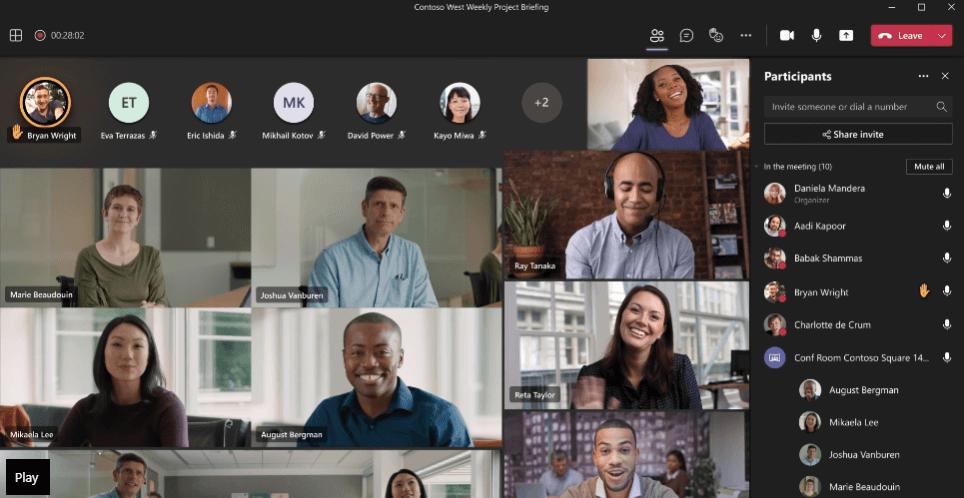
Secondly, Microsoft Teams is free. No really, it's entirely free to use for businesses. Obviously, the free version is a bit stripped down compared to the paid version, but it still allows you to chat, set up meetings, and take advantage of the plentiful collaboration tools built in to the platform.
Suffice it to say, you could do a lot worse than Microsoft Teams when it comes to connecting your team. And if the ability to conduct quick, impromptu meetings is the only thing holding you back, you only have until the end of the month to wait.
The post Microsoft Teams Gets Update to Start Calls Faster appeared first on Tech.co.
Microsoft Azure users dodged a bullet recently, as the tech giant announced that it has closed a bug in the platform that could've given malicious actors access to customer data.
Protecting the personal information of your customers is no easy feat in 2022. Security breaches continue to plague the business world, and frequent updates haven't been able to close the loopholes fast enough.
Fortunately, Microsoft was able to get ahead of this one, as the company stated they were able to fix the bug in Azure before any customer data was compromised.
Microsoft Azure Bug Found by Orca Security In December, Microsoft was alerted to a bug in its Azure Automation service by Orca Security. According to the cloud security firm, the vulnerability “allowed unauthorized access to other Azure customer accounts using the service.” As for how that could've affected customer data, Orca Security says it could've been pretty bad.
“You could have very easily gotten a lot of access to a lot of customers,” said Yoav Alon, CTO at Orca Security.
Microsoft has reportedly informed all Azure customers with an account about the vulnerability. Fortunately, Microsoft was alerted to the bug before any personal information was compromised. Still, it was more than a close call for one of the world's most reputable tech companies, and the Microsoft Security Response Center was quite glad that Orca Security caught it before anything happened.
“We want to thank Yanir Tsarimi from Orca Security who reported this vulnerability and worked with the Microsoft Security Response Center (MSRC) under Coordinated Vulnerability Disclosure (CVD) to help keep Microsoft customers safe,” they said in a statement.
The Importance of Security Even if you aren't a big company like Microsoft, cyber threats are quite common among small to medium-sized businesses. In fact, attacks on SMBs are arguably more common, according to some studies. And with cyber-attacks costing small businesses $200,000 on average, it's safe to say securing your company has never been more important.
Plus, with the Russian invasion of Ukraine, shoring up your company's security is more important than ever. In fact, some companies are taking the potential online threats stemming from the conflict quite seriously, offering their services for free to mitigate cybersecurity risks.
Still, you should always be diligent to protect your company from threats. VPNs, password managers, antivirus software, and remote access platforms are all designed to keep your company as safe as possible, even if you're in the crosshairs of hackers.
The post Microsoft Has Closed Azure Bug That Exposed Customer Data appeared first on Tech.co.
One of the largest consumer tech businesses in the world has been hit with a security breach, as Samsung confirmed that hackers have stolen internal company data and source code from its Galaxy devices.
Security breaches have become commonplace for the business world, but that hasn't alleviated the strain they put on companies. In fact, more and more accounts are hacked every year, which makes shoring up security that much more difficult.
Unfortunately, big companies aren't immune to these kinds of attacks, as Samsung announced a pretty serious security breach, the consequences of which are yet to be known.
Samsung Confirms Security Breach In a statement today, Samsung confirmed that the South Korean tech giant had indeed been hacked, exposing internal company data and source code for Galaxy devices.
“There was a security breach relating to certain internal company data,” said Samsung in a statement to Bloomberg News. “According to our initial analysis, the breach involves some source code relating to the operation of Galaxy devices but does not include the personal information of our consumers or employees.”
The hack was reported earlier this month, with the hacker group Lapsus$ taking responsibility. Screenshots of a little less than 200 GB of stolen data was released by the group, which shows biometric and encryption source code used on Galaxy devices.
What the group plans to do with the stolen data remains unseen. However, when the group hacked Nvidia earlier this month, the company was threatened with leaking its proprietary information. Only time will tell whether or not Samsung is at the same kind of risk.
Was any personal data breached? According to Samsung, no personal data has been compromised in the security breach. Many were concerned that a hack of this magnitude could threaten the encryption and biometric information stored at Samsung, largely due to the screenshots posted by Lapsus$ when claiming responsibility for the attack. Fortunately, that doesn't appear to be the case, as long as you take Samsung's word for it.
“Currently, we do not anticipate any impact to our business or customers. We have implemented measures to prevent further such incidents and will continue to serve our customers without disruption.”
If you want to protect your own personal information from these kinds of hacks, we don't blame you. Fortunately, tools like VPNs, password managers, and antivirus software can be a helpful tool in putting up obstacles aimed at protecting yourself online.
The post Hackers Have Reportedly Stolen Galaxy Source Code from Samsung appeared first on Tech.co.
Since late 2021, the world has been abuzz about the Metaverse, the virtual reality realm for work, play, and everything in between proposed by the company formerly known as Facebook and currently known as Meta.
Given the massive implications of this kind of technology, experts and laymen alike have been quick to discuss what the future might look like in the Metaverse.
Even better, some companies have already had the chance to test out Meta's virtual reality workspace. We talked with some employees from The Bot Platform, one of the first external companies to be offered a chance to test out their new virtual reality work collaboration platform, Horizon Workrooms. Here's what they had to say:

The Good Aspects of Working in the Metaverse Everyone can agree that remote work is here to stay, whether or not the pandemic sticks around for the foreseeable future. Given that shift, the ability to connect with your team in a more meaningful way could make the Metaverse that much more attractive to companies with employees all over the world.
“With myself being in the US and the rest of the team in the UK, it was a great way of feeling like we were all together even though we were thousands of miles apart,” said Tom Gibby, Co-founder & CMO of The Bot Platform.
Video chat made the growing pains of the pandemic that much easier to manage, but the technology certainly has limitations. In the Metaverse, though, those limitations dissolve almost immediately.
“Having the ability for multiple conversations to be held in the same meeting at the same time was a real game changer. It felt closer to a reflection of an in-person meeting compared to video calls,” said Eddy Williams, Employee Experience Consultant for The Bot Platform.
Let's be honest, conference rooms aren't exactly the most glamorous of meeting places. In the Metaverse, however, your team will not only be able to meet with anyone, but they'll be able to meet anywhere as well.
“The surroundings themselves were quite cool too — I don't think we've ever had a company meeting in a sun-soaked conference room surrounded by green valleys. Made for a nice change to the usual British grey,” said Melita Gandham, Creative Solutions Architect for The Bot Platform.
Suffice it to say, there are plenty of advantages that the Metaverse could provide to businesses looking to spice up the remote work meeting situation. Still, it's not all unicorns and rainbows when it comes to next technology in the workplace.
The Bad Points About Virtual Metaverse Meetings After more than two years of video calls, any improvement can seem like a boon for your company. Still, even in virtual reality, there are some in-person quirks you just won't get a feel for right away.
“Seeing people gesticulate was good fun. Although, micro-expressions were hard to come by — you just have to assume everyone was having a good time!” said Gandham.
The absence of micro-expressions is hardly a dealbreaker. However, the Metaverse does require some pretty serious hardware to access as of today, which can make a day full of meetings feel like a multi-hour workout.
“Whilst the headsets are now fairly lightweight and comfortable, you wouldn't want to wear it all day. On one of those days where you're in back-to-back meetings all day, spending it all in VR could be pretty overwhelming,” said Williams.
Studies have shown that being in virtual reality spaces for too long can have a negative impact on your health, from loss of spatial awareness to motion sickness. Still, being in any meeting that long isn't good for your health either, so hopefully businesses aren't subjecting their employees to that kind of time commitment in or out of the Metaverse.
“For a meeting that lasts 90 minutes or less, the technology is great. I'm not sure you'd want to be in VR for much more than that at a time, although the same probably applies to any other meeting – who wants to be in any meeting for 3 hours without a break?” said Gibby.
Is Metaverse the Future? With the Metaverse on the horizon, meetings could look considerably different than they do today. So, will the Metaverse be the future of work?
“I have no doubt that this will become an integral part of business communications at some point in the not-too-distant future,” said Williams.
While many are sure that the advent of this new technology will completely transform the way we work, others are convinced that no technology can fully and completely replace in-person interactions, no matter how hard Mark Zuckerberg wants it to. Still, the Metaverse is poised to be a seriously helpful tool for businesses looking to keep company culture alive on remote teams.
“I don't think it will fully replace our current comms set ups or environments, but I think it is a very helpful tool to implement in order to help remote teams feel more united,” said Gandham.
Although virtual reality and the Metaverse are in the early stages of its advanced development, it's safe to say the technology has the potential to seriously transform the future of work. And even with its many haters, the future is coming, whether you like it or not.
“In the same way there were plenty of nay-sayers proved wrong by the power of the internet and mobile — I'm sure the same will be said for VR in a few years' time too,” said Gibby.
The post This Company Tested Meta’s Virtual Reality Workroom appeared first on Tech.co.
Since Russia invaded Ukraine, the country has churned out an endless stream of propaganda to its own citizens and has attempted to spread it beyond its own borders through social media channels.
Although the avalanche of cyberattacks that have been unleashed since the Russian invasion of Ukraine has prompted many reminders about the importance of installing robust antivirus software, disinformation operations pose a very different problem for businesses.
Staff that can navigate their way through the fake news that litters the digital landscape are an asset to businesses, especially when implementing digital marketing strategies that involve sharing and commenting on political or news-based content.
Disinformation – A Truly 21st Century Weapon Disinformation is the subsection of misinformation that is deliberately deceptive and designed to convince a population that a given narrative is in fact true, and it has become part and parcel of modern warfare and politics.
Sometimes, disinformation disseminated by those in power for political gain can lead to a misinformed populous that then spreads further, related misinformation.
In the case of the Russian invasion of Ukraine, we’re seeing a huge disinformation operation actioned by the aggressor.
Shortly before the invasion, Russia was reportedly planning to stage a Ukrainian massacre of Russian troops and use it as a pretext for invasion. This operation was never carried out because US intelligence services took the unusual (but appropriate) step of publicizing their own findings, rendering The Kremlin’s operation futile.
Since the invasion, there have been subsequent attempts from Russia – both domestically and internationally – to change the narrative with false reports.
Should Big Tech be doing more? Disinformation becomes much more dangerous if there’s a mechanism that can facilitate far-reaching distribution – and social media is exactly that.
The way algorithms on sites like Facebook prioritize news or content that garners the most reaction puts controversy and conspiracy on a pedestal. Further, the fact that you’re more likely to be recommended news from sources or political commentators you’re most likely to enjoy watching reinforces existing biases.
Twitter, Facebook, and Google have acted to try and stem the flow of false information reaching users on their platform, the question is whether the steps they’ve taken have gone far enough.
Twitter announced on February 27th that it had shut down several accounts that were in violation of its “manipulation and spam” policy.
Facebook has also been closing accounts known to be spreading false information about the conflict in Ukraine and has started to label posts containing Russian propaganda. The social network has restricted access to Kremlin-backed sites like Russia Today too.
Google, on the other hand – which owns YouTube – has spoken to the EU about how to minimize the spread of misinformation on their platforms.
Social media sites have still faced criticism despite their efforts. The Center for Countering Digital Hate, for instance, found that Facebook failed to label 91% of Russian Propaganda, whilst Twitter had to apologize after removing accounts sharing legitimate, genuine video footage from the front line.
Why Your Business Should Care about Disinformation Does your business use social media to raise brand awareness, connect with customers, and advertise its products/services? If the answer to any of those questions was “yes,” then disinformation matters to you.
In 2022, success on social media is in large part down to how well you and your business can connect with people.
To do this, social media managers will often hop on trends or create pieces of content that reference current news events – many of which are political in nature. What’s more, when appealing to socially conscious demographics like millennials and Gen-Zers, political content can often be extremely successful for brands.
So, understanding the nature of disinformation – as well as misinformation more generally – and keeping track of what’s been debunked and what hasn’t could save your business a whole lot of reputational damage.
The last thing you want to do is prove untrustworthy to your followers or make them think you’re a source of fake news. Before you share political content on your business's social media channels, ask yourself some key questions:
- Which source has published the story?
- Who owns the source that has published the story?
- How reliable is the journalist who published it?
- What is the reputation of the source that has published the story?
- Is it possible to independently verify this story (i.e., has it been printed in other media?)
- What have fact-checking websites said about this story?
The post Russia’s Disinformation Operations Could Cause Trouble for Businesses appeared first on Tech.co.
A major change to how the cryptocurrency Ether is mined – and how transactions are validated – could reduce its carbon footprint exponentially.
In the pipeline for six years, the move from proof-of-work to proof-of-stake is predicted to make the Ethereum Blockchain network – which is where most NFTs are created – 99.95% less energy-intensive.
Whether other currencies like Bitcoin will follow suit remains to be seen, but if they do, the change will provide a powerful rebuttal to one of the most cutting criticisms of crypto – and break down one more barrier to investment.
Cryptocurrency’s Green Problem Cryptocurrency is any digital currency that is secured using cryptography, meaning it can’t be spent more than once, counterfeited, or otherwise abused.
Unlike traditional currencies, cryptocurrencies have no centralized issuing (such as a money-printing central bank) and don’t require financial institutions to verify transactions.
Rather than notes or credit card transactions, cryptocurrency payments are effectively entries into an online database called a public ledger, where all transactions are recorded. This public ledger is the Blockchain, which is a chained-together record of all Crypto transactions.
There are two ways to obtain a unit of cryptocurrency – either you can receive it as payment from someone else (and keep it in your digital wallet until it's ready to be sold elsewhere), or you can mine fresh units of cryptocurrencies.
Crypto-mining is the energy-intensive part of the cryptocurrency process that has been the target of much criticism over the past few years.
To mine Crypto, you need to solve a long, complex mathematical problem that requires significant computing power to answer – the first computer to answer it then receives a new block of Ether, BitCoin, or other cryptocurrencies. The whole process of finding the answer – and the answer itself – is your “Proof-of-Work”.
Proof-of-Work makes mining for cryptocurrency quite difficult and expensive. This protects cryptocurrencies from fraud, and although it's bad for the environment, it’s essential to the function and security of cryptocurrencies – until now.
Proof-of-Work to Proof-of-Stake: Ethereum’s Bright Idea Ethereum, the blockchain network the Ether (ETH) currency is tied to, is trying to replace Proof-of-Work with a more environmentally friendly way to verify and validate cryptocurrency transactions – called Proof-of-Stake.
Proof of Stake, as Insider explains, “requires network participants to stake cryptocurrency as collateral in favor of the new block they believe should be added to the chain”.
“In proof of stake the cryptocurrency holders ‘vote' to approve legitimate transactions. As a reward for voting on legitimate transactions, ‘stakers' are paid in newly created cryptocurrency over time” – Garrick Hileman, Blockchain.com Head of Research.
Advantages of Proof-of-Stake over Proof-of-Work include the lower energy costs, fewer hardware requirements (and a subsequent lower barrier to entry) as well as faster transaction speed, less operational expenses, and increasing decentralization.
The Crytpo Revolution Rolls On – Should Your Business Accept it? In 2020, Deloitte found that 2,300 businesses in the US were accepting Bitcoin as a valid form of payment, including 440 in California. That figure has likely risen since then.
It’s not all small businesses and new-age tech companies getting in on the action, however – that cohort of companies accepting crypto payments includes PayPal, Whole Foods, Starbucks, and Home Depot.
A Pew Research study published in November 2021 found that 16% of Americans have invested in, traded, or used cryptocurrency.
It's really a question of supply and demand – the more people buy digital currencies, the more businesses will accept them. That demographic is probably larger than you think, too – a Pew Research study published in November 2021 found that 16% of Americans have invested in, traded, or used cryptocurrency, so it's a huge market to capitalize on.
What's more, the news that there may be a solution to the energy-intensive nature of current crypto-mining just removes another barrier to mass investment, especially to those who have been heavily critical of its environmental impact.
If you own or manage a business and are looking into diversifying your payment options, making space for digital currencies may prove quite profitable. Some POS systems are already capable of accepting cryptocurrency, meaning that it's easier than ever for companies to charge in Bitcoin, Ethereum or other currencies.
The post Change to Ethereum Means Blockchain Will Use “99.95%” Less Energy appeared first on Tech.co.
If you’ve ever used poor internet connectivity as an excuse to hop out of a boring meeting, you may have to think of a better one: Google has just made it possible to see individual attendees’ bandwidth in Google Meet calls.
Google Meet is already one of the most widely used web conferencing services on the market, but this new feature could make it an even more attractive proposition to bosses who suspect staff might be faking technical glitches to get out of meetings.
Google’s Bandwidth Tracker From now, Google Workspace admins will be able to track the bandwidth of all meeting participants from when they join the call to when they hang up.
As Google explains on its Workspace Updates page, “Surfacing this information helps admins visualize participants bandwidth compared to the quality of a call, making it easier for them to determine where a bandwidth bottleneck could be causing low quality.”
The reason this feature is useful is that information about which bitrates are available or being used for a specific endpoint is, as Google says, “critical data” for troubleshooting issues relating to call quality.

Companies experiencing call quality issues without much understanding of why, and companies with staff working in areas with poor broadband infrastructure, will now have the knowledge needed to implement a fix.
Legacy G Suite customers on Basic and Business plans will have access to this feature, along with all Google Workspace customers. To access the feature, head over to Google Meet inside Google Workspace and click on the Meet Quality Tool.
Is Google’s New Feature Invasive? The justification for providing the feature is perfectly valid, of course, but some employees may be concerned that their employers are checking if a poor internet connection is genuine, or an attempt to get out of a meeting.
Since the start of the pandemic, demand for software that allows bosses to monitor exactly what their remotely stationed employees are doing during office hours has skyrocketed.
Other tools that provide data about employee workloads – such as granular time-tracking features included in some project management software packages – have also risen in popularity, but aren’t anywhere near as invasive.
This feature is interesting because, on the surface, it hasn’t got anything to do with privacy, and recording bandwidth is something all internet providers do anyway, so it’s not anything new.
However, as with software that has time-tracking functions, it’s about how they’re wielded in the workplace that determines precisely how intrusive they feel and whether employees are privy to the feature’s use.
What if your connection is still poor for some reason other than poor bandwidth? It might not be the easiest thing to convince your employer of, especially with all this new call data they’ll have at their disposal.
Is Google Meet the Best Web Conferencing Service? It’s one of them, for sure. And, considering the poor broadband connection that many Americans have to deal with, it could become a troubleshooter’s dream.
However, there are plenty of other web conferencing options on the market too, each with its own set of handy features. Zoom, for example, is famous for its breakout rooms feature.
So if you’re wondering which one will be best for your company – or are too lazy to think up a new excuse for missing meetings – be sure to have a look at Google Meet’s rivals too.
0 out of 0
- backward
- forward
| Price from
The lowest starting price for a paid plan. The lowest price available for your business will depend on your needs. | User rating
Average rating given by iOS and Android users in App Store and Google Play Store reviews | Best for | Pros | Cons | | --- | --- | --- | --- | --- | |
|
|
|
|
|
|
|
|
| | GoToMeeting | Zoom | RingCentral | Google Meet | Lifesize | Microsoft Teams | Webex | Zoho Meeting | Join.me | | $12/month | $14.99/month | $14.99/month | $8/month | $12.95/month | $4/month | $13.50/month | $3/month | $10/month | | 4.5 | 4.2 | 3.9 | 3.8 | 3.5 | Not yet rated | 4.2 | Not yet rated | 3.9 | | Overall conference calling | Beginners | Longer meetings | Google Workplace users | Users that need hardware | Microsoft users | Larger businesses | Zoho users | Brand-focused businesses | | * High quality audio and video * Very reliable and secure * Lower cost than competitors
| * Easy to use * Impressive free version available * Intuitive interface
| * Lots of customizability * Can also be used for Glip
| * Google Workplace compatibility * Very affordable paid plan * Advanced features like live captioning
| * 1080p video and HD audio, * Integrates with third-party apps * Good value
| * Completely free * 300 participants * Integrates with Microsoft 365
| * Feature-rich software * High quality audio and video * Easy setup
| * No time limit on free plan * Browser functionality * SSL/128-bit AES encryption
| * Very customizable platform * Quality audio * Respectable free version
| | * Weak free plan
| * Poor audio quality
| * 24-hour meeting limit expires in July 2021
| * 250 meeting participant limit * No end-to-end-encryption
| * Unsophisticated chat function
| * No gallery view for guests * Steep learning curve
| * Occasional bandwidth issues
| * Recording costs extra
| * Expensive for full features
|
Find the best video conferencing app for your business Compare deals
About our links
Tech.co is reader-supported. If you make a purchase through the links on our site, we may earn a commission from the retailers of the products we have reviewed. This helps Tech.co to provide free advice and reviews for our readers. It has no additional cost to you, and never affects the editorial independence of our reviews. Click to return to top of page
The post Google Meet Update Means You Can’t Fake a Bad Connection Any More appeared first on Tech.co.
Google has announced it's ending its voluntary Work-From-Home on April 4, with employees based in the Bay Area and several other locations in the US expected to come into the office.
Like many companies, Google employees have been relying on web conferencing services to collaborate on projects since the world went into lockdown back in 2020, but it's definitely one of the keenest to get people back into physical offices spaces.
However, whether it really is the right time to be making the leap from remote to hybrid working – or going back to the office full-time – remains an open question.
Why is Google Ending the Voluntary WFH Period John Casey, Google’s Vice President of Global Benefits, cited the “long” and “challenging” two years the company’s staff have had working remotely when explaining why Google is ending the voluntary work-from-home period, as well as the fall in Covid case numbers in the US since January.
“Advances in prevention and treatment, the steady decline in cases that we continue to see, and the improved safety measures we have implemented across our Bay Area sites now mean we can officially begin the transition to the hybrid workweek” – John Casey.
The company now expects all workers on its payroll to come into the office three days a week and stay at home for the remaining two.
CNBC reports that “nearly 14,000” of the company’s 156,000 employees are across the globe have switched to remote working permanently after applying for the privilege to do so, which amounts to around 85% of all staff members who applied.
Google's Rules Relaxed The end of voluntary working-from-home comes after Google announced last week that it would be shedding its previously instated Covid-19 mandates for workers in the San Francisco Bay Area offices.
Prior to last week, the tech giant had required all employees to test before coming into the office, even if they were vaccinated. That rule has now been scrapped.
Google told CNBC that the company has u-turned on the decision to make employment conditional on vaccination, but did not offer any further information on why that was. Employees coming into the office, however, will need proof of vaccination or a legitimate reason for exemption.
Perks are also back for Google employees, including access to ‘informal' areas in office spaces and free massages for all employees.
Is The Pandemic Over, and Should we be Really Going Back to the Office? Declining infection rates combined with a now heavily vaccinated workforce and no new variant since November of last year have galvanized companies like Google – which would prefer their workforce to be in physical office spaces – to ditch their WFH setup.
For Google, Microsoft, and Amazon, the return to the office was always a matter of when, rather than if – the tech behemoths have spent much of the past 12 months buying up new office space in a variety of US locations.
But that doesn’t make the decision right for everyone. Some staff teams have found working from home works well for them, and improvements to web conferencing services and other technology that helps facilitate remote working have made that even easier.
The twists and turns the Covid-19 pandemic has taken over the last two years means it's anyone’s guess where we’ll be this time next week, let alone in six months. Whilst Google won’t be alone in transitioning from fully remote to hybrid working arrangements, it won’t be surprising if other companies are a little bit more hesitant.
The post Google Ends Voluntary Work-From-Home in Bay Area and Other Locations appeared first on Tech.co.
Chat logs belonging to the infamous Conti ransomware gang – which recently declared its support for Russia in the wake of the country’s invasion of Ukraine – have been leaked.
The conflict has already seen a number of prominent hacking and ransomware groups declare support for both sides, as well as the creation of a 200,000 strong Ukrainian IT Army.
The explosion of cyber-attacks that have taken place since the Russian invasion is a grim reminder to businesses that now is the time to review, update cybersecurity protocols and install software that will help to fend off attacks.
Conti’s Support for Russia Comes at a Price The Conti Ransomware gang – which has collected $25.5 million in payouts from victims between July-November of 2021 – was one of the first hacking groups to throw its hat into the ring with vocal support for Russia.
The group is known for targeting the US industrial sector and a devastating attack on Ireland’s healthcare system which could end up costing the country $100 million to fix.
“If anybody decides to organize a cyberattack or any war activities against Russia” the group announced in a message last Friday, “we are going to use our all possible resources to strike back at the critical infrastructure of the enemy”.
It now appears, however, that not everyone in the group was prepared to toe the party line. An apparent insider has leaked reams over 340 separate files that date back as far as January 2021, some of which include addresses gang members used to receive cryptocurrency payments and records of negotiations with victims.
An apparent Conti insider has leaked reams over 340 separate files that date back as far as January 2021, some of which include addresses gang members used to receive cyrptocurrency payments.
“Glory to Ukraine” read the final line of an email containing the chat logs, which were sent round to a number of journalists after being stolen.
As a result of the leak, the Conti group changed their initial message declaring support for Russia to one with a slightly more neutral tone, one that goes into more depth about why they’re supporting Russia and even includes a condemnation of the war.
Hackers and Threat Actors Choose Their Side As the Russian tanks rolled across Ukraine’s border last week, the digital dimension of the conflict – which had begun long beforehand – took on a life of its own.
The conflict has caused a split in the cybercrime underworld, a place where hacking groups usually work side-by-side, concerned largely with targeting large businesses and government entities, rather than fighting for political causes.
Along with Conti, a Belarusian group known as “UNC1151” – which is thought to include military officials – vocalized their support for Russia. The group is thought to be responsible for cyberattacks on the Ukrainian government website back in January and spread phishing domains across Facebook.
Other groups that have thrown their support behind Russia include SandWorm, which also has military links (Russian this time) and became known for targeting WatchGuard Firebox Firewalls, and The Red Bandits, who have been targeting Ukrainian infrastructure on behalf of the Russian government for years now and orchestrated the first-ever cyber attack to both cause a blackout and effect electrical disruptions remotely.
Ukraine – which doesn’t have a dedicated cyber force nor a slew of quasi-military hacking groups to rush to their aid – has not had too much trouble pooling support. A volunteer cyber army – which is now said to be 200,000 strong – has already had some success taking down Russian government web pages.
Anonymous, thought by many to be the world’s largest hacking group, publicly declared war on the Russian government last weekend and took down Russia Today’s website shortly afterward.
GNG – an anonymous-affiliated group that recently hacked Russia’s Sberbank – and another hacking group called NB65 have declared they’re fighting for Ukraine.
A group known as KelvinSecurity is also supporting Ukraine. “I want to release this to support the digital war against RUSSIA” a member of the group said in a text message. “I have a list of weapons development documents that I took from a Russian ballistic institute and I also have internal videos from RT, and the Russian nuclear institute.”
AgainstTheWest – a hacking group linked to Chinese government data breaches – has also taken Ukraine’s side, as have the Belarusian Cyber Partisans, the latter of which has already attacked Belarusian railway infrastructure since Russia’s invasion of Ukrainian territory.
Protecting Your Business From Cyber Attacks As Tech.co reported just days ago, the cyber war being waged between Russia and Ukraine has risks for businesses and individuals beyond the conflict zone.
Businesses in the US and beyond need to ensure their software is up to date, but also that they have the right software to stop malware, ransomware, and other types of malicious files in their tracks.
At the moment, all eyes are on Ukraine as Russia continues its unjustified assault of the country. But it's unlikely to be long before hacking groups involved in the conflict look westwards to see what havoc they can wreak elsewhere.
The post Russian-Supporting Ransomware Gang Member Leaks Group’s Chats appeared first on Tech.co.
Video-focused social media site TikTok has extended its video length maximum to 10 minutes, more than tripling the previous limit of just three.
TikTok is fast becoming one of the most profitable places for social media managers to implement digital marketing strategies, with one billion active users now using the platform.
Getting the video length right is crucial for apps like TikTok, who have to balance retaining their current userbase who like short-form content with the need to expand to other demographics.
TikTok Expands its Video Length…Again The recent move to 10 minute-long videos isn’t the first time that TikTok has upped its video length. Before this recent change, the current maximum was three minutes, which itself was an advance on 60 seconds. The original limit on a TikTok video was 15 seconds.
This seems to fit into line with how short-form video apps generally mature. Apps like Vine initially started with 6-second video limits before extending them to 140 seconds before Twitter (which opened Vine) killed the App off to focus on its own video content.
“We’re excited to start rolling out the ability to upload videos that are up to 10 minutes, which we hope would unleash even more creative possibilities for our creators around the world” – TikTok Spokesperson.
Explaining the decision, TikTok said it was “always thinking about new ways to bring value to our community and enrich the TikTok experience” and wanted to again give users “more time to create and be entertained on TikTok.”
Why is TikTok Upping its Video Length Limit? Like any other social media platform, TikTok is constantly trying to attract new users.
Longer videos have the potential to attract an older audience to the platform and could increase the amount of time people spend actually watching videos on the app rather than searching for ‘Part 2s’ of videos that are longer than three minutes.
This move may also help TikTok attract creators that excel in making long-form content on sites like YouTube, and in turn, bring more users to the platform.
Many YouTube commentators, lifestyle vloggers, and other content creators that have garnered large fanbases through their long-form video content already publish TikToks, but their main focus is still channels on platforms known for hosting lengthier videos.
Another obvious reason for the change is the fluctuation of short-form video functions in apps known for their long-form (or at least not short form) content, such as Instagram Reels and YouTube Shorts.
Is TikTok a Good Place to Market my Business? The stratospheric rise of TikTok, which was first launched in 2016 – as well as the fact advertising on the platform is a lot cheaper than the likes of Facebook – make it a fantastic place to raise brand awareness and advertise products or services.
The social media management strategies usually involve a cross-platform approach with the content being made for and posted on a variety of different social media channels.
The ease at which you can achieve high engagement on TikTok, however, is currently unrivaled in the current social media landscape, which explains why so many social media management tools now offer support for the platform. Overall, TikTok is much more trend-driven than Facebook or Twitter, for instance, it’s got built-in editing tools that other sites don’t have and a particularly good algorithm for promoting truly engaging content.
Now, with videos allowed to be up to 10 minutes long, there’s even more scope for inventive and original ways to advertise products and services on the platform.
The post TikTok Extends Video Length Limit to 10 Minutes appeared first on Tech.co.
Yesterday Apple announced it was halting all product sales to Russia, as well as banning state broadcasters from the App store.
CEO Tim Cook has also circulated an email to all Apple employees, which includes the pledge to match their donations to Ukraine by a ratio of 2:1.
Apple joins Facebook, Microsoft, and a host of other tech companies that have already pulled out of Russia provided assistance to Ukraine, and/or banned Russian media from their platforms.
Apple Pulls Plug on Moscow Effective immediately, Apple has paused sales of all of its products to Russia, building on the company’s decision last week to stop exporting new products into the company’s sales channels.
Apple doesn’t actually have any physical stores in the country, but millions of Apple products are shipped to the country every year via online stores.
Although such exports have now been stopped, software updates will reportedly still be available for download for Russians with iPhones, Macs, iPads, and other Apple products.
The company's relationship with the Russian government was tense even before the invasion began – the company is currently suing the country's Federal Antimonopoly Service after it was fined for not complying with a ruling to let app developers advise users on alternative ways to pay (other than Apple's payment mechanism) whilst using apps.
The company’s decision to enforce a ban on shipping to Russia comes after Ukraine’s Minister of Digital Transformation, Mikhail Fedorov, lobbied Tim Cook from his personal Twitter account:
No more @Apple product sales in Russia!
Now @tim_cook let's finish the job and block @AppStore access in Russia. They kill our children, now kill their access!
— Mykhailo Fedorov (@FedorovMykhailo) March 1, 2022
This wasn’t the first Tech mogul Fedorov has called to Ukraine’s aid since the crisis began – a tweet directed at Elon Musk on February 26 led to the SpaceX chief activating his Starlink satellites above Ukraine, giving the government a Plan B should Russia try to disrupt internet connectivity in the country.
Apple Matches All Employee Donations to Ukraine An email sent out to Apple employees by Tim Cook this week was made public today, with the Apple CEO decrying the humanitarian crisis unleashed by the Russian invasion of the country.
“I know I speak for everyone at Apple in expressing our concern for all of those affected by the violence,” Cook said in the email.
“This moment calls for unity, it calls for courage, and it reminds us that we must never lose sight of the humanity we all share” – Tim Cook, Apple CEO.
He continued, “With each new image of families fleeing their homes and brave citizens fighting for their lives, we see how important it is for people around the world to come together to advance the cause of peace.”
Whilst the email detailed Apple’s ban on product sales in the country, Tim Cook also pledged that Apple would match donations made “at a rate of 2:1 for eligible organizations” and would also retroactively match donations made since the 25th of February.
Cook also confirmed that the company have made contact with every Apple employee currently stationed in Ukraine, and said Apple is assisting their families “in any way we can”.
Apple’s Other Measures Apple has taken other measures as a show of support to Ukraine. Moscow-backed broadcasters Russia Today and Sputnik have been banned from the app store, closely following Facebook’s decision to ban the same two media entities in the EU.
Apple has also joined Google in disabling live traffic incident updates in its mapping technology, and pre-existing financial sanctions enforced at the start of the invasion have prevented many Russians from using Apple Pay.
What Are Other Companies Doing? Yesterday, Tech.co reported that Walt Disney and various other companies have halted sales in Russia, whilst Airbnb has offered support to Ukrainian refugees. But there's now a raft of other US businesses enforcing their own bans and sanctions.
Alongside Apple, Sportswear giant Nike and car manufacturer Volvo are two of the bigger names to pull sales in Russia over the last 24 hours. Fellow automobile company Ford has informed its Russian manufacturing partner that operations in the country will be suspended, whilst Harley Davidson has taken similar steps.
Like other social media platforms that reach millions of people in Europe and the USA, TikTok has also banned Kremlin-backed Russian media.
On top of economic sanctions, private sector companies banning sales of their products will likely plunge Russia into a deep recession that will be catastrophic for the country's citizens. Whether that will deter Putin in his brutal attempt to take Ukraine by force, however, is another story.
The post Apple Halts All Product Sales in Russia appeared first on Tech.co.
Atlas VPN has announced that journalists working in the UK can now claim a subscription to the VPN provider’s Premium service for free, as the situation in the country continues to worsen.
VPNs have played a major role in a number of modern conflicts thanks to their privacy-preserving properties, but with cyber warfare now an important mode of attack and defense for Russia and Ukraine respectively, the technology has never been more important.
Atlas VPN also revealed that VPN usage has spiked in Russia since the country invaded Ukraine, a country with an already heavily censored internet that is now enforcing a number of additional restrictions.
Atlas VPN Rallies for Freedom Atlas VPN has decided to offer the Premium version of their VPNs to any journalist working in the Ukraine who fears for their safety.
“As we stand for freedom online and beyond, we wish to help journalists who risk their safety to provide the most accurate information to the public,” Atlas VPN says.
“Therefore, Atlas VPN will hand out Premium VPN subscriptions to journalists in Ukraine until the crisis is over. Media representatives can carry out their investigations online and share their findings while being protected by military-grade encryption, which will completely hide their online activities.”
If you’re a journalist working in Ukraine, you can email pr@atlasvpn.com and explain your situation. Atlas VPN says it will respond within 24 hours of receiving your email.
VPNs and Conflicts VPNs encrypt all of your traffic and make it much more difficult to trace web activity back to individuals by masking IP addresses, enhancing user privacy significantly. In a conflict zone, this is incredibly useful as military personnel from both sides will likely be monitoring internet activity.
VPNs such as Hotspot Shield gained notoriety during periods of conflict – the VPN provider was used by hundreds of millions of people during the Arab Spring, 2011.
VPNs hide your IP address, which a hacker would need to perform a Distributed Denial of Service (DDoS) attack. DDoS attacks have already made various Ukrainian and Russian websites unreachable since the start of the invasion.
Considering the significant role that cyberattacks is playing in the Russian invasion of Ukraine, providers like Atlas VPN — which blocks websites hosting malicious content on top of providing a secure, private internet connection — can be life-savers.
Russia and VPNs Even when there’s no conflict raging, VPNs protect their users from governments that deploy draconian censorship laws, like Russia, a country with tight governmental controls on freedom of speech and the media in general.
But now, Russia is restricting access to Facebook and a host of other sites it has accused of ‘censoring content,’ and at the same time, Facebook and other social media companies used by Russians are banning Russian news organizations from their platforms as punishment for invading Ukraine.
So, it’s no surprise that since the country invaded Ukraine, VPN usage in Russia has also spiked:
As Atlas VPN explains in a blog post, “VPN installs rose by 241% above the average” on February 25, the day after the invasion commenced.
The VPN provider continues, “The next day, on February 26, VPN installs originating from Russia sky-rocketed by 1,076% over the norm… the following day, VPN installs went off the charts, soaring 1,906% higher than the mean.”
VPNs Outside of Conflicts VPNs aren't just useful in conflict zones, or during wartime – they've got a multitude of uses that extend beyond protecting you against the watchful eye of authoritarian regimes.
VPNs are a handy safeguard to have if you just like the idea of having a bit more of a private browsing experience – away from the gaze of your Internet Service Provider. They're also great at unblocking content that's usually geo-restricted.
The digital dimension of the Russian invasion of Ukraine is a grim reminder of how treacherous a place the internet is nowadays. What's more, there's no guarantee that the cyberwar that has been waged over the past week won't spill over into other countries. In 2022, everyone could do with a privacy and security upgrade.
The post Atlas VPN Offers Free Service to Ukrainian Journalists appeared first on Tech.co.
Russia invaded Ukrainian territory on February 24, and since then, tech companies inside and outside Ukraine have been working out how to respond to the unprovoked military aggression.
Big Tech companies like Facebook, Google, and Microsoft have been involved in trying to stem the flow of disinformation, making sure Russian media aren't making money from YouTube adverts, and ensuring the Ukrainian government has the best chance of defending itself against cyberattacks respectively.
Tech companies operating inside Ukraine, on the other hand, have had to make difficult decisions regarding their continuing operations.
Facebook Fights (Some) Fake Information Meta announced on Sunday that it is taking down a disinformation network operating on Facebook and Instagram that was being used to spread disinformation to Ukrainian civilians.
Russia’s military doctrine of “Maskirovka”- altering the perception of reality in enemy ranks in order to foster confusion – is clearly being implemented across social media.
The company said the network was running websites masquerading as independent news pages. It had also made fake accounts across a number of social media platforms including Facebook, Instagram, Twitter, YouTube, Telegram as well as Russian sites Odnoklassniki and VK.
“We took down this operation, blocked their domains from being shared on our platform, and shared information with other tech platforms, researchers, and governments” – Nathaniel Gleicher (Head of Security Policy) & David Agranovich (Head of Threat Disruption)
Meta officials also said they’ve detected activity by Ghostwriter, a threat actor that has been asking Facebook users to post YouTube videos of Ukrainians surrendering to Russian troops and steering Ukrainians towards phishing domains to steal their credentials.
Meta said Facebook had “taken steps to secure accounts that we believe were targeted by this threat actor and, when we can, to alert the users that they had been targeted”.
However, Facebook has come under fire for its response, with many claiming the platform isn't doing enough. Meta promised to label state-backed media in light of the disinformation around the 2020 US elections, but a recent study found that, during this content, the site was failing to label 91% of Russian propaganda.
Microsoft Working with Ukraine on Cyber-Defence Microsoft has been working closely with Ukraine’s authorities to detect and prevent cyberattacks.
In a lengthy blog post detailing the action they’ve taken, Microsoft said that “in this instance, our efforts have involved constant and close coordination with the Ukrainian government, as well as with the European Union, European nations, the U.S. government, NATO, and the United Nations.”
Just before the conflict began to rage on the ground, Microsoft’s Threat Intelligence Center (MSTIC) “detected a new round of offensive and destructive cyberattacks”, which included identifying a new malware package (called FoxBlade) and taking steps to prevent it from achieving its purpose.
The company has also banned state broadcaster Russia Today from the Windows App store, becoming the latest in a long line of media entities doing the same.
Google Turns off Traffic Maps Google took steps to ensure that its mapping technology was not being used to track movements of Ukrainian and Russian troops – albeit only after users took to Twitter to show how they were able to track the invasion of Ukraine through Google Maps.
Google creates maps that show traffic density based on location and speed information extracted from the Google Maps app. The company said it was disabling the tools it uses to do this for the safety of local Ukrainian communities. But this might not deter everyone from amateur detective work.
“There's a bit of a game out there now, to geolocate things as quickly as possible and identify those locations. That's a big concern at the moment” – Benjamin Strick, director of investigations for the Centre for Information Resilience.
Google has also taken steps to ensure that Kremlin-backed media companies cannot earn advertising revenue through subsidiary YouTube, and has also banned Russian networks RT and Sputnik from Europe.
Twitter Takes Down Propaganda…and Some True News Twitter didn’t start the crisis well, and faced backlash last week after it mistakenly banned accounts providing vital open-source updates on the Russian invasion of Ukraine, which it blamed on “human error”.
“We’ve been proactively monitoring for emerging narratives that are violative of our policies and, in this instance, we took enforcement action on a number of accounts in error… we’re expeditiously reviewing these actions and have already proactively reinstated access to a number of affected accounts” – Trenton Kennedy, Twitter spokesperson.
Twitter has made efforts to take down as much fake news footage from its platform as possible, but with real footage also flooding social media channels, governments engaging in propaganda campaigns, and the recent fighting between the two countries in the Crimea region of Ukraine (now occupied by Russia) to draw upon, the social media channel has its work cut out.
It is, however, labeling all Russian-back media and, according to CNN, “will demote that content algorithmically, the company said, as tech platforms have come under greater pressure to respond to Russia’s invasion of Ukraine.”
How are Ukrainian Tech Companies Responding to the Crisis? Ukraine has a thriving tech sector – one-fifth of Fortune 500 companies outsource at least some of their IT operations to companies based in Ukraine.
Reporting from TechCrunch, however, suggests a broad range of responses. Some companies are evacuating staff, whilst others – such as PDF and productivity tool company Readdle – are continuing operations in the country.
“We’ve made business continuity plans a while ago and [are] executing them now,” Managing Director Denys Zhadanov said. “All Readdle products and services at Readdle are up and running, and there’s no evacuation for the team [being undertaken] at this point.”
“We’re not going to flee and run away… we are committed to Ukraine” – Andy Kurtzig, Readdle CEO.
Others are showing similar resolve. JustAnswer – a site that connects people with questions to verified experts who can answer them – has vowed to stay in the country.
“Lots of companies are pulling out of Ukraine and fleeing Ukraine because of all this, and that’s exactly what Putin wants,” JustAnswer CEO Andy Kurtzig told Protocol. “We’re not going to flee and run away. Their job is safe and secure. We are committed to Ukraine.”
Grammarly – which has offices in Ukraine and the United States – was also well prepared for this sort of disruption, and keeping data on servers exclusively in the United States has allowed staff to spend more time looking after themselves.
“Ukraine-based team members can focus on the immediate safety of themselves and their families” – Grammarly Spokeperson.
A company spokesperson said staff were “securing backup communication methods and temporary transfer of business-critical responsibilities to team members outside of Ukraine,” which will ensure that “Ukraine-based team members can focus on the immediate safety of themselves and their families”.
Countries with a presence in Ukraine – especially ones that deal with sensitive data about customers and clients – have been forced to consider moving their systems out of the country. Cloudflare inc., a US web infrastructure company, said that it was removing all of its “customer cryptographic material from servers in Ukraine” but will stay operational for Ukrainians.
What Other Companies have Taken a Stand? Elon Musk made the headlines over the weekend after he answered the call of Ukraine’s First Vice Prime Minister and Minister of Digital Transformation Mykhailo Fedorov, who asked Musk on Twitter to use his broadband satellite network, StarLink, to keep Ukrainians online in the event that Russia destroys their fiber-optic broadband infrastructure.
It's not just companies in the technology industry that have big decisions to make regarding their relationship with Russia – companies from all sectors are now deciding what sort of stance to take. Walt Disney, for instance, is pausing the release of all theatrical films in Russia.
Airbnb, on the other hand, is lending a hand with the impending refugee crisis as millions flee Ukraine – the company has said that it will provide free, short-term housing for 100,000 people. This will be paid for in part by the company and partly through donations.
Etsy is canceling all outstanding balances owed by sellers based in Ukraine, including transaction, advertising, and listing fees. This amounts to a total of $4 million. Verizon also waived fees, including all residential and mobile call fees to and from Ukraine until March 10, and will not collect voice and text roaming charges that would usually be incurred by those making calls in the country.
Ukraine: the Cyberattacks Will Continue Disinformation and cyberattacks will continue to cause Ukrainian citizens problems on social media and other digital spaces – however hard Big Tech companies try to stamp it out.
It's entirely possible that the onslaught of cyberattacks will spill over into neighboring countries, as well as countries like the USA and UK. The prospect of an out-and-out global cyberwar looms large. This means it's never been more important to equip your business – and your family – with the security tools you need to keep your data safe, such as password managers.
It's also a good idea to keep up to date with the latest news regarding the invasion, and how tech companies are responding to it – it's likely Meta and Co. will come under increasing pressure to do more to combat the avalanche of misinformation being published by Kremlin-back individuals and entities.
The post How Tech Companies are Responding to Russia’s Invasion of Ukraine appeared first on Tech.co.
On February 24, 2022, Russia launched a full-scale invasion of Ukraine, the largest military assault on a European nation since the second world war.
Alongside ground, sea, and air bombardments from Russian forces, the Ukrainian government and military have had to repel a barrage of cyberattacks. If a full-scale global cyberwar soon becomes reality, then US businesses – already top targets for ransomware – are expected to be targeted.
American companies are being advised to review their cybersecurity measures and update their systems in order to mitigate to account for the heightened risk of attack.
The Role of Cyberwarfare in the Russian Invasion of Ukraine The current conflict unfolding in Ukraine will be one of the first all-out wars in which cyber warfare tactics play a pivotal role in who emerges victorious. Just days in, state and state-supported actors are pressing hard to get the upper hand online.
Bleeping Computer reported last Friday that Belarusian hackers are sending phishing emails to the inboxes of Ukrainian military personnel. More concerningly, hundreds of computers in Ukraine and Latvia have been infected with powerful, data-wiping malware that’s not been seen before, with Russia thought to be the source.
“Disinformation, false flags, DDoS attacks, and destructive wiper malware are a part of Russian military doctrine.” – Rick Holland, Digital Shadows.
Russia has reportedly been flooding Ukrainian government servers with attacks for some time now. Back in mid-January, over 70 websites owned by the Ukrainian government were hacked.
“Russia didn’t just decide to invade Ukraine this week,” Rick Holland, Chief Security Officer at Digital Shadows, told the Guardian. “Military planners have prepared for this campaign years in advance… DDoS attacks and destructive wiper malware are a part of Russian military doctrine; the battle plans have been drawn up and are now being executed.”
This isn’t the first time Russia has engaged in cyber warfare in Eastern Europe. When President Putin annexed Crimea in 2014, for instance, it saw Ukrainian energy utility suppliers attacked by Russian malware, a move that shut off electricity for thousands of people in the former Soviet nation.
Other incidents – most notably the 2007 DDoS attack on Estonia and similar digital assaults in the invasion of Georgia in 2008 – have never been officially traced back to Russian state actors but are presumed to be linked in some way, shape, or form.
Other military doctrines like “Maskirovka”- altering the perception of reality in enemy ranks to sew confusion – underpins the Kremlin’s efforts to spread disinformation among Ukrainian military personnel and civilians.
“We just can’t compete in the information war… democracies, and the way you do these things, makes it very difficult” – Ed Arnold, Royal United Services Institute.
Aside from staging videos that portrayed Ukrainian forces as the aggressors and spreading them around social media, Russia has spread rumors that Ukrainian president Volodymyr Zelenskyy had left the capital Kyiv and even sent text messages to Ukrainian soldiers telling them to lay down their arms and surrender. Facebook and TikTok have now banned Russian state-backed media in Europe.
On all digital fronts – as well as on the ground – Russia will face stiff resistance and will have to defend against attacks themselves. In Ukraine, a volunteer force – dubbed the ‘IT Army’ – has begun to mobilize. With over 175,000 members, the group is assigned tasks via the Telegram app and was recently asked to orchestrate a DDoS attack on 25 Russian websites.
There are some reports suggesting that the IT Army was responsible for bringing down Russia’s Sberbank.
They will be hoping that rumors that US tech giants could stop Russia from downloading software updates – which would make the country’s digital infrastructure much easier to hack – will soon become reality.
Hacking and Ransomware Gangs Choose Their Sides To make matters more complicated, although traditional definitions of ‘cyber warfare’ are usually confined to the actions of nations states, in this conflict, ransomware gangs, and hacking groups are starting to hedge their bets.
Russia – which is home to its fair share of ransomware groups– has had support from underground organizations.
The Conti Group – whose attack on Ireland’s health system last year had devastating effects – has already vocalized its “full support of [the] Russian government” and said it would use “all possible resources” to fight those who commit “a cyberattack or any war activities against Russia.”
“They don't operate directly for the Russian government, but they operate under a set of rules that says: ‘you guys do what you want… don't target Russian stuff and we won't bother you” – Herb Lin, senior research scholar at Stanford University's Centerfor International Security and Cooperation.
Hacking group Anonymous, for instance, officially declared war on Russia on Sunday. The group has already claimed responsibility for a number of attacks since fighting broke out in Eastern Europe, with targets including Russian government websites, state broadcaster Russia Today, and Belarusian weapons manufacturer Tetraedr.
Just today, more Pro-Kremlin news websites – TASS, Fontanka, and Kommersant – were all down, a move that has also been attributed to Anonymous. Russian nuclear and Department of Defence data has also reportedly been accessed.
US Businesses Could Find Themselves Caught in The Cyberwar The Russian invasion of Ukraine could easily spill over into an out-and-out cyberwar that involves a lot more than just the two countries currently fighting on the ground.
In a gloomy illustration of this point, Russia may even be able to cause major issues for Western businesses by simply attacking Ukraine – around one-fifth of Fortune 500 companies outsource at least some of their IT operations to Ukrainian companies.
For US businesses, in particular, more direct attacks are a real and present danger, with Russia fully prepared to target American critical infrastructure if necessary.
“If Russia pursues cyberattacks against our companies, our critical infrastructure, we’re prepared to respond” – US President Joe Biden.
US Banks, for instance – which are already targeted daily by cyber-attacks – have been told to brace for an assault on their sites and systems as payback for the tough economic sanctions that now preside over Russia's financial institutions.
“Destructive malware can present a direct threat to an organization's daily operations, impacting the availability of critical assets and data,” CISA and the FBI warned in a public advisory. “Further disruptive cyberattacks against organizations in Ukraine are likely to occur and may unintentionally spill over to organizations in other countries.”
What can my Business do to Defend Itself? Warnings from US organizations concerned with cyber-attacks are to remain vigilant and review all of the cybersecurity measures they currently have in place.
If you own a US business, now is the time to make sure all the software you’re using is up to date, because out-of-date software creates an easy back door for hackers and scammers. If that business is a small one without a dedicated IT team, installing antivirus software is a must, especially with destructive, data-wiping malware being reported in the wild en masse.
Russian state-sponsored APT (Advanced Persistent Threat) actors have been known to use brute-force password guessing and password spraying campaigns to gain personal details – and there are reports they’re hacking Facebook accounts to post misinformation – so using tools like password managers to mitigate this threat is advised.
Lastly, US companies like Cloudflare inc. are taking steps to move any data held about customers out of Ukraine, so if you are using a tech team or servers in the country, taking steps to secure/move any data you hold there is strongly recommended.
The post US Businesses Told to Prepare for Onslaught of Cyberattacks from Russia appeared first on Tech.co.
Google has removed some but not all of its requirements surrounding vaccines, testing, social distancing and masks, all first initiated as protections against Covid-19.
Vaccinations will no longer be required as a condition of employment for U.S. Google workers — but vaccine requirements are still in effect for those coming in person to Google sites.
It's another installment in the ongoing tension between those who'd prefer to work in-office and those who hope to retain the freedom of working remotely.
What Google's Doing According to an email that Google Real Estate and Workplace Services VP David Radcliffe sent earlier this week to the company's San Francisco Bay Area employees, access to fun amenities like massages and fitness centers will open back up to in-office workers.
Google has already delayed its planned hybrid work model that would require employees return to their physical offices for a minimum of three days a week. Radcliffe's email says that Google is still “preparing to begin its 30-day transition period to the hybrid work week if conditions continue to improve” — no date was specified.
Google is keeping a mandate for those meeting in-person on its campuses. Employees or visitors must either be vaccinated, or have the “approved accommodations” in order to access Google's sites.
Apple maintains its vaccine mandate, requiring that anyone visiting its sites must provide proof of full vaccination — including a booster shot. Amazon has no guidance or requirement on vaccine IDs, according to Inquirer, though it makes masks available to those entering its facilities.
States Are Relaxing Some states and cities are going even farther than tech giants, and pushing to drop mask mandates as well as vaccine mandates.
New York City mayor Eric Adams “can’t wait” to end the city's vaccine mandate at restaurants, while Chicago's mask and vaccine requirements are already set to end on February 28. A Washington state health advisory board voted narrowly this week to reject a Covid-19 vaccine mandate for all school children, as well.
But a small majority of Americans think differently: A recent CBS News-YouGov poll found that 56 percent of respondents believe their states should have mask mandates, compared to 44 percent who say their states should not.
As a new Omicron variant picks up traction around the world, we're likely in for yet another spike in cases. Let's hope more companies keep their protections in place until that spike abates.
The post Google Relaxes Its Vaccine Mandate, Adds Some In-Office Perks appeared first on Tech.co.
Salesforce paid out a total of more than $2.8 million to ethical hackers who helped them locate bugs in their software across 2021.
The highest amount paid for one bounty was $30,000, but more than 4,700 suspected vulnerabilities were reported to the software company last year, so they had a lot of bounties to hand out.
The payments are a heartening example of the ways in which hackers can help shore up an internet ecosystem that faces more and more threats from ransomware or phishing attacks every year.
How it Works All product and features changes at Salesforce are tested internally, as you might expect. Once that's over, though, the updates go through “a trusted network of ethical hackers,” as the company explained in a recent post. This pool of hackers — 118 of them in 2021 — is given access to a sandbox testing environment in order to crash-test the new software.
The bug bounty program then rewards those hackers who can locate and disclose security concerns in the new product releases and updates.
“I was attracted to becoming an ethical hacker after starting my career as a developer,” said Inhibitor181, an ethical hacker in the Salesforce bug bounty program. “Not only is it more stimulating and less monotonous to use my programming skills to legally hack into global companies’ products, but it also allows me to do my part in preventing cybercrime. Not all hackers are bad.”
Needless to say, Salesforce undoubtedly saved far more than they paid in bounties to locate any vulnerabilities in their software. We've called their software “the most reputable CRM on the market right now” in our latest review of their customer relationship management software, and they have to maintain that reputation.
Google and Microsoft Pay Millions More Salesforce can't touch Google for bug bounties: The search giant paid a total of $8.7 million in bounty rewards during 2021, it said earlier this month, paying 696 researchers in 62 different countries.
Google's highest reward in 2021 was a tidy $157,000, for an Android security issue.
While Microsoft hasn't released its 2021 bounties data yet, the tech corporation did pay $13.6 million in bounties for 2020, with an average of $10,000 and one bounty that was as high as $200,000.
Salesforce's funds aren't as large, but their program is growing: It launched in 2015 and has awarded more than $12.2 million in total bounties since. A full $9.5 million of that has just been since 2019.
Salesforce CRM Stays Secure The bounty system appears to work. Salesforce CRM is feature-packed and highly secure, even if its ease of use might come with a learning curve.
And speaking of Microsoft, their Dynamics CRM is another solid pick, offering strong integration with other Microsoft products your business might be using. We've stacked the two services up against each other over here.
Salesforce is an attractive option for its low starting cost as well, particularly for CRM-only teams of five users or less. But plenty of other services are worth considering as well, even if they don't have a bug bounty program working for them. Here's a quick table of the top options, and we have a page dedicated to Salesforce CRM alternatives as well.
0 out of 0
- backward
- forward
| Verdict | Free trial | Starting price | Most expensive plan | Email marketing | Social marketing | Marketing campaigns | API | Email support | Phone support | Live chat support | | --- | --- | --- | --- | --- | --- | --- | --- | --- | --- | --- | | BEST FOR SALES

| BEST FOR MARKETING

| FEATURED

|

|

|

|

|

|

|

|

| | Salesforce | HubSpot | monday.com CRM | Zendesk | Freshworks CRM | Pipedrive | Microsoft Dynamics 365 | Zoho CRM | SugarCRM | Keap | Sendinblue | | An incredibly popular and robust CRM with tailored pricing options for all businesses | An extremely solid CRM for all businesses with a great free plan | Popular option with a modern, easily customizable interface and a great Free Trial | A robust platform aimed at businesses looking to scale | A highly intuitive CRM that is packed with plenty of features and even has a free plan option | Core CRM features in flexible pricing plans make this one of the best value CRM options for any small business | A robust CRM platform that embeds brilliantly with Microsoft products | An attractive option, with lots of features for a lower price | A great all-round CRM with a great, easy to understand dashboard | A suitable all-in-one platform for sales and marketing but a bit expensive | A decent choice for email marketing that falls behind in some other areas | | 30 days | 30 days | 21 days | 30 days | 30 day | 7 days | 14 days | | $25 per month | $45 per month/2 users ($23/month per additional user) | $24/3 users | $15 per user per month | $15 per month | $12.50 | $65 per month | $14 per user per month | $52 per user/per month | $79 per month | $25 | | $15,000 per month | $3,200 per month | $48/3 users | $175 per user per month | $99 per month | $99 | $1,500 per month | $52 per user per month | $1,000 per month | $499 per month | $POA | | Open | Limited | Open | Open | Open | Open | Yes | Limited | Open | Limited | Open | | Requires telephony integration | Only for Enterprise plan | Requires telephony integration | | Add-on required |
Find out how much CRM software could cost your business in moments with a tailored quote Get CRM Quotes
The post Salesforce Paid More Than $2.8 Million in Bug Bounties Last Year appeared first on Tech.co.
Ecommerce company Etsy is hiking its transaction fees for sellers for the first time since 2018.
Starting on April 11th, fees will rise from 5% to 6.5% for each sale.
The decision comes after a record fourth quarter in which Etsy gained $717.1 million in revenue and added 10 million active buyers for a total of 90 million. But small businesses may need to find a way to raise their conversion rates in order to make up for the new fee they'll be paying.
What to Know Etsy revealed the change in emails to sellers as well as a report to investors yesterday.
The transaction fee was last upgraded in 2018, when it went from 3.5% to 5%. That makes this April 11 fee hike an increase of 85% within five years. The transaction fee is distinct from Etsy's two other types of fees, listing fees and payment processing fees.
Why the increase? It'll help the company invest in marketing, Etsy CEO Josh Silverman says:
“We have demonstrated our ability to make improvements that directly translate into more sales for our sellers, as evidenced by record sales per seller in 2021. Our new transaction fee will enable us to invest in key areas like marketing and support to further extend our strong momentum.”
The fee hike also applies to shipping as well as to the product sale itself.
Running an Ecommerce Business The pandemic spurred online shopping, and Etsy benefitted: In 2020, the average active seller on Etsy increased their sales by 23% over their 2019 sales number. Esty enjoyed their best quarter ever in the just-ended fourth quarter of 2021, so they're still seeing numbers on the rise.
Many small businesses selling through Etsy have small margins already, however. In the comments of one YouTuber's video about the new fee hike, one store owner says they only earn $9 per hour on their store.
Etsy remains cheaper than many major ecommerce venues, although Facebook Marketplace remains less expensive with its 5% fee.
Getting Your Own Website? Operating a small business has gotten pretty tough, and that remains just as true for online sales as for physical ones. Etsy's new fee increases are likely to most strongly impact businesses with low existing sales margins, and these businesses are the least likely to have a large enough audience to upgrade to their own ecommerce website.
For those who can manage it, however, creating a website with ecommerce tools can open up more third-party payment services and offer some flexibility when one unexpectedly raises its fees.
You can check out our roundup of the top seven best website builders for launching your own online store. We'd recommend Wix for its features and value for its cost, but plenty of other builders are worth taking a look at as well.
The post Etsy Is Boosting Seller Transaction Fees By 30% appeared first on Tech.co.
Surfshark has launched a new network that brings some impressive new privacy and security abilities to their VPN service.
The Nexus network connects users to a full network of different servers before routing them to their chosen IP location, giving users the ability to switch servers every five minutes with no disruptions.
Here are the features that Nexus offers, although — spoilers — you'll have to wait a while before you can access most of them.
What is Surfshark Nexus? Most VPNs use a traditional direct tunnel, connecting the user's IP address to their own assigned IP address on another server. The goal is to hide the user's internet activity, since it can't be traced to their real address. But since the two addresses remain connected for the entire time the VPN is in use, all user activity is still tied to one IP address, even if it's not the user's own, and it could potentially be tracked.
The solution? Surfshark's Nexus network.
The network has already been rolled out to all Surfshark users, but there's a catch. It's only available in a limited form right now and users can access the network for only one feature. The feature, called IP Rotator, lets users activate an automatic IP change every 5 or 10 minutes with no interruptions in their connection.
More features will roll out across 2022 and 2023, Surfshark said in their announcement.
Features to Come Surfshark also listed the features to expect, starting with the IP Randomizer, which hides browsing patterns by giving users a new IP address for every new website they visit.
There's also Dynamic MultiHop, which lets users pick specific VPN entry and exit locations.
You'll also get better speeds, Surfshark holds, as you'll only connect with the best performing entry servers (assuming Dynamic MultiHop isn't turned on).
Surfshark stays busy: Earlier this month they launched the Data Vulnerability Thermometer, an educational hub which they said “serves as a one-in-all stop for learning about cybercrime, assessing personal risk scores in data breaches, and evaluating possible criminal outcomes.”
Should You Get Surfshark? Surfshark is one of our recommended VPNs, particularly for one big reason: It's among the cheapest VPN options around, while still maintaining a decent amount of useful features that you won't always get with over VPN services — like white-listing, Netflix access, and a kill switch.
Some VPNs are faster, and some VPNs have more features, but you won't get any of them at prices starting as low as $2.49 per month.
You can check out all our top recommended inexpensive VPN services here, just to ensure you know your options.
The post Surfshark Launches Enhanced VPN Security and Privacy Features appeared first on Tech.co.
Check all your DocuSign-related emails carefully, particularly if you weren't expecting one: Electronic signature company DocuSign is the latest brand to be impersonated in a phishing scheme aimed at scooping up your company data.
Over 500 employees at one company were recently sent the same DocuSign phishing email, complete with a convincing request to review a completely fictional contract.
Phishing attacks grew by 28% last year. Here's what to look for with this particular attack, and how to protect your own business from similar scams.
DocuSigning Away Your Data The report from email software company Armorblox comes with a subject line claiming, “Hannah McDonald shared a ‘Revised Contract' with you.” Once opened, the viewer sees a short message saying, “Please review the below and get back to me,” along with a document link.
The link leads to an impressive fake DocuSign preview page, hosted on the Axure prototyping software.

The email is sent from a legitimate domain in order to slip past Microsoft email security and sounds just like a fairly normal task many workers might be expected to complete as part of their workflow. It all adds up to a well-composed phishing attack that could easily work.
“Scammers created a sense of urgency without sounding the alarm (there is no Nigerian prince waiting to send money into your bank account),” said Armorblox threat researcher Lauryn Cash.
Impersonating DocuSign specifically is a smart way to scam someone, as the brand is so well-known that the victim will be more likely to trust it and even less likely to risk holding up the contract.
How to Stay Safe The rise of remote work comes with some very specific risks — like electronic signatures.
Just like physical documents, everyone needs to be careful what they sign. But unlike a physical document, a phisher can mass-email a fake document out with a single click and have hundreds of different chances at luring in a victim.
Here are the best practices that can help you avoid this type of scam:
- Use multi-factor authentication — this is one of the easiest and best ways to catch scammers
- Use a password management tool — we've ranked all the top business options here
- Check all details for similarity to previous emails — everything from the address to font size and spelling errors can give away a scammer
- Verify with others — this phishing attack will always ask you to review or approve a document you don't expect to receive, so whenever this happens, doublecheck with a coworker if possible
The biggest tip of all? Don't let your guard down even if you follow all this advice. Phishing attacks always work best on anyone who's complacent, and we all let our guards down more often than we think.
The post Don’t Fall for This DocuSign Phishing Attack appeared first on Tech.co.
Popular video conferencing app Zoom is adding a new business offering: Zoom Contact Center for customer service.
It'll have more than 100 features at launch and will cater to the agents, supervisors, and contact center administrators who all work together to address their customers' needs.
Zoom was one of the fastest business successes of the pandemic, creating $2.6 billion in revenue in 2020 for a 317% year-over-year increase. With revenue growth comes expansion, and customer service is a natural fit for a video business software.
Zoom Contact Center The Center can be deployed with a graphical drag-and-drop IVR designer that lets administrators craft menus, greetings, and prompts. It can integrate chat and video into an existing website as well.
Some details of the new Contact Center aren't available yet. Support for additional channels including SMS and webchat still remain in beta, while other upcoming features include CRM and workforce management integrations, along with machine learning tools aimed at boosting agent productivity.
The service will only be available in the US and Canada at first, though additional international markets will come some time in 2022, according to Zoom.
Zoom's existing integrations with other contact centers won't be going anywhere, either so no customers will be forced to switch services.
Part of the Remote Work Shift? Zoom notes in their press release that most traditional contact center agents are tied to physical locations and when they operate remotely, don't have a central hub to group all their communications. Zoom's hoping it can fill that niche.
“Previously, contact center infrastructure was complex to deploy, expensive to operate, and time-intensive to upgrade. Zoom Contact Center was carefully designed to meet the needs of the modern agent and end customer, both of which expect a personalized, digital, and effective contact center experience,” said Oded Gal, Chief Product Officer of Zoom.
They picked the right time. The state of the once-standard nine-to-five commute is in flux, with many workers preferring a fully remote work environment. More than 30% of respondents to one recent survey from a Stanford professor reported they preferred to stay home for the entire workweek.
Web Conferencing and Customer Support Zoom will be competing directly with Microsoft Teams — a business software offered by a far larger company that also includes video conferencing tech with contact center integration.
It's hard to see it going wrong for Zoom, though. After spending the first years of the pandemic building a large audience of businesses that need remote video communication, they have a great opportunity to further monetize each one by expanding their offerings. If companies already have Zoom and need a contact center, they'll use Zoom's. If they have Microsoft, they'll use Microsoft.
The host of smaller web conferencing will have to settle for offering third-party integrations. If you aren't locked into the Zoom or Microsoft ecosystems yet, we've put together a quick table explaining your web conferencing options:
0 out of 0
- backward
- forward
| Price from
The lowest starting price for a paid plan. The lowest price available for your business will depend on your needs. | Best for | Free plan | Audio-Conferencing | Pros | Cons | | --- | --- | --- | --- | --- | --- | | FEATURED DEAL
| TOP RATED
|
|
|
|
|
|
| |
| Zoho Meeting
| GoToMeeting
| Zoom
| RingCentral
| Webex
| Google Meet
| Microsoft Teams
| Lifesize
| BlueJeans
|
| $3/month
| $12/month
| $14.99/month
| $14.99/month
| $13.50/month
| $8/month
| $4/month
| $12.95/month
| $12-$16/month
|
| Zoho users
| Overall conference calling
| Beginners
| Longer meetings
| Larger businesses
| Google users
| Microsoft users
| Users that need hardware
| Users that need customer support
|
| Yes (paid plan) – VoIP, Phone & Toll-Free
| Yes – VoIP, Phone & Toll-Free
| Yes – Add-on audio plan allows you to add Call Out, global Toll-free & local dial-in for premium countries
| Yes – Companies get a single audio conferencing bridge dial-in phone number for easy universal access.
| Yes – Audio-only calls can be created when a host generates an Audio pin
| Yes – Just call the number listed on the meeting invite, or join via the link and turn off your camera
| Yes – but only in selected countries, and each user dialing into meetings will need an audio-conferencing license.
| Yes – in a meeting contact card, users can tap the phone number under Details to call using their default phone or voice app
| Yes – Easy access to audio conferencing is provided via a traditional PSTN number
|
| * No time limit on free plan
* Browser functionality
* SSL/128-bit AES encryption
| * High quality audio and video * Very reliable and secure * Lower cost than competitors
| * Easy to use * Impressive free version available * Intuitive interface
| * Lots of customizability * Can also be used for Glip
| * Feature-rich software * High quality audio and video * Easy setup
| * Google Calendar compatibility * Saves chat logs * Easy integration with Google apps
| * Completely free * 300 participants * Integrates with Microsoft 365
| * 1080p video and HD audio, * Integrates with third-party apps * Good value
| * Amazing sound quality * Lots of features * Many software integrations
| | * Recording costs extra
| * Weak free plan
| * Poor audio quality
| * 24-hour meeting limit expires in July 2021
| * Occasional bandwidth issues
| * Spotty connectivity
| * No gallery view for guests * Steep learning curve
| * Unsophisticated chat function
| * Connectivity issues without update
|
Compare tailored recommendations and price quotes for your business Compare now
The post Zoom Expands Into Customer Service With New Contact Center appeared first on Tech.co.
In the spring of 2020, the world of work changed forever. Millions of office employees across the globe were sent packing – along with their laptops – and told to work remotely.
For many bosses and business owners, this prompted the question: can we trust employees to carry out their duties with minimal oversight from their managers?
For those that answered “no”, employee monitoring (EM) software – programs that are used to surveil staff whilst they work – became a common yet controversial solution.
We spoke to the companies that use them, and the employees that are being watched by them.
What Does Employee Monitoring Software Actually Monitor? The least intrusive types of EM software – sometimes called staff surveillance software, ‘bossware’ or ‘tattleware’ – offer tools that allow employers to carry out task-based time tracking.
Other products are more invasive, with the ability to log keystrokes, take screenshots, detect mouse movement, monitor websites, and even take over employees’ devices remotely.
Surveilling on-shift staff is by no means a pandemic-era phenomenon – software like this has actually been around for years. Hubstaff, one of the most popular monitoring software programs, celebrates its 10th birthday in 2022.
According to New York Times correspondent Adam Satariano, Wall Street firms have been using software of this sort for some time now to mitigate security threats – the same threats that inspired Isaac Kohen to create Teramind, another leader in the employee monitoring space.
Warehouse, hospitality, and GPS-tracked delivery workers are also used to being watched closely. But the mass move to remote working as a result of the COVID-19 pandemic saw more businesses turn to this type of software than ever before.
One report found that searches for ‘Hubstaff’ were up 79% between March 2020 and June 2021; searches for ‘Teramind’ increased by 116% in the same period.
The Merits and Pitfalls of Staff Surveillance Bosses who use EM software do so for a variety of reasons. Encouraging staff to use their time well is a popular justification.
Jonathan Tian, the co-founder of Mobitrix, uses the popular monitoring tool Teramind to track what his employees are doing during work time. He claims it “significantly improves the productivity in (his) organization”.
“It facilitates screen recordings, live views of employee PCs, tracking emails, and zoom session recording, which helps me prevent any uneven activities from employees” Jonathan explained.
Evidence compiled near the beginning of the pandemic revealed that a significant percentage of employers were unconvinced about their employees’ ability to be productive whilst working remotely.
Some of America’s most prominent business chiefs reported declining productivity during the last two years; JP Morgan's CEO, for instance, said in 2020 that the bank had recorded productivity dips since the shift to remote working. Bosses in Europe reported similar experiences last year.
But statistics suggest that, on the whole, fears about remote working’s effects on productivity aren’t well-founded.
Great Place to Work’s survey of 715 companies, for example, compared productivity during the first 6 months of lockdown (March-August 2020) with a similar period in 2019. After assessing 800,000 responses, they found that workers actually reported productivity increases of up to 13% whilst stay-at-home orders were in place. The elimination of both commutes and lengthy, in-person meetings were cited as explanatory factors.
Productivity is, however, notoriously hard to measure, particularly amongst knowledge workers. Simple metrics like “output divided by hours worked” that are often used to track productivity in sectors like manufacturing do not map neatly onto other professions.
What’s more, plenty of criticism has been leveled at ‘lockdown productivity’ surveys – WFH means employees tend to work longer hours, so may be getting more work done whilst simultaneously being less productive.
Besides, statistics about productivity are unlikely to sway bosses seeing drop-offs first-hand. One recent survey found that executives only trusted, on average, 66% of their staff teams to get their remote working tech up and running properly. With these levels of perceived incompetency in mind, it’s no surprise that EM software usage is widespread.
However, some bosses report activating such programs and their functions only in specific circumstances.
Amit Raj, CEO of bespoke link-building company The Links Guy, says that he doesn’t “use all the features available” in his EM software “unless an employee is taking a long time to complete tasks or there are big chunks of inactivity showing.”
Amit informed Tech.co that the screenshot function was only used when a staff member was put under performance review (and were made aware of its implementation). His usage alludes to the fact that EM software is sometimes deployed as a reactionary measure grounded in genuine evidence of slacking.
“One team member was setting his timer on for work and playing video games” Raj added, “consequently, he was shown the evidence and made a swift exit!”
Studies charting the effect of EM software on productivity are scarce. One such survey by Digital.com, however, which involved 1,250 US employers, found that 81% reported an increase in productivity after the implementation of EM software.
Indeed, whilst many bosses have anecdotally reported upticks in productivity through the use of EM software, other companies have found it to have the opposite effect.
“We used EM software right in the beginning of the pandemic when we went remote, but it didn’t really work well for our business” remembers Teri Shern, co-founder of Conex Boxes.
“The problem with monitoring software is that it can make your employees feel suffocated,” Teri said. “it’s almost like having a manager constantly standing over you watching you work – it dulls productivity”.
Employees Don’t Like Being Watched at Work Staff experiences with EM software suggest that positive experiences on the user-end are few and far between.
Emma, co-founder of pawesomeadvice.com, was monitored by superiors using Hubstaff in a previous job role.
“I think EM software is intrusive and can cause problems within a workplace and make employees disengaged and unhappy” she argued, suggesting that implementing it “tells employees that their employer doesn’t trust them and needs to micromanage their every move”.
Saurabh Wani, who was also monitored in a previous role, describes how all of his marketing activities were monitored with screenshots using Hubstaff.
“In terms of privacy, initially, I felt violated,” Saurabh told Tech.co, “but then I got used to it.”
Saurabh said that in his first week in the job, he was “ nervous and was always on [his] system”, but that the team “were supportive” and “never asked why” if set hours were not completed.
Late last year, an ExpressVPN survey of 2,000 workers found that employees, on the whole, were unhappy with surveillance measures in the workplace.
43% said it was a violation of trust, whilst 28% reported feeling underappreciated due to monitoring. 36% of employees felt they had to work longer hours due to corporate surveillance.
The feeling of “suffocation” that Shern mentioned is not uncommon either. 59% of all staff surveyed by ExpressVPN admitted that being surveilled by their bosses at work caused stress and anxiety.
Because of these employee sentiments, some bosses have been met with stiff resistance when attempting to deploy it.
Olivia Tan, co-founder of Cocofax, tells us that her company’s usage of Teramind does not amount to an invasion of privacy as it was in their “corporate handbook for employees,” despite using keystrokes as a “baseline for worker activity” and corroborating it with “corresponding screenshots, activity logs, audit trails, and all of the deeper checking vectors”.
Importantly, however, less invasive software – such as programs that track how long it takes to do certain tasks, for instance – can make employees equally uncomfortable.
One individual Tech.co spoke to, who didn’t want to be identified by name, experienced time-tracking in a previous remote role. Her company required employees to enter all their daily tasks into a program and assign a task type and duration time.
“I’d feel like I’d do my day, track my time and I’d only have 6 hours logged – despite working for longer. At one point, I asked if I needed to put in toilet breaks – I felt I had to hit the target of at least 7.5 hours a day.”
Time is not always a useful or accurate metric for tracking productivity – and it can make employees uneasy when it’s wielded as such for disciplinary reasons.
“The managers could see all the work we had planned for the day, and they sometimes went through timetables and told us tasks didn’t take as long as we said they did,” she added. “It was stressful”.
Can Employee Monitoring Ever Be Ethical? Is there any way to remotely monitor employees without compromising their privacy or generally making them feel uncomfortable?
Reid Blackman P.h.D., CEO of ethical consultancy Virtue Consultants, suggests it is possible with high levels of communication and transparency.
“Tell your employees what you’re monitoring and why,” Blackman explains in Harvard Business Review. “Give them the opportunity to offer feedback. Share the results of the monitoring with them and, crucially, provide a system by which they can appeal decisions about their career influenced by the data collected.”
Some believe, however, that monitoring employees is inherently unethical and intrusive.
Andreas Theodorou, Content Editor of digital rights resource ProPrivacy, dubbed the software “an Orwellian nightmare” and questioned the legal basis for its continued usage.
In the US, the Electronic Communications Privacy Act of 1986 (ECPA), prohibits the “interception” of electronic communications.
“It’s clearly an outdated piece of legislation,” Andreas argued, adding that the law “does nothing to protect the digital rights of employees in the modern day”.
Karla Grossenbacher, a Partner at multi-national law firm Seyfarth Shaw and Head of the National Workplace Privacy group, pointed out that “there are all sorts of technologies that were not even contemplated when ECPA was passed that could be used by employees in their work and employers in their monitoring of this work.”
In the US, there is currently no federal law (including the ECPA) that requires employers to even notify staff that they’re deploying monitoring software.
Grossenbacher added that “employers need to be aware of their obligations under the ECPA, and know the laws of any states in which they have employees.”
In the US, there is currently no federal law (including the ECPA) that requires employers to even notify staff that they’re deploying monitoring software (although some states do require it) – which adds more weight to the idea that current legislation is inadequate.
The Stored Communications Act 196 (SCA), however, has been leveraged against some employers using monitoring software in dubious ways. Rene vs G.F Fishers, Inc.(2011) saw a woman successfully use the SCA to sue her employer after they obtained email passwords with keylogging software.
Despite her success, the case still illustrates the need for legislative revision; her employer had a way to obtain private information (a password) through some technological means (keylogging software) and whether or not it violated the SCA was far from clear cut. It’s also doubtful that she would have been successful in raising less severe grievances that still fall under the umbrella of excessive monitoring.
What’s more, monitoring software often houses remote administration or ‘takeover’ abilities – the feature is present in 11 of the 26 most popular employee surveillance software programs, according to Top10VPN. Keystroke logging – found in 81% of monitoring applications – could also be utilized for harmful purposes, especially if the employees being surveilled are handling large amounts of sensitive data.
This makes breaking into EM software an attractive goal for hackers – and security researchers have already identified vulnerabilities in similar software utilized in education settings.
Keeping Productivity High and Monitoring Low Some bosses found that their teams responded better to other types of ‘monitoring’ than EM software.
Stephen Light, co-founder of Nolah Mattress, found EM software useful during the transition to remote working, but said that he quickly realized “communicating regularly and maintaining relationships with our team is just as effective as any software, as well as encouraging team members to use self-monitoring tools.”
This certainly seems like a good option – but for some teams in certain industries, it’s simply impractical.
“It would be unsurprising if there are cases in which low-touch options (e.g. daily check-ins) are not sufficient,” Reid Blackman told Tech.co.
“For instance, if you’re a manager overseeing a hundred call center representatives, daily (or even weekly) check-ins are not a viable option.”
Using EM software has made other managers reflect on pre-emptive measures they could take that would help them avoid using monitoring software.
“It is pretty invasive and that’s why we’ve started to lean off that method of tracking,” Amit Raj told Tech.co, referencing his reluctant and sporadic usage of some monitoring tools.
“What I’ve since realized is that we needed to take a look into our recruiting methods, which are especially important when hiring a remote team,” Raj added. “[it’s helpful to] ask people in interviews their reasons for leaving a previous job and for work references”.
Alleviatory solutions like this, however promising, are unlikely to permeate every sector of the business world and wipe out the demand for EM software completely – there will still be swathes of companies that simply do not trust employees, irrespective of impressive résumés.
Merging the struggles the mass shift to remote working brought for so many businesses with unpalatable elements of working life that predate the pandemic like toxic workplace cultures, employee-manager distrust, and job dissatisfaction – as well as the absence of legislation to adequately protect workers – has created the perfect environment for staff surveillance programs to flourish.
In an increasingly online world where diminished personal privacy – in and out of working hours – is part and parcel of our existence, the demand for such software isn’t going to change anytime soon.
The post “I felt violated… but then I got used to it” – Employee Monitoring Software Is Still Dividing Opinion appeared first on Tech.co.
Google's Classic Hangouts instant messaging service will be officially sunsetting within a month. Business and enterprise users will all see the service leave on or before March 22, 2022.
The replacement will be Google Chat, and thanks to an automatic redirect, all Google Workspace customers will be on Chat by the end of March, whether they get the memo or not.
If this seems like old news to you, that's because it kinda is: We've been discussing this Google migration since October 2019. Finally, the end is in sight.
What to Know Across the weeks leading up to March 22, 2022, Google's activating a “Chat preferred” setting to make Chat the default for all customers across the board.
Both Hangouts in Gmail on desktop and the Hangouts mobile apps will redirect to Chat. Hangouts.google.com will “continue to work,” Google explained in a blog post about the change, adding that it “is not possible to opt out of this change.”
“After domains are upgraded to ‘Chat preferred,' all classic Hangouts applications, except hangouts.google.com, will be disabled. Additionally, the ‘Chat and classic Hangouts' and ‘Classic Hangouts only' settings will be removed from the Admin console,” Google explains.
Google also indicates that it may be possible to export classic Hangouts and Chat data, although there does not seem to be a simple way to do so.
Google Branding: Kind of a Mess One last thing: This is all applicable to enterprise and business users, but will not affect personal use of Hangouts from a Google account.
For personal users, Hangouts seems to be remaining the main messaging and video call service. Business users will have the different branding of Google Chat for messaging and Google Meet for video calls — the latter of which was already rebranded from “Hangouts Meet” back in April 2020.
Google's free services and business software might offer amazing functionality, but this latest rebrand is far from the first sign that the higher-ups at Alphabet love to shuffle rapidly through different brands and names. G Suite was once Google Apps for Work, which was once Google Apps for Your Domain.
Their messaging apps have included Allo, Duo, and Android Messages as well as “GChat,” but don't ask me to remember which brands became which.
Is Google Workspace for You? You may not care about the difference between Chat and Hangouts, but you probably care about being able to complete your work as seamlessly as possible, and Google Workspace can help you there. It starts at $6 per user per month for the Business Starter plan, so the price is right.
It's a broad solution that ties in easily with Google's range of business softwares, which makes Microsoft 365 and its Microsoft integrations the closest platform to compare Workspace with. But if you're interested in a lower price for a more stripped-down service, consider Zoho Workspace instead.
Other project management services worth looking at include monday and Clickup — we've included a table with all the top options and prices below. And none of them will ever migrate your messaging abilities to Google Chat.
0 out of 0
- backward
- forward
| Price | Pros | Cons | Support | Verdict | | --- | --- | --- | --- | --- | | BEST ALL ROUND
| GREAT VALUE

|

|

|

|

|

|

|  |
|

| | monday | ClickUp | Smartsheet | Wrike | Scoro | Asana | Zoho Projects | Trello | Jira | Teamwork | | * Individual – Free * Basic – $8/pu/pm * Standard – $10 pm/pu * Pro – $16 pm/pu * Enterprise – Bespoke
| * Strong Free Forever plan * Unlimited access – $5/month per user * Business – $9/month per user * Business Plus – $19/month per user * Enterprise – P.O.A.
| * Pro plan – $7/pu/mo * Business plan users – $25/pu/mo * Enterprise – Bespoke
| * Free * Professional – $9.80 pu/pm * Business – $24.80 pu/pm * For Marketing Teams – Bespoke * For Professional Services – Bespoke * Enterprise – Bespoke
| * Essential – $19 pm/pu * Standard – $29 pm/pu * Pro – $49 pm/pu * Ultimate – Bespoke
| * Basic – Free * Premium – $10.99. pm/pu * Business – $24.99 pm/pu * Enterprise – Bespoke
| * Free * Premium – $5 pu/pm * Enterprise – $10 pu/pm
| * Free Plan * Standard – $5/user/mo * Premium – $10/user/mo * Enterprise – $17.50
| * Free Version * Standard – $7.50 pu/pm * Premium – $14.50 pu/pm * Enterprise – Bespoke
| * Free * Deliver – $12.50 pu/pm or $120 pu/pa * Grow – $22.50 pu/pm or $216 pu/pa * Scale – Bespoke
| | * Free Trial * Highly customizable platform * A bit more affordable compared to other services * Automation features save loads of time
| * Free tier available * Competitive pricing options * Somewhat robust free plan * Very customizable
| * Spreadsheet-based interface * Easy for beginners * Great for any sized company
| * Free tier available * No-nonsense, robust feature catalog * Lots of customizability * Integrates with Slack, Google Hangouts, Adobe
| * Multiple budgeting options * Designed with sales & service teams in mind * Attractive user interface
| * Free plan available * Wide range of third party integrations * Incredible clean and intuitive interface * Free options available
| * Easy to use platform * Great free tier for small teams * Lots of available integrations * Functionality for various scenarios
| * Intuitive, drag-and-drop interface * Lots of add-ons available * Free option available
| * Simple interface * Helpful integrations * Scalable pricing
| * Lots of communication options * Kanban boards and Gantt charts * Affordable price and solid free option
| | * Limited third party integrations * Higher tiers required for some features
| * Limited storage outside of Unlimited plan * Better for small teams, few enterprise level features * Customizability can be overwhelming to new users
| * Few third party integrations * Some features have limited functionality
| * Limited options on free plan * Mobile options are limited
| * No free plan is available * Pricier than most other providers * No automation features
| * Most key features require Premiu * High prices for larger teams * Limited customizability
| * Can get expensive for bigger teams * Some functions could be simplified * No post-project feedback gathering
| * Very limited free option * Too basic for larger teams * Add-ons come at a price
| * Missing more advanced project management features * Integrations can be confusing * Monthly rates are a bit high
| * Limited built-in integrations * Lacks software development * Lack of automation feature
| | * Email/Community forum * Knowledge base * Onboarding assistance (enterprise only)
| 24/7 | * Phone (Business & Enterprise only) * Email/Community forum * Knowledge baseYes
| * Email/Knowledge base * Community forum
| * Phone * Email/Community forum * Knowledge base * Onboarding assistance (min. 9 users)
| * Onboarding assistance (contact sales team) * Email/Community forum * Knowledge base
| * Email/Community Forum * Knowledge Base (FAQs)
| M-F, 9 am to 5 pm, ET | 24/7 | * Onboarding assistance (Enterprise only) * Phone and Live chat * Email * Knowledge base
| | A great task management system due to strong customizablity and support team, with a generous Free Trial period. | Slick, simple software with a powerful core, plus a genuinely usable free tier for individuals, and great value plans for teams. | A great tool for spreadsheet-natives, which can take your Excel-based task planning to the next level, and there's a free trial, too. | A feature-rich service with a plain interface that's easy to learn, and has a free tier option to try. | Scoro's clean interface allows for easy use of its dedicated financial tools and full CRM features, automatically collating all essential information | A simple project management platform with a strong feature set and an impressive free tier. | A solid project management solution with an attractive free tier for small teams, as well as great automations that can help speed up workflows | A fairly-priced, stripped-down option best for small teams. | All-around great software, thanks to ease of use and a scalable pricing scheme. | A management tool with a complex functionality. |
Compare project management software costs in moments Compare Now
The post Google Chat Set to Replace Hangouts for Enterprise Users appeared first on Tech.co.
Do you run a small business that ships products locally? You're in luck. The US Postal Service has just launched a delivery service for you.
USPS Connect Local offers affordable next-day deliveries in all locations, while select locations will go further and include same-day and Sunday delivery as well as pickups.
The new service officially launched on Tuesday, with over 800 Texas locations already in operation and a deadline to be active in all 50 states by the end of September — right in time for the holiday shipping rush.
How USPS Connect Local Works USPS Connect Local is aimed at bringing rates that were previously only available for larger businesses to smaller businesses, as next-day service has become increasingly important to consumers.
Local businesses with packages and mail to send through the service will have two options: Drop them off at the receiving dock of the relevant postal facility or opt for free enroute pickup from the carrier delivering their mail.
“We’ve listened carefully to our business customers to develop this program,” said Jakki Krage Strako, chief commerce and business solutions officer, in a press release. “We’re increasing next-day deliveries. We’re also giving smaller businesses big-business rates and all businesses more user-friendly ways to interact with us.”
One distinct element of the service is USPS Connect Local Mail, which offers affordable First-Class mail, with documents capped at 13 ounces. Businesses are already able to get free flat-rate bags, boxes, and envelopes through another postal service, Click-N-Ship.
How much does USPS Connect Local cost? Rates for Connect Local start at $3.95 for a package under five pounds, and steadily rise based on weight.
The biggest cost is between 20 and 25 pounds, which costs $6.95 — everything after 25 pounds will be labelled overweight and cost a flat $20.
In addition, Sunday and holiday deliveries are another $1.95 on top of the typical rate, and more fees are added if the package exceeds certain dimensions. Full rates are available online.
Helping Local Business Small local businesses can have a tough time competing with ecommerce giants.
Even after launching their own digital storefront with the right ecommerce-focused website builder, many of them face the conundrum of how to deliver a product to the customer without losing some freedom by hitching their operation to a corporation like Amazon's Seller Central.
While it's early days yet, the new USPS Connect Local might help startups and small businesses everywhere stay afloat.
The post US Postal Service Launches Next-Day Shipping for Local Businesses appeared first on Tech.co.
Microsoft Teams has introduced a useful addition to their profile cards — users will now be able to see at a glance what the current time is for any other user, no matter their time zone. It's rolling out now to the Teams desktop and web apps.
In a world where those who wish to work remotely can, a global workforce is possible, and this feature is an obvious way to help streamline communication even when your coworker is on the other side of the Earth.
Here's what the feature looks like and how it works.
Local Time Displayed Users can already see other user profile cards simply by hovering over their profile picture in a chat or channel. Now, the user's local time will display at the top of that user's “Contact” section.
The feature is still rolling out but should be available to all by the end of February.
Microsoft Teams Community Lead Laurie Pottmeyer revealed the new feature on Twitter, and included an example of what it looks like in action:
In honor of Valentine’s Day… Here’s a new #MicrosoftTeams feature I’m excited about (and love). Local time rolling out now❤️
Now, see what time it is for colleagues around the globe. Thank you #People and #Messaging teams! pic.twitter.com/LyJgRZGaeO
— Laurie Pottmeyer (@lauriepottmeyer) February 15, 2022
The update highlights the importance of keeping times straight while communicating with an international team — if you live on the west coast, it might well be 11 am for you, but that just means your coworker in London may not appreciate getting a request for help two hours after they've logging off for the day.
With remote work an even more accepted practice today than even just a few years ago, it makes sense that business software is evolving to accommodate everyone.
It's not the only new feature — Microsoft Teams recently began rolling out a video chat background blur feature for all, and also recently introduced the ability to pin or unpin a chat message.
Finding the Right Web Conferencing Platform We're still waiting to see just how permanent the effects of a global pandemic will be on our society, but there's no denying that it has spurred far more companies to adopt web conferencing software like Teams than ever before.
Microsoft Teams is a top solution thanks to its frequent and numerous updates, but plenty of others are great as well: Google Meet offers better accessibility features like a live captioning functionality for meetings and Zoom comes with a great free plan while packing in strong security and lots of features.
If you're looking for the best web conferencing solution for your business, you're in luck. Our researchers have put together a table of the top options, listing pros, cons, core audio functionalities, and what makes each one stands out from the others.
Here are all our top picks for premium web conferencing software:
0 out of 0
- backward
- forward
| Price from
The lowest starting price for a paid plan. The lowest price available for your business will depend on your needs. | Best for | Free plan | Audio-Conferencing | Pros | Cons | | --- | --- | --- | --- | --- | --- | | FEATURED DEAL
| TOP RATED
|
|
|
|
|
|
| |
| Zoho Meeting
| GoToMeeting
| Zoom
| RingCentral
| Webex
| Google Meet
| Microsoft Teams
| Lifesize
| BlueJeans
|
| $3/month
| $12/month
| $14.99/month
| $14.99/month
| $13.50/month
| $8/month
| $4/month
| $12.95/month
| $12-$16/month
|
| Zoho users
| Overall conference calling
| Beginners
| Longer meetings
| Larger businesses
| Google users
| Microsoft users
| Users that need hardware
| Users that need customer support
|
| Yes (paid plan) – VoIP, Phone & Toll-Free
| Yes – VoIP, Phone & Toll-Free
| Yes – Add-on audio plan allows you to add Call Out, global Toll-free & local dial-in for premium countries
| Yes – Companies get a single audio conferencing bridge dial-in phone number for easy universal access.
| Yes – Audio-only calls can be created when a host generates an Audio pin
| Yes – Just call the number listed on the meeting invite, or join via the link and turn off your camera
| Yes – but only in selected countries, and each user dialing into meetings will need an audio-conferencing license.
| Yes – in a meeting contact card, users can tap the phone number under Details to call using their default phone or voice app
| Yes – Easy access to audio conferencing is provided via a traditional PSTN number
|
| * No time limit on free plan
* Browser functionality
* SSL/128-bit AES encryption
| * High quality audio and video * Very reliable and secure * Lower cost than competitors
| * Easy to use * Impressive free version available * Intuitive interface
| * Lots of customizability * Can also be used for Glip
| * Feature-rich software * High quality audio and video * Easy setup
| * Google Calendar compatibility * Saves chat logs * Easy integration with Google apps
| * Completely free * 300 participants * Integrates with Microsoft 365
| * 1080p video and HD audio, * Integrates with third-party apps * Good value
| * Amazing sound quality * Lots of features * Many software integrations
| | * Recording costs extra
| * Weak free plan
| * Poor audio quality
| * 24-hour meeting limit expires in July 2021
| * Occasional bandwidth issues
| * Spotty connectivity
| * No gallery view for guests * Steep learning curve
| * Unsophisticated chat function
| * Connectivity issues without update
|
Compare tailored recommendations and price quotes for your business Compare now
The post Microsoft Teams Update Adds Local Time to User Profiles appeared first on Tech.co.
Phishing attacks grew rapidly last year, rising in 2021 by 28% over the previous year.
That's according to a new report out this month from PhishLabs, a security company that specializes in addressing phishers. Social media phishing threats are also way up, growing at an even faster pace.
Here's what the latest data on phishing can tell us about the state of internet security in 2022, and how your business can stay relatively secure amid it.
Phishing Growth The analysis was titled ‘Quarterly Threat Trends & Intelligence February 2022,' and looked at hundreds of thousands of incidents. That big 28% uptick refers to the number of phishing sites targeting either enterprises, their employees, or their brands, as identified by the security company.
“Despite outpacing last year’s volume, month-to-month phishing activity in 2021 proved to be erratic. Phishing volume ranged from a two-year high in May to a nearly two-year low in December. October attack volume was similar year-over-year, while November attacks represented the third highest reported monthly volume in 2021,” the report says.
Phishing involves tricking a victim rather than a hack that might more require more technical knowledge, or that could be stopped with a simple VPN, which might explain why it has continued to grow as a popular form of attack over the past few years.
Whatever the case, it's currently the biggest threat a small business is likely to face when its employees are regularly on laptops or phones: “Phishing remained the most dominant attack method across all online threats,” the report concludes.

Social Media Phishers Doubled in 2021 Phishing attackers aren't just targeting the relatively small pool of NFT owners, either. Instead, threats on social media were a big area of growth for the phishing racket.
On average, enterprises tracked in January 2021 saw a little over one threat per day, a number which grew until, by December, enterprises averaged around 68 attacks per month — over two per day, and a boost of 103% threats per target since the start of the year.
When it comes to businesses, specific industries saw the most threats by far in Q4: Together, the Financial, Telecommunications, and Social Media Industries were “responsible for nearly 98% of all phishing sites.” Of these, the Financial industry alone saw the biggest chunk, with 61.2% of attacks targeting them.
Can You Stay Safe? Plenty of internet tools can keep you safe. But think twice before you opt for any free version, because the report had one last revelation to share: Half of all phishing sites observed in the study were staged using a free tool or service, including Tunneling Services, Free Hosting, URL Shorteners, and Free Domain Registrations.
If you're looking for paid tools, a good business VPN can start as low as a few dollars per month — we've rounded up the top options here. Business password managers will offer more support against a phishing scam, however, as the best ones will flag suspicious requests for login information. You can find our top recommended password management tools over here.
The post Report: Phishing Attacks Grew 28% Across 2021 appeared first on Tech.co.
OpenSea had a bad weekend: 17 users of the popular NFT marketplace lost NFTs to theft, netting the attacker a total of $1.7 million in Ethereum.
The event was far from the first-time tokens have been stolen, but the scale of the loss and the fact that it took place on one of the largest NFT marketplaces makes it stand out.
So how was the digital art heist pulled off, and what does it say about the future of the NFT community?
What Happened On Friday, OpenSea began a migration to a new smart contract system. The migration won't be completed until February 25, and it made for the perfect opportunity for a phishing attack.
While the details haven't been confirmed, the bad actor in question appears to have tricked some users into signing a partial contract with some portions left blank. Once signed, the contract was then completed with a call to a new contract that transferred ownership of NFTs for free.
The phisher interacted with 32 users, successfully phishing 17 of them to steal a total of 254 tokens over three hours.
How Much Was Lost? While the concept of NFTs holding value is a little murky due to the speculative nature of the technology, OpeaSea's CEO noted on Twitter that “rumors that this was a $200 million hack are false. The attacker has $1.7 million of ETH in his wallet from selling some of the stolen NFTs.”
In other words, the “$1.7 million” price tag doesn't encompass the entire monetary value of the losses, just what the hacker was able to convert to something more spendable.
Since one of the guiding principles behind blockchain is that it renders regulatory authorities unnecessary, those who were tricked out of their NFTs may have little recourse.
NFT Trading Dropped 70% OpenSea released an “end of day update” on Twitter late yesterday to explain the most recent news surrounding the aftermath of the phishing attack. At the time, they hadn't seen activity from the attacker's wallet in more than 36 hours.
We ruled out our contract migration tool as a vector for the attack. It is safe to migrate your listings. For the technically inclined, check out this thread on how our new signature flow (used with any new listings) is a major improvement for user safetyhttps://t.co/t2597bRmIB
— OpenSea (@opensea) February 22, 2022
The Twitter thread includes a link to an OpenSea Help Center article that details what a smart contract migration really looks like.
That small comfort may not be enough: Statistics from data provider DappRadar indicate trading activity on OpenSea has taken a nosedive, dropping over 70% in the past four days — from 70,100 transactions to just 19,400 of them.
While that number will likely rise again once the dust clears, the impact on OpenSea's reputation will last far longer. NFTs are one of the tech world's buzziest concepts, but that doesn't mean they're one of the best. If you're in fear for your wallet, don't trust your activity to stay safe just because you have a great VPN — double check everything before you sign a contract.
The post How OpenSea Users Lost $1.7 Million in NFTs to Phishers appeared first on Tech.co.
Twitter appears to be trialling another new feature: One that could allow users to remove their Twitter handle from a thread.
According to those who have seen it in action, the feature also blocks anyone in that thread from retagging you once you've left.
This new functionality gives users more control over who they allow to interact with them on the popular social media site — and is likely aimed at cutting back on the trolls and harassment that Twitter has a reputation for.
How it Works This is not an official update: The evidence for this new feature is a screenshot of a “Leave Conversation” feature beta-test explanation card that researcher Jane Manchun Wong posted to Twitter last Friday.
Twitter is working on an onboarding screen for “Leave this conversation” pic.twitter.com/cZYeOdo1pJ
— Jane Manchun Wong (@wongmjane) February 18, 2022
The feature won't block you from seeing the thread, but it'll prevent the parade of pesky notifications you'd otherwise get.
And, since it will convert your Twitter handle in the thread to plain text rather than a hyperlink, it may slightly deter anyone who sees your thread from visiting your account page.
Twitter's Giving Users More Control Twitter has declined to confirm that it is testing a feature like this, according to The Verge, which notes that the social platform has recently been introducing other functionalities that give users more control over their Twitter experience — a button to quietly make a follower stop following your account, for example, as well as a “downvote” button that began rolling out globally earlier this month.
Don't expect the “leave conversation” feature to appear immediately, though: That downvote button was first tested on the iOS app way back in June 2021, so this feature may not appear for months even if the testing goes well.
Staying Social While any new feature might have unintended consequences, this one looks like a positive development on the surface. Twitter has a long history of user harassment and an underwhelming track record on how well they have tried to stem abusive behaviors on their site — from bots that automatically impersonated other Twitter users just to scam their friends to endless trolls.
Let's hope the trend continues, as an update that lets users leave conversations sounds almost as good as the change that ditched Twitter's annoying automatic feed updates. But until that feature actually rolls out, don't ditch your social media management tools just yet.
The post Will Twitter Let Users Untag Themselves From Threads? appeared first on Tech.co.
SugarCRM is the best CRM platform.
At least, that's the title they've just been handed by the tech news site CX Today in the inaugural CX Awards program, aimed at honoring the best of today CRM vendors.
Here's why SugarCRM won, along with the other winners in a few different categories — and Tech.co's own research into the best customer relationship software out there.
The CX Awards A panel composed of “veteran analysts, practitioners, and consultants” picked the winners across ten Awards categories, from a pool of entrants measuring in the hundreds. Why SugarCRM? A few of the most relevant factors included the “ability of each participant to innovate,” along with customer feedback and any relevant case studies.
“We are honored to be named ‘Best CRM Platform' in CX Today’s inaugural CX Awards,” said Christian Wettre, Senior Vice President and General Manager of the Sugar Platform at SugarCRM, in a statement. “This recognition underscores our commitment to reduce the heavy administrative burden CRM applications place on sales and marketing personnel by letting the platform do the work to eliminate blind spots, busy work, and roadblocks.”
The CX Awards named winners in nine other categories as well. Here's the at-a-glance roundup of which companies and which thought leaders took home the crown in their category.
- Best Use of AI: Unbabel
- Best Workforce Optimization Platform: Observe.ai
- Best Conversational Analytics Platform: Davies Group
- Best Compliance Product: PCI PAL
- Best Contact Center Platform: Webex
- Most Innovative Product: Cresta
- Best CX Solution: Webex
- Women in CX Technology: Kathie Johnson, Talkdesk
- CX Leader of The Year: Raghu Ravinutala, Yellow.AI
You can see the final short list of every highly commended finalist yourself over at the CX Today site.
Tech.co's Top Picks Here at Tech.co, we've already operated our own version of a CRM awards competition: Market research to help us craft the best possible reviews of this software category.
After a few rigorous rounds of testing, our team came up with slightly different results for which customer relationship management software service sits at the top in what's a very competitive field.
We'd pick Zoho CRM as the best overall, due to a wide range of features covering sales, marketing, and customer service alike, as well as a high ease of use, quick setup, and great customization options. Plus, it's a budget-focused solution, available from $14 per month, and it comes with a decent free plan to allow you to try it out without spending a cent.
That said, SugarCRM does have a lot going for it — our review highlighted the good customization and featureset that's good for those on a budget.
Why CRM? The right service can definitely streamline your business far more than is immediately obvious, with the most common CRM benefits including a better, data-driven understanding of your customers, guidance for better decisions from your service agents, lead development, customer retention, and better internal communication and collaboration.
In all, the boost a good CRM — SugarCRM or otherwise — will give your bottom line is priceless, and far outweighs the actual dollar amount you'll pay for one.
Check out our comparison of the top CRM services available for small businesses today to learn more, or check out this table for a fast look at the most important details to know about the best CRM software solutions.
0 out of 0
- backward
- forward
| Plan | Price | Users | Storage | Support | Rating
Based on usability, customization, functionality, pricing, and help and support | | --- | --- | --- | --- | --- | --- | |

|

|
|

|
|

|
|

|
| | Zoho CRM | Freshsales Suite | monday | Zoho Bigin | Hubspot | Pipedrive | Salesforce Sales Cloud | Less Annoying CRM | Keap | | Professional | Growth | Pro | Express | Free | Advanced | Essentials | Plan | Lite | | $23 per user per month | $15 per user per month | $16 per user per month | $7 per user per month | Free | $24.90 per user per month | $25 per user per month | $15 per user per month | $79 per month | | Unlimited | Unlimited | Unlimited | 5 | Unlimited | Unlimited | 10 | Unlimited | 1 | | User: 20MB Org: 10GB | 2 GB | 100 GB | 1 GB | Unlimited | Unlimited | File storage: 1GB Data storage: 10GB + 20MB per license | 10 GB per user | Unlimited | | Standard | 24/5 | Priority | Email | Knowledge center | 24/7 | 24/7 | Email and phone | 24/7 | | 4.6 | 4.5 | 4.3 | 4.3 | 4.2 | 3.9 | 3.8 | 3.7 | Not yet rated |
The post SugarCRM Lands “Best CRM Platform” in the CX Today Awards appeared first on Tech.co.
Website builder Wix has just revealed the winners of the 2021 Wix Awards, which highlight the best designs for websites.
Wix is one of the biggest website builders out there (and our top pick for the best quality option overall), so the winners come out of a pool big enough to include 100 thousand websites across 190 countries and 72 languages.
Here's a quick look at the winning website designs, for your viewing and inspiration benefit. We've showcased the grand prize winner and our favorites from the other ten finalists in the competition.

Grand Prize: Dopple Press The Brighton, England-based risograph printing studio Dopple Press takes home the grand prize. Operated by creator Liv White, the site comes with a strong sense of peppy personality.
The whole website‘s packed with cute cartoons and interactive elements that stay engaging without oversaturating the viewer. There's even a Clippy-inspired paperclip that triggers a support email when clicked.

Finalist: Hors-D'œuvre Martin, Florian and Guerschon's French creative studio Hors-D'œuvre chose to prioritize user experience and beautiful photography with their website. That, and lots of basketballs.

Finalist: The Five Fields A Michelin star restaurant needs a great website: This Chelsea, London eatery rebranded in 2021 with a sleek, minimalist design that evokes their location's “elegant and intimate” atmosphere.
It's not a huge diviation from the traditional restaurant website look, but simpler is often better. The business itself has won four AA Rosettes, Squaremeal ‘Restaurant of the Year', Sunday Times top 100 Restaurants in the UK, ‘Best Gastronomic Experience' by the Harden's Guide and AA ‘Wine list of the year,' so it's clearly doing a lot right.

Finalist: Festela Founded by designers Mireia and Merce, the slow fashion brand Festela is based in Barcelona. Each item is handmade and unique, so naturally their website is, too. It's bold, poppy colors and block lettering are about as far away from a “traditional” design approach as possible, making it a great fit for the brand's younger audience.

Finalist: Fagerström Puli Arancibia and Joaquín Pinochet's independent design studio Fagerström focuses on brand identity, so their own website's branding is important. Simple black-and-white colors paired with glossy photography is the way to go.

Finalist: Weirdoh Birds Wix calls Weirdoh Birds a “groovy upscale home decor business,” and they're right on the money. Orit Harpaz, the visual artist who founded it, decks out the website with fascinating photos of the innovative wall coverings, throw pillows, lamps, and other furnishings. Yes, there are a lot of amazingly weird-looking birds.
All the websites are Wix originals, and showcase the excellent customization options that are one of Wix's greatest strengths — you can check out the other finalists over here.
Feeling inspired? Check out our full review of the Wix website builder for a full look at the pros and cons behind our favorite pick for crafting an awe-inspiring small business website.
The post Wix Announces the Winners of Its 2021 Awards appeared first on Tech.co.
Your Microsoft Teams account might not be as secure as you thought: Hackers are spreading malware through the business software service.
Since January, researchers say, Microsoft Teams‘ 270 million users risked an attack in the form of a malicious executable trojan file attached to a conversation on the collaboration platform.
Once clicked, the file “will eventually take over the user’s computer,” according to the researchers, who have seen thousands of attacks.
It's a particularly large concern given how many users feel they can let their guard down while using Teams. The lesson here: When it comes to cybersecurity, no one's completely safe.
What to Know Researchers at security company Avanan spotted the malware campaign last month. The malicious .exe files work by writing data into the Windows registry and installing DLL files along with the shortcut links needed for the program to self-deploy.
In an example of the self-installing file posted to the Avanan website, the malicious file in question is labelled “UserCentric.exe,” which is a pretty shameless move from the hackers.
How do the hackers sneak into Microsoft Teams in the first place? Avanan notes that there are multiple ways:
“They can compromise a partner organization and listen in on inter-organizational chats. They can compromise an email address and use that to access Teams. They can steal Microsoft 365 credentials from a previous phishing campaign, giving them carte blanche access to Teams and the rest of the Office suite.”
Hackers have been able to compromise Microsoft 365 accounts with the usual email phishing methods in the past, and now they've found a new use for those stolen credentials.
Misplaced Trust Worse than the threat of a not-so-user friendly file, though, is how often sensitive information is shared within Microsoft Teams by people who think it's safe.
An Avanan analysis found that doctors share their patient medical information “practically with no limits” on the Teams platform, for instance — even though they would never share that same data over an email. And ironically, it may be even easier to impersonate a CEO in Teams than over email.
Collaboration platforms are deeply useful tools for businesses everywhere, particularly given the ongoing pandemic that has elevated remote workers to far more visibility than ever before. But without the same security precautions that every other online space requires, collaboration platforms can be every bit as dangerous.
Staying Safe As always, check the credentials of anyone who's sharing a .exe file with you before hitting the download button. Avanan also recommends implementing a trojan-specific protection that downloads all files to a sandbox in order to “inspect them for malicious content.” A good business VPN and a password manager can add another layer of security as well.
While opting for a completely different platform won't ensure full protection from bad actors, it will ensure any leaked Microsoft 360 logins won't be your business' downfall. We've ranked other top web conferencing solutions over here — they won't replace everything Microsoft Teams' feature-packed platform offers, but they might do what you need.
The post Microsoft Teams Malware Has Spiked in Recent Months appeared first on Tech.co.
GoDaddy will now allow businesses to take payments via a mobile phone, without the need for dedicated point of sale (POS) hardware.
The new feature utilizes QR codes, which the customer must then scan with their mobile phone to complete payment.
The announcement comes hot on the heels of last week's news from Apple that iPhone users will be able to may payments directly to another iPhone later this year, with its new ‘Tap to Pay' feature.
How GoDaddy Payments Works While Apple's news last week about its new payment feature revolves around NFC and iPhones communicating with each other, GoDaddy has taken a quite different path. Its solution is QR codes.
Using the GoDaddy Payments app, the vendor can produce a one-time QR code which the customer then scans with their own phone, before completing their purchase with their preferred digital wallet. Once the transaction is completed, the QR code automatically expires.
GoDaddy is pitching payments as a solution for small traders who don't want, or can't afford, a separate POS system. Transaction fees are charged at 2.3%, the same as it charges for payments via is POS hardware, although there is also 30 cent surcharge per QR code.
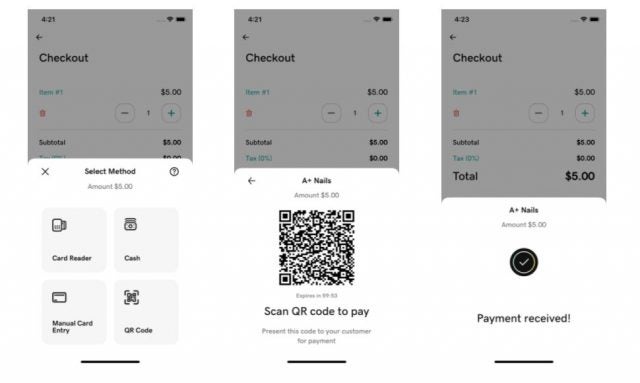
Is this the End of POS Hardware? (Spoiler – No) Although it may appear that the writing is on the wall for the poor old dedicated POS device, its funeral may be some way off yet. While many businesses would no doubt jump at the chance to do everything on a mobile phone and not purchase separate POS tech, many have already invested millions in this area, ingraining it within their business and linking it to sales, stock taking and even CRM. For these businesses, it's a case of if it ain't broke, don't fix it.
The second wrinkle with some phone payment platforms is that they only accept payments from mobile devices, meaning customers who want to pay by card are left out in the cold. In fact, according to YouGov America data, cash is still king, with 59% of in-store purchases fuelled by good old paper money. Only 9% of customers choose to pay by a mobile app, so don't go throwing away your POS system just yet.
In the case of GoDaddy's platform, the company has told us that it is possible for customers to enter their debit/credit card details after scanning the QR code, so it's not restricted solely to digital wallet payments.
Then there's the logistics of using a mobile phone on the shop floor. Sure, its fine for the small trader selling coffees out of a van, but is a larger retailer really going to expect staff to use their own phones to take payments? And if they're going to supply the phones themselves, they may as well put the money into a dedicated POS instead.
Picking the Right POS System While the retail industry felt the brunt of the pandemic, it has at least done one thing for it – normalized POS systems. With customers being more aware than ever about keeping a safe distance, the ability to pay for goods with just a tap of a card, rather than with cash, meant contact was kept to a minimum.
A POS system can drastically cut the amount of time an employee has to spend handling payments, can collect data about your customers, generate mailing lists, track inventory and more.
POS systems are convenient for both customer and business alike, so its perhaps unsurprising that the industry is predicted to be worth a huge 116 billion by 2026. However, GoDaddy aren't the only option out there, so we've collected some of the best options below for you:
0 out of 0
- backward
- forward
| Tech.co rating for retail
Score out of 5 based on Tech.co's independent market research. | Best for...
Tech.co's verdict to help you identify the most suitable choice for your retail business | Price from
The typical lowest starting price. The lowest price available for your business will depend on your needs. | iPad app
Is there a version of the software made specifically for iPad use? | Android app
Is there a version of the software made specifically for Android tablet use? | 24/7 support | Hardware | Get started | | --- | --- | --- | --- | --- | --- | --- | --- | | BEST RETAIL POS

| BEST FREE POS
|

|  |
|  |
|
|

|  |
|

| | Vend POS | Square POS | Talech POS | Revel POS | Erply POS | Shopify POS | Clover POS | Epos Now | Lightspeed | | 4.9 | 4.6 | 4.2 | 4.1 | 4.1 | 4.0 | 3.9 | 3.9 | 3.6 | | Best Retail POS | Best free POS System | Best value POS system | Best for customer relationship management | Best for small franchises | Best for integrating ecommerce | Best for those looking to expand from online-only operations | Large or growing businesses wanting an easy set up | Businesses with large, barcoded inventories | | $69 per month | Free (but transaction fees apply) | $29 per month | $99 per month | $69/month | $29 per month | $4.95 per month | $39 per month | $69 per month | | Works with loads of third-party periperals | Sold by Square, separately or bundled. Works with most leading brands and has a great free trial. | Available through third-party vendors | Offers a preconfigured POS terminal with an iPad and tablet stand, a router, a printer, and a cash drawer. | Works with loads of hardware options | Sold by Shopify, but also works with iPads and Android tablets | Sells everything from full cash stations to mobile card readers | Works with lots of third-party peripherals | Sold by Lightspeed. NOT compatible with weighing scales. | |
Compare prices
|
Try Square
|
Compare prices
|
Compare prices
|
Compare prices
|
Compare prices
|
Compare prices
|
Compare prices
|
Try Lightspeed
|
About our links
Tech.co is reader-supported. If you make a purchase through the links on our site, we may earn a commission from the retailers of the products we have reviewed. This helps Tech.co to provide free advice and reviews for our readers. It has no additional cost to you, and never affects the editorial independence of our reviews. Click to return to top of page
The post GoDaddy Payments QR Code App Makes Any Mobile Phone a POS Device appeared first on Tech.co.
You may know some of the easiest passwords to guess, but a new study has come out that shows which password categories are the most vulnerable to being hacked.
Password security remains the best way to protect yourself online. Unfortunately, the average user doesn't take it seriously, with 85% people admitting that they use the same password on more than one account.
If you want to protect your business from password-related security breaches, you're going to need a few tips and tricks, and this list of questionable password categories is a good place to start.
Top 20 Most Commonly Hacked Password Categories Research from card payment solutions company Dojo found that easy to guess passwords aren't your only problem. There are password categories that are also vulnerable to hackers and knowing what they are can help you protect yourself online.
Here are the top 20 most commonly hacked password categories, paired with the number of breached passwords that include the top 20 words/phrases in that category:
1. Pet names/terms of endearment – 4,0322. Names – 3,9133. Animals – 2,1124. Emotions – 1,9175. Food – 1,6626. Colors – 1,4507. Swear words – 1,2688. Actions – 9919. Family Members – 72310. Car Brands – 606
11. Cities – 505
12. Brands – 477
13. Countries – 463
14. Sports – 457
15. Religions – 341
16. Hobbies – 314
17. Weather – 313
18. Drinks – 268
19. Social media platforms – 253
20. Star Signs – 204
The study attributes the scourge of easy passwords to the proliferation of online services combined with password fatigue — which is described as “the feeling experienced by many people who are required to remember an excessive number of passwords as part of their daily routine.” With more and more businesses going remote and utilizing tools that requires passwords to do it, it's only fair that the average user might be running out of brain space to store all these passwords.
“To cope with password fatigue, people reuse the same password across multiple websites, using simple and predictable password creation strategies. Attackers exploit these well-known coping strategies, leaving individuals vulnerable.”
How important is password security? In so many words, very important. In fact, according to data from Verizon, 81% of business security breaches were due to poor password security on the part of an employee. And considering data breaches continue to cost businesses millions of dollars every year, it's safe to say that shoring up your password security is a worthwhile investment.
Still, avoiding certain categories and adding nonsensical characters and numbers to your passwords can only do so much. Fortunately, there are a few steps you can take to make sure your company is secure from a password standpoint.
For one, set up multi-factor authentication immediately. 99% of password-related hacks can be prevented with this simple, free feature, making it the most obvious choice for businesses.
Additionally, you can also get a password manager. Whether it be for individual or business use, these platforms are incredibly secure, easy to use, and have virtual no risk when it comes to security and privacy. Take a look at our best password managers guide and check out some of our top providers in the table below.
0 out of 0
- backward
- forward
| Local Storage Option | Two-Factor Authentication | Failsafe Function | Password Generator Function
A password manager can create secure, complex passwords for you. You won't need to remember them yourself. | Help Instructions | Email Support | Live Chat Support | Phone Support | Price
Overall cost per year for a single user. | Business Plan? | Business Price
Cheapest available business plan | Click to Try | | --- | --- | --- | --- | --- | --- | --- | --- | --- | --- | --- | --- | | BEST ON TEST
|
|
|
|
| | LastPass | 1Password | Dashlane | NordPass | Sticky Password | | $36 | $36 | $60 | $29.88 | $30 | | $3/user/month | $19.95/10 users | $60/user | $3.59/user/month | $29.99/user | |
Try LastPass
|
Try 1Password
|
Try Dashlane
|
Try NordPass
|
Sticky Password
|
The post Avoid These Password Categories to Stay Safe Online appeared first on Tech.co.
It's Y2K all over again! Firefox and Google Chrome are both nearing their 100th version, and the change could disrupt website functionality on several pages across the web.
The internet is a vast and delicate entity. As platform outages and security breaches have shown us, there are plenty of things that can go wrong that are difficult to manage if you aren't prepared.
That's exactly what's happening with Chrome and Firefox, as their 100th versions are imminent, and some websites are apparently unprepared for their systems to handle three digits as opposed to two.
Chrome and Firefox Approach 100th Version Two of the most popular browsers in the world (one more so than the other) are both approaching a notable milestone: their 100th version! That's right, these browsers have been updated so many times that they are about to hit triple digits.
Major milestone: Chrome and Firefox will soon reach version 100! 💯
The version number is going up to three digits and both browsers are working on mitigating the potential impact of this change. Learn more about it and pitch in to help with testing ➡️https://t.co/FtPl4CRjfk
— Chrome Developers (@ChromiumDev) February 15, 2022
Unfortunately, as we discovered in 1999 during the Y2K panic, insignificant changes like this one can have unforeseen consequences, and that appears to be the case for these two browsers.
New Browser Versions Could Break Websites Because Firefox and Chrome will have to display their respective versions with three digits instead of two, certain websites online are likely going to struggle to manage the added digit.
Mozilla, the purveyor of Firefox, even put out a blog post about the issue, urging web developers to attempt to address the issue before any updates go live.
“Without a single specification to follow, different browsers have different formats for the User-Agent string, and site-specific User-Agent parsing,” Mozilla explained in the blog. “It’s possible that some parsing libraries may have hard-coded assumptions or bugs that don’t take into account three-digit major version numbers.”
Unlike Y2K, no one is concerned about this small issue causing worldwide power outages or infrastructure collapses. In fact, most websites are built to handle this kind of change, so it likely won't disrupt much when it comes to your online experience.
However, tracking sites have shown that some websites are not equipped to manage this change, including Yahoo, HBO Go, and Bethesda, to name a few reputable sites.
Do you need to worry about your website? In all likelihood, your website is safe from any problems with the 100th version of Chrome and Firefox. In the event a website is not equipped to manage the problem, the respective companies have promised to freeze version numbers at 99 or inject code to affected websites to fix the issue. Simply put, you should be safe.
Either way, Chrome and Firefox have asked developers to test out compatibility with the 100th versions of the browsers to ensure as little down time as possible. And if your business runs mostly online, any downtime will likely not be welcomed by you or your customers. The updated browser versions will launch on March 29th for Chrome and May 3rd for Firefox.
If you're looking to get your own website off the ground, that's another issue that we can also help you with. Check out our best website builders guide so you can understand exactly what your options are when it comes to launching your online presence.
The post Updated Versions of Firefox and Chrome Could Break Some Websites appeared first on Tech.co.
Keeping your business secure just got a little bit easier, as NordPass is officially partnering with Cowbell Cyber to offer small to medium-sized enterprises (SMEs) a more comprehensive security solution.
While enterprise businesses are often well protected from cybercriminals, smaller organizations often don't have the resources to fend off any and every attack that comes their way. In fact, some hackers specifically target small and medium-sized businesses because of this perceived lack of protection.
Fortunately, cybersecurity providers are taking notice and making an effort to provide tools that keep small and medium-sized businesses safe.
NordPass Partners with Cowbell Cyber Announced in a press release this week, NordPass Business is reportedly partnering with Cowbell Cyber, an AI-powered cyber insurance provider aimed at helping smaller businesses protect themselves from the evils of malware, ransomware, and the like.
“Together with our partners NordPass, Cowbell brings streamlined access to top cybersecurity solutions to current and future policyholders to maximize their ability to be secure,” said Theresa Le, Head of Claims & Risk Engineering at Cowbell Cyber. “We connect directly with trusted partners to improve the cyber risk profile of our policyholders.”
NordPass will be combining with Cowbell Rx — the company's referral marketplace — and will provide the NordPass Business platform to policy holders for 15% off. The partnership's goal is to provide a more comprehensive, affordable way for small and medium sized businesses to protect themselves online from potential threats.
Do you need to protect your business online? It may seem like an unnecessary expense, particularly if you've got a strict budget, but the reality is that protecting your business online is vitally important to the longevity of any successful business. Cybercrime is notably on the rise, particularly in the business world, with cost estimates nearing $400 billion on a yearly basis.
“With ever-increasing cybercrime, we highly encourage all of our customers to think about cyber insurance,” said Gerald Kasulis, Head of Business and Channel Operations at NordPass. “Implementing and using a password manager, having Multi-Factor Authentication (MFA) in place, or having an import detection response tool — all of these things reduce your risk, and that ultimately may increase your chances of securing a cyber-insurance policy.”
In so many words, you absolutely should protect your business online. Whether it be through password managers, cyber insurance, or some combination of the two, small and medium sized businesses need to take the threat of cybercrime seriously or face the dire consequences.
The post NordPass Partners with Cyber Insurance Firm for Better SME Protection appeared first on Tech.co.
Apple has rolled out security patches for devices using iOS, iPadOS, and macOS after finding a security vulnerability was being exploited by hackers in the wild.
Apple has warned that processing certain types of maliciously crafted web content may lead to arbitrary code execution, so be extra careful about what you click on, especially before you download the update. It’s also recommended that you install antivirus software – or a VPN with threat protection features – if you haven't already.
The quick response from Apple is the latest signal that the company has turned over a new leaf when it comes to responding to security patches; it was criticized towards the tail end last year for not responding to problems with sufficient haste.
Threat Actors Were Executing Code on Apple Devices Tracked as CVE-2022-22620, the vulnerability was letting hackers execute files – including malicious ones – on Apple-made devices such as iPhones.
Apple confirmed it is aware of the exploit and the company has released a patch as part of iOS and iPadOS 15.3.1., and macOS Monterey 12.2.1.
In a statement explaining the reasons behind the patch rollout, Apple said that it “was aware of a report that this issue may have been actively exploited”, and warned that “Processing maliciously crafted web content may lead to arbitrary code execution.”
Reports suggest that the average Apple device holder is not under any immediate threat, as the exploit is being used in “targeted attacks” – which likely means businesses and other money-making entities are most at risk.
However, the standard advice for both businesses and individuals is to update your phone as soon as possible.
Apple’s Patchy Security Record Although Apple is behind some of the most secure operating systems the world has ever seen, the company has come under fire recently for not rolling out security patches quickly enough, and for responding slowly to zero-day vulnerabilities.
Zero-day vulnerabilities refer to problems with software that are being actively exploited by hackers but are unknown to IT teams and others with a vested interest in patching them.
“We saw your blog post regarding this issue and your other reports. We apologize for the delay in responding to you,” an Apple employee wrote in an email to a security researcher last September, after they published three, exploitable bugs that Apple had repeatedly ignored.
We want to let you know that we are still investigating these issues and how we can address them to protect customers. Thank you again for taking the time to report these issues to us, we appreciate your assistance. Please let us know if you have any questions.”
Protecting Yourself Against Malware The best protection against malware is antivirus software, particularly one with a website scanner so you know whether or not a site is legit before you click on it.
As Apple said, you’ve got to be careful about clicking on web content – but antivirus software isn’t the only tech that can help you avoid malware. VPNs like NordVPN come with threat protection tools; the provider will display warnings if you click on malicious website links.
But, remember, the most important security measure is updating your iPhone, Mac, and/or iPad – the patch should be waiting in your device settings.
The post Apple Releases Emergency Patch for iPhone, iPad and Mac Vulnerability appeared first on Tech.co.
Twine, a company that recently acquired virtual events startup Glimpse, plans to bring speed networking to Zoom, with reports suggesting the launch date may be just weeks away.
Networking is a vital part of everyone's career – especially for younger professionals – but the global shift to remote working almost two years ago means connecting with like-minded businesspeople is much harder than ever before. Now, that's all about to change thanks to twine/Glimpse's web conferencing integration.
Zoom's App Marketplace has grown exponentially since 2018, but there are few apps that will add value to the lives of professionals in the way “twine for Zoom” is expected to.
Twine, Glimpse, and Speed Matching Explained Twine is a relatively young video chat app created in the middle of the pandemic. Pitched as a “Zoom for meeting new people,” it was designed to facilitate meaningful conversations between strangers. After shifting its focus to online events, the company closed on $3.3 million in seed funding in June 2021.
Twine is powered by Y Combinator, a US tech startup accelerator. Since 2005, Y Combinator has funded the launches of Stripe, Airbnb, Cruise, DoorDash, Coinbase, Dropbox, Twitch, Flightfox, and Reddit, as well as hundreds of other now-established companies.
Glimpse has been testing a new Zoom integration that would give meeting hosts the ability to add speed networking to their Zoom meetings and webinars
Glimpse, which has just been acquired by twine, is a speed matching platform that lets you create events and invite other professionals to them that you'd like to network with. Like twine, they've tried to alleviate a pitfall of the pandemic — a lack of face-to-face networking — with a matching system based on artificial intelligence.
According to reports, Glimpse has been testing a new Zoom integration that would give meeting hosts the ability to add speed networking to their Zoom meetings and webinars — powered by Zoom's “Breakout Rooms” API — which Glimpse had insider access to.
The access to the API gave Glimpse the advantage over twine — but now, after the acquisition, Glimpse's software will be available to twine's customers.
When Will Speed Matching be Available? According to TechCrunch, over the next few weeks, a number of apps built using Zooms Breakout Rooms API will be added to the Zoom App Marketplace.
The Zoom App Marketplace features a number of apps that can be downloaded and integrated with Zoom to provide extra functionality for users. App store categories include learning & development, collaboration, and finance, and there's a whole section on integrated CRM software.
“What [the Glimpse team] managed to build within the Zoom ecosystem is nothing short of remarkable,” said Lawrence Coburn, CEO of twine, claiming it would make a “game-changing impact for remote teams and virtual events.”
Zoom Becoming One-Stop-Shop for Remote Working Finding a company, business, or organization that's had a more successful two years than Zoom is no easy task. The company has gone from strength to strength since the mass shift to remote working and is still the go-to web conferencing service for thousands of businesses all over the world.
Starting with the basics — connecting people via video and audio chat — the proliferation of apps for Zoom (there's now over 1,500) means there are fewer and fewer reasons to leave the app.
Now, you'll be able to expand your network of fellow professionals, organize events, and connect with people all over the world without even leaving Zoom — or your living room, for that matter.
The post Speed Networking is Coming to Zoom appeared first on Tech.co.
Salesforce has told employees that it plans to build an NFT cloud service, according to reports from US news outlets.
Salesforce is best known for its CRM software, but Co-CEO Marc Benioff – who also owns TIME magazine and its line of NFTs – is evidently keen to branch out further.
With increasing numbers of companies hurling money at NFT-related projects, the question of how long the “bubble” will last is well and truly open.
What is Salesforce Actually Building? Salesforce is hoping to create a cloud-based platform where artists can create NFTs and subsequently sell them.
Co-CEOs Marc Benioff and Bret Taylor mentioned the idea in a private meeting, the details of which were passed on to CNBC by individuals who attended. Executives reportedly held up Pepsi’s foray into the NFT world as an example of what was possible.
NFT trading platforms like OpenSea are already up, running, and processing billions of dollars of transactions – and Salesforce wants their own slice of non-fungible pie.
Salesforce insiders said that a platform for buying and selling NFTs could be integrated into the company’s existing sales tech ecosystem, within which all transactions could be dealt with.
Salesforce chief Marc Benioff has already shown a keen interest in NFTs through his ownership of TIME Magazine; the magazine generates TIMEpieces, digital collectibles that allow readers to unlock content and events.
NFTs: The Bubble that Just Won’t Burst – Yet In short, NFTs are crypto assets that live on the Ethereum blockchain. They are “non-fungible” because they contain a digital signature, which can be used to verify ownership. Conversely, Bitcoin and other cryptocurrencies are “fungible”, because they can be exchanged for one another.
Although NFTs have been around since the early 2010s, only in the last few years has it turned into a multi-billion dollar industry.
OpenSea, an NFT trading platform, recently raised around $300 million at a $13.3 billion valuation. According to decentralized app store DappRadar, total sales on the platform surpassed $23 billion in 2021.
Exactly how economically dangerous NFTs are is hotly debated. To be charitable to critics, NFTs exude all the classic hallmarks of an asset bubble – which materializes the price of a certain item, product, or object soars without any underlying fundamentals that can be attributed to the rise, such as demand outstripping supply, or genuine usefulness.
But then again, similar things were said about Bitcoin, and now look how far that’s come. What’s more, one could argue we’re simply seeing concepts such as “ownership” and “value” are simply being redefined in real-time, or updated to deal with the increased interest in digital property.
Salesforce Jump on the Blockchain Bandwagon The news all but confirms that Salesforce is about to add its name to the long list of companies that are venturing into the world of NFTs – whether it'll be as successful as its CRM software remains to be seen.
Pepsi is one name Salesforce held up as an example in internal conversations but, in reality, that's just the tip of the iceberg.
Nike and Adidas have both broken ground with NFTs of their own, with the former currently suing StockX for “freeriding” on its trademarks and using them to produce tokens. Hermes is another big brand to have taken recent legal action over NFT-related trademark infringements.
Coca-Cola, McDonalds and Ray-Ban are three other business behemoths that are starting to lean more heavily on NFTs for marketing purposes.
If CEO Marc Benioff's TIME magazine NFTs are anything to go by, then Salesforce is heading into this increasingly competitive marketplace with serious intentions.
The post Salesforce is Building an NFT Cloud Service appeared first on Tech.co.
Tech giant Apple has officially confirmed that a Tap to Pay feature will be coming to iPhones this year.
This means that retailers will be able to accept contactless payments from customers through their iPhones, allowing Apple to muscle in on a point-of-sale market currently dominated by top POS system providers like Square and Vend.
With no additional hardware needed to make payments, the feature could open up new possibilities for businesses in the US and beyond – but what will it mean for other digital payment companies?
Apple Pay to Apple Payments Murmurs about a new payments feature have been swirling around the media since sources confirmed to Bloomberg in late January that Apple was planning to venture into the POS market.
But it’s been in the pipeline for a fair bit longer. In 2020, Apple paid roughly $100 million for Mobeewave, a Canadian company that turns smartphones into payment terminals for credit cards – which, in retrospect, was a clearer statement of intent than first thought.
This week, rumor turned reality as Apple released a statement officially confirming the payment feature – which will be called ‘Tap to Pay’.
“Once Tap to Pay on iPhone becomes available” the post reads, “merchants will be able to unlock contactless payment acceptance through a supporting iOS app on an iPhone XS or later device.”
“Tap to Pay on iPhone will provide businesses with a secure, private, and easy way to accept contactless payments and unlock new checkout experiences using the power, security, and convenience of iPhone” – Jennifer Bailey, Vice President of Apple Pay and Apple Wallet.
Apple confirmed that payment data belonging to customers will be secured by the technology behind Apple Pay, with all transactions encrypted and processed using the Secure Element. Apple will be unaware of what is being purchased, as well as who is buying it.
The new feature will be accessible through third-party apps but will need to work with a compatible payments processor. Stripe has already confirmed it will do this, including within the Shopify POS app.
“With Tap to Pay on iPhone, millions of businesses using Stripe can enhance their in-person commerce experience by offering their customers a fast and secure checkout” – Billy Alvarado, Chief Business Officer, Stripe.
Although there is no fixed date for its release, Apple says it will be available to retailers, restaurants, and other businesses “later this year”. The Application Programming Interface (API) needed for the Tap to Pay feature has already been added to the second beta of iOS 15.4.
Jostling for POS-ition Apple's announcement has sent ripples through the POS system market; shares of Block (better known as POS market leader Square) – fell more than 3% after it was announced.
POS Expert Adam Rowe commented: “Currently, all Apple mobile devices require external Bluetooth terminals, like those used by Square. The new feature would cut that hardware out, meaning that people could pay for a service by tapping their credit card (or a second iPhone) against an iPhone, in seconds.”
The prospect of being able to shave even seconds off transaction times will be tempting to any restauranteur, retailer, staff member, or server who's dealt with the stress of attending to a long queue of customers with faulty, outdated, and slow payment terminals.
The feature is being viewed by many as a direct rival to Square; some media outlets have even referred to Tap to Pay as the ‘Square killer’.
But it may simply test the payment company's resolve when it comes to retaining its customers – and if Apple decides to mirror the aggressive stances it’s taken during its App store payments row with Fortnite developers Epic Games, it’s anyone’s guess what might happen.
Will Apple Revolutionize the POS Marketplace? With an unlimited supply of tech and human resources to plow into its product, Apple's effect on the market could be huge.
“In terms of POS, Apple can influence the market to a certain extent as their large user-group will be incentivized to use systems which integrate with their payment system. It makes a lot more sense for an iPhone user starting a new business to use an integrated platform rather than front the cost of additional hardware,” business software researcher James Macey commented.
“Whether Apple is able to significantly disrupt key players like Square may be dependent on them growing their consumer market share to consolidate new business users” – James Macey, business software researcher.
“However, this incentive is largely only applicable to new businesses started by iPhone users” Macey explained. “It’s unlikely that existing businesses will throw out their card readers over this announcement. So whether Apple is able to significantly disrupt key players like Square may be dependent on them growing their consumer market share to consolidate new business users.”
This may take some doing. Providers like Square offer far more than just the ability to accept payments, with features such as inventory tracking and marketing features integrated with sales data. At Tech.co, we've tested all the top POS system providers and right now, we still think Square is the best POS system for diners and eateries, whereas Vend is the better option for stores that sell products such as clothes and homeware.
Besides, as Apple is allowing third-party apps to use the Tap to Pay feature, then Square could just keep on accepting payments through its app for Apple devices.
Irrespective of the direct impact on Square, Apple's decision to venture further into the digital payments industry is unlikely to be without ambition – and for millions of businesses still recovering from the pandemic, this could prove a godsend.
The post Your iPhone Will be Able to Accept Contactless Payments This Year appeared first on Tech.co.
VPN provider Surfshark has created the world's first Data Vulnerability Thermometer, alongside a cybercrime encyclopaedia.
The tool allows users to calculate the probability of falling victim to certain cybercrimes, as well as what personal information is needed to commit certain types of fraud, identity theft, and scams.
Surfshark's data about the financial losses incurred by victims of cybercrime is a sobering reminder to utilize security tools like password managers and antivirus software, but also of the importance of educating yourself on the risks themselves.
What does Surfshark's Data Vulnerability Thermometer do? Surfshark says the Data Vulnerability Thermometer “serves as a one-in-all stop for learning about cybercrime, assessing personal risk scores in data breaches, and evaluating possible criminal outcomes.”
The Thermometer's main function is to indicate connections between around 50 data points and 20 cybercrimes. The chance of becoming a victim of any given cybercrime is measured by comparing the frequency of specific cybercrimes to the total number of possible cases.
There's a library of internet crimes to educate yourself with, as well as information regarding the rates of crimes, what to look out for, and how you can prevent them from happening to you.
SurfShark's Data Vulnerability Thermometer will reveal everything you need to know about cybercrimes – including the risks they pose to you and your business.
The page itself is easy to use, with clear instructions on how to use it displayed immediately; thought has gone into the best way to make this mountain of information as accessible and digestible as possible.
“The Data Sensitivity Thermometer was developed keeping in mind data breach victims, of which we’ve seen more and more nowadays” – Vytautas Kaziukonis, CEO of Surfshark, said in a press release.
He added that “when people find out their personal information has been hacked, it often results in panic. Our tool seeks to alleviate this worry by giving people answers with fact-based information and realistic probabilities regarding their specific case.”
The Rising Threat of Cybercrime According to Surfshark, 1 billion people were affected by data breaches last year. Small businesses are one of the most hard-hit demographics, too – roughly 82% of ransomware attacks happen to small businesses.
But that's not the only type of cybercrime financially damaging small, medium, and large businesses across the globe:

As you can see, ransomware, tech support scams, online payment fraud and phishing scams – which are among the most serious online threats to businesses in the US and beyond – defrauded companies and consumers of well over $500m last year.
Surfshark isn't the only VPN company to respond to the rapidly increasing frequency of various types of cybercrime with a new feature. NordVPN, for example, recently added a ‘Dark Web Monitor' feature to its already impressive catalog of security tools – the provider will scan the dark web for your personal information to see if it has been leaked in any data breaches.
Protecting Yourself and Your Business From Cybercrimes Exposure to cybercrime is, unfortunately, becoming an increasingly common fixture of both work and personal life for millions of people around the world. As online criminal operations have got more sophisticated, however, so has technology that will stop them in their tracks.
Take password managers, for instance. The first line of defense against threat actors – and arguably the most important – is a strong password. Weak passwords are one of the easiest ways a threat actor can access your accounts – and if you're reusing the same password on multiple websites, a hacker could gain access to virtually everything you store online with just a few characters of information.
Password managers are great for business and personal use as they allow users to create complex, varied passwords for all of their accounts whilst removing the responsibility of having to remember them all.
The post Surfshark Creates World’s First Data Vulnerability Thermometer appeared first on Tech.co.
To celebrate a decade of protecting the privacy of internet users all over the world, NordVPN is giving new subscribers the chance to win up to two years of extra subscription time alongside a generous February sale.
NordVPN is one of the most popular and trusted VPN providers on the market and offers a multitude of useful features that help unblock content all over the globe whilst staying hidden and safe.
If you haven’t downloaded NordVPN already – and you’re not using another VPN provider – this is your chance to snap up an exclusive deal on a product that usually costs a lot more.
What’s NordVPN’s Deal Offering? Right now, you can sign up for a two-year subscription with NordVPN for just $84 – which is only $3.49/ month and 70% less than what you’d be paying month-to-month.
If you sign up between February 9 and March 10, you’ll also win extra subscription time as a gift. You’ll have the chance to win either one month, one year, or two years of extra subscription time, totally free.
If you sign up for a NordVPN account between February 9 and March 10, you’ll win extra subscription time as a gift.
After this 30 day period, the 2-year plans price will increase again to $96 — still 66% off the standard rolling monthly cost, but with no bonus time added.
If you do take advantage of the deal this month, there’s nothing you need to do to claim your extra time once you’ve purchased your subscription – it will be added automatically to your account.
Anyone can benefit from the promotion, including if you’re already using a student or influencer discount, or any other special offer.
Is NordVPN Worth the Money? Here at Tech.co, we review VPN providers like NordVPN all the time, to help answer the most important questions you might have around using or purchasing them.
As VPN providers go, NordVPN is one of the best you can buy, coming out on top of our independent ranking of the most secure VPNs. It will send all your traffic down encrypted tunnels to one of its private servers before it reaches the internet, masking your IP address in the process and ensuring that anyone observing your internet activity won’t be able to link it to you.
NordVPN secures all your data using AES-256 encryption and is committed to keeping no logs of your activity.
Using a paid VPN subscription is a far more secure solution to private browsing than free VPNs – which should generally be avoided – or a simple proxy server or Smart DNS service, neither of which will implement rigorous encryption standards, potentially leaving your identity exposed.
NordVPN secures your data using AES-256 encryption, has committed to keeping no logs (and doesn’t even use hard disks in its servers) and speeds across its network of over 5,000 servers are top-notch, avoiding any delays to your activity.
NordVPN's top features include Double VPN, which will reroute your connection through not one but two Virtual Private Networks, Cybersec, which will flag up dodgy websites and help block adverts, and a kill-switch to ensure your internet connection drops immediately if your VPN does.
Why Privacy Matters Privacy is a fundamental right that humans are entitled to both in the ‘real world' and on the internet. At a time when personal data is being compiled at an astonishing rate by companies who can profit from it, VPNs and other privacy tools have never been so important.
Remember, VPNs are completely legal in most countries, and can be used for a whole host of perfectly legitimate activities. They can be used to access geo-blocked content, for example to watch different Netflix libraries or even reduce ping time on video games.
41% of Americans are already using VPNs for business and leisure, as the value of these tools is becoming more and more apparent. VPNs aren't expensive, literally the cost of a few bucks a month, and they're easy to use too, but the extra layer of security they provide can be invaluable.
0 out of 0
- backward
- forward
| Test Score
Our scoring is based on independent tests and assessments of features, privacy settings, ease of use and value. | Verdict | No. of Devices | No. of Servers | Zero Data Logging | Kill switch | Ease of Use | Features | Privacy | Speed | Help & Support | Value for Money | Free Trial | Price From
Lowest price for single month subscription to cheapest paid tier. Other plans are available. | Try
Click to find the latest offers, deals and discounts from the VPN provider | | --- | --- | --- | --- | --- | --- | --- | --- | --- | --- | --- | --- | --- | --- | --- | | BEST ON TEST
|
|
|
|
|
|
|
|
| | NordVPN | IPVanish | PureVPN | Private Internet Access | TorGuard | Proton VPN | ExpressVPN | Ivacy VPN | Hide Me VPN | | 4.8 | 4.2 | 3.9 | 4.5 | 4.0 | 4.3 | 4.7 | 3.4 | 4.5 | | Fast, effective, low-cost and simple – the best VPN we've tested, with risk-free money-back guarantee | Powerful features and security, but a bit technical. Some massive savings currently available. | A safe, simple, outstanding VPN | Outstanding value, with an advanced VPN app | Good VPN privacy at good speeds | A decent option for expert users | Superb features, but at a higher cost | Excellent privacy features for the security-minded | A beautifully simple VPN, with great security provisions | | 6 | Unlimited | 5 | 10 | 8-12 | 10 | 5 | 5 | 10 | | 5,000+ (60+ countries) | 1,300+ (55+ countries) | 6,500 | 29,000+ (78+ countries) | 3,000+ (50+ countries) | 1,300+ (61+ countries) | 3,000+ (94+ countries) | 450 | 1,800+ (40+ countries) | | ★★★★★ | ★★★★☆ | ★★★★★ | ★★★☆☆ | ★★★★☆ | ★★★★★ | ★★★★★ | ★★★★☆ | ★★★★★ | | ★★★★★ | ★★★★☆ | ★★★★★ | ★★★★☆ | ★★★☆☆ | ★★★★★ | ★★★★★ | ★★★☆☆ | ★★★★★ | | ★★★★★ | ★★★★☆ | ★★★★★ | ★★★★★ | ★★★★★ | ★★★★★ | ★★★★★ | ★★★★★ | ★★★★★ | | ★★★★★ | ★★★★☆ | ★★★☆☆ | ★★★★☆ | ★★★☆☆ | ★★★★☆ | ★★★★★ | ★★★☆☆ | ★★★★☆ | | ★★★★☆ | ★★★★★ | ★★★★☆ | ★★★★☆ | ★★★☆☆ | ★★★☆☆ | ★★★★☆ | ★★★★☆ | ★★★☆☆ | | ★★★★☆ | ★★★★☆ | ★★★★★ | ★★★★☆ | ★★★★☆ | ★★★★☆ | ★★★☆☆ | ★★★★☆ | ★★★★★ | | $3.71/mo | $3.75/mo | $1.99/mo | $2.03/mo | $12.99/mo | $4 per month | $12.95/mo | $2.25 (2-year plan) | $12.85/mo | |
See Deals
|
See Deals
|
See Deals
|
See Deals
|
See Deals
|
See Deals
|
See Deals
|
See Deals
|
See Deals
|
The post NordVPN Offers Chance to Win Free 2-Year Subscription appeared first on Tech.co.
Software Giant Microsoft marked Safer Internet Day this week with a study into online civility, concluding from their finding that online spaces were more civil overall in 2021 than they were the year prior.
Microsoft says the results show online civility was “the best it's been” since 2016, although the data also showed that this was largely driven by improvements for boys and men, whereas the situation worsened for girls and women.
The company hopes that “providing access to this data will prompt new projects and research” into civility in online spaces.
Microsoft Study Finds Gender Disparities in Safety Microsoft’s Civility, Safety, and Interaction Online study involved polling young people about their exposure to various online risks and harms, and culminated with the production of a Digital Civility Index (DCI) score: the lower the score, the lower the risk exposure.
Microsoft has revealed that “this year’s global DCI score stands at 65%, which is the best it has been since the survey began in 2016.”
The Global Digital Civility Index Score for 2021 represents a 2% improvement on 2020’s score.
However, the improvement on last year's figures, according to Microsoft, was “led by teen boys and male respondents”. In fact, males accounted for 90% of the year-on-year improvement to the global DCI.
“Teen girls and women respondents, on the other hand, reported being both more exposed to online risks and feeling more severe consequences as a result” the company concluded in their study.
Women and girls experienced almost 60% of all risks reported in 2021 – a record high – and were also more likely to suffer consequences, pain, or worry due to various types of ‘uncivil' behavior.
These findings won't come as a surprise to many women – there are reams of data and personal accounts that suggest more abuse is directed at women than it is at men. Take cyberstalking, for instance – according to the Women's Media Center, over 70% of the people that are stalked online are women, whilst 80% of the defendants in cyberstalking cases are male.
Female US congressional candidates are more likely to receive abuse than their male counterparts. — ISD Global
The disparity between abuse received by female and male public figures also supports the idea that women fare worse online. In 2020, for instance, one study showed that female US congressional candidates were much more likely to receive abuse than their male counterparts.
This could be down in part to the fact that men are seemingly more vengeful online than women; Microsoft found that men (23%) were more likely to agree with the statement that ‘getting even is ok' than women (19%).
Other more recent news stories have shown there are clear reasons to be worried about women's safety and the abuse they suffer in online environments like the metaverse; Facebook had to develop a ‘personal boundary' tool to combat the problem.
Whilst Civility Rose Overall, Perceptions Worsened Interestingly, Microsoft found that, although exposure to online risks declined overall, perceptions about the overall state of online civility got worse.
Only 17% said civility improved this year, compared to 26% last year. The number of respondents that said online civility was ‘bad' grew by 5 points on last year's figures.
Interestingly, this was the case across the board, for men, women, and all age groups, from Gen Z to boomers. In both 2020 and 2021, Millennials were the least likely age group to say civility online was ‘good', closely followed by Gen X and Gen Z respectively.
Microsoft concludes that Covid fatigue likely played a role in the gloomier perceptions people held during 2021 compared with the year prior.
Should Social Media Sites Shoulder the Blame? Something the report makes abundantly clear is that, across the board, internet users link inaction from social media companies to the deterioration of civility in online spaces. Three-quarters of those surveyed said that civility would improve if social media companies ramped up their moderation efforts.
Respondents also questioned the merits of allowing people to create online accounts – 72% believed that you shouldn't be able to post from an anonymous account.
This may turn into an increasingly contentious issue in 2022, considering that banning people from using anonymous accounts could create problems for members of minority groups, political activists, and other threatened individuals across the globe who rely on anonymity and pseudonymity.
What is Safer Internet Day? February 8, 2022 marked the 19th edition of “Safer Internet Day”. Around the world, organizations are running sessions with schools and groups of young people to promote “safer and more responsible use of online technology and mobile phones”.
Safer Internet Day began as an initiative of the EU SafeBorders project back in 2004. It was then taken up by the Insafe network the year after and, since then, Safer Internet Day is now observed in around 200 countries and regions across the world.
In the US, “a series of videos for schools featuring young creators and digital well-being experts” will be rolled out, and “schools can pick and choose from to create the program that works best for them”.
The theme this year is once again “Together for a Better Internet” – and according to the campaign’s website, “the day will call upon all stakeholders to join together to make the internet a safer and better place for all, and especially for children and young people.”
In the US, “a series of videos for schools featuring young creators and digital well-being experts” will be rolled out, and “schools can pick and choose from to create the program that works best for them”. Topics that will be focused on include the fear of missing out, cyberbullying and misinformation, and a number of other important issues that affect young people.
You can find out what activities, initiatives, and sessions are taking place in other countries here.
Microsoft’s Manner-Based Mantra Microsoft also encourages internet users to take up the Digital Civility Challenge, which draws on four common-sense principles to “help grow compassion, empathy, and kindness” in online spaces.
This includes the Golden Rule – acting with empathy and kindness in every interaction, treating everyone with dignity and respect, as well as respecting differences, honoring diverse perspectives, and standing up for yourself and others.
Another useful tip – which it would be worth everyone taking on board – is pausing before you reply, especially to things you disagree with, and think about the consequences of what you’re going to say, and how it could affect the recipient.
The earlier these sorts of principles are instilled in not just young people, but everyone – the better chance we have of building a better internet that's safe for both men and women.
The post Microsoft Claims the Internet is Getting Safer (as Long as You’re a Man) appeared first on Tech.co.
The Federal Communications Commission (FCC) is putting forward a proposal that will force US internet companies to provide ‘nutrition labels’ with their services at the point of sale.
The new rules were announced alongside other pledges to expand internet access to rural areas of the US, where citizens only have access to poor broadband coverage at present.
The changes will affect millions of consumers, but businesses who’ve gone remote, and now rely on data-intensive tools such as web conferencing services for their livelihoods, will also welcome the modifications to the law.
What Will the Proposals Force ISPs to do? The proposals suggest that at the point-of-sale, internet service providers should provide ‘nutrition labels’ on internet service products, both online and in-person.
These labels, which won't look dissimilar to one’s you might find on a cereal box if the FCC gets its way, will reveal the price, speed, data allowances, including activation and setup rates and later price hikes on their plans, as well as network practices like bandwidth throttling.
The proposals are part of the Biden Administration’s crackdown on sectors and industries that it believes are suffering due to a lack of competition.
“Arming consumers with better information will also promote greater innovation, more competition, and lower prices for broadband – wins for the entire broadband ecosystem” – Geoffrey Stark, FCC Commissioner.
Stark also said that the nutrition labels “will help households compare prices and service offerings, making it easier for them to find the right package and the best deal.”
Biden’s Competitive Crackdown Providing this sort of information at the point of sale of broadband has been floated in the halls of government for some years now. As the Washington Post points out, the Obama-era FCC tried to instate it as a voluntary measure.
Last summer, Biden signed an executive order that required consumers to be given more choice and fairer deals when it comes to their broadband. The nutrition labels are one initiative that will seek to honor this directive.
The FCC has until November to iron out the intricacies of the legislation, such as deciding how prominent the labels have to be.
Now, the proposal has been included in Biden’s huge infrastructure bill, and the FCC has until November to iron out the intricacies of the legislation. For instance, will ISPs have to ensure you see the label before purchasing a product, or can it be hidden behind a link or on the back page of a tiny leaflet?
With many things still to decide, a ‘commenting process’ has begun, giving industry players the opportunity to have their say on the proposed changes.
Whilst encouraging, these changes will do little for those living in rural areas across the US, who struggle to get broadband at all, let alone a connection of any real quality. However, FCC has also put aside $1.2 billion to expand broadband access to rural areas across 32 states.
Will Nutrition Labels Save my Business Money? Although likely to affect consumers more than companies, pandemic-era norms like working from home mean the new rules will have a major effect on businesses too.
The majority of organizations now have at least some staff working remotely, and rely not only on the quality of web conferencing services, but the internet connections of tens or even hundreds of staff members dotted across the US.
The US’s broadband carriers are far from the most popular corporate entities and, for a country that has a near-universal reliance on their services, it’s about time more consumer and small business protections like this were put in place.
The post FCC to Roll Out ‘Nutrition Labels’ for US Internet Providers appeared first on Tech.co.
Windows 11 features yet to be publicly announced by Microsoft have been spotted inside the Settings Menu – and elsewhere – by those using the test version of the operating system.
Just a few days ago, Microsoft revealed it was testing more experimental features for Windows – although little was known about them. However, preview versions show new sustainability and focus options.
Windows 11 was only released in October 2021 and as with any new operating system, so it’s vital you keep it – as well as your antivirus software – up to date to avoid potential security issues.
What are the ‘Secret' Features? Among the improved features is one that will help users stay focused. Focus Assist is already present in Windows 10, but it appears that this will be renamed simply Focus from here on, and offer more granular options, including the ability to schedule through Outlook to buy yourself some quiet time and ignore distractions.
According to Albacore, a Windows enthusiast who tweets regularly about the product desktop stickers are coming too. Users will “be able to configure [stickers] using a new Sticker Editor app, they'll persist across wallpaper changes as long as you don't use a slideshow, use Fill fit & have only 1 monitor.”
Policies relating to this new feature reference education usage – and it’s entirely possible the new feature is part of the consumer-facing version of Windows 11 called Windows 11 SE, which Microsoft is currently shipping to students at a low price point.
On top of this, there’s evidence that suggests users will have the option to hide the taskbar on tablet devices and a ‘sustainability’ section in the Settings Menu. The latter will provide users with tips regarding energy saving, as well as how to recycle parts of the device.
An Experimental Year for Microsoft Microsoft is gearing up for a year of experimenting with Windows 11, with plans to evaluate features through testing procedures that ultimately may never be rolled out commercially.
The Windows Insider Program – a community of users that get to trial versions of Windows products and give feedback – will be leaned on “more heavily” for its views on individual features, long lead items, and new ideas in general, according to Program Lead Amanda Langowski.
Langowski said that “that some of our more technical Insiders have discovered that some features are intentionally disabled in the builds we have flighted…this is by design, and in those cases, we will only communicate about features that we are purposefully enabling for Insiders to try out and give feedback on.”
For Windows testers, the Dev Channel has become the true home for free-reign testing, where anything with an outside chance of being a permanent feature is tested. The Beta Channel, on the other hand, is used to test new versions and features of Windows only houses features that are likely to be shipped out commercially.
Why Having Antivirus on Windows 11 is Vital Having reputable antivirus software is vital for all businesses, whatever size – but it's particularly important for US businesses, considering the country is targeted more than any other by ransomware gangs.
But having antivirus software installed on devices with Windows OS is particularly important because Windows devices get more viruses than devices with other operating systems. This is partly because they have the largest market share of any desktop OS, as well as historical security issues.
With new pieces of software, there's always the risk that fresh vulnerabilities will be discovered by hackers before security researchers identify them – and patches have already been released for Windows 11 in January. So, equipping yourself with deterrents is crucial.
The post Secret Unannounced Features Found In Windows 11 appeared first on Tech.co.
Small businesses are increasingly targeted by ransomware gangs, says a report by ransomware recovery specialists Coveware.
Released on February 3, the report looks in detail at ransomware attacks that took place during all four quarters of 2021. The findings reiterate the need for businesses to have reputable – and, crucially, up to date – antivirus software installed.
The study also concluded that the threat of discovery, exacerbated by high-profile takedowns of ransomware gangs widely covered in the media, was chipping away at the population of hackers and scammers prepared to risk jail time for a reward.
Ransomware is a Major Threat to Smaller Businesses It’s typically large companies that make the headlines when it comes to ransomware attacks – more data is usually on the line, the ransoms are larger and there’s often a regulator waiting in the wings to issue a fine for poor data practices.
According to a report by ransomware recovery specialists Coveware, a “tactical shift” has been introduced by many ransomware gangs, which includes a “deliberate attempt to extort companies that are large enough to pay a ‘big game’ ransom amount but small enough to keep attack operating costs and resulting media and Law Enforcement attention low.”
“You can hit the jackpot once, but provoke such a geopolitical conflict that you will be quickly found. It is better to quietly receive stable small sums from mid-sized companies…” – LockBit 2.0 ransomware gang member.
Indeed, the report notes that 82% of attacks that took place in 2021 impacted organizations with less than one thousand employees. The graph below illustrates, companies with 11 to 100 employees make up a significant proportion of the overall victims:

What Else did the Report Find Out? One interesting conclusion the report draws is that dramatic, highly publicized law enforcement takedowns of ransomware groups and the very real threat of jail time have shrunk the demographic of individuals willing to carry out such attacks.
Another finding that all businesses should be aware of is the steadily increasing percentage of ransomware attacks that exploit some sort of software vulnerability:

However, the main way in for ransomware gangs is still RDP compromise – which involves obtaining a password for a system administrator or user – so it's vital that all employees are using password managers to ensure their login credentials are as secure as possible.
Coveware also looked at the different types of professions suffering ransomware attacks. In Quarter 3, for instance, 12.8% of attacks were aimed at consumer services companies, whilst professional services accounted for 20.4% of all targeted victims. 10.2% of attacks in the same quarter were aimed at the public sector.
Preparing yourself for Malware and Ransomware Nowadays, businesses operating in all four corners of the economy have to be prepared for ransomware and malware attacks. But US businesses need to be especially vigilant – around one-quarter of all global ransomware attacks target US businesses and individuals.
Some key tips for surviving ransomware attacks include ensuring, through training, that employees can identify what a phishing email looks like, and securely backing up all the data you hold. Email content and filtering scanning are also recommended.
Useful cyber security tenets like the principle of least privilege – that all employees must only have access to the data they need to do their jobs, and no more – should be implemented across all businesses.
Other useful tools that can help bolster your defenses include antivirus software, which needs to be kept up to date at all times. If the attacker is using a form of malware to try and subsume control of your computer and hold you to ransom, a reputable antivirus program will be your best bet in terms of detecting and flushing out that malware.
The post 82% of Ransomware Attacks Target Small Businesses, Report Reveals appeared first on Tech.co.
A data breach involving the Washington State Department of Licensing could have exposed the personal information of over 250,000 licensed professionals.
After suspicious activity was detected on the department’s online licensing system in late January, it was temporarily shut down. This has caused significant problems for Washington-based professionals attempting to apply for, renew, or modify their licenses.
It's another grim reminder of the importance of using tools like password managers to improve your password security across multiple accounts, and ensuring multi-factor authentication is used where it can be.
What Happened During the Breach? In a statement published last Friday, The Washington State Department of Licensing (DoL) revealed it became aware of “suspicious activity involving professional and occupational license data”.
The DoL confirmed that it shut down POLARIS – the system holding the licensing data – on January 24, and began investigating with assistance from the Washington Office for CyberSecurity immediately.
The impact of the breach remains unclear, and the agency is unsure as to whether the data was accessed.
What Data is Held in POLARIS? Altogether, there are over 40 categories of businesses and professional licenses handed out by the Washington Department of Licensing.
Roughly 257,000 individual licenses are held by the Washington State DoL via POLARIS.
Sensitive data relating to individuals that work in 23 of those professions is held inside POLARIS, according to the Seattle Times. In total, roughly 257,000 individual licenses are held by the Washington State DoL via POLARIS.
According to the department, the information that may have been accessed includes “social security numbers, dates of birth, driver license numbers, and other personally-identifying information.”
Has My Data Been Compromised? If you’ve applied for a license in Washington state, you may be affected if it does materialize that data was copied or stolen.
The DoL issues driver and other vehicle licenses, as well as professional licenses you need to practice cosmetology, real estate, architecture, as well as teach driving lessons or work as a bail bondsman.
If you have one of these licenses, The Washington DoL advises all license holders to remain vigilant by reviewing their accounts, consider placing a fraud alert or security freeze on your credit file, and report any suspicious activity on your accounts immediately to the relevant authorities.
It's more crucial than ever that both businesses and individuals – in Washington state and beyond – make use of multi-factor authentication features available on banking, social media, and other sites they hold accounts with, as well as other security tools like password managers. last year was a record-setting one for data breaches, and there will be even more to come in 2022.
The post Over 250,000 People Potentially Affected by Washington State Data Breach appeared first on Tech.co.
Twitter announced last week that it’s expanding its ‘downvote’ feature to its entire global audience, after successful pilot testing with iOS users.
The purpose of the downvote button is to expand users’ abilities to express themselves on the platform and help Twitter serve users the most relevant replies at the same time.
This change will come as a godsend to employees that use social media management tools to schedule their company's tweets by decreasing the prevalence of offensive, irrelevant and vulgar replies.
Twitter Downvotes: Tried n’ Tested Twitter first started testing the downvote feature on its iOS app in June 2021, citing it as a way to keep users engaged in conversations, even if they see replies to tweets they don’t like. If users spot one, they can simply downvote it and Twitter won’t show it to other people.
Unlike dislikes or ‘negative’ reactions found on sites like Facebook, you won’t be able to see the number of downvotes a tweet actually has – making it more similar to YouTube, which recently hid its dislike count but still allows users to dislike videos.
Another important caveat is that the downvote button will only be available for replies to tweets, rather than tweets themselves.
Twitter’s Global Rollout Twitter is now rolling the change out globally due to the success of the trial – Twitter said that testers reported the overall standard of conversation was lifted by access to a downvote button.
“Finally, people who have tested downvoting agree it improves the quality of conversations on Twitter. We're excited to see how others think of it as it becomes available to more of you” – @TwitterSafety.
Twitter said that the “experiment also revealed that downvoting is the most frequently used way for people to flag content they don't want to see.”
Are Downvote Buttons Here to Stay? Ever since social media sites started providing users with the ability to ‘like’ posts, a debate has raged on about whether ‘dislike’, ‘downvote’, or any other buttons that mechanize negative emotions are a good idea.
After years of pressure from users, Facebook finally made the decision in 2016 to expand the range of emotional reactions a user could express on a post beyond just a simple “like”, modulated by different emojis.
But it slowly transpired that the company’s algorithm was giving heavier weighting to “Angry” and “Haha” reactions than it was to plain old “likes”, effectively boosting posts that provoked more “extreme” reactions to the top of people’s feeds. Weightings were later changed.
The role downvotes play in Twitter’s recommendation algorithm will be one of the most important factors to its success. On the one hand, it would be a good way to ensure fewer people see an abusive reply to a celebrities tweet; on the other, it could be weaponized by zealous groups of fans or followers of certain public figures to ensure their enemies opinions reach fewer people.
However, if Twitter's test results are anything to go by, its downvote button could prove one of the most successful forays into community self-moderation ever to be implemented.
The post Twitter Begins Global Rollout of Downvote Button appeared first on Tech.co.
Google’s scheduled changes to the layout of Gmail, which will affect how Google Chat, Meet, and Spaces are integrated, will be rolled out to customers this week.
Announced at the tail end of January, Google says the move will make it much easier for users to move between “critical” applications such as Gmail, Chat, and the company’s web conferencing service for businesses, Google Meet.
By the end of Q2 2022, Google says the changes will become the standard experience for users, with no option of opting back.
Google’s Interface is Changing Google is effectively changing the way Chat, Meet, and Spaces are accessed within Gmail. Right now, these other Google apps are simply windows that sit on the left-hand side of your Gmail inbox, like so (Image: Google):

But after the changes, these apps will be fully integrated into Gmail. Accessed with large buttons in the top left-hand corner, they will open as if they’re another screen inside Gmail rather than another app. Currently, this is called the “integrated view” (Image: Google):


Integration of these programs has a number of benefits – for example, if you’re searching for something in the Gmail search bar, the integrated view will also leaf through your Chat messages.
“We hope this new experience makes it easier for you to stay on top of what’s important and get work done faster in a single, focused location. Further, this will help reduce the need to switch between various applications, windows, or tabs” Google's Workspace team explained in a recent thread.
The company hopes the changes will make it easier for businesspeople to switch between conversations happening across various channels. It’s designed to be less distracting too, with notification bubbles to show which tools need your attention, rather than a long list of all your chats clogging up your screen.
When Will the Integrated Gmail Layout be Released? Google says that by February 8, 2022, users will be able to opt-in to test out the new experience, so they can become accustomed to it before a permanent switch. The ‘classic’ view can easily be reverted back to by heading over to Gmail’s settings.
By April 2022, users who have not switched to the new interface will nonetheless see it by default, although the option to change back to the classic view will still be available via the settings menu.
By the end of Q2, 2022, the new user interface will be the permanent standard for Gmail and there will be no option to revert back – so it's time to get used to it.
Is Google the Best Application for Businesses? This latest change from Google makes its suite of workspace products even more functional and easy-to-use – in essence, it's trying to give you fewer and fewer reasons to ever leave the window or tab you currently have open.
It's a sensible move from Google, considering its web conferencing service Google Meet is popular in its own right, as is Gmail and Google Chat. The integration will be helpful to those who use all three, and will encourage those who only use one or two of the apps to give the others a crack.
Further integration of Google's various workspace applications can only be good news for users, and keeps the company well ahead of other competitors that don't offer such all-encompassing, all-in-one programs to aid you with every facet of working life.
The post Major Changes are Coming to Your Work Gmail Account This Week – Take a Look appeared first on Tech.co.
LogMeIn, the company behind the popular remote desktop software of the same name, and password manager LastPass, is rebranding.
The new name for the brand is GoTo, inline with some of the products it already offers such as web conferencing platform GoTo Meeting, as well as GoTo Training and GoTo Webinar.
Alongside the rebrand, GoTo is also launching a new service, GoTo Resolve, an IT ticketing product with a freemium tier.
LogMeIn Becomes GoTo In a press release on the company's site, LogMeIn announced its company-wide rebrand to GoTo. The change goes beyond a simple name change, with the company taking the opportunity to collect its communications products under one platform.
With the change, GoTo Connect, a new unified-communications-as-a-service (UCaaS) will house the brands collaboration services such as cloud telephony, messaging, training and contact centre features. There's more to come too, says GoTo, with Facebook and web chat integrations on the horizon.
“The unified and simplified GoTo portfolio is well aligned with the way SMBs like to purchase and use the company’s products. Research clearly shows that SMBs typically prefer integrated, easy to use and manage solutions” – GoTo press release
According to GoTo, these changes are designed to better serve its core SMB clients, with the company stating that it has nearly 800k customers, with a billion people making use of its meetings, classes and webinars, and half a billion also using its remote access tools.
Read our review of GoTo Meeting, which offers a free tier
New GoTo Resolve IT Platform In addition to unifying existing systems under the GoTo brand, the company is also introducing GoTo Resolve, a new service offering IT management and support.
GoTo Resolve will offer multi-platform support, encompassing PC, Mac, iOS, Android and Chromebook. As well as computers and laptops, the service can also offer support for other office devices, including Wi-Fi and printers. As you might expect from GoTo, the package is bundled with various remote access and support tools, which can be used with or without the end-user present.
In terms of security, GoTo Resolve employs a Zero Trust Security Architecture, which makes a second, unique verification mandatory before access is approved.
A ticketing system enables customers and IT professionals to create and manage support tickets from messaging apps such as Microsoft Teams.
GoTo Resolve features a free tier too, although for a more feature rich service, companies will need to contact GoTo directly to obtain a price depending on their needs.
“GoTo and the new portfolio better represent the company and our commitment to SMBs. We understand their particular challenges and have the focus and resources needed to address these pain points to better serve their dynamic working environments.” - Mike Kohlsdorf, GoTo President and CEO.
The post LogMeIn Rebrands As GoTo And Adds New IT Support Platform appeared first on Tech.co.
Squarespace has added a new tool to its website builder – the ability to monetize video content.
Squarespace customers will be able to sell their videos for a one-time fee, or even set up a recurring subscription for them. The videos will be hosted by Squarespace directly.
Customers will be able to add 30 minutes of video for free, with content exceeding this only accessible to paying Squarespace users.
Squarespace Adds Video Monetization Tools Videos can now be monetized on Squarespace-created websites through its Member Area portal, a tool that was added in 2020 and intended as a way for website creators to offer paid content for their customers.
Squarespace creators will now be able to sell access to video content, either with a one-time charge, or with a recurring fee. The tool allows a high level of customization for videos, including the ability to adapt titles, URLs, thumbnails, metadata and more.
The video content is hosted natively on Squarespace itself, but it also supports eternally hosted videos on YouTube and Vimeo.
How Much Will Video Monetization Cost? All Squarespace customers will have access to the video tools, but the level of access depends on the tier which they are subscribed to.
Everyone, even those who use Squarespace's free tier, can upload 30 minutes of high resolution video to their site. If you want to do more than this though, you'll need to start paying.
Video monetization is available to those with Members Area access – an add on product for Squarespace subscriptions.
Squarespace plans start at $12, for the Personal tier, and its Business tier is set at $18 per month. There are more advanced options too – both Basic and Advanced Commerce are intended for those looking to create an ecommerce site, at $26 p/m and $40 p/m respectively.
To gain access to those video monetization tools, you'll need to add on the Members Area too. This starts at $9, increasing to $35 depending on the number of members areas and video storage required.
Here's a breakdown of the Squarespace pricing plans:
0 out of 0
- backward
- forward
| Plan | Price paid annually
The price per month you'll pay if you choose to be billed annually | Price paid monthly
The price per month you'll pay if you choose to be billed monthly | | --- | --- | --- | | Cheapest Plan
|
| Cheapest Ecommerce Plan
|
| | Squarespace | Squarespace | Squarespace Commerce | Squarespace Commerce | | Personal | Business | Basic | Advanced | | ~~$12 per month~~ $10.80 with code ‘TECHCO10' | ~~$18 per month~~ $16.20 with code ‘TECHCO10' | ~~$26 per month~~ $23.60 with code ‘TECHCO10' | ~~$40 per month~~ $36 with code ‘TECHCO10' | | ~~$16 per month~~ $14.40 with code ‘TECHCO10' | ~~$26 per month~~ $23.60 with code ‘TECHCO10' | ~~$35 per month~~ $32.50 with code ‘TECHCO10' | ~~$54 per month~~ $49.50 with code ‘TECHCO10' |
Use code ""TECHCO10"" to receive a 10% discount on all Squarespace plans Claim Offer
Does My Business Need Video Content? There are 244 million people in the US alone watching video content, making it a huge market that is hard to ignore for any business. In addition, 54% of users are looking for more video content from their favorite brands and businesses.
Unlike copy on a standard web page, videos are also great at communicating your brand's message in seconds, and are easily shareable on social media, be it TikTok, Twitter, Instagram, or wherever your main audience is.
In fact, we predict that one of the main social media trends in 2022 will be a meteoric rise of video marketing from brands large and small, leveraging short form video content to deliver a sales pitch in seconds.
Tools such as Squarespace's video monetization means that everyone can get in on the act, even the smallest business, generating the ability to make money from video content without no technical knowledge required.
The post Squarespace Now Lets You Make Money From Your Videos appeared first on Tech.co.
Originally announced last year, Microsoft has started rolling out ‘Front Row', a feature that it hopes will provide a solution to hybrid meetings and blur the lines between remote and in-person gatherings.
The biggest difference with Front Row is the way that participants are displayed. People are placed in a row, with everyone at the same level, to try and recreate the feeling of sitting across the desk from someone.
It might only be February, but we expect plenty more updates to Microsoft Teams in the near future, including more improvements to Front Row, as hinted at in Microsoft's latest announcement.
How Does Front Row Work in Microsoft Teams? While remote and hybrid working has seen a meteoric rise in the number of people using web conferencing platforms in the last two years, it's fair to say that many of us still experience annoying niggles and awkward moments when using Microsoft Teams, Zoom, or others.
One of the pain points is hybrid meetings, where some participants are in the office and others are dialling in remotely. That's where Front Row comes in, with Microsoft claiming it has introduced changes to make these meetings more enjoyable and natural for all.
With Front Row, remote participants are visualized in a gallery, with video feeds in a row, at eye level. This means that everyone on the call, and in the meeting room, are ‘face to face', in theory leading to a more natural meeting. In addition, now everyone in the meeting can view the chat at the same time.
“One of the most striking pieces of front row is the gallery. When we're all in a physical room together, you don't have people stacked on top of each other in a grid format. As I look around a Teams Room with front row, it doesn’t matter if people are in-person, or remote; everyone is on the same eye level, and it just feels very natural.” – Greg Baribault, Program Manager, Microsoft Teams Devices
There's no need for special equipment to use Front Row – the feature automatically scales to the size and number of screens you are already using.
More Updates Coming to Front Row Front Row, which is available as of now for Teams customers, is a good start for bridging in-person and virtual meetings, but it seems that Microsoft isn't done yet, with plans to introduce more features soon.
Firstly, Microsoft wants to blur the lines even further, and make it feel like everyone is in the same room. In order to do this, it will introduce shared backgrounds for everyone, similar to Together mode.
Next up is Loop, which will replace the raised hand panel with live note taking and live action items. It will also show the agenda at the start of a meeting, and dynamically switches to the raised hand panel when activated.
Then there's positional audio, which will replicate the effect of a person sitting in the room by generating the sound of their voice from their position. Suppose someone on the right of the screen starts talking – their audio will come out of the right speaker.
Picking the Right Web Conferencing Platform The pandemic has created many new trends, but among them, the rise of web conferencing has had a huge impact on businesses, allowing many to keep communicating and retain a sense of ‘normality' during remote working.
Of all these platforms, Microsoft Teams has never really taken its foot off the gas when it comes to improving its product, and regular updates have become part and parcel of that experience. The Teams of today is a different beast to that of the one from early 2020, and all the better for it.
Teams isn't the only platform in town, although we'd argue that it's one of the best. If you want to see what others have to offer, take a look at our top picks for web conferencing software:
0 out of 0
- backward
- forward
| Price from
The lowest starting price for a paid plan. The lowest price available for your business will depend on your needs. | User rating
Average rating given by iOS and Android users in App Store and Google Play Store reviews | Best for | Pros | Cons | | --- | --- | --- | --- | --- | |
|
|
|
|
|
|
|
|
| | GoToMeeting | Zoom | RingCentral | Google Meet | Lifesize | Microsoft Teams | Webex | Zoho Meeting | Join.me | | $12/month | $14.99/month | $14.99/month | $8/month | $12.95/month | $4/month | $13.50/month | $3/month | $10/month | | 4.5 | 4.2 | 3.9 | 3.8 | 3.5 | Not yet rated | 4.2 | Not yet rated | 3.9 | | Overall conference calling | Beginners | Longer meetings | Google Workplace users | Users that need hardware | Microsoft users | Larger businesses | Zoho users | Brand-focused businesses | | * High quality audio and video * Very reliable and secure * Lower cost than competitors
| * Easy to use * Impressive free version available * Intuitive interface
| * Lots of customizability * Can also be used for Glip
| * Google Workplace compatibility * Very affordable paid plan * Advanced features like live captioning
| * 1080p video and HD audio, * Integrates with third-party apps * Good value
| * Completely free * 300 participants * Integrates with Microsoft 365
| * Feature-rich software * High quality audio and video * Easy setup
| * No time limit on free plan * Browser functionality * SSL/128-bit AES encryption
| * Very customizable platform * Quality audio * Respectable free version
| | * Weak free plan
| * Poor audio quality
| * 24-hour meeting limit expires in July 2021
| * 250 meeting participant limit * No end-to-end-encryption
| * Unsophisticated chat function
| * No gallery view for guests * Steep learning curve
| * Occasional bandwidth issues
| * Recording costs extra
| * Expensive for full features
|
Find the best video conferencing app for your business Compare deals
About our links
Tech.co is reader-supported. If you make a purchase through the links on our site, we may earn a commission from the retailers of the products we have reviewed. This helps Tech.co to provide free advice and reviews for our readers. It has no additional cost to you, and never affects the editorial independence of our reviews. Click to return to top of page
The post Microsoft Brings Front Row To Teams appeared first on Tech.co.
A security app available on the Google Play store was actually a dangerous trojan that could infect users devices and harvest their details, a security firm has discovered.
The app, 2FA Authenticator, pitched itself as a way to centralize similar tools, such as Google Authenticator and Microsoft Authenticator in one place. It is believed that the app was available on the Google Play store for two weeks, and was downloaded over 10,000 times.
Malicious apps may look innocent on the surface, but as has been shown time and again, even being hosted on a reputable platform such as Google Play doesn't mean that they're legitimate.
What is the 2FA Authenticator App? Two factor authentication (2FA) is actually a great way for users to prove they are who they claim to be when logging into a site or service, usually verifying their identity through a separate device, such as a smart phone. It's a fairly secure security method, as in a scenario where someone is able to get hold of your log-in details, they're powerless without that extra device.
The 2FA Authenticator app on the Google Play store claimed to be able to import other authenticator apps, including Google and Microsoft's solutions, and host them in once place.
However, research from Pradeo showed that instead of protecting your details, it was actually severely compromising them, dropping a trojan onto the user's device that would allow malware, named Vultur, to be installed.
Although Pradeo alerted Google Play when it discovered the malicious app, we know that the app was live on the service for 15 days, and was downloaded over 10,000 times. Obviously it goes without saying that if you are one of those who downloaded the 2FA Authenticator app, delete it now.
What Does the App Do? Before installing the malware on the user's device, the app first runs through some permissions, including accessing the users camera, disabling screen lock and prevent the device from sleeping among others. Doing so gives the app a lot more free reign than a user would like, and it means that the app is able to perform activities even when closed, download third party applications, and disable password security.
Once it has done this, it begins the second stage of the attack – installing the malware itself, in the shape of Vultur. Vultur is a relatively young malware, surfacing less than a year ago, but it shouldn't be underestimated. Once installed, it can screen record and key log any data on the user's phone, meaning that sensitive information can be sent directly to the threat actor. The malware specifically targets banking apps, as well as social media and cryptocurrency apps.
How Can I Protect Myself from Malicious Apps? In the case of 2FA Authenticator, the malicious app was caught relatively early on thanks to those suspicious permissions, and removed from the Play store by Google.
As always, only download apps from legitimate sources, and always check the reviews – with 2FA Authenticator, the user reviews showed plenty of one star ratings with warnings. For authenticator apps, try and used the one that is recommended by the service you're using, or your workplace.
Never click on unsolicited links for apps, they could lead anywhere – always make sure to head straight to the official store for your platform and download from there.
Check those permissions too. If an app is asking for a lot of access to your device, question why, and ditch it.
A good anti-virus program can help identify malware and other nasties, isolating and removing them from your device before they can do any damage.
The post Two Factor Authenticator App On Google Store Contained Trojan appeared first on Tech.co.
It was bound to happen sooner or later – Wordle, the popular daily word game, and social media trend, has been sold by its creator.
The game was purchased by the New York Times for a ‘low seven figures', and while the NYT is remaining cagey about the actual price it paid, we would imagine that the man behind the game, Josh Wardle, is very happy indeed.
However, questions are now being asked about the future of Wordle, with the NYT stating that it will remain free ‘initially' – worrying language for any Wordle-heads out there. Luckily, we've found a way to keep playing it for free for years to come, regardless of the NYT deal.
The Rise of Wordle Wordle's seemingly overnight popularity can be attributed to two things – an easy to grasp concept, and its shareability. Once those little colored squares started popping up in people's social media feeds, curiosity led many straight to the Wordle page, where they themselves could share their own scores with a simple click. The competitive element and the fact that the game has the same solution for everyone makes it hard to resist comparing with friends and co-workers.
Created by Josh Wardle originally, and based loosely on the seventies game, Mastermind, the site launched in October 2001, but didn't really start to gain traction until a few months later. On November 1st, the game recorded 90 players. Today, millions are logging in each day to play.
In a press release, the NYT has promised to add more to the Wordle experience, although some may argue that its simplicity is its real selling point:
“As part of our portfolio of games, Wordle will have an exciting future with the help of a team of talented engineers, designers, editors and more, furthering the user experience.” – Jonathan Knight, general manager for The New York Times Games
How to Keep Playing Wordle for Free If you imagined that there was a committee at Wordle HQ, laboriously picking a new word each day to get players minds working overtime, then you couldn't be further from the truth. In actual fact, the game pulls a new word from a pre-selected word list on the site each day, with this dictionary of five letter words containing enough content to last until 2026.
Right now, we don't know what the NYT plans for Wordle, whether it will lock it behind its dedicated app, or fill it with adverts, but if you want to keep playing Wordle the way you've been used to, then there's a simple way to do so:
- When on the Wordle website, right click on the page and select ‘Save as…'
- When given the option, save the file was ‘webpage, complete'
- Now, navigate to the folder you saved it in, and click on the file named ‘Wordle – a daily word game'
And that's it! You can now carry on playing Wordle, should the NYT decides to change the format or even remove the site entirely. You can even play offline as it's stored locally on your device, and you'll still get a new word each day (until some time in 2026…). The one downside is that your old stats won't carry over, but hey, maybe it's good to start with a clean slate, and get rid of that six guess blemish that's been bugging you.
Many games, including Wordle, can be a great way to keep the brain ticking and prove a welcome five minutes respite from work, but it's important that they don't take over. For some tips on staying focused, while still enjoying the odd five letter game here and there, check out our guide to avoiding distractions at work to help stay motivated.
The post New York Times Buys Wordle – How To Keep Playing For Free appeared first on Tech.co.
Telecoms giant T-Mobile has informed its staff than if they don't receive the COVID-19 vaccine, it will start firing them.
The news was sent to employees in an email last week, and does make some concessions for staff who have not been vaccinated on medical or religious grounds. It follows on from reports from companies such as Google, who we reported were drafting a similar policy last month.
The new policy applies to T-Mobile staff who need to attend the office, whether on a regular basis, or occasionally, meaning that unless a worker is 100% remote, they will likely be affected.
T-Mobile Demands Staff Get Vaccinated As first reported by Bloomberg, T-Mobile staff were initially made aware of the policy via an email, which informed employees that they would need to show proof that they had received full vaccination or risk having their employment terminated.
“Affected employees who do not become fully vaccinated and obtain a Magenta Pass by April 2 will be separated from T-Mobile” Deeanne King, chief human resources officer at T-Mobile
The April 2nd deadline relates to the date that T-Mobile is intending to bring its staff back to offices, whether full time or in hybrid roles. Staff have been told that they must show proof of the first vaccination by the 21st of Feb, or will be placed on unpaid leave after this date.
Who Is Exempt from the T-Mobile Vaccine Policy? The mandate from T-Mobile doesn't actually apply to all of its staff. Those who refuse to be vaccinated on medical or religious grounds won't be penalised.
In addition, field technicians and those who work in in-store retail roles are also not impacted, although the memo from T-Mobile does encourage all of its staff to get the vaccine.
The policy is also slightly different for staff in customer contact centers, who will need to show proof of first dose of vaccination by 21st February, but will not be placed on unpaid leave.
Employers Cracking Down on the Unvaccinated While many Americans have already received a full set of vaccinations and are in the majority, there are plenty who haven't. According to the latest data from Our World in Data, 64% of the US population is fully vaccinated, with take-up rates fluctuating wildly between States. Some, such as New York, show a relatively high vaccination rate, at 74%, while some, like Alabama, are only at 49%.
With lots of employees working remotely, there hasn't been the sense of urgency perhaps from companies to ensure that staff are vaccinated against COVID-19, but with the steady return to the office in 2022, it's now crunch time, with employers not wanting the risk of staff falling ill to the virus.
The US government has tried to impose a mandate several times to ensure that companies with 100 or more employees are vaccinated, but this has been blocked by the Supreme Court, leaving companies to decide their own policies.
In December, a leaked memo from Google HQ implied that it was drawing up a plan to place anyone on administrative leave who had not received the vaccine. Similarly, CitiGroup informed staff earlier in the month that those who weren't vaccinated would be placed on unpaid leave and eventually fired if they insisted on not getting the shot.
The post T-Mobile To Begin Firing Unvaccinated Staff In April appeared first on Tech.co.
Microsoft really, really wants you to use Teams. So much so in fact, that it has launched a program to purchase your existing web conferencing equipment from your business, so you can make the switch.
The new scheme, launched last week, means that companies can get shot of old or outdated equipment, for cash. Microsoft is hoping that in doing so, you'll spend some of that money on new Microsoft Teams-compatible hardware.
The scheme covers room systems, as well as desk phones and displays.
How Does the Microsoft Trade-In Scheme Work? The new scheme is refreshingly simple – companies make a list of all the hardware that they want to get rid of, such as phones, displays and cameras and sends it off to Network Value, the company that Microsoft has partnered with for this trade-in program.
The customer will then receive a quote based on their products, and will send the hardware to be assessed. Once this has happened, and Network Value has verified the condition of the equipment, the company will receive the cash as agreed.
The interesting thing about the scheme, is that although it is being operated under the Microsoft Teams banner, there's no actual requirement to purchase any Teams equipment. Microsoft will give the user cash for old equipment, and then steer them to buy Teams-compatible hardware, but there's no reason why a company couldn't just take the cash.
Should I Take Part in the Microsoft Trade-In Scheme? Looking into the finer details of the scheme on the Microsoft Teams site, it seems like a very good deal for those companies who are limping along on aging hardware and want to rejuvenate their current web conferencing set up.
Microsoft states that the prices given are ‘competitive' and that if your equipment is disposed of, you'll receive a certificate of destruction. The initial quote comes with no obligation to send Microsoft your equipment, so at the very least you may wish to see how much you could be entitled to. Bear in mind that condition and age will play a significant factor in the price you'll get!
Just remember that once you've got the quote, you have 30 days to send your equipment in to get the price quoted – after this it may change.
Should I Upgrade to Microsoft Teams? Microsoft is aiming is for a soft approach here to get you to move over to Teams, merely pointing you to buying its hardware rather than exchanging your equipment for credit that can only be used to purchase Teams-compatible tech.
There's no doubt that the Teams offering from Microsoft has gone from strength to strength over the last two years, with the over-night success of web conferencing causing a healthy competition between companies. The rise of services like Zoom caught bigger providers off guard, and they've been improving their product ever since. Teams especially receives regular quality of life upgrades on a near weekly basis, many of which come from user recommendations.
Microsoft Teams starts with a free tier offering basic features, but we'd suggest going for the Essentials tier at least, which lets calls go over an hour (actually up to 30 hours if you want). You can see a quick run down of the Microsoft Teams tiers here:
0 out of 0
- backward
- forward
| Price | Licenses | Participants | Time Limit | | --- | --- | --- | --- | |

| |
|
| | Microsoft Teams | Microsoft Teams Essentials | Microsoft 365 Business Basic (includes Teams) | Microsoft 365 Business Standard (includes Teams) | | Free | $4 per user per month | $5 per user per month | $12.50 per user per month | | Unlimited | Unlimited | Unlimited | Unlimited | | 300 | 300 | 300 | 300 | | 60 minutes | 30 Hours | 30 hours | 30 hours |
Compare web conferencing pricing for your business Get Quotes
About our links
Tech.co is reader-supported. If you make a purchase through the links on our site, we may earn a commission from the retailers of the products we have reviewed. This helps Tech.co to provide free advice and reviews for our readers. It has no additional cost to you, and never affects the editorial independence of our reviews. Click to return to top of page
The post Microsoft Wants To Buy Your Old Web Conferencing Equipment appeared first on Tech.co.
The Federal Trade Commission (FTC) just revealed US consumers lost a whopping $770 million to scammers on social media in 2021.
For comparison, that number is 18 times larger than it was in 2017 — a massive increase, and around one fourth of all reported fraud losses in the year.
The sudden rise of successful online fraud has plenty of causes, from new trends like cryptocurrency to the pandemic, which has packed more people into online spaces than ever.
The FTC's Findings It's not just the dollar amount that's up. In 2021, the number of people who reported money lost to fraud was north of 95,000, more than double the year prior.
Perhaps unsurprisingly, the biggest money losses from individual scams were from fraudulent investments, with romance scams close behind.
But the most frequently used type of fraud was the online shopping scam, the FTC reports:
“Most of the reports about online shopping scams involved someone who ordered a product they saw marketed on social media that never arrived. Consumers who listed the social media platform where the undelivered products were marketed most often named Facebook or Instagram.”
Social Media Is Where We Live Why has scamming surged so strongly? Some might point to new opportunities to fleece newcomers, such as cryptocurrency or NFT fraud. But the best reason is likely the simplest one: We're just all spending far more time than ever before online and on social media — and scammers will always be found where the most potential victims are hanging out.
The data backs this theory up. One global study covering 25,000 people confirmed that social media engagement grew significantly across several early stages pandemic, with web browsing increasing by 70% and social media engagement increasing by 61% above normal usage rates.
“I’ve never seen anything like this before,” Mark Zuckerberg told the New York Times, discussing the strain to Facebook in the pandemic's early months. The shift to social media is here to stay, and so are the potential pitfalls.
Staying Safe Don't send money to someone you haven't met in person, the FTC warns. And consumers should be wary of any unknown stores marketing on social media like Instagram or Facebook — try googling the store name along with a key word like “scam” or “complaint.”
Small business owners, meanwhile, might benefit from an ecommerce website, as it comes with its own url and makes for a more permanent online storefront than the scam-friendly social media-only stores that can come and go quickly.
We've researched the best ecommerce website builders, if you're looking to invest in one. Whatever you do, don't pay for one you find on a Facebook ad — you might wind up on the FTC's list next year.
The post US Consumers Lost $770 Million to Social Media Scams in 2021 appeared first on Tech.co.
A new report out from Outseer has identified more than 56,000 payments fraud attacks worldwide across Q3 2021, which is up 14% from the past quarter and marks a 29% year-over-year increase compared to Q3 2020.
Brand abuse attacks, where scammers purport to be reputable and recognisable companies, are on an impressive surge, as they grew 274% year-over-year in Q3 2021 to account for 45% of all attacks the team identified for their report.
But the most interesting element of the year-end summary are the top trends that payments fraud researchers predicted would grow and thrive across 2022. Small businesses — and anyone else who uses digital payments — should know what they are and how to spot them. Here's our rundown.
Trend 1: ‘Buy Now Pay Later' Fraud Buy Now Pay Later (BNPL) services allow consumers to get a pricy product on an installment plan, allowing them to acquire something by essentially borrowing some of the money they'll earn in the near future.
We've covered the rise of these services in the past, noting when Square bought one such service, Afterpay, for $29 billion last August, and when Adobe released a survey finding that BNPL service use rose 215% year-over-year in the first few months of 2021.
Scammers are harvesting users credentials to purchase items under their name:
“Cybercriminals increasingly leverage stolen login credentials to infiltrate BNPL-enabled accounts and make elicit purchases at their victims' expense.” the Outseer Fraud & Payments Report says. “They're also exploiting the BNPL account enrollment process to defraud merchants and other organizations.”
It makes sense: All that rapid growth is a beacon for scammers who want to victimize someone who isn't quite sure how a new technology works.
Trend 2: Deepfaking Deepfakes aren't just faked video footage of a surprisingly spry Tom Cruise: They can be audio, too. With the right audio synthesis technology, phishing scammers can forge the voice of a middle manager's boss.
This isn't theoretical, either, as just recently scammers used “forged emails and deepfake phone messages” to impersonate a corporate CEO and trick a branch manager into wiring them $35 million. While this may seem like the plot of a farfetched movie, it's surprisingly easy to do for those in the know, and circumvents a lot of existing security measures.
As any scammer will tell you, the weakest link in any system is a human one. Outseer recommends more complex corporate training to detect modern scams.
Trend 3: QR Code Fraud Given the pandemic we're dealing with, more and more customers are trying to stay contactless when possible. That means the return of the QR code, a square-shaped barcode that can send users to any specific URL when scanned by their phone. 60% of consumers would pick a business with contactless payment options over one without, surveys show.
But visiting a random URL is a well-known way to wind up downloading malware, and there's nothing stopping a bad actor from sticking their own QR code on top of an official one at a checkout counter.
Small businesses in particular should be wary of QR codes. While they're likely not high-profile enough for a complex deep faking scam, smaller operations could fall victim to a simple sticker slapped on a wall with their brand name and a malicious QR code.
Whether building an ecommerce website or picking an in-person POS checkout system, we'll want to either stay away from entirely QR code-based payments, or invest in secure systems that employ extra verification methods like facial recognition behind the scenes.
The post Businesses Should Look Out For These Three Payment Fraud Trends in 2022 appeared first on Tech.co.
Apple has plans to introduce a new iOS feature that allows iPhones to accept contactless payment without any of the typical hardware dongles offered by other fintech companies like Square.
We don't know exactly when to expect the feature, but it might arrive in the coming months with the iOS 15.4 beta.
It's the biggest move Apple has made yet towards creating a smooth contactless payment experience, and they have a ways to go — according to the latest report, just 6% of iPhone users currently pay in-store with their iPhones.
What We Know About iPhone Payments Apple bought the contactless payment start-up Mobeewave back in 2020 for $100 million, when rumors first began that this feature might be on the way.
Currently, all Apple mobile devices require external Bluetooth terminals, like those used by Square. The new feature would cut that hardware out, meaning that people could pay for a service by tapping their credit card (or a second iPhone) against an iPhone. That's right, food trucks will be easier than ever to operate.
Bloomberg has the report, but can't confirm all the details: The new feature might be branded as Apple Pay, but it may not, and it might launch with partners beyond just Apple's existing payment network, or it may not. Either way, it's a big step that could make paying for anything a more simple process.
A POS Gold Rush? Point of Sale (POS) systems are used at virtually every retail or restaurant store today, and there are already a large handful of great companies invested entirely in the space: Our tests found that Vend POS is the best for retailers, while Square POS is the top option for eateries, but there are nine or ten POS systems worth considering for each.
But massive tech companies with household names are starting to take an interest in the POS space. Reports dropped back in September 2021 that Amazon was considering developing its own POS, with aims to compete with ecommerce payment standards Shopify and Paypal. Now, Apple is poised to do the same.
It's a move might make sense for the biggest conglomerates, since capturing even more shopping data could pay dividends for their advertising operations. But Apple appears to just be replicating a technology that has existed in a few forms for a while now, so it's unlikely that they'll embed themselves as deeply as they have with, say, smartphones.
Still, we're happy to take a closer look at Apple's payments feature when it hits iOS. Until then, we'd recommend small business owners stick with our ranked list of recommended POS systems. Here, we even put them all in a table to make them easier to compare:
0 out of 0
- backward
- forward
| Tech.co rating for retail
Score out of 5 based on Tech.co's independent market research. | Best for...
Tech.co's verdict to help you identify the most suitable choice for your retail business | Price from
The typical lowest starting price. The lowest price available for your business will depend on your needs. | iPad app
Is there a version of the software made specifically for iPad use? | Android app
Is there a version of the software made specifically for Android tablet use? | 24/7 support | Hardware | Get started | | --- | --- | --- | --- | --- | --- | --- | --- | | BEST RETAIL POS
| BEST FREE POS
|
| | |
|
| |
| | Vend POS | Square POS | Talech POS | Revel POS | Erply POS | Shopify POS | Clover POS | Epos Now | Lightspeed | | 4.9 | 4.6 | 4.2 | 4.1 | 4.1 | 4.0 | 3.9 | 3.9 | 3.6 | | Best Retail POS | Best free POS System | Best value POS system | Best for customer relationship management | Best for small franchises | Best for integrating ecommerce | Best for those looking to expand from online-only operations | Large or growing businesses wanting an easy set up | Businesses with large, barcoded inventories | | $69 per month | Free (but transaction fees apply) | $29 per month | $99/month | $69/month | $29 per month | $4.95/month | $39 per month | $69 per month | | Works with loads of third-party periperals | Sold by Square, separately or bundled. Works with most leading brands and has a great free trial. | Available through third-party vendors | Offers a preconfigured POS terminal with an iPad and tablet stand, a router, a printer, and a cash drawer. | Works with loads of hardware options | Sold by Shopify, but also works with iPads and Android tablets | Sells everything from full cash stations to mobile card readers | Works with lots of third-party peripherals | Sold by Lightspeed. NOT compatible with weighing scales. | |
Compare prices
|
Try Square
|
Compare prices
|
Compare prices
|
Compare prices
|
Compare prices
|
Compare prices
|
Compare prices
|
Try Lightspeed
|
The post Report: iPhones to Accept Credit Cards Without Extra Hardware appeared first on Tech.co.
Amazon has pulled the plug on its ‘Sold By Amazon' nationwide in the wake of a Washington State investigation from Attorney General Bob Ferguson.
According to the lawsuit filed on Wednesday, Amazon engaged in illegal price fixing, hurting the smaller third-party sellers on Amazon in violation of antitrust laws.
As part of its settlement, the ecommerce giant will also pay $2.25 million to the attorney general's office, and for the next five years will provide annual updates to ensure compliance with the relevant antitrust laws. It's just the most recent legal development aimed at helping workers dependant on the massive company.
How ‘Sold By Amazon' Worked The Sold By Amazon program ran from 2018 until it was suspended in 2020, offering sellers a chance to sell their products at prices set by Amazon. Not all third-party sellers on Amazon's website participated, but those that did would get a guaranteed minimum payment and would share the rest with Amazon.
“For example, if a seller and Amazon agreed to a $20 minimum payment and the item sold for $25, the seller would receive the $20 minimum price and share the $5 additional profit with Amazon, in addition to any fees,” Attorney General Bob Ferguson explains the concept.
According to the WA Attorney General's investigation, however, the prices that Amazon set for these sellers was too high.
Amazon used an algorithm that price-matched with some external retailers, the lawsuit alleged, which forced some third-party sellers to raise their prices artificially high, and this resulted in sales lost to other Amazon-sold products that were priced lower.
Amazon doesn't see it the same way.
“This was a small program to provide another tool to help sellers offer lower prices, much like similar programs common among other retailers, that has since been discontinued. While we strongly believe the program was legal, we’re glad to have this matter resolved,” an Amazon spokesperson told the Washington Post.
Keeping Competitive Any time a giant corporation gets control over the marketplace in which it's competing against the same small businesses that operate within that space, the conditions are in place for an anti-competitive environment.
This most recent antitrust settlement highlights the struggle that smaller retailers are under in the tough world of ecommerce.
“Consumers lose when corporate giants like Amazon fix prices to increase their profits,” the Seattle Times reported Ferguson saying on Wednesday. “Today’s action promotes product innovation and consumer choice, and makes the market more competitive for sellers in Washington state and across the country.”
Almost two million small- and medium-sized businesses sell on Amazon's platform, according to a report from last October, and these third-party sellers generated over $80 billion in sales in 2020 alone.
While some sellers can strike out on their own with the right ecommerce website — we've listed all the best options for getting started over here — many more will need to stay under Amazon's umbrella in order to reach an audience.
The post ‘Sold By Amazon’ Program Shuts Down After State Investigation appeared first on Tech.co.
Google has a new plan to get rid of third-party cookies. Google Topics is a browser tracking system that will determine what topics a user is interested in based on their last three weeks of online activity.
It's another step in Google's move to boost privacy by phasing out the use of cookies, which track an internet user's activity in granular detail.
We examine how the new process might work.
What is Google Topics? Topics is a new proposal for “interest-based advertising” out from Google's Privacy Sandbox initiative, which is trying to replace third-party cookies with a more private alternative. Topics will track users' interests, deciding what topics fit them and then serving ads aimed at those topics. It replaces a similar proposal for FLoC, or Federated Learning of Cohorts, that would also have been interest-based.
The big change from cookies is that the collected data is far more restricted. Cookies might include every single url that you visited. In contrast, the new proposal will initially be restricted to around 300 topics in total, with just five topics assigned to a user each week and only the most recent three weeks of internet activity being used to determine the topics.
In addition, Google will intentionally avoid more sensitive topic categories like race or gender. A few example topics it gives include “Fitness” and “Travel & Transportation.”
Google hasn't figured everything out yet: It's still determining what to do in cases when a user isn't active enough to determine five topics that match them. Google has issued an explainer to cover more about how Topics might work.
Google Hates Cookies Way back in the distant past of January 2020, Google first announced plans to phase out use of all third-party cookies the Chrome web browser over the next two years. It initially reiterated their plan in 2021 despite pushback from marketers, but later in the year pushed their final deadline to switch to FLoC back to late 2023, blaming regulators for the delay.
Today's announcement indicates that even a delay wasn't enough to fix the issues surrounding FLoC.
Google isn't alone in the anti-cookie movement, though: Apple has introduced more strict privacy settings in recent years, starting with iOS14 and MacOS 11's ability to allow users to block ‘cross-site trackers.'
Now, with Google's new pivot towards topic-based tracking, the search giant has another alternative ready to go.
What it Means for Digital Marketers Assuming Google Topics fully replaces cookies, marketers will have less data and won't be able to target their ads quite as effectively.
The ripple effects here will depend on how important deeply targeted ads are for each industry. The shift could be better for more well-established brands, or for those that rely on alternatives to ads, like a healthy social media campaign or content marketing.
Whatever the case, marketers should start examining their advertising dependence now. If nothing else, Google Topics is a sign that the search engine will keep working towards removing cookies until the job is done, even if that goal remains a year or two in the future.
The post Google Plans to Ditch Cookies And Replace With ‘Topics’ appeared first on Tech.co.
The US tax system is famously convoluted and hard to understand. So are cryptocurrencies, digital currencies that have been part of an increasingly popular tech trend in recent years.
And this tax season, a huge number of new crypto traders will have to combine the two as they attempt to figure out their cryptocurrency taxes, as if they weren't having a tough enough 2022 already, with the market experiencing huge dips.
Thankfully, Coinbase is here to help. The large cryptocurrency exchange has just debuted a new tax center on its app and its website. The new module will gather all of a users' tax information into one location. It's a big step towards helping with taxes — but crypto owners will still have a rough road ahead.
How Coinbase Helps Coinbase will give each user a summary of their taxble activity made through the service, and it will be “broken out over time by realized gains/losses and miscellaneous income,” according to the announcement.
But Coinbase may not have all the info you need: If you gained some cryptocurrency from an outside wallet, for instance, Coinbase won't be able to know the initial value that the currency held when you first acquired it. If that's you, Coinbase has a tax partner in CoinTracker, which can aggregate your data across other wallets and exchanges beyond Coinbase exchange activity.
Taxing Cryptocurrency The extra help is definitely a boon for many crypto owners who may not have experience with taxes beyond filing their W-2 each year, and it's a lot more than most services are doing. Currently, wallets and exchanges don't have any legal requirement to offer their customers a Form 1099-B for their trading activity — the infrastructure bill actually does make this requirement, but it won't be in effect for years.
Coinbase says it'll provide further guides and videos to walk its customers through the process in the near future.
Digital assets count as property when it comes to federal taxes, and that means that anyone with cryptocurrencies must keep track of all their crypto transactions' values at the time of each transaction.
That can add up fast, and it's just the tip of the iceberg: One lengthy explainer about the potential pitfalls of crypto taxes on Reddit last month earned a top comment that simply says “Easier just being poor.”
Read the Tech.co guide to the four accounting trends for 2022 – including blockchain
Tax Season's Rough This Year Cryptocurrencies aside, there are plenty of additional wrinkles for someone filing their US taxes this year, from the third stimulus check to Child Tax Credits to that meme-driven surge in retail stock trades back in January 2021.
If you made a lot of crypto trades in the past year, we'd recommend starting your tax paperwork yesterday.
The post Coinbase Is Ready To Help You With Your Cryptocurrency Taxes appeared first on Tech.co.
When the Covid-19 pandemic first hit in early 2020, many businesses had no choice but to shift towards remote work. Flash forward a few years, and it's clear remote work isn't going away.
While remote and hybrid working have been a hot topic for the world's workers in the past two years, not everyone can agree on how to tackle it, and for every company that cuts its workers some slack, there are others who demand staff are at their office desks everyday.
One company that has a clear approach to remote working is Airbnb, so much so that CEO Brian Chesky is going fully remote for several months. All while working out of lodging from his own company's listings, of course.
Airbnb Goes Remote Chesky's plan is to spend several month working and living out of Airbnbs across the US, spending one or two weeks in each location before returning back to his San Francisco home to decompress before the next trip.
For Chesky's first stop, in Atlanta, he stayed at a home decorated with San Francisco street posters collected in the 1970s by the host family — Chesky says he's drawn to listings with these “personal touches.”
The tour appears to be a proof-of-concept of sorts for other fully remote workers who might themselves want a change of scenery.
“All you need is a laptop and someone's internet in their home and you can do your job. In fact, you can even run a nearly $100 billion company,” Chesky told USA Today.
Granted, Airbnb is hoping that remote workers will choose to travel while on the job, giving them a chance at new scenery and some casual tourism that they wouldn't be able to slip in while working an in-person nine-to-five.
Not all remote workers will actually have the energy to multi-task on business and pleasure, but the overall pool of remote workers who might is certainly larger than it used to be.
The Shift to Remote Work 2021 saw the hottest job market since the dot-com boom. That means that in 2022, employers are working to find ways to stay competitive and attract the talent that's in such short supply. One of the biggest perks is remote work, particularly given that deadly airborn pandemic you may have heard about.
Companies that are offering remote work also tend to be better in plenty of other ways, including transparency. According to recent research from remote career platform Arc, remote tech companies are more likely than in-office companies to share information on their benefits and perks when hiring, and far more likely to share salary information and explain their hiring process.
“Enabling remote work removes limits for both the company and the team: the whole world becomes your talent pool, and people get to work wherever they work best,” Arc CEO Weiting Liu tells Tech.co. “By changing from location-based management to results-only management, the whole team is empowered to own and solve problems.”
In fact, none of the top in-office tech giants shared details on their compensation or hiring process details in their job descriptions, compared to 20% and 44% of the top remote tech companies, respectively.
Why are companies operating mostly or entirely with remote workers more likely to be transparent? Perhaps more transparency is required for businesses that lack in-person watercooler conversations. Or maybe these companies recognize that a more flexible workplace means happier employees. Either way, it's a hopeful sign for anyone who wants a more remote-friendly future.
The post Remote Work Is So Popular Even AirBNB’s CEO Is Doing It appeared first on Tech.co.
Researchers have found a total of 93 WordPress apps — 40 themes and 53 plugins — have been compromised as part of a large backdoor attack that gives threat-actors full access to the websites those add-ons have been used for.
How large is the supply chain attack? On one hand, it's constrained to AccessPress, a single WordPress developer. But one the other hand, AccessPress's add-ons are used on more than 360,000 active websites, making this a massive security incident.
We've said it before and we'll say it again: Getting a quality antivirus software looks more and more like a necessity every day.
How the WordPass Files were Affected Researchers at security company Jetpack first discovered the attack when they noticed a PHP backdoor had been added to some themes and plugins.
Their theory is that an external threat actor breached AccessPress's website in order to compromise all the software needed to more easily gain further access to a much larger swath of websites.
According to Bleeping Computer, once admins install one of these add-ons on their WordPress website, the threat actors slipped a new “initial.php” file (one with a base64 encoded payload that writes a webshell into the “./wp-includes/vars.php” file) into the main theme directory and added it to the main “functions.php” file. Once in place, the payload would be decoded, giving the threat actors just what all hackers want: remote control of their target website.
The attack happened in September 2021, Sucuri researchers say, and went undetected until now.
Check if Your WordPass is Infected Jetpack has put up a list of the compromised add-ons.
If you run a WordPress blog and the list of compromised softwares includes a plugin or theme you've installed between now and last September, you might be infected and you'll need to check. Here's how, according to website security company Sucuri:
- Check your wp-includes/vars.php file around lines 146-158. If you see a “wp_is_mobile_fix” function there with some obfuscated code, you’ve been compromised
- You can also query your file system for “wp_is_mobile_fix” or “wp-theme-connect” to see if there are any affected files
If compromise, Sucuri recommends taking these steps:
- Replace your core WordPress files with fresh copies
- Remove and replace any affected AccessPress themes or plugins with fresh copies downloaded from the official WordPress repository. If the software you need was taken offline, go ahead and remove the plugins/themes from your website and find replacements
- Follow the standard post-infection steps like updating wp-admin administrator and database passwords as a precaution
Granted, this incident is just 93 themes and plug-ins, but there's no harm in checking for the latest threat. As any IT professional can tell you, the online security job is never done.
WordPress Vulnerabilities WordPress has been having a bit of bad luck when it comes to malware attacks and vulnerabilities. Last November, the site ran into a spate of fake ransomware messages that demanded website owners fork over Bitcoin payments or see their files deleted — something that the attackers couldn't actually accomplish.
The attacks aren't only WordPress, of course. Last week, for example, we covered the ‘Whispergate' malware family, which acts like ransomware, but which Microsoft says “lacks a ransom recovery mechanism” and is actually “designed to render targeted devices inoperable.”
As for this recently revealed add-on attack, the danger is over now, but a similar incident could be tough to avoid in the future. An antivirus software won't hurt — we'd recommend McAfee or Norton — but the danger is always out there.
The post Over 90 Hacked WordPress Add-Ons Could Give Away Your Website Access appeared first on Tech.co.
A just-enacted law in the state of New Jersey means all private sector employers must now notify their employees before adding a location-tracking device to a work vehicle.
There are plenty of valid reasons to track an employee's vehicle: Any industry with fleet operation like a construction, HVAC or delivery service can become a lot more efficient with a fleet management system that updates in real time. But at the same time, employees deserve to know what data about them their employer is running a business with.
This new law may only be in one state, but it highlights the importance of transparency through the one method that makes everyone listen: Hefty fines.
What to Know About the New Jersey Law As of April 18, 2022, any New Jersey employer who knowingly install a tracking device on a vehicle used by an employee without first giving a written notice to that employee will be subject to a civil penalty.
The cost is capped at no more than $1,000 for the first violation and no more than $2,500 for each violation after the first, according to a Stevens and Lee news alert.
If this law affects you as an employer, you'll need to provide written notice to all current employees and to new ones as they join. Don't forget to keep a record of your documentation as well.
There's one exception: If the tracking device is entirely and only for documenting employee expense reimbursement, the law won't apply. Plus, nothing in the law supersedes other government regulations for interstate commerce.
Why Vehicle Tracking is Impacted If you're not involved in one of these relevant industries, employers tracking their employees' every move may seem like micromanagement. But location tracking data can allow a fleet manager to help their employees out.
Many businesses might need to make multiple stops across a day: Plumbing or lawncare services are one example, as are any local delivery services. With the right tracking software, a manager can spot when a driver has taken a wrong turn, and can use a two-way messaging service to help them figure out the best route from their current position.
Some fleet management services like our top pick for the best route planning software, Verizon Connect Reveal, will even include weather and traffic updates, so a manager can tell which drivers should be rerouted — another perk that wouldn't be possible without real-time location tracking.
Granted, these scenarios aren't exactly what the new law is designed to address, since the employees would likely be aware that they're being tracked, and this law seems to be aimed at stopping employees from overreaching without the permission or knowledge of their employees. But law does cover any New Jersey business that needs to track its employees, and that includes all fleet operations in the state.
If that's you, start prepping your paperwork now.
And, if it will be you soon, check out our picks for the top route planning software, all of which come with plenty of up-to-the-minute location tracking.
0 out of 0
- backward
- forward
| Price From
The typical lowest starting price. The lowest price available for your business will depend on your needs. | Best for
Who is this provider most suitable for? | Pros | Cons | Free Trial or Demo | | --- | --- | --- | --- | --- | | BEST OVERALL

| BEST FEATURES

|

|

|

|

|

|

|

|

| | Verizon Connect | Samsara | Teletrac Navman | Fleetio | KeepTruckin | Silent Passenger | Omnitracs | US Fleet Tracking | WorkWave | ProTransport | | $40/vehicle/mo | $45/vehicle/mo | $45/vehicle/mo | $5/vehicle/mo | $20/vehicle/mo | $19.99/vehicle/mo | Pricing not available | $30/vehicle/mo | $49/vehicle/mo | Pricing not available | | Best overall | Best for the transportation industry | Best for data-hungry companies | Best low cost option | Best value solution | Best mid-range option | Best for reliability | Best for location tracking only | Best for customizable route planning | Best for ease of use | | * Great value prices * International coverage * Automated maintenance alerts * Unauthorized break or detour tracking * Dynamic routing
| * Excellent costs and top features * In-depth vehicle diagnostics * Heat map of routes taken * Real-time vehicle diagnostics dashboard
| * Driver scorecards * Dynamic dashboards with custom KPIs * In-cab coaching tablet for drivers
| * Great maintenance management * Detailed fuel tracking * Cost-effective
| * Open API * Fuel tracking * Inspection and diagnositics tools
| * Driver scorecards * Driver behavior tracking * Live 24/7 customer service
| * Fuel tracking features * Predictive modelling functionality
| * Hardware installation is simple * Useful online technical documents and videos * Fast GPS data
| * Optimizes and simulates routes * Open API * Mobile app
| * Intuitive interface * At-a-glance dispatch board * Geofencing functionality
| | * Long contract periods * Learning curve can be steep
| * Contracts are 3-5 years long * Must install system yourself * No option for hardwired units
| * 30-day notice needed to prevent annual autorenewal * No engine temperature monitoring option
| * Limited functionality * Not ELD compatible
| * Mobile app has limited functionality * Not a full FMS
| * Refresh time can be laggy * GPS may glitch
| * Tough learning curve
| * Limited features * Not a full FMS
| * Third-party integrations needed for billing * Support team response time may be slow
| * No driving alerts * No mobile app * No financial data tracking
| | Free online demo, free tailored price quote | 30-day free trial; hardware and software | Free online demo | 14-day free trial | Free version | Free demo | Free online demo | Free live demo | Free demo | Free demo |
Get custom quotes for the best route planning software Compare Costs
The post New Jersey Fleets Must Now Warn Drivers About GPS Tracking appeared first on Tech.co.
The cryptocurrency market's multi-day tumble continued on Monday, with Bitcoin falling more than $10,000 across the weekend, dipping to a seven-month low before rising slightly to hit a current price of $33,550.
Ethereum, another popular cryptocurrency, also fell 30% this week, reaching $2,270. Even Dogecoin managed to fall 27% despite not having nearly as far to fall in the first place. All told, the entire cryptocurrency industry has lost $1.4 trillion in the last two months since an all-time high in November.
What's behind the sudden crash for one of the tech industry's buzziest new projects, and is it a sign that cryptocurrency is headed the way of the Crypt Keeper? The short answer is that cryptocurrencies are the canary in the stock market coal mine. For the long answer, keep reading.
Crypto's Shaky 2022 We're not even a month into the new year, and the crypto market has already taken an impressive amount of knocks. We wouldn't want to be the mayor of New York City right now, given he's accepting his first three pay checks in bitcoin as a stunt:
Marked here is the date when Eric Adams received his first mayoral paycheck completely in Bitcoin lmao pic.twitter.com/cRRk9ZmVsN
— eli yudin (@eliyudin) January 24, 2022
Here's a quick summary of the worst news items from the past several weeks. First, hackers stole almost $34 million from the popular cryptocurrency exchange app Crypto.com, which responded by temporarily freezing all deposits and transactions in a move that affected 10 million US account holders.
The app's insurance policy will likely prove useful, but the event is a big blow against taking the trustworthiness of the organizations in control of digital currencies — as well as a mark in favor of taking all the precautions you can to keep your online accounts safe.
Russia's Potential Ban Worse yet was the news that broke last Thursday: The central bank of Russia is calling for a ban on the use and mining of cryptocurrencies within the nation. Russia is currently the third largest crypto mining nation on the globe, so this would have a major impact.
“Potential financial stability risks associated with cryptocurrencies are much higher for emerging markets, including in Russia,” the central bank said in its report. “This is due to the traditionally higher propensity for saving in foreign currency and an insufficient level of financial literacy.”
The bank also called out one of cryptocurrency's biggest problems — the large amounts of electricity required to mine it — arguing that it would deplete the nation's energy.
But there's a more likely reason why crypto is deflating so rapidly right now: The stock market overall is on the decline, too.
The Stock Market Slump The same week that cryptocurrencies saw their big downturn, the Nasdaq index saw the same, dropping nearly 5% by the end of last Friday. Why? Mostly because of a growing understanding among investors that many major central banks around the world will be raising interest rates quicker and to a greater extent than previous forecasts had anticipated.
As a result, investors have incentive to sell their risk assets — and the volatility of the cryptocurrency market makes it one of the risker assets out there. The potential ban in Russia, along with hints that the US may tighten regulations soon, are adding more fuel to the fire.
The Future of Crypto What's next? Depends on who you ask. Some experts are saying that Bitcoin will recover and eventually pass a $100,000 valuation — if that proves true, now's the time to buy.
Other experts, however, are pointing out that these cryptocurrencies can potentially fall a lot farther in the near future, and call recovery a “longshot.” As it stands, many crypto investors will likely hold on to their stake, but we'll have to wait a while longer before it's clear whether or not that's a great idea.
The post The Cryptocurrency Market Has Lost $1.4 Trillion Since Its Peak appeared first on Tech.co.
NordVPN‘s most recent update has brought a few new perks to all Windows users.
First, the NordVPN for Windows app now supports Dark Web Monitor, a feature that scans the dark web and alerts users if their sensitive information has been leaked in a data breach.
Second, the Windows app now has NordVPN's “Security Score,” which ranks a user's overall protection and offers tips in how to boost their protection percentage. Both features are coming with the NordVPN 6.42 update.
Here's what to know about each new feature, and how they work to help keep your account more secure.
Dark Web Monitor The Dark Web Monitor ability was introduced back in November 2020, but is now on Windows for the first time, in addition to MacOS and iOS. It's an opt-in function, so if you want to take advantage of it, you'll need to take a minute in your settings to look for the right switch to flip. Granted, that won't be a lengthy search, because this is the route:
Settings > Dark Web Monitor > Turn On
Once it's up and running, the feature will comb through the tougher-to-access sections of the internet — the “dark web” — in order to look for the email address you've connected to your NordVPN account. When it finds your email in any leaked databases of private information, the Dark Web Monitor will send you an alert.
Security Score With this update, Windows users will receive a security rating in the form of a percentage. As users activate more security features, their score will rise, and if they've done everything, they'll get a 100% score.
It's a clever way to incentivize users to set up security precautions that might otherwise seem like too much of a hassle — for example, the kill switch, a common VPN safeguard, instantly cuts all internet connectivity in the event of the VPN server disconnecting. That's annoying if you're in the middle of something online at the time, but it's the way to stay safe, as NordVPN's security score will now remind you.
In addition, the score helps NordVPN remind users of all the features they might otherwise bother with by gamifying the process of turning them on. Or as NordVPN puts it, the score “shows the collective power of the features you’re using.”
Staying Safe is More Than Just a VPN Any VPN (that's virtual private network) will add a layer of security that protects your online activity from prying eyes. But that alone is far from a foolproof internet safety method. It won't make your password any stronger or less likely to be leaked, and it won't keep you from falling afoul of a phishing attempt, when hackers lie to trick people into willingly sharing their information.
As a result, the best VPN services are offering additional tools like the ones NordVPN just rolled out for Windows users. We'd still recommend a good password manager, but any top VPN will offer plenty of great security precautions.
For Windows users in particular, our tests found that NordVPN was the best VPN overall — and that was before these new features were added. Still, if you'd like to check out your options, you can learn more about how NordVPN compares to the competition by checking out our review of the popular VPN service.
Additionally, NordVPN is offering a great deal for the month of February: 2-year plans have been discounted to a mere $84 — that’s 70% off and only $3.49 per month!
Or, you can simply skim through the highlights with this quick comparison table of the best VPNs for Windows users:
0 out of 0
- backward
- forward
| Test Score
Our scoring is based on independent tests and assessments of features, privacy settings, ease of use and value. | Verdict | No. of Devices | No. of Servers | Zero Data Logging | Kill switch | Email Support | Live Chat | Ease of Use | Features | Privacy | Speed | Help & Support | Value for Money | Free Trial | Price From
Lowest price for single month subscription to cheapest paid tier. Other plans are available. | Try
Click to find the latest offers, deals and discounts from the VPN provider | | --- | --- | --- | --- | --- | --- | --- | --- | --- | --- | --- | --- | --- | --- | --- | --- | --- | | BEST ON TEST
|
|
|
|
|

|
|
|
|

| | NordVPN | IPVanish | PureVPN | Private Internet Access | TorGuard | Windscribe | Proton VPN | Hide Me VPN | ExpressVPN | AirVPN | | 4.8 | 4.2 | 3.9 | 4.5 | 4.0 | 3.8 | 4.3 | 4.5 | 4.7 | 3.5 | | Fast, effective, low-cost and simple – the best VPN we've tested, with risk-free money-back guarantee | Powerful features and security, but a bit technical. Some massive savings currently available. | A safe, simple, outstanding VPN | Outstanding value, with an advanced VPN app | Good VPN privacy at good speeds | A good, well-priced VPN | A decent option for expert users | A beautifully simple VPN, with great security provisions | Superb features, but at a higher cost | A powerful tool for expert users | | 6 | Unlimited | 5 | 10 | 8-12 | Unlimited | 10 | 10 | 5 | 5 | | 5,000+ (60+ countries) | 1,300+ (55+ countries) | 6,500 | 29,000+ (78+ countries) | 3,000+ (50+ countries) | 500+ (60+ countries) | 1,300+ (61+ countries) | 1,800+ (40+ countries) | 3,000+ (94+ countries) | 60 | | ★★★★★ | ★★★★☆ | ★★★★★ | ★★★☆☆ | ★★★★☆ | ★★★★★ | ★★★★★ | ★★★★★ | ★★★★★ | ★★★☆☆ | | ★★★★★ | ★★★★☆ | ★★★★★ | ★★★★☆ | ★★★☆☆ | ★★★☆☆ | ★★★★★ | ★★★★★ | ★★★★★ | ★★★★★ | | ★★★★★ | ★★★★☆ | ★★★★★ | ★★★★★ | ★★★★★ | ★★★★★ | ★★★★★ | ★★★★★ | ★★★★★ | ★★★★★ | | ★★★★★ | ★★★★☆ | ★★★☆☆ | ★★★★☆ | ★★★☆☆ | ★★★☆☆ | ★★★★☆ | ★★★★☆ | ★★★★★ | ★★★★☆ | | ★★★★☆ | ★★★★★ | ★★★★☆ | ★★★★☆ | ★★★☆☆ | ★★★☆☆ | ★★★☆☆ | ★★★☆☆ | ★★★★☆ | ★★★☆☆ | | ★★★★☆ | ★★★★☆ | ★★★★★ | ★★★★☆ | ★★★★☆ | ★★★★☆ | ★★★★☆ | ★★★★★ | ★★★☆☆ | ★★★★☆ | | $3.71/mo | $3.75/mo | $1.99/mo | $2.03/mo | $12.99/mo | * $9.00/mo
| $4 per month | $12.85/mo | $12.95/mo | $3.19 (3-year plan) | |
See Deals
|
See Deals
|
See Deals
|
See Deals
|
See Deals
|
See Deals
|
See Deals
|
See Deals
|
See Deals
|
See Deals
|
About our links
Tech.co is reader-supported. If you make a purchase through the links on our site, we may earn a commission from the retailers of the products we have reviewed. This helps Tech.co to provide free advice and reviews for our readers. It has no additional cost to you, and never affects the editorial independence of our reviews. Click to return to top of page
The post New NordVPN Windows Update Adds Dark Web Monitor And Security Score appeared first on Tech.co.
Toronto-based company 1Password has raised $620 million at a huge $6.8 billion valuation, meaning the company is now one of Canada’s most valuable technology businesses.
Although password managers like 1Password have been around for a while, the increased risk of cyberattacks and hacking – as well as the volume of data about ourselves we now store on the internet – means it's never been more important to use your account.
Password managers have gone from being an optional extra, to an essential tool for internet users.
What are Password Managers, and who uses 1Password? Password managers are a handy way to ensure that you’re following the security protocols you need to in order to protect yourself from hackers and cybercriminals.
For instance, they allow you to create strong, complex, and unique passwords for every site you visit – and you’re not relied upon to remember them. All you have to remember is a master password for 1Password or any other password manager of your choosing.
1Password was initially targeted towards consumers, but it’s used by over 100,000 companies, with Slack and IBM among its customer base. Since 2020, 1Password went from having 177 employees to around 570 today, and that number is going to double this year, according to CEO Jeff Shiner.
“Humans were not built for security…we make it simple for people to stay safe online” – Jeff Shiner, 1Password CEO.
1Password uses AES-256 encryption – the best in the business – but that’s just the tip of the security iceberg.
Why using a Password Manager like 1Password is the Best Option Aside from the straightforward reason stated above – that you can use long, unique passwords for all your accounts – password managers are one of the most secure ways to store your account information because they instate a selection of other security measures working in tandem to keep your passwords secure.
1Password does exactly this. Highlights include the fact that it can warn you when a website has been hacked – without ever sharing a list of websites you’ve visited – and will only autofill your password on sites you’ve previously visited, which is a great defence against phishing.
It also deploys a Secure Remote Password (SRP) protocol. Most websites you visit will ping your password to their servers when you type it in. 1Password’s SRP protocol means you can log into sites without actually sending your password to any other servers.
1Password has security provisions designed to make it almost impossible to orchestrate a brute force attack and steal your password.
There’s also a Secret Key, which is stored on your devices. That means that if someone stole your device, they’d have your secret key, but not your password. And if someone obtained your 1Password account password, however unlikely, they wouldn’t have your Secret Key.
1Password’s web page explaining its security model lists “biometric access” as a security feature. “[biometric access] makes accessing your information more convenient” the page reads, “and also means that someone can’t learn your account password by peering over your shoulder”.
Notice how 1Password doesn’t make the claim that biometric access doesn’t make your account more secure beyond stopping someone looking over your shoulder seeing your password.
This implicitly references a misconception about biometric access; that it makes your account more secure and is an “extra layer” of security that can be compared – or even considered superior – to a password.
Biometric Authenticators are not ‘Alternatives’ to Passwords The use of biometric data to secure accounts is often touted as the highest form of security you can place on an account.
However, in most contemporary cases, biometric authentication processes in the devices we use today don’t actually “replace” passwords. They simply provide a shortcut.
Take a fingerprint scanner on your iPhone, for instance. You aren’t directly unlocking your phone with your fingerprint; the biometric authenticator in the phone is essentially asking itself a true-false question (e.g. “Is this the same fingerprint I have on my database?”).
If the answer is “true”, then the biometric authenticator finds the user's password and then authenticates the user based on the password. In this way, biometric authenticators as we know them today just save you the time you’d spend typing your password in.
Biometric Authentication is by no Means a Golden Ticket The use of fingerprints and facial recognition – especially in products like iPhones and Macs – is often thought of as superior personal and business security. But this is not necessarily the case.
“If anybody ever got a copy of your fingerprint or your face, you can’t change that,” explains Jon Curtius, CEO of Tiger Global, one of the companies investing millions of dollars into 1Password.
That’s one problem with solely relying on biometric authentication. You can’t change a fingerprint or a face – so if that data is stored by a government or organization like an airport, and their security systems are either infiltrated or left unprotected – like one security company in the UK did in 2019 – then who knows what hackers might be able to do with it.
Well, actually, we do know what they can do with it – because they’ve been showing us for the past few years. There are various other ways biometric authentication can be bypassed.
One example is “Masterprints” – master key-inspired fingerprints that combine all the common elements of fingerprints into one ‘Masterprint” made headlines in 2017. In 2019, on the other hand, Forbes reported that one was able to unlock a phone by modifying a fingerprint from a wine glass.
Facial recognition isn’t fool proof either. McAfee researchers successfully hacked facial recognition software in 2020 and effectively convinced it that someone who wasn’t there actually was.
Other Security Measures aren't that “Secure” There are other security measures that are becoming increasingly popular but actually don't provide you with that much more security. A good example of this is two-factor authentication – another provision that is often seen as a way to make your account hyper-secure but actually isn't actually all it's cracked up to be.
Granted, it provides an extra layer of security – anyone trying to unlock your account now needs extra information but it's not as infallible as is often made out. Two-factor authentication that is secure via entering your phone number and receiving codes by text messages, for instance, is vulnerable to sim-swapping scams.
It is also theoretically possible to brute force a two-factor authentication screen if it doesn't enforce lockouts after a predetermined number of attempts have been tried. There are also ways to steal someone's session cookies too, which would tell a browser/website that 2FA has already been authenticated.
Its definitely more secure than not having 2FA, and you should always enable it where you can, but never underestimate a hackers will to infiltrate security systems.
The Moral of the Story: More is More The key takeaway is that, when you’re choosing how to secure your accounts, an intricate web of lots of different security provisions working together collectively is the optimal way to ensure your personal accounts and data are kept safe.
Biomteric Access and 2FA are still useful, just not as the last – or only – line of defence.
1Password is a paradigm example of this; by instating such a wide variety of different security protocols, relying on both security keys and passwords as well as multi-factor authentication, you’re putting so many obstacles in the way of any prospective hacker trying to obtain your information.
Password managers are one of the few bits of cyber security tech that bundle all of these things into one program – so if you’re serious about keeping your data safe, get a password manager today.
The post 1Password Valued at $6.8 Billion: The Rise Of The Password Manager appeared first on Tech.co.
Google has made it known that legacy free users of its Google Workspace program – previously called G-Suite until 2020 – will have to start paying by the summer of this year.
The news means that Google Workspace will no longer have any free users – bar a small handful of educational and non-profit organizations – and just four tiers of paid plans.
For many users, switching to free, cheaper, or more feature-rich project management software or a program like Microsoft 365 may now be more beneficial for their business.
What do Google Workspace Users Have to do to Keep the Features? Google is currently in the process of sending emails out to all legacy free users to warn them of the impending changes. These users have until May 1 of this year to sign up for a subscription. The first payment will be taken on July 1, 2022.
If you have already uploaded your bank details or other payment information to Google Workspace, then Google will automatically “upgrade” you to a paid account. If you have not sorted this out by the July 1 deadline, then your legacy free account will be suspended.
If you’re unsure which account you currently have – or whether you are one of the legacy free users – head over Google’s “Billing” page. If you’re a legacy user, you should have a message about the imminent changes to your account.
A Brief History of Google Workspace Google Workspace started life as Google Apps way, way back in 2006 – in a world where Facebook was still in its infancy and Twitter was barely six months old. How the world has changed since then.
In 2016, Google rebranded its package aimed at businesses and Google Apps became G-Suite. The Google Workspace we know today was born in 2020.
Back in June 2021, Google made a number of Workspace features, such as Drive, Docs, and Sheets, available to consumer users with free accounts.
However, the legacy free users of G-suite, who currently have access to features now reserved for paid plans like a custom business email domain will have to pay to keep it. This has been the case for all users who signed up to Google Workspace – which was then called Google Apps – in 2012.
All users who’d signed up before that point were permitted, as a courtesy, to continue to use the service without paying a dime. Now, the cheapest service you’ll be able to get your hands on will set you back $6 per user per month.
How Much Does Google Workspace Cost and Are There Alternatives? Google Workspace costs $6 per user per month for the Business Starter plan, $12 per user per month for the Business Standard plan, and $18 per user per month for the Business Plus plan. For Enterprise pricing, contact Google's sales team.
Google Workspace is quite a broad program that can fulfil a lot of functions for users working solo in small teams or in large businesses. The most directly similar competitor is probably the equally broad Microsoft 365, which offers a suite of programs that do very similar things to Google Workspace and includes Microsoft Teams – meaning it's suitable for a whole range of teams and companies that need video conferencing and other services.
Zoho Workspace is another comparable alternative it may be worth checking out – their “Professional” plan is a lot cheaper than Google’s “Business Standard” plan.
However, depending on which features you pride the most from Google workspace, you may find it worth looking into what project management software options there are out there. monday.com and Asana are two good examples of market-leading project management software programs.
0 out of 0
- backward
- forward
| Price | Pros | Cons | Support | Verdict | | --- | --- | --- | --- | --- | | BEST ALL ROUND
| GREAT VALUE
|
|
|
|
|
|
| |
| | monday | ClickUp | Smartsheet | Wrike | Scoro | Asana | Zoho Projects | Trello | Jira | Teamwork | | * Individual – Free * Basic – $8/pu/pm * Standard – $10 pm/pu * Pro – $16 pm/pu * Enterprise – Bespoke
| * Strong Free Forever plan * Unlimited access – $5/month per user * Business – $9/month per user * Business Plus – $19/month per user * Enterprise – P.O.A.
| * Pro plan – $7/pu/mo * Business plan users – $25/pu/mo * Enterprise – Bespoke
| * Free * Professional – $9.80 pu/pm * Business – $24.80 pu/pm * For Marketing Teams – Bespoke * For Professional Services – Bespoke * Enterprise – Bespoke
| * Essential – $19 pm/pu * Standard – $29 pm/pu * Pro – $49 pm/pu * Ultimate – Bespoke
| * Basic – Free * Premium – $10.99. pm/pu * Business – $24.99 pm/pu * Enterprise – Bespoke
| * Free * Premium – $5 pu/pm * Enterprise – $10 pu/pm
| * Free Plan * Standard – $5/user/mo * Premium – $10/user/mo * Enterprise – $17.50
| * Free Version * Standard – $7.50 pu/pm * Premium – $14.50 pu/pm * Enterprise – Bespoke
| * Free * Deliver – $12.50 pu/pm or $120 pu/pa * Grow – $22.50 pu/pm or $216 pu/pa * Scale – Bespoke
| | * Free Trial * Highly customizable platform * A bit more affordable compared to other services * Automation features save loads of time
| * Free tier available * Competitive pricing options * Somewhat robust free plan * Very customizable
| * Spreadsheet-based interface * Easy for beginners * Great for any sized company
| * Free tier available * No-nonsense, robust feature catalog * Lots of customizability * Integrates with Slack, Google Hangouts, Adobe
| * Multiple budgeting options * Designed with sales & service teams in mind * Attractive user interface
| * Free plan available * Wide range of third party integrations * Incredible clean and intuitive interface * Free options available
| * Easy to use platform * Great free tier for small teams * Lots of available integrations * Functionality for various scenarios
| * Intuitive, drag-and-drop interface * Lots of add-ons available * Free option available
| * Simple interface * Helpful integrations * Scalable pricing
| * Lots of communication options * Kanban boards and Gantt charts * Affordable price and solid free option
| | * Limited third party integrations * Higher tiers required for some features
| * Limited storage outside of Unlimited plan * Better for small teams, few enterprise level features * Customizability can be overwhelming to new users
| * Few third party integrations * Some features have limited functionality
| * Limited options on free plan * Mobile options are limited
| * No free plan is available * Pricier than most other providers * No automation features
| * Most key features require Premiu * High prices for larger teams * Limited customizability
| * Can get expensive for bigger teams * Some functions could be simplified * No post-project feedback gathering
| * Very limited free option * Too basic for larger teams * Add-ons come at a price
| * Missing more advanced project management features * Integrations can be confusing * Monthly rates are a bit high
| * Limited built-in integrations * Lacks software development * Lack of automation feature
| | * Email/Community forum * Knowledge base * Onboarding assistance (enterprise only)
| 24/7 | * Phone (Business & Enterprise only) * Email/Community forum * Knowledge baseYes
| * Email/Knowledge base * Community forum
| * Phone * Email/Community forum * Knowledge base * Onboarding assistance (min. 9 users)
| * Onboarding assistance (contact sales team) * Email/Community forum * Knowledge base
| * Email/Community Forum * Knowledge Base (FAQs)
| M-F, 9 am to 5 pm, ET | 24/7 | * Onboarding assistance (Enterprise only) * Phone and Live chat * Email * Knowledge base
| | A great task management system due to strong customizablity and support team, with a generous Free Trial period. | Slick, simple software with a powerful core, plus a genuinely usable free tier for individuals, and great value plans for teams. | A great tool for spreadsheet-natives, which can take your Excel-based task planning to the next level, and there's a free trial, too. | A feature-rich service with a plain interface that's easy to learn, and has a free tier option to try. | Scoro's clean interface allows for easy use of its dedicated financial tools and full CRM features, automatically collating all essential information | A simple project management platform with a strong feature set and an impressive free tier. | A solid project management solution with an attractive free tier for small teams, as well as great automations that can help speed up workflows | A fairly-priced, stripped-down option best for small teams. | All-around great software, thanks to ease of use and a scalable pricing scheme. | A management tool with a complex functionality. |
Compare project management software costs in moments Compare Now
About our links
Tech.co is reader-supported. If you make a purchase through the links on our site, we may earn a commission from the retailers of the products we have reviewed. This helps Tech.co to provide free advice and reviews for our readers. It has no additional cost to you, and never affects the editorial independence of our reviews. Click to return to top of page
The post Free G-Suite Users Have to Pay to Keep Accounts, Google Says appeared first on Tech.co.
The head of Better.com, whose ill-fated decision to fire 900 employees at once over a Zoom call caught the attention of the world’s media, has been reinstated as the company’s CEO.
Vishal Garg, who used the web conferencing service to fire 9% of his workforce, took time off to “reflect on his leadership” after the redundancies were made.
The move sparked a huge debate on social media and inside business circles regarding the treatment of employees working in remote environments as well as the workforce in general.
Has Garg Changed for the Better? Garg took a short hiatus from his role as chief of US mortgage company Better.com in December 2021 after being pilloried by the media for the way he chose to fire employees.
In a message sent to employees on Tuesday, the now-reinstated CEO said that he understood “how hard these past few weeks have been.”
“I am deeply sorry for the angst, distraction, and embarrassment my actions have caused” the email continued.
‘I've spent a lot of time thinking about where we are as a company and the type of leadership Better needs…and the leader I want to be” – Vishal Garg.
Better.com – recently valued at $7bn – said it would be rolling out a training program with the goal of fostering a “respectful workplace” grounded in a healthier culture.
Another company-wide email, seen by the New York Times, pledged that the mortgage business’s leadership is “‘confident in Vishal and in the changes he is committed to making to provide the type of leadership, focus, and vision that Better needs at this pivotal times”.
When Better.com Made the News – for All the Wrong Reasons On December 1, 2021 – just a few weeks before Christmas – Vishal Garg invited 900 Better.com employees to a Zoom call.
“If you're on this call, you are part of the unlucky group that is being laid off,” Garg said on the call, which was recorded and subsequently circulated widely on the internet. “Your employment here is terminated effective immediately.”
After the story hit the media, Garg sent a letter stating that he was “deeply sorry and am committed to learning from this situation”, but to stem the tidal wave of criticism being directed at him.
However, the apology only came after Garg took an initially aggressive stance to the strong reaction over his handling of the process. “You guys know that at least 250 of the people terminated were working an average of 2 hours a day while clocking 8 hours+ a day in the payroll system?” he said in a blog post on professional network Blind.
Garg's tone-deaf decision making led to a wave of resignations from employees in senior management positions, including Better's VP of Communications, Head of Marketing and Head of Public Relations.
Garg’s reputation for being a difficult boss to work for, however, existed well before the infamous call. One previous email to his company's employees obtained by Forbes reportedly read: “HELLO – WAKE UP BETTER TEAM. You are TOO DAMN SLOW. You are a bunch of DUMB DOLPHINS and…DUMB DOLPHINS get caught in nets and eaten by sharks. SO STOP IT. STOP IT. STOP IT RIGHT NOW. YOU ARE EMBARRASSING ME.”
On top of this, CNN reports that one of Garg’s most “loyal lieutenants” was given huge perks by the company, including $1 million of stock options, but was later placed on administrative leave for bullying other employees.
Vishal Garg has a Mountain to Climb Only time will tell if Vishal Garg and Better.com will stay true to their promises. They've got their work cut out – the decision to fire 900 employees simultaneously was impersonal and devoid of the firm yet sensitive approach required to deal with difficult decisions in this period of unprecedented economic uncertainty.
Web conferencing services like Zoom have made the transition to hybrid and remote working smooth and have essentially kept thousands of people in their jobs; to see it wielded to do the very opposite was uncomfortable for thousands of remote workers worldwide.
It’ll take a mammoth effort for Garg to right his wrongdoings; seeking redemption for what was held up as a paradigmatic example of the widening executive-employee disconnect present in the pandemic era will not be easy.
Better.com's staff will likely be hoping that the time off – as well as the furious reaction from staff everywhere – showed him the error of his ways.
The post Better.com Boss Who Fired 900 Employees Returns to Work appeared first on Tech.co.
A new phishing scam that involves threat actors impersonating the US Department of Labor (DoL) has been targeting US businesses and their employees.
The scam email asks prospective victims to enter their Microsoft 365 address or company email into a fake webpage.
Attacks like this are a grim reminder of the importance of equipping your staff with both antivirus software and the knowledge to spot ‘fake’ emails.
What Happens During the Phishing Attack? This new type of phishing attack was discovered by cloud-based security platform Inky, who say they’ve been detecting scam emails impersonating the US DoL during “the back half” of 2021.
Concerningly, the vast majority of the phishing emails appeared as if they came from no-reply@dol[.]gov, which is the genuine address of the US DoL webpage.
Additionally, Inky also reports a small percentage came from the fake but similar-looking domains – dol-gov[.]com, dol-gov[.]us and bids-dolgov[.]us.
This scam was able to utilize the actual web address for the US Department of Labor, which many unsuspecting victims will take as an indication that the email is legitimate.
The scam email – which uses a US DoL letterhead – asks recipients to bid on “ongoing government projects”. The email claims to have been sent from the “Chief Procurement Officer” at the department.
Attached to the email is a PDF document that includes information about the fake bid opportunity, as well as a malicious link. You’re then sent through to a fake DoL page and a ‘click here to bid’ button will take you to a page where you’re asked to enter your Microsoft 365 or business email address.
Regardless of whether you enter your details correctly, the page will ask you for them twice, ensuring your actual details are stolen.
Phishing Scam Techniques The page victims are sent through looks identical to the real DoL page – because it is (but only visually). This is done by lifting the HTML code and CSS from the legitimate site, reproducing an exact copy.
However, another sophisticated tactic used in this scam is utilizing the legitimate DoL page. If a victim enters their credentials twice – which an Inky researcher did – it will redirect to a legitimate page, adding to the confusion over what has happened.
Inky also reveals that the email was able to obtain a DKIM pass – which is used to root out scam and spoof emails – by hijacking a legitimate mail server belonging to a non-profit organization.
However, brand new domains were also used in some cases – another tactic used to avoid detection by anti-phishing tools that use blacklisting processes.
What Can I do to Protect My Business and Employees? In this day and age, your business has to be prepared for all kinds of threats – only some phishing emails are designed to steal credentials. Others may include links to pages full of malware or sites that attempt to encrypt your files and demand a ransom.
For this reason, you’ve got to equip employees with antivirus software as well as the knowledge to spot shady emails when they show up in their inboxes – both are just as vital to protecting your company’s data.
Having online learning courses on email phishing that have to be completed every so often is a good place to start. They’ll help employees identify the often subtle differences between legitimate emails and ones sent by threat actors, and familiarise themselves with common characteristics of phishing emails.
Remember, if unsure as to whether an email is legit, you can always open a new, separate channel of communication with the legitimate organization referenced within it to double check.
In this case, contact the DoL and ask them if this is an email that was sent from their servers. Similarly, if you think an email purporting to be from your bank looks suspicious, contact your bank and ask them about it.
Approach every email from an address that doesn’t belong to a work colleague or expected contact with extreme caution. Always ask yourself the question: could this email be a scam? If the answer is even a maybe, then again, treat it with extreme caution and – most of all – never, ever click on anything.
The post Phishing Scam Targets Businesses by Impersonating US Dept of Labor appeared first on Tech.co.
International Airlines have grounded flights bound for the US after fears over 5G’s potential impact on flight navigation systems.
A collection of the major US Airlines have also decried the move, citing the unnecessary disruption it will cause workers traveling in and out of the country, with tens of thousands of US citizens thought to be affected.
US businesses and organizations relying on goods shipped from other countries have been warned that their supply chains could be affected due to the issues, as well as companies that haven't already set their employees up with the tools needed to work remotely.
What have the US Airlines Said? On Sunday (Jan 16), the Federal Aviation Association (FAA) cleared only 45% of the US's commercial fleet to fly – with Boeing 777s – thought to be most affected – not included. However, This approval opened up runways at 48 of the 88 airports most directly affected by 5G interference. Before this, none of the 88 airports had been cleared for landings.
Then, on Monday, CEOs of The 10 largest US airlines, including Delta Airlines, American Airlines, Southwest, and United Airlines – as well as shipping companies FedEx and UPS – signed and released a letter outlining their concerns.
“Immediate intervention is needed to avoid significant operational disruption to air passengers, shippers, supply chain and delivery of needed medical supplies”. – Conglomerate of US airlines and shipping companies.
“Even with the approvals granted by the FAA today” the letter read, “U.S. airlines will not be able to operate the vast majority of passenger and cargo flights due to the FAA's 5G-related flight restrictions unless action is taken prior to the planned Jan. 19 rollout”.
The demands put forward by the airlines in the above letter are pretty straightforward: exclude 5G signals from “the approximate two miles of airport runways at affected airports as defined by the FAA on 19 January 2022″.
“The federal government's current 5G rollout plan will have a devastating impact on aviation, negatively affecting an estimated 1.25 million United passengers, at least 15,000 flights and much-needed goods and tons of cargo traveling through more than 40 of the largest airports in the country annually” – Delta Airlines statement.
A new list published on Wednesday – which cleared 62% of the US's commercial fleet to fly – lists Boeing's 777 as one of the models “one of the five cleared altimeters“.
Telecommunications Companies Respond Before the release of that list, on Tuesday AT&T and Verizon – the US telecommunications companies at the center of the 5G rollout – confirmed they would not deploy their service near affected airports for the time being.
CBS reports that the companies were awarded contracts “worth tens of billions of dollars” early last year to operate 5G in the 3.7-3.98 GHz frequency bands.
International Carriers Cancel US Flights This Wednesday, the Guardian reported international carriers such as British Airways, Emirates, and Air India all grounded US-bound flights over fears their systems may also be disrupted.
Japan’s two largest airlines, All Nippon Airways and Japan Airlines have also altered their flight schedules, which has involved curtailing, canceling, or changing Boeing 777 flights directed towards the US. China Airlines (Taiwan) announced that it is also rescheduling flights.
Germany and Korea’s respective flag carrier airlines – Lufthansa and Korean Air – are switching out their Boeing 777 models and pressing on with flights.
Austrian Airlines – a subsidiary of Lufthansa – and Hong Kong’s Cathay Pacific Airways are also making similar rearrangements.
Why is 5G Causing Flight Disruption? In short, airlines are worried that C-band 5G signals will interfere with signals used to help planes navigate during flights.
Altimeters – devices that airlines use to measure the altitude their planes are flying at – have the potential to be severely affected by the signals. Altimeters are typically found on the bottom of aircraft and essentially bounce signals from the aircraft’s underbelly to the ground in order to measure the distance between them.
The signals provide vital data for pilots, especially when attempting bad-weather landings where visibility is low.
5G technology broadly refers to wireless communications taking place at a specific frequency, 25-39 GHz. C-band 5G signals, however, are a special type of 5G signal that occur between 3.7-4.2 GHz – an improved offering on 4G (which occurs at 700-2500 MHz).
However, most airline altimeter signals occur between 4.2 and 4.4 MHz – so the fears are that 5G signals on the higher-end will overlap with lower-end altimeter signals around 4.2 GHz.
The older a plane is, the more damaging this could be. Older planes are more likely to have outdated band-pass filters (devices that allow electric waves lying within a certain frequency range to pass through, whilst blocking others) on their receivers, which will struggle to differentiate between 5G and Altimeter signals at similar frequencies.
Will my business be affected by 5G flight disruptions? It’s very possible. There are worries that the disruption will strand tens of thousands of Americans currently overseas on business trips and holidays, meaning some companies may be without vital members of staff.
For instance, as many as 32,000 passengers scheduled to fly with Emirates over the next few days “will be completely inconvenienced as a result of flight cancellations.” said company president Tim Clark, who hit out at the last-minute decision making and mixed messages.
Earlier this week, it seemed there may be supply chain issues for businesses in the US. Boeing 777s – as well as other affected aircraft models – are used to transport cargo for businesses all over the world. Despite 777s now being cleared, the FAA said in its Wednesday statement that “even with these approvals, flights at some airports may still be affected”.
This means it’s entirely possible that US businesses waiting for valuable imports may experience delays due to the disruption. With so many flight schedules being changed and rerouted through different airports, it won’t be surprising if there are subsequent knock-on effects for both airports and flights that aren’t directly affected.
International Airlines have grounded flights bound for the US after fears over 5G’s potential impact on flight navigation systems.
A collection of the major US Airlines have also decried the move, citing the unnecessary disruption it will cause workers traveling in and out of the country, with tens of thousands of US citizens thought to be affected.
US businesses and organizations relying on goods shipped from other countries have been warned that their supply chains could be affected due to the issues, as well as companies that haven't already set their employees up with the tools needed to work remotely.
What have the US Airlines Said? On Sunday (Jan 16), the Federal Aviation Association (FAA) cleared only 45% of the US's commercial fleet to fly – with Boeing 777s – thought to be most affected – not included. However, This approval opened up runways at 48 of the 88 airports most directly affected by 5G interference. Before this, none of the 88 airports had been cleared for landings.
Then, on Monday, CEOs of The 10 largest US airlines, including Delta Airlines, American Airlines, Southwest, and United Airlines – as well as shipping companies FedEx and UPS – signed and released a letter outlining their concerns.
“Immediate intervention is needed to avoid significant operational disruption to air passengers, shippers, supply chain and delivery of needed medical supplies”. – Conglomerate of US airlines and shipping companies.
“Even with the approvals granted by the FAA today” the letter read, “U.S. airlines will not be able to operate the vast majority of passenger and cargo flights due to the FAA's 5G-related flight restrictions unless action is taken prior to the planned Jan. 19 rollout”.
The demands put forward by the airlines in the above letter are pretty straightforward: exclude 5G signals from “the approximate two miles of airport runways at affected airports as defined by the FAA on 19 January 2022″.
“The federal government's current 5G rollout plan will have a devastating impact on aviation, negatively affecting an estimated 1.25 million United passengers, at least 15,000 flights and much-needed goods and tons of cargo traveling through more than 40 of the largest airports in the country annually” – Delta Airlines statement.
A new list published on Wednesday – which cleared 62% of the US's commercial fleet to fly – lists Boeing's 777 as one of the models “one of the five cleared altimeters“.
Telecommunications Companies Respond Before the release of that list, on Tuesday AT&T and Verizon – the US telecommunications companies at the center of the 5G rollout – confirmed they would not deploy their service near affected airports for the time being.
CBS reports that the companies were awarded contracts “worth tens of billions of dollars” early last year to operate 5G in the 3.7-3.98 GHz frequency bands.
International Carriers Cancel US Flights This Wednesday, the Guardian reported international carriers such as British Airways, Emirates, and Air India all grounded US-bound flights over fears their systems may also be disrupted.
Japan’s two largest airlines, All Nippon Airways and Japan Airlines have also altered their flight schedules, which has involved curtailing, canceling, or changing Boeing 777 flights directed towards the US. China Airlines (Taiwan) announced that it is also rescheduling flights.
Germany and Korea’s respective flag carrier airlines – Lufthansa and Korean Air – are switching out their Boeing 777 models and pressing on with flights.
Austrian Airlines – a subsidiary of Lufthansa – and Hong Kong’s Cathay Pacific Airways are also making similar rearrangements.
Why is 5G Causing Flight Disruption? In short, airlines are worried that C-band 5G signals will interfere with signals used to help planes navigate during flights.
Altimeters – devices that airlines use to measure the altitude their planes are flying at – have the potential to be severely affected by the signals. Altimeters are typically found on the bottom of aircraft and essentially bounce signals from the aircraft’s underbelly to the ground in order to measure the distance between them.
The signals provide vital data for pilots, especially when attempting bad-weather landings where visibility is low.
5G technology broadly refers to wireless communications taking place at a specific frequency, 25-39 GHz. C-band 5G signals, however, are a special type of 5G signal that occur between 3.7-4.2 GHz – an improved offering on 4G (which occurs at 700-2500 MHz).
However, most airline altimeter signals occur between 4.2 and 4.4 MHz – so the fears are that 5G signals on the higher-end will overlap with lower-end altimeter signals around 4.2 GHz.
The older a plane is, the more damaging this could be. Older planes are more likely to have outdated band-pass filters (devices that allow electric waves lying within a certain frequency range to pass through, whilst blocking others) on their receivers, which will struggle to differentiate between 5G and Altimeter signals at similar frequencies.
Will my business be affected by 5G flight disruptions? It’s very possible. There are worries that the disruption will strand tens of thousands of Americans currently overseas on business trips and holidays, meaning some companies may be without vital members of staff.
For instance, as many as 32,000 passengers scheduled to fly with Emirates over the next few days “will be completely inconvenienced as a result of flight cancellations.” said company president Tim Clark, who hit out at the last-minute decision making and mixed messages.
Earlier this week, it seemed there may be supply chain issues for businesses in the US. Boeing 777s – as well as other affected aircraft models – are used to transport cargo for businesses all over the world. Despite 777s now being cleared, the FAA said in its Wednesday statement that “even with these approvals, flights at some airports may still be affected”.
This means it’s entirely possible that US businesses waiting for valuable imports may experience delays due to the disruption. With so many flight schedules being changed and rerouted through different airports, it won’t be surprising if there are subsequent knock-on effects for both airports and flights that aren’t directly affected.
International Airlines have grounded flights bound for the US after fears over 5G’s potential impact on flight navigation systems.
A collection of the major US Airlines have also decried the move, citing the unnecessary disruption it will cause workers traveling in and out of the country, with tens of thousands of US citizens thought to be affected.
US businesses and organizations relying on goods shipped from other countries have been warned that their supply chains could be affected due to the issues, as well as companies that haven't already set their employees up with the tools needed to work remotely.
What have the US Airlines Said? On Sunday (Jan 16), the Federal Aviation Association (FAA) cleared only 45% of the US's commercial fleet to fly – with Boeing 777s – thought to be most affected – not included. However, This approval opened up runways at 48 of the 88 airports most directly affected by 5G interference. Before this, none of the 88 airports had been cleared for landings.
Then, on Monday, CEOs of The 10 largest US airlines, including Delta Airlines, American Airlines, Southwest, and United Airlines – as well as shipping companies FedEx and UPS – signed and released a letter outlining their concerns.
“Immediate intervention is needed to avoid significant operational disruption to air passengers, shippers, supply chain and delivery of needed medical supplies”. – Conglomerate of US airlines and shipping companies.
“Even with the approvals granted by the FAA today” the letter read, “U.S. airlines will not be able to operate the vast majority of passenger and cargo flights due to the FAA's 5G-related flight restrictions unless action is taken prior to the planned Jan. 19 rollout”.
The demands put forward by the airlines in the above letter are pretty straightforward: exclude 5G signals from “the approximate two miles of airport runways at affected airports as defined by the FAA on 19 January 2022″.
“The federal government's current 5G rollout plan will have a devastating impact on aviation, negatively affecting an estimated 1.25 million United passengers, at least 15,000 flights and much-needed goods and tons of cargo traveling through more than 40 of the largest airports in the country annually” – Delta Airlines statement.
A new list published on Wednesday – which cleared 62% of the US's commercial fleet to fly – lists Boeing's 777 as one of the models “one of the five cleared altimeters“.
Telecommunications Companies Respond Before the release of that list, on Tuesday AT&T and Verizon – the US telecommunications companies at the center of the 5G rollout – confirmed they would not deploy their service near affected airports for the time being.
CBS reports that the companies were awarded contracts “worth tens of billions of dollars” early last year to operate 5G in the 3.7-3.98 GHz frequency bands.
International Carriers Cancel US Flights This Wednesday, the Guardian reported international carriers such as British Airways, Emirates, and Air India all grounded US-bound flights over fears their systems may also be disrupted.
Japan’s two largest airlines, All Nippon Airways and Japan Airlines have also altered their flight schedules, which has involved curtailing, canceling, or changing Boeing 777 flights directed towards the US. China Airlines (Taiwan) announced that it is also rescheduling flights.
Germany and Korea’s respective flag carrier airlines – Lufthansa and Korean Air – are switching out their Boeing 777 models and pressing on with flights.
Austrian Airlines – a subsidiary of Lufthansa – and Hong Kong’s Cathay Pacific Airways are also making similar rearrangements.
Why is 5G Causing Flight Disruption? In short, airlines are worried that C-band 5G signals will interfere with signals used to help planes navigate during flights.
Altimeters – devices that airlines use to measure the altitude their planes are flying at – have the potential to be severely affected by the signals. Altimeters are typically found on the bottom of aircraft and essentially bounce signals from the aircraft’s underbelly to the ground in order to measure the distance between them.
The signals provide vital data for pilots, especially when attempting bad-weather landings where visibility is low.
5G technology broadly refers to wireless communications taking place at a specific frequency, 25-39 GHz. C-band 5G signals, however, are a special type of 5G signal that occur between 3.7-4.2 GHz – an improved offering on 4G (which occurs at 700-2500 MHz).
However, most airline altimeter signals occur between 4.2 and 4.4 MHz – so the fears are that 5G signals on the higher-end will overlap with lower-end altimeter signals around 4.2 GHz.
The older a plane is, the more damaging this could be. Older planes are more likely to have outdated band-pass filters (devices that allow electric waves lying within a certain frequency range to pass through, whilst blocking others) on their receivers, which will struggle to differentiate between 5G and Altimeter signals at similar frequencies.
Will my business be affected by 5G flight disruptions? It’s very possible. There are worries that the disruption will strand tens of thousands of Americans currently overseas on business trips and holidays, meaning some companies may be without vital members of staff.
For instance, as many as 32,000 passengers scheduled to fly with Emirates over the next few days “will be completely inconvenienced as a result of flight cancellations.” said company president Tim Clark, who hit out at the last-minute decision making and mixed messages.
Earlier this week, it seemed there may be supply chain issues for businesses in the US. Boeing 777s – as well as other affected aircraft models – are used to transport cargo for businesses all over the world. Despite 777s now being cleared, the FAA said in its Wednesday statement that “even with these approvals, flights at some airports may still be affected”.
This means it’s entirely possible that US businesses waiting for valuable imports may experience delays due to the disruption. With so many flight schedules being changed and rerouted through different airports, it won’t be surprising if there are subsequent knock-on effects for both airports and flights that aren’t directly affected.
The post US Businesses and Airlines Brace for “Catastrophic” 5G Flight Disruption appeared first on Tech.co.
News broke this week that Walmart is taking its first steps to prepare for the impending move to the metaverse – including creating its own NFTs and other assets secured by blockchain technology.
The US retail corporation is the latest in a string of organizations looking to get ahead of the curve as Facebook, Microsoft and a host of gaming companies lay the first foundations of a new reality.
The idea has only really been taken seriously in the last six months, however, but with an increasing number of companies getting involved, others are wondering whether they need to act now in order to avoid being left behind.
Walmart Readies Itself for New Reality According to CNBC, Walmart is looking to create its own cryptocurrency as well as original NFTs (non-fungible tokens).
But why would a company like Walmart – which currently accumulates more revenue for itself than any other company on the planet – feel the need to do this?
Well, luxury goods that exist in the real world aren’t a world away from NFTs – they’re both scarce and derive their prices from intangible value. Other uses for items like NFTs could span from simple brand awareness and engagement purposes to becoming ‘deposits’ that customers could use to redeem physical items once they are delivered.
Walmart also filed for a number of new trademarks for virtual goods, including “electronics, home decorations, toys, sporting goods, and personal care products”. All in all, seven applications have been filed.
Big names in retail to file trademarks for virtual products and stores include Ralph Lauren, Urban Outfitters, and Abercrombie & Fitch.
Another company trying to get ahead of the competition is Nike, which has already filed for new trademarks on ‘virtual sneakers’. It has also teamed up with Roblox – which has already made great strides in the creation of virtual spaces – to create “Nikeland”.
Sportswear arch-rivals Adidas aren’t far behind them, having already created and distributed its own NFTs in collaboration with Bored Ape Yacht Club, PUNKS Comic, and gmoney.
Who’s Actually Building the Metaverse? Nike’s partnership with Roblox is quite the coup, as the gaming company is one of the few at the forefront of virtual world creation. It had the advantage of already facilitating virtual worlds where millions of people interact, build things and play games.
Epic Games – the creators behind record-breaking videogame Fortnite – were another company that was in the right industry at the right time.
The gaming environments created by these sorts of companies sort of begs the question of whether the metaverse is already here; it’s just a question of how long it’ll take people who aren’t part of these existing user base to get on board.
Of course, the leaders in this space will be the aptly named Meta Platforms (previously Facebook) who are investing at least $10 billion this year into metaverse-building projects.
They’re also planning to hire 10,000 EU employees to work on the metaverse, and are currently pinching employees from Microsoft’s AR departments to help.
Microsoft themselves are breaking ground in the area too. CEO Satya Nadella recently spoke of building an “enterprise metaverse” and there are talks of Metaverse-like features appearing inside Microsoft Teams this year.
Microsoft also has the advantage of owning Xbox and popular world-building game Minecraft – which, in a similar way to Roblox, already is a metaverse in and of itself.
The Metaverse: A Dangerous Bubble, or Prime Real Estate? Another trend that’s becoming increasingly common is companies buying up virtual real estate inside the metaverse.
Tokens.com recently spent a huge $2.4 million in Decentraland, a metaverse-based virtual world where everything is owned by players and creators. Republic Realm – a virtual real estate company – has spent $4.3 million on land in The Sandbox, another metaverse.
As with any new concept, some believe the bubble will eventually burst – assets that aren’t attached to anything firmly grounded in reality and lack tangible value can only hold interest for so long.
Digital currencies, tokens, and now land (or ‘space’) are seemingly more volatile than their traditional analogs; when Facebook changed its name to meta, for example, the price of virtual land skyrocketed by 500%.
But then again, that’s what was – and is – regularly said about Bitcoin and other cryptocurrencies by traditional banks, which continue to look more and more flustered at the prospect of playing second fiddle to digital money as they continue to accrue value.
Does my Business Need to be Metaverse-Ready? Although an utterly digital reality still feels like a distant dream you’d find lurking deep inside the pages of a sci-fi book than it does an existential possibility, the shift to a virtual, online world is probably going to hit us sooner than we think.
Facebook was only made available to people outside of US universities and corporations in late 2006. By 2008, it had 100 million users. These things grow at unfathomable rates.
Businesses should be thinking about how to approach a virtual realm packed full of new possibilities.
As was mentioned previously, the foundations laid by games like Roblox and Minecraft are already there; huge companies like Facebook and Microsoft have signaled their intent; Investors were buying space in Decentraland – which most people still haven’t heard of in 2022 – four years ago.
Don’t worry – whether you purchase digital land today won’t determine whether your business is around tomorrow. But just think about how vital Facebook, Twitter, Instagram pages are to your business, and then consider how utterly alien that would be to a company starting trading in 2005. The same logic can be applied to businesses in the 1980s and web pages.
But what your business should be prepared for is a realm of new possibilities that will require all sectors, industries, and companies to be flexible, adapt quickly and, above all, start taking the value of digital spaces seriously.
The post Businesses Everywhere are Preparing for the Metaverse: Are you Ready? appeared first on Tech.co.
Microsoft Teams will soon make the unnecessarily arduous task of switching between your personal and work accounts a thing of the past with a new update.
The update makes it easier for those using the web conferencing service to take personal calls with the security provisions afforded to their work accounts.
First announced way back in February 2021, Microsoft has now entered the ‘roll out’ period, according to the Microsoft 365 roadmap – so the feature will be available very soon.
What Will the Update Allow Team Users to do? According to the Microsoft 365 roadmap, after the update, “Teams users will be able to chat with team members who are outside their work network and have a Teams personal account.”
The main benefit of the change is being able to stay under the security and compliance provisions provided for companies and organizations whilst on 1:1 calls with personal Teams account users.
The change will be rolled out to all Microsoft Teams users worldwide, so regardless of what country you or your business is based in, you’ll have access to this new feature.
Microsoft Teams and the World of Hybrid Working Video conferencing platforms like Microsoft Teams – as well as competitors such as Zoom – ballooned in popularity during 2020, and have continued to add more companies to their customer base since then.
The last six months have seen Microsoft add various features to make it a more functional program for users and, in turn, make their businesses more efficient.
Updates rolled out in December 2021 meant switching between chats and channels a lot quicker in an effort to provide better app performance.
Beforehand, in October, Teams rolled out its revamped whiteboard feature and made it possible to add in images and shapes, as well ramping up the number of templates available to 41.
And, the month before that, Microsoft added a feature that automatically turns on live transcription – which was rolled out earlier in 2021 – when you start recording a meeting.
Is Microsoft Teams the Right Fit for My Business? If you’re yet to jump on the web conferencing bandwagon – or you’re finding the current application you’re using unsatisfactory for your business’s needs – it might be time to consider Microsoft Teams.
According to Enlyft, 14% of Businesses using Microsoft Teams produce computer software, another 7% provide Information Technology and Services, 6% are in the Hospital and healthcare industry and 5% are Education Management teams.
Microsoft Teams is a flexible program that can cater to not just teams of different sizes, but teams in a broad range of industries.
The big advantage of Microsoft Teams is, if you’re already using Microsoft Office in your day-to-day workday, then you’re going to experience seamless integration. This puts it ahead of other competitor apps like Slack because, for instance, you can invite people to a meeting and then all work on the same Microsoft Word document together.
The other advantage of Microsoft is the number of updates it rolls out – just like the one discussed at the beginning of this article – so you and your business will are guaranteed to never get left behind.
Of course, Microsoft Teams isn't the only web conferencing service out there – check out our table below to see how it fares against its rivals:
0 out of 0
- backward
- forward
| Price from
The lowest starting price for a paid plan. The lowest price available for your business will depend on your needs. | User rating
Average rating given by iOS and Android users in App Store and Google Play Store reviews | Best for | Pros | Cons | | --- | --- | --- | --- | --- | |
|
|
|
|
|
|
|
|
| | GoToMeeting | Zoom | RingCentral | Google Meet | Lifesize | Microsoft Teams | Webex | Zoho Meeting | Join.me | | $12/month | $14.99/month | $14.99/month | $8/month | $12.95/month | $4/month | $13.50/month | $3/month | $10/month | | 4.5 | 4.2 | 3.9 | 3.8 | 3.5 | Not yet rated | 4.2 | Not yet rated | 3.9 | | Overall conference calling | Beginners | Longer meetings | Google Workplace users | Users that need hardware | Microsoft users | Larger businesses | Zoho users | Brand-focused businesses | | * High quality audio and video * Very reliable and secure * Lower cost than competitors
| * Easy to use * Impressive free version available * Intuitive interface
| * Lots of customizability * Can also be used for Glip
| * Google Workplace compatibility * Very affordable paid plan * Advanced features like live captioning
| * 1080p video and HD audio, * Integrates with third-party apps * Good value
| * Completely free * 300 participants * Integrates with Microsoft 365
| * Feature-rich software * High quality audio and video * Easy setup
| * No time limit on free plan * Browser functionality * SSL/128-bit AES encryption
| * Very customizable platform * Quality audio * Respectable free version
| | * Weak free plan
| * Poor audio quality
| * 24-hour meeting limit expires in July 2021
| * 250 meeting participant limit * No end-to-end-encryption
| * Unsophisticated chat function
| * No gallery view for guests * Steep learning curve
| * Occasional bandwidth issues
| * Recording costs extra
| * Expensive for full features
|
Find the best video conferencing app for your business Compare deals
The post Microsoft Teams Will Soon Let You Combine Personal and Work Accounts appeared first on Tech.co.
Google Chrome and Microsoft Edge users have been cautioned to watch out for fake updates that are in fact ransomware.
The fake updates, pushed out by scammers using Magnitude exploit kits, mark a shift away from older kits that would typically take advantage of now sparsely-used or deprecated programs like Internet Explorer and Flash.
The news further reinforces the importance of having antivirus software installed on your devices just in case you click a shady pop-up advertisement.
What’s the Threat to Edge and Chrome Users? Discovered by cybersecurity researchers from Malwarebytes, the ransomware is inserted onto victims’ computers after a process facilitated by the Magnitude exploit kit.
Exploit kits are tools used by cybercriminals and are packed with exploits that target software a lot of people use, like Javascript or Adobe.
The kit in question is, according to Malwarebytes, “a grab-bag of social engineering lures and exploits to attack web users and install ransomware on their computers.”
The ransomware is affecting users of both Chrome and Microsoft Edge because it’s based on chromium coding, which is also utilized to build both browsers.
Although it is largely being used to target users in South Korea, it wouldn’t be surprising if the same – or similar threats emerge shortly after in other locations.
What Happens During the Ransomware Attack? The attack starts when a user visits an ad-heavy website and encounters a malicious ad. The advert sends them to a “gate”, known as a “Magnigate”. This then checks both the IP address of the user and the browser to see if the user has the capacity to be attacked.
If it is possible, then the user is sent to the exploit kit landing page and, based on the info collected at the gate, the exploit kit chooses an attack from its collection of exploits.
If the user is using Microsoft Edge, then the kit will send it a fake Microsoft Edge update (which is actually a malicious file for Windows devices, which subsequently downloads the ransomware).
The ransomware that finishes off the attack is called ‘Magniber’. It’s a simple sort of ransomware that – if you’re tricked into downloading the fake update – will encrypt all the files on your computer and then demand a ransom to unlock them again.
Old Tactic, New Disguise Updates have always been a favorite for scammers. It’s generally considered good practice to update your systems as soon as updates are released in order to patch vulnerabilities – so threat actors can leverage that positive association between updates and security.
There’s also the question of expected frequency. Flash and Internet Explorer updates used to be one of the most widely mimicked updates by scammers looking to trick unsuspecting users into downloading their malicious software.
Flash updates were frenetic and pushed out at pace, so it was easy to dupe users into thinking just one was legitimate. However, Adobe discontinued Flash last year and programs like Internet Explorer have deprecated – but that hasn’t spelled the end for exploit kits.
“The future of exploit kits is via Chrome exploits. This could either be an anomaly or the beginning of a new era with big implications for the years to come” – Jérôme Segura, Malwarebytes’ Director of Threat Intelligence.
Back in October 2021, Malwarebytes reported that threat actors using exploit kits were now targeting Chrome, potentially marking a new era for an increasingly unpopular type of ransomware.
How Can I Avoid Clicking on Ransomware? Ransomware is becoming a global problem, but is particularly an issue for US citizens – around a quarter of all ransomware is directed at the US.
For this problem, ensuring you have antivirus software installed is a good start – it will separate the legitimate updates from the fake ones and block them.
Another step that’s good to take is to ensure that your browser has all the legitimate updates that have been released installed.
If you want to be completely sure you’re downloading legitimate ones, look for them in your browser’s settings rather than waiting for reminders or reminders to appear. Turning on automatic updates – if you’re currently installing them manually – is also advised.
The post This Fake Chrome and Microsoft Edge ‘Update’ is Actually Ransomware appeared first on Tech.co.
Cryptocurrency exchange app Crypto.com announced that it had abruptly halted all transactions on Monday after ‘unauthorized activity’ was reported on a number of customers’ accounts.
The accounts the activity took place on were configured with two-factor authentication – which crypto.com asked users to reset – but confirmed that all users’ funds were safe.
Whilst it’s unclear as of yet what exactly happened, the ominous reminder to reset 2FA – and its potential vulnerabilities – is also an implicit reminder to use security tools like password managers to ensure your first security barrier is as strong as possible.
What Happened at Crypto.com? According to the LA Times, Singapore-based crypto.com – which has 10 million account holders in the US alone – stopped all deposits and transactions on Monday after users took to social media to report thousands of dollars worth of cryptocurrencies disappearing from their accounts.
“Earlier today a small number of users experienced unauthorized activity in their accounts. All funds are safe. In an abundance of caution, security on all accounts is being enhanced, requiring users to sign back into their App & Exchange accounts [and] Reset their 2FA”. – Crypto.com.
A UK-based crypto influencer called Ben Baller said on Monday that 4.28 Ether (ETH) – around $14,000 – had been taken out of his account. He alleged later on that an additional $16 million worth of cryptocurrency had been taken.
Another big name in the crypto community, Billy Markus – the creator of Dogecoin, another digital currency that relies on blockchain technology to function – also claimed to have witnessed unusual activity on a crypto.com Ethereum wallet.
Questions Crypto.com Needs to Answer At present, the story is confusing. Sometimes, crypto sites experience outages and are forced to suspend transactions at peak trading times – popular cryptocurrency platform Binance had a huge outage last year, for instance, which was disastrous for traders who were unable to buy and sell their extremely volatile currencies.
However, this doesn’t sound like a run-of-the-mill outage where a simple backlog of payments needs to be processed. But still, crytpo.com has told its customers that ‘all funds are safe’. The $750 million insurance policy probably reassures its clients, too.
The problem is, if the funds are safe, why is crypto.com asking customers to reset their two-factor authentication credentials and sign in and out of accounts? These are typically mitigative measures that companies advise users to take when accounts have been compromised.
What does ‘unauthorized access’ really mean? Who accessed the accounts? Their statement is vague and leaves many questions unanswered.
How Secure is Two-Factor Authentication? Multiple customers have confirmed they had two-factor authentication – a second, “one-time code” type of authentication that can keep your account secure even if someone does manage to guess or obtain your password – configured.
Having both a password and another authentication method – usually, a code from an authenticator app or a code sent as a text message – is considered secure. A password plus 2FA is the full extent of the security provisions offered by many websites.
Using your phone number for 2FA configuration is now considered less secure than it was a few years ago due to sim-swapping.
That being said, it wouldn’t be surprising if 2FA was bypassed in this case. Using your phone number for 2FA configuration is now considered less secure than it was a few years ago, due to the ability of scammers and hackers to carry out sim-swapping.
This involves impersonating a target and duping their telephone carrier into swapping their number over to a SIM card the scammer is in control of. After the swap, subsequent text messages – and more importantly authentication codes for accounts – are redirected to the scammer's device.
2FA has Already Caused Crypto Investors Problems Sim-swapping has already been used in the past year to empty crypto accounts – so it’s entirely possible the same technique was used again in this case.
Scams like this are why dumps of stolen personal information – that includes data such as an individual’s date of birth – are worrying even if they do not include passwords because they can potentially be leveraged, for instance, to answer security questions.
Hackers have regularly targeted cryptocurrency traders with a variety of other means too, including phishing attacks and fake hardware wallets – in total, around $14 billion worth of cryptocurrency was stolen last year.
Bolstering Your Security Whether this case was indeed a hack, security flaw or system error is currently unclear.
But if you’re a crypto investor with money in the game, you can’t take any chances – so ensure your first line of defence, your password, is maximally secure and you’re taking advantage of tools like password managers.
All of your passwords for every account you own should be different, at least 16 characters long, and include letters, numbers, and special characters/symbols – which is why it's good to have a place to manage them.
On top of this, if you’re a crypto.com user resetting their 2FA, it’s always recommended to use authenticator apps over phone numbers for the reasons explained in the section above. Stay vigilant and protect your hard-earned cash.
The post Crypto.com Users Experience “Unauthorized Activity” on Accounts appeared first on Tech.co.
Big Tech’s plans to get bodies permanently back into office buildings were hindered on several occasions last year – but that hasn’t deterred them from making optimistic purchases of new office complexes and instituting vaccine mandates.
Some of Silicon Valley’s major players have refused to put fixed dates on their return-to-office roadmaps – Facebook, for instance, is happy web conferencing its way to building a new metaverse until at least the end of March – if not longer.
As per, decisions made by Big Tech companies will send ripples through the entire sector, with swathes of small and medium-sized businesses likely to follow suit.
Consensus on Tests and Vaccines Apple has taken a strong stance on vaccination among employees, stating that booster shots are now mandatory. Non-vaccinated employees will have to present a negative test in order to access office spaces.
Mark Zuckerberg’s Meta has required proof of full vaccination for all employees coming into office spaces since November 1, 2021, according to the company website. Similar to Apple, however, it also now requires proof of booster shots – and there could be consequences for employees that refuse.
“Employees who take no action can face disciplinary measures, including termination. Obviously, this would be a last resort”. – Facebook Spokesperson.
Unlike Apple and Meta, Google does not require employees to have had the booster – just their first and second doses. Due to the Omicron surge, the company also recently announced compulsory testing for all workers that are coming into the office.
Prior to that announcement, at the tail end of 2021, an internal memo that was circulated around Google’s employees by upper management suggested it’s planning to ax unvaccinated employees this year.
The Supreme Court's decision to gut President Biden’s vaccine mandate for companies with over 100 employees could leave big tech with little power to institute on themselves.
This was initially to fall in line with the government’s vaccine mandate for companies with over 100 employees – but this was recently thrown out from the supreme court. The New York Times suggests this may mean company mandates, such as Google’s, could be challenged.
This may affect Microsoft, too. The last reports on its vaccine policy date back to August of last year, where the company confirmed, amidst growing momentum for vaccine mandates, that being vaccinated was compulsory for all employees. Whether this will stand in light of the recent Supreme Court decision is another matter.
Amazon has flip-flopped more than a few times on whether employees are required to wear masks, but, according to the Philadelphia Inquirer, “Amazon’s posted guidelines include no guidance about vaccines, and a vaccine ID has not been required for entrance to Amazon facilities”.
It’s also unclear as to whether warehouse and office workers will be expected to follow different rules.
Big Tech’s Ever-Changing Plans The uncertainty surrounding new Covid variants has meant that virtually all the companies that sit under the Big Tech umbrella have changed their back-to-office plans multiple times during the last 18 months.
At the start of December, for instance, Google decided to postpone its latest back-to-office date – January 10 – and wait until the new year to set a new one. Reuters reported last week that a new date was yet to be set.
With so many postponements, changes, and cancellations, for many companies having no fixed return date represents the least confusing option.
Meta, also announced in December that it was happy to let their staff work from home for at least three to five months after their offices were scheduled to reopen on January 31 – which has now been postponed to March 28. Employees can also petition to work from home full time.
Microsoft’s last public announcement on the topic was in September when it said the company’s original return date, October 4, 2021, was untenable – as was setting any date. In a similar vein, Apple has postponed the return to the office indefinitely.
Other Tech companies sometimes lumped into the Big Tech grouping – such as Twitter – have officially instated ‘work from anywhere’ policies.
Prime Real Estate Purchased With Purpose Google recently raised eyebrows in the tech community with a $1bn investment in physical office space. The revamp of their London office is a strong indication that it expects staff to be making use of the space in the near future.
Google isn’t the first Tech Titan to make a billion-dollar pandemic-era real estate investment this year though – Apple recently forked out $44 million for new offices in Sunnyvale – totaling 105,000 square feet or 5.8 acres.
The mass purchasing of real estate by the world's largest tech firms show that – despite back-to-office dates being pushed back – an eventual return is still on the cards.
This isn’t Tim Cook and Co.’s only office purchase of late, either. In September of last year, the company bought leases for five office buildings in Cupertino – another Silicon Valley neighborhood that’s already home to Apple’s earthquake-ready headquarters – for an estimated 450 million.
What's more, Facebook orchestrated “the biggest U.S office lease of 2021” in December 2021, consisting of 719,037 square feet of space in Sunnyvale and 520,000 square feet in Burlingame.
Amazon also purchased a space for an enormous headquarters in Northern Virginia – big enough to fit 25,000 employees – in February of 2021.
The Significance of Big Tech's Big Office Grabs Microsoft, Apple, Meta, and Co. – whether we like it or not – are some of the world's biggest employers and most valuable companies. Whatever decisions they make, affect everyone else – other companies look to them for inspiration.
They are, for want of a better word, not just trendsetters in the tech industry, but in the world of work in general – and they get the ball rolling at a frightening pace. Companies for which web conferencing was an alien concept just a few years ago are now exploring how metaverse advancements may affect their business.
The purchasing of an increasing number of office blocks in a world that has transitioned to hybrid and remote working may cause other companies to consider: how much longer will the ‘new normal' really be ‘normal' for?
The post Tests, Boosters & $1bn Dollar Builds: Big Tech’s Back-to-Office Plans appeared first on Tech.co.
Almost six billion accounts had their credentials compromised during data breaches over the last year, according to a report released last week by Atlas VPN.
The record-breaking year of breaches reinforces the need for both businesses and individuals to make use of password managers and other security provisions to secure login information and other account credentials.
2021: The Year of the Breach According to Atlas VPN, who authored the report, the first quarter of 2021 was one of the most successful periods for hackers on record, with over 4 billion accounts breached.
This is largely due to the ‘compilation of many breaches (COMB)’ – thought to be the biggest data breach of all time – which saw 3.2 billion “unique cleartext email and password combinations” leaked at the same time.
Data courtesy of Atlas VPN
The following quarter saw another 1.42 billion accounts leaked. Q3 and Q4, on the other hand, were comparatively quiet, featuring 357 million and 93 million account breaches respectively.
Surfshark, another VPN provider, produced a report on Data Breaches in December 2021. They found that US citizens were the most likely people to be victims of data breaches on the planet. In total, 212.4M users affected were affected in 2021, a 22% increase from 2020.
Lots of Leaks, but Few Sources A large proportion of the leaked information comes from just a handful of sites and organizations, with over 1.6 billion of the leaked accounts coming from just four sources.
Huge reams of Facebook user data were also leaked on a hacking forum last year, relating to over half a billion users.
Information relating to almost all LinkedIn accounts – 93% to be exact – was leaked on the dark web in June. Details included email addresses, full names, phone numbers, geolocation records, career information, and other data linked to around 700 million users.
Brazil’s health ministry was another culprit. Data relating to around 220 million Brazilians – some of who had passed away – was up for sale on the dark web.
This includes, according to Atlas VPN, “names, unique tax identifiers, facial images, addresses, phone numbers, email, credit score, salary, and other information.”
Along with COMB, in Q1, personal information from “approximately 214 million Facebook, Instagram, and LinkedIn users” was leaked in a data breach of SocialArks, a Chinese social media agency. The breach consisted of around 400GB of personal and private data.
What is the COMB? The ‘Compilation of Many Breaches’ still stands as the single biggest dump of stolen personal information made publicly available. It was released on a popular online forum frequented by hackers by a single individual, accessible for just $2.
Released in February 2021, 3.2 billion unique usernames and passwords were included in the compilation. It was built on a breach compilation of 1.4 billion records along with others from previous breaches.
Although still serious, some fellow hackers complained that the release was anti-climactic, dubbing much of the data ‘low quality’. Other sources report that many of the files were corrupted.
Protect Yourself – Because no one Else Will Atlas VPN points out, quite rightly, that the 5.9 billion figure is likely a lot lower than the actual figure. A lot of data breaches go unreported, and with others that are, sometimes it’s not possible to know the full scale of a breach.
Regularly changing your password and using a password manager to manage your account credentials are two steps you can take to ensure that, even if other data about you is posted online (e.g. a username or phone number), it’ll be difficult for someone to actually access your social media or other personal accounts.
Businesses must take similar steps to protect both employee information as well as any information they hold on customers and clients – IBM estimated in its 2021 “Cost of a Data Breach” report that the average data breach now costs businesses around $4 million.
You can find out if your data has been exposed using Atlas VPN’s Data Breach Monitor, as well as using websites like haveibeenpwned.com, which will crawl publicly available databases of breached accounts looking for your email addresses and phone numbers.
The post 5.9 Billion Accounts Targeted In Data Breaches Last Year appeared first on Tech.co.
Microsoft has identified a new malware family called ‘Whispergate’ that has been masquerading as ransomware while carrying out “more destructive actions.”
The “ransomware” – which is in fact malware – has hit companies in Ukraine, but Microsoft admits there may be unidentified victims in “other geographical locations,” which could include the US and the UK.
The malware also serves as the latest reminder of the importance of installing antivirus software, which may just save your skin if you’re targeted by this sort of attack.
What Is the ‘Ransomware’ Demanding? Infected victims are served a ‘ransom note' informing them that their “hard drive has been corrupted” and that $10,000 worth of Bitcoin is required for recovery.
The note is displayed by overwriting the Master Boot Record (MBR) – the part of the hard drive which instructs devices on how to load their operating system. This method isn’t usually used in ransomware attacks; the first sign that this may be something quite different.
According to the Microsoft Threat Intelligence Center (MSTIC), the malware is often named “stage1.exe” and executed via Impacket – a collection of Python classes often used by threat actors for executing attacks.
Stage2.exe – another file involved in the attacks – is then used to download file-corrupting malware onto victims’ computers. The malware identifies files in specific directories, overwrites them and subsequently renames the files.
“The malware identifies files in specific directories, overwrites them subsequently renames the files – there is no ransom recovery mechanism.” – Microsoft.
Aside from targeting system MBRs, MSTIC noted there were several other features of the code that indicated this was not a typical ransomware attack.
For example, ransomware message demands are usually specific to the target (the bigger the company, the more is demanded), whereas this message sent the same ransom payload to all victims.
Another related feature included in most ransomware attacks are custom IDs that victims are supposed to use when corresponding with the attacker – so attackers can know which decryption keys to send once ransoms have been paid. There were no custom IDs featured in reported attacks.
When Was the Threat Detected and Who’s Behind it? According to the MSTIC, the malware first appeared on victims’ systems on January 13 of this year. All the affected entities that they have found so far are based in Ukraine.
In another post, Microsoft explains that the attack “ is designed to look like ransomware but lacks a ransom recovery mechanism” with the purpose of rendering “targeted devices inoperable rather than to obtain a ransom.”
The company admits, however, that it “do[es] not know the current state of this attacker’s operational cycle” and that this may be affecting further organizations based in Ukraine and “other geographical locations.”
“It is unlikely these impacted systems represent the full scope of impact as other organizations are reporting.” – Microsoft.
Quite concerningly, those affected include government systems, non-profits, and information technology organizations, meaning the actual scale of the attack could be larger than presently understood.
Reuters reports that Ukraine believes the ransomware could have been created by a group linked to Belarusian intelligence services and that the malware is similar to other malicious codes previously used by Russian threat actors.
EU foreign policy chief Josep Borrell, on the other hand, said he “has no evidence who was responsible,” but that “we can imagine who is behind it.”
Could the Malware Affect US Businesses? Ransomware attacks are becoming more and more prevalent, and the US tops the list of most targeted countries – in late 2021, cybersecurity firm BitDefender found that 25% of ransomware attacks are targeted at the US.
Despite the rise of ‘ransomware-as-a-service’ – commercially available ransomware that can be purchased online – the existence of fake ransomware attacks, such as this one, illustrates that victims’ genuine fears about real ransomware are all that’s needed to make a quick buck rather than the malicious code itself.
There have been recent reports of other ‘fake’ ransomware hitting US companies and organizations.
In November 2021, website security specialists Sucuri reported that WordPress sites were targeted with fake ransomware messages demanding Bitcoin payments (roughly worth $6,000) or files would be ‘deleted’.
In fact, none of the files referenced by the threat actor were encrypted, and the ransomware message turned out to simply be an HTML page generated by a phony plugin. A simple SQL command was found to be identifying all articles with their statuses set to ‘published’ and changing it to ‘null’ – so all the files were still accessible, they were just hidden.
How Can My Business Protect Itself? The two types of ‘fake’ ransomware attacks mentioned in this article link to different preventative measures your company should be taking to protect itself against malware.
The Ukrainian case is the latest reminder of the importance of installing antivirus software on your devices, be it your personal computer or company devices.
Computers with reliable antivirus software would have been able to root out the malware that was masquerading as ransomware, and valuable files wouldn’t have been deleted.
Microsoft also recommends “reviewing all authentication activity for remote access infrastructure, with a particular focus on accounts configured with single-factor authentication” as well enabling multi-factor authentication.
The WordPress case, on the other hand, reflects a need for every person in your business to be clued up on what a ransomware attack looks like, and how it works. Having a ransomware response plan that all employees are clued up on is a must in 2022.
Paying a ransomware threat group money for your information is one thing – but giving in to a threat actor that hasn’t actually encrypted or stolen any of your files, or won't actually be able to recover anything even if you do pay, would be even more frustrating.
The post This Ransomware Is Actually Malware That Will Delete Your Files appeared first on Tech.co.
Website builder and host GoDaddy has unveiled a new tool in the UK aimed at helping smaller businesses improve the look and presence of their brands online.
The feature, Studio, offers a suite of features to simply create more visually appealing content, and work across a variety of social platforms such as LinkedIn, Twitter, Facebook & Twitter. It launched in the US back in July 2021.
The tool is available for free with a selection of templates and images, or as part of a GoDaddy website builder package, with a larger catalogue of images and fonts.
GoDaddy Studio GoDaddy's Studio tool has one aim in mind – enabling its users to create professional and appealing looking content without experience, or relying on professional content creators.
In order to do this, it offers a range of images, templates and fonts, to generate simple but effective content that can be used on websites, social media or even email newsletters.
Studio also lets its users edit pre-existing imagery, for example, given a product shot a blank background so that it can be cleanly inserted into a template.
Studio can be accessed via the GoDaddy site, but also has its own dedicated app, available via the Google Play and Apple App stores.
“GoDaddy Studio caters to that need by simplifying the process of creating content, and providing all the necessary tools and templates in one place. GoDaddy Studio helps entrepreneurs realise the creative vision for their brand and connect more effectively with customers.” – Ben Law, Head of GoDaddy UK & Ireland
How Much is GoDaddy Studio? There are currently two ways to get GoDaddy Studio.
The first is GoDaddy Studio Free, which, as the name suggests, is free. No strings attached here, the tools are limited, but available to everyone, and there's no need to enter payment details. At this tier you can expect standard templates for your designs, a selection of images and graphics, and fonts. It should provide enough for anyone starting out, or those who aren't looking to create much content.
If you're looking to get a bit more creative, then you can get access to more templates, fonts and images, then you'll need to sign up for one of GoDaddy's website builder packages, which has this extended Studio functionality built-in. The cheapest way to do this is with GoDaddy's Basic package, which starts at $6.99/£5.59 per month (if paid annually).
Picking the Right Website Builder If you own a business, no matter how small, an online presence is a must. This has never been truer than during the pandemic, which according to some resources is responsible for increasing the online shopping market alone by $105 billion.
The good news is that getting online and creating a professional looking online platform has never been easier, and cheaper. There's no need to employ a dedicated website designer – if you can start a business, you can create a website too. This is especially true with website builders such as GoDaddy, or others, such as Wix and Squarespace.
Modern website builders allow you to pick from existing templates, drag and drop content, integrate with social media and even create a retail platform in minutes.
There are plenty to choose from, so we've made things easier for you by picking out some of the best providers out there:
0 out of 0
- backward
- forward
| Test Score | Ease of Use | Paid plan
Monthly | Try it Today | | --- | --- | --- | --- | | BEST ON TEST
|
|
|
|
|
|
| | Wix | Jimdo | GoDaddy | Squarespace | Zyro | 1&1 IONOS | Weebly | | 4.8 | 3.5 | 4.2 | 4.8 | 3.7 | 3.3 | 4.0 | | 4.4 | 4.4 | 4.1 | 4.0 | 4.0 | 3.9 | 3.4 | | Starts from $14 | $9 per month | $9.99 per month | ~~$12 per month~~ $10.80 per month with code TECHCO10 | ~~$8.90 per month~~ $1.52 per month with Tech.co (Use the code “TECH” for up to 72% off and 4 free months) | $5 per month | $6 per month | |
See Deals
|
See Deals
|
See Deals
|
Save 10%
|
Save up to 72%
|
See Deals
|
See Deals
|
The post GoDaddy Introduces Studio Feature For Microbusinesses In UK appeared first on Tech.co.
Amazon workers employed at a warehouse in Alabama will be given a second chance to vote to unionize, after the National Labor Relations Board (NLRB) ruled that Amazon breached labor laws during the last election.
If the staff at the warehouse vote to do so, it will become the first case of Amazon workers joining a union in the United States.
The company – which was beset by mass protests on Black Friday organized by trade unions across the globe – fiercely opposes the plans.
Amazon’s Workers Mobilize Although Amazon workers are members of unions in countries like France, Amazon workers in the United States – who currently number 750,000 – have never been part of a union of any kind.
However, pressure for change has grown in tandem with increasing numbers of reports about poor (and sometimes dangerous) workplace conditions, unreasonably long shifts, and unacceptable pay littering media outlets across the globe.
One former Amazon worker that was stationed at the Alabama warehouse, Una Massey, told the Guardian that the lack of experienced managers created the ideal conditions for unionization to occur.
Eventually, something was going to budge, and it did when 2,000 workers at the warehouse in Bessemer, Alabama, signed union authorization cards in 2020, and an election was filed for in November of the same year.
They were subsequently given the opportunity to vote to join the Retail, Wholesale, and Department Store Union (RWDSU) in March 2021 – but workers voted against joining by 1,798 to 738.
Now, the vote is being re-run due to Amazon’s illicit behavior towards staff in the run up to that original voting opportunity.
Amazon’s Aggressive Action Amazon’s fierce – too fierce, in fact – opposition to its staff’s plans to unionize has backfired, and is the primary reason the vote is being re-run.
In the build-up to the vote, Amazon made great efforts to dissuade workers from participating, including disseminating anti-union messages to its workforce via email, text message, and even through in-person events held at warehouses. The company even went as far as to launch an entire anti-union website.
Other issues highlighted included the fact that Amazon placed a US postal mailbox at the main entrance to the warehouse, which the NLRB claimed gave staff the impression that the company itself was in fact running the election, frightening would-be union voters. There are also suggestions that Amazon tried to outright block employees voting in the union elections by mail.
“Amazon has always been actively trying to dissuade employees from organizing unions… that was true 20 years ago and it’s true today” – Marcus Courtney, labor advocate, and former union organizer.
Prior to this, in 2020, CNBC reported that Amazon posted – and then deleted – job listings for intelligence specialists that would be deployed to track labor organizing threats. The same year, individuals alleged they had been fired by Amazon for their role in the organization of protests.
However, as of last month, a settlement reached between Amazon and the NLRB means workers can freely organize without fear of retaliation.
A Second Chance The new opportunity for Amazon workers to have their say arrived after a National Labor Relations Board (NLRB) official found Amazon had violated labor law in the 2021 union election, and ruled, in November 2021, that staff must be granted another chance to vote.
Ballots will be sent out by mail around February 4 and must be returned by March 25, 2022, almost a full year after the initial vote was cast.
The legal ruling is a landmark victory for those who’ve worked hard to improve working conditions for the employees on Amazon’s payroll. Whether the vote will ultimately be successful, however, will likely go down to the line.
The post Alabama Amazon Workers Get a Second Chance to Unionize appeared first on Tech.co.
Around 40 Microsoft employees who were working on the company’s HoloLens augmented-reality headsets have defected to Facebook, according to reports.
These defections are a huge blow to Microsoft, which threw its hat into the ring back in November with the announcement of Microsoft Mesh, a planned metaverse feature for Microsoft Teams users.
The news comes just a few months after Meta announced it was hiring 10,000 employees inside the EU to work on the Metaverse.
Windows of Opportunity According to the Wall Street Journal, “The LinkedIn profiles of more than 70 former employees on the HoloLens team show they have left Microsoft in the past year”, with over half now employed by Meta.
In total, around 100 employees have left Microsoft's HoloLens team over the past twelve months.
The exodus from Microsoft, the second most valuable company on the planet at the time of writing, is a glimpse into the desperate scramble across Silicon Valley to secure staff with the skills to build metaverse-related technology.
Microsoft isn't the only tech behemoth shedding staff either – just before the new year, Bloomberg reported that Apple was offering lucrative bonuses – in excess of $180,000 per employee – to current engineering staff, in order to stifle Meta’s approaches.
A Microsoft employee told the publication that, despite the department’s high churn rate, Microsoft will “keep advancing state of the art hardware that is more immersive, affordable and in various form factors.”
What is Microsoft’s HoloLens?

Microsoft describes the HoloLens as “An ergonomic, untethered self-contained holographic device with enterprise-ready applications to increase user accuracy and output.”
Originally released in 2016, the HoloLens 2 was launched in 2019. The product is part of a class of technological items that help produce augmented reality (AR) – where holographic images are superimposed over real-life objects
Meta dominates the VR Headset market – Meta’s subsidiary Oculus is the dominant player in the space, swallowing up around 75% of the market share.
Microsoft’s pioneering efforts in the AR space, on the other hand, have been both a blessing and a curse – they’re leading the way, but this has made their departments ripe for headhunting rivals.
Talent Poaching Isn’t New The movement of highly qualified staff between companies working on similar products (and able to offer incredibly attractive packages) is neither new nor surprising.
What is slightly unusual about the recent movements is the scale and speed. Microsoft’s HoloLens department is reportedly around 1,500 strong, so 100 staff leaving represents a churn rate of around 7% over the last year – which is uncomfortably high.
According to the Wall Street Journal, job listings that mention ‘the metaverse’ have risen tenfold in the past year.
Considering both its growth and the direction companies like Meta seem to be heading in, thousands of unsuspecting workers in the tech sector may be surprised at how central it becomes to their day-to-day working life over the next year.
The post Got a Meta Offer: Microsoft Staff Defect to Rival to Help Build Metaverse appeared first on Tech.co.
Business-orientated social network Linkedin is planning to launch a new events platform which will debut in beta later this month.
After the mass shift to remote working driven by the pandemic over eighteen months ago, the vast majority of business people are now well acquainted with using web conferencing services – so the market for events of this kind has never been bigger.
Although focused on launching audio for now, reports suggest that this is just the first step – video events will be coming to LinkedIn in spring.
Linkedin is Live and Kicking LinkedIn's plans were announced last week in a blog post authored by the company’s Leading Product Manager, Jake Poses.
The virtual events platform, according to the post, will include the capacity for panel discussions, roundtables, and various other formats, with maximum freedom given to event hosts regarding how they’d like to run it.
“We want to make it easier to host virtual round tables, fireside chats, and more. Some may want the event to be more formal, or less formal. Some might want to communicate with their audience, to open up to the floor. We’re giving professionals interactivity and support”. – Jake Poses, Linkedin Product Manager.
Poses referenced the huge volumes of people who used Linkedin Live – a video feature created by the platform – as a motivating factor behind the decision.
“The annual creation of virtual Live Events has increased 150% YoY, with a 231% YoY increase in annual virtual event attendees” he explained. According to Poses, the plan is to start with “a few thousand creators” hosting a variety of different audio events.
According to TechCrunch, ticketed events are not in Linkedin's plans going forward, which definitely sets it apart from other social media sites and networking platforms that also house the capacity for audio events.
LinkedIn to the Mainframe For those who've been following LinkedIn's commercial ventures over the last year or so, the expansion into audio and video-based events will not come as much of a surprise.
In June 2021, LinkedIn revealed that it was investing in the increasingly popular events platform Hopin, rumored to be around 50 million. Two months later, in August, it bought a startup called Jumprope, designed for creators that make how-to videos – and founded by Jake Poses.
These investments were shrewd and have kept LinkedIn moving at the same pace as other behemoths of the tech world, keen to make their mark with live audio and video features.
Facebook, for example, launched its very own ‘Live Audio Rooms' feature in June 2021, whilst Spotify introduced Greenroom, its own version, the very same month. Discord and Twitter are among the other popular sites that have thrown their hat into the online audio events ring in recent years, with the latter making live-audio Spaces available for all users last May.
A Changing Platform First launched way back in 2002, Linkedin was a site reserved exclusively for business people looking to find new jobs, post their resumes, and stay connected with other professionals they’d met in previous roles.
The website was bought for an eye-watering $26.2 billion by Microsoft – at a price of $196 per share – which was, at the time, the tech giant’s most costly acquisition. But it seems to have paid off — 2021 saw Linkedin make $10 billion in a single year for the first time in its history.
The platform now has over 800 million users and has transformed – particularly due to changes made over the past year or so – into a site that tacks more closely to social media sites bereft of business elements whilst remaining a more heavily moderated, professional space.
Despite the clear differences between an app like LinkedIn and, say, Twitter, social media managers look for LinkedIn support in social media management apps as much as they do Twitter and Facebook, to reach their audience.
A huge site redesign in 2020 even saw ‘stories’ – temporary posts that were first found on Snapchat before being replicated by Facebook and Instagram – added to the site.
The post LinkedIn to Launch Audio Events Beta This Month appeared first on Tech.co.
The US National Counterintelligence and Security Centre (NCSC) and Department of State have kicked off the new year with a gift for everyone – tips on how to block spyware attacks.
The advice runs the gamut from the more obvious, such as avoiding suspicious links and having anti-virus software installed, to slightly more esoteric tips that you might not be aware of, such as regularly restarting your device.
Having a device infected with spyware is a huge risk for anybody, opening up your phone or computer to constant surveillance, and meaning that all your data can be compromised.
Protecting Yourself Against Spyware The advice comes as a collaboration between the US Counterintelligence agency and Security Centre, and the Department of State, published as a PDF.
Among the tips given by the organizations, are:
- Regularly update devices and mobile apps – a key action to protect against vulnerabilities that may have been discovered in software
- Don't click on suspicious links or email attachments – a given, granted, but there's no harm in being reminded that this is always a very bad idea.
- Encrypt and password protect your device – password managers can help here if you're struggling to remember your passwords.
- Disable geo-location options and cover cameras – this one might seem inconvenient if you need to regularly use these elements, but it's good practice if you're concerned about spyware.
- Regularly restart devices – many of us don't restart our mobile phones often, but doing so could distrupt any spyware on the device.
The threat of spyware is very real, and can have dire consequences for those who are unfortunate enough to become a victim:
Journalists, dissidents, and other persons around the world have been targeted and tracked using these tools, which allow malign actors to infect mobile and internet-connected devices with malware over both WiFi and cellular data connections. – US National Counterintelligence and Security Centre and Department of State
The Dangers of Spyware Spyware is a lucrative business for hackers. Once a computer or mobile phone has been infected with this software, it makes that device an open book, with hackers able to access files, passwords, track keystrokes, location, messaging, browsing history and more. It's even possible to access the device's camera too, meaning that it's feasible for someone with ill intent to see take over a webcam, which could potentially lead to extortion scams.
While ransomware may be security threat most in the headlines at the moment, spyware hasn't gone away. In fact, there have been several high profile cases recently, including Pegasus, an Israeli-created spyware that was identified last year as having many high profile targets, including French president Emmanuel Macron, and Imran Kahn, prime minister of Pakistan.
Some spyware hides in plain sight, with creators piggybacking off popular trends to get their software into people's devices. Google regularly removes apps from its store that masquerade as legitimate apps, but are designed with the intent of stealing user data, such as the ToTok app in 2020.
Staying Cyber Safe in 2021 If you feel like there's been a rise in cyber threats in recent years, then you're not paranoid. Numerous studies have show that more attacks are happening than ever before, spurred by the disarray caused by the pandemic, which has seen an increase in the number of us working remotely.
However, it's not all bad news – there are plenty of steps we can take as individuals and businesses that can mitigate the threat from hackers. The first, and most important step is being vigilant and aware of where attacks can come from. Advice like that from the NCSC and Department of State above is a great start. There is also a lot of tech and software that can assist, too.
Password managers are an exceptional way of remembering multiple passwords without having to rely on using the same one over and over (a great big no!). They can even alert you when your password has been compromised.
Anti-virus software might seem obvious, but it really is a great line of defence against any malicious software out there, and can also save your skin if you let you vigilance slip and click on a suspicious link or attach an infected device.
VPNs are a great way to hide your identity online, making it harder for hackers to target you. They can also provide you with peace of mind when using public Wi-Fi spot.
The post US Counterintelligence Tips For Blocking Spyware appeared first on Tech.co.
The FBI has warned that the latest ransomware threat may not come from the internet – but instead via an infected USB stick.
A security alert sent to US organizations details that packages have been received by businesses in transportation, insurance and defence, containing external drives with ransomware loaded onto them. These are often disguised as gifts.
Ransomware is a serious concern for any business, but most threats occur from online attacks. The news that physical devices are being actively distributed by scammers is warning that companies need to be more vigilant than ever.
Infected USB Keys Sent to Businesses The threat, first reported by The Record, has seen several businesses receive packages via the United States Postal Service and United Parcel Service, containing USB sticks which purport to be sent as gifts. In some cases, the USB sticks arrive in presentation boxes from Amazon, with a thank you letter and gift certificate included. In others, they contain letters about COVID-19 procedures alongside the USB drive.
“Since August 2021, the FBI has received reports of several packages containing these USB devices, sent to US businesses in the transportation, insurance, and defense industries” – FBI security alert
Despite the presentation, there's nothing but a nasty surprise on these USB sticks, which when inserted into the user's device, activate a BadUSB attack, effectively mimicking the keyboard and delivering commands to the device. At this point, ransomware can be delivered, and the user locked out of the device, and network, until demands are met.
Failure to do so risks any available data being wiped or distributed to the internet.
According to the FBI alert, US defence industry companies have been targeted, as well as health authorities and hospitality providers.
The Rise of Ransomware Ransomware made plenty of headlines in 2021, in fact it barely felt like it ever left them. Many high profile targets, such as Garmin, Colonial Pipeline and software provider Kaseya have all been hit, but smaller groups have also been hit hard. Even the Baltimore school authority found itself victim, with IT systems shut down and schools unable to open.
As many experts will tell you, ransomware is thriving. Despite efforts by authorities to disrupt the scammers, it continues to thrive. Part of the reason for this is believed to be the pandemic, and the increase in the number of us working from home. With the pivot to remote working, the traditional security of the office has become a lot harder to contain, with companies wrestling with ensuring that all their employees are following best IT practice from their living rooms and bedrooms.
Ransomware attacks were estimated to cost $20 billion in 2021 – that's up from $325 million in 2015. And with the average ransomware attack costing companies $761,000, not to mention the risk to data, it's a threat that every company needs to be vigilant of.
Avoiding USB Ransomware If you're reading this with a heavy heart, worried about yet another avenue that scammers can use to attack your business, then don't fret, there are some key steps you can take to avoid these attacks.
Firstly, be very cynical about unsolicited gifts, especially those that you need to plug into your computer. Employees should be wary of using devices that have not been cleared by IT – in fact, you may wish to disable the use of USB devices that don't have authorization from IT, although this can be difficult in the case of USB sticks as they are fairly common and many employees may have a genuine need to use them.
In the case of the most recent scam, the USB sticks distributed are branded ‘Lily GO', so definitely be on the look out for this particular make of drive.
Another key to fighting any attacks like this is antivirus software. While the best defence is to not plug an infected USB drive into your device in the first place, a computer with antivirus software stands a good chance of identifying and isolating the malicious code before it has a chance to do any damage.
The post Hackers Sending Ransomware-Laden USB Drives To Businesses appeared first on Tech.co.
One quarter of all ransomware attacks that took place in November 2021 were targeted at people living in the United States, a recent report has revealed.
The news that American businesses and consumers are being hit more frequently than other countries means it’s of utmost importance that US residents have antivirus software and other cybersecurity tools installed.
The figures are all the more concerning considering that security teams have been scrambling to patch a Log4J vulnerability – a huge flaw in a logging library present in systems used by hundreds of millions of people – discovered just a few weeks ago.
Ransom… Where? The Countries Most Affected BitDefender, who authored the report, analyzed all malware detected by its static anti-malware engines.
The cybersecurity company chose to focus on the volume of ransomware attacks, rather than “how monetarily significant the impact of the infection is.”
“Spear phishing attacks are often used as an initial attack vector. Ransomware infection is often the final stage of the same kill chain”. – BitDefender.
Although the United States was the country targeted most by ransomware attacks during the month of November, it wasn’t the only country dealing with an avalanche of threat actors.
Brazilians were impacted by around 17% of the global malware load, whilst India was the third most affected country, with 12% of all attacks directed there.
According to BitDefender, Iran, France, Germany, Italy, Canada, Romania, and Mexico conclude the top 10.
Keeping it in The Family BitDefender also identified the different ransomware families – Groups of ransomware that share common coding and behavioral characteristics – being used to target consumers and businesses.
WannaCry ransomware account for just over a third (34%) of all ransomware detected by BitDefender. Like other types of ransomware, WannaCry takes data on your device hostage and demands payment to release it – typically in Bitcoin.
“BitDefender analyzed 10.8 million malware detections from November 1st to November 30th. In total, we identified 222 ransomware families”.
The hack exploits an issue in the Windows operating system and rose to prevalence in 2017 as it spread rapidly through computer networks.
Stop/DJVU was the second most common ransomware family, a trojan that looks to orchestrate much the same process as WannaCry, encrypting files and demanding money to unlock them.
GrandCrab also makes the list, accounting for 12% of all ransomware detected by BitDefender, who actually made a decryptor tool that can successfully return files locked by a number of versions of the trojan.
Other Interesting Findings Around a fifth of the ransomware detected was attributable to different industries. Telecommunications fared the worst (27%), whilst educational (26%) and government bodies(22%) also suffered many attacks directed specifically at their respective sectors.
There were also swathes of Android Trojans detected, such as Downloader.DN, which is bundled into Google Play Store apps and will leave aggressive adware on user devices.
SLocker.BRM was also detected frequently, which BitDefender describes as a ‘Simplistic version of mobile ransomware” that will block access to devices by putting a screen up over every window a user opens.
Other Android malware directed had even more sinister aims, such as detecting banking apps on a given device and downloading “trojanized versions” from a command and control server.
How Can I Protect Myself? Spear Phishing attempts are where ransomware attacks often start – a user has to click on a malicious link in some form of communication, like an email, or actively hand over information by typing it into a malicious site.
Phishing is a type of social engineering technique that often involves posing as a legitimate company and sending out emails that appear genuine, but in fact, aren’t. If you’re a business then, it’s vitally important you educate your employees on the telltale signs of phishing so they have the best chance of avoiding it.
However, human error is a defect that permeates all corners of our existence, and although preventative measures can be taken, antivirus software is really the only thing that’s going to help you out if you are targeted by a threat actor and accidentally download some malware.
Ransomware and other types of malware are becoming more numerous, more sophisticated, and ultimately more dangerous – so taking the appropriate steps to secure your networks is vital.
The post 25% of All Global Ransomware Attacks Directed at US appeared first on Tech.co.