National Native News: Recent Episodes
Antonia Gonzales


Daily, five-minute newscast featuring the latest headlines and breaking news from Native and Indigenous communities anchored by Antonia Gonzales (Navajo) with reporters and storytellers from around the globe.
Photo: Invasive Green Crab. (Linda Shaw / NOAA Fisheries)
Invasive European green crabs have swelled in population across southern Southeast Alaska since they were first detected in the region four years ago.
In response, Ketchikan, Alaska’s local tribe recently petitioned the state to open a green crab sport fishery to help manage the invasive’s spread.
The request was denied, citing a lack of evidence that the invasive species has contributed to environmental changes.
KRBD’s Hunter Morrison reports.
The Ketchikan Indian Community submitted the emergency petition to the state’s Board of Fisheries in March, asking to reclassify European green crabs from a Class A to a Class B banned invasive species.
This change would allow anybody to transport dead European green crabs for harvest or consumption. Currently, the invasive can only be possessed or transported for scientific or educational purposes by those with a special Aquatic Resource Permit.
Emily Halsell is a fisheries and wildlife biologist with Ketchikan’s tribal government.
“This isn’t an issue that’s going anywhere, and it seems to be largely ignored throughout much of the state.”
The tribe has removed about 1,500 green crabs from Ketchikan beaches so far this year.
In its petition to the state, the tribe cites the species’ damaging impacts to the local ecosystem and economy.
The adaptive critter can burrow and destroy eelgrass beds, which are nurseries for native species like Dungeness crabs and juvenile salmon.
“So when these crabs come up and they tear up this critical marine habitat, there’s cascading population effects.”
The species was first detected in Alaska in 2022 on Annette Island, south of Ketchikan. They have since reached about 70 miles north. And the number of green crabs detected has increased.
Halsell says they can reproduce two or three times a year, and can lay up to 180,000 eggs each time.
Halsell believes a change in how the crab is classified in Alaska, and opening a sport fishery for them, could help better manage their spread.
Alaska Fish and Game Commissioner Doug Vincent-Lang, who denied the petition, says the state is determining how to best manage the invasive.
A letter from his office states a lack of evidence that the invasive has contributed to changes in eelgrass habitat or caused changes in fishery populations.
“I’m not opposed to the concept. I just think it needs to be fleshed out a little bit more, and I think it needs to be, you know, what does a fishery look like? What are the gear types that would be allowed, and what would happen with incidental harvests?”
Halsell believes green crab management efforts need to be addressed sooner than that.
Summit area of Avi Kwa Ame in southern Nevada, which is adjacent to the proposed land sale. (Photo: Stan Shebs / Wikimedia)
Public lands are especially important to Tribal communities across Nevada, and a new report finds protecting those lands is also a top priority for a large majority of voters statewide.
Suzanne Potter has the story.
Protection of public lands is a top issue for a large majority of Nevada voters, according to a new report from the Center for Western Priorities.
Researchers aggregated multiple polls and found that most voters oppose the sale of public land and the rollback of environmental protections.
The center’s executive director, Aaron Weiss, points to the Colorado College Conservation in the West poll, which found that 82% of Nevada voters oppose the Trump administration’s funding cuts to agencies such as the U.S. Forest Service and the National Park Service.
“Western voters see public lands, waters, and wildlife as a motivating factor in how they vote and is worth everyone across the political spectrum keeping in mind as we head into this election season.”
Last year, proposals from U.S. Rep. Mark Amodei (R-NV) and U.S. Sen. Mike Lee (R-UT) to sell off public lands were abandoned after they drew a big backlash.
Environmental advocates say the Southern Nevada Public Lands Management Act of 1998 is a better model, because it established a process to identify land suitable for development while giving permanent protection to hundreds of thousands of acres of public land.
Weiss says the feds have now thrown their support behind the data center boom.
“We see them rushing to try to hand over public lands to build data centers over the objection of local and neighboring communities. The way that this process played out near Boulder City exemplifies that.”
Recently, Secretary of the Interior Doug Burgum slashed the boundaries of two national monuments in Utah.
Conservation groups are also concerned that the feds will target other national monuments next, including Gold Butte outside of Las Vegas.
Get National Native News delivered to your inbox daily. Sign up for our daily newsletter today.
Download our NV1 Android or iOs App for breaking news alerts.
Check out today’s Native America Calling episode
Monday, August 10, 2026 — August primary elections offer insights on Native candidates’ prospects
Photo: Desks with art supplies sit ready for preschoolers at Kodiak’s North Star building on July 31. A wing of the building reopened to children on Aug. 3. (Katherine Irving / KMXT)
The doors of what was once Kodiak’s North Star Elementary School reopened August 3 for the first time since last June.
The school closed because of budget cuts, but one wing of the building is now home to the Sun’aq Tribe’s Alutiingcut Child Care Center, a preschool for two-to-five year-olds.
KMXT’s Katherine Irving toured the center before its opening and has the story.
“This is our foxes classroom. This is our oldest.”
Montana Sanchez is the childcare administrator for the Sun’aq Tribe. On a Friday at the end of July, the building that used to be North Star Elementary School was abuzz with activity.
“You just walked into fixing the ceilings and the Wi-Fi on the same day.”
Sanchez and the teachers had just three days left to get everything finished before opening their doors for preschoolers on August 3. She showed me some of the classrooms, freshly redecorated with dollhouses and play mats and tables covered with art supplies.
“I think everyone’s been here for the last three weekends in a row getting this set up.”
She says this transition has been years in the making. The Tribe’s Alutiingcut Child Care Center got its start in 2022 with one classroom at St. Mary’s Catholic Church.
The center has always accepted all children ages two to five, but with preference for Alaska Native and American Indian families.
As demand grew, they expanded to three classrooms at St. Mary’s.
With a long waitlist, and no more room to grow at the parish, Sanchez says moving to the North Star building was the logical next step.
Sadie Coyle, or Ms. Taqu as the kids call her, is the Alutiiq language teacher for the preschool and she has been with the Alutiingcut Child Care Center since the beginning.
We caught her in the middle of pushing a cart of supplies to her classroom.
“When we first started, four years ago, we had one classroom, and now eventually we’re gonna have five. I think that’s a good milestone for us.”
Enrolling at the preschool costs $1,075 per month per child for kids aged two through three-and-a-half, and $1,025 per month per child for the older kids. That hovers around the statewide average of $1,009 per month, according to data from the non-profit First Five Years Fund.
Sanchez says they currently have 35 preschoolers enrolled. They are planning to enroll 75 kids by December and hoping to be licensed for a maximum of 110 by next year.
“We already know this is going to be a big change for them, although it’s great. So we’re going to take it slow, and then hopefully in another month and a half we’ll open another classroom, and after that another classroom.”
Even with the expansion, she says they still have people on their waitlist. There are several in-home daycares on the island, but the Alutiingcut is the only childcare center, besides the one on the Coast Guard Base Kodiak, which is not accessible to the general public.
Sanchez says childcare is hard to come by. Preschools at the Kodiak Baptist Mission and the Lutheran Church closed in 2025 and 2022.
“We just don’t have many options. Especially the ages from three to five, it’s such a hard age to find childcare for. Yeah, we’re really hoping to fill that need.”
The expansion to North Star brings new opportunities.
Coyle, the language teacher, says she is excited to finally have her own classroom, with the space to teach the kids Alutiiq dances.
“Dance is my passion, and I want to be able to teach some dances that I’ve learned for the last 15 years now, because they have a lot more fun singing and learning, and like adding a little bit of song and tune to the language helps a lot.”
Coyle says she has been designing the curriculum for her class from scratch, which has been a lot of work and no small amount of stress, but she says it has all been worth it.
“A couple weeks ago, one of my kiddos looked outside, and it was very sunny, and he said, ‘Oh, Ms. Taqu, it’s macanguq out.’ Just those little moments where I’m like, oh, I’m doing something right, I’m doing something for the community.”
After months of work and four weekends spent getting everything ready, the North Star wing opened for childcare on August 3.
Sanchez says kids and parents alike were excited to explore the new space.
A post marks where Enbridge’s Line 5 crosses the reservation of the Bad River Band of Lake Superior Chippewa on Friday, June 24, 2022. (Photo: Danielle Kaeding / WPR)
A federal appeals court is siding with a Wisconsin tribe in its long-running fight against an oil pipeline crossing its reservation.
The Seventh Circuit Court of Appeals ruled Enbridge has been trespassing on land belonging to the Bad River Band of Lake Superior Chippewa, after pipeline easements on some tribal lands expired in 2013.
The court says Enbridge must remove its Line 5 pipeline from those lands, but sent the case back to a lower court to reconsider how much time the company will have to complete a reroute.
The court will also reconsider how much Enbridge owes the tribe for profits connected to the trespass.
Get National Native News delivered to your inbox daily. Sign up for our daily newsletter today.
Download our NV1 Android or iOs App for breaking news alerts.
Check out today’s Native America Calling episode
Friday, August 7, 2026 — Notable Native theater events range from horror to historic
Photo: Lifer inmates at Salem’s Oregon State Correctional Institution connect with culture, family, and healing during the annual Many Nations Pow Wow. (Brian Bull)
The power of a Pow Wow has been described as a collective heartbeat that draws people together.
Celebrants often say they feel unity and freedom as they dance in a circle.
Those elements are especially vital for those serving time at the Oregon State Correctional Institution in Salem, Oreg., but as Brian Bull of Underscore Native News and KLCC reports, for one day each year, inmates get to move to the rhythm of a rawhide drum with friends and loved ones.
A soft breeze rustles the frills on Anthony Salazar (Apache)’s regalia. He describes its colors, as his wife, Stephanie, helps with final adjustments.
“Colors are white, black, red, and yellow, which is the colors of the four directions. The green represents Mother Earth. All the regalia is connected to nature somehow.”
Drummers gather in a circle, while other dancers fix their bangles and beadwork. A man with a microphone greets the crowd of visitors with a smile.
“We’re so glad you guys were able to make it. We are about to prepare to do our Grand Entry.”
At first, you’d think this was just any other Pow Wow getting underway. However …
“I’m in here for two counts of murder, and I got a life sentence. I’ve been in 24 years.”
Salazar, like everyone else preparing to dance or drum, is a “lifer” at this medium-security, all-men’s prison.
“This is actually the first “Pow Wow where I’ve actually dressed up in regalia, and I’m going to dance.”
He is thrilled to be part of the Pow Wow – and that his wife Stephanie is here.
“This is my first one that I’ve been able to come to, very fortunate to be here. Means a lot.”
As dancers gather for the grand entry, a red-tailed hawk soars above. It is a simple, but powerful symbol of freedom in a place where guard towers and checkpoints remind everyone this is a prison.
Emcee Shawn Jeffers-Monro says it is great having his wife and other loved ones here once a year.
“My mother was dying of cancer three years ago, and I was able to have this ceremony with her and these last rites, and be able to say goodbye to her. So this is that one time of year that we get to be together as a community, as a family, and kinda be free in a way.”
One of the guests for this Pow Wow is Aliza Kaplan, a professor at Lewis and Clark Law School in Portland.
She says she and some of her students have been invited to this event about five times.
“Because we aim to really get to know our clients and what matters to them, and see them as more than people who have committed crimes.”
No one here glosses over the fact that they are behind bars for serious crimes, and may not ever step foot beyond the prison gates, but many see the Pow Wow as a way to hold on to tradition and find worth, says inmate Nestor Diaz-Miller (Cow Creek Band of Umpqua).
“I’ve dealt with suicidal thoughts and actions in my past, and being able to focus on this inipi, this sweat lodge and that drum, literally saved my life. It’s given me something to believe in, something to hope in. It’s such a special feeling, I can’t describe it other than special.”
The Senate Committee on Indian Affairs is advancing several bills aimed at settling tribal water rights and funding water infrastructure across the West.
During a legislative hearing last week, senators considered measures affecting the Yavapai-Apache Nation in Arizona and the Agua Caliente Band of Cahuilla Indians and the Pechanga Band of Luiseño Indians in California, along with legislation to strengthen the federal Indian Water Rights Settlement Completion Fund.
Supporters say the bills would help fulfill the federal government’s trust responsibilities while providing greater certainty for Tribal Nations and neighboring communities.
The measures now await further action by the committee and Congress.
Get National Native News delivered to your inbox daily. Sign up for our daily newsletter today.
Download our NV1 Android or iOs App for breaking news alerts.
Check out today’s Native America Calling episode
Thursday, August 6, 2026 — Testing the limits of religious freedom
Photo: The Colorado River near Lees Ferry, Colo. in May 2026. (Chris Clements / KNAU)
The states that share the Colorado River have a new federal framework in place for managing the embattled waterway, but as KNAU’s Chris Clements reports, the impact of the U.S. government’s strategy on tribal nations is less clear.
The new framework from the U.S. Bureau of Reclamation could result in steep cuts to the Central Arizona Project, a delivery system for Colorado River water.
That worries some tribal leaders like Orlando Carroll, chairman of the White Mountain Apache Tribe in eastern Arizona.
“We definitely would be concerned of any cutbacks that are generated.”
Under a federal settlement, Carroll’s tribe can lease its share of water from the river, but at least his tribe’s water rights have been spelled out.
Other tribes, like the Navajo, Hopi, and San Juan Southern Paiute are watching the U.S. put out a Colorado River management plan for the states, while their own water rights in Arizona remain unquantified.
Brenda Jesus is a Navajo Nation council delegate.
“I just don’t understand that they’ve gotten their water rights decree, yet in the year 2026, the Navajo Nation doesn’t have any.”
A settlement to give the Navajo Nation its water rights in Arizona is still under consideration in Congress.
Golden king crab season runs from August 1, 2026 to April 30, 2027. (Courtesy Ethan Nichols / Alaska Department of Fish and Game
Golden king crab season opened on Saturday in the Aleutian Islands.
This year, the total allowable catch for the region is 13% higher than it was last season, as Katie Reuther reports from KUCB.
Ethan Nichols is an Area Management Biologist with the Alaska Department of Fish and Game (ADFG) based in Dutch Harbor.
He says this reflects a sizable increase for the western area of the fishery, at over a million and a half pounds this season.
“The quota in the east this year is a very slight decrease from last season, it’s down 4%. In the western area, it’s a large increase this year. It’s a 79% increase.”
Due to the size of the golden king crab fishery, it is split into two different management areas: one east of Atka and the other to the west, each with their own harvest levels.
“The east has more fishable depths or more fishable ground, whereas you get further west and much smaller islands that drop off quicker.”
That means better fishing in the eastern area. Even with a slight decrease in allowable catch this year, the eastern area’s limit is still more than double that of the west’s limit at over three million pounds.
Nichols says he is optimistic about the upcoming season.
“I think it’s a really unique crab fishery, just where the fishing occurs, it being a deep water fishery from a select few vessels, and I’m excited about the upcoming season.”
Just four vessels are expected to fish for golden king crab this season. The fishery was worth $29.5 million at the dock last year, according to preliminary figures from ADFG.
This year’s season ends next April.
The Advisory Council on Historic Preservation (ACHP) meets for a business meeting in June 2026. (Courtesy ACHP / Facebook)
Tribal historic preservation leaders are voicing concerns over proposed changes to the federal review process for projects that could affect sacred sites and cultural resources.
Last month, the Advisory Council on Historic Preservation voted to advance a proposed rule revising Section 106 of the National Historic Preservation Act, a key law requiring federal agencies to consider impacts on historic properties and consult with Tribal Nations.
The National Association of Tribal Historic Preservation Officers says the proposal would weaken tribal consultation, narrow protections for places of religious and cultural significance, and give federal agencies greater authority over the review process.
The proposal now heads to federal review before it is published for public comment.
Get National Native News delivered to your inbox daily. Sign up for our daily newsletter today.
Download our NV1 Android or iOs App for breaking news alerts.
Check out today’s Native America Calling episode
Wednesday, August 5, 2026 — Tribes condemn federal Colorado River water use plan
Photo: Rose High Bear, left, David Mora-Flores, Roman Wood, Joaquin Ocana, Claudia Vega, Damian Salazar, Paige Wentzel, amd Jaimie Myrick Duckett in Salem, Oreg., July 9, 2026. (Brian Bull)
A small, two-acre farm near Salem, Oreg. aims to save the planet.
Elderberry Wisdom Farms launched in 2018 and is the creation of Rose High Bear.
The 81-year-old Alaskan Native trains interns on urban forestry and Traditional Ecological Knowledge, but as Brian Bull of Underscore Native News and KLCC reports, funding challenges make its future uncertain.
Inside the Elderberry Wisdom Farm classroom, several people monitor a kettle of pressed elderberries.
Urban forestry coordinator David Mora-Flores reads a thermometer …
“It’s at 133 (degrees) right now. We’re trying to get it to about 90 degrees. At 90 degrees, we can add our flavoring and pH stabilizing agents, which are honey, lemon, and cinnamon juice.”
… as Rose High Bear observes.
“We’re using raw organic honey from the Willamette Valley, and we don’t want to put it in something more than like 90 degrees, so we can keep all the health properties of the honey.”
It is a lesson in product creation and marketing.
This syrup will be used in spritzer and other items, and sold at markets.
30 years ago, High Bear helmed an award-winning audio series called “Wisdom of the Elders”, which profiled venerable people from Indian Country. But then Martin High Bear, her husband and Lakota medicine man, died.
“And when he died in 1995, I seemed to continue to get messages through interpreters. So he told me that I would be leaving Portland.”
High Bear settled in Salem and launched her farm.
Her focus has since been getting her hands dirty, with help.
Intern Claudia Vega shows some potted yew trees that a resident donated to the farm.
“They’re so small, but they’re so-they’re so resilient. I mean, even just interacting with the trees is medicine itself.”
Eight years in, the environmental and political climates have heated up for the farm.
Last year, the Trump administration slashed budgets for DEI and environmental programs.
High Bear recalls what she was about to do with a $750,000 U.S. Department of Agriculture (USDA) grant when the axe fell.
“Planting trees in the city of Salem in the, you could call it, Title I school neighborhoods, low-income neighborhoods, where there is low tree canopies. Then on February 28, 2025, I lost four staff all in the same day after we got notified of the freeze.”
U.S. Rep. Andrea Salinas (D-OR) was able to unfreeze the funds, which run out in 2028.
High Bear says there is a need for her farm.
“The prophecy says the day will come when the people of the earth will turn to Native people to learn how to care for the earth, and to care for one another. And so you know we’re just trying to help fulfill that. This work is really spiritual work.”
Randy Merrill, left, and Brian Cassidy. (Courtesy AAIA)
Two Army veterans are riding nearly 10,000 miles across Turtle Island to raise money and awareness for Native Nations.
Randy Merrill and Brian Cassidy began the 2026 Hoka Hey Motorcycle Challenge on August 2 with a goal of raising $10,000 for the Association on American Indian Affairs (AAIA).
The nonprofit says the money will strengthen Native Nations, support Native youth and family programs, protect tribal sovereignty, preserve Indigenous cultures, and educate the public about Native Peoples.
The veterans say the journey is also part of their own healing after military service and a way to stand in solidarity with Native communities.
AAIA CEO Shannon O’Loughlin (Choctaw Nation of Oklahoma) says the challenge represents healing through service and helps raise awareness that Native Peoples and their diverse cultures deserve equal protection.
Missouri in 1824 when the Treaty of Washingon was signed. (Photo: Lucas Fielding, Jr. / courtesy State Historical Society of Missouri)
On this day in 1824, the U.S. and leaders of the Ioway (Baxoje) Nation signed the Treaty of Washington.
Under the agreement, the Ioway ceded their remaining lands in present day Missouri to the U.S., marking another chapter in the federal government’s expansion through treaty-making with Tribal Nations.
Get National Native News delivered to your inbox daily. Sign up for our daily newsletter today.
Download our NV1 Android or iOs App for breaking news alerts.
Check out today’s Native America Calling episode
Tuesday, August 4, 2026 — When is it OK to let a Native language die?
Efforts to encourage more Native Americans to vote are underway in more than a dozen states this year.
Chuck Quirmbach reports on how things are going in Wisconsin, ahead of the state primary contests on August 11.
The nonpartisan group Wisconsin Native Vote is about a decade old, and is now up to four organizers around the state.
They have already been doing outreach at Pow Wows and a variety of other community events.
Spokesperson and organizer Anne Egan-Waukau (Menominee) says a key message is that voting is a way to make sure Native voices are heard.
“We tell people to vote for the Seventh Generation. That’s what really resonates with people, because our ancestors worked to make sure Mother Earth was clean and healthy for us. And, it’s our job to do that for our next seven generations. But also, it’s working to maintain our sovereignty.”
Egan-Waukau says tribal sovereignty is an especially powerful theme for the Menominee, which only won back full tribal status in the early 1970’s after much activism and debate with state and federal elected officials.
Still, this is not a presidential election year, and Wisconsin only has high-profile races for Governor, the U.S. House of Representatives, and the state legislature.
Statewide voter turnout is expected to be down from 2024, but Egan-Waukau says there are some big problems, new and ongoing, likely to motivate tribal members to vote.
“Like we had listening sessions and people came to talk to us about issues important to them, like data centers, the opioid problem we have on our reservations.”
Egan-Waukau says she does encounter people who are cynical about voting and politicians, but she says she asks them do they really want to do nothing at election time.
The Eklutna Tribe’s Pow Wow and Potlatch happens only once every two years, but when it does, it draws hundreds of people to the village of Eklutna near Anchorage, as Rhonda McBride from our flagship station KNBA reports.
The weekend of dancing, drumming, and feasting kicked off Saturday morning at the tribe’s Pow Wow grounds.
Aaron Leggett, the president of the Native Village of Eklutna, says what makes him most proud is that no one leaves hungry, because the tribe feeds everyone.
“We’ll have moose, various types of moose stew, and roast and fish, salmon. It’s just sort of our way of really being open and good community partners.”
Many also bring dishes to share. Leggett says the tribe had plenty to celebrate this year — including the groundbreaking for its long-awaited gathering hall, funded in part by the success of its new casino.
The Chin’an Gaming Hall is in a temporary, modular near the Birchwood Airport. (Photo: Rhonda McBride)
But more than anything, Leggett says, the gathering is a chance for Anchorage, Chugiak, and Eagle River to get to know their neighbors in the village of Eklutna.
“There’s certainly people that wouldn’t necessarily, you know, when think of Eklutna, maybe they would think of the cemetery and the church but don’t really have any sense of it. The Pow Wow, the Potlatch, really was our way of increasing awareness to the community and building that up.”
The theme for this year’s event was “Restoring our River — 97 Years Later”.
It highlighted the tribe’s efforts to restore the natural flow of the Eklutna River and its wild salmon runs.
Treaty of Greenville depiction, 1795, artist unknown.
On this day in 1795, the Treaty of Greenville was signed, ending the Northwest Indian War.
The agreement between the U.S. and several Tribal Nations ceded much of present-day Ohio to the U.S., marking a major turning point in federal-Tribal relations and westward expansion.
Page 1 of the Treaty of Greenville.
Get National Native News delivered to your inbox daily. Sign up for our daily newsletter today.
Download our NV1 Android or iOs App for breaking news alerts.
Check out today’s Native America Calling episode
Monday, August 3, 2026 — New outbreak of food-borne illness shakes public confidence in food supply
Families and communities across western Alaska are getting long-awaited answers after federal investigators released their final report on last year’s deadly crash of Bering Air Flight 445.
The report identifies multiple factors that contributed to the accident, including severe icing and safety shortcomings by the airline.
Alaska Desk reporter Alena Naiden from our flagship station KNBA has more.
All nine passengers and the pilot died when a Bering Air Cessna Grand Caravan crashed during its flight between Unalakleet and Nome in February of last year.
The National Transportation Safety Board (NTSB) final report on the incident faults the pilot for “inadequate airspeed management”. It also says the plane faced severe icing conditions and was overweight, leaving less of a margin to avoid a stall.
NTSB Chairwoman Jennifer Homendy was on scene in Nome last year and visited the state again this week, meeting with families of the victims of the crash. She says several preventable problems contributed to the accident.
“In this case, we had a number of issues. We had first chronic underreporting of weight loads on the aircraft. There were problems with airspeed management. Between the airspeed, the increased load, the icing conditions, and some pilot inputs, he ended up in a stall.”
Homendy says the pilot encountered severe icing conditions that were not initially forecast. She says investigators found that the pilot checked the weather, but did not receive any support from the air carrier making the decision on whether it was safe to fly.
“We found that there wasn’t a process in place for Bering to have a weather risk assessment of when to fly – go/no go decision. It was all on the pilot.”
According to the report, a few minutes before the crash, a controller in Anchorage told the pilot that both of Nome’s runways were temporarily closed for de-icing and advised the pilot to slow down.
The pilot initially decreased speed before increasing engine power again. Flight data showed that the plane pitched nose up at one point before losing speed and altitude until its low airspeed awareness system activated, which disengaged the autopilot.
The controller sent a low-altitude alert but had lost contact with the pilot.
The NTSB report says the plane’s anti-icing system was working, and the pilot used it before the crash.
A U.S. Coast Guard plane found the wreckage resting on an ice floe east of Nome the next morning, with no survivors.
The NTSB also listed “inadequate safety management” by Bering Air as a cause of the crash.
The report says the airline’s planes routinely flew overweight.
Bering Air declined to provide a statement when reached for comment.
Homendy says the agency looked at 16 other Bering Air flights and found that loads often exceeded what was stated.
She says that the agency did not look at whether other Alaska operators were also underreporting weights, but broadly speaking, it is a concern.
She says the Federal Aviation Administration (FAA) did not provide adequate oversight of the air carrier, particularly as it rapidly expanded in the region in recent years. She says the agency advised the FAA to require operators to adopt safety management systems like evaluating risks, having procedures to make sure the loads are accurate, and look at how they do pre-flight planning and go/no go decisions.
“Those, to me, are not burdensome. Those are procedures that any operator, including a single operator can put in place themselves and can save lives and frankly save a company.”
Bering Air faces three wrongful death lawsuits related to the crash.
Clay Robbins is an attorney representing the family of Talaluk Katchatag (Iñupiaq) from Unalakleet. He says the suit seeks compensation for Katchatag’s children, but the family also hopes to set a standard for bush airlines across the state.
“They must be held accountable for satisfying their responsibility to exercise the highest standard of care to protect their customers from tragedies such as this, that was entirely, entirely avoidable.”
The report is NTSB’s final action on the crash. It calls for more training for pilots to better handle loss of control situations.
It also includes a host of recommendations for airlines like Bering Air, called Part 135 operators, like using certified dispatchers and expanding flight monitoring.
KNOM’s Ben Townsend contributed to this reporting
Get National Native News delivered to your inbox daily. Sign up for our daily newsletter today.
Download our NV1 Android or iOs App for breaking news alerts.
Check out today’s Native America Calling episode
Friday, July 31, 2026 – Native film/TV round-up: A gritty tribal cop thriller, ‘Little House on the Prairie’ reboot, and remembering Native ‘Emergency!’ TV star
Photo: Santa Fe Indian School campus. (Courtesy Administration for Native Americans for Children & Families)
U.S. Rep Melanie Stansbury (D-NM) introduced two bills this week to modernize the Bureau of Indian Education (BIE) and potentially bring higher teacher salaries and more federal funding for tribal schools.
KUNM’s Jeanette DeDios (Jicarilla Apache and Diné) has more.
The Indigenous Students Excel through Parity Act and its supporting Act II bill would create a study under the Department of Interior (DOI) to recommend reforms in order to provide funds that could increase teacher pay, and provide more educational opportunities.
An identical bill is sponsored in the Senate by U.S. Sens. Martin Heinrich (D-NM) and Cynthia Lummis (R-WY).
DOI administers BIE, which funds 183 schools across the country.
New Mexico has one of the highest concentrations of BIE-funded schools with 44.
Despite this, Rep. Stansbury says BIE schools have traditionally been underfunded, but they are competing with state-funded schools to recruit teachers.
“So what this bill would do is study the current formula funds that are allocated per student to these tribally controlled schools to evaluate one how to increase funding per student, how to address increasing teacher and staff pay, and how to make sure that those schools who have extra costs and needs can have their needs met.”
Stansbury says the goal of the bills is to bring teacher salaries in tribal schools up to the same level as those in state-funded schools.
“If you’re a teacher, I mean, think about it, and you really want to work in a tribal community, whether you are a Native person yourself or not. And you’re looking at the difference of getting paid, let’s say, $50,000 by the federal government versus going and teaching in APS (Albuquerque Public Schools) making $60,000, you know, you’re going to have to make that economic decision for yourself and your family, and so we don’t want teachers to have to make that decision. We want teachers to be teaching in the schools they want to.”
The proposed bill does not have a cost included with it, but if the study recommendations are enacted, BIE would have to boost funding for tribal schools.
Jaynie Parrish and her father drop off ballots at the one county ballot box in their town of Kayenta, Ariz., left, and members of Arizona Native Vote’s Hopi team, the Firekeepers, register younger community members in Bacavi, Ariz. (Photos: Jason Biggs / courtesy Jaynie Parrish)
The U.S. Supreme Court recently ruled that mail-in ballots that arrive after Election Day can still be counted.
While the move is a win for Arizona’s Indigenous voters, it highlights the challenges Native people still face in rural parts of the state, as Mark Moran reports.
Voting rights advocates say the debate highlights the challenges Native people face in trying to submit a ballot in person.
The sheer geography, vast distances between physical polling places, and lack of transportation all present obstacles for Indigenous voters.
In many places, the nearest polling place may be miles away, but Arizona Native Vote’s Jaynie Parrish says many people on reservations also lack physical addresses, which creates its own set of problems.
“Even in some rural towns, they have physical addressing, but not on a lot of Tribal lands. We still predominantly use PO boxes. That means we have to go to a U.S. Post Office or another location to pick up mail, but our folks still vote by mail.”
The Trump administration has pushed back on the high court’s ruling, asking justices to allow the president’s executive order to be implemented.
The attempt to reject mail-in ballots received after Election Day is among a host of bold policy choices under the Trump administration.
Parrish also points to efforts to challenge voter citizenship, which she says hit especially hard on Native reservations.
“It’s just absurd. You get a look on people’s face when we have to explain this or when they hear about the news or what this means, and it’s another barrier. And it’s ridiculous to ask First Peoples, Indigenous Peoples of their citizenship.”
According to research from the Brennan Center, Indigenous voters were about 7% less likely to cast their ballot by mail in the last General Election, reflecting a wider lack of participation among Natives.
Get National Native News delivered to your inbox daily. Sign up for our daily newsletter today.
Download our NV1 Android or iOs App for breaking news alerts.
Check out today’s Native America Calling episode
Thursday, July 30, 2026 — The Menu: food heals in books ‘Our Knives Will Save Us’ and ‘Raven, Rising’
Photo: Kaiser Canyon fire in Washington, July 2026. (Courtesy Inciweb / USFS via National Interagency Fire Center / Facebook)
Wildfires continue to burn across the U.S, including many areas of Indian Country.
In Washington state, the largest fire is the Kaiser Canyon Fire which is burning through the Colville Indian Reservation.
As of late Tuesday, the fire surpassed 126,000 acres and was 16% contained.
In an update Tuesday morning, Keith Kelley, operations section chief for Northern Rockies Unit 2, shared the day’s plan of attack against the Kaiser Canyon Fire. More than 1,000 personnel are committed to the effort.
“And we do have resources looking at some additional containment lines, trying to find places to what we call pinch in the fire, to keep it from spreading. So we’re kind of like checking it up. So we’ll put some dozer lines in, and the fire will slow its progression, and then eventually it will it will kind of continue to move. But it gives us an opportunity to put some dozer lines and put in some containment lines so we can stop that progression as it moves to the north. So certainly have resources in there. We’ll continue to do that.”
The Kaiser Canyon Fire started July 16 when a lightning strike hit the Nespelem area on the Colville reservation.
Meanwhile, more than a million acres have burned in Oregon.
The Confederated Tribes of Warm Springs has closed its tribal government due to Level Three evacuations caused by the Bench Fire, which at last check had burned more than 45,000 acres.
The Confederated Tribes of the Warm Springs Reservation have set up a Wildfire Recovery Fund for volunteers and supplies to help those affected by the fires.
Chris Deschene, left, and Emily Ellison are the two vice-presidential candidates in the upcoming 2026 Navajo Nation election. (Courtesy U.S. Department of Energy / Emily Ellison for Navajo President 2026 / Facebook)
Following the Navajo Nation presidential primary last week, the top vote-getters have named their vice presidential picks.
KJZZ’s Gabriel Pietrorazio has details.
Navajo Nation Council Speaker Crystalyne Curley was first to announce her ticket in Window Rock, Ariz.
“Excited to share this moment with you. I know people online were very anxious.”
She picked former Arizona Democratic state lawmaker Chris Deschene.
“Throughout my career, I know what it’s like to be an underdog.”
In 2014, the Marine Corps vet vied for the very seat Curley is now seeking, but after placing second in that primary, Deschene was disqualified, in part, because of Curley’s November opponent – Farmington attorney Justin Jones.
“This is where I grew up.”
As for Jones, he returned to Rock Point, Ariz. to name his running mate.
Emily Ellison is in charge of the Gallup nonprofit Battered Families Services.
“I want to thank the committee for this opportunity to serve our Navajo people.”
Billy Kirkland, Assistant Secretary for Indian Affairs, visits Choctow Central High School, one of several Bureau of Indian Education (BIE)-funded schools with a graduation rate above 90%. (Courtesy BIE / Facebook)
The Bureau of Indian Education (BIE) says 21 of the high schools they fund achieved graduation rates of 90% or greater in 2025, in what the agency calls an “unprecedented milestone”, reflecting their commitment to student achievement, college and career readiness, and workforce development.
The 21 schools include Kickapoo Nation School, Santa Fe Indian School, Shoshone-Bannock School, Navajo Preparatory School, and Choctaw Central High School.
The BIE’s overall graduation rate reached 79%, the highest in its history.
The BIE is aiming for a rate of 91% by May 2030.
The Associated Press reports that, beginning in 2018, the BIE began standardizing data collection methods, which has helped improve data accuracy.
While Assistant Secretary of Indian Affairs Billy Kirkland (Navajo) said that these gains reflect the Trump administration’s commitment to Native American students, there are concerns that the administration’s changes to the BIE — including the planned dissolving of the U.S. Department of Education and further fallout from DOGE cuts — could undermine progress and prevent struggling schools from improving students’ performance.
Get National Native News delivered to your inbox daily. Sign up for our daily newsletter today.
Download our NV1 Android or iOs App for breaking news alerts.
Check out today’s Native America Calling episode
Wednesday, July 29, 2026 – Southeast Alaska tribes closer to land designation more than a half century after being locked out
Photo: First Nation leaders held a press conference on July 21, 2026 to address claims by the Ontario government. (Courtesy Nishnawbe Aski Nation / YouTube)
Indigenous leaders in Ontario are calling for a public inquiry into how the provincial government responded to the wildfires that ripped through parts of Northern Ontario.
As Dan Karpenchuk reports, at least two First Nations communities burned to the ground.
Several First Nations leaders held a news conference in Thunder Bay recently to counter claims by the Ontario government that it did communicate and respond with Native communities about the fire dangers.
Helen Paavola is the chief of the Collins First Nation.
“There’s nothing left but just ashes. My members barely escaped with the clothes on their back.”
Paavola says her community was left to evacuate without notice or support from the government, but Ontario Minister of Emergency Preparedness and Response Jill Dunlop insists there was communication.
“There has been a lot of communication back and forth between First Nations communities with myself and with my colleagues and our ministry officials as well.”
But Alvin Fiddler, grand chief of the Nishnabe Aski Nation, disagrees.
“They were here on Saturday. Premier Doug Ford some ministers were here as well and they didn’t even bother to reach out to First Nations leaders.”
The chiefs are calling for changes, including officials at the top of the forest fire and emergency services for the ministry of natural resources, pending an independent investigation. And they want a public inquiry into decision making, emergency coordination, and communications with First Nations as well as over provincial preparedness.
Jerrod Sessler addresses the Moses Lake Chamber of Commerce candidate forum, July 21, 2026. (Courtesy Columbia Basin Herald / Facebook)
A congressional candidate in Washington state has apologized for recent remarks that falsely claimed the Colville Tribe has an “incentive” for more fires, because they get “free money” from the Federal Emergency Management Agency (FEMA).
KREM 2 TV reports that Republican Jerrod Sessler hopes to replace retiring U.S. Rep. Dan Newhouse (R-WA) in an upcoming primary.
The district includes parts of the Colville Indian reservation and the entire Yakama Reservation, which are both experiencing wildfires.
At a candidate forum on July 21, Sessler made the following comments about the Colville Tribe.
“They don’t pay taxes for anything, but yet we fight those fires to the tune of millions of dollars, and they got a check from FEMA for $30 million for the fire. So what’s the incentive for them? The incentive is more fires, ‘Because we get free money.'”
Tribal officials condemned Sessler’s remarks, reminding people that Native citizens pay federal income “and other applicable federal taxes” while outlining how FEMA funds disaster responses.
In a statement sent to tribal leaders Monday, Sessler said his remarks were “ill-informed and incorrect” and there is “no excuse for making these sorts of public comments without verifying the information.”
Sessler is one of 11 candidates vying for the 4th Congressional District in the August 4 primary.
And the 2026 Indigenous Media Conference just wrapped up in Portland, Oreg.
The Indigenous Journalists Association (IJA) organized the three-day event, which held panels ranging from how to best cover the MMIP crisis to doing social videos.
Melissa Greene-Blye (Miami Tribe of Oklahoma) of the IJA education committee says final registration totals came to roughly 490 attendees, one of the best turnouts yet.
“That’s really exciting, um, to maybe find out that word of what’s happening is spreading and people are saying, ‘I want to be a part of this’, and they’re showing up.”
Chuck Sams (Cayuse/Walla Walla, Confederated Tribes of the Umatilla Indian Reservation), the first Native director of the National Park Service, gave the keynote address.
Greene-Blye says new developments also sparked interest.
“The launch of the Pacific Islander Journalism Network at conference, there was a lot of excitement with that. The new bylaws were an important point of discussion, because it had been decades since they had been updated. Now, the Indigenous Journalist Association renaming is official, official, official on paper, in law.”
The event wrapped up with the IJA awards and banquet, which honored Osage News editor Shannon Shaw Duty with two IJA distinguished awards.
Former National Native News host Antonia Gonzales (Navajo) was also recognized for her 22 years of hosting this program.
Next year’s conference will be held in Minneapolis, Minn.
Get National Native News delivered to your inbox daily. Sign up for our daily newsletter today.
Download our NV1 Android or iOs App for breaking news alerts.
Check out today’s Native America Calling episode
Tuesday, July 28, 2026 — Addressing public health with veterinary care in rural areas
Photo: The territory being purchased encompasses the headwaters of various tributaries to the Scott River in Siskiyou County in the Klamath River Basin. (Courtesy Trust for Public Land)
California is moving forward with what could become the second largest tribal land return in state history.
The California State Water Resources Control Board has approved $25 million in financing to help the Quartz Valley Indian Reservation acquire nearly 40,000 acres of the Scott River headwaters in Northern California’s Klamath River Basin.
The acquisition would return ancestral lands that include salmon-bearing streams, cultural sites, forests, and critical drinking water resources to tribal stewardship.
Quartz Valley Indian Reservation Chairman Leonard Lincoln says the project marks a truly historic moment for the tribe. He says for a tribe that was once terminated and subsequently confined to just 2,000 acres, reclaiming nearly 40,000 acres of our ancestral territory is a monumental victory that secures our sovereignty and our people.
The acquisition is being supported by Trust for Public Land and the current landowner, EFM Investments and Advisory.
Trust for Public Land says returning the land to tribal stewardship will help protect clean water, restore salmon habitat, improve forest health, and strengthen climate resilience throughout the Klamath River Basin while expanding opportunities for cultural access, ecological restoration, and conservation jobs.
The great kiva in the plaza of Chetro Ketl at Chaco Canyon National Historic Park in New Mexico. (Courtesy National Park Service)
The Trump administration is considering a complete or partial reversal of a 20-year federal mineral ban on new oil and gas leasing that protects New Mexico’s Greater Chaco region, and time for public comment is running out.
Roz Brown explains.
The Department of the Interior says revoking protections on a landscape that holds cultural importance for Indigenous people could boost oil production by more than two million barrels over the next 20 years.
Jesse Deubel from the New Mexico Wildlife Federation says despite the importance of oil and gas to New Mexicans’ livelihood and the state’s economy, some things are priceless.
“It’s really important to understand that there are some places where it is absolutely inappropriate to risk destruction of sacred sites for the idea that there might be some amount of oil and gas underneath that mineral estate.”
The administration is looking at three options: keep a current 10-mile buffer in place, cut it to five miles, or revoke it entirely, which could destroy artifacts and architecture. It argues maximizing fossil fuel production through increased drilling could lower utility and fuel costs and bolster national security.
The public has until this Wednesday to comment online through the Bureau of Land Management’s NEPA web page.
The Federation’s Andrew Black, a public lands field director in New Mexico, says there is a good reason Chaco is designated a UNESCO World Heritage site — one of only 24 such sites in the U.S.
“9th to 13th century complex Pueblo cultural settlements with multi-story houses, sacred sites… the architecture is truly unbelievable. Uh, just from that perspective alone, it is remarkable.”
Last week, the New Mexico congressional delegation called on Interior Secretary Doug Burgum to extend the public comment period to 90 days, conduct tribal consultation, and allow extensive public engagement before making a decision.
Black says it is the least that should be done.
“After various archaeological surveys and studies, that area was determined to have the greatest amount of cultural resources within it. More study and more examination and more analysis needed to be done within that buffer zone.”
The buffer zone is home to bobcats, pronghorn, elk and deer, coyotes, bald eagles, small mammals, and various reptiles.
New Mexico Senator Martin Heinrich calls on the Interior Department to reconsider its oil and gas proposal and honor the public land order approved by the Biden administration in 2023.
Get National Native News delivered to your inbox daily. Sign up for our daily newsletter today.
Download our NV1 Android or iOs App for breaking news alerts.
Check out today’s Native America Calling episode
Monday, July 27, 2026 – Trial by concrete and steel: Native strongmen push their strength to the limit
Alaska’s main Native healthcare organization is set to receive a $400 million settlement from the federal government for unpaid expenses to provide medical services.
The U.S. Department of Justice announced the settlement Tuesday.
The Alaska Desk’s Alena Naiden from our flagship station KNBA reports.
The Alaska Native Tribal Health Consortium (ANTHC) filed a lawsuit in 2021 claiming that the federal government did not fully compensate the organization for administrative costs over seven years of providing medical services.
This settlement follows several U.S. Supreme Court decisions in favor of tribal health contractors like the consortium.
Lloyd Miller is a tribal attorney who handled three cases involving costs that the government had refused to pay.
“To be sure, a significant amount of money is owed to tribes, and the latest settlement you heard about is just one of many settlements that have been achieved throughout the United States over the last two years.”
ANTHC provides health services in clinics throughout the state and at the Alaska Native Medical Center in Anchorage.
The organization also runs rural infrastructure projects in villages, including improving water and sewer systems.
The consortium entered an agreement with the federal government under the Indian Self-Determination and Education Assistance Act.
Under that agreement, ANTHC is responsible for providing healthcare that the federal government would otherwise provide, through agencies like the Indian Health Service (IHS).
The consortium said in its court complaint the government failed to reimburse administrative costs for healthcare services between 2014 and 2022, with the exception of one year.
The consortium’s attorneys dismissed its case this month after a settlement was reached, according to court documents.
Natasha Singh is president and CEO of the Alaska Native Tribal Health Consortium. She said in a prepared statement that the settlement helps make sure that “resources accurately reflect the true cost of operating a complex Tribal health system and advancing self-determination in healthcare.”
Singh said the details of the settlement are still being finalized, but it helps the consortium to expand their services for Alaska Native people.
Tribal attorney Miller says this and other cases follow a 2024 U.S. Supreme Court decision that the federal government owed money to the Carlos Apache and Northern Arapaho tribes in Arizona and Wyoming.
“When the court held that those two tribes had been underpaid, the court was saying that every tribe in the United States that has a contract with [IHS] has been underpaid.”
Miller says many tribes have filed or reactivated litigation with IHS in the last two years.
KIC’s new gift shop is where tourists can purchase care packages for community members. (Photo: Hunter Morrison / KRBD)
There is a new way to give back to Ketchikan’s unhoused population.
The Ketchikan Indian Community (KIC) rolled out a new program this month where people can pay for and assemble care packages to those in need, as KRBD’s Hunter Morrison reports.
Emily Edenshaw is the tribe’s administrator and CEO.
To her knowledge, there is no other program like it in Alaska. She says that the initiative is aimed at tourists
“We often invite tourists to our homelands, but there’s really a need for service tourism. You have the second largest tribe in Alaska that’s really tried to innovatively create an experience for our tourists to leave a community in a better place than they found it.”
Care packages are $25 and include necessities like toothpaste, deodorant, socks, and sanitary products.
People who purchase the care packages can also leave a handwritten note. Edenshaw says each dollar raised from the program will go to support the tribe’s permanent supportive housing project, a 28-unit housing complex for seniors, set to open next month.
The care packages can be purchased at KIC’s newly opened gift shop at the corner of Dock and Main Streets downtown. That space was once home to the tribe’s seasonal warming shelter, which closed in the spring.
The tribe will open another temporary warming shelter in the fall, although they haven’t determined a location yet.
Edenshaw says the new care package program is a way to carry on the legacy of the former warming shelter space. She says a little bit of support can go a long way.
“For those who might be wanting to do this, make it a family affair. You know, use this as an opportunity to instill the value of giving back, to your children. You know, bring your families by the gift shop and use it as an educational opportunity while also making an impact in people’s lives.”
Edenshaw says visitors to the tribe’s gift shop will see information about the new program as soon as they walk through the door. She hopes to inform the cruise lines of the program so that more tourists can participate in it.
Get National Native News delivered to your inbox daily. Sign up for our daily newsletter today.
Download our NV1 Android or iOs App for breaking news alerts.
Check out today’s Native America Calling episode
Friday, July 24, 2026 — Zuni Pueblo responds to monsoon flooding
Photo: “Navajo” Bob Sandoval announces the results of the 2025 Navajo Nation presidential primary (Courtesy Crystalyne Curley for Navajo Nation President / Facebook)
Tuesday was primary Election Day not only in Arizona, but across the Navajo Nation, which includes Utah and New Mexico.
And as KJZZ’s Gabriel Pietrorazio reports, incumbent President Buu Nygren will not be moving on to the general.
Before midnight, the tribal radio station KTNN – known in these parts as the “Voice of the Navajo Nation” – called the 16-candidate race.
Here is host “Navajo Bob” Sandoval reading the unofficial score from the 110 polling places.
“Here we go, Justin Jones – 15,039. Crystalyne Curley – 8,424. Buu Nygren – 7,410.”
Farmington attorney Justin Jones came in third behind Buu Nygren during the 2022 primary.
Justin Jones speaks during his 2026 primary watch party in Window Rock, Ariz. (Courtesy Justin Jones for Navajo Nation President / Facebook)
This time, Jones and sitting Navajo Council Speaker Crystalyne Curley beat out incumbent President Nygren, who has faced ethics violations and allegations of corruption.
Now, Jones and Curley will pick their VP running mates before November.
If elected, Curley would be the first Diné female president.
U.S. Sen. Lisa Murkowski (R-AK) makes remarks regarding her bill that passed out of the Senate Energy and Natural Resources Committee on July 17 2026.
U.S. Sen. Lisa Murkowski (R-AK) announced last week that her bill allowing five Alaska Native communities in Southeast Alaska to receive land entitlements passed out of the Energy and Natural Resources Committee.
The legislation, called The Alaska Native Landless Equity Act, would allow Petersburg, Wrangell, Haines, Ketchikan, and Tenakee to form Alaska Native corporations and each receive about 23,000 acres of federal land, as KFSK’s Baiz Hoen reports.
Those communities were excluded from the Alaska Native Claims Settlement Act (ANCSA) when it became law over 50 years ago.
ANCSA transferred 44 million acres of land to more than 200 regional, village, and urban corporations to resolve land claims throughout Alaska.
The Landless movement is not without controversy.
ANCSA mandated the newly recognized Native corporations to make a profit. Because of this, some who oppose Sen. Murkowski’s bill argue that it would privatize 115,000 acres of land in the Tongass National Forest.
Murkowski spoke directly to the opposition in her committee remarks last week. She addressed concerns about environmental conservation, but said “this should not be the controversial measure it has historically been viewed as.”
“There are no better stewards of our Alaska lands than the people who have lived on them for thousands of years.”
The Alaska delegation has been introducing landless legislation since the early 1990s without success. In 2023, a landless bill introduced by Murkowski cleared committee for the first time.
Murkowski also noted during remarks that a companion measure by U.S. Rep. Nick Begich (R-AK) passed in the House of Representatives last month — with no recorded opposition.
Rep. Begich’s bill is the first Landless bill to clear the House.
“ And I think there’s good reason for that because it comes back to the inequity that we have seen, uh, and in an effort to do right by the Alaska Native peoples who were excluded so many decades ago.”
Murkowski’s legislation now heads to the Senate floor for consideration.
Fort Harney in Oregon in 1872.
On this day in 1880, President Rutherford B. Hayes signed an executive order canceling Oregon’s Fort Harney Military Reservation and placing those lands under the existing Malheur Indian Reservation.
The order expanded the reservation established in 1872 for the Northern Paiute and Snake peoples as federal policies continued reshaping Native homelands.
Get National Native News delivered to your inbox daily. Sign up for our daily newsletter today.
Download our NV1 Android or iOs App for breaking news alerts.
Check out today’s Native America Calling episode
Thursday, July 23, 2026 – First Nations in Canada wary of new bill addressing longstanding water issues
Photo: Navajo Mine is the sole supplier of the Four Corners Power Plant in New Mexico.
An environmental group met in Window Rock, Ariz. Monday to argue against keeping a Navajo Nation coal mine alive.
As KNAU’s Chris Clements reports, critics say it would ignore a nationwide transition away from fossil fuels.
Members of the group Diné Citizens Against Ruining Our Environment (CARE), like Devon Norberto, say the permit to extend the life of the Navajo Mine by 110 years is rushed.
“A lot of the concerns we heard were around that the community hadn’t been fully notified of this permit.”
The tribally owned Navajo Transitional Energy Company (N-TEC) operates the Navajo Mine in northwestern New Mexico and is pushing for its expansion.
Supporters of that proposal argue it is essential to the tribe’s economic stability and sovereignty, but Norberto says members of Burnham Chapter, a community near where coal would be mined, were not properly consulted.
“It would relocate some of the families within the leasing area that they are trying to mine at. It would force them to lose their grazing lands. It would remove them from their ancestral ties to the land.”
N-TEC did not immediately respond to a request for comment.
A federal agency tasked with approving the mine expansion is expected to release a decision in August.
The 65-year-old Hills Creek Dam and Reservoir roughly four miles east of Oakridge, Oreg. as seen on June 24, 2026. (Photo: Brian Bull / KLCC)
Across the Pacific Northwest, tribes and conservationists are working to help the eel-like fish, the lamprey rebound.
As KLCC’s Brian Bull reports, dams have greatly diminished their numbers.
Recently near Oregon’s Coyote Creek, technicians with the Confederated Tribes of Warm Springs arrived with 100 lampreys in their truck.
Aldwin Keo introduced himself and his slithering cargo.
“They’re filter feeders, they clean out whatever is in the sediment, that’s where they stay for many years before they go out to the ocean.”
A group of Native educators and students helped release the prehistoric critters into the creek.
This is a practice called translocation, where adult fish are released in waterways above dams.
Courtney Golts, a lamprey biologist with the tribe, says dam development has had its impact.
“In the upper Willamette tributaries are areas that have been completely impassable to lamprey for decades, so these are reintroductions to areas that do not have Pacific lamprey, and as of today, they do.”
The Columbia River Inter-Tribal Fish Commission (CRITFC) says lamprey once teemed in the millions through the Columbia River Basin, but only 23,000 were recorded in 2010.
Jerrid Weaskus of the Nez Perce Tribe holds a lamprey before releasing it in a waterway near Hills Creek Dam on June 24, 2026. (Photo: Brian Bull / KLCC)
Raymond Ellenwood Jr. is a fisheries technician with the Nez Perce Tribe.
Near Oakridge, he and Jerrid Weaskus released more lamprey. The goal is to have adult lamprey stay and mate, creating little lampreys called ammocoetes.
“The ammocoetes, they burrow into the sand and the substrate and they’ll filter feed off the detritus in the river or stream. And what they’re doing is the adults are smelling the ammocoetes, that are upriver in those river systems. They’re telling them, ‘Hey that river system’s good. There’s good spawning habit. That’s where we want to go.'”
If all goes to plan, lamprey released here will start migrating to the Pacific Ocean around 2030, and come back as adults four years later.
“Wanna welcome you guys to our annual lamprey celebration.”
Recently in Oregon City, more than 1,200 people signed up for the annual Yakama Nation Willamette Falls Lamprey Celebration.
It is a day of music, presentations, even a lunch with grilled lamprey.
CRITFC’s Jeremy Five Crows says they have updated their plan to include a technical document for scientists, students, and resource managers, and a policy brief for lawmakers.
“The lamprey has been around 450 million years. We’re closer to a T-Rex than a T-Rex was to lamprey. That’s how far back they go, and so the thought of just in the past 100 years that we could drive something extinct that’s been on Earth for that long, is terrible.”
Get National Native News delivered to your inbox daily. Sign up for our daily newsletter today.
Download our NV1 Android or iOs App for breaking news alerts.
Check out today’s Native America Calling episode
Wednesday, July 22, 2026 — Accessing the vulnerability of Indigenous communities during 2026 wildfire season
The western Canadian province of Alberta is grappling with the divisive political issue of separation from the rest of Canada.
Indigenous leaders in Alberta are opposed to the idea. And as Dan Karpenchuk reports, the national chief of the Assembly of First Nations recently weighed in on their side.
Chief Cindy Woodhouse Nepinak made her position known during the three-day annual gathering in Ottawa of the Assembly of First Nations.
She told delegates to the meeting that any movement by Alberta to separate from Canada is illegitimate without the consent of First Nations.
Chief Nepinak says First Nations have always stood for Canadian unity and they want Prime Minister Mark Carney to know that.
“We have made it clear that any proposal to separate from any province or territory from Canada is fundamentally illegitimate and unconstitutional without the explicit prior informed and collective consent of First Nations. We need to make him call it what it is because Albertans need to know that if they vote to separate from Canada, that they’re not taking the land with them.”
The chiefs from across the country expressed their overwhelming opposition to Alberta separation.
Nepinak says First Nations chiefs want the federal and provincial governments to protect treaty rights from the threats posed by Alberta separatism.
They passed a resolution asking Ottawa to ensure constitutional procedures that impact First Nations only go ahead with consultation and the consent of affected groups.
They say that the Alberta government has failed to recognize or engage First Nations on the issue, adding that treaty rights would be fundamentally affected by such constitutional change.
Alberta Premier Danelle Smith says she supports a stronger Alberta staying in Canada.
Recently, an Alberta court quashed the approval of a pro-separation petition. The judge found that the province’s chief electoral officer did not properly fulfill his duty to consult with First Nations – and also failed to consider a previous court ruling that said separation would violate treaty rights.
The National Congress of American Indians (NCAI) is criticizing a new White House report that it says misrepresents Native history and ignores the sovereign status of Tribal Nations.
The report, “Saving America’s Story“, was released earlier this month and calls for changes in how American history is presented in museums and public institutions.
In a statement, NCAI Executive Director Larry Wright Jr. says the nation’s history cannot be told truthfully without acknowledging Tribal Nations, the realities of land dispossession, forced removal, federal Indian boarding schools, and other documented chapters of U.S. history.
“Tribal Nations are sovereign governments with a unique political relationship with the United States. This distinction is foundational to the U.S. government’s relationship with Tribal Nations and should never be minimized or mischaracterized. America’s story begins with Tribal Nations. It cannot be told truthfully without us.”
NCAI is urging federal leaders, museums, educators, and the public to reject efforts to revise the documented history of Tribal Nations and instead support accurate historical scholarship and implementation of federal Indian boarding school recommendations.
(Courtesy Bureau of Indian Education)
New federal data shows graduation rates are rising at Bureau of Indian Education schools.
Some tribal schools credit career training, virtual classes and more accurate student records.
But Crow Creek Sioux Chairman Peter Lengkeek says severely underfunded schools still depend on the government to fulfill its treaty promises.
Swinomish Tribal Chairman Steve Edwards and La Conner Mayor Marna Hanneman mark the day with an inaugural slurp. (Courtesy Swinomish Senate / Facebook)
The Swinomish and Squaxin Island tribes in Washington state sued the federal government last week over changes to the Endangered Species Act.
Swinomish Chairman Steve Edwards called the rule “anti-science”, saying weakened habitat protections threaten Chinook salmon and treaty fishing rights.
Get National Native News delivered to your inbox daily. Sign up for our daily newsletter today.
Download our NV1 Android or iOs App for breaking news alerts.
Check out today’s Native America Calling episode
Tuesday, July 21, 2026 – Native in the Spotlight: Laura Tohe
Pueblo leaders and environmentalists are angry that the U.S. Bureau of Land Management (BLM) released an environmental assessment last week with the intent of eliminating a buffer around Chaco Culture National Historical Park that has prevented oil and gas leasing.
As KUNM’s Jeanette DeDios (Jicarilla Apache and Diné) reports, BLM is offering just two weeks for public comment on the report.
A Biden administration order placed a 20-year ban on oil and gas development on federal lands within 10 miles of Chaco, a UNESCO World Heritage Site.
This upset some Navajo communities who rely on royalty payments and infrastructure from oil and gas for their livelihoods.
President Buu Nygren said thousands of Navajo oil and gas allottees would be negatively impacted by the decision.
But in April, the BLM gave the public one week to comment on a proposal to expand oil and gas leasing around Chaco.
The current proposed environmental assessment has three options: leave the buffer intact, reduce it to five miles, or remove all protections.
Brian Vallo (Acoma Pueblo), chairman for the Chaco Heritage Tribal Association, says the Trump administration is not working with Pueblo communities, despite tribes working together to create an ethnographic study on why this landscape is vital to Native cultures.
The study is a first of its kind, he says, and was conducted by the Pueblos themselves.
“So it really traces the ethnography of this cultural and sacred landscape from our present-day communities to the great houses in Chaco, but also everything in between, pilgrimage trails, shrines, sacred sites, springs, and other places that are significant to our continued observance and practice of our own traditions and you know, Indigenous way of life.”
Vallo says the association is frustrated that the federal government is not adhering to a data-sharing agreement and not considering information from this ethnographic study, but moving forward with a draft environmental assessment.
“All of humanity, the land, and the resources, the animals, the water. All of those things have connection, and that connection is maintained through the generations of those of us who are the practitioners, those of us who are the cultural leaders, and the greater Pueblo community as well.”
Members of New Mexico’s congressional delegation have also condemned the BLM announcement as a move to push for more oil and gas drilling.
The All Pueblo Council of Governors has continued to invite Secretary of Interior Doug Burgum to visit Chaco Canyon and hold a consultation with Pueblo members, but he has not responded.
Vallo says young folks at Acoma are already mobilizing.
“Young people from within our community who are going door to door with laptops and or notebooks to encourage tribal members to submit letters.”
Public comment closes on July 29.
The view of Namaygoosisagagun First Nation as resident evacuated across Collins Lake. (Courtesy Wayne Wastaken)
Across Canada this weekend, nearly 900 wildfires were burning – from the Atlantic provinces to British Columbia.
Northern Ontario is one of the regions that has been hardest hit.
One Indigenous community there has been destroyed.
And as Dan Karpenchuk reports, Indigenous leaders are calling on the federal government in Ottawa for more support.
At least one small first nation in northern Ontario has burned to the ground by a devastating wildfire, which is one of nearly 200 alone burning in the province.
Residents fled the Namaygoosisagagun First Nation by boat on Collins Lake, many having only a few minutes to gather some personal belongings, according to Chief Helen Paavola.
“It was just a matter of minutes before my members would have died. And even during that whole time, there was no help.”
Namaygoosisagagun, also known as Collins First Nation, is only one of ten communities, Indigenous and non-Indigenous, that have been evacuated as wildfires rip through the region.
Namaygoosisagagun is now is ashes – and its residents say they face an uncertain future.
The Assembly of First Nations is calling on Ottawa for help including financial support.
Linda Debassige is the grand chief of the Anishnabek Nation. She says when the wildfire first approached the community, the chief herself tried to contact government officials, but they said they were not aware of the fire.
“And so, had the community waited for the official emergency response activiation, this would be a recovery mission at this point in time, which is unfathomable.”
Debassige says the community now needs accommodations, food, and especially a commitment to support rebuilding.
One of the problems is that the Namaygoosisagagun is not federally recognized as an official Indigenous first nation.
The remote first nation, more than 700 miles north of Toronto, has no road access.
Debassige says the Anishnabek Nation Grand Council, which includes 39 first nations, does recognize it and is supporting members by providing accommodation, food, and clothing.
Get National Native News delivered to your inbox daily. Sign up for our daily newsletter today.
Download our NV1 Android or iOs App for breaking news alerts.
Check out today’s Native America Calling episode
Monday, July 20, 2026 — Tribes sue after feds redefine ‘harm’ in Endangered Species Act, upend decades of land conservation
Photo: Salmon prepared for drying at fish camp on Kuskokwim River near Napaskiak on June 21, 2016. (Rhonda McBride / KNBA)
The state of Alaska is not ready to give up its fight just yet in the Kuskokwim subsistence lawsuit.
It has filed a motion to appeal a federal judge’s decision to award $1.8 million in attorney fees to several Native organizations, which joined a federal lawsuit against the state over subsistence fishing rights.
The case began four years ago when federal managers sued the state for failing to uphold a rural subsistence priority, required under federal law.
The state ultimately lost a series of court battles, which culminated when the U.S. Supreme Court declined to hear the case.
Tanner Amdur-Clark works for one of the groups which joined the lawsuit, the Kuskokwim River Inter-Tribal Fish Commission.
He says the state’s appeal continues a long pattern of delay.
“It’s yet another blow to Alaska Native organizations that are essentially taking money that they really should be using to be providing services and helping out folks in rural Alaska — and instead they’re having to do this, to essentially fight for their lives against the state of Alaska.”
The other groups in the lawsuit are the Association of Village Council Presidents, the Alaska Federation of Natives, the Ahtna Native Corporation, and an Ahtna tribal advocacy group.
Amdur-Clark says, combined, they spent more on legal costs than the court awarded them.
“Eventually at the end of the day, it’s the state of Alaska and the taxpayers of the state of Alaska that are going to pay for all of this, so the court got it right the first time. We’ll continue the fight.”
In a statement, acting Attorney General Cori Mills defended the state’s spending. She said it was necessary to get clarity on a recent U.S. Supreme Court ruling’s impact on subsistence management.
She also said the state should not be on the hook for attorney fees, because the Native groups voluntarily joined the federal lawsuit – and that the state is appealing the award, because it is “both legally impermissible and factually unreasonable.”
Briana Murphy, the Chugach Regional Resources Commission mariculture liaison, harvests kelp in a bay near Port Graham, Alaska in 2026. (Courtesy Briana Murphy)
A group of tribes in Southcentral Alaska partnered with a federal agency last month, as part of an effort to advance agriculture and mariculture projects.
The Alaska Desk’s Alena Naiden from our flagship station KNBA has more.
The Chugach Regional Resources Commission is a nonprofit that represents seven tribes.
Last month, the consortium signed an agreement to establish the Chugach Region Tribal Conservation District.
It’s a partnership with the U.S. Department of Agriculture’s Natural Resources Conservation Service (NRCS).
Carolyn Spencer is the environmental director with the tribal consortium.
“Partnering with NRCS in this way helps us access funding for mariculture development as well as some of the agricultural streams that we’re trying to work on.”
Tribal Conservation Districts are entities across Alaska and the country created to manage natural resources on Native lands with technical or financial assistance from the federal government.
Jackie Kragel is the acting state tribal liaison for the program. She says these partnerships foster communication between tribes and help with work on specific projects.
“For example, there’s been a couple culvert replacements to support fish passage and salmon habitat. We have different infrastructure opportunities for community gardens for food sovereignty, such as seasonal high tunnels, low tunnels, and the different irrigation systems.”
The seven tribes in the Chugach Regional Resources Commission already use innovative approaches when it comes to food sovereignty, for example, through a mariculture operation in Seward that cultivates shellfish and kelp.
“They want ways to access healthy food in their backyard, without having to pay the shipping costs because they’re so remote.”
One project Spencer says the partnership might make easier is high tunnel construction in Port Graham. That is a covered structure that traps solar heat for growing vegetables.
She says that forming a conservation district will also help tribes collaborate with other communities that might be working on similar projects.
Get National Native News delivered to your inbox daily. Sign up for our daily newsletter today.
Download our NV1 Android or iOs App for breaking news alerts.
Check out today’s Native America Calling episode
Friday, July 17, 2026 – A conversation about law, advocacy, and redemption with Cherokee attorney Courtney Jordan
Photo: “Water is life. Life is water”, said AFN Newfoundland Regional Chief Brendan Mitchell during the 2026 Assembly of First Nations. (Courtesy Assembly of First Nations / Facebook)
First Nations chiefs in Canada have gathered in Ottawa for a three-day general assembly.
High on the agenda for the Assembly of First Nations (AFN) is the issue of clean water.
As Dan Karpenchuk reports, many of the chiefs say Ottwa’s new proposed clean water legislation appears to walk back their hard won rights.
The new proposed legislation is in line with a preivous bill that failed to pass under the government of former Prime Minister Justin Trudeau.
Some chiefs are taking issue with new changes to the wording that no longer explicitly recognizes First Nations rights to clean drinking water … as a human right.
The new bill was recently introduced with the aim of making sure that Indigenous people have reliable access to clear drinking water in their communities, according to Algonquins of Pikwakanagan First Nation Chief Greg Sarazin.
“We need to protect water. We need sustainable water. There needs to be legislation that ensures safe, clean, sustainable drinking water.”
About 100 chiefs and community members recently held a march for clean drinking water.
Brendan Mitchell, a regional chief from Newfoundland, says the issue is critical, but no longer appears to be a priority with the federal government.
“Previously in meetings with the former prime minister, three times, I heard him state at a meeting like this, that no relationship was more important to him than his relationship with the Indigenous people of Canada. I’ve yet to hear our current prime minister say that.”
The AFN is considering a proposed resolution that calls on chiefs to demand the right to clean water be included in new legislation.
Executive chef Nephi Craig prepares a dish at Café Gozhóó in Whiteriver, Ariz., in Feburary 2026. (Photo: Gabriel Pietrorazio)
The food sovereignty movement is teaching tribes to reclaim healthier and more sustainable food systems. And a new memoir penned by one of Arizona’s most popular Indigenous chefs is giving direction.
KJZZ’s Gabriel Pietrorazio reports.
Executive Chef Nephi Craig is in charge of Café Gozhóó in Whiteriver and is now the author of “Our Knives Will Save Us: Dispatches from a White Mountain Apache Chef”.
“I’m 46 years old and 15 years into my sobriety, and I wanted to write a story that is a tool for others.”
His modern, scratch kitchen inside a renovated gas station employs fellow Apaches recovering from substance abuse.
“This is our legacy: To make health and healing an everyday practice, bringing back ceremonies, planting songs, cooking recipes, hunting, language – all of that great stuff. That way, it doesn’t matter if you’re in New York or on the rez.”
“Dark Winds” shoots in New Mexico. (Courtesy AMC)
New Mexico’s high tax incentives meant to lure film production crews are paying off – even in remote or rural communities. Roz Brown has more.
After reaching a financial high mark in 2022, the state’s film industry took a hit starting the next year, after two Hollywood strikes.
Now, it is showing modest gains, thanks in part to the “Uplift” program, designed to encourage film and television producers to choose more rural communities or those off the beaten path.
Film Office Director Steve Graham says productions spent $325 million in the recent fiscal year – nearly a quarter in locations beyond Santa Fe and Albuquerque.
“There’s a historically high mark now, from $57 million dollars worth of shooting in the rural areas. It means the uplift worked and it has spread activity across the state.”
Graham says smaller towns such as Truth or Consequences and Ruidoso have shared in the windfall, along with Las Cruces – which is larger than Santa Fe, but failed to attract as many film productions until recently.
The 1940 film “Grapes of Wrath” shot in New Mexico.
The Uplift program benefitted from Senate Bill 12, which was signed by the governor in 2023 and increased the tax credit from 5-10%.
That is in addition to the state’s 25% base film credit for expenditures on productions filmed at least 60 miles from city halls in Albuquerque or Santa Fe.
New Mexico is among the top five states with the most competitive film and television tax incentives. In the past year, it has hosted 63 productions, including the hit television show, “Dark Winds”.
Graham says great weather, iconic locations, robust infrastructure, world-class crews, and support from local businesses add to its appeal.
“Some of the things that make it hard to shoot in larger jurisdictions, they don’t have to deal with here. Permits are inexpensive or free. Traffic is low or nonexistent. There’s places to park. It’s easy to get around.”
Graham is optimistic about the film industry’s future, but he is also watching a lawsuit New Mexico joined last week to prevent a merger between Paramount Skydance Corporation and Warner Brothers Discovery.
While federal regulators approved the $110 billion transaction, a coalition of attorney generals in 12 U.S. states led by California have since filed an antitrust lawsuit to block the deal.
They claim it would create an illegal monopoly, stifle competition, and hurt entertainment workers.
19th Century illustration of Vitus Bering’s expedition wrecked on the Aleutian Islands in 1741.
And on this day in 1741, Danish explorer Vitus Bering, sailing for Russia, sighted Alaska’s coast near Mount St. Elias during the Great Northern Expedition.
The voyage marked the beginning of sustained Russian contact with Alaska Native peoples, forever changing the lives of Unangax̂ (Aleut), Alutiiq/Sugpiaq, Yup’ik, and other Indigenous communities through the fur trade and eventual colonization.
Get National Native News delivered to your inbox daily. Sign up for our daily newsletter today.
Download our NV1 Android or iOs App for breaking news alerts.
Check out today’s Native America Calling episode
Thursday, July 16, 2026 — Tribal leaders condemn Trump’s downsizing of Utah national monuments
Photo: Soren White working at the Harry Race Pharmacy in Sitka, Alaska on July 10, 2026. (Katherine Rose / KCAW)
Historically, pharmacists in Alaska have been limited in what they can do.
Over the last decade they have advocated for and been granted expanded authority. Now, a new law goes further.
Alaska Public Media health reporter Rachel Cassandra delved into the law, which will increase access to care by changing how pharmacists can work in the state.
Soren White grew up in a pharmacy.
“Both my parents are pharmacists here in Sitka.”
As a young adult, he worked as a pharmacy tech, then went to school in Oregon to become a pharmacist.
That included a four-year graduate program with clinical training, but when he returned to Sitka, Alaska for a job at his parents’ pharmacies, his daily work was much more limited.
“Typically we’ve been really stuck behind the counter, counting pills.”
A new state law expands what White and other pharmacists can do as part of their practice.
Starting in next January, they will be able to test and treat certain ailments, like strep throat, urinary tract infections, or the flu.
State Rep. Justin Ruffridge (R-AK) is a pharmacist who supported the bill. He says pharmacists in rural areas play a vital role.
“We are the most highly accessible healthcare professional.”
Data shows people see pharmacists up to twice as often as primary care providers. The law builds on other legislation that has helped increase pharmacists’ authority in recent years.
The bill passed by wide margins in both the Alaska House and Senate.
Gov. Mike Dunleavy (R-AK) vetoed it, saying it would expand the scope of practice too much and too fast, but lawmakers had enough support to override his veto.
Brandy Seignemartin is executive director for the Alaska Pharmacy Association. She helped write the legislation and says it will change healthcare in the state.
“Patients are gonna be able to walk into community pharmacies and have access to care for minor ailments, test and treat.”
She says that is really important in a rural state like Alaska and it will be easier for pharmacists to set up collaborative agreements where they work with a provider. With more training, that could include specialists.
For example, she says initially a psychiatrist could diagnose the patient, but then work with a pharmacist to optimize their medication, so the patient does not need to see the psychiatrist every single visit.
She says the new law also opens the door to pharmacists covering other healthcare gaps, especially for Alaska’s vulnerable populations, including HIV prevention medication like PrEP and PEP and medications for opioid use disorder.
It also would create a pathway for pharmacists to be able to get a DEA license so they can prescribe those medications.
She thinks that will be a major game changer for the ongoing opioid crisis in Alaska.
Molly from Denali at a Heard Museum meet-and-greet on July 11, 2026. (Photo: Gabriel Pietrorazio)
Molly of Denali made her groundbreaking debut on PBS Kids back in 2019.
The animated Alaska Native girl is the first Indigenous lead of a nationally distributed children’s series. And as KJZZ’s Gabriel Pietrorazio reports, she made a stop in Phoenix, Ariz.
If you visit the Heard Museum between now through August, you will come across an Alaskan village where you can tag along with Molly on all of her wild adventures – from flying a bush plane to riding a snowmobile, wearing snowshoes or smoking salmon.
“We brought Alaska to Arizona”
Patty Talahongva (Hopi) is the museum’s chief programming and engagement officer.
“…and therefore the Heard Museum is the coolest place in town.”
Alison Nicolosi is director of the nonprofit AZ Husky Rescue.
“You never know when you’re going to find your best friend, and sometimes it might be at the museum.”
AZ Husky Rescue co-founders Alison Nicolosi, left, and Veronica Reece with Marley, an adoptable dog, at the Heard Museum on July 12, 2026. (Photo: Gabriel Pietrorazio)
Sadly for Heard employee Susan Taylor, Max the husky has already found a new home.
“Oh my gosh, there’s one that I’m trying to adopt. He claimed me like no other.”
But there are still plenty more pups – maybe enough for a pack to pull a dog sled.
Get National Native News delivered to your inbox daily. Sign up for our daily newsletter today.
Download our NV1 Android or iOs App for breaking news alerts.
Check out today’s Native America Calling episode
Wednesday, July 15, 2026 – Native Playlist: Shub and Darksiderz
President Donald Trump slashed the size of two national monuments in Utah Monday.
The sites feature ancient cliff dwellings and scenic canyons, as well as coal and uranium deposits.
As Chris Clements of KNAU reports, the move comes over the objections of tribal nations and conservation groups.
President Trump issued proclamations that reduce Bears Ears and Grand Staircase-Escalante by about 90% each.
At a signing event with Gov. Spencer Cox (R-UT), Trump said the reduction gives the land “back” to the people of Utah.
Trump tried shrinking the monuments during his first term, but former President Joe Biden reversed the decision.
Tim Peterson with the conservation nonprofit Grand Canyon Trust says the tribal nations that consider the monuments culturally significant were not consulted.
“That lack of consultation represents a violation of federal trust and treaty obligations to tribes.”
A survey of Utah residents commissioned by the trust in 2024 shows support for keeping both monuments at the size President Biden determined.
Connecticut Justice Alliance (CTJA) Executive Director Christina Quaranta speaks in support of a state senate bill raising the age of arrest in CT and restricting the use of handcuffs on young children in March 2025. (Courtesy CTJA / Vimeo)
Connecticut juvenile justice advocates want the state to halt plans for a new youth detention center, as Edwin J. Viera reports.
The latest Re-entry, Goal-oriented, Individualized Opportunity to Nurture Success (REGIONS) center is slated to fulfill a 2018 law when the state’s last large youth prison closed.
Christina Quaranta with the Connecticut Justice Alliance says that was eight years ago and the state should invest in alternatives to incarceration instead.
“Opening a new facility would be taking many steps backwards. It would be the opposite of progressive and doing what’s right for young people. So, I encourage lawmakers to think about that. The barrier there, folks are like, ‘this is in state statute, this is what we have to do,’ and we really need to get rid of that barrier.”
In considering alternatives to incarceration, Quaranta says the state must ask young people what they need to be engaged and have the programs and services they require, but there is a disconnect between what policymakers know needs to be done and what families and communities are asking for.
Given the short legislative session this year, the state was not able to address alternatives to incarceration.
At the start of the session, Quaranta wanted to see lawmakers review the state Department of Corrections budget to find ways to further alternatives to incarceration for youth, but she says the state must keep investments moving forward rather than stalling.
“As folks are stopping to make policy decisions, or wait for the elections to come and go, whatever the hiccup is, the dollars need to be bound and moved because it’s an urgent issue.”
State lawmakers made some youth justice progress in the 2025 legislative session by approving the Raise the Age law.
The bill raises the age of arrest for children from 10 to 12 years old under certain circumstances this year. The law will raise the age of arrest again in 2028 from 12 to 14, and restrict the use of handcuffs on children under 14.
The Prairie Band Potawatomi Nation Tribal Council. (Courtesy Prairie Band Potawatomi Nation)
The Prairie Band Potawatomi Nation has filed a federal lawsuit against the Kansas Lottery, alleging the state is violating tribal sovereignty by selling lottery tickets and operating lottery machines on the Nation’s reservation.
Tribal leaders say the lawsuit seeks to protect treaty rights and enforce the federal Indian Gaming Regulatory Act.
(Courtesy U.S. Bureau of Land Management)
In California, tribal leaders continue to oppose a federal roundup of wild horses near Mono Lake.
The U.S. Bureau of Land Management says the gather is needed because of drought and overgrazing, while tribal leaders argue the horses are culturally significant and want greater tribal involvement in managing the herd.
The Cherokee Nation has awarded nearly $1.9 million in public health and wellness grants to dozens of organizations across its reservation.
Tribal officials say the funding will support community health programs, mental health services, and wellness initiatives throughout northeastern Oklahoma.
Get National Native News delivered to your inbox daily. Sign up for our daily newsletter today.
Download our NV1 Android or iOs App for breaking news alerts.
Check out today’s Native America Calling episode
Tuesday, July 14, 2026 – Strengthening the tribal workforce: trade school and a new federal grant program
What does it mean to have a constitution?
That is a question tribal leaders are going to grapple with this week in southern Arizona during a two-day seminar.
KJZZ’s Gabriel Pietrorazio has more.
Up until Congress passed the landmark Indian Reorganization Act, tribes were not seen as sovereign. That all changed in 1934.
Dave Beeksma is from the Red Cliff Band of Lake Superior Chippewa in Wisconsin.
“But there are going to be some conditions. So, what the U.S. government did, was they provided these boilerplate templates. [In] some cases, these were literally fill-in-the-blank constitutions.”
He is also director of the Native Nations Institute at the University of Arizona.
“We the people of – state your tribe – are constituting a constitution to do x, y, and z. That created some challenges for us over the next 90 years.”
Which is why the institute is helping tribes review these outdated texts. The U.S. Constitution has been amended 27 times. Such reform is something Thomas Jefferson encouraged.
“The Cherokee Nation does something like that right now. They have a provision every 20 years where they can look and decide whether or not to have essentially a constitutional convention. Our constitutions should be like nature. They should be like our world. They should be like our communities. They should be able to grow.”
(Courtesy New Mexico Native Census Coalition / Facebook)
The 2030 Census is still nearly four years off, but a growing distrust of government has those planning to help with the New Mexico count worried about fairness and representation.
Roz Brown has more.
The count is conducted every ten years by the U.S. Census Bureau and relies on a vast network of partners and community organizations like the League of Women Voters to help.
State Demographer Robert Rhatigan says New Mexico has had a constant problem with undercounting of first-generation immigrant families and Native Americans, primarily because addresses are missing from the Census Bureau’s address list.
“Those reasons include non-standard addressing, field work limitations; there’s the language and cultural barriers, and distrust of the federal government. The Hispanic community in particular, and that is a big part of it.”
Rhatigan says census undercounts can prevent tribal communities and other groups from receiving federal funding. He notes the state’s financial investment in a program called the Local Update of Census Addresses for the 2020 Census was highly successful – adding more than 100,000 previously overlooked addresses.
He believes the state could see more gains if some $300,000 are allocated by the state legislature for the 2030 Census.
Compared to other agencies, the Trump administration’s staff cuts to the Census Bureau have been minimal.
About 300 workers, or 25% of the Bureau’s employees, were laid off during broader federal downsizing, but Rhatigan worries it still could be detrimental.
“That 25% of staff represented well north of 50% of the institutional knowledge, folks who’d been through two or three censuses. So that’s a huge loss.”
In 2019, the U.S. Supreme Court ruled the first Trump administration could not include a question about citizenship on the 2020 census form, but there are new efforts in Congress to add a similar question in 2030.
States with a majority of Democratic voters argued such a question would discourage legal and illegal immigrants from responding and make the population count less accurate.
Rhatigan says there also are efforts underway by Congressional Republicans to limit the Census Bureau’s contact strategies.
“The policy in 2020 was six knocks on the doors. They wanna limit that to two contacts. That would be extremely problematic, and it would almost certainly depress the count in New Mexico more so than in other states.”
Get National Native News delivered to your inbox daily. Sign up for our daily newsletter today.
Download our NV1 Android or iOs App for breaking news alerts.
Check out today’s Native America Calling episode
Monday, July 13, 2026 – Tribal solar projects shine on without much federal support
“Navajo Highways”, a children’s show using puppets to teach youth the Diné language, recently won Emmys gold.
KJZZ’s Gabriel Pietrorazio caught up with the creator and has more.
After just a single season that included six episodes and a Christmas special, “Navajo Highways” won one regional Emmy award for informational-instructional content and another for best set design.
“I really wanted it for the crew – the crew who believed in me – and I wanted them to feel validated that I wasn’t just some crazy kook that came up with the puppet show, you know.”
Utah-based creator Pete Sands, who films in Moab, says he is still awestruck, even weeks after coming back from the La Jolla ceremony.
“I guess I’ve been out of the artist world, living in my own bubble for so long. Dipping a toe back into it, I was like, ‘Yeah, I kinda like my Utah life, keeping to myself.’ And our culture is still alive.”
The Star Princess in Ketchkan, Alaska, May, 2026. (Courtesy Carnival)
An Alaska cruise ship recently set sail powered by liquid natural gas (LNG), the first cruise vessel in the state to do so.
The Alaska Highway ferry system, which serves as the state’s public transportation network, hopes to follow suit, but operational and funding challenges have created obstacles, as Mark Moran reports.
The Alaska cruise ship industry leaves a sizable carbon footprint with its emissions.
The maiden Alaska voyage of the Star Princess this spring was powered entirely by LNG, which the industry says is “as clean as it gets.”
Harly Penner, president of Seaspan Energy, which fuels giant, clean-burning ships, says using LNG in large vessels reduces potent and toxic emissions, like nitrogen (NOx) and sulfur oxides (SOx).
“Those are the carcinogens that live in our port and most important to the people in those port communities. The NOx, the SOx, and the black carbon are greatly reduced.”
At this point, Alaska Marine Highway still has no ferries operating on natural gas or any other alternative fuel, but they say the fleet will be designed to do so in the future.
The agency is reliant on state funding for any upgrades, which has dwindled in recent years.
Penner says engine, scrubber, and emissions technology on large vessels will continue to evolve, and believes LNG is the most effective way to reduce emissions among large fleets.
Companies must measure the costs of retrofitting ships to run on LNG while balancing the pillars of environmental, social, and economic sustainability.
“If you knock one of those pillars out, you really have a hard time making that sale in the boardroom. And one of those pillars is financial viability. Like, if you’re not financially viable, it’s hard to make a sustainable decision on that.”
Data from the International Maritime Organization estimates that in the next three years, between 1,600-1,700 vessels will be powered completely by LNG.
This introductory video from the ongoing exhibit “Nation to Nation” at the Smithsonian’s National Museum of the American Indian was named in the White House report.
On the heels of America’s quarter millenial, the White House is questioning the world’s largest museum and its depiction of the U.S. being founded on stolen Indigenous land, as Judith Ruiz-Branch reports.
The nearly 200-hundred page report was quietly published over the holiday weekend.
It criticizes exhibits in the Smithsonian Institution for reinforcing narratives that the U.S. government forcibly pushed Indians from their ancestral lands.
The White House argues these interpretations place too much emphasis on racial injustice while downplaying the nation’s founding ideals and accomplishments, but Native scholars like Dan Lewerenz contend land dispossession and treaty violations are essential parts of the American story.
“I think it’s important to remember history accurately. A part of that is remembering for purposes of the Declaration of Independence, Indians were sort of used as a propaganda tool by the colonists.”
Lewerenz argues the United States has long used American Indians to serve its interests and agendas.
The report was issued as part of President Donald Trump’s effort to reshape how federally supported institutions are presenting American History.
Experts say it sets the stage for further heightened debate over how U.S. history is told and who gets to be included.
Although North Dakota’s history also involves a painful past for Native people, Lewerenz says the state has made strides in repairing past harms and improving relations with Indigenous people.
He says efforts like the Government to Government conference and policies to improve Tribal programs all point to a growing partnership.
“Tribal sovereignty and the ability of tribes and tribal members to govern their own communities and live by their own ways has sometimes been respected and sometimes not. But tribes have to remain hopeful.”
As part of the newly unveiled Theodore Roosevelt Library in Medora, N.D., a medicinal garden marks a renewed dedication to Tribal alliance.
Library trustees say the monument does not ignore Roosevelt’s racist views on Indigenous people, but confronts history honestly with a call to honor and commit to a more vibrant future.
Get National Native News delivered to your inbox daily. Sign up for our daily newsletter today.
Download our NV1 Android or iOs App for breaking news alerts.
Check out today’s Native America Calling episode
Friday, July 10, 2026 — New report: Native student discipline disparities persist at New Mexico school district
Tribal fishing access sites along the Columbia River will be getting needed upgrades and repairs, based on the findings of a new federal report, as Isobel Charle reports.
The U.S. Government Accountability Office (GAO) found some infrastructure at 31 fishing access sites along the river – including docks and fish cleaning stations – is breaking down.
Laurie Jordan is with the Columbia River Inter Tribal Fish Commission, which works with the Bureau of Indian Affairs to maintain the sites. She says they are known as jewels of Tribal sovereignty that are still shimmering along the sprawling waterway
“I just can’t stress how fundamental the ability to maintain access to the river and to exercise the fishing right is to the member Tribes of our commission. The treaty rights are a property right. It was taken, and you gotta compensate for that.”
The fishing access locations were built by the federal government after 1930s dam construction flooded traditional fishing areas. Under their treaties, four Columbia River Tribes retain fishing rights.
Jordan says the Tribes look forward to improvements, including restroom repairs, additions, and updates to water systems.
Anna Maria Ortiz is with the GAO. She says the report also looked at why the repairs have been delayed for so long.
“If BIA could be more effective in terms of its internal communications, the way it maintains data, and its funding formula, it would have a better chance at improving the safety and sanitation of these sites.”
Jordan adds with all the steps to secure funding, design the changes, permits and construction, it will likely take a couple years before the repairs and updates are done.
The damaged Hopi headdress (kopatsoki) from the Desert View Watchtower at Grand Canyon National Park. (Courtesy National Park Service)
Grand Canyon National Park rangers are still seeking the public’s help identifying a tourist who damaged a tribal artifact last month while trying to photograph it.
KJZZ’s Gabriel Pietrorazio has more on the broken piece and its famed artist.
According to witnesses, a white man – believed to be in his 60s or 70s – fell while standing atop furniture inside the Desert View Watchtower.
Staff rendered first aid to the man, who left before law enforcement was dispatched.
The colorful, hand-carved wooden crown worn during Butterfly Dance ceremonies was fashioned years ago by the late Fred Kabotie.
Kelley Hayes-Gilpin is with the Museum of Northern Arizona.
“If people have heard of one Hopi artist, it’ll be Fred Kabotie.”
Kabotie worked alongside architect Mary Coulter to depict Kiva murals inside the South Rim watchtower.
Meg Kabotie is one of his granddaughters.
“I remember one of the stories. There was like a certain color of blue that she was trying to get. He kept having to go up and down the ladder and it still wasn’t the right color and he finally slashed open the whole tube of paint – just kind of a renaissance man.”
The damaged headdress is being evaluated to see whether repairs can be made.
“It’s hard to see people not caring about beautiful pieces of artwork or artifacts or things that are very sacred and special, and just kind of being dumb tourists.”
The oil painting “Washington the Soldier” by Jacques Auguste Regnier depicts the battle. (Courtesy Library of Congress)
On this day in 1755 at the Battle of the Monongahela, French forces and their Indigenous allies defeated a British army led by Edward Braddock.
Warriors from several Indigenous nations, including members of the Haudenosaunee Confederacy on different sides of the conflict, played a major role in the outcome.
Get National Native News delivered to your inbox daily. Sign up for our daily newsletter today.
Download our NV1 Android or iOs App for breaking news alerts.
Check out today’s Native America Calling episode
Thursday, July 9, 2026 – Native programs aimed at cultivating responsible tourism
Photo: A loader prepares the Pinyon Plain Mine for uranium ore production on its lowest level more than 1,400 feet underground on Sept. 8, 2023. (Ryan Heinsius / KNAU)
Arizona regulators approved a higher level of arsenic in groundwater under a uranium mine near the Grand Canyon.
As KNAU’s Chris Clements reports, it comes despite firm tribal opposition.
In its decision allowing the higher levels, the Arizona Department of Environmental Quality agreed with the owner of the Pinyon Plain Mine that the increase in arsenic is naturally occurring.
That is despite two comments from groundwater scientists urging regulators to require more proof from Energy Fuels Resources, the mine owner.
The scientists wrote that it is likely the mine is contributing to the higher levels, but an executive with Energy Fuels told KNAU in May that the higher arsenic levels are not the result of mining activity or discharge.
The Havasupai Tribe condemned the regulators’ decision and said it would pursue every legal avenue it can to protect water in the Grand Canyon.
A loader prepares the Pinyon Plain Mine for uranium ore production on its lowest level more than 1,400 feet underground on Sept. 8, 2023. (Photo: Ryan Heinsius / KNAU)
More than 200 intertribal youth joined community elders and mentors at the Native Youth Generational Leadership Summit to learn traditional and contemporary skills to foster strength and resiliency. (Photo: Monica Sue Minyard)
This year’s Native Youth Generational Leadership Summit in Port Angeles, Wash. brought young Native people from across the country together to build community, learn about substance use prevention, and practice everyday skills, as Isobel Charle reports.
The summit was hosted by the Lower Elwha Klallam and Spokane Tribes with support from the American Indian Health Commission.
Tia Skerbeck with the Lower Elwha Klallam Tribal Council says the two-and-a-half-day summit included traditional practices that not all Native young people get to experience, like storytelling and talking circles.
“We rely on those teachings and those practices to help carry through the prevention messages that we’re sharing with the youth and helping them develop some skills to become resilient. They’re not just little kids running around. They’re our future leaders.”
Skerbeck adds the youth also shared what issues they would like to see their communities prioritize. She says while the summit was focused on youth, it was multi-generational and included elders who offered guidance and support.
Audrey Gales is a 19-year-old Lower Elwha Klallam community member. Gales’ auntie, Jacqueline Salyers, was killed by police in 2016.
She says learning about issues related to Missing and Murdered Indigenous People and Women while calling for justice for her auntie and all Native victims of violence is close to her heart.
She has been to a number of similar events over the years and encourages other young people to attend.
“Especially if you’re Indigenous and it’s a Native summit, always attend. It’s always worth it. You learn so much, meet so many people.”
She adds another highlight was learning how to make a salmon net out of stinging nettle and celebrating the return of fish populations to the Elwha River after her Tribe led the campaign to remove two dams there.
The Ketchikan Indian Community launched a new community care package initiative for summer visitors and local residents. (Photo: Michael Fanelli / KRBD)
The Ketchikan Indian Community (KIC) has launched a new initiative that combines tourism with community service.
The Community Care Package Initiative invites visitors and local residents to assemble care packages with items such as socks, toiletries, hygiene products, and snacks for people experiencing homelessness in Ketchikan.
According to the tribe, proceeds from the program will support its Permanent Supportive Housing project, which is expected to open in August and provide housing and supportive services for 28 people.
The initiative builds on KIC’s efforts to address homelessness, including operating Ketchikan’s only overnight cold weather shelter for the past two years.
The tribe says it hopes the program encourages visitors to support the local community while visiting Southeast Alaska.
Get National Native News delivered to your inbox daily. Sign up for our daily newsletter today.
Download our NV1 Android or iOs App for breaking news alerts.
Check out today’s Native America Calling episode
Wednesday, July 8, 2026 – Trump administration escalates attack on Native American museum narratives
Photo: Deb Haaland signs her new book, “A Voice Like Mine”, during a signing at the Sealaska Heritage Institute clan house Shuká Hít on June 28, 2026. (Mircea Brown / Sealaska Heritage Institute)
Former U.S. Secretary of the Interior Deb Haaland (Laguna Pueblo) came to Juneau last weekend as a stop on a tour of her new memoir, “A Voice Like Mine”, as KTOO’s Yvonne Krumrey reports.
Haaland was the first Indigenous person to be appointed a cabinet secretary.
The name of the book comes from a campaign slogan she used when she successfully ran for Congress in 2018, Haaland recounted. Her media consultant told her that Congress had never heard a voice like hers and the phrase “a voice like mine” felt apt to Haaland.
Haaland spoke to a crowd at the Sealaska Heritage Institute clan house.
“We’d never had a native woman in Congress. We had to wait 233 years to be represented in the US House of Representatives.”
Haaland is from New Mexico. Her memoir includes many recipes based on traditional Puebloan foods. Haaland said that food has always been a part of her political organizing work.
“When I started organizing in Indian Country, trying to get people registered and out to vote, I would ply them with green chili stew. Of bread, so they would come to our events, and then we’d all, you know, go early vote, or something like that.”
Haaland is currently running for Governor of New Mexico. She said she was inspired by Indigenous advocates who came before her and she hopes there are more to follow.
“This book I dedicated for those who have never given up, we can’t ever give up. You can’t get tired and say, ‘Oh my god, we’ve been fighting this for 10 years. I’m done. I’m just gonna, you know, do something. I’m gonna go watch TV. I don’t know.’ We can’t ever give up, because I don’t think our ancestors ever gave up.”
“A Voice Like Mine” came out in June and is now available at local bookstores.
(Courtesy Department of Finance Canada)
A group of First Nations in Ontario have signed a deal with the Canadian and Ontario governments to take part ownership in a new nuclear reactor project.
As Dan Karpenchuk reports, the chiefs involved called it a historic step forward.
The seven first nations are part of the Williams Treaties First Nations east of Toronto.
The federal government in Ottawa and the Ontario government are providing CA$700 million (about $492.4 million) in loan guarantees to the First Nations. That money will become equity for one of our small modular reactors under construction at the Darlington Nuclear project east of Toronto.
Chief Laurie Hockaday of the Alderville First Nation says the importance of this deal cannot be overstated.
“Economic reconciliation is not achieved simply by inviting First Nations to observe development. It is achieved when first nations have meaningful opportunities to participate, to invest, to lead, and to help shape the future of projects taking place within their territories.”
Darlington is the site for four small modular reactors, which are now under construction at a cost of about CA$21 billion (about $14.78 billion).
The first reactor is expected to be completed by 2030 and, when fully operational, the four will generate about 1,200 megawatts of power, enough for about 1.2 million homes.
Canadian Finance Minister Francois Philippe Champagne says the loan guarantee is among the first, and so far the largest, in the loan guarantee program with First Nations.
“When it comes to nation building projects, Indigenous people are partners and we want that today to be a blue print. And nations across our country are watching what we are achieving today because today’s a great example of us working together to achieve a common goal that generations will look back with pride.”
Ontario’s energy minister says the involvement of First Nations in the project marks an important milestone. And he adds that it is sensible for any government to build alliances and partnerships with First Nations.
Get National Native News delivered to your inbox daily. Sign up for our daily newsletter today.
Download our NV1 Android or iOs App for breaking news alerts.
Check out today’s Native America Calling episode
Tuesday, July 7, 2026 — Finding success through the art of contemporary horsemanship
A new mobile app created by a Navajo man is offering travelers in both New Mexico and Arizona an opportunity to learn about historic routes and insight on Native American cultures.
KUNM’s Jeanette DeDios (Jicarilla Apache and Diné) has more.
Whether you are driving from Gallup, N.M. to Flagstaff, Ariz. or Flagstaff to Phoenix, a new app called Tribal Trailz, created by former Navajo educator George R. Joe, serves as your audio tour guide while you are on the road.
“Are you driving over the bridge yet? It is known as Canyon Diablo, and Two Guns is right on the rim of Canyon Diablo. Many years ago, Route 66 entrepreneurs once had a roadside gas station, trading post, even a tiny zoo, where lions and bobcats were behind chicken wire.”
That is one sample of the self-guided tour.
Joe says the app includes information about Navajo and Acoma territories because a lot of tourists on the road are very uninformed about Native Americans.
“The education world hasn’t done a good job of letting Americans know about tribal people, so they have these crazy ideas and misconceptions about us. So, I thought, ‘Here’s my chance to try to correct some of that information about housing, about how we live, about how we make money, things we do.’”
Tribal Trailz is GPS-activated so all drivers need to do is open the app and start a tour. During your drive, the app will detect where you are at and point out different monuments, houses, or landmarks.
“You don’t have to look at your app, you just put it right there on your dashboard. It doesn’t have to be visible, because I don’t show pictures, because I think you know you’re driving. You don’t have time to be looking at pictures and things like that. You just want to hear.”
Joe says the app is meant to be a bridge for curious travelers wanting to know more about Native American communities and the Southwest.
“More like bringing down that barrier, and then inviting them to go eventually visit the tribe.”
Joe is currently working on including more tours in Albuquerque and Santa Fe, N.M.
The F/V Loretta Ann in Sitka Channel in 2023. (Photo: Berett Wilber / KCAW)
The commercial king salmon fishery opened July 1 for trollers in Southeast Alaska.
In the first king opener of the season, trollers can catch just over 81,000 Chinook salmon, roughly 70% of the allocated summer kings, as KCAW’s Katherine Rose reports.
The allocation is set by the Pacific Salmon Commission, under the terms of the Pacific Salmon Treaty between the U.S. and Canada.
The Alaska Department of Fish and Game said, based on summer harvest rates in previous years with a similar amount of fish, state fisheries biologists anticipate it will take trollers anywhere from seven to 10 days to catch the 81,000 Chinook.
The fishery typically opens a second time in August for trollers to target the remaining treaty kings.
The U.S. Supreme Court building in Washington, D.C. (Photo: Gabriel Pietrorazio)
The National Congress of American Indians (NCAI) is urging Tribal Nations to remain vigilant in protecting Native voting rights following a recent U.S. Supreme Court decision on mail-in ballots.
The organization issued the statement after the high court upheld a Mississippi law allowing ballots postmarked by Election Day to be counted if they arrive afterward.
NCAI says the ruling is especially important for many Tribal communities, where mail service delays and long distances can make it difficult for ballots to reach election offices on time.
NCAI joined the Alaska Federation of Natives (AFN) and the Native American Rights Fund (NARF) in filing a friend-of-the-court brief, arguing that rural and remote Native voters face unique barriers to casting ballots.
While welcoming the decision, the organization says threats to Native voting rights remain and is encouraging Tribal governments and citizens to continue monitoring election policies and preparing to ensure Native voices are heard in future elections.
Get National Native News delivered to your inbox daily. Sign up for our daily newsletter today.
Download our NV1 Android or iOs App for breaking news alerts.
Check out today’s Native America Calling episode
Monday, July 6, 2026 — Two Native artists making waves in the arts world
For many Native people, the version of California history taught in school does not tell the whole story.
For Brad Munoa, a citizen of the Pechanga Band of Indians, the inspiration for “People of the West”, a new ten-part docuseries came after learning about a California history presentation at his son’s school.
Munoa says Native American history received only a brief mention, while much of the focus was placed on a version of California history that overlooked Native voices and experiences.
That moment sparked an idea.
“So I wanted to make a series that would reach the youth in a compelling, cinematic way. Dramatic recreations, beautiful animations when we couldn’t depict something in real life. One of the biggest archival libraries of stills and videos of California history that I think exists on the planet. We put that all together in 10 1-hour episodes. I’m telling you, it’s amazing.”
Munoa says the series, which took over two years to create, also touches on his family’s own experiences.
One scene was inspired by the love story of his grandparents.
He says his grandfather was afraid to tell his future wife that he was Native because of the prejudice Native people faced at the time.
Years later, watching actors bring that story to life on screen left him in tears.
“I just started crying and sobbing. I explained that story was from my family history specifically. It was an honor to have them portray it.”
Munoa says the series is not just about the past.
He hopes Native youth see themselves reflected in stories that have often been overlooked and that viewers leave with a deeper understanding of California’s first peoples.
View this post on InstagramA post shared by People of The West (@peopleofthewestseries)
While the project has generated interest, Munoa says it has not yet been picked up by a streaming service.
He says that is intentional.
“We made the whole thing on spec without preselling it to a studio ahead of time. When you do that, yes, you get funding, but you also get oversight. And the studios get to determine final cut and get to suggest taking things out, adding stuff in. We wanted to tell the story without those handcuffs. So we made the whole thing on spec without preselling it. Now that we have it, we’re trying to find distribution.
“I just want everybody who watches the series to come away with a new profound understanding of history from a native perspective. I’m almost 100% sure that if they just watch with an open mind, it will inform all of their decision making going forward in a good way, so that we can build a better future for our kids.”
Completing the project came with sacrifices. Munoa says work often took him away from his family.
Now that the series is finished, he says he’s looking forward to making up for lost time and being more present with the people who supported him throughout the journey.
“My wife has shouldered a lot of the responsibilities at home in her effort to support me, but she’s been neglected, my kids have been neglected. They call me the dad from Hook as a joke. You know before he goes to Neverland in Hook, he’s consumed with work and on his phone, he’s missing baseball games and stuff. So I want to balance that all back and be there with my kids and wife, and tend to my land on the reservation.”
The ten-part series held its world premiere on June 20 at Hollywood’s famed Chinese Theatre as part of the Dances With Films festival.
Munoa says he hopes audiences leave the theater with a deeper understanding of California’s Native peoples and the stories that helped shape the state.
Get National Native News delivered to your inbox daily. Sign up for our daily newsletter today.
Download our NV1 Android or iOs App for breaking news alerts.
Check out today’s Native America Calling episode
Friday, July 3, 2026 — Art exhibitions offer creative interpretations of Native survival and endurance
Many people in small communities on Prince of Wales Island in Alaska rely on hunting for subsistence. And staff at one school district want to make sure they do it safely – by making hunter education a part of the curriculum.
KRBD’s Sydney Dauphinais went to the student’s end of year field test and has this story.
It is a cloudy morning at the Prince of Wales Shooting Club.
Emma Garrison, a ninth grader from Thorne Bay, is trying to keep her gun steady.
“Ohhh my gosh.”
She and eight other students, all armed with rifles and safety gear, line up on yoga mats under a three sided shelter. She has been taking the Hunter Ed class all semester.
Today, she’s putting her studying to the test.
“I was really nervous. Yesterday was the first day I’d ever shot a gun, so.”
There are over 30 students from the Southeast Island School District taking their hunters ed certification field test today. If the students pass, they get Hunter Ed certified.
This was the first year the district incorporated Hunter Education into the curriculum, with a goal to get every student from sixth to twelfth grades certified.
The certification, which is through the Alaska Department of Fish and Game, is required for most Alaskans to legally hunt. And in many smaller Prince of Wales Island communities, hunting is a key part of the lifestyle.
The Southeast Island School district is spread out with under 150 students in seven remote schools across Prince of Wales and Baranof Islands, but all the students at the shooting club today have spent the last semester taking the course.
Ellen Hannan is a retired teacher and a volunteer with Fish and Game. She has been teaching Hunter Ed in Southeast for 25 years.
“Raise your hand, how many people have shot before? Anytime, anywhere, anything?”
Most of the students raise their hands.
Hannan says that is why the class is so important. She knows many of these students are around guns from a young age and she wants them to be safe.
The number one rule: always treat guns as if they are loaded, to help keep yourself and others safe.
Hannan helps the students hold and load their guns, shooting targets in four positions: laying down, kneeling, sitting, and standing.
“So what you’ve gotta do is get four outta five shots in a 2 inch circle. That means it touches it anywhere.”
Down towards the clubhouse, students are taking a walk through the forest.
It is part of the field test to identify cardboard animals and discern when, how, and if it is ethical to shoot them.
One of the students is Wyatt Farr, an eighth grader from Coffman Cove. He has been hunting with his family for years.
“It’s fun. I just like, yeah, I like being outdoors, and like actually doing things, instead of like sitting there playing video games.”
Farr likes to hunt deer and grouse – and wants to hunt bears soon. He says his favorite part is enjoying the meat he has processed, but he also likes how calm and quiet it is in the outdoors
The course also includes basic survival skills, wildlife conservation and respect for other hunters. That’s part of what he likes about it.
“So there’s not like just like clueless people going out walking in the woods and like getting hurt and stuff, and it’s also like teaching the generations to come how to like properly do things.”
Every teacher teaches the class a little differently.
Melissa Dougherty, a teacher at Thorne Bay with a background in biology, designed the curriculum so it blends with broader outdoor education. She knows the outdoors are a big part of her students’ lives and she wants them to be aware of their surroundings.
She says killing an animal is a serious thing – and she wants her students to be thoughtful and observant when they are out in nature.
“I think it’s really important to spend time thinking about how you fit into your environment and gaining an appreciation for the world around you.”
At the end of the day, every student passed their hunter’s ed field test and received their signed certificate – which is valid for life.
Get National Native News delivered to your inbox daily. Sign up for our daily newsletter today.
Download our NV1 Android or iOs App for breaking news alerts.
Check out today’s Native America Calling episode
Photo: Angie Fitch, executive irector of Alaska Native Rural Veterinary, with two Koyuk residents and their pets during a recent visit. (Courtesy Angie Fitch)
A group of Alaska Native organizations is launching a new rural veterinary public health program this month to provide care for animals in dozens of tribes across the state.
As the Alaska Desk’s Alena Naiden from our flagship station KNBA reports, that includes rabies vaccinations, testing for infectious diseases, as well as spaying and neutering.
Mike Williams is a musher and the chief of the village of Akiak. He says he and other Alaska Native leaders for years have been advocating for more veterinary care in villages like his.
“In Akiak, there were two rabid foxes shot this past winter, and there are many loose dogs. I think the main need is vaccinations with rabies and parvo … that kills a lot of our animals.”
The Alaska Federation of Natives’ new program is in partnership with a nonprofit, Alaska Native Rural Veterinary. The two-year initiative will bring veterinary services to 80 villages.
Arleigh Reynolds is a former musher and the medical director for Alaska Native Rural Veterinary. He says rabies is endemic in northern and western Alaska, and up to 25 people are exposed to the virus each year.
The exposure usually happens when rabid wildlife, like foxes, bite village dogs.
“Dogs have been part of life in rural Alaska since people have been in rural Alaska. When something that has always been a huge benefit to a society becomes a potential threat, it’s really a problem, right? It disrupts the whole foundations of that society or culture.”
Reynolds says it is difficult to access veterinary care in villages off-the road system, and traveling to get care is costly.
Additionally, some parts of Alaska experience seven times the national average of reported cases of children bitten by dogs. He says he hopes the new initiative can help address both of these issues.
“Most importantly, it’ll save trauma on people and dogs, but it’ll also save communities and health-providing organizations an incredible amount of money.”
Taking care of pets in villages can also help protect subsistence resources, Reynolds says. One example is vaccinating against distemper that is contagious and fatal to wildlife, like seals that many Alaska Native communities hunt.
The authors of the new program say they hope it will act as a bridge on the path towards permanent and sustainable veterinary care for tribes.
As communities across the country mark America’s 250th anniversary, a new augmented reality experience in Boston is highlighting Indigenous history that is often missing from the nation’s founding story.
White Snake Projects, in partnership with the North American Indian Center of Boston, has launched Indigenous Stories, a free, self-guided walking tour along Boston’s historic Freedom Trail.
Available through December 31, the smartphone experience guides visitors to six locations where they can view virtual performances by Native artists and learn about significant events in the city’s Indigenous past.
The tour explores the forced removal and imprisonment of Indigenous people on Deer Island during King Philip’s War, Native enslavement in colonial Boston, the life of African and Indigenous patriot Crispus Attucks, the 1755 scalp bounty proclamation targeting the Penobscot Nation, and the execution of Nipmuc leader Tantamous on Boston Common.
Organizers say the project is meant to ensure Indigenous voices are part of the conversation surrounding the nation’s semiquincentennial and to give visitors a more complete understanding of Native peoples’ role in Boston’s history.
Get National Native News delivered to your inbox daily. Sign up for our daily newsletter today.
Download our NV1 Android or iOs App for breaking news alerts.
Check out today’s Native America Calling episode
Wednesday, July 1, 2026 — Native historians elevate overlooked history in the wake of America250 celebrations
History was made in the National Hockey League (NHL) Friday night in Buffalo, N.Y.
The Toronto Maple Leafs had the first overall pick of the NHL draft and they selected Gavin McKenna (Trʼondëk Hwëchʼin First Nation), only the second Indigenous player to ever be drafted at the top spot.
Dale McCourt (Frog Lake First Nations) was taken number one by the Detroit Red Wings in 1977.
More from Dan Karpenchuk in Toronto.
Although the draft was in Buffalo, fans in Toronto watching on the big screen at the Scotia Bank Arena went wild after the announcement that their team was choosing McKenna, born in Whitehorse, Yukon.
That kind of enthusiasm from the crowd has largely been missing in Toronto, as the team suffered one of the most disappointing seasons in franchise history: ending up in 28th place and missing the playoffs.
The next day, McKenna, the star rookie, got to meet the Toronto media for the first time where he was asked about his immediate plans.
“Yeah, I’m going to the Jays game tonight. I’ve never been to a baseball game, so obviously a Blue Jays fan, so I’m looking forward to that and yeah I dunno know, I think just kind of hanging out, chillin’ out. I think Dev Camp starts out pretty quick so I gotta make sure I’m ready for that. Yeah, just hanging out.”
McKenna has been on the radar of NHL scouts since he was fourteen years old.
When he jumped to the Western Hockey League’s (WHL) Medicine Hat Tigers, over two seasons he racked up 97 and 129 points consecutively. At the end of the 2024-25 season, he ended up winning rookie of the year, WHL player of the year, the Canadian Hockey League David Branch Player of the Year, and an Under 18 world championship gold medal.
He then committed to playing for Penn State in NCAA hockey during his draft season. Analysts say he has a high-end hockey IQ with an ability to manipulate defenders and is often compared to such greats as Artemi Panarin and Patrick Kane.
Fans and owners in Toronto are hoping that with the McKenna one of the longest Stanley Cup droughts in franchise history could soon be over.
Timinah Ellenwood-Parrish, left; his aunt Andria Scott, Confederated Tribes of the Umatilla Indian Reservation (CTUIR) Education Department administrative assistant; and Desiree Coyote, CTUIR Family Violence Services (FVS) coordinator, walk during an MMIP Week event on May 6, 2024, around the Nixyáawii Governance Center campus in Pendleton, Oreg. (Courtesy CTUIR / Facebook)
The Confederated Tribes of the Umatilla Indian Reservation (CTUIR) is holding a special summit next week organized by its Family Violence Services (FVS) program.
Desiree Coyote is the FVS program manager. She says she is particularly excited for this biennial event, given the quality of speakers and topics.
“I am really happy to be able to get Marisa Cummings to attend, she’s done a lot of federal work in regards to Violence Against Women Act, and she’s got many years when it comes to jurisdictional issues and collaboration.”
Another session led by Jordan Battle and Arianna Sessoms addresses domestic violence, sexual assault, or stalking in the workplace.
“There isn’t a lot of meaningful policies or practices around addressing those in the workplace. So I’m excited that, Jordan and Arianna is going to be here to talk about how the federal government is ensuring that there’s technical assistance and training for us at the Umatilla Indian reservation, but for other agencies who receive state and federal funding.”
Coyote says it is important to address these pervasive issues in Indian Country, to keep them in the forefront for vulnerable people.
“When it comes to domestic violence, sexual assault, stalking, for the U.S. overall, the overrepresentation of population definitely lies with communities of color and tribal nations specifically. Research actually so shows that the Indigenous community on this land, are five times more to have lived through these types of experiences, the intimate partner violence and sexual assault.”
The 2026 Tribal State and Federal Summit titled Beyond Policy: Shaping Behavior and Culture will be held July 7-9 at the Wildhorse Resort and Casino in Pendleton, Oreg.
Get National Native News delivered to your inbox daily. Sign up for our daily newsletter today.
Download our NV1 Android or iOs App for breaking news alerts.
Check out today’s Native America Calling episode
Tuesday, June 30, 2026 — The Menu: Native food and America’s origins, a tribal vineyard, and a cafe’s uninformed Indigenous branding misses the mark
U.S. Rep. Mary Peltola receives standing ovation from delegates at the 2025 Alaska Federation of Natives Convention. She is expected to be one of the candidates to appear at this year’s convention in October. (Photo: Matt Faubion / Alaska Public Media)
The Alaska Federation of Natives (AFN) will celebrate the anniversary of its 60th convention this October.
Rhonda McBride from our flagship station KNBA has more on plans for this milestone gathering.
“Rooted in Land and Tradition, Rising in Our Voices.” That’s theme for this year’s AFN Convention.
AFN President Ben Mallott says it reflects six decades of advocacy and the power of collective voices.
“We have taken our convention, over 60 years, and have made it in, I think, the state’s largest meeting, with a broadcast of over 100,000 viewers. That’s a powerful tool for our community.”
In 1966, about 400 Native leaders from across the state gathered above an Anchorage storefront on Fourth Avenue to fight for their ancestral lands.
This first gathering laid out the groundwork for the passage of the Alaska Native Claims Settlement Act (ANCSA) in 1971 — still the largest lands settlement in U.S. History.
Today, the convention draws thousands of people, along with state and national leaders.
Mallott says this year’s keynote speaker is Dr. Rosita Worl, president of the Sealaska Heritage Institute and a longtime AFN board member. Mallott says Worl has dedicated her life to advancing Native causes.
“It’s Rosita. Dr. Worl, she’s an icon. She’s a legend. She has built Sealaska Heritage Institute into the institution it is now in Juneau, and she’s also one of our strongest advocates for subsistence.”
Mallott says this fall’s convention will also feature candidate debates for the U.S. Senate, U.S. House, and Governor’s races — and will be part of an extensive Get-Out-The-Native-Vote campaign.
AFN will be held for three days at the Dena’ina Center in Anchorage, Alaska starting on October 22.
On January 9, 2007, members of the Navajo Nation, faced with the devastating health and environmental effects of yet another coal-burning power plant, staged a peaceful demonstration in Window Rock, Ariz., on the day that returning Navajo Nation President Joe Shirley was sworn in. Peaceful demonstrators were forcibly stopped and blocked from attending the inauguration by the Navajo Nation Police. (Photo: Carlan Tapp / Palace of the Governors Photo Archives)
An exhibit at the New Mexico History Museum in Santa Fe, N.M. highlights the successful campaign by three Diné women to stop a coal-fired power plant on the Navajo Nation.
KUNM’s Jeanette DeDios (Jicarilla Apache and Diné) talked with one – Sarah Jane White – and photographer Carlan Tapp (Wacomico/Anglo).
“A Question of Power” features 40 black and white photographs by Tapp as well as video and audio interviews with residents on the Navajo Nation between 2004 and 2011.
They include tense confrontations between tribal members and authorities over plans by the Dine’ Power Authority to build the Desert Rock plant on the Navajo Nation near Farmington, N.M.
Robin Jackson is the executive director for Diné Citizens Against Ruining the Environment (C.A.R.E.), a nonprofit that works with Navajo communities on energy and environmental issues.
“President (Richard) Nixon had declared that certain parts of the U.S. would be sacrificed for energy production in order to meet energy needs for some of the bigger cities like Los Angeles or Phoenix and others.”
In the wake of the 1973 oil crisis, Nixon announced Project Independence that included expanding nuclear development, including lands inhabited by Native Americans.
A 2010 research article identified 37 Navajo communities with high rates of certain diseases and conditions associated with coal power plants. The growing number of children with asthma was one of the reasons Sarah Jane White became involved.
“So I went around the schools too, and I found out just how many children were having respiratory issues.”
She says the majority of the Navajo people opposed Desert Rock and wrote letters to then Navajo President Joe Shirley Jr. She says plant owners tried to get her to stop protesting against Desert Rock by offering her sons jobs.
White was joined in her fight by Lucy Willie and Molly Hogue.
Tapp was drawn to their compelling story.
“The thing I thought, I have got to keep really good notes on this for some reason. I don’t know why.”
Tapp traveled with White, Willie, and Hogue to different communities on the reservation, and he says that it was eye opening.
“I could not believe it. People without electricity, people without running water.”
Tapp’s photographs and interviews also helped in the fight against Desert Rock. Ultimately, the Desert Rock Energy project was officially canceled in 2011 due to the continued opposition.
With the closure of another plant, the San Juan Generating Station in 2022, Jackson says you can see the difference in the air.
There is still one active power plant on the Navajo Nation scheduled for decommissioning in 2031.
Get National Native News delivered to your inbox daily. Sign up for our daily newsletter today.
Download our NV1 Android or iOs App for breaking news alerts.
Check out today’s Native America Calling episode
Monday, June 29, 2026 — First Nations group works to reclaim thousands of sacred items from Swiss collector
Communities across the country are marking the 250th anniversary of the United States.
In Alaska, organizers say they are using the milestone to tell a broader story — one that includes Alaska’s history, its people, and Native contributions to America’s pastime.
The America250-Alaska Commission’s “Week of Dreams” begins Saturday and runs through July 4 with events in Anchorage and Fairbanks celebrating Alaska’s connection to baseball.
Opening ceremonies at Mulcahy Field will include Alaska Native Heritage Dancers, a parade of athletes, and recognition of the Knock Down and Skin ‘Em Club from St. Paul Island, believed to be Alaska’s oldest baseball team.
One of the organizers is Olga Zacharof of St. Paul Island.
For more than a decade, Zacharof has helped organize community softball games on the island. She and her husband, Dimitri, recently expanded those efforts to Anchorage, bringing together Unangax families through the sport.
Zacharof says the game has long brought families and community members together in St. Paul, and she hopes being a part of this week’s events will do the same.
“I hope to make our people proud. I hope to make the Aleut people from the Pribilofs proud. And how lucky I am to be able to represent us in that light.”
Former Major League Baseball pitcher DJ Carrasco will also be in Alaska for the celebration.
Carrasco now serves as director of Native Nations Baseball, an organization working to increase opportunities for Indigenous youth in baseball and softball.
Carrasco says Native Nations Baseball is about more than teaching the game.
“Native Nations is a resource not only in the sport but like holistic health and wellness belief and nutrition. We believe in the holistic development of an actual person. A good person, how to be a good teammate.”
The week’s events continue Monday at the Alaska Native Heritage Center, where Carrasco, Zacharof, and former Knock Down and Skin em’ team members will discuss Native representation in baseball and their work with Indigenous youth.
The program will also feature a demonstration of Miachee, a traditional Indigenous ball game from Southwest Alaska, led by Sugpiat artist Andrew Abyo.
According to the America250-Alaska Commission, Alaska chose baseball as the focus of its commemoration to highlight the state’s contributions to American history and culture while inspiring future generations to learn about Alaska’s past.
Events continue through July 4 in Anchorage and Fairbanks.
A bill that would change the dynamic between the feds and tribal nations on the cleanup of abandoned mines moved forward this week.
KNAU’s Chris Clements has more.
The Legacy Mine Cleanup Act got a House committee hearing Wednesday with bipartisan support in Congress and the backing of the Navajo Nation.
It would create a new office within the U.S> Environmental Protection Agency (EPA) to better track mine sites that need cleanup. And it would prioritize cutting edge cleanup methods like one backed by the company DISA Tech, which involves harvesting uranium mine waste so it can be reused.
But that cleanup method has faced pushback from environmental advocates, who say it is still experimental, uses too much water, and does not fully clean up contamination.
National Parks Service (NPS) employee testing for elevated radiation levels at the Orphan Mine Site on and below the South Rim in Grand Canyon National Park. (Courtesy NPS)
Besides looking into new remediation methods, the bill would also give tribes more funding for cleaning up abandoned hard rock mines.
The federal government estimates there are about 140,000 such mines in the U.S.
Get National Native News delivered to your inbox daily. Sign up for our daily newsletter today.
Download our NV1 Android or iOs App for breaking news alerts.
Check out today’s Native America Calling episode
Friday, June 26, 2026 — Native books to keep young readers engaged this summer
The U.S. is celebrating 250 years since the Declaration of Independence, but some Native Americans in the Mount Rushmore state are turning their focus to a different anniversary, as South Dakota Searchlight’s Meghan O’Brien reports.
Ben Jones is South Dakota’s state historian. He also chairs the state’s America 250 commission. He wants it to be an inclusive celebration.
“There was just a strong desire personally, and I think among all the members of the commission, that we include everybody and everybody who lives in South Dakota to be a part of this.”
But as July 4 nears, Trina Lone Hill (Oglala Sioux) is not planning to celebrate.
“For me personally, the 250th anniversary of the signing of the Declaration of Independence is like a slap in the face.”
Lone Hill is a former historic preservation officer for the Oglala Sioux Tribe. Now, she serves on its tribal council.
The founding of the country meant lost land, language, and culture for Indigenous people.
So Lone Hill’s focus is on the 150th anniversary of the Battle of the Little Bighorn, the week before Independence Day.
The conflict on June 25, 1876, was a major victory for the Northern Cheyenne, Arapaho, Lakota, and Dakota people. It happened during the United States’ encroachment on their land, after the discovery of gold in the Black Hills.
Lakota people know the conflict as the Battle of the Greasy Grass.
Representatives of several tribes are working with the National Park Service to commemorate the anniversary at the battlefield in Montana.
Lone Hill will be one of more than a dozen speakers at the three-day event.
U.S. Rep. Adelita Grijalva (D-AZ) holds a press conference on Monday, June 1, 2026, in Tucson., Ariz.
The Indian Health Service (IHS) is preparing to close one of its three locations in Arizona.
The agency says this is part of a plan to modernize operations and improve health outcomes.
As KJZZ’s Gabriel Pietrorazio reports, state Democrats are raising alarm.
More than 28,000 patients depend on the Tucson, Ariz. area office, especially members from the Tohono O’odham Nation and Pascua Yaqui Tribe. It mostly handles administrative work, but is expected to merge with the IHS Phoenix office.
That location is already responsible for 180,000 patients in Arizona, Nevada, and Utah.
“Consolidating one to another, you’re going to have a disruption of service. Any cut is going to cause a delay.”
State Rep. Brian Garcia (Pascua Yaqui/D-AZ) is concerned.
So too is State Sen. Sally Ann Gonzales (Pascua Yaqui/D-AZ), who also chairs the Indigenous Peoples Caucus.
“I’ve never been to that clinic, but I know that some of our members do, and I used to represent Tohono O’odham and it’s in their San Javier District, so it’s disheartening to learn of its closure.”
Arizona state Democrats sent a letter to Health and Human Services (HHS) Secretary Robert F. Kennedy earlier this month, urging him to halt the looming closure.
The agency did not comment on the letter.
Mark Cruz testified Wednesday before the U.S. Senate Indian Affairs Committee.
The nominee to lead the IHS appeared before a U.S. Senate committee Wednesday.
Mark Cruz (Klamath Tribes) answered questions from lawmakers on the Senate Indian Affairs Committee during his confirmation hearing to become the next IHS director.
Cruz currently serves as senior advisor for Native Affairs at HHS.
He told senators he would focus on strengthening tribal consultation, improving health care access, and addressing workforce shortages across Indian Country if confirmed.
His nomination now moves forward in the Senate confirmation process.
IHS provides care to about 2.8 million American Indians and Alaska Natives.
Get National Native News delivered to your inbox daily. Sign up for our daily newsletter today.
Download our NV1 Android or iOs App for breaking news alerts.
Check out today’s Native America Calling episode
Thursday, June 25, 2026 — First Nations challenge Alberta’s separation drive
It is billed as “the world’s longest and toughest snowmachine race”.
Next year, the Iron Dog Race plans to add three checkpoints to its over 2,000-mile course.
As KOTZ’s Desiree Hagen reports, a new race route, announced earlier this month, has been several years in the making and crosses through two national wildlife refuges.
The new route adds the communities of Huslia, Shungnak, and Ambler.
Rick Paquette is the executive director of the Iron Dog. He says it will not add miles, but would traverse through new terrain.
He says the race has been working on permitting for the route for a while.
“This isn’t something like overnight that happened, you know what I mean. This was over seven years in the making, this is a really big deal, and we’re super excited to do this.”
Why did it take so long?
The proposed race route passes through federally protected land, more than 100 miles of it (79 miles on Koukuk, 34 miles on Selawik) through the Koyukuk and Selawik National Wildlife Refuges.
Both refuges rejected the initial request, citing similar reasons: the race would be a public safety problem, require more budget and staff than available, and not align with the refuges’ purpose or mission.
A letter from Selawik Wildlife Refuge said that a portion of the proposed route would also violate the Wilderness Act and the Wild and Scenic Rivers Act (ANILCA) through 1.3 miles of trail.
The managers of the refuges were unavailable for comment.
Iron Dog also submitted a special use permit through Kobuk Valley National Park, but changed their race route to a section of the Kobuk River that does not fall under park service authority, according to a representative from the Western Arctic Parklands.
Race organizers appealed the rejections in June 2025 and reached out to the office of U.S. Sen. Dan Sullivan (R-AK).
A press release from the senator said he and his team played a “key role” in advancing the new route and drafted an appeal that “highlighted inconsistencies” preventing the route’s expansion.
“Obviously anytime you have a bunch of different organizations that you’re trying to collaborate with and get one final answer on, it’s extremely difficult. I think, new administrations, and definitely, Sen. Sullivan’s office really helped push this over and help us get to the goal line on this.”
Paquette says Sullivan’s office helped with letters of support, and with multiple organizations, including the Bureau of Land Management. And it paid off.
In December, Sara Boario, Regional Director of U.S. Fish and Wildlife Service, overturned the previous denials, allowing for the new race routes. Boario’s office did not respond to questions from KOTZ news.
Paquette says there are challenges with a race this large, which passes through 23 mostly remote checkpoints.
“It’s a beast to put on this race logistically, and there’s always struggles with fuel and getting equipment out, and getting, you know, resources out there.”
Both Ambler and Shungnak have experienced prolonged fuel shortages in the last several years, often in winter when storms can ground fuel planes.
Still, Paquette says Iron Dog is prepared for those challenges.
“We do our best to make sure we get all the resources for the communities that we need to put a strong race.”
Paquette says Iron Dog has several programs that the new race communities will benefit from, including free helmets and free life jackets for local youth.
Last year, Iron Dog established the Iron Pup program, which fosters young racers.
Iron Dog also founded the Make it Run program that partners with schools and engineers to encourage technical and mechanical training.
Paquette says there is also economic benefits to the new communities.
“There’s gonna be publicity, there’s gonna be people going through these areas, you know. We send resources up there, spending money, and, you know, giving a chance for these folks to see this incredible race.”
The Iron Dog race typically begins in early February.
A date has not been set for next year’s race.
Get National Native News delivered to your inbox daily. Sign up for our daily newsletter today.
Download our NV1 Android or iOs App for breaking news alerts.
Check out today’s Native America Calling episode
Wednesday, June 24, 2026 — Affordable housing progress misses Native priorities
Photo: A panoramic view of Monument Valley. (Gabriel Pietrorazio)
The nation’s 575 federally recognized tribes are now eligible for conservation grants from the National Park Service. And as KJZZ’s Gabriel Pietrorazio reports, a new digital tool is designed to help them navigate the bureaucracy.
The Land and Water Conservation Fund has been around since 1964.
“It receives about $900 million each year from offshore oil and gas royalties – not taxpayer dollars – to support conservation and outdoor recreation nationwide. And yet, I had never heard of the program.”
Starlyn Rose Miller is from the Little Shell Chippewa Tribe of Montana. She is with the nonprofit Wilderness Society, which launched the new online hub.
“Tribal governments are so busy. We thought if we could put a hub up designed in partnership with Indigenous-led orgs, agencies, nonprofits, that it could be helpful.”
The fund has aided more than 47,000 projects in nearly every county nationwide.
Bethel siblings Vjosa Pellumbi, left, and Drini Pellumbi pose after winning the top prize at the UAF College of Business and Security Management’s Arctic Innovation Competition held at the 8 Star Events Center in Fairbanks on April 18, 2026. (Photo: Sarah Lewis / UAF)
High energy costs are a fact of life in remote, rural Alaska with few easy answers.
A brother and sister team from Bethel, Alaska recently won top honors at an innovation competition hosted from the University of Alaska Fairbanks.
As KYUK’s Evan Erickson reports, they are committed to being part of the solution.
Fraternal twins Drini and Vjosa Pellumbi have more in common than the same birthday. So far, their education and career paths have followed side by side.
The brother and sister graduated from high school with college credit gained through the Alaska Native Science and Engineering Program (ANSEP) and are currently studying mechanical engineering at the University of Alaska Anchorage.
The Pellumbi twins are busy advancing a prototype of a device that attaches to home boilers and aims to reduce heating costs in cold-weather climates.
Drini Pellumbi says their device essentially takes heat that would have been wasted by the boiler and just repurposes it to heat incoming water.
Their Arctic Heat Recovery System design earned the top prize and $21,000 at the Alaska Innovation Competition hosted by the University of Alaska Fairbanks. The same day, Vjosa Pellumbi said the pair celebrated their 20th birthday.
“It was such a whirlwind of emotions, because during the finals of that competition, we still had finals for our semester course, and you know we’re taking rigorous engineering courses, so stresses were high. It was just, it was a lot of good news that day.”
This summer, the Pellumbis are both in Washington, D.C., interning with a wildlife conservation nonprofit. In their off-hours, they are plugging away at their prototype.
Drini says the heat recovery concept is nothing new, but that it’s so far been focused on large-scale commercial applications.
“On my table right in front of me we have a couple thermocouples and sensors. We’re in two separate apartments, but we take turns, whose room carries all the junk. I guess a lot of people just don’t see a profit margin in developing it for Alaskan citizens, like residents, to use. We’re not really in it for the profit, we’re in it because it’s clean, it saves oil, it saves money, it saves pollutants from entering the atmosphere. Hopefully it’ll be good all around.”
Friends and family in Bethel – where fuel prices have recently spiked due to the war in Iran – are eager to be the first to test the device.
The Pellumbis say it has the potential to save homeowners thousands of dollars per year.
They say the money they earned at this year’s Arctic Innovation Competition is going directly into making the heat recovery system a reality.
The second-generation Albanian-Americans credit their mother for pushing them to apply together for the competition.
Vjosa says the parallel paths her and her brother have taken come down to family ties.
“Within Albanian culture, one of the core values is being very family-oriented. So I guess that’s always been why we’ve gravitated towards doing the same things, because we’ve always been close.”
Both say they could end up specializing in different engineering fields down the road. But for now, they say they’re enjoying being a team as long as they can.
Get National Native News delivered to your inbox daily. Sign up for our daily newsletter today.
Download our NV1 Android or iOs App for breaking news alerts.
Check out today’s Native America Calling episode
Tuesday, June 23, 2026 — Descendants reflect on Greasy Grass anniversary
Roseburg Schools and the Cow Creek Band of Umpqua Tribe of Indians have announced a partnership to help preserve the tribe’s ancestral language, as KLCC’s Brian Bull reports.
Starting this fall, both Native and non-Native high school students can take the Takelma language for official language credit.
The last known speaker died more than a century ago, but linguists and audio recordings from the Smithsonian Institution have helped revive it.
Lindsay Campman, a spokesperson with the Cow Creek Band of Umpqua, says the tribe has deemed language as important to its citizens.
“And that continues to make our people strong. It’s a link to have something in common with your ancestors who lived a very, very different life centuries ago. But being able to speak that same language that they did, that’s a powerful connection.”
The Cow Creek Band is also partnering with Roseburg Schools on a statewide program to improve Native students’ attendance and is gifting the district half a million dollars towards renovating Roseburg High School’s sports complex.
Myles Lewallen, left, his client Indigenous Design Studio + Architecture founder Tamarah Begay, and his co-counsel Jake Curtis testify before the Budget and Finance Committee on June 17, 2026. (Courtesy Navajo Nation Council)
The Navajo Nation Council has paused its public hearing into the ZenniHome scandal until next month, but in testimony last week, a key witness made a bombshell allegation against her ex-business partner.
KJZZ’s Gabriel Pietrorazio has details.
Tamarah Begay is the founder of Indigenous Design Studio and Architecture, which hired the now-bankrupt ZenniHome as a subcontractor to make 160 modular homes for the Navajo Nation.
Zenni built only 18 after getting $24 million.
“I am not a thief, and I am not a criminal.”
But under oath, Begay leveled an accusation against ZenniHome CEO Bob Worsley.
“He went ahead and actually forged my name under HozhoniHomes and submitted that to the state of Arizona.”
That 2023 filing created an LLC, naming Begay’s firm as a member.
Her legal counsel clarifies they have not “seen any documents with her signature forged,” but insists this entity was formed “without her consent and against her express direction.”
Neither Worsley nor his attorney, who signed off on the LLC, immediately responded to KJZZ’s request for comment.
(Courtesy Lomakatsi Restoration Project)
Nine tribal members have graduated from a forestry and wildland firefighting training program in southern Oregon that blends modern fire management with traditional Indigenous knowledge.
The graduates completed 18 weeks of paid training through the Tribal Ecological Forestry Training Program, operated by the Lomakatsi Restoration Project.
Participants learned wildland firefighting, forest restoration, fuels reduction, chainsaw operation and cultural burning practices.
For thousands of years, Indigenous communities across the West used carefully managed burns to improve forest health, encourage the growth of important plants and reduce vegetation that can fuel large wildfires.
Many of those practices were restricted after federal fire suppression policies took hold. Today, tribes and land managers are increasingly looking to traditional fire knowledge as a tool for reducing wildfire risk.
Program leaders say the training not only prepares Native youth for careers in forestry and firefighting, but also helps reconnect participants with cultural traditions tied to caring for the land.
The program serves tribal communities in Oregon and northern California, where increasingly severe wildfire seasons have threatened forests, wildlife habitat and rural communities.
Organizers say graduates leave with industry certifications and hands-on experience that can lead directly to employment in wildland firefighting and natural resource management.
As fire seasons grow longer and more intense across the West, supporters say Indigenous knowledge and the next generation of Native fire practitioners will play an important role in protecting forests and communities.
Get National Native News delivered to your inbox daily. Sign up for our daily newsletter today.
Download our NV1 Android or iOs App for breaking news alerts.
Check out today’s Native America Calling episode
Monday, June 22, 2026 — Rebecca Nagle’s ‘First America’ amplifies Native voices amid the din of America 250 celebrations
For many Native people, the version of California history taught in school does not tell the whole story.
For Brad Munoa, a citizen of the Pechanga Band of Indians, the inspiration for “People of the West”, a new ten-part docuseries came after learning about a California history presentation at his son’s school.
Munoa says Native American history received only a brief mention, while much of the focus was placed on a version of California history that overlooked Native voices and experiences.
That moment sparked an idea.
“So I wanted to make a series that would reach the youth in a compelling, cinematic way. Dramatic recreations, beautiful animations when we couldn’t depict something in real life. One of the biggest archival libraries of stills and videos of California history that I think exists on the planet. We put that all together in 10 1-hour episodes. I’m telling you, it’s amazing.”
Munoa says the series, which took over two years to create, also touches on his family’s own experiences.
One scene was inspired by the love story of his grandparents.
He says his grandfather was afraid to tell his future wife that he was Native because of the prejudice Native people faced at the time.
Years later, watching actors bring that story to life on screen left him in tears.
“I just started crying and sobbing. I explained that story was from my family history specifically. It was an honor to have them portray it.”
Munoa says the series is not just about the past.
He hopes Native youth see themselves reflected in stories that have often been overlooked and that viewers leave with a deeper understanding of California’s first peoples.
View this post on InstagramA post shared by People of The West (@peopleofthewestseries)
While the project has generated interest, Munoa says it has not yet been picked up by a streaming service.
He says that is intentional.
“We made the whole thing on spec without preselling it to a studio ahead of time. When you do that, yes, you get funding, but you also get oversight. And the studios get to determine final cut and get to suggest taking things out, adding stuff in. We wanted to tell the story without those handcuffs. So we made the whole thing on spec without preselling it. Now that we have it, we’re trying to find distribution.
“I just want everybody who watches the series to come away with a new profound understanding of history from a native perspective. I’m almost 100% sure that if they just watch with an open mind, it will inform all of their decision making going forward in a good way, so that we can build a better future for our kids.”
Completing the project came with sacrifices. Munoa says work often took him away from his family.
Now that the series is finished, he says he’s looking forward to making up for lost time and being more present with the people who supported him throughout the journey.
“My wife has shouldered a lot of the responsibilities at home in her effort to support me, but she’s been neglected, my kids have been neglected. They call me the dad from Hook as a joke. You know before he goes to Neverland in Hook, he’s consumed with work and on his phone, he’s missing baseball games and stuff. So I want to balance that all back and be there with my kids and wife, and tend to my land on the reservation.”
The ten-part series makes its world premiere June 20 at Hollywood’s famed Chinese Theatre as part of the Dances With Films festival.
Munoa says he hopes audiences leave the theater with a deeper understanding of California’s Native peoples and the stories that helped shape the state.
Get National Native News delivered to your inbox daily. Sign up for our daily newsletter today.
Download our NV1 Android or iOs App for breaking news alerts.
Check out today’s Native America Calling episode
Friday, June 19, 2026 — Native Playlist: Kalyn Fay and Logan Staats
Photo: The international boundary between Mexico and the Tohono O’odham Nation in June 2026. (Gabriel Pietrorazio)
An Arizona tribe along the Southern border has filed a lawsuit in federal court against the Department of Homeland Security (DHS).
KJZZ’s Gabriel Pietrorazio has details.
The Tohono O’odham Nation has submitted an injunction to halt the Trump administration from looking to build a wall along its 62-mile boundary with Mexico.
According to the complaint, the administration plans to solicit contracts for construction on sovereign lands – without the tribe’s consent.
Tohono O’odham Chairman Verlon Jose in a social media message.
“We would prefer not to file this lawsuit, and instead use these resources for our people. And it is our hope DHS will reconsider their plans once they see the strength of our arguments, however, at this point we have been left with no other choice.”
Carla Johnson is Tohono O’odham Vice Chairwoman.
“The wall is a wasteful political gimmick. It will separate our families, desecrate our sacred sites and waters and harm our natural environment, while doing nothing to actually make us safer.”
In response to the legal filings, DHS cites Mullin’s Cherokee citizenship and commitment to tribal sovereignty, telling KJZZ the agency “values its relationship with the Tohono O’odham Nation and remains focused on open communication and minimizing impacts.”
Sheep graze in the Coppermine Community near Page, Ariz. (Courtesy Loren Thomas)
A Navajo Nation community near Page voted Sunday to oppose a controversial copper mine proposal, as KNAU’s Chris Clements reports.
The Coppermine Chapter voted 45-12 to adopt a resolution opposing Essential Minerals’ exploration of a possible copper mine.
The resolution also rescinded a policy put forward by the chapter back in 2005 that supported exploration of a separate copper mine.
The resolution adopted on Sunday says back in 2005, the company looking into mining failed to fulfill its commitments.
It adds that no mining company – like Essential Minerals – can use the 2005 policy to justify exploring a copper mine now.
Tribal members say they are worried a copper mine would cause health and environmental issues in the community.
Representatives of Essential Minerals previously told KNAU they want to build trust about the project, which they say is just being explored right now.
Community members enjoy a meal at the 2026 Return of the Salmon Celebration at Riverview Park in Bethel on June 13, 2026. (Photo: MaryCait Dolan / KYUK)
The day after the season’s first drift gillnet fishing opener, salmon remained top of mind for fishers of the Kuskokwim River, as KYUK’s Samantha Watson reports.
At Riverview Park in Bethel, Alaska, community members gathered and filled plates of dried whitefish and grilled, fresh-caught fillets of king salmon.
The second annual Return of the Salmon event was put on by Mother Kuskokwim Tribal Coalition, a grassroots organization opposing the proposed Donlin gold mine.
Supporters of the mine point to the job prospects it would bring to locals in the region.
Calista Corporation, the regional Native corporation who owns the subsurface rights to the proposed mine site, says that responsible development and subsistence can coexist.
Others, like Mother Kuskokwim, say it is too risky. They argue that potential contamination from the mine could pose dire environmental impacts, namely for the region’s salmon populations.
The celebration is, at its core, an anti-Donlin demonstration, but it feels like a fish camp cookout.
Organizer Gloria Simeon says on the Kuskokwim, salmon is a mechanism for something bigger.
“Fish camp is not an activity. Fish camp is the time, the single most important time of families coming together with one purpose, and that’s to get prepared for the winter, catch our salmon, take care of it, to have it for the winter, and it’s not just only about that, it’s about sharing your genealogy, your oral traditions, our cultural values, who we are as a people, our history.”
She talks about how it is sustained her family, and people like her granddaughter, Ashlynn Simeon, who is the Deputy Director of Mother Kuskokwim organization.
She says the moments on display in a community event like this — children playing, babies having their first bites of fresh salmon of the season — that is what the Mother Kuskokwim advocates are trying to protect.
Get National Native News delivered to your inbox daily. Sign up for our daily newsletter today.
Download our NV1 Android or iOs App for breaking news alerts.
Check out today’s Native America Calling episode
Thursday, June 18, 2026 — Native Bookshelf: ‘The Home of the Drowned’ by Elin Anna Labba
Grand Staircase-Escalante National Monument has been the target of U.S. Sen. Mike Lee (R-UT).
He has been looking to undo a Biden-era resource management plan, meant to focus on conservation and consultation with tribes.
That effort has failed for now.
KJZZ’s Gabriel Pietrorazio has more.
Using the Congressional Review Act, lawmakers on Capitol Hill could’ve killed the plan with a simple majority vote from the Senate floor, but that 60-day window has closed.
Erik Stanfield is senior anthropologist with the Navajo Nation Heritage and Historic Preservation Department.
“Some people think it’s a win – and I suppose in some sense it is, but I don’t feel excited about it, because I do think there’s more coming. We’ve just thrown away something that could be another weapon.”
He helped shape this years-long process. An executive order could still downsize the national monument – significant to Navajos, Hopis, Zunis, Utes, and Paiutes.
Together, they formed an inter-tribal coalition.
“Having to respond to this really strengthened the coalition. It bonded the group a little bit better, we organized and that’s going to persist.”
FBI agent Christopher Dotson explains Operation Ballistic Backlog. (Photo: C.J. Keene / SDPB)
Authorities are looking for methods to close gaps preventing justice from being served when violent crimes happen on reservation settings.
Now, the FBI, ATF, and tribal law enforcement are doubling down on these efforts. South Dakota Public Broadcasting’s C.J. Keene reports.
They are calling it Operation Ballistic Backlog – and it falls under the ongoing effort Operation Steadfast Promise which is aiming to solve cases that have troubled reservations and Native communities for decades.
To put it simply, firearms leave something of a ballistic fingerprint which can be traced if and only if prior uses of that firearm are documented into an ATF database.
At the Rapid City FBI branch office, agent Christopher Dotson goes into detail.
“In South Dakota, Operation Ballistic Backlog is an initiative that is unique to the Pine Ridge Reservation. This initiative came about when we recognized an opportunity to work with our partners with the Oglala Sioux Tribe Department of Public Safety who had hundreds of firearms in their custody that we could help test against evidence found at various crime scenes. This cache of weapons could be tested and entered into the ATF’s national integrated ballistic network – known as NIBIN.
Dotson is the special agent in charge of the Minneapolis Field Office, which covers Minnesota and the Dakotas.
“What makes this initiative exciting is the potential to connect these guns to unresolved crimes on the Pine Ridge Reservation and elsewhere.”
This comes as the FBI announced a new reward for information in the search for a suspect in the death of six-year-old Logan Warrior Goings, who was murdered in his Oglala family home.
“Weeks later, a gun firing the same kind of ammunition used in Logan’s murder was located well away from the crime scene. Ballistic testing connected that gun to the murder of little Logan – and that is a key piece of evidence. Last week, the FBI offered a $50,000 reward for information leading to the arrest and conviction of the person or persons responsible for Logan’s senseless murder. Somebody out there knows something.”
In total, over 500 firearms are now slated to be tested for potential links to cases across the nation.
Get National Native News delivered to your inbox daily. Sign up for our daily newsletter today.
Download our NV1 Android or iOs App for breaking news alerts.
Check out today’s Native America Calling episode
Wednesday, June 17, 2026 — Gloves off: Native bare-knuckle boxers fight for recognition in the ring
Residents of Anaktuvuk Pass, Alaska can now use four wheelers to subsistence hunt in the Gates of the Arctic National Park and Preserve.
The change was announced by the U.S. Interior Secretary during a visit last month.
As the Alaska Desk’s Alena Naiden from our flagship station KNBA reports, residents of the North Slope village have been fighting for this decision for decades.
Marc John Morry has been hunting caribou around Anaktuvuk Pass since he was a child, but in the summer and fall, most of the land around the village has been off limits to hunters like him.
That is because residents were not allowed to use four wheelers in the majority of the Gates of the Arctic National Park and Preserve.
The all-terrain vehicles are the only way to access the roadless preserve surrounding the village. Last month the U.S. Department of the Interior announced it would restore off-road-vehicle access to the park.
Morry says he is excited.
“This is life changing. I only wish my grandparents were here. Now that we’re able to access the lands, we can learn ourselves and relearn what our ancestors taught us about certain areas that always have caribou.”
The Trump administration has been working to expand access to hunters on off-road vehicles in protected federal lands across the country.
However, a National Park Service (NPS) spokesman for the Alaska region said this action is specific to subsistence hunting in the Gates and does not apply to sport hunters.
And it comes after decades of back and forth on the issue.
Before Anaktuvuk Pass became a permanent settlement about 80 years ago, the Nunamiut people were semi-nomadic and moved throughout the Brooks Range. Morry says they were searching for their main food source – caribou.
“We heard many stories from our elders about hunting grounds that we weren’t able to access, which they remember before we even formed a community.”
The federal government established the Gates of the Arctic around Anaktuvuk Pass when it passed the Alaska National Interest Lands Conservation Act. Residents were still given the right to subsistence hunt using snowmachines and motorboats, among other traditional transportation methods, but the rule did not mention ATVs.
And 40 years ago, new park guidance interpreted the law to ban hunts on ATVs because they were not used traditionally.
Lillian Stone is the city mayor of Anaktuvuk Pass. She says the ban created invisible boundaries for residents relying on hunting for survival.
“It was like we were prisoners in our own land for 40 years, where before that it was, we could hunt anywhere, we could travel anywhere.”
Local Native corporations exchanged lands with the Park Service in the late 90s, which made additional areas within the park available for subsistence ATV hunts. Still, residents could only access about 1% of the Gates of the Arctic.
Stone says residents and local leaders have been advocating for ATV access to the park for subsistence for decades – but with no progress.
“We felt like it wasn’t getting anywhere, and we weren’t getting the answers that were needed.”
Last year, local leadership traveled to Washington D.C. and asked the Interior Department to restore ATV access to the park.
This May, the department announced the decision to do that.
Interior Secretary Doug Burgum wrote in a social media post that “no one knows or cares for this land more than the people who live here.”
Honored to be with the Nunamiut people in Anaktuvuk Pass to celebrate freedom & self-determination.
After 40 years, we are restoring ORV use in Gates of the Arctic National Park for subsistence hunting, because no one knows or cares for this land more than the people who live… pic.twitter.com/m39PGbIP9C
— Secretary Doug Burgum (@SecretaryBurgum) May 18, 2026
A department spokeswoman said in an email the old ban was inconsistent with supporting subsistence. She said NPS will consult local communities within six months to establish the new rule.
Kristen Morry is an Anaktuvuk Pass hunter and a mother of two. She says the announcement means a lot for her and her children.
“I have no words for what just happened, because it just makes me really emotional. … I’m excited to be out there and to no longer have to worry about when we have to stop, because I’m out there year round as well.”
NPS said local hunters should contact the Gates of the Arctic for current information on using ATVs while the regulatory process is underway.
Get National Native News delivered to your inbox daily. Sign up for our daily newsletter today.
Download our NV1 Android or iOs App for breaking news alerts.
Check out today’s Native America Calling episode
Navajo Nation Controller Sean McCabe testifies under oath during the third day of the Budget and Finance Committee’s investigatory public hearing on June 10, 2026. (Courtesy Navajo Nation Council)
Despite the Navajo Nation Department of Justice (NNDOJ) advising government staff not to testify about a failed, multi-million-dollar housing project, one employee broke ranks.
KJZZ’s Gabriel Pietrorazio has details.
So far, Navajo Nation Controller Sean McCabe has been the sole witness out of a dozen or so to comply with the Budget and Finance Committee’s subpoenas.
“My intention today is not to undermine a NNDOJ advisement. My intention is to fulfill my professional duties as a certified public accountant.”
Yet, McCabe was still cautious on Wednesday.
“I would have hoped that legal counsel was here to step in if I needed it – if I was breaching any client-attorney privilege, but it doesn’t appear that they are.”
The ZenniHome hearing is set to wrap up this week.
Dylan Gorman, left, Lisa Norton, Todd Logan, and Joshua Rilatos speak to 165 people at their presentation at the Amanda Gathering Place in Yachats, Oreg. on June 6, 2026. (Photo: Brian Bull)
Members of the Confederated Tribes of Siletz Indians recently shared their perspective on harvesting a humpback whale last November.
As KLCC’s Brian Bull reports, the harvest highlighted the whale’s cultural significance to coastal Native communities.
For nearly two hours, the group spoke to 165 people at the Amanda Trail site in Yachats, near where the 10-ton juvenile humpback washed ashore last fall.
Despite efforts by locals to save it, it was ultimately euthanized on the beach. Shortly after, a team of Siletz tribal members arrived to harvest parts of the mammal, while another team from Oregon State University did a necropsy.
During their talk, the Siletz said they wanted to get across that the joy many felt that day wasn’t because of the whale’s death, but because they were able to practice a traditional harvest that hadn’t been done for generations.
Lisa Norton, the tribe’s chief administrative officer, said this was due to several factors.
“We’ve got forced relocation, we’ve got 1932 The Marine Mammal Relocation Act, the Termination Act of ’54. These aren’t things that we thought, ‘Oh, well this is just temporary.’ We were forbidden from practicing.”
Norton’s son Joshua Rilatos talked of carving the baleen and blubber from the whale, much like his ancestors did. At the end, the audience gave the Siletz a standing ovation.
Rilatos said he was pleased that the event was well-received.
“It was a little nerve wracking at first because you never know what to expect from the community, especially because of social media and just the perceptions people have, but people here have got a pretty good understanding of what it was like for us, and the hard work and the respect and love that we had for the animal.”
In this photo from November 2025, a humpback whale lies stranded on San Marine north of Yachats, Oreg. (Courtesy View the Future)
While some online commenters made racist remarks or generalizations about Native people during the harvest, supporters say the amount of reverence and respect paid to the whale showed how important it was for the Siletz to do it.
Chief Doug Barrett of the Confederated Tribes of Coos, Lower Umpqua and Siuslaw Indians said he’d like to consult with tribes like the Siletz and Makaw to better understand whale harvesting. A dead whale recently washed ashore in his region.
“I did what I could with what I had. I had my four knives and I went up there and just started taking what I could. And I would like to render the blubber out, so I could put oil on our canoes. To me, that would be an awesome way to use that whale.”
Joanne Kittel is co-chair of the conservationist nonprofit View the Future, which sponsored the Siletz’s presentation. She said the group picked the Amanda Trail in Yachats because of its significance to Native history.
“This area symbolizes the government-sponsored genocidal policies that led to the murder and deaths of so many Coos, Umpqua, Siuslaw and Alsea people here in the Yachats area. And this whole area and the Amanda Trail bring the historical truth to the present.”
Kittel said she wasn’t surprised 165 people turned out to hear the Siletz’s story. She added that it is important to have these conversations in an open and welcoming space.
Get National Native News delivered to your inbox daily. Sign up for our daily newsletter today.
Download our NV1 Android or iOs App for breaking news alerts.
Check out today’s Native America Calling episode
Monday, June 15, 2026 — The ongoing lessons from the Battle of Greasy Grass 150 years later
Photo: Pullers on Petersburg’s killer whale canoe paddle in the water at Auke Recreation Area near Juneau on June 2, 2026. (Olivia Rose / KFSK)
Petersburg (Séet Ká Kwáan), Alaska’s first traditional canoe (kéet yaakw) in a century recently completed its maiden voyage.
A small group of pullers paddled more than 100 miles through Southeast Alaska, following the tradition known as Journey before arriving in Juneau, Alaska for Celebration.
KFSK’s Olivia Rose spoke with some of Petersburg’s pullers about the experience.
Over 200 people, many wearing regalia, are gathered on a sunny afternoon at Auke Recreation Area, the former site of a Tlingit village.
Ten canoes are floating near the shore, each taking turns for traditional protocols before landing on the beach.
Among them is Petersburg’s killer whale canoe.
Brandon Ware is the skipper. He shouts an introduction from the water.
“My name is Shashanee, my English name is Brandon Ware. I am Naanyaee with the mud shark house. Gulancheesh for having us. We are so grateful to be here. Forgive me if I miss protocol. This is our first Journey in over 100 years [rowdy applause]!”
The 39-foot, fiberglass kéet yaakw is Petersburg’s first in a century or so. This was its first multi-day Journey, and had its inaugural launch out of Petersburg – another big first – just ten days earlier.
Soon, after introductions, permission is given and all the canoes land on the beach.
Dozens of pullers from communities throughout and beyond the region are welcomed ashore.
There is singing, dancing, and drumming. Friends, family and loved ones find each other in the crowd, hugging, taking pictures together, and congratulating the pullers on their arrival.
Ten canoes take turns asking for permission to land at Auke Recreation Area near Juneau on June 2, 2026. (Photo: Yvonne Krumrey / KTOO)
Ware says arriving feels …
“…bittersweet, man. This is the most incredible feeling in the world, being able to pull up and see everyone here. I had tears in my eyes when we were coming ashore. This has been a dream of mine since I was since I was little, and to be able to see this and see it through, I can’t describe it, I can’t describe it.”
Only about nine pullers signed up to paddle kéet yaakw through Alaska’s Inside Passage — including his brothers.
Sagooch Billy Ware describes the moment as powerful for keet yaakw and his community. And he says coming all this way feels surreal.
“I’ve crabbed and I fished in these waters all the way from Petersburg to Juneau, but being able to take the time and camp on the beach, like in sum dum underneath the glaciers, it was breathtaking. It was amazing, and it really gave you a different perspective on just how tough and durable our people were, and just the life that they lived. This has been an amazing experience.”
The group did a number of traditional landings, like today’s, while making stops at villages along the way.
He says the first time they did after departing from Petersburg was especially meaningful to him.
“We got to do the first official landing for a canoe out of Séet Ká Kwáan in over 100 years, and I was privileged enough to do the landing introduction, and just ask for the permission to be on their land, and that was an incredibly important moment for me.”
That first landing happened in Kake, a village on Kupreanof Island.
The group ended up spending about three days there, waiting out some weather.
For puller, Young Duane Gabe Dunham, it was the most memorable part of this Journey.
“Kake was, they were wonderful hosts, and they fed us every night … and while we were there after dinner, we just, everybody got up and they shared songs, and we all danced … people from almost a half a dozen different communities just came together … and it was a really powerful thing to be able to share with my boys.”
Dunham says he joined this historic paddle from Petersburg so he and his two young sons could learn more about Tlingit culture. Christian and Jacob, who tagged along on Journey, mostly aboard the safety boat.
There are a couple other special moments on the 10-day Journey that stick out for Dunham, too, like when he earned a nickname from Billy and the group:
“We got the Paddle Beaver over here. He chomped through two of them with the power strokes there.”
“We were trying to break six knots speed in the canoe, and we nearly got there, but we were all paddling at about 110% and we’re working hard, and that’s when I broke my second paddle [light laughter].”
Gooch tláa Victoria Moore paddled the canoe from Petersburg with her son, Đat xá a gutch Alex, who has autism.
Like most of the pullers on keet yaakw, this was their first canoe Journey to Celebration.
“He did great, I just so appreciate everybody helping me bring him to his culture and to Celebration, to my homeland here in Juneau, and, man, what an incredible to be a part of the canoe that it’s been over 100 years … that’s pretty special to me, and that my son got to join me on that Journey of, you know, making some new connections, so this is beautiful. Gualancheesh,”
Over 100 years, ten days, and 100 miles later, Journey is complete for the first traditional canoe out of Petersburg.
Kéet yaakw was shipped home to Petersburg after the ceremony – and the four-day Celebration wrapped up on June 6.
Reporting help from Yvonne Krumrey
Get National Native News delivered to your inbox daily. Sign up for our daily newsletter today.
Download our NV1 Android or iOs App for breaking news alerts.
Check out today’s Native America Calling episode
Friday, June 12, 2026 — Indigenous representation during the world’s largest sporting event
Photo: Bear Butte State Park in Meade County, S.D. (Courtesy S.D. Department of Tourism)
All nine tribes located in South Dakota are unifying in their call to return the public, federal lands in the Black Hills to tribal entities.
Each tribe passed a resolution calling on Congress to act.
SDPB’s C.J. Keene reports.
Treaty rights mandate the Black Hills belong to tribes, although that treaty was broken long ago.
The most important detail in this new legislative push is the focus on public, federal lands. Put simply, places where people do not live.
Valeriah Big Eagle is the director of He Sapa initiatives for Rapid City, S.D.-based nonprofit NDN Collective. She says this is not about private homes in the Black Hills.
“That’s the myth, that’s the misunderstanding. When they’re talking about landback in the Black Hills and we’re talking about the federal public land, essentially that is the lands that nobody is living on. It’s the federal, public lands so we can protect it from extractive activities.”
Regardless of outcome, advocates say the inclusion of all South Dakota’s tribes is a historic statement of tribal unity.
Joseph Brings Plenty is a tribal council representative from Eagle Butte. He says tribes have government-signed and guaranteed rights.
“That’s something that needs to be remembered – the treaties still exist. That’s why we stand on this. For the United States to uphold their end of the bargain.”
Brings Plenty says it is a chance for Native peoples to have a meaningful say in the management of the Black Hills. With that, Brings Plenty says healing can happen.
“That’s a step forward, a positive step forward. The Black Hills are not for sale. I mean, it’s not just in a Lakota or Indian sense. We all want clean water, we all want the air to be clear, we all want housing and grandchildren. We all want a life. The more and more, as is inevitable, the cultures mesh, I think this is all important. Why lose it?”
This comes on the heels of a mining effort near the Black Hills sacred site of Pe’Sla, that was ultimately defeated in court following widespread opposition from the Indigenous community.
Fruit-bearing trees and shrubs line a soon-to-be park near Metlakatla’s boat harbor. The plants are part of the village’s Community Food Forest Project. (Photo: Hunter Morrison / KRBD)
For many communities in rural Alaska, accessing fresh fruit can be challenging.
Most of it is shipped in from out of state, and often loses flavor and more along the way.
But a program in Metlakatla, on Alaska’s only Native reservation, is looking to change that.
As KRBD’s Hunter Morrison reports, it’s one way the small village is trying to combat food insecurity.
Near Metlakatla’s boat harbor, Gatgyeda Haayk, the village’s Community Garden Champion, strolls past a row of shrubs and small trees, which rustle with the wind.
“And then those two down on the end, I believe, are cherry.”
The soon-to-be budding cherry trees, planted last year, were brought to the village as part of its Community Food Forest Project.
The initiative incorporates fruit-bearing trees and bushes into the village’s public landscapes.
So far, Haayk says about 50 plants have taken root around town.
“In like the next three years, we hope to be able to give fruit back to the community.”
The program comes after Metlakatla’s tribal council passed a resolution a few years back that required all beautification efforts in the community to be edible. Not long after, the village received a three-year grant from the U.S. Forest Service to fund the project.
She says the project has primarily worked with apple trees, but they have also planted plum and nectarine trees.
The initiative also deals with plants native to the region, like raspberries, gooseberries, and saskatoon berries.
And increasing access to fresh fruit is important, because it is so limited in the village. There is just one grocery store on the island, and the vast majority of the produce comes from out of state.
“I am hoping that the community utilizes this, and then it also inspires other communities to kind of do the same thing, so that we don’t have to rely on the Lower 48 so heavily on our food.”
While most of the program’s trees and bushes are still young, Haayk is focused on educating the village about the project. She noted that once the plants begin to bloom, community members can harvest the fruit free of charge — with the exception of the village’s main community garden.
“It’s astounding how much food gets wasted, and it’s really a shame, because that’s a lot of energy that goes into that little piece of food.
Get National Native News delivered to your inbox daily. Sign up for our daily newsletter today.
Download our NV1 Android or iOs App for breaking news alerts.
Check out today’s Native America Calling episode
Thursday, June 11, 2026 — In the parched West, tribes restore waterways to improve quality and quantity
Photo courtesy Navajo Nation Council
Over the last year, the Navajo Nation Council has been investigating what happened to the $24 million in COVID relief allocated for ZenniHome, a failed housing initiative.
A week-long public hearing on the matter got off to a slow start Monday when subpoenaed witnesses failed to show up on the advice of the tribe’s justice department.
KJZZ’s Gabriel Pietrorazio reports.
Those witnesses included Navajo President Buu Nygren, but the tribe’s Department of Justice (DOJ) sent a same-day memo advising all government employees to not attend or testify.
“The Department of Justice is not here to hinder the process and our main emphasis is that we protect the attorney-client relationship.”
Acting Deputy Attorney General JoAnn Jayne says the best way to do so is in executive session.
“We can advise you as to what can be disclosed and what cannot be disclosed, and so the sooner that we do that, you know, then the legislative branch can move on.”
Budget and Finance Committee Vice Chair Carl Slater questions whether the DOJ is operating in good faith.
“It’s very difficult to ascertain – between the politically appointed leadership of the department and the rank and file employees – what the position of the department is with respect to trying to quash this whole endeavor.”
Meanwhile, Nygren himself has filed several motions to stay the public proceedings.
Tlingit Master Carver Israel Shotridge, left, was known to work with family members like nephew Robert Jackson. (Courtesy Sue Shotridge)
If you have spent time in Ketchikan, Alaska, you have likely seen the work of Israel Shotridge.
The Tlingit Master Carver passed away in Washington state in April at the age of 75.
Shotridge is being remembered for his artistry, gentleness and love of family.
KRBD’s Hunter Morrison spoke with two of Shotridge’s loved ones about his life and legacy, and has this story.
Shotridge’s Tlingit name Kinstaádaál (The Bear That is Standing up) is also the name of a song he wrote for and sang with his mother, Esther Shea. They were members of the Bear Clan of the Tongass Tribe.
Born Howard Jackson in 1951, Shotridge was raised in Ketchikan and later changed his name.
Growing up, he excelled in school and sports, but Shotridge’s passion was for the arts.
Willard Jackson, his older brother, says Shotridge liked to draw at a young age.
“Creativity for him came easy, but he was good at it.”
After going to college in Seattle, Wash., Shotridge returned to Ketchikan and eventually began carving.
His first major project was to carve a replica of the 55-foot Chief Johnson totem pole. It was the first pole in over 50 years to be carved and raised in Ketchikan, and still stands downtown today.
Shotridge also met his wife Sue around that time.
“He was friendly to everybody, and I just fell in love with him. He was fun to be around. We laughed. We both had the same interest in the culture, it was a fun journey.”
In addition to his totem work, Shotridge carved bentwood boxes, masks, and other ceremonial pieces.
In the 1990s, Shotridge and his wife moved to Washington state, where they opened their shop The Shotridge Collection, but art was not Shotridge’s only interest. He had a love for music and was also a family man who loved spending time with his children and grandchildren.
His wife says this, his art, and cultural preservation, will be Shotridge’s lasting legacy.
“He was the humblest and most modest artist that I ever knew.”
Willard says Shotridge’s carvings, and legacy, can be found all around the globe.
“You can’t go through town or anywhere else without seeing his artwork. It’s there. And every time I see it, I know it’s his.”
His wife plans to return Shotridge’s ashes to Southeast Alaska next year for a canoe journey from Wrangell to Ketchikan. She says Shotridge wanted to do that, but never had the chance when he was alive.
Get National Native News delivered to your inbox daily. Sign up for our daily newsletter today.
Download our NV1 Android or iOs App for breaking news alerts.
Check out today’s Native America Calling episode
Wednesday, June 10, 2026 — Columbia River tribes weigh in on future dredging plans
Photo: Nahaaygm Łagyigyedm (Spirit of Our Ancestors) sits ashore One Tree Island outside of Metlakatla, Alaska. (Hunter Morrison / KRBD)
Wildlife across southern Southeast Alaska is emerging from wintertime hibernation, but in Metlakatla on Annette Island, animals are not the only things waking up.
Canoes are hitting the water again, marking this year’s start of a Tsimshian tradition that is tied to the village’s history.
KRBD’s Hunter Morrison tagged along for a recent canoe journey, and has this story.
About a dozen people are holding cedar boughs in a driveway on the outskirts of town. Seated atop a nearby trailer is a long, white canoe.
David Nelson grabs his drum and begins singing.
As the drumbeats echo through the subdivision, the mixed-aged crowd cleanses and awakens the vessel by brushing the cedar along its sides.
The song’s lyrics honor the canoe and welcome its paddlers.
It has not been performed in three years.
“We believe they’re like a living, breathing thing, so we treat it as such. We say ‘hello’ to it, and when we put it away, we tell you ‘it was good to be you,’ and we thank it for doing everything.”
The ceremony marks the start of the canoe’s spring and summertime journey.
The 40-foot long Nahaaygm Lagyigyedm (Spirit of Our Ancestors) has navigated Metlakatla’s waters and traveled to neighboring islands since 2013.
Johon Atkinson, president of the nonprofit Liwaayda, says the organization’s goal is to share Tsimshian culture and bring Metlakatla back to its canoeing roots, which dates back over 130 years.
“So the whole reason why we got this canoe was to get our people in Metlakatla out on water.”
While today’s canoes are often used to educate people about Tsimshian culture, Atkinson says they are still important to traditional practices.
Later this month, the Spirit of Our Ancestors will be used in Metlakatla to harvest seaweed from neighboring islands.
“It’s that feeling of we’re going to be on the ocean, on the highways of our ancestors. And just that feeling is so comforting. I feel complete when it is canoe season.”
Minutes after its blessing, the canoe is towed to a boat launch, from which they will paddle to nearby One Tree Island.
Johon Atkinson, right, and family members cleanse the Spirit of Our Ancestors with cedar boughs before the canoe’s first journey of the season. (Photo: Hunter Morrison / KRBD)
Atkinson, who is joined by his son, niece, and nephew, hopes fun opportunities like these can help keep Tsimshian traditions alive for the next generation.
“Having them experience this now is something that many of us adults have not experienced at their age. So the fact that they are here, learning and leading – there’s just no words on how amazing that is.”
Atkinson says folks from all over the country visit Metlakatla each summer to experience the village’s canoe journeys firsthand.
(Courtesy Robert Nick family)
Robert Nick was a man of the Southwest Alaska tundra – and much more. He died last month at the age of 84.
His memorial service was at St. Innocent Russian Orthodox Cathedral in Anchorage last week where, as Rhonda McBride from our flagship station KNBA tells us, he was remembered for a lifetime of public service.
Robert Nick’s Russian Orthodox service was fitting for a man who loved the harmonies of the Slavonic choir. He was known to pass out recordings of his favorite hymns to friends and fellow singers.
For Andrew Guy (Yup’ik), president of the Calista Native Corporation, Nick represents the end of an era.
“He’s part of that group that came from having no electricity, no outboard, to where we are today.”
(Courtesy Robert Nick family)
Nick helped bring electricity to villages throughout Southwest Alaska through his work with the Alaska Village Electric Cooperative, an organization he helped found.
He also ran a store in Nunapitchuk, a village near Bethel, Alaska where he grew up.
Richard Jung (Yup’ik), who owned Jung’s Trading Post, in the neighboring village of Napakiak, said Nick’s leadership grew from the values he was raised in.
“One of the things you’re taught is to help people. You try to do what you can for your village and your region. And he was one of those guys that did that./ He knew that he could get things done and was one of the ones that knew he had to do it. He was just a fine person.”
Robert Nick was very proud that he was the first in his family to receive a Western education and graduate from high school.
That achievement became a foundation for decades of service on boards and commissions that focused on a wide range of causes: health, education, housing, economic development, job training, and protecting the Yup’ik subsistence way of life.
(Courtesy Robert Nick family)
His niece Karen Cooke Phillips (Yup’ik) says he was tireless.
“Attending meetings, after meetings, for days and hours, and for continued years.”
And yet, Phillips says, his home was filled with love, a reflection of his early life.
Nick was the eldest of nine children. After his father died, he took over his father’s store and helped to provide for his younger brothers and sisters – an experience Phillips says shaped his lifelong role as a father figure – not just within his family but across the region.
“He has been in those arenas, leading in lots of different organizations and providing a voice for people from our region, or the lifestyle of the people of our region.”
Nick had two twin passions, housing and education. He dedicated many years of his life to improving housing conditions in rural Alaska.
Eventually, he became a national advocate for federal Indian housing programs and brought attention to the Third World conditions in Alaska villages.
He also served on the Lower Kuskokwim School Board for two decades and became its longtime chairman.
Steve O’Brien, a former school principal, remembers giving Nick a copy of Robert Rules of order to help him.
“And he laughed, and he said, ‘Oh, I already have that book.’ And he reached behind from the bookshelf, and he pulled down this very worn and earmarked copy of Robert’s Rules with sticky pages and stuff. He was an expert about this stuff.”
O’Brien says it is no surprise that Robert Nick was eventually asked to chair almost every board he served on.
In 2014, Nick received an honorary Doctorate of Laws degree from the University of Alaska Fairbanks.
(Courtesy Robert Nick family)
Get National Native News delivered to your inbox daily. Sign up for our daily newsletter today.
Download our NV1 Android or iOs App for breaking news alerts.
Check out today’s Native America Calling episode
Tuesday, June 9, 2026 — Lawsuit threatens unique century-old Native Hawaiian land benefit
The University of Washington’s WWAMI medical school program just received a new $25 million endowment for scholarships and rural education support, as Alaska Public Media’s Rachel Cassandra reports.
The program gets its name from the five states it serves – Washington, Wyoming, Alaska, Montana, and Idaho – and educates emerging physicians in those rural states.
Dr. Nick Phelps, WWAMI’s assistant dean at the University of Alaska Anchorage, says the gift will go to scholarships for 30 eligible students across the five-state class.
“For the students who are accepted to receive this scholarship, it covers half of their tuition.”
Phelps says those eligible to apply for the scholarships are students in two specific programs: one, a rural track, and the other, a tribal and traditional medicine track.
Medical school tuition – and the debt students take on to pay it – can run in the hundreds of thousands of dollars.
Phelps says the scholarships change the financial equation.
“Primary care practices and primary care physicians… are the bedrock of medicine, for lack of a better term. They’re also some of the lowest paid specialties for students to go into, so for somebody who really is strongly interested in family medicine, pediatrics, internal medicine, some of those other primary care specialties, they have to do a bit of an internal calculus.”
Many medical students choose specialties that pay better, which has helped create a shortage of primary care practitioners, both in Alaska and across the U.S.
Phelps notes that the U.S. Department of Education will soon start limiting student loan amounts that Americans can take out for higher education, including medical school.
Philanthropists William and Carolyn Franke and their family gave the WWAMI program the $25 million endowment to create the Franke Medical Student Scholars Program.
Phelps says he hopes that the resulting scholarships encourage more Alaska students to focus on medicine that serves rural, remote and Indigenous Alaskans.
The cliffs of Black Mesa on the Navajo Nation on September 1, 2023. (Photo: Chris Clements / KNAU)
An energy company is asking for preliminary approval from the feds to look into building a hydropower project on the Navajo Nation.
KNAU’s Chris Clements has more.
The company Nature and People First is asking for a preliminary permit from the Federal Energy Regulatory Commission to investigate building a pumped storage project near Chilchinbeto, Ariz.
It would include two reservoirs holding a total of 20,000 acre-feet of water.
Pumped storage projects generate energy by letting water flow downhill and then pumping it back up.
Nature and People First tried to get federal approval for three pumped storage projects in 2021, but the Navajo Nation and the feds later said no.
Critics cited concerns about overuse of aquifers and damage to the environment of nearby Black Mesa, which is considered sacred by the Navajo and Hopi tribes.
If it is granted, the permit would not allow the company to disturb any land or give them permission to enter private property.
Grand Exit at Celebration 2026. (Courtesy Sealaska Heritage Institute)
Thousands of Alaska Natives and visitors gathered in Juneau, Alaska last week for Celebration 2026, one of the largest Indigenous cultural events in the state.
The four-day gathering, organized by Sealaska Heritage Institute, brought together Tlingit, Haida, and Tsimshian dancers, artists, and culture bearers from across Southeast Alaska, Canada, and beyond.
The event featured traditional song and dance performances, Native art, language activities, and cultural workshops.
This year’s theme was “Enduring Strength”.
Celebration began more than 40 years ago as a way to preserve Native cultures and pass traditional knowledge to younger generations.
Organizers say the event continues to showcase the survival and persistence of Tlingit, Haida, and Tsimshian traditions while strengthening connections among Indigenous communities throughout the region.
Get National Native News delivered to your inbox daily. Sign up for our daily newsletter today.
Download our NV1 Android or iOs App for breaking news alerts.
Check out today’s Native America Calling episode
Monday, June 8, 2026 — Confronting division with Pride
Photo: More than an hour after the levee was breached, channels in the Siuslaw Estuary begin to fill up with a mix of fresh and salt water on May 29, 2026. (Brian Bull / KLCC)
A major conservation project near the Oregon town of Florence has achieved its goal: connecting a large swath of restored farmland to the ocean.
The Siuslaw Estuary is a 217-acre expanse that is expected to accommodate the return of salmon, lamprey, and native plants as it transforms with the tides.
KLCC’s Brian Bull reports.
On a cool, misty morning at the estuary, Dan Kirk waves a burning bundle of sage as they walk through an old dairy farm site called the Waite Ranch.
Kirk is the restoration manager for the Confederated Tribes of Coos, Lower Umpqua, and Siuslaw Indians (CTCLUSI).
“I’ve been blessing the site almost daily, we really care about this project, and just putting as much intention and good thoughts and good feelings and gratitude as much as we can.”
Besides the tribes, members of the Siuslaw Watershed Council and McKenzie River Trust gathered to witness something historic.
Margaret Treadwell of the McKenzie River Trust watched a towering excavator crawl towards an earthen levee. It held back the Siuslaw River from the estuary.
“It’s really exciting, I have never seen a levee breach before.”
After the excavator broke apart the levee, brackish water surged in immediately. People cheered.
CTCLUSI Chief Doug Barrett watched as the reformed farmland became submerged.
“I kinda got goosebumps. It’s been a long time comin’.”
The restoration work took nearly three years and $15 million. Barrett shared its new name.
“Now it’s called haich ikt’ at’uu. Haich ikt’ at’uu is the ‘heart of the river’, and so this is a pretty awesome place now to call our home. Just awesome to see the water coming in, knowing that the salmon and lamprey could come in here and hide from all of our predators. It’s a pretty good feeling.”
Four hours later, a contingent of tribal council members arrived in “Lottie” a 32-foot long canoe. After crossing through the mouth of the newly-opened channel, the group sprinkled tobacco and tule seeds into the water.
Members of the Confederated Tribes of Coos, Lower Umpqua and Siuslaw Indians paddle “Lottie” a 32-foot dugout canoe, towards the Siuslaw Estuary on May 29, 2026. (Photo: Brian Bull / KLCC)
Jesse Beers, CTCLUSI cultural stewardship manager, lowered the remains of a salmon into the currents.
“When we were in the channel there, almost brought tears to my eyes. Returned some salmon remains to let the Salmon People know it’s a good place to come again. And fatten up and be healthy. It’s just an amazing experience.”
The White House has nominated a citizen of the Klamath Tribes to lead the Indian Health Service (IHS).
The nomination comes after more than a year without a Senate-confirmed director at the agency responsible for providing health care to Native communities across the country.
The White House this week nominated Mark Cruz of Oregon to serve as IHS director.
If confirmed by the Senate, Cruz would oversee an agency that provides health care services to approximately 2.8 million American Indians and Alaska Natives through federal, tribal, and urban Indian health programs.
The nomination was announced June 1.
Cruz currently serves as Senior Advisor to Health and Human Services Secretary Robert F. Kennedy Jr. on Native health issues. He became one of the highest-ranking Native officials in the department after being sworn into the position last year.
Native health advocates say the nomination is significant because IHS has operated without a permanent director since January 2025.
The agency continues to face challenges including workforce shortages, aging facilities, and growing health care demands in tribal communities.
Get National Native News delivered to your inbox daily. Sign up for our daily newsletter today.
Download our NV1 Android or iOs App for breaking news alerts.
Check out today’s Native America Calling episode
Friday, June 5, 2026 — The life of Chief Powhatan and the fight to preserve his birthplace
Photo: Siletz tribal members Todd Logan, Joshua Rilatos, and Dylan Gorman work next to anatomic pathologist Kurt Williams of the Oregon State University necropsy team on November 18, 2025, The tribe removed the whale’s blubber, bones, and baleen for cultural use, while the OSU crew took away tissue samples for diagnostic testing. (Jens Odegaard / Oregon State University)
A group of Siletz Indians in Oregon are holding a presentation this Saturday to honor a humpback whale that washed ashore in Lincoln County last fall and died.
As KLCC’s Brian Bull reports, it is to help non-Natives understand the historical and cultural significance of these mammals.
The Confederated Tribes of Siletz Indians (CTSI) sent a team in mid-November to do a traditional salvage of the whale, a common practice for coastal Native people for centuries.
Lisa Norton, CTSI’s chief administrative officer, and several others will discuss whales through storytelling, in a welcoming and open space near the Amanda Trail in Yachats.
Norton hopes the audience leaves with one main takeaway.
“Gaining and understanding of what it meant to us as a people, as individuals. And for those who were already connected with the whale, to understand that connection a little bit deeper or maybe understand that that connection isn’t over. And that it will live on in the stories that we do tell.”
Norton says CTSI’s cultural and natural resources department will eventually decide what will be done with the whale’s bones and other materials.
Ḵaayák’w Brandon Gomez introduces the Wind Dancer yaakw and asks permission to come ashore at Auke Recreation Area on June 2, 2026. (Photo: Yvonne Krumrey / KTOO)
Thirteen canoes bringing Alaska Native paddlers from across Southeast Alaska and Canada arrived in Juneau, Alaska Tuesday afternoon.
The canoes landed in two separate groups — one in downtown Juneau and the other at a traditional Aak’w (AHK) village site, north of town, as KTOO’s Yvonne Krumrey reports.
Áak’w Kwáan Elder Seikoonie Fran Houston waits on the shore at Auke Recreation Area as yaakw (canoes) enter the bay.
“It’s going to be good to see family and family and family and friends, and it’s a beautiful day, so the ancestors are happy also.”
Every other June, more than 100 paddlers arrive in Juneau this way to kick off Celebration, a gathering of Alaska Native people celebrating cultural revitalization.
Sealaska Heritage Institute started the event more than four decades ago.
They come to Celebration the old-fashioned way — paddling yaakw that were carved for this occasion.
Some travel from as far north as the Yukon.
“My name is Ughąts’etsӓna Ma. I’m Crow Clan. We’re from Dakwäkäda, Haines Junction, Yukon… We’re looking to celebrate now.”
Ughąts’etsӓna Ma Cheyenne Sparvier-Kinney introduces her boat to the shore. Later, she reflects on the multi-day journey down Lynn Canal.
“The journey was great. It was really a healing journey for a lot of us, not just our boat, but from the experiences that we’ve shared together. Yeah, it’s a healing journey for all of us.”
Others, like ShaaL’aanee Brandon Ware, are from as far south as Petersburg. This was the community’s first time sending a canoe to Celebration.
“Gunalcheesh for having us. We are so grateful to be here. Forgive me if I miss protocol, this is our first journey in over 100 years.”
In downtown Juneau, three yaakw make their way to shore as hundreds stand watching. As the yaakw neared, Shangukeidí Casey Moats stands up to greet the crowd.
“I had heard that I would never know my language, I’d never belong to a clan, I’d never have a name, I wouldn’t know my songs, and to do this means everything in the whole world.”
X’ash Kugé ka Yaanasax Barbara Cadiente-Nelson is a council member and secretary at Douglas Indian Association. She was one of the original planners for the first-ever Celebration in 1982.
As she watches the yaakw arrive downtown, she says that for Alaska Native culture to continue to flourish, the next generation has to be grounded in place.
“When you take a look around and you see our people of all ages and our youth, we are, yeah, and the young people that are singing and dancing, that they’re connected to place, they’re understanding and growing in their responsibility as Lingít, Haida, Tsimshians.”
Celebration officially starts Wednesday, with a Grand Entrance parade into Centennial Hall downtown. Over the coming days, there will be numerous events and ceremonies dedicated to honor and uplift Alaska Native culture.
With reporting help from Clarise Larson
Get National Native News delivered to your inbox daily. Sign up for our daily newsletter today.
Download our NV1 Android or iOs App for breaking news alerts.
Check out today’s Native America Calling episode
Thursday, June 4, 2026 — Telling the full story of Route 66
New Mexico and the U.S. are one step closer to having the first female Native American governor as former Interior Secretary Deb Haaland (Laguna Pueblo) beat out her Democratic opponent Sam Bregman with 72% of the vote Tuesday night in the primary election.
KUNM’s Jeanette DeDios (Jicarilla Apache and Diné) was among the attendees at her watch party.
Old Town plaza was filled with New Mexicans young and old in support of Democratic gubernatorial candidate Deb Haaland, dressed in a black and white dress with bright red cowboy boots.
Haaland told the crowd she would lower costs so that New Mexicans can have better access to health care, education, and safe communities.
“I’ve been through hard times. I’m a single mom, I’ve lived paycheck to paycheck, I survived off SNAP and WIC. I’m over 35 years sober. These are the same struggles so many New Mexicans face today, but with the grit, creativity, and persistence that only New Mexicans know, I know a better New Mexico, as possible.”
Haaland served as the 54th U.S Secretary of Interior, making her one of the first two Native American women elected to Congress. She said she will put that work into experience.
“To combat [President] Donald Trump’s cuts to Medicaid, fight against rising health care costs, and take a stand, so that ICE will not be allowed near schools, places of worship, or public community spaces.”
Kalika Tallou (Diné and Ute) works for the nonprofit New Mexico Community Capital and was in the crowd. She says she has heard some reservations from other Indigenous people about Haaland, but she says Haaland has a big voice in the grand scheme of things.
“I feel supportive of her and her work in Washington, DC, and internationally, and across the island, and wanting to uplift and support our Indigenous women with the challenges that they’re faced with.”
Haaland will face Republican candidate Greg Hull on November 3.
“If I didn’t earn your vote this primary election, I want you to know I’m going to work every day to earn it now.”
Hopi dry farmer Michael Kotutwa Johnson. (Photo: Lauren Gilger / KJZZ)
The University of Arizona has released a new report highlighting the huge economic impact of tribal agriculture throughout the Grand Canyon State – including $750,000,000 in total economic output statewide.
KJZZ’s Gabriel Pietrorazio has details.
According to the study, Indigenous farms outnumber all other operations statewide. And while most tribal farms are between one and nine acres in size, they collectively manage more than 80% of Arizona’s farmlands during 2022.
For Hopi dry farmer Michael Kotutwa Johnson, who is a co-author, this report is an important reminder.
“The main story is that Indian people are still doing agriculture since before we were in a state… Maybe doing it in a different form, but we’re still here, and we’re still doing that, and I think that our contributions have been really unnoticed.”
Including how the vast majority of Arizona farms for commodities, like sheep, goats, vegetables, and melons, are owned by Indigenous peoples.
Johnson thinks that trend will continue to grow.
“So I really would make the claim that in about 20 years the only real agriculture in Arizona will be on Indian reservations.”
Get National Native News delivered to your inbox daily. Sign up for our daily newsletter today.
Download our NV1 Android or iOs App for breaking news alerts.
Check out today’s Native America Calling episode
Wednesday, June 3, 2026 — Native child welfare notches wins in a time of adversity
Photo: The South Dakota Board of Minerals and Environment conducts a hearing about a uranium exploration permit application on May 19, 2026, at the Mueller Civic Center in Hot Springs, South Dakota. (Meghan O’Brien/South Dakota Searchlight)
A new South Dakota law requires language translation services for some government proceedings.
The law does not take effect until July, but it already had a test during a hearing on a uranium drilling permit application.
South Dakota Searchlight’s Meghan O’Brien explains.
The new law requires translation services for contested administrative cases, like a pending case involving a permit application for uranium exploration in the southern Black Hills.
State Rep. Erik Muckey (D-SD) sponsored the legislation.
“Any proceeding that’s open to the public would receive or have those translation services available at no cost to the participants, so it would be covered by the state of South Dakota. We can’t turn people away from due process of law, and we need to be able to provide that, especially knowing that we already do this when it comes to the civil and criminal case law that goes before the state.”
The state Board of Minerals and Environment is considering the drilling permit. Some project opponents requested Lakota interpretation services.
Lakota-speaking tribes formerly controlled the Black Hills as part of the Great Sioux Reservation. There is rock art created thousands of years ago on the walls of Craven Canyon near the drilling site.
The board voted in March to provide interpretation services.
Board members knew the new law won’t take effect until July first, but decided to honor the intent of the law anyway.
Alex White Plume is one of the two people hired to interpret spoken English into Lakota during the hearing.
“I speak Lakota better than I speak English.”
He grew up in Manderson, an especially rural part of the Pine Ridge Reservation.
“The vast majority of the members of my community will still speak Lakota, and it’s funny to hear somebody come speak white man language amongst us, you know, cause it sounds funny.”
White Plume was happy to interpret the hearing.
“That was really important for the Lakota speakers to really hear their language and get a clear understanding about what the legal jargon was that the lawyers were speaking. So it’s really an important day, and to me, it was a historic day.”
But the state board failed to provide a Lakota interpreter for the first day of the hearing. A state official said potential interpreters had conflicts of interest or scheduling conflicts that prevented them from accepting the role.
On the second day of the hearing, the department contracted with two interpreters — White Plume and Leola One Feather.
So, when Clean Nuclear Energy’s legal counsel asked a question to an executive for its parent company, Nexus Uranium …
“Can you generally describe steps Clean Nuclear Energy took to evaluate the project’s potential impact on historic, archaeologic, geologic, scientific, recreational aspects of the effective surrounding land?”
…Leola One Feather translated.
As the hearing continued, some exchanges went without interpretation. Project opponents in the audience objected.
Elizabeth Lone Eagle (Rosebud Sioux), is one of more than a dozen people who have filed official complaints against the project.
“This is institutionalized racism, and you are promoting it.”
She interjected after exchanges between the hearing chair, lawyers, and a witness went untranslated.
“You are forbidding her from doing her job, because you want your white colonizer sanitized way of doing things.”
The board did not respond and the hearing continued.
The day after that exchange, Lone Eagle filed a federal lawsuit against the board, the Department of Agriculture and Natural Resources, and the company seeking the permit.
It cites concerns about the hearing’s lack of interpretation on the first day.
A spokesperson for the department told South Dakota Searchlight that the hearing is adjourned until the lawsuit is resolved.
(Courtesy Inuit Circumpolar Council Alaska / Facebook)
Alaska Native leaders are remembering a long-time advocate for Inuit rights, James “Jimmy” Stotts, who passed away in May.
As the Alaska Desk’s Alena Naiden from our flagship station KNBA reports, Stotts spent decades promoting food sovereignty and creating a unifying voice for Indigenous people across the Arctic.
James “Jimmy” Stotts died late last month after a long fight with cancer. He was 78.
For more than four decades, Stotts led the Inuit Circumpolar Council, an organization that represents Inuit people from Alaska, Canada, Greenland, and Russia. In his work, he fought for protecting Inuit food sovereignty and culture, and for including Inuit people in the decisions concerning the Arctic.
Patsy Aamodt was Stotts’ friend and former colleague.
“He cared so much for our people all across the circumpolar north, because we’re related.”
Stotts was born in Utqiagvik and lived in various villages across Alaska.
“He knew the importance of making sure caribou were caught…. Nobody had to explain that to him.”
Stotts worked for several tribal organizations, including the Arctic Slope Regional Corporation.
Rex Rock Sr., the current head of the corporation, called Stotts a mentor.
“He was someone that I respected, and you always looked up to, right?”
The leadership of the Inuit Circumpolar Council Alaska said in a written statement that Stotts worked to bring people across the Arctic together.
Rock says that Stotts’ Utqiagvik roots helped those efforts.
“We know, being whalers, that you cannot accomplish landing that whale on your own. … He knew what it took to work together to accomplish great things.”
Former Alaska politician and Northwest Arctic leader Reggie Joule knew Stotts for a long time. He says Stotts was among leaders who made it their goal to educate others about the Iñupiaq way of life.
“This is something that Jimmy understood really well – rise to the challenge and responsibility of being an Indigenous person. … It goes on to basics – teaching your children the things that we would like to continue to be.”
Joule and Aamodt say they hope Stotts’ legacy lives on and the young people take on that mantle.
(Courtesy San Carlos Apache Council)
The San Carlos Apache Council has hired a forensic accounting firm to conduct an audit following recent allegations of embezzlement by the tribe’s own staffers.
KJZZ’s Gabriel Pietrorazio has more.
Four employees, including the tribe’s secretary, have all been placed on paid administrative leave pending this review.
The staffers have been accused of cashing fraudulent checks using the tribe’s funeral assistance fund by creating hundreds of fake names for spouses or siblings, who are not enrolled.
The family of each deceased relative is entitled up to $850.
The team responsible for overseeing the burial expense program paid out nearly $470,000 within the last six months alone.
The tribe says it remains “committed to ensuring that all funds are accurately accounted for.”
Get National Native News delivered to your inbox daily. Sign up for our daily newsletter today.
Download our NV1 Android or iOs App for breaking news alerts.
Check out today’s Native America Calling episode
Tuesday, June 2, 2026 — A focus on Native legal rights bears fruit
Photo: Marilyn Balluta drums for the Nuvendaltun Ch’naqa K’eljeshna – Children of Nondalton Dancers. (Jeff Chen / Courtesy The MMIWG2s Alaska Working Group)
The issue of missing and murdered Indigenous people (MMIP) continues to impact families and communities across Alaska.
This week, advocates, tribal leaders, law enforcement, and policymakers gathered in Anchorage for the state’s first Justice Summit to discuss solutions and next steps.
KNBA’s Rhonda McBride reports.
The gathering opened on an emotional note at the Dena’ina Center with a keynote speech from Abigail Echohawk, director of the Urban Indian Health Institute in Seattle, Wash.
Echohawk was raised in the Interior Alaska community of Copper Center and spoke about her own trauma.
“I was six years old the very first time I experienced rape. Sometimes, even now, as a person who sometimes gets triggered by the work that I do, I can close my eyes and feel the pain.”
A pain that Echohawk says almost led her to take her own life at the age of nine. At the time, she did not know her father had contacted Alaska State Troopers.
“We knew who the perpetrator was. The conversation that happened basically ended up like this: ‘She’s an Indian girl. We don’t have the resources, nor the time. Just keep him away from her.'”
In 2018, Echohawk helped to publish a landmark study that examined more than 500 cases of missing and murdered Native women. She says the findings confirmed that more than one in five cases did not exist in law enforcement data bases.
“So we actually found in this snapshot of 71 cities across the United States, that the data was not there, and it was in our minds, purposefully being held back and not being collected.”
Echohawk says Anchorage, Fairbanks, and Juneau were included in the study.
She said law enforcement cited classification methods for the missing data – and what they described as “vulnerabilities in Native culture” – explanations that Echohawk says reflects systemic, racial bias. But whatever the reason, she says the lack of data has real consequences for Native communities — because it limits resources for investigations, healing and community safety.
“This isn’t this isn’t a handout we’re asking for. This is justice we’re asking for.”
The summit also featured breakout sessions from regional groups, who will discuss the status of MMIP cases in their region.
The conference was organized by the Missing, Murdered Indigenous Women, Girls, and Two-Spirit Alaska Working Group.
It drew tribal representatives from across Alaska and as far away as New Zealand.
Hopson II crew landed a whale on May 23, 2026 — the first spring whale for the community this year. (Photo: Chucky Panitchaiq Hopson II)
Spring whaling is one of the most important traditions in Utqiagvik, but this year, unusual sea ice conditions delayed the harvest and the community did not land its first whale until late in the season.
The Alaska Desk’s Alena Naiden from our flagship station KNBA reports.
Chucky Panitchaiq Hopson had been whaling for about a month before he landed one this spring.
“I told my crew, at our next opportunity we’re gonna take that chance. And that very same next day, we got on to that whale, and my crew didn’t hesitate to take it, to strike it.”
By this point, Hopson says Alaska’s largest subsistence whaling community has typically landed 10 or more, but this year, Hopson says the ice edge is ragged, with very few flat spots for pulling up a whale. And there is a lot of young, thin ice, too weak to hold big whales.
In fact, when the crews were pulling up the 50-foot whale last weekend, some of the ice broke under it – Hopson thought they were going to lose a lot of the harvest.
“Once it got to the thicker ice, we were able to get it up.”
Daaqsi Moore was one of the hunters who helped the Hopson crew land the whale.
“People were getting frustrated, you know. People get hungry for muktuk. It was good to see everybody’s spirits flip when Chucky landed that whale.”
Utqiagvik, like other coastal Arctic communities in Alaska, relies on whaling as a crucial food source and to maintain Iñupiat traditions.
Andy Mahoney is a research professor at the University of Alaska Fairbanks’ Geophysical Institute.
Mahoney says that normally, young ice forms earlier in the year. Then wind storms push the new ice against the existing, shorefast ice to create ridges. By whaling season, the ice consolidates and thickens.
“The key part of it is timing.”
This winter was quite cold in Utqiagvik, but the Arctic overall is warming faster than the rest of the world.
“In a warming Arctic, these sorts of events are going to become more likely. Conditions will be more sensitive to a sort of a mistimed storm if the ice is already thin.”
Hopson says that after landing the whale, his crew spent two days processing it on the ice. Then they shared some of the harvest with the community – a little taste before the big whaling festival that usually happens later in the summer.
On Thursday, Hopson was headed out to the ice again. He says he really hopes that first whale will not be their only one of the season.
Get National Native News delivered to your inbox daily. Sign up for our daily newsletter today.
Download our NV1 Android or iOs App for breaking news alerts.
Check out today’s Native America Calling episode
Monday, June 1, 2026 — Alaska bears are the targets of a controversial management program
Photo: U.S. Rep. Mary Peltola addresses a crowd during a meet and greet in Petersburg on May 26, 2026. Peltola is running for U.S. Senate. (Taylor Heckart/KFSK)
Former U.S. Rep. Mary Peltola (D-AK) visited Petersburg, Alaska Tuesday in her campaign to unseat incumbent U.S. Sen. Dan Sullivan (R-AK).
Peltola addressed a group of more than fifty people at Petersburg’s Alaska Native Brotherhood John Hanson Sr. Hall as part of a one-hour meet and greet. She encouraged residents to get out and vote this year.
“So many of the things that we are working on in Alaska just become political footballs for people in the lower 48 or some administration, and we’re better than that. We’re bigger than that. We are going to put our foot down and not be used as a political football.”
During her speech, Peltola emphasized supporting elders, children, and addressing affordability.
Peltola’s campaign told KFSK she was not available for questions from local media during her visit.
Local assembly member James Valentine says Peltola made time to talk to local leaders about a wide range of issues before the event.
Valentine says he spoke with her about outmigration in the region.
“Me, as a younger assembly member and a young, I guess, community leader, I asked her, and just more of stating, just my concerns about the younger generation retention in Southeast Alaska, and then she’s from Western Alaska, and I know she feels the same way.”
That same day, Peltola also hosted a meet and greet in Wrangell, Alaska on a neighboring island.
This week, she visited other Southeast Alaska communities including Ketchikan and Sitka – and she will be in Haines on Friday.
The Senate primary takes place in August, and the general election is in November.
This story was provided by KFSK’s Taylor Heckart.
An aerial view of the Yukon River as it breaks up downstream of Beaver, Alaska on May 10, 2026. (Courtesy U.S. National Weather Service Alaska)
The thick winter ice of the Yukon River has washed out to the Bering Sea, signaling the end of breakup season on the Yukon Delta.
Last week, communities along the Yukon River experienced ice jam related flooding. For some, it was among the most severe breakup impacts in recent memory.
The communities of Holy Cross and Pilot Station saw water enter homes and in some cases, cover airport runways, but as of Tuesday evening, significant ice jams close to the mouth of the Yukon gave way and the water began to recede.
Mike Ottenweller is a meteorologist with the Alaska Pacific River Forecast Center. He has been part of the River Watch team doing daily aerial surveys, tracking the Yukon River’s breakup.
“We watched the very last little bit of the ice run that was at one point 40 miles long, and maybe even if you go back a couple weeks, 90 miles long at some points, but we watched that clear out to the coastal areas and past those last villages and making its way out to the Bering Sea.”
Overall, he says this year’s Yukon River breakup trended toward dynamic and was about five days later than average, which was expected coming out of this year’s frigid winter.
Laura Havameister with the State Department of Homeland Security and Emergency Management says though the flooding is receding, the recovery process is still ongoing. She points to Alukanuk, which experienced flooding on some roadways.
“We could not make it into town, unfortunately, just because of that flooding. So we’re working with the city manager and with the SAR team to really understand those, those inundation areas.”
From shuttling the team from the airstrip to providing on-the-ground updates, Havameister with the state says the community aspect of the operation is a powerful one.
The team concluded their aerial surveys for the 2026 Yukon River breakup on Tuesday.
This story was provided by KYUK’s Samantha Watson.
Get National Native News delivered to your inbox daily. Sign up for our daily newsletter today.
Download our NV1 Android or iOs App for breaking news alerts.
Check out today’s Native America Calling episode
Friday, May 29, 2026 — The Menu: Dawn Butterfly Café, camas restoration, and the Indigenous food pyramid
Photo courtesy Great Lakes Indian Fish and Wildlife Commission / Facebook
All eleven federally recognized tribes in Wisconsin have seats on a new committee aimed at protecting wild rice.
Chuck Quirmbach reports.
Gov. Tony Evers (D-WI) has announced his 24 appointees to the Wild Rice Stewardship Council.
One member, Gloria Waabigwan Wiggins (Bad River Band of Lake Superior Chippewa), works for the group Wisconsin Native Vote.
Wiggins also keeps up a tribal tradition, protected by a 1983 federal court ruling, of gathering wild rice in the ceded territory of Northern Wisconsin.
“I’ve been harvesting wild rice, manoomin, with my husband for say, the last 9-10 years. Our powwow, our celebration of manoomin, is in August. So that’s a very important event for our community.”
Wiggins says wild rice is also part of a sacred migration story for the Anishinabe, Indigenous people of the Great Lakes region.
But tribal and state officials report low production of wild rice in recent years, due to factors like windstorms and very heavy rainfall, and long-standing threats like water pollution and excessive waves from boats.
Another member of the new Stewardship Council, Eric McLester, helps direct environmental policy for the Oneida Nation. He says the big picture concern is climate change.
“The amount of rain, water levels. It’s important to not have huge increases or decreases in water levels. Drought certainly impacts the wild rice beds.”
McLester says the Oneida have restored about 35 acres of wetlands for wild rice production in recent years. He hopes the tribal members on the wild rice council can share best practices for the resource.
It’s also possible the committee will propose new regulations to protect wild rice.
A First Nations family in Canada is demanding answers after 24-year-old Jaali Sutherland-Weenie died during childbirth after reportedly being diagnosed with pre-eclampsia while 36 weeks pregnant.
Family members say Sutherland-Weenie, from Beardy’s and Okemasis’ Cree Nation in Saskatchewan, sought medical care in the days leading up to her death and raised concerns about symptoms linked to the dangerous pregnancy complication.
According to the Mayo Clinic, pre-eclampsia causes high blood pressure during pregnancy and can quickly become life-threatening for both mother and baby if not closely monitored and treated.
According to relatives, Sutherland-Weenie first went to a hospital in Rosthern before being transferred to Jim Pattison Children’s Hospital and later to the labor and delivery unit at Royal University Hospital in Saskatoon, where she died on April 26 after giving birth to her daughter.
Her death is now drawing attention from Indigenous advocates and community members who say Indigenous women continue to face inequities in maternal health care and are too often dismissed when reporting pain or complications.
Loved ones are calling for accountability and a full review into what happened. Community members have also taken to social media to share condolences and call for better protections for Indigenous mothers navigating the health care system.
The Saskatchewan Health Authority says a review is underway.
Blayne Morin, Sutherland-Weenie’s partner, said during a news conference held at Wanuskewin Heritage Park in Saskatoon, Saskatchewan earlier this week, he plans to attend her graduation ceremony next month to accept her degree on her behalf.
Morin says the couple wanted to build a better life for their daughter than the ones they experienced growing up.
“The family and I will be attending her congregation next month, taking her degree, and we planned so much for our baby before she made her appearance here. We didn’t want her to grow up like how we did, breaking the intergenerational trauma.”
Sutherland-Weenie leaves behind a newborn daughter and a grieving family now hoping her story raises awareness about the warning signs of pre-eclampsia and the importance of timely medical care.
Get National Native News delivered to your inbox daily. Sign up for our daily newsletter today.
Download our NV1 Android or iOs App for breaking news alerts.
Check out today’s Native America Calling episode
Thursday, May 28, 2026 — Exploring home, culture, and personal resolve with writers Joan Kane and Sherman Funmaker
Photo: Kim Etsitty aboard the 223-footlong research vessel, Nautilus, in 2024. (Ocean Exploration Trust)
This summer, a Navajo high school teacher will sail the high seas on back-to-back research expeditions around the globe.
KJZZ’s Gabriel Pietrorazio has details.
Born in Chinle, Ariz., Kim Etsitty spends much of her year teaching science at Navajo Pine High School in New Mexico. That is, until summer recess, but Etsitty won’t be taking a break this year.
“I’ll just be tired.”
Because, starting in June, Etsitty will hop aboard the research vessel, Nautilus, with the nonprofit Ocean Exploration Trust.
She will livestream her journey mapping the seafloor from Hawaii to Guam.
Then in July, Etsitty is heading toward the Arctic with National Geographic where she will explore polar caps.
Despite being at sea only a handful of times, Etsitty shares why the Diné have ties to it.
“A lot of times we wear these jewelry, coral or abalone shell, and we don’t really talk about where it came from, so I was able to like tie in a lot of stories about why Navajo people wear coral and this ancient ocean that once was here, but now it’s dry land.”
And she’ll set foot on Navajoland again – before the new school year begins.
Iḷisaġvik College’s current campus on the northern side of Utqiaġvik, Alaska. (Photo: Ravenna Koenig / Alaska’s Energy Desk)
A tribal college on the North Slope bought a piece of land last month to build a new campus.
College officials announced the purchase last week.
The Alaska Desk’s Alena Naiden from our flagship station KNBA has more.
Iḷisaġvik College has been planning a new campus for nearly ten years.
This month, the officials announced a land purchase to build it on.
Justina Wilhelm is the college’s president. She says the campus will sit on a 15-acre site in Utqiaġvik, Alaska near the hospital.
“So this has been a long standing vision for the college, and … I’m very very excited that we have this prime location that will be a central gathering place for our people.”
Illisagvik is Alaska’s only tribal college. It offers hands-on educational programs in such areas as Iñupiaq studies, allied health, construction and education. And it serves about a thousand students, in person in Utqiagvik, and remotely on the North Slope and across the state.
Right now, those programs are housed in buildings that were never meant to be a college.
Wilhelm says the main building is a 70-year-old naval base two and a half miles out of town.
Overall, the programs are spread out between 13 different facilities.
“So we’re very excited to have this new campus to be under one roof, to all be together.”
Last month, the college bought a piece of land for the new campus from Ukpeaġvik Iñupiat Corporation, the Alaska Native Village Corporation for Utqiaġvik.
Wilhelm says the next step is completing environmental assessments and updating the design approved in 2018.
The construction will start with administrative offices, family housing and workforce development garages.
Down the road, the plan is to have more housing and a big wellness gym, she says.
Wilhelm says the new campus is designed to include open spaces that inspire conversations and collaboration.
One vision is a glass wall between the main entrance and cafeteria, overlooking the construction trades and community outreach classrooms.
Wilhelm said the idea is that students at lunch can also observe some of the cultural and workforce programs available at the college.
“As a tribal college with our language values and traditions, it’s so vital that we’re here to provide the spaces and provide the classes to allow for our traditions to carry on. … I’m very excited that when people come there, they’re going to want to be a part of there. I hope they don’t want to leave.”
College officials did not share the exact timeline for the construction. They said work is ongoing to secure funding for the next steps.
The college also recently opened a new campus in St. Paul, Alaska.
Get National Native News delivered to your inbox daily. Sign up for our daily newsletter today.
Download our NV1 Android or iOs App for breaking news alerts.
Check out today’s Native America Calling episode
Wednesday, May 27, 2026 — Oil drilling vs cultural preservation at Chaco Canyon
Photo courtesy Heard Museum / FacebookThe Heard Museum in Phoenix, Ariz. remembered Indigenous servicemembers, who made the ultimate sacrifice, during a Memorial Day observance.
KJZZ’s Gabriel Pietrorazio has more.
On this hot Monday morning, Kiowa-Comanche singer Kenneth Cozad Sr. chants a series of honor songs. Each melody is meant to pay tribute to the fallen as the Oklahoma native beats upon a drum made from rawhide.
One of his patriotic tunes is called “Star and Stripes”. It is inspired by World War II Kiowa Code Talker Leonard “Red Wolf” Cozad Sr.
“My grandpa, he had a thought came to him about this flag here that our folks fought for this red, white, and blue, he said.”
For Cozad, he’s thankful to share his music.
“Because we don’t just be singing songs, just to be singing them, there’s always has to be a purpose.”
Visitors of the exhibition, “Arctic Marine Science: Sikuliaq to Shore”, can learn about various science instruments used by Sikuliaq research crews to study the environment. (Photo: James Daggett / Alaska Public Media)
A new exhibit at an Alaska museum takes visitors inside an Arctic research vessel.
Since opening last week, it has given guests a chance to glimpse at what it is like to study the Arctic marine ecosystem – and how Indigenous communities shape that research.
The Alaska Desk’s Alena Naiden from our flagship station KNBA has more.
Rachel Boesenberg is associate curator at the Anchorage Museum. She is walking under a tall crane, with deep blue all around her.
“So you enter here through the stern of the vessel.”
Boesenberg is giving a tour of the new exhibition called Arctic Marine Science: Sikuliaq to Shore, which brings the audience aboard a replica of the research vessel Sikuliaq.
Visitors make their way onto the bridge. Here, the captain’s chair faces a ceiling-high projector screen with a vast ocean that changes from stormy swells to chunks of pancake ice.
“We’re looking off the bow of Sikuliaq, which visitors at this point have walked through.”
Sikuliaq is operated by the University of Alaska Fairbanks and owned by the National Science Foundation.
Each year, dozens of scientists board the vessel to study the Arctic.
Brendan Smith is the communications director at the North Pacific Research Board. He dreamed up the idea for the exhibition.
“I said to myself, what if we bring the Sikuliaq … into the museum? How do we give people an experience that makes them feel like they’re out at sea?”
The result is an immersive experience, focused on how the ship is used to study the environment, and the people who bring that knowledge to life.
And there is a station with Arctic soundscapes.
“That’s a bowhead whale.”
Boesenberg says these are the sounds that scientists gather using hydrophones they deploy from the real vessel.
Harmony Jade Sugaq Wayner is an Indigenous scholar from Naknek in Southwest Alaska. She consulted on the exhibition and suggested curators include what Arctic research means for Alaska Native people.
“We see a lot of big graphs about climate change and the extent of sea ice and those big global processes, but we don’t see the joy of living our culture in coastal Alaska and river Alaska.”
The exhibition runs through April 2027.
Whitewater rafting on the Gallatin River in Montana in 2023. (Photo: Watts / Flickr)
People working in Montana’s outdoor industry are reporting emotional impacts tied to climate change.
According to reporting from Glacier Raft Company and environmental advocates, river guides are increasingly experiencing ecological grief as changing waterways affect their work and livelihoods.
Get National Native News delivered to your inbox daily. Sign up for our daily newsletter today.
Download our NV1 Android or iOs App for breaking news alerts.
Check out today’s Native America Calling episode
Tuesday, May 26, 2026 – Border wall construction damaging sacred sites
Photo: The All Pueblo Council of Governors were in attendance at a press conference in Santa Ana Pueblo on Wednesday May 20, 2026 in support of Chaco Canyon making the list for America’s 11 Most Endangered Historic Places. (Jeanette DeDios)
The National Trust for Historic Preservation has placed the Greater Chaco Cultural Landscape on this year’s list of America’s 11 Most Endangered Historic Places.
The nomination came from the All Pueblo Council of Governors, which supports the preservation and cultural significance of the landscape in the face of increasing threats.
KUNM’s Jeanette DeDios (Jicarilla Apache and Diné) has more.
On the lands of Santa Ana Pueblo, Council members highlighted their ancestral ties to the archaeological and cultural site.
Chaco features over 600 rooms built 1,200 years ago with precise geometric masonry and crafted without the use of metal tools.
This endangered listing comes after the Bureau of Land Management tried last year to revoke or modify a public order, that currently safeguards over 300 thousands acres of federal land from new oil and gas leasing for 20 years.
Pueblo of Acoma Gov. Charles Riley says there’s a cultural responsibility to Chaco Canyon.
“When we speak of Chaco, we are not merely speaking of ruins, we are speaking of the spirits of our ancestors, who are still present, still teaching, and still carrying and asking us to carry forward what they entrusted to us.”
Riley says the Pueblo of Acoma is not opposed to development.
“We are opposed to development that proceeds without meaningful consultation, without honest environmental review, and without regard for places that are irreplaceable.”
This year’s listing is the second time in 15 years that Chaco has been placed on the list.
This is the first year that the 11 sites nominated will receive a one-time grant of $25,000 from the National Trust to help with conservation efforts.
The council is asking the U.S. Department of Interior to stop the process of dismantling the public land order and make the current ten-mile buffer around Chaco permanent.
They are also asking members of the public to contact their Congress in support.
A number of Pueblo governors have reached out to Interior Secretary Doug Burgum through letters and invitations to visit Chaco, but he has not responded.
Southern Ute Indian Chairman Melvin Baker, left, and Interior Secretary Doug Burgum ink the first-ever Tribal Energy Resource Agreement on May 11, 2026. (Photo: Lowell Whitman / Interior Department / Public Domain)
A tribe from the Four Corners region has inked a historic deal with Interior Secretary Doug Burgum advancing the Trump administration’s domestic energy agenda.
KJZZ’s Gabriel Pietrorazio has more.
The Southern Ute Indian Tribe in southwest Colorado has entered the first-ever Tribal Energy Resource Agreement (TERA), more than two decades after Congress enacted the law.
This allows the nearly 1,500 member tribe to handle its own business without obtaining expressed permission from the Interior Department.
Councilman Andrew Gallegos testified before Congress last month.
“Having the tribe regulate and be the one that oversees all of our compliances and makes us more sovereign as a tribe, and the economic value that it brings is the health and welfare of our membership.”
That will include the leasing of energy projects and issuing of right-of-ways on the 700,000 acre reservation near Durango.
Get National Native News delivered to your inbox daily. Sign up for our daily newsletter today.
Download our NV1 Android or iOs App for breaking news alerts.
Check out today’s Native America Calling episode
Monday, May 25, 2026 – Wide disparities persist when encountering ancestors’ remains
Photo: Alex Osif is a former coal miner who worked at the Kayenta and Black Mesa mines. (Chris Clements / KNAU)A congressional watchdog office found some miners with black lung disease face barriers in getting federal payments for their disabilities.
As KNAU’s Chris Clements reports, that rings true to a former coal miner and advocate on the Navajo Nation.
Alex Osif (Navajo, Hopi, and Pima) was a coal miner at the Black Mesa and Kayenta mines.
He says the coal companies that are on the hook for paying miners’ benefits can slow the process down by not providing employment histories.
“That’s the kinda complications I’m having, proving that the miner did work at a mine for so many years.”
The lengthy process of applying for benefits is one issue identified by the US. Government Accountability Office in a new report.
It also found many coal miners have trouble using the health benefits they are entitled to, like when they need money for transportation to doctors’ appointments.
“The program needs to view these operators and continue to make sure that they stand up to their promise to the miner.”
To help with that issue, the report says the feds need to keep track of the medical coverage coal companies give disabled miners.
Tracy Day has been missing since February 14, 2019. (Courtesy Juneau Police Department)
The daughter of missing Juneau, Alaska woman Tracy Day wants people to know who her mother was beyond an MMIW rallying cry.
It has been seven years since Day disappeared, and the family is still searching for answers.
KTOO’s Yvonne Krumrey has more.
Kaelyn Schnieder says her mom was always finding new adventures for the family to go on.
The house she grew up in in Sitka, Alaska was spotless and Day was taking night classes to be a nurse.
Her struggles with mental health came later.
“But I feel like, when she went missing, everybody was like, ‘Oh, she’s living in St Vincent. And like, she’s a mentally ill addict.’ It was just not the way I wanted people to see her, because my mom was a wonderful parent, and she wasn’t always sick.”
Schneider says when she was a young child, she was the victim of child sex abuse by her friend’s father.
After Day found out what had happened, she blamed herself for trusting the family.
Schneider believes it triggered Day’s mental health issues.
“It changed her brain chemistry, you know. So that’s, like, the best way I could explain it.”
Schneider thinks that changed the trajectory of her mother’s life.
Day struggled with mental illness and substance abuse, but Schneider wants people to know her mom the way she remembers her, as a dignified, even glamorous woman.
“She was kind of like a diva. Like back in the day, she always had her hair done, lipstick done, nails, everything. She was always dressed so beautifully.”
She was also a devoted parent and she was fun.
“When she wasn’t at work, we were never bored. We would go ride our bike and we would get curly fries with cheese and milkshakes, and then we would go to the duck pond and feed the ducks. And, like, she was a good, like, playful parent.”
Schneider says that even through Dayʼs later mental health crises, she always stuck around and checked in with her family.
“She would not take off. She’s the opposite. She’s like, the parent that annoys you, because they’re showing up so much.”
Schneider’s son was born after Day went missing. He is five years old now and she is finding herself having to explain the absence.
“My son, he’s at that age where he’s starting to question, like, ‘what happened to grandma?’ And like, ‘Why is she not in your life?’ And you know, like, he always asks — it’s so horrible — He always asks, like, ‘Are you gonna disappear?’ And like, as a mom, that is just horrible. You know that knowing that my son, like, has that thought in his head, because he knows it’s a possibility.”
So Schneider says, for him and for her newborn son, she will keep looking for the truth of what happened to her mom.
“I really want to keep searching and talking about her case, not only for me, but also for my sons. I want them to know that people are still interested and care.”
Get National Native News delivered to your inbox daily. Sign up for our daily newsletter today.
Download our NV1 Android or iOs App for breaking news alerts.
Check out today’s Native America Calling episode
Friday, May 22, 2026 — A conversation with Native wellness advocates Chelsea Luger and Thosh Collins
Photo: The walls of Craven Canyon, in the southern Black Hills of South Dakota, are marked with ancient Native American petroglyphs. (Courtesy Lilias Jarding / Black Hills Clean Water Alliance)
A South Dakota board is pausing a hearing on a uranium exploration project in an area considered sacred to regional Native American tribes.
Meghan O’Brien of South Dakota Searchlight explains.
The board was in its third day of a hearing on an application by Clean Nuclear Energy Corporation and its Canada-based parent company Nexus Uranium.
The entities applied for a permit to drill near Craven Canyon, 7 miles north of Edgemont, S.D.
The board went into a private session to discuss legal matters.
When board members emerged, they announced the hearing would be adjourned until further notice. They did not give further details.
Meanwhile, a project opponent has filed a federal lawsuit against the board, the state, and the company seeking the permit.
The lawsuit alleges violations of due process, citing concerns about language interpretation and a heavy law enforcement presence at the hearing.
The state board failed to provide a Lakota interpreter for the first day of the hearing, after promising to make one available. Lakota-speaking tribes formerly controlled the Black Hills as part of the Great Sioux Reservation.
There is ancient Native American art on the walls of Craven Canyon near the drilling project site.
Neither the state officials nor the company proposing the drilling immediately responded to South Dakota Searchlight’s requests for comment.
An estimated 200 people are expected to walk in honor of Missing and Murdered Indigenous Women and Relatives (MMIW/R) in Lake Andes, S.D. Thursday.
While it is the seventh such event, it will be the first one since its founder died.
Last September, Charon Asetoyer, founder of the Native American Community Board (NACB), died. She was an advocate for preventing violence against women, and launched the first honor walk in 2018.
Florence Hare is the interim executive director of the NACB. She says the walk will begin and end in Lake Andes City Park.
“We’re not protesting, we’re just walking to bring awareness. We’re going to walk by the Sheriff’s Office. We’re not going to walk on his property. And then we’re also going to walk by the courthouse.”
Hare says there are many unsolved cases in South Dakota and that includes the Lake Andes area.
She says for years, there has been suspicions that certain parts of town were especially dangerous. This includes an old U.S. Army facility by Fort Randall Dam.
“Sometimes our women would go missing, and it was because they were hanging around down there. So there is a very long history of MMIW. Our grandmothers, they would sit us down and say, ‘Don’t go by that place, it’s bad. You could go missing. They’ll take you and that’s it. You’re gone.’”
Hare adds that there has been much mistrust between the Native community and local law enforcement.
“We’re just in an area where there’s no oversight on law enforcement or what happens out here. It’s like the wild, wild west.”
There will be mention of Asetoyer during the event, but Hare says the focus will be on the MMIW/R cases.
Other events organized by the NACB will honor Asetoyer in good time, she says. As for the turnout, she expects about 150 Native people, and 50 allies.
Of the 102 missing persons cases in the South Dakota Missing Persons Clearinghouse, 65 are Native people. That is almost two thirds of the total cases.
And the first Native person to travel in space visited students and other guests Wednesday at the Shoshone-Bannock Hotel and Event Center in Fort Hall, Idaho.
KIFI Local News 8 reports that John B. Herrington (citizen of the Chickasaw Nation of Oklahoma), discussed his three spacewalks and visit to the International Space Station in 2022. The Native astronaut has Idaho connections and graduated from Aviation Officer Candidate School in 1984, then joined the Astronaut Corps in 1996.
Herrington said he used to sit in a cardboard box and dream of going to the moon. He shared his story and took questions from Shoshone-Bannock students.
Get National Native News delivered to your inbox daily. Sign up for our daily newsletter today.
Download our NV1 Android or iOs App for breaking news alerts.
Check out today’s Native America Calling episode
Thursday, May 21, 2026 – Nevada’s mining boom and Winnebago Tribe’s NAGPRA victory
Photos: Anchorage police Chief Sean Case, left, and Kelly Hunt. (Rhonda McBride / Courtesy Melvin Hunt)
Anchorage Police say they are in the final stages of their investigation into the death of Kelly Hunt, the 19-year-old Shaktoolik student who disappeared in January on her way to college in Soldotna, as Rhonda McBride from our flagship station KNBA reports.
Hunt’s remains were found last month in a ravine in same Anchorage neighborhood where she had been staying with a friend.
Anchorage Police Chief Sean Case says the Medical Examiner’s preliminary report determined Hunt died from hypothermia and exposure, with alcohol in her system.
“There’s no indication that there’s physical trauma. There’s no indication that an assault has occurred. So, most of those questions — on whether-or-not there was a homicide — those questions have been answered through the Medical Examiner’s process.”
Case says Hunt was missing for more than 100 days, and due to prolonged exposure to the elements, he says it is nearly impossible to determine Hunt’s exact time of death.
Before closing out the investigation, Case says police will conduct follow-up interviews to learn more about the circumstances leading up to her death.
Based on the outcome of those interviews, Case says the investigation could shift back towards a criminal case. He calls Hunt’s death a tragedy, but says there is no evidence of a crime.
Hunt was supposed to catch a bus from Anchorage to attend the Alaska Christian College in Soldotna, Alaska. Her friends told police she left on the morning of January 7 to meet with someone to buy alcohol and had left her purse and suitcase behind.
Case says the investigation was further complicated, because her disappearance was not reported until four days later, but despite that, Case believes his police officers and detectives did a thorough job.
But advocates for Missing and Murdered Indigenous People, including Antonia Commack, question police handling of the case. She says investigators are drawing conclusions too soon, without first questioning the people who last saw Hunt.”
“How are you going to make that determination before you speak to those people. Because the bottom line is, she is not old enough to drink herself. Somebody furnished her alcohol and she wound up dead. That should be a crime.”
The Anchorage Police Department timed their report on the Kelly Hunt case with the launch of a new online dashboard that tracks missing persons iAnchorage and the department’s homicide clearance rate.
Case says the report confirms that Alaska Natives make up a disproportionate share of both missing persons and homicides, but says cases involving both Native and non-Native victims are solved at about the same rate.
The Pinyon Plain Mine, as seen from the air in November 2019, is located on the Kaibab National Forest less than 10 miles from the South Rim of Grand Canyon National Park. (Photo: Ryan Heinsius / KNAU)
The company that owns a uranium mine near the Grand Canyon wants Arizona state regulators to approve a higher arsenic level in nearby groundwater.
KNAU’s Chris Clements reports at least two scientists oppose the idea.
Brad Esser used to work for Lawrence Livermore National Laboratory. He was asked by a nonprofit that opposes Energy Fuels’ Pinyon Plain Mine mine to look into the request.
“It sets the wrong incentive. You know, the response to high levels … is to try to understand what’s going on, not just simply raise the permit levels.”
But Energy Fuels says the higher arsenic levels are naturally occurring in groundwater near the mine, and are not because of mining activity.
Curtis Moore is a company executive.
“It’s not surprising that there are elevated levels of arsenic next to this ore body. That’s why we put a mine there, because there’s an ore body there.”
But Esser and another scientist argue it is more likely the mine is contributing to the high levels.
“They think the mine’s ventilation shafts could be creating oxygen-rich groundwater, causing arsenic minerals to dissolve.
If that’s true, Esser worries arsenic could one day reach the Havasuapi Tribe’s key source of drinking water.”
Get National Native News delivered to your inbox daily. Sign up for our daily newsletter today.
Download our NV1 Android or iOs App for breaking news alerts.
Check out today’s Native America Calling episode
Wednesday, May 20, 2026 – Native Playlist: Joy Harjo and Julia Keefe Indigenous Big Band
At least five Native American men were detained January by Immigration and Customs Enforcement (ICE) during raids in Minneapolis, Minn.
As other reports of Native Americans being mistaken for undocumented immigrants continue, federal lawmakers have introduced a bipartisan bill to improve the Department of Homeland Security (DHS)’s interactions with Native Americans when they are proving citizenship.
KUNM’s Jeanette DeDios (Jicarilla Apache and Diné) has more.
The Respect Tribal IDs Act would require DHS working with the Bureau of Indian Affairs (BIA) and tribal nations to create training for officers to better detect and respect current tribal IDs.
U.S. Sen. Ben Ray Luján (D-NM) says ICE agents are breaking the law.
“My Native American brothers and sisters, who are American citizens, are being held by ICE agents because these agents do not recognize tribal IDs, it’s disrespectful, it’s wrong, I would argue, illegal, and that’s why we need this legislation.”
Luján says tribal leaders have voiced their concerns about ICE agents detaining their tribal members near their reservations.
“I’ll remind you that some of the first awareness that we had about ICE agents going after Native American communities, happened in New Mexico, down in Mescalero and also on the Navajo Nation, and it’s happening in other parts of the country as well.”
DHS said in a statement that ICE agents acknowledge and recognize tribal ID cards as proof of citizenship and there have been no ICE operations on tribal lands.
Lujan says it is hard to collect data on the number of Native Americans who have been detained by ICE because DHS will not release the data.
Meanwhile, some legal scholars are raising concerns about a case brought by the Trump administration that is before the Supreme Court and how it might undermine birthright citizenship among Native Americans.
Antonia Commack, left, Abigail Echo-Hawk, Maka Monture Paki. Charlene Aqpik Apok, Tatiana Tiknor, Malia Villegas, Sabrina Dunphrey, and Jessica Black. (Courtesy Data for Indigenous Justice)
A national organization called the Courage Project shines a light on acts of bravery, both big and small.
This year, a group that works to bring attention to Alaska’s missing and murdered Indigenous people (MMIP) is in the spotlight.
As KNBA’s Rhonda McBride tells us, Data for Indigenous Justice (DIJ) is one of sixteen organizations nationwide to receive this award.
The steady beat of the drum is what you hear at many events involving DIJ and while their presence is felt more than seen, they are a force for change.
Funders for the Courage Project like the MacArthur Foundation say the award was created to recognize neighbors helping neighbors, people who perform everyday acts of civic courage, that speak to the American spirit and strengthen democracy.
“When I first started doing this work, people wouldn’t even meet with me.”
Charlene Apok, known by her Iñupiaq name, Aqpik, founded DIJ to bring attention to missing and murdered Alaska Natives.
She saw breakdowns and inequities in how law enforcement handled their investigations and pushed for a database to better track those cases and expose systemic failures.
“Organizations didn’t want to talk about it. It was too hot. It was too political. It was too uncomfortable. It shouldn’t be courageous to say the things that we’re saying, and to ask the questions that we’re asking. These should be things that are expected for the safety of our people.”
Doug Modig, a traditional healer, says it is never easy to speak truth to power, especially for a small organization like Data for Indigenous Justice.
“Real lives are at stake her. Real people are experiencing hurt. There aren’t many people that have that courage, because it’s so rare. It reminds me of a wolverine. They’ll take on a bear, a full-grown bear.”
Wolverines, Modig says, are fearless when it comes to protecting their territory.
“Why don’t they just give up? They’re not going to make it, because they’re so small. But the truth is, courage isn’t about size. It’s the content of your heart.”
Aqpik says heart is exactly what her team brings to their work. Their commitment has helped to uncover critical information about unsolved cases.
“I’ve come to learn, with a lot of guidance from my elders, that this role is called being a story keeper.”
Aqpik says it is a sacred responsibility to listen to the stories that families share.
She says they are the bravest of all.
Long after the marches are over and the drumbeats fade, they must live with these stories.
Get National Native News delivered to your inbox daily. Sign up for our daily newsletter today.
Download our NV1 Android or iOs App for breaking news alerts.
Check out today’s Native America Calling episode
Tuesday, May 19, 2026 — Native Bookshelf: “Shards of Silence” and “That Which Feeds Us”
Photo: Diné Bizaad is the latest mobile app created by Albert Haskie, the lead developer, who is Diné and from the Navajo Nation. (Courtesy Adoonee)Across the United States, there are over 575 federally recognized American Indian tribes.
According to the U.S. Census, Native North American language use fell by 6% from 2013 to 2021, but among those who spoke a Native language, nearly half spoke Navajo.
KUNM’s Jeanette DeDios (Jicarilla Apache and Diné) spoke to a Diné software developer who has created a mobile app to help preserve the Navajo language.
Albert Haskie (Diné) spent two years building the app Diné Bizaad with a group of Navajo employees.
“I’m making it for us, and that’s the primary goal.”
Haskie says he learned the Navajo language at a young age but in sixth grade he transferred to a non-Navajo language school and that it was a cultural shock for him.
“I kind of always missed it and always wanted to figure out how to reintroduce it into my life, but also try to reintroduce it to a lot of other people’s lives.”
Haskie says users can build their own curriculum and it includes fun tools like the word of the day. He says the app differs from other language apps because this one has richer content and a practicing Navajo speaker who consulted on every word and phrase.
Diné Bizaad was independently built without collaboration of the Navajo Nation.
“I’ve showed them multiple times, but they just couldn’t find anything to work with me. I was more than happy to try to figure out working with them. But the reality is, it would have probably not launched within the time I wanted it to be.”
A representative from the Department of Diné Education said Haskie talked with members within the department and that they are open to working with interested parties on preserving the Diné language.
Haskie says he is in talks with other tribes to create language apps for their members.
Whaling captain William ‘Wiyu’ Parks, right, and his wife Crystal on their way back from Punguk Island after a 3-month-long camping trip. (Courtesy Crystal Newhall)
Whaling is an essential part of subsistence hunting in Siberian Yupik culture.
High school student Tracy Tungiyan in the village of Gambell, Alaska on St. Lawrence Island wanted to understand more about it, so he interviewed a whaling captain from the community, William Parks, nicknamed Wiyu.
He spoke to Parks in the library of the Gambell school and asked him whether whaling is easy or difficult.
“There’s a degree of difficulty in it. You got to think of how enormous the whale is. You’re in basically a wash tub compared to the size of that whale. Depending on how the whale is moving, it could be pretty straightforward, catch up to it, strike. And there’s some days where the tails are really thrashing. You can’t get close to them.
“We use these harpoons that have a barrel on there. We call them Puskaan [Siberian Yupik word]. I don’t know what they’re called in English. I’ve always known them as Puskaan. It has a harpoon, buoy, line buoy, and it fires either a black powder bomb or a penthrite bomb into the whale.
Tungiyan asked Parks what hunting means to him and whether it was easier back then.
“That’s a good question. To me, hunting is mostly about survival, it’s about tradition, and it’s about feeding family, relatives as a community, which is the most important part of life, in my opinion. You need food to survive.
“I think mostly it’s like second nature to me. I don’t even think of how important this is to me anymore, more so that it’s the way I was brought up to live. It’s a part of me. It’s been a part of me since I was two, three years old.
“Back then it was- seasons were more predictable. Weather was more predictable. In a way, it was easier. Nowadays, with lack of ice, bigger storms, shorter opportunities to head out. Yeah, I think it’s more difficult now compared to back then. The windows of good weather are getting shorter.
“I know that everybody that goes hunting isn’t doing it for fun or sport. They’re doing it (as a) means of trying to harvest food. It’s a part of who we are as people, as the community. Hunting is part of our nature. It’s been for thousands of years.”
Tungiyan then asked him why catching a whale is so important for Gambell.
“I think it’s important mostly because of the size of the catch. There’s enough to feed everybody. Just the sheer size of the whale. It’s an opportunity to feed the community, to have a community gather. Whaling has been part of our culture since the first whale swam and man saw it. It was a means of survival.”
Tungiyan produced this story with former KNOM reporter Wali Rana and Alaska Public Media’s Rachel Cassandra.
Get National Native News delivered to your inbox daily. Sign up for our daily newsletter today.
Download our NV1 Android or iOs App for breaking news alerts.
Check out today’s Native America Calling episode
Monday, May 18, 2026 – Trump administration takes aim at American buffalo
Photo: Ice jam flooding in Chalkyitsik, Alaska on May 7, 2026. (Courtesy National Weather Service)Gov. Mike Dunleavy (R-AK) issued a disaster declaration Monday for two Interior Alaska communities, after they were inundated with severe ice jam flooding.
The declaration covers the areas near Chalkyitsik on the Black River and Hughes on the Koyukuk River, as The Alaska Desk’s Shelby Herbert from KUAC reports.
Jeremy Zidek is a spokesperson for the state Division of Homeland Security and Emergency Management.
He says almost a dozen homes became flooded in Chalkyitsik, but the situation is especially dire in Hughes.
The state is working to deliver emergency supplies to the community, but the water is still high.
“They had water and ice on their runway. The water has gone down a little bit, but the runway is not serviceable by fixed-wing aircraft at this time. We’re looking at an alternate runway that is nearby.”
He says when the flooding peaked on May 9, most of the community’s nearly-80 residents had to shelter at the Hughes Tribal Hall.
Zidek says spring breakup is in full swing, and the danger hasn’t passed for many other riverside communities in the Interior.
“We’re still looking at other areas of the state that could be impacted by ice jam flooding. And so, if there is a necessity to add new areas, the governor will consider the information we provide to him, and then make that determination.”
In addition to activating the state’s emergency response capabilities, the Governor’s disaster declaration also opens up several assistance programs for the affected areas.
The state’s public assistance program focuses on restoring essential infrastructure, and can be accessed by local governments, tribes, and nonprofits. And its individual assistance and temporary housing programs can help individuals and families recover from flood-related property damage.
Zidek says the state will release more information about those programs in the coming days.
A House committee met Wednesday to review President Donald Trump’s funding proposal for the Interior Department.
As KJZZ’s Gabriel Pietrorazio reports, a southern Arizona congresswoman took that opportunity to talk about the recent destruction of a sacred border wall site.
Interior Secretary Doug Burgum shared that federal officials apologized to the Tohono O’odham Nation weeks after a border wall contractor bulldozed Las Playas Intaglio, a thousand-year-old archeological site along the US-Mexico boundary.
“This is a super unfortunate thing that happened. There’s a series of mistakes that happened along the way – zero intention – and we’ve delivered direct apologies.”
But U.S. Rep. Adelita Grijalva (D-AZ) stressed words aren’t enough.
“I mean, unfortunately, once it’s destroyed, you can’t undo that.”
Now, Grijalva fears another O’odham cultural site of concern, a desert oasis called Quitobaquito Springs, could be damaged next. It sits just south of Ajo inside Organ Pipe Cactus National Monument.
“So will you commit that [the] U.S. Fish and Wildlife Service and National Park Service avoid Quitobaquito Springs and minimize impact by not using groundwater within five miles, and monitor those water levels closely as the border wall is being built?”
Burgum replied, “Well, I – that’s a very specific thing that I won’t jump ahead and commit to.”
Missing person Benjamin Stepetin, 42, stands in downtown Juneau, Alaska. (Courtesy Stepetin family)
Divers are searching the murky waters of Gastineau Channel this week for the body of a Juneau, Alaska man missing for nearly a year, as KTOO’s Clarise Larson reports.
Benjamin “Benny” Stepetin, a 42-year-old Juneau resident, disappeared last June. His family believes he may have fallen or been pushed into the water near the downtown seawalk.
His brother, Martin Stepetin Sr., says the family hasn’t given up hope.
“We just want to find our brother, you know. And we really miss our brother, and if we could get some closure to finding him, then that would be amazing.”
The search, funded by the Juneau Police Department (JPD), includes divers and underwater sonar vehicles.
Police are investigating the case as criminal and say some people may be withholding information.
The search includes both divers and underwater vehicles with sonar technology. The team is scanning up and down the downtown seawalk, while thousands of cruise ship visitors walk above them.
Martin says that his family believes their brother may have fallen or been pushed into the water along the seawalk.
JPD is currently investigating the case as a criminal investigation.
Deputy Chief Krag Campbell says police believe there may have been people involved in Benjamin’s disappearance who are withholding information.
“Our ultimate goal is to get a successful resolution to this investigation, and if at all possible, recover or find the body and missing person for the family. So doing those things whenever we can, I think, is very important.”
People can share information by calling JPD’s dispatch line at 907-586-0600 or submitting an anonymous tip through Juneau Crime Line.
Get National Native News delivered to your inbox daily. Sign up for our daily newsletter today.
Download our NV1 Android or iOs App for breaking news alerts.
Check out today’s Native America Calling episode
Friday, May 15, 2026 – Native In The Spotlight: Washington State Supreme Court Justice Raquel Montoya-Lewis
Photo: One of the drilling units located on site. (C.J. Keene / SDPB)A mining company has backed down from a legal dispute connected to a standoff over mining at the sacred Black Hills site Pe’ Sla. Many are chalking this in the win column for opposition, though others contend work is not yet finished.
C.J. Keene has more.
After the explosion of popular support and a courtroom battle, the company behind the proposed exploratory mining project has dropped the effort.
For Lilias Jarding, executive director of the Black Hills Clean Water Alliance, it represents what can be accomplished when several organizations focus on a single goal.
“Of course, water is an issue wherever a person lives. We all need, in fact, we all have the right to clean, plentiful water. We are getting congratulations from all over the country and beyond. I’m feeling a great deal of respect for the power of alliances and coalitions.”
Many other organizations rose in opposition to the proposed mining, including NDN Collective, a Rapid City indigenous advocacy nonprofit, the Oglala Lakota Nation Youth Council, nine local tribes, and many community members.
Wizipan Garriott, president at NDN Collective, says it is a feeling of victory.
“With the result it shows the power of community organizing, coordination, and direct action in conjunction with legal action.”
Garriott says distant issues involving watersheds, treaty rights, and Indigenous affairs are a matter every American should have a vested interest in.
“If you believe in the Constitution, then you are required to believe in Indian treaties, and you have an ethical, moral, and legal duty to work towards honoring Indian treaties. Every single one of us has a duty to protect clean drinking water and a human right to clean drinking water. I think from a larger, moral standpoint, an injustice to one is an injustice to all.”
Garriott estimates there are still well over a dozen mining claims in the Black Hills that he and other mining opponents are monitoring.
The 8(a) Business Development program helps Alaska Native Corporations support like Covenant House Alaska. (Courtesy U.S. Small Business Association / LinkedIn)
Alaska lawmakers unanimously passed a resolution this week supporting the role of Alaska Native Corporations in a federal contracting program, amid growing scrutiny and concerns from Native contractors.
The Alaska Desk’s Alena Naiden from our flagship station KNBA reports.
Alaska legislators passed a joint resolution supporting Native participation in the federal 8(a) Business Development (BD) Program.
The program allows disadvantaged individuals, tribes and Alaska Native Corporations to compete for federal contracts.
Haven Harris is the Senior Vice President of Growth and Strategy at Bering Straits Native Corporation and says those contracts are crucial for his organization.
“We were able to give out a record dividend last year. We gave out our first special dividend ever just a month ago, and it’s all because of the benefits of federal contracting for us.”
For Alaska Native Corporations, federal contracts are often their primary source of revenue and help pay dividends to shareholders and support services in their communities, but over the past year, the program has faced increased scrutiny.
Native contractors say they are concerned the government is awarding fewer contracts and has not been accepting new applications into the program.
Harris is also a board co-chair of the Native American Contractors Association. He says that in the past year.
“8(a) contracts have been getting awarded at a lesser rate than they were previously.”
Harris says no new businesses have been accepted into the program since August of last year.
The Native American Contractors Association and about 50 other Native organizations signed a letter to the federal government earlier this month, asking it to resume a timely review of applications.
Alaska’s congressional delegation and Gov. Mike Dunleavy (R-AK) have signaled support for the program.
Harris says the legislature’s joint resolution is a helpful step.
Defense Secretary Pete Hegseth said in a post on X in January that he was going to take a “sledgehammer” to 8a, which he called “oldest DEI program in the federal government”.
We are taking a sledgehammer to the oldest DEI program in the federal government—the 8(a) program. pic.twitter.com/c9iH8gcqG7
— Secretary of War Pete Hegseth (@SecWar) January 16, 2026
Get National Native News delivered to your inbox daily. Sign up for our daily newsletter today.
Download our NV1 Android or iOs App for breaking news alerts.
Check out today’s Native America Calling episode
Thursday, May 14, 2026 – Native American voting rights advocates brace for diminished Native power at the polls
A senior Indigenous banker in Canada cautions the Canadian government to keep Indigenous consultation at the forefront for major projects.
As Dan Karpenchuk reports, he also says there is interest from Indigenous leaders in taking part in those major energy projects.
Recently Canadian Prime Minister Mark Carney repeated his plan to fast track major energy projects in Canada.
Last week, he said Ottawa would build quickly and “in the right way” in consulting with Indigenous and provincial partners, but some of those leaders have been critical fearing that the process of consultation will be rushed and their concerns would be brushed aside.
Carney’s government wants to change parts of environmental law to make it easier to build a pipeline to the west coast, along with other energy projects.
Bill Lomax is the president and CEO of the First Nations Bank of Canada.
He says that early and meaningful talks with Indigenous communities is key.
“We’re seeing more business acquisitions happening, joint ventures happening with companies that are servicing, let’s say, a pipeline. That kind of thing is just really taken off. We’ve seen our business grow. We’re really a reflection of our clients. And their success leads to our success.”
Lomax says the bank’s commercial business was growing by 10% a year, but in the past year, it’s been 26%.
He says that shows how much Indigenous businesses are becoming involved, but he warns the opportunity for their approval is there if the consultation is done right.
“You need to engage with the nation early on and let them know what you are thinking about, have them participate and have them be part of the plan.”
Lomax says even though some Indigenous communities will be against some projects, but he believes there are many more that would be ready to move and move quickly.
The First Nations Bank of Canada is an Indigenous-owned national bank. It’s mission is to serve Indigenous people, nations, and businesses.
The Alaska Native Language Center will publish a novel this summer retelling Rudyard Kipling’s “The White Seal”, the only Jungle Book story set outside India, on St. Paul Island in the Bering Sea.
Two artists from the Pribilof Islands retell the story through the perspective of a young Indigenous protagonist named Sergie.
KUCB’s Maggie Nelson has more.
Garrett Pletnikoff is the coauthor of the new young adult chapter book “Sergie and the White Seal”.
The story is an adaptation of one in Kipling’s Jungle Book, “The White Seal”, published in 1894. And actually names Pletnikoff’s great, great, great grandfather as a main antagonist.
Kipling portrays Pletnikoff’s ancestors through a disparaging colonial lens — as unclean murderers of the innocent marine mammals.
Pletnikoff says this adaptation is a chance to tell a different story — to portray the Unangan community and the seals as partners instead of enemies, as Kipling wrote them.
“The White Seal includes violent descriptions of seal harvesting, but Kipling never mentions that these harvests were not done by Unangan free will. The Unangan people of the Pribilof Islands were subjected to forced labor.”
Hannah Zimmerman coauthored the book with Pletnikoff.
She says they were inspired by Unangan lore and mythology and decided to name their main character after a spiritual leader from the Aleutian chain — Sergie Soboroff.
“It’s a story of Sergie, who discovers that he’s a shaman, and he has this, you know, magical ability to talk to animals, and he discovers his purpose as a conduit between the animal world, in the human world.”
Zimmerman says they used Sergie’s role as a shaman to discuss topics like how colonization wiped out certain Indigenous practices.
“When we read the book to fourth and fifth graders in the fall at the St Paul Island School. And I’ll never forget how, at the end of the book, one of the fifth grade students came up to me, and he was like, you know, I didn’t know Aleuts could be superheroes.”
“Sergie and the White Seal” is now available through the University Press of Colorado’s website.
Get National Native News delivered to your inbox daily. Sign up for our daily newsletter today.
Download our NV1 Android or iOs App for breaking news alerts.
Check out today’s Native America Calling episode
Wednesday, May 13, 2026 – How Indigenous knowledge built the foundation for today’s response to the hantavirus outbreak
Photo: The Cannery Hotel & Casino in North Las Vegas, Nev. (AJFU / Wikimedia)
A newly filed federal lawsuit alleges two Las Vegas hotel-casinos enabled years of sex trafficking tied to convicted sex offender Nathan Chasing Horse.
The civil complaint was filed on behalf of two survivors, and names Boyd Gaming, Station Casinos, and other entities as defendants.
The suit alleges trafficking occurred at properties including Cannery Casino & Hotel and Santa Fe Station Hotel and Casino between 2014 and 2022.
According to the lawsuit, Chasing Horse used his position as a self-described spiritual leader to manipulate and control women through coercion, isolation, and threats of violence.
The complaint alleges the women were forced into commercial sex acts while hotel staff ignored visible warning signs.
Attorney Alex Marcinko represents the survivors.
“People like Nathan Chasing Horse don’t operate in a vacuum. He doesn’t exist without other entities allowing him to.”
The lawsuit alleges hotel staff repeatedly rented rooms to Chasing Horse despite signs the women were being controlled and exploited. It also claims the hotels financially benefited from the repeated stays.
“There was obvious signs of the torment these women were undergoing at these hotels, and nothing was done.”
Chasing Horse was convicted earlier this year on sex trafficking and sexual abuse charges and sentenced in April to 37 years to life in prison.
The lawsuit was filed under the federal Trafficking Victims Protection Reauthorization Act, which allows survivors to pursue civil claims against businesses accused of knowingly benefiting from trafficking ventures.
Marcinko says the case could also raise broader questions about accountability within the hotel industry.
“The hotel industry turns a blind eye to the human suffering in sex trafficking. It happens far too often.”
The lawsuit seeks damages for the physical, emotional, and psychological harm the survivors say they endured.
Every year, 20 to 30 Alaska Airlines employees volunteer to help Mt. Edgecumbe High School students get glammed up for prom.(Photo: KCAW/McKenney)
Mt. Edgecumbe High School in Sitka, Alaska has a unique program that brings Alaska Airlines employees — known as “glam fairies” — to help students from villages across Alaska get ready for prom, as KCAW’s Hope McKenney reports.
For the past fourteen or so years, volunteers with the Prom Prince and Princess program have helped Mt. Edgecumbe students get glammed up for prom.
They do hair, nails, and makeup, provide jewelry, shoes, corsages, and boutonnieres, and even do alterations on the many donated suits and dresses.
“So I’m really happy to be here, because I love doing hair and makeup.”
Lisa Lynch is one of the many glam faeries helping in the crowded room.
“So I’m happy to be able to do this for other kids whose families can’t be here to help them like that.”
Alonza Topkok just finished her turn in the makeup chair.
“I wanted shimmer, and I wanted glitter, and that’s exactly what they gave me.”
She says her prom look is inspired by the 2001 Mariah Carey cult classic “Glitter”.
She says it means a lot that people volunteer their time and donate clothes, makeup, and jewelry when she and her friends don’t have family members nearby to help out.
Freshman Andrew Adams from Mentasta Lake is hovering at the entrance to the common room with his friends Calvin and Kacin.
Adams went to a middle school prom a couple of years ago, but this is his first high school prom.
When asked if they are all going to go up and ask those girls to dance, Adams replied, “Maybe, yeah.”
Despite some nerves, Adams and his friends eventually ask one of the volunteers to help them get ready.
Circling back around with them afterward, refreshed and ready to head out, they seem like they’re going to be just fine.
Get National Native News delivered to your inbox daily. Sign up for our daily newsletter today.
Download our NV1 Android or iOs App for breaking news alerts.
Check out today’s Native America Calling episode
Tuesday, May 12, 2026 – High gas prices eat into business profits and personal budgets
The University of Arizona recognized Friday roughly 70 Native American graduates with a special celebration.
As KJZZ’s Gabriel Pietrorazio reports, an Indigenous actor was the event’s keynote speaker.
Dallas Goldtooth (Diné and Mdewakanton Dakota) is arguably best known for his role in the Peabody Award-winning FX series, “Reservation Dogs”.
Goldtooth plays a comedic spiritual guide to a teen living in an Oklahoma rez town.
He co-founded the 1491s, an all-Native sketch comedy group that uses humor as a way to tackle stereotypes of Indigenous people and complex social issues.
Native Americans make up about 4% of the university’s student body.
Ice is seen held in place on the Kuskokwim River downriver from Aniak on May 8, 2026. (Photo: Samantha Watson / KYUK)
The U.S. Bureau of Indian Affairs says it is distributing $20 million in emergency funding to more than a dozen Alaska Native communities in response to shortages of essential supplies and urgent infrastructure needs.
As KYUK’s Evan Erickson reports, the lion’s share of the funding, $16 million, is going to the Kuskokwim Delta coastal village of Chefornak to address the impacts of severe erosion, permafrost thaw, and failing infrastructure.
According to a press release, the funds are intended to restore damaged wetlands, address unsafe structures, relocate at-risk homes, and reconstruct the community’s barge landing.
Chefornak and 15 other communities spread across a vast swath of the state will also receive a portion of an additional $4 million that the federal government is using to purchase thousands of gallons of heating fuel, along with potable water supplies, and firewood.
The press release says delayed spring barge deliveries, restricted water systems, and extreme winter conditions led to supply shortages in the communities receiving assistance.
The announcement comes after Assistant Secretary for Indian Affairs Billy Kirkland was in Alaska to meet with tribal leaders.
Kirkland appeared alongside U.S. Sen. Lisa Murkowski (R-AK) in Anchorage and Bethel as part of hearings of the Senate Committee on Indian Affairs on federal disaster support and the question of climate-driven village relocation.
Students learn about Mark 3 pumps as part of their field day during spring training. (Courtesy Alaska DNR Division of Forestry and Fire Protection / Facebook)
Alaska Native organizations and wildfire officials are preparing for another challenging fire season as communities face growing climate-related threats.
Officials say dry spring conditions and warming temperatures are increasing wildfire risks in rural communities across the state.
The Alaska Division of Forestry and Fire Protection says many Alaska wildfires are caused by human activity, including escaped burn piles, campfires, and sparks from equipment or vehicles.
Officials are urging residents to prepare emergency kits, create evacuation plans, and clear brush and other flammable materials away from homes and buildings.
Alaska Native organizations are also working with communities on climate adaptation, emergency preparedness, and public health planning efforts tied to wildfire smoke and extreme weather.
Meanwhile, tribal leaders in western Alaska are calling for stronger tribally led disaster response systems as communities face increasing wildfire and environmental threats.
Some rural communities are also concerned about how major wildfires could impact subsistence activities, travel routes, and deliveries of food, fuel, and other critical supplies during the summer months.
Fire officials say even a single spark can quickly ignite dry grass during spring conditions.
Get National Native News delivered to your inbox daily. Sign up for our daily newsletter today.
Download our NV1 Android or iOs App for breaking news alerts.
Check out today’s Native America Calling episode
Monday, May 11, 2026 – What’s in the near future for urban elder health care?
Photo: A semi-truck carrying uranium ore from the Pinyon Plain Mine is parked near Shonto on the Navajo Nation after a collision on May 6, 2026. (Courtesy Navajo Police Department)
The Navajo Police Department responded Wednesday to a crash involving a semi-truck carrying uranium ore from the Grand Canyon’s South Rim to a mill in Utah.
KJZZ’s Gabriel Pietrorazio has more on the first reported incident since hauling began nearly two years ago.
The accident occurred about a half mile east of Highway 160 and state Route 98 near Shonto in Navajo County.
Officials say an SUV tried passing another vehicle, striking the passenger-side tire and bumper of the uranium truck bound for Blanding, Utah.
The tribe’s Environmental Protection Agency, along with the Pinyon Plain Mine, which is owned by Energy Fuels, were notified.
Using a gamma radiation detector, they inspected the crash site, concluding no radioactive material leaked.
The collision sent two people in the SUV to a local hospital with injuries, while the truck driver was unharmed.
Tracy Day’s daughter Kaelyn Schneider hugs MMIP advocate Jamiann S’eiltin Hasselquist at the Kaasei Healing Kootéeyaa on May 5, 2025. (Photo: Yvonne Krumrey / KTOO)
Juneau, Alaska woman Tracy Day has been missing for more than seven years. And while her disappearance has become a rallying cry for MMIP in Juneau, her daughter also wants people to know who she was before she went missing.
KTOO’s Yvonne Krumrey has more.
Kaelyn Schnieder says her mom was always finding new adventures for the family to go on.
The house she grew up in in Sitka, Alaska was spotless and Day was taking night classes to be a nurse.
Her struggles with mental health came later.
“But I feel like, when she went missing, everybody was like, ‘Oh, she’s living in St Vincent. And like, she’s a mentally ill addict.’ It was just not the way I wanted people to see her, because my mom was a wonderful parent, and she wasn’t always sick.”
Schneider says when she was a young child, she was the victim of child sex abuse by her friend’s father.
After Day found out what had happened, she blamed herself for trusting the family.
Schneider believes it triggered Day’s mental health issues.
“It changed her brain chemistry, you know. So that’s, like, the best way I could explain it.”
Schneider thinks that changed the trajectory of her mother’s life.
Tracy Day has been missing since February 14, 2019. (Courtesy Juneau Police Department)
Day struggled with mental illness and substance abuse, but Schneider wants people to know her mom the way she remembers her, as a dignified, even glamorous woman.
“She was kind of like a diva. Like back in the day, she always had her hair done, lipstick done, nails, everything. She was always dressed so beautifully.”
She was also a devoted parent and she was fun.
“When she wasn’t at work, we were never bored. We would go ride our bike and we would get curly fries with cheese and milkshakes, and then we would go to the duck pond and feed the ducks. And, like, she was a good, like, playful parent.”
Schneider says that even through Dayʼs later mental health crises, she always stuck around and checked in with her family.
“She would not take off. She’s the opposite. She’s like, the parent that annoys you, because they’re showing up so much.”
Schneider’s son was born after Day went missing. He is five years old now and she is finding herself having to explain the absence.
“My son, he’s at that age where he’s starting to question, like, ‘what happened to grandma?’ And like, ‘Why is she not in your life?’ And you know, like, he always asks — it’s so horrible — He always asks, like, ‘Are you gonna disappear?’ And like, as a mom, that is just horrible. You know that knowing that my son, like, has that thought in his head, because he knows it’s a possibility.”
So Schneider says, for him and for her newborn son, she will keep looking for the truth of what happened to her mom.
“I really want to keep searching and talking about her case, not only for me, but also for my sons. I want them to know that people are still interested and care.”
Get National Native News delivered to your inbox daily. Sign up for our daily newsletter today.
Download our NV1 Android or iOs App for breaking news alerts.
Check out today’s Native America Calling episode
Friday, May 8, 2026 – What Native graduates are looking forward to
Photo: Artwork featured as part of the Ottawa Aboriginal Coalition’s installation and community gathering at City Hall, May 4, 2026. (Courtesy The Ottawa Mission / Facebook)
Across Canada this week, communities commemorated Red Dress Day with ceremonies.
As Dan Karpenchuk reports, the annual day on May 5 has become a national day of awareness for Missing and Murdered Indigenous People (MMIP).
On Parliament Hill in Ottawa and cities and towns across the country, people gathered for the fifteenth anniversary of Red Dress Day.
They come to heal, to remember, and to honour the Indigenous people who were murdered or who have disappeared.
Mary Daoust is the co-chair of the Ottawa Aboriginal Coalition.
“Their voices can no longer be heard, but they can be heard through us. And that’s why we’re here today, is to speak and honour, and respect the ones that didn’t have those voices and the ones that went missing, and the ones that aren’t coming home. That we are still here and we have not forgotten them.”
People took part in ceremonies and educational exhibits – and created activities to honour the lives the legacies of Indigenous people.
The events also included drum groups and throat singers, a sacred fire and honour songs, and, of course, people wearing a red dress.
Jenny Sawanohk is an Indigenous healer and member of the Cree First Nation.
“I’ve seen violence. I’ve been in communities that have been impacted by this directly. I’ve had family members that have been victims of violence. A lot of us are in mourning. And we will be in mourning until this gets properly addressed. And we needed this day to really bring awareness and attention to it.”
Vigils and marches were also held across the country.
This year also marks the tenth anniversary of the launch of the national inquiry into MMIP. That resulted in an action plan with 231 calls for justice.
According to the federal government, Indigenous women are twelve times more likely than non-Indigenous women to be murdered or end up missing.
Billy Kirkland in Anchorage, Alaska. (Courtesy U.S. Department of the Interior Bureau of Indian Affairs / X)
May is when the federal VIP season in Alaska really gets going – when high ranking federal officials tour the state to roll out new policies, hand out grants, or just simply listen to what people have to say.
The Department of Interior sent some of its top people to Anchorage Tuesday for a closed-door meeting on Missing and Murdered Indigenous People (MMIP).
As Rhonda McBride from our flagship station KNBA reports, they acknowledged that the number of Alaska cases has reached a crisis point.
In the Cook Inlet Tribal Council’s meeting room, more than two dozen Alaska Native and government leaders looked across tables at each other.
U.S. Sen. Dan Sullivan (R-AK) led the discussion.
“The two top guys in America on these issues are here in this room right now.”
Those top guys were Assistant Secretary for Indian Affairs Billy Kirkland (Navajo) and Bryan Mercier (Confederated Tribes of the Grand Ronde Community of Oregon), the head of the Bureau of Indian Affairs (BIA).
They came to announce the re-introduction of Operation Lady Justice, launched by Tara Sweeney (Iñupiaq) during President Donald Trump’s first administration.
The initiative created a task force that brought law enforcement, data collection and justice teams together, an effort that led to a Missing and Murdered Unit within the BIA.
“All of our law enforcement are working collectively on an issue not being in silos.”
This renewed federal push comes through an executive order from Interior Secretary Doug Burgum.
Kirkland says it expands efforts to solve new and cold cases and emphasizes prevention.
“It’s great that we’re focused on these cases that haven’t been solved. You know, what would be even better is that we didn’t even have to solve these cases in the first place.”
A crisis U.S. Sen. Lisa Murkowski (R-AK) says needs to be addressed with urgency.
“I would suggest to you that that is a crisis.”
Some of the Native leaders and MMIP advocates at the meeting, like Charlene Apok (Iñupiaq) with Data for Indigenous Justice, say hope now hinges on whether funding follows — and if tribes are empowered to lead the work.
“We’re hoping that we see the return on investments and that it trickles down to real changes. But I also know that no matter what, tribes in Alaska are going to keep working on this. And that gives me a lot of hope.”
The gathering and the Interior Secretary’s Executive order was timed to coincide with a national day of awareness for MMIP.
Get National Native News delivered to your inbox daily. Sign up for our daily newsletter today.
Download our NV1 Android or iOs App for breaking news alerts.
Check out today’s Native America Calling episode
Thursday, May 7, 2026 – Native Fashion Week takes root in Santa Fe
The U.S. Department of the Interior has announced a new task force aimed at addressing violent crime in tribal communities.
The Indian Country Violent Crime Task Force was announced May 5, which is also Missing and Murdered Indigenous Peoples Awareness Day.
Officials say the initiative is designed to strengthen law enforcement coordination and protect families across Indian Country.
The effort will be led by the Bureau of Indian Affairs Office of Justice Services and will work with federal, tribal, and state partners to expand investigations, deploy mobile enforcement teams, and target drug trafficking and crimes against children.
Interior Secretary Doug Burgum says the initiative takes what he calls a “zero-tolerance approach to violent crime” and is focused on protecting tribal communities.
Assistant Secretary for Indian Affairs Billy Kirkland says the effort is also about strengthening coordination and accountability.
In a statement, he says working closely with tribal communities will help improve public safety outcomes and prevent future crime.
Officials say the task force will focus on solving missing persons and homicide cases, while using data to identify high-crime areas and direct resources where they are needed most.
The initiative builds on earlier federal efforts, including Operation Lady Justice and the Bureau of Indian Affairs Missing and Murdered Unit, as concerns about public safety in Indian Country continue.
Keystone Pipeline in Canada. (Courtesy TransCanada)
A 650-mile crude oil pipeline through eastern Montana and Wyoming just cleared another hurdle on the way to construction.
Montana Public Radio’s Ellis Juhlin reports, President Donald Trump issued a cross-border permit for the Bridger Pipeline Expansion Project Thursday.
The pipeline would move no less than half a million gallons of crude tar sands oil from Canada into the U.S. daily.
Its proposed path covers some of the same area as the controversial Keystone XL Pipeline, which was terminated under President Joe Biden.
The Bridger Pipeline would cross major rivers including the Missouri and the Yellowstone, prompting fears about the potential for contamination of water sources. It could also run through the Fort Peck Indian Reservation and the Assiniboine and Sioux Tribes.
Tribal nations were not consulted as part of Trump’s permitting decision and say a pipeline in this area could violate treaty rights.
Jenny Harbine, a lawyer with the nonprofit firm EarthJustice, says pipelines like these are known to break.
“Crude oil spills are extraordinarily time, consumptive and costly to clean up, and I don’t know that our local communities in Montana or our regulators are prepared for that kind of devastation.”
The proposal must still go through several permitting processes at the state and federal level before construction could begin, but the pipeline is fast-tracked, and supported by Republican lawmakers in Montana.
Construction could begin as early as next summer.
Diehtosiida, a Sámi knowledge centre in Guovdageaidnu/Kautokeino, Norway, where the 2026 Journalism Excellence Awards ceremony will take place in September. (Photo: Illustratedjc via Wikimedia)
The World Indigenous Broadcasters Network (WIBN) has announced the finalists for its 2026 Journalism Excellence Award, highlighting top Indigenous reporting from around the world.
Six journalists were selected from an international field, representing media organizations in Aotearoa New Zealand, Australia, Taiwan, Sápmi, and Canada.
The award recognizes excellence in storytelling, cultural integrity, and public accountability in Indigenous journalism.
Entries were reviewed by an independent panel of Indigenous media leaders, who evaluated work based on reporting quality, innovation, and impact.
WIBN Chair Shane Taurima says this year’s finalists reflect the strength of Indigenous journalism globally, with reporting grounded in community voices and focused on issues that matter most.
The winner will be announced at the WIBN Conference in Sápmi, Norway in September.
Get National Native News delivered to your inbox daily. Sign up for our daily newsletter today.
Download our NV1 Android or iOs App for breaking news alerts.
Check out today’s Native America Calling episode
Wednesday, May 6, 2026 – Tribes try to stay ahead of prediction markets on sports betting
Indigenous activists are reacting to news that President Donald Trump recently issued a presidential border-crossing permit for the Bridger Pipeline in northcentral Montana.
Yellowstone Public Radio’s Kayla Desroches reports.
The Bridger Pipeline would start in Phillips County, Mont. at the Canadian border and carry Alberta oil sands down through eastern Montana.
Fort Peck Assiniboine Tribal member and Wolf Point city councilman Lance FourStar says he fought for years against the Keystone XL pipeline.
“This was all kind of new to me. I was hoping it wasn’t real, and that it was just a rumor.”
Indigenous activists and environmental groups have been rallying around the public comment period for the Bridger Pipeline’s environmental analysis.
FourStar says he is disappointed by the presidential approval, but not surprised.
“That sinking feeling didn’t happen this time.”
A spokesperson with developer Bridger Pipeline says construction is slated to begin in fall 2027.
The pipeline still needs several permits to go ahead.
Kelly Hunt’s Funeral. (Courtesy Shaktoolik School / Facebook)
The Norton Sound community of Shaktoolik said their goodbyes to Kelly Hunt at a memorial service this Saturday, as Rhonda McBride from our flagship station KNBA reports.
She was the 19 year old whose remains were found in ravine in the Anchorage, Alaska area of Spenard two weeks ago, following her disappearance in January.
Friends and family gathered in the school gym for a simple, but emotional, service, with arms held open and voices raised in song.
“Where the tree of life is always blooming and the roses never fade.”
Prayers to bring Kelly Hunt home were finally answered, though not in the way the community had hoped. She was last seen visiting friends in Anchorage, on her way to attend the Alaska Christian College.
During the service, the lingering question of what happened to Hunt was set aside, to grieve and remember her as a young person, so was full of life and potential – qualities that Lynda Bekoalok says she cherishes.
In her more than two decades as a teacher in Shaktoolik, she remembers Hunt as one of the community’s most promising students.
“She was always positive and willing to jump in and help no matter where. She was always diligent in school. She always had a smile on her face.”
Bekoalok says everyone at the school encouraged Hunt to go to college. The community even raised money to help her with expenses, because they were proud of how she had overcome so many challenges at an early age.
Anchorage Police continue to investigate her case with no word yet on how she died.
No suspects have been arrested.
New footage of an ocelot in southern Arizona have captured. (Courtesy Center for Biological Diversity)
The ocelot is seldom seen in the Southwest anymore.
Few animals from the wild, spotted cat species still roam between the borderlands of northern Mexico and southern Arizona.
But as KJZZ’s Gabriel Pietrorazio reports, a group of tribal youth with ties to this now-endangered creature have bestowed one with an Indigenous name.
Tucson high school first-year Isaac Valencia was among nearly three dozen O’odham students part of the Voices of Our Youth program, working with a tribal linguist. Then, a couple hundred ballots were cast to decide a fitting moniker through a recent online vote.
“When I came up with the name, I named it an O’odham. And Himdam means traveler, like he has [an] untold story.”
Himdam was first spotted in the Atascosa Highlands in 2024.
More sightings of the same feline soon followed in the Whetstone, Patagonia and Santa Rita mountain ranges.
The nonprofit Center for Biological Diversity shared insights about ocelots and their fragile habitat, the Sky Islands, with this group of students.
For 14-year-old Valencia, who is from the San Xavier District of the Tohono O’odham Nation, Himdam’s survival is inspiring.
“It makes me real proud.”
And naming the rare cat means so much more.
Get National Native News delivered to your inbox daily. Sign up for our daily newsletter today.
Download our NV1 Android or iOs App for breaking news alerts.
Check out today’s Native America Calling episode
Tuesday, May 5, 2026 – Alaska MMIW case exemplifies lingering distrust in law enforcement motivations
Photo: Apache Stronghold supporters converge at Oak Flat campground on February 22, 2025. (Gabriel Pietrorazio)
A group opposed to a massive Arizona copper mining project filed a petition last week before the 9th Circuit Court of Appeals.
They are hoping the court will reconsider the recent Oak Flat land swap between the U.S. Forest Service and Resolution Copper.
KJZZ’s Gabriel Pietrorazio has details.
A split, three-judge panel from the very same appeals court allowed the controversial transfer to proceed after tossing out a slew of lawsuits – while also lifting an injunction back in March. But plaintiffs now argue they still have a case to be made.
Judge Johnnie Rawlinson agrees.
In her dissenting opinion from April, she wrote that before the court stamps its seal on a decision that will “completely annihilate sacred Native lands, we must be certain that every i was dotted and every t was crossed. And that simply is not the case.”
An FNX original children’s series is earning national recognition.
“Navajo Highways”, created by Pete Sands and filmed in Moab, Utah, has been nominated for two Emmy Awards by the Pacific Southwest Chapter of the National Academy of Television Arts & Sciences.
The nominations, announced recently, honor the show’s educational content and set design.
The Navajo-language series teaches culture and storytelling through the journey of a young girl reconnecting with her roots.
Get National Native News delivered to your inbox daily. Sign up for our daily newsletter today.
Download our NV1 Android or iOs App for breaking news alerts.
Check out today’s Native America Calling episode
Monday, May 4, 2026 – Demands for action grow as details of Indigenous surveillance program surface
The online marketplace Etsy plans to ban products made out of fur as well as threatened or endangered animals. In Alaska, many Indigenous artists say they do not use the platform, but several said they were frustrated with the decision.
The Alaska Desk’s Alena Naiden from our flagship station KNBA has more.
Cheyenne Nelson (Aleut and Tlingit) pulls a pair of earrings from a box stacked with her creations.
Nelson is an owner of Iliamna Arts based in Anchorage. She uses fur from otters, rabbits, lynx, and foxes to make jewelry.
She sells her art to customers from California to Chicago, and from Canada to the Netherlands, but this might change: Etsy emailed artists like Nelson in early April to notify them it will ban fur products starting August 11.
“It was like the worst case scenario … I really like being able to have my art reach people that in no other way it would have reached.”
The new Etsy policy says that it will apply to fur from animals killed primarily for their pelts, to protect wildlife from extinction.
It was not clear how the company would establish that animals were killed for fur and not for sustenance. There do not appear to be exceptions for Indigenous artists.
Etsy did not respond to emailed questions for this story.
Nelson and several others say the new policy will disproportionately harm Indigenous artists.
“You’ve ostracized the entire Indigenous population that wants to share their art through Etsy.”
Jamie Nurauq Stallings is Yupik and Athabaskan who makes earrings, using fur and feathers from her family’s hunts – ducks, beavers, and rabbits.
She sells her art at local markets, as well as Etsy.
“Historically, there’s been a lot of shame put on certain parts of our lives, like our language, and now it’s fur. … we have the highest regard for animals.”
When Stallings was small, she was a part of her father’s Indigenous dance group. Between the performances, she would sit with her mom at a table, selling earrings and talking to guests.
“Earrings were the one thing that we were able to share with people. … I really love that – being able to connect to people from everywhere. It’s unifying.”
Stallings says she hopes the ban can motivate Indigenous artists to come together and create their own platform that sells traditional art – on their terms.
Until recently, evacuees in Anchorage were staying at hotels like the Wingate, pictured here on November 14, 2025. (Photo: Matt Faubion
/ Alaska Public Media)
Six months after arriving in Anchorage, evacuees from Western Alaska have moved from hotels into temporary housing.
Hundreds of people have been unable to return to their homes after ex-Typhoon Halong devastated villages in October of last year.
Jeremy Zidek, a spokesperson for the state’s emergency response, says it gives people a chance to return to a slightly more normal way of life.
“They’re cooking their own foods. They have more privacy, more room within the units. They’re also have places where they can host celebrations for their family members, or have people come over and visit and not just be in kind of one hotel room.”
Evacuees stayed in five hotels around Anchorage through the winter. They received meals from various assistance teams and on-site staff helped them register for disaster relief and connected them to assistance programs.
Zidek says the state will continue to help people with paperwork and bureaucracy hurdles.
“We’re working with the every applicant on a case by case basis to make sure that they’re they’re not kind of lost in the shuffle, and they don’t get so frustrated that they just lose interest in pursuing this assistance that they’re eligible for.”
As of April 17, 165 households have moved into temporary housing in and around Anchorage.
The housing is funded through the Federal Emergency Management Agency (FEMA).
Zidek says the state and FEMA are working together to identify ways to rebuild in Western Alaska so that those who want to return home can do so as soon as possible.
This story was provided by Alaska Public Media’s Hannah Flor
Get National Native News delivered to your inbox daily. Sign up for our daily newsletter today.
Download our NV1 Android or iOs App for breaking news alerts.
Check out today’s Native America Calling episode
Friday, May 1, 2026 – Efforts to improve Native student achievement under fire
A Hualapai tribal leader is being remembered for her impact on economic development and tribal sovereignty.
Louise Benson, former chairwoman of the Hualapai Tribe in Arizona, has died at the age of 83. The tribe announced her death April 18.
Benson helped lead the development of Grand Canyon West, including the creation of the Grand Canyon Skywalk, a major tourism destination that supports the tribe’s economy.
According to the Hualapai Tribe, she also worked on infrastructure and water access issues for her community.
Gov. Katie Hobbs (D-AZ) said in a statement: “I am deeply saddened by the passing of former Hualapai Tribal Chairwoman Louise Benson. As a dedicated leader for the Hualapai Tribe, championing critical infrastructure, and regional water security. Chairwoman Benson spent her life serving her people with unwavering commitment. My condolences go out to the Hualapai Tribe and all those who knew her.”
In its statement, the Hualapai Tribe says Benson’s legacy will continue through the economic foundation she helped build for future generations.
Republican Native American voters Jen Thomasik and Brandy Ross stand outside a 2024 rally for Donald Trump held in Albuquerque, NM. (Photo: Jeanette DeDios / KUNM-FM)
The Trump administration issued an executive order last month that seeks to restrict mail-in voting.
KUNM’s Jeanette DeDios (Jicarilla Apache and Diné) has the details on how this could impact Native American communities.
The order seeks to use federal data to create a list of adult U.S. citizens in each state who would have to show proof of eligibility before voting.
States would be able to review and suggest changes.
But many tribal members living in rural areas rely on mail-in voting in order to participate in elections because of long travel times to polling places.
Jacqueline De León (Isleta Pueblo), senior attorney for the Native American Rights Fund, says the Supreme Court is currently considering a case called Watson v. Republican National Committee about whether or not ballots received after election day can be counted.
“And we know that that is especially important in Indian Country, where mail delivery can be slow and unpredictable, that our ballots be able to be counted even if they arrive after Election Day, if they were cast before Election Day.”
She says tribal nations are facing a consequential moment in history.
“Protecting tribal sovereignty is something that I think every Native person needs to take seriously, and they need to make considerations when they’re voting as to which candidates are going to do that for their tribal nation.”
Attorneys general in 23 states, including New Mexico, are suing to block the Trump order.
Candlelight vigil for Kelly Hunt in Anchorage, Alaska. (Courtesy Data for Indigenous Justice / Facebook)
Community members gathered in Anchorage this week to honor the life of Kelly Hunt.
A candlelight vigil was held Wednesday at 2522 Arctic Boulevard, where family, friends, and advocates came together to remember the 19 year old from Shaktoolik.
The event included traditional dance groups and songs, as attendees paid tribute and called for justice.
(Courtesy Data for Indigenous Justice / Facebook)
Hunt disappeared earlier this year while on her way to college. Her body was found April 20 in a Spenard neighborhood.
The vigil was supported by Data for Indigenous Justice, as community members continue to call for answers and accountability.
Alaska Native leaders and advocates will gather in Anchorage next month for a summit focused on the Missing and Murdered Indigenous People (MMIP) crisis.
The Alaska MMIP Justice Summit is scheduled for May 27 and 28 at the Dena’ina Civic and Convention Center, followed by a Red Dress Gala on May 29.
Organizers say the event will focus on raising awareness, sharing resources, and building solutions to address violence impacting Indigenous communities.
Get National Native News delivered to your inbox daily. Sign up for our daily newsletter today.
Download our NV1 Android or iOs App for breaking news alerts.
Check out today’s Native America Calling episode
Thursday, April 30, 2026 – Reflecting on the milestone pipeline protest movement at Standing Rock
Actor Nathan Chasing Horse, known for his role in “Dances with Wolves”, has been sentenced in Nevada to 37 years to life in prison after being convicted of sexually assaulting Indigenous women and girls.
A jury found him guilty on 13 charges, mostly involving sexual abuse.
Prosecutors say he used his position as a Lakota spiritual leader to gain trust and manipulate victims over many years.
One woman, who was 14 when the abuse began, told the court her childhood was taken from her.
Chasing Horse was arrested in 2023 and has denied the charges.
Tongass National Forest Deputy Supervisor Barb Miranda talks about the Tongass Forest Plan Revision agenda to Wrangell, Alaska residents at the Nolan Center on April 21, 2027. (Photo: Colette Czarnecki / KSTK)
U.S. Forest Service (USFS) personnel have been visiting Southeast Alaska communities to understand how residents want the Tongass National Forest used.
The federal agency is doing a comprehensive revision of the Tongass National Forest plan, which will guide long-term management.
They are focusing on tribal, subsistence, recreation, tourism, and timber aspects.
Tongass National Forest Deputy Supervisor Barb Miranda with USFS visited Wrangell last week and gave a brief presentation to community members.
“Down in the lower 48, the towns and wild places are surrounded by civilization. Here it’s the opposite — we have our communities surrounded by this wild place that provides so much for our food, for our subsistence and for our economies.”
Miranda says the plan aims to balance ecological preservation and community needs. Towards the back of the room were activities where people could write down their thoughts and take a survey.
Community members highlighted the importance of balancing commercial activities like logging and recreation with subsistence needs.
Albert Rinehart is the tribal administrator for the Wrangell Cooperative Association.
He just finished an activity that had him identify the greatest subsistence harvest in a certain area of the Tongass.
“Subsistence is important to a lot of our smaller communities, rural communities. If we’re gonna be doing any planning, it should be to help those habitats prosper and have our subsistence game be available.”
The current comprehensive plan for the Tongass was revised in 1997 and was last amended in 2016.
The deadline for Southeast communities to comment is May 6.
USFS plans to release a draft of the environmental impact statement in November with a 90-day comment period following.
Additionally, they plan to release the final draft of the statement in the summer of 2027, and the final plan in January of 2028.
This story was provided by KSTK’s Collete Czarnecki
Perseverance Lake in Ketchikan, Alaska. (Photo: Leila Kheiry)
The Federal Subsistence Board (FSB) voted last week to uphold Ketchikan’s rural designation.
That is after two tribal organizations on Prince of Wales (POW) Island submitted requests for reconsideration to the federal Office of Subsistence Management (OSM) last July.
FSB voted in 2025 to reclassify Ketchikan from a non-rural status, allowing all residents to hunt and fish on federally managed lands and waters that were previously closed to them.
That designation was challenged by Craig’s tribe and Native corporation. They said the board failed to “fully consider the unintended consequences” of allowing new subsistence hunters from Ketchikan to access POW’s deer population.
The Ketchikan Indian Community was in favor of the rural designation, and worked for years to get rights to federally regulated subsistence activities. The tribe argued that the rural designation allows its tribal citizens to exercise traditional subsistence practices.
The vote to sustain Ketchikan’s rural designation came in the final hours of the board’s four-day wildlife regulatory meeting in Anchorage.
The vote also followed an executive session on April 23 to discuss the requests for reconsideration.
This story was provided by KRBD’s Hunter Morrison
Get National Native News delivered to your inbox daily. Sign up for our daily newsletter today.
Download our NV1 Android or iOs App for breaking news alerts.
Check out today’s Native America Calling episode
Wednesday, April 29, 2026 — The Menu: Traditional diet success and the first Indigenous ‘Chopped’ champion
Questions are being raised about how the Anchorage Police Department responded to a missing Alaska Native college student from the Bering Sea community of Shaktoolik.
After almost four months, the remains of Kelly Hunt were found in a wooded area in the city, as KNBA’s Rhonda McBride reports.
Although the search for Kelly Hunt ended in a ravine where she was found last week, the quest for answers goes on.
The 19 year old’s remains were discovered not far from the home she had been staying in, where she stopped to visit on her way to attend college in Soldotna.
She was last seen on the morning of January 7. Her family reported her missing four days later.
Advocates for Missing and Murdered Indigenous People (MMIP) have questioned the police’s response.
“When a young Alaska Native woman is reporting missing, it is too late, and now we are looking at human remains.”
Michael Livingston (Unangax̂), a retired Anchorage police officer and MMIP advocate, says Hunt’s case reflects a pattern he has seen too often.
He says several red flags in Hunt’s disappearance should have prompted a more aggressive investigation. He says she had left her purse behind, with money inside, as well as clothing, signs she did not plan to be gone for very long.
“Was there anymore, that anybody could have done, to try to have located her, early on in the game, to see whether or not any video surveillance cameras or people in the neighborhood might have seen anything suspicious?”
Livingston says he would like to see an investigation into the police’s response.
Anchorage Police Chief Sean Case says he would be happy to discuss the department’s handling of the case with advocates, but for now, the ability of police to talk about the investigation is very limited.
“The problem is that can really cause challenges if it does become a criminal investigation later on.”
Case says one of difficulties police faced was the four-day gap between the time that Hunt went missing and when her disappearance was reported.
Case says he doesn’t blame anyone for the delay. The difficulties were understandable under the circumstances.
“But as soon as we found out that she was missing, we took the report, and detectives took over that case and treated that case as a critical or a high-risk case, that there was definitely concern over.”
Case says investigators continue to process evidence in the case as they wait for the Chief Medical Examiner to determine the exact cause of Kelly Hunt’s death. So far, no arrests have been made.
A tribute to slain teen Emily Pike adorns a fence in Mesa, Ariz. (Photo: Gabriel Pietrorazio / KJZZ)
Gov. Katie Hobbs (D-AZ) signed a bipartisan bill into law this month, mandating that the Arizona Department of Child Safety (DCS) make attempts to enter cooperative agreements with each of the state’s 22 federally recognized tribes.
KJZZ’s Gabriel Pietrorazio has more on the measure meant to improve child welfare.
The statute requires DCS to identify a liaison for each tribe, who is then responsible for providing technical assistance and coordinating communication.
The agency will also share best practices, policies, training materials, and operational standards.
Murdered San Carlos Apache teen Emily Pike was in the care of DCS when she went missing from a Mesa group home for the last time in early 2025. Her tribe has yet to enter an agreement with DCS, but is in talks.
To date, only four tribes have established such Memoranda of Understanding.
Get National Native News delivered to your inbox daily. Sign up for our daily newsletter today.
Download our NV1 Android or iOs App for breaking news alerts.
Check out today’s Native America Calling episode
Tuesday, April 28, 2026 – Oklahoma tribes work to keep Medicaid access intact as federal cuts loom
Anchorage, Alaska police have identified the person found deceased last week in the Spenard area of the city as 19-year-old Kelly Hunt from the Alaska Native community of Shaktoolik.
Police say Hunt was discovered outdoors on April 20 near the 3500 block of Lois Drive. Next of kin have been notified.
According to investigators, Hunt had arrived in Anchorage on January 6 and was staying at a residence on Oregon Drive. She left that home the following morning, January 7.
Four days later, on January 11, Hunt was reported missing to Anchorage Police. Detectives were assigned to investigate her disappearance.
More than three months later, officers responded to a call just before 9 a.m. on April 20, where Hunt’s body was found outside.
Members of the crowd at the 2026 ASAA 1A/2A Basketball State Championships in March hold signs with a photo of Kelly Hunt printed on them. (Photo: Waatsasdiyei Apayakuk Yates)
The Anchorage Police Department says the death remains under investigation. The State Medical Examiner will determine the official cause of death.
No arrests have been made at this time.
In a statement, Police Chief Sean Case acknowledged the impact of the loss.
Police are asking anyone with information related to the case to come forward as the investigation continues.
2026 U.S. Indigenous Data Sovereignty & Governance Summit. (Courtesy Indigenous Data Alliance / Instagram)
With the rise of AI, Indigenous people around the world are growing more concerned about data sovereignty.
The Mountain West News Bureau’s Hanna Merzbach has more on a recent conference on the topic in Tucson, Ariz.
One attendee was Burt Dillabaugh, a member of the Cheyenne River Sioux tribe, who works for an organization focused on Indigenous data sovereignty.
He says at the last conference in 2024, people were still trying to understand the concept. Now, as AI scrapes data from the internet including traditional knowledge, they are ready to take action.
“Since AI is here to stay, now is the time to be planning for it before it’s too late.”
The mission is to protect Indigenous data – everything from genetics to language – from being exploited.
“It’s some outside entity, whether it be the federal government or a university or some corporation, wanting … to get data from tribes.”
He says tribes can protect their data with policies that govern access. Or by creating systems to store it within Indigenous nations.
The Indigenous data sovereignty movement is gaining steam with the growth of AI. Indigenous members from across the world recently gathered in Tucson, Arizona to discuss how to keep control of their data.
That includes Burt Dillabaugh, who is with an organization trying to do just that. He says attendees at the recent event were more familiar with the movement.
“It was less like introducing this new concept to people and more like, We know what’s going on. Here’s some ideas, let’s get down to work, do something.”
Ideas include having tribal nations create policies to govern data access and prevent exploitation.
Dillabaugh says this often happens when the federal government or universities want to collect genetic data about tribes. He wants tribes to have more of a say about how that data is used.
Two community members in Galena, Alaska stand on the shore of the Yukon River, which no longer feeds their families. (Courtesy Arctic Yukon Kuskokwim Tribal Consortium)
Three tribal organizations from the Yukon-Kuskokwim Delta have launched a new resource page for their ongoing salmon advocacy partnership.
The Association of Village Council Presidents, the Yukon River Inter-Tribal Fish Commission, and the Kuskokwim River Inter-Tribal Fish commission launched a partnership called the Arctic Yukon Kuskokwim Tribal Consortium (AYKTC) in 2002.
A press release from the organization says the goal is to protect the ways of life associated with salmon, by focusing on policy and advocacy rooted in science and Indigenous knowledge.
The tribal organizations have shown public support for a state Board of Fisheries proposal that would reduce salmon fishing time in Area M, and have advocated for bycatch caps and migratory corridor closures in the Bering Sea pollock trawl fishery.
Its new website salmonpeople.org serves as a center for testimonials and resources for salmon advocacy.
It features a collection of news stories and accounts documenting the impact of Western Alaska salmon crashes on the lives of the people who live in the region. It also aims to be a landing page where people can learn about current fisheries policies and engage in advocacy.
This story was provided by KYUK’s Samantha Watson
Get National Native News delivered to your inbox daily. Sign up for our daily newsletter today.
Download our NV1 Android or iOs App for breaking news alerts.
Check out today’s Native America Calling episode
Monday, April 27, 2026 – Wide disparities persist when encountering ancestors’ remains
The U.S. Forest Service swapped 2,400 acres of lands last month with Resolution Copper that included an Apache holy site called Oak Flat.
Now, an Arizona organization is challenging that decision.
KJZZ’s Gabriel Pietrorazio has the latest.
Resolution Copper told KJZZ that courts at every level have consistently ruled in the mining company’s favor, adding “it is time for the meritless litigation to end”.
Becket Fund senior counsel Luke Goodrich disagrees.
“This litigation is far from over. It’s really just getting started.”
That is why his D.C. religious liberty firm filed a 41-page plea on Earth Day on behalf of the nonprofit Apache Stronghold.
They are asking Arizona’s federal district court to essentially undo this congressionally approved land exchange, claiming the U-S has violated federal laws and even an 1852 treaty.
Goodrich says there is even legal precedent to back them up.
“The courts, if they find that transfer is unlawful, can unwind the transfer and require the parties restore the land to its pristine state.”
(Photo: Theo Greenly / KUCB)
Unalaskans got a chance to learn about the island’s only recycling program Tuesday, as part of Earth Day celebrations this week.
Most of what the Qawalangin Tribe of Unalaska collects gets shipped out, but not the glass.
KUCB’s Sofia Stuart-Rasi has more on how used glass bottles could be put to use on island, over and over again.
“Thank you all for joining us today.”
Shenoy Anderson is standing in a conference room, walking community members through a PowerPoint presentation about recycling called “Bin to beyond”.
“And recycling is a process of gathering and processing materials to create new products.”
Anderson is the environmental director for the tribe.
The tribe started their recycling program in 2024, collecting glass, number one plastic, aluminum, and cardboard.
It is Unalaska’s only recycling program.
Most of the recyclables get shipped out in containers to the Tacoma, Wash. area through a partnership with the barge company Matson, but glass is heavy and takes up too much space.
So rather than see it go to waste, the tribe recycles it in house.
“I got to take off all the plastic and, the metal off the bottles. That takes up most of the time.”
That iss John Gustafson. He is the tribe’s recycling and facilities manager.
He sorts the glass and runs the crusher machine, processing bottles into material used for sandbags and winter road traction for the island. That is cheaper than sending it out of town.
When sorting glass, Gustafson has one hard rule.
Bottles with food residue do not make the cut. Food residue and recycling can contaminate entire batches of material and can cause costly damage to equipment.
“Like spaghetti sauce, Alfredo, and stuff like that. People don’t think to rinse it first.”
As of now, the tribe has about 6,000 pounds of crushed glass stored. That is roughly 2 years’ worth, but Gustafson says there is room to grow in the future.
“It’s just me and can only, you know, handle so much at a time. But eventually we want to upgrade all of our equipment and everything and we’ll spread the news to the whole community. It’ll be even busier.”
Anderson says the tribe hopes to have the new equipment ready within the year and potentially recycle the glass into other materials for art, construction, and landscaping.
She says once it is up and running, they plan to collect recyclable glass beyond an Alaska.
“Our goal is to be a hub.”
For now, community members can drop off recyclables at the Cowlingan Tribe’s office.
Get National Native News delivered to your inbox daily. Sign up for our daily newsletter today.
Download our NV1 Android or iOs App for breaking news alerts.
Check out today’s Native America Calling episode
Friday, April 24, 2026 — Music, fashion, and traditional ink under the stars with the Native Guitars Tour
An oil and gas lease sale is scheduled in Alaska’s Arctic National Wildlife Refuge (ANWR) for June.
The auction of drilling rights is mandated in federal law, but also reflects the Trump administration’s commitment to promoting energy development in the state.
The response from Indigenous residents that live in or near the refuge is mixed, as the Alaska Desk’s Alena Naiden from our flagship station KNBA reports.
The U.S. Bureau of Land Management (BLM) announced this month it will hold a lease sale in the nation’s largest wildlife refuge, in the northeastern corner of Alaska.
The piece of ANWR that has been the subject of passionate dispute for decades is the Coastal Plain, a swath along the Beaufort Sea that potentially has oil and gas reserves.
The only community within the refuge is Kaktovik, an Iñupiaq village of about 300 people.
Kaktovik Mayor Nathan Gordon Jr. says resource development in the refuge means economic opportunity because the regional government, the North Slope Borough, taxes oil and gas companies.
“The taxes that come from the development pay for our schools, our water system, our sewer system. It pays for everything that has meaning in our lifestyle and protection and safety.”
ANWR provides habitat for migratory birds and polar bears. And the Coastal Plain specifically is the calving grounds for the Porcupine Caribou Herd.
Gordon says he believes development within the refuge will not interfere with wildlife.
“With restrictions in place, it’s already set in stone for us to have safe development with our animals.”
But opponents of the project are concerned that gravel roads, drilling, and seismic exploration can harm caribou, especially during their vulnerable calving period.
The Gwich’in community of Arctic Village is located right outside ANWR to the south.
Faith Gemmill lives in Fairbanks, but is from Arctic Village and has family there.
“Imagine oil development in their core calving area. It’s going to … devastate our herd.”
Gemmill says caribou support food security, culture, spirituality, and economy for Gwich’in people, including the future generations.
“Our way of life is reliant on the caribou. So in my opinion, (President Donald) Trump’s incessant drive to drill in this area is a form of cultural genocide of the Gwich’in.”
If the upcoming lease sale is successful, it could still take years for a project to break ground.
Additional reporting from Alaska Public Media’s Liz Ruskin
Diné chef Justin Pioche, right, inspects ingredients as “Chopped” host Ted Allen watches during an episode from April 21, 2026. (Courtesy Food Network)
“Chopped” is a Food Network show where four chefs compete in a race against time to make a three-course meal.
The latest episode aired Tuesday night and featured an all-Indigenous lineup.
As KJZZ’s Gabriel Pietrorazio reports, a Navajo chef took the honors.
From Chicago to Montana, Indian Country’s top cooks vied for the “Chopped” title, but two of them repped the Southwest including Chef Ray Naranjo, who comes from the Santa Clara Pueblo just north of Santa Fe, N.M.
Justin Pioche lives on the Navajo Nation.
The 2023 James Beard finalist for Best Chef in the Southwest co-owns Pioche Food Group, a high-end catering company.
He plans on using the $10,000 cash prize to help pay for his own brick-and-mortar restaurant.
Get National Native News delivered to your inbox daily. Sign up for our daily newsletter today.
Download our NV1 Android or iOs App for breaking news alerts.
Check out today’s Native Aerica Calling episode
Thursday, April 23, 2026 — Gathering of MCs: Native musicians compete for best bars, beats, and freestyles
Photo: An aerial view of the Santa Rita Mountains near Tucson, Ariz. during an EcoFlight trip in April 2026. (Gabriel Pietrorazio)
Today is Earth Day and earlier this month, the Colorado nonprofit EcoFlight came to Arizona as part of its annual aerial educational program — Flight Across America.
A cohort of college students soared through the skies for an environmental tour of endangered landscapes across the West.
KJZZ’s Gabriel Pietrorazio took flight with them and has this report.
On the Tucson International Airport tarmac, a fleet of three Cessna 210s taxi for takeoff.
Manufacturers ceased production of this 6-seater model four decades ago, but these very planes have lately been the college students’ main mode of transportation.
Their four-day adventure across the Grand Canyon State kicked-off in Flagstaff.
“And I am in awe of just what the world looks like from a bird’s eye view.”
Back on the ground, 23-year-old Kimmale Anderson reflects on her ride. She is from the Hopi village of Kykotsmovi and a senior majoring in environmental science at Fort Lewis College in Colorado.
Anderson and seven more students met tribes along the way.
While here in Tucson, Tohono O’odham Vice Chairwoman Carla Johnson joined her and the rest.
“These leaders coming and being with us in these planes and giving their perspective is very powerful. And I think that they don’t really speak for all of their people. And I appreciate the fact that they always express that.”
An aerial view of solar panels near Tucson during an EcoFlight tour in April 2026. (Photo: Gabriel Pietrorazio / KJZZ)
Arizona State University data science junior Sophia Honahni is Diné-Hopi and from Tuba City.
“They had a lot to share – coming from both a western science and a traditional ecological knowledge perspective.”
Eager high schoolers were the first to learn about the land from above through Flight Across America – until the nonprofit EcoFlight shifted its attention to career-bound college students who could make the most meaningful change in areas of conservation.
This opportunity can, in part, be credited to one of the nation’s most popular folk singers — John Denver.
This passion for piloting and astronomy only grew when he moved to spend much of his life in this snowy Colorado city.
Aspen is also where Bruce Gordon founded EcoFlight.
“My good friend John Denver, you’re old enough to know who he is? (laughter)”
Gordon was one of the pilots that ferried students around Arizona.
“But I laughed like that, because, even a number of the students we just had – maybe a third of them raised their hands.”
Flight Across America was their brainchild for Earth Day 2000.
“This idea sort of came to a huge fizzle when he passed away.”
In 1997, the eight-time platinum album recording artist crashed an experimental plane into California’s Monterey Bay.
Gordon dedicated the maiden Flight Across America voyage in 2004 to Denver’s memory.
About 180 students have taken to the skies of the West since then. It is something Gordon thinks would have inspired Denver, too.
“Yeah, he would have really been excited about this – getting up in the air, getting the people involved – because that was one of his main loves for sure.”
Get National Native News delivered to your inbox daily. Sign up for our daily newsletter today.
Download our NV1 Android or iOs App for breaking news alerts.
Check out today’s Native America Calling episode
Wednesday, April 22, 2026 — Earth Day read: “Mother Earth is Our Elder” by Katłı̨̀ą Catherine Lafferty
The U.S. Bureau of Reclamation (USBR) is announcing more than $6.3 million in technical assistance funding for tribal water projects across the country.
The funding, announced in Washington, D.C., will support 10 projects aimed at improving access to clean and reliable water in Native communities.
The investment comes through the agency’s Native American Affairs Technical Assistance Program (TAP), which helps federally recognized tribes manage, develop, and protect water resources.
Officials say the program is part of the federal government’s trust responsibility to tribes, and has supported projects across 17 western states since 2016.
Acting Commissioner Scott Cameron says the need for these projects remains urgent.
In a statement, Cameron says, “These projects speak to the needs that remain in these communities… many focus on ensuring communities have safe drinking water and sanitation.”
The funded projects include a range of water infrastructure improvements, from drinking water system installation and rehabilitation to wastewater and lagoon construction, well installation, and water quality testing.
Among the largest awards, the Swinomish Indian Tribal Community and the Spirit Lake Tribe will each receive $1 millionfor water system upgrades and wastewater infrastructure.
Other projects include nearly $1 million for the Mesa Grande Band of Mission Indians for drinking water improvements, and more than $950,000 for Nambe Pueblo to support a community health drinking water initiative.
An intertribal project led by the Inter Tribal Council will receive $675,000 to support water quality testing and accessibility across nine tribal nations in Oklahoma.
Additional funding will support projects for the Upper Skagit Indian Tribe, the San Carlos Apache Tribe, the Kaibab Band of Paiute Indians, the Fort Sill Apache Tribe, and the Iipay Nation of Santa Ysabel.
Tribal leaders say the investments are critical not only for infrastructure, but for long-term community health, sustainability, and workforce development.
Federal officials say the program is designed to strengthen tribal capacity and ensure tribes can protect and manage their own water resources for future generations.
A stretch of North Dakota Highway 31 winds through the Standing Rock Sioux Reservation. Monday, August 22, 2022. (Photo: Darren Thompson / Buffalo’s Fire)
More than $2 million in grants is headed towards two tribes in North Dakota for road improvements.
The Federal Highway Administration (FHWA) is giving $1.2 million to the Standing Rock Sioux Tribe for its Bureau of Indian Affairs (BIA) 3400 Roadway Realignment Safety Project.
It will fund improvements on a nearly one-mile stretch to address “slope, drainage, and crash history”, according to a press release from North Dakota Senator Kevin Cramer.
Standing Rock Sioux Chairman Steve Sitting Bear told Buffalo’s Fire that the work on BIA 3400 addresses a real risk his people have lived with, but added that one-time grants aren’t enough.
And roughly $777,000 went to the Spirit Lake Tribe for its Oyate Walkway to add warning panels and improvements to existing crosswalks and pavement markings.
Spirit Lake Tribal Chairwoman Lonna Jackson-Street expressed gratitude for the funding, adding that it’d connect her community to the city of Devils Lake.
The grants are part of a $21 million package for tribes allocated through the Tribal Transportation Fund.
A 2024 report by the FHWA says Native people are at most risk of death in vehicle crashes, highlighting the need for safe and stable infrastructure across Indian Country
Get National Native News delivered to your inbox daily. Sign up for our daily newsletter today.
Download our NV1 Android or iOs App for breaking news alerts.
Check out today’s Native America Calling episode
Tuesday, April 21, 2026 — Federal funding reinstated for public libraries but worries about the long-term remain
More than 400 athletes from over 100 communities gathered in Anchorage, Alaska for this year’s Native Youth Olympic games, held April 16-18 at the Alaska Airlines Center.
Among them was Mila Neely, a sophomore at Juneau-Douglas High School (Yadaa.at Kalé) in Juneau, Alaska, but for Neely, the competition went beyond physical strength.
She is a citizen of the Cherokee Nation, with family roots in Oklahoma, where her ancestors, including her great, great, great, great grandmother, were forced to walk the Trail of Tears.
When she was nine years old, she retraced that history alongside her father and great grandfather.
“It’s kind of indescribable… to just stand where your ancestors stand… when my grandma was walking the Trail of Tears, she was thinking of me.”
Neely says that experience continues to shape how she approaches the games.
“For the games… especially when I’m doing seal hop… I’ll be like, ‘My grandma walked the Trail of Tears, I can make it to the end.’”
She also sees connections between Cherokee traditions and Alaska Native values, rooted in community strength.
“Our ancestors… they really just wanted other people to do good… because if they didn’t do good, their family might go hungry.”
For Neely, every event carries a deeper purpose.
“I hope I’d be making her proud… trying to make my ancestors proud, and keep our culture alive.”
She says she is competing not just for herself, but for the generations who came before her, and those still to come.
Turtle Mountain Community College. (Courtesy Wanda Parisien)
For the second year in a row, the Trump administration is proposing to end all funding for the nation’s tribal colleges and universities (TCUs).
As Brian Bull of Buffalo’s Fire reports, administrators are rallying against the proposal.
The American Indian Higher Education Consortium (AIHEC) has blasted the White House’s proposed cuts, saying it is deeply concerned that the Trump budget for Fiscal Year 2027 “does not align with the Administration’s stated policies to support rural America and expand access to higher education.”
Last year’s proposed budget cuts never came to pass, but Wanda Parisien president of Turtle Mountain Community College, in Belcourt, N.D., says this renewed call is a disheartening prospect.
“Our programs are gonna be cut, so we’re gonna have fewer students because those programs won’t be offered. If we have fewer students, we’re not going to have the money to pay our instructors. We live in a poverty-stricken area.”
Another tribal institution of higher learning is Nueta, Hidatsa, and Sahnish Community College in Fort Berthold.
Its president Twyla Baker says she and other administrators will be working with congressional representatives to challenge this proposed cut.
“Our representatives are highly cognizant of the fact that we are economic drivers in our communities. The TCUs — we generated $3.8 billion for the U.S. economy and supported over 40,000 jobs in healthcare and government and retail.”
Besides the disruption caused, should the cuts to tribal colleges and universities be implemented, tribal administrators say it would be a violation of the federal government’s trust and treaty obligation to tribes.
Tomi Kay Phillips is president of Sitting Bull College in Fort Yates, N.D. She is cautiously optimistic the funding cut will be thwarted, eventually.
“I believe that we will get the funding, it just doesn’t make sense for them not to fund us. Y’know, we make do with what we have if we have to. Our ancestors went through worse things. And we will always be okay.”
The proposed cut to tribal colleges and universities comes to roughly $160 million and includes TCUs, institutes operated by the Bureau of Indian Education (BIA), technical colleges, and scholarships.
It came through the U.S. Interior Department, helmed by former Governor Doug Burgum (R-ND).
A request for comment on the proposal to Sec. Burgum was not answered.
Get National Native News delivered to your inbox daily. Sign up for our daily newsletter today.
Download our NV1 Android or iOs App for breaking news alerts.
Check out today’s Native America Calling episode
Monday, April 20, 2026 — Native Bookshelf: “Python’s Kiss” by Louise Erdrich
Opening ceremonies for the statewide Native Youth Olympic (NYO) games got underway at the Alaska Airlines Center in Anchorage, Alaska Thursday.
This year’s NYO coordinator, Brittany Vo, says it is impressive to watch the procession of 400 athletes from across Alaska enter the stadium, as they carry homemade banners that represent their schools and communities.
“It’s just so exciting to have so much representation in one room, which I think is really powerful to see how one event can bring us all together.”
Over the next two days, thousands of people will come to watch traditional Native games like the Alaskan High Kick, the Seal Hop, and Stick Pull – tests of skill, strength, and endurance, Vo says, that are rooted in survival off the land.
“It’s really important to me, because as a youth, I didn’t always feel like pride in my culture. And the fact that these students come and they’re proud to do these games is really important for self-esteem and confidence.”
This year marks the 40th year that the Cook Inlet Tribal Council has hosted NYO. Since then, the games have continued to grow.
Today, teams from more than 100 Alaska communities take part.
The deadline to comment has passed on a Trump administration proposal that could roll back a two-decade ban on oil and gas drilling around a UNESCO World Heritage Site.
Within seven days, more than 70,000 comments were gathered by the Bureau of Land Management (BLM).
KJZZ’s Gabriel Pietrorazio has more on potential changes for public lands surrounding Chaco Canyon.
The BLM wants to repeal a Biden-era 10-mile buffer zone of more than 336,000 acres.
Rich in oil and gas, some 40,000 wells already dot the Greater Chaco Landscape.
“What we are fighting for is the last, right now, unleased federal lands.”
Marissa Naranjo is from the Santa Clara Pueblo. She is with the New Mexico nonprofit Sovereign Energy.
“Even when tribes lead, engage and help shape the process over many years, you know at this point, there’s no guarantee that those outcomes will be respected, as we’re seeing by the seven-day public comment. It could set the tone for how sacred sites and public lands are treated nationwide.”
The mineral leasing withdrawal in 2023 followed a 150-day comment period.
After a year of working for the U.S. Department of the Interior, Scott Davis has stepped down from his role as deputy assistant secretary of Indian Affairs (ASIA).
As Brian Bull of Buffalo’s Fire reports, Davis is now back in North Dakota and the private sector.
Davis is a citizen of the Standing Rock Sioux Tribe with Turtle Mountain Band of Chippewa heritage. He has long been a familiar face across North Dakota, having served as the executive director of the state’s Indian Affairs Commission from 2009 to 2021.
It was in that capacity that he became friends with Doug Burgum, then governor of North Dakota. When Burgum was confirmed as the 55th U.S. Secretary of the Interior last year, he tapped Davis to join his staff.
Davis confesses he was hesitant.
“You know when things started getting really busy, and not enough people power in the ASIA Hallway, I said I would help him get things set up, and whether that was a year, two years. But it wasn’t solely intended by no means, it was never my goal to be working in government, but sometimes that’s where the Creator puts you.”
Davis said he is proud to have met with 400 tribes and addressed red tape, natural resources development, and probate while in federal office.
He will go back to his consulting and lobbying firm, Tatanka Consulting, which he founded in 2023. He will also spend more time with his family.
Among the groups praising Davis’ tenure are the National Congress of American Indians (NCAI) and the InterTribal Buffalo Council.
Get National Native News delivered to your inbox daily. Sign up for our daily newsletter today.
Download our NV1 Android or iOs App for breaking news alerts.
Check out today’s Native America Calling episode
Friday, April 17, 2026 – Storytelling and advocacy through film, culture, and collaboration at Arctic Encounter
Photo: Researchers and community members gather for a presentation by Robin Masterman at the Western Alaska Interdisciplinary Science Conference at the Yupiit Piciryarait Cultural Center in Bethel on April 9, 2026. (Samantha Watson / KYUK)
Researchers and local experts gathered in Bethel last week to share environmental knowledge.
As KYUK’s Samantha Watson reports, the conference highlighted the power of linking Indigenous knowledge with Western science across the Yukon-Kuskokwim Delta.
It is the beginning of the Western Alaska Interdisciplinary Science Conference, but before everyone gets down to work – organizer Katie Basile asks them to stop and …
“Think about resilience and abundance in Western Alaska. What does that look like?”
Basile, with the Alaska Sea Grant which organized the conference, says it is hard not to get bogged down by the difficult issues the region is facing.
Many of those problems are informing research presented this week: salmon fisheries in decline, permafrost erosion, and the devastation of Typhoon Halong.
Basile says this gathering is also an opportunity to imagine what things could lead to a better future.
“What conversations can we have this week that will connect us to a narrative of abundance and resilience?”
The conference is in its 18th year and it rotates between Western Alaska communities.
Bridging Indigenous knowledge with Western science took center stage.
Joann Slats, mayor of Napakiak, spoke about growing up in the village — when permafrost was close to the surface.
“The permafrost was about two feet, July, June.”
Today, Slats says stronger fall storms, including October’s ex-Typhoon Halong, have been a new piece of the village’s relationship with its environment.
“90% in our community, 90% of the homes experienced water getting into their homes.”
Much of the research that was presented had similar firsthand accounts and testimonies around the changing environment.
Nicole Herman-Mercer with the U.S. Geological Survey presented a project that couples collecting interviews with data surrounding extreme weather events in Y-K Delta communities.
“We set out to develop finer scale climate data coupled with community narratives to create storylines of change.”
Organizers said a record-breaking 160 people registered to participate in the conference this year.
An eagle staff stands among the trees in the Black Elk Wilderness on March 21, 2026. (Photo: Preston Keres / U.S. Forest Service)
A Memorandum of Understanding (MOU) has been signed by Great Sioux Nation Tribal leaders and the U.S. Forest Service (USFS), that allows collaborative stewardship of the Black Elk Wilderness in South Dakota.
Brian Bull of Buffalo’s Fire reports.
Last month, members of both parties signed the MOU, in an event that also included a hike up Black Elk Peak.
The wilderness comprises more than 13,000 acres of forest in the Black Hills National Forest and was created in 1980.
Boyd Gourneau is chairman of the Lower Brule Sioux Tribe, one of the 11 tribes represented in the agreement. He says this is an especially important development for Native youth.
“Our children are one of the most important resources for the future of our nation. We want our kids to have a chance to visit the sacred lands, our ancestors roamed free at one time.”
Gourneau said he wished the parties would have signed a MOU, as he considers that more binding. Ultimately he would like to see all the land returned to tribes.
In a release, the USFS said the MOU “enhances opportunities for tribal guidance, knowledge, and consultation regarding wilderness management, resource protection, recreation, and cultural interpretation.”
Get National Native News delivered to your inbox daily. Sign up for our daily newsletter today.
Download our NV1 Android or iOs App for breaking news alerts.
Check out today’s Native America Calling episode
Thursday, April 16, 2026 – Eklutna: a trailblazer on gaming and climate change action in Alaska
Photo: Fresh snow coats Monument Valley Tribal Park straddling Utah and Arizona in February 2026. (Gabriel Pietrorazio)
The Navajo Nation signed an agreement with Utah last month that centers on advancing economic development and authentic Indigenous representation through cinema.
As KJZZ’s Gabriel Pietrorazio reports, it also formalizes a time-honored tradition of filmmaking on Navajoland – home to one of Hollywood’s most iconic Western settings straddling Utah and Arizona.
If you ever take a road trip to Monument Valley, you will see why this legendary landscape is so much more than just a movie set.
It is also a tribal park, the first to be founded in 1958 and where about 100 or so Navajos actually call home.
This 17-mile dirt loop – dotted with horses and hogans – is managed by the Navajo Parks and Recreation Department.
“If they say no, we tell the film production, no. But that doesn’t mean that we’re going to shut the door on you.”
For Edsel Pete, who is in charge of the Navajo Nation TV and Film Office, the new Memorandum of Understanding (MOU) with the state of Utah is all about being “film friendly”, while also caring for the environment.
Scripts can be changed – the land, not so much.
“As we know, film is not going anywhere, but we don’t want to just give away the resources. This is all we got, and we want to protect it.”
Towering red sandstone buttes have, time and again, turned into the unmistakable backdrop for some of Tinseltown’s biggest blockbusters.
From Tom Hanks in “Forrest Gump” to the final chapter of the “Back to the Future” trilogy.
No matter the genre, Monument Valley has been glittering on the silver screen for nearly a century, but its popularity began with Westerns.
Virigina Pearce is director of the Utah Film Commission.
“Both states claim it as our own and it does get a lot of requests.”
Arizona was the first state to ink such an MOU with the Navajo Nation in 2019; talks are underway with New Mexico to follow suit.
“This MOU came at such a great time for us to not only look back and consider the history, but also look forward and think about how much more could we do if we work together.”
James Lujan is from the Taos Pueblo in New Mexico. He chairs the Cinematic Arts and Technology Department at the Institute of American Indian Arts in Santa Fe, N.M. and suggests these MOUs could benefit everyone.
“It’s a win for the production companies. It’s a win for the tribe, because they have people that they’re putting to work to train below-the-line crew members.”
Like gaffers, camera operators, and set designers.
But Lujan thinks training above-the-line talent – screenwriters, producers and directors – is even more important for representation.
“Because that’s the only way we’re going to break into mainstream cinema is by taking ownership and control of our own stories.”
Get National Native News delivered to your inbox daily. Sign up for our daily newsletter today.
Download our NV1 Android or iOs App for breaking news alerts.
Check out today’s Native America Calling episode
Wednesday, April 15, 2026 – Iñupiaq leaders weigh their economic future and oil drilling in the Arctic
Photo: A voter fills in a ballot during Bethel’s municipal election on October 1, 2024. (MaryCait Dolan / KYUK)
The Alaska Federation of Natives (AFN) is speaking out against a proposed federal voting bill it says could create new barriers for Alaska Native voters.
In a press release issued April 6, AFN urged Congress to reject the Safeguard American Voter Eligibility (SAVE) Act, which is currently being debated in the U.S. Senate.
AFN represents more than 190 tribes, along with Native corporations and nonprofits across Alaska.
Leaders say the bill would require voters to present documentary proof of citizenship — such as a passport or birth certificate — in person at a designated election office in order to register for federal elections.
For many Alaska Native communities, especially in rural areas, that could mean traveling long distances, often by plane, at significant cost.
In the statement, AFN says, “The SAVE Act… would disenfranchise eligible voters and recreate the very barriers our communities have fought for decades to dismantle.”
The organization also raised concerns about how the bill would treat Tribal identification, noting that many IDs do not include citizenship status and could require voters to obtain additional documentation.
AFN says that process could take weeks and may be difficult or impossible for some community members.
The group argues the legislation is unnecessary, calling it “a solution in search of a problem” and pointing out that noncitizen voting is already illegal and rare.
AFN says the bill could also restrict systems widely used in Alaska, including mail-in and online voter registration.
As the debate continues in Washington, tribal leaders are calling on Congress to focus instead on improving access to voting, particularly in rural communities.
A federal judge has rejected a plea agreement in the case of missing Navajo elder Ella Mae Begay.
Begay, a 62-year-old member of the Navajo Nation, was last seen in 2021 at her home in Sweetwater, Ariz. and has not been found.
According to the Associated Press, the judge denied a proposed deal for Preston Henry Tolth, who is accused of assaulting Begay before she disappeared.
Prosecutors say the agreement would have allowed Tolth to avoid additional prison time.
Begay’s family opposed the deal in court.
Her niece, Seraphine Warren, told the judge, “Accountability is not time served… we still don’t have the truth.”
Advocates say the case highlights ongoing challenges in addressing missing and murdered Indigenous people across the country.
Arizona drivers have lots of specialty license plates to choose from – 114 to be exact.
As KJZZ’s Gabriel Pietrorazio reports, the largest tribe in the Phoenix metro area is among the latest to be featured.
Back in 2023, State Rep. Teresa Martinez (R-AZ) pitched letting the Gila River Indian Community design its own plate.
“Lots of people will think, ‘Oh, this is just another license plate bill.’ … It is a very big deal.”
Because for each plate sold, $17 will be donated to the tribe’s transportation committee for traffic and road improvements.
Commuters regularly travel through their reservation just south of Phoenix.
“Especially when the I-10 is down.”
Martinez’s proposal passed as part of a larger bill that included the neighboring Ak-Chin Indian Community and Pascua Yaqui Tribe.
Gila River, in March, became the fifth of Arizona’s 22 federally recognized tribes to print one.
Get National Native News delivered to your inbox daily. Sign up for our daily newsletter today.
Download our NV1 Android or iOs App for breaking news alerts.
Check out today’s Native America Calling episode
Tuesday, April 14, 2026 — Native in the Spotlight: cartographer Margaret Wickens Pearce
Photo: U.S. Health and Human Services Secretary Robert F. Kennedy Jr. speaks to Native American leaders gathered at Gila River Indian Community’s Wild Horse Pass Casino on April 8, 2026. (Caitlin Sievers / Arizona Mirror)
Health and Human Services Secretary Robert F. Kennedy Jr. made a stop in the Phoenix, Ariz. metro area to visit the Gila River Indian Community last week.
As KJZZ’s Gabriel Pietrorazio reports, Sec. Kennedy touted tribal health accomplishments a year into President Donald Trump’s second term.
Kennedy briefly took the stage at Wild Horse Pass during the annual Tribal Self-Governance Conference.
“ We’re going to make Indian Country healthy again. Thank you all very, very much.”
In his speech, Kennedy talked about making progress on key issues like food sovereignty, chronic disease, and federal dietary guidelines.
He, along with the U.S. Department of Agriculture (USDA) literally flipped the food pyramid upside down.
Tackling staffing shortages and aging infrastructure throughout the entire Indian Health Service (IHS) was another topic.
Yet, the now defunct Department of Government Efficiency (DOGE) terminated a dozen leases for IHS facilities.
This decision was seen as a costs-saving measure to shore up funds tied up in federal office space. And according to data from Stanford’s Big Local News, the U.S. cancelled 121 IHS contracts totaling over $8 million last year.
The federal government is encouraging tribes to partner with data centers. That could mean leasing land or, as the Mountain West News Bureau’s Hanna Merzbach reports, selling power.
At a U.S. Department of Energy webinar, Ken Ahmann with Colusa Indian Energy said that is where the big bucks come in.
“ Potentially billions of dollars into the coffers of tribes.”
His company provides energy infrastructure to data centers on tribal land. He says these partnerships can be good for tribes that have land and resources to power big projects like the Osage Nation in Oklahoma.
Paul Bemore is the chair of the tribe’s utility board.
“Tribes that are casino-dependent really need to look at other ways to build their economies, and I think data centers is one of those opportunities.”
Though Bemore says people may be wary about how this will impact the environment. Other tribes have expressed concerns about data centers draining precious water supplies.
The Native Youth Olympic (NYO) games begin this week in Anchorage.
The games kick off Thursday at the Alaska Airlines Center, bringing together hundreds of student athletes from across the state.
Now in its 54th year, NYO celebrates traditional Alaska Native games rooted in survival skills, strength, and endurance.
Events include the one-foot high kick, seal hop, and wrist carry — all designed to test both physical ability and mental toughness.
Ann Lawrence is from Point Hope, Alaska and a cultural advisor for Cook Inlet Tribal Council. She says watching the children reunite every year brings her joy.
“I love watching the kids participate. You see the friendship has grown over the years. Some of them that have started out as freshman, are graduating from high school, and they’re very involved, and it just warms my heart that these kids know that what they’re doing here is something that they can share with their future relatives. Maybe as they become parents, grandparents, I think is so important.”
The games run through Saturday and are free and open to the public.
Get National Native News delivered to your inbox daily. Sign up for our daily newsletter today.
Download our NV1 Android or iOs App for breaking news alerts.
Check out today’s Native America Calling episode
Monday, April 13, 2026 — Tribes confront growing data center development pressure
After much speculation, Navajo Nation President Buu Nygren announced earlier this week that he will seek reelection later on this year.
KJZZ’s Gabriel Pietrorazio has more.
President Nygren became the youngest president in Window Rock after defeating incumbent Jonathan Nez four years ago.
Nygren won that race by just more than 3,500 votes. In a video message on social media, Nygren picked up his signature, black open crown hat.
“And I will be tossing my hat into the race for Navajo Nation president. Let’s keep building on the momentum that we’ve built so far.”
Since his inauguration, the sitting president has faced considerable scrutiny.
A special prosecutor has called for his immediate resignation over alleged ethics violations that included the misuse of public funds, while Navajo Nation Council delegates continue trying to oust him.
(Courtesy Mircea Brown)
The nonprofit tribal organization Sealaska Heritage Institute has published a new book that presents Tlingit Raven stories for the first time in the original language with English translations.
The 860-page volume brings together 50 stories by seven Tlingit storytellers born in between 1870 and 1915 across Southeast Alaska.
As KCAW’s Hope McKenney reports, the stories were transcribed from recordings of oral performances and include some of the oldest known recordings of these stories told in Lingít.
The book is currently available through Sealaska Heritage Institute’s website.
Geiger says they also hope to make the original audio recordings of these stories available in the near future.
75-year-old Ḵ’ashgé Daphne Wright grew up listening to her aunt Katherine Mills tell her stories of Raven, a cultural hero, world-maker, and trickster figure among the Tlingit of Southeast Alaska.
“I can just remember we’d be sitting in the kitchen, around the kitchen table, and it was maybe in the evening, with everyone just kind of sitting around and just listening, and just kind of a warm feeling. And just listening to my aunt’s voice.”
Wright says reading this book, which features stories from her aunt, is like hearing her aunt’s voice again.
“I miss her so much, you know. And I miss my mother … And so it just means so much that there’s something here and an actual physical book that has her stories in it.”
This volume has been more than four decades in the making. It is the fifth in a series of books from Sealaska Heritage Institute called the “Classics of Tlingit Oral Literature,” and is the first in the series to be exclusively focused on Raven.
Will Geiger is a research specialist with the Southeast nonprofit.
“The intention of this series is to present standout examples of the Tlingit oral tradition in a written form, so that people who whether you do speak Lingít or not, you’re able to appreciate the depth and the artistry and the history.”
This book features a transcribed version of the original recording on the left hand page and an English translation on the right.
Geiger says Raven is one of the most developed characters in the Tlingit oral tradition, with stories ranging from sacred to humorous.
“Mostly, he appears in the form of a person. And he can change forms … He turns into a woman, a little hemlock needle … and a raven.”
For Lgeik’i Heather Powell Mills, a Lingít language teacher in Hoonah, hearing or reading these stories in the original language leads to deeper understanding.
“Hearing our language is it’s like medicine to us… to have a strong connection to the land, to understand where you come from, in order to know where you’re going.”
Mills says she’s grateful these stories were recorded and preserved for future generations.
“We don’t have the time we used to have. I think this is a great way for us to learn. It was their dream for us.”
Get National Native News delivered to your inbox daily. Sign up for our daily newsletter today.
Download our NV1 Android or iOs App for breaking news alerts.
Check out today’s Native America Calling episode
Friday, April 10, 2026 – Money management during economic uncertainty and the rise of Buy Now Pay Later
Photo: A cross and mural honor slain teen Emily Pike along U.S. 70 Route near Peridot on the San Carlos Apache Reservation. (Gabriel Pietrorazio)The FBI announced earlier this month that it is, once again, putting extra agents in the field to address a backlog of cold cases on tribal lands.
As KJZZ’s Gabriel Pietrorazio reports, this effort is part of a years-long joint initiative with the Bureau of Indian Affairs (BIA).
Under Operation Not Forgotten, more law enforcement personnel will be filtering through nearly a dozen FBI field offices with close ties to Indian Country.
Agents are being sent to cities like Phoenix, Ariz., Billings, Mont., Albuquerque, N.M., and Denver, Colo.
Kevin Smith is with the FBI Phoenix Field Office.
“A lot of our state is tribal territory. Right now, we’re set for 14 agents.”
The FBI is handling 4,100 active Indigenous criminal cases nationwide.
Smith says Arizona’s share is in the hundreds – including two high-profile ones for San Carlos Apache teen Emily Pike and 8-year-old Navajo Maleeka “Mollie” Boone.
“Every case is unique, and every case takes the time that it takes.”
The Alaska Supreme Court heard arguments last month on whether prisoners can be forcibly medicated with psychiatric drugs — without a court hearing and the right to a lawyer.
In the state corrections system, Alaska Native people are incarcerated at about twice the rate of white Alaskans.
Alaska Public Media’s Rachel Cassandra has more.
Prisoner Mark Andrews is housed at Spring Creek Correctional Center in Seward, Alaska. (Photo: Anne Hillman / Alaska Public Media)
The Alaska Supreme Court heard arguments this month on whether prisoners can be forcibly medicated with psychiatric drugs — without a court hearing and the right to a lawyer.
In the state corrections system, Alaska Native people are incarcerated at about twice the rate of white Alaskans.
Alaska Public Media’s Rachel Cassandra has more.
The American Civil Liberties Union (ACLU) brought the case against the Department of Corrections (DOC) on behalf of a prisoner, Mark Andrews.
He says he has been unjustly drugged with powerful psychotropic medication for most of the last seven years, without due process or access to legal counsel.
The Department policy currently allows prisoners to be drugged against their will if they are gravely disabled or are in imminent risk for harming themselves or others.
Doron Levine is a lawyer for the ACLU. He argued at the hearing that the policy infringes on rights protected by the state constitution.
“Few things are more personal than someone’s body, and arguably, nothing is more personal than a person’s mind. It’s the locus of a person’s identity, and it’s a last refuge of freedom for people who are incarcerated.”
Under department policy, prisoners have the right to hearings every six months with department staff. And they have the right to appeal the decision to a department committee.
The ACLU argues that Andrews did not have sufficient access to hearings or an appeal.
Justice Jennifer Henderson questioned Kimber Rogers, the attorney representing DOC.
Justice Henderson says the facts seem to suggest that the prisoner was denied the rights promised in the department’s policy.
Justice Henderson: “How do you respond to that?”
Kimber Rogers: “Your Honor, I agree that there were definitely some problems, and Mr. Andrews’ hearings, but I don’t think that that’s important.”
Henderson: “There were more than some problems. There were long periods of time where there were no hearings, for example.”
Rogers: “Well, Your Honor, I would dispute that actually.”
The ACLU lawyer argued that there should be a hearing in a courtroom because DOC staff may be biased to protect the institution over the person, but Rogers says a hearing inside prison is the best approach.
When the Supreme Court issues a ruling, the decision could apply to the approximately 22 Alaska prisoners who are being forcibly drugged.
Get National Native News delivered to your inbox daily. Sign up for our daily newsletter today.
Download our NV1 Android or iOs App for breaking news alerts.
Check out today’s Native America Calling episode
Thursday, April 9, 2026 — Roller derby skaters don’t let anyone push them around
Photo: U.S. Department of Interior building. (Kmf164 via Wikimedia)
Tribal leaders are raising concerns about a possible overhaul of the Bureau of Indian Affairs (BIA) that could lead to more staff cuts.
During a congressional hearing last week, National Congress of American Indians (NCAI) president Mark Macarro warned lawmakers a proposed reorganization could reduce positions critical to delivering funding and services to tribal nations.
He says the plan is moving forward without meaningful consultation.
Macarro told lawmakers, “this action has been done without consultation with tribal nations and without consideration of the impact it will have on the delivery of programs and services.”
A recent Government Accountability Office (GAO) report found workforce reductions have already caused delays and left gaps in services across Indian Country.
Federal officials say the changes are intended to improve efficiency, but tribal leaders warn the impacts could be far reaching.
Native children playing outside at the Iselta Head Start. (Photo: Jeanette DeDios / KUNM-FM)
The Pueblo of Isleta could lose federal funds for its Head Start program because online betting and prediction markets are hurting the tribe’s gaming revenues.
U.S. Rep. Gabe Vasquez (D-NM) met with tribal leaders last week to discuss the importance of preserving early education programs on sovereign Native lands.
KUNM’s Jeanette DeDios (Jicarilla Apache and Diné) has more.
At the Isleta Head Start, which serves children ages three to five at the pueblo, the program offers both educational and cultural learning like traditional dancing and language learning.
Native American communities must do a 20% non-federal match for their Head Start programs in order to receive the remaining 80% of their budget from the federal government, so Isleta Pueblo uses revenues from its casino gaming for the match.
But tribal officials say that is now at risk because online gaming platforms use federal regulatory loopholes to offer gambling-like services nationwide, while avoiding state gaming compacts under which tribal casinos must operate.
Charles Jojola , 1st Lieutenant Governor for the Pueblo of Isleta, says that every gaming Pueblo has similar concerns.
“Coming into our state, unregulated. They’re not sharing any of their revenues. What people gamble, what they make, they’re walking away, you know, from the state with all that money. And as far as Indian tribes go, you know, we’re required.”
The Trump administration has eased Biden-era regulations on prediction markets.
Rep. Vasquez introduced an amendment to prohibit sports betting using prediction market models. He also co-sponsored another bill that would prohibit members of Congress and the administration from entering into contracts.
He says if they do not prohibit this it is going to lead to corruption issues.
“Because now you’re able to make predictions or bets on things like world events, on legislation, passing on what the President is going to do tomorrow, on what the Supreme Court case is going to decide on a case that they have before them.”
Councilwoman for the Pueblo Eulalia Lucero says this will directly impact the Pueblo’s children.
“This is the forefront of the foundation of their future, and it’s developing their knowledge, their awareness, so that they can be stronger as they go into the next phases of education.”
Vasquez says that online gaming is a clear violation and overstep of the rules that currently exist and it will be one of his top priorities this year.
Get National Native News delivered to your inbox daily. Sign up for our daily newsletter today.
Download our NV1 Android or iOs App for breaking news alerts.
Check out today’s Native America Calling episode
Wednesday, April 8, 2026 – Tribes scramble to save critical healthcare funding
Photo courtesy National Indian Child Welfare Association
The U.S. Supreme Court upheld the Indian Child Welfare Act in 2023, according to reporting by SCOTUSblog, affirming the law’s role in keeping Native children connected to their families and tribes.
But nearly two years later, implementation challenges remain.
Legal analysis from Cornell Law School says states are still working to fully carry out ICWA’s requirements, including placement preferences and coordination with tribal governments.
And according to the National Indian Child Welfare Association, tribal leaders say the law is critical to protecting Native children and preserving cultural identity, and are calling for stronger enforcement nationwide.
D. John Sauer is sworn in by then-Attorney General Pam Bondi with President Donald Trump one year ago this week.
In the U.S. Supreme Court showdown over the 14th Amendment last week, justices sharply questioned the Trump administration’s lawyer for invoking Native American history to challenge the birthright citizenship of immigrants.
KNBA’s Rhonda McBride reports on why his argument faced resistance.
In defending President Donald Trump’s executive order against birthright citizenship, U.S. Solicitor General John Sauer compared Indian tribes to foreign governments.
He argued that the U.S. Constitution treats tribes as sovereign nations and that when the country was founded, tribal members and their children were not considered citizens, much like the children of foreign diplomats, a standard Sauer says should be applied to immigrants.
Justice Sonia Sotomayor challenged Sauer’s reasoning.
“You’re using some pretty obscure sources to get to this concept. The Indian Tribes were analogized to foreign diplomats. So what do we do with that?”
Sauer replied, “I think with the Indian Tribes, we think that’s a case that strongly supports us.”
But Bob Anderson (Chippewa), an Indian Law Professor at Harvard, says that comparison does not hold.
“The Indian law case just doesn’t fit with anything that they’re trying to do. And they were really trying to make it apply and I think they failed.”
Bob Anderson took on the subsistence rights case of Katie John when he was an attorney for the Native American Rights Fund in 1985. (Photo: Rhonda McBride)
Anderson says those doubts about Sauer’s case appeared to cut across ideological lines.
“It seemed to me that the conservative members of the court recognized that. I was surprised that they seemed to be so much in alignment with the opponents of the Trump administration.”
Justice Neil Gorsuch, widely regarded as an expert on Indian Law, pressed Sauer on Native American citizenship.
“Do you think they’re birthright citizens?”
Sauer responded, “No. I think the clear understanding that everybody agrees in the congressional debates is that the children of tribal Indians are not birthright citizens.”
Justice Gorsuch eventually got Sauer to agree that by today’s standards, tribal Indians are birthright citizens, but then Sauer walked that back.
“I’m not sure. I have to think through that.”
Based on Sauer’s arguments, Anderson says Native Americans should not worry about their citizenship status.
“No, there’s no way that this case could affect the citizenship of Indian tribes, because Congress passed the separate law in 1924, automatically making all tribal members in the United States citizens as well as their children.”
The 1924 law passed decades after the 14th Amendment – to close the loophole that had left Native Americans without automatic citizenship.
The law, however, did not affect their tribal government-to-government status under the Constitution.
AIHEC CEO Ahniwake Rose. (Courtesy Ahniwake Rose / LinkedIn)
Leaders from tribal colleges and universities are calling on Congress to increase federal funding, saying current support falls short of what is needed.
The American Indian Higher Education Consortium (AIHEC) says tribal colleges receive significantly less funding per student than other public institutions, despite serving communities with high financial need.
AIHEC President and CEO Ahniwake Rose says, “A flourishing tribal higher education sector strengthens the entire nation.”
Leaders are urging lawmakers to fully fund tribal college programs, saying the federal government has a trust responsibility to support Native education.
Get National Native News delivered to your inbox daily. Sign up for our daily newsletter today.
Download our NV1 Android or iOs App for breaking news alerts.
Check out today’s Native America Calling episode
Tuesday, April 7, 2026 – Alutiiq Museum tells tale of Alaska Native children sent to Carlisle Indian Boarding School
Photo: Marcia Lowry outside the federal courthouse in Anchorage on September 8, 2025. She was lead attorney in the class action lawsuit against the Alaska Office of Children’s Services. (Matt Faubion / Alaska Public Media)
Judge Sharon Gleason dismissed a federal class-action lawsuit filed against the Alaska Office of Children’s Services (OCS) Tuesday.
The lawsuit was brought by a national nonprofit working for foster care reforms.
Attorneys for the organization alleged Alaska foster children are at risk of harm because of systemic problems that violated federal laws, including the Americans with Disabilities Act and federal child welfare protections. They pointed to high caseloads for caseworkers and an inadequate hiring and training process.
About two thirds of kids in out-of-home care in the state are Alaska Native, but Gleason wrote that the attorneys did not prove that any of the foster youth represented were actually harmed.
Gleason also questioned the reliability of the evidence presented.
Marcia Lowry is attorney and executive director of A Better Childhood, which brought the suit. She calls the dismissal “quite disappointing”.
“We did do a trial that involved a lot of evidence that, I think, was largely undisputed about how high the caseloads are in Alaska, about the lack of placement resources for children, about the failure to basically make attempts to remedy that situation.”
She says a lot of children in Alaska are not getting benefits they are entitled to under federal law.
Lowry says A Better Childhood is not sure yet of its next steps but is considering an appeal.
“We have seen dysfunctional child welfare systems really, really change and provide good services to kids, but we have seen that only as a result of litigation.”
OCS declined an interview for this story. In a written statement they said they are pleased with the court’s decision and the verdict is an opportunity for the office to continue advancing its work.
This story was provided by Alaska Public Media’s Rachel Cassandra
The U.S. Supreme Court building in Washington, D.C. (Photo: Gabriel Pietrorazio)
The U.S. Supreme Court last week spent two hours hearing a landmark case that could upend birthright citizenship.
A 19th century ruling on the citizenry of tribal members was at the heart of the Trump administration’s defense.
KJZZ’s Gabriel Pietrorazio has this report.
This was the exchange during oral arguments when U.S. Supreme Court Justice Neil Gorsuch pressed Solicitor General John Sauer, who presented the government’s case.
Sauer: “Yes, yes, so a tribal Indian for example gives up allegiance to…”
Justice Gorsuch: “Are tribal members born today birthright citizens?”
Sauer: “Uh, I think so – on our test, yes – if they’re lawfully domiciled here. I have to think that through, but that’s my reaction.”
Gorsuch: “I’ll take the yes, that’s alright.”
In an 1884 majority decision, the justices ruled John Elk, a Winnebago man living in Omaha, was not a U.S. citizen in spite of the 14th Amendment – codifying birthright citizenship.
“My mother was probably not a United States citizen when she was born in 1923 in Oklahoma.”
Bob Miller, who is Eastern Shawnee and with Arizona State University’s Indian Legal Clinic, has been teaching this very precedent of Elk v. Wilkins for three decades now.
“I disagree completely with the argument that that’s analogous to undocumented immigrants and them having children here.”
Get National Native News delivered to your inbox daily. Sign up for our daily newsletter today.
Download our NV1 Android or iOs App for breaking news alerts.
Check out today’s Native America Calling episode
Monday, April 6, 2026 – What the ‘conversion therapy’ court decision means for LGBTQ2+ protections
Photo: Utqiagvik coast in June 2022. (Alena Naiden)
Arctic sea ice has been shrinking in recent decades, reaching record lows both in summer and in winter.
A new study shows a continuation of this trend: ice is sticking to Alaska’s northern shores for less time than it used to.
Researchers say this can have implications for the climate, resource development, and subsistence hunting.
The Alaska Desk’s Alena Naiden from our flagship station KNBA reports.
Andrew Mahoney is a research professor at the University of Alaska Fairbanks Geophysical Institute.
In January, he and his colleague published a study in the “Journal of Geophysical Research: Oceans”.
It focused on the ice that attaches to the shores of Alaska’s northern coast, called landfast ice.
They found that over nearly three decades, the landfast ice in Alaska’s Arctic is forming later, breaking up earlier, and not reaching as far offshore.
“So it’s sort of shrinking in time, and it’s shrinking in space as well.”
Mahoney previously looked at the landfast ice in Chukchi and Beaufort seas in a study published in 2014. At that time, the Chukchi Sea seemed to experience more ice loss, while the Beaufort Sea seemed more stable.
This year’s study showed that that has changed.
“Now we’re starting to see changes in the Beaufort Sea, that the Beaufort Sea of today is not the Beaufort Sea of the 1970s.
Mahoney says that while landfast ice is only a small fraction of the overall ice cover, it is the type of ice most people come in contact with.
Indigenous communities have used it for millennia to hunt – like whalers in Utqiagvik in spring.
“A large fraction of the community, at any one time might actually be out on the land fast ice actively whaling, and the success of that whale hunt is in part related to how accessible and how stable and safe the land fast ice is.”
He added that the oil and gas industry also uses landfast ice to build seasonal ice roads to connect to facilities.
His team’s study was funded by the federal Bureau of Ocean Energy Management, with the interest of oil and gas development near shore.
And when landfast ice breaks up earlier in spring, coastal communities lose a shield protecting them from the open water and waves.
“There’s a lot of erosion affecting these communities. Most of it happens in the fall, but we could start to see more erosion happening in the springtime if landfast Ice keeps breaking up earlier.”
The Arctic has been warming four times faster than the rest of the world. The recent landfast ice decline might be related to the overall thinning of Arctic sea ice due to climate change. But more research is needed to better understand the process behind it.
Orlando Carroll was elected chairman of the White Mountain Apache Tribe on April 1, 2026. (Courtesy Orlando Carroll for WMAT Chairman)
It was just election day for the 15,000-member White Mountain Apache Tribe.
As KJZZ’s Gabriel Pietrorazio reports, a new chairman has been named and hopes his administration can help change course.
The tribal radio station first announced official election committee results late Wednesday.
Whiteriver school board member Orlando Carroll won the seat by 80 ballots. Over 4,200 votes were cast in that race.
The chairman-elect celebrated with supporters.
“You are the core of the Carroll administration.”
Carroll promises stability and a brighter future after the tribe had two different sitting chairmen within in recent weeks.
Get National Native News delivered to your inbox daily. Sign up for our daily newsletter today.
Download our NV1 Android or iOs App for breaking news alerts.
Check out today’s Native America Calling episode
Friday, April 3, 2026 – Juno Awards reach new milestones for Indigenous representation
Over the weekend, a Diné pro athlete from the Arizona Ridge Riders ascended to the top ranks of competitive bull riding worldwide. KJZZ’s Gabriel Pietrorazio has more.
“Keyshawn just crafted his career moment, and he perches above them all and is the master of the Pit.”
For the first time, Keyshawn Whitehorse from Kraken Springs, Utah won the Ty Murray Invitational after hanging onto a bucking bull named “Lights Out”.
The 28 year old had a perfect weekend, going 4 for 4 on rides, with pretty much everybody in the building was right behind him.
“And all you guys, Navajo Nation, the support here in Albuquerque, N.M. – I’ve dreamed of this moment in my entire life, and now we’re on track for a gold buckle. This is a great stepping stone.”
With this title win, Whitehorse is among the top 10 riders in the world.
Gayle Hoseth (Yup’ik), Alaska Federation of Natives Co-Chair. (Photo: Avery Lill / KDLG)
Alaska Native groups have scrambled to make their voices heard on a series of subsistence proposals from Safari Club International, which aims to reshape fish and game management on federal lands.
By the time the deadline for public comment passed on Monday, more than 2,000 people had weighed in.
Rhonda McBride from our flagship station KNBA reports.
The letters are emotional, overwhelmingly from rural hunters and fishers, worried that the Safari Club’s proposals to the U.S. Interior Department would threaten their ability to live off the land.
Tribal leaders like Gayla Hoseth (Yup’ik), Alaska Federation of Natives (AFN) Co-Chair, say these battles never seem to end.
“We’re often times, repeating ourselves, over and over.”
This time, Native groups are facing off against one of the most powerful sport-hunting advocacy groups in the nation, which seeks to overturn Biden-era policies that added three tribally nominated seats to the Federal Subsistence Board.
The Safari Club also wants to remove three other public seats and return the board to its original make-up, limited to the heads of five federal agencies.
“We’ve said this many times on the record that it’s a revolving door of these regional administrators that come through our state – and that are here for a time — and not really knowing and being on the land.”
As a senior advisor to Interior Secretary Deb Haaland during the Biden Administration, Raina Thiele shepherded the process of adding the additional tribal seats.
Although it took about three and a half years to get them in place, Thiel says it was worth the effort.
Along the way, tribal leaders introduced many ideas on how to improve subsistence management on federal lands
“Nobody really lives the way we live in Alaska. It’s an incredibly unique system so folks just don’t have the context or the history with it to really understand it.”
The Safari Club has also called on federal managers to defer to the state when overseeing wildlife on federal land, which opponents say conflicts with a 1980 law that gives rural Alaskans priority for hunting and fishing on federal lands.
John Sturgeon, a longtime Alaska Safari Club policy maker, says the group does not oppose rural priority for hunting and fishing.
“The word deference means consideration. It’s not a mandate. So bottom line, Fish and Game does not have the authority to promulgate regulations. We’re not asking for that. We’re saying that we have to listen to (the Alaska Department of) Fish and Game, and we don’t think they’ve been doing that over the years.”
Alaska’s dual management system for state and federal lands has spawned many a battle over the right to hunt and fish – and this one could be the start of another long fight.
Get National Native News delivered to your inbox daily. Sign up for our daily newsletter today.
Download our NV1 Android or iOs App for breaking news alerts.
Check out today’s Native America Calling episode
Thursday, April 2, 2026 – The promise and curse of social media
Photo: Debris sits in piles in Kwigillingok after the remnants of Typhoon Halong brought widespread devastation to the region. (Brea Paul)
The Federal Emergency Management Agency (FEMA) opened $1 billion in grants for disaster management last week.
The news comes after the agency terminated the program for that work a year ago, but a federal court found that termination unlawful, and ordered the agency to restart it.
The Alaska Desk’s Alena Naiden from our flagship station KNBA has more on what that means for some tribes in Alaska.
FEMA opened applications for a program to help communities protect themselves from fires, floods, earthquakes, and hurricanes.
The agency canceled the program last year, but a federal judge in the U.S. District of Massachusetts ordered that the agency reinstate the funding.
Dustin Evon is tribal resilience coordinator for the village of Kwigillingok in Western Alaska, one of the villages hit hardest by the ex-Typhoon Halong.
The village participated in the FEMA program, before it was canceled.
Evon says it is still unclear how useful the new version of the program will be for Alaska villages like his.
“There is good news, but we’ll see how it goes. A lot of these grants don’t really fit our rural Alaska villages.”
Last spring, FEMA canceled its program Building Resilient Infrastructure and Communities (BRIC). The agency called it wasteful, ineffective, and too concerned with political agendas.
Twenty states sued FEMA in response.
Kwigillingok residents for years have been working to protect themselves from flooding and erosion and voted to relocate several years ago.
In 2022, the village was accepted into the BRIC program to select a relocation site. Village leaders also applied for another BRIC grant to do a feasibility study for the site, but the program was canceled.
“We were all devastated. This is like a year and a half of work out on the drain.”
FEMA said BRIC has a few changes following the order to relaunch.
The agency said it will eliminate phased projects, funding for hazard mitigation planning, and technical assistance provisions – the very things that tribes like Kwigillingok applied for in the past.
Evon says he is concerned that the agency is not planning to do phased projects.
“Alaska has four seasons, and we can only do summer-to-freeze up projects. And the project we were planning was going to be multi-year and in phases.”
The application for the program is open until late July.
A new partnership between journalism and legal experts aims to improve how stories are reported across Indian Country.
The Indigenous Journalists Association (IJA) and the Center for Indigenous Law and Justice (CILC) at UC Berkeley School of Law announced a national collaboration this week focused on strengthening coverage of Native Nations.
The effort will provide journalists with training in federal Indian law, tribal sovereignty, and best practices for reporting in Native communities.
Merri Lopez-Keifer, CILJ Executive Director, said in a joint statement announcing the partnership, “By working together, we can ensure that reporting on Indian Country is grounded in legal accuracy, cultural respect, and a deeper understanding of tribal governance.”
Leaders say many of the most important issues in Indian Country — like missing and murdered Indigenous people (MMIP), water rights, and child welfare — are shaped by complex legal systems that are often misunderstood.
Rebecca Landsberry-Baker, IJA Executive Director, also said in the joint statement, “Journalists need access to clear, accurate information about federal Indian law and tribal systems. This partnership helps meet that need while centering Indigenous perspectives and community-informed practices.”
Organizers say the collaboration will include workshops, webinars, and national training opportunities aimed at improving the accuracy and integrity of reporting on Native Nations.
Get National Native News delivered to your inbox daily. Sign up for our daily newsletter today.
Download our NV1 Android or iOs App for breaking news alerts.
Check out today’s Native America Calling episode
Wednesday, April 1, 2026 – Record-setting ‘heat dome’ is harbinger of another unnaturally hot summer
New funding is supporting efforts to help fossil fuel-dependent communities in our region adapt to other forms of energy.
One of the projects will focus on the Four Corners region, including the Navajo Nation and Hopi Tribe.
The Mountain West News Bureau’s Kaleb Roedel has more.
The work is part of an effort led by the nonprofit group Resources for the Future and partner universities.
The Four Corners project is backed by about $70,000 and focuses on a Mountain West region long shaped by coal production and power plants and, lately, rising energy costs.
Daniel Raimi helps lead the initiative. He says the focus is not simply on replacing fossil fuel jobs.
“It doesn’t have to be solar or wind or geothermal or nuclear or anything else. There might be a great opportunity in aerospace, or there might be a great opportunity in some kind of medical sciences, or there might be a great opportunity in tourism.”
He says it is about helping tribal communities build new economic paths — on their own terms.
President Ronald Reagan speaking at the Christopher Columbus statue dedication at Baltimore’s Inner Harbor on October 8, 1984. (Public domain)
The Trump administration has placed a one-ton statue of controversial Italian explorer Christopher Columbus on White House grounds.
KJZZ’s Gabriel Pietrorazio has more.
A national Italian American coalition gifted it to President Donald Trump.
The towering 13-foot statue is actually a replica of one first presented by Ronald Reagan to the city of Baltimore. It was toppled by protesters in 2020, but never replaced.
Italian-born Massimo Sommacampagna is part of the national group and president of the AZ Italian American Chamber of Commerce. He says they celebrate Columbus Day as an American civic holiday.
“Not necessarily the individual and the atrocities that he’s been known for in the past.”
Especially against Native Americans. David Martinez is Akimel O’odham and runs ASU’s Institute for Transborder Indigenous Nations.
“I mean he bragged about abusing Indigenous women in his diaries.”
He thinks erecting a statue of Columbus sends a strong message.
“Then you’re saying that all of the historical trauma that colonization inflicted on Indigenous people was worth it.”
Meanwhile, Phoenix and cities across the country are moving swiftly to erase markers of Cesar Chavez, following allegations of rape and sexual abuse.
Martinez believes Americans would feel differently about the Yuma-born labor rights icon if he came to prominence centuries prior.
“If Chavez was 400 years ago, we’d probably be seeing a different reaction right now. More people would be inclined to preserve the historic symbolism of Chavez and ignore the criminal behavior.”
Arizona lawmakers are looking to abolish a state holiday named after him.
Tribal leaders are raising concerns about potential federal cuts that could impact services across Indian Country.
The issue came up during a congressional hearing last week in Washington, D.C., on funding for tribal programs.
During the hearing, Mark Macarro, president of the National Congress of American Indians (NCAI), says, “Just this week, we learned that the Bureau of Indian Affairs is planning significant cuts to staff critical in administering programs.”
Leaders say those changes could delay funding and disrupt services tribal communities rely on.
Get National Native News delivered to your inbox daily. Sign up for our daily newsletter today.
Download our NV1 Android or iOs App for breaking news alerts.
Check out today’s Native America Calling episode
Tuesday, March 31, 2026 — The Menu: “A Feather and a Fork” cookbook and preserving ooligan (smelt fish)
Lawmakers in Washington, D.C. are proposing to update a key housing law for Tribal Nations, as communities across Indian Country continue to face severe housing shortages.
Last week, U.S. Rep. Troy Downing (R-MT) introduced the American Housing and Self-Determination Modernization Act.
The legislation would modernize and reauthorize the Native American Housing Assistance and Self Determination Act (NAHASDA), which provides federal funding for tribal housing programs, but it has not been fully reauthorized in more than a decade.
Rep. Downing said in a press release that “Homeownership is the foundation of the American dream – that doesn’t stop with Americans in our tribal communities.”
The new act would increase funding and give tribes more flexibility to build, repair, and manage housing, Downing says.
He said that, across Indian Country, many Native families are living in overcrowded homes with multiple generations sharing limited space.
During that time, tribal leaders say the need has only grown.
Mark Macarro, President of the National Congress of American Indians, says in a prepared statement that “the time to reauthorize and modernize NAHASDA is now.”
Sharon Vogel is the president of United Native American Housing Association. She says that the legislation “will provide a stable environment for Indian housing development which will have a positive impact on meeting the needs of our tribal communities and families.”
Other supporters of the act, quoted in a press release, say the changes are long overdue and warn that, without sustained investment, the gap between available housing and the need will continue to widen.
U.S. Sens. Lisa Murkowski (R-AK) and Brian Schatz (D-HI) are leading similar legislation in the Senate.
The Skiku team traveled to several Interior villages along the Yukon River – Grayling, Anvik, Shageluk, and Holy Cross — to teach kids skiing. (Courtesy Skiku)
Skiku is a non-profit that brings skiing to communities across rural Alaska.
This year, organizers tried something new to make the activity stick – training a village resident to be a coach.
As the Alaska Desk’s Alena Naiden from our flagship station KNBA reports, the idea is to encourage kids to ski throughout winter.
Justin River Lechton was a fifth grade student in Aniak, in Southwest Alaska, when he learned to ski. He loved it and started going out on the river with his dogs, breaking trail, and enjoying the freedom the activity brought him.
“It brought me outdoors. It took me outside to nature. And I was just enjoying it so much.”
Now, Lechton is 21 and becoming a ski coach. In February, he joined the nonprofit Skiku, which taught him how to ski and has been bringing the sport to kids across Alaska.
Together, he and the Skiku team traveled to several Interior villages – Grayling, Anvik, and Shageluk.
The February trip culminated with a week in another community in the same region – Holy Cross, where Lechton now lives. There, he ran the show.
Next winter, he will be the coach for Holy Cross kids.
“They’re mostly inside, and it’d be great to get them outside and to do something outdoors, all together, as a team.”
Skiku has been around for more than a decade, bringing cross-country ski coaches and equipment to kids in Alaska villages.
Tyler Henegan is its executive director. He says usually, after the visit, the skis go back in the closet.
Henegan says what’s missing is an adult who will take kids out.
“To kind of keep those four communities shredding. In my mind, I have a Jedi Padawan situation where we can kind of have that person mentor folks out there and really kind of hope to make something a little more sustainable too, that’s really more community driven.”
That is where Lechton comes in, to keep it going throughout the season.
Sonta Hamilton Roach says that children in the region stay active by hauling wood and working outside, but she says they do not get many chances to try themselves in competitive sports.
And Roach is happy all four villages in her area are part of this project.
“We’re all the same people trying to live good, healthy, quality lives in our communities. When you really see our tribes come together, we can do cool things.”
The organizers say they hope to find more residents like Lechton in each of them to keep kids skiing throughout the season.
Get National Native News delivered to your inbox daily. Sign up for our daily newsletter today.
Download our NV1 Android or iOs App for breaking news alerts.
Check out today’s Native America Calling episode
Monday, March 30, 2026 – Understanding the Jack Abramoff Indian gaming scandal 25 years later
Gov. Gavin Newsom convened a meeting of tribal leaders in 2019 to acknowledge and apologize for the genocide and horrific mistreatment of Native American peoples throughout our state’s history. (Courtesy Asm. James Ramos / Facebook)
A bill in the California legislature seeks a formal apology to Native Americans for the state’s role in atrocities committed against them during the formation of the state, including forced removal from their lands, bounties for their heads, and other violence.
Assemblymember James Ramos (Serrano/Cahuilla/D-CA) introduced the bill seeking the apology from the California Legislature and courts.
The bill also requires a plaque to be displayed in the State Capitol to memorialize the apology.
Asm. Ramos notes Gov. Gavin Newsom (D-CA) issued a formal apology in 2019, but the legislature and courts have yet to apologize, which he says is a stain on California’s history.
He says California’s First People deserve an apology for the harm they endured, and the generational trauma that continues today.The bill is supported by tribes and Native organizations in the state.
Ophir Creek Water Quality Collection. (Courtesy Yakutat Tlingit Tribe)
The U.S. Fish and Wildlife Service announced Friday it is awarding more than $6 million to tribes across the country.
The funding supports 35 tribal conservation projects.
According to the agency, the Tribal Wildlife Grants program has awarded more than $100 million to tribes since 2003, supporting hundreds of conservation projects.
Patients at the Alaska Native Medical Center come from all over the state. The weekly dance gatherings help to bring a sense of home to the Anchorage hospital. (Photo: Rhonda McBride)
You can count on it, like the steady beat of a Native drum.
Every Wednesday night, dancers across the generations fill up the hospital lobby at the Alaska Native Medical Center in Anchorage.
But as KNBA’s Rhonda McBride tells us, the kids are the ones to watch.
These days, we see mostly see Alaska Native dance groups on the stage, but in the hospital lobby, the dancing is not meant to be a performance. Instead, a shared experience.
The rhythms are almost hypnotic, yet the dancers are fully present.
Everyone is seated, within a circle of sound and motion that spirals out from a small group of drummers.
“In Yup’ik, we say Yuraq. Not dance.”
Kyle Watson (Yup’ik), a 12-year-old sixth grader at Mears Middle School in Anchorage, is here every Wednesday.
His movements are precise, as if every fiber of his being snaps to the beat of the drum.
“It just makes me happy.”
Once Kyle is here, he says any anger or sadness fades away. The Yuraq demands his full attention.
“I keep on learning about Yup’ik words. And I keep on learning about dance motions too.”
And then, as if he Is channeling something from another time and place.
The excitement that comes out of Kyle’s throat comes from way-down deep, a throwback to a technique his ancestors used to excite the dancers and encourage them to pick up their pace.
Kyle’s grandfather Percy Alexie usually stands in the back of the room to watch.
“I’m proud of him. He makes it fun. He makes it fun. He goes around and meets people. And I enjoy meeting other people that enjoy watching him too. And I’m proud to say, he taught himself. He taught himself and it’s just over a year now.”
Group leader Ossie Kairairuak (Yup’ik) says this dance gathering is going on its sixteenth year – and by far, the best part is watching kids like Kyle.
“Kids in their most pure form can never do wrong. This kid is purely motivated to learn those songs by heart. And let his body, let his feelings express it. He has that gift. And it’s fun to watch. And it’s fun to embrace. And let him be who he was meant to be.”
Kairairiak says Kyle’s voice is an echo from the spirit world, proof of what his mother always told him – that our ancestors are always with us.
Get National Native News delivered to your inbox daily. Sign up for our daily newsletter today.
Download our NV1 Android or iOs App for breaking news alerts.
Check out today’s Native America Calling episode
Friday, March 27, 2026 – Native in the Spotlight: Aaju Peter
Photo: The microgrid at Blue Lake Rancheria generates renewable energy and provides about $150,000 in annual electricity savings. (Courtesy Schatz Energy Resource Center)Microgrids can be a lifeline in remote areas prone to power outages, according to local and tribal leaders in Humboldt County in California.
Leaders spoke at an event on energy security in an era of wildfire, drought, and sea-level rise — linked to climate change.
Suzanne Potter has more.
Dr. Arne Jacobson, director of the Schatz Energy Research Center at California State Polytechnic University, Humboldt says microgrids often involve solar panels plus battery storage.
“During normal operation, they’re connected to the regional grid, and they can export power and generate revenue. And during a regional grid outage, they operate in “island mode” and can provide resilience energy services.”
Microgrids have gained popularity in recent years as utilities have had to shut off power intermittently during wildfires and high wind events.
Jacobson adds that the Willow Creek and Hoopa substations and their associated circuits in the Humboldt area are frequently on the top 10 list of least reliable circuits in the state.
Beth Burks, who directs the Redwood Coastal Energy Authority, says its microgrid serves as backup power to the airport, and kept it online for 15 hours in December 2022, when an earthquake knocked out power.
“We’re all familiar with how important it is to keep the airport going. We do emergency medical transport out of there, and the Coast Guard serves 250 miles of search-and-rescue territory. And again, we can keep them going when we go into ‘islanding.'”
“Islanding” is the term for a system that can kick in and power a local area when the main utility grid goes down.
Heidi Moore-Guynup with the Blue Lake Rancheria Tribe says its microgrid saved the day during the 2022 blackout, keeping several tribal buildings running so they could provide ice, gas, medical care, and lodging.
“We want to be known as the safe place to go, the islands in times of despair. We are a very small rural community, but we are engaged in technological advances that can help rural global energy access.”
Ketchikan-based artist Savannah LeCornu was selected as this year’s poster artist for the Alaska Folk Festival in Juneau, Alaska. (Courtesy Jason Baldwin)
Ketchikan, Alaska-based artist Savannah LeCornu was recently selected as this year’s poster artist for the Alaska Folk Festival in Juneau.
The annual spring event seeks art submissions from Alaska creatives for festival merchandise, including its promotional poster.
KRBD’s Hunter Morrison sat down with LeCornu to discuss how the opportunity will help expand representation of Indigenous artists throughout Alaska.
Hunter Morrison: Can you tell me a little bit about what inspires your work as an artist?
Savannah LeCornu: I’m an Indigenous artist. I’m part of three different tribes. I’m Tsimshian, Haida and Nez Perce. So a lot of my inspiration comes from the art styles of my tribes, as well as my family, surroundings, environment, friends, that kind of thing.
HM: Can you tell me a little bit more about what mediums of art you specialize in?
SL: Yeah. So mainly I draw and I paint. I do a lot of traditional drawing, but I also do digital drawing as well. So, working with Procreate on my iPad. And then I also do painting, mainly acrylic, but I have done watercolor here and there.
HM: You were selected as this year’s poster artist for the Alaska Folk Festival. Do you have a design yet for that poster? Or, do you have ideas of what that design might look like?
SL: I don’t know how secret they are with it. I will say my inspirations were some of my favorite musicians in Alaska, as well as the northern lights.
HM: How will this opportunity expand not only your work as an artist, but expand the celebration of Indigenous people and Indigenous art?
SL: Wow, what a great question. What I’m hoping for with being the artist for this year’s folk fest is that my art gets started to be seen more widely throughout Alaska. I will say it’s not my most obvious Indigenous design. I will say all of my art inherently becomes Indigenous because I am Indigenous, but at the same time, there’s no form line in it. There’s no traditional Native art in it for this design. But I still hope that means that people look into my own art and see more of what I do, and that people just explore more of it.
Get National Native News delivered to your inbox daily. Sign up for our daily newsletter today.
Download our NV1 Android or iOs App for breaking news alerts.
Check out today’s Native America Calling episode
Thursday, March 26, 2026 — Native Bookshelf: Unsettling Territory and Sons of Gunshooter
President Donald Trump swore in Markwayne Mullin (Cherokee) as U.S. Secretary of Homeland Security at the White House Tuesday.
The president talked about Sec. Mullin serving in the House and Senate, mentioning that Mullin is Native American and has worked on tribal issues.
“Markwayne has also been a fantastic advocate for our cherished tribal communities. He’s now the first member of the Cherokee Nation ever to serve as a member of the cabinet. I didn’t know all these things. I would have picked him faster if I had known. I would have made a quicker decision.”
Mullin also spoke after the ceremony.
“I made this very clear that I don’t care what color your state is, I don’t care if you’re red or you’re blue, at the end of the day, my job is to be secretary of Homeland and to protect everybody the same. And we will do that. I’ll fight every single day.”
After Mullin’s confirmation this week, Cherokee Nation Principal Chief Chuck Hoskin Jr. congratulated him and wished him success in his new role.
Kaktovik children sit on the floor of the new gym during the grand opening of the facility on December 1, 2025. (Photo: Angela Cox)
The predominantly Indigenous community of Kaktovik in northern Alaska hosted a regional basketball tournament last month, in a new gym that was finally rebuilt, years after the old one burned down.
The Alaska Desk’s Alena Naiden from our flagship station KNBA reports that, for at least one family, the new gym’s significance was bigger than basketball.
The Kaktovik high school girls’ basketball team is playing against Point Lay. It is the 1A North Slope regional championship and the Kaktovik Lady Rams are down by a couple of points
Senior Mya Aishanna hears her mom yelling.
“That did something to me that, like – snap, I have five minutes left, I can do this.”
The Kaktovik Lady Rams did not win the game, but Aishanna says the moment was still special.
The community’s gym and school burned down six years ago. The new gym was finally finished in December. The tournament was the first big event the community held there.
“Our crowd, just hearing them cheer for us, like, it made me so happy.”
Aishanna says not having a place to play sports for so long, the students often practiced outside.
“It was kind of difficult because of the polar bears and the wind and the coldness … All our players were kind of rusty shooting, because we had nowhere to shoot.”
Several students left the school. Mya Aishanna’s brother was one student. Mya’s mother is Stephanie Aishanna.
“He missed the gym so much, he moved to Fairbanks to live with my brother.”
She says the family lost a hunter to help during the subsistence season.
Stephanie Aishanna says the community used the facility for funerals, Thanksgiving feasts, and other gatherings.
“It was the heartbeat of our community, and we totally lost that.”
Kaktovik community and guests from across the North Slope gather at the new Kaktovik gym on December 1, 2025. (Photo: Angela Cox)
Mya Aishanna was part of a group of students who advocated for the construction of a new gym. They wrote letters to municipal leadership and held a silent protest.
“We just had to act, because us students have to have somewhere to play.”
Now that they have the new facility, Aishanna says she already feels the difference.
The weekend tournament also proved that the new facility is more than a place to practice and play.
More than a hundred people also took refuge there during a major storm over that same weekend.
Now that the basketball tournament is over, adults and students regularly go there to play and exercise. And in a few months, Mya Aishanna’s class will be the first to graduate in the new facility. Her mom says she will make sure that her son will attend his sister’s ceremony as well.
The Indian Nations Gaming and Governance Program at the William S. Boyd School of Law at University of Nevada, Las Vegas, and the Tribal Leadership Council announced Tuesday the establishment of the Tribal Leadership Council Endowment.
According to the council, it is the first endowed scholarship established by a Native American non-profit organization in the law school’s history.
The scholarship will be awarded to tribal citizens of federally recognized tribes pursuing a J.D. degree at the school and in the program.
The first scholarship will be awarded when the endowment is fully matured.
Get National Native News delivered to your inbox daily. Sign up for our daily newsletter today.
Download our NV1 Android or iOs App for breaking news alerts.
Check out today’s Native America Calling episode
Wednesday, March 25, 2026 – Hopi culture stewards: community, communication, and resource protection
Photo: Audience holding up Kelly Hunt’s poster at March Madness game. (Waatsasdiyei Apayakuk Yates)
Kelly Hunt was just 19 when she went missing from Shaktoolik, a small community near Nome.
It is the kind of loss that does not just affect one family. It rocked an entire village — and reached hundreds of miles away — to the Alaska Airlines Center in Anchorage, where March Madness brought teams from across the state together.
As KNBA’s Jill Fratis tells us, a group of high school basketball players made sure her name is not forgotten.
The stands were full. The energy was high. And on the court, the Shaktoolik Wolverines were in the spotlight.
Then, for a moment, the game pauses. And the focus shifts far beyond basketball. All at once, dozens of people stand and raise posters that read: “Bring Kelly Home”.
Alexis Savage had no idea what would happen next.
“Everyone came with so much passion, and you could feel it in the arena. And I just wanted it to feel like, if she was right there, she could feel everybody fighting for her, and that’s really what it was. When people were chanting her name, I just felt goosebumps.”
What many don’t know is that Kelly Hunt played on this same basketball court just a year ago as a senior in high school. She played Number 15 for the Wolverines.
Savage says moments like this matter because awareness for missing people like Kelly needs to be sustained to make a difference, especially in Alaska, where cases involving Alaska Natives often don ot get the attention they deserve.
Savage is from Buckland, a close-knit Iñupiaq community not unlike Shaktoolik. She says Kelly’s disappearance hits close to home.
“I had a loved one from my hometown go missing, a few years back, and I just felt like there wasn’t very much action taken, and that was the start of my advocacy, where I just felt the need to speak up for people that just can’t speak for themselves.”
Savage has children of her own and says stories like Kelly’s are a reminder of why it’s so important to keep speaking up, to keep sharing names and faces, and to never let cases like fade from public view.
The Oak Flat campground, formerly located within the Tonto National Forest before a congressional land exchange was executed in March 2026. (Photo: Gabriel Pietrorazio)
Oak Flat is no longer part of the Tonto National Forest following a recent land exchange.
The 2,400 acres just east of Phoenix – long-considered Apache holy land – is now private property belonging to a multinational mining company.
KJZZ’s Gabriel Pietrorazio has more on what’s next.
Despite new ownership, Resolution Copper president Vicky Peacey stresses Oak Flat will remain mostly untouched.
“We wanted to make sure that the look, the feel of the area, was very similar to how the Forest Service had managed it.”
Minus a massive two-mile-wide crater expected to swallow Oak Flat within the next four or so decades. In the meantime, they hired 4Winds Contracting to maintain it.
“All their employees are from San Carlos, so they will be out there to manage the campgrounds to make sure they keep clean, orderly, and neat.”
A new website is letting larger groups apply for special use permits.
“If people want to come and use the campground, it is open. If people want to use it for cultural purposes, absolutely welcome to do so. And we’re excited to work with everybody…”
Even Apache Stronghold. The nonprofit fought the copper mine all the way to the U-S Supreme Court.
A spiritual gathering is planned there this weekend – a first since a panel of federal judges allowed the congressional land exchange to go through.
Get National Native News delivered to your inbox daily. Sign up for our daily newsletter today.
Download our NV1 Android or iOs App for breaking news alerts.
Check out today’s Native America Calling episode
Tuesday, March 24, 2026 – A movement assesses the legacy for César Chávez
The Iñupiat community of Kaktovik in northern Alaska is known as the polar bear capital of the U.S.
Hundreds of tourists used to flock to the village of about 250 people to see bears. But several years ago, the tours were halted because of opposition from residents.
The Alaska Desk’s Alena Naiden from our flagship station KNBA has more on what happened to the tours, and what the tribe is doing to revive them.
“There is polar bear ground right there.”
Nathan Gordon Jr. is driving his truck on the spit right outside of Kaktovik.
He is mayor and leads the town’s polar bear patrol program.
Under his back seat, he has a shotgun, and in his console, shotgun rounds and cracker shells.
Mayor Nathan Gordon Jr. looks at one of the rounds for deterring bears on March 3, 2026. (Photo: Alena Naiden)
Kaktovik sits on Barter Island on the Beaufort Sea coast.
In late summer and fall, up to 80 polar bears come on land – a trend that has been increasing as the sea ice diminishes. That brought the need for patrol – and created opportunities for polar bear viewing.
“There was booming during the fall time.”
But in 2020, the pandemic put a pause on visitation. Then the federal government halted the tours.
Gordon says Kaktovik leaders have been working to revive them.
“Let’s get this place back to making money, and it’ll be great for everybody.”
Ketil Reitan started the company Kaktovik Tours in 2010. By 2019, he and his two children took several hundred tourists a season.
“We were able to make a year’s income in about six weeks.”
The number of tourists soared from about 50 in 2010 to over 1,000.
Tourism grew so quickly, residents were worried it was interfering with subsistence practices.
NoraJane Burns says that visitors would book out seats on small flights and limit the amount of freight that was coming in.
“Especially when we have elders that go out for medical … and then when they try to come back, the flights would be booked.”
NoraJane Burns outside of her home in Kaktovik, Alaska on March 3, 2026. (Photo: Alena Naiden)
The COVID-19 pandemic shut down the tours. A year later, the U.S. Department of Interior issued an order to pause commercial polar bear viewing permits.
Since then, the U.S. Fish and Wildlife Service has been collaborating with the city and village of Kaktovik, as well as Kaktovik Inupiat Corporation. They have been working on a management plan for polar bear viewing.
Gordon says that this time around, he wants the community to develop infrastructure for tourists and focus more on educating them.
But who will run the tours? Burns is busy with her job at Kaktovik Public Works Department and Reitan sold his boats and moved to Nome, but they both hope the younger generation will take over polar bear tours, if and when they are back.
(Courtesy Maȟpíya Lúta)
A South Dakota high schooler is receiving one of the nation’s highest honors for citizens by the Congressional Medal of Honor Society.
SDPB’s Jackson Dircks reports.
Cody Two Bulls (Oglala Sioux) came up with an idea four years ago at baseball practice. His teammates told him they did not have backpacks and school supplies.
Two Bulls began trying to find donations to help his teammates, but soon realized there were a lot of people needing the resources.
“I started like, ‘What if instead of helping out just specifically my teammates or my family, what if I did it for everyone?’ So then, like a flower it started blossoming. And then new people started reaching out to me, and I put it out there on the internet. Next thing you know, I’m getting like a bunch of donations to help as much as I can on the reservation.”
That idea has led to thousands of meals, backpacks, holiday gifts, and essential items reaching kids and families in need on the Pine Ridge Reservtion.
Two Bulls created what is called Baseball and Backpacks.
People donate items on Walmart and Amazon shopping lists, and those get sent to Two Bulls’ house. He gathers the items, things like notebooks and toiletries, into backpacks for students.
The giveaway is done at a baseball field, where simultaneously Two Bulls holds a baseball clinic that teaches kids the fundamentals of the sport.
There are four of these different drives, though some look different, like a Christmas toy drive and Easter drive.
He does this on top of being a multisport athlete at Maȟpíya Lúta.
Two Bulls is one of five individuals named a 2026 Citizen Honors Award recipient. He’s receiving the Service Act Award – which honors Americans who “consistently place others before themselves through a focused initiative of volunteer service.”
Two Bulls calls it humbling and honoring to be recognized.
“The fact that I’m just a smalltown kid from South Dakota, it’s mindblowing. It’s crazy to me how just by helping others, I was able to get recognized for that,” Two Bulls said. “So, even today for example, when I started telling all my teachers and we shared it to school, it’s a whole new feeling. It’s like, ‘Wow!’”
Two Bulls will be honored March 25 in Washington D.C.
Get National Native News delivered to your inbox daily. Sign up for our daily newsletter today.
Download our NV1 Android or iOs App for breaking news alerts.
Check out today’s Native America Calling episode
Monday, March 23, 2026 – Stakes are high in the Line 5 oil pipeline legal fight
Photo: U.S. Reps. Deb Haaland (Laguna Pueblo/D-NM), left, Sharice Davids (Ho-Chunk/D-KS), and Markwayne Mullin (Cherokee/R-OK), testify before a subcommittee on March 4, 2020 as members of the Native American Caucus. (Courtesy Rep. Markwayne Mullin)
The nomination of U.S. Sen. Markwayne Mullin (Cherokee/R-OK) to be the next Homeland Security secretary cleared a key committee vote after overcoming a cringeworthy confirmation hearing over his combative past comments.
Correspondent Matt Laslo reports on the bipartisan relationships the enrolled member of the Cherokee Nation has built over his decade in Washington.
Contrary to the tough guy you may have seen on your screen picking fights with union bosses or Senate committee chairs, Sen. Mullin has lots of fans in Congress.
U.S. Sen.Ben Ray Luján (D-NM) serves with Mullin on the Senate Indian Affairs Committee.
“I may have some policy disagreements with Sen. Mullin. Mark’s Mark. That’s who he is, you know? So yeah, I don’t know that there’s anything out of sorts there. It’s just, that’s just who he is.”
Luján says Mullin has been a key ally on the other side of the aisle in today’s divided Washington.
“Not just, you know, Democrat, Republican. He’s been a member that tribal leaders have sought out to support different efforts.”
Mullin stepped into a 137-year long fight last year and played a pivotal role in helping North Carolina’s Lumbee Tribe gain full federal recognition over protests from other tribes.
U.S. Sen. Ted Budd (R-NC) told National Native News that Mullin was pivotal.
“He thought that the opposition by the Eastern Band of Cherokee Indians in North Carolina was incorrect. And so as an enrolled Cherokee, he supported the Lumbees and it’s always appreciated.”
U.S. Rep. Sharice Davids (Ho-Chunk/D-KS) overlapped with Mullin in the U.S. House for her first two terms.
Besides the two both being former MMA fighters, Rep. Davids says she and Mullin put partisan differences aside and worked together for Indian Country.
“When he was in the House, we worked on quite a few tribal related things, including trying to stabilize Indian Child Welfare Act (ICWA). And then, also on foster programs and that kind of stuff. So we’ve been able to work together on issues that we both care about.”
Masked U.S. Immigration and Customs Enforcement (ICE) agents may garner the national headlines, but Davids says she is watching to see how Mullin handles the other parts of the sweeping Homeland Security agency that outgoing Secretary Kristi Noem neglected.
“I’m hopeful that he will be much better in terms of leading the department. Of course there’s hot button issues, but when you think about FEMA and the importance of FEMA functioning, of our TSA folks …”
The Bureau of Indian Education (BIE) is offering a career pathway for tribal students looking at wildland firefighting jobs.
KJZZ’s Gabriel Pietrorazio has more.
Highschoolers across six BIE-run schools are participating, including Northwest High School in Shiprock on the Navajo Nation.
“This just happened to occur organically.”
Carmelia Becenti (Diné) is BIE chief academic officer. She credits President Trump’s executive order on “expanding educational freedom”. They are also pitching the curriculum to colleges.
“We are trying to somewhat steer them towards being stewards of our lands. That doesn’t always happen.”
Garth Fisher is with the Bureau of Indian Affairs (BIA) Division of Wildland Fire Management. He says they are teaching coursework about leadership, fire suppression, and FEMA readiness.
Once done, students put their training to the test during a field day.
“They get to put the gear on, how it feels. They get to look like a firefighter.”
That equipment is expensive, says Becenti, which is why the BIE is buying it now.
“And that way, year after year, as we recruit more students at these schools and across the bureau, you know, we have this PPE that we can use over and over and over.”
Get National Native News delivered to your inbox daily. Sign up for our daily newsletter today.
Download our NV1 Android or iOs App for breaking news alerts.
Check out today’s Native America Calling episode
Friday, March 20, 2026 – A view from the Iditarod trail and other winter sports competitions
The nomination of U.S. Sen. Markwayne Mullin (enrolled member of the Cherokee Nation/R-OK) to become the next Homeland Security Secretary hit a rough patch Wednesday.
Outgoing Homeland Security Secretary Kristi Noem lost the faith of President Donald Trump, but the pick to replace her, Sen. Mullin, lost the faith of the Senate Homeland Security Committee Chair, U.S. Sen. Rand Paul (R-KY), for mocking him for being attacked by his neighbor nine years ago, as Matt Laslo reports.
“You told the media that I was a ‘freaking snake’ and that you completely understood why I had been assaulted. I was shocked that you would justify and celebrate this violent assault that caused me so much pain and my family so much pain. I just wonder if someone who applauds violence against their political opponents is the right person to lead an agency that has struggled to accept limits to the proper use of force.”
Mullin is a former MMA fighter and was not backing down.
“I think before I can start my opening statement, I have to address the remarks of the chairman made calling me a liar. Sir, I think there’s — everybody in this room knows that I’m very blunt and direct to the point, and if I have something to say, I’ll say it directly to your face.”
While the heated exchange made national headlines, most Republican senators, like U.S. Sen. Ted. Cruz (R-TX), shrugged it off.
“The two of them don’t like each other. There’s no ambiguity on that.”
U.S. Sen. Ron Johnson (R-WI) said, “I’m not going to get involved in that.”
U.S. Sen. Roger Marshall (R-KS) told National Native News cited his mother’s wisdom.
“Reminded of what my mom would say, ‘if you don’t have something good to say about somebody, don’t say it.’ And, you know, those rules we learned in kindergarten still apply up here as well.”
Even Mullin’s home state colleague, U.S. Rep. Frank Lucas (R-OK), was taken aback by the barbs.
“In my time in Congress, rarely have I seen such an intense exchange between two members of the same party, especially in the [U.S.] Senate. Clearly, both of them are very strong-willed, very confident in their point of view and perspective and their memory. It was just fascinating.”
While most Republican senators are refusing to weigh in, Sen. Lucas says he is not discounting Chairman Paul or Mullin’s accounts.
“I know from having served with Markwayne in the House, I suspect the case in the [U.S.] Senate is the same — members have an insight into the nature of each other that no one on the outside can have. I never impugn the opinions of my colleagues, so maybe there was a little bit of truth in what they both had to say.”
(Courtesy Asm. James Ramos / Facebook)
Assemblymember James Ramos (Serrano/Cahuilla/D-CA) is urging for the establishment of California Native American Day as an official paid state holiday.
A bill introduced by Asm. Ramos would designate the fourth Friday of September as a paid holiday for state employees.
Ramos, along with tribal representatives, legislators, and labor leaders, held a press conference Wednesday in Sacramento., Calif.
Ramos says the legislature and the state should honor California’s First People with the paid holiday.
“It’s true and just that this has to happen. It’s time that the voices continue to move forward and to make sure that we’re calling out for respect and honor for California’s First People and tribal elders.”
Ramos say they have many worthy holidays, but the bill creates justice for past atrocities toward California Indian people who have lived through colonization, including the mission era and gold rush eras.
Denver’s bison transfer included a ceremony with songs and prayers for the bisons’ safe return to tribal lands. (Photo: Rachel Cohen / KUNC)
Several tribes are working to bring bison back to their lands.
As the Mountain West News Bureau’s Rachel Cohen reports, one source helping them is in Denver, Colo. where the local government manages a herd.
Snow was falling fast and hard at a mountain park west of the city earlier this month, when 34 bison were gifted to four tribes or nonprofits.
Denver has managed two small herds since the early 1900s and started giving some animals to tribes six years ago.
Lewis TallBull is with the TallBull Memorial Council, which has members from various tribes.
Lewis TallBull with the TallBull Memorial Council was part of the drumming ceremony to honor the bison. (Photo: Rachel Cohen / KUNC)
This year, the organization is taking one bison back to a property it manages near Denver.
“The Bison represent so much. They represent the water and the fire and the thunder and the clouds and the snow. They represent all that. But at the same time, they represent us as Indigenous people.”
Tribal leaders said the animals would add genetic diversity to their growing herds – and help feed tribal members with a historic food source.
The Navajo Nation got 11 bison in the transfer and the Northern Cheyenne in Montana received 10.
Get National Native News delivered to your inbox daily. Sign up for our daily newsletter today.
Download our NV1 Android or iOs App for breaking news alerts.
Check out today’s Native America Calling episode
Thursday, March 19, 2026 – Native American Muslims, a distinct minority, reflect on Ramadan and religious intolerance
Legal online sports betting in Wisconsin would have to go through in-state tribal computer servers, under a bi-partisan bill given final okay by the state legislature Tuesday.
Chuck Quirmbach reports.
Supporters and critics of online sports betting acknowledge it frequently occurs in Wisconsin.
Gamblers go through commercial companies like Draft Kings, but the Wisconsin Constitution says most legal betting can only occur on sovereign tribal properties here, regulated by state-tribal gaming compacts.
The just-passed bill by the legislature attempts to reinforce that online sports bets in the state must go through the 11 federally recognized tribes in Wisconsin.
Shannon Holsey is President of the Stockbridge-Munsee Band of Mohican Indians. She says the new legislation is good public policy.
“It provides clarity, respect to tribal sovereignty, and it strengthens Wisconsin’s long-standing state and tribal partnership. Especially for our tribe and all tribes. It really creates opportunity, while allowing us to grow responsibly, securely and on our own terms.”
Holsey says any additional revenue for the Stockbridge-Munsee would go toward funding things like tribal housing, health care and public safety.
Remarks opposing the Wisconsin sports betting bill center on what critics like State Sen. Steve Nass (R-WI) say is the possibility of more people becoming addicted to gambling.
“Making gambling easier and more accessible online will only accelerate these harms-family breakdown, lost productivity, addiction treatment.”
But other supporters of the sports betting bill say more ways to prevent problem gambling could now be negotiated with the tribes.
Gov. Tony Evers (D-WI) still has to sign the legislation and the federal government has to approve amended gaming compacts.
Pete Kaiser leaving Unalakleet checkpoint. (Courtesy Iditarod Insider)
Jessie Holmes was the first musher to reach the end of the 1000-mile trail from Anchorage to Nome, winning his second consecutive Iditarod.
KNBA’s Rhonda McBride reports.
Four of the race’s Indigenous mushers were still out on the trail Wednesday morning.
Pete Kaiser (Yup’ik) from Bethel and Ryan Redington (Iñupiat) were finishing up their mandatory eight-hour rest in White Mountain, one of the last two checkpoints in the race.
Both former champions were hoping for a repeat, b But Kaiser says his team contracted stomach virus on the trail, so he rested them more to give them time to recover. Kaiser told the Iditarod Insider this changed his focus.
“I’ve been kind of reminiscing and soaking in the sights more than ever, trying to be in the moment more than stressing out about placement and different things like that. So of course it would be fun to be further up, but that’s not always in the cards. I’ve had a good trip.”
Kaiser’s team is positioned to finish in the top ten. He says the cold dry snow on the Bering Sea Coast was one of the biggest challenges, because it sticks to the sled runners.
Redington, who is not far behind Kaiser, told the Iditarod Insider this last stretch of the trail also tested his team.
“Hopefully we get a little less wind. If it is windy, I’m going to take a lot more rest.”
Ryan Redington talks about the strong Bering Sea winds are slowing his team down. (Courtesy Iditarod Insider)
There were also three rookie Indigenous mushers in the race.
Jesse Terry, an Anishinaabe from Ontario, is in 16th place and Kevin Hansen, an Iñupiaq from Kotzebue, is in 21st place.
Jody Potts-Joseph, a Hän Gwich’in from Eagle Village, who had to contend with bison on the trail, pulled out of the race after her team came down with kennel cough. She said she had to put her team first.
Iditarod Trail officials praised her handling of the dogs.
Get National Native News delivered to your inbox daily. Sign up for our daily newsletter today.
Download our NV1 Android or iOs App for breaking news alerts.
Check out today’s Native America Calling episode
Wednesday, March 18, 2026 – States, philanthropy help keep tribal clean energy projects going
Prosecutors in South Dakota have dismissed charges against an Indigenous rights advocate.
South Dakota Public Broadcasting’s CJ Keene reports.
Charges stemming from a 2022 incident against Nick Tilsen, CEO and founder of NDN Collective, were dropped.
In a statement, Tilsen said, “my freedom wasn’t granted by a judge, a jury, or the settler colonial court system. My freedom was won by the people, the movement, and the ancestors.”
Tilsen faced more than 25 years in prison, originally facing charges of aggravated assault on a law enforcement officer and obstruction. Ultimately, the trial resulted in a hung jury.
Tilsen maintained his innocence throughout, saying the incident was an effort to watch an interaction between police and an Indigenous member of the Rapid City, S.D. community.
NDN Collective spokespeople had contended the charges were excessive. In the same statement, representatives describe them as, “blatantly politically motivated effort to silence a movement leader by criminalizing his actions.”
In response, Pennington County State’s Attorney said, “the decision to dismiss this case was made after careful review and thoughtful consideration.”
The office adds they stand by the charging decision.
“While we believe the case was properly charged and presented, the jury’s inability to reach a verdict was an important factor in evaluating whether further prosecution would serve the interest of justice.”
A nearly empty critical care unit at Bartlett Hospital on April 7, 2020, in Juneau, Alaska. (Photo: Rashah McChesney / KTOO)
Alaska will receive about $1 billion from the federal government over the next few years to improve healthcare, but millions of that depends on the legislature passing several bills aligning Alaska with best practices for rural healthcare.
Alaska Native people are much more likely to live in rural areas than other Alaskans.
As Alaska Public Media’s Rachel Cassandra reports, a proposal to make it easier for out-of-state nurses to practice in Alaska is facing fierce pushback.
When you boil it down, Alaska Hospital and Healthcare Association head Jared Kosin says joining a so-called license compact is pretty simple. He says there would be a set of criteria nurses would demonstrate.
“And if they do, then they are issued a license and then they can practice in any states that use those same standards.”
Proponents say joining a compact would help ease a nurse shortage across the state that is projected to worsen.
Kosin says it may be simple to explain, but actually getting a bill passed to join the nurse licensure compact has been anything but.
“It’s just so snagged up in politics.”
The last version of the bill was introduced in 2023. It was supported by most healthcare organizations in the state, but it was opposed by nursing unions. He says that created a toxic dynamic.
And this year there is new pressure on the legislature thanks to the Rural Health Transformation Program.
When the Alaska Department of Health (DOH) applied for the money, it told the Centers for Medicare & Medicaid Services (CMS) the state would join the compact.
The state has been directed by CMS to create compacts for other health care positions too: physicians, emergency medical services, psychologists, and physician assistants.
The DOH does not know exactly how much money would be clawed back if Alaska does not pass all the required legislation, but a DOH official wrote over email that a ballpark estimate is that millions of dollars is at stake annually and tens of millions of dollars over the five years of rural funding.
Shannon Davenport is a union leader and a nurse. She says there are many problems with the nursing field right now, especially workplace safety, and she doesn’t think the nursing compact is the solution to them.
“It’s not the golden goose. It’s not the answer to everything.”
Even so, most nurses support a compact — almost 90% of nurses living in Alaska, according to a 2023 survey.
The federal deadline to join the compact is at the end of 2027.
Get National Native News delivered to your inbox daily. Sign up for our daily newsletter today.
Download our NV1 Android or iOs App for breaking news alerts.
Check out today’s Native America Calling episode
Tuesday, March 17, 2026 – Re-enactors help bring Native American perspective of the Revolutionary War to life
The Chandler Museum in Arizona has a new exhibit called “Being Eddie Basha.”
It is a retrospective of the hometown-turned-statewide grocer who died in 2013.
And as KJZZ’s Gabriel Pietrorazio reports, this 3,800 sq ft installation is all about unpacking the man behind the grocery king persona.
Chandler Museum’s storytelling coordinator, Sarah Biggerstaff, literally leaned on Basha’s own words for one interactive display.
“This is our telephone. There’s about 20 clips, and they range from, like, 20 seconds to a minute. You can pick it up, give it a couple seconds, but then you hear him actually speaking. And at our opening, it was really moving.”
“I would want my epithets to have to say, ‘Eddie Basha, he was a good man, but a bad boy.’ And that’s how I want to be remembered.”
An interactive telephone display inside the “Being Eddie Basha” exhibit at Chandler Museum. (Photo: Gabriel Pietrorazio / KJZZ)
Another one of his principles was putting people over profits.
The great-grandson of Lebanese immigrants brought his family brand to tribal lands beginning in 1981 with the Diné Supermarket in Chinle.
Basha even committed 25 cents of every dollar to the Navajo Nation.
“And of course, the relationship with the Navajo became extremely powerful and fruitful and still exists today.”
From Tuba City to Window Rock, stores kept popping up.
More locations would follow on Apache land in Peridot and Whiteriver.
The one-time gubernatorial candidate was also an avid collector of Western and American Indian art.
Basha owned one of the world’s largest private collections, most of which has since been donated to the Heard Museum in Phoenix, Ariz.
Parker Kenick of Nome competing in the One Hand Reach at the Arctic Winter Games in Whitehorse, Yukon Territory, Canada. (Photo courtesy Carter Photography)
Athletes, coaches, and spectators crowded Main Street in downtown Whitehorse, Yukon Territory, Canada Saturday for the closing ceremonies of the Arctic Winter Games, also known as the Olympics of the North.
And Team Alaska had a lot to celebrate.
Among the six Arctic nations, it led the count for ulus, the medals shaped like the curved knife emblematic of Arctic life.
Alaska had 227 ulus, followed by Team Yukon with 174 and Alberta North with 127.
As KNBA’s Rhonda McBride tells us, Parker Kenick of Nome took home three gold ulus and many lessons about life.
Although Parker Kenick started learning traditional Alaska Native games when he was eight, he did not take part in the Arctic Winter Games until later in life.
This year he competed in the adult category and won gold ulus in the Two Foot High Kick, the Alaskan High Kick, and the One Hand Reach.
Kenick says he is grateful for the community support that made it possible for him to travel to the games.
“Our spirits get lifted here because there’s so many people here that want to see us do our best, to our absolute limit.”
Kenick competed in his first Arctic Winter Games in 2023 and says he was lucky to be mentored by some of the best Indigenous athletes in the world. Now he’s returning the favor.
One of his coaches, Candace Parker, says when Kenick first started out, he was very quiet and kept to himself. Today, he readily volunteers to coach the younger athletes.
“I would say full circle moment for him to be out on the floor passing on the knowledge. May not have been technical but doing more encouraging.”
Parker Kenick of Nome, center, enjoys mentoring younger students at the Arctic Winter Games in Whitehorse. (Photo courtesy Carter Photography)
Parker says young people can be self-absorbed, but the games teach them to think beyond themselves. She says it is an important exercise in humility, one that athletes like Kenick have embraced.
Parker has been coaching since 1996, but this year she reached an important milestone – having three generations of her family compete in this year’s Arctic Winter Games.
Get National Native News delivered to your inbox daily. Sign up for our daily newsletter today.
Download our NV1 Android or iOs App for breaking news alerts.
Check out today’s Native America Calling episode
Monday, March 16, 2026 – What’s in a (tribe’s) name?
This month, 34 bison were loaded into trailers at a park in Colorado’s foothills – and sent across the Mountain West region to tribal lands.
Rachel Cohen reports.
The bison are part of herds that the City and County of Denver has managed for almost a century. And since 2020, 170 animals have been gifted to tribes.
Jason Baldes is a member of the Eastern Shoshone Tribe in Wyoming and works with the Intertribal Buffalo Council. He says Denver’s donations play a big role in bison restoration.
“Because there are so few animals in isolated populations, it’s important to diversify your gene pool so that you have a healthy population.”
In this year’s transfer, Navajo Nation received 11 bison and the Northern Cheyenne in Montana got 10.
Jody Potts-Joseph in McGrath, Alaska. (Courtesy Jody Potts-Joseph)
The leaders in the 1,000-mile sled dog race from Anchorage to Nome have reached the halfway point.
Two of the mushers — Ryan Redington (Inupiat) and Pete Kaiser (Yup’ik) — are former champs of the Iditarod.
Both have teams with some of the fastest speeds on the trail.
Redington was in third place early this morning and Kaiser was not far behind in the 11th spot.
There are three other Indigenous mushers in the Iditarod.
Kevin Hansen and Jesse Terry, who are in the middle of the pack, are rookies to the race, as is Jody Potts-Joseph, who as Rhonda McBride reports, has been holding her own at the back of the pack.
The Cherokee Nation in Oklahoma recently added an amendment to the tribe’s Public Health and Wellness Fund Act to set aside funds for the tribe’s reentry program.
$6.5 million is being set aside in new opioid settlement funds, which will include building and operating transitional housing for formerly incarcerated Cherokee citizens.
According to the Cherokee Nation, in 2017, it became the first tribe in the country to sue the opioid industry for damages. The tribe has continued its legal efforts, which include the latest settlement.
The reentry program served 500 Cherokee citizens last year.
(Courtesy Cherokee Nation)
Get National Native News delivered to your inbox daily. Sign up for our daily newsletter today.
Download our NV1 Android or iOs App for breaking news alerts.
Check out today’s Native America Calling episode
Friday, March 13, 2026 – The Searchers: cinematic treasure or stereotypical disaster?
A new report shows access to nearby nature in the U.S. is not equal and the gap is closely tied to race and income.
Researchers say Indigenous communities are among those most affected.
The Mountain West News Bureau’s Kaleb Roedel has more.
Communities of color are three times more likely than white communities to live in places with severe nature loss — fewer parks, fewer trees, more pollution.
That is thanks in part to resource extraction and the rapid development of natural spaces.
Researchers say that is significant for tribal areas, where land is closely tied to cultural traditions and food systems.
Rena Payan with Justice Outside, which co-produced the report, says losing nearby nature isn’t just about scenery.
“Nature deprivation isn’t just about the aesthetics of who has access to ‘big nature.’ It’s also about who has access to clean air and clean water.”
The report also highlights Indigenous-led solutions.
On the Navajo Nation, local groups are restoring native grasslands and wildlife habitat.
In Alaska, Native organizations are protecting salmon streams and coastal ecosystems that support subsistence.
Researchers say efforts grounded in Indigenous stewardship could help close what they call the nation’s growing nature gap.
Reliable high-speed internet is still out of reach for many tribal communities.
A new report highlights ongoing barriers to broadband access in Indian Country.
Daniel Spaulding has more.
The report from the Urban Institute says many Indigenous communities lack reliable high-speed internet, especially in rural areas.
Recent federal investments have helped expand broadband in some tribal communities, but gaps remain.
Tomi Rajninger is a co-author of the report.
“In certain parts of the country, especially in Indian Country and a lot of rural communities, folks have a lot less access to high speed broadband than other parts of the U.S.”
The Urban Institute’s Gabe Samuels says geography is one of the biggest challenges.
“Because of the historic way where a lot of tribes are relocated, they’re often located in maybe more remote rural areas that are physically harder to access, it’s just kind of compounds the challenge to accessing.”
Rajninger and Samuels both say allowing tribes to manage their own broadband infrastructure will be key to improving access.
American bison inside a pen at Genesee Park near Golden, Colo. on March 6, 2026. (Courtesy Denver Parks and Recreation)
American bison are a symbol of the West that might have vanished from this landscape entirely, if not for conservation efforts.
As KJZZ’s Gabriel Pietrorazio reports, the city of Denver donates bison from a long-established herd to tribes and nonprofits each year.
Snow powdered the 34 bison inside a pen while tribes blessed them.
Eleven went to the Navajo Nation. The rest were sent to the Northern Cheyenne Tribe, a Lakota nonprofit, Buffalo First, in South Dakota, and the Denver-based Tall Bull Memorial Council.
This keystone species once roamed the Great Plains, but faced the brink of extinction.
In 1908, the Denver Zoo had only 18 animals left in captivity, but they would help form a herd near Golden, Colo.
The city has transferred more than 170 buffalo into tribal hands.
(Courtesy Six Nations Iroquois Cultural Center)
In New York state, more than 900 acres of land is returning to Indigenous care.
The Six Nations Iroquois Cultural Center, Paul Smith’s College, the Nature Conservancy, and the Adirondack Land Trust joined in the land-back partnership.
The Nature Conservancy purchased 600 acres of land for $1.1 million from the college and transferred ownership to the Six Nations Iroquois Cultural Center.
The cultural center will privately own and steward the land.
The land trust has already transferred 300 acres of adjoining land to the cultural center.
Get National Native News delivered to your inbox daily. Sign up for our daily newsletter today.
Download our NV1 Android or iOs App for breaking news alerts.
Check out today’s Native America Calling episode
Thursday, March 12, 2026 – Confronting a past of forced sterilization
Photo: A scenic overview of the Colorado River from the Navajo Bridge near Jacob Lake. (Gabriel Pietrorazio / KJZZ)
The Senate Committee on Indian Affairs has invited tribal leaders to testify on Capitol Hill today.
As KJZZ’s Gabriel Pietrorazio reports, the Northeast Arizona Indian Water Rights Settlement Act is the hearing’s subject.
This $5 billion deal would resolve claims for three parties, including the Navajo Nation and Hopi Tribe.
For San Juan Southern Paiute President Carlene Yellowhair, this proposal is not just about securing precious water in the Southwest.
If passed, it would also set aside 5,400 acres for a new reservation in Arizona.
“We want to settle, because we want our land, our home, a place to build. We lost all of our elders. They started it and we just want to finish it.”
The tribe has more than 300 members, including Vice President Johnny Lehi Jr.
“You know, the land and the water, that’s what we needed to become more sovereign.”
Prisoner Mark Andrews is housed at Spring Creek Correctional Center in Seward, Alaska. (Photo: Anne Hillman / Alaska Public Media)
The Alaska Supreme Court heard arguments this month on whether prisoners can be forcibly medicated with psychiatric drugs — without a court hearing and the right to a lawyer.
In the state corrections system, Alaska Native people are incarcerated at about twice the rate of white Alaskans.
Alaska Public Media’s Rachel Cassandra has more.
The American Civil Liberties Union (ACLU) brought the case against the Department of Corrections (DOC) on behalf of a prisoner, Mark Andrews. He says he has been unjustly drugged with powerful psychotropic medication for most of the last seven years, without due process or access to legal counsel.
The Department policy currently allows prisoners to be drugged against their will if they are gravely disabled or are in imminent risk for harming themselves or others.
Doron Levine is a lawyer for the ACLU. He argued at the hearing that the policy infringes on rights protected by the state constitution.
“Few things are more personal than someone’s body, and arguably, nothing is more personal than a person’s mind. It’s the locus of a person’s identity, and it’s a last refuge of freedom for people who are incarcerated.”
Under department policy, prisoners have the right to hearings every six months with department staff. And they have the right to appeal the decision to a department committee.
The ACLU argues that Andrews did not have sufficient access to hearings or an appeal.
Justice Jennifer Henderson questioned Kimber Rogers, the attorney representing DOC.
Justice Henderson says the facts seem to suggest that the prisoner was denied the rights promised in the department’s policy.
Justice Henderson: How do you respond to that?
Kimber Rogers: Your Honor, I agree that there were definitely some problems, and Mr. Andrews’ hearings, but I don’t think that that’s important.
JH: There were more than some problems. There were long periods of time where there were no hearings, for example.
KR: Well, Your Honor, I would dispute that actually.
The ACLU lawyer argued that there should be a hearing in a courtroom because DOC staff may be biased to protect the institution over the person, but Rogers says a hearing inside prison is the best approach.
When the Supreme Court issues a ruling, the decision could apply to the approximately 22 Alaska prisoners who are being forcibly drugged.
U.S. Rep. Dusty Johnson (R-SD)
The National American Indian Housing Council (NAIHC) is applauding the House passage of the Tribal Trust Land Homeownership Act.
The bill to improve access to homeownership for Native families on tribal trust land is led by U.S. Rep. Dusty Johnson (R-SD) and passed last week.
NAIHC executive director Rudy Soto says the bill improves coordination between the Bureau of Indian Affairs, lenders, and tribal communities, establishes timelines, and helps Native families, veterans, and tribal citizens who want to achieve homeownership.
The Senate previously approved the measure and it now heads to the president’s desk.
Get National Native News delivered to your inbox daily. Sign up for our daily newsletter today.
Download our NV1 Android or iOs App for breaking news alerts.
Check out today’s Native America Calling episode
Wednesday, March 11, 2024 – Michigan backs away from Boarding Schools report
A second funding bill for the Department of Homeland Security (DHS) narrowly passed the U.S. House of Representatives.
As KJZZ’s Gabriel Pietrorazio reports, U.S. Rep. Adelita Grijalva (D-AZ) sought to create a safeguard for tribes getting caught up in immigration crackdowns.
Rep. Grijalva has been regularly meeting with tribal leaders from across southern Arizona, like the Pascua Yaqui, Tohono O’odham, and Gila River. She says they are all telling her the same thing.
“DHS must consult with tribes. They’re not doing it now. This administration doesn’t honor sovereignty.”
Grijalva proposed an amendment to the funding bill that would have required U.S. Immigration and Customs Enforcement (ICE) to consult with tribes before conducting immigration enforcement on their land, but her effort to attach that requirement to a DHS funding bill failed.
“They’re all concerned with the presence of ICE and how they are profiling their members because, you know, they might look like working people who have darker skin.”
Meanwhile, Kristi Noem has been ousted by President Donald Trump as DHS secretary. He named U.S. Sen. Markwayne Mullin (Cherokee/R-OK) as her replacement.
“Removing Noem doesn’t root out the lawlessness at ICE. Maybe leadership style might be different, but the end goal is still the same.”
Ketchikan-based artist Savannah LeCornu was selected as this year’s poster artist for the Alaska Folk Festival in Juneau, Alaska. (Courtesy Jason Baldwin)
Ketchikan, Alaska-based artist Savannah LeCornu was recently selected as this year’s poster artist for the Alaska Folk Festival in Juneau.
The annual spring event seeks art submissions from Alaska creatives for festival merchandise, including its promotional poster.
KRBD’s Hunter Morrison sat down with LeCornu to discuss how the opportunity will help expand representation of Indigenous artists throughout Alaska.
Hunter Morrison: Can you tell me a little bit about what inspires your work as an artist?
Savannah LeCornu: I’m an Indigenous artist. I’m part of three different tribes. I’m Tsimshian, Haida and Nez Perce. So a lot of my inspiration comes from the art styles of my tribes, as well as my family, surroundings, environment, friends, that kind of thing.
HM: Can you tell me a little bit more about what mediums of art you specialize in?
SL: Yeah. So mainly I draw and I paint. I do a lot of traditional drawing, but I also do digital drawing as well. So, working with Procreate on my iPad. And then I also do painting, mainly acrylic, but I have done watercolor here and there.
HM: You were selected as this year’s poster artist for the Alaska Folk Festival. Do you have a design yet for that poster? Or, do you have ideas of what that design might look like?
SL: I don’t know how secret they are with it. I will say my inspirations were some of my favorite musicians in Alaska, as well as the northern lights.
HM: How will this opportunity expand not only your work as an artist, but expand the celebration of Indigenous people and Indigenous art?
SL: Wow, what a great question. What I’m hoping for with being the artist for this year’s folk fest is that my art gets started to be seen more widely throughout Alaska. I will say it’s not my most obvious Indigenous design. I will say all of my art inherently becomes Indigenous because I am Indigenous, but at the same time, there’s no form line in it. There’s no traditional Native art in it for this design. But I still hope that means that people look into my own art and see more of what I do, and that people just explore more of it.
Get National Native News delivered to your inbox daily. Sign up for our daily newsletter today.
Download our NV1 Android or iOs App for breaking news alerts.
Check out today’s Native America Calling episode
Tuesday, March 10, 2026 – Elections watchers prepare for Midterm complications
Photo: Quannah Chasinghorse checks out the dog teams at the Iditarod ceremonial start on Saturday. Her mother, Jody Potts-Joseph, is rookie in the race. (Matt Faubion / Alaska Public Media)
Five Indigenous mushers and their dog teams are headed to Nome, Alaska.
KNBA’s Rhonda McBride reports. (Desiree Hagen of KOTZ and Samantha Watson of KYUK contributed to this story)
The 1,000-mile Iditarod race got underway in Willow, north of Anchorage on Sunday.
A fresh blanket of snow covered the trail.
Two of the top contenders in a field of 37 mushers are Alaska Native.
Ryan Redington, an Iñupiaq musher from Knik, won the race in 2023.
Pete Kaiser, a Yup’ik from Bethel, took the title in 2019.
Kaiser skipped last year’s Iditarod and had not planned to race this year until three weeks ago, following his historic tenth win of Kuskokwim 300 Sled Dog Race.
Pete Kaiser with his family and lead dog, just after winning his historic tenth Kuskokwim 300 Sled Dog Race. (Photo: Gabby Salgado / KYUK)
After Kaiser set the record for winning the most Kusko 300s, he says returning to the Iditarod felt like the right decision.
“By the time the Kusko’s over, you know, you’ve done 90% of the work. Started training in July, and so I just felt like things were looking okay. Felt like, going down the trail again. So here we are.”
There are three Indigenous rookies in the race to watch.
Jesse Terry, an Anishinaabe musher from Sioux Lookout, Ont., is a veteran of several mid-distance races. He has been mushing dogs since he was 11 years old.
Another rookie, Kevin Hansen, an Iñupiaq from Kotzebue, has been sprint racing since the third grade. He finished second in last year’s Kobuk 440, just behind defending Iditarod champ, Jesse Holmes.
But for Hansen, this race is about more than competition.
“Part of who I am as an Iñupiaq, and you really feel it out there. And times when it’s just you, your dogs and the land and dealing with the elements and challenges.”
The 2026 Iditarod features five Indigenous mushers: Iditarod champions Ryan Redington, left, and Pete Kaiser, and rookie mushers Kevin Hansen, Jody Potts-Joseph, and Jesse Terry. (Courtesy Kaiser Racing Media)
This may be Jody Potts-Joseph’s first Iditarod, but the Hän Gwiich’in from Eagle Village, is well known. She starred in the TV show, “Life Below Zero: First Alaskans”, and her daughter, Quanna Chasinghorse, is an Indigenous model, featured in magazines like Vogue.
Together, they have been outspoken environmental advocates.
“Why mushing out of all the spectrum of things that I do? It’s because that’s really where my heart is. I just love the land. I love being out on the land with the dogs. And it fills my soul, and it just gives me a lot of purpose.”
Potts-Joseph says it has been a tough training season. Interior Alaska temperatures dropped down to 30 to 65 below F this winter — too cold for her dogs to run safely.
Her main goal: to finish the Iditarod with a healthy team.
The first finishers are expected to cross the finish line next Monday or Tuesday.
Inside a data center at one of the U.S. Department of Energy’s national laboratories. (Photo: Joe DelNero / National Laboratory of the Rockies)
The federal government is encouraging tribes to partner with data centers. That could mean leasing land or, as the Mountain West News Bureau’s Hanna Merzbach reports, selling power.
At a U.S. Department of Energy webinar, Ken Ahmann with Colusa Indian Energy said that is where the big bucks come in.
“Potentially billions of dollars into the coffers of tribes.”
His company provides energy infrastructure to data centers on tribal land. He says these partnerships can be good for tribes that have land and resources to power big projects like the Osage Nation in Oklahoma.
Paul Bemore is the chair of the tribe’s utility board.
“Tribes that are casino-dependent really need to look at other ways to build their economies, and I think data centers is one of those opportunities.”
Though Bemore says people may be wary about how this will impact the environment. Other tribes have expressed concerns about data centers draining precious water supplies.
Get National Native News delivered to your inbox daily. Sign up for our daily newsletter today.
Download our NV1 Android or iOs App for breaking news alerts.
Check out today’s Native America Calling episode
Monday, March 9, 2026 – Surviving cancer
Cherokee Nation Principal Chief Chuck Hoskin Jr. is congratulating U.S. Sen. Markwayne Mullin (Cherokee/R-OK).
On Thursday, President Donald Trump nominated Sen. Mullin as Secretary of the Department of Homeland Security.
Mullin would be the first Native American man to become a U.S. cabinet secretary if confirmed.
Chief Hoskin said in a statement that having a Cherokee Nation citizen serve within the U.S. Cabinet is a mark of high esteem for his tribe.
Hoskin says the appointment reflects the resilience and leadership of Cherokee people.
Arizona Humanities is once again teaming up with an Indigenous nonprofit to organize an all-day celebration of a unique food from the Southwest.
KJZZ’s Gabriel Pietrorazio has more on Saturday’s gathering.
Blue corn is not only nutritious, it is also synonymous with traditional ceremonies across this arid land.
Amber McCrary (Diné) is programs manager with Arizona Humanities and she says that is why, for the second year running, a festival named after this desert crop is taking root in downtown Phoenix.
“It’s always been there in my life and I would just like to see it kind of become this bigger thing that we all will celebrate together.”
This time around, the festival is tied to a Smithsonian initiative where each state is responsible for hosting a single folklife event this year, in honor of the country’s 250th anniversary.
And for Arizona, that theme is blue corn – through food, art, and storytelling – even down to the wardrobe, says co-organizer Kinsale Drake (Diné), founder of the NDN Girls Book Club.
“If you are coming to the festival, wear your best blue. … We have a dress code.”
Kyle Watson, 12, taught himself to dance by coming to the Alaska Native Medical Center Hospital lobby every Wednesday. (Photo: Matt Faubion / Alaska Public Media)
You can count on it, like the steady beat of a Native drum.
Every Wednesday night, dancers across the generations fill up the hospital lobby at the Alaska Native Medical Center in Anchorage.
But as KNBA’s Rhonda McBride tells us, the kids are the ones to watch.
These days, we see mostly see Alaska Native dance groups on the stage, but in the hospital lobby, the dancing is not meant to be a performance. Instead, a shared experience.
The rhythms are almost hypnotic, yet the dancers are fully present.
Everyone is seated, within a circle of sound and motion that spirals out from a small group of drummers.
“In Yup’ik, we say Yuraq. Not dance.”
Kyle Watson (Yup’ik), a 12-year-old sixth grader at Mears Middle School in Anchorage, is here every Wednesday.
His movements are precise, as if every fiber of his being snaps to the beat of the drum.
“It just makes me happy.”
Once Kyle is here, he says any anger or sadness fades away. The Yuraq demands his full attention.
“I keep on learning about Yup’ik words. And I keep on learning about dance motions too.”
And then, as if he Is channeling something from another time and place.
The excitement that comes out of Kyle’s throat comes from way-down deep, a throwback to a technique his ancestors used to excite the dancers and encourage them to pick up their pace.
Kyle’s grandfather Percy Alexie usually stands in the back of the room to watch.
“I’m proud of him. He makes it fun. He makes it fun. He goes around and meets people. And I enjoy meeting other people that enjoy watching him too. And I’m proud to say, he taught himself. He taught himself and it’s just over a year now.”
Group leader Ossie Kairairuak (Yup’ik) says this dance gathering is going on its sixteenth year – and by far, the best part is watching kids like Kyle.
“Kids in their most pure form can never do wrong. This kid is purely motivated to learn those songs by heart. And let his body, let his feelings express it. He has that gift. And it’s fun to watch. And it’s fun to embrace. And let him be who he was meant to be.”
Kairairiak says Kyle’s voice is an echo from the spirit world, proof of what his mother always told him – that our ancestors are always with us.
Get National Native News delivered to your inbox daily. Sign up for our daily newsletter today.
Download our NV1 Android or iOs App for breaking news alerts.
Check out today’s Native America Calling episode
Friday, March 6, 2026 — Notable events: Heard Museum art fair and Native culture in miniature
A new report by the Urban Institute based in Washington D.C. is looking closely at Native American tribes and their continued challenges with broadband infrastructure.
KUNM’s Jeanette DeDios (Jicarilla Apache and Diné) spoke with Amanda Hermans, a research associate for the report, on how sovereignty comes into play.
Hermans says, as sovereign nations, Native American tribes have the right to govern their own digital infrastructure, which in the past was not possible.
“This was rooted in a history of you know them not having the ability to take sovereignty over their access to things like broadband and other utilities.”
Hermans said broadband providers in the past have not allowed tribes a seat at the table when it came to making decisions on how to serve their communities with internet, but, she says, that’s changing and tribes are building expertise in broadband construction — and taking back control of these plans.
That does not mean they have to do it by themselves.
“Some tribes, depending, you know, on their priorities, may not have the desire or the capacity to do that all themselves and there’s also a lot to be gained by partnering with knowledgeable industry experts and maybe contracting out some of those services or roles to bolster their capacity.”
She says building broadband infrastructure on tribal lands is crucial on many levels — and can help bring in revenue and create jobs for tribal members.
Old growth forests with just modest exposure to fire are now most at risk for severe wildfires, according to scientists with Oregon State University (OSU) and the U.S. Forest Service (USFS).
As KLCC’s Brian Bull (Nez Perce) reports, part of the problem is lack of Native stewardship.
Researchers say three-fourths of the Pacific Northwest’s forests that historically saw low and mixed severity fires are highly vulnerable to devastating blazes today.
Part of this vulnerability came after Indigenous people were driven out and therefore unable to practice controlled burns to reduce slash and pests, as well as rejuvenate the landscape.
Meg Krawchuk is OSU fire ecologist and forestry professor.
“There’s a reawakening of that knowledge and movement forward in terms of indigenous fire stewardship, but there are so many parts of the landscape that are not ready to receive fire well, and that require additional care and tending to bring back fire to our landscape.”
Pockets of landscape less susceptible to crown fire called fire refugia may help buffer these sensitive forest areas, and reduce severe fire risk by up to 20 percent.
A playground near the permanent tribute for 14-year-old Emily Pike within Fitch Park. (Photo: Gabriel Pietrorazio / KJZZ)
Spring training is in full swing at Fitch Park, home of the A’s.
Near the baseball diamonds and a playground, the city has planted a tree.
Next to the sapling is a plaque with an image of Emily that reads, in part, “No more stolen sisters.”
Beside that is a metal bench, engraved with a bloody handprint.
This is all a few miles south of Mesa Drive and McKellips Road – the intersection where Emily was last seen alive – and where the makeshift shrine was erected.
Her family is now asking everyone to leave that old spot alone.
Get National Native News delivered to your inbox daily. Sign up for our daily newsletter today.
Download our NV1 Android or iOs App for breaking news alerts.
Check out today’s Native America Calling episode
Thursday, March 5, 2026 — Taxes, roads and law enforcement: how tribes are asserting their sovereign rights
The U.S. Government Accountability Office (GAO) has published numbers on how many employees left the Bureau of Indian Affairs (BIA) during President Donald Trump’s first year in office.
BIA focused on reducing its federal workforce through layoffs and hiring freezes.
KJZZ’s Gabriel Pietrorazio has details.
The 31-page report finds that more than 800 employees were gone by last July. That is roughly 11%.
When such restructuring occurs, BIA is supposed to notify tribes in advance.
“Tribal leaders told us that the consultations happened after the staff reductions.”
Anna Maria Ortiz is director of GAO’s natural resources and environmental team.
“It’s resulting in the loss of a lot of institutional knowledge. It’s very hard for BIA to fulfill its mission.”
BIA did not offer a comment to GAO on its report, but tells KJZZ it is committed to increasing efficiency, accountability, and support for tribal self-determination.
(Courtesy CSPAN)
Since assuming his second presidential term last year, Trump has leveled several executive orders that have affected Two Spirits and the Native LGBTQ+ community.
Brian Bull (Nez Perce) of Buffalo’s Fire reports.
Trump’s decree for federal agencies is to only recognize “male” and “female” as genders, determined at conception. Trump has also banned gender-affirming care for youth.
Elton Naswood is the executive director of the Two Spirit and Native LGBTQ+ Center for Equity. He says, as the White House began its onslaught against his community last year, he reached out to the National Congress of American Indians (NCAI), which reactivated its Two-Spirit Task Force.
“I had heard a community member express the frustration of ‘Why our people are not protecting us?’ Just that simple phrase really hit me, and instilled some type of advocacy tactic to be able to begin to highlight the issues of how the Trump administration’s executive orders were going to impact our communities.”
Before colonization, Two Spirits were accepted and even seen as sacred in many tribes, but over the past few centuries, Western attitudes have sparked intolerance and harassment against them and Native LGBTQ+ people.
Naswood says resolutions from the NCAI help, as does carrying on events like the annual Bay Area American Indian Two Spirit Powwow.
Just being among community is healing, he adds.
(Courtesy BLM)
Western Washington communities are applauding the state house and senate for including full wildfire prevention funding in their proposed budgets.
Isobel Charle has more.
The decisions honor a previous legislative commitment.
Glenn Ellis Jr. is a board member of The Nature Conservancy and a member of the Makah Tribe.
The Makah reservation sits on the north end of the Olympic Peninsula – one of the rainiest places in the country.
Ellis notes that while people rarely associate the peninsula with fire, recent years have proven otherwise.
“Three years ago, we had two fires sprout up during November. It’s just crazy to think that fire could spread in a place like this during that time. We get 119 inches of rain a year. We’re a temperate rainforest.”
Funds from what was known as H.B. 1168, that passed five years ago, have helped 175 small forest landowners in three counties reduce wildfire risk through thinning and prescribed burns.
Get National Native News delivered to your inbox daily. Sign up for our daily newsletter today.
Download our NV1 Android or iOs App for breaking news alerts.
Check out today’s Native America Calling episode
Wednesday, March 4, 2026 — Fighting to preserve hard-won gains in K-12 lessons about Native Americans
This year marks the 150th anniversary of the Battle of Little Bighorn, which is also called the Battle of the Greasy Grass or Custer’s Last Stand.
Ahead of commemorative events planned in late June near Crow Agency, Mont. are reports that the National Park Service (NPS) is removing signs sharing the Native perspective on the battle.
Brian Bull (Nez Perce) of Buffalo’s Fire reports.
In late January, the Washington Post reported that President Trump ordered the removal of signage through his so-called “restoring truth and sanity to American history” directive, which pushes an ideology that the U.S. has an “unmatched record of advancing liberty, prosperity, and human flourishing.”
The Battle of Little Bighorn Battlefield National Monument is on the list of sites.
Wallace Bear Chum is chairman for the Northern Cheyenne Cultural Commission.
Along with the Lakota Sioux and Arapaho, his tribe defeated Lieutenant Colonel George Armstrong Custer and 7th Cavalry Regiment in 1876. Bear Chum says federal officials and tribes need to discuss any changes per their government-to-government relationship.
“We’re still finding out what exact changes that they’re going to make. And the Northern Cheyenne, it was a victory for us there. And our story’s there, I mean how can you change that story? Y’know, there’s no way you can do that. And what exactly are they trying to change?”
The Northern Cheyenne Tribe unanimously approved a resolution last month to prevent any changes to markers, signage, and monuments that recognize Native people at Little Bighorn, a direct challenge to the Trump administration.
Meanwhile, an email from the U.S. Secretary of the Interior’s Office denies any signage has been taken down at the battlefield monument.
It says parks are complying through an ongoing review process with subject-matter experts, tribal partners, and park leadership.
Courtesy NPS
An Alaska doctor has documented the first case of a rare and potentially risky infection from contact with a brown bear.
Alaska Public Media’s Rachel Cassandra reports.
The infection is known as “seal finger” and people typically get it handling seals, especially during seal hunting and processing, but in 2024, Dr. Benjamin Westley diagnosed it in a man who had cut his hand skinning a brown bear hunted on the Alaska Peninsula.
He had three days of redness and painful swelling that didn’t resolve with standard antibiotics.
Dr. Westley says early tests “did not find anything definitive, so eventually he sent a tissue sample to a lab for more comprehensive analysis.
“What was particularly shocking about this patient was he had a finger infection after skinning a brown bear that was not responding properly to antibiotics. So I sent special PCR tests, but I did not expect this bacteria.”
Seal finger is not uncommon in Alaska and circumpolar regions, but Westley says this is only the second time this potentially more serious strain of the infection has been identified in the state.
He diagnosed the first case too, in a patient whose finger infection had spread to his hip.
“So when the report came back, I was shocked, because the first case was my own patient 10 years prior, and now it was the exact same bacteria for the second time in Alaska, but from a brown bear exposure, not from a seal exposure.”
The infection is only a risk through direct or indirect animal contact.
Other cases outside the state have been tied to a polar bear and a domestic cat.
Scientists do not know if those animals caused seal finger because they had contact with a seal or through other means.
In this case, the patient was treated at first with the wrong type of antibiotics used for bacterial infections. That allowed the infection to worsen and ultimately caused dead tissue, a damaged tendon and a bone infection.
He recovered, but still has lingering finger stiffness.
Seal finger is often misdiagnosed and a delay in treatment can cause serious problems, so Westley urges health care providers to consider treating patients for seal finger if they have an infection and had contact with seals, bears, or cats. That is even before getting bacterial test results.
Westley says Alaskans can also protect themselves when hunting and processing seals or bears.
“Try not to get injured through the skin, cut or let bacteria from an animal you’re working with into the tissue, because that can result in a manner of weird infections that can be hard for doctors to sort out.”
And he says to wash your hands with soap if you get a wound.
Get National Native News delivered to your inbox daily. Sign up for our daily newsletter today.
Download our NV1 Android or iOs App for breaking news alerts.
Check out today’s Native America Calling episode
Tuesday, March 3, 2026 — Proximity and family outreach hold promise for tribal addiction treatment
A state task force in Alaska released recommendations last month for making psychedelic therapy available, if treatments are approved at the federal level.
Alaska Public Media’s Rachel Cassandra has the story.
The Alaska state legislature established a task force in 2024 to examine psychedelic therapies, which hold a lot of promise but are still considered experimental.
Jennie Armstrong is a former state representative who was on the task force. She says the group tackled questions like how to make therapy accessible and how to offer safe and culturally competent care.
“The whole point of the task force was to bring up these types of questions so we’re not scratching our heads when this becomes medicalized and scrambling and being reactive, but we’re actually being proactive.”
The task force did not take a stance on whether psychedelic therapies are good or bad, but recommends Alaska incorporate them as they are legalized nationally.
None of the task force’s recommendations are binding, but Armstrong says they are meant to guide legislators on the types of laws the state would need to offer access.
Armstrong says the task force recommends incorporating a training program for therapists and healthcare providers who want to guide therapy.
“Everyone needs to go through this type of training, because just being a doctor doesn’t make you qualified to facilitate this type of care.”
And she says the aim is to make training accessible so a diversity of people can become certified. She says that would ensure people getting treated are a good fit with the person who guides them.
Armstrong says Alaskans could benefit a lot from psychedelic therapies if they are legalized. That is because the state has such high rates of post-traumatic stress disorder, substance use disorders, and other mental illnesses.
Psychedelic therapies are being studied to treat those disorders and Armstrong says some of the research is promising.
“There are so many folks who, through these trials, went from being suicidal and having treatment resistant depression, unable to work, unable to function, to being in remission within months.”
She says that can change how people and communities can thrive.
There is a new career pathway for tribal students looking at wildland firefighting jobs.
KJZZ’s Gabriel Pietrorazio has more on the partnership between the Bureau of Indian Education (BIE) and Bureau of Indian Affairs (BIA).
Highschoolers across six BIE-run schools are participating, including Northwest High School in Shiprock, Ariz. on the Navajo Nation.
Carmelia Becenti (Diné) is chief academic officer for BIE. She credits President Donald Trump’s executive order on “expanding educational freedom”.
“This just happened to occur organically.”
They are also pitching the curriculum to colleges.
Garth Fisher is with the BIA Division of Wildland Fire Management.
“We are trying to somewhat steer them towards being stewards of our lands. That doesn’t always happen.”
Fisher says they are teaching coursework about leadership, fire suppression, and Federal Emergency Management Agency (FEMA) readiness.
Once done, students put their training to the test during a field day.
“They get to put the gear on, how it feels. They get to look like a firefighter.”
That equipment is expensive, says Becenti, which is why the BIE is buying it now.
“And that way, year after year, as we recruit more students at these schools and across the bureau, you know, we have this {#[Personal Protective Equipment] PPE that we can use over and over and over.”
Get National Native News delivered to your inbox daily. Sign up for our daily newsletter today.
Download our NV1 Android or iOs App for breaking news alerts.
Check out today’s Native America Calling episode
Monday, March 2, 2026 — Native crews help solve the growing marine trash problem
The Bureau of Land Management (BLM) oversees more than 12 million acres in Arizona alone.
And much like the rest of the West, it has public lands making up national monuments that hold value for tribes.
As KJZZ’s Gabriel Pietrorazio reports, President Donald Trump’s pick to run BLM pledged to respect them in his confirmation hearing this week.
During his first term, President Trump shrank the size of Bears Ears and Grand Staircase-Escalante in Utah – only for President Joe Biden to restore them and name 10 new ones.
Former U.S. Rep. Steve Pearce (R-NM) answered “yes” when asked about whether he was committed to honoring those sites by U.S. Sen. Alex Padilla (D-CA), who thanked the nominee for his “great” and “short, clear, concise, and on-the-record” answer.
Pearce added that “the Native Americans sometimes are overlooked from Washington and …” when Sen. Padilla interrupted with, “And not just sometimes, far too often”. Pearce then noted “We became a voice for them, and would continue to do that.”
Pearce doubled down when U.S. Sen. Ruben Gallego (D-AZ) asked about Arizona’s Baaj Nwaavjo I’tah Kukveni, which President Biden created near the South Rim in 2023.
“The Grand Canyon, it’s one of the most magnificent things, frankly, in the world. So we’ll do whatever we can to work with you any way that’s necessary.”
X̱’unei Lance Twitchell teaching pre-kindergarten students. (Courtesy Ryan Conarro)
Language educators in Juneau are working to create a Master’s in Teaching program for teaching Indigenous languages at the University of Alaska Southeast. It would be the first of its kind in Alaska.
KTOO’s Yvonne Krumrey reports.
Lingít language professor X̱’unei Lance Twitchell talked about the possible future degree program during KTOO’s Juneau Afternoon.
“My colleague Éedaa Heather Burge and I are collaborating to create a certificate in teaching Indigenous languages, and as we look at how our language is taught in Alaska, who teaches them, what are their qualifications? What are they permitted to do in the current school systems? And what they’re permitted to do is just not enough.”
The program would be for those who want to go into teaching Alaska Native languages to all ages.
There are more than 20 distinct Indigenous languages throughout the state.
Twitchell said the program still has some steps ahead of it before prospective students can enroll.
“This degree has to go before the Board of Regents, and so we’re very hopeful that they will see the value in it. They’ll see the need. They’ll see the demand. I think it’s maybe one of two programs that are like it, perhaps in all of North America.”
Twitchell said, while Southeast Alaska Native languages have endured and continue to grow, they should still be prioritized – and with urgency – by schools and communities.
“But to be able to get to that is going to take some monumental shifts in the way that we do things, which is really hard today, because one of the things that a colonial government likes to do is pretend that there’s no time, there’s no money, everything’s already spoken for.”
Twitchell said this program would create more pathways for educators who can advocate for time, money, and effort to go into revitalizing Indigenous languages.
He said the program would focus on the “hows” of teaching Indigenous languages: how to create schools, build programs, and what materials to use.
University officials are currently reviewing the proposal. After that, it’ll be up to the University of Alaska Board of Regents to decide whether to approve the program.
Meda DeWitt (Tlingit) is running for governor as an independent. (Courtesy DeWitt campaign)
A 17th candidate has entered the Alaska governor’s race.
Alaska Public Media’s Liz Ruskin has more.
Meda DeWitt is a traditional healer, drawing on her Tlingit heritage. She teaches at the University of Alaska.
She is running as an independent candidate, unaffiliated with any party.
“I care about our future. I care about the way that we steward our lands and want to see a state that has a thriving ecosystem and healthy communities that can live in perpetuity.”
In 2021, DeWitt chaired a campaign to recall Gov. Mike Dunleavy (R-AK).
The petition gathered more than 60,000 signatures but fell short of the number needed for a recall election.
Her campaign website lists a wide array of priorities, from cost of living to health care to the state economy.
DeWitt lives in Anchorage and has family roots in Wrangell and Yakutat, as well as relatives around the state.
The August 18 primary will feature a long list of gubernatorial candidates, most running with the Republican label.
In the primary, voters can choose just one. The top four candidates, of any party, will advance to the November ballot.
General election voters will have the option of ranking up to four candidates.
Get National Native News delivered to your inbox daily. Sign up for our daily newsletter today.
Download our NV1 Android or iOs App for breaking news alerts.
Check out today’s Native America Calling episode
Friday, February 27, 2026 — Native Playlist: Cary Morin and Status/Non-Status
U.S. Attorney General Pam Bondi says she is willing to help a northern Wisconsin town get reimbursed for money it paid to access roads.
As Danielle Kaeding reports, the town of Lac du Flambeau made payments to the Lac du Flambeau Band of Lake Superior Chippewa for access to four disputed roads.
Three years ago, the Lac du Flambeau tribe barricaded four roads after negotiations failed over expired easements on roads crossing tribal lands.
While roads later reopened, the town paid the tribe to maintain access. In a House judiciary committee hearing this month, U.S. Rep. Tom Tiffany (R-WI) called the payments extortion.
“They ultimately got $600,000 from the town of Lac du Flambeau.”
In the hearing, Tiffany asked Bondi if she would seek compensation for the town in the longstanding feud. Bondi had this to say.
“We would more than welcome working with you.”
The tribe said the payments were not extortion.
Lac du Flambeau Tribal President John Johnson Sr. says Tiffany’s statements were false and a direct attack on tribal sovereignty and treaty rights.
The tribe says it remains committed to working with local, state, and federal officials to resolve road access issues in a way that respects residents’ safety and laws governing Indian lands.
The Arctic continues to warm faster than other parts of the world, and is experiencing record high temperatures and record low levels of sea ice.
That is according to the National Oceanic and Atmospheric Administration (NOAA), which released its report card for the region in December.
As the Alaska Desk’s Alena Naiden from our flagship station KNBA reports, those findings directly affect Alaska Indigenous communities.
The Arctic Report Card has been documenting changes in snow and sea ice cover, as well as air and ocean temperatures in the northern part of the globe for the past 20 years.
It has shown that, in that time period, the Arctic’s annual temperature has increased at more than double the global rate of temperature changes.
Hannah-Marie Ladd is the director of Indigenous Sentinels Network.
“These changes cascade directly into people’s lives, affecting fisheries, coastal safety, and subsistence harvests. We are no longer just documenting warming. We are witnessing an entire marine ecosystem, which is tied to our economies and culture, transform within a single generation.”
The report highlights an emerging phenomenon called rusting rivers. That is when permafrost thaw causes ground water to seep deeper and interact with mineral deposits, which likely turns some streams and rivers to a rusty orange color.
Abigail Pruitt says that, in Alaska, over 200 streams turned orange in recent years.
“Within Kobuk Valley National Park, we observed the complete loss of juvenile Dolly Varden and Slimy Sculpin, in a tributary to the Akillik river when it turned orange. Beyond the effects on fish, rusting rivers may impact drinking water supplies to rural communities as well.”
The report highlights how Indigenous communities have been observing the changes in their environments and wildlife and collaborating with scientists to better understand those changes.
Ladd, with the Indigenous Sentinels Network, describes one example of such work.
She says that St. Paul residents collect samples of harvested traditional foods – like seabirds, marine mammals and halibut. Those samples are tested in a tribally owned lab and analyzed for contaminants like mercury.
“Indigenous leadership, local workforce development and community driven observing are not optional. They’re essential to understanding the Arctic that we have today and preparing for the Arctic we are moving into.”
In response to a question about how federal cuts to climate science might affect the future of the Arctic Report Card, NOAA officials said that they will continue their efforts to observe the changing environment.
Get National Native News delivered to your inbox daily. Sign up for our daily newsletter today.
Download our NV1 Android or iOs App for breaking news alerts.
Check out today’s Native America Calling episode
Thursday, February 26, 2026 — Native Hawaiians work to save birds with rich ecological and cultural significance
Canadian energy firm Enbridge will reimburse a northern Wisconsin county for the cost of policing protests expected with construction of the company’s Line 5 reroute.
As Danielle Kaeding reports, the Ashland County board approved the deal Tuesday.
The Wisconsin Counties Association negotiated an agreement where Enbridge will reimburse local governments for public safety costs tied to the Line 5 project in northern Wisconsin.
Funds will be deposited into an escrow account managed by the association. Some residents worried the deal would turn local authorities into a private security force.
Bad River tribal member Edith Leoso warned against signing the agreement to get reimbursed by Enbridge.
“They will feed you what you want to hear, and then they will take everything from this area and leave you to pick up the pieces.”
An Enbridge spokesperson said the company volunteered to fund the account.
Enbridge also said it received a final US Army Corps permit that the company says will allow construction to move forward, but state approvals for the project are being challenged in court.
Enbridge previously paid millions for public safety costs tied to protests of its Line 3 replacement project in Minnesota.
ZenniHome founder Bob Worsley shares his excitement about opening up his facility in 2024 atop the former Navajo Generating Station near Page, Ariz. (Photo: Gabriel Pietrorazio / KJZZ)
A civil lawsuit filed in Maricopa County Superior Court in Arizona alleges a factory on the Navajo Nation was “squandering millions on improper and mysterious expenditures” before suddenly shutting down in July.
KJZZ’s Gabriel Pietrorazio has more.
The Albuquerque, N.M.-based firm Indigenous Design Studio + Architecture (IDSA) alleges that Mesa subcontractor ZenniHome breached its $50 million deal to build 160 modular homes.
“There’s a whole lot of money that got dumped into Zenni and obviously only to produce 18 homes, it’s a mystery how that occurred.”
Attorney Jay Curtis says IDSA is looking to repair the reputation of its founder, Tamarah Begay, in addition to recouping roughly $22 million from the American Rescue Plan Act for the Navajo Nation.
ZenniHome CEO Bob Worsley says there will not be a refund of any amount.
“No, the money is gone … It’s not sitting in somebody’s account somewhere, so the company has been liquidated. There’s no more assets. It’s just almost theater when we spent every dime they gave us, and about $4 million more than that – out of my pocket – so yeah, that’s not going to happen.”
Worsley also faces a separate federal class action lawsuit after laying off more than 200 employees last year.
Rex Lee Jim, Vice President of the Navajo Nation prepares notes prior to a media call in the U.S. Department of Agriculture (USDA) Radio Studio in Washington, D. C., Monday, March. 3, 2015. (Photo: Bob Nichols / USDA)
Former Navajo Nation Vice President Rex Lee Jim is being remembered for his advocacy for Navajo people, including in education and culture, and as an international diplomat.
Jim served as vice president from 2011 to 2015 with Navajo President Ben Shelly. He also served on the Navajo council, was a poet, playwright, author, and traditional medicine man.
The Navajo Nation Council said Jim passed away on Tuesday and recognized his dedication to Navajo people, cultural preservation, and global Indigenous advocacy.
JoAnn Chase (Mandan, Hidatsa, and Arikara), former executive director of the National Congress of American Indians (NCAI), is being remembered for strengthening NCAI’s national presence and advocating for Native rights.
Chase served as executive director from 1994 to 2001.
In a statement Tuesday, NCAI said of Chase’s passing that her leadership help the organization become stronger and more visible, working with tribal leaders, Congress, and others.
She later worked in philanthropy, policy, and arts, including most recently serving as vice chair of the board for the Southwestern Association for Indian Arts.
Get National Native News delivered to your inbox daily. Sign up for our daily newsletter today.
Download our NV1 Android or iOs App for breaking news alerts.
Check out today’s Native America Calling episode
Wednesday, February 25, 2026 — The Menu: Commod Bods, a standout frybread stand, and Afro-Indigenous mutual aid in Minneapolis
A Lake Superior tribe wants a court to halt construction of a Canadian energy firm’s $450 million plan to reroute an oil and gas pipeline around its reservation in northern Wisconsin.
As Danielle Kaeding reports, the Bad River Band of Lake Superior Chippewa asked a court last week to review a decision that upheld state permits for Enbridge’s Line 5 relocation project.
The Bad River tribe is challenging a recent decision by an administrative law judge that upheld wetlands and stormwater construction permits for Enbridge’s Line 5 reroute.
Attorneys representing the tribe also filed a motion to put construction on hold until an Iron County judge hears their case.
The tribe’s chair, Elizabeth Arbuckle, said in a statement that the Bad River watershed is not an oil pipeline corridor, and the tribe must protect its homeland.
An Enbridge spokesperson said it would be unreasonable to halt construction following the judge’s decision and years of state review. Enbridge has said state permits contain extensive environmental protections and restoration plans.
The company says construction would not cause significant harm to water quality or wetlands. The Bad River tribe disputes that.
The project would involve blasting and drilling to install the pipeline. The Line 5 reroute would cross close to 200 waterways and more than 100 acres of wetlands. Enbridge has said it would create 700 jobs during construction.
(Photo: Murphy Woodhouse / Mountain West News Bureau)
Declining snowpack is affecting tribal agriculture and traditional food systems across the West.
A new webinar series is helping Indigenous communities adapt.
For the Mountain West News Bureau, Daniel Spaulding has more.
Across the region, snowpack is below average heading into spring runoff. That has major implications for tribal producers who rely on snowmelt for irrigation, livestock, and traditional foods.
The Native Resilience Project is a four-year effort to build resilience in tribal agriculture. This year, the project evolved to address the ongoing snow drought.
Dr. Kyle Bocinsky is a partner on the project and the Director of Climate Extension at the Montana Climate Office.
“It’s going to be variable across communities, but I think the biggest takeaway is just that what we’re seeing right now is, at least for the last 25 years, a historically low snowpack situation. And it’s going to tax a lot of our systems.”
The webinars cover snow conditions, drought assistance programs, drought planning, and new pathways for tribes to directly request federal disaster declarations.
There are three more webinars in the series, which ends in May.
Hannah Bissett with her family sheltering in place in Puerto Vallarta, Mexico. (Courtesy Hannah Bissett)
An Alaska Native family from Wasilla is sheltering in place outside Puerto Vallarta.
Rhonda McBride from our flagship station KNBA has more.
The family became stranded along with about 500 other tourists at their resort, after the Mexican military killed a notorious drug lord known as “El Mencho”.
Other cartel members died and a wave of violence followed.
Suspected cartel members torched businesses, buses, and cars in retaliation for the killings.
Hannah Bissett says she and her mother, grandmother, ten-year-old brother, and a family friend had just arrived in Mexico.
“We had like a half a day of normalcy, and as we were going to bed, things started turning upside down and got pretty intense pretty quickly.”
Bissett said she and her family have not left their resort. All the stores around them, along with the hotel’s restaurants, are closed.
“Assuming things are closed, still, like the major grocery stores nearby, or even the local markets, in the next three or four days, we’re gonna run out of food.”
Bissett says the resort has been serving an evening buffet meal once a day. Overall, Bissett says she and her family are staying calm yet vigilant – encouraged that traffic seems to be moving again.
Bissett says she received a personal phone call from U.S. Rep. Nick Begich (R-AK) and calls from the offices of U.S. Sens. Lisa Murkowski and Dan Sullivan. All said they are ready to assist if necessary.
Bissett is a former reporter at KNBA and currently a graduate student at the University of Alaska Anchorage.
Get National Native News delivered to your inbox daily. Sign up for our daily newsletter today.
Download our NV1 Android or iOs App for breaking news alerts.
Check out today’s Native America Calling episode
Tuesday, February 24, 2026 — Native Bookshelf: “Blood Relay” by Devon Mihesuah
Photo: The entrance to the Hubbell Trading Post National Historic Site in Ganado, Ariz., on the Navajo Nation. (Gabriel Pietrorazio / KJZZ)
The Interior Department is reviewing signs posted at more than a dozen national parks and monuments as part of President Donald Trump’s agenda to “restore truth and sanity to American history”.
As KJZZ’s Gabriel Pietrorazio reports, one figure featured at the Hubbell Trading Post National Historic Site on the Navajo Nation is now in the crosshairs.
To Navajos, Ganado Mucho (Many Cattle) is like a folk hero. He went on the “Long Walk”, marching hundreds of miles to be held at a New Mexico fort until he and other leaders signed an 1868 treaty.
“And he wasn’t defeated in the easy binary of stories that are winners and losers, but peacemaker doesn’t mean you’re not a resistor.”
University of Oklahoma professor Farina King (Diné) says Mucho’s legend may be at odds with how the U.S. wants to remember its past on the heels of the nation’s 250th anniversary.
“The thorn in the side is a disruption to the celebratory stories of Manifest Destiny, conquering the West, taming it and subjecting, you know, Indigenous peoples as if they’re just a part of a wild landscape.”
Three Navajo men, Tiene-su-se, left, Ganado Mucho, and Mariano in 1874. (Courtesy National Anthropological Archives / Smithsonian Institution)
Once freed, Mucho then met fellow trader John Lorenzo Hubbell and kept making peace in the Southwest, settling disputes – often between Mormon ranchers and Navajos. In 1878, Hubbell set up his iconic trading post – still open to this day – and would rename that area. Hence Ganado, Ariz.
Health care officials say a new Level IV EMS trauma facility opened by the Winnebago Tribe of Nebraska will mean faster and more efficient care for residents who need emergency medical attention.
Mark Moran has more.
Winnebago Comprehensive Healthcare Services completed a $15 million emergency department in December, which then received a Level IV trauma center designation from the Nebraska Department of Public Health.
Marketing Specialist Halle Murray says the new facility is a dramatic upgrade over calling 911.
“Maybe the response time for Winnebago is longer if you try to call 911. So, here we actually have our own emergency line. It’s just a quicker response time, whether that’s needing help with something, or a ride to the hospital in an ambulance.”
It took six years for Winnebago’s emergency department to earn the trauma center designation, which included rigorous training for the medical professionals and other staff who work there.
In additional to advanced training and updated treatment protocols, the site itself was subject to a series of inspections and reviews prior to its Level IV designation.
Murray says the trauma center fills a big need.
“There’s always people who need help here on the reservation. Again, just getting to them quicker and helping them out the best that we can, and helping them get the care that they deserve, and I would say it’s a huge need in the Winnebago community right now.”
Nebraska has one Level I trauma center, located in Omaha.
A bill in the New Mexico Legislature that would have allowed state driver’s licenses and identifications to include Native American designations failed as the session closed last week, New Mexico In Depth reports.
The bill would have allowed applicants to request a mark to appear on their license or ID as Native American.
Supports say it is in response to federal immigration actions taking place across the country, as Native Americans have been among those confronted by U.S. Immigration and Customs Enforcement (ICE), and having the designation would be another layer of identification.
A handful of tribes in the state reportedly supported the bill.
Get National Native News delivered to your inbox daily. Sign up for our daily newsletter today.
Download our NV1 Android or iOs App for breaking news alerts.
Check out today’s Native America Calling episode
Monday, February 23, 2026 – Assessing the outlook for domestic violence prevention
Photo: A wide shot of the west side of the WélmeltiɁ Preserve in north Lake Tahoe, Calif. (Courtesy Elizabeth Carmel)
The Washoe Tribe announced its acquisition of more than 10,000 acres of land north of Lake Tahoe.
This new WélmeltiɁ Preserve marks the largest tribal land return in the Sierra Nevada and third largest in California.
KUNR’s Mariel Day has more.
The Washoe Tribe recently finalized the purchase of the land in partnership with organizations like the Wildlife Conservation Board.
The land spans across from the northeast of Lake Tahoe and to about 20 miles north of Reno.
Washoe Tribal Chairman Serrell Smokey says this is an opportunity for the tribe to revitalize their traditional practices, stewardship and language preservation.
“The Washoe People, being removed from our lands, fought hard to get every little bit back, and now we actually have something to call ours.”
Although the preserve is the first under the Waší·šiw Land Trust, they hope to acquire more of the Washoe homelands.
In the meantime, Smokey hopes to start restoring the land and focus on conserving the wildlife and its natural resources – while ensuring it’s a safe place for everyone.
Super Bowl Halftime headliner Bad Bunny recently won three Grammys, including Album of the Year. He’s from Puerto Rico and one song explores colonization in his home and Hawaiʻi.
HPR’s Cassie Ordonio spoke with Puerto Ricans and Hawaiians last year about the similarities between the islands.
Bad Bunny’s song, “Lo Que Le Paso A Hawaii”, translates to what happened to Hawaiʻi. Many locals say it highlights stark similarities and is a reminder of the islands’ colonial past.
Daniel Kauwila Mahi is a Native Hawaiian artist. He interpreted the song as Bad Bunny protecting his homeland by taking a political stance against statehood.
Puerto Rico became a U.S. territory in 1898, six years after the overthrow of the Hawaiian Kingdom.
Mahi underscored that Native Hawaiian musicians have been raising issues of over tourism and sovereignty rights.
These artists include, but are not limited to, Sudden Rush, Braddah Iz, and “Israel Kamakawiwoʻole’s Hawai‘i ‘78”.
“For this broader conversation is how Kanaka Maoli and Latino culture have been. through music since Paniolo came to Hawaii and our have have influenced each other for a lot longer than people think.”
Angel Santiago-Cruz is a 69-year-old Puerto Rican who has lived in Hawai‘i for about 40 years. He joined the U.S Army with a guarantee to be stationed in Hawaiʻi. He wanted to see what statehood looks like.
“What are you going to lose?”
One lyric that stood to him was to never forget the lelolai. Santiago-Cruz says it’s an expression from the jibaro, which is a person who is connected to the land.
“When the Hawaiians say, ea, that’s an expression for your Hawaiianness, that’s an expression to the connection to the island. Lelolai is the same.”
Get National Native News delivered to your inbox daily. Sign up for our daily newsletter today.
Download our NV1 Android or iOs App for breaking news alerts.
Check out today’s Native America Calling episode
Friday, February 20, 2026 – Remembering Osage leader Jim Gray
Photo: Crews install the final stages of a new fiber-optic internet network across four tribal nations in northern New Mexico. (Courtesy NMPBS)
The New Mexico Office of Broadband Access and Expansion has announced more than $900 million in investments towards broadband infrastructure, with the help of both federal and state support.
Some of the funds will go to the Navajo Nation. KUNM’s Jeanette DeDios (Jicarilla Apache and Diné) has more.
Among the 17 projects announced, the Navajo Nation was awarded $111 million. That is the largest single supported project from the Broadband Equity, Access and Deployment (BEAD) program.
Sonia Nez manages the Navajo Nation Broadband Office. She says the project will affect 11,000 households across New Mexico’s portion of the Navajo Nation.
She also says an effort to bring broadband to the community like this has never been done before.
“Telehealth, education across the whole spectrum, lifts the people up to a new level where there was no connectivity before, but now they will have connectivity at the home, and so just opens the whole door of opportunity for the people, businesses, entrepreneurship, education, across the whole spectrum.”
Nez says tribal members continue to face challenges without broadband.
“So without internet connection, for example, you have to go either to get college education, you have to go off the reservation, you have to go to the cities, you know. So this will give them opportunity to have school right there at home and not have to leave the Nation.”
Nez says the BEAD program will help more homes have broadband service. She also says Navajo Nation is working to establish broadband in all chapter houses and install 5G towers for mobile internet.
A few dozen people gathered in Anchorage on January 31, 2026, while several dozen more joined virtually, to discuss whether to rebuild or relocate Kipnuk. (Photo: James Oh / Alaska Public Media)
Kipnuk was one of the Western Alaska villages hit hardest by the remnants of Typhoon Halong in October.
Residents are starting to vote on whether they want to rebuild their community, or relocate to higher ground.
The Alaska Desk’s Alena Naiden from our flagship station KNBA reports.
Rayna Paul sits in an Anchorage office, scrolling through a spreadsheet filled with hundreds of names of Kipnuk tribal members.
“We are just on As…” (laughs)
Paul is in charge of the village’s voting process. Over the next several days, she and her team will call every single adult tribal member — that’s about 900 people — and ask them: Do they want to rebuild the village in its current location or move to higher ground?
“It’s very important for us to find out what the tribal members from Kipnuk want.”
Last fall’s disastrous winds and flooding destroyed homes and infrastructure and contaminated land and water. Most of Kipnuk’s residents remain evacuated, including Paul. She says she wants the future Kipnuk to be safe.
“We love our community. We miss our community. We’re doing it for our future generations to come, because they might not know what to do when this happens again. I think we’re just going to be hit with many, many storm events.”
The first community meeting about whether to relocate happened about a week ago. The decision to start voting followed swiftly.
Sheryl Musgrove directs the climate justice program under the Alaska Institute for Justice. She says the village needs to act fast to make the most of both the short construction season and the available funding for disaster recovery.
“They don’t have decades. They need to do it immediately. … That’s my hope is they can show other communities that are going to be faced with this in the future, that you can rebuild someplace else– if that’s what they decide– on a short timeline as the disaster recovery process.”
Right now, Kipnuk leadership is looking at two sites for relocation. Both spots are located on higher ground.
During the voting process, Paul and her team of four are also asking residents if they want to suggest any other sites.
Get National Native News delivered to your inbox daily. Sign up for our daily newsletter today.
Download our NV1 Android or iOs App for breaking news alerts.
Check out today’s Native America Calling episode
Thursday, February 19, 2026 – The growing AI appropriation threat
Federal fisheries regulators approved some limits on Western Alaska chum bycatch in the Bering Sea last week.
The highly debated – and long awaited – decision aims to protect declining salmon stocks, a crucial food resource for Alaska tribes.
The Alaska Desk’s Alena Naiden from our flagship station KNBA has this story.
The North Pacific Fishery Management Council voted to set a Western Alaska chum bycatch limit in the Bering Sea pollock fishery.
The council said the move will balance protections for Western Alaska salmon returns, while also allowing pollock fisheries to continue their harvest.
Council member Nicole Kimball voted for the motion. She says it addresses those needs and reflects best available Western and Indigenous science.
“I think it’s going to change behavior. I think it’s going to reduce Western Alaska chum bycatch … I’m sure, as per usual, nobody is very happy, but all of the discussions have really helped … inform the outcome.”
The trawl fishery in the Bering Sea near the Aleutian Islands is focused on pollock, but boats also scoop up other types of fish.
That includes chum salmon, some of which migrates to Western and Interior Alaska rivers and is a crucial subsistence resource there. But chum runs have been declining, leading to repeated fishing closures in some communities.
Alaska Native Council member John Moller, originally from Unalaska, is a commercial fisherman. He says he is fortunate to put fish up each year and feels for those who cannot.
“I know how important that is to me, how important that is to my family, and passing that on to my children – I get that. And my heart is ripped out, speaking with all of you that are living on the rivers right now that don’t have that same ability that I have living in Southeast.”
The council voted to support a motion that sets a limit to Western Alaska chum bycatch. Exceeding that limit would trigger a partial closure.
Rachel Baker is the Deputy Commissioner at Alaska Department of Fish and Game. She presented the motion.
Several members who voted against the motion said it is not likely to provide a meaningful improvement for salmon returns, but Baker argued.
“We’re at this table used to thinking about large volumes of fish, in tons … we heard in testimony that four fish were able to provide the needs for a potlatch.”
The plan goes to the National Marine Fisheries Service next before it can be implemented.
(Courtesy AMC)
This weekend saw the recent premiere of Season 4 of AMC’s award-winning detective drama, “Dark Winds” which takes place in 1970s Navajo Country.
As Brian Bull reports, tension and resentment threaten the romantic relationship between two main characters.
After Bernadette Manuelito quits the U.S. Border Patrol and returns to the Navajo Tribal Police Department, it looks like a carefree and intimate rekindling of her romance with fellow officer, Jim Chee.
But Lt. Joe Leaphorn shares a life decision with Manuelito that will shake up the force, a secret which Chee inevitably learns.
Feeling affronted and mistrusted, a schism occurs between the couple.
Actors Kiowa Gordon and Jessica Matten talk about bringing this conflict to their characters.
“Leaphorn’s coming from a place of understanding the matriarchy system, and in order to protect this relationship dynamic, she doesn’t feel like she’s lying to Chee, she feels like she’s actually protecting him from what he doesn’t need to know. Y’know she’s dealing with a lot of the PTSD of her just killing a man in season 3, and sometimes you just don’t want to tell the truth right away because you might actually spiritually just drown, because it’s too much.”
“And he is dealing with his own demons that he’s been pushing away but now they’ve come to collect. And having to deal with that and trying to maintain your professionalism when you’re working with the love of your life at the same time, and so there’s a lot of dynamics being played out.”
(Courtesy AMC)
Meanwhile, an investigation takes the pair and Leaphorn to Los Angeles.
Gordon and Matten say much of the filming still happened in New Mexico, parts of which resembled L.A. more than 50 years ago.
New episodes of “Dark Winds” air Sunday nights on AMC and a fifth season has already been greenlit.
The premiere episode of “Dark Winds” season 4 ended with a tribute to executive producer Robert Redford, who passed away last September. (Courtesy AMC)
Get National Native News delivered to your inbox daily. Sign up for our daily newsletter today.
Download our NV1 Android or iOs App for breaking news alerts.
Check out today’s Native America Calling episode
Wednesday, February 18, 2026 – Native in the Spotlight: Keeya Wiki
As immigration enforcement actions continue across the country, Indigenous people are increasingly concerned they are being targeted by U.S. Immigration and Customs Enforcement (ICE). And some have been detained.
For the Mountain West News Bureau, Daniel Spaulding has more.
On the morning of December 5, ShyLynn Allen received a panicked phone call from Jose Joaquin Sanchez Alvarado, the father of her children.
Alvarado was driving from his home in Meridian, Idaho to pick up their 10-year-old son to take him to school. Suddenly, he was surrounded by police.
“He called me from inside the car and he’s like, ‘I think,’ he’s like, ‘I think they’re taking me.’ And he was just like, ‘I’m pretty sure.’ He’s like, ‘I’m pretty sure they’re detaining me.”
Allen is a member of the Shoshone-Paiute Tribe in Idaho and Nevada. Alvarado, who is undocumented and not a tribal member, came to the United States from Mexico when he was just 11-years-old.
“He doesn’t have a criminal record. I don’t even know why they’re really targeting him. You know, he’s a good person. He’s not. He’s never been in trouble like he always works like that’s all he does is work.”
Alvarado is now being held in an ICE detention facility near Las Vegas, Nev.
Allen says the emotional toll has fallen heavily on their children.
“Now they don’t even want to go outside or do anything.”
As ICE ramps up operations across the country, that fear is widespread in Native communities. Despite being U.S. citizens and members of sovereign tribal nations, Indigenous people are increasingly being questioned – and in some cases detained – by immigration agents.
In January, Peter Yazzie, an enrolled member of the Navajo Nation, was detained by ICE in Phoenix before being released later that day.
“We are the first peoples of the country, and our citizenship should never be questioned or challenged by anyone.”
That is Crystalyne Curley, the Speaker of the Navajo Nation Council.
In January, the council passed legislation calling on ICE to formally recognize Navajo Nation identification documents.
Many tribes across the country are urging their citizens to carry tribal IDs at all times.
In January, the Native American Rights Fund (NARF) hosted a know your rights webinar. Over a thousand people attended.
Beth Wright (Laguna Pueblo) is a senior staff attorney at NARF.
“Yeah, we’re getting a lot of outreach from folks all over the country. I think there’s a lot of concern about what to do if tribal citizens are stopped by ICE and what their rights are in different encounters with ICE. I think one of the important messages to convey is that tribal citizens are citizens of the U.S.”
But many Native parents are worried that tribal IDs won’t be enough. Eva Flores is a member of the Pascua Yaqui Tribe in Arizona. She lives in Caldwell, Idaho.
“You know, I fear for my kids to go out, even just to school or activities, not knowing if, you know, they’re coming home or if they’re going to be picked up.”
In a statement, the Department of Homeland Security said its agents are trained to determine a person’s immigration status and whether they are subject to removal.
As tribal leaders call on federal authorities to respect tribal sovereignty, parents like ShyLynn Allen are focused on protecting their children.
“We don’t need ICE on our street. They’re only terrorizing brown people. And it’s not doing any good. They’re violating constitutional rights, they’re killing people.”
Defending adult division world hoop champ Josiah Enriquez wins his third title in a row at the Heard Museum on February 15, 2026. (Courtesy Heard Museum / Gila River Broadcasting Corporation)
The annual Indigenous hoop dancing championships was held over the weekend, returning to the Heard Museum in Phoenix, Ariz.
As KJZZ’s Gabriel Pietrorazio reports, the reigning titleholder made history by defending his crown once more.
A two point difference – 214 points – a three-time champion, Josiah Enriquez…”
The three-peat adult division champ, who is Navajo and from the pueblos of Isleta and Pojoaque in New Mexico, made history Sunday night.
His victory marks a very rare feat no one else has achieved, except the sport’s most decorated dancer three decades ago.
Arizona’s Derrick Suwaima Davis (Hopi and Choctaw) won three of his record-setting seven world titles in a row between 1996 and 1998.
Get National Native News delivered to your inbox daily. Sign up for our daily newsletter today.
Download our NV1 Android or iOs App for breaking news alerts.
Check out today’s Native America Calling episode
Tuesday, February 17, 2026 – Will limiting commercial trawler bycatch save salmon in Alaska?
The federal government is encouraging tribes to partner with data centers. That could mean leasing land or, as the Mountain West News Bureau’s Hanna Merzbach reports, selling power.
At a U.S. Department of Energy webinar, Ken Ahmann with Colusa Indian Energy said that is where the big bucks come in.
“ Potentially billions of dollars into the coffers of tribes.”
His company provides energy infrastructure to data centers on tribal land. He says these partnerships can be good for tribes that have land and resources to power big projects like the Osage Nation in Oklahoma.
Paul Bemore is the chair of the tribe’s utility board.
“Tribes that are casino-dependent really need to look at other ways to build their economies, and I think data centers is one of those opportunities.”
Though Bemore says people may be wary about how this will impact the environment. Other tribes have expressed concerns about data centers draining precious water supplies.
(Courtesy Disney)
Disney’s animated film “Moana 2” has been translated into Hawaiian just like the first movie.
Hawai‘i Public Radio’s Cassie Ordonio reports.
Most Disney productions are dubbed in more than 40 languages after appearing in English. The Moana series is one of them.
The sequel made history with a global debut on Disney plus this month – marking the beginning of Mahina ʻŌlelo Hawaiʻi, or Hawaiian Language Month.
Lāiana Kanoa-Wong is a member of the “Moana 2” Oceanic Cultural Trust.
“Things that you could find on the media or in shows, we didn’t have it. We were watching every cartoon you could imagine at the time. We were watching all of these things, but nothing ever looked and sounded like us. And so being able to be a part of this project was a huge honor and privilege.”
Kanoa-Wong was honored to be a part of the project and to see the characters brought to life in ʻŌlelo Hawaiʻi.
“It was important to make sure that the maoli Hawai‘i was still strong, like the essence and what we’re trying to say was so strong, even if sometimes it didn’t match perfectly with the lip flap, we forgave ourselves sometimes, if it conveyed the meaning and it was helpful for that purpose, or we would sometimes like we would have written it out, and we’re like, Oh, we got to add a few more things why don’t we add this word or these sounds that can also deepen the meaning, but from a Hawaiian worldview.”
“Moana 2” tells the story of the Polynesian princess receiving a call from her wayfinding ancestors.
She embarks on a dangerous journey across the ocean, reunites with Maui, and recruits other characters from her home in Motunui to join her.
The Hawaiian language version of the film is produced by an all-local cast, including the original Moana voice actress Auli‘i Cravalho.
The character Loto is voiced by Native Hawaiian actress Pualalea Panaewa.
“For me, it was a very special opportunity to be able to voice a character in such a beloved Disney film series. Moana is huge. Not just amongst our people too. Not just amongst Hawaiians or Polynesians or Oceania like in the world.”
Jim Gray, former Principal Chief of the Osage Nation, is being remembered for his leadership and advocacy for Indian Country.
He passed away last week at age 64.
Chairperson Ben Barnes of the United Indian Nations of Oklahoma says Gray’s achievements for his tribe and Indian Country have left a profound impact, including modernizing the Osage Nation’s government by ratifying its first constitution, and securing equal voting rights for every Osage member.
The National Congress of American Indians President Mark Macarro says Gray devoted his life to strengthening the Osage Nation and advancing tribal sovereignty.
Funeral services are being held Monday on the Osage Nation.
Get National Native News delivered to your inbox daily. Sign up for our daily newsletter today.
Download our NV1 Android or iOs App for breaking news alerts.
Check out today’s Native America Calling episode
Monday, February 16, 2026 — Tribes come to grips with $1.5 billion federal funding retraction
The 15th annual Bay Area American Indian Two Spirit Powwow is happening this Valentine’s Day.
Buffalo’s Fire reports that organizers hope that the event goes fine, with participants and volunteers feeling safe and supported as the rawhide drum ushers in the Grand Entry.
Tzapotl Flores (Salvi-Mexi Xicana) is a co-chair for the BAAITS powwow. She says, this year, the presence of Immigration and Customs Enforcement (ICE) is creating concerns.
“We are developing very specific ICE protocols internally. We hear these forms of propaganda where Two Spirit people are ‘terrorists.’ All of these different attacks on our community, but it’s still going to happen. Because it is a tantamount important event that people need.”
Another co-chair, Kat Warren, says the Trump administration has made things challenging for Two Spirits and the Native LGTBQ+ community.
The president has rolled out executive orders that bans gender affirming care for youth, and defines gender as only male or female, determined at conception.
“Y’know a lot of our folks are very concerned about the folks that are going to attend this powwow because we do bring in a lot of folks, and we want to make sure everyone is taken care and able to experience the medicine of the powwow. We see the struggles and we see the ongoing pressure of this administration and we are trying our best to be above it.”
BAAITS is regarded as the largest Two Spirit powwow in North America, with non-gender contest dancing and flags representing Native LGBTQ+ and Two Spirit people.
The North Fork of the Yellow River on July 17, 2025. (Photo: Danielle Kaeding / WPR)
States and tribes would have less power to protect waterways under the Clean Water Act when reviewing energy and infrastructure projects.
As Danielle Kaeding reports, the U.S. Environmental Protection Agency (EPA) would limit their authority under a new rule.
EPA Administrator Lee Zeldin said the changes would protect water quality while ending “weaponization of the law” that has delayed or blocked projects.
States and authorized tribes can review the effects of dams, bridges, and pipelines on wetlands and waterways under the Clean Water Act. The proposal would narrow water quality impacts they could consider.
Nancy Stoner is an attorney with the Environmental Law and Policy Center. She says the rule would also remove a process that allows tribes to weigh in on federally regulated projects even if they haven’t adopted their own programs to set water quality standards.
“It puts a huge hurdle in front of tribes that they have to actually adopt a whole water quality standards program in order to look at a federally permitted activity, and what are the impacts on the waters, on the tribal waters.”
Only about 15% of federally recognized tribes have received approval from the EPA to adopt their own programs for water quality standards.
Franka Potente as Irene Vaggan in “Dark Winds” Season 4, Episode 3. (Photo: Michael Moriatis / AMC)
This weekend sees the return of the AMC series “Dark Winds”.
The award-winning detective series takes place in 1970s Navajo Country.
Zahn McClarnon plays tribal police lieutenant Joe Leaphorn, who finds himself stalked by a mysterious woman who carves a path of destruction across the reservation.
Zahn McClarnon as Lt. Joe Leaphorn in “Dark Winds” Season 4, Episode 3. (Photo: Michael Moriatis / AMC)
Franka Potente plays Irene Vaggan. She and McClarnon discuss their dynamic upon their first physical meeting in the season.
“He’s very vulnerable with no clothes on, half naked, but (Frank laughs) also vulnerable in his life and what he’s going through psychologically and emotionally, with the possibility of losing his wife and searching for what the Diné people call ‘hozho’ y’know, the balance and stability in his life. And he’s in search of that very much when he meets Irene for the first time.
“I’m not connected to the earth anymore so she’s very impressed and very enamored with what she’s seeing, and she just wants to devour that.”
“Dark Winds” premieres Sunday night on AMC.
Get National Native News delivered to your inbox daily. Sign up for our daily newsletter today.
Download our NV1 Android or iOs App for breaking news alerts.
Check out today’s Native America Calling episode
Friday, February 13, 2026 – Indigenous Winter Olympians compete for gold in Italy
It has been a month since hundreds of members of a northern Ontario First Nation were put in hotels across the province after a water crisis.
Many, however, have chosen to stay at the reserve.
As Dan Karpenchuk reports, a state of emergency was declared in early January after a parasite was found in water samples and led to dozens of cases of gastrointestinal illnesses.
Medical staff left Kashechewan a week ago after consultation with community leaders, but they say residents who remain will still be able to access healthcare services.
Lisa Westaway is the regional executive for Indigenous Services Canada.
“We’ve worked with Weeneebayko area health authority, Orange, which is emergency response and the ministry of health to ensure that services are in place for community members who choose to remain in Kashechewan.”
Band leaders in Kaschewan declared a state of emergency on January fourth after damage to the water system. That led to sewage seeping into people’s homes creating public health and safety issue.
More than 1500 people were sent to communities across Ontario including Niagara Falls, Timmins, and Kingston. Less than 400 decided to stay.
Tyson Wesley is the executive director of the Kashechewan First Nation.
“A lot of people that are currently in the community are deciding to stay. However we’re trying to develop some plans to allow them to be there such as our community across the river Fort Albany. So we’re trying to see how they can access health care.”
More than 60 band members at the fly-in community on the western shore of James Bay have been diagnosed with the parasite cryptosporidium, which causes gastrointestinal symptoms such as cramps, diarrhea, nausea, fever, and vomiting.
Most cases are resolved without medication over a couple of weeks.
It is still unclear when people will be able to return home.
Tribal leaders from across the country spoke out this week at a U.S. Senate hearing against possible changes within the Small Business Administration (SBA) program that supports Native entities.
The Alaska Desk’s Alena Naiden from our flagship station KNBA reports.
The 8(a) Business Development Program provides federal contracting opportunities to socially disadvantaged individuals or tribes. U.S. Sen. Lisa Murkowski (R-AK) co-led the oversight hearing focused on the program.
“It delivers mission-critical work for civilian and defense agencies, and it promotes economic development in Native communities while helping to fulfill the federal trust responsibility.”
But over the past year, the federal SBA and other agencies have launched audits into the program, and announced a sweeping suspension of companies participating in it.
U.S. Defense Secretary aka U.S. War Secretary Pete Hegseth also announced on social media last month that his department would be “taking a sledgehammer to the oldest [Diversity, Equity, and Inclusion] DEI program in the federal government.”
Murkowski says that Native-owned businesses participate in the program because Congress recognized the government’s trust and treaty obligations to Native communities.
“That was not based on race, it was not based on DEI.”
Katherine Carlton (Iñupiat) is the president of Chugach Alaska Corporation. Her organization has participated in the program for decades and has benefitted from its economic opportunities.
“For us, it provided the pathway to recover from the devastating Exxon Valdez oil spill in our region.”
Polly Watson is vice president of operations at Bristol Bay Native Corporation and says her organization has several businesses participating in the 8(a) program.
Watson says the corporation reinvests the revenue it receives through government contracts back into the community.
One example is a partnership with the state Division of Motor Vehicles to deliver mobile services.
“To bring real ID and driver’s license services to seven villages in the Bristol Bay region serving rural residents.”
Tribal leaders and senators from Nevada, Oklahoma, Montana, and Hawaii all spoke in support of the Native participation in the 8(a) program.
Get National Native News delivered to your inbox daily. Sign up for our daily newsletter today.
Download our NV1 Android or iOs App for breaking news alerts.
Check out today’s Native America Calling episode
Thursday, February 12, 2026 – Young ‘Champions’ inspire positive change
Protecting tribal sovereignty is a top discussion at the National Congress of American Indians (NCAI) 2026 Executive Council Winter Session, which is taking place this week in Washington, DC.
NCAI President Mark Macarro (Pechanga Band of Luiseño Indians) highlighted the importance of tribal sovereignty in his State of Indian Nations address.
Macarro says before there was a U.S., there were sovereign tribal nations.
“Our sovereignty was not created by treaties, nor granted by Congress. It is inherent and existed before colonization. Treaties did not give us sovereignty. They recognized it. The Constitution did not define us it acknowledged us. Federal laws did not create our rights, it memorialized them. And yet for centuries, our sovereignty has been attacked and attempts continue to constrain and diminish it. Yet our nations continue to govern, continue to lead, to teach, to resist, and to rise.”
Macarro says recent attacks include calls by Gov. Kevin Stitt (Cherokee/R-OK) to limit tribal sovereignty, which Macarro says is appalling.
Tribal leaders in Oklahoma agree with Macarro’s sentiment.
Reggie Wassana is governor of the Cheyenne and Arapaho Tribes of Oklahoma.
“This day and age, we shouldn’t have to ask why tribes have a sovereignty. We shouldn’t have to ask what the tribe’s capabilities are, how they can function, how they can prosper, and who are tribes.”
Wassana and Macarro say tribal leaders are often educating elected officials about American Indian history, tribal sovereignty and the U.S. government’s trust and treaty responsibilities.
Before every census, the federal government picks several test sites, focusing on hard-to-reach areas, but the bureau has cancelled that testing at four of the six regions, including two that cover Arizona tribal lands.
As KJZZ’s Gabriel Pietrorazio reports, this is not the first time the Census has changed course with Indian Country.
In fact, this also happened in 2016 when two reservations in Washington and South Dakota were nixed, citing budget uncertainty and funding shortages.
Census consultant Saundra Mitrovich (Berry Creek Rancheria of Maidu Indians of California), co-leads the Natives Count Coalition.
“In the last two decennials, not only have we had the undercount, but we’ve had this cancellation of test sites for tribal areas twice.”
Mitrovich says one concern is that the Trump administration is considering to use postal service staff to replace temporary census workers to conduct the count and cut down on costs.
“A lot of the households are left invisible to the census, and they also have non-traditional addresses.”
In 2020, the nonprofit Native American Rights Fund reported that more than 80% of all registered Indigenous voters in Arizona – outside of metro Phoenix and Tucson – rely solely on P.O. boxes.
This time around, San Carlos and White Mountain Apache homes in Arizona as well as Cherokee households in North Carolina are being left out.
The Census Bureau would not say why.
“How are we gonna say that we’re going to carry out this fair and full representation that the survey is supposed to provide of the country?”
And on this day in 1978, the “Longest Walk” by Native activists began.
A start-up ceremony took place on Alcatraz Island, where the group then proceeded to travel by foot from Sacramento to Washington D.C. to build awareness of treaty rights and injustice.
Get National Native News delivered to your inbox daily. Sign up for our daily newsletter today.
Download our NV1 Android or iOs App for breaking news alerts.
Check out today’s Native America Calling episode
Wednesday, February 11, 2026 – Route 66 changed tribes’ connections and culture
Tribal leaders from across the country are gathered in Washington D.C. this week for the National Congress of American Indians (NCAI) 2026 Executive Council Winter Session and State of Indian Nations Address.
NCAI Youth Commission Co-Presidents Jonas Kanuhsa (Gila River Indian Community) and Angelina Serna (Oneida Nation and Turtle Mountain Band of Chippewa Indians) kicked off Monday morning’s assembly by delivering the youth commission speech.
Serna says her message to tribal leaders is to recognize the contributions being made by Native youth.
“I really talk about tokenism when it comes to Native and really putting youth at the forefront and having youth at these tables, at these conversations, giving youth that opportunity to really learn, and for the adults to be learners and teachers as well, and incorporating language and culture in everything that we do because what we do has spirit, has purpose.”
Kanuhsa says his message to attendees is to help find ways for Native youth to get more opportunities, especially for those who live in remote areas.
“Opening roles for more Native youth. I think Native youth on rural reservations have a hard time maybe connecting to maybe internships, fellowships, maybe just early on new jobs, entry jobs, because of those location barriers.”
The Youth Commission co-presidents also touched on safety concerns when it comes to Native people and recent federal immigration actions across the U.S.
They also talked about the commission’s work this week on Capitol Hill to advocate for funding, harm reduction, treatment, and recovery models for substance abuse.
NCAI President Mark Macarro (Pechanga Band of Luiseno Indians), who delivered the State of Indian Nations address, followed the youth commission’s remarks by saying young Native people are an important part of NCAI.
“In my time here at NCAI, the youth started to say we have a voice, you know, what we have to say matters, and it matters in this moment. And, you know, we took stock of that and been making strides to have them be more inclusive. They’re right and their take on the world or take on issues in Indian Country is different than ours, and so we need to allow ourselves to hear that. but we also need to create those opportunities for us to mentor them.”
NCAI’s winter session continues Tuesday with updates from federal agencies including the departments of justice, transportation, and housing.
Leaders will also hear from some members of Congress from New Mexico and Washington state.
U.S. Rep. Sharice Davids during a 2022 hearing. (Courtesy C-SPAN)
The history and effects of Indian boarding schools would be investigated and documented under legislation re-introduced by U.S. Reps. Tom Cole (Chickasaw/R-OK) and Sharice Davids (Ho-Chunk/D-KS).
Rep. Davids is one of the first two Native women elected to Congress, and has long spoken of the boarding school era, including on C-SPAN in 2022.
“The policies and assimilation practices of the United States had the sole purpose of culturally assimilating American Indian, Alaska Native, and Native Hawaiian children in residential boarding schools across the country. Children were coerced and compelled to attend boarding schools away from their home. Many children did not return to their families or their communities. Those that did return lost generations’ worth of cultural knowledge, stories and traditions, and communities lost their language keepers, cultural practitioners and future leaders.”
H.R. 7325 would establish a commission to investigate and report on the histories of more than 500 federally run boarding schools, which operated between 1819 through the 1970s.
President Joe Biden formally apologized for the schools in 2024.
British forces under fire from the French and Indian forces at Monongahela, when the Braddock expedition failed to take Fort Duquesne.
And on this day in 1763, the French-Indian War officially ended.
The armies of France and England wrestled for territory in the Americas, with both sides swaying Native tribes to help their efforts.
Some, including the Ojibwe and Winnebago, helped the French, while the Iroquois helped England.
While the outcome was favorable for the British, the cost of the war compelled England to raise taxes on the 13 colonies, eventually spurring the American Revolution.
Get National Native News delivered to your inbox daily. Sign up for our daily newsletter today.
Download our NV1 Android or iOs App for breaking news alerts.
Check out today’s Native America Calling episode
Tuesday, February 10, 2026 – From the child tax credit to paperless refunds: what to know about this year’s tax returns
For decades, Native women and other women of color were subjected to forced sterilization by the federal Bureau of Indian Affairs and the Indian Health Service.
New Mexico lawmakers introduced a memorial last week to create a truth and reconciliation commission that would conduct a study into the history, and continuing impacts of this abuse.
KUNM’s Jeanette DeDios (Jicarilla Apache and Diné) has this report.
Senate memorial 14 includes research dating to the 1970s which shows between 25%-50% of Indigenous women ere sterilized, with some of the highest incidents occurring in New Mexico.
The memorial would develop a plan to create a state truth and reconciliation commission to research and find all cases of sterilization in the state, gather survivor testimony, and review and recommend educational policy.
Keely Badger is a human rights advocate who wrote her dissertation on the forced sterilization of Native women.
Lawmakers asked her about challenges finding and accessing records.
“I do think that the requests have to come from an official state body, official agencies, to get to the heart of this information. It is going to be more than one person’s ability to accumulate this information.”
She says this may have been intentional by the states.
“At a national level, they have sealed some of these records for a reason, in the same way that a lot of the information about the boarding school system was very challenging; took decades and decades of research to accumulate to get to a point where we could have a national apology.
“I believe that this is one of those situations where it is going to require real political will and advocacy from civil society groups to get to the real heart of this from a national perspective.”
If the memorial goes into law, New Mexico would be the first state in the nation to formally investigate and acknowledge these violations.
The memorial will head to the senate floor for a vote and if passed, will go to the House of Representatives.
White Mountain Apache Chairman Kasey Velasquez speaks about the significance of the Apache trout in Mesa, Ariz. on September 4, 2024. (Photo: Gabriel Pietrorazio / KJZZ
Thousands of members from the White Mountain Apache Tribe went to the polls last week to vote in a primary election that resulted in the sitting chairman losing his chance at another term.
KJZZ’s Gabriel Pietrorazio reports.
In a three-way race, Chairman Kasey Velasquez earned a little over 400 votes, while his challengers both received nearly four times as much, according to the tribe’s election commission.
In the end though, longtime Whiteriver school board member Orlando Carroll got the most votes by a margin of more than 50 ballots. He will face off against Councilman Gary Alchesay in the April general election.
Also on Wednesday, the tribe announced that a special prosecutor declined to criminally charge Velasquez under tribal law for allegations of sexual harassment against the HR director.
A civil investigation by the tribe is still ongoing.
And you will be seeing lots of commemorative Seahawks swag now that Seattle’s NFL team has won Super Bowl 60.
The ‘hawks beat the New England Patriots 29-13.
The BBC reports that many Native American and First Nations people appreciate the team’s logo.
Turns out, it is based on a carved transformation mask from the Kwakwaka’wakw Nation from the late 1800s.
The logo was chosen by the Seahawk’s manager in the 1970s.
Seattle’s Burke Museum traced the origins of it to a photo of a ceremonial mask in an old art book. This led them to the Hudson Museum in Maine.
The mask was loaned to Seattle for a ceremony with tribal members and team representatives.
The BBC reports that, unlike other major league sports teams, the Seahawks logo has not sparked backlash because it respectfully borrows from Indigenous culture and does not resort to racist stereotypes.
Some Indigenous people from Canada and the U.S. say it has inspired them to learn more of their own culture.
A ceremony and parade for the Seahawks will be held in Seattle Wednesday morning.
Get National Native News delivered to your inbox daily. Sign up for our daily newsletter today.
Download our NV1 Android or iOs App for breaking news alerts.
Check out Native America Calling’s special coverage of the 2026 State of Indian Nations address
Monday, February 9, 2026 – 2026 State of Indian Nations
Before he left office, President Joe Biden came to Arizona and formally apologized for the federal government’s role in running boarding schools designed to forcibly assimilate Indigenous children.
As KJZZ’s Gabriel Pietrorazio reports, Biden’s words still carry meaning as one group continues fulfilling a promise from his administration.
“Children would arrive [at] school, clothes taken off – their hair that they were told was sacred was chopped off. Their names [were] literally erased, replaced by a number or an English name.”
At least 526 facilities were built nationwide and resulted in more than 3,000 deaths.
“The pain it has caused will always be a significant mark of shame, a blot on American history.”
An enduring pain Deb Haaland, Biden’s Interior secretary and the daughter of a boarding school survivor, began trying to heal.
“For decades, this terrible chapter was hidden from our history books, but now our administration’s work will ensure that no one will ever forget.”
More than a year later, healing continues within the Gila River Indian Community.
“It feels like just yesterday that we were doing our opening, and we were standing up here and telling you how we were going to make this week be a safe space for you.”
That’s Lacey Kinnart (Sault Ste. Marie Tribe of Chippewa Indians) with the nonprofit National Native American Boarding School Healing Coalition.
Their group came to Gila River as part of a national tour collecting boarding school testimonials. They aim to document 400 survivors by the end of the tour.
Each video recording will be accessible through the Library of Congress.
“One of my favorite things about this work that we do is being able to see healing happening right in front of our eyes.”
Charlee Brissette is an oral history program co-director and from the same tribe as Kinnart.
“We don’t say that we’re the healers, but we offer space for healing to happen. By the end of the week too, a lot of our relatives that have shared their story with us come back, because they’re like family now.”
Like boarding school survivor Ramona Klein, who is from the Turtle Mountain Band of Chippewa in North Dakota and sits on the nonprofit’s board.
“I know what it was like for me, so I’m hoping it was kind of like that for them, because there’s a relief.”
Their intimate project involves a lot of aftercare, with the nonprofit remaining mindful of mental health.
“Each survivor will be contacted by the person who interviewed them in the next week or so, and then we continue to follow up for the next year. In addition to that, we offer a healing circle that’s virtual. We want to be very cognizant that we don’t open up wounds and hurt people.”
The National Native American Boarding School Healing Coalition will stop in Denver, Colo. February 23-27, 2026, to continue its Oral History Project.
(Courtesy Rep. Sharice Davids / Facebook)
U.S. Rep. Sharice Davids (Ho-Chunk/D-KS) reintroduced this week the Native American Entrepreneurial Opportunity Act to strengthen the Small Business Administration’s Office of Native American Affairs, and expand support for Native entrepreneurs.
Speaking on the House floor, Rep. Davids said Native entrepreneurs face unnecessary barriers to accessing the tools and resources they need to grow, create jobs, and compete.
She says the bill strengthens programs so they can better meet those needs.
To introduce the legislation, Davids was joined by U.S. Reps Eli Crane (R-AZ), Jake Ellzey (R-TX), and Kelly Morrison (D-MN).
Get National Native News delivered to your inbox daily. Sign up for our daily newsletter today.
Download our NV1 Android or iOs App for breaking news alerts.
Check out the latest episode of Native America Calling
Friday, February 6, 2026 — New art exhibitions offer creative interpretations of Native survival and endurance
Photo: Kipnuk resident Larry Kalistook asks village and state officials questions about possible relocation during the meeting on January 31, 2026. (James Oh / Alaska Public Media)
The Alaska Native village of Kipnuk is at a crossroads.
A powerful storm last fall destroyed homes, contaminated water, and left residents with a critical decision: rebuild in the same spot or move to higher ground?
As the Alaska Desk’s Alena Naiden from our flagship station KNBA reports, the conversation is just getting started.
Kipnuk resident Rayna Paul fights back tears as she talks about how the remnants of Typhoon Halong ravaged her village — and why relocating is so important for the next generation.
“We want them to have a livable life too.”
She shared her thoughts at a recent meeting in Anchorage, where more than 50 Kipnuk residents discussed the future of their community.
Village Council President Daniel Paul says it’ll be up to the residents to decide what’s next.
“I had many calls from our tribal members, half of them wanna stay, half wanna go.”
Kipnuk is about four miles inland from the Bering Sea coast and was once home to about 700 people. Nearly everyone evacuated after the October storms.
Paul says about 100 residents are back now, working to rebuild, but there’s a lot to do.
The storm demolished about 150 homes, wiped out vital infrastructure, and left lands and water contaminated.
During the meeting, residents spoke predominantly in Yup’ik, asking what relocation could look like.
They asked about how to choose a new site and secure land ownership. And they pondered what it would take to set up critical infrastructure at a new place.
Village Council Vice President Chris Alexie says that would include a school, airport, and health clinic.
“This isn’t going to be an easy process to do, but we have to do that.”
Village officials say the relocation process can take years.
Kipnuk elder David Carl says he supports relocating.
“We’re not thinking about ourselves, who we are now, we just want to fight for our upcoming generations.”
But for Daniel Paul, Kipnuk is home and he hopes to live there again one day.
“For me, I’m gonna stick with Kipnuk, regardless of how the situation is. I was raised there, and I’ll stay there.”
Paul says the meeting was just the first step in the relocation discussion, and residents have a lot of factors to weigh.
But Kipnuk leaders also feel a sense of urgency.
Paul says the village expects only one substantial influx of federal funding. To make the best use of it, he says they need to decide soon whether they want to stay or move.
Navajo County Complex. (Courtesy Navajo County)
For decades, public health officials in Navajo County, Ariz. have been helping tribal members and elders who were not born inside a hospital with obtaining birth certificates.
As KJZZ’s Gabriel Pietrorazio reports, they have seen a spike in applicants following reports of Native people getting caught up in ICE crackdowns nationwide.
Last year, 305 residents applied for delayed birth certificates across Navajo County, two thirds of which covers tribal lands belonging to Navajos, Hopis, and White Mountain Apaches.
Violet Redbird-Nez (Kiowa and Diné) is a vital records specialist with county public health.
She treks to Kayenta quarterly to help residents get documented and for the last three months, Redbird-Nez says there is an uptick.
“They’re worried that they might get deported.”
There were 22 applicants last month alone. Once the paperwork is filled out, it typically takes six weeks.
“And it’s so endearing to know that they came by to say, ‘Hey, thank you for helping me get my birth registered. I’m legal now,’ is what they say. So that’s awesome.”
Indian Health Service is headquartered in Rockville, Md. (Photo: Antony-22 / Wikimedia)
U.S. Sens. Catherine Cortez Masto (D-NM) and Mike Rounds (R-SD) introduced this week the Stronger Engagement for Indian Health Needs Act.
The legislation elevates the role of the Indian Health Service (IHS) Director to Assistant Secretary for Indian Health within the Department of Health and Human Services.
Senators say elevating the position would give IHS greater authority to address the health care needs of Native communities.
Get National Native News delivered to your inbox daily. Sign up for our daily newsletter today.
Download our NV1 Android or iOs App for breaking news alerts.
Check out the latest episode of Native America Calling
Thursday, February 5, 2026 – Can caribou slow the drive for oil and mineral development in Alaska?
Photo: Members of the MMIW Search & Hope Alliance attend a cadaver session led by Dr. William Borman, in Portland, Oreg. Thursday, January 22, 2026. (Brian Bull / Buffalo’s Fire)
Search teams working on Missing and Murdered Indigenous People (MMIP) cases must prepare themselves for the likelihood they will come across a body.
One group based in Portland, Oreg. is proactively preparing volunteers for that encounter, as Brian Bull of Buffalo’s Fire reports.
Inside an anatomy lab, William Borman, professor of basic sciences for the University of Western States, carefully turns a cadaver over on a metal table.
Metal canopies cover human cadavers inside Linfield University’s anatomy lab in Portland, Oreg. Thursday, January 22, 2026. (Photo: Brian Bull / Buffalo’s Fire)
A tinge of formaldehyde fills the air.
Seven volunteers with the group, MMIW Search & Hope Alliance, examine its tendons, nerves, and organs.
Kimberly Lining is the group’s founder. She says she has seen death up close many times.
“And I think through my years of traumatic experiences with violent death, I’ve seen a lot, it’s prepared me. I think just due to fire, like steel is forged through fire.”
But for most people, exposure to death and corpses is not a recurring thing, so Lining reached out to Borman to arrange a visit.
Not only does it gird people for when they find a body, but it helps them discern between human and animal remains.
Two volunteers, Sabrina Griffith and Isabella Regalado, say they would recommend this experience.
“Just seeing the veins, the actual ligaments, the bone, the muscles, it was quite surprising to see it and feel it in real life. I’ve only touched bones and stuff like that, so it’s very interesting to actually feel the inner part of our body.”
“It’s actually been better than anticipated. I thought it would be a little bit more gruesome, but everyone has been very professional and understanding, and everyone has been doing their best to educate everyone else.”
Lining and Borman remind people that viewing cadavers is not the same as coming across a corpse, whether that is in the wilderness or city.
Such bodies are not preserved, and beyond what the cause of death inflicted, would be subject to the elements and scavengers.
“If it’s in the wilderness, in the forest, bears, cougars, wolves … they’re gonna tear at stuff and leave the bone. So definitely pieces more than together.”
Near the end of the visit, Borman sprayed a blue hydrating liquid to keep the cadavers from drying out and developing mold. He said everyone in Lining’s group was respectful and asked great questions.
“I’m pleased that we were able to make this happen. If she were interested in doing it again, I’d be open to doing it again.”
Lining and her volunteers gave small gifts of gratitude to Borman and thanked him for his time.
MMIW Search & Hope Alliance is preparing for two search efforts in the next few weeks.
Jon Boutcher, Chief Constable of the Police Service of Northern Ireland, is asked about the arrest of Máire Mhic an Fhailí during a Policing Board meeting in September 2025. (Courtesy Policing Board / Facebook).
An Irish language activist has won a landmark decision in Northern Ireland following her arrest during a protest.
Seo McPolin has more from Ireland.
Seventy-four-year-old grandmother Máire Mhic an Fhailí attended a peaceful protest in support of the Palestinian people last August in Belfast.
She was among those arrested under the UK’s controversial Terrorism Laws because of her t-shirt.
JJ Ó Dochartaigh from the Irish language band Kneecap wore the same T-shirt as Máire Mhic an Fhailí ahead of the band’s 2025 Glastonbury set. (Courtesy Kneecap / X)
During the arrest, English-speaking police officers were unable to understand her as she gave them her address – because she spoke in her Indigenous language of Irish.
The Police Ombudsman ruled last week that the arresting officer should have taken reasonable steps to arrange a translation service – and that Mhic an Fhailí experienced “oppressive behavior”.
The police watchdog also issued a policy recommendation for future engagements with Irish-language speakers.
Mhic an Fhailí’s lawyer says this decision “puts a marker down” for how the police service must respect the Irish language moving forward.
Get National Native News delivered to your inbox daily. Sign up for our daily newsletter today.
Download our NV1 Android or iOs App for breaking news alerts.
Check out the latest episode of Native America Calling
Wednesday, February 4, 2026 – College Native American Studies programs map their next steps
Photo: Chequamegon-Nicolet National Forest in Wisconsin. (Ty Nigh / Flickr)Ojibwe tribes in the Great Lakes region are raising concerns about Trump administration plans to remove a rule that limits road building in national forest land, as Chuck Quirmbach reports.
The Roadless Rule is a U.S. Forest Service (USFS) policy that for 25 years has curtailed building or reconstructing roads in the national forests.
There have also been limits on commercial timber harvesting in roadless areas that have been inventoried.
Last summer, the U.S. Agriculture Department (USDA), which includes USFS, proposed rescinding the Roadless Rule.
The department said that would give more decision-making authority to regional forest managers and improve access for fighting fires.
But the Great Lakes Indian Fish and Wildlife Commission – which serves eleven Ojibwe tribes in Wisconsin, Minnesota, and Michigan with treaty-protected hunting, fishing, and gathering rights – backs the Roadless Rule.
Commission spokesperson Jenny Van Sickle says agency scientists looked at how the rule has protected five national forests in what is called the Ceded Territory. She says the federal government has a responsibility to enforce treaty rights there.
“That’s wild rice. That’s tapping maples for sap to make sugar. These are real activities, they’re not theoretical. These are federal responsibilities that remain in place. So, to try to kick that to regional foresters doesn’t make a lot of sense.”
Van Sickle says there are already many roads in the national forests. She says if the Roadless Rule needs amending, the tribes are willing to talk.
“If the rule needs work, we want to be at those tables. We want to talk about those problems. We want to get to those solutions. We can do that together. We’ve worked very closely and formally with the Forest Service for nearly 30 years.”
A USDA spokesperson says the agency remains committed to a consultation process with the tribes and, if the Roadless Rule ends, land use decisions would still need to comply with specific forest or grassland management plans and other applicable laws – all developed with public involvement.
(Courtesy OETA)
Tribal leaders responded to Gov. Kevin Stitt (Cherokee/R-OK)’s final State of the State address, which he delivered Monday.
Tribal leaders say Gov. Stitt misrepresents tribes.
Tribes and the governor have had a rocky relationship, including disagreements over jurisdiction, gaming, and other issues.
In his speech, Stitt said all laws should apply equally to all Oklahomans.
“Many of us in this room have decried the [diversity, equity, and inclusion] DEI programs of the Biden administration, yet standby quietly when some say an Indian should be subject to a different set of laws.”
Choctaw Nation Chief Gary Batton in a statement said tribes and tribal members have sovereign rights, which are not based on race but treaties and other agreements between tribal nations and the U.S.
Cherokee Nation Principal Chief Chuck Hoskin Jr. said in a statement that the governor effectively called for the termination of tribal government, calling it rhetoric cloaked in references to DEI and race.
Chief Hoskin said fortunately, Stitt spoke to a bipartisan chamber. Both leaders say they look forward to working with the legislature and other elected officials.
A number of tribal leaders attended the address.
The Interior Department has added the Lumbee Tribe of North Carolina to the official list of federally recognized tribes, formalizing the tribe’s government-to-government relationship with the U.S.
The agency published the updated list in the Federal Register following President Donald Trump’s signing of legislation in December granting federal recognition status to the Lumbee Tribe.
The list consists of 575 American Indian and Alaska Native tribal entities.
Get National Native News delivered to your inbox daily. Sign up for our daily newsletter today.
Download our NV1 Android or iOs App for breaking news alerts.
Check out the latest episode of Native America Calling
Tuesday, February 3, 2026 – National Park Service removing historical references to Native American history
Leaders of the North Slope village of Nuiqsut sued the U.S. Department of Interior on January 28, for canceling a key subsistence protection for a development project, as The Alaska Desk’s Alena Naiden from our flagship station KNBA reports.
About a year ago, the U.S. Bureau of Land Management issued an agreement with Nuiqsut leaders that prohibited oil and gas development around Teshekpuk Lake, which is located in the northeastern corner of the National Petroleum Reserve-Alaska.
The goal was to mitigate the harm that the ConocoPhillips’ Willow project would have on caribou – a crucial subsistence resource for Nuiqsut residents. But last month, the Department of the Interior, which oversees BLM, canceled that agreement, saying it was improperly issued in the first place.
In turn, Nuiqsut’s leadership filed the lawsuit in the U.S. District Court for the District of Columbia, arguing that the cancellation was illegal.
“We’re fighting to protect the area and think about the caribou.”
George Tuukaq Sielak is the president of Nuiqsut’s Kuukpik Corporation. He says the cancellation was disappointing and damaged the trust of Nuiqsut residents.
“By pulling that right of way off, I mean, it’s just like throwing us away.”
Department of Interior officials declined to comment, citing the pending litigation.
When BLM approved the controversial Willow project in 2023, one condition was mitigating the harm on Teshekpuk Lake – a key habitat for the Teshekpuk Caribou Herd.
And BLM signed a right-of-way agreement with Nuiqsut to meet that condition. That conservation measure was backed by the law that directs the Department of Interior to conduct oil and gas leasing in the reserve.
The law also requires “maximum protection” for Teshekpuk Lake and other significant subsistence areas.
M Sielak, with Kuupik Corporation, says that Nuiqsut residents are careful when they consider development projects so close to their home, but the promise of additional protections for caribou helped more residents to get on board with Willow.
“We will support development in our area, as long as we work together to balance, such as what we’re doing here with a right of way.”
But the Department of the Interior said that the federal law does not authorize such conservation measures when it canceled the right-of-way agreement.
The department also said in its cancellation letter that right-of-way agreements are usually used to allow oil and gas activities, not prohibit them, and that the primary goal of the law regulating the reserve is to support oil and gas leasing, while subsistence protections come second.
The department indicated that they expect to hold lease sales this winter, which may include the area around Teshekpuk lake.
Nuiqsut leadership say they might consider legal avenues – like seeking injunctive relief – to protect the area, but no decision has been made yet.
A moonson sunset at Massai Point inside Chiricahua National Monument in southeastern Arizona. (Photo: Ron Stewart / National Park Service)
A bipartisan bill on Capitol Hill is looking to turn one of Arizona’s federal monuments into the state’s fourth national park behind Saguaro, the Petrified Forest, and the Grand Canyon.
KJZZ’s Gabriel Pietrorazio has details.
Established in 1924 by President Calvin Coolidge, Chiricahua National Monument is known by many as the “Wonderland of Rocks”.
From Geronimo to Cochise, this land is also steeped in Apache history, something the San Carlos Apache Tribe and neighboring Mescalero Apache Tribe in New Mexico, want to see permanently protected.
The effort is being led by U.S. Sens. Mark Kelly and Ruben Gallego (D-AZ) and U.S. Rep. Juan Ciscomani (R-AZ) in the House.
If passed, Arizona would tie fourth-overall with Colorado – behind Utah, Alaska, and California – for states with the most national parks.
Yurok Chairman Joseph L James speaks at the 2025 MMIP Tribal Policy Summit. (Courtesy Yurok Tribe / Facebook)
California tribes are gathering this week for the Missing and Murdered Indigenous People (MMIP) Tribal Policy Summit.
The annual summit in its fourth year and is expected to draw tribal leaders, lawmakers, advocates, and victims’ families.
The theme is justice, healing, sovereignty, and solutions to the MMIP crisis.
Two proposed pieces of legislation will be discussed: a bill to establish a MMIP Justice Program within the state justice department – and a bill to establish a Tribal Foster Care Prevention Program to prevent Indigenous children from entering the child welfare system, which advocates say is a MMIP pathway.
The event is taking place Tuesday and Wednesday at the Hard Rock Hotel and Casino Sacramento.
Get National Native News delivered to your inbox daily. Sign up for our daily newsletter today.
Download our NV1 Android or iOs App for breaking news alerts.
Check out the latest episode of Native America Calling
Monday, February 2, 2026 – Native Americans are compelled to respond to indiscriminate ICE pressure
Photo: The Wind River Family and Community Health Care clinic in Riverton, Wyo. would have been impacted by the proposed cuts in tribal Medicaid funding. (Hannah Habermann / Wyoming Public Media)State lawmakers in Wyoming backtracked this week on what many – including some lawmakers – believed was a big proposed cut to tribal Medicaid funding.
Wyoming Public Radio’s Hannah Habermann reports.
Earlier this month, the Joint Appropriations Committee voted to deny a $58 million request from the Wyoming Department of Health for federal funding for tribal Medicaid reimbursements.
The move was met with pushback and protest, but this week, State Rep. John Bear (R-WY) told the Tribal Relations Committee those funds will come through.
“ I just wanna make it really clear that the funding was never, ever in jeopardy. These are accounting issues that we’re trying to work through.”
Bear is the co-chair of the Joint Appropriations Committee. He originally voted for the cut, but this week said there was a workaround with what’s called a B-11, which he hadn’t mentioned in the original meeting.
“Then they get the reimbursement after the activity is taken care of for the tribal member.”
Now, Bear says the committee will authorize the funding for the Department of Health before the session starts, but at current reimbursement rates, that will be more like $41 million, rather than $58 million.
Nick Tilsen. (Photo: Brooke Anderson @movementphotographer)
The trial of Native advocate Nick Tilsen ended in a hung jury this week in Rapid City, S.D.
Tilsen is still indicted and the state has the option to drop the charges or press forward, as South Dakota Public Broadcasting’s C.J. Keene reports.
Tilsen is the president and CEO of NDN Collective, a Rapid City-based Indigenous advocacy nonprofit. It is known for projects which advance Native living conditions and its protests of President Donald Trump’s attendance at Mount Rushmore.
For this case, he is charged with alternative charges of aggravated assault or simple assault against law enforcement.
The jury was unable to reach a unanimous verdict, leading to a mistrial.
Both charges are felonies and Tilsen also faced a misdemeanor obstruction charge.
The next steps are in the hands of the state.
The Pennington County State’s Attorneys office could drop the charges or push for a new trial.
The incident in question dates to June 11, 2022. On that day, footage shows Tilsen pulling into a parking space where an officer was standing. In the video, the truck pulls into the parking space, stops short, and moves forward again.
The officer was interacting with an unhoused community member.
According to reporting by the Rapid City Journal, he was stopped for jaywalking.
Nobody was struck by the vehicle, but the state contends this was an effort to intimidate the officer and put him in fear of bodily harm.
Tilsen’s defense hinged on his organization’s effort to do “community care.” In other words, watching police – ensuring officers are operating in line with laws and community members know their rights during police interactions.
For this, Tilsen faced over 25 years in prison for what he contends was a human mistake.
In a press release following the mistrial, Tilsen writes, “I’m grateful for everyone who stood with me through the latest iteration of this lengthy legal battle – the support of my family, lawyers, spiritual leaders, medicine people, and community means everything to me. The fight is not over.”
At this time, it is unclear if the state will seek another trial against Tilsen.
Screenshot
Oglala Sioux Tribal President Frank Star Comes Out has issued a proclamation banning U.S. Immigration and Customs Enforcement (ICE) and associated border patrol agents from entering the Pine Ridge Indian Reservation in South Dakota.
It is in response to ICE activities and recent shootings in Minneapolis, Minn.
The proclamation states U.S. Border Patrol is assisting ICE in “unlawful conduct” against Native people in Minneapolis.
Meanwhile, Minnesota tribes, including the Red Lake Nation and Mille Lacs Band, are closing tribal government operations Friday, as part of a nationwide strike.
“ICE Out – no work, no school, no shopping” is in protest of the ICE presence in Minneapolis.
C.J. Keene contributed to this story.
Get National Native News delivered to your inbox daily. Sign up for our daily newsletter today.
Download our NV1 Android or iOs App for breaking news alerts.
Check out the latest episode of Native America Calling
There was a hung jury in Rapid City, S.D. Wednesday in a case against Nick Tilsen, the founder and CEO of the Native-led organization NDN Collective.
After three days of hearings, a mistrial was declared.
Tilsen is accused of assaulting a police officer in 2022. He is facing charges for aggravated and simple assault on a law enforcement officer and obstruction of a law enforcement officer – which could lead to a sentence of up to 26 years in prison.
In a statement, Tilsen said he’s grateful for everyone who stood with him, adding the fight’s not over.
The state has 45 days to notify the judge of intentions to retry the case.
Parts of an opioid overdose reversal kit including Naloxone. The state distributed 45,000 naloxone kits in 2024, with fentanyl test strips, in an effort to reduce opioid overdose deaths. (Photo: Matt Faubion / Alaska Public Media)
The rate of Alaskans dying from drug overdoses declined by 5% in 2024 compared to the year before, including a decline for Indigenous Alaskans, according to a recent state report.
That’s a welcome reduction after the state saw its highest number of overdose deaths on record in 2023.
Alaska Public Media’s Rachel Cassandra reports.
The U.S. has seen significant declines in overdose death rates over the past two years – and now Alaska could be seeing the start of a similar reduction, according to experts.
Theresa Welton is a manager for Alaska’s Office of substance misuse and addiction prevention. She says the decline is good news for the state, even though the state’s reduction is much smaller than the national one.
“I think we’re on the right track.”
And she says the decline is likely partly due to state efforts.
The report notes the state distributed 45,000 naloxone kits in 2024, with fentanyl test strips.
The state has mobile crisis teams in Anchorage, Mat-Su, Fairbanks, Ketchikan, and Juneau. And Alaska has expanded access to medication assisted treatment, recovery housing, and therapeutic courts.
But Welton says there’s more work to do and it will require a collaborative effort among the state, tribal organizations, and local communities.
“Even nationally, everybody is trying to look for that magic fix to start decreasing these deaths, and I think it’s just a combination of supporting communities to address these issues at a community level and emphasizing prevention.”
She says it is expensive to build treatment facilities, so increasing access to buprenorphine and other medications for substance use disorders could help prevent overdose deaths. She says Alaska struggles with having enough resources to provide treatment for substance use disorders, partly because of geography which means rural residents must travel for treatment.
According to the report, fentanyl is Alaska’s deadliest drug. It contributed to more than 70% of overdose deaths in 2024. But Welton says it’s crucial to note that many of the overdoses with fentanyl also included one or more other substances.
The U.S. Mint released its 2026 Native American $1 Coin featuring Polly Cooper.
The Oneida Indian Nation says she is an Oneida heroine, recognized for bringing food and supplies to her homelands in Upstate New York to Army troops at Valley Forge during the winter of 1777-78.
The tribe says recognizing Cooper and the tribe as allies is timely as the U.S. prepares to observe the 250th anniversary of the signing of the Declaration of Independence.
The coin depicts Polly Copper with General George Washington as she holds a basket of corn.
Cooper stayed at the camp through the winter, and taught soldiers how to prepare corn, and cooked for them in harsh conditions to help ensure their survival.
Oneida Indian Nation Representative Ray Halbritter says the Oneida people became “America’s First Allies” on some of the bloodiest battlefields of the Revolutionary War.
According to the tribe, Nation Members continue the legacy of military service, serving in every major American conflict since then.
Get National Native News delivered to your inbox daily. Sign up for our daily newsletter today.
Download our NV1 Android or iOs App for breaking news alerts.
Check out the latest episode of Native America Calling
Thursday, January 29, 2026 — The Menu: Federal food guidelines, seals and treaty rights, and buffalo for city dwellers
From an Iñupiaq Wordle game to a new language immersion program, a wave of efforts to revitalize Iñupiaq language has been sweeping across northern Alaska.Last month, one Utqiaġvik artist received a Rasmuson award to create an Iñupiaq language workbook for kids.
The Alaska Desk’s Alena Naiden from our flagship station KNBA has more.
Alaina Bankston has loved making art since she was a child. Now that she has a child of her own, she wants to use her art to help him learn the Iñupiaq language.
Bankston is an Utqiaġvik artist who recently received a Rasmuson award to create a workbook that will do just that. She will spend a year designing and illustrating a primer for children that teaches the Iñupiaq alphabet and numbers.
Bankston says her four-year-old son Qalayauq was her inspiration for the project.
“It all kind of started with creating for him and being able to use those resources.”
Bankston says she is still on her own language learning journey. She practices speaking with elders and uses dictionaries and the Rosetta Stone app.
But Bankston says children learn differently than adults, and she wanted to create educational materials that catered to the youngest learners.
“You start kindergarten, you have the whole workbook, you’re learning the alphabet, the numbers, the colors, and we have all that in English. But I’m like, what if we had that in Iñupiaq?”
Bankston says some resources for learning Iñupiaq are available through the North Slope Borough School District, but she says regular parents might not have access to them.
“It’s really born out of necessity. I’m sure there are resources out there … but they’re not something you could just go pick up at a store or buy online.”
Bankston’s project is just one example of the language revitalization efforts in the region.
Two years ago, the school district restarted its Iñupiaq immersion program, and a few years before that, Alaska Native linguists created a digital Iñupiaq dictionary. And when the popular puzzle game Wordle took off across the country, local linguists and enthusiasts created an Iñupiaq version.
“I think we’ve been making big strides recently … with the history of it, it’s definitely a dying language, but I think it’s important we keep it alive.”
Bankston says everyone can do their part to preserve the language, and the workbook is one such step for her.
Arizona Poet Laureate Laura Tohe (Diné) reads her poetry at the state Capitol on January 14, 2026. (Courtesy Arizona Capitol TV)
A former Navajo Nation poet laureate has been named by Gov. Katie Hobbs (D-AZ) as the state’s second-ever state poet.
KJZZ’s Gabriel Pietrorazio has more.
Laura Tohe has dedicated her life to Indigenous literature, but doesn’t want that identity to dominate her tenure.
“I don’t want people to think that again, you know, I’m just shifting from Navajo Nation to Arizona as a Navajo poet.”
And part of her pledge is to help bring poetry to rural communities.
While most living on the Navajo Nation have no choice but to haul essentials like water, coal, and wood from far away – for Tohe growing up, it was books.
“I did…”
Born in Fort Defiance, Ariz., Tohe remembers taking long road trips with her mother to the closest library across state lines in New Mexico.
“We did make it to Gallup, and I got a library card. She wanted to make sure I had access.”
The U.S. Senate Committee on Indian Affairs is holding a hearing Wednesday in Washington, D.C., focusing on Native children.
The hearing will examine the draft Native Children’s Commission Implementation Act, which focuses on improving justice and safety outcomes for Native children.
It includes Tribal-federal coordination on public safety, juvenile justice, and victim services.
The hearing will be streamed live on the committee’s website.
Get National Native News delivered to your inbox daily. Sign up for our daily newsletter today.
Download our NV1 Android or iOs App for breaking news alerts.
Check out the latest episode of Native America Calling
Wednesday, January 28, 2026 – Remembering visionary Indigenous journalist Dan David
Photo: A crowd congregates in Mesa, Ariz. where a roadside memorial remembering slain San Carlos Apache teen Emily Pike was taken down nearly a year after she disappeared. (Gabriel Pietrorazio / KJZZ)It was one year ago, on January 27, 2025, that San Carlos Apache teenager Emily Pike went missing from a Mesa, Ariz. group home.Her dismembered remains were discovered a month later in garbage bags more than 100 miles away.
No arrests have been made, nor suspects named.
Earlier this month, a memorial in Mesa marking where Emily was last seen alive got taken down.
As KJZZ’s Gabriel Pietrorazio reports, it’s the latest rallying cry for justice in the 14-year-old girl’s unsolved murder.
“Who are we here for?”
“Emily Pike.”
“Then say her name.”
“Emily Pike.”
At the corner of Mesa Drive and McKellips Road, dozens of demonstrators met on a recent Saturday as cars drove by honking their horns.
“Justice for who?”
“Emily Pike.”
“Justice for who?”
“Emily Pike.”
“Who do we love?”
“Emily Pike.”
“Who do we love?”
“Emily Pike.”
This is where Emily was last seen alive.
Since her disappearance, a chain-link fence hugging the edge of a 28,000-square-foot vacant lot has become home to a roadside memorial for the slain Apache teen. And it just kept on growing as more shared her story.
Visitors from near and far have flocked to this bustling intersection, adorned with flowers, stuffed animals, a banner of Emily’s face, and lots of red ribbons – each markers of the Missing and Murdered Indigenous Peoples (MMIP) movement.
That was, until someone suddenly took everything down earlier this month. No matter who did it, Jolene Shorty is still upset.
“Look what you guys did. You took down her stuff. There is a respectful way. There is a traditional way to let things go. This is not the way.”
For Shorty, she says this is the second tragedy to happen there.
“But what I see here my people, what I see here my tribal nations, I see a clean slate, a clean slate to start over. … In a way, they almost helped us. We’re going to come back and put up more stuff. We’re going to honor them the way we’re supposed to.”
Delvina Charley (Diné) thinks taking down those mementos adds insult to injury.
“This is the respect that we got … we’re pushed to the side that our voices meant nothing, that she meant nothing. If this was a different privileged girl, it would have been handled differently.”
Since the items were taken down, Emily’s family has been in talks with the city of Mesa on planting a tree and placing a bench at Fitch Park – just a few blocks from her last known location.
They’re also in discussions with the Arizona Department of Transportation about putting up a highway sign honoring Emily at milepost 277 along US 60 near Globe – where her remains were found in the Tonto National Forest.
“This girl lost her life thinking nobody cared.”
Jared Marquez is San Carlos Apache and treasurer of the Turtle Island Women Warriors.
“I’ve been there, being a 13-year-old kid, never talking to my parents, running around on the reservation, you know, nobody ever truly caring. And it’s hard to think what this girl went through – a lot of us could have been through.”
As for the investigation into Emily’s murder, KJZZ asked the FBI, the Bureau of Indian Affairs’ Missing and Murdered Unit, and the lead agency, Gila County Sheriff’s Office, for the status but did not receive any updates.
The National Congress of American Indians (NCAI) and the Native American Rights Fund (NARF) are hosting a webinar titled “Know Your Rights,” followed by a Q&A on Wednesday.
NARF will provide practical guidance for Tribal citizens on interactions with U.S. Immigration and Customs Enforcement.
The organizations say it is in response to growing concerns from across Indian Country.
Get National Native News delivered to your inbox daily. Sign up for our daily newsletter today.
Download our NV1 Android or iOs App for breaking news alerts.
Check out the latest episode of Native America Calling
Tuesday, January 27, 2026 – The concern over rising American imperialism to Indigenous people abroad and at home
Tribes are among those expressing condolences to the family of 37-year-old Alex Pretti, who was fatally shot over the weekend by federal agents in Minneapolis.
Tribes are also raising concerns for their citizens in the Twin Cities as the Trump administration’s immigration actions continue in Minnesota.
In a statement, the Mille Lacs Band of Ojibwe offered condolences and said it is standing in solidarity with its Band members and other Minneapolis residents.
Tribal leaders are urging their members to carry tribal IDs and report any U.S. Immigration and Customs Enforcement (ICE) interactions to the tribe, as leaders meet with federal, state, and local officials.
The Sprit Lake Nation, Crow Creek Sioux Tribe, Sisseton Wahpeton Oyate, Rose Bud Sioux Tribe, and Standing Rock Sioux Tribe issued a joint statement saying they stand in solidarity with communities in Minnesota, and expressed condolences to the family of Pretti.
The tribes say recent federal actions in Minnesota include the taking of a Sisseton Wahpeton Oyate member, but they did not provide additional information.
The tribes say leaders are in contact with federal agencies and are urging tribal citizens to prioritize safety.
The First Mesa Elementary School was built on the site of the Polacca Day School on the Hopi reservation. (Courtesy First Mesa Elementary School / Facebook)
A teacher who was convicted of sexually abusing Hopi boys for nearly a decade was recently denied parole after the tribe and the U.S. attorney for Arizona penned a letter opposing his release.
John Boone was hired as a teacher in 1979 at a Hopi school run by the Bureau of Indian Affairs. In 1987, the FBI found photos and videotapes of 142 nude boys at his home, and Boone was sentenced to life in prison.
“His name is still widely known on the reservation, even though it’s been close to 40 years. We still continue to suffer to this day.”
That’s Hopi Chairman Lamar Keevama.
“Unfortunately, we’ve lost some either to suicide or alcohol or substance abuse. Nothing will ever make up for what was done. It’s an open wound that will never go away.”
U.S. Attorney Timothy Courchaine has watched the case closely – even sending a letter to the U.S. Parole Commission in tandem with Hopi leadership.
“And with the understanding that federal special trust responsibility doesn’t end at the sentencing.”
Courchaine also credits his tribal liaison Kiyoko Patterson (Navajo) and pays close attention.
“She really stays on this for us.”
The US agreed to pay $13 million to 58 victims. He says Boone broke the tribe’s trust.
“That creates a generational impact … But you’ve heard it from Attorney General [Pam] Bondi, you’ve heard it from Deputy Attorney General Todd Blanche, that this Department of Justice has to be ensuring sex offenders and those who prey on children are held accountable and prevented from reoffending at all.”
Jaylynn Hicks sits on an old stretch of road at the badlands near Killdeer, N.D., on Thursday, October 16, 2025. (Photo: Chuck Miner)
For the first time in 40 years, a Native person is wearing the crown as Miss Rodeo North Dakota.
Brian Bull of Buffalo’s Fire has the story.
24-year-old Jaylynn Hicks of Dunn Center scored highest in the categories of horsemanship, appearance, and personality.
She competed twice before, but persevered and will now travel the rodeo circuit across the country.
Hicks is one-quarter French Canadian Chippewa, of the Turtle Mountain Band.
The last known Native rodeo queens were Janet Voight in 1986, and Audrey Hall, in 1954. Both were with the Three Affiliated Tribes Mandan, Hidatsa, and Arikara.
Hicks says she’s happy to continue this representation.
“I love the fact that Native American culture has such a heavy influence on the Western industry. Whether you want to look at the horsemanship, the jewelry with we see such a huge influence. The leatherwork, the fringe we wear on our jackets. That’s all from Native American culture.”
Hicks was declared Miss Rodeo North Dakota last year, and was formally coronated earlier this month.
Besides educating people about rodeo culture and the Western industry, Hicks will also promote awareness of Angelman syndrome, a genetic condition that affects her niece, Sissy.
Get National Native News delivered to your inbox daily. Sign up for our daily newsletter today.
Download our NV1 Android or iOs App for breaking news alerts.
Check out the latest episode of Native America Calling
Monday, January 26, 2026 – Federal officials take aim at tribal government contracts
A bipartisan bill signed into law last year is now giving Native Americans residing in Arizona the option to update their state-issued identification to show their tribal affiliation.
As KJZZ’s Gabriel Pietrorazio reports, it comes at a time when Indigenous peoples are being swept up in immigration raids – including Peter Yazzie (Navajo), who was recently detained by U.S. Immigration and Customs Enforcement (ICE) agents in the Phoenix metro area.
This new marker is akin to getting an organ donor or veteran insignia on any form of ID, including a driver license.
To do so, applicants need to prove that they’re enrolled in a tribe by submitting a Certificate of Indian Blood (CIB), and so far, the Arizona Department of Transportation has gotten more than 1,600 requests for the designation.
That idea of streamlining legal documents came from State Rep. Myron Tsosie (Navajo/D-AZ).
“Instead of having to dig out all your cards to show that you are Native American.”
And had nothing to do with ICE.
“That wasn’t the purpose, but I’m hearing from constituents saying that I feel safer now.”
And it’s something Thomas Cody, executive director of the Navajo Nation’s Division for Child and Family Services, is encouraging his Diné urban relatives to seek out.
“It’s unfortunate that we have to have an ID that we’re Native Americans. We shouldn’t but I’m glad the state of Arizona, Gov. [Katie] Hobbs is taking an extra step.”
His deputy director Sonlatsa Jim thinks this service is much-needed – not just for Navajos living in the Grand Canyon State.
“Because we are the largest Native American tribe, you’ll find a Navajo tribal member anywhere in the United States.”
That’s why Tsosie is working with neighboring Utah and New Mexico state lawmakers to adopt his legislation aiming to help cover more of Indian Country, including the rest of his sprawling 27,000-square-mile reservation.
The federal government is reviewing the business program that benefits Alaska Native corporations and tribes.
The Alaska Desk’s Alena Naiden from our flagship station KNBA reports.
In a video posted on X January 16, U.S. Secretary of Defense Pete Hegseth said his department will review the 8(a) Business Development Program. That program falls under the federal Small Business Administration (SBA) and supports businesses owned by socially disadvantaged individuals or tribes including Alaska Native Corporations.
We are taking a sledgehammer to the oldest DEI program in the federal government—the 8(a) program. pic.twitter.com/c9iH8gcqG7
— Secretary of War Pete Hegseth (@SecWar) January 16, 2026
Sec. Hegseth said in the video that the 8(a) program promotes the diversity, equity, and inclusion (DEI) framework and race-based contracting.
In the 8(a) program, the federal government sets aside contracting opportunities for disadvantaged small businesses.
Tribal entities can have multiple companies in the program, while individuals can only have one.
Alaska Native Corporations rely heavily on federal contracts often received through the 8(a) program.
Data from the Federal Reserve Bank of Minneapolis shows that it is their primary source of revenue. And most of those contracts come from the U.S. Department of Defense.
Quinton Carroll is the executive director of the Native American Contractors Association, and originally from Utqiagvik.
“Native participation in the 8(a) program is not a DEI initiative.”
Carroll says the program “fulfills longstanding federal trust and treaty obligations to tribes, Alaska Native Corporations, and Native Hawaiian Organizations.”
Hegseth ordered a line-by-line review of sole-source 8(a) contracts that are over $20 million. He said in the social media video that the department will get rid of contracts that do not make the country’s military more lethal.
Hegseth also said the department will make sure that the businesses getting a contract are the ones actually doing the work.
He claimed that often small businesses receive the contract, take a fee, and pass it to a giant consulting firm.
However, Carroll says Native federal contractors have been partners of the Department of Defense. He added that Native contractors also support the elimination of fraud and waste within the program.
The 8(a) program has faced scrutiny from other directions as well.
President Donald Trump signed an executive order in April, directing rewriting of federal contracting regulations.
The SBA and Treasury department have been both investigating the program as well.
Get National Native News delivered to your inbox daily. Sign up for our daily newsletter today.
Download our NV1 Android or iOs App for breaking news alerts.
Check out the latest episode of Native America Calling
Friday, January 23, 2026 — Native Bookshelf: “Special Places, Sacred Circles” by Virginia Driving Hawk Sneve
The Alaska Federation of Natives (AFN) is pulling out all the stops to block a Safari Club International proposal to reform the federal subsistence board.
As KNBA’s Rhonda McBride reports, AFN says it is a direct threat to the Alaska Native subsistence way of life.
Last year, Safari Club International, a sport hunting and fishing group, petitioned two Trump cabinet members for the review.
It asked Interior Secretary Doug Burgum and Agriculture Secretary Brooke Rollins to address what it calls “federal overreach” in subsistence management.
In mid-December, the Interior Department granted the request and announced a 60-day review, called a “scoping process”. During this period, it will consider the Safari Club’s recommendations, which includes a proposal to limit the size of the federal subsistence board to only the heads of five federal agencies.
AFN President Ben Mallott says this would eliminate public seats, including three held by tribal representatives.
“We’ve been working for that for a very long time, so we are concerned that any rollback in public member seats would just weaken our voices. And so for us, that is a major threat.”
The petition also seeks to change the make-up of Regional Advisory Councils, the volunteers who recommend policies to the Federal Subsistence Board.
The Safari Club says sport and commercial hunters and fishers are not adequately represented on these councils.
But beyond changing the leadership structure of subsistence management, the Safari Club calls on federal agency heads, when setting regulations, to defer to state managers – a move that opponents say would undermine the Alaskan National Interest Lands Conservation Act (ANILCA), legislation Congress passed 45 years ago to protect Alaska’s rural subsistence lifestyle.
The Safari Club says it is stepping in to protect the state’s rights, because federal managers have repeatedly overstepped the bounds of ANILCA.
John Sturgeon, a leading advocate for the Alaska Safari Club says, says this is a fight about fish and game management, not about the rights of rural Alaskans to subsist.
“We have no problem with subsistence. We support it, so it’s kind of a perceived conflict. We just think the state of Alaska should be in charge of subsistence.”
The problem is, the state’s constitution does not allow for a rural subsistence priority, which federal law mandates.
Public comment on the Safari Club proposals closes on February 13.
The campus of Spokane Falls Community College. (Photo: T85cr1ft19m1n / Wikimedia)
Indigenous-knowledge focused centers are on their way to Spokane Falls Community College and the Spokane Community College campus on the Spokane reservation in Washington.
As Steve Jackson reports, a grant from Avista Utilities is providing the seed money.
Indigenous Healing Environments Across Lifeways (I-HEAL) centers will hold workshops on skills and concepts related to sustainability of water, land, animals, and climate.
They will also include studies related to using plants for food and medicine.
Spokane Colleges Tribal Relations Director Naomi Bender says she will seek out Indigenous presenters from tribes in the region, but she says instructors will be careful in what they present.
“Traditional knowledge of plants and medicines, for example, was illegal in the U.S. And to this day, we’re very careful about what’s shared and what’s not because people want to monetize and they want to harm what knowledge they gain at times.”
Bender says both Indigenous and non-Native students will be welcome at the I-HEAL centers.
She anticipates they will begin holding workshops in about a year.
(Courtesy IAIA)
Congress recently approved more than $13 million in federal funding for the Institute of American Indian Arts (IAIA) in Santa Fe, N.M. for Fiscal Year 2026.
This comes after the Trump administration’s proposal to eliminate IAIA’s federal appropriation.
The funding maintains the institute’s current funding level to support academic programs, student services, and general operations.
Get National Native News delivered to your inbox daily. Sign up for our daily newsletter today.
Download our NV1 Android or iOs App for breaking news alerts.
Check out the latest episode of Native America Calling
Thursday, January 22, 2026 – A tribal mining development agreement: a path forward or a one-time anomaly?
Maleeka “Mollie” Boone, a Navajo girl who’d gone missing in the community of Coalmine near Tuba City, Ariz. marks the second time an alert system has been used in search of a Native American since its implementation last year.
As KJZZ’s Gabriel Pietrorazio reports, that search is now over.
The FBI Phoenix Field Office confirmed that Boone’s body was found on Friday following a multiagency search that included law enforcement authorities from the Arizona Department of Public Safety, U.S. Marshals Service, Coconino County Sheriff’s Office, and Flagstaff Police Department.
“To learn that this search has ended in loss is a pain beyond words.”
Navajo Nation President Buu Nygren took to social media to share his condolences – not just for Maleeka, but also 3-year-old Karson Apodaca, who was killed during a Christmas parade.
“In just the past few weeks, with the tragedy in Kayenta and now this heartbreaking news from Coalmine, our Nation has endured tremendous pain. These moments remind us just how sacred our children are and how deeply connected every life is within our Navajo community. May we honor Maleeka’s spirit by cherishing and protecting every child across the Navajo Nation.”
The investigation into Maleeka’s death is being handled by the FBI and Navajo Department of Criminal Investigations.
View this post on InstagramA post shared by Jonathan Juárez (@pueblobaddie)
On the opening day of the New Mexico legislative session Tuesday, a protest was held at the state capitol in Santa Fe.
KUNM’s Jeanette DeDios (Jicarilla Apache and Diné) spoke to Indigenous people at the event.
Hundreds of New Mexicans rallied and marched up the steps towards the Roundhouse.
Oglala Sioux Nation member John Swift Bird led the march with other Native drummers.
“The energy always, always gets to the people. People have always resonated to the singing and to the energy of it.”
He’s been advocating back and forth between New Mexico and South Dakota ever since the 2016 protests in Standing Rock against the Dakota Access Pipeline.
Longtime activist Elder Kathy Sanchez (San Ildefonso Pueblo) gave a blessing and told attendees to not give up.
“Every thing that is brought forth in a good way will survive, because all of us are not giving up on each other.”
Siihasin Hope from the Mescalero Apache and Diné Nations is an advocate for the Southwest Solidarity Network and Revolutionary 2 Spirit Collective.
Hope is advocating for land and water protections and says it’s important for Indigenous people to understand and exercise their rights.
“It’s the only reason that we have them, is because people before us, our ancestors before us, have fought for us to be here. Have fought for us to have the right to, you know, live.”
She wants lawmakers and the governor to continue upholding tribal consultation on Native issues and says she and other advocates will continue to fight for tribal rights.
Photograph and MMIP activist Amanda Freeman stands before two portraits on January 14, 2026. (Photo: Brian Bull / KLCC)
The founder of a Missing and Murdered Indigenous People organization is sharing the faces of those affected by the crisis.
KLCC’s Brian Bull (Nez Perce) reports on a new exhibition in Salem, Oreg.
Amanda Freeman founded Ampkwa Advocacy and has displayed nearly three dozen photos of Native people who have lost a relative or have suffered domestic violence or addiction.
It’s titled, “Ampkwa: munk lush nsayka shawash tilixam”, which means “Healing our Indigenous relatives.”
Red hand prints and a long red trailing dress adorn the walls and wrap around each portrait.
Freeman says she wants visitors to leave with one impression.
“I would like them to remember that we’re not disposable. And actually leave with the mindset of, “Let me share this information because I had no idea. Because any awareness is good awareness.”
A reception and artist’s talk will be held January 28.
The exhibit runs through February 6 at the Gretchen Schuette Art Gallery at Chemeketa Community College.
Get National Native News delivered to your inbox daily. Sign up for our daily newsletter today.
Download our NV1 Android or iOs App for breaking news alerts.
Check out the latest episode of Native America Calling
Wednesday, January 21, 2026 – Native activists prepare for ongoing resistance and documentation as federal crackdowns expand
Tribal leaders are among those raising concerns about the stability of local mental health and substance abuse services.
That’s after a temporary major cut in federal funding last week, as Chuck Quirmbach reports.
The White House announced roughly $2 billion in cuts to Substance Abuse and Mental Health Services Administration (SAMHSA).
The government said the money no longer aligned with President Donald Trump’s public health agenda. Then, about 24 hours later, and without explanation, the grants were restored.
The HoChunk Nation is one of about 2,000 organizations that would have lost funding.
HoChunk President Jon Greendeer says last week’s cuts, had they held, would have been on top of other reductions announced a year ago, that were only partly restored.
“Those never came back on line completely. Especially those who work closely with the program.”
Greendeer says the Indian Health Service has also lost staff nationwide.
He says the uncertainty not only harms Indigenous communities, which he calls America’s most vulnerable populations.
“It is dealing with the most vulnerable populations within a vulnerable population. We are working on mental health issues, we are working with addiction, domestic abuse and all the, you know, social determinants of health.”
Greendeer says overall, the HoChunk Nation is providing a good level of services, but only after greater partnering with the state of Wisconsin and some nearby counties.
The question for some organizations is whether the Trump administration will try again sometime to make major cuts in federal dollars.
(Courtesy Sitting Bull College)
Indigenous students and families are concerned about rising costs as the U.S. Department of Education resumes wage garnishment for federal student loans in default.
The Mountain West News Bureau’s Daniel Spaulding has more.
The Department of Education started to send notices to borrowers whose loans have gone unpaid for more than nine months.
Employers can withhold up to 15% of disposable income without a court order.
This policy may hit Indigenous communities especially hard. Higher education analysts say that about 40% of Native borrowers default on their federal loans, and many carry balances longer after graduation than other groups.
Nez Perce tribal member Sienna Reuben, who graduated from the University of Idaho in 2021, says wage garnishment adds another financial burden to Native families already stretched thin.
“I feel like student loans obviously come last because are you eating them? Are they feeding you? Are they housing you? Are they doing any of this stuff?”
Reuben also says that Indigenous alumni often have the additional responsibility of supporting family members.
The Ketchikan Indian Community is one of over a dozen tribal governments that have signed onto the new alliance. (Photo: Michael Fanelli/KRBD)
More than a dozen tribal governments have formed the Alliance of Sovereign Tribes of Southeast Alaska.
KRBD’s Hunter Morrison reports.
The new partnership promotes a unified approach to addressing regional tribal concerns while acknowledging each tribe’s individual differences.
Gloria Burns is the president of the Ketchikan Indian Community. She says the new partnership has already improved communication between the region’s tribes.
“And as we communicate, we’re going to partner with each other, and when we partner with each other, then we’re creating real movement and change with each other.”
Albert Smith is the mayor of the Metlakatla Indian Community, the only reservation in Alaska. He says there has not been an established partnership of Southeast Alaska tribes in more than 20 years.
“The importance is just tribes helping tribes, working together for a common goal of the betterment of our region, and Indigenous peoples of our region.”
Other tribal governments in the alliance include the Craig Tribal Association, the Organized Village of Kake, and the Central Council of the Tlingit and Haida Indian Tribes of Alaska.
Get National Native News delivered to your inbox daily. Sign up for our daily newsletter today.
Download our NV1 Android or iOs App for breaking news alerts.
Check out the latest episode of Native America Calling
Tuesday, January 20, 2026 – Tribes see increasing urgency to confront flooding threat
Photo: Dr. Jennifer Pierce with an Anchorage Fire Department vehicle on January 9, 2026. Pierce and the vehicle are part of a new program that will offer addiction treatment to those who overdose. (Matt Faubion / Alaska Public Media)
Alaska is launching pilot programs in Anchorage and Juneau to offer addiction treatment in mobile care units.
Emergency responders will give people medication to help them survive after an overdose.
Indigenous Alaskans die of overdose at about three times the rate of white Alaskans.
Alaska Public Media’s health reporter Rachel Cassandra has more.
Dr. Jennifer Pierce shows off a new SUV for the Anchorage fire department’s pilot program.
“We want people to see us as a beacon of help.”
Pierce has a simple mission: to treat Anchorage residents who overdose and connect them with care afterwards.
For the first time in a mobile unit in Alaska, responders can give patients the medication buprenorphine, which reduces withdrawals and can get patients on the road to recovery.
“We don’t want people to fall through the cracks.”
Narcan, or naloxone, is used to reverse overdoses, but it puts people into withdrawal. And research shows that offering that second medication, buprenorphine, makes it more likely patients will enter long-term recovery. But Pierce says even if people don’t continue treatment, the medication reduces the risk of a second overdose in the days immediately following – a dangerous window, according to research.
She hopes the program saves lives.
“Even if it’s just one life. Right? We’re saving lives out there and preventing individuals, maybe from overdosing the next day or overdosing again later and dying.”
Pierce visited successful programs in Texas and Washington for ideas and best practices to replicate in Alaska.
Dr. Quigley Peterson says he’s also seen the healing benefits of buprenorphine. He’s an emergency room physician heading Juneau’s mobile pilot program.
He says he’s confident it will do well partly because he’s seen how helpful the medication can be in the emergency room.
“We have something that can help engage people, that’s super safe and it’s cheap, and that it works.”
He says they’ll collect data over the year to see what happens to patients after they’re given buprenorphine for an overdose. His hope is that it reduces emergency room visits and calls for emergency medical care. If the pilots are successful, Peterson’s goal is to inspire similar programs in more communities across Alaska.
Three-year-old Karson Apodaca. (Courtesy Sayetsitty Family / GoFundMe)
A Navajo man was facing the tribe’s criminal justice system after allegedly driving drunk and killing a three-year-old boy at a Christmas parade on the reservation.
As KJZZ’s Gabriel Pietrorazio reports, U.S. authorities are now stepping in to prosecute him in federal court.
67-year-old Stanley Begay Jr. was charged with vehicular manslaughter and could have faced up to a year in prison and a $500,000 fine.
Now a grand jury in Arizona is handing him three counts, including second-degree murder, stemming from the death of three-year-old Karson Apodoca.
Begay was taken into federal custody by FBI agents last week.
The agency’s Phoenix Field Office is seeking photos and videos from that incident that can be used in the case against Begay, who has been assigned a Flagstaff attorney.
Dignity of Earth and Sky is a sculpture on a bluff overlooking the Missouri River near Chamberlain, S.D. (Courtesy SDPB)
Following the 2026 State of the Tribes address in South Dakota, Gov. Larry Rhoden (R-SD) met with over 50 dignitaries from eight of the state’s nine tribes.
SDPB’s C.J. Keene reports.
Gov. Rhoden says he left the private meeting feeling optimistic about the future of state-tribal relations.
“There were things that we were palms up with them as far as some of the concerns, some of the areas we disagreed on. We agreed to disagree, and we had more conversation. As we walked out of the room, we had built a relationship, and I think that we’ll continue to build on that. It was a product of open, honest conversation.”
State-tribal relations effectively collapsed during the administration of former Gov. Kristi Noem (R-SD), who was at one point banned from every single reservation in the state.
That came following tribal sovereignty disputes during the pandemic and Gov. Noem commenting that Native children “had no hope”.
@nativevoiceoneRosebud Sioux Tribe President Kathleen Wooden Knife delivered South Dakota’s annual State of the Tribes address to lawmakers. The tribal leader discussed working with the state government on health care and law enforcement during her speech Wednesday, as South Dakota Searchlight’s Meghan O’Brien reports in the latest edition of National Native News with Antonia Gonzales. https://www.nativenews.net/thursday-january-15-2026 Video courtesy SDPB Network♬ original sound – Native Voice One
Get National Native News delivered to your inbox daily. Sign up for our daily newsletter today.
Download our NV1 Android or iOs App for breaking news alerts.
Check out the latest episode of Native America Calling
Monday, January 19, 2026 – Maintaining Martin Luther King, Jr’s vision for civil rights
Canadian Prime Minister Mark Carney is in China for the first visit by a Canadian leader in almost a decade.
Already, he’s signed a Memorandum of Understanding with Beijing that could result in more Canadian oil, natural gas, and clear energy exported to China.
But as Dan Karpenchuk reports, before he left, PM Carney made a stop over in British Columbia to talk with Coastal First Nations about his plans for energy exports.
The meeting was held in Prince Rupert, and on the agenda – Ottawa’s major projects.
The Coastal First Nations, made up of nine First Nations, try to ensure that they have a say in how resources and waters are managed. They also work to protect the Great Bear Rainforest and the British Columbia (BC) coastline.
And they have strongly opposed the idea of a new pipeline or the end of a ban on the moratorium on oil tankers. Both are major components of Ottawa’s plans to diversity Canada’s trade in energy, and move away from dependency on U.S. trade, especially now in the era of uncertainty caused by President Donald Trump.
But Coastal First Nations remain opposed to any new pipeline to the BC coast.
Carney played down expectations, saying that the meeting was more about dialogue to explore ways they could work together, but the coastal chiefs are not budging on their opposition, according to the group’s president, Maily Slett.
“We reiterated that there is no technology that can clean up an oil spill at sea. And that it would take just one spill to destroy our way of life. We shared our reliance on a healthy and intact ocean and our determination to protect the ocean and the ecosystem that we rely upon.”
Without their support, Carney’s government appears to be in a lose-lose situation.
Coastal chiefs say they will use every tool available to stop construction if Ottawa pushes ahead with a North Coast pipeline.
The St. Innocent Russian Orthodox Cathedral choir performs hymns during a Christmas celebration on January 7 at the Yagheli Shesh Qenq’a Anchorage Native Primary Care Center. (Photo: Matt Faubion / Alaska Public Media)
The holidays may be over, but Alaskans across the state recently celebrated Russian Orthodox Christmas and New Year.
Celebrations often include hymns, feasts, and a tradition called Starring, or Slaviq.
One celebration in Anchorage brought together people who could not celebrate the holiday with their families or in church.
The Alaska Desk’s Alena Naiden from our flagship station KNBA was there and has the story.
Singers in kuspuks and head scarfs chant Christmas hymns in English, Yup’ik, Russian, and Church Slavonic.
Next to them, three young men spin sparkling pinwheel-shaped stars on wooden poles, each with an Orthodox icon of a Nativity scene in the center.
The group is gathered for a Russian Christmas celebration hosted by the Alaska Native Medical Center at their primary care clinic.
The singers are from St. Innocent Russian Orthodox Cathedral choir in Anchorage, though most of them are originally from the Yukon-Kuskokwim Delta.
Alaska Orthodox Archbishop Alexei was a part of the opening of Slaviq, a custom he says originated in the Carpathian Mountains in Eastern Europe.
“This wonderful, beautiful tradition that has been in Alaska for over 100 years.”
Okalena Patricia Lekanoff-Gregory is from Unalaska and grew up singing hymns in Aleut and Russian. Her family always gathered around Slaviq to decorate stars for the celebration.
Now she makes them herself. Gregory says she wants to pass down the tradition to the next generation.
“It’s our history. It’s been going, coming over from Ukraine, from Russia, and and still being sung today. To me, it’s powerful.”
The best part of the night for Gregory is having a big feast, sometimes until two in the morning. And she loves it when the songs make people move.
She remembers one song from her childhood, similar to @Joy to the World@, that shifted between fast and slow tempo.
“You could see the people kind of dance or move to it. You’re not supposed to dance in church, right? But this song, they always did. All the elders, you can see them tapping their feet, and their head bop. I miss that.”
Gregory says she was happy to attend Slaviq at the primary care center, to bring comfort and healing to patients.
After the performance, the group crossed the street from the primary care center and continued the procession at the patient housing.
Get National Native News delivered to your inbox daily. Sign up for our daily newsletter today.
Download our NV1 Android or iOs App for breaking news alerts.
Check out the latest episode of Native America Calling
A South Dakota tribal leader discussed working with the state government on health care and law enforcement during a speech Wednesday, as South Dakota Searchlight’s Meghan O’Brien reports.
Rosebud Sioux Tribe President Kathleen Wooden Knife delivered the annual State of the Tribes address to lawmakers. She backed two pieces of legislation that impact tribal nations.
She wants support to move toward a tribal-managed care model. That would pool Medicaid funding and allow tribes to negotiate costs for off-reservation care.
She says support for managed care is essential for tribal members.
“Imagine that when a patient is looking for an appointment, the managed care call center helps find the best appointment, with the least waiting time.”
State. Rep. Will Mortenson (Cheyenne River Sioux Tribe/R-SD) from Fort Pierre is sponsoring a bill to help with the effort.
“I think this is among the most groundbreaking proposals that will come before the legislature this year.”
President Wooden Knife also supports a bill that would add tribal police to the state’s legal definition of a certified law enforcement officer. That would add protections, like making it easier to prosecute people who assault tribal officers on non-tribal land.
State Rep. Peri Pourier (Oglala Sioux Tribe/R-SD) from Rapid City, who recently switched her party affiliation from Democratic, is on a state committee studying the overrepresentation of Native American children in foster care.
There is no legislation on that this year, but she says committee members are making progress.
“They’re getting in the room, they’re having the conversations they need to have, and they’re coming up with mutually beneficial solutions.”
There are nine tribal nations in South Dakota. Nearly 10% of people in the state identify as Native American.
The Ketchikan Indian Community recently purchased and will convert the former Salmon Falls Resort into the state’s first tribally led addiction healing center. (Photo: Hunter Morrison / KRBD)
Alaska has one of the highest rates of fatal drug overdoses in the country, but addiction treatment services in Southeast Alaska are limited.
As KRBD’s Hunter Morrison reports, the Ketchikan Indian Community (KIC) is looking to change that by opening the state’s first tribally led addiction healing center.
About 15 miles north of downtown Ketchikan, Second Waterfall gushes into a rocky shoreline.
The natural wonder can be seen – and heard – from inside the clubhouse of the former Salmon Falls Resort, a longtime tourist destination for fishing, dining, and lodging.
A long and blue staircase out the door leads directly to the large fall.
The 11-acre facility has gone through many hands over the years and was foreclosed on in November.
KIC purchased the property, in cash, two days after finding out it was up for grabs.
KIC President Gloria Burns says the new facility will blend Western and traditional healing practices that will focus on an individual’s needs.
“It met all of the qualifications we needed to be able to really move forward on a wellness center. For some people, they’re going to say that ‘my dissociation for not speaking my language is so profound that I can’t get by, and that is my path to healing.’ Some will say to us, ‘I dream of fish every day in the morning glory, I need to be on the water, I need to be providing for my family.’”
A 2020 study from a Ketchikan nonprofit found that addiction treatment is one of the most pressing health needs in the area, but the island has just two addiction treatment facilities.
Southeast Alaska’s only detox center, in Juneau, closed about a year ago.
Unlike some tribally run healing centers, which are only open to tribal members or Native people, KIC’s new facility will be open to everyone.
“We recognize that it takes the entire village to make somebody well. You can’t make the body well by just making the hand, and the arm, and the foot well. You have to make everything well.”
The tribe is still fleshing out a plan for what the healing center will look like and how it will operate, but Burns hopes it will be open next fall.
Get National Native News delivered to your inbox daily. Sign up for our daily newsletter today.
Download our NV1 Android or iOs App for breaking news alerts.
Check out the latest episode of Native America Calling
Thursday, January 15, 2026 – What America’s bold actions in Venezuela could mean for the country’s Indigenous peoples
A team from the Canadian military has arrived at a northern Manitoba First Nation, which is dealing with a severe water crisis.
One of the reserve’s water treatment plants has been out of commission for two weeks after a power outage.
More from Dan Karpenchuk.
The power was out for days after a line that ran between two islands on the Nelson River broke.
Although power was restored after a couple of days, the outage resulted in frozen water systems, sewer backups, electrical issues, and burst pipes.
About 4,400 residents were displaced after the reserve declared a state of emergency.
Pimicikamak is more than 300 miles north of Winnipeg.
Chief David Monias says a seven member military team from the Joint Operational Support Group, based in Kingston, Ontario, have arrived and will provide technical assistance and support related to critical infrastructure.
“The army with their engineers and their logistics people are gonna be taking a look … they’re doing a site tour of the water plant right now. Take notes and identify what needs to be fixed and assess how it needs to be fixed and what resources are required to fix it.”
Monias adds that nearly every one of the 1,300 homes in the community will need some kind of repairs.
And Band councillor Shirley Robinson says having so many people forced out of their homes in mid-winter is taking an emotional toll.
“They really want to go home and there’s a feeling of displacement that feeling of isolation, that feeling of they can’t be with their community.”
Monias says a second military team is due to arrive on Wednesday.
Meanwhile plumbers and other skilled workers from outside the province are also on their way to Pimicikamak to help with water and electrical issues.
And Monias says a US company has reached out about sending a portable water plant to the First Nation.
It’s not the first time Pimicikamak residents were forced to leave their reserve, many were sent south twice because of wild fires.
Indigenous peoples across the U.S. have been swept up in the Trump administration’s crackdown on undocumented immigrants.
As KJZZ’s Gabriel Pietrorazio reports, an Arizona tribe is taking steps to safeguard its tribal members.
“Thank you for calling the Hualapai Tribe’s message line where we encourage you to report any encounters with ICE agents.”
The Hualapai Tribe near Kingman has set up a hotline.
VOICEMAIL: “Please leave your name and contact information as well as the date, location and a brief description of the incident. All information received will be checked and documented by tribal administration.”
Hualapai Chairman Duane Clarke is urging members to remain calm and always carry their tribal ID cards with them.
His administration is also pledging to aid its 2,300 members in verifying their identity should they be held by federal authorities.
This comes in the aftermath of a fatal shooting by a U.S. Immigration and Customs Enforcement (ICE) agent in Minneapolis, Minn., which is also where four members from a South Dakota tribe have been detained.
A number of tribes in the Twin Cities this week are issuing tribal IDs to their citizens.
Tribal leaders have been raising concerns about the safety of their citizens in the area following last week’s shooting.
They are encouraging their citizens to carry identification, including tribal IDs.
White Earth Nation, Red Lake Nation, Bois Forte Band, Mille Lacs Band, and Leech Lake Band are among tribes holding ID events at their urban offices.
Leaders of Native organizations and grassroots groups have been responding to the shooting with community safety plans, as members of the Native community have been reporting interactions with ICE.
A community prayer and gathering was held Sunday and organizers are hosting “know your rights” events this week.
Get National Native News delivered to your inbox daily. Sign up for our daily newsletter today.
Download our NV1 Android or iOs App for breaking news alerts.
Check out the latest episode of Native America Calling
Wednesday, January 14, 2026 – A new tax law change means hundreds of millions of dollars more per year for tribes
The U.S. Supreme Court has once again declined to take up challenges to a federal law that protects subsistence hunting and fishing in Alaska.
The court rejected the state of Alaska’s petition to review a federal lawsuit against the state over salmon management on the Kuskokwim River in Southwest Alaska.
KNBA’s Rhonda McBride has reaction from Native leaders.
The state had argued the federal government was misinterpreting a law Congress passed to protect a rural priority for subsistence.
Last year, after the 9th Circuit Court of appeals sided with federal fishery managers, the state asked the court to take up the case, but in a docket on Monday, the court denied the state’s petition.
The Alaska Federation of Natives hailed the decision. Its president, Ben Mallott, says decades of hard-won protections under the landmark Katie John lawsuits were also on the line.
“I feel relieved that we don’t have to spend our limited resources and efforts, fighting for what we know is right, hopefully our final time protecting what Katie John fought for.”
John was an Ahtna Athabascan elder who fought for the right to fish on rivers that flow through federal lands.
This is the third time the court has decided to let the Katie John litigation stand untouched.
The federal government’s Kuskokwim lawsuit, which the court has left intact, now affirms similar protections.
Michelle Anderson knew the late Katie John when she was little girl. Today, she is president of the Ahtna Native Coporation.
She says the Athabascan elder taught her people well to stand up for what’s right.
“During our history here is that you can’t sit back and rest on your laurels and you must always be vigilant and looking out for what’s coming next. No. I don’t think anyone is jubilant and celebrating and thinking this is it. We’re just waiting for the next time.”
Alaska Fish and Game Commissioner Doug Vincent-Lang said in a statement that the state will respect the decision of the court to not address the legal issues regarding fish and game management authorities over navigable waters belonging to the state of Alaska, but the commissioner also said the state will continue to work with the Secretaries of Interior and Agriculture to ensure state rights are safeguarded.
Mary Peltola, left, applaudes during a speech by former First Lady Jill Biden in Bethel, Alaska.
Democrat Mary Peltola (Yup’ik), the first Alaska Native person elected to Congress, announced Monday that she’s running for U.S. Senate, taking on incumbent U.S. Sen. Dan Sullivan (R-AK).
Alaska Public Media Washington correspondent Liz Ruskin reports interest in whether Peltola would run has been high for months.
Her announcement Monday came with a video portraying her salmon-centered family life on the Kuskokwim River.
She repeats her previous campaign slogan: “Fish, family, freedom.” She also hearkens back to Alaska senators who served in less partisan times.
“(Former U.S. Sen.) Ted Stevens (R-AK) often said, ‘To hell with politics. Put Alaska first.’ It’s about time Alaskans teach the rest of the country what Alaska first and, really, America first looks like.”
Nationally, Democrats believe that with Peltola on the ballot, Alaska presents one of their best hopes of flipping a seat.
Political analyst and statistician Nate Silver said in a social media post last week that Democrats still have an uphill battle to win back the Senate majority, but that Peltola’s candidacy moves their chances in Alaska from a long-shot to plausible.
Sen. Sullivan has already raised $6 million this election cycle. He has President Donald Trump’s endorsement and maintains a strong alignment with Trump.
But, in what Democrats took to be a sign that he’s feeling the political heat, Sullivan last month unexpectedly voted to extend health insurance subsidies. He’s also touting a new bill that targets one of Peltola’s primary issues: Bycatch, or the accidental catch of salmon by the pollock fleet.
Within minutes of Peltola’s announcement, the National Republican Senatorial Committee and other groups supporting Sullivan issued a string of press releases, previewing the campaign issues they plan to use against Peltola.
They link her to President Joe Biden and national figures on the left, as well as transgender rights and policies that restrict drilling on federal land in Alaska.
Some Republican messages jabbed at her effectiveness in Congress, and at her high rate of missed House votes.
Peltola tried to head off that last point.
“D.C. people were shocked that I prioritized going back to Alaska in July to help put up fish for our family, but Alaskans understand.”
For U.S. Sen. Lisa Murkowski (R-AK), Peltola’s candidacy presents a dilemma. They’re both moderates, and Murkowski endorsed Peltola in the past, despite their party differences.
Sen. Murkowski declined to pick a side when a reporter asked before Christmas, but Thursday, she said she’d made a decision: she is endorsing her Republican colleague.
“We’ve had a pretty solid team here in the Senate for the past 12 years, so we want to figure out how we’re going to keep in the majority. And Dan delivers that.”
Both sides are expected to pour tens of millions of dollars into the race.
Sullivan’s last race in 2020 was one of the most expensive elections in state history, with spending by the campaigns and outside groups totaling more than $57 million.
Sullivan was outspent, but beat independent candidate Al Gross by a substantial margin.
Peltola lost her House seat to U.S. Rep. Nick Begich (R-AK).
After ranked ballots were tallied in 2024, she had almost 49% of the vote to his 51%. The rankings had little impact on the final result in that race. Before voters’ second- and third- choices were counted, Begich’s lead was slightly smaller.
Sullivan and Peltola will face off first in a nonpartisan primary in August. The top four candidates will advance to a ranked-choice ballot in November.
Get National Native News delivered to your inbox daily. Sign up for our daily newsletter today.
Download our NV1 Android or iOs App for breaking news alerts.
Check out the latest episode of Native America Calling
Tuesday, January 13, 2026 – String of new affordable housing options offer hope for struggling urban Native Americans
Native community members in Minneapolis, Minn. held a press conference Friday to discuss immediate needs, resources, and plans for community care following the fatal shooting of 37-year-old Renee Good by U.S. Immigration and Customs Enforcement (ICE) last week in the city.
Members of Native organizations and grassroots groups have set up two hubs in Minneapolis for people to gather and organize.
Members of the Native community are also conducting street patrols.
Robert Lilligren is the President and CEO of the Native American Community Development Institute and a member of the Metropolitan Urban Indian Directors.
He says the Native community does not feel safe with the federal presence, adding they’re receiving reports of ICE interactions with Native people and detainment.
“I know we are skilled at protecting our people, protecting our assets, protecting our non-Native people and their assets. And we’ve had to do this over and over again, historically.”
Nikki Love is the Executive Director of the Tiwahe Foundation and a member of the Metropolitan Urban Indian Directors.
“We’re all here to keep each other safe. And it’s very important that we think about not just as Native Nations, but that’s very important, right, but also as Native individuals to exercise our sovereign rights.”
Leaders say they’re working with Native organizations, grassroots groups, and tribal leaders to address the ICE presence in their community.
Press conference audio courtesy Darren Thompson
Tribal leaders across the country are raising concerns about ICE activities and the safety of their tribal citizens, including leaders in South Dakota after the detainment of some of their tribal members in Minneapolis.
South Dakota Public Broadcasting’s C.J. Keene has more.
A statement from the office of President Frank Star Comes out of the Oglala Sioux Tribe says he is aware of reports of the detainment of four Oglala tribal members by ICE in Minneapolis.
In the report, an Oglala bystander was able to get their tribal identities, but unable to get their names.
In his statement, President Star Comes Out wrote, “All Native people born within the territorial limits of the United States are recognized as US citizens by birth. Because I am both a tribal citizen and a US citizen, ICE has no lawful authority to detain me.”
Star Comes Out also wrote that treaties confirm the inherent sovereignty of Native tribes and a nation-to-nation relationship with the U.S. government.
He advises tribal members, if detained, not speak to ICE agents without an attorney present.
In another statement, Standing Rock Sioux Tribe Chairman Steve Sitting Bear wrote, “Our nation is a sovereign government, and our members are not immigrants. We are not subject to immigration enforcement on our own lands.”
He goes on to say that ICE activity is not welcome or authorized on the lands of the Standing Rock reservation, and that unauthorized personnel will be escorted from the reservation.
He advises tribal members always carry their tribal identification cards, which confirms both the citizenship and political status of the carrier.
South Dakota is not immune from the recent wave of immigration crackdowns, as immigration arrests and operations have been reported in communities across the state in rent months.
A former White Mountain Apache police officer was arrested last Thursday stemming from a 15-count grand jury indictment alleging serial sexual abuse and kidnapping.
As KJZZ’s Gabriel Pietrorazio reports, federal law enforcement authorities are now asking for any additional victims to come forward.
Karl Eugene Leslie is accused of sexually abusing and kidnapping victims while on-duty between 2020 and 2023.
All are White Mountain Apache and one is a minor.
FBI Phoenix Special Agent in Charge Heith Janke thinks there’s others.
“We have to be careful, so I won’t be able to talk a lot of specifics outside of what’s in the actual indictment. What I can say is we believe there are more victims out there.”
Leslie’s nearly two-decade career ended in 2024.
“There’s no preclusion of a victim coming forward – no matter how far it may have gone back. We just need to know who they are and the facts behind that.”
Leslie has been assigned an attorney out of Flagstaff, Ariz., who declined to comment.
If convicted on all counts, he faces up to a life sentence and $250,000 fine.
Get National Native News delivered to your inbox daily. Sign up for our daily newsletter today.
Download our NV1 Android or iOs App for breaking news alerts.
Check out the latest episode of Native America Calling
Monday, January 12, 2026 – Native Americans caught up in federal crackdown in Minneapolis
Tribes are raising concerns about U.S. Immigration and Customs Enforcement (ICE) activity and the safety of their tribal citizens living in the Twin Cities after 37-year-old Renee Good was fatally shot by an ICE agent Wednesday in Minneapolis.
The Fond du Lac Band of Lake Superior Chippewa, White Earth Nation, Leech Lake Band of Ojibwe, and Red Lake Nation have issued releases expressing remorse for Good and her family.
A number of Native groups have also extended their condolences, included the Minnesota Indian Women’s Sexual Assault Coalition and Native Women Running.
The restaurant Owamni by Sioux Chef Sean Sherman, in Minneapolis, closed after the shooting.
In a social media post, Owamni said it will reopen with a portion of sales this weekend being donated to Good’s family.
Tribes are encouraging their citizens to report any interactions with ICE to them, to be mindful of their surrounds, carry identification, including tribal IDs, and to check on elders and relatives in the Twin Cities.
The Red Lake Nation is condemning the shooting saying President Donald Trump must be held accountable for his “war of retribution” and that it has 8,000 members living in the Twin Cities where “ICE is presently terrorizing residents.”
The Trump administration is justifying the shooting while city and state leaders disagree.
The mayor wants ICE to get out of Minneapolis, and so does Lt. Gov. Peggy Flanagan (White Earth/D-MN).
On national television during an interview with ABC News Thursday night, Lt. Gov. Flanagan said, “it’s time for ICE to get out of Minnesota,” to leave them alone, and that enough is enough.
Meanwhile in South Dakota, the Oglala Sioux Tribe is also raising concerns about its tribal citizens living in the Twin Cities.
In an advisory to tribal citizens, OST President Frank Star Comes Out said he has been made aware that ICE detained four of their tribal members in Minneapolis.
He said tribal attorneys have been instructed to reach out to Flanagan and work toward their release.
The advisory to Oglala Lakota citizens also includes how to handle ICE interactions, and to contact Star Comes Out or other officials with the tribe immediately.
Brian Bull contributed to this story.
The Community Giveback event between MMIW Search & Hope Alliance and Project Lemonade benefited foster youth and generated donations of socks, hats and stuffed animals in Portland, Oreg., Saturday, December 13, 2025. (Courtesy Kimberly Lining)
A Portland, Oreg. organization involved with Missing and Murdered Indigenous People (MMIP) awareness and advocacy is holding volunteer training.
Brian Bull of Buffalo’s Fire reports on what people should expect should they participate in MMIP events.
For roughly a year and a half, MMIW Search & Hope Alliance has conducted searches and events that support their community.
Founder Kimberly Lining says they rely heavily on volunteers to get things done across the region.
Besides being physically fit for hiking, marches, and distributing materials, Lining says it is also important that people are emotionally mature and tough.
“How they handle stress. How they handle dealing with confrontation because a lot of times we’re dealing with devastated families. And sometimes their anger can be directed at us, and it’s not personal. It’s because the families are under so much pressure.”
Kimberly Lining, founder and coordinator of MMIW Search & Hope Alliance, at its first annual conference held in Gresham, Oreg., on Monday, May 5, 2025. (Photo: Brian Bull)
Lining says a common misperception is that volunteering with groups like hers is some kind of true crime adventure, or that all they do is search for bodies. She says most MMIP cases result in finding people who are alive, but even then there can be challenging situations.
“A lot of times they’re struggling from an addiction. So we kind of look at that aspect. ‘Hey, do you need to get into detox? Would you like to go here? Do you want to speak to your family?’ We really encourage the missing that we find to call home, call their family, and we offer to give them that resource.”
Volunteers with special skills such as scuba diving, rappelling, or operating drones are great, Lining adds.
The MMIW Search & Hope Alliance’s training will be held on January 10.
Get National Native News delivered to your inbox daily. Sign up for our daily newsletter today.
Download our NV1 Android or iOs App for breaking news alerts.
Check out the latest episode of Native America Calling
Friday, January 9, 2026 – Where do Native Americans fit in with America’s Semiquincentennial celebration?
Activities at Native organizations and a tribal college in Minneapolis, Minn., were canceled after a U.S. Immigration and Customs Enforcement (ICE) agent fatally shot a woman Wednesday morning in the city.
The Minneapolis American Indian Center canceled its Wednesday night programs due to community safety concerns and ICE activity in the neighborhood.
The Red Lake Nation College, the Red Lake Nation Embassy, and the tribe’s wellness center in Minneapolis closed Wednesday, and are expected to be closed for the rest of the week due to due the incident.
MIGIZI, which supports Native youth in the Twin Cities, also canceled its programming.
Tribes are expressing concerns about the incident and the safety of Native community members living in the Twin Cities.
The Red Lake Tribal Council is urging its citizens to be careful, and to avoid ICE and other federal agents.
The council released a two-page written message Wednesday, outlining concerns, which includes asking tribal members to report any interactions with ICE to the tribe’s council or embassy.
The Fond du Lac Band of Lake Superior Chippewa also raised concerns in a written message to its community about the safety of tribal members living in the Twin Cities.
Robert Pilot is the host of Native Roots Radio based in the Twin Cities. He says the Native community is feeling the impacts of the shooting.
“The reaction I’ve seen with the Native community is been just a gasp of what’s happened. 75,000 Native Americans live in Minneapolis (Twin Cities area). In that area of the shooting, there’s a very high percentage of Native Americans that live in that community, and they feel their community is being attacked by the federal government.”
Pilot says members of the Native community are standing with their allies and took part in demonstrations against ICE on Wednesday in the area of the shooting.
“There was a woman Native singer group that sang and it’s all about the healing. And I think the community, especially that community really knows that the Native community is really involved and really vetted into everything that happens there, happens to them. It was only a very short blocks away from the murder of George Floyd and that community is so scarred, but we have a resilience and our Native community is there and was there and is there and will still be there … we also are a big part of the community. And we want people to be safe, but we also want to be heard and be out there and support our community too, because this is our community too and all of Turtle Island is our community.”
The woman killed was identified as 37-year-old Renee Good.
The Trump administration is justifying the shooting, while the city’s mayor disputes that and is demanding ICE leave Minneapolis.
The Sandra Day O’Connor U.S. Courthouse in Phoenix, Ariz. (Photo: Gabriel Pietrorazio / KJZZ)
A three-judge panel in Phoenix, Ariz., heard arguments on Wednesday over continuing a court-ordered injunction blocking a controversial land exchange.
As KJZZ’s Gabriel Pietrorazio reports, the land swap would result in a copper mining operation that is estimated to create a two-mile-wide crater, devouring an Apache holy site.
It’s been 140 days since the Ninth Circuit Court of Appeals delayed a land swap first approved by Congress more than a decade ago.
According to the 2015 law, 2,400 acres of Tonto National Forest must be turned over to Resolution Copper within 60 days of a final environmental impact statement being published, which happened in June.
Plaintiffs in three different cases include the Arizona Mining Reform Coalition, San Carlos Apache Tribe, and a group of Apache women and girls.
Defendants asked for the injunction to be lifted, which could lead to an immediate public land transfer.
The judges did not say when their decision will be made.
Get National Native News delivered to your inbox daily. Sign up for our daily newsletter today.
Download our NV1 Android or iOs App for breaking news alerts.
Check out the latest episode of Native America Calling
Thursday, January 8, 2026 — New post office rule is among potential hurdles for Native voters
CTSI tribal members Todd Logan, Joshua Rilatos, and Dylan Gorman work with anatomic pathologist Kurt Williams of the OSU necropsy team to remove blubber, bones, and baleen for cultural use and tissue samples for diagnostic testing on Tuesday, November 18, 2025. (Photo: Jens Odegaard / Oregon State University)
Last November, a stranded humpback whale near Yachats, Oreg. had to be euthanized after rescue efforts to put the 10-ton, 28-foot-long mammal back into the ocean failed.
As Brian Bull of Buffalo’s Fire reports, what followed became a meaningful collaboration between the Confederated Tribes of Siletz Indians and a team from Oregon State University (OSU).
In mid-November, volunteers worked around the clock to keep the whale doused in sea water – and to try pulling it back into the sea.
Video from The Oregonian captured some of those harried efforts.
Finally, on-site stranding experts and veterinarians agreed to put the whale down.
A necropsy team from OSU prepared to remove samples to determine how the whale lived before getting tangled in crab pot line.
Kurt Williams is the director of the Oregon Veterinary Diagnostic Lab.
“I’ve never done a necropsy exam on a whale, before. I don’t think I’ll have another opportunity – I hope I don’t have another opportunity, because I don’t want this to happen to these animals.”
Another group of roughly 20 Siletz tribal members also came. Among them was Lisa Norton, chief administrative officer for the tribe.
She said they began by laying down tobacco and praying with Williams’ team.
“We offer up prayers for the animal and the bounty it’s going to give us. People kinda did their own thing, they prayed in whatever way was comfortable for them. But we just spent some time taking in the enormity of the task.”
There’s been a historic tension between tribes and scholars, often due to academic institutions pillaging remains and artifacts from Native burial mounds and village sites. But these two groups – standing side by side with the whale – worked in tandem, conferring with each other as they worked against the incoming tide and pending sunset, said Norton.
“We were able to get them to get more specimens than they would have otherwise, that resulted in them finishing quicker and getting more samples had they just done it on their own. But also allowed us to preserve more parts of the whale for future use.”
Williams praised the experience.
“I’m not going to kid you, being able to work alongside the members of the Siletz Tribe, it was amazing. And they were gracious and collegial, and to even allow us just a glimpse into their community and culture was, I felt honored to be honest with you.”
The Siletz have stored 1,500 pounds of blubber for possible soap or oil, while the whale’s skeleton has been buried for possible use later as a museum piece.
While the whale’s death was a sad event for many, the collaboration between the tribe and university gave a primer for how to handle similar incidents in the future.
Angela Sondenaa is the Natural Resources Director for the Siletz.
“We would anticipate that if something similar happened, that we would revive those relationships and collaborations that we’ve built from this experience.”
Health and Human Services Secretary. Robert F. Kennedy Jr. with Gabriel Lopez, chairman of the Ak-Chin Indian Community, in Scottsdale, Ariz. in November 2025.
The Indian Health Service (IHS) recently announced seven projects to build or renovate health care facilities – often in rural areas – throughout Indian Country.
As KJZZ’s Gabriel Pietrorazio reports, one of those beneficiaries will be Arizona’s Ak-Chin Indian Community.
Gabriel Lopez, the tribe’s chairman, is grateful.
“Currently, we have a satellite facility, which is 2,000 square feet and a triple-wide trailer with minimal services.”
Health and Human Services (HHS) Secretary Robert F. Kennedy Jr. met with the Ak-Chin Indian Community in November. After that visit, he made a social media post with Lopez.
“The elders in the community have to drive 60 to 80 miles to get decent care, and they have to go through Maricopa County with all the traffic, so it’s an inconvenience and it can be a lethal inconvenience.”
Ak-Chin will construct a 60,000-square-foot facility and lease it at no-cost to IHS for two decades. In exchange, the agency will lobby Congress on behalf of the tribe for federal funding to staff and maintain the building.
“In a roundabout way, we’re looking at maybe two years to be up and running,” said Lopez.
Get National Native News delivered to your inbox daily. Sign up for our daily newsletter today.
Download our NV1 Android or iOs App for breaking news alerts.
Check out the latest episode of Native America Calling
Wednesday, January 7, 2026 – Remembering Ben Nighthorse Campbell and Harvey Pratt
Ahead of the next legislative session this month, Arizona Democratic state lawmakers held a town hall at the end of December on Missing and Murdered Indigenous Peoples (MMIP).
KJZZ’s Gabriel Pietrorazio has details.
State Sen. Sally Ann Gonzales (Pascua Yaqui/D-AZ), chair of the Arizona legislature’s Indigenous Peoples Caucus, made no promises.
“We will not have solutions for you today.”
But she and others spent three hours listening.
Reva Stewart (Diné) believes families are repeatedly asked to relive their trauma by testifying with no results.
“Listening without action has become a pattern. Legislation without enforcement is not protection. Taskforce without authority or accountability are not solutions. Meetings without funding are not justice.”
Roxanne Barley (Cocopah) complained that criteria changed for the state’s Turquoise Alert, originally designed to notify the public of Indigenous disappearances. Of the five alerts in 2025, only one was for a Native American – a teen in Yuma.
“That was the lie that we were promised, that was the hoax that we were told.”
But State Sen. Theresa Hatathlie (Diné/D-AZ) explained how lawmakers negotiated and compromised.
“And that is the ugly truth of politics.”
Alaska state health officials are still recommending the hepatitis B vaccine for all newborns, despite a recent, controversial change in federal guidance.
The virus has historically seriously impacted Alaska Native communities.
Alaska Public Media’s Rachel Cassandra has more.
Hepatitis B is a virus spread through bodily fluids and from mother to baby during childbirth.
Historically, Alaska has had high rates of hepatitis B, especially among Alaska Native people.
In the 1970s, widespread infection led to high rates of liver cancer in Alaska Native children.
State Epidemiology Chief Dr. Joe McLaughlin says screening and vaccinations have helped reduce rates of hepatitis B in the state.
And McLaughlin says the vaccine is still important in Alaska, which has struggled with high rates of chronic hepatitis B.
“This universal birth dosing helps to ensure every baby receives protection, regardless of their location or access to care or any follow-up challenges that they might have, this approach has definitely helped reduce disparities in hepatitis B outcomes across Alaska for decades.”
Public health experts credit the vaccine with dramatically lowering the risk of developing chronic hepatitis B, serious liver diseases, and liver cancer.
For over three decades, the Centers for Disease Control and Prevention (CDC) recommended that all babies across the country get the vaccine at birth.
Then, last month, the CDC narrowed its guidance, recommending the vaccine only for infants born to women who test positive for the virus or whose status is unknown.
The guidance says women who test negative should consult with a health care provider before vaccinating their newborn, but McLaughlin emphasizes that the CDC also acknowledged that each state has to consider its own hepatitis B rates and risk factors.
“Alaska, where the rates are nearly three times the national average, clearly falls into a higher-risk category as a state in general. And our data support continuing universal birth dose vaccination to protect infants in Alaska.”
Health insurers have said they will continue to cover the hepatitis B vaccine.
Get National Native News delivered to your inbox daily. Sign up for our daily newsletter today.
Download our NV1 Android or iOs App for breaking news alerts.
Check out today’s episode of Native America Calling
Tuesday, January 6, 2026 — The Pleiades star cluster ushers in winter story season
Photo: An aerial view of the Verde River. (Gabriel Pietrorazio / KJZZ)Monday is the deadline for the public to weigh in on a potential rule change by the U.S. Environmental Protection Agency (EPA) that could impact which water bodies may be protected from pollution.
As KJZZ’s Gabriel Pietrorazio reports, tribes are among those asking for a 30-day extension to comment.
The Waters of the United States (WOTUS) guides which resources fall under the federal Clean Water Act, but as written, the EPA rule would narrow the law’s enforcement with estimates suggesting that 80% of the nation’s wetlands could be at risk.
Daniel Cordalis (Diné) runs the nonprofit Tribal Water Institute.
“I think it’s a big picture concern for everyone really. I think most tribes who want clean water – or the ability to make sure that water is usable, are probably going to write in opposition to kind of what the rule stands for.”
While tribes can regulate waters on their reservations, they lack jurisdiction elsewhere.
“Tribes can’t look to the EPA anymore. And arguably, there’s a duty on the federal government to protect these tribal resources, but who’s going to do that?”
Some states are stepping up, like Colorado, New Mexico, and Arizona.
Trevor Baggiore is the water quality division director at the Arizona Department of Environmental Quality.
“We’re coordinating with our neighbors, tribes or states or country on our southern border, to make sure that we each know what each other is doing. Hopefully, this new rule will add some clarity, as long as they are able to provide scientific tools to help us determine what’s regulated and what’s not.”
Groups including the National Tribal Water Council, Association of Clean Water Administrators, and Environmental Council of the States are all asking for a 30-day extension to reply.
Principal Brian Brown leads morning announcements as a part of his daily routine on December 17, 2025, at Norris Elementary School in Norris, S.D. (Photo: Meghan O’Brien / South Dakota Searchlight)
Attendance at a school near the Pine Ridge and Rosebud reservations has nearly doubled in the past three years.
School leaders say they are engaging one-on-one with students and families.
They also are implementing Lakota language and cultural programming.
South Dakota Searchlight’s Meghan O’Brien reports.
“I’ve been waiting all morning for you…”
This is a typical morning at Norris Elementary, where most of the students are Native American.
Principal Brian Brown walks the halls on December 17, 2025, and discusses a sign that celebrates Norris Elementary’s attendance rate. (Photo: Meghan O’Brien / South Dakota Searchlight)
Principal Brian Brown greets students and staff at the cafeteria tables as breakfast is served.
Brown also asks teachers who is missing. It’s a way of getting ahead of the problem, he says.
When students are not at school, he makes phone calls and home visits.
Just three years ago, barely half the students came to school regularly. Now, the school’s attendance rate is above 90%. That is higher than the state average.
It’s a source of pride for Brown, who took over as principal in 2022.
“I was very happy. I was very pleased, but more proud of the kids and the parents for their support and believing in Norris.”
The leader of South Dakota’s Education Department sees the success at Norris.
The leadership and cultural engagement are important parts of that, says Joseph Graves.
“So, now we want to see what kind of results this produces. We have the attendance. We have the drops in chronic absenteeism. Now we want to see what’s gonna happen with those proficiency rates and the graduation rates.”
The school is on a gravel road about a half-hour from other schools in the White River School District. Its isolation makes it difficult to hire and recruit teachers.
In a small community, it takes everyone to keep students involved, Brown says. Some teachers have multiple grade levels in one classroom. The school’s head custodian and office administrator are also bus drivers.
Brown steps in at lunchtime to help serve food.
He also finds ways to make Lakota culture and language an important part of every student’s day. Students sing every morning.
Brown teaches Lakota studies to each grade once a week, and started the school’s first drum group: the Black Pipe Singers.
Get National Native News delivered to your inbox daily. Sign up for our daily newsletter today.
Download our NV1 Android or iOs App for breaking news alerts.
Leaders with the Confederated Tribes of Grand Ronde’s treatment and recovery services say they’re making strides in opioid addiction treatment in both the tribal community and in neighboring towns and cities.
Jennifer Worth is the Operations Director for Great Circle Recovery in Oregon.
“There are no throwaway people, everybody deserves the chance for hope and help.”
Kelly Rowe is the Executive Director of Health Services for the Confederated Tribes of Grand Ronde.
“It’s changed lives. It’s saved lives for us.”
Kelly Rowe and Jennifer Worth talk about Grand Ronde’s recovery services.
Worth says Great Circle started out of an idea to help figure out what to do about overdoses.
“Folks were coming in and out of jail, there was a pattern where they were kind of noticing that there would be higher overdoses. And that’s because when people have an opioid use disorder and they go into incarceration and there’s no support during that time and they come out, they are more at risk and more vulnerable of an overdose. Being able to find other tools and avenues to support that was part of the vision of Great Circle.”
The care is located on the reservation and off through Great Circle Salem, Great Circle Portland, and two mobile clinics.
“Great Circle is steeped in the cultural and community values that Grand Ronde shares. And the way they care for their people is the way that we care for every patient that walks through these doors. And everybody matters. Everybody heals in community. And there is hope for each person that walks through that door. “
Taking care of the health and wellness of community members is a key tribal value, says Rowe.
“We are doing it not just for Indian people, but for each other. And I know that when I’m coming to work and we’re building programming or giving services, it’s for me, my relatives, it’s for my son, my grandson, and so on and so on and so on. And truly is the seven generations ahead … the substances that are out there now that are so hard to get away from it’s been difficult to make sure that we have enough services available to give to our people and we fight for beds, we fight for space to send our people to and that’s what really led for us to make these services our own.”
Chairwoman Cheryle Kennedy is the tribe’s longtime leader and also has a long career in Native American health care, which includes addressing drug and alcohol addiction treatment.
“I don’t believe that anyone, if you ask them today, ‘How many want to be an alcoholic or an addict?’. how many people are going to raise their hand? ‘Yeah, me, let me.’ No one starts like that, but it creeps in and it takes over, it consumes you. And pretty soon you have no life. You are then under the power of either the drink or the drug of choice, whatever it might be … as Native people, we think about ourselves in the whole. Colonization had those kind of effects … addictions, of use, misuse, need to be addressed.”
The state, like many other states in the U.S., has been hit by the opioid crisis, including the misuse of prescription and illicit drugs.
Addressing stigma around opioid use disorder is part of the work.
Worth says this type of treatment shouldn’t be any different than having a chronic health condition that needs to be managed.
“Substance use shouldn’t be any different, but yet it is. And so, the more we can normalize and have these clinics out and available and embedded into the other services that are happening, it just destigmatizes that for everybody.”
Great Circle is the first tribally-owned opioid treatment program in the state.
This story is a collaboration with First Nations Experience Television (FNX TV) with support from the Public Welfare Foundation.
Part 2 >>>>
Get National Native News delivered to your inbox daily. Sign up for our daily newsletter today.
Download our NV1 Android or iOs App for breaking news alerts.
Photo: Youth royalty from the Colorado River Indian Tribes stamp the Ireichō – or Book of Names – in Parker, Ariz. on October 25, 2025. (Gabriel Pietrorazio / KJZZ)
The internment of Japanese Americans during World War II is among the chapters of U.S. history that the Trump administration is actively working to erase.
It is part of a sweeping campaign to remove so-called “disparaging” signs and markers of the country’s past and focus only on “American greatness”.
In the final installment of his series on the camps, KJZZ’s Gabriel Pietrorazio visits the Colorado River Indian Tribes (CRIT) to see how others are making sure victims are highlighted in – not erased from – the history books.
Inside a strip mall owned by the tribe, hundreds flock to its museum in Parker, Ariz.
Director Valerie Welsh-Tahbo says her space used to be an old swimwear shop.
Tucked in one teal-hued corner is an exhibit dedicated to the Poston camp’s 18,000 internees.
“This was already up here, this structure in this store and I said, ‘Let’s hang onto this … just because of where it was situated, and that design, it just spawned that idea.”
To honor Poston’s past. another way the museum is paying respect is by welcoming Soto Zen Buddhist priest Duncan Ryūken Williams and his Ireichō.
“Chō, chō means like a book or a registry, and so we created a book with everybody’s names in it, and said, ‘How do we honor everyone?’ And we came up with this idea of stamping or placing this mark under people’s names.”
The Japanese word Irei essentially means “to console the spirits”, and that’s what Wiliams hopes his book does by bringing forth personhood and dignity – one name at a time.
“A lot of government camp rosters mangle Japanese names, and so we can’t honor people if their names are misspelled.”
And their goal?
“To make sure all 125,284 people whose names are printed in this book get at least one mark of acknowledgement.”
There’s still 30,000 names unmarked, but Williams has a plan.
“We’ll just systematically, from the beginning of the book, invite the general public to come and place a mark under the next name in the sequence of names that doesn’t yet have a mark.”
“I think this person – Hisayo Kotsubo – does not yet have a stamp. She’s born in the year 1897 so if I could ask you to just place this stamp right under the letter H.”
Their blue-tipped stamp is no bigger than your thumb. Some even practiced that art of dotting with Susan Kamei.
“It’s a personal story.”
Her parents, grandparents, and one set of great-grandparents were internees.
Her dad’s side was brought to Poston, while her mom’s ended up in Heart Mountain, Wyo.
“I try to put myself in their shoes.”
84-year-old Janet Brothers doesn’t have to imagine, because she lived it.
“I was here at camp as a baby. I was six months old … feeling the heat, looking around, and seeing the desert and the mountains, knowing that’s what my parents saw every day, was very emotional for me.”
The National Congress of American Indians (NCAI) is remembering the life of former U.S. Sen. Ben Nighthorse Campbell (Northern Cheyenne/R-CO), who died Tuesday at age 92.
NCAI President Mark Macarro in a statement said Campbell broke barriers and left a path for those who seek to follow as leaders in Indian Country and in America.
Sen. Campbell is being remembered for his work on Indian policy and elevating Indian Country issues, serving on the U.S. Senate Committee on Indian Affairs.
The Associated Press reports, his daughter said Campbell died of natural causes surround by family.
Get National Native News delivered to your inbox daily. Sign up for our daily newsletter today.
Download our NV1 Android or iOs App for breaking news alerts.
Wednesday, December 31, 2025 – Memorable moments in Native film and TV in 2025
During World War II, Japanese Americans were held captive in 10 internment camps throughout the US. Two of them in Arizona, built on reservations without tribal consent.
In our last story, we heard how the Colorado River Indian Tribes (CRIT) in western Arizona have made a point to preserve the remnants of one such war-time prison.
Today, KJZZ’s Gabriel Pietrorazio takes us to the state’s other site, which sits well-hidden in the shadows of Phoenix – slowly fading away atop of the Gila River Indian Community.
He had the privilege to see this restricted site twice this year with the tribe’s Wally Jones, who supervised his trip.
“I can’t give, really the location. I wanted to, but people do search it.”
They first met in April at the Chevron gas station in Bapchule, Ariz. about 30 miles south of downtown Phoenix.
The tribe did not allow KJZZ to record inside the camp itself, but Jones agreed to let Pietrorazio document their short ride there.
No matter who is coming out, Jones stresses they’re not tours.
“This is not a tourist camp. This is a regulated entry that the department processes for the council’s consideration for your visit. It’s not just anyone can come out here. These are one of the few sites that the community allows non-members to come in and kind of experience what was here.”
What was here in 1942 would’ve equated to Arizona’s fourth-largest city, home to over 13,000 internees stuck in the Sonoran Desert.
“The camp is not maintained. The community has decided to let nature recapture its natural state, but there are remnants of various barracks, facilities.”
And there are at least 230 ornate garden ponds – now dried up – that prisoners built.
“It always amazes me that we find these ponds out here, that it was a signal of their tradition and their hope that they would not let their culture fade away.”
Seven months later, Pietrorazio returned – this time not on his own, but as a guest of the Japanese American Citizens League (JACL) in a caravan of at least 20 vehicles.
Bill Staples Jr. is president of the JACL Arizona chapter.
“And I was really touched by how emotionally connected the Gila River Indian Community was in welcoming the Japanese Americans…”
Pietrorazio caught up with Staples at the tribe’s Huhugam Heritage Center after a November ceremony. Also there, making the trip from Seattle, was 85-year-old camp survivor Sylvia Domoto.
“They’ve been so welcoming and continue to respect and to keep the land there, so that we can say, ‘Yes, this really happened. It isn’t just a fantasy.’”
Suicide prevention sign and phone on the east sidewalk of the Golden Gate Bridge in San Francisco, Calif. (Photo: Guillaume Paumier / Wikimedia)
A new law in California aimed at preventing suicides is taking effect in the new year.
The measure requires the transportation and public health departments to identify best practices and countermeasures to avoid suicides on state bridges and overpasses.
The bill by Assemblymember James Ramos (Serrano/Cahuilla/D-CA) builds on his previous work, which includes efforts to improve mental health services and the establishment of a suicide prevention office.
Get National Native News delivered to your inbox daily. Sign up for our daily newsletter today.
Download our NV1 Android or iOs App for breaking news alerts.
Check out the latest episode of Native America Calling
Tuesday, December 30, 2025 — The Menu: A memoir and a documentary film document two tribes’ connections to food sovereignty
Arizona tribal reservations were home to two of the nation’s 10 internment camps during World War II.
On the western edge of the state, the Colorado River Indian Tribes (CRIT) welcome visitors to see abandoned relics from that dark past.
In fact, there is even an annual pilgrimage – and this year, KJZZ’s Gabriel Pietrorazio went along, in part three of his ongoing series.
One way to remember those who lived – and died – at the internment camp officially known as the Colorado River Relocation Center, and more commonly known as Poston, is by rebuilding, with CRIT entrusting the care of crumbling buildings to the nonprofit behind the pilgrimage.
Barbara Darden is a preservation architect from Aurora, Colo.
“It’s not Poston Community Alliance. It’s not anybody that we work for. The building is our client.”
She’s been restoring Poston piece-by-piece since 2009, turning that camp into a construction zone – this time, along with Andrew Phillips, owner of a Durango, Colo. company called Natural Dwelling.
“The same mud, the same walls, the same exact material being reworked a second time around.”
In October, camp survivors and descendants repaired a classroom wall internees made from adobe clay and mud.
Youth groups from the Colorado River Indian Tribes honor Poston pilgrimage guests with bird dances and songs on October 25, 2025. (Photo: Gabriel Pietrorazio / KJZZ)
“My first guess is they were able to find these little pockets of windblown clay in the foothills here … they used the few scant resources they had, made great brick and their workmanship and their mix design and how they laid it and stacked it and built it, is all top drawer.”
For the restoration, new slabs were hauled out from a Phoenix, Ariz. brickyard to replace that broken wall, but the old material isn’t going to waste.
It’s being blended into new mortar that will fill in the cracks, using a mixer much like one the U.S. Army gifted to internees over eight decades ago.
Hard work also being done by CRIT member Adrian Antone Jr. to restore vandalized structures.
“I thought it was pretty disrespectful. And so finally, giving my part to help out, especially build this little wall.”
Darden dreamt of rebuilding a lot more.
“We would love to restore everything.”
But that comes with a big price tag, defrayed by National Park Service grants to preserve interment sites like this one. Now, the Trump administration is eradicating signs marking the camps and other so-called “disparaging” reminders of the country’s history.
“We do not anticipate any more grants. Being more realistic, we’re looking at maybe four buildings here, and then the others will just have to let them go and watch them fall into ruin.”
Either way, CRIT will keep working to protect this history – one brick at a time.
President Donald Trump signed a bill into law on Friday that will give Alaska Native veterans more time to file for their Native allotments.
KNBA’s Rhonda McBride has more.
The deadline to apply is Monday, December 29, but legislation passed earlier this month gives veterans a five-year extension.
The Native allotment program was created more than 100 years ago to put more federal land into private ownership.
It allowed individual Alaska Natives to each claim 160 acres, but when the federal program ended in 1971.
Vietnam vets missed out, because many were overseas fighting the war.
As of mid-December, only about 25% of eligible veterans had applied for their allotments.
Many said the process was too difficult to navigate.
U.S. Sen. Dan Sullivan (R-AK), one of the main sponsors of the bill, said he will make staff available to assist veterans with their applications.
Get National Native News delivered to your inbox daily. Sign up for our daily newsletter today.
Download our NV1 Android or iOs App for breaking news alerts.
Check out the latest episode of Native America Calling
Monday, December 29, 2025 – Wounded Knee’s perpetual stain on history
The Alaska chapter of Safari Club International took a group of men from Kipnuk deer hunting last month.
The hunters were evacuees from a storm that ravaged the Western Alaska coast, unleashed by Typhoon Halong.
After more than a month of staying in shelters and hotel rooms in Anchorage, they were quick to accept the invitation.
As KNBA’s Rhonda McBride tells us, what transpired turned out to be more than just a hunt.
The Safari Club and Alaska Native subsistence hunters have often been on the opposite side in debates over fish and game management. And some who have followed the politics over the years find it puzzling that the Safari Club reached out to help Kipnuk hunters displaced by the storm. But John Sturgeon, a longtime Safari Club member, says it should not be a surprise.
“The Safari Club and the subsistence people are much closer together than most folks would think. We’re hunters. They’re hunters.”
Sturgeon helped to organize the hunt.
“We have the resources to help. And them eating wild game and going out after wild game is really important to them. And we just said, ‘Well, this is something we can do to help, especially at Christmas time.’ So we’re hoping this will make a few people happy.”
What started out with five hunters snowballed.
The evacuees had no clothes or gear, which they either lost in the storm or had to leave behind.
Club members loaned them guns and scopes. One dug into his own pocket to outfit them for the hunt.
The Safari Club bought them hunting licenses and chartered a boat from Whittier, Alaska to Montague Island, where the men took nine Sitka black-tailed deer.
It’s the first time Darrell John had gone hunting since an ocean surge carried his house away.
“We were hunting deer on a beach, which I never ever thought I would be hunting.”
“When I was gutting deer, I knew my family was going to eat something. Made me feel like I was providing for my family again.”
Although John never dreamed he’d go hunting in a such in a faraway place like Prince William Sound, he suddenly felt more like his old self.
When the hunters returned, they wanted to share their catch with others displaced by the storm.
Suddenly plans mushroomed into a feast to feed more than 200.
The Safari Club collected donations of fish and wild game, which included a seal from Kodiak Island.
John’s wife Lacey John knew right away what was cooking.
“Seals have a strong scent. The seal that was baking. It smelled like home. I just breathed in. (laughter) ”
Karson Apodaca. (Courtesy Sayetsitty Family / gofundme)
A Christmas parade on the Navajo Nation was suddenly cut short this week after a suspected drunk driver struck and killed a child and injured three bystanders.
KJZZ’s Gabriel Pietrorazio has details.
The Kayenta Township near Monument Valley shared joy on social media ahead of its annual Christmas market and parade at the rodeo grounds.
“The parade is going to start on Navajo Route 591, which is right behind Chevron, okay? It’s like you’re going to the flea market here if you live in Kayenta … That one’s gonna start right at 5:00 p.m., so be ready.”
But about 10 minutes later, that holiday cheer came to an abrupt halt after an alleged drunk driver entered the parade route and hit four people, including a child and a pregnant woman.
The Navajo Police Department confirmed three-year-old Karson Apodaca died and a suspect is in custody.
The Kayenta community and guests came together to honor and remember Karson Apodaca with a peaceful vigil walk, the singing of Christmas carols, and the decoration of a Christmas tree in his honor, followed by prayer circle. (Courtesy Sayetsitty Family / GoFundMe)
The sale of alcohol, as well as possession and consumption, is prohibited on tribal land.
Josephine Romines, a volunteer from Unconquered Life, during the Holiday Resource Rally on December 10 in Ada, Okla, which served about 800 families during the event. (Courtesy Chickasaw Nation)
This year, the Chickasaw Nation in Oklahoma and Feed the Children partnered to bring holiday packages to an estimated 800 Ada, Okla. area families.
The recent drive-thru distribution included a 25 lbs. box of food, and a 15lbs box of personal care items, books, toys, and other products.
This is the 10th year the tribe and organization have partnered to help families during the holidays.
Get National Native News delivered to your inbox daily. Sign up for our daily newsletter today.
Download our NV1 Android or iOs App for breaking news alerts.
Check out the latest episode of Native America Calling
Friday, December 26, 2025 – For all its promise, AI is a potential threat to culture
Photo: Mrs. Crystal Claus, Peppermint the Elf, and Solte Santa, as portrayed by Colleen Payne, Qalch’ema Friedlander, and Jerry Payne, visit the Chifin Native Youth Center in Springfield, Oreg., Sunday, December 14, 2025. (Buffalo’s Fire/Brian Bull)
It’s the holiday season with many families across Indian Country waiting for Santa’s visit to reward all good children with presents.
And while the mainstream depiction is of a jolly old elf who’s white and decked out in a red, fur-lined suit, some Native Santas are inspiring yuletide cheer in their own ways.
Brian Bull of Buffalo’s Fire shadowed one across Oregon.
At the Chifin Native Youth Center in Springfield, Oreg., a packed classroom welcomes Solte Santa, accompanied by Mrs. Claus, Peppermint the Elf, and others from the North Pole.
Jerry Payne, the man behind the curly beard, explains his role.
“’Solte’ in Salish means ’warrior’, so I wanted to honor that. And I’m a veteran myself. Every community has their own style of Santa so I wanted to make sure that the Indigenous Natives got to be represented as well.”
Solte Santa has made nine appearances across Portland, Eugene, and other places this month, listening to kids’ wish lists and posing for family photos.
With a feathered bustle, candy cane staff, and festive beadwork, he contrasts sharply with the Coca-Cola Santa that’s been widely iconic since the 1930s. But Payne says that’s a plus.
“The mall Santa or typical Santa that everybody knows like the Coca-Cola Santa … for whatever reason, kids are scared of that Santa. But I’ve had kids that … their parent would say that they would never come up to take a picture with me. Next thing you know, they’re hugging me and jumping in my lap and we take a good picture. Their parents are crying because they never got a good picture with their kid.”
A study involving an Oregon State University scholar looked at non-traditional Santas.
Bori Csillag, Stirek assistant professor of management, said for many Father Christmases, spreading love and joy for the holidays surpassed the need to conform 100% to the mainstream depiction of Santa Claus.
“They see the fit, they hear the calling in their heart, they know that they are able to portray their role successfully.”
Besides Solte Santa, a First Nations dancer called Powwow Santa has been firing up social media, and there are many others across tribal communities, reminding people that the Christmas spirit exists for everyone.
A Navajo children’s television show returned this month with a holiday special.
Jill Fratis reports.
The “Navajo Highways” special is titled “Ya’ah’teeh Keshmish,” which is “Merry Christmas” in Navajo. It’s the show’s first full holiday themed episode.
The creator of the series, filmmaker, and musician Pete Sands, says the show teaches Navajo language and culture.
“Parts of it is my childhood, and part of it is how I wish my childhood was. It’s a balance of both, and I think shining positivity on Indigenous cultures is important to do.”
The series blends puppetry, storytelling, and Navajo humor, all set along the winding highways of the Navajo Nation.
Sands says that a memory he had of a teacher using puppets to help children listen, gave him the idea to use them in his show.
“Seen a teacher friend of mine who was trying to tell her first grade students to clean up, but they wouldn’t listen to her, so she reached into her desk and she pulled out a hand puppet and started talking to her class, and they listened to her, through the puppet actually, and a lightbulb went off in my head like wait, maybe there’s something to this. Maybe I can use this.”
The holiday episode highlights traditional winter teachings, including family gatherings, gratitude, and the meaning of giving.
Season two of the series begins production next year. Sands says there will be new puppets and new locations, but says the heart of the show remains the same: teaching children simple Diné words and phrases through everyday scenes and conversations.
The “Navajo Highways” holiday special, and season one, is now streaming on the First Nations Experience (FNX) platform.
View this post on InstagramA post shared by FNXTV First Nation Experience (@fnxtv)
Get National Native News delivered to your inbox daily. Sign up for our daily newsletter today.
Download our NV1 Android or iOs App for breaking news alerts.
Check out the latest episode of Native America Calling
Thursday, December 25, 2025 – Mental health experts point to personal connections to maintain winter mental health
Long before World War II, the U.S. forced Native Americans onto reservations. After the Pearl Harbor bombing in 1941, the U.S. forced Japanese Americans into camps.
In Arizona, the federal government once again looked to Indian reservations.
In part two of his series on World War II internment camps in Arizona, KJZZ’s Gabriel Pietrorazio has more.
None of the eight other internment camps in the U.S. were on tribal lands, so why here in Arizona?
UCLA anthropology professor Koji Lau-Ozawa has an answer.
“John Collier, who was the commissioner of Indian Affairs at the time, advocated for all of the camps to be put on reservation lands. He thought that the Office of Indian Affairs was well suited to this task of managing these confined racialized populations.”
The “Indian New Deal”, as FDR called it, was part of the Indian Reorganization Act of 1934 and tried making amends for past treatment by investing in tribal infrastructure. That was, until the war effort began.
“Funds were starting to dry up. This presented an opportunity.”
An opportunity to turn Japanese Americans into a source of prison labor to develop tribal resources, as shown by a 1943 propaganda film narrated by Gen. Dwight Eisenhower’s brother, Milton, about an internment camp in western Arizona.
Brian Niiya says the U.S. embraced a stereotype.
“Japanese Americans, with their supposed expertise and farming and agriculture, could help build up the land that would allow for the Native Americans to benefit from – without the consent of the tribes themselves, of course.”
Niiya is editor of Densho Encyclopedia, which chronicles the camps’ history.
Without much legal representation or political clout at that time, the Gila River Indian Community and Colorado River Indian Tribes both tried fighting camp construction, but failed.
“Through the Office of Indian Affairs, I think there was just a thought that we could bulldoze our way through.”
Once again, today’s federal government is butting up against tribal land. The Trump administration’s “Alligator Alcatraz” is being built near the Big Cypress National Preserve and Everglades National Park.
“We’re right in the middle of it. We have members that live within 500 feet of the detention center. You know, it’s not like this distant thing that it is for a lot of Floridians in Naples or Miami.”
Talbert Cypress is chairman of the 600-member Miccosukee Tribe, which brought Alligator Alcatraz to a halt.
“We don’t go to war anymore with the tomahawk or anything like that. You know, we go to courtrooms now, and we go to meetings with politicians.”
(Photo courtesy Maxpixel / Boise City Archives, John Hardy Family Collection, MS084)
Children across the country are being raised by relatives or close family friends.
The Mountain West News Bureau’s Daniel Spaulding has more on a new report highlighting the challenges facing these kinship families, which are more common within Indigenous communities.
According to the U.S. Government of Accountability Office (GAO), these households are more likely to experience poverty and mental health issues.
Kinship families are common in Mountain West states with high Indigenous populations like New Mexico and Arizona.
Kathy Larin at GAO says kin caregiving is an important part of tribal culture, but because many Indigenous caregivers are outside the formal foster care system, they often receive less financial support.
“One of the biggest challenges that we heard across the board for grandparents and other relatives that are raising, you know, their relative children is just the financial burden of it.”
Larin says states could adopt standards and programs designed to better support kinship families.
Get National Native News delivered to your inbox daily. Sign up for our daily newsletter today.
Download our NV1 Android or iOs App for breaking news alerts.
Check out the latest episode of Native America Calling
https://www.nativeamericacalling.com/wednesday-december-24-2025-2025-in-native-books/
A federal jury has ruled against the Grand Gateway Hotel in Rapid City, S.D.
With just one exception, Retsel Corporation and the Grand Gateway Hotel were found to have discriminated against Native Americans.
South Dakota Public Broadcasting’s C.J. Keene was in the courtroom.
In total, tens of thousands of dollars of compensatory and punitive damages were awarded to the people denied service to the hotel.
Additionally, that discrimination suit means NDN Collective will receive its request of $1 from Retsel.
In total, Retsel is now liable for six discrimination claims connected to the events of 2022.
Regarding the assault claim against Sunny Red Bear, Retsel Corporation was found l
iable for Connie Uhre’s assault against her.
Uhre was also convicted in criminal court for the incident.
For Nicholas Uhre, the current operator of the Grand Gateway Hotel, his two defamation claims against NDN Collective were thrown out by the jury.
The final claim regarding an illegal nuisance was found in favor of Uhre and the hotel.
That nuisance included a light projection displaying an “eviction notice” on the side of the hotel and the months-long protest that took place just off hotel property.
In total, NDN Collective is ordered to pay $812 for that claim.
The decision by the jury came after over nine hours of deliberation and represents an end to the three-year legal battle.
Gambell is one of two Native Villages located on St. Lawrence Island, in the middle of the Bering Sea. (Photo: Walter Holt Rose / Wikimedia)
Dancing and drumming are essential to Siberian Yupik culture, passed down by ancestors.
Josie Ungott and Janissa Noongwook are dancers and high school students in the village of Gambell on St. Lawrence Island in the Bering Sea.
They talked to their teacher about what the cultural tradition was like in different generations.
Noongwook: “We have Chris Petu drumming for some students in a classroom in Gambell. He’s been teaching this Native dance class for over a year now.”
Ungott: “Petu has been a teacher for so long. He’s welcoming and kind to all of us students. He says dance was much more strict in the past.”
Petu: “Only dancers to a song was if it’s that composer’s daughter or wife, those were the only ones that dance.”
Noongwook: “He says he probably wouldn’t have been a drummer if he had grown up in the old days because his parents weren’t drummers. Petu tells us back then, women would practice dance moves. But if a dancer made a wrong move, the older women would throw a shoe at them.”
Petu: “They had a big pile of shoes once a little wrong move, a woman threw at the girl.”
Noongwook: “Petu tells us a sad experience about missionaries coming here last century and saying what our people couldn’t do. That drumming, dancing, hunting, eating walrus, and speaking our language was evil.”
Petu: “It was instilled deep in their heart that this was evil, that drums and church don’t mix.”
Ungott: “Petu tells us when the younger ministers started working, they realized it wasn’t evil and came and apologized. As the years went by, the traditions slowly became less strict. For about forty years now, everyone started dancing to any song.”
High school students Noongwook and Ungott wrote and produced this story with help from Alaska Public Media health reporter Rachel Cassandra.
Get National Native News delivered to your inbox daily. Sign up for our daily newsletter today.
Download our NV1 Android or iOs App for breaking news alerts.
Check out the latest episode of Native America Calling
Tuesday, December 23, 2025 – Lumbee Nation secures its sovereign status
It’s official — with the swipe of President Donald Trump’s pen, North Carolina’s Lumbee Tribe is now the 575th federally recognized tribe.
Correspondent Matt Laslo has the story from Washington.
Dozens of members of the Lumbee Tribe traveled from North Carolina to Washington to be a part of history this week.
Tears were heard in the gallery after the U.S. Senate approved the measure granting the Lumbee federal recognition Wednesday.
And after President Trump signed it into law Thursday, Lumbee Chairman John Lowery could barely contain his joy.
“Weeping may endure for a night, but joy cometh in the morning, and our joy is here. It’s here. We finally achieved what our ancestors fought so long and so hard to achieve.”
There are roughly 60,000 members of the Lumbee, making it the largest Native American tribe east of the Mississippi River.
North Carolina officials recognized the tribe after the Civil War in 1885, but not federal officials.
U.S. Sen. Thom Tillis (R-NC) has helped lead the fight in the Senate in recent years.
“Yeah, we’re a little bit excited after 137 years, on their part, about 40 years on Senate members part, it’s good to see it get done.”
Tillis is retiring at the end of his term next year, but he says the decade-long battle for federal recognition for the Lumbee shows Washington isn’t totally broken — even if the tribe and North Carolina lawmakers fought an uphill battle for years now.
“A lot of educating and just, you know, prioritize the way. This is the way this works, right? You come in, you use leverage, you have discussions, you build a case. I think that’s what happened. I really appreciate the delegation. This was a well-coordinated effort.”
Back in 1956, Congress partially recognized the Lumbee, but that left the tribe locked out of federal health services. And it meant the tribe couldn’t operate casinos or marijuana dispensaries like other tribes. Chairman Lowery says it’s a new day for the Lumbee.
“The 1956 act, which left us in legal limbo, is now erased. It is no more and we are now fully, fairly recognized.”
The Eastern Band of Cherokee Indians fought the federal recognition of the Lumbee, which passed as a part of an annual $900 billion defense authorization bill.
The Prairie Band Potawatomi Nation in Kansas issued a statement this week to its tribal members about a U.S. Immigration and Customs Enforcement (ICE) contract after the deal was met with public scrutiny.
In a video statement, Chairman Joseph Rupnick said the Nation and its subsidiaries have fully divested from the ICE contract.
“As a result, Prairie Band, LLC is no longer a direct or indirect owner or participant in, or otherwise affiliated with, any ICE-related projects, contracts, or operations. In our next General Council meeting in January, Tribal Council plans to further address the steps we will take to ensure that our Nation’s economic interests do not come into conflict with our values in the future.”
Tribal citizens from across the U.S. have raised concerns about ICE and the Trump administration’s immigration policies.
Native people have also reported being confronted by ICE, including actress Elaine Miles, who has been sharing her story with media outlets about her run-in with ICE agents in November.
(Courtesy Elaine Miles)
U.S. Sen. Brian Schatz (D-HI), Vice Chairman of the Senate Committee on Indian Affairs, U.S Sen. Patty Murray (D-Wash.), Vice Chair of the Senate Appropriations Committee, and 10 of their Senate colleagues recently sent a letter to Homeland Security Secretary Kristi Noem about reports of ICE encounters with tribal citizens.
They are urging her to develop policy and trainings to recognize tribal IDs and requested a response by January 11.
Get National Native News delivered to your inbox daily. Sign up for our daily newsletter today.
Download our NV1 Android or iOs App for breaking news alerts.
Check out the latest episode of Native America Calling
Friday, December 19, 2025 – Native music in 2025
The Lumbee Tribe is celebrating the passage of the National Defense Authorization Act, which includes legislation to grant the tribe federal recognition.
The U.S. Senate passed the defense bill Wednesday, as Lumbee citizens gathered in Pembroke, N.C. for a watch party.
Lumbee Chairman John Lowery was in Washington D.C. for the vote, and shared a short video message saying he’s the last chairman to go the nation’s capital to fight for full federal recognition.
“Now our children and our grandchildren, our great grandchildren can come up here working and fighting and promoting other things for our people.”
The tribe has sought federal status for more than a century.
The Lumbee’s effort has faced opposition, including by the Eastern Band of Cherokee Indians in North Carolina, while President Donald Trump promised the Lumbee Tribe federal recognition.
President Franklin Deleanor Roosevelt in 1941 and President Donald Trump in 2025 invoking the Alien Enemies Act.
This December marked the 84th anniversary of the Pearl Harbor bombing – a shocking attack that drew the U.S. into World War II and unleashed a wave of anti-Japanese hysteria.
While the U.S. would join a global fight against fascism and Nazi concentration camps, it was erecting camps of its own at home, forcing tens of thousands of Japanese Americans into internment.
Two of those camps were set up on tribal lands in Arizona.
In the first of a 5-part series, KJZZ’s Gabriel Pietrorazio examines the law that has given presidents power to imprison perceived enemies.
It all began December 7, 1941, a Sunday morning in Hawaii, with the bombing of Pearl Harbor.
More than 2,400 souls were lost at the naval base on the island of Oʻahu.
The U.S. was suddenly swept into the Pacific Theater.
“And we’re going to fight it with everything we’ve got.”
During President Franklin Delano Roosevelt’s “Day of Infamy” speech, he invoked the Alien Enemies Act. It’s a 1798 wartime law authorizing the president to legally detain and deport anyone suspected of engaging in acts like espionage and sabotage.
“Not only must the shame of Japanese treachery be wiped out, but the forces of international brutality wherever they exist, must be absolutely and finally broken.”
Weeks later, President Roosevelt directed the Secretary of War to herd more than 120,000 people with Japanese ancestry into camps in Arizona, California, Wyoming, Colorado, Utah, Idaho, and as far east as Arkansas.
Two-thirds of prisoners were American-born citizens.
First lady Eleanor Roosevelt had empathized with them, even touring a camp south of Phoenix in 1943.
Barbara Perry says Mrs. Roosevelt was simply ahead of her time.
“And certainly on how she viewed Japanese Americans, but she couldn’t convince her husband of that.”
Perry is co-chair of the Presidential Oral History Program at the University of Virginia.
She also points out precedent was set a century prior when President Andrew Jackson signed the Indian Removal Act in 1830 – marching tribes west of the Mississippi River.
“America was pretty discriminatory…”
Despite not being at war, President Trump reinvoked the Alien Enemies Act on day one of his second term.
“…to eliminate the presence of all foreign gangs and criminal networks, bringing devastating crime to U.S. soil, including our cities and inner cities.”
This proclamation wasn’t surprising to John Woolley, co-director of the American Presidency Project at UC Santa Barbara.
“This is a domestic political rallying point that is very powerful with Donald Trump’s base.”
Part two explores why a pair of Arizona reservations were picked to house the camps.
Get National Native News delivered to your inbox daily. Sign up for our daily newsletter today.
Download our NV1 Android or iOs App for breaking news alerts.
Check out the latest episode of Native America Calling
Thursday, December 18, 2025 — Amid Greenland’s independence push, Denmark accounts for colonial blunders
The Arctic continues to warm faster than other parts of the world — and is experiencing record high temperatures and record low levels of sea ice.
That’s according to the National Oceanic and Atmospheric Administration (NOAA), which released its annual report card for the region Tuesday.
As The Alaska Desk’s Alena Naiden from our flagship station KNBA reports, those findings directly affect Alaska Indigenous communities.
The Arctic Report Card has been documenting changes in snow and sea ice cover, as well as air and ocean temperatures in the northern part of the globe for the past 20 years.
It has shown that, in that time, the Arctic’s annual temperature has increased at more than double the global rate of temperature changes.
Hannah-Marie Ladd is the director of Indigenous Sentinels Network.
“These changes cascade directly into people’s lives, affecting fisheries, coastal safety, and subsistence harvests. We are no longer just documenting warming. We are witnessing an entire marine ecosystem, which is tied to our economies and culture, transform within a single generation.”
The report highlights an emerging phenomenon called rusting rivers. That’s when permafrost thaw causes ground water to seep deeper and interact with mineral deposits, which likely turns some streams and rivers to a rusty orange color.
Abigail Pruitt says that, in Alaska, over 200 streams turned orange in recent years.
“Within Kobuk Valley National Park, we observed the complete loss of juvenile Dolly Varden and Slimy Sculpin, in a tributary to the Akillik river when it turned orange. Beyond the effects on fish, rusting rivers may impact drinking water supplies to rural communities as well.”
The report highlights how Indigenous communities have been observing the changes in their environments and wildlife and collaborating with scientists to better understand those changes.
Ladd describes one example of such work. She says that St. Paul residents collect samples of harvested traditional foods like seabirds, marine mammals, and halibut.
Those samples are tested in a tribally owned lab and analyzed for contaminants like mercury.
“Indigenous leadership, local workforce development, and community driven observing are not optional. They’re essential to understanding the Arctic that we have today and preparing for the Arctic we are moving into.”
In response to a question about how federal cuts to climate science might affect the future of the Arctic Report Card, NOAA officials said that they will continue their efforts to observe the changing environment.
Two tribal communities in New Mexico will be receiving $200,000 in state grants for high-speed internet development.
KUNM’s Jeanette DeDios (Jicarilla Apache and Diné) has more.
Santa Clara Pueblo and the Fort Sill Apache tribe will each receive a planning grant of $100,000 through the New Mexico Grant Writing, Engineering, and Planning Program.
In a release, the state’s Broadband Policy and Programs Bureau Chief, Andrew Wilder, said the funding will help start important projects in tribal regions that lack high-speed internet.
Santa Clara will use its grant to build fiber lines connecting homes and provide Wi-Fi service.
Fort Sill plans to create a high-speed broadband network connecting unserved homes. The tribe has already secured $500,000 in infrastructure funding for fiber, equipment, and trenching.
The state’s office of broadband has already issued 36 awards totalling $3.5 million to 17 tribal communities, 15 local governments, and four rural electric and telephone businesses.
The broadband office stated that $1.5 million are still available in planning grants.
The awards are assistance-based, not merit-based, so entities do not compete for funding.
No matching funds are required.
Get National Native News delivered to your inbox daily. Sign up for our daily newsletter today.
Download our NV1 Android or iOs App for breaking news alerts.
Check out the latest episode of Native America Calling
Wednesday, December 17, 2025 – Saving historic architecture and other important places
The Fort McDowell Yavapai Nation neighboring Fountain Hills, Ariz. recently dealt with reports of “aggressive dogs running loose”, resulting in attacks that prompted its police department to increase patrols while urging the public to stay away.
KJZZ’s Gabriel Pietrorazio reports.
Two tribal members were bitten last week and are now recovering from non-lethal injuries, according to acting chief of police Jesse Puffer.
“We did catch three out of the four dogs.”
Incidents like this are not uncommon on tribal lands with canines roaming their 24,000-acre reservation.
Some are seen as strays – often dogs that are dumped there by owners who do not wish to keep them – while others are claimed by tribal members as pets.
“We also have a dog ordinance, too, so people get cited for that as well – depending on what the nature anywhere from, you know, $150 fine and plus you and it can be higher if you can’t show record of vaccination and also licensing.”
The documentary “Remaining Native” tracks Yerington Paiute Tribal member Ku Stevens as he confronts the horror of what his great-grandfather went through in boarding school.
Stevens created a remembrance run tracking the same route his great-grandfather took to escape his boarding school.
KNPR’s Jimmy Romo attended a screening of the film and brings us this report.
Warning: This story includes accounts of violence against children
In 1913, government officials ripped 8-year-old Yerington Paiute Tribe member Frank Quinn from his family and placed him in the Stewart Indian Boarding School near Carson City, Nev.
As part of her history PhD studies at UNLV, Annie Delgado researches what actually happened to Native children in the U.S. boarding school system.
“The early years are just filled with trauma, abuse, pain, and just assimilation.”
Many students tried to escape the abuse.
Quinn’s great-grandson Ku Stevens is the protagonist in the documentary, “Remaining Native”.
In the film, viewers learn, along with Stevens, the story of his great-grandfather.
To remember the courage of Native children who tried to escape, Stevens organized a remembrance run from Yerington, Nev. to the Stewart Indian School.
The first run took place in 2021, followed by three others. The route marked the same 50-mile run Quinn took to go back home, as Stevens explains.
“They were running, sweating and bleeding. I think of this guy Russell, who I consider just like an uncle, broke both his feet, fractured them by the end of the run. And he did all 50 miles.”
In the most recent class action lawsuit, the Wichita and Affiliated Tribes and the Washoe Tribe of Nevada and California filed a case against the federal government in May. They are suing over misused funds.
Currently, the sovereign nations are requesting the U.S. itemize a $23 billion trust fund, established by pressuring Native nations to sign agreements. Most of these treaties promised that the U.S. would educate Indigenous children in exchange for their land. That wasn’t what happened, according to UNLV’s Annie Delgado.
“The United States government itself knows that these schools did not educate [children] the way they intended to educate.”
The communal trauma of boarding schools still affects Indigenous families across the nation.
“Remaining Native” is still available for community screenings.
The Bridging Agency Data Gaps & Ensuring Safety for Native Communities Act has passed the U.S. Senate.
It supports the recruitment and retention of Bureau of Indian Affairs (BIA) law enforcement officers, bolsters federal missing persons resources, and gives Tribes and states tools to combat MMIP.
The legislation is led by U.S. Sens. Catherine Cortez Masto (D-NM), John Hoeven (R-ND), Ruben Gallego (D-AZ), and Mike Rounds (R-SD).
Get National Native News delivered to your inbox daily. Sign up for our daily newsletter today.
Download our NV1 Android or iOs App for breaking news alerts.
Check out the latest episode of Native America Calling
Tuesday, December 16, 2025 – Native in the Spotlight: Randy Taylor
For the last few months, Navajo Nation leaders have been butting heads over who is its official controller – the person responsible for handling the tribe’s finances.
Navajo Nation President Buu Nygren tried firing that top official.
As KJZZ’s Gabriel Pietrorazio reports, that dispute is now over.
Sean McCabe has been reaffirmed as the sole lawful controller through a legally binding stipulation between him and President Nygren, which also orders Controller McCabe to receive backpay and have his attorney fees covered.
Nygren recently apologized for sending profanity-laced texts leaked by McCabe to council delegates.
“I used language that I shouldn’t have. In moments of great stress we don’t always act as our best selves. This was one such occasion for me.”
The October exchange preceded his sudden termination.
Screenshots show Nygren pressured McCabe to unlock his government-issued purchase card, but McCabe told him there’s no budget.
Nygren reiterates that his agreement with McCabe isn’t a “compelled admission” of any “unlawful action” or “wrongdoing.”
Quinhagak resident Patrick Jones deploys a buoy in the Yukon-Kuskokwim Delta region in early summer 2025. (Photo: Sean Gleason)
A program that helps boaters in Indigenous coastal communities use buoys to track weather conditions wrapped up another season this fall.
Advocates of the Backyard Buoys program say it increased safety for fishermen in Western Alaska – and helped hunters in Alaska’s Arctic land whales.
The Alaska Desk’s Alena Naiden from our flagship station KNBA has more.
Several years ago, seven boaters went missing in the Yukon-Kuskokwim Delta region and were never found. The loss motivated residents to find ways to better understand their changing waterways.
Nalaquq is an organization that integrates Indigenous knowledge into research in the region. The company joined a nationwide initiative, called the Backyard Buoy project, and deployed three buoys in the area for the first time this year. Lynn
Marie Church is Nalaquq’s chief executive officer.
“We wanted to understand what was going on in our ocean … in our waterways, especially with the changes in the environment that we’ve seen over the past 10 years.”
Backyard Buoys project helps Indigenous coastal communities in Alaska, as well as the Pacific Northwest and Pacific Islands, support maritime activities. Buoys track wave height, temperature, and barometric pressure in real time. Residents can see that information in an app and decide whether it is safe to travel.
Church says that using the Backyard Buoys app has been easy.
“When you look at where the locations are, it’s not by latitude and longitude,
it’s by place names. That’s how we learn in rural Alaska.”
Sean Gleason is the head of Research and Development at Nalaquq.
“We picked locations where people travel for subsistence or daily travel.”
The goal was also to spread out those buoys so communities in different parts of the region can use the data.
“There’s no one community. Everyone’s related.”
In Alaska’s Arctic, the project has been ramping up as well. The Alaska Eskimo Whaling Commission facilitated the installment of buoys in six communities this year.
Martin Edwardsen is the commission’s coordinator for the project and is also a whaling co-captain.
“I was looking at the app and seeing that the waves weren’t too big in the general area where we were headed. So we went out that way and we successfully harvested a whale and brought it back to our community to feed.”
The whaling commission is now looking for translators to allow users of the Backyard Buoys app see information in their Native language.
Correction: In a previous newscast, we mistakenly said the Wounded Knee Massacre was observing its 130th anniversary this December. Actually it’s the 135th anniversary.
Get National Native News delivered to your inbox daily. Sign up for our daily newsletter today.
Download our NV1 Android or iOs App for breaking news alerts.
Check out the latest episode of Native America Calling
Monday, December 15, 2025 – A Native entrepreneur’s view of the retail shopping season
A Tucson, Ariz. resident is facing federal charges for allegedly excavating and trafficking archeological resources from the Gila River Indian Community.
The U.S. Attorney’s Office says 46-year-old Leo Reynoso stands accused of violating the Archeological Resources Protection Act.
Prosecutors said Reynoso allegedly removed several artifacts from the community without authorization. This included jewelry, Indian Trader tokens, crucifixes, and buttons from archeological sites on tribal land.
He also stands accused of selling these items without a permit.
The archeological value of the items is estimated at $29,000, while the cost of repairing the archeological sites is estimated at $23,000.
If convicted, Reynoso faces a $20,000 fine and could get up to two years in prison.
U.S. soldiers at a burial for some of those who were killed at Wounded Knee, S.D. on January 1, 1891.
December 29 will mark 135 years since the Wounded Knee Massacre.
In part two of his story, KJZZ’s Gabriel Pietrorazio shares some Native reactions to Defense Secretary Pete Hegseth’s assertion that the soldiers who took part in the violent and tragic incident deserved their Medals of Honor.
David Martinez (Akimel O’odham) is founder and director of ASU’s Institute for Transborder Indigenous Nations.
“Wherever you see America invading, sending troops, trying to intimidate – all that comes from America’s original attitude towards the so-called frontier, which was regarded as wild, which was regarded as dangerous, which was regarded as full of savages.”
From the Utes across modern-day Utah and Colorado to the Apaches in Arizona and New Mexico, the Army fought over a dozen conflicts predating federal recognition of tribal governments.
“There’s not a tribe anywhere in North America that did not experience deep, historic trauma.”
Even the Bureau of Indian Affairs emerged in 1824 from within the original War Department.
Two centuries later, Martinez suggests it’s fitting that President Donald Trump has restored the agency’s old moniker.
“Well, for me, the Department of War is the true name, because, from my point of view as an Indigenous person, the objective in America’s conquest of Indian Country was to make Indian Country like America. It did so at the expense of Indian land and people. And so the reservation system that we see around us today, which includes my people, Akimel O’odham, is a product of war.”
Lakota attorney Chase Iron Eyes calls the reservations prison camps.
“There are those of us who never perceived an end of war. If you look at what the reservation system is, it’s not peace, prosperity, and privilege for Native people; it’s a little open-air prison camp.”
For Iron Eyes, who runs the Lakota People’s Law Project, Wounded Knee is deeply personal.
“As the great-great grandson of people who were killed at Wounded Knee, nobody in their right mind takes pride in the slaughtering of non-combatants – women and children.”
Marlis Afraid of Hawk grew up hearing horror stories from her grandfather, Richard, who was only 13 when he survived Wounded Knee.
The 68-year-old Oglala Lakota elder insists Sec. Hegseth is wrong.
“He’s in denial, look it up. But he’s not going to.”
Get National Native News delivered to your inbox daily. Sign up for our daily newsletter today.
Download our NV1 Android or iOs App for breaking news alerts.
Check out the latest episode of Native America Calling
Friday, December 12, 2025 — Persistence pays off for tribes working to remove disturbing public monuments
Photo courtesy Cherokee Nation / Facebook
In Tahlequah, Okla. this week, Cherokee language speakers and officials unveiled a Cherokee language dictionary app.
They were joined by representatives of Kiwa Digital Limited, who developed the app based on a Cherokee dictionary 50 years ago, created by Native speaker Durbin Feeling.
Principal Chief Chuck Hoskin Junior said the new app will allow every Cherokee family to carry the resource in their pockets, and represented the tribe’s sovereignty and knowledge, as well as their commitment to keep the Cherokee language strong for generations to come.
“For the last five centuries, our language and our culture has been under assault, has been eroded, and that’s the story of Indigenous languages around the world. Many of which the languages that have been lost and that we will lose in the future. Many of which are a part of history books, about languages that once were.”
Chief Hoskin said he expected the app to become more than a simple curiosity for tribal members, and will be especially embraced by children and other youth.
The Cherokee Language Dictionary App includes translations for more than 6-thousand Cherokee words, with audio recordings, grammar notes, and phonetics.
Under my direction, the soldiers who fought at the Battle of Wounded Knee will keep their medals.
This decision is final. Their place in history is settled. pic.twitter.com/klQlB6MZ6l
— Secretary of War Pete Hegseth (@SecWar) September 25, 2025
Defense Secretary Pete Hegseth gave an unusual speech in September to top brass in which he railed against “woke” ideology and hyped the recently rebranded Department of War.
He also weighed in on a long-simmering controversy involving the so-called Battle of Wounded Knee which occurred on December 29, 1890, where hundreds of Lakotas were killed by the U.S. Army.
Many consider that conflict a massacre – and have called for the soldiers to be stripped of their Medals of Honor.
Sec. Hegseth dismissed the idea as political correctness run amok and released a video defending the soldiers and their medals.
As KJZZ’s Gabriel Pietrorazio reports, it was a painful message for tribes throughout the country.
“Under my direction, we’re making it clear, without hesitation, that the soldiers who fought in the Battle of Wounded Knee in 1890 will keep their medals.”
Although bipartisan efforts in Congress to rescind those Medals of Honor go back decades, only a president has the legal authority – beyond the Pentagon itself – to undo that distinction.
“This decision is now final, and their place in our nation’s history is no longer up for debate. We salute their memory, we honor their service, and we will never forget what they did.”
In what would be the final chapter of the Army’s century-long “Indian Wars” campaign, as many as 300 Lakotas were killed at Wounded Knee in South Dakota – while at least 25 U.S. soldiers died.
A rifle shot rang out when troops tried disarming a surrendering encampment on December 29, 1890.
In that confusion, the mass slaughter of mostly unarmed men, women and children ensued.
Army general Nelson Appleton Miles penned in private, “I have never heard of a more, brutal cold-blooded massacre than that at Wounded Knee.”
To this day, there is still no official death count.
Hegseth’s comments came a few weeks after President Donald Trump signed an executive order, rebranding his agency as the Department of War.
“This is something we thought long and hard about. We’ve been talking about it for months, Pete and I … I think it’s a much more appropriate name, especially in light of where the world is right now.”
From the Russian invasion of Ukraine to the Israeli-Hamas conflict in Gaza, the same dynamics of Wounded Knee – of civilians being killed by conquering military forces – continue to play out all around the globe, according to David Martinez.
“And I would go further and say that what you see in contemporary American foreign policy was forged in America’s battles with Indian people.”
Tune in tomorrow to hear how the history of Wounded Knee continues for many Native people today.
Get National Native News delivered to your inbox daily. Sign up for our daily newsletter today.
Download our NV1 Android or iOs App for breaking news alerts.
Check out the latest episode of Native America Calling
Thursday, December 11, 2025 – Tribes fight for solutions to dwindling clean water sources
Photo: Josh Engle, manager and peer support specialist at True North Recovery in Wasilla, gives out cookies as part of homeless outreach efforts in Anchorage on Tuesday, November 25, 2025. (Matt Faubion / Alaska Public Media)For people experiencing addition, it can help to talk to someone who has been through recovery themselves.
Peer support specialists offer a different kind of support from therapists or psychiatrists.
And in Alaska, there are state certifications for peer support roles, including a special track for Indigenous people with lived experience in recovery.
Alaska Public Media’s Rachel Cassandra has more on peer-to-peer care in the state.
Josh Engle is bundled up on one of the first really cold days in October.
He walks along a forest path to do outreach in an encampment in Anchorage. He approaches a man in a weathered coat.
“How long you been out here on the streets?”
“Too long. Yeah. Yeah.”
Several tents and makeshift structures lean together.
“You connected with any resources?”
Engle is a manager and peer support specialist at True North Recovery – and one of his aims today is to help guide people into recovery.
It’s a path Engle knows well because he’s in long-term recovery himself.
Now he supports people in ways that go well beyond what a more traditional therapist or psychiatrist can do. He may text with clients outside business hours, help them find work or get connected with benefits – anything that supports them in a way that might lead to recovery.
“I personally, really enjoy being able to connect with them on a personal level of someone that has walked their path.”
When patients interact with workers with lived experience, research shows it can aid recovery and can reduce healthcare costs.
Aaron Surma is Executive Director of the National Alliance on Mental Illness (NAMI) in Juneau, which runs training for peer support. And Surma experiences mental illness himself.
He says psychiatrists and mental health professionals play an important role in supporting recovery and treatment, but there is a strong power difference.
“You’re in a small room, you’re making intense eye contact, and the dynamic is that you have the expert and the person who needs help.”
Surma says he was arrested multiple times during high school and was court ordered to go to Alcoholics and Narcotics Anonymous meetings. He says hearing peers in those groups was awesome, but things felt different when talking with his formal providers.
“When I was a teenager, I was lighting stuff on fire and buying garbage bags of weed. So then to go into a small room and talk to somebody who you know, like, imagine the counselor from “South Park” who’s saying ‘Drugs are bad, Mkay?’ And it’s a million miles from what you know.”
He says it’s easier for peers to bridge those gaps in early recovery.
Peer support specialists speak the language of addiction and mental illness and also understand the more traditional language of behavioral health professionals.
Seeds of Eden, which offers addiction recovery services and community-based behavioral health services, recently received a $30,000 grant from the South Dakota Community Foundation.
The grant will help the organization’s work to provide sober living, peer support, care coordination, and case management, including a project to build a recovery housing facility on the Standing Rock Reservation on the South Dakota side.
The Standing Rock Sioux Tribe straddles the South Dakota and North Dakota border.
Isaiah Keller is one of the co-founders of Seeds of Eden. He says they’re already secured a home, which is being remodel to offer future services.
“The house that we have been remodeling is about 90% complete. So, a small portion of the funds that were awarded will go to finish that project, that house and to make it livable and to make it functional.”
Keller says Seeds of Eden was designed to help fill a gap when it comes to addiction recovery services, and he says the group realized there was a need for assistance within tribal communities.
He says they’ve been working closely with the Standing Rock Sioux Tribe, Native American board members, and Native advocates.
“We’ve partnered with a really good ally and advocate. And her name is Bobbi Jamerson. She’s the chairwoman of the Bear Soldier District on the South Dakota side of the Standing Rock Sioux Tribe. And she has been advocating and promoting recovery and community involvement. We’re at a point right now where we feel like we have some great traction and some great movement.”
Keller says they would like to expand services across South Dakota and beyond.
Get National Native News delivered to your inbox daily. Sign up for our daily newsletter today.
Download our NV1 Android or iOs App for breaking news alerts.
Check out the latest episode of Native America Calling
Wednesday, December 10, 2025 – Mental health experts point to personal connections to maintain winter mental health
Native actress Elaine Miles, known for her roles in TV’s “Northern Exposure” and the 1998 movie “Smoke Signals” has spent the last month contending with a run-in with U.S. Immigration and Customs Enforcement (ICE) agents – and the response to her sharing her story with local and national media.
Brian Bull of Buffalo’s Fire reports.
On November 3, Miles says she was at a bus stop in Redmond, Wash. preparing to do a Target run when several men in camo fatigues and tactical gear appeared.
For 45 minutes, she says they deliberated over the legitimacy of her tribal ID, and if they were aware of her rights as a U.S. citizen.
“I go, ‘Are you federal? Are you recognized as a federal officer? Do you have the warrant stating that you have right to stop me?’ And then they kept saying, ‘We don’t need a warrant.’ And I go, ‘Yes, you do.’”
Miles said the men often looked confused at her assertions and finally left when another man called them back to a waiting SUV.
In the following weeks as ICE activity continued around Redmond, Miles retreated from doing things around town, prompting concern from relatives and friends.
She decided late last month to share her story, including with the Seattle Times, Newsweek, and Salon. She found support, but also toxic trolling.
“People are calling me a racist, a bigot. I’m hateful, you know? And then I even had some people say I was a Pretendian. Oh, and I like this one: ‘Miss Piggy, go back to the reservation where you belong.’”
Miles says she’ll keep sharing her story, and advises her fellow Natives to carry their tribal IDs, passports, and copies of their birth certificates.
Meanwhile, Miles is looking forward to her next project: a TV series that will start filming next year.
“Probably be January, February. She’s a knowledgeable cop.”
Tribes across the U.S. have reported their citizens being confronted by ICE as President Trump’s immigration crackdown continues.
On Veterans Day, a Native woman in Des Moines, Iowa had an ICE detainer placed on her, which almost led to her being put into ICE custody, until it was learned jail administrators confused her with another person with the same last name.
The U.S. Department of Homeland Security did not respond to requests for comment.
Janice Talas-Denny (Hopi), the tribal veteran support coordinator at Televeda, installs a Starlink at New Pascua on October 2, 2025. (Photo: Gabriel Pietrorazio / KJZZ)
Without reliable internet, it’s often challenging for veterans to apply for and access financial and health benefits, including mental health care.
But as KJZZ’s Gabriel Pietrorazio reports, a Phoenix-based telehealth company and the Arizona Department of Veterans’ Services are partnering to help better equip those living on remote tribal lands.
So far, Janice Talas-Denny (Hopi) with Televada has so far delivered 16 military-grade kits containing Starlink satellite internet systems – at no-cost – to over a dozen tribes across Arizona beginning this year in Parker.
“If I can do this, anyone can do this.”
Her latest stop, New Pascua, is just on the outskirts of Tucson, Ariz.
“It’s a hot day today. We don’t want to be out here too long.”
Fortunately, it takes only ten minutes, she says, for the satellite hookup once they figure out which direction is north.
Along with her is Dylan Dalzotto on behalf of the Arizona Department of Veterans’ Services.
“Let’s start with 50, see where it goes and here we are rather quickly, excited to get the rest of them out there and a big roadblock for a lot of vets is the internet connectivity.”
Even for the Pascua Yaqui Tribe.
“And a lot of times, they’re not.”
Carmen Rivera is the tribe’s veterans benefits counselor and often travels to the Mexico border, meeting with tribal members living off-grid.
“And when you give them, you know, information, whether it be off this system, or you give it to them in paper, they like that.”
Get National Native News delivered to your inbox daily. Sign up for our daily newsletter today.
Download our NV1 Android or iOs App for breaking news alerts.
Check out the latest episode of Native America Calling
Tuesday, December 9, 2025 – Tribes ponder blood quantum alternative
Photo courtesy Assembly of First Nations / Facebook
More than sixty Indigenous artifacts have now been returned to Canada from the Vatican.
As Dan Karpenchuk reports, First Nations, Inuit, and Métis leaders were on hand at Montreal’s airport over the weekend to welcome them back.
There were 62 items in large crates on board the plane that landed on Saturday morning.
Many Native leaders as well as those involved in the repatriation efforts were on hand.
Some bowed as the crates were lowered onto the tarmac, for most, the objects on board were more than simply artifacts. One of those present was the national chief of the Assembly of First Nations, Cindy Woodhouse Nepinak.
“This is an important and emotional moment for many First Nations across this country. And I also hope it’ll be an important moment for all Canadians to consider the history and the future of this country. Reconciliation isn’t one stop here, reconciliation is every single day doing this work.”
After many years of advocacy and under the guidance of Knowledge Keepers and Elders, sacred First Nations items have now arrived back in Canada and will be repatriated to their rightful communities of origin. (Photo: Assembly of First Nations)
Indigenous leaders in Canada have been calling, for years, on the Vatican to repatriate the artifacts in its collection. They met with Pope Francis in Rome in 2022 to talk about the legacy of the residential schools. At the time they were also given a private viewing of some of the objects held by the church.
They included embroidered gloves, a kayak, and a sling for carrying a baby.
Some Indigenous leaders say it’s not about bringing home objects or artifacts, but about bringing home memories, bringing home the dignity and power that was taken from their ancestors.
The artifacts will not be available for public viewing until sometime early next year.
Nepinak also says there are more artifacts in the Vatican Museum so the work to repatriate them will continue.
U.S. Rep. Adelita Grijalva (D-AZ), left, meets with Apache Stronghold founder Wendsler Nosie Sr. in Guadalupe on May 5, 2025. (Photo: Gabriel Pietrorazio / KJZZ)
After finally being sworn in following a historic seven-week delay, U.S. Rep. Adelita Grijalva (D-AZ) is using her first legislative act to fulfill a campaign promise she made to tribes across Indian Country.
KJZZ’s Gabriel Pietrorazio has more.
In 2015, her father, the late U.S. Rep. Raúl Grijalva, first introduced the Save Oak Flat from Foreign Mining Act to protect an Apache holy site east of Phoenix by stopping a congressionally approved land exchange between the U.S. Forest Service and Resolution Copper.
He said at the time that, “So maybe the foreign company has millions and billions of dollars, we have a spirit.”
A decade later, the fight isn’t over. The controversial land swap has been put on hold until as early as next year. And the new congresswoman is taking on that mantle by reintroducing her dad’s old bill.
“The bar is very high. Again, this is new to me, not new to the family, but new to me. I mean, I hear it even from Democrats mining is super important, right, but none of the ore is staying here. It’s all going to China.”
As for Resolution Copper, the company tells KJZZ that Rep. Grijalva has been invited to meet their workforce to talk about what they call her “highly concerning” bill, which, they say, threatens hundreds of jobs today and billions of dollars for Arizona’s future.
The Cherokee Nation in Oklahoma is concluding its emergency food assistance response this month.
The tribe issued a declaration of emergency in October after the federal government announced the suspension of SNAP benefits for recipients in November.
The declaration tapped millions of dollars in the tribe’s reserve funds for cash assistance for Cherokee citizens, and support for food pantries, meal sites, and food banks.
According to the Cherokee Nation, the tribe delivered nearly $2 million in assistance to individuals and non-profits.
Get National Native News delivered to your inbox daily. Sign up for our daily newsletter today.
Download our NV1 Android or iOs App for breaking news alerts.
Check out the latest episode of Native America Calling
Monday, December 8, 2025 — Tribal museums reflect on tumultuous year, chart their next steps
Photo: In her closing remarks, AFN National Chief Cindy Woodhouse Nepinak thanked those who contributed to the success of #AFNSCA2025, the dedication of Chiefs and delegates, and emphasized the importance of unity, collaboration, and continued advocacy for First Nations. (Courtesy Assembly of First Nations / Facebook)
The final day of the special chiefs meeting of the Assembly of First Nations was on Thursday. And there was continued push back to the notion of a new pipeline to Canada’s west coast, and the lifting of a tanker ban along that coast.
As Dan Karpenchuk reports, three federal cabinet ministers took the stage to address the chiefs.
The cabinet ministers included Rebecca Alty, Minister of Crown Indigenous Relations, Mandy Gull Masty of Indigenous Services, and Finance Minister Francois-Phillippe Champagne.
They were there to push the prime minister’s agenda of major nation building projects and they stressed that they needed First Nations as economic partners.
The main issues that continued to dominate discussion is likelihood of a lifting of the oil tanker ban on the west coast to support a new pipeline.
Eldon Yellowhorn is an Indigenous Studies expert at Simon Fraser University. He says Native leaders have good reason to fear a lifting of the tanker ban.
“Driving by fears of an oil spill the tanker ban. For good reason the Exxon Valdez disaster in 1989 is still has its mark on the land and the sea around Alaska. And there’s very real fears here that something similar could happen. It could wipe out entire coastal communities and their livelihoods. So, there’s a real fear about that particular resolution.”
The key minister helping to advance the major projects agenda was not present for the final day.
He had run into trouble last week when he brushed off concerns from coastal First Nations after he failed to meet with them before the signing of the pipeline agreement with Alberta. He did eventually meet with those First Nations, but some have said they weren’t satisfied with what they heard.
Many chiefs say the proposals for developing resources are an attack on First Nations rights. Some however have expressed an openness to pipeline ownership.
Finance Minister Francois-Philippe Champagne told the meeting that Indigenous partnership was key to speeding up major projects, boosting economic growth, and strengthening Canada’s position at home and abroad.
A scene from the “Navajo Highways’ holiday special. (Courtesy “Navajo Highways”)
A Navajo children’s television show is returning with a holiday special on Friday, December 5.
Reporter Jill Fratis from our flagship station KNBA has more.
The “Navajo Highways” special is titled “Yáʼátʼééh Késhmish,” which is “Merry Christmas” in Navajo.
It’s the show’s first full holiday-themed episode.
The creator of the series, filmmaker and musician Pete Sands, says the show teaches Navajo language and culture.
“Parts of it is my childhood, and part of it is how I wish my childhood was. It’s a balance of both, and I think shining positivity on Indigenous cultures is important to do.”
The series blends puppetry, storytelling, and Navajo humor, all set along the winding highways of the Navajo Nation.
Sands says that a memory he had of a teacher using puppets to help children listen, gave him the idea to use them in his show.
“Seen a teacher friend of mine who was trying to tell her first grade students to clean up, but they wouldn’t listen to her, so she reached into her desk and she pulled out a hand puppet and started talking to her class, and they listened to her, through the puppet actually, and a lightbulb went off in my head like ‘wait, maybe there’s something to this. Maybe I can use this.’”
The holiday episode highlights traditional winter teachings, including family gatherings, gratitude, and the meaning of giving.
Season two of the series begins production next year.
Sands says there will be new puppets and new locations, but says the heart of the show remains the same – teaching children simple Diné words and phrases through everyday scenes and conversations.
The “Navajo Highways“ holiday special and season one is now streaming on the First Nations Experience (FNX) platform.
Get National Native News delivered to your inbox daily. Sign up for our daily newsletter today.
Download our NV1 Android or iOs App for breaking news alerts.
Check out the latest episode of Native America Calling
Friday, December 5, 2025 – Tribes work to define legal boundaries for online sports betting
Curtis Rogers holds his master’s degree in tribal administration and governance outside AMSOIL Arena in Duluth, Minn. in May 2022. (Photo: Rachel Rogers)
This year’s 29 Bush Fellows included five Native Americans from across the upper Midwest.
The Bush Foundation provides up to $150,000 dollars over two years for their fellows to hone their talents and leadership skills.
In the final fifth profile, Brian Bull of Buffalo’s Fire reports on a White Earth tribal administrator who wants to best serve his community.
Curtis Rogers is the deputy director of the White Earth Nation of Minnesota. He works with 1,300 employees who serve the tribe’s 17,000 citizens, and covers everything from public safety to economic development. In addition to that, he’s also a husband and family man.
With his Bush Fellowship, Rogers says he’d like to level up with a law degree.
“And that’s because every single day we have people that are coming to us with all kinds of jurisdictional questions. There’s big Land Back issues that we’re facing continuously, with attacks on tribal sovereignty. And I just want to lead and make decisions that are best.”
Rogers remembers his family growing up in the projects of the White Earth Reservation, and struggling to make ends meet. He says he aims to help his people any way he can, and part of that plan will be to help the tribe regain some of its state forest.
Rogers says he hopes to start law school in the fall of 2026.
Charlene Aqpik Apok, left, Maria Destrikoff-Francis, Qimalleq Teter, and her daughter Bugs work on an affirmations activity during a workshop about Dene coming-of-age ceremonies. The workshop took place at the Elders & Youth conference on Monday, October 13, 2025. (Photo: Alena Naiden)
In one Dene family, there had not been a ceremony for girls coming of age for three generations.
Then a group of aunties, mothers and daughters came together to restore it – first, just for their family. And then for all young Alaska Native women interested in learning.
They presented their work at the annual Elders and Youth conference this fall in Anchorage.
The Alaska Desk’s Alena Naiden from our flagship station KNBA reports.
Fourteen-year-old Manu David is pouring hot tea blended by hand. She brings cups to women of all ages who fill a room during a workshop at the Elders & Youth conference.
David and other girls made these teas during a gathering for girls coming of age, called Nodoyedee’onh. Her family has been reviving this Dene tradition through sharing circles.
“It’s really fun. It’s just like, everybody gets together and we just share about anything and everything.”
They also harvest plant medicine, make their own body products and work on traditional skills like sewing and beading.
Helena Jacobs is one of the women leading the event and has been working with the girls during Nodoyedee’onh.
“I feel like the work we’re doing with them right now is healing multiple generations.”
Her family started to gather every few months and transitioned the family gatherings into a community event for teenage girls.
“…just empower them with knowledge about their bodies and just surround them with a lot of love and support throughout these big transitions in life that can sometimes feel kind of scary or isolating.”
Qimalleq Teter is Yup’ik and Cup’ik from St Mary’s. She says she came to the workshop because she wanted to learn how to guide her four-year-old daughter, but Teter says that she realized she herself still wants guidance.
“You get of age of different things, all throughout your life.”
Teter says that in Yup’ik culture, the ceremonies celebrate different milestones. Like when a woman catches her first fish, makes her first thing and has her first baby. Teter says the workshop reminded her that it’s not too late to honor transitions in her life.
“I think maybe deep down, I just really wanted this for me, not just for my baby, so Quyana.”
The workshop closed with two activities. Women and girls wrote affirmations for themselves and others, and connected them by a string. They also made heating pads filled with rice and fragrances.
Get National Native News delivered to your inbox daily. Sign up for our daily newsletter today.
Download our NV1 Android or iOs App for breaking news alerts.
Check out the latest episode of Native America Calling
Thursday, December 4, 2025 — An increasing number of workers turn to side hustles
Canada’s Assembly of First Nations (AFN) chiefs have voted unanimously to reject any changes to the oil tanker ban off the northern coast of British Columbia.
As Dan Karpenchuk reports, the resolution came during a First Nations meeting in Ottawa, and less than a week after the federal government and Alberta signed a Memorandum of Understanding (MOU) about a future pipeline.
The chiefs also voted in a favor of requesting that Ottawa withdraw the MOU, since it could pave the way for a new pipeline through BC.
But the national chief of the AFN, Cindy Woodhouse Nepinak, says Native leaders are united.
“Canada can create all the MOU’s, project offices, advisory groups that they want, the chiefs are united. When it comes to approving large national projects on First Nations lands, there will not be getting around rights holders.”
Prime Minister Mark Carney also addressed the AFN meeting, saying he plans to meet with coastal British Columbia First Nations.
Merle Alexander is lawyer who represents two of those bands.
“First Nations in Canada are feeling overwhelmed. They’re feeling as though there is, that the duty to consult is being undermined. There also is a push back against this regression on environmental and climate change policies.”
Last week, PM Carney and Premier Danielle Smith (C-AB) signed an MOU to co-operate one energy. That opens the way for an exemption from the coastal tanker ban to support a new pipeline to the west coast and easier access for Canadian oil to Asian markets.
The ban has been in place for about 50 years.
It bars oil tankers carrying more than 12,500 tonnes of crude oil from stopping or unloading at ports from the north end of Vancouver Island to Alaska.
(Courtesy Indian National Finals Rodeo)
For five days, the Indian National Finals Rodeo (INFR) is held in October in Las Vegas.
The older generation passes the torch to the new one as up and coming riders compete for a shot at a world title.
KNPR’s Jimmy Romo attended the rodeo and has this story.
Behind the bucking chute at the Indian National Finals Rodeo in Las Vegas, young riders suit up in their protective gear.
There’s a good chance a 2,000-pound bull could step on them after they hit the ground.
Rodeo hands funnel the bulls from their pens to the chute through a series of gates, then they set them one-by-one to let the riders get on. When it’s time, the gate opens and the animal bucks repeatedly, trying to throw the rider off its back.
A junior bull rider has to hold onto a bull with one hand for at least six seconds to score points.
Cashes Thomas, 17, held on long enough to secure his win in the junior bull riding INFR world championship.
“I just love the feeling, love the adrenaline, and, sure, love the money.”
Cashes’ father, 52-year old Daniel Thomas, was also a bull rider in his youth.
Both are enrolled members of the Navajo Nation.
“The Navajo Nation, I believe, this is the way of life, how we’re given the horses, the livestock, the sheep. So it all goes back to that.”
Children are inspired by watching their older relatives participating in the sport. That was the case for Cashes.
It was also the case for bronc rider Ethan Heisman Yazzie.
The 18-year-old finished at the top of his category to win the rookie saddle bronc riding INFR world championship.
Young cowboys like Cashes and Ethan are the next generation of athletes.
Daniel Thomas was in the stands watching other junior bull riders get thrown before scoring any points. Then it was time to watch Cashes take his turn.
“The feeling of while the bull was bucking, I could kind of anticipate what it felt like, so I was moving back and forth, back and forth, I was like moving around like I was dancing or something,”
Ethan and Cashes will go home with belt buckles and cash prizes, making the trip to Vegas worth the gamble.
Get National Native News delivered to your inbox daily. Sign up for our daily newsletter today.
Download our NV1 Android or iOs App for breaking news alerts.
Check out the latest episode of Native America Calling
Wednesday, December 3, 2025 – Tribal colleges see an uncertain federal funding road ahead
Photo: Tlingit master carver Tommy Joseph paints the Totem Heritage Center’s Eagle house post. (Hunter Morrison / KRBD)
If you visited Southeast Alaska’s Totem Heritage Center this fall, you may have noticed something missing from one of its outside walls.
That’s because three carved posts, which were made by students and master carvers, were temporarily removed for much-needed restoration work.
As KRBD’s Hunter Morrison reports, the house posts were reinstalled in November.
Inside a workshop at Ketchikan’s National Guard Armory, Tlingit master carver Tommy Joseph is hard at work. He’s slowly shaving a block of wood into the shape of a dorsal fin with an oddly shaped knife named Charlie.
He then trades Charlie, the reverse bentknife, for a tool that looks like a sickle, but works like a hammer. Large wood shavings fall to the floor.
The new dorsal fin will later be affixed to the Heritage Center’s Killer Whale house post, which is like a small totem pole.
It’s a small piece of a larger project to restore three of the museum’s house posts.
Historically, house posts are carved to honor events, clans, or tribes.
Joseph says the three he worked on were cracked on the outside due to decades of wear.
“It’s time to take care of them, treat them a bit and clean them. Clean them, then treat them. And hopefully, you can give them lots and lots of life and a future here.”
The Totem Heritage Center’s Raven house post is reinstalled last week. (Photo: Deborah Mercy / Ketchikan Museums Department)
The three posts were carved in the mid-1980s as part of the Heritage Center’s Native Art Studies Program.
Students worked alongside Indigenous master carvers to create five posts for the museum’s exterior.
But like totem poles, house posts traditionally aren’t restored. They’re meant to last the lifespan of a person, about 80 years, then returned to the Earth for decomposition. But these house posts have only been around for about half of that time, and museum staff say they still have life in them.
Museum Director Samantha Forsko says the house posts document the museum’s history and relationships between students and instructors.
“They tell the story of the Totem Heritage Center in a way that is not just about the totem poles inside of it.”
This is one of a handful of totem restoration projects Joseph has been a part of in Southeast Alaska. He says each one is different from the last.
Robert Mesta (Pascua Yaqui) sings before blessing a pair of eagles at Liberty Wildlife in Phoenix on November, 16, 2025. (Photo: Gabriel Pietrorazio / KJZZ)
It’s not everyday you get to see an eagle – let alone two together – alive and up close.
As KJZZ’s Gabriel Pietrorazio reports, it’s something visitors of a Phoenix, Ariz. nonprofit recently did while blessing these animals during a Native American wildlife celebration.
Robert Mesta (Pascua Yaqui) with Liberty Wildlife honors eagles Cisco and Anasazi with a song.
“And they’re revered for their strength, their intelligence and even their healing and protective powers.”
Things the Phoenix nonprofit is helping guests tap into one November Sunday morning.
“Pinch some sacred tobacco, take it to the eagle and say their prayer. And oftentimes, the eagles will flap their wings – to feel the wind of the eagle is like the ultimate experience.”
That lasted for an hour.
Augie Molina (Pascua Yaqui) spiritually prepared people bringing offerings to the birds.
“When you smudge, it’s gonna take as long as it’s gonna take.”
Get National Native News delivered to your inbox daily. Sign up for our daily newsletter today.
Download our NV1 Android or iOs App for breaking news alerts.
Check out the latest episode of Native America Calling
Tuesday, December 2, 2025 – Short films taking on big stories
Photo: Reggie Paul of Kipnuk, Alaska holds up a house frame he helped to build. (Rhonda McBride)
For several southwest Alaska communities, it took one night of hurricane force winds and floods to destroy what will take years to rebuild.
How and where to begin is a question that a group of men from Kipnuk tackled at a construction workshop in Anchorage, where they’ve been staying since their village was evacuated after an October storm.
But as Rhonda McBride from our flagship station KNBA found out, this time, instead of disaster, it was opportunity that came knocking.
The whack of a hammer. The buzz of a saw. Those are the sounds of hope.
A group of Western Alaska disaster evacuees volunteered for training on basic construction skills, that they hope to use to rebuild their village. (Photo: Rhonda McBride)
Tiffany Caudle is the training coordinator for Alaska Works Partnership, which offered a one-week program on how to frame a house.
“They just lost their homes. They lost everything. I do think this is really helping them positive and stay hopeful. They’ve all been so grateful for this training.”
They were all volunteers, like Devon Mann.
“This is the door. And this one’s going to be the window.”
Devon Mann, 19, works on building a house frame. His house was destroyed in a flood that picked it up and carried it more than five miles. (Photo: Rhonda McBride)
Devon looked sharp in his brand, new hoodie, given to him after a military cargo plane airlifted him and most of Kipnuk to Anchorage. He came with only the clothing he had on – and feelings of trauma, after a five-mile ride in a floating house.
“I thought something bad was going to happen to the house, like break apart. I thought that would be it for us. But almost gave up. But I had hope. I had hope.”
It is hope that keeps Devon going now.
“Everything we’re learning in here and doing, it’s going to be useful for our village.”
Alaska Works Parternership held a workshop for a group of Western Alaska Disaster evacuees, who were mostly from Kipnuk. (Photo: Rhonda McBride)
William Andrew is impressed with his crew of trainees.
“From what they went through, I’ll be honest with you, their attitudes are awesome. They’re wanting to learn. They’re being great.”
Andrew says one week of training in basic construction skills is not enough to learn how to rebuild a village.
“I’m excited about their future. And I’m hoping they get to rebuild it.”
For now, there are hopes the training will lead to jobs and other opportunities.
Earlier this year, five Natives were among 29 people named Bush Fellows.
The Bush Foundation provides up to $150,000 over two years for their chosen fellows to develop their leadership skills.
In the fourth of five profiles, Brian Bull of Buffalo’s Fire reports on a tribal judge who wants to Indigenize the bench.
Since childhood, Megan Treuer has been fascinated by the judicial system, and concerned with making sure Native people receive fair and equitable treatment under the law.
The daughter of a White Earth Ojibwe tribal judge and an Austrian Holocaust survivor, Treuer serves as Chief Judge for the Bois Forte Band of Ojibwe. She has very specific goals for her Bush Fellowship.
“I’m going to cut my judicial caseload in half. And take Ojibwe courses for the two years of the fellowship, and I’m really going to make focusing on the language my top priority and try to learn as much as I possibly can. And then part of my fellowship will be going around to Indigenous scholars, spiritual leaders and mentors that have worked in the area.”
Ultimately, Treuer says she wants to bring humanity to the judicial system.
Her late mother, Margaret Treuer, was the second Native American attorney in Minnesota, and was appointed as a federal magistrate in 1982, making the elder Treuer the first female Native judge in the country.
Get National Native News delivered to your inbox daily. Sign up for our daily newsletter today.
Download our NV1 Android or iOs App for breaking news alerts.
Check out the latest episode of Native America Calling
Monday, December 1, 2025 – Advocates push back against new obstacles to Missing and Murdered Indigenous Relatives momentum
Photo: A board with resources for evacuees at the Wingate hotel on November 14, 2025. (Matt Faubion / Alaska Public Media)
Hundreds of evacuees from Western Alaska are staying in Anchorage hotels after last month’s storms destroyed their homes.
The Alaska Desk’s Alena Naiden from our flagship station KNBA spoke to a few families who are adjusting to their new daily lives, so far away from everything they know.
Ally Shangin’s room at the Wingate hotel is crowded. On one bed, she sits with her two year old daughter. Her partner sits on another while their children play nearby.
Shangin and her family are among around 650 evacuees from Western Alaska who are staying in Anchorage after being displaced by a devastating storm last month.
State and federal agencies are working to rebuild the affected villages. But for many, returning before winter is not an option.
“Moving here with our family – it was okay, but it’s not okay. I want to go home.”
For Shangin’s nine-year-old daughter Katelynn, that means homeschooling so she can help her parents take care of her siblings.
Shangin says the family gets breakfast every day, but the hotel room has no kitchen, so they order fast food for the remaining meals.
“They are used to homecooked meals all the time. They’re used to the Native food and stuff that we eat.”
Julia Tuutaq Stone is Kipnuk’s police officer and another evacuee. She is staying at the Aspen Hotel in Anchorage, along with her two adult sons and young grandsons – each family in their own room.
“It was gonna be heartbreaking if they didn’t come with me.”
Stone says the hotel provides them with free meals and snacks. She takes buses to go to the store and to play bingo. And her grandsons attend the Yup’ik immersion program at College Gate Elementary School.
Her son, Alexie Aqumkallak Stone, says his kids are having more fun than him.
“They’re enjoying their stay here. …It’s not fun for me, that’s for sure, because it’s not my kind of life. My life was subsistence.”
Back at the Wingate, Shangin says her family has been looking at apartments already. They even filled out paperwork to receive assistance for rent.
“But some of us are tired of waiting.”
The family especially liked a two-bedroom apartment they looked at. Shangin says it was big enough for the older children to share their own room.
“My family will be happy. I’ll be happy because I’ll be able to cook my family food.”
Shangin already knows what their first meal will be: a rice dish baked in the oven with meat and seasonings.
She says that will be enough for the whole family.
A new report is highlighting the high levels of childhood trauma among juveniles who are tried as adults.
Juvenile justice advocates are seeking reforms that consider these experiences before, during, and after interactions with the court system.
Judith Ruiz-Branch reports.
The research from Human Rights for Kids show that of the more than 2,200 incarcerated people surveyed, greater than 80% experienced four or more Adverse Childhood Experiences – a rate far higher than the general population.
In a recent webinar, report co-author Aiden Lesley explained many respondents endured severe abuse beginning around age six, had been trafficked or exploited, or had committed offenses linked directly to their abuse.
He says almost none had their trauma taken into account by judges during their sentencing.
“Once children end up in the adult justice system, they face a level of repression and victimization that only serves to compound the trauma they’ve already experienced, while failing to actually address that trauma. The justice system itself also tends to serve as an extremely intimidating and traumatic experience.”
Lesley says some of the profound developmental impacts of trauma include higher rates of mental health conditions among youth in the system, with especially severe experiences for girls and Native American children.
Get National Native News delivered to your inbox daily. Sign up for our daily newsletter today.
Download our NV1 Android or iOs App for breaking news alerts.
Check out the latest episode of Native America Calling
Photo: Annmarie Decoteau, left, Indigenous curriculum and instruction specialist for Bismarck Public Schools, and Tomi Cimarosti, the district’s Indian Education director, on Monday, October 13, 2025. (Courtesy Annmarie Decoteau)
Thanksgiving is a holiday that often gives Native people mixed feelings.
Brian Bull of Buffalo’s Fire shares a few perspectives from across Indian Country.
One on hand, the romanticized depiction of Pilgrims and Indians happily feasting together in 1621 sidesteps the wars, disease, displacement, and oppression that came in the centuries afterwards.
Some Native people boycott Thanksgiving, and the United American Indians of New England will hold their 56th annual Day of Mourning this year, a protest held in Plymouth, Mass. since 1970.
On the other hand, Native people love to eat, with friends and family. What is one to do?
Annmarie Decoteau is the Indigenous curriculum and instruction specialist for Bismarck Public Schools.
A member of the Turtle Mountain Band of Chippewa, Decoteau helps educators teach about Thanksgiving from a more authentic Native perspective. And her family reframes holidays like Thanksgiving and the Fourth of July to be more relevant to them.
“So instead of celebrating the holidays, they celebrate still being here, the survival, the ancestor histories. they acknowledge what happened to us, that’s one thing I would like to push that we’re still here and that’s why we still celebrate: to keep our language, stories and culture still alive.”
And that Thanksgiving turkey might be pushed aside to make room for frybread, Indian tacos, and Decoteau’s personal favorite, wild rice casserole.
Someone else who has given the holiday a lot of thought is Nancy Kelsey (Anishinaabe of the Little River Band of Ottawa Indians), a columnist for Cleveland’s Plain Dealer newspaper.
She thinks it’s important Native people reflect on the holiday and make it their own.
“Given all of the centuries of labor on our ancestors’ part for us to be here as thriving people, there is no wrong way to celebrate Thanksgiving. We can make the holiday into something that is special for us.”
Kelsey says allies – including teachers – can learn about the tribes native to the lands they stand on, lift up and celebrate Indigenous storytellers, and speak up when racist and ignorant things happen.
The Gila River Indian Community’s Sacaton Market was unveiled during its grand opening on October 23, 2025. (Photo: Gabriel Pietrorazio / KJZZ)
The Gila River Indian Community in Arizona has long relied on convenience stores to feed its 13,000 residents, who otherwise may have to drive as far as half an hour away to neighboring cities with grocery stores.
But as KJZZ’s Gabriel Pietrorazio reports, a new market – a decade in the making – has opened much closer to home.
Duncan Winston is with Gila River Development and says the tribe’s new 11,000 sq. ft. supermarket in the heart of Sacaton is much more than a store.
“This isn’t a Bashas, it’s not a Safeway or a Walmart.”
It’s a symbol of their sovereignty since few, if any, tribes outright own their own grocers.
“We don’t want to leave that in the hands of a larger chain to determine who gets what – we want to be able to fight for ourselves and bring the necessary goods to our community when we need them.”
From fresh produce and butchered meats to a deli serving local favorites, like the work’s burger.
“One of the biggest demands from the community was, ‘You got to bring the works back.’ And so we’ve done that.”
But that doesn’t come cheap, because of what some refer to as “rez-flation”.
“We have experienced it here. I mean, it’s difficult finding reputable vendors who are willing to bring us goods and services at a fair price. Although we are rural, we are a lot closer to the metropolitan Phoenix area than a lot of the other tribes in Arizona.”
Get National Native News delivered to your inbox daily. Sign up for our daily newsletter today.
Download our NV1 Android or iOs App for breaking news alerts.
Check out the latest episode of Native America Calling
Thursday, November 27, 2025 – Australia provides a promising model treaty for Indigenous recognition and self-determination
The Navajo Nation Council is considering a motion to remove the tribe’s president, Buu Nygren, and Vice President Richelle Montoya after a special prosecutor accused President Nygren of misusing government funds.
As KJZZ’s Gabriel Pietrorazio reports, the council could have taken action as early as Thursday – until a judge in Window Rock, Ariz. stepped in.
Council Speaker Crystalyne Curley sponsored the bill to oust the pair.
Nygren has accused Speaker Curley of seeking his removal so she can take his place.
“All I can say, this is not a political move on my part. This is a necessary step to protect our Nation’s financial stability.”
Two-thirds of the 24-member council must approve and it’s unclear whether Curley has the votes.
On Friday, she released 465 pages detailing allegations and hoped for a swift vote while acknowledging the delegates needed time to examine the evidence.
“Given the complexity of the issue, the number of alleged violations, and the volume of documents involved, I’m pretty sure that a vote before Thanksgiving is very unlikely. A more realistic timeline would be after the holiday.”
That timeline changed Tuesday when a judge granted a motion from Nygren’s attorneys to block the bill pending a hearing next month.
As for Vice President Montoya, who was elected independently from Nygren, she denies involvement with any of his alleged violations and says he stripped her of duties, resources, and budget.
One invoice documented a $3,000 loan for travel expenses Nygren said he needed because of an argument with his wife, Apache County Attorney Jasmine Blackwater-Nygren.
He also spent $3,000 renovating his Apache County home and borrowed nearly $12,000 renting tables and chairs for his daughter’s birthday party.
Another $6,000 went directly to his then-Chief of Staff Patrick Sandoval to cover car repairs. Sandoval also got a loan to gift Nygren a $1,500 birthday present.
It’s unclear, according to the receipts, whether anything has been paid back.
When asked, Nygren’s staff reiterated he would not comment on any specifics.
(Courtesy Lori Pourier)
This year, five Native Americans were among 29 people named Bush Fellows.
The Bush Foundation provides up to $150,000 over two years for their fellows to build on their leadership skills.
In the third of five profiles, Brian Bull of Buffalo’s Fire highlights an Oglala Lakota advocate for the arts and boosting financial support for creative Natives.
Lori Pourier has been active in the arts for decades, but beyond making art, she also wanted to find ways to make it sustainable within tribal communities.
When Pourier became active with the First Peoples Fund in 1999, she coordinated research into the arts in Native communities, particularly the Pine Ridge Reservation.
“And through that research we found that 71% of the households were engaged in some sort of tradition-based, home-based business. But 52% of that household was tradition forms of art. So that’s how the Rolling Rez Arts Bus was born, because we were seeing the needs for artists. And then being in a community the size of Pine Ridge, it was hard for artists to get to our training workshops, and we partnered with Lakota Funds which is a loan fund. And it was really our artists’ idea.”
Lori Pourier stands in front of the Rolling Rez Arts Bus, along with visitors from the National Endowment for the Arts, in July 2023. (Courtesy NEA / Lori Pourier)
The Rolling Rez Arts Bus has traveled 8,000 miles across the Pine Ridge and Cheyenne River reservations, and even visited the Sacred Stone Camp at Standing Rock. It also doubles as a mobile bank, and teaches Native artists about running a business and accessing credit and capital.
Pourier says she will use her Bush Fellowship to explore socially responsible ways to invest in Native artists that align with cultural values.
Get National Native News delivered to your inbox daily. Sign up for our daily newsletter today.
Download our NV1 Android or iOs App for breaking news alerts.
Check out the latest episode of Native America Calling
Wednesday, November 26, 2025 – Native in the Spotlight: Mel Tonasket
Members of New Mexico’s congressional delegation and Pueblo leaders held a press conference in Albuquerque last week to urge Department of Interior Secretary Doug Burgum to visit Chaco Culture National Historical Park in the state, and to continue protections from oil and gas drilling.
KUNM’s Jeanette DeDios (Jicarilla Apache and Diné) has more.
In October, the Bureau of Land Management began a process to revoke protections for 10 miles around Chaco Canyon to allow for possible oil and gas exploration.
This comes after the New Mexico congressional delegation and Pueblo governors held a press conference in front of the U.S. Capitol in September to demand that the Trump administration protect Chaco, a significant National Historic Park with massive buildings constructed over a thousand years ago by ancestral Pueblo people, with roads leading to other far flung settlements.
Craig Quanchello, Governor of the Picuris Pueblo, spoke on the cultural significance of Chaco at the press conference last week.
“Our ancestors lived there, prayed there, studied the stars there, and carried teachings outward into our modern Pueblo communities. Our ties to Chaco live in, our songs, our ceremonies, our pilgrimages and our ancient roads and shrines that stretch far beyond the park itself.”
U.S. Sens. Martin Heinrich (D-NM) and Ben Ray Luján (D-NM) were in attendance alongside U.S. Rep. Melanie Stansbury (D-NM).
Rep. Stansbury said during the federal shutdown, tribal leaders were unable to reach the Bureau of Indian Affairs, but did receive a letter from the Trump administration informing them that they had two weeks to respond to Chaco being taken out of federal protection.
“Can you imagine the cruelty, the insensitivity, the stupidity of an administration contacting tribal leaders as they are trying to figure out how they are going to feed their people and balance their budgets and keep their public safety in order to tell them that they are going to take away their most sacred lands and open it up for private oil and gas drilling?”
Quanchello said that this issue affects everyone.
“This is not only a Pueblo issue, it’s an American issue about history, heritage and a landscape recognized around the world.”
Congressional and Pueblo leaders invited Burgum to visit Chaco and to have a meaningful talk with them.
Kodiak peer counselors, other staff, and volunteers with Kodiak KINDNESS are joined by new Northwest Arctic team members Nauyaq Baltazar and Frances Williams. (Courtesy Kodiak KINDNESS)
A Kodiak-based nonprofit dedicated to supporting families with newborns is expanding into the Northwest Arctic Borough.
KMXT’s Davis Hovey has more on how Kodiak Kindness is helping families across Alaska raise babies.
For years “Nauyaq” Wanda Baltazar has been teaching infants in Kotzebue through a local program that serves children with disabilities or delayed development. It’s the only such Infant Learning Program based out of a school district in the state.
Baltazar says it’s about helping kids from birth to three years old and their families around the Maniilaq service area, which covers 12 communities in Northwest Alaska from Kotzebue to Kobuk.
“Working with birth to three, it’s always good about helping families, ensuring that they’re strong, supported …. and any way we can support families and nursing moms to help their babies grow, I think is great.”
Baltazar and Frances Williams from Ambler are bringing their experience working with children to Kodiak Kindness as they continue doing what they already do, but under the new title of peer counselors.
Williams, who is known in her hometown as the “village mother,” says being part of the organization will give her more support and tools to do things she already does on a regular basis in the Northwest Arctic community.
“Kodiak Kindness would be able to help because there’s a lot of things that I learned when we went to the trainings, yeah, things that we didn’t know. So all the training will be able to help, like I’ll be able to do my own mix with Kodiak Kindness and my Inupiaq traditions.”
Williams says she uses native plants like stinkweed or spruce trees to make salves or other traditional medicines to help her friends, family and neighbors heal from the land.
Aside from the traditional knowledge Williams has from her mom and aunties, she’ll also be able to help her community with assistance from a certified lactation consultant if she wants support virtually from the Kodiak Kindness team via telehealth.
Kodiak Kindness’ two new peer counselors in the Northwest Arctic Borough come online this winter and hope to start enrolling families in the region early next year.
Get National Native News delivered to your inbox daily. Sign up for our daily newsletter today.
Download our NV1 Android or iOs App for breaking news alerts.
Check out the latest episode of Native America Calling
Tuesday, November 25, 2025 – For all its promise, AI is a potential threat to culture
This year, five Native Americans were among 29 people named Bush Fellows. The Bush Foundation provides up to $150,000 over two years for their fellows to build on their leadership skills.
In the second of five profiles, Brian Bull of Buffalo’s Fire highlights what a South Dakota university administrator wants to accomplish.
John Little is the director of Native Recruitment and Alumni Engagement at the University of South Dakota (USD).
The Standing Rock Sioux tribal member works with many Native students and wants to get more fired up for higher education. He says part of getting many ready is adapting from small Midwestern rural communities to large campuses with many academic offerings.
“It is a shock factor for a lot of students.”
Boosting Native enrollment and retention will be a challenge.
In a census review shared by the Postsecondary National Policy Institute, data showed that nearly 26% of Native Americans ages 18-24 were enrolled in college, compared to 39% of the overall U.S. population.
Additionally, undergraduate enrollment dropped 40%, while graduate enrollment fell 18% for Native students.
Little says he’s been lucky to have parents who’ve supported his academic goals, including a masters degree from USD and a Ph.D from the University of Minnesota.
“Especially my mom has been really influential in me going to school and has been there every step. Not every student that I work with in South Dakota has that. Or maybe they do, but they’re first-gen so they just don’t know what that looks like.”
Little says he’ll research college fairs and regional programs to develop stronger preparation initiatives for future students.
(Photo: Liz West / Flickr)
A study aims to shed light on the hidden impacts of domestic violence in Native communities.
The Mountain West News Bureau’s Daniel Spaulding reports on the effort to understand the unrecognized brain injuries many survivors are living with.
The Urban Indian Health Institute’s survey aims to find out how common traumatic brain injuries are among Native survivors of domestic and sexual violence.
More than 80% of Indigenous women have experienced violence in their lifetime.
According to Abigail Echo-Hawk, the institute’s director, many survivors of domestic and sexual violence suffer from brain injuries that never get diagnosed or receive proper care.
“They deserve justice, they deserve safety, and they deserve to get the treatment that they need when they’ve been impacted by traumatic brain injury.”
The goal of the survey is to ensure survivors get the right care and support, through programs and policies designed to help them heal.
The survey began in October and will remain open through January 2026.
Members of the Hualapai Tribe stand in front of the 2025 Capitol Christmas tree. (Courtesy Hualapai Tribe)
Another Arizona tribe has been picked to keep a newer holiday tradition going by supplying this year’s Christmas tree for the state Capitol.
KJZZ’s Gabriel Pietrorazio has more.
For three years running under Gov. Katie Hobbs (D-AZ), the state has taken bids from tribes, beginning with the White Mountain Apache in 2023. Then, the San Carlos Apache last year.
Now, the Capitol tree will come from the Hualapai or “People of the Tall Pines”.
“And I hope, no matter who is in the Office of the Governor, that this holiday spirit of bringing all our communities together continues.”
Duane Clarke is chairman of the 2,300 member Hualapai Tribe north of Kingman, Ariz.
“Oddly enough, the one tree that has been selected, it’s close to, I want to say about 30 feet, was not one of the three options, to be honest. Councilman [Diane] Imus did a quick prayer. He turned to the right and said, ‘That’s the tree.’ We all looked and it was a moment of awe.”
The tribe will bless the tree before trucking it more than 200 miles to the state Capitol from their reservation hugging the Grand Canyon’s West Rim.
It will be on display by December 1.
Get National Native News delivered to your inbox daily. Sign up for our daily newsletter today.
Download our NV1 Android or iOs App for breaking news alerts.
Check out the latest episode of Native America Calling
Monday, November 24, 2025 – Native candidates make strides in local elections
An important report on the Missing and Murdered Indigenous Persons (MMIP) crisis has been removed from the Department of Justice website.
Many MMIP awareness advocates and officials have questioned its absence, according to Newsweek.
U.S. Sen. Catherine Cortez Masto (D-NV) says the “Not One More” report disappeared in February. She was with the Senate Committee that introduced the 2020 Not Invisible Act, which mandated the report.
Sen. Cortez Casto and U.S. Sen. Lisa Murkowski (R-AK) reached out to the Trump administration to have the report reposted, but Newsweek says they were told the White House took it down to comply with the president’s executive order that determined there were only two sexes.
Cortez Masto is quoted in Newsweek’s coverage as saying she firmly believes this isn’t about gender, Diversity, Equity, and Inclusion (DEI), or ‘Wokeness”, but about keeping tribal communities safe and providing tribal leaders and law enforcement with the tools they need.
(Courtesy Keʻōpū Reelitz / Linkedin)
A Native Hawaiian organization is tasked with taking care of Native Hawaiians across Hawaii and the continental U.S. when it comes to the health and wellbeing of Native Hawaiian people.
Keʻōpū Reelitz, director of policy and strategy at Papa Ola Lōkahi, says the organization was created by an act of Congress in the 1980s to address the Native Hawaiian health care system.
Reelitz was among the more than 2,500 attendees at the National Congress of American Indians (NCAI) annual convention taking place in Seattle this week.
“At home, it means making sure that we’re supporting our Native Hawaiian health care systems. It also means that we’re supporting community-based organizations that are helping to make sure our people are thriving and able to live and thrive in Hawaii. And that also means that they’re doing so if they are one of the diaspora Hawaiians. So, if they were either born outside of the United States or had to move we also support community-based organizations that are making sure that they’re connected to their identity, connected to resources that they need. Because as we know, as Native people, if we don’t have our culture, if we don’t have our language, if we don’t have that identity, then the core of our well-being is impacted. So, making sure that we’re providing those kinds of supports and connections to our people.”
Reelitz says it’s important to be at events like NCAI in order to listen and learn from other Native people.
She says it’s good to be partners, allies, and advocates pointing to the partnership, which helped create the Native Hawaiian Health Care Improvement Act – done in collaboration with tribes.
Health and wellness were among the many issues discussed at the NCAI gathering, which wraps up on Friday.
The Nez Perce Tribe hosted A Night of Indigenous Jazz & Soul Thursday at the Seattle Convention Center before the last day of the 82nd NCAI Annual Convention & Marketplace. (Courtesy NCAI / Facebook)
Robert Mesta, who is Pascua Yaqui, sings before blessing a pair of eagles at Liberty Wildlife in Phoenix on November, 16, 2025. (Photo: Gabriel Pietrorazio / KJZZ)
And it’s not everyday you get to see an eagle – let alone two together – alive and up close.
As KJZZ’s Gabriel Pietrorazio reports, it’s something visitors of a Phoenix nonprofit recently did while blessing these animals during an annual Native American wildlife celebration earlier this month.
Robert Mesta with Liberty Wildlife is Pascua Yaqui and honors eagles Cisco and Anasazi with a song.
“And they’re revered for their strength, their intelligence and even their healing and protective powers.”
Things the Phoenix nonprofit is helping guests tap into one November Sunday morning.
“Pinch some sacred tobacco, take it to the eagle and say their prayer. And oftentimes, the eagles will flap their wings – to feel the wind of the eagle is like the ultimate experience.”
That lasted for an hour.
Augie Molina, who is Pascua Yaqui, spiritually prepared people bringing offerings to the birds by burning sage bundles and tapping them with a fan made from feathers – while those being cleansed bathed in the smoke.
“When you smudge, it’s gonna take as long as it’s gonna take.”
Get National Native News delivered to your inbox daily. Sign up for our daily newsletter today.
Download our NV1 Android or iOs App for breaking news alerts.
Check out the latest episode of Native America Calling
Friday, November 21, 2025 – Native Bookshelf: “The Bone Thief” by Vanessa Lillie and “The Devil is a Southpaw” by Brandon Hobson
Photo: Breakfast bar at the Wingate Hotel in Anchorage, Alaska. (Courtesy Wingate by Wyndham)
Hundreds of evacuees from Western Alaska are staying in Anchorage hotels after last month’s storms destroyed their homes.
The Alaska Desk’s Alena Naiden from our flagship station KNBA spoke to a few families who are adjusting to their new daily lives, so far away from everything they know.
Ally Shangin’s room at the Wingate hotel is crowded. On one bed she sits with her two year old daughter. Her partner sits on another while their children play nearby.
Shangin and her family are among around 650 evacuees from Western Alaska who are staying in Anchorage after being displaced by a devastating storm last month. State and federal agencies are working to rebuild the affected villages. But for many, returning before winter is not an option.
“Moving here with our family – it was okay, but it’s not okay. I want to go home.”
For Shangin’s 9-year-old daughter Katelynn, that means homeschooling so she can help her parents take care of her siblings.
Shangin says the family gets breakfast every day, but the hotel room has no kitchen, so they order fast food for the remaining meals.
“They are used to homecooked meals all the time. They’re used to the Native food and stuff that we eat.”
Julia Tuutaq Stone is Kipnuk’s police officer and another evacuee. She is staying at the Aspen Hotel in Anchorage, along with her two adult sons and young grandsons – each family in their own room.
“It was gonna be heartbreaking if they didn’t come with me.”
Stone says the hotel provides them with free meals and snacks. She takes buses to go to the store and to play bingo. And her grandsons attend the Yup’ik immersion program at College Gate Elementary School.
Her son, Alexie Aqumkallak Stone, says his kids are having more fun than him.
“They’re enjoying their stay here. …It’s not fun for me, that’s for sure, because it’s not my kind of life. My life was subsistence.”
Back at the Wingate, Shangin says her family has been looking at apartments already. They even filled out paperwork to receive assistance for rent.
“But some of us are tired of waiting.”
The family especially liked a two-bedroom apartment they looked at. Shangin says it was big enough for the older children to share their own room.
“My family will be happy. I’ll be happy because I’ll be able to cook my family food.”
Shangin already knows what their first meal will be: a rice dish baked in the oven with meat and seasonings.
She says that will be enough for the whole family.
More than 100 winter items and more than $15,000 dollars were collected this week, during a winter coat drive at the National Congress of American Indians (NCAI) annual convention in Seattle.
Attendees brought in new coats and other cold weather essentials from gloves to scarves to hats.
The items will help support unsheltered Native people in the city and will also benefit evacuees in Alaska affected by last month’s devastating storm.
The Seattle Indian Health Board was among organizations that teamed up with NCAI on the coat drive.
Abigail Echo-Hawk (Pawnee Nation of Oklahoma) is the executive vice president of the health board.
“It’s really important for us as Native people to come when we come to areas and we think about how we contribute not just to the local economies, but to the people itself. And so here in Seattle, we have a very large unhoused population.
“Native people in the Seattle area are 10 times more likely than non-Hispanic whites to live unhoused on the streets of Seattle. And organizations like the Seattle Indian Health Board, United Indians of All Tribes, we work with a lot of these relatives.
“Having a coat drive really allows us to get some really high quality, nice things out to our communities, both our unhoused relatives and also for our youth and folks who are in need of a nice warm coat in a cold Seattle winter.”
Echo-Hawk says distribution of the winter items will begin as soon as her organization receives the donations from NCAI.
Get National Native News delivered to your inbox daily. Sign up for our daily newsletter today.
Download our NV1 Android or iOs App for breaking news alerts.
Check out the latest episode of Native America Calling
Thursday, November 20, 2025 – Federal immigration crackdown collides with Native Americans
For decades starting in 1907, Indigenous women and women of color across the country were sterilized without their informed consent.
Last week, a coalition of women’s reproductive rights advocates called on New Mexico legislators to create a commission to investigate the abuses.
KUNM’s Jeanette DeDios (Jicarilla Apache and Diné) has more.
Numerous reports show sterilizations peaked in the 1960s through the late 70s. That’s when upwards of 70,000 Indigenous women were forced or coerced into sterilization procedures by the Indian Health Service (IHS) and contracted physicians, including those at the University of New Mexico.
By the mid 1970s, at least 25% of Indigenous women of childbearing age had been sterilized.
Rachael Lorenzo (Mescalero Apache and Laguna Pueblo), executive director of Indigenous Women Rising, says she was a target of coercion.
@Doctors refused to take out my IUD, despite the fact the copper IUD, which is called paraguard, made me bleed for 10 months, and four different doctors refused to take it out because it was working the way it was supposed to, and they said I was too young at 22 to have another baby.@
The proposed joint memorial would establish a memorial to victims,but also a Truth and Reconciliation Commission that would make New Mexico the first U.S. state to formally investigate and acknowledge the violations done to Indigenous women.
State Sen. Linda Lopez (D-NM) agreed that the legislature needs to acknowledge the role New Mexico played in this history.
“It wasn’t us who are here in the Roundhouse at this point in time. And yes, it was maybe another governmental entity. But Madam Chair, I think those of us who are elected have a responsibility to say this should never have happened, this will not happen, and that we apologize.”
State Rep. Michelle Paulene Abeyta (D-NM) says there also needs to be more resources for educating youth about reproductive care.
New Mexico currently doesn’t have a law on forced sterilization.
NCAI President Mark Macarro, left, and Executive Director Larry Wright, Jr. presented the inaugural NCAI Lifetime Achievement Awards to honor two titans in Indian Country: the late Chairman of the Indian Gaming Association Ernie Stevens, Jr. and founder and Executive Director of the Native American Rights Fund (NARF) John E. Echohawk. The first award was accepted by Chairman Stevens’s family, including a blanketing of his spouse Cheryl Stevens. (Courtesy NCAI / Facebook)
The Native vote was center stage Tuesday morning at the National Congress of American Indians (NCAI) annual convention in Seattle.
Panelists discussed various barriers facing Native voters and efforts to protect Native voting rights.
Matthew Campbell, deputy director, at the Native American Rights Fund was on the panel.
He says the state of the Native vote across the country has its ups and downs.
“Typically, a voter might choose to only vote in the presidential election every four years. But I think it’s really critical to remember that if we elect candidates of our choice in the state legislature, for the school boards, you know, every single race really can make a difference in our lives. You know, if we elect people that lift up and fight for tribal sovereignty at the state level, that’s really important. And if we elect people that are aware about our culture and our tradition at the school board level, that’s also really important (possible cut for time).”
Jaynie Parrish is the executive director of Arizona Native Vote. She says work on Native voting issues takes place year-round and not just during big election years like presidential or mid-terms.
“Like many issues, uh whether it’s tribal sovereignty, climate, there are people constantly working on these issues, whether that’s on advocacy side or lobbying or policy. It’s the same thing with civic engagement and voting and elections.”
Executive Director of the Native American Rights Fund (NARF) John E. Echohawk. (Courtesy NCAI / Facebook)
Parrish is a panelist on civic engagement in Indian Country Wednesday afternoon.
Voting is just one of the many issues attendees at the NCAI annual convention are focusing on.
Organizers say this year’s convention is seeing record numbers, with 2,500 people registered.
Get National Native News delivered to your inbox daily. Sign up for our daily newsletter today.
Download our NV1 Android or iOs App for breaking news alerts.
Check out the latest episode of Native America Calling
Wednesday, November 19, 2025 – Indigenous voices speak up, but have little clout at COP30
Photo: The Little Colorado River, a tributary of the Colorado River, flows during the springtime through the Navajo Nation near Cameron. (Gabriel Pietrorazio / KJZZ)Last week, more than a dozen tribes commented on a proposal by the Trump administration to let developers obtain preliminary permits for hydropower projects on reservations in spite of tribal opposition.
KJZZ’s Gabriel Pietrorazio has more.
This new rule would apply to projects like dams, reservoirs and pump-storage facilities – all overseen by the Federal Energy Regulatory Commission, which under a Biden-era rule does not issue such permits without consent.
That independent agency is now being asked to change course by Energy Secretary Chris Wright.
Stewart Koyiyumptewa is the Hopi tribal historic preservation officer and commented on behalf of his tribe.
“He put tribes in the same sentence as third parties. And what that tells me is that there’s that lack of respect.”
As for their neighbors in northern Arizona, the Navajo Nation thinks dialogues with future developers have improved.
Navajo Acting Assistant Attorney General Erika Pirotte, who penned their brief, wants an extension.
Tribes had only 17 days to reply while dealing with the longest U.S. government shutdown.
“What we’ve seen is contrary to, I think, what was included in the letter for the request for rulemaking from the Secretary – that the policy has not, in fact, hindered development on the Nation. We received notice of this, October 27, it’s been a pretty tight turnaround.”
Young Native people from across the country are gathered in Seattle this week, developing their leadership skills and discussing tribal issues, including sovereignty and policymaking.
They’re taking part in the National Congress of American Indians (NCAI) Youth Convention, which is being held alongside NCAI’s annual convention.
Shania Guacheno is an eight-grade student from the Soboba Band in Southern California.
“I’m with TANF program from Soboba and just going to the conferences to learn new things. Learning about Native American tribes, their traditions and stories, and everything.”
Crystal Williams, vice chair of the Coushatta Tribe of Louisiana, says it’s important to have young people be part of NCAI’s gathering.
“To me, it’s very important as a tribal leader. I’ve been in this for a decade and it’s so important for me to make sure that our youth know about leadership, how to run tribes, because they will be the ones that are going to be handling this here in the next 10, 20, 30 years. So I am an advocate for youth in leadership, so I feel like we have the responsibility to teach them as much as we can.”
161 young people, ages 14 to 24, are attending the youth convention.
They’re also encouraged to attend the main NCAI general sessions and meetings to hear from tribal leaders from across Indian Country.
Both events run through Friday.
Chief Joseph
And on this day in 1895, the Nez Perce Indian Reservation in Idaho was opened up to white settlers.
After encroachment, war, and a gold rush compromised the previous treaties’ defined boundaries, prevailing white sentiment deemed the unfarmed and undeveloped areas as “surplus”, leading to the further breaking up of lands held by the Nimiipuu.
(Courtesy of Wilma Mankiller Foundation)
And it’s also the birthday of Wilma Mankiller, born in 1945.
She became the first woman to be elected Principal Chief of the Cherokee Nation.
A lifelong advocate of Native and women’s rights, Mankiller said she was largely inspired by the 1969 occupation of Alcatraz by Indigenous activists. She died in 2010, with friend and feminist icon Gloria Steinem by her side.
Get National Native News delivered to your inbox daily. Sign up for our daily newsletter today.
Download our NV1 Android or iOs App for breaking news alerts.
Check out the latest episode of Native America Calling
Tuesday, November 18, 2025 – The constant burden on tribal hunters to justify their treaty rights
A Native American woman and her family are thankful that she’s not been detained – and potentially deported – by Immigration and Customs Enforcement (ICE).
Brian Bull of Buffalo’s Fire has the story.
On Veteran’s Day, 24-year-old Leticia Jacobo completed a short sentence at the Polk County Jail in Des Moines, Iowa for a traffic infraction. She was supposed to have been released at midnight, but things took an odd turn.
“I don’t know how to put it in words. It was, it was shocking. I was like, “How do I have a ICE hold, when I’m Native American? And, yeah, it was just weird. It was just crazy.”
Jacobo’s mom, Ericka Burns, learned that her daughter was placed under an ICE detainer and was worried.
Both women are members of the Salt River Pima-Maricopa Indian Community, and therefore legal U.S. citizens.
Jacobo’s aunt, Maria Nunez, said her sister sprung into action.
“And being a holiday that day, we couldn’t do much. And you know, here on her reservation side of the family we just jumped on the media, and reached out to everyone and however we could. Because we didn’t want her removed and sent to who knows where.”
Nunez says the tribal police chief called in to corrections officials to vouch for Jacobo’s citizenship. And an investigator learned that another inmate at the jail had the same last name as Jacobo.
A spokesman for the Polk County Sheriff’s Office said it was all a clerical mix-up and staff have been talked to about preventing repeat errors.
Leticia Jacobo reflected on the experience.
“I’m very thankful for having family members and people out here, because if I didn’t, who knows what happened, I would have just unknowingly went to ICE custody. And you know, so it would have been a scary moment.”
Many Native people and supporters are calling this a case of racial profiling, and Jacobo is weighing a lawsuit. For now though, she plans to celebrate the holiday season with her family.
Ericka Burns, left, and her daughter Leticia Jacobo, who is a member of the Salt River Pima-Maricopa Indian Community. (Courtesy Maria Nunez)
Maria Nunez says she’s happy that her niece is safe.
“And I’m just so proud to be Native American and have all the love and support and knowing that …we’re all ready to fight and protect what’s ours and what our rights are.”
Since the Trump administration ramped up its immigration crackdown, tribes have complained of ICE confronting their enrolled citizens.
Many have issued guidance on their rights and what documentation to present if detained.
Neither the Des Moines ICE office nor the Salt River Pima-Marcicopa Indian Community returned requests for comment.
A sunset view of the Colorado River from Cienega Springs in La Paz County, Ariz. (Photo: Gabriel Pietrorazio / KJZZ)
The Colorado River has long been considered a lifeline for the Southwest.
As KJZZ’s Gabriel Pietrorazio reports, one Arizona tribe is now acknowledging the waterway as having the same rights and legal protections as tribal members.
The Colorado River Indian Tribes (CRIT) would not say whether it was unanimous, but the nine council members still voted to recognize personhood for the namesake river under tribal law.
It comes at a pivotal time when sustained drought threatens this natural resource – CRIT considers “a living entity” – running parallel to the tribe’s nearly 300,000-acre reservation along the California border.
This measure also tasks tribal councils to take the Colorado River’s needs under consideration amid an uncertain future on two fronts: climate change and ongoing inter-state water negotiations.
Tribal leaders from across the country are gathered in Seattle for the National Congress of American Indians annual convention and marketplace.
Leaders are tackling top issues facing their communities from economic development, education, and climate to language and culture.
Additionally, a youth convention is taking place.
Both gatherings continue through Friday.
Get National Native News delivered to your inbox daily. Sign up for our daily newsletter today.
Download our NV1 Android or iOs App for breaking news alerts.
Check out the latest episode of Native America Calling
Monday, November 17, 2025 – Native hemp producers caught off guard by near total ban in the bill reopening federal government
 No housing available: Tribal members struggle to return home Filmmaker Hale among 5 Native winners of this year's Bush Fellowship
 New DV study seeks to shed light on brain injury impact Yup'ik glossary with behaviorial health terms sent to Alaska providers NCAI welcomes federal reopening, depending on ACA extension
 No deal for new Colorado River rules for 7 basin states Mallott, tribal leaders meet with Vance during Washington visit Feds canceled grant that could have helped communities from flooding
 Satellite broadband opens up health care access for Arizona vets Mullin clashes with EBCI Chief, Democrats over Lumbee Recognition Act
 Canadians mark Indigenious Veterans, Remembrance days Tribal school district programs impacted by government shutdown
 Remains of missing Apache teen found by police this week Anchorage school's Yup'ik immersion program adds 70 students
 Wisconsin tribal leaders split on sports gambling expansion bill Gila River gives $1,000 relief payment to every 18-year-old tribal member Lumbee chairman tells senators he's confident on federal recognition bill
 Trump's nuclear testing plan sends shockwaves across the West Reindeer become staple where marine sources are changing
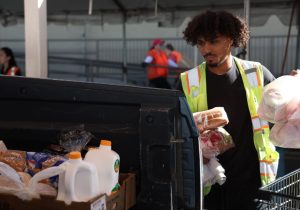 Navajo Nation braces for another food insecurity issue with SNAP gap Cherokee Nation expands emergency funds for SNAP-eligible citizens Carvers, leaders celebrate newest addition to Juneau's totem pole trail
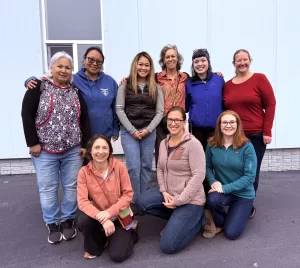 Catholic order transfers Wisconsin land back to Lac du Flambeau Kodiak newborn support service expands into Northwest Arctic Borough
 Volunteers to search for missing elder on Umatilla reservation Alaska Native families prepare for loss of heating assistance funding Shawnee Tribe declares shutdown emergency and releases funds
The government shutdown is creating a lot of uncertainty and disruption for Native American and Alaska Native communities, and for tribal organizations that administer federal programs.
Liz Ruskin reports.
These include the Supplemental Nutrition Assistance Program (SNAP) for food assistance and the Low Income Home Energy Assistance Program (LIHEAP), which subsidizes energy bills.
Ben Mallott, president of the Alaska Federation of Natives (AFN), told the Senate Indian Affairs Committee Wednesday that the prospect that both of those programs would run out of money, just as winter begins, puts some Alaskans in a life-threatening bind.
“Without LIHEAP, without SNAP, our communities, our tribal citizens will have to decide between fuel and food.”
During the pandemic, the Federal Subsistence Board allowed emergency hunting to improve food security. Now, with the government shutdown, Mallott says the Subsistence Board can’t even meet.
More than 500 Indian land school districts are feeling financial stress, too.
Kerry Bird, president of the National Indian Education Association, says federal Impact Aid provides half the budget for some schools, and the shutdown is interrupting the flow.
“In South Dakota, Montana, and New Mexico, school districts are burning through reserves just to meet payroll.”
Bird says Head Start programs will run low on money if the shutdown extends into November.
Witnesses said many agency experts tribes normally turn to have lost their jobs.
Pete Upton testified about the Trump administration’s plan to abolish a fund at the Treasury Department called the Community Development Financial Institutions (CDFI) Fund.
Upton runs the Native CDFI Network. He says tribal communities are often in banking deserts.
“Native CDFIs are typically the only financial institutions serving these communities, providing access to capital, credit and financial education where no alternative exists.”
Early in the shutdown, the Treasury Department fired the entire staff of the CDFI Fund.
With no one at the federal office to certify the CDFIs, Upton says it’s hard for the community finance organizations to attract private-sector investment.
U.S. Sen. Lisa Murkowski (R-AK), chair of the Indian Affairs Committee, says tribes face enormous uncertainty as the stalemate in Congress nears the one-month mark.
“We can’t figure out the path forward right now on our spending bills, although I am a little bit more optimistic on that today.”
She didn’t elaborate, but said earlier this week that senators are engaged in productive talks.
Former Acting Attorney General Colin Bradley of the Navajo Nation during his failed confirmation vote in Window Rock, Ariz. on October 22, 2025. (Courtesy Navajo Nation Council)
The Navajo Nation has had four attorneys general in less than a year.
And as KJZZ’s Gabriel Pietrorazio reports, one of them returns to that office amid a politically tense time in Window Rock, Ariz.
Colin Bradley was acting attorney general for less than three months, but the Navajo Nation Council wouldn’t confirm him, forcing President Buu Nygren to yet again tap his own chief of staff, Kris Beecher, who spoke about his goals for the role.
“My hope is to bring that stability for the rest of the administration and allow the Department of Justice to have one last leader for the end of this term.”
Bradley penned a pair of opinions tackling decades-old Diné legal disputes.
One ruled that blood quantum – a controversial way to determine tribal membership – violates the Navajo Bill of Rights.
He also deemed the Diné Marriage Act discriminatory and to immediately repeal it. That 2005 law bars recognition of same-sex marriage, but there is a debate whether his writings are null and void.
As for Beecher…
“There’s long-standing precedent that any of the opinions that you wish still stand.”
Unless undone by the sitting Attorney General.
Get National Native News delivered to your inbox daily. Sign up for our daily newsletter today.
Check out the latest episode of Native America Calling
Thursday, October 30, 2025 – Julian Brave Noisecat opens a door into himself and his people’s history
Thousands of Indigenous people across the Mountain West are among those who will lose Supplemental Nutrition Assistance Program (SNAP) food benefits if the government shutdown continues.
The Mountain West News Bureau’s Daniel Spaulding reports, that tribal officials are concerned about cuts to programs that were already stretched thin.
SNAP will run out of money on November 1 if the shutdown continues and nearly one-in-four Indigenous households use SNAP benefits, double the national rate.
Julie Keller leads food services at Nimiipuu Health on the Nez Perce Reservation in Idaho.
“Feeding families is very expensive, and people are struggling to make ends meet, and these programs help people provide basic nutrition for their whole family.”
Keller says more tribal members have been signing up to receive food benefits out of fear that they may soon be canceled.
Five states in the Mountain West have issued warnings for SNAP recipients.
Some states, like Colorado, are providing emergency funding for alternate food sources.
Meanwhile, a group of Democratic leaders in several states are suing the federal government over the suspension of benefits.
(Courtesy Cherokee Nation)
The Cherokee Nation declared a food emergency Tuesday due to the federal government shutdown and the expected loss of SNAP benefits.
The Oklahoma tribe is making more than $6 million in emergency relief funding available.
Cherokee Nation Principal Chief Chuck Hoskin, Jr. explained the tribe’s response in a social media post saying they’ll protect those most at risk of hunger.
“We will not turn our backs on people in need as the federal government remains gridlocked. Our response may not be perfect but we will not stand back and watch people suffer.”
Other tribes across the country have also declared an emergency due to the federal government shutdown.
Egan Convention Center in Anchorage, Alaska. (Photo: Craig Talbert / Wikimedia)
The Western Alaska disaster relief effort has moved to its next phase.
Earlier this month, hurricane-force winds and floods forced more than 1,000 people from their homes.
Many families were sent to mass shelters in Anchorage.
This week, the city has begun to transition them into temporary housing.
KNBA’s Rhonda McBride visited the Egan Convention Center downtown, where families are preparing to move on.
Tessie Chanerak is one of the counselors from Southcentral Foundation watching out for families at the Egan Center.
“Little boys and girls are sad. They’re homesick.”
(Photo: Rhonda McBride)
She says counselors have been keeping kids occupied with games — and it’s helped that Halloween is around the corner.
“You know Halloween is one of the fun seasons of the year, because there’s lots of candy, so we got some costumes and lots of hats and trick-or-treating bags. So, anything for the little kids too. They seem to be more at home than their parents.”
Chanerak says at first, when the families moved into the shelter, the reality of what they had escaped had not yet sunk in.
She saw families look at videos and photos, captured on their cell phones, over and over, as if to try to understand what they had experienced.
“I can believe the typhoon kicked in. I can’t believe our homes floated away. That really happened. And yesterday, when I was checking in with folks they were, they’re crying. They’re frustrated. They’re tired.”
Despite that, Chanerak says the families have held up remarkably well, but she’s glad they’ll soon be transferred to temporary housing, so can begin to recover. She says she’s grateful for the elders, because they have been a calming influence on everyone.
“I really do admire that. That gives me a tool that I can use. Taking it one day at a time.”
Chanerak wears a pair of angel wings that came from a Halloween costume, known to the kids as “Terrific Tessie.”
She is originally from Toksook Bay, one of the communities also in the storm’s path. She says she feels honored to be of help, as both a counselor and a speaker of the Yup’ik language.
Get National Native News delivered to your inbox daily. Sign up for our daily newsletter today.
Check out the latest episode of Native America Calling
Wednesday, October 29, 2025 – The Menu: SNAP runs out, Alaska traditional relief foods
It has been 100 years, but the Vatican is now expected to return Indigenous artifacts to Canada.
As Dan Karpenchuk reports, Indigenous communities are preparing for the return of the items.
The museum in the Vatican City has held the artifacts since 1925.
But in a few weeks, an announcement is expected that will see the return of dozens of artifacts that could be back in Canada by the end of the year.
Indigenous communities have been calling on the Catholic Church for decades to return them.
Cindy Woodhouse Nepinak (Pinaymootang First Nation), National Chief of the Assembly of First Nations, has described the artifacts as living, sacred pieces of Indigenous cultures and ceremonies and must be treated as the invaluable objects they are.
Cody Groat is an assistant professor of history and Indigenous studies at Western University in Ontario.
“To us these aren’t just artifacts that we’re going put behind a glass case. These are ancestors in their own right. They have their own sentients, their own being. So when we repatriate these cultural items, we have to recognize that there’s ceremony associated with that. This can’t just be a transfer from one box to another to an institution. These are ancestors who need to be welcomed back with ceremony and cultural protocol.”
Groat says it’s not exactly clear what artifacts are held by the Vatican, but an exhibit at the Vatican in 1925 also published a catalogue of specific artifacts, and that’s a starting point to find out what else might be in the collection.
Groat also says the artifacts are expected to be transferred to the Canadian Conference of Catholic Bishops and that the Canadian Museum of History is expected to act as an intermediary.
He also says it’s important that in all points of the process, First Nations need to be part of the discussions as, he’s sure, there will be challenges since the process is expected to be long and slow but also one that is long overdue.
BlueJay (Kirby Brown) and Goldie (Marta Lu Clifford) on the KMAS Indigenous Radio set at Very Little Theater’s production of “BlueJay’s Canoe,” Tuesday, October 21, 2025. (Photo: Brian Bull / Buffalo’s Fire)
A play about loss, resilience, and the power of Native stories opens November 7 in Eugene, Oreg.
Brian Bull, senior reporter for Buffalo’s Fire, previews “BlueJay’s Canoe”.
The story centers around BlueJay, a DJ at a fictional tribal radio station in Oregon’s Willamette Valley.
“And good afternoon, and a good day it is indeed!”
Kirby Brown plays BlueJay, who informs and entertains his listeners through the COVID-19 pandemic and the 2020 wildfires. But BlueJay also struggles.
“One of BlueJay’s tragic flaws is that he just doesn’t ask for help. When the stuff starts hitting the fan, that’s when we got to hold each other tight.”
The big mystery in the play surrounds an incomplete wooden canoe BlueJay has in storage.
The reason why it’s been left undone unearths a past tragedy, which has given BlueJay survivor’s guilt.
Marta Lu Clifford and Theresa May co-wrote “BlueJay’s Canoe”. Both have specific lessons they’d like the audience to leave with.
Clifford said, “I want them to leave with the importance of stories, the importance of family, and how they are all connected.”
And May said, “Indigenous stories are not artifacts, they’re not myths from some time past. They carry knowledge for the present.”
The storyline also weaves in traditional teachings and legends, told through a spirit person named Heron, who’ll eventually be key to solving the show’s mystery.
“Did you ever hear a story that saved your life?”
“BlueJay’s Canoe” runs through November 23 at the Very Little Theatre in Eugene.
U.S. Sen. Lisa Murkowski (R-AK), chair of the Senate Committee on Indian Affairs, and vice chair, U.S. Sen. Brian Schatz (D-HI), are hosting a hearing Wednesday on the impacts of the federal government shutdown and tribes.
Witnesses are leaders from national Native organizations, including in areas of health and education.
The hearing in Washington will also be streamed online.
Get National Native News delivered to your inbox daily. Sign up for our daily newsletter today.
Check out the latest episode of Native America Calling
Tuesday, October 28, 2025 – News briefs: tribal government disputes, land protection, government shutdown emergency
Photo: The Gila River Indian Community’s Sacaton Market was unveiled during its grand opening on October 23, 2025. (Gabriel Pietrorazio / KJZZ)
The Gila River Indian Community in Arizona has long relied on convenience stores to feed its 13,000 residents, who otherwise may have to drive as far as half an hour away to neighboring cities with grocery stores.
But as KJZZ’s Gabriel Pietrorazio reports, a new market – a decade in the making – has opened much closer to home.
Duncan Winston is with Gila River Development and says the tribe’s new 11,000 sq. ft. supermarket in the heart of Sacaton is much more than a store.
“This isn’t a Bashas, it’s not a Safeway or a Walmart.”
It’s a symbol of their sovereignty since few, if any, tribes outright own their own grocers.
“We don’t want to leave that in the hands of a larger chain to determine who gets what – we want to be able to fight for ourselves and bring the necessary goods to our community when we need them.”
From fresh produce and butchered meats to a deli serving local favorites, like the work’s burger.
“One of the biggest demands from the community was, ‘You got to bring the works back.’ And so we’ve done that.”
But that doesn’t come cheap, because of what some refer to as “rez-flation”.
“We have experienced it here. I mean, it’s difficult finding reputable vendors who are willing to bring us goods and services at a fair price. Although we are rural, we are a lot closer to the metropolitan Phoenix area than a lot of the other tribes in Arizona.”
S’eiltin Jamiann Hasselquist spreads some cheese kaháakw on crackers in SHI’s Traditional Foods and Medicine Kitchen on October 13, 2025. (Photo: Yvonne Krumrey / KTOO)
Sealaska Heritage Institute (SHI) recently opened its new science education building.
The space — and the educators inside — are working to combine traditional knowledge with new technology to expand access to science for young people in Juneau, Alaska.
KTOO’s Yvonne Krumrey reports.
At a ceremony, Lingít language professor X̱’unei Lance Twitchell said that bringing traditional ways of being into the present isn’t a contradiction.
“It’s not a ‘living in two worlds’ situation. It’s living as an Indigenous person with multiple languages and multiple identities, and being just fine with it. You don’t have to be just one thing.”
And the new SHI Indigenous Science Building around the corner carries that sentiment in all the services it offers.
The building on Heritage Way hosts a digital media lab with a podcast booth and video production software, an Indigenous science research lab that studies cultural resources like seaweed and clams, and a makerspace with a digital woodcarving machine.
That last one made nametags instructors are wearing as they lead tours of the new building.
In the Traditional Foods and Medicine Kitchen, instructor S’eiltin Jamiann Hasselquist says she and others are bringing old ways to process and preserve food into the present.
“Whatever people can dream up that they would like to do in this kitchen, I think that we could try to make their dreams happen.”
With freeze dryers, pressure cookers, dehydrators, and space to build traditional drying racks, Hasselquist said they are making and preserving traditional foods that elders would make when she was a kid, like cheese kaháakw — a rich and smoky paste made of fermented salmon eggs.
She scoops some out of a glass jar and spreads it on a cracker for anyone who wants to try it.
“Someone tasted that cheese kaháakw, and they took one bite, and they said, ‘Oh my gosh, I’m getting emotional. I haven’t tasted this for 30 years.’ It’s been three decades, and they thought that they would never try it again.”
Elders have been approaching Hasselquist with foods they remember from childhood, but don’t know how to make.
“So if we could have workshops and share that knowledge, and we’re rebirthing, you know, this, this Indigenous way of living and being.”
Next, she wants to find out how to make cold-pressed seal grease.
Get National Native News delivered to your inbox daily. Sign up for our daily newsletter today.
Check out the latest episode of Native America Calling
Monday, October 27, 2025 – A Canadian tribe’s historic legal victory worries non-Indigenous landowners
Photo: Wrangell City Hall on June 26, 2024. (Colette Czarnecki/KSTK)
The City and Borough of Wrangell in Southeast Alaska is pausing work at a housing project after archaeologists confirmed artifacts at the site.
KSTK’s Colette Czarnecki has more.
While excavating a subdivision development site on Wrangell Island, construction crews uncovered a shell midden.
Middens are ancient sites made up of shells and other remains. They help tell the story of who lived there and how they lived.
The borough government owns the property and is pausing work near the midden until a state-approved mitigation plan is complete.
Wrangell Borough Manager Mason Villarma says development will continue carefully.
“This has been a 30-year pursuit in some cases. We’re into a $4 million investment. This is an opportunity for 20 housing lots, but being cognizant of any culturally significant artifacts is top of mind.”
Currently, the Office of History and Archaeology and the State Historic Preservation Office are working on a treatment plan for recovery of the site. That will involve further investigation and excavation.
The property has a complicated history. It was once the site of the Wrangell Institute, an Alaska Native boarding school known for punishing students for speaking their language and other abuses.
Albert Rhinehart, the administrator for the local tribal government, Wrangell Cooperative Association, says the site carries deep meaning.
“There’s a long history of colonization that includes the Wrangell Institute — what we prefer now to call the Alaska Native boarding school. A lot of families got separated in that time … even my own family. There was a lot of trauma.”
In August, excavators found remnants of the old boarding school — a footbridge, concrete, and utility lines.
Construction was paused until the state historic office determined last month that the infrastructure would not be on the National Register of Historic Places.
The 134-acre Alder Top Village site will eventually include 20 home lots.
The public land sale auction is continuing and closes on December 1.
A new bull riding champ was recently crowned at the Indian National Finals Rodeo (INFR) in Las Vegas.
And as KJZZ’s Gabriel Pietrorazio reports, he now has an automatic chance to go pro with the Professional Bull Riders (PBR), unlike other tribal athletes before him.
“Cole Brewer has it won by one point. He’s got a gold buckle to take home, but he is not here to take it by default.”
The announcer’s proclamation of his victory qualified the Cheyenne River Sioux from South Dakota, to try out at the New York Mavericks training camp. It’s a change the PBR made last year, according to the team’s GM Chris Pantani.
“Our relationship with the INFR is really opening up a lot of doors for these kids,”
“It’s giving that extra shot, but those five days of competition are daunting. It’s grueling, five big bulls to the championship.”
Past INFR champs have a presence in the PBR today. Window Rock’s Cody Jesus won it in 2016.
“It’s a straight path to where you want to go.”
And in 2023, fellow Arizona Navajo JaCauy Hale from Ganado grabbed gold. He’s happy Brewer is getting a shot in the PBR.
“It’s a good opportunity, wish I had that when I won it.”
The Mavericks are also looking to bring back last year’s champ, Teigan Gray, who is also Cheyenne River Sioux from South Dakota, adds Pantani.
“If Teigan accepts, you’ll have the reigning champion coming down, you’re going to have the past champion coming down, fighting for a spot on the team.”
View this post on InstagramA post shared by Cole Brewer (@colebrewer_11)
Get National Native News delivered to your inbox daily. Sign up for our daily newsletter today.
Check out the latest episode of Native America Calling
Friday, October 24, 2025 — Native Bookshelf: Spooky Books for the season
Photo: Spirit Lake Nation. (Courtesy Spirit Lake Nation-Mni Wakan Oyate / Facebook)
The Spirit Lake Tribal Council in North Dakota has declared a state of emergency as the federal government shutdown continues.
The council declared the emergency this week in response to potential impacts on essential federal programs, including food and heating assistance.
If the shutdown continues past October 31, benefits from the Supplemental Nutrition Assistance Program (SNAP) may be paused starting November 1.
According to a press release, the Spirit Lake Tribe’s food distribution program has already seen an increase in families seeking assistance since the start of the fiscal year.
The tribe is also concerned about the uncertainty of other programs, including Women, Infants, and Children (WIC) and Temporary Assistance for Needy Families (TANF).
The tribe is preparing and is encouraging residents to stay up-to-date on the latest information and contact local resources.
Residents of Kipnuk, Alaska were evacuated in a C-17 military transport plane on October 16, 2025. The village was one of the worst hit by the remnants of the typhoon. (Photo: Eric Stone / Alaska Public Media)
President Donald Trump Wednesday approved a request for a federal disaster declaration for the recent devastation caused by the remnants of a typhoon in Western Alaska.
It wreaked havoc on some of Alaska’s most remote communities in the Yukon–Kuskokwim Delta.
According to Alaska’s congressional delegation, President Trump also announced an initial $25 million in disaster relief funding to cover initial recovery expenses as the state conducts damage and cost assessments, which will result in further federal relief funds.
The declaration enables agencies, including the Federal Emergency Management Agency and the Department of Homeland Security, to deploy additional resources to support recovery and rebuilding efforts.
An Arizona tribe is starting to poll its community members about a name change that could shorten or lengthen its name.
KJZZ’s Gabriel Pietrorazio has more.
The Salt River Pima-Maricopa Indian Community is giving its 11,000 members at least seven options to choose from.
“Write-in option, do you have a name you would like to see, that is not an option listed?”
The tribe has posted audio recordings with explanations – both for and against – each proposed option on a new website, but no action is supposed to be taken by the tribal council until next year.
The new names under consideration are meant to help preserve O’odham and Piipaash languages.
One option is to leave the name as is. Other alternatives seek to replace the phrase “community” with “nation” to reflect the tribe’s sovereignty.
“Option 3, Salt River O’odham Piipaash Nation.”
While another variation adds “jeveḍ” – the O’odham word for land.
“Onk Akimel O’odham c Xalychidom Piipaash Jeveḍ. “
One of its sister Four Southern Tribes, Tohono O’odham Nation, was once called the Papagos, a derogatory Spanish word linked to tepary beans.
The tribe officially changed its name in 1986.
(Courtesy Ho-Chunk, Inc.)
Ho-Chunk, Inc. is addressing a labor shortage among young Winnebago tribal members in Nebraska, training them for jobs intended to help close a continuing housing shortage.
Mark Moran has more.
It is part of the Legacy Learning program, which passes on skills from one generation to the next.
According to program officials, there is a lack of qualified young men in the Winnebago Tribe to take the jobs that are needed most.
Ho-Chunk, Inc.’s Janelle Decora says the shortage is especially dire in the construction, carpentry, maintenance, and repair sectors, and adds that the students are learning more than hands on skills.
“Our Legacy Learning instructors aren’t just teaching those entry-level workforce development skills, such as flooring, framing, those types of things, but also teaching life skills, as well.”
Decora says the program has trained three cohorts of young men and 60% have found jobs in the construction sector.
Get National Native News delivered to your inbox daily. Sign up for our daily newsletter today.
Check out the latest episode of Native America Calling
Thursday, October 23, 2025 – Domestic violence prevention limps along without federal support
Photo: Debris sits in water in Kipnuk, Alaska following high winds and flooding brought by the remnants of Typhoon Halong. (Jacqui Lang / Alaska Public Media)
Hundreds of people remain displaced a week after the remnants of a typhoon wreaked havoc on some of Alaska’s most remote and vulnerable communities.
Reporter Emily Schwing has this update.
One of the hardest hit communities is Kipnuk, a village that sits in the heart of Alaska’s Yukon-Kuskokwim Delta.
Last week, Tribal Administrator Tristan Carl made the tough decision to mass evacuate his friends and family.
Now, he says they have several needs including housing, clothing, and transportation, as well as access to foods that aren’t found in conventional groceries stores.
“I know we’re gonna be missing some of our subsistence food. Hopefully some locals around here will be able to drop, drop some off or even invite some families for some. And that’s how we lived off for many, many, many centuries.”
James Amik is also from Kipnuk. He says he, his friends, and family are still reeling from the storm.
“It’s gonna be in our minds for a while, you now. But the way I think we can get through that is if we talk like to our behavioral health and just get everything off of our mind, I think that would help us.”
Alaska’s governor declared a state disaster and has requested a federal disaster declaration from the Trump administration.
Alaska’s congressional delegation has also penned a letter to the president asking him to declare a federal disaster.
Representatives from several Alaska Native organizations speak at the subsistence panel at the Alaska Federation of Natives convention at the Dena’ina Convention Center in Anchorage on October 18, 2025. Gayla Hoseth, left, incoming AFN Co-Chair; Clinton Cook Sr., President for the Craig Tribal Association; Natasha Hayden, co-chair of the Kodiak Island tribal coalition; Patty Schwalenberg, executive director of the Alaska Migratory Birds Co-Management Council; and Karen Linell, executive director of the Ahtna Intertribal Resource Commission. (Photo: Matt Faubion / Alaska Public Media)
Meanwhile, when it comes to Native co-management of fish and wildlife in the state, engagement and unity are key.
That was the message at a panel about subsistence at the recent Alaska Federation of Natives (AFN) Convention.
The Alaska Desk’s Alena Naiden from our flagship station KNBA has more.
Representatives from several Alaska Native organizations called for a unified approach alongside government agencies to manage wildlife and fish when they met last week.
Clinton Cook Sr. is the Craig Tribal Association president. He emphasized the importance of prioritizing Alaska Native voices when making decisions about wildlife.
“Our people have always managed our lands. We know where the salmon run. We know where the deer are. We know when the clams are safe.”
Cook says the first step is engagement. He encourages tribal residents to participate in advisory councils for both federal and state regulatory agencies.
“So you have a voice in what happens in your region. That’s huge.”
A push for resource development in several Alaska regions has been met with opposition from some tribal groups.
Karen Linell is the executive director of the Ahtna Intertribal Resource Commission. She called for a composed and united response in the middle of a quickly-changing political environment.
“With the current administration, we need to try to hold our ground and not lose.”
Representatives talked about funding challenges, lack of guidelines, and the need to re-educate regional directors when they change with new administrations.
Linell says that one strategy that has made the difference over the years is collaborating with neighbouring regions and figuring out how to continue practicing traditional ways of life, without harming resources other regions rely on.
”Wait a minute, you do duck calls, right? When you’re out duck hunting? You know, we call a moose in, so why is it different? And so when we started to support each other, we started to see change.”
Promoting change also requires research, Linell says. She hopes that more tribal organizations will have capacity to monitor wildlife and fish and collect their own data that they can trust.
Get National Native News delivered to your inbox daily. Sign up for our daily newsletter today.
Check out the latest episode of Native America Calling
Wednesday, October 22, 2025 – Leonard Peltier calls for unity, vigilance
With fire season winding down across many parts of the US, it is not unusual to find people doing deliberate burns to eliminate slash or improve habitat.
Outside Eugene, Oreg. recently, a group of Native youth and state and tribal agencies conducted a cultural burn.
Brian Bull of Buffalo’s Fire reports.
Five interns with the Long Tom Watershed Council’s Traditional Ecological Inquiry Program (TEIP) and a few dozen staff members, fire bosses, and agency employees gathered at the Chaa-lamali Reserve.
(Photo: Brian Bull)
The oak savannah here provided three acres for the interns to apply their knowledge of fire as a tool.
“I’ve learned that a small spark can start a whole field of flames.”
Kanim Cushman WhiteEyes. (Photo: Brian Bull)
Kanim Cushman-White Eyes is with the Chinook Indian Nation and a middle schooler. He’s setting fire to a meadow with a flaming pitch stick, while water trucks, and crews with shovels stand by to help keep it within the designated area.
“The best thing about using fire is that you can learn so much about it, and like a little amount of time, and that it can be very healthy for the land.”
Nearby, TEIP program manager Rachel Cushman helps her other son, Isik, set a few fires and keep aware of his surroundings.
Fire can reduce acorn weevils, or help coniferous trees re-seed the area.
Cushman says this part of the Willamette Valley has always been a fire-formed landscape.
“It’s been unhealthy because fire has been missing. And so we’re awakening the land. We’re building that relationship back up and healing it through this this practice of cultural fire.”
A few yards away, TEIP curriculum director Joe Scott helps a few interns extend the fire closer to a camas meadow.
Scott is a Siletz tribal member who did a training exchange with the Yurok Tribe. Now he’s applying all of his accumulated experience to teach the TEIP interns on “good fire.”
“Youth have come up seeing fire as the enemy, as a destructive force. And this is a perfect example of fire being a constructive force.”
Scott says with the fall rains, ash and nutrients will replenish the soil and help the camas prosper.
Katherine Gottlieb, left, Joaqlin Estus, and Ada Blackjack Johnson, three 2025 inductees into the Alaska Women’s Hall of Fame.
Ten women will be inducted into the Alaska Women’s Hall of Fame Tuesday including Joaqlin Estus, a pioneering Alaska Native journalist.
Estus most recently was a national correspondent for Indian Country Today and also worked as news director at our flagship station KNBA.
Estus is Lingít with ties to Wrangell, but she is not the only Alaska Native to be honored.
“Another Alaska Native is my great grandmother, Tillie Paul Tamaree. She was a civil rights leader in the early 20th century.”
Estus says it’s an honor to be inducted along with her great grandmother.
Two other Alaska Natives are being inducted into the Hall of Fame: Katherine Gottlieb, a Supiaq leader in Native health care who served 30 years as president of Southcentral Foundation, and the late Ada Blackjack Johnson (Iñupiaq), the sole survivor of a doomed Arctic expedition in the 1920s.
Chickasaw Nation Family Support Office in Ardmore, Okla. (Courtesy Chickasaw Nation)
Tribes across the country are recognizing Domestic Violence Awareness Month and sharing resources, including the Chickasaw Nation in Oklahoma.
The Chickasaw Nation Department of Family Services says it offers support, including domestic violence prevention and intervention with a focus on tribal cultural values.
The Chickasaw Nation also operates a shelter.
A candlelight vigil is planned Thursday for Domestic Violence Awareness Month.
Chickasaw Nation Director of Violence Prevention Janie Loch says one of the most important things they want to communicate is that victims are not alone and services are available.
Get National Native News delivered to your inbox daily. Sign up for our daily newsletter today.
Check out the latest episode of Native America Calling
Tuesday, October 21, 2025 – Government shutdown threatens to close off tribal financing funds
Photos: Willard Bill Jr. and the Black River Canoe Family provide the opening protocol at Seattle’s No Kings protest. (Courtesy SEIU6 / Protectors of the Salish / Instagram)
Millions of protesters – including many Native and Indigenous people – joined this weekend’s 2,600 “No Kings” events held across the U.S.
Muckleshoot tribal member Willard Bill Jr. and the Black River Canoe Family provided a drum song as part of Saturday’s opening protocol for a “No Kings” event held at the Seattle Center.
Bill expressed solidarity with the Palestinian People, saying Natives know “what U.S.-sponsored genocide looks like.”
President Donald Trump’s allies – including House Speaker Mike Johnson – criticized the “No Kings” rallies as un-American.
The Association of Village Council Presidents CEO Vivian Korthuis speaks at Alaska Federation of Natives convention on Saturday, October 18, 2025. (Photo: Matt Faubion / Alaska Public Media)
Alaska Federation of Natives (AFN) delegates on Saturday called for an immediate emergency declaration from President Trump – and more federal assistance for communities hit by the remnants of Typhoon Halong earlier this month.
It was one of dozens of resolutions passed on the final day of the AFN convention in Anchorage.
The storm killed at least one woman, wiped out homes and infrastructure, and displaced more than a thousand people in the Yukon-Kuskokwim Delta.
Hundreds of residents were sent to Bethel and then to emergency shelters in Anchorage over the last week.
The resolution was put forward by the Association of Village Council Presidents, a tribal consortium that serves communities in the Yukon-Kuskokwim region.
Vivian Korthuis is the group’s CEO.
“For this resolution, we have a lot of support from across the state. On behalf of our region, Quyana to everyone.”
The delegates amended the resolution to also include damage caused in the Northwest Arctic and Bering Strait regions, and called for a Western Alaska emergency response hub in Bethel.
Gov. Mike Dunleavy (R-AK) requested that Trump declare a federal disaster for Western Alaska earlier this week, but that request has not been approved as of this weekend.
Alaska’s congressional delegation has also urged Trump to approve the declaration.
Other AFN resolutions touched on a wide array of topics, from health and safety to education and subsistence.
Check out our complete AFN coverage:
Alaska’s Native Voice | AFN News
Navajo Nation President Buu Nygren and Vice President Richelle Montoya in Window Rock, Ariz. on July 22, 2025. (Courtesy Navajo Nation Office of the President and Vice President)
It’s been an interesting few weeks since Navajo Nation President Buu Nygren suddenly fired the tribe’s controller.
In the fallout, local leaders from across the biggest reservation in the U.S. are now signaling growing disapproval with his administration.
KJZZ’s Gabriel Pietrorazio has details.
So far, at least two of the five regional agencies – representing nearly half of the tribe’s population – have passed no-confidence votes in President Nygren and his estranged Vice President Richelle Montoya.
“Take me out of the equation, Richelle Montoya, don’t worry about me.”
She’s even willing to leave office.
“And if this is how we are going to be able to protect our people, then this is how it has to be.”
But some have called on Vice President Montoya to lead, urging the council to suspend Nygren and install her as the tribe’s first female president.
“And I’m prepared to do that.”
As for Nygren, he doesn’t plan on stepping down.
Citing a previous recall effort, he says those same organizers are now campaigning for no confidence resolutions across the 110 tribal chapter houses.
And on this day in 1803, the Louisiana Purchase was ratified, which more than doubled the size of the United States.
Napoleon Bonaparte, then the First Consul of the French Republic, sold the territory for $15 million.
The purchase is considered President Thomas Jefferson’s landmark deal.
Soon settlers spread across the continent, in land still occupied by an estimated 700,000 Native Americans.
Get National Native News delivered to your inbox daily. Sign up for our daily newsletter today.
Check out the latest episode of Native America Calling
Monday, October 20, 2025 – Alaska Native residents assess their future after record-breaking storm damage
Photo: Debris sits in piles in Kwigillingok after the remnants of Typhoon Halong brought widespread devastation to the region. (Brea Paul)
Searches are ongoing for two people missing from a western Alaska village after remnants of Typhoon Halong left one dead and much of the region devastated by high winds and flooding, but large-scale search and rescue efforts are largely on hold pending new information.
The U.S. Coast Guard, Alaska State Troopers, and Alaska National Guard say they were unable to locate a floating house and its occupants before they suspended their active search Monday night.
Coast Guard Captain Christopher Culpepper says the search covered dozens of square miles around the village of Kwigillingok using helicopters, planes, drones, and more.
“Suspending an active search is always a tough decision to make, and it is especially difficult in this situation where the Kwigillingok community is already suffering so much,”
Alaska State Troopers identified the missing people as 71-year-old Vernon Pavil and 41-year-old Chester Kashatok and said they had found the body of 67-year-old Ella Mae Kashatok.
All three lived in the hard-hit village of Kwigillingok and members of the same family.
Brea Paul knew them well. She says she saw their house floating off its foundation as floodwaters rose on Sunday.
“They were the most kindest people I’ve ever met. They didn’t have much, but they always, always had a positive mindset and they always greeted anyone — they welcomed everyone to their home. They deserve to be searched (for). Their names deserve to be heard.”
A mass evacuation is underway for the communities of Kipnuk and Kwigillingok, where a thousand people were sheltering in schools after Sunday’s storm.
On Wednesday and Thursday, hundreds of evacuees boarded planes bound for Anchorage at the Alaska Army National Guard hangar in Bethel.
The city of Anchorage is preparing to welcome up to 2,000 people displaced by the catastrophic storm.
Handmade chokecherry patties dry on parchment paper during a workshop at the Wind River Tribal Conservation Summit. (Photo: Hannah Habermann / Wyoming Public Media)
Community members in Wyoming spent Indigenous Peoples Day to learn and build community at the Wind River Tribal Conservation Summit, as Wyoming Public Radio’s Hannah Habermann reports.
The event was put on by the Wind River Tribal Buffalo Initiative and the Wyoming Outdoor Council Tribal Conservation Team – and included a full schedule of sessions focused on Indigenous conservation, traditional ecological knowledge, and reciprocal relationship.
One of the workshops invited attendees to roll up their sleeves and try their hand at making chokecherry patties.
Before the group got to work, Northern Arapaho two-spirit tribal member Big Wind Carpenter passed around a bag full of the maroon-colored fruit to sample.
“ For the Arapaho people, this is like the best berry of all. It has cultural properties, it has spiritual properties. We use the chokecherry in our ceremonies and it provided sustenance for our people for a long time.”
A person wearing a colorful neck-scarf and a black vest holds a bag of chokecherries and talks. Behind them is a blue sky with feathered clouds and the tops of a few trees.
Carpenter works as a tribal engagement coordinator at the Wyoming Outdoor Council and shared that it’s becoming harder and harder to find chokecherries and other traditional medicines on the reservation.
On top of that, they said making chokecherry patties in particular is becoming more infrequent.
“ It’s important that we continue this tradition because it’s becoming lost as we’ve had freezers and whatnot. A lot of people are just freezing the chokecherries and then discarding the seeds, but the seed is crucial to carrying on that tradition.”
With mortar and pestle in hand, attendees tossed in a handful of chokecherries and got to grinding to make what Carpenter called the “original energy bar.”
The goal: to make the pits as small as possible, and pummel until the mixture started smelling nutty and turned purple.
Two hands hold a mortal and pestle just above the straw covered ground, with ground-up chokecherries inside.
“Inside the pit there’s a nut, and inside the nut are the fatty acids, right? On the exterior of that is this precursor to cyanide, essentially,” they said. “Macerating it is what creates that smell. You get hints of vanilla and all these things, the more you just keep going.”
A young woman in a sweater stands outside in front of a table with chokecherry patties on drying racks. Behind her is a tepee, with another tepee and tables in the background.
Tribal Buffalo Initiative this summer and is majoring in Outdoor Education and Indigenous Studies at Central Wyoming College.
After grinding, the next step was to transfer and spread the paste onto a brown piece of paper to dry into a hardened, flat circle.
Central Wyoming College student and event volunteer Summeri Bass helped people with the transfer process.
“You could tell there’s some people very determined in their patty making and I’m really enjoying the effort,” she laughed. “I like how someone said, ‘Don’t even feel bad about how it looks. You are just doing it right now and you’re just getting in there.’”
After the day of workshops and speakers, more people arrived to celebrate the third annual Buffalo Bash: a night of music, food, and a sunset tour of the Wind River Tribal Buffalo Initiative headquarters.
Get National Native News delivered to your inbox daily. Sign up for our daily newsletter today.
Check out the latest episode of Native America Calling
Friday, October 17, 2025 — Native in the Spotlight: Cannupa Hanska Luger
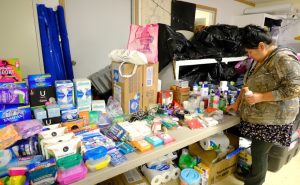 Bethel Search & Rescue building busy with volunteers, supplies Alcatraz Island hosts annual Indigenous Peoples Day sunrise gathering On this day in 1891: Northern Paiute author Sarah Winnemucca mourned
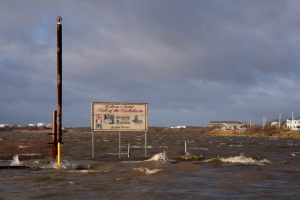 EYC hosts fundraiser, healing station for Typhoon Halong victims Alaska's community groups, businesses team up for Halong relief efforts
Photo: An overturned home in Kotlik. The National Weather Service reported a maximum wind gust of 78 mph in Kotlik Sunday morning. (Adaline Pete)
One person has died, two are still missing, and 51 have been rescued following a record-breaking storm that slammed into the Yukon-Kuskokwim Delta, in southwest Alaska, over the weekend.
Alaska Public Media’s Eric Stone and Liz Ruskin report.
Officials say search and rescue efforts are ongoing.
Christopher Culpepper, Coast Guard commander for Western Alaska, compares the devastation to the aftermath of Hurricane Katrina.
“Several of these villages have been completely devastated, absolutely flooded, several feet deep. This took homes off of foundations. This took people into peril, where folks were swimming, floating, trying to find debris to hold on to in the cover of darkness.”
Floodwaters in Chefornak, Alaska, October 12, 2025. (Photo: Clara Mathew)
Culpepper spoke alongside numerous officials at a news conference Monday (10/13), the day after the remnants of Typhoon Halong barreled into remote, coastal communities in the Yukon-Kuskokwim Delta, hitting the villages of Kipnuk and Kwigillingok especially hard. The storm brought winds of over 100 miles per hour and record flood waters.
Helicopters, planes, drones, ships and pararescuers from the Coast Guard, National Guard and other agencies worked through the night and are still searching for two people missing from Kwigillingok. Officials said Monday that one woman, previously unaccounted for, was found dead in the village.
1,400 survivors are in community shelters.Alaska National Guard head Torrance Sax says he has activated every member of the state’s National Guard and Alaska State Defense Force living in Western Alaska. And more are set to join.
“This may end up being the largest off-the-road-system response for the National Guard in about 45 years.”
State officials say dozens of nonprofit organizations, businesses, and faith-based groups are also coordinating recovery efforts.
Gov. Mike Dunleavy (R-AK) and numerous state and federal officials held a news conference on Monday, Oct. 13, 2025, in Anchorage, Alaska to discuss the devastating impacts of the weekend storm. (Photo: Matt Faubion / Alaska Public Media)
Gov. Mike Dunleavy (R-AK) has declared a disaster for the region, easing access to additional resources.
“We know you need help. We’re going to continue to get the help to you,” he said. “We’re going to do everything we can to get everything up and running as quickly as possible, and we will continue to help — not just today (and) tomorrow, but weeks and months on and until we get things back to what used to be at least considered semi-normal.”
Dunleavy and members of Alaska’s congressional delegation say they plan to visit the region.
The Elders & Youth Conference at the Denaʼina Civic and Convention Center in Anchorage, Alaska. (Photo: Matt Faubion)
The storm’s devastation is on the minds of many people who traveled in to Anchorage this week from across the state to gather for two conferences being held in the city – the First Alaskans Institute’s Elders and Youth Conference and the Alaska Federation of Natives (AFN) Convention.
AFN is the state’s largest gathering, which gets underway Thursday.
As KNBA’s Rhonda McBride reports, AFN is a time to address the challenges that face Alaska Native people and stand together.
Next year, AFN will turn 60 years old. It was formed to fight for land claims, culminating in the Alaska Native Claims Settlement Act (ANCSA), created Native corporations to manage land and wealth.
It was far from perfect, but each year AFN works to improve upon the outcomes.
“…A way of life that AFN’s Co-Chair Joe Nelson says has been threatened by federal cutbacks and new policies that affect Native lands.”
AFN delegates had hoped to talk directly with Trump administration cabinet members who, along with Interior Secretary Doug Burgum, were scheduled to speak at the gathering, but the federal shutdown has prevented them from traveling to Alaska.
Their speeches will now be virtual, not the same as having facetime, but Nelson says the work will go on, regardless.
This year, AFN delegates have almost a hundred resolutions to consider.
Many of them address protecting the hunting and gathering of wild foods, or subsistence.
Get National Native News delivered to your inbox daily. Sign up for our daily newsletter today.
Check out the latest episode of Native America Calling
Tuesday, October 14, 2025 – Shifting the balance in historical scholarship
Photo: Mike Duncan, founder and CEO of the Native Dads Network, is one of the featured speakers at November’s opioid summit in New Mexico. (Courtesy Mike Duncan)
Indigenous health workers are stepping up their battle against opioid addictions.
As the Mountain West News Bureau’s Jenny Kinsey reports, tribal communities are looking for solutions to the ongoing crisis.
Indigenous people have been especially hard-hit by the national opioid epidemic. Their use is highest among all U.S. populations. And use has been increasing dramatically in recent years.
Chris Lovato is a Community Health Representative on the Santa Domingo Pueblo in New Mexico.
Lovato says the problem is widespread – and has even tracked opioid addictions in children as young as nine and 13.
“We did experience the 13 year old hallucinating, just kind of not coherent. And, of course, nine, one was called, and, getting him to the emergency room after, you know, a couple of days, we got the information that he was high on that and a couple of other drugs.”
Funds to fight the crisis come from the federal government’s Tribal Opioid Response Program and settlements from lawsuits against opioid manufacturers and distributors.
Five tribal nations in New Mexico and more from out-of-state are expected to attend a summit on the Santa Ana Pueblo to look for solutions in November.
From language and culture to tribal courts and health, the applications are seemingly endless.
Jenner & Block special counsel Krystalyn Kinsel, left; Cora Tso, senior research fellow at ASU’s Kyl Center for Water Policy; and Chris Deschene, executive director of National Inter-Tribal Energy Council, discuss AI’s impacts on natural resources during “Wiring the Rez.” (Photo: Gabriel Pietrorazio / KJZZ)
The Phoenix, Ariz. area is increasingly becoming a hub for data centers powering artificial intelligence.
And as KJZZ’s Gabriel Pietrorazio reports, even tribes are beginning to tackle the tradeoffs.
“There’s not been a conference on AI and Indian Country at all, to my knowledge, and so this is really the first time bringing people together.”
Traci Morris (Chickasaw), executive director of Arizona State University’s American Indian Policy Institute, says she and her team will draft a whitepaper on takeaways from the daylong “Wiring the Rez” gathering in downtown Phoenix.
Among them was critical dialogue about natural resources, a topic initially missing from the agenda but later added.
“After we saw stuff on our social media saying, ‘Well, what about what it’s doing to the environment?’ Okay, let’s add a panel. We got space.”
Chris Deschene (Navajo), executive director of the National Inter-Tribal Energy Council, says few tribes are in the position to consider building data centers on their lands.
“Most of Indian Country is not impacted by this, but it does impact, for example, if you have utility rates.”
Arizona utilities APS and Tucson Electric Power are now proposing a 14% hike for ratepayers, largely driven by rising energy demands from data centers.
Events to celebrate Indigenous Peoples Day were held over the weekend and continue through Monday across the country.
In Berkeley, Calif. Saturday, the annual Indigenous Peoples Day Powwow and Indian Market was held.
It included intertribal dancing, contest dancing, Native foods, arts, and crafts.
Organizers say this year’s powwow marks 33 years of the holiday honoring ancestors, people of today, and future generations.
In Nevada earlier this year, state lawmakers passed a bill to officially recognize Indigenous Peoples Day on the second Monday in October, but the governor vetoed the measure (pdf).
According to Native Voters Alliance Nevada, the Native community is still celebrating, and invited elected officials, allies, and the greater Las Vegas community to kick off Indigenous Peoples Day at the “Welcome to Fabulous Las Vegas” sign to honor the holiday.
The event includes a ceremonial lighting, speakers, and a preview of future legislative plans.
Get National Native News delivered to your inbox daily. Sign up for our daily newsletter today.
Check out the latest episode of Native America Calling
Monday, October 13, 2025 – Language teachers celebrate success on Indigenous Peoples Day
The federal government shutdown is in its second week.
Tribal leaders across the country are continuing to raise concerns saying Indian Country will bear the burden.
Matt Laslo has more from Washington.
No one knows the full extent of how this federal government shutdown will hit Indian Country, but policymakers are braced for pain to come.
Democrats continue banding together, demanding Congress intervene to keep Affordable Care Act, as known as Obamacare, insurance premiums from doubling in the coming months.
U.S. Sen. Ruben Gallego (D-AZ) says those rate hikes promise more pain than today’s temporary furloughs.
“Well, it just depends. Like, some government workers obviously will feel it when they don’t get their next paycheck, because they already got their first paycheck. But when people are really going to feel it is around November first when they start getting open enrollment and 24 million of them are going to have their insurance rates doubled.”
Take Indian Health Service (IHS).
While Medicare and Medicaid are first payers, IHS is a payor of last resort, which means the IHS budget is insulated for now, U.S. Sen. Markwayne Mullin (Cherokee/R-OK) told National Native News underneath the Capitol Dome.
“Right now nobody’s affected yet. They’re dealing off reimbursements and all their reimbursements come off Medicaid and Medicare, and, of course, that’s not affected by this.”
Even though Sen. Mullin isn’t worried about IHS cuts, he says that doesn’t mean Congress can shrug off the unseen impacts of a federal government shutdown.
“There is no pressure taken off of us. We’re in a shutdown. The thing is, is like when are level heads going to prevail in the Democrat Party? That’s what we’re waiting on.”
Indian Country was already reeling from federal cuts before the shutdown.
Health and Human Services Secretary Robert F. Kennedy Jr. may have rescinded IHS staffing cuts earlier this year, but U.S. Sen. Ben Ray Lujan (D-NM) says cuts to other parts of the federal health care budget have been felt across Indian Country.
“There’s a hospital in the state of New Mexico — an IHS facility — that no longer offers support for moms delivering kids or having babies. And that’s all because of the Trump administration and a direct result of the poor leadership coming from (Sec.) Robert Kennedy.”
(Courtesy Thurston County [WA] Board of Health)
A new law clarifies the role of Washington state’s tribes on local boards of health, granting each tribe a seat on their county’s board, appointing their own representative.Isobel Charle reports.
The change clarifies a 2020 state law that requires local boards of health to include members who are not elected officials, including tribal representatives.
Vicki Lowe is with the Jamestown S’Klallam and Bella Coola First Nation, and is the executive director of the American Indian Health Commission, a nonprofit that works with the state to promote wellness in Washington’s Native communities.
She said the previous language was not clear about who was responsible for appointing tribal representatives to health boards, or how many seats were available.
“I’m hoping going forward, we can get more tribes on these local boards of health and that local relationship and working together to keep all of our community healthy and safe will happen.”
Every county in the state has a local board of health that is tasked with enforcing health laws, controlling infectious diseases, and setting local policies.
Of Washington’s 29 federally recognized tribes, Lowe said so far about 15 have appointed someone to their local board.
Ashley Bell is the Tribal Liaison for the Washington State Board of Health. She said the new law respects and affirms tribal sovereignty and makes sure that tribes are a part of public health conversations.
“They are a part of the community and really have a direct impact on how community health happens.”
The Washington Board of Health is in the first stages of the rulemaking process for the new law which includes getting public feedback and consulting with the state’s tribes and urban Indian health organizations.
Bell said they are hoping to be done next July.
Get National Native News delivered to your inbox daily. Sign up for our daily newsletter today.
Check out the latest episode of Native America Calling
Friday, October 10, 2025 – Tara Moses’ ‘Haunted’ is more than just a satirical ghost story
President Donald Trump’s Navajo pick for Assistant Secretary of the Interior was officially confirmed Tuesday during Day 7 of the federal government shutdown.
KJZZ’s Gabriel Pietrorazio has more.
Senate Republicans confirmed William Kirkland (Navajo) among more than 100 Trump nominees along party lines – while Democrats, including U.S. Sens. Mark Kelly (D-AZ) and Ruben Gallego (D-AZ), voted against it.
Kirkland pledged to work with lawmakers to address potential budget cuts facing Indian Country during his July confirmation hearing.
“First of all, it is unfortunate, but tribal nations have always been asked to do more with less. Whatever dollars are allocated towards the Office of Indian Affairs by Congress, we’re going to work to make sure that we get the best investment.”
Kirkland enters his new Interior role at a time when more than half of all staff agency wide are furloughed.
Now, those nearly 31,000 federal workers and many more may not be guaranteed back pay, according to a White House memo.
Several ice cellars in Savoonga on Sept. 25, 2025. (Photo: Alena Naiden)
Indigenous peoples in the Arctic have been using underground food storage for thousands of years, but the practice is changing as the environment warms.
Researchers have been looking at how villages in Alaska – and Arctic communities in other countries – are reimagining the future of ice cellars.
Alaska Desk reporter Alena Naiden from our flagship station KNBA has more.
Several wooden boxes poke up above ground along the coast in Savoonga, on St. Lawrence Island in the Bering Sea. They are a few feet deep and are now empty, but traditionally they are filled with walrus, reindeer, and whale meat.
Ice cellars – or siqlugaq in Yup’ik – are common throughout Alaska Native communities, but the Arctic has been warming almost four times faster than other parts of the world.
Researchers from the University of Alaska Fairbanks (UAF) have been studying how food preservation practices have been changing.
Yoko Kugo is originally from Japan and is one of the researchers who is leading the project.
“We’ve heard that some communities – not all of them but some – are having hard time relying on storing food underground.”
Kugo and other UAF researchers have been visiting the communities on St. Lawrence Island, as well as on the North Slope.
They learned how food preservation practices vary depending on local landscape and diets. And they heard from residents that permafrost thaw and erosion have been causing some of their ice cellars to collapse or flood. Despite the challenges, many continue using ice cellars and hope to preserve the practice.
Another UAF researcher Michael Koskey has been working on the project as well. He says that while the climate is expected to get hotter throughout this century, underground, the temperatures should fluctuate less.
“If they’re willing to go a little deeper and a little further inland, there’s more of a chance of … making a new cellar and maintaining those traditions.”
During the most recent meeting in Savoonga, residents asked researchers about climate predictions – and stressed the resilience of Indigenous people in face of environmental change.
Kugo says that overall, residents in four Alaska communities asked them about practical takeaways from their research.
“This project might be a bridge between the communities … They are looking for what they can do and do together.”
While researchers are nearing the end of the social science part of the project, climate evaluations are continuing. Collaborations with other countries will go on as well.
Cherokee Nation leaders in Oklahoma signed an order Wednesday officially establishing Cherokee Nation Flag Day to be celebrated annually on October 8.
The day commemorates October 8, 1977, when the Cherokee council started the process of developing a new flag design.
Leaders say the flag represents Cherokee Nation history, culture, and sovereignty.
Get National Native News delivered to your inbox daily. Sign up for our daily newsletter today.
Check out the latest episode of Native America Calling
Thursday, October 9, 2025 — Walrus management in a changing Arctic
Photo: The Gila River Governance Center located in the tribal capital of Sacaton. (Gabriel Pietrorazio / KJZZ)
Arizona’s 22 tribes rely on federal dollars to fund programs and even to pay some employees.
But as KJZZ’s Gabriel Pietrorazio reports, two Valley-based tribal communities say the ongoing government shutdown should have limited effect.
Governor Stephen Roe Lewis of the Gila River Indian Community shared in a video message that his administration has been crafting a contingency plan to fund essential services for up to 90 days.
The longest shutdown was during President Donald Trump’s first term and lasted 35 days.
“So our plan should more than cover a shutdown, but we will also have plans in place should a longer, unprecedented shutdown occur. And I also want to assure you that we don’t anticipate any interruption in any of our community programs at this time.”
That optimism was echoed in prepared remarks by Martin Harvier, president of the neighboring Salt River Pima-Maricopa Indian Community.
“While this may cause some disruption, I want to reassure you that our tribal departments remain fully operational and staff are committed to delivering the services you count on every day.”
Nearly 31,000 employees have been furloughed by the Interior Department, including more than a third of all Bureau of Indian Affairs staff.
The National Congress of American Indians has even created a survey, urging tribes across Indian Country to share their experiences on how the current shutdown is impacting them.
The Odawa Casino will host the IndigiPitch competition in December. (Courtesy Clark)
A new pitch competition is looking for Indigenous entrepreneurs in Michigan who have ideas for startups.
IPR’s Claire Keenan-Kurgan has more.
Indigipitch will give Native Americans in Michigan a chance to compete for cash prizes to get a startup off the ground.
Shiloh Slomsky is the financial officer and Tribal liaison for 20Fathoms, a Traverse City-based group that’s organizing the competition.
She says Michigan’s Indigenous communities are full of creative business ideas.
“We’re taught to not waste anything and to utilize everything that we take. And in order to utilize everything we take, it really takes an innovative mindset to be able to do that.”
Slomsky is looking for applications from Native Americans in Michigan who have startup ideas, and from Native small business owners who want to have a vendor booth at the event.
The pitch competition is on December 5 at the Odawa Casino in Petoskey.
Applications are open until October 13.
Chickasaw Nation Governor Bill Anoatubby speaks during the Cultural Night at the Anoliˈ Theater in the Chickasaw Cultural Center. (Courtesy Chickasaw Nation / Facebook)
Chickasaw Nation Governor Bill Anoatubby says the Chickasaw Nation is strong, as he delivered the State of the Nation address.
“My fellow Chickasaws, I am honored to report to you today, that the state of the Chickasaw Nation is remarkably strong, and the best is yet to come.”
He gave the speech during the Oklahoma tribe’s recent annual meeting and festival. Anoatubby highlighted a number of tribal issues including its diverse business portfolio, which he says continues to expand. He also touched on expanding education, health care and other programs.
Gov. Anoatubby talked about the importance of collaboration, including for public safety and infrastructure projects.
“By continuing government to government relations with local, tribal, state, and federal partners and cultivating partnerships with agencies, institutions and many other organizations, we assure mutual growth and vitality for the Chickasaw Nation and the communities throughout Oklahoma.”
He emphasized the tribe’s commitment to language and cultural preservation. The address was followed by a parade and activities, which are part of the weeklong festival.
Get National Native News delivered to your inbox daily. Sign up for our daily newsletter today.
Check out the latest episode of Native America Calling
Wednesday, October 8, 2025 – Risks and unintended consequences of terminating USAID
Photo: The Old San Carlos Memorial is located in Peridot on the San Carlos Apache Reservation. (Gabriel Pietrorazio / KJZZ)
The U.S. Supreme Court will not reconsider the nonprofit Apache Stronghold’s effort to preserve sacred lands from a massive copper mining project east of Phoenix, Ariz.
Monday, the justices declined to revisit an earlier decision to throw out the case for a second and final time.
KJZZ’s Gabriel Pietrorazio has more.
Court records show conservative Neil Gorsuch stands alone in supporting the nonprofit’s plea.
Justice Clarence Thomas previously joined him in co-authoring a May dissent. Recusing himself once more was Samuel Alito, who has disclosed stock holdings in BHP, the Australian-based minority partner behind Resolution Copper.
In a statement, Resolution Copper told KJZZ it’s pleased the court upheld a split Ninth Circuit ruling that Oak Flat is not subject to religious freedom protections, while on social media, Apache Stronghold says it’s “deeply disappointing” that Mother Earth’s voice goes unheard yet again.
Kloshe Illahee Haws Housing development in Salem, Oreg. (Photo: Brian Bull)
The Confederated Tribes of Siletz Indians (CTSI) had a grand opening last week for its latest off-reservation housing development in Salem, Oreg.
The site is a mixed-income living facility with 39 units.
Brian Bull of Buffalo’s Fire reports.
An honor song and ribbon cutting officially opened the Kloshe Illahee Haws complex.
About sixty people attended the ceremony, including tribal member Vera Vasquez.
The working mother of three explored the two and four bedroom units, excited for the next day when she’d move in with her family from their much smaller home.
“This is changing my life. We’ve been literally bursting at the seams in our two-bedrooms, so this is just going to be really nice to have space. And what I’m really looking forward to though, is having the community and the garden and the tribal activities. Our kids can play and grow up together, and like we can really connect as people.”
Tribal officials say Native people in Oregon experience homelessness four times more than other demographics. And Salem has the second highest population of Siletz citizens next to the tribal headquarters and reservation area.
Many left for cities and coastal industries after Congress terminated the tribe’s federal status in 1954.
Even after being reinstated in 1977, many Siletz people stayed in those areas.
CTSI Tribal Chair Delores Pigsley speaks before cutting a ribbon as part of the grand opening ceremony for the Kloshe Illahee Haws Housing development. (Photo: Brian Bull)
Tribal chair Dee Pigsley says they’re also looking at the city of Eugene.
“They’ve all been really tough areas to provide housing because we don’t own land there. We have to buy the land, and it’s land that comes at a premium. And then we have to find money to build the homes.”
The Kloshe Illahee Haws complex cost $17 million. Half of that was covered by an Indian Housing Block Grant, while the tribe covered the rest.
The Cheyenne and Arapaho Tribes in Oklahoma, in partnership with the US Army, have begun the process of returning 16 children home from the Carlisle Indian Industrial School in Pennsylvania.
In a press release Monday, the tribes said it’s a solemn and historic undertaking more than two years in the making.
The disinterment began in September at the Carlisle cemetery.
The tribes say the month-long project represents a moment of healing and remembrance, carried out with descendants, ceremonial leaders, tribal officials, forensic experts, and Army representatives.
The children will be reinterred on Tribal land in Concho, Okla.
Eleven Cheyenne and five Arapaho children who passed away while attending the school are returning home, 13 of the children were under the age of 18.
The federal school opened in 1879.
Native children were forced to assimilate, and were trained in various trades.
According to the tribes, the repatriation marks an important step toward justice and healing for the families and Tribal Nations impacted by the boarding school era.
Get National Native News delivered to your inbox daily. Sign up for our daily newsletter today.
Check out the latest episode of Native America Calling
Tuesday, October 7, 2025 — Protecting sacred sites in urban areas
Photo: USCGC Neah Bay on frozen Lake Superior in 2021. (Jim Sorbie / Wikimedia)
A resource guide to help small and medium-sized governments in the Great Lakes region adapt to climate change has been published.
Chuck Quirmbach reports that some tribal communities in the area are already trying to reduce problems caused by higher temperatures and additional flooding.
The guide is from the International Joint Commission (IJC), which helps implement the Boundary Waters Treaty of 1909 between the U.S. and Canada.
Liz Kirkwood of the IJC’s Water Quality Board says climate change has brought more severe storms, loss of ice cover, and extreme temperatures to much of North America, including the Great Lakes region.
“In 2024, extreme weather disasters cost the eight Great Lakes more than $13 billion combined. Some of the costliest disasters happened in the last five years.”
While debate continues over how to reduce air pollution that contributes to climate change, the IJC has published a guide aimed at helping small and medium sized governments adapt to the new temperatures and heavier rainfalls.
Charlie Rasmussen of the Great Lakes Indian Fish and Wildlife Commission says his organization welcomes the sharing of best practices, funding ideas, and other strategies. He says the Commission’s eleven Ojibwe member tribes in Wisconsin, Michigan, and Minnesota are already taking steps, sometimes in collaboration with local, state, or federal agencies.
One project, being, ishkode. That’s using prescribed, or controlled, fires on land next to water.
“They help maintain and re-establish native species, species that do the best job at holding the soil and better able to resist some of these severe precipitation events.”
Rasmussen says other tribes are putting in larger roadside culverts to reduce highway damage from flooding, and to help wildlife move.
He says tribes also share traditional ecological knowledge (TEK).
“It encourages building relationships with plants, animals, and water as living beings, rather than just a natural resource that you manage.”
IJC says it recognizes its Climate Adaptation Guide has some gaps, including needing more content from First Nations and island communities.
(Courtesy Oneida Nation / Facebook)
Family, friends, and colleagues from across Indian Country gathered Friday and Saturday on the Oneida Nation in Wisconsin, for funeral services to honor Ernie Stevens, Jr., chairman of the Indian Gaming Association.
Stevens is being remembered as a longtime advocate for Indian Country and for making strides in Indian gaming.
During visitation on Friday, which was steamed online, his son Brandon Stevens said his was an amazing tribal leader who fought for Native voices, sovereignty and for future generations. And above everything else, said his father was a family man.
“But to us, to his family, he was more than a leader. He was a man who loved us without hesitation, who protected us, and who always reminded us that family is everything. No matter what we did in our lives, good, bad, or ugly, he looked straight through us and said, ‘You are my children, and I love you no matter what.’”
Stevens died suddenly at age 66 on September 26.
Sen. Lisa Murkowski in a studio at Juneau, Alaska radio station KTOO in 2019. (Photo: Rashah McChesney / KTOO)
U.S. Sen. Lisa Murkowski (R-AK) says temporary federal funding for 14 tribal broadcasting stations in Alaska from the Bureau of Indian Affairs will help keep the lights on, but says the job is not done.
In a recent statement, Sen. Murkowski said the funding will help some of the state’s most rural radio stations make ends meet for now. But it’s one-time funding.
Ten million dollars in BIA existing funding will support Native serving stations in the US.
This follows the rescission by Congress of $1.1 billion for the Corporation for Public Broadcasting.
October first marked the first day public media operated without federal funding.
Get National Native News delivered to your inbox daily. Sign up for our daily newsletter today.
Check out the latest episode of Native America Calling
Monday, October 6, 2025 – Tribal housing advocates work against a tide of obstacles
Photo courtesy Iñupiat Community of the Arctic Slope / Facebook
A tribe on Alaska’s North Slope hosted an emergency management course in Utqiagvik last week.
Organizers say it’s the first for a tribe in Alaska and part of an effort to bolster coordination between communities in the Arctic during disasters.
Alaska Desk reporter Alena Naiden from our flagship station KNBA has more.
Iñupiat Community of the Arctic Slope is a regional tribe representing seven North Slope villages.
The tribe worked with the Federal Emergency Management Agency (FEMA) to host a course to prepare villages to respond to disasters.
Stephanie Nelson is the director of emergency management for the tribe. She says the training was important in light of increasing emergencies in the region and given the isolated geography of many North Slope communities.
“The outcome is enhancing the communication from all attendees and becoming better at being prepared to respond to different levels of incidences, emergencies that we face within the Arctic.”
The four-day Integrated Emergency Management Course brought together over 50 people every day.
Nelson says that two major discussions focused on scenarios similar to actual emergencies from 2022 – like Typhoon Merbok in Point Hope and a gas leak at Alpine oil field near Nuiqsut.
Participants used those examples to discuss how cities, North Slope Borough and tribal governments can work together in an emergency situation.
The course is a result of the tribe’s efforts to implement an official emergency management program. John Pennington is a professor of Homeland Security and Emergency Management at the University of Alaska Fairbanks.
“It’s using the strength of the Alaska Native communities that are the North Slope to improve emergency management through the lens of Alaska Natives, first and foremost.”
Pennington says that communities in the Arctic have been seeing intensifying storms and erosion.
The state of Alaska is responsible for a vast area where several communities can experience disasters at the same time. But Pennington says that the tribe’s new emergency program will also help North Slope communities to seek disaster declarations directly from the federal government when needed – which can speed up the delivery of assistance.
Indian Health Service is headquartered in Rockville, Md. (Photo: Antony-22 / Wikimedia)
The Indian Health Service (IHS) is operating as business-as-usual during the federal government shutdown, which started Wednesday.
The IHS says it has received advance appropriations.
Tribal leaders from across the country have been raising concerns about the shutdown.
This week, President Thora Walsh-Padilla of the Mescalero Apache Tribe in New Mexico updated her community in a social media post saying health services are operating normally. She says she’s concerned about other federal programs including Medicaid, food stamps, and Social Security, but assures the community the tribe continues its work.
“Tribal leadership has conveyed our concerns to our federal representatives and we are continually reaching out for updates as the federal budget is being developed. But please be assured we will get through this together. Our tribe will still stand strong.”
The National Congress of American Indians is also raising concerns about the government shutdown, and has posted a resources page online for tribes.
(Photo courtesy Gila River Indian Community / Facebook)
Governor Stephen Roe Lewis of the Gila River Indian Community in Arizona sent his condolences on behalf of the tribe to the family, colleagues and friends of Dr. Jane Goodall.
The well-known primatologist passed away this week at age 91.
She spent time on the Gila River Indian reservation on Earth Day.
Lewis says she reached out to young people.
“To encourage them to be leaders, to be protectors of our water, of our land, of our wildlife, and of our planet.”
Lewis says the tribe looks forward to carrying on her legacy of conservation.
Get National Native News delivered to your inbox daily. Sign up for our daily newsletter today.
Check out the latest episode of Native America Calling
Friday, October 3, 2025 – Native Playlist: Ken Pomaroy and Samantha Crain
The president of the Oglala Sioux Tribe has denounced Defense Secretary Pete Hegseth’s decision not to revoke medals awarded for one of history’s most infamous massacres.
Brian Bull of Buffalo’s Fire reports.
In late December 1890, members of the 7th Cavalry attempted to disarm a large group of Chief Spotted Elk’s followers they had encircled at Wounded Knee Creek, S.D.
A shot went off and the soldiers mowed down the group of largely Native women, children, and elders with rifles and powerful Hotchkiss guns.
Twenty-five soldiers were killed by friendly fire as well.
Later investigations showed fleeing survivors were chased down and killed where they stood.
The following year, 20 U.S. soldiers received the Medal of Honor for gallantry at Wounded Knee, but top brass, including Major General Nelson A. Miles, condemned the incident as “the most abominable military blunder and a horrible massacre of women and children.”
Efforts to revoke the medals gained momentum starting in 1990, the centennial of the incident, but in a video posted to his X account last week, Secretary Hegseth said the 20 soldiers who fired upon the Lakota Natives will not have their medals revoked.
“We’re making it clear that they deserve those medals decision is now final and they’re placed in our nation’s history is no longer up for debate.”
Oglala Sioux Tribal president Frank Star Comes Out is a descendant of Spotted Elk – and a Marine veteran of the Gulf War and Mogadishu.
“We’ll continue to fight to get these medals rescinded.”
He says he’s not surprised by Hegseth’s decision, but it still speaks to the indifference of those who don’t know their history.
“It’s despicable, untruthful, and insulting to our people.”
In a press release, the Oglala Sioux Tribe says descendants of those scarred by Wounded Knee have served honorably in every U.S. conflict from World War I to Afghanistan.
And every year, an annual memorial ride is held to honor those killed at Wounded Knee.
“This is history, this is something our people are traumatized with, and we have to live with that. And I keep saying this every time I go to Washington to advocate not only for the Oglala Sioux Tribe and tribes nationwide: ‘Y’know, we were never dealt a fair hand.’”
Meanwhile, the National Congress of American Indians has also denounced Hegseth’s decision, and are calling on the U.S. Congress to pass what’s called the “Remove the Stain Act” so that “the nation’s highest honor fulfills its namesake by reflecting courage, not cowardice and cruelty.”
Belfast City Hall in Ireland. (Photo: Giorgio Galeotti / Wikimedia)
The Belfast City Council in Ireland approved a historic policy for the island’s Indigenous language.
Seo McPolin has more from Eire.
Belfast city councillors approved the new Irish language policy this week.
It comes after years of advocacy and consultations with the Indigenous language community.
The city plans to redesign its logo to now include the original Irish spelling of Béal Feirste, which means “mouth of the sand-bank ford”.
The policy also pledges to ensure all city signs contain both languages.
Far-right councillors tried to block the new policy, but were unsuccessful.
The council previously earmarked the equivalent of $2.5 million to fund the changes as well as new initiatives that remove barriers for the use of Irish in public life.
The Irish language has been experiencing a renaissance of late, particularly among young speakers, in part thanks to the worldwide success of the Belfast band Kneecap.
(Photo: Cherokee Nation)
The Cherokee Nation partnered with DreamWorks Animation and NBCUniversal to dub the animated film “How to Train Your Dragon” into the Cherokee language.
The Oklahoma tribe held a private screening of the film this week, which is streaming on Peacock.
It’s part of the tribe’s Cherokee language preservation efforts.
Get National Native News delivered to your inbox daily. Sign up for our daily newsletter today.
Check out the latest episode of Native America Calling
Thursday, October 2, 2025 – Bracing for the federal government shutdown grind
Across Canada, Indigenous and non-Indigenous people marked the fifth National Day for Truth and Reconciliation, also known as Orange Shirt Day.
Prime minister Mark Carney reflected on the tragic legacy of the residential school system and talked about how his government is moving toward reconciliation.
But as Dan Karpenchuk reports, the country’s governor general says more work remains.
There were rallies, ceremonies, and speeches with in many communities a sea of orange shirts. And there were celebrations of Indigenous music, language, art, and culture, and most importantly there was time to reflect on the past abuses of the residential schools.
In Ottawa, at one of the events PM Carney addressed the crowd.
“Truth is the foundation of justice. And the truth is for more than century this country ran residential schools. Over 150,000 First Nations, Inuit and Métis children were taken from their families and their communities, torn from their languages, their cultures and their identities. On this national day for truth and reconciliation, we honor survivors and the children. The children who never returned home. We reflect on the devastating legacy of the residential school system. And we as a government and as a people, we match remembrance with responsibility.”
It’s been nearly ten years since the recommendations from the National Truth and Reconciliation Commission.
There were 94 directives after the commission heard from thousands of residential school survivors who told their personal stories of pain and tragedy.
Carney says his government remains committed to advancing the work of that commission.
Governor General Mary Simon (Inuk) says some progress has taken place, but much work remains.
“Inequities persist and we share a life long responsibility to address them. I have seen Indigenous people striving to heal while still struggling to meet basic needs. Too often they lack access to adequate trauma informed mental health support that honors their traditional healing practices. So today, I call on every Canadian to renew their commitment to reconciliation.”
Simon says she sees a world where young Indigenous people can embrace being Canadian without compromising their identity.
Haskell students Abigail Lowe and Denise Flores Frazier. (Photo: Rhonda LeValdo)
In the U.S., events also took place across the country for Orange Shirt Day, including at Haskell Indian Nations University in Lawrence, Kan.
The university was originally established as an Indian boarding school.
Current Haskell senior Denise Flores Frazier gave out orange ribbon pins in remembrance of children who attended Haskell Institute and never returned home.
(Photo: Rhonda LeValdo)
“We created pins with the names of children that were discovered at Haskell Indian Nations University. We put out their tribes and a website link so that people can find if they have a relative here or if they want to know more information about some of the children here like the ages they passed or time here at Haskell. We’re also leaving notes in case people have anything they want to say to the children.”
Frazier is an alumni of Gamma Delta Pi. The sorority chapter hosted the event.
Other events on campus included a remembrance walk, and an open mic and panel night to provide people the opportunity to share stories.
The National Congress of American Indians (NCAI) has a list of resources available for tribes and hosted a webinar this week, ahead of the federal government shutdown, to discuss tribal funding, Indian Affairs, and critical services.
Webinar speakers discussed contingency plans saying most tribal program will be impacted, which could include disruptions of appropriations.
The government shutdown at midnight on Wednesday.
Get National Native News delivered to your inbox daily. Sign up for our daily newsletter today.
Check out the latest episode of Native America Calling
Wednesday, October 1, 2025 – Rewriting the historical context for Native Americans
It’s National Truth and Reconciliation Day, also known as Orange Shirt Day.
The annual event is dedicated to honoring the survivors and children lost in Canada’s residential school system, and to recognize the abuses and effects of that system.
As Dan Karpenchuk reports, on the eve of Orange Shirt Day, a multi-million-dollar settlement and an apology were announced for survivors at one northern school.
The agreement in principle is aimed at compensating the former students of the Île-à-la-Crosse Boarding School, just under 300 miles north of Saskatoon.
“Simply put these schools were a mistake and they shouldn’t have existed.”
The premier of Saskatchewan Moe Scott went to the community on Monday.
“Today, we acknowledge the role of the province of Saskatchewan and previous Saskatchewan governments in the operation of the Île-à-la-Crosse school until 1970. And today on behalf of the province of Saskatchewan, I apologize to you. And as part of this agreement the province as agreed to pay $40.2 million to address the four major pillars of compensation under the class action that was filed.”
The compensation, Moe says, is an effort to promote reconciliation, healing, wellness, education, language, culture, and commemoration in the community of Île-à-la-Crosse.
The school was established by the Missionary Oblates of Mary Immaculate, a congregation of the Roman Catholic Church.
The residential schools operated across most of Canada from the mid-1800’s to the late 1900’s in an attempt to assimilate First Nations, Inuit, and Métis children into white society.
It’s believed about 150,000 children were forced to attend the schools.
Thousands were physically, emotionally, and sexually abused. Many died.
The Saskatchewan government expects the proposed settlement will be approved by the courts by early next year.
Eklutna Casino security guard.
The U.S. Interior Department has reversed a Biden administration decision to give Alaska tribes legal jurisdiction over Native allotments.
As KNBA’s Rhonda McBride tells us, the order could return millions of acres of land to state control and shut down the Eklutna Tribe’s new casino near Anchorage.
This latest federal opinion attempts to restore a 1993 Interior Solicitor’s opinion issued during President George W. Bush’s administration.
It gave the state jurisdiction over Alaska Native allotments.
Last year, the Interior Solicitor in the Biden administration, Bob Anderson, issued a new interpretation of that decision.
It gave jurisdiction over Native allotments to the tribes, which cleared the way for the Eklutna Tribe to operate a small casino on a Native allotment.
Last week, the Trump administration’s Deputy Secretary of the Interior overrode Anderson’s opinion and instructed all department bureaus, including the National Indian Gaming Commission, to follow the 1993 opinion.
Anderson now lives in Anchorage and is a visiting professor at Harvard. He says reversal of his decision is wrong – that Native allotments in Alaska should be regulated by the tribe, just as they are in the Lower 48.
“It’s been the law in the Lower 48 forever, and Alaska is part of the United States, and the same federal laws apply here, as they do everywhere else. So, I’m fairly confident that we’ll continue to prevail on these questions.”
Anderson says the National Indian Gaming Commission would have to reverse his opinion.
He says that, although the commission operates under the Interior Department, it’s an Independent regulatory agency and the Interior Secretary doesn’t have the power to make it revoke its approval of the Eklutna Tribe’s gaming hall.
In April, the State of Alaska sought an injunction from a federal court in Washington D.C. to shut it down.
So what happens now that the Interior Department has revoked tribal jurisdiction over Native allotments in Alaska?
The state has not said what it’s next step will be.
Patty Sullivan, communications director for the State Department of Law, said the new opinion calls for the Interior Department to reevaluate actions taken by the National Indian Gaming Commission.
Alaska attorney general Stephen Cox applauded the decision and said it restores jurisdictional balance that Congress intended.
Despite last week’s opinion, the Native Village of Eklutna said the Chin’an Gaming Hall remains open.
The tribe’s president, Aaron Leggett, said it will also review the opinion to clarify questions of legal jurisdiction.
Watch the latest episode from our Native Justice Series
Get National Native News delivered to your inbox daily. Sign up for our daily newsletter today.
Check out the latest episode of Native America Calling
Tuesday, September 30, 2025 – Native in the Spotlight: Tina Kuckkahn
(Photo: Gabriel Pietrorazio / KJZZ)
The father of Emily Pike has filed a civil lawsuit against the Mesa group home that had the San Carlos Apache teen in its custody before she went missing and was murdered in Arizona.
KJZZ’s Gabriel Pietrorazio has details.
The seven-page complaint alleges Sacred Journey Inc. group home staff were negligent in failing to keep Emily in their care – blaming them for her “wrongful death.”
“If they had kept her safe, would this have happened? We don’t know.”
Olivia Lemorrocco is with the Phillips Law Group. The Department of Child Safety found, back in April, a few deficiencies but once the facility corrected them, no further action was taken.
“Their investigation came too late, unfortunately for Emily. I know they’ve made small changes, but it doesn’t change the facts of what happened.”
The personal injury law firm in Phoenix is representing Emily’s biological dad, Jensen Pike, who has been behind bars since before she disappeared in late January.
He’s seeking unspecified damages for forever being deprived of his child.
“You know, I can’t speak for any other family member or Emily’s mom. The answer is, I don’t know if she’s pursuing anything.”
A mural honoring slain Native American teen Emily Pike on the San Carlos Apache Reservation. (Photo: Gabriel Pietrorazio / KJZZ)
Sacred Journey Inc. did not respond for comment, but has 20 days to reply to the complaint that also looks to recoup funeral and burial costs.
The San Carlos Apache Tribe provided at least $5,000 for Emily’s funeral, but that didn’t cover everything.
“I cannot confirm where the funds came from directly, but what I can tell you is that the funeral expenses far exceeded $5,000 as many family members had to travel in. As you know, that adds up very quickly.”
Emily’s remains were found, back in February, in garbage bags along an Arizona highway – over 100 miles away from where she was last seen at the group home.
Nicci Wagy with Warrior Women for Justice speaks to those gathered at the vigil Friday. (Photo: Kayla Desroches / Yellowstone Public Radio)
Billings, Mont. hosted its second annual Missing and Murdered Indigenous Peoples vigil and community meal to honor loved ones and rally around justice and healing.
Yellowstone Public Radio’s Kayla Desroches has more.
Advocacy group Warrior Women for Justice convene the vigil Friday morning with a smudging ceremony on the Yellowstone County Courthouse lawn.
Nicci Wagy with Warrior Women for Justice is Apsáalooke and Omaha and says this gathering is an opportunity for community members to honor their loved ones in solidarity.
“To not only remember the stolen, but bring awareness, seek advocacy, seek justice and accountability and to speak for those who have been silence.”
According to a 2020 report from the Montana Department of Justice, Indigenous people make up less than a tenth of the state’s population, but roughly 25% of all missing persons.
“Today it does not matter if you call upon the Lord to hear your prayers or if you turn to all four directions while burning sacred herbs to lift your pleas. What matters today is standing together as one to roll away the stone that’s blocking the government and media and our own families and communities from acting. We stand together to give life to hope.”
After speeches and reading a list of the missing and murdered, attendees share a meal, stories, and healing crafts like painting and weaving.
Wagy says Warrior Women for Justice will roll out a series of recordings from the event to highlight some of those stories.
Ernie Stevens, Jr. is being remembered for his contributions to Indian Country, serving as chairman of the Indian Gaming Association for more than two decades.
Stevens, a citizen of the Oneida Nation of Wisconsin, passed away suddenly on Friday at age 66.
The Indian Gaming Association says Stevens was a strong advocate for Native rights, and his legacy includes a record of policy victories and economic achievements in Indian gaming.
Stevens was a guest on Native America Calling last month. Listen to the full episode.
Tuesday, August 12, 2025 – The outlook for tribal gaming
Get National Native News delivered to your inbox daily. Sign up for our daily newsletter today.
Check out the latest episode of Native America Calling
Monday, September 29, 2025 – How will Native Americans fare in state-by-state redistricting push?
 HHS deploying more than 70 public health officers to IHS facilities Art collectors spending $600 for Lingít Labubus by master weaver Hope
 New Great Lakes guide helps local leaders adapt to climate change ND releases updated textbook with lessons on tribes in state
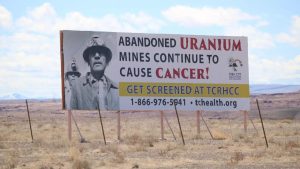 Part 2: Concerns about predatory lawyers on hunt for eligible RECA victims Bad River Band, Wisconsin leaders celebrate new dual language signs
 DOE announces 109% increase for TCU funding worth nearly $500m Historic silent film featuring Nez Perce members partially restored
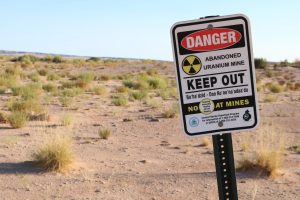 Concerns about predatory lawyers on hunt for eligible RECA victims Renewable projects targeted in proposed cuts to Office of Indian Energy
 New York Fashion Week makes history with first Native designer P’Squosa Chief John Harmelt statue unveiled in Washington State Canada's top court rules on landmark Powley case, on this day in 2003
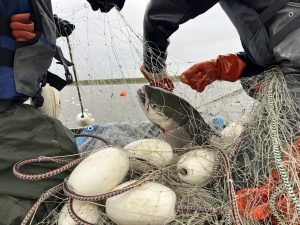 Alaska asks SCOTUS to rule on rural fishing preferences Pueblo, NM leaders urge Trump to protect Chaco Canyon from drilling Sun'aq Tribe using $2.3m in federal funds for seaweed processing
 Native artists honor legacy, advocacy of Robert Redford Native solar educator prepares students for installation apprenticeship
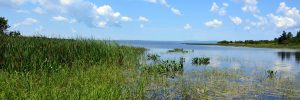 BIA offices targeted for closure by DOGE open, for now Buffalo's Fire creates Powwow Etiquette Guide Settlers start Cherokee Strip land-run on this day in 1893
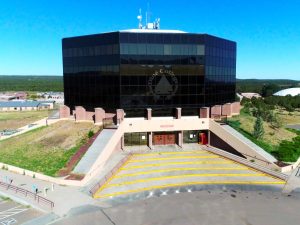 Positive return on TCU investment highlighted in new report USDA agency reorganization could harm tribal food security
 Tribal college dedicates memorial for former US concentration camp Summer high school art institute at USD honors legacy of Oscar Howe
 Popular Canadian beach returned to Saugeen First Nation Thousands journey to Bismarck for UTTC International Powwow Prevention of suicide attempts focus of new California bill by Ramos
 Alaska's OCS defends child protection practices during federal trial Sixties Scoop victims reconnect with their Indigenous families in Canada
 FBI seeks other alleged victims of Alaska man indicted in July First Nations leaders express anger over Bill C-5 at annual meeting
 BIA offices in Wisconsin and Minnesota targeted by DOGE still open Gambling hall approved for Tlingit Haida allotment on Douglas Island
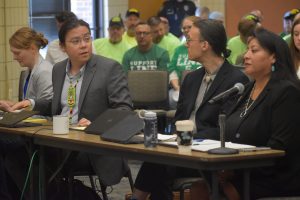 Tribe's warning at Line 5 hearing: 'It's going to affect our way of life' New repatriation efforts for Santa Ana Pueblo artifacts stolen in 1984 Tributes paid to actor Graham Greene, 73, who passed away Monday
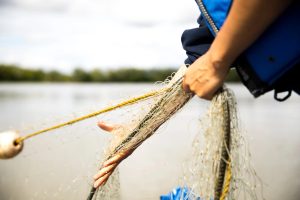 Appeals court ruling a major victory for Alaska Native fishing rights Gila River extends youth curfew through end of the year Native plaintiffs ask SCOTUS to review their ND voting rights case Public comments, expert testimony featured in Line 5 reroute hearing
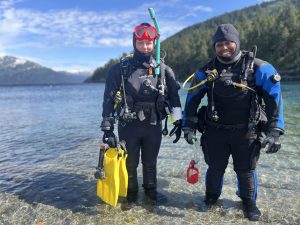 Microplastics in Alaska water focus of $5m NASA-funded study Wandering elders toolkit available for Native families and carers
 Camas bake-off in Oregon celebrates regional First Food traditions Albuquerque Sunport lands Indian Pueblo Kitchen for airside dining
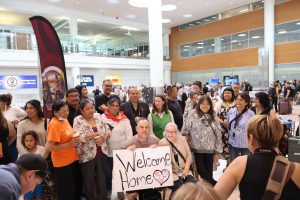 Sixties Scoop survivor meets family after taken 50 years ago Documentary about actor Teddy Kyle Smith premieres on Hulu next week
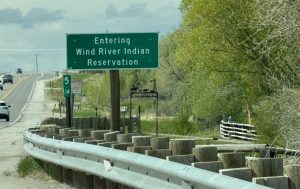
 Alaska Native corporations concerned about Trump rules overhaul Farmer looking ahead to next role after 'Resident Alien' series finale
 Canadian Ministry of Justice reconsents extradition of John Graham Alaska trial underway for lawsuit on behalf of children in state care
 Police investigate defacing of Irish language signs as 'hate crimes' Popular Indian Pueblo Kitchen opens at Albuquerque Sunport Western Michigan University launches new Native elders residency Clothing brand to distribute 2,000 skateboards at Navajo Nation Fair
 Congress expands protections for potential RECA scam victims Vaccination rate drop in Washington schools impacts Native students Southern Indian Ute Tribe says not asked about ICE detention center plan Chief Hoskin signs new AI guidelines for Cherokee Nation, language
 Lawmakers call on UC to return all Native remains and items Trump reacts to 9th Circuit's last-minute block on Oak Flat land swap Sault Ste. Marie Tribe of Chippewa Indians donates $200k to Rx Kids
 New reindeer meat facility in Alaska could boost food security Santa Fe Indian Market showcased 1,000 artists from 200+ tribes
 Oak Flat protectors get 'last-minute' win in appeals court ruling Lawmakers highlight UC repatriation of Native remains and items Camas bulb bake-off in Oregon features traditional recipes
 Wind River Promise Fund offers $250k for UW scholarship program Two Alaska Native villages consider harnessing the power of the ocean The Last Dance: Gathering of Nations powwow to end after 43 years
 Tribal media rescission, DEI cuts are hot topics at IJA conference Salmonfest in Alaska features Yup'ik language workshop
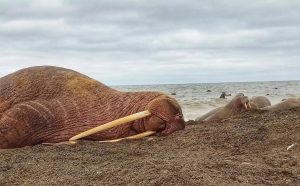 Alaska Native hunters, Russian scientist team up for walrus study Billy Mills autobiography sent to thousands of SD students for free Yurok Tribe celebrates undammed river at this year's salmon-less festival
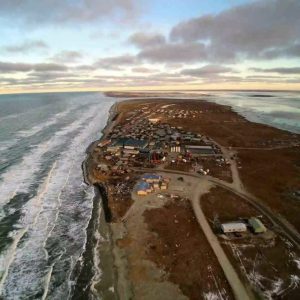 Alaska to get $6.7m from EPA to clean up ANCSA lands in 3 villages Mobile vaccination clinics help tribes get ahead of measles outbreaks
 Chinook salmon spotted in Kettle River for first time in 80 years IAIA presses ahead with next semester and seeks new funding sources Annual Sturgis MMIP fundraiser creates awareness with 230 riders Murkowski holds Anchorage roundtable for draft bill on Native children
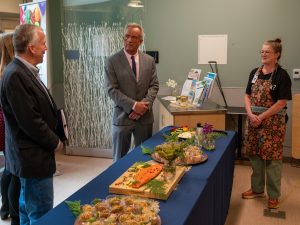 HHS secretary visits Alaska, labels processed foods 'genocide' Annual Light Up Navajo reaches major milestone this month Workforce training program leader appeals to Democrats in Congress
 DOI tries to reassure tribal water rights symposium after cuts Gara: Alaska took gold-standard foster care reforms and 'lit it on fire'
 Gila River confirms firing of police chief after town hall meeting Audit finds Alaska has yet to implement most of 2018 foster care law
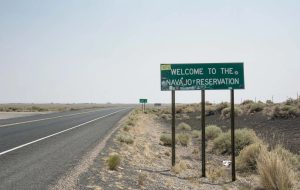 $8m for fiber broadband expansion in Navajo, Apache counties Arctic Encounter panelist really can see Russia from her house
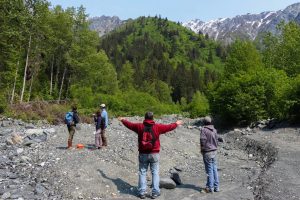 Alaska Native village prepares for landslides with housing study Ireland gifted Navajo rug as thank you for $3m pandemic donations
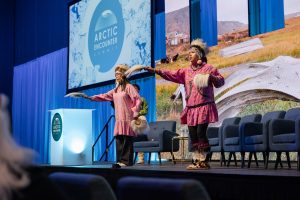 Health, housing, global power balance top Arctic Encounter agenda Northern Cheyenne Food Pantry plans permanent HQ in Lame Deer
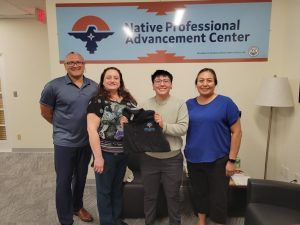 Federal funding for Native workforce training center under threat 'Chief of War' series features Indigenous actors from across the Pacific
 Gila River Indian Community fires police chief without explanation Hundreds gather in Anchorage for Arctic Encounter Symposium On this day in 1763, Chief Pontiac attacked the British at Fort Detroit
 Haaland has up and down week in bid for New Mexico governor MMIP documentary on Wind River wins Heartland Emmy Award NABI hosts record number of all-Indigenous basketball teams One year since Haaland, Newland released boarding school report
 Tribal station managers hard pressed to replace lost CPB funds White Mountain Apache Chairman under investigation by BIA MMIP unit First Nation building gas-powered AI data center on Alberta territory
 Funding concerns for Mescalero Apache law enforcement Alaska Native villages would lose if Denali Commission eliminated
 First Turquoise Alert issued in Arizona for custody case from Hawaii NM Native groups use dogs, truckers to target human trafficking
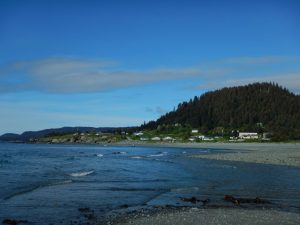 Alaska Native villages seek to harness power of ocean for energy Kirkland one step closer to becoming head of Indian Affairs
 Carney addresses Indigenous summit about Building Canada Act Nez to face off with Crane for House seat instead of Nygren rematch Tribal Access to Clean Water bill reintroduced in Congress
 Burgum, Bondi visit Alcatraz as Native activists push back on plan Some tribal stations may close after Trump claws back CPB funding NCAI opposes Trump's revival of 'racist mascots' in DC, Cleveland
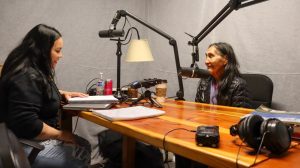 New app teaches Dena'ina language to the next generation California Indian Nations College celebrates $10m state investment Trump wants DC NFL, Cleveland MLB teams to restore previous names
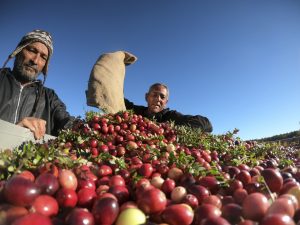 Regional Food Business Centers program cut by USDA this week Senate holds Kirkland hearing for Indian Affairs secretary nomination
 Senate passes bill to cut CPB funding for public, tribal stations Alaska Native designer of state flag celebrated in honor of first raising Ramos to present $10m check to California Indian Nations College
 Congress, USDA have yet to act on year-old food insecurity report Miccosukee Tribe joins lawsuit against Florida's 'Alligator Alcatraz' Omaha tribal council adopts cannabis code after Nebraska OKs medical
 Trump may defy son's opposition to Pebble Mine in Alaska with deal Alaska Native whaling captains get Murkowski carveout in Trump tax bill Davids urges restoration of Not Invisible Act Commission report
 Dental services to be added to Fallon Paiute-Shoshone mobile clinic Arizona launches Turquoise Alert system to help MMIP response
 Manitoba wildfires cause more evacuations of First Nations Team finds evidence of Shuyak Island villages from 7,000 years ago Native leaders slam far-right influencer Coulter for 'careless comments'
 Mobile clinic links tribal members to quality care where they live Yurok project connects rural members to high-speed broadband
 Federal judge dismisses one of two lawsuits against Eklutna Tribe Indigenous leaders feel betrayed by passage of Canada's Bill C-5
 'Some tribal colleges will die quickly and others will die slowly' Coulter slammed for 'ignorant', 'genocidal language' in X post Kirkland's Senate nomination hearing for DOI post scheduled this month
 Tribal colleges brace for devasting impact of major funding cuts Congress working with White House to protect tribal radio stations Nygren, Hobbs meet at command center as Oak Ridge Fire eases up
 Nez Perce firefighters step up as numbers dwindle nationwide Death certificate divide exposed in new study on Native healthcare Suina to strengthen state-Tribal early childhood partnerships in new role

 Murkowski cast deciding vote for bill formerly known as OBBB Florida tribes object to Everglades immigration facility 'Alligator Alcatraz' Washington state leaders sound alarm over Native overdose rates
EPA failed to distribute millions in tribal water funding - federal audit Residents of communities near Arizona's Oak Ridge Fire evacuated Curious birders flock to festival in Alaska's northernmost community
 Ontario's Ford apologizes to First Nations leaders for Bill 5 slurs Two-spirit justice of the peace in Arizona celebrates Pride month World Peace Gathering in Ireland celebrates Choctaw famine donation
 Native Americans underreported on death certificates - new study Forever stamps celebrating powwows unveiled by US postal service
 Job Corps closure temporarily paused by federal judge Dallas renames three Trinity River lakes after tribes New study reveals health gaps for Colorado's Native community Eastern Shoshone and Northern Arapaho tribal housing plans in flux
 Oregon food group grows a little taste of home for Native Hawaiians SHI seeks identification help with its new Alaska Native photo collection
 Nez Perce Tribe steps up as firefighter numbers dwindle in Idaho RECA compensation renewal is part of Trump's 'Big, Beautiful Bill' Chickasaw food expert Simms Hipp receives Woman of the Year award
 Apache Stronghold trying to revive Oak Flat religious freedom case New book includes Alaska Native place names for glaciers Remember the Removal ride concludes in Oklahoma after 950 miles Kennedy swears in Cruz as senior advisor to IHS secretary
 New Oregon welcome center rises from ashes of Holiday Farm Fire Uncertainty and hope around tribal water rights under Trump
 Newly released footage of Standing Rock Sioux MMIP in Mandan Arizona tribes report signficant progress with Trump on water rights On this day in 1868, De Smet and Chief Sitting Bull negotiate peace
 Miccosukee Tribe seeks to protect threatened species in Everglades Alcatraz Island's history as dramatic as Hollywood portrayals
 Some federal housing funding for tribes uncertain amid GOP cuts Hopi Tribe's 'horrible' and 'miserable' history with Alcatraz Island On this day in 1876, Lakota Sioux warriors surprise US in Rosebud battle
 Schmieding delivers commencement address at alma mater UO Hoonah unveils new totem pole in celebration of fishing history
 Bill to claw back funding from Native radio stations heads to Senate MMIP conference urges women to take initiative, create own solutions
 California tribe warns citizens to carry ID for ICE raids Indigenous leaders urge consultation over controversial Bill 5 D-Backs Inter-Tribal Tournament celebrates 25 years in Arizona
 Federal judge denies 'premature' Oak Flat motions after hearing Yurok land back project creates salmon sanctuary, community forest On this day in 1971, 2-year occupation of Alcatraz Island ends
 FBI surges search for missing teen from Crow reservation NCAI mid-year convention features federal grant reduction stories
 NY state rejects Trump demand to overturn Native mascot ban Tribes get part of $119m Interior push to reclaim abandoned coal mines New electroconductive bacteria named after Yaquina tribe
 Oak Flat defenders in federal court Friday as copper mine looms Temporary housing becomes critical need for Canadian wildfire victims
 Oak Flat: inside the sacred site at the center of a federal court battle Ramos passes 4 bills in California Assembly, now headed to Senate
 Dramatic cut to Pell Grant program would impact Native students 'Restoring Truth and Sanity' to US history could be 'whitewash' the past Chief Hoskin concerned about 'pause' on Job Corps Training Centers
 Coquille tribe, Oregon VA sign deal to boost Native veteran support California Assembly OKs state tax exemption bill for military retirees Native experts teach next generation about 'pre-reservation' food
 Montana awards $320k for small businesses in tribal communities Arizona powerline lawsuit by 2 tribes headed back to lower court Manitoba chiefs seek urgent help for First Nation wildfire victims
 Juneau school board expands local language immersion program New center in Montana aims to help Native kids in foster care
 Bowhead whale census underway in America's northernmost town Rosebud tribal president declares state of emergency Remember The Removal Ride cycles from Oklahoma to North Carolina
 Tribes file lawsuit to force US to explain boarding school funding Oak Flat activists vow to keep fighting after SCOTUS decision FBI adding resources in 10 states to probe unresolved MMIP cases
 Colorado governor signs Protect Wild Bison bill Western Native Voice concludes conference tour to boost membership Warren, Merkley, Tokuda reintroduce Remove The Stain Act in Congress
 Oregon MMIP activist honors Navajo Code Talkers and Native vets Chef Sherman expands to Montana with 7-course pop-up experience
 Kiowa Tribe starts 1st herd in over 150 years with 10 Denver bison High kick record setter Pickett Hall remembered at memorial service Cherokee forced displacement by US troops started on this day in 1838
 MMIP Awareness Month event combines advocacy and poetry Inaugural Native Elements Arts Festival kicks off in Santa Fe this week
 Long-term deal reached in Flathead law enforcement funding battle Native alliance in Oregon hosts one of many MMIP events this month
 Native leaders testify about HHS cuts at US Senate hearing Some federal funds for Traditional Knowledge farm in Oregon unfrozen
 New center can keep Native families together, out of social services Climate change increases pregnancy heat risks in Mountain West region New live-action puppet series teaching Navajo language hits the road
 'Sioux Chef' Sherman hosts pop-up in Montana as part of expansion 'Molly of Denali' may end after next season for variety of reasons
 Democratic senators send warning letter about SAFE Act Indigenous communities in Canada share hopes for Pope Leo XIV AFN announces keynote speaker, theme for annual October convention
 Wisconsin holds Line 5 hearing with Enbridge, Bad River Band US may return Mayflower Island back to original Alaska Native owners Senate Indian Affairs committee to hear from tribal leaders about cuts
 Alaska Native boarding school exhibit unveiled during summit ND tribes get $100k grant from state for tourism projects
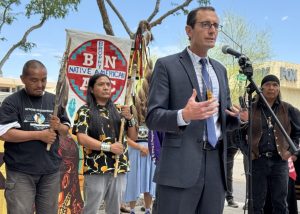 Federal judge temporarily halts Oak Flat transfer to mining company Arizona Turquoise Alert bill awaits governor's signature Desert rat among 'pre reservation' staples featured in foraging program
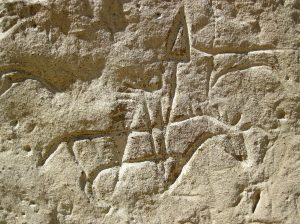 Wyoming, Trump put Indigenous rock art protections in limbo SD organization supports new Native businesses navigating the market Arizona house unanimously passes Turquoise Alert bill
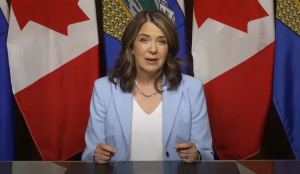 Native leaders in Alberta criticize calls for provincial separatism Advocates, lawmakers turn California Capitol red for MMIP Day Senators urge HHS secretary to halt more cuts without tribal consultation
 Leader of Native land institute concerned about Trump initiatives SD moves to ban burials, spreading ashes at sacred Bear Butte Oyate Health Center in Rapid City using Indigenous art as healing tool
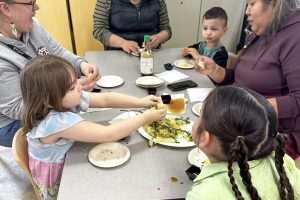 Annual food distribution canceled by Tlingit and Haida council Western Native Voice to open DC office next week to lobby leaders Senate Indian Affairs committee marks MMIP Red Dress Day
 Clean energy tax credit repeal could increase household bills 'Justice for Luke' movement banishes alleged killer's family Some federal funding for Oregon farm restored after Trump cuts
 Minneapolis PD make arrest in shooting rampage that left 5 dead Tribes, community to host first-ever MMIP summit in San Diego Oglala Sioux Tribe cancels August powwow after 2024 deadly shooting
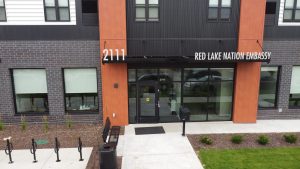 Red Lake Band, Minneapolis PD investigate killings of 4 people Apache activists hope SCOTUS agrees to hear Oak Flat case soon Burgum reviewing boundaries of at least six national monuments
 Truth and healing focus of boarding school summit in Anchorage Lingít artist weaves skin sewing and beadwork with contemporary style On this day in 2019: Stanford dedicates Carolyn Lewis Attneave House
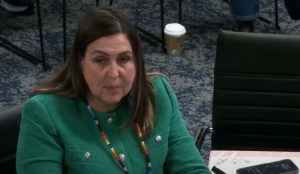 Indigenous Peoples Day bill debated in Nevada Senate committee HUD secretary visits Oneida reservation in Wisconsin to promote VASH CTUIR hosts MMIP awareness walk ahead of Red Dress Day
 Young athletes compete at 2025 NYO Games in Anchorage Bunn becomes youngest Birdtail Sioux Dakota First Nation chief ever Native parents seek improved access, mark Autism Awareness Day
 Montana makes progress on new deal for Flathead policing 'Dark Winds' director Eyre excited about next season as 3 winds down
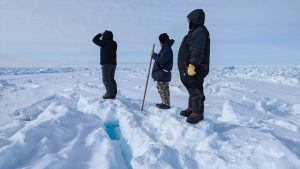 Scientists, Indigenous experts exchange knowledge about sea ice New electroconductive bacteria found in Oregon named after Yaqo'n tribe
 SD's He Sapa Otipi community center project enters new phase Native photojournalist tours US to promote 'Land Back' movement
 NARF turns on free flow of information about tribal water rights Canadians assess legacy of Pope and Catholic Church after his death Navajo Nation Council hosts MMIP walk ahead of spring session
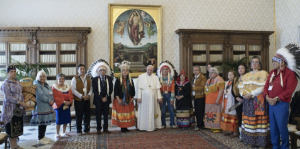 Indigenous Catholics mourn Easter Monday death of Pope Francis Denver city is key part of bison restoration effort on tribal lands CNAY Champions for Change chosen to be Native youth leaders in 2025
 Proposed NOAA funding cuts would impact mariners, hunters Navajo Nation Council 'optimistic' after round of Washington meetings
 Native food banks adjust to $500m cut from USDA funding Ramos calls for hearing to address new California repatriation report
 Voter ID law passes House, but not expected to pass in Senate Native voter turnout in Wisconsin reaches historic levels Nevada Assembly passes Indigenous Peoples Day bill Native groups in Illinois celebrate House passage of mascot bill
 Unhoused ex-offenders focus of Wyoming, Idaho, Montana program Police probe devastating fire at Diné College Student Union Building Alaska Native leader Hensley subject of new documentary
 California holding events to honor National MMIP Day on May 5 It's official! Fort Lewis College appoints its first-ever Native president McClarnon goes inside new 'gut-wrenching' episode of 'Dark Winds'
 Eklutna Tribe casino is a big hit, but faces lawsuit from state Minnesota tribal college opens new training center for in-demand jobs Illinois Indian mascot ban bill passes House, heads for Senate
 Kennedy addresses IHS cuts during MAHA tour stop in New Mexico Blackfeet Nation sues US over impact of Canadian tariffs on sovereignty Lujan Grisham signs law creating new MMIP Turquoise Alert System Frankie the Hawk launches new Native YouTube channel for kids
 Nygren attends signing ceremony for Trump executive order on coal Longtime Siletz tribal chair honored at Washington luncheon Traditional Games hosts 250 athletes and dozens of events in Juneau
 Rural Alaska Native voters may be disenfranchised by Trump order Senate passes resolution to mark 50 years of self-determination law
 Alaska Native cultural ambassadors prepare for tourist season Native education leaders testify before Senate Indian Affairs committee
 Wyoming's sole Native legislator prioritizes key issues for the year Conservatives block Indigenous language signs in Belfast central station From tribe to truck: Retirement springs anew with Indian tacos
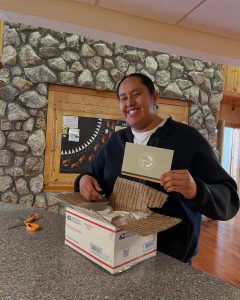 Native group selects new ambassadors to spread word about grants Trump cuts could put strain on already precarious food security
 Alaska house passes bill to protect foster kids from mistreatment FBI announces 6-month 'surge' of 60 agents to investigate MMIP crimes Senate Indian Affairs committee hosts education panel Wednesday
 Final Fairbanks Four plaintiff settles wrongful conviction lawsuit Tribes work to protect national monuments after Trump executive order Shotton could become first Native leader of Fort Lewis College
 GOP senator: Elon Musk, DOGE need history lesson after 'mistake' Oregon community helps with search for Grande Ronde tribal elder
 Tribes form coalition to protect Utah monument from Trump Catawba couple serves fry bread and Indian tacos to South Carolina Ireland's largest transit hub to add Indigenous language signs
 Ashlee Shingoose identified as 1st victim of Manitoba serial killer Six tribal nations withdraw from talks over Enbridge's Line 5 permit
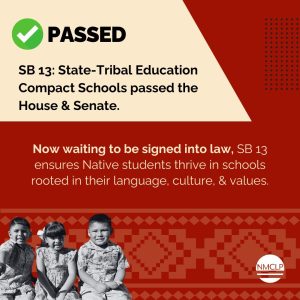 NM legislature passes bill to create Native language schools Native women disproportionately impacted by intimate partner violence Arizona governor flies tribal flags taken down at VA hospital
 SD senator issues letter about 'public safety crisis' on tribal lands Not Invisible Act Commission report removed from federal websites Native youth org announces 2025 Remembering Our Sisters fellows
 NM legislature unanimously passes new Turquoise Alert System New virtual Alutiiq class aims to increase number of language speakers USPS to launch new powwow Forever stamps during ceremony at GON
 Top Dem on Senate Indian Affairs Committee decries Trump cuts NARF files lawsuit against DOE cuts as Trump reverses on shutdown Graduating students in NM can wear tribal regalia under new law Trump administration backtracks on Navajo Code Talkers takedown
 Navajo officials demand apology, explanation over code talker ban Siletz tribes regain subsistence rights on their ancestral lands
 St. Croix Band chairman Fowler delivers Wisconsin tribal address Nearly $6bn at risk from Trump cuts, says group of Alaska organizations
 Wind River solar project funding paused by Trump North Slope residents, scientists study climate change impact on subsistence
 New BIA operation uses forensic technology for MMIP cases Transit workers highlighted as frontline in human trafficking prevention Emily Pike's tribe offers $75k reward for information about her case Grijalva, 77, mourned as friend and champion of Indian Country
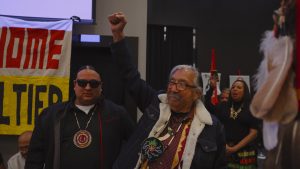 Cherokee AP reporter lands exclusive interview with Leonard Peltier Native entrepreneur at RES cautions Trump on federal health cuts
 Canada designates Kamloops school as national historic site New Native legislator seeks to help kinship caregivers in New Mexico March 13, 1806: Lewis and Clark bought 2 canoes from the Clatsop
 Alaska’s rural schools need millions to address infrastructure Acting BIA director addresses Trump funding cuts as RES kicks off Five years on: how the COVID-19 pandemic impacted Indian Country
 Trump DEI cuts force Native federal employee out of 'dream job' Wind River solar project future uncertain after $2m federal funding loss UO hosts Landback photo essay conversation with Native journalist
 Morgan Harris remains identified after discovery in Winnipeg landfill Expanded season 3 of 'Dark Winds' premieres, AMC greenlights season 4
 Native USFS employees react to their sudden firing by Trump 'Dark Winds' is back: season 3 premieres this Sunday
 Rural Alaskan schools, students suffer from chronic underfunding Thursday vigil planned for San Carlos Apache teen Emily Pike Study finds prairie dogs key to conserving American grasslands
 Trump touts order renaming Denali, uses slur to refer to Warren NM legislature advances bill to set up 'feather alert' system for MMIP
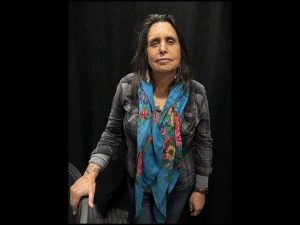 Corporations, Trump trying to disrupt protectors of Native interests First Nations HealthSource CEO to attend Trump address to Congress tonight Indigenous Peoples Day bill in Montana Senate backed 48 to 2
 Potential remains of Indigenous victims found at Winnipeg landfill ND tribal colleges contribute almost $170m to state economy
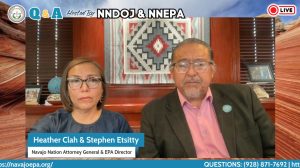 Acting Navajo Nation AG addresses uranium ore hauling in forum Heroic 8 year old rescues great-grandmother from family home fire Gowns worn by Oscar-nominated Gladstone now on display at NMAI
 Ramos highlights legislative plans during California MMIP summit Jangling Spurr: Observers say Alaska volcano shows signs of life
 Bill to place OSEUs in every school defeated in SD Senate Grand Ronde tribes open residential treatment facility for Native patients
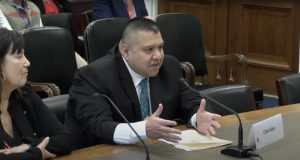 Tribal leaders testify about impact of cuts to Native programs NM supports federal employees fired by Trump administration More tribal citizens wanted for Nevada's medical debt program
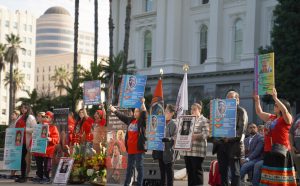 California tribes kick off third annual MMIP summit this week Washoe Tribe reintroducing intentional, cultural fire to restore forests
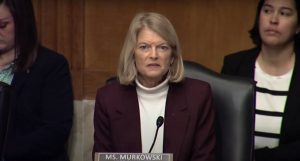 Murkowski gets assurances from Kennedy for preserving IHS Pingree, Merkley urge Trump to reinstate fired Indian Affairs employees Inflation Reduction Act used to ensure tribal elders have constant power
 Tribes respond to SD's Black Hills National Forest stewardship bill Navajo Nation Council, Utah officials celebrate water rights settlement Kivġiq festival features 'pagan' dancing that was banned by church
Bad River says Line 5 reroute violates tribe's water quality rules 'It's Denali': Murkowski introduces bill to counter Trump's executive order
 Peltier released from federal prison, headed to home in Belcourt Gray Hawk delivers State of Tribal Nations Address in Montana Nevada legislator seeks to correct date of Indigenous Peoples Day
 Hundreds of IHS layoffs rescinded after tribal intervention Medicaid cuts could disproportionately impact Native patients Oregon hopes to improve MMIP response through state health authority
 Murkowski worried about Trump's order to shutdown DEI programs Davids, Standsbury, Leger Fernandez write Burgum about BIE Kennedy confirmed as new HHS secretary, promises to elevate IHS
 OSEU teaching mandate bill advances in SD Senate committee NM bill blocks school boards from banning tribal regalia at graduations
 NARF still concerned about Trump funding cuts despite freeze NCAI youth summit tackles top issues with next generation of leaders CSKT testing deer herds after CWD detected on Flathead Reservation
Montana governor meets with CSKT, Lake County over funding feud DEI pushback could hurt Native college students already falling behind Haaland announces run for NM governor in online video
Communities honor Bering Air crash victims as NTSB probes cause Nome, Unalakleet communities mourn 10 victims of Bering Air crash 'It's time to speak up': Macarro delivers annual NCAI address Buffy Sainte-Marie stripped of her Order of Canada honor
 Indian Health Service director could become an assistant secretary Murkowski seeks to ensure tribes during federal funding uncertainty Whale of a Good Time: ANSEP celebrates 30th anniversary with students
 Bill in Congress seeks to take control of key presidential power Uranium ore shipments across Navajo Nation to resume - with new rules RCMP investigate deaths of four people on Saskatchewan reserve
 Navajo political strategist Kirkland nominated to head BIA State of Alaska files lawsuit to shut down new Eklutna tribal casino Historic bison transfer from Fort Peck Tribes to Saskatchewan nation
 Senate may have nominee hesitancy over RFK vote for HHS Native-run renewable org empowers move towards energy equity
 Tribal groups write letter to Trump, ask him to respect sovereignty Burgum confirmed by Senate as new US Interior Secretary Summit addresses housing crunch in remote Arctic communities
 'Missing in Nevada Day' pairs with push for MMIP bill in Congress Indigenous food storage cache 900+ years old found in Anchorage
 Paused freeze and rescinded memo causes tribal funding confusion Interior starts to redesignate Denali's U.S. name back to McKinley Coyotes more abundant in areas where they are hunted, new report finds
 Tribes brace for impact of Trump's funding freeze ... if unblocked Chickasaw Nation, Pontotoc County sign new law enforcement deal
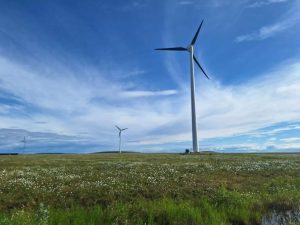 Clean energy grants in rural Alaska frozen as Trump orders pause SCOTUS refuses to hear Native voting rights case from Montana More than 500 bison returned to ancestral grazing lands by tribes in 2024
 Thousands of patients need Montana to renew Medicaid expansion Siletz Tribe to use $1.5m federal grant to bring the sea otters back NM senators reintroduce radiation exposure compensation bill
 Anchorage's 1st small-scale tribal casino built in less than a week Tribal leaders ask members to be on alert for ICE agent encounters
 First Nations leader rethinks concerns on pipeline due to Trump Michigan tribes to reintroduce Trout species in lower peninsula rivers Oregon tribes get $1.56m federal grant for sea otter restoration Indigenous athletics hall of fame announces class of 2025 inductees
 SD Native leaders assess potential impact of a new Trump term Yup'ik ancestral remains returned to Alaska under NAGPRA process
 Peltier calls supporters and responds to his clemency from Biden Navajo Nation hosts Inauguration watch party as Trump is sworn-in
 Biden commutes Peltier's life sentence King Day a time to remember his advocacy for Native allies Peaceful People's March protestors raise concerns ahead of inauguration Dunleavy awaits word from Trump about his Alaska wishlist
 Peltier supporters make final push to Biden for clemency Tribal issues part of Senate hearing for DOI Secretary nominee Burgum Flandreau Santee Tribe ends reservation ban on SD Gov Noem
 SD tribal leaders call for reset in relations if Noem confirmed Nygren backs Burgum as Interior Secretary amidst Senate hearings DOI OKs Koi Nation of Northern California land bid for hotel and casino
 Biden designates 2 national monuments at fire-delayed ceremony Women will hold majority of seats in NM legislature starting next week Native 2025 Champions for Change announced by Aspen Institute
 UAII hosts prayer, healing circle for Native wildfire victims San Manuel Band of Mission Indians sends fire crew to neighbors in LA Tribal leaders closely watching Senate hearings for Trump nominations
 Anchorage mayor backs Eklutna casino, but Trump may block it USDA launches new plan to boost tribal collaboration and sustainability UAII volunteers support Navajo firefighters in Los Angeles
 Klamath Tribes fire crew returns the favor to Southern California 23 Navajo Scouts deployed to battle Los Angeles wildfires Alaska Native fishing rights advocate from Kodiak Island wins national award
 California home of Cherokee legend Will Rogers destroyed in fires Mixed reaction from Native leaders to Trudeau resignation and legacy Tribal offices closed in honor of National Day of Mourning for Carter
 High winds postpone signing ceremony for national monuments Haaland reflects on Federal Indian Boarding School Initiative 'And her name shall be Justice': SD county approves MMIP statue
 Tribal leaders celebrate Biden's 2 new national monuments SD MMIP advocates call for more resources during prevention month
 New USDA plan seeks to boost collaboration with tribes Wyoming tribes part of new study into tetrapod fossils near Wind River Alutiiq Museum gets grant to revamp library in time for grand reopening
 Alaska Native leader reflects on Carter's impact across the state Plan to protect Kootenai River from Canadian coal mining pollution
 Life changing connections on the Navajo Nation Pueblo of Santa Ana get $6m+ to design wildlife crossings along I-25 Senate passed 4 out of 16 bills proposed to invest in Native communities
 Inside the new Native boarding school history exhibit at ANHC Doctor Who: Native Oregonian rescues injured owl from busy roadway
 IHS funding remains a challenge despite increases in past decade US EPA adds polluted beach along Columbia River as Superfund priority KNNB to broadcast, webcast Fiesta Bowl in Apache language
 President Carter praised for his positive impact on Indian Country IHS, Chickasaw Nation to sign agreement for Newcastle medical center Anchorage Museum creates fellowship with wood carver Drew Michael
 Oregon, tribal partners get $4.5m America The Beautiful grant Native Santa delivers toys and joy to children in Alaska
Homeowners group in Alaska sues tribe over casino project Tribal biologists seek solutions to climate change impact on wildlife Jemez and Acoma Pueblos renew co-stewardship deal with BLM
 Inside the creation of the Carlisle Indian School National Monument Historic Native art 'hidden' in California now on display in North Dakota
 Federal judge rules USDA should have sought tribal consent Native Oregonian becomes viral hit after posting owl rescue on Facebook
 Democratic senators block Pilot Butte Power Plant transfer bill ASU develops new digital tool to improve Native health outcomes
 Native healing practices now covered by Medicaid, CHIP in 4 states Alaska trial for chiropractor accused of sexual assault set for February Sacajawea thought to have died on this day in 1812
 Senate passes Gallego's Native American Child Protection Act Navajo Nation families empowered by electricity grid program
 Light Up Navajo Nation program brings power to the unconnected Interior earmarks almost $1m for recovery of endangered martens Cherokee Nation using $34m federal grant to build out broadband
 EPA makes polluted Columbia River beaches Superfund priority Biden pardon is Peltier's 'last chance at freedom' - Grijalva Colgate University museum repatriates remains of 21 Oneida ancestors
 Tribe, climate groups challenge state permits for Line 5 reroute Tribal leaders weigh gains under Biden against doubts over Trump future Lawmakers, activists call on Biden to free Leonard Peltier
 Michigan UP mine proposal clears another hurdle for state funding It takes a village to build a language preservation game USDA announces $1.3bn boost for local Native food programs
 California county supervisors weigh in on controversial name Sober New Year's Eve powwow in Oregon celebrates families
Newly renovated Alaska Native Heritage Center features boarding school exhibit Native company using board games for Ojibwe language learning
 Biden establishes Carlisle Indian school as national monument Historic Native art 'hidden' in California now on display in North Dakota
 Native educator in Oklahoma focuses on reducing absenteeism Washington state works to improve Native access to health insurance
 Case of Darryl George could impact Native students in Texas Tribal members in Wyoming protest over Pilot Butte Power Plant Montana Supreme Court settles dispute over Flathead law enforcement
 Exit poll data 'misleading', says 4 Native voting rights groups OSU, 9 tribes open NAGPRA facility to properly repatriate Native remains Brown University transfers 255 acres of ancestral land to Pokanoket tribe
 Crew starts landfill search for 2 Indigenous victims of serial killer How A-Trout That! Lake Superior species recovers after years of decline Tribes, allies to celebrate Klamath River dam removal at California event
 Some tribal-federal projects in doubt under new Trump term Biden breaks Carter's single-term record for national monument creation Oregon is the best US state for Indigenous entrepreneurs - report 35 years ago, last Native American Indian Heritage Week was proclaimed
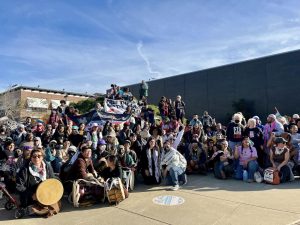 Shellmound Prayer Walk flags shopping malls built on burial sites Oregon governor sticks with state's 'one tribe, one casino' policy 'Tis the season for hazel burning by tribes in Pacific Northwest
 New Hulu doc looks at murder of AIM activist Annie Mae Aquash Native American Heritage Day celebrated across US
 Alaska Native Heritage Center goes direct to students in schools Tobacco part of white oak replanting ceremony in Oregon this month
 USFS using part of $20m to provide firewood for Native families Three ways to say 'thank you' in Alaska Native languages
 Community works to salvage beached fin whale before return to sea Siletz Tribe uses $2m NOAA grant to restore ancestral territory in Oregon Potential Native mortgage recipients hope for passage of SB 1941
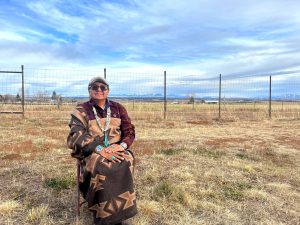 Navajo community celebrates rare breed of sheep in Colorado Federally funded mobile clinic in rural Nevada serves 2k tribal patients
 Begich edges out Peltola in historic Alaska House race Native artists in Wyoming struggle to be sustainable
 Tribes celebrate California's removal of derogatory word from sites New Trump term could impact tribal climate restoration and protection Wildlife migration patterns in West likely to shift due to climate change
Native voter data in Edison exit poll 'misleading', 'harmful' Enbridge plan to reroute Line 5 through Bad River faces more hurdles Thousands demonstrate for Māori rights against NZ parliament bill
 Biden creates most national monuments in single term since Carter Alutiiq Museum gets $150k to renovate Koniag library in Kodiak California to remove derogatory word from 30 sites
 Siletz Tribe reacquires 27 acres of ancestral territory in Oregon Tribes, allies plan to sue if rare snail not protected from lithium mine Peltola opponent declares victory, but AP has yet to call Alaska House race
 NPS celebrates 100 years of Wupatkia National Monument Indigenous awareness programs become popular at Alaska museum
The National Park Service this month issued a first-ever director’s order to strengthen its consultation with tribes.
The Mountain West News Bureau’s Kaleb Roedel has more.
The new order comes from National Park Service Director Chuck Sams (Cayuse and Walla Walla).
He’s the first Native American to lead the federal agency.
Sams says too often tribes experience a lack of collaboration.
“Where a federal agency just kind of tells you what’s going to happen to a particular piece of land that they manage that tribes may have interest in. And this director’s order actually brings much more meaningful discussion with tribes up front before all the decisions are made.”
That includes respecting that tribes see the plants and animals populating their lands as cultural resources. The order also calls for honoring tribes’ sovereignty and oral traditions.
Sams says some national parks already have strong relationships with tribal nations.
Yellowstone National Park has agreements with tribes to support bison restoration and management.
And Craters of the Moon National Monument & Preserve in Idaho last month worked with the Shoshone-Bannock Tribes to create displays with Indigenous history and perspectives.
President Donald Trump in 2017 expediating the process for the Keystone XL pipeline and Dakota Access pipeline. (Courtesy The White House)
President-elect Donald Trump’s agenda for “energy dominance” could impact leaders in the sector, including the state of Wyoming and tribes.
But some say the industry might have limited tolerance for blanket policy shifts, as Kathleen Shannon reports.
Before the election, the University of Wyoming hosted this year’s Tribal Energy Summit, where major themes were carbon capture, rare earth elements and critical minerals, and community engagement.
After the election, there are questions about how far Trump will sidestep the nation’s momentum toward renewable energy.
Daniel Cardenas with the National Tribal Energy Association expects the next Trump administration to look similar to the last one.
“They weren’t outright anti-renewable. They were just preaching an ‘all-above’ strategy, with more of a focus on fossil energy. But I think that’s probably the route that things will go, which supports what Wyoming’s already doing during Gov. [Mark] Gordon (R-WY)’s administration, is ‘all-the-above.'”
Cardenas says despite campaign rhetoric, industry leaders see opportunities in a varied approach to energy production.
ExxonMobil’s CEO this week urged Trump to stay in the Paris Climate Agreement, which Trump promised to back out of in 2017.
A vast majority of the U.S. reserves of key energy-transition metals are located within 35 miles of Native American reservations, according to the investment firm MSCI.
Cardenas says Tribes have been left out of the conversation on the energy transition – which he calls the “energy evolution” – but that they could be key partners.
“Collectively, tribes are the largest private landowners in the United States outside the federal government. So no matter what, if the country needs and wants to develop more infrastructure, the path to that is through Indian Country.”
Investments in clean energy – especially in “red” states like Wyoming – are foundational to President Biden’s 2022 Inflation Reduction Act, which Trump has called a “green new scam.”
Trump’s power to change Biden’s law, however, may be limited by Congress.
In California, the Yurok Tribe, Del Norte County Superior Court, and District Attorney’s Office recently signed an agreement to allow Yurok citizens, who are adults, facing certain criminal charges an opportunity to defer prosecution.
They’ll instead enroll in the tribal court’s wellness program, which uses a holistic approach.
The Yurok Tribal Court, along with the District Attorney or Superior Court, will determine if an individual is eligible to participate.
If the individual qualifies, the tribal court will develop a wellness plan and oversee its implementation through culturally integrated case management.
Diversion periods are often set at six months to two years.
Get National Native News delivered to your inbox daily and stay up-to-date on the 2024 Native Vote. Sign up for our daily newsletter today.
As Republicans and Democrats battle it out for control of the U.S. House, Alaska’s lone Congressional seat appears to be closer to being flipped.
That seat is held by U.S. Rep. Mary Peltola (Yup’ik/D-AK), the first Alaska Native to be elected to Congress.
KNBA’s Rhonda McBride has the latest numbers.
Since election night, Rep. Peltola has trailed her Republican challenger Nick Begich III by about 10,000 votes.
After the Alaska Division of Elections added more than 38,000 votes to the totals late Tuesday night, Peltola cut into her opponent’s lead by a few hundred votes, but the gap between the two candidates remains about the same.
So far, Begich has 49.1% of the vote, not enough to avoid triggering Alaska’s ranked choice voting system on November 20.
If Begich cannot surpass a threshold of 50% of the vote, the second-choice votes for two other candidates in the race will be divided between Begich and Peltola, who will have to get a lion’s share of those votes to pull out ahead.
The next election update comes this Friday.
People on the Wind River Reservation say President Joe Biden’s recent apology for the federal Indian boarding school system needs follow-up.
The schools sought to assimilate Native children and separate them from their languages and communities.
Wyoming Public Radio’s Hannah Habermann has more.
In recent years, both the Eastern Shoshone and Northern Arapaho tribes have brought home remains of children who died at the Carlisle Boarding School.
The trauma of the boarding school system still impacts those communities today.
“I hope they prove it. It’s good for (President) Biden to offer an apology, but that isn’t enough.”
“The apology needs to go deeper than just the boarding school issue. It needs to deal with physical genocide, extermination, decimation of the buffalo.”
“Increased funding for tribal nations to be able to regain everything that was lost because of the boarding school policy.”
That was Northern Arapaho member Cherokee Brown, former Eastern Shoshone Business Council chairman John St. Clair, and Northern Arapaho Business Councilwoman Karen Returns to War.
Federal officials announced a new round of funding to help tribes access clean drinking water.
As Alex Hager reports for the Mountain West News Bureau, that includes nearly $35 million for tribes in Arizona, Colorado, Nevada, New Mexico, and Wyoming.
Across the country, nearly half of all tribal homes do not have access to reliable clean drinking water.
This money, which comes from the Inflation Reduction Act, is part of a federal effort to change that.
The Ute Mountain Ute Tribe in Colorado and the San Carlos Apache Tribe in Arizona are among those getting money to plan, build, and maintain pipelines and water treatment plants.
The Biden Administration says this pool of money will help it stay on track with a goal to give 40% of its climate spending to marginalized communities.
This comes as tribes in the Southwest are asking for a bigger say in talks about how to use the Colorado River.
They’ve been largely excluded from negotiations about the river since the earliest days of its management.
The Cherokee Nation in Oklahoma and Prime Video have teamed up to bring the Cherokee language to viewers through dub and subtitles on select titles in Prime Video’s library.
It’s part of the tribe’s efforts to preserve the Cherokee language.
The first production was The Lord of the Rings: The Rings of Power.
The episode premiere during a recent special screening in Tahlequah.
All season one episodes of the series are being translated and expected to be available in Cherokee by the Spring of 2025.
Get National Native News delivered to your inbox daily and stay up-to-date on the 2024 Native Vote. Sign up for our daily newsletter today.
(Photo courtesy Michael Sherman / Spring Fed Media)
Regrowth and renewal were the themes of a special replanting ceremony in Blue River this weekend.
As KLCC’s Brian Bull reports, the event was also to highlight the history of Native Americans in the McKenzie River Corridor.
About 30 people gathered to accept white oak seedlings that were blessed and sprinkled with tobacco.
Dietrich Peters of the Confederated Tribes of the Grand Ronde coordinated the event.
“Come on up, we’ll get you some tobacco, and you can offer your prayers as well.”
Katherine Wilson of the group McKenzie Reel said while much of this was to help restore Blue River’s landscape after the devastating Holiday Farm Fire of 2020, it was also to highlight the activity of Native people who crossed through before colonization.
She said there was one clear takeaway from the event by those present.
“Well, by the sounds of the sobs, the healing. The river and the land just seemed to be so joyous. It was healing, and I didn’t expect that.”
Attendees took oak tree seedlings to plant across the region. Wilson says she’ll hold similar events soon, to complement Blue River’s natural rejuvenation as it keeps building homes and facilities.
A view of the 1932 monument near the site of the 1863 Bear River Massacre. (Public domain)
Hundreds of volunteers from Utah and Idaho gathered recently to help the Northwestern Band of the Shoshone Nation restore the site of the Bear River Massacre.
For the Mountain West News Bureau, Clarissa Casper of the Salt Lake Tribune and Utah Public Radio has more.
Rios Pacheco stood on the land where, in 1863, his ancestors were victims of one of the deadliest massacres of Native Americans in United States’ history.
Behind him, across the site of the Bear River Massacre, hundreds of volunteers planted native shrubs and trees –– a collective effort to heal what was taken from both the land and the Northwestern Band of the Shoshone Nation.
For Pacheco, who serves as the tribe’s spiritual leader, planting native plants on the land where hundreds of his ancestors’ lives were stolen is a way to not only restore the ecological balance of the area but also to heal the spirits of his people.
Once you plant something in the ground, he said, life is restored.
Through the plants, he feels connected to his ancestors.
Planting native species on this sacred ground is a way for his people to return and heal –– much like a plant regenerates from its own seeds.
In reconnecting with the land and honoring the memories of those who survived, the plants offer both renewal and forgiveness for the past, he said.
“That’s just like the plants. When you plant them, the forgiveness comes by taking care of them, fertilizing them, watering them, so that way that plant will grow again.”
The Northwestern Band of the Shoshone Nation began its journey to ecologically and spiritually restore the site of the Bear River Massacre in 2018 when it purchased approximately 350 acres of their ancestral land just north of Preston, Idaho.
This is the second year the tribe has held a planting weekend at the site for volunteers, and the second time hundreds of individuals from both Utah and Idaho have dedicated their time to the effort.
The Bear River Massacre occurred during one of the coldest winters his ancestors experienced at the site, Pacheco said.
His people would camp in the valley where the attack occurred during winters because of the warmth the area provided with surrounding hot springs.
The tribe’s efforts to heal the site –– named “Wuda Ogwa,” which directly translates to “Bear River” –– are also meant to honor the plants that used to be abundant in the area and aided Pacheco’s ancestors in a variety of ways.
Because Wuda Ogwa is primarily a wetland habitat, many of the native plants that volunteers planted on Friday and Saturday were water-based and will help filter the river,
Pacheco said the tribe has also made efforts to build beaver analogs to hopefully bring beavers back to the area to perform their beneficial river duties.
As volunteers worked, Pacheco observed them and heard them share stories about the plants they planted last year and the friendships they have developed through the effort.
“You’re not just elevating the landscape. You’re elevating your inner spirits.”
Although the tribe has only involved the broader public in its project since 2023, a great deal of work has been done to prepare the land for the new plants.
For the past three years, the Utah Conservation Corps has been removing thousands of invasive Russian olive trees that have invaded Wuda Ogwa’s floodplain since the massacre.
This tree, according to UCC Northern Regional Coordinator Ben Borgmann-Winter, outcompetes the native vegetation the tribe hopes to revive in the area.
Russian olives also serve as “junk food” for wildlife, Borgmann-Winter said, as their olives are high in sugar and not nutritionally valuable.
In addition, these trees channelize and hold riverbanks in place, leading to various issues, including lowering the water table and decreasing moisture levels in the soil.
They also siphon an estimated 75 gallons each day from the Bear River that could ultimately make its way to the Great Salt Lake, Borgmann-Winter said.
“This is a really special space, a sacred space. Look at how many hundreds of volunteers are here right now from all over Utah, all over Idaho. It’s a pretty special project. We’re very honored to be involved in that.”
The tribe’s big-picture vision for the land includes planting 300,000 native shrubs and trees, cleaning up the land’s creeks, and restoring degraded agricultural fields into wetlands abundant with life.
Get National Native News delivered to your inbox daily and stay up-to-date on the 2024 Native Vote. Sign up for our daily newsletter today.
Photo: Terri Smith is the administrator for the Northern Arapaho Reentry Agency. (Chris Clements / Wyoming Public Media)
On the Wind River Reservation in Wyoming, a Northern Arapaho Tribal member is leading the charge against recidivism, which is 33% higher for Native Americans than other groups.
As Wyoming Public Radio’s Chris Clements reports, Terris Smith herself is an ex-inmate.
Driving her pickup through the community of Arapahoe, Terri Smith is the Northern Arapaho Reentry Agency’s sole employee.
Launched with a federal grant, the program helps Eastern Shoshone and Northern Arapaho tribal members readjust to post-prison life on the reservation … and stay out of jail.
Smith grew up here, and knows what it’s like to get caught up with addiction and the law.
She served six months in federal prison for conspiracy to distribute Oxycodone.
Not only that, she lost her law license while in prison, and her position as chief judge of the Wind River Tribal Court.
“There’s gonna be a lot of people who still view that side of me, but I’m, I know I’ve done the work to get better, you know, I did my time, I went to treatment.”
She came home in 2021 and started over.
“I honestly think this job’s perfect for me right now. Like, because I’m getting a second chance. I want everyone to get that.”
Smith and her client Tremayne Thunder meet in a conference room at the local library. (Photo: Chris Clements / Wyoming Public Media)
Tremayne Thunder is a member of the Northern Arapaho Tribe, and Smith’s first client out of 15.
Last year, he was arrested and charged with illegal possession of a firearm.
Smith has helped Thunder make medical appointments, meet with his parole officer, and even find a place to live when he got out.
“She can relate to everything, as in, all of it, you know, like, the prison system, the probation system, being an addict, everything.”
State Sen. Affie Ellis (member of the Navajo Nation/R-WY) endorsed the programs.
“I think these programs are really important and long overdue.”
Reentry services like Smith’s are new to the Wind River Reservation … and to many other tribal nations.
Sen. Ellis says she supports Smith and the agency, but worries about its dependence on federal money.
“We’ve seen this time and again in Indian Country: great idea, great program. Here’s some funding. Tribes get something going, and then money runs out, they lose the grant, and then the program’s gone.”
Meanwhile, back in Arapahoe, Smith heads to the reentry agency office in Great Plains Hall.
She’s looked to reentry agencies in Oklahoma and Minnesota for guidance on how to run hers.
She’s also petitioning to get her law license back so she can help her clients even more.
“I got letters of recommendation from my attorney friends and from Lee [Spoonhunter], the councilman. I hope it goes well.”
Mature spring chinook salmon return from the Pacific Ocean to spawn in their natal freshwater rivers and streams. (Photo: Roger Tabor / USFWS)
Wild Chinook salmon are returning to the Upper Klamath River after the removal of four outdated hydroelectric dams.
Isobel Charle has more.
After 20 years of organizing and legal battles by the Yurok Tribe and other groups, 400 miles of historic salmon habitat have reopened.
Scientists are now monitoring the effects of the dam removal on salmon populations.
Yurok Tribe member Amy Bowers Cordalis says they’ve been astonished by how quickly the migrating fish are returning to areas that haven’t supported them for generations.
“And all these people are using Indigenous knowledge and marrying it with Western modern science to observe and to tell us how the river is healing. And it’s really a remarkable opportunity.”
Cordalis is also founder of the Indigenous conservation group Ridges to Riffles.
The data being collected details, among other things, fish spawning locations, their health, and their numbers – all of which will be crucial for predicting future populations.
Get National Native News delivered to your inbox daily and stay up-to-date on the 2024 Native Vote. Sign up for our daily newsletter today.
Federal officials announced a new round of funding to help tribes access clean drinking water.
As Alex Hager reports for the Mountain West News Bureau, that includes nearly $35 million for tribes in Arizona, Colorado, Nevada, New Mexico, and Wyoming.
Across the country, nearly half of all tribal homes do not have access to reliable clean drinking water.
This money, which comes from the Inflation Reduction Act, is part of a federal effort to change that.
The Ute Mountain Ute tribe in Colorado and the San Carlos Apache tribe in Arizona are among those getting money to plan, build, and maintain pipelines and water treatment plants.
The Biden Administration says this pool of money will help it stay on track with a goal to give 40% of its climate spending to marginalized communities.
This comes as tribes in the Southwest are asking for a bigger say in talks about how to use the Colorado River.
They’ve been largely excluded from negotiations about the river since the earliest days of its management.
America’s Warrior Partnership lead Jessy Lakin delivers firewood to an Alaskan Veteran. (Courtesy Jessy Lakin)
Alaskan winters are some of the coldest winters in the world.
With record breaking snow falls and temperatures reaching the negatives, Alaskans prepare months ahead of time for the long, cold winter months.
For some people, even staying warm becomes a challenge and is the reality for many veterans living in Alaska, including Native veterans.
Jessy Lakin is a combat veteran, who served two deployments in Iraq.
After his service, he moved to Alaska and started volunteering for organizations, such as the National Wild Turkey Federation, and created a non-profit called Battle Dawgs, helping veterans suffering with PTSD and addiction.
A few years after Lakin moved to Alaska, he spoke with an Alaska State Trooper, who said he had just delivered fire wood to a veteran, and told him of the dire situation many veterans face in Alaska.
“He said that he had responded to four deaths at that point, that he knew were veterans, and he was telling me that he was frustrated because there wasn’t really anything in place to help seniors, with snow removal, and fire wood, and the problem was, that we found, was veterans like to isolate. They don’t have anybody checking on them.”
Lakin says the four veterans who died, all showed signs of struggle when they were found.
They had burned all of their wood furniture, and their oven doors were found open, indicating they tried to warm their homes with the oven.
He said he knew he had to do something.
“There was no real tracking system here in the state, nobody is really paying attention to that, and there was no kind of program designed to support them. So, we got proactive, we started thinking about how to help. And we created the Mat-Su winter project.”
The project started out small, with Lakin and some veteran friends reaching out to other veterans, to deliver firewood, and remove snow from by their home.
He soon changed the name to the Alaska Warrior Partnership.
Here is Lakin talking about one of his experiences.
“When we found him, he was barely moving, he had his dog inside of his jacket, and then I think every piece of clothing on him possible. Hadn’t had fire in three days and it was negative 40 degrees.”
But the story has a happy ending.
“We took care of him, and then got him off the program, got him moved into a better house in town that had electric heat. Got him connected to other services as well.”
Lakin says he’s responded to many residences in similar situations.
More information about the program is posted on the America’s Warrior Partnership Facebook page.
Get National Native News delivered to your inbox daily and stay up-to-date on the 2024 Native Vote. Sign up for our daily newsletter today.
In October, U.S. Rep. Mary Peltola (Yup’ik/D-AK) predicted that her race could come down to dozens of votes.
So far, the margin isn’t that close – but still, pretty close.
Rep. Peltola was the first Alaska Native to be elected to Congress. But as KNBA’s Rhonda McBride reports, the Democrat is trailing behind her Republican challenger, Nick Begich.
Alaskans expected Donald Trump to win their state.
The question was: What would be the coattail effect for Nick Begich III?
So far, Begich has just under half of the vote, about 10,500 votes more than Peltola.
His uncle, former U.S. Sen. Mark Begich, is a Democrat and supports Peltola.
Although there’s only about a dozen precincts left to count, these are in predominantly rural and Alaska Native communities with votes that will likely go to Peltola.
Sen. Begich says, although her path to victory is narrow, it’s still there.
He recalled election night in his own race in 2008 against the late Senator Ted Stevens.
“Everyone counted me out. Even the senators back east counted me out, because I remember calling them. I mean, in my election against (U.S. Sen.) Ted Stevens, I was down 3,700 votes election night. Then I won by 3,800 votes.”
Former State Rep. Charisse Millett (Iñupiaq/R-AK) says she’s hoping Peltola will pull through.
Rep. Millett served as Republican House Majority leader.
“We’ll see. I’m hopeful. As a Native woman, I’d like to see Mary prevail.”
But Millett says it won’t be easy.
“I think there’s a path for her to prevail, but it’s really an uphill battle. Everything in the stars has to align in order for her to prevail.”
Begich needs more than 50% of the vote to avoid triggering the next step in Alaska’s ranked choice voting system on November 20. That’s when the votes for two other candidates in the race would be divvied up between Begich and Peltola, depending on who voters ranked as their second choice.
If Begich wins, he would hold the House seat that his grandfather and namesake held, before he died in a plane crash in 1972.
View this post on InstagramA post shared by Sharice Davids (@shariceforcongress)
It is another term for U.S. Rep. Sharice Davids (Ho-Chunk/D-KS). Rhonda LeValdo has more.
With her fourth victory, incumbent Rep. Davids won her reelection with 53% of the vote to Prasanth Reddy’s 42%.
Rep. Davids talked about the hurdles she overcame to get things done for Kansas.
“We have faced so many challenges, rising costs, divisiveness. I mean, there are things like attacks on our basic rights. Things that have made the last few years not easy for a lot of folks. But through it all, we have seen people push forward, pushed toward their solutions, taking the commitment that we have to each other, and our shared commitment for our state, and shared commitment for our country, and doing everything we can.”
While the crowd watched the presidential election results, Haskell student Jacob Curtis (Cherokee citizen) talked about why he drove all day back to Oklahoma to vote as a young person as the crowd cheered to incoming results.
“It is important to vote in our Native communities.“
At the end of Rep. David’s speech, she stated that there is more work to be done in the State of Kansas and hope everyone can work together and get over the divisiveness.
Get National Native News delivered to your inbox daily and stay up-to-date on the 2024 Native Vote. Sign up for our daily newsletter today.
While many votes are still being tallied and election outcomes finalized, NPR reports that in 25 states, voters had the chance to elect or re-elect an Indigenous candidate.
Using data collected by Indian Country Today and the group Advance Native Political Leadership, at least 170 Native American, Alaskan Native, or Native Hawaiians were on the ballots.
And while there have been gains in Indigenous representation, recent data shows Native elected officials made up less than 0.1% of the roughly 519,000 elected offices across the U.S.
To achieve parity based on the Native population in the country, Indigenous people would have to hold 17,000 offices.
Watch our Native Vote 2024 Election Night special anchored by Antonia Gonzales and Shaun Griswold
(Photo: Archkris / CC BY-SA 4.0)
Across Canada, tributes and condolences are pouring in after the death of a key Indigenous leader.
Murray Sinclair was the former chair of the Truth and Reconciliation Commission, and considered a pioneer for Indigenous rights.
Dan Karpenchuk has this remembrance.
“When I was asked to chair the truth and reconciliation commission, I thought that I had a pretty good idea of what to expect. My experience as a lawyer, as a judge, as the co-chair of the aboriginal justice inquiry of Manitoba in the early 1990’s had given me a considerable amount of information about what Indigenous people had experienced here in Canada.”
That’s Murray Sinclair from an interview in 2021.
Sinclair went on to say the stories of survivors of the residential schools proved to be horrendous.
He took part in hundreds of hearings across Canada and heard testimony from thousands of residential school survivors.
Tributes came from Native leaders across the country, and from Prime Minister Justin Trudeau, who said Canada lost a giant.
“The deep convictions and immovable strength he brought to bear on such extraordinary challenges were an inspiration to all of us.”
PM Trudeau also said Sinclair challenged us all to confront the darkest parts of our history because we could learn from them and be better for it.
The Assembly of Manitoba Chiefs said he broke barriers and inspired people to pursue reform and justice with courage and determination.
In 2016, he was appointed to the Canadian senate.
He retired from that role in 2021. And in recent years he limited his public engagements due to poor health.
He had congestive heart failure and nerve damage forced him to rely on a wheel chair.
The father of five died peacefully yesterday in a Winnipeg hospital.
He was 73.
(Courtesy W.K. Kellogg Foundation)
Many states are turning to dental therapists to serve tribes.
But, some aren’t so sure adding another mid-level position is the way to tackle dental care deserts.
The Mountain West News Bureau’s Hanna Merzbach reports.
Dental therapists are a relatively new position. They can do things like cleanings, fluoride treatments, and even simple fillings, says dentist and researcher Donald Chi.
“Put out small fires in a community with lots of dental care needs, and so then the dentist can come in and put out the big fires.”
He says dental therapists are often focused on tribes, since about half of Indigenous people live in areas without enough dentists.
Initiatives have been particularly successful in Alaska, but there are few training programs for dental therapists in the lower 48.
And Tanna Nagy with the Wyoming Dental Association says she’d rather see resources go toward existing programs for dentists, hygienists and assistants.
“Instead of trying to find faculty for new programs, which is just hard to find already.”
She says states could also encourage reaching unserved populations by reducing dental workers’ student loan debt.
Get National Native News delivered to your inbox daily and stay up-to-date on the 2024 Native Vote. Sign up for our daily newsletter today.
Today is election day and it is important to make sure every voice is heard at the ballot box.
That includes Native voices, who are often disenfranchised from the polls.
SDPB’s C.J. Keene checks in with one group looking to get out the Native vote.
The Communities Organizing for Unified Power (COUP) Council, a Rapid City Indigenous organization, held a town hall to discuss the importance of getting indigenous peoples to the ballot box.
After a successful campaign season signing people up, He Sapa Voters voter organization director Jean Roach says it’s a challenge to encourage people to participate for many reasons.
“People are like ‘Oh, I don’t think so,’ but just telling them that their vote can be more of a bigger picture in the end. An invocation.”
(Courtesy He Sapa Voters / Facebook)
Roach says housing, policing, and representation are among the most important issues facing the local community this election season.
She adds these issues can be addressed, along with increased representation in the capitol, if people recognize the influence they hold.
“People don’t realize how powerful we really are. We need to unite, and by voting that’s one step toward making a difference in our own lives. People really don’t see it, but we encourage it because maybe we’re going to have a candidate up there and we can make a difference. So, we want to make some changes. Really big ones.”
(Courtesy History Colorado)
Last week, President Joe Biden apologized for U.S. government-run Native American Boarding schools.
Clark Adomaitis has more on the reaction in Colorado.
Over the course of 150 years, Indian boarding schools aimed to exterminate Indigenous culture by removing children from their families and suppressing their languages and cultural practices.
Children were also subject to other atrocities including emotional, physical, and sexual abuse.
Indigenous leaders at Fort Lewis College are applauding President Biden’s apology.
Last year, History Colorado reported that between 30 and 50 children from the Fort Lewis boarding school are buried in the cemetery on the grounds where the former boarding school stood.
Heather Shotton is the Vice President of Diversity Affairs at Fort Lewis College. She’s a citizen of the Wichita and Affiliated tribes, and is Kiowa and Cheyenne.
“It has been a long time coming, and something that is needed to start the healing process and so that we can recognize that history.”
Shotton says she appreciates Secretary of the Interior Deb Haaland (Laguna Pueblo)’s leadership in this issue.
Ernest House Jr. is a member of the Ute Mountain Ute tribe and a Fort Lewis College board member.
“Particularly having an indigenous person in the Department of Interior leading has probably had a great deal of influence, and has been critical to have that type of representation.”
“There’s not anybody from tribal communities that has not been either personally impacted by a relative, a family member, a connection by this historical trauma, this this dark chapter.”
House wants the U.S. government to take action after President Biden’s apology.
He wants funding for language programs.
“Five-hundred and seventy-four federally recognized tribes, yet less than 200 still speak our native language. The languages were stripped from these students once they went to Indian boarding schools. The culture and what made them unique was stripped away.”
The Department of Interior reports that almost 1,000 Indigenous children died at federal Indian boarding schools.
The state of Colorado is continuing to fund research into the state’s Indian boarding schools.
Get National Native News delivered to your inbox daily and stay up-to-date on the 2024 Native Vote. Sign up for our daily newsletter today.
Photo: Montana’s Tim Sheehy, left, and incumbent Sen. Jon Tester faced off in a debate on Montana PBS. (Courtesy Montana PBS)
Control of the U.S. Senate could hinge on the Montana Senate race and Native Americans could very well decide the outcome after racist Indian tropes became a centerpiece of the contest.
Matt Laslo reports from Washington.
Most polls have three-term U.S. Sen. Jon Tester (D-MT) behind his Republican challenger Tim Sheehy, but Sen. Tester’s campaign has been redoubling its get-out-the-vote effort including on the state’s reservations where many of Montana’s estimated 70,000 Native Americans live.
That makes them a crucial voting block, and many are mad after recordings surfaced of Sheehy mocking attendees of Montana’s 105-year-old Crow Fair celebration, saying “they’re drunk at 8 a.m.” and throw beer cans during the parade.
Tribal elders have called on the former Navy SEAL to apologize but he’s refused, which the moderator relayed to Sheehy in their September debate.
Sheehy responded: “The reality is, yeah, [it was] insensitive. I come from the military, as many of our tribal members do. We make insensitive jokes and probably off-color sometimes, but I’m an adult, I’ll take responsibility for that. But let’s not distract from the issues that our tribal communities are hurting.”
Sen. Tester called on Sheehy to apologize.
“You can say, ‘Look, I’ll take responsibility,’ but apologies matter. And how you treat people matters, and if you treat them with disrespect, other people will disrespect them. So, like I said to begin with, you’re a big guy; just apologize.”
When National Native News asked Interior Secretary Deb Haaland (Laguna Pueblo) — the first Native American cabinet secretary in history — about demeaning tropes being spread by political aspirants like Sheehy in this election, she said it’s time for candidates to read up on Native American history.
“All I can say is that I hope that people who say things like that will educate themselves, because if they’re running for office, they need to be educated so that they can be effective leaders for their constituents. I know that there will always be a certain amount of ignorance out there with respect to tribal nations.”
Sec. Haaland told us Sheehy’s comments are personally painful.
“When people say really offensive things like that, they lack a knowledge of the history of our people. Our history is complicated. It’s complex. It has many different eras. We went through eras of genocide, and we went through eras of land stealing and then assimilation policies. We have lived through so much.”
In their official capacity, federal officials like Sec. Haaland are prohibited from campaigning by the Hatch Act, so we never mentioned Sheehy by name to the Interior secretary.
And when we specifically asked about the incumbent senator, the secretary gently rebuffed us.
“I can’t ask you about politics, but what has Sen. Tester — as a former chairman of the Senate Indian Affairs Committee — what has he meant to Indian Country?”
“Would you like to ask a different question? Because I can’t speak for him.”
Sen. Tester’s campaign is dropping more than $1 million on tribal outreach this year, and they’re hoping Indian Country comes through and sends him back to Washington on Tuesday.
(Courtesy Erin Braaten / Dancing Aspens Photography)
A rare white bison calf was born in Yellowstone National Park last summer.
Now, a resolution to protect such animals has strong support from tribal communities.
The Mountain West News Bureau’s Hanna Merzbach tells us why.
Phil White Eagle is Sicangu Lakota.
He believes the white bison calf – even rarer because it has a black nose and eyes – fulfilled a tribal prophecy.
It could be both a blessing and an opportunity to reflect on our relationship with nature.
“We need to get ready for something that’s coming…it means that we need to pray.”
And Two Eagle believes more white animals could be born around the world.
So, tribes and conservation leaders have banded together to get the animals recognized as sacred internationally.
A resolution at the United Nations biodiversity conference could do that in the coming years.
“The white animal is a messenger of some type.”
A Lakota spiritual leader has dubbed the Yellowstone bison Wakan Gli – which means Return Sacred.
And on this day in 1791, a coalition of Great Lakes tribes crushed U.S. troops at the Wabash River in western Ohio.
Miami Chief Little Turtle
Lead by Miami Chief Little Turtle and Shawnee Chief Blue Jacket, the Native warriors advanced in a crescent formation against the troops, killing 600 in three hours and causing the rest to flee in panic.
Deaths on the Native side were estimated to be as few as a couple dozen.
It’s considered the biggest victory of Native Americans against U.S. soldiers, more so than the Battle of Little Bighorn in 1876.
Get National Native News delivered to your inbox daily and stay up-to-date on the 2024 Native Vote. Sign up for our daily newsletter today.
The proper repatriation of Native American remains is behind a new facility in Corvallis, Oreg.
As KLCC’s Brian Bull reports, it’s a collaboration between Oregon State University and the nine federally recognized tribes within the state.
Called the “OSU-NAGPRA facility”, the two-buildings are about 2,000 square feet total.
They’re for consultation, records, and storing human remains in accordance with the Native American Graves Protection and Repatriation Act (NAGPRA).
The 1990 federal law mandates the safe return of skeletons, bones, and cultural items to their tribes.
Ashley Russell is director of Natural Resources and Culture for the Confederated Tribes of Coos, Lower Umpqua, and Siuslaw Indians.
She credits sensitive discussions among tribes, OSU, and the state in making this facility possible.
“It’s just very important to us as tribes to have that relationship, and it not be like a transactional thing because these are ancestors. They’ve made their journey, they’re on the other side, and you have to be careful when you navigate those sorts of things.”
Other tribal representatives across Oregon have voiced support for the facility, which may be the first built specifically for repatriation purposes.
Oregon’s NAGPRA Director Dawn Marie Alapisco was pleased with the support.
“This isn’t an ending at all, this is a new beginning. This is a change, a shift in how NAGPRA can and should be performed.”
NAGPRA compliance has been a constant sore spot between many tribes and institutions.
Some universities have retained bones and remains in years past, citing “research” needs.
White raven with a black-feathered companion at a dumpster behind the Spenard Road House Restaurant. The Ravens seemed to especially enjoy discarded tater tots and bread crusts. (Photo: Jennifer Olson)
The odds of a white raven being born are one in 30,000.
Despite those improbabilities, a blue-eyed white raven first appeared in the Spenard neighborhood of Anchorage last October, where it became an instant media sensation.
The bird was last seen in April, when it took off with its family to return to the wilderness, where ravens nest and raise their young.
There’s no guarantee the white bird will be back, but as KNBA’s Rhonda McBride tells us, there is still hope.
White Raven. White Raven. Wherefore art thou? That question echoes across Spenard, as flocks of ravens made their annual October migration into town, where there are plenty of pizza crusts and French fry droppings to tide them over through the winter.
Jennifer Olson goes out every day looking.
“With my limited storage space. I managed to amass about 6,500 photos.”
Olson says it’s hard to delete a single, one.
“Because each moment is different, each little look of the eye. A little tilt of the head. A turn of the beak, or a moment with another bird. The background. It’s endless”
Olson got some of her best pictures near a trash dumpster behind the Spenard Roadhouse. She’s been there too. But alas, so far, no White Raven.
The very first photo posted on the Anchorage White Raven Spottings Facebook page was on October 24 last year.
But Aaron Towarak (Iñupiat) may have been the first to photograph the bird in Anchorage.
On October 20, he took a photo of White Raven and its black feathered companion on the roof of an old, vacant restaurant.
“In some ways it has its own mysticism.”
Towarak remembers the moment well. He was living in a Spenard Hotel room, waiting to get into alcohol treatment.
“And I was just trying to stay active, because I was going through alcohol withdrawal, so I was walking around on Spenard. And that’s kind of when I saw it. It’s a good place marker for my personal journey.”
He said the sight of the bird inspired him and on October 23, he entered a treatment program in Juneau, and now celebrates one year of sobriety.
Towarak says things would come full circle for him to see the White Raven again. He’s wondered how the bird is doing. But if he doesn’t see it, that’s OK too.
“You kinda wonder where they are, where they go off to, what they do. But then you just realize we don’t have control over nature or maybe even ourselves at times.”
Towarak says that’s one of the big lessons of sobriety, is to learn to acceptance.
“A lot of times we want to impose our will on the world, but it’s kind of about letting go of things in your life that you don’t have control over.”
Towarak has regained control of a lot. He spends time with his children, has a good job, and, after a year of getting around on foot and on a bicycle, bought a new car.
Get National Native News delivered to your inbox daily and stay up-to-date on the 2024 Native Vote. Sign up for our daily newsletter today.
Photo: Latham Young slaps a highway sign as he rides toward Window Rock on a five-day horseback ride to register new voters on the Navajo Nation. (Richard Alun Davis / KNAU)
Four generations of a Navajo family led a five-day horseback ride last month to the Navajo capital of Window Rock, Ariz. to register new voters ahead of the November election.
It’s the second presidential election that the group known as Protect the Sacred has worked to increase participation on the vast, mostly rural, reservation where residents often face barriers to voting.
KNAU’s Richard Davis joined the group on their final leg of the journey.
Lucinda Young and her son Latham are the first to unload their horses from their trailer alongside Highway 264.
The group has ridden 45 miles through seven Diné communities.
This trail ride continues her family’s legacy of civic engagement.
“My mother used to campaign and donate a sheep, prepare it for meals and serve voters. In remembrance of her, it’s important to continue to carry that tradition to promote voting. Our forefathers, grandmothers, once they were given the ability to vote, they rode to the polls.”
Lucinda’s brother Frank Young trots by on his horse; the ride was his idea ahead of the 2020 election, in which Natives were critical to President Joe Biden’s narrow Arizona victory.
“Our ancestors fought for our sovereignty. We wanna let them know that we’re still here, fighting for something sacred to them. [horse snorts] And through the horse connecting with them, we’re gonna protect that sacred. ”
Frank’s daughter Allie Young runs the non-partisan Protect the Sacred.
During this ride she says they’ve verified or updated the voter registration status of upwards of 400 Diné citizens.
Arizona law requires proof of U.S. citizenship for voter registration.
“It is truly disrespectful, a slap in the face to ask Indigenous peoples to prove their citizenship in 2024. In our own ancestral homelands. We were here first, and they’re on the wrong side of history … The native vote is stronger, the momentum’s building.”
As restless horses stomp Allie’s grandfather, champion bull rider Stanley blesses the group before they saddle up to begin their descent alongside the highway into town.
Adults and youth get ready to play double ball during the first annual Indigenous Dakota Games event in Lake Traverse Reservation. (Photo: Dustina Gill / Arts Midwest)
Traditional Native games are being revived in places like South Dakota, where they teach kids a range of lessons from cooperation to Native language.
More from Kathleen Shannon.
Jeremy Red Eagle is a member of the Sisseton Wahpeton Oyate of the Lake Traverse Reservation and is leading a movement to revive traditional games in Native communities.
Sports that come from Native people, including lacrosse and archery, Red Eagle says, teach teamwork, cooperation, respect, and, historically, survival skills.
“Our people lived off of the land. We lived according to natural law. Physically, mentally, emotionally – we had to be strong in all of those areas of our life. And these games were a way of developing that.”
Plains Style games have classifications like “games of chance and intuition” and “games of skill and agility”.
After Native language, identity and teachings were nearly eradicated during colonization, Red Eagle says games offer kids a unique way to reconnect with those aspects of culture.
The games also foster connections between players and their environment, Red Eagle says.
Some games require crafting supplies from natural materials.
“When I work with young people, take them out, have them harvest willows or whatever it is that we’re doing, we’re sharing other teachings that are connected to it through the culture, the language. You’re getting them to be grounded in the land.”
Red Eagle started learning about traditional games after becoming sober. He says unlike some “revolving door” programs he sees on reservations, these games offer life lessons that can help prevent issues like substance use among young people.
Though many of his students are kids, Red Eagle invites people of all ages to participate. He says games help bridge the generational gap.
“When you engage in play, it does something to you emotionally. It keeps you young at heart. I think that just mentally and emotionally for older people to stay engaged in that, it’s healthy for them. ”
This story is produced with original reporting from LaVerne Whitebear for Arts Midwest
Get National Native News delivered to your inbox daily and stay up-to-date on the 2024 Native Vote. Sign up for our daily newsletter today.
Join us for Native Vote 2024: Election Night Live, a four-hour coast-to-coast broadcast brought to you by ICT, FNX, National Native News, and Native Voice One this Tuesday, November 5 starting at 9:00 p.m. ET.
Anchored by Antonia Gonzales (Navajo) and Shaun Griswold (Laguna) with insights from ICT Political Correspondent Pauly Denetclaw (Navajo) and reporters across the country, this special coverage will bring live updates and in-depth analysis as election results come in from across Indian Country.
Our correspondents will report from key states and races, with a special focus on Indigenous candidates and issues impacting Indigenous communities.
WATCH
FACEBOOK | YOUTUBE | YOUR LOCAL FNX STATION
LISTEN
NV1.ORG | NV1 iOs & ANDROID APPS | YOUR LOCAL NV1 STATION
And tune into Native America Calling on Tuesday, November 5 and Wednesday, November 6 at 1 p.m. ET for the latest updates on this historic election.
LIST OF NV1 STATIONS CARRYING TONIGHT’S SPECIAL PROGRAM:
Alaska
KNBA Anchorage
KYUK Bethel
KWRK Fairbanks
KOTZ Kotzebue
KSKO McGrath
Arizona
KWLP Peach Springs
KRDP Phoenix
Arkansas
KABF Little Rock
California
KBPT Bishop
KCXU San Jose
Louisiana
WAMF New Orleans
Minnesota
WGZS Cloquet
Nebraska
KZYK Santee
New Mexico
KGLP Gallup
New York
WRFA Jamestown
Cannon Radio Pittsford
Oregon
KWSO Warm Springs
Wisconsin
WOJB Hayward
 Angoon welcomes US apology nearly 150 years after attackTribes push national monument status for 3 California sites at UN event
 Alaska Native boarding school victim reacts to Biden's apologyNew House bill to replace Columbus Day with Indigenous Peoples DayMasks, blanket, basket, and rugs returned to Navajo Nation
 Native response to Biden Indian boarding school apologyNDN Collective wants government action, not just apologyWalz headlines Window Rock campaign rally with Nygren, HaalandTrump campaign hosts Zoom counter-rally with Navajo Nation supporters
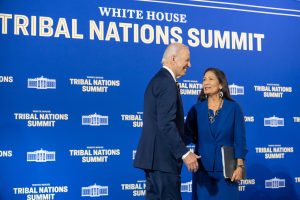 Biden to apologize for Indian boarding schools at Gila River FridayEmergency disaster declared after storms in Alaskan city of Kotzebue
 Recovery, cleanup and storm damage assessments are underway in Kotzebue, Alaska, after a storm devastated and flooded the community this week.The state has declared a disaster as emergency teams respond.Reporter Megan Onders spoke with community members and officials about the devastation, but also the strength being felt across the community.
 Dental therapists bridge health gap in rural Native communitiesInside MSU's tuition-free program for out-of-state Native studentsFBI says Operation Not Forgotten helped 400+ victims find justice
 Peltola receives standing ovation, endorsement at AFNRapid City schools using $3.4m DOE grant for mental healthTribes are crucial part of WA DNR strategic planWednesday services scheduled for Navajo Code Talker John Kinsel, Sr.
 Voters brave rainstorm to vote in Northern Arapaho tribal primarySHI's Worl receives National Humanities Medal from White HouseCalif. expands access to traditional medicine for substance use treatment
 Washington hires first tribal affairs director for outdoor funding armAlaska tribes, US sign historic agreement to address salmon collapseNative American College Fair with 40+ schools kicks off in Minnesota
 Treasury invests $500m+ in tribal small business programsEpiscopal Church returns hundreds of items to Northern Arapaho TribePush at AFN to restore ANILCA subsistence rights#TBT: USPS releases Geronimo, Sacajawea, Chief Joseph stamps
 Tribal members in Nevada among 300,000 who can vote onlineNative seed sovereignty act proposed in CongressCalifornia K-12 students to learn about Native genocide starting Jan 1
 Tribes suing social media giants got day in court this weekBehind the scenes with Native designer of 'Rez Ball' uniformsRoots of celebrating Native America in October traces back to Ford
 Native UO students host Indigenous Peoples Day celebrationNative-owned Colo. arena football team moving to Denver Coliseum
 Indigenous Peoples Day celebrated while Columbus legacy debatedWater settlement offers clean supply for disconnected communitiesNative non-profits focus on grantmaking through Indigenous lens
 Operation Rainbow Bridge seeks thousands of tribal fraud victimsMichigan governor declares Native American Veterans DayRuffalo among celebs expected at Navajo Nation 'Walk to the Polls' event
 Ohio capital dives into "complicated reckoning" of its namesakeIndian Corn Harvest at Ho-Chuck Farms preserves ancestors' methods
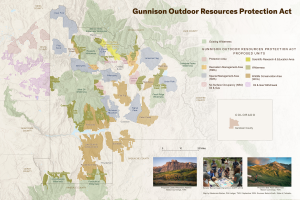 Senate bill would expand federal Gunnison River Basin protectionsWalz, Vance campaign in Ariz. Wednesday as early voting beginsKitka inducted into National Native American Hall of Fame
 Wash. DNR, WSU Extension offer Native firefighting trainingBLM, USFS released final Bears Ears Monument management planIdaho legislature denies using racist slur against Native opponentFEMA grants assistance to San Carlos Apache Watch Fire victims
 Wrongly convicted Indigenous man exonerated after 50 years in prisonNative-owned Colorado Spartans indoor football team moving to DenverCherokee Nation sends assistance to Helene victims from Eastern BandMSU announces in-state tuition program for out-of-state Native students
 New fund unlocks millions for tribal clean energy projectsNative designer from NM tapped to make 'Rez Ball' uniformsSmithsonian, Cherokee Nation unveil exhibit of 1828 Treaty at NMAI
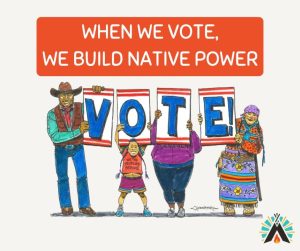 Mont. Native voting group opposes proposed ballot collection banArmy completes Carlisle disinterment project for remains of 9 childrenHeke connects Indigenous links between NZ, Alaska, and climate
 Orange Shirt Day events remember dead, honor survivor resiliencePorcupine and Beaver totem pole raised in Juneau nearly 40 years old
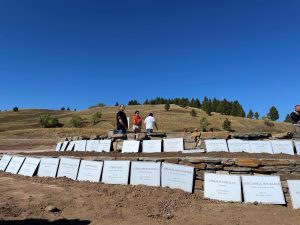 Rapid City boarding school memorial honoring 50 children opensEastern Shoshone Tribe gets $8m to bring more solar to Wind RiverOnondaga Nation, Honeywell sign historic land back agreement in NY
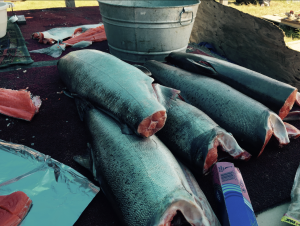 2 Alaska tribal groups sue NOAA Fisheries over pollock catch limitsEastern Band of Cherokee Indians part of Biden disaster declarationOrange Shirt Day marked across Canada with recognition eventsNewsom signs 7 tribal bills on day honoring Calif. Natives
 Eastern Shoshone members protest over tribal primary concerns'Rez metal' bands rock the Southern Ute Fair during annual concertCalif. celebrates Native American Day and 100 years of citizenship
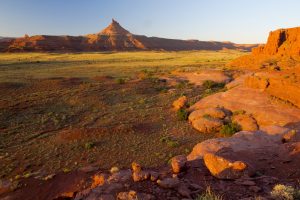 Federal appeals court hears arguments in Utah monuments caseTribal leaders testify at US Senate for revival of radiation exposure actNew Native health hub in SD seeks to create new doctors
 New SD health hub aims to reverse doctor brain drainMashantucket Pequot Tribal Nation awarded EPA grant to cut pollution
 Native-run SD health clinic celebrates 5 years of self-determinationTribal leaders meet with lawmakers at US Capitol over RECA revivalOneida Indian Nation hosts Lacrosse championship games
 States making profits on 2m+ acres of tribal lands, new probe findsSupaman wows the crowd at Oreg. powwow for Native studentsTrump pledges federal recognition for Lumbee Tribe during NC rally
 Tribes head to DC to lobby for revival of WWII toxic poison programNorton Sound's Tribal Healing dept celebrates 20 years in NomeRemains of 3 children return to Fort Belknap Indian Community
 Canadian Medical Association apologizes for past, ongoing harmsGOTV effort in SD hopes to boost turnout among Native voters
 MT GOP Senate candidate faces backlash for 'offensive' commentsFeds send $100m to states for wildfire prevention, home heating efforts
 National Voter Registration Day events kick off across USHualapai Tribe holds peaceful protest against Big Sandy lithium mineNew maps show 460,000 Cherokee Nation citizens across all 50 states
 Youth leaders close out Indigenous climate conference in AlaskaChanges proposed to SD Native education standards could help teachersAll Pueblo Council of Governors endorse Harris for president
 New Alaska MMIP law 'step in the right direction'Apache Stronghold files Oak Flat SCOTUS appeal after 9th Circuit rulingVA, Muscogee Nation host Stand Down for homeless veterans in Okla.
 Family, MMIP advocates mark 5 years since Cassandra Boskofsky's deathWyo. teams with Shoshone and Arapaho Fish and Game on outdoor program
 Advocates hope debate boosts turnout growth for Native votersGraton Rancheria tribe celebrates #Landback victory along Calif. coast Navajo Nation leaders attend DOI Tribal Advisory Committee meeting
 Owner of Rapid City hotel at center of boycott files for bankruptcy23 Alaska Native languages now recognized by state under new law
 Indigenous, Canadian leaders saddened by sudden death of MerrickCandlelight vigil held for Rapid City teen gunned down on Labor DayIHS injects $1m+ for 5 more years of UA's 'Indians in Nursing' program
 Indian University at Crazy Horse offers new sensitivity programWisc. district launches Ojibwe immersion program for kindergartenersArmy honors request for repatriation of 11 students in Carlisle cemeteryCanadian festival celebrates art as path to truth and reconciliation
 Arctic Basin microplastics concentration highest on the planetRez dogs try to beat the heat amid shelter shortagesLargest doctors group in Canada to apologize for past, ongoing harms
 Climate change impacting quality of wild berries in AlaskaNavajo Nation enacts stronger law to regulate uranium shipmentsCherokee Film Institute launches to help Native filmmakers
 First Nations leaders react to life sentences for serial killer SkibickiNew ASU center to help tribes establish their digital sovereignty
 Tri-Ute Games back post-COVID with all three tribes participatingNative victim of 1999 Brewers stadium accident honored in ceremony
 Tribal leaders react to co-stewardship bill's passage at Calif. CapitolElecteds make pitch for Harris-Walz during DNC Native caucus meetings
 Haaland finalizes protection of Alaska D-1 lands removed by TrumpTribal, Calif. leaders urge Biden to designate 3 new national monuments
 USDA provides emergency grants to tribes amid supply chain crisisNew Minn. free college tuition program expected to boost Native studentsBill to allow Calif. to co-steward land with tribes heads to Newsom's deskHUD provides $10m+ in funding for Native veteran housing supports
 Coalition convened by NARF targets unregistered Native votersInterior grants $300k to Oreg. restoration project training tribal youthUSDA food program for Native recipients facing widespread disruptions
 Newsom urges DOI to block 2 Pomo casino projectsFCC broadband initiatives failed to require Tribal consultation
 National Native News was at the Democratic National Convention in Chicago, Ill.Anchor Antonia Gonzales along with Native America Calling host Shawn Spruce and Native Vote 2024 contributor Shaun Griswold from Source NM brought you special live coverage during Thursday night's acceptance speech by Vice President Kamala Harris.Listen to the full broadcast or watch it on YouTube.
 Indigenous advocates mark 10 years since death of Tina FontaineSD county agrees to satellite polling place to serve Native voters"Star Wars" film dubbed into Ojibwe to be screened in WI this monthNative food alliance announces 2024 recipients of Seed Keepers stipends
 Native delegates prioritize treaty obligations for next administrationNew radio doc exposes ICWA saga with brother of former UT governor
 Native DNC delegates focus on turnout in tight race for White HouseRapid City Native health clinic reopens after closing 16 months ago
 Walz addresses DNC Native Caucus meeting on day oneRapid City families line up for NDN Collective school backpack giveaway
 DNC kicks off in Chicago as campaigns court crucial Native votesVoters in CA county to weigh in on changing Kelseyville to Konocti
 FCC alerts could help find MMIP during critical time windowWI Native voter drive hits home run with Brewers tailgate party
 Bad data, privacy rules lead to 'blind spots' in Native health careRapid City school board fires superintendent amid racism allegationsOn this day in 1975, 100 Native protestors occupy OR federal building
 "Joey" tests blood, urine for drugs in new Native-led lab in BillingsNew AZ laws may unfairly impact Native voters during crucial election
 Grassy Narrows to appeal, file lawsuit over mercury contaminationCheyenne River Reservation celebrates 10 years of Native graffiti festival
 Boarding school report a welcome start for survivors, advocatesNew statue dedicated in Ireland to mark Choctaw donation during famineSaint Regis Mohawk Tribe declares state of emergency after Debby
 Advocates lay out next steps following boarding school reportFCC votes to create missing and endangered people emergency alertsTri-Ute Games back after COVID break with all three tribes participating
 Native voters, candidates prepare for critical impact on 2024 electionBrewers tailgating event aims to boost Native voter registration numbersNetflix drops 'Rez Ball' trailer featuring 'Echo', 'Rez Dogs' alums
 Tribal communities excited over Walz pick, Flanagan's futureNew CO law to fund research into history of 9 boarding schools in state
 Harris VP pick could lead to 1st Native female governor in USGun Lake Tribe using $4m in federal funds for climate change projects
 Su stumps for Harris at AANAPI event pushing for better dataNorthern Arapaho Tribe uses $500k for re-entry program on Wind River
 Hobbs temporarily halts uranium ore shipments on Navajo NationAshley Callingbull makes history as 1st Indigenous Miss Universe CA
Navajo Nation President Buu Nygren issued an executive order Wednesday requiring an agreement to be in place prior to the transportation of radioactive material through the Navajo Nation.
The order comes after the tribe says two trucks with uranium ore traveled through the Navajo Nation Tuesday.
Tribal police attempted to halt the transportation, but the trucks made it from Arizona to Utah.
According to the tribe, the owner of a mine near the Grand Canyon did not provide notice to Navajo officials.
The tribe says there are Navajo laws in place regarding the transportation of radioactive materials to ensure public safety.
President Nygren calls the transportation “illegal” and says failure to seek approval disregards tribal sovereignty.
The order will be in effect for six months.
(Courtesy Health Tech Academy)
There’s a new program helping Indigenous people enter the medical field.
As Mountain West News Bureau’s Hanna Merzbach reports, it’s a way to funnel tribal members into careers and fill healthcare gaps.
The online, three-to-six month trainings are stepping stones into the healthcare world.
Karla Coleman is with Health Tech Academy – a for-profit company that helps fill staffing shortages.
Now, it’s partnering with the Jackson, Wyoming-based nonprofit – Native American Jumpstart – to find Indigenous students across the Cowboy State, Great Plains and the Navajo Nation.
Enrolled tribal members can apply for grants that could make the entire program free.
“We’re not only able to help people get a start in this industry, but we can also help them build their own community by staying in their community.”
Compared to other U.S. populations, Indigenous peoples see higher mortality rates and more chronic conditions – partly due to being far away from quality care. Coleman says she hopes this partnership could help bridge that gap.
(Photo: Chuck Quirmbach)
A Native American man who was one of three ironworkers who died in a construction accident 25 years ago this summer was recently remembered at a public ceremony.
Chuck Quirmbach of station WUWM reports.
William DeGrave, Jeffrey Wischer, and Jerome Starr died in July 1999, when the so-called man basket they were in crashed to the ground after a crane was unable to control a 450-ton piece of metal roofing being lifted in a strong wind.
The construction project was a new major league baseball stadium, now called American Family Field, where the Milwaukee Brewers play.
Jerome Starr was Ojibwe.
Part of a recent ironworkers-sponsored remembrance ceremony outside the ballpark included tribal member Maynard Webster performing an honor song.
Later, Starr’s sister Katherine Hamilton Starr choked up while talking to a reporter about her relative.
“He was a great brother. He was always providing for everybody. Always cared about everybody. Very caring. He was always there, (if you) needed anything. We were very close.”
Standing next to Katherine was her daughter – Jerome Starr’s niece – Dawn Hamilton, who tearfully relayed a favorite memory.
(Photo: Chuck Quirmbach)
“Going over to Uncle Jerry’s house, in the summertime to go swimming. And then the holidays or whatever, he always opened up his home to everybody in the family. Everybody and anybody was welcome. He kept us united.”
Hamilton and others also took part in a smudging ceremony to pray for the deceased.
Hamilton says she’s grateful all of those who passed away building a ballpark were honored.
Get National Native News delivered to your inbox daily and stay up-to-date on the 2024 Native Vote. Sign up for our daily newsletter today.
The Department of the Interior on Tuesday released its second and final report on its Federal Indian Boarding School Initiative, which was launched in 2021 by Secretary Deb Haaland (Laguna Pueblo) to investigate federal Indian boarding school policies and their intergenerational impacts on tribal communities.
The report includes an updated list of boarding schools and maps with 417 institutions.
It provides profiles of each school and confirms that at least 973 Native children died while attending school. It also identifies marked or unmarked burial sites.
The report includes eight recommendations for the federal government such as issuing a formal acknowledgment and apology from the government for its role in adopting and implementing Indian boarding school policies.
Smoke from the Oregon Fire obscures the sun, turning it red on July 24, 2024. (Courtesy Willamette National Forest)
With dozens of fires burning across Oregon and neighboring states, officials are issuing continued air quality advisories.
As KLCC’s Brian Bull reports, this includes regional tribes.
There’s no clear forecast for how long the smokiness will last across the Pacific Northwest and Canada.
Dylan Darling of the Oregon Department of Environmental Quality says there are currently seven counties in the state that are affected by poor air quality – and five more with “intermittent” smokiness.
“It’s been quite a busy season. Just a lot of fires going in areas where they might be around for awhile.”
Hot, dry conditions and inaccessible terrain will keep many smoldering for weeks, even months.
Rochelle Escatel, Emergency Manager for the Klamath Tribe, says they’re doing what they can with air conditioning and filtration.
“We do have a list of our most vulnerable tribal members. From our elders to our youngest adolescents, because some of our children with asthma are also high vulnerability.”
Escatel adds they’ve received almost 100 air conditioner units and 42 air filtration devices from the state government – and have cooling centers as well.
Wildfire season typically winds down in the fall, when rains and cooler temps become more prevalent.
This mural was painted at the facility to celebrate the donation (Photo: C.J. Keene / SDPB)
The buffalo is an important part of Lakota culture and a new project aims to use the animal as a positive path forward for young Indigenous people.
South Dakota Public Broadcasting’s C.J. Keene has more.
Sacred Storm Buffalo is more than just a meat processing plant – it’s a community, a home, and a career for those that chose to get involved.
Now the project is receiving a $1.6 million seed loan from NDN Collective, a Rapid City-based Indigenous advocacy network.
Tawny Wilson is director of lending with the group.
“NDN Collectives decolonized lending program prioritizes projects that balance meaningful impact with financial sustainability, and Sacred Storm hit the mark on every single one of these criteria. This project supports a greater network of community support, improving food security, workforce development, preservation, and supportive housing in the region.”
Chris White Eagle oversees the project and serves as executive director of Wanbli Ska.
He says it’s a meaningful alternative for young Lakota people facing challenging economic situations.
“The fact that these boys get some stability in their life financially, and the fact that they’re able to have a house they can actually call their own. A lot of these boys have been couch surfing, they come from broken homes, and they don’t have a place they can normally call their own. I think that’s the most rewarding work in the whole world.”
White Eagle says it’s hard, but life-changing work.
“Butchering buffalo isn’t the lightest work, but I just think of growth. When it comes to this plant, it’s more than just bringing back the buffalo and getting the meat back to our people, it’s saving young men’s lives so they aren’t getting into the court system. It’s saving lives so they aren’t doing anything to take their lives. So, it’s more.”
He adds for those interested in getting involved, it’s a simple as stopping by the facility and getting a foot in the door.
Get National Native News delivered to your inbox daily and stay up-to-date on the 2024 Native Vote. Sign up for our daily newsletter today.
Photo: Cassandra Boskofsky’s family hold a photo of Cassandra, who was 38 at about the time she disappeared in 2019. (Rhonda McBride / KNBA)Brian Smith’s murder trial and sentencing has been in the glare of the national media for much of the year. But on Friday, the drama moved from an Anchorage, Alaska courtroom to the streets downtown.
As Rhonda McBride from our flagship station KNBA reports, the family of a missing woman wants answers in the case.
Protestors stood in the rain across from the Anchorage Police Department. They carried signs that said, “Bring Cassandra home.”
Raindrops rolled, like tears, down a poster-sized photo of Cassadra Boskofsky face.
She was 38 when her family reported her missing in August 2019.
Her family believes she’s the woman whose image police recovered from a cell phone that belonged to Brian Smith.
Detectives seized it from the killer when they took him in for questioning in another case, about a month after Boskofsky disappeared.
That was almost five years ago.
In February, Smith was convicted of the murders of two other Alaska Native women.
The photos of the unknown woman came to light just before Smith’s sentencing earlier this month.
Prosecutors made them public when they attached them to a sentencing memorandum.
Her aunt Lisa Ann Christiansen said she recognized the photos right away.
“I cried. It went straight to my heart, because I had been wondering about her for a long time.”
The images show a woman laid out on the grass, who appeared to be dead.
In the court filing, prosecutors said she was likely another of Smith’s victims and used the photos to make a successful case for a 226-year sentence.
Now Cassandra Boskofsky’s family wants justice for their loved one.
Her cousin Marcella Bofskofsky-Grounds says she doesn’t understand why police didn’t share the photos sooner.
“She didn’t matter. That’s how I felt, like she didn’t matter to them.”
Anchorage police say it’s the department’s policy not to comment on active investigations – and that police avoid contacting a victim’s family unless they have solid physical evidence.
The police did show the photos to the family days before Smith’s sentencing but have not yet publicly confirmed the woman’s identity.
The family says police have failed to act – and are calling on them to help them recover Cassandra’s remains.
Democratic delegates in South Dakota are voicing support of Vice President Kamala Harris for president, including an Indigenous delegate.
South Dakota Public Broadcasting’s C.J. Keene has more.
After ending his campaign, President Joe Biden endorsed Vice President Kamala Harris in the upcoming election.
In turn, the state’s Democratic delegates unanimously voiced their support for the Vice President following a recent party meeting.
Delegates are party representatives who cast the official votes for their party’s candidate at an election convention.
This year, the Democratic National Convention is scheduled for late August.
Kellen Returns From Scout.
One of South Dakota’s delegates is Kellen Returns From Scout (Standing Rock Sioux Tribe), finance director at the Great Plains Tribal Chairmans Association.
As a two-time delegate supporting President Biden, he says his background made it difficult change his support.
“With my tribal philosophy, culture, and traditions, you aren’t critical of an elder person in that capacity. For me, it was really difficult to see these otherwise strong and dedicated supporters abandon (President Biden) in that capacity, but politics is a part of governing.”
Despite this, Returns From Scout says he believes Harris will continue the work of the current administration.
“She was elected as Attorney General (of California), and as United States Senator. You don’t get elected that many times because you’re this or that, you get elected because people see you as effective and you’re successful and you do what you said you were going to do. I see that as a stark contrast to the alternative.”
Get National Native News delivered to your inbox daily and stay up-to-date on the 2024 Native Vote. Sign up for our daily newsletter today.
Medicine Rock and Strawberry Island are two of the most sacred sites on the Lac du Flambeau Reservation in Wisconsin.
Recently, there have been multiple reports of disrespectful and destructive behavior at both places by non-Native people.
WXPR’s Hannah Davis-Reid talked to elders in the Lac du Flambeau community about the history and significance of the places.
Medicine Rock and Strawberry Island on Flambeau Lake are two of the most sacred places on the Lac du Flambeau Reservation.
Medicine Rock, or Gichi Mashkiki in Ojibwe, has been held sacred for generations, since Chief Kishkemun first brought the band to the area in 1745.
He told his people that as long as they took care of and protected this rock, they’d be here.
Carol Brown is an elder in the community and Chief Kishkemun’s descendent on her father’s side.
“It’s not a place for parties. It’s not a place for picnics, although it’s beautiful. And it’s got a sandbar,” she explained.
Strawberry Island, whose artifacts and remains have been dated as far back as 200 BC, is both the site of the last territorial battle between the Ojibwe and the Sioux in 1745, as well as a coerced land sale between the US government and the Ojibwe.
In 1887, the Dawes Act employed a “divide and conquer” strategy to assimilate Native communities by breaking down communally owned tribal land and parceling it out to individual tribal members who needed money to survive and ended up selling their land to homesteaders.
Strawberry Island was eventually sold to the Mills family, who got approval for a subdivision plat on the island, which the tribe successfully fought against in court.
Eventually in 2014, the tribe bought Strawberry Island and since then, they’ve kept it as a protected area, strictly not to disturbed.
“Our elders and our before then have have told us ‘don’t go on to the island, you need to respect that area. That’s where spirits lie.’ And we’ve always respected that.”
In a press release, the tribe said they’re seeking solutions to avoid this issue in the future.
(Courtesy Kit Carson Electric Cooperative)
Tribal Communities in the Mountain West will receive millions of dollars to invest in climate resiliency efforts and clean energy.
Yvette Fernandez reports for the Mountain West News Bureau.
Tribal Communities across the country are being allocated $45 billion for “climate resiliency”.
This includes big projects such as improving community electric grids and creating solar, wind, and battery storage. It also includes providing households as much as $14,000 to upgrade appliances, says the Department of Energy’s Matthew Dannenberg.
“As our planet continues to warm, it is vital that access to clean energy, climate resiliency is available to everyone and that tribes are not left behind.”
Dannenberg says these funds also represent jobs and ensure decisions are being made with cultural awareness.
The funds come from a variety of federal climate initiatives such as the American Rescue Plan and Justice 40, which calls for allocating at least 40% of climate funds for tribes and other disenfranchised communities.
U.S. Navy Lt. Cmdr. Sarah Jagger, Rural Rapid Response Team Leader and a critical care nurse, reviews patient charts while working in the COVID-19 ward at the Northern Navajo Medical Center, Shiprock, N.M., Dec. 23, 2020. (Photo: Spc. Ashunteia Smith / U.S. Army)
The Navajo Nation Department of Health is recommending the use of masks indoors due to COVID-19.
According to the department, the tribe is seeing a slight uptick of COVID cases on the reservation.
The department has issued a COVID-19 health advisory notice and is asking people to take protective measures, which include COVID vaccinations, and mask use.
Some hospitals on the reservation have resumed requiring masks in their facilities.
Get National Native News delivered to your inbox daily and stay up-to-date on the 2024 Native Vote. Sign up for our daily newsletter today.
In Oklahoma, the Cherokee Nation Juvenile Healing to Wellness Court is designed to help keep young people out of the justice system.
In part one of the series, we took a look at how the program focuses on Cherokee culture and community.
In part two, members of the court team share how the program is a hands-on, more personal approach, which includes working with the Cherokee Nation Marshal Service.
Shannon Buhl is Cherokee Nation marshal.
“Tribal issues and tribal governments, tribal communities, has historically been more holistic than our non-tribal counterparts. It is one of my goals that I gave the Justice Services Department that do whatever you need to do to make sure me and my marshals don’t have to deal with them as an adult. That means give good positive training, support, whatever we need early on, and hopefully we can change their trajectory and where they might be.”
The healing to wellness court team has the support of the Cherokee Nation’s top leader, Principal Chief Chuck Hoskin Jr.
“Rather than put them through the often, heartless criminal justice system that we see in a lot of parts of this country do something that lifts them up, makes them feel like they’re the center of something that isn’t a condemnation. Certainly, they need to be responsible and there’s an element of being responsible but there’s I think more importantly a path that’s diverted out of the traditional law and punishment aspect of the criminal justice system and I think that’s why it’s been successful so far.”
As a sovereign tribal nation, having jurisdiction over Cherokee people within the Cherokee Nation is of great significance to the tribe.
And, with the 2020, U-S Supreme Court McGirt ruling that its reservation had never been disestablished, the Cherokee Nation has had an opportunity to reimagine its justice system.
Cherokee Nation District Judge Nathan Barnard.
“The nation has control over our programs, hence the healing to wellness. That’s something that may not have been possible if they were prosecuted in the state court. You know, we have the ability to govern what our young people are, you know, whenever our young person has an situation where they break the law, that that it’s the nation that has the opportunity to decide what’s gonna happen to that young person.”
Additional team members helping guide young people are from the tribe’s attorney general’s office and behavioral health care.
Nikki Baker Limore is Senior Assistant Attorney General.
“If a juvenile is just getting into experimenting with drugs and having some minor crimes that aren’t violent. It’s the perfect type of kiddo that we wanna work with and try to influence so that they can lead a successful life, clean of drugs, and crime free.”
John Robinson a behavioral health services supervisor says they want the young people to live their lives fully and be productive members of society.
“Some days these kiddos will hopefully be adults, they don’t need to be incarcerated, they don’t need to be still involved with the system. They may be the guy that’s driving my Uber, my cab, they may be my nurse, they may be the guy waiting my table or serving my food. So I definitely want them at their best.”
The voluntary phased program, lasts a minimum of eight months.
This story is a collaboration with First Nations Experience Television (FNX) with support from the Public Welfare Foundation
The Federal Communications Commission (FCC) has announced the Commission will vote during its August Open Meeting whether to adopt a new event code that would deliver messages to the public over television and radio about missing and endangered persons.
According to the FCC, adding the event code to the nation’s Emergency Alert System would help law enforcement agencies get public attention to missing and endangered people of all ages who do not qualify for AMBER Alerts for children.
It’s also intended to help Tribal communities.
The Commission’s Open Meeting is scheduled for August 7.
A public draft of the proposal is online at FCC.gov.
Get National Native News delivered to your inbox daily and stay up-to-date on the 2024 Native Vote. Sign up for our daily newsletter today.
In Oklahoma, the Cherokee Nation Juvenile Healing to Wellness Court is incorporating Cherokee culture into its program.
The program is designed to help keep young people out of the justice system.
One of the favorite activities among participants is stickball.
The sport traditionally served as a judicial or diplomatic function to help settle disputes before leading to war.
“What I really love about stickball is community … but the main part that I love overall is I feel like I’m reclaiming my ancestral rights.”
Jesse Cotter is a stickball captain.
He says working with young people in the healing to wellness court helps the participants learn teamwork skills and community values.
“We see what’s going on in their lives, how can we help out, what are the ways that they’re trying to help themselves that they might need some pointers on because a lot of us we’ve been through a lot of the things that they’re going through.”
Captains say stickball also helps participants deal with aggression and lean how to solve problems.
Captain Jesse Grayson says it provides positive reinforcement.
“All we’re doing. We’re just helping. We’re trying to help spark that idea with them, spark their interests, and hopefully they keep, they move on with it and carry it with them.”
While, there’s the traditional men’s game, there’s also a social game where women can play.
Stickball captain Joshua Mouse describes the social game.
“The men’s will be the ones using two sticks and women’s are basically use their hands and pretty much have free range to do whatever they want to out there. For the scoring, usually there’s more points given if you hit the top effigy at the top of the pole you know that’s the one you’re trying to hit right there is the ball.”
Mouse says the men’s game is different.
“For scoring in that game, though, that’s dependent on the driver whenever they start the game. The drivers will meet in the center of the field and go over the rules of the game. You can either run it between the two saplings or you can have to run it through the saplings and then come back onto the field to score.”
Incorporating Cherokee culture is an essential part of the healing to wellness court says Patti Buell, Cherokee Nation, Director of Juvenile Justice.
“We’ve actually been able to introduce them to their culture and help them learn more about their history, and traditional ways of being part of a community in a healthy manner, living amongst one another in a healthy manner, helping each other. It has been absolutely integral to this program, the cultural aspects.”
The healing to wellness court is a voluntary phased program lasting a minimum of eight months.
Participants go to counseling services, families sign agreements – to all work together in the program.
Participants have one or two visits a week from a program coordinator, they’re required to go to school, do community service, and take part in educational programming.
The program focuses on young people 12 to 18 for non-violent offenses, often it’s substance use.
The program instills in the young people that they’re valued members of the community.
Leah Hitcher is Healing to Wellness Court Coordinator.
“They see all these people and they think that their intentions is just to detain them and put them away, they’re bad kids. But when they get to see in our court team and everybody weigh in and say good positive things about them too, they have hope in us.”
The healing to wellness Court was started in 2021 with assistance from grant funding.
The first referrals were taken in 2023 and in the spring of 2024 the program saw its first graduate.
This story is a collaboration with First Nations Experience Television with support from the Public Welfare Foundation
A new book being released by Medicine Wheel Publishing, marks Orange Shirt Day, which raises awareness about residential schools in Canada.
The book, Today is Orange Shirt Day, by Phyllis Webstad is designed for young children up to three years old.
The author and publisher say the book provides a gentle way to introduce the next generation to learn about the history and legacy of residential schools.
The book will be released on August 20 ahead of the holiday in September.
Get National Native News delivered to your inbox daily and stay up-to-date on the 2024 Native Vote. Sign up for our daily newsletter today.
An Indigenous-led food coalition in the Four Corners is giving locally grown produce to Native families.
As Clark Adomaitis reports, this is part of an effort to address health inequity in the community.
In a warehouse in Cortez, Colo., Karlos Baca, a Southern Ute and Dine chef and food organizer, is demonstrating how to fry green tomatoes in corn meal grown on the nearby Ute Mountain Ute reservation.
“Flour egg wash and then this one’s just corn meal. So it’s yellow corn.”
Karlos Baca demonstrates how to fry green tomatoes in flour, egg, and yellow cornmeal — all local ingredients. (Photo: Clark Adomaitis / KSUT/KSJD)
Twenty Indigenous families from the Four Corners area stop in to watch Baca demonstrate how to cook, and to pick up packages of produce from local farmers.
One woman eats Baca’s fried tomato.
“Yeah. Good. Thank you. See you next week.”
Baca has been working to feed Native people in the Four Corners region for 15 years.
Now, he’s working with the Four Corners Food Coalition, an Indigenous-led nonprofit that received a grant to set up weekly packages of local produce or Indigenous Shared Agriculture boxes for 20 families for 16 weeks.
His work here is not just about providing food – it’s part of a larger social justice movement.
“One of the first systems of warfare is always destruction of people’s food systems, their food stores, their agriculture, to make them make them subservient.”
One of Baca’s food justice goals is to fight the effects of colonialism on Native people.
“If you look at colonization, the history of it didn’t happen overnight. the change in diet, even though the enforcement of government rations, you could say, you know, really did massive damage to the Indigenous diet and lifeways, foodways, everything. If you look at our Indigenous foods as microchips, you know, and that on a cellular level, everything that your ancestors ate was, is still in your system. So as you’re plugging each one of these individual items of food back into your body, you’re also unlocking those memories, right?
The Four Corners Food Coalition hopes to grow the food distribution program in future years.
Indian Health Service Director Roslyn Tso (center) toured the Billings Urban Indian Health and Wellness Center earlier in July. (Photo: Kayla Desroches / Yellowstone Public Radio)
The state of Montana is directing millions of dollars to boosting psychiatric services within Indigenous communities.
Yellowstone Public Radio’s Kayla Desroches reports.
Gov. Greg Gianforte (R-MT) announced $6.5 million in one-time grants will be available to tribal Nations and Urban Indian communities through a proposal process.
The Billings Urban Indian Health and Wellness Center is one of five Urban Indian Organizations in Montana to receive a portion of its funding from the Indian Health Service.
It also runs on grants.
Director Leonard Smith says the building needs updates to its cooling and heating systems along with other renovations.
“We’re trying to build the resources and space that is needed to provide the services that we’re developing and designing.”
The funding announcement comes from a pot of $300 million lawmakers set aside from the state general fund last year for improvements to Montana’s behavioral health and disability support systems.
A commission that includes elected leaders, a rural mental healthcare representative and a member of disability services is in charge of recommending areas of need.
The Montana Department of Health and Human Services says tribes and Urban Indian Health Organizations interested in funding should submit proposals for how they would use the money.
Get National Native News delivered to your inbox daily and stay up-to-date on the 2024 Native Vote. Sign up for our daily newsletter today.
Native leaders are reacting to President Joe Biden pulling out of the 2024 race for president.
President Biden announced his decision Sunday, as Vice President Kamala Harris runs for president.
Native leaders say President Biden has had a long history supporting Native issues since his time serving as vice president to President Barack Obama.
Native leaders say President Biden has invested in many Native issues including, earlier this year, Indigenous communities’ access to emerging climate issues and protecting sacred sites.
Native leaders say most noteworthy is his pick of Deb Haaland (Laguna Pueblo) as the Secretary of the Interior.
After news spread of President Biden dropping out, Alaska Native leaders were quick to react.
Rosita Worl (Tlingit) is the president of Sealaska Heritage Institute.
She says that amongst all presidents, President Biden is the most supportive of Indigenous people.
“But I think a lot of people also don’t know that he was also an excellent president for Native Americans. And, you know, he’s appointed more Native Americans than any other President.”
President Joe Biden delivers remarks and signs the Grand Canyon Proclamation Tuesday, August 8, 2023, at the Grand Canyon Airport Historic District in Arizona. (Official White House Photo by Oliver Contreras)
When asked what the future of Indigenous people would be like if Vice President Kamala Harris was to win the presidential election, Worl believes support would continue to be strong, if not stronger.
“I think with President Kamala Harris, that we’re going to see not only continued support, but probably expanded support. I always say, that having a woman in a decision-making position makes a difference. Because I think first of all, we think like mothers, and we care about our communities, we care about our children. I think she has a record already of working with diversity, underprivileged communities. I know I have no doubt in my mind that she would continue that kind of support that we see under President Biden.”
Worl had strong opinions on what would happen if former President Donald Trump were to win this year’s election.
“I guess I have to be very frank, that I don’t think that a man that has such a record with women. Sexual abuser, the crimes he’s committed, I just cannot understand how people support him. I just don’t understand it. I think, it would be very unfortunate to have him in office again. Native leaders will be among those attending the Democratic National Convention in August where the party’s nominee will be picked.”
Eastern Shoshone bison manager Jason Baldes at the tribe’s bison pasture just west of Morton, Wyo. (Photo: Hannah Habermann / Wyoming Public Media)
An Eastern Shoshone tribal member has received a Wayfinder Award from National Geographic for his work to restore bison to Indigenous lands.
Wyoming Public Radio’s Hannah Habermann has more.
The National Geographic Wayfinder Award recognizes people who are pushing the boundaries in science, conservation, education, technology, and storytelling – and Jason Baldes fits the bill.
He’s the buffalo manager for the Eastern Shoshone Tribe and has helped bring more than 100 bison back to the Wind River Reservation in the last ten years.
Baldes says pushing boundaries in his work looks like creating a paradigm shift – where bison are recognized as wildlife, not livestock.
“They’re ecosystem engineers, they are keystone species. They store carbon, they increase plant and animal biodiversity. All of those are reasons enough to recognize this animal and its importance on the landscape, but we have a tendency to treat them like cattle.”
For Baldes, that shift means taking down fences and restoring migration corridors and wildlife habitat.
The National Geographic award comes with $50,000 and the opportunity to apply for more funding in the future.
Get National Native News delivered to your inbox daily and stay up-to-date on the 2024 Native Vote. Sign up for our daily newsletter today.
The Grand Traverse Band of Ottawa and Chippewa Indians is one step closer to regaining ownership of a 187 acre chunk of land on the Leelanau Peninsula.
Interlochen Public Radio environment reporter Ellie Katz has more.
The site on Grand Traverse Bay between Omena and Northport was once home to the Timber Shores campground.
It was later eyed for luxury condos with a private marina and most recently a group wanted to turn it into an RV park and campground.
Before any of that, it was ancestral land of the Grand Traverse Band of Ottawa and Chippewa Indians that had been illegally transferred to private ownership in 1855.
But with new grant money from the National Oceanic and Atmospheric Administration (NOAA ), that could change.
A local nonprofit called New Community Vision will use the grant money and their own fundraising to purchase the land, then transfer it to the tribe’s ownership.
Under the agreement, the site will be renamed Mashkiigaki, which means marsh lands and place of the medicine.
The tribe plans to restore the shoreline, wetlands, and creek corridor, which are important spawning grounds for cisco and other native fish species.
The plan is for it to remain a protected nature preserve with public access in perpetuity.
The 2024 Arctic Thunder Open House took place this weekend at the Joint Base Elmendorf Richardson in Anchorage, Alaska, as Jill Fratis from our flagship station KNBA reports.
The open house featured various demonstrations, along with a crowd favorite, the US Army Golden Knights Parachute Team.
Karen Rutka is a colonel in the United States Army.
She says not just anyone can become a Golden Knight and that it takes many hours of experience … and dedication.
“There is a very rigorous selection process. You’re probably going to come in, where you’re already skydiver certified. You need to have probably a couple hundred jumps, and then after that, then you go through a very rigorous selection process that’s several weeks long. And then, after you get selected for the team, you have a year long training timeline before you’re fully a true Golden Knights member. And then you get to perform with the rest of the team.”
@nativevoiceone#NationalNativeNews reporter Jill Fratis takes us inside a Paratrooper jump plane at the 2024 Arctic Thunder Open House in Anchorage, Alaska♬ original sound – Native Voice One
Although the team has done thousands of shows through the years and throughout the country, practice and rehearsals can never be skipped.
“Today, we’re going up to 12,500 feet. It’s going to be hot dry, and hot, hot, hot. The first hot will be the narrator Brandon…”
By mid afternoon, the plane was boarded and everyone was strapped in for the 12,500 feet ascent, prepared for the first jump of weekend.
One would think the soldiers would be focused, stoic, and silent waiting for their anticipated dives. Not quite, as paratroopers sing, “Open up the dirty windows.”
After about 30 minutes in the air, one of the men gave the signal that it was go time.
As they got to the opening, they did one last check in before they heard the magic words.
“GO GO GO! See you later! Okay, ready set go!”
@nativevoiceone#NationalNativeNews reporter Jill Fratis takes us inside a Paratrooper jump plane at the 2024 Arctic Thunder Open House in Anchorage, Alaska♬ original sound – Native Voice One
One by one, the team jumped out, some with signature poses as they fell 12,000-plus miles to a waiting audience down below.
Attached to their ankle were different colored powder canisters to activate mid-air, that would make them more visible.
The men created formation – aerial acrobatics – and before touching ground, pulled out different flags representing the state and country.
After all was said and done, the team gathered their parachutes and made their way to one of the U.S. Army bunkers to roll them back up, and prepare for the last show Sunday.
Get National Native News delivered to your inbox daily and stay up-to-date on the 2024 Native Vote. Sign up for our daily newsletter today.
Photo: Amanda Storm of NARA NW stands next to a serving tray with duck and chokecherry sauce. She and others helped make the menu for this week’s Sacred Tobacco & Traditional Medicines Gathering event more aligned with Native foods traditionally found across the region. (Brian Bull / KLCC)Summer is prime season for conventions, which are often catered. At a recent event held for Native Americans in Grand Ronde, Oreg., special effort was taken to feed attendees traditional food.KLCC’s Brian Bull reports.
Buffet lines at hotels and casinos are often filled with lasagna, fried chicken, and other vittles that are high in sodium, sugar, and fats. But at the recent Sacred Tobacco & Traditional Medicines Gathering at the Grand Ronde Tribe’s Spirit Mountain Event Center, the menu was more … pre-colonial.
“Some smoked trout, some sunflower cookies with apples and cranberries, Wajapi … and I always feel like I’m mispronouncing it, so if I did that I am very sorry!”
Amanda Storm works with Native American Rehabilitation Association Northwest and helped coordinate the menu for this week’s event.
Another partner was Angey Rideout, Youth Tobacco Prevention Coordinator for the Confederated Tribes of Grand Ronde.
“All trying to make sure that the foods that we were serving here were going along with the theme of sacred tobacco, traditional medicine, and looking at food as medicine. And our Indigenous First Foods are medicine.”
Several chefs and planners at the event center further developed the menu to help offset national trends of obesity, heart disease, and diabetes among Native groups.
(Courtesy Arctic Thunder Open House / Facebook)
The biennial Arctic Thunder Open House, featuring military demonstrations and aerial acrobatics, is taking place this weekend in Anchorage.
Organizers say it’s an exciting event with some familiar acts such as the U.S. Army Golden Knights parachute team, the Joint Forces Demonstrations, and other shows.
The 2024 theme of the Arctic Thunder Open house is “Honoring Legacy … inspiring the Next Generation” and a part of that theme includes an exhibit honoring Alaska Native veterans.
John Sadler, chief of ground operations for the Arctic Thunder Open House, says it’s important to recognize Alaska Native veterans and their contribution to all of the branches of service.
“The exhibit honoring Alaska Native veterans came about through a partnership with 11th Air Force working with our community partners. We have Native liaisons who work on staff here on base, and through that community partnership we were able to come together, and come up with an idea of how we can engage the community together here at the open house.”
The event gathers thousands of people over two days, showcasing the skills and talent of multiple military branches. Sadler says it’s a great team work experience.
“These shows are just a fantastic opportunity for us to join in as a community and have everyone from Alaska come in and just be as one, and see an entertaining show. It’s really adrenaline pumping seeing all these planes flying by very quickly. Some of our civilian acts are fully acrobatic. So, it just brings a lot of joy for the community to come together and see what we do here for the Alaska and military mission.”
And it’s not just entertainment for civilians to see from afar, Sadler says people will be able to get up close and personal with some of the countries most elite aircraft.
“What I’m most looking forward to the air show, is some of our ground displays so we’re going to have dozens of aircraft, or just from the Air Force, but from the armies and some of our foreign allies. They’re all going to be all across the ramp fully there, showing what they do. It’s not just going to be from a distance, stuffy, and see it from afar. The actual crews that fly these aircraft are going to be there to show you, tell you about it and some of them even go inside to show you what it is and how to operate that aircraft.”
The Arctic Thunder Open House has been taking place at the Joint Base Elmendorf-Richardson since 1990.
Get National Native News delivered to your inbox daily and stay up-to-date on the 2024 Native Vote. Sign up for our daily newsletter today.
In Grand Ronde, Oregon, Native people have gathered to explore the role of tobacco in their culture.
As KLCC’s Brian Bull reports, it’s to challenge perceptions that commercial tobacco is traditional.
Health practitioners and family advocates – mostly from the nine tribes found across Oregon – are at the Spirit Mountain Event Center this week.
This includes Ben Sanford.
He’s the commercial tobacco prevention coordinator for the Native American Youth and Family Center in Portland, and a member of the Sappony Tribe of North Carolina.
He’s brought jarred samples of a Hopi leaf tobacco that he’s helped cultivate.
“It’s earthy, it’s rich. It makes my nostrils flare in the best way. When we think of the appeal to the Creator of the fragrance of tobacco, it’s everything I think it should be.”
The message is for Native people to switch from chain-smoking commercial grade tobacco with its additives and chemicals – and use more natural forms in a more reverent way.
Shannon Lafferty is the coordinator of the Grand Ronde’s Tribal Youth Empowerment and prevention program.
“All the way up until this year we have been giving packs of cigarettes or top loose tobacco as giveaways. And this is the first year that we actually used real tobacco. And I’m proud of that.”
Native Americans and Alaskan Natives have higher rates of smoking-related illnesses than the general population, a trend organizers want to fix.
(Courtesy Boys & Girls Club of Rosebud / Facebook)
The Boys and Girls Club of the Rosebud Reservation is the recipient of a farm-to-school grant program.
Among other things, it offers fresh produce to attendees all year.
South Dakota Public Broadcasting’s C.J. Keene has more.
The Patrick Leahy Grant Program is run through the US Department of Agriculture, and in total $14 million has been distributed to schools and communities nationwide.
The Rosebud Boys and Girls Club received just shy of $50,000.
Rachel Kocak is the group’s executive director. .
“This grant will cover fencing, high tunnels, and no-till gardens, so this means outdoors, in the dirt growing for up to ten months of the year for the kids of the Boys and Girls Club. It would serve two of our site locations, so that would reach approximately 80 kids.”
Kocak wants the group to experience food independence.
“The goal is a love of growing and eating locally grown food. That’s the vision – having that joy of self-sufficiency, of feeling the accomplishment of working hard, pulling food out of the ground, and the joy of eating it. Out here in Rosebud, food insecurity is a major issue. For most kids, this kind of fresh garden food is just not accessible.”
While favorites like peas and carrots are on the menu, Kocak says they hope to incorporate traditional diet in the garden.
“The more diverse we can grow, the better, and we’re hoping to incorporate some of the local, ancestral foods that would have been part of the diet. So, perennials like chokecherries and juneberries and those things is part of the landscape as well.”
Any excess crops will be donated to families in need in the Rosebud community.
The Rapid City Area School district also received a grant and seeks to connect local education with agricultural providers.
(Courtesy Choctaw Nation)
In Oklahoma, citizens of the Cherokee Nation, Chickasaw Nation, Choctaw Nation, Muscogee Nation, and soon the Seminole Nation, will be able to use their tribal membership to hunt and fish in each other’s treaty territories.
The Inter-Tribal Council of the Five Civilized Tribes recently announced the agreement.
According to the tribes, the agreement allows the Five Tribes to collaborate on wildlife management within their reservations and enhance their ability to manage natural resources in a sustainable manner.
Get National Native News delivered to your inbox daily and stay up-to-date on the 2024 Native Vote. Sign up for our daily newsletter today.
Photo: Shaun Griswold / Source NM
The leader of the Forest County Potawatomi spoke to the Republican National Convention Tuesday night — supporting community safety.
Chuck Quirmbach of station WUWM reports from Fiserv Forum in Milwaukee, Wisc.
The Forest County Potawatomi is on the host committee for the Republican convention and held an RNC event at its Milwaukee casino.
Tribal Chairman James Crawford told delegates that the convention is in a region that is traditional Potawatomi homeland.
“Our ancestors occupied these lands for hundreds of years. Fishing area rivers and lakes. Hunting the land. Tapping maple tree groves for sugar. And harvesting crops in fields each fall.”
Chairman Crawford says today, the tribe is an essential part of the Milwaukee community.
He says like all other U.S. tribes, the Potawatomi have a desire and need to keep their people safe, but face real threats.
“The growing use and abuse of illegal drugs are claiming countless lives on reservations across this country. And Native American women and girls continue to be exploited, trafficked and subjected to violence at reprehensible levels. “
Chairman Crawford spoke on a night that convention planners dubbed Make America Safe Again.
He did not endorse GOP Presidential nominee Donald Trump during the speech.
President Joe Biden defeated Trump by about 20,000 votes in Wisconsin four years ago.
Roselyn Tso, the highest-ranking administrator of the Indian Health Service, stopped by a Montana health center last week to see how organizers in the state’s largest city are using federal dollars to improve access to healthcare.
Yellowstone Public Radio’s Kayla Desroches reports.
Staff led the Director of the Indian Health Service on a tour of the Billings Urban Indian Health and Wellness Center.
The health and wellness center’s parent company, the Native American Development Corporation, bought the building two years ago.
For many years, it was the local headquarters of the fraternal organization Shriners and an event venue.
Now, it’s the Eagle Seeker Community Center – and still growing into its new role.
The Indian Health Service last year invested an additional $200,000 to help fix and expand the building.
IHS director Roselyn Tso noted: “So, certainly our role and our responsibility is to provide care where we can to the people that we serve.”
As an urban Indian organization, the health and wellness center uses a mix of grants, IHS dollars and insurance reimbursement to fund culturally-informed medical services including psychiatric treatment and physical check-ups.
“With regards to insurance. Y’know that’s what we’re talking about – you heard some of that conversation earlier today. (We’re) doing everything we can to encourage our population to be enrolled in those programs that they might be eligible for, like Medicaid and Medicare. Those kinds of services. That’s what we do and that’s how we’re trying to make sure everyone has care that they need.”
Administrators with the Native American Development Corporation say around 60% of clinic patients lost Medicaid coverage through the process of unwinding.
They say they’re making it a priority to help those who seek their services to re-enroll.
Tribal leaders meet with U.S. Sen. Mark Kelly (D-AZ) on June 5, 2024, to advocate for the Northeastern Arizona Indian Water Rights Settlement Act. (Courtesy Navajo Nation)
Leaders from the Navajo Nation, Hopi Tribe, and San Juan Southern Paiute Tribe are gathering in Phoenix, Ariz. Wednesday to discuss a historic water settlement.
The Northeastern Arizona Indian Water Rights Settlement Act of 2024 has been introduced in Congress to authorize and approve the settlement and fund $5 billion for essential water projects.
Leaders will sign the settlement agreement in-person at the event.
Get National Native News delivered to your inbox daily and stay up-to-date on the 2024 Native Vote. Sign up for our daily newsletter today.
The Republican National Convention is still set to begin Monday in Milwaukee, despite the Saturday shooting that wounded presumptive GOP presidential nominee Donald Trump.
Chuck Quirmbach of station WUWM reports tribes will have a presence at the RNC.
The Forest County Potawatomi tribe is part of the Host Committee for the Milwaukee convention, and at least one event is planned at their local casino.
Other tribes are sending representatives to network with Republican politicians and delegates.
Ho-Chunk Nation President Jon Greendeer says, for one thing, it’s important to remind the convention that much of southern Wisconsin was once Ho-Chunk territory. But President Greendeer says there will also be discussions about current issues.
“There’s a few things that are very similar to what non-tribal communities are dealing with. And that is, housing needs, it’s technology and broadband access. It is food security. It is response to any opioid or addiction crises. It is infrastructure.”
President Greendeer says he believes those concerns hit Indian Country harder, because of less access to economic development and public services.
He says there may be a push in Congress to give the tribes control over more of their gaming revenue, to meet tribal needs.
The Oneida Nation will also have a representative at the RNC.
Vice-Chairman Brandon Yellowbird-Stevens says one message he hopes the tribe gets across is one of sovereignty, including that Native people should have more say-so in use of federal funds they receive.
“That can relate to any and all initiatives on reservations. So, that’s health care, education, housing, economic development. And so we have that foundational argument going to Congress and those who have the purse strings.”
The tribal leaders say they also expect to send representatives to next month’s Democratic National Convention in Chicago.
(Courtesy Jeremy Skibicki / Facebook)
A courtroom in Manitoba erupted in celebration after a judge found serial killer Jeremy Skibicki guilty in the killings of four Indigenous women.
As Dan Karpenchuk reports, family members of the victims say they hope this will bring closure.
Many of those family members and friends continued their celebration on the street outside the courthouse after the guilty verdict.
Jeremy Skibicki was found guilty of first degree murder in the gruesome killings of Morgan Harris, Marcedes Myran, Rebecca Contois, and an unidentified woman who was given the name of Buffalo Woman.
Skibicki preyed on Indigenous women at homeless shelters, a crime the prosecution claimed was racially motivated.
The judge refused to believe the defense argument that Skibicki was not criminally responsible because of a mental illness.
Robert Karass is a criminal defense lawyer.
“The man’s a serial killer and he’s trying to get away with murder by arguing that he lacked the ability of knowing right from wrong, not legally but morally. It was a long shot at best. Defense lawyers sometimes need to follow their client’s advice and instructions and move forward with a defense even if they may not even believe in it themselves, because that’s the client’s instruction. But what I can say is that I think the conviction is entirely appropriate.”
First degree murder convictions carry an automatic life sentence with no parole for 25 years.
No date has yet been set for Skibicki’s sentencing hearing.
Manitoba Premier Wab Kinew says the next step must be the searching of a landfill north of Winnipeg to find the remains of two of the victims.
That process is expected to begin in the fall.
Get National Native News delivered to your inbox daily and stay up-to-date on the 2024 Native Vote. Sign up for our daily newsletter today.
Prosecutors have released photographs of a possible third victim in the case of Brian Smith, who was convicted in February of killing two Alaska Native women.
As KNBA’s Rhonda McBride reports, the revelations come just ahead of Smith’s sentencing, set for Friday morning.
Warning: Some listeners may find details in this story disturbing.
The images came from one of Brian Smith’s many cell phones and were included in a sentencing memorandum filed last week.
Prosecutors have asked for a 226-year sentence and included the photos in the sentencing memo to help make their case.The photographs show a woman, possibly Alaska Native, on the ground, spattered with blood and dirt. She appears to be either dead or unconscious. Key evidence in Smith’s murder trial included cellphone videos and pictures Smith created while killing one of his known victims.
The images in the sentencing memo come from a cell phone police confiscated from Smith in 2019.Although it’s been almost five years, police have yet to identify the woman in the newly released photographs.
The court filing also includes a sketch from a forensic artist to give a better idea of what the woman might have looked like, based on a composite of the cellphone images.
“I wish that more had been done in 2019 to identify this unknown woman.”
Michael Livingston is Unangan and active in Alaska’s Missing and Murdered Indigenous People’s movement. While he’s glad to see that an artist’s sketch has finally been done, he says the criminal justice system has gone too far in releasing the actual photos of the woman.
“She someone’s daughter. She might be someone’s sister. She might be someone’s mother. It’s disrespectful to release these actual images.”
The defense has also objected to the use of the photos in the sentencing and says there’s no way to know whether or not they were staged.
In an email, Assistant Attorney General Brittany Dunlop said police have been trying to identify the woman since they discovered the pictures, which they typically don’t release during an ongoing investigation. But in this case, Dunlop said, they were attached to the sentencing memo “to give the court a better picture of the full pattern of behavior.”In February, a jury took less than two hours to convict Smith in the deaths of Veronica Abouchuk and Kathleen Jo Henry.It’s been 45 years since the largest radioactive release in U.S. history occurred at Church Rock, N.M.Members of the Navajo Nation will gather on Saturday to commemorate the anniversary of the uranium spill.
KUNM’s Jeanette DeDios has more.
On July 16th, 1979, a dam ruptured and released more than a thousand tons of radioactive waste and nearly 95 million gallons of toxic radioactive wastewater spilled into the nearby Rio Puerco and surrounding Navajo Nation lands.
“And the folks that live in the area tell stories about being out herding their sheep and seeing this wave of green liquid come their way, you know, they weren’t warned about it, and many of them waded in it to get their livestock out and ended up with sores on their legs.”
Susan Gordon is a coordinator for the Multicultural Alliance for a Safe Environment.
She says the contaminants flowed downstream through Gallup and across nine Navajo chapters.
Radiation from the spill was detected as far as 80 miles downstream. As a result, communities around the spill have experienced health problems associated with radiation exposure.
Gordon says the mining company United Nuclear Corporation did little to clean up the radioactive waste.
“They sent a handful of people out with shovels and buckets to try to gather up this green sludge that was all through there. And that’s it. That’s all that was ever done.”
According to Stanford University, the company dug new drinking wells and removed about 1% of the estimated total spill material.
The Nuclear Regulatory Commission permitted the company to resume operations five months later. The mine was abandoned in 1982.
The Church Rock spill is the third largest radioactive waste release globally, after the Fukushima disaster and the Chernobyl meltdown.
Gordon says they’re hoping to continue to educate people.
“But also to bring pressure on the National Institute of Health and our congressional delegation to provide more money for cleanup and for health research.”
The ceremony will have an opening prayer and a walk to the spill site.
Get National Native News delivered to your inbox daily and stay up-to-date on the 2024 Native Vote. Sign up for our daily newsletter today.
Looking out at Aniak’s airport runway, 2018. (Photo: Krysti Shallenberger / KYUK)
A tribal government from Alaska’s Yukon-Kuskokwim Delta is suing state and federal agencies for taking human remains from an airport site and refusing to return them.
KYUK’s Sage Smiley reports.
About 200 miles up the Kuskokwim River in Western Alaska, the village of Aniak hugs the riverbank and encircles the community airstrip in a wide loop. And that airstrip is at the heart of a civil case recently filed in Anchorage federal court.
Aniak’s tribal government – the Aniak Traditional Council – is suing state and federal agencies for taking human remains from an airport site and not returning them, and subsequently not allowing the tribe to further excavate the site.
The Aniak Traditional Council says that’s a violation of federal law because it’s barred the tribe from practicing its cultural and religious traditions and has endangered other ancestral remains of Aniak’s tribe that could still be buried at the community’s airport.
The tribe wants the excavated remains to be returned and to be allowed to continue exploring the site to recover and preserve other remains or cultural artifacts.
According to court filings from July 2, the suit stems from a project to relocate Aniak’s airport runway to comply with federal aviation standards.
In 2020, a contractor digging trenches for the project found human remains. Almost a year later, the Aniak Traditional Council brought in an archaeologist to examine the site. The suit says they discovered that the airport project cut a trench through a “previously intact prehistoric burial site”.
The recovered remains and related artifacts were sent to the University of Alaska for examination.
Since then, Aniak’s Traditional Council says that the University of Alaska has kept the remains and that the Federal Aviation Administration has refused to assist in repatriation, in violation of the federal Native American Graves Protection and Repatriation Act, also known as NAGPRA.
The Traditional Council also claims that the FAA and state Department of Transportation have barred the tribe from further excavation. Aniak’s tribal government is concerned that airport maintenance could further disturb the site and the ancestors buried there.
The suit names five defendants: the Alaska Department of Transportation and Public Facilities and its Commissioner Ryan Anderson, the University of Alaska system, the Federal Aviation Administration and FAA administrator Michael Whitaker. All have declined to comment on the case.
Desert cliffs and canyons make up much of the landscape near Tuba City. (Courtesy Arizona Office of Tourism)
A bill introduced to Congress this week, if ratified, would establish a reservation in northern Arizona and southern Utah for the San Juan Southern Paiute Tribe.
As KNAU’s Melissa Sevigny reports, it’s the only federally recognized tribe in Arizona that doesn’t have its own homeland.
The measure is part of the Northeastern Arizona Indian Water Rights Settlement Act which has already been approved by the Navajo, Hopi, and San Juan Southern Paiute tribes.
It sets aside 5,400 acres for the new reservation and water to supply it.
Robbin Preston Jr. is the tribal president for the San Juan Southern Paiute.
“I think it’s going to mean the world to us, especially in this day and age where everybody wants to have an identity, which we have, but also a place to call home.”
Preston says his people have waited decades for this day and the reservation will allow the tribe to offer houses, jobs, and healthcare to its members.
The two parcels that make up the proposed reservation are west of Tuba City in Arizona and near Navajo Mountain in Utah.
Get National Native News delivered to your inbox daily and stay up-to-date on the 2024 Native Vote. Sign up for our daily newsletter today.
Nearly 60% of Nebraska 3- and 4-year-olds are not enrolled in preschool programs.
According to educators, preschool is associated with increased success in school and beyond. But for at least a decade, most preschoolers on Nebraska’s Winnebago Reservation have been part of the national Educare Learning Network.
Deborah Van Fleet reports.
Amy LaPointe-Houghton, education director for the Winnebago Tribe of Nebraska, said the Educare program was once described to her as “Head Start on steroids.”
She noted in their years with the Educare system, Winnebago children have gone from testing near the bottom to being “right in line” with children in the 24 other Educare centers across the country.
“We’ve made that huge leap and it’s all around the data. We have our data compiled in a book every year, and things that are identified in that book, that’s something we make improvements on.”
She noted evaluators from the University of Nebraska Medical Center assess the children at the beginning and end of each school year.
Educare Winnebago is the only Educare program in the country on an Indian reservation.
LaPointe-Houghton attributed their success to Educare’s four pillars: data utilization, professional development, high-quality teaching, and intensive family engagement.
She pointed out one focus of their program is a social-emotional curriculum, teaching skills like identifying and expressing emotions in acceptable ways.
“To be able to better handle situations when they’re encountering some kind of traumatic event, or a stressful event. They have some tools to be able to help themselves.”
LaPointe-Houghton emphasized research about the negative effects of stress and trauma on physical health makes them hopeful if their children learn how to manage stress, they will have better overall health, as well as more success in school.
“We have high numbers of diabetes, blood pressure, heart disease. It makes me think it could be contributed because of all the traumatic things that happen in people’s lives and you don’t even realize that it’s doing damage to your body.”
To enroll in Educare Winnebago, children must live in Winnebago but do not have to be tribal members.
The program has eligibility requirements to ensure they’re serving the children with the highest needs.
In South Dakota, the Rapid City Area Schools superintendent has been placed on a 30-day leave following comments made during a Department of Education investigation.
C.J. Keene has more.
The decade-long investigation orbited the district’s treatment of Indigenous students.
Superintendent Nicole Swigart was quoted saying students operating on “Indian time” is a challenge for the district.
Members of the Native community spoke out about the comments at a school board meeting saying the comments are unacceptable and called for the school board to reassess the role of superintendent.
Members of the Native community also say the comments reaffirm claims of racism leveled at the district.
The district issued a formal apology and Swigart has been required to take cultural competency training.
However, the district is maintaining its confidence in Swigart’s ability to lead the district following the leave.
The Indian Health Service (IHS) announced this week awards of more than $24 million in grants to 23 tribes, tribal organizations, and urban Indian organizations to help improve access to public health services over the next three years.
The grant program has two initiatives.
One is to expand public health services by supporting tribes and organizations in implementing core public health functions and improving management capabilities.
The other is designed to help tribes and organizations establish goals and performance measures.
IHS Director Roselyn Tso (Navajo) says the grants will support goals of ensuring comprehensive, culturally appropriate health services for American Indian and Alaska Native communities.
The IHS provides health service for about 2.8 million American Indians and Alaska Natives in 37 states.
Get National Native News delivered to your inbox daily and stay up-to-date on the 2024 Native Vote. Sign up for our daily newsletter today.
The South Dakota Attorney General’s office is partnering with tribes located in the state to train new law enforcement officers.
It’s part of an effort to address a public safety shortage in Indian Country by keeping recruits close to home in South Dakota.
South Dakota Public Broadcasting’s Lee Strubinger reports.
A batch of law enforcement officer recruits practice a straight arm bar takedown in a gymnasium at the Mickelson Criminal Justice Center in Pierre, S.D.
Twenty-four new officers representing fifteen agencies are almost midway through the training course. Of the 24, 11 from three different tribes are slated to become tribal officers following their certification.
Often, tribal law enforcement recruits attend a similar 13-week training course hundreds of miles away in New Mexico. That’s seen as a barrier to brining in new law enforcement officers. Some say training in Pierre allows them to go home on the weekends and be around their community.
Officer Michelle Casiano-Keeble is from Sisseton Wahpeton and works for the police department.
She says the in-state training allows her to also see her children.
“Being a mother of three, it’s definitely helped me be there for my kids and still do what I want to do and pursue my dreams of being a law enforcement officer.”
Having an in-state training course dedicated to tribal officers was a priority of Gov. Kristi Noem (R-SD).
Attorney General Marty Jackley says that allows for uniform training across the state, while building local relationships for officers who will work across jurisdictions.
“Making it local makes sense because of consistency. When a deputy sheriff from a county shows up and there’s a tribal officer they’ve had the same simulator training. They’ve had the same criminal law training to know when you need to get a warrant and when you don’t in South Dakota.”
The state training course runs into September before recruits get a state law enforcement certification. Then, Jackley says there will be a special law enforcement commission class, which if approved by the Bureau of Indian Affairs, allows officers to make a federal arrest in Indian Country.
Members of the Leech Lake Band of the Ojibwe Tribe harvest rice on Mud Lake, 17 miles downstream of Leech Lake Dam.
The Confederated Salish and Kootenai Tribes joined six other tribes in defense of a new federal rule protecting their water rights in court.
The rule requires states to consider tribes’ fishing, hunting, and gathering rights while crafting water regulations.
Montana Public Radio’s Aaron Bolton reports several states want to overturn the rule.
Twelve states sued the U.S. Environmental Protection Agency over the rule, which was finalized earlier this year.
Montana is not part of the lawsuit.
Those states argue the federal government oversteps its power under the Clean Water Act and would severely limit their ability to craft water standards.
Seven tribes have filed a motion to intervene in the case.
They say the rule is key to protecting “reserved rights,” which gives tribes the ability to hunt, fish and gather on lands they ceded to the federal government through treaties.
The tribes say the rule is within the EPA’s authority as it ensures treaties are adhered to.
The Colorado River running through Marble Canyon. (Photo: Don Graham / Flickr)
Members of Arizona’s congressional delegation introduced legislation Monday to secure water rights for the Navajo Nation, the Hopi Tribe, and the San Juan Southern Paiute Tribe.
The Northeastern Arizona Indian Water Rights Settlement (NAIWRSA) Act of 2024 ratifies and funds the Northeastern Arizona Indian Water Rights Settlement Agreement.
The settlement will provide reliable and safe water for the tribal communities.
It authorizes $5 billion to acquire, build, and maintain essential water development and delivery projects.
The tribes would be guaranteed access to more than 56,000 acre-feet of Colorado River water.
Get National Native News delivered to your inbox daily and stay up-to-date on the 2024 Native Vote. Sign up for our daily newsletter today.
One tribal official is offering details into the Tribal Public Safety Crisis Summit recently held by Gov. Kristi Noem (R-SD).
Gov. Noem convened the summit after tribes banned her for comments she made about cartels on reservations and about Native children not having any hope.
South Dakota Public Broadcasting (SDPB)’s Lee Strubinger has more.
At least two tribes, Flandreau Santee and Standing Rock Sioux Tribes, sent members to the summit to hear from the governor and other law enforcement officials.
Representatives from the US Attorney’s office and Attorney General also attended.
Francis Wakeman is a spokesperson for the Flandreau Santee tribe.
He attended the summit and says it was a good first step.
“The governor was very interesting in going to Congress with the tribes and asking for additional appropriations that would benefit both the tribal and the state law enforcement. But, everything’s being held up because the BIA isn’t doing their data—I don’t know if they’re inputting it or what thew issue was there—but they’re not providing the data that reflect the necessity for the governor or the tribes to go to congress and ask for more money.”
He says no mutual aid agreements were made during the meeting. That’s something Gov. Noem wants to see happen.
Gov. Noem has said that could help with cross jurisdictional law enforcement.
Currently, state law enforcement cannot go onto tribal lands and tribal police cannot enforce the law off reservations.
Wakeman says that’s something they heard about from law enforcement officials.
“I think the governor got everybody in the right room and stuff like that. But it was interesting to hear from law enforcement—not the governor or not the head of tribes or anything like that, but actually the people on the ground doing the work. That was very eye opening. Ducking in and out of the reservations, state lands, bringing crimes to the reservation and state.”
Wakeman says many Native Nations were not in attendance, as the summit was held the day before celebrations for the Battle of Little Big Horn when Lakota and Northern Cheyenne defeated General George Armstrong Custer in what is now southeastern Montana.
The governor’s office says all nine tribes were represented at the summit. But, at least two tribes, Lower Brule and Rosebud Sioux Tribes, confirm to SDPB they did not send representatives to attend the summit.
When asked to clarify, the governor’s spokesperson Ian Fury said, “there were tribal members in attendance.”
Gov. Greg Gianfonte (R-MT).
Lake County commissioners turned down Gov. Greg Gianforte (R-MT)’s offer to temporarily pay for law enforcement services on the Flathead Reservation.
Montana Public Radio’s Aaron Bolton reports this is part of an ongoing fight over who will manage felony crimes.
Lake County this spring was set to leave a longstanding agreement to arrest and prosecute tribal members for felony crimes, citing the cost of those services. But Gov. Gianforte argued the county couldn’t leave because of a paperwork technicality.
Gianforte offered the county $1.3 million over the next three years.
The governor said that money would give commissioners and the Confederated Salish and Kootenai Tribes time to work out funding.
The commissioners argued in a letter Monday that the state is trying to buy time while it too tries to step away from the deal.
Commissioners say the state is responsible for law enforcement on the Flathead Reservation and the county will bill the state for the enforcement of felony crimes.
Gov. Gianforte has previously said the state is not responsible for law enforcement on the reservation.
His office did not respond for comment by deadline.
Sheilah Nicholas, a professor in the University of Arizona’s College of Education and faculty member in the university’s American Indian Language Development Institute (AILDI), leads a workshop for the Gila River Indian Community in 2019. The institute is now home to a new West Region Native American Language Resource Center. (Courtesy AILDI)
A new center at the University of Arizona, designated by the U.S. Department of Education, is working to help tribal communities revitalize and maintain their languages.
The new West Region Native American Language Resource Center is one of four inaugural centers doing similar work at other institutions.
The others are in Hawai’i, Oregon, and Nebraska.
The U of A center is focusing on Indigenous communities in Arizona, California, Nevada, and Utah.
Get National Native News delivered to your inbox daily and stay up-to-date on the 2024 Native Vote. Sign up for our daily newsletter today.
In California, the Yurok Tribe’s justice system is providing a path for healing.
Yurok Tribal Chief Judge Abby Abinanti says they’re also focusing on helping people off the reservation – other tribes and the urban Native population – through their close connection with the social service organization the Friendship House in San Francisco.
“We need to work more with the urban population, because many of our people went to the urban area. And a lot of the relocated people have been in the urban area. And we need to team up. Our like value systems will help them and will help the communities they live in.”
Friendship House founder, the late Helen Waukazoo, was a close friend of Judge Abby.
Peter Bratt, Friendship House Village SF Project Lead, says Judge Abby and Helen were soul sisters.
“And they were always plotting and they always had these incredible dreams and visions. And one of them was to, was to bring inpatient and outpatient recovery services to the remote northern part of the state where the Yurok Nation is. And so that vision is finally coming to fruition and so Friendship House is working with the Yurok to build inpatient services up in Northern California that will serve not just the Yurok, but the eight surrounding tribes, and then in turn a lot of the clients that come to Friendship House are from the Yurok Nation.”
Peter Bratt.
Bratt says when a Native relative goes through recovery, often they leave the program and cannot return back to their tribal community. So, they often stay in San Francisco for longer.
“They live here, they get job training, they get work. And so, we have a lot of Yurok tribal members who are part of our staff and who live in and around the Bay Area. The Yurok are also helping us build housing for tribal members here in the city and county.”
Friendship House services include substance abuse treatment, a youth program, and recovery for women with children and expectant mothers. Those involved with the Indigenous-led organization believe culture is medicine.
“It centers traditional practices, ceremonial practices, as its treatment model. And again, going back to our founder, Helen Waukazoo, she put a stake in the ground and back in the early 80s and started bringing traditional people to work with our clients. And that was a very radical thing to do back then. But that essential cultural aspect of our program, now that has become a standard throughout Indian country.”
Clayton Dumont.
Clayton Dumont is Friendship House Program Director.
“In the last three months, we’ve actually brought in nine different individual traditional practitioners to work with our clients, it’s really important to help build trust with our clients. They’re dealing with intergenerational trauma in order for them to open up and address those issues they need to trust us. We look at the healing process in terms of interconnected between the spiritual, the mental, the physical, and being able to address all those different things that comes out of a culture.”
Bratt says the Friendship House is expanding with a village project, which will also be a cultural and spiritual hub.
Friendship House Sweat Lodge.
“That will offer medical, dental, behavioral health services, we’re going to have our women’s lodge program there where young mothers, young American Indian mothers go through recovery with their small children, youth programs, other services, and a rooftop farm.”
And the village is a vision Judge Abby shares. Construction has already begun on the Village SF project.
This story is a collaboration with First Nations Experience Television with support from the Public Welfare Foundation. Listen to part one. Watch the television story below:
https://nativenews-offload-media.s3.us-west-2.amazonaws.com/wp-content/uploads/2024/04/29173031/CA-Justice-Series-Judge-Abby.mp4Artists workshops. (Courtesy Cherokee Nation)
The Cherokee Nation in Oklahoma is offering a new series of workshops to provide artists with business development support.
The workshops will be held July through September.
The courses include helping artists connect with customers online, craft product descriptions, and report tax.
There will also be a workshop on how to produce a bronze sculpture from start to finish.
The workshops will be led by Cherokee National Treasures.
Get National Native News delivered to your inbox daily and stay up-to-date on the 2024 Native Vote. Sign up for our daily newsletter today.
In California, the Yurok Tribe’s justice system is providing a path for healing.
Yurok Tribal Chief Judge Abby Abinanti is well-known for her work in the legal field. She’s the first Native American woman to be a member of the California State Bar.
Judge Abby, as she’s commonly referred to, recently joined tribal leaders, advocates, law enforcement, and others in Sacramento for a day devoted to justice issues.
Her work with the Yurok Tribe, located hundreds of miles away from the state’s capital city, centers on wellness.
“Essentially what we’re trying to do at home is to build a court system that would have been sort of the natural evolution of our value system. That means that our practices are much different than what you learn in the state court. So, my job there is to help people return to their responsible roles in community.”
Judge Abby says they do more intensive work with each person that comes before the court and they ask them to think as the wellness court as their extended family with special expertise.
She says it’s very different than state court with traditional values being a vital part of helping people.
“We look at culture as a way of living, this is how you live, this is what your value system is as a human being. And these are your responsibilities. And once you get people back into that walking on that road, they just act differently, you know, and we’ve had a lot, the invasion brought us a lot of problems, and we have to face those, and we have to push them back.”
Judge Abby says based on their value system, the wellness court has advocates who serve as mentors and friends that take on the role of cultural aunts and uncles.
“And they walk with people, they help them, they talk to them, they’re there for them. And they become part of their extended family. ‘You need to test. You didn’t test. And if you’re dirty just tell me and we’ll figure out what we’re going to do about it.’ You know, so we get people, we encourage people, and we help them find their way back.”
Judge Abby says they also focus on other wellness – behavioral health, housing, and requirements people need to get them back to where they need to be in society.
Tribal officials says it’s essential for justice to include traditional knowledge, culture and spirituality.
Phillip Williams.
Phillip Williams, a Yurok Tribal Council Member, says Native people get lost in today’s society.
“Colonialism has stripped away most of everything that we are. And so that’s why a lot of our people are in addiction and alcoholism, because they don’t know who they are, where do they fit in this world. And so, part of that, that keeps us going in that is our traditions, our dances, our ceremonies. One of the most basic parts, I think that people miss is your prayer. You know, the elders teach you to pray every day. So, you wake up, you wash your face, you pray, and then you start your day. And a lot of the people don’t, don’t get that. And so, we’re trying to replicate that, give a person, you know, something to live for in life.”
The Yurok Tribe and Judge Abby’s work are not just on the reservation.
They’re helping other tribes and the urban Native population through their close connection with the social service organization in San Francisco – the Friendship House.
The Friendship House work will be featured in part two of this special series, a collaboration with First Nations Experience Television with support from the Public Welfare Foundation.
Watch our collaboration with FNX TV story here:
https://nativenews-offload-media.s3.us-west-2.amazonaws.com/wp-content/uploads/2024/04/29173031/CA-Justice-Series-Judge-Abby.mp4Mary C. Winder Community Center. (Courtesy Oneida Nation)
This weekend, the Oneida Indian Nation in New York is welcoming the Haudenosaunee Nationals women’s box lacrosse team to its new community center and field house for two practices.
The team will also offer girls box lacrosse camp for Oneida Nation community members for ages 15 and under and another for 20 and under.
A grand opening ceremony was recently held for the community center.
According to the tribe, the 90,000 sq. ft. center offers a number of resources to support cultural engagement and community building.
Get National Native News delivered to your inbox daily and stay up-to-date on the 2024 Native Vote. Sign up for our daily newsletter today.
The US Parole Commission is denying parole for Native American activist Leonard Peltier (member of the Turtle Mountain Band of Chippewa Indians), who has served 49 years in federal prison.
Supporters worry the 79-year-old won’t make it to his next parole hearing.
South Dakota Public Broadcasting’s Lee Strubinger has more.
Leonard Peltier is serving two life sentences for an incident in 1975 on the Pine Ridge Reservation that led to a shootout between American Indian Movement activists and two FBI agents.
FBI Director Christopher Wray says Peltier fatally shot Jack Coler and Ronald Williams.
Wray says Peltier has never accepted responsibility or shown remorse for the incident and is wholly unfit for parole.
Amnesty International calls Peltier’s continued incarceration a human rights travesty.
Some see Peltier, who is a member of the Turtle Mountain Band of Chippewa Indians, as a symbol of racism and oppression against Native Americans by the US criminal justice system.
He’s considered a champion for Native American civil rights.
Nick Tilsen (citizen of the Oglala Lakota Nation), president and CEO of NDN Collective, characterizes the parole denial like a death sentence.
“They have chosen to take a boarding school survivor, taking America’s longest serving political prisoner in American history that’s Indigenous and keep him in prison for a crime that they have no physical evidence against him on.”
Ed Woods is a retired FBI agent with the No Parole Peltier association.
He’s fought for decades to keep Peltier behind bars.
“There’s been enough from Peltier that proves beyond a reasonable doubt that he’s guilty—no matter how much he tries to pretend otherwise. As far as I’m concerned, justice spoke and continues.”
Tilsen says the organization will now push for clemency from President Joe Biden.
Peltier’s lawyers say appealing the parole decision could take years.
Time to free Peltier from prison is limited.
Supporters say Peltier is in declining health.
The Blackfeet Nation is one of two tribes to receive grant funding for enhanced cybersecurity. (Photo: Murray Foubister / Flickr)
Two Montana tribes will receive about $60,000 to bolster cybersecurity.
Montana Public Radio’s Aaron Bolton reports these grants are the first time the federal government has helped tribes with cyber defenses.
The Blackfeet Nation will receive nearly $39,000 and the Chippewa Cree of the Rocky Boy Reservation will get nearly $22,000.
These grants come as cyberattacks have become a growing problem for businesses and governments big and small.
The FBI says cyberattacks and financial losses have risen steeply over the past five years.
Thirty-two tribes across the country received funding.
According to the U.S. Department of Homeland Security, tribes will be able to apply for millions of dollars more of cybersecurity funding next year.
The grants come from the bipartisan infrastructure bill congress passed in 2021.
Incoming AFN president Ben Mallott. (Courtesy AFN)
The Alaska Federation of Natives (AFN) Board of Directors recently announced the selection of Ben Mallott as the organization’s next president.
AFN is the largest statewide Native organization in Alaska.
Mallott has been with the organization for more than a decade, currently serving as Vice President of External Affairs.
Board Co-Chair Joe Nelson cites Mallott’s background in Alaska Native issues and state and federal public policy as key to his selection.
Mallott will succeed Julie Kitka.
Kitka has led AFN for 40 years.
Kitka will be the keynote speaker at this year’s AFN’s annual convention in Anchorage in October to celebrate her legacy.
Mallott will begin his new role in August to allow an overlap with Kitka through October.
Get National Native News delivered to your inbox daily and stay up-to-date on the 2024 Native Vote. Sign up for our daily newsletter today.
(Photo: Mariam Nanalook / AFN)
Alaska’s heavy reliance on wild foods has prompted the U.S. Interior Department to take an unusual step.
As KNBA’s Rhonda McBride reports, it has pulled the federal Office of Subsistence Management out from under the U.S. Fish and Wildlife Service (USFWS).
Alaskans eat more wild fish and game than any other state – about 18,000 tons a year – a lot of food that goes mostly to Alaska Native dinner tables.In recognition of its importance, Interior Secretary Deb Haaland (Laguna Pueblo) issued an order to transfer subsistence management to her office on July 15.
Sky Starkey, an attorney and longtime subsistence advocate, says this change makes sense.He says USFWS’s authority to manage subsistence on federal lands began in 1999, after the state failed to pass a constitutional amendment for a rural subsistence priority. Starkey says, back then, the move was viewed as temporary.
“As an accident of history, it stayed that way. And this recent action by the Secretary just corrects that.”
Starkey says the Office of Subsistence Management’s new home will help prioritize subsistence in Alaska.
“Certainly putting them under the Secretary’s office highlights their mission, gives them more independence and strength, more profile and a lot more control over their mission and their budget.”
U.S. Rep. Mary Peltola (Yup’ik/D-AK) pitched the idea of moving the office at the Alaska Federation of Natives Convention last year. She told the gathering that USFWS siphoned off funding meant for subsistence management and used it for other “unrelated” spending.
In a statement, Rep. Peltola praised the Interior Secretary for taking action. She also mentioned her late husband, Buzzy Peltola, who had a long career with USFWS.
She said she and her husband worked on this proposal together. “I know he’d be proud to see it happen.”Emily Schwing and Sage Smiley of KYUK contributed to this story.
Roosevelt Arch, the north gate of Yellowstone National Park, one of the locations of this summer’s art exhibit. (Photo: Yunner / Wikipedia)
An arts nonprofit is partnering with Yellowstone National Park for a summerlong art installation at the park’s five entrances.
Wyoming Public Radio’s Olivia Weitz reports.
This is the fourth year of Mountain Time Arts’ “Yellowstone Revealed” series that aims to foster appreciation for Indigenous culture and tribal connections to the land.This year, the project features a traditional teepee at each entrance.Visitors can scan a QR code on the teepee to learn more about the structures and read stories about bison.Victoria Cheyenne (Northern Cheyenne and Aymara) is a board member with the nonprofit.“The connection is powerful and spiritual and the stories that people have to tell about bison are important, and they are deeply connected to the homeland of what has become Yellowstone National Park.”The teepees are on display until early September.A closing ceremony is planned in Gardiner near the Roosevelt Arch on September 9.Minnesota’s Prairie Island Indian Community has opened a recreational cannabis dispensary.
Island Pezi, which means grass, is a Native cannabis company owned by the tribe located in Welch.
Prairie Island Tribal Council President Grant Johnson says the dispensary represents many important milestones and will create revenue for the tribe.
He also says it allows them to offer high-quality cannabis products to consumers.
The tribe is partnering with the White Earth Nation, carrying Native American-grown and branded cannabis from White Earth.
The tribe’s newly formed Cannabis Regulatory Commission will regulate the business.
Visitors to the business must be 21 or older.
Get National Native News delivered to your inbox daily and stay up-to-date on the 2024 Native Vote. Sign up for our daily newsletter today.
Native young people from across the country are gathered in Portland, Ore. this week.
They’re enhancing their leadership skills at the United National Indian Tribal Youth (UNITY), Inc. Conference, as Rhonda LeValdo reports.
This year’s UNITY Conference theme is “Revitalizing Our Roots”, which focuses on increasing access to cultural protective factors and traditional tools to improve the mental health of Native youth nationwide.
UNITY attendee Mateni Hutchins. (Photo: Rhonda LeValdo)
First time attendee Mateni Hutchins from the Confederated Tribes of Umatilla Indian Reservation says it’s been a great experience.
“Leadership wise, it’s good to have communications with all the people to know like what needs to be done, what does not need to be done, and what’s already finished. And that, other than that you can like communicate, like try to help others when they need it, and when they don’t.”
UNITY attendee Miss Indian Northwest Leilonnie Wilson. (Photo: Rhonda LeValdo)
Many tribal royalty are in attendance.
Miss Indian Northwest Leilonnie Wilson says it helps with her leadership skills.
“For two years, I was our female co-president and so I had to get up and talk about, you know, what we have done, you know, what we are accomplished or what we want to accomplish. So you know, being and talking in front of the whole region and it kind of brought me out of my shell, you know. Especially with royalty, that’s another thing, you know takes me out of my shell. It helps with my public speaking skills.”
On Monday, all attendees will take a trip to visit the NIKE world headquarters.
The conference ends on July 3.
Sealaska Heritage Institute Director of Archives and Collections Emily Galgano shows the Chilkat robe. (Photo: Yvonne Krumrey / KTOO)
A Wisconsin museum has sent a Chilkat robe it’s had for the last 80 years to Sealaska Heritage Institute in Juneau, Alaska.
The idea is to identify which clan it belongs to and give it back to them.
KTOO’s Yvonne Krumrey has more.
In the basement of the Walter Soboleff building on a recent afternoon, Emily Galgano opened a huge white cabinet.
She pulled out a long drawer with a Chilkat robe laying inside. The robe’s colors are faded.
“So it could be very old, or it could be less old. I’m assuming at least 100, 150 years old. But it’s hard to say exactly.”
In May, a Wisconsin museum sent a Chilkat robe that it’s had for the last 80 years to Sealaska Heritage Institute in Juneau to identify which clan it belongs to and, hopefully, give it back to them.
Galgano is Sealaska Hertiage Institute’s archives and collections director.
She said the robe is a diving whale design.
Some of the black coloring has faded to purple and rust. Other spots are still rich and dark, which could indicate a different batch of dye.
With gloves on, Galgano flipped a corner of the robe to reveal colors much closer to how they might have looked when the robe was new: dark blacks and bright yellows.
Earlier this month, the robe was on display during Celebration.
Galgano had hoped that people might see it and know something about its origins.
“We’re always working with the community to try and crowdsource that sort of information. This is the first time I’ve done something with an object like this, that’s of this scale — but we have done similar, smaller projects.”
The robe is on loan from the Rahr-West Museum in Manitowoc, Wisc.
Greg Vadney, the museum’s executive director, said they don’t have anything else like it — he believes it came to the museum in the 1940s from someone who served in the U.S. Coast Guard in Alaska.
“We have nothing else that we know that even comes from the Pacific Northwest, let alone Alaskan tribal culture. So we were excited to be able to return it to its home. And we’re also very excited that hopefully, while it’s at Sealaska Heritage, some of the gaps in the history that we don’t know about — some of that detail can get filled in in this partnership.”
He said the idea to reach out to SHI came from Manitowoc artist Skip Wallen, who designed the whale sculpture in Juneau’s Overstreet Park.
Vadney said Rahr-West is eager to return the robe to its original owners.
“Certainly as a museum, oftentimes we kind of, unfortunately, look at the things as things, and forget about the material culture of it and the human element. And in this case, the spiritual element that is inherent to it.”
The robe is on loan to SHI for the next year, but it could stay in Juneau long term while the organizations decide next steps.
“Our thought process is, this is a step towards repatriation.”
Galgano said SHI’s next step will be gathering expert weavers to study the robe.
“If it belongs to a clan, and it’s something like at.oo — where it’s a clan-owned object — then we also have a process where clans can long-term loan items here, where we’ll still care for it. It’ll still be in our climate-controlled vault and taken care of here, but it won’t belong to the museum, and they can then check it out for ceremonies, things like ku.eek.”
Galgano said she wants anyone who thinks they may have information about the robe to make an appointment to come see it by emailing her at emily.pastore@sealaska.com.
Get National Native News delivered to your inbox daily and stay up-to-date on the 2024 Native Vote. Sign up for our daily newsletter today.
After delays, Montana’s Missing Indigenous Persons Task Force has been re-created with more members and new staff.
Montana Public Radio’s Ellis Juhlin has more.
The new task force members met for the first time last week.
The group has existed in Montana since 2019, but it hasn’t met since lawmakers funded an expansion of their work within the Montana Department of Justice (MTDOJ) last year.
The bill was carried by State Rep. Tyson Running Wolf (Blackfeet Nation/D-MT) from Browning.
“We’re still in the dark about, you know, how it’s going to function, but at least we got the task force in place and we got that position filled. It’s better late than never.”
Lawmakers last year also allocated $60,000 to train Missing Person Response Teams, but as of last week, the MTDOJ said that money hasn’t been spent.
Montana has one of the highest rates of Missing and Murdered Indigenous Persons (MMIP) in the nation.
Indigenous people make up around 7% of Montana’s population, but 26% of the state’s missing persons cases, according to MTDOJ.
This new task force is made up of representatives from tribal, state, and federal offices, and the Montana Highway Patrol.
Haley Omeasoo (citizen of the Hopi Tribe and a Blackfeet descendant) is one of the new members.
She’s a University of Montana PhD student studying forensics and the founder of a company that investigates missing person cases.
“I’ll basically just kind of be the person that brings the forensic science aspect to the task force. I’m kind of hoping that I can be that person that will start to do, like, the actual case work. For some of these missing and murdered indigenous persons cases.”
The newly expanded task force plans to meet quarterly going forward.
Organizers gather at the federal courthouse building in downtown Rapid City, S.D. calling for the release of Leonard Peltier. (Photo: Lee
Strubinger / SDPB)
A caravan full of activists and organizers worked its way through downtown Rapid City on Thursday calling for Leonard Peltier’s release from federal prison.
Peltier has spent nearly five decades behind bars.
As South Dakota Public Broadcasting’s Lee Strubinger reports, a US Parole board is set to decide on Peltier’s release in the coming days.
The Iron Bull drum group plays as over two dozen vehicles roll up to the Federal Courthouse in downtown Rapid City on a hot summer day.
The caravan’s message is simple: Release Leonard Peltier.
Peltier is serving two life sentences for an incident that turned into a shootout between American Indian Movement members and FBI agents near the Pine Ridge Reservation town of Oglala.
The incident resulted in the death of the two FBI agents.
Peltier supporters call him America’s preeminent political prisoner.
Jean Roach was there that day in 1975.
She says Peltier’s case is emblematic of more than the incident.
“The whole story doesn’t start with Leonard Peltier. It starts with first contact. Leonard Peltier is an example—they’re making him an example of what can happen or what is happening. Until they let Leonard Peltier free there’s not going to be no good faith effort between us and the United State’s government.”
Peltier had a hearing before the US Pardons and Parole board earlier this month.
The board is expected to decide on Peltier’s release starting in early July.
In his letter to the pardon’s commission, FBI Director Christopher Wray called Peltier a “ruthless murderer”.
Supporters say Peltier’s health is failing. He has type-2 diabetes and is losing his eyesight.
Nick Tilsen (Oglala Lakota Nation) is the President and CEO of NDN Collective. He says Peltier is not receiving proper medical care.
“He gets really disoriented because part of what connected him to the outside world was writing letters. This is a message, too. If anyone wants to send him letters, it’s got to come in about 22-point font for him to be able to read it. He’s strong in the sense that he’s still has that fight in him to fight for his freedom and fight for the people. But his health is deteriorating.”
Tilsen was one of two individuals allowed to testify in favor of Peltier’s release earlier this month.
If Peltier is not granted parole, Tilsen says they’ll start a clemency push from President Joe Biden.
Get National Native News delivered to your inbox daily and stay up-to-date on the 2024 Native Vote. Sign up for our daily newsletter today.
Photo courtesy Erin Braaten / Dancing Aspens Photography
Native people from across the country attended a ceremony Wednesday honoring a rare white bison calf that was recently spotted in Yellowstone National Park.
As the Mountain West News Bureau’s Hanna Merzbach reports, many Indigenous people say the birth fulfills a prophecy that goes back two millennia.
About 200 people gather around a stage in West Yellowstone, listening to Lakota Chief Arvol Looking Horse, keeper of the Sacred White Buffalo Calf Pipe and Bundle.
He compares the bison birth to the second coming of Jesus Christ.
“When I first heard it, my heart, so heavy, I just want to cry, I can’t believe that this is happening.”
White bison are sometimes born in captivity to parents with cow DNA, but Looking Horse says this one is wild – a blessing – and a warning. He says it means Mother Earth is sick and has a fever.
“We are going to see a lot of sicknesses and viruses … We’re going to see false leaders, false prophets.”
Looking Horse says nations can unite spiritually and create a “energy shift” – using Indigenous practices to protect the environment and the sacred animals.
The Native-led organization NDN Collective is holding a caravan drive Thursday in Rapid City, S.D., calling for the release of Leonard Peltier.
A parole hearing was held on June 10 and a decision from the U.S. Parole Commission is expected to take place soon.
The leader of the organization was one of two people to testify at Peltier’s parole hearing outlining a re-entry plan and what his release would mean for Indian Country.
South Dakota Public Broadcasting’s Lee Strubinger has more.
Nick Tilsen is the president and CEO of NDN Collective.
He was one of two witnesses who testified in favor of Peltier’s release at a parole hearing.
Peltier is serving two life sentences in federal prison after being convicted for taking part in a fatal shootout between American Indian Movement members and FBI agents on the Pine Ridge Reservation in 1975.
Tilsen says the fight for Peltier’s release is an uphill battle, but he says he left the parole hearing with a little hope.
“One of the reasons why we fight for Leonard so fiercely is that how Leonard was treated during his prosecution and continued prosecution is consistent with how they have treated Indian people throughout history.”
Tilsen says NDN Collective has purchased a house for Peltier on the Turtle Mountain Reservation in North Dakota, where Peltier is enrolled.
He says he outlined Peltier’s re-entry plan, including helping Peltier get signed up for programming services through Indian Health Service (IHS) community health as well as building a sweat lodge near the home.
Kevin Sharp is Peltier’s lawyer.
He says if parole is approved, he expects an appeal from those opposed to his release.
Then, he says, Peltier would start re-entry.
“Leonard would likely be transferred to a medical facility while we work on getting the process inside the bureau of prisons taken care of. Could likely take months to get him out. If it is denied, then our next step is to appeal to the national appeal board.”
If they lose the parole hearing, Sharp says it could take years to appeal through the courts.
“Any appeal of any case ends up taking way too long.”
Peltier’s supporters feel time is of the essence.
Sharp says Peltier’s health is failing.
His next parole hearing would be in 15 years, which, he says, Peltier likely would not make it to.
Those opposed to Peltier’s release say he has not earned parole and should serve out his two life sentences.
Get National Native News delivered to your inbox daily and stay up-to-date on the 2024 Native Vote. Sign up for our daily newsletter today.
Tribes and states will have another opportunity this summer to compete for federal funding to address collisions between wildlife and cars.
The Mountain West News Bureau’s Rachel Cohen reports.
About 1-2 million motor vehicles crash into wildlife each year in the U.S.
Kylie Paul, a road ecologist with the Center for Large Landscape Conservation, says that threatens animals, human life, and property.
“Each year, it costs Americans more than $10 billion to hit wildlife on their roadways.”
Last year, the Federal Highway Administration gave out $110 million for bridges, tunnels, fencing, and broader plans to keep animals off roadways.
But Paul says states and tribes proposed more than three times as many projects than got funded.
“It’s very evident that states and other entities across the country are really looking to address this problem.”
Now, the federal agency is giving out more money for crossings.
Applications are due in September.
Isabel Deroy-Olson, left, and Lily Gladstone star in “Fancy Dance”. (Courtesy Apple TV+)
Fancy Dance will begin streaming globally on Apple TV+ this week.
The film follows Jax, played by Lily Gladstone, who searches for her missing sister, while she also cares for her niece, on the Seneca-Cayuga reservation in Oklahoma.
Writer and director Erica Tremblay (Seneca-Cayuga Nation) talked to National Native News about how the film is raising awareness of missing and murdered Indigenous people (MMIP) and the Indian Child Welfare Act (ICWA).
Tremblay says she hopes the film bring some humanity to these topics, which she says is not often the case in Hollywood.
“You go online and it’s hardly a day goes by where you don’t see a missing poster coming across our social feeds. And I think that there’s just so many people in this country that don’t realize that this epidemic exists and how traumatic and how impactful it is on our communities. So we wanted to tell a story about these issues, also forced removal of Native kids from, you know, ICWA was going through the Supreme Court while we were writing this and it was really important for us to talk about these topics, but do it in a way that the story is told through the survivors of this and the people left behind.”
Tremblay says when it came to character development the writers were inspired by their own friends and family members.
“We cared about these characters and we curated them and we built them in a way that mirrored the people in our lives that we love and respect so much and our heroes. You know, Jax is an amalgamation of my mom and my aunties and queer folks that have guided me through my journey on this earth. And so I hope people do recognize people and themselves and that they feel excited and inspired and represented.”
And as far as Native representation in Hollywood, Tremblay says she’s hopeful there’s more to come.
“We’re finally arriving at a place where our talents are being recognized and we’re being allowed to tell our own stories. And I’m optimistic but guarded that this will continue because we’re certainly not going backwards. But it’s about time and Hollywood still hasn’t done enough, right? There’s still so much work to do and there’s still so much more to, so many more stories to be expressed. So, I’m hopeful that there will be more to come.”
“Fancy Dance” streams on Apple TV+ on Friday.
Get National Native News delivered to your inbox daily and stay up-to-date on the 2024 Native Vote. Sign up for our daily newsletter today.
The National Indigenous Women’s Resource Center (NIWRC) is applauding the recent U.S. Supreme Court’s decision in United States v. Rahimi to uphold the federal statute that prohibits individuals subject to a domestic violence restraining order from possessing a firearm.
The resource center filed an amicus brief last year urging the Court to uphold the protections to keep those with restraining orders from accessing guns.
NIWRC Executive Director Lucy Simpson in a statement said survivors are often in the most danger when they attempt to leave an abuser or when they receive an order of protection, so prohibiting the possession of a firearm for those subject to a domestic violence protection order is a critical safeguard.
And she says work needs to be done to fully address gaps in protections for survivors, including the closing of the loophole which allows dating partners subject to protection orders to possess firearms.
Statistics show American Indian and Alaska Native women experience the highest rates of violence in the country, with four out of five women experiencing violence in their lifetime.
According to the resource center, firearms are the most common cause of intimate partner violence homicide injury for American Indian and Alaska Native people.
The court ruled 8-1 in the case.
Courtesy Seminole Hard Rock Hotel
The National American Indian Housing Council (NAIHC) kicked off its 50th Convention and Tradeshow Monday at the Seminole Hard Rock Hotel inHollywood, Fla.
More than 600 people from across the country are registered for the four-day event.
Tribal leaders and tribal housing officials are among attendees.
Among discussions, the reauthorization of the Native American Housing Assistance and Self Determination Act of 1996 (NAHASDA).
The law governs development, operation, and maintenance of homes for the 574 federally recognized Tribes.
NAIHC Executive Director Douglas Marconi, Sr. says it’s important for Congress to understand how critical funding is for much needed homes in Native communities.
He says looking back at 50 years of housing in Indian Country, there are great strides, but communities have growing needs and Indian housing has always been underfunded.
On Tuesday, Cherokee Nation Principal Chief Chuck Hoskin, Jr. will highlight his tribe’s investment in housing initiatives, including housing for elders.
He’s expected to also address the reauthorization of NAHASDA.
NAHASDA grants provide affordable housing that benefit low-income families living on Indian reservations and Alaska Native communities.
Reauthorization of the law has been delayed since 2013 and the bill faces funding cuts.
The Subcommittee on Transportation, Housing, and Urban Development under the Committee on Appropriations is expected to review the bill this summer.
Tribal leaders are advocating for its reauthorization and are seeking increased funding.
A rare white buffalo, like Mahpiya Ska (White Cloud), seen here in 2013, was born in Yellowstone National Park this week. (Photo: Bill Tanata / Flickr)
Native people from around the country are honoring the birth of a rare white bison calf in Yellowstone National Park this week.
As the Mountain West News Bureau’s Hanna Merzbach reports, many see it a blessing — and a warning.
The white bison calf made international headlines when it was spotted in Yellowstone earlier this month.
While not confirmed by park staff – tribal members say it’s the first documented *wild bison of its kind. Other white bison have been born in captivity to parents with cow DNA.
This birth fulfills a prophecy for many tribes.
Lakota Chief Arvol Looking Horse has compared it to the second coming of Jesus Christ. But he also has said it’s a sign that more needs to be done to protect the animals and the Earth.
Looking Horse will lead a gathering Wednesday in West Yellowstone – honoring and naming the rare bison.
This comes as Yellowstone National Park proposes big changes in how it manages the species. There’s currently about five thousand bison in the park – and that number could go up to six.
Get National Native News delivered to your inbox daily and stay up-to-date on the 2024 Native Vote. Sign up for our daily newsletter today.
A sacred red rock to the Kaw Nation that was taken from the tribe and put on display in Lawrence, Kan., has finally returned to its original homelands in Council Grove, Kan.
Rhonda LeValdo has the story on the celebration that was held over the weekend.
A Rematriation held Saturday for “Iⁿ ‘zhúje ‘waxóbe,” which in the Kaw language basically translates to “Sacred Red Rock” was done at its new home on Kaw land at Allegwaho Memorial Heritage Park near Council Grove.
Kaw tribal citizen Storm Brave spoke on the event.
“I just hope and pray from this day on that it is respected amongst this community since we aren’t able to take it back to Washunga, Oklahoma, where we are now. It’s a good way to remind people that our (Kaw language) people are still here and we’re still thriving and growing. I hope that our Iⁿ ‘zhúje ‘waxóbe is kind of a steward into our future.”
Vice Chair of the Kaw Nation Jim Pepper Henry also spoke of the support of the local community.
“The Kaw Nation is humbled by the outpouring of support for this project…and we respectfully ask our neighbors to assist us in the stewardship and care of Allegawaho Memorial Heritage Park.”
The park was part of the last reservation the Kaw people had in Kansas before they were removed to Oklahoma. The Kaw Nation bought the land back in 2002.
Iⁿ ‘zhúje ‘waxóbe the sacred red rock was deposited at the intersection of the Shunganunga Creek and Kansas River near Tecumseh, Kan. by glaciers during the last ice age.
It remained there until 95 years ago when it was moved to Lawrence.
Photo: Maria Palma / KUNR
A new mobile clinic is now serving about 2,000 Tribal patients in rural Nevada.
It’s one of the latest beneficiaries in the region of a federal grant program.
KUNR’s Maria Palma reports for the Mountain West News Bureau.
The unit will provide services to both the Lovelock Paiute Tribe and the Yomba Shoshone Tribe.
Without a mobile clinic, medical staff would make weekly trips in multiple vehicles covering hundreds of miles to provide medical services.
Cathi Williams-Tuni, Chairwoman of the Fallon Paiute Shoshone Tribe, says it’s a dream come true.
“We have the remote locations at Yamba and Lovelock and sometimes to go out to Lovelock, they always have to take the four by fours, because of the roads. Much of the road is dirt.”
Clinical nurse Joy Schultz says the mobile clinic will bring people immunizations, lab testing, physician and nurse visits, wound care, prescription medicine distribution and education.
“We can say we’ve actually saved lives, we’ve saved limbs, we’ve saved communities from COVID.”
The new mobile clinic was funded through a $670,000 emergency rural healthcare grant, provided by the U.S. Department of Agriculture.
The Federal Bureau of Investigation (FBI) is seeking information from the public about the cause of the South Fork and Salt Fires in New Mexico burning on the Mescalero Apache Reservation and near Ruidoso.
A flyer released by the FBI says it’s offering $10,000 for information leading to the “arrest and conviction of the person or persons responsible” for starting the fires.
The bureau’s Albuquerque Field Office is assisting tribal, local, state, and federal partners in the investigation of the fires, which were discovered on June 17.
The FBI is taking information via its telephone tipline, through its online tip form, or in person at local FBI offices.
The fires combined have burned more than 24,000 acres.
As of Saturday, the South Fork Fire was 26% contained and the Salt Fire was 7% contained.
Get National Native News delivered to your inbox daily and stay up-to-date on the 2024 Native Vote. Sign up for our daily newsletter today.
Leaders of the U.S. Senate Committee on Indian Affairs announced Thursday legislation to establish a commission on federal Indian boarding school policies is heading to the Senate Floor for consideration.
U.S. Sens. Brian Schatz (D-HI), chair of the committee, and vice chair Lisa Murkowski (R-AK) announced the release of the Truth and Healing Commission on Indian Boarding School Policies Act from committee.
The legislation would establish a federal commission to investigate, document, and acknowledge past injustices of the federal government’s Indian boarding school policies.
The legislation was authored by U.S. Sen. Elizabeth Warren (D-MA) and co-led by Senator Murkowski.
All three Senators are urging for the bill to pass quickly through the Senate.
Courtesy Mescalero Apache Tribe / Facebook
President Joe Biden declared a major disaster declaration Thursday for the State of New Mexico to aid in recovery efforts in areas impacted by the South Fork and Salt Fires.
It orders federal support to help with tribal, state, and local efforts.
President Biden’s action also makes federal funds available to individuals in Lincoln County and the Mescalero Apache Tribe – grants for temporary housing and home repairs, low-cost loans to cover uninsured property losses, and other programs to help individuals and business owners recover from the disaster.
Federal funding is also available to tribal, state, and eligible local governments – and certain private nonprofits – on a cost-sharing basis for emergency work.
The Federal Emergency Management Agency will coordinate the federal recovery operations.
The fires were reported on the Mescalero Apache Reservation on Monday, and are now on national forest and private land.
The tribe’s operating evacuation sites on the reservation for both tribal and non-tribal families.
According to the Mescalero Apache Fire Rescue, as of Thursday night, the South Fork Fire is still not contained and its size is more than 16,000 acres.
The Salt Fire is more than 7,000 acres and is also not contained.
An estimated 1,400 structures have been lost and about 8,000 people evacuated.
Click here for the latest updates from the State of New Mexico’s Wildfire Dashboard.
Photo: daveynin / Flickr
The Black Hills National Forest is one of the latest federal lands to enter a co-stewardship agreement with tribes.
Kathleen Shannon has the details.
The Pactola / Ȟe Sapa Visitor Center sits on the south end of the Pactola Dam, along the 1.2 million acres making up the Black Hills.
A ceremony held this month honored a new memorandum of understanding for co-stewardship of the center, bringing together local tribal nations and the U.S. Forest Service (USFS) to jointly administer the site.
About 80 similar agreements were made after a 2021 federal order, according to the Interior Department.
Ada Montague, staff attorney for the Native American Rights Fund, said the agreements are opportunities to make good on federal treaty promises – ongoing legal obligations the U.S. government has toward tribal nations.
“There’s often a difficult history to reconcile with. That’s usually a big first challenge. But when there are engaged folks on both sides who want to see something go forward, then typically the difficulties are more technical.”
The technical challenges may be around the structure and terms of agreement, Montague pointed out, but there are increasingly more models for them, including a sovereign-to-sovereign cooperative agreements online resource launched by The University of Washington Law Library in March.
Tribes involved in the Black Hills agreement include the Cheyenne River, Standing Rock, Oglala, Rosebud, and Crow Creek Sioux Tribes.
Weston Jones, who is Oglala Lakota and a summer law clerk for the Native American Rights Fund, said co-stewardship of the visitor center allows tribes to teach the public.
“They can share stories, they can share plant knowledge, animal knowledge, watershed knowledge, and all the natural resource knowledge and pass that to their next generation,” Jones noted.
USFS said the center averages about 40,000 visitors a year.
Get National Native News delivered to your inbox daily and stay up-to-date on the 2024 Native Vote. Sign up for our daily newsletter today.
This week, Indigenous agribusiness leaders, U.S. government officials, and state representatives are on a trade mission in Canada.
They’re working on developing export markets for Indigenous businesses and products.
U.S. Department of Agriculture Under Secretary for Trade and Foreign Agricultural Affairs Alexis Taylor says it’s the first of its kind focused on Indigenous producers.
“So we have participants on this trade mission that are tribal producers with the ‘Made/Produced by American Indians,’ which is the official trademark. And we also have producers from the Native Hawaiian community operating on Native Hawaiian homeland.”
Taylor says they’re having standard business to business meetings, but they’re also facilitating high-level nation to nation policy discussions.
Lt. Gov. Peggy Flanagan (member of the White Earth Band of Ojibwe/D-MN) is part of the delegation.
She says the trade mission is giving Indigenous producers additional skills and opportunities.
“I think having peers who are part of this trip, as well as experts who can help to remove obstacles, and think about what is possible has been incredibly powerful.”
The delegation also includes more than a dozen tribal agribusinesses and agricultural leaders from 13 Native Nations, a representative from the Intertribal Agricultural Council Board, and officials from Maine, North Carolina, and Oregon agriculture departments.
Products include tea, poultry, wine, honey, popcorn, wild rice, and salmon.
National Go Skate Day is June 21 and a special event is being held on the Navajo Nation at the Two Grey Hills Skate Park in Two Grey Hills, N.M.
Jill Fratis has more.
Amy Denet Deal (Diné) is the creator of Diné Skate Garden Project and founder of 4KINSHIP.
She has worked closely alongside fellow Indigenous skater Shawnshine Harrison (Diné).
She says it’s a year of firsts for the project.
“This is the first time we’ve celebrated Go Skate Day on Navajo Nation, so pretty amazing day. I think we’re supposed to get a little thunderstorms in the afternoon to make it really exciting.”
Denet Deal says this is also in celebration of the one-year anniversary of their mentorship programs, and as part of that celebration there will be giveaways and skating competitions.
While kids and teenagers were the initial target for these festivities, Deal says it brings people of all ages together.
“It’s been so beautiful this year to see how it’s brought this community together. It’s intergenerational community center. It’s grandma and grandpa, it’s you know (Navajo language) it’s aunties and uncles, it’s the little tiny babies are there. People are driving up, setting up little bon-fire, and like hanging out there for their kids. It just warms my heart every time I go out there, and to see families show up.”
With the 2024 Olympics coming up in July, Denet Deal is confident one of the skaters from the Navajo Nation will be joining them during the next competition in 2028.
“There’s just no question we’re going to have an Olympic athlete. Because those kids are so focused, they’ve come so far in just one year, that we’re just trying to keep up with them.”
Denet Deal says the major player in the success of the Indigenous skateboard world is Shawnshine Harrison.
Harrison has been working with the youth for years, and says it’s because of him that the Diné Skate Garden Project is so successful.
“I have just seen someone, he’s just a natural leader. He’s just a community hero, because consistency is so important for our kids…to have somebody who has such a kind and good heart, and who is so passionate about skateboarding, that that’s the guy that’s like, teaching them, and I can’t say enough positive things about this. He’s a skatepark hero. He really is.”
The National Go Skate Day celebration will take place on Friday.
Get National Native News delivered to your inbox daily and stay up-to-date on the 2024 Native Vote. Sign up for our daily newsletter today.
The Mescalero Apache Tribe in New Mexico has implemented a state of emergency due to fires on the reservation.
The South Fork Fire and the Salt Fire were reported on the reservation on Monday.
The tribe is working with federal, state, and other agencies on public safety measures.
This week, the tribe says some areas lost power, but work was being done to get the areas restored.
Generators were provided to pump water.
The tribe’s operating evacuation sites on reservation for tribal and non-tribal families.
The tribe is accepting donation of water, snacks, and hygiene items. Monetary donations are also being accepted.
According to the Mescalero Apache Fire Rescue, as of Tuesday night, there was zero containment of the South Fork Fire with more than 15,000 acres burning, and an estimated 8,000 people evacuated.
The Salt Fire was estimated to be more than 5,500 acres as of Tuesday.
The State of New Mexico Tuesday declared a state of emergency in Lincoln County and the Mescalero Apache Reservation due to the wildfires.
The National Guard has been deployed to the area to help.
Lobby of Native Women’s Health Clinic in Rapid City, S.D. (Courtesy NWHC)
New details are emerging about the Native Women’s Health Clinic in Rapid City, which has not seen any patients since April 2023.
Those details include why two tribes are pulling their federal shares from the program.
South Dakota Public Broadcasting’s Lee Strubinger reports.
Three West River tribes combine their funding for a Native women’s health program for women who live in Rapid City. That program.
The program is administered by the Oglala Sioux Tribe (OST), with help from shares from Rosebud and Cheyenne River Sioux Tribes, through the Indian Self Determination Act.
In the resolutions obtained by SDPB, both Rosebud and Cheyenne River tribes pulled their shares for two reasons: failure to hire or contract with any providers and letters by a longtime Rapid City OBGYN detailing the “dismal state of affairs” of health care for Native women in Rapid City.
After OST assumed the contract for Native Women’s Healthcare Clinic, when providers left the clinic, positions remained vacant.
When the last provider was gone, Dr. Marvin Buehner — who has worked in Native women’s health care since 1993 — took on part-time contract physician work for the clinic half a day a week. That’s in addition to running his own private practice. He resigned in April 2023.
In a letter to the clinic director, Dr. Buehner said he resigned that part-time work with a heavy heart, not because of financial concerns, but because he believed he was enabling a failed health care facility.
Dr. Buehner, who said his unreimbursed work totals more than $23,000, wrote Native Women’s Health Clinic has lost respect of the medical and patient community.
In January, OST President Frank Star Comes Out said lack of funding for the clinic program makes the issue a “tough deal”, but that the tribe was working to fix it.
Both Rosebud and Cheyenne River tribes are transferring their women’s health shares to the Great Plains Tribal Leaders Health Board, which operates Oyate Health Center on the grounds of the old Sioux San campus in Rapid City.
In a letter to the Great Plains Area Indian Health Service director, Rosebud Sioux Tribal President Scott Herman said the tribe is grateful to the Oglala Sioux Tribe for managing the program, but circumstances have changed.
The Cherokee Nation is holding a Juneteenth celebration in Tahlequah, Okla.
The tribe will declare Juneteenth on the reservation and provide updates on the Cherokee Nation Executive Order on Equality.
The tribe will also recognize the history and inclusion of Cherokee citizens of Freedmen descent.
There are more than 15,000 Cherokee citizens of Freedmen descent.
The tribe livestreamed the celebration.
Get National Native News delivered to your inbox daily and stay up-to-date on the 2024 Native Vote. Sign up for our daily newsletter today.
The US Bureau of Reclamation has awarded two communities in South Dakota with grants to help with water projects.
Kathleen Shannon has more.
Nearly $13 million in WaterSMART Drought Resiliency grants are slated for projects in Eagle Butte and Day County.
The Mni Wašte Water Company, run by the Cheyenne River Sioux Tribe, will receive $2.8 million to pipe water ten miles northwest of the community to supply 17 existing residences and 20 being constructed.
Leo Fischer, executive director of the Mni Wašte Water Company and enrolled member of Cheyenne River Sioux Tribe, said the water company started planning this project in 1993 and, in the meantime, the people living there have had to haul their water.
“It’s more of a pain than it is anything, because you haul it in the back of a vehicle. In the wintertime, everything freezes up.”
Piped water is important in the region, because area groundwater wells are of poor quality, must run deep into the ground and have proven unreliable.
To the east, the WEB Water Development Association is slated to receive nearly $10 million to build about 40 miles of pipeline, supplying more than 700 people with drinking water in the city of Waubay and in rural Day County.
The Bureau of Reclamation has made WaterSMART grants in 11 states this year.
“Fancy Dance” is premiering this week in select theaters before streaming on Apple TV+.
The film follows Jax, played by Lily Gladstone, who is searching for her missing sister Tawi, while she also cares for her niece Roki, played by Isabel Deroy-Olson, on the Seneca-Cayuga reservation in Oklahoma.
We talked to Gladstone about the film raising awareness of missing and murdered Indigenous people.
Gladstone says the film is bringing the issue to a larger scale by finding a home with Apple.
“You’re hard pressed to find any Indigenous person that’s not touched by this epidemic. We all know somebody, we’re all close with somebody, we’re all close with somebody who was close with somebody. So it’s nothing new to us, but I know that with Killers of the Flower Moon coming out last year, it was a bit of an introduction of this deeper history to a larger audience. And one of the things that came out of it, at least from my view, when you know, I was spoken to because of the character I was carrying and that the woman I was portraying and that people were left wanting more of her story, more of her sister’s story. And while Fancy Dance was, it premiered 10 months prior to Killers of the Flower Moon at Sundance in January that same year. It reached audiences first, although a smaller audience. By the end of the year after Killers had come out, people were talking about how they felt like these films needed to be seen in tandem.”
Gladstone says the film addresses missing and murdered Indigenous people in a compassionate way.
“When the audience is invited into the story, I think it’s a very important way to approach this issue because we don’t show any bodies being brutalized. It’s not about the ins and outs of the case. Nobody’s trying to prove Tawi’s humanity. It’s you learn about her and how missed she is, how valued she is, how loved she is by her absence and by the people who miss her you see what happens in reality, that it’s women and people from our own communities who take up the grassroots initiative to search for our missing relatives. When the jurisdiction falls with the FBI, they’re not the ones that are taking the necessary action. So it’s a way of learning about this epidemic in a very compassionate way, a very inside out way. You learn about the inequities, the obstacles the characters face.”
Fancy Dance premieres Friday in select theaters before streaming on Apple TV+ on June 28.
Get National Native News delivered to your inbox daily and stay up-to-date on the 2024 Native Vote. Sign up for our daily newsletter today.
Rosebud Sioux Tribe in South Dakota is pulling its share of funding from a clinic meant to provide women’s health services for enrolled members living in Rapid City.
One official says that’s because the clinic has not offered appointments for over a year.
SDPB’s Lee Strubinger has more.
The Native Women’s Health Clinic is contracted to provide obstetric and gynecologic services for eligible Indian women.
The clinic is located in the Oyate Health Center, but operates as a separate organization.
According to a report obtained by SDPB earlier this year, the clinic had 4,800 visits in 2021.
The number of visits plummeted to zero by April of 2023.
This April, both Rosebud and Cheyenne River Sioux tribes put the clinic on notice — saying they would pull their funding shares if the clinic failed to start seeing patients.
Rosebud Sioux Tribal President Scott Herman says the tribe has concern about the women’s health clinic.
“It was stated at one of the meetings they haven’t provided that service for a year and a half. It became an issue with some of the leadership as far as how we’re going to provide that service down there.”
Herman says the Rosebud Sioux Tribe is trying to correct a problem.
He says it’s too premature to say what the tribes plan to do with their shares allotted to the tribe to fund women’s health in Rapid City.
Patients are getting referred to midwives located at Oyate Health Center and floor below the clinic, as well as other clinics in Rapid City.
Herman says Rosebud’s resolution mirrors a Cheyenne River Sioux Tribe resolution to pull its shares from Native Women’s Health Clinic.
Cheyenne River officials have not return requests for comment. Additionally, the tribe voted last month to pull its publicly available council meeting video feed.
Oglala Sioux Tribal president Frank Star Comes Out has also not returned requests for comment.
Courtesy Diné College
Diné College in Tsaile, Ariz. is starting a new program that will focus on Navajo law.
Clark Adomaitis has more.
Diné College serves primarily a Navajo student population, and focuses on Navajo language and culture.
The college is collaborating with Arizona State University in offering 20 undergraduate students a Bachelor of Arts program in Navajo law starting in the fall.
“When it comes to Western law, that process is important and it’s followed.”
Patrick Blackwater is a Dean at Diné College.
“To understand what law is from different perspectives, especially from the Navajo Nation side, meaning the cultural side that level of fundamental law that should also be incorporated into it.”
Blackwater says that Navajo Fundamental Law is an important but not well understood aspect of legal practice on the Navajo Nation.
It is a written way of Life for Navajo people, which provides principles that were once only passed down verbally.
“Navajo fundamental law is the way in which Navajos understand natural law in which we communicate, interact with each other, but also every being and resource within the universe in this world…that’s how we understand our beginnings and our laws. And that’s what is mostly going to be the foundation of this program.”
Students who complete the Navajo Law program will have opportunities to study higher level law at Arizona State University.
Courtesy U.S. Sen. Tina Smith
U.S. Sen. Tina Smith (D-MN) has announced $1.75 million for the White Earth Nation in Minnesota to use energy storage to increase the tribe’s use of solar power.
The project will expand an existing solar array at an elementary school and community center in efforts to help lower electricity costs.
The funding is from the U.S. Department of Energy’s Office of Electricity.
Get National Native News delivered to your inbox daily and stay up-to-date on the 2024 Native Vote. Sign up for our daily newsletter today.
The Nebraska Santee Sioux Tribe is hopeful a solution to its five-year water ordeal may be on the way.
As Deborah Van Fleet reports, tap water has been unusable for drinking or cooking since 2019, when unsafe manganese levels led the Environmental Protection Agency to issue a “no drink” order.
Kameron Runnels, vice chairman of the Santee Sioux Nation, said a bill passed in the Nebraska Legislature allows them to tap into the state’s Water Sustainability Fund for possibly as much as $20 million, although it is not a long-term solution. Ultimately, the tribe hopes to connect to the Randall Community Water District in South Dakota, which will cost roughly $53 million.
“Connecting to that water system would provide us that generational change to our water system and give us clean water for the next, who knows, maybe forever,” Runnels explained.
The tribe is waiting to hear the status of its Water Sustainability Fund application, and a $20 million U.S. Department of Agriculture grant it applied for more than a year ago. For now, they continue to provide bottled water for the 800 members who reside on tribal lands, at a cost of nearly $15,000 a month.
A Bureau of Indian Affairs grant that covered the water costs for about a year recently ran out, but Runnels said they were just awarded a grant from the Omaha-based Sherwood Foundation which should cover another year of bottled water. He noted nobody knows why the manganese levels are so high and pointed out the Indian Health Service went to great lengths to try to find available safe water.
“They used ground-penetrating radar, using airplane flights, looking for pockets of water all over our tribal lands,” Runnels recounted. “They did exploratory drilling in about 20 different sites but they could never find quality or quantity of water.”
Runnels added the Water Sustainability Fund and the attention they are getting from state and federal lawmakers has been encouraging. He regrets other Nebraska Tribes were not helped by the new state law and said water issues are rampant in Indian Country.
“Somewhere around 50% of tribal households have some kind of water quality situation,” Runnels reported. “They either don’t have water or they just don’t have clean drinking water.”
Nicole Wigart, left, and Sunny Red Bear. (Courtesy Nicole Swigart / LinkedIn; Sunny Red Bear / X)
The superintendent of Rapid City Area Schools in South Dakota issued an apology connected to comments during a recent Department of Education investigation.
C.J. Keene reports.
In a letter discussing truancy rates, the superintendent was quoted saying tribes don’t value education and said the district struggles with so-called “Indian time.”
In response, community members expressed anger at the comments at a school board meeting.
Community member, Sunny Red Bear, described the comments as unacceptable and called for the school board to reassess the role of superintendent. Others say the comments reaffirm the claims of racism leveled at the district.
Earlier this month, superintendent Nicole Swigart said she did not intend to make statements dismissive of Native cultures or values.
The Assembly of Manitoba Chiefs is commending the announcement by the province to take preliminary steps to begin the search of the Prairie Green Landfill for the remains of Marcedes Myran and Morgan Harris.
The government announced this week the approval of a license to search the landfill located outside of Winnipeg.
Native leaders, the family of the women and community members have been calling for the landfill to be searched to bring the women home.
Morgan Harris, 39, and Marcedes Myran, 26, were victims of an admitted serial killer, who’s on trial for their murders, and their remains are believed to be in the landfill.
In a statement, Grand Chief of the Assembly of Manitoba Chiefs, Cathy Merrick said she’s pleased the government is initiating the search, but also says it needs to include the families and be Indigenous-led.
Melissa Robinson, cousin to Morgan Harris, in a statement said moving forward, they’re insisting both families, as well as the Assembly of Manitoba Chiefs, are involved in the process.
Listen to our past coverage of the story:
Tuesday, August 15, 2023
Get National Native News delivered to your inbox daily and stay up-to-date on the 2024 Native Vote. Sign up for our daily newsletter today.
Supporters of Leonard Peltier calling for his release spent the parole hearing outlining his re-entry plan and what his release would mean for Indian country.
As South Dakota Public Broadcasting’s Lee Strubinger reports, the parole board is expected to decide by early July.
Nick Tilsen is the president and CEO of NDN Collective.
He was one of two witnesses who testified in favor of Peltier’s release at a parole hearing on Monday.
Peltier is serving two life sentences in federal prison after being convicted for taking part in a fatal shootout between American Indian Movement members and FBI agents on the Pine Ridge Reservation in 1975.
Tilsen says the fight for Peltier’s release is an uphill battle, but he says he left the parole hearing with a little hope.
“One of the reasons why we fight for Leonard so fiercely is that how Leonard was treated during his prosecution and continued prosecution is consistent with how they have treated Indian people throughout history.”
Tilsen says NDN Collective has purchased a house for Peltier on the Turtle Mountain Reservation in North Dakota, where Peltier is enrolled.
He says he outlined Peltier’s re-entry plan, including helping Peltier get signed up for programming services through Indian Health Service (IHS) community health as well as building a sweat lodge near the home.
Kevin Sharp is Peltier’s lawyer.
He says if parole is approved, he expects an appeal from those opposed to his release.
Then, he says, Peltier would start re-entry.
“Leonard would likely be transferred to a medical facility while we work on getting the process inside the bureau of prisons taken care of. Could likely take months to get him out. If it is denied, then our next step is to appeal to the national appeal board.”
If they lose the parole hearing, Sharp says it could take years to appeal through the courts.
“Any appeal of any case ends up taking way too long.”
Peltier’s supporters feel time is of the essence. Sharp says Peltier’s health is failing.
His next parole hearing would be in fifteen years, which, he says, Peltier likely would not make it to.
Those opposed to Peltier’s release say he has not earned parole and should serve out his two life sentences.
Colorful rooftops line the Cheyenne River Indian Reservation. (Photo: Kristin Stoneback / Public domain)
The Cheyenne River Sioux Tribe in South Dakota has passed a formal resolution calling for an “immediate ceasefire” and humanitarian efforts in Palestine.
C.J. Keene has more.
Among things, the tribe calls for the US government to enforce the ceasefire, and guarantee the right of return to Palestinian people.
Secretary EvAnn White Feather signed the resolution this month.
(Photo: Pedro Szekely / Flickr)
After receiving more than 27,000 comments, Yellowstone National Park has released an updated bison management plan.
Olivia Weitz with Wyoming Public Radio at the Center of the West reports.
In a Final Environmental Impact Statement, the park has chosen an alternative that aims to keep the bison population between 3,500 to 6,000 animals after calving, an increase over the park’s current estimate of about 5,000.
To manage the herd’s size, the park says it will prioritize transferring live bison to tribal nations through the Bison Conservation Transfer Program and rely on tribal treaty hunts that take place outside the park, as well as occasionally slaughtering bison to give meat and hides to tribes.
The park had considered two other management alternatives.
One would have continued following the existing Interagency Bison Management Plan crafted in 2000 and would have maintained the herd at 3,500 to 5,000, similar to the past 20 years.
Another option would have increased the population range to 3,500 to 7,000 or more animals after calving and relied more heavily on natural selection.
Superintendent Cam Sholly commented on the plan prior to its release.
“We’re not going to blow the doors off the population even though a lot of people want me to do that. We’re not going to go down to super low numbers of bison, even though there’s people that want me to do that as well.”
Jason Baldes manages buffalo restoration on the Wind River Indian Reservation.
He wanted to see the herd increased to 7,000 animals so more bison could be transferred to tribal lands.
“Buffalo have been subjected to the whims of the stockgrowers and the cattle industry forever since cattle arrived. That status quo is something that needs to be challenged and that good old boy way of thinking needs to be challenged.”
Greater Yellowstone Coalition (GYC) executive director Scott Christensen said in a statement that the plan is an improvement from the Interagency Bison Management Plan signed in 2000, calling it “outdated and politically driven.”
“While we and many others asked for a higher population range, we also understand the park’s constraints with continued opposition from the State of Montana and limited habitat currently available to bison beyond park boundaries,”
The state of Montana has threatened to sue the park if it increases the herd size above 3,000 animals over concerns of potential disease transmission to cattle, among other issues.
There has not been a documented case of this happening through Yellowstone bison.
The plan’s release starts a 30-day wait period, after which the National Park Service will sign and publish a Record of Decision detailing the selected action.
Get National Native News delivered to your inbox daily and stay up-to-date on the 2024 Native Vote. Sign up for our daily newsletter today.
As voter registration numbers decline in Native communities, the national Democratic Party is investing 70,000 into South Dakota to increase participation.
But some say the amount may not be enough to make a huge difference.
South Dakota Public Broadcasting’s Lee Strubinger has more.
The 70,000 to the state is part of a $2 million investment by the Democratic National Committee (DNC) into Republican-leaning states this election cycle.
Dan Ahlers is the executive director of the state Democratic Party.
“Certainly, this being the first of its kind where we have these targeted investments by the DNC in a presidential election year for noncompetitive states, this is huge. You just need to look and see what the surrounding states got. South Dakota did very, very well.”
Ahlers says more Native voters and candidates are important given the current state of state-tribal relations, which are strained.
Between milage costs to cover distances between rural communities, advertisements and an individual to run the program, the state party may have to invest some of its own money. That’s because of the large cost associated with voter registration efforts.
“I applaud the DNC. I’m hoping the RNC will do the same thing.”
That’s OJ Semans, the co-executive director of Four Directions, a voting rights and engagement group located in South Dakota. It conducts voter registration drives on Native American reservations across the country.
“Because it’s really important for Natives to become involved in the electoral process. When there’s outreach from the parties to do so, it’s always a good sign but it always falls short of what they need to do.”
Four Directions got its start in 2002 and has played a big role in US Senate races in South Dakota, helping Democratic US Senator Tim Johnson edge out Republican challenger John Thune by 500 votes.
Get out the vote efforts in South Dakota reservations cost around $500,000 that year. Two years later, during the Thune-Daschle Senate race, Semans says get out the vote efforts cost closer to $1 million.
Semans says there’s lessons to be learned from those races from 20 years ago.
“You look at this nationally, that same thing that happened in 2002 is on the boards now.”
Semans says the Native voting population in key battle ground states like Michigan, Wisconsin, Arizona and Nevada will play a crucial role in the 2024 election.
Even without threats like hurricanes or rising ocean levels, climate change is already impacting places in northern Wisconsin.
An interactive website uses Indigenous knowledge about the environment to help visitors understand impacts in Lake Superior’s Apostle Islands.
Ben Meyer explains.
The Minisan website identifies 12 different ecosystems within Apostle Islands and includes the Ojibwe-language names for the islands on which they are found.
Through words, photos, and videos, the impacts of climate change are explained from a traditional ecological knowledge perspective.
Visitors can learn about the ways climate will affect four different areas in each ecosystem.
Cathy Techtmann works in environmental outreach for University of Wisconsin-Extension and helped develop the Minisan website.
“We use the four orders of creation. Physical world, which is the rocks, the air, the water. The plant world, which is dependent on the physical world. The animal world, which is dependent on the plant and physical world. And finally, the human world. We’re the most to be pitied because we depend on all of the ones before us.”
The website was an outgrowth of the need for education about the intersection between climate change and traditional ecological knowledge.
It encourages visitors to challenge themselves in thinking about our environment.
“Oftentimes, curriculum will integrate indigenous knowledge as an alternative way of looking [at things] or to bring a different perspective. This website flips the whole thing on its head. It starts with Ojibwe knowledge and integrates scientific knowledge to provide a different perspective.”
Leaders from multiple Ojibwe tribes in the Lake Superior area contributed to the creation of the website.
Get National Native News delivered to your inbox daily and stay up-to-date on the 2024 Native Vote. Sign up for our daily newsletter today.
Many are calling for the release of 79-year-old Leonard Peltier from federal prison.
Peltier, who had a parole hearing Monday, has spent most of his life in federal prison.
His attorney says his health is failing.
As South Dakota Public Broadcasting’s Lee Strubinger reports, some say Peltier’s incarceration stands in the way of reconciliation
Peltier is serving two life sentences after being convicted for the murders of two FBI agents on the Pine Ridge Reservation in the 1970’s.
In 1975, two FBI agents, Jack Coler and Ron Williams, were killed on the Pine Ridge Reservation during a shootout near the town of Oglala.
“Somebody had to pay the price, and I think that’s where Leonard Peltier is sitting.”
Milo Yellow Hair is an Oglala Lakota who was part of the American Indian Movement and 1973 Wounded Knee Occupation.
Yellow Hair is a friend of Peltier’s and says nearly 50 years later it’s time for forgiveness and to move forward.
“As long as Leonard is in prison there will always been that deep, deep distrust of the American judicial system by the people that it affected the most. And that is the Indigenous people of North American, especially—in particular—the US.”
Many critics of Peltier’s conviction call him a political prisoner who has served more time than South Africa’s Nelson Mandela.
Others argue Peltier should serve out his life sentences. That includes Ed Woods, a retired FBI agent with the organization No Parole Peltier.
In a letter to the Parole commissioner, Woods says Peltier has not earned release.
Woods adds the two FBI agents were robbed of their opportunity to fulfill their own lives.
“Leonard Peltier and his supporters claim he is a ‘political prisoner.’ This could not be further from the truth. Through decades of folklore and myth Peltier has attempted to change the narrative and alter the truth, however, the facts tell an entirely different story.”
Peltier’s last parole hearing was in 2009.
In 2017, then-President Barack Obama denied a clemency request. Another request is pending before President Biden.
A parole decision is required in the next three weeks.
(Photo: Jarek Tuszyński)
The U.S. Supreme Court recently ruled the federal government has been underfunding tribes that run their own healthcare programs.
The Mountain West News Bureau’s Kaleb Roedel has more on what this means for tribes.
The issue is the overhead costs that tribes take on when they bill private insurance companies, Medicare, and Medicaid.
In a 5-4 decision, the court ruled that the 1975 Indian Self-Determination Act requires the federal government to cover those costs.
It’s a victory for the Northern Arapaho Tribe in Wyoming and the San Carlos Apache Tribe in Arizona.
Both sued the government after facing millions in overhead costs in recent years.
Morgan Saunders is an attorney with the Native American Rights Fund, a nonprofit law group.
“Tribal nations are in the best position to determine what’s best for their communities. And this funding is necessary to fulfilling you know, that exercise of sovereignty that tribes are making when they elect to contract to take over these programs.”
The ruling could mean up to $2 billion per year for tribes.
Saunders says the money can help address some of the inequities in healthcare funding.
Events are being planned across Canada for National Indigenous Peoples Day.
The day recognizes and celebrates the history, heritage, and diversity of First Nations, Inuit, and Métis people.
It takes place on June 21 or around that time of year.
The month of June is also recognized as National Indigenous History Month as an opportunity to learn about the cultures, traditions, and experiences of Indigenous people.
Get National Native News delivered to your inbox daily and stay up-to-date on the 2024 Native Vote. Sign up for our daily newsletter today.
Native leaders are urging for the release of Leonard Peltier as his parole hearing is scheduled for Monday.
Peltier, who’s spent nearly 50 years in prison, is said to be in deteriorating health. He was convicted in the 1975 killings of two FBI agents on the Pine Ridge reservation in South Dakota. He has long maintained his innocence.
(Photo: Gary Stevens / Flickr)
Leaders say the hearing may be his last opportunity for freedom.
Nick Tilsen, President and CEO of NDN Collective and Judith LeBlanc, Executive Director of Native Organizers Alliance, are urging for his freedom through compassionate release.
Amnesty International is also urging for his parole.
(Courtesy Cherokee Nation)
The Cherokee Nation and the U.S. Navy christened a new ship named in honor of Cherokee people who served in the Navy and Marine Corps.
The ceremony was held Saturday in Houma, La.
The USNS Cherokee Nation is about 10,000 tons, built for a crew of more than 60, and will be operated by the Navy’s Military Sealift Command.
Cherokee Nation Principal Chief Chuck Hoskin Jr. says Cherokee people have served in every major battle and war, and continue to serve in the Armed Forces at high rates.
In remarks at the ceremony, Chief Hoskin talked about the ship’s name.
“I think what it stands for in terms for its link to the Cherokee people, this day forward, as long as she sails is resilience, service and friendship.”
The ship is said to be the fifth U.S. ship to be named in honor of Cherokee people, according to Navy officials.
The USNS Cherokee Nation is nearly complete and will play a role in the country’s national defense strategy, providing a wide range of missions.
Goosh-shu Haa Jennie Wheeler and Káakaxaawulga Jennifer Younger at the Native artists’ market at Celebration. June 6, 2024. (Photo: Yvonne Krumrey / KTOO)
A mother-daughter duo — a weaver and an engraver — won Best of Show at Celebration’s Juried Arts show. Their winning entry was a spruce root hat called Dancing in the Summer Rain.
The four-day festival held last week in Juneau, Alaska, honors and uplifts the culture of Lingít, Haida, and Tsimshian people.
KTOO’s Yvonne Krumrey has more.
At her table at the Celebration Native artists’ market, Goosh-shu Haa Jennie Wheeler said she was surprised to win.
“I was totally shocked yesterday when we got the award, because I really was not expecting it. They asked me to say something. I just lost it. I was too emotional.”
She wove the spruce root hat.
Her daughter Káakaxaawulga Jennifer Younger wove light blue trade beads into the sides and engraved formline flowers on the hat’s copper top. Red beads line the crown and drip down the hat.
It’s not the first piece they’ve made together, but the copper crown was something Younger said she hadn’t seen in spruce root weaving before.
“I think we both just get super excited about doing something new that we hope is still honoring tradition. By doing, hopefully, fine weaving, proper formline engrave design, yeah, so we just kind of just did it.”
And the name of the piece – Dancing in the Summer Rain – comes from the way those new design elements come together musically.
Dancing in the Summer Rain by Káakaxaawulga Jennifer Younger and Goosh-shu Haa Jennie Wheeler on display at the Walter Soboleff Building. June 6, 2024. (Photo: Yvonne Krumrey / KTOO).
“When I added those strings of beads on the hat, and I put it on my head, and just the sound it made – it wasn’t like a loud rattle, but it just sounded like the rain on a roof or something.”
The hat also won the endangered arts category.
Wheeler has been bringing new spruce root weavers into the practice for more than a decade now. She said she’s especially happy to teach students who come from the place that was known for the art two hundred years ago.
“I always wanted to bring spruce root weaving back to Yakutat, because Yakutat were known for the best spruce root weavers in the 1800s, and we lost it for many years. And now I have five students born and raised in Yakutat, young adults, and they are doing really good.”
Dancing in the Summer Rain and the other winning pieces of the juried arts show are on display in the Nathan Jackson Gallery at the Sealaska Heritage Institute Walter Soboleff building until December.
Get National Native News delivered to your inbox daily and stay up-to-date on the 2024 Native Vote. Sign up for our daily newsletter today.
Tribal leaders and U.S. lawmakers say the U.S. Supreme Court’s decision Thursday is a victory for Tribal Nations.
The court ruled that the federal government must reimburse the San Carlos Apache Tribe and the Northern Arapaho Tribe millions of dollars for administrative costs tied to years of tribal-run federal health care services.
In a statement, National Congress of American Indians President Mark Macarro said the decision is a victory for tribal self-determination and tribal sovereignty adding that the ruling ensures that Tribal Nations administering healthcare services to their citizens and communities do so with the full funding to which they are entitled under federal law and contracts with the Indian Health Service.
Leaders of the U.S. Senate Committee on Indian Affairs chair Senator Brian Schatz and vice chair Senator Lisa Murkowski said it’s a win for Indian Country.
In a statement, Schatz said the decision is a powerful reminder of the federal government’s trust and treaty obligations to Tribal Nations.
Murkowski said she was encouraged by the ruling affirming tribal self-determination recognizing adequate resources are critical to addressing unmet health care needs of Native people.
The U.S. Supreme Court affirmed the Indian Self-Determination Act mandates the Indian Health Service to reimburse tribes for contract support costs on third party revenues collected from Medicare, Medicaid, and other private insurance.
Roy Kady sits in southwestern Colorado, adorned by a textile he wove from the wool of a Navajo-Churro sheep. (Photo: Chris Clements / KSJD)
On the Navajo Nation, a rare breed of sheep is treasured by herders and weavers.
The sheep were once nearly driven to extinction by the U.S. government.
Chris Clements and Clark Adomaitis visited a community celebration of the breed in southwest Colorado.
Navajo-Churro sheep, a breed considered sacred to the Navajo, are a source of community and artistic expression for a group of herders and weavers in the Four Corners region.
At Fozzie’s Farm in Lewis, Colo., Tyrrell Tapaha wove the beginnings of a Navajo tapestry with a loom.
He used wool from flocks of Churro sheep that he dyed brilliant shades of lavender, red, pink, and orange.
“In the summer times, I’ll pull 16-hour days weaving. It’ll be like 3 in the morning. This is my whole life. This is how I make my income.”
Tapaha, a member of the Navajo Nation, is part of a group of apprentice weavers in the Four Corners region who are herding Churro sheep.
In the late 1500s, Spanish colonists brought the Churro to the region, and Navajo people came to depend on them for the breed’s meat and uniquely durable wool.
But Churro sheep almost became extinct—twice.
During the Long Walk of the Navajo in 1863, the U.S. military forced the tribe to relocate as part of a campaign of ethnic cleansing.
U.S. government livestock reduction policies during the Dust Bowl decimated the breed again.
Roy Kady is a master fiber artist and sheep herder from Goat Springs, Ariz.
He led the group of apprentices, including Tapaha. Kady spoke to around 20 community members at Fozzie’s Farm about the history of Churro sheep.
He and his apprentices were at Fozzie’s as part of a partnership with Montezuma Land Conservancy, a land trust that manages the farm.
They allowed Kady and his apprentices to graze their sheep at the farm. In return, the weaver provided education on the breed to the general public.
“Not all of the Navajos went on the Long Walk. The ones that didn’t were the ones that helped save this breed of sheep. They took it with them across the San Juan River, hid high in the mountains, and some down in Canyon de Chelly.”
Tapaha described the responsibility he feels to keep the tradition of sheep herding and fiber weaving alive.
“We don’t own it. It’s knowledge that we should pass on since we don’t have ties to it in that way. You don’t have to practice this. You don’t have to live this way, but just as long as you know.”
For lunch, the weavers roasted a sheep they slaughtered earlier in the morning.
Attendees gathered around the grill and watched the fire hiss and sputter as the mutton cooked.
Above the flames, wisps of grayish-yellow clouds slid over the farm and nearby Sleeping Ute Mountain.
Kady discussed sheep herding’s importance to generations of his family.
“I’m filling these big shoes that my mother wore as an agro-pastoralist. I continue those traditions with the next generations to come. In caring for the land, in turn, the land takes care of you.”
Kady said that today, younger generations don’t need to weave rugs and textiles solely to sell products, as was common during the trading post era.
“That was imposed on us as a part of colonization because this was being woven for the trading post, for their sole purpose to sell it to the tourists and to profit from three or four times fold. Now, you’re the artist. Now, you’re in control of your own artistry, your interpretation of what you want to design and to weave.”
Tapaha is one of Roy Kady’s many fiber-weaving apprentices. He’s grateful for Kady’s leadership.
“There’s always a teacher and a student, and I think that dynamic has always been positively enforced in my life.”
Kady added: “I was once them, their age, and I was once taking that unknown path and wondering where my life would be. Continuing that journey in my life into old age makes me happy. It fulfills me.”
The legacy of Navajo-Churro sheep herding and weaving will live on in similar community celebrations.
They’re happening all across the Navajo Nation, most recently at the Dził Ditł’ooí School of Empowerment, Action, and Perseverance (DEAP) in Navajo, N.M., where Kady visited last week to give weaving demonstrations to students.
Kady and his apprentices continue to educate the public about spinning and dyeing Churro wool, and the history that lives in between each thread.
Get National Native News delivered to your inbox daily and stay up-to-date on the 2024 Native Vote. Sign up for our daily newsletter today.
Some day, the Sokaogon Chippewa Community in Wisconsin hopes to have a full list of all Tribal children forcibly taken to Indian boarding schools in the 19th and 20th centuries.
Compiling that list – and providing answers for current Tribal members – could take years.
But it is now at least started, as Ben Meyer reports for WXPR.
As part of an attempt to force the assimilation of Native children into white culture, the United States government operated or supported 408 boarding schools, largely in the last decades of the 1800s and first decades of the 1900s.
At least ten of those schools were in Wisconsin.
But records of the schools – and what became of the children who attended them – are shoddy and haphazard.
Michael LaRonge is the Tribal Historic Preservation Officer for the Sokaogon Chippewa Community.
“They were not considered ‘Native enough’ to fit back into the community and they weren’t, essentially, ‘white enough’ to fit into society outside of some subservient roles.”
The Tribe has started the long process of trying to identify all Tribal children who attended boarding schools.
It has now digitized the records of Wisconsin’s Catholic boarding schools, which were housed at Marquette University.
LaRonge and volunteers still must painstakingly find, review, and sort the records of other church-operated and federally operated schools, searching for Sokaogon children.
LaRonge anticipates they will find some somber results.
“The writing’s on the wall. I think it’s pretty clear, based on what happened in already in Canada, that we are going to identify unmarked gravesites at some of these boarding schools and then have to deal with, do you move any of those individuals? Can you identify them by person?”
In the last three years, the likely sites of unmarked child graves were located at dozens of Indian boarding school sites in Canada.
In the United States, the records are so scattered that LaRonge cannot even guess how many Sokaogon children were taken to boarding schools or how long his work will take.
That work may bring closure to some families and heartbreak to others.
“It’s a path forward, but it’s a path forward to some sad news.”
The White Buffalo Recovery Center helps Native community members who are recovering from addiction – and it’s launching a new family-oriented program in June.
Wyoming Public Radio’s Hannah Habermann has more, in the second and final part of her special series.
It’s a version of Mending Broken Hearts, a bi-monthly, three-day workshop that provides culturally-informed healing from grief, loss, and intergenerational trauma.
The new iteration of the program is open to teens – and their parents or guardians.
Luke Brown is a peer specialist and will help run the first workshop.
He says the hope is that families can heal together.
“Mending broken hearts itself is an effort to help resolve unresolved grief and to complete some incomplete relationships. It helps us to look at where our trauma has stemmed from, a lot of it is from historical trauma, from colonialism.”
The center offers clinical support and other services run by peer specialists – including drum sessions, recovery support meetings, and a 12-step Medicine Wheel program.
It’s based in Arapahoe, Ethete, and Riverton, Wyoming and serves enrolled tribal members and tribal descendants.
The American Indian Policy Institute at the Sandra Day O’Connor College of Law at Arizona State University and the National Congress of American Indians (NCAI) has announced the launch of the Center for Tribal Digital Sovereignty.
The center is dedicated to providing tribal governments and communities with resources and support needed to establish a digital sovereignty plan, which includes managing their own data.
The announcement was made this week at NCAI’s mid-year convention taking place in North Carolina.
Get National Native News delivered to your inbox daily and stay up-to-date on the 2024 Native Vote. Sign up for our daily newsletter today.
A new clinic has recently opened on the Grand Ronde reservation in eastern Oregon to address gaps in care for tribal members.
Eric Tegethoff has more.
The Cheryle A. Kennedy Public Health Clinic expands the Confederated Tribes of Grand Ronde’s health system and will provide a range of benefits, including preventative services like vaccinations, dental care, and nutrition classes.
Kelly Rowe, health director for the Confederated Tribes of Grand Ronde, says the the goal of the clinic is to ensure tribal members have health services nearby.
“The whole thought behind the big clinic was to bring everything here to Grand Ronde so people could get it without having to travel.”
With the clinic, members won’t have to drive long distances for most of the their health-care needs.
The closest city is 50 miles away.
Enrolled members of the Grand Ronde can get free health services from the hospital.
Tribal members say self-reliance is nonnegotiable because of their long history of mistreatment by the federal government.
The Confederated Tribes of Grand Ronde were created in 1857 after the federal government forcibly removed the 29 distinct bands of the Tillamook people from the Oregon coast.
Rowe says the goal is to add even more health services to the clinic.
“They’re very committed to making sure that they’re providing health care and providing as much as possible for the membership.”
This story is a collaboration with Oregon News Service and Daily Yonder
(Photo: Michelle Hanson)
About the only signs of the rare white raven that entertained Anchorage last winter are pictures posted on a Facebook page, taken before it disappeared.
It’s a photo parade of the bird’s greatest hits, with its trickster nature on full display as it relished pieces of toast and tater tots from restaurant dumpsters.
Thousands and thousands of photos were taken and yet, as Rhonda McBride from our flagship station KNBA tells us, the bird remains a mystery.
Anchorage’s love affair with the white raven began last October, when it was spotted in a neighborhood called Spenard, with lots of restaurants and lots of dumpsters.
To the delight of photographers, the bird seemed to enjoy playing to the cameras and was quite vocal.
The bird went silent in April, when it left town with most of the ravens that had wintered there.
Biologists say this is normal – that ravens fly far afield in the summer in search of solitude to nest and raise their young.
Even so, the White Raven’s departure has left a hole in the heart of Spenard.
“We were able to realize and see something that had been foretold.”
Charlene Apok says Alaska Natives have many stories about how the White Raven would someday appear as a messenger of hope and healing.
Last winter, she says she saw the bird a lot from her office building, where White Raven’s visits caused considerable excitement.
“Oh, White Raven out this window. Then you hear the whole building, thump, thump thump. Everyone would run across the building to see the raven.”
Apok says she misses White Raven, but says bird’s absence leaves time and space to reflect.
Aaron Towarak points to the roof of the old La Mex Restaurant in Spenard. (Photo: Rhonda McBride)
Aaron Towarak: “I couldn’t really believe it. It was kind of surreal in the moment.”
Towarak may have been one of the first people to photograph the bird.
He saw it on October 20, as he walked along Spenard.
At first, he thought it was a seagull.
“But then I looked a little closer and there’s another raven with it, and then it cawed. And I was like, is that a White Raven?”
Towarak does know something about raven sounds. He spent his childhood in Unalakleet learning how to talk to the birds.
Towarak says White Raven marks an important turning point in his life. He was living in a hotel, waiting to get into an alcohol and drug treatment program, but relapsed and was kicked out.
“It’s a tough when you’re in your addiction to feel much outside of wanting that high. But in that moment, it kind of re-awoke something in me. I felt wonder.”
Towarak eventually got into a treatment program, found sobriety, got a job, and reunited with his children, a journey that began with a call from White Raven.
Towarak never did try out his raven call on the bird. But perhaps if it returns to winter in Anchorage, he’ll get a chance to say “thank you.”
(Photo: Aaron Towarak)
Get National Native News delivered to your inbox daily and stay up-to-date on the 2024 Native Vote. Sign up for our daily newsletter today.
Canada’s top Native leader levels criticism at all levels of government for what she calls slow progress to stop the crisis of missing and murdered Indigenous women and girls.
As Dan Karpenchuk reports, her comments come on the fifth anniversary of a national inquiry’s report on the issue.
Assembly of First Nations National Chief Cindy Woodhouse Nepinak didn’t hold back saying that only two of the more than 159 calls to action, in the wake of the inquiry, have been implemented since 2019.
And she says that’s despite calls from advocates for more money from government for Indigenous housing, justice, and programs aimed at keeping women and girls safer.
The inquiry concluded that Indigenous women were twelve times more likely to end up missing or murdered than non Indigenous counterparts. And the commission recommended 231 calls to action to help curb what was described as an epidemic.
Nepinak says inaction is not acceptable to First Nations.
“As we mark the start of Indigenous history month in Canada, the government’s response to the national inquiry into missing and murdered women and girls represents a historic low point. It echoes a persistent pattern of failure, chronicled most recently in the auditor general’s March 20224 on housing and policing programs. Significant and substantive action is needed now more than ever to enhance the safety for First Nations women, girls, and 2SLBGTQ+ people.”
In Ottawa, the opposition New Democratic Party also voiced concerns saying that sustainable long term funding is lacking.
But the Crown Indigenous relations minister says even though progress is not coming as quickly as some would have it, the government remains committed to addressing the issue.
The White Buffalo Recovery Center’s office in Arapahoe on the Wind River Reservation. (Photo: Hannah Habermann / Wyoming Public Media)
An outpatient treatment center in Riverton and on the Wind River Reservation is launching a new program that aims to work with Native families to address grief and loss.
Wyoming Public Radio’s Hannah Habermann has more.
Mending Broken Hearts is a recurring, three-day workshop hosted by the White Buffalo Recovery Center, which offers culturally-informed addiction treatment.
It’s all about creating a space for participants to process the impacts of intergenerational trauma – and heal in community.
In the past, Mending Broken Hearts has been just for adults, but this June, the center is expanding the workshop to include the whole family.
Kenzie Monroe is Northern Arapaho and is the certified adolescent peer specialist at White Buffalo. She’ll be co-facilitating the new program.
“A lot of our adolescents are struggling and they don’t understand where the grief is coming from, or understand their feelings or healing. And so I think that’s good to be a part of that.”
The first families workshop will take place from June 12-14 in Riverton.
Courtesy SHI
Sealaska Heritage Institute is kicking off its biennial Celebration this week, marking 42 years of the dance and culture event held in Juneau, Alaska.
It’s a four-day event, which draws thousands of people celebrating cultural survival of Tlingit, Haida, and Tsimshian people, and the sharing of their cultures.
Sealaska Heritage Institute President Rosita Worl says their cultures are vibrant and the people are strong, and that it’s a time to celebrate.
She says the general public is also welcome to attend.
More than 1,000 dancers from 36 dance groups are expected to participate this year.
Celebration also includes an art show, Native art market, Native food contests, a fashion show, and other events.
New this year: a film festival, elder photo booth, and blanket toss.
It will be broadcast statewide on TV and webcast.
Celebration is being held Wednesday through Saturday.
Get National Native News delivered to your inbox daily and stay up-to-date on the 2024 Native Vote. Sign up for our daily newsletter today.
Two California tribes have entered into a co-stewardship agreement to manage and care for newly protected sacred land known as Molok Luyuk.
It’s part of President Joe Biden’s expansion of the Berryessa Snow Mountain National Monument in northern California.
Christina Aanestad reports.
The 13,000 acres new to the National Monument are known as Condor Ridge — or Molok Luyuk — sacred land to the Yocha Dehe and Kletsel Dehe Wintun Nations.
As part of a federal agreement, the tribes are now co-managers of the land.
Here’s Yocha Dehe Tribal Chairman Anthony Roberts.
“This land has deep meaning for our people and it has for centuries. For countless generations we have been stewards of this land, we’ve been taught by our ancestors, our elders to make sure we take care of this land and for years and generations the land will take care of us. And, as we see that coming to fruition today it’s beyond words. We’re just extremely grateful.”
Molok Luyuk is also home to many endangered or sensitive flora and fauna including the Indian Valley brodiaea herb, the small white flowers of the drymary dwarf flax, McNab Cypress, tule elk, foothill yellow-legged frogs, and spring fed wetlands this wildlife depends on.
The extended monument calls for a plan to allow motor and bicycle vehicle use that is in line with the care and management of the sensitive wildlife there.
According to scientists, toxin levels in blue mussels are rising due to warming oceans caused by climate change. (Photo: Sofia Stuart-Rasi / KUCB)
In Alaska, the Qawalangin Tribe of Unalaska is working to reintroduce blue mussels as a safe food source for the Aleutian island’s community.
As KUCB’s Sofia Stuart-Rasi reports, locals are transplanting mussels around the island to study whether this reduces the chances of the shellfish becoming toxic.
Traditionally, blue mussels have been a part of subsistence in Unalaska. But in recent years, reduced numbers and concerns about paralytic shellfish poisoning — or PSP — have limited how much locals can safely harvest.
The Qawalangin Tribe of Unalaska wants to change that.
The Tribe is partnering with Alaska consulting group Two Bears Environmental.
Together, they’re running a pilot study to see if moving blue mussels around the island affects the levels of paralytic shellfish toxins or PST.
According to the tribe, PST levels can differ greatly in neighboring locations. And it can be hard to detect – people cannot smell, taste, or see PST, and it cannot be cleaned or cooked out.
In mid-May, scientists collected mussels from the Dutch Harbor Spit and transplanted them to other parts of the island.
The Qawalangin Tribe of Unalaska partnered with Two Bears Environmental Consulting, an Alaska consulting group, to run a pilot study whether moving blue mussels around the island affects the levels of paralytic shellfish toxins (PST). (Photo: Sofia Stuart-Rasi / KUCB)
They plan to wait till September to collect the mussels again and test them for toxins.
The big questions are whether the mussels will survive and populate after being moved, and if they do, will they be safe to eat?
In 2020, a person died in Unalaska after eating mussels and snails with high levels of PST.
Scientists say climate change is playing a role in blue mussel quality, like higher toxin levels.
According to locals, there aren’t as many blue mussels on beaches as there used to be.
The Tribe says they hope transplanting the mussels will allow them to populate new areas.
Scientists say if the conditions are right, mussels can grow like weeds.
This pilot study is part of a larger program to restore or help subsistence foods in Unalaska.
The tribe wants to research other subsistence foods like aquatic snails and clams. But this summer, they say they hope this pilot project will be the first step to restoring blue mussels as a safe and sustainable food source like it was once before.
Get National Native News delivered to your inbox daily and stay up-to-date on the 2024 Native Vote. Sign up for our daily newsletter today.
A resolution ends a long-term investigation into the Rapid City Area School (RCAS) district orbiting claims of discrimination toward Native students.
Some of the findings, published this week, are 14 years in the making.
South Dakota Public Broadcasting’s C.J. Keene reports.
Beginning in December of 2010, the U.S. Department of Education Office of Civil Rights started looking closely at the districts disciplinary record toward Native students.
The investigation found Native students were disciplined more harshly than white counterparts.
Superintendent Nicole Swigart says the district has been complying with the Department of Education’s investigation for over a decade.
She also says the district is already making efforts to address issues noted in the resolution.
“Since 2010 we have changed a ton of things including our attendance policy, our truancy referrals, our discipline matrix, we’ve added restorative justice, we’ve added conscious discipline – we’ve really worked at making sure all our staff is trained in that work.”
Swigart has a background as a title 1D principal and was not the superintendent in 2010 at the onset of the investigation. Title 1D is a Department of Education program focused on at risk youth.
“I’ve always said a kid could walk out the door 18 times and get dropped for non-attendance, but that 19th time might be the time they’re going to be successful. We’ve really worked at re-enrolling kids. When they come back, we’re going to re-enroll them. We are not a push-out program, we are a pull-in program.”
RCAS has the highest demographic of Native students out of any district in the state except those on reservations.
As a result, Swigart says ensuring Native students and parents feel seen is critical to the districts’ mission.
“I’ve really had an open-door policy for Native American issues – let’s sit down, what can we do together? I’ve gone down when a parent feels a situation at a building wasn’t handled correctly. I’ve met with them outside the school or outside of my office because I don’t want it to be an intimidating conversation. I want to hear what they have to say.”
Year-over-year, the district reports a significant increase in the rate of Native students graduating, though Swigart says she wants to see that number climb further.
Read the full resolution
(Courtesy CSPAN)
Native American Republican members of Congress from Oklahoma took to social media to respond to former President Donald Trump’s hush money trial where Trump was found guilty Thursday on 34 felony counts.
U.S. Rep. Tom Cole (Chickasaw Nation/R-OK) posted on Facebook, “This verdict against President Trump is a farce and weaponization of the courts. Thankfully President Trump is a fighter and will appeal and move forward. This is a sad example of political gamesmanship. We must restore faith in our Judicial system.”
U.S. Sen. Markwayne Mullin (Cherokee Nation/R-OK) said on X: “This is a very dark day in American history. The far-Left has unleashed a disgraceful, unprecedented assault on the leading Republican candidate for president. President Trump will fight this sham of a conviction, and the American people will have the ultimate word this November.”
As of early Friday morning, there were no social media reactions from the Democrats’ Native delegation in the House, U.S. Reps. Sharice Davids (Ho-Chunk/D-KS) or Mary Peltola (Yup’ik/D-AK).
(Courtesy Diné College)
Diné College and Arizona State University (ASU) have unveiled plans for a Bachelor of Arts in Navajo Law.
Officials say it’s a groundbreaking initiative aimed at fostering legal expertise within the Navajo Nation.
It’s being led by Patrick Blackwater, dean of the School of Business and Social Sciences at the tribal college, and advocated by Stacy Leeds, dean of the Sandra Day O’Connor College of Law at ASU.
Blackwater says there’s a need for legal professionals deeply versed in Navajo fundamental law, federal and state statutes, and Navajo Nation legal frameworks, which are crafted in the program.
Stacy Leeds says with the creation of the BA in Navajo Law, Diné College has taken a monumental step toward educating legal professionals who will address access to justice issues on the Navajo Nation and beyond.
The initiative was approved by Diné College Board of Regents in early May.
Get National Native News delivered to your inbox daily and stay up-to-date on the 2024 Native Vote. Sign up for our daily newsletter today.
The Alaska Native Tribal Health Consortium started a new program in May to test for Human Papillomavirus (HPV) in their own lab.
Alaska Public Media’s Rachel Cassandra reports.
HPV, when untreated, causes 95% of cervical cancers, but, if caught early, health officials say infections can be easily treated in most cases.
Dr. James Tiesinga is medical director for the lab.
He says HPV testing in Alaska used to require sending samples out of state.
He says in-state testing will be especially meaningful for Alaskans living in remote areas.
“If we can get these results back to the provider in their communities before the woman returns to her village, all the better, because then we can schedule the appropriate follow up, maybe in some circumstances, even perform the requisite follow up before the woman has returned back to her village.”
Rates of cervical cancer have gone down over the past few decades but screening rates in Alaska are lower than the national average.
Alaska Native and American Indian women have the highest rate of cancer from HPV and are twice as likely to die from it.
This type of HPV test is relatively new and Tiesinga says the most promising part of the new program is that women will eventually be able to collect their own samples.
Self-collecting for the test was just approved by the Food And Drug Administration (FDA) in mid-May.
Tiesinga says he hopes people can self-collect in the state within the next six months. And that could reduce cervical cancer rates.
“I believe we’re going to see those high rates of cervical cancer and deaths from cervical cancer start to drop as women now in even the most remote areas are able to self-collect and send those samples in as often as they need to.”
Tiesinga says the lab is now accepting samples from all tribal partners in Alaska.
They can process samples in 24-48 hours.
Tiesinga says the Alaska Native Tribal Health Consortium has one of the first labs in the country to offer this type of HPV test in-house.
VA at Vinita Health Center Grand Opening. May 29, 2024
The Cherokee Nation and U.S. Department of Veteran Affairs Eastern Oklahoma VA Health Care System officially opened a VA clinic this week, in Vinita, Okla.
The 1,300 sq ft of leased space with a VA Primary Care Team, inside the tribe’s Vinita Health Center, serves both Native and non-Native veterans in the region.
The tribe and VA celebrated the opening Wednesday.
The clinic served its first veterans Tuesday and is now open.
Every May, the Forest Service hosts an outdoor field camp for students from elementary schools on the Wind River Reservation.
Wyoming Public Radio’s Hannah Habermann brings this report from the Bridger-Teton National Forest.
More than 100 5th graders run around and play games in an open grassy clearing. They’re surrounded by pine trees and the rushing Buffalo Fork River – and they’re here for the annual Blackrock Field Camp.
The two-day event started in 2016 – and today, the students are getting a chance to learn at stations put together by elders from both the Eastern Shoshone and Northern Arapaho tribes.
A group of students open with the Northern Arapaho Flag song to honor their vets. Then, another group says the Pledge of Allegiance – in Shoshone. Northern Arapaho elder William C’Hair says this kind of classroom – outside and intergenerational – is a welcome change.
“To this day, the State Departments throughout our country has yet to recognize our different values, our different ways of thinking, our different ways of learning.”
The students spent the day making art by the river, building teepees and listening to teachings from tribal elders.
Get National Native News delivered to your inbox daily and stay up-to-date on the 2024 Native Vote. Sign up for our daily newsletter today.
Navajo Nation President Buu Nygren is disputing sexual harassment accusations made by Navajo Nation Vice President Richelle Montoya against him.
In April, during a livestream on social media, Vice President Montoya publicly said she was harassed and bullied during a meeting, but did not name the alleged harasser.
“In the month of August 2023, I had to write a statement because I was sexually harassed.”
During a press conference Tuesday, President Nygren revealed the allegations were against him from a meeting in his office with Vice President Montoya.
President Nygren repeatedly disputed the accusations.
“I never sexually harassed or sexually assaulted the vice president or have disrespected her or have done anything she’s accusing me of doing.”
President Nygren says he asked the vice president to meet with him because he learned that her marriage was ending and he wanted to offer support.
In a written statement to the Office of the President, Vice President Montoya said the meeting made her feel “uncomfortable” and that she felt “objectified.” Vice President Montoya said she felt powerless, alleging she tried to leave President Nygren’s office multiple times and was told to “just sit there” and was hugged as she left.
During the press conference, President Nygren acknowledged the hug saying he put one arm around Montoya’s shoulder and gave her a partial side hug to show support, but denies any wrongdoing.
President Nygren says he wants the vice president to join him in a Peacemaking session to address the issues.
Meanwhile, there’s a tribal investigation underway.
UPDATE: VP Montoya responded to President Nygren’s press conference comments via local news station KOAT:
“As the first female vice president of the Navajo Nation, I am dedicated to bringing forth real solutions that will ensure the safety of all workers on the Navajo Nation from sexual harassment and assault. I also stand to protect all victims from offensive sexual advances. My story is only one of many. I thank the victims who’ve shared their stories of unwanted sexual advances and solicitations with me in the past several months. Together, we will move forward and bring real solutions with real enforcement to eliminate sexual harassment and assault in the workplace for our Navajo relatives. Victim shaming and character assassination is not a solution, but we will overcome those obstacles and others to create a safe working environment for all Navajo people.”
The Alaska Federation of Natives (AFN) has rolled out plans for its October convention in Anchorage with a program dedicated to an up-and-coming generation of Alaska Natives, as Rhonda McBride from our flagship station KNBA reports.
AFN President Julie Kitka says this year’s theme, “Our Children, Our Future Ancestors,” is timely.
“I think it will be a very unique convention and also very forward-looking too.”
Kitka says the gathering will take up The Way Forward report produced by a national commission on Native children named for two late elders – Alyce Spotted Bear, a Great Plains tribal leader, and Walter Soboleff, a Lingít scholar and religious leader from Southeast Alaska.
Both were passionate advocates for Native children. Before Soboleff died at the age of 102, he often encouraged young people to “take care of the older person you are going to become.”
Kitka says the commission’s report was sent to President Joe Biden and Congress in February and makes many recommendations that deserve a thorough review at the convention.
“We can improve things for our children, not to be satisfied with the way things are, that things can improve, and we can make it easier for them and expand opportunities.”
After 33 years, this will be the last convention Kitka will oversee as president.
Although she announced her decision to step down earlier this year, Kitka says she was both surprised and honored to be asked to deliver this year’s keynote speech.
“Time is right for change, and I view the transition at AFN as an opportunity for someone new to step in and shoulder the responsibility – and bring a whole new set of ideas and way of doing things. This is part of the process. It’s good.”
(Courtesy Julia Kitka / LinkedIn)
Kitka says the AFN Board plans to select her replacement before the convention, so it’s likely the new president will also address the convention.
Kitka says she expects subsistence and national politics to take center stage.
She says State Rep. Thomas Baker (R-AK)’s proposal to pass a constitutional amendment allowing subsistence management on federal lands to return to the state was the first time in more than two dozen years that the state has had this discussion.
The Kotzebue Republican’s resolution, HJR 22, failed to get support this past session, but Kitka says it’s worthy of a deeper discussion during AFN.
“I think that one of the biggest things at the convention is the National issues going on, for the Native community to show that it cares. I think that’s going to be a very dominant issue.”
The three-day gathering is set to begin on October 17.
It is the state’s largest convention, drawing delegates and their families from across the state.
Dakota News Now reports that Gov. Kristi Noem (R-SD) has announced the state will host a Tribal Public Safety Crisis Summit.
The summit is expected to take place in Pierre in June.
The announcement comes amid tense relations between the administration and tribal governments.
A number of tribal governments located in South Dakota have banned Gov. Noem from their reservations.
Get National Native News delivered to your inbox daily and stay up-to-date on the 2024 Native Vote. Sign up for our daily newsletter today.
Statistics show homelessness in South Dakota may be down overall, but the state’s urban areas are an exception.
New programs in Sioux Falls aim to address it.
More from Kathleen Shannon.
The most recent point-in-time data show the number of people unhoused in Sioux Falls rose by 20% between 2022 and 2023.
Native people experience homelessness at a disproportionately high rate, making up nearly 40% of the unhoused population in the area.
So South Dakota Urban Indian Health launched the Wo’Okiye program last year, with case management services and help making and getting to medical appointments.
Program manager and Standing Rock Sioux Tribe member Monica Bailey says these wraparound services give staff a variety of options to respond.
“If they want to go to treatment or if they want to talk. We also provide smudging, therapeutic beading and sewing. We just meet people where they’re at on their journey.”
Bailey says the organization is averaging 1,300 contacts a month – an increase from about 260 last September, after launching its initial street outreach efforts a year ago.
The City of Sioux Falls also hired its first Homelessness Services Coordinator in April.
Bailey says Wo’Okiye will work closely with the coordinator, and has partnered with others in the city.
“For example, we have a great relationship with downtown Sioux Falls Library, where they can call us and we can go in and check on someone, and bring them to our space or see if we need to do a warm handoff.”
The unhoused population in Rapid City also grew last year, although homelessness across the state has decreased nearly 8% since 2022, according to the U.S. Department of Housing and Urban Development.
The National Native American Boarding School Healing Coalition (NABS) has launched the National Indian Boarding School Digital Archive, which is a database on Indian boarding schools.
Its aim is to preserve and bring to light the history of U.S. Indian boarding schools.
Over the last four years, the coalition has been compiling and digitizing records from Indian boarding schools.
According to NABS, through the database, survivors, families, researchers, educators, tribal leaders, and the public will have access to information that allows them to gain a better understanding of what happened at Indian boarding schools.
The digital repository includes documents, photographs, and oral histories, which will offer insights into the experiences of those who attended the institutions and the impact they’ve had on Native communities.
NABS CEO Deborah Parker says the initiative marks a significant milestone in their commitment to truth, healing, and justice.
She says the majority of all Indian boarding school records are currently not available to the public and that by making these records accessible, they’re taking a big step towards honoring the history and strength of Native peoples.
Their research has identified 523 Indian boarding schools across the U.S. Information and access to the digital archives can be found online.
Red Lake Nation College is celebrating its grand opening of its new campus is located in downtown Minneapolis, Minn.
According to college officials, its intent is to fill a void in higher education by offering affordable higher education grounded in Ojibwe language and culture to Native students in the heart of Minneapolis.
The college is an accredited two-year tribal college located on the Red Lake Nation in Northern Minnesota.
It’s delivered courses through distance learning to downtown Minneapolis students since 2021.
The new site, completed in the spring of 2024, will provide state-of-the-art facilities and education services to support student success.
Dan King, president of the college says the grand opening represents a significant step towards providing accessible education to Native American communities living in urban areas.
He says by establishing the Minneapolis location, they’re pioneering a new era of tribal college presence in major metropolitan centers – preparing students for success in the job market.
The grand opening will take place on June 6.
Get National Native News delivered to your inbox daily and stay up-to-date on the 2024 Native Vote. Sign up for our daily newsletter today.
A prized plant for regional Native Americans has been carefully cultivated for more than 3,500 years, according to an Oregon State University study.
KLCC’s Brian Bull reports.
Camas is a first food staple for Native Americans, who traditionally bake the bulbs in earthen ovens.
Many dig up the bulbs across the Pacific Northwest in early summer like this group did in June 2023, led by a Siletz tribal member.
“Here’s some right here. Actually, the seeds haven’t quite gone to seed yet.”
Molly Carney is an OSU anthropologist and lead author on the study.
She looked up bulbs from around 3,500 years ago and saw Native gatherers were harvesting them selectively.
“We found by looking at the archaeological bulbs, that people were only harvesting these sexually mature plants. And we infer that they are replanting the immature plants that are popped out with those bulbs.”
Camas becomes harvest ready in three to five years, so Carney says this selective gathering shows careful stewardship of the plant.
The study is published in the journal Holocene.
(Photo: Rhonda McBride)
At the recent Statewide Native Youth Olympic (NYO) Games in Anchorage, Alaska, students took home medals for traditional games like the Two-Foot High Kick and the Kneel Jump.
But they also had some unofficial competition with this sound.
Imagine hearing lots of these seal calls in a stadium full of people.
Rhonda McBride from our flagship station KNBA sought out the source of these sounds, a tradition that is as old as the games themselves.
Long after the excitement of the Statewide Native Youth Olympic (NYO) Games has faded, students might still hear in their mind’s ear, the sound of the seal call.
As they competed for medals in traditional games like the Two-Foot High Kick and the Kneel Jump, intermingled in the cheers and applause were seal calls, that echoed across the stadium at the Alaska Airlines Center in Anchorage.
Samuel Mecham, a student from Anchorage, says he perfected the call during seal hunts in his hometown of Unalakleet, but now he’s happy to belt it out to a sea of people.
“It’s fun. It gets everybody riled up. And it gets people’s attention. It’s like our way of shouting and cheering on your teammate.”
Marjorie Tahbone, a longtime NYO veteran, actively encourages the use of the seal call.
As Master of Ceremonies for this year’s games, she used it to get the crowd pumped up.
She even took time to teach hundreds of athletes the art of the seal call between competitions, as judges made preparations to award the medals.
“You start off with a low sound, like ‘Ooh-ooh’. And then you learn how to make a high sound ‘Ooht’. And then you crack your voice. So, ‘Ooh-ooht’. And then you figure out how to do it, and eventually you’re able to go ‘Ooh-oot’, real easy.
Tahbone says seals are naturally curious creatures, so hunters used the call to distract them.
“The hunters would have to mimic a seal and get as close as they could, close enough where they could harpoon it.”
The seal call was also used to signal hunter success, a joyful sound that Tahbone says helps to bring the sounds of land and sea into the city.
During this year’s games, which were held from April 25 to 27, seal calls weren’t the only Indigenous sounds in the crowd.
Kids often walk the aisles making bird whistles.
Joey Cross’ specialty is the raven call.
“Organize your throat, your voice in a certain way.”
He makes almost a trilling sound, deep in his vocal chords and added caws to the mix.
Also, from his seat in the stadium, you can hear his call of the loon.
“I learned this from a friend (loon call). By doing that, I learned I could make it smaller. Also, a little whistle.”
Cross (Chenega) says seal calls are not part of the hunting tradition in Prince William Sound, but bird calls are another way to Indigenize gatherings.
On average, the NYO Games, hosted by the Cook Inlet Tribal Council, drew about 2,000 spectators a day.
The sounds from villages near and far added excitement to games like the seal hop, where athletes raced across the stadium in a push-up position, hopping continuously, as far as they could go.
The seal and bird calls managed to cut through the roar of the crowd.
In the back of the room, you could hear the Mat-Su School District’s Caelynn Carter and her friends doing the seal call, responding back and forth to each other.
Although Carter won a first-place medal in the girl’s Scissors Broad Jump, she’s proud to have finally mastered the seal call.
“I just figured it out today, and I haven’t stopped. It’s a great way to cheer someone on. It’s a lot cooler than clapping.”
Each of the games has a story behind it that explains how it helped to hone skills and build endurance for hunting and fishing in the extreme cold.
The Seal Hop, for example, was a game of stamina, used to teach hunters to sneak up on seals on the sea ice.
Today, these traditions transfer to other areas of life and help students learn self-discipline and gain confidence.
Marjorie Tahbone says even the seal call has use in today’s modern world.
“When you’re walking down the aisle of Walmart – and you hear an ‘Ooht’ – other people will start doing it, three aisles down. If you can’t find me, seal call, and we’ll find each other.”
While it signals a different kind of hunter success, Tahbone says it’s very effective.
(Photo: Nayana LaFond)
“Portraits in Red: Missing and Murdered Indigenous People Painting Project”, a national traveling exhibition, will be on view at The Museum at Warm Springs in Oregon, starting in June.
The exhibition features 40 paintings by Nayana LaFond (Anishinaabe, Abenaki, Mi’kmaq, French, and German descent), focusing on missing and murdered Indigenous relatives.
The opening reception will be held on June 5.
Get National Native News delivered to your inbox daily and stay up-to-date on the 2024 Native Vote. Sign up for our daily newsletter today.
At a Pierre, S.D. middle school, the 1870s came to life in the form of a cache of items that once belonged to Chief Spotted Tail.
The collection includes a full set of clothing, arrows, a sage bundle, and a full-sized sacred eagle feather headdress once worn by Spotted Tail himself.
SDPB’s C.J. Keene has more.
The headdress, once worn by Chief Spotted Tail, on display during the formal return to South Dakota. (Photo: C.J. Keene / SDPB)
Spotted Tail was a Sicangu Lakota chief and political leader who served as a liaison between his tribe and the United States government on numerous occasions.
In the 1870s, Spotted Tail befriended Indian agent Cicero Newell.
Indian agents were government employees who worked to connect the US government with tribal entities – including the Lakota.
Spotted Tail gave Newell many gifts – and they stayed with the family ever since.
James Newell is a fifth-generation grandson of Cicero Newell. He lives in Washington state.
“My son, who was in his early 40s said, ‘You know dad, isn’t it time to take it out of the closet and give it back?’ I want to say that was probably 2015, and it took a lot of time researching to find out where it was going and who to take it to. ‘It never really belonged to us’ was his response.”
Spotted Tails arrows, the trunk the items were gifted in, and a photograph of Cicero Newell. (Photo: C.J. Keene / SDPB)
On the other end of the exchange is John Spotted Tail, who says it’s overwhelming to see these pieces in living color.
“Myself, I didn’t know this was out there. I was very skeptical when I got the phone call and after thinking about it, I knew it was real and we went and picked it up. We looked at this and we took it into ceremony, and everything was good with it.”
Spotted Tail has a theory for the origin of the items.
“I think it might have come from the Blue Water Battle down in Nebraska, he mainly wore it then. He wore this when he was a young warrior – before he became a chief.”
James Newell and his wife Carmen Cafferky are joined by John Spotted Tail, his wife Tamara Stands, and Looks Back-Spotted Tail at the ceremony. (Photo: C.J. Keene / SDPB)
The Battle of Blue Water Creek – or the Battle of Ash Hollow – took place in Garden County in the Nebraska panhandle.
Led by Chief Little Thunder, Spotted Tail is believed to have been present for the battle, which took place in 1855. At that time, Spotted Tail would have been 32 years old.
Following the return ceremony, the collection of items will be put on display at the state Historical Society Museum in Pierre.
(Courtesy Asm James Ramos / Facebook)
Legislation ranging from children and youth to public safety to small business cleared the Assembly Appropriations Committees Suspense file recently in the California Legislature.
The approval measures were authored by Assemblymember James Ramos (Serrano/Cahuilla/D-CA) and will be heard by the full assembly in the coming weeks.
Some of the approved bills include The Luke Madrigal Act, which requires a county social worker and probation officer to immediately notify parents or legal guardians, attorneys or parents, court-appointed special advocates, and others when they receive information that children receiving child welfare services, including non-minor dependents, are missing from foster care.
Another bill is about the year-old Feather Alert system, which notifies law enforcement when a Native American is missing.
The others include acts about California education and health care.
Iñupiat maker once known (possibly Port Clarence mission school), Iñupiaq men holding cultural belongings, c. 1890s. Pencil and ink on paper. (Courtesy New Bedford Whaling Museum)
The New Bedford Whaling Museum in Massachusetts is opening two major exhibitions that focus on Native art and culture this June.
An art piece called “Breach” is the largest body of work to date.
“Breach” is an ongoing exploration of the historical and contemporary ties between place, community, whales, and the maritime environment.
BREACH #2, Ceramic sperm whale teeth and wooden pallet. (Courtesy Courtney M. Leonard)
The various iterations of the project, created for individual institutions and settings, look at the multiple definitions of the term “Breach”.
“The Wider World & Scrimshaw” is a piece organized by a diverse board of artists and culture bearers in partnership with NBWM curators, and asks how exploration and whaling impacts the production of material culture in this diverse region from the 1700s through today.
The exhibit will go from June 14 through November 11 of this year.
Get National Native News delivered to your inbox daily and stay up-to-date on the 2024 Native Vote. Sign up for our daily newsletter today.
The National Tribal Healthcare Conference was held in Rapid City, S.D. this year, a major event for the Monument theater downtown.
With 1,600 attendees, the event also brought key figures from Washington, D.C. SDPB’s C.J. Keene has more.
U.S. Department of Veterans Affairs Secretary Denis McDonough spoke to attendees about the Biden-Harris Administration’s priorities relating to veterans, with a particular emphasis on Indigenous perspectives.
“You’ll remember, back in November of 2022 I made a commitment to you guys. I said we’d have a copay exemption in place for American Indians and Alaska Natives by year’s end. We missed it by a couple of months, but we got it done last spring, and it’s making a difference. Over 6,000 vets have applied for the waiver.”
Despite that early success, McDonough says there are over 60,000 eligible Native veterans who still haven’t applied for those benefits.
“My concern is – how many Native vets just don’t know this benefit is waiting for them? I want to ask for your help. That’s the same approach we’re taking on reimbursement, expanding the scope of support for Native vets.”
Information about how to apply for that program can be found at sdpb.org/news.
Another current priority for the VA is to expand access to traditional medicine and mental health treatments for Indigenous vets.
“When I talk about meeting vets where they are, I’m talking spiritually, mentally, and culturally as well. Now, we already offer traditional medicine at some of our facilities, but we need more formal recognition and integration of traditional healing as part of our healthcare programs. So, IHS director Roselyn Tso is fighting alongside us.”
Also near the top of the priority list is rural outreach, particularly on reservation settings.
(Courtesy Mark Heitman / Flickr)
The Lac du Flambeau Tribe says the federal government should be providing millions more in funding to combat the Tribe’s drug issues and their consequences.
Over the last six years, the 11-member Tribal police department has made more than 2,000 arrests.
Fully half have been drug-related, but overworked law enforcement is only one challenge presented by drugs, as Ben Meyer explains.
Lac du Flambeau Tribal Vice President George Thompson said meth, heroin, and fentanyl addictions are driving the mental health crisis and spurring human trafficking on the reservation.
Drug addiction has also had a major impact on housing.
“We were at a point, with the amount of drug use, it damn-near bankrupted our housing authority. It still continues to hurt our housing authority.”
V.P. Thompson testified earlier this month in Washington before the House Appropriations Subcommittee on Interior, Environment, and Related Agencies.
He was one of many Tribal officials from across the country to do so.
V.P. Thompson said federal laws are written in a way that inhibits federal funding from being used to clean up drug houses on the reservation.
“It costs the Tribe at least four to eight thousand dollars to clean and test a meth-contaminated home. We are losing our housing inventory due to drugs. This is causing overcrowding and domestic and child abuse.”
V.P. Thompson wants Congress to rewrite the law to allow for clean-up funding to flow more easily.
He also said cartels are now bringing drugs directly to the reservation.
To fight these issues, V.P. Thompson said the federal government should be sending millions more to Lac du Flambeau to uphold the government’s trust responsibility to the tribe.
Get National Native News delivered to your inbox daily and stay up-to-date on the 2024 Native Vote. Sign up for our daily newsletter today.
Navajo Nation President Buu Nygren recently signed an executive order directing all schools with Navajo students, whether on or off the Navajo Nation, to allow them to wear traditional regalia at their commencement ceremonies.
This comes after a Farmington (N.M.) Municipal Schools graduating senior, Geneses White Bull (Hunkpapa Lakota of the Standing Rock Sioux Tribe), was ordered to surrender her beaded mortarboard and had it replaced with a plain one to match those of other graduates.
White Bull’s mortarboard was cut with scissors by an administrator, according to her mother Brenda White bull, after White Bull refused to remove it herself.
President Nygren says the executive order is a way to take care of Native students and to show them the respect, especially at a special time like a high school graduation.
Earlier this month, the 2024 Fellowship Convening, sponsored by the First People’s Fund (FPF), was held in Santa Fe, N.M.
Every year, through invitation only, the FPF fellows gather together to be a part of workshops that help with financial assistance and guidance, and enhancing entrepreneurial skills of Indigenous artists and cultural practitioners.
One of the fellows is George Alexander, a Muscogee Creek artist living in Santa Fe.
He says growing up, his parents were very sick and he often spent a lot of time in the hospital with them.
“So we would be in and out of the hospital a lot. We didn’t have a lot of money, so my mom would give me a stack of copy paper and pencils, and I would draw to pass the time.”
As Alexander got older, he started to do graffiti style art, and in school, would make money by drawing art for his school mates.
At the young age of 14 years old, Alexander would go on to be a tattoo artist through his early 20s until he made the decision to join the military.
But what Alexander soon realized throughout his life is, things don’t always go as planned.
“Shortly after high school, I wanted to get into the military, but I had a small complication with my heart. It never bothered me or anything. It was PDA. But it was a liability. And the military couldn’t take.”
Discouraged, and lost on what direction to take, his aunt told him about a program called the Institute of American Indian arts.
“She was like, ‘You know you’ve always been into art, so why don’t you try this since you can’t go into the military?’ So when I enroll, and when I got there it was really nice. Everybody is kind of like the same. We all come from different parts of Indian country and we’re all there. It was really easy to make friends, and I tried it out, and it was spectacular.”
Alexander graduated in 2015 with his bachelor’s in fine arts with emphasis in studio art.
He then went on to get a Master’s Degree at the Studio Art College International in Florence Italy. He’s now a well known artist, with his own studio in Santa Fe.
This is Alexander’s first year attending Fellowship Convening and says becoming part of the First People’s Fund is something to be taken very seriously.
“Whenever you do get it, keep in mind that you’re representing the First People’s Fund, you’re a fellow. That kind of means something, so don’t act like a fool.”
Alexander’s next step in his career is to put on shows in Los Angeles, and the Santa Fe Indian Art market, showcasing his work, and meeting with other Indigenous artists.
Get National Native News delivered to your inbox daily and stay up-to-date on the 2024 Native Vote. Sign up for our daily newsletter today.
Gov. Kristi Noem (R-SD) is calling on tribes to join law enforcement agreements with the state to address public safety issues and jurisdictional loopholes on reservations.
As SDPB’s Lee Strubinger reports, her call comes amid tense relations between the Noem Administration and tribal governments.
Tribal police don’t have jurisdiction over non-tribal members.
“It is impacting every single community in this state. I’m hopeful we can get new partnerships with tribal leaders that will want to work together to enforce tribal law and to bring law an order to areas in a way we haven’t done before.”
Gov. Noem made the comments during a press conference Friday morning, where she continues to urge tribes to banish cartels instead of her.
Some tribal leaders say Gov. Noem should apologize for comments she made in March about native children and parents.
They say an apology could lead to constructive dialogue between the state and tribes.
Former State Rep. Troy Heinert (Sicangu Lakota/D-SD) is now president of the Intertribal Buffalo Council.
He says lack of public safety issues are well known and tribes need allies in advocating for federal funding.
“She’s burned so many bridges on so many other issues and hasn’t shown any type of respect to tribes. The message for more funding for public safety is coming from all sides–sometimes it’s in how you say it.”
The Oglala Sioux Tribe is suing the federal government for its public safety funding formula.
Secretary of the Interior Deb Haaland (Laguna Pueblo) visited Southern California last week, where she met with federal, state, Tribal, and local officials – and community members.
According to the Interior department, she was there to learn about their vision for conserving the areas natural and cultural resources and explore energy options through the proposed establishment of Chuckwalla National Monument and the expansion of Joshua Tree National Park.
Sec. Haaland met with local elected leaders, business owners, and others who’ve helped shape the proposal.
She also announced new funding from the Biden Administration to clean up orphaned oil and gas wells – and the next phase in the department’s orphaned well clean-up program through matching grants.
Forge Project, a Native-led non-profit organization that works to cultivate and advance Indigenous leadership in arts and culture, recently announced six winners of its 2024 fellowship.
Jazz trumpeter, composer, and educator Delbert Anderson (Navajo), documentary filmmaker Schon Matthew Duncan (United Keetoowah Band of the Cherokee Indians), basket maker Donna Hogerhuis (Stockbridge-Munsee Mohikan), award-winning filmmaker Lindsay McIntyre (Inuit), artist and sculptor Mikayla Patton (Oglala Sioux Lakota), and Sterling Anthony Schreiber (Stockbridge-Munsee), an advocate for food sovereignty and food security, are the recipients.
They’re being recognized as a diverse group of Indigenous thinkers, artists, and activists working in Native North America.
In a statement, Forge Project Director of Indigenous Programs and Relationality Sarah Biscarra Dilley said they look forward to supporting the recipients time in residence, to take uninterrupted time to work, engaging others through a public or invitation-only program, or to rest.
Each Forge Project Fellow receives a $25,000 grant and has access to the Forge Project site, libraries, and collection of contemporary art by Indigenous artists during three-week rotating fellowships.
Get National Native News delivered to your inbox daily and stay up-to-date on the 2024 Native Vote. Sign up for our daily newsletter today.
Alaska has the fourth highest rate of missing and murdered Indigenous women and girls in the nation. And among cities, Anchorage has the third highest numbers.
It’s a problem the state has mostly ignored, but as Rhonda McBride from our flagship station KNBA reports, the state legislature passed a bill to bring both attention and resources to the problem.
“I want to be sure that I convey this epidemic is impacting every region of the state. Urban. Rural. And in between.”
State Rep. C. J. McCormick (D-AK) says the bill is finally a response to those who have long cried out for the state to address the crisis of missing and murdered Alaska Natives, a cause that goes well beyond the list of names.
“There’s individuals that I went to school with. Unfortunately, my staffer who helped work on this bill, has family members that are part of these lists as well. I’m sure that members of this body, who even have family members, that are part of this list.”
The Bethel Democrat says the legislation aims to reduce these lists by hiring two permanent MMIP investigators to focus on unsolved cases.
It also requires police training to include cultural education and creates a nine-member review commission.
“For advocates and families, this is a huge moment for us.”
Charlene Apok.
Charlene Apok (Iñupiaq), Director of Data for Indigenous Justice, says it’s exciting that so many groups came together to champion the bill.
Apok is director of Data for Indigenous Justice and says the best part is that Alaska Natives helped to build this coalition by tapping into their traditional values, which focuses on building relationships and using the power of storytelling.
“And as we carried those stories, collected the data, and said it, over and over and over again, and then we have our collective voices, that’s the power of that. That changes from being a situation happened one-off to a collective truth that cannot be denied.”
Apok says with strong relationships in place, the bill’s provisions will have a better chance of success, but there’s still a lot of work ahead to bring about lasting change.
But at least one lawmaker denied his vote for the bill, State Rep. David Eastman (R-AK).
He questioned the need for police to get cultural training and worries the bill would add to an already heavy workload.
(Courtesy SRMT Police / Facebook)
The Saint Regis Mohawk Tribal (SRMT) Police have been awarded an over $850,000 grant from the New York State Division of Criminal Justice Services as part of the Law Enforcement Grant Program.
This grant will allow the Tribal Police to modernize their operations and increase their ability to effectively solve and prevent crime by being able to purchase things like license plate readers, computer-aided dispatch systems, advanced software solutions, drones, and gunshot detection devices.
In a statement, SRMT Chief of Police Mathew Rourke said: “I would like to thank the Governor’s office for making the Saint Regis Mohawk Tribal Police a direct recipient of grant funding. The new technology and equipment we will be able to purchase with these funds will greatly enhance our capabilities and help us better serve and protect our community.”
Chief Rourke says SRMT will utilize this additional funding to ensure the safety and security of all residents.
Sealaska Heritage Institute (SHI) has published a trilogy of illustrated dictionaries that teach vocabulary for the Tlingit, Haida, and Tsimshian languages.
The series, developed by SHI staff and contributors, features “Everyday Tlingit”, “Everyday Haida”, and “Everyday Tsimshian”, and is intended to teach Native words to children in grades K through five, but may also be used by people of all ages who want to learn the vocabularies.
SHI says the goal is to increase exposure to the Tlingit, Haida, and Tsimshian languages of Southeast Alaska.
In the booklets, Native words are superimposed over everyday scenes, including the bedroom, bathroom, laundry room, clothes, kitchen, food and drinks.
Each volume includes a glossary with English translations.
The books are not currently available for purchase, but SHI is researching ways to further their distribution.
Get National Native News delivered to your inbox daily and stay up-to-date on the 2024 Native Vote. Sign up for our daily newsletter today.
Workforce watchers say the country could face shortages in many skilled trades in coming years.
Nebraska’s Winnebago Tribe is taking a proactive approach to the issue through a program for high school juniors and seniors.
The program includes Ho-Chunk, Inc. and local businesses, as Deborah Van Fleet explains.
Willy Bass, manager of community impact and engagement for Ho-Chunk, Inc., said tribal leaders realized they needed programs for their youth who might not pursue higher education.
“This program was intended to get students interested, and a foot in the door, in the fields of construction, IT, nursing, education, etc. Any of those sort of technical-related careers.”
Bass explained the students earn credits for spending two hours at their worksite four days a week.
On Fridays, they learn “soft skills” such as resume building, interviewing, and the importance of a good attitude and good attendance.
In the latest Harris Poll, more than 80% of employers reported many of their youngest workers lack these important soft skills.
Bass pointed out one of the tribe’s priorities is ensuring its members have job opportunities.
He noted some apprenticeship graduates choose to start working right after high school, while others pursue further training in their apprenticeship field.
“We want our kids to go off, get educated and come back and contribute to the tribe and make it a better place, and for them to be successful. If they want to contribute those skills on a broader scale in other communities, they have that support system.”
Kamau Turner, superintendent of Winnebago Public Schools, said they plan to build upon the program in the future.
He hopes students interested in a skilled trade will eventually be able to graduate from high school fully certified, which would be a boon for the Winnebago community.
“I have to call a plumber from Sioux City; I have to call an electrician from Sioux City. Our community is growing, our school is growing, and there’ll be more of those people needed. Jobs will have to grow as the community grows.”
Winnebago’s population has increased 30% in the past eight years.
Valerie Nurr’araaluk Davidson, then-president of the Alaska Native Tribal Health Consortium, speaks at a press conference on June 14, 2021. (Photo: Jeff Chen / Alaska Public Media)
Valerie Davidson is recognized as a trailblazer in Native healthcare and was head of one of the largest tribal heath organizations in the nation.
But Davidson is no longer president and CEO of the Alaska Native Tribal Health Consortium (ANTHC).
In a statement on its website last week, the tribal consortium announced she had left the organization.
As Rhonda McBride from our flagship station KNBA reports, it gave no explanation why, other than to say she was “transitioning” out of the job.
A number of Alaska Native leaders who were reached for comment call the news about Valerie Davidson’s departure shocking, in that it was so sudden and abrupt.
But the news traveled fast to her old boss, former Gov. Bill Walker (I-AK), who is on a trip to London.
Gov. Walker says he’s both surprised and dismayed.
“It’s just such an awkward situation, I’ll put it that way, because she’s so gifted.”
Gov. Walker initially tapped Davidson to be his Health and Social Services Commissioner, where she successfully oversaw the state’s push to expand Medicaid, which Gov. Walker says has saved the state millions.
“I witnessed her literally move mountains on healthcare issues that benefited Alaska. There’s nothing she wouldn’t do, if it helped provide healthcare in Alaska.”
The statement from the tribal consortium, while it gives no explanation for replacing Davidson, heaps praise upon her for guiding the organization out of what it describes as a “leadership crisis”.
In the statement, the consortium’s Board of Directors credited Davidson with numerous successes during her watch — that included major investments and meaningful improvements – which it says supported the “remarkable transformation of the organization.”
“Val has been a pioneer, speaking her truth, which I think is very difficult to do in those high-level positions.”
Gary Ferguson is an Alaska Native naturopathic doctor, who currently works as a researcher at Washington State.
He worked with Davidson at the Health Consortium when she served as its attorney.
He says he admires her integrity and passion for bringing traditional Native values to health care and wonders if the constant battle between those values and the bottom line were a factor in her departure.
For now, Natasha Singh will step in as Interim President and CEO.
Singh is also a lawyer and a longtime champion of tribal rights.
Requests for comment from ANTHC, Davidson, and Singh were not returned.
Get National Native News delivered to your inbox daily and stay up-to-date on the 2024 Native Vote. Sign up for our daily newsletter today.
The Lower Brule Sioux Tribe is banishing Gov. Kristi Noem (R-SD) from its reservation until further notice.
South Dakota Public Broadcasting’s Lee Strubinger reports.
The ban, which was approved unanimously on Wednesday, was first reported by the Rapid City Journal.
Speaking to South Dakota Public Broadcasting a day before the ban, Chairman Clyde Estes says the tribe takes issue with the governor’s words during a townhall in March.
Then, the Republican governor said tribal members benefit from a Mexican drug cartel presence.
Estes says he draws the line at Gov. Noem saying Native American children have no hope.
“There’s a lot of unfortunate things that are said that are hurtful to our people, especially our children. All I’ve asked for is she send a written apology to our children and then to the parents.”
Eight of nine tribal governments located in South Dakota have now banned the governor from their reservations.
The ban comes as Gov. Noem is heading to the Mexico–United States border on the Texas side Thursday.
Friday morning, she’s holding a press conference to discuss the southern border and what she says are cartel presence on South Dakota’s tribal lands.
Tribal leaders denounce Gov. Noem’s claims about cartels on reservations.
Lower Brule Chairman Estes calls it “another blatant misstatement.”
Lake County intends to pull out of a decades-long agreement to oversee felony jurisdiction on northwest Montana’s Flathead Reservation next week.
Montana Public Radio’s Aaron Bolton reports the decision comes after failed negotiations with the governor’s office.
Lake County says it can’t afford to jail and prosecute felony crimes on the reservation because it can’t collect taxes on tribal trust lands.
Commissioner Gale Decker says the county had some recent discussions with the governor’s office about funding, but they didn’t go anywhere.
“The last conversation was that the governor is preparing the proclamation for release on Monday.”
That proclamation will officially remove Lake County from the agreement, known at public law 280.
Last month, Attorney General Austin Knudsen said Gov. Greg Gianforte (R-MT)’s office was willing to negotiate legislation that could fund Lake County’s law enforcement services on the reservation.
Knudsen said he would mediate the negotiations.
When asked about the discussions with the county, Gov. Gianforte’s office pointed back to his letter vetoing legislation last year that would have funded law enforcement services.
Gov. Gianforte has said the state also plans to pull out of the agreement.
County commissioners say the county will still oversee felonies until it becomes clear when the federal government can step in.
Montana’s top federal prosecutor has said federal agencies have limited resources and would only prosecute high-level felonies.
(Photo: Jarek Tuszyński)
Apache Stronghold, a coalition of Apache people and their allies, will ask the U.S. Supreme Court to protect Oak Flat in Arizona from a copper mine.
This comes after the full Ninth Circuit Court of Appeals refused to rehear the group’s case Apache Stronghold v. the U.S.
The area is sacred to Western Apache and other Native people who say the mining project violates religious freedom.
In March, the group received a blow in its efforts to protect Oak Flat after a panel of 11 judges on the appeals court ruled 6-5 that the federal government can transfer Oak Flat to Resolution Copper.
This week, attorneys said the full 29-judge federal appeals court’s refusal paves the way for an appeal to the high court.
Resolution Copper says the project will supply copper, create jobs, and boost Arizona’s economy.
Attorneys say Apache Stronghold’s Supreme Court appeal is expected by August.
Get National Native News delivered to your inbox daily and stay up-to-date on the 2024 Native Vote. Sign up for our daily newsletter today.
The Crow Creek Sioux Tribe is joining six other tribes located within South Dakota in banning Gov. Kristi Noem (R-SD) from its reservation.
As South Dakota Public Broadcasting’s Lee Strubinger reports, an eighth may follow suit.
The Crow Creek Sioux Tribe passed a resolution banning Gov. Noem from the boundaries of its reservation Tuesday morning.
The move comes following comments by the Republican governor alleging tribal leaders benefit from cartel activity. During a recent town hall, Gov. Noem also said kids “don’t have any hope.”
Chairman Peter Lengkeek says Crow Creek does not have Mexican drug cartels on their reservation.
“We have cartel products, like guns and drugs. But they pass over state highways getting to the reservation. So, putting us all together like that and saying that all tribes are involved in this really shows to the ignorance of the governor’s office—not willing to reach out and learn, and connect, with the tribes—that’s what that is indicative of.”
Last week, the Sisseton-Wahpeton and Yankton Tribes banned Gov. Noem from their reservations.
The Lower Brule Sioux Tribe recently rejected banishing Gov. Noem from its reservation. But Chairman Clyde Estes says the council may revisit the idea at their next meeting in June.
Estes says he draws the line at Gov. Noem talking about Native children.
“The children should be left out of any political discussion. Not to say that they don’t have no hope is wrong and should not have said that.”
It’s unclear if the Flandreau Santee Sioux Tribe will also ban Gov. Noem.
A spokesperson for Gov. Noem’s office has not returned requests for comment.
Unintentional injuries are among the top ten leading causes of death for older adults – and during Older Americans Month experts want to raise awareness about the importance of prevention.
Alex Gonzalez has more.
Holly Billie, a tribal injury advocate with the Centers for Disease Control and Prevention’s Injury Center, said Indigenous communities around the country face unique challenges relating to falls and motor vehicle crashes.
“They have higher motor vehicle crash death rates compared to older adults of other races and ethnicities. Disparities are usually a problem in tribal communities.”
Billie added while disparities relating to falls and motor vehicle crashes are higher in Indigenous communities, it’s important to remember that most of these injuries are preventable.
In an effort to decrease the susceptibility to injury or even death, Billie contends the answer could lie within social connectedness.
She noted those who have close, supportive relationships have been shown to live longer, and encourages Tribal Nations to think about creative ways to further cultivate a sense of community.
Gwen Bergen, team lead with the CDC’s Injury Center, said unintentional injuries can impair older adults from doing the things they want and need to do to stay healthy, happy and connected.
For those who are concerned about their ability to drive, or their chances of falling, she recommends having open and honest conversations with medical providers as well as caretakers.
“Another important thing to do is to consider, with your doctor, what kinds of medicines you’re taking and what the side effects of those may be. Certain medications can have side effects that can increase your risk of falling or increase your risk of being in a motor vehicle crash.”
To prevent falls, she encouraged practicing strength and balance exercises, as well as taking part in physical activity that increases muscle strength such as walking, group exercise or low-impact sports.
Get National Native News delivered to your inbox daily and stay up-to-date on the 2024 Native Vote. Sign up for our daily newsletter today.
Rocket Mortgage has agreed to pay $65,000 to settle an unfair lending complaint with a St. Ignatius, Mont. family, according to federal housing officials.
The family, which was not identified in the settlement, filed the complaint with the U.S. Department of Housing and Urban Development last summer.
They allege Rocket Mortgage denied their loan application because they are Indigenous, forcing them to accept a higher interest rate from another lender.
Rocket Mortgage denies the allegations, but agreed to pay the settlement.
The company is also required to provide fair lending training to its employees and to pay an additional $30,000 to “programs that improve housing conditions, consumer financial literacy and education, outreach, and homeownership education or counseling for Native Americans.”
A new report about Indigenous children was discussed during a recent U.S. Senate committee roundtable.
The study by the Commission on Native Children makes key recommendations it wants the government to fund.
Yvette Fernandez reports for the Mountain West News Bureau.
The report called Way Forward addresses several concerns about Native children, ranging from improving prenatal care to limiting drop out rates and teen suicide.
Gloria O’Neil of the Cook Inlet Tribal Council of Alaska chairs the commission.
She says while there are many challenges facing Native communities, it’s also important to celebrate successes.
She mentioned a summer program called a “super fab lab” where students learn new technology to help prepare them for the workforce.
“We bring job skills into that place. So when youth spend time with us after school, during summers, they have a standard of skills that they need to thrive in this world.”
The study showed that more than a third of Indigenous youth live in homes that are unable to afford basic needs.
Watch The U.S. Senate Committee On Indian Affairs Hearing
Courtesy Siċaŋġu Co
As efforts to give a new generation of Lakota youth the gift of their traditional language continue, one school is using technology to make that education easier.
South Dakota Public Broadcasting’s C.J. Keene reports.
In Mission on the Rosebud Reservation, the Wakanyeja Ki Tokeyahci immersion school has introduced an app to students to bolster their language learning efforts.
Forster Cournoyer-Hogan is operations manager at the school.
“The Uncí Wóslolye app was a partnership between our school, the Maȟpíya Lúta immersion program, and an app developer by the name of Jonathan Lu. Our app this time was going to be more for mathematics, basic vocabulary for fruits, vegetables, food items, and then they get a little bit of vocabulary with learning the sound of our language.”
He says it’s offering real learning opportunities to the student body.
“They get to see characters and avatars that have long braids and having the language accessible on the app as opposed to playing something that’s in English. It just boosts their own confidence. Being able to see themselves in these games, they’re learning along the way.”
But Cournoyer-Hogan says it’s more than just students learning from this program.
“Even then, five minutes a day on the app you’re boosting some vocabulary. You’re boosting some learning regardless. We hope that a lot of people utilize it. It’s a fun time, I enjoy playing it. I’m learning a lot, I’m not fluent – I understand the language some – but as an adult I’ve been learning from the app. It’s an app for everyone, and they’re picking it up quicker than I am.”
The app is available to download for free on Apple platforms, and developers are currently creating a port for Android devices.
Users do not need to be affiliated with a school to use the app.
Get National Native News delivered to your inbox daily and stay up-to-date on the 2024 Native Vote. Sign up for our daily newsletter today.
Native American Food Sovereignty Alliance (NAFSA) recently announced the appointment of Ted Wright as its new Executive Director.
Wright has brought over 25 years of extensive leadership experience within Tribal organizations and educational institutions, and has previously held numerous executive roles, including his service as the Executive Director for the Native Village of Eyak, Sitka Tribe of Alaska, and Spokane Tribe of Indians among others.
In a statement, Daniel Cornelius, chair of NAFSA’s leadership council, said: “Ted is uniquely qualified to lead NAFSA at this pivotal time. His deep understanding of Tribal Sovereignty and his proactive approach to leadership will be invaluable as we move forward with our mission to empower Tribal communities through enhanced food sovereignty.”
Wright’s immediate focus as Executive Director will be to guide NAFSA through its next phase of strategic initiatives, which includes stabilizing and deepening the understanding of its mission and increasing the impact on Tribal communities.
Wright said in a statement: “I am honored to join NAFSA and contribute to an organization that is doing such critical work for food sovereignty. I look forward to working with our communities to fortify our food systems and ensure that our tribal nations can flourish for generations to come.”
Plans for his leadership include significant recruitment efforts for new board members and organizing impactful in-person meetings scheduled for the upcoming summer and fall.
The Mashantucket Pequot Museum and Research Center in Connecticut has reopened after construction.
The museum’s organizers say it uses Westernized museum practices and Indigenizes them.
Hannah Bissett from our flagship station KNBA has more.
The Mashantucket Pequot Museum opened its doors on August 11th, 1998.
It’s tribally owned and operated and, according to the museum, the largest Native-owned museum in the world.
The museum covers around 20,000 years of history.
The head of education for the museum is Nakai Clearwater Northup.
He spoke about the new improvements and the mission of the museum.
“Typically the losers of the war don’t get to tell their stories, other people get to write their histories for them, and we get to really combat that.”
Originally, the renovations were architectural.
“We’ve redone seating in our auditoriums, we have a 300-seat auditorium where we’ve run larger programs.”
The museum was also able to improve in other ways.
“Revamped our witness film, which talked about the Pequot war, and if you came and saw it in the past 25 years it was really grainy and it was literally actually running on film, we’ve had it digitized and it’s clear, it looks great.”
Northup says that the museum is also taking the renovations as a time to focus on repatriation and revitalization of language.
“People would donate a lot of things or they would bring them and we’d house them here. And we’re looking at a lot of things now and we are thinking ‘Well we really shouldn’t have this.’ And we have the ability to return or repatriate these items back to these communities.”
Northup says repatriation falls under four values: trust, relationship, balance, and decolonization.
Continuing their mission, Northup says that decolonization within museum science practices is significant for them, from the way visitors can interact with exhibits to other traditions.
“And just how we start the day, we are able to participate in ceremony, we have our family tribal community here and hosting events.”
This decolonization also takes the form of – farmer’s markets, powwows, and other community-led educational programs.
Along with this, Northup says the renovations opened up the pathway for youth to learn more about the museum and what it has to offer.
“To have the next generation here being able to soak up information, and for us to have the awesome opportunity to continue to share our story – our history, so it’s a really exciting time of year.”
The museum offers virtual tours and experiences along with interactive in-person exhibitions, and in the next coming years there are plans to reinvigorate more exhibits.
Get National Native News delivered to your inbox daily and stay up-to-date on the 2024 Native Vote. Sign up for our daily newsletter today.
Opening a business can be a challenge for even the most privileged of people.
One operation in Rapid City wants to help level the playing field for people from all backgrounds, as SDPB’s C.J. Keene reports.
The Black Hills Community Loan Fund is a Native community development financial institution (CDFI) aiming to help provide financial opportunities to the historically underserved local Native community.
Barbara Schmitt is the executive director. She says real change comes to communities when economic development is put into local hands.
“We recently had a market study done on the He Sapa (Black Hills) region, and it showed the definite need for loan products as well as technical assistance to assist individuals pursuing business opportunities. Starting up businesses, expanding businesses, and by us providing those technical assistance and loan products to those individuals, they’re able to increase their quality of life.”
Schmitt says Native-owned businesses can take advantage of the tourism and arts markets in Rapid City, but the challenge often comes in establishing the groundwork. And that’s where the Community Loan Fund steps in.
However, there are some requirements for people looking to get involved with the program.
“We provide financial literacy training on an as-needed basis and we’re trying to get a schedule twice a month. They’re six-hour courses, we start from business 101, we do banking, setting up a budget – everything individuals will need to further their life. Financial literacy is key, and it is also a requirement for any of our loans we provide.”
Statistics from the US Small Business Administration deputy administrator Diliwar Syed show of the 33 million small businesses with employees nationwide – only 48,000 are Native-owned.
Parts of three families pictured here were forced to abandon their homes in Burt Lake, prodded by the armed deputies of Cheboygan County in 1900. (Courtesy Burt Lake Band of Ottawa and Chippewa Indians)
The Burt Lake Band of Ottawa and Chippewa Indians have preserved the tribe’s history in northern Michigan with a new book.
That history includes the violent colonization of Band’s village in the year 1900 and the legal battles that persist to this day.
Interlochen Public Radio’s Michael Livingston was shown around what used to be “Indian Village” and spoke with the tribes’ historian who helped compile the book, A Cloud Over the Land.
On the top of a hill, overlooking an icy Burt Lake, Ken Parkie walks through a small cemetery filled with a few dozen white crosses.
He scans the land, looking for signs of an old settlement.
“I was always told it was down in that area. Right down in there. Yeah, about where that valley is, back that way. That’s where I was always told it was at.”
The historic St. Mary’s Cemetery is located off of Chickagami Trail in Brutus, not far from where the Burt Lake Band’s village stood before the 1900 burnout. (Courtesy IPR)
Several of Parkie’s ancestors are buried here. Some lived in that original settlement that stood here more than a century ago.
Back then, the village had log cabins made with lumber from a nearby sawmill and was a thriving community.
Then came October 15, 1900, when a group of men including a sheriff and land speculator burned the village down with kerosene.
The book A Cloud Over the Land tells the story about how the Burt Lake Band lost their land, but also about the fight to get it back.
Even now, the band is trying to obtain federal reaffirmation, which would return the label of sovereign nation to the Northwest Peninsula on Burt Lake.
Tribal historian Deborah Richmond says she hopes the book will remind the region and the country that the Band still remains.
“Only now when we can tell our own story, and when people can hear our story, are we allowed to start healing. We would like to focus on the good parts of our culture. But it very much is a cloud over our families and over our history because we want to right the wrongs that happened to our ancestors.”
A Cloud Over the Land is available to purchase on the Burt Lake Band website.
Richmond says the book has already sold over 500 copies.
Get National Native News delivered to your inbox daily and stay up-to-date on the 2024 Native Vote. Sign up for our daily newsletter today.
The Confederated Salish and Kootenai Tribes say Montana’s TikTok ban, if implemented, would overstep tribal sovereignty.
Montana Public Radio’s Aaron Bolton reports the tribes filed a brief this week to join the legal battle over the ban.
The Salish and Kootenai Tribes side with opponents of the TikTok ban as the U.S. Ninth Circuit Court of Appeals considers the 2023 law.
A federal district court last fall threw out a ban, saying it would violate free speech rights, as well as the federal supremacy clause of the constitution.
The Standing Arrow Powwow on the Flathead Reservation in Elmo, Mont., as seen on TikTok in 2022. (Courtesy @aprilmariewood1 / TikTok)
The Tribes say it would violate the nation’s right to issue its own rules and regulations on the Flathead Reservation.
The brief also said that social media plays an outsized role in disseminating official information from tribal governments. That’s because many people lack high-speed internet at home and largely rely on their phones.
A new federal law will ban the social media app if its China-based parent company doesn’t sell the app within a year.
TikTok is suing the U.S. over that law.
@aprilmariewood1 Standing arrow Powwow in Elmo Montana #FlatheadIndianReservation ♬ original sound – April Marie Wood
Unalaska, Alaska. (Photo: Andy Lusk / KUCB)
The Qawalangin Tribe of Unalaska launched a new program to provide fresh, organic, Alaska-sourced foods to the entire Aleutian community – and to some regional partners.
KUCB’s Andy Lusk reports, organizers held a distribution trial run this spring.
At the event, Unalaskans came to the tribe’s food bank and received bags full of carrots, potatoes, cabbage, and beef — all completely free. That produce and meat came from a family farm in Palmer.
The tribe is interested in partnering with multiple providers over the course of the program, including local fishermen.
Tanaya Horne is the tribe’s COO.
She says the program is part of their ongoing wellness initiatives, and aims to support Alaska farmers by offering their products to locals looking for high-quality, minimally processed foods.
“For Alaska Native people, for American Indian people, our love language is food. That is how we show that we want to be partners with you, and we want to show you that we care about you.”
The project first developed last spring, when the Qawalangin Tribe met with USDA representatives at an economic summit.
The tribe was ultimately awarded over $2 million for the project through the USDA’s Local Food Purchase Assistance Program.
The project came together in partnership with the Aleutian Pribilof Islands Association, who helped facilitate rollout of produce and meat to tribal organizations across the Aleutian Islands region.
Unalaska Food Bank in 2022. (Photo: Theo Greenly / KUCB)
Anfesia Tutiakoff is the Qawalangin Tribe’s cultural director. She hopes the program can dovetail with some of the foods already available in Unalaska, including local herbs.
“The more that we’re able to harvest our natural foods on-island, and use natural foods from these farmers, you’re getting less and less processed foods the more that we do these kinds of programs.”
Tribal services manager Marie Schomer says that during the trial run, around 5,000 pounds of food arrived and was distributed to the community.
“I love doing it, personally, because a lot of families out here are struggling [with] the cost of food. And if you’re able to give them a couple bags of fresh produce and meat, it’s very helpful.”
The cost of food in Alaska is famously high and Unalaska is no exception.
Groceries are barged into the island and take longer to deliver than to stores in the lower 48.
Organizers expect the program to continue throughout the next two years, working in conjunction with other regional tribal organizations’ food security initiatives.
In Unalaska, there are no income restrictions to participation.
Anyone is welcome to take food whether they are a member of the Qawalangin Tribe or not.
Horne says she expects the program to do bi-weekly food bank events by the summer.
Get National Native News delivered to your inbox daily and stay up-to-date on the 2024 Native Vote. Sign up for our daily newsletter today.
The Chickasaw Nation is pooling its many resources to aid the cities of Sulphur and Marietta, Okla. in the aftermath of the fatal April 27 storm system that ravaged both communities.
First responders and Chickawaw Nation Lighthorse Police have been on-site assisting with search and rescue efforts, assessing damage, and aiding in unsafe areas.
In a statement, Chickasaw Nation Governor Bill Anoatubby said: “Our hearts go out to all of the individuals and families affected by this tragic and destructive storm. We are actively collaborating with local authorities and emergency management agencies in relief efforts and will be there to assist our employees, neighbors and friends.”
Staff assesses the condition of the Monkey Tree. (Courtesy NPS)
The storm system caused four fatalities in Oklahoma, two being in the Chickasaw Nation.
Hundreds of people were also injured throughout the state, and hundreds of homes and businesses were damaged.
Coy-a-dee (Water Boy) Salomon (citizen of the Comanche Nation of Oklahoma and of Apache and Kiowa descent), a 2023 graduate of Skyline High School, wears a feather on his graduation cap in Longmont, Colo. (Courtesy NARF)
As high school and college students plan for their graduations, some Native students could face resistance for wanting to wear tribal regalia with their caps and gowns.
The Mountain West News Bureau’s Kaleb Roedel has more.
For Native communities, an eagle feather is a symbol of wisdom and strength, and given in times of great honor, like a graduation.
Every spring, however, the Native American Rights Fund (NARF) hears from multiple students who were not allowed to wear an eagle feather or other tribal regalia, said Morgan Saunders, a staff attorney with the Colorado-based law group.
Saunder said parents often break down in tears when they discuss their child being denied their tribal identity.
“For many families, the wearing of the eagle feather is more important than the diploma. Because it’s something that’s given at this important time in their child’s life – they’re transitioning, often, into adulthood.”
According to NARF, 14 states have laws to protect Native students’ right to wear religious and cultural regalia at graduation ceremonies.
In recent years, several Mountain West states have passed legislation protecting that right.
In 2023, Nevada and Colorado each passed a law that allows students to wear tribal, religious, or cultural regalia for graduations.
Colorado’s legislation dictates that a student must be registered with a tribe or have a Native relative.
Similar laws were established in Utah in 2022 and in Arizona in 2021.
Saunders said families in states without those protections should review their school district’s policies, and request dress code accommodations as early as possible.
On Monday, Assembly Speaker Robert Rivas (D-CA) called upon Assemblymember James Ramos (Serrano/Cahuilla/D-CA) to deliver the first land acknowledgement to recognize area tribes on whose lands the state Capitol stands prior to opening of an assembly floor session at the California Session.
“I was moved by the Speaker’s request to perform a land acknowledgement. Tribes have always populated this state. We had no boundaries, and we resided on our long-held homelands until Europeans and settlers immigrated to what is now known as California. To acknowledge the first Stewards of the land is an important step toward healing between the state an Tribes.”
Asm. Ramos proudly represents the 45th Assembly district.
He is the first and only California Native American serving in the state’s legislature.
Watch The Land Acknowledgement
Get National Native News delivered to your inbox daily and stay up-to-date on the 2024 Native Vote. Sign up for our daily newsletter today.
Athletic great Jim Thorpe has been awarded the Presidential Medal of freedom posthumously.
The Presidential Medal of Freedom is the Nation’s highest civilian honor, presented to individuals who have made exemplary contributions to the prosperity, values, or security of the United States, world peace, or other significant societal, public, or private endeavors.
WATCH the Presidential Medal of Freedom Ceremony
James Francis Thorpe was an American athlete and Olympic gold medalist – and a member of the Sac and Fox Nation.
Thorpe was the first Native American to win a gold medal for the U.S. in the Olympics.
He won two Olympic gold medals in the 1912 Summer Olympics and was also a professional football, baseball, and basketball player.
He died in 1953 at the age of 65.
Among the recipients were former Vice President Al Gore and Opal Lee, an educator and activist known for her efforts to make Juneteenth a federally recognized holiday.
The medals were presented by President Joe Biden at the White House last week.
The Board of Trustees with the Sealaska Heritage Institute (SHI), located in Juneau, Alaska, recently appointed a new member to help lead the nonprofit’s programs.
Tlingit clinical community psychologist Aandachjoon Alicia Marvin of Anchorage will fill the seat, which was recently vacated by longtime trustee Jeane Breinig.
Marvin said in a statement: “I will be using my training in community work and psychology to contribute to the important work of SHI. I am honored to serve on the board of trustees as I find deep meaning in community service.”
Marvin belongs to the Raven Moiety clan and the Whale House.
SHI President Rosita Worl said she looks forward to Marvin’s contributions and expressed gratitude for her service of Breinig, who is Haida and was recently elected to serve as president of the Kasaan village corporation Kavilco Inc.
SHI is a private nonprofit founded in 1980 to perpetuate and enhance Tlingit, Haida, and Tsimshian cultures of Southeast Alaska.
Tlingit clan houses during the “Last Potlatch” in Sitka, Alaska in 1904. (Photo: E. W. Merrill)
The Sitka Tlingit Clan Houses in southeast Alaska was recently put on a list of the most endangered historic places In America.
The National Trust for Historic Preservation revealed this week its 2024 list, an annual ranking that spotlights significant sites of American history that are at risk of destruction or irreparable damage.
The list also includes the Hudson-Athens lighthouse in Athens, N.Y., Little Tokyo in Los Angeles, Calif., and the Cindy Walker House in Mexia, Texas.
In a statement, Carol Quillen, President and CEO of the National Trust for Historic Preservation, said: “This year’s Most Endangered Historic Places list shows how our collective idea of American History has expanded in recent years, along with our ideas about which places are worth saving.”
The list of America’s 11 Most Endangered Historic Places debuted in 1988 and has proven to be a highly effective tool for shining a light on the issue.
Some tribal nations in the U.S. have long traditions of using wildland fire for a number of purposes, like subsistence, resource management, and ceremonial activities.
A new paper tries to quantify the scale of such cultural burning in the ancestral territory of a Northern California Tribe.
Researchers worked in close collaboration with members of the Karuk Tribe and their natural resources department.
On roughly 650,000 acre swath of the Karuk Ancestral territory, the authors found that nearly 7,000 fires burning some 15% of that acreage were set annually.
Co-author Christopher Dunn is a professor at Oregon State University.
“It really offers us a foundation of what could be, probably, a foundation of what should be, and at least realization that the world can be different and things can be done differently, and we can move in that direction.”
Among the many recommendations to address the wildfire crisis from a major federal commission’s report last year was to dramatically increase the amount of beneficial fire, including cultural burning.
Get National Native News delivered to your inbox daily and stay up-to-date on the 2024 Native Vote. Sign up for our daily newsletter today.
Events took place across the country over the weekend to raise awareness of missing and murdered Indigenous people (MMIP).
Some events are continuing Monday, including a walk hosted by the Yurok Tribe in California.
The tribe has declared an emergency on its reservation in response to disproportionate numbers of MMIP.
The Yurok Tribe works year-round on the issue.
Earlier this year, the tribe co-hosted a summit in Sacramento and a march around the California State Capitol.
Phillip Williams is a Yurok Tribal council member.
“This issue, you know, we were dealing with this, we’re having some of our people being kidnapped, and we had a rash of murders that showed up on our reservation, people that I know. And we all agreed we had to do something about it.”
One of those things was creating the summit.
“I think one of the biggest effectiveness of this summit is that all us Indn people get together. And so we’re trying to raise awareness and say we’re here, and we need to be valued, our lives need to valued and we need opportunities to succeed.”
Danielle Vigil-Masten is an advocate and works on MMIP issues with North Coast California communities.
She joined families, tribal leaders, law enforcement and others at the summit saying it’s vital to continue to raise awareness.
“If we don’t talk about these cases and share their stories and keep it alive, then it’s like it just goes away. It’s like it doesn’t exist and people out of sight, out of mind, you know. That’s why we put billboards up. That’s why we educate people. That’s why we put signs everywhere. Back in the old days, they used to have the milk cartons that everyone would see when they ate cereal. Now it’s Facebook. And so, we just try to get that out there. These, it’s these types of events are really important.”
MMIP advocacy day at the California State Capitol in February
Raising awareness of MMIP includes educating policy makers about the history of California Native Americans and the impacts of colonization, says Morning Star Gali, director of Indigenous Justice.
“We’re right here at the state Capitol, where the state of California was founded on the state sanctioned murder and genocide of California Native peoples. Close by is the what is known as Sutter’s Fort, where it was our Miwok, and tribal peoples were enslaved there, they were held captive…recognizing the history of California and how that still continues to affect us today.”
Officials say MMIP is going in the wrong direction in the state with cases going up instead of down, which is concerning tribal leaders who vow to continue to raise awareness and seek solutions.
Joseph L. James is chairman of the Yurok Tribe.
“California is, you know, unfortunately, we are the fifth largest cases of MMIP in the nation. We’re trying to say no more, lawmakers. Hear us, see us, not on our watch, not on California’s watch, not on Indigenous watch. There’s a crisis in California, but it’s not a California issue. This is a nation issue. And we’re trying to ring that bell by bringing them to the table.”
Leaders and advocates say there is still much work to do, including healing for families and tribal communities.
This story is a collaboration with First Nations Experience Television with support from the Public Welfare Foundation.
The U.S. Justice Department recognized May 5 as National Missing or Murdered Indigenous Persons (MMIP) Awareness Day.
In recognition, Attorney General Merrick Garland said there is much more work to do by the agency to tackle MMIP and human trafficking in American Indian and Alaska Native communities.
In a statement, he said the day challenged the Justice Department to double down on efforts and be true partners with Tribal communities.
The agency highlighted a MMIP outreach program with Assistant U.S. Attorneys and coordinators to assist with unresolved cases and related crimes, promote communication, coordination, and collaboration among federal, Tribal, local, and state law enforcement.
Get National Native News delivered to your inbox daily and stay up-to-date on the 2024 Native Vote. Sign up for our daily newsletter today.
Tribes in Nevada are seeking the designation of a new national monument in east central Nevada.
They say it holds cultural and spiritual significance, including being a valley where Indigenous people suffered several massacres.
Alex Gonzalez has more.
Alvin Marques, chairman of the Ely Shoshone Tribe, explained Bahsahwahbee was a place of religious gatherings, healing ceremonies, and celebrations, which made it a target for settlers who expanded into Indigenous “Newe territories” of the Western Shoshone Tribe.
Marques said the federal government now has the chance to stand with tribes and honor Bahsahwahbee.
“It, in the past, was a place of celebration and became a place of mourning. It means enough to me that it needs to be protected forever.”
He pointed out before the tragedies, Bahsahwahbee was a place of happiness and should be remembered for both the good and bad.
He added people from across the Great Basin still go to the area to visit their ancestors, pray and hold ceremonies.
Three tribes are collecting signatures with the goal of getting Bahsahwahbee designated as a national monument.
“Time is running out, so we need action now. It’s time for the federal government and our representatives to center our tribes and our history, and do the right thing.”
He added a national monument designation within the National Park System also would help familiarize more people with the Bahsahwahbee story.
Those opposed to the monument recognition argued Nevada already has too much public land where uses are restricted, but proponents argue this is false.
Samuel Mecham making a seal call. (Photo: Rhonda McBride)
After the recent Statewide Native Youth Games in Anchorage, students returned home to show off their medals for traditional games like the Two-Foot High Kick and the Kneel Jump.
There were also seal calls, which could be heard throughout the stadium full of people at various times at the games.
Rhonda McBride from our flagship station KNBA sought out the source of these sounds, a tradition that is as old as the games themselves.
The sound of enthusiastic crowds often fills the air at the Alaska Airlines Center, but at the Native Youth Games you hear that and more.
Although Samuel Mecham perfected the seal call during seal hunts in his hometown of Unalakleet, he’s happy to belt it out across a sea of people.
“Oh, it’s fun. It gets everybody riled up. And it gets people’s attention. And also, it’s like our way of shouting and cheering on your teammate. So like at a track meet, you’d yell at your temmates. Right? You’d yell their name and say keep on going. But here you would do a seal call.”
As the master of ceremonies at the Native Youth Games, Marjorie Tahbone uses the seal call to get athletes pumped up.
“You start off with a low sound, like Ooh-ooh. And then you learn how to make a high sound – ‘Ooht’. And then you crack your voice. So Ooh-oot. And then you figure out how to do it, and eventually you’re able to go ‘Ooh-oot’ real easy.”
Tahbone says seals are naturally curious creatures.
Traditionally, hunters used the call to distract them.
“The hunters would have to mimic a seal and get as close as they could, close enough where they could harpoon it.”
The seal call was also used to signal hunter success – a joyful sound that Tahbone says helps to bring the sounds of land and sea into the city.
Joey Cross’s specialty is the Raven call.
“Organize your throat, your mouth in a certain way. (Trilling sound) You hear that. It’s that (Raven Sound).”
Also from his seat in the stadium, you can hear his call of the loon.
“I learned this from a friend (Loon Sound). By doing that I learned I could make it smaller. Also a little whistle (whistle sound).”
The sounds from villages near and far add excitement to games like the seal hop, where athletes race across the stadium in a push up position hopping as far as they can hop.
Caelynn Carter from the Mat-Su School District is excited she has finally mastered the seal call.
“I just figured it out today and I haven’t stopped. It’s a great way to cheer someone on. It’s a lot cooler than clapping. (Seal call) ”
The games played here were traditionally used to build endurance for hunting and fishing in the extreme cold, but Marjorie Tahbone says they have their use in today’s world, especially the seal call.
“When you’re walking down the aisle of Walmart and you hear a Oot, other people will start doing it three aisles down. If you can’t find me, seal call and we’ll find each other.”
So if you hear that sound in the store…. you’ll know what it means.
Listen to the longer KNBA version of the seal call story here:
https://nativenews-offload-media.s3.us-west-2.amazonaws.com/wp-content/uploads/2024/05/03074404/29SEAL-CALL-2.wavGet National Native News delivered to your inbox daily and stay up-to-date on the 2024 Native Vote. Sign up for our daily newsletter today.
The National Native Boarding School Healing Coalition will be sending teams to Minneapolis this month to collect stories from boarding school survivors.
As KNBA’s Rhonda McBride reports, they recently spent a week in Anchorage to listen and learn.
About 20 people came to the Alaska Native Heritage Center to share their stories about boarding school abuse, some for the very first time.
Denise Lajimodiere is one of the oral historians for this project, and says survivors ask her why, after all these years, they are ready to talk.
“And they said, I don’t know why I’m telling you. And I said, because we asked.”
Lajimodiere has heard more than a hundred different stories and bits and pieces of Jim Labelle’s story, when he served on the Healing Coalition’s board.
When the National Native Boarding School Healing Coalition sends teams to collect survivor stories, they begin with a dancing and other cultural practices to create a space for sharing. (Photo: Rhonda McBride)
Now, she will document his entire story.
“I’m glad that he will get his story get reported formally – that his kids and grandkids and anybody that wants to know about what happened to us will be able to access his story.”
A story about how he was taken away from his family when he was eight years old, along with his younger brother, and sent to the Wrangell Institute in Southeast Alaska, where children were physically and sexually abused.
LaBelle first disclosed what happened about twenty years ago. But back then, he wasn’t always believed.
“A lot of people saying, including some of our own Native people saying, ‘That happened a long time ago, get over it. So how do you get over losing ties to your family. How do you get over losing your identity?’”
But LaBelle kept telling the story, so that others could tell their stories. Indigenous researchers like Benjamin Jacuk calls boarding school abuse one of America’s best kept secrets.
“In order to heal, we need to know what we’re healing from.”
Before sharing their stories, boarding school survivors like Jim LaBelle were smudged as a form of protection. (Photo: Rhonda McBride)
LaBelle says his story is one of many.
“I’m hoping my story, collectively with all the other stories that are gathered together, will go into the future so that future historians, researchers and policy makers can see the harm that was done.”
Jim LaBelle believes, for many Native families, boarding schools are the root cause of intergenerational trauma, homelessness and Alaska’s high rate of missing and murdered Indigenous people. Personally, he knows of boarding school students, who later wound up on the streets of Anchorage and died.
Project leaders call Jim Labelle’s story a gift – one that was given at great cost, that will be honored and respected in a permanent collection of oral histories at the nation’s capital. LaBelle and all the other boarding school survivors will be offered emotional support in the coming weeks, should they need it.
There will also be regular check-ins.
“These kinds of things are never the end. They’re the beginning – the beginning of a new future for all of Alaska Native peoples.”
Colorado River in Utah. (Photo: Ken Lund / Flickr)
Six tribes that use water from the Colorado River have signed an agreement with the river’s Upper Basin states.
Colorado, Utah, Wyoming, and New Mexico are promising to work together on sharing the shrinking river in the future.
KUNC’s Alex Hager reports for the Mountain West News Bureau.
Tribal leaders say it’s a good step since Indigenous people have long been excluded from talks about managing the river.
Avery Tafoya is a councilmember with the Jicarilla Apache Nation.
“It does open the door for all of us to have our voices heard and to be at the decision making table. And I do believe it’s going to have an impact.”
The new alliance comes amid contentious talks about the future of the Colorado River.
More than half of the thirty tribes that use its water have co-signed a letter asking the federal government for better representation going forward.
Berryessa expansion. (Photo: Bob Wick)
California tribes are among those applauding the Biden administration’s announcement that President Joe Biden will use his authority under the Antiquities Act to expand the San Gabriel Mountains National Monument and the Berryessa Snow Mountain National Monument in California.
The actions will protect nearly 120,000 acres.
The Yocha Dehe Wintun Nation in Northern California has a connection to the Berryessa Snow Mountain monument, where ceremonies are practiced and sites were once trading routes.
Tribal chairman Anthony Roberts, in a statement, thanked the president for the expansion.
In Southern California, Fernandeño Tataviam Band of Mission Indians President Rudy Ortega Jr. also thanked Biden for the expansion of the San Gabriel Mountains monument saying his people have long cared for the area.
Other California tribes are seeking additional designations in the state.
Get National Native News delivered to your inbox daily and stay up-to-date on the 2024 Native Vote. Sign up for our daily newsletter today.
Lake County commissioners may reconsider whether to pull out of an agreement to provide law enforcement services on the Flathead Reservation.
Montana Public Radio’s Aaron Bolton reports that comes after a meeting with Montana Attorney General Austin Knudsen this week.
County officials met with Attorney General Kndusen in Polson to see if his office can offer resources for prosecuting crimes.
On May 21, jurisdiction over felonies on the Flathead Reservation will fall to the federal government. That’s because Lake County is pulling out of a long-standing agreement between the state and the federal government to provide those services.
County officials say they can’t afford it, but federal law enforcement officials have said they have little resources to offer the county and would only prosecute high-level felony crimes.
County officials and residents worry many crimes would be left unchecked.
Knudsen told commissioners he has neither the resources nor authority to help oversee felony jurisdiction, Knudsen did say Gov. Greg Gianforte (R-MT)’s office may be willing to help.
“I’ve been told directly they are willing to sign a bill next session that gets you folks some law enforcement funding.”
Lawmakers did pass a bill to do just that in 2023, but Gov. Gianforte vetoed it.
When asked for comment, Gov. Gianforte’s office pointed MTPR to his veto letter saying the bill created a “slippery slope” by not putting any conditions on the $5 million the bill would have provided the county.
His office did not directly say whether he’d sign future legislation to fund Lake County law enforcement.
Lake County Commissioner Gale Decker says it’s hard to trust Knudsen’s message given the governor’s previous veto. But he says commissioners are considering whether to keep jailing and prosecuting people for felony crimes based on what Knudsen said.
“If we can get everybody to the table, I think there’s a solution.”
It’s unclear when commissioners will make that decision.
(Courtesy Assemblymember James Ramos / Facebook)
Tribal leaders, lawmakers, and California state leaders are commemorating missing and murdered Indigenous people ahead of the May 5th national awareness day.
Three activities will take place on Wednesday sponsored by the California Native American Legislative Caucus and its chair, Assemblymember James Ramos (Serrano/Cahuilla/D-CA).
A press conferences is taking place at the state capitol, followed by a subcommittee meeting, and a candlelight vigil will be held in the evening.
The events will highlight the disproportionate numbers of violence against Native Americans.
Two tribes have declared states of emergency because of the numbers of missing persons on their reservations – the Yurok Tribe and the Coyote Valley Band of Pomo Indians.
Dozens of child-sized Ravenstail robes were danced for the first time Tuesday in Juneau, Alaska.
KTOO’s Yvonne Krumrey has more.
Ravenstail is a Southeast Alaska Native weaving practice using mostly black and white yarn, and geometric designs.
Master weaver Lily Hope says it’s the largest collection of new Ravenstail weaving in 45 years.
The event shared the history – and future – of Ravenstail weaving, or Yéil Koowú.
Here’s Hope on the talk show Juneau Afternoon last month.
“This particular history and telling of where we are now and how we got here, has never been shared on this scale.”
Weaver Rae Mills joined Hope on the show. They shared their love of weaving and the community that forms around it.
“Iʼve never felt so whole and so complete, and just so healed, as when I’m able to share something so special. The fact that these things were done by our ancestors, and we almost lost them, and they were woken back up, and we are still able to share this knowledge, and happiness and love. And it’s been amazing to be a part of.”
On Friday, the robes will go on exhibit.
KTOO 360TV aired the event live on 360TV and streamed KTOO.org and LilyHope.com.
Get National Native News delivered to your inbox daily and stay up-to-date on the 2024 Native Vote. Sign up for our daily newsletter today.
A federal agency wants to give up management of lands on the Wind River Reservation.
As Wyoming Public Radio’s Chris Clements reports, the Northern Arapaho and Eastern Shoshone Tribes have argued it never should have been removed from the reservation in the first place.
The Bureau of Reclamation is trying to part ways with under sixty-thousand acres of federal land originally removed from the reservation as part of the Riverton Reclamation Project.
Located on Muddy Ridge, the land could go to the U.S. Bureau of Land Management (BLM) or to local interests like the Eastern Shoshone and Northern Arapaho Tribes.
Wes Martel is a former councilmember of the Eastern Shoshone Tribe.
“There should be no question that that land reverts back to the tribes. We’re going to stand up for ourselves.”
Non-tribal ranchers have grazing leases on Muddy Ridge for cattle, and are worried about changes to how it’s managed if the tribes receive it.
A recent news report says ranchers believe that if the Bureau of Indian Affairs manages the land, they could impose different grazing regulations.
In a federal court case from 2014, both tribes argued that areas north of the Wind River like Muddy Ridge are lawfully part of the reservation.
However, the 10th circuit court of appeals eventually ruled against them.
Courtesy Facebook
Canada’s top Native leader says she was stunned by her treatment of the country’s national air carrier – Air Canada.
As Dan Karpenchuk reports, the Assembly of First Nations national chief says it was hurtful the way her headdress was dealt with on a flight.
Cindy Woodhouse Nepinak is the National Chief of the Assembly of First Nations.
She says she’s traveled before with her headdress and without any problem.
But last week, she boarded a plane in Montreal and carried her headdress in a special case, which she usually places in the overhead compartment.
This time she stowed it under the seat in front of her because the overhead compartment was full.
The Air Canada flight staff told her the case would have to be into the cargo hold.
From there she says things got pretty heated.
She refused to give up her headdress, but flight attendants insisted the case go in cargo, then she didn’t get it back until he pilot intervened and it was brought to her.
“I think we were all pretty stunned. It was an unfortunate incident and I just hope nobody else ever has to feel like that again. I know it was a tough, tense situation, but I think it’s a learning lesson on how to work together better and I think when it comes to Air Canada this stuff isn’t new.”
Even Prime Minister Justin Trudeau commented on the incident.
“It is an unfortunate situation that I hope will lead to a bit of learning.”
Air Canada has since apologized and says it will review its policy.
Tahquamenon Falls State Park in eastern Upper Peninsula, Michigan. (Courtesy Pure Michigan)
The Sault Ste. Marie Tribe of Chippewa Indians in Michigan has passed a new resolution recognizing nature’s inherent rights.
Interlochen Public Radio’s Ellie Katz reports.
It’s the first step toward changing the tribal code with the ultimate goal of eventually establishing the legal rights of nature in court.
Amy Aamoo McCoy is a Sault Ste. Marie tribal member who first drafted the resolution.
She says it codifies the long-held responsibility that the Anishinaabek have to nature.
“Those beings need to be respected, not relegated as resource commodities. They need to be cared for, respected, protected. And now that’s the law.”
Other tribal nations throughout Michigan are considering similar resolutions.
It’s part of a broader movement among Indigenous communities that seeks to extend the same legal rights to nature that individuals and corporations already have.
McCoy says this initial resolution should make it easier to pass more tribal environmental protection laws in the future.
Get National Native News delivered to your inbox daily and stay up-to-date on the 2024 Native Vote. Sign up for our daily newsletter today.
Grand Traverse Band of Ottawa and Chippewa Indians tribal members in Michigan are considering a resolution to formally grant legal rights to the natural world.
IPR environment reporter Ellie Katz has more.
The rights of nature resolution, if passed, would give legal standing to non-human life, including water, land, animals, and plants.
It’s part of a broader movement that seeks to offer the same legal protections to nature that individuals and corporations have.
Thomas Peters Binesiwegiizhig is part of a group of tribal elders that helped draft and introduce the resolution.
“We as Anishinaabe people want to be able to protect ourselves. Plus, we want to protect the environment that’s around us that gives us life. And we have a connection to what we call shkikimi-kwe, which means Mother Earth.”
Peters Binesiwegiizhig says the resolution would expand on Anishinaabe teachings and treaty rights by ensuring that ecosystems and species have legal rights to exist and thrive.
Grand Traverse Band tribal members can comment on the resolution now, ahead of a possible council vote in May.
Courtesy Native Voters Alliance Nevada
A Nevada grassroots organization has launched an initiative to champion Indigenous voices in the 2024 elections.
Alex Gonzalez reports.
Taylor Patterson, executive director of the Native Voters Alliance Nevada, said the state is getting better about tribal and Indigenous representation but contended there is still a long way to go.
Nevada is home to 21 federally recognized tribes and 28 reservations, but only one Native legislator.
Patterson explained they saw the need to be more engaged with issues from the top to the bottom of the ticket.
“I think very easily we can forget that Native people are everyday people. I think it has been painted in a very specific way of ‘still is very much a person of the past’, but there are people who are in all different spaces that are engaging with the government in a multitude of ways that need to be represented.”
Patterson acknowledged the state does have elected officials who understand the needs of the Native community but hopes the new initiative will give those who are not familiar with the Native space an opportunity to learn more.
Last summer, Gov. Joe Lombardo (R-NV) expanded Nevada’s Effective Absentee System for Elections program program, which requires election clerks to meet with all tribes located in their respective jurisdictions to coordinate voting locations prior to elections.
After three days of competition at the statewide Native Youth Olympic (NYO) Games in Anchorage, students have returned home to show off their medals for traditional games like the Two-Foot High Kick, the Kneel Jump, and the Seal Hop.
Rhonda McBride from our flagship station KNBA has more.
This year more than 400 students took part in the games that are not so much about competition, but an opportunity for each athlete to do their best.
In Native Youth Olympic Games, competitors often try to encourage each other. Students say it’s the spirit of the games which sets them apart.
“My name is Camille. I’m from Kodiak. I love the togetherness that NYO brings us together.”
“My name is Grayson Damien. I’m from Alakanuk. And I love Indian Stick Pull.”
“My name is Maya Bogar and I’m from Chickaloon Native Village and my favorite thing about NYO is probably sportsmanship.”
“My name is Merlin Machien. My favorite thing about NYO is how people connect.”
The games drew about 2,000 spectators a day, including elders like Peter Black, originally from Hooper Bay.
He says although Anchorage is a big village, the games bring back old memories.
“I love NYO, because I used to do the same thing when I was growing up, but only in a village.”
57 teams competed in this year’s games, hosted by the Cook Inlet Tribal Council.
The National Partners Work Group on Missing and Murdered Indigenous Women (MMIW) and the MMIW Family Advisors are raising awareness of missing and murdered Indigenous people (MMIP) through a week of advocacy – now through May 5.
They’re highlighting a list of their resources and putting the spotlight on efforts from tribal communities across the country, ahead of May 5, the National Day of Awareness for MMIP.
The groups are encouraging people to use social media to raise awareness during the week and are providing graphics and suggested hashtags.
Get National Native News delivered to your inbox daily and stay up-to-date on the 2024 Native Vote. Sign up for our daily newsletter today.
In California, the Yurok Tribe’s justice system is providing a path for healing.
Yurok Tribal Chief Judge Abby Abinanti says they’re also focusing on helping people off the reservation – other tribes and the urban Native population – through their close connection with the social service organization the Friendship House in San Francisco.
“We need to work more with the urban population, because many of our people went to the urban area. And a lot of the relocated people have been in the urban area. And we need to team up. Our like value systems will help them and will help the communities they live in.”
Friendship House founder, the late Helen Waukazoo, was a close friend of Judge Abby.
Peter Bratt, Friendship House Village SF Project Lead, says Judge Abby and Helen were soul sisters.
“And they were always plotting and they always had these incredible dreams and visions. And one of them was to, was to bring inpatient and outpatient recovery services to the remote northern part of the state where the Yurok Nation is. And so that vision is finally coming to fruition and so Friendship House is working with the Yurok to build inpatient services up in Northern California that will serve not just the Yurok, but the eight surrounding tribes, and then in turn a lot of the clients that come to Friendship House are from the Yurok Nation.”
Peter Bratt. (Photo: Antonia Gonzales)
Bratt says when a Native relative goes through recovery, often they leave the program and cannot return back to their tribal community. So, they often stay in San Francisco for longer.
“They live here, they get job training, they get work. And so, we have a lot of Yurok tribal members who are part of our staff and who live in and around the Bay Area. The Yurok are also helping us build housing for tribal members here in the city and county.”
Friendship House services include substance abuse treatment, a youth program, and recovery for women with children and expectant mothers. Those involved with the Indigenous-led organization believe culture is medicine.
“It centers traditional practices, ceremonial practices, as its treatment model. And again, going back to our founder, Helen Waukazoo, she put a stake in the ground and back in the early 80s and started bringing traditional people to work with our clients. And that was a very radical thing to do back then. But that essential cultural aspect of our program, now that has become a standard throughout Indian country.”
Clayton Dumont. (Photo: Antonia Gonzales)
Clayton Dumont is Friendship House Program Director.
“In the last three months, we’ve actually brought in nine different individual traditional practitioners to work with our clients, it’s really important to help build trust with our clients. They’re dealing with intergenerational trauma in order for them to open up and address those issues they need to trust us. We look at the healing process in terms of interconnected between the spiritual, the mental, the physical, and being able to address all those different things that comes out of a culture.”
Bratt says the Friendship House is expanding with a village project, which will also be a cultural and spiritual hub.
Friendship House Sweat Lodge. (Photo: Antonia Gonzales)
“That will offer medical, dental, behavioral health services, we’re going to have our women’s lodge program there where young mothers, young American Indian mothers go through recovery with their small children, youth programs, other services, and a rooftop farm.”
And the village is a vision Judge Abby shares. Construction has already begun on the Village SF project.
This story is a collaboration with First Nations Experience Television with support from the Public Welfare Foundation. Listen to part one.
Courtesy U.S. Interior Department
The Office of the Assistant Secretary for Indian Affairs announced this week the opening of the Division of Indigenous Connectivity and Technology within the Bureau of Indian Affairs.
The new division will assist tribes with managing and expanding new technological and wireless services on their lands.
Assistant Secretary for Indian Affairs Bryan Newland (Ojibwe) says it will modernize the way tribal nations engage in these types of opportunities.
Get National Native News delivered to your inbox daily and stay up-to-date on the 2024 Native Vote. Sign up for our daily newsletter today.
In California, the Yurok Tribe’s justice system is providing a path for healing.
Yurok Tribal Chief Judge Abby Abinanti is well-known for her work in the legal field. She’s the first Native American woman to be a member of the California State Bar.
Judge Abby, as she’s commonly referred to, recently joined tribal leaders, advocates, law enforcement, and others in Sacramento for a day devoted to justice issues.
Her work with the Yurok Tribe, located hundreds of miles away from the state’s capital city, centers on wellness.
“Essentially what we’re trying to do at home is to build a court system that would have been sort of the natural evolution of our value system. That means that our practices are much different than what you learn in the state court. So, my job there is to help people return to their responsible roles in community.”
Judge Abby says they do more intensive work with each person that comes before the court and they ask them to think as the wellness court as their extended family with special expertise.
She says it’s very different than state court with traditional values being a vital part of helping people.
“We look at culture as a way of living, this is how you live, this is what your value system is as a human being. And these are your responsibilities. And once you get people back into that walking on that road, they just act differently, you know, and we’ve had a lot, the invasion brought us a lot of problems, and we have to face those, and we have to push them back.”
Judge Abby says based on their value system, the wellness court has advocates who serve as mentors and friends that take on the role of cultural aunts and uncles.
“And they walk with people, they help them, they talk to them, they’re there for them. And they become part of their extended family. ‘You need to test. You didn’t test. And if you’re dirty just tell me and we’ll figure out what we’re going to do about it.’ You know, so we get people, we encourage people, and we help them find their way back.”
Judge Abby says they also focus on other wellness – behavioral health, housing, and requirements people need to get them back to where they need to be in society.
Tribal officials says it’s essential for justice to include traditional knowledge, culture and spirituality.
Phillip Williams. (Photo: Antonia Gonzales)
Phillip Williams, a Yurok Tribal Council Member, says Native people get lost in today’s society.
“Colonialism has stripped away most of everything that we are. And so that’s why a lot of our people are in addiction and alcoholism, because they don’t know who they are, where do they fit in this world. And so, part of that, that keeps us going in that is our traditions, our dances, our ceremonies. One of the most basic parts, I think that people miss is your prayer. You know, the elders teach you to pray every day. So, you wake up, you wash your face, you pray, and then you start your day. And a lot of the people don’t, don’t get that. And so, we’re trying to replicate that, give a person, you know, something to live for in life.”
The Yurok Tribe and Judge Abby’s work are not just on the reservation.
They’re helping other tribes and the urban Native population through their close connection with the social service organization in San Francisco – the Friendship House.
The Friendship House work will be featured in part two of this special series, a collaboration with First Nations Experience Television with support from the Public Welfare Foundation.
The Native Youth Olympic Senior Games literally kick off Thursday in Anchorage, Alaska.
Students in grades 7th through 12th will take part in three days of competition.
Athletes not only test their skills needed for everyday life, but the games promote sportsmanship, health living and leadership skills.
Thursday’s games include opening ceremonies, the Toe Kick, Wrist Carry, and the Alaskan High Kick.
The games continue through the week with closing ceremonies and awards on Saturday.
Listen to our special coverage, Alaska’s Native Voice: Live From NYO 2024, hosted and produced by Antonia Gonzales and featuring reports from Jill Fratis, Hannah Bissett, and Rhonda McBride this Thursday, Friday, and Saturday at 12 p.m. AKDT
Get National Native News delivered to your inbox daily and stay up-to-date on the 2024 Native Vote. Sign up for our daily newsletter today.
The Qawalangin Tribe of Unalaska is launching a new program to provide fresh, organic, Alaska-sourced foods to the entire Aleutian community – and to some regional partners.
KUCB’s Andy Lusk spoke with tribal staff to learn more.
Organizers did a distribution trial run last month.
At the event, Unalaskans came to the tribe’s food bank and received bags full of carrots, potatoes, cabbage and beef — all completely free. That produce and meat came from a family farm in Palmer.
The tribe is interested in partnering with multiple providers over the course of the program, including local fishermen.
Tanaya Horne is the tribe’s COO.
She says the program is part of their ongoing wellness initiatives, and aims to support Alaska farmers by offering their products to locals looking for high-quality, minimally processed foods.
“For Alaska Native people, for American Indian people, our love language is food. That is how we show that we want to be partners with you, and we want to show you that we care about you.”
The project first developed last spring, when the Qawalangin Tribe met with USDA representatives at an economic summit.
The tribe was ultimately awarded over $2 million for the project through the USDA’s Local Food Purchase Assistance Program.
The project came together in partnership with the Aleutian Pribilof Islands Association, who helped facilitate rollout of produce and meat to tribal organizations across the Aleutian Islands region.
Anfesia Tutiakoff is the Qawalangin Tribe’s cultural director. She hopes the program can dovetail with some of the foods already available in Unalaska, including local herbs.
“The more that we’re able to harvest our natural foods on-island, and use natural foods from these farmers, you’re getting less and less processed foods the more that we do these kinds of programs.”
Tribal services manager Marie Schomer says that during the trial run, around 5,000 pounds of food arrived and was distributed to the community.
“I love doing it, personally, because a lot of families out here are struggling [with] the cost of food. And if you’re able to give them a couple bags of fresh produce and meat, it’s very helpful.”
The cost of food in Alaska is famously high and Unalaska is no exception.
Groceries are barged into the island and take longer to deliver than to stores in the lower 48.
Organizers expect the program to continue throughout the next two years, working in conjunction with other regional tribal organizations’ food security initiatives.
In Unalaska, there are no income restrictions to participation.
Anyone is welcome to take food whether they are a member of the Qawalangin Tribe or not.
The next event is slated for late April.
Horne says she expects the program to do bi-weekly food bank events by the summer.
Chickasaw Nation Lt. Governor Chris Anoatubby, left, Choctaw Nation Assistant Chief Jack Austin Jr., Seminole Nation of Oklahoma Chief Lewis Johnson, Muscogee Nation Principal Chief David Hill, and Cherokee Nation Principal Chief Chuck Hoskin Jr., at the April 19 quarterly meeting of the Inter-Tribal Council (ITC) of the Five Civilized Tribes. (Courtesy Chickasaw Nation Media)
The Inter-Tribal Council of the Five Civilized Tribes in Oklahoma is the latest Native American organization to pass a resolution in support of the establishment of an event code to be used to help find Missing and Endangered Adults.
KCNP’s Brian Brashier has more.
The resolution cited statistics from the National Crime Information Center which shows that Native American men and women have historically been disproportionately affected by missing persons cases at a percentage which is more than double that of the general U.S. population.
Native American women are at an even greater risk of going missing or being endangered with estimates they are ten times more likely to fall victim to homicide than the average American woman.
The resolution also stated that these statistics emphasize the urgent need for focused attention and specialized support, like the new Missing and Endangered Persons (MEP) code.
Used with the Emergency Alert System (EAS) and the Integrated Public Alert Warning System (IPAWS), the code would work like the familiar Amber Alert initiated when children are missing.
The resolution stemmed from a letter from Native Public Media who also sponsored a resolution that passed last year by the National Congress of American Indians.
The resolution passed unanimously by the council comprised of the Chickasaw Nation, Cherokee Nation, Muscogee Nation, Seminole Nation of Oklahoma, and the Choctaw Nation of Oklahoma.
Get National Native News delivered to your inbox daily and stay up-to-date on the 2024 Native Vote. Sign up for our daily newsletter today.
A coalition of tribes in the Northern Plains-Northern Rockies is receiving more than $135 million to bring solar energy to more than a dozen tribal communities in five states.
Danielle Kaeding reports the funding is part of $7 billion in federal grants announced by President Joe Biden on Earth Day.
The Mandan Hidatsa Arikara (MHA) Nation will work with the Native-led nonprofit Indigenized Energy to manage solar projects.
Fred Fox, a councilman with the MHA Nation, says the money will create hundreds of jobs and fund solar installations on 8,500 homes.
“It will bring energy security and tremendous cost savings to residents of tribal nations.”
Ron Corn is a member of Indigenized Energy’s board and former chair of the Menominee Indian Tribe of Wisconsin.
He says the money will benefit some of the most vulnerable tribal communities.
“This historic investment in clean and renewable energy, solar economies, workforce development, and greenhouse gas reduction aligns with our commitment to the future generations of Native people.”
The Environmental Protection Agency estimates the $7 billion investment will yield more than $350 million in savings on electric bills.
The funding is from EPA’s Solar for All program.
The EPA invited competitive proposals for the grants.
60 applications were selected for the program, including five other tribal applicants for projects in the Midwest, Southwest, and Alaska.
The Mashantucket Pequot Museum and Research Center in Connecticut has reopened after construction.
The museum’s organizers say it uses Westernized museum practices and Indigenizes them.
Hannah Bissett from our flagship station KNBA has more.
The Mashantucket Pequot Museum opened its doors on August 11th, 1998.
It’s tribally owned and operated and, according to the museum, the largest Native-owned museum in the world.
The museum covers around 20,000 years of history.
The head of education for the museum is Nakai Clearwater Northup.
He spoke about the new improvements and the mission of the museum.
“Typically the losers of the war don’t get to tell their stories, other people get to write their histories for them, and we get to really combat that.”
Originally, the renovations were architectural.
“We’ve redone seating in our auditoriums, we have a 300-seat auditorium where we’ve run larger programs.”
The museum was also able to improve in other ways.
“Revamped our witness film, which talked about the Pequot war, and if you came and saw it in the past 25 years it was really grainy and it was literally actually running on film, we’ve had it digitized and it’s clear, it looks great.”
Northup says that the museum is also taking the renovations as a time to focus on repatriation and revitalization of language.
“People would donate a lot of things or they would bring them and we’d house them here. And we’re looking at a lot of things now and we are thinking ‘Well we really shouldn’t have this.’ And we have the ability to return or repatriate these items back to these communities.”
Northup says repatriation falls under four values: trust, relationship, balance, and decolonization.
Continuing their mission, Northup says that decolonization within museum science practices is significant for them, from the way visitors can interact with exhibits to other traditions.
“And just how we start the day, we are able to participate in ceremony, we have our family tribal community here and hosting events.”
This decolonization also takes the form of – farmer’s markets, powwows, and other community-led educational programs.
Along with this, Northup says the renovations opened up the pathway for youth to learn more about the museum and what it has to offer.
“To have the next generation here being able to soak up information, and for us to have the awesome opportunity to continue to share our story – our history, so it’s a really exciting time of year.”
The museum offers virtual tours and experiences along with interactive in-person exhibitions, and in the next coming years there are plans to reinvigorate more exhibits.
Get National Native News delivered to your inbox daily and stay up-to-date on the 2024 Native Vote. Sign up for our daily newsletter today.
The Kobuk River runs through the Ambler Mining district. (Photo: Berett Wilber / Alaska Public Media)
The U.S. Interior Department effectively rejected Alaska’s proposal to build the Ambler Road, a 200-mile industrial road that would have run west from the Dalton Highway through Gates of the Arctic National Park and Preserve to access copper and zinc deposits in Northwest Alaska.
Tribal leaders with the Tanana Chiefs Conference applauded the decision calling it a historic win and the right decision for the protection of land and animals, while leaders in favor of the road expressed outrage, as Alaska Public Media’s Kavitha George reports.
The Interior’s Bureau of Land Management chose a “no action” option in its environmental analysis, effectively ensuring the state’s development authority would not receive a right-of-way to build the road across federal lands.
The Biden Administration said the road, also known as the Ambler Access Project, would cause irreparable damage to wildlife including caribou, which many local people rely on for food.
The Administration also announced stronger protections for 13 million acres inside the National Petroleum Reserve-Alaska, a vast swath of oil-rich — but environmentally sensitive — federal land in the Arctic.
U.S. Sen. Lisa Murkowski (R-AK) decried the decisions, saying President Joe Biden is limiting the state’s economy and domestic resource development.
“When you take off access to our resources, when you say you cannot drill, you cannot produce, you cannot explore. This is the energy insecurity that we’re talking about.”
Environmentalists and some Indigenous rights groups, meanwhile, applauded the decisions.
The Wilderness Society’s interim state director Meda DeWitt said the decisions are “good news for everyone who cares about America’s public lands.”
Courtesy Greater Yellowstone Coalition / YouTube
The Wind River Water and Buffalo Alliance is looking for a graphic artist to develop a logo.
Artists are being encouraged to submit their work representing efforts to restore Indigenous culture.
Eric Galatas has more.
Before Europeans arrived, some 60 million buffalo roamed North America.
After the animal was slaughtered, in part to extinguish tribes that lived alongside buffalo for centuries, just 23 remained by 1900.
Wes Martel (Eastern Shoshone), senior conservation associate with the Greater Yellowstone Coalition, said the new logo should convey a message of hope and power, as the alliance works to restore buffalo and other key elements of Indigenous culture.
“So now we’re seeing a revival. We’re seeing a new energy, we’re seeing our young people now becoming educated in the modern technological ways and scientific ways that we need to protect what we have. And that’s all we’re trying to do, protect a way of life.”
The alliance, based on the Wind River Indian Reservation at Fort Washakie, Wyo., uses a community-centered approach to support food sovereignty, river restoration, buffalo restoration, advocacy, and education.
Martel said the reservation’s landscapes are ideal for protecting the Indigenous way of life.
“We have everything at Wind River that Yellowstone has, except Old Faithful. All of the buffalo, and grizzlies, and wolves, and bighorn sheep, and elk, and deer, and antelope – and all these other relatives that we have on this earth, are with us at Wind River.”
The project is an Indigenous-centered organization of the Eastern Shoshone and Northern Arapaho Tribes working with elders, young people and tribal leaders.
Martel said he hopes the new logo can capture the sentiments and energy felt when tribes are blessed with buffalo, their spiritual connection, and the power they bring to lodges, ceremonies, and overall well-being.
“This whole movement that we’re seeing now, of restoring buffalo and restoring our heritage and restoring our energy, our spiritual strength. That’s really powerful.”
More information about how to apply for the logo design can be found on their website greateryellowstone.org.
The deadline is May 15.
Get National Native News delivered to your inbox daily and stay up-to-date on the 2024 Native Vote. Sign up for our daily newsletter today.
As high school and college students plan for their graduations, some Native students could face resistance for wanting to wear tribal regalia with their caps and gowns.
The Mountain West News Bureau’s Kaleb Roedel has more.
For Native communities, an eagle feather is a symbol of wisdom and strength. And given in times of great honor – like a graduation.
But every spring, the Native American Rights Fund hears from students who were not allowed to wear an eagle feather or other tribal regalia.
Morgan Saunders is an attorney with the Colorado-based law group. She says parents often break down in tears when they discuss their child being denied their tribal identity.
“For many families, the wearing of the eagle feather is more important than the diploma because it’s something that’s given at this important time in their child’s life – they’re transitioning, often, into adulthood.”
More than a dozen states have laws to protect a Native students’ right to wear tribal regalia – including Nevada, Colorado, and Utah.
Saunders says families in states without those protections should review their school district’s policies and request dress code accommodations as early as possible.
Nunam Iqua in the Yup’ik language means land’s end – a place on the Bering Sea coast of Alaska that is so flat, it’s hard to tell where the land meets the sea.
But when it comes to spelling, this community stands tall.
The championship for this year’s statewide Yup’ik Spelling Bee went to Nunam Iqua.
The tournament was held at the University of Alaska Anchorage and Rhonda McBride from our flagship station KNBA was there.
Spelling bees aren’t the best of spectator sports. But families and coaches filled about fifty seats in the Alaska Native Science and Engineering Acceleration Building with lots of cell phone cameras ready to roll.
“I’m happy for the students. Nervous at the same time and I have butterflies in my stomach.”
Although Marina Barner can’t cheer out loud, she’s here to support a student from Bethel. And like everyone else in this room, she keeps quiet to help the students concentrate. But the sense of pride they feel speaks volumes.
Thomas Carl (Yup’ik) is a Spelling Bee parent.
“To be here, to be watching my daughter. I cannot express how it makes me feel. I am proud of her.”
Thomas Carl’s daughter Megan is only a fifth grader, but like the rest of the kids here, she’s a shining star of hope her community to keep the Yup’ik language, or Yugtun, alive.
Samantha Afcan coached this year’s champion from Nunam Iqua, Kirstin Manumik, a seventh grader, as well as Jaylynn Strongheart, a fifth grader who finished third.
“They’re awesome. The way their brains can connect it.”
They spent hours and hours every week to prepare for the competition, and one of the carrots was a trip to Anchorage.
Afcan says it was fun to hear them when they first arrived.
“Oh, look at that car. Oh, look at that truck. Look at that tree.”
Excitement for students who live in a place, where there’s not so much as a hill.
This year’s competition also included an Inupiaq spelling bee, with two students and a dance group that performed a song called the “Polar Bear Shake” to celebrate.
Get National Native News delivered to your inbox daily and stay up-to-date on the 2024 Native Vote. Sign up for our daily newsletter today.
In Canada, the government of Prime Minister Justin Trudeau has unveiled its budget for the year with nearly $53 billion in new federal spending.
But as Dan Karpenchuk reports, First Nations leaders say the omission of reconciliation in the budget speech was alarming.
After criticizing this year’s budget, many First Nations leaders are looking for a renewed commitment from the Trudeau government.
They say finance minister Chrystia Freeland failed to talk about reconciliation in her budget speech.
Among those who were looking for more is Newfoundland regional Chief Brendan Mitchelll.
He was expecting to see what he calls a reconcile-action budget.
“We’re not seeing a lot of positive change. And the changes we need with respect to housing and infrastructure in this country, on behalf of Indigenous people and communities, requires a faster pace of action.”
Also disappointed, Grand Chief Cathy Merrick of the Assembly of Manitoba Chiefs.
“And yesterday, Canadians heard how the federal government plans to spend resources for the coming months and years. Yet, this process is marred by a glaring omission and I was there yesterday to be able to hear, and I did not hear any words pertaining to reconciliation, unfortunately.”
Others were less critical.
The Metis National Council praised the financial blueprint calling it a step in the right direction.
There was new cash for Indigenous peoples, $9 billion to cover major issues such as child and family services, education, health, housing, and on-reserve income assistance.
Ministers in charge of Indigenous Affairs say reconciliation has not dropped in priority calling $9 billion a big investment.
But in the 2021 budget, $18 billion was earmarked for Indigenous communities.
Mary Owen. (Courtesy University of Minnesota Duluth)
A Wisconsin tribe is one of the first tribal nations to sue social media companies.
As Danielle Kaeding reports, it’s one of two tribes accusing companies of contributing to higher suicide rates among Native American youth in a recent lawsuit.
The Menominee Indian Tribe and Spirit Lake Tribe in North Dakota filed the suit against companies that own Facebook, TikTok, and YouTube.
They’re demanding companies take responsibility for dangerous features that lead to compulsive social media use.
Mary Owen (Tlingit) is director of the Center of American Indian and Minority Health in Duluth.
She says anything that’s harmful to teens will be felt even more by Native American youth.
“These social platforms, media platforms, are harmful to everyone in that they’re not about community. They’re about an individual. But they’re even that much more harmful to a vulnerable population like Native people.”
The lawsuit notes American Indians in Wisconsin were hospitalized for self-harm at more than double the rate of white residents in 2022.
A Google spokesperson says the tribes’ claims simply aren’t true.
Researchers say media effects vary widely among individuals, posing both positive and negative outcomes.
While there’s evidence of harmful practices by companies, they say a direct link between social media use and suicidal ideation is lacking.
Chief Tadodaho Sidney Hill of the Onondaga Nation performs a traditional welcome at the opening of the 23rd Session of Permanent Forum on Indigenous Issues. (Courtesy UN)
The United Nations Permanent Forum on Indigenous Issues began this week in New York.
The forum is covering a number of issues including the environment, culture, education, health, and human rights.
Leaders are also focusing on the UN Declaration on the Rights of Indigenous Peoples.
The theme of the session includes a focus on Indigenous youth voices to highlight their role and values in Indigenous communities.
A 10-year milestone is being marked this year – the adoption of the World Conference on Indigenous Peoples. It will be commemorated on Thursday with an event hosted by the President of the UN General Assembly.
The session on the UN Permanent Forum on Indigenous Issues runs through April 26.
Get National Native News delivered to your inbox daily and stay up-to-date on the 2024 Native Vote. Sign up for our daily newsletter today.
A coalition of tribes and Western conservationists are working to protect more public lands before the November presidential election.
The Mountain West News Bureau’s Kaleb Roedel has more.
On Tuesday, the coalition was joined by members of Congress in front of the U.S. Capitol.
They called on the Biden-Harris Administration to expand and designate more national monuments – which are permanently protected lands.
That includes creating the Bahsahwahbee Swamp Cedars National Monument in Nevada, the Dolores Canyons National Monument in Colorado, and several in California – such as the Kw’tsán National Monument.
Here’s Councilman Donald Medart of the Fort Yuma Quechan Indian Tribe.
“This is our history book. To be able to go out into the desert, to show my children and to show other tribal members and community members this is who the Kw’tsán people are, this is where we came from, these are lands that we traverse, these are what our songs talk about, it gives it that much more meaning to our people.”
In all, the coalition is pushing for 11 new or expanded protected lands. The group presented a petition of more than 800,000 signatures in support of their efforts.
(Courtesy @LtGovFlanagan / Twitter)
Lt. Gov. Peggy Flanagan (White Earth Band of Ojibwe/DFL-MN) is traveling to several states to try to help President Joe Biden’s re-election bid.
Chuck Quirmbach of station WUWM in Milwaukee reports on the efforts of Flanagan.
Flanagan has served as Minnesota’s Lieutenant Governor since 2019.
This year, with Minnesota considered safe political territory for President Biden, Flanagan has been traveling to swing states to campaign for President Biden and Vice President Kamala Harris.
Last weekend, Flanagan spoke in Wisconsin.
She says for one thing she believes in the Biden-Harris ticket.
“But two, is because, as a Native woman, it is my responsibility to make sure I am caring for my community. But also, ensuring that we are strong into the future. I’m a mom of an 11 year-old girl, and I want her to know that voting is a tradition in our family. It’s how we show up for each other. It’s how we actively care for each other.”
Flanagan says President Biden has brought billions of dollars in federal money to Indian Country, and has a record of standing up for tribal families.
“The compassion with which he has approached issues around boarding schools—the boarding school system-shining a light on that has been incredibly powerful. You know, he fought to uphold the Indian Child Welfare Act before the Supreme Court, and won. Which I think many of us were holding our breath, and were so relieved that was protected.”
And Flanagan says President Biden chose Deb Haaland (Pueblo of Laguna) as Interior Secretary.
But as NPR has reported, Republicans hope former president Donald Trump can win votes among tribes, with promises of improving schools, job creation, and safe communities.
Judge Sara Hill, United States District Judge for the Northern District of Oklahoma, with Choctaw Nation Governor Bill Anoatubby following her investiture ceremony. (Courtesy @GovAnoatubby / Twitter)
Judge Sara Hill, a citizen of the Cherokee Nation, was ceremonially sworn in to the federal bench in Tulsa, Okla. last week.
The Cherokee Phoenix reports, among a crowd of nearly 200 people, Judge Hill was welcomed as a new judge for the Northern District of Oklahoma.
Judge Hill is the former attorney general of the Cherokee Nation and made history with her confirmation in December.
She’s the first female Native American federal judge in Oklahoma.
Tribes and national Native organizations say Judge Hill brings a critical perspective and deep knowledge of federal Indian law.
There are 39 federally recognized tribes in the state.
Get National Native News delivered to your inbox daily and stay up-to-date on the 2024 Native Vote. Sign up for our daily newsletter today.
On Monday, Apache Stronghold, a coalition of Apache people and their allies, asked all 29 judges on the U.S. Ninth Circuit Court of Appeals to review its case to protect Oak Flat in Arizona from a mining project.
In March, the group received a blow in its efforts to protect the site after a panel of 11 judges on the court ruled 6-5 that the federal government can transfer Oak Flat to Resolution Copper.
The group is trying to prevent the land transfer saying the copper project violates religious freedom.
Attorneys say Monday’s appeal gives the full court one more chance to protect Oak Flat before the case goes to the Supreme Court.
The area is sacred to Western Apache and other Native people.
In a statement, Dr. Wendsler Nosie Sr. of Apache Stronghold said Oak Flat is the heart and soul of the Apache where generations come to connect with their Creator and conduct ceremonies.
In March, the court ruled the land transfer is not subject to federal laws protecting religious freedom.
After that ruling, Resolution Copper, a subsidiary of foreign-owned mining companies Rio Tinto and BHP, welcomed it saying the project will help supply copper to the U.S., create jobs and boost Arizona’s economy.
The Ninth Circuit is expected to decide by the fall whether all 29 judges will rehear the case.
Sealaska’s “Celebration” dance festival in Juneau, Alaska in June 2022. (Photo: Rhonda McBride)
Research shows cultural tourism is on the rise in Indian Country, because travelers crave authenticity and want deeper experiences with Indigenous peoples.
As Rhonda McBride from our flagship station KNBA reports, Alaska tribes could be poised to take advantage of this trend.
Cultural tourism in Alaska can be as simple as a hike on a trail with a Native storyteller – or a visit to a dance festival.
Although it’s still in its infancy, Emily Edenshaw says cultural tourism holds a lot of promise for the whole state.
“It’s a sleeping giant. It’s untapped.”
Edenshaw is director of the Alaska Native Heritage Center, one of five Native groups across the nation to receive federal money to expand cultural tourism.
Edenshaw says it’s an opportunity to re-think tourism in Alaska, which has come to rely too much on wildlife and scenery to draw tourists.
“Come and see the mountains and the brown bears and come explore and discover and go on the glaciers and look at the berries. What about the Indigenous experience? Our people have been here for 10,000 years, in some cases even longer than that.”
The Heritage Center will receive about $50,000 to boost tourism.
The money comes from the Office of Indian Economic Development, under the Bureau of Indian Affairs, which has partnered with the American Indian Alaska Native Tourism Association to oversee the grants.
Sherry Rupert, the association’s director, says it’s a good time to invest in Indigenous tourism.
“Visitation to our communities is increasing. That’s why we’re so interested in supporting efforts up in Alaska. Alaska has the largest number of federally recognized tribes than in any other state. There is so much potential there for these small communities.”
Rupert says cultural tourism not only creates jobs and economic opportunity, but also helps tribes hold on to their heritage.
“I think it really sparks a light and really sparks that pride in who they are, so it helps us to preserve our cultural identity.”
Edenshaw says the grant will be leveraged with other private and public funds – and will complement ongoing efforts at the Heritage Center to study on the impacts of cultural tourism.
“We need to get the data. We need to know how many jobs it creates. We need to know the economic impact through a cultural tourism lens. And the truth is, this has never happened before.”
As the Alaska Native Heritage Center approaches its 25th anniversary, Edenshaw says it’s well positioned to be a statewide leader in cultural tourism and share what it’s learned over the years about what does and doesn’t work.
Some of the other organizations to receive funding: the St. Regis Mohawk Tribe in New York, The Pine Ridge Area Chamber of Commerce in South Dakota, the Shonto Economic Development Corporation in Arizona, and the Native Hawaiian Hospitality Association in Honolulu.
Courtesy Minnesota Lynx
University of Utah women’s basketball forward Alissa Pili was picked by the Minnesota Lynx during Monday night’s 2024 WNBA Draft.
Pili, from Anchorage, Alaska, is Alaska Native and Samoan.
She’s had a large following at games from the Native community.
After her pick, ESPN asked what it means to be representing her cultures.
“A lot of Indigenous and Polynesian girls don’t get to see that role model and I’m just so blessed that I could be in the position to be that for them.”
Pili was the number eighth overall pick in the 2024 draft.
we got our girl. @alissa_pili pic.twitter.com/QgdL7vbgAC
— Minnesota Lynx (@minnesotalynx) April 16, 2024
Get National Native News delivered to your inbox daily and stay up-to-date on the 2024 Native Vote. Sign up for our daily newsletter today.
In January 2023, a catastrophic fire destroyed the generator and a backup source of power for Newtok’s school. The charred remains are housed inside a metal container behind the main school building. (Photo: Emily Schwing / KYUK)
A group of Alaska Native mothers from the village of Newtok reported on deteriorating conditions in their community at the annual Arctic Encounter Symposium in Anchorage last week.
As Emily Schwing reports, climate change means the permafrost under the Alaska Native community is deteriorating and causing severe erosion.
The village has been trying to relocate for more than three decades.
The five women took to the stage barefoot, in solidarity for their friends and family members who live in Newtok.
For many years, the village has been working with several state and federal agencies to relocate the entire community – nearly 400 people – to higher, more stable ground at Mertarvik. It’s nine miles across the Ninglick River.
Carolyn George is a Newtok Village Council member.
“There is no blueprint on how to do this relocation. Relocating the whole community to a whole different place and, we did not know how to do it and it’s been taking too long.”
There are neatly 150 communities in Alaska considering partial and full relocations due to climate change driven environmental disasters.
Jackie Schaeffer is the Director of Climate Initiatives at the Alaska Native Tribal Health Consortium.
Schaeffer says lessons from Newtok and Mertarvik can inform those future projects.
“This is just one community of many that will need to be relocated in the state of Alaska and if we can’t figure it out for a community of 400 people there’s no way when we hit Louisiana, la and all the other lower 48 communities, that we’re gonna be able to figure it out.”
In the meantime, she says the mothers of Newtok are an inspiration.
“They’re going to adapt.”
Photo: Antonia Gonzales / National Native News
Digital Exclusive: The last day of the Arctic Encounter Symposium Friday ended with a discussion about emergency preparedness and disaster contingency.
Jill Fratis from our flagship station KNBA has more.
The panel of five included Dr. Dimitri Kusnezov, Under Secretary for Science and Technology at the Department of Homeland Security (DHS); Irish Ambassador to the U.S. Geraldine Byrne Nason; and Melanie Bahnke, President & CEO of Kawerak, Inc.
After hearing the plans the Federal Emergency Management Agency (FEMA) and DHS had for the future of arctic communities, Bahnke responded saying she would rather have proactive action, rather than responding after a disaster happens in the Native Village of Savoonga where she lives.
“We’re the most wealthy country in the world, and to tell me we can’t build a sea wall, but yet we’re going to respond when we have a flooded community is – I’ll say it in a nice way, malarkey.”
Britt’nee Brower is from Utgiagvik, formerly known as Barrow.
She say that the changes that are happening to the community are happening at a rapid pace.
“Growing up in Barrow in terms of the beach, we’ve had a lot of roads wash out these days, to where we don’t have a road anymore, and you have to travel by ATV or ski-doo.”
She says that, while gatherings like Arctic Encounter are a great way for everyone to put their minds together for the betterment of Arctic communities, it might too late and adapting to the changes is the way to go.
“In a perfect world, it would be ideal to have it be successful, but facing realities I feel like, within the community, I’m sure we can adapt to changes. I feel like we’ve been doing that for years now, the changes in the permafrost where our Ice sellers are melting now. We’re figuring out ways to adapt to those changes, but I’m hoping we figure something out.”
As for Bahnke, she says regardless of what happens in the future as far as climate change, she will not leave her community.
“We’re not moving. We’re not moving to Anchorage, we’re not moving to Ireland, I’m sorry, but these are our homelands. Where our ancestors have thrived for thousands of years, and all of a sudden, we’re experiencing these rapid weather events. Rapid climate change. We’re not going anywhere.”
Each year during Arctic Encounter, more than 1,000 stakeholders, domestic and international, gather to address the most pressing challenges in the Arctic region.
A formal process begins this week in Anchorage to document Native boarding school abuse.
KNBA’s Rhonda McBride reports.
The project is part of the U.S. Interior Department’s Federal Boarding School Initiative.
The National Native Boarding School Healing Coalition will conduct three days of interviews.
Although the testimony will be given in private, it will become a permanent part of a national oral history collection.
From the early 1900’s to the 1970’s, Alaska Native children from rural areas across the state were forcibly taken away from their families and sent hundreds of miles away to boarding school.
In some cases, they faced physical abuse and sexual assault.
The session begins with opening ceremonies Monday at the Alaska Native Heritage Center.
Sacred Mato Paha is now part of Bear Butte State Park in Meade County, S.D. (Courtesy Jerrye and Roy Klotz, MD)
40 acres near Bear Butte have been purchased by an Indigenous-led organization in the hopes of teaching the next generation about traditional values and land stewardship.
The group’s leaders say it’s also a chance to reclaim a piece of what was stolen after colonization.
South Dakota Public Broadcasting’s C.J. Keene checks in.
The Cheyenne River Youth Project has purchased the Black Hills land adjacent to a culturally significant site – Bear Butte.
Group CEO Julie Garreau says when reservations are hours from these important places, it becomes a matter of access.
“It’s also really a practical thing to do, because the Black Hills and those sacred sites are extremely important to the connection to Lakota people. Being able to access them is critical in terms of raising healthy, young Lakota children. It is, for us, a place we can call home in our traditional homelands.”
More than that though, Garreau says reclaiming this space after over a century of broken treaty obligations stirs deep emotion.
“The Supreme Court already said that land is ours, they wanted to pay for it, and we won’t accept it. Is it unfair that we had to buy it? Yeah, it is, but we did what we had to do because the kids that we work with are so important. It was overwhelming and highly emotional within our own team, and when the announcement came out, I think everybody here was as emotional as I was.”
In turn, Garreau says they can deepen the well of cultural programming they offer.
“We want to teach kids about what the land can offer them in terms of foods and medicinal plants. I think a lot of people refer to the plains as food deserts, and I don’t really believe that’s what that is. I think we have a lot of our traditional foods, we just can’t access them because we don’t have access to the land like we used to.”
The land dedication ceremony will be held in private at the end of the month.
Get National Native News delivered to your inbox daily and stay up-to-date on the 2024 Native Vote. Sign up for our daily newsletter today.
The former chairman of the Eastern Shoshone Tribe has announced a bid for the Wyoming House.
Wyoming Public Radio’s Chris Clements reports that, if he wins in November, he’ll be the only Native American representative in the state legislature.
Ivan Posey is running as a conservative Democrat against State Rep. Sarah Penn (R-WY) for House District 33, which encompasses part of the Wind River Reservation.
Posey says, if elected, his priorities include allowing traditional Eastern Shoshone and Northern Arapaho beliefs and teaching methods to be a bigger part of school curricula on Wind River.
“Whether that’s through bead work, or setting up a teepee, or, you know, just our hand games, some of our cultural things that help students succeed in those areas.”
Posey added that he’d also like to secure more healthcare funding for tribal members on the reservation.
State Sen. Affie Ellis (Navajo/R-WY) is currently the only Native politician in Cheyenne.
She recently announced that she’ll retire from the Legislature in 2025.
Currently, the Wyoming Legislature is overwhelmingly white, male, and Republican, with only a handful of Native American officials elected since 1980.
Parts of three families pictured here were forced to abandon their homes in Burt Lake, prodded by the armed deputies of Cheboygan County in 1900. (Courtesy Burt Lake Band of Ottawa and Chippewa Indians)
The Burt Lake Band of Ottawa and Chippewa Indians have preserved the tribe’s history in northern Michigan with a new book.
That history includes the violent colonization of Band’s village in the year 1900 and the legal battles that persist to this day.
Interlochen Public Radio’s Michael Livingston was shown around what used to be “Indian Village” and spoke with the tribes’ historian who helped compile the book, A Cloud Over the Land.
On the top of a hill, overlooking an icy Burt Lake, Ken Parkie walks through a small cemetery filled with a few dozen white crosses.
He scans the land, looking for signs of an old settlement.
“I was always told it was down in that area. Right down in there. Yeah, about where that valley is, back that way. That’s where I was always told it was at.”
The historic St. Mary’s Cemetery is located off of Chickagami Trail in Brutus, not far from where the Burt Lake Band’s village stood before the 1900 burnout. (Courtesy IPR)
Several of Parkie’s ancestors are buried here. Some lived in that original settlement that stood here more than a century ago.
Back then, the village had log cabins made with lumber from a nearby sawmill and was a thriving community.
Then came October 15, 1900, when a group of men including a sheriff and land speculator burned the village down with kerosene.
The book A Cloud Over the Land tells the story about how the Burt Lake Band lost their land, but also about the fight to get it back.
Even now, the band is trying to obtain federal reaffirmation, which would return the label of sovereign nation to the Northwest Peninsula on Burt Lake.
Tribal historian Deborah Richmond says she hopes the book will remind the region and the country that the Band still remains.
“Only now when we can tell our own story, and when people can hear our story, are we allowed to start healing. We would like to focus on the good parts of our culture. But it very much is a cloud over our families and over our history because we want to right the wrongs that happened to our ancestors.”
A Cloud Over the Land is available to purchase on the Burt Lake Band website.
Richmond says the book has already sold over 500 copies.
The Johnson County Sheriff’s Office in Kansas released a statement Wednesday saying they do not suspect foul play in the death of Cole Brings Plenty.
The Haskell Indian Nations University student and actor went missing from Lawrence on March 31.
He was found deceased on April 5 in Johnson County.
His disappearance and death hit the Haskell community and the greater Kansas City Native community hard.
People across Indian Country also showed support to his family and friends.
Funeral services are being held this weekend on the Cheyenne River Sioux Reservation in South Dakota, where Brings Plenty is from.
Get National Native News delivered to your inbox daily and stay up-to-date on the 2024 Native Vote. Sign up for our daily newsletter today.
Dignitaries, high ranking military officials, and Indigenous leaders from across the Arctic are in Anchorage this week.
As KYUK’s Emily Schwing reports, they’re here for the annual Arctic Encounter Symposium – the largest annual Arctic policy-focused gathering in the United States.
Pearl Brower is the President and CEO of the Ukpeagvik Iñupiat Corporation (UIC).
She says the people who live every day in the Arctic should be the focus beyond this week’s discussions.
“When you’re thinking about the Arctic while you’re here, think about us, think about the people and that’s, I think, really the key critical component. As policy makers, as people working within the region, thinking about the arctic, we think about the people first, because that’s what it’s all about.”
(Photo: Antonia Gonzales)
Brower, who is from Utqiaġvik, was among six Indigenous leaders from across the state who took to the main stage at Anchorage’s Dena’ina Civic and Convention Center to kick off this year’s symposium with a conversation about their visions for success into the future.
Roy Algoinga grew up in White Mountain. He was recently named the President and CEO of the First Alaskans Institute, a policy and advocacy non-profit organization that also focuses on building leadership skills among Alaska Native youth. He says any future success must include younger generations.
“I look at our youth as the starting point of new discussion of change, of functionality of being capable to move forward with all of the things that we need in our community.”
Among the long list of topics on the Arctic Encounter agenda this week are discussions on sustainable energy, infrastructure investments, and emergency preparedness in the Arctic.
Jill Fratis from our flagship station KNBA spoke with some Arctic Encounter attendees about top priorities facing their regions, as speakers Wednesday from around the world discussed topics such as Arctic energy investments, and climate change, something a majority of attendees, especially in Alaska say they are impacted by.
Britt’nee Brower from Utgiagvik, formerly known as Barrow, says growing up, the land was lush, and spread out.
As the years went by, she noticed many changes due to climate change.
“There’s been a lot of changes going on in Barrow in terms of the beach. We’ve had a lot of roads wash out these days, to where we don’t have a road anymore, and you have to travel by ATV or ski-doo.”
Brower says that while there have been projects in the past to try to rebuild the roads after the erosion, it’s short lived.
As far as hunting, she says hunters are struggling.
“Over the past 20 years that I’ve witnessed we’ve lost a lot of our beach. I think some of the hunters have to go further out with the ice and the walrus.”
Emmalina Gayayok is from Togiak, and while erosion is also a problem in her village, the berries too have taken a hit.
“Our rivers that laid out to the ocean also changed drastically, and our berries on the tundra kind of dried up, and they’re really scarce.”
Arctic regions are disproportionately impacted by climate warming at twice the rate of non-Arctic regions, according to the Arctic Encounter.
Speakers in the afternoon consisted of scientists, ambassadors, and senior advisors.
They discussed the future of the climate and how to navigate the changes happening in such a rapid pace.
Brower worries about what will happen when the permafrost continues to melt, and for the future of her community, but she says they will always work together to roll with the tide.
“I feel like within the community, I’m sure we can adapt to changes. I feel like we’ve been doing that for years now.”
The Arctic Encounter continues through Friday.
LISTEN to this Arctic Encounter web extra from NNN anchor Antonia Gonzales and NNN reporter Rhonda LeValdo
O. Patricia Lekanoff Gregory, Board Vice President, Aleut International Association
https://nativenews-offload-media.s3.us-west-2.amazonaws.com/wp-content/uploads/2024/04/10172706/ArcticEncounter1.mp3The Anishinaabeg have a long history of harvesting maple sap, then processing it into syrup and sugar. Traditional technology included sumac branches used as spiles, pictured here, which would be tapped into trees. A paddle is used to work the sap down to sugar over heat. (Photo: Ellie Katz / IPR News)
Several Anishinaabe tribes in northern Michigan decided not to tap their maple trees this spring after an unusually mild winter.
The Grand Traverse Band of Ottawa and Chippewa Indians is one of those tribes who’ve decided to let their trees rest. Despite that, the band was able to continue with parts of the tradition at their sugar shack, using maple sap that had been saved or traded for.
Interlochen Public Radio’s Ellie Katz spoke with Tera John, who works on restoring traditional foodways and food sovereignty for the Grand Traverse Band.
Kathleen Smith works for the Great Lakes Indian Fish and Wildlife Commission, which represents eleven Ojibwe tribes in Minnesota, Wisconsin, and Michigan.
Smith, whose title in Anishinaabemowin is ganawandang manoomin, or “she who takes care of the wild rice,” does a lot of work with traditional foods in the upper Great Lakes. And she says some places went ahead with sugar bush.
“The areas where I have harvested and helped, the sugar bushes, they’re doing quite well. They were offering themselves up.”
Smith is a member of the Keweenaw Bay Indian Community.
She’s helped out with sugar bush in a few places in the Upper Peninsula of Michigan and northern Wisconsin this year, where she says they had signs to harvest, like heavy snowpack over the winter and good freeze-and-thaw conditions in early spring.
But with steadily warming winters plus challenges like disease and pests, Smith says it will become more and more important for tribal communities across the Great Lakes to talk with each other and keep rebuilding foodways and traditions.
“So for instance, like the black ash [tree and] the emerald ash borer … we had relatives downstate that were asking us for black ash, since we didn’t have [the borer] yet. I think it’s important that communities that still have sap running – maybe we could trade for something later on. Because we need to bring that back, we need to be able to help our relatives out as well, that weren’t able to do sugar bush.”
Back at the sugar shack in Peshawbestown, Tera John pulls out a few bottles of maple syrup harvested nearby that she was able to trade for.
She pours the liquid into a cast iron pot over the fire and starts stirring.
“I’m boiling it down. I’m going to sugar this.”
After several hours of careful stirring, the syrup will thicken, eventually reducing down to a granular, golden-brown sugar.
John has led a few sugar bush workshops like this one to teach tribal and non-tribal community members about the tradition. And the band’s agriculture department says they’re aiming to tap 600 trees next year, up from around 300 last year.
They’ve invested in new equipment and home tree-tapping kits to give out to families, thanks in part to a big grant aimed at reinvigorating food traditions for tribal members.
Tera John opens a bottle of syrup. Though the band’s agriculture department decided to let the trees rest this year, John is still leading sugarbush workshops to teach tribal and non-tribal community members about the tradition. The workshops, along with new sugaring equipment and at-home tapping kits for families, are thanks in part to a grant the band is using to reinvigorate food traditions for tribal members. (Photo: Ellie Katz / IPR News)
Later in the afternoon, the sun comes out and more people have joined around the fire.
John says this – the act of showing up to sugar bush with intention, being outside the sugar shack and near the ininaatigoog, the sugar maples – is vital during this year of rest, for the people and the trees.
“I’m going to sugar this down and show these guys that I mean business to take care of them. This is what I’m intending for them – to occupy this space throughout the year, to host workshops, or harvesting, or teachings, storytellings right here so we can live life with these guys.
“They miss our laughter, and our arguing, and our kids running around. They’re supposed to be part of our lives … we’re coming back. We’ll learn how.”
Get National Native News delivered to your inbox daily and stay up-to-date on the 2024 Native Vote. Sign up for our daily newsletter today.
 Tribal substance use recovery center hits NIMBY roadblock in WIMI tribe decides to leave maple trees untapped after warm winter
 Work due to begin on Rapid City Indian Boarding School memorialTribal traditions taught to next generation during solar eclipse
 Two SD tribes raise concerns for Rapid City women's health clinic Native counseling service offers grief and loss support at Haskell
 Oglala Sioux leader slams Noem for crashing meeting with fedsNDN Girls Book Club tour on Navajo Nation features Indigenous authors
 Haskell community lends support in search for missing studentSD researchers work to understand Native maternal health care divide
 SCF using federal funds for behavioral health in rural AK schoolsLand back victory for Yurok Tribe as part of new redwoods gatewayNative archivist to teach solar eclipse traditions at AR event
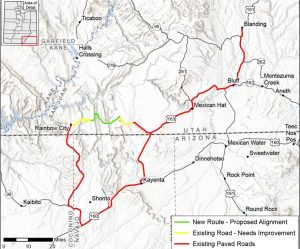 Navajo Nation waiting for matching funds from UT for critical road$2m of Amazon wealth to be redistributed to Nebraska Winnebago TribeMore than 250 athletes to compete in Traditional Games in Juneau
 Kalispel plan to return bull trout to Sullivan Lake open for commentHouse bill banning transgender athletes worries WY LGBTQ advocatesTribal Community Protection act to facilitate MMIP record sharing
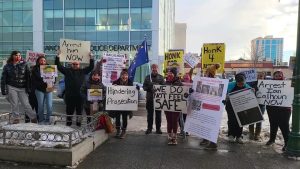 MMIP protestors want AK musician charged in Brian Smith caseWA legislature approves $25m for Quinault purchase of 11,000 acres
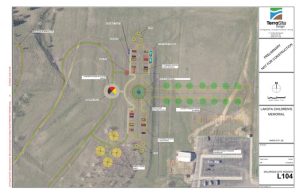 Remembering The Children memorial construction starts soonMT Supreme Court rules in favor of tribes, Native groups in vote caseOSU global hemp center gets $10m to work with 13 tribes in western US
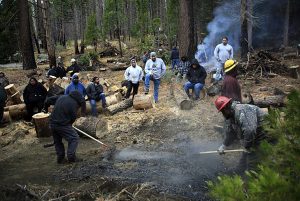 New sovereign-to-sovereign agreements for wildlife managementSymposium celebrates 20 years of UNM's Native American Studies BABlackfeet Nation hosts 'Lily Gladstone Day' for lauded actress
 Water and sewer bill support program ending despite ongoing needBears Ears monument management plans available for public feedbackNative veteran presented with service medals stolen in the 1970s
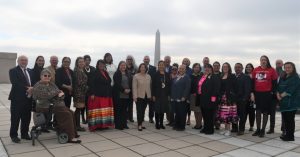 DOJ, DOI respond to Not Invisible Act Commission MMIP reportNative Youth Olympics athletes visit Native schools in KS, NM$10m for new childcare center, expanded libraries, computers in NM
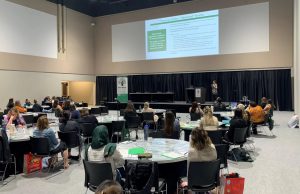 Native maternal health disparities in SD focus of new researchNew Enbridge Line 5 doc features water protectors from Bad River BandKiowa Tribe in OK welcomes VA back to help veterans and their families
 Limited federal policing resources for Flathead ReservationCA falling behind on Indigenous housing and policing pledges - reportsBIA awards $120m to tribal communities for climate resilience projects
 "Deb" campaigns for Native votes in key swing stateUte Day in CO legislature gives tribal leaders chance to follow-upSchatz highlights $1.3b passed for Native housing on Senate floor
 MT MMIP taskforce has not met in months due to hiring delayNative voter turnout top priority for tribal leaders this election yearUNM Native American Studies BA program celebrates 20 years
 Berkeley commits $1.5m towards $25m purchase of sacred landHundreds of Arctic region athletes compete for Ulus in Alaska
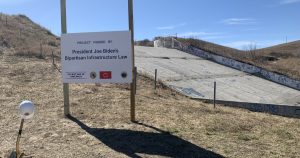 Federal infrastructure funding to re-open Oglala Dam on Pine RidgeUS, Canada cut major deal on mining pollution in MT lake and riverIndigenous head of MB govt is most popular premier in Canada - poll
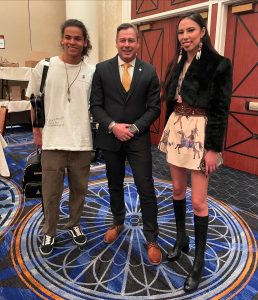 Women leaders take stage at #RES2024Arctic Winter Games return to Alaska with global athletes
 Sec Vilsack announces $58m federal funding for Indian CountryRecord warm winter in WI brings out destructive non-native beetles
 AIBL leadership conference kicks off in Las Vegas at #RES2024Gladstone receives praise from Lawrence, Stone during Oscars
 New federal funding to power up tribal homes without electricityGet Out the Native Vote group expands to reach 45 AK schoolsMSU Museum hosts REDress Project exhibit by Métis artist
 President cites Native infrastructure projects during SOTU addressWatch parties to root for 3 Native nominees during Academy Awards
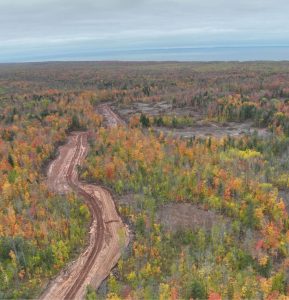 Opponents express concern over proposed Copperwood mineNearly $2m for reintroduction of free-roaming bison in Glacier NPNM Indian Affairs Dept launches MMIP, mental health campaignUT food bank opens 2 new pantries to serve Navajo Nation residents
 Mural part of WI Native voter turnout effortsMT gov says state can't afford to police Flathead Reservation
 Native Public Media petitions FCC for MMIP alert systemFeather Alert advocates commemorate one year since implementationUN forum to host panel on violence against Indigenous women and girls
 Oak Flat protectors consider next steps after 9th circuit ruling10 more Yellowstone bison transferred to Eastern Shoshone TribeAK firm links companies with Indigenous communities through camp
 Need for change remains after AK double murder convictionAlaska Native mushers lead the pack as Iditarod starts this weekendNavajo, Hopi, Yakama solar projects get funding from US DOE
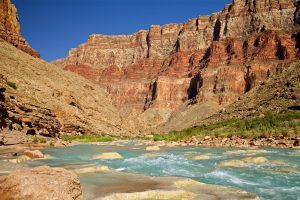 Navajo Nation releases proposed water claims settlementJars of Indigi-Baby food hit shelves in bid to reverse unhealthy eatingScott George and the Osage Singers to perform during Oscars
 $1.3m EPA grant helps protect tribal buildings from wildfire smoke Historic deal to restore fish populations damaged by Columbia damsJohns announces $25m for tribal clean energy projects during summit
 MSUB team holds MMIP moment of silence during recent halftimeSchmieding MCs, Sec Granholm keynotes Tribal Clean Energy SummitSix donors help return historic Chilkat robe to Alaska
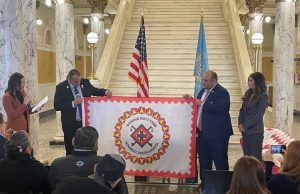 Rosebud Sioux leaders want to remove flag from SD CapitolWI tribal leaders press state to do more in annual address at CapitolGladstone wins SAG award for "Killers of the Flower Moon" role
 Smith found guilty of killing Alaska Native victims Henry, AbouchukTrial underway for non-Native suspect in murder of Pit River member
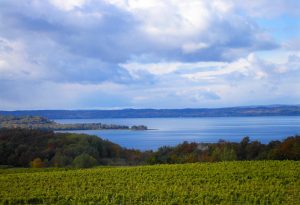 MI tribes to use underwater cameras to monitor wildlifeWilton Rancheria signs public safety deal with Sacramento CountyWI tribes in Madison for annual address to state legislature
 Anchorage double murder trial awakens MMIP traumaHoskin heartbroken over bullying death of Cherokee Nation residentSacred site of historic Catawba village returned to tribe by state
 Feds get tribal praise for denying Black Mesa hydroelectric projectAK rep apologizes for racially insensitive comments during meetingCherokee Nation seeks legal changes for citizens of Freedmen descent
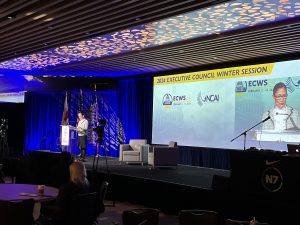 Interior Dept under Sec Haaland gets mixed reviews at NCAI sessionPost-Civil War Indigenous slavery in AK focus of new SHI book
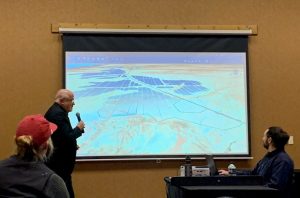 Ute Mountain Ute Tribe to open one of largest solar farms in U.S.Rural AZ Navajo Nation chapter to break ground on new health facilityAK museum offers step-by-step guide for making snow falling parka
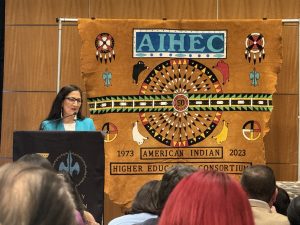 Sec. Haaland announces funding for Haskell ag business programKitka to step down as president of largest Alaska Native organization
 CA's Supreme Court upholds Indigenous child welfare actMacarro launches 3 action calls in State of Indian Nations address
 FBI launches new WY MMIP project on Wind River ReservationSuspect on trial in Anchorage for killing 2 Alaska Native womenBIE launches new 24/7 help line for students and staff at tribal schools
 NCAI's Macarro set to make 1st State of Indian Nations addressCA tribes to host 2nd annual MMIP Summit and Day of Action Navajo Nation's Nygren, Curley meet with NASA's Nelson about moon
 SKQ Dam draw from Flathead Lake OK'd by federal regulatorsNellie Moore, early NNN host, dies at the age of 69AR Indigenous food initiative seeks Native applicants ages 18-25
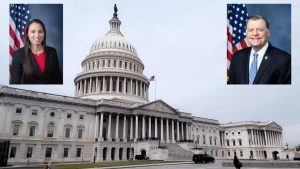 Reps Davids, Cole reintroduce historic Indian boarding school billNew Jingle Dress Dance children's book releasedNABI, GCU announce partnership for future invitationals
 SD Gov Noem banned from Pine Ridge Reservation, againInquest of James Smith Cree Nation massacre issues recommendations
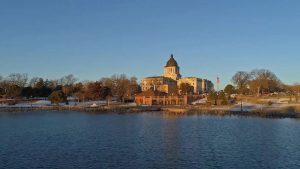 SD Senate committee rejects move to change racist placenameUpper Midwest tribes roll out electric vehicle charging stations networkMonette confirmed as NM cabinet secretary for Indian affairs department
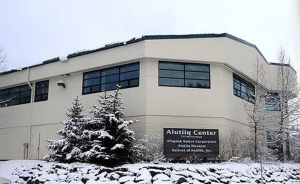 Alutiiq Museum building online database of NAGPRA effortsTwo Native groups to protest outside Super Bowl this Sunday
 Iñupiaq author wins prestigious Newbery Medal for "Eagle Drums"Tributes paid to Momaday, 1st Native Pulitzer Prize winner
 Fmr Blackfeet ops manager pleads guilty to stealing COVID fundsBipartisan bill sponsored by Rep. Davids passes House committeeRare white raven in Alaska becomes social media sensation
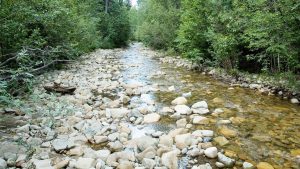 Stakeholders gather to learn about Mancos River protection planOR governor revives tribal cultural items task force after COVID breakNew agreement creates teacher training pipeline from NICC to Haskell
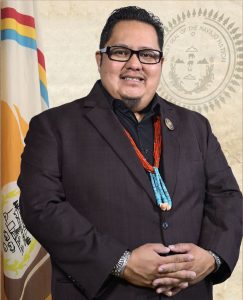 Damon steps down from Navajo Nation council for new NM roleSun'aq tribe, AK museum create textbook for Sugpiaq, Alutiiq speakers
 History museum closes 2 Native exhibits over NAGPRA concernsNM musician to perform Long Walk composition for 1,674 daysYup'ik sled dog racer Kaiser wins Kuskokwim 300 in AK
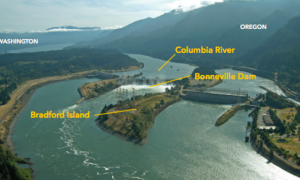 EPA Superfund site Bradford Island clean-up 'slow, but steady'Iditarod kicks off Friday night in AK as Reddington defends titleApple announces grants for Sundance Institute, NMAI recipients
 Tribal leaders have mixed feelings on CA's Feather Alert systemPeltola, first Alaska Native member of Congress, launches re-election campaign
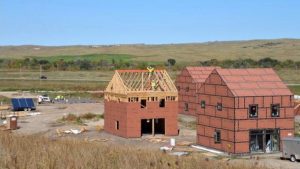 SD bill seeks to include tribes in $200m housing infrastructure fundEPA reaches settlement with Navajo utility over wastewater treatmentCA lawmakers reflect on first year of Feather Alert System
 SD House lithium redesignation bill opposed by Native lawmakerReintroduction of gray wolves in CO concerns Ute Mountain Ute TribeGladstone makes history with best leading actress Oscar nomination
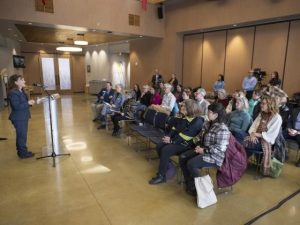 US EPA gives MSU $10m to help tribes apply for federal grants'True Detective' producers sought feedback from Nome localsWinnebago Tribe of NE, NARF sue U.S. Army over NAGPRA request
 Ute Mountain Ute Tribal Council votes to put member on leaveFirst Alaskans Institute hires Agloinga as new leaderIlluminative adds 7 Indigenous films to its 2024 Sundance Watch List
 Big drop in Rapid City prenatal services due to lack of providersAleutian Islands school has enough students to re-open after 15 years
 Native-led church in Rapid City asked to remove warming tentWinter weather strands tribal college students returning from homeTributes paid to Gary Fife, 'Voice of Mvskoke' and first NNN host
 Indigenous-backed Arévalo inaugurated as Guatemala's presidentAlaska State Troopers seek bids for new supplier of iconic fur trapper hat Wes Studi traces DNA in new episode of PBS' 'Finding Your Roots'
 Massive MT newspaper archive of tribal stories posted onlineRelease party for new Haida children's book held at Seattle museum
 At a Shiprock Chapter meeting this week on the Navajo Nation, community members put forward a resolution that calls for independent oversight of cleanup efforts after an oil spill north of Shiprock, N.M. Chris Clements with KSJD has more. Residents held a meeting on Saturday to discuss the ramifications of the spill and the community-drafted […]
 Renewed efforts between SD, tribes highlighted in annual addressAZ annual tribal legislative day sees record attendance levelsLargest OK tribes send letter to Stitt rejecting his task force
 Noem: Two tribal flags to hang inside SD state Capitol rotundaPresident Nygren delivers State of Navajo Nation addressMassive archive of newspapers covering MT tribes now available online
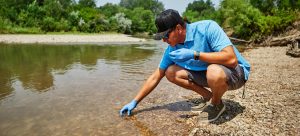 Scientists test for 'forever chemicals' in MT river key to Crow NationAlaska husband on trial for allegedly strangling his wifeMarvel series featuring deaf Native crime fighter launches on streamers
 Indian Country celebrates historic Golden Globes win by GladstoneAnchorage Museum no longer charging Alaska Native visitorsNavajo Nation objects to desecrating sacred moon with human remains
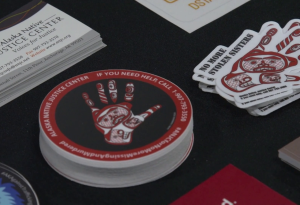 MMIP series: 'We want to break the silence, to break the cycle'Kenosha council OKs Hard Rock casino deal with Menominee Nation
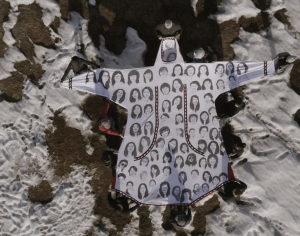 Yup'ik artist exhibits MMIP qaspeq across the countryCO Indigenous dance group debuts at National Western Stock Show
 'For Our Sisters' red dress collection tours world for MMIPQuebec judge orders McGill to honor deal to search possible grave site
 Menominee's proposed Hard Rock casino in Kenosha up for voteNew study looks at 30 years of change for NE's Winnebago TribeMusician, land defender Benally, 48, passes away
 First edition of Lingít children's book series launched in JuneauNew posthumous book shares Menominee Reservation food tales
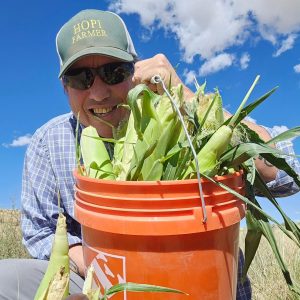 Hopi farmer highlights value of Indigenous agriculture practicesNM events raise MMIP awareness among college students, young peopleSealaska Heritage Institute launches new endangered language apps
 Senate ends year with two hearings on fentanyl crisisIHS grants $200k to buy 30,000 books for Indigenous childrenCoquille Tribe in OR to host its first sober NYE powwow
 OK's Mullin embraces fighting spirit in new role as U.S. senatorThousands of Navajo Nation homes in UT get official addresses
 Peltola completes 1st full term in Congress amidst tragedyTribes seek control of agenda at shrinking Colorado River meetingsLCO university to offer EMS courses following state approval
 BYU, UT tribes create lessons plans featuring all 8 nations in stateUW Madison offers free tuition to members of 11 WI tribes
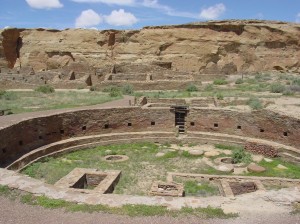 Chaco pits GOP and Navajo Nation vs Dems and Pueblo leadersNew website launched to help Native Maui wildfire victims find housingHoopa Valley Tribe buys 10,000-acre Hupa Mountain property
 Boarding school commission bill awaiting action in US HouseIndigenous workshop near North Pole busy making artistic holiday gifts
 U.S. Senate confirms 1st Native woman in OK as federal judgeMiss AIHEC among young tribal leaders at White House summit
 UW Madison offers free tuition to members of 11 WI tribesConservation group sends 107 bison to 5 tribes in 3 statesNew MN state seal features Dakota language phrase and red-eyed loonDisney, tribes to create Ojibwe version of "Star Wars: A New Hope"
 Two men indicted for allegedly killing 3,000+ eagles for feather salesGoogle tool used to connect UT off-grid homes with essential servicesNM extends extraction ban on state land near Chaco Culture site
 Federal tourism funding slowing since 2016 passage of NATIVE ActAlaska's Russian Orthodox community mourns loss of Father Oleksa
 $25m to protect Quinault Indian Nation from climate change effectsGroundbreaking Native women like Curley prominent at WH SummitFederal case dropped after Cheyenne River Sioux reverses banishment
 Bill to restore OR tribe's subsistence rights passes U.S. HouseSD report finds Native women negatively impacted by Dobbs decisionSD hotel issues court-ordered apology for former owner's conduct
 Lithium mine supplying GM electric cars to go ahead on sacred siteBYU, UT tribes create lessons plans featuring all 8 nations in state
 Cindy Woodhouse elected Assembly of First Nations national chiefFeds to invest $70m in land co-management agreements with tribesIHS grants $200k to provide 30,000 books to Native families
 Substance abuse, mental health prioritized during WH summit day 2Wind River Food Sovereignty Project gets 30 acres for farm and garden
 White House Tribal Nations Summit kicks off in WashingtonAlaska mourns loss of Haida elder Fred Hamilton Sr at age 102
 Sec Haaland highlights $45b budget invested in Indian CountryAll-Native film 'Frybread Face And Me' becomes big hit on Netflix
 Navajo Nation Council pays tribute to SCOTUS Justice O'ConnorColumbia River virtual conference highlights major watershed issuesSuicides involving firearms see sharp increase of Native victims
 KC fan's Native heritage used to defend headdress and face paintTribes testify about importance of historic preservation fundingNNN contributor Martin, 72, saluted by her peers and former colleagues
 No response yet from MT governor on state's Flathead policing planSec Haaland prioritizes MMIP work as part of WH Tribal Leaders SummitConfirmed: Native Hawaiian Judge Park makes federal court history
 Interior Sec Haaland sets priorities ahead of Tribal Nations SummitSeason 4 of Sundance's 'Native Shorts' premieres on FNX tonight
CSKT to work with state and federal officials to keep Flathead safeDeath of Golodoff, last Attu POW, marks end of an eraChef Sherman to promote Indigenous food during COP28 in Dubai
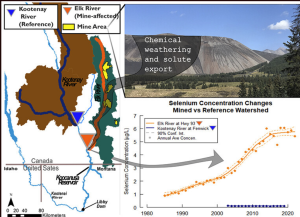 Coal mines source of nearly all Se pollution in Lake KoocanusaCongress hosts roundtable on historic and cultural preservationAlaska Native artists busy with holiday demand for giftsFormer CTUIR leader named OR's first Tribal Affairs Director
 Flathead Reservation no longer protected by Lake CountyGros Ventre woman in MT is one of CNN's Top Ten HeroesGolodoff, last surviving POW from Attu, dies at age 84
 Indigenous youth weigh in during One Water SummitStudent from Wind River Reservation attends Tribal Youth SummitNew PBS show 'Little Bird' explores Sixties Scoop days
 Native American Heritage Month celebrates with NM parka exhibitNEH, Interior Dept team up for Indian boarding school initiative
 One Water Summit features Indigenous ideas for conservationWestern governors host MMIP solutions panel at Jackson meetingKalispel tribe gifts herd of 30 bison to Colville Confederated Tribes
 Oglala Sioux Tribe declares state of emergency over crime increaseNew posthumous book shares Menominee Reservation food tales
 Macarro elected as next NCAI president during conventionABA hosts Native female trailblazers like Haaland, Davidson
 NCAI convention delegates vote down controversial proposalsPositive response to second season of PBS show 'Native America'Cherokee delegation turns out for Hill's Senate nomination hearing
 NCAI convention delegates to vote on controversial proposalsNew institute to train tribal water rights advocates to address shortagesU.S. Senate votes to extend WIC, SNAP, and Native diabetes program
 Broadband access a top concern of speakers at NCAI convention$9m approved for oak habitat restoration using Native practicesCherokee senator from OK challenges Teamsters president to a fight
 Rapid City hotel settles 1 lawsuit with feds with 2 others pendingInterior Dept leaders address NCAI convention in New Orleans
 Big plans for Willow project construction after judge denies blockWhite House Tribal Nations Summit set for first week in DecemberNCAI launches annual convention in NOLA with controversial proposalOtoe-Missouria Chairman raises concern over OK's alteration of tribal tags positionShinnecock dispensary hosts grand opening
 Mashantucket Pequot Tribal Nation CT farm thriving after 8 yearsOsage tribal members react to 'Killers of the Flower Moon'Murkowski holds field hearing in Bethel on historic salmon declines
 Miwok statue unveiled at CA capitol to replace Serra monumentMT org hosts inclusive events for Native American Heritage Month
 Goldtooth keynotes Harvard conference on legacy of mistreatmentNew season of FNX TV program 'Native Shorts' premieres this monthSenate Indian Affairs committee holds hearing on fentanyl crisisWilma Mankiller Barbie now available from Mattel website
 US, Canada, tribes to meet on transborder coal mine pollutionAlutiiq Museum staff excited about new atkuk in collectionTributes paid to CTCLUSI Chief 'Doc' Slyter who walked on this weekend
 Not Invisible Act Commission issues report following field hearingsWatchdog says there are too many Indigenous people in CA prisons$8m federal grant to benefit Coquille Tribe's wharf and port development
 Newfoundland and Labrador leader apologizes to Inuit for schoolsNew Lingít children's book launched in Juneau
Feds spending $327m to create reliable water supplies for SW tribesWholesaler Cost Savers in Kodiak now under tribal ownershipLeading lawyer's group hosts Native women trailblazers event
 Grand Gateway Hotel owners face new discrimination lawsuitMilwaukee county becomes 1st 'rights of nature' endorser in WI
 Indigenous protest leader in Guatemala killed this weekendCO releases report about legacy of Native boarding schools
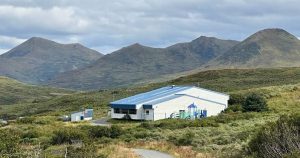 Karluk school closes after families chosen for cost-free living leaveSainte-Marie rebuffs new CBC doc which questions her Native roots
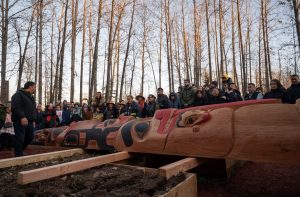 First boarding school totem in nation raised in AnchorageOK tribal council backs Biden nomination of former Cherokee AG for federal judge
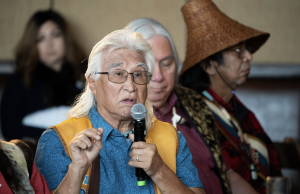 Emotional testimony during 10th stop on Road to Healing TourJudge approves $23bn settlement for First Nations racial discrimination
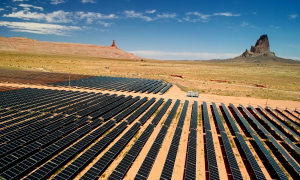 $3.5bn renewable energy expansion 'enormous opportunity'Native kids who had hair cut at school awarded $227,500 settlementNative American Bank to administer $50m in U.S. Treasury grants
 Neither side budging in Guatemala's election battleLac du Flambeau Band set to build or renovate 44 homes in major project
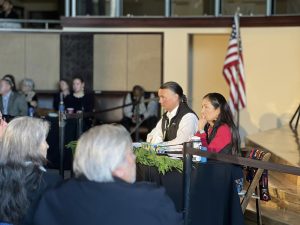 Interior's Road to Healing Tour stops at AFN in AnchorageAFN hosts Education Compacting talk on heels of new state report
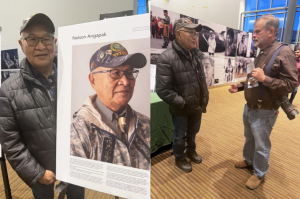 #2023AFN: Bill Hess photo exhibit honors Alaska Native veteransAFN Citizen of the Year Award goes to Alutiiq advocate Roberts

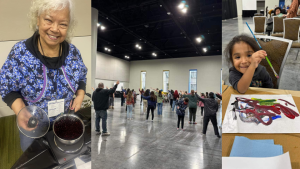 Chasinghorse, dancers headline Elders & Youth conference day 3Guatemala election protests turn deadly in clash with 'armed vigilantes'
 Elders and Youth Conference celebrates 40 years in AnchorageUSDA awards $500k to 4 SD tribes for better bison meat processing
 U.S. district court grants AFN motion in Katie John challenge caseNumana Dam fish passage project now more urgent than ever
 Indigenous Guatemalan TikTok influencers send election message$200m to reopen waterways for spawning by endangered fish
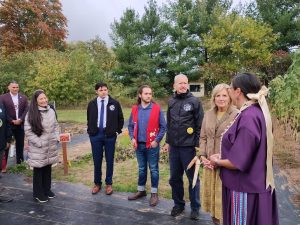 First lady, Interior Secretary visit Menominee tribal members in WIUNM researchers confirm COVID-19 hit Native patients hard
 AFN convention opens with St. Lawrence Island whale documentaryCTCLUSI celebrates federal recognition restoration at reclamation siteHistoric Cherokee language event in OK one of largest ever held
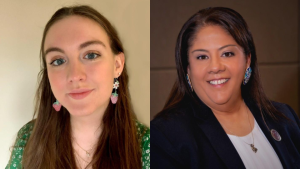 'If you’re a young person with an interest in news, don’t stop.'Rep. Peltola says she's ready to return to workLCO board responds to concerns about student behavior and dress
 Presbyterian Church offers apology, reparations for closing Soboleff ministryAll Pueblo Council of Governors condemns Española violence
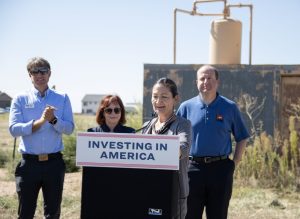 Feds spend $40m to plug old oil and gas wells in tribal communitiesIñupiaq Word of the Day becomes big hit on social mediaMN to celebrate first year of official Indigenous Peoples' Day holiday
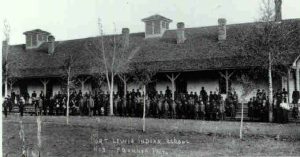 CO releases report on Indian boarding schools including Fort LewisIndigenous protestors lead resistance to Guatemala's election delaysCherokee Nation gets connected to new high-speed learning center
 First Nation history made as Kinew's party tops Manitoba electionColville tribe gets 2,500 acre ranch in #LandBack conservancy dealJuneau commemorates Soboleff's church for Indigenous Peoples' Day
 Indigenous protestors in Guatemala rally against 'coup in progress'Rep. Davids champions boarding school commission bill during webinarBill in Congress seeks to officially recognize Indigenous Peoples' Day
 Native groups urge officials to keep anti-statue rally shooter in jailManitoba could make election history with First Nations premierWounded Knee memorial designed by descendent vandalized in SDUS Attorney picks Neal to represent MMIP in Southwest region
 Spokane Tribe gets nearly $1m from WA's Clean Energy FundAFN sides with feds over Kuskokwim River salmon management battle600 attend 4J NATIVES program pow-wow in OR
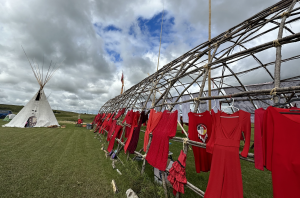 Two Indigenous camps set up in Winnipeg draw attention to MMIPBlack, Native maternal death rate up over past 20 years
 Cases in new AK missing persons report go back to 1960Native youth spend week in national parks with elders and teachers
 Sto:lo First Nation finds nearly 160 child deaths at BC facilitiesIndigenous chef cooks up classic cuisine at Denver community kitchen
 Sen. Hirono calls on Native voices to be heard in wake of Maui firesÁaw’k Rock Music Festival celebrates Indigenous music with 25 acts
 All-woman skate competition shreds on Navajo Nation this weekendCTGR uses $700k in federal climate funds for electric cars and stationsNew Haskell president sworn in amid growing student enrollment
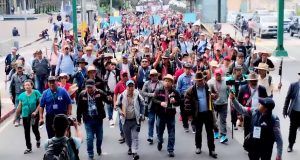 Indigenous voters in Guatemala protest attempts to block ArévaloSt Regis Mohawk tribe hosts NY's First Nations deputy secretaryU.S. Senate holds tribal water quality hearing on Capitol Hill
 ASU student encourages more Native women to become engineersNottawaseppi Huron Band chief judge wins MI bar association awardHistorical trauma 'major factor' in increased Native suicide rate
 Guatemalan farmers protest "La Ley Monsanto" bill in CongressChildbirth deaths by Native, Black patients more than doubled since 1999$58m grant awarded for research of Native mother-and-baby health careSen. Padilla holds tribal water hearing in Washington on Wednesday
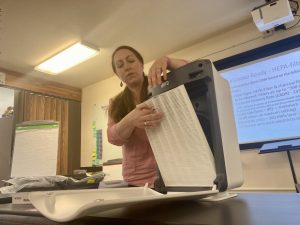 Nez Perce hands out 250 air cleaners for wildfires reliefIntertribal Buffalo Council seeks federal farm bill help for its 83 tribes
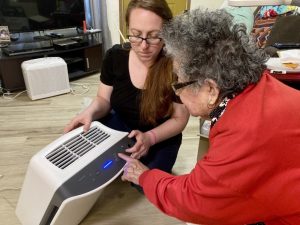 Nez Perce air quality workshop offers tips for wildfire survivalCoquille fishing derby reeling in invasive bass to save prized salmonNative leaders honor legacy of Bill Richardson during NM funeral
Alaska mourns death of Gene "Buzzy" Peltola, 57Suicide rate 2000-2020: Up 130% for Native women, 90% for Native menKeith BraveHeart, Marty Two Bulls Jr. named Oglala Sioux artist laureates
35 people arrested at WH Peltier rally including NCAI president
Tribe partners on $10m+ estuary restoration project in OR
Boarding school healing coalition unveils new map with 523 schools
New Anchorage Museum exhibit features work of Indigenous healers
Leonard Peltier supporters hold White House rally on his birthday
The vice president of the Oglala Lakota Nation reacted to former President Donald Trump’s visit to Rapid City, S.D. on Friday by saying her tribe was not invited to a rally by the Republican Party featuring President Trump.
She reflected on his time as president of the United States as difficult for Indian Country.
Photos: Alicia Mousseau
Vice President of the Oglala Sioux Tribe Dr. Alicia Mousseau told National Native News in Rapid City during an interview, hours before the rally, that she was not in tribal leadership during the Trump administration, but says it was hard working with the administration in her capacity addressing youth issues with federal funding through the Office of Juvenile Justice and Delinquency Prevention (OJJDP).
“My previous work under OJJDP grants providing training and technical assistance for tribal communities was very difficult. We couldn’t say certain words, including the word ‘trauma’. I was working for the National Native Children’s Trauma Center at the time, so it was kind of hard not to say the word ‘trauma’, but we were censored and it’s hard to do work when you’re censored, do good work in our communities when you’re censored from saying certain things. So it was it was a little difficult, a little concerning. That was the experience that I had when that administration was in.”
Dr. Mousseau says she’s not surprised Gov. Kristi Noem (R-SD) welcomed President Trump to the state.
“The Oglala Sioux Tribe still has a banishment on (Gov.) Kristi Noem. That was from COVID when we had our borders up and one of our banishments was taken back, but then another banishment was put on. It’s been very difficult of the state of South Dakota understanding tribes, our sovereignty, us as a nation, the things that we have to deal with, and also our status as a political entity. So it’s been kind of difficult considering ICWA [the Indian Child Welfare Act] and those types of issues that we face every day. It would be very nice if the state of South Dakota understood those a little bit better.”
The Oglala Sioux Tribe has had a rocky relationship with Gov. Noem, even telling the governor to keep off the Pine Ridge Reservation.
Photo: Alicia Mousseau
President Trump’s visit was part of fundraising for the state GOP, but many speculate it was also to boost his campaign for president.
There was also talk on statewide and national media that Gov. Noem could likely play a part in his campaign, or if he takes another term in office.
Dr. Mousseau says, if that’s the case, she hopes Gov. Noem would understand tribes, especially coming from a state with nine tribal nations.
Courtesy University of Alaska Fairbanks / Facebook
The University of Alaska Board of Regions has unanimously approved a $53 million fundraising campaign for an Indigenous studies center at its Fairbanks campus.
The Alaska Beacon reports the Troth Yeddha’ Indigenous Studies Center would be the first university space in the nation designed with Indigenous education models in mind.
Troth Yeddha’ in the Athabascan language means “wild potatoes on a hill”.
Troth is also a word used for wild carrots.
The root vegetables are a staple for interior Alaska Natives.
Charlene Stern, the University’s Vice Chancellor for Rural, Community, and Native Education, believes the new center could be a game changer for Alaska.
She says it will help address both present day and historical inequities for Alaska’s Indigenous students.
Currently, Alaska Native Studies courses are scattered across different campus buildings, but the center would bring them together under one roof.
It will also be a home to the university’s Native language program, which has grown from three to 12 instructors.
The University of Alaska Fairbanks is the only university in the world to offer bachelor’s degrees in Yup’ik and Inupiaq.
As of July, the university has raised $5.5 million for Troth Yeddha’.
Get National Native News delivered to your inbox daily. Sign up for our newsletter today.
The vice president of the Oglala Lakota Nation reacted to former President Donald Trump’s visit to Rapid City, S.D. on Friday by saying her tribe was not invited to a rally by the Republican Party featuring President Trump.
She reflected on his time as president of the United States as difficult for Indian Country.
Photos: Alicia Mousseau
Vice President of the Oglala Sioux Tribe Dr. Alicia Mousseau told National Native News in Rapid City during an interview, hours before the rally, that she was not in tribal leadership during the Trump administration, but says it was hard working with the administration in her capacity addressing youth issues with federal funding through the Office of Juvenile Justice and Delinquency Prevention (OJJDP).
“My previous work under OJJDP grants providing training and technical assistance for tribal communities was very difficult. We couldn’t say certain words, including the word ‘trauma’. I was working for the National Native Children’s Trauma Center at the time, so it was kind of hard not to say the word ‘trauma’, but we were censored and it’s hard to do work when you’re censored, do good work in our communities when you’re censored from saying certain things. So it was it was a little difficult, a little concerning. That was the experience that I had when that administration was in.”
Dr. Mousseau says she’s not surprised Gov. Kristi Noem (R-SD) welcomed President Trump to the state.
“The Oglala Sioux Tribe still has a banishment on (Gov.) Kristi Noem. That was from COVID when we had our borders up and one of our banishments was taken back, but then another banishment was put on. It’s been very difficult of the state of South Dakota understanding tribes, our sovereignty, us as a nation, the things that we have to deal with, and also our status as a political entity. So it’s been kind of difficult considering ICWA [the Indian Child Welfare Act] and those types of issues that we face every day. It would be very nice if the state of South Dakota understood those a little bit better.”
The Oglala Sioux Tribe has had a rocky relationship with Gov. Noem, even telling the governor to keep off the Pine Ridge Reservation.
Photo: Alicia Mousseau
President Trump’s visit was part of fundraising for the state GOP, but many speculate it was also to boost his campaign for president.
There was also talk on statewide and national media that Gov. Noem could likely play a part in his campaign, or if he takes another term in office.
Dr. Mousseau says, if that’s the case, she hopes Gov. Noem would understand tribes, especially coming from a state with nine tribal nations.
Courtesy University of Alaska Fairbanks / Facebook
The University of Alaska Board of Regions has unanimously approved a $53 million fundraising campaign for an Indigenous studies center at its Fairbanks campus.
The Alaska Beacon reports the Troth Yeddha’ Indigenous Studies Center would be the first university space in the nation designed with Indigenous education models in mind.
Troth Yeddha’ in the Athabascan language means “wild potatoes on a hill”.
Troth is also a word used for wild carrots.
The root vegetables are a staple for interior Alaska Natives.
Charlene Stern, the University’s Vice Chancellor for Rural, Community, and Native Education, believes the new center could be a game changer for Alaska.
She says it will help address both present day and historical inequities for Alaska’s Indigenous students.
Currently, Alaska Native Studies courses are scattered across different campus buildings, but the center would bring them together under one roof.
It will also be a home to the university’s Native language program, which has grown from three to 12 instructors.
The University of Alaska Fairbanks is the only university in the world to offer bachelor’s degrees in Yup’ik and Inupiaq.
As of July, the university has raised $5.5 million for Troth Yeddha’.
Get National Native News delivered to your inbox daily. Sign up for our newsletter today.
The Montana Arts Council recently announced the state’s new poet laureate.
Yellowstone Public Radio’s Orlinda Worthington introduces us to Chris Latray, who is the state’s eleventh poet laureate and a member of a Montana tribe.
“That is hello, all of my relatives, we are all related. And that is where my inspiration comes from. The relationship we have with everything around us, human and non-human, absolutely that is it.”
Chris La Tray is a member of the Little Shell Tribe of Chippewa.
He says his priority as poet laureate will be getting to small, rural communities that may be overlooked when it comes to writing and poetry.
“If I had to focus on one thing, it’s to get the word to these young people that you can choose a path like mine and be successful in ways different from maybe how people tell you need to proceed.”
He says, like many of us, he grew up with the idea that poetry is just a bunch of fancy words; a misconception he hopes to change.
“You know, when I speak to kids I tell them that their story is 100% unique and there is nobody who is experiencing the world the way they are and the importance of them sharing that story through any kinds of words on the page or orally, that is important. And however you choose to frame that with words is poetry. Your life is poetry.”
You can hear a longer conversation with La Tray on Yellowstone Public Radio’s program “Resounds” .
*The Barbie doll has been getting* much attention with the release this summer of the Barbie movie.
In Alaska, mother Angela Gonzalez and daughter Ermelina of Anchorage, posted their doll titled “Fish Camp Barbie” on social media, which features an Athabascan Barbie doll dressed in traditional clothing.
It’s gained thousands of views.
KNOM’s Ava White reports.
The iconic slogan of Barbie, “you can be anything,” is brought to life in a culturally rich way.
In this scene, a Barbie doll proudly wears a vibrant hot pink kuspuk, complemented by a beaded necklace, stylish moosehide cuffs, and headband.
Positioned on a nearby table is a fish made from salmon skin, aligned with beadwork.
Barbie is holding an Ulu, ready to skillfully prepare the fish.
All clothing was handmade by Ermelina Gonzalez.
Angela Gonzalez’ family’s fish camp was located along the Koyukuk River, where her family frequented when she was a young girl.
She has played with Barbies since she was a little kid and says her grandmother used to make accessories for her dolls.
“All the dolls would have their little ulus, and we would have a little fish camp scene with fish racks and leaves. Leaves from willows would be our little fish.”
Angela Gonzalez explains the importance of sharing culture towards younger generations and why it’s important for Alaska Native children to feel equally represented.
“I think that it’s just good that they will be able to see themselves represented, even though it’s not for the mass market or anything like that. They can be inspired to create what they want to create, you know, if they have a different way of life, maybe they can make a fishnet or a dip net, you know, just something that that can inspire them to be able to feel like they have permission to customize something that will represent themselves.”
Barbie has a reputation for embracing numerous roles, ranging from a CEO to a gymnast, a construction worker, and now, a skilled fisherwoman at a subsistence camp.
Through the innovative creation of their own Barbie scenes, Angela and Ermelina Gonzalez have succeeded in fashioning a compelling narrative focused on culture.
Their efforts serve as an inspiring testament for young girls across various Alaska Native cultures, conveying the powerful message that they too can embody the spirit of Barbie in their unique ways.
Ermelina Gonzalez is an intern at KNBA, Koahnic’s flagship station in Anchorage.
Get National Native News delivered to your inbox daily. Sign up for our newsletter today.
It was announced yesterday that the Interior Department will cancel its remaining oil leases in the Arctic National Wildlife Refuge (ANWR).
This will prevent drilling in 13 acres in the National Petroleum Reserve-Alaska.
The Biden Administration declared the ANWR lease sale, which was held in 2021 during the final days of President Trump’s administration, violated federal law.
The Interior Department also added protections by putting a stop to offshore drilling in the federal waters of the Beaufort Sea earlier this year, almost a year before the administration approved ConocoPhillips’ $8 billion oil development project Willow in the reserve.
Guatemala’s much-criticized attorney general met with the head of the Organization of American States (OAS) this week about her justice department’s role in the country’s turbulent election process.
Meanwhile, Indigenous leaders carried out traditional ceremonies to censure the attorney general and others they accuse of corruption.
Maria Martin reports.
After her meeting with OAS Secretary General Luis Almagro, Guatemala’s Attorney General Maria Consuelo Porras said there’s a campaign to discredit her and her justice department for investigating valid legal complaints.
She rejected the accusation that her investigation of President-elect Bernardo Arévalo’s Semilla party is an attempt at a legal coup.
Meanwhile, Indigenous groups are stepping up actions asking for Porras’ resignation.
On Tuesday, Maya ancestral authorities performed a traditional ceremony outside the presidential palace, asking for punishment for corrupt government officials.
Aaron Leggett, president of the Native Village of Eklutna, addresses the crowd at the Nuch’ishtunt signpost unveiling at Point Woronzof on Friday. (Photo: Adam Nicely / Alaska Public Media)
There’s a new marker along Anchorage’s Coastal Trail.
It says Nuch’ishtunt, which means “the place protected from the wind” in Dena’ina Athabascan.
The sign is part of the Indigenous Place Names Project and is a reminder that Dena’ina people were and continue to be part of Anchorage.
Jeremy Hsieh reports from Alaska Public Media in Anchorage.
At a ceremony celebrating the new signpost, Aaron Leggett shares an anecdote about meeting other young Alaska Natives when he was 19 working at the Alaska Native Heritage Center.
“And I told them that I was Dena’ina. They said, ‘Well, what’s that?’ Then they said, ‘Well, where’s your village?’ I said, ‘We’re from here.’ They said, ‘No, where’s your Native village?’ I said, ‘We’re from here.’ ‘What do you mean?’ I said, ‘Well, Eklutna is 26 miles from downtown Anchorage.’ And some of them who had grown up in Anchorage said, ‘Well, I didn’t know Native people lived here.”
He says he realized Dena’ina were largely invisible and he wanted to work on reclaiming who Dena’ina are as a people.
That was more than 20 years ago.
Now, Leggett is the president of the Native Village of Eklutna and a curator with the Anchorage Museum.
He’s been working on the Indigenous Place Names Project since its inception in 2018.
The “Nuch’ishtunt” sign is the effort’s fourth installment.
Dena’ina people used to set up seasonal salmon fishing camps near this point, up until federal officials banned commercial fishing here in the 1950s.
“Indigenous place making deepens the connection we have to place.”
Beth Nordlund is the executive director of the Anchorage Park Foundation, another organization working on the project.
“This is bigger than signs. It’s a movement.”
Project supporters eventually want to put up 32 of these sculpture signs in high visibility areas around Anchorage and Eklutna.
They each feature iron artwork representing a fire bag, a pouch used to carry materials for starting a fire.
It’s also a symbol of living outdoors and sharing.
Get National Native News delivered to your inbox daily. Sign up for our newsletter today.
This is a critical week in Guatemala’s fragile democracy as that country’s outgoing president and its beleaguered president-elect meet to talk about the transition of power.
With the eyes of the world on the central American country of Guatemala, many of its millions of Indigenous citizens are getting ready to take action against what they call a coup attempt by a corrupt justice official, as Maria Martin reports from Guatemala.
Outgoing President Alejandro Giammattei says he wants a transparent and efficient government transition, but the reformist President-elect Bernardo Arévalo said in a televised interview right before the start of transition talks, that there’s a contradiction between protocol and President Giammattei’s failure to condemn his justice department’s attempts to disqualify Arévalo’s Semilla (Seed Party).
“I would hope the president would come out strongly against these spurious legal actions.”
Meanwhile, pro-democracy protests continue in Guatemala city and throughout the country, calling for an end to government interference with the election process and what protesters think is an attempt to block the country’s newly-elected president-elect from taking power despite the transition talks.
“This is just the start until the new president takes power on January 14.”
Virgilio Gerónimo Bernal Guzmán, the Indigenous mayor of Nebaj, Quiché, joined other ancestral authorities in Maya communities to call on the country’s attorney general and her “cronies” to resign, as he says they’re attempting a coup to thwart the constitutional order.
If they don’t stop these illegal actions, he says, Indigenous groups will step up their protests.
Courtesy @EPAMichaelRegan / Instagram
The U.S. Environmental Protection Agency (EPA) has announced $2.5 million in grants to three Alaska Native Corporations.
They’re part of a $20 million dollar appropriation from Congress to clean up contaminated lands that were conveyed to Native corporations under the 1971 Alaska Native Claims Settlement Act.
The announcement came when EPA Administrator Michael Regan made the final stop of his Alaska tour last week in Fairbanks.
Administrator Regan says this first round of funding barely addresses the problem.
“Just the breadth of contaminated lands, contaminated conveyed lands is astounding. And so, in addition to this $20 million we had a lot of discussions with local leaders about how we could devise strategies to acquire resources from other programs.”
Courtesy @EPAMichaelRegan / Instagram
Administrator Regan also visited Utqiagvik last week, where the Ukpeaġvik Inupiat Corporation (UIC) is based.
It will receive $600,000 to remove asbestos and other contaminants from the old U.S. Navy Arctic Research Center, as well as clean-up an oil spill.
Pearl Brower, president of UIC, says this site is just a small portion of lands in the region that need clean-up, but called it a good first step.
She says she looks forward to a time when her children and grandchildren can subsist off of clean land and water.
U.S. Sen. Lisa Murkowski (R-AK), who championed the legislation, is also working to find other sources of federal money to clean-up more Native Corporation lands, which she calls an “injustice perpetrated by the federal government”.
“It thwarts their ability to fulfill the promise of ANCSA, (which) was that they would be able to utilize their lands for the betterment of their people. But when your lands are contaminated and you can’t access them for development, much less berry picking. That’s not keeping our promise.”
The Tyonek and Ounalashka Corporations will each receive $1 million in funding.
Tyonek will use the money to inventory and clean-up contaminants on the Iniskin Peninsula.
The Ounalashka Corporation will target pollution from World War II, removing soil contaminated with PCB’s as well as sampling soil and water at a warehouse in Dutch Harbor.
View this post on InstagramA post shared by Michael Regan (@epamichaelregan)
Get National Native News delivered to your inbox daily. Sign up for our newsletter today.
This is a critical week in Guatemala’s fragile democracy as that country’s outgoing president and its beleaguered president-elect meet to talk about the transition of power.
With the eyes of the world on the central American country of Guatemala, many of its millions of Indigenous citizens are getting ready to take action against what they call a coup attempt by a corrupt justice official, as Maria Martin reports from Guatemala.
Outgoing President Alejandro Giammattei says he wants a transparent and efficient government transition, but the reformist President-elect Bernardo Arévalo said in a televised interview right before the start of transition talks, that there’s a contradiction between protocol and President Giammattei’s failure to condemn his justice department’s attempts to disqualify Arévalo’s Semilla (Seed Party).
“I would hope the president would come out strongly against these spurious legal actions.”
Meanwhile, pro-democracy protests continue in Guatemala city and throughout the country, calling for an end to government interference with the election process and what protesters think is an attempt to block the country’s newly-elected president-elect from taking power despite the transition talks.
“This is just the start until the new president takes power on January 14.”
Virgilio Gerónimo Bernal Guzmán, the Indigenous mayor of Nebaj, Quiché, joined other ancestral authorities in Maya communities to call on the country’s attorney general and her “cronies” to resign, as he says they’re attempting a coup to thwart the constitutional order.
If they don’t stop these illegal actions, he says, Indigenous groups will step up their protests.
Courtesy @EPAMichaelRegan / Instagram
The U.S. Environmental Protection Agency (EPA) has announced $2.5 million in grants to three Alaska Native Corporations.
They’re part of a $20 million dollar appropriation from Congress to clean up contaminated lands that were conveyed to Native corporations under the 1971 Alaska Native Claims Settlement Act.
The announcement came when EPA Administrator Michael Regan made the final stop of his Alaska tour last week in Fairbanks.
Administrator Regan says this first round of funding barely addresses the problem.
“Just the breadth of contaminated lands, contaminated conveyed lands is astounding. And so, in addition to this $20 million we had a lot of discussions with local leaders about how we could devise strategies to acquire resources from other programs.”
Courtesy @EPAMichaelRegan / Instagram
Administrator Regan also visited Utqiagvik last week, where the Ukpeaġvik Inupiat Corporation (UIC) is based.
It will receive $600,000 to remove asbestos and other contaminants from the old U.S. Navy Arctic Research Center, as well as clean-up an oil spill.
Pearl Brower, president of UIC, says this site is just a small portion of lands in the region that need clean-up, but called it a good first step.
She says she looks forward to a time when her children and grandchildren can subsist off of clean land and water.
U.S. Sen. Lisa Murkowski (R-AK), who championed the legislation, is also working to find other sources of federal money to clean-up more Native Corporation lands, which she calls an “injustice perpetrated by the federal government”.
“It thwarts their ability to fulfill the promise of ANCSA, (which) was that they would be able to utilize their lands for the betterment of their people. But when your lands are contaminated and you can’t access them for development, much less berry picking. That’s not keeping our promise.”
The Tyonek and Ounalashka Corporations will each receive $1 million in funding.
Tyonek will use the money to inventory and clean-up contaminants on the Iniskin Peninsula.
The Ounalashka Corporation will target pollution from World War II, removing soil contaminated with PCB’s as well as sampling soil and water at a warehouse in Dutch Harbor.
View this post on InstagramA post shared by Michael Regan (@epamichaelregan)
Get National Native News delivered to your inbox daily. Sign up for our newsletter today.
Recovery efforts are continuing after the devastating Maui wildfires in August.
Although many communities are coming together to offer support, the Native Hawaiian community is having to deal with threats of a new wave of colonialism on their ancestral homelands, according to a grassroots Native Hawaiian advocate.
Community members have been displaced after their land, homes, and businesses have all been destroyed.
Many are still searching for their loved ones.
At a time when many people are afraid, injured, or displaced, Camille Kalama (Native Hawaiian) says they’re now having to fear that corporations and wealthy outsiders will try to take their land.
“And, so some of the residents who were affected by the fires were getting calls as early as the week of the fire offered to buy their land from real estate companies and it’s created and generated a lot of fear that there will be an exploitation of the disaster that happened, and a new wave of development and outsiders coming in and utilizing basically what’s in terms to us is capitalism. Trying to use and exploit the devastation for profit.”
Kalama is the executive director for Ko‘ihonua, a local non-profit organization, and a board member of NDN Collective, a Native-led organization advocating for Indigenous issues.
In August, officials released a list of a few hundred people who are still missing.
Kalama says people are still grieving.
“So, the community, while their active in relief efforts, and a lot of support and provides company and community is still grieving and still processing what’s going on here, and what happened.”
As recovery and rebuilding continues, Kalama says Native groups are urging for Indigenous-led rebuilding efforts.
She also says they’re encouraging those who want to help to verify their donations are going to vetted sources.
Courtesy Robert Martinez
Northern Arapaho artist Robert Martinez combines historic imagery and modern themes to create work that speaks to contemporary Indigenous issues.
His art is currently on display in Cheyenne.
Wyoming Public Radio’s Hannah Habermann reports.
Robert Martinez is a Northern Arapaho and Chicano artist born on the Wind River Reservation.
Some of his work draws on the Plains Indian ledger art tradition, blending past and present.
“After we were pushed onto reservations, and we couldn’t hunt buffalo as they were exterminating them, we would trade for or were given already filled-out ledger books, and we would paint and draw over the text in those.”
Ledger books were used to record accounting transactions.
Martinez’ art will be at the Laramie County Community College in Cheyenne until September 8.
NAVAJO T-ATS 6, first of a new class of towing, salvage, and rescue ships for the US Navy’s Military Sealift Command, was launched in Houma, La. (Courtesy Bollinger Shipyards)
During a recent ceremony, Navajo Nation lawmakers joined U.S, Navy officials and Navajo veterans to celebrate the historic christening of the USNS Navajo in Houma, La.
The ship is a new class of rescue, towing, and salvage ships, named in honor of the service of Navajo veterans and Navajo Nation Code Talkers.
Five ships have been named after the Navajo Nation including the first ship, the USS Navajo that came into service in 1908 and the USS Navajo III which served from 1917 to 1919.
In 2015, the Navy notified the Navajo Nation Council that they were considering naming a ship after the Navajo Nation.
Former Navajo Nation Council Speaker Lorenzo Bates, who attended the christening ceremony, says his staff worked with the Secretary of the Navy and late U.S. Sen. John McCain (R-AZ) to support the naming.
The christening ceremony was attended by representatives from the U.S. Navy and Bollinger Shipyard, United Houma Nation representatives, Assistant Secretary of Tribal Affairs of the U.S. Department of Transportation, and other guests.
Get National Native News delivered to your inbox daily. Sign up for our newsletter today.
Recovery efforts are continuing after the devastating Maui wildfires in August.
Although many communities are coming together to offer support, the Native Hawaiian community is having to deal with threats of a new wave of colonialism on their ancestral homelands, according to a grassroots Native Hawaiian advocate.
Community members have been displaced after their land, homes, and businesses have all been destroyed.
Many are still searching for their loved ones.
At a time when many people are afraid, injured, or displaced, Camille Kalama (Native Hawaiian) says they’re now having to fear that corporations and wealthy outsiders will try to take their land.
“And, so some of the residents who were affected by the fires were getting calls as early as the week of the fire offered to buy their land from real estate companies and it’s created and generated a lot of fear that there will be an exploitation of the disaster that happened, and a new wave of development and outsiders coming in and utilizing basically what’s in terms to us is capitalism. Trying to use and exploit the devastation for profit.”
Kalama is the executive director for Ko‘ihonua, a local non-profit organization, and a board member of NDN Collective, a Native-led organization advocating for Indigenous issues.
In August, officials released a list of a few hundred people who are still missing.
Kalama says people are still grieving.
“So, the community, while their active in relief efforts, and a lot of support and provides company and community is still grieving and still processing what’s going on here, and what happened.”
As recovery and rebuilding continues, Kalama says Native groups are urging for Indigenous-led rebuilding efforts.
She also says they’re encouraging those who want to help to verify their donations are going to vetted sources.
Courtesy Robert Martinez
Northern Arapaho artist Robert Martinez combines historic imagery and modern themes to create work that speaks to contemporary Indigenous issues.
His art is currently on display in Cheyenne.
Wyoming Public Radio’s Hannah Habermann reports.
Robert Martinez is a Northern Arapaho and Chicano artist born on the Wind River Reservation.
Some of his work draws on the Plains Indian ledger art tradition, blending past and present.
“After we were pushed onto reservations, and we couldn’t hunt buffalo as they were exterminating them, we would trade for or were given already filled-out ledger books, and we would paint and draw over the text in those.”
Ledger books were used to record accounting transactions.
Martinez’ art will be at the Laramie County Community College in Cheyenne until September 8.
NAVAJO T-ATS 6, first of a new class of towing, salvage, and rescue ships for the US Navy’s Military Sealift Command, was launched in Houma, La. (Courtesy Bollinger Shipyards)
During a recent ceremony, Navajo Nation lawmakers joined U.S, Navy officials and Navajo veterans to celebrate the historic christening of the USNS Navajo in Houma, La.
The ship is a new class of rescue, towing, and salvage ships, named in honor of the service of Navajo veterans and Navajo Nation Code Talkers.
Five ships have been named after the Navajo Nation including the first ship, the USS Navajo that came into service in 1908 and the USS Navajo III which served from 1917 to 1919.
In 2015, the Navy notified the Navajo Nation Council that they were considering naming a ship after the Navajo Nation.
Former Navajo Nation Council Speaker Lorenzo Bates, who attended the christening ceremony, says his staff worked with the Secretary of the Navy and late U.S. Sen. John McCain (R-AZ) to support the naming.
The christening ceremony was attended by representatives from the U.S. Navy and Bollinger Shipyard, United Houma Nation representatives, Assistant Secretary of Tribal Affairs of the U.S. Department of Transportation, and other guests.
Get National Native News delivered to your inbox daily. Sign up for our newsletter today.
A first-of-its-kind report on missing persons in Alaska has been released.
The State Department of Public Safety and the Anchorage Police Department collaborated to collect this data.
Rhonda McBride from our flagship station KNBA has more.
Austin McDaniel, a spokesman for the Public Safety Department, says the report maps out hundreds of cases going back to 1960.
“We think this is a good first effort, and we’re definitely interested in adding additional data points.”
McDaniel says the work, which is an outgrowth of Gov. Mike Dunleavy (R-AK)’s People First Initiative, will be updated every quarter and can be found online.
In the last quarter, from April to June, 200 Alaska Native or American Indian people went missing in the state. Most of those have been found, except for 25.
The database has an important new feature.
It categorizes the circumstances surrounding the disappearances, identifying those which are suspicious.
As director of the Data for Indigenous Justice group, Charlene Apok welcomes the new report and says it’s what advocates for missing Indigenous people have been asking for – for years.
She worked on an earlier attempt to track their numbers.
“Sadly, I think what this really illustrates is a systemic issue of violence that’s being perpetrated in our community in the state of Alaska. And that should raise flags and alarms, and really start igniting justice.”
Apok hopes the database will continue to improve and provide more information about those missing, including their hometowns and Native cultural identities, so they become more than just points of data, but reminders of loved ones, lost to their families.
Members of the Indigenous Youth Voices youth group, tribal elders, and teachers pose with kayaks at String Lake in Grand Teton National Park. (Photo: Hannah Habermann / Wyoming Public Media)
A Native youth group spent one week in Yellowstone and Grand Teton National Parks reconnecting with their roots.
Wyoming Public Radio’s Hannah Habermann reports.
13 Native youth from the Wind River Reservation and the Pine Ridge Reservation in South Dakota explored the area alongside five traditional elders and teachers from the Lakota, Dakota, Northern Arapaho, Eastern Shoshone, and Blackfeet Nations.
Lynnette Grey Bull is the leader of the youth group, called Indigenous Youth Voices.
It’s the first time the group has hosted this kind of event. She says that sharing knowledge between generations is invaluable.
“Not only do we share our language and speak our language, but we also share things that they probably haven’t learned and won’t be able to learn in school. Some of our traditional and oral knowledge and historical knowledge, as many people know, is not told in the right way.”
The group spent the week kayaking, whitewater rafting, and traditional storytelling.
Get National Native News delivered to your inbox daily. Sign up for our newsletter today.
A first-of-its-kind report on missing persons in Alaska has been released.
The State Department of Public Safety and the Anchorage Police Department collaborated to collect this data.
Rhonda McBride from our flagship station KNBA has more.
Austin McDaniel, a spokesman for the Public Safety Department, says the report maps out hundreds of cases going back to 1960.
“We think this is a good first effort, and we’re definitely interested in adding additional data points.”
McDaniel says the work, which is an outgrowth of Gov. Mike Dunleavy (R-AK)’s People First Initiative, will be updated every quarter and can be found online.
In the last quarter, from April to June, 200 Alaska Native or American Indian people went missing in the state. Most of those have been found, except for 25.
The database has an important new feature.
It categorizes the circumstances surrounding the disappearances, identifying those which are suspicious.
As director of the Data for Indigenous Justice group, Charlene Apok welcomes the new report and says it’s what advocates for missing Indigenous people have been asking for – for years.
She worked on an earlier attempt to track their numbers.
“Sadly, I think what this really illustrates is a systemic issue of violence that’s being perpetrated in our community in the state of Alaska. And that should raise flags and alarms, and really start igniting justice.”
Apok hopes the database will continue to improve and provide more information about those missing, including their hometowns and Native cultural identities, so they become more than just points of data, but reminders of loved ones, lost to their families.
Members of the Indigenous Youth Voices youth group, tribal elders, and teachers pose with kayaks at String Lake in Grand Teton National Park. (Photo: Hannah Habermann / Wyoming Public Media)
A Native youth group spent one week in Yellowstone and Grand Teton National Parks reconnecting with their roots.
Wyoming Public Radio’s Hannah Habermann reports.
13 Native youth from the Wind River Reservation and the Pine Ridge Reservation in South Dakota explored the area alongside five traditional elders and teachers from the Lakota, Dakota, Northern Arapaho, Eastern Shoshone, and Blackfeet Nations.
Lynnette Grey Bull is the leader of the youth group, called Indigenous Youth Voices.
It’s the first time the group has hosted this kind of event. She says that sharing knowledge between generations is invaluable.
“Not only do we share our language and speak our language, but we also share things that they probably haven’t learned and won’t be able to learn in school. Some of our traditional and oral knowledge and historical knowledge, as many people know, is not told in the right way.”
The group spent the week kayaking, whitewater rafting, and traditional storytelling.
Get National Native News delivered to your inbox daily. Sign up for our newsletter today.
Challenges are faced by schools everywhere – but each district is unique.
As the school year starts, South Dakota’s State-Tribal Relations Board got an update on the state’s reservation schools.
SDPB’s C.J. Keene has more.
The State-Tribal relations committee is tasked with continuously studying the relationship between South Dakota’s government and tribal entities.
Sherry Johnson is the education director of the Sisseton-Wahpheton Oyate.
She says tribal education efforts are forced to contend with deep, complicated history.
“We’ve had several religion-based and government boarding schools in operation over the years to formally educate the children of the Oyate since the relocation of our tribal members to the Lake Traverse Reservation.”
Now pair that with a challenge faced by just about every school district in the state – teacher shortages.
“Our schools all are advertising, they’re doing recruitment, retention, bonuses. Our tribal schools can not compete with salaries on an equal playing level – but they do the best they can. We too are experiencing that teacher shortage.”
A committee was proposed for tribal and state-run schools to help close the ever-widening teacher shortage. No actions were taken on the proposal.
Along with that are the realities of education in rural settings.
Cheyenne River Sioux Tribe Education Director Cherie Farlee says don’t forget about reservation infrastructure needs.
“Even though the pavement here looks like this – at least you have pavement. Where I’m from we have gravel roads, and our school busses have to travel those every day. Sometimes the roads are so bad we have to cancel. Not that our teachers aren’t there, but because we can’t get the kids to school with the conditions of the roads.”
Further, Farlee says additional dollars for operational maintenance is needed to make a difference for school buildings in tribal settings.
It’s known at the Alaska State Fair as “The Gathering Place”, created to showcase the talents of Alaska Native singers, dancers, and artists from across the state.
It’s also where Bessie Meyer demonstrates how to filet salmon.
As KNBA’s Rhonda McBride discovered, this Inupiaq elder has become something of a celebrity in her own right.
Meyer: “Looking at the salmon, it’s so red. I can taste how good it tastes.”
Spectator: “It’s beautiful.”
Bessie Meyer has cut fish at the State Fair for nine years – and she sure makes it look easy.
“And these bones you pull up to here.”
Bessie credits her ulu, which her father fashioned for her out of sawblade in the 1940’s.
Her family fishcamp was on the Flambeau River, near Nome.
In fact, it was her dad who convinced her mom to let her learn to cut fish at the age of five.
Sixty-six years later, she’s still at it.
“Sometimes, I always feel like I could close my eyes and cut if I had to.”
When Bessie cuts fish, she gets into a zone, and those who gather round seem almost mesmerized by her smooth, swift movements.
She says, some of the same people show up, year after year to watch again.
“I like to help people learn something that’s different. It makes me happy.”
Bessie is also happy that her fish cutting demonstration now helps to promote her daughter and son-in-law’s seafood grill at the entrance of “The Gathering Place.”
When the filets Bessie cuts up go on the grill, her daughter Buffy says, it helps customers appreciate the freshness and beauty of the fish.
“It is more than an advertisement. It’s kind of like welcome into the culture!”
And you can get a taste of that culture from the dancing on the main stage, to fresh salmon on the grill.
Get National Native News delivered to your inbox daily. Sign up for our newsletter today.
U.S. Secretary of Housing and Urban Development Marcia Fudge visited the city of Kenai, Alaska Wednesday to announce a major federal grant for local tribes.
KDLL’s Riley Board has more.
Sec. Fudge appeared at the Kenaitze Indian Tribe’s year-old educational campus to announce $7.5 million for an affordable housing project.
“So today, as a leader in the Biden-Harris administration, it is my responsibility to do all that I can to do all I can to support your right to not just live, but to thrive.”
The money will go to a special group that represents two Kenai-area tribes, Kenaitze and Salamatof. It will fund an 18-unit elder housing project in Old Town Kenai.
So far this year, the program says it has served almost 200 households in areas like student housing and homelessness prevention. It also helps with services like snow plowing, fire safety and urgent home repairs.
Kaarlo Wik, chairperson for that Kenaitze-Salamatof housing entity, said the elder housing has been a dream for 20 years, and thanked the Biden-Harris administration and Sec. Fudge for their support of tribal interests.
“I’m so honored to have acknowledgement from the administration, to come to our area and come see us. We don’t get visits up in the great white north too often from Washington, and it’s truly appreciated.”
The money is part of a broader package of $128 million distributed across 22 tribes and intended for affordable housing development.
It comes from the Indian Housing Block Grant, which provides funding for housing infrastructure on reservations and related areas.
The Tlingit Haida Regional Housing Authority in Juneau is also receiving $7.5 million from this award.
Sec. Fudge is the latest of several cabinet secretaries to visit Alaska this summer to promote federal funding.
Transportation Secretary Pete Buttigieg and Attorney General Merrick Garland both visited multiple Alaska communities this August.
Photo: Thomson M via Wiki CC
A Washington State man was sentenced to two years in federal prison this week for passing off art produced in the Philippines as authentic Alaska Native art — the longest sentence anyone has received for violating the federal Indian Arts and Craft Act.
Court records say 59-year-old Cristobal Magno Rodrigo must also donate $60,000 to the Tlingit and Haida Central Council’s vocational program and write a letter of apology to the Ketchikan Daily News.
As KNBA’s Rhonda McBride reports, the fake art was sold to tourists in Ketchikan.
Rosita Worl, president of Sealaska Heritage Institute, says fake art is a growing problem, because those who produce it don’t consider it a crime.
“I hope this sends a very strong and clear message that selling fake art and portraying that it’s Native-made is illegal.”
The Sealaska Heritage Institute sells Native art from all over Alaska at its store in Juneau.
“A lot of our artists live in Rural communities, where there is no real economy.”
And fake art, Worl says, steals income that might have gone to Alaska Natives – to help them remain in their communities and maintain ties to their land and culture.
In the case of the Rodrigo family, the U.S. Attorney’s office says their scheme netted $1 million in sales during 2019 and part of 2021.
Perry Eaton, a Supiaq Alutiq mask carver, says he doesn’t think Rodrigo’s sentence is harsh enough.
“The fraud is two-faced. It’s an absolute slap in the face to the artist, but it’s also a fraud to the buyer. The buyer comes to Alaska on this cruise for an experience and the Indigenous culture is big in that experience. And you got a fraud. It’s a knock-off.”
The Alaska U.S. Attorney’s office says Rodrigo’s wife and son have been named as co-conspirators.
Their case is still ongoing.
Investigators say the family sold carvings and totem poles that were made in the Philippines and then shipped to two stores in Ketchikan.
Alaska Natives workers were hired to sell the art and present it to customers as their own work, or art by Alaska Natives made from local materials.
A number of federal agencies were involved in building the case against Rodrigo, including special agents from the U.S. Fish and Wildlife Service, U.S. Customs and Border Protections, and the Department of Agriculture with assistance from the Indian Arts and Crafts Board and the U.S. Attorney’s office.
If you were a customer of Alaska Stone Arts, LLC or Rail Creek, LLC and purchased a stone carving or wood totem pole believing that it was an authentic Alaskan Native artwork, please contact U.S. Fish and Wildlife Special Agent Sherrell at 907-586-7545.
Get National Native News delivered to your inbox daily. Sign up for our newsletter today.
Sacred rock on display in KS to be returned to Kaw Nation
Tribes blast CSU for unreturned remains and artifacts
The Qawalangin Tribe is offering free online college programs to all tribal members through a new educational partnership. KUCB’s Sofia Stuart-Rasi reports tribal officials are hoping the opportunity will help grow a workforce in Unalaska beyond the fishing industry. The Qawalangin Tribe of Unalaska is partnering with an online college offering free certificates and degrees […]
A first-of-its-kind report on missing persons in Alaska has been released. The State Department of Public Safety and the Anchorage Police Department collaborated to collect this data. Rhonda McBride from our flagship station KNBA has more. Austin McDaniel, a spokesman for the Public Safety Department, says the report maps out hundreds of cases going back […]
New Nuch’ishtunt marker part of Indigenous Place Names Project
Tribally managed forests extremely underfunded - new IFMAT report
Tribal leaders, lawmakers call for return of remains and artifacts at CSU
Arévalo victory: ”In many ways, this is a dream that come true”
Groups train those charged with protecting 85% of world's biodiversity
AG Garland visits AK, announces $70m for tribal safety and justice
Indigenous youth recruited to restore and protect natural resources
FEMA offers help to the 60+ tribes affected by Tropical Storm Hilary
Pandemic grant helps MN tribe expand bison ranch for food security
New sign for historic AK salmon camp honors original Indigenous name
Centre-left candidate Arévalo wins runoff for Guatemala presidency
Native chefs share their knowledge and cuisine
Lummi Nation plans to bring Tokitae home after she died in captivity
UW–Madison project helps Indigenous students with financial aid
Alaska Native 'Fish Camp Barbie' becomes hit on social media
NDN Collective advocates for Native Hawaiian-led solutions in Maui
AZ school boards org makes history with 1st Native president
Political trailblazer Ada Deer passes away at age 88
“Looks like a bomb went off there, it’s totally wiped out.”
Indigenous weavers in Guatemala protest as runoff election looms
Two Indigenous camps set up in Winnipeg draw attention to MMIP
Native Hawaiian groups fundraising for Maui wildfires victims
Members of the Native American Journalists Association voted to change the organization’s name to the Indigenous Journalists Association. The name change received a vote of 89 to 55. Members had various opinions on whether or not to change the name. Longtime member and KYNR radio host Roy Dick from the Yakama Nation in Washington was […]
AK AG requests summary judgment in land trust lawsuit
Indian Arts Research Center awarded 2 grants of nearly $225k
Bishop Paiute Tribe launches new $180k solar energy project
Izleta Pueblo governor issues call to action after NM fire
AFN launches 'Our Ways of Life' photo contest ahead of convention
AK travel org creates new board seat for tribal representative
Baaj Nwaavjo I’tah Kukveni is now a U.S. national monument
Kodiak museum gets nearly $150k to publish Alaska Native art book
Indigenous or Native? That is the question are this week's NAJA event
Bill in Congress seeks justice for ANCSA snub of AK communities
Tribes, state agencies in OR working towards water partnership
Results of a new statewide poll in Arizona show high levels of support for a national monument proposal near Grand Canyon National Park. As Arizona Public Radio’s KNAU’s Ryan Heinsius reports, it comes as advocates have increased their calls for President Joe Biden to make the designation under the Antiquities Act. The survey showed 75% […]
Interior's Road To Healing tour holds two CA events this week
Earl Barlow, 'Father of Indian Education' in MT, dies at age 96
New exhibit on Cherokee Freedmen history opens in Tulsa
President Nygren urges Congress to extend diabetes program
Rochester museum apologizes during Oneida repatriation ceremony
Vulnerable Fond du Lac Denesuline members evacuated from wildfires
Oneida Nation, Rochester museum hold repatriation ceremony
Pac NW tribes partner on $50m OSU potato farming project
NEH to help DOI expand reach of Indian Boarding School Initiative
CA Native women's org creates affirmation tool for trafficking survivors
OK tribal leaders celebrate override of Gov. Stitt compacts veto
Presley becomes Alaska Native org's first government affairs director in DC
Indigenous leaders part of inaugural Obama 100 announced Tuesday
TRTFN reclaims 13 Tlingit place names in its BC territory
Senate votes to re-fund NAHASDA under defense bill
Rep. Peltola backs bill to extend ANCSA benefits to 5 AK communities
NE's Little Priest Tribal College celebrates 25 years
$120M for tribal climate resilience projects may not be enough
Yankton Sioux political activist Zitkala-Ša one of the new female faces on U.S. quarter
15 bison from SD headed to Shakopee Mdewakanton Sioux land in MN
From homework to job applications, the value of high-speed internet access has only become more prevalent in the 21st century. Now, the Biden-Harris Administration is looking to plug some of the nation’s biggest coverage gaps. South Dakota Public Broadcasting’s C.J. Keene reports. With rural and remote Americans often behind the technological curve, and the geographic […]
Tribes that are contending with the impacts of climate change can apply for $120 million in federal aid, as KLCC’s Brian Bull (Nez Perce) reports. The Biden Administration says it’s the largest annual funding through its Tribal Climate Resilience Program. Assistant Secretary for Indian Affairs Bryan Newland (Ojibwe) tells KLCC applications will be gathered until […]
Indigenous protestors oppose election interference in Guatemala
Historic Pine Ridge school gets Lakota language name
OK tribes react to Gov. Stitt vetoing tribal-state compact extensions
Animated Wind River film wins award at OR documentary festival
AK bowhead whale expert Craig George, 70, dies during rafting accident
Archeologists examine Genoa Indian school data after no remains found
Ninth circuit rejects tribal efforts to block Thacker Pass lithium mine
Crow advocates use latest tech to teach endangered language
NABI celebrates 20 years of Rezball with 144 competing teams
Tribes pitch feds on Baaj Nwaavjo I’tah Kukveni National Monument
Crow language advocates share lesson plans at MT summit
Remains of at least 6 children may be buried at former UT Indian school
The Confederated Salish and Kootenai Tribes (CSKT) in northwest Montana are planning to build a local meat processing plant to expand services for local hunters and ranchers. Montana Public Radio’s Aaron Bolton has more. The tribes are applying for a $7.6 million grant from the U.S. Department of Agriculture to help build a processing plant […]
BLM, USFS to meet about national monument near Grand Canyon
Arévalo courts Guatemala's Indigenous voters amidst election drama
Senators seek to renew law intended to protect Native children
The U.S. Commission on Civil Rights and the commission’s South Dakota advisory committee have been hard at work probing voter access in the state. South Dakota Public Broadcasting’s C.J. Keene has more on the report that found voter access gaps – particularly on reservations. The bipartisan, 11-member commission has spent the last two years questioning […]
Fort Belknap tribes close to $1bn water deal with Congress
Karluk Tribe's one-year-free-living offer attracts thousands of applicants
Native leaders weigh impact of SCOTUS affirmative action ruling
Indigenous groups in Guatemala protest over June election block
NE archeologists search grounds of former Indian boarding school
IAIA, Nike team up for new summer scholarships at OR HQ
'It’s basically Lord of the Rings with a brown Native man in the lead'
VP Harris updated on GRIC water pipeline project during visit
CA officials learn about how The Feather Alert will work during event
Red Lake Nation's health and recovery run to celebrate 25 years
SD tribal relations cmte discusses ICWA after SCOTUS ruling
BIE extends school mental health program another 5 years
Army Corps of Engineers, Navajo Nation sign support agreement
Section of U.S. Highway in MT dedicated to Chief Earl Old Person
Study: Childbirth deaths among Indigenous women more than doubled
Guatemala activists march to remember lost Indigenous lives
Archibald wants her job back as head of First Nations group
Rapid City police respond to NDN Collective July 4 march
Iditarod winner Redington to be keynote speaker at AFN convention
Alaska Natives are among the hardest hit by the state’s housing shortage. As KNBA’s Rhonda McBride reports, rural areas struggle the most. A new housing trust called Housing Alaskans: A Public and Private Partnership (HAPPP) hopes to change this. Preston Simmons, who chairs the board, says it won’t be easy. “It was expensive to build […]
Native students in aging schools push for new buildings
Muralist running out of wall space in Alaskan village school
APU uses $3m grant to attract Indigenous nursing students
Free library to expand Indigenous program in tribal communities
With a new decision from the Supreme Court, colleges nationwide can no longer consider a student’s race during the admissions process. After decades of affirmative action, what comes next for Native students? South Dakota Public Broadcasting’s C.J. Keene checks in. The 6–3 ruling will have sweeping implications at campuses across the nation – from Harvard […]
Interior's Not Invisible Commission holds Albuquerque hearings
Archibald ousted from top spot in Canada after probe into leadership
HUD dedicates $75m for tribal communities through grant program
Wisconsin and Michigan reported some of the worst air quality readings in the world Tuesday due to wildfire smoke from Canada. WXPR’s Katie Thoresen spoke with one of the tribal-owned air monitoring stations in the northern Wisconsin region about their work. Part of Natalene Cummings’ job as the Forest County Potawatomi Air Quality Program Manager […]
The U.S. Supreme Court has ruled against the Navajo Nation in a case involving the tribe’s rights to the Colorado River. Navajo leaders say the decision has significant implications for tribal sovereignty and the ability for the tribe to prosper and grow economically with the use of water. KUNC’s Luke Runyon reports. The tribe claimed […]
First Nation takes issue with Toronto's newest casino resort
Lithium mining company sues Native opponents of Thacker Pass in NV
Standing Rock to dedicate its new skateboard park and basketball court
Denver Indigenous arts festival attracts creators from across region
Cherokee election certified: Hoskin Jr. and Warner win second term
Alaska university honors culturally responsive faculty members
DOE grants more than $77m to states, tribes, D.C. for grid upgrades
Native heavy metal bands rock Indigenous comic and arts festival in CO
First Americans Museum wins big award for returned objects exhibit
Alaska Native leaders reflect on impact of SCOTUS ICWA ruling
New comedy series takes on the chop, offensive words, and bear attacks
U.S. Energy Secretary Jennifer Granholm says she considers tribal governments “huge allies” in the Biden Administration’s efforts to develop cleaner forms of energy and cut carbon dioxide emissions. Chuck Quirmbach of station WUWM reports on her visit to a Forest County Potawatomi property in Milwaukee. The Energy Secretary viewed a solar farm, an energy efficient […]
Manitoba First Nation plans $5bn housing lawsuit against Canada
MT march demands justice for Native woman hit and killed by car
Native leaders celebrate SCOTUS decision to uphold ICWA
SD lawmakers push better outcomes for Native kids after ICWA ruling
Hoskin, others celebrate 7-2 SCOTUS ruling in favor of ICWA
Painful sundown town siren to be banned under proposed NV law
All eyes on SCOTUS for what could be landmark ICWA decision
Federal trial over ND legislative redistricting map starts in Fargo
First Nations chief urges hockey stars to stop appearing in gambling ads
In Canada, the special interlocutor on unmarked graves at former residential schools, says governments should not wait for her report to act. As Dan Karpenchuk tells us, she is set to table her interim report at the end of the week. Kimberly Murray (Kahnesatake Mohawk Nation) says there’s a lot that governments could be doing […]
U.S. Surgeon General testifies about youth mental health crisis
Indian boarding school bill passes out of key Senate committee
Oneida author releases new book on her tribe's relationship with corn
SD governor calls Native group 'anti-American' on Fox News
Alaska Native artist Joe Senungetuk passes away at age 83
Many First Nations in path of Canada's 2,000+ wildfires
Murkowski highlights Alaska childcare deserts during Senate hearing
Senate Indian Affairs cmte passes Truth and Healing Commission bill
First Nations battle wildfires raging across Canada
Kalipsel Tribe discovers ancient rock ovens during housing construction
United Houma Nation hands out hurricane prep kits to tribal citizens
Another Indigenous human rights defender has been killed in Honduras.
The activist’s body was found last week in a river located in a region his community had succeeded in gaining back from land grabbers.
Maria Martin reports.
Martín Morales Martínez was a leader of the Garifuna community of Triunfo ee La Cruz in Northern Honduras.
The activist was a member of a committee in charge of implementing a property agreement in favor of his community as a result of a ruling by the International Court of Human Rights.
Morales had been receiving death threats for several months and had asked for government protection.
At least four other human rights defenders in the area have been killed or disappeared this year alone.
Human rights organizations say the Garifuna community of Triunfo de La Cruz has been the victim of reprisals and violence since they began an effort to reclaim their ancestral lands.
Honduras is the fifth most dangerous country worldwide for Indigenous environmental and land defenders.
The University of Montana has hired a new coordinator to lead efforts to return Indigenous remains held at the college back to tribal custody.
Montana Public Radio’s John Hooks has more.
Courtney Little Axe began working on the repatriation of Indigenous remains and artifacts held at the University of Montana as an intern in the Anthropology Department in 2015.
This Spring, she returned to her alma mater as the first official coordinator of the university’s efforts.
“Watching it grow from 2015 to now, it’s pretty powerful, and it’s pretty meaningful for me to be able to fill this position.”
Little Axe is Northern Cheyenne, Absentee Shawnee, and Seminole, and grew up on the Northern Cheyenne Reservation in southeastern Montana.
She has degrees from UM and Haskell Indian Nations University.
Little Axe said it is crucial to have Indigenous people leading the effort to return their cultural artifacts.
“Because if you don’t understand where these items come into play in a certain culture, then I don’t think you’ll understand the significance or importance of why we need to get them back.”
A database of Indigenous remains, created by ProPublica, shows UM has made the remains of 42 Indigenous people available to return to tribes, while at least 25 are still being studied to determine tribal identity before they can be returned.
A law passed in 1990 requires federally funded institutions like UM to endeavor to return Indigenous remains and other artifacts to their tribes.
So far, the university has struggled to bring itself into compliance with the law without a dedicated coordinator.
The New Mexico Court of Appeals has ruled Albuquerque Public Schools (APS) must follow state anti-discrimination laws.
The ruling revives an anti-discrimination lawsuit involving an incident at an Albuquerque high school in 2018, where a teacher is accused of cutting a Native student’s hair and calling another student a bloody Indian on Halloween in the classroom.
The American Civil Liberties Union lawsuit accuses APS and former teacher Mary Jane Eastin of creating a hostile learning environment and discriminating against Native American students.
It also alleges that APS failed to properly train teachers on the harms of racism and to provide for its students’ safety.
The incident sparked outrage from the Native community – students, family members, and grassroots groups held protests at school board meetings.
The appeals court overrules a district court 2021 decision.
The lawsuit has been remanded to the district court for a hearing on the merits of the case.
Albuquerque Public Schools is said to be considering an appeal.
Get National Native News delivered to your inbox daily. Sign up for our newsletter today.
It’s approaching the end of graduation season, and for some families it is a momentous occasion. For some students, being able to decorate their cap and gown in their traditional garb is one of the most important things they need as they graduate – to be connected to their journey, culture, and ancestors. This year […]
An Ojibwe chef has opened a restaurant in Wisconsin on Lake Superior.
Lina Tran of station WUWM reports.
Miijim is on Madeline Island, a sacred place for Ojibwe people.
It’s a homecoming for chef Bryce Stevenson, a member of the Red Cliff Band of Lake Superior Chippewa.
He says he wants the place to represent the Red Cliff and Bad River bands, who were forcibly removed from the island.
“I want to reclaim a little spot on the island with our traditional foods and to take those foods and just make them accessible.”
Miijim’s focus is seasonal, serving up meats like venison and bison alongside wild rice, mushrooms, and ramps.
They aim to source products from Native-owned businesses.
Stevenson has been cooking since he was young, using commodities like ramen and Rice-A-Roni.
“When things started getting rough for my mom and her marriage, she was working three jobs, night and day. There were 5 of us, and I had to cook a lot. I had to cook dinner for my siblings.”
He entered the food industry in Milwaukee and worked in fine-dining spots across the country. But he always told himself he needed to open a restaurant where he was from.
“I just kept putting it in my head, I have to go back to Red Cliff, I need to open up where I’m from. I need to make something like this up there because nothing like it has ever existed.”
The island is a summer tourist hotspot.
Stevenson says there aren’t many expressions of current Indigenous culture.
With Miijim, he wants to show Native people are there and thriving.
At college graduation ceremonies across the nation, universities also award honorary doctorates.
As Rhonda McBride from our flagship station KNBA tells us, one of those went to an elder in Juneau, Alaska.
Anna Elhers’ love affair with Lingít weaving began in downtown Juneau, as a small child, when she saw her uncle in a July 4 parade, wearing a Chilkat blanket with fringe that seemed to have a life of its own.
Anna Ehlers. (Photo courtesy: University of Alaska Southeast)
“The fringe was very blowing and graceful. The colors and the design. My little four-year-old eyes just fell in love with it, and I knew that’s what I wanted to do with my life was to make those.”
It wasn’t until 20 years later that she shared her dream with a state lawmaker while working at the State Capitol.
When Elhers explained she would have to take a year off from work to learn to weave, something she couldn’t afford to do, a group of Alaska Native lawmakers got together and wrote a bill to give her a grant, equivalent to a year’s salary.
Jennie Thlunaut, left, is credited with saving the art of Chilkat weaving and mentoring a young Anna Ehlers, right. (Photo courtesy: Sealaska Heritage Institute)
It came just in time for Elhers to work under Jennie Thlunaut, then in her nineties, and a master at using mountain goat wool and cedar bark fibers to weave, knowledge that is precious.
“Jennie Thlunaut said we were not to be stingy with the knowledge she gave us.”
Knowledge that Elhers has used to teach more than 300 students, a spirit of generosity the University of Alaska Southeast recognized during its graduation ceremony this year.
“I am honored to present Anna Elhers with the Honorary Doctorate of Fine arts. Congratulations, Dr. Anna Elhers.”
At 68, Dr. Elhers is not done yet.
“The project I’m doing is the biggest Chilkat blanket in the world”
The design is secret until the blanket goes on a national tour in 2025.
Mikayla Miller (youth services coordinator), left, Theresa Quiner (library director), Eleanor Oser (AmeriCorps Jesuit volunteer), and Thomas Daniel (student worker) celebrate the summer reading program at the Kuskokwim Consortium Library in Bethel. (Photo courtesy: KCL)
A library in Southwest Alaska has received a National Medal for excellence.
As KNBA news reports, the Kuskokwim Consortium Library is one of four libraries nationwide to be honored by the Institute of Museum and Library Service.
U.S. Sen. Lisa Murkowski (R-AK) says she nominated the Bethel library, because it provides a wide range of services that go beyond giving access to internet connectivity and educational support, but also works to preserve Yup’ik culture and help the homeless.
The library serves a primarily Alaska Native community, as well as students who attend the Kuskokwim Campus, a branch of the University of Alaska Fairbanks.
Three other libraries were recognized – the Los Angeles County Library, the Long Branch Free Public Library in New Jersey, and the Toledo Lucas County Library in Ohio.
The awards will be presented at a ceremony in Washington, D.C. this summer.
Get National Native News delivered to your inbox daily. Sign up for our newsletter today.
The remains of five Native American children who died at an Indian boarding school more than a century ago will finally be returned to their living relatives.
The Mountain West News Bureau’s Will Walkey reports.
“The Carlisle Indian Industrial school in Pennsylvania was a symbol of the notorious boarding school era. Thousands of native children were taken from their families sometimes at 6 years old and forced to assimilate into white culture.”
Gwen Carr is a member of the Cayuga Nation of New York and is Executive Director of the Carlisle Indian School Project. She says conditions at the school were harsh.
“Basically they tried to empty out all of the Indian in you, you know cutting your hair, taking your clothes. And you know being beaten a lot of times or punished with corporal punishment when you were heard speaking your language etc.”
Now, the U.S. is reckoning with that history. This will be the sixth disinterment at Carlisle since 2017, where the military transfers remains to relatives for reburial. Cemetery officials say 28 children have been returned so far.
Carr says these efforts are a critical part of healing for tribal members often suffering from generational trauma.
“Their spirit is still wandering around lost, and they need to go home, where the earth recognizes them and where they can truly be laid to rest in the land that birthed them with the people, family and tribes that they came from.”
The students will be moved this September, and they died between 1879 and 1910.
One named Beau Neal is from the Northern Arapaho Tribe of Wyoming. Others are from the Blackfeet Nation of Montana, the Puyallup Tribe of Washington State, the Spirit Lake Tribe of North Dakota and the Sisseton Wahpeton Oyate tribe of South Dakota.
Officials are also working to recognize the troubled legacy of the boarding school era through the Federal Indian Boarding School Initiative.
(Photo courtesy: Jamie Murphy / Treasure Leitrim)
Three Lakota water protectors are in Ireland this week as part of a series of solidarity events.
Seo McPolin has more from Dublin.
Irish musicians and water activists on both sides of the border in counties Leitrim and Tyrone welcomed the group of Standing Rock protest veterans from South Dakota.
Several local communities here face increased mining and fracking activity.
Fracking is banned in the 26 counties of the Irish Republic, but allowed in the six counties still controlled by the British government known as Northern Ireland.
Scientists point out that pollution from mining and fracking is undeterred by Ireland’s 100 year-old political borders.
One of the water protectors, Lewis Grassrope from the Lower Brule Sioux Tribal Council, found a lot in common with his Irish counterparts during the event in County Tyrone.
“Since being here, you’re not so much different from us. Very similar. To hear your speeches, to hear the very same words, the same words I heard from Standing Rock.”
Activists are now fighting back against the extraction activities – and using lessons from the campaigns against North American pipeline projects.
Grassrope encouraged them not to give up even if it feels like they are losing.
“It’s not about if we win or lose. It’s about the gathering. About the love. It’s about what we create together. We will always keep standing because in the end, we think of giants as corporations, but they just awoken… a sleeping giant.”
Get National Native News delivered to your inbox daily. Sign up for our newsletter today.
Schools are coming to end across the U.S. and graduating Native high school students who want to wear tribal regalia at their ceremonies, in many cases are not allowed to.
In California, a law protects the right to wear tribal regalia at graduation ceremonies.
Christina Aanestad reports.
California’s first Native American lawmaker, State Rep. James Ramos (Serrano/Cahuilla/D-CA), is reminding the near 1,000 school districts and 9,000 schools across the state to respect Native students’ rights to wear tribal regalia at their graduation ceremonies.
“We urge local school administrators to know the law and respect the rights of our Native American students and to celebrate with them and to honor then and allowing them to move forward with their constitutional right to wear tribal regalia.”
His statement comes after Jessica Lopez, former chair of the Konkow Valley Band of Maidu Indians, said she had to argue with school district officials about her son’s right to wear regalia at his graduation.
California lawmakers passed legislation in 2018, allowing tribal regalia, in most cases, at graduation ceremonies.
In 2021, they passed another bill, to establish a task force educating school districts about the legislation giving students that right, but some districts still are unaware.
A Cochiti Pueblo artist opened a new exhibit in Colorado called Virgil Ortiz Revolt 1680/2180: Runners and Gliders.
It looks at the Pueblo Revolt of 1680 in a futuristic light.
In part two of her special series, Emma VandenEinde of the Mountain West News Bureau shows how it’s made an impact on visitors.
The exhibit opened to the public this month. Jeremy Morton with History Colorado says this is unlike anything the museum’s done before, pushing the boundaries of how history can be taught.
“Someone who is maybe not a history person, maybe not a history buff, is able to look at this exhibit and create this association of, wow. I didn’t realize history could be told in this unique, interesting sort of cool way.”
It’s left an impact on some visitors like Heider Tun, a college history professor in Denver.
He’s Yucatec Maya and he says he struggles to remind himself that his people are still here.
“I think this exhibition brings this idea that we are not just here, but that we are modern, we are part of the future as well.”
Kat Lovato, who’s part Jicarilla Apache, also came to see the exhibit.
She came dressed to the event in traditional regalia.
“Everything that Virgil does, that has an emphasis on the Indigenous population in the wars and everything, it matters to us.”
She hopes exhibits like these educate people about Indigenous history.
People like Emmaline Cheroutes, her 8 year-old granddaughter.
“I love learning about our family’s history…and people need to know.”
Virgil Ortiz, the lead artist of the exhibit, agrees.
“Every time the people talk about indigenous people, it’s like in the past, right? … I just want them to acknowledge and know that we’re still here, living and thriving, creating.”
He hopes that other Indigenous communities can join him in his mission to highlight their prevalence – in Colorado and throughout the Mountain West.
“I really want them to come speak up and tell their history, all of their ancestors, and be acknowledged of how we’re all still here together.”
Virgil Ortiz Revolt 1680/2180: Runners and Gliders is on display at History Colorado until next May.
Suzan Shown Harjo was one of five people to receive an honorary degree from Princeton University on Tuesday during its 2023 commencement ceremony.
The advocate, poet, and president of the Morning Star Institute was honored for her lifelong work advocating for Native rights.
Get National Native News delivered to your inbox daily. Sign up for our newsletter today.
Advocates for clean water have reached a settlement with a north Idaho business over stormwater that’s discharged into a tributary to the Spokane River.
Spokane Public Radio’s Steve Jackson reports.
CHS Incorporated deals with transporting fertilizer and agricultural chemicals.
The company was found to have violated a stormwater permit, by allowing runoff that contained excessive sediment, and minerals such as copper and zinc, to flow into Rock Creek, a tributary of Hangman Creek.
The Coeur d Alene Tribe and the Spokane Riverkeeper told the company they planned to sue, and after negotiations, a settlement was reached.
Spokane Riverkeeper Jerry White says CHS agreed to modify a basin where the stormwater is collected.
The company also agreed to put $152,000 into a fund that aids Coeur d’Alene Tribe environmental projects.
“The Coeur d’Alene tribe is doing amazing work, and will do amazing work with this fund to intercept and stop pollution with the creek restoration they are doing above this facility.”
White says the work will help benefit chinook salmon and redband trout.
Both types of fish were hurt by the sediment and minerals in the plant’s runoff.
Courtesy: History Colorado
A Cochiti Pueblo artist is showcasing his latest work at a museum in Colorado, using contemporary art to blend historic events with futuristic elements.
Emma VandenEinde of the Mountain West News Bureau has more.
The year is 2180.
The New Mexico pueblos are under attack by Spanish invaders.
Two leaders in metallic combat gear – Omtua and Catua – are going to each Pueblo to share the news about an uprising.
That’s the premise of Virgil Ortiz Revolt 1680 2180: Runners and Gliders.
The new exhibit at Denver’s History Colorado museum blends augmented reality and futuristic fashion with more than 800-year-old pottery.
It’s an artistic expression that’s based on the true story of the Pueblo Revolt of 1680.
“It’s America’s first revolution, but it’s not called that or taught that because of the bloodshed.”
That’s Virgil Ortiz, lead artist on the project.
His ancestors told him about how tribal runners coordinated the revolt against the Spanish using knotted deer hide.
“At each pueblo, they dropped off a knotted cord to all the leaders and they instructed them to untie one knot every morning. So on the the day when the last knot was untied, then all the people rose up and pushed out the invaders.”
Experts call it the most successful Indigenous uprising in North American history, even though it has rarely been taught in schools.
“So I’m trying to educate globally about what happened to our people, the atrocities of bloodshed and eventually the peace that came after it, but using art.”
But this isn’t your average exhibit.
It explores the concept called Slipstream, where events in the past, present and future are occurring at the same time.
Wren Batista modeled for the exhibit.
“I’ve got this awesome silver crocodile skin patterned chest piece on with a spiky sort of headdress coming out of the back. And it’s all very sci-fi and transformative.”
The exhibit also features a projection room with colored lights, Indigenous symbols and characters searching for artifacts.
Batista says the layout of the exhibit shows that Indigenous history transcends time.
“That heritage has survived on despite the violence, despite the colonialism against them. And so to see it finally being socially relevant, to see voices like Virgil’s being highlighted by history centers is such an awesome turn of tides.”
Tune in to our next episode for part two and hear how the exhibit has made an impact on visitors
Get National Native News delivered to your inbox daily. Sign up for our newsletter today.
A young Yup’ik man from Kipnuk, Alaska, joined TikTok in 2020, making videos of his everyday life living in a rural village just for fun. He couldn’t have predicted what following he would grow.
Martin Paul, 19, has over 140,000 followers and growing.
A majority of his videos are funny Native humor skits, but he also shares what it’s like living in a rural village including his Yup’ik culture and dancing.
Paul says he never imagined his videos would go viral.
“I started just wanting to share the Yup’ik culture, the Native culture on my platform. We have to share our culture to keep it alive, that’s very important, and my account just started growing and growing because people found that kind of thing interesting.”
Martin shares videos of riding on snow machines and four wheelers, the only form of transportation in his village, as well as videos of him going out in negative -20 F weather to get ice.
“In most of rural Alaska, there is no running water still. So what do we do? We get ice. There’s other ways to get water, but at the place I am at right now, Kipnuk, Alaska, we get water from ice.”
As for Paul’s funny Native humor skits, he says he gets his ideas from various places.
“A lot of the skits are do are memories I’ve had in the past, or experiences I’ve had. Or I’d hear a story from my parents or grandparents, and I’d act it out in a way, and just say whatever Is on my mind and the native humor would just come out,” Paul said.
Like this skit about being a Native weather man.
“Native weather report, super windy, the wind is winding, probably about thirty knots with the wind chill of twenty. And it’s slippery so, you know, you gotta be careful, because you might end up slipping into my arms.”
@nativevoiceone @martin.h21 chatted with Jill Fratis from our flagship station #KNBA about his @TikTok channel and high kicking at the #Native ♬ original sound – Native Voice One
Paul finds a balance on his channel sharing funny and informative content, but he says that because of his elders, he wants to make sure sharing his culture goes above all else.
“Well, the elders would always tell me to keep the culture alive. I grew up Yup’ik dancing, and I was always encouraged by my elders to always keep the songs alive, because they go way back and it’s so important to keep it alive basically.”
Paul says the best thing to come out of his channel is when people from all over the world reach out to to say what his videos have done for them.
“Quite a bit of people have told me that, ‘hey your videos make me happy when I’m sad,’ they’d say hey the song you posted was so relatable to me. There were a few people that nearly made me cry they were like ‘your song saved me’ or like your videos, I don’t know. Hearing that it meant so much to me.”
Martin is taking a break from college to be with family and spend time his home town, and continues to share his culture, humor, and life.
Photo courtesy: Frank Star Comes Out/Facebook
Complete with the pen President Biden used to sign the RESPECT Act, U.S. Sen. Mike Rounds (R-SD) recently presented a framed copy of the law to Oglala Sioux President Frank Star Comes Out.
Rounds sponsored the act.
It repealed eleven laws that, while not enforced, directly discriminated against Native peoples in American legal code.
Among other issues, these laws gave the federal government the right to ignore treaties, take Native children from families for placement in boarding schools, and economically disadvantage Native communities considered “hostile.”
Rounds said the bill represents a four-year effort.
“It is symbolic, but I think it sends the message that it’s time to turn the table between the federal government and the tribes and show the respect that sometimes has not been shown in the past. It would not have happened if it wasn’t for your work, and the work of a number of other tribes around the United States.”
Star Comes Out is also a representative of the Great Plains Tribal Chairmen’s Association.
Get National Native News delivered to your inbox daily. Sign up for our newsletter today.
A young Yup’ik man from Kipnuk, Alaska, joined TikTok in 2020, making videos of his everyday life living in a rural village just for fun. He couldn’t have predicted what following he would grow.
Martin Paul, 19, has over 140,000 followers and growing.
A majority of his videos are funny Native humor skits, but he also shares what it’s like living in a rural village including his Yup’ik culture and dancing.
Paul says he never imagined his videos would go viral.
“I started just wanting to share the Yup’ik culture, the Native culture on my platform. We have to share our culture to keep it alive, that’s very important, and my account just started growing and growing because people found that kind of thing interesting.”
Martin shares videos of riding on snow machines and four wheelers, the only form of transportation in his village, as well as videos of him going out in negative -20 F weather to get ice.
“In most of rural Alaska, there is no running water still. So what do we do? We get ice. There’s other ways to get water, but at the place I am at right now, Kipnuk, Alaska, we get water from ice.”
As for Paul’s funny Native humor skits, he says he gets his ideas from various places.
“A lot of the skits are do are memories I’ve had in the past, or experiences I’ve had. Or I’d hear a story from my parents or grandparents, and I’d act it out in a way, and just say whatever Is on my mind and the native humor would just come out,” Paul said.
Like this skit about being a Native weather man.
“Native weather report, super windy, the wind is winding, probably about thirty knots with the wind chill of twenty. And it’s slippery so, you know, you gotta be careful, because you might end up slipping into my arms.”
@nativevoiceone @martin.h21 chatted with Jill Fratis from our flagship station #KNBA about his @TikTok channel and high kicking at the #Native ♬ original sound – Native Voice One
Paul finds a balance on his channel sharing funny and informative content, but he says that because of his elders, he wants to make sure sharing his culture goes above all else.
“Well, the elders would always tell me to keep the culture alive. I grew up Yup’ik dancing, and I was always encouraged by my elders to always keep the songs alive, because they go way back and it’s so important to keep it alive basically.”
Paul says the best thing to come out of his channel is when people from all over the world reach out to to say what his videos have done for them.
“Quite a bit of people have told me that, ‘hey your videos make me happy when I’m sad,’ they’d say hey the song you posted was so relatable to me. There were a few people that nearly made me cry they were like ‘your song saved me’ or like your videos, I don’t know. Hearing that it meant so much to me.”
Martin is taking a break from college to be with family and spend time his home town, and continues to share his culture, humor, and life.
Photo courtesy: Frank Star Comes Out/Facebook
Complete with the pen President Biden used to sign the RESPECT Act, U.S. Sen. Mike Rounds (R-SD) recently presented a framed copy of the law to Oglala Sioux President Frank Star Comes Out.
Rounds sponsored the act.
It repealed eleven laws that, while not enforced, directly discriminated against Native peoples in American legal code.
Among other issues, these laws gave the federal government the right to ignore treaties, take Native children from families for placement in boarding schools, and economically disadvantage Native communities considered “hostile.”
Rounds said the bill represents a four-year effort.
“It is symbolic, but I think it sends the message that it’s time to turn the table between the federal government and the tribes and show the respect that sometimes has not been shown in the past. It would not have happened if it wasn’t for your work, and the work of a number of other tribes around the United States.”
Star Comes Out is also a representative of the Great Plains Tribal Chairmen’s Association.
Get National Native News delivered to your inbox daily. Sign up for our newsletter today.
Lake County commissioners Thursday delayed a decision about whether to stop county law enforcement work on the Flathead Reservation.
Montana Public Radio’s Aaron Bolton reports the county is waiting for a court to weigh in.
Lake County commissioners pushed back the effective date for a resolution that would have stopped law enforcement services on the Flathead Reservation this week.
Commissioners say the county will continue policing the reservation while a court case to determine whether the county or state is financially responsible for that work plays out.
The county filed that lawsuit last year.
Gov. Greg Gianforte (R-MT) recently vetoed a bill to pay Lake County $5 million over the next two years, arguing the state isn’t responsible for paying for law enforcement on the reservation.
Lake County, the state, and the Confederated Salish and Kootenai Tribes (CSKT) entered into an agreement in the 1960s giving the county police jurisdiction, but it’s long been a question of who pays for those services.
The CSKT have repeatedly declined to comment on the issue.
The Lake County district court could make a ruling on the case this summer.
Yukon Kuskokwim Health Corporation Hospital in Bethel, Alaska, in October 2014. (Photo: Tiffany Beardslee/Wiki CC)
A new study in Southwest Alaska on COVID-19 vaccinations shows a high rate of success.
As reported in the Alaska Beacon, the Yukon Kuskokwim Health Corporation (YKHC) tracked COVID cases throughout 2021 and found vaccines were 92% effective in preventing hospitalizations over the year.
They also helped to head off serious cases.
The mostly Yup’ik communities in the region have no road systems to distribute the vaccines, a lack of piped water and sanitation systems, and chronic overcrowding in homes – factors that put them at high risk for the spread of COVID.
Tribal governments and other health organizations helped to mobilize bush planes and snow machines to get the vaccine out to remote areas.
The study found that protection waned as the virus mutated but bounced back after booster shots.
YKHC says the study could have lessons for tribes across the nation.
The recognition for an Alaska Native soldier comes almost eighty years after he died in action in World War II.
Rhonda McBride from our flagship station KNBA brings us the story of Pfc. George Fox, who grew up in Unga, a tiny village in the Shumagin Islands, that today has no inhabitants.
He signed up for the Army in 1941 just after the bombing of Pearl Harbor.
The last his family heard from him was in a letter to his father, dated May 17, 1944, written in Italy, in which he downplayed the dangers he faced.
He said he was finally seeing a little action, but told his family not to worry about him.
Instead, he asked about the price of salmon and wrote, “I sure would like to be fishing again. This makes three seasons that I’ve missed.”
Two weeks later, Pfc. Fox died near Anzio Beach, a bloody campaign in which Allied Forces lost 800 soldiers a day.
“He was literally fighting the Nazis. A bomb exploded near him.”
Michael Livingston has spent almost a decade researching Pfc. Fox’s story.
He says he one of the forgotten soldiers of World War II – and the only Unangax to die in that war.
He says Pfc. Fox was buried in Italy, his remains later sent to Unalaska, where he was buried in an unmarked grave on a rocky hillside next to his mother, hidden underneath bushes that grew over his grave.
“Eighty years is really a long time for unfinished business. Pfc. George Fox should have been recognized in 1944 after he was killed in action.”
Last year, a headstone went up on Pfc. Fox’s grave followed by a full military ceremony.
This year, efforts to acknowledge his service continue. Pfc. Fox’s name was added to a fallen soldier’s memorial in Anchorage.
“You can see at the very bottom here, Pfc. George Fox’s name has been added, it was just added a few days ago. This is the first time that, since this wall was erected, that a new name has been added.”
Livingston doesn’t know why Pfc. Fox’s service was forgotten, possibly because he was an Alaska Native from a remote part of the world.
Livingston took some rubbings of the engraving for Pfc. Fox’s family.
As the black crayon rubbed the paper, and Pfc. Fox’s name emerged, Livingston said it was metaphor for what had happened – that Pfc. Fox’s sacrifice, once forgotten, is now finally coming into focus.
Get National Native News delivered to your inbox daily. Sign up for our newsletter today.
Gov. Greg Gianforte (R-MT) has vetoed a bill that would have funded Lake County’s law enforcement services on the Flathead Reservation.
Montana Public Radio’s Aaron Bolton reports.
The bill would have used state money to pay Lake County $5 million for providing law enforcement on the reservation.
County officials have argued residents can no longer afford to pay for those services.
Lake County, the state, and the Confederated Salish and Kootenai Tribes (CSKT) entered into an agreement in the 1960s outlining that the county would provide law enforcement on the reservation.
Lake County commissioners earlier this year withdrew from the agreement, saying that the state is responsible for picking up the work later this year.
Gov. Gianforte wrote in his veto letter that when Lake County entered into the 1960 agreement, it “agreed to bear the corresponding costs for the benefit of its residents, both tribal and non-tribal.”
Gov. Gianforte also said the state isn’t responsible for funding law enforcement on the reservation and pointed out the county had opposed handing over law enforcement jurisdiction to CSKT in the past.
Tribal officials did not respond to a request for comment by deadline.
In Rapid City, S.D., Native leaders met with federal emergency response agencies, Bureau of Indian Affairs officials, and elected representatives to improve local disaster response strategies.
This comes after harsh storms froze South Dakota’s reservations all winter.
South Dakota Public Broadcasting’s C.J. Keene has more.
It was a winter sure to be remembered on the Rosebud Reservation near the Nebraska border, where infrastructure was tested by blizzard snowfall measured in the feet rather than inches.
U.S Sen. Mike Rounds (R-SD) spoke at the event.
He says this is an opportunity to establish connections before emergencies like that happen again.
“With regard to tribal trust land and land that is on the reservations, primary authority for law enforcement, for zoning and so forth lies with the tribe. You want to make sure that you’re communicating or coordinating with law enforcement. If you talk about it in advance before you have the emergency, then those individuals know one another, and they’re better able to respond when they know each other and they know whose responsibility it is, and they know where the resources are at.”
He says while the federal government wants to help tribes in these situations, there is an unavoidable sovereignty question.
“We all recognize there is a sovereignty among the tribes, but that sovereignty works fine until you need resources that the tribe does not have immediately on hand. That’s when you say okay, we have different levels of government, how do we work together so that we can provide the immediate assistance to the people that expect us to be able to help them.”
Frank Star Comes Out is the President of the Oglala Sioux Tribe.
He said he appreciates seeing first-hand efforts.
“The main thing is communication, the talks. We’re getting that out there, starting to organize, getting these resources from different government agencies to come out to Indian country, meet with us personally, and really take a look at how life is on our reservations.”
Among other groups, the Great Plains Tribal Chairmen’s Association, FEMA, and the BIA were present.
U.S. Sens Martin Heinrich (D-NM), Ben Ray Lujan (D-NM), Elizabeth Warren (D-MA), and more than 20 of their colleagues have reintroduced the Truth and Healing Commission on Indian Boarding Schools Policies in the United States Act.
The legislation was first introduced in 2020 by then-U.S. Rep. Deb Haaland (Laguna Pueblo/D-NM).
It was then reintroduced in 2021 by U.S. Rep. Sharice Davids (Ho-Chunk/D-KS) and U.S. Rep. Tom Cole (Chickasaw/R-OK).
The bill would establish a formal commission to investigate, document, and acknowledge the impacts of federal Indian boarding school policies on Native Americans.
The commission would also develop recommendations for Congress for healing efforts and to provide a forum for the sharing of personal experiences.
Get National Native News delivered to your inbox daily. Sign up for our newsletter today.
A push to establish a new national monument near the Grand Canyon gained steam recently with the visit of U.S. Interior Secretary Deb Haaland.
As Arizona Public Radio’s Ryan Heinsius reports, for years, tribes and environmentalists have advocated for added protections in the area.
Sec. Haaland met with leaders of the Havasupai, Hopi, Hualapai, and other members of the Grand Canyon Tribal Coalition.
They’re urging President Joe Biden to declare the Baaj Nwaavjo I’tah Kukveni Grand Canyon National Monument.
The meeting highlighted the tribes’ connections to the area and their efforts to protect more than a million acres adjacent to the national park from future uranium and other hardrock mining.
Carletta Tilousi is a former Havasupai Council member and a spokesperson for the coalition.
“This attempt to declare the Grand Canyon a national monument is very historical because all the tribes once again have come together to unite in one voice and one mission.”
Tribes and conservation groups say uranium mining threatens the Grand Canyon’s environment as well as many sacred sites and tribal water resources.
The mining industry, however, maintains that modern extraction methods are safe.
A 20-year federal moratorium paused new claims in 2012, but a monument designation would make the mining ban permanent.
Previous attempts have failed in Congress since 2008, but the current push is being driven by tribes and is aimed at a presidential proclamation through the Antiquities Act.
Ketchikan Charter School
After a recent two-day trial, a Ketchikan Superior Court judge ruled that a list of 14 traditional tribal values can keep its place in Ketchikan schools in Alaska.
KRBD’s Raegan Miller reports.
The values were created years ago by Southeast Alaska Native leaders, and include items like “hold each other up” and “speak with care.” But parents Justin Breese and Rebecca King sued the school district, alleging that one of the values, “reverence for our creator,” was a religious statement that violated the First Amendment’s Establishment Clause.
They asked for the posters to be taken down from common areas and removed from a behavior reward system at Ketchikan Charter School, where King teaches kindergarten.
They wanted the values incorporated into lessons, instead.
King testified during the first day of the trial.
“I interpret it as the promotion of creationism, whether that be by Raven or God or another supernatural entity outside of ourselves or science.”
Sealaska Heritage Institute president Rosita Worl testified as an expert witness on behalf of the district.
“In our culture, reverence for, you know, our creator doesn’t refer to any god or any deity that we worship. That’s absolutely not within our culture. Within our culture, creator could refer to multiple beings.”
In the written decision, Judge Katherine Lybrand said that the plaintiffs didn’t prove the statement was religious. And, Lybrand ruled, even if it was religious, it still wouldn’t be a violation of the clause, because the display of the posters isn’t forcing a certain behavior.
“The mere display of the posters around the District’s schools does not foster excessive entanglement or coerce students to believe a certain thing and in fact there was no testimony that any student has felt coerced in any way.”
Lybrand echoed testimony from expert witnesses saying the posters were hung to encourage cultural awareness, not a particular behavior.
“The posting of the Southeast Traditional Tribal Values poster has a secular purpose: to promote cross-cultural understanding, place-based learning and strong relationships with the District’s Indigenous student population.”
Additionally, Lybrand compared it more to the Pledge of Allegiance than a religious statement, in the court document..
“Its posting is more akin to reciting the pledge of allegiance than the posting of the Ten Commandments because the poster as a whole demonstrates that its purpose is to promote place-based learning and cross-cultural understanding, not to promote a religious belief,”
Tribal leaders, school officials, advocates, and students are gathering at the California State Capitol in Sacramento on Wednesday.
They’re asserting rights for Native students to wear tribal regalia at graduation ceremonies.
A 2018 law authorizes the wearing of tribal regalia at graduation ceremonies.
According to State Rep. James Ramos (Serrano/Cahuilla/D-CA), beaded caps, eagle feathers, plumes, and sashes are among adornments schools are prohibiting at graduations, which is against the law.
Rep. Ramos will be leading the event and it will be streamed live on Facebook starting at 4:30p.m. PT.
Get National Native News delivered to your inbox daily. Sign up for our newsletter today.
Although climate change has left some Alaska Native communities just a storm away from destruction, the struggle to get help from government agencies is just as daunting, as Rhonda McBride from our flagship station KNBA reports.
An international human rights group hopes to change that.
The Organization of American States is coming to Alaska this week to hear directly from tribes.
Salote Soqo (I-Taukei) oversees a branch of the OAS that advocates for Indigenous peoples, displaced by climate change.
She says her mission is to make sure tribes have a say in what happens and are treated with dignity.
“There’s a lot of commonalities around the issues that they’re experiencing. They are on the front lines of the climate crisis. They’ve been exposed to years and years of government neglect.”
While state and federal governments do respond to disasters caused by climate change, Soqo says their efforts fall short of helping communities make a long-term recovery or adapt to the threats.
The OAS has partnered with groups like the Alaska Institute for Justice to increase funding and improve government response.
The Institute’s director, Robin Bronen calls the climate crisis one of the greatest human rights challenges of our time.
Yet despite that, she says government efforts are scattered across too many agencies, with no real structure in place to address problems in a systematic way.
“There is an urgency to the climate crisis that the government is struggling to respond to. And our hope is, with this visit, that it will elevate this issue, so that communities all over the United States and especially in Alaska, get the resources that they need to implement their adaptation strategies.”
Bronen says it will take hundreds of millions of dollars to help communities move to safety or recover from disasters. But for Indigenous peoples, there are also cultural, economic, and social impacts that can be equally devastating.
The OAS’s Inter-American Commission on Human Rights will visit two communities on Thursday – Nunapitchuk on the Kuskokwim River and Kwigillingok on the Bering Sea coast.
On Friday, it heads to Kivalina, a barrier island on the Chukchi Sea.
All three communities plan to move to higher ground.
The commission started the week in Louisiana, where it met with several tribes, which are also being forced to relocate due to climate change.
The Yurok Tribal Council has issued an emergency declaration in response to the fentanyl crisis on and near the Yurok reservation in California.
The declaration directs the Yurok Tribal Court and Yurok Public Health Department to oversee the tribe’s response to the crisis.
According to the tribe, in the last 12 months, fentanyl has taken the lives of Yurok citizens and is impacting families.
Earlier this spring, Yurok law enforcement and justice officials discussed the fentanyl crisis during a legislative roundtable at the State Capitol in Sacramento.
Chief Judge Abby Abinanti with the Yurok Tribal Court told lawmakers there needs to be partnerships and more assistance from the state.
“We cannot ignore this. We need to be in partnerships with our natural partners, law enforcement, it means health services, it means we need mobile clinics in rural areas, we need regional treatment centers not treatment centers we have to go hundreds of miles to that may not have room for us. This is not right. This is a state that can do better and needs to do better.”
The Yurok Tribal Council has also made it mandatory for all tribal government staff to be trained in giving Narcan, which can reverse effects of an opioid overdose.
Fentanyl is a potent synthetic opioid, which is said to be 50 times stronger than heroin.
The tribal declaration also includes xylazine, which is a sedative used on animals.
Get National Native News delivered to your inbox daily. Sign up for our newsletter today.
A new federal grant program has made up to $50 million available to tribes to support harvesting, processing, and packaging Indigenous meats, like salmon, moose, and caribou in Alaska.
As KDLG’s Izzy Ross reports, tribes across the country can now apply for the funding.
Over the past two years, the federal government has worked with tribes to find ways to help support Indigenous food gathering traditions.
Julia Hnilicka, with the U.S. Department of Agriculture, Rural Development program, says the result of that process was the Indigenous Animals Harvesting and Meat Processing Grant.
“It was really out of this consultation, especially as we were moving out of the pandemic, and seeing the worries that a lot of tribes have for food security and food sovereignty, that informed this program.”
The grant is part of the USDA’s Indigenous Food Sovereignty Initiative, which began in 2021.
The initiative works with organizations that serve tribes to get Indigenous perspectives on how to improve federal food programs.
The grant doesn’t set limits on the amount of money tribes can apply for, but there are a few restrictions: Projects must involve Indigenous animals and meat processing activities and can’t be used to buy land, meat, or animals.
Still, Hnilicka says, the program was designed with tribal governments in mind.
“There is just so much flexibility within this money, it can be something from like a four wheeler to move animals to an entire distribution center. It really, really depends on what the tribe’s needs are.”
Grants are available for tribes across the country, and Hnilicka says there’s a good chance tribal nations in Alaska could tap into a large portion of what’s available.
“I do know that they are really looking for networks that can reach across the nation, but also across tribes, as well. So there is an opportunity with these monies for tribal governments to band together and to submit co-applications.”
The mid-July deadline is in the middle of summer fishing and harvesting, already a busy time in Alaska.
“It’s unfortunate that the window falls during this timeframe from now until July 19. But this could be the only time so I really, really encourage everybody who can apply for this to do so.”
Hnilicka says anyone interested in applying should reach out with questions.
More information on the grant can be found at the USDA’s website.
Killers of the Flower Moon premiered over the weekend at the Cannes Film Festival.
The film is directed by Martin Scorsese, based on a best-selling book about the Osage Nation and oil.
In the 1920s, after oil is found on Osage land, Osage people are killed and the FBI investigates.
The Osage News reports, at the end of the film premier in France, there was a nine-minute standing ovation from the audience for the director and actors, which include Lily Gladstone, Leonardo DiCaprio, and Robert De Niro.
During a press conference at Cannes, chief of the Osage Nation Geoffrey Standing Bear says the tribe expressed they wanted to make sure they did not lose their voice in the story.
“Early on, I asked Mr. Scorsese how are you going to approach this story and he said I’m going to tell a story about trust, trust between Molly and Earnest, trust between the outside word and Osage, and a betrayal of those trusts, deep betrayal. My people suffered greatly and to this day those effects are with us, but I can say on behalf of the Osage, Martin Scorsese, and his team have restored trust.”
Chief Standing Bear says Osage people were extras in the film and were behind the camera, they also made costumes, music, and the Osage language is featured in the film.
Killers of the Flower Moon is scheduled to be released in theaters in October.
Get National Native News delivered to your inbox daily. Sign up for our newsletter today.
When two major tribal organizations pulled-out of the Alaska Federation of Natives last week, many wondered how AFN would respond.
As Rhonda McBride from our flagship station KNBA reports, AFN is saying very little and asking its early leaders to do the talking.
Tlingit and Haida and the Tanana Chiefs Conference are among some of the largest tribal organizations in the state.
Their sudden exit brings the number of recent departures from AFN to five, including three prominent Native corporations the Arctic Slope Regional Corporation, Doyon, and the Aleut Corporation.
After AFN held its quarterly board meeting this week, it announced plans for its next convention, but only made brief mention of the departures.
Instead, it said it had asked a few of its founders to reflect on the sacrifices made to form AFN, apparently for the benefit of today’s leaders.
“They’re living the dream that their grandparents sacrificed for.”
Emil Notti was one of those invited to speak at the meeting.
He was the first president of AFN, which successfully fought for one of the largest land claims settlements in U.S. history.
Notti says he told the AFN board how early leaders donated a lot of time and effort to fight for land claims at a great personal cost.
Members passed the hat to pay for the travel to Washington D.C.
Natives across the state gave what they could, even if they could only spare a few dollars.
Some mortgaged their homes.
He says today’s leaders have good jobs and good educations, things they take for granted.
“AFN is a gift to them from their ancestors and grandfathers who donated money to make a strong organization, and that they should do what they can to keep it.”
Notti worries that the strength of the organization could be lost, little by little — and Natives, as a group, could lose power.
Joe Nelson, chairman of the board for the Sealaska Corporation, seated next to Richard Peterson, president of Tlingit and Haida, on Alaska Day in Washington D.C. (Photo courtesy: AFN)
Tlingit and Haida’s president Richard Peterson has said the decision is not meant as an attack on AFN – but instead, a sign that the organization is ready to do its own advocacy and no longer needs AFN.
Tanana Chiefs has said AFN hasn’t done enough to protect subsistence.
But many have wondered if there were other reasons for the sudden exits, including Rosita Worl, head of the Sealaska Heritage Institute, a non-profit founded by Sealaska, the regional corporation for Southeast Alaska.
“You know what? I absolutely don’t know what it could be. Everyone was startled and none of us had any inkling of it.”
Worl believes Tlingit and Haida’s departure from AFN could affect both Sealaska shareholders and tribal members, who should have been included in a wider conversation.
Some Native leaders have wondered if dissatisfaction with AFN’s longtime president, Julie Kitka, was behind the move.
Worl hopes that’s not true, because she says Kitka has been highly effective.
She pointed to AFN’s Alaska Day in Washington D.C. this March, which brought six White House cabinet members and four generals together, to meet with Alaska Native leaders.
Worl says she sat next to Pete Buttigieg, President Biden’s transportation secretary.
“I mean, we have someone at the leadership helm who can pick up the phone and call the White House and can command that kind of presence of national leaders.”
Both Rosita Worl and Emil Notti say they hope the groups, which have left AFN, will do what the organization did in the old days – meet and talk out their differences.
This week, the first lady made a quick stop in Bethel, AK, where she highlighted the administration’s broadband investments.
KYUK’s Francisco Martinezcuello reports.
Jill Biden, along with Interior Secretary Deb Haaland (Laguna Pueblo), were warmly greeted on the tarmac by U.S. Rep. Mary Peltola (Yup’ik/D-AK); Rose Dunleavy (Inupiaq), the first lady of the State of Alaska; and Bethel Mayor Rose “Sugar” Henderson, during a quick visit to Bethel where internet access is very limited.
The First Lady highlighted a broadband fiber optic extension being constructed this year.
“This is one of the largest tribal broadband expansions in the country. With high-speed internet, you’ll have better access to critical healthcare, new educational tools, and remote job opportunities. It will change lives. It will save lives.”
The Biden Administration has awarded $386 million in Tribal Broadband Connectivity Program (TBCP) grants to 21 projects throughout Alaska, with funding from the Bipartisan Infrastructure Law and Consolidated Appropriations Acts of 2021.
In 2022, the Biden Administration awarded roughly $125 million in funding to two broadband infrastructure deployment projects in the YK Delta. One of these projects is the Alaska FiberOptic Project.
The other funding is going directly to the Airraq network, an initiative developed in partnership from the Bethel Native Corporation, and GCI – Alaska’s largest telecommunications company.
“An Airraq isn’t the story itself. It’s a tool that helps us tell it. A simple string that becomes a thing of beauty with the creativity and joy and hope we bring to it. The connections of this community are already deep. But with Airraq, you will be able to bring them to life in new ways.”
After the speech, there was a performance from Ayaprun Elitnaurvik students and Biden was given a red, white and blue kuspuk.
The U.S. Department of Agriculture on Thursday announced $16 million in funding for projects to help increase participation in WIC, which provides supplements foods, health care referrals, and nutrition education to women, infants, and children.
Some tribal programs are among the 36 projects to receive funding.
Get National Native News delivered to your inbox daily. Sign up for our newsletter today.
Gov. Katie Hobbs (D-AZ) and others say fake health care providers have defrauded the state out of hundreds of millions of dollars.
As Arizona Public Radio’s Ryan Heinsius reports, the schemes allegedly target Native American communities.
Officials say for nearly three years more than 100 treatment centers in the Phoenix area have fraudulently billed Arizona’s Medicaid system for services they didn’t deliver.
The providers often lure Native Americans from reservations who’re experiencing homelessness or have mental health or substance abuse problems.
The would-be patients are frequently held against their will and rarely given the promised treatment.
The U.S. Attorney’s Office and the FBI have been investigating.
Antoinette Ferrari is an FBI special agent.
“These individuals are targeting Native Americans because there’s a lower threshold in order to bill for behavioral health services. So, we’re just seeing a mismatch between what’s actually happening and what is supposed to happen.”
At a press conference, Gov. Hobbs called the situation a “humanitarian crisis” that’s believed to have contributed to the epidemic of missing Indigenous people.
She said the providers have been cut off from receiving payments and other systemic reforms will be put in place.
So far, 45 indictments have been handed down and about $75 million have been recovered.
A statewide hotline has been set up to report missing people.
Many victims are believed to be members of the Navajo Nation, and according to Attorney General Ethel Branch, the tribe will open a command center to assist victims and families.
After more than nine months of debate, the scope of an Alaska planning group will shrink to no longer include 3.5 million acres and an Alaska Native village within its boundaries.
Riley Board with KDLL in Kenai, AK reports.
On Alaska’s Kenai Peninsula, two communities on opposite sides of a major waterway have been in conflict for months over the scope of a land planning group based out of the east side community of Nikiski.
The planning group was established last September following advocacy from residents who wanted a say in local planning decisions.
The original boundaries encompassed Nikiski, surrounding land on the east side of Cook Inlet, and millions of acres on the west side — within them, the Native Village of Tyonek.
Representatives from Nikiski argued the two areas, though geographically separated, were one community.
But westside residents rejected the description of the westside as a part of the Nikiski community, and said the decision to form the planning group was made without their consent.
In December, local officials introduced an ordinance to reduce the size of the planning area’s boundaries.
This week, the borough’s governing body, the borough assembly, finally voted to reduce the area to just the east side of the inlet, following several proposed amendments and a lengthy postponement.
Assembly President Brent Johnson said it was important to honor the input from the west side, which included dozens of letters from Tyonek residents and peninsula Native corporations.
“I’m looking at the strong feelings of the folks that live on the other side of the inlet in the Tyonek area.
They have strong feelings, and they don’t want to have an APC that’s on the east side telling people on the west side what to do.”
The group’s new boundaries include about 300 thousand acres, which still makes it the largest of its kind in the borough.
First Lady Jill Biden traveled to Bethel, AK Wednesday.
She highlighted the administration’s work to improve broadband in the Y-K Delta, which Biden says will help with health care, education, and jobs.
Interior Secretary Deb Haaland and U.S. Rep. Mary Peltola (Yup’ik/D-AK) joined the first lady on the visit.
This was the first-ever visit by a first lady to Bethel.
Get National Native News delivered to your inbox daily. Sign up for our newsletter today.
There’s more public information about the truth of Indian boarding schools with newly published research.
The path ahead for many Native communities includes more truth telling and reconciliation efforts.
South Dakota Pubic Broadcasting’s C.J. Keene has more.
Across the nation, including in dozens of South Dakota communities, Native American children were forcibly removed from their homes and placed in boarding schools as part of a larger effort to assimilate them into wider American culture – often with tragic outcomes.
It’s recent enough history boarding school survivors are still alive and sharing their stories today.
New research published by the Catholic Truth & Healing website now tallies 87 Catholic-led institutions nationwide – including nine in South Dakota.
Maka Black Elk is executive director of truth and healing at the Red Cloud Indian School on the Pine Ridge Reservation – a former boarding school.
He serves as a consultant for that group.
“The thing that people don’t understand often about the Catholic Church is that it’s not a single institution. It’s not all located in one single place like the federal government. So, this effort was really needed in order to bring some clarity as to where all those schools were, who ran them, and where those records might be and how tribes can access them.”
Black Elk says there are many pathways to healing these wounds.
“We have to do what we can to support people in their healing effort. While that might not mean a day in court for example on this issue, it could mean other things. Other ways of finding healing. Certainly, all of our Catholic former boarding schools which exist in this state should all be engaged in this effort.”
But for real reconciliation to happen, Black Elk says the church itself must be present.
“Anything that the Catholic Church can do to assist in these efforts is their responsibility to – and I say that as a Catholic person myself.”
Both the Sioux Falls and Rapid City Dioceses did not return request for comment.
The list of Catholic-operated boarding schools can be found here.
Fans of the TV drama Alaska Daily will never know if Eileen Fitzgerald, a hotshot reporter, will fall in love with a Bush pilot and put down roots in Alaska.
ABC has cancelled the series after only one season, as Rhonda McBride from our flagship station KNBA reports.
Hilary Swank played Fitzgerald, who went to Alaska to redeem her reputation, after she left a New York City newspaper in disgrace.
A former editor recruited her to help investigate a series of cold cases involving missing and murdered Indigenous women.
Eileen was neither impressed with the Alaska Daily, nor the reporter she was paired up with — Roz Friendly, an Alaska Native and one of the newspaper’s rising stars, played by Grace Dove.
Roz and Eileen eventually work together to solve the murder of a young Native woman — and learn from each other in the process.
Vera Starbard, an Alaska Native and one of the writers for the series, says she had hoped to expand Roz’s role, to reveal more about her culture and family background.
“Honestly. She’s the reason I signed onto the show. Like, OK, here’s a real Alaska Native character. This isn’t some silent nobody, who is going to get two lines, but fight for her own space and fight for her right to be there.”
Starbard says Roz and Eileen were pivotal characters, who helped to raise awareness about the epidemic of missing and murdered Indigenous people.
“Literally the millions of people who saw this show, now have to know this is an issue. And many of them are a little bit more educated about exactly why that’s an issue.”
Starbard says the true crime element was an important undercurrent in the show, though she and one of her co-writers, Andrew MacLean a filmmaker from Utgiaqvik, worked to keep Alaska Daily from becoming too sensational.
Starbard says they also tried hard to make the show as authentically Alaskan as possible and one of their big successes was getting Native languages incorporated into the script.
Also, the Alaska Native characters wore clothing, jewelry and regalia made by Alaska Natives.
Starbard says she’s disappointed but not surprised ABC cancelled the program.
It was an expensive show to produce and did not draw the ratings the network had hoped for.
Starbard says she wrote the eleventh and final episode, leaving the show with a feeling that there was so much more to share about the richness and beauty of Alaska’s Indigenous cultures.
Listen to Rhonda McBride’s full conversation with Vera Starbard here or in the NNN podcast feed:
The mother of the first Alaska Native person elected to Congress has died.
APRN’s Liz Ruskin has more.
LizAnn Williams was the mother of U.S. Rep. Mary Peltola (Yup’ik/D-AK).
Williams was 76 and Yup’ik, from the Kuskokwim River delta in Western Alaska.
She died Friday in Bethel.
Williams was a retired medical records clerk.
Until she was 6, she lived with her parents at the mouth of the Gweek River, a tributary to the Kuskokwim.
Then, according to Rep. Peltola, a Bureau of Indian Affairs official asked the family to move to a village so LizAnn could attend school.
They moved upriver to the village of Kwethluk.
Services are planned for Wednesday and Thursday at St. Sophia Orthodox Church in Bethel.
The predominantly Alaska Native city of 6,000 is also hosting Interior Secretary Deb Haaland and First Lady Jill Biden Wednesday evening.
It’s the first ever visit by a first lady to Bethel and the aim is to highlight broadband expansion in tribal areas.
Get National Native News delivered to your inbox daily. Sign up for our newsletter today.
“Alaska Daily”, the TV series about #MMIP coverage by an Anchorage newspaper starring Hilary Swank, was cancelled by ABC this month. Rhonda McBride from our flagship station KNBA caught up with one of the show’s writers, Vera Starbard (Tlingit/Denaʼaina), in this special feature from National Native News.
President Joe Biden took to the Rose Garden last week to celebrate his conservation achievements. And the No. 1 item on his list? Blocking the Pebble mine.
That’s a proposed open-pit gold mine upstream from Alaska’s Bristol Bay.
The sockeye salmon fishery there is central to the economy and tribal culture.
Alaska Public Media’s Washington Correspondent Liz Ruskin reports.
“Distinguished guests: the President of the United States, accompanied by Alannah Hurley.”
That’s United Tribes of Bristol Bay Executive Director Alannah Hurley, who has been fighting the Pebble Mine her whole adult life.
She was invited to Washington, D.C. to introduce the president.
In a blue print kuspuk, she spoke of how her salmon-centered community has lived with a threat looming for 20 years.
“But our people stood up and fought back to protect what we hold sacred. President Biden heard our voices,”
President Biden spoke of the mine as dead.
“In the end, we used our authority under the Clean Water Act to ban the disposal of mine waste and Bristol Bay watershed, period. That means the mine will not be built.”
Hurley says mine opponents are still seeking an act of Congress, to protect the entire watershed from mining.
About a dozen Bristol Bay kids were at the White House for the ceremony, and Hurley says it was a day to relish the win.
“This is everything our people have been fighting for, to make sure that our children will know who they are, and will be able to continue to be Native people in Bristol Bay for generations to come. So to see our kids with the President today, celebrating this monumental historic victory for us was just profound.”
Pebble is appealing the Army Corps of Engineers’ decision denying its permit.
The larger problem for the company is that the Environmental Protection Agency has essentially vetoed any plan to use the site for rock disposal.
Appealing that decision could last years.
A former official of the Mandan, Hidatsa, and Arikara Nations in North Dakota was sentenced Monday to five years in prison for soliciting and accepting bribes and kickbacks from a construction contractor, according to the U.S. Justice Department.
Court records show Randall Phelan, who was on the tribal council, was involved in the scheme from 2013 to 2020, and that in exchange, used his political position to award the contractor business.
Phelan is said to have received more than $645,000.
He pleaded guilty in 2022.
Photo courtesy: Kaku Ixt Mana Ina Haws Facebook page
After a pandemic hiatus of several years, a major Native American cultural event is coming back to Oregon State University.
KLCC’s Brian Bull reports.
The last time dancers and drummers gathered inside OSU’s Gill Coliseum for the Klatowa Ina Pow-Wow was 2019.
After COVID-19 hit Oregon, organizers postponed it to keep people safe.
Luhui Whitebear is an assistant professor of Indigenous Studies at OSU, who’s helped organize the event. She says it was a tough decision.
“It was hard because the students really wanted to get that experience, helping organize a pow-wow. This is a big part of being able to express yourself on a college campus for students, and to share culture with the local community.”
With COVID rates decreasing due to pandemic measures and vaccinations, organizers say the 44th annual Klatowa Ina Pow-Wow is back this Saturday.
Get National Native News delivered to your inbox daily. Sign up for our newsletter today.
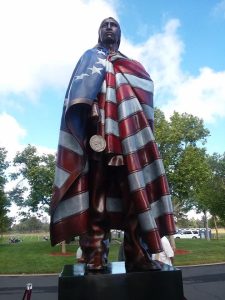 Senate bill seeks Congressional charter for Native veterans groupSDSU faculty and staff start bus tour of Native communities in stateAlaska Airlines launches Native-designed jet Xáat KwáaniTributes paid to Diné WW2 veteran Steven Harrison
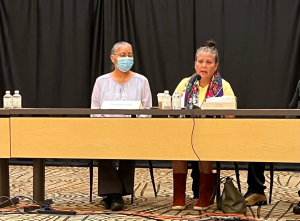 Interior Dept's MMIP commission meets in FlagstaffNez Perce Tribe objects to plan to develop former mine in IdahoESPN anchor apologizes to NHL's Whitecloud for offensive comparisonBreaking news: Diné WW2 veteran Steven Harrison dies at age 101
 Bad River files emergency motion against Enbridge's Line 5 pipelineHealth leaders assess pandemic's impact as COVID emergency endsOngtooguk: Organizations leaving AFN 'not thinking long term'
 Rep. Peltola concerned about impact of SCOTUS ICWA ruling on kids and tribesND tribe, NARF reach agreement with Benson Co. on compliance Teller becomes first-ever Asst Sec for Indian Affairs at USDOT
 Indigenous leaders meet with King Charles and attend coronationTwo major partners pull out of top Alaska Native organizationRep. Grijalva hosts virtual ICWA roundtable ahead of SCOTUS decision
The American Indian College Fund is releasing three briefs with findings from a three-part research project conducted in 2020-21 on tribal colleges and universities.
The focus of the research includes student support services, program development and review, and sustainability in tribal colleges and universities.
TCUs are unique higher learning institutions located on or near Indian reservations.
Read the brief (PDF)
There were four major themes identified in the study around academic program development, the preferred term participants used when discussing postsecondary credentialing or quality assurance practices.
TCUs use a four-step process similar to mainstream colleges when developing new academic programs: planning, internal review, external review, and program implementation.
The American Indian College Fund has been the nation’s largest charity supporting Native higher education for over 30 years.
The College Fund believes “Education is the answer” and provided over $14 million in scholarships and other direct student support to American Indian students in 2021-22.
Since its founding in 1989, the College Fund has provided more $280 million in scholarships, programs, community, and tribal college support.
Montana ended its legislative session by passing a bill guiding the removal and placement of Native American children in cases of adoption and foster care.
Montana Public Radio’s Ellis Juhlin has more on changes made with and without support of tribal lawmakers.
The bill (PDF) creates the Montana Indian Child Welfare Act (MICWA).
The policy builds on existing federal law regarding removal of Native American children, and prioritizes placing them into the homes of family members or other tribal members.
Over a dozen other states have passed statewide ICWA policies to increase guidelines for child placement, and they have all seen decreased rates of native children in state custody as a result.
Montana’s rate of native children in foster care is nearly four times higher than the rate of caucasian children.
Patrick Yawakie, a lobbyist for the Blackfeet Nation, said by expanding on the federal policy, MICWA fills gaps in the system.
With Montana ICWA in law, we can work to fix a broken system in the state and provide that the tribal children retain tribal identity and culture and heal intergenerational traumas that exist when native children are removed from their homes.
As Montana moves forward with the policy a federal version is being challenged in the U.S. Supreme Court case by those who say it gives preferential treatment based on race.
The Montana bill contains a provision that will keep it in place regardless of the outcome of the federal case.
Tribal lawmakers pushed back on an addition to the state bill that would sunset the policy in 2025.
Supporters of the policies’ limited run say it will give lawmakers a chance to revisit it next legislative session. But opponents say it will disrupt the lives of children and families in the system.
The bill passed as amended out of both chambers.
Montana’s legislatives session has now ended and the bill awaits final approval by the governor.
Alanna Nulph displays one of the drones used in her new search and rescue program under a Yurok initiative focused on finding missing Indigenous people. (Photo courtesy: Alanna Nulph)
Alanna Nulph, a senior paralegal and tribal criminal jurisdiction coordinator for the Yurok Tribe in Northern California, spent years working on missing and murdered Indigenous people cases in the region.
Native News Online reports that after the tribe’s own Emilee Risling went missing in October 2021, Nulph decided that she needed to take even more direct action in the face of what she felt was helplessness.
Nulph took it upon herself to earn a Part 107 Remote Pilot Certification from the Federal Aviation Administration in February this year.
The license is required to operate drones for search-and-rescue missions.
For the Yurok program, Nulph has acquired two high-powered drones with a range of additional tools to help search-and-rescue efforts.
The drones are also equipped with a payload delivery system that can deliver water, food, and other necessities to people awaiting rescue, and can provide light for first responders tending to a wounded person.
The drone program will become a part of the Yurok Tribe’s “comprehensive” response to one of the largest crises facing Indian Country.
According to a 2022 Congressional Research Service Report, there were 9,560 cases involving missing and murdered Indigenous people in 2020 alone.
Get National Native News delivered to your inbox daily. Sign up for our newsletter today.
Advocates for Montana’s most vulnerable residents are pushing back on a budget plan passed by the U.S. House, saying it would have disastrous consequences for people already faced with trying to find affordable housing in the state, as Mark Moran reports.
Lawmakers in Washington call it the Limit, Save, and Grow Act.
It raises the federal debt limit and reduces spending, but also cuts rental voucher funding for people struggling to find affordable housing, once known as Section 8.
Amy Hall, an attorney with Helena-based Montana Legal Services Association, says the bill would cut funding for 350,000 American families, including in Montana.
“About 1,500 families in Montana would lose access to rental assistance that is provided currently. Those would include older adults, persons with disabilities, families with children, and folks who without rental assistance would be at risk of being unhoused.”
Hall says Montana’s Indigenous tribes would also lose funding.
According to a White House fact sheet, 710 fewer miles of railroad track would go uninspected next year in Montana alone, and three air traffic control towers would be shuttered if the budget bill becomes law.
The U.S. Housing and Urban Development Secretary said proposed cuts would cause “mass evictions”.
Up to one million households currently being served by HUD’s rental assistance programs could lose it and as many as 120,000 homeless Americans would lose their help, including, Hall says, people in Montana.
“All of us in Montana have seen the number of folks who are unhoused rise in all of our communities since COVID hit, and that would only get worse if these funding cuts go into effect. And there would also be cuts to tribal housing programs and HUD programs that combat discrimination.”
The bill is not likely to pass in its current form, but critics worry it would give leverage to partisan budget measures in the future and have a dramatic impact on livable wages for Montanans already struggling financially.
Diné College in Tsaile, AZ
A tribal college in Arizona has gotten some national attention this spring for “community college excellence”, in this case, on the Navajo Nation.
Alex Gonzalez has more.
Diné College in Tsaile, AZ is mentioned in an Aspen Institute report for the work it’s doing to boost the local economy in an area without many industry partners or employment opportunities for graduates.
Shazia Tabassum Hakim is a microbiology professor at the college, and says it’s been able to use grant opportunities to invest in economic development and sustainable business practices.
Since 2020, Hakim has led a 10-week program to train students to become water scientists in their community.
“We should be able to train the local workforce, because it not only helps the communities to get more out of what they have learned – but also, it is needed to continue the chain, because they are going to be the examples.”
Hakim says Diné’s water testing program is one example of an initiative that meets Navajo needs, but also helps deliver students to potential jobs.
She adds the response from students and the community has been “overwhelmingly positive.”
Hakim says her program has led to greater awareness of safe water needs for people living on the reservation. And while the USDA grant that has made the program possible will end this year, she says the college will find a way to continue the work.
Given the tribe’s history with uranium mining, which led in the past to contaminated water sources and other health-related issues, Hakim says it is paramount that people know how to properly identify water contamination.
“It is not something that we are trying to stop at any point. For now, our students – we have trained them in a way just like ‘master trainers’ – so they are good enough in all these basic testing and other techniques. ”
The Aspen Institute report says the college has also decided to start its own businesses, one of which is to produce wool, since sheep ranching has been a cultural and economic staple for those in the area.
The school’s efforts have led to improved economic outcomes for tribal workers.
This story is supported by the Lumina Foundation.
Get National Native News delivered to your inbox daily. Sign up for our newsletter today.
Indigenous culture and traditions are naturally therapeutic.
That’s the message at the National Tribal Health Conference in Anchorage, AK this week, as Rhonda McBride from our flagship station KNBA reports.
“Not one tribe has the answers and the secrets to healing.”
Raquel Britton (Yuki and Pomo) is a member of the Round Valley Indian Tribes Youth Council. She believes intergenerational trauma plays a role in domestic violence. (Photo: Rhonda McBride)
Julie Smith-Yliniemi teaches at the University of North Dakota’s Indigenous Health Department.
She believes sharing traditional knowledge can help bring about a collective healing to address the intergenerational trauma that has affected several generations of Native Americans.
Interest in Smith-Yliniemi’s session was so high, people had to sit on the floor. Others streamed out into the hallway.
Raquel Britton from the Round Valley Indian Tribe Youth Council in California came in search of answers.
She says intergenerational trauma is something families do not like to talk about.
“I feel like my family went through historical trauma that we’re finally just breaking the cycle that my mother went through it with her mother.”
A collection of ceremonial items used to heal trauma. At the bottom, there’s a beaded collar, made by an elder and gifted to Julie Smith-Yliniemi.(Photo: Rhonda McBride)
Britton says her mother has just now started to talk with her children about the family’s history of trauma and wants to know what she can do to heal her own struggles and help others.
Smith-Yliniemi says she turns to trusted elders for advice, a source of wisdom can be surprisingly close at hand, as it was when she visited an elder battling cancer.
She found the woman in her hospital bed, doing beadwork, and has never forgotten her words.
“When you’re in pain or if you’re sick, help create joy in somebody else. So, she sat and beaded it for hours and hours and hours and hours and brought me joy.”
Smith-Yliniemi shared what brought her joy at the conference.
She passed around an elaborate beaded collar the elder gifted her.
She says the woman survived cancer and is still alive today.
Native American and Alaska Native media professionals are celebrating 50 years of broadcasting in Indian Country.
A group of people from tribal radio and television stations gathered in Phoenix, AZ Wednesday for the Native Broadcast Summit.
Loris Taylor is President and CEO of Native Public Media.
“Radio and television are such powerful mediums, and I see them as almost a kin to a drum in the plaza where we’re beating the drum, right? And we’re holding on. It’s also this invisible threw line that is tethered to our language, our cultural practices, our identity. So, radio and television are really powerful in that way. They speak to the agency we have to tell our own stories.”
Tribal media is an important part of Native communities across the country for news, entertainment, and emergency messaging.
George Strong is the general manager of KBFT Radio in Nett Lake, MN.
“We get to tell a story from our perspective. It’s something that allows us to share our knowledge, our culture, our language, and I look at it more as a bridge building to create a bridge between our local communities.”
There are more than 60 tribal radio stations and three tribal TV stations in the NPM network.
The U.S. Department of Health and Human Services will double funding available for the nation’s first-ever diaper distribution program and two tribal organizations will benefit.
The program was launched last September.
This week the agency announced an additional $8.2 million, doubling funding for the program, which aims to serve low-income families nationwide.
The Sisseton-Wahpeton Oyate of South Dakota and the South Puget Intertribal Planning Agency in Washington state are participating.
The program expansion also means diapers will now be available to families in 12 states.
According to the agency, one in three families do not have enough diapers to meet the needs of their children.
Low-income families are disproportionately affected and, in some cases, spend up to 8% of their income on diapers.
Get National Native News delivered to your inbox daily. Sign up for our newsletter today.
The National Tribal Health Conference got underway Tuesday in Anchorage.
About 1,200 tribal health advocates from across the country are meeting to deal with almost every facet of Indian health care – from operating clinics to serving veterans – fighting diabetes as well as looking at the impact of climate change on health.
The Alaska Native Health Board (ANHB) is working with the National Indian Health Board to host this year’s gathering.
Alberta Unok (Yup’ik) is head of ANHB and says this year’s theme is: “Culture Heals. Culture Knows. Culture Leads.”
“Prior to health being provided by Public Health or the Indian Health Service or the federal government, traditional health was a key component of our communities. So, we utilize traditional healers, traditional plants.”
Unok is orginally from Kotlik, a community on the Lower Yukon River in Southwest Alaska.
She says the conference draws members from twelve regional health boards around the nation.
“The National Indian Health Board brings together great minds in one place, that fuel creative energy, Collective action. We talk about health innovation to elevate the health of all American Indian and Alaskan Native people.”
The first day of the conference will wrap-up with a culture night, showcasing Alaska’s Indigenous peoples.
Gov. Kevin Stitt (R-OK/citizen of the Cherokee Nation) vetoed a bill yesterday that would have allowed students to wear tribal regalia at school functions.
Senate Bill 429 passed the Oklahoma legislature last week, 90 to 1, and would have ensured Native students in all schools are allowed to wear tribal regalia at high school graduations and other ceremonies throughout the state.
Gov. Stitt justified his decision saying if the bill becomes a law, it would open additional efforts by other groups to push their agendas.
According to the Oklahoma State Department of Education, in 2020, there were approximately 156,000 American Indian students who were enrolled in at least one of the 39 Tribal Nations of Oklahoma.
Tribal leaders and a California state lawmaker shared concerns at a hearing and a news briefing Tuesday in Sacramento, about Missing and Murdered Indigenous People.
Despite new resources, California has two tribes so disturbed by violence, they’ve declared a state of emergency.
State Rep. James Ramos (Serrano/Cahuilla/D-CA) discussed the need for the State to take immediate action.
“We are here to spotlight the crisis in Indian country which has led two tribes, the Yurok and the round valley tribes to declare states of emergency here in the state of California. The crisis is growing, and sadly we’re going backwards in the state of California in reducing the violence to our people.”
Vice Chairman Raquel Williams of the Wilton Rancheria tribe said that while there is still so much to be done, a lot has also been accomplished.
“Incredible progress is made in such a short amount of time. And we’ve brought so much awareness to this. From additional budget allocations to the newly enacted Feather Alert. I am confident and optimistic.”
The Feather Alert, co-authored by Rep. Ramos, acts like an Amber Alert providing law enforcement with resources they need to provide public with information to help recover Missing and Murdered Indigenous People.
Many of the people who spoke during the press conference expressed the need for bill Assembly bill 44, a bill to allow tribal officers to have access to information state law enforcement receives.
The press conference was the start to a week-long event shedding light on Missing and Murdered Indigenous People including candlelight vigils and flower dropping.
Get National Native News delivered to your inbox daily. Sign up for our newsletter today.
It took four tries, but a Pacific Dataport satellite finally blasted off from a SpaceX launchpad at the Kennedy Space Center in Cape Canaveral, FL Sunday night.
Pacific Dataport hopes to serve tribes in remote parts of Alaska, where broadband service has been unavailable or cost prohibitive.
For three days, the flight was delayed due to the elements and technical issues. But on Sunday, a rocket called Falcon Heavy successfully carried the satellite into space.
Brian Murkowski, a spokesperson for Pacific Dataport, says the Aurora 4A will be a game changer.
“Remote communities will have effectively the same capabilities and services that, that you would get in Seattle or San Francisco or L.A. And furthermore, it won’t cost you an arm and a leg. It will be competitive.”
The Aurora 4A is positioned higher above the earth and looks down directly on Alaska – which provides some new options for broadband and cell service customers.
Pacific Dataport says Aurora 4A is the first of its kind – a “micro” geostationary satellite, smaller in size but with advanced technology that gives it more data capacity.
In the days leading up to the National Day of Awareness for Missing and Murdered Indigenous People (MMIP), Yurok Tribal leaders will be participating in a series of events starting Tuesday, including candle light vigils, testimonies, a flower drop, and more at the California State Capitol to elevate tribally led efforts to resolve the ongoing crisis.
Watch the vigil live starting at 8:30am PT
A couple of public health studies are trying to prevent childhood obesity in tribal communities.
Emma VandenEinde of the Mountain West News Bureau reports on their approaches in part two of our special feature.
The Johns Hopkins Center for Indigenous Health launched a study to see if providing water and educating parents would help prevent early childhood obesity.
Every week, home health coaches talked with the moms about sugary beverages, breastfeeding, and other nutritional topics. Some families also received home deliveries of water.
Leonela Nelson is one of the home health coaches.
She says one of the main challenges mothers brought up was how their moms spoiled their babies.
“There was a lot of conversation along of like how to have these conversations with your parents in a respectful way of, you know what, Like this is my child. I want to I want them to be healthy.”
The results of the Johns Hopkins study were striking.
The children of parents who received water and the teaching had a lower body mass index.
Rontel Hale, a participant, says she can see improvement in her son due to the study.
“Doing these little lessons. It’s a lot of help. And it also helps not just you, but also helps your little ones.”
Other groups also have looked into water-based solutions.
A few years ago, the Notah Begay the third foundation launched the Water First Learning Communities.
It was a cohort of eight Native organizations focused on increasing water consumption.
One group from the Jemez Pueblo in New Mexico did a school water challenge to encourage kids to drink fruit-infused water.
Another group – the Tamaya Wellness Center in the Santa Ana pueblo – found signs were the solution.
“It’s really cool to see that they have like the sign that said, no sugary sweetened beverages allowed in their center because then we’re like, oh, like that that did that has made an impact.”
That’s Simone Duran with the foundation.
Rolling outthese projects may be slow, but she believes they have a ripple effect on the community.
“They are more willing to kind of make small steps, small changes. It’s not going to happen overnight where the entire community is drinking water.”
Hale has already shared her experience with her sister so her kids can continue to grow healthy and strong, too.
“You still need that support of going to somebody. And that’s where I would give her some of the lessons that were given to me.”
The researchers are expandingtheir studies and plan to take them beyond the Southwest reservations.
This story was supported by The Water Desk, an initiative from the University of Colorado Boulder’s Center for Environmental Journalism. Listen or read part one.
Get National Native News delivered to your inbox daily. Sign up for our newsletter today.
Millions of dollars have been committed to documenting the stories of Native boarding school survivors.
Their voices have long been a priority for Interior Secretary Deb Haaland.
SDPB’s C.J. Keene has more.
The U.S. Interior Department has announced a partnership with the National Endowment for the Humanities to make sure the oral history from boarding school survivors isn’t forgotten.
The partnership includes a $4 million fund to pay for research and educational programming sharing stories of boarding school abuse victims.
Haaland visited the Rosebud Reservation in October to talk with survivors.
Arlouine Kingman is the executive director of the Great Plains Tribal Chairmans Association. While she says she appreciates Haaland’s actions, listening to survivors is long overdue.
“She’s made a point of taking time to go and hold community forums to listen to people who were in those boarding schools. I happened to go to the one at Rosebud, and I tell you I was crying with some of these people who told their stories.”
Kingman says these forums are alleviating some of the trauma.
“This one woman, she had been in the boarding school, and she told how even today she’s still got trauma from that. She said it was sort of a healing for her – to be able to voice this and see there’s some healing taking place now.”
She says she hopes this money is used to continue healing in that vein – to reclaim what was taken.
“The main thing is when they were raised in the boarding school, it took their culture, their values from them, so they did not grow up in a family where they were taught to share with one another or taught to take care of one another. They grew up without those family virtues we all instill in our children as they grow up – and that’s the great harm.”
Dorian Hale, 3, marches through the mud outside his family home in Shiprock, NM on Feb. 1, 2023. His mother is happy to watch him grow after partaking in a study that helps families with nutrition. (Photo: Emma VandenEinde/KUNC)
Haaland says the goal of the project is to rebuild bonds between native communities and the federal government and ensure future generations will learn from the boarding school era.
Tribal communities have historically had a hard time getting clean drinking water. And that affects children’s health.
Emma VandenEinde of the Mountain West News Bureau shares the experience of one family in Shiprock, NM.
This is Dorian. He’s playing in the mud outside his family’s hogan, a one room home, on the Navajo Nation.
He loves playing with cars. His favorite is the “Cars” movie character Lightning McQueen.
Rontel Hale, his mother, says he’s growing well for a three-year-old.
“When I would go to his appointments, they would always tell me, like, he’s going to grow over six foot two inches.”
But health professionals say not every kid on the Navajo Nation – an area as big as West Virginia – is growing healthy and strong like Dorian.
Thousands of families lack access to clean, drinking water due to a legacy of neglect by the U.S. government.
They either have to haul water from community wells or drive for hours to the nearest store.
“If water is so hard to access, then what is a replacement? And so for a lot of communities, sometimes it was those sugary beverages.”
That’s Renee Goldtooth-Halwood.
She works for the Notah Begay The Third Foundation, a Native children’s health group.
She says sugary drinks like Gatorade or even Arizona Tea are cheaper and more accessible for Native communities.
This has staggering effects for children.
The foundation reports that more than 85% of Navajo kids have at least one sugary drink a day. And these numbers apply to many other pueblos and reservations.
“And we also had another statistic that said that…this is the first time that children will not outlive their parents. That’s scary.”
Hale knew these beverages can contribute to obesity and diabetes – conditions that are disproportionately high among Indigenous youth.
Her desire to keep Dorian healthy only grew after he was born.
“Your mentality is like more like, oh, is he okay? Is he, am I doing stuff right? It’s more different when you have like your own baby.”
This story was supported by The Water Desk, an initiative from the University of Colorado Boulder’s Center for Environmental Journalism. Tune in for Part Two to hear how some organizations want to help.
Get National Native News delivered to your inbox daily. Sign up for our newsletter today.
A mountain 35 miles southeast of Eugene, OR has been officially renamed to something less controversial.
As KLCC’s Brian Bull explains, “Swastika Mountain” is no more.
The new name for the roughly 4,200 foot high peak is “Mount Halo.”
The name is derived from Kalapuya Chief Halito, whose village was 20 miles west of the mountain.
David Lewis is an assistant professor of anthropology and ethnic and Indigenous studies at Oregon State University, and a member of the Confederated Tribes of the Grand Ronde.
He says while some people have defended the swastika as a universal symbol for many cultures, its more recent associations are troubling.
“The symbol really has negative connotations from World War II, and it’s use as a symbol of fascism. And so we need to at times revisit names that have been given to the land, and to rivers, and towns, and maybe replace those with things that have more resonance with today’s society.”
The U.S. Board of Geographic Names approved the name change at its April 13 meeting and it takes effect immediately.
Lewis says the entire process began a year and a half ago.
Robert DesRosier (Photo: National Tribal Emergency Management Council)
Voters on the Blackfeet Nation have elected a replacement for a council member who recently resigned following his arrest.
Montana Public Radio’s Aaron Bolton has more.
Blackfeet Disaster and Emergency Services Director Robert DesRosier won the election and will take over the Browning seat on the Blackfeet Tribal Business Council.
The Blackfeet Nation held a special election Tuesday to fill the vacant post of former chairman Tim Davis.
Tribal council members last year voted to remove Davis as chairman after nine people, including family members, were arrested at Davis’ home on drug related charges. Davis continued to serve on the council.
Davis was arrested in March for disorderly conduct and threatening a public official.
The council planned to hold an expulsion hearing, but Davis resigned shortly after the hearing was announced.
(Photo courtesy: Sherry Johnson)
After the final public comment hearing for South Dakota’s proposed social studies standards, the state board of education standards voted to approve the proposal – though strong opposition remains.
South Dakota Public Broadcasting’s C.J. Keene has more.
After well over a thousand opposing comments from South Dakotans, the embattled standards proposal sailed to passage on a 5-2 vote.
From the onset, the proposal was panned by the state’s education and Native communities.
Sherry Johnson is the education director of the Sisseton Wahpeton tribe.
She says many are unhappy with the role the Native community is slated with.
“For a great part, all of Native Americans are portrayed as warlike, and Native Americans are made to feel embarrassed about that role – that’s when Gov. Noem says she doesn’t want divisive, but that is itself divisive to Native American people. The right to vote is missing for Native Americans, the Native American Religious Act – you know that was only passed in (19)78. These things are huge.”
Testimony like that swayed some board members.
Board president Terry Nebelsick announced his opposition at the end of the hearing in Pierre.
“By statute these hearings are put in place to determine if the citizens of South Dakota have any concerns with the standards recommended by the revision committee that the statute indicates should be made up of South Dakota educators and professionals. These hearings should not be a debate with point-counterpoint. There is no win-win in this process. The longer its gone on it’s become obvious it will become a lose-lose endeavor.”
Despite the opposition, board member Phylis Heineman was unmoved.
“I have learned personally so much going through all of this. It has been – I found these standards very exciting. When I read through some of this information – first of all I gotta thank the Governor for starting the conversation.”
Within minutes of passage, a representative from Gov. Kristi Noem (R-SD)’s camp sent a release applauding the passage of the standards.
Implementation of the new standards will begin in June and take place over the next two years.
Get National Native News delivered to your inbox daily. Sign up for our newsletter today.
Public hearings on missing and murdered Indigenous people were held this week in Alaska.
APRN’s Liz Ruskin reports.
Vivian Korthius sits on a commission created by Congress to address the problem.
She says more than 300 Alaska Native people are on a missing and murdered registry.
“To me, that’s the same size of a village. A whole village. And it’s shocking to know that there’s that many people we’re missing.”
The Not Invisible Act Commission met in Anchorage to hear testimony from victims and advocates working to prevent violence.
They identified a range of problems, including a lack of services for vulnerable people and too little law enforcement in rural Alaska.
Systemic racism and trauma were recurring themes.
Several advocates told the commission that it’s hard to make federal programs work in rural Alaska, especially for small tribes.
Dana Diehl, director of wellness and prevention at the Alaska Native Tribal Health Consortium, said federal grants are not easily tailored to community needs.
“Oftentimes, the scope of our funding is very limited and narrow. But from an Alaska Native perspective, we see things more holistically, and you can’t separate things like mental health, physical health, and spiritual health.”
The commission invited family members of missing and murdered Indigenous people to testify during an afternoon session that was closed to the media.
By October, the panel is to produce recommendations on how the federal government can better prevent and respond to violence against Native Americans and Alaska Natives.
The North Dakota Legislature has passed a bill that codifies the Indian Child Welfare Act in the state.
State Rep. Jayme Davis (Turtle Mountain Band of Chippewa Indians/D-ND) successfully led the passage of House Bill 1536.
Rep. Davis introduced the bill as the U.S. Supreme Court considers the fate of the Indian Child Welfare Act, which seeks to keep Native children with Native families.
Under the bill, if the high court makes changes to the federal law, the changes would not apply in North Dakota unless the legislature choses to amend it in the future.
In a statement, Rep. Davis said a repeal or significant changes to ICWA by the U.S. Supreme Court could have negative impacts on American Indian and Alaska Native children, and that protecting ICWA in North Dakota protects Native children.
The bill passed 46-0 in the Senate and 91-1 in the House.
It now heads to the governor.
A Colorado news collaborative recently released a report highlighting the experiences of Indigenous communities with the media.
It also includes solutions on improving that relationship.
KUNC’s Emma VandenEinde reports.
COLab’s Indigenous Voices report shared how Indigenous communities frequently felt invisible.
They also mentioned how the coverage of issues important to them was very surface-level.
Here’s Tara McLain Manthey, a citizen of the Osage Nation in Oklahoma and the project leader.
“The less that the community is covered in a human in-depth way, the more those stereotypes persist or become deeper ingrained.”
Some specific solutions mentioned were building trust in reporting relationships, getting Native journalists in the newsroom, and educating journalists about Native history through training.
This story is distributed by the Mountain West News Bureau, which contributed to the report.
Get National Native News delivered to your inbox daily. Sign up for our newsletter today.
Tribes from the U.S. and Canada are again calling on government officials to stem pollution flowing from British Columbia coal mines into the international waterways.
Aaron Bolton reports the tribes say lack of action from both countries is harming fish populations.
More than ten tribes issued an open letter calling on the U.S. and Canada to reach an agreement during bilateral talks this week that would stop selenium pollution from B.C. coal mines that’s making its way into Lake Koocanusa and the Kootenai and Columbia rivers, all transboundary water bodies.
Last month, President Joe Biden and Canada’s Prime Minister Justin Trudeau announced the two countries would strike a deal this summer to “reduce and mitigate” selenium pollution.
The tribes are calling for both countries to authorize International Joint Commission involvement.
The IJC settles transboundary water disputes between Canada and the U.S.
Alaska Native language experts shared their personal stories at the State Capitol last week.
They were there to give an update on the Alaska Native Language Preservation and Advisory Council.
As Rhonda McBride from our flagship station KNBA reports, they also hoped to inspire those at the highest levels of government to support Indigenous languages.
Dr. Walkie Charles told a gathering of lawmakers and their staffers that, at the age of twelve, he was taken away from his home in Emmonak and sent to a boarding school.
He said his mother only spoke the Yup’ik language, or Yugtun, and didn’t understand what happened to him.
“My mother just recently, she died nine years ago, finally told me that every time she heard a plane approaching to our village, that once a week, she was hoping I would be in that plane returning home. But I never did.”
Charles said he was also ripped away from his “heart language” and didn’t reconnect to it until he was in college.
Two years ago, Charles became the first Native director of the Alaska Native Language Center at the University of Alaska Fairbanks.
Yayuuk Bernadette Alvanna-Stimpfle, an Inupiaq language leader, recalled what she felt as a child.
“I could remember being a non-English speaker at five years old, making us to sing this song, ‘I’m a little teapot short and stout.’ And in my, in my five-year-old Inupiat mind, (speaking in Inupiaq) I say, ‘I am not a teapot.'”
X’unei Lance Twitchell spoke.
“Alaska for a long time had been on a path of decided elimination of Indigenous languages. Right? There, there was intention, there was purpose, there was a well-orchestrated attack on our peoples.”
X’unei told the group there are 23 Alaska Native languages, and a few of those are no longer spoken.
“We don’t like the word extinct. We prefer dormant, because that we’ve seen languages come back.”
X’unei says, with only 30 fluent speakers of Lingít, it hasn’t been easy to rescue his language, but it is possible.
“So, imagine if you could, if there were 30 speakers of English left in the world, imagine if you could, if the English language went three generations without creating a single new speaker, then imagine if you could, watching a child sit down at a table full of elders, who could then speak to that child. And that child understands them.”
Those elders, X’unei said, had lived through a 70-year gap without hearing any new speakers of their language.
“We didn’t tell her to. She just went and sat with the elders and they were laughing. I could just see the sparkle in their eyes to see a child, who can understand them.”
In his work as head of the Native language program at the University of Alaska Southeast, X’unei has helped to create a new generation of Lingít speakers.
He says those who work at the State Capitol also have an important part to play.
“Everybody who works in this building for the people, that when you walk through those doors every day, maybe you could just give yourself an affirmation. And that affirmation is this: No language dies on my watch. No language dies on my watch.”
Back in 2012, the legislature created the language preservation council that X’unei now chairs.
Oklahoma state lawmakers have approved a bill to allow Native students to wear traditional regalia to graduation.
The bill passed the House this week.
The Oklahoman reports schools in the state have come under scrutiny in recent years for trying to ban students for wearing eagle feathers or other regalia to graduation.
The bill still needs to be signed by the governor.
Get National Native News delivered to your inbox daily. Sign up for our newsletter today.
Navajo leaders say they’re deploying all necessary resources to assist residents being impacted by flooding in Chinle, AZ.
Flooding began Friday when a berm from a wash running through the community failed to hold back rising waters, according to the tribe.
Resources have been deployed from across the Navajo Nation to help.
The office of the president is providing flooding updates on social media.
Navajo Nation President Buu Nygren says the full force of the Navajo Nation has been made available to assist the community of Chinle.
The vice president of the tribe, Richelle Montoya, has been on site and has met with families being impacted.
Assistance has also come from the county, the American Red Cross, and local residents.
Reconstruction of the berm is underway.
The Navajo Nation declared a state of emergency in January for the on-going need of resources, which is helping address the Chinle flooding.
The American Red Cross has opened a shelter to help people in the area.
Tribal colleges in Minnesota hope state lawmakers will help with funding needs.
Tribal college leaders say the schools teach students and help maintain Native language and culture.
Mike Moen has more.
Tribal colleges not only teach students, they’re also institutions that maintain Native American languages and cultural history.
In Minnesota, these schools hope the Legislature gives them a funding boost.
A bill this session would set aside $3 million in each year of the next biennium.
The state’s three tribal colleges could apply for grants, for general operation and maintenance expenses.
Leech Lake Tribal College President Helen Montgomery said it would be transformative for her school.
She said it could use funds to add more learning space and get up-to-date resources for STEM courses.
“Certainly, a lot of the learning that we do is outside, and we do have programs that teach an Indigenous perspective on not just science, but the environment. It would be really great to have some modern equipment.”
She said the funds could also help remove student-aid barriers, and provide staff a cost-of-living wage increase she described as long overdue.
Tribal colleges get most of their funding from the federal government, and leaders say it covers only the bare minimum.
President Montgomery said helping schools such as hers allows them to keep offering a culturally inclusive environment where Native students can ease into the college setting.
She said these individuals don’t have to feel isolated as they navigate their higher-education path.
“We would be able to hire personnel or create experiences that help our students bridge the tribal-college setting to the four-year setting,” she said.
According to the Postsecondary National Policy Institute, 41% of first-time, full-time Native American students attending four-year colleges graduate within six years, compared with 63% for all students.
A new round of grant funding for projects in Michigan that highlight tribes and Native Americans in the state is now open by the Native American Heritage Fund.
K to 12 schools, higher education institutions, and local governments may be eligible for funding.
Board chair Jamie Stuck says while other states like New York are banning the use of Native American mascots, the heritage fund is proud to provide the opportunity and funding to make culturally appropriate changes in Michigan.
The grants are intended to promote positive relationships and accurate information about the history and role of Michigan’s tribes and Native Americans.
Projects could include things like events and art, or help remove mascots and imagery.
The heritage fund was created in 2016 through the Tribal-State Gaming Compact, which allocates the funds.
Since then, funding has helped with the removal of imagery from 12 schools and two municipalities with more than $2 million in distributions.
Applications will be accepted through mid-June.
Another First Nation in Canada is grieving after unmarked graves were found near another former residential school.
As Dan Karpenchuk reports, ground penetrating radar has identified the possible remains of 40 unmarked graves.
The site is the former St. Augustine’s Residential School operated between 1904 and 1975.
Children from more than 50 First Nations attended the school northwest of Vancouver, on what is called the Sunshine Coast.
The Shishalh First Nation is the latest band to reveal the results of probes into children who had disappeared while attending residential schools.
Lenora Joe is the chief of the First Nation.
“The GPR identifies 40 unmarked children’s graves. Shallow graves. Only large enough for the young bodies to lay in a fetal position. We have spent the past few years following the truth of our elders through the investigation.”
The research also involved interviews with residential school survivors and records of documented historical events. Some researchers say they believe there are many more unmarked graves at the site.
Although much of area has been disturbed and developed since it lies in the middle of municipality of Sechelt.
Joe says the community is in mourning as members and survivors process news of the discovery.
She has asked for privacy for the First Nation to give people time to heal.
The Truth and Reconciliation Commission said parents took their children out of St. Augustine’s, protesting against poor education, harsh discipline and a poor diet.
Photo: Chuck Quirmbach
Interior Secretary Deb Haaland (Laguna Pueblo) is releasing more federal money for conservation and wildlife projects, including those helping tribes.
Chuck Quirmbach of public station WUWM reports Sec. Haaland spoke to a journalists conference Friday in Idaho.
Sec. Haaland marked Earth Day by telling the Society of Environmental Journalists that she is setting aside $140 million in federal funds for water conservation and efficiency projects
“Funding for 84 projects spanning 15 western states will go to irrigation in water districts, states, tribes, and other entities. This projects are expected to conserve over 230,000 acre feet of water when completed.”
That’s enough to cover 230,000 football fields in a foot of water.
Sec. Haaland also announced $35 million for 39 new fish passage projects on rivers and streams in 22 states.
The Interior Secretary says those efforts should help migration of fish, including salmon.
Under questioning from a reporter, Sec. Haaland also re-committed to the concept of stewardship agreements with tribes for management of public lands.
She says ancestral homelands must be protected. regardless of which federal agency essentially owns the land.
“It still is regarded as an ancestral homeland and as a sacred place for Native Americans. We recognize that, and why we feel so strongly about these stewardship agreements.”
Sec. Haaland says tribes in Idaho, Virginia, and Utah are already providing Indigenous knowledge to help manage public lands and waters.
Sec. Haaland and leaders of the Fish and Wildlife Service and Bureau of Land Management also told reporters that several contentious water, and wildlife topics are still being studied and discussed.
Some announcements may come from the Biden Administration before the 2024 election.
The U.S. Senate Committee on Indian Affairs will hold a virtual listening session to discuss updating the Indian Arts and Crafts Act.
Senators will examine amending the act to support creative economies, and strengthen enforcement and protections against counterfeit Native art.
The session is scheduled for Wednesday afternoon.
Register for the listening session here.
Livestream at 2:30 p.m. ET.
Get National Native News delivered to your inbox daily. Sign up for our newsletter today.
The United Nations Permanent Forum on Indigenous Issues began Monday in New York and continues through next week.
Canadian delegates have not wasted any time drawing attention to their top concerns, as Dan Karpenchuk reports.
The theme of this 22nd session of the Indigenous issues forum is “Indigenous Peoples, human health, planetary and territorial health and climate change — a rights based approach.”
Dozens of Native, Inuit, and Métis delegates are in attendance including the national chief of the Assembly of First Nations RoseAnne Archibald.
Several Native leaders talked about land rights, insisting that Canada’s laws have criminalized Indigenous defenders of the land who have protested against resource projects on their lands.
Judy Wilson is a former British Columbia chief.
“When the title and rights of Indigenous people are perceived conflict with the national interest or agenda or priorities of the Crown government that often align with corporate interests, the title and rights of Indigenous peoples are repeatedly infringed and violated.”
And Aly Bear, a vice chief from Saskatchewan’s Federation of Indigenous Sovereign Nations, says it’s time that the 231 calls for justice from the missing and murdered Indigenous women and girls inquiry be implemented.
Bear says Native leaders are calling on governments to take the issue seriously because there needs to be an end to it.
Others said women and girls are at the forefront of defending mother earth and their safety must be ensured.
The forum is an advisory body to the UN with a mandate to deal with Indigenous issues related to economic and social development, culture, the environment, education, health, and human rights.
North Dakota’s new poet laureate Dr. Denise Lajimodiere is the first Native American to hold the position.
Lajimodiere says she’s honored to represent her tribe, the Turtle Mountain Band of Chippewa.
In an interview shortly after learning about her appointment this month, Lajimodiere told Prairie Public radio one of the things she’d like to do is work with Native students across the state.
“I didn’t have a mentor growing up in high school and this would be in the late-60s. I graduated in 69. So, I hope to be that mentor and that role model for Native students. I hope to reach out to community groups and just promote and increase the appreciation of poetry.”
Much of her work focuses on Native issues including poems that are narrative style about her life in North Dakota as a Native person.
Lajimodiere is a co-founder of the National Native American Boarding School Healing Coalition and has shared stories about Northern Plains boarding school survivors in a book.
She’s currently working on a novel based on her father’s boarding school experience and is working on her next book of poems.
Lajimodiere says writing is part of her own healing process including from racism she faced growing up.
“What I could no longer hold I could put in my poems and close that journal, close that book and it felt like it no longer had that power over me to harm. So, I say that poetry helped me find my voice and I’ve been writing ever since.”
The scholar and longtime educator is also a jingle dress dancer and birch bark biting artist.
She’ll serve as North Dakota’s Poet Laureate for a two-year term.
Listen to Lajimodiere’s interview with Prairie Public’s Bill Thomas here:
https://nativenews-offload-media.s3.us-west-2.amazonaws.com/wp-content/uploads/2023/04/21084753/Denise-Lajimodiere-edit.mp3 The Saint Regis Mohawk Tribe is applauding the New York Board of Regents for banning schools from using Indian mascots.
The tribal council in a statement Thursday said it’s pleased with the action.
The council says it’s needed to move away from harmful stereotypes and cartoons of Native Americans, and to recognize Native Americas as people.
This week, the board decided public schools will no longer be allowed to use Indian mascots, names, or imagery.
The Saint Regis Mohawk Tribe is encouraging officials at all levels of government to support the effort.
Get National Native News delivered to your inbox daily. Sign up for our newsletter today.
A group of Indigenous leaders from Canada is highlighting priorities this week at the United Nations Permanent Forum on Indigenous Issues taking place in New York.
Assembly of First Nations National Chief RoseAnne Archibald held a press conference Wednesday with four other Native leaders.
One of their top areas of concern – missing and murder Indigenous people.
Vice Chief of the Federation of Indigenous Sovereign Nations Aly Bear says society is targeting women, girls, and two-spirited+.
She says more needs to be done to protect them.
“We continue to see an increase of our Indigenous women being murdered especially the latest case, Linda Beardy, who was just recently found in a landfill. We are not trash we deserve to be valued. Traditionally, our women held high respect in our community. It’s that colonial violence, colonial mindset that came here and put us to the lowest of the hierarchy. Now we are regaining that power, regaining that leadership.”
Bear and the other leaders are calling on Canada to implement more than 200 recommendations made after a national investigation into missing and murdered Indigenous people.
Yup’ik and Inupiaq students from the fourth to the eighth grades recently competed in a Native language spelling bee in downtown Anchorage, Alaska.
Rhonda McBride from our flagship station KNBA has more.
In the Yup’ik language, or Yugtun, Cingssiik is the word for “Little People,” elf-like creatures, who wear cone-shaped hats that look like fish traps.
Tiernan Maqaruaq Ignatius from Nunam Iqua spells the word, C-I-N-G-S-S-I- I-K. Rebecca Atchak, Judge & Coach for Stebbins: Assirtuq.
Assirtuq means, “Good. You got it right.” And Nunam Iqua’s team heard that word a lot. It swept all three top spots.
Alayna Canoe, an eighth grader, took home the first place Yup’ik spelling trophy.
“It feels good, winning,” said Alayna.
Winning for the second year in a row. Her coach and Yup’ik teacher, Savanna Strongheart said the news made her feel a little dizzy.
“I’m so excited. My goal was ever since I started was to get one, two, three — and this year I have one, two, three. So, I’m like all excited and I want to scream. So, oh my goodness.”
The spelling bee came full circle this year for many who have been involved in since its beginning twelve years ago.
One of the students, Casey Jack, who took second place that very first spelling bee, returned as a guest speaker.
“There’s so many opportunities these days for Natives teaching their Native language and Culture.”
Twelve years ago, Casey Jack was an 8th Grader, who represented the tiny Bering Sea village of Stebbins.
Today, he’s an adjunct professor of Yup’ik language at the University of Alaska Fairbanks and credits the spelling bee for sparking his passion for his Native language.
“One of the defining moments I would say.”
While the Yup’ik spelling bee had four schools involved, there was only one team for the Inupiaq language. Cameron Tocktoo of Brevig Mission took first place.
Casey Jack applauded the school’s efforts. He says he knows from personal experience how small steps can take you a long way.
Photo courtesy: @NYOAlaska Facebook
Meanwhile, in Anchorage, Thursday is a big day for Native athletes who have come from around Alaska to take part in the 2023 Native Youth Olympic games.
The first day features three competitions – the Kneel Jump, the Wrist Carry and the Alaskan High Kick.
The games showcase traditional Native survival skills and promote physical endurance in the wilderness.
The games continue through Saturday, and also include a blanket toss and results from a Pilot Bread recipe contest.
The games are hosted by Cook Inlet Tribal Council.
Get National Native News delivered to your inbox daily. Sign up for our newsletter today.
A stretch of highway that runs through the Blackfeet Nation in northwest Montana is now named after the late Chief Earl Old Person.
Aaron Bolton reports Old Person was a storied cultural and political leader for the Blackfeet Nation.
Old Person, who died in 2021, served as the Blackfeet traditional chief and sat on the nation’s tribal council for decades.
But he also played a major role nationally, serving as the president of the National Congress of American Indians from 1969 to 1971.
He also helped pass federal legislation like the American Indian Religious Freedom Act of 1978, which ensured access to traditional sites and the freedom to worship through ceremonies.
A bill that will memorialize Old Person was signed into law Tuesday.
A stretch of U.S. Highway 89, which runs through the heart of the Blackfeet Reservation, will now be known as Chief Earl Old Person Memorial Highway.
A community corn field at the Jemez Pueblo in north-central New Mexico, seen here on March 17, 2023. The Pueblo, which is largely supported by farming, irrigates its farms with snowmelt from the surrounding mountains. (Photo: Kaleb Roedel / Mountain West News Bureau)
On Tuesday, you heard about Jemez Pueblo’s efforts to secure water rights for the tribe’s health and way of life.
KUNR’s Kaleb Roedel has more on why that work is more urgent than ever.
Traditionally, the Pueblo’s growing season runs from April to October. But it often gets cut short by water shortages – to the point that some don’t even want to plant anymore.
“This climate change has really made us even think harder. What can we do? How can we make these things work?”
That’s Michael Toledo Jr. He’s a three-term governor and a longtime negotiator on the tribal water team. And he’s a farmer who says the lack of water hurt his crops badly last year.
“That’s the way it goes sometimes – and it’s year by year. But it’s our way of life, we’ve got to take care of our own land and take care of what we have.”
The federal government has set aside $2.5 billion to settle disputes over tribal water rights.
So far, a number of tribes have already reached settlements.
That includes the Navajo Nation in New Mexico, Arizona, and Utah; the Nez Perce Tribe in Idaho; and the Southern Ute Tribe in Colorado.
Last fall, several lawmakers from New Mexico introduced bills to approve Pueblo water settlements.
For Jemez, it would create a $290 million trust fund for water-related projects and confirm the tribe’s rights to more than 6,000-acre-feet per year. That equals enough water to cover 6,000 acres of land, one foot deep.
U.S. Sen. Martin Heinrich (D-NM) spoke about the proposal before the Senate Committee on Indian Affairs.
“The settlements will provide critically needed funding for water infrastructure to develop and distribute new water to Pueblo homes and businesses.”
But the Jemez Pueblo is still waiting for its water rights to be approved. And Congress has been newly divided after Republicans took control of the House.
Here’s Paul S. Chinana, a five-term pueblo governor and member of the tribal water team.
“I just hope that we get a settlement. It’s always an upstream battle, and we’re not there yet.”
Meanwhile, on the banks of the Jemez River, Peter Madalena is thinking beyond the water the Pueblo needs for its fields this year.
“It’s just part of our lives. And I think it’s very important that we continue that livelihood, not just for us but for our grandkids and their kids way down the line.”
That’s why he’s glad to see the surrounding mountains covered in snow.
He’s praying for plenty of rainfall this spring – and for their water rights to be secured sooner than later.
This story is supported by The Water Desk, an initiative from the University of Colorado Boulder’s Center for Environmental Journalism.
Get National Native News delivered to your inbox daily. Sign up for our newsletter today.
For 40 years, Jemez Pueblo in New Mexico has been working to access water the tribe says it’s owed by the federal government.
KUNR’s Kaleb Roedel visited the tribe to learn more about those efforts.
It’s a gray and snowy day in late winter on the Jemez Pueblo reservation in north-central New Mexico.
Peter Madalena is standing on the banks of the Jemez River, a tributary of the Rio Grande.
Madalena says the river’s higher than it has been in recent winters thanks to more days like this one – filled with snow.
“It’s a blessing that we’re getting it because you’re gonna have more water, and hopefully more people plant.”
Madalena is the Pueblo’s 1st Lieutenant Governor.
He’s also a lifelong farmer – like many here at Jemez.
The tribe doesn’t own any casinos or large energy sources.
They’re largely supported by farming, with corn and chilies being their primary crops.
That means they rely heavily on this river, which they divert for agriculture.
“The crop from the seed up, as they say, we grow together. So that’s what we’re trying to protect here, the water.”
But that hasn’t always been easy.
Back in 1938, New Mexico, Colorado and Texas signed a compact that divided the Rio Grande Basin waters among the states.
But Native tribes and pueblos didn’t have a seat at the table.
That forced them to negotiate settlements or file lawsuits – even though their rights predate all other water users.
Paul S. Chinana is a five-term Jemez Pueblo governor and member of the tribal water team.
He’s been involved with negotiations since they started back in 1983.
“We’ve been having a lot of water shortages for as long as I can remember. And there were a lot of people that were moving in upstream.”
As more water-users – mainly, homes and businesses – are built to the north, less of it flows down to Jemez.
And there’s another challenge impacting the amount of available water.
“Drought. It’s just hard to get everything running normal like it’s supposed to run when there’s no water.”
This story was supported by The Water Desk, an initiative from the University of Colorado Boulder’s Center for Environmental Journalism.
The city of San Antonio, TX recently named Chicano poet Nephtali De Leon as the city’s poet laureate.
The bilingual bicultural artist says he’ll not only represent his Mexican-American culture in the post, but also his Indigenous roots.
Maria Martin reports.
The son of migrant workers, 78-year-old Nephtali De Leon is known for his children’s stories, his visual art, and most of all, for his code-switching poetry.
“While we bless all with holy water of our San Antonio, of ancient our Yanawana Springs, where you can even dance a Westside Polka… with Chiquita Banana.”
At his investiture as San Antonio’s poet laureate, De Leon told National Native News he and all Chicanos from the Southwest are rooted in the ancient Indigenous Mexica culture.
“We still carry the same blood as our ancestors.”
Poet Nephtali De Leon will serve as San Antonio’s poet laureate for the next three years, promoting the art of poetry while celebrating the diverse culture and history of this Texas city.
Get National Native News delivered to your inbox daily. Sign up for our newsletter today.
Montana’s legislature has passed a joint resolution recognizing the history of American Indian boarding schools and calling on the U.S. government to create a national day of remembrance.
Montana Public Radio’s Ellis Juhlin has more.
State Rep. Tyson Running Wolf (D-MT/Blackfeet Nation) sponsored the resolution in the House to officially acknowledge the trauma of boarding schools.
They suffered physical, sexual, cultural, spiritual abuse, and neglect – and experienced treatment that in many cases constitute torture.
For speaking their native language, many children never returned home, and their fates have yet to be accounted for by the U.S. government.
On the House floor Wednesday, Rep. Running Wolf read off a list of 13 children from tribes across Montana who died at the Fort Shaw Industrial Indian School, an hour east of Helena.
The school was opened between 1892 and 1910.
The youngest to attend the boarding school was four years old.
Senate Joint Resolution 6 passed with bipartisan support in both the House and Senate.
In 2021, U.S. Secretary of the Interior Deb Haaland launched an investigation into the country’s past assimilation policies, which included the forced removal of Native American children from their families and tribes, placing them in Indian boarding schools.
That ongoing investigation found 18 boarding schools operated in Montana.
Gov. Tina Kotek (D-OR)’s stance on gaming is hypocritical, says the Coquille Indian Tribe.
The criticism follows a letter Gov. Kotek recently sent to the nine tribes located across the state.
KLCC’s Brian Bull reports.
In her letter, the governor writes that she does not favor the expansion of gaming, and therefore her policy maintains the status quo from previous administrations.
Gov. Kotek then highlights the Coquille Tribe’s application for an electronic bingo facility in Medford, and states her opposition to it.
That’s stirred up strong feelings and resentment among some who point to a broad array of state-sponsored gambling in Oregon.
Jon Ivy is Vice Chair of the Coquille Tribal Council.
“Truly, the Oregon Lottery is the biggest gaming institution in the state of Oregon. Maybe there’s some political gamesmanship going on here, when in fact it is frustrating and quite frankly, somewhat hurtful to the tribe.”
The tribe says Gov. Kotek has no authority over the matter and her stance perpetuates a mythical “one tribe, one casino” policy.
The Coquille Tribe has sought federal approval for a Medford gaming facility, which would be its second one outside the Mill Casino in North Bend.
Previous governors have not supported it, and the Cow Creek Band of Umpqua Indians – which runs the Seven Feathers Casino in Canyonville – has also opposed it.
The governor’s office did not respond to KLCC’s request for comment.
Sam Schimmel during the 2022 White House Tribal Youth Forum. (Photo: @Sam_Schimmel_ / Instagram)
A man with strong family ties to the Western Alaska village of Gambell has been recognized for his commitment and dedication to Native culture and identity.
KNOM’s Greg Knight reports.
Sam Schimmel, 23, is an Indigenous youth advocate who’s Siberian Yu’pik and Kenaitze.
He’ll soon graduate from law school.
Schimmel is the inaugural recipient of the Autumn Apok Ridley Award given by the Alaska Native Heritage Center in Anchorage.
He’s recognized for his work in supporting Indigenous culture and ways of life.
Schimmel says listening closely to elders as a youth, as he grew up in Gambell and on the Kenai Peninsula, was one of the most important touchstones in his life.
“They’re the ones who instilled in me the promise of reciprocity, that our communities are based on the idea that our elders will teach us how to live and how to be. In exchange, when we grow up, we will take care of our elders and we will pass down that knowledge onto our children so that they will take care of us.”
Schimmel received the award last week.
The heritage center’s inaugural community recognition included an elder award, which was given to the late Dr. Oliver Leavitt (Inupiaq).
Get National Native News delivered to your inbox daily. Sign up for our newsletter today.
Audio available by 12pm ET
President Joe Biden is back spending time with his Irish cousins Friday as part of his week-long trip to the Emerald Isle.
Thursday was a full day of pomp and circumstance with Irish politicians in the Republic’s capital, as Seo McPolin reports from Dublin.
U.S. President Joe Biden and Ireland’s poet-president Michael D. Higgins rang a peace bell at Áras an Uachtaráin.
The head of state’s official residence was originally built in 1751 and was a summer place for the British viceroy in the Kingdom of Ireland.
Most of Dublin’s city center – including the zoo – was shutdown Thursday amid tight security.
There were concerns of violence by critics of the Good Friday Agreement, which deferred a United Ireland in the name of peace 25 years ago this week.
The White House denied the President is ‘anti-British’ after a former leader of Northern Ireland’s right-wing loyalist party said President Biden ‘hates the UK.’
His love for Ireland was on full display including his entry into President Higgin’s guest book, quoting an old Irish saying “your feet will bring you to where your heart is … and it’s an honor to return and to come home to the home of my ancestors.”
Postal Service honors Chief Standing Bear, who fought for Native American 14th Amendment Rights.
Chief Standing Bear is being honored by the U.S. Postal Service.
His portrait is featured on a Forever stamp.
The leader is well-known for fighting for Native rights.
In 1877, the U.S. Army forcibly relocated some 700 Ponca people to Indian Territory, what’s now Oklahoma, after the federal government took the tribe’s homeland in an area that’s now in northeastern Nebraska.
When trying to return home, Standing Bear along with 29 other Ponca people were arrested.
Standing Bear sued the federal government for his freedom in a landmark civil rights case, which he won.
A ceremony will be held in Lincoln, NE on May 12 to rollout the stamp.
Freda Dan’s four kids are all grown-up, but she continues to organize an Alaska Native language spelling bee every year in Anchorage, which now includes Yup’ik and Inupiat language speakers.
Dan (Yup’ik) grew up in the Western Alaska village of Stebbins.
She now lives in Anchorage, where she started the spelling bee when her kids were small, to help them keep their connection to their language.
After twelve years, with one year off for the pandemic, Dan is holding her 11th statewide spelling bee in Anchorage. She says it’s the students who keep her going.
“I do catch their exuberance and happiness, that they accomplished something.”
Before students get to the competition, they have a lot of work to do.
They’re given a long list of words to learn – 26 pages for Yup’ik spellers and 14 for Inupiaq.
“It includes the word with its definition, a sample of its usage and a lot of them have difficulty with Q and K and R and G.”
Dan says those letters represent different sounds than in English.
Understanding those spelling conventions, she says, also helps students learn to read in their Native language and improve their vocabulary.
Four schools are taking part in the Yup’ik spelling bee – Nunam Iqua on the Bering Sea coast, as well as two Kuskokwim River communities, Akiak and Akiachak.
Brevig Mission, which is north of Nome, is the only Iñupiaq school in this year’s competition.
The statewide spelling bee will be held at the Central Lutheran Church in downtown Anchorage on Saturday.
Indigenous chef Sean Sherman (Oglala Lakota) has made Time magazine’s 100 most influential people in the world list for 2023.
Sherman is a leader in the movement to revitalize Indigenous food systems, and is also a founder of the non-profit North American Traditional Indigenous Food Systems.
Get National Native News delivered to your inbox daily. Sign up for our newsletter today.
An Indigenous organization is collecting data about American Indian and Alaska Native youth.
Emma VandenEinde with KUNC reports.
The Center for Native American Youth is conducting a nationally reaching survey aimed at 18-24 year olds who identify as Indigenous.
Cheyenne Brady is with the center.
“How can we be working for Native youth if we don’t really know what their voice is?”
The center has done a few surveys like this in the past, but this one focuses on the resources available to Native youth.
It asks questions about education, food security, economic opportunities, and more.
The survey is part of the Urban Indian Health Institute’s Decolonizing Data grant program.
Brady says their goal is to fill in the data gaps where other surveys fail.
“If we’re not creating new data for us and by us, that risks the opportunity for the nation and the world to continue utilizing any data where we’re severely underrepresented or any data that is simply inaccurate.”
The survey has more than 500 responses.
Once finished, the results will be shared with tribes.
The survey will close Friday and can be accessed via the Center’s website.
Nanuq, after getting his post-journey medications. (Photo: Mandy Iworrigan)
And now for a tale of two Alaskan dogs who live on St. Lawrence Island, a tiny piece of land off the Bering Sea coast not far from Russia and surrounded by sea ice, as told by Rhonda McBride from our flagship station KNBA.
Starlight and Nanuq are the beloved pets of Mandy Iworrigan, who lives in Gambell, a village at the top of the island.
Mandy Iworrigan owns the dogs.
“If dogs could talk, both of them would have one heck of a story.”
Iworrigan left Starlight and Nanuq at home in Gambell, when she took a trip south to Savoonga, but the dogs had other ideas.
They disappeared. And about two-and-a-half weeks later Starlight, who looks like a black lab and husky mix, showed up in Savoonga, about 40 miles away from Gambell.
So where was Nanuq?
Well, the Australian shepherd turned up in Wales, a week after Starlight made it to Savoonga — a trek to the mainland that took Nanuq across more than 150 miles of sea ice. And except for some bite marks on his leg, he was in good condition.
Iworrigan believes he survived by hunting.
“I’m pretty sure he ate scraps of seals, scraps of birds.”
Iworrigan says the dog proved he was a survivor and lived up to his Siberian Yup’ik name, Nanuq, which means “polar bear”.
Nanuq traveled by airplane back to Gambell.
Iworrigan says she was especially grateful to Michael and Hilary Ahkinga of Wales, a brother and sister who took care of Nanuq – and to those who helped him fly home.
Iworrigan says she and her children were there to greet him.
“When he came and heard our voices off of the plane, he started whining and crying, you know, just the happiness.”
With help from antibiotics to treat his leg, Nanuq appears to be on the mend. Iworrigan believes he may have been bitten by a wolverine or a seal, possibly even a polar bear.
Western Michigan University is announcing a graduate certificate in tribal governance.
The certificate is in cooperation between the School of Public Affairs and Administration, and three Potawatomi nations.
The opportunity is intended to provide tribally endorsed resources where students can engage with various tribal entities through subject matter and experts.
Plans include cohorts involving government, gaming and economic development with each tribal nation.
The announcement will be made Thursday afternoon as the university hosts a talk with U.S. Assistant Secretary for Indian Affairs Bryan Newland.
Newland is a citizen of the Bay Mills Indian Community in northern Michigan.
Get National Native News delivered to your inbox daily. Sign up for our newsletter today.
Two regional tribal organizations have sued the federal government over failed Western Alaska salmon runs, reports Rhonda McBride from our flagship station KNBA.
The Association of Village Council Presidents and the Tanana Chiefs Conference have named two federal agencies as defendants in the case – the National Marine Fisheries Service and the Department of Commerce.
The lawsuit was filed on their behalf by Earthjustice.
AVCP and the Tanana Chiefs represent about a hundred tribes who live along the Yukon and Kuskokwim Rivers, a land mass that stretches from Southwest Alaska to the Canadian border.
Jennifer Hooper, the Natural Resources Director for AVCP, says back-to-back seasons of fishery collapses have affected every aspect of life for people in the region.
“It’s just been a compounding situation of huge food security concerns and lack of salmon, which of course is protein and food. But more so, it’s the culture and the traditions that people have experienced for thousands and thousands of years.”
Salmon bycatch is at the heart of the complaint, which was filed in U.S. District Court last Friday.
Bycatch are fish that are caught intentionally and discarded, as fishing boats pursue other species.
In this case, the lawsuit targets factory trawlers in the Bering Sea that fish for pollock, a ground fish used in popular flaked fish products like fish sticks and surimi, a crab substitute.
Brian Ridley, who is Chairman of the Tanana Chiefs Conference, says the salmon crisis may soon reach a point of no return.
“If immediate, large scale action doesn’t take place by either the state or the feds, we might not even have a fishing resource left in our rivers. I mean, we’re darn near the level where I think endangered species could start coming into play. And that’s all we’re trying to do is not get to that point.”
The lawsuit claims federal fishery managers relied on outdated studies, when it set groundfish catch limits for the 2023 and 2024 seasons – and failed to consider what it calls “monumental changes” in the Bering Sea and Aleutian Islands ecosystems that have taken place over the last two decades.
The fishing industry has argued there’s no conclusive evidence that bycatch has caused the decline of salmon, but even so, has taken steps to reduce incidental catches.
NOAA Fisheries, which oversees the National Marine Fisheries Management Service, says it cannot comment on litigation.
Earthjustice is the same environmental law firm which recently filed suit on behalf of three other Southwest Alaska tribes to block the Donlin Gold Mine.
On Tuesday, members of the Grand Canyon Tribal Coalition joined U.S. Arizona lawmakers U.S. Rep. Raúl Grijalva (D-AZ) and U.S. Sen. Kyrsten Sinema (I-AZ) in launching an effort to create protections near the Grand Canyon.
They’re calling on President Joe Biden to use his authorities to designate the Baaj Nwaavjo I’tah Kukveni Grand Canyon National Monument.
The proposal includes more than one million acres near Grand Canyon National Park.
Tribal representatives took part in a virtual press conference with the lawmakers expressing the need to protect the area, which is culturally and spiritually significant to tribes in the Southwest.
Timothy Nuvangyaoma is chairman of the Hopi Tribe.
“The creator gave us a gift and that gift is in the form of the Grand Canyon. That gift is not only for the tribal nations that have that intimate connection with it, but it’s a gift to the state of Arizona. It’s a gift to the United States. It’s a gift to the entire world. So, we do have to protect the beauty of the area many tribes call home…The Hopi Tribe supports the designation it protects the Grand Canyon’s physical beauty and natural and cultural resources. This designation is the highest priority to the Hopi people.”
The designation would protect the area from uranium mining. The area is also an important watershed for the Colorado River.
The Grand Canyon Tribal Coalition consists of representatives from more than a dozen tribes.
Get National Native News delivered to your inbox daily. Sign up for our newsletter today.
The Alaska Native Heritage Center says its study of church records that go back to the 1800s is not research for research’s sake, reports Rhonda McBride from our flagship station KNBA.
Researcher Benjamin Jacuk-Dolchok (Kenaitze) says he hopes to reconstruct the story of how early churches used schools to separate Alaska Native peoples from their land, their culture, and their spirituality.
He says the impacts are still felt today.
“You can’t understand what you need healing from, unless you pull back the band aid and understand the wound.”
Jacuk-Dolchok says most Alaskans don’t realize how closely churches coordinated their efforts.
“While these might be different denominations, the ideology was mostly the same. And that was forced assimilation.”
Jacuk-Dolchok says some of the research looks at the role of boarding schools — and how Americanization and Christianity intersected to break the close connections Alaska Natives had with their land.
He says the forced use of English took away the “heart language” of the people, which sped up the process.
“The major takeaway from what we’re doing is understanding the truth to bring healing, so that younger generations can thrive.”
Jacuk-Dolchok has studied Native boarding schools for more than a decade and credits his grandfather, who attended boarding school, for inspiring his work.
The Princeton Seminary graduate says his theology studies has helped him with his research and given him access to important documents.
Jacuk-Dolchok will share some of his research at the Alaska Native Heritage Center in Anchorage on Friday.
This mural of President Joe Biden was erected ahead of a previous visit to his ancestral homeland in Ballina, Co. Mayo. (Photo courtesy: RTÉ)
President Joe Biden flew to Ireland Tuesday to mark the 25th anniversary of the historic Good Friday Agreement.
But as Seo McPolin reports from Dublin, not everyone is celebrating the deal which deferred Indigenous Irish sovereignty in the name of peace and prosperity.
The Good Friday Agreement was hammered out 25 years ago by Irish, British, and American negotiators. It effectively ended decades of violence against the Irish people and opened up the economy of Northern Ireland.
However, it failed to unite the island of Ireland and left the British government, which sponsored much of the violence, in control of the six counties.
Sinn Féin, now the most popular political party on the island, has been denied the chance to lead on either side of the border by their right-wing counterparts.
This 1990s mural in Belfast links the Irish and Native American struggles against colonialism. (Photo: Peter Moloney)
Sinn Féin is pushing for a reunification vote, which has been gaining support since Brexit.
Britain’s withdrawal from the E.U. further isolated Northern Ireland from the rest of the island and put new pressure on the 25-year-old agreement.
President Biden will spend this week attending anniversary events and visiting his Irish cousins.
An Indigenous author recently released a new children’s book highlighting the cultural importance of hair. KUNC’s Emma VandenEinde.
Carole Lindstrom (Turtle Mountain Ojibwe/Métis)’s mom never allowed her to have long hair when she was young.
She didn’t understand until she learned about Indian Boarding Schools, where her relatives were forced to cut their hair.
“My mom didn’t allow it because it made us look native. It made us look uncivilized. That kind of decided it was time to tell the story.”
My Powerful Hair follows a young girl who sees her culture and life events woven into her hair like a scrapbook. At the end, the girl and her mom decide to grow their hair out together.
For Lindstrom, the story is very personal.
“I wish my mom was still here so she could be with me to celebrate who she really was.”
Illustrator Steph Littlebird (Confederated Tribes of Grand Ronde) made the drawings colorful to show her community’s resilience.
“We’re fighting erasure on so many levels. And so these books make visible our community in a way that’s so beautiful and empowering.”
My Powerful Hair is available in bookstores and online.
Listen to Native America Calling’s recent conversation with Carole Lindstrom
Get National Native News delivered to your inbox daily. Sign up for our newsletter today.
A New Mexico man pleaded not guilty Friday in the 2021 disappearance of an elderly woman on the Navajo Nation.
Arizona Public Radio’s Ryan Heinsius reports, Ella Mae Begay’s case has brought national attention to the epidemic of missing and murdered Indigenous people.
At his arraignment in Flagstaff, 23-year-old Preston Henry Tolth pleaded not guilty to assault and carjacking charges.
Begay’s friends and family attended the hearing urging that Tolth remain in custody.
Seraphine Warren is Begay’s niece.
“He’s where he’s at, his hands are shackled, he’s helpless, maybe just like my aunt was. We’re going to fight with this and him to get the right answers. My aunt really did not deserve this at all.”
She spoke at the hearing along with Begay’s son, Gerald Begay.
Warren brought attention to her aunt and other cases of missing and murdered Indigenous people last summer as she walked from the Navajo Nation to Washington D.C.
Begay is still missing and prosecutors hope to uncover the truth about her disappearance.
They say Tolth assaulted the then-62-year-old woman in the community of Sweetwater, Ariz. near Four Corners, and then took her pickup truck, which he allegedly traded for methamphetamine and 200 dollars in Albuquerque, N.M.
A U.S. magistrate ordered Tolth to remain in custody pending trial.
He was already in custody on a separate charge and has an extensive criminal history.
A federal trial is scheduled to begin next month in Phoenix and, if convicted, Tolth faces decades in prison.
Kimberly Belone and Reese Cuddy stand inside the laboratory in the Johns Hopkins Center for Indigenous Health office in the Fort Defiance agency of the Navajo Nation on Feb. 1, 2023. This is where the compartment bags are prepped with chemicals and inspected. (Photo: Emma VandenEinde/
KUNC)
Researchers at Johns Hopkins Center for Indigenous Health are surveying water quality and access on tribal lands.
KUNC’s Emma VandenEinde joined them on a survey day to see how it works.
Taishiana Tsosie and Kimberly Belone head out on winding dirt roads, following a random list of homes.
To find one driveway, Tsosie and Belone have to count the roads they pass.
TSOSIE AND BELONE: “So this would be seven, eight, eight, right? No, this isn’t it. This isn’t it. No, it is.”
While other surveys did not count hogans and trailers, this one uses satellite imagery to map all homes in the Fort Defiance section of the reservation.
But without good addresses or Wifi on the Navajo Nation, it can be difficult to find.
TSOSIE: “It is. That hogan was there. Okay. Yeah.”
At each home, residents are asked if they want to be interviewed anonymously. The survey has questions about where they get their water, the water’s quality and potential solutions.
They plan to survey more than 1,000 homes, and 100 will be selected for water testing. But the interviews can be a rollercoaster of emotions. Belone recalled one with an old man who was struggling to haul water.
BELONE: “He was just like, ‘I’m not going to have anybody to do this. So that might be the end of us if I can’t haul water anymore.’ It’s just like, Oh my gosh.”
Plus, many barriers stand in the way for tribal communities.
Heather Himmelberger is with the Southwest Environmental Finance Center.
She studied tribal water systems in Rio Grande pueblos And found that old and faulty pipes and other infrastructure were their main concern.
“You have these very expensive infrastructure projects with very few people who can pay for them. So you can imagine that that becomes problematic over time.”
Her 2022 study also found that many water systems were not aware that dozens of grants existed for their projects.
Some did not even receive the full amount of requested funding.
“What part gets done? What part doesn’t get done? And then how does that affect that community for a longer time frame?”
Despite this, Belone believes the Johns Hopkins’ survey is what the community needs.
“Many of them are really, really grateful. They’re like, Thank you. Nobody has asked me these questions. Thank you for being the one to actually start something.”
This story was supported by The Water Desk, an initiative from the University of Colorado Boulder’s Center for Environmental Journalism.
Get National Native News delivered to your inbox daily. Sign up for our newsletter today.
Three Alaska tribes are suing the federal government to block a gold mine in Southwest Alaska.
As Rhonda McBride from our flagship station KNBA reports, the lawsuit also impacts two Alaska Native corporations, which are partners in the project.
The proposed Donlin Gold Mine sits near the upper reaches of the Kuskokwim – one of Alaska’s two largest rivers – remote and rich with wildlife.
The mine’s developers say it also has the potential to be one of the biggest gold mines in the world.
Opponents say the massive open pit mine that’s envisioned is just too risky.
Earth Justice is representing the three tribes that have filed suit – the Orutsararmiut Native Council, which is based in Bethel, the Organized Village of Kwethluk and the Tuluksak Native Community.
The suit, which was filed in U.S. District Court, challenges the Final Environmental Impact Statement for the Donlin project. It names the Army Corps of Engineers, the Bureau of Land Management and the Interior Department as defendants in the case.
The suit says the mine threatens lands and waters that tribes have relied upon for food and drinking water for time immemorial, as well as for culture, ceremony and passing on traditions.
The lawsuit claims that mining tailings or spills from barges carrying toxic substances like cyanide and mercury could destroy fisheries and wildlife habitat.
Two Canadian companies, Barrick Gold and Nova Gold, are co-owners of the mine, which pits the tribal groups against two Alaska Native Corporations, which are partners in the project.
The Kuskokwim Corporation, a consortium of ten village corporations, owns the land. Calista, a regional corporation, owns the mineral rights. Both have touted the mine as a golden opportunity that could bring jobs, infrastructure and affordable energy to one of the most cash-starved regions of the state.
Alaska’s other Native Corporations also have a stake in this project, under a profit-sharing mechanism in the Alaska Native Claims Settlement Act – which created the corporations and sets aside 70 percent of the profits from natural resource development, to be split among twelve regional Native Corporations.
In a news release, Donlin Gold said the lawsuit is without merit and is confident the decisions made by the federal agencies involved will be upheld.
Kimberly Belone and Reese Cuddy stand inside the laboratory in the Johns Hopkins Center for Indigenous Health office in the Fort Defiance agency of the Navajo Nation on Feb. 1, 2023. This is where the compartment bags are prepped with chemicals and inspected. (Photo: Emma VandenEinde/
KUNC)
An organization is examining water quality and access on tribal lands.
KUNC’s Emma VandenEinde took a trip to the border of Arizona and New Mexico to learn more.
Taishiana Tsosie and Kimberly Belone are standing in the dark, in an office bathroom on the Navajo Nation.
They’re holding up plastic bags filled with water from the sink.
Belone shines a blacklight on one of the bags.
Tsosie says that will help find contaminants.
“What we’re looking for is…basically if it’s glowing really, really bad.”
Belone and Tsosie don’t think there’s any E Coli. But they see harmless bacteria in some of the numbered bag compartments.
BELONE: “I think two and three on both of them are fluorescent.” TSOSIE: “I was thinking three, and I don’t think yours is.”BELONE: “Really?” TSOSIE: “Yeah.”
This test is a crucial part of their Diné Household Water Survey conducted by the Johns Hopkins Center for Indigenous Health. It aims to learn more about water on the Navajo Nation.
Estimates about water access and quality vary widely.
The Indian Health Service says just over 9 percent of Native people lack good sanitation, but the Water and Tribes Initiative reports that number is as high as 48%.
And the problem is concentrated in the arid southwest – from the Navajo Nation to the Rio Grande pueblos.
TSOSIE: “Well, since the Rio Grande is so close to Albuquerque metropolitan area that they’re finally experiencing what we have been experiencing here.”
Tsosie is familiar with these water issues from her childhood.
“I did live with my grandmother and she didn’t have piped or running water growing up. So we would have to, you know, use the bathroom outside.”
After she and her mom moved out, Tsosie got access to…some running water.
“It wasn’t great water. It was kind of yellow, but we were still safe enough to bathe and never drank it.”
Tsosie hopes the survey results can highlight a vital resource their nation needs. Belone agrees.
“That’s the thing. It is a basic thing. Everyone should be entitled to running water and all of that. ”
This story was supported by The Water Desk, an initiative from the University of Colorado Boulder’s Center for Environmental Journalism.
Tune in for Part 2 to see how the survey works.
Get National Native News delivered to your inbox daily. Sign up for our newsletter today
A federal grand jury has indicted a New Mexico man in the case of a missing elderly woman on the Navajo Nation.
As Arizona Public Radio’s Ryan Heinsius reports, Ella Mae Begay remains missing after more than a year-and-a-half.
The two-count indictment alleges that 23-year-old Preston Henry Tolth assaulted Begay during a June 2021 carjacking in Sweetwater, Ariz., a community near Four Corners on the Navajo Nation.
Prosecutors say Tolth drove Begay’s Ford F-150 pickup truck across state lines and intended to cause death or serious bodily harm to her.
Tolth faces decades in prison if convicted.
The investigation by the FBI and Navajo Nation law enforcement is ongoing and the U.S. Justice Department says it’s part of a broader attempt to solve cases of missing and murdered Indigenous people.
Begay’s family has aggressively sought answers in her disappearance.
In a social media post, an attorney representing them said the day of the indictment was bittersweet.
Last summer, Begay’s niece Seraphine Warren walked from the Navajo Nation to Washington D.C. to advocate for her aunt and other missing and murdered Indigenous people.
Winona LaDuke has resigned as executive director of the environmental group Honor The Earth.
The board of directors received and accepted her resignation this week.
The move comes after a Minnesota jury last week sided with a former employee.
Margaret Campbell had complained a co-worker sexually harassed her.
Campbell claimed Honor the Earth’s leaders failed to take her concerns seriously.
The Becker County jury awarded Campbell $750,000 in damages for sexual harassment and retaliation.
Honor The Earth released a statement on Facebook Wednesday from the new executive director Krystal Two Bulls.
In the statement, Two Bulls talks about moving Honor The Earth forward with the transition after LaDuke’s more than 30 years of leadership.
The statement does not mention the lawsuit, but Two Bulls says they’ve learned “real lessons” and have “deep” work to do around sexual harassment.
She goes on to say Honor The Earth is committed to listening, healing, and intentional work ahead.
In a Facebook post, LaDuke wrote that she failed former employee Molly Campbell for failing to respond to her reports of sexual harassment by a co-worker.
LaDuke says, prior to the trial, she had been working on a transition plan.
This story includes reporting from Minnesota Public Radio’s Kirsti Marohn and Dan Kraker.
Tribal leaders in California asked state lawmakers to help address the fentanyl crisis impacting their communities.
During a recent roundtable at the State Capitol in Sacramento, tribal leaders shared how fentanyl is devastating Native Americans across the state.
Chairman John Christman of the Viejas Band of Mission Indians, who’s been in tribal leadership for 16 years, has served as chairman for the last four.
He says fentanyl is plaguing his people and it’s like nothing he’s seen before.
“Part of the reasons we don’t have success is this new sort of chemical takes ahold of them and when you look in their eyes they can’t, it’s like they need a stepping program to get off of this to even get through to them at all.”
Chairwoman Angela Elliott Santos of the Manzanita Band of the Kumeyaay Nation talked about how she’s lost close family members to fentanyl.
She says challenges include being in a rural area with lack of resources, law enforcement and services. Santos says what tribes need is full funding, which they don’t have to compete for in order to tackle the issue.
“Funding we can count on to end the cycles that have plagued us since we were stripped of our way of life. In these days of so much talk of equity and making up for the past, our tribes are still in the same position they’ve been in for decades – nowhere close to having the resources to truly help our people.”
Santos also stressed the need for collaboration especially for law enforcement and mental health crisis support.
The discussion was led by State Rep. James Ramos (Serrano/Cahuilla/D-CA) who says the roundtable was held for legislators to learn recommendations for a stable government-to-government solution.
Get National Native News delivered to your inbox daily. Sign up for our newsletter today
A Becker County, MN jury sided with a former employee of the environmental group Honor the Earth in her sexual harassment claim.
Kirsti Marohn with Minnesota Public Radio has more.
Margaret Campbell filed a civil lawsuit in 2019 against Honor the Earth, an organization formed by environmental activist Winona LaDuke.
Campbell complained a co-worker sexually harassed her in 2014 and 2015, and acted inappropriately with Native American boys.
She says Honor the Earth’s leaders failed to take her concerns seriously.
Campbell initially filed a complaint with the Minnesota Department of Human Rights.
It found no probable cause Honor the Earth was guilty of sexual discrimination or took punitive action against Campbell.
She appealed, and last week, the jury awarded her $750,000 in damages for sexual harassment and retaliation.
In a statement, LaDuke said Honor the Earth remains committed to resisting all forms of sexual harassment, violence, and assault.
Youth leaders recently highlighted priorities for the circumpolar north during a panel at the recent Arctic Encounter Symposium in Anchorage, as Alaska Public Media’s Kavitha George reports.
The panelists included Indigenous fellows and policy advisors from Alaska, Canada, and Greenland.
In addition to climate adaptation and cultural preservation, panelists stressed the need to look at the root causes of outmigration from their traditional homelands.
Cordelia Kellie is Special Assistant for Rural Affairs to U.S. Sen. Lisa Murkowski (R-AK).
She says during a recent trip to Kotzebue she heard about the need for port development to have easier access to goods in the Northwest Arctic region and other needs.
“How are we also investing in housing so that way people can be in communities, because I think that is one issue of housing that affects all of our Arctic communities, I see a lot of nodding heads. So infrastructure, cost of living and housing, would be in priorities for making sure people can stay on our traditional homelands.”
On another panel, older Alaska Native leaders discussed the necessity of an energy transition away from fossil fuels.
Chief Gary Harrison of Chickaloon Village says he fears climate change could destroy the way of life he wants to pass on.
“We know that peoples in the Arctic are like the canary in the coal mine. It’s going to be affecting us first. Our bottom line is going to be what are we going to have for the future generations? If we leave a mess, how are they going to live? it’s something that I think about constantly.”
Planning for a sustainable future that balances resource development and climate change were top discussions at the three-day gathering.
Photo courtesy: NBA
A Canadian rhythm and blues singer has been honored by Native leaders for her rendition of Canada’s national anthem.
Dan Karpenchuk has more.
It took place at the NBA All-Star Game in Salt Lake City, Utah, in February.
Instead of singing “O Canada. Our home and native land,” Jully Black sing this:
“O Canada, our home on Native land…”
At a special chiefs assembly in Ottawa of the Assembly of First Nations, on Monday, Black was honored for the small change to the anthem.
She was presented with an eagle feather and wrapped with a blanket during a ceremony by AFN National Chief Roseanne Archibald.
Saying she was grateful, Black held back tears and said she didn’t realize here action would receive such a response, even while singing the song at the game, she said it was emotional for her.
“If I have an opportunity to be an amplified voice, then I’m going to. That’s why I made the decision. As a singer if you cry, you lose your voice, you won’t sound very good. I’m first generation Canadain singing that song since kindergarten, learning it, someone telling me to sing it, not knowing what it actually meant. And so as a songwriter I didnt’ to disrespect the song writer because I am one too. But I also realize that we are on the land, like on it. We don’t own it, it’s not ours. So rather than look at I changed the anthem, I wish I could sit with the songwriter and say hey you might have got the facts wrong.”
Black says she also consulted with some of her Indigenous friends before making the final decision.
After the ceremony Black again sang the altered version of “O Canada.”
That prompted cheers from the crowd.
Get National Native News delivered to your inbox daily. Sign up for our newsletter today
The VA is waiving copays for American Indian and Alaska Native veterans.
The Department of Veterans Affairs announced Monday that eligible Native veterans are no longer required to make copayments for health care or urgent care received through the VA.
Under the new policy, the VA will reimburse copays paid on or after January 5, 2022.
Starting Tuesday, April 4, veterans can submit documents to qualify for the copay exemption.
VA officials say eliminating copays will help make health care more affordable and accessible for Native veterans.
Those interested in taking part in the new rule need to fill out a VA tribal documentation form.
According to the VA, this is estimated to impact about 25,000 Native veterans.
More information can be found online at va.gov.
The U.S. Assistant Secretary for Health for the U.S. Department of Health and Human Services met with students at Haskell Indian Nations University in Lawrence, KS late last week.
Admiral Rachel Levine, an advocate for LGBT medicine, is working with the Indian Health Service on LGBTQ+ issues.
One challenge in providing care says Dr. Levine is lack of data within IHS.
“We are trying to ask the Indian Health Service to collect sexual orientation, gender identity data. That would be sole on a voluntary basis. So, if you don’t want to answer, you don’t have to answer. But, without asking the questions you don’t and there are specific ways to respectfully ask the question. And to ask it in ways people have flexibility in terms of how they answer.”
Dr. Levine says the data would help in providing care. Dr. Levine is the first openly transgender federal official confirmed by the U.S. Senate and was a guest speaker at Haskell on International Transgender Day of Visibility.
The Indian Health Service is a division within the U.S. Department of Health and Human Services.
North Dakota is home to a tribal college that’s successful in conserving energy.
The success is a reflection of overcoming colonialism in gaining access to key resources, according to the school.
Turtle Mountain Community College sits in the heart of the Turtle Mountain Reservation.
Facilities manager Wes Davis has led an effort to lower the energy bill of the college by 300%.
He did this through controlling the 256 geothermal heating and cooling pumps in the school, each equipped with their own sensor.
Davis says colonialism has imposed a worldview on Indigenous people that has impacted how they sustain themselves.
He suggests that includes access to advanced infrastructure.
“We need to be able to understand how to develop our power and energy and how to get it to our communities.”
In this particular area, Davis says the obstacles largely stemmed from Native populations being excluded from rural electric cooperatives.
But he says there’s now some positive movement in easing that tension, with tribal communities expressing interest in establishing their own co-ops.
Davis hopes what the school has been able to accomplish eventually leads to lower energy costs for Indigenous communities surrounding the campus.
“I want our community to be healthier and [have] a better quality of life for them and not have to be taxed all winter long and about worrying about, ‘Are they going to be able to come home to a warm home?'”
Davis not only wants the college to be sustainable – he wants it to teach sustainability to the community and inspire residents to build more energy-efficient homes.
A future goal for Turtle Mountain Community College involves a vocational H-VAC program and solar and renewable-energy schooling.
This story was produced with original reporting from Jessica Plance for Homegrown Stories in collaboration with the Solutions Journalism Network.
And, the Institute of American Indian Arts Bee-Well Program we told you about on Monday was all just for fun.
Happy April Fools as we kick off the month of April… bee-well!
Get National Native News delivered to your inbox daily. Sign up for our newsletter today
A First Nation on a reserve that straddles the border between Canada and the United States has been shaken by the deaths of eight suspected migrants.
As Dan Karpenchuk reports, the bodies were found in the St. Lawrence River.
Details are still sketchy and only two of the victims have been identified.
But the group had apparently tried to cross into the United States from Canada across the St. Lawrence River in an area where the where the Akwasasne Mohawk reserve straddles the international border.
The First Nation borders on Quebec, Ontario, and New York state.
Shawn Dulude is the chief of the Akwesasne Mohawk Police Service.
He says eight bodies, including two children, have now been found after an overturned boat was found in the water late last week.
“All are believed to have been attempting illegal entry into the United States from Canada. The circumstances surrounding the deaths continue to be investigated. Akwasasne Mohawk police are working with Immigration Canada and Homeland Security to confirm their identities so that the next of kin notifications can be made.”
Officials say the boat was too small to be able to safely carry seven or eight people.
Elders at the First Nation say St. Lawrence is always a major concern, especially with spring runoff, the current is stronger and the water itself, ice cold.
Some say they wouldn’t venture out on the river until at least May.
Casey Oakes
Officials say at least 80 people have been intercepted as they tried to cross into the U.S. since January.
The eight victims are apparently from two families, one Romanian, the other Indian.
Advocates for asylum seekers say since the closing of the irregular crossing less than a week ago, desperate migrants trying to cross to either country, will try more hazardous methods of doing so.
Still missing is 30-year-old Casey Oakes, a resident of the Akawasasne First Nation.
Police would not say if his disappearance and the bodies found in the marsh along the river are linked.
A grant is expected to help student parents at a tribal college in northwestern Montana.
Eric Tegethoff has more.
The Aspen Institute has announced Blackfeet Community College and seven other institutes around the country have joined the Black and Native Family Futures Fund.
Linda Sue Racine is a counselor at the school and is overseeing the 75-thousand dollar grant. She says COVID-19 hit the Blackfeet Reservation hard and many students are grieving.
“To be able to get good grades and all that you need to have some peace in your life. And I always feel that if we’re not well mentally and emotionally and physically, then we’re not going to be able to succeed.”
The grant comes with technical assistance to implement programs as well.
Blackfeet Community College is setting up the Native Student Parent Program, which will help young mothers with child care, food and transportation.
Racine says elders also are helping with the program.
She says workshops for the young mothers include making traditional outfits for their kids.
“We just don’t want our people to lose their cultural and their traditional way of life. So it’s very important that we integrate it in everything we do.”
The eight institutions that received funding are Historically Black Colleges and Universities and Tribal Colleges and Universities.
This story is supported by the Lumina Foundation.
The Institute of American Indian Arts (IAIA) in Santa Fe, NM is adding a health and wellness management program to its academic roster.
IAIA announced over the weekend the new Bee Well Program.
Students will soon be able to earn a degree in Bee Therapy.
Classes include Bee Hear Now Meditation, Floral Arrangement, and Ultraviolet Vibrational Spectroscopy.
The program will be housed in a building named the HIVE (Healthy Individuals Vibing Energetically).
Construction is expected to start on the building this spring and a full list of courses in the program will soon be released.
Get National Native News delivered to your inbox daily. Sign up for our newsletter today
The Vatican has rejected the “Doctrine of Discovery”, which was used to legitimize colonization and the seizure of Indigenous lands.
As Dan Karpenchuk reports, some Native leaders see the move as an important step on the journey toward reconciliation.
Native leaders in Canada have long called for such a move and it may have been their pressure that brought the Vatican to formally repudiate the doctrine.
In a statement, the Vatican said the fifteenth century papal bulls, or decrees, did not adequately reflect the equal dignity and rights of Indigenous peoples and they have never been considered an expression of the Catholic faith.
The statement went on to say the documents had been manipulated for political reasons by colonial powers to justify immoral acts against Indigenous peoples that were carried out, at times, without opposition for ecclesiastical authorities.
The Vatican also acknowledged that it was right to recognize these errors and acknowledge the terrible effects of colonial era assimilation polices on Indigenous peoples and ask for their forgiveness.
The move came just months after the pope’s visit to Canada.
Rose Lemay is the CEO of the Indigenous Reconciliation Group.
“The pope coming to Canada has been a major step, I believe, in that openness of the Vatican in order to hear alternative perspectives. And alternative perspective is what needs to be heard in order to adjust some of the monumental mistakes of the past.”
Some Native leaders say it shows there is hope for the future that the church is stepping up and recognizing their wrongs and correcting them.
Others say the rejection of the doctrine could also change perceptions of Canadian history and how it is taught in schools.
National Native organizations in the U.S. are responding to the Vatican rejecting the “Doctrine of Discovery”.
The National Congress of American Indians released a statement Thursday, commending the Vatican’s move, saying it hopes the announcement is the beginning of a full acknowledgement of the history of oppression and a full accounting of the legacies of colonialism by the church and governments worldwide.
The National Native American Boarding School Healing Coalition in a statement said while the Vatican’s decision is the right one, the Vatican’s statement lacks accountability.
The coalition is calling on the Catholic Church to be more transparent, including granting access to Indian boarding school documents, returning land to tribes and supporting a full inquiry into boarding school policies.
The coalition is also calling on the church to respects tribal sovereignty and Indigenous ways of life.
The Confederated Salish and Kootenai Tribes say nearly $2 million in federal funding it recently received will expand services at a newly built medical clinic and pharmacy.
Montana Public Radio’s Aaron Bolton reports.
The CSKT clinic in Ronan, which will soon offer full primary care and pharmacy services, replaces an old clinic that offered immunization services for children.
The tribes last week received $1.9 million to pay for an expansion from a federal program that gives companies tax credits in exchange for donations that will be invested in low-income communities.
CSKT member services director Patricia Hibbeler says money will allow the clinic to offer drive-through services for the pharmacy and build a physical therapy and community fitness space, programs previously cut from the plans.
“So we’re excited about this project because it means we get to expand into some of those areas that we had actually taken off of the plan due to cost of construction.”
Hibbeler says the construction on that expansion is expected to begin shortly after the main clinic and pharmacy open and will be complete in early 2024.
That main clinic is expected to open in May.
Get National Native News delivered to your inbox daily. Sign up for our newsletter today
The Vatican has formally repudiated the “Doctrine of Discovery,” which justified colonization and the taking of Indigenous lands.
Two Vatican departments issued a joint statement Thursday saying it’s not part of teachings of the Catholic Church.
Indigenous people have long called for the church to rescind the legal concept.
Shannon O’Loughlin
Tribal advocates are objecting to the online auction of Native artifacts.
Robyn Vincent has more.
A lot of the pieces in a Bonhams auction come from the late University of Colorado Denver professor Dean Taylor.
Items are going for hundreds of dollars and include things like a beaded hide doll from the Plains Indians and hide drums.
Tribal advocates say the dispossession of Native cultural and sacred items is common today.
Shannon O’Loughlin directs the Association on American Indian Affairs.
She says there’s a direct relationship between alarming health statistics in Indian Country and this kind of dispossession.
“If we look at all of the statistics, they’re horrible in Indian Country in all of those things are the result of this intergenerational historic trauma being dispossessed of your home, the things that give you health and security.”
O’Loughlin says the auction is one of many that should give collectors pause.
She urges people to consider the human costs of commercializing these sacred items.
The Bristol Bay Sustainability Summit took place in Dillingham, Alaska this week.
It’s a time for people to gather and talk about what sustainability means for the region.
As KDLG’s Izzy Ross reports, the keynote speech focused on the strong foundations already in place in the region’s Native communities and culture bearers.
Igiugig Village Council President AlexAnna Salmon doesn’t think the way forward is a mystery.
“What we’re trying to achieve isn’t impossible. It already was. We come from perfection.”
During her keynote speech at the Bristol Bay Sustainability Summit, Salmon said she used to think she had to leave the village in order to succeed. But that has changed.
“I want to be one of those elders that is wise. I want to share how to sew where the best berry patches are. How to make all the traditional foods. That’s what I want to be, is that elder.”
Salmon keeps returning to traditional knowledge as the most powerful way to protect and sustain Bristol Bay’s lands and peoples. Salmon said tribes need to assert their authority as nations in land stewardship.
“Let’s sustain for 8,000 more, leaving the littlest footprint. In Alaska we have the opportunity to do it right, to get it right.”
That means people can focus on sustaining instead of restoring. And part of that is acknowledging the efforts of others.
Salmon said her elders had to give up living freely on the land to ensure the community’s children had a school, and they focused on western-style settlements in order to keep them home.
“I had no idea that my entire community reorganized and settled so that I could have that education at home, so that I could love and live Igiugig. That is a sacrifice.”
Salmon said moving forward, they need to continue to focus on education – like speaking Yup’ik in the classroom and creating local opportunities for students.
As for the sustainability people are seeking, Salmon said it’s already embedded within Bristol Bay’s Indigenous peoples.
“This is our state. We’re the only people with an inherent right to our lands and waters. We have a proven track record. We have never diminished our resources. We have stood the test of time.”
Get National Native News delivered to your inbox daily. Sign up for our newsletter today
Organized Indigenous groups in Guatemala have declared victory after calling for a national work stoppage and blocking highways for two days to protest government regulations they say would cripple small farmers and poor people.
Maria Martin reports.
The protests were organized by the Indigenous group called 48 Cantones (48 villages) in the province of Totonocapan.
Other Maya organizations joined, stopping traffic at major crossroads and ports, and threatening to block Guatemala’s international airport.
The protests were sparked by a proposed law and one already in effect, which would increase taxes on small farmers – forcing them to raise the cost of staples they sell at markets.
The protests were so successful that government officials called for a dialogue.
The outcome of this was a withdrawal of the offending measures.
Indigenous leaders in Guatemala say this shows what a united front can accomplish.
President Joe Biden and Canadian Prime Minister Justin Trudeau have announced a forthcoming deal to “reduce and mitigate” the impact of pollution flowing into Montana and Idaho from Canadian coal mines.
Montana Public Radio’s Aaron Bolton has more.
On Friday, Biden and Trudeau announced in a joint statement that an agreement to reduce and mitigate selenium pollution flowing from British Columbia coal mines in the Elk River Valley could be struck sometime this summer, though no details beyond that were released.
Selenium at high concentrations can harm fish populations.
Montana, Idaho, and U.S. environmental officials have approved a lower standard for Lake Koocanusa and the Kootenai River to protect fish, but British Columbia has not changed its regulation.
The Confederated Salish and Kootenai Tribes, the Kootenai Tribe of Idaho, and the Ktunaxa Nation in British Columbia are pushing the U.S. and Canada to set up a tribally led watershed board in order to address the issue.
The tribes in a press release said they will reiterate that request during a visit to Washington D.C. this week.
A Cup’ik elder, who has been one of the driving forces in the revival of Native drumming and dancing in Southwest Alaska, was honored at the Cama-i Dance Festival in Bethel last weekend.
Rhonda McBride from our flagship station KNBA has more.
Before John Pingayak received the award, which named him a “Living Treasure,” about two dozen of his children and grandchildren joined him on the stage to sing, dance, and drum.
At 74, John Pingayak is as passionate as ever.
As a boy, he was schooled by his grandfather, Joe Friday, who passed on his songs and traditions, despite pressure from churches to end the practice.
Pingayak said they convinced people dancing was wrong – and failed to understand that it was the Native way of making prayer.
Pingayak told the crowd it’s up to them to break free from what he called “the big lie”.
“Each and every one of you, listen to me. I’m set free, because of what I’ve done, teaching all the youngsters.”
Pingayak, who is from Chevak, says this award is not just for the work he does in his community, but for all those who make the effort to pass on their Native traditions.
He says, if you have cultural knowledge, it’s your duty to share it.
“That’s the way my elders were. They said, ‘This is not mine to keep. It’s for me to pass it on to the new generation.'”
Pingayak led one of the most moving events at the Cama-i Festival, the “Heart of the Drum”, a healing ceremony in which drummers from every dance group formed a processional and stationed themselves throughout the crowd – playing
quietly at first, then building to a crescendo.
Pingayak said he sang a very ancient song that celebrates unity, to remind people that they have the power to take back their culture.
Get National Native News delivered to your inbox daily. Sign up for our newsletter today
The former chairman of the Blackfeet Nation has resigned from his post on the tribal council following his arrest last week.
Montana Public Radio’s Aaron Bolton reports.
Blackfeet Tribal Business Council members last week announced that board member Tim Davis was arrested for disorderly conduct and threatening a public official.
The allegations are related to legal charges family members face for selling and possessing drugs, including fentanyl, at Davis’ house last year.
The council was scheduled to hold an expulsion hearing for Davis this week, but he resigned before the hearing, according to a press release from the council.
Nearly a year ago, police arrested nine people at the home of then-tribal chair Davis on drug-related charges.
Shortly after, the Blackfeet Tribal Business Council unanimously voted to remove Davis as chairman, but he continued to serve on the council. Davis denied that he knew anything about the drugs at his home.
According to the release announcing Davis’ resignation, he said “I understand the importance and high standard of conduct that each member of the Blackfeet Tribal Council must conduct oneself, which is why I am resigning.”
The Blackfeet Nation will hold a special election on April 25 to fill Davis’ seat through the end of his term in July.
Leaders of the Wabanaki Nations are calling on Maine lawmakers to recognize tribal sovereignty and help ensure a better economic future for their youth.
The first “State of the Tribes” address in two decades was recently delivered focusing on self-determination and economic collaboration with the state.
Kathryn Carley has more.
Research shows the five Wabanaki tribes could be an economic engine for large parts of rural Maine, but restrictions set in the Maine Indian Claims Settlement Act of 1980 ensure the tribes are governed under state law.
The tribes are also not guaranteed access to federal programs like the other 574 federally recognized tribes in the U.S.
Mi’kmaq Tribe Vice Chief Richard Silliboy says self-governance would bring jobs and growth to one of the nation’s poorest areas.
“This wouldn’t just benefit the Native Americans. This would benefit the surrounding communities. This would benefit the state of Maine as a whole.”
Silliboy says Wabanaki tribes would benefit from available federal dollars, helping them to create local farming and mill jobs, or extend hours at a fishery that once fed diners in Portland.
A growing bipartisan effort is backing legislation that could avoid a veto by Governor Janet Mills, who has long opposed tribal sovereignty over concerns for land use and potential litigation.
In its recent report, a Guatemalan human rights monitoring group says attacks against human rights defenders, including Indigenous leaders throughout the country are on the rise.
Maria Martin reports.
The Union for the Protection of Guatemalan Human Rights Defenders (UFEDEGUA) says in 2022, they documented over 3,500 attacks.
These ranged from the criminalizing of independent judges and prosecutors to threats and arrests of Indigenous leaders opposing mining and palm oil projects, to organized smear campaigns on social media.
UFEDEGUA says vengeance against its political and economic enemies has become Guatemala’s public policy.
“Vengeance is definitely a strong word” says Brenda Guillen of UDEFEGUA, “but when you analyze what’s happening, we see retaliation using the system against Indigenous and other human rights defenders.”
The government has not yet responded to the report.
Get National Native News delivered to your inbox daily. Sign up for our newsletter today
In the 1970s, in Cook Inlet in the Anchorage area, thousands of beluga whales could be seen – so many whales, that you could feasibly walk across their backs without falling into the water.
That’s according to Mandy Migura, an author of a map studying the challenges Cook Inlet whales face today.
Four decades later, Migura says you’d be lucky to see seven whales at a time, as Hannah Bisset from our flagship station KNBA reports.
The population stands at around 280 as of 2018, according to the Marine Mammal Commission.
“We’ve lost over a thousand belugas in this population… that’s a huge, significant loss.”
Migura is the author of the project, which is focused on pinpointing the reasons why this might be happening to the belugas.
According to Migura, the population decline is due to several factors that can be categorized as point-source pollution and non-point-source pollution.
Point-source polluters have a permit and pollution comes from a known source.
“That would be things such as wastewater treatment facilities, stormwater drains, seafood discharges.”
Non-point-source polluters don’t have a single point of the entrance like point-source polluters.
“Examples of that would be runoff from roads or on the airport or when it rains or when the snow melts, that all just kind of runs into the inlet.”
These threats are building up for the whales, causing issues like food insecurity, compromised immunity, and noise distractions that serve as a death by a thousand cuts.
According to Migura, over long-term exposure, these factors will continue to decrease the population we see today.
Catching up with U.S. Rep. Mary Peltola (Yup’ik/D-AK), who was sworn into office in January.
She’s the first-ever Alaska Native person to represent the state in Congress.
Rep. Peltola was recently at the U.S. Capitol for the annual Alaska Week.
She says she was able to discuss many important matters, including key Alaska Federation of Natives issues.
“We talked about a lot of high-level things. AFN is so good at helping frame our priorities as the largest statewide native political organization, they’re really good at looking at things kind of zooming out, looking at things not beyond just details and beyond just regional issues. They’re really looking at Alaska in terms of our place globally.”
Rep. Peltola is addressing a number of priorities for her home state such as fishing, Medicare and Medicaid, and marginalized groups in Alaska.
Activists from the Alaska Coalition on Housing and Homelessness and the Anchorage Coalition to End Homelessness discussed the current housing crisis and state of homelessness in Alaska with the office of Rep. Peltola during Alaska Week.
“I think we need to be thinking about veterans, thinking about elders, really thinking about our young people. We need to be looking for solutions on our homeless. 40% of people living in Alaska who do not have a house are children. As an elected person, it really does impact everybody, and I want to be one of the people at the table coming up with solutions.”
Rep. Peltola’s next goal is to continue prioritizing protecting fish and reducing bycatch by tracking National Oceanic and Atmospheric Administration expected revisions to some of national standards which govern allocation and fishery dependent community participation.
Alaska Native artist Crystal Worl’s work will soon be on a postage stamp.
The U.S. Postal Service (USPS) is officially launching a set of four stamps called “The Art of the Skateboard.”
Worl’s illustration showcases the Northwest Coast Formline style of design, which she is known for.
Worl, who’s Lingít and Athabascan, used blue and indigo colors to depict a salmon, which she says is important to Alaska Natives, because it’s fed them for thousands of years.
Worl is not the first Alaska Native to have her art featured on a stamp.
Her brother Rico designed a raven stamp for USPS two years ago.
The two are business partners who sell their designs on t-shirts, jewelry, playing cards, and even snowboards.
Get National Native News delivered to your inbox daily. Sign up for our newsletter today
Montana’s days of partisan balance in interim committees could soon come to an end.
While the GOP wants more power between legislative sessions, there was wide support to leave one committee — that’s the liaison between the state and tribal nations — unchanged.
Montana Public Radio’s Ellis Juhlin has more.
Senate Bill 176, which has already passed through the Senate, would restructure interim committees to have more members from the majority party.
It passed an initial House vote closely along party lines Tuesday.
Representative Amy Regier from Kalispell, says this change better reflects the makeup of the legislature, and the GOP’s supermajority.
A 50/50 makeup of interim committees does not reflect the will of the voters. Senate Bill 176 would correct that.
Before the House voted in support of the policy it amended it with a carveout to keep equal bipartisan balance on the State-Tribal Relations Interim committee.
State Rep. Tyson Running Wolf (Blackfeet Nation/D-MT) said that since the majority of the state’s American Indian Caucus members are Democrats, changing that committee’s structure would negatively affect tribal representation.
Fewer tribal members on State Tribal, would decrease the understanding of these the unique differences in it can sometimes bring policy that is not in the best interest of the tribes
Six tribal lawmakers sat on this ten person committee last interim to study issues like Missing and Murdered Indigenous Persons and tribal economic development.
The amendment passed with strong bipartisan support in the House on Tuesday.
Having passed its final vote in the House, the bill will be returned to the Senate for approval on the amendment.
A lawsuit is taking the state of Alaska to task for failed salmon runs in Western Alaska, as Rhonda McBride from our flagship station KNBA reports.
It claims that the state has not only mismanaged the fisheries but also violated the state constitution.
As reported in the Alaska Beacon, the case was heard on Monday in a courtroom in Bethel, one of many communities hit hard by the salmon crisis on the Kuskokwim and Yukon Rivers, where runs have been so weak, traditional Native subsistence harvests have been restricted or banned. The state’s management of the salmon runs has pitted different regions of the state — and different Alaska Native groups — against each other.
Joe Geldhof, the attorney who filed the lawsuit, argued that the state has failed to follow the constitution’s principle of “sustained yield,” which requires a balance between harvesting fish and maintaining their numbers.
Geldhof’s case is one of the first to challenge the state in court over the salmon disasters.
Western Alaska fishermen have pushed state managers to restrict fishing on the Alaska Peninsula, to protect salmon that are being caught incidentally, as fishermen target other species of fish.
The state asked the judge to dismiss the lawsuit.
It argued that it should be thrown out, because it doesn’t challenge any specific management decisions. It said citing poor salmon runs isn’t enough to build a case against the state.
The judge could take six months to decide if the case will go forward.
Fans crowded into the Alaska Airlines Center in Anchorage this week to cheer on their favorite teams during state basketball championship games. KNBA’s Jill Fratis has more.
This year, a unique partnership is bringing together basketball and Native art.
Artists are set up on the third floor of the center for the inaugural Alaska Native Art Market.
Fannie Perry is a Yup’ik artist whose table was full of crocheted hats, and seal and otter fur slippers.
Perry says it’s important for Alaska Native artists to be successful selling their work because, for many, their livelihood depends on it.
For Perry, returning to the arena is like coming back to her old stomping grounds.
“I’m a huge basketball fan, I love basketball. 20 plus years ago, my team was actually down the court, and so I love things like this, I love seeing all the people coming together and enjoying themselves.
The Alaska School Activities Association teamed up with the Alaska Native Heritage Center for the art market.
Video of Yup’ik artist Fannie Perry (by Antonia Gonzales):
https://nativenews-offload-media.s3.us-west-2.amazonaws.com/wp-content/uploads/2023/03/24101859/2MarchMadness.mp4Get National Native News delivered to your inbox daily. Sign up for our newsletter today.
A Guatemalan Indigenous environmental activist says there was an attempt on his life this week – as a bus ran into the car in which he was driving on a highway in northern Guatemala.
Maria Martin reports Bernardo Caal Xol (Maya Q’eqchi) has been criminalized for many years as a result of his work trying to save a Guatemalan river.
The 51-year-old teacher, union activist, and environmental leader from the Northern Guatemalan province of Alta Verapaz was released from prison last year after serving four years on charges Amnesty International says are spurious and retaliatory.
The human rights organization has declared Caal a “prisoner of conscience”, saying he’s been criminalized for his work opposing a hydroelectric project on the Cahabon River, which the Q’eqchi Maya consider sacred.
On Monday, Caal reported on a Facebook video that his car had been deliberated hit from behind after he’d left court for a mandatory appearance in the city of Coban.
He complained of back and rest pain, standing alongside his almost totally destroyed vehicle.
He says he fears for his life and is asking Guatemalan authorities to investigate the incident.
But some analysts doubt that Bernardo Caal Xol will get justice from the same system that’s worked to criminalize him and other Guatemalan Indigenous activists for years.
A bill in the Washington legislature seeks to make it easier for people who commit crimes on Native American reservations to face justice.
Steve Jackson reports.
The bill had a hearing in the Senate Law and Justice Committee this week.
Watch the March 20 hearing
Swinomish tribal prosecutor Melissa Simonson says in many cases it can be very difficult to get those charged with a crime committed on a reservation back to face trial if they flee.
“In the judicial system, if a tribal court issues a warrant, for serious crimes – assaults against children, domestic violence, sexual assaults, stalking – and that individual leaves the reservation, there is no access to justice. The warrant cannot be collected on by any Washington State officer.”
This measure would allow a tribal prosecutor to go to the state Attorney General’s office or the local prosecutor’s office to seek a warrant.
Some who testified spoke of current agreement between tribes and individual counties to bring people to justice.
Russel Brown of the Washington Association of Prosecuting Attorneys expressed some concerns with the way the bill is currently written.
He said there might be a better way to achieve the goal with less complexity.
“Each tribe could enter into an agreement with the governor of Washington. There wouldn’t need to be simple agreements with all the counties, you wouldn’t need 39 counties agreeing with 29 tribes, you would have one state compact that the tribes could enter in to.”
The bill passed the House March 1.
Photo: Workerbee via Wiki CC
Former president of the Navajo Nation Ben Shelly passed away from a long-term illness on Wednesday at the age of 75.
Shelly served as a member of the Navajo Nation Council for more than a decade beginning in the early 1990s before being elected as vice president in 2007.
He went on to becoming president of the tribe through 2015. He also served as a county commissioner.
Shelly is being remembered for his longtime leadership, and is credited for establishing the Navajo Transitional Energy Company, which was created to achieve greater sovereignty over the tribe’s natural resources.
A private service is being held, but the tribe is working on a public memorial.
Flags on the Navajo Nation are being flown at half-staff in Shelly’s honor.
Get National Native News delivered to your inbox daily. Sign up for our newsletter today.
President Joe Biden on Tuesday designated Avi Kwa Ame, a sacred site in Nevada, as a national monument.
Its name means “Spirit Mountain” and is a sacred landscape to Indigenous people in Nevada and number of tribes.
President Biden designated it as a Traditional Cultural Property on the National Register of Historic Places in recognition of its religious and cultural importance.
“Breathtaking deserts, valleys, mountain ranges. Rich in biodiversity, sacred lands, that are central to the creation story of so many tribes who have been here since the time of memorial. Look, it’s a place of reverence, it’s a place of spirituality, and it’s a place of healing. And now it will be recognized for the significance it holds, and be preserved forever.”
More than 500,000 acres of land will now be safeguarded as a national monument.
Tribes across the country celebrated the news including Chairman Timothy Williams from the Fort Mojave Indian Tribe, who introduced the President and thanked the White house for the designation.
President Biden also on Tuesday awarded National Humanities Medals.
A Native organization and a Native woman were among those honored.
Matt Laslo has more from Washington.
As Henrietta Mann likes to tell it, when she was working on her master’s thesis she “wanted to write about Indians…[but] was told, ‘no, you can’t.’”
That’s because her advisor knew there were no Native American scholars to grade her.
She made sure to change that, including for future generations.
Likely why the White House audience lavished the 88-year-old with a sustained ovation.
In 1986, the Bureau of Indian Affairs tapped Henrietta Mann to be “the first Indian woman to direct Indian education programs”.
She’s taught at University of California, Berkeley and Harvard University, but for 28 years she was a Professor of Native American Studies at the University of Montana.
She’s also the Endowed Chair in Native American Studies at Montana State University in Bozeman.
“A teacher, a scholar, and a leader. She’s dedicated her career to Native American education and to establishing the field of Native American studies,” President Biden said during the ceremony.
“Thanks in large part to her, Native American [sic: studies] is now taught at universities across the country, strengthening our nation to nation bonds for generations to come.”
While Mann was pivotal in enshrining Native American history’s place in academia, our sister public radio program “Native America Calling” was honored for starting and sustaining a dialogue with often overlooked voices from across Indian Country.
President Biden says the program has helped bring Indian Country to life for millions, even as it’s also served as a digital gathering place for Native Americans and Alaska Natives.
“Every day from a studio in New Mexico, Native America Calling airs a podcast—a live radio show, exploring everything from the legacy of Native newspapers to Native cuisine to Native American solidarity with Ukraine, capturing the vastness of the Native American life and its profoundly impact on the country.”
The one-of-a-kind Native program started broadcasting to 14 stations in the 1990s.
It’s now on 139 stations, including many large, non-Native outlets.
President Biden also bestowed medals on the likes of musician Bruce Springsteen, fashion designer Vera Wang, actor Julia Louis-Dreyfus, and singer Gladys Knight.
Disclaimer: Native America Calling is owned by Koahnic Broadcast Corporation, which also owns National Native News.
U.S. Senate Committee on Indian Affairs in 2019. Photo: Indianz.Com
On Wednesday, the U.S. Senate Committee on Indian Affairs will have a roundtable discussion regarding the “Native Priorities for the 2023 Farm Bill Reauthorization” in Washington D.C.
U.S. Sen. Brian Schatz (D-HI), the committee’s chairman, and U.S. Sen. Lisa Murkowski (R-AK), vice chair of the committee, will lead the discussion.
A number of representatives from tribal food and agricultural programs are expected to testify.
Tribal leaders from across the country are advocating for the passage of the Farm Bill which they say helps fund many important programs in Indian Country.
Get National Native News delivered to your inbox daily. Sign up for our newsletter today.
The Navajo Nation went before the United States Supreme Court on Monday to argue it has a right to Colorado River water dating back to an 1868 treaty.
Matt Laslo reports from Washington.
There’s no running water on more than 30% of the Navajo Nation and households on the reservation that do have running water only have access to about one tenth of the water average U.S. households use.
Why?
“Broken promises,” reads the tribe’s brief before the Supreme Court.
After more than two decades of a drought in the southwest, tribes have been demanding a seat a the table.
“More tribes are actively pursuing their water rights. Yeah, it’s a big deal. It’s daunting.”
That’s Mark Macarro, tribal chair of the Pechanga Band of Indians in southern California and first vice president of the National Congress of American Indians.
“A lot of tribes have a right to water. That’s the whole premise of federal Indian water law.
When a homeland was created there’s an implied right to water comes with it. But beyond that, how much?”
The case could have far reaching impacts for tribes across the west, because two decades of drought have had lasting impacts, including on bringing reservoirs like Lake Powell to historic lows.
Christina Aspaas is Navajo from New Mexico.
“Look at Lake Powell now. That is so down, and a lot of that water also ran down the Little Colorado River, and that was also to our hydro plant and nobody talks to us. They make these plans up here with these industries, and nobody came to us to ask.”
The Biden White House is aligned with Colorado, Arizona, Nevada, and some California water districts in opposing the Navajo Nation’s water claims.
2023 Round Dance at the American Indian Center in Chicago (Photo courtesy: AIC Facebook)
An Indigenous professor is conducting a survey to learn more about the millions of American Indian and Alaska Native people living in urban areas.
Emma VandenEinde of the Mountain West News Bureau reports.
The nationally-reaching survey asks questions like if they live in an apartment or a house. It also asks about the conditions of their housing and their experience finding housing.
Sofia Locklear is a professor at Western University in Canada and she’s from the Lumbee tribe in North Carolina.
She launched the survey two months ago, and since then, she’s received nearly 800 responses from Indigenous people.
“That signals that, like people want to talk about this. You know, I’m getting emails, people saying, I really want to tell you my story about trying to find housing.”
There are no concrete results yet. But Locklear says responses reflect the country’s colonialism and racism towards Indigenous people.
“Everybody I’ve talked to sure has so far had some hard things happen in their experiences of finding housing, but they also are really brilliant at navigating that.”
Her goal is to use this data to inform policy and allocate funds to AIAN people.
Congratulations to our sister program Native America Calling, which is owned by our Alaska-based company Koahnic Broadcast Corporation.
The one-hour live call-in talk show, which connects listeners from across the country to Indigenous issues, has been awarded a National Humanities Medal.
President Joe Biden will present our President and CEO Jaclyn Sallee with the medal during a White House ceremony on Tuesday.
Watch the ceremony live:
Get National Native News delivered to your inbox daily. Sign up for our newsletter today.
Food shortages, along with higher costs, were among the challenges experienced in Rural Alaska during the pandemic, as Rhonda McBride from our flagship station KNBA has more.
But Old Harbor on Kodiak Island had its community bison herd and gardens, as a fall back — part of longtime efforts to bring down the high cost of food to a village, accessible only by boat and airplane.
The Old Harbor Alliance — a group which includes the tribe, the city and the village’s Native corporation — bought about 40 bison in 2017 and barged them to an island across from Old Harbor.
Since then, a lot has happened. The Alliance built a processing plant to butcher surplus bison, which have filled up freezers with meat, distributed to community members at no cost, with priority going to elders.
Melissa Berns-Svoboda who manages the herd, says it’s taught Old Harbor an important lesson.
“Anything’s possible. I mean, this was kind of a pie in the sky dream that I’ve heard our leadership talking about since the early 2000, and they kept on pushing for it and we made it happen.”
The Alliance took a big step in 2020, when it added three bulls from the Fort Peck Indian Reservation in Montana to improve the herd’s genetic diversity.
The bison, which were surplus animals from Yellowstone National Park, had to travel in trucks, airplanes and barges to reach their final destination. But today, seemed to have adapted to their new home.
“They’ve got their little harems and they’ve been there for about three years. So we definitely have their offspring out on the landscape already.”
As the herd continues to grow and thrive, the bison have also fed the community’s spirit with hunts that bring families together.
Permits have also been given to those who have moved away.
“It’s kind of a way to reconnect people to their roots and provide for them at the same time.”
Berns-Svoboda says a lot of the credit for the bison herd’s success goes to the InterTribal Buffalo Council, which has provided both expertise and opportunities to build the herd.
The Old Harbor Alliance recently added about sixty animals to its herd, barged in from another part of Kodiak Island.
The long-range goal is to use the surplus bison to grow the community’s cash economy – through visitor hunting permits and the sale of the meat.
Any profits will be used to support the meat processing plant and community gardens, as well as cultural programs, which teach children about their Alutiiq language and heritage.
The herd now has more than 160 bison, four times what it was when the program began six years ago.
A Michigan tribe has been awarded a $100,000 federal grant to study creating its own power utility.
Mark Richardson has more.
The Little River Band of Ottawa Indians will use Tribal Energy Capacity Grant funding from the Bureau of Indian Affairs to perform a Tribal Utility Authority feasibility study.
Eugene Magnuson is the executive director of the tribe’s economic development arm, Little River Holdings.
He says the tribe sees operating a power utility as a way to exercise its independence, diversify its holdings, control its energy future and reduce costs.
“Energy sovereignty, I think, is the next arena that tribes are starting to look at, and one of the ways is going through solar, wind and all those technologies that are available for tribes to get into.”
There are currently more than 30 Tribal Utility Authorities across the country, including the Saginaw Chippewa Indian Tribe of Michigan.
The Little River Band was among 18 tribal entities funded during the Bureau of Indian Affairs’ January round of grant awards.
The tribe is located in Manisee County in the northwestern part of Michigan’s lower peninsula.
The tribe’s main income enterprise is the Little River Casino Resort north of the reservation.
Magnuson says electricity to operate a casino can be costly.
“The Tribal Utility Entity was created to actually peel power off the grid. And because of the tribal sovereignty, we could procure the electricity off of the grid at wholesale.”
Magnuson says tribal leaders have not set a deadline to complete the study.
Sign at Oak Flat Campground
A group of Apache people and their allies are headed back to federal court in efforts to protect the sacred site Oak Flat in Arizona from mining.
On Tuesday, the Ninth Circuit will hear arguments again in Apache Stronghold v. United States after the court decided last fall to hear the case in front of a full panel of 11 judges.
The hearing is taking place in Pasadena, CA.
Watch the hearing live via the court’s YouTube channel
Get National Native News delivered to your inbox daily. Sign up for our newsletter today.
A tribal leader in Washington state is raising concerns about oil spills after a train derailment along a bay on the Swinomish Reservation this week.
Crews on Thursday were cleaning up oil spilled on land from the BNSF train.
The Washington Department of Ecology first reported about 5,000 gallons of diesel leaked.
Federal officials estimate about 2,500.
Chairman Tom Wooten of the nearby Samish Nation released a statement saying safety is a priority and thankfully no one was injured.
But Wooten says the spill signals a larger infrastructure issue, adding there needs to be a priority on evaluating infrastructure hauling hazardous materials.
He says there also needs to be a weaning away from fossil fuels for preservation of Native lands.
In a statement to KOMO News, Swinomish Chairman Steve Edwards said he was grateful to first responders and various agencies working on the spill.
Edwards says they’ll continue to do everything they can to protect the waters and natural resources, and ensure public safety.
The Swinomish Nation has sued the BNSF Railway in the past over oil train shipments.
The derailment is under investigation.
(Photo: Paul Cross / USGS)
Federal officials will spend $25 million to restore and conserve bison herds on tribal lands.
The Mountain West News Bureau’s Will Walkey has more.
Tens of millions of bison once roamed North America. But the species was hunted to near extinction in the late 1800s.
Today, wild bison number in the tens of thousands nationwide, including about 20,000 managed by tribes.
Jason Baldes works for the National Wildlife Federation and lives on the Wind River Indian Reservation in Wyoming. He says this recent announcement is a step in the right direction.
“They’re a keystone species, so that should be reason enough to restore them to the landscape because it benefits the grasses, the birds, the insects.”
He says herds also provide food and maintain the cultural identity of tribes.
The money comes from the Inflation Reduction Act and will go towards building new herds and transferring more bison from federal to tribal lands.
Interior Secretary Deb Haaland says officials also need to tap into Indigenous knowledge more to keep preserving one of the most iconic animals in the American West.
A new book explores the legal history of the Oneida Nation’s fight to protect its sovereignty.
Lina Tran of station WUWM reports.
For years, the Oneida Nation faced challenges to its sovereignty from Hobart, a village on the eastern half of the reservation, just outside Green Bay, WI.
Disputes ranged from garbage collection to police jurisdiction and roads.
“They constantly and regularly tried to tell the Oneida Nation how it should be going about its business.”
Rebecca Webster is an Oneida citizen who served on the tribe’s legal team. Now, she’s an assistant professor in American Indian studies at the University of Minnesota Duluth.
Webster shares the history of these legal battles in her book, “In Defense of Sovereignty.”
The biggest clash involved Hobart’s attempt to force the tribe to obtain permits for its Big Apple Fest.
“Hobart’s main arguments throughout all of this litigation is, they’re really challenging that the Oneida Nation isn’t a legitimate government.”
Ultimately, the tribe prevailed, when a federal appeals court ruled in its favor in July 2020.
Webster says Hobart’s tactics were part of a wider effort to upend tribal sovereignty, from the anti-Indigenous group Citizens for Equal Rights Alliance.
“This isn’t just happening here in Oneida, this is happening in other places. We need to continue that network of tribes talking to each other. Because we know this is something we just, we need to stay on top of, and we need to stay vigilant.”
Webster hopes her book sheds light on the issue for other tribes.
Get National Native News delivered to your inbox daily. Sign up for our newsletter today.
Authorities say they’re investigating an attack on an Indigenous community that left five dead and at least three wounded in Nicaragua.
The incident is the latest in a series of ongoing attacks on Indigenous communities in the north and east of that Central American country, as settlers, and mining and timber interests want to move into Indigenous lands.
Maria Martin reports.
This latest attack took place in the Indigenous community of Wilu in the Bosawas Nature Preserve in northern Nicaragua.
Local Native authorities report “all of the houses in the Wilu community have been burned, and families have been left without shelter, food, and clothing.”
Indigenous Forest Rangers who guard the protected area say the bloody attack was carried out by some “70 armed non-Indigenous settlers.”
The attackers are believed to be mostly former soldiers, also responsible for previous acts of violence against Mayangna and Miskito communities in Nicaragua, as they seek land for ranching, farming, mining, and the timber industry.
The government of Daniel Ortega has been criticized for not taking strong enough action on the perpetrators.
The government denies that accusation, pointing to the arrest in January of 24 settlers involved in a previous attack on a Nicaraguan Indigenous community.
Mussel sampling in Unalaska, AK. (Photo credit: Lisa Tran / Qawalangin Tribe of Unalaska)
The Qawalangin Tribe in Alaska’s Aleutian islands is calling on locals to help with a climate vulnerability report.
Sofia Stuart-Rasi has more.
As Unalaska Island tries to adapt to the changing climate, the Qawalangin Tribe is looking for residents with knowledge of the berry seasons, bird populations, and more.
The tribe is working on an assessment of Unalaska’s climate vulnerability.
Resilience Coordinator Shayla Shaishnikoff says participants – who’ll be called community knowledge holders – do not need formal scientific training to serve on the assessment committee.
“We are the ones who know this land, we are the ones who know our oceans, and so you guys know better than any scientist based out of Anchorage or Homer about what’s going on here on the ground.”
Participants will be paid to provide information on topics including when seabirds show up, how long berrypicking season lasts, and other environmental issues that may demand planning and adaptation.
Shaishnikoff says this guidance will equip local decision makers to better identify threats and challenges driven by climate change.
Six committee members will meet quarterly throughout 2023. Shaishnikoff says meetings will focus on the concept of guustilix^.
“Guustilix^ is the Unagan form of visiting and essentially what that entails is when you get together with your friends, your family, colleagues, anybody; you sit down over coffee or tea, maybe some fish dip or snacks … and really just create a space for where there’s trust and where we’re going to have an organic conversation of knowledge sharing — and really, just sitting in a safe, comfortable space.”
2023 Round Dance at the American Indian Center in Chicago (Photo courtesy: AIC Facebook)
A professor is conducting a survey to learn more about the millions of American Indian and Alaska Native people living in urban areas.
Emma VandenEinde of the Mountain West News Bureau reports.
The survey asks if they live in an apartment or a house, conditions, and experiences finding housing.
Sofia Locklear is a professor at Western University in Canada and she’s from the Lumbee Tribe in North Carolina.
She launched the survey two months ago and has received nearly 800 responses.
“That signals that, like people want to talk about this. You know, I’m getting emails, people saying, I really want to tell you my story about trying to find housing.”
Her goal is to use this data to inform policy and allocate funds to American Indian and Alaska Native people.
Get National Native News delivered to your inbox daily. Sign up for our newsletter today.
The leader of one of eleven federally-recognized tribes in Wisconsin has delivered an annual State of the Tribes speech at the Capitol building in Madison.
The tribes are calling for more cooperation on health care, casino revenue, and protecting the environment.
Chuck Quirmbach of station WUWM reports.
Robert Van Zile is chairman of the Sokaogan Chippewa Community.
One thing he told Wisconsin’s governor and about 130 lawmakers is that tribes receive very limited funds from the federal Indian Health Services program.
Van Zile says that makes it tough to hire and keep health care providers.
“Wage pressure and difficulty recruiting medical talent. Rural areas are really hurting and hindering quality care, for patient care.”
Van Zile asks for a change in Wisconsin law that would allow nurse practitioners to work without supervision from physicians.
He also urges the state to help the tribes provide more mental health counseling, and to fight opioid addictions.
On gaming, Van Zile calls for more state regulation and consumer protection related to gambling machines at non-tribal taverns. He also asks for tribes to be able to keep more revenue from their casinos, and share less with the state—allowing tribes to invest in diversifying their economy.
“For our tribes to make strides toward economic self-sustainability, we must diversify our economic engines beyond casino revenue.”
Van Zile also requests that Wisconsin officials let tribes add their expertise to battling contamination from so-called forever chemicals known as PFAS that threaten many fish. He says the pollution may hurt the Wisconsin tradition of Friday night fish frys.
“Might just require a Mr. Yuk sign/sticker to prevent people from poisoning themselves.”
Wisconsin is sitting on growing state budget surplus. But Republicans controlling the legislature have warned that Democratic Governor Tony Evers is proposing too much spending.
How that battle plays out this spring could affect calls for more state-tribal cooperation.
Three Alaska Native mushers were the first to finish the Iditarod on Tuesday, as Rhonda McBride reports from our flagship station KNBA.
Ryan Redington (Inupiat) crossed the burled arch in Nome just after noon. He finished the 1,000-mile sled dog race from Anchorage to Nome in eight days, 21 hours, 12 minutes, and 58 seconds.
Pete Kaiser (Yup’ik) of Bethel came in about an hour and a half later, followed by Richie Diehl (Dena’ina Athabascan) of Aniak.
Another Alaska Native in the race, Mike Williams, Jr. (Yup’ik) of Akiak, is still out on the trail.
His father, Mike Williams, Sr. was in Nome for the finish.
Williams says he’s proud to see not just one, but three Native mushers at the top.
“It’s a joy. It’s something very special. One, two, three. And it says a lot that mushing is still alive in our communities.”
Williams has run the Iditarod 15 times. He says he entered his first race in 1992, because the number of Native mushers was in sharp decline, mainly because they could not afford to compete against a new class of well-financed, professional mushers.
Williams says the traditional use of dogs for hunting and trapping was key to survival and required a mastery of the land in one of the harshest environments on the planet.
He says the Iditarod is a reminder of the culture behind the sport, Williams has also run many Iditarods with Ryan Redington’s grandfather, Joe, who founded the race.
Although many members of the Redington family have competed in the race, Ryan is the first to claim the trophy, which bears the image of his late grandfather.
“He would be very proud, very proud that he accomplished something like this,” Williams said.
Williams says for Joe Redington, it was always a victory just to finish the race. Williams says he feels the same way about his son, who returned to the Iditarod this year, after taking a break from the sport.
Mike Williams, Jr. has been focused on training a team of young dogs and has about 150 miles to go before reaching Nome.
Get National Native News delivered to your inbox daily. Sign up for our newsletter today.
The Biden administration has given the greenlight to the Willow project, one of the largest oil and gas developments in Alaska in years, estimated to produce 180,000 barrels of oil a day at its peak.
Rhonda McBride from our flagship station KNBA reports.
The project has been scaled down from ConocoPhillips’ original proposal and continues to face intense opposition from environmental groups.
Sen. Lisa Murkowski (R-AK) gave credit to Alaska Native groups for helping to push the project over the finish line.
“Alaska Native people, those who live and work and raise their families up in, in the area. The strong support from, from unions.”
U.S. Rep. Mary Peltola (Yup’ik/D-AK), the lone Democrat in Alaska’s congressional delegation, says it was a bipartisan effort and an example of what can be done when Alaskans unite for a common cause.
“I’d like to thank the president and his administration for really listening to the voices of Alaskans, when it mattered the most. And I’d also like to thank my Democratic colleagues, who really helped to push for meetings with the White House and who listened to the voices of Alaskan Native leaders, who told them about how unique Alaska is and how important this project is for our future.”
Not all Alaska Natives were happy with the decision.
In Nuiqsut, the community closest to the Willow project, there’s been division over the project.
Eunice Brower, who works for the tribe, believes oil and gas development in the region has already caused air pollution and health problems like asthma.
“They’re not taking that into consideration, as to how much they’re impacting the health of the people that live there.”
Brower says there are also worries that oil and gas production will introduce toxins into the environment, which can lead to higher cancer rates.
Willow will bring miles of new roads and pipelines, as well as 200 oil wells that will forever change the landscape.
Environmental groups have called Willow a “climate bomb” that will potentially release tons of greenhouse gases into the atmosphere and accelerate climate change.
Disclosure: ConocoPhillips is an underwriter of KNBA
A Guatemalan forensic anthropologist who’s worked to exhume and identify the remains of thousands of Maya killed during his country’s bloody civil war is offering to help Indigenous communities in Canada, as investigations are underway of unmarked graves at former Indian residential schools.
Maria Martin has more.
“Guatemala is recovering from a 36-year-long armed conflict…what we have as a result is 200 thousand civilian victims.”
Forensic anthropologist Freddy Peccerelli says Guatemala’s still in the process of dealing with the impact of a war that ended some 25 years ago, and whose victims were largely Indigenous Maya, many whom have yet to be identified.
“The missing, the ones we are still looking for today…we call them the desaparecidos.”
Peccerelli has spent more than two decades helping Maya families identify the remains of thousands of bodies of the so-called “disappeared” using DNA tests. He’s offered that expertise to Canada’s First Nations so they can develop their own forensic capacity.
Peccerelli says that in both countries what the families of those buried in unmarked graves and cemeteries want is the truth.
“Now the families they want information, they want to know what happened, they want the bodies of their loved ones, but most of all they want you to know that their loved ones did nothing wrong.”
Peccerelli heads up the Forensic Anthropology Foundation of Guatemala.
Get National Native News delivered to your inbox daily. Sign up for our newsletter today.
The failure of a bill in South Dakota means there will be no task force studying the welfare of Native children in the state.
South Dakota Public Broadcasting’s C.J. Keene checks in on what’s next.
Native children make up a disproportionate number of children in the state’s foster care system, which led to the initial interest in the study.
State Rep. Peri Pourier (Oglala Sioux/D-SD), in a recent appearance on SDPB’s In the Moment, says this has been on lawmakers minds for some time.
“This has been a longstanding issue, for as long as I could remember, at least documented about 20 years. It’s been at sixty percent of children in the system are Native children. They wanted to come together and address it; the Oglala Sioux Tribe declared a state of emergency last year.”
Rep. Pourier says the issue requires involvement from state government.
“What do we do now? Well, we go back to the drawing table. The fight never ends until positive outcomes happen for Native children. A lot of people will probably say, I hear this time and time again ‘why don’t the tribes just fix it on their own?’ We are South Dakotans as well. Yes, we have tribal nations, but there are Native children all across the state of South Dakota who are tribal members, and who are South Dakotans.”
It’s an issue that touches every corner of South Dakota’s Native community.
Lower Brule Sioux Tribe Chairman Clyde Estes thanked the bills sponsors. He says he doesn’t expect this issue to go away after this session.
“With some of the sponsors of the bill and the support we have in tribal and state supporters, we’ll bring this issue back up again. The fact of the matter is that tribal and state leaders need to find a better path forward to work together to put aside our differences and do what’s best for all South Dakota children.”
SB191 died on the floor of the state House, just one step away from the Governor’s desk.
Opponents raised concerns over costs and the members making up the committee.
A bipartisan bill in Congress aims to bolster tribal law enforcement and combat the epidemic of missing and murdered Indigenous people.
As Arizona Public Radio’s Ryan Heinsius reports, the effort would enhance access to data and increase officer retention.
The BADGES Act is designed to increase tribal access to the National Missing and Unidentified Persons System and conduct training and information gathering to improve the resolution of missing persons cases. Tribal police often face roadblocks because of a lack of access to federal crime data. The bill would also allow the Bureau of Indian Affairs to conduct its own background checks to improve the process of hiring officers.
U.S. Rep. Ruben Gallego (D-AZ) is a co-sponsor of the bill.
“We need to empower these communities to protect themselves and give them their opportunity to really bring safety to their community and it doesn’t necessarily just have to happen from us at the federal level.”
Rep. Gallego hopes the bill will help with officer recruitment and retention on tribal nations by offering more access of culturally appropriate mental health and wellness programs to BIA officers and tribal police, and by mandating a report on tribal law enforcement needs.
As of Monday morning, three Alaska Native Mushers were battling it out for the top spot in the Iditarod, the 1,000-mile sled dog race from Anchorage to Nome.
Rhonda McBride from our flagship station KNBA has more.
Ryan Redington, an Inupiat with roots in Unalakleet, has been out in front in this last stretch of the race.
He told Alaska Public Media he’s confident his team has the training to maintain their fast pace to the end.
2019’s Iditarod champ Pete Kaiser remains in second place, but cut short his rest in Koyuk to close the gap between his team and
Redington’s.
Kaiser, who is a Yup’ik from Bethel, left Koyuk about 26 minutes behind Redington, driving a team of eight dogs to Redington’s ten.
Richie Diehl (Dena’ina Athabascan) from Aniak was the third to pull into Koyuk, which is about 126 miles from Nome, where the trail follows the coast and mushers must endure punishing winds.
All three mushers have been clocking average speeds of more than eight-miles-an-hour, with Kaiser’s team moving slightly faster.
Redington’s late grandfather, Joe, founded the Iditarod, and while many members of this mushing family have raced in the Iditarod, none have claimed the trophy for the race, which features a giant bust of Joe Redington.
A fourth Native musher, Mike Williams Jr., a Yup’ik from Akiak, remains in the back of the pack, keeping a steady pace.
Williams, who has previously finished in the top ten, took a break from the Iditarod and is in the process of rebuilding his team.
Get National Native News delivered to your inbox daily. Sign up for our newsletter today.
The U.S. Supreme Court is considering a challenge to the Indian Child Welfare Act known as ICWA.
As the Mountain West News Bureau’s Will Walkey reports, some states, including Wyoming, are preparing their own laws if the courts deem ICWA unconstitutional.
ICWA requires state courts to prioritize placing Native American children in foster or adoption care within their tribal communities.
It was passed in 1978 in response to the large number of Indigenous children who were being separated from their cultural affiliations.
Those against ICWA say it’s unfair discrimination against non-indigenous people. But others, like State Rep. Landon Brown (R-WY), disagree.
He testified at the legislature in early March.
“I want to make sure that we step back just for a half a second and realize that these are sovereign tribes. This isn’t necessarily about the race issue. This is about granting those rights to the sovereign tribes.”
The Wyoming legislature recently voted to codify ICWA protections for Native families.
The state’s governor signed that bill into law this week.
Utah and Montana lawmakers have pushed to do the same.
At least 11 other states, including New Mexico, have already done so.
The court could make a ruling on ICWA as early as this spring.
Marla Ollinger says her son Justin Lee Littledog died of a fentanyl overdose at her ranch on the Blackfeet Indian Reservation. (Photo: Tony Bynum for KHN)
The nation’s fentanyl crisis is hitting American Indian and Alaska Native people harder than others, according to federal officials.
Matt Laslo reports from Washington on efforts to stem the tragic tide of overdoses in Indian Country.
American Indian and Alaska Natives saw a 39% spike in overdoses between 2019-2020, according to the CDC.
That’s because of the flood of fentanyl pouring into America.
Things only got worse during COVID lockdowns, as tribal leaders from coast to coast know all too well.
“It’s everywhere.”
That’s Mark Macarro, tribal chair of southern California’s Pechanga Band of Indians.
Overdose rates among American Indian and Alaska Native women between 25-44 were “nearly two times that of White women” of the same age, according to the CDC.
Macarro says it’s a travesty.
“What we see is fentanyl being put into other products that are unwittingly being used and unwittingly causing death. It’s insidious. It’s sickening now that that kind of sociopathic activity is being used there because people are making money off it. Cartels and others.”
Native Americans and Alaska Natives have historically suffered higher rates of substance use disorder than their non-Native peers, but Macarro says fentanyl has made everything worse.
“It makes everything more acute, because maybe folks weren’t going to die of casual, recreational use of whatever the substance was, but death is near certain when it comes to fentanyl. So it is more dangerous. It’s gone to next level.”
The National Congress of American Indians continues lobbying Congress for more resources to fight the overdose epidemic, but with Republicans now in control of the House of Representatives, steep budget cuts may be on the horizon.
This week, the U.S. Senate confirmed Patrice Kunesh (Standing Rock Lakota descent) as the Commissioner of the U.S. Department of Health and Human Services’ (HHS) Administration for Native Americans – promoting tribal self-sufficiency and cultural preservation.
The commissioner is one of the most senior, Senate-confirmed, federal officials in Native policy at HHS.
The commissioner advises the HHS Secretary on Indian Affairs.
Get National Native News delivered to your inbox daily. Sign up for our newsletter today.
Tribal leaders from coast to coast are watching the U.S. Supreme Court and bracing for the worst.
Matt Laslo reports from Washington on the foundational rights leaders fear the Roberts Court may strip away from tribes.
Tribes are still reeling from last year’s Supreme Court’s decision that greatly expanded the power state governments have over prosecuting non-Natives who commit crimes in Indian Country.
That case was Oklahoma v. Castro-Huerto and it still haunts William Lowe, the Speaker of Oklahoma’s Muscogee (Creek) Nation.
“That’s the biggest issue right now with us. And that’s something we’re concentrating on.”
Tribal leaders are now bracing for the upcoming Court ruling on the Indian Child Welfare Act of 1978.
With the far-right tilt of this Supreme Court, Speaker Lowe is praying for the best while bracing for the worst as the Court decides whether an act aimed at American Indian and Alaska Native children is actually discriminatory on the basis of race.
“Very. I’m pretty nervous, because now that the state and feds can come onto a Rez. and arrest our folks, that decision last time is what kind of makes us even more nervous. We look at that as our sovereignty too and now this ICWA is really testing it.”
Mark Macarro is tribal chair of the Pechanga Band of Indians in southern California and he’s NCAI’s first vice-president.
Like most Native leaders, he’s nervous.
Though he’s hoping the outcry from tribes last year will soften the court to their pleas. And he’s hoping Supreme Court Justice Neil Gorsuch—who served as a federal judge in the sprawling, western 10th Circuit—has more sway with his colleagues this year than last.
“It turns Indian law as we know it upside down. I know—we know, collectively—that Justice Gorsuch knows all about Indian law. I hope his voice prevails enough, so I’m hopeful. But I don’t want to be Pollyanna-ish either.”
The Court’s decision is expected to be handed down in June.
Lady Gaga, a popular artist, is a strong advocate for mental health.
She created an organization called Born This Way Foundation with her mother around ten years ago to make a difference in the lives of young people.
Hannah Bissett from our flagship station KNBA has the story of new developments within the foundation and its bright future.
Lady Gaga is a famous singer who has a platform that speaks about kindness, anti-bullying, and awareness of mental health struggles.
Her platform helped form the Born This Way Foundation, its mission began with spreading kindness.
The foundation created a new advisory board of young people taking on the task of creating mental health resources.
All of the board members have different educational and cultural backgrounds.
“Indigenous youth that’s gonna see me on there and the mission we are doing, they’re going to feel heard and that sends hope, right?”
That’s River Ward who’s a member of the Mi’kmaq Eel Ground First Nation (Natoaganeg) and works as a prevention and outreach coordinator.
Ward is one of 31 Born This Way Foundation board members.
Ward hones in on the importance the board could have on making future changes to help heal generational wounds.
“We are here to help we are here to listen to any Indigenous person who might be struggling that there is support with love and care and understanding and that our voices will always be heard.”
Board members will serve a year-long term.
It is composed of people ages 15 to 24.
The board will create resources for communities around the world to utilize and emphasize kindness, and understanding around mental health.
Get National Native News delivered to your inbox daily. Sign up for our newsletter today.
Tribal college and university students from across the country were honored Tuesday night in Albuquerque by the American Indian Higher Education Consortium (AIHEC).
Students were awarded for their skills in knowledge, sports, and arts after three days of competition in various events at the consortium’s 2023 conference.
37 students traveled to New Mexico from Oglala Lakota College in South Dakota.
Dawn Tobacco Frank is president of Oglala Lakota College.
She says while students enhance their skills at the event, they learn valuable lessons back at school.
“The importance of tribal colleges and universities is to make that broader impact in the communities to really strengthen the culture, the language, to help produce students who graduate in whatever fields the tribal colleges offer in order for them to go back and work to fulfill their own individual goals. A majority of our students want to help return back to the reservation to help or to their homelands to help their people.”
Oglala Lakota College serves the Pine Ridge Reservation, and also has a satellite location in Rapid City, and on the Cheyenne River Reservation offering degrees in business, social work, nursing, and other fields.
Longtime leader of the Navajo Nation Peterson Zah passed away Tuesday in Arizona, the Navajo Times reports.
Zah was chairman of the Navajo council in the 1980s before becoming the first president of the Navajo Nation in 1990 when the tribe shifted its government system.
He’s being remembered for his lifelong advocacy for Navajo people including encouraging young people to finish school and pursue higher education.
Zah was living in Window Rock, AZ on the Navajo Nation with his family.
He reportedly was in the hospital due to complications with cancer.
Zah was 85 years old.
Pete Kaiser, 2019 Iditarod Champion at the Iditarod Race Re-start in Willow on Sunday. (Photo courtesy: Kaiser Racing Kennel)
Three Yup’ik mushers from Southwest Alaska are among some of the most experienced racers in this year’s Iditarod, the 1,000-mile sled dog race from Anchorage to Nome.
KNBA’s Rhonda McBride reports, the race got underway on Sunday.
Former Iditarod champ Pete Kaiser from Bethel, fresh off his 7th win of the Kuskokwim 300, is one of the racers to watch, as well as two mushers who have had successful past finishes – Ritchie Diehl of Aniak and Michael Williams, Jr. from Akiak.
Williams has returned to the Iditarod after taking a break from the race.
Bev Hoffman, a Yup’ik musher and longtime Kusko 300 organizer, has spent decades working to bring Alaska Native mushers back into the sport. In the early years, the Iditarod had a crowded field of Native mushers, but they were later eclipsed by a well-financed group of career mushers who could afford to train year-round.
Hoffman says it’s rewarding to see three Native mushers, who she watched growing up, rise to the top of the sport.
“I think all their chances are great. Mike was downplaying his own race saying that he didn’t have a lot of training, but he’s done real well in the local races here. Pete and Richie, last year, they did real well — and they have tough dogs and the year Pete won, one was on this route.”
Kaiser won the Iditarod in 2019 and finished 5th last year.
Diehl has run the Iditarod ten times and finished right behind Kaiser last year in 6th place.
This is Mike Williams Jr.’s 8th running of the Iditarod. His best finish was 8th place in 2012. His father, Mike Williams Sr., ran the Iditarod many times to promote sobriety in rural Alaska.
This year’s race has the smallest number of contenders on record, which Hoffman believes improves their chances for success, given their experience in not just the Iditarod, but the Kuskokwim 300, a 300-mile race that follows an old mail trail on the frozen Kuskokwim River.
“Our training is so tough out here. You just get hit with everything, ice overflow and I think that all better prepare these teams from this area.”
Hoffman says many past Iditarod champs came to Bethel to compete to toughen up their teams.
Ryan Reddington (Inupiat) is the fourth competitor in this year’s race.
Their standings can be followed online at iditarod.com.
Get National Native News delivered to your inbox daily. Sign up for our newsletter today.
Organizations supporting Native American’s right to vote are trying to educate people about the upcoming Wisconsin Supreme Court Election.
WXPR’s Katie Thoresen reports.
Abortion access, voting districts, and voting access are likely to come before the Wisconsin Supreme Court in the coming years.
And while those issues impact everyone, they’re more likely to disproportionately effect Native American communities says Native American Rights Fund staff attorney Allison Neswood.
But she stresses that this doesn’t mean that all Native people feel the same way about each issue.
“But it means that they should have the same voice that other Americans or other Wisconsinites have in selecting who makes the decisions on those issues.”
To that end, the Native American Rights Fund and the Wisconsin Native Vote program are working to educate Native Americans on the Supreme Court, what’s at stake, and making sure they know their voting rights.
Neswood is focused on educating people on the judicial system itself, like the oath Wisconsin judges take to administer justice with respect to persons or essentially the concept of justice is blind.
“This is great concept, but it’s not always inline with how communities experience the court system. A couple examples of that, evidence shows that even among people who commit of similar severity people of color are receiving longer sentences, more jail time than white folks.”
Wisconsin Native Vote Manager Dee Sweet wants to make sure Native Americans have all the information they need to make an educated vote.
She says things like minimal or lack of broadband connectivity in rural reservations can be another barrier for Native Americans to exercise their right to vote.
“I’m not saying they’re left out of modern day technology and society they just don’t have the kind of broadband or kind of technology to support that.”
Neither organization endorses candidates.
The Wisconsin Supreme Court Justice Election is April 4.
The organizations along with the Red Cliff Band of Lake Superior Chippewa are hosting a dinner and discussion event at Red Cliff Legendary Waters Casino on March 7.
You can learn more and register at conservationvoice.org.
(Photo: Paul Cross / USGS)
The U.S. Interior Department recently unveiled plans to bolster the number of wild bison herds across their native grasslands.
Aaron Bolton reports.
U.S. Interior Secretary Deb Haaland announced the formation of federal working group that will outline how the federal government can help tribes and conservation groups bolster herd numbers and gain training to manage herds.
Holland also announced a $25 million investment to establish new herds, fund tribal bison transfers, and co-management of herds with tribes.
The department currently manages 11,000 bison on public lands across 12 states.
Haskell Indian Nations University students compete in AIHEC 2023 hand games.
Tribal college and university students from across the country are preparing to take home awards after three days of competing in more than 20 events including archery, speech, chess, and hand games.
More than 1,000 people gathered in Albuquerque, NM this week for the 2023 American Indian Higher Education Consortium (AIHEC) conference.
Saginaw Chippewa Tribal College student Joanna Cooley (United Houma Nation) spent time Monday presenting her scientific poster to judges, students, and other AIHEC attendees.
Cooley says for the last year and a half she’s been part of a food sovereignty program in Mount Pleasant, MI.
Her poster describes how to decolonize diets and teach people how to preserve food from their gardens.
“We can teach our people to garden, but if they don’t know how to preserve for future use it’s not very good. Along with the gardening, we’re also doing food preservation workshops and classes. We have a full state of the art mobile food preservation kitchen that will be onsite this spring so that community members and students can harvest their vegetables and go straight into the classroom and learn how to preserve them themselves.”
Cooley says she worked on her poster for about four to six weeks.
She hopes not only will the judges appreciate her work, but that the information will be shared with other tribal communities.
Awards will be given out Tuesday night.
There are more than 30 tribal colleges and universities across the U.S.
Check out Joanna Cooley’s scientific poster:
https://nativenews-offload-media.s3.us-west-2.amazonaws.com/wp-content/uploads/2023/03/07102807/2023-AIHEC-Poster.mp4Check out some of the 2023 AIHEC Art Competition:
https://nativenews-offload-media.s3.us-west-2.amazonaws.com/wp-content/uploads/2023/03/07090404/AIHEC-Art-2023.mp4 Get National Native News delivered to your inbox daily. Sign up for our newsletter today.
Commemorations were held in Honduras over the weekend to mark seven years since the assassination of Goldman Prize-winning environmental and Indigenous rights activist Berta Cáceres.
Maria Martin reports that, though there have been some convictions in her death, her supporters say the intellectual authors of her murder are still at large.
Berta Cáceres had fought for the rights of the Indigenous Lenca people of Honduras.
“It’s no crime to defend our rights as Indigenous people,” Cáceres stated before her death, as she fought to stop a hydroelectric dam project she said would disrupt the water and food supply in Lenca communities.
In Lenca tradition, she said the rivers are the home of the mother spirit and must be protected.
In July of last year, the former head of a Honduran construction company building the controversial dam project Cáceres had opposed was found guilty of collaborating in her 2016 murder.
Roberto Castillo was also alleged to have hired seven hit men previously sentenced for her killing.
But, Berta Cáceres’ family and supporters say the intellectual authors of her murder are some of Honduras’ most untouchable families and remain outside the law, and that seven years after her murder, Honduran environmental activists remain targets.
At least four have been killed this year alone.
A bill that would require Montana to pay for the cost of law enforcement services on the Flathead Reservation recently passed through the state Senate.
Montana Public Radio’s Aaron Bolton reports.
In the 1960s, Lake County agreed to provide law enforcement services on the behalf of the state across the Flathead Reservation, but county officials earlier this year pulled out of that agreement saying county taxpayers can no longer foot the bill, estimated at $4 million annually.
Senate Bill 127 would require the state to negotiate funding for law enforcement on the reservation with Lake County every other year.
If the parties do not come to an agreement, the state would then be responsible for law enforcement services.
The Legislature did pass a bill last session paving the way for the state to pay Lake County’s law enforcement services, but did not appropriate any funds.
The bill requiring state to fund those services now moves to the House for consideration.
State is due to take over end of May.
The Chickasaw Nation’s cultural center is hosting the Holba’ Pisachi’ Native Film Festival on Saturday in Sulphur, OK to celebrate cultural renaissance through Indigenous cinema.
Fran Parchcorn is the Chickasaw Cultural Center’s executive officer.
“The film festival is important because it allows us to carry on a form of storytelling, which is important in First American traditions. We’re celebrating and uplifting Native filmmakers who are working to preserve our culture. The goal of the Holba’ Pisachi’ (“Showing Pictures”) Native Film Festival is always to promote the art of First American cinema through cultural awareness through mass media.”
Four short documentaries will be showcased: two feature-length documentaries and the headlining film “Montford: The Chickasaw Rancher.”
Panel discussions and question and answer sessions with Indigenous filmmakers will follow the screenings.
Get National Native News delivered to your inbox daily. Sign up for our newsletter today.
Researchers at Arizona State University are tackling the issue of missing and murdered Indigenous people in the state – they’re trying to figure out why it’s happening and what can be done to stop it.
Alex Gonzalez reports.
Professor Kate Fox directs ASU’s Research on Violent Victimization Lab.
She says the data speaks for itself – the killing of Indigenous females has been increasing over the past 40 years.
Through data obtained through grassroots organizations and law-enforcement agencies, Fox and her team along with the state have determined 160 Indigenous females were known to police to be murdered between 1976 and 2018 in Arizona.
She says that number is expected to be much higher, as many cases go unreported. Fox says only recently has the conversation shifted to look at all indigenous people.
“There is a growing recognition across the nation and across the globe that this is not something that only impacts Indigenous women and girls. It does impact all indigenous peoples.”
In 2019, Arizona passed a law that established a study committee to investigate how serious of a problem this was in Arizona.
Fox says there is still a lot of work to be done and hopes Arizona, as well as other states, continue to investigate.
Fox says many systemic factors rooted in racial injustice, violence and colonization are responsible for the crisis.
The Alutiiq Museum in Kodiak, AK honors Chris Wooley as its volunteer of the year.
He is being recognized for his research about children who were sent to boarding schools in the Lower 48.
KMXT’s Brian Venua reports.
The Alutiiq Museum’s Volunteer of the Year Award recognizes folks who spend time working on projects with the museum. And this year’s award went to Kodiak resident Chris Wooley for his work on the Carlisle Repatriation Project.
He says while he’s grateful for the award, he was just one part of the research team.
“It was mixed emotions, I was really happy, but I wanted to share it with the others in the group that are doing just as much work as I am.”
The research project is aimed at contacting descendants of Indigenous children taken from Alutiiq lands to a boarding school in Pennsylvania, and repatriating their remains.
Part of his work with the project included contacting the family of Anastasia Ashouwak, whose remains were brought back to the village Old Harbor for reburial in her family’s plot last year.
His team is still searching for the descendents of Pariscovia Friendoff, another Native girl taken from nearby Woody Island.
She was taken to the “Outing Program,” where children were sent to be acculturated to western lifestyles.
“We’re trying to kind of track down any reference to Pariscovia, who had spent four years in the Outing Program with families in Pennsylvania. (It’s) not clear if there’s any relatives – it doesn’t sound like there are. But her story is a bit of an enigma.”
Wooley says it’s been more difficult to find records of Pariscovia than it was for Anastasia.
The National Congress of American Indians has acquired rights to the “Crying Indian,” the Keep America Beautiful anti-pollution campaign of the 1970s.
Ownership of the public service announcement has been transferred to NCAI by the non-profit Keep America Beautiful, which decided to official retired it.
The ad featured stereotypical imagery of Native people and misappropriated Native culture.
Get National Native News delivered to your inbox daily. Sign up for our newsletter today.
A bill to create a study committee to improve Native children’s lives was killed in the South Dakota House of Representatives on Wednesday.
Senate Bill 191 was approved on the Senate side and then got unanimous approval in the House Judiciary Committee, but two days later it died on the House floor.
Victoria Wicks reports.
Senate Bill 191 required a 17-member committee to meet at least eight times in 18 months with the Legislative Research Council coordinating the effort.
State Rep. Tony Vanhuisen (R-SD) said during House discussion that the bill required too much.
“Nine of the 17 members are from the tribes, just over half. Two from DSS, two from the court system, then just four legislators. So four legislators on a 17-person committee, but we’re paying for it.”
State Rep. Peri Pourier (Oglala Sioux/D-SD) justified including all nine tribal nations inside South Dakota’s borders.
“They have their own independent taxation compact agreements, they have their own agreements with DSS, and they all have their own policies.”
Rep. Pourier said tribal families are in crisis, with Native Americans in the top tier of problems such as incarceration rates, dropout rates, and health issues.
“This is a problem that the tribes cannot solve on their own. They still need the state of South Dakota. And this is not a problem that the state of South Dakota can address on its own. You need the tribes. We need each other.”
Rep. Pourier noted that the commission might find a way to assist Native children and families to prevent those failures, but instead the state spends millions to deal with the negative outcomes.
“We’re allocating hundreds of millions of dollars for new state prisons.”
The bill failed by a vote of 42 to 26.
(Photo: Jake DeGroot)
Also in South Dakota, a law that established a State-Tribal Relations Committee has been amended to reduce the mandatory number of Democrats serving on it.
The House of Representatives voted to pass Senate Bill 69 Wednesday.
Its prime sponsor says the new makeup better reflects the will of South Dakota voters.
The State-Tribal Relations Committee by law consists of ten legislators, with a minimum of four members from the minority party.
Senate Bill 69 drops that minimum number to two.
Republicans currently hold 90% of the seats in the legislature.
State Sen. Lee Schoenbeck (R-SD) introduced the bill at the Senate State Affairs hearing in January.
He said the law no longer reflects the reality of the political situation.
“When they originally passed this, it probably didn’t seem so strange, because there used to be a lot of Democrats in the legislature.”
The committee arose from reconciliation efforts that started with Gov. George Mickelson (R-SD), who died in office in 1993.
Sen. Schoenbeck said tribes benefit from having legislators on the committee who are not Native.
“It doesn’t make much sense to have the tribes come to the committee and tell tribal members, ‘Hey, here’s what’s going on in tribal country.’ It makes a lot more sense to have the tribes come and talk to people that don’t live in tribal country.”
Senate Bill 69 passed through that committee and went on to clear both chambers.
At its last legislative appearance in the House, Rep. Pourier tried to get the chamber to approve an amendment that required appointment of legislators who represent districts containing tribal lands.
“This isn’t about party. This is about the voice of those citizens that are in the tribal nations who elect their leaders.”
That amendment failed and the House approved the bill by a vote of 57-11.5
The Bridging Agency Data Gaps & Ensuring Safety (BADGES) for Native Communities Act was introduced in Congress Wednesday by U.S. Rep. Ruben Gallego (D-AZ), U.S. Rep. Dan Newhouse (D-WA), and U.S. Rep. Sharice Davids (Ho-Chunk/D-KS).
The bill seeks to strengthen tribal law enforcement and increase public safety in Indian Country.
It includes several provisions to address missing and murdered Indigenous people.
Get National Native News delivered to your inbox daily. Sign up for our newsletter today.
A bill to set up a task force to study Indian Child Welfare in South Dakota has been approved by the state House Judiciary Committee.
Senate Bill 191 provides for 17 representatives from tribes and state agencies to hold at least eight meetings before November 2024.
Their mission is to look for best practices in strengthening Native families so that children can remain in their homes.
Victoria Wicks has more.
State Sen. Red Dawn Foster (D-SD/Oglala Sioux and Navajo) told the House committee that Native people make up 12% of South Dakota’s population, but more than 60% of the children in custody of the state Department of Social Services.
She said the task force will try to figure out what underlies that inequity and how to fix it.
“Looking at and identifying root causes in where we can put the time [and] resources to address those so that the children don’t end up in DSS.”
She said one key step is to address poverty wherever the child lives.
“If a child is removed, that the adoptive families are receiving the support that they need to care for the children.”
Foster noted that the U.S. Supreme Court has heard arguments on the constitutionality of the federal Indian Child Welfare Act, and if that federal law is weakened, South Dakota needs to join several other states in developing laws to fill the gap.
State Rep. Rebecca Reimer (R-SD) questioned if poverty is the only factor in Native children’s welfare.
“I would think there would be multiple conditions or reasons if you would say that they would be removed.”
Foster said tribes face housing shortages, as well as drug and alcohol abuse and a high prison population, but much of it stems from poverty.
“So looking at all the contributing factors that come along with poverty—Natives are disproportionately affected by that.”
Reimer objected to the bill as having a goal larger than it would be able to meet, but ultimately she voted in favor of it.
Senate Bill 191 now goes to the House floor, and if it passes there, to the governor’s desk.
This week, Alaska leaders are in Washington D.C. to lobby for the Willow oil and gas development project, including a number of Alaska Native organizations, as Rhonda McBride from our flagship station KNBA reports.
This comes as the Biden administration is poised to make a record of decision on the $8 billion prospect, that would be developed by ConocoPhillips in the National Petroleum Reserve Alaska.
Nagruk Harcharek is president of the Voice of the Arctic Iñupiat, which represents about two dozen North Slope organizations.
Harchareck says the Willow project is key to the region’s self-determination.
“So that we’re forging that path and we’re not having it forged for us, because without the development, without the economy, we’re relying on the state and federal government for what we can and cannot do.”
The Biden Administration has sent out mixed messages about Willow, with the Bureau of Land Management, signaling it would approve the project with limits on drilling, while the Interior Department has raised concerns about environmental and subsistence impacts.
Environmental groups have said it would escalate climate change, while Nuiqsut, the North Slope community closest to Willow, has raised objections.
There are worries the development would affect migrating caribou and cause health problems.
The Alaska Senate has passed a resolution in support of the Willow project. The House passed a similar measure.
Those resolutions will be presented to the Alaska Congressional Delegation in a show of support.
A participant in the Greater Than Fear Rally & March in Rochester, MN, held in response to President Donald Trump’s Rally at the Mayo Civic Center nearby. (Photo: Lorie Shaull)
The Interior and Justice Departments announced Tuesday field hearings will begin this spring to implement the Not Invisible Act to address missing and murdered Indigenous people.
The Not Invisible Act Commission is developing recommendations.
Members of the commission include tribal leaders, federal partners, service providers, family members of missing and murdered individuals, and survivors.
Public field hearings begin in April and will be held in Oklahoma and Alaska. They’ll continue through July, in Arizona, Minnesota, New Mexico, California, and Montana.
A virtual hearing will also be held later this summer.
Get National Native News delivered to your inbox daily. Sign up for our newsletter today.
After a year’s long battle, Congress updated and enhanced the federal Violence Against Women Act, but many tribes are still wondering if they’ll see funding for its new provisions.
Matt Laslo has the story from Washington.
Under the updated Violence Against Women Act that President Joe Biden signed into law last year, tribes are finally allowed to prosecute non-Natives who abuse Native women in Indian Country.
But many tribes are asking, where’s the money?
Frank Star Comes Out is president of the Oglala Sioux Tribe of South Dakota.
“We lack law enforcement resources on our reservation due to a lack of funding.”
Star Comes Out says even though they changed the law, the government hasn’t distributed the money to implement it
“Well, we haven’t seen anything yet. Not that I know of.”
U.S. Sen. Elizabeth Warren (D-MA) wants to change that.
She’s pushing the Honoring Promises to Native Nation’s Act.
The bill has five titles aimed at what Warren says are “five broken promises” made by the U.S. government.
“Throughout the bill, we prioritized full funding for federal native programs. No more shortfalls. And the bill ensures that the funding going to Indian Country is mandatory. Fulfilling trust and treaty obligations is not optional.”
The first title of Sen. Warren’s measure is focused on criminal justice and public safety, and it’s mirrored off the special tribal jurisdiction included in the new Violence Against Women Act.
Part of that section would fund tribal justice systems, if tribes want them.
It also would increase funding for sexual assault victims in Indian Country.
Sen. Warren says it’s long overdue.
“Although this bill won’t become law immediately, I think it’s crucial for Congress to have legislation that says, unequivocally, the United States has broken its promises and the United States must start making good on them.”
Warren plans to introduce her Honoring Promises to Native Nation’s Act in the coming months.
Matriarchs of the Occupation of Wounded Knee were honored during events marking the 50th anniversary of the occupation.
Monday marked 50 years since the beginning of a 71-day occupation of Wounded Knee on the Pine Ridge Reservation in South Dakota by members of the American Indian Movement to draw attention to broken government promises and the fight for American Indian rights.
Listen to Native America Calling’s special program on Wounded Knee @ 50
Some of the women who were there shared memories during a panel discussion over the weekend, which was live-streamed and hosted by the Warrior Women Project.
Madonna Thunder Hawk says she was in her 30s during that time and recalls how the event put Native issues in the spotlight.
Oglala women Ellen Moves Camp, Gladys Bissonette, and Lou Beane strategize with Wounded Knee Legal Defense/Offense Committee (WKLDOC) lawyers on March 25, 1973. (Photo: Unknown)
“Every, every one of our nations was represented. I felt we’re not alone. It was locally, nationally, and internationally, because after Wounded Knee that’s what the elders told us we got the world attention and we need to go further.”
Thunder Hawk, who says she’s now an elder, has continued her advocacy, including her time at Standing Rock opposing the Dakota Access Pipeline.
“When I became an elder I saw that was the responsibility to show up and you don’t have to say anything, you don’t have to be on the mic, you just show up and those young people know you have their back.”
The event honoring women was held on the Pine Ridge Reservation and provided an opportunity for story sharing, and featured an oral history exhibit with Wounded Knee matriarchs.
Get National Native News delivered to your inbox daily. Sign up for our newsletter today.
While no single organization has enough resources, a cooperative effort is building as more ships sail through the Arctic’s icy seas, in part four of Emily Schwing’s month-long Arctic Shipping series from the Koahnic Climate Desk,
This ongoing series is made possible through a grant from the Climate Justice Resilience Fund.
Audio available by 12pm ET
A First Nation in British Columbia says it’s found what are believed to be children’s remains at a suspected grave site of a former residential school.
As Dan Karpenchuk reports, the discovery comes after an 18-month effort to find potential graves.
The Vancouver Island First Nation says it’s found 17 suspected unmarked graves at the site of the former Alberni Indian Residential School.
The work included interviews with survivors, historical records and other documents.
Although seventeen suspected graves were found records show that 67 students died at the school.
Children from as many as 70 First Nations attended the Alberni Residential School during its operation from 1900 to 1973.
Ground penetrating radar was also used to look for possible graves at the site.
Sheri Meading is the lead researcher. She says survivors told them where to look and they knew multiple locations.
“Many spoke about forced abortions.
Multiple different burial locations without grave markers. Finding skulls and human skeletal remains in and around the residence grounds of students.’
Meading says many of the children died from medical conditions.
Band officials say any investigations would be conducted independently with the consent of the Tseshaht First Nation.
The elected chief councillor also wants the Canadian government to review the Royal Canadian Mounted Police role at the school.
From 1942 to 1952, children at the Alberni school were subjected to nutrition experiments without the consent of their parents.
The Central American country of Guatemala recently commemorated its national day to remember victims of the country’s armed conflict – a bloody civil war that lasted 36 years and killed more than 200,000 Guatemalans – the majority of them Indigenous Maya.
On that day, victims’ groups filed legal action to stop the daughter of a former dictator from running for president.
Maria Martin reports.
Standing in front of Guatemala’s Supreme Court, hundreds of Indigenous protesters carried crosses bearing the names of dead family members, as they filed a suit to keep conservative, pro-military candidate Zury Ríos off the presidential ballot.
Attorney for the victims’ groups Juan Marcos says Guatemala’s constitution prohibits the candidacies of family members of those promoting military coups.
In 1982, Zury Ríos’ father, General Efraín Ríos Montt, gained power in a military overthrow and hundreds of massacres took place during his rule.
In 1993, he was convinced of genocide of the Ixil Maya, though the ruling was overturned on a technicality. Attorney Marcos also says Zury Ríos and her party continue efforts against victims, such as proposing an amnesty law for war criminals.
Meanwhile, Ríos maintains she has every right to run and she’s a leading candidate for the June 25 election.
A part of Alaska history has passed, along with Elizabeth Kudrin, who was remembered at a memorial service in Anchorage on Saturday, February 25, as a “great survivor.”
As Rhonda McBride from our flagship station KNBA reports, few Alaskans know her story, and even fewer Americans.
Koodrin was one of two remaining survivors from Attu, a remote Aleutian Island captured by Japanese soldiers during World War II.
Elizabeth was just a baby when she and the rest of her village were taken to Japan as prisoners of war. About half of them died during captivity.
Kudrin’s husband, George, says Elizabeth’s death marks the end of an era.
“She was probably, the matriarch of matriarchs, the last mom from Attu.”
Kudrin says his wife never talked about the war. It was just too difficult. In his book, Attu Boy, Elizabeth’s late brother Nick Golodoff described the hunger and starvation in Japan – how, by the end of the war, their daily ration was only a quarter of a bowl of watered-down rice.
Rachel Mason, a National Park Service historian, says the people of Attu were taken to Japan in September, after summer fishing. She says the timing turned out to be key to their survival.
“The Japanese told the Attuans to pack as much as they could of their subsistence foods, and so they brought dried fish. And that I think saved them because at least until their fish ran out, they ate fairly well in Japan.”
The Attuans, who did survive, were never allowed to return home to Attu, which remains uninhabited today. The federal government resettled Elizabeth Kudrin’s family in the neighboring island of Atka.
Her husband George says, Atkans were puzzled to hear Elizabeth sing in a mysterious language.
“She used to sing Japanese. She used to go under the table and sing Japanese. She doesn’t remember that though.”
Although his wife kept silent about the trauma her family experienced in the war, including the loss of her father who died in Japan, George Kudrin says he knew she was haunted by the experience, yet marveled at how she always found time to be kind and compassionate.
He sums up his wife’s legacy in two words in Unangam Tunuu, Elizabeth’s first language.
“(Speaking in Unangam Tunuu) Ayagam Kayutuu. Strong woman. And she just loved you.”
Elizabeth Kudrin died just a few days after her 82nd birthday on Sunday, February 19.
She was born in 1941, the same year Japanese fighter planes bombed Pearl Harbor.
Her brother George Golodoff is now the last remaining survivor of Attu.
Get National Native News delivered to your inbox daily. Sign up for our newsletter today.
National Congress of American Indians president Fawn Sharp (Quinault) touched on climate change in her annual State of Indian Nations this week, but some attendees at the speech say their nations are being impacted by job losses as the country transitions away from fossil fuels.
Matt Laslo reports from Washington.
President Sharp recently traveled to Davos, Switzerland for the World Economic Forum.
She says many nations are now taking note of how Indigenous people have traditionally lived in unity with their land.
“When politicians forget that we have political power, we remind them. When companies forget that we have economic and social power, we remind them. And we are using that power to make incredible progress for the earth and all things living.”
Christina Aspaas is Navajo from New Mexico and a school board president.
She says the closure of a coal mine and coal fired power plant on their reservation is devastating the economy of her tribe, which is even seen at her school.
“That has impacted us greatly. As of this year, we’ve lost 1,300 students. So there goes our student count. Teacher retention—it just cascades. The impact cascades all the way down.”
The Biden Administration is hoping to replace many of those traditional fossil fuel jobs with clean energy ones.
Even so, President Sharp says this period of energy transition doesn’t have to be either/or.
She says tribal nations are showing other nations and industries how to live today while being stewards of tomorrow.
“Finally, traditional ecological knowledge is being taken seriously as an equal and indispensable partner to western science. It simply isn’t possible to achieve sustainability or prevent wildfires or restore balance to nature without the practices that tribal nations have perfected for generations and for centuries.”
A borough in Alaska is reconsidering the boundaries of a planning group in response to push back from the remote Alaska Native community of Tyonek.
KDLL’s Riley Board reports.
The borough’s assembly spent more than an hour debating the issue Tuesday night before pushing a decision to its next meeting.
Representatives from Tyonek have been speaking out against their inclusion in a planning commission based on the other side of Cook Inlet in the community of Nikiski, which is connected by roads to the borough’s population center.
The commission makes recommendations about land use and planning to the borough.
As it stands, its authority extends more than three-point-five million acres. But all the commissioners live in Nikiski, and Tyonek residents say they want to be removed from the map.
“The west side is not and never will be a part of the community of Nikiski.”
That’s Tyonek Native Corporation’s Chief Administrative Officer Connie Downing.
She rejected claims from Nikiski residents that Tyonek is a part of their community, and says differences in culture and resources between the two make them distinct.
Downing and more than 50 other Tyonek residents and Alaska Native corporations advocated for a plan to shrink the commission to just the east side.
The assembly eventually seemed to come to terms with at least removing Tyonek from the map, but decided to postpone the issue to work on finding a compromise.
They’ll reconsider in March.
The Junior Native Youth Olympics for student-athletes grades first to sixth is having its first in-person competition since 2020 this week in Anchorage, as
Hannah Bissett reports from our flagship station KNBA.
The games are a collection of nine events, which were originally used to maintain fitness for subsistence practices in Alaska and throughout other northern areas in the world.
Adele Villa (Inuk) is Native Youth Olympics coordinator for the Cook Inlet Tribal Council, which hosts the games.
“Our Alaska Native youth games really create that connectedness – especially to their culture it’s very important to our people.”
This year, the competition is more anticipated than before since the last games were held virtually due to the COVID-19 pandemic.
The Native Youth Olympics is celebrating more than 50 years as a format for children and teenagers to celebrate culture, gain self-confidence, and gain physical strength.
Each spring, older students in grades seventh to 12th compete in the statewide Senior Games.
The junior games take place at the University of Alaska Anchorage February 24-26.
WEB EXCLUSIVE STORY
The Alaska Snow Sculpting Competition, part of Fur Rondy activities, is underway in downtown Anchorage, AK.
Jill Fratis from our flagship station KNBA spoke with some competitors Friday morning as they crafted their works of art.
Twenty-four contestants in all are working tirelessly.
Many have been at it for the last week, carving a block of solid snow 8 feet x 8 feet x 8 feet into art, including taking the forms of animals and fruit.
There are five divisions in the competition – individual, family, schools, corporate, and three-person teams.
Contestants shave and carve away at the blocks in hopes of walking away with an award for their hard work.
Colin Reedy is a teacher with the Adult Transition Program (ACT), which helps students ages 18-22 transition after high school.
Reedy has been taking part in the snow sculpture competition going on seven years now.
He says he usually works with a group of 12 students each year.
“We spend the whole week doing this. Probably about five or six hours a day. A lot of times we will have lunch here.”
One of Reedy’s students is Louie Movea. This is his second year competing.
Last year, they made a snow castle.
Movea says he enjoys partaking in the annual activities.
“I like making ice sculptures, I like being around people.”
Reedy and his class are part of the school division.
“There’s usually about three schools in the school division and we typically get third place, it’s about having fun and taking part in Fur Rondy.”
This year, the ACT class is making a spaceship with aliens surrounding the ship says Reedy.
“I always come up with the plan for the snow sculpture. Every year, I try to come up with something different. We’ve done a water fountain one year, we’ve done a Fabergé egg, we’ve done a bird house, a log cabin, a giant teddy bear. So we’re looking for simple things that we can handle. But also, things that have four sides so all students can work around the sculpture.”
Across from the ACT students’ sculpture is the Service High Partners Club.
They were working diligently on a Teenage Mutant Ninja Turtles sculpture, with orange, green, and purple spray paint decorating the entire piece.
The Partners Club is a Special Olympics Alaska school-based club for students with and without intellectual disabilities.
Louis Donaldson says he has been a part of the Rondy competition for over 16 years.
“We usually don’t take first place in the school division, but every year we usually win the public choice award. Everybody walks around and there’s numbers on the placards so everyone can vote on what their favorite sculpture is, and every year we usually take that award.”
18-year-old McKenzee Peters, a student at a vocational school, is volunteering with the Partners Club.
She enjoys working with the students so much so, that she wants to continue on a career path as an educator.
“I want to be a paraprofessional now. I’ve worked with them last year and this year and it’s changed my perspective of what I want to be when I’m older.”
Both schools were enjoying taking part in friendly competition, and hope the judges and visitors will appreciate their hard work and dedication.
Voting will take place Sunday from 10am-11:30am with awards being handed out at noon.
The snow sculpture competition is part of the annual Fur Rendezvous Festival held in Anchorage in late February.
It marks the end of a long winter and the return of spring.
Watch ACT Program teacher Colin Reedy talk about picking a snow sculpture theme.
https://nativenews-offload-media.s3.us-west-2.amazonaws.com/wp-content/uploads/2023/02/26092605/Colin-Reedy.mp4 Get National Native News delivered to your inbox daily. Sign up for our newsletter today.
Activists are stepping up the legal struggle to get an Indigenous presidential candidate on the ballot in Guatemala.
Supporters of Maya candidate Thelma Cabrera are blocking highways and crossroads throughout the country as a way to get their voices heard, while the business community opposes the blockades and electoral authorities say the candidates did not file the correct paperwork.
Maria Martin reports.
Members of the Guatemalan peasant organization called Codeca blocked fifteen roadways to demand electoral authorities allow Maya Mam candidate Thelma Cabrera to run for president, along with her running mate, human rights lawyer Jordan Rodas.
Analysts say this reform ticket poses a threat to the conservative status quo.
Thus, the electoral tribunal and the courts controlled by the ruling party won’t allow these candidates of the left-wing Movement for the Liberation of Peoples to run.
Cabrera and Rodas are appealing to international bodies and the Constitutional court, but for some supporters, road blockades are a more immediate way to gain public attention in a country in which opposition voices are increasingly silenced.
This week, for the first time since 2020, the annual State of Indian Nations address was delivered in person in the nation’s capital.
Matt Laslo reports from Washington that Native youth were featured in the address and ensuing meetings.
While everyone’s cheering the end of COVID-19 lockdowns, pandemic wounds and losses are still fresh to many of us, especially young people.
That’s evident at the National Congress of American Indians’ Executive Council Winter Session.
NCAI Youth Commission co-president Caleb Dash (Salt River Pima-Maricopa Indian Community citizen), reminded attendees of the heavy burden his generation bore.
“At the beginning of the pandemic, in 2020, I remember going to check on my relatives, my elders, and my friends…the struggle that our people went through during that time was brutal. I myself lost several relatives that time. My cousins began being more depressed and lonely than ever. But now, we need to reconnect. We need to bring the people in our communities back together again.”
The past is present though.
In her congressional response, U.S. Sen. Elizabeth Warren (D-MA) praised Interior Department Secretary Deb Haaland (Laguna Pueblo) for her federal Indian boarding school initiative. But she says it’s time for Congress to approve a commission to explore the scope of the horrors.
“Even as native children face new threats, the United States still has not reckoned with its shameful history of cultural genocide and assimilation practices through its Indian boarding school policies.”
Today’s native youth know their history and also seem to be finding their voices.
The Youth Commission’s other co-president is Yanenowi Logan (Deer Clan of the Seneca Nation of Indians), who’s studying environmental sustainability at Cornell.
She urged her elders to truly hear today’s youth.
“We ask that tribal leaders and supporters from around the country listen and embrace our stories, engage in action driven dialogue and lend us the support and resources that we demand…The youth of Indian country are drafting a new narrative.”
This week, the Cherokee Nation in Oklahoma announced its registration department enrolled its 450,000th tribal citizen.
According to the Cherokee Nation, it now stands as the largest federally recognized tribe in the U.S., processing a record number of citizen applications during the COVID-19 pandemic.
The Navajo Nation, located in the Four Corners region, reported nearly 400,000 enrolled citizens when the tribe was issuing hardship checks during the pandemic.
The Navajo Nation did not respond to National Native News by deadline about its current enrollment numbers.
Get National Native News delivered to your inbox daily. Sign up for our newsletter today.
The annual State of Indian Nations address was delivered Tuesday in Washington.
Matt Laslo reports from Washington on the address by Fawn Sharp, president of the National Congress of American Indians.
Native Americans and Alaska Natives have made massive strides in Washington in recent decades, but the past year was especially fruitful.
Tribal leaders secured dedicated funding for the Indian Health Services and President Joe Biden signed a reauthorization of the Violence Against Women Act that enables tribes to prosecute non-Natives who abuse women in Indian Country.
President Sharp says there’s a lot to be proud of.
“Today, the state of Indian nation’s is strong, because our ancestors worked hard to make it so. If we continue to work together we can make their legacy, our tribal nations, everlasting and eternal.”
Native leaders also secured long overdue investments in high-speed internet, climate change, and clean water resources.
After close to 80 years with a presence in Washington, the National Congress of American Indians is now a force in the nation’s capital.
President Sharp says the historic number of Native leaders in Congress and in the federal government is having an impact.
“We don’t just have a seat at the table, we have influence and we have representation all across the federal government, all across the United States, and around the World.”
Still, inequities abound.
There continues to be a housing crisis across Indian Country, many states continue trying to disenfranchise Native voters, and tribal sovereignty is under assault at the Supreme Court.
President Sharp says now is a time for tribes to unite.
“When any tribe, any single person in Indian Country, faces a challenge, we need all of Indian Country to just show up.”
This is President Sharp’s last year as president of NCAI, but she’s not sitting on the sidelines.
She urged attendees to continue fighting for Indian Country especially when Congress takes up the nation’s sweeping farm bill, which funds many anti-hunger programs among other items vital to Indian Country.
Actress Irene Bedard (Inupiaq, Yup’ik, and Métis-Cree) is helping tell a story about the fight against the Dakota Access Pipeline in the new narrative feature film “On Sacred Ground.”
Jill Fratis from our flagship station KNBA has more.
Producers of “On Sacred Ground” say it’s based on true events that happened in 2016 during construction of the Dakota Access Pipeline and the opposition camps near the Standing Rock Reservation in North Dakota.
The film follows a non-Native writer and military veteran, and an oil company executive.
They find themselves on opposite sides.
Irene Bedard plays Mary Singing Crow in the film.
She says her character helps non-Native people understand Indigenous perspectives and way of life, and why it was so important they were fighting for the protection of land and water against the oil pipeline.
“My character was that woman that brought them in and stand that cultural aspect and why this was a prayerful peaceful protest of being water protectors and what that meant. And also, that provider of those extra understandings of how we all work together in unity and how we are all greater than something in ourselves especially as tribal peoples.”
Bedard has been in the film and television business since the 1990s.
She says there were times she was the only Indigenous person in these spaces.
But says today there’s more Indigenous representation in the industry pointing to television shows like “Reservation Dogs” and “Alaska Daily”, where Indigenous people are writers, producers, actors, and more.
Bedard says there’s still a long way to go, but she’s glad to be part of it.
“How we are now flowering and growing, With everything to reservation dogs. There’s just so much content coming out right now, and people, as I’ve been saying for decades are hungry for our stories. And it’s showing. Now that people are understanding that, and we’re having those opportunities to express ourselves and for our voices to be heard.”
Bedard is well-known for many roles in “Smoke Signals” and Disney’s “Pocahontas.”
Watch out for her in the upcoming mini-series “The Green Veil” about Indian boarding schools.
“On Sacred Ground” was recently released in select theaters.
Watch Irene Bedard talk about the importance of Indigenous representation in the film and television industry:
https://nativenews-offload-media.s3.us-west-2.amazonaws.com/wp-content/uploads/2023/02/21170238/1-Irene-Bedard.mp4Watch the “On Sacred Ground” Trailer:
https://nativenews-offload-media.s3.us-west-2.amazonaws.com/wp-content/uploads/2023/02/22085133/file.mp4Get National Native News delivered to your inbox daily. Sign up for our newsletter today.
Leaders of the National Congress of American Indians Youth Commission opened up the State of Indian Nations with a youth commission speech Tuesday in Washington, D.C.
NCAI Youth Commission Co-President Caleb Dash called on tribes to work together to tackle the many issues they face including violence against women, Indian child welfare, and water rights.
“Our young people, our elders, our mother and our fathers are all facing the same issues and I believe the only way to solve these issues is through unity.”
The youth speech was made before NCAI President Fawn Sharp took the stage to deliver the State of Indian Nations address.
Sharp called on tribal leaders to show up saying 80 years ago when NCAI was founded there was no seat at the table for tribes, but they forged ahead.
“Today after nearly 80 years, on the front lines of policy making standing side by side with our partners we don’t just have a seat at the table we have influence, we have representation all across the federal government, all across the United States and around the world.”
Sharp touch on some of the accomplishes in the last year from securing advance appropriations for the Indian Health Service to the reauthorization and expansion of tribal provision in the Violence Against Women Act.
She also laid out a number of priorities for this year including advocating for food policy, tax issues, and land and water rights.
Tribal leaders from across the country attended the event, which was held in person for the first time since 2020 due to COVID-19.
Listen to NCAI President Fawn Sharp’s full State of Indian Nations Address as well as Sen. Elizabeth Warren’s Congressional Response:
https://nativenews-offload-media.s3.us-west-2.amazonaws.com/wp-content/uploads/2023/02/21102439/Fawn-Sharp-State-of-Indian-Nations-2023-Address-and-Elizabeth-Warren-Congressional-Response.mp3Photo: Niki Clearly / The Tulalip Tribes
The Tulalip Tribes and the public benefit corporation Pallet recently held a ribbon cutting and blessing ceremony for a new village of temporary shelters on the tribes’ reservation in the state of Washington.
Jill Fratis has more.
The temporary village includes 25 insulated shelters, each have a bed, heating unit, and lockable door.
The village will provide services to residents including access to the tribes’ recovery program, new medical-assisted treatment center and mental health support.
There’s also a recovery support center that includes showers, laundry, and more.
The project is a collaboration between the Tulalip Tribes and Pallet.
Rochelle Lubbers is the chief administrative officer for the Tulalip Tribes.
She says the project start to finish was a fast one.
“The project was approved by our directors in October of 2022, and 126 days later, we did a ribbon cutting, so it’s been a fast and furious project to provide this housing option for our tribal members as a low barrier housing option which we didn’t have any of.”
Lubbers says the tribes teamed up with Pallet to help work to end unsheltered homelessness among tribal citizens.
“We found that approximately half of the people in the tent communities were tribal members and the other half being either Natives from other tribes or non-Natives, and so we have a strategy to provide supportive care at this time to our tribal members and do referral systems for people who are on the reservation or not to tribal members and our outreach teams work with this population but pallet is specifically identified as a solution for tribal members at this time.”
Amy King is the CEO of Pallet and started the public benefit corporation with her husband seen years ago.
She says they were excited to partner with the Tulalip Tribes.
“I have a number of native friends and colleagues I’ve walked along side for many years, so this is a nice coming home, and an exciting opportunity to be partners.”
This is Pallett’s 100th build and one of only a few of Pallet’s projects on tribal land.
The Tribes and Pallett say homelessness is more common among Native people due to intergenerational factors like overcrowding and lack of housing.
And they say while Native Americans account for approximately 1.5% of North America’s population, they make up more than 10% of the homeless population nationally.
Get National Native News delivered to your inbox daily. Sign up for our newsletter today.
Listen to the full State of Indian Nations Address from National Congress of American Indians President Fawn Sharp (Quinault), delivered in Washington, DC, as well as the Congressional Response by U.S. Sen. Elizabeth Warren (D-MA).
The Alaska Native community of Tyonek is pushing back on its inclusion in a local planning group that helps make decisions about land management, but which they say formed without their input.
Riley Board with KDLL reports.
Tyonek is a remote, predominantly Native community on the west side of Alaska’s Cook Inlet, across the water from the state’s population centers of Anchorage and the Kenai Peninsula.
While the community falls under the purview of the Kenai Peninsula Borough, it’s culturally and geographically distant from the borough’s other communities.
That’s one of the reasons residents are objecting to their inclusion in a new planning commission based on the other side of the inlet, in the predominantly non-Native community of Nikiski.
“When somebody talks about that few of people determining that they’ll have a huge voice in land planning for three million acres on the other side of the inlet, that seems inappropriate.”
That’s Stephen Peskosky, CEO of the Tyonek Native Corporation.
He says the planning commission does not represent the residents of Tyonek and was formed without its knowledge, by residents in Nikiski who wanted more of a voice in land management and permitting decisions.
Proponents described Tyonek as “Nikiski’s backyard,” where its residents hunt and vacation.
Peskosky says that notion is offensive.
“The villagers from Tyonek and some of our shareholders, they were highly offended by that, because they don’t see it as a vacation land, they see it as a land where they do their subsistence living and where they’ve been living for hundreds of years.
It’s not a vacation land in their eyes, it’s their home.”
Some members of the borough’s governing body were sympathetic to Tyonek’s concerns. But ultimately, the assembly was split on whether to remove the community from the planning commission’s boundaries.
The assembly will reconsider the plan at a meeting Tuesday, where Peskosky says Tyonek residents are planning to turn out and testify.
Dozens of Tyonek residents and several Native entities have already submitted letters in support.
Dr. Buu Nygren has passed the first 30 days as president of the Navajo Nation, one of the largest tribes in the United States.
President Nygren says he’s already fulfilled one of his campaign promises by lifting COVID-19 restrictions – fully opening the Navajo Nation.
The tribe was still under COVID-19 mandates as he took office in January.
“One of the first things we did do was make sure we lift the mask mandate. I felt like it was about time. All the surrounding communities have reopened, all the surrounding cities have reopened, and we just took precaution and made it optional for people to wear masks.”
President Nygren says he’s met with the governors of Arizona, New Mexico, and Utah – the Navajo Nation is located in the three states.
He’s also met with U.S. lawmakers and made his first official visit to Washington, D.C., where he attended President Joe Biden’s State of the Union.
Those helping him lead the Navajo Nation in his administration are a number of Navajo women, including his vice president, veterans affairs director and chief legal counsel.
Vice President Richelle Montoya made history in January becoming the first Navajo woman to serve in the position.
“I think it’s just my belief in just making sure the best people are in place and in this moment in time those types of people are in those positions.”
The Navajo Nation Council this year, inaugurated a historic number of women, nine of the 24 delegates.
Nygren says he’s working closely with the council to address many of the issues facing the tribe from making sure federal COVID-19 recovery funds are spent to tackling infrastructure needs.
Get National Native News delivered to your inbox daily. Sign up for our newsletter today.
Concerns about national security are heating up in the rapidly changing Arctic. In part three of her month-long Arctic Shipping series from the Koahnic Climate Desk, Emily Schwing looks at how the U.S. Coast Guard’s new seasonal airbase in Kotzebue, AK is affecting the community once home to a permanent Air Force station which closed in 1983.
This ongoing series is made possible through a grant from the Climate Justice Resilience Fund.
International human rights groups are concerned about growing violence against Indigenous environmental defenders in Honduras – where four killings have taken place since the start of this year.
Many people are comparing the wave of killings of Indigenous environmental activists to the infamous 2016 assassination of Goldman Environmental Prize winner Berta Caceres.
Maria Martin reports.
On the Caribbean Coast, members of Honduras’ Garifuna ethnic community of Black and Indigenous origin say it’s strange that rights activist Ricardo Arnaul Montero was declared drowned with no autopsy.
Montero had been receiving death threats for months related to a long-running land dispute in his Triunfo De La Cruz community.
This incident comes on the heels of the killings of other Indigenous Honduran environmental activists, like Aly Dominguez and Jairo Bonilla, whom founded the Guapinol water defenders movement and fought against river contamination by a controversial open-pit iron oxide mine.
They were killed in January in broad daylight.
Police say they died in a robbery attempt, but their families are pressuring the government of President Xiomara Castro for an independent investigation.
Supporters like attorney Yolanda Gonzalez of El Progreso say local authorities have criminalized these environmental defenders for too long to be objective.
Gonzalez says one of President Xiomara Castro’s promises when she took office a year ago was to defend Honduras’ highly at-risk environmental activists.
But so far, she says there’s little political will and nothing’s been done.
The Department of the Interior recently announced additional Biden administration appointees who will join the agency, including Lynn Trujillo.
She’ll serve as senior counselor to Secretary of the Interior Deb Haaland (Laguna Pueblo).
Trujillo is from Sandia Pueblo, and is also Acoma and Taos Pueblo.
She most recently served as cabinet secretary for the Department of Indian Affairs in New Mexico.
After taking her position as cabinet secretary in 2019, Trujillo talked about the importance of Native women in leadership roles, and working with then-Rep. Haaland on the campaign trail.
“I hope that we inspire other women to envision themselves in these roles. I would have never foreseen myself in this position, but I’m here now and I know now all my life experiences in terms of my career, but also who I am as a Pueblo woman has prepared me for this.”
As Indian Affairs cabinet secretary, Trujillo worked closely with tribes during the COVID-19 pandemic.
She also made it a priority to address missing and murdered Indigenous people, which included working closely with a task force, and focused on Native youth issues with an Indigenous youth council.
Sec. Haaland is also a Pueblo woman from Laguna.
She made history becoming the first Native American cabinet secretary of the Interior, and also as a Native American woman elected to Congress.
The Biden administration’s newly-created job of Arctic Ambassador goes to an Alaskan, as Rhonda McBride from our flagship station KNBA reports.
Michael Sfraga currently chairs the U.S. Arctic Research Commission, a President Joe Biden appointment in 2021.
Sfraga, who is considered an expert on Arctic geography and policy, has been a longtime advocate of using Indigenous knowledge to better understand the science of the Arctic.
He has served in a number of national leadership roles that involve the Arctic and helped to found the Woodrow Wilson International Center for Scholars in Washington, D.C.
Sfraga was also a Vice Chancellor at the University of Alaska Fairbanks and a faculty member.
Get National Native News delivered to your inbox daily. Sign up for our newsletter today.
A bill that would replace Columbus Day with Indigenous People’s Day failed to move forward in the Montana Senate.
Montana Public Radio’s Ellis Juhlin reports.
After the bill brought by State Sen. Shane Morigeau (Confederated Salish and Kootenai Tribes of the Flathead Nation/D-MT) was tabled in committee its supporters attempted a legislative maneuver to bring it to the Senate floor for debate, but that was also opposed.
State Sen. Dan Salomon (R-MT) said the bill’s sponsor killed the bill himself with his description of Christopher Columbus during committee testimony.
“He starts off with and I think I can quote with accusing Columbus of rape beheading amputations, slicing torsos into sex trafficking, you can imagine where this hearing went in a hurry. I have never, in my experience, been so mad.”
Sen. Morigeau, who is a member of the Confederated Salish and Kootenai Tribes, responded to Salomon’s criticism on the Senate floor saying he couldn’t talk about Columbus, without including that information.
“The committee killed the bill, not me. And I don’t know how you have a discussion about someone who was identified historically, during this time, to have done things that were not part of the norm, without actually talking about those things.”
Historical accounts, including Encyclopedia Britannica, “Columbus’ men pillaged villages to support themselves and enslaved large numbers of indigenous people for labor, sex, and sale in Europe.”
Some Senators opposed to the bill said Columbus’ contribution to western and nautical history shouldn’t be overlooked.
The bill to replace Columbus Day with Indigenous People’s day had dozens of supporters and no opponents during its committee hearing.
Similar policies introduced in the Montana Legislature have failed in every session over the last eight years.
Celebrations are taking place in Alaska in honor of Elizabeth Peratrovich, the Lingít woman whose speech before the legislature is credited with helping to pass the nation’s first anti-discrimination law.
That was in 1945, nearly 80 years ago, as Rhonda McBride from our flagship station KNBA reports.
The turning point came, when she spoke out against a lawmaker who asked why people barely out of savagery should be considered equal.
“I would not have expected, that I who am who am barely out of savagery, would have to remind gentlemen with five thousand years of recorded civilization behind them, of our Bill of Rights.”
Those are the words written and performed by actress and playwright Diane Benson, who used newspaper and witness accounts, to reconstruct Peratrovich’s speech before the Alaska Territorial Legislature, just before the law was passed.
“Just reading it just kind of send shivers you know, through your body just at how well-spoken she was and how she basically called out people that didn’t want to vote in favor for the law and did so, so elegantly.”
Betsy Peratrovich said she never knew her grandmother Elizabeth, who died of breast cancer just before she was born, not long after her famous speech.
“Our people need heroes, and we were not permitted to have them for many years.”
But today, Peratrovich says, the story of her grandmother and her husband Roy – and their fight for civil rights – is embraced by a new generation of Alaska Natives, because it opened the door to learning more about a time in history, when there were signs in front of restaurants that said, “No dogs. No Natives,” discrimination that became illegal on this day in 1945.
First Nations Development Institute announced Wednesday a cohort of 30 beginning Native farmers and ranchers chosen to take part in a more than two-year program to help build their businesses and strengthen land management.
The program’s goal is to boost the local and regional food supply chain in Indian Country.
The individuals represent tribes from six states.
Get National Native News delivered to your inbox daily. Sign up for our newsletter today.
Indigenous people and their allies held events Tuesday in Canada to honor the memory of missing and murdered Indigenous women and girls.
Dan Karpenchuk reports on the annual Strawberry Ceremony.
A couple of hundred people gathered in downtown Toronto in front of police headquarters.
Many of them told stories about families that have lost loved ones.
During the ceremony, people are given a cup of water and a strawberry to hold.
When cut in half the strawberries look like a heart.
Organizers say the strawberries are part of the memorial because it’s a woman’s fruit and a symbol of hope and rebirth.
The gathering in Toronto has been taking place for the past 13 years, according to organizers, who add that it’s an opportunity to gather as a community to pray for loved ones lost to violence.
Joey Twin is an Indigenous activist.
“My mom was murdered when I was 6-years-old in Calgary, Alberta, 59 years ago and no justice was served for her murder. So, it’s been going on for many years our Indigenous folks getting missing and murdered. Our Indigenous nations are in grieving we’re just asking for equality for the justice for us. In this day and age, there are two laws, one for the white man, and and one for us Indians.”
The ceremony has been taking place outside police headquarters because of what organizers call state complicity in the murders of Indigenous women because of police inaction and even as perpetrators of the violence.
The ceremony comes as violence against Indigenous women continues.
Last year, four women in Winnipeg were murdered.
In its final report, the National Inquiry into Missing and Murdered Indigenous Women and Girls labelled the violence as genocide.
The annual ceremony is hosted by No More Silence.
A group dedicated to gathering the names of those missing and murdered since 2004.
An event to honor missing and murdered Indigenous people was held Tuesday in Minneapolis, MN.
It included a march and rally where advocates talked about raising awareness of MMIP and work being done to address the issue, including at the state level.
State Sen. Mary Kunesh (D-MN) has been a strong advocate.
She helped establish a missing and murdered Indigenous women task force and a missing and murdered Indigenous relatives office.
In remarks, Sen. Kunesh vowed to continue efforts as a lawmaker.
“At the legislature we are working so hard to ensure that we have the resources we need to continue this work.”
The event was streamed live by the Minnesota Indian Women’s Sexual Assault Coalition, which sponsored the event along with a handful of other Native groups.
This was the first in-person event in three years due to the COVID-19 pandemic.
Members of the Apache Stronghold, a grassroots group fighting to save a sacred site, are planning a march and other events this week.
They’re opposed to what they’re calling a destructive mining project slated for Oak Flat in Arizona.
Alex Gonzalez has more.
Resolution Copper is a joint venture by Rio Tinto and BHP.
Both organizations say the mine will bring thousands of jobs to the area.
But Vanessa Nosie with the Apache Stronghold says Oak Flat is ancestral and sacred land.
She believes the project would destroy the land and their way of life.
Nosie says as a mother of four girls, she feels it’s her job to protect them and their culture.
“If Oak Flat is gone, I can’t pass that on – and who we are spiritually, we’d be gone forever. It is the same tactic that the United States government has always used on Indian people.”
Events begin on Thursday.
The Ninth U.S. Circuit Court of Appeals hears an appeal next month that seeks to prohibit the transfer of sacred tribal lands, with Oak Flat at the center of the controversy.
The land transfer to Resolution Copper was part of the 2014 National Defense Authorization Act.
Apache Stronghold has argued that it violated the Religious Freedom Restoration Act.
Get National Native News delivered to your inbox daily. Sign up for our newsletter today.
Indigenous leaders are demanding an apology from the new premier of Alberta for a video published on Twitter.
As Dan Karpenchuk reports, they’re calling the tweet disappointing and harmful to truth and reconciliation.
The video was made while Danielle Smith was in Ottawa for a major premiers conference on health care.
The video taken on Parliament Hill had Smith reflecting on the origins of Canada and her interpretation of history.
“Many years ago the Indigenous people of this land and those that came from across the world united to tame an unforgiving frontier.”
Native leaders called the video dehumanizing, demoralizing, and hurtful. And they want an apology.
Jessica Salkeld is with the Reconciliation Action Group.
“If she can’t even have truth, we certainly can’t have reconciliation. If she knows anything about that history than she ought to know that what she’s saying is a bold faced lie.”
Duane Bratt is a political science professor at Mount Royal University.
“This was a scripted video with the message she wanted to deliver. And is just so historically inaccurate.”
The video has since been criticized by many, who say Smith is revising parts of history and ignoring a dark chapter of Canadian history.
Others say they’re concerned about Smith’s lack of understanding
Smith said the partnership with First Nations is one she values, but she did not apologize.
Toksook Bay, a remote town off the coast of Western Alaska, is home to Yup’ik language, hunting, boating, and the social media sensation Noah Loves Kristy.
This Valentine’s Day, Jill Fratis from our flagship station KNBA brings us the love story about the couple married for nearly 20 years.
Noah and Kristy Lincoln have six kids and a new granddaughter.
This viral duo reenacts famous movies and TV shows with a twist of Native humor.
So far, they have over 40,000 followers on Facebook and 20,000 on TikTok, and it all began while out hunting for geese with their son.
“We had our son take the camera and start recording,” Lincoln said. “It was all natural.”
For their video, Noah had Kristy do different bird calls from Raven calls, goose calls, and even a sexy swan?
“Be a sexy swan,” said Noah to Kristy in the video.
She then erupts in laughter and makes silly sounds, trying to mimic different birds.
They posted the video to their Facebook page, where it was shared and re-shared hundreds of times. It was at that moment, Noah and Kristy knew they were on to something big.
“I thought, man, we can get so many people to laugh,” Lincoln said. “Just me and my wife make the videos.”
Since the release of the popular show “Reservation Dogs” on Hulu, Native humor has been trending on social media. But Alaska Native humor is a little different and often draws upon subsistence hunting,
“Sixteen years I’ve been married. And my wife said she don’t love me anymore,” Noah pouts in the video.
The door opens and Kristy shouts back, “All I said is you’re not getting a new gun,” her way of complaining about what it’s like to be an avid hunter’s wife.
One of Kristy’s videos has even popularized the catch phrase, “Gee, whiz!”
Their social media followers have begun to mimic her sarcastic “Gee, whiz” response to things Noah says in their videos.
Kristy enjoys acting in the videos with her husband, but says it’s Noah who comes up with the ideas.
“It just comes out of the blue,” Kristy says giggling.
But life wasn’t always full of laughter for Noah. He says he once struggled with alcohol addiction.
“I was heavily into alcohol and I couldn’t keep a job,” Noah said.
After realizing what his addiction was doing to his family, Noah swore off alcohol for good.
When asked if he is sober now, he is always happy to respond, “I am so happy to say yes.”
And it makes Noah happy that the Noah Loves Kristy videos bring joy to people, especially those who have their own struggles.
“There’s this lady who lost her daughter. She was grieving for so long, she couldn’t be happy because she lost her daughter, and she came across our videos,” he said. “She started looking through the videos and she found herself laughing and laughing, like she forgot that she was grieving.”
Noah says he’s glad the videos gave her hope and healing.
“And that really has opened my eyes and my heart,” he said, getting a little choked-up. “Social media is really strong. And I believe laughter is medicine.”
One of Noah and Kristy’s followers is Anthony Lekanof from St. George Island.
He says the couple has paved the way for other Indigenous storytellers.
“If you look among the indigenous creators and comedians, we don’t have a whole lot,” says Lekanof, who believes Noah and Kristy are an inspiration to up and coming artists, whether they pursue comedy or acting. “It really enriches the Indigenous spirit that we have within in Alaska, based on how relatable Noah and Kristy are.”
“Some of their videos that I’ve been able to see, I have found to be relatable to my own upbringing in the Pribilof Islands,” Lekanof said.
For those who aren’t Native but enjoy the videos, it’s a reminder that no matter your culture, we all have one thing in common – the need to laugh, the one thing Noah and Kristy supply plenty of.
They also make it a point to sprinkle in messages of inspiration and hope – that go on to say that at the end of the day, family and faith are everything.
Noah Lincoln: “Praise God. Quyana Lord. I thank God for everything. Everything happens for a reason for his purpose, thank you Lord.”
With all of the fame and notoriety that comes with their popular skits, Noah and Kristy Lincoln are proud to say they remain humble and happy in Toksook Bay, surrounded by family and the wilderness.
Get National Native News delivered to your inbox daily. Sign up for our newsletter today.
It began with a Chinese surveillance balloon, taken out by a U.S. fighter jet on February 4.
Since then, there have been three smaller flying objects shot down – one over Alaska’s North Slope on Friday, another in Canada on Saturday, and then one in Michigan yesterday.
As Rhonda McBride from our flagship station KNBA reports, all of that has Alaska lawmakers like State Sen. Donny Olson (D-AK) on edge.
Sen. Olson was in the midst of a floor session on Friday, when he got word that an unidentified object had been shot down near the Canadian Border, a region that’s home to the Inupiat people and part of his district.
Sen. Olson, who is also a commercial pilot, says the dangers are very real.
He says he’s flown over the region many times at the 40,000-foot level, the same altitude where the invading object was shot down.
“It’s very concerning that you have something up there flying along, or suspended in the air, without an air traffic control clearance. If you couldn’t see it because of clouds, or it was nighttime, it could very easily be a collision.”
Sen. Olson says the Chinese spy balloons incursion into Alaska, coupled with Friday’s flying object, points to the North Slope’s increasing vulnerability to foreign aggression.
He worries that the region’s remoteness and sparse population will make it more difficult to protect itself.
Over the years, the Inuit Circumpolar Council has watched increased military activity in the Arctic with a nervous eye.
Jimmy Stotts, who recently retired from his job as president of Alaska’s ICC office, worries that the spy balloon and flying objects could be a distraction from the larger threat to the Arctic.
“Some of these conflicts elsewhere spilling over into the Arctic, I’m worried about that. Relationships, particularly over there in Northern Europe, the Scandinavian countries and Russian – how things there could pretty easily go sideways.”
Stotts says climate change, which has opened waters to navigation, has increased tensions in the Arctic and the potential for conflict.
The Central American country of Guatemala is entering an election this year, just as human rights groups say the country’s fragile democracy is deteriorating.
Recently, protests were held as Maya candidate Thelma Cabrera and her running mate, a well-known human rights activist, were disqualified after being accused of campaigning on social media before the official start date.
Maria Martin reports.
Hundreds of supporters of the Maya Mam candidate Thelma Cabrera of the People’s Liberation Movement took to the streets in downtown Guatemala City.
Their slogans asked the country’s highest election authority, the Supreme Election Tribunal, to reinstate Cabrera and her running mate, former human rights ombudsman Jordan Rodas, on the ballot for the June 25 election.
During the last election in 2019, Cabrera came in a strong fourth place, winning 10% of the vote – surprising in this country where the last Indigenous presidential candidate, Nobel Peace Laureate Rigoberta Menchu, only garnered the support of 3% of the Guatemalan voters in 2007.
This time around, Thelma Cabrera and her running mate were expected to gain the reform vote for change in Guatemala – where most of the 30 odd parties represent the old guard, the military, and what’s known as the “pact of the corrupt.”
Cabrera says if the election tribunal doesn’t reverse its decision, it’s definite proof of electoral fraud.
She and Rodas plan to challenge their party’s disqualification in court.
On Sunday, demonstrators gathered in Glendale, AZ as the Kansas City football team played in the Super Bowl.
They marched to the stadium where the game was held with signs calling on the team to change its name.
People traveled from the greater Kansas City area for the protest while others were from the Phoenix metropolitan area like Cher Thomas from the Gila River Indian Community, a tribe that was one of the Official Partners of the Super Bowl.
Thomas says she wanted to use her voice to take a stand.
“If there’s something that can be said, I’m going to say it. If there’s something that can be done, I’m going to do it. If there’s something that can be maneuvered or worked out…I believe in doing what I can with what I have.”
The Native advocacy groups Not In Our Honor and Arizona to Rally Against Native Mascots hosted the protest, and other events including a film screening and discussion about the fight against Indian mascots.
Get National Native News delivered to your inbox daily. Sign up for our newsletter today.
By 2025, a deep water port in Nome could be fully operational, thanks in part to a large injection of federal cash. If completed, it would be the northernmost deep water port in North America. In part two of her month-long Arctic Shipping series from the Koahnic Climate Desk, Emily Schwing looks at how the community might make space for more ships and what changes might be left in their wake. Those in favor of expanding Nome’s port say it’s essential for national security. They say it will be crucial for environmental protection and emergency response as more ships traverse the Arctic Ocean. And they call it a boon to the local economy. But local resident Austin Ahmausuk calls these “the three big lies”.
This ongoing series is made possible through a grant from the Climate Justice Resilience Fund.
A collection of bills relating to Native American affairs were heard in the South Dakota Senate Education Committee this week.
South Dakota Public Broadcasting’s C.J. Keene has more.
State Sen. Shawn Bordeaux (D-SD/Rosebud Sioux) is from Mission, SD on the Rosebud Sioux Reservation.
He brought four education bills to the committee this week.
One – SB163 – would allow the playing of Indigenous honor songs at graduation ceremonies upon student request.
Sen. Bordeaux says it represents an opportunity for meaningful reconciliation.
“I’m trying to build upon something that I think is an expression and an opportunity for the state to stick out that olive branch and become a friend of our Lakota, Dakota, and Nakota people. We saw the students here during the State of the Tribes Address come in and sing this honor song – the ‘Lakota Flag Song’, its often called. Which was created after veterans came back from the war.”
Another bill, SB187, would require schools to provide lessons on tribal history.
Sen. Bordeaux says it would include long sought-after educational materials.
“One of the things that we discussed was some curriculum that was developed largely from people from my community. It’s called the Oceti Sakowin Essential Understandings. It’s a curriculum that was developed for schools, elementary through high school, to basically give people an understanding about our culture. I think some basic knowledge is ground-level, what we should know as South Dakotans here.”
Rob Monson, executive director of the School Administrators of South Dakota, spoke against 187, arguing in favor of the current education review process.
“We currently have what I believe is a good process in South Dakota, although our social studies standards review right now seems to be a little bit in question and not truly where we believe it should be in a true standard review. However, I feel what is being discussed in this piece of legislation absolutely can take place in the standards review and should take place there.”
Sen. Bordeaux, in response, questioned the quality of the system currently in place.
Each proposal was ultimately moved to the 41st legislative day, effectively killing the bills.
Another attempt at replacing Columbus Day with Indigenous People’s Day has been introduced in the Montana state house.
Montana Public Radio’s Ellis Juhlin reports similar bills have failed.
Over fifteen states have holidays for Indigenous peoples and several local governments, including Bozeman and Missoula, have already passed their own city-wide versions of the holiday on the second weekend of October.
State Sen. Shane Morigeau (D-MT/Confederated Salish and Kootenai Tribes) is the bill’s sponsor and said it’s necessary to include the full breadth of history.
“To talk about the wrongs in our history, to write our next chapter together, to reject selective history and recognize the good, bad, and ugly so we can learn and do better as a society.”
Members of the Montana American Indian Caucus have carried similar versions of this bill in the last five legislative sessions, but they have never successfully made it through both houses.
There were no opponents of the bill in the hearing and over thirty people and organizations spoke in support.
The committee did not take immediate action on the bill.
The greater Kansas City group Not In Our Honor and the coalition Arizona to Rally Against Native Mascots are protesting the Kansas City football team’s name.
The groups are holding a demonstration Sunday outside the stadium in Glendale, AZ, where the Kansas City NFL team will play in the Super Bowl.
Gaylene Crouser, executive director of the Kansas City Indian Center, is a member of Not In Our Honor.
She’s traveling to Arizona for the protest and hopes having a larger audience at the Super Bowl will draw attention to the fight against Indian mascots.
“Having this larger audience, this worldwide stage that folks are going to be tuning in to this particular game, we’re really hoping to shine that light on the fact that a tremendous number of Native people are opposed to this mascoting. We’re consistently opposed to it.”
The groups also want to see an end of the use of the tomahawk chop and chant at sports venues.
Get National Native News delivered to your inbox daily. Sign up for our newsletter today.
The Oglala Sioux Tribe is suing the U.S. Department of Interior and its agencies for violating the nation’s treaty obligation to fund law enforcement on the Pine Ridge Reservation.
Parties spent the day Wednesday in federal court in Rapid City, SD, the first day of a two-day evidentiary hearing in front of Federal Judge Roberto Lange.
Victoria Wicks has this report.
Algin Young is the current chief of the Oglala Sioux Tribal Police.
He spent the afternoon on the stand, telling of an overwhelming number of calls for assistance handled by 33 federally-funded police officers and eight investigators.
Chief Young told of the situation also outlined in the complaint filed with the court: these few officers patrol 5,400 square miles holding 40,000 people living or conducting business on the reservation.
A former chief of police, Ron Dubray, testified that at one time, the Oglala tribal police had 113 officers, funded through government grants and programs.
But as those programs died out, so did the level of law enforcement. And then crime rates went up, involving drugs, guns, violence, and murder, even before the advent of heroin and fentanyl.
After the first day’s testimony, Oglala Sioux Tribal President Frank Star Comes Out spoke about the lawsuit.
“For decades and decades and decades we’ve been ignored, put on the back burner. Today we’re taking that stand, not only as a tribe but as a nation, and speaking for Indian Country that we need to be heard.”
The lawsuit alleges that the United States has an obligation to provide protection and law enforcement under treaties including the Fort Laramie Treaty of 1868.
The tribe says in briefs that the treaties are still alive, having been reaffirmed by Congress, federal statutes, and legal precedent.
The Confederated Tribes of Grand Ronde’s fight against opioid addiction has expanded to Portland.
KLCC’s Brian Bull reports on the grand opening of the Great Circle Recovery clinic this week.
A crowd gathered for drumming, remarks, and a ribbon cutting by tribal and Multnomah County officials.
Tribal chairwoman Cheryle Kennedy says Native American overdose deaths have increased by over 500% since 2000.
“We have to act now. It’s affecting our younger people at a greater rate, but it has no boundaries. They can be elders as well. So yes…it’s devastating.”
Kelly Rowe, Health and Wellness Director for the tribe, says the clinic staff is trained for fentanyl which is 100 times more potent than morphine.
“It is stronger than any other illicit drug out there. And it is a quick addiction process for people.”
The Grand Ronde opened their first opioid clinic in Salem, almost two years ago.
They say they’ve treated 500 people since.
Federal charges were filed Wednesday against former “Dances With Wolves” actor Nathan Chasing Horse for sexual exploitation and child pornography, 8 News Now reports.
Chasing Horse is accused of sexual assault against women and children spanning decades in multiple states and Canada.
Prosecutors allege he claimed to be a medicine person to gain the trust of Indigenous people, and he’s accused of leading a cult.
Chasing Horse was arrested last week in Las Vegas.
Bail was also set on Wednesday for $300,000 by a state judge. He faces several charges in Nevada.
U.S. Rep. Sharice Davids (Ho-Chunk/D-KS) introduced a resolution Wednesday designating this week as “National Tribal Colleges and Universities Week.”
It recognizes their contributions to the economic, educational, and social wellbeing of Indian Country.
There are 35 accredited tribal colleges and universities in the U.S.
Get National Native News delivered to your inbox daily. Sign up for our newsletter today.
President Joe Biden in his State of the Union address Tuesday night touched on several issues which are priorities for tribes across the country including economic development, COVID-19 recovery, broadband, and health care.
President Biden mentioned tribal communities in his remarks when talking about the infrastructure law to fund projects and create jobs.
The law set aside billions of dollars for Indian Country for high-speed internet, water and electricity projects, climate issues, and a number of other investments.
President Biden’s speech touted work being done by his administration and he called the State of the Union strong.
In statements, U.S. Sen. Markwayne Mullin (Cherokee/R-OK) and U.S. Rep. Tom Cole (Chickasaw/R-OK) were critical of President Biden’s State of the Union.
Both expressing frustration with the president and saying they did not hear solutions or plans to move the nation forward.
In a statement, U.S. Rep. Sharice Davids (Ho-Chunk/D-KS) expressed a need for bipartisanship in Congress.
A similar sentiment was made on Twitter by U.S. Rep. Mary Peltola (Yup’ik/D-AK) who called bipartisanship hard and messy, but worth it.
Meanwhile, guests at the State of the Union included Navajo Nation President Buu Nygren, as the tribe’s new president he took his first official trip to Washington this week.
President Nygren was a guest of U.S. Sen. Mark Kelly (D-AZ).
And Lynette Bonar (Navajo) was a guest in First Lady Jill Biden’s viewing box.
She was recognized for helping establish a cancer center on the Navajo Nation.
A new clinic in Rapid City, SD combines modern design and treatments with pieces of traditional Native culture.
Now, patients are being accepted – ahead of the planned construction schedule.
South Dakota Public Broadcasting’s C.J. Keene checks in on the center.
The Oyate Health Center sits on a plot in west Rapid City on the campus of the old Sioux San Hospital.
Jerilyn Church is president and CEO of the Great Plains Tribal Health Board. She says while bittersweet, leaving Sioux San represents a reclamation of tribal sovereignty.
“There’s so much history in that old building – it started as a boarding school, then it transitioned into a tuberculosis center, and then it turned into a hospital, but all of those entities were federally run facilities. What Oyate Health Center symbolizes is a new era of tribally managed healthcare.”
Church says embracing sovereignty will have tangible benefits for patients.
“What we are embracing here is wellness, not only from the physical standpoint, but we support and recognize that our emotional wellbeing is such an important part of our overall wellness. So, when our relatives come into this building, they’ll recognize that which is familiar to them as a reminder that this is a safe place.”
The new space will also increase capacity.
“We’ll be able to expand our primary care to a lot more than we are doing now in the current facility, but what we’ll also be able to do is provide specialty care. We have partners in the community that we hope will be joining us for those services that we routinely refer out.”
The fate of Sioux San Hospital is unclear, and the final decision is in the hands of the Indian Health Service.
NASA astronaut Nicole Mann (Wailacki) told U.S. lawmakers on Tuesday, she’s proud to represent Native Americans in space, and hopes to inspire younger generations.
“We need to inspire the youth. We need to inspire them to dream to help them achieve their goals, and that’s the advice I would give to the young generations. It starts with an idea, it starts with a thought and dream, but it doesn’t stop there.”
Commander Mann spoke to the U.S. Senate Committee on Indian Affairs on a live video call from the International Space Station.
She is the first Native American woman to go to space.
Get National Native News delivered to your inbox daily. Sign up for our newsletter today.
A pair of South Dakota House bills designed to codify aspects of the federal Indian Child Welfare protections in state law failed to pass on Monday.
One of them would have bumped up requirements for the Department of Social Services to keep Native children with their families and tribes.
The other outlined placement preferences for all children, regardless of race, to keep them in their communities when they’re removed from their homes.
Victoria Wicks reports.
The bill to give first preference for foster or adoptive placements in communities did not make it through the House Judiciary Committee Monday morning and the bill to improve DSS efforts died on the House floor later in the day.
Opposition in both forums centered on an appeal currently before the U.S. Supreme Court that challenges the constitutionality of the federal ICWA law.
On the House floor, State Rep. Tony Venhuizen (R-SD) said if the Supreme Court finds that ICWA is unconstitutional, the state will have passed potentially unconstitutional laws.
“So as important as this issue is, at a time when the law is in flux before the Supreme Court, I would submit that this is not the time to make this change. We should wait and see what happens and consider a law like this next year.”
The case, Haaland v. Brackeen, questions if preferred placement of Native children with Native families or tribes is race based, rather than political, and if the federal government, by directing state courts to take certain actions, violates anti-commandeering principles.
State Rep. Peri Pourier (D-SD/Oglala Sioux) is the prime sponsor of both bills. She argued against Rep. Venhuizen’s contention.
“We have nine tribal nations. We have citizens of those tribal nations that are South Dakotans. This is not a race-based law.”
As for the other aspect, Rep. Pourier said the issue there involves federal commandeering of state procedures. She said the state is allowed to commandeer itself by passing these bills.
The Yurok Tribe is sponsoring a day at the Capitol on Tuesday in Sacramento to address missing and murdered Indigenous people.
Frankie Myers is vice chair of the Yurok Tribe.
“We’re really looking to highlight the need for better tribal engagement with the state process and more engagement from the state, and really raise the awareness of MMIP issues here in California.”
Myers says speakers will include assemblymembers, tribal leaders, and families who are continuing to advocate for their missing or murdered loved ones.
He says tribes are taking a holistic approach to address MMIP in the state.
“The health of our people is connected to the world around us and the world around us is connected to the health of our people. If we’re going to start to restore who we are we need to make sure our people are protected. How we make sure this stays in the focal point of our state partners is continuing to make sure we’re progressing forward with legislation and budget amendments that will actually make change to this epidemic.”
Myers says three pieces of legislation they’re advocating for will do just that.
One involves seeking $200 million added to the governor’s budget to address MMIP, the other two bills involve public safety, and protections for young people in the foster care system.
Tuesday’s event is the first ever Missing and Murdered Indigenous Day at the state Capitol.
The U.S. Interior Department last week allocated nearly $580 million to fund water compacts with tribal nations.
Aaron Bolton reports the funding comes from an infrastructure bill passed by congress last year.
The Interior Department is allocating $460 million in order to meet the federal government’s financial obligation to tribes across the country with water compacts. Another $120 million will go toward the Reclamation Water Settlement Fund.
The Confederated Salish and Kootenai Tribes in northwest Montana will receive the largest disbursement at nearly $157 million.
The tribes have the largest water compact in U.S. history at $1.9 billion. Funding will also flow to other Montana tribes, including the Blackfeet Nation and the Crow Tribe.
Get National Native News delivered to your inbox daily. Sign up for our newsletter today.
A bill that would codify provisions of the Indian Child Welfare Act has been approved by the South Dakota House Judiciary Committee on a vote of 9 to 3.
The bill requires the Department of Social Services to make active efforts to prevent removal of children from families.
ICWA currently requires that measure, but the federal law has been challenged before the U.S. Supreme Court, with an opinion pending.
According to online reports, 10 states have already enacted their own Indian Child Welfare statutes, and five states, including South Dakota, are considering bills this year.
Victoria Wicks has this report.
State Rep. Peri Pourier (D-SD/Oglala Sioux) introduced House Bill 1168.
She told the House committee that poverty underlies many of tribes’ challenges, and the vast majority of Native children removed from their homes are removed for neglect.
“Neglect can often look like poverty to some people.”
She said ICWA requires “active efforts” from states to keep indigenous families together, but South Dakota law is largely silent.
“There’s nothing in code that outlines ‘active efforts.’ All it says is that the state must have due regard to ICWA.”
The Department of Social Services was represented at the hearing by General Counsel Jeremy Lippert.
He noted that the U.S. Supreme Court is currently deliberating the constitutionality of ICWA and when its opinion comes out, the state might have to recalibrate.
“We may very well have a complex array of specific portions of the federal statute that stand or fall, to which the state’s courts, legislature, and agencies will have to respond.”
After witnesses testified, State Rep. Tim Reisch (R-SD) spoke in favor of the bill.
The former and longtime Secretary of Corrections said South Dakota’s prison population, both male and female, is disproportionately Native.
“I’m not convinced that passage of this bill is going to change anything in a huge way, but I think we’ve got to try everything we can.”
The committee approved the bill and it now goes to the full House.
Listen to live testimony on State House Bill 1229 until 12pm CT
It was a fast and furious finale for Team Alaska at the Arctic Winter Games in Wood Buffalo, Alberta.
As Rhonda McBride from our flagship station KNBA reports, over the course of seven days, Alaska athletes amassed 145 medals – 58 gold, 44 silver, and 43 bronze – in the shape of the iconic curved knife of the North, the ulu.
Alaska was second in the overall standings, behind the Yukon Territories, which finished with 169 medals.
Two 18-year-old Alaska Natives were in a tie for racking up the most gold medals on Team Alaska.
Colton James Paul from Kipnuk and Parker Benjamin Kenick of Nome each won five medals.
Both competed in Arctic Sports, a competition that features Native games, traditionally used to sharpen survival skills.
Kenick says this was his first Arctic Winter Games, so he didn’t expect to do very well. But he says, the high level of international competition, plus encouragement from his competitors, inspired him to do his best.
“With old friends, new friends, an audience, it’ll lift you up — and you’ll typically break your own records, surprise yourself, put on a show for everybody and have fun all around. It’s nice to see everybody do their best and break their own records.”
Closing ceremonies were on Saturday.
The games will take place in Alaska next year.
The Yurok Tribe is sponsoring a day at the state Capitol on Tuesday to help reduce violence against Native Americans in California.
Tribal leaders, advocates, families, and state law makers are gathering in Sacramento for the first Missing and Murdered Indigenous People Day of Action.
They’ll address MMIP, including advocating for bills involving public safety and protections for foster youth.
By 2050, ships traveling through the Arctic’s Northwest Passage may not need an icebreaker to escort them for the journey. In Nome, residents are wondering whether a new port will help or hinder efforts to address a myriad of chronic social problems. Some are also concerned that an onslaught of industrial marine traffic may impact Indigenous people, who have thrived along the coastline here for generations. Emily Schwing brings us the first of four reports in her month-long special Arctic Shipping series from the Koahnic Climate Desk.
This ongoing series is made possible through a grant from the Climate Justice Resilience Fund.
A bill to establish a state-level Indian Child Welfare Act (ICWA) in Montana was introduced this week.
As Montana Public Radio’s Ellis Juhlin reports, this bill would build on a federal version of the law.
The federal ICWA guides the removal and placement of Native American children in cases of abuse and neglect, prioritizing their placement into the homes of family members or other members of their tribe.
Kelly Driscoll is a public defender who practices family defense in Missoula County’s ICWA court.
“If you look at the handout you will see the marked decrease in the rates of Native children in state custody after the implementation of a statewide ICWA.”
If passed, Montana would join ten other states with local-level ICWA policies, which expand guidelines for child placement.
According to data from the National Indian Child Welfare Association, the number of Native American children in foster care is nearly three times higher than their proportion in the overall population.
Lance Four Star, a staffer with the Montana American Indian Caucus, spoke in support of the bill.
“Regardless of ICWA, House Bill 317 ensures Montana steps up to what’s in the best interest of Indian children.”
Lawmakers are considering a local policy to define the process for placing Native children in foster care as the federal ICWA is being challenged in the U.S. Supreme Court.
Proponents of the bill said establishing a Montana version of the policy would maintain these protections for tribes in Montana and preserve tribal sovereignty, if the national policy is struck down.
Over 30 people spoke in support of the bill during its hearing and it has support from the eight tribes in Montana.
The committee did not take immediate action on the bill.
The Interior Department announced Thursday a $580 million allocation to fulfill Indian water right settlement claims.
The funds are from the Infrastructure Law and the Reclamation Water Settlements Fund.
Nearly $460 million will be allocated from the Infrastructure Law’s Indian Water Rights Settlement Completion Fund for settlements dating prior to November 2021 – and $120 million from the Reclamation Water Settlement Fund, which was created by Congress in 2009 and receives mandatory funding annually from 2020 to 2029.
In a statement, Secretary of the Interior Deb Haaland (Laguna Pueblo) said through the funding the Interior Department will uphold its trust responsibilities. She expressed her gratitude that tribes waiting for decades will finally get resources they’re owed.
There were 34 congressionally enacted Indian Water Rights settlements as of November 2021, when the Infrastructure Law was signed.
More than a dozen tribal projects are receiving settlement funds this year in Arizona, Colorado, New Mexico, Utah, Idaho, and Montana.
The first ever tribal 988 summit in California is taking place Friday at the Morongo Casino.
The summit will address mental health and suicide prevention.
State Rep. James Ramos (Serrano/Cahuilla/D-CA) is hosting the tribal summit to raise awareness of mental health services and suicide prevention efforts.
The federal 988 number was created last summer to help individuals who are in crisis.
People can use the number 24 hours a day, seven days a week by calling, texting or chatting.
The number can also be used by those who are worried about someone they believe needs crisis support.
The 988 Suicide and Crisis Lifeline connects people with counseling, referrals, resources and other aid.
Tribal leaders and mental health professionals are among speakers at the summit who will share perspectives on providing culturally grounded suicide prevention approaches and build collaboration among 988 for tribal communities.
The Oklahoma City Indian Clinic is offering women’s self-defense education during Teen Dating Violence Awareness Month.
A series of classes for women ages 16 and older will be held this month.
The national observation is to raise awareness around violence and abusive behaviors among teens.
Health professionals say sometimes victims have no other choice than to resort to self-defense.
Get National Native News delivered to your inbox daily. Sign up for our newsletter today.
The FBI has opened an investigation into government-funded group treatment homes in Arizona that could be taking advantage of their clients.
As Arizona Public Radio’s Ryan Heinsius reports, organizers of the homes have allegedly targeted Indigenous people in the Southwest.
FBI officials say the group homes based in and near Phoenix purport to serve adults with substance abuse and mental health problems.
Organizers frequent flea markets, trading posts, and medical centers to pick up clients who are often intoxicated or offered alcohol.
When the clients return to a functional state, they don’t know where they are or how they got there and have trouble finding their way home.
As a result, local law enforcement agencies have received several missing persons reports.
According to the FBI, organizers of the homes single out Native Americans from the Navajo Nation and other tribal lands in Arizona, New Mexico, and South Dakota.
The facilities reportedly receive government funding to provide mental health and substance abuse therapy, but often no services are provided.
In addition, those running the homes allegedly tell tenants to change their ID cards to Arizona to receive Medicaid benefits and food assistance, which is used to provide for the residents or as rent payment.
FBI officials are searching for those recruited to the Phoenix group homes from January 2020 until the present time and ask they complete an online questionnaire, which can be found on the bureau’s Phoenix office website.
A partnership between the Northwestern Band of the Shoshone Nation, local universities, and ecological consultants is looking to heal the Bear River Massacre site, both culturally and ecologically.
Aimee Van Tatenhove reports.
One hundred and sixty years ago, the United States Army attacked a Shoshone village in Northern Cache Valley, ID, killing nearly 500 adults and children.
The attack was one of the largest slaughters of Native Americans in U.S. history.
In 2008, the Northwestern Band of the Shoshone Nation purchased part of the property in an effort to transform the site into a place of healing.
Then in 2018, Darren Parry, the former chairman of the Northwestern Shoshone, approached Utah State University with the goal of returning the land to what it was like before the pioneers arrived.
Despite years of ecological degradation, Northwestern Shoshone spiritual leader Rios Pacheco explains the site is still important ecologically.
“Today it’s still valuable, because there’s still resources there. But it’s just that we’re not taking care of the water coming into that place that’s always been plentiful…and we’re not using the natural ways of filtering the water. We’re using other ways to rush that filtering process.”
Brad Parry, the vice chairman of the Northwestern Shoshone, details plans for the site.
“We received a little over $5 million dollars from various agencies in the federal, state and local governments…it will help our drought situation, it will help the situation in the Great Salt Lake and will help us bring some peace.”
Great Salt Lake is facing rapid ecological collapse as its waters recede and salinity levels skyrocket.
Historically, the Bear River emptied into Great Salt Lake, but with much of its water now going to agriculture, water from the Bear River rarely makes it to the lake.
Water rights tied to the massacre site and removal of thirsty non-native trees will help put water back in the lake.
Other plans include planting native and medicinal plants used by the Shoshone and creating high-quality habitat for migrating birds.
Conversion of incised streams to broad floodplains will bring back wetlands to the area as well.
A trial is set for a case against the United States by the Oglala Sioux Tribe in South Dakota over claims the government has failed to honor treaty obligations to provide adequate law enforcement officers.
The tribe says the lack of officers has led to a drastic increase in violent crimes on the Pine Ridge Reservation, and contributes to the Missing and Murdered Indigenous People crisis.
The hearing is scheduled for Wednesday morning in federal court in Rapid City.
Get National Native News delivered to your inbox daily. Sign up for our newsletter today.
The 160th anniversary of the Bear River Massacre was recently marked with an event at the site of the attack in Idaho.
The Northwestern Band of the Shoshone Nation plans to build a cultural interpretive center at the site, as Aimee Van Tatenhove reports.
On January 29, 1863, the United States Army attacked and killed as many as 500 Shoshone adults and children in Northern Cache Valley, ID.
The attack resulted in one of the largest slaughters of Native Americans in U.S. history.
The site of the attack along the Bear River, or Wuda Ogwa, had been used for hundreds of years as a place for trade, cultural exchange, and socialization by the Shoshone Nation.
Darren Parry, former chairman of the Northwestern Band of the Shoshone Nation, spoke at an event honoring the victims of the attack.
He shared that the site has remained a priority for the Shoshone, despite the tragedy that unfolded at the hands of the U.S. Army.
“When something terrible happens at a place where human lives are lost, that place always seems to take on a new meaning. The 14.6 acres of the World Trade Centers, the beaches of Normandy, a homemade memorial at the side of the road where a fatal traffic accident occurred. Places that haunt and hurt for the wounds that they hold, but for some reason they still compel us to go back for some unexplainable comfort.”
In partnership with local universities and ecological consultants, the Shoshone Nation has ambitious plans to honor victims of the massacre and to share Shoshone culture with an interpretive center.
Brian Andrew, an environmental engineer on the project, says the partnership is hoping to encourage outdoor recreation and appreciation of the site with a system of walking trails, a waterway for canoes and paddle boards, and interpretive signage throughout.
“There’s a multi-trail system plan we’re working on as well, so that’s gonna go, a short little loop up here. When you come here, when it’s ultimately done…we’ll have trees and things along that cornfield. What we’d like you to do is to go back in time.”
On Tuesday, tribal leaders gathered at the Capitol in Salt Lake City to advocate for the protection of the Indian Child Welfare Act at the state level in Utah.
Representatives from some of Utah’s eight tribal nations encouraged state lawmakers and leaders to support House Bill 40.
The bill seeks to codify provisions of the federal Indian Child Welfare Act in the state, to keep Native children with Native families.
Photo: Andrew Christiansen/KUER
During a press conference, Navajo Nation Council Delegate Eugenia Charles-Newton expressed her appreciation for the bill saying as an elected official it’s rare for her to see a state want to work with American Indians to protect the family unit.
“To see a state and our tribe work hand-in-hand to preserve the right for our Utah citizens to know who they are, where they come from and to have a connection to their people. I’m aware the Navajo Nation worked with the state of Utah to draft, review and discuss the Utah House Bill 40 to ensure the best interests of the state of Utah, the Navajo Nation, Navajo children, and Navajo families, are honored and recognized.”
The House Judiciary Committee recently voted to hold the bill from advancing to the floor.
The bill’s sponsor, State Rep. Christine Watkins (R-UT), says there’s work being done to gain support.
“We ran into a little bit of a hiccup and we have lots of people trying to educate committee members so they will all support this. At one time I was the state rep. for San Juan County and I ran a bill back then dealing with the child welfare system and I’m familiar with the issues. I hope we can get this across the finish line.”
The bill in Utah is being consider as the Indian Child Welfare Act is being challenged in the U.S. Supreme Court.
Former “Dances With Wolves” actor Nathan Chasing Horse has been arrested in Las Vegas, NV in an alleged sex abuse case, the Associated Press reports.
He’s accused of sexual assault and human trafficking.
Police say he used his position a as so-called medicine person to abuse young Native girls.
Chasing Horse allegedly committed offenses in multiple states and Canada.
No lawyer was listed for him as of Tuesday for comment.
Get National Native News delivered to your inbox daily. Sign up for our newsletter today.
Bristol Bay Tribes, community members, and Native corporations and organizations in Alaska are celebrating the U.S. Environmental Protection Agency (EPA)’s action to stop the proposed Pebble copper and gold mine project from being built.
On Monday, the EPA issued a Final Determination protecting the salmon-rich Bristol Bay watershed under the Clean Water Act.
The EPA determined certain discharges associated with developing the Pebble Mine will have adverse effects on salmon fisheries in Bristol Bay.
The tribes, Bristol Bay residents, commercial and sport fishers, environmental groups, and others have long fought for the protection of fish, water, and people in the region.
In 2010, Bristol Bay Tribes first formally petitioned the EPA to protect the pristine watershed under the Clean Water Act.
The United Tribes of Bristol Bay, Bristol Bay Native Association, the Bristol Bay Native Corporation, and the Bristol Economic Development Corporation released statements Tuesday calling the moment historic and celebrating the protection of their lands, water, and cultures.
Developers Pebble Limited Partnership said in a statement the preemptive action against Pebble is not supported legally, technically, or environmentally, and they will likely take legal action.
Monday’s decision follows years of litigation, and a 2020 denial of a key permit to the Pebble Mine by the U.S. Army Corp of Engineers.
A joint resolution to recognize the history and trauma of Indian boarding schools and asking for a federal day of remembrance was recently heard in the Montana Legislature.
Montana Public Radio’s Ellis Juhlin reports.
State Sen. Susan Webber (Blackfeet/D-MT) from Browning is carrying the resolution that asks the 68th Legislature to recognize the trauma inflicted by removing American Indian children from their families and sending them to boarding schools.
Sen. Webber shared her firsthand experience as a survivor of these schools, having attended the Cut Bank Boarding School until junior high.
“I just want to say that I wanted to bring this bill, because I, my generation, is the last generation that had to go to boarding school. We had to go to boarding school. Now I’m not 150 years old. This was still going on in the 60s. ”
The resolution also asks the U.S. government to create a national day of remembrance for the children that died in boarding schools.
The U.S. Department of the Interior published a report last year as part of an ongoing investigation into the country’s past assimilation policies. That report found 408 boarding schools across 37 states including 18 sites in Montana.
More than a dozen people gave public testimony in support of the resolution in its first committee hearing. There were no opponents. The Senate Education and Cultural Resources Committee did not immediately take action on the bill.
The Confederated Tribes of Umatilla Indian Reservation Board of Trustees has legalized hemp and marijuana on the reservation.
On Monday, the board of trustees voted to amend the criminal code to legalize the possession of marijuana on the reservation in Oregon.
The change goes into effect immediately for people 21 years and older to consume and possess marijuana.
Tribal laws will be similar to state laws, but any business on the reservation related to marijuana or hemp will be addressed in future codes and regulations.
According to the board of trustees, the alignment of laws will help the tribe have the option of compacting with the state for any future business in the industry if the tribe chooses to do so.
In New York, the St. Regis Mohawk Tribal Council has adopted a cannabis consumption lounges amendment.
The tribal clerk notified tribal membership on Monday that no written comments were received on the amendment, which was signed by the tribal council last week.
The membership was given 30 days to comment on the cannabis ordinance.
A consultation session was also held earlier in January for people to discuss the amendment.
The Tribe’s Cannabis Control Board is now authorized to issue consumption lounge licenses.
Lounges may only sell cannabis, cannabis products, and other approved items to people 21 and older.
Get National Native News delivered to your inbox daily. Sign up for our newsletter today.
A bill to renew funding for Montana’s Missing and Murdered Indigenous Persons Task Force recently passed through the appropriations committee in the state legislature.
The task force was created in 2019, but was set to expire in June.
Montana Public Radio’s Ellis Juhlin reports.
According to research from the U.S. Department of Justice, Montana is the fifth highest state in the country for total Missing and Murdered Indigenous Women and despite only being 7% of the total population, 26% of missing persons cases are Indigenous people.
State Rep. Tyson Running Wolf (Blackfeet Nation/D-MT) is the bill’s sponsor.
Addressing the committee, Rep. Running Wolf said the work of the MMIP task force is ongoing and crucial for addressing this issue in Montana.
“I’m not realizing it until I’m standing up here now, that this is what it means to be fighting for our women and children, and our loved and missing people.”
The task force was set to expire this year, but the bill would fund it through the biennium.
This bill also includes funding for one full time employee to help facilitate the work of the task force, and funding for the Looping in Native Communities grant program which supports tribes efforts to identify, report, and find Native American persons who are missing.
Opening ceremonies for the Arctic Winter Games got under way in Wood Buffalo, Alberta Sunday night.
As KNBA’s Rhonda McBride reports, the games have brought more than 2,000 athletes and coaches from seven Arctic nations together to compete in winter sports like cross country skiing, curling, and hockey, as well as traditional games from Indigenous cultures.
Alaska, which represents the United States, has sent more than 240 athletes to compete.
They range in age from 11 to 19.
Josephine Leonard (Yup’ik and Cup’ik), speed skater.
“My team is really great. They’re really supportive, and it’s really fun to skate with them.”
Teamwork is a big part of Josephine Leonard’s Alaska Native culture.
As a skater of Yup’ik and Cup’ik heritage, she’s excited about the chance to compete with other Indigenous athletes.
After watching past competitions, she’s paying a lot more attention to her technique.
“How I swing my arms. How low I am. How aerodynamic I am. How I cross my knees. How I cross over on the corner. All that stuff.”
Leonard is 13 and hopes to bring home an ulu – a medal shaped like a curved knife, which is used to cut fish and scrape hides. They
come in gold, silver, and bronze.
John Monroe, the coach for the Alaska speedskating team, is not sure if they will bring home any ulus.
He says the competition will be tough to beat, partly because the pandemic cut into their training.
Also, teams from other countries like Canada get more financial support. But Monroe says there’s more involved in the Arctic Winter Games than just winning.
“What is good to see is that their competitive spirit is still high. They don’t know how they’re going to do, but they’re gonna have fun.”
The games are held every other year, but there hasn’t been one in five years, due to the pandemic.
Alaska is slated to host the next round of games in Wasilla in 2024.
On Tuesday, the Cherokee Nation will unveil plans for an addiction treatment center to be built in Tahlequah, OK.
Construction of the $18 million project will start this year.
Plans include a main treatment center with separate dormitories for men and women.
Tribal leaders will detail more mental health plans under the Public Health and Wellness Fund Act, which will be officially signed into law during the event.
It will provide $73 million to construct facilities across the reservation over the next five years to meet behavioral health service needs, and provide $5 million in scholarships to encourage more Cherokee citizens to enter behavioral health fields.
Get National Native News delivered to your inbox daily. Sign up for our newsletter today.
Native Americans in Montana face a slew of challenges to finding housing off reservations – including claims of discrimination.
A tight housing market in the state and across the country presents its own problems for finding an affordable place to live.
Eric Tegethoff reports.
Les Left Hand with All Nation Youth Partner for Success in Billings says his last name was a barrier for him and his wife when they were looking for a home. He says eventually they used her maiden name on applications.
“When she applied for some of these places as just ‘Leslie Martin’ they were more open to that until they saw my name on there. Then that’s when the red flags were waved and, of course, some of them were just outright not willing to talk to us.”
Left Hand’s organization works to prevent drug use among young people ages nine to 20 and he says people they work with, as well as his friends and family, have similar experiences.
Rental costs like security deposits and first and last months’ rent can be challenges as well.
Analyses on housing issues for Native Americans are scarce, but a study from before the pandemic found 16% of Native Americans reported overcrowding, compared with two percent of the U.S. population as a whole.
Left Hand says organizations like the Native American Development Corporation can help people who feel they have been discriminated against or having trouble looking for housing.
Most of all, he encourages people to be persistent.
“I’m always willing to help people out and try to steer them in the right direction and then just give them the hope that there is somebody out there that might have an opportunity to open a door and then they succeed in that area. But then like I tell them, don’t give up so easily.”
This week, California tribal leaders, state lawmakers, and other guests gathered at the Capitol in Sacramento to celebrate the appointment of State Rep. James Ramos (Serrano/Cahuilla/D-CA) to serve as Rules Chair.
Chairman Ramos is the first California Native American to serve as chair of the powerful Assembly Rules Committee. He’s also the first and only California Native American serving in the legislature.
In remarks, Chairman Ramos, who was elected in 2018, reflected on his work alongside Assembly Speaker Anthony Rendon (D-CA).
“We began a relationship and understanding the importance of culture of California’s first people, with the issues that face our people from that point on. And then, once I got elected encouraged the Speaker to grant me a legislative caucus. We went to work on MMIW issues, we went to work on foster care issues, on repatriation issues, and many other issues so much so, in the time we’ve been here we’ve successfully moved 22 tribal bills that got signed into law.”
Both Chairman Ramos and Speaker Rendon recounted some painful moments in history Native people faced, included extermination efforts by governments.
Speaker Rendon says the historic appointment should be recognized.
“Our next Rules Chair, when this building was founded would not have had the right to vote, would not have had the right to serve in our body, and to a certain extent could have faced persecution and genocide, could have been a victim of genocide. The extent to which history changes, the extent to which history moves, is something all of us have the agency to be involved in. When we think about history being current, we should appreciate moments such as these.”
A handful of tribal leaders from across the state spoke at the event expressing their gratitude to Chairman Ramos and the need for Native American representation in the state legislature.
Chairman Ramos was appointed Rules Chair in December.
This week, Albert Ian Schweitzer walked free after more than two decades in prison.
A judge in Hawaii dismissed his conviction for the rape and murdered of Dana Ireland, based on new DNA testing that excluded him and co-defendants.
It identified a single unknown male suspect.
Schweitzer, his younger brother, and another man, who’s now deceased, were convicted of the crime.
The Hawaii Innocence Project fought for Schweitzer’s release.
Get National Native News delivered to your inbox daily. Sign up for our newsletter today.
The Canadian government has announced a multi-billion dollar settlement related to collective damage caused by residential schools.
As Dan Karpenchuk reports, the government says the settlement refers to unfinished business from two years go.
The class action lawsuit was brought by two British Columbia First Nations.
It originally contained several classes of complaints, but two years ago all parties agreed to focus on the initial settlement efforts on survivors and their descendants.
That, they said, was to ensure they would get compensation during their lifetimes.
The lawsuit was launched more than a decade ago in a bid for justice for day scholars, who were abused while attending residential schools, but who were no eligible for the 2006 settlement for full time students.
It also represents 325 Indigenous First Nations across Canada.
It’s the first time Ottawa is compensating bands and communities as a collective for the damages related to residential schools.
Here’s crown Indigenous affairs minister Marc Miller.
“While settlements that are being announced like these today do not erase or make up for the past, what it can do is help address the collective harm caused by Canada’s past.”
Miller says the settlement is being guided by several key issues the revival and protection of Indigenous language, and culture, the protection and promotion of heritage and the wellness of Indigenous communities and their people.
Individual bands will decide on which of those pillars to focus and will develop ten year implementation plans.
Miller says the $2.8 billion settlement will be put in an independent, not-for-profit trust.
More terms for the settlement will be released next month, and approval will take place at the end of February, followed by an appeal period.
A small lot in downtown Juneau is at the center of a dispute between the state of Alaska and the U.S. Department of the Interior. It’s the latest development in a years-long land back effort by the Central Council of the Tlingit and Haida Indian Tribes.
KTOO’s Katie Anastas reports.
Tlingit and Haida President Chalyee Éesh Richard Peterson recently signed a deed to place a small parcel of land into federal trust.
It essentially creates Indian Country – a small spot where tribal law would apply.
The lot is less than 800-square feet. But Peterson says the decision is about more than just the land. It’s about tribal sovereignty and self-determination.
“These lands were unlawfully and illegally taken through the years. We’ve legally and lawfully tried to get them back.”
The State of Alaska is challenging the decision in court, saying it undermines key terms of the Alaska Native Claims Settlement Act by creating a reservation.
Rules around whether Alaska Native tribes can put land into trust have changed with presidential administrations over the last several years.
Under the Obama administration, Alaska Native tribes were allowed to submit applications for the first time since 1980. And in 2017, the Craig Tribal Association became the first Alaska Native tribe to have an application approved.
But under the Trump administration, the Interior Department withdrew the revision. Then, under the Biden Administration the department issued a new opinion, allowing land to be put into trust for Alaska Native tribes again.
Peterson says the state’s lawsuit is setting the relationship between the state and tribes back.
“This endangers all applications for future land to trust for all tribes, not just Juneau, not just an urban center, but all the rural applications.”
The Interior Department also has pending applications from two other tribes in Alaska.
Get National Native News delivered to your inbox daily. Sign up for our newsletter today.
Indigenous investigators in Alberta say they’ve found evidence of genocide at the site of a former Indian residential school.
As Dan Karpenchuk reports, they’ve released a preliminary document into missing children and unmarked graves at the former Blue Quills Residential School.
The Aciniwyn Opaspiw Society says its investigators have uncovered physical and documented evidence – and their report includes allegations that a so-called disciplinarian who worked at the school from 1935 to 1942 was seen killing Indigenous children.
The society said information came from intergenerational survivors whose parents witnessed the homicides.
The accused died in 1968.
Leah Redcrow of the society also says many children died after they were forced to drink unpasteurized milk contaminated with bovine tuberculosis.
Redcrow says it was deliberate because school administrators were not dying and they didn’t eat the same food as the children.
Redcrow says ground penetrating radar was used on the site last autumn.
“When it was accidentally excavated, the excavator found a bunch of little skeletons piled on top of each other, and actually the GPR also confirmed that it’s only (eight inches) below the surface of the ground. We don’t know exactly how many children are in the mass grave yet, but we do plan to excavate the mass grave as our investigation progresses. “
Redcrow says work is still underway to determine how many children disappeared. She says her group is actively investigating the deaths of at least 200 residential school children who never returned home.
Over the past year, hundreds of unmarked graves have been discovered at former residential school sites in British Columbia and Saskatchewan, the government-funded, church run schools.
The schools were operated across Canada from the late 1800’s to the late 1900’s.
About 150,000 Native children were taken from their families and forced to attend the schools.
Thousands were abused. Many died.
Another hearing is expected in the next couple of weeks on a controversial election policy bill in North Dakota.
The plans call for requiring proof of citizenship for residents to vote.
As Mike Moen reports, Native voters are concerned it adds more burdens to the many voting challenges they already face.
The sponsor of the bill says there are situations where people feel they are qualified to vote despite not holding citizenship. But opponents say there have been instances where people’s status has been questioned at the polls and they weren’t offered a chance to correct it through options such as provisional ballots.
Meanwhile, Collette Brown, a member of the Spirit Lake Nation, says a proposal like this only adds to the burdens Native American voters often face.
“Native voters often have to overcome geographical, remote, isolation [and] poverty.”
Brown offered that testimony during a hearing last week, noting those are some of the many factors that leave Native voters feeling disenfranchised.
The bill is now referred to the Senate State and Local Government Committee. The committee chair says another hearing is likely later this month or in early February.
Chickasaw classical composer Jarod Tate is preparing for a Carnegie Hall performance in March featuring Chickasaw astronaut John Herrington.
Apollo Chamber Players will present Tate’s “MoonStrike”, which is narrated by Herrington.
Tate is an Emmy-winning composer and Herrington is the first enrolled tribal citizen to go to space.
JerodTate · MoonStrikeGet National Native News delivered to your inbox daily. Sign up for our newsletter today.
The Navajo Nation has lifted a longstanding COVID-19 mask mandate.
As Arizona Public Radio’s Ryan Heinsius reports, early in the pandemic the reservation was one of the most heavily impacted areas in the country.
Under the order, masks will no longer be required in public indoor spaces throughout all of the reservation’s 110 chapters.
It makes face coverings optional except for in schools, nursing homes, and healthcare facilities – and for those who may have COVID or who’ve been exposed.
The mask mandate has been in effect for almost three years and the Navajo Nation is among the last areas in the country to lift its requirement.
Navajo President Buu Nygren says lifting the mandate would help the tribe return to normal business and help boost the economy on the reservation that struggles with unemployment.
Former Navajo President Jonathan Nez, who lost reelection to Nygren in November, has questioned the decision to lift the restrictions.
He says the relatively low rate of recent infections on the reservation was mostly due to the mask mandate. He’s also calling on the administration to be more transparent with COVID data.
At one point in 2020, the Navajo Nation had the highest per capita rate of COVID infections in the country.
History was made on Monday in the Navajo Nation Council, the tribe’s legislative branch, as Crystalyne Curley was elected speaker.
This is the first time a Navajo woman will lead the council as speaker.
Speaker Curley is a former Miss Navajo who advocated for elders.
She says she has higher education degrees, but also understands many of the challenges Navajo people face. Speaker Curley grew up with no electricity and no running water.
After being sworn in, she thanked her fellow delegates.
“It’s an honor to be serving you as your new speaker (Navajo language) and thank you for mentoring me and giving me advice throughout these years. I know I’ve known many of you for many years.”
This is also the first time that there are nine Navajo women serving on the 24-member council.
Additionally, Richelle Montoya made history this month taking office as the first woman to serve as vice president of the Navajo Nation.
California tribal leaders and state lawmakers will gather at the Capitol in Sacramento on Wednesday night to celebrate State Rep. James Ramos (Serrano/Cahuilla/D-CA) being appointed chair of the Assembly Rules Committee.
The recent appointment marks the first time a California Native American will serve as chair of the committee.
Rep. Ramos became the first California Native American elected to the state legislature in 2018 and was named chair of the Rules Committee last month.
He’s been a strong advocate for Native American issues, including work to address missing and murdered Indigenous people.
Rep. Ramos was instrumental in championing a bill, which created the Feather Alert.
A public notification tool, which was rolled out in January, to help law enforcement quickly notify the public about missing Native people.
The Rules Committee has primary jurisdiction over matters relating to business of the Assembly.
The Rules chair also serves as chair of the Joint Committee on projects covering both houses.
Rep. Ramos held the first meeting as Rules Chair last week.
Wednesday’s celebration will be livestreamed from the Capitol Rotunda.
Former chairman of the Mashpee Wampanoag Tribe Cedric Cromwell has been ordered to pay $250,000 in restitution to the tribe along with an owner of an architecture firm, the Cape Cod Times reports.
This follows bribery convictions last year in connection to the Massachusetts tribe’s plan to build a resort-casino.
According to court records, the two men are responsible for legal expenses incurred by the tribe and were ordered to repay jointly.
In May, Cromwell and firm owner David DeQuattro were convicted by a federal jury.
In November, they were both sentenced: Cromwell to three years in prison and one year of supervised release – and DeQuattro to one year in home confinement.
Get National Native News delivered to your inbox daily. Sign up for our newsletter today.
A northeast Nebraska farming operation is starting the new year with an even bigger commitment to conservation – and they’re hoping other farms take note.
Deborah Van Fleet reports.
Cover cropping and organic farming are already practiced by the Winnebago Tribe’s Ho-Chunk Farms.
And through the USDA’s Natural Resources Conservation Service “Eqip” program, they’ll be adding more conservation practices this year.
Farm Senior Manager Aaron LaPointe says they’ve enrolled all 3,500 of their irrigated acres into a technology-driven water conservation program, known as the WaterSmart Initiative.
“There’s lots of equipment that will inform you on your groundwater levels, which alerts you when to irrigate at the optimal time, using the least amount of water. And also, if you’re overwatering, that brings more of an issue when you start talking about leeching of different pesticides and herbicides, and getting things into our groundwater.”
The NRCS shares the up-front costs of water meters, soil-moisture probes, weather stations, and inspecting irrigation pumps to be sure they’re functioning properly.
LaPointe says they’re confident this will be a good long-term investment, both for water and soil health. LaPointe explains they’ve also enrolled all their irrigated acres into another NRCS program to monitor their herbicide and pesticide use.
“It allows you to efficiently use a certain amount of chemical that you need to kill weeds without overdoing it. Because any excess that you spray could eventually end up in groundwater or causing other issues in other things.”
Ho-Chunk Farms is part of the Winnebago Tribe’s economic development corporation. It will plant nearly 7,000 acres this year. One-thousand will be cover crops, and another thousand will have organically certified crops.
LaPointe says they hope their successes will encourage other farmers to take a look at what the NRCS offers.
“We, personally, might sit here and say, ‘Well, is our 3,500 acres really making a difference?’ But if you start inspiring more people to do it, now you’re starting to make some real change. And if there is somebody that’s going to kind of set the trend and inspire people to maybe move in that direction, I think it should be us.”
Photo: Imagining The Indian Facebook
Filmmakers of Imagining the Indian: The Fight Against Native American Mascoting joined demonstrators on Saturday, at the Kansas City Football Team’s playoff game to advocate for the team to change its name and end the appropriation of Native culture.
Producer Yancey Burns says the experience showed him the importance of educating the public about the fight against Native American mascots.
He says he witnessed people who came by the protest who may be open to dialog, but says there were also people on a different side.
“There are folks who maybe don’t understand the issue and are just not happy and are just willing to be awful and then farther along in that spectrum are folks who have malice in their heart. I think the ones who have malice in their heart will understand less than the ones who just on the other side of the spectrum who just don’t understand. There’s no reason to have malice especially when folks who are protesting – a peaceful, non-violent protest. All the people in Not In Our Honor are asking for is to think about the issue to change the name to stop the chop. There is no reason the folks they’re encountering should bring violence toward them that was incredible to see.”
The documentary examines the movement to end the use of Native American names, logos, and mascots in the world of sports and beyond. It was screened in Kansas City last week.
The group Not In Our Honor hosts demonstrations during the NFL season outside the Kansas City Football Team’s home games.
The coalition is made up of university students, community members, and local leaders in the Kansas City metro area.
The Kansas City Football Team has stated the team is continuing dialogue with the Native community to identify ways to educate and raise awareness of American Indian communities.
NASA astronaut Nicole Mann (Wailacki) took part in the first spacewalk of 2023 on Friday, alongside a Japanese astronaut.
They spent more than seven hours working outside the International Space Station.
Commander Mann is the first Native American woman to travel to space.
Get National Native News delivered to your inbox daily. Sign up for our newsletter today.
A bill to name a section of highway on the Blackfeet Reservation after the late Chief Earl Old Person is making its way through the Montana Legislature.
Aaron Bolton has more.
Chief Old Person was not just the hereditary chief and long-time political leader of the Blackfeet Nation.
He was a well-known figure that worked on national pieces of legislation like the American Indian Religious Freedom Act and led the National Congress of American Indians throughout his lifetime.
Now legislation would designate a portion of U.S. Highway 89 in Chief Old Person’s honor.
The bill has been met with some opposition from Republican lawmakers who say there are better ways to honor the Blackfeet leader, but the bill passed the state Senate with bipartisan support.
The legislation is now on its way over to the House for consideration.
For now, the reasons for a polar bear attack in Alaska this week remains a mystery, as KNBA’s Rhonda McBride and Alaska Public Media’s Casey Grove report.
Alaska State Troopers say a polar bear killed a woman and her child in Wales, an Inupiat village about 100 miles northwest of Nome.
As the community grieves, scientists and other local experts, who help to manage wildlife in the region, have begun the difficult process of trying to find out more about what happened.
Geoff York, the senior conservation director at Polar Bears International, talked with Alaska Public Media about the attack.
He says investigators need to tread lightly, to balance the need for information with respect for the community.
“It’s difficult to do in these times, as people are traumatized by what happened. But it’s also critically important that we get as much information from these events as possible, so we can share lessons learned and share information with other communities going forward. The end goal is trying to keep people safe.”
Polar bear attacks are extremely rare in Alaska. The last one took place in 1990.
Since then, the impacts of shrinking sea ice on marine life, due to a warming climate, have escalated.
But York says there’s plenty of sea ice in the region right now, enough for the bears to hunt for seals and other marine mammals, which provide them with the high energy diet, necessary for their survival.
York cautions against jumping to conclusions about whether sea ice played a role in the attacks.
“Historically, so going back even beyond written records, polar bears have attacked and killed people, potentially for food, regardless of sea ice conditions. So, linking one event to this larger environmental phenomena that’s ongoing today is always a bit risky.
That being said, we know that the Chukchi Sea has experienced dramatic change in sea ice.”
Although sea ice is in place right now, York says it’s hard to know what’s happening in the habitat below, which might impact the food supply.
He also says scientists don’t have enough information about the circumstances surrounding the attack and the condition of the bear.
“They’ll look at the age of the bear, the sex of the bear, the age of the bear if they can, and they’ll talk to local community members about events leading up to and leading to the event itself and just try to get as much information as possible.”
State Troopers say 24-year-old Summer Myomik and her one-year-old son were on a walk between the school and the local clinic, when the polar bear struck.
A community member shot and killed the bear during the mauling.
Interior Secretary Deb Haaland (Laguna Pueblo) is in Arizona to gather testimony about Indian boarding school experiences.
Sec. Haaland is leading a national investigation into the impacts on tribal communities from federal Indian boarding school policy.
A gathering is scheduled for Friday in Phoenix and Sunday on the Navajo Nation.
Get National Native News delivered to your inbox daily. Sign up for our newsletter today.
Tribal leaders and New Mexico’s U.S. Congressional delegation on Wednesday, celebrated the STOP Act becoming law.
The Safeguard Tribal Objects of Patrimony Act was signed by President Joe Biden just before Christmas.
It prohibits the exporting of sacred Native American items – and increases penalties for stealing and illegally trafficking tribal cultural patrimony.
Sen. Martin Heinrich (D-NM) first introduced the bill in 2016, and championed it in the Senate alongside Sen. Lisa Murkowski (R-AK).
Sen. Heinrich thanked tribal leaders during the celebration in Albuquerque saying legislation often takes a long time. He acknowledged the many people in the audience who played a role.
“So many leaders stepped up and made it possible for us as a Congressional delegation to move this legislation.”
Sen. Heinrich say the new law will help prevent instances like the auction of the Pueblo of Acoma’s shield, which led to the creation of the STOP Act.
In 2015, the Pueblo sought the return of the shield from an auction house in Paris.
The sacred item had been stolen from the Pueblo decades earlier.
Pueblo of Acoma Governor Randall Vicente says he’s honored Acoma Pueblo played a part in STOP Act.
“Today’s celebration, it means our cultural items of patrimony and our religious sacred items are going to be protected if they should ever leave our Pueblo lands. What it also does is not only focuses on the Pueblo of Acoma, not only the state of New Mexico, not only the United States, but worldwide we now recognize that our sacred items can be protected and brought back to our homelands.”
Theresa Pasqual, director of Acoma’s tribal historic preservation office, says the STOP Act is restorative for tribal communities.
“It restores not only the item to community, but it also heals the longstanding trauma that tribes have had in their villages in their collective memories of these items being stolen, items being missing, but allows for a new generation of community to come to know those items and what role that they have, and in this case with the Acoma shield – the role of protection.”
All 19 Pueblos in New Mexico urged for the bill’s passage, along with the state’s Apache Nations, the Navajo Nation, and other tribes across the country.
Zuni Pueblo Governor Arden Kucate says collaboration is essential.
“We’re all communicating and consulting and looking at the whole objective and the intended outcome of it. And I think as long as all the key players continue building capacity in all of these undertakings…a greater benefit for the tribes. That’s the way we need to continue going this open communication, everyone being at the table.”
New Mexico Democratic Representative Teresa Leger Fernandez championed the bill in the House. Many other U.S. lawmakers showed support over the years.
Tribal leaders say the work to protect sacred items has just begun, and they’ll examine how the STOP Act will work alongside other laws including the Native American Graves Protection and Repatriation Act.
The Seneca Nation in New York is denouncing the state governor’s veto of a bill to protect graves from unintentional excavation.
Native News Online reports the council approved a resolution during its first official meeting of 2023, which took place over the weekend, denouncing Gov. Kathy Hochul (D-NY)’s recent veto of the Unmarked Burial Site Protection Act.
Leaders say the legislation was intended to protect burial grounds, human remains and funerary objects.
They say the governor’s action disregards rights of Native Nations.
The tribe plans to seek support from national Native groups on the matter, including the National Congress of American Indians.
Get National Native News delivered to your inbox daily. Sign up for our newsletter today.
Officials at a First Nation in Saskatchewan say they’ve located more than 2,000 anomalies after using radar at the site of a former Indian residential school.
As Dan Karpenchuk reports, they have not yet been confirmed as human remains.
The ground search of the former Qu’appelle Indian Residential School began about a year and a half ago with the help of ground penetrating radar.
So far, searchers have found a jaw bone fragment believed to be from a child of five or six years of age.
The bones were dated about 1898.
Ground search project leader Sheldon Poitras says this is physical proof of an unmarked grave.
“This discovery here at the site just validates what we have always known. It validates to the world that those stories have some merit.”
In addition to the more than 2,000 anomalies, searchers found underground rooms or tunnels.
He says the data and the stories from survivors of the former residential school is motivation to continue searching.
Poitras says there’s been talk about some drilling to bring up samples and test for DNA.
The chief of the Starblanket Cree Nation, Michael Starr, says the discoveries so far are significant.
“It’s changed the things that we’re going to do. It’s changed our mindset. It’s changed our way of life.”
Some surrounding private landowners have agreed to allow searches on their property, that’s near the former school site. Poitras says the site of the former school is located in the village of Lebret, about 50 miles northeast of Regina.
The school was opened in 1884.
In 1951, it became one of the first residential schools to offer a high school program.
The report from Canada’s Truth and Reconciliation Commission said the school had a high death rate.
Prime minister Justin Trudeau said he was saddened and disturbed by the finding of a child’s remains along with potential unmarked graves.
Hundreds gathered in Utqiagvik this week to remember Oliver Leavitt (Inupiaq).
As KNBA’s Rhonda McBride reports, Leavitt was a whaling captain, with expert knowledge on arctic survival – as well as an influential Alaska Native leader.
Leavitt played a key role in developing the North Slope Borough and ASRC, a regional Native corporation, which today is Alaska’s largest private company.
Chairman of the board for the Arctic Slope Regional Corporation, Crawford Patkotak led the memorial service for Leavitt, who died last week at the age of 79.
Patkotak reminded the gathering of how Leavitt championed efforts to develop the Slope’s oil, coal and natural gas.
“He was a staunch fighter for rights to the resources.”
Willie Hensley, a friend of Leavitt’s for 50 years, gave the eulogy. Hensley says the two worked together to implement the Alaska Native Claims Settlement Act. He hailed Leavitt as an “Arctic diplomat,” who helped open doors for Alaska Natives in Washington, D.C.
“Our nation’s capital became his hunting ground. And he was good at it. This was is the kind of job most Inupiat wouldn’t touch with a ten-foot pole. But he did his duty for all of us, and he understood who had the power.”
Sen. Lisa Murkowski (R-AK) was among the many statewide leaders who attended Leavitt’s service.
Sen. Murkowski said she too was a student in the “School of Oliver Leavitt” – and just as with other Native leaders, he taught her how to fight more effectively for Alaska causes.
“It’s important for you to understand how Oliver touched the world.”
Sen. Murkowski said leaders across the country have been influenced by Leavitt, whose efforts raised “the level of empowerment for all Alaska Native peoples.”
Sen. Murkowski says a flag has been flown atop the nation’s Capitol in Leavitt’s honor, and when it’s taken down, will be given to his family.
Tribal leaders and U.S. New Mexico lawmakers are gathering in Albuquerque on Wednesday to celebrate the STOP Act becoming law.
The Safeguard Tribal Objects of Patrimony (STOP) Act prohibits the exporting of sacred Native American items, and increases penalties for stealing and illegally trafficking tribal cultural patrimony.
Get National Native News delivered to your inbox daily. Sign up for our newsletter today.
Environmental and tribal groups are urging federal officials to deny preliminary permits for three hydro-storage energy proposals on the Navajo Nation.
As Arizona Public Radio’s Ryan Heinsius reports, they say the projects threaten local water resources and communities.
The projects proposed for Black Mesa near the town of Kayenta on the Navajo Nation would include several dams and eight reservoirs.
A French company called Nature and People First wants to use hundreds of thousands of acre-feet from the Colorado and San Juan rivers and two local aquifers, but it’s unclear whether they have the rights.
Tribal groups opposing the projects say decades of coal mining have depleted groundwater that supplies local communities.
Nicole Horseherder is the executive director of the group Tó Nizhóní Ání.
“That’s water that we can’t give up, that’s water that we can’t spare, that’s water that we cannot allow someone else to use again. We have to keep it, we have to protect it. We have got to fight for what we have left.”
The groups say the projects could also displace residents and destroy land, pre-historic sites, and endangered animal habitat.
In a December filing, the Navajo Nation Department of Justice also opposed the projects.
Hydro-storage has been touted as a green energy source to augment wind and solar. But other such projects proposed on tribal lands in northern Arizona have been met with stiff resistance from conservation groups and Indigenous peoples.
The University of California San Diego is enhancing community spaces for Native students.
Among plans for this year – advancing research led by Indigenous scholars and hosting Indigenous youth to see what the university has to offer.
The Intertribal Resource Center, which serves as a space for students to connect and find belonging, is expanding with a new location and more staff.
In the spring, the campus will host the Dream the Impossible Youth Conference with more than 500 middle and high school students.
There are also new Native studies programs and a Native public art program.
University leaders say the enhancements help connect and support the Native community.
The university, located in San Diego County, is home to 18 reservations – the most in any county in the United States.
Wells Fargo has announced a $20 million commitment to advance economic opportunities in tribal communities by working with Native organizations.
The initiative Invest Native addresses housing, small business, financial health, and sustainability.
Tribal communities taking part in the program are located in Arizona, Montana, New Mexico, North Dakota, South Dakota, and Wyoming.
In the next two years, Invest Native seeks to advance housing, help small businesses access capital, strengthen infrastructure for Native organizations, and invest in training and research.
The first Native-led organizations to receive $500,000 grants are Lakota Funds, Native Community Capital, and Four Bands Community Fund.
IllumiNative, a racial and social justice organization, is debuting the Indigenous House at the 2023 Sundance Film Festival in Park City, UT.
The Indigenous House will be a gathering place recognizing and celebrating Native creatives, artists, and industry leaders who are helping to advance Native representative in film and television.
A mix of events are scheduled to take place at the Indigenous House including panel discussions about the importance of Native visibility in the entertainment industry.
A number of Indigenous storytellers are taking part in the film festival.
Some of the Indigenous films premiering are “Bad Press” about the fight for free press in Indian Country; “Fancy Dance”, a family drama; and “Murder at Big Horn”, following the deaths of a group of Native women in Montana.
The film festival begins on Thursday.
Get National Native News delivered to your inbox daily. Sign up for our newsletter today.
Oyate Court, a criminal justice partnership between state prosecutors and tribal representatives, is expanding.
After beginning in Pennington County, efforts are underway to create a similar program in nearby Tripp County.
South Dakota Public Broadcasting’s C.J. Keene has more.
Oyate Court offers a path for those in the criminal justice system that goes beyond locking up an offender.
Under the program, certain state cases are handed over to the Oyate Court.
A circle of Lakota elders hears from all parties involved and comes up with a solution.
Organizers say this follows an ancient procedure called “Peacemaking Circles”.
Pennington County States Attorney Mark Vargo helped develop the program. He says everyone involved shares a goal.
“Our relationship with Wambli Ska and Woyatan Lutheran Church, who are two of the centerpieces and the main people who are putting the time and effort into creating the Oyate Court, did not start because we had the idea to create an Oyate Court. It started because we were doing diversion programming to try to get kids into a better situation.”
Vargo says the program is steeped in Native culture.
“Wambli Ska and Woyatan (Lutheran Church) sponsored and ran come-as-you-are powwows, just very casual powwows where young native men and women could come and learn to dance, learn to make regalia, learn to drum sing. We would literally youngsters coming through our diversion programming, either juvenile or adult, and we would tell them that the condition of their diversion is that they go attend five or six of these.”
Jonathan Old Horse has been named an advisor for the upcoming Tripp County project. He says the future looks bright for the program.
“Actually we’ve had interest in the States Attorney Association, which is a nationwide association. We’ve had eight states attorneys that are very very interested in what the Oyate Court is doing and how it can be implemented into cities. Using those tools of restorative justice.”
Old Horse says Oyate Court is an effort to address challenges at the root level as opposed to incarceration.
A tribe based in Oregon has given out a record amount of grants to regional non-profits.
KLCC’s Brian Bull reports.
The Coquille Indian Tribal Community Fund distributed $815,000 this year across five Oregon counties. That’s nearly triple last year’s total.
Among those getting grant money is Community Supported Shelters, which received $6,300.
Heather Quaas-Annsa is CSS’ director of philanthropy.
“We’re absolutely thrilled. The funds are going to be used for our Kitchen Coordination program, specifically going towards catering supplies that we need to make sure our clients in our Conestoga hut communities receive warm food during these super cold winter months.”
The Coquille Indian Tribal Community Fund has distributed over $8 million in casino proceeds since 2001.
Other recipients this year include SquareOne Villages and South Lane Mental Health.
The Interior Department has announced the Board on Geographic Names has voted to replace more places with the SQ word.
The agency in September announced the vote for the replacement of nearly 650 names and the review of seven more locations.
Interior Secretary Deb Haaland says words matter and has expressed the need for the nation’s public lands and waters to be welcoming to people of all backgrounds.
Last week’s vote was made after a year-long process to remove the term considered offensive to Native women.
The locations are in Alaska, California, North Dakota, Tennessee, Texas, and Wyoming.
Updates of the names are immediately effective for federal use.
The public may still weigh in through the Board on Geographic Names process.
The seven places for additional review included:
- SQ Harbor, Alaska: Removed from consideration. Feature is a historical area that no longer serves as an unincorporated community.
- SQ Hill, Calif.: Name changed to Loybas Hill. Proposed by the Paskenta Band of Nomlaki Indians, the name translates to “Young Lady” and honors the past, present and future Native women from and living in the area.
- SQ Valley, Calif.: Name changed to Yokuts Valley, which was proposed during the public comment period. Yokuts translates to “people.”
- SQ Gap, N.D.: Name changed to Homesteaders Gap, which was selected by the community in the populated area as relevant to their local history.
- SQ berry, Tenn.: Name changed to Partridgeberry, another common name for the plant for which the community is currently named.
- SQ Mountain, Texas: Name changed to Lynn Creek in honor of Isaac Lynn, who lived on the creek nearby that bears his name.
- SQ Place, Wyo.: Removed from consideration. Feature is a locale now listed as privately owned land.
Get National Native News delivered to your inbox daily. Sign up for our newsletter today.
The Crow Creek Tribal Chairman says more must be done to bolster education in rural parts of the state.
That’s one message he brought to lawmakers during the annual State of the Tribes address.
South Dakota Public Broadcasting’s Lee Strubinger has more.
Chairman Peter Lengkeek says the state and tribes have a shared responsibility to educate all children in South Dakota.
He says several things stand in the way of that, including access to food and educators.
“It is common knowledge that South Dakota suffers from a teacher shortage that has forced schools to hire long term substitutes to educate our children. We need to work cooperatively to find a way so that there are enough teachers for South Dakota schools, whether they are public, tribal or private.”
Chairman Lengkeek encourages lawmakers to work with colleges, universities, and the Department of Education to find ways to increase the number of educational staff in the state.
South Dakota teacher pay is at 50th in the nation.
State Rep. Tamara St. John (R-SD/Sisseton Wahpeton Oyate) says part of the issue is also related to infrastructure, both rural and tribal.
“We’re very much the same. As far as supporting having great teachers. The fact that we don’t have housing. The fact that we don’t have infrastructure for housing. Those things are real. I can imagine that’s true with a lot of the rural areas.”
The Republican-controlled legislature is moving place to place $200 million into a fund for housing grants and low-interest loans.
Seventy percent of those dollars will go toward communities with a population of less than 50,000.
Crow Creek Chairman Lengkeek also criticized the new social studies standards revisions for the state that were drafted by a professor from a conservative university in Michigan.
The draft removed several references to Native American culture from the original.
Chairman Lengkeek says the state has managed the revision process for years without outside influence and interpretation.
Interior Secretary Deb Haaland (Laguna Pueblo) and Assistant Secretary for Indian Affairs Bryan Newland (Ojibwe) will travel to Arizona for the next two stops on the Indian boarding school road to healing tour.
They’ll visit Phoenix and a community on the Navajo Nation on January 20 and 22.
The tour is part of Sec. Haaland’s investigation into U.S. Indian boarding schools.
The stops will provide former students and descendants an opportunity to share accounts of boarding school experiences.
Shondiin Mayo (Koyukon Athabascan and Navajo) from Fairbanks hopes to be the next Miss Alaska, as Hannah Bissett reports from our flagship station KNBA.
She’s worked as a TV news reporter and hopes to complete a degree in rural development.
Recently, Mayo has worked with CBS to raise awareness on the importance of Indigenous representation in media.
“I’ve never really seen myself in media, or any other place like that. So I think I would really want to champion narrative change. Especially as a voice that is not as heard in the industry.”
Her platform focuses on bringing a positive narrative for and about her communities.
“Rural communities, like the one I grew up in, are important and necessary… I really wanted to share that message and give hope. It has really been an exciting process.”
Mayo spent the year getting ready for the competition and says she’s received much community support.
For the evening gown competition, Mayo will be wearing earrings made by artist Deloole’aanh Erickson.
“And what makes that super special is that these earrings will be reflecting a traditional design. They will also be made with natural resources. So I will be taking my heritage on stage.”
This weekend, Mayo will take part in the Miss Alaska competition in Anchorage.
The winner will go on to represent Alaska in the Miss USA competition later this year in Reno, NV.
Get National Native News delivered to your inbox daily. Sign up for our newsletter today.
Several religious groups are urging a federal appeals court to protect an Apache sacred site in Arizona from one of the nation’s largest copper mines.
As Arizona Public Radio’s Ryan Heinsius reports, the court will rehear the case in March.
The Church of Jesus Christ of Latter-day Saints, Seventh-day Adventists, Sikh and Jewish coalitions, and others recently filed what are called friend-of-the-court briefs.
They’re asking the U.S. 9th Circuit Court of Appeals to stop a federal land swap that would transfer ownership of portions of Oak Flat east of Phoenix to the international mining company Rio Tinto.
The groups say they if the mine goes forward it would harm the spiritual practices of the Apache people and threaten the religious freedom and civil rights of all faiths.
Oak Flat is located on the Tonto National Forest and is home to key religious ceremonies practiced by the Western Apache.
The group Apache Stronghold is suing the federal government to prevent the land swap.
They and other Indigenous organizations argue the mine would destroy the sacred site and end Apache spiritual practices there.
The company says it’s committed to tribal consultation and protecting cultural heritage, and that such input has informed significant changes in the project’s design.
The 9th Circuit Court will rehear the case in March before a full 11-judge panel.
Alaska Native people are mourning the loss of a North Slope leader, who grew up running sled dog teams to collect firewood along the Arctic coast — and came of age in the time of snow machines, borough governments and Native Corporations, as Rhonda McBride from our flagship station KNBA News reports.
Oliver Leavitt died Sunday at the age of 79.
Leavitt was also a whaling captain and a cultural beacon for his people, fluent in Inupiaq and known for his ability to build whaling boats without a blueprint.
“Without a piece of paper in your hand, to go from dimensional woods, hard woods, to end up with a whaling boat is a skill.”
Richard Glenn says Leavitt was his mentor at the Arctic Slope Regional Corporation, where they served together on the board and in management roles.
Glenn says he admired Leavitt for his ability to fight for his region – and to move comfortably from the boardroom, to the whaling camp, to the halls of Washington D.C.
“He was adept at it. He made it effortless. He has a diplomat’s skill, but he also has a hard-won, nuts-and-bolts kind of education.”
An education Leavitt used to help turn ASRC into Alaska’s largest private company.
Willie Hensley, a leader in Alaska’s Native land claims fight.
“I’ve known him for 50 years.”
Hensley first met Oliver Leavitt when he got out of the Army. It was then, he says, that Leavitt dedicated himself to a life of public service – working to form a new borough, teaming up with other leaders to turn ASRC into a company that earns billions in revenues every year.
“He was persistent. And in order to do the things he had to do, he had to work hard and practically camped in Washington D.C.”
Hensley says one of Leavitt’s biggest accomplishments was his battle to help the North Slope Borough take over a U.S. Navy gas field, which enabled the Borough to bring heat and power to homes in the region.
A memorial for Leavitt is planned for Monday in Utqiagvik at the Barrow High School.
A new housing development is in the works for the Turtle Mountain reservation in North Dakota.
The Turtle Mountain Housing Authority recently closed with an investor to begin construction on a $19 million affordable housing project.
It will provide 52 apartments for community members.
The new development includes buildings with a mix of studio, one, and two-bedroom units.
State and federal funds helped with the development.
Get National Native News delivered to your inbox daily. Sign up for our newsletter today.
New leaders of the Navajo Nation took office Tuesday.
A ceremony was held in Fort Defiance, AZ, where President Dr. Buu Nygren, Vice President Richelle Montoya, tribal council delegates, and other elected officials were sworn in.
Nygren, age 36, is the youngest person ever to take the presidency.
During his campaign, he focused on being a voice of the people to address many longstanding issues facing the Navajo Nation.
In his inauguration speech, Nygren expressed unity to work with the tribal council and reiterated many of his campaign promises.
“Let’s get basic services to the Navajo people. We need water, we need roads, we need broadband, we need better public safety. So, as your next Navajo Nation president, I will not hesitate. I will do whatever it takes to make sure our people have a chance, our people have an opportunity to make something of themselves.”
Nygren, who was raised by a single mother and his grandmother, says he appreciates strong women, including seeing a need for female leadership in the Navajo Nation’s top office.
Richelle Montoya made history Tuesday, becoming the first woman ever as vice president of the tribe. In her inauguration speech, Montoya thanked women of the Navajo Nation past, present, and future.
“We are here today, standing on the shoulders of our ancestors. Gentlemen, give me a few moments to take this moment in with my matriarchs. The women of the Navajo Nation, the grandmothers, the grandchildren, the mothers, the aunts.”
Montoya, who’s known for her work as a community leader and advocate for education, encouraged people to continue to speak the Navajo language.
She also expressed unity between the executive and legislative branches. Seventeen of the 24 Navajo delegates are new to the tribal council. Nine of the delegates are women.
The Navajo Nation is one of the largest tribes in the United States with the largest reservation located in the Four Corners region.
The Central Council of the Tlingit and Haida Indian Tribes of Alaska officially signed a deed to put its first parcel of land into trust.
The deed was signed this week by Tlingit and Haida President Richard Chalyee Éesh Peterson at the Bureau of Indian Affairs office in Anchorage.
Last month, Peterson talked to National Native News about the achievement in the tribe’s land-back initiative after receiving the announcement in November, and then being able to thank President Joe Biden in person and top administration officials for the approval in Washington, D.C., at the White House Tribal Nations Summit.
“We got the announcement of getting our Fee to Trust and that was pretty historical for Tlingit and Haida. It’s only the second land in trust (in Alaska) since the Obama administration, and the first under Biden and it’s pretty historical and we are appreciative of that.”
The land is located in Juneau. Among things, it will help with federal services, programs, and foster economic development.
The parcel will be officially transferred over to the federal government to hold for the benefit of the tribe and its citizens once the deed is recorded.
On Tuesday, U.S. Rep. Tom Cole (Chickasaw/R-OK) was appointed chair of the House Rules Committee by House Speaker Kevin McCarthy.
Rep. Cole has served a number of times on the committee, including as a Ranking Member and serving as vice chair.
He is the first Oklahoman and first Native American to chair the committee.
Every major piece of legislation must be passed through the committee before consideration on the House floor.
Get National Native News delivered to your inbox daily. Sign up for our newsletter today.
When a powerful storm damaged homes, boats, and subsistence resources in Alaska in September 2022, the Federal Emergency Management Agency decided to translate information about assistance into two Indigenous languages spoken in the region.
But, as Emily Schwing reports, those translations were useless to Alaska Native people.
Gary Holton spent 20 years documenting Alaska Native languages at the University of Alaska, Fairbanks’ Alaska Native language Center.
He says what FEMA thought were translations have nothing to do with disaster recovery.
“The only thing you might gather from that is there are a couple of dates, but you wouldn’t know what those dates are for. So yeah, I would say the only useful bit of information in there might be if there’s a reference to a website or something.”
FEMA paid a California-based translation service company, Accent on Languages, nearly $30,000 to translate information about how to apply for disaster assistance into both the Central Yup’ik dialect and Iñupiaq.
At least six different documents that were supposed to be translated, were actually just a mish-mash of phrases and lines lifted directly out of a more than 80-year-old book of Indigenous folklore and language spoken in Far East Russia.
Tara Sweeney served as the Assistant Secretary of Indian Affairs under the Trump administration and her great-grandfather created the Iñupiaq alphabet.
“It’s a problem for underrepresented minority communities if this is the type of information that’s being disseminated and people can’t even understand it, services to American citizens are being denied, especially in time of need. That is egregious.”
These documents were supposed to offer information on how to apply for financial assistance for people whose homes were damaged and who lost subsistence fishing and hunting equipment as well as the foods they’d been storing for winter.
Sweeney says it’s even worse than that.
“There’s a lot of that historical trauma of being beaten in schools, because they were speaking their Indigenous languages, which is why there’s a generation of us in Alaska that struggle with fluency.”
After the agency discovered the mistake, FEMA removed the mistranslated documents from its website.
The agency also hired an Alaska-based company to continue the work.
To date, FEMA has paid an average of $8,000 per applicant to people whose applications for relief were approved.
To put that into perspective, the agency paid the original translation service three times that amount.
The remains of a Yakama Nation woman who went missing nearly 40 years ago have been positively identified, King 5 News reports.
Daisy Mae Tallman, known as Daisy Mae Heath, was 29 when she went missing in the late-1980s.
Her remains were found 2008 near White Swan, WA.
A private DNA laboratory recently used advanced testing to identify the remains.
The county coroner says her death remains undetermined.
Lakota actor Mo Brings Plenty is among presenters for the 80th Annual Golden Globes Awards taking place in Los Angeles Tuesday night.
Brings Plenty is well-known for his self-titled role in the television series “Yellowstone.”
The Golden Globes recognizes excellence in film and television.
The ceremony will air live on NBC and will stream on Peacock.
Get National Native News delivered to your inbox daily. Sign up for our newsletter today.
After a powerful typhoon slammed into Alaska’s west coast in September, the Federal Emergency Management Agency, or FEMA, tried to offer information about how to apply for disaster recovery assistance in two Alaska Native languages, but those translations weren’t useful to any Indigenous language speakers in the state.
Emily Schwing reports.
Dozens of Alaska Native villages along the state’s west coast were hit hard by Typhoon Merbok, so FEMA hired a California-based company to translate press releases and documents about how to apply for disaster recovery funds into Yup’ik.
The agency also asked for Iñupiaq translations.
Tom Kempton is a FEMA spokesman.
“And it wasn’t until we started doing some of those translations that – I don’t speak, you know, Yup’ik. What we were seeing coming back, I mean, when I first saw the Inupiat ones, I was like, What is this? It was all like hieroglyphic.”
Indigenous language speakers across Alaska didn’t recognize the languages.
Linguist Gary Holton spent twenty years at the University of Alaska Fairbanks’ Alaska Native Language Center. He says someone lifted full phrases from an 80-year-old compilation of folklore and language that was printed in the Soviet Union.
“I mean imagine if someone, you know, took all of your folktales and then interviewed your great grandmother about her experiences growing up and had all of this information recorded and wrote it down and then scrambled it and stuck it in various different ways and made kind of a collage out of it. It’s, it’s kind of yeah, it’s, it’s, it’s offensive.”
Tara Sweeney is the former Assistant Secretary of Indian Affairs under the Trump Administration. She calls the work a waste of federal funds.
“That’s egregious. I’m absolutely speechless. I cannot believe that. A contractor would put something like this together for the federal government and that there is no verification of whether this is accurate. And that the federal government would actually issue this as a work product of their own.”
According to FEMA, the agency paid $27,800 to a company called Accent on Languages for the work that was supposed to help fluent Indigenous speakers apply for financial assistance following Typhoon Merbok.
A Saskatoon woman has decided to have her trail heard by a judge.
Dawn Walker is accused of abducting her child and having their deaths faked. She is charged with public mischief, parental abduction and identity fraud.
Dan Karpenchuk reports.
Walker and her 7-year-old son were reported missing in July, after a search of two weeks they were found safe in Oregon. That after she illegally crossed the border into the U.S. Authorities there have also brought charges against her.
She was returned to Saskatoon in August, where she has waived her right to jury trial and elected to have her case heard by a judge.
Ari Goldkind is a criminal defense lawyer. He said going before a judge alone is a tactical decision.
“When you have all the things that a jury this woman allegedly did, the list, that may be something the jury may really dislike particularly is there a divorced dad or two on that jury that hears what she did or who has been through a custody battle.”
A U.S. official says Walker also stole the identity of a close friend to open a bank account as part of an abduction plan.
Walker is believed to have been in a custody battle with her son’s father.
Her trial dates will likely be set this week.
Get National Native News delivered to your inbox daily. Sign up for our newsletter today.
Lake County commissioners have officially voted to pull out of an agreement to provide law enforcement services on the Flathead Reservation in northwest Montana.
Montana Public Radio’s Aaron Bolton reports, the state will be required to provide those services later this year.
Commissioners unanimously voted to withdraw from the agreement between the state and tribes, known as Public Law 280.
Lake County agreed in the 1960s to provide law enforcement services on behalf of the state across the Flathead Reservation. But county commissioners say tax payers can’t afford to pay for those services, estimated at $4 million annually.
The Legislature passed a bill in 2021 requiring the state to reimburse Lake County for those services, but appropriated $1 for that work. The law also gave the county and the Confederated Salish and Kootenai Tribes the ability to withdraw from the agreement.
To make Lake County’s withdrawal of Public Law 280 official, Gov. Greg Gianforte (R-MT) will have six months to issue a proclamation acknowledging it. The state would then be charged with providing law enforcement services on the reservation.
CSKT spokesperson Gwen Lankford declined to comment on the county’s withdrawal.
Gov. Gianforte’s office did not respond to a request for comment by deadline.
Rhonda McBride, news director at our flagship station KNBA, reports that it’s been a disappointing week for Alaska Native people waiting to watch U.S. Rep. Mary Peltola (Yup’ik/D-AK) take the oath of office for her first full term in Congress.
But until Republicans select a new House Speaker, Rep. Peltola and other House members cannot be sworn in.
Rep. Peltola says the Republican stalemate is a sign of the times, where partisan politics has poisoned government from school boards to city councils.
“I think at the local level they’re not designed to be partisan. But the partisanship has really crept down to every level. And it’s on steroids in Washington D.C. It’s hard to go to committee hearings and talk about the issue at hand. Because the conversation quickly turns to partisan bickering.”
Rep. Peltola campaigned for her Alaska congressional seat on her abilities to work across the aisle, which she credits to being brought up in the Yup’ik culture, which discourages conflict and encourages cooperation.
Rep. Peltola says she’ll try to hold onto those values, but it won’t be easy.
Jim LaBelle is a retired Alaska Native studies and history professor at the University of Alaska Anchorage.
“She needs to take advantage of the novelty of her being a Yup’ik woman, using that position to get their attention on strategic issues that she’s working on.”
He believes Rep. Peltola is in a position to set a powerful example for the country.
“One person can make a difference, and sometimes you don’t know who that’s going to be or when that’s going to happen, but when we are rooted in are values and wanting to do good for our fellow man. Yeah, it could be that congruence of time and space that Mary’s at, that could be that one person.”
For now, Rep. Peltola is that one person who is Alaska’s lone vote in the House.
She became the first Alaska Native to serve in Congress, after she won a special election last year to fill out the remainder of the late U.S. Rep. Don Young (R-AK)’s term.
On Thursday, President Joe Biden signed into law bills to restore tribal stewardship of federal lands and ensure federal land management laws respect tribal sovereignty.
The bills collectively place about 3,500 acres of land previously owned by the U.S. Forest Service and the Bureau of Land Management into trust for the benefit of two tribal governments in California – the Agua Caliente Band of Cahuilla Indians and the Karuk Tribe.
Three bills involving tribal water rights in Arizona were also signed into law.
Get National Native News delivered to your inbox daily. Sign up for our newsletter today.
Another major winter storm has hit South Dakota.
This time targeting East River, snowing in a tribal community.
South Dakota Public Broadcasting’s C.J. Keene has more.
The most recent winter storm brought 27 inches of snow to the community of Lake Andes in Charles Mix County – home of the Yankton Reservation.
Tribal secretary Sam Sully is among those snowed in.
“We had a big storm that took care of all the highways from the communities to the hospitals, so it was pretty tough. Fast as they would plow, some of the roads would be filled back in again. It was just a hell of a night. We do have a few thousand members living in our areas all together, so it does get pretty active.
Sully says 60-70% of the community is Native with separate law enforcements and separate jurisdictions. He said all agencies cooperated to take care of each other.
“I was very glad that we worked together, you can help save the lives of people – not only tribal people but the other people that may need it too.”
Sully says teams are looking at a heavy workload in the days ahead.
“Today we have drifts all over, but our maintenance crews are out doing snow removal, and their priorities are people that are diabetics, people that need to be getting dialysis every other day, people that need to be getting groceries.”
He says it’s personal because they also rescued a family member suffering pneumonia. This person was eventually rescued from their home after a coordinated effort involving a skid loader. He says their condition is improving in a local hospital.
On Wednesday, Canada marked the first National Ribbon Skirt Day.
It’s an event that was inspired by a 12-year-old girl in Saskatchewan who was shamed for wearing a ribbon skirt to school in 2020.
Dan Karpenchuk reports.
Isabella Kulak was 10-years-old at the time of the incident at the rural school she attended.
Kulak is a member of the Cote First Nation about 140 miles east of Regina.
The colorful ribbon skirt is often worn by Indigenous women at cultural events.
Kulak tells what happened when she wore hers on the last day of school before Christmas break.
“I went to school wearing my ribbon skirt and when I got there, different people were wearing dresses. One of the teachers said that it wasn’t formal to her and maybe next time you should dress more like her, and pointed to a different girl in my class.”
The school division later apologized for the incident. But the story sparked an online movement of women sharing photos of themselves wearing ribbon skirts to honor their identity.
Still what happened shocked Kulak’s mother Lana.
“It really broke my heart. And it brought back all kinds of emotions from when I was a little girl. And I couldn’t believe that it was happening in this day and age and to one of my children now.”
It was not long after the incident the calls began to grow for a national day to commemorate ribbon skirts. And last year in Parliament, a bill to recognize the day was passed to mark the day on January the fourth.
Prime Minister Justin Trudeau, in a statement, said Isabella’s story shone a light on the enduring injustices, racism, and discrimination faced by First Nations, Inuit, and Metis in Canada every day.
Trudeau also invited all Canadians to learn from Indigenous peoples about their cultures and histories from languages to traditional ceremonies and regalia to ancestral ties to the land.
The Shawnee Tribe in Oklahoma is seeking ownership of a boarding school site in Kansas, the Kansas City Star reports.
The Shawnee Indian Manual Labor School may contain unmarked graves.
The tribe released a survey of the site this week.
The Kansas Historical Society owns the site.
It’s managed by the city of Fairway.
The tribe’s concerned the site has not been properly taken care of, while the historical society and city have reportedly rejected the idea of the site being transferred to the tribe.
Get National Native News delivered to your inbox daily. Sign up for our newsletter today.
The Canadian government says it will pay for a feasibility study of a landfill site in Winnipeg.
That site is believed to hold the remains of two Indigenous homicide victims.
As Dan Karpenchuk reports, Winnipeg police had said it was not possible to search the site because of the passage of time and the 10,000 truck loads of garbage dumped in the area.
When Winnipeg’s police chief made that decision, there were calls for him to resign.
He said he understood the pain and the sorrow people were feeling but he would not step down.
The premier of Manitoba and the mayor of Winnipeg both said operations at the landfill would be paused while officials mulled over their next steps.
The remains are believed to be two of the victims of alleged serial killer Jeremy Skibicki.
The 35-year-old is already facing four counts of first degree murder.
In Ottawa, Crown-Indigenous Relations Minister Marc Miller says the federal government would look into a feasibility study of the landfill.
“This is something where we are working with the city of Winnipeg police force and the province of Manitoba and the mayor’s office to make sure we have a coordinated approach with what is a very very difficult situation for families looking for perhaps even recover remains of their lost ones.”
Meanwhile Indigenous advocates says the arrest of Skibicki shows vulnerable women and girls are subject to dangerous outcomes if governments don’t work together to end gender and race based violence.
The National Family and Survivors Circle says Indigenous women are disproportionate victims of violence in Canada due to unchecked racism and misogyny.
Wednesday marks the first recognition of National Ribbon Skirt Day in Canada.
January 4 will now be an opportunity for people to celebrate and learn about Indigenous culture.
A bill to recognize the day passed Parliament last month.
The day raises awareness about injustices, racism and discrimination against Indigenous people.
The day came about after a First Nation youth was shamed at school for wearing a ribbon skirt.
The Canadian government says it’s working in partnership with Indigenous people to protect and promote their cultures and traditions.
Thunder Valley, a Lakota empowerment organization, has raised $100,000 for its next workforce development group. That money will provide education, mentorship, and leadership opportunities for those in the program.
South Dakota Public Broadcasting’s C.J. Keene has more.
The ten-month workforce program targets native young adults unsure of the next steps in their life.
Lynette Kills Back, Thunder Valley workforce development director, says those entering the program will finish with a life skill.
“Like carpentry, plumbing, electricians, to even get into that skillset, to get into that profession, I think it takes a special person to learn that and help out people like me who don’t know a lick of construction. Some contractors out there require at least 300 hours of on-hands training with tools. Those are part of the main focus points we help them get started with.”
Kills Back says previous participants have found success.
“A lot of them are employable once they leave my program, so they get picked up by contractors whether it be up there in Rapid City or wherever they go to. We also have the Oglala Sioux Tribal Housing Authority, where I currently have four of my past cohort participants who currently work for them.”
But Kills Back says participation goes beyond learning trade skills.
“We also work on that individual as a whole. Holistically, we help them learn their culture. We teach them how to pray, every morning we give thanks we smudge each other off, offer a prayer, and we get out and start with our day. The core participants have the opportunity to learn our Lakota language, the opportunity to participate in our customs and practices like our sweat ceremony.”
Kills Back says eligible applicants include enrolled members of any federally recognized tribe between the ages of 18 and 26.
Get National Native News delivered to your inbox daily. Sign up for our newsletter today.
The Wilton Rancheria Tribe in California is facing flood damage on and around the tribe’s traditional site due to flooding of a river.
CBS 13 reports tribal burial grounds are being threatened and tribal officials are asking the public to report any sightings of remains or artifacts to the tribe.
The tribe is also seeking to work with local and state agencies on assistance for those impacted by the flooding.
A flood watch is in place for the Sacramento Valley as other storms are expected to hit Northern California this week.
The Wilton Rancheria is located in Sacramento County.
The Rosebud Sioux Tribe in South Dakota is continuing to recover from devastating winter weather.
The tribe has been dealing with a winter weather emergency from storms and extreme cold since December.
Tribal administrative leave was granted Tuesday and no travel advisories are in place.
Area schools are not expected to start until later this week.
Residents have faced power outages, food, wood, and propane shortages.
There have also been fatalities after people have been trapped in their homes buried by snow.
Rosebud officials told the Argus Leader last week that at least six people have died including a boy with health issues, elders, and those who were unhoused.
The tribe has been working with various agencies and organizations for assistance.
The Oglala Sioux Tribe has also been dealing with a winter weather emergency.
Last week, President Joe Biden declared a major disaster declaration for the Havasupai Tribe in Arizona.
The order helps with federal aid for the tribe’s response and recovery efforts from flooding in October.
The funding is available to the tribe and certain nonprofit organizations on a cost-sharing basis for work and repair of flood damage.
The declaration is issued as the reservation prepares to open for tourism.
The reservation has been closed to tourists since March 2020 due to COVID-19.
The 2022 flooding impacted trails and bridges needed for tourism.
Tourism is expected to re-open on February 1.
A popular tourist area is the tribe’s blue-green waterfalls located below the rim of the Grand Canyon.
The California Highway Patrol will be sending Feather Alert notifications to the public when an Indigenous person goes missing.
The Feather Alert Program is now available as a resource to law enforcement agencies investigating the suspicious or unexplainable disappearance of an Indigenous person.
The Feather Alert will provide immediate information to the public to aid in the missing person’s swift recovery.
State Rep. James Ramos (Serrano/Cahuilla/D-CA) championed the Feather Alert bill.
Ramos says California has the greatest population of Native Americans in the nation and is the state with the highest rates of reported cases of missing and murdered Indigenous people.
Here’s Ramos last year at the state capitol in Sacramento talking about the bill, and missing and murdered Indigenous people.
“The rates of murdered and missing people in Native American communities is a shameful state and national tragedy that does not receive the scrutiny and attention it deserves. We are excited about this alert system, but even more excited about the growing momentum the momentum to tackle this issue not only from Indian Country by non-Native people, the California Highway Patrol, as well as the state legislature.”
The Feather Alert bill became law in 2022, and was supported by a number of tribes, law enforcement groups and Native health organizations.
Tribal leaders, advocates, and law enforcement officers met with Ramos in December for a roundtable to discuss the Feather Alter’s implementation in 2023.
MGM Resorts International has announced the sale of land where a 2017 mass shooting took place in Las Vegas to the Three Affiliated Tribes in North Dakota, 8 News Now reports.
The property is a 15-acre open lot on the Las Vegas Strip.
The price for the lot was not disclosed.
It reportedly does not include a couple acres MGM gave to the county to house a permanent memorial.
Get National Native News delivered to your inbox daily. Sign up for our newsletter today
An initiative by the Wisconsin Department of Transportation is honoring tribal communities with highway signs in both English and Native American languages.
The Sokaogon Chippewa Community in Mole Lake is the latest, as WXPR’s Katie Thoresen reports.
No matter where you go in the country or state, highway signs for places are fairly uniform. Giant green signs with big block letters in white mark the location letting you know what town or city you’re in.
A new sign recently installed in Mole Lake prominently reads Sokaogan Chippewa Community with the tribe’s seal beside it. But different from the vast majority of similar signs you find across the state, this one includes the tribe’s name in their own Ojibwemoin language.
“Zaaga’inganiin. It’s a spiritual, cultural light that was in the water. It’s part of our teaching and our migration stories, teachings that came about a long, long time ago.”
Sokaogon Chippewa Community Chairman Robert VanZile was proud to unveil the new sign in a ceremony alongside community members and officials from federal and state transportation offices.
“It’s very positive. It’s heartwarming to see these dual language signs come to life. It’s an ideal that should have happened a long time ago, but it’s happening today and that’s a good thing.”
The Sokaogon Chippewa Community is the fourth tribe in Wisconsin to install a dual-language sign.
The Wisconsin Department of Transportation launched the initiative in 2021.
Wisconsin DOT Secretary Craig Thompson would like to work with all of the tribes within the state to get these signs up.
“It’s become a priority and bring back native languages. This is one way we could help and participate in that, but it’s also important for people in Wisconsin and people traveling through Wisconsin to know our history, know when they’re entering these sovereign nations, and to see it in the initial language. We think it’s important on all those fronts.”
And it is that sovereignty that VanZile hopes people will think of when they see that sign.
“I think it’s important to share our language, our culture, our identity, along with our sovereignty. When you have your language, your culture, and your identity you have sovereignty. That’s what we want to express to people.”
Tribal, state, and federal officials hailed the removal of four dams along the Klamath River near the California-Oregon line as a major step toward restoring a once-thriving watershed.
Christina Aanestad reports.
It was a decades long battle, but soon, removing four dams along the Klamath River will open up hundreds of miles of wild river habitat to salmon, a fish that is sacred to nearby Native American tribes.
“My dream is to not only bring the salmon back, but bring back a way of life.”
Karuk Chair Russ Attebery was among the tribal, federal and state leaders who gathered to celebrate the largest dam removal project in the country.
Work begins next year, completion set for 2024. But Chair Attebery says more work will remain for decades to come.
“There are ways we can actually restore those creek and streams that feed our rivers and plants and understand mother natures way and
combine ecological knowledge and knowledge of observation from generation to generation with modern science. That’s the best way to
go.”
Removal of the dams will also return California’s second largest river to a free flowing wild river for the first time in more than a century.
The Red Lake Nation in Minnesota is preparing for its community wellness gathering.
After a two-year hiatus, due to COVID-19, the gathering will kick off on January 9 at the Red Lake Nation College.
The goal is for people seeking solutions and opportunities to improve their quality of life, to foster success, and to overcome addictions, health issues, trauma, and grief.
Get National Native News delivered to your inbox daily. Sign up for our newsletter today.
Alaska State Troopers are investigating the death of a homeless Fairbanks man who was found frozen to death during last week’s extreme cold snap.
KUAC’s Tim Ellis has more.
Troopers identified the victim as 55-year-old Charles Akiviana of Fairbanks.
They say they got a call on the morning of December 23 from a man staying at a hotel off Old Airport Way reporting that he’d discovered a frozen body in a snowbank.
A National Weather Service meteorologist says temperatures dropped to about -32 degrees F on the night of the 22, and the wind chill the next morning was -54 degrees F.
Troopers and Alaska Bureau of Investigation officers responding to the call recovered Akiviana’s body and sent it to the State Medical Examiner’s Office for autopsy.
They found a tent in the woods nearby containing his belongings, including a wallet.
City housing coordinator Brynn Butler says her office wasn’t aware of an encampment in the area, but she learned Tuesday that there are about a half-dozen tents there.
“I will be sure to reach out to any of our people who bring out services to encampments, and see if we can verify the number of people there and get them into housing, like emergency shelter.”
Butler and another Fairbanks homeless advocate says that depending on the outcome of the autopsy, Akiviana’s death could be the first case of a homeless person in Fairbanks freezing to death this year.
Brenda McFarlane coordinates the city’s Crisis Now program, which promotes mental-health services for the homeless. She says the need for those services is growing, And she says it’s especially important to work with Fairbanks-area nonprofits to assist the homeless during winter.
“When we have temperatures like this, there are many agencies that are reaching out and telling people about resources.”
Tribes in South Dakota are still reeling from the recent blizzard that left many stranded without vital resources.
That’s prompted renewed calls for improved aid to make it through future weather events.
Mike Moen reports.
The storm cut off roads to areas such as the Pine Ridge reservation, forcing some residents to burn clothing and furniture to stay warm.
State Rep. Troy Heinert (D-SD) is a member of the Rosebud Sioux Tribe and says the conditions there were extremely dangerous, too.
Rep. Heinert says tribes already have limited resources and can only do so much to prepare.
“Considerable investments in roads and bridges and equipment; manpower is going to be needed if we’re going to continue to have storms like this.”
He calls on local, state and federal leaders to ensure infrastructure needs and emergency planning for tribal areas receive priority.
In response to the current storm, South Dakota’s governor ordered expanded National Guard missions to help affected tribes, including hauling firewood from the Black Hills Forest Service.
Rep. Heinert says that assistance was a huge help, but notes residents are still having trouble getting to their livestock.
Tribal governments have their own emergency preparedness plans, but often lack enough snow removal equipment to prevent snowdrifts from swallowing up fields, as well as surrounding roads.
“What we found down here in Rosebud is we had no place to put the snow. There was so much and it was so deep, and it was so heavy.”
And because first responders had trouble reaching homes, Heinert and other local leaders say a 12-year-old boy died after suffering a medical emergency.
Because of term limits, Rep. Heinert won’t be back in office in the new legislative session, but he says he will continue to serve as a voice for remote tribal areas in need of additional support.
Get National Native News delivered to your inbox daily. Sign up for our newsletter today.
A D.C. appeals court is denying an Oglala Sioux Tribal request to review nuclear permits issued to a proposed uranium extraction project.
The move clears one of several federal permits that are under appeal.
South Dakota Public Broadcasting’s Lee Strubinger has more.
The tribe says the Nuclear Regulatory Commission did not follow the process of the National Environmental Policy Act and National Historic Preservation Act to protect the tribe’s cultural and historic resources.
Travis Stills is an attorney with Energy and Conservation law out of Durango, CO.
He says the ruling means the NRC’s permits will get issued, but without a full assessment of what negative affects to cultural, resource and groundwater will be.
“It ends up on turning on some fairly technical questions of law, but the result is the court allowed the NRC to go ahead in licensing – without being informed on the serious impacts that its licensing would have on cultural resources of the Lakota, and especially the Oglala Sioux Tribe.”
The tribe has a 90 day period to appeal the decision to the U.S. Supreme Court.
Mark Hollenbeck is the project manager for the Dewey Burdoch site. He says the appeals court ruling is expected.
“We have won every one along the way and we expect it to continue that way. It’ll just go through the process.”
Hollenbeck has sought permits for the project since 2012.
Two EPA permits are also under review.
State permits for the project are on hold until federal permits appeals conclude.
Recently, Fall River County voters designated uranium mining as a nuisance. Backers say it halts uranium production in the county.
Project proponents call the measure illegal.
It’s unclear whether the designation will get challenged in court.
The Office of Hawaiian Affairs recently released a report on missing and murdered Native Hawaiian women and girls.
The report was compiled after more than one year of data collection and work by a task force focusing on missing and murdered Native Hawaiian people.
Advocates, task force members, and state lawmakers recently held a press conference at the State Capitol in Honolulu to discuss the release of the first official report.
Some key findings include more than a quarter of missing girls in Hawaii are Native Hawaiian, Hawaii has the eighth highest rate of missing persons in the U.S., and the average profile of a missing person in Hawaii is a 15-year-old Native Hawaiian girl missing on Oahu.
Khara Jabola-Carolus is the executive director of the State Commission on the Status of Women and task force co-chair.
“On one hand these findings are startling and then on the other this report doesn’t really say anything new instead it vindicates and validates what Native Hawaiians, sex trafficking and gender-based violence service providers and feminist activist have been saying all along and have been told they are exaggerating or manipulating facts or simply providing an anecdote.”
Task force members say another concerning finding is documentation that shows the U.S. military directly contributes to child sexual exploitation in Hawaii – pointing to law enforcement operations involving men arrested for trying to have sexual encounters with 13-year-olds online.
Advocates are calling on the U.S. military to be on the task force.
They’re also seeking more data collection, and for state lawmakers to work with law enforcement, advocates, and survivors to craft policies to protect women and girls.
The task force was created by the state legislature in 2021. Another report is expected to be released in 2023.
Get National Native News delivered to your inbox daily. Sign up for our newsletter today.
Rosebud tribal members are still digging out from winter storms.
Some are hauling wood to keep community members warm while truck drivers deliver propane to residents.
South Dakota Public Broadcasting’s Lee Strubinger has more.
Wayne and Alex Romero Frederick load firewood onto a trailer just north of Tea.
The Lakotas from Okreek travelled to Sioux Falls to gather wood and other provisions to bring back to their neighbors.
Alex says they’ve dealt with extreme wind, snow, ice and cold the last two weeks.
“A lot of the firewood that was stored we can’t get to. A lot of the creeks are snowed in so deep so that we can’t cut wood. A lot of people ran out of wood.”
Wayne sits on the Rosebud Tribal Council. He says recovery efforts could take a while, especially as the region anticipates the two coldest months of the year.
“And there’s always going to be a big snow come March. How long is it going to take us to recover? It’s going to take us a year. The broken pipes. The houses that have been lost. That’s just the material things. We’ve lost some people.”
At least six people have died. Both Rosebud and neighboring Pine Ridge were slammed with back-to-back winter storms this December. The Rosebud tribe set up an online donation portal for blizzard relief efforts.
Governor Kristi Noem activated the National Guard last week.
Efforts to haul firewood from the Black Hills to Pine Ridge and Rosebud, as well as help with snow removal, are ongoing.
Travis Eagle Deer is the general manager for Sicangu Propane. He says the company is focusing on larger communities with the most homes in need of propane.
Eagle Deer says there’s no shortage of propane, rather an issue of getting trucks through narrow paths with snow drifts on either side of the road.
“That is making it impossible to get to some people’s houses in the community. So, we’re slowly working, removing snow, just so we can get access to certain homes,” Eagle Deer said. “It’ll probably still be a bit before we can get to some of the homes around the area just due to the large amount of snow drifts and plows need to widen roads for us.”
Eagle Deer asks residents to keep paths to their propane tanks clear and to widen their driveways if possible.
A new committee led by the Interior Department recently began work to identify place names considered derogatory and to recommend potential replacements.
Hannah Bissett from our flagship station KNBA has more.
On December 7 and 8, the Advisory Committee on Reconciliation in Place Names met for the first time.
Interior Secretary Deb Haaland hopes the committee would accelerate a critical process of derogatory place names.
“From the very beginning the Biden-harris administration has worked to tackle racial injustice and inequity. That’s why one year ago it was the secretary’s orders to make this advisory committee to help us ensure that America’s public land are welcoming to everyone.”
In this meeting, they discussed what the term “Derogatory” means, creating sub-committees, and detailing future plans.
On the topic of the term “Derogatory,” Federico Mosqueda, Coordinator of the Arapaho Language and Culture Program, said the following: “We as a committee, need to challenge this definition. With some of the names coming up, I think what we need to do is to take the names we consider derogatory to us and challenge the name using their definition.”
He says this is important to push the point home by using experience and emotion to express the inappropriate nature of these place names and their hurtful histories.
The proposed subcommittees were: The federal land unit names subcommittee, the geographic feature names subcommittee, and the processes and principles subcommittee.
There was discussion on bringing on people who did not make it on to the committee to be a part of these subcommittees. Some of the committee members expressed interest in joining these subcommittees.
The subcommittee’s main job would gauge community voices.
“I already have in hand… a list of all departments of interior and forest service land unit names… at least in federal lands unit names committee, there is a list almost ready to go to provide to that subcommittee.”
That was Joshua Winchell, Staff Director of the National Park System Advisory Board. Winchell says that the subcommittees will be creating broad recommendations for the committee to decide on.
Winchell says it is important to have these subcommittees because they deal with different methods.
“For instance, we renamed a state park Sue-meg Yurok name, last year, and even after the park and recreation commission acted on that it had to go to the federal government.”
The general public will be able to provide input and engage with the committee’s discussion by making written comments and attending virtual meetings.
Get National Native News delivered to your inbox daily. Sign up for our newsletter today.
A bipartisan bill introduced in the U.S. Senate aims to hold the federal government accountable for the cleanup of abandoned mines on tribal lands and elsewhere throughout the country.
As Arizona Public Radio’s Ryan Heinsius reports, an estimated 140,000 such sites nationally threaten public health and the environment.
The Legacy Mine Cleanup Act would dedicate $100 million to assist tribes with the remediation of abandoned uranium, copper, gold and other hard-rock sites.
Many of the mines in Indian Country haven’t received Superfund dollars because they’re not on the Environmental Protection Agency’s National Priority List.
According to sponsors, including Sen. Mark Kelly (D-AZ) and Sen. Cynthia Lummis (R-WY), the bill would better coordinate cleanup efforts between the EPA, federal agencies, and state, local, and tribal governments and create an emphasis list of abandoned sites across the country.
The legislation focuses on the cleanup of the more than 500 abandoned uranium mines on and near the Navajo Nation, which straddles 27,000 square miles in Arizona, New Mexico and Utah.
Officials and residents have long attributed increased cases of lung and bone cancer, impaired kidney function, and other debilitating health conditions to the sites.
Between 1944 and 1986, almost 30 million tons of uranium ore were extracted from Navajo lands for Cold War nuclear weapons production.
The cleanup is expected to take many years and billions more dollars to complete.
Cherokee Nation Principal Chief Chuck Hoskin Jr. says he looks forward to working with a new Republican majority next month, as Congress ended the year without seating a Cherokee Nation delegate in the House of Representatives.
Hoskin has been calling on Congress to honor the treaty promise made by the U.S. government in the 1800s to seat a non-voting Cherokee delegate. The tribe was hopeful that would get done this year.
Hoskin says progress was made in 2022. The Cherokee Nation launched a nationwide campaign in September calling on Congress to act, and the House Rules Committee held its first hearing on the Cherokee Nation delegate in November.
Cherokee Nation citizen Kim Teehee, chosen by the tribe as its delegate, was also hopeful Congress would act before the end of the year.
Last month, Teehee told National Native News the tribe’s ultimate goal is to get her seated.
Teehee says she would represent the Cherokee Nation, but also recognizes the importance of increasing the representation in Congress for all tribal nations.
“Cherokee Nation is the direct recipient of being of my one constitute the Cherokee Nation government, but I’m mindful that the fact that Indian Country has too few advocates as it is.”
Her priorities for the Cherokee Nation include advocating for funding for services, and improving infrastructure, increasing broadband, and action on a language bill to help preserve Native languages.
House Rules Committee Chairman Jim McGovern and Ranking Member Tom Cole recently committed to continuing to work on the Cherokee delegate issue next year.
The National Indian Health Board, the National Council on Urban Indian Health, and the National Congress of American Indians are celebrating the inclusion of advanced appropriations for the Indian Health Service.
The provision was included in the 2023 government spending bill signed last week.
According to the organizations, prior to this, IHS was the only federal healthcare provider without basic certainty of funding from one year to the next.
The IHS serves about 2.5 million American Indians and Alaska Natives.
Health advocates and tribal leaders have long raised concerns about Indian healthcare’s chronic underfunding, problems with funding disruptions, and the appropriations process.
Get National Native News delivered to your inbox daily. Sign up for our newsletter today.
The Watersmeet Township School District in Michigan’s Upper Peninsula is bringing Ojibwe language and culture into the classroom.
WXPR’s Erin Gottsacker spoke with school leaders about the changes and what they mean for the school’s majority American Indian population.
When Alina Shively was a student in Watersmeet, her Ojibwe heritage was largely ignored in the public schools.
“It was actually kind of unheard of for any of our language or culture to be acknowledged on a daily basis.. Everybody knew we were Native kids and where we lived in town and where we were from, but it was never really embraced.”
But this year, that’s changing.
The school district is working with a consultant for Native American best practices to better include its indigenous students – who represent nearly 80% of the school’s student body.
“Want to make sure that everyone feels welcomed and appreciated at the Watersmeet Township School District.”
That’s George Peterson III, the district’s superintendent.
He says some of the changes the school is implementing are small – like including Ojibwe greetings in daily announcements.
“Every morning, we’ve added to our morning announcements boozhoo, which means hello, and then when she closes, she says miigwech, or thank you.”
Teachers are also making a concerted effort to include Ojibwe language and history in their lessons.
“It’s pretty eye opening for everyone to see what that culture has gone through and the way they were treated. It’s pretty sad really. We want to help them get through that, and the way to do that is we have to teach them about it and move on from there.”
For Alina Shively, who is now the historic preservation officer for the Lac Vieux Desert tribe and a mother of three, these small changes represent a monumental shift from the time her parents attended an American Indian boarding school.
“Education hasn’t been a fun experience in my family history. I can say that is really changing for my kids and all of our kids.”
Earlier this month, the Native community in Lawrence, KS received a public apology from two people charged for their involvement in the vandalization and theft of a Native American art exhibit at the University of Kansas Spencer Art Museum in 2021.
As Rhonda LeValdo reports, the incident was hurtful to Native students on campus and at the nearby Haskell Indian Nations University.
A crowd gathered in front of the Spencer Art Museum on the University of Kansas campus as two non-Natives apologized for destroying the “Native Hosts”, an outdoor art installation by Hock E Aye Vi Edgar Heap of Birds (Cheyenne, Arapaho).
The panels are metal signs that include the names of the Kaw, Potawatomi, Ioway, Ne Me Ha Ha Ki, and Kickapoo tribes.
One of the defendants, John Wichlenski, talked about how he has learned from the incident.
“We didn’t know the nature of the signs, it’s no excuse of what we did, but we’re grateful for the opportunity to really be here and work with some phenomenal people. They are very open armed with us, and welcoming and nice, kind, cordial, and we think that is a great mix between us and them. Hopefully create some peace and spread awareness, and hopefully continue on a path to become allies of the cause.”
KU’s First Nations Student Association wrote in a statement:
“This exhibit was intended to draw attention to issues of Native sovereignty, colonial dispossession and respect and honor for Indigenous peoples upon whose land KU’s campus occupies. Native exhibits are incredible tools for creating conversations and drawing attention to our history and the value we bring to our areas of study and our interactions with the community at large.”
Haskell students were in attendance for the event – and Skyler LaBahe would have liked to been able to ask questions.
“They should have heard what we went through, our personal point of views, but they just closed it and took off.”
Both Wichlenski and Samuel McKnight will do a presentation at the KU First Nations Powwow in Spring.
For two others accused in the incident, their cases are to begin in January 2023.
Get National Native News delivered to your inbox daily. Sign up for our newsletter today.
Anchor: Antonia Gonzales
The Alaska Department of Corrections disclosed another inmate death this week — the eighteenth to die in state custody, the highest death rate in two decades.
“I’d like to know why they died, or how they died.”
State Senator Donny Olson would like to know more about the Alaska Native inmates who died.
Of the 18 deaths, nine were either Alaska Native or American Indian — and eight were from Olson’s district, which takes in a huge swath of the northernmost parts of the state.
“As a physician I value life very highly. And to have deaths happen with this number, especially when so many of them are from my district, I am very disturbed by it.”
Senator Olson says he supports demands from the Alaska Civil Liberties Union for a full-scale investigation into this year’s prison deaths, one they say that the governor of Alaska has ignored.
His administration has said none of the deaths were suspicious or unusual. But Olson says, with half of them from one minority group, that should be a huge red flag.
Megan Edge, who heads up the ACLU’s prison project says, these deaths point to a systemic problem in Alaska prisons.
“It’s not surprising in that regard. And I don’t mean that like to undermine it. It’s incredibly sad. But I think it goes to show that we’re still running a system that disregards the lives of Black and Brown people.”
Edge says the high rates of suicide, especially for Alaska Native inmates, are also cause for alarm.
The Department of Corrections said in a statement that its staff “takes every death very seriously, regardless of race or nationality,” and that “updated policy and procedures meet the ever-changing national standards set by the National Commission on Correctional Health Care.”
Families of the inmates, who died in custody, have told the ACLU they’ve had trouble getting information from the state about how their loved ones died.
The Corrections Department says it can’t give out those details, citing medical privacy laws. Sen. Olson has told families to contact his office, if they need help in learning more.
Olson is Inupiat, a physician, reindeer herder, pilot, and businessman.
An Arizona State University graduate says she wants to shape public policy to help change inequities Native Americans face. Alex Gonzalez has more.
Ty’Lesha Yellowhair says changing public policy that guides social services would not only ensure that tribal members receive the care they need, but also help to change the public perception of Native communities. She says tribal communities face challenges like any other, but they hold lots of strength and resiliency.
Yellowhair is from the Navajo Nation, originally from Kayenta, AZ, and currently works in the Office of Health Programs for the Phoenix Area Indian Health Services as a social service assistant. She says she wants her story to serve as an inspiration to others.
“I hope that my story being shared can change the image of what people have of Native communities – like, we too can become professionals. We too can deal with policy. We too have the power to change what’s happening around us.”
Yellowhair comes from a family of teachers, and is the first social worker and public administrator. She says her mother, a teacher of more than 50 years, was fundamental in helping her understand that people have different lived experiences.
Yellowhair says her childhood influenced the work she does today. She acknowledges that she grew up in a home with two educated working parents, and knows that wasn’t the case for everyone. Her graduate work led her to study violence in indigenous communities, specifically against Native women and children.
Yellowhair says she hasn’t met a single Native woman who wasn’t impacted by some sort of violence in her life – and she’s convinced there must be a greater focus on this issue.
“To me, that speaks volumes. And that is what continues to drive me, as a person who strives to be an advocate for my community.”
Yellowhair says she has the tools to fight for justice and reparations. She says she hopes to give back to her community and others by advocating through policy or fighting for systemic change.
Get National Native News delivered to your inbox daily. Sign up for our newsletter today.
Anchor: Antonia Gonzales
The Rosebud Sioux Tribe in South Dakota is dealing with a winter weather emergency, as the forecast includes more extreme cold and dangerous wind chills.
Wayne Boyd, the tribe’s chief of staff, says Rosebud was hit with a snow storm last week and is continuing to deal with more than three feet of snow and cold.
“We have people out of propane, out of food, we have sick people. It’s quite an emergency.”
Robert Oliver, the tribe’s emergency manager, says they’re working around the clock to address the situation and open roads.
The tribe does not have proper equipment to remove the snow, and is seeking to obtain heavier equipment.
Oliver says some communities were without electricity for four days.
“At that time, they were starting to run low on food, wood, and their pipes were freezing.”
Oliver says people did not have dialysis treatment for up to five days. The tribe started to get people treatment on Saturday.
He says there are still communities on the reservation that need to be accessed. Those areas have up to 20 feet tall snowdrifts.
There are two shelters open on the reservation. Food distribution is being planned with the Feeding America organization. The tribe is in contact with the state, the Red Cross and federal agencies for assistance.
In the meantime, Oliver is asking people to take precautions.
“Stay home whenever those conditions warrant it. It is going to get cold. We don’t need anybody to get frostbite. It’s chilly out right now.”
Oliver says about 25,000 residents are being impacted by the weather emergency on the reservation.
An initiative by the Wisconsin Department of Transportation is honoring tribal communities with highway signs in both English and Native American languages.
The Sokaogon Chippewa Community in Mole Lake is the latest, as WXPR’s Katie Thoresen reports.
No matter where you go in the country or state, highway signs for places are fairly uniform. Giant green signs with big block letters in white mark the location letting you know what town or city you’re in.
A new sign recently installed in Mole Lake prominently reads Sokaogan Chippewa Community with the tribe’s seal beside it. But different from the vast majority of similar signs you find across the state, this one includes the tribe’s name in their own Ojibwemoin language.
“Zaaga’inganiin. It’s a spiritual, cultural light that was in the water. It’s part of our teaching and our migration stories, teachings that came about a long, long time ago.”
Sokaogon Chippewa Community Chairman Robert VanZile was proud to unveil the new sign in a ceremony alongside community members and officials from federal and state transportation offices.
“It’s very positive. It’s heartwarming to see these dual language signs come to life. It’s an ideal that should have happened a long time ago, but it’s happening today and that’s a good thing.”
The Sokaogon Chippewa Community is the fourth tribe in Wisconsin to install a dual-language sign.
The Wisconsin Department of Transportation launched the initiative in 2021.
Wisconsin DOT Secretary Craig Thompson would like to work with all of the tribes within the state to get these signs up.
“It’s become a priority and bring back native languages. This is one way we could help and participate in that, but it’s also important for people in Wisconsin and people traveling through Wisconsin to know our history, know when they’re entering these sovereign nations, and to see it in the initial language. We think it’s important on all those fronts.”
And it is that sovereignty that VanZile hopes people will think of when they see that sign.
“I think it’s important to share our language, our culture, our identity, along with our sovereignty. When you have your language, your culture, and your identity you have sovereignty. That’s what we want to express to people.”
Get National Native News delivered to your inbox daily. Sign up for our newsletter today.
Anchor: Antonia Gonzales
By Rhonda McBride, KNBA News
For thousands of years, Indigenous peoples along the western coast of North America built stone weirs on beaches to trap fish on the incoming tide.
It was an efficient way to catch them, but also ecologically sound.
In Southeast Alaska, sonar in 2010 spotted what looked like a structure underwater near Prince of Wales Island, one that a Canadian underwater archeologist suspected was a weir.
This year a team of scientists got a closer look with an underwater drone and confirmed Dr. Kelly Monteleone’s theory — that the arc of stacked boulders was indeed a weir.
Monteleone teaches anthropology and archeology at the University of Calgary and presented her findings in Juneau recently at the Sealaska Heritage Institute, one of the partners in the project.
She says the weir is at least 11,000 years old – and perhaps one of the oldest in the world.
“This means that they had those patterns eleven thousand years ago, which means they were here so much longer.”
Monteleone says the presence of the weir suggests the land was in use 5,000 years earlier.
The fact that it was underwater also points to a drastic change in sea level in a very short period of time.
“Does that mean with this new level of searise, change became the new normal?”
That’s a question, scientists want to know more about. They say knowledge about how people adapted to drastic changes in sea levels 11,000 years ago could be helpful to Alaska Native people today, as they cope with climate change.
Monteleone and other partners in the project have adopted what a Mi’kmaq elder has described as “two-eye seeing.”
“The idea is that with two-eyed seeing you are able to look at both at an Indigenous lens or viewpoint and a western-scientific viewpoint at the same time.”
Monteleone says her research incorporates oral histories and traditional knowledge to get a more holistic look at the patterns of land use.
The project is also part of Sealaska Heritage Institute’s ongoing efforts to document the presence of Indigenous peoples in Southeast Alaska, to strengthen their historic claim to the land.
The Cherokee Nation is opening a new domestic violence shelter in Stilwell, OK on Tuesday, to help families and children.
The 11,000-square-foot shelter is set up to house up to six families and has an indoor child playroom. There will also be staff on-site.
Cherokee officials and members of the tribe’s task force to protect women and families are unveiling new initiatives to address domestic violence on the Cherokee Nation Reservation in 2023.
One of the initiatives includes a statewide intimate partner and family training summit scheduled for April.
Cherokee Nation Principal Chief Chuck Hoskin Jr. says protecting families and children from violence is a priority, and the implementation of new initiatives is intended to make sweeping and lasting changes to keep the reservation safe.
A Navajo veteran has been awarded a Purple Heart more than 50 years after being wounded in battle.
Leroy Cody recently received the Purple Heart Medal during a ceremony in Leupp, AZ.
56 years ago, he was wounded in battle in the Vietnam War.
The Purple Heart is reserved for U.S. service members who were wounded or killed by enemy action on or after April 5, 1917.
During the ceremony, the Military Order of the Purple Heard Department of Arizona also officially designated Leupp as a Purple Heart Community.
The community has three other Purple Heart recipients – Harry Kee Yazzie, Burt Barton, and Larry Ben.
Leupp now joins a national network of Purple Heart trails, roads, bridges, highways, and monuments honoring service members who have received the honor.
Get National Native News delivered to your inbox daily. Sign up for our newsletter today.
Anchor: Antonia Gonzales
The Lakota Language Consortium is debuting the third edition of its new Lakota Dictionary.
This third edition contains 20,000 more entries than its predecessor.
South Dakota Public Broadcasting’s Lee Strubinger reports.
The previous Lakota Dictionary was published over a decade ago.
Alex FireThunder (Oglala Lakota) is the Deputy Director of the Lakota Language Consortium. He says the Lakota language is a living language and continues to evolve.
“We’ll continue to develop new words for things that we have in our life. There’s a word for cell phone. There’s a word for computer. There’s a word for car. A lot of words that we consider old words were new words at one time. A word for wagon, clocks, those are all pretty old words that were coined by our ancestors. They made them.”
The language of the Oceti Sakowin is an oral language, meaning it was never written down until the 1800s. FireThunder says other words and phrases had been around for generations and are only now being documented.
“I found this word in an old rabbit dance song…. I think it means to have a taking or a liking for somebody. That was in an old love song.”
Many children fluent the language of the Lakota/Dakota and Nakota language were chided for speaking their language during the boarding school era. Most fluent speakers are now elders.
FIreThunder says he wants to see the dictionary get put to good use.
“My hope is that these words leave these pages,” FireThunder said. “These words are here for everybody to access. But, my hope is that they use them and speak the life into them.”
The Lakota Language Consortium is also announcing new changes to its language app, which they hope will entice the younger generation to communicate with elders.
Tribes across Arizona are using Indigenous knowledge and Western thought to address climate issues.
Alex Gonzalez has more.
From droughts now synonymous with the Southwest to flash floods, landscapes are changing.
Keith Howard, a wildlife technician with the Navajo Nation’s Climate Change Program, says building trust within the community is essential for the program’s efforts to succeed.
“Finding a way to reach the people and communicate with them in respect to our traditional way of learning, and our traditional ways of understanding how the world works, is one of the biggest obstacles.”
Howard says language barriers make it difficult to translate some climate-related concepts into Indigenous languages, which can be especially challenging for community elders. Despite the difficulties, Howard says progress is being made.
According to an international assessment of climate change released last year, Indigenous communities are among the most susceptible to the effects of a warming climate.
Howard points out that most tribal communities depend on a healthy environment for survival.
He adds lack of infrastructure on the Navajo Nation, compounded with the effects they’re already seeing, have made it more difficult to adapt.
“One of our struggles is finding resources – funding, opportunities to address some of these issues to help mitigate the effects of climate change.”
Howard says that includes money for restoration projects, to replace native vegetation, and to keep streams flowing.
In the meantime, he says the Navajo Nation does its best to address climate-related issues and help the community adapt to the rate of change.
New Mexico’s Public Education Department has announced a new tutoring program that expands free tutoring for math, reading, and science.
It focuses on pre-K to 8th grade for Title One schools and tribally controlled schools.
And it is being offered virtually before, after, or during school.
Families can sign their children up for 20 hours of tutoring.
Get National Native News delivered to your inbox daily. Sign up for our newsletter today.
https://nativenews-offload-media.s3.us-west-2.amazonaws.com/wp-content/uploads/2022/12/16095111/nnn121622.mp3Anchor: Antonia Gonzales
Congress is passing a bill that repeals 11 federal laws that discriminate against Native Americans.
Two Republican members of South Dakota’s congressional delegation pushed the bill forward — Sen. Mike Rounds (R-SD) and Rep. Dusty Johnson (R-SD).
Lee Strubinger has more.
One of the federals laws the RESPECT Act repeals is one that strips Native American children from their families and forcing them into boarding schools.
Sen. Rounds has introduced the bill as far back as 2015. Then, it failed to make it out of committee. Now, it’s been passed by the Senate and House.
It repeals laws dealing with forced separation for “Indian reform school” and abolishing certain treaty rights, among others.
Rounds says he’s pleased the bill passed.
“We need to clean up some of this legislation that’s been around for more than a century that really disrespected Native Americans throughout the United States. The opportunity to eliminate these 11 laws sends a good message that we recognize they were wrong to begin with, but second of all to do something about it.”
Rounds says the bill sends a message to tribes from Congress that it wants to right some wrongs of the past.
The bill has support from the Great Plains Tribal Chairman’s Association and National Congress of American Indians.
It now heads to President Joe Biden’s desk.
Meanwhile, a powerful blizzard failed to keep fans from attending the Lakota Nation Invitational in Rapid City. South Dakota Public Broadcasting’s C.J. Keene reports the annual event is as popular as ever.
Wind gusts over 60 miles an hour and snow descended upon the entire state, negatively affecting driving conditions the day before the tournament started.
Bryan Brewer is the founder of the LNI, which is in its 45th year. He says the blizzard brought an unexpected wrinkle.
“A lot of the fans came up early. Right now, we have fans that are calling and they’re trying to get up here hopefully tomorrow to watch the games. Many of them are watching on pay-per-view. Last year we sold for four days for pay-per-view, we sold that same number in the first four hours of the first day.”
Brewer says there is a deep connection to the tournament.
“We have our third generation of kids. We have boys that play, and their grandfathers played in the tournament when we first started. It’s really something, and you can see the excitement and how proud they are to represent their school. It’s really a good feeling just to watch our kids.”
Brewer says decades in, the LNI continues to gain in popularity. He says finding space for other events is still a challenge. That’s despite Rapid City completing a new arena last year.
“Last year was our first year in the Summit Arena. With the addition of the Summit that has really helped us. There is a lot of other activities that we would like to do, but we don’t have enough room. So, we’re trying to figure out how to get those other venues started.”
The LNI runs through this Saturday.
A hospital on the Navajo Nation in Arizona is seeking the public’s help as its being overloaded with patients with the flu, RSV, and COVID-19.
The Tuba City Regional Health Care Corporation says the combination of cases are filling up beds at the hospital and other hospitals in the state, especially with respiratory illnesses among children.
The increased demand on staff is straining the healthcare system.
To deal with the surge, a second clinic has been opened for adult urgent care.
Doctors are asking the public to consider their options for care, including telemedicine visits.
Health officials are also encouraging people to wear masks in public.
A mask mandate on the Navajo reservation is still in place.
Get National Native News delivered to your inbox daily. Sign up for our newsletter today.
Anchor: Antonia Gonzales
Tribes in California are preparing for the implementation of the Feather Alert, which alerts the public when an Indigenous person goes missing.
The Feather Alert notification system is similar to the AMBER or Silver Alerts, which are used when children are abducted or missing or when seniors are missing.
Tribal leaders, state lawmakers and others recently gathered in Coarsgold, CA to share input on the Feather Alert.
State Rep. James Ramos (Serrano/Cahuilla/D-CA) co-sponsored the bill for the alert system. He says the roundtable was an opportunity for leaders to hear from each other, law enforcement, and others invested in addressing the issue of missing and murdered Indigenous people.
“This implementation roundtable discussion is meant to start to build this relationship, meant to build the questions that could be out there. How do we interact? How does it get implemented? It’s vital to hear firsthand from tribal leaders, tribal chairs, the issue that still drastically effects all California Indian people.”
Ramos says California is the state with the greatest population of Native Americans in the nation – and is also among states with the highest rates of reported cases of MMIP.
The new Feather Alert system is intended to help law enforcement act more quickly in notifying the public – and to help produce leads to find missing individuals.
The Feather Alert bill was supported by a number of tribes, law enforcement groups and Native health organizations.
The public notification tool rollout will take place in January.
Photo: Jim Morefield
The whitebark pine, which populates 80 million acres of the mountain west, is now listed as threatened under the Endangered Species Act.
Montana Public Radio’s Aaron Bolton reports on the newly afforded federal protections.
The whitebark pine is crucial to the Northern Rocky Mountain Ecosystem.
Its seeds are a key food source for several species of birds and for threatened grizzly bears.
It also helps preserve high-elevation mountain snowpack into the spring and summer months, but scientists estimate that a nonnative fungus and other threats have eliminated up to half of the species.
The Confederated Salish and Kootenai Tribes celebrated the move to provide federal protections, saying the tree is “part of our first foods and culture.”
The tribes and conservation groups hope the tree’s protected status will bolster efforts to plant fungus resistant trees across the mountain west.
The charitable arm of the Three Rivers Casino has made an open call for non-profits in several Oregon counties to apply for over a million dollars in grant money.
KLCC’s Brian Bull reports.
The Confederated Tribes of Coos, Lower Umpqua, and Siuslaw Indians established the Three Rivers Foundation 11 years ago.
It distributes casino profits to other groups in need.
Coordinators are encouraging non-profits in Lane, Curry, Coos, Lincoln, and Douglas Counties to apply.
Some government agencies and federally recognized tribes in Oregon are also eligible.
Shelby Erickson is the foundation’s grant administrator.
“We typically look at different priorities when we receive applications such as education, health, public safety, problem gambling, the arts, the environment, cultural activities, and even historic preservations.”
Erickson says food shares and Boys & Girls Clubs have been recurring applicants.
Last year’s total grant distribution was $1.4 million and she expects this year’s amount to be similar.
Grant applications are due December 31.
Get National Native News delivered to your inbox daily. Sign up for our newsletter today.
Anchor: Antonia Gonzales
The Montana Board of Environmental Review is asking federal regulators to invalidate a water quality standard aimed at reducing pollution flowing into Montana from Canadian coal mines.
Montana Public Radio’s Aaron Bolton has more.
In a letter to the U.S. Environmental Protection Agency, the governor-appointed Board of Environmental Review is once again claiming the Lake Koocanusa selenium standard is invalid.
The pollution standard sets rules for how much selenium is acceptable in the lake. The toxin is known to harm fish reproduction.
State environmental board officials earlier this year voted to overturn the current rule, saying it didn’t follow federal standards.
However, the Montana Department of Environmental Quality and the EPA have kept it in place, having previously approved the pollution standard.
DEQ said the board doesn’t have the power to invalidate the rule and that its claims don’t merit review by the agency or the EPA.
The EPA said in a statement to MTPR it’s reviewing the board’s letter.
Teck Resources’, which owns the Canadian coal mines that are the source of selenium pollution, and Lincoln County commissioners have pushed the environmental review board for over a year to invalidate the standard.
This comes as tribes from Montana, Idaho, and British Columbia push for International Joint Commission involvement under the U.S.-Canada Boundary Waters Treaty to stop pollution from the mines.
The Watersmeet Township School District in Michigan’s Upper Peninsula is bringing Ojibwe language and culture into the classroom.
WXPR’s Erin Gottsacker spoke with school leaders about the changes and what they mean for the school’s majority American Indian population.
When Alina Shively was a student in Watersmeet, her Ojibwe heritage was largely ignored in the public schools.
“It was actually kind of unheard of for any of our language or culture to be acknowledged on a daily basis.. Everybody knew we were Native kids and where we lived in town and where we were from, but it was never really embraced.”
But this year, that’s changing.
The school district is working with a consultant for Native American best practices to better include its indigenous students – who represent nearly 80% of the school’s student body.
“Want to make sure that everyone feels welcomed and appreciated at the Watersmeet Township School District.”
That’s George Peterson III, the district’s superintendent.
He says some of the changes the school is implementing are small – like including Ojibwe greetings in daily announcements.
“Every morning, we’ve added to our morning announcements boozhoo, which means hello, and then when she closes, she says miigwech, or thank you.”
Teachers are also making a concerted effort to include Ojibwe language and history in their lessons.
“It’s pretty eye opening for everyone to see what that culture has gone through and the way they were treated. It’s pretty sad really. We want to help them get through that, and the way to do that is we have to teach them about it and move on from there.”
For Alina Shively, who is now the historic preservation officer for the Lac Vieux Desert tribe and a mother of three, these small changes represent a monumental shift from the time her parents attended an American Indian boarding school.
“Education hasn’t been a fun experience in my family history. I can say that is really changing for my kids and all of our kids.”
Get National Native News delivered to your inbox daily. Sign up for our newsletter today.
Anchor: Antonia Gonzales
Lake County commissioners Monday proposed an ordinance to withdraw from an agreement to provide law enforcement services on the Flathead Reservation.
Montana Public Radio’s Aaron Bolton has more.
The state, Lake County, and the Confederated Salish and Kootenai Tribes opted into the federal law known as Public Law 280 in the 1960s.
The law requires Lake County to provide law enforcement services on the reservation, but county commissioners say the state isn’t paying for the cost of those services, estimated at $4 million annually.
The Lake County commissioners’ resolution says their attempts to get the state to pay for those costs have fallen on “deaf ears”.
In a statement, Gov. Greg Gianforte (R-MT) spokesperson Brooke Stroyke says the governor’s office has tried to help the county find solutions, but wrote “The legislature, not the governor, has the authority to fund PL 280.”
Gianforte signed a bill passed by the state Legislature in 2021 to reimburse Lake County for law enforcement costs under PL 280. The bill appropriated $1 for that reimbursement.
That bill also allowed Lake County to withdraw consent to enforce criminal jurisdiction on behalf of the state.
Lake County Commissioners say local taxpayers can’t afford to pay for the law enforcement services and that the county will withdraw from the agreement early next year, forcing the state to pick up the work.
The county will take public comment on the resolution January 3 before officially voting on the measure.
CSKT spokesperson Shane Morigeau said the tribes decline to comment on the matter.
The film “The Wind and the Reckoning” was one of the highlights at this year’s Anchorage International Film Festival, where it won first place in the narrative feature category.
The film has been recognized for its authentic portrayal of Native Hawaiians.
It’s set in the 1800s just as colonialists overthrow the queen and take control of the land.
“The Wind and the Reckoning” takes place in the height of a leprosy outbreak, when Hawaiians suspected of having the disease are banished and forced to separate from their families.
The film’s based on a true story about a rebellion against the provisional government – one that’s not well known, even among Hawaiians.
Stuart Featheran plays Paoa, one of the Hawaiians who was arrested by the government. He says it’s a story about love, strength, and a passion for justice – and for him, the movie is more than playing a role, but a responsibility to share the story.
“It’s even deeper than that. As well as it’s like our duty. Like we have to do this. And it just grows deeper and deeper with us.”
Featheran says the movie is an immersion experience in Hawaiian language, history and culture.
“The Wind and the Reckoning” has won numerous awards for its cinematography and storytelling.
At the San Diego film festival, it was selected as the “Audience’s Choice.”
An Indigenous language that has been suppressed by the British government for the past three centuries is now legal, following approval by King Charles this month.
Seo McPolin reports from Dublin, Ireland.
The Identity and Language Bill was negotiated by the Irish and British governments two years ago, but it wasn’t approved until this month by royal assent.
For the first time in history, the Gaelic language now has official status in Northern Ireland, the six counties controlled by the UK.
The bill also repealed a 1737 law which banned the use of Irish in British courts.
The next step is implementation through the appointment of two commissioners, one for the Irish version of Gaelic and the other for its Scottish counterpart.
A longtime language activist called the new law “historic” and said Gaelic’s community of speakers have been discriminated against and marginalized.
Get National Native News delivered to your inbox daily. Sign up for our newsletter today.
Anchor: Antonia Gonzales
Over the weekend, the Native community in Lawrence, KS received a public apology from two people charged for their involvement in the vandalization and theft of a Native American art exhibit at the University of Kansas Spencer Art Museum in 2021.
As Rhonda LeValdo reports, the incident was hurtful to Native students on campus and at the nearby Haskell Indian Nations University.
A crowd gathered in front of the Spencer Art Museum on the University of Kansas campus as two non-Natives apologized for destroying the “Native Hosts”, an outdoor art installation by Hock E Aye Vi Edgar Heap of Birds (Cheyenne, Arapaho).
The panels are metal signs that include the names of the Kaw, Potawatomi, Ioway, Ne Me Ha Ha Ki, and Kickapoo tribes.
One of the defendants, John Wichlenski, talked about how he has learned from the incident.
“We didn’t know the nature of the signs, it’s no excuse of what we did, but we’re grateful for the opportunity to really be here and work with some phenomenal people. They are very open armed with us, and welcoming and nice, kind, cordial, and we think that is a great mix between us and them. Hopefully create some peace and spread awareness, and hopefully continue on a path to become allies of the cause.”
KU’s First Nations Student Association wrote in a statement:
“This exhibit was intended to draw attention to issues of Native sovereignty, colonial dispossession and respect and honor for Indigenous peoples upon whose land KU’s campus occupies. Native exhibits are incredible tools for creating conversations and drawing attention to our history and the value we bring to our areas of study and our interactions with the community at large.”
Haskell students were in attendance for the event – and Skyler LaBahe would have liked to been able to ask questions.
“They should have heard what we went through, our personal point of views, but they just closed it and took off.”
Both Wichlenski and Samuel McKnight will do a presentation at the KU First Nations Powwow in Spring.
For two others accused in the incident, their cases are to begin in January 2023.
The leaders of two southern Arizona tribes have been appointed to a new federal advisory council focusing on border security and other issues.
As Arizona Public Radio’s Ryan Heinsius reports, they’ll be involved in U.S. policies that impact Indian Country.
Tohono O’odham Chairman Ned Norris Jr and Pascua Yaqui Tribe Chairman Peter Yucupicio were among 15 people appointed to the Tribal Homeland Security Advisory Council earlier this month.
They’ll offer guidance to U.S. Homeland Security Secretary Alejandro Mayorkas on cybersecurity, law enforcement, emergency management, domestic terrorism, and border security.
Officials say their experience will be crucial in efforts to keep Arizonans safe and strengthen nation-to-nation relationships.
Collectively the two chairmen represent more than 564,000 tribal members and 178 villages and village corporations.
Officials say the advisory group will allow the federal government to utilize the broad base of knowledge and expertise of Indigenous people as it relates to homeland security.
In April, President Joe Biden signed a bill into law that classifies the Tohono O’odham Shadow Wolves as special agents.
According to officials, it allows the elite border patrol unit made up of Indigenous trackers known for their ability to track drug smugglers and human traffickers, to better investigate and secure the border.
Get National Native News delivered to your inbox daily. Sign up for our newsletter today.
Anchor: Antonia Gonzales
Tribal, state, and federal officials hailed the removal of four dams along the Klamath River near the California-Oregon line this week, as a major step toward restoring a once-thriving watershed.
Christina Aanestad reports.
It was a decades long battle, but soon, removing four dams along the Klamath River will open up hundreds of miles of wild river habitat to salmon, a fish that is sacred to nearby Native American tribes.
“My dream is to not only bring the salmon back, but bring back a way of life.”
Karuk Chair Russ Attebery was among the tribal, federal and state leaders who gathered to celebrate the largest dam removal project in the country.
Work begins next year, completion set for 2024. But Attebery says more work will remain for decades to come.
“There are ways we can actually restore those creek and streams that feed our rivers and plants and understand mother natures way and
combine ecological knowledge and knowledge of observation from generation to generation with modern science. That’s the best way to
go.”
Removal of the dams will also return California’s second largest river to a free flowing wild river for the first time in more than a century.
Photo: Jeffrey Zeldman via Flickr CC
A bill to stop the export of sacred Native American items to other countries recently passed the Senate.
Aaron Bolton has more.
The Safeguard Tribal Objects of Patrimony or STOP Act, passed through Congress last week.
The law will prohibit the export of tribal cultural items that were obtained illegally.
Doing so could result in fines or up to a year in jail for first time offenders and up to 10 years for second-time offenders.
The bill had been introduced in Congress for years and had previously passed the senate, but never made it through both chambers until now.
It’s unclear when President Joe Biden will sign the bill into law.
A rocket loaded with a cluster of communications satellites lifted off from the Kennedy Space Center in Florida Thursday.
They’re part of OneWeb’s efforts to create a worldwide network of low earth orbit satellites.
The rocket is carrying 40 satellites, the most it’s ever sent into space at one time.
OneWeb’s Katie Dowd says this latest expansion could be a game changer for some of Alaska’s most isolated communities, with little or no internet access.
She says her company already serves a few communities in Southwest Alaska and hopes to add more.
“Today’s launch will allow us to not only strengthen service and also expand coverage but also expand coverage.”
Chris Cropley, oversees the Tlingit and Haida Central Council’s tribal broadband program. He says his tribal government serves about 20 communities in Southeast Alaska, and while fiber optic cable is normally the preferred option, it’s too expensive to reach many small, isolated villages.
“It’s gonna take more billions of dollars than are in the entire federal budget to bring fiber to everybody – where with satellites, they can bring broadband to the world.”
Cropley says his tribal government has about $60 million from the federal government to spend on broadband projects over the next four years. And while that may sound like a lot, it’s not when you consider Alaska’s challenging geography.
Lesil McGuire represents OneWeb in Alaska and says federal money for tribal broadband helps put tribes in the driver’s seat.
“Prior to that, I think tribes were relegated to the back seat, where decisions would be made by companies, and they would hope they would be benefiting, but not always.”
OneWeb says it’s planning three more satellite launches next year, which will allow the company to offer global services.
Get National Native News delivered to your inbox daily. Sign up for our newsletter today.
Anchor: Antonia Gonzales
The Trust for Public Land (TPL) has announced a pilot program to bring green community schoolyards to tribal communities nationwide.
Schools in Idaho, Arizona, Wisconsin, Montana, and New Mexico are taking part, as well as three South Dakota communities.
South Dakota Public Broadcasting’s C.J. Keene has more.
The program is a joint effort between the TPL and Bureau of Indian Education.
It was announced at the recent White House Tribal Nations Summit.
Danielle Denk is TPL’s community schoolyards initiative director. She says these spaces are valuable for many reasons.
“It just really makes a three-dimensional learning environment for students, and a wonderful place for teachers and school staff to go outside and decompress a bit. And for the community these are open more than not to the community after hours, which means they provide all the benefits that a park would provide.”
Denk says TPL will take a backseat in the design process.
“Our role is to bring our process but not to be the lead locally. We really are looking to work with tribal and indigenous designers, organizers, folks who would be in line with this kind of process to be the local lead.”
One South Dakota school involved in the program is the Crazy Horse School in Wanblee.
Superintendent Margo Heinert says experiential education is important.
“Educationally I really support anytime we can do some hands-on learning activities. I think our kids learn a lot better that way. We are working on an elementary playground, but we wanted something more education-oriented for older kids. So, when that phone call was made, I got in on a conference call with them, it just fit our schedule perfectly.”
Other South Dakota Schools involved in the program are the Pine Ridge School and Rock Creek Grant School in Bullhead.
A Bozeman-based nonprofit announced Wednesday that it has transferred dozens of bison to tribal herds in Montana and Washington state.
Montana Public Radio’s Aaron Bolton has more.
In recent weeks American Prairie transferred 45 bison to the Rocky Boy reservation and to the Kalispel Tribe in Cusick, WA.
The Rocky Boy herd was first established last year with help from both the Confederated Salish and Kootenai Tribes and American Prairie.
The Rocky Boy herd received ten bison this year to strengthen the herd.
The tribe plans to use the bison for “food, shelter, clothing, and cultural education.
American Prairie provides bison to tribal herds every year and has sent 350 animals to tribes since 2005.
The organization says all animals were tested for disease and received a clean bill of health.
American Prairie has been working to build a 3.2 million acre reserve for bison and other wildlife in north-central Montana. Some ranchers and state Republican politicians have pushed back against the nonprofits’ efforts, in part due to their concerns about bison spreading disease to cattle.
This week, the U.S. Interior Department’s Advisory Committee on Reconciliation in Place Names is meeting for the first time.
Interior Secretary Deb Haaland says the committee will accelerate an important process to reconcile derogatory place names.
This fall, the department announced the removal of the S-Q word, a derogatory term against Indigenous women from about 650 geographic features.
Members of the committee are discussing several topics, identifying derogatory names and developing recommendations.
The meeting continues Thursday and the public can attend virtually.
More information can be found on the National Park Service’s website.
Get National Native News delivered to your inbox daily. Sign up for our newsletter today.
Anchor: Antonia Gonzales
One year ago, Interior Secretary Deb Haaland issued a declaration to remove the S-Q word, a slur against Indigenous women, from place names on federal lands.
Nearly 650 new names were finalized this fall — including in Dillingham.
As KDLG’s Izzy Ross reports, three elementary students had pushed to change the name long before the federal government started its process.
Alora Wassily, Trista Wassily, and Harmony Larson have worked to change the creek’s name since 2021. That finally happened in September.
In an interview shortly after the announcement, Alora said they had put a lot of effort into reaching that goal.
“It feels good because we worked on it for so long and it finally got changed and we just feel relieved. We felt accomplished.”
They began advocating for the change when they were in fifth grade, after they heard a local story about seven sisters who had lived along the creek, and how both the creek and a road of the same name were marked with the derogatory word.
“Then we thought about it and then we decided to change it and then we talked to our teacher, Ms. Jensen, when we were in fifth grade. And then we talked with Courtenay Carty and Robyn [Chaney] and then we just started researching about other places and then we started working on a presentation.”
Now they’re in seventh grade.
The students have presented their research many times. They started with the Dillingham Parent Advisory Committee and the school board.
“We were all really nervous our first time. And after a while we got used to it and we just got normal about it.”
Since then, they have brought their research to the Curyung Tribal Council, the First Alaskans Institute Elders and Youth Conference, and the Bristol Bay Native Corporation.
Robyn Chaney helped the students prepare. She’s the Federal Programs Coordinator for Dillingham city schools and has been an adult advisor for the students.
“Them standing behind their information was really powerful. They were part of educating people here, including myself. They received mostly positive feedback and support. And really their confidence grew because their facts are accurate and it was an issue that obviously became really important, not just to us, but on a federal level that Secretary Haaland would take that up.”
When Sec. Haaland announced last year that the word would be removed from geographic features across the country, the students’ work got more attention. And they had to shift their approach, taking their grassroots advocacy and fitting it into a political process.
“Our process went from slow and steady to very, very rapid,” Chaney said. “It shifted from us educating and garnering local support for change to a government-to-government relationship, following a tribal process and doing tribal consultation between our local Curyung Tribe and the federal government.”
The students recommended renaming the creek Al’a Creek, and they received broad support from the community during a listening session last spring. But at the last minute, a Curyung Tribal Council member suggested a different name: Amau Creek.
Chaney says that was difficult.
“It was just a hard pill to swallow because that name hadn’t gone through the public process. It was in their regular meeting, but it wasn’t a name that had been carried forward in the public process that they set forth. It was surprising and upsetting,” Chaney said. “But they still achieved the goal, which was to remove a derogatory place name and replace it with a traditional name, a Yugtun name that has positive connotations for a woman. And that happened.”
The students are the latest in a long legacy of work to re-center Native place names in Bristol Bay. Francisca Demoski is the land manager for the Bristol Bay Native Corporation.
Yup’ik introduction: “Cama’i….Hi my name is Francisca Demoski. I am from Togiak but live here in Anchorage.”
She oversees the land department’s cultural heritage efforts, including the Bristol Bay Native Place Names project. She says it’s one of the ways the corporation celebrates and preserves that heritage.
“Amau Creek translates to ‘great-grandparent’ and is a Yugtun word. And in this case it references a group of sisters, or great-grandmothers, who, according to traditional stories, traveled to the area and settled near the creek. So the community recognized the role of the great-grandmothers in their families and chose the name to honor their ancestors.”
Demoski said the Native corporation supports the federal efforts to change the derogatory names of places across the country, including in Dillingham.
“BBNC is pleased with the outcome and I applaud the young students for taking leadership in making this change happen for their community.”
Demoski helped start the corporation’s project almost 20 years ago, in 2003. It now has over 1,400 place names on the website. Many are from the areas around Togiak, Manokotak, Dillingham and along the
Nushagak River. There are also many Dena’ina and Yup’ik contributions from around Iliamna Lake.
“I am working with the Bristol Bay Native Education Foundation to gather place names along the Alaska Peninsula, including the Naknek area. So that’s where we’re focusing right now, because there’s very limited data in that area.”
Demoski hopes this year’s push to change derogatory names around the country inspires communities to consider Native place names for themselves. She says it’s been done before; she points to the example of Utqiaġvik, which used to be named Barrow.
“And ensuring the survival of our people’s cultural history is of the utmost importance to us, and place names is one way that we ensure that our history is being preserved for a future generation.”
The students’ work isn’t over. They are now focused on the next steps to change the community’s signs and replace them with the new name: Amau Creek.
President Joe Biden plans to designate the nation’s newest national monument in southern Nevada.
As Arizona Public Radio’s Ryan Heinsius reports, the 450,000-acre expanse is sacred to at least a dozen tribes.
The Avi Kwa Ame National Monument would include Spirit Mountain and the surrounding Mohave Desert landscape 80 miles south of Las Vegas.
It’s considered the origin point for the Hualapai, Havasupai, Maricopa, and several other tribes, and is also a sacred site for the Hopi.
The 5,600-foot peak itself was listed on the National Register of Historic Places in 1999 for its tribal significance.
Indigenous leaders and environmental groups say the designation will connect several other biologically diverse protected areas and provide vital habitat and migration corridors for bighorn sheep, desert tortoise, and other species.
The new monument would span an area in the southern tip of Nevada between Arizona and the Colorado River to the California Mohave National Preserve.
President Biden made the announcement at the recent White House Tribal Nations Summit.
The designation hasn’t been made final, but tribes, conservationists, and others applauded the announcement.
The Antiquities Act gives presidents the power to enact broad protections on public lands.
President Biden last year restored the boundaries of Bears Ears and Grand Staircase-Escalante national monuments in southern Utah after they were slashed by the Trump administration in 2017.
There are currently 130 national monuments throughout the U.S.
Get National Native News delivered to your inbox daily. Sign up for our newsletter today.
Anchor: Antonia Gonzales
An Oglala Lakota woman will lead a position to coordinate resources to find missing and murdered Indigenous people.
The South Dakota Attorney General’s office is announcing the hiring of two women to address the issue, as well as human trafficking.
South Dakota Public Broadcasting’s Lee Strubinger has more.
Indigenous people make up a disproportionate number of missing person cases—about 60% in South Dakota, alone. Many of those cases can get lost between jurisdictions.
Allison Morrisette’s new job is to bring the state and various tribal nations together to solve those cases.
Morrisette, who worked in the Pennington County State’s Attorney’s office, says the position is needed.
“Being able to capitalize off of the past relationships that I’ve built within the Native community and across the state, I’m excited to network more and to get organizations, law enforcement agencies, non-profits, everyone to the table so we can target this issue.”
After a series of delays tied to funding a Native nonprofit announced it would fund the first three years of the position in the state. Democratic Representative Peri Pourier brought a bill to establish the position nearly two years ago. She says the position is off to a promising start.
“There’s a lot of hope, no pressure, but there’s a lot of hope in this position. There’s many people across South Dakota who want to see this position successful.”
Attorney General Mark Vargo is also announcing the hiring of a human trafficking coordinator. He says Mary Beth Holzwarth will build on the efforts of various survivor networks for those who’ve been trafficked.
Holzwarth spent 13 years with an organization dedicated to preventing child sexual assault.
Vargo says the two positions are linked.
“We all face some of the same problems and we have to face them together. It is my hope that these two women will be a huge step toward ensuring that we’re united, and we’re coordinated and that we’re doing everything that we can for our citizens.”
Vargo says the next step is to establish an advisory group of state and tribal law enforcement, leaders and community members who are closest to the problem.
In California, tribal leaders are joining State Rep. James Ramos (Serrano-Cahuilla/D-CA) and law enforcement Wednesday to learn about the implementation of a new law, which alerts the public when a Native person goes missing.
The Feather Alert notification system is similar to the AMBER or Silver Alerts, which are used when children are abducted or missing or when seniors are missing.
The new Feather Alert system is intended to help law enforcement act more quickly in notifying the public and produce leads to help find missing individuals.
The discussion will be held in Coarsegold, CA between 9am-3pm PT and is available to join via Zoom.
The Interior Department has announced new policies and procedures that aim to make consultation between the federal government and tribes more interactive and transparent.
Under U.S. Interior Secretary Deb Haaland (Laguna Pueblo), the new policy will require department staff training prior to tribal consultation.
The new policy also outlines specific goals for consultation with Alaska Native Corporations.
The announcement follows a few others from the Interior Department in the last month regarding the allocation of millions of dollars in climate change funding to tribes nationwide.
Bryan Newland (Ojibwe) is the Assistant Secretary for Indian Affairs.
”These investments first and foremost reflect president Biden’s commitment to Indian country, but it’s also a reflection of Secretary Haaland’s leadership here.”
At least two reports from the Government Accountability office in the last four years have chided federal agencies for inadequate consultation with tribes.
The Interior Department’s announcement was made during the 2022 Tribal Nations Summit, held last week in Washington D.C.
Get National Native News delivered to your inbox daily. Sign up for our newsletter today.
Anchor: Antonia Gonzales
U.S. Attorney General Merrick Garland is reiterating the Justice Department’s commitment to civil rights cases for Native Americans.
He spoke at the White House Tribal Nations Summit last week in Washington, D.C (WATCH | READ).
Garland pointed to the case announced earlier this year involving the Grand Gateway Hotel in Rapid City.
As South Dakota Public Broadcasting’s Lee Strubinger reports, one group wants the DOJ to do more.
The Justice Department announced its lawsuit against the hotel in October.
That came several months after the owner posted on social media that Native Americans were no longer allowed at their hotel and bar.
Days after, some Native people were allegedly denied service.
Garland says protecting the civil rights of all individuals was a founding purpose of the department.
“It remains an urgent priority. For example, earlier this fall the Department filed a lawsuit against the owners and operators of a hotel and bar in South Dakota for violating the civil rights act of 1964 by discriminating against Native American customers. The justice Department is working to make good on our commitment to improve the well-being of tribal communities.”
The president of group that initially brought the lawsuit says he appreciates the DOJ looking into racist activity in Rapid City.
However, NDN Collective’s Nick Tilsen says the department is not willing to look deeper into systemic racism.
“We asked them to expand the scope of their investigation because we understand the behaviors of the Grand Gateway Hotel are a byproduct of a culture of systematic racism here in the community. Taking down Grand Gateway—or holding them accountable—is not going to be the end all for us.”
Tilsen also says NDN Collective and others are asking the DOJ to pardon country’s longest serving Indigenous political prisoner Leonard Peltier.
The public comment period ends Monday, December 5 on the U.S. Fish and Wildlife Service’s draft of its Alaska Native Relations policy.
Crystal Ciisquq Leonetti is the agency’s Alaska Native Affairs Specialist.
“So while the Native American policy applies everywhere, including Alaska, we needed to have these unique considerations.”
The draft policy recognizes the impacts of climate change on Alaska’s landscape.
It also mentions the inclusion of Indigenous traditional knowledge in co-management efforts.
The policy will also require Alaska Native Relations training and education for Fish and Wildlife Service employees.
“That is designed to illuminate the beautiful, diverse cultures of Alaska Native people, the current status of the nutritional and spiritual and cultural connection to living a subsistence way of life… that it is also really important for Alaska Native people to continue that way of life for reasons beyond nutrition.”
The relationship between the agency and Alaska Native people has not always been amicable. Leonetti says improving those relationships is central to developing the policy.
Since 2016, she’s worked alongside a 12 member team of representatives from every region of Alaska.
“We wanted to make sure every word and every sentence was agreed upon by the entire group. And if it wasn’t, we talked about it until we could agree on the language that made sense for everybody.”
Leonetti expects it will be signed and included in the agency’s national manual sometime in 2023.
Get National Native News delivered to your inbox daily. Sign up for our newsletter today.
Anchor: Antonia Gonzales
Vice President Kamala Harris vowed to fight to protect the Indian Child Welfare Act.
V.P. Harris discussed ICWA in remarks at the White House Tribal Nations Summit, which was held this week in Washington, D.C.
She says she has a longstanding history of fighting for the principles of ICWA, pointing to her work as an attorney and now as vice president.
V.P. Harris says she’s fully aware of the essential protection ICWA provides.
“And back to the time doing that work as an attorney representing children and families in San Francisco, and working on ICWA cases to my time as Attorney General of California, and partnering with tribal leaders and child agencies and law enforcement to enforce ICWA. I will tell you as I stand here as vice president that President Biden and I remain determined to work with you, with Native leaders to safeguard the protections of ICWA.”
Summit attendee Monique Baker, Governance Administrator for the Tribal Government of St. Paul, AK. says she feels comforted the White House is acknowledging the challenges tribal families face.
“Native children being torn away from their families, the trauma they endured, and knowing that something is being done to make sure this will never happen again. It’s truly amazing to hear all this during the summit this year, and look forward to hearing more next year.”
Harris made the comments about IWCA, as challenges to the decades old law intended to keep Native children with Native families, was recently heard in the U.S. Supreme Court.
On Thursday, tribal leaders and top federal officials hosted a number of panels at the summit – including on health care.
Baker says she’s interested in information and discussions about extending health care after childbirth.
Baker says providing postpartum care including depression screenings is a huge step in the right direction for Native families.
“That means so much for all Native women, as mother myself, I wish I had that coverage. I wish I knew more things like that.”
The two-day White House Tribal Nations Summit concluded Thursday with topics ranging from veterans issues to a special message from astronaut Nicole Mann (Wailacki), who’s currently in space on a mission – the first Native American woman to go to space.
Click here to watch Commander Mann’s Summit Remarks from the International Space Station
The Interior Department is putting $75 million toward community relocation efforts for three tribes in Alaska and Washington state, that are struggling with the consequences of a changing climate.
Bryan Newland (Ojibwe) is the Assistant Secretary for Indian Affairs.
“We’ve never really done anything like this before in this country, particularly for tribes.”
He says the Interior Department hopes to capitalize on some of the progress Newtok, AK. has already made and develop a blueprint for the federal government’s future response to climate change.
“We wanna make sure that we are gaining experience on the federal side of things, working with tribes to do climate relocation work.”
Newland says the department weighed a lot of factors in deciding how to allocate the money.
“We evaluated a number of communities that have gone through some of our climate funding programs before and we weighted a number of different factors, like readiness, need, existing plans as well as our ability to glean lessons learned.”
The tribes will also receive funding from the Federal Emergency Management Agency.
Eight other tribes across the U.S. will share $40 million to assist in planning for climate change mitigation.
Get National Native News delivered to your inbox daily. Sign up for our newsletter today.
Anchor: Antonia Gonzales
President Joe Biden on Wednesday told tribal leaders he made a commitment to tribal nations as a U.S. Senator in his 30s, then again when he ran for president, and now as leader of the United States.
President Biden says he’s prioritizing and respecting nation-to-nation relationships.
He made the remarks at the White House Tribal Nations Summit taking place in person in Washington, D.C.
The President says his administration has worked on strengthening relationships with tribes and has made financial investments in Indian Country.
He says tribes not only have a seat at the table, but also have Native American representation in key positions, including Secretary of the Interior Deb Haaland.
“On my watch, we are ushering in a new era and advancing the way the federal government works with tribal nations and it starts by appointing Native Americans to lead the front lines of my administration. You know, starting with Sec. Haaland. We’ve followed dozens of Senate-confirmed Native American officials, over 60 Native American appointees all across my administration including in the federal courts.”
President Biden says he also restored the White House Council on Native American Affairs to improve coordination with federal agencies and tribes.
The administration is making a number of announcements this week relating to its work in Indian Country, from sacred site protection to measures to boost economic development to Native language revitalization efforts.
Tribal leaders from across the country attending the summit are interacting with key White House staff members and federal officials.
A group of about ten tribal leaders, including from Alaska, met privately with President Biden Wednesday.
Richard (Chalyee Éesh) Peterson, president of the Central Council of the Tlingit and Haida Indian Tribes of Alaska, says he was one the leaders to attend the meeting.
“It was pretty great. I actually was one of a few tribal leaders selected to meet the president. So, that was pretty special.”
Peterson says tribal leaders were able to have a brief moment with the president to share top priorities. He mentioned the taking of land into trust by the Bureau of Indian Affairs for his tribes.
According to the Interior Department, that recent action is the second fee-to-trust acquisition in Alaska since the passage of the Alaska Native Claims Settlement Act in the 1970s. And it’s the first in five years.
The land is located in Juneau.
Among things, it will help with federal services and programs, and fosters economic development.
“It was pretty historical and we were appreciative of that. And we talked about some of the other issues…talked about broadband, ARPA (American Rescue Plan), infrastructure. You know, it was very fast.”
Petersons says he’s grateful to have had a moment with the president. He says under the Biden administration, tribes are seeing more Native American and Alaska Native representation in Washington, which is helping tribes gain traction.
He says having staff that are Native is helping, so that it’s not just left to tribal leaders alone to educate officials on tribal issues.
Vice President Kamala Harris also addressed tribal leaders Wednesday.
She reiterated the nation-to-nation relationship building and the administration’s commitment to tribes.
“President Joe Biden and I believe the bonds between our nations are sacred. And we believe we have a duty to safeguard and strengthen those bonds, a duty to honor Tribal sovereignty, to ensure Tribal self-determination, to uphold our trust and treaty obligations, and to fight to make sure all Native communities have the support and the resources they need to succeed and to thrive.”
The White House Tribal Nations Summit continues Thursday.
U.S. Sen. Jon Tester (D-MT) Wednesday announced the introduction of a bill that aims to provide more support for homeless Native veterans.
Aaron Bolton has more.
The bill would carve out a portion of housing vouchers for use by Indigenous vets enrolled in the VA and tribal housing authorities.
The housing vouchers are offered by the U.S. Department of Housing and Urban Development and given to vets enrolled in VA case management services.
Native Americans serve in the military at higher rates compared to other racial groups and studies indicate that Native veterans experience the highest rate of homelessness, according to the VA.
The bill would also require that both the VA and HUD consult with tribes to better offer resources to homeless vets and report to Congress on the issue every five years.
The current term of Congress is scheduled to end in the coming weeks.
Get National Native News delivered to your inbox daily. Sign up for our newsletter today.
Anchor: Antonia Gonzales
Secretary of the Interior Deb Haaland says in the last two years, the Biden administration has committed to working with tribes and has made many investments in Indian Country.
Sec. Haaland delivered opening remarks at the White House Tribal Nations Summit Wednesday morning, which is being held in person in Washington, D.C. and streamed live here:
She told tribal leaders, the Interior Department alone, has invested more than $45 billion in Indian Country through the American Rescue Plan, the Bipartisan Infrastructure Law, and the Inflation Reduction Act.
Sec. Haaland talked about a land transfer for Montana tribes, and announced a new oral history project slated for 2023 for Indian boarding school survivors.
“This has never been undertaken by the United States government and is a resource many of you have requested as part of your own work to document your own history. This project demonstrates the new era I spoke of. Over the next two days, you’ll hear even more of the work that is happening and the opportunities with your partnerships that lie ahead.”
Sec. Haaland announced the creation of a new office of strategic partnerships, which is working to build nine new Bureau of Indian Education school yards across the country. She touched on tribal co-stewardship to address climate change, and co-management of lands and waters.
She says there is work being done to expand broadband through an agreement to help bring electromagnetic spectrum access to tribal lands.
Sec. Haaland says she’ll be meeting with tribal leaders throughout the next two days to discuss issues impacting Indian Country.
Wednesday morning also included tribal leaders and administration officials taking part in a panel on education and Native languages.
Tribal leaders from the 574 federally recognized tribes were invited to take part in the two-day summit.
During the White House Tribal Nations Summit, President Joe Biden proclaimed a Nevada sacred site off limits to development with the formal designation of Avi Kwa Ame as a national monument.
Native groups have been advocating for its protection.
The area is sacred to 12 tribes and is the center of creation stories says Taylor Patterson with the Native Voters Alliance Nevada.
“It’s the place where all of their traditional stories and knowledge comes from. And then for our Southern Paiute Tribes in the area, it’s also a part of the Salt Song trail. And so that tells, really, the life cycle of Paiute people and how they moved through the land and all the important places, plants and animals in the area.”
It is located between the Lake Mead National Recreation Area and the Nevada/California border, covering nearly 450,000 acres in southwestern Nevada.
Photo: Bad River Band of Lake Superior Chippewa Tribe
A federal judge has ordered Enbridge and the Bad River Tribe in Wisconsin to come up with a joint plan to avoid a catastrophic spill from an oil and gas pipeline should erosion worsen on the tribe’s reservation.
Danielle Kaeding reports.
The ruling stems from the tribe’s lawsuit that seeks to shut down the Canadian energy firm’s pipeline on its reservation.
Enbridge’s Line 5 pipeline will continue to operate, but U.S. District Judge William Conley said risk of a significant rupture exists where it crosses the Bad River.
Conley said the negative effects in the Bad River watershed and Lake Superior could be catastrophic.
The line carries up to 23 million gallons of oil per day from Superior across northern Wisconsin to Sarnia, Ontario.
The federal judge ordered Enbridge and Bad River to meet by December 17 to discuss installation of emergency shutoff valves, a joint proposal for shutting down and purging the line, and projects that could slow further erosion.
The two must submit their proposal by Christmas Eve.
An Enbridge spokesperson said it looks forward to discussing the issues with Bad River.Bad River Tribal Chairman Mike Wiggins, Jr. did not respond to requests for comment. Get National Native News delivered to your inbox daily. Sign up for our newsletter today.
Anchor: Antonia Gonzales
The Alaska Superior Court has dismissed a suit challenging the Tanana Chiefs Conference tribal sovereign immunity, a status which protects it from being sued.
A November 21st order issued by Judge Patricia Haines threw out a case filed by Dot Lake Village, which alleged TCC bylaw violations, like illegal board meetings and votes, and sought court intervention to prevent them from happening again.
Dot Lake argued that the sovereign immunity of TCC tribes does not extend to the Interior Alaska Native service organization, but the court found that TCC is an arm of its member tribes, and therefore cannot be sued by them, adding that the court “lacks jurisdiction to insert itself into a dispute that ultimately boils down to a self-governance disagreement within an intertribal consortium.”
In an emailed response to a request for comment, Dot Lake Village president Tracey Charles Smith said, “TCC is not a tribe, but is asserting tribal rights without getting the consent of its member tribes. In so doing, TCC is claiming that it may violate its governing rules without consequence.”
TCC did not respond to an interview request by National Native News and member station KUAC, but in an organization press release announcing the case dismissal, TCC Chief and Chairman Brian Ridley says, “We are ready to move past these issues, as we have worked hard over the past year to heal our organization and continue forward with strength, unity, and respect.”
A new study shows that a wide variety of Arctic animals, including polar bears, are being exposed to a tick-born disease, normally associated with rabbits and hares.
The Alaska Beacon, an online journal, reported on the findings.
The U.S. Geological Survey conducted the study to look for signs of exposure to the bacterium that causes tularemia, also known as “rabbit fever.”
The research is designed to help scientists track diseases as the Arctic warms and they spread north.
Alaska Natives could be the first to feel its impacts if tularemia spreads to the animals they hunt.
Arctic foxes and Arctic ground squirrels showed the highest level of antibodies in the blood to fight tularemia.
Caribou showed the lowest levels.
Polar bears were in the middle.
Geese examined in the project also showed exposure.
Antibodies to the bacterium don’t necessarily mean the animals had tularemia, only that they were exposed to it.
It’s rare for the disease to spread to humans, although some cases have been documented in Alaska.
The Centers for Disease control says some of the symptoms are skin ulcers, sore throats, and, in the most serious cases, pneumonia-like coughs, chest pain, and breathing difficulties.
Jana Schmieding (Cheyenne River Sioux), writer and actor for the Peacock series “Rutherford Falls”, says while it’s disappointing the show was not picked up for a third season, Indigenous representation in popular media is still strong.
“There tend to be elimination of newer shows, shows that don’t have as many viewers, and I think ‘Rutherford Falls’ is possibly sort of a victim of some larger shifts that are happening in the industry. And that we’re seeing with other shows as well.”
Schmieding adds many writers and performers with “Rutherford Falls” are already involved with other productions. She’s continuing work with another Native-themed series, “Reservation Dogs,” which has been renewed for a third season.
President Joe Biden will host the White House Tribal
Nations Summit Wednesday and Thursday at the Department of the Interior in Washington, D.C.
The summit provides an opportunity for tribal leaders from the country’s 574 federally recognized tribes to engage with the federal government.
Get National Native News delivered to your inbox daily. Sign up for our newsletter today.
Anchor: Antonia Gonzales
St. George Island is an Alaska Native community that prides itself on its resourcefulness, but was put to the test after its water system failed.
The island is about 200 miles off the coast of Alaska.
Only 35 people live there and they were not able to drink their tap water for almost a month.
“It’s been pretty murky, It’s brown, even boiling it. I don’t trust it to wash my dishes.”
Anatasia Kashevarof says tribes and Native corporations donated supplies of bottled water, which went fast.
The public safety building did have water that could be used for cleaning.
Kashevarof says families had to haul five gallon buckets to their homes to flush toilets and mop the floors.
This went on for several weeks, as crews tried to pinpoint the cause of the problem.
Finally, they tracked it down to a broken water line.
When the city crew dug into the ground, they were shocked at what they found – a clean break in the pipe that was right on top of a huge rock.
The mayor of St. George, Mark Merculief, began to wonder if an earthquake caused the damage.
One had jolted the island a few days before the water ran out.
Although the cause of the break will likely remain a mystery, he says the community learned a lot from the experience.
“You got to know the ins and out of your systems here, and also to be able to, whether it’s federal or state agencies to be able, to explain situations like that.”
The water system was up and running in time for Thanksgiving, but St. George still has to boil its drinking water until the lines are completely flushed out.
U.S. Rep. Mary Peltola (Yup’ik/D-AK), who won a special election to cover the rest of the term for the late Rep. Don Young, went on to become the first Alaska Native woman elected to Congress.
And, now has become the first Alaska U.S. representative to be elected by ranked choice voting.
Last week, when second choice ballots were counted, Rep. Peltola received enough to win the race and credits the new system of voting to her election.
“So because of ranked voting, there are opportunities for people who may not be the party favorite. They may not be the person the establishment says is their turn to lead. I really think it helps mainstream folks, not from an establishment get their foot in the door.”
Rep. Peltola won with 54% of the vote, about 10 percent more than her Republican challenger, former Governor Sarah Palin.
Proponents of ranked choice voting say the system helps to elect more moderate candidates and minorities.
Rep. Peltola says she’ll focus on Alaska priorities and will try to balance that with efforts to work on the behalf of Native Americans.
She says her election gets her a seat at the table, which puts her in a position to help tribes.
Native American comedian and writer Jana Schmieding (Cheyenne River Sioux) switched gears ahead of her planned visit to the University of Oregon last week.
KLCC’s Brian Bull has more.
Schmieding had planned to do a day full of activities at her alma mater, but tested positive for COVID after landing in Eugene.
“I got it at a Smashing Pumpkins concert at the Hollywood Bowl. So (LAUGHS) we’ll blame the Smashing Pumpkins fans.”
Instead, Schmieding did visits and a “BE INDIGENOUS JOY” campus presentation via Zoom to keep people safe.
She’s a UO alum of the Class of 2005, and has written and acted for two Native-themed series, “Rutherford Falls” and “Reservation Dogs.”
Schmieding assures fans that her COVID case is mild, she’s up on her vaccinations, and she’s resting at her parent’s place.
“I’m not suffering at all. And I’m well-taken care of. My mom and my dad are really showing up for me.”
Schmieding’s relatives, including her brother, grandmother, and a cousin, appeared at the Tuesday event on her behalf.
Get National Native News delivered to your inbox daily. Sign up for our newsletter today.
Anchor: Antonia Gonzales
The final results of Alaska’s ranked choice voting gives a decisive win to U.S. Rep. Mary Peltola (Yup’ik/D-AK).
She becomes the first Alaska Native to win a full term in Congress.
She previously won the special election for the seat to fill the term of U.S. Rep. Don Young (R-AK), who died in March.
Unofficial results give Rep. Peltola 55% of the vote to former Alaska governor and vice-presidential candidate Sarah Palin’s 45%. Republican Nick Begich III finished third.
Rep. Peltola was ahead in voting on election night, but the final outcome could not be determined until voters’ second choices were tabulated.
Election officials released those results Wednesday, November 23.
Rep. Peltola ran an unusually civil race. “I think it shows that Alaskans wholeheartedly embrace nonpartisanship and embrace working together and tackling issues that Alaskans face,” Peltola told Alaska Public Media.
Efforts to restore bison in central Wyoming could hold the key to strengthening ecosystems and economies across western states.
Eric Galatas has more.
Eastern Shoshone tribal member Jason Baldes is working to bring buffalo back onto tribal lands to roam freely, starting with a small herd on the Wind River Indian Reservation in central Wyoming.
He says restoring a wildlife economy will require a shift in vision for land management away from the status quo driven exclusively by dollars.
“But for Native people, a healthy environment is much more valuable. And so as we restore bison to the landscape for their keystone role as an ecosystem engineer, then we’re restoring the land and we’re thinking more about biodiversity and the interconnectedness of all these beings that are here.”
Unlike grazing cattle that decrease plant and animal biodiversity critical for ecosystems, Baldes notes bison increase biodiversity by creating food and habitat for hundreds of species.
Their dust bathing creates micro depressions important for seed dispersal and water accumulation. Their hooves naturally aerate the soil.
Every winter they put on a new coat, which becomes available for many species of birds when they shed in the spring.
For thousands of years, before America’s first residents were stripped of their lands and food supplies, the health and wealth of Native communities in the region was directly connected to bison.
Baldes says despite being separated for 130 years, the animal is still very present in cultural belief systems including their annual sun dance.
“It’s in our sweat-lodge ceremonies, it’s in our house ceremonies. We still have songs about the buffalo. That animal historically was our life’s commissary, it was our store. It was where our foods, our medicines, our tools, our material came from.”
The Eastern Band of Shoshone were also widely renowned as “buffalo eaters” and Baldes says bringing herds back to western lands managed as wild animals will also help tribes heal.
“We have the highest rates of diabetes and heart disease and other health-related issues because of the removal of buffalo from our diet. So incorporating that back into our diet again is very important. It’s the highest in protein, minerals and vitamins, and the lowest in fat and cholesterol than any other meat.”
Miss Indian New Mexico 2022 says she’s a cultural ambassador, role model, and public servant.
Alysia Coriz (Santo Domingo Pueblo) is representing the 23 tribal nations in New Mexico, but says she’s also serving the state as a whole.
“As well as understanding this title is a pillar of hope for all our communities and it’s also another space for me to utilize this platform and call forth and inspire others to continue to be the solutions to their community’s needs.”
Coriz was crowned this fall.
The Miss Indian New Mexico pageant includes traditional talent, traditional skill, contemporary talent, personal interview, and a test of knowledge about New Mexico.
She ran on a platform of empowerment through community building.
“When we get our community people together to have conversations and connect with one another and continue to build a deeper understanding of the issues and impacts the challenges that we face. This is a time where we’re able to meet and continue to build community together and that’s all how we honor ourselves through kinship, through community and as well as when we find that connection, we feel that we have the support system we are building that system.”
Coriz will serve a year as Miss Indian New Mexico.
Get National Native News delivered to your inbox daily. Sign up for our newsletter today.
Bob Sam leads boarding school healing ceremony
Indian boarding school victims share testimony during Interior SD event
Native entrepreneurs get access to free MBA classes
Longtime Sinte Gleska University president Bordeaux dies
Suns honor NABI during NBA game
Sec. Buttigieg talks road safety with NM tribal leaders
2 Native Makerspaces launched in NE
For the first time in the history of the state of Minnesota, off reservation land has been returned to tribal hands. As Barbara Jean Meyers reports, a ceremony to celebrate the land return took place last week. The returned land, a stretch of beach along Lake Superior’s North Shore outside Grand Marais, MN, was once […]
FERC approves Klamath Dams decomm after years of activism
Navajo Nation Council elects new speaker
Water protector and Standing Rock camp founder Joye Braun dies
Hoskin calls on Congress to keep its delegate promise
Peltola lead over Palin widens
Coquille Tribe reports hearty Chinook count
CA tribal college celebrates new funding
CA unveils Miwok leader statue on site of former Serra monument
AK celebrates Walter Soboleff Day
Teehee hopes to be seated in Congress within a year
Native voting advocates flag ND issues
Cherokee delegate ready to serve in promised U.S. House seat
New facility to train Alaska Native pilots opens
Native vets honored today including Alaskan women who served
New Native veterans memorial to be dedicated at Smithsonian's NMAI
OK delegate promise gets House hearing
SCOTUS hears ICWA case with dozens of tribal briefs
Tribal leaders attend SCOTUS ICWA hearing
Native senator becomes victim of ND redistricting
OK Gov Stitt pulls off victory after rocky race
Peltola leading in race for Alaska's at-large U.S. House seat
Davids wins re-election after tough battle
Nygren tops Nez for Navajo Nation president
NativeVote2022: Oklahoma could make Congressional history
Two Native women battle for their seats in the U.S. House
Peltola set to win full term in Congress
COVID-19 at heart of Nez, Nygren race for Navajo Nation president
Get out the Native vote efforts continue in Alaska, as Election Day nears. A voting advocate with a non-partisan group to mobilize Alaska Native and American Indian voters, says ballots going to and from remote communities will likely travel on small airplanes. That’s why Michelle Sparck, with Get Out the Native Vote, has been working […]
Coeur d’Alene Tribe gets funding for drought-stricken wetlands
Coastal tribes warn NCAI convention of climate change impact
Badger-Two Medicine oil & gas lease appealed by tribal protectors
'Uncle Brownie' backs cannabis at NCAI
Tribal college advocates urge strong turnout
Canada, Manitoba hit with $1bn lawsuit over child welfare system
Census Bureau holds tribal consultation
Alaska Native voter campaign hosts absentee polling station in Anchorage
The National Congress of American Indians is hosting its annual convention this week in Sacramento, CA. A group of Native people from disenrolled tribes came out to draw awareness to the disenrollment issue. As Rhonda LeValdo reports, they’re asking the Native rights organization and its tribal membership to listen to them. The general assembly kicked […]
Indigenous marine mammal meeting warns of funding crunch
Travel costs barrier for Native ND voters
Nez signs executive order for MMIP federal multi-state initiative
Tribal archives, libraries, museums conference biggest ever
CA legislators hold repatriation hearing
CA tribunal claims $40bn school compensation fund not enough
Peltola endorsed by top Alaska Native org
Conference honors Chief Looking Horse
SD candidates answer reconciliation questions on campaign trail
Cultural cooperation focus of CA gathering
New push to urge SCOTUS to uphold Indian Child Welfare Act
WI artist uses music for DV awareness
Authorities: all 3 suspects in Colville Reservation shooting caught
GOP AZ campaign for governor facing Native racism backlash
Trailblazing Navajo leader Laughter dies
Lytton Rancheria chair Mejia passes away
Rapid City hotel owners accused of racism face DOJ lawsuit
Peltola delivers keynote speech at AFN
Big Medicine to be returned to CSKT
MN education leader apologizes for "too diverse" question
Astronaut Mann answers Native media questions during live ISS event
Carrizo Comecrudo tribe in new fight against LNG terminals on sacred TX land
UK restarts repatriation efforts for museum
Crews dig under SD Indian School after worker's grim revelation
CDC study: Native flu patients more likely to end up in hospital
UO latest school to fund Native students
Sec. Haaland holds third stop on Road to Healing tour in SD
Alaskans have questions as Arctic Strategy launched by Biden administration
Colville tribes get $48m from feds for broadband expansion
Top candidates participate in Pueblo forum
Red Lake Nation hosts candidate fair
ND tribal colleges get $14m for apprenticeship programs
Pueblo council hosts NM candidates forum
'Genocide': Utah Ute Tribe criticizes Biden's designation of Camp Hale
Trigger warning: Today’s National Native News contains a story about r*pe. A Montana District Court has struck down three election laws that would have created barriers to voting weeks before the midterm election. Eric Tegethoff has more. Two of those laws presented especially high hurdles to Native Americans in the state. That includes a law […]
The Biden administration awarded nearly $75 million to the Confederated Salish and Kootenai, and Blackfeet Tribes, Tuesday to expand broadband access on tribal lands. Montana Public Radio’s Aaron Bolton reports. A little over half of the Flathead Reservation has access to high-speed internet and that number is even lower on the Blackfeet Reservation at 23%, […]
Menominee historic site nomination could stop Back Forty mine
Group protests outside MNF game as KC team releases statement
5 OK tribal leaders endorse non-Native for governor over Cherokee incumbent
Indigenous Peoples Day celebrations are taking place across the country. Events are recognizing the contributions of Indigenous people and celebrating resiliency. A number of cities and states official recognize Indigenous Peoples Day instead of the federal Columbus Day holiday. The effort to replace Columbus Day with Indigenous Peoples Day has stalled in Massachusetts. Lawmakers decided […]
SD implements voting access reforms after tribal settlement
Alaska Native writers behind new Hillary Swank show
Bears Ears protector not giving up the fight
Polluted fishing spot on Columbia River declared Superfund site
NCAI sovereignty run starts in OK
Astronaut Nicole Mann becomes first Native woman in space
Yurok tribe holds inaugural MMIP summit
Oregon tribes sue feds to repair sacred sites bulldozed during road project
Haskell students walk in remembrance of Indian school victims
Next Interior healing event Oct 15 in SD
Tribal Clean Energy Summit kicks off in DC
Oscar trailblazer Sacheen Littlefeather dies from cancer at age 75
Seminole disaster declaration for Hurricane Ian approved by President Biden
Wahleah Johns previews DOE's Tribal Clean Energy Summit
Lummi totem pole heads to DC
North America marks day to honor Indian school victims and survivors
Native emergency services respond to aftermath of Hurricane Ian
Orange Shirt Day seeks more awareness of Indian school abuse
Salmon runs cut off by Pac NW dams could be restored, conference hears
Native climate change summit set for WA
FEMA preps for Hurricane Ian damage with Gulf Coast tribes
WI tribal college celebrates 30 years
AFN selects Peltola as keynote speaker
The Oglala Sioux Tribe is supporting the creation of a new non-profit youth mentorship organization. The new group is named Friends of the Children – He Sapa. South Dakota Public Broadcasting’s C.J. Keene has more. The new youth mentor group acknowledged its official opening recently during a tribal signing ceremony. Tasha Fridia is national director of […]
Biden declares disaster for Alaska storm damage
POCs more affected by COVID-19
Newsom signs 5 bills on CA Native American Day
Alaska Native Merbok victims mourn loss of subsistence cabins
CA court workers enjoy paid day off to celebrate Native Americans
WA delegation backs bill to transfer Tacoma land to Puyallup Tribe
KU, Native stakeholders discuss repatriation plans
Senate confirms Tso as IHS director
Cherokee leaders push for House delegate
Alaska's Indigenous communities assess Typhoon Merbok damage
Alaska Native community comes together to help storm victims
DOJ holds violence against women event with tribes in Alaska
MT Native group participates in National Voter Registration Day
Indigenous villages in Alaska have begun recovery efforts after a storm devastated the state’s western coastline over the weekend. On Saturday, the governor declared a disaster and is preparing to request federal assistance to help with recovery efforts. Five communities were heavily impacted, according to the state. Many others are also dealing with severe storm […]
WA to pay Suquamish Tribe $5m over Puget Sound sewage spill
Littlefeather formally accepts Academy apology for 1973 Oscars treatment
MHA Nation sues ND over mineral rights
Interior Dept launches new co-stewardship policy with tribes
Cherokee Nation passes record $3.5bn budget
Yakama council faces total recall over land management audit
Federal officials tour uranium clean-up efforts by Navajo Nation
Crazy Horse Memorial hosted Native college student summer program
Tribal leaders celebrate Inflation Reduction Act with President Biden
Peltola sworn in by Pelosi during historic ceremony at U.S. Capitol
Chief Malerba becomes U.S. Treasurer
S**** removed from 650 U.S. place names
Peltola takes oath today to become first Alaska Native in Congress
Badger-Two Medicine protectors vow to keep fighting after federal judge reinstates oil and gas lease
Big victory in federal court for Metlakatla fishing reserve in AK
First Nation leaders seek King Charles apology for crown failures
House Indigenous Subcommittee meets Wednesday
James Smith Cree Nation chief calls for expanded drug treatment
San Carlos Apache Tribe asks for new federal hearing over Oak Flat mining
AZ university launches new micro-campus for Pascua Yaqui students
James Smith Cree Nation holds vigil after second suspect dies
NDN Collective opens Rapid City's first Indigenous-led school
The search for the remaining suspect in the stabbing attacks in Saskatchewan over the weekend, is now its fourth day. Meanwhile, as Dan Karpenchuk reports, the James Smith Cree Nation is still in shock and grieving after 10 people were killed and 18 wounded. The intense manhunt has again spread to the entire province of […]
Hunt on for surviving suspect in James Smith Cree Nation rampage
Judge holds SD redistricting plan until 2023
Native astronaut Nicole Mann prepares for historic space flight later this month
Leaders, activists reflect on Miguel Trujillo's legacy
Oglala Sioux tribe signs new agreement with local sheriff's dept
New OR Native teaching materials rolled out
OR university offers in-state tuition to most out-of-state Native students
Cherokee Nation launches Freedmen exhibit
Democrat Mary Peltola (Yup’ik) learned Wednesday that she’s won Alaska’s special election for U.S. House and will become the first Alaska Native to serve in Congress. “Yeah, I will have that distinction but I think what’s most important is that I’m an Alaskan and sent to represent all Alaskans. And yes, being Alaska Native is […]
Feather Alert bill passes CA legislature, heads to governor's desk
Navajo Nation DC hosts radiation forum
Indigenous comedians celebrated in NM fest
Higher education advocates for Native students say President Joe Biden’s loan forgiveness program will help Native students, but doesn’t address long-standing financial obstacles. As Aaron Bolton reports, Biden recently announced that people under certain incomes will have up to $20,000 of their student loans forgiven. Dave Sanders is the vice president of research at the […]
Utah sues Biden administration over national monuments
Tribal gaming hits record $39bn in revenue
Returned Ojibwe remains re-buried in WI
Last of uncontacted Indigenous group dies
Navajo Nation confirms 1st case of monkeypox
Ryan Zinke accused of lying when Trump Interior Dept blocked 2 tribal casinos
Fed appeals court hands big victory to Wisconsin tribes over property tax
For the first time since it was established 43 years ago, the Federal Emergency Management Agency has developed a strategy to provide better assistance, and to better address its responsibilities to federally recognized tribes. In an open letter to tribal leaders, FEMA administrator Deanne Criswell recognized that tribal nations have been underserved in the past, […]
Sec Haaland celebrates wildlife refuge system expansion with CSKT
Navajo Nation to get monkeypox vaccines
Cherokee congressman wins OK GOP primary for U.S. Senate seat
Native child welfare advocates prepare for upcoming SCOTUS case
Yellowstone sesquicentennial includes Indigenous events
MI tribes donate $4k from #MMIP march
BIA could be liable for officer's sex crime, MT high court rules
Native woman takes on Liz Cheney's foil
Catholic Church off hook for most of $25m pledge to Canada over residential schools
Trouble for Lakota immersion program in SD school district
SWAIA celebrates launch of 100th Indian Market
A new poll shows strong support for establishing a permanent ban on uranium mining on a million acres surrounding Grand Canyon National Park. As Arizona Public Radio’s Ryan Heinsius reports, tribes, environmental groups and elected officials are pushing for the ban to protect water and land. The survey conducted by the Washington DC-based firm GQR shows […]
Biden signs historic bill to reduce inflation and protect climate
Alaska Native Peltola leads special House election
Navajo Nation breaks ground on new National Code Talker Museum
Lower Brule Tribe lawsuit could be overshadowed by SCOTUS case
Navajo Nation flooding declared emergency
Littlefeather receives apology from the Oscars
SD county ordered by federal judge to protect 2022 Native districts
Canada apologizes for Saskatchewan farm colony
The Biden-Harris administration on Thursday announced more than $140 million in awards to bring high-speed, affordable internet to tribal communities in New Mexico through the Tribal Broadband Connectivity Program. Vice President Kamala Harris says she has spoken with tribal leaders across the country about the need for high-speed internet. Harris says the administration is committed […]
Electric boat vs invasive bass battle doubled by Coquille tribe
Running mates set in Navajo Nation race
Pueblo Kiva in Bandelier National Park damaged
2021 Indian gaming revenue highest in history
Native woman facing charges for faking her disappearance
Molina Healthcare offers services to Gallup victims
Interior's place name change cmte announced
Indigenous leaders in Alaska are voicing frustration after two parents sued Ketchikan’s school district over the use of tribal values within a local school. And the meaning of one particular value is prompting disagreement. KRBD’s Raegan Miller has the story. Posted in hallways and classrooms at Ketchikan Charter School are posters listing the 14 Southeast […]
Tribal leaders call on changes to Gallup's emergency response plan
MT legislature to reveal new voting maps
SUV driver plows through Gallup Ceremonial night parade
Native Astronaut Mann set for first spaceflight
Miguel Trujillo Day honors civil rights activist in NM
211 service for Indigenous mental health
The Little Traverse Bay Bands of Odawa Indians are hosting the Michigan stop of Secretary of the Interior Deb Haaland’s Road to Healing Tour. The tour is part of the Interior Department’s investigation into federal Indian boarding schools, which was launched last year. Thirty-five tribal Nations from Michigan, Minnesota, Wisconsin, and Iowa are expected to […]
Amah Mutsun Tribe fights gravel mining on sacred land
The push to rename Lane County in Oregon
Cheyenne and Arapaho TV celebrates 10 years
A disparaging pamphlet that resurfaced on the Pine Ridge reservation prompted a series of actions by the Oglala Sioux Tribal Council to regulate church ministries. The tribal council initially voted to suspend all Christian missionary work, only to rescind the action a day later, instead requiring all outside religious organizations to register with the tribe. […]
Gov. Mike Dunleavy (R-AK) signed legislation extending state recognition to Alaska’s 229 tribes. All of the Alaska Native tribes are already federally recognized. The approval comes as supporters were pushing a public referendum this fall to accomplish the same thing. The governor’s signature means the referendum vote is unnecessary. The new law is mostly symbolic […]
Pope Francis issues apology for school abuse in Quebec
Native campaigners register voters ahead of KS abortion vote
CDC: Indigenous overdose deaths spiked during pandemic
Pope Francis apologizes for abuse in Canadian residential schools
Tim Giago honored by friends, colleagues
FBI releases 170 names of MMIP
Pope Francis lands in Canada for six-day visit
Menominee, Seminole tribes launch new push for WI casino
NAJA co-founder Tim Giago #RIP
Canada ready for visit - and apology - from Pope Francis
Greenland takes the chair as ICC general assembly wraps up
Clingman's Dome renaming resolution passes tribal council
Coquille tribe derby all about that bass
NV tribe, USDA sign coop agreement for food production
ICC general assembly kicks off in Alaska
2 MN tribes sue EPA over water standards
$2M for suicide treatment programs in NY
WNBA star Becenti teams up with Sesame Street muppets for new YouTube series
Coding camp for Native girls kicks off to boost STEM students
Nez signs $1B law for Navajo infrastructure
ND college launches new book celebrating Spirit Lake Tribe
NABI championship to stream on ESPN+
Thorpe gets his gold back after IOC reinstates sole victories
WI plans to replace 28 S-word place names
Haaland, MMIWG advocates meet in DC
World Eskimo Indian Olympics kick off in Fairbanks
'We beg you to keep your children safe'
Senate cmte backs Tso's IHS nomination
1st Native regent appointed in MN
Tribal youth seed bomb wildfire sites on Colville reservation
Senate cmte meets about IHS nominee
One of few Osage full bloods dies
Body of missing 5 year-old Red Earth Cree boy found
Shinnecock Nation starts construction on Long Island dispensary and lounge
Yurok Tribe to release 4th condor today
Nearly $500k for MI schools to replace Native mascots
Sec. Haaland makes 1st stop on "Road to Healing" tour
Judge gives go-ahead to tribal voting rights lawsuit against ND redistricting
Dogs in MT trained to sniff out fatal chronic wasting disease
The recent U.S. Supreme Court decision in the Castro-Huerta case represents an immediate and lasting threat to tribal sovereignty. That’s the main message from a virtual roundtable discussion organized by the National Congress of American Indians and Native American Rights Fund on Thursday. During the discussion, NCAI President Fawn Sharp calls the decision nothing less […]
OR tribe and state partner to reverse declining salmon numbers
Chief Archibald speaks at AFN annual gathering
Details emerge for AZ's tuition-free plan
Tribal leaders hold roundtable to discuss landmark SCOTUS ruling
Birdwell gets military's highest honor
Trailblazing Native comedian Charlie Hill doodled by Google
CA bill backing Native input for renaming Hastings Law advances
KS panel features Native abortion history
Tribes asked to apply for DOJ crime data sharing program
Secretary of the Interior Deb Haaland will visit Oklahoma Saturday for the first stop on the “The Road to Healing” tour to hear from former Indian boarding school students and descendants. The year-long tour is part of Haaland’s Federal Indian Boarding School Initiative, which was launched last year. In May, the Interior Department released an […]
Native Earth defenders blast SCOTUS WV v. EPA ruling
Fauci, US health leaders back Covid vaccines for under 5s
Core exhibit reopens at NM Indian museum
NCAI, NARF co-host roundtable on SCOTUS' OK v. Castro-Huerta
New Navajo cops graduate from academy
Onondaga Nation takes back 1,000+ acres from NY state
Louisiana, Pointe-au-Chien Tribe leaders sign bill to create immersion school
Chief Hoskin criticizes SCOTUS for Oklahoma v. Huerta ruling
Veterans Affairs recognizes Navajo service
CA Senate cmte approves new MMIP tool
This press call captured the reaction to the U.S. Supreme Court's reversal of Roe v. Wade of several Native elders and activists including Krystal Curly, director of the Native-women-led organization Indigenous Lifeways, and elder and lifelong Native advocate Noreen Kelly.
CA tribal leaders, lawmakers push "Feather Alert" bill for MMIP
Low Native voter turnout in MT targeted
U of AZ to cover tuition & fees for FT undergrads from state's 22 tribes
U.S. Senate cmte holds field hearing at MN Sioux community
Native advocates in New Mexico voice anger over Friday’s U.S. Supreme Court decision to end the federal right to abortion leaving authority up to states. Elder and lifelong Native advocate Noreen Kelly joined reproductive health and advocacy groups on a press call Friday following news of the ruling. Kelly says in the Native community women […]
Active shooter preparedness training is being offered to tribal communities across the country by a Louisiana State University academy. The National Center for Biomedical Research and Training, Academy of Counter-Terrorist Education teaches mobile classes in Indian Country. Robert Holden, the academy’s tribal liaison, says they’ve partnered with many tribes over the years to help them […]
Sec Haaland, other leaders testify at U.S. Senate about boarding schools report and investigation
Comcaac community in Mexico bans outside tour operators
Tribal leaders celebrate choice of Chief Malerba as U.S. Treasurer
Tribal leaders, Sec Haaland testify in Senate boarding school hearing
Coquille tribe release 1,000 juvenile salmon to boost wild numbers
Biden taps Mohegan Chief Malerba as U.S. Treasurer
AFN suspends national chief amid investigation and complaints against her
U.S. Senate cmte hosts boarding school hearing Wednesday
Ho-Chunk dugout canoe journey paddles across Wisconsin
Impact of AK wildfires discussed during NCAI conference
New exhibit recognizes OR Indigenous folx
Senate Indian Affairs cmte seeks comments on its cannabis hearing
NJ sues Ford for dumping toxic waste on Native land
Cherokee Nation reverses ban on OK flag over tribal facilities
NM and EPA reach $32m deal for 2015 mine spill which poisoned Navajo land
MI gov rejects tribal plan for off-rez casino
"Rutherford Falls" new season released
SCOTUS gives tribes huge gaming sovereignty victory in Texas
Renewed calls of criminal charges for residential school abuses in Canada
Oneida citizen cleared for WI murder conviction after 17 years in prison
The National Park Service is renaming one of Yellowstone National Park’s largest mountains to honor Native Americans. Parks officials say the original name is an affront to Indigenous people. The new name reflects recommendations from the Rocky Mountain Tribal Council. Taylar Stagner from Yellowstone Public Radio reports. Yellowstone National Park is changing the name of […]
SCOTUS: Double jeopardy not valid in tribal cases retried by U.S.
Tribes push for permanent ban on new uranium mining near Grand Canyon
Owamni wins top James Beard award
Treasury Sec to make historic tribal visit
NCAI CEO placed on administrative leave as AK conference begins
Cherokee Nation buys Tunica casino from MGM for $450m
Remains of 8 more Carlisle school victims disinterrned and reunited with families
Portland museum transfers 9 objects back to Tlingit council and Haida tribes
Bodies of Indigenous expert and journalist thought to be discovered in Brazil
CSKT cultural leader Tony Incashola laid to rest in Montana
7 Nooksack evictions temporarily halted by WA Supreme Court
NCAI holds 1st post-pandemic in-person conference
First post-pandemic Celebration kicks off in SE Alaska
Pechanga Casino holds "Rutherford Falls" event for Native youth
Bois Forte Band celebrates return of 28,000 acres sold by U.S. government
WI tribal members use community garden to grow flint corn
Native talent showcased in new AMC series "Dark Winds"
The Cherokee Nation and the U.S. Mint celebrated the release of the Wilma Mankiller quarter Monday in Tahlequah, OK. The quarter is one of five designs in the American Women Quarters Program. The program is highlighting the accomplishments and contributions of trailblazing American women, including in areas of civil rights and government. Chief Mankiller was the first […]
CSKT power, jobs could be part of new datacenter in Montana
Monday vigil for slain Native officer in AZ
Mankiller quarter celebrated during Cherokee, U.S. Mint release party
Trudeau signs historic $1.3bn deal with Siksika First Nation
FBI uses Navajo language ads to get new leads for cold cases
NM tribal leaders meet with state officials during annual summit
Blackfeet Nation seeks holistic relief from its fentanyl crisis
Mural depicting Kalapuya life going up in Eugene
3 SD agencies blasted by fed judge for violating voting rights law
Biden admin releases 'Tribal Playbook' for infrastructure funding
Racist Rapid City hotel owner arrested for assaulting protestors
Fed judge rules SD failed to uphold voting rights
New OR suspension bridge commemorates Native genocide in area
Get National Native News delivered to your inbox daily. Sign up for our newsletter today.
The Saint Regis Mohawk Tribal Council is lending its support to bills in the New York legislature seeking to ban the use of Indian mascots, names, and logos in public schools. The tribe gave feedback on amendments made to bill S1549C (A5443E). The tribal council stated for years that they’ve been helping raise awareness on […]
St Regis Mohawk tribe backs anti-Native mascot bills in NY
President Nez backs Tso as IHS leader
ND group seeks to expand voter access
Trudeau attends memorial service at Kamloops mass grave site
Sioux tribe sues SD over redistricting plan
Sec. Haaland celebrates MT bison range restoration with CSKT tribe
Sen. Luján, advocates frustrated by small number of MMIP cases listed in fed database
Tribal leaders, 19 senators request Indian affairs cmte hearing on boarding school commission
Sec. Haaland to visit MT Bison Range this weekend
Narragansett tribal members get free access to namesake beach in MA
Murder trial starts for white father and son accused of shooting two Metis hunters
CA Senate approves historic appointment of Navajo judge
UC Berkeley Law to cover tuition for tribal members with state residency
New probe into 'most horrific' residential school in Canada
Prince Charles asked for royal apology over residential schools during visit to Canada
Trial starts for two white men accused of shooting two Metis hunters
Feds plan to return 12k acres to Leech Lake Band in MN after mistakenly sold 75 years ago
Denver university latest to offer free tuition to Native students with CO connection
Native children wrongly removed from AZ health care plan
Tribes, eco groups release vision for CO River
Little progress in reducing sexual violence against Native women in past 15 years
CO to fine schools with Native mascots
Nez calls for intergenerational trauma care as part of fed response to boarding school report
Cherokee Nation: Abortion safe haven talk by OK gov 'irresponsible'
SD tribe expanding cultivation facilities following brisk medicinal marijuana sales
Tribes, US Army plan new round of Carlisle Indian School repatriation
SD tribes to honor boarding school victims with new memorial
OK gov. worries about abortion havens set up by 'super liberal' tribes
Native suicides by firearm way up during COVID-19 lockdown
Duwamish Tribe sues Interior Dept for federal recognition
Cherokee Chief Hoskin says Interior boarding school report 'long overdue'
Congress extends compensation for Cold War radiation exposure
NC tribe buys 95 acres for $15m as part of pot production plan
Aaron Payment steps down after 16 years as chair of Sault Ste. Marie Tribe
OK Gov. Stiff vetoes state, tribal judicial cooperation bill
Fmr. Mashpee Wampanoag Tribe chairman convicted of extortion in casino bribery case
Boarding school truth and reconciliation bill gets 1st hearing in Congress
Law professors file brief against appeals court decision over road through Izembek Refuge
Native residents in AZ credited with boosting state's vaccination rate
Whale totem pole used to remove federal dams in Pac NW
Residential school survivors want Pope Francis to visit Saskatchewan
Survivors insulted by final $25k payment in 60s Scoop settlement
MT tribal college launches MMIP online database
Springfield, OR hosts MMIP ceremony on national awareness day
Tribes meet about 'aspirational' UN Declaration
Alaska Native elders may need to choose between shares and SNAP payments
MMIP Awareness Day marked across the country
Impending end of Roe v Wade part of #MMIP observations
U.S. House bill could help Miami Tribe of OK and farmers in IL land dispute
Tribal leaders urge U.S. to take action on UN declaration
Traditional drum making part of Alaska Native training program
Condors return to CA's redwoods, thanks to Yurok Tribe
NM MMIP event to mark U.S. awareness day
CA assembly holds hearing on violence against Native Americans
FDA considering emergency use of COVID-19 vaccines on under 5s
U.S. boarding school healing advocates seek Pope's apology
Quapaw chair selected as DOJ liaison
Maine governor asks tribe to give up latest sovereignty push
Appeals court rules against Ute tribe in irrigation water fight
Fairbanks city council refuses to read Native land acknowledgement
Occom papers returned to Mohegan tribe by Dartmouth
SCOTUS hears concerns over landmark McGirt v. OK ruling
UC prez offers full rides to members of recognized CA tribes
UNR launches Native college prep camp in South Lake Tahoe
MT tribal college offers natural resource management grad program
New bill in Congress seeks to transfer 1,000+ acres back to Yurok Tribe
Fed court keeps Saginaw Chippewa lawsuit against Blue Cross Blue Shield of MI on life support
Bill to rename UC Hastings to be heard before CA committee this week
KEYA staff works to get back on the air after ice build-up collapses radio tower
CA Assembly holds hearing on Hastings Law School renaming bill
SCOTUS opts out of hearing Metlakatla fishing sovereignty case
New WI green justice office could benefit Native communities
IHS gets $5m from feds to eliminate HIV and Hep C
2,000+ U.S. National Park place names problematic
Bill to rename UC Hastings to be heard before CA committee this week
Miss Haskell pageant held after 2 year break
Klamath Tribes might sue over Oregon river diversion to drought-stricken farmers
Chippewa Cree buffalo project welcomes 1st calf in 20 years
Maine governor signs Passamaquoddy water sovereignty law
Native American Institute leader in sexual harassment battle with MSU
OU hires fmr. Interior Dept lawyer as part of tribal outreach efforts
GAO report says housing program for Native vets 'falls short'
New Cherokee cannabis dispensary in NC could rival gaming revenue
Body of missing Santee Sioux teen found on reservation
CT board of ed to invite tribes to testify about school mascots
The tribe with the largest reservation in the U.S. is keeping its mask mandate in place, as the federal mandate for masks to be worn on public transit suddenly ended this week. The top leader of the Navajo Nation is reminding reservation residents and visitors the tribe’s mask mandate has never been lifted. It’s been in […]
Sealaska sets June for vote to end blood quantum requirement
CDC recognizes Native health disparities
Cherokee Nation using opioid settlement money for new facilities
Alaska students get a kick out of Native Olympics
ASU Native recruitment progressing
MN university hosts Indigenous science event to honor Earth Day
Tribes due to lose federal funding because of Census undercount of Native Americans
New Tlingit and Haida addiction service launched in SE Alaska
Passamaquoddy water sovereignty law passes Maine legislature
Alaska bill seeks to regulate "forever chemicals" which cause cancer in Native communities
Native Mainers plan to boost traditional tourism
IAIA announces partnership with Jane Goodall
28 WI sites to be renamed as part of Interior Dept plan
New Navajo Nation medical center nearly complete
WA state asks public to help with Interior Dept's s**** renaming plan
Klamath Falls renames Kit Carson Park to Eulalona after former Native village
Residential school site in Manitoba to be searched for unmarked burials
Alaska Senate passes education compacting bill with tribal support
KU powwow celebrates post-pandemic return with NCAA trophy
Blackfeet council votes out Chairman Davis after drug raid on home
Navajo Nation relaxes COVID-19 restrictions
Yurok Tribe opens historic visitor center in CA state park
Blackfeet tribal court releases names of those arrested in drug raid; Chairman Davis calls it 'fake news', 'political witch hunt'
MT court blocks two laws passed to protect Native voting rights
AK tribes back Judge Brown Jackson for SCOTUS
Native HOF to create exhibit at OKC's First Americans Museum
President Nez presses Congress to expand benefits for Cold War radiation victims
Cherokee chief Hoskin testifies during House pharma opioid hearing
AFN thanks Murkowski for backing SCOTUS nominee Brown Jackson
Montana governor asks feds to start CSKT land swap of 37k acres
Trudeau visits site of former BC residential school
Kaw Nation sacred stone in KS returned after 93 years
Saint Regis Mohawk tribe set for June name change referendum
Washington state's new MMIP alert system could become model
Navajo Nation considers repeal of same-sex marriage ban
Schaghticoke tribe backs Derby, CT's arrowhead and Native man logo
400+ acres handed over to Rappahannock Tribe in Virginia
Not extinct: Living Muwekma Ohlone confirm DNA link to ancestors
Pope apologizes, seeks forgiveness for Catholic Church's role in Canada's residential schools
FBI searches Blackfeet chairman's home, arrests 4 in fentanyl case
Cherokee chief Hoskin signs $120m housing bill
Congressman updates status of mandatory tribal consultation bill
Activists from Exeter Rugby Club campaign headline Cambridge event
Let the Traditional Games begin!
AFN leader believes Pope will apologize for church's role in Canadian residential schools
Navajo Nation leaders lobby Congress on behalf of Native veterans
Rally held in OK for Native student who's hair was cut at school
Indigenous delegations from Canada meet with Pope Francis
Amazon billionaire relinquishes $4bn, inc. $4m for Native elders group
Biden budget carves out $600m in funding to fight MMIP
Indigenous delegation set to meet with Pope Francis at the Vatican
Great Sioux Nation issue trespass notice to owners of Rapid City hotel
CSKT regains control of bison range on their reservation
Toronto unveils reconciliation plan with Indigenous folx
Blackfeet state of emergency after 17 opioid ODs, 4 deaths in one week
Brown Jackson asked about Native issues during Senate hearings
NDN Collective files lawsuit against Rapid City hotel owners
Nome settles with sex assault survivor for $750k
Rapid City hotel owner faces staff walkouts, protest march after racist Facebook comments
Feds revive part of lawsuit against BIE for substandard Native education
NCAI launches Sovereignty Institute to support trial governance
Cheyenne River Sioux Tribe chairman says discrimination by Rapid City, SD hotel will not be tolerated
Puget Sound kelp forests under threat
US Poet Laureate Joy Harjo reflects on historic term
First Nations leader Arlen Dumas suspended amid new sexual assault allegations
Tributes by Alaska Native leaders paid to late Congressman Don Young
MN PBS premieres new MMIWG doc
AK Senate bill to boost slumping HS graduation rates could improve Native education
"Boyfriend loophole" not addressed in VAWA reauthorization
Tribal leaders attend White House VAWA signing ceremony
Native research group wants to convert SD golf course into natural area
Biden to sign reauthorized VAWA with new protections for tribes
Blackfeet Nation drops mask mandate
Alaska museum features new Lingit miniatures exhibit
Federal court rules in favor of St Regis Mohawk tribe over historic land dispute with NY state
Congress earmarks millions for Navajo Nation cancer treatment
AK fashion show under fire for possible racist ban of Native artist
NCAI hosts tribal leader town hall about VAWA following last week's vote in Congress
Federal government to fund flooding and erosion relocation efforts for six Alaska communities
20 trainees learn traditional role of fire management in Oregon
Colorado bill seeks to create support office for MMIWG relatives
Study looks at threat to tundra swans by historic mining waste in Idaho
Haskell women's basketball team headed to NAIA tournament
Nez Perce Tribe releases spring Chinook in creek where they’ve been absent for nearly 100 years A Navajo woman is nominated by President Biden to lead the Indian Health Service Get National Native News delivered to your inbox daily. Sign up for our newsletter today.
Tribal leaders talk about the importance of tribal knowledge in land management with the federal government First Lady Jill Biden visits the Tohono O’odham Nation to learn about the tribe’s cancer program Fort Hall Business Council asks Pocatello School District in Idaho to change its graduation attire policy
First Lady Biden visits with tribal members in Arizona this week Seneca women issue support message to Ukrainian mothers Congress examines history of tribal stewardship of federal lands
Navajo Nation maintains mask mandate to 'keep guard up'
St. Regis Mohawk ends indoor mask mandate, but 'not out of the woods yet'
California assembly hears about Native attitudes about education
UN report highlights climate change effects on Native communities
Report exposes wrongdoing in Hawaii's home lands program
Marquette University votes to change seal
SD legislature rejects Native curriculum bill for third time
Native woman wins "Next Level Chef"
Biden includes tribal broadband in his State of the Union speech
Possible graves found at former residential school in Alberta
Probe confirms racism at Alaska basketball game
Biden includes tribal broadband in his State of the Union speech Possible graves found at former residential school in Alberta Probe confirms racism at Alaska basketball game
SCOTUS agrees to hear several Indian Child Welfare Act cases Montana tribe has big plans for their part of the $1.7bn infrastructure bill SD tribes react to take over of Rapid City health center from feds Read The Full Transcript
KS education commissioner suspended for offensive joke about Native Americans NCAI and NARF celebrate SCOTUS nomination of Ketanji Brown Jackson IHS transfer control of some South Dakota health services to tribally-operated clinic UNITY mourns loss of founder J.R. Cook, who died Friday at age 83 Read The Full Transcript
[powerpress] Four tribes are asking a judge to block restrictive new election laws ahead of the November midterms An Oklahoma couple is suing the state over taxation rights following the SCOTUS McGirt decision The governor of New Mexico signed two bills to address Missing and Murdered Indigenous Women and Relatives Navajo Nation honors Dorothy Bitsilly who died Wednesday at age 93 Read The Full Transcript
The US Supreme Court rules a portion of the Dakota Access Pipeline needs a more extensive environmental review Lawmakers in Washington State are considering a measure to offer cultural support to families of missing or murdered Indigenous women
The U.S. Department of Interior is releasing a list of proposed names to replace a derogatory anti-Indigenous word on public lands A representative of Wisconsin tribes challenges Republican-led efforts to change voting laws and restrict teaching about racism
U.S. Secretary of the Interior Deb Haaland talks about parallels between her own family’s residential school experience and Japanese internment as she tours a former relocation camp The U.S. Supreme Court hears oral arguments in two cases centering on Native American sovereignty
A hospital on the Navajo Nation near the Arizona-New Mexico border is suing the Indian Health Service after a steep cut to its budget. A new apartment building has opened in Seattle on low-income and un-housed Native Americans in the city
Bill in Maine Legislature seeks to change decades old tribal settlement Top young entertainers on UNITY lineup to encourage Native youthCivil rights leader Elizabeth Peratrovich honored on U.S. Senate Floor
Native group funds South Dakota state position for MMIWP specialistResidential school survivors seek closure following discovery of gravesBill in Michigan Legislature encourages Indian boarding school lessons
Bill in Congress seeks to help tackle violence in Alaska Native villages Keeseekoose First Nation discovers graves at former residential schools Looking for NNN Headlines from Friday, February 18 instead? Click here
BIA announces reforms following investigative journalism Native youth leaders lay out three top priorities for NCAI NCAI president sees Indian Country strides, continues advocacy
Members of the Native community in Fairbanks, Alaska held a vigil Friday in memory of Sophie Sergie outside the courtroom where a jury handed down guilty verdicts to the person who murdered the Alaska Native woman in 1993 on the campus of the University of Alaska Fairbanks. People gathered in front of a court house […]
A Fairbanks, Alaska jury returned guilty verdicts Thursday against Steven Downs for the sexual assault and murder of Alaska Native Sophie Sergie in 1993 at the University of Alaska Fairbanks, a case in which DNA collected for an ancestry website prompted the discovery of Downs’ connection, as KUAC’s Robyne reports. Navajo gaming and Seminole Hard Rock […]
South Dakota Senate lawmakers are passing a bill that creates and funds community-based schools centered on Native American cultural curriculum. A similar proposal passed the chamber two years ago but failed in the House. Supporters hope this year is different. South Dakota Public Broadcasting’s Lee Strubinger reports. A bill in the Alaska State Legislature to […]
Indigenous groups have condemned Canada’s trucker protests and symbols with one Native leader declaring that the so-called Freedom Convoy is the result of unabashed entitlement among privileged Canadians, as Dan Karpenchuk reports. Jared Nally, a former tribal student journalist, has claimed a victory in his first amendment lawsuit against the leadership of Haskell Indian Nations […]
Leonard Peltier supporters rallied for his release in six cities across the country on Monday, warning he is at risk after getting COVID-19 in prison, as Arielle Zionts of South Dakota Public Broadcasting reports from Rapid City.
A city in Minnesota is planning to rename a park and may pay select Native people for their input. The Pioneer Press reports the city of Roseville wants to rename Pocahontas Park. The parks and recreation commission has been considered the change since a youth commissioner suggested it in 20-20. Commissioners told the city council Monday a majority of comments from the public is in favor of the change pointing to inaccurate and stereotypical imagery often associated with Pocahontas. The commission is considering a stipend for Native Americans to take part in the renaming process. Some commissioners say the payment is no different than paying consultants for guidance. No dollar amount or timeframe has been set for the renaming process.
The Spirit Lake Tribe, the Turtle Mountain Band of Chippewa Indians and individual voters filed a lawsuit Monday in U-S District Court for the District of North Dakota. They’re challenging North Dakota’s new legislative map claiming it dilutes the voting rights of Native Americans. They say redistricting has split up Turtle Mountain citizens into two subdistricts and Spirit Lake in one district. Tribal leaders had asked for the two tribes to be drawn into the same district. Plaintiff say they’re limited in electing state legislative seats. The lawsuit alleges violation of the voting rights act. The Native American Rights Fund is among law groups representing the plaintiffs.
Leonard Peltier supporters rallied for his release in six cities across the country on Monday, warning he is at risk after getting COVID-19 in prison, as Arielle Zionts of South Dakota Public Broadcasting reports from Rapid City. A city in Minnesota is planning to rename a park and may pay select Native people for their […]
What Native American priorities are in Oregon’s short legislative session? Prominent Native artist charge with crime against a child in Oklahoma Teacher who mocked Native Americans in California classroom is fired BIE to distribute more than one million masks to BIE funded schools
What Native American priorities are in Oregon’s short legislative session?
Prominent Native artist charge with crime against a child in Oklahoma
Teacher who mocked Native Americans in California classroom is fired
BIE to distribute more than one million masks to BIE funded schools
Justice Department to expand efforts to address missing and murdered Indigenous people Bill in New Mexico Legislature to create missing persons day heads to House committee Haskell Indian Nations University in Kansas to continue spring semester online for now
Justice Department to expand efforts to address missing and murdered Indigenous people Bill in New Mexico Legislature to create missing persons day heads to House committee Haskell Indian Nations University in Kansas to continue spring semester online for now
Hundreds of people attend virtual Wisconsin public hearing on Line 5 Leader says Alaska Native Corporations should have NAGPRA eligibility
Hundreds of people attend virtual Wisconsin public hearing on Line 5 Leader says Alaska Native Corporations should have NAGPRA eligibility
Tribes reach major opioid settlement with drugmaker and distributors Advocates seek more change as Washington Commanders unveiled Senators on Indian affairs committee to examine 30 years of NAGPRA Native state lawmakers ask President Biden to release Leonard Peltier
Tribes reach major opioid settlement with drugmaker and distributors
Advocates seek more change as Washington Commanders unveiled
Senators on Indian affairs committee to examine 30 years of NAGPRA
Native state lawmakers ask President Biden to release Leonard Peltier
Wisconsin Department of Natural Resources to hold public hearing on Line 5 Pueblo leaders in New Mexico seek protection of petroglyphs near Santa Fe Tribal-led coalition supports creation of monument near Searchlight, Nevada
Wisconsin Department of Natural Resources to hold public hearing on Line 5 Pueblo leaders in New Mexico seek protection of petroglyphs near Santa Fe Tribal-led coalition supports creation of monument near Searchlight, Nevada
Oneida Nation first tribe in Wisconsin to offer sports betting Native Americans in UK part of change the mascot campaign
Oneida Nation first tribe in Wisconsin to offer sports betting Native Americans in UK part of change the mascot campaign
Navajo Nation examines helium extraction to create revenue Australian government strikes deal for free use of Aboriginal Flag English Exeter Rugby Club to drop Native American-themed logo
Navajo Nation examines helium extraction to create revenue Australian government strikes deal for free use of Aboriginal Flag English Exeter Rugby Club to drop Native American-themed logo
Confederated Tribes of Warm Springs increases ownership of hydroelectric project First Nations people in Australia recognize national holiday as Invasion Day Native women new tribal liaison for Glen Canyon Dam Adaptive Management Program
Confederated Tribes of Warm Springs increases ownership of hydroelectric project First Nations people in Australia recognize national holiday as Invasion Day Native women new tribal liaison for Glen Canyon Dam Adaptive Management Program
Unmarked graves found at former Indian residential school in British Columbia Cherokee Nation announces new program investing in film and television industry Conservation and California intertribal group partner to save redwood forestland
Unmarked graves found at former Indian residential school in British Columbia Cherokee Nation announces new program investing in film and television industry Conservation and California intertribal group partner to save redwood forestland
South Dakota Tribes take over healthcare control from federal government Top Navajo leaders urge lawmakers to approve funding for infrastructure American Indian Library Association announces youth book award winners Tribal regalia graduation bill in Utah passes Senate education committee
South Dakota Tribes take over healthcare control from federal government Top Navajo leaders urge lawmakers to approve funding for infrastructure American Indian Library Association announces youth book award winners Tribal regalia graduation bill in Utah passes Senate education committee
Hopi Tribe responds to surge of COVID-19 cases Demonstration held at football playoff in Kansas City USDA to hold tribal consultation on meat industry
Hopi Tribe responds to surge of COVID-19 cases Demonstration held at football playoff in Kansas City USDA to hold tribal consultation on meat industry
Canadian government agrees to share records of Indian residential schools Wisconsin town votes to rename road with derogatory term against Native women Native community in Bay Area opposes planned installation of mission bell
Canadian government agrees to share records of Indian residential schools Wisconsin town votes to rename road with derogatory term against Native women Native community in Bay Area opposes planned installation of mission bell
Indigenous rap artist wants to help make venues safer after recent shooting Native woman named director of National Museum of the American Indian
Indigenous rap artist wants to help make art venues safe after recent shooting Native woman named director of National Museum of the American Indian
Supply chain woes impact major grocery store chain on Navajo Nation Ute Mountain Ute leader urges Congress to invest in tribal broadband Interior Department and White House council to host tribal meetings
Supply chain woes impact major grocery store chain on Navajo Nation Ute Mountain Ute leader urges Congress to invest in tribal broadband Interior Department and White House council to host tribal meetings
U.S. Supreme Court passes on taking another look at McGirt decision Washington state law program aims to recruit more Native students Native community in Albuquerque ensures school burial site protected
U.S. Supreme Court passes on taking another look at McGirt decision Washington state law program aims to recruit more Native students Native community in Albuquerque ensures school burial site protected
Cherokee Nation reestablishes task force to address domestic violence Legislation in New Mexico seeks to create day focused on missing persons High schools on Pine Ridge reservation receive new musical instruments
Cherokee Nation reestablishes task force to address domestic violence Legislation in New Mexico seeks to create day focused on missing persons High schools on Pine Ridge reservation receive new musical instruments
Trial begins in cold case of Alaska Native woman killed in the 1990s Report by Native groups examines food insecurity amid pandemic First and Second Ladies of the Navajo Nation host series on trauma
Trial begins in cold case of Alaska Native woman killed in the 1990s Report by Native groups examines food insecurity amid pandemic First and Second Ladies of the Navajo Nation host series on trauma
Arguments heard in South Dakota’s Mt. Rushmore fireworks fight Havasupai Tribe extends tourism ban due to COVID-19 surge California state lawmaker proposes schools and tribes collaborate
Arguments heard in South Dakota's Mt. Rushmore fireworks fight Havasupai Tribe extends tourism ban due to COVID-19 surge California state lawmaker proposes schools and tribes collaborate
AIM co-founder remembered for advocacy and dedication to Native community First Nation in Ontario seeks federal help as it’s hit hard by COVID-19 surge Haskell Indian Nations University to start spring semester entirely online
AIM co-founder remembered for advocacy and dedication to Native community First Nation in Ontario seeks federal help as it's hit hard by COVID-19 surge Haskell Indian Nations University to start spring semester entirely online
U.S. Supreme Court lets decision stand McGirt not retroactive Albuquerque seeks input on next steps for school burial site COVID-19 leading cause of death for Montana Native Americans
U.S. Supreme Court lets decision stand McGirt not retroactive Albuquerque seeks input on next steps for school burial site COVID-19 leading cause of death for Montana Native Americans
The Navajo Nation makes strides in preventing the spread of COVID-19. A town in Central California takes another step toward shedding a derogatory name
The Navajo Nation makes strides in preventing the spread of COVID-19.
A town in Central California takes another step toward shedding a derogatory name
Sault Sainte Marie Tribal Chairman Aaron Payment fights back as he faces removal from office from the tribe's board of directors in an action he calls 'corrupt'. Navajo Nation leaders are moving forward with assistance payments for tribal members during the latest wave of COVID -19
Sault Sainte Marie Tribal Chairman Aaron Payment fights back as he faces removal from office from the tribe’s board of directors in an action he calls ‘corrupt’. Navajo Nation leaders are moving forward with assistance payments for tribal members during the latest wave of COVID -19
Tribal leader Aaron Payment publicly lashes out against Sault Sainte Marie Tribe of Chippewa Indians board of directors censures him The Canadian government announces details of its plan to spend $40 billion for child welfare compensation and reform
Tribal leader Aaron Payment publicly lashes out against Sault Sainte Marie Tribe of Chippewa Indians board of directors censures him
The Canadian government announces details of its plan to spend $40 billion for child welfare compensation and reform
Tribal leaders in Oklahoma see a battle looming over hunting and fishing rights At least one tribal leader expresses his support for continued operation of the Dakota Access Pipeline
Tribal leaders in Oklahoma see a battle looming over hunting and fishing rights
At least one tribal leader expresses his support for continued operation of the Dakota Access Pipeline
More than 60 people face evictions by the Nooksak Nation in an ongoing bitter disenrollment fight A federal judge sides with law enforcement officials in Dakota Access Pipeline brutality complaints The coronavirus omicron variant is triggering calls for renewed precautions for tribes
More than 60 people face evictions by the Nooksak Nation in an ongoing bitter disenrollment fight A federal judge sides with law enforcement officials in Dakota Access Pipeline brutality complaints The coronavirus omicron variant is triggering calls for renewed precautions for tribes
The state of Alaska prepares lawsuits over contaminated land transferred to Alaska Native Corporations under The Alaska Native Claims Settlement Act.
A First Nations leader is asking the Canadian government for help in response to soaring COVID-19 levels
The state of Alaska prepares lawsuits over contaminated land transferred to Alaska Native Corporations under The Alaska Native Claims Settlement Act. A First Nations leader is asking the Canadian government for help in response to soaring COVID-19 levels
Look back at grim discovery of remains at former Indian residential schools in Canada Discoveries in Canada prompted an investigation into Indian boarding schools in US
Look back at grim discovery of remains at former Indian residential schools in Canada Discoveries in Canada prompted an investigation into Indian boarding schools in US
Southeast Alaska tribe to pilot broadband program We remember two elders who passed away in 2021
Southeast Alaska tribe to pilot broadband program We remember two elders who passed away in 2021 – Earl Old Person and Marcella LeBeau Watch Antonia Gonzales’ 2019 interview with Marcella LeBeau
Oglala Lakota artist publishes his first book of art A look at 2021 tribal COVID-19 vaccinations efforts
Oglala Lakota artist publishes his first book of art A look at 2021 tribal COVID-19 vaccinations efforts
Red Cliff Band raises concerns about Line 5 route 2021 newsmaker Interior Secretary Deb Haaland
Red Cliff Band raises concerns about Line 5 route 2021 newsmaker Interior Secretary Deb Haaland
Alaska Native leaders say tribal recognition by state long overdue Prairie Band Potawatomi Nation seeks to reclaim land
Alaska Native leaders say tribal recognition by state long overdue Prairie Band Potawatomi Nation seeks to reclaim land
Community in Alaska's YK Delta first to get high speed internet Firefighters carry out traditional Native American fire practices
Community in Alaska’s YK Delta first to get high speed internet Firefighters carry out traditional Native American fire practices
AFN regional chief says First Nations need to lead child welfare reform and settlement Veterans Affairs Secretary says VA working hard to get Alaska Native veterans benefits
AFN regional chief says First Nations need to lead child welfare reform and settlement Veterans Affairs Secretary says VA working hard to get Alaska Native veterans benefits
Intertribal agency says Wisconsin’s review of pipeline reroute is flawed Memorial held in Billings, Montana for those experiencing homelessness Oral arguments set in South Dakota’s Mount Rushmore fireworks fight
Intertribal agency says Wisconsin’s review of pipeline reroute is flawed Memorial held in Billings, Montana for those experiencing homelessness Oral arguments set in South Dakota's Mount Rushmore fireworks fight
Leader ousted of tribal organization serving Interior Alaska villages Second tribe in Wisconsin seeks to offer sports betting in state
Leader ousted of tribal organization serving Interior Alaska villages Second tribe in Wisconsin seeks to offer sports betting in state
Charles Sams III is sworn in as director of the National Park Service. He’s the first Native American to hold the position The Yurok Tribe issued an emergency declaration over a spate of missing persons and attempted human trafficking incidents
Charles Sams III is sworn in as director of the National Park Service. He’s the first Native American to hold the position
The Yurok Tribe issued an emergency declaration over a spate of missing persons and attempted human trafficking incidents
The Cherokee Nation takes a big step toward building a new 400-million dollar health facility Federal officials arrest two artists for false claims of Native identity Pine Ridge high school students benefit from a large donation of musical instruments
The Cherokee Nation takes a big step toward building a new 400-million dollar health facility
Federal officials arrest two artists for false claims of Native identity
Pine Ridge high school students benefit from a large donation of musical instruments.
Tribal officials called for more consultation at a conference on the Colorado River The Canadian government said it would set aside billions of dollars to compensate Indigenous people who faced abuse in the country’s residential schools
Tribal officials called for more consultation at a conference on the Colorado River
The Canadian government said it would set aside billions of dollars to compensate Indigenous people who faced abuse in the country’s residential schools
Oklahoma Gov. Kevin Stitt upends tribal hunting and fishing compacts Patients and staff at a New Mexico hospital with a predominantly Native patient base express concerns over what they say is a declining levels of service NDN Collective awarded a $50-million grant from the Bush Foundation
Oklahoma Gov. Kevin Stitt upends tribal hunting and fishing compacts
Patients and staff at a New Mexico hospital with a predominantly Native patient base express concerns over what they say is a declining levels of service
NDN Collective awarded a $50-million grant from the Bush Foundation
A federal bill aims to assist residents of one of the most economically depressed areas of the Navajo Nation Tribal leaders turned out in force at the New Mexico legislature to protest an amended redistricting map
A federal bill aims to assist residents of one of the most economically depressed areas of the Navajo Nation
Tribal leaders turned out in force at the New Mexico legislature to protest an amended redistricting map
Broadband rollout in Akiak, Alaska hits hurdles in after initial install North Dakota Native vote advocates say there's still redistricting work
Broadband rollout in Akiak, Alaska hits hurdles in after initial install North Dakota Native vote advocates say there’s still redistricting work
Alaska Native man fights deportation from Canada Cherokee Nation opens Cherokee research center Watch the ribbon cutting ceremony, courtesy of the Cherokee Nation:
Alaska Native man fights deportation from Canada Cherokee Nation opens Cherokee research center
Tribal input sought on former boarding school in Wrangell, Alaska Healing coalition to collaborate on federal boarding school initiative
Tribal input sought on former boarding school in Wrangell, Alaska Healing coalition to collaborate on federal boarding school initiative
Federal judge rejects Alaska’s challenge to tribe’s out-of-season hunt Southwest tribes receive funding to combat childhood lead exposure Tribes announce consensus on New Mexico’s State House map
Federal judge rejects Alaska’s challenge to tribe’s out-of-season hunt Southwest tribes receive funding to combat childhood lead exposure Tribes announce consensus on New Mexico’s State House map
Tribal educator in Nevada says broadband desperately needed California state lawmaker's bill calls for Indigenous curriculum Saint Regis Mohawk Tribe and church to distribute food boxes
Tribal educator in Nevada says broadband desperately needed California state lawmaker’s bill calls for Indigenous curriculum Saint Regis Mohawk Tribe and church to distribute food boxes
Navajo environmental advocate testifies about proposed EPA methane rules Haskell Indian Nations University women’s basketball is back on the court California state lawmaker advocates for federal accreditation for tribal college
Navajo environmental advocate testifies about proposed EPA methane rules Haskell Indian Nations University women's basketball is back on the court California state lawmaker advocates for federal accreditation for tribal college
Juneau education board approves Tlingit oral narrative standards
Navajo Nation’s police chief to step down at end of December
Juneau education board approves Tlingit oral narrative standards Navajo Nation’s police chief to step down at end of December
Navajo officials monitor Omicron variant, urge citizens to continue COVID-19 precautions Parents share their painful experience of daughter’s MMIW case on Dr. Phil television show
Navajo officials monitor Omicron variant, urge citizens to continue COVID-19 precautions Parents share their painful experience of daughter's MMIW case on Dr. Phil television show
Southeast Alaska tribal leaders want permanent forest protections Advocates discuss need for youth education on human trafficking
Southeast Alaska tribal leaders want permanent forest protections Advocates discuss need for youth education on human trafficking
Filmmakers document story of boarding school descendant Seven tribes sign preservation agreements with park service Election materials translated in three Native languages
Filmmakers document story of boarding school descendant Seven tribes sign preservation agreements with park service Election materials translated in three Native languages
A Washington university adopts a consultation and consent policy A renowned Ojibwe artist is honored by the U.S. Postal Service Dave Anderson shares his key to happiness
A Washington university adopts a consultation and consent policy A renowned Ojibwe artist is honored by the U.S. Postal Service Dave Anderson shares his key to happiness
Zuni Pueblo artist talks about We:wa Google Doodle Coquille Tribe fights invasive fish to protect salmon
Zuni Pueblo artist talks about We:wa Google Doodle
Coquille Tribe fights invasive fish to protect salmon
A federal panel rules ancestors’ remains held by the University of Alabama are connected to tribes wanting them returned Tribes are urging caution over COVID-19 heading into the holidays Joy Harjo attributes her success to family
A federal panel rules ancestors’ remain held by the University of Alabama are connected to tribes wanting them returned Tribes are urging caution over COVID-19 heading into the holidays Joy Harjo attributes her success to family
The Department of Interior tackles derogatory place names So far, Savanna’s Act, adopted to combat the Missing and Murdered Indigenous People crisis, has not met a mandated deadline Noted Lakota Elder Marcella LaBeau is remembered as a war hero and dedicated health policy advocate
The Department of Interior is tackles derogatory place names
So far, Savanna's Act, adopted to combat the Missing and Murdered Indigenous People crisis, has not met a mandated deadline
Noted Lakota Elder Marcella LaBeau is remembered as a war hero and dedicated health policy advocate
Tribes say years of bureaucratic red tape are hindering repatriation of remains from the University of Alabama
One tribal leader is critical of the Biden Administration’s Tribal summit
Minnesota appoints its first Native American Appellate judge
Tribes say years of bureaucratic red tape are hindering repatriation of remains from the University of Alabama One tribal leader is critical of the Biden Administration’s Tribal summit Minnesota appoints its first Native American Appellate judge
Advocates stress need for foster care near home Nez Perce Tribe installs Tesla solar battery
Advocates stress need for foster care near home Nez Perce Tribe installs Tesla solar battery
Bristol Bay tribes celebrate federal timeline for considering protections for region Virtual Indian boarding school summit to focus on healing, truth and justice
Bristol Bay tribes celebrate federal timeline for considering protections for region Virtual Indian boarding school summit to focus on healing, truth and justice
Interior Secretary establishes tribal leader committee Tribal leaders discuss impacts of climate change Researchers to explore cleaner burning stoves
Interior Secretary establishes tribal leader committee Tribal leaders discuss impacts of climate change Researchers to explore cleaner burning stoves
President Biden announces five new initiatives for Indian Country Tribes use Indigenous knowledge to address climate change
President Biden announces five new initiatives for Indian Country
Tribes use Indigenous knowledge to address climate change
Biden administration announces steps to protect sacred site in New Mexico Native American communities overlooked in national economic discussions
Biden administration announces steps to protect sacred site in New Mexico Native American communities overlooked in national economic discussions
Alaska Native hunters stranded for days on frozen river White House to host virtual summit with tribal leaders
Alaska Native hunters stranded for days on frozen river White House to host virtual summit with tribal leaders
Coquille Tribe works to save Chinook salmon from invasive fish Indian Health Service begins vaccinating children ages five to 11
Coquille Tribe works to save Chinook salmon from invasive fish Indian Health Service begins vaccinating children ages five to 11
Search begins at former residential school in Ontario Remote Alaska community gets high-speed internet
Looking for NNN stories for Tue Dec 28 2021? Click here: https://soundcloud.com/nationalnativenews/12-28-21-national-native-news (Apologies for the wrong links in the newsletter)
November 10 headlines; Search begins at former residential school in Ontario Remote Alaska community gets high-speed internet
Search for graves underway at former residential school in Saskatchewan Tribal firefighters use cultural burn methods practiced by their ancestors
Looking for NNN stories for Tue Dec 28 2021? Click here: https://soundcloud.com/nationalnativenews/12-28-21-national-native-news (Apologies for the wrong links in the newsletter)
Search for graves underway at former residential school in Saskatchewan Tribal firefighters use cultural burn methods practiced by their ancestors
Flags raised across Canada after talks with Native leaders Bills aim to complete White Mountain Apache water project
Flags raised across Canada after talks with Native leaders Bills aim to complete White Mountain Apache water project
Advocate not surprised federal report finds government not doing enough on MMIW World Indigenous youth share climate concerns with panelists at U.N. climate summit
Advocate not surprised federal report finds government not doing enough on MMIW World Indigenous youth share climate concerns with panelists at U.N. climate summit
Voting rights legislation blocked from debate in Senate Cherokee Nation offers COVID-19 vaccine for ages 5-11
Voting rights legislation blocked from debate in Senate Cherokee Nation offers COVID-19 vaccine for ages 5-11
Indigenous people take part in events at U.N. Climate Summit Voting legislation includes provisions on Native voting rights
Indigenous people take part in events at U.N. Climate Summit
Voting legislation includes provisions on Native voting rights
Navajo community opposes plan to transport nuclear waste near homes Canadian government appeals ruling to compensate First Nations children U.S. House passes Lumbee Recognition Act to extend federal recognition
Navajo community opposes plan to transport nuclear waste near homes Canadian government appeals ruling to compensate First Nations children U.S. House passes Lumbee Recognition Act to extend federal recognition
Federal judge declines to halt Wisconsin wolf hunt
Google Doodle celebrates late-Zuni Pueblo weaver
Federal judge declines to halt Wisconsin wolf hunt Google Doodle celebrates late-Zuni Pueblo weaver
Six Wisconsin tribes head to court to try and stop a fall wolf hunt Alaska Native woman owned business grows during the pandemic
Six Wisconsin tribes head to court to try and stop a fall wolf hunt Alaska Native woman owned business grows during the pandemic
NDN Collective leader says charges against him should be dropped Pope Francis agrees to visit Canada and meet with Native leaders
NDN Collective leader says charges against him should be dropped Pope Francis agrees to visit Canada and meet with Native leaders
Tribal leaders applaud return of protections to Bears Ears Virtual event marks 25th anniversary of Indian housing law
Tribal leaders applaud return of protections to Bears Ears Virtual event marks 25th anniversary of Indian housing law
Apache Stronghold urges federal appeals court to protect Oak Flat South Dakota’s appeal pending for Mt. Rushmore fireworks show First Lady hosts listening session on Native youth mental health
Apache Stronghold urges federal appeals court to protect Oak Flat South Dakota's appeal pending for Mt. Rushmore fireworks show First Lady hosts listening session on Native youth mental health
Oklahoma court affirms Quapaw Nation’s reservation boundaries California state lawmaker concerned about video of math teacher Las Vegas Mayor’s Faith Initiative summit focuses on MMIWG
Oklahoma court affirms Quapaw Nation’s reservation boundaries California state lawmaker concerned about video of math teacher Las Vegas Mayor’s Faith Initiative summit focuses on MMIWG
Federal appeals court hears tax case involving tribal casino Apache Stronghold heads back to court to protect Oak Flat
Federal appeals court hears tax case involving tribal casino Apache Stronghold heads back to court to protect Oak Flat
Blackfeet Nation begins funeral arrangements for Chief Earl Old Person Alaska Native elders and youth connect virtually due to COVID-19 concerns
Blackfeet Nation begins funeral arrangements for Chief Old Person Alaska Native elders and youth connect virtually due to COVID-19
Prime Minister Trudeau apologizes for missing National Day for Truth and Reconciliation Wind River residents reflect on MMIW as Gabby Petito’s case continues to make headlines
Prime Minister Trudeau apologizes for missing National Day for Truth and Reconciliation Wind River residents reflect on MMIW as Gabby Petito's case continues to make headlines
Hundreds arrested during People vs Fossil Fuels demonstrations in Washington, D.C. Tribes and conservation groups call for investigation into new Montana mining claims
Hundreds arrested during People vs Fossil Fuels demonstrations in Washington, D.C. Tribes and conservation groups call for investigation into new Montana mining claims
The Blackfeet Nation’s Chief of over 40 years, Earl Old Person is remembered as a respected leader and culture bearer Fawn Sharp was re-elected to a second term as president of the National Congress of American Indians
The Blackfeet Nation’s Chief of over 40 years, Earl Old Person is remembered as a respected leader and culture bearer
Fawn Sharp was re-elected to a second term as president of the National Congress of American Indians
The Association of Indigenous Anthropologists wants a reconsideration of Native land acknowledgements The CEO of Minnetonka footwear company apologizes for appropriating and profiting from Native culture
The Association of Indigenous Anthropologists wants a reconsideration of Native land acknowledgements The CEO of Minnetonka footwear company apologizes for appropriating and profiting from Native culture
Vice President Harris says administration invests in tribes Community members protest White Mesa Uranium Mill
Missing Indigenous people focus of Indigenous Peoples Day event National Congress of American Indians hosts virtual convention
Missing Indigenous people focus of Indigenous Peoples Day event National Congress of American Indians hosts virtual convention
Tribal leaders applaud Biden’s action to restore protections to Bears Ears Native artists showcase work and celebrate Indigenous Peoples Day
Tribal leaders applaud Biden’s action to restore protections to Bears Ears Native artists in Kansas showcase work as part of Indigenous Peoples Day
The Biden Administration is restoring environmental protections to three national monuments, including Bears Ears in Utah A report claims the Indian Health Service willfully ignored sexual abuse of children by a doctor working for the agency
The Biden Administration is restoring environmental protections to three national monuments, including Bears Ears in Utah A report claims the Indian Health Service willfully ignored sexual abuse of children by a doctor working for the agency
Trudeau apologizes for vacationing on Truth and Reconciliation Day National campaign launched to elevate voices of tribal college students
Trudeau apologizes for vacationing on Truth and Reconciliation Day National campaign launched to elevate voices of tribal college students
U.S. Senate confirms first Native American federal judge in Washington state history Navajo lawmakers approve COVID-19 vaccination requirements for tribal employees
U.S. Senate confirms first Native American federal judge in Washington state history Navajo lawmakers approve COVID-19 vaccination requirements for tribal employees
Emergency health workers arrive in Alaska Indian Health Service hosts listening session
Emergency health workers arrive in Alaska
Indian Health Service hosts listening session
Senators urge Treasury to create office of tribal affairs Rosebud Sioux Tribe creates new Lakota language program
Senators urge Treasury Department to create office of tribal affairs New Lakota language program created for Rosebud Sioux Tribe
Haskell students raise awareness of Indian boarding schools Canadian government loses appeal over Native child welfare
Haskell students raise awareness of Indian boarding schools Canadian government loses appeal over Native child welfare
Orange Shirt Day events take place across the U.S. and Canada Father hopes sentencing of daughter’s killer brings some closure
Orange Shirt Day events take place across the U.S. and Canada Father hopes sentencing of daughter’s killer brings some closure
Cherokee Nation receives largest settlement in its history with opioid case Residential schools National Day for Truth and Reconciliation Thursday Southeast Alaska tribes create endowment for Indigenous-led conservation
Cherokee Nation receives largest settlement in history with opioid case Residential schools National Day for Truth and Reconciliation Thursday
Southeast Alaska tribes create endowment for Indigenous-led conservation
Canadian Bishops apologize for Indian residential schools Commemorations to be held Thursday for Orange Shirt Day Navajo filmmaker remembered for documenting Native life
Canadian Bishops apologize for Indian residential schools
Commemorations to be held Thursday for Orange Shirt Day
Navajo filmmaker remembered for documenting Native life
California’s governor signs package of Native American bills Mayor of Albuquerque apologizes for Indian boarding schools
California’s governor signs package of Native American bills Mayor of Albuquerque apologizes for Indian boarding schools
Oglala Sioux Tribe works on education requirements due to COVID-19 U.S. Justice Department picks 12 tribes for crime data program
Oglala Sioux Tribe works on education requirements due to COVID-19 U.S. Justice Department picks 12 tribes for crime data program
Native advocate says media largely ignores MMIW cases Native leaders express disappointment in Canada’s election Red Lake Nation approves COVID-19 vaccination mandate
Native advocate says media largely ignores MMIW cases Native leaders express disappointment in Canada’s election Red Lake Nation approves COVID-19 vaccination mandate
Six Ojibwe Tribes sue Wisconsin over fall wolf hunt Tribes urge federal government to overhaul mining regulations White House Tribal Nations Summit to take place in November
Six Ojibwe Tribes sue Wisconsin over fall wolf hunt Tribes urge federal government to overhaul mining regulations White House Tribal Nations Summit to take place in November
IHS to take over Oglala Sioux Tribe’s ambulance service Alaska Native group and tribe to study fish consumption
IHS to take over Oglala Sioux Tribe’s ambulance service Alaska Native group and tribe to study fish consumption
Corvallis School District changes school names Indigenous people present at Emmy Awards Women’s advocates march to Navajo capitol
Corvallis School District changes school names Indigenous people present at Emmy Awards Women's advocates march to Navajo capitol
Southern Arizona tribe announces vaccine incentive First Americans Museum set to open in Oklahoma This year’s Miss Navajo Nation recently crowned
Southern Arizona tribe announces vaccine incentive First Americans Museum set to open in Oklahoma This year’s Miss Navajo Nation recently crowned
Protect the Sacred hosts virtual youth leadership summit Change the name advocates gear up for 2021 NFL season
Protect the Sacred hosts virtual youth leadership summit Change the name advocates gear up for 2021 NFL season
Pine Ridge reservation schools under quarantine order Top First Nations leader supports Indigenous lobster harvest
Pine Ridge reservation schools under quarantine order Top First Nations leader supports Indigenous lobster harvest
Klamath Tribe seeks to create fire agency following Bootleg Fire Native community opposes South Dakota social studies standards
Klamath Tribe seeks to create fire agency following Bootleg Fire Native community opposes South Dakota social studies standards
An archaeological site in Missouri with hundreds of ancient cave paintings is slated to be auctioned this week to the highest bidder At least 16 U-S Senators have signed onto legislation to protect voting rights for Native Americans and Alaska Natives
An archaeological site in Missouri with hundreds of ancient cave paintings is slated to be auctioned this week to the highest bidder.
At least 16 U-S Senators have signed onto legislation to protect voting rights for Native Americans and Alaska Natives
Drought forces leaders of the Hopi Tribe in northeastern Arizona have ordered a reduction in the number of cattle grazing on the reservation A new petition to the U.S. Supreme Court seeks a review on the constitutionality of the Indian Child Welfare Act
Drought forces leaders of the Hopi Tribe in northeastern Arizona have ordered a reduction in the number of cattle grazing on the reservation A new petition to the U.S. Supreme Court seeks a review on the constitutionality of the Indian Child Welfare Act
Minnesota loses bid to halt suit in Tribal court over pipeline One of only nine remaining clan houses in Sitka, Alaska, is on the verge of collapse
Minnesota loses bid to halt suit in Tribal court over pipeline One of only nine remaining clan houses in Sitka, Alaska, is on the verge of collapse
Deal reached to bring dozens of Navajo homes electricity Fort Lewis College removes boarding school panels Labor Secretary says tribes included in federal support
Deal reached to bring dozens of Navajo homes electricity Fort Lewis College removes boarding school panels Labor Secretary says tribes included in federal support
Federal judge strikes down Trump-era water rule Native student’s hair forcefully cut at school said to be inaccurate Cherokee Nation Principal Chief vows to protect McGirt decision
Federal judge strikes down Trump-era water rule Native student’s hair forcefully cut at school said to be inaccurate Cherokee Nation Principal Chief vows to protect McGirt decision
Alliance seeks to boost Native-operated tourism in South Dakota Lac du Flambeau summer program engages students in culture
Alliance seeks to boost Native-operated tourism in South Dakota Lac du Flambeau summer program engages students in culture
United Houma Nation faces challenges as state recognized tribe Interior Department requires BIE staff to get COVID-19 vaccinations
United Houma Nation faces challenges as state recognized tribe Interior Department requires BIE staff to get COVID-19 vaccinations
New Mexico Pueblo leaders call on state legislature to rebuild trust with tribes Lac du Flambeau high school students spend summer jobs engaged in culture Tribal leader and Native students join Arizona governor to sign graduation bill
New Mexico Pueblo leaders call on state legislature to rebuild trust with tribes Lac du Flambeau high school students spend summer jobs engaged in culture Tribal leader and Native students join Arizona governor to sign graduation bill
United Houma Nation Chief describes devastation from Hurricane Ida Navajo Nation announces new partnership designed to boost film production Homeless advocates call on Denver to stop sweeps of Indigenous encampments
United Houma Nation Chief describes devastation from Hurricane Ida Navajo Nation announces new partnership designed to boost film production Homeless advocates call on Denver to stop sweeps of Indigenous encampments
United Houma Nation devastated by Hurricane Ida Busy fire season for tribal firefighters in Oregon New Mexico tribes collaborate on redistricting maps
United Houma Nation devastated by Hurricane Ida Busy fire season for tribal firefighters in Oregon New Mexico tribes collaborate on redistricting maps
El Camino Real mission bells are removed in Santa Cruz, California Indigenous doctor named leader of Canadian Medical Association United Houma Nation assesses damage from Hurricane Ida
El Camino Real mission bells are removed in Santa Cruz, California Indigenous doctor named leader of Canadian Medical Association United Houma Nation assesses damage from Hurricane Ida
The Minnesota Supreme Court delivered a legal blow to the opponents of Enbridge Energy’s Line 3 Two federally recognized East Coast tribes plan to open cannabis mega-dispensaries
The Minnesota Supreme Court delivered a legal blow to the opponents of Enbridge Energy's Line 3 Two federally recognized East Coast tribes plan to open cannabis mega-dispensaries
A South Dakota Native tourism group hopes to improve Native-owned tourism The Chickasaw Nation will offer FDA approved Pfizer vaccine exclusively
A Connecticut Tribe is restricted to $2 million in insurance relief for a claimed $76 million in virus-related losses President Biden approves Mashpee Wampanoag Tribe emergency declaration following tropical storm Henri
A Connecticut Tribe is restricted to $2 million in insurance relief for a claimed $76 million in virus-related losses President Biden approves Mashpee Wampanoag Tribe emergency declaration following tropical storm Henri
Minnesota agency hopes to stop pipeline-related suit from proceeding in tribal court The bodies of Paiute children believed to be buried at the site of a former Indigenous boarding school in Utah
Minnesota agency hopes to stop pipeline-related suit from proceeding in tribal court The bodies of Paiute children believed to be buried at the site of a former Indigenous boarding school in Utah.
A move in Congress would withhold federal housing funds from tribes that do not give Freedmen tribal citizenship A new study is reinforcing fears that COVID-19 death rates among Indigenous communities are even higher than previously estimated
A move in Congress would withhold federal housing funds from tribes that do not give Freedmen tribal citizenship A new study is reinforcing fears that COVID-19 death rates among Indigenous communities are even higher than previously estimated
Pascua Yaqui Tribe scores a reservation voting rights victory President Joe Biden nominates a Umatilla tribal citizen to lead the National Park Service
Pascua Yaqui Tribe scores a reservation voting rights victory
President Joe Biden nominates a Umatilla tribal citizen to lead the National Park Service
Tribal gaming operations counted a collective loss of almost 20 percent in 2020. Tribal gaming suffers major revenue decline–the first in a decade Oregon health advocates welcome National Congress of American Indians support for equity and access for gender diverse Natives
Tribal gaming operations counted a collective loss of almost 20 percent in 2020.
Tribal gaming suffers major revenue decline--the first in a decade Oregon health advocates welcome National Congress of American Indians support for equity and access for gender diverse Natives
A First Nations chief in Nova Scotia was arrested after launching a treaty lobster fishery. Blackfeet nation issues mask mandate As COVID cases rise in Montana
A First Nations chief in Nova Scotia was arrested after launching a treaty lobster fishery. Blackfeet nation issues mask mandate As COVID cases rise in Montana
Legal challenge coming to Florida Seminole gaming compact Bristol Bay fishermen donate salmon to Yukon River villages in Alaska
Legal challenge coming to Florida Seminole gaming compact
Bristol Bay fishermen donate salmon to Yukon River villages in Alaska
The U.S. Census shows big gains for American Indian and Alaska Native populations The Forest County Potawatomi warns Of COVID-19 cases linked to powwow
The U.S. Census shows big gains for American Indian and Alaska Native populations
The Forest County Potawatomi warns Of COVID-19 cases linked to powwow
Wisconsin tribes oppose a state-approved fall wolf hunt National Congress of American Indians welcome congressional infrastructure bill that includes billions of dollars for tribal nations
Wisconsin tribes oppose a state-approved fall wolf hunt
The National Congress of American Indians discuses infrastructure bill — that includes billions of dollars for tribal nations
Wild rice is the lead plaintiff in a lawsuit against Enbridge filed in White Earth tribal court College on the Flathead Reservation welcomes its first class of nursing students to an expanded four-year program
Wild rice is the lead plaintiff in a lawsuit against Enbridge filed in White Earth tribal court
College on the Flathead Reservation welcomes its first class of nursing students to an expanded four-year program
The Infrastructure Investment and Jobs Act bill is passed by U.S. Senate, heads to House The U.S. military will review whether to upgrade some service awards to Medals of Honor for Black and Native American veterans
The Infrastructure Investment and Jobs Act bill is passed by U.S. Senate, heads to House The U.S. Military will review whether to upgrade some service awards to Medals of Honor for Black and Native American veterans
A court in Ontario has ruled against a First Nation’s claim to land and part of the Lake Huron lakebed
Six tribes appealed 12 water rights permits granted to Donlin Gold, the company trying to build a large gold mine in Southwest Alaska
Interior Department clears the way for gaming compact between Florida and the Seminole Tribe of Florida
A court in Ontario has ruled against a First Nation’s claim to land and part of the Lake Huron lakebed Six tribes appealed 12 water rights permits granted to Donlin Gold, the company trying to build a large gold mine in Southwest Alaska Interior Department clears the way for gaming compact between Florida and the […]
U.S. Senate confirms Bryan Newland as assistant secretary of Indian Affairs U.S. Senate confirms Bryan Newland as assistant secretary of Indian Affairs Manitoba province’s Metis Federation has signed a recognition and implementation agreement
U.S. Senate confirms Bryan Newland as assistant secretary of Indian Affairs Manitoba province’s Metis Federation has signed a recognition and implementation agreement
Canadian government and First Nations reach an agreement to settle two class action lawsuits over drinking water advisories U.S. Interior and Justice departments open commission nominations and plan tribal consultations for next steps in Not Invisible Act progress
Canadian government and First Nations reach an agreement to settle two class action lawsuits over drinking water advisories U.S. Interior and Justice departments open commission nominations and plan tribal consultations for next steps in Not Invisible Act progress
The Passamaquoddy tribe hopes new solutions can help address longstanding water problems The public comment period opens for a controversial mining project in California
The Passamaquoddy tribe hopes new solutions can help address longstanding water problems The public comment period opens for a controversial mining project in California
Ottawa marchers call for an independent investigation into residential schools Native-designed Raven Story postage stamp enters public circulation
Ottawa marchers call for an independent investigation into residential schools Native-designed Raven Story postage stamp enters public circulation
D.C. Circuit Court rules Indian Health Service wrongfully withheld funds from Fort McDermitt Paiute and Shoshone Tribes Rocky Boy secures additional funding to bring Yellowstone bison back this fall The National Oceanic and Atmospheric Administration’s first tribal research coordinator aims to build partnerships with Indigenous communities
D.C. Circuit Court rules Indian Health Service wrongfully withheld funds from Fort McDermitt Paiute and Shoshone Tribes Rocky Boy secures additional funding to bring Yellowstone bison back this fall The National Oceanic and Atmospheric Administration's first tribal research coordinator aims to build partnerships with Indigenous communities
A federal judge grants tribes’ motion to join lawsuit to stop lithium mine development at Thacker Pass The state of Idaho claims hunting and fishing rights don’t apply to Northwestern Band of Shoshone Nation Skill and tradition honored at 60th anniversary World Eskimo-Indian Olympics in Fairbanks, Alaska
A federal judge grants tribes’ motion to join lawsuit to stop lithium mine development at Thacker Pass
The state of Idaho claims hunting and fishing rights don't apply to Northwestern Band of Shoshone Nation
Skill and tradition honored at 60th anniversary World Eskimo-Indian Olympics in Fairbanks, Alaska
Tribal lawsuit claims Montana schools not meeting Native history requirements Fisherman says this week’s earthquake off Alaska Peninsula was particularly violent Lummi carvers make final stop to deliver totem pole to Biden administration
Tribal lawsuit claims Montana schools not meeting Native history requirements Fisherman says this week’s earthquake off Alaska Peninsula was particularly violent Lummi carvers make final stop to deliver totem pole to Biden administration
Sex abuse investigation at former residential school confirmed by police Alaska Supreme Court upholds conviction of Metlakatla fisherman Legislation in Arizona seeks to improve tribal clean water access
Sex abuse investigation at former residential school confirmed by police Alaska Supreme Court upholds conviction of Metlakatla fisherman Legislation in Arizona seeks to improve tribal clean water access
Vice President Harris hosts Native vote meeting Remote Alaska tribe to get internet from space Crow rookie firefighters sent to blaze graduation day
Vice President Harris hosts Native vote meeting Remote Alaska tribe to get internet from space Crow rookie firefighters sent to blaze graduation day
Indigenous woman sworn in as Canada’s governor general Coquille chief remembered as kind and source of wisdom
Indigenous woman sworn in as Canada’s governor general Coquille chief remembered as kind and source of wisdom
Standing Rock Sioux Tribe welcomes Lummi carvers Indigenous woman installed as Canada’s governor general
Standing Rock Sioux Tribe welcomes Lummi carver Indigenous woman installed as Canada’s governor general
Lake Superior Tribe seeks return of lands and reburial site Cleveland baseball team announces new name and mascot
Lake Superior Tribe seeks return of lands and reburial site Cleveland baseball team announces new name and mascot
First Lady Jill Biden tours Native hospital during stop in Alaska Native people welcome totem and Lummi carvers to Black Hills Tribal leader urges Senators to pass bill to protect Native children
First Lady Jill Biden tours Native hospital during stop in Alaska
Native people welcome totem and Lummi carvers to Black Hills
Tribal leader urges Senators to pass bill to protect Native children
South Dakota tribe begins selling medical marijuana First Lady to visit Alaska Native Medical Center Hearing held on funding needs for urban Indian health
South Dakota tribe begins selling medical marijuana First Lady to visit Alaska Native Medical Center Hearing held on funding needs for urban Indian health
Winona LaDuke among women arrested opposing Line 3 Business incubator moving forward in Lodge Grass
Winona LaDuke among women arrested opposing Line 3 Business incubator moving forward in Lodge Grass
Rosebud Sioux Tribe welcomes home children who died at boarding school Tribes may soon get help collecting past-due child support Canadian government announces MMIW action plan
Rosebud Sioux Tribe welcomes home children who died at boarding school Tribes may soon get help collecting past-due child support Canadian government announces MMIW action plan
Alaska Native leaders welcome forest protections Delta variant confirmed in Oglala Lakota County
Alaska Native leaders welcome forest protections Delta variant confirmed in Oglala Lakota County
Another discovery of unmarked graves in British Columbia California Native Americans urge for replacement of statue
Another discovery of unmarked graves in British Columbia California Native Americans urge for replacement of statue
Native people hold rally and march to McGirt forum Colville Tribes under state of emergency due to fire Wyola School on Crow reservation to be renovated
Native people hold rally and march to McGirt forum Colville Tribes under state of emergency due to fire Wyola School on Crow reservation to be renovated
Child tax credit payments in American Rescue Plan set to go out this week Washington Football Team’s new brand to have no ties to Native imagery
Child tax credit payments in American Rescue Plan set to go out this week Washington Football Team’s new brand to have no ties to Native imagery
A report finds American Indians and Alaska Natives have the highest rate of vaccination against COVID-19 in the country
Canada’s Assembly of First Nations elects its first female national chief
A report finds American Indians and Alaska Natives have the highest rate of vaccination against COVID-19 in the country Canada’s Assembly of First Nations elects its first female national chief
An indigenous Canadian lawmaker is calling for a special prosecutor to investigate former residential schools
An Israeli company is testing a generator on the Navajo Nation that draws clean drinking water from air
National Public Radio is criticized for referring to the Declaration of Independence as 'flawed with racist language'
An indigenous Canadian lawmaker is calling for a special prosecutor to investigate former residential schools An Israeli company is testing a generator on the Navajo Nation that draws clean drinking water from air National Public Radio is criticized for referring to the Declaration of Independence as ‘flawed with racist language’
First Nation takes control of child welfare services Navajo Nation lifts several COVID-19 restrictions Native designer's dress featured on magazine
First Nation takes control of child welfare services Navajo Nation lifts several COVID-19 restrictions Native designer’s dress featured on magazine
Work on boarding school project continues in Rapid City Indigenous woman takes role of representative of queen
Work on boarding school project continues in Rapid City Indigenous woman takes role of representative of queen
Native leader in Canada says there are no guarantees Pope will apologize Motion filed to dismiss charges against NDN Collective's president and CEO
Native leader in Canada says there are no guarantees Pope will apologize Motion filed to dismiss charges against NDN Collective’s president and CEO
Descendants of Buffalo Soldiers support revoking Wounded Knee Medals Totem pole from Washington state making its way to nation’s capital
Descendants of Buffalo Soldiers support revoking Wounded Knee Medals Totem pole from Washington state making its way to nation’s capital
Catholic priest resigns after comments he made about residential schools Program pairs elders and young people to preserve Indigenous knowledge
Catholic priest resigns after comments he made about residential schools Program pairs elders and young people to preserve Indigenous knowledge
More remains of students found in British Columbia Cancel Canada Day actions held across country Indigenous group celebrates pride and healing
More remains of students found in British Columbia Cancel Canada Day actions held across country Indigenous group celebrates pride and healing
Canadian Catholic Bishops announce Indigenous delegation to meet with Pope Little Shell Tribal Council announces plans for food sovereignty program
Canadian Catholic Bishops announce Indigenous delegation to meet with Pope Little Shell Tribal Council announces plans for food sovereignty program
National Bison Range step closer to fully managed by Montana tribes Navajo citizens encouraged to enroll in emergency broadband program
National Bison Range step closer to fully managed by Montana tribes Navajo citizens encouraged to enroll in emergency broadband program
Catholic churches on Canadian reserves burn down
Totem pole stops in Kansas on way to nation's capital
Catholic churches on Canadian reserves burn down Totem pole stops in Kansas on way to nation’s capital
Saskatchewan First Nation finds hundreds of unmarked graves at former residential school Descendants of Buffalo Soldiers support legislation to revoke Wounded Knee medals
Saskatchewan First Nation finds hundreds of unmarked graves at former residential school Descendants of Buffalo Soldiers support legislation to revoke Wounded Knee medals
More remains found linked to residential schools in Canada Fort Peck Tribes finalize plans for new wellness center
More remains found linked to residential schools in Canada Fort Peck Tribes finalize plans for new wellness center
Advocate relieved federal government finally acknowledges Indian boarding schools Little Shell and two other Tribes settle case over land taken by federal government
Advocate relieved federal government finally acknowledges Indian boarding schools Little Shell and two other Tribes settle case over land taken by federal government
Interior Department to address Indian boarding schools Bill in Canada lines up Canadian law with UNDRIP
Interior Department officials to discuss Indian boarding schools Bill in Canada lines up Canadian law with the UNDRIP
Remains of Alaska student buried at Carlisle Indian School to return home Ninth Circuit Court of Appeals sides with Yakama Nation in land dispute Gila River Indian Community eases number of COVID-19 restrictions Red Lake Nation appoints tribal monitor as Line 3 construction nears river
Remains of Alaska student buried at Carlisle Indian School to return home Ninth Circuit Court of Appeals sides with Yakama Nation in land dispute Gila River Indian Community eases number of COVID-19 restrictions Red Lake Nation appoints tribal monitor as Line 3 construction nears river
Haaland says proposed 2022 budget makes significant Indian Country investments Muscogee Nation leader says courts and jails urgently needed following McGirt ruling
Haaland says proposed 2022 budget makes significant Indian Country investments Muscogee Nation leader says courts and jails urgently needed following McGirt ruling
Northwestern Band of Shoshone Nation sues Idaho over hunting rights
Kashechewan First Nation hit by COVID-19 as cases decrease in Canada
Northwestern Band of Shoshone Nation sues Idaho over hunting rights Kashechewan First Nation hit by COVID-19 as cases decrease in Canada
Fairbanks, Alaska community event fosters awareness and healing Ontario government plan to identify unmarked school burial sites
Fairbanks, Alaska community event fosters awareness and healing Ontario government plan to identify unmarked school burial sites
Indigenous groups opposing Line 3 vow to continue to fight Alaska Native leader welcomes Roadless Rule protections
Indigenous groups opposing Line 3 vow to continue to fight Alaska Native leader welcomes Roadless Rule protections
At least one Canadian city has canceled Canada Day celebrations following the discovery of the remains of 215 native children at a former residential school
U.S. Interior Secretary Deb Haaland says the US needs to address its own troubled history of Native American boarding schools
At least one Canadian city has canceled Canada Day celebrations following the discovery of the remains of 215 native children at a former residential school U.S. Interior Secretary Deb Haaland says the US needs to address its own troubled history of Native American boarding schools
Nineteen people have died at jails overseen by the U.S. Bureau of Indian Affairs since 2016 A group of Native American contractors is calling for an end to protests over the Line 3 pipeline
Nineteen people have died at tribal jails overseen by the federal government since 2016
A group of Native American contractors is calling for an end to protests over the Line 3 pipeline
The developer of the controversial Keystone XL Pipeline has officially ended the project
More than 200 people have been arrested in northern Minnesota protesting another pipeline project
The developer of the controversial Keystone XL Pipeline has officially ended the project More than 200 people have been arrested in northern Minnesota protesting another pipeline project
A new report finds the true number of indigenous deaths due to COVID-19 may never be known
There’s growing pressure in Canada for the Catholic Church to take responsibility for abuses and deaths in former residential schools
A new report finds the true number of Indigenous deaths from COVID-19 may never be known There’s growing pressure in Canada for the Catholic Church to take responsibility for abuses and deaths in former residential schools
Tribal officials fight fireworks proposal challenging sovereignty Calls to cancel Canada Day after discovery of remains of children
Tribal officials fight fireworks proposal challenging sovereignty Calls to cancel Canada Day after discovery of remains of children
Oregon law lets Native students wear feather on graduation cap Community asks for respect following discovery of remains Walter Harper Day in Alaska commemorates famed summit
Oregon law lets Native students wear feather on graduation cap Community asks for respect following discovery of remains Walter Harper Day in Alaska commemorates famed summit
California Assembly passes bill to protect students wearing cultural items to graduation Biden administration announces grants for tribal broadband infrastructure projects Actor and writer on “Rutherford Falls” hopes for second season of series on Peacock Alaska Native leader remembered for leadership and work to preserve Tlingit culture
California Assembly passes bill to protect students wearing cultural items to graduation Biden administration announces grants for tribal broadband infrastructure projects Actor and writer on “Rutherford Falls” hopes for second season of series on Peacock Alaska Native leader remembered for leadership and work to preserve Tlingit culture
Canadian government announces funding to locate children who died at residential school Some tribal events are opening as COVID-19 vaccines become more widely available
Canadian government announces funding to locate children who died at residential school Some tribal events are opening as COVID-19 vaccines become more widely available
Residential school survivors react to discovery of remains Supreme Court upholds tribal law enforcement authority
Residential school survivors react to discovery of remains Supreme Court upholds tribal law enforcement authority
Memorials set up across Canada after remains of 215 children discovered Navajo Nation to receive $1.8 billion to help recover from the pandemic
Memorials set up across Canada after remains of 215 children discovered Navajo Nation to receive $1.8 billion to help recover from the pandemic
Montana tribes use new tool to address MMIP cases Alaska students seek to change name of creek and road
Montana tribes use new tool to address MMIP cases Alaska students seek to change name of creek and road
First Nation hockey player in Canada talks about racism after receiving messages Twin Cities Native youth organization reflects on a year after George Floyd’s death Cherokee Nation legislation signed to provide lump sum COVID payment to citizens
First Nation hockey player in Canada talks about racism after receiving messages Twin Cities Native youth organization reflects on a year after George Floyd’s death Cherokee Nation legislation signed to provide lump sum COVID payment to citizens
Controversial voting bill in Arizona narrowly defeated Alaska’s only reservation community hit by COVID-19 Chula Vista's Columbus statue permanently removed
Controversial voting bill in Arizona narrowly defeated Alaska’s only reservation community hit by COVID-19 Chula Vista’s Columbus statue permanently removed
Tribal leaders raise concerns over new Arizona voting laws Police investigate attack on Northern Cheyenne councilwoman Secretary of Labor visits the Ho-Chunk Nation in Wisconsin
Tribal leaders raise concerns over new Arizona voting laws Police investigate attack on Northern Cheyenne councilwoman Secretary of Labor visits the Ho-Chunk Nation in Wisconsin
Native community members continue street patrols and recovery efforts one year after George Floyd’s death Confederated Salish and Kootenai Tribes second tribal nation to use new website for reporting MMIP cases
Native community members continue street patrols and recovery efforts one year after George Floyd’s death Confederated Salish and Kootenai Tribes second tribal nation to use new website for reporting MMIP cases
Native groups applaud CNN’s removal of Rick Santorum Eastern Shoshone Tribe considers legalizing marijuana Gila River Indian Community offers vaccine incentives
Native groups applaud CNN’s removal of Rick Santorum Eastern Shoshone Tribe considers legalizing marijuana Gila River Indian Community offers vaccine incentives
Tribal legal experts weigh in on legislation involving federal consultation Red Lake Nation lifts COVID-19 medical martial law after more than year Cherokee Nation offers vaccine incentives to government employees
Tribal legal experts weigh in on legislation involving federal consultation Red Lake Nation lifts COVID-19 medical martial law after more than year Cherokee Nation offers vaccine incentives to government employees
Dillingham students seek to change derogatory creek name Tribal leader testifies on Indian Country infrastructure needs Cherokee Nation breaks ground on future language center
Dillingham students seek to change derogatory creek name Tribal leader testifies on Indian Country infrastructure needs Cherokee Nation breaks ground on future language center
Montana tribes file lawsuit challenging two new state voting laws Cheyenne River Sioux Tribe wants to enter into fireworks lawsuit New Mexico tribes keep mask mandates as state restrictions eased
Montana tribes file lawsuit challenging two new state voting laws Cheyenne River Sioux Tribe wants to enter into fireworks lawsuit New Mexico tribes keep mask mandates as state restrictions eased
Parents sue school district for cutting children’s hair Order establishes next phase of MMIWR task force Native tourism industry hit hard by COVID-19
Parents sue school district for cutting children’s hair Order establishes next phase of MMIWR task force Native tourism industry hit hard by COVID-19
Indian Health Service task force lead discusses COVID-19 vaccines for 12 and older Interior Department announces steps in land program for Alaska Native veterans
Indian Health Service task force lead discusses COVID-19 vaccines for 12 and older Interior Department announces steps in land program for Alaska Native veterans
The Bureau of Indian Education removes the president of Haskell Indian Nations University in Kansas
A Maori lawmaker was ejected from the New Zealand parliament after he performed a haka in protest
The Confederated Tribes of Grand Ronde plan restorations for Willamette Falls in Oregon
The Bureau of Indian Education removes the president of Haskell Indian Nations University in Kansas A Maori lawmaker was ejected from the New Zealand parliament after he performed a haka in protest The Confederated Tribes of Grand Ronde plan restorations for Willamette Falls in Oregon
Tribal leaders concerned new Arizona law will disenfranchise Native voters Mining company will not pursue permits challenged by Menominee Nation President Biden nominates Native American to federal bench in Washington
Tribal leaders concerned new Arizona law will disenfranchise Native voters Mining company will not pursue permits challenged by Menominee Nation President Biden nominates Native American to federal bench in Washington
Lac du Flambeau’s leader delivers state of tribes address before Wisconsin lawmakers Tribal leaders react to Treasury Department's formula for dividing up recovery funds Bay Mills Indian Community banishes Enbridge Energy pipelines from its reservation
Lac du Flambeau’s leader delivers state of tribes address before Wisconsin lawmakers Tribal leaders react to Treasury Department’s formula for dividing up recovery funds Bay Mills Indian Community banishes Enbridge Energy pipelines from its reservation
United Nations gets involved in fisheries dispute in Canada Indigenous groups criticize federal handling of MMIP cases Treasury Department announces plan for tribal COVID-19 aid
United Nations gets involved in fisheries dispute in Canada Indigenous groups criticize federal handling of MMIP cases Treasury Department announces plan for tribal COVID-19 aid
Alaska’s governor announces land proposal for Alaska Native veterans Navajo Nation reports 100,000 people fully vaccinated against COVID-19
Alaska’s governor announces land proposal for Alaska Native veterans Navajo Nation reports 100,000 people fully vaccinated against COVID-19
Some tribes offer COVID-19 aid internationally California legislature approves MMIW month Oneida Nation holds tobacco burning ceremony
Some tribes offer COVID-19 aid internationally California legislature approves MMIW month Oneida Nation holds tobacco burning ceremony
Poetry, song and prayer mark MMIW in Springfield, Oregon Advocates seek community involvement to address MMIWP California assemblymember seeks May MMIW designation
Poetry, song and prayer mark MMIW in Springfield, Oregon Advocates seek community involvement to address MMIWP California assemblymember seeks May MMIW designation
Army Corps opposes shutdown of Dakota Access Pipeline
President’s plan could help Indigenous college students
More details released about shooting at Oneida casino
Army Corps opposes shutdown of Dakota Access Pipeline President’s plan could help Indigenous college students More details released about shooting at Oneida casino
Oneida Nation offers support to casino employees after deadly shooting Menominee Nation scores another victory in legal fight against a mine
Oneida Nation offers support to casino employees after deadly shooting Menominee Nation scores another victory in legal fight against a mine
Nez Perce Tribe reclaims ownership of property from United Methodist Church California bill seeks to replace topple statue of priest with one to honor tribes
Nez Perce Tribe reclaims ownership of property from United Methodist Church California bill seeks to replace topple statue of priest with one to honor tribes
President Biden talks about his first days in office and plans forward Native student takes part in President Biden’s address to Congress Crow Tribe plans to get into recreational cannabis business
President Biden talks about his first days in office and plans forward Native student takes part in President Biden’s address to Congress Crow Tribe plans to get into recreational cannabis business
Major water infrastructure bill includes tribal initiatives Native Americans in Oregon embrace COVID-19 vaccines
Major water infrastructure bill includes tribal initiatives Native Americans in Oregon embrace COVID-19 vaccines
Native groups call on CNN to dismiss commentator Rick Santorum Blackfeet Nation provides surplus COVID-19 vaccines to Canada Tribally-owned and operated opioid recovery clinic opens in Oregon
Native groups call on CNN to dismiss commentator Rick Santorum Blackfeet Nation provides surplus COVID-19 vaccines to Canada Tribally-owned and operated opioid recovery clinic opens in Oregon
Indigenous man wins hunting case in Canada’s high court Deadline nears for distribution of tribal CARES Act funds
Indigenous man wins hunting case in Canada’s high court Deadline nears for distribution of tribal coronavirus funding
Tribal leaders urge Montana's governor to veto bison bills First Lady touts administration's work for Indian Country Assistant Secretary of Indian Affairs nomination announced
Tribal leaders urge Montana’s governor to veto bison bills First Lady touts administration’s work for Indian Country Assistant Secretary of Indian Affairs nomination announced
Blackfeet Nation builds trust in COVID-19 vaccine Navajo Nation prepares to welcome First Lady Native representation featured in new comedy
Blackfeet Nation builds trust in COVID-19 vaccine Navajo Nation prepares to welcome First Lady Native representation featured in new comedy
Ida’s law signed to address missing Indigenous people in Oklahoma Twin Cities Native community reacts to Derek Chauvin verdict Part-one of story on COVID-19 vaccinations on Blackfeet Nation
Ida’s law signed to address missing Indigenous people in Oklahoma Twin Cities Native community reacts to Derek Chauvin verdict Part-one of story on COVID-19 vaccinations on Blackfeet Nation
Montana tribes finalize missing persons response plan Supreme Court hears tribal CARES Act funding dispute First Lady Jill Biden plans visit to Navajo Nation Cherokee Nation unveils electric transit buses
Montana tribes finalize missing persons response plan Supreme Court hears tribal CARES Act funding dispute First Lady Jill Biden plans visit to Navajo Nation Cherokee Nation unveils electric transit buses
New study shows indigenous fire management prevented Western forest fires for over 1000 years
A new state park in Virginia highlights Native American tribal history
New study shows indigenous fire management prevented Western forest fires for over 1000 years A new state park in Virginia highlights Native American tribal history
Biden Administration makes an announcement restoring White House Council on Native American Affairs.
White House Environmental Justice Advisory Council adds Havasupai councilwoman
Biden Administration makes an announcement restoring White House Council on Native American Affairs. White House Environmental Justice Advisory Council adds Havasupai councilwoman
The governor of Washington signs a bill to place a statue of activist Billy Frank Jr. in the U.S. Capitol
A museum in Germany dedicated to author Karl May agrees to return Native American human remains to the Sault Ste. Marie Tribe of Chippewa
The governor of Washington signs a bill to place a statue of activist Billy Frank Jr. in the U.S. Capitol A museum in Germany dedicated to author Karl May agrees to return Native American human remains to the Sault Ste. Marie Tribe of Chippewa
A bill to reverse a land swap in Arizona to develop a copper mine gets a hearing in Congress
The battle over control over mounds is headed to the Ohio Supreme Court
Indigenous activists are criticizing Boston Marathon organizers for scheduling the event on Indigenous People’s Day
A bill to reverse a land swap in Arizona to develop a copper mine gets a hearing in Congress The battle over control over mounds is headed to the Ohio Supreme Court Indigenous activists are criticizing Boston Marathon organizers for scheduling the event on Indigenous People’s Day
Native community-based school in works in Rapid City Fort Lewis College to host dialog on boarding schools FEMA offers assistance for COVID-19 funeral expenses
Native community-based school in works in Rapid City Fort Lewis College to host dialog on boarding schools FEMA offers assistance for COVID-19 funeral expenses
Standing Rock Sioux Tribe calls on Biden administration to shutdown Dakota Access Pipeline Muscogee Nation mobile units bring COVID-19 vaccines to rural and underserved communities
Standing Rock Sioux Tribe calls on Biden administration to shutdown Dakota Access Pipeline Muscogee Nation mobile units bring COVID-19 vaccines to rural and underserved communities
Alaska Native community plans spring search for missing persons in Fairbanks Hopi Tribal officials begin to lift some COVID-19 restrictions as cases decline
Alaska Native community plans spring search for missing persons in Fairbanks Hopi Tribal officials begin to lift some COVID-19 restrictions as cases decline
Appellate court ICWA ruling is complex Tribal attorneys analyze ICWA decision Tribal leaders seek restoration of Bears Ears
Native groups concerned about court decision involving ICWA Secretary Haaland meets with tribal leaders during first official trip Navajo Nation announces case of California COVID-19 variant
Native groups concerned about court decision involving ICWA Secretary Haaland meets with tribal leaders during first official trip Navajo Nation announces case of California COVID-19 variant
Jury convicts chair of Montana Native nonprofit of theft Secretary Haaland to meet with New Mexico tribal leaders
Jury convicts chair of Montana Native nonprofit of theft Secretary Haaland to meet with New Mexico tribal leaders
Alaska Native organization donates surplus COVID-19 vaccines to military base Havasupai tribal council member named to White House environmental group
Alaska Native organization donates surplus COVID-19 vaccines to military base Havasupai tribal council member named to White House environmental group
Indigenous groups call on President Biden to stop Line 3 pipeline Federal Missing and Murdered Unit created for Indian Country
Indigenous groups call on President Biden to stop Line 3 pipeline Federal Missing and Murdered Unit created for Indian Country
IHS announces new vaccine distribution and home tests 2021 Native Youth Olympics set to take place virtually
IHS announces new vaccine distribution and home tests 2021 Native Youth Olympics set to take place virtually
Man sentenced for marketing items as Alaska Native made Navajo Nation confirms first case of COVID-19 U.K. variant
Man sentenced for marketing items as Alaska Native made Navajo Nation confirms first case of COVID-19 U.K. variant
Virtual Silent No More Summit addresses violence against Indigenous women California assemblyman’s bill step closer for paid holiday for court employees
Virtual Silent No More Summit addresses violence against Indigenous women California assemblyman’s bill step closer for paid holiday for court employees
Blackfeet Nation declares emergency due to grass fire Bad River Band remembers elder lost to COVID-19
Blackfeet Nation declares emergency due to grass fire Bad River Band remembers elder lost to COVID-19
COVID-19 highlights Alaska Native water and sanitation needs Wisconsin governor approves Ho-Chunk Nation’s casino project
COVID-19 highlights Alaska Native water and sanitation needs Wisconsin governor approves Ho-Chunk Nation's casino project
U.S. Supreme Court hears case on tribal police authority Proposed postal cuts could hit tribal communities hard
U.S. Supreme Court hears case on tribal police authority Proposed postal cuts could hit tribal communities hard
Investigation finds Canadian police discriminated against mother of Indigenous man who was killed
NDN Collective announces charges to be dropped against CEO and others arrested at Mount Rushmore
Investigation finds Canadian police discriminated against mother of Indigenous man who was killed NDN Collective announces charges to be dropped against CEO and others arrested at Mount Rushmore
Montana tribes see success in COVID-19 vaccination rollout Pueblo leaders meet with Second Gentleman of United States
Montana tribes see success in COVID-19 vaccination rollout Pueblo leaders meet with Second Gentleman of United States
Lawyers argue Rosebud Sioux IHS care so inadequate violates treaty White House ceremonial swearing in held for Secretary Haaland Nurses fired in Canada after incident involving Indigenous patient
Lawyers argue Rosebud Sioux IHS care so inadequate violates treaty White House ceremonial swearing in held for Secretary Haaland Nurses fired in Canada after incident involving Indigenous patient
Three MMIP bills clear another step in Montana Legislature Secretary Haaland briefs Native reporters first day on job
Three MMIP bills clear another step in Montana Legislature Secretary Haaland briefs Native reporters first day on job
Native allotment holder fights Alaska's move to seize land StrongHearts Native Helpline to offer text advocacy
Native allotment holder fights Alaska’s move to seize land StrongHearts Native Helpline to launch text advocacy
Indian Country celebrates confirmation of Deb Haaland as cabinet secretary South Dakota leader looks forward to working with Haaland to get land back
Indian Country gears up for final vote on Haaland nomination Cases of UK COVID-19 variant found on Southern Ute land Ontario government official apologizes to Indigenous MPP
Canadian government again promises to end First Nation water issues Chickasaw Nation enhances its commitment to public safety
Native educators say representation in high levels of government matter Navajo casinos are set to open for Navajo people with limits on capacity
Senator Schumer moves to bring Haaland’s nomination to final vote Cherokee Nation opens COVID-19 vaccine appointments to public Navajo Nation to host town hall on COVID-19 transitioning plans
Latest COVID-19 relief package contains large investment in Indian Country Panel raises awareness about missing and murdered Native people in California
AISES chapter starting at University of Wyoming IHS sets March COVID-19 vaccination goal DOI holds first tribal consultation session
Tribes say study not enough on British Columbia mines and watersheds Bill seeks to ban new uranium mining near Grand Canyon National Park
Northern Arapaho Tribe supports Haaland for Interior Senate committee advances Haaland's nomination Scammers target families of missing persons Lawsuit settled over Ravenstail coat pattern
Senators to consider Deb Haaland’s nomination Thursday Bristol Bay area school incorporates subsistence teaching
Development in tribal fight to protect Oak Flat from mining South Dakota tribe eases reservation checkpoint restrictions Tribes part of plans to distribute single dose COVID-19 vaccines Southern Ute testing event planned as COVID-19 variant found
Activists have put up billboards in a number of states pushing for the confirmation of Rep. Deb Haaland as secretary of interior
Native Americans in California are concerned COVID deaths in their communities are being undercounted by state officials
South Dakota Senate supports resolution to open inquiry on Wounded Knee Medals Indian Health Service surpasses goal to administer 400,000 COVID-19 vaccines
Senator Daines says he’ll vote against Deb Haaland for Interior Secretary Apache Stronghold files emergency appeal in fight to protect Oak Flat
Native women legislators react to Deb Haaland’s confirmation hearing Comprehensive data needed for those working to address MMIWP
Deb Haaland promises to work for everyone if confirmed Interior Secretary NCAI President Fawn Sharp says state of Indian Nations is strong South Dakota bill seeks to close gap when in missing Indigenous person cases
Groups call for charges to be dropped against Indigenous people who toppled Serra statue Apache Stronghold files appeal as Oak Flat land swap scheduled to take place in March
Hopi tribal leaders are encouraged by slight drop in COVID-19 cases Oklahoma tribes provide assistance after weather impacts communities Skills learned on reservation help Native businesswoman living in Texas
Fort Belknap Indian Community police join Montana’s MMIP Task Force U.S. lawmakers pledge to work on tribal economic and business initiatives Federal judge temporarily stops sale of National Archives building in Seattle
Cherokee Nation helps conserve energy as winter weather hits state Confirmation hearing scheduled for Haaland for Interior Secretary Navajo Nation woman sworn into Arizona State Legislature Colleen Echohawk reflects on growing up in small town in Alaska
A bill banning Native American mascots in public schools now moves to the full House of Representatives in Washington State
Legislation in California to erect a monument to Sacramento tribes in place of a toppled statue of Fr. Junipero Serra gains momentum
A new project aims to digitize thousands of Native American oral histories
A federal judge will not stop a copper mining project that threatens a sacred site for Apaches and other tribes
Events on Sunday honored murdered and missing Indigenous women and girls in the United States and Canada
The Biden Administration names a former chief and chairman of the Tanana Chiefs Conference to a federal COVID-19 task force
Oak Flat letter to Biden signed by nearly 200 groups Montana tribes oppose private land hunting bill Interior Department announces tribal consultations
Alaska tribes await word from FCC about broadband licenses Montana legislature takes up Indigenous Peoples Day bills
Navajo Nation administers nearly all its COVID-19 vaccines, anticipates shipment Native people push back as Republican lawmakers oppose Haaland's nomination Standing Rock Youth Council run urges Biden to shutdown Dakota Access Pipeline
Senator Daines opposes Congresswoman Haaland for Interior Secretary Bill to extend New Mexico MMIWR Task Force passes House committee
Attorney representing tribes says there are still some options to stop Line 3 Change The Name demonstration held as fans enter Super Bowl in Florida
Alaska state and tribal health professionals discuss COVID-19 Change the Native advocates plan events for Super Bowl Sunday
Hopi Tribe extends lockdown due to COVID-19 surge Apache Stronghold goes to court to protect sacred site Cherokee Nation leader weighs in on Freedmen challenge
Pascua Yaqui Tribe announces project to increase water security Appeals court denies tribal request to stop Line 3 construction Biden approves major disaster declaration for Navajo Nation Cherokee elders and language speakers receive COVID-19 vaccines
Bills in North Dakota would require teaching indigenous history and also create a truth and reconciliation commission
Oregon tribes are getting more broadband infrastructure thanks to federal funds
Acoma Pueblo files lawsuit over closure of emergency care Chugach Alaska Native Corporation reacquires land
Canadian officials warn against schemes to get COVID-19 vaccines Location of historic Tlingit site in Sitka confirmed by researchers
President Biden’s pause on new oil and gas leasing does not apply to tribes Senator Cantwell talks about tribal broadband at confirmation hearing
Standing Rock Sioux Tribe calls for permanent shutdown of Dakota Access Pipeline Families of missing and murdered Indigenous people in Fairbanks call for new action
Indigenous woman announces her bid for mayor of Seattle Couple charged after traveling to Yukon for COVID-19 vaccines
Oglala Lakota leader says new presidential administration welcome relief
Indigenous groups and allies call on President Biden to stop Line 3 project
Tribes and Native advocates praise Joe Biden's actions to reverse many of the Trump Administration’s environmental policies affecting tribal lands
Montana lawmakers are pushing legislation to boost previous efforts to address missing and murdered indigenous people
Religious leaders call for an investigation into the killings of nine Indigenous leaders who opposed construction of a dam in the Phillipines
Tribes welcome president’s order to revoke Keystone XL permit Montana tribes illuminate teepee to honor lives lost to COVID-19
Native woman hopes battle against Keystone XL pipeline will end Tribes hold memorials to remember lives lost due to COVID-19
Navajo Nation First Lady hosts human trafficking awareness event Cheyenne River Sioux Chairman urges next president to honor treaties
Transfer of National Bison Range to Montana tribes begins
Director of Indian Health Service to step down Wednesday
Indigenous land acknowledgment given at inaugural event
Standing Rock Sioux leader advocates for community-based schools Finalists for Canada’s five-dollar bill include four Indigenous people
Impeachment vote split among Indigenous U.S. lawmakers Washington state bill would boost funds to fight wildfires Tribal group files lawsuit to stop Oak Flat’s land transfer
Congressman Cole opposes impeaching President Trump Montana tribes begin next phase of COVID-19 vaccinations
Representative Davids among lawmakers calling for President Trump’s removal Wyoming’s Missing and Murdered Indigenous People task force releases report
NCAI calls for accountably following Capitol violence First Nations start to receive COVID-19 vaccines Sokaogon Chippewa Community
Native people see double standards by police watching Capitol violence Congressman Mullin says violence was by small group of antagonizers
D.C. Native community checks on safety of others during violent day Shawnee Tribe in Oklahoma will continue its CARES Act lawsuit
Menominee Tribe claims legal victory in fight against mine Settlement close over Nieman Marcus coat with Native design
Tribal nations want federal archives to stay in Northwest Tribal officials lead way in getting COVID-19 vaccines
Grassroots groups call for justice for Native man tased by ranger Coalition calls on Kansas City Football Team to change name New and returning members of Congress take oath of office
Wisconsin’s missing and murdered Indigenous women task force begins work Tlingit artist talks about his postal stamp design set for distribution this year
The Confederated Salish and Kootenai Tribes officially ratified a water rights compact with the state of Montana and federal government for nearly $2 billion in infrastructure improvements
The Nez Perce Tribe is reclaiming nearly 150 acres of land they were forced to leave more than a century ago
The National Park Service release body camera footage of a park ranger using a Taser on a Native man at the Petroglyph National Monument in New Mexico
Department of Interior Secretary nominee Deb Haaland tells tribal leaders she’s committed to fully honoring the federal government’s trust and treaty obligations
Oglala Sioux community leaders take COVID-19 vaccine to build trust Little Shell Tribe in Montana works to open its own health care clinic
Tribes hope for Bears Ears restoration under Biden administration Native graduate makes strides in science and engineering program
Largely Indigenous theater production transforms classic holiday tale Cherokee Nation professor recognized for book on Cherokee history
Sisseton Wahpeton Oyate Tribe begins COVID-19 vaccines for health workers and elders Southeast Alaska tribes join lawsuit to restore protections to Tongass National Forest Canadian correctional officers charged in incident involving death of Indigenous man
AFN national chief calls on Canada to invest in Indigenous communities Tribal irrigation project and bison management included in spending bill
Tribal water rights included in spending bill Coquille tribe to open health clinic in Eugene Hopi Tribe begins COVID-19 vaccinations
Biden announces climate team, which includes Congresswoman Haaland Montana's missing Indigenous persons task force discusses next steps
Indian Country celebrates news Congresswoman Haaland picked for Biden's cabinet Cherokee Nation professor at University of Oregon recognized by global organization
Dr. Fauci talks about COVID-19 vaccines for Native communities
Navajo area IHS distributes first allocation of COVID-19 vaccines
Senator Udall tight-lipped on possible Interior Secretary pick
Three tribal leaders vote as Arizona Presidential Electors
New Oglala Sioux Tribal vice president gets right to work
Indian Health Service begins COVID-19 vaccinations
Indian Health Service prepares for COVID-19 vaccine distribution Rep. Haaland says she’ll support Biden's pick for Interior Secretary Change the name advocates praise news Cleveland Indians to drop name
Montana tribes raise concerns television show trying to use them without permission Tribes prepare for COVID-19 vaccine distribution through the Indian Health Service
Native women’s advocates in New Mexico call for more resources to address MMIW
Leader of South and Eastern Tribes calls on Congress for a number of policy fixes
Minneapolis parks president seeks to work with Native community Native American health program sees success amid pandemic Senator Udall says working with tribes honor of a lifetime
Assembly of First Nations chief will not seek reelection Native women discuss MMIW challenges, seek solutions Yurok Tribal Council votes to close reservation
Montana tribes take part in pilot project on missing and murdered Indigenous people Updated COVID-19 orders go into effect on Navajo land as tribe hit with second wave
Executive board reinstates suspended Fort Peck Tribal chairman
Promises to lift all drinking water advisories will not be met
Rain triggers landslide in Southeast Alaska community Tribal leaders support Haaland for Biden’s cabinet
New campaign promotes sexual wellness for Native youth
Native groups in North Dakota reflect on 2020 election
Land back movement highlighted at 2020 Indigenous Day of Mourning
Missing and murdered Indigenous people pilot project launched in Oklahoma
Navajo doctor named to Biden-Harris COVID-19 advisory board
Critics say new TV show set in Montana overlooks real crisis
Tlingit artist talks about postal stamp design
Nurse talks about recovering from COVID-19
Tribal leaders urge people to avoid large gatherings
Native American theater company opens in Oregon
Women’s care on Navajo land adapts during pandemic Cheyenne River Youth Project distributes food boxes
Water crisis continues at Ontario First Nation Northern Cheyenne leader gets right to work
Water crisis continues at Ontario First Nation Northern Cheyenne leader gets right to work
A group made up of five First Nations in Canada plans a huge investment in the in the Keystone XL pipeline
Protesters against the Line 3 oil pipeline across Minnesota locked themselves to heavy equipment working on the project
A bill that would help Native American communities get more broadband access passed a key Senate committee
Female leaders sworn in to Northern Cheyenne Tribal office New agreement signed to advance Klamath dams removal Rapid City Council votes on land return to Native community
Acoma Pueblo calls for fix to cut hospital services Large-scale Navajo marijuana operations raided
Acoma Pueblo leader says vital services cut amid pandemic Little Shell Tribal chairman wins reelection, shares goals
NCAI prepares transition plan for next presidential administration Possible lockdown for Cheyenne River reservation due to COVID-19
Navajo Nation warns residents of uncontrollable spread of COVID-19 National Native American Veterans Memorial opens to the public
10 Native Americans elected to Montana's legislature Access to health care among needs for Native veterans
Court hears arguments on Dakota Access Pipeline Oglala Lakota voters elect new tribal president
Native people react to Joe Biden claiming victory as president Metlakatla Indian Community locks down to due COVID-19
Lockdowns switch to curfew system on Navajo land Mescalero Apache Tribe to lockdown for 14-days Bison arrive at tribal range in South Dakota
Indigenous candidates make impact running for office Native Democrats organize voters in Northeast Arizona Protections for gray wolf once again to be eliminated
Current Native American members of Congress win reelection Three Native women in Kansas will serve in state legislature
Alaska Native groups host Indigenize It non-partisan election event
Canadian government announces COVID-19 aid for First Nations Navajo lawmakers approve plans to reopen gaming operations
Health officials call on YK Delta village leaders to take action as region hit hard by COVID-19 Poll locator tool intended to help voters on tribal lands in Arizona find place to cast ballot Not In Our Honor coalition members demonstrate outside Kansas City NFL stadium
COVID-19 cases have more than tripled among Native Americans in Wisconsin Grant to help two Oregon colleges prepare Native students for higher education
Alaska Native leader upset forest protections lifted Progress unclear on AFN climate change task force Navajo Nation files lawsuit against 33 hemp farmers
Court declines to stop Keystone XL construction FCC grants more than 150 tribal spectrum licenses Washington delegation visits Navajo Nation
Alaska’s highest court decides home of Tlingit artifacts Senator Udall raises concerns about Indian health care
10-26-20 National Native News by Antonia Gonzales / Native Voice One NV1 / Koahnic Broadcast Corporation
A judge rules against the Pascua Yaqui Tribe's effort to reinstate the only early voting polling site on the reservation The chief of the Sipekne'katik First Nation says the lobster fishing dispute in Nova Scotia is costing his band more than $1.5 million The Coquille Tribe in Oregon is the first in the U.S. to receive full authority to manage its forests
A judge rejected tribes’ request for a temporary hold on construction of the Keystone XL pipeline
President Donald Trump has joined Democratic presidential candidate Joe Biden in supporting federal recognition for the Lumbee Tribe
Southeast Alaska tribes are protesting the Trump administration's move to strip the Tongass National Forest of Roadless Rule protections
The Standing Rock Sioux and other tribes are once again trying to stop the flow of oil in the Dakota Access Pipeline
The Bay Mills Indian Community in Michigan is asking the state to reject a permit for an underwater pipeline
The University of South Dakota reinstates the Institute of American Indian Studies
Utah lawmakers take steps changing place names derogatory to Native Americans
Confrontation over indigenous fishing rights escalates in eastern Canada
Donald Trump Jr. travels to Arizona launching the Native Americans for Trump Coalition
A Montana county settles lawsuit by the Blackfeet Nation by agreeing to open a satellite voting office on the reservation
The Lummi Nation is withdrawing from a COVID-19 vaccine trial conducted by AstraZeneca
Native American leaders urge tribal members to immediately complete the U.S Census form following the U.S. Supreme Court decision halting the 2020 count
An Arizona congressman calls for an investigation into the police use of force against protesters at the U.S.-Mexico border on Indigenous Peoples Day
Native American groups condemn U.S. Supreme Court decision that halts the 2020 Census count early
Alaska's Supreme Court rules against state requirement for witness’s signature on mail-in ballots
Southeast Alaska tribes see promise in wireless broadband to overcome infrastructure deficiencies
The Pascua Yaqui Nation is suing to reinstate the reservation's only early in-person voting site
Police arrest at least 12 people during demonstrations by southern Arizona tribal members at the U.S.-Mexico border
Demonstrators topple monuments at Indigenous Peoples Day protests
Virginia and Arizona are among the growing number of states and municipalities celebrating Indigenous People’s Day for the first time this year
Protesters in Portland, OR, target presidential statues in 'Indigenous Peoples Day of Rage"
The former longtime chairman of the Seminole Tribe of Florida has died from COVID-19
Native leaders say childcare funds threatened in bill Biden-Harris meet with tribal leaders in Arizona Indigenous Peoples Day virtual celebrations planned
Sinixt hunting case before Canada's highest court Havasupai Elementary students win settlement Tribal leaders to meet with Biden-Harris in Arizona
Montana tribes use federal relief dollars to help narrow digital divide Virtual run underway for missing and murdered Indigenous people
Alaska Native people talk climate change during forum with U.S. lawmakers Oklahoma tribes react to EPA granting environmental oversight to state
Lawsuit filed by family of Indigenous woman taunted by hospital staff as she died Sisters in Spirit Day remembers missing and murdered Indigenous women and girls
Indigenous men cycle through states to promote mental health Attorney discusses Native vote challenges on reservations
Leaders of Native organizations say COVID-19 continues to wreak havoc on tribes U.S. Attorney William Barr hosts roundtable at Cherokee Nation in Oklahoma House Speaker Nancy Pelosi signs Not Invisible Act and Savanna's Act
Dying Indigenous woman taunted in Quebec hospital Historic tribal site in Southeast Alaska protected
Tribes push back on plans to roll back protections in Tongass National Forest Pascua Yaqui Tribe calls on county to reinstate early voting site on reservation
Tribal plaintiffs claim victory in U.S. Census lawsuit Hopi chairman advocates for special diabetes program
Hudson Bay document reminder of how Indigenous rights ignored Tribal leaders testify about controversial North Carolina casino project
Public Keystone XL pipeline hearings set for next week United Tribes of Bristol Bay call for stop of Pebble Mine Native advocates praise movement of MMIW legislation
Arizona governor signs proclamation recognizing Indigenous Peoples Day Rise in cases prompts Navajo leaders to reissue strict COVID-19 orders Native vote advocates encourage young people to engage in voting process
First Nation points to fishing rights in lobster dispute Native elders encourage community members to vote Cherokee Nation proclaims voter registration day
Native people pay tribute to Supreme Court Justice
Tribal court halts hemp cultivation on Navajo land
Dr. Fauci says Navajo Nation model for rest of U.S.
President Trump touts administration's work in Indian Country Congressional Native Caucus introduces bill to protect burial sites Tribal college advocates call on Congress for increased support
Two South Dakota tribes file voter lawsuit Tribes repatriate remains from Finland New infrastructure among top tribal needs
Navajo Nation’s top leader asks tribal citizens to keep open mind on COVID-19 vaccine trials Crow Chairman presents Vice President with buffalo hide endorsing Trump’s reelection
Impeachment vote fails for Oglala Sioux Tribal President Flags lowered on Navajo land to honor two Navajo soldiers Billy Mills calls on Congress to reinstate Census deadline
Navajo Nation to take part in COVID-19 vaccine study NCAI to host tribal leader roundtables with lawmakers Native advocates urge for new environmental policies
Arizona tribal leader urges for more time to conduct 2020 Census Advocates raise concerns as BIE schools set to open next week Native people demonstrate at Kansas City Football season opener
Gwich’in Tribes file lawsuit to protect ANWR Fire takes toll on Colville reservation livestock Navajo Nation reports less COVID-19 cases
First Nation marks anniversary of Ipperwash crisis Native voting rights advocates file lawsuit in Alaska Navajo Nation briefed by Fort Hood leadership
Navajo council calls for thorough investigation of soldier’s death Six Native candidates in Minnesota will be on November's ballot Cherokee Nation to break ground on COVID-19 response projects
Montana tribes complete large intertribal bison transfer Art degree program offered at Southeast Alaska college
Native rights group backs federal subsistence board against state lawsuit Pueblo of Zuni modifies COVID-19 safety measures after numbers stabilize
Wisconsin tribes praise completion of river cleanup Two tribes in the Southwest join census lawsuit Yurok Tribe begins drive-up COVID-19 testing
Two residential schools in Canada are named historic sites Top US health official meets with tribal officials in Minnesota
Mescalero Apache officials praise COVID-19 response, urge residents to stay vigilant
12-hour virtual vote event promotes get out the Native vote and political engagement
Navajo Nation makes final push for 2020 Census Educational outreach continues on ND Native vote
Native advocate responds to South Dakota governor’s RNC remarks Democrats call speech given by tribal leader at RNC as misleading
Navajo man executed in federal prison despite tribal opposition Canadian coal mine expansion project to undergo further review Tribes in Texas and Louisiana prepare for Hurricane Laura
Navajo Nation Vice President endorses President Trump
Lane County, Oregon to keep controversial name for now
Oglala Sioux Tribe declares state of emergency due to suicides
Bristol Bay Tribes welcome permit news about the Pebble Mine
RNC resolution celebrates Columbus, defends federal holiday
NDN Collective President faces felony and misdemeanor charges Navajo vice president to address Republican National Convention
Congresswoman Haaland addresses Democratic National Convention KC Football team bans fans entering stadium dressed in Native themes
TC Energy applies for two Keystone XL pipeline permits Harris mentions Indigenous people in DNC speech Cherokee Nation mourns death of treasured linguist
Indigenous representation seen at Democratic National Convention Cherokee Nation welcomes bison to its heard from Yellowstone
Native Democrats kick off DNC urging Indian Country to vote Indigenous advocates vow to continue fight to protect ANWR Navajo Nation begins reopening with COVID-19 safety plans
University of Oregon to cover up controversial murals British Columbia releases long-awaited mine cleanup plan
Southeast Alaska community restricts travel due to COVID-19 Montana tribes complete large inter-tribal bison transfer
Bay Mills Indian Community to intervene in pipeline fight Lower Brule schools to begin fall with distance learning Red Lake Tribal Council establishes COVID-19 relief fund
Native women in politics back Kamala Harris for vice president Rosebud tribal chair advises residents to avoid motorcycle rally Distance learning challenging for many Native students
Two South Dakota tribes urge residents to avoid COVID-19 hotspots 2020 Tribal Census partners continue to push for an accurate count
Former tribal judge appointed coordinator of MMIP cases New college arts program offered in Southeast Alaska
Turtle Mountain Tribe recognizes same-sex marriage Crow Tribe to lockdown for 14-days due to COVID-19 Mescalero Apache Tribe ends 14-day lockdown order Navajo Nation modifies emergency lockdown orders
Oil to continue to flow in Dakota Access Pipeline pending court proceedings Congresswoman Davids works to secure tribal funding in next stimulus bill
Kansas voters overwhelmingly pick Navajo woman for House seat American Indian Graduate Center receives $20 million donation
Work continues to improve Canada’s Indigenous child welfare system Congresswoman Haaland seeks tribal priorities in next stimulus package Flood of appeals follow McGirt ruling says Oklahoma attorney general
Former Royal Canadian Mounted Police officer files lawsuit alleging racism Push for accurate tribal Census count continues despite pandemic disruption Navajo Nation Council resolution formally recognizes Diné Pride Week
A bill that would settle a thousands of the water rights claims by the Confederated Salish and Kootenai Tribes heads to the Senate floor And the U.S. Justice Department has charged two current tribal government officials and one former tribal government official with allegedly accepting bribes and kickbacks
Educators testify they are ill prepared if forced to convert to online only education Massachusetts officials will review Native symbolism in the state flag and motto Maine tribes seek to regain sovereign control of their land
A federal court rules in favor of Oklahoma tribes in a dispute with the governor over gaming compacts Native leaders in Minnesota say they were left out of Trump Administration plans to open a missing and murdered Indigenous people cold case office in the Twin Cities
The Navajo Nation sends out layoff notices to hundreds of gaming employees Congressional Democrats explore health care discrepancies in Indian Country A California tribe has land to call its own for the first time in more than two centuries
Friends and family want answers after an Omaha Nation woman died during COVID-19 quarantine
Two First Nations men file suit over a violent confrontation with police in 2018
The Kiowa Nation holds an impeachment hearing for the tribe’s chairman
Task force on protecting Native children briefs White House Native veteran calls on lawmakers to pass veteran care bill
Mescalero Apache Tribe to lockdown after increase of COVID-19 cases Menominee Tribe offers reward for information on missing persons Canada's Edmonton football club drops team's Eskimo name
Oklahoma Supreme Court rules gaming compacts with two tribes are invalid Advocates work to keep momentum of 2020 Census going amid COVID-19 Jill Biden joins DNC Native Caucus to campaign for Joe Biden for president
Native youth talk about struggles of mental health issues during COVID-19
Leaders of three Oklahoma tribes say more dialog is needed on jurisdiction
Tribal leaders say broken promises have led to severe COVID-19 impacts on tribes First Nations in Quebec mark 30 year anniversary of standoff, call for land back
U.S. senators press the Trump Administration to explain why they’re withholding data from tribes on COVID-19
Oklahoma's attorney general has reached an agreement with tribes on legal jurisdiction after a landmark U.S. Supreme Court decision
Native vote group to host virtual trainings Navajo Nation seeks E-Rate funding for digital libraries Oklahoma governor tests positive for COVID-19
Two pipeline updates in federal courts with new filings Navajo leader cautiously optimistic about COVID-19
Native rights advocate Suzan Harjo weighs in on R-word end in NFL Two Native artists in Wisconsin named National Heritage Fellows
Native advocate welcomes Washington Football Team name change Tribal leaders press U.S. lawmakers to pass water legislation
Montana tribes reach out to youth about COVID-19 through music Tribes applaud Supreme Court affirming sovereignty and treaties
Landmark victory for Indian Country in Supreme Court House committee explores COVID-19 impacts in Indian Country Wisconsin forms missing and murdered Indigenous women task force
Montana court blocks ballot collection law Native groups vow to fight pipeline expansion Attorney discusses Keystone XL ruling Native youth take part in virtual gathering
Construction of Keystone XL Pipeline remains blocked Tribes claim victory in Dakota Access Pipeline ruling Native leader released from jail after land back action
Federal judge rules Dakota Access Pipeline must be shutdown Legal defense fund announced after arrests at Mount Rushmore Indigenous people mark Canada Day with counter demonstrations Native groups respond to Washington Football Team name review
Native chef helps deliver food to elders in Minneapolis
South Dakota tribe begins work to manage bison herd
Bill introduced in Congress seeks to improve water access to tribes
IHS director questioned by Senate committee about PPE purchase
Protest planned in South Dakota ahead of President Trump's visit
Native community in Eugene hosts solidarity event with Black community Cincinnati Native coalition calls for end of high school’s R-word mascot Navajo Nation leaders extend emergency COVID-19 orders and closures
A judge denied the state of New Mexico's motion to dismiss a lawsuit over inequitable education
Protesters plan to meet President Trump's appearance at Mt. Rushmore
The Blackfeet Indian Reservation in Montana is under a mandatory 14-day stay-at-home order
A coalition of indigenous women is calling on former Colorado Gov. John Hicklooper to drop out of the U.S. Senate race over what they say are disparaging images The Ho-Chunk tribe of Wisconsin has permanently laid off a number of employees Navajo Nation officials call on the state of New Mexico to end efforts to dismiss a landmark education case meant to address educational inequities in the state
Navajo Nation leaders want New Mexico to drop its opposition to a landmark education ruling.
Navajo officials remain vigilant as coronavirus infections spike in Arizona
An Alaskan city appoints three indigenous women to a public safety advisory panel
Tribal governments are suing over new rules that roll back federal water protections
And Canadian officials dropped charges against a First Nations chief whose violent arrest sparked protests
Tribal leaders share concerns about land and sacred sites Children’s program ‘Molly of Denali’ wins Peabody award
Court decision cancels energy leases in Badger Two-Medicine area Klamath Tribes claim victory in case upholding treaty water rights White Mountain Apache Tribe issues lockdown due to COVID-19
Native rapper helps with community watch in Minneapolis following protests Well-known Native rights advocate talks about testing positive for COVID-19
Pine Ridge Indian Health Service regains accreditation Native people celebrate take down of statue in Santa Fe
Mayor of Santa Fe calls for removal of statues, which Native people say glorify genocide Native people praise D.C. mayor’s call to change the Washington Football Team name MIGIZI plans to rebuild and continue work to empower Native youth in Twin Cities
Canada’s top Native leader says policing in Canada needs reform Elder care food and supply boxes delivered in Minneapolis area
Demonstration celebration statue of Spanish colonizer taken down White Mountain Apache Tribe increases COVID-19 safety measures
City of Chula Vista removes its Columbus statue before planned protest Investigation to be conducted into police shooting of First Nation man
Members of the Native community take part in Minneapolis demonstrations U.S. lawmakers hear about tribal difficulties in health care amid COVID-19
Report outlines Native vote barriers Columbus statue torn down in St. Paul Southeast Alaska celebration held virtually
Demonstrators voice concerns over spearfishing incident Transboundary tribal commission in Alaska has new leader
Canadian government provides more COVID-19 funds to Native communities Coeur d’Alene Tribe takes step to protect elders during the pandemic Two Oklahoma Tribes say gaming compacts approved by federal government
Federal court rules in favor of Mashpee Wampanoag Tribe Minnesota health officials increase COVID-19 testing Canadian government delays action plan to address racism
U.S. Senate passes four bills for Indian Country Treasury to delay tribal COVID-19 funding Lakota hospital worker makes stylized makes
Rapid relief fund assists Native people in Twin Cities Navajo Nation to end COVID-19 weekend lockdowns Native art teacher creates coloring pages for students
Tons of food delivered to families on Pine Ridge as part of COVID-19 relief efforts Rosebud Sioux Tribe seeks to operate large bison herd and processing facility Native candidates running for Congress win in Idaho and New Mexico primaries
Wind River reservation stays locked down as Wyoming restrictions eased Jingle dress dancers respond to call to dance in Minneapolis for healing
Members of Native community keep watch on Minneapolis buildings Six Bands of Minnesota Chippewa Tribe to hold primary elections Canadian government increases Indigenous COVID-19 funding
Keystone XL construction stalled due to federal court decision AIM offers support to community and family of George Floyd NARF and Colorado law school launch new online resource
Tribal casinos in Minnesota being to reopen with COVID-19 safety measures Minnesota's lt. governor comments on George Floyd's death as people protest Navajo president says there’s good news in the tribe’s fight against COVID-19
COVID-19 funds to help Little Shell build heath facility Concerns raised over Indigenous ceremonies in Canada
The Mescalero Apache Tribe declares a state of emergency as COVID-19 cases start to emerge A company formed by a former White House aide supplied protective masks to the Navajo Nation that may not work A major change for an access road to a controversial mine project in Alaska
Chilkat woven mask tells story of COVID-19 Virtual art classes used as therapeutic tool
StrongHearts helpline launches chat service to help people Mural at Oyate Health Center honors frontline workers Comment period extended on drilling near Chaco Canyon
Quebec First Nation remains closed as province begins to lift restrictions South Dakota turns to White House in its fight against tribal checkpoints Red Lake Nation voters approve medical marijuana referendum
Dozens turnout for ID event on Turtle Mountain reservation Positive COVID-19 numbers on Navajo Nation exceed 4,000 Ho-Chunk Nation announces plans to reopen Madison casino
Red Lake Nation election includes measure on marijuana
ID events to take place on five North Dakota reservations
Chilkat mask by Alaska artist reflects COVID-19 pandemic
Northern Arapaho Tribe reports fifth COVID-19 related death Executives say tribal unmet needs grow during pandemic Native students receive COVID-19 emergency relief dollars
Navajo Nation enters weekend lockdown with new strict measures Drive-thru COVID-19 testing takes place at Fort Belknap Community American Indian College Fund to assist tribal colleges with tech needs Youth outreach part of MMIW work by Red Ribbon Skirt Society
Rosebud Sioux Tribe on lockdown due to COVID-19 Bde Maka Ska lake name to stand after court decision Native vote advocates address ND primary concerns
Federal judge amends order in Keystone XL case Cheyenne River Sioux Tribe keeps road checkpoints Wisconsin tribe breaks ground on processing plant
Emergency homeless shelter set up in Rapid City
Wisconsin provides free COVID-19 tests to tribes
Oglala Lakota community members gather at highway checkpoints Lawmaker offers to facilitate talks between South Dakota and tribes
Relief fund created for Indigenous, undocumented and mixed-status families Weekend lockdown issued for Hualapai reservation due to COVID-19
Oklahoma gaming group suspends two tribes that signed state compacts
Tribes begin to receive federal COVID-19 relief aid New Mexico creates Navajo COVID-19 task force Lakota artist keeps creating despite lost income
President Trump hosts Native American roundtable in Arizona Rosebud Sioux Tribe locks down community due to COVID-19
COVID-19 cases identified in 23 First Nations Coquille Tribe building public health center
Lummi Nation extends emergency orders as COVID-19 cluster identified Yurok Tribe and seven tribal governments file lawsuit over COVID-19 aid Interactive series featuring Native American artists promotes wellness
Navajo health officials prepare for COVID-19 surge Two Wisconsin tribes respond to state's plan to reopen Red Ribbon Skirt Society plans virtual MMIW event
Tribes have second chance to apply for workforce protection funding Cheyenne River Sioux Tribe reports its first positive COVID-19 case
Mescalero Apache Tribe calls for resignation of U.S. Indian Affairs leader Virtual Indigenous commencement celebrates 2020 Indigenous graduates
Cheyenne River Sioux Tribe’s road checkpoints draw criticism
Tribes claim victory in court decision over tribal COVID-19 aid
May 5th designated MMIW awareness day in North Carolina
Southern Ute Tribe's stay-at-home order continues, as Colorado loosens restrictions New Mexico governor says she’ll continue to advocate for resources for Navajo Nation Native artist in South Dakota talks about financial hit due to COVID-19 measures
U.S. Treasury determines Alaska Native Corporations can get tribal COVID-19 relief aid
Rapid City community members throw parade to thank Indian Health Service workers
American Indian Graduate Center partners with Native business leaders on elder project
Tribal colleges in Montana may be hit hard financially due to COVID-19 Sioux tribes file lawsuit over COVID-19 aid as similar case by 11 tribes heard
Wyoming tribe urges residents to follow COVID-19 orders
Two Oklahoma tribes sign gaming compacts with the state
Great Plains tribal leaders call for removal of Assistant Secretary for Indian Affairs Native non-profit raises millions of dollars for tribal COVID-19 response project
Another round of court hearings on Keystone XL Pipeline U.S. Oregon Senators advocate for tribal COVID-19 funds
Federal judge invalidates key permit for Keystone XL pipeline Tribes push back on ANCs included in tribal COVID-19 funds
Eastern Shoshone Tribe’s economy hit due to COVID-19 Data shows disproportionate tribal COVID-19 numbers Area in Haines, Alaska changed to its Tlingit name
Montana tribes update communities on COVID-19 cases Gila River Indian Community obtains rapid testing machine New Mexico Senators urge FEMA for prompt tribal COVID-19 aid
Hub community in Alaska prepares for COVID-19 Some Montana tribes report first cases of COVID-19 Oglala Sioux Tribe issues 14-day lockdown order
Navajo Nation’s top leaders are in self-quarantine
Senator pushes for COVID-19 funds to get to tribes
Alaska’s governor vetoes extra funds for state ferries
Some Native leaders in Canada call for halt of pipeline construction amid COVID-19 Oglala Sioux Tribal Council votes to banish individual after positive COVID-19 case Traditional leaders of First Mesa on Hopi reservation restrict visitors due to COVID-19
Pine Ridge reservation lockdowns after positive case of COVID-19 Clusters of coronavirus identified in two Pueblo communities Navajo Nation positive COVID-19 cases continue to increase daily University of Nebraska Omaha researches receive MMIW funding
Tribes seek halt of Keystone XL construction raise COVID-19 concerns
Alaska's former lieutenant governor set to lead Alaska Pacific University
Alaska air service ends operations due to COVID-19 Pine Ridge reservation restricts non-residents Navajo positive COVID-19 cases now more than 350
Some Pueblos communities confirm first cases of COVID-19 Volunteers deliver traditional herbs to elders in Rapid City Doctor discusses anxiety and stress during the pandemic
Navajo Nation COVID-19 cases increase by 40 in a day Medical marshal law issued on Red Lake reservation Cheyenne River Sioux Tribe sets up road checkpoints New Mexico Indian Affairs works on COVID-19 support
Alaska communities ban travel to and from villages due to COVID-19 Coronavirus changes outreach efforts as April 1st marks Census Day
Cases of COVID-19 continue to rise on Navajo land New Mexico governor presses president for COVID-19 aid Powwow dancers turn online to share their skills
Mashpee Wampanoag Tribe says land taken amid pandemic Navajo Nation issues curfew order due to COVID-19 Leaders pressure officials for tribal COVID-19 resources
Demonstrators at Mauna Kea say they’re leaving Tribes included in national massive stimulus bill First Nation leader urges for people to stay home
Development in tribal fight against Dakota Access Pipeline Volunteers help Native elders with food and supplies
Tribes in Arizona and Oklahoma report first positive cases of COVID-19, Navajo numbers rise Native helpline continues services, concerns raised about abuse during COVID-19 orders
Tribal leaders say COVID-19 funding is not enough Members of Hualapai Tribe voluntarily self-isolate Pueblo leaders urge public to refrain from visiting
Indian educators concerned about Native students amid COVID-19 Navajo Nation issues reservation-wide emergency stay at home order
Navajo leaders work on outbreak of COVID-19 in Arizona community Cheyenne River Sioux tribal leader says red tape slows COVID-19 plans Two Native American members of Congress in self-quarantine Tribal gaming operations in New Mexico halted to slow COVID-19 spread
Navajo Nation confirms three cases of COVID-19 Tribal college students face distant learning challenges
Indian Health Service discusses COVID-19 and its national response Tribes and voting rights organizations challenge new Montana law
Lummi Nation begins telemedicine and drive-through COVID-19 testing
Bill introduced to guarantee tribal access to repository of supplies
Lakota parents use school closures as a time to teach Lakota culture
Some tribal leaders ask visitors to limit travel to their lands due to COVID-19 Canadian government offers funding to help First Nations with COVID-19 College on Blackfeet reservation to develop missing persons database
Lummi Nation responds to first reported case of COVID-19 Attorney for tribes fighting Keystone XL responds to pre-construction Census drive in Oregon kicks off on Warm Springs reservation
Navajo Nation declares emergency in response to COVID-19
South Dakota IHS patient tests presumptive positive for COVID-19
Arctic Winter Games cancelled over coronavirus concerns
Unofficial results show Oglala Lakota voters approve legalizing marijuana Oglala Sioux Tribe declares state of emergency due to coronavirus concerns Coronavirus concerns halt large gathering of tribal colleges and universities Rally planned outside of U.S. Capitol to protect Oak Flat from development
Police meet with New Mexico MMIW task force Bill passed to establish Ashley Johnson Barr Day Inuit leaders raise concerns about coronavirus Co-curator talks about Yale Indigenous art exhibit