Malcolm Cox: Recent Episodes
Malcolm Cox


Malcolm Cox. Spiritual disciplines coach (http://www.coach.me/mccx) . Enjoying communicating the depth & relevance of the Bible to life today. Author of 'An elephant's swimming pool' about John's gospel. Twitter: @mccx See: http://www.malcolmcox.org, http://www.watfordchurchofchrist.org & http://www.tvcoc.org
In our last episode, we saw that Jesus was secure in His identity. He knew where He had come from, where He was going, and that all authority had been given to Him by the Father.
What did that security produce? It produced humble service.
If you have any questions or feedback, please contact me at malcolm@malcolmcox.org.
Many thanks for listening. May we never lose our sense of wonder at the Saviour who knelt before His disciples, and may His humble love inspire us to serve one another.
Take care, and God bless.
Malcolm
Image courtesy of Lumo Project Films – www.lumoproject.com
Secure enough to serve — Episode 1
The scriptures make it clear that we are to serve one another.
"You, my brothers and sisters, were called to be free. But do not use your freedom to indulge the flesh; rather, serve one another humbly in love." (Galatians 5.13)
But what will give us the confidence to truly love, serve and care for one another? That's what we're exploring today in a new series on John 13, continuing our exploration of, One Another Christianity, based on the Bible's "one another" commands and promises.
This is Episode 1: Secure Enough to Serve.
Episode 4: Secure Enough to ServeWe've seen that the "one another" commands call us to love, forgive, encourage, bear with and serve one another. But if we're honest, that isn't easy.
Living this way requires vulnerability and courage. It means risking rejection, misunderstanding and disappointment. And that can feel impossible unless we're deeply secure in who we are.
Having a strong and settled identity is vital, not only for us as individuals, but for the health of our churches. If we're going to finish the race faithfully, and help our friends, neighbours and loved ones do the same, we need to know who we are.
So, who are you?
We all have many identities. At school, I was "the headmaster's son". Today, I'm a minister. To the insurance company, I'm a homeowner and a policyholder. In my family, I'm Penny's husband, Talaya's grandfather, and Fred and Lydia's father.
Those identities are real. But are they my deepest identity?
There's an recent film (Hail Mary) where an astronaut wakes from a coma, and the first question he asks is, "Who am I?" It's one of the most important questions any of us can answer. Jesus knew the answer.
In John chapter 13, everything is about to change. Jesus is spending His final evening with the disciples before the cross. Instead of giving them one last dramatic speech, He does something stunning. He washes their feet. John gives us the reason before describing the action.
"Jesus knew that the Father had put all things under his power, and that he had come from God and was returning to God." (John 13:3)
Jesus knew where He came from. He knew where He was going. He knew the Father had entrusted everything to Him. Because His identity was completely secure, He was free to take the role of a servant. Humility grows best in the soil of security.
The more secure we become in God's love, the less we need to defend ourselves, prove ourselves or compare ourselves with others. We become free to love. Free to forgive. Free to serve. Free to live out the "one another" life Jesus calls us to.
Perhaps that's a good prayer for today: "Father, remind me who I am in Christ. Help me find my security in Your love, so that I can serve others with the same humility Jesus showed."
Reflection Questions:
- Which of my identities tends to define me most strongly?
- How does knowing I belong to God give me the freedom to serve others?
- What is one practical way I can show Christ-like humility to someone today?
If you have any questions or feedback, please contact me at malcolm@malcolmcox.org.
Many thanks for listening. May you grow ever more secure in Christ's love, and from that security find the freedom to serve others with joy.
Take care, and God bless.
Malcolm
Image courtesy of Lumo Project Films – www.lumoproject.com
In this sermon, I invite you to explore what it means to live a life of love shaped by God’s shalom—a deep, restoring peace that brings wholeness.
As we look at Jesus’ ministry, especially his willingness to stop and heal the suffering woman in Mark 5, we see that God’s love moves toward brokenness. Jesus was never too busy to notice someone in need.
My hope is that we, too, would be spiritually interruptible: ready to see, care for, and walk alongside people who are hurting, overlooked, or marginalized. Following Jesus means helping to restore what sin and suffering have damaged—through practical care, compassion, and hope.
We can live this way not through our own strength alone, but through the Holy Spirit and the example of Jesus’ sacrificial love on the cross.
Send questions and comments here ➡️ malcolm@malcåolmcox.org
Subscribe to my Podcast: https://audioboom.com/channels/4909728.rss
Get a copy of my free eBook on spiritual disciplines, “How God grows His people”, sign up at my website: http://www.malcolmcox.org.
Connect with me!
Instagram: (https://instagram.com/malcolmcoxteachingtips)
Facebook: (https://www.facebook.com/malcolmccox/)
Website: (https://www.malcolmcox.org)
God bless, Malcolm
Refresh One Another — Episode 3: Refreshed by ParticipationSeries: Refresh One Another
Podcast: Quiet Time Coaching
Would you like to learn more about how to be refreshed, and how to refresh others? That's what this series is all about.
I'm Malcolm Cox, and this is Quiet Time Coaching, a devotional podcast. Today we're finishing our series, Refresh One Another, based on the Bible's "one another" commands and promises.
This is Episode 3: Refreshed by Participation.
Episode 3: Participate, Don't Just CongregateWe've seen that Jesus is the one who truly refreshes us, and that one of the main ways he does that is through other individual Christians.
But here's something I've noticed, both in my own life and in the lives of others. We can be around church without really opening ourselves to what the Holy Spirit wants to do through the church as a body.
Is it possible to come along each week, enjoy being with God's people, and yet stay on the edge? I think many of us have done that at one time or another. I know I have. How does that feel? Do you leave refreshed? Most often, not.
Jesus has something better in mind. He invites us not only congregate, but to participate.
There's a difference between being present in the room and being engaged with the people God has placed around us. We can experience the event without really experiencing refreshment. We can have Christian friends without allowing those relationships to become channels of God's grace.
As Jeremy Linneman puts it in his book Why do we feel lonely at church?:
"True belonging is being fully known and fully loved—by God and by your community."
As we grow in Christ, the Holy Spirit wants to shape us into people who notice others, who pray for them, encourage them, listen to them, and allow them to do the same for us.
Perhaps that's a good prayer for today:
"Lord, open my eyes. Help me notice someone who needs encouragement. Show me how I can be part of the refreshing work you're already doing."
The apostle John is blunt on the matter. If we don't love the brother or sister we can see, how can we claim to love the God we cannot see? (1 John 4.19-21). One of the ways our love for God becomes visible is in the way we care for the people he has put right in front of us.
And if you're the one who needs refreshing today, don't carry that burden alone. Ask God for help. Ask him to show you someone you can talk and pray with. Very often the refreshment we're longing for comes through the people Christ has already placed in our lives.
Let's not settle for simply attending. Let's ask the Spirit to help us participate in what he's doing. As we do, we'll discover not only the joy of refreshing others, but that God refreshes us as well.
Reflection Questions:
- Am I participating in the life of my congregation, or mostly attending? What's one small step I could take this week?
- Who might God be prompting me to encourage, pray for, or spend time with?
- If I need refreshing myself, who could I ask to pray with me this week?
If you have any questions or feedback, please contact me at malcolm@malcolmcox.org.
Many thanks for listening. May we be among those whose hearts are refreshed by Christ, and who refresh the hearts of others.
Take care, and God bless.
Malcolm

Refresh One Another — Episode 2: Refreshed By Community
Series: Refresh One Another
Podcast: Quiet Time Coaching
Would you like to learn more about how to be refreshed and how to refresh others? That’s what this new series is all about.
I’m Malcolm Cox, and this is Quiet Time Coaching, a devotional podcast. Today we begin a new series called “Refresh One Another”, based on the Bible’s one another commands and promises.
This is Episode 2 of our mini-series "Refresh One Another".
Episode 2: How It Looks in CommunityLast time we saw that Jesus is the chief refresher. He invites us to come to him for rest - Matthew 11.28-30. But there's more, and it's wonderful — one of the primary ways he refreshes us is through each other. Take the example we find in Philemon.
Paul writes to Philemon in verse 7: "Your love has given me great joy and encouragement, because you, brother, have refreshed the hearts of the Lord's people." And again in verse 20: "I do wish, brother, that I may have some benefit from you in the Lord; refresh my heart in Christ." [1]
Paul is asking for refreshment. Yes, even the great apostle, the church planter, the writer of half the New Testament — he needed to be refreshed by someone else. If Paul needed it, how much more do we?
So what is it about what other people do that refreshes you? The "one another" passages in scripture point us to practices like listening, hospitality, and encouragement.
This afternoon I'm going to be visited by my old friend, Bruce. I am looking forward to it for many reasons, but perhaps the chief one is that I always leave conversations with him feeling refreshed. He has the gift of refreshment and I'm the lucky recipient today.
If you follow Christ, you're called to be part of a community of refreshment.
Reflection Questions:
- Who is someone in your life who refreshes you? Have you told them?
- What is it about what other people do that refreshes you — listening, hospitality, specific encouragement?
- What gets in the way of you asking for refreshment when you need it?
If you have any questions or feedback, please contact me: malcolm@malcolmcox.org.
Many thanks for listening. Join me next time for Episode 3 — "The Exhortation: Participate, Don't Just Congregate."
Take care and God bless, Malcolm
Would you like to learn more about how to be refreshed and how to refresh others? That’s what this new series is all about.
I’m Malcolm Cox, and this is Quiet Time Coaching, a devotional podcast. Today we begin a new series called “Refresh One Another”, based on the Bible’s one another commands and promises. And as we always should, we begin with Jesus.
Episode 1: Jesus the Chief Refresher
Do you need some refreshment right now? I don’t mean just a good night’s sleep or a break from a busy schedule. I mean the kind of refreshment that reaches into the deepest parts of you and brings relief, renewal, and peace. God knows we need that kind of refreshment. And the good news is this: Jesus is the chief refresher. In Matthew 11.28-30, Jesus says:
“Come to me, all you who are weary and burdened, and I will give you rest.”
The word translated “rest” is the Greek word anapauō. It means to bring rest, relief, or renewal after a time of pressure. It’s the same word Paul uses in Philemon when he speaks about being refreshed. See Philemon 7 & 20.
I love the NT Wright paraphrase of the Matthew passage:
“Are you having a real struggle? Come to me! Are you carrying a big load on your back? Come to me — I’ll give you a rest! Pick up my yoke and put it on; take lessons from me. I’ll be gentle with you. The last thing in my heart is to give you a hard time. You’ll see — rest you need, and rest you shall have.”
Jesus doesn’t just acknowledge our burdens. He invites us to bring them to him. And in Mark 6.31, Jesus says to his disciples:
“Come with me by yourselves to a quiet place and get some rest.”
Again, it is the same word: anapauō. Jesus cares about the weariness of his people, and he provides what they need.
So how do we experience this refreshment? One vital channel is directly through Jesus. Are you carrying a heavy load? Have you brought it to Jesus? Not just mentioned it briefly, but truly come to him and handed it over? Jesus is the chief refresher. He knows what you need, and he offers rest for your soul.
Reflection Questions
- What does refreshment from Jesus look like in your life right now? Not just physical rest, but soul-level relief.
- When was the last time you truly came to Jesus with your weariness, not just mentioning it but handing it over to him?
- The Greek word anapauō means to bring rest after pressure. Where do you most need that kind of rest today?
⸻
If you have any questions or feedback, please contact me at malcolm@malcolmcox.org.
Many thanks for listening. Join me next time for Episode 2 — “Refresh One Another in Community.”
I hope this episode has helped you find refreshment in Jesus.
God bless,
Malcolm
Welcome to Quiet Time Coaching, episode 574. Today we’re talking about Celtic spirituality and sacred music.
The reason this is on my mind is that I’m preparing a session on this topic for the contemplative Christian retreat we’ll be holding in Glendalough, Ireland. I’ll put details below.
As I’ve been preparing, I’ve been reflecting on the role music plays in our relationship with God. Most of us have experienced moments when a song, a hymn, or even a piece of instrumental music has touched something deep inside us. Sometimes music seems to help us connect with God in a way that words alone cannot.
That’s certainly something the Celtic tradition appreciated. Celtic Christians had a strong awareness of God’s presence in everyday life and in the created world. Music was one of the ways they responded to that presence.
Core TeachingPaul wrote in Colossians 3:16:
“Let the message of Christ dwell among you richly as you teach and admonish one another with all wisdom through psalms, hymns and songs from the Spirit, singing to God with gratitude in your hearts.”
Notice that music is not an optional extra. It’s one of the ways God’s word lives among his people. Music teaches, encourages and helps us express our gratitude to God.
Recently I listened to a podcast featuring the musician and theologian Noël Tredinnick. He made a comment that caught my attention. Here is the quote:
"Is music itself per se holy? Is music the language of the spheres, the language of harmony and harmonic series, and the scientific atoms that make up sound? The whole concept of melody, the long line of melody, linear music, harmonic music, vertical music? Is that an accident? No, that's God given. Maybe I'm a weirdo, but I have an obsession that music is a gift from God. It's more than just having to be attached to words. It can be attached to words and it speaks wonderfully when it's attached to Christian words, the Bible or whatever. But I think it also speaks wonderfully when you just play instrumental music."
From Music, Theology and Worship with LST: Orchestral Mission: Noël Tredinnick, 23 Apr 2026
https://podcasts.apple.com/gb/podcast/music-theology-and-worship-with-lst/id1847574466?i=1000763258409&r=862
He notes that music is a gift from God and that it speaks powerfully not only when joined to words, but also when it stands on its own as instrumental music.
I think that’s an interesting thought.
We readily understand how a hymn or worship song can move us spiritually. But what about a melody with no words? Why can a simple piece of music sometimes calm our hearts, lift our spirits, or help us sense God’s presence?
Perhaps it’s because music is part of God’s good creation. Like beauty in nature, music can point beyond itself to the One who created it.
This connects with a well-known Celtic idea, the concept of “thin places”. These are moments or places where we become especially aware of God’s presence. While the phrase is often associated with particular locations, I wonder whether music can create those moments too.
Have you ever been listening to a piece of music and suddenly become more aware of God? More aware of gratitude? More aware of peace? If so, perhaps you’ve experienced something of a thin place.
Practical ApplicationSo how might we make use of music in our times with God?
One idea is to spend a few minutes listening prayerfully to a piece of music. It might be a hymn, a worship song, a piece of sacred choral music, or simply an instrumental piece that helps you focus on God.
Another idea is to pay attention to your response. What emotions does the music stir? What thoughts come to mind? Does it lead you towards gratitude, trust, repentance, or worship?
And don’t rush. Allow space for silence as well. Sometimes it’s not only the music that helps us hear God, but the quietness that follows.
I’d be interested to hear your thoughts. Has music played an important role in your spiritual life? Are there particular pieces of music that help you connect with God? Let me know. I’d love to hear about your experience.
ClosingAs I continue preparing for the retreat, I’m becoming increasingly grateful for the gift of music.
Whether through singing, listening, or simply sitting quietly after the final note has faded, music can help us turn our attention towards God.
Perhaps this week you could set aside a few minutes to listen carefully, prayerfully, and attentively.
You may find that God has something to say.
Your brother,
Malcolm
Retreat information: https://shop.thewayministry.global/2026-csr/home
Music by Paul Winter from Pixabay
Therefore, since we have been justified through faith, we have peace with God through our Lord Jesus Christ, through whom we have gained access by faith into this grace in which we now stand. And we boast in the hope of the glory of God. Not only so, but we also glory in our sufferings, because we know that suffering produces perseverance; perseverance, character; and character, hope. And hope does not put us to shame, because God’s love has been poured out into our hearts through the Holy Spirit, who has been given to us.
(Romans 5:1-5)
https://watfordchurchofchrist.org/
Send questions and comments here ➡️ malcolm@malcolmcox.org
Subscribe to my Podcast: https://audioboom.com/channels/4909728.rss
Get a copy of my free eBook on spiritual disciplines, “How God grows His people”, sign up at my website: http://www.malcolmcox.org.
Connect with me!
Instagram: (https://instagram.com/malcolmcoxteachingtips)
Facebook: (https://www.facebook.com/malcolmccox/)
Website: (https://www.malcolmcox.org)
God bless, Malcolm
Join us for the 10th anniversary celebrations of the Watford church of Christ!
Send questions and comments here ➡️ malcolm@malcolmcox.org
Subscribe to my Podcast: https://audioboom.com/channels/4909728.rss
Get a copy of my free eBook on spiritual disciplines, “How God grows His people”, sign up at my website: http://www.malcolmcox.org.
Connect with me!
Instagram: (https://instagram.com/malcolmcoxteachingtips)
Facebook: (https://www.facebook.com/malcolmccox/)
Website: (https://www.malcolmcox.org)
God bless, Malcolm
So Abraham called that place “The LORD will provide”; as it is said to this day, “On the mount of the LORD it shall be provided.” (Genesis 22:14 NRSV)
Please add your comments on this week’s topic. We learn best when we learn in community.
Do you have a question about teaching the Bible? Is it theological, technical, practical? Send me your questions or suggestions. Here’s the email: malcolm@malcolmcox.org.
If you’d like a copy of my free eBook on spiritual disciplines, “How God grows His people”, sign up at my website: http://www.malcolmcox.org.
Please pass the link on, subscribe, leave a review.
“Worship the LORD with gladness; come before him with joyful songs.” (Psalms 100:2 NIV11)
God bless, Malcolm
Discover how God works through seemingly insignificant people in this sermon on Luke 1:26–38. Mary, an ordinary young woman from an obscure town, becomes the model of humble, courageous faith. Explore how God’s favour, vision, and power transform ordinary lives—and how He can use your everyday faithfulness to bless others this Christmas.
Send questions and comments here ➡️ malcolm@malcolmcox.org
Subscribe to my Podcast: https://audioboom.com/channels/4909728.rss
Get a copy of my free eBook on spiritual disciplines, “How God grows His people”, sign up at my website: http://www.malcolmcox.org.
Connect with me!
Instagram: (https://instagram.com/malcolmcoxteachingtips)
Facebook: (https://www.facebook.com/malcolmccox/)
Website: (https://www.malcolmcox.org)
God bless, Malcolm
“Life is not measured by the number of breaths we take, but by the moments that take our breath away.” Vicki Corona
Last week we talked about humility — looking at Moses in Numbers 12, “the most humble man on earth.” We saw that humility isn’t about thinking less of yourself, but seeing God as great, and trusting him instead of taking control.
In the weeks to come we will explore timelessness, playfulness and having a not-knowing stance.
Today, we focus on a readiness toward awe and wonder.
“Now the man Moses was very humble, more than all men who were on the face of the earth.” Numbers 12.3
But that statement doesn’t come during his triumphs. It comes during one of the most painful moments of his life — when those closest to him turned against him.
Today, we’ll step into Numbers chapter 12 and see what humility really looks like in the fire of misunderstanding.
Send questions and comments here ➡️ malcolm@malcolmcox.org
Subscribe to my Podcast: https://audioboom.com/channels/4909728.rss
Get a copy of my free eBook on spiritual disciplines, “How God grows His people”, sign up at my website: http://www.malcolmcox.org.
Connect with me!
Instagram: (https://instagram.com/malcolmcoxteachingtips)
Facebook: (https://www.facebook.com/malcolmccox/)
Website: (https://www.malcolmcox.org)
I am a qualified solutions-focused coach. You can book a session with me either via the email above or at the website: https://malcolmcoxcoaching.com/
God bless, Malcolm
Christ’s humility unites us — as we live worthy of His gospel, we preserve that unity through humble service to one another.
-
Unity in living for the gospel - 1.27-30
-
Unity through humility - 2.1-4
-
Unity inspired by Jesus - 2.5-11
Send questions and comments here ➡️ malcolm@malcolmcox.org
Subscribe to my Podcast: https://audioboom.com/channels/4909728.rss
Get a copy of my free eBook on spiritual disciplines, “How God grows His people”, sign up at my website: http://www.malcolmcox.org.
Connect with me!
Instagram: (https://instagram.com/malcolmcoxteachingtips)
Facebook: (https://www.facebook.com/malcolmccox/)
Website: (https://www.malcolmcox.org)
I am a qualified solutions-focused coach. You can book a session with me either via the email above or at the website: https://malcolmcoxcoaching.com/
God bless, Malcolm
This is the second of two classes on the basics of leadership. The Watford church is refreshing its leadership team and using these classes to frame what we are doing with a scriptural foundation.
God's strategy often looks wrong, feels wrong and, yet, turns out to be the best possible way through life.
- The Prison is the Pulpit, Philippians 1.12-14
- God uses bad motives - Philippians 1.15-18
- Joy comes within the struggle, Philippians 1.19-23
Send questions and comments here ➡️ malcolm@malcolmcox.org
Subscribe to my Podcast: https://audioboom.com/channels/4909728.rss
Get a copy of my free eBook on spiritual disciplines, “How God grows His people”, sign up at my website: http://www.malcolmcox.org.
Connect with me!
Instagram: (https://instagram.com/malcolmcoxteachingtips)
Facebook: (https://www.facebook.com/malcolmccox/)
Website: (https://www.malcolmcox.org)
I am a qualified solutions-focused coach. You can book a session with me either via the email above or at the website: https://malcolmcoxcoaching.com/
God bless, Malcolm
A lesson in connection with a plan to refresh our leadership team in Watford.
Send questions and comments here ➡️ malcolm@malcolmcox.org
Subscribe to my Podcast: https://audioboom.com/channels/4909728.rss
Get a copy of my free eBook on spiritual disciplines, “How God grows His people”, sign up at my website: http://www.malcolmcox.org.
Connect with me!
Instagram: (https://instagram.com/malcolmcoxteachingtips)
Facebook: (https://www.facebook.com/malcolmccox/)
Website: (https://www.malcolmcox.org)
God bless, Malcolm
Loving one another from the heart naturally leads us to pray for one another with joy—and that kind of prayer produces the fruit of spiritual maturity.
In this sermon from Philippians 1:1–11, we explore how Paul’s joyful prayers for the Philippians flowed from their shared life in the gospel and how his purpose-driven prayers called them to deeper love, knowledge, and discernment. Along the way, we’ll see that prayer is not just words—it’s the root that grows kingdom fruit in each other’s lives.
With personal reflections and practical application, this message calls us to:
- Pray for one another with joy, even in hard times.
- Let love overflow in real, everyday ways.
- Seek maturity that comes through Jesus, for God’s glory.
If you want a simple way to bless others and grow in Christ yourself, start here: love is a prayer.
Send questions and comments here ➡️ malcolm@malcolmcox.org
Subscribe to my Podcast: https://audioboom.com/channels/4909728.rss
Get a copy of my free eBook on spiritual disciplines, “How God grows His people”, sign up at my website: http://www.malcolmcox.org.
Connect with me!
Instagram: (https://instagram.com/malcolmcoxteachingtips)
Facebook: (https://www.facebook.com/malcolmccox/)
Website: (https://www.malcolmcox.org)
I am a qualified solutions-focused coach. You can book a session with me either via the email above or at the website: https://malcolmcoxcoaching.com/
God bless, Malcolm
1 Corinthians 3.6–9
“I planted, Apollos watered, but God gave the growth. So neither the one who plants nor the one who waters is anything, but only God who gives the growth. The one who plants and the one who waters have a common purpose, and each will receive wages according to the labour of each. For we are God’s servants, working together; you are God’s field, God’s building."
We explore how this passage connects:
- Personal growth → God grows the individual Christian.
- Congregational growth → the church is “God’s field” and “God’s building.”
- Kingdom growth → God’s power multiplies faithful planting and watering into something far greater.
God bless, Malcolm
Send questions and comments here ➡️ malcolm@malcolmcox.org
Subscribe to my Podcast: https://audioboom.com/channels/4909728.rss
Get a copy of my free eBook on spiritual disciplines, “How God grows His people”, sign up at my website: http://www.malcolmcox.org.
Connect with me!
Instagram: (https://instagram.com/malcolmcoxteachingtips)
Facebook: (https://www.facebook.com/malcolmccox/)
Website: (https://www.malcolmcox.org)
God bless, Malcolm
Please add your comments on this week’s topic. We learn best when we learn in community.
Do you have a question about teaching the Bible? Is it theological, technical, practical? Send me your questions or suggestions. Here’s the email: malcolm@malcolmcox.org.
If you’d like a copy of my free eBook on spiritual disciplines, “How God grows His people”, sign up at my website: http://www.malcolmcox.org.
Please pass the link on, subscribe, leave a review.
“Worship the LORD with gladness; come before him with joyful songs.” (Psalms 100:2 NIV11)
God bless, Malcolm
Matthew 18.1-9
“At that time the disciples came to Jesus and asked, “Who is the greatest in the kingdom of heaven?” He called a child, whom he put among them, and said, “Truly I tell you, unless you change and become like children, you will never enter the kingdom of heaven. Whoever becomes humble like this child is the greatest in the kingdom of heaven. Whoever welcomes one such child in my name welcomes me.
“If any of you put a stumbling block before one of these little ones who believe in me, it would be better for you if a great millstone were fastened around your neck and you were drowned in the depth of the sea. Woe to the world because of stumbling blocks! Occasions for stumbling are bound to come, but woe to the one by whom the stumbling block comes!
“If your hand or your foot causes you to stumble, cut it off and throw it away; it is better for you to enter life maimed or lame than to have two hands or two feet and to be thrown into the eternal fire. And if your eye causes you to stumble, tear it out and throw it away; it is better for you to enter life with one eye than to have two eyes and to be thrown into the hell of fire.”
What does it mean to fight selfish ego and welcome the 'little one?
Please add your comments on this week’s topic. We learn best when we learn in community.
Do you have a question about teaching the Bible? Is it theological, technical, practical? Send me your questions or suggestions. Here’s the email: malcolm@malcolmcox.org.
If you’d like a copy of my free eBook on spiritual disciplines, “How God grows His people”, sign up at my website: http://www.malcolmcox.org.
Please pass the link on, subscribe, leave a review.
“Worship the LORD with gladness; come before him with joyful songs.” (Psalms 100:2 NIV11)
God bless, Malcolm
Send questions and comments here ➡️ malcolm@malcolmcox.org
Subscribe to my Podcast: https://audioboom.com/channels/4909728.rss
Get a copy of my free eBook on spiritual disciplines, “How God grows His people”, sign up at my website: http://www.malcolmcox.org.
Connect with me!
Instagram: (https://instagram.com/malcolmcoxteachingtips)
Facebook: (https://www.facebook.com/malcolmccox/)
Website: (https://www.malcolmcox.org)
I am a qualified solutions-focused coach. You can book a session with me either via the email above or at the website: https://malcolmcoxcoaching.com/
God bless, Malcolm
I have been reading and studying about the concept of Sabbath, and, more broadly, rest. It seems there is a paradox in the Christian life. How to embrace both the peace of Christ and his suffering.
Notes: Notes: https://www.malcolmcox.org/the-paradox-of-peace-and-suffering-in-the-christian-life-malcolm-cox-quiet-time-coaching-episode-572/
Please add your comments on this week’s topic. We learn best when we learn in community.
Do you have a question about teaching the Bible? Is it theological, technical, or practical? Could you send me your questions or suggestions? Here’s the email: malcolm@malcolmcox.org.
If you’d like a copy of my free eBook on spiritual disciplines, “How God Grows His People”, sign up at my website: http://www.malcolmcox.org.
Please pass the link on, subscribe, and leave a review.
God bless, Malcolm
"Carpe Diem" Kevin MacLeod (incompetech.com)
Licensed under Creative Commons: By Attribution 4.0 License
http://creativecommons.org/licenses/by/4.0/
Reflecting on a video by John Ortberg I watched recently, a simple but piercing truth struck me: hurry is a symptom. It’s also a habit—but more than that, it’s a signal. The deeper question is, what is hurry trying to achieve? And what is it trying to cover?
Notes: https://www.malcolmcox.org/breaking-the-hurry-habit-malcolm-cox-quiet-time-coaching-episode-571/
Please add your comments on this week’s topic. We learn best when we learn in community.
Do you have a question about teaching the Bible? Is it theological, technical, or practical? Could you send me your questions or suggestions? Here’s the email: malcolm@malcolmcox.org.
If you’d like a copy of my free eBook on spiritual disciplines, “How God Grows His People”, sign up at my website: http://www.malcolmcox.org.
Please pass the link on, subscribe, and leave a review.
God bless, Malcolm
"Carpe Diem" Kevin MacLeod (incompetech.com)
Licensed under Creative Commons: By Attribution 4.0 License
http://creativecommons.org/licenses/by/4.0/
Today, I simply want to give you an exhortation.
Speak up, because your voice matters!
Isaiah 55.10-11
“For as the rain and the snow come down from heaven, and do not return there until they have watered the earth, making it bring forth and sprout, giving seed to the sower and bread to the eater, so shall my word be that goes out from my mouth; it shall not return to me empty, but it shall accomplish that which I purpose, and succeed in the thing for which I sent it.”
Notes: https://www.malcolmcox.org/teaching-tip-413-your-voice-matters-part-18-my-top-tip-tips-for-new-and-inexperienced-speakers-malcolm-cox-2/
Send questions and comments here ➡️ malcolm@malcolmcox.org
Subscribe to my Podcast: https://audioboom.com/channels/4909728.rss
Get a copy of my free eBook on spiritual disciplines, “How God grows His people”, sign up at my website: http://www.malcolmcox.org.
Connect with me!
Instagram: (https://instagram.com/malcolmcoxteachingtips)
Facebook: (https://www.facebook.com/malcolmccox/)
Website: (https://www.malcolmcox.org)
I am a qualified solutions-focused coach. You can book a session with me either via the email above or at the website: https://malcolmcoxcoaching.com/
God bless, Malcolm
Today I'm sharing some initial impressions from a day I spent without my phone. I'm currently in the woods for my normal prayer walk, and I'm using my old MP3 recorder instead of my phone because I left it at home. This wasn't an accident; it was a deliberate choice. I did this yesterday and I've done it again this morning.
Notes: https://www.malcolmcox.org/leave-the-phone-alone-malcolm-cox-quiet-time-coaching-episode-570/
Please add your comments on this week’s topic. We learn best when we learn in community.
Do you have a question about teaching the Bible? Is it theological, technical, or practical? Could you send me your questions or suggestions? Here’s the email: malcolm@malcolmcox.org.
If you’d like a copy of my free eBook on spiritual disciplines, “How God Grows His People”, sign up at my website: http://www.malcolmcox.org.
Please pass the link on, subscribe, and leave a review.
God bless, Malcolm
"Carpe Diem" Kevin MacLeod (incompetech.com)
Licensed under Creative Commons: By Attribution 4.0 License
http://creativecommons.org/licenses/by/4.0/
Christians often talk about the resurrection as a fact - Jesus rose from the dead. The early Christians did refer to the fact of the resurrection, but most often they emphasised that Jesus was alive, that he lives, thus emphasising his ongoing power and presence. His work continues. We are living in the powerful afterglow of the resurrection.
Send questions and comments here ➡️ malcolm@malcolmcox.org
Subscribe to my Podcast: https://audioboom.com/channels/4909728.rss
Get a copy of my free eBook on spiritual disciplines, “How God grows His people”, sign up at my website: http://www.malcolmcox.org.
Connect with me!
Instagram: (https://instagram.com/malcolmcoxteachingtips)
Facebook: (https://www.facebook.com/malcolmccox/)
Website: (https://www.malcolmcox.org)
Question: What does it mean to you that Christ lives?
I am a qualified solutions-focused coach. You can book a session with me either via the email above or at the website: https://malcolmcoxcoaching.com/
God bless, Malcolm
Douglas and Vicki Jacoby joined me for a discussion about God's Chesed and other matters.
You will find us at the following address on Sundays, 10:30AM:
West Watford Free Church (Baptist), The Church-by-the-Crossing, Tolpits Lane, Watford, WD18 6NU
Classes for children every Sunday 10:30 AM
Drop us a line for more information: thewatfordchurch@gmail.com.
https://watfordchurchofchrist.org/
Today, we conclude the series with my top tip: Make it stick! Make your message sticky with your audience, and sticky with Scripture.
Notes: https://www.malcolmcox.org/teaching-tip-413-your-voice-matters-part-18-my-top-tip-tips-for-new-and-inexperienced-speakers-malcolm-cox/
Send questions and comments here ➡️ malcolm@malcolmcox.org
Subscribe to my Podcast: https://audioboom.com/channels/4909728.rss
Get a copy of my free eBook on spiritual disciplines, “How God grows His people”, sign up at my website: http://www.malcolmcox.org.
Connect with me!Instagram: (https://instagram.com/malcolmcoxteachingtips)
Facebook: (https://www.facebook.com/malcolmccox/)
Website: (https://www.malcolmcox.org)
Question: How has this episode and the previous ones shaped your thinking about teaching and preaching? If you are a new or inexperienced preacher/teacher, what have you found helpful?
I am a qualified solutions-focused coach. You can book a session with me either via the email above or at the website: https://malcolmcoxcoaching.com/
God bless, Malcolm
It is the Sunday after Easter. Is your heart still burning? No, not chocolate egg overload heartburn, but the Emmaus road ‘heartburn’. Do you remember what happened to those two Emmaus road followers of Christ after the resurrection? They were confused and disheartened. Things had not turned out as they expected.
“But we had hoped that he was the one to redeem Israel.” (Luke 24:21 NRSV)
Notes: https://www.malcolmcox.org/the-way-of-the-burning-heart-a-post-easter-reflection-malcolm-cox-quiet-time-coaching-episode-569/
Please add your comments on this week’s topic. We learn best when we learn in community.
Do you have a question about teaching the Bible? Is it theological, technical, or practical? Could you send me your questions or suggestions? Here’s the email: malcolm@malcolmcox.org.
If you’d like a copy of my free eBook on spiritual disciplines, “How God Grows His People”, sign up at my website: http://www.malcolmcox.org.
Please pass the link on, subscribe, and leave a review.
God bless, Malcolm
"Carpe Diem" Kevin MacLeod (incompetech.com)
Licensed under Creative Commons: By Attribution 4.0 License
Today, we further explore a tip from my friend Lance Owen.
Use humour. Someone said, "I open a man's mouth with laughter so I can pour a dose of truth into it." Humour can be a very effective way of communicating important information.
The use of humour in teaching about God is legitimate. Have a look at the video last week about the teaching of Jesus, or you could also take Elijah as an example - “At noon Elijah mocked them, saying, “Cry aloud! Surely he is a god; either he is meditating, or he has wandered away, or he is on a journey, or perhaps he is asleep and must be awakened.”” (1 Kings 18.27 NRSV; see also Isaiah 44.15).
Today, we're going to talk about the pros and cons of a good giggle, and how to develop your humour muscle.
Notes: https://www.malcolmcox.org/teaching-tip-411-your-voice-matters-part-16-jesus-made-them-laugh-tips-for-new-and-inexperienced-speakers-malcolm-cox-2/
Send questions and comments here ➡️ malcolm@malcolmcox.org
Subscribe to my Podcast: https://audioboom.com/channels/4909728.rss
Get a copy of my free eBook on spiritual disciplines, “How God grows His people”, sign up at my website: http://www.malcolmcox.org.
Connect with me!Instagram: (https://instagram.com/malcolmcoxteachingtips)
Facebook: (https://www.facebook.com/malcolmccox/)
Website: (https://www.malcolmcox.org)
Question: How has this episode and the previous one shaped your thinking about the appropriateness of humour in sermons and other biblical lessons? What changes will you make in this area as you progress on your speaking journey?
I am a qualified solutions-focused coach. You can book a session with me either via the email above or at the website: https://malcolmcoxcoaching.com/
God bless, Malcolm
Hello and happy Easter! Easter Sunday is the biggest, loudest, most joyful day in the Christian calendar—and for good reason. Easter Sunday changes everything. Why? Because the stakes are eternal.
As Paul wrote in 1 Corinthians 15:17, “If Christ has not been raised, your faith is futile and you are still in your sins.” But, thank God, Paul doesn’t stop there. He continues, “But in fact Christ has been raised from the dead, the first fruits of those who have died.” That’s our guarantee. Our hope beyond the grave isn’t wishful thinking—it’s rooted in a historical, bodily resurrection.
You can almost hear Paul’s joy bursting off the page:
“Death has been swallowed up in victory. Where, O death, is your victory? Where, O death, is your sting?” (1 Corinthians 15:54–55)
In other words: Death has been devoured. Defeated. De-fanged.
Notes: https://www.malcolmcox.org/death-devoured-defeated-de-fanged-an-easter-sunday-reflection-malcolm-cox-quiet-time-coaching-episode-568/
Please add your comments on this week’s topic. We learn best when we learn in community.
Do you have a question about teaching the Bible? Is it theological, technical, or practical? Could you send me your questions or suggestions? Here’s the email: malcolm@malcolmcox.org.
If you’d like a copy of my free eBook on spiritual disciplines, “How God Grows His People”, sign up at my website: http://www.malcolmcox.org.
Please pass the link on, subscribe, and leave a review.
God bless, Malcolm
"Carpe Diem" Kevin MacLeod (incompetech.com)
Licensed under Creative Commons: By Attribution 4.0 License
http://creativecommons.org/licenses/by/4.0/
Today, we explore a second tip from my friend Lance Owen. I paraphrase our conversation. He suggests:
Use humour. Someone said, "I open a man's mouth with laughter so I can pour a dose of truth into it." Humour can be a very effective way of communicating important information.
If you’re just starting out with speaking or teaching, you might be wondering if there’s a place for a bit of a laugh in your lessons. Well, you’ve come to the right place! In this video and the next one, we’ll explore how you can weave humour into your presentations, making them more engaging and memorable. We'll look at why it's valuable, offer some tips, consider the potential pitfalls, and even peek at how the ultimate teacher, Jesus, used humour.
YouTube: https://youtu.be/28tYHk61T5k
Notes: https://www.malcolmcox.org/teaching-tip-410-your-voice-matters-part-15-be-yourself-tips-for-new-and-inexperienced-speakers-malcolm-cox-2/
Send questions and comments here ➡️ malcolm@malcolmcox.org
Subscribe to my Podcast: https://audioboom.com/channels/4909728.rss
Get a copy of my free eBook on spiritual disciplines, “How God grows His people”, sign up at my website: http://www.malcolmcox.org.
Connect with me!Instagram: (https://instagram.com/malcolmcoxteachingtips)
Facebook: (https://www.facebook.com/malcolmccox/)
Website: (https://www.malcolmcox.org)
Question: How do you feel about using humour in your lessons? What would help you to take a step in that direction?
I am a qualified solutions-focused coach. You can book a session with me either via the email above or at the website: https://malcolmcoxcoaching.com/
God bless, Malcolm
Welcome to today's episode, where we're exploring a link between the sixth day of creation and Good Friday.
Scriptures:
“So God created mankind in his own image, in the image of God he created them; male and female he created them… God saw all that he had made, and it was very good.” — Genesis 1.27, 31
* “So Jesus came out, wearing the crown of thorns and the purple robe. Pilate said to them, ‘Behold the man!’”* — John 19.5 (ESV)
Notes: https://www.malcolmcox.org/behold-the-man-a-good-friday-reflection-from-the-sixth-day-malcolm-cox-quiet-time-coaching-episode-567/
Please add your comments on this week’s topic. We learn best when we learn in community.
Do you have a question about teaching the Bible? Is it theological, technical, or practical? Could you send me your questions or suggestions? Here’s the email: malcolm@malcolmcox.org.
If you’d like a copy of my free eBook on spiritual disciplines, “How God Grows His People”, sign up at my website: http://www.malcolmcox.org.
Please pass the link on, subscribe, and leave a review.
God bless, Malcolm
"Carpe Diem" Kevin MacLeod (incompetech.com)
Licensed under Creative Commons: By Attribution 4.0 License
http://creativecommons.org/licenses/by/4.0/
Today, we explore a second tip from Trevor Mendez. He writes:
Be yourself. There's a place for imitating helpful qualities in other speakers, but "Christ in me" will likely look different than "Christ in you" and authenticity is important to hearers.
Can we find our own authentic speaking style, and does it matter?
Notes: https://www.malcolmcox.org/teaching-tip-409-your-voice-matters-part-14-enjoy-speaking-tips-for-new-and-inexperienced-speakers-malcolm-cox-2/
Send questions and comments here ➡️ malcolm@malcolmcox.org
Subscribe to my Podcast: https://audioboom.com/channels/4909728.rss
Get a copy of my free eBook on spiritual disciplines, “How God grows His people”, sign up at my website: http://www.malcolmcox.org.
Connect with me!
Instagram: (https://instagram.com/malcolmcoxteachingtips)
Facebook: (https://www.facebook.com/malcolmccox/)
Website: (https://www.malcolmcox.org)
Question: What barriers do you sense from revealing the real you when you speak? How can you overcome those obstacles?
I am a qualified solutions-focused coach. You can book a session with me either via the email above or at the website: https://malcolmcoxcoaching.com/
God bless, Malcolm
When Jesus announced himself in Luke 4 he revealed a God who cares.
What is our part individually and congregationally in showing the world that God cares? That's what we explore in this lesson.
Send questions and comments here ➡️ malcolm@malcolmcox.org
Subscribe to my Podcast: https://audioboom.com/channels/4909728.rss
Get a copy of my free eBook on spiritual disciplines, “How God grows His people”, sign up at my website: http://www.malcolmcox.org.
Connect with me!
Instagram: (https://instagram.com/malcolmcoxteachingtips)
Facebook: (https://www.facebook.com/malcolmccox/)
Website: (https://www.malcolmcox.org)
I am a qualified solutions-focused coach. You can book a session with me either via the email above or at the website: https://malcolmcoxcoaching.com/
God bless, Malcolm
Welcome to today's episode, where we're exploring the often-debated topic of repetitive prayer. Is it just empty words, or can there be genuine value in praying the same things again and again? Is regular, repetitive prayer inauthentic?
Notes: https://www.malcolmcox.org/the-parable-of-the-bramley-apple-tree-malcolm-cox-quiet-time-coaching-episode-565-2/
Inspired by the “After Class Podcast: https://pca.st/podcast/5d5dcbe0-36c3-0136-fa7b-0fe84b59566d
Please add your comments on this week’s topic. We learn best when we learn in community.
Do you have a question about teaching the Bible? Is it theological, technical, or practical? Could you send me your questions or suggestions? Here’s the email: malcolm@malcolmcox.org.
If you’d like a copy of my free eBook on spiritual disciplines, “How God Grows His People”, sign up at my website: http://www.malcolmcox.org.
Please pass the link on, subscribe, and leave a review.
God bless, Malcolm
"Carpe Diem" Kevin MacLeod (incompetech.com)
Licensed under Creative Commons: By Attribution 4.0 License
http://creativecommons.org/licenses/by/4.0/
Today, we explore a tip from my friend Tim Dannatt. He wrote: "My thought about preaching is to encourage people to enjoy speaking."
Sounds simple. But for new and inexperienced speakers it can be hard to enjoy preaching and teaching. Can we get to that point, and does it matter?
Notes: https://www.malcolmcox.org/teaching-tip-408-your-voice-matters-part-13-stories-are-your-secret-weapon-malcolm-cox-2/
Send questions and comments here ➡️ malcolm@malcolmcox.org
Watch This Next: https://youtu.be/pVI30wBqyGc
Subscribe to my Podcast: https://audioboom.com/channels/4909728.rss
Get a copy of my free eBook on spiritual disciplines, “How God grows His people”, sign up at my website: http://www.malcolmcox.org.
Connect with me!
Instagram: (https://instagram.com/malcolmcoxteachingtips)
Facebook: (https://www.facebook.com/malcolmccox/)
Website: (https://www.malcolmcox.org)
I am a qualified solutions-focused coach. You can book a session with me either via the email above or at the website: https://malcolmcoxcoaching.com/
God bless, Malcolm
Lessons in Faith and Fun From Mother Mary
John 2.1-12
QUESTION: What do you notice about Mary?
- She notices: Observant
- She wants to bless others
- She has prophetic insight - Since Gabriel 30 + years previously. Mums hold on to vision for their children when others lose it.
- She trusts Jesus’ heart and power
- She exercises audacious confidence in commanding people, and, by implication, Jesus
Send questions and comments here ➡️ malcolm@malcolmcox.org
Subscribe to my Podcast: https://audioboom.com/channels/4909728.rss
Get a copy of my free eBook on spiritual disciplines, “How God grows His people”, sign up at my website: http://www.malcolmcox.org.
Connect with me!
Instagram: (https://instagram.com/malcolmcoxteachingtips)
Facebook: (https://www.facebook.com/malcolmccox/)
Website: (https://www.malcolmcox.org)
I am a qualified solutions-focused coach. You can book a session with me either via the email above or at the website: https://malcolmcoxcoaching.com/
God bless, Malcolm
In what way is a Bramley apple tree in our garden a parable for Christian discipleship?
Notes here: https://www.malcolmcox.org/the-parable-of-the-bramley-apple-tree-malcolm-cox-quiet-time-coaching-episode-565/
Please add your comments on this week’s topic. We learn best when we learn in community.
Do you have a question about teaching the Bible? Is it theological, technical, or practical? Could you send me your questions or suggestions? Here’s the email: malcolm@malcolmcox.org.
If you’d like a copy of my free eBook on spiritual disciplines, “How God Grows His People”, sign up at my website: http://www.malcolmcox.org.
Please pass the link on, subscribe, and leave a review.
"Carpe Diem" Kevin MacLeod (incompetech.com)
Licensed under Creative Commons: By Attribution 4.0 License
http://creativecommons.org/licenses/by/4.0/
Key Takeaways
- Service reflects God’s heart.
- Service opens doors for the gospel.
Challenge for the Week
- Pray daily: "Lord, show me someone I can serve today."
- Take one intentional step: A meal for a neighbour, volunteering, or mentoring.
Send questions and comments here ➡️ malcolm@malcolmcox.org
Watch This Next: https://youtu.be/xyLISsyfaow
Subscribe to my Podcast: https://audioboom.com/channels/4909728.rss
Get a copy of my free eBook on spiritual disciplines, “How God grows His people”, sign up at my website: http://www.malcolmcox.org.
Connect with me!
Instagram: (https://instagram.com/malcolmcoxteachingtips)
Facebook: (https://www.facebook.com/malcolmccox/)
Website: (https://www.malcolmcox.org)
I am a qualified solutions-focused coach. You can book a session with me either via the email above or at the website: https://malcolmcoxcoaching.com/
God bless, Malcolm
If evangelism is sowing seeds, pre-evangelism is ploughing the ground.
Send questions and comments here ➡️ malcolm@malcolmcox.org
Watch This Next: https://youtu.be/vxFYR3Iih5A
Subscribe to my Podcast: https://audioboom.com/channels/4909728.rss
Get a copy of my free eBook on spiritual disciplines, “How God grows His people”, sign up at my website: http://www.malcolmcox.org.
Connect with me!
Instagram: (https://instagram.com/malcolmcoxteachingtips)
Facebook: (https://www.facebook.com/malcolmccox/)
Website: (https://www.malcolmcox.org)
I am a qualified solutions-focused coach. You can book a session with me either via the email above or at the website: https://malcolmcoxcoaching.com/
God bless, Malcolm
Objectives
* Understand the biblical foundation for outreach.
* Explore Jesus’ outreach and how it applies to us today.
* Develop a heart for loving relationship-building.
Send questions and comments here ➡️ malcolm@malcolmcox.org
Subscribe to my Podcast: https://audioboom.com/channels/4909728.rss
Get a copy of my free eBook on spiritual disciplines, “How God grows His people”, sign up at my website: http://www.malcolmcox.org.
Connect with me!
Instagram: (https://instagram.com/malcolmcoxteachingtips)
Facebook: (https://www.facebook.com/malcolmccox/)
Website: (https://www.malcolmcox.org)
I am a qualified solutions-focused coach. You can book a session with me either via the email above or at the website: https://malcolmcoxcoaching.com/
God bless, Malcolm
Objectives - Understand the biblical foundation for outreach.
- Explore Jesus’ outreach and how it applies to us today.
- Develop a heart of compassion for the lost.
Notes: https://www.malcolmcox.org/class-1-the-heart-of-outreach-malcolm-cox/
Send questions and comments here ➡️ malcolm@malcolmcox.org
Watch this next: https://youtu.be/vxFYR3Iih5A
Subscribe to my Podcast: https://audioboom.com/channels/4909728.rss
Get a copy of my free eBook on spiritual disciplines, “How God grows His people”, sign up at my website: http://www.malcolmcox.org.
Connect with me!
Instagram: (https://instagram.com/malcolmcoxteachingtips)
Facebook: (https://www.facebook.com/malcolmccox/)
Website: (https://www.malcolmcox.org)
I am a qualified solutions-focused coach. You can book a session with me either via the email above or at the website: https://malcolmcoxcoaching.com/
God bless, Malcolm
Today, we explore a tip from my friend Stefan Wolmarans. I am paraphrasing a voice note he sent me, but in essence, his point was:
"Jesus was very good at telling stories - just look at his parables. Stories stick in the memory when information does not. "
Let’s dive in and explore why stories matter and how to tell them.
Notes: https://www.malcolmcox.org/teaching-tip-407-your-voice-matters-part-12-feedback-in-advance-tips-for-new-and-inexperienced-speakers-malcolm-cox-2/
Send questions and comments here ➡️ malcolm@malcolmcox.org
Watch This Next:
From 4 years ago -Tuesday Teaching Tip 230 - "How to use stories - "The Heart of Communication", Part 5. https://youtu.be/W1ULxKQxjKI
- From 6 years ago - "Why You Need Keynote Stories", https://youtu.be/zr_tE4qirEM?feature=shared
- From 7 years ago - Tuesday Teaching Tips, Episode 96 - "How to re-enact a story", https://youtu.be/W9kO12QUlXM
- From 7 years ago - Tuesday Teaching Tips, Episode 90 - "What is the difference between an anecdote and a story?" https://youtu.be/MvPvTx3rv0k
- 8 years ago - Tuesday Teaching Tip - Anecdotes vs Stories, https://youtu.be/b-3RGi4tTGU
Subscribe to my Podcast: https://audioboom.com/channels/4909728.rss
Get a copy of my free eBook on spiritual disciplines, “How God grows His people”, sign up at my website: http://www.malcolmcox.org.
Connect with me!
Instagram: (https://instagram.com/malcolmcoxteachingtips)
Facebook: (https://www.facebook.com/malcolmccox/)
Website: (https://www.malcolmcox.org)
Question: How do you feel about telling stories? Why not incorporate a story into your next lesson? Let me know how it goes.
I am a qualified solutions-focused coach. You can book a session with me either via the email above or at the website: https://malcolmcoxcoaching.com/
God bless, Malcolm
Today, we explore a thought-provoking idea from Ronald Rolheiser: Spirituality is not an option; it is essential. The only question is whether it gives life or destroys it. What we do with our inner fire, our restless energy, defines our spirituality. How does this connect with Jesus, our relationship with God, and the way we approach personal devotion? Let’s explore.
Your brother, Malcolm
Notes: https://www.malcolmcox.org/spirituality-as-a-madness-malcolm-cox-quiet-time-coaching-episode-564/
Please add your comments on this week’s topic. We learn best when we learn in community.
Do you have a question about teaching the Bible? Is it theological, technical, or practical? Could you send me your questions or suggestions? Here’s the email: malcolm@malcolmcox.org.
If you’d like a copy of my free eBook on spiritual disciplines, “How God Grows His People”, sign up at my website: http://www.malcolmcox.org.
Please pass the link on, subscribe, and leave a review.
"Carpe Diem" Kevin MacLeod (incompetech.com)
Licensed under Creative Commons: By Attribution 4.0 License
http://creativecommons.org/licenses/by/4.0/
Today, we conclude by exploring a second tip from my friend Rob Payne. Rob says:
"Pray and practise - preferably with people who can give you constructive feedback."
We've covered the prayer point elsewhere, but today, I'd like to discuss engaging with people who can give you "constructive feedback." Specifically, I'm talking about looking for feedback before we speak, not just afterwards.
Send questions and comments here ➡️ malcolm@malcolmcox.org
Watch This Next: https://youtu.be/lvY_bri2psI
Subscribe to my Podcast: https://audioboom.com/channels/4909728.rss
Get a copy of my free eBook on spiritual disciplines, “How God grows His people”, sign up at my website: http://www.malcolmcox.org.
Connect with me!
Instagram: (https://instagram.com/malcolmcoxteachingtips)
Facebook: (https://www.facebook.com/malcolmccox/)
Website: (https://www.malcolmcox.org)
Question: How will your understanding of expectations change the way you shape your lesson?
I am a qualified solutions-focused coach. You can book a session with me either via the email above or at the website: https://malcolmcoxcoaching.com/
God bless, Malcolm
Is the Sabbath relevant for Christians today? Today, I want to hear from you. I’m considering doing a short series on the relevance of the Sabbath for Christians today—but before I commit, I need to know: Is this something you’re interested in? Is the idea of the Sabbath something you find helpful, intriguing, or maybe even confusing?
Your brother, Malcolm
Notes: https://www.malcolmcox.org/sabbath-series-suggestion-is-the-sabbath-relevant-for-christians-today-malcolm-cox-quiet-time-coaching-episode-563/
Please add your comments on this week’s topic. We learn best when we learn in community.
Do you have a question about teaching the Bible? Is it theological, technical, or practical? Could you send me your questions or suggestions? Here’s the email: malcolm@malcolmcox.org.
If you’d like a copy of my free eBook on spiritual disciplines, “How God Grows His People”, sign up at my website: http://www.malcolmcox.org.
Please pass the link on, subscribe, and leave a review.
"Carpe Diem" Kevin MacLeod (incompetech.com)
Licensed under Creative Commons: By Attribution 4.0 License
http://creativecommons.org/licenses/by/4.
Today we conclude exploring a tip from my friend Anna Oliver. Anna says:
"Who is your audience? What is their age/culture/religious background? Aim to engage them by saying or doing at least one thing they would be able to relate to. Our current society is no longer interested in listening to a 30-minute talk on a topic if there is no attempt by the speaker to engage them/draw their attention.👍 Hope that helps."
Anna's tip is so significant we've taking three episodes to unpack it because it has several different facets. If you watched the previous two episodes, you will know that we have discussed understanding the needs of the people we are speaking to and how that shapes the message. Today, we will explore the importance of beginning with connection.
Send questions and comments here ➡️ malcolm@malcolmcox.org
YouTube: https://youtu.be/lvY_bri2psI
Notes: https://www.malcolmcox.org/teaching-tip-406-your-voice-matters-part-11-spark-tips-for-new-and-inexperienced-speakers-malcolm-cox/
Watch This Next: https://youtu.be/_tpUjtr2U9U
Subscribe to my Podcast: https://audioboom.com/channels/4909728.rss
Get a copy of my free eBook on spiritual disciplines, “How God grows His people”, sign up at my website: http://www.malcolmcox.org.
Connect with me!
Instagram: (https://instagram.com/malcolmcoxteachingtips)
Facebook: (https://www.facebook.com/malcolmccox/)
Website: (https://www.malcolmcox.org)
Question: How will your understanding of expectations change the way you shape your lesson?
I am a qualified solutions-focused coach. You can book a session with me either via the email above or at the website: https://malcolmcoxcoaching.com/
God bless, Malcolm
A sermon for the Watford Church of Christ involving an exercise called the mutual examen.
Send questions and comments here ➡️ malcolm@malcolmcox.org
Subscribe to my Podcast: https://audioboom.com/channels/4909728.rss
Get a copy of my free eBook on spiritual disciplines, “How God grows His people”, sign up at my website: http://www.malcolmcox.org.
Connect with me!
Instagram: (https://instagram.com/malcolmcoxteachingtips)
Facebook: (https://www.facebook.com/malcolmccox/)
Website: (https://www.malcolmcox.org)
I am a qualified solutions-focused coach. You can book a session with me either via the email above or at the website: https://malcolmcoxcoaching.com/
God bless, Malcolm
Send questions and comments here ➡️ malcolm@malcolmcox.org
Subscribe to my Podcast: https://audioboom.com/channels/4909728.rss
Get a copy of my free eBook on spiritual disciplines, “How God grows His people”, sign up at my website: http://www.malcolmcox.org.
Connect with me!
Instagram: (https://instagram.com/malcolmcoxteachingtips)
Facebook: (https://www.facebook.com/malcolmccox/)
Website: (https://www.malcolmcox.org)
I am a qualified solutions-focused coach. You can book a session with me either via the email above or at the website: https://malcolmcoxcoaching.com/
God bless, Malcolm
A sermon for the Watford church of Christ.
Send questions and comments here ➡️ malcolm@malcolmcox.org
Subscribe to my Podcast: https://audioboom.com/channels/4909728.rss
Get a copy of my free eBook on spiritual disciplines, “How God grows His people”, sign up at my website: http://www.malcolmcox.org.
Connect with me!
Instagram: (https://instagram.com/malcolmcoxteachingtips)
Facebook: (https://www.facebook.com/malcolmccox/)
Website: (https://www.malcolmcox.org)
I am a qualified solutions-focused coach. You can book a session with me either via the email above or at the website: https://malcolmcoxcoaching.com/
God bless, Malcolm
A sermon for the Watford church of Christ.
Send questions and comments here ➡️ malcolm@malcolmcox.org
Subscribe to my Podcast: https://audioboom.com/channels/4909728.rss
Get a copy of my free eBook on spiritual disciplines, “How God grows His people”, sign up at my website: http://www.malcolmcox.org.
Connect with me!
Instagram: (https://instagram.com/malcolmcoxteachingtips)
Facebook: (https://www.facebook.com/malcolmccox/)
Website: (https://www.malcolmcox.org)
I am a qualified solutions-focused coach. You can book a session with me either via the email above or at the website: https://malcolmcoxcoaching.com/
God bless, Malcolm
Notes: https://www.malcolmcox.org/how-to-make-the-bible-your-hobby-part-8-transformation-over-information-malcolm-cox-quiet-time-coaching-episode-562/
How would you feel about making the Bible your 'hobby'? In this new series, I want to explore how our attitude towards the Bible makes all the difference.
Your brother, Malcolm
Please add your comments on this week’s topic. We learn best when we learn in community.
Do you have a question about teaching the Bible? Is it theological, technical, or practical? Could you send me your questions or suggestions? Here’s the email: malcolm@malcolmcox.org.
If you’d like a copy of my free eBook on spiritual disciplines, “How God Grows His People”, sign up at my website: http://www.malcolmcox.org.
Please pass the link on, subscribe, and leave a review.
"Carpe Diem" Kevin MacLeod (incompetech.com)
Licensed under Creative Commons: By Attribution 4.0 License
http://creativecommons.org/licenses/by/4.0/
Today we continue exploring a tip from my friend Anna Oliver. Anna says:
"Who is your audience? What is their age/culture/religious background? Aim to engage them by saying or doing at least one thing they would be able to relate to. Our current society is no longer interested in listening to a 30-minute talk on a topic if there is no attempt by the speaker to engage them/draw their attention.👍 Hope that helps."
Anna's tip is so significant we're taking several episodes to unpack it because it has several different facets. Today, we will explore a second one aspect of this topic. Come back next week for a third one.
What helps us ensure that we are connecting with our audience? The content and the style of your talk must be influenced by your audience. Let's explore two Biblical contexts.
Notes: https://www.malcolmcox.org/teaching-tip-405-your-voice-matters-part-10-audience-effects-content-tips-for-new-and-inexperienced-speakers-malcolm-cox/
YouTube: https://youtu.be/ejXIYWzkAcw
Send questions and comments here ➡️ malcolm@malcolmcox.org
Watch This Next: https://youtu.be/lvY_bri2psI
Subscribe to my Podcast: https://audioboom.com/channels/4909728.rss
Get a copy of my free eBook on spiritual disciplines, “How God grows His people”, sign up at my website: http://www.malcolmcox.org.
Connect with me!
Instagram: (https://instagram.com/malcolmcoxteachingtips)
Facebook: (https://www.facebook.com/malcolmccox/)
Website: (https://www.malcolmcox.org)
Question: How will your understanding of expectations change the way you shape your lesson?
I am a qualified solutions-focused coach. You can book a session with me either via the email above or at the website: https://malcolmcoxcoaching.com/
God bless, Malcolm
In this series, we are exploring how approaching our Bible study as a hobby can make all the difference. Today, I want to talk about something that I hope will free and inspire you: the significance of consistent Bible study.
Notes: https://www.malcolmcox.org/how-to-make-the-bible-your-hobby-part-7-consistency-over-quantity-malcolm-cox-quiet-time-coaching-episode-561/
Your brother, Malcolm
Please add your comments on this week’s topic. We learn best when we learn in community.
Do you have a question about teaching the Bible? Is it theological, technical, or practical? Could you send me your questions or suggestions? Here’s the email: malcolm@malcolmcox.org.
If you’d like a copy of my free eBook on spiritual disciplines, “How God Grows His People”, sign up at my website: http://www.malcolmcox.org.
Please pass the link on, subscribe, and leave a review.
"Carpe Diem" Kevin MacLeod (incompetech.com)
Licensed under Creative Commons: By Attribution 4.0 License
http://creativecommons.org/licenses/by/4.0/
Today's tip is from my friend Anna Oliver. Anna says:
"Who is your audience? What is their age/culture/religious background? Aim to engage them by saying or doing at least one thing they would be able to relate to. Our current society is no longer interested in listening to a 30-minute talk on a topic if there is no attempt by the speaker to engage them/draw their attention.👍 Hope that helps."
Yes, it does. Have you ever sat through a talk that didn't connect? Or worse—have you ever been the one speaking and seen people zone out? Those talks feel like they go on forever.
Anna's tip is so significant we're going to take several episodes to unpack because it has several different facets. Today, we will explore one aspect of this topic. Come back next week for a second one.
Notes: https://www.malcolmcox.org/teaching-tip-404-your-voice-matters-part-9-connect-or-die-tips-for-new-and-inexperienced-speakers-malcolm-cox/
Send questions and comments here ➡️ malcolm@malcolmcox.org
Watch This Next: https://youtu.be/WQJw5VnFKz4
Subscribe to my Podcast: https://audioboom.com/channels/4909728.rss
Get a copy of my free eBook on spiritual disciplines, “How God grows His people”, sign up at my website: http://www.malcolmcox.org.
Connect with me!
Instagram: (https://instagram.com/malcolmcoxteachingtips)
Facebook: (https://www.facebook.com/malcolmccox/)
Website: (https://www.malcolmcox.org)
Question: How will you reshape your next lesson in the light of what we have talked about today? How does connecting with your audience before you prepare your lesson help you to connect with your audience when you speak?
I am a qualified solutions-focused coach. You can book a session with me either via the email above or at the website: https://malcolmcoxcoaching.com/
God bless, Malcolm
In this series, we are exploring how approaching our Bible study as a hobby can make all the difference. Today, we dive into the treasury of Bible study resources. We have been touching on these all the way through this series, and we will do so in future episodes, but I want to talk about some specific Bible study aids that have helped me over the years.
Notes: https://www.malcolmcox.org/how-to-make-the-bible-your-hobby-part-6-helpful-resources-malcolm-cox-quiet-time-coaching-episode-560/
God bless, Malcolm
Today's tip is another from my friend Roger Packham. Roger says:
"Include personal sharing: Consider your examples/ illustrations and how you use self-disclosure to connect with others through your teaching/preaching."
Thanks, Roger. Your point is vitally important. What does healthy personal sharing look like? How do we discern the difference between 'want to tell' and 'need to know'?
Notes: https://www.malcolmcox.org/teaching-tip-403-your-voice-matters-part-8-personal-sharing-tips-for-new-and-inexperienced-speakers-malcolm-cox/
Send questions and comments here ➡️ malcolm@malcolmcox.org
Watch This Next: https://youtu.be/RT4GBSZSmE8
Subscribe to my Podcast: https://audioboom.com/channels/4909728.rss
Get a copy of my free eBook on spiritual disciplines, “How God grows His people”, sign up at my website: http://www.malcolmcox.org.
Connect with me!
Instagram: (https://instagram.com/malcolmcoxteachingtips)
Facebook: (https://www.facebook.com/malcolmccox/)
Website: (https://www.malcolmcox.org)
Question: How do you feel about personal sharing? Are you worried about how people might feel about you? Why not incorporate some personal sharing in your next lesson and let me know how it goes?
I am a qualified solutions-focused coach. You can book a session with me either via the email above or at the website: https://malcolmcoxcoaching.com/
God bless, Malcolm
In this series, we are exploring how approaching our Bible study as a hobby can make all the difference. Today we will examine how community and accountability can be helpful in establishing hobby-like habits in our Bible study.
Notes: https://www.malcolmcox.org/how-to-make-the-bible-your-hobby-part-5-community-and-accountability-malcolm-cox-quiet-time-coaching-episode-559/↗
Your brother, Malcolm
Have you ever found yourself in a conversation where you wanted to share your faith, but the words just wouldn’t come out? Maybe you weren’t sure where to start or how to make it relatable. Today, we’re going to learn from the apostle Paul—how he shared his faith story in different settings and how YOU can confidently do the same. By the end of this video, you'll have a clear, simple framework to tell your story in a way that truly connects.
Notes: https://www.malcolmcox.org/class-3-sharing-your-faith-story-malcolm-cox/
Send questions and comments here ➡️ malcolm@malcolmcox.org
Watch This Next: https://youtu.be/vxFYR3Iih5A
Subscribe to my Podcast: https://audioboom.com/channels/4909728.rss
Get a copy of my free eBook on spiritual disciplines, “How God grows His people”, sign up at my website: http://www.malcolmcox.org.
Connect with me!
Instagram: (https://instagram.com/malcolmcoxteachingtips)
Facebook: (https://www.facebook.com/malcolmccox/)
Website: (https://www.malcolmcox.org)
I am a qualified solutions-focused coach. You can book a session with me either via the email above or at the website: https://malcolmcoxcoaching.com/
God bless, Malcolm
Today's tip comes from Trevor Mendez in Boston. Trevor says:
"Spend lots of time in contemplative prayer, seeking God's guidance over what you'll say and how."
Thanks, Trevor. Your point is vitally important. What does this mean? Why is contemplative prayer important, and how do we open ourselves to God's guidance through prayer?
Notes: https://www.malcolmcox.org/teaching-tip-402-your-voice-matters-part-7-contemplative-prayer-tips-for-new-and-inexperienced-speakers-malcolm-cox/
Send questions and comments here ➡️ malcolm@malcolmcox.org
Watch This Next: https://youtu.be/gSDyn8YXauc
Subscribe to my Podcast: https://audioboom.com/channels/4909728.rss
Get a copy of my free eBook on spiritual disciplines, “How God grows His people”, sign up at my website: http://www.malcolmcox.org.
Connect with me!
Instagram: (https://instagram.com/malcolmcoxteachingtips)
Facebook: (https://www.facebook.com/malcolmccox/)
Website: (https://www.malcolmcox.org)
Question: How do you feel about employing contemplative prayer as part of your lesson preparation?
I am a qualified solutions-focused coach. You can book a session with me either via the email above or at the website: https://malcolmcoxcoaching.com/
God bless, Malcolm
In this series, we are exploring how approaching our Bible study as a hobby can make all the difference. Today we're going to find inspiration from our own hobbies.
Notes: https://www.malcolmcox.org/how-to-make-the-bible-your-hobby-part-4-connect-to-your-interests-malcolm-cox-quiet-time-coaching-episode-558/
Your brother, Malcolm
Please add your comments on this week’s topic. We learn best when we learn in community.
Do you have a question about teaching the Bible? Is it theological, technical, or practical? Could you send me your questions or suggestions? Here’s the email: malcolm@malcolmcox.org.
If you’d like a copy of my free eBook on spiritual disciplines, “How God Grows His People”, sign up at my website: http://www.malcolmcox.org.
Please pass the link on, subscribe, and leave a review.
"Carpe Diem" Kevin MacLeod (incompetech.com)
Licensed under Creative Commons: By Attribution 4.0 License
http://creativecommons.org/licenses/by/4.0/
A sermon for the Watford church of Christ
Send questions and comments here ➡️ malcolm@malcolmcox.org
Subscribe to my Podcast: https://audioboom.com/channels/4909728.rss
Get a copy of my free eBook on spiritual disciplines, “How God grows His people”, sign up at my website: http://www.malcolmcox.org.
Connect with me!
Instagram: (https://instagram.com/malcolmcoxteachingtips)
Facebook: (https://www.facebook.com/malcolmccox/)
Website: (https://www.malcolmcox.org)
I am a qualified solutions focused coach. You can book a session with me either via the email above, or at the website: https://malcolmcoxcoaching.com/
God bless, Malcolm
Today's tip comes from my friend Ben Dannatt. Ben says:
"Thank you for putting this together. Be sure to put in what you taught me about having dynamic titles for the sermons and the points within the sermon. It has really helped me."
Thanks, Ben. Your point is vitally important. Why does spending time on titles matter? How do we get there?
Let's talk about verbs and names...
Notes: https://www.malcolmcox.org/teaching-tip-401-your-voice-matters-part-6-dynamic-titles-tips-for-new-and-inexperienced-speakers-malcolm-cox/
Send questions and comments here ➡️ malcolm@malcolmcox.org
Watch This Next: https://youtu.be/uEuiAkG8WfI
Subscribe to my Podcast: https://audioboom.com/channels/4909728.rss
Get a copy of my free eBook on spiritual disciplines, “How God grows His people”, sign up at my website: http://www.malcolmcox.org.
Connect with me!
Instagram: (https://instagram.com/malcolmcoxteachingtips)
Facebook: (https://www.facebook.com/malcolmccox/)
Website: (https://www.malcolmcox.org)
Question: Can you try this in your next lesson? Send me the fruit of your labours. I'd love to see how you got on. Was it hard or easy? Did it make sense, or did it make things more complicated?
I am a qualified solutions-focused coach. You can book a session with me either via the email above or at the website: https://malcolmcoxcoaching.com/
God bless, Malcolm
In this series, we are exploring how approaching our Bible study as a hobby can make all the difference. Today we are looking at Bible journalling.
Notes: https://www.malcolmcox.org/how-to-make-the-bible-your-hobby-part-3-bible-journalling-malcolm-cox-quiet-time-coaching-episode-557/
Your brother, Malcolm
Please add your comments on this week’s topic. We learn best when we learn in community.
Do you have a question about teaching the Bible? Is it theological, technical, or practical? Could you send me your questions or suggestions? Here’s the email: malcolm@malcolmcox.org.
If you’d like a copy of my free eBook on spiritual disciplines, “How God Grows His People”, sign up at my website: http://www.malcolmcox.org.
Please pass the link on, subscribe, and leave a review.
"Carpe Diem" Kevin MacLeod (incompetech.com)
Licensed under Creative Commons: By Attribution 4.0 License
http://creativecommons.org/licenses/by/4.0/
Today's tip comes from my friend Rob Payne. Rob says:
"Keep working at the material until you can sum up the whole sermon in one succinct sentence and end with that sentence."
Thanks, Rob. Your point is vitally important. What does this mean? Why is a one-sentence summary important, and how do we get to it?
Notes: https://www.malcolmcox.org/teaching-tip-400-your-voice-matters-part-5-the-one-sentence-summary-tips-for-new-and-inexperienced-speakers-malcolm-cox/
Send questions and comments here ➡️ malcolm@malcolmcox.org
Watch This Next: https://youtu.be/paQZElDHHh0
Subscribe to my Podcast: https://audioboom.com/channels/4909728.rss
Get a copy of my free eBook on spiritual disciplines, “How God grows His people”, sign up at my website: http://www.malcolmcox.org.
Connect with me!
Instagram: (https://instagram.com/malcolmcoxteachingtips)
Facebook: (https://www.facebook.com/malcolmccox/)
Website: (https://www.malcolmcox.org)
Question: Are you convinced about the value of a one-sentence summary? If not, why not? Will you at least give it a go when you prepare your next lesson?
I am a qualified solutions-focused coach. You can book a session with me either via the email above or at the website: https://malcolmcoxcoaching.com/
God bless, Malcolm
Notes: https://www.malcolmcox.org/how-to-make-the-bible-your-hobby-part-2-do-some-digging-malcolm-cox-quiet-time-coaching-episode-556/
How would you feel about making the Bible your 'hobby'? In this new series, I want to explore how our attitude towards the Bible makes all the difference.
Your brother, Malcolm
Please add your comments on this week’s topic. We learn best when we learn in community.
Do you have a question about teaching the Bible? Is it theological, technical, or practical? Could you send me your questions or suggestions? Here’s the email: malcolm@malcolmcox.org.
If you’d like a copy of my free eBook on spiritual disciplines, “How God Grows His People”, sign up at my website: http://www.malcolmcox.org.
Please pass the link on, subscribe, and leave a review.
"Carpe Diem" Kevin MacLeod (incompetech.com)
Licensed under Creative Commons: By Attribution 4.0 License
http://creativecommons.org/licenses/by/4.0/
Today's tip comes from Nick Winn in Lusaka. Nick says:
"Hi Malcolm. Thank you for all you do. TIP: Biblical preaching by Haddon Robinson is a must read for any preacher. One particular key nugget he gives, in my opinion, and has helped me tremendously, is your preparation. For every 10 minutes you speak, at least 4 hours of prep."
I offer three tips....
YouTube: https://youtu.be/paQZElDHHh0
Notes: https://www.malcolmcox.org/teaching-tip-399-your-voice-matters-tips-for-new-speakers-part-4-plenty-of-preparation/
Send questions and comments here ➡️ malcolm@malcolmcox.org
Watch This Next: https://youtu.be/tFEiSmK9diY
Subscribe to my Podcast: https://audioboom.com/channels/4909728.rss
Get a copy of my free eBook on spiritual disciplines, “How God grows His people”, sign up at my website: http://www.malcolmcox.org.
Connect with me!
Instagram: (https://instagram.com/malcolmcoxteachingtips)
Facebook: (https://www.facebook.com/malcolmccox/)
Website: (https://www.malcolmcox.org)
Question - How much time do you have for preparation? Not how much time would you hope to have, but realistically, how much time do you actually have?
How can you make the most of that time and what kind of lesson and how long a lesson will it allow?
I am a qualified solutions focused coach. You can book a session with me either via the email above, or at the website: https://malcolmcoxcoaching.com/
God bless, Malcolm
How would you feel about making the Bible your 'hobby'? In this new series, I want to explore how our attitude towards the Bible makes all the difference.
Notes here: https://www.malcolmcox.org/how-to-make-the-bible-your-hobby-part-1-malcolm-cox-quiet-time-coaching-episode-555/
Your brother, Malcolm
Please add your comments on this week’s topic. We learn best when we learn in community.
Do you have a question about teaching the Bible? Is it theological, technical, or practical? Could you send me your questions or suggestions? Here’s the email: malcolm@malcolmcox.org.
If you’d like a copy of my free eBook on spiritual disciplines, “How God Grows His People”, sign up at my website: http://www.malcolmcox.org.
Please pass the link on, subscribe, and leave a review.
"Carpe Diem" Kevin MacLeod (incompetech.com)
Licensed under Creative Commons: By Attribution 4.0 License
http://creativecommons.org/licenses/by/4.0/
Our first tip comes from my friend Roger Packham, a teacher and therapeutic counsellor. He and his wife have been instrumental in founding and developing the Dorset Church of Christ - https://www.youtube.com/@TheDorsetChurchofChrist.
Today's TipRoger says:
"Have good quiet times: Take time to dig into a topic. Look at different translations (NIV/ESV/NASB recommended), be curious about words and language (https://biblehub.com/interlinear/) and read around a subject/topic. Lots of great lessons come from our quiet times and reaching towards a deeper relationship with God."
Notes: https://www.malcolmcox.org/teaching-tip-398-your-voice-matters-tips-for-new-inexperienced-speakers-pt-3-love-scripture/
Send questions and comments here ➡️ malcolm@malcolmcox.org
Watch This Next: https://youtu.be/tFEiSmK9diY
Subscribe to my Podcast: https://audioboom.com/channels/4909728.rss
Get a copy of my free eBook on spiritual disciplines, “How God grows His people”, sign up at my website: http://www.malcolmcox.org.
Connect with me!
Instagram: (https://instagram.com/malcolmcoxteachingtips)
Facebook: (https://www.facebook.com/malcolmccox/)
Website: (https://www.malcolmcox.org)
Question - How has a specific passage of Scripture recently challenged or transformed you in a way that you could share authentically with others?
I am a qualified solutions focused coach. You can book a session with me either via the email above, or at the website: https://malcolmcoxcoaching.com/
God bless, Malcolm
Last year, I decided to find a way to have a better feel for Scripture as a whole. Today I would like to tell you the method I used. I am not suggesting you do exactly as I did, but perhaps it will inspire you to develop your own plan.
Let me share my four-step, three-app plan.
Notes here: https://www.malcolmcox.org/how-and-why-to-read-the-bible-in-a-year-part-2-malcolm-cox-quiet-time-coaching-episode-554/
Your brother, Malcolm
Please add your comments on this week’s topic. We learn best when we learn in community.
Do you have a question about teaching the Bible? Is it theological, technical, or practical? Could you send me your questions or suggestions? Here’s the email: malcolm@malcolmcox.org.
If you’d like a copy of my free eBook on spiritual disciplines, “How God Grows His People”, sign up at my website: http://www.malcolmcox.org.
Please pass the link on, subscribe, and leave a review.
"Carpe Diem" Kevin MacLeod (incompetech.com)
Licensed under Creative Commons: By Attribution 4.0 License
http://creativecommons.org/licenses/by/4.0/
Where do preachers and teachers of Scripture get their strength from? Before we talk about the 'hows' of preaching and teaching, we must understand where the power lies. Therefore, before we encounter our first tip next week from my friend Roger Packham, I want to say a few words about the power of the Spirit.
Notes: https://www.malcolmcox.org/teaching-tip-397-your-voice-matters-tips-for-new-inexperienced-speakers-part-2-spirit-power/
Send questions and comments here ➡️ malcolm@malcolmcox.org
Watch This Next: https://youtu.be/SmiNzOfS2Cg
Subscribe to my Podcast: https://audioboom.com/channels/4909728.rss
Get a copy of my free eBook on spiritual disciplines, “How God grows His people”, sign up at my website: http://www.malcolmcox.org.
Connect with me!
Instagram: (https://instagram.com/malcolmcoxteachingtips)
Facebook: (https://www.facebook.com/malcolmccox/)
Website: (https://www.malcolmcox.org)
How might your willingness to step out in faith and speak about God, despite your fears or perceived inadequacies, open the door for the Spirit to work powerfully through you?
I am a qualified solutions focused coach. You can book a session with me either via the email above, or at the website: https://malcolmcoxcoaching.com/
God bless, Malcolm
Last year, I decided to find a way to have a better feel for Scripture as a whole. I'd like to tell you how I proceeded. Next week, I will share precisely what I did. But first, let me remind you why it's important to have a handle on the whole of Scripture, not just our favourite bits.
Today, 8 reasons to make a plan to become familiar with all Scripture.
Notes here: https://www.malcolmcox.org/how-and-why-to-read-the-bible-in-a-year-part-1-malcolm-cox-quiet-time-coaching-episode-553/
Your brother, Malcolm
Please add your comments on this week’s topic. We learn best when we learn in community.
Do you have a question about teaching the Bible? Is it theological, technical, or practical? Could you send me your questions or suggestions? Here’s the email: malcolm@malcolmcox.org.
If you’d like a copy of my free eBook on spiritual disciplines, “How God Grows His People”, sign up at my website: http://www.malcolmcox.org.
Please pass the link on, subscribe, and leave a review.
"Carpe Diem" Kevin MacLeod (incompetech.com)
Licensed under Creative Commons: By Attribution 4.0 License
Do you believe your voice matters? The most significant barrier to becoming someone God can use to speak His Word to the blessing of many is not a lack of experience or a paucity of technique. The highest hurdle to overcome is believing that your voice matters. Therefore, before we encounter our first tip, I want to say a few words about the value of your voice.
Notes: https://www.malcolmcox.org/teaching-tip-396-your-voice-matters-tips-for-new-and-inexperienced-speakers-part-1/
Send questions and comments here ➡️ malcolm@malcolmcox.org
Watch This Next: https://youtu.be/8YY6JDWI9Bc
Subscribe to my Podcast: https://audioboom.com/channels/4909728.rss
Get a copy of my free eBook on spiritual disciplines, “How God grows His people”, sign up at my website: http://www.malcolmcox.org.
Connect with me!
Instagram: (https://instagram.com/malcolmcoxteachingtips)
Facebook: (https://www.facebook.com/malcolmccox/)
Website: (https://www.malcolmcox.org)
Question - What unique combination of experiences, personality, and convictions has God given you, and how might these equip you to share His truth in a way that no one else can?
I am a qualified solutions focused coach. You can book a session with me either via the email above, or at the website: https://malcolmcoxcoaching.com/
God bless, Malcolm
Today, we conclude the series by looking at verses twenty-three to twenty-four of the Psalm.
“Search me, O God, and know my heart; test me and know my thoughts.
See if there is any wicked way in me, and lead me in the way everlasting.”
Notes here: https://www.malcolmcox.org/you-are-a-wonder-psalm-139-series-part-18-malcolm-cox-quiet-time-coaching-episode-552/
Question
Do you feel comfortable asking God to search and test you? If not, why not?
Suggestions
Sit quietly and ask God to come and know, search and test you. Notice what arises. Thank him for whatever you find.
Conclusion
Next time, we will move on to a new series.
I am planning a spiritual experience day based on Psalm 139 in the spring of 2025. If you'd be interested, please email me at malcolm@malcolmcox.org.
Your brother, Malcolm
Please add your comments on this week’s topic. We learn best when we learn in community.
Do you have a question about teaching the Bible? Is it theological, technical, or practical? Please send me your questions or suggestions. Here’s the email: malcolm@malcolmcox.org.
If you’d like a copy of my free eBook on spiritual disciplines, “How God Grows His People”, sign up at my website: http://www.malcolmcox.org.
Please pass the link on, subscribe, and leave a review.
Consider joining us at AIM UK & Ireland for stimulating and faith-building teaching: https://aim.moodlecloud.com/.
Music used in this recording: "Carpe Diem" Kevin MacLeod (incompetech.com). Licensed under Creative Commons: By Attribution 4.0 License. http://creativecommons.org/licenses/by/4.0/
Images from Stencil: https://getstencil.com/
Imagine a young sailor setting out to sea for the first time. They have the boat, the sails, and the wind at their back, but without the wisdom of seasoned sailors, they risk being lost in the vastness of the ocean. Your tips are like the stars on their map—small but crucial lights that guide them safely to their destination....
Notes: https://www.malcolmcox.org/teaching-tip-395-your-voice-matters-tips-for-new-and-inexperienced-speakers-the-child-sailor/
Send questions and comments here ➡️ malcolm@malcolmcox.org
Subscribe to my Podcast: https://audioboom.com/channels/4909728.rss
Get a copy of my free eBook on spiritual disciplines, “How God grows His people”, sign up at my website: http://www.malcolmcox.org.
Connect with me!
Instagram: (https://instagram.com/malcolmcoxteachingtips)
Facebook: (https://www.facebook.com/malcolmccox/)
Website: (https://www.malcolmcox.org)
Your input can make a real difference in equipping the next generation of speakers. It’s quick and easy—just reply with one to three simple, actionable tips.
I am a qualified solutions focused coach. You can book a session with me either via the email above, or at the website: https://malcolmcoxcoaching.com/
God bless, Malcolm
Today, we look at verses nineteen to twenty-two of the Psalm.
“O that you would kill the wicked, O God, and that the bloodthirsty would depart from me—
those who speak of you maliciously, and lift themselves up against you for evil!
Do I not hate those who hate you, O LORD? And do I not loathe those who rise up against you?
I hate them with perfect hatred; I count them my enemies.”
Notes here: https://www.malcolmcox.org/you-are-a-wonder-psalm-139-series-part-17-malcolm-cox-quiet-time-coaching-episode-551/
Question
Do you feel torn in any area of your life between God and the agenda of the world?
Suggestions
If you sense a struggle, can you offer it to God in prayer and ask him for strength to be decisive? Pray for the courage to distance yourself from unhelpful or harmful influences and to stand firm in your loyalty to God.
Conclusion
Next time, we will move on to verses twenty-three to twenty-four.
I am planning a spiritual experience day based on Psalm 139 in the spring of 2025. If you'd be interested, please email me at malcolm@malcolmcox.org.
Your brother, Malcolm
Please add your comments on this week’s topic. We learn best when we learn in community.
Do you have a question about teaching the Bible? Is it theological, technical, or practical? Please send me your questions or suggestions. Here’s the email: malcolm@malcolmcox.org.
If you’d like a copy of my free eBook on spiritual disciplines, “How God Grows His People”, sign up at my website: http://www.malcolmcox.org.
Please pass the link on, subscribe, and leave a review.
Consider joining us at AIM UK & Ireland for stimulating and faith-building teaching: https://aim.moodlecloud.com/.
Music used in this recording: "Carpe Diem" Kevin MacLeod (incompetech.com). Licensed under Creative Commons: By Attribution 4.0 License. http://creativecommons.org/licenses/by/4.0/
Images from Stencil: https://getstencil.com/
Last week, I shared an invitation to contribute your top three tips for inexperienced preachers and teachers to help shape a new video series launching in January 2025. Thank you to those who have already sent in their ideas—your insights are invaluable! So far, the tips have centred on the ideas of having a good personal devotional life, personal sharing and seeking feedback.
Notes here: https://www.malcolmcox.org/teaching-tip-394-your-voice-matters-tips-for-new-inexperienced-speakers-an-incentive-for-you/
Send questions and comments here ➡️ malcolm@malcolmcox.org
Watch This Next: https://youtu.be/r7BZZHib_nI
Subscribe to my Podcast: https://audioboom.com/channels/4909728.rss
Get a copy of my free eBook on spiritual disciplines, “How God grows His people”, sign up at my website: http://www.malcolmcox.org.
Connect with me!
Instagram: (https://instagram.com/malcolmcoxteachingtips)
Facebook: (https://www.facebook.com/malcolmccox/)
Website: (https://www.malcolmcox.org)
As an incentive, if you send me tips, I’d be happy to give free feedback on one of your sermons or lessons.
I am a qualified solutions focused coach. You can book a session with me either via the email above, or at the website: https://malcolmcoxcoaching.com/
God bless, Malcolm
Today, we look at verses seventeen and eighteen of the Psalm.
“How weighty to me are your thoughts, O God! How vast is the sum of them!
I try to count them—they are more than the sand; I come to the end—I am still with you.”
Notes can be found here:
Try using these prayers as starters for your own:
- "Lord, Your thoughts toward me are more than I can comprehend. I stand in awe of Your greatness and the depth of Your love for me. Thank You for always being with me, knowing me, and guiding me."
- "Thank You, Lord, for Your constant presence and the assurance that You are always with me. I commit myself to walking with You today, trusting Your wisdom and knowing that I am never alone."
Conclusion
Next time, we will move on to verses nineteen to twenty-two.
I am planning a spiritual experience day based on Psalm 139 in the spring of 2025. If you'd be interested, please email me at malcolm@malcolmcox.org.
Your brother, Malcolm
Please add your comments on this week’s topic. We learn best when we learn in community.
Do you have a question about teaching the Bible? Is it theological, technical, or practical? Please send me your questions or suggestions. Here’s the email: malcolm@malcolmcox.org.
If you’d like a copy of my free eBook on spiritual disciplines, “How God Grows His People”, sign up at my website: http://www.malcolmcox.org.
Please pass the link on, subscribe, and leave a review.
Consider joining us at AIM UK & Ireland for stimulating and faith-building teaching: https://aim.moodlecloud.com/.
Music used in this recording: "Carpe Diem" Kevin MacLeod (incompetech.com). Licensed under Creative Commons: By Attribution 4.0 License. http://creativecommons.org/licenses/by/4.0/
Images from Stencil: https://getstencil.com/
If you are an inexperienced preacher or teacher of Scripture, what is your biggest need? What barriers do you need to overcome? What help would be useful so that you could be the best you can be? Also, if you listen to inexperienced speakers, what would be your top tip to them?
Notes here: https://www.malcolmcox.org/teaching-tip-393-your-voice-matters-tips-for-new-inexperienced-speakers-barriers-and-needs/
Send questions and comments here ➡️ malcolm@malcolmcox.org
Subscribe to my Podcast: https://audioboom.com/channels/4909728.rss
Get a copy of my free eBook on spiritual disciplines, “How God grows His people”, sign up at my website: http://www.malcolmcox.org.
Connect with me!
Instagram: (https://instagram.com/malcolmcoxteachingtips)
Facebook: (https://www.facebook.com/malcolmccox/)
Website: (https://www.malcolmcox.org)
Question - If you are an inexperienced preacher or teacher of Scripture, what is your biggest need?
I am a qualified solutions focused coach. You can book a session with me either via the email above, or at the website: https://malcolmcoxcoaching.com/
God bless, Malcolm
Psalm 139.15-16
“My frame was not hidden from you, when I was being made in secret, intricately woven in the depths of the earth.
Your eyes beheld my unformed substance. In your book were written all the days that were formed for me, when none of them as yet existed.”
Notes here: https://www.malcolmcox.org/you-are-a-wonder-psalm-139-series-part-15-malcolm-cox-quiet-time-coaching-episode-549/
Next time, we will continue our exploration of Psalm 139.
I am planning a spiritual experience day based on Psalm 139 in the spring of 2025. If you'd be interested, please drop me a line: malcolm@malcolmcox.org.
Your brother, Malcolm
Please add your comments on this week’s topic. We learn best when we learn in community.
Do you have a question about teaching the Bible? Is it theological, technical, or practical? Could you send me your questions or suggestions? Here’s the email: malcolm@malcolmcox.org.
If you’d like a copy of my free eBook on spiritual disciplines, “How God Grows His People”, sign up at my website: http://www.malcolmcox.org.
Please pass the link on, subscribe, and leave a review.
"Carpe Diem" Kevin MacLeod (incompetech.com)
Licensed under Creative Commons: By Attribution 4.0 License
http://creativecommons.org/licenses/by/4.0/
The story of the birth of Jesus is well-known. How do we keep it fresh when we preach and teach about it? That's what this series is all about. Last week, we discussed engaging the imagination. This week, in our final recording on this topic, we discuss balancing tradition while at the same time being innovative.
Notes here: https://www.malcolmcox.org/teaching-tip-392-how-to-prepare-christmas-lessons-part-4-balance-tradition-and-innovation-malcolm-cox/
Send questions and comments here ➡️ malcolm@malcolmcox.org
Video version: https://youtu.be/RRpA1WSLUjY
Subscribe to my Podcast: https://audioboom.com/channels/4909728.rss
Get a copy of my free eBook on spiritual disciplines, “How God grows His people”, sign up at my website: http://www.malcolmcox.org.
Connect with me!
Instagram: (https://instagram.com/malcolmcoxteachingtips)
Facebook: (https://www.facebook.com/malcolmccox/)
Website: (https://www.malcolmcox.org)
Question - What is your best tip for helping speakers prepare inspiring lessons around the Christmas story? Please let me know.
I am a qualified solutions focused coach. You can book a session with me either via the email above, or at the website: https://malcolmcoxcoaching.com/
God bless, Malcolm
Today, we look at verse fourteen of the Psalm.
“I praise you because I am fearfully and wonderfully made; your works are wonderful, I know that full well.”
Notes: https://www.malcolmcox.org/you-are-a-wonder-psalm-139-series-part-14-malcolm-cox-quiet-time-coaching-episode-548/
ext time, we will continue our exploration of Psalm 139.
I am planning a spiritual experience day based on Psalm 139 in the spring of 2025. If you'd be interested, please drop me a line: malcolm@malcolmcox.org.
Your brother, Malcolm
Please add your comments on this week’s topic. We learn best when we learn in community.
Do you have a question about teaching the Bible? Is it theological, technical, or practical? Could you send me your questions or suggestions? Here’s the email: malcolm@malcolmcox.org.
If you’d like a copy of my free eBook on spiritual disciplines, “How God Grows His People”, sign up at my website: http://www.malcolmcox.org.
Please pass the link on, subscribe, and leave a review.
"Carpe Diem" Kevin MacLeod (incompetech.com)
Licensed under Creative Commons: By Attribution 4.0 License
http://creativecommons.org/licenses/by/4.0/
The story of the birth of Jesus is well-known. How do we keep it fresh when we preach and teach about it? That's what this series is all about. Last week, we discussed finding fresh angles. This week we discuss using our imagination to make the familiar story come alive.
Let me offer you three ideas.
Notes here: https://www.malcolmcox.org/teaching-tip-391-how-to-prepare-christmas-lessons-part-3-engage-the-imagination-malcolm-cox/
Send questions and comments here ➡️ malcolm@malcolmcox.org
Subscribe to my Podcast: https://audioboom.com/channels/4909728.rss.
Get a copy of my free eBook on spiritual disciplines, “How God grows His people”, sign up at my website: http://www.malcolmcox.org.
Connect with me!
Instagram: (https://instagram.com/malcolmcoxteachingtips)
Facebook: (https://www.facebook.com/malcolmccox/)
Website: (https://www.malcolmcox.org)
Question - What is your best tip for helping speakers prepare inspiring lessons around the Christmas story? Please let me know.
I am a qualified solutions focused coach. You can book a session with me either via the email above, or at the website: https://malcolmcoxcoaching.com/
God bless, Malcolm
Introduction
Today, we look at verse thirteen of the Psalm.
“For it was you who formed my inward parts; you knit me together in my mother’s womb.” Psalm 139.13
We are entering the third section of the Psalm. Verses 13-18 declare that God made us; therefore, we are secure and in awe of him.
‘Formed’: “Among the many ways the word is used, one is in connection with God’s creation: His creation of heaven and earth (Genesis 14.19, Genesis 14.22), His creation of Israel (Deuteronomy 32.6), and, here.” POSB
God is not only everywhere and knows everything (and everyone), but he is also purposeful. He makes, forms, and weaves.
God creates our spiritual and physical parts. The God who creates galaxies is just as involved in the intricacies of individual life creation. We matter, and our bodies matter. Our 'inward parts' matter. What are the 'inward parts'? Literally, they are the kidneys. In contemporary thought, it was the seat of conscience.
Where is Jesus in this?
“All things came into being through him, and without him not one thing came into being. What has come into being” John 1.3
“And now, you will conceive in your womb and bear a son, and you will name him Jesus.” Luke 1.31
How does this help us?All things are made through Christ. That means we were made with his full knowledge. We're talking unimaginable wisdom, power and creativity. But there is more.
The declaration from the Angel to Mary reminds us that Jesus Himself was "knit together" in Mary’s womb. This points to the mystery of the incarnation—Jesus, fully God, became fully human, experiencing the same divine care and design in His physical formation as we do.
Jesus made us, and he was made into us. If anyone knows us, it's him.
Question
Do you feel truly known by God? Truly understood by Jesus? Truly inhabited by the Spirit? What will help you to develop a lived experience of the closeness of God?
Suggestions
1. Read the passage from Luke and meditate on it.
2. Imagine yourself as Mary receiving this news.
3. What is God saying to you through this extraordinary declaration?
Conclusion
Next time, we will move on to verse fourteen.
I am planning a spiritual experience day based on Psalm 139 in the spring of 2025. If you'd be interested, please email me at malcolm@malcolmcox.org.
Your brother, Malcolm
Please add your comments on this week’s topic. We learn best when we learn in community.
Do you have a question about teaching the Bible? Is it theological, technical, or practical? Please send me your questions or suggestions. Here’s the email: malcolm@malcolmcox.org.
If you’d like a copy of my free eBook on spiritual disciplines, “How God Grows His People”, sign up at my website: http://www.malcolmcox.org.
Please pass the link on, subscribe, and leave a review.
Consider joining us at AIM UK & Ireland for stimulating and faith-building teaching: https://aim.moodlecloud.com/.
Music used in this recording: "Carpe Diem" Kevin MacLeod (incompetech.com). Licensed under Creative Commons: By Attribution 4.0 License. http://creativecommons.org/licenses/by/4.0/
Images from Stencil: https://getstencil.com/
The story of the birth of Jesus is well-known. How do we keep it fresh when we preach and teach about it? That's what this series is all about. Last week, we discussed our starting point. We begin by finding our personal conviction and inspiration through reflection on scripture and prayer. Once we have done that, we are ready to consider our approach to what we want to say.
Let me offer you three ideas.
Notes here: https://www.malcolmcox.org/teaching-tip-390-how-to-prepare-christmas-lessons-part-2-explore-fresh-angles-malcolm-cox/
Send questions and comments here ➡️ malcolm@malcolmcox.org
Subscribe to my Podcast: https://audioboom.com/channels/4909728.rss
Get a copy of my free eBook on spiritual disciplines, “How God grows His people”, sign up at my website: http://www.malcolmcox.org.
Connect with me!
Instagram: (https://instagram.com/malcolmcoxteachingtips)
Facebook: (https://www.facebook.com/malcolmccox/)
Website: (https://www.malcolmcox.org)
What is your best tip for helping speakers prepare inspiring lessons around the Christmas story? Please let me know.
I am a qualified solutions focused coach. You can book a session with me either via the email above, or at the website: https://malcolmcoxcoaching.com/
God bless, Malcolm
Today, we look at verses eleven and twelve of the Psalm.
“If I say, “Surely the darkness shall cover me, and the light around me become night,”
even the darkness is not dark to you; the night is as bright as the day, for darkness is as light to you.” (Psalm 139:11-12)
Notes here: https://www.malcolmcox.org/you-are-a-wonder-psalm-139-series-part-12-malcolm-cox-quiet-time-coaching-episode-546/
Next time, we will continue our exploration of Psalm 139.
I am planning a spiritual experience day based on Psalm 139 in the spring of 2025. If you'd be interested, please drop me a line: malcolm@malcolmcox.org.
Your brother, Malcolm
How do we keep things fresh when we're discussing something for the hundredth time? It can be challenging to speak about the Christmas story while keeping your audience's attention. I hope these recordings will inspire you to think fresh thoughts that will benefit your lessons and your congregations.
Send questions and comments here ➡️ malcolm@malcolmcox.org
Notes here: https://www.malcolmcox.org/teaching-tip-389-how-to-prepare-christmas-lessons-part-1-start-with-yourself-malcolm-cox/
Subscribe to my Podcast: https://audioboom.com/channels/4909728.rss
Get a copy of my free eBook on spiritual disciplines, “How God grows His people”, sign up at my website: http://www.malcolmcox.org.
Connect with me!
Instagram: (https://instagram.com/malcolmcoxteachingtips)
Facebook: (https://www.facebook.com/malcolmccox/)
Website: (https://www.malcolmcox.org)
What is your best tip for helping speakers prepare inspiring lessons around the Christmas story? Please let me know.
I am a qualified solutions focused coach. You can book a session with me either via the email above, or at the website: https://malcolmcoxcoaching.com/
God bless, Malcolm
Today, we look at verses nine and ten of the Psalm.
“If I take the wings of the morning and settle at the farthest limits of the sea,
even there your hand shall lead me, and your right hand shall hold me fast.” (Psalm 139:9-10)
Notes here: https://www.malcolmcox.org/you-are-a-wonder-psalm-139-series-part-11-malcolm-cox-quiet-time-coaching-episode-545/
Next time, we will continue our exploration of Psalm 139.
I am planning a spiritual experience day based on Psalm 139 in the spring of 2025. If you'd be interested, please drop me a line: malcolm@malcolmcox.org.
Your brother, Malcolm
Do you like watching interviews? They are a staple of television and all online media. We are endlessly fascinated by the lives and opinions of other people. Have you used this format in a church service? I did so recently for the first time in Watford. We had Dr Jennifer Konzen in town, and I interviewed her in our traditional 'sermon' slot.
Here is the link: https://fb.watch/vFNI6ceZUU/. The interview starts at the 42-minute mark.
We received positive feedback and requests for more or the same. Let me share some lessons I learned.
Full notes here: https://www.malcolmcox.org/teaching-tip-388-how-to-host-live-interviews-malcolm-cox/
Send questions and comments here ➡️ malcolm@malcolmcox.org
Watch This Next: (Insert a link to a video you want your viewers to watch next)
Subscribe to my Podcast: https://audioboom.com/channels/4909728.rss
Get a copy of my free eBook on spiritual disciplines, “How God grows His people”, sign up at my website: http://www.malcolmcox.org.
Connect with me!
Instagram: (https://instagram.com/malcolmcoxteachingtips)
Facebook: (https://www.facebook.com/malcolmccox/)
Website: (https://www.malcolmcox.org)
Question - What are your experiences of conducting or listening to interviews similar to the one that I did? What recommendations do you have to make them effective?
I am a qualified solutions focused coach. You can book a session with me either via the email above, or at the website: https://malcolmcoxcoaching.com/
God bless, Malcolm
Today, we look at verse eight of the Psalm.
Psalm 139:8 "If I ascend to heaven, you are there; if I make my bed in Sheol, you are there."
Notes here: https://www.malcolmcox.org/you-are-a-wonder-psalm-139-series-part-10-malcolm-cox-quiet-time-coaching-episode-544/
Next time, we will continue our exploration of Psalm 139.
I am planning a spiritual experience day based on Psalm 139 in the spring of 2025. If you'd be interested, please drop me a line: malcolm@malcolmcox.org.
Your brother, Malcolm
This is part three of the series helping us to learn how to learn from other preachers. We've had a look at the sermon by a friend of mine called Bruce so that we can do the following:
- We will be able to imitate his good practices.
- We will learn how to review a sermon to spot what is done well
In part one, I introduced the sermon and what we were trying to achieve and how. If you've not watched that one, please pause this and view that first. In part three this week, I will be sharing some of my own observations and responding to any that you have sent in.
Bruce's sermon -- https://youtu.be/PrMxeoFQTLI
Full notes here: https://www.malcolmcox.org/teaching-tip-387-sermon-review-part-3-evaluating-a-sermon-what-worked-well-in-the-sermon-malcolm-cox/
Next time we investigate 'How to Host Live Interviews'.
Please add your comments on this week’s topic. We learn best when we learn in community.
Consider joining us at AIM UK & Ireland for faith-building teaching: https://aim.moodlecloud.com/.
Do you have a question about teaching the Bible? Is it theological, technical, or practical? Please send me your questions or suggestions. Here’s the email: malcolm@malcolmcox.org.
If you’d like a copy of my free eBook on spiritual disciplines, “How God grows His people”, sign up at my website: http://www.malcolmcox.org.
Please pass the link on, subscribe, and leave a review.
Keep calm and carry on teaching.
God bless, Malcolm
Today, we look at verse seven of the Psalm.
“Where can I go from your spirit? Or where can I flee from your presence?” (Psalm 139:7 NRSV)
Notes here: https://www.malcolmcox.org/you-are-a-wonder-psalm-139-series-part-9-malcolm-cox-quiet-time-coaching-episode-543/
Next time, we will continue our exploration of Psalm 139.
I am planning a spiritual experience day based on Psalm 139 in the spring of 2025. If you'd be interested, please drop me a line: malcolm@malcolmcox.org.
Your brother, Malcolm
Please add your comments on this week’s topic. We learn best when we learn in community.
Do you have a question about teaching the Bible? Is it theological, technical, or practical? Could you send me your questions or suggestions? Here’s the email: malcolm@malcolmcox.org.
If you’d like a copy of my free eBook on spiritual disciplines, “How God Grows His People”, sign up at my website: http://www.malcolmcox.org.
Please pass the link on, subscribe, and leave a review.
"Carpe Diem" Kevin MacLeod (incompetech.com)
Licensed under Creative Commons: By Attribution 4.0 License
http://creativecommons.org/licenses/by/4.0/
Which preachers and teachers do you admire? How do you decide what is valuable about their content or presentation worth imitating? That's what we are examining in this set of three episodes.
Notes here: https://www.malcolmcox.org/teaching-tip-386-sermon-review-part-2-11-tips-for-highlighting-excellence-malcolm-cox/
Send questions and comments here ➡️ malcolm@malcolmcox.org
Watch This Next: part 1 - https://youtu.be/dlSLG3kpgB4
Subscribe to my Podcast: https://audioboom.com/channels/4909728.rss
Get a copy of my free eBook on spiritual disciplines, “How God grows His people”, sign up at my website: http://www.malcolmcox.org.
Connect with me!
Instagram: (https://instagram.com/malcolmcoxteachingtips)
Facebook: (https://www.facebook.com/malcolmccox/)
Website: (https://www.malcolmcox.org)
Question - What tips for evaluating lessons are useful to you?
I am a qualified solutions-focused coach. You can book a session with me either via the email above, or at the website: https://malcolmcoxcoaching.com/
Next time I will share my own observations and respond to your comments in teaching tip 387 - Part Three: "Highlighting Excellence: What Worked Well in the Sermon".
God bless, Malcolm
Today, we look at verse six of the Psalm and God's unattainable knowledge.
“Such knowledge is too wonderful for me; it is so high that I cannot attain it.” (Psalm 139:6 NRSV)
Notes here: https://www.malcolmcox.org/you-are-a-wonder-psalm-139-series-part-8-malcolm-cox-quiet-time-coaching-episode-542/
Next time, we will continue our exploration of Psalm 139.
I am planning a spiritual experience day based on Psalm 139 in the spring of 2025. If you'd be interested, please drop me a line: malcolm@malcolmcox.org.
Your brother, Malcolm
Last Sunday, my very good friend Bruce Miller travelled up to Watford to preach for us. I was so encouraged by his lesson that I thought we would take two Teaching Tips to explore what he did well. There are two reasons for doing this.
- We will be able to imitate his good practices.
- We will learn how to review a sermon to spot what is done well
In part one, I will introduce the sermon, what we are trying to achieve and how. In part two next week, I will share some of my observations and respond to any you have sent in.
Send questions and comments here ➡️ malcolm@malcolmcox.org
Watch This Next: https://youtu.be/baJXNEJpyNk
Subscribe to my Podcast: https://audioboom.com/channels/4909728.rss
Get a copy of my free eBook on spiritual disciplines, “How God grows His people”, sign up at my website: http://www.malcolmcox.org.
Connect with me!
Instagram: (https://instagram.com/malcolmcoxteachingtips)
Facebook: (https://www.facebook.com/malcolmccox/)
Website: (https://www.malcolmcox.org)
Question - What do you think Bruce did well?
I am a qualified solutions focused coach. You can book a session with me either via the email above, or at the website: https://malcolmcoxcoaching.com/
God bless, Malcolm
Today, we look at verse five of the Psalm and God's protection.
“You hem me in, behind and before, and lay your hand upon me.” (Psalm 139:5 NRSV)
Notes here: https://www.malcolmcox.org/you-are-a-wonder-psalm-139-series-part-7-malcolm-cox-quiet-time-coaching-episode-541/
Next time, we will continue our exploration of Psalm 139.
I am planning a spiritual experience day based on Psalm 139 in the spring of 2025. If you'd be interested, please drop me a line: malcolm@malcolmcox.org.
Today, we wrap up our series exploring why we do what we do at a Sunday gathering. Let me offer a few final thoughts on what is happening when we gather for worship - COSMIC WORSHIP and GOD AT WORK!
Notes here: https://www.malcolmcox.org/teaching-tip-384-hosting-sunday-worship-part-11-cosmic-worship-malcolm-cox/
Send questions and comments here ➡️ malcolm@malcolmcox.org
Watch This Next: https://youtu.be/-ycuQwSAZzM
Subscribe to my Podcast: https://audioboom.com/channels/4909728.rss
Get a copy of my free eBook on spiritual disciplines, “How God grows His people”, sign up at my website: http://www.malcolmcox.org.
Connect with me!
Instagram: (https://instagram.com/malcolmcoxteachingtips)
Facebook: (https://www.facebook.com/malcolmccox/)
Website: (https://www.malcolmcox.org)
How do these thoughts make you feel about coming to worship on a Sunday? How does it help you in your worship? Will you think differently about anything? Will you behave differently in worship? Will you prepare differently before coming on Sunday?
I am a qualified solutions focused coach. You can book a session with me either via the email above, or at the website: https://malcolmcoxcoaching.com/
God bless, Malcolm
Today, we look at verse four of the Psalm and God's knowledge of our words.
“Even before a word is on my tongue, O LORD, you know it completely.” (Psalm 139:4 NRSV)
Notes here: https://www.malcolmcox.org/you-are-a-wonder-psalm-139-series-part-6-malcolm-cox-quiet-time-coaching-episode-540/
Next time, we will continue our exploration of Psalm 139.
I am planning a spiritual experience day based on Psalm 139 in the spring of 2025. If you'd be interested, please drop me a line: malcolm@malcolmcox.org.
Your brother, Malcolm
Today, we explore more of why we do what we do at a Sunday gathering. Today’s topic is ‘bits and pieces’.
Notes here: https://www.malcolmcox.org/teaching-tip-383-hosting-sunday-worship-part-10-bits-and-pieces-malcolm-cox/
Send questions and comments here ➡️ malcolm@malcolmcox.org
Watch This Next: https://youtu.be/ihxPxT1Bjl8
Subscribe to my Podcast: https://audioboom.com/channels/4909728.rss
Get a copy of my free eBook on spiritual disciplines, “How God grows His people”, sign up at my website: http://www.malcolmcox.org.
Connect with me!
Instagram: (https://instagram.com/malcolmcoxteachingtips)
Facebook: (https://www.facebook.com/malcolmccox/)
Website: (https://www.malcolmcox.org)
What have I missed in this article? Do you have a different view on anything I have written?
I am a qualified solutions focused coach. You can book a session with me either via the email above, or at the website: https://malcolmcoxcoaching.com/
God bless, Malcolm
You will find us at the following address on Sundays, 10:30AM:
West Watford Free Church (Baptist), The Church-by-the-Crossing, Tolpits Lane, Watford, WD18 6NU
Classes for children every Sunday 10:30 AM
Drop us a line for more information: thewatfordchurch@gmail.com.
https://watfordchurchofchrist.org/
Today, we look at verse three of the Psalm and God's knowledge of our 'ways'.
“You search out my path and my lying down, and are acquainted with all my ways.” (Psalm 139:3 NRSV)
Show notes here: https://www.malcolmcox.org/you-are-a-wonder-psalm-139-series-part-5-malcolm-cox-quiet-time-coaching-episode-539/
Next time, we will continue our exploration of Psalm 139.
I am planning a spiritual experience day based on Psalm 139 in the spring of 2025. If you'd be interested, please drop me a line: malcolm@malcolmcox.org.
Your brother, Malcolm
Psalms were an integral part of OT worship, and some psalms end with doxologies (a praise formula) or prayers that might have served a concluding role in worship. For example, Psalm 106 ends with:
"Praise be to the Lord, the God of Israel, from everlasting to everlasting. Let all the people say, 'Amen!' Praise the Lord."
Notes here: https://www.malcolmcox.org/tuesday-teaching-tip-382-guidance-for-those-hosting-parts-of-sunday-worship-series-part-9-the-closing-prayer/
Send questions and comments here ➡️ malcolm@malcolmcox.org
Watch This Next: https://youtu.be/EuJ6xWkHAlo
Subscribe to my Podcast: https://audioboom.com/channels/4909728.rss
Get a copy of my free eBook on spiritual disciplines, “How God grows His people”, sign up at my website: http://www.malcolmcox.org.
Connect with me!
Instagram: (https://instagram.com/malcolmcoxteachingtips)
Facebook: (https://www.facebook.com/malcolmccox/)
Website: (https://www.malcolmcox.org)
Question - As you prepare your thoughts, ask yourself, “What has the Spirit said to this congregation on this day?”
I am a qualified solutions focused coach. You can book a session with me either via the email above, or at the website: https://malcolmcoxcoaching.com/
About:
The closing prayer is an opportunity to pull the service threads together. What has struck you as we have prayed, sung, fellowshipped, communion-ed and learned together? What has the Spirit revealed? "Father, thank you for showing us.....help us to....."
God bless, Malcolm
What does God know about you? How do you feel about what he knows? What difference does it make to our lives that he has searched and known us? Today, we look at verse two of the Psalm and God's knowledge of our inner and outer lives.
“You know when I sit down and when I rise up; you discern my thoughts from far away.” (Psalm 139:2 NRSV)
Notes here: https://www.malcolmcox.org/you-are-a-wonder-psalm-139-series-part-4-malcolm-cox-quiet-time-coaching-episode-538/
Do you ever wonder what to preach about—or even if you can preach? Where should you start? What matters most so you can preach confidently and the congregation goes home inspired? I have answers for you in this episode!
Notes here: https://www.malcolmcox.org/tuesday-teaching-tip-381-guidance-for-those-hosting-parts-of-sunday-worship-series-part-8-preaching-and-teaching/
Send questions and comments here ➡️ malcolm@malcolmcox.org
Watch This Next: https://youtu.be/BdMA2dStoT4
Subscribe to my Podcast: https://audioboom.com/channels/4909728.rss
Get a copy of my free eBook on spiritual disciplines, “How God grows His people”, sign up at my website: http://www.malcolmcox.org.
Connect with me!
Instagram: (https://instagram.com/malcolmcoxteachingtips)
Facebook: (https://www.facebook.com/malcolmccox/)
Website: (https://www.malcolmcox.org)
Question - Let’s say you are finishing your lesson preparation. As you review it, ask yourself: What does this lesson look like for the congregation on Monday morning? How can they apply it? If you cannot answer those questions, re-write your lesson until you can.
I am a qualified solutions focused coach. You can book a session with me either via the email above, or at the website: https://malcolmcoxcoaching.com/
The perfect lesson does not exist, and that’s fine. The goal for any speaker is not perfection but growth.
God bless, Malcolm
Do you want God to know you? Really know you? How do you feel about God searching you? Let's take some time today to consider how to process God knowing us, and learn to welcome it.
Show Notes here: https://www.malcolmcox.org/you-are-a-wonder-psalm-139-series-part-3-malcolm-cox-quiet-time-coaching-episode-537/
Question
How do you feel about God searching you? What would help you welcome his search, cooperate, and enjoy it?
Suggestion
Ask God in prayer today to create a deep sense of security within you as he searches you. Look up Scriptures that connect with the themes of knowing God and God knowing us. For example, ![[John 17.3]]
Conclusion
Next time, we will move on to verse 2.
I am planning a spiritual experience day based on Psalm 139 in the spring of 2025. If you'd be interested, please email me at malcolm@malcolmcox.org.
Your brother, Malcolm
Today, we continue a series exploring why we do what we do at a Sunday gathering. Last week, we focussed on testimonies. Today’s topic is the Lord’s Supper, communion, or eucharist.
Show notes here: https://www.malcolmcox.org/teaching-tip-380-hosting-sunday-worship-part-7-leading-the-lords-supper-malcolm-cox/
Send questions and comments here ➡️ malcolm@malcolmcox.org
Subscribe to my Podcast: https://audioboom.com/channels/4909728.rss
Get a copy of my free eBook on spiritual disciplines, “How God grows His people”, sign up at my website: http://www.malcolmcox.org.
Connect with me!
Instagram: (https://instagram.com/malcolmcoxteachingtips)
Facebook: (https://www.facebook.com/malcolmccox/)
Website: (https://www.malcolmcox.org)
Question - What is the most meaningful aspect of the Lord's Supper for you, and why? If you could change one thing about how the Lord's Supper is currently conducted in your fellowship, what would it be, and how would that make it more meaningful?
I am a qualified solutions-focused coach. You can book a session with me either via the email above or at the website: https://malcolmcoxcoaching.com/
God bless, Malcolm
Show notes here: https://www.malcolmcox.org/you-are-a-wonder-psalm-139-series-part-2-malcolm-cox-quiet-time-coaching-episode-536/
Today, we will explore a key way God's people stay excited about the adventure despite the changes around them. The points below apply to us personally, but I'm going to focus on how they are relevant to a group of Christians. Where do we start?
Learn to distinguish between your shadow mission and your true mission.
Show notes here: https://www.malcolmcox.org/a-new-challenge-part-5-the-challenge-of-staying-true-to-our-mission-september-2024/
This series explores why we do what we do at a Sunday gathering. Last week, we focussed on announcements and updates. This week’s topic is testimonies.
Show notes here: https://www.malcolmcox.org/teaching-tip-379-hosting-sunday-worship-part-6-testimonies-malcolm-cox/
God bless, Malcolm
Show Notes here: https://www.malcolmcox.org/quiet-time-coaching-episode-534-overwhelmed-and-inspired-by-community-prayer-requests-malcolm-cox-2/
Show notes here: https://www.malcolmcox.org/a-new-challenge-part-4-the-community-bonding-challenge/
Show notes here:
https://www.malcolmcox.org/quiet-time-coaching-episode-534-overwhelmed-and-inspired-by-community-prayer-requests-malcolm-cox/
It is a tremendous privilege to lead a congregation in prayer. 20, 50, 200 people are listening to you intercede with God on their behalf. Who is worthy of such a responsibility? Certainly not me, and probably not you. However, leading others in prayer is a worthy activity. How do we do this in a way that honours God, and edifies the congregation?
Send questions and comments here ➡️ malcolm@malcolmcox.org
Subscribe to my Podcast: https://audioboom.com/channels/4909728.rss
Get a copy of my free eBook on spiritual disciplines, “How God grows His people”, sign up at my website: http://www.malcolmcox.org.
Connect with me!
Instagram: (https://instagram.com/malcolmcoxteachingtips)
Facebook: (https://www.facebook.com/malcolmccox/)
Website: (https://www.malcolmcox.org)
Question - How do you feel about leading public prayers? If you could have an influence on the way public prayers are conducted in your congregation, what would you like to see happen?
I am a qualified solutions focused coach. You can book a session with me either via the email above, or at the website: https://malcolmcoxcoaching.com/
Today, we continue a series exploring why we do what we do at a Sunday gathering. Last week, we focussed on “The Welcome”. This week’s topic is leading people in collective prayer.
God bless, Malcolm
Show notes here: https://www.malcolmcox.org/quiet-time-coaching-episode-533-learning-to-practice-his-presence-a-new-creation-part-24-malcolm-cox/
Do you feel welcomed by being told off? How about by someone confessing their sins? I have seen both done by people doing what is sometimes called "the welcome". On neither occasion did I feel welcomed. In my opinion this is the part of our Sunday services which is least well understood in terms of its purpose. Let's put that right in this episode.
Send questions and comments here ➡️ malcolm@malcolmcox.org
Subscribe to my Podcast: https://audioboom.com/channels/4909728.rss
Get a copy of my free eBook on spiritual disciplines, “How God grows His people”, sign up at my website: http://www.malcolmcox.org.
Connect with me!
Instagram: (https://instagram.com/malcolmcoxteachingtips)
Facebook: (https://www.facebook.com/malcolmccox/)
Website: (https://www.malcolmcox.org)
Question - What helps you to feel welcomed to an event? If we did not have a "welcome", what would our collective worship lose?
I am a qualified solutions focused coach. You can book a session with me either via the email above, or at the website: https://malcolmcoxcoaching.com/
Today, we continue a series exploring why we do what we do at a Sunday gathering. So far, we have introduced the concept of ‘hosting’ to frame the role of those leading us in public worship. We examined some New Testament examples and teachings on collective worship. We also considered the aims of collective worship. Last week, we explored general guidance for leaders of worship, including context, attitude, connection, themes, overloading, and preparation.
God bless, Malcolm
Show notes can be found here: https://www.malcolmcox.org/quiet-time-coaching-episode-532-learning-the-death-of-jesus-a-new-creation-part-23-malcolm-cox/
The world tells us we are worthless unless we measure up to body type, income level, educational achievement, etc. What is our antidote to that?
Show notes here: https://www.malcolmcox.org/you-are-a-wonder-psalm-139-malcolm-cox-11-aug-2024/
Send questions and comments here ➡️ malcolm@malcolmcox.org
Watch This Next: (Insert a link to a video you want your viewers to watch next)
Subscribe to my Podcast: https://audioboom.com/channels/4909728.rss
Get a copy of my free eBook on spiritual disciplines, “How God grows His people”, sign up at my website: http://www.malcolmcox.org.
Connect with me!
Instagram: (https://instagram.com/malcolmcoxteachingtips)
Facebook: (https://www.facebook.com/malcolmccox/)
Website: (https://www.malcolmcox.org)
Question - What is David celebrating about God in Psalm 139?
I am a qualified solutions focused coach. You can book a session with me either via the email above, or at the website: https://malcolmcoxcoaching.com/
About: God is wonderful, he only makes wonders, you are a wonder, we are wonders, isn't that wonderful!
God bless, Malcolm
Meaningful collective worship is not simply about what you do; it's about how you think about what you are doing. That's what we're going to explore today.
Send questions and comments here ➡️ malcolm@malcolmcox.org
Subscribe to my Podcast: https://audioboom.com/channels/4909728.rss
Get a copy of my free eBook on spiritual disciplines, “How God grows His people”, sign up at my website: http://www.malcolmcox.org.
Connect with me!
Instagram: (https://instagram.com/malcolmcoxteachingtips)
Facebook: (https://www.facebook.com/malcolmccox/)
Website: (https://www.malcolmcox.org)
Question - Where are you on the preparation/spontaneity spectrum? The extremes are unhealthy. Over-preparation is a by-product of controlling perfectionism and leads to deadness. Over-spontaneity is a by-product of indisciplined impulsivity and leads to confusion. What will help you to avoid the extremes?
I am a qualified solutions focused coach. You can book a session with me either via the email above, or at the website: https://malcolmcoxcoaching.com/
About: We will examine general guidance for leaders of worship, including context, attitude, connection, themes, overloading, and preparation.
God bless, Malcolm
Show notes here: https://drive.google.com/open?id=159Fh2gLohXL3KQtH8NgvDMGkQuaK3BAP&usp=drive_fs
Show notes here: https://www.malcolmcox.org/quiet-time-coaching-episode-531-learning-to-love-what-jesus-loves-a-new-creation-part-22-malcolm-cox/
Why do we do what we do on a Sunday? What's the point of welcoming people, public prayer, the Lord's supper, preaching and the other things we do when we are gathered? It's all too easy to do the same old same old because that's the way it's always been done. Today, we begin a multi-part series exploring the reasons why we do what we do at a Sunday gathering. Additionally, we will discuss how those who lead us in worship can be most useful in what they do and how they do it.
Send questions and comments here ➡️ malcolm@malcolmcox.org
Subscribe to my Podcast: https://audioboom.com/channels/4909728.rss
Get a copy of my free eBook on spiritual disciplines, “How God grows His people”, sign up at my website: http://www.malcolmcox.org.
Connect with me!
Instagram: (https://instagram.com/malcolmcoxteachingtips)
Facebook: (https://www.facebook.com/malcolmccox/)
Website: (https://www.malcolmcox.org)
Question - If God is our ultimate host and those leading worship are the local hosts, what does this mean when you lead a prayer, for example? What are you hoping to achieve? Likewise, for the people leading us in musical worship or learning from God’s Word?
I am a qualified solutions focused coach. You can book a session with me either via the email above, or at the website: https://malcolmcoxcoaching.com/
This series comes out of a set of articles I wrote for the Watford Church Christ in 2024. What I am sharing is located in the context of my local congregation. Not everything will apply to you, but I pray and hope there will be enough in the principles to be a blessing.
God bless, Malcolm
Introduction
A new creation! I'm Malcolm Cox. Welcome to this series on ‘A new creation’.
The premise of this series is that God is loving us into spiritual character growth. Jesus is the inspiration for that spiritual character. We are being transformed into his likeness (2 Corinthians 3.18). How does this happen? A key aspect is following Jesus and living as a disciple. Following Jesus changes us, and those changes help us follow him. Today, some thoughts on learning Jesus' lifestyle.
Jesus was busy
Was Jesus busy? Well, yes, of course. He had so much to do in the three years of his ministry. However, we must blend his intensity of focus with his intimacy with God. Consider the first and second parts of Mark 6.31. He worked hard, and his followers worked hard. So much so that he got hungry, thirsty and tired. However, he recognised that his followers needed refreshment (see also John 4.6).
Jesus was not busy
Jesus was as busy as he could be, but no busier than his times of refreshment with God could enable. Take the opening of Mark's gospel. He goes from spending time with the Spirit, to calling disciples to follow, healing many and then getting up early to pray.
Read Mark 1.35-37
His followers had to hunt for him! In other words, he was determined not to be disturbed until the right time. Jesus' behaviour did not make sense to his followers, but his healthy rhythms of spiritual disciplines gave him the strength and insight to be the person of impact that he was.
REFLECTION QUESTIONS: What did Jesus do in his private life that enabled him to be who he was in his public life? How does his example inform your choices of how to use your time and energy?
Conclusion
Our practices off-screen prepare us for being on-stage. What will you practice this week that might make people have to hunt for you and that might confuse them, but that will fill you with kingdom strength as you follow Jesus?
Next time, we will explore learning to love what Jesus loves.
Your brother, Malcolm
Please add your comments on this week’s topic. We learn best when we learn in community.
Do you have a question about teaching the Bible? Is it theological, technical, or practical? Could you send me your questions or suggestions? Here’s the email: malcolm@malcolmcox.org.
If you’d like a copy of my free eBook on spiritual disciplines, “How God Grows His People”, sign up at my website: http://www.malcolmcox.org.
Please pass the link on, subscribe, and leave a review.
"Carpe Diem" Kevin MacLeod (incompetech.com)
Licensed under Creative Commons: By Attribution 4.0 License
http://creativecommons.org/licenses/by/4.0/
God wants all people to be saved; mostly, he does this by sending people 'home' - Mark 5.19
Send questions and comments here ➡️ malcolm@malcolmcox.org
Watch This Next: https://youtu.be/4qERpt3mPjY
Subscribe to my Podcast: https://audioboom.com/channels/4909728.rss
Get a copy of my free eBook on spiritual disciplines, “How God grows His people”, sign up at my website: http://www.malcolmcox.org.
Connect with me!
Instagram: (https://instagram.com/malcolmcoxteachingtips)
Facebook: (https://www.facebook.com/malcolmccox/)
Website: (https://www.malcolmcox.org)
Question - What helps us to take the gospel 'home'?
I am a qualified solutions focused coach. You can book a session with me either via the email above, or at the website: https://malcolmcoxcoaching.com/
God bless, Malcolm
- Speak slower - sound is muddied over distance and by outdoor noises
- Longer gaps between words, ideas etc.
- Distinct diction
- Energy - purposeful
- Large actions
- Turn your body as well as head to face all parts of the crowd
- Close to microphone, but not hunching over it
- Notes easy to read in sunlight. Big font. Print out. Clip to lecturn.
- One main scripture, illustration, point
- Great story - self-deprecating
- Jesus focus
Please add your comments on this week’s topic. We learn best when we learn in community.
Do you have a question about teaching the Bible? Is it theological, technical, practical? Send me your questions or suggestions. Here’s the email: malcolm@malcolmcox.org.
If you’d like a copy of my free eBook on spiritual disciplines, “How God grows His people”, sign up at my website: http://www.malcolmcox.org.
Please pass the link on, subscribe, leave a review.
“Worship the LORD with gladness; come before him with joyful songs.” (Psalms 100:2 NIV11)
God bless, Malcolm
Introduction
Welcome to this one-off episode.
I found a prayer I like embedded in a Renovare newsletter. As a break from the current 'New Creation' series, I thought it might be nice to meditate on this prayer for a change.
Morning Prayer by John Baillee
O You who alone know what lies before me this day, grant that in every hour of it I may stay close to You. Let me be in the world, yet not of it. Let me use this world without abusing it. If I buy, let me be as though I possessed not. If I have nothing, let me be as though possessing all things. Let me today embark on no undertaking that is not in line with Your will for my life, nor shrink from any sacrifice which Your will may demand. Suggest, direct, control every movement of my mind; for my Lord Christ’s sake. Amen.
REFLECTION QUESTIONS: How do you like to start your morning prayer? What happens when you use this one?
Conclusion
Why not try this prayer for a few days? Send me your experience of using it. What surfaces for you when praying Baillee's prayer?
Next time, we will go back to our new creation series.
Your brother, Malcolm
Information about John Baillee can be found here: https://en.wikipedia.org/wiki/John_Baillie_(theologian)
Please add your comments on this week’s topic. We learn best when we learn in community.
Do you have a question about teaching the Bible? Is it theological, technical, or practical? Could you send me your questions or suggestions? Here’s the email: malcolm@malcolmcox.org.
If you’d like a copy of my free eBook on spiritual disciplines, “How God Grows His People”, sign up at my website: http://www.malcolmcox.org.
Please pass the link on, subscribe, and leave a review.
"Carpe Diem" Kevin MacLeod (incompetech.com)
Licensed under Creative Commons: By Attribution 4.0 License
Introduction
Here is your 2-minute tip wrapping up the 30-part series based on the book, “Plain speaking: How to preach and teach effectively" by David Bercot.
I’m not going to attempt a comprehensive summary, but instead offer a charge.
Preach Christ
John the Baptist heralded the Kingdom, Jesus preached the arrival of the Kingdom, and he sent his followers to do the same. The good news is that the kingdom is here, and all can enter to receive the life of Christ.
Make that the core of what you preach.
In other words, teach doctrine, but preach Christ. Explain the text and its meaning, but do not make the text the point - instead elevate Jesus. Convey your convictions, but do not let your personal agenda obscure Jesus.
Contemplate these statements of the Apostle Paul:
1 Corinthians 1.23 - “but we preach Christ crucified: a stumbling block to Jews and foolishness to Gentiles,”
2 Corinthians 4.5 - “For what we preach is not ourselves, but Jesus Christ as Lord, and ourselves as your servants for Jesus’ sake.”
Galatians 1.16 - “to reveal his Son in me so that I might preach him among the Gentiles, my immediate response was not to consult any human being.”
When preaching, ask yourself how Jesus will be glorified by your lesson.
What are your thoughts on the today’s tip?
Conclusion
Next week I have some tips for when you are asked to speak outdoors.
Has today’s tip been worth two minutes of your time? I hope so.
Remember to keep calm and carry on teaching.
Consider joining AIM UK&Ireland to develop your understanding of Scripture: https://aimukandireland.com/. Our next module is Spiritual Life.
Contact us here with enquiries: courses@aimukandireland.com
The website can be found here: https://aimukandireland.com
Please add your comments on this week's topic. We learn best when we learn in community.
Do you have a question about teaching the Bible? Is it theological, technical, or practical? Send me your questions or suggestions. Here's the email: malcolm@malcolmcox.org.
If you'd like a copy of my free eBook on spiritual disciplines, "How God grows His people", sign up at my website: http://www.malcolmcox.org.
Please pass the link on, subscribe, and leave a review.
God bless, Malcolm
Send questions and comments here ➡️ malcolm@malcolmcox.org
Watch This Next: https://youtu.be/p3u9POMAsSw
Subscribe to my Podcast: https://audioboom.com/channels/4909728.rss
Get a copy of my free eBook on spiritual disciplines, “How God grows His people”, sign up at my website: http://www.malcolmcox.org.
Connect with me!
Instagram: (https://instagram.com/malcolmcoxteachingtips)
Facebook: (https://www.facebook.com/malcolmccox/)
Website: (https://www.malcolmcox.org)
Question - What helps you to focus on preaching Christ?
I am a qualified solutions focused coach. You can book a session with me either via the email above, or at the website: https://malcolmcoxcoaching.com/
God bless, Malcolm
Quiet Time Coaching Episode 528 | New Creation Series — Part 20 | “New Creation - New Direction” Part 3 | Malcolm Cox
Introduction
A new creation! I'm Malcolm Cox. Welcome to this series on ‘A new creation’.
The premise of this series is that God is loving us into spiritual character growth. Jesus is the inspiration for that spiritual character. We are being transformed into his likeness.
2 Corinthians 3.18
“And all of us, with unveiled faces, seeing the glory of the Lord as though reflected in a mirror, are being transformed into the same image from one degree of glory to another; for this comes from the Lord, the Spirit.”How does this happen? A key aspect is following Jesus and living as a disciple. Following Jesus changes us, and those changes help us follow him. Today, some thoughts on learning to follow Jesus.
Learn his story
Learning Jesus' teachings is helpful and vital. As far as we can tell, he spent more time teaching than anything else.
Mark 4.2
“He taught them many things by parables, and in his teaching said:”
He expected people to put what he taught into practice.
Matthew 7.24
“Therefore everyone who hears these words of mine and puts them into practice is like a wise man who built his house on the rock.”
However, it is important to step back from the detail to survey the big picture. What is his story? How do we do this? One method is to read the Gospels often and a lot. For example:
- Read an entire gospel in one sitting. It will take less time than you think. For example, reading the gospel of Mark is shorter than a movie.
- Ask yourself how Jesus feels about God and people as he interacts with them.
- Note his questions to people - his genuine curiosity. What questions is he asking me?
- Before starting, create the conditions that will help you. We're talking about a comfortable chair, turning off the phone, and that kind of thing. If your mind wanders, try reading out loud, walking around your house while reading, or listening to an audio Bible while following along with the text.
REFLECTION QUESTIONS: After reading the gospel, what do you feel drawn to pray about? How has Jesus become more 'alive' to you?
Conclusion
We limit our faith and growth if we study the gospels for facts about Jesus. Instead, take some time to look for what he was like. How does it feel to know he is still like that today?
Next time, we will continue to explore following Jesus as an inspiration to spiritual growth.
Your brother, Malcolm
Please add your comments on this week’s topic. We learn best when we learn in community.
Do you have a question about teaching the Bible? Is it theological, technical, or practical? Could you send me your questions or suggestions? Here’s the email: malcolm@malcolmcox.org.
If you’d like a copy of my free eBook on spiritual disciplines, “How God Grows His People”, sign up at my website: http://www.malcolmcox.org.
Please pass the link on, subscribe, and leave a review.
"Carpe Diem" Kevin MacLeod (incompetech.com)
Licensed under Creative Commons: By Attribution 4.0 License
http://creativecommons.org/licenses/by/4.0/
Introduction
Here is your 2-minute tip based on the book, “Plain speaking: How to preach and teach effectively" by David Bercot.
"Good speakers aren't born. They're made. And a congregation can play an enormous role in growing up a petrol crop of good speakers." 144
- Good notice
- Training and mentoring
- Further education
"The first preachers of the gospel were men without any advanced education. However, they had received training from Jesus or his apostles. And they were a mighty army indeed!" 148
What are your thoughts on the ideas Bercot raises?
Conclusion
Next time, we will wrap up the series
Has today’s tip been worth two minutes of your time? I hope so.
Remember to keep calm and carry on teaching.
Consider joining AIM UK&Ireland to develop your understanding of Scripture: https://aimukandireland.com/. Our next module is Spiritual Life.
Contact us here with enquiries: courses@aimukandireland.com
The website can be found here: https://aimukandireland.com
Please add your comments on this week's topic. We learn best when we learn in community.
Do you have a question about teaching the Bible? Is it theological, technical, or practical? Send me your questions or suggestions. Here's the email: malcolm@malcolmcox.org.
If you'd like a copy of my free eBook on spiritual disciplines, "How God grows His people", sign up at my website: http://www.malcolmcox.org.
Please pass the link on, subscribe, and leave a review.
Remember to keep calm, and carry on teaching.
God bless, Malcolm
Introduction
A new creation! I'm Malcolm Cox. Welcome to this series on ‘A new creation’.
The whole premise of this series is that God is loving us into spiritual character growth. The inspiration for that spiritual character is Jesus. We are being transformed into his likeness.
2 Corinthians 3.18
“And all of us, with unveiled faces, seeing the glory of the Lord as though reflected in a mirror, are being transformed into the same image from one degree of glory to another; for this comes from the Lord, the Spirit.”
How does this happen? A key aspect is following Jesus, living as a disciple. Following Jesus changes us, and those changes help us follow him. Today, some thoughts on the cost of not following Jesus.
The Cost of Not Following
For some disciples the cost of not following Jesus was too high. Consider what happened when Jesus made this outrageous statement:
John 6.56 - “Those who eat my flesh and drink my blood abide in me, and I in them.”
The consequences were dramatic; however, a few had a different perspective:
John 6.66-69 - “From this time many of his disciples turned back and no longer followed him. “You do not want to leave too, do you?” Jesus asked the Twelve. Simon Peter answered him, “Lord, to whom shall we go? You have the words of eternal life. We have come to believe and to know that you are the Holy One of God.””
QUESTION: What motivated Peter and the others to stick around when the majority left?
Conclusion
As far as Peter was concerned, he acknowledged it was hard following Jesus, but now he knew him, and who he truly was, and what he offered, there was no one else worth following.
Why not take some time today to thank Father God for sending to earth the one person worthy of our total loyalty and devotion?
As Dallas Willard wrote in “The Spirit of the Disciplines”,
”The correct perspective is to see following Christ not only as the necessity it is but as the fulfilment of the highest human possibilities and as life on the highest plane.”
Next time, we will look at learning how to follow Jesus.
Your brother, Malcolm
Please add your comments on this week’s topic. We learn best when we learn in community.
Do you have a question about teaching the Bible? Is it theological, technical, or practical? Could you send me your questions or suggestions? Here’s the email: malcolm@malcolmcox.org.
If you’d like a copy of my free eBook on spiritual disciplines, “How God Grows His People”, sign up at my website: http://www.malcolmcox.org.
Please pass the link on, subscribe, and leave a review.
"Carpe Diem" Kevin MacLeod (incompetech.com)
Licensed under Creative Commons: By Attribution 4.0 License
http://creativecommons.org/licenses/by/4.0/
Teaching Tip 370 | “Plain Speaking - listeners' pet peeves” | Malcolm Cox
Introduction
Here is your 2-minute tip based on the book, “Plain speaking: How to preach and teach effectively" by David Bercot.
"Whether you're someone who preaches regularly or only occasionally, here's some feedback that your listeners would like to tell you but probably never will." 139
- Rambling
- Lack of eye contact
- Monotone
- Too many Scriptures
- Apologising at the start
- Wishy-washy
- Weird volume changes
- Chip on the shoulder
- Bad habits
- Grooming
What are your thoughts on the points Bercot raises?
Conclusion
Next time, we will explore growing good speakers.
Has today’s tip been worth two minutes of your time? I hope so.
Remember to keep calm and carry on teaching.
Consider joining AIM UK&Ireland to develop your understanding of Scripture: https://aimukandireland.com/. Our next module is Spiritual Life.
Contact us here with enquiries: courses@aimukandireland.com
The website can be found here: https://aimukandireland.com
Please add your comments on this week's topic. We learn best when we learn in community.
Do you have a question about teaching the Bible? Is it theological, technical, or practical? Send me your questions or suggestions. Here's the email: malcolm@malcolmcox.org.
If you'd like a copy of my free eBook on spiritual disciplines, "How God grows His people", sign up at my website: http://www.malcolmcox.org.
Please pass the link on, subscribe, and leave a review.
Remember to keep calm, and carry on teaching.
God bless, Malcolm
Introduction
A new creation! I'm Malcolm Cox. Welcome to this series on ‘A new creation’.
The whole premise of this series is that God is loving us into spiritual character growth. The inspiration for that spiritual character is Jesus. We are being transformed into his likeness.
2 Corinthians 3.18
“And all of us, with unveiled faces, seeing the glory of the Lord as though reflected in a mirror, are being transformed into the same image from one degree of glory to another; for this comes from the Lord, the Spirit.”
How does this happen? A key aspect is following Jesus, living as a disciple. Following Jesus changes us, and those changes help us follow him. Today, some thoughts on the cost of not following Jesus.
Costs and Benefits
Jesus invited people to follow him. Some of those invitations sounded attractive. Can you think of some?
- Followers will find life and light, never be thirsty, and become cared-for sheep.
Some invitations were challenging. Again, can you think of some? - Can you drink the cup? You must lay down your life; you must take up your cross.
For the rich ruler, the cost was too high: - Luke 18.23 - “But when he heard this, he became sad; for he was very rich.”
QUESTIONS: What attracted you to following Jesus? What was the highest cost of following him? Have you ever felt like leaving him because the cost was too high?
Next time, we will look at learning how to follow Jesus.
Your brother, Malcolm
Please add your comments on this week’s topic. We learn best when we learn in community.
Do you have a question about teaching the Bible? Is it theological, technical, or practical? Could you send me your questions or suggestions? Here’s the email: malcolm@malcolmcox.org.
If you’d like a copy of my free eBook on spiritual disciplines, “How God Grows His People”, sign up at my website: http://www.malcolmcox.org.
Please pass the link on, subscribe, and leave a review.
"Carpe Diem" Kevin MacLeod (incompetech.com)
Licensed under Creative Commons: By Attribution 4.0 License
http://creativecommons.org/licenses/by/4.0/
You can find the sermon notes here: https://www.malcolmcox.org/?p=33620
Please add your comments on this week’s topic. We learn best when we learn in community.
Do you have a question about teaching the Bible? Is it theological, technical, practical? Send me your questions or suggestions. Here’s the email: malcolm@malcolmcox.org.
If you’d like a copy of my free eBook on spiritual disciplines, “How God grows His people”, sign up at my website: http://www.malcolmcox.org.
Please pass the link on, subscribe, leave a review.
“Worship the LORD with gladness; come before him with joyful songs.” (Psalms 100:2 NIV11)
God bless, Malcolm
Teaching Tip 369 | “Plain Speaking - preaching with power: prophetic preaching” | Malcolm Cox
Introduction
Here is your 2-minute tip based on the book, “Plain speaking: How to preach and teach effectively" by David Bercot.
Bercot emphasises the conversational nature of speaking, but there is a place for the prophetic, by which he means those speakers who convey a sense of dramatic urgency. "Typically, their goal is to convict their hearers of sin and for the need of repentance. They don't want to make their listeners comfortable; they want to make them uncomfortable. They often seek to bring their listeners to a life-changing decision right there and then." 135
Bercot offers the following thoughts.
- No scowling
- Prayerfulness
- Giftedness
What are your thoughts on the points Bercot raises?
Conclusion
Next time, we will explore listeners' pet peeves.
Has today’s tip been worth two minutes of your time? I hope so.
Remember to keep calm and carry on teaching.
Consider joining AIM UK&Ireland to develop your understanding of Scripture: https://aimukandireland.com/. Our next module is Spiritual Life.
Contact us here with enquiries: courses@aimukandireland.com
The website can be found here: https://aimukandireland.com
Please add your comments on this week's topic. We learn best when we learn in community.
Do you have a question about teaching the Bible? Is it theological, technical, or practical? Send me your questions or suggestions. Here's the email: malcolm@malcolmcox.org.
If you'd like a copy of my free eBook on spiritual disciplines, "How God grows His people", sign up at my website: http://www.malcolmcox.org.
Please pass the link on, subscribe, and leave a review.
Remember to keep calm, and carry on teaching.
God bless, Malcolm
Introduction
A new creation! I'm Malcolm Cox. Welcome back to this series on ‘A new creation’. Today, one model that may help us understand how God changes us.
In previous episodes we have explored the nature of spiritual growth - that it is both practical and mystical. This week we take a look at a model of spiritual growth put forward by Dallas Willard - something he called, "The golden triangle of spiritual growth".
By the way, before we go on, both he and I would be appalled if the model came across as a formula.
-
Centred in the mind of Christ
- The mind is our centre. How we think shapes everything. We need to centre in the mind of Christ if we are to see transformation. That way we learn to see things the way Jesus sees them. We learn to see Father God the way he sees him, we learn to see ourselves the way he sees us, and we learn to see other people the way he sees them.
- 1 Corinthians 2.16
““For who has known the mind of the Lord so as to instruct him?” But we have the mind of Christ.” - Philippians 2.5
“In your relationships with one another, have the same mindset as Christ Jesus:”
QUESTION FOR DISCUSSION: What helps you to 'have the mind of the Lord'? * - The work of the Holy Spirit
- God's power is what transforms us, not just the way we think.
- Romans 8.6
“The mind governed by the flesh is death, but the mind governed by the Spirit is life and peace.” - Romans 8.13
“For if you live according to the flesh, you will die; but if by the Spirit you put to death the misdeeds of the body, you will live.” - QUESTION FOR DISCUSSION: What does it mean for you to grow in the power of the Spirit?
-
Ordinary events of daily life* We are talking especially about the hard stuff. God shapes us through the nitty-gritty of daily life.
- Philippians 3.10
“I want to know Christ—yes, to know the power of his resurrection and participation in his sufferings, becoming like him in his death,” - Therefore, although we may mourn our painful experiences, we must look for the valuable growth opportunities they contain.
- QUESTION FOR DISCUSSION: What is going on in your life right now that God can use to help you grow in Christ-likeness?
-
Planned discipline to put on a new heart* What are these disciplines? They are practices such as fasting, prayer, solitude, fellowship, worship, silence, and whatever helps us consciously invite God to transform us more into the likeness of Christ.
- Spiritual discipline tools open us up to God's grace. In themselves they do nothing. However, when added to the ordinary events of daily life, the transformational activity of the Spirit, and the mind of Christ, they are powerful channels for God's work.
- More on this in the following episodes
Conclusion
Spiritual growth can be stimulated and catalysed by our actions, but the key is to open ourselves up so that God can do his work.
For reflection
* What helps help you to be centred in the mind of Christ?
* How have you seen the Holy Spirit transform you so far?
* What's going on in your life right now that could be a channel for God's growth work in you?
* Which spiritual disciplines might help you to access God's power to your spiritual character?
Next time we will go on to look at another model of spiritual transformation.
Your brother, Malcolm
Please add your comments on this week’s topic. We learn best when we learn in community.
Do you have a question about teaching the Bible? Is it theological, technical, or practical? Could you send me your questions or suggestions? Here’s the email: malcolm@malcolmcox.org.
If you’d like a copy of my free eBook on spiritual disciplines, “How God Grows His People”, sign up at my website: http://www.malcolmcox.org.
Please pass the link on, subscribe, and leave a review.
"Carpe Diem" Kevin MacLeod (incompetech.com)
Licensed under Creative Commons: By Attribution 4.0 License
http://creativecommons.org/licenses/by/4.0/
Quiet Time Coaching Episode 525 | New Creation Series — Part 17 | “New Creation - New Change Part 7” | Malcolm Cox
Introduction
A new creation! I'm Malcolm Cox. Welcome to this series on ‘A new creation’. Today, some concluding thoughts on how God changes us. Many of us grapple with: “I want to change, but can I?” The answer is a resounding yes. Not only can you change, but you should also expect it.
1. Dissatisfaction is a sign of grace
Think about what is it that you want to change in your spiritual life. How do you feel about it? Are you frustrated you are not 'already there'? Change takes time, often a long time, but the desire to change is a sign that God’s grace is already at work within you. This is a powerful reminder that you're not alone in this journey.
2. Follow the pain
One profound piece of advice is to "follow the pain." No one changes until the pain of staying the same becomes greater than the pain of change. This pain, though uncomfortable, is actually a gift. It’s a catalyst, driving us toward transformation. Humility is the key here. Are you willing to let God do the work in His way, not yours? This openness to God’s plan is essential for genuine growth - even if it depends on pain!
3. Make a start
So, where do you start? Matthew 6 provides some guidance with what someone called the "Disciplines on the Mount" – prayer, fasting, and almsgiving. These practices focus on our relationships with God, our neighbours, and ourselves. But remember, be creative. Fasting doesn’t have to be about food. It could be something as simple as skipping a snack. Aim to start simple. Trying to make it spectacular often means we’re trying to control the process. Think of it as training instead of trying. When you can’t still your mind, simply still your body. Don't worry about "failure." Spiritual growth isn’t about perfection. Don’t take yourself too seriously – have fun with it.
And here’s something crucial: the point of these disciplines is joy. Approach them with openness and curiosity. Ask yourself, "Can I...?" rather than telling yourself you must. This mindset shift can make a big difference.
4 . Do it together
Community is another significant aspect of spiritual growth. Involve others in your journey. Share your experiences, solicit feedback from trusted guides, friends, or companions. Could you gather monthly with friends to listen – to God, to each other, and to your own hearts? Listening together with generosity can be transformative.
Conclusion
Interestingly, the discipline you choose may not directly impact the area you want to change. Our job is to participate, and God will bring about the change. This is the principle of indirection.
So, as you embark on this journey of change, remember: you can grow spiritually. Expect it, embrace it, and let God lead the way.
Next time we will go on to look at how to follow Jesus as a new creation.
Your brother, Malcolm
Please add your comments on this week’s topic. We learn best when we learn in community.
Do you have a question about teaching the Bible? Is it theological, technical, or practical? Could you send me your questions or suggestions? Here’s the email: malcolm@malcolmcox.org.
If you’d like a copy of my free eBook on spiritual disciplines, “How God Grows His People”, sign up at my website: http://www.malcolmcox.org.
Please pass the link on, subscribe, and leave a review.
"Carpe Diem" Kevin MacLeod (incompetech.com)
Licensed under Creative Commons: By Attribution 4.0 License
http://creativecommons.org/licenses/by/4.0/
Teaching Tip 368 | “Plain Speaking - preparing an expository sermon” | Malcolm Cox
Introduction
Here is your 2-minute tip based on the book, “Plain speaking: How to preach and teach effectively" by David Bercot.
Bercot focuses on topical sermons because "they are usually the easiest for beginning speakers". However, he has a helpful chapter on expository sermons.
Bercot offers six steps.
- 1 paragraph
- Natural divisions
- Propositions
- Connections
- Main theme
- Illustrations
What are your thoughts on the steps Bercot proposes?
Conclusion
Next time, we will explore preaching with power.
Has today’s tip been worth two minutes of your time? I hope so.
Remember to keep calm and carry on teaching.
Consider joining AIM UK&Ireland to develop your understanding of Scripture: https://aimukandireland.com/. Our next module is Spiritual Life.
Contact us here with enquiries: courses@aimukandireland.com
The website can be found here: https://aimukandireland.com
Please add your comments on this week's topic. We learn best when we learn in community.
Do you have a question about teaching the Bible? Is it theological, technical, or practical? Send me your questions or suggestions. Here's the email: malcolm@malcolmcox.org.
If you'd like a copy of my free eBook on spiritual disciplines, "How God grows His people", sign up at my website: http://www.malcolmcox.org.
Please pass the link on, subscribe, and leave a review.
Remember to keep calm, and carry on teaching.
God bless, Malcolm
Introduction
A new creation! I'm Malcolm Cox. Welcome to this series on ‘A new creation’. Today, some more thoughts on how God changes us.
This week we take a look at some practicals of spiritual growth put forward by Richard Foster. His bio can be found here, and many helpful articles here. His book, Celebration of Discipline changed my life.
Foster offers us a list of twelve spiritual disciplines as outlined in the picture below.
Foster's teachings offer a modern take on ancient practices, designed to help us grow closer to God. We'll not unpack the disciplines today (read the book!), but we will explore some key principles.
1. Spiritual Disciplines require self-discipline, but self-discipline is not what changes us
Richard Foster’s approach to spiritual disciplines isn’t about self-discipline. You see, self-discipline can only take us so far. It doesn't have the power to conquer habitual sin or bring about deep, lasting change. For that, we need something more profound – we need inner transformation, and that’s where God steps in.
Righteousness is a gift from God (Romans 5.17). So, how do we align ourselves to receive this gift? This is where spiritual disciplines come into play.
Spiritual disciplines aren’t about passivity or self-effort. Instead, they place us in a position where God can do His transformative work within us. Think of them as invitations to access the power of God in our lives. By practicing these disciplines, we’re cooperating with God, opening ourselves up to His grace and strength.
2. Delight in God and the spiritual disciplines will delight you
Foster teaches that the more we delight in God, the more our desires change to align with His. As we grow in our relationship with Him, our hearts begin to mirror His heart, and our desires start to reflect His desires.
Psalm 37.4
“Take delight in the LORD, and he will give you the desires of your heart.”
Remember, engaging in spiritual disciplines isn’t about passing a test or meeting a set standard. Foster encourages us to see these practices as a playground or a laboratory – a space to experiment, explore, and experience God’s freedom and joy. Jesus wants to set us free, but often, we make it harder than it needs to be.
Conclusion
Take a moment to consider: Is there a particular spiritual discipline that God might be inviting you into right now? It could be prayer, fasting, study, or something else entirely. Listen to that gentle nudge and explore what God might be leading you toward.
So, as you go about your week, I encourage you to embrace a spiritual discipline with a heart full of curiosity and openness. Allow God to work within you and transform you from the inside out.
Next time we will wrap up this focus on how we change.
Your brother, Malcolm
Please add your comments on this week’s topic. We learn best when we learn in community.
Do you have a question about teaching the Bible? Is it theological, technical, or practical? Could you send me your questions or suggestions? Here’s the email: malcolm@malcolmcox.org.
If you’d like a copy of my free eBook on spiritual disciplines, “How God Grows His People”, sign up at my website: http://www.malcolmcox.org.
Please pass the link on, subscribe, and leave a review.
"Carpe Diem" Kevin MacLeod (incompetech.com)
Licensed under Creative Commons: By Attribution 4.0 License
http://creativecommons.org/licenses/by/4.0/

Introduction
A new creation! I'm Malcolm Cox. Welcome to this series on ‘A new creation’. Today, the connection between being a new creation and change. How do we change?
Last week we explored the nature of spiritual growth. That it is empowered by God, aimed at Christlikeness and enabled by Jesus.
“[We]…are being transformed into the same image from one degree of glory to another; for this comes from the Lord, the Spirit.” (2 Corinthians 3:18 NRSV)
This week we will take the last point further and look at some key principles of spiritual change. Spiritual growth is:
1. Both practical and mysticalOur main avenue for spiritual growth is to walk with Jesus as one of his followers - just like they did when Jesus was on this earth. On one level, simply saying 'yes' to Jesus' offer of friendship is all that is needed. As someone said, ‘Proximity makes disciples’.
“When they saw the courage of Peter and John and realised that they were unschooled, ordinary men, they were astonished and they took note that these men had been with Jesus.” (Acts 4:13 NIV11)
QUESTION FOR DISCUSSION: How can we live 'in proximity to Jesus' today?
In addition, we grow as we cooperate with the Spirit, which is a mystical enterprise. Harking back to the passage in 2 Cor 3.18....
“The wind blows wherever it pleases. You hear its sound, but you cannot tell where it comes from or where it is going. So it is with everyone born of the Spirit.”” (John 3:8 NIV11)
QUESTION FOR DISCUSSION: If the work of the Spirit is mystical, how can we cooperate with his work in us?
2. Both quick and slowSometimes growth comes in a flash.
“Then Peter began to speak: “I now realise how true it is that God does not show favouritism” (Acts 10:34 NIV11)
DISCUSSION: Share a time when you grew quickly
More often, growth is slow and meandering.
"Then Thomas (also known as Didymus) said to the rest of the disciples, 'Let us also go, that we may die with him.'" John 11:16 (NIV)
"Thomas said to him, 'Lord, we don’t know where you are going, so how can we know the way?'" John 14:5 (NIV)
'Unless I see the nail marks in his hands and put my finger where the nails were, and put my hand into his side, I will not believe.' A week later his disciples were in the house again, and Thomas was with them. Though the doors were locked, Jesus came and stood among them and said, 'Peace be with you!' Then he said to Thomas, 'Put your finger here; see my hands. Reach out your hand and put it into my side. Stop doubting and believe.' Thomas said to him, 'My Lord and my God!' John 20.24-29
DISCUSSION: Share about an aspect of spiritual growth that took time to develop in you
3. Both personal and corporateYour journey is unique. Don’t compare yourself to other people, only to your past self. Relationship is more art than science - not engineering.
“When Peter saw him, he said to Jesus, “Lord, what about him?” Jesus said to him, “If it is my will that he remain until I come, what is that to you? Follow me!”” (John 21:21-23 NRSV)
Your growth is personal, but not private
“But speaking the truth in love, we must grow up in every way into him who is the head, into Christ, from whom the whole body, joined and knit together by every ligament with which it is equipped, as each part is working properly, promotes the body’s growth in building itself up in love.” (Ephesians 4:15-16 NRSV)
Conclusion
Spiritual growth can be stimulated and catalysed by our actions, but the key is to open ourselves up so that God can do his work.
For reflection Which points do you find yourself most comfortable with and why—practical, mystical, quick, slow, personal, corporate?
How have you seen God work for your transformation so far?
Do you find it easy or hard to open yourself up to God doing his work?
What will help you most to cooperate with God’s work in your life?
Next time we will go on to look at another aspect of change, focusing on models of transformation.
Your brother, Malcolm
Please add your comments on this week’s topic. We learn best when we learn in community.
Do you have a question about teaching the Bible? Is it theological, technical, or practical? Could you send me your questions or suggestions? Here’s the email: malcolm@malcolmcox.org.
If you’d like a copy of my free eBook on spiritual disciplines, “How God Grows His People”, sign up at my website: http://www.malcolmcox.org.
Please pass the link on, subscribe, and leave a review.
"Carpe Diem" Kevin MacLeod (incompetech.com)
Licensed under Creative Commons: By Attribution 4.0 License
http://creativecommons.org/licenses/by/4.0/
Teaching Tip 367 | “Plain Speaking - make your devotionals special” | Malcolm Cox
Introduction
Here is your 2-minute tip based on the book, “Plain speaking: How to preach and teach effectively" by David Bercot.
"A good devotional…should immediately capture your listeners' interest and sharpen their appetite..."
Bercot offers the following thoughts.
- Short
- A stimulus
- 1 point
- 1 illustration
- Immediate application
This recording comes out after I'm will have done something like this at one of our services in Watford. I want to help the congregation - and especially the children - to engage with the theme of the service, which is a special emphasis on the Lord's supper. At the beginning of the service I will be talking about favourite meals and sharing one of mine. I also have an illustration involving a voucher for the "just eat" service.
What are your thoughts on the techniques Bercot raises?
Conclusion
Next time, we will explore preparing an expository sermon.
Has today’s tip been worth two minutes of your time? I hope so.
Remember to keep calm and carry on teaching.
Consider joining AIM UK&Ireland to develop your understanding of Scripture: https://aimukandireland.com/. Our next module is Spiritual Life.
Contact us here with enquiries: courses@aimukandireland.com
The website can be found here: https://aimukandireland.com
Please add your comments on this week's topic. We learn best when we learn in community.
Do you have a question about teaching the Bible? Is it theological, technical, or practical? Send me your questions or suggestions. Here's the email: malcolm@malcolmcox.org.
If you'd like a copy of my free eBook on spiritual disciplines, "How God grows His people", sign up at my website: http://www.malcolmcox.org.
Please pass the link on, subscribe, and leave a review.
Remember to keep calm, and carry on teaching.
God bless, Malcolm
Introduction
A new creation! I'm Malcolm Cox. Welcome to this series on ‘A new creation’. Today, another model that may help us understand how God changes us. This week we take a look at a model of spiritual growth put forward by James Bryan Smith. By the way, I heartily recommend his book, The Good and Beautiful God. You can also find helpful articles written by him on the Renovare site.
Smith's model is a variation on the model developed by Dallas Willard and Trevor Hudson in previous Quiet Time Coaching episodes.
We will focus on the key difference - 'Adopting the narratives of Jesus'. His key idea is that we have a narrative in our minds about how we are doing spiritually, who God is, how he views us, what he wants from us and how we grow. However, our narratives are not always accurate. Thus, it is critically important we allow the narratives of Jesus to shape our own.
"Our family, cultural and even religious narratives might have their roots in the kingdom of this world. As Christ-followers we are called to “set [our] minds on things that are above” (Colossians 3:2). Most of all, we are called to have the very mind of Jesus: “Let the same mind be in you that was in Christ Jesus” (Philippians 2:5). Adopting Jesus’ narratives is a way we come to have the mind of Christ. Once we get the right narratives in place, change will begin." The Good and Beautiful God" p26
This practice is not just about knowing the stories of Jesus but letting them reshape our very being. What does this mean? Let's break it down.
1. Look at Father God through the eyes of Jesus
Read passages where Jesus speaks to God -- for example, John 11:41-42, Matthew 11:25-26, John 17:4-5 -- and meditate on what they reveal about the way he is seeing God at those moments. What narrative about God and himself is going on in the mind and heart of Jesus?
Imagine you’ve always seen God as distant and unapproachable. But through the eyes of Jesus, you encounter a God who is loving, forgiving, and present. This new narrative can fundamentally change how you relate to God and yourself.
2. Imitate Jesus
Next, let's explore imitation of Christ. Think of it as a spiritual apprenticeship. As you study Jesus’ actions and attitudes, you start to reflect those in your daily life. This isn’t about perfect mimicry but a heartfelt transformation where Jesus’ way becomes your way.
John 13.15
“I have set you an example that you should do as I have done for you.”
When faced with a difficult situation, ask yourself: "How would Jesus respond?" This kind of active engagement with Jesus' teachings leads to real-world spiritual growth.
3. Community
Engaging with Jesus’ narratives is often best done in community. In a group setting, we can learn from each other, offer support, and grow together. This mirrors how Jesus taught His disciples, fostering an environment of shared learning and encouragement.
Mark 8.27
“Jesus and his disciples went on to the villages around Caesarea Philippi. On the way he asked them, “Who do people say I am?””
We all see Jesus a little differently due to our varied life experiences and personalities.
Conclusion
When Jesus’ attitudes, thinking and teachings become the lens through which we view our lives, every part of us is transformed.
For Reflection
* When you meditate on the Scriptures showing us how Jesus viewed Father God, what changes in your view of God?
* How can you prevent imitating Jesus from becoming mechanical? What part does prayer have in this growth process?
* What do you see as the key ways community can aid your spiritual growth?
Next time we will go on to look at celebrating disciplines.
Your brother, Malcolm
Please add your comments on this week’s topic. We learn best when we learn in community.
Do you have a question about teaching the Bible? Is it theological, technical, or practical? Could you send me your questions or suggestions? Here’s the email: malcolm@malcolmcox.org.
If you’d like a copy of my free eBook on spiritual disciplines, “How God Grows His People”, sign up at my website: http://www.malcolmcox.org.
Please pass the link on, subscribe, and leave a review.
"Carpe Diem" Kevin MacLeod (incompetech.com)
Licensed under Creative Commons: By Attribution 4.0 License
http://creativecommons.org/licenses/by/4.0/
You can find more notes on this lesson here: https://www.malcolmcox.org/who-is-rich-luke-16-19-31-malcolm-cox-09-june-2024/
Please add your comments on this week’s topic. We learn best when we learn in community.
Do you have a question about teaching the Bible? Is it theological, technical, practical? Send me your questions or suggestions. Here’s the email: malcolm@malcolmcox.org.
If you’d like a copy of my free eBook on spiritual disciplines, “How God grows His people”, sign up at my website: http://www.malcolmcox.org.
Please pass the link on, subscribe, leave a review.
“Worship the LORD with gladness; come before him with joyful songs.” (Psalms 100:2 NIV11)
God bless, Malcolm
Teaching Tip 366 | “Plain Speaking - Reading Scriptures with Zest” | Malcolm Cox
Introduction
Here is your 2-minute tip based on the book, “Plain speaking: How to preach and teach effectively" by David Bercot.
"...it's of utmost importance that when you read from the Bible, it enhances your sermon rather than detracts from it." 112
Bercot offers several tips. Five are below.
- Check your references
- Read an intelligible translation
- Repeat the Scripture reference
- Pause before reading
- Read with expression. For example, think of how different Matthew 5.3 sounds when we read it with meaning.
What are your thoughts on the techniques Bercot raises?
Conclusion
Next time, we will speak about the special place for devotionals.
Has today’s tip been worth two minutes of your time? I hope so.
Remember to keep calm and carry on teaching.
Consider joining AIM UK&Ireland to develop your understanding of Scripture: https://aimukandireland.com/. Our next module is Spiritual Life.
Contact us here with enquiries: courses@aimukandireland.com
The website can be found here: https://aimukandireland.com
Please add your comments on this week's topic. We learn best when we learn in community.
Do you have a question about teaching the Bible? Is it theological, technical, or practical? Send me your questions or suggestions. Here's the email: malcolm@malcolmcox.org.
If you'd like a copy of my free eBook on spiritual disciplines, "How God grows His people", sign up at my website: http://www.malcolmcox.org.
Please pass the link on, subscribe, and leave a review.
Remember to keep calm, and carry on teaching.
God bless, Malcolm
Introduction
A new creation! I'm Malcolm Cox. Welcome to this series on ‘A new creation’. Today, another model that may help us understand how God changes us. This week we take a look at a model of spiritual growth put forward by Trevor Hudson. His model is a variation on the model developed by Dallas Willard we explored in QTC 521.
See a picture of the model here.
Hudson's take is very similar to Willard's. We will focus on the key difference - community. However, first a brief comment on what he calls the "Divine friendship with the Trinity".
- "Redeemed people are redeemed to God and to his community. God is Community, and so are his people. We need to recover a proper appreciation for the Trinitarian doctrine of God, and noting how it affects thinking about community." 'A Particular People -- Toward a faithful and effective Ecclesiology' -- Inagrace T. Dietterich
Bear in mind that this model is no formula.
- In community with individuals
- Our closest relationships are the litmus test of our growth.
- We love each other by telling each other the truth -- in a loving way.
Ephesians 4.14-16
“Then we will no longer be infants, tossed back and forth by the waves, and blown here and there by every wind of teaching and by the cunning and craftiness of people in their deceitful scheming. Instead, speaking the truth in love, we will grow to become in every respect the mature body of him who is the head, that is, Christ. From him the whole body, joined and held together by every supporting ligament, grows and builds itself up in love, as each part does its work.”
- "As members of God’s kingdom community, each of us is given a manifestation of the Spirit in our lives for the purpose of the common good. We all have something to offer because of what the Spirit gives to us (1 Corinthians 12.7)." Forgotten God. Francis Chan and Danae Yankoski
-
1 Corinthians 12.7
“Now to each one the manifestation of the Spirit is given for the common good.” -
In community with the group
- The church is a catalyst for change. A place where it is safe enough to be ourselves and allow one another to influence us to stretch towards Christ.
- Regular collective worship is vital to our spiritual formation because it reshapes us by reconnecting us to the community of faith.
Hebrews 10.24-25
“And let us consider how we may spur one another on toward love and good deeds, not giving up meeting together, as some are in the habit of doing, but encouraging one another—and all the more as you see the Day approaching.”
Conclusion
* "God measures our spiritual health or spiritual dysfunction by the relationships and community and the people around us. (Location 2244)" Wide Awake, Erwin Raphael McManus
For reflection
- What does it mean to you to have healthy spiritual friendships? How do you know they are spiritually enriching?
- What hesitations do you have regarding devoting yourself to spiritual community, and why?
- What do you see as the key ways community can aid your spiritual growth?
- What do you believe you have to offer your spiritual community to help other people grow?
Next time we will go on to look at James Bryan Smith's model of spiritual transformation.
Your brother, Malcolm
Please add your comments on this week’s topic. We learn best when we learn in community.
Do you have a question about teaching the Bible? Is it theological, technical, or practical? Could you send me your questions or suggestions? Here’s the email: malcolm@malcolmcox.org.
If you’d like a copy of my free eBook on spiritual disciplines, “How God Grows His People”, sign up at my website: http://www.malcolmcox.org.
Please pass the link on, subscribe, and leave a review.
"Carpe Diem" Kevin MacLeod (incompetech.com)
Licensed under Creative Commons: By Attribution 4.0 License
http://creativecommons.org/licenses/by/4.0/
Introduction
A new creation! I'm Malcolm Cox. Welcome to this series on ‘A new creation’. Today, the connection between being a new creation and change. How do we change?
Before we can talk about change, we have to ask a question. Do we believe we can change? Do you believe you can change?
You might like to pause this recording and discuss this with your friends before going on.
-
God is the change-agent “…are being transformed into the same image from one degree of glory to another; for this comes from the Lord, the Spirit.” (2 Corinthians 3:18 NRSV)
We are in an ongoing, life-long process of change. The glory we grow into is from the Lord, the Spirit. Spiritual change is challenging, but it is not all about us. God empowers the change, our part is to cooperate with him. If we fully accept that God is the change-agent, then we will have no difficulty believing that we can change.
So, God changes us, but what is the goal? -
Change goal Is the goal transformation? Yes, but, what is the point of that transformation? What are we aiming at?
“…the goal of Christian spiritual formation is intimate, loving connection and relationship with the Trinity." The outcome of that is transformation.
John 17.3
““This is eternal life, that they may know You, the only true God, and Jesus Christ whom You have sent.”
This understanding is important because if we aim too hard at transformation will become a slave to our growth and change hopes. In other words transformation could become an idol. Instead, we understand that the goal is a deep relationship with God, and we anticipate transformation, growth and change.
So, the goal is God, but how does this happen?
- Jesus the transformer Jesus was skilled and powerful at helping people be transformed.
- Take Peter.....from indisciplined mouth to effective preacher/teacher.
- Woman at the well. One encounter took her from shame-ridden outcast to greatest evangelist of her community.
- Zacchaeus - corrupt thief to generous benefactor.
- James & John - sons of thunder, restless, selfish ambition, harsh. Later, James was first disciple martyr, and John became the Apostle of love.
What happened? They all encountered Jesus in a way that freed them from remaining stuck where they were, as they were. That same hope for change is available today.
“So if the Son makes you free, you will be free indeed.” John 8.36
Valuing spiritual formation takes this promise seriously. We can learn to love and live well.
"I dream of a day when spiritual formation has so saturated all who follow hard after Jesus that they become known to all as experts in how to live well. How to love a spouse well. How to raise children well. How to study well. How to face adversity well. How to run business and financial institutions well. How to form community life well. How to reach out to those on the margins well. And even how to die well." Richard Foster
For reflection
In which area of spiritual growth do you sense God prompting you, and how can you cooperate with him?
How can you make sure your goal is a deep relationship with God, not the change that comes from him?
What does it mean to you that Jesus has come to set you free? Is it more than sin? If so, what does that look like?
How do you see Jesus transforming you and your friends today? What makes that more likely to happen?
Next time we will go on to look at another aspect of change, focusing on how our relationship with Jesus is the key.
Your brother, Malcolm
Please add your comments on this week’s topic. We learn best when we learn in community.
Do you have a question about teaching the Bible? Is it theological, technical, or practical? Could you send me your questions or suggestions? Here’s the email: malcolm@malcolmcox.org.
If you’d like a copy of my free eBook on spiritual disciplines, “How God Grows His People”, sign up at my website: http://www.malcolmcox.org.
Please pass the link on, subscribe, and leave a review.
"Carpe Diem" Kevin MacLeod (incompetech.com) Licensed under Creative Commons: By Attribution 4.0 License http://creativecommons.org/licenses/by/4.0/
You've found an upload from the Thames Valley churches of Christ. Thank you for watching this video. If you'd like to know more go to www.thamesvalley.church where you'll find news, information, resources and much more.
Introduction
Here is your 2-minute tip based on the book, “Plain speaking: How to preach and teach effectively" by David Bercot.
"Bloopers and memory lapses are no big deal...you can conquer the fear they've held over you."
Bercot offers the following advice.
- Own Up
If something minor goes wrong, don't draw attention to it. Otherwise the congregation will be unnecessarily distracted. Not so long ago I didn't have the page numbers printed on my sermon notes. I got the pages in a muddle. Rather than draw attention to the fact, I paused for a few moments to sort them out. I doubt anybody noticed.
However, if it's obvious to everyone, acknowledge it. When you're having a conversation with a friend and your mind suddenly goes blank and you say, "I've completely forgotten what I was going to say next!", everyone laughs and no one thinks it's a big deal. If something like that happens when you are delivering a lesson, simply tell the congregation. Have a laugh together, and it will help your congregation to believe you are human. It can be bonding rather than problematic.
- Plan ahead
If you are especially nervous about the lesson, plan what to do if you get tongue-tied. Have a relevant Scripture, quote, or the lyrics of a hymn to hand. If your mind goes blank you can invite someone to read them, giving yourself a few moments to clear your head.
What are your thoughts on the ideas Bercot raises?
Conclusion
Next time, we will explore reading Scriptures with zest!
Has today’s tip been worth two minutes of your time? I hope so.
Remember to keep calm and carry on teaching.
Consider joining AIM UK&Ireland to develop your understanding of Scripture: https://aimukandireland.com/. Our next module is Spiritual Life.
Contact us here with enquiries: courses@aimukandireland.com
The website can be found here: https://aimukandireland.com
Please add your comments on this week's topic. We learn best when we learn in community.
Do you have a question about teaching the Bible? Is it theological, technical, or practical? Send me your questions or suggestions. Here's the email: malcolm@malcolmcox.org.
If you'd like a copy of my free eBook on spiritual disciplines, "How God grows His people", sign up at my website: http://www.malcolmcox.org.
Please pass the link on, subscribe, and leave a review.
Remember to keep calm, and carry on teaching.
God bless, Malcolm
Please add your comments on this week’s topic. We learn best when we learn in community.
Do you have a question about teaching the Bible? Is it theological, technical, practical? Send me your questions or suggestions. Here’s the email: malcolm@malcolmcox.org.
If you’d like a copy of my free eBook on spiritual disciplines, “How God grows His people”, sign up at my website: http://www.malcolmcox.org.
Please pass the link on, subscribe, leave a review.
“Worship the LORD with gladness; come before him with joyful songs.” (Psalms 100:2 NIV11)
God bless, Malcolm
Introduction
A new creation! I'm Malcolm Cox. Welcome to this series on ‘A new creation’. Today, one model that may help us understand how God changes us.
In previous episodes we have explored the nature of spiritual growth - that it is both practical and mystical. This week we take a look at a model of spiritual growth put forward by Dallas Willard - something he called, "The golden triangle of spiritual growth".
By the way, before we go on, both he and I would be appalled if the model came across as a formula.
1. Centred in the mind of Christ
* The mind is our centre. How we think shapes everything. We need to centre in the mind of Christ if we are to see transformation. That way we learn to see things the way Jesus sees them.
* 1 Corinthians 2.16
 ““For who has known the mind of the Lord so as to instruct him?” But we have the mind of Christ.”
* Philippians 2.5
 “In your relationships with one another, have the same mindset as Christ Jesus:”
- The work of the Holy Spirit
God's power is what transforms us, not just the way we think.* Romans 8.6
“The mind governed by the flesh is death, but the mind governed by the Spirit is life and peace.”
* Romans 8.13
“For if you live according to the flesh, you will die; but if by the Spirit you put to death the misdeeds of the body, you will live.”
What does it mean for you to grow in the power of the Spirit?
- Ordinary events of daily life
We are talking especially about the hard stuff. God shapes us through the nitty-gritty of daily life.
Philippians 3.10
“I want to know Christ—yes, to know the power of his resurrection and participation in his sufferings, becoming like him in his death,”
Therefore, although we may mourn our painful experiences, we must look for the valuable growth opportunities they contain.
- Planned discipline to put on a new heart
What are these disciplines? They are practices such as fasting, prayer, solitude, fellowship, worship, silence, and whatever helps us consciously invite God to transform us more into the likeness of Christ.
Spiritual discipline tools open us up to God's grace. In themselves they do nothing. However, when added to the ordinary events of daily life, the transformational activity of the Spirit, and the mind of Christ, they are powerful channels for God's work.
More on this in the following episodes
Conclusion
Spiritual growth can be stimulated and catalysed by our actions, but the key is to open ourselves up so that God can do his work.
For reflection
* What helps help you to be centred in the mind of Christ?
* How have you seen the Holy Spirit transform you so far?
* What's going on in your life right now that could be a channel for God's growth work in you?
* Which spiritual disciplines might help you to access God's power to your spiritual character?
Next time we will go on to look at another model of spiritual transformation.
Your brother, Malcolm
Please add your comments on this week’s topic. We learn best when we learn in community.
Do you have a question about teaching the Bible? Is it theological, technical, or practical? Could you send me your questions or suggestions? Here’s the email: malcolm@malcolmcox.org.
If you’d like a copy of my free eBook on spiritual disciplines, “How God Grows His People”, sign up at my website: http://www.malcolmcox.org.
Please pass the link on, subscribe, and leave a review.
"Carpe Diem" Kevin MacLeod (incompetech.com)
Licensed under Creative Commons: By Attribution 4.0 License
http://creativecommons.org/licenses/by/4.0/
Teaching Tip 364 | “Plain Speaking - how to handle speaker’s fright” | Malcolm Cox
Introduction
Here is your 2-minute tip based on the book, “Plain speaking: How to preach and teach effectively" by David Bercot.
An old survey claimed that people fear speaking in public more than they fear death. That claim has been debunked, but it resonates because talking in front of other people is one of the very most exposed places to be. We are vulnerable. What do we do when our insecurities take hold? In short, we do not attempt to overcome it, but to use it to our advantage. Bercot offers five steps.
- Pray about it. Talk to God about you feelings, ask him to be with you experientially in this next lesson, and trust his strength will be available (Nehemiah 2:4-5).
- Focus on your listeners. Do not follow the terrible advice to imagine your audience naked! That’s distracting in the extreme. Instead, remember they are your brothers and sisters, and they have turned up because they want to hear from you (at least—most of them!).
- Prepare Thoroughly. If you know that you know your topic, you can know you have something meaningful to say. “Thorough preparation and the confidence that derives from it squelches fear.” 103
- Speak Extemporaneously. You can use notes without being chained to them. Look up, engage with the people present, and see your notes as a support, not the substance of your lesson. You will speak with greater freedom and joy.
- Use Speaker’s Fright. Use the increased adrenaline to sharpen your thinking and delivery.
There is a sixth step, but we will go on that in the next episode.
What are your thoughts on the five techniques Bercot raises?
Conclusion
Next time, we will learn the secret to handling bloopers and memory lapses.
Has today’s tip been worth two minutes of your time? I hope so.
Remember to keep calm and carry on teaching.
Consider joining AIM UK&Ireland to develop your understanding of Scripture: https://aimukandireland.com/. Our next module is Spiritual Life.
Contact us here with enquiries: courses@aimukandireland.com
The website can be found here: https://aimukandireland.com
Please add your comments on this week's topic. We learn best when we learn in community.
Do you have a question about teaching the Bible? Is it theological, technical, or practical? Send me your questions or suggestions. Here's the email: malcolm@malcolmcox.org.
If you'd like a copy of my free eBook on spiritual disciplines, "How God grows His people", sign up at my website: http://www.malcolmcox.org.
Please pass the link on, subscribe, and leave a review.
Remember to keep calm, and carry on teaching.
God bless, Malcolm
Our annual international Sunday was a blast! Wonderful international food, singing in different languages and much more. As part of the service we heard Joshua tell us his testimony and Malcolm spoke on how we find freedom in the peace of Christ.
Please add your comments on this week’s topic. We learn best when we learn in community.
Do you have a question about teaching the Bible? Is it theological, technical, practical? Send me your questions or suggestions. Here’s the email: malcolm@malcolmcox.org.
If you’d like a copy of my free eBook on spiritual disciplines, “How God grows His people”, sign up at my website: http://www.malcolmcox.org.
Please pass the link on, subscribe, leave a review.
“Worship the LORD with gladness; come before him with joyful songs.” (Psalms 100:2 NIV11)
God bless, Malcolm
I have been asked why we charge for AIM. It's a reasonable question and deserves an explanation.
-
Expenses: costs of admin; AIM US subscription; Travel and accommodation costs for speakers; venue hire; printing etc.
-
Para-church attendance: It would not be fair on one church to foot the bill when people attend from many different churches
Conclusion
Money should never be a reason for someone to not take the course. By discussing any financial challenges with us and the local congregation, we can always find a way to make the course affordable. In our opinion it would be reasonable for local churches to pay all or part of the fees for students coming from their congregations because of the immense benefit of having members Biblically well-educated.
Your brother, Malcolm
malcolm@malcolmcox.org
https://aimukandireland.com/
I have been asked why we charge for AIM. It's a reasonable question and deserves an explanation.
-
Expenses: costs of admin; AIM US subscription; Travel and accommodation costs for speakers; venue hire; printing etc.
-
Para-church attendance: It would not be fair on one church to foot the bill when people attend from many different churches
Conclusion
Money should never be a reason for someone to not take the course. By discussing any financial challenges with us and the local congregation, we can always find a way to make the course affordable. In our opinion it would be reasonable for local churches to pay all or part of the fees for students coming from their congregations because of the immense benefit of having members Biblically well-educated.
Your brother, Malcolm
malcolm@malcolmcox.org
https://aimukandireland.com/
Introduction
Last week we explored the nature of spiritual growth. That it is empowered by God, aimed at Christlikeness and enabled by Jesus.
“[We]…are being transformed into the same image from one degree of glory to another; for this comes from the Lord, the Spirit.” (2 Corinthians 3:18 NRSV)
This week we will take the last point further and look at some key principles of spiritual change.
Spiritual growth is:
1. Both practical and mysticalOur main avenue for spiritual growth is to walk with Jesus as one of his followers - just like they did when Jesus was on this earth. On one level, simply saying 'yes' to Jesus' offer of friendship is all that is needed. As someone said, ‘Proximity makes disciples’.
“When they saw the courage of Peter and John and realised that they were unschooled, ordinary men, they were astonished and they took note that these men had been with Jesus.” (Acts 4:13 NIV11)
In addition, we grow as we cooperate with the Spirit, which is a mystical enterprise.
“The wind blows wherever it pleases. You hear its sound, but you cannot tell where it comes from or where it is going. So it is with everyone born of the Spirit.”” (John 3:8 NIV11)
2. Both quick and slow
Sometimes growth comes in a flash.
“Then Peter began to speak: “I now realise how true it is that God does not show favouritism” (Acts 10:34 NIV11)
More often, growth is slow and meandering.
"Then Thomas (also known as Didymus) said to the rest of the disciples, 'Let us also go, that we may die with him.'" John 11:16 (NIV)
"Thomas said to him, 'Lord, we don’t know where you are going, so how can we know the way?'" John 14:5 (NIV)
'Unless I see the nail marks in his hands and put my finger where the nails were, and put my hand into his side, I will not believe.' A week later his disciples were in the house again, and Thomas was with them. Though the doors were locked, Jesus came and stood among them and said, 'Peace be with you!' Then he said to Thomas, 'Put your finger here; see my hands. Reach out your hand and put it into my side. Stop doubting and believe.' Thomas said to him, 'My Lord and my God!' John 20.24-29
3. Both personal and corporate
Your journey is unique. Don’t compare yourself to other people, only to your past self. Relationship is more art than science - not engineering.
“When Peter saw him, he said to Jesus, “Lord, what about him?” Jesus said to him, “If it is my will that he remain until I come, what is that to you? Follow me!”” (John 21:21-23 NRSV)
Your growth is personal, but not private
“But speaking the truth in love, we must grow up in every way into him who is the head, into Christ, from whom the whole body, joined and knit together by every ligament with which it is equipped, as each part is working properly, promotes the body’s growth in building itself up in love.” (Ephesians 4:15-16 NRSV)
Conclusion
Spiritual growth can be stimulated and catalysed by our actions, but the key is to open ourselves up so that God can do his work.
For reflection Which points do you find yourself most comfortable with and why—practical, mystical, quick, slow, personal, corporate?
How have you seen God work for your transformation so far?
Do you find it easy or hard to open yourself up to God doing his work?
What will help you most to cooperate with God’s work in your life?
Next time we will go on to look at another aspect of change, focusing on models of transformation.
Your brother, Malcolm
Please add your comments on this week’s topic. We learn best when we learn in community.
Do you have a question about teaching the Bible? Is it theological, technical, or practical? Could you send me your questions or suggestions? Here’s the email: malcolm@malcolmcox.org.
If you’d like a copy of my free eBook on spiritual disciplines, “How God Grows His People”, sign up at my website: http://www.malcolmcox.org.
Please pass the link on, subscribe, and leave a review.
"Carpe Diem" Kevin MacLeod (incompetech.com)
Licensed under Creative Commons: By Attribution 4.0 License
http://creativecommons.org/licenses/by/4.0/
Teaching Tip 363 | “Plain Speaking - landing your plane on time” | Malcolm Cox
Introduction
Here is your 2-minute tip based on the book, “Plain speaking: How to preach and teach effectively" by David Bercot.
“Your message may be nearly perfect in every other respect, but if you preach longer than you are supposed to, you can quickly lose the good will of your listeners.” 95
Bercot offers us four steps for us to take to ensure we land on time.
- Fit the topic to the time. How much time is allocated to your lesson? Will the topic fit that time? If your lesson is 10 minutes long, do not try to explain deep and complex passages of Scripture or Biblical issues.
- Whittle to fit. When you have your material selected ruthlessly cut out anything that is not absolutely necessary to the topic. You can always come back to the text or the subject another time and fill in anything you missed first time around.
- Keep track as you go. Have a clock or time where you can see it. The best place is on the wall at the opposite end of the room. Looking at your watch distracts your listeners, and it might send the message that you are in a hurry to leave!
- Flexible outline. You cannot always control events. Perhaps the service has to be altered at the last moment, and you suddenly have less time than you thought. Do yourself a favour and mark sections you can skip in advance. An asterisk, red mark or highlighter will do the trick.
One last thought. If you have said all there is to say, and you have not filled your time, do feel obliged to keep going. Stop, sit down or offer an opportunity for group discussion, sharing or Q&A. No one will begrudge you an early end.
What are your thoughts on the four ideas Bercot raises?
Conclusion
Next time, we will explore how to handle speaker’s fright.
Has today’s tip been worth two minutes of your time? I hope so.
Remember to keep calm and carry on teaching.
Consider joining AIM UK&Ireland to develop your understanding of Scripture: https://aimukandireland.com/. Our next module is Spiritual Life.
Contact us here with enquiries: courses@aimukandireland.com
The website can be found here: https://aimukandireland.com
Please add your comments on this week's topic. We learn best when we learn in community.
Do you have a question about teaching the Bible? Is it theological, technical, or practical? Send me your questions or suggestions. Here's the email: malcolm@malcolmcox.org.
If you'd like a copy of my free eBook on spiritual disciplines, "How God grows His people", sign up at my website: http://www.malcolmcox.org.
Please pass the link on, subscribe, and leave a review.
Remember to keep calm, and carry on teaching.
God bless, Malcolm
Teaching Tip 363 | “Plain Speaking - landing your plane on time” | Malcolm Cox
Introduction
Here is your 2-minute tip based on the book, “Plain speaking: How to preach and teach effectively" by David Bercot.
“Your message may be nearly perfect in every other respect, but if you preach longer than you are supposed to, you can quickly lose the good will of your listeners.” 95
Bercot offers us four steps for us to take to ensure we land on time.
- Fit the topic to the time. How much time is allocated to your lesson? Will the topic fit that time? If your lesson is 10 minutes long, do not try to explain deep and complex passages of Scripture or Biblical issues.
- Whittle to fit. When you have your material selected ruthlessly cut out anything that is not absolutely necessary to the topic. You can always come back to the text or the subject another time and fill in anything you missed first time around.
- Keep track as you go. Have a clock or time where you can see it. The best place is on the wall at the opposite end of the room. Looking at your watch distracts your listeners, and it might send the message that you are in a hurry to leave!
- Flexible outline. You cannot always control events. Perhaps the service has to be altered at the last moment, and you suddenly have less time than you thought. Do yourself a favour and mark sections you can skip in advance. An asterisk, red mark or highlighter will do the trick.
One last thought. If you have said all there is to say, and you have not filled your time, do feel obliged to keep going. Stop, sit down or offer an opportunity for group discussion, sharing or Q&A. No one will begrudge you an early end.
What are your thoughts on the four ideas Bercot raises?
Conclusion
Next time, we will explore how to handle speaker’s fright.
Has today’s tip been worth two minutes of your time? I hope so.
Remember to keep calm and carry on teaching.
Consider joining AIM UK&Ireland to develop your understanding of Scripture: https://aimukandireland.com/. Our next module is Spiritual Life.
Contact us here with enquiries: courses@aimukandireland.com
The website can be found here: https://aimukandireland.com
Please add your comments on this week's topic. We learn best when we learn in community.
Do you have a question about teaching the Bible? Is it theological, technical, or practical? Send me your questions or suggestions. Here's the email: malcolm@malcolmcox.org.
If you'd like a copy of my free eBook on spiritual disciplines, "How God grows His people", sign up at my website: http://www.malcolmcox.org.
Please pass the link on, subscribe, and leave a review.
Remember to keep calm, and carry on teaching.
God bless, Malcolm
Introduction
Before we can talk about change, we have to ask a question. Do we believe we can change? Do you believe you can change?
1. God is the change-agent“…are being transformed into the same image from one degree of glory to another; for this comes from the Lord, the Spirit.” (2 Corinthians 3:18 NRSV)
We are in an ongoing, life-long process of change. The glory we grow into is from the Lord, the Spirit. Spiritual change is challenging, but it is not all about us. God empowers the change, our part is to cooperate with him. If we fully accept that God is the change-agent, then we will have no difficulty believing that we can change.
So, God changes us, but what is the goal?
2. Change goal“So if anyone is in Christ, there is a new creation: everything old has passed away; see, everything has become new!” (2 Corinthians 5:17 NRSV)
Is the goal transformation? Yes, but, what is the key element that makes that goal possible? What are we aiming at?
“…the goal of Christian spiritual formation is intimate, loving connection and relationship with the Trinity." The outcome of that is transformation.
This understanding is important because if we aim too hard at transformation will become a slave to our growth and change hopes. In other words transformation could become an idol. Instead, we understand that the goal is a deep relationship with God, and we anticipate transformation, growth and change.
So, the goal is God, but how does this happen?
3. Jesus the transformerJesus was skilled and powerful at helping people be transformed. Take Peter.....from indisciplined mouth to effective preacher/teacher.
Woman at the well. One encounter took her from shame-ridden outcast to greatest evangelist of her community.
Zacchaeus - corrupt thief to generous benefactor.
James & John - sons of thunder, restless, selfish ambition, harsh. Later, James was first disciple martyr, and John became the Apostle of love.
What happened? They all encountered Jesus in a way that freed them from remaining stuck where they were, as they were. That same hope for change is available today.
“So if the Son makes you free, you will be free indeed.” John 8.36
Valuing spiritual formation takes this promise seriously. We can learn to love and live well.
"I dream of a day when spiritual formation has so saturated all who follow hard after Jesus that they become known to all as experts in how to live well. How to love a spouse well. How to raise children well. How to study well. How to face adversity well. How to run business and financial institutions well. How to form community life well. How to reach out to those on the margins well. And even how to die well." Richard Foster
For reflection In which area of spiritual growth do you sense God prompting you, and how can you cooperate with him?
How can you make sure your goal is a deep relationship with God, not the change that comes from him?
* What does it mean to you that Jesus has come to set you free? Is it more than sin? If so, what does that look like?
Next time we will go on to look at another aspect of change, focusing on how our relationship with Jesus is the key.
Your brother, Malcolm
Please add your comments on this week’s topic. We learn best when we learn in community.
Do you have a question about teaching the Bible? Is it theological, technical, or practical? Could you send me your questions or suggestions? Here’s the email: malcolm@malcolmcox.org.
If you’d like a copy of my free eBook on spiritual disciplines, “How God Grows His People”, sign up at my website: http://www.malcolmcox.org.
Please pass the link on, subscribe, and leave a review.
"Carpe Diem" Kevin MacLeod (incompetech.com)
Licensed under Creative Commons: By Attribution 4.0 License
http://creativecommons.org/licenses/by/4.0/
Introduction
* What is your picture of the gospel? If we are to fully embrace all that it means to be a new creation, we need a clear and compelling vision of the gospel.
* In the previous class we explored the fact that the gospel is good news, as well as the way Jesus defined the good news, and how we can cultivate a healthy view of the gospel.
* Today is part 2 of two classes designed to refresh and expand our view of what the gospel is, and what it means for us today.
* A skinny gospel of forgiveness and going to heaven needs fleshing out into the full picture of what Jesus was teaching, demonstrating and offering.
* Before we get into the main points, just a reminder that the gospel (new good news) is the coming of the kingdom.
Mark 1.14-15
“Now after John had been taken into custody, Jesus came into Galilee, preaching the gospel of God, and saying, “The time is fulfilled, and the kingdom of God is at hand; repent and believe in the gospel.””* What are some of the implications of the arrival of the Kingdom for you and me?
- Gospel Mission
- Accepting Jesus means a personal, global and cosmic impact:
- ”The gospel is personal but never private." Trevor Hudson
- Joining up with Jesus means joining him in his mission. Have a look at Luke 4:16-21. What was his mission? Among other things, it was—and is—justice for the poor, healing for the sick, liberation for the oppressed. We are called into this mission. You are a portal for God's justice, mercy and liberation.
- Jesus said this about his mission:
Luke 4.43
“But he said, “I must proclaim the good news of the kingdom of God to the other towns also, because that is why I was sent.””* He was a proclaimer of the the good news, and we, as his followers have the same privilege,
* Romans 10.15
“And how are they to proclaim him unless they are sent? As it is written, “How beautiful are the feet of those who bring good news!””
* What does it mean to be 'sent'? What does it mean to go and 'bring good news' to people?
* In your group, discuss the various ways we are sent and bring the good news. Explore different contexts such as family, neighbours and workplace. What difference does it make to be a bringer of good news in these situations? How do we recognise when we are being called to bring good news in those places?
* Is there a place for cold-contact evangelism? This situation in Acts looks very like it,
* Acts 8.4
“Those who had been scattered preached the word wherever they went.”
+ The word 'preached' is the 'euaggelizo' word meaning 'to proclaim good news'.
- Gospel Life
- In John's gospel the word ‘kingdom’ is used less than the other gospels. Instead he uses the word ‘life’ (‘zoe’ in Greek) as a rough equivalent.
John 17.3
““This is eternal life, that they may know You, the only true God, and Jesus Christ whom You have sent.”* The good news (kingdom reality) we enjoy is a new life (eternal life).
* This fullness of life containing eternity starts now - not in heaven. The gospel is knowing God, not simply going to be with God.
* As Richard Foster put it, "The goal of the Christian life is not simply to get us into heaven, but to get heaven into us."
* You might like to read all the references to 'zoe' in John's gospel and see what you learn about this new creation life we have - right now: John 1:4; 3:15-16, 36; 4:14, 36; 5:24, 26, 29, 39-40; 6:27, 33, 35, 40, 47-48, 51, 53-54, 63, 68; 8:12; 10:10, 28; 11:25; 12:25, 50; 14:6; 17:2-3; 20:31.
* If the good news (gospel) is our new life, what does that mean for the way we think about ourselves, our faith community and our relationship with God?
Conclusion: Cultivating a Healthy view of the Gospel
* Questions and suggestions for reflection and discussion
+ How does Jesus embody the gospel mission and the gospel life?
+ How could you and your local group grow in the gospel mission?
+ How could you and your local group grow in the gospel life?
+ Read one of the gospels and make notes on anything you notice that reveals the gospel mission and the gospel life
- I hope you found these thoughts helpful. Drop me a line if you have any questions or feedback: malcolm@malcolmcox.org.
- Next time we will explore another aspect of living as a new creation.
- God bless, Malcolm
Teaching Tip 362 | “Plain Speaking - five things that can spoil an otherwise good sermon” | Malcolm Cox
Introduction
Here is your 2-minute tip based on the book, “Plain speaking: How to preach and teach effectively" by David Bercot.
As a delicious dish can be ruined by one lousy ingredient, so a good lesson can be spoiled by small distractions. What might seem a minor detail to you as a speaker may appear majorly problematic to your hearers. Bercot offers us five issues to consider.
- Mispronunciation. The odd word here or there is no big deal. However, if it is crucial to your topic it is a big deal. Mispronouncing an important word destroys your credibility and leads to significant distraction. Imagine a doctor mispronouncing the name of your medical condition. How would you feel?
- Poor Posture and Distracting Movements. Stand and move in a manner appropriate to your context. Some church contexts suit more movement than others. How people are seated, the sight lines and amplification system will have an impact. In general, refrain from pacing ‘continually back and forth, like a zoo animal in its cage’ (92), but also from being too stiff like an army sentry.
- Inappropriate Dress and Slovenly Appearance. Bend your preferences to the culture of the place where you will be speaking. You are not the focus; God is. You are up there to serve. Anything out of place—a suit where people wear jeans, or jeans where people wear suits—will distract your audience from the message.
- Using ‘Word Whiskers’. These are words of phrases also known as ‘fillers’. We want to avoid, “um”, “OK”, “you see”, “y’know” — especially when liberally sprinkled throughout a talk without meaningful purpose. The best way to work on this is to record yourself and write down such fillers. The best way to cut them out is to speak more slowly and pause, rather than ‘fill’ with a ’word whisker’.
- Going Over Your Allotted Time. In almost 40 years of preaching, I have never—not once—annoyed my listeners by being too short. The opposite is not the case. More on this in the next episode.
What are your thoughts on the five issues Bercot addresses? What other problems have we missed?
Conclusion
Next time, we will go on to look at landing your plane on time.
Has today’s tip been worth two minutes of your time? I hope so.
Remember to keep calm and carry on teaching.
Consider joining AIM UK&Ireland to develop your understanding of Scripture: https://aimukandireland.com/. Our next module is Spiritual Life.
Contact us here with enquiries: courses@aimukandireland.com
The website can be found here: https://aimukandireland.com
Please add your comments on this week's topic. We learn best when we learn in community.
Do you have a question about teaching the Bible? Is it theological, technical, or practical? Send me your questions or suggestions. Here's the email: malcolm@malcolmcox.org.
If you'd like a copy of my free eBook on spiritual disciplines, "How God grows His people", sign up at my website: http://www.malcolmcox.org.
Please pass the link on, subscribe, and leave a review.
Remember to keep calm, and carry on teaching.
God bless, Malcolm
Quiet Time Coaching Episode 518 | New Creation Series — Part 10 | “New Creation - New Learning” | Malcolm Cox
Introduction
A new creation! I'm Malcolm Cox. Welcome to this series on ‘A new creation’. Today, the connection between being a new creation and learning.
Learning to Learn
I was very impatient when learning to drive. I wanted to take as few lessons as possible. Partly because I wanted to drive without somebody else in the car (in my space!), and partly because I was an impoverished student at the time. After I passed my test I enjoyed driving solo. However, I had no conception of how much more there still was to learn about driving. The first evidence of that was when I ran out of petrol on the M20 while driving my then girlfriend to Dover Castle (Penny eventually forgave me!).
To follow Jesus is to take on the identity of a life-long learner. However much we learn about him this side of glory, we have only touched the edge of all that we could learn. A disciple - the word mathetes means student - is someone who grows more and more into the likeness of Jesus (2 Cor 3.18). Our current church theme is ‘a new creation’ (2 Cor 5.17), and part of being a new creation is learning all of what that means. How does this happen and why is it important?
- The right goal
What is the goal of the Christian life? The goal is not to get to heaven. That might sound strange, so let me explain. The goal is to know God. Last Sunday I saw an advertising board alongside the M25 which asked the question, “Where will you spend eternity?”. I appreciate that someone is trying to help people make a decision to seek God, but it's the wrong question. The right question is, "Who will you spend eternity with?” God is about relationship, not destination.
“Now this is eternal life: that they know you, the only true God, and Jesus Christ, whom you have sent.” John 17:3
2. The right person
Therefore, we want to learn about God so that we can be love and enjoy him. “Man’s chief end is to glorify God, and to enjoy him forever.”
How do we do this? By learning as much as possible about our hero, Jesus.
“Anyone who has seen me has seen the Father.” John 14:9
A passionate desire to know Jesus is what motivated the Apostle Paul to write,
“I want to know Christ—yes, to know the power of his resurrection and participation in his sufferings, becoming like him in his death, and so, somehow, attaining to the resurrection from the dead. Not that I have already obtained all this, or have already arrived at my goal, but I press on to take hold of that for which Christ Jesus took hold of me. Brothers and sisters, I do not consider myself yet to have taken hold of it. But one thing I do: Forgetting what is behind and straining toward what is ahead, I press on toward the goal to win the prize for which God has called me heavenward in Christ Jesus.” (Philippians 3:10-14 NIV11)
Paul most certainly wanted to be ‘in heaven’, but it's because of who will be there. What is your goal as a Christian, as a disciple? Is it to stay in God's good books? Is it hoping that he will keep you healthy and all the people you care about will be saved? Or is it to be like Jesus and spend eternity with him? Our goal has a big influence on our learning because it shapes what kind of learning we embrace or reject.
3. The right attitude
“I am not saying this because I am in need, for I have learned to be content whatever the circumstances. I know what it is to be in need, and I know what it is to have plenty. I have learned the secret of being content in any and every situation, whether well fed or hungry, whether living in plenty or in want.” Phil 4.11-12
Was Jesus discontent while on this earth? Not at all — unless you count the discontent he felt about the spiritual pride of some of the Pharisees! Jesus exhibited remarkable contentment despite being tired, hungry, thirsty and homeless (Luke 9.58). Paul learned a similar Christ-like contentment. How? Through being hungry and in need.
To learn Christ-likeness means having the right attitude when we experience uncomfortable and confusing times in life. Illness, war, financial and work difficulties, emotional and mental health disturbances, relationship bumps and other challenges are all learning opportunities. How do you know what is God trying to teach you? Look for the pain-points in your life. Those are probably your learning locations. When these times come, the question to ask ourselves is how Jesus would think about the matter, and how he might support us. Then, keep your spiritual eyes open as to what you learn.
4. The right result
I use the word ‘result’ cautiously, because learning about Jesus and growing into his likeness is not a science, nor something we can reduce to a formula — i.e. specific inputs = specific outputs. Relationships are not like that. However, when we have the right goal (person) and attitude, learning and growth will surely occur.
Archie’s sermon today comes from the epistle to the Hebrews. In that letter the writer comments on their lack of learning,
“In fact, though by this time you ought to be teachers, you need someone to teach you the elementary truths of God’s word all over again. You need milk, not solid food!” (Hebrews 5:12 NIV11)
They could have learned to be teachers like Jesus—he was a teacher—but they did not. We do not know why, but we can be sure it was not for good reasons! They needed to re-learn the basics. Let’s never be like that. It is unnecessary, unfortunate and unrighteous.
For reflection
* How do you feel about being a learner in Christ?
* What do you sense God is teaching you at the moment?
* How can you best cooperate with him?
Your brother, Malcolm
Please add your comments on this week’s topic. We learn best when we learn in community.
Do you have a question about teaching the Bible? Is it theological, technical, or practical? Could you send me your questions or suggestions? Here’s the email: malcolm@malcolmcox.org.
If you’d like a copy of my free eBook on spiritual disciplines, “How God Grows His People”, sign up at my website: http://www.malcolmcox.org.
Please pass the link on, subscribe, and leave a review.
"Carpe Diem" Kevin MacLeod (incompetech.com)
Licensed under Creative Commons: By Attribution 4.0 License
http://creativecommons.org/licenses/by/4.0/
Matthew 6.26
“Look at the birds of the air; they do not sow or reap or store away in barns, and yet your heavenly Father feeds them. Are you not much more valuable than they?”
Life makes us question whether God cares
1. Jesus Needed God's Care
Luke 3.21-22
“Now when all the people were baptized, and when Jesus also had been baptized and was praying, the heaven was opened, and the Holy Spirit descended upon him in bodily form like a dove. And a voice came from heaven, “You are my Son, the Beloved; with you I am well pleased.””
Luke 9.34-36
“While he was speaking, a cloud appeared and covered them, and they were afraid as they entered the cloud. A voice came from the cloud, saying, “This is my Son, whom I have chosen; listen to him.” When the voice had spoken, they found that Jesus was alone. The disciples kept this to themselves and did not tell anyone at that time what they had seen.”
Wilderness angels Mark 1.13
“and he was in the wilderness forty days, being tempted by Satan. He was with the wild animals, and angels attended him.”
Gethsemane angel Luke 22.43
“An angel from heaven appeared to him and strengthened him.” Point: If Jesus needed it...
2. Jesus Showed us God Cares
QUESTION: How did Jesus show people God cares?
Matthew 10.26-31
““So do not be afraid of them, for there is nothing concealed that will not be disclosed, or hidden that will not be made known. What I tell you in the dark, speak in the daylight; what is whispered in your ear, proclaim from the roofs. Do not be afraid of those who kill the body but cannot kill the soul. Rather, be afraid of the One who can destroy both soul and body in hell. Are not two sparrows sold for a penny? Yet not one of them will fall to the ground outside your Father’s care. And even the very hairs of your head are all numbered. So don’t be afraid; you are worth more than many sparrows.”
Point: God has gone out of his way to let us know he cares. Jesus shows us that sometimes God caring does not mean our lives are easy. Gethsemane! He understands us.
Conclusion
1 Peter 5.6-7
“Humble yourselves, therefore, under God’s mighty hand, that he may lift you up in due time. Cast all your anxiety on him because he cares for you.”
Convinced God cares?
His Eye Is On the Sparrow (1905) SM Mrs. C. D. Martin
1. Why should I feel discouraged, why should the shadows come,
Why should my heart be lonely and long for Heav'n and home,
When Jesus is my portion?
My constant Friend is He:
His eye is on the sparrow, and I know He watches me:
His eye is on the sparrow, and I know He watches me.
I sing because I'm happy, I sing because I'm free,
For His eye is on the sparrow, and I know He watches me.
-
"Let not your heart be troubled," His tender word I hear,
And resting on His goodness, I lose my doubts and fears:
Though by the path He leadeth but one step I may see:
His eye is on the sparrow, and I know He watches me;
His eye is on the sparrow, and I know He watches me.
I sing because I'm happy, I sing because I'm free,
For His eye is on the sparrow, and I know He watches me. -
Whenever I am tempted, whenever doubts arise,
When songs give place to sighing, when hope within me dies,
I draw the closer to Him, from care He sets me free;
His eye is on the sparrow, and I know He cares for me;
His eye is on the sparrow, and I know He cares for me.
I sing because I'm happy, I sing because I'm free,
For His eye is on the sparrow, and I know He watches me.
Please add your comments on this week’s topic. We learn best when we learn in community.
Do you have a question about teaching the Bible? Is it theological, technical, practical? Send me your questions or suggestions. Here’s the email: malcolm@malcolmcox.org.
If you’d like a copy of my free eBook on spiritual disciplines, “How God grows His people”, sign up at my website: http://www.malcolmcox.org.
Please pass the link on, subscribe, leave a review.
“Worship the LORD with gladness; come before him with joyful songs.” (Psalms 100:2 NIV11)
God bless, Malcolm
Teaching Tip 361 | “Plain Speaking - Speak With an Interesting and Clear Voice” | Malcolm Cox
Introduction
Here is your 2-minute tip based on the book, “Plain speaking: How to preach and teach effectively" by David Bercot.
It is crucial to know what we are talking about and present it with confidence and conviction. However, what difference does the quality of our voice make? Bercot makes this observation:
“In daily conversation, we seem naturally to know how to make our voice pleasant and interesting. We rarely speak in a monotone when talking to friends. but somehow when we’re in front of a congregation we forget to do what comes naturally. That’s why every speaker needs to consciously speak with modulation.” 85
What does this look like?
- Modulation. We’re talking about variety in pitch, volume, tone and emphasis. Read one of the parables. Can you imagine Jesus sharing it with no variation in his voice? A monotone? I hardly think so. Where do you think he might have placed emphasis—speaking louder, more softly or slowly? Take the parable of the Pharisee and the tax collector in Luke 18. I’m pretty sure he relayed the Pharisee’s prayer at high volume (“‘God, I thank you that I am not like other people—robbers, evildoers, adulterers—or even like this tax collector. I fast twice a week and give a tenth of all I get.’” (Luke 18:11-12 NIV11), and the tax collector’s at low volume (“‘God, have mercy on me, a sinner.’” (Luke 18:13 NIV11)
- Volume, Tempo, and Pausing. Can you be heard by everyone in the room? Look at the back as you start speaking and take note if it looks as if they are straining to hear you. The bigger the group and the larger the room, the slower we need to speak. Sound tends to get garbled the further it travels. Pauses help your audience ‘breathe’ as they listen. A small gap here and there in your lesson will help them to grasp your point. Use dramatic pauses sparingly but meaningfully. See the example of Jesus in Mark 3:1-6 and imagine the effect of the silence.
- Enunciation. I vividly remember the person who preached on the text, “Blessed are those who mourn, for they will be comforted.” (Matthew 5:4 NIV11) His accent was strong. It sounded like he was saying, “Blessed are those who moan”. Once would not have been too bothersome, but it was the main phrase of the lesson and repeated multiple times. The congregation did not know whether to ask him to speak more clearly, try to ignore it, or laugh. It was embarrassing, distracting and avoidable.
What are your thoughts on cultivating an interesting and clear voice?
Conclusion
Next time, we will go on to look at five things that can spoil an otherwise good sermon.
Has today’s tip been worth two minutes of your time? I hope so.
Remember to keep calm and carry on teaching.
Consider joining AIM UK&Ireland to develop your understanding of Scripture: https://aimukandireland.com/. Our next module is Spiritual Life.
Contact us here with enquiries: courses@aimukandireland.com
The website can be found here: https://aimukandireland.com
Please add your comments on this week's topic. We learn best when we learn in community.
Do you have a question about teaching the Bible? Is it theological, technical, or practical? Send me your questions or suggestions. Here's the email: malcolm@malcolmcox.org.
If you'd like a copy of my free eBook on spiritual disciplines, "How God grows His people", sign up at my website: http://www.malcolmcox.org.
Please pass the link on, subscribe, and leave a review.
Remember to keep calm, and carry on teaching.
God bless, Malcolm
Introduction
* What is your picture of the gospel? Doubtless it is affected by your personal spiritual biography and formative spiritual experiences.
* Is it possible that your view could contain an incomplete or even distorted view of the gospel?
* For many, the gospel is mostly about forgiveness, going to heaven, and avoiding hell. Is that all?
* Today is part 1 of two classes designed to refresh and expand our view of what the gospel is, and what it means for us today.
1. Good News
* The gospel is not 'the gospels' which are the first four books of the New Testament detailing the life of Jesus as recorded by Matthew, Mark, Luke and John.
* The English word gospel comes from Old English 'godspel' meaning 'good news'.
* The ‘gospel’ means ‘good news’ (from the Greek, euangelion). The Scriptural idea is encapsulated in this verse:
+ Isaiah 52.7
 “How lovely on the mountains are the feet of him who brings good news, Who announces peace and brings good news of happiness, who announces salvation, *and* says to Zion, “Your God reigns!””
- The image is someone running from the battlefront, bringing good news of a military victory. Watchmen were trained to notice how these specialist runners ran. If they were doing the survival shuffle it was bad news. If their legs were pumping, and the dust was flying, it was good news.
- In essence, this is the gospel. God has won the victory; we are part of his victorious people and we share in his celebration.
2. How did Jesus define the good news?
* Jesus connected the good news with the coming of the kingdom. They are one and the same.
+ Mark 1.14-15
 “Now after John had been taken into custody, Jesus came into Galilee, preaching the gospel of God, and saying, “The time is fulfilled, and the kingdom of God is at hand; repent and believe in the gospel.””
- Why did he see the gospel as the coming of God's kingdom? Because the kingdom is where God reigns and gets his stuff done. Because his stuff is good (love, mercy, justice, forgiveness, healing, wholeness), it is good news that the kingdom is here. It is an attractive place!
- That is why we pray:Matthew 6.10
“‘Your kingdom come. Your will be done, On earth as it is in heaven.”- When you pray this prayer, what image do you have in mind? What are you hoping for and expecting will happen?
- A completely different kind of life is now available:Romans 14.17
“for the kingdom of God is not eating and drinking, but righteousness and peace and joy in the Holy Spirit.” -
Ephesians 6.14-15
“Stand firm therefore, HAVING GIRDED YOUR LOINS WITH TRUTH, and HAVING PUT ON THE BREASTPLATE OF RIGHTEOUSNESS, and having shod YOUR FEET WITH THE PREPARATION OF THE GOSPEL OF PEACE;”- We are in God's kingdom and share in the practices and promises of righteousness, peace and joy in the Holy Spirit. How are these manifested in your life? What about in your local group?
Conclusion: Cultivating a Healthy view of the Gospel
* Questions and suggestions for reflection and discussion
+ Write a one sentence description of the gospel that you could share with anyone
- How would you explain the gospel to someone who has never heard it before?
- How does Jesus embody the gospel message?
- What key biblical passages define or illustrate the gospel message?
- What are the most common misconceptions about the gospel you have heard - or you used to believe?
- What aspect of the gospel is most meaningful to you?
- How could your local group grow in understanding and living the gospel?
- Read one of the gospels and make notes on anything you notice that reveals the gospel
- I hope you found these thoughts helpful. Drop me a line if you have any questions or feedback: malcolm@malcolmcox.org.
- Next time we will proceed to explore what Jesus' gospel means for mission and life.
- God bless, Malcolm
Quiet Time Coaching Episode 517 | New Creation Series — Part 9 | “New Creation - New Spirit” | Malcolm Cox
Introduction: Reflecting on Our view of the Spirit
“I will give them an undivided heart and put a new spirit in them; I will remove from them their heart of stone and give them a heart of flesh.” (Ezekiel 11:19 NIV11)
Ezekiel made this remarkable prophecy many centuries before the time of Jesus. On the day of Pentecost, Peter sees a connection between these prophecies, the words of Joel and what is taking place in his time:
‘In the last days, God says, I will pour out my Spirit on all people. Your sons and daughters will prophesy, your young men will see visions, your old men will dream dreams.” (Acts 2:17 NIV11)
Transformed people who look like Jesus don't develop out of sheer willpower. They grow because God's Spirit is in them and at work. We might start in the right place, but where are we right now?
“Are you so foolish? After beginning by means of the Spirit, are you now trying to finish by means of the flesh?” Galatians 3.3
Here is your question for the week - who is doing the work to make you more like Jesus? You, or the Spirit?
- Aren’t I supposed to work for Jesus?
Isn't discipleship hard work? Jesus was often hungry and thirsty, as were his disciples. Am I saying following Jesus is a piece of cake?
Not at all. Loving people the way Jesus did is demanding. Cooperating with Jesus for our spiritual growth requires conscious self-sacrifice. However, the point here is where our confidence lies.
Paul put it well when writing to the Philippians. If you're talking about talent, skills and gifts, Paul had them to the max. But those, he understood, were all matters of the flesh, not the Spirit.
“For it is we who are the circumcision, we who serve God by his Spirit, who boast in Christ Jesus, and who put no confidence in the flesh—though I myself have reasons for such confidence. If someone else thinks they have reasons to put confidence in the flesh, I have more: circumcised on the eighth day, of the people of Israel, of the tribe of Benjamin, a Hebrew of Hebrews; in regard to the law, a Pharisee; as for zeal, persecuting the church; as for righteousness based on the law, faultless.” Philippians 3.3-6
He put no confidence in the flesh because it has no divine power to change him.
1. Is the Spirit at the core of my Christian life?
Jesus said it was better for us that he went away so that the Spirit could come.
“But very truly I tell you, it is for your good that I am going away. Unless I go away, the Advocate will not come to you; but if I go, I will send him to you.” John 16.7
Let's face it Paul was a very busy man. He worked hard. However, in his 14 letters, he references the Spirit 160 times. Seems like it was a big deal to him. Where does transformation come from? Where is the power? It is in the Lord who is the Spirit:
“…we all, who with unveiled faces contemplate the Lord’s glory, are being transformed into his image with ever-increasing glory, which comes from the Lord, who is the Spirit.” (2 Corinthians 3:18 NIV11)
1. Signs we may not be in tune with the Spirit
* Talking, when praying would be a better activity. Prayers can be spoken or listening.
* Distracting ourselves with social media etc. when we could be serving, reading the Scriptures or praying (speaking or listening).
* Paying too much attention to the voices of our critics.
* Busyness. Hyperactivity can be a sign of attempting to prove our worth instead of accepting the worth given to us by God’s grace.
1. Some ways to live in the power of the Spirit
* Work enough margin into your life to create the space for God to speak to you.
* Eliminate distractions by turning off notifications and unsubscribing from newsletters, apps and media feeds.
* Turn up the volume of helpful voices and turn down the volume of unhelpful voices.
* Practice consistent times of silence and solitude.
* Ask God for grace in abundance—both for others and yourself
For reflection
God is working for our good (Romans 8.28) and doing so through the Spirit:
“In the same way, the Spirit helps us in our weakness. We do not know what we ought to pray for, but the Spirit himself intercedes for us through wordless groans. And he who searches our hearts knows the mind of the Spirit, because the Spirit intercedes for God’s people in accordance with the will of God.” (Romans 8:26-27 NIV11)
Timothy Keller writes about this passage saying:
"Prayer is the way to experience a powerful confidence that God is handling our lives well, that our bad things will turn out for good, our good things cannot be taken from us, and the best things are yet to come.” Prayer, 73
* Which Scriptures help you to be confident in God growing Christ in you?
* When was the last time you read a book on spiritual growth?
* What does it mean to you to depend on the Spirit?
* Could you discuss these questions with a friend this week and support one another?
Your brother, Malcolm
Please add your comments on this week’s topic. We learn best when we learn in community.
Do you have a question about teaching the Bible? Is it theological, technical, or practical? Could you send me your questions or suggestions? Here’s the email: malcolm@malcolmcox.org.
If you’d like a copy of my free eBook on spiritual disciplines, “How God Grows His People”, sign up at my website: http://www.malcolmcox.org.
Please pass the link on, subscribe, and leave a review.
"Carpe Diem" Kevin MacLeod (incompetech.com)
Licensed under Creative Commons: By Attribution 4.0 License
http://creativecommons.org/licenses/by/4.0/
Teaching Tip 360 | “Plain Speaking - Speak With Life” | Malcolm Cox
Introduction
Here is your 2-minute tip based on the book, “Plain speaking: How to preach and teach effectively" by David Bercot.
What does it mean to ‘speak with life’? Well, does your lesson have ‘life’ in it? Does it contain a spark? If so, it will fly from your mouth to your listener’s heart and set it aflame. What does life look like in a speaker? Enthusiasm. Bercot shares three healthy expressions of enthusiasm in a preacher.
- Gestures. Our bodies naturally move when we are excited about something and talking about it with a friend. As such, we should not really concern ourselves too deliberately as to our gestures. A lack of movement is likely a sign that we lack enthusiasm for our subject. No artificial use of gestures will fix that. However, pay attention to distracting movement (watching yourself on camera will reveal any problems in that area), and consider any points in your lesson that would be helpfully highlighted by movement.
- Confidence. Arrogance and confidence are poles apart. I’m guessing you wouldn’t be engaging with this material if you were arrogant anyway, therefore let’s focus on confidence. The right kind of confidence comes from good preparation, making your main point a personal conviction, avoiding hypocrisy, and trusting that God is with you—working through his Word by the power of the Spirit.
- Conviction. Speak your mind. Jesus was gentle, merciful, and kind, but he was clear. Say what you mean and mean what you say. Don’t be like the preacher who “almost said something.” Bear in mind that conviction can come across as overbearing, pompous, and harsh. Ask someone you consider safe as to how you come across when sharing your convictions.
What are your thoughts on speaking with life?
Conclusion
Next time, we will go on to explore how to speak with an interesting and clear voice’.
Has today’s tip been worth two minutes of your time? I hope so.
Remember to keep calm and carry on teaching.
Consider joining AIM UK&Ireland to develop your understanding of Scripture: https://aimukandireland.com/. Our next module is Spiritual Life.
Contact us here with enquiries: courses@aimukandireland.com
The website can be found here: https://aimukandireland.com
Please add your comments on this week's topic. We learn best when we learn in community.
Do you have a question about teaching the Bible? Is it theological, technical, or practical? Send me your questions or suggestions. Here's the email: malcolm@malcolmcox.org.
If you'd like a copy of my free eBook on spiritual disciplines, "How God grows His people", sign up at my website: http://www.malcolmcox.org.
Please pass the link on, subscribe, and leave a review.
Remember to keep calm, and carry on teaching.
God bless, Malcolm
Quiet Time Coaching Episode 516 | New Creation Series — Part 8 | “New Creation - New Picture of the Gospel, Part 2” | Malcolm Cox
Introduction
A new creation! I'm Malcolm Cox. Welcome to this series on ‘A new creation’.
Introduction: Reflecting on Our view of the Gospel
What is your picture of the gospel? Doubtless it is affected by your personal spiritual biography and formative spiritual experiences. Is it possible that your view could contain an incomplete or even distorted view of the gospel? For many, the gospel is mostly about forgiveness, going heaven, and avoiding hell. Is that all?
Good News
The ‘gospel’ means ‘good news’ (from the Greek, euangelion). The Scriptural idea is encapsulated in this verse:
“How lovely on the mountains Are the feet of him who brings good news, Who announces peace And brings good news of happiness, Who announces salvation, And says to Zion, “Your God reigns!”” (Isaiah 52:7 NAS95)
The image is someone running from the battlefront, bringing good news of a military victory. Watchmen were trained to notice how these specialist runners ran. If they were doing the survival shuffle it was bad news. If their legs were pumping, and the dust was flying, it was good news.
In essence, this is the gospel. God has won the victory; we are part of his victorious people and we share in his celebration.
Have a look at Romans 10:15 and Ephesians 6:15 for further development of these ideas.
- How did Jesus define the good news?
Jesus connected the good news with the coming of the kingdom. They are one and the same.
“The time is fulfilled, and the kingdom of God is at hand; repent and believe in the gospel.”” Mark 1.14-15
Why did he see the gospel as the coming of God's kingdom? Because it is where God reigns and gets his stuff done. Because his stuff is good (love, mercy, justice, forgiveness, healing, wholeness), it is good news that the kingdom is here. It is an attractive place! That is why we pray: “‘Your kingdom come. Your will be done, On earth as it is in heaven.” Matthew 6.10
A completely different kind of life is now available: “for the kingdom of God is not eating and drinking, but righteousness and peace and joy in the Holy Spirit.” Romans 14.17
- What does this mean for us?
It means that a skinny gospel of forgiveness and going to heaven needs fleshing out into the full picture of what Jesus was teaching, demonstrating and offering.
a. Mission
Accepting Jesus means a personal, global and cosmic impact:
”The gospel is personal but never private." Trevor Hudson
Joining up with Jesus means joining him in his mission. Have a look at Luke 4:16-21. What was his mission? Among other things, it was—and is—justice for the poor, healing for the sick, liberation for the oppressed. We are called into this mission. You are a portal for God's justice, mercy and liberation.
b. Life
In John's gospel the word ‘kingdom’ is used less than the other gospels. Instead he uses the word ‘life’ (‘zoe’ in Greek) as a rough equivalent.
“This is eternal life, that they may know You, the only true God, and Jesus Christ whom You have sent.” John 17.3
This fullness of life containing eternity starts now - not in heaven. The gospel is knowing God, not simply going to be with God. As Richard Foster put it,
"The goal of the Christian life is not simply to get us into heaven, but to get heaven into us."
Conclusion: Cultivating a Healthy view of the Gospel
For reflection
Do these thoughts challenge your understanding of the gospel? What does it mean to you to live out Jesus’ mission? How do you think God is trying to get heaven into you?
God bless, Malcolm
Please add your comments on this week’s topic. We learn best when we learn in community.
Do you have a question about teaching the Bible? Is it theological, technical, or practical? Could you send me your questions or suggestions? Here’s the email: malcolm@malcolmcox.org.
If you’d like a copy of my free eBook on spiritual disciplines, “How God Grows His People”, sign up at my website: http://www.malcolmcox.org.
Please pass the link on, subscribe, and leave a review.
"Carpe Diem" Kevin MacLeod (incompetech.com)
Licensed under Creative Commons: By Attribution 4.0 License
http://creativecommons.org/licenses/by/4.0/
Teaching Tip 359 | “Plain Speaking - Listening to your Listeners” | Malcolm Cox
Introduction
Here is your 2-minute tip based on the book, “Plain speaking: How to preach and teach effectively" by David Bercot.
In the previous episode, we explored eye contact. What does this have to do with listening to our listeners? As Bercot says, ’When you make eye contact with your listeners, you’ll soon find that they’re communicating back to you.’ 75 How does this help our speaking effectiveness? Let’s discuss what to look out for and how to respond.
- Confusion. When you see frowns and puzzled looks you may not be explaining your point well. It might be time to try a different approach. You could use a fresh illustration, take a different angle, or simply stop and ask ‘Am I making myself clear?’ By the way, the question needs to genuine. I have heard speakers say, “Does that make sense?”, but from insecurity rather than a genuine desire to hear an answer.
- Disagreement. Occasionally, you might see shaking heads and crossed arms—perhaps even listeners arguing over what you have said. If it happens, do not ignore it. You could ask what the issue is, or offer to address it personally after the service.
- Boredom. Signs of boredom include listeners glancing at their watches, yawning, looking around the room, fidgeting and slouching. What do you do? Do not start shouting, rebuking your listeners or press on regardless. Instead, change something. Ask a question. Get the group discussing the topic of your lesson with one another, lead a prayer, ask the worship leader to lead the congregation in an appropriate song, tell a meaningful story or illustration, speed up, slow down—or, in extremis, simply stop! Perhaps they have had enough.
- Excitement. Smiles, bright eyes, sitting on the edge of seats—these are the sights we long to see. Be grateful when you see this, and engage with those people using eye contact. They are God’s blessing and strengthening to you. However, do not see it as a licence to add another 20 minutes to your lesson. Those smiles may well turn to frowns.
What are your thoughts on listening to our listeners?
Conclusion
Next time, we will go on to explore how to ‘speak with life’.
Has today’s tip been worth two minutes of your time? I hope so.
Remember to keep calm and carry on teaching.
Consider joining AIM UK&Ireland to develop your understanding of Scripture: https://aimukandireland.com/. Our next module is Spiritual Life.
Contact us here with enquiries: courses@aimukandireland.com
The website can be found here: https://aimukandireland.com
Please add your comments on this week's topic. We learn best when we learn in community.
Do you have a question about teaching the Bible? Is it theological, technical, or practical? Send me your questions or suggestions. Here's the email: malcolm@malcolmcox.org.
If you'd like a copy of my free eBook on spiritual disciplines, "How God grows His people", sign up at my website: http://www.malcolmcox.org.
Please pass the link on, subscribe, and leave a review.
Remember to keep calm, and carry on teaching.
God bless, Malcolm
Sean St. Jean brought us a deeply moving and assuring lesson based on:
Matthew 6.27
““And who of you by being worried can add a single hour to his life?”
As he said, "Life is fragile. Anxiety is inevitable. Worry is not."
Please add your comments on this week’s topic. We learn best when we learn in community.
Do you have a question about teaching the Bible? Is it theological, technical, practical? Send me your questions or suggestions. Here’s the email: malcolm@malcolmcox.org.
If you’d like a copy of my free eBook on spiritual disciplines, “How God grows His people”, sign up at my website: http://www.malcolmcox.org.
Please pass the link on, subscribe, leave a review.
“Worship the LORD with gladness; come before him with joyful songs.” (Psalms 100:2 NIV11)
God bless, Malcolm
Quiet Time Coaching Episode 515 | New Creation Series — Part 7 | “New Creation - New Picture of the Gospel, Part 1” | Malcolm Cox
Introduction
A new creation! I'm Malcolm Cox. Welcome to this series on ‘A new creation’.
Introduction: Reflecting on Our view of the GospelWhat is your picture of the gospel? Doubtless it is affected by your personal spiritual biography and formative spiritual experiences. Is it possible that your view could contain an incomplete or even distorted view of the gospel? For many, the gospel is mostly about forgiveness, going heaven, and avoiding hell. Is that all?
Good NewsThe ‘gospel’ means ‘good news’ (from the Greek, euangelion). The Scriptural idea is encapsulated in this verse:
“How lovely on the mountains Are the feet of him who brings good news, Who announces peace And brings good news of happiness, Who announces salvation, And says to Zion, “Your God reigns!”” (Isaiah 52:7 NAS95)
The image is someone running from the battlefront, bringing good news of a military victory. Watchmen were trained to notice how these specialist runners ran. If they were doing the survival shuffle it was bad news. If their legs were pumping, and the dust was flying, it was good news.
In essence, this is the gospel. God has won the victory; we are part of his victorious people and we share in his celebration.
Have a look at Romans 10:15 and Ephesians 6:15 for further development of these ideas.
“How will they preach unless they are sent? Just as it is written, “HOW BEAUTIFUL ARE THE FEET OF THOSE WHO BRING GOOD NEWS OF GOOD THINGS!”” (Romans 10:15 NAS95)
“Stand firm therefore, HAVING GIRDED YOUR LOINS WITH TRUTH, and HAVING PUT ON THE BREASTPLATE OF RIGHTEOUSNESS, and having shod YOUR FEET WITH THE PREPARATION OF THE GOSPEL OF PEACE;” (Ephesians 6:14-15 NAS95)
How did Jesus define the good news?Jesus connected the good news with the coming of the kingdom. They are one and the same.
“The time is fulfilled, and the kingdom of God is at hand; repent and believe in the gospel.”” Mark 1.14-15
Why did he see the gospel as the coming of God's kingdom? Because it is where God reigns and gets his stuff done. Because his stuff is good (love, mercy, justice, forgiveness, healing, wholeness), it is good news that the kingdom is here. It is an attractive place! That is why we pray: “‘Your kingdom come. Your will be done, On earth as it is in heaven.” Matthew 6.10
A completely different kind of life is now available: “for the kingdom of God is not eating and drinking, but righteousness and peace and joy in the Holy Spirit.” Romans 14.17
Conclusion: Cultivating a Healthy view of the Gospel
For reflectionDo these thoughts challenge your understanding of the gospel? What does it mean to you to live out Jesus’ mission? How do you think God is trying to get heaven into you?
God bless, Malcolm
Please add your comments on this week’s topic. We learn best when we learn in community.
Do you have a question about teaching the Bible? Is it theological, technical, or practical? Could you send me your questions or suggestions? Here’s the email: malcolm@malcolmcox.org.
If you’d like a copy of my free eBook on spiritual disciplines, “How God Grows His People”, sign up at my website: http://www.malcolmcox.org.
Please pass the link on, subscribe, and leave a review.
"Carpe Diem" Kevin MacLeod (incompetech.com)
Licensed under Creative Commons: By Attribution 4.0 License
http://creativecommons.org/licenses/by/4.0/
Stefan gives us the reasons behind why it's important that we are a new creation.
Please add your comments on this week’s topic. We learn best when we learn in community.
Do you have a question about teaching the Bible? Is it theological, technical, practical? Send me your questions or suggestions. Here’s the email: malcolm@malcolmcox.org.
If you’d like a copy of my free eBook on spiritual disciplines, “How God grows His people”, sign up at my website: http://www.malcolmcox.org.
Please pass the link on, subscribe, leave a review.
“Worship the LORD with gladness; come before him with joyful songs.” (Psalms 100:2 NIV11)
God bless, Malcolm
Teaching Tip 358 | “Plain Speaking - Eye Contact” | Malcolm Cox
Introduction
Here is your 2-minute tip based on the book, “Plain speaking: How to preach and teach effectively" by David Bercot.
In the previous episode, we explored conversational preaching. What part does eye contact play? As Bercot says, ’None of us enjoy conversing with someone who rarely looks at us.’ 72 How do we maintain healthy eye contact?
- Look at people. Make eye contact with specific people - briefly. Don’t stare at someone.
- Move around. Look at people in the front row, the back row, the balcony, the left, the right—neglect no part of the room.
- Include the camera. If the lesson is being streamed live to people online, look directly at the camera from time to time.
What else do we need to consider?
- Screens. If you are reading text from a screen, take your eyes off the screen periodically to look at the people in the room.
- Notes. It is OK to look at your notes, but do not do so for long. Aim for a glance.
- Start and stop. You want the best connection with the congregation in the introduction and conclusion.
- Stories. When sharing a story, it is essential to maintain connection with your listeners. Nothing deflates the power of your illustration more than looking down at your notes just as you get to the punchline!
What are your thoughts on eye contact? How do you feel about it?
Conclusion
Next time, we will go on to explore how to listen to our listeners.
Has today’s tip been worth two minutes of your time? I hope so.
Remember to keep calm and carry on teaching.
Consider joining AIM UK&Ireland to develop your understanding of Scripture: https://aimukandireland.com/. Our next module is Spiritual Life.
Contact us here with enquiries: courses@aimukandireland.com
The website can be found here: https://aimukandireland.com
Please add your comments on this week's topic. We learn best when we learn in community.
Do you have a question about teaching the Bible? Is it theological, technical, or practical? Send me your questions or suggestions. Here's the email: malcolm@malcolmcox.org.
If you'd like a copy of my free eBook on spiritual disciplines, "How God grows His people", sign up at my website: http://www.malcolmcox.org.
Please pass the link on, subscribe, and leave a review.
Remember to keep calm, and carry on teaching.
God bless, Malcolm
Quiet Time Coaching Episode 514 | New Creation Series — Part 6 | “New Creation - New Picture of Self” | Malcolm Cox
Introduction
A new creation! I'm Malcolm Cox. Welcome to this series on ‘A new creation’.
Introduction: Reflecting on Our Inner Image
Have you ever seen yourself on video? I first saw myself on film during a preaching training session. Questions flooded my mind: Did I really stand like that? Was my face contorting in such a way? Why was I staring at the floor while speaking? It was an eye-opening experience.
However, our internal view of ourselves is more significant than physical behaviour.
1. The Critical Importance of Self-Perception
Often, we carry unhealthy scripts in our minds, oscillating between "I'm not good enough" and "I'm the centre of the universe." As Christians, it's vital to develop a healthy view of ourselves because our growth into a new creation hinges on cooperating with God's transformative process (2 Corinthians 3:18):
“And all of us, with unveiled faces, seeing the glory of the Lord as though reflected in a mirror, are being transformed into the same image from one degree of glory to another; for this comes from the Lord, the Spirit.”
Our image of ourselves is both a symptom and cause of ongoing spiritual formation.
2. Understanding Our Identity
What can we say about who we are?
Firstly, we are made in the image of God (Genesis 1:27):
“So God created humankind in his image, in the image of God he created them; male and female he created them.”
There's a notable distinction between humanity and other creatures—we were directly created by God, imbued with immeasurable value.
Secondly, we are already accepted as God's beloved. John 3:16 illustrates God's profound love for humanity, demonstrated through Jesus:
“For God so loved the world, that He gave His only begotten Son, that whoever believes in Him shall not perish, but have eternal life.”
Even Jesus needed reminders of His belovedness (Mark 1:11; Matthew 17:5), emphasising our need for reassurance. We receive this by trusting what Jesus said to his followers in John 15.9
“As the Father has loved me, so I have loved you; abide in my love.”
We are as beloved of Jesus as he is beloved by Father God. To be spiritually healthy means working from a place of acceptance, not for acceptance. Do we genuinely believe that nothing we do can make God love us more or less?
Lastly, our spiritual condition is marred by inherent flaws. As Martin Luther put it:
"Scripture describes man as curved in upon himself to such an extent that he bends not only physical, but also spiritual goods towards himself, seeking himself in all things."
Therefore we require God's transformative work (James 1:2-4):
“Consider it pure joy, my brothers and sisters, whenever you face trials of many kinds, because you know that the testing of your faith produces perseverance. Let perseverance finish its work so that you may be mature and complete, not lacking anything.”
This work of God needs to be done not so we become loveable but because he loves us so we can better represent him in this world.
Conclusion: Cultivating a Healthy Self-Image
Let me offer you some practices to help you create a more healthy picture of yourself—in other words, to see yourself as God sees you.
- Every morning, when you wake up, ask God to give you an awareness of his personal love for you.
- Try repeating this phrase at various points throughout the day: "I am one in whom Christ dwells and delights—and I live in the strong and unshakeable kingdom of God."
- Meditate on a Scripture reassuring you of God's love, such as Romans 8.38-39
- Study Psalm 23 and the attitude of the shepherd (God) to his sheep (you).
- Pray through Psalm 103, a Psalm that praises God for His compassion and forgiveness. It emphasises God's love and mercy towards those who fear Him.
God bless, Malcolm
Please add your comments on this week’s topic. We learn best when we learn in community.
Do you have a question about teaching the Bible? Is it theological, technical, or practical? Could you send me your questions or suggestions? Here’s the email: malcolm@malcolmcox.org.
If you’d like a copy of my free eBook on spiritual disciplines, “How God Grows His People”, sign up at my website: http://www.malcolmcox.org.
Please pass the link on, subscribe, and leave a review.
"Carpe Diem" Kevin MacLeod (incompetech.com)
Licensed under Creative Commons: By Attribution 4.0 License
http://creativecommons.org/licenses/by/4.0/
What is my picture of myself?
Introduction
- Do you like how you look? Have you ever seen yourself on video? How did you react. I'll never forget the first time I saw myself on film. We had a preaching training session. Each of us gave a short presentation while being videoed. We received immediate feedback from the people present, but were asked to watch ourselves on the video later. I was shocked. Did I really stand like that? Was my face actually contorting in that way? Why was I staring at the floor while speaking?! It was an eye-opening experience.
- However, our inner view of ourselves matters much more than wether we have an accurate picture of our physical behaviour.
- Our picture of ourselves is shaped by our picture of God. Correcting the latter is vital before attempting to heal the former.
- Common to have unhealthy scripts in our heads - either "I'm not good enough" and/or "I'm the centre of the universe". Most of have both, but at different times in different circumstances.
-
Why is my picture of myself so critical?
- Christians must take this seriously because our growth into being a new creation depends on cooperating with God in his grand project to transform us into ever-increasing Christ-likeness.
2 Corinthians 3.18
“And all of us, with unveiled faces, seeing the glory of the Lord as though reflected in a mirror, are being transformed into the same image from one degree of glory to another; for this comes from the Lord, the Spirit.” - My picture of myself is both the symptom and cause of ongoing malformation. To be healthy spiritually means working for God from a place of acceptance, not for acceptance. Do we truly believe there is nothing we can do to make God love us more and there is nothing we can do to make God love us less? It is vital that we find a way to deliberately surrender our need to work to be accepted.
- We do this by allowing God to re-shape our picture of ourselves by contemplating what He says about us. Let's look at some Scriptures to help us with this.
- Christians must take this seriously because our growth into being a new creation depends on cooperating with God in his grand project to transform us into ever-increasing Christ-likeness.
-
What can we say about who we are?
a. You are made in the image of God -
Genesis 1.27
“So God created humankind in his image, in the image of God he created them; male and female he created them.”1. There is a distinction between the animals and us -- the animals came from ‘the land’ -
Genesis 1.24-25
“Then God said, “Let the earth bring forth living creatures after their kind: cattle and creeping things and beasts of the earth after their kind”; and it was so. God made the beasts of the earth after their kind, and the cattle after their kind, and everything that creeps on the ground after its kind; and God saw that it was good.”Humanity is distinctive in that we were created directly by God. The animals come from the earth, we come from above. - God's creative work prior to creating humans was 'good'.
- After creating humans, God said his work was very good,
Genesis 1.31
“God saw all that He had made, and behold, it was very good. And there was evening and there was morning, the sixth day.” - We are immeasurably valuable to God because we are his beloved little image bearers, and this makes a difference to who we think we are. It also changes what we think about other people and how we treat them. More on that later.
b. You are already accepted as God's beloved1. God wants to include us in His love
2. John 3.16
““For God so loved the world, that He gave His only begotten Son, that whoever believes in Him shall not perish, but have eternal life.”God sent Jesus because he already loved us, not so we would become lovable. We don't always feel beloved, but God knows this and stands ready to reassure us - just like he did with Jesus.
3. Jesus -
Mark 1.11
“and a voice came out of the heavens: “You are My beloved Son, in You I am well-pleased.””;
Matthew 17.5
“While he was still speaking, a bright cloud overshadowed them, and behold, a voice out of the cloud said, “This is My beloved Son, with whom I am well-pleased; listen to Him!””
* If even Jesus needed reminder and affirmation -- how about us!
4. We are as beloved to Jesus as he is beloved by Father God -
John 15.9
“As the Father has loved me, so I have loved you; abide in my love.”
c. You are deeply 'warped'- "Scripture describes man as curved in upon himself to such an extent that he bends not only physical, but also spiritual goods towards himself, seeking himself in all things." Martin Luther
- Agape love is needed for us to be in healthy relationships, but we are incapable of this without God.
- Need God to un-bend us. Can be painful, take time.
James 1.2-4
“Consider it pure joy, my brothers and sisters, whenever you face trials of many kinds, because you know that the testing of your faith produces perseverance. Let perseverance finish its work so that you may be mature and complete, not lacking anything.”
- This work of God needs to be done not so we become loveable but because he loves us and so that we can better represent him in this world.
d. I am one in whom Christ dwells and delightsJohn 14.23
“Jesus answered him, “Those who love me will keep my word, and my Father will love them, and we will come to them and make our home with them.”
- God isn't careless about where he lives. When he set up his home in you He did so because he loves you. Your heart is the ideal home as far as He is concerned.
ConclusionSome suggested practices to help you piece together a more healthy picture of yourself. In other words, to see yourself as God sees you.
- Every morning, when you wake up, ask God to give you an awareness of his personal love for you. Notice what surfaces when you do this. Keep asking...
- Try repeating this phrase at points in the day: "I am one in whom Christ dwells and delights -- and l." Notice what surfaces when you do this
- Meditate on a Scripture reassuring you of God's love such as Romans 8.38-39, “For I am convinced that neither death nor life, neither angels nor demons, neither the present nor the future, nor any powers, neither height nor depth, nor anything else in all creation, will be able to separate us from the love of God that is in Christ Jesus our Lord.”
- Study Psalm 23 and the attitude of the shepherd (God) to his sheep (you).
- Pray through Psalm 103 -- a Psalm which praises God for His compassion and forgiveness. It emphasises God's love and mercy towards those who fear Him.
Here are some questions that might prompt a fruitful discussion with your friends:
- What knocks your view of yourself off-balance? For me, it is when I am criticised.
- What has helped you develop a more accurate picture of yourself so far? Again, a picture of yourself more in line with how God views you.
- Do you have any favourite Scriptures that help you hold on to a picture of yourself as God sees you?
- Can you sense God prompting you to focus on a particular aspect of how you view yourself? If so, what is that?
- What is it about the way Jesus sees himself (the way he perceives Father God sees him) that stands out to you?
I hope you found these thoughts helpful. Drop me a line if you have any questions or feedback: malcolm@malcolmcox.org.
God bless, Malcolm
Teaching Tip 357 | “Plain Speaking - Speak Conversationally” | Malcolm Cox
Introduction
Here is your 2-minute tip based on the book, “Plain speaking: How to preach and teach effectively" by David Bercot.
In the previous episode we explored being ourselves when speaking. As Bercot says, ’The ultimate expression of being yourself is speaking conversationally.’ Why does this matter, and how do we do it?
- Domination is deadly. Have you ever been at a party where you’ve been cornered by a bore? You know the kind of person. The one who speaks at you, does not recognise social cues, tells you everything they want you to hear, but shows no interest in you or your interests. Perhaps you’ve even been that person! No one enjoys that experience. Inconsiderate preaching can be like that - but it doesn’t have to be and should not be. Congregations that are talked at switch off. What a tragedy!
- Conversation is connection. Good conversation connects people. ‘We’ are talking, not one person. Most blocks of Jesus’ teaching look short, and allowed for interaction with the person or persons present. His model is helpful for us. If God desires connection with us — and he does — then our speaking about him is best when it reflects this connection.
How do we develop the art of conversational preaching? Bercot says, ‘The secret to speaking conversational in public is to focus on ideas, not on words.’ 70 He suggests that our lesson outline should remind us of the ideas we want to convey, and not the precise words we want to use. We can trust the words will come if the ideas are clear. This is what happens in conversation.
What are your thoughts on speaking conversationally when we teach and preach? Do you see it as important?
Conclusion
Next time, we will go on to explore the importance of eye contact.
Has today’s tip been worth two minutes of your time? I hope so.
Remember to keep calm and carry on teaching.
Consider joining AIM UK&Ireland to develop your understanding of Scripture: https://aimukandireland.com/. Our next module is Spiritual Life.
Contact us here with enquiries: courses@aimukandireland.com
The website can be found here: https://aimukandireland.com
Please add your comments on this week's topic. We learn best when we learn in community.
Do you have a question about teaching the Bible? Is it theological, technical, or practical? Send me your questions or suggestions. Here's the email: malcolm@malcolmcox.org.
If you'd like a copy of my free eBook on spiritual disciplines, "How God grows His people", sign up at my website: http://www.malcolmcox.org.
Please pass the link on, subscribe, and leave a review.
Remember to keep calm, and carry on teaching.
God bless, Malcolm
Exploring Our Picture of God
What is your picture of God? We're diving into deep stuff today: Our impressions of God and how they affect us. Let's take a stroll down memory lane and see how our views of God have evolved over the years.
Childhood Impressions
Remember when you were a kid? For me, God seemed distant and holy, except when I thought about Jesus. He made God feel closer, more like a friend than a distant deity. As I got older, the hymns and anthems I sang at church started making God seem more majestic, like a huge, powerful, creative force.
Why Does Our Picture of God Matter?
A.W. Tozer said,
"What comes into our mind when we think about God is the most important thing about us"
It's so true, isn’t it? Our image of God shapes who we are and how we relate to others. If we see God as loving, we're more likely to be loving ourselves. But if we see Him as angry or distant, it can mess with our heads.
Dallas Willard put it this way:
"The single most important thing about us is our idea of God and its associated images."
Challenging Our Assumptions
Think about where your ideas of God came from. Were they from your parents, teachers, or that old guy at church who always preached fire and brimstone? How do we find a better picture of God? Consider the following points.
1. God is always greater (and better) than we imagine
"Great is the LORD, and highly to be praised, And His greatness is unsearchable." - Psalm 145:3 NASB
Give this verse a few moments of your time. Have you ever thought about how amazing God really is? His greatness, power, love, and light—it's mind-blowing. We’ll need to meditate on God’s greatness if we’re to get anywhere near an accurate picture of Him.
2. Revealing the True Nature of God
It's easy to get the wrong idea, like thinking God can't be trusted or that He's just waiting to punish us. But Jesus came to set the record straight. He's like God's selfie, showing us exactly what God is like in human form.
"Jesus said to him, 'Have I been so long with you, and yet you have not come to know Me, Philip? He who has seen Me has seen the Father; how can you say, ‘Show us the Father’?'" - John 14:9 NASB
3. God is closer than we imagine
We're not alone; He's always with us, guiding us, and loving us no matter what.
"and lo, I am with you always, even to the end of the age." - Matthew 28:20 NASB
We walk through life with Jesus, accompanied by the Father and Spirit. We’ve got a tribe, we’re safe, we belong, and we know where we’re going.
4. God is Three-In-One
"'Go therefore and make disciples of all the nations, baptising them in the name of the Father and the Son and the Holy Spirit.'" - Matthew 28:19 NASB
His wonderful, complex, relational love is indestructible. He offers us this love to be experienced here, now, and in eternity. God’s loving creative power overflowed in creating us. Now, we get to participate in divine love.
Conclusion: Embracing Healing and Transformation
So, let's invite God to heal and shape our view of Him. When we see God as the loving, compassionate, powerful friend that He is, it changes everything. We're not alone and we’re not vulnerable; He's always with us, guiding us, strengthening us and loving us no matter what.
Let’s journey together as a church in discovery and healing. Let's explore the depths of our faith and deepen our relationship with the divine.
Your brother, Malcolm
For Reflection
Contemplate the sculpture of the prodigal’s reunion with his father (Luke 15) on this site: https://www.malcolmcox.org/a-new-creation-class-3-new-creation-new-picture-malcolm-cox/. What do you notice? What does this picture show us about Father God's heart and how he feels about us?
Quiet Time Coaching Episode 513 | New Creation Series — Part 5 | “New Creation - New Picture” | Malcolm Cox
Introduction
A new creation! I'm Malcolm Cox. Welcome to this series on the topic of ‘A new creation’.
New Creation - New Picture
Exploring Our Picture of God: A Journey of Understanding and HealingWhat is your picture of God? We're diving into deep stuff today: Our impressions of God and how they affect us. Let's take a stroll down memory lane and see how our views of God have evolved over the years.
Childhood ImpressionsRemember when you were a kid? For me, God seemed distant and holy, except when I thought about Jesus. He made God feel closer, more like a friend than a distant deity. As I got older, the hymns and anthems I sang at church started making God seem more majestic, like a huge, powerful, creative force.
Why Does Our Picture of God Matter?
A.W. Tozer said,
"What comes into our mind when we think about God is the most important thing about us"
It's so true, isn’t it? Our image of God shapes who we are and how we relate to others. If we see God as loving, we're more likely to be loving ourselves. But if we see Him as angry or distant, it can mess with our heads.
Dallas Willard put it this way:
"The single most important thing about us is our idea of God and its associated images."
Challenging Our AssumptionsThink about where your ideas of God came from. Were they from your parents, teachers, or that old guy at church who always preached fire and brimstone? How do we find a better picture of God? Consider the following points.
- God is always greater (and better) than we imagine"Great is the LORD, and highly to be praised, And His greatness is unsearchable." - Psalm 145:3 NASB
Give this verse a few moments of your time. Have you ever thought about how amazing God really is? His greatness, power, love, and light—it's mind-blowing. We’ll need to meditate on God’s greatness if we’re to get anywhere near an accurate picture of Him. - Revealing the True Nature of GodIt's easy to get the wrong idea, like thinking God can't be trusted or that He's just waiting to punish us. But Jesus came to set the record straight. He's like God's selfie, showing us exactly what God is like in human form.
"Jesus said to him, 'Have I been so long with you, and yet you have not come to know Me, Philip? He who has seen Me has seen the Father; how can you say, ‘Show us the Father’?'" - John 14:9 NASB - God is closer than we imagineWe're not alone; He's always with us, guiding us, and loving us no matter what.
"and lo, I am with you always, even to the end of the age." - Matthew 28:20 NASB
We walk through life with Jesus, accompanied by the Father and Spirit. We’ve got a tribe, we’re safe, we belong, and we know where we’re going. - God is Three-In-One"'Go therefore and make disciples of all the nations, baptising them in the name of the Father and the Son and the Holy Spirit.'" - Matthew 28:19 NASB
His wonderful, complex, relational love is indestructible. He offers us this love to be experienced here, now, and in eternity. God’s loving creative power overflowed in creating us. Now, we get to participate in divine love.
Conclusion: Embracing Healing and TransformationSo, let's invite God to heal and shape our view of Him. When we see God as the loving, compassionate, powerful friend that He is, it changes everything. We're not alone and we’re not vulnerable; He's always with us, guiding us, strengthening us and loving us no matter what.
Let’s journey together as a church in discovery and healing. Let's explore the depths of our faith and deepen our relationship with the divine.
For ReflectionContemplate this sculpture of the prodigal’s reunion with his father (Luke 15). What do you notice? What does this picture show us about Father God's heart and how he feels about us?
God bless, Malcolm
Please add your comments on this week’s topic. We learn best when we learn in community.
Do you have a question about teaching the Bible? Is it theological, technical, practical? Send me your questions or suggestions. Here’s the email: malcolm@malcolmcox.org.
If you’d like a copy of my free eBook on spiritual disciplines, “How God grows His people”, sign up at my website: http://www.malcolmcox.org.
Please pass the link on, subscribe, leave a review.
"Carpe Diem" Kevin MacLeod (incompetech.com)
Licensed under Creative Commons: By Attribution 4.0 License
http://creativecommons.org/licenses/by/4.0/
Introduction
QUESTION: Smell, touch, hearing, sight, taste - which sense is most important to you and why?
- Death Smells Bad
A. Lazarus, Jesus
“But, Lord,” said Martha, the sister of the dead man, “by this time there is a bad odour, for he has been there four days.”” (John 11:39 NIV11)
Spices needed:
“Nicodemus brought a mixture of myrrh and aloes, about seventy-five pounds. Taking Jesus’ body, the two of them wrapped it, with the spices, in strips of linen. This was in accordance with Jewish burial customs.” (John 19:39-40 NIV11)
Death smells bad!
B. Living death?
QUESTION: What do we use to distract us from the things we fear?
- Resurrection Life Smells Good
A. Jesus
“When the Sabbath was over, Mary Magdalene, Mary the mother of James, and Salome bought spices so that they might go to anoint Jesus’ body.” (Mark 16:1-2)
“[John] bent over and looked in at the strips of linen lying there but did not go in. Then Simon Peter came along behind him and went straight into the tomb. He saw the strips of linen lying there, as well as the cloth that had been wrapped around Jesus’ head. The cloth was still lying in its place, separate from the linen.” (John 20:3-8 NIV11)
- Our New Lives Smell Good
“But thanks be to God, who always leads us as captives in Christ’s triumphal procession and uses us to spread the aroma of the knowledge of him everywhere. For we are to God the pleasing aroma of Christ among those who are being saved and those who are perishing. To the one we are an aroma that brings death; to the other, an aroma that brings life.” (2 Corinthians 2:14-16 NIV11)
A. To the world
We smell like Jesus
How maintain?
B. Consciously learning from him
How to smell more like Jesus
Take these as Bible study and prayer focus ideas:
1. Attitude - Philippians 2.5
2. Ready - Luke 12.35
3. Obedient - John 14.23-24
4. Merciful - Hebrews 2:17
5. Amazing - Matthew 8:27
Conclusion
Lord’s Supper
No fear of death
“Since the children have flesh and blood, he too shared in their humanity so that by his death he might break the power of him who holds the power of death—that is, the devil— and free those who all their lives were held in slavery by their fear of death.” (Hebrews 2:14-15 NIV11)
Please add your comments on this week’s topic. We learn best when we learn in community.
Do you have a question about teaching the Bible? Is it theological, technical, practical? Send me your questions or suggestions. Here’s the email: malcolm@malcolmcox.org.
If you’d like a copy of my free eBook on spiritual disciplines, “How God grows His people”, sign up at my website: http://www.malcolmcox.org.
Please pass the link on, subscribe, leave a review.
“Worship the LORD with gladness; come before him with joyful songs.” (Psalms 100:2 NIV11)
God bless, Malcolm
Teaching Tip 356 | “Plain Speaking - Be Yourself” | Malcolm Cox
Introduction
Here is your 2-minute tip based on the book, “Plain speaking: How to preach and teach effectively" by David Bercot.
Are you trying to sound like someone else when you speak? Please don’t. You have a personality for a reason. Be yourself. Reading the public teachings of Jesus and Paul, it is clear they spoke differently. If the book of James is a collection of sermons as many scholars think, they also ‘sound’ very different from Jesus. Isaiah, Jeremiah and Ezekiel are different in style as well as content. Imagine if every preacher sounded exactly the same. Not only would we find it hard not to get bored, but something more profound would be lost - authenticity.
- Authenticity. Learning from other speakers is valuable, but attempting to be them is not. Your congregation knows you and wants to hear from you - not an AI version of yourself.
- Distractions. If your ‘natural’ style includes mumbling, shuffling or staring at the ceiling, it is crucial to work on improving your delivery. You can do this without losing the core of who you are.
- Nerves. Don’t over-focus on your style. Pay attention to any distracting habits, but avoid self-consciousness by remembering that your lesson is about God, he is with you, and the congregation are eager to learn.
What are your thoughts on being ourselves when we teach and preach? Someone said that preaching is ‘truth through personality’. Do you agree?
Conclusion
Next time, we will go on to explore how speaking conversationally.
Has today’s tip been worth two minutes of your time? I hope so.
Remember to keep calm and carry on teaching.
Consider joining AIM UK&Ireland to develop your understanding of Scripture: https://aimukandireland.com/. Our next module is Spiritual Life.
Contact us here with enquiries: courses@aimukandireland.com
The website can be found here: https://aimukandireland.com
Please add your comments on this week's topic. We learn best when we learn in community.
Do you have a question about teaching the Bible? Is it theological, technical, or practical? Send me your questions or suggestions. Here's the email: malcolm@malcolmcox.org.
If you'd like a copy of my free eBook on spiritual disciplines, "How God grows His people", sign up at my website: http://www.malcolmcox.org.
Please pass the link on, subscribe, and leave a review.
Remember to keep calm, and carry on teaching.
God bless, Malcolm
Sense of smell
In terms of the number of distinguishable stimuli, our sense of smell can detect thousands of different odours. Additionally, smell is closely linked to memory and emotion. During the COVID epidemic many sufferers lost their sense of smell, and speaking for myself I’ve occasionally experienced phantom smells - quite often dog poo! What do smells have to do with Easter?
Death smells bad
Perhaps you remember Martha’s comment when Jesus ordered that the stone blocking Lazarus’ tomb be removed:
“But, Lord,” said Martha, the sister of the dead man, “by this time there is a bad odour, for he has been there four days.”” (John 11:39 NIV11)
It’s not surprising Martha was reluctant to open the tomb. After four days of death, she knew her brother’s body would smell bad. Spices were used to reduce the bad smell. Consider what happened when Jesus was buried:
“Nicodemus brought a mixture of myrrh and aloes, about seventy-five pounds. Taking Jesus’ body, the two of them wrapped it, with the spices, in strips of linen. This was in accordance with Jewish burial customs.” (John 19:39-40 NIV11)
The women who followed Jesus planned to finish the work Nicodemus had started:
“When the Sabbath was over, Mary Magdalene, Mary the mother of James, and Salome bought spices so that they might go to anoint Jesus’ body.” (Mark 16:1-2)
Death smells bad. There is no way around it. It smells bad to human noses and to human hearts. The finality of it, the emptiness of it, the uselessness of it frustrates us. What is it for? No one knows — except Jesus.
Resurrection life smells good
When Peter and John reached the tomb they noticed something. The wrappings were there, but the body was not.
“[John] bent over and looked in at the strips of linen lying there but did not go in. Then Simon Peter came along behind him and went straight into the tomb. He saw the strips of linen lying there, as well as the cloth that had been wrapped around Jesus’ head. The cloth was still lying in its place, separate from the linen.” (John 20:3-8 NIV11)
Soon afterwards, Mary sees Jesus. She does not recognise him, thinking he is the gardener. Then he speaks, and she realises it is him. What does she not see? What did the Apostles not see? Spices. There is no mention of spices. The angels in the tomb don’t mention them, nor do the Apostles or any of the witnesses. Why no spices? Because there is no bad smell!
God smells the good
The writers of Scripture often mix literal and metaphorical ideas. Themes like ‘light and darkness’, ‘water’, ‘wilderness’, ‘the shepherd and his flock’ and ‘the garden’ have both physical and spiritual meanings. The same is true of good and bad smells. Noah’s sacrifice after exiting the ark is described like this:
“The LORD smelled the pleasing aroma and said in his heart: “Never again will I curse the ground because of humans, even though every inclination of the human heart is evil from childhood…” (Gen. 8:21)
Our prayers smell like incense to God:
“…the four living creatures and the twenty-four elders fell down before the Lamb. Each one had a harp and they were holding golden bowls full of incense, which are the prayers of God’s people.” (Revelation 5:8)
Our sacrifices and prayers create a pleasant aroma to God. But how do we smell to our neighbours?
“But thanks be to God, who always leads us as captives in Christ’s triumphal procession and uses us to spread the aroma of the knowledge of him everywhere. For we are to God the pleasing aroma of Christ among those who are being saved and those who are perishing. To the one we are an aroma that brings death; to the other, an aroma that brings life.” (2 Corinthians 2:14-16 NIV11)
We smell like Jesus
Our lives remind people of the Son of God so much that it is as if we smell like him.We are the aroma of death for those who wish for no change. In other words, we do not smell like hope to them because it is not the kind of hope they want. However, to those who want change, desire to be different and who are looking for meaning, purpose and healing, we smell like life. What kind of life? Resurrection life. Eternal life. New creation life. Christ’s life.
Here’s an unusual definition of a disciple of Jesus - ‘Someone who smells like Jesus.’ What do you think? Is that a reasonable claim? If so, what does it mean? Let me offer some words and Scriptures for reflection, discussion and prayer.
- Attitude - Philippians 2.5
- Ready - Luke 12.35
- Obedient - John 14.23-24
- Merciful - Hebrews 2:17
- Amazing - Matthew 8:27
The perceptive among us will notice that the first letters spell ‘AROMA’. Will meditating on the Scriptures above help you be the aroma of resurrection life to the world? Let’s pray to grow into the likeness of Jesus so that the world can smell him through us and find new life.
Your brother, Malcolm
Sense of smellIn terms of the number of distinguishable stimuli, our sense of smell can detect thousands of different odours. Additionally, smell is closely linked to memory and emotion. During the COVID epidemic many sufferers lost their sense of smell, and speaking for myself I’ve occasionally experienced phantom smells - quite often dog poo! What do smells have to do with Easter?
Death smells badPerhaps you remember Martha’s comment when Jesus ordered that the stone blocking Lazarus’ tomb be removed:
“But, Lord,” said Martha, the sister of the dead man, “by this time there is a bad odour, for he has been there four days.”” (John 11:39 NIV11)
It’s not surprising Martha was reluctant to open the tomb. After four days of death, she knew her brother’s body would smell bad. Spices were used to reduce the bad smell. Consider what happened when Jesus was buried:
“Nicodemus brought a mixture of myrrh and aloes, about seventy-five pounds. Taking Jesus’ body, the two of them wrapped it, with the spices, in strips of linen. This was in accordance with Jewish burial customs.” (John 19:39-40 NIV11)
The women who followed Jesus planned to finish the work Nicodemus had started:
“When the Sabbath was over, Mary Magdalene, Mary the mother of James, and Salome bought spices so that they might go to anoint Jesus’ body.” (Mark 16:1-2)
Death smells bad. There is no way around it. It smells bad to human noses and to human hearts. The finality of it, the emptiness of it, the uselessness of it frustrates us. What is it for? No one knows — except Jesus.
Resurrection life smells goodWhen Peter and John reached the tomb they noticed something. The wrappings were there, but the body was not.
“[John] bent over and looked in at the strips of linen lying there but did not go in. Then Simon Peter came along behind him and went straight into the tomb. He saw the strips of linen lying there, as well as the cloth that had been wrapped around Jesus’ head. The cloth was still lying in its place, separate from the linen.” (John 20:3-8 NIV11)
Soon afterwards, Mary sees Jesus. She does not recognise him, thinking he is the gardener. Then he speaks, and she realises it is him. What does she not see? What did the Apostles not see? Spices. There is no mention of spices. The angels in the tomb don’t mention them, nor do the Apostles or any of the witnesses. Why no spices? Because there is no bad smell!
God smells the good
The writers of Scripture often mix literal and metaphorical ideas. Themes like ‘light and darkness’, ‘water’, ‘wilderness’, ‘the shepherd and his flock’ and ‘the garden’ have both physical and spiritual meanings. The same is true of good and bad smells. Noah’s sacrifice after exiting the ark is described like this:
“The LORD smelled the pleasing aroma and said in his heart: “Never again will I curse the ground because of humans, even though every inclination of the human heart is evil from childhood…” (Gen. 8:21)
Our prayers smell like incense to God:
“…the four living creatures and the twenty-four elders fell down before the Lamb. Each one had a harp and they were holding golden bowls full of incense, which are the prayers of God’s people.” (Revelation 5:8)
Our sacrifices and prayers create a pleasant aroma to God. But how do we smell to our neighbours?
“But thanks be to God, who always leads us as captives in Christ’s triumphal procession and uses us to spread the aroma of the knowledge of him everywhere. For we are to God the pleasing aroma of Christ among those who are being saved and those who are perishing. To the one we are an aroma that brings death; to the other, an aroma that brings life.” (2 Corinthians 2:14-16 NIV11)
We smell like JesusOur lives remind people of the Son of God so much that it is as if we smell like him.We are the aroma of death for those who wish for no change. In other words, we do not smell like hope to them because it is not the kind of hope they want. However, to those who want change, desire to be different and who are looking for meaning, purpose and healing, we smell like life. What kind of life? Resurrection life. Eternal life. New creation life. Christ’s life.
Here’s an unusual definition of a disciple of Jesus - ‘Someone who smells like Jesus.’ What do you think? Is that a reasonable claim? If so, what does it mean? Let me offer some words and Scriptures for reflection, discussion and prayer.
Attitude - Philippians 2.5
Ready - Luke 12.35
Obedient - John 14.23-24
Merciful - Hebrews 2:17
Amazing - Matthew 8:27
The perceptive among us will notice that the first letters spell ‘AROMA’. Will meditating on the Scriptures above help you be the aroma of resurrection life to the world? Let’s pray to grow into the likeness of Jesus so that the world can smell him through us and find new life.
Your brother, Malcolm
Paul Smith was our visiting speaker in Watford for Palm Sunday. He gave a fascinating insight into the triumphal entry to Jerusalem made by Jesus the week before he died.
Please add your comments on this week’s topic. We learn best when we learn in community.
Do you have a question about teaching the Bible? Is it theological, technical, practical? Send me your questions or suggestions. Here’s the email: malcolm@malcolmcox.org.
If you’d like a copy of my free eBook on spiritual disciplines, “How God grows His people”, sign up at my website: http://www.malcolmcox.org.
Please pass the link on, subscribe, leave a review.
“Worship the LORD with gladness; come before him with joyful songs.” (Psalms 100:2 NIV11)
God bless, Malcolm
Teaching Tip 355 | “Plain Speaking - your speaking notes” | Malcolm Cox
Introduction
Here is your 2-minute tip based on chapter 2 of the book, “Plain speaking: How to preach and teach effectively" by David Bercot.
Different philosophies exist about the value or otherwise of using notes when you speak. What does Bercot think?He follows this process:
- Type up a detailed sermon outline
- Print it off and read it through making sure it makes sense
- Highlight key points (words) of the message
- Type a new version of the message using only the highlighted points
His goal is to get to the point where he doesn't need his notes. This is called extemporaneous speaking. Advantages of this approach include:
- Better engagement with the congregation because we are not tied to our notes
- Better connection with the congregation because it's more like a conversation
- Better conviction in speaking because the points have been embedded in our mind and heart
What are your thoughts on his approach? What is your method, and why do you do it that way?
Conclusion
Next time we will go on to explore how our speaking can be authentically our own.
Has today’s tip been worth two minutes of your time? I hope so.
Next week: rousing introductions and conclusions
Consider joining AIM UK&Ireland to develop your understanding of Scripture: https://aimukandireland.com/. Our next module is Spiritual Life.
Contact us here with enquiries: courses@aimukandireland.com
The website can be found here: https://aimukandireland.com
Please add your comments on this week's topic. We learn best when we learn in community.
Do you have a question about teaching the Bible? Is it theological, technical, or practical? Send me your questions or suggestions. Here's the email: malcolm@malcolmcox.org.
If you'd like a copy of my free eBook on spiritual disciplines, "How God grows His people", sign up at my website: http://www.malcolmcox.org.
Please pass the link on, subscribe, and leave a review.
Remember to keep calm, and carry on teaching.
God bless, Malcolm
Quiet Time Coaching Episode 511 | New Creation Series — Part 3 | “What is a Spiritual Life” | Malcolm Cox
Introduction
A new creation! I'm Malcolm Cox. Welcome to this series on the topic of ‘A new creation’.
QUESTION: What is a 'spiritual life'?
A 'with-God' life that effects an on-going transformation towards Christ-likeness through the power of the Spirit.
2 Corinthians 3.18
“And all of us, with unveiled faces, seeing the glory of the Lord as though reflected in a mirror, are being transformed into the same image from one degree of glory to another; for this comes from the Lord, the Spirit.”
How do we live this? God's vision - Jesus' example and inspiration - the Spirit's strength.
God's vision
Genesis 3.8-9
“Then the man and his wife heard the sound of the LORD God as he was walking in the garden in the cool of the day, and they hid from the LORD God among the trees of the garden. But the LORD God called to the man, “Where are you?””
Revelation 21.2-3
“I saw the Holy City, the new Jerusalem, coming down out of heaven from God, prepared as a bride beautifully dressed for her husband. And I heard a loud voice from the throne saying, “Look! God’s dwelling place is now among the people, and he will dwell with them. They will be his people, and God himself will be with them and be their God.”
God chose a people - father and son
Deuteronomy 1.31
“and in the wilderness. There you saw how the LORD your God carried you, as a father carries his son, all the way you went until you reached this place.””
Glimpses - David, “The LORD is my shepherd; there is nothing I lack.” (Psalm 23:1 HCSB)
What kind of life did (does) Jesus offer his followers?
Fitting yoke
Matthew 11.28-30
““Come to me, all you who are weary and burdened, and I will give you rest. Take my yoke upon you and learn from me, for I am gentle and humble in heart, and you will find rest for your souls. For my yoke is easy and my burden is light.””
Full life
John 10.10
“The thief comes only to steal and kill and destroy; I have come that they may have life, and have it to the full.”
Friendship
John 15.13-17
“Greater love has no one than this: to lay down one’s life for one’s friends. You are my friends if you do what I command. I no longer call you servants, because a servant does not know his master’s business. Instead, I have called you friends, for everything that I learned from my Father I have made known to you. You did not choose me, but I chose you and appointed you so that you might go and bear fruit—fruit that will last—and so that whatever you ask in my name the Father will give you. This is my command: Love each other.”
Relationship with abba father
Mark 14.36
““Abba , Father,” he said, “everything is possible for you. Take this cup from me. Yet not what I will, but what you will.””
See Galatians 4.6
“And because you are children, God has sent the Spirit of his Son into our hearts, crying, “Abba! Father!””
Overall - blessed
Matthew 5.3-10
““Blessed are the poor in spirit, for theirs is the kingdom of heaven.
“Blessed are those who mourn, for they will be comforted.
“Blessed are the meek, for they will inherit the earth.
“Blessed are those who hunger and thirst for righteousness, for they will be filled.
“Blessed are the merciful, for they will receive mercy.
“Blessed are the pure in heart, for they will see God.
“Blessed are the peacemakers, for they will be called children of God.
“Blessed are those who are persecuted for righteousness’ sake, for theirs is the kingdom of heaven.”
"These ‘blessings’, the ‘wonderful news’ that he’s announcing, are not saying ‘try hard to live like this.’ They are saying that people who already are like that are in good shape. They should be happy and celebrate." – Wright, N. T. Matthew for Everyone Part 1 Chapters 1–15.
This is the good life. Do we believe this?
How can we find a way to believe this when life is so hard?
Are you looking to strengthen your relationship with God and deepen your understanding of Christian spirituality? Look no further than the AIM Spiritual Life Course, an in-person and online course designed to enhance and guide your spiritual journey. The course covers character, sexual issues, financial responsibility, spiritual disciplines such as fasting, prayer, meditation, scripture, devotional reading, and so much more—the secret of mirroring Christ’s character: the inner spiritual life.
Teachers include Douglas Jacoby, Andy Boakye and Malcolm Cox. At the live session on 23 March we will cover the crucial topics of growing through suffering (Andy Boakye), discipleship as the door to life to the full (Malcolm Cox) and the joys of personal spiritual growth (Douglas Jacoby). Additionally, you will have access to specialised teaching from many others on-line after the event.
Join our worldwide community of learners and experience the transformative power of Christian spirituality.
More Information
AIM UK & Ireland site: https://aimukandireland.com/
Spiritual Life Module description: https://aimukandireland.com/enrol/index.php?id=13
Details
Location: West Watford Free church, Tolpits Lane, Watford WD18 6NU
Date & Time: Saturday 23rd March 2024, 9:30AM – 2.45PM
Registration & Payment: https://tvcoc.churchsuite.com/donate/fund/usz20xvr
Cost: £20 for the day; £75 for the entire module
Refreshments: Light lunch, hot and cold drinks
Transport: Nearest stations — Watford Junction (35 mins walk), Watford High Street (30 mins walk), Watford Metropolitan Line (20 mins walk).
Parking: Free parking onsite and adjoining roads
If you have any questions please drop me a line.
God bless, Malcolm
Please add your comments on this week’s topic. We learn best when we learn in community.
Do you have a question about teaching the Bible? Is it theological, technical, practical? Send me your questions or suggestions. Here’s the email: malcolm@malcolmcox.org.
If you’d like a copy of my free eBook on spiritual disciplines, “How God grows His people”, sign up at my website: http://www.malcolmcox.org.
Please pass the link on, subscribe, leave a review.
"Carpe Diem" Kevin MacLeod (incompetech.com)
Licensed under Creative Commons: By Attribution 4.0 License
http://creativecommons.org/licenses/by/4.0/
A New Creation, Matthew 20.29-37 — New Sight
Introduction
What is the question?
Who does God accept?
Rich law-keepers?
Ethnic Israel?
Leaders?
Associates?
What is revealed? About God? About Jesus? About following Jesus?
“As they were leaving Jericho, a large crowd followed him. There were two blind men sitting by the roadside. When they heard that Jesus was passing by, they shouted, “Lord, have mercy on us, Son of David!” The crowd sternly ordered them to be quiet; but they shouted even more loudly, “Have mercy on us, Lord, Son of David!” Jesus stood still and called them, saying, “What do you want me to do for you?” They said to him, “Lord, let our eyes be opened.” Moved with compassion, Jesus touched their eyes. Immediately they regained their sight and followed him.” Matt 20.29-34
Ch20 overview and themes
1-16: parable of the labourers -- the last shall be first and the first shall be last
17-19: prediction of his death and resurrection
20-23: Mother of James and John requests special treatment (one of very few women to get it wrong)
24-28: Teaching on servanthood
29-34: Jesus heals two blind men
Why this matters to us....
1. Why Jesus Stops, vv29-37
Question: What is happening?
Someone asks
He sees/hears
He came for this reason
His compassion - desire to help
2. Who Jesus Stops ForQuestion: What are we meant to notice?
The blind - some end up seeing
The blind - some do not end up seeing
3. What we learn about JesusQuestion: What do we learn about Jesus?
He is interruptible - for you, for us
He hears the cries of the needy - out there and in here.
He is moved, by our needs - that feeling in the gut….
Conclusion
Who are we?
Blindly blind?
Grumblers; Selfishly ambitious; Jealous; Restrictors; Blind?
Are we the grumblers if people get into heaven we don’t think deserve to get there?
Are we the mother of Zebedee who wants special treatment from Jesus for those we love?
Are we the disciples angry because someone might be ‘greater’ than them?
Are we the crowd who’s discipleship is restricting who has access to Jesus?
Seeing blind?
People who seek Jesus’ help despite opposition and embarrassment
Jesus
Interruptible
Attentive
Generous
Compassionate
Are we Jesus - interruptible, generous, attentive, compassionate?
On Monday - will you be interruptible for the sake of people feeling the compassion of Jesus?
Lord's Supper“But when you give a banquet, invite the poor, the crippled, the lame, and the blind.” (Luke 14:13 NRSV)
The Lord’s Supper is that kind of banquet
Anger at sin (not sinners) led to Jesus' courageous compassionate sacrifice
Easter is on the horizon
Let's stop right now to remember and honour Jesus stopping for us
Please add your comments on this week’s topic. We learn best when we learn in community.
Do you have a question about teaching the Bible? Is it theological, technical, practical? Send me your questions or suggestions. Here’s the email: malcolm@malcolmcox.org.
If you’d like a copy of my free eBook on spiritual disciplines, “How God grows His people”, sign up at my website: http://www.malcolmcox.org.
Please pass the link on, subscribe, leave a review.
“Worship the LORD with gladness; come before him with joyful songs.” (Psalms 100:2 NIV11)
God bless, Malcolm
Teaching Tip 354 | “Plain Speaking - rousing introductions and conclusions” | Malcolm Cox
Introduction
Here is your 2-minute tip based on chapter 2 of the book, “Plain speaking: How to preach and teach effectively" by David Bercot.
"The introduction and conclusion of your sermon are like the appetiser and dessert of a meal.” Although a starter and a pudding are optional, they certainly add something special to a meal!
A good introduction needs to accomplish two purposes according to Bercot:
- Capture your hearer’s interest -
- Let your hearers know the subject of your message -
“The introduction should provide listeners with a reason to listen. Your introduction should raise the question you are going to answer, create the tension you are going to resolve, or point to the mystery you are going to solve.” Andy Stanley, ‘Communicating for a change’
A helpful conclusion accomplishes two things according to Bercot:
- Provide a brief summary of what has been said -
- Stir your listeners to action -
“You should conclude, and the conclusion should produce a feeling of finality. Like an able lawyer, a minister asks for a verdict.” W. Robinson, Haddon. Biblical Preaching: The Development and Delivery of Expository Messages (p. 223). Baker Academic.
Now put everything together — your introduction, main points, sub points and conclusion. How is it looking? Do all the parts connect to one another logically and make sense?
Conclusion
Next time we will go on to look at the topic of speaking notes.
Has today’s tip been worth two minutes of your time? I hope so.
Next week: rousing introductions and conclusions
Consider joining AIM UK&Ireland to develop your understanding of Scripture: https://aimukandireland.com/. Our next module is Spiritual Life.
Contact us here with enquiries: courses@aimukandireland.com
The website can be found here: https://aimukandireland.com
Please add your comments on this week's topic. We learn best when we learn in community.
Do you have a question about teaching the Bible? Is it theological, technical, or practical? Send me your questions or suggestions. Here's the email: malcolm@malcolmcox.org.
If you'd like a copy of my free eBook on spiritual disciplines, "How God grows His people", sign up at my website: http://www.malcolmcox.org.
Please pass the link on, subscribe, and leave a review.
Remember to keep calm, and carry on teaching.
God bless, Malcolm
In this class we explore the way Jesus models the new creation life. He is interruptible for the sake of those who need his help. Matthew 20.
Please add your comments on this week’s topic. We learn best when we learn in community.
Do you have a question about teaching the Bible? Is it theological, technical, practical? Send me your questions or suggestions. Here’s the email: malcolm@malcolmcox.org.
If you’d like a copy of my free eBook on spiritual disciplines, “How God grows His people”, sign up at my website: http://www.malcolmcox.org.
Please pass the link on, subscribe, leave a review.
“Worship the LORD with gladness; come before him with joyful songs.” (Psalms 100:2 NIV11)
God bless, Malcolm
A New Creation, 2 Co 5.17
Introduction
Lessons from 'a new thing’ - Isaiah 43.19
Abraham: The promises of God (doing things his way) create a legacy far exceeding anything we can achieve by our own efforts
Rahab: When you get an inkling of God's movements, follow along and fit in, even though it might mean you lose your house!
Elijah: Get refreshed by God - don't give up
Daniel: Impact in a culture opposed to your faith
Esther: Don't underestimate the impact one person can have (with support)
Nehemiah: Blessed are those who mourn
Peter: Jesus has vision for flawed followers
Samaritan woman: Jesus transforms our future
2 Cor 5.16-17 - what does this mean? Also Galatians 6.15
- God Recreates Creation, Rev 21:1-5
A. God has a master-plan
Creation-Fall-Covenant-Law-Messiah-New Covenant-New 'Law' (new command, 'but I say')-New Creation (new people)-New Heaven and Earth
B. God has an inspiring vision
“Then I saw a new heaven and a new earth; for the first heaven and the first earth had passed away, and the sea was no more.” (Revelation 21:1)
“And the one who was seated on the throne said, “See, I am making all things new.” Also he said, “Write this, for these words are trustworthy and true.”” (Revelation 21:5)
- Jesus Models the New Creation
Living the kingdom life - modelling it to us (inspiration to us)
A. New teaching, (Mark 1:27; Matthew 5:22, 28, 32, 34, 39, 44)
‘But I tell you…’
B. New command (John 13:34-35)
‘Love one another as….’
C. New relationships (John 15.15)
Friendship with Jesus and abba God - joyful obedience
With people - marginalised, hurting
Illustration: Jesus at the home of Simon the Leper, Mark 14.3-9
Being a new creation means being inappropriate in this creation
An inappropriate location - leper’s house
An inappropriate person - woman present
An inappropriate extravagance - alabaster, expensive perfume
An inappropriate gesture - shattered
An inappropriate identification - High Priest (like Aaron), King (like David), Prophet (like Elisha)
- We are a New Creation
A. New relationships
With God as Father
With the lost as ambassadors
OC - lepers to priest. Jesus reverses this. Takes cleanness to the leper.
OC - go to temple in Jerusalem to seek God. Jesus reverses this. Takes ‘temple’ and presence of God to lepers and others.
With one another as family
We go ‘to’ people
We go to those who need us
We pay a high ‘cost’
B. New life,
The ‘full’ life, John 10.10 - this is discipleship, a life lived after Jesus
AIM programme — “Spiritual Life”
Our access is the death of Jesus, (Romans 6:1-11)
Conclusion
Call to explore the theme of 'a new creation', leading to 'a new thing'
Link to Lord's Supper - Prayer
Please add your comments on this week’s topic. We learn best when we learn in community.
Do you have a question about teaching the Bible? Is it theological, technical, practical? Send me your questions or suggestions. Here’s the email: malcolm@malcolmcox.org.
If you’d like a copy of my free eBook on spiritual disciplines, “How God grows His people”, sign up at my website: http://www.malcolmcox.org.
Please pass the link on, subscribe, leave a review.
“Worship the LORD with gladness; come before him with joyful songs.” (Psalms 100:2 NIV11)
God bless, Malcolm
AIM UK & Ireland Spiritual Life Module
“The spiritual life is not a life of laws and precepts but a life of participation, affection and love, a life mingled and mixing with God.” William Law
Description
The Bible places far more emphasis on who we are inside than how we behave or appear to others. We have all seen too many people we know fall, not rebounding but remaining fallen, due to a weak walk with the Lord–while others continue to go forward to do great things despite formidable obstacles.
Are you looking to strengthen your relationship with God and deepen your understanding of Christian spirituality? Look no further than the AIM Spiritual Life Course, an in-person and online course designed to enhance and guide your spiritual journey. The course covers character, sexual issues, financial responsibility, spiritual disciplines such as fasting, prayer, meditation, scripture, devotional reading, and so much more—the secret of mirroring Christ’s character: the inner spiritual life.
Teachers include Douglas Jacoby, Andy Boakye and Malcolm Cox. At the live session on 23 March we will cover the crucial topics of growing through suffering (Andy Boakye), discipleship as the door to life to the full (Malcolm Cox) and the joys of personal spiritual growth (Douglas Jacoby). Additionally, you will have access to specialised teaching from many others on-line after the event.
Join our worldwide community of learners and experience the transformative power of Christian spirituality.
More Information
* AIM UK & Ireland site: https://aimukandireland.com/
* Spiritual Life Module description: https://aimukandireland.com/enrol/index.php?id=13
Details
Location: West Watford Free church, Tolpits Lane, Watford WD18 6NU
Date & Time: Saturday 23rd March 2024, 9:30AM – 2.45PM
Registration & Payment: https://tvcoc.churchsuite.com/donate/fund/usz20xvr
Cost: £20 for the day; £75 for the entire module
Refreshments: Light lunch, hot and cold drinks
Transport: Nearest stations — Watford Junction (35 mins walk), Watford High Street (30 mins walk), Watford Metropolitan Line (20 mins walk).
Parking: Free parking onsite and adjoining roads
If you have any questions please drop me a line.
God bless, Malcolm
Teaching Tip 353 | “Plain Speaking - organising and sculpturing your material” | Malcolm Cox
Introduction
Here is your 2-minute tip based on chapter 2 of the book, “Plain speaking: How to preach and teach effectively" by David Bercot.
“If you want to be an effective speaker, you have to organise your material. Otherwise, your listeners won't be able to follow where you're going... If it isn't organised it will…sound to the congregation as if you're just rambling.” 52
Two steps are necessary according to Bercot:
- Organise your material into three parts: An introduction, a middle and an end.
- Review your material and divide into main points and minor points that support the main ones: Throw away anything that is not relevant. It's what writers call, "killing your darlings". Can you insert ‘therefore’, or, ‘and’ between your points and it make sense? The diamond shape can be a useful model.
Bercot uses the illustration of making a sculpture. At the beginning a sculptor has a block of material and his or her job is to cut away everything that is not necessary to the final form.
Conclusion
Next time we will go on to speak about introductions and conclusions
Has today’s tip been worth two minutes of your time? I hope so.
Next week: rousing introductions and conclusions
Consider joining AIM UK&Ireland to develop your understanding of Scripture: https://aimukandireland.com/. Our next module is Spiritual Life.
Contact us here with enquiries: courses@aimukandireland.com
The website can be found here: https://aimukandireland.com
Please add your comments on this week's topic. We learn best when we learn in community.
Do you have a question about teaching the Bible? Is it theological, technical, or practical? Send me your questions or suggestions. Here's the email: malcolm@malcolmcox.org.
If you'd like a copy of my free eBook on spiritual disciplines, "How God grows His people", sign up at my website: http://www.malcolmcox.org.
Please pass the link on, subscribe, and leave a review.
Remember to keep calm, and carry on teaching.
God bless, Malcolm
Quiet Time Coaching Episode 509 | New Creation Series — Part 1 | “Jesus is the Firstborn” | Malcolm Cox
Introduction
A new creation! I'm Malcolm Cox. Welcome to this new series on the topic of ‘A new creation’ following our previous focus on ‘A new thing’. We are moving from the Old Testament to the New and exploring what it means that there is a new creation. Our key text is:
“So if anyone is in Christ, there is a new creation: everything old has passed away; see, everything has become new!” (2 Corinthians 5:17 NRSV)
How did this new creation come into being?
“He is the image of the invisible God, the firstborn of all creation; for in him all things in heaven and on earth were created, things visible and invisible, whether thrones or dominions or rulers or powers—all things have been created through him and for him. He himself is before all things, and in him all things hold together. He is the head of the body, the church; he is the beginning, the firstborn from the dead, so that he might come to have first place in everything.” (Colossians 1:15-18 NRSV)
What does this mean?
“…Jesus is the firstborn of new creation. When the Son became flesh, the Word joined himself to creation and united God with creation. The incarnation means God secured the eternal existence of creation because the Son is forever human and thus forever shares our creaturehood as our elder brother. Moreover, the Son transformed human existence—and thus creation’s as well—through death when he was raised as the firstborn from the dead. His resurrection is the beginning of new creation, and the body of Jesus is part of the new creation just as our own resurrected bodies will participate in new creation. Creation is important because it will be made new in the resurrection, which includes not only our bodies but the dwelling place of God as well, the new heaven and new earth.” Hicks, John Mark; Valentine, Bobby; Wilson, Mark. Embracing Creation: God's Forgotten Mission. Leafwood Publishers. Kindle Edition.
For Reflection
If Jesus is the firstborn of a new creation that exists now, what does that mean for your relationship with him? The fact that his resurrection from death unites the realm of the heavenlies and our earthly existence must have a profound effect on our prayers. What comes to you as you reflect on this reality?
Why not take some time today to ask God to help you understand what it means for your relationship with him that there is a new creation?
Conclusion
Until next time, take care, and God bless.
Please add your comments on this week’s topic. We learn best when we learn in community.
Do you have a question about teaching the Bible? Is it theological, technical, practical? Send me your questions or suggestions. Here’s the email: malcolm@malcolmcox.org.
If you’d like a copy of my free eBook on spiritual disciplines, “How God grows His people”, sign up at my website: http://www.malcolmcox.org.
Please pass the link on, subscribe, leave a review.
"Carpe Diem" Kevin MacLeod (incompetech.com)
Licensed under Creative Commons: By Attribution 4.0 License
http://creativecommons.org/licenses/by/4.0/
- John Mark Hicks, Bobby Valentine, and Mark Wilson: Embracing Creation
Andrew Agerbak was our visiting speaker on the 3rd of March. He shared five points from the life of Joseph illustrating the way in which his faith enabled him to continue to grow and be open to God doing a new thing in his life.
Please add your comments on this week’s topic. We learn best when we learn in community.
Do you have a question about teaching the Bible? Is it theological, technical, practical? Send me your questions or suggestions. Here’s the email: malcolm@malcolmcox.org.
If you’d like a copy of my free eBook on spiritual disciplines, “How God grows His people”, sign up at my website: http://www.malcolmcox.org.
Please pass the link on, subscribe, leave a review.
“Worship the LORD with gladness; come before him with joyful songs.” (Psalms 100:2 NIV11)
God bless, Malcolm
Teaching Tip 352 | “Plain Speaking - Illustrations make a sermon memorable” | Malcolm Cox
Introduction
Here is your 2-minute tip based on chapter 2 of the book, “Plain speaking: How to preach and teach effectively" by David Bercot.
Illustrations are important for three reasons according to Bercot:
- They help your listeners to understand - they gave your listeners an ‘a-ha!’ moment.
- They engage your listeners - it's like adding flavouring to a meal. Chilli, salt, pepper…..
- They aid your hearers to remember what you said - illustrations linger long in the memory after the facts have been forgotten and link the facts back to your mind. I still remember illustrations I heard used nearly 40 years ago. DA, 84/85 -Rom 12.1, living sacrifice - “The trouble with living sacrifices is that they tend to squirm off the altar.”
Did Jesus use illustrations? Did he ever! He employed illustrations from contemporary events, nature, story (parable), kinetic aids such as small children and much more.
One final tip: Illustrations from books and contemporary news sources are fine, but the best illustrations are almost always personal.
Conclusion
Which of the illustrations that Jesus used do you connect with the most?
Why do you think illustrations are so powerful?
Do you find the use of illustrations easy or hard, and why?
Has today’s tip been worth two minutes of your time? I hope so.
Next week: organising and sculpturing your material
Consider joining AIM UK&Ireland to develop your understanding of Scripture: https://aimukandireland.com/. Our next module is Spiritual Life.
Contact us here with enquiries: courses@aimukandireland.com
The website can be found here: https://aimukandireland.com
Please add your comments on this week's topic. We learn best when we learn in community.
Do you have a question about teaching the Bible? Is it theological, technical, or practical? Send me your questions or suggestions. Here's the email: malcolm@malcolmcox.org.
If you'd like a copy of my free eBook on spiritual disciplines, "How God grows His people", sign up at my website: http://www.malcolmcox.org.
Please pass the link on, subscribe, and leave a review.
Remember to keep calm, and carry on teaching.
God bless, Malcolm
Quiet Time Coaching Episode 508 | New Thing Series — Part 63 | “A New Creation” | Malcolm Cox
Introduction
A new thing! I'm Malcolm Cox. Welcome to your daily devotional podcast anchored in Isaiah 43:19: 'See, I am doing a new thing! Now it springs up; do you not perceive it? I am making a way in the wilderness and streams in the wasteland.'
Today we wrap up this series by reviewing the topic of a new thing and looking forward.
In this series we have explored God doing a new thing in the lives of Abraham, Esther, Daniel, Elijah & Elisha, Nehemiah, Peter and the Samaritan woman. We could have picked scores of other men and women in both testaments. Despite all the problems, sins and failings, God always has something new in store for us.
"Because of the Lord’s great love we are not consumed, for his compassions never fail. They are new every morning; great is your faithfulness." Lamentations 3:22-23
The story of God with his people is the story of new beginnings, new life, and new creation.
"Therefore, if anyone is in Christ, the new creation has come: The old has gone, the new is here!" 2 Corinthians 5:17
As a result, we live in a new way.
Ephesians 4:22-24: "You were taught, with regard to your former way of life, to put off your old self, which is being corrupted by its deceitful desires; to be made new in the attitude of your minds; and to put on the new self, created to be like God in true righteousness and holiness."
For Reflection
How lucky we are to have a new life. This life comes to us through our experience of renewal in baptism. As somebody said, “Baptism is a new creation bath with old creation water.”* as we wrap up the series may I ask you what God revealed regarding any new thing he has in mind for you? And, let us set our sights forward to further discover what it means to live a new life as a new creation.
Why not take some time today to ask God to solidify any new convictions about him doing a new thing in your life? And, ask him to help you grow into all that it means to be a new creation?
Conclusion
I hope you find your heart, your life, your congregation and your world inspired by God doing a new thing. Until tomorrow, take care, and God bless.
Please add your comments on this week’s topic. We learn best when we learn in community.
Do you have a question about teaching the Bible? Is it theological, technical, practical? Send me your questions or suggestions. Here’s the email: malcolm@malcolmcox.org.
If you’d like a copy of my free eBook on spiritual disciplines, “How God grows His people”, sign up at my website: http://www.malcolmcox.org.
Please pass the link on, subscribe, leave a review.
"Carpe Diem" Kevin MacLeod (incompetech.com)
Licensed under Creative Commons: By Attribution 4.0 License
http://creativecommons.org/licenses/by/4.0/
- John Mark Hicks, Bobby Valentine, and Mark Wilson: Embracing Creation
Quiet Time Coaching Episode 507 | New Thing Series — Part 62 | “The Samaritan Woman’s Impact” | Malcolm Cox
Introduction
A new thing! I'm Malcolm Cox. Welcome to your daily devotional podcast anchored in Isaiah 43:19: 'See, I am doing a new thing! Now it springs up; do you not perceive it? I am making a way in the wilderness and streams in the wasteland.'
We are currently looking at God doing a new thing in the life of the Samaritan woman. Today we explore her impact.
“Then the woman left her water jar and went back to the city. She said to the people, “Come and see a man who told me everything I have ever done! He cannot be the Messiah, can he?” They left the city and were on their way to him.” (John 4:28-30 NRSV)
“Many Samaritans from that city believed in him because of the woman’s testimony, “He told me everything I have ever done.” So when the Samaritans came to him, they asked him to stay with them; and he stayed there two days. And many more believed because of his word. They said to the woman, “It is no longer because of what you said that we believe, for we have heard for ourselves, and we know that this is truly the Saviour of the world.”” (John 4:39-42 NRSV)
The Samaritan Woman’s Impact
* Her priorities are completely reversed
* She does not care what people think of her any longer
* She wants as many people as possible to meet Jesus
* She inspires people to encounter Jesus
For Reflection
She goes back to the city where people know her, and know her past. These are the people who might well be those who shame her. She references the fact that Jesus knows what she has done and has talked to her about it. These are the very events which must have caused her embarrassment, and probably are the reason she is at the well alone. She has lost all her inhibitions — preferring her sin to be public so that other people would be motivated to meet Jesus. Her testimony takes her to the crowds. The crowds take her at her word and make their way to Jesus. After spending time with Jesus, they develop their own convictions.
Why not take some time today to pray through your testimony, and ask God to show you someone you can share it with?
Conclusion
I hope you find your heart, your life, your congregation and your world inspired by God doing a new thing. Until tomorrow, take care, and God bless.
Please add your comments on this week’s topic. We learn best when we learn in community.
Do you have a question about teaching the Bible? Is it theological, technical, practical? Send me your questions or suggestions. Here’s the email: malcolm@malcolmcox.org.
If you’d like a copy of my free eBook on spiritual disciplines, “How God grows His people”, sign up at my website: http://www.malcolmcox.org.
Please pass the link on, subscribe, leave a review.
"Carpe Diem" Kevin MacLeod (incompetech.com)
Licensed under Creative Commons: By Attribution 4.0 License
http://creativecommons.org/licenses/by/4.0/
Quiet Time Coaching Episode 506 | New Thing Series — Part 61 | “The Samaritan Woman’s Past” | Malcolm Cox
Introduction
A new thing! I'm Malcolm Cox. Welcome to your daily devotional podcast anchored in Isaiah 43:19: 'See, I am doing a new thing! Now it springs up; do you not perceive it? I am making a way in the wilderness and streams in the wasteland.'
We are currently looking at God doing a new thing in the life of the Samaritan woman. Today we explore her past.
“Jesus said to her, “Go, call your husband, and come back.” The woman answered him, “I have no husband.” Jesus said to her, “You are right in saying, ‘I have no husband’; for you have had five husbands, and the one you have now is not your husband. What you have said is true!” The woman said to him, “Sir, I see that you are a prophet.” (John 4:16-20 NRSV)
The Samaritan Woman’s Past
* Jesus digs into her past by starting with her present situation
* She does not bring up her past, Jesus does
* Even when he references her current situation she does not want to engage with it
* She does not argue with the fact that Jesus presents
* The Samaritan woman correctly identifies Jesus as someone with prophetic ability
For Reflection
Jesus goes from spiritual to confrontational. He is not afraid of things getting uncomfortable as he moves the conversation to the personal arena. We do not know the circumstances behind her marital mess. How much of it is to do with her, and how much is of it is to do with the men is unknown. What is clear is that there must be a great deal of pain in her life. And, we notice that Jesus is not condemning. She is talking to Jesus, and moving in the direction of having a new start in life. But, Jesus knows that for the new to renew her, the past must be surfaced. Do you have any sin, regrets, pain or trauma that you've kept hidden away in the dark? Could it be that which is preventing God doing a new thing?
Why not take some time today to ask God to help you surface anything that needs bringing into the light so that it can be transformed and you can enjoy a new thing?
Conclusion
I hope you find your heart, your life, your congregation and your world inspired by God doing a new thing. Until tomorrow, take care, and God bless.
Please add your comments on this week’s topic. We learn best when we learn in community.
Do you have a question about teaching the Bible? Is it theological, technical, practical? Send me your questions or suggestions. Here’s the email: malcolm@malcolmcox.org.
If you’d like a copy of my free eBook on spiritual disciplines, “How God grows His people”, sign up at my website: http://www.malcolmcox.org.
Please pass the link on, subscribe, leave a review.
"Carpe Diem" Kevin MacLeod (incompetech.com)
Licensed under Creative Commons: By Attribution 4.0 License
http://creativecommons.org/licenses/by/4.0/
Quiet Time Coaching Episode 505 | New Thing Series — Part 60 | “The Samaritan Woman’s Demand” | Malcolm Cox
Introduction
A new thing! I'm Malcolm Cox. Welcome to your daily devotional podcast anchored in Isaiah 43:19: 'See, I am doing a new thing! Now it springs up; do you not perceive it? I am making a way in the wilderness and streams in the wasteland.'
We are currently looking at God doing a new thing in the life of the Samaritan woman. Today we explore her demand.
“Jesus answered her, “If you knew the gift of God, and who it is that is saying to you, ‘Give me a drink,’ you would have asked him, and he would have given you living water.” The woman said to him, “Sir, you have no bucket, and the well is deep. Where do you get that living water? Are you greater than our ancestor Jacob, who gave us the well, and with his sons and his flocks drank from it?” Jesus said to her, “Everyone who drinks of this water will be thirsty again, but those who drink of the water that I will give them will never be thirsty. The water that I will give will become in them a spring of water gushing up to eternal life.” The woman said to him, “Sir, give me this water, so that I may never be thirsty or have to keep coming here to draw water.”” (John 4:10-15 NRSV)
The Samaritan Woman’s Demand
* She finds the conversation with Jesus confusing
* But she also finds it mesmerising
* She discovers something she needs
* She takes Jesus at his word
* She demands what she needs
For Reflection
The Samaritan woman could be forgiven for being somewhat confused by this conversation with Jesus. It ranges over a number of deep concepts using metaphors, involving ancient history and present day needs. Jesus knows that she is thirsty for something more than physical water. She grasps something of his offer. Yet it cannot be a complete understanding at this point. Nonetheless, she asks — perhaps even demands — that he fulfil his promise. Much like many of the disciples of Jesus, her grasp Jesus’ nature and what he is on Earth to do develops bit by bit. What is especially inspiring about her is that she is willing to state what she needs and ask for it even though not everything is clear. Our lives as disciples are like this. It's often the case that we cannot see how God will work through the things going on in our lives and around us. Yet we can ask for what we currently see and currently understand and currently sense that we need. And in doing so, we can be confident that God hears us.
Why not take some time today to ask God for the things that you know you need, even if you are aware that you don't have the full picture of what he is doing?
Conclusion
I hope you find your heart, your life, your congregation and your world inspired by God doing a new thing. Until tomorrow, take care, and God bless.
Please add your comments on this week’s topic. We learn best when we learn in community.
Do you have a question about teaching the Bible? Is it theological, technical, practical? Send me your questions or suggestions. Here’s the email: malcolm@malcolmcox.org.
If you’d like a copy of my free eBook on spiritual disciplines, “How God grows His people”, sign up at my website: http://www.malcolmcox.org.
Please pass the link on, subscribe, leave a review.
"Carpe Diem" Kevin MacLeod (incompetech.com)
Licensed under Creative Commons: By Attribution 4.0 License
http://creativecommons.org/licenses/by/4.0/
Introduction
Do you like a new start?- Feels good when we've been stuck- True for people -- true for groups
The desire for hope leads people to make good choices
Making a fresh start involves courage, hope, faith, risk
What can we learn from this story to help us make good choices when a new start opportunity comes our way?
Question: How did Jews and Samaritans feel about one another?
Question: Modern examples?
Point: They were stuck in animosity.
The new thing Jesus does with the woman is prophetic of what he will do with and for all people after Pentecost.
Discussion
Q: Her current situation?
Q: What changes as a result of her encounter with Jesus?
She sees through His parables and glimpses the truth behind His words when so many others, including Jewish experts and scholars, could not.
Nic - 'you are Israel's teacher...'
Q: What are we to learn from this encounter?
About Jesus?
He makes the uncomfortable comfortable
Talks to her as an equal
Loves all
What change in our thinking is required?
Believe God can change 'lost causes'? - including ourselves
Trust he loves you and wants personal connection with you?
Conclusions
Testimonies change lives - even whole towns
The 'unlikely' might be the most open
Jesus wants everyone in his Kingdom
Lord's Supper
We are considering many 'new things' - charity, staff, youth ministry
Keep focus on Jesus
“Jesus answered, “Everyone who drinks this water will be thirsty again, but whoever drinks the water I give them will never thirst. Indeed, the water I give them will become in them a spring of water welling up to eternal life.”” (John 4:13-14 NIV11)
Water a significant theme in John (first miracle)
“one of the soldiers pierced Jesus’ side with a spear, bringing a sudden flow of blood and water.” (John 19:34 NIV11)
Quiet Time Coaching Episode 504 | New Thing Series — Part 59 | “The Samaritan Woman’s Response” | Malcolm Cox
Introduction
A new thing! I'm Malcolm Cox. Welcome to your daily devotional podcast anchored in Isaiah 43:19: 'See, I am doing a new thing! Now it springs up; do you not perceive it? I am making a way in the wilderness and streams in the wasteland.'
We are currently looking at God doing a new thing in the life of the Samaritan woman. Today we explore her response.
“A Samaritan woman came to draw water, and Jesus said to her, “Give me a drink.” (His disciples had gone to the city to buy food.) The Samaritan woman said to him, “How is it that you, a Jew, ask a drink of me, a woman of Samaria?” (Jews do not share things in common with Samaritans.)” (John 4:7-9 NRSV)
The Samaritan Woman’s Response
* She finds it surprising that Jesus wants to talk to her
* She is aware of the cultural, religious and historical barrier
* She is aware of the gender barrier
* She makes a choice to respond to Jesus
* She responds in a way that demonstrates curiosity
For Reflection
It seems likely that the woman has come to the well at this time specifically to avoid other people. If she was expecting to be left alone she was mistaken. Jesus deliberately engages her in conversation. She could choose to brush him off with a few words, or ignore him, say nothing, go about her business and return to the village. Yet, she not only responds but does so with curiosity. It appears there is something already stirring in her. Perhaps she senses that God is doing something new. The first step to God doing something new in our lives is to notice what is going on and become curious. Moses approached the burning bush, the official in Acts 8 admitted his ignorance and asked for help, the Bereans discover God’s new message because they are eager to learn.
Why not take some time today to ask God to make you aware of anything he is doing that is new, and to give you the curiosity to investigate?
Conclusion
I hope you find your heart, your life, your congregation and your world inspired by God doing a new thing. Until tomorrow, take care, and God bless.
Please add your comments on this week’s topic. We learn best when we learn in community.
Do you have a question about teaching the Bible? Is it theological, technical, practical? Send me your questions or suggestions. Here’s the email: malcolm@malcolmcox.org.
If you’d like a copy of my free eBook on spiritual disciplines, “How God grows His people”, sign up at my website: http://www.malcolmcox.org.
Please pass the link on, subscribe, leave a review.
"Carpe Diem" Kevin MacLeod (incompetech.com)
Licensed under Creative Commons: By Attribution 4.0 License
http://creativecommons.org/licenses/by/4.0/
Teaching Tip 351 | “Plain Speaking - building your sermon” | Malcolm Cox
Introduction
Here is your 2-minute tip based on chapter 2 of the book, “Plain speaking: How to preach and teach effectively" by David Bercot.
“These steps are flexible and can be adapted to your own preferences. But to be an effective speaker, you will want to follow some plan." Page 37
Six steps according to Bercot:
- Praying for guidance - including listening. Why are we afraid of silence? “Silence gave me space to remember that my most urgent spiritual questions are not necessarily the ones that will endure.” Tish Warren, ‘Prayer in the Night’
- Researching - reference tools (bestcommentaries.com / accordancebible.com )
- Reflecting and brainstorming - what else is important to explore regarding this topic? Water at the well - Bible’s story regarding water, other scriptures about ‘living water’.
- Illustrating my topic - more on that next week
- Organising - more on that in an upcoming episode
- Sculpturing - more on that in another episode
Even a cursory examination of the sermon on the mount indicates that Jesus didn't put it together casually. We are not looking for a formula, but for practices that will help us to be disciplined in our preparation.
Conclusion
Do you agree with these steps?
Which of the steps are easy for you?
Which of the steps are hard for you and why?
Has today’s tip been worth two minutes of your time? I hope so.
Next week: illustrations make a sermon memorable
Consider joining AIM UK&Ireland to develop your understanding of Scripture: https://aimukandireland.com/. Our next module is Spiritual Life.
Contact us here with enquiries: courses@aimukandireland.com
The website can be found here: https://aimukandireland.com
Please add your comments on this week's topic. We learn best when we learn in community.
Do you have a question about teaching the Bible? Is it theological, technical, or practical? Send me your questions or suggestions. Here's the email: malcolm@malcolmcox.org.
If you'd like a copy of my free eBook on spiritual disciplines, "How God grows His people", sign up at my website: http://www.malcolmcox.org.
Please pass the link on, subscribe, and leave a review.
Remember to keep calm, and carry on teaching.
God bless, Malcolm
Quiet Time Coaching Episode 503 | New Thing Series — Part 58 | “Jesus’ Humanity” | Malcolm Cox
Introduction
A new thing! I'm Malcolm Cox. Welcome to your daily devotional podcast anchored in Isaiah 43:19: 'See, I am doing a new thing! Now it springs up; do you not perceive it? I am making a way in the wilderness and streams in the wasteland.'
We are currently looking at God doing a new thing in the life of the Samaritan woman. But first we explore Jesus’ humanity.
“…he came to a Samaritan city called Sychar, near the plot of ground that Jacob had given to his son Joseph. Jacob’s well was there, and Jesus, tired out by his journey, was sitting by the well. It was about noon. A Samaritan woman came to draw water, and Jesus said to her, “Give me a drink.” (His disciples had gone to the city to buy food.)” (John 4:5-8 NRSV)
Jesus’ Humanity
* Jesus is tired
* His muscles and joints are tired
* He is hot
* He is hungry
* He is thirsty
* He needs help
For Reflection
It is possible to forget that Jesus was both fully divine and fully human. The scene by the well reminds us just how human Jesus was. Do you notice how comfortable he is in expressing his needs? He does not try to hide what he needs. He is not afraid of appearing weak. Not even to a Samaritan woman of questionable morals. What are the instances can you think of in the gospels that displayed the humanity of Jesus? There are quite a few.
Why not prayerfully meditate on this passage from Hebrews today?
“Since the children have flesh and blood, he too shared in their humanity so that by his death he might break the power of him who holds the power of death—that is, the devil— and free those who all their lives were held in slavery by their fear of death. For surely it is not angels he helps, but Abraham’s descendants. For this reason he had to be made like them, fully human in every way, in order that he might become a merciful and faithful high priest in service to God, and that he might make atonement for the sins of the people. Because he himself suffered when he was tempted, he is able to help those who are being tempted.” (Hebrews 2:14-18 NIV11)
Conclusion
I hope you find your heart, your life, your congregation and your world inspired by God doing a new thing. Until tomorrow, take care, and God bless.
Please add your comments on this week’s topic. We learn best when we learn in community.
Do you have a question about teaching the Bible? Is it theological, technical, practical? Send me your questions or suggestions. Here’s the email: malcolm@malcolmcox.org.
If you’d like a copy of my free eBook on spiritual disciplines, “How God grows His people”, sign up at my website: http://www.malcolmcox.org.
Please pass the link on, subscribe, leave a review.
"Carpe Diem" Kevin MacLeod (incompetech.com)
Licensed under Creative Commons: By Attribution 4.0 License
http://creativecommons.org/licenses/by/4.0/
Quiet Time Coaching Episode 502 | New Thing Series — Part 57 | “Peter’s Breakfast - Part 2” | Malcolm Cox
Introduction
A new thing! I'm Malcolm Cox. Welcome to your daily devotional podcast anchored in Isaiah 43:19: 'See, I am doing a new thing! Now it springs up; do you not perceive it? I am making a way in the wilderness and streams in the wasteland.'
We are currently looking at God doing a new thing in the life of the Apostle Peter. Today we explore Peter’s breakfast.
“He said to him the third time, “Simon son of John, do you love me?” Peter felt hurt because he said to him the third time, “Do you love me?” And he said to him, “Lord, you know everything; you know that I love you.” Jesus said to him, “Feed my sheep. Very truly, I tell you, when you were younger, you used to fasten your own belt and to go wherever you wished. But when you grow old, you will stretch out your hands, and someone else will fasten a belt around you and take you where you do not wish to go.” (He said this to indicate the kind of death by which he would glorify God.) After this he said to him, “Follow me.”” (John 21:17-19 NRSV)
Peter’s breakfast
- The conversation is difficult
- Peter repeats himself
- Peter feels hurt by the responses of Jesus
- Jesus is not afraid to hurt his friend
- Jesus expresses faith and hope in Peter
For Reflection
Peter could have continued with the mission without this healing, but it would have been a hollow ministry fuelled by guilt and shame attempting to make up for his mistakes by hard work - a man-centred motivation. But Jesus wanted him to have joy. There is no joy in self-redemption. Or he could have allowed himself to fill up with despair. His Christian life then would be characterised by pessimism and a culture of negativity (disguised as a cross-focussed attitude). Again, no joy. Do you believe that Jesus wants you to experience joy in following him? Self-denial and joy do not cancel each other out. When we are serving Jesus because we love him, the experience of being a Christian is wholeheartedly positive, even though at times punctuated by lament and sorrow.
Why not take some time today to pray about finding the link between self-denial and joy?
Conclusion
I hope you find your heart, your life, your congregation and your world inspired by God doing a new thing. Until tomorrow, take care, and God bless.
Please add your comments on this week’s topic. We learn best when we learn in community.
Do you have a question about teaching the Bible? Is it theological, technical, practical? Send me your questions or suggestions. Here’s the email: malcolm@malcolmcox.org.
If you’d like a copy of my free eBook on spiritual disciplines, “How God grows His people”, sign up at my website: http://www.malcolmcox.org.
Please pass the link on, subscribe, leave a review.
"Carpe Diem" Kevin MacLeod (incompetech.com)
Licensed under Creative Commons: By Attribution 4.0 License
http://creativecommons.org/licenses/by/4.0/
Quiet Time Coaching Episode 501 | New Thing Series — Part 56 | “Peter’s Breakfast - Part 1” | Malcolm Cox
Introduction
A new thing! I'm Malcolm Cox. Welcome to your daily devotional podcast anchored in Isaiah 43:19: 'See, I am doing a new thing! Now it springs up; do you not perceive it? I am making a way in the wilderness and streams in the wasteland.'
We are currently looking at God doing a new thing in the life of the Apostle Peter. Today we explore Peter’s breakfast.
“When they had gone ashore, they saw a charcoal fire there, with fish on it, and bread. Jesus said to them, “Bring some of the fish that you have just caught.” So Simon Peter went aboard and hauled the net ashore, full of large fish, a hundred fifty-three of them; and though there were so many, the net was not torn. Jesus said to them, “Come and have breakfast.” Now none of the disciples dared to ask him, “Who are you?” because they knew it was the Lord. Jesus came and took the bread and gave it to them, and did the same with the fish. This was now the third time that Jesus appeared to the disciples after he was raised from the dead.” (John 21:9-14 NRSV)
Peter’s Breakfast
* Once again Peter encounters Jesus by a lake
* Once again, the night’s fishing is fruitless
* Once again, Jesus gives fishing instructions
* Once again, in response to the miracle, Peter humbles himself
For Reflection
As someone wrote, “The last time Peter stood over a charcoal fire, he denied Jesus (18:18). Now Jesus makes him stand over another charcoal fire (21:9) and with it, review old memories and remove them.”
How do you suppose Peter was feeling when he saw Jesus cooking breakfast? What about when he handed him the bread and the fish? At the very least, we can be sure that he received a message from Jesus. And that message was, “I want fellowship with you. No matter what you've done in denying me, I want you here around my table as close to me as a man can get.” Do you ever feel there are times when your behaviour merits Jesus withdrawing from you? Read this story and be reassured otherwise.
Why not take some time today to thank God that he always wants you at his table?
Conclusion
I hope you find your heart, your life, your congregation and your world inspired by God doing a new thing. Until tomorrow, take care, and God bless.
Please add your comments on this week’s topic. We learn best when we learn in community.
Do you have a question about teaching the Bible? Is it theological, technical, practical? Send me your questions or suggestions. Here’s the email: malcolm@malcolmcox.org.
If you’d like a copy of my free eBook on spiritual disciplines, “How God grows His people”, sign up at my website: http://www.malcolmcox.org.
Please pass the link on, subscribe, leave a review.
"Carpe Diem" Kevin MacLeod (incompetech.com)
Licensed under Creative Commons: By Attribution 4.0 License
http://creativecommons.org/licenses/by/4.0/
Quiet Time Coaching Episode 500 | New Thing Series — Part 55 | “Peter’s Sifting” | Malcolm Cox
Introduction
A new thing! I'm Malcolm Cox. Welcome to your daily devotional podcast anchored in Isaiah 43:19: 'See, I am doing a new thing! Now it springs up; do you not perceive it? I am making a way in the wilderness and streams in the wasteland.'
We are currently looking at God doing a new thing in the life of the Apostle Peter. Today we explore Peter’s sifting.
““Simon, Simon, listen! Satan has demanded to sift all of you like wheat, but I have prayed for you that your own faith may not fail; and you, when once you have turned back, strengthen your brothers.” And he said to him, “Lord, I am ready to go with you to prison and to death!” Jesus said, “I tell you, Peter, the cock will not crow this day, until you have denied three times that you know me.”” (Luke 22:31-34 NRSV)
Peter’s Sifting
* Jesus predicts that Peter will be sifted.
* The sifting appears inevitable, and thereby necessary.
* Peter is not alone, and Satan is not guaranteed the final victory
* Peter is reassured by Jesus that his prayers are with him, but not that the sifting can be avoided
* Jesus expresses hope for Peter and a purposeful future - post-sifting
For Reflection
What is sifting good for? It separates the useful from the useless in us. Satan wanted to disgrace God through our failures, but our Lord knows that sifting can make us stronger. It helps to remember that, in our struggles, we have God with us:
“No temptation has overtaken you except what is common to mankind. And God is faithful; he will not let you be tempted beyond what you can bear. But when you are tempted, he will also provide a way out so that you can endure it.” (1 Corinthians 10:13 NIV11)
Are you being shifted right now? Is it catching you off guard? Remember what Peter himself wrote:
“Dear friends, do not be surprised at the fiery ordeal that has come on you to test you, as though something strange were happening to you.” (1 Peter 4:12 NIV11)
Why not take some time today to pray about any sifting that's going on in your life and ask God to keep you strong?
Conclusion
I hope you find your heart, your life, your congregation and your world inspired by God doing a new thing. Until tomorrow, take care, and God bless.
Please add your comments on this week’s topic. We learn best when we learn in community.
Do you have a question about teaching the Bible? Is it theological, technical, practical? Send me your questions or suggestions. Here’s the email: malcolm@malcolmcox.org.
If you’d like a copy of my free eBook on spiritual disciplines, “How God grows His people”, sign up at my website: http://www.malcolmcox.org.
Please pass the link on, subscribe, leave a review.
"Carpe Diem" Kevin MacLeod (incompetech.com)
Licensed under Creative Commons: By Attribution 4.0 License
http://creativecommons.org/licenses/by/4.0/
In our series exploring God doing "a new thing" in biblical characters, Stefan took us into Nehemiah's world. What new things is God calling Nehemiah to? How does his faith develop? What can we learn from Nehemiah about allowing God to do a new thing in us and our church?
Please add your comments on this week’s topic. We learn best when we learn in community.
Do you have a question about teaching the Bible? Is it theological, technical, practical? Send me your questions or suggestions. Here’s the email: malcolm@malcolmcox.org.
If you’d like a copy of my free eBook on spiritual disciplines, “How God grows His people”, sign up at my website: http://www.malcolmcox.org.
Please pass the link on, subscribe, leave a review.
“Worship the LORD with gladness; come before him with joyful songs.” (Psalms 100:2 NIV11)
God bless, Malcolm
In our series exploring God doing "a new thing" in biblical characters, Archie & Jasmine Higgin took us into Peter's world. What new things is God calling Peter to? How does his faith develop? What can we learn from Peter about allowing God to do a new thing in us and our church?
Please add your comments on this week’s topic. We learn best when we learn in community.
Do you have a question about teaching the Bible? Is it theological, technical, practical? Send me your questions or suggestions. Here’s the email: malcolm@malcolmcox.org.
If you’d like a copy of my free eBook on spiritual disciplines, “How God grows His people”, sign up at my website: http://www.malcolmcox.org.
Please pass the link on, subscribe, leave a review.
“Worship the LORD with gladness; come before him with joyful songs.” (Psalms 100:2 NIV11)
God bless, Malcolm
Quiet Time Coaching Episode 499 | New Thing Series — Part 54 | “Peter’s Vulnerability - Part 3” | Malcolm Cox
Introduction
A new thing! I'm Malcolm Cox. Welcome to your daily devotional podcast anchored in Isaiah 43:19: 'See, I am doing a new thing! Now it springs up; do you not perceive it? I am making a way in the wilderness and streams in the wasteland.'
We are currently looking at God doing a new thing in the life of the Apostle Peter. Today we explore Peter’s vulnerability.
“…early in the morning he came walking toward them on the sea. But when the disciples saw him walking on the sea, they were terrified, saying, “It is a ghost!” And they cried out in fear. But immediately Jesus spoke to them and said, “Take heart, it is I; do not be afraid.” Peter answered him, “Lord, if it is you, command me to come to you on the water.” He said, “Come.” So Peter got out of the boat, started walking on the water, and came toward Jesus. But when he noticed the strong wind, he became frightened, and beginning to sink, he cried out, “Lord, save me!” Jesus immediately reached out his hand and caught him, saying to him, “You of little faith, why did you doubt?” When they got into the boat, the wind ceased. And those in the boat worshiped him, saying, “Truly you are the Son of God.”” (Matthew 14:25-33 NRSV)
Peter’s Vulnerability
* Peter experiences something unprecedented. He thinks he sees a ghost and is terrified.
* Peter’s response to Jesus identifying himself is to test the truth of that claim
* He gets more than he bargained for, but takes Jesus at his word
* He risks looking like a fool in front of the other disciples
* He risks his life
* He experiences his inadequacy of faith and the adequacy of Jesus to help him in his lack of faith
For Reflection
Peter displays great faith by getting out of the boat, and then displays great humanness by sinking. However, he still had enough faith to ask the right person for help. He was humbled by the experience, but humble enough to ask for help. Peter had enough faith to get a prayer through, even though his faith must have been shaken by the experience. Jesus believes Peter capable of greater faith than he did of himself. Peter’s actions inspire the rest of the people in the boat - they worship. We do not need perfect faith to see Jesus work powerfully in our lives. And even an imperfect faith is enough to inspire people to worship God.
Why not take some time today to ask God to reveal to you the level of faith he believes you're capable of?
Conclusion
I hope you find your heart, your life, your congregation and your world inspired by God doing a new thing. Until tomorrow, take care, and God bless.
Please add your comments on this week’s topic. We learn best when we learn in community.
Do you have a question about teaching the Bible? Is it theological, technical, practical? Send me your questions or suggestions. Here’s the email: malcolm@malcolmcox.org.
If you’d like a copy of my free eBook on spiritual disciplines, “How God grows His people”, sign up at my website: http://www.malcolmcox.org.
Please pass the link on, subscribe, leave a review.
"Carpe Diem" Kevin MacLeod (incompetech.com)
Licensed under Creative Commons: By Attribution 4.0 License
http://creativecommons.org/licenses/by/4.0/
Quiet Time Coaching Episode 498 | New Thing Series — Part 53 | “Peter’s Vulnerability - Part 2” | Malcolm Cox
Introduction
A new thing! I'm Malcolm Cox. Welcome to your daily devotional podcast anchored in Isaiah 43:19: 'See, I am doing a new thing! Now it springs up; do you not perceive it? I am making a way in the wilderness and streams in the wasteland.'
We are currently looking at God doing a new thing in the life of the Apostle Peter. Today we explore Peter’s vulnerability.
“Now when Jesus came into the district of Caesarea Philippi, he asked his disciples, “Who do people say that the Son of Man is?” And they said, “Some say John the Baptist, but others Elijah, and still others Jeremiah or one of the prophets.” He said to them, “But who do you say that I am?” Simon Peter answered, “You are the Messiah, the Son of the living God.” And Jesus answered him, “Blessed are you, Simon son of Jonah! For flesh and blood has not revealed this to you, but my Father in heaven. And I tell you, you are Peter, and on this rock I will build my church, and the gates of Hades will not prevail against it. I will give you the keys of the kingdom of heaven, and whatever you bind on earth will be bound in heaven, and whatever you loose on earth will be loosed in heaven.” Then he sternly ordered the disciples not to tell anyone that he was the Messiah.” (Matthew 16:13-20 NRSV)
Peter’s Vulnerability
* The rest of the disciples do not speak up when given the chance to express their convictions
* Peter tells Jesus what he is thinking
* Perhaps it is what the other disciples are thinking, but they don't have the confidence to say so
* Peter takes the risk of looking like a fool
* Peter is given a vision of the new thing that Jesus is calling him to
For Reflection
Peter often functions as a spokesperson for the rest of the apostles. For example:
“Peter said, “Explain the parable to us.”” (Matthew 15:15 NIV11)
“Peter answered him, “We have left everything to follow you! What then will there be for us?”” (Matthew 19:27 NIV11)
There is something about verbalising our convictions which strengthens them. Jesus responds: “Blessed are you, Simon son of Jonah!” (Matthew 16:17 NRSV). Why is he blessed? Because his heart is in line with God’s, and thereby God is able to reveal things to him that are hidden from most people. God is able to reveal things to Peter, and use him as one of his key agents because he is willing to be vulnerable.
Why not take some time today to ask God to speak your convictions out loud - whether to fellow believers, or to those who do not yet know God?
Conclusion
I hope you find your heart, your life, your congregation and your world inspired by God doing a new thing. Until tomorrow, take care, and God bless.
Please add your comments on this week’s topic. We learn best when we learn in community.
Do you have a question about teaching the Bible? Is it theological, technical, practical? Send me your questions or suggestions. Here’s the email: malcolm@malcolmcox.org.
If you’d like a copy of my free eBook on spiritual disciplines, “How God grows His people”, sign up at my website: http://www.malcolmcox.org.
Please pass the link on, subscribe, leave a review.
"Carpe Diem" Kevin MacLeod (incompetech.com)
Licensed under Creative Commons: By Attribution 4.0 License
http://creativecommons.org/licenses/by/4.0/
Quiet Time Coaching Episode 497 | New Thing Series — Part 52 | “Peter’s Vulnerability - Part 1” | Malcolm Cox
Introduction
A new thing! I'm Malcolm Cox. Welcome to your daily devotional podcast anchored in Isaiah 43:19: 'See, I am doing a new thing! Now it springs up; do you not perceive it? I am making a way in the wilderness and streams in the wasteland.'
We are currently looking at God doing a new thing in the life of the Apostle Peter. Today we explore Peter’s vulnerability.
“He got into one of the boats, the one belonging to Simon, and asked him to put out a little way from the shore. Then he sat down and taught the crowds from the boat. When he had finished speaking, he said to Simon, “Put out into the deep water and let down your nets for a catch.” Simon answered, “Master, we have worked all night long but have caught nothing. Yet if you say so, I will let down the nets.” When they had done this, they caught so many fish that their nets were beginning to break. So they signalled their partners in the other boat to come and help them. And they came and filled both boats, so that they began to sink.” (Luke 5:3-7 NRSV)
Peter’s Vulnerability
* Peter has limited reasons to trust this teacher
* Jesus asks Peter to trust him in an area of Peter’s own expertise
* Jesus asks Peter to do something nonsensical
* Peter complies with Jesus’ instructions whether he feels good about it or not
* Peter’s trust is the channel for Jesus’ power
For Reflection
When we talk about trust, we are really talking about faith. And in this context as we talk about faith, we are talking about vulnerability. Jesus is testing Peter's willingness to be vulnerable. Will he do something that makes no sense to him? Will he do something that makes no sense to any sensible person? Will he do something that will make him look foolish to his colleagues, his friends, his family and the crowd? What's really going on here? I suggest it's not about the concept of faith, but love. Consider this quote:
“True vulnerability is too tender to trust with any except those who love us most.” Prayer in the Night, Tish Warren
In asking Peter to do this act, it looks to me as if Jesus is asking him the question “Do you love me?" — the key question we see at the end of John’s Gospel which we will come to in a future podcast. What difference would it make if you saw living by faith as a call to live out your love for Jesus, especially when it causes you to become vulnerable? When we confess our sins, talk to people about Jesus, tell friends our deepest fears and feelings, or offer help to the needy out of obedience to Jesus, we are making ourselves vulnerable, expressing trust and love for Jesus.
Why not take some time today to ask God to strengthen your willingness to be vulnerably obedient to Jesus?
Conclusion
I hope you find your heart, your life, your congregation and your world inspired by God doing a new thing. Until tomorrow, take care, and God bless.
Please add your comments on this week’s topic. We learn best when we learn in community.
Do you have a question about teaching the Bible? Is it theological, technical, practical? Send me your questions or suggestions. Here’s the email: malcolm@malcolmcox.org.
If you’d like a copy of my free eBook on spiritual disciplines, “How God grows His people”, sign up at my website: http://www.malcolmcox.org.
Please pass the link on, subscribe, leave a review.
"Carpe Diem" Kevin MacLeod (incompetech.com)
Licensed under Creative Commons: By Attribution 4.0 License
http://creativecommons.org/licenses/by/4.0/
Teaching Tip 350 | “Plain Speaking - Having a goal” | Malcolm Cox
Introduction
Here is your 2-minute tip based on chapter 2 of the book, “Plain speaking: How to preach and teach effectively" by David Bercot.
- Every meaningful activity has a goal. The nature of the goal will vary, but the goal will be clear to those involved. Bercot uses the illustrations of playing volleyball and building a house. There is no point gathering to play or build without a goal in mind.
- Is this applicable to speaking in church? Yes, because God’s word is ‘alive and active’ — it does things. Our hope in speaking about God is surely to be effective (Acts 14.1).
- No, we are not reducing preaching to a formula, but we are recognising that a lesson aimed at nothing is sure to hit it.
Let me illustrate with a personal example. At the time of recording I am preparing a lesson on Abraham. It is part of the “A New Thing” series (Isaiah 43). The topic is “A New Thing”, the character used to illustrate God doing a new thing is Abraham, the goal is to help my listeners learn from the faith of Abraham as he embraced God doing a new thing in him with the hope that they will embrace whatever new thing God has in mind for them. The lesson content will be shaped by the theme, therefore I will be focussed on the instances of ‘new things’ in Abraham’s life, such as his departure from Harran (Genesis 12:5).
Conclusion
How do you feel about discerning a goal for your lesson?
What helps you to discover a goal for a lesson?
Has today’s tip been worth two minutes of your time? I hope so.
Next week: building your sermon
Consider joining AIM UK&Ireland to develop your understanding of Scripture: https://aimukandireland.com/. Our next module is Spiritual Life.
Contact us here with enquiries: courses@aimukandireland.com
The website can be found here: https://aimukandireland.com
Please add your comments on this week's topic. We learn best when we learn in community.
Do you have a question about teaching the Bible? Is it theological, technical, or practical? Send me your questions or suggestions. Here's the email: malcolm@malcolmcox.org.
If you'd like a copy of my free eBook on spiritual disciplines, "How God grows His people", sign up at my website: http://www.malcolmcox.org.
Please pass the link on, subscribe, and leave a review.
Remember to keep calm, and carry on teaching.
God bless, Malcolm
Quiet Time Coaching Episode 496 | New Thing Series — Part 51 | “Peter’s Inadequacy” | Malcolm Cox
Introduction
A new thing! I'm Malcolm Cox. Welcome to your daily devotional podcast anchored in Isaiah 43:19: 'See, I am doing a new thing! Now it springs up; do you not perceive it? I am making a way in the wilderness and streams in the wasteland.'
We are currently looking at God doing a new thing in the life of the Apostle Peter. Today we explore Peter’s inadequacy.
“…they caught so many fish that their nets were beginning to break. So they signalled their partners in the other boat to come and help them. And they came and filled both boats, so that they began to sink. But when Simon Peter saw it, he fell down at Jesus’ knees, saying, “Go away from me, Lord, for I am a sinful man!” For he and all who were with him were amazed at the catch of fish that they had taken; and so also were James and John, sons of Zebedee, who were partners with Simon. Then Jesus said to Simon, “Do not be afraid; from now on you will be catching people.” When they had brought their boats to shore, they left everything and followed him.” (Luke 5:6-11 NRSV)
Peter’s Inadequacy
- Peter the career fisherman has been upstaged by a carpenter
- Experiencing the miracle reveals the limitations of his humanity
- What is Peter sees sends him to his knees
- Peter connects the presence of Jesus with his own sinfulness
- An awareness of his unrighteousness leads to a desire for alone-ness
For Reflection
Think of something you are really good at. Now imagine someone who knows nothing about your area of expertise telling you how to do it. How would you feel? Jesus was no fisherman, and Peter was an expert. Fish in that part of the world were not caught in the daytime or in deep water. Jesus asked Peter to do something ridiculous.
Why do you think Peter did what Jesus asked? Do you think it might have had something to do with him sitting in the boat as Jesus taught (v3)? The nets began to break, and then Peter’s heart reached breaking-point (v8). What might be the connection between these two incidents? Once Jesus has reassured Peter he gives him a calling that Peter immediately takes up. Why do you think Peter did so without hesitation?
Peter and his companions “left everything” to follow Jesus. So did you when you made the decision to be a disciple. Do you still remember what you gave up? Why not write down the things you left behind? And why?
Why not take some time today to pray about what you've given up, including your own sense of inadequacy?
Conclusion
I hope you find your heart, your life, your congregation and your world inspired by God doing a new thing. Until tomorrow, take care, and God bless.
Please add your comments on this week’s topic. We learn best when we learn in community.
Do you have a question about teaching the Bible? Is it theological, technical, practical? Send me your questions or suggestions. Here’s the email: malcolm@malcolmcox.org.
If you’d like a copy of my free eBook on spiritual disciplines, “How God grows His people”, sign up at my website: http://www.malcolmcox.org.
Please pass the link on, subscribe, leave a review.
"Carpe Diem" Kevin MacLeod (incompetech.com)
Licensed under Creative Commons: By Attribution 4.0 License
http://creativecommons.org/licenses/by/4.0/
Quiet Time Coaching Episode 495 | New Thing Series — Part 50 | “Peter’s Reward” | Malcolm Cox
Introduction
A new thing! I'm Malcolm Cox. Welcome to your daily devotional podcast anchored in Isaiah 43:19: 'See, I am doing a new thing! Now it springs up; do you not perceive it? I am making a way in the wilderness and streams in the wasteland.'
We are currently looking at God doing a new thing in the life of the Apostle Peter. Today we explore Peter’s reward.
“He got into one of the boats, the one belonging to Simon, and asked him to put out a little way from the shore. Then he sat down and taught the crowds from the boat. When he had finished speaking, he said to Simon, “Put out into the deep water and let down your nets for a catch.” Simon answered, “Master, we have worked all night long but have caught nothing. Yet if you say so, I will let down the nets.” When they had done this, they caught so many fish that their nets were beginning to break. So they signaled their partners in the other boat to come and help them. And they came and filled both boats, so that they began to sink.” (Luke 5:3-7 NRSV)
Peter’s Reward
- Peter welcomes Jesus into his boat and hears him teach
- Peter is reluctant to take fishing lessons from a carpenter
- Peter is tired and frustrated
- Nonetheless, Peter senses something different about Jesus and does what he suggests even though it makes no sense.
- Peter experiences an extraordinary miracle. One which affected not only him, but his business partners.
- Peter’s encounter with Jesus is visceral and memorable.
For Reflection
Peter already knows something about Jesus. They met because of his brother Andrew (John 1:35-42). However, as far as we know, this is the first time he has come face-to-face with the miraculous attributes of Jesus. Tomorrow we will talk about more of its effect on him, but today we reflect on Peter’s reward. What is the reward in this situation? Is it the promise of a bumper payday? I suggest not. More likely we are seeing a vision of Peter’s purpose. As the Word Biblical Commentary puts it:
“The miraculous catch…acts out in prophetic symbolism Simon’s call to catch people.”
Of course, Peter doesn't get all this yet, but he soon will. For many of us, the calling to make disciples of all nations is perceived as a task, or perhaps a duty. A good task and duty, but nonetheless something like that. However, what if we view it as a reward? Somebody said to me years ago that the great commission, as it is called, might be better framed as the great permission. In other words, it's not so much that we have to go and make disciples, as that we have the immense privilege of participating with God in the making of disciples. He invites us into his joyful work — that of saving as many as possible.
“Then Jesus said to Simon, “Do not be afraid; from now on you will be catching people.”” (Luke 5:10 NRSV)
Why not take some time today to pray and ask God to create in you a sense of the way in which sharing our faith with those who are lost is a privilege, a joy and a reward?
Conclusion
I hope you find your heart, your life, your congregation and your world inspired by God doing a new thing. Until tomorrow, take care, and God bless.
Please add your comments on this week’s topic. We learn best when we learn in community.
Do you have a question about teaching the Bible? Is it theological, technical, practical? Send me your questions or suggestions. Here’s the email: malcolm@malcolmcox.org.
If you’d like a copy of my free eBook on spiritual disciplines, “How God grows His people”, sign up at my website: http://www.malcolmcox.org.
Please pass the link on, subscribe, leave a review.
"Carpe Diem" Kevin MacLeod (incompetech.com)
Licensed under Creative Commons: By Attribution 4.0 License
http://creativecommons.org/licenses/by/4.0/
Quiet Time Coaching Episode 494 | New Thing Series — Part 49 | “Nehemiah’s Vision” | Malcolm Cox
Introduction
A new thing! I'm Malcolm Cox. Welcome to your daily devotional podcast anchored in Isaiah 43:19: 'See, I am doing a new thing! Now it springs up; do you not perceive it? I am making a way in the wilderness and streams in the wasteland.'
We are currently looking at God doing a new thing in the life of Nehemiah. Today we explore Nehemiah’s vision.
“Remember the word that you commanded your servant Moses, ‘If you are unfaithful, I will scatter you among the peoples; but if you return to me and keep my commandments and do them, though your outcasts are under the farthest skies, I will gather them from there and bring them to the place at which I have chosen to establish my name.’” (Nehemiah 1:8-9 NRSV)
“Then I said to them, “You see the trouble we are in, how Jerusalem lies in ruins with its gates burned. Come, let us rebuild the wall of Jerusalem, so that we may no longer suffer disgrace.”” (Nehemiah 2:17 NRSV)
“And Nehemiah, who was the governor, and Ezra the priest and scribe, and the Levites who taught the people said to all the people, “This day is holy to the LORD your God; do not mourn or weep.” For all the people wept when they heard the words of the law. Then he said to them, “Go your way, eat the fat and drink sweet wine and send portions of them to those for whom nothing is prepared, for this day is holy to our LORD; and do not be grieved, for the joy of the LORD is your strength.” So the Levites stilled all the people, saying, “Be quiet, for this day is holy; do not be grieved.” And all the people went their way to eat and drink and to send portions and to make great rejoicing, because they had understood the words that were declared to them.” (Nehemiah 8:9-12 NRSV)
“We will not neglect the house of our God.” (Nehemiah 10:39 NRSV)
“They offered great sacrifices that day and rejoiced, for God had made them rejoice with great joy; the women and children also rejoiced. The joy of Jerusalem was heard far away.” (Nehemiah 12:43 NRSV)
Nehemiah’s Vision
- Nehemiah’s vision was founded on the promises of God
- Nehemiah’s vision was that God would be honoured through removing the disgrace of his people
- Nehemiah’s vision was that God's word be understood
- Nehemiah’s vision was that God's word, when understood, would lead to conviction followed by great joy.
- Nehemiah’s vision was for appropriate, devoted ongoing worship of God
- Nehemiah’s vision was that God's name would be honoured amongst people who did not know him
For Reflection
To quote again from Fabian’s notes on Nehemiah, “He understood that the rebuilding of the wall wasn’t the ultimate goal in itself, but a means to bring spiritual restoration to the people and protect it.
Nehemiah saw things that no one else saw. He saw with the eyes of God. One of the reasons we pray is to develop a ‘divine vision’. A ‘divine vision’ is about learning to see with our hearts, not our physical eyes. But it is important to remember the vision is not simply a dream. It is faith enacted. As Dallas Willard writes: “faith has two main parts: one is vision and one is desire, or will.” Life without lack. What Nehemiah saw prompted him to pray and to act.
What kind of version of God's glory might prompt you to act with courageous faith? Why not ask God today to give you a compelling vision of his glory in your life, your church group and your community, then requesting him to fill you with a Nehemiah-type faith to act boldly?
Conclusion
I hope you find your heart, your life, your congregation and your world inspired by God doing a new thing. Until tomorrow, take care, and God bless.
Please add your comments on this week’s topic. We learn best when we learn in community.
Do you have a question about teaching the Bible? Is it theological, technical, practical? Send me your questions or suggestions. Here’s the email: malcolm@malcolmcox.org.
If you’d like a copy of my free eBook on spiritual disciplines, “How God grows His people”, sign up at my website: http://www.malcolmcox.org.
Please pass the link on, subscribe, leave a review.
"Carpe Diem" Kevin MacLeod (incompetech.com)
Licensed under Creative Commons: By Attribution 4.0 License
http://creativecommons.org/licenses/by/4.0/
'A New Thing' Class -- Peter, Thames Valley churches of Christ, February 2024
Apostle of hope - there is always hope for a new 'new thing'
Introduction
Peter's life is an inspiring example of how God does not lose hope in us, and we do not need to lose hope in God
Whatever happens on our discipleship journey, God is always ready to grant us a new 'new thing'.
- Peter's start
- ““Go away from me, Lord, for I am a sinful man!” For he and all who were with him were amazed at the catch of fish that they had taken; and so also were James and John, sons of Zebedee, who were partners with Simon. Then Jesus said to Simon, “Do not be afraid; from now on you will be catching people.” When they had brought their boats to shore, they left everything and followed him.” (Luke 5:8-11 NRSV)
-
““Who do people say that I am?” And they answered him, “John the Baptist; and others, Elijah; and still others, one of the prophets.” He asked them, “But who do you say that I am?” Peter answered him, “You are the Messiah.”” (Mark 8:27-29 NRSV)
-
Peter's fall
-
““Surely this man also was with him; for he is a Galilean.” But Peter said, “Man, I do not know what you are talking about!” At that moment, while he was still speaking, the cock crowed. The Lord turned and looked at Peter. Then Peter remembered the word of the Lord, how he had said to him, “Before the cock crows today, you will deny me three times.” And he went out and wept bitterly.” (Luke 22:59-62 NRSV)
-
Peter's restoration
- “But go, tell his disciples and Peter that he is going ahead of you to Galilee; there you will see him, just as he told you.”” (Mark 16:7 NRSV)
-
“Very truly, I tell you, when you were younger, you used to fasten your own belt and to go wherever you wished. But when you grow old, you will stretch out your hands, and someone else will fasten a belt around you and take you where you do not wish to go.” (He said this to indicate the kind of death by which he would glorify God.) After this he said to him, “Follow me.”” (John 21:18-19 NRSV)
-
Peter's mission
- “In those days Peter stood up among the believers (together the crowd numbered about one hundred twenty persons) and said,” (Acts 1:15 NRSV)
- “But Peter, standing with the eleven, raised his voice and addressed them,” (Acts 2:14 NRSV)
- “when Peter went up to Jerusalem, the circumcised believers criticised him, saying, “Why did you go to uncircumcised men and eat with them?” Then Peter began to explain it to them, step by step, saying,” (Acts 11:2-4 NRSV)
- “The apostles and the elders met together to consider this matter. After there had been much debate, Peter stood up and said to them,” (Acts 15:6-7 NRSV)
What does the story of Peter teach us?
1. Imperfect disciples are accepted: “the other Jews joined him in this hypocrisy, so that even Barnabas was led astray by their hypocrisy.” (Galatians 2:13 NRSV)
2. Imperfect disciples grow: Only perfect disciples do not need to grow!
3. Imperfect disciples do 'new things'
4. Imperfect disciples are used by God
5. Imperfect disciples get to heaven
Conclusion
"Peter is preeminently the apostle of hope, as Paul is the apostle of faith and John of love." Weirsbe, Warren, Be Hopeful - commentary on 1 Peter
“Blessed be the God and Father of our Lord Jesus Christ! By his great mercy he has given us a new birth into a living hope through the resurrection of Jesus Christ from the dead,
Therefore prepare your minds for action; discipline yourselves; set all your hope on the grace that Jesus Christ will bring you when he is revealed.
Through him you have come to trust in God, who raised him from the dead and gave him glory, so that your faith and hope are set on God.
It was in this way long ago that the holy women who hoped in God used to adorn themselves by accepting the authority of their husbands.
but in your hearts sanctify Christ as Lord. Always be ready to make your defence to anyone who demands from you an accounting for the hope that is in you;” (1 Peter 1:3, 13, 21; 3:5, 15 NRSV)
Hope does not disappoint (Rom 5.5)
Our hope is in God and Christ, not ourselves"It is not the fact of life that determines hope, but the faith of life." Weirsbe, Warren, Be Hopeful - commentary on 1 Peter
Therefore we have the courage to embrace new things sent from God
We become people who 'stand up', ready to be counted"This confident hope gives us the encouragement and enablement we need for daily living. It does not put us in a rocking chair where we complacently await the return of Jesus Christ. Instead it puts us in the marketplace, on the battlefield, where we keep on going when the burdens are heavy and the battles are hard. Hope is not a sedative; it is a shot of adrenaline, a blood transfusion. Like an anchor, our hope in Christ stabilises us in the storms of life (Heb 6.18-19), but unlike an anchor, our hope moves us forward, it does not hold us back." Weirsbe, Warren, Be Hopeful - commentary on 1 Peter
Questions
What stands out to you from Peter's story?
How would you assess the quality of your hope at the moment?
How would you assess the quality of hope within your local group at the moment?
What would help you to develop a stronger hope?
* How would a stronger hope help you to embrace the 'new thing' that God is revealing to you and your church?
Please add your comments on this week’s topic. We learn best when we learn in community.
Do you have a question about teaching the Bible? Is it theological, technical, practical? Send me your questions or suggestions. Here’s the email: malcolm@malcolmcox.org.
If you’d like a copy of my free eBook on spiritual disciplines, “How God grows His people”, sign up at my website: http://www.malcolmcox.org.
Please pass the link on, subscribe, leave a review.
“Worship the LORD with gladness; come before him with joyful songs.” (Psalms 100:2 NIV11)
God bless, Malcolm
Quiet Time Coaching Episode 493 | New Thing Series — Part 48 | “Nehemiah’s Focus” | Malcolm Cox
Introduction
A new thing! I'm Malcolm Cox. Welcome to your daily devotional podcast anchored in Isaiah 43:19: 'See, I am doing a new thing! Now it springs up; do you not perceive it? I am making a way in the wilderness and streams in the wasteland.'
We are currently looking at God doing a new thing in the life of Nehemiah. Today we explore Nehemiah’s focus.
“Now when it was reported to…our enemies that I had built the wall and that there was no gap left in it…Sanballat and Geshem sent to me, saying, “Come and let us meet together in one of the villages in the plain of Ono.” But they intended to do me harm. So I sent messengers to them, saying, “I am doing a great work and I cannot come down. Why should the work stop while I leave it to come down to you?” They sent to me four times in this way, and I answered them in the same manner.
In the same way Sanballat for the fifth time sent his servant to me with an open letter in his hand. In it was written, “It is reported among the nations—and Geshem also says it—that you and the Jews intend to rebel; that is why you are building the wall; and according to this report you wish to become their king. You have also set up prophets to proclaim in Jerusalem concerning you, ‘There is a king in Judah!’ And now it will be reported to the king according to these words. So come, therefore, and let us confer together.” Then I sent to him, saying, “No such things as you say have been done; you are inventing them out of your own mind” —for they all wanted to frighten us, thinking, “Their hands will drop from the work, and it will not be done.” But now, O God, strengthen my hands.
One day when I went into the house of Shemaiah son of Delaiah son of Mehetabel…he said, “Let us meet together in the house of God, within the temple, and let us close the doors of the temple, for they are coming to kill you; indeed, tonight they are coming to kill you.” But I said, “Should a man like me run away? Would a man like me go into the temple to save his life? I will not go in!” Then I perceived and saw that God had not sent him at all, but he had pronounced the prophecy against me because Tobiah and Sanballat had hired him. He was hired for this purpose, to intimidate me and make me sin by acting in this way, and so they could give me a bad name, in order to taunt me. Remember Tobiah and Sanballat, O my God, according to these things that they did, and also the prophetess Noadiah and the rest of the prophets who wanted to make me afraid. So the wall was finished on the twenty-fifth day of the month Elul, in fifty-two days. And when all our enemies heard of it, all the nations around us were afraid and fell greatly in their own esteem; for they perceived that this work had been accomplished with the help of our God. (Selections from Nehemiah 6:1-19 NRSV)
To quote from Fabian’s notes on Nehemiah, “He stayed focused on the goal during times of opposition and distractions, while adapting his approach to the environment and circumstances.”
Nehemiah’s Focus
- Nehemiah encountered opposition who aimed to distract him from the work God had given him
- Their attempts were persistent
- They attempted to sow fear in his heart about what other people might be thinking about him
- They made up stories about him
- He prayed to be strong
- He refused to be distracted or to weaken in his purpose
For Reflection
“Jesus was constantly criticised by others, but he never criticised in return. He didn’t get angry or discouraged because of what the Pharisees, scribes, or nonbelievers said about him. Jesus did what we’re taught as children to do—treat others the way you want to be treated. Negative criticism is a distraction from God’s purpose for your life.” Lucado, Max; Gets Us, He. He Gets Us: Experiencing the confounding love, forgiveness, and relevance of Jesus (p. 90). Thomas Nelson. Kindle Edition.
Discussing the challenge of distractions, J. Tyrone Marcus writes, “It could be a desire for excess rest, relaxation, and leisure. It could be saying yes to good things when you should have been saying no in order to invest in the best things. It could be the emotional hills and valleys that inevitably present themselves as life progresses. It may even be the occasional allure of returning to the company of people from your past, because you miss the “fun,” dangerous as it was to your well-being. The issue, though, is not the distractions. It’s our response to them.” Marcus, J. Tyrone. Unbeatable: Seven Pillars of Personal Excellence (p. 45). N/A. Kindle Edition.
Why not ask God today to make you aware of distractions drawing you away from your best efforts to honour God and build his kingdom?
Conclusion
I hope you find your heart, your life, your congregation and your world inspired by God doing a new thing. Until tomorrow, take care, and God bless.
Please add your comments on this week’s topic. We learn best when we learn in community.
Do you have a question about teaching the Bible? Is it theological, technical, practical? Send me your questions or suggestions. Here’s the email: malcolm@malcolmcox.org.
If you’d like a copy of my free eBook on spiritual disciplines, “How God grows His people”, sign up at my website: http://www.malcolmcox.org.
Please pass the link on, subscribe, leave a review.
"Carpe Diem" Kevin MacLeod (incompetech.com)
Licensed under Creative Commons: By Attribution 4.0 License
http://creativecommons.org/licenses/by/4.0/
Quiet Time Coaching Episode 492 | New Thing Series — Part 47 | “Nehemiah’s Arrow” | Malcolm Cox
Introduction
A new thing! I'm Malcolm Cox. Welcome to your daily devotional podcast anchored in Isaiah 43:19: 'See, I am doing a new thing! Now it springs up; do you not perceive it? I am making a way in the wilderness and streams in the wasteland.'
We are currently looking at God doing a new thing in the life of Nehemiah. Today we explore Nehemiah’s ‘arrow prayer’.
“…the king said to me, “Why is your face sad, since you are not sick? This can only be sadness of the heart.” Then I was very much afraid. I said to the king, “May the king live forever! Why should my face not be sad, when the city, the place of my ancestors’ graves, lies waste, and its gates have been destroyed by fire?” Then the king said to me, “What do you request?” So I prayed to the God of heaven. Then I said to the king…” (Nehemiah 2:2-5 NRSV)
Nehemiah has been praying for months. Now the moment has arrived. The king asks him what he wants, and Nehemiah takes a moment to pray — presumably in his head. Then he speaks with great discernment, wisdom and courage. This brief in-his-head prayer is sometimes called an ‘arrow prayer’.
Nehemiah’s Arrow
- He waits for the right time to make his request to the King
- He is consistent in prayer between the time when he heard the bad news and when he has an opportunity to do something about it. The time between his first prayer and this prayer is about four months.
- When given the opportunity to speak, he first pauses to pray. It is his habit to pray.
- He trusts in the power of prayer even if it is only a few seconds long
- His prayers have put him in a position of readiness to seize the opportunity when it comes to act boldly — almost without forethought.
For Reflection
Much of our impact for God and his kingdom depends on courage. Think of the bravery of the early disciples who were routinely scattered, attacked and imprisoned. Consider the courage of the people who reached out to you, those who planted the church in which you now worship, and those who serve at great cost to their comfort. And then, of course, contemplate our Lord Jesus whose courage led him to empty himself, take on our flesh, suffer with us and die for us. How do we find the courage we need? We find it in the presence of Jesus who we can approach with confidence because we know that he wants us in his company, and to hear our prayers.
“In him and through faith in him we may approach God with freedom and confidence.” (Ephesians 3:12 NIV11)
Why not determined to approach God confidently in prayer and ask him to supply you with the awareness to offer arrow prayers at appropriate moments in your day?
Conclusion
I hope you find your heart, your life, your congregation and your world inspired by God doing a new thing. Until tomorrow, take care, and God bless.
Please add your comments on this week’s topic. We learn best when we learn in community.
Do you have a question about teaching the Bible? Is it theological, technical, practical? Send me your questions or suggestions. Here’s the email: malcolm@malcolmcox.org.
If you’d like a copy of my free eBook on spiritual disciplines, “How God grows His people”, sign up at my website: http://www.malcolmcox.org.
Please pass the link on, subscribe, leave a review.
"Carpe Diem" Kevin MacLeod (incompetech.com)
Licensed under Creative Commons: By Attribution 4.0 License
http://creativecommons.org/licenses/by/4.0/
Quiet Time Coaching Episode 491 | New Thing Series — Part 46 | “Nehemiah’s Lament - Part 4” | Malcolm Cox
Introduction
A new thing! I'm Malcolm Cox. Welcome to your daily devotional podcast anchored in Isaiah 43:19: 'See, I am doing a new thing! Now it springs up; do you not perceive it? I am making a way in the wilderness and streams in the wasteland.'
We are currently looking at God doing a new thing in the life of Nehemiah. Today we explore Nehemiah’s lament. After hearing the terrible news about Judah and Jerusalem, Nehemiah responds with a prayer of lament. After praise and confession he moves on to supplication.
“Remember the word that you commanded your servant Moses, ‘If you are unfaithful, I will scatter you among the peoples; but if you return to me and keep my commandments and do them, though your outcasts are under the farthest skies, I will gather them from there and bring them to the place at which I have chosen to establish my name.’ They are your servants and your people, whom you redeemed by your great power and your strong hand. O Lord, let your ear be attentive to the prayer of your servant, and to the prayer of your servants who delight in revering your name. Give success to your servant today, and grant him mercy in the sight of this man!”” (Nehemiah 1:8-11 NRSV)
Nehemiah’s Lament
- He reviews consequences of unfaithfulness (Deut. 4:25–31; 28:15–68, esp. 58–68; 30:1–10).
- He reminds the Lord of his promises to repentant people
- He reminds God of the special nature of his relationship with the people he has chosen to be his own.
- In reminding the Lord that he exercised power and strength in redeeming his people he is presumably also indicating that he could restore them
- He concludes with a request for immediate help
For Reflection
Nehemiah ends his prayer with a request for help. He needs that help because to speak to the king without being spoken to put him in danger of losing his life. He is prepared to do so because he is distraught about God being dishonoured by the state of his people in Judah. Nonetheless, even though he feels it deeply, he still needs God’s help. He appeals for success and mercy.
Why do we sometimes lack the courage to act? It could be a lack of prayer in general, but it may also be a lack of lament. Bringing lament together with praise, intercession, reflection on scripture and then making bold requests seems like a good approach.
‘A healthy church is where our fears go to die. We pierce them through with Scripture, psalms of celebration and lament. We melt them in the sunlight of confession. We extinguish them with the waterfall of worship, choosing to gaze at God, not our dreads.’ Fearless, Max Lucado
Why not take some time today to pray about something you wish to do, but for which you lack the courage?
Conclusion
I hope you find your heart, your life, your congregation and your world inspired by God doing a new thing. Until tomorrow, take care, and God bless.
Please add your comments on this week’s topic. We learn best when we learn in community.
Do you have a question about teaching the Bible? Is it theological, technical, practical? Send me your questions or suggestions. Here’s the email: malcolm@malcolmcox.org.
If you’d like a copy of my free eBook on spiritual disciplines, “How God grows His people”, sign up at my website: http://www.malcolmcox.org.
Please pass the link on, subscribe, leave a review.
"Carpe Diem" Kevin MacLeod (incompetech.com)
Licensed under Creative Commons: By Attribution 4.0 License
http://creativecommons.org/licenses/by/4.0/
Quiet Time Coaching Episode 490 | New Thing Series — Part 45 | “Nehemiah’s Lament - Part 3” | Malcolm Cox
Introduction
A new thing! I'm Malcolm Cox. Welcome to your daily devotional podcast anchored in Isaiah 43:19: 'See, I am doing a new thing! Now it springs up; do you not perceive it? I am making a way in the wilderness and streams in the wasteland.'
We are currently looking at God doing a new thing in the life of Nehemiah. Today we explore Nehemiah’s lament. After hearing the terrible news about Judah and Jerusalem, Nehemiah responds with a prayer of lament.
“I said, “O LORD God of heaven, the great and awesome God who keeps covenant and steadfast love with those who love him and keep his commandments; let your ear be attentive and your eyes open to hear the prayer of your servant that I now pray before you day and night for your servants, the people of Israel, confessing the sins of the people of Israel, which we have sinned against you. Both I and my family have sinned. We have offended you deeply, failing to keep the commandments, the statutes, and the ordinances that you commanded your servant Moses.” (Nehemiah 1:5-7 NRSV)
In the previous two podcasts we talked about the background to lament and the importance of praise accompanying lament. Today we see Nehemiah moving on to confessing sin as part of his lament.
Nehemiah’s Lament
- His appeals to God to hear and see his prayer is offered with great intensity (‘day and night’) on behalf of himself and God’s people
- He identifies with the sins of his people, even though he was not in Judah
- He takes personal responsibility for his sin, and the sin of his family
- He acknowledges that God has been hurt by his and Israel's behaviour
- He recognises that they have failed in their responsibilities to keep God’s commands
For Reflection
An impressive component of Nehemiah’s prayer is that he is not pointing the finger at the sins of other people. It is as if he is willing to absorb the sins of other people into himself. He is acting as an intercessor for the people before God, asking God to forgive the sins of Israel and of his own family.
In one of the great messianic passages we are told:
“For he bore the sin of many, and made intercession for the transgressors.” (Isaiah 53:12 NIV11)
“Who then is the one who condemns? No one. Christ Jesus who died—more than that, who was raised to life—is at the right hand of God and is also interceding for us.” (Romans 8:34 NIV11)
What a comfort it is to know that Jesus continues to intercede for us! As such, can we not imitate him by interceding for others? Why not take some time today to bring someone before God and intercede for them to him in prayer?
Conclusion
I hope you find your heart, your life, your congregation and your world inspired by God doing a new thing. Until tomorrow, take care, and God bless.
Please add your comments on this week’s topic. We learn best when we learn in community.
Do you have a question about teaching the Bible? Is it theological, technical, practical? Send me your questions or suggestions. Here’s the email: malcolm@malcolmcox.org.
If you’d like a copy of my free eBook on spiritual disciplines, “How God grows His people”, sign up at my website: http://www.malcolmcox.org.
Please pass the link on, subscribe, leave a review.
"Carpe Diem" Kevin MacLeod (incompetech.com)
Licensed under Creative Commons: By Attribution 4.0 License
http://creativecommons.org/licenses/by/4.0/
Teaching Tip 350 | “Plain Speaking - Having a goal” | Malcolm Cox
Introduction
Here is your 2-minute tip based on chapter 2 of the book, “Plain speaking: How to preach and teach effectively" by David Bercot.
- Every meaningful activity has a goal. The nature of the goal will vary, but the goal will be clear to those involved. Bercot uses the illustrations of playing volleyball and building a house. There is no point gathering to play or build without a goal in mind.
- Is this applicable to speaking in church? Yes, because God’s word is ‘alive and active’ — it does things. Our hope in speaking about God is surely to be effective (Acts 14.1).
- No, we are not reducing preaching to a formula, but we are recognising that a lesson aimed at nothing is sure to hit it.
Let me illustrate with a personal example. At the time of recording I am preparing a lesson on Abraham. It is part of the “A New Thing” series (Isaiah 43). The topic is “A New Thing”, the character used to illustrate God doing a new thing is Abraham, the goal is to help my listeners learn from the faith of Abraham as he embraced God doing a new thing in him with the hope that they will embrace whatever new thing God has in mind for them. The lesson content will be shaped by the theme, therefore I will be focussed on the instances of ‘new things’ in Abraham’s life, such as his departure from Harran (Genesis 12:5).
Conclusion
How do you feel about discerning a goal for your lesson?
What helps you to discover a goal for a lesson?
Has today’s tip been worth two minutes of your time? I hope so.
Next week: building your sermon
Consider joining AIM UK&Ireland to develop your understanding of Scripture: https://aimukandireland.com/. Our next module is Spiritual Life.
Contact us here with enquiries: courses@aimukandireland.com
The website can be found here: https://aimukandireland.com
Please add your comments on this week's topic. We learn best when we learn in community.
Do you have a question about teaching the Bible? Is it theological, technical, or practical? Send me your questions or suggestions. Here's the email: malcolm@malcolmcox.org.
If you'd like a copy of my free eBook on spiritual disciplines, "How God grows His people", sign up at my website: http://www.malcolmcox.org.
Please pass the link on, subscribe, and leave a review.
Remember to keep calm, and carry on teaching.
God bless, Malcolm
Quiet Time Coaching Episode 489 | New Thing Series — Part 44 | “Nehemiah’s Lament - Part 2” | Malcolm Cox
Introduction
A new thing! I'm Malcolm Cox. Welcome to your daily devotional podcast anchored in Isaiah 43:19: 'See, I am doing a new thing! Now it springs up; do you not perceive it? I am making a way in the wilderness and streams in the wasteland.'
We are currently looking at God doing a new thing in the life of Nehemiah. Today we explore Nehemiah’s lament. After hearing the terrible news about Judah and Jerusalem, Nehemiah responds with a prayer of lament.
“When I heard these words I sat down and wept, and mourned for days, fasting and praying before the God of heaven. I said, “O LORD God of heaven, the great and awesome God who keeps covenant and steadfast love with those who love him and keep his commandments;” (Nehemiah 1:4-5 NRSV)
Yesterday we talked about the background to lament. The Bible is soaked in it because it deals with real life, and not some airy-fairy fantasy of how things should be. God and his people engage with the reality of what things are truly like.
Nehemiah’s Lament
- His lament is deep. It goes on for many days.
- He addresses God directly - Nehemiah is not talking to himself
- He acknowledges the awesome nature of God - He is the one with the power to change things
- He recalls that God is faithful and loving - He is the one who cares even more than Nehemiah
For Reflection
A faithful lament is not simply a complaint, but taking what is painful to God. Praise and lament go together. They deepen one another.
“Within the believing community, lament without praise…would not be a lament addressed to YHWH, but the ‘atheist howl' for which it sometimes is mistaken. Praise without lament…would be frivolous and self-deceptive - not a praise to God, but merely rejoicing in good luck, or a triumph of projection.” Evoking Lament, Eva Harasta and Brian Brock
“…lament deepens praise because it does not envy or deface it, but instead humbly lets itself be embraced by it.” Evoking Lament, Eva Harasta and Brian Brock
Why not take some time today to praise God while holding something ‘broken’ before God at the same time?
Conclusion
I hope you find your heart, your life, your congregation and your world inspired by God doing a new thing. Until tomorrow, take care, and God bless.
Please add your comments on this week’s topic. We learn best when we learn in community.
Do you have a question about teaching the Bible? Is it theological, technical, practical? Send me your questions or suggestions. Here’s the email: malcolm@malcolmcox.org.
If you’d like a copy of my free eBook on spiritual disciplines, “How God grows His people”, sign up at my website: http://www.malcolmcox.org.
Please pass the link on, subscribe, leave a review.
"Carpe Diem" Kevin MacLeod (incompetech.com)
Licensed under Creative Commons: By Attribution 4.0 License
http://creativecommons.org/licenses/by/4.0/
Quiet Time Coaching Episode 488 | New Thing Series — Part 43 | “Nehemiah’s Lament - Part 1” | Malcolm Cox
Introduction
A new thing! I'm Malcolm Cox. Welcome to your daily devotional podcast anchored in Isaiah 43:19: 'See, I am doing a new thing! Now it springs up; do you not perceive it? I am making a way in the wilderness and streams in the wasteland.'
We are currently looking at God doing a new thing in the life of Nehemiah. Today we explore Nehemiah’s lament.
“…while I was in Susa the capital, one of my brothers, Hanani, came with certain men from Judah; and I asked them about the Jews that survived, those who had escaped the captivity, and about Jerusalem. They replied, “The survivors there in the province who escaped captivity are in great trouble and shame; the wall of Jerusalem is broken down, and its gates have been destroyed by fire.” When I heard these words I sat down and wept, and mourned for days, fasting and praying before the God of heaven.” (Nehemiah 1:1-4 NRSV)
What Nehemiah is doing is more than praying — he is lamenting. The topic of lament is not something we talk about a great deal in our churches. However, it is a significant theme throughout Scripture. By some calculations the book of Psalms contain around 60 Psalms of lament. There is even an entire book called Lamentations. Nehemiah is known as a man of action – for good reason. However, we will focus here on his lament because without it, his actions mean nothing.
Nehemiah’s Lament
- Nehemiah is not responsible for the problems in Jerusalem
- He responds to bad news by taking it directly to God
- He is highly expressive in his lament
- He does not feel embarrassed to allow a full expression of his grief before God.
“By the rivers of Babylon we sat and wept when we remembered Zion.” (Psalm 137:1 NIV11)
“During the days of Jesus’ life on earth, he offered up prayers and petitions with fervent cries and tears to the one who could save him from death, and he was heard because of his reverent submission.” (Hebrews 5:7 NIV11)
For Reflection
Bad news breaks near Nehemiah’s heart. It's as if he cannot help himself as he collapses to a seated position, begins to weep and cries out to God. I imagine his fasting is involuntary in some sense. How could he think to eat? How could food be interesting or attractive when the news is so terrible? Not all prayer is like this, of course, but there are times, if things are going to change, if God is going to be able to do a new thing, when we must face up to what is broken — i.e. that which is not as God intended.
Why not take something ‘broken’ to God today? Dare to express yourself to him without holding anything back.
Conclusion
I hope you find your heart, your life, your congregation and your world inspired by God doing a new thing. Until tomorrow, take care, and God bless.
Please add your comments on this week’s topic. We learn best when we learn in community.
Do you have a question about teaching the Bible? Is it theological, technical, practical? Send me your questions or suggestions. Here’s the email: malcolm@malcolmcox.org.
If you’d like a copy of my free eBook on spiritual disciplines, “How God grows His people”, sign up at my website: http://www.malcolmcox.org.
Please pass the link on, subscribe, leave a review.
"Carpe Diem" Kevin MacLeod (incompetech.com)
Licensed under Creative Commons: By Attribution 4.0 License
http://creativecommons.org/licenses/by/4.0/
Quiet Time Coaching Episode 487 | New Thing Series — Part 42 | “Esther’s Generosity” | Malcolm Cox
Introduction
A new thing! I'm Malcolm Cox. Welcome to your daily devotional podcast anchored in Isaiah 43:19: 'See, I am doing a new thing! Now it springs up; do you not perceive it? I am making a way in the wilderness and streams in the wasteland.'
We are currently looking at God doing a new thing in the life of Esther. Today we explore Esther’s generosity.
“That same day King Xerxes gave Queen Esther the estate of Haman, the enemy of the Jews. And Mordecai came into the presence of the king, for Esther had told how he was related to her. The king took off his signet ring, which he had reclaimed from Haman, and presented it to Mordecai. And Esther appointed him over Haman’s estate.” (Esther 8:1–2 NIV11)
“For Mordecai the Jew was next in rank to King Ahasuerus, and he was powerful among the Jews and popular with his many kindred, for he sought the good of his people and interceded for the welfare of all his descendants.” (Esther 10:3 NRSV)
Esther’s Generosity
* Esther saves her cousin Mordecai from the evil plot of Haman.
* The king rewards her with the property of her nemesis Haman. He was a high official and undoubtedly very wealthy.
* The king benefits Mordecai specifically by giving him his signet ring. He appoints Mordecai as second only to himself. His reward is great. The parallels with Joseph are striking.
* In addition, Esther is generous. She gives Hamman’s estate to Mordecai.
For Reflection
Was there a temptation for Esther to keep Hammond's estate for herself? Although she is Queen, as far as we know she has no wealth of her own. This could be her pension plan. Instead however she gives the estate to Mordechai. She wants him to be blessed. And the same spirit is a Mordecai. But as we see at the close of the book, Mordecai is looking out for his people and his extended family.
“A generous person will prosper; whoever refreshes others will be refreshed.” (Proverbs 11:25 NIV11)
“Remember this: Whoever sows sparingly will also reap sparingly, and whoever sows generously will also reap generously.” (2 Corinthians 9:6 NIV11)
“…when the kindness and love of God our Saviour appeared, he saved us, not because of righteous things we had done, but because of his mercy. He saved us through the washing of rebirth and renewal by the Holy Spirit, whom he poured out on us generously through Jesus Christ our Saviour, so that, having been justified by his grace, we might become heirs having the hope of eternal life.” (Titus 3:4-7 NIV11)
Why not take some time today to ask God to refresh your gratitude for your salvation and inspire you to be generous to others?
Conclusion
I hope you find your heart, your life, your congregation and your world inspired by God doing a new thing. Until tomorrow, take care, and God bless.
Please add your comments on this week’s topic. We learn best when we learn in community.
Do you have a question about teaching the Bible? Is it theological, technical, practical? Send me your questions or suggestions. Here’s the email: malcolm@malcolmcox.org.
If you’d like a copy of my free eBook on spiritual disciplines, “How God grows His people”, sign up at my website: http://www.malcolmcox.org.
Please pass the link on, subscribe, leave a review.
"Carpe Diem" Kevin MacLeod (incompetech.com)
Licensed under Creative Commons: By Attribution 4.0 License
http://creativecommons.org/licenses/by/4.0/
Introduction, Nehemiah 1.1-3
- Inscribed silver bowl from the palace of Artaxerxes I (464–424 B.C.). The inscription clearly identifies this bowl as having been made in the palace of Artaxerxes I. As cupbearer to Artaxerxes (Nehemiah 1:11), Nehemiah likely would have handled articles such as this.
- “At the time, I was cupbearer to the king.” (Nehemiah 1:11 NRSV)
- The main action is crowded into the spring and summer of the year 445 BC
- Around 13 years since Ezra had set out for Jerusalem (Ezra 7:7).
- 'Survivors'/'Remnant' could also be translated, “escapees”, with allusions to the flight from Egypt that made the Hebrews into a nation. Now they have the opportunity to become a nation re-born.
Summary: God was able to do a new thing because Nehemiah responded to the need revealed to him1. Nehemiah Prays
- Neh 1.4ff
- “Nehemiah’s first response to the challenging news he received was an honest outpouring of emotion. He held nothing back. What an example for us as we face struggles and heartache in this world. We don’t have to ‘act strong’ or ‘be tough’. Thos who follow Jesus are free to express authentic feelings that well up inside us.” Hybels, Nehemiah, 15.
- Nehemiah is a man of action, as events in the book demonstrate. It is therefore all the more remarkable that his first instinct is to mourn, fast and pray. We see here that his penchant for action is rooted in a deep conviction about God’s honour. He is first and foremost a spiritual man - not a man of action.
-
This prayer forms the background to the “arrow prayer” of Neh 2:4 and shows that it is not superficial.
- “Then the king said to me, “What do you request?” So I prayed to the God of heaven. Then I said to the king, “” Nehemiah 2.4
- See also Nehemiah 4.9
-
Nehemiah Acts
-
Neh 2.1ff
- Four months later - prayed for the right time
- Sad and afraid, but courageous. He is scared because he is putting his life on the line - for his people. The king had the power to execute someone for not behaving properly in his presence - and expressing emotion was considered improper.
- His conviction inspires others
- “Then I said to them, “You see the trouble we are in, how Jerusalem lies in ruins with its gates burned. Come, let us rebuild the wall of Jerusalem, so that we may no longer suffer disgrace.” I told them that the hand of my God had been gracious upon me, and also the words that the king had spoken to me. Then they said, “Let us start building!” So they committed themselves to the common good.” (Nehemiah 2:17-18 NRSV)
Conclusion
- Despite internal and external opposition
- “So the wall was finished on the twenty-fifth day of the month Elul, in fifty-two days. And when all our enemies heard of it, all the nations around us were afraid and fell greatly in their own esteem; for they perceived that this work had been accomplished with the help of our God.” (Nehemiah 6:15-17 NRSV)
- What needs has God revealed to you?
- Family
- Local faith group
- Neighbourhood
- Croxley Business Park
- Debbie's friend; Nadya (CAW); Watford church; Harry ......
- What action could you take in at least one area this week?
- Summary: God was able to do a new thing because Nehemiah responded to the need revealed to him
Please add your comments on this week’s topic. We learn best when we learn in community.
Do you have a question about teaching the Bible? Is it theological, technical, practical? Send me your questions or suggestions. Here’s the email: malcolm@malcolmcox.org.
If you’d like a copy of my free eBook on spiritual disciplines, “How God grows His people”, sign up at my website: http://www.malcolmcox.org.
Please pass the link on, subscribe, leave a review.
“Worship the LORD with gladness; come before him with joyful songs.” (Psalms 100:2 NIV11)
God bless, Malcolm
Quiet Time Coaching Episode 486 | New Thing Series — Part 41 | “Esther’s Impact” | Malcolm Cox
Introduction
A new thing! I'm Malcolm Cox. Welcome to your daily devotional podcast anchored in Isaiah 43:19: 'See, I am doing a new thing! Now it springs up; do you not perceive it? I am making a way in the wilderness and streams in the wasteland.'
We are currently looking at God doing a new thing in the life of Esther. Today we explore Esther’s impact.
“Then Mordecai went out from the presence of the king, wearing royal robes of blue and white, with a great golden crown and a mantle of fine linen and purple, while the city of Susa shouted and rejoiced. For the Jews there was light and gladness, joy and honour. In every province and in every city, wherever the king’s command and his edict came, there was gladness and joy among the Jews, a festival and a holiday. Furthermore, many of the peoples of the country professed to be Jews, because the fear of the Jews had fallen upon them.” (Esther 8:15-17 NRSV)
“…the Jews who were in Susa gathered on the thirteenth day and on the fourteenth, and rested on the fifteenth day, making that a day of feasting and gladness. Therefore the Jews of the villages, who live in the open towns, hold the fourteenth day of the month of Adar as a day for gladness and feasting, a holiday on which they send gifts of food to one another.” (Esther 9:18-19 NRSV)
Esther’s Impact
* Esther was only one woman. She was vulnerable, but also privileged.
* She recognises the significance of her opportunity to save herself, her family and her people.
* She takes courageous action by Faith.
* She fasts and trust God for help rather than depend on her own gifts.
* Her impact was immediate and generational
For Reflection
Esther is a tremendous example of someone who used their unique opportunity to make a difference, but did not rely on their gifts.
“Esther asks Mordecai to gather all of God's people in Susa for three days of fasting and prayer. She refuses to try to achieve this mission based on her beauty and her cleverness and her influence, though they are great.” Overcoming your shadow mission, John Ortberg
What opportunities has God give you?
“For you were called to freedom, brothers and sisters; only do not use your freedom as an opportunity for self-indulgence, but through love become slaves to one another.” (Galatians 5:13 NRSV)
Why not take some time today to ask God to show you an opportunity to have an impact on the salvation of people who do not yet know God?
Conclusion
I hope you find your heart, your life, your congregation and your world inspired by God doing a new thing. Until tomorrow, take care, and God bless.
Please add your comments on this week’s topic. We learn best when we learn in community.
Do you have a question about teaching the Bible? Is it theological, technical, practical? Send me your questions or suggestions. Here’s the email: malcolm@malcolmcox.org.
If you’d like a copy of my free eBook on spiritual disciplines, “How God grows His people”, sign up at my website: http://www.malcolmcox.org.
Please pass the link on, subscribe, leave a review.
"Carpe Diem" Kevin MacLeod (incompetech.com)
Licensed under Creative Commons: By Attribution 4.0 License
Quiet Time Coaching Episode 485 | New Thing Series — Part 40 | “Esther’s Fasting” | Malcolm Cox
Introduction
A new thing! I'm Malcolm Cox. Welcome to your daily devotional podcast anchored in Isaiah 43:19: 'See, I am doing a new thing! Now it springs up; do you not perceive it? I am making a way in the wilderness and streams in the wasteland.'
We are currently looking at God doing a new thing in the life of Esther. Today we explore Esther’s fasting.
“In every province, wherever the king’s command and his decree came, there was great mourning among the Jews, with fasting and weeping and lamenting, and most of them lay in sackcloth and ashes.” (Esther 4:3 NRSV)
“Then Esther said in reply to Mordecai, “Go, gather all the Jews to be found in Susa, and hold a fast on my behalf, and neither eat nor drink for three days, night or day. I and my maids will also fast as you do. After that I will go to the king, though it is against the law; and if I perish, I perish.” Mordecai then went away and did everything as Esther had ordered him.” (Esther 4:15-17 NRSV)
Esther’s Fasting
* Esther asks others to fast for her.
* She also chooses to fast. She has her own conviction.
* The fast is of an unusual duration. Most fasts lasted for one day, and might be restricted to daylight hours only. She decides to fast for three sets of 24 hours.
* She persuades others to join her in the fast.
* She fasts even though the outcome is uncertain. She will fast whether she lives or dies.
For Reflection
How do you feel about fasting? It is not my favourite thing to do, I have to say. But I suppose we should ask ourselves, if we are asking God to do a new thing — something miraculous and divine — does it not seem right that fasting should play a part? Fasting is not something to be undertaken casually. It requires a purpose and a proper motivation.
““When you fast, do not look somber as the hypocrites do, for they disfigure their faces to show others they are fasting. Truly I tell you, they have received their reward in full. But when you fast, put oil on your head and wash your face, so that it will not be obvious to others that you are fasting, but only to your Father, who is unseen; and your Father, who sees what is done in secret, will reward you.” (Matthew 6:16-18 NIV11)
Why not take some time today to pray to God about how you feel about fasting? Would it be a good idea to fast today, or plan for a fast in the future?
Conclusion
I hope you find your heart, your life, your congregation and your world inspired by God doing a new thing. Until tomorrow, take care, and God bless.
Please add your comments on this week’s topic. We learn best when we learn in community.
Do you have a question about teaching the Bible? Is it theological, technical, practical? Send me your questions or suggestions. Here’s the email: malcolm@malcolmcox.org.
If you’d like a copy of my free eBook on spiritual disciplines, “How God grows His people”, sign up at my website: http://www.malcolmcox.org.
Please pass the link on, subscribe, leave a review.
"Carpe Diem" Kevin MacLeod (incompetech.com)
Licensed under Creative Commons: By Attribution 4.0 License
http://creativecommons.org/licenses/by/4.0/
In our series exploring God doing "a new thing" in biblical characters, Stefan Wolmarans took us into Daniel's world. What new things is God calling Daniel to? How does his faith develop? What can we learn from Daniel about allowing God to do a new thing in us and our church?
Please add your comments on this week’s topic. We learn best when we learn in community.
Do you have a question about teaching the Bible? Is it theological, technical, practical? Send me your questions or suggestions. Here’s the email: malcolm@malcolmcox.org.
If you’d like a copy of my free eBook on spiritual disciplines, “How God grows His people”, sign up at my website: http://www.malcolmcox.org.
Please pass the link on, subscribe, leave a review.
“Worship the LORD with gladness; come before him with joyful songs.” (Psalms 100:2 NIV11)
God bless, Malcolm
Quiet Time Coaching Episode 484 | New Thing Series — Part 39 | “Esther’s Concern” | Malcolm Cox
Introduction
A new thing! I'm Malcolm Cox. Welcome to your daily devotional podcast anchored in Isaiah 43:19: 'See, I am doing a new thing! Now it springs up; do you not perceive it? I am making a way in the wilderness and streams in the wasteland.'
We are currently looking at God doing a new thing in the life of Esther. Today we explore Esther’s concern.
“Haman plotted to destroy all the Jews, the people of Mordecai, throughout the whole kingdom of Ahasuerus.” (Esther 3:6 NRSV)
“When Mordecai learned all that had been done, Mordecai tore his clothes and put on sackcloth and ashes, and went through the city, wailing with a loud and bitter cry; he went up to the entrance of the king’s gate, for no one might enter the king’s gate clothed with sackcloth. In every province, wherever the king’s command and his decree came, there was great mourning among the Jews, with fasting and weeping and lamenting, and most of them lay in sackcloth and ashes. When Esther’s maids and her eunuchs came and told her, the queen was deeply distressed; she sent garments to clothe Mordecai, so that he might take off his sackcloth; but he would not accept them.” (Esther 4:1-4 NRSV)
Esther’s Concern
* Esther hears that Mordecai is dressed in sackcloth. She hears the news about his less than trendy clothing from her companions.
* At first she does not know why. But she does know it can't be very comfortable!
* She is not only concerned, but deeply distressed. Her cousin is uncomfortable. Something is wrong.
* She wants to do something about it and find out what's going on.
* She takes time and makes the effort to select clothing. We don't know how she did that. She did not have any clothes of her own that would fit him! But she sources some clothes, selects them and then persuades somebody to go and take them to him.
For Reflection
What helps you to have concern for people?
“The righteous care about justice for the poor, but the wicked have no such concern.” (Proverbs 29:7 NIV11)
“And should I not have concern for the great city of Nineveh, in which there are more than a hundred and twenty thousand people who cannot tell their right hand from their left—and also many animals?”” (Jonah 4:11 NIV11)
Why not take some time today to ask God to awaken concern in you that leads to practical help for someone?
Conclusion
I hope you find your heart, your life, your congregation and your world inspired by God doing a new thing. Until tomorrow, take care, and God bless.
Please add your comments on this week’s topic. We learn best when we learn in community.
Do you have a question about teaching the Bible? Is it theological, technical, practical? Send me your questions or suggestions. Here’s the email: malcolm@malcolmcox.org.
If you’d like a copy of my free eBook on spiritual disciplines, “How God grows His people”, sign up at my website: http://www.malcolmcox.org.
Please pass the link on, subscribe, leave a review.
"Carpe Diem" Kevin MacLeod (incompetech.com)
Licensed under Creative Commons: By Attribution 4.0 License
http://creativecommons.org/licenses/by/4.0/
Quiet Time Coaching Episode 483 | New Thing Series — Part 38 | “Esther’s Courage” | Malcolm Cox
Introduction
A new thing! I'm Malcolm Cox. Welcome to your daily devotional podcast anchored in Isaiah 43:19: 'See, I am doing a new thing! Now it springs up; do you not perceive it? I am making a way in the wilderness and streams in the wasteland.'
We are currently looking at God doing a new thing in the life of Esther. Today we explore Esther’s courage.
Mordecai hears the proclamation to kill all the Jews. He sends a message to Esther telling her what to do:
“Mordecai also gave him a copy of the written decree issued in Susa for their destruction, that he might show it to Esther, explain it to her, and charge her to go to the king to make supplication to him and entreat him for her people.” (Esther 4:8 NRSV)
“Then Esther spoke to Hathach and gave him a message for Mordecai, saying, “All the king’s servants and the people of the king’s provinces know that if any man or woman goes to the king inside the inner court without being called, there is but one law—all alike are to be put to death. Only if the king holds out the golden sceptre to someone, may that person live. I myself have not been called to come in to the king for thirty days.”” (Esther 4:10-11 NRSV)
“Mordecai told them to reply to Esther, “Do not think that in the king’s palace you will escape any more than all the other Jews. For if you keep silence at such a time as this, relief and deliverance will rise for the Jews from another quarter, but you and your father’s family will perish. Who knows? Perhaps you have come to royal dignity for just such a time as this.”” (Esther 4:13-14 NRSV)
“On the third day Esther put on her royal robes and stood in the inner court of the king’s palace, opposite the king’s hall. The king was sitting on his royal throne inside the palace opposite the entrance to the palace. As soon as the king saw Queen Esther standing in the court, she won his favour and he held out to her the golden sceptre that was in his hand.” (Esther 5:1-2 NRSV)
Esther’s Courage
* Something shifts in Esther’s heart. To begin with she seems most concerned with her own safety. However, a concern for her people develops and gives her the courage to take a risk.
* The risk to her life is very real. The fifth century BC Greek historian Herodotus mentions the Persian custom that anyone who approached the king uninvited would be put to death unless pardoned by the king.
* Esther understands the uniqueness of her position. She accepts that she is the only one who can intervene with any hope of successfully saving her people.
For Reflection
Can you imagine how nervous she felt? Did she fumble with the clasps of her royal robes? Did her mouth go dry? Did she walk unsteadily? Was her mind swimming with fear? Something studied her gait, opened her mouth and cleared her mind. Esther had a clarity of purpose and a powerful motivation. Her life, those of her family and an entire people rested on her shoulders. She found enough courage to take a risk for God. Is there anything God is calling you to for which you are lacking the courage? How about meditating on this scripture:
“I know that through your prayers and God’s provision of the Spirit of Jesus Christ what has happened to me will turn out for my deliverance. I eagerly expect and hope that I will in no way be ashamed, but will have sufficient courage so that now as always Christ will be exalted in my body, whether by life or by death.” (Philippians 1:19-20 NIV11)
Why not take some time today to ask God to give you ‘sufficient courage’ to exalt Christ in the work he has called you to?
Conclusion
I hope you find your heart, your life, your congregation and your world inspired by God doing a new thing. Until tomorrow, take care, and God bless.
Please add your comments on this week’s topic. We learn best when we learn in community.
Do you have a question about teaching the Bible? Is it theological, technical, practical? Send me your questions or suggestions. Here’s the email: malcolm@malcolmcox.org.
If you’d like a copy of my free eBook on spiritual disciplines, “How God grows His people”, sign up at my website: http://www.malcolmcox.org.
Please pass the link on, subscribe, leave a review.
"Carpe Diem" Kevin MacLeod (incompetech.com)
Licensed under Creative Commons: By Attribution 4.0 License
http://creativecommons.org/licenses/by/4.0/
From -- 'Why me?' to 'Why not me?'
"Do not think
that because you in the king's house you alone of the Jews will escape. For if you remain silent at this time, relief and deliverance will arise for the Jews from another place, but you and your father's house will perish. And who knows but that you have come to royal position for such a time as this?" (4:13, 14).
“...gather all the Jews to be found in Susa, and hold a fast on my behalf, and neither eat nor drink for three days, night or day. I and my maids will also fast as you do. After that I will go to the king, though it is against the law; and if I perish, I perish.”” (Esther 4:16 NRSV)'The queen of the Medo-Persian Empire went from a life of ease to a life of impact. Esther had not been a woman who aspired to "change the world;" on the contrary, she desired security. That all changed because she saw a need, and realised that she was the person to meet that need. She was needed. God had a plan for her life. Her purposeless existence now had a meaning of more worth than a thousand outfits of silks and satins, of more worth than all the choice food and luxurious surroundings. She had been given something to do that could change lives forever, and by the grace of God she would do it.' Maria May
How do we handle feelings of inadequacy? Do you suffer from imposter syndrome?Many other Biblical heroes faced feelings of inadequacy:
- Nehemiah - "At the time, I was cupbearer to the king." Nehemiah 1.11
- Moses. In Exodus 3-4, Moses raises several objections and questions, including "Who am I that I should go to Pharaoh?" and "What if they do not believe me or listen to me?"
- Gideon: Gideon, in the Book of Judges, is called by God to lead the Israelites against their oppressors, the Midianites. Initially, Gideon questions why he, from the weakest clan, is chosen for such a task and seeks confirmation through signs and miracles.
- Jeremiah: The prophet Jeremiah expresses feelings of inadequacy and questions why he was chosen as a prophet. In Jeremiah 1:6, he says, "Alas, Sovereign Lord, I do not know how to speak; I am too young."
What does the story of Esther and others like her teach us?
- Inadequacy is healthy: The alternative is that we all feel super-confident and that we deserve a role. That way leads to debilitating pride. “...when Simon Peter saw it, he fell down at Jesus’ knees, saying, “Go away from me, Lord, for I am a sinful man!”” (Luke 5:8 NRSV)
- That response was the right one in order to become a follower of Jesus
- Inadequacy is not deadly: “Last of all, as to one untimely born, he appeared also to me. For I am the least of the apostles, unfit to be called an apostle, because I persecuted the church of God. But by the grace of God I am what I am, and his grace toward me has not been in vain. On the contrary, I worked harder than any of them—though it was not I, but the grace of God that is with me.” (1 Corinthians 15:8-10 NRSV)
- Paul combined humility with faith
- Paul's unsuitability to be an Apostle was part of the reason he was chosen!
- Perhaps that's true for you too!
Conclusion
'Our deepest fear is not that we are inadequate. Our deepest fear is that we are powerful beyond measure. It is our Light, not our Darkness, that most frightens us. We ask ourselves, who am I to be brilliant, gorgeous, talented, fabulous? Actually, who are you NOT to be? You are a child of God. Your playing small does not serve the world. There is nothing enlightening about shrinking so that other people won’t feel unsure around you. We were born to make manifest the glory of God that is within us. It is not just in some of us; it is in everyone. As we let our own Light shine, we unconsciously give other people permission to do the same. As we are liberated from our own fear, our presence automatically liberates others.' Brene Brown, I thought it was just me
- I wonder sometimes how much of my feelings of inadequacy are really my sinful nature's self-defence mechanism attempting to 'protect' me from trying 'new things' for God. My sinful nature loves my comfort zone.
- Can you see some area of faith where God is calling you to move from 'Why me?' to 'Why not me?'?
Please add your comments on this week’s topic. We learn best when we learn in community.
Do you have a question about teaching the Bible? Is it theological, technical, practical? Send me your questions or suggestions. Here’s the email: malcolm@malcolmcox.org.
If you’d like a copy of my free eBook on spiritual disciplines, “How God grows His people”, sign up at my website: http://www.malcolmcox.org.
Please pass the link on, subscribe, leave a review.
“Worship the LORD with gladness; come before him with joyful songs.” (Psalms 100:2 NIV11)
God bless, Malcolm
Teaching Tip 348 | “Plain Speaking - Preparing seven days a week” | Malcolm Cox
Introduction
Here is your 2-minute tip based on chapter 2 of the book, “Plain speaking: How to preach and teach effectively" by David Bercot.
- It has been said that before the speaker prepares their lesson, God prepares the speaker. How does this happen?
- One way is in noticing what God is up to. What is he doing around you and in you? He is at work seven days a week. When we talk about ‘preparing seven days a week’ we’re not referring to working on our lesson outline and content, but to becoming more aware of God acting in our world. How do we do this?
- Pray to be aware — I record voice memos on my watch
- Make notes on what you see, read and hear — books, podcasts, YouTube, conversations. I snap photographs on my phone and look back through them. Obsidian is where I keep notes and ideas.
- Collect objects — I have a file
Conclusion
What is the best way for you to notice and record God ‘speaking’ to you?
Has today’s tip been worth two minutes of your time? I hope so.
Next week: Choosing the right topic
Consider joining AIM UK&Ireland to develop your understanding of Scripture: https://aimukandireland.com/. Our next module is Spiritual Life.
Contact us here with enquiries: courses@aimukandireland.com
The website can be found here: https://aimukandireland.com
Please add your comments on this week's topic. We learn best when we learn in community.
Do you have a question about teaching the Bible? Is it theological, technical, or practical? Send me your questions or suggestions. Here's the email: malcolm@malcolmcox.org.
If you'd like a copy of my free eBook on spiritual disciplines, "How God grows His people", sign up at my website: http://www.malcolmcox.org.
Please pass the link on, subscribe, and leave a review.
Remember to keep calm, and carry on teaching.
God bless, Malcolm
Quiet Time Coaching Episode 482 | New Thing Series — Part 37 | “Esther’s Teamwork” | Malcolm Cox
Introduction
A new thing! I'm Malcolm Cox. Welcome to your daily devotional podcast anchored in Isaiah 43:19: 'See, I am doing a new thing! Now it springs up; do you not perceive it? I am making a way in the wilderness and streams in the wasteland.'
We are currently looking at God doing a new thing in the life of Esther. Today we explore Esther’s teamwork.
Mordecai hears the proclamation to kill all the Jews. He sends a message to Esther telling her what to do:
“Mordecai also gave him a copy of the written decree issued in Susa for their destruction, that he might show it to Esther, explain it to her, and charge her to go to the king to make supplication to him and entreat him for her people.” (Esther 4:8 NRSV)
She replies with a message reminding him that she is not permitted to enter the king’s presences without invitation. She could die. Mordecai insists she must do it because the fate of the Jews is at stake. She sends back a message:
“Then Esther said in reply to Mordecai, “Go, gather all the Jews to be found in Susa, and hold a fast on my behalf, and neither eat nor drink for three days, night or day. I and my maids will also fast as you do. After that I will go to the king, though it is against the law; and if I perish, I perish.” Mordecai then went away and did everything as Esther had ordered him.” (Esther 4:15-17 NRSV)
Esther’s Teamwork
* Esther is obedient to her cousin
+ “Esther had not revealed her nationality and family background, because Mordecai had forbidden her to do so.” (Esther 2:10 NIV11)
-
- “But Esther had kept secret her family background and nationality just as Mordecai had told her to do, for she continued to follow Mordecai’s instructions as she had done when he was bringing her up.” (Esther 2:20 NIV11)
- At other times Mordecai is obedient to her - as we saw in Esther 4:15-17
- The quality of their teamwork is remarkable and says a great deal about their respect for one another and their recognition of what God had called them to.
- Esther had her responsibilities — Mordecai had his. They directed each other for the good of God’s people.
For Reflection
Respect for the strengths of another person is healthy. My wife is a doctor. What would it profit me to argue about medical matters with her? I am a musician. It would make no sense for her to argue with me regarding the merits of the key of Db major as the best key for the end of the third movement of Debussy’s orchestral piece - La Mer! We are built for teamwork in the kingdom of God. Part of what it means to be a community of faith is to discover the ways we can cooperate with one another to further God’s agenda for the salvation of as many as possible. Who are you working with to that end?
Why not take some time today to ask God help you work well together with other people (men or women) to accomplish things for his glory?
Conclusion
I hope you find your heart, your life, your congregation and your world inspired by God doing a new thing. Until tomorrow, take care, and God bless.
Please add your comments on this week’s topic. We learn best when we learn in community.
Do you have a question about teaching the Bible? Is it theological, technical, practical? Send me your questions or suggestions. Here’s the email: malcolm@malcolmcox.org.
If you’d like a copy of my free eBook on spiritual disciplines, “How God grows His people”, sign up at my website: http://www.malcolmcox.org.
Please pass the link on, subscribe, leave a review.
"Carpe Diem" Kevin MacLeod (incompetech.com)
Licensed under Creative Commons: By Attribution 4.0 License
http://creativecommons.org/licenses/by/4.0/
Quiet Time Coaching Episode 481 | New Thing Series — Part 36 | “Esther’s Family” | Malcolm Cox
Introduction
A new thing! I'm Malcolm Cox. Welcome to your daily devotional podcast anchored in Isaiah 43:19: 'See, I am doing a new thing! Now it springs up; do you not perceive it? I am making a way in the wilderness and streams in the wasteland.'
We are currently looking at God doing a new thing in the life of Esther. Today we explore Esther’s family
“Now there was a Jew in the citadel of Susa whose name was Mordecai son of Jair son of Shimei son of Kish, a Benjaminite. Kish had been carried away from Jerusalem among the captives carried away with King Jeconiah of Judah, whom King Nebuchadnezzar of Babylon had carried away. Mordecai had brought up Hadassah, that is Esther, his cousin, for she had neither father nor mother; the girl was fair and beautiful, and when her father and her mother died, Mordecai adopted her as his own daughter. So when the king’s order and his edict were proclaimed, and when many young women were gathered in the citadel of Susa in custody of Hegai, Esther also was taken into the king’s palace and put in custody of Hegai, who had charge of the women.”(Esther 2:5-8 NRSV)
Esther’s Family
* Esther’s parents died when she was young
* She is adopted and brought up by her cousin Mordecai
* She is totally reliant on him for food, housing and safety - still a ‘girl’
* She is taken from Mordecai without his or her consent and placed in circumstances of luxurious danger
* More on that in future podcasts
For Reflection
Adoption is a Scriptural theme. Pharaoh’s daughter adopted Moses (Ex. 2:10), and Mordecai adopted Esther (Esther 2:7). Both rescue God’s people from disaster. God adopted Israel (Ex. 4:22; Deut. 7:6; Hos. 11:1; Rom. 9:4) - “Theirs is the adoption to sonship;” (Romans 9:4 NIV11). By God’s grace we are brought into his redeemed family - “children born not of natural descent, nor of human decision or a husband’s will, but born of God.” John 1:13 We have an inheritance - “Now if we are children, then we are heirs—heirs of God and co-heirs with Christ, if indeed we share in his sufferings in order that we may also share in his glory.” (Romans 8:17 NIV11)
Why not take some time today to thank God for adopting you as his son or daughter?
You could pray through this wonderful passage:
“The Spirit you received does not make you slaves, so that you live in fear again; rather, the Spirit you received brought about your adoption to sonship. And by him we cry, “Abba, Father.” The Spirit himself testifies with our spirit that we are God’s children. Now if we are children, then we are heirs—heirs of God and co-heirs with Christ, if indeed we share in his sufferings in order that we may also share in his glory. I consider that our present sufferings are not worth comparing with the glory that will be revealed in us. For the creation waits in eager expectation for the children of God to be revealed. For the creation was subjected to frustration, not by its own choice, but by the will of the one who subjected it, in hope that the creation itself will be liberated from its bondage to decay and brought into the freedom and glory of the children of God.” (Romans 8:15-21 NIV11)
Conclusion
I hope you find your heart, your life, your congregation and your world inspired by God doing a new thing. Until tomorrow, take care, and God bless.
Please add your comments on this week’s topic. We learn best when we learn in community.
Do you have a question about teaching the Bible? Is it theological, technical, practical? Send me your questions or suggestions. Here’s the email: malcolm@malcolmcox.org.
If you’d like a copy of my free eBook on spiritual disciplines, “How God grows His people”, sign up at my website: http://www.malcolmcox.org.
Please pass the link on, subscribe, leave a review.
"Carpe Diem" Kevin MacLeod (incompetech.com)
Licensed under Creative Commons: By Attribution 4.0 License
http://creativecommons.org/licenses/by/4.0/
Quiet Time Coaching Episode 480 | New Thing Series — Part 35 | “Daniel’s Prayers - Part 2” | Malcolm Cox
Introduction
A new thing! I'm Malcolm Cox. Welcome to your daily devotional podcast anchored in Isaiah 43:19: 'See, I am doing a new thing! Now it springs up; do you not perceive it? I am making a way in the wilderness and streams in the wasteland.'
We are currently looking at God doing a new thing in the life of Daniel. Today we explore Daniel’s prayers - part 2.
“Although Daniel knew that the document had been signed, he continued to go to his house, which had windows in its upper room open toward Jerusalem, and to get down on his knees three times a day to pray to his God and praise him, just as he had done previously.”
(Daniel 6:10 NRSV)
Daniel’s Prayer Courage
Daniel is conscious of the risks. he knows that, “whoever prays to anyone, divine or human, for thirty days, except to you, O king, shall be thrown into a den of lions.” (Daniel 6:7 NRSV)
* Daniel is aware that people will be watching him. But he sticks to his predictable schedule, and keeps the windows open.
* “He does not court martyrdom, but when disaster threatens he remains steady:” Towner, Interpretation, 83.
* It is significant that the threat of doom does not make Daniel more* religious, but that he simply continues with his wholehearted devotion. This is a man whose habit is to be fully committed.
* Why Jerusalem? Jerusalem, to the readers, is not only a holy city with a significant past, but it is about the future. To not turn towards Jerusalem would be to admit there was no vision, no future, no hope. Daniel cannot countenance such a thing because he knows his God and that there is always hope, there is always a future.
For Reflection
Sometimes the worst time to pray is the best time to pray. Take the example of Jonah,
“Then Jonah prayed to the LORD his God from the belly of the fish, saying, “I called to the LORD out of my distress, and he answered me; out of the belly of Sheol I cried, and you heard my voice.” (Jonah 2:1-2 NRSV)
I imagine I would've been scrambling around in the stinky, claustrophobic darkness looking for a way out of the fish. Instead, Jonah prays.
Or what about the example of Jesus:
“Then Jesus, crying with a loud voice, said, “Father, into your hands I commend my spirit.” Having said this, he breathed his last.” (Luke 23:46 NRSV)
Conclusion
I hope you find your heart, your life, your congregation and your world inspired by God doing a new thing. Until tomorrow, take care, and God bless.
Please add your comments on this week’s topic. We learn best when we learn in community.
Do you have a question about teaching the Bible? Is it theological, technical, practical? Send me your questions or suggestions. Here’s the email: malcolm@malcolmcox.org.
If you’d like a copy of my free eBook on spiritual disciplines, “How God grows His people”, sign up at my website: http://www.malcolmcox.org.
Please pass the link on, subscribe, leave a review.
"Carpe Diem" Kevin MacLeod (incompetech.com)
Licensed under Creative Commons: By Attribution 4.0 License
http://creativecommons.org/licenses/by/4.0/
Quiet Time Coaching Episode 479 | New Thing Series — Part 34 | “Daniel’s Prayers - Part 1” | Malcolm Cox
Introduction
A new thing! I'm Malcolm Cox. Welcome to your daily devotional podcast anchored in Isaiah 43:19: 'See, I am doing a new thing! Now it springs up; do you not perceive it? I am making a way in the wilderness and streams in the wasteland.'
We are currently looking at God doing a new thing in the life of Daniel. Today we explore Daniel’s prayers.
“Then Daniel went to his home and informed his companions, Hananiah, Mishael, and Azariah, and told them to seek mercy from the God of heaven concerning this mystery, so that Daniel and his companions with the rest of the wise men of Babylon might not perish. Then the mystery was revealed to Daniel in a vision of the night, and Daniel blessed the God of heaven.” (Daniel 2:17-19 NRSV)
“Then I turned to the Lord God, to seek an answer by prayer and supplication with fasting and sackcloth and ashes. I prayed to the LORD my God and made confession, saying, “Ah, Lord, great and awesome God, keeping covenant and steadfast love with those who love you and keep your commandments,” (Daniel 9:3-4 NRSV)
“While I was speaking, and was praying and confessing my sin and the sin of my people Israel, and presenting my supplication before the LORD my God on behalf of the holy mountain of my God— while I was speaking in prayer, the man Gabriel, whom I had seen before in a vision, came to me in swift flight at the time of the evening sacrifice.” (Daniel 9:20-21 NRSV)
Daniel’s Prayer Confidence
* Daniel has good reasons to pray. In chapter 2 his life is on the line - along with the lives of all his friends. In chapter 9 he becomes fully aware of the shame of the people of Israel. Is there any hope for him and his people?
* One could forgive Daniel for avoiding praying to God. It appeared YHWH had abandoned his people. They had been invaded, deported and devastated.
* Yet, Daniel has confidence in God. He asks for mercy and clarity - and receives help.
* Indeed, the help comes quickly.
For Reflection
Jesus promised us swift answers to prayer.
“And will not God grant justice to his chosen ones who cry to him day and night? Will he delay long in helping them? I tell you, he will quickly grant justice to them. And yet, when the Son of Man comes, will he find faith on earth?”” (Luke 18:7-8 NRSV)
Why is our confidence well founded?
“Since, then, we have a great high priest who has passed through the heavens, Jesus, the Son of God, let us hold fast to our confession. For we do not have a high priest who is unable to sympathize with our weaknesses, but we have one who in every respect has been tested as we are, yet without sin. Let us therefore approach the throne of grace with boldness, so that we may receive mercy and find grace to help in time of need.” (Hebrews 4:14-16 NRSV)
Conclusion
I hope you find your heart, your life, your congregation and your world inspired by God doing a new thing. Until tomorrow, take care, and God bless.
Please add your comments on this week’s topic. We learn best when we learn in community.
Do you have a question about teaching the Bible? Is it theological, technical, practical? Send me your questions or suggestions. Here’s the email: malcolm@malcolmcox.org.
If you’d like a copy of my free eBook on spiritual disciplines, “How God grows His people”, sign up at my website: http://www.malcolmcox.org.
Please pass the link on, subscribe, leave a review.
"Carpe Diem" Kevin MacLeod (incompetech.com)
Licensed under Creative Commons: By Attribution 4.0 License
http://creativecommons.org/licenses/by/4.0/
Introduction
- What is the big deal with Rahab?
- Jesus - “Salmon the father of Boaz, whose mother was Rahab, Boaz the father of Obed, whose mother was Ruth, Obed the father of Jesse, and Jesse the father of King David.” (Matthew 1:5-6 NIV11)
- Faith hero held up to us as an example - “You see that a person is justified by works and not by faith alone. Likewise, was not Rahab the prostitute also justified by works when she welcomed the messengers and sent them out by another road? For just as the body without the spirit is dead, so faith without works is also dead.” (James 2:24-26 NRSV)
- Today - the quality of her faith and how it blessed her family
- Faith
- Her request - “The LORD your God is indeed God in heaven above and on earth below. Now then, since I have dealt kindly with you, swear to me by the LORD that you in turn will deal kindly with my family. Give me a sign of good faith that you will spare my father and mother, my brothers and sisters, and all who belong to them, and deliver our lives from death.” (Joshua 2:12-13 NRSV)
- Faith obedience -- “The men said to her, “We will be released from this oath that you have made us swear to you if we invade the land and you do not tie this crimson cord in the window through which you let us down, and you do not gather into your house your father and mother, your brothers, and all your family...She said, “According to your words, so be it.” She sent them away and they departed. Then she tied the crimson cord in the window.” (Joshua 2:17-21 NRSV)
- We cannot be certain as to the origin of the significance of the crimson cord, if there was one.
- In itself it is insignificant. A piece of cord is not an important object. Except, that it is — in this context.
- Can you imagine how carefully she tied it to the window? I'm sure it was the tightest knot she ever made.
- I wonder if she had some scarlet cord handy? Perhaps she had some blue or green cord. That was not good enough. She not only put the code in the window, but made sure it was the right colour.
- Did she risk people asking her why she had put the cord out of her window? How would she explain it?
-
Her obedience was immediate, precise and courageous.
Her face was demonstrated in this obedience. What saved her was not the chord, but her faith in the God who revealed the significance of the cord for her salvation. -
Family
- The faith reward - “So the young men who had been spies went in and brought Rahab out, along with her father, her mother, her brothers, and all who belonged to her—they brought all her kindred out—and set them outside the camp of Israel.” (Joshua 6:23 NRSV)
- Rahab prioritises her family, not herself. She sees her opportunity for salvation as something she wants others to experience.
- Just about the highest value for a woman in ancient society was in terms of her relation to husband, father and children. So her concern for her family is, in this passage, presented as making her ‘righteous’ (see the Proverbs 31 woman, with parallels concerning family, industry, flax and crimson clothing).
- ‘The term for family is literally ‘house of the father’. This appears in the Bible as a description of an extended family governed by the eldest male. Members of a family often lived together in a cluster of dwellings… Rahab requests a sure sign (Heb. ʾôt ʾĕmet) that this deliverance will be accomplished. The sign is the oath that she wants the spies to swear for the protection of her family. It is important to see the solidarity of the family, a concept that in this case ensures blessing and salvation for many in addition to the believer. As an oath of fealty, this covenant would bring Rahab’s family into Israelite society…Rahab and her family here ceased to be Canaanite and became part of Israel’s family. Rahab is acting as spokeswoman and agent for the family. A female, rather than a male, leads this extended family and her faith delivers it.’ Tyndale
Conclusion
- Rahab could not control her family — it was up to them whether they joined her in her house at the time of Joshua’s attack on Jericho — but she gave them a chance.
- Why not take some time today to pray for your family? Include extended family, including any who live abroad, those you don’t see very often or others you find difficult. What could you do to give them a chance to share in your salvation?
Please add your comments on this week’s topic. We learn best when we learn in community.
Do you have a question about teaching the Bible? Is it theological, technical, practical? Send me your questions or suggestions. Here’s the email: malcolm@malcolmcox.org.
If you’d like a copy of my free eBook on spiritual disciplines, “How God grows His people”, sign up at my website: http://www.malcolmcox.org.
Please pass the link on, subscribe, leave a review.
God bless, Malcolm
Quiet Time Coaching Episode 478 | New Thing Series — Part 33 | “Daniel’s Security” | Malcolm Cox
Introduction
A new thing! I'm Malcolm Cox. Welcome to your daily devotional podcast anchored in Isaiah 43:19: 'See, I am doing a new thing! Now it springs up; do you not perceive it? I am making a way in the wilderness and streams in the wasteland.'
We are currently looking at God doing a new thing in the life of Daniel. Today we explore Daniel’s security.
“Then the king commanded his palace master Ashpenaz to bring some of the Israelites of the royal family and of the nobility, young men without physical defect and handsome, versed in every branch of wisdom, endowed with knowledge and insight, and competent to serve in the king’s palace; they were to be taught the literature and language of the Chaldeans…They were to be educated for three years, so that at the end of that time they could be stationed in the king’s court. Among them were Daniel, Hananiah, Mishael, and Azariah, from the tribe of Judah. The palace master gave them other names: Daniel he called Belteshazzar, Hananiah he called Shadrach, Mishael he called Meshach, and Azariah he called Abednego.” (Daniel 1:3-7 NRSV)
Daniel’s Security
* Daniel is a thousand miles from home. His family separated from him and his name is changed. His country has been invaded and devastated, and his national leadership humiliated.
* He is in a foreign land, learning a foreign language being trained for a job he did not apply for.
* He is removed from priests, prophets, scribes and temple. He has no access to his usual channels for worship and cannot participate in the Jewish festivals.
* He is presumably almost constantly in a state of ritual impurity and has no hope of restoration.
* And yet, he is not a victim, nor self-absorbed. He is not hopeless nor controlled by fear.
* Why?
* Because he has his own relationship with God. It is not dependent on circumstances, or other people.
“Although Daniel knew that the document had been signed, he continued to go to his house, which had windows in its upper room open toward Jerusalem, and to get down on his knees three times a day to pray to his God and praise him, just as he had done previously.” (Daniel 6:10 NRSV)
For Reflection
We go through times when everything seems to be against us. At least - that’s how it feels. It is at such times we discover how secure we are in Christ. Why not pray through Psalm 42?
“Why, my soul, are you downcast? Why so disturbed within me? Put your hope in God, for I will yet praise him, my Saviour and my God.” (Psalm 42:5 NIV11)
Conclusion
I hope you find your heart, your life, your congregation and your world inspired by God doing a new thing. Until tomorrow, take care, and God bless.
Please add your comments on this week’s topic. We learn best when we learn in community.
Do you have a question about teaching the Bible? Is it theological, technical, practical? Send me your questions or suggestions. Here’s the email: malcolm@malcolmcox.org.
If you’d like a copy of my free eBook on spiritual disciplines, “How God grows His people”, sign up at my website: http://www.malcolmcox.org.
Please pass the link on, subscribe, leave a review.
"Carpe Diem" Kevin MacLeod (incompetech.com)
Licensed under Creative Commons: By Attribution 4.0 License
http://creativecommons.org/licenses/by/4.0/
Introduction
Daniel is a new type of prophet in a new type of situation. We can learn a great deal about God doing 'new things' from him and his companions.
Before watching this class you might like to view a summary of the book here: https://bibleproject.com/guides/book-of-daniel/
Chapter 1
Youth no barrier: “young men without physical defect and handsome,” (Daniel 1:4 NRSV)
Pick your battles: “But Daniel resolved that he would not defile himself with the royal rations of food and wine; so he asked the palace master to allow him not to defile himself.” (Daniel 1:8 NRSV)
* Recognition of God: “To these four young men God gave knowledge and skill in every aspect of literature and wisdom;” (Daniel 1:17 NRSV)
Chapter 2
God’s wisdom superior:
* “The thing that the king is asking is too difficult, and no one can reveal it to the king except the gods, whose dwelling is not with mortals.”” (Daniel 2:11 NRSV)
* ““No wise men, enchanters, magicians, or diviners can show to the king the mystery that the king is asking, but there is a God in heaven who reveals mysteries” (Daniel 2:27-28 NRSV)
Recognition of God
* “The king said to Daniel, “Truly, your God is God of gods and Lord of kings and a revealer of mysteries, for you have been able to reveal this mystery!”” (Daniel 2:47 NRSV)
Chapter 3
Never Compromise: (Daniel 3:17-18 NRSV)
* Faith-inspired resistance is the victory, not a specific outcome
Recognition of God: (Daniel 3:29 NRSV)
Chapter 4
God is Sovereign: (Daniel 4:25 NRSV)
* (Daniel 4:27 NRSV)
* (Daniel 4:33 NRSV)
Pride can be Redeemed:
* “When that period was over, I, Nebuchadnezzar, lifted my eyes to heaven, and my reason returned to me.” (Daniel 4:34 NRSV)
* Recognition of God: (Daniel 4:34 NRSV)
Chapter 5
Convictions in Old Age: “There is a man in your kingdom who is endowed with a spirit of the holy gods. In the days of your father he was found to have enlightenment, understanding, and wisdom like the wisdom of the gods.” (Daniel 5:11 NRSV)
Be a prophet:
* (Daniel 5:22-23 NRSV)
* (Daniel 5:26-28 NRSV)
* Unwilling recognition of God: (Daniel 5:30-31 NRSV)
Chapter 6
Who is really trapped? (Daniel 6:13-15 NRSV)
Integrity & Trust in God: (Daniel 6:22 NRSV)
* Recognition of God: “I make a decree, that in all my royal dominion people should tremble and fear before the God of Daniel: For he is the living God, enduring forever. His kingdom shall never be destroyed, and his dominion has no end. He delivers and rescues, he works signs and wonders in heaven and on earth; for he has saved Daniel from the power of the lions.”” (Daniel 6:26-27 NRSV)
Summary
What do we learn about God?
God: to His Servants
Inspires Daniel to test regime (Ch 1)
Gives Daniel wisdom (Ch 1, 4 & 5)
Gives Daniel boldness (Ch 4, 5 & 6)
Strengthens Shadrach, Meshach & Abednego (Ch 3)
God: for His Servants
Improved appearance (Ch 1)
Promotion (Ch 2, 3, 5, 6)
Rescue (Ch 2, 3, 6)
God: to His Opponents
Stuns with his Power (Ch 3, 5, 6)
Humbles them (Ch 1, 3, 4, 5, 6)
God: for Himself
Causes Gentiles to honour His chosen people (Ch 1, 2, 3, 5, 6)
* Causes Gentiles to worship Him (Ch 2, 3, 4, 6)
What do we learn for ourselves?
1. New things are often fear-inducing and uncomfortable -- even dangerous or risky
2. New things put us in a place where we experience the power of God in new and more profound ways
3. New things give us the opportunity to grow in our relationship with God
4. New things reveal new gifts in us and our community
Conclusion
God doing new things in his people almost always results in those people experiencing fear.
when his people deliberately choose faith in the midst of fear they experience God at work.
When God is at work in these people experiencing a new thing he becomes visible to the world and receives glory.
When God has an impact on this world and gets the glory he deserves, the memory of such events passes down from one generation to another.
Questions to stimulate discussion
Who do you relate to most and why? Daniel, Shadrach, Misheck, Abednego, Nebuchadnezzar, Belshazzar, Darius?
What do you think the main lesson is that God wants you to take from Daniel chapters 1 to 6?
How do the experiences of these chapters relate to any new thing in your life?
Similarly, how do the experiences of these chapters relate to anything new in your faith community?
Please add your comments on this week’s topic. We learn best when we learn in community.
Do you have a question about teaching the Bible? Is it theological, technical, practical? Send me your questions or suggestions. Here’s the email: malcolm@malcolmcox.org.
If you’d like a copy of my free eBook on spiritual disciplines, “How God grows His people”, sign up at my website: http://www.malcolmcox.org.
Please pass the link on, subscribe, leave a review.
God bless, Malcolm
Quiet Time Coaching Episode 477 | New Thing Series — Part 32 | “Daniel’s Humility” | Malcolm Cox
Introduction
A new thing! I'm Malcolm Cox. Welcome to your daily devotional podcast anchored in Isaiah 43:19: 'See, I am doing a new thing! Now it springs up; do you not perceive it? I am making a way in the wilderness and streams in the wasteland.'
We are currently looking at God doing a new thing in the life of Daniel. Today we explore Daniel’s humility.
“Then the king commanded his palace master Ashpenaz to bring some of the Israelites of the royal family and of the nobility, young men without physical defect and handsome, versed in every branch of wisdom, endowed with knowledge and insight, and competent to serve in the king’s palace; they were to be taught the literature and language of the Chaldeans.” (Daniel 1:3-4 NRSV)
Daniel’s Humility
* Daniel was from Jewish nobility, handsome, intelligent and well-educated (Daniel 1:3, 4). He had everything going for him.
* In his homeland he was used to people treating him with deference and respect. People would ask his opinion on important matters.
* Now, he has to start fight to survive.
+ “While once considered an expert, now Daniel's Jewish education was considered obsolete; he would have to retool himself if he was to survive, much less distinguish himself among the young men in the palace.” *Wide Awake*, Erwin McManus
-
Daniel demonstrates humility in two ways
- Firstly he shows himself adaptable to his new, less-than-ideal circumstances
- Secondly, he looks to God for answers and not his own intelligence
“Then Daniel went to his home and informed his companions, Hananiah, Mishael, and Azariah, and told them to seek mercy from the God of heaven concerning this mystery, so that Daniel and his companions with the rest of the wise men of Babylon might not perish.” (Daniel 2:17-18 NRSV)
“The king said to Daniel, whose name was Belteshazzar, “Are you able to tell me the dream that I have seen and its interpretation?” Daniel answered the king, “No wise men, enchanters, magicians, or diviners can show to the king the mystery that the king is asking, but there is a God in heaven who reveals mysteries, and he has disclosed to King Nebuchadnezzar what will happen at the end of days. Your dream and the visions of your head as you lay in bed were these:” (Daniel 2:26-28 NRSV)
For Reflection
Sometimes our background, education and gifts are eclipsed by circumstances beyond our control. Paul experienced this.
“Indeed, we felt we had received the sentence of death. But this happened that we might not rely on ourselves but on God, who raises the dead.” (2 Corinthians 1:9 NIV11)
Has something ‘happened’ to you recently? Is there a possibility that God allowed it so that you ‘might not rely’ on yourself, but God?
Conclusion
I hope you find your heart, your life, your congregation and your world inspired by God doing a new thing. Until tomorrow, take care, and God bless.
Please add your comments on this week’s topic. We learn best when we learn in community.
Do you have a question about teaching the Bible? Is it theological, technical, practical? Send me your questions or suggestions. Here’s the email: malcolm@malcolmcox.org.
If you’d like a copy of my free eBook on spiritual disciplines, “How God grows His people”, sign up at my website: http://www.malcolmcox.org.
Please pass the link on, subscribe, leave a review.
"Carpe Diem" Kevin MacLeod (incompetech.com)
Licensed under Creative Commons: By Attribution 4.0 License
http://creativecommons.org/licenses/by/4.0/
Quiet Time Coaching Episode 476 | New Thing Series — Part 31 | “Daniel’s Purity” | Malcolm Cox
Introduction
A new thing! I'm Malcolm Cox. Welcome to your daily devotional podcast anchored in Isaiah 43:19: 'See, I am doing a new thing! Now it springs up; do you not perceive it? I am making a way in the wilderness and streams in the wasteland.'
We are currently looking at God doing a new thing in the life of Daniel. Today we explore Daniel’s purity.
“But Daniel resolved that he would not defile himself with the royal rations of food and wine; so he asked the palace master to allow him not to defile himself. Now God allowed Daniel to receive favour and compassion from the palace master. The palace master said to Daniel, “I am afraid of my lord the king; he has appointed your food and your drink. If he should see you in poorer condition than the other young men of your own age, you would endanger my head with the king.” Then Daniel asked the guard whom the palace master had appointed over Daniel, Hananiah, Mishael, and Azariah: “Please test your servants for ten days. Let us be given vegetables to eat and water to drink. You can then compare our appearance with the appearance of the young men who eat the royal rations, and deal with your servants according to what you observe.” So he agreed to this proposal and tested them for ten days. At the end of ten days it was observed that they appeared better and fatter than all the young men who had been eating the royal rations. So the guard continued to withdraw their royal rations and the wine they were to drink, and gave them vegetables. To these four young men God gave knowledge and skill in every aspect of literature and wisdom; Daniel also had insight into all visions and dreams.
At the end of the time that the king had set for them to be brought in, the palace master brought them into the presence of Nebuchadnezzar, and the king spoke with them. And among them all, no one was found to compare with Daniel, Hananiah, Mishael, and Azariah; therefore they were stationed in the king’s court. In every matter of wisdom and understanding concerning which the king inquired of them, he found them ten times better than all the magicians and enchanters in his whole kingdom. And Daniel continued there until the first year of King Cyrus.” (Daniel 1:8-21 NRSV)
We do not know precisely why Daniel chose this diet. Vegetables would not be any safer from ritual contamination than meat. I offer you this thought by Joyce Baldwin quoted in a commentary on Daniel:
“It would seem that Daniel rejected this symbol of dependence on the king because he wished to be free to fulfil his primary obligations to the God he served. The defilement he feared was not so much a ritual as a moral defilement, arising from the subtle flattery of gifts and favours which entailed hidden implications of loyal support, however dubious the King's future policies might prove to be."
Daniel’s purity
* Is an act of faith
* Is God-focused
* Is effective in impressing pagans
* Is blessed by God
For Reflection
We similarly make decisions which the world would find strange. We attend church services instead of having extra time to do whatever we want. We pray to an invisible God! We hold to a moral and ethical code which seems outdated to most of society. Perhaps you can relate to what Peter wrote:
“You have already spent enough time in doing what the Gentiles like to do, living in licentiousness, passions, drunkenness, revels, carousing, and lawless idolatry. They are surprised that you no longer join them in the same excesses of dissipation, and so they blaspheme.” (1 Peter 4:3-4 NRSV)
Are there any current situations in your life over which you are finding it hard to make a decision because of how it might look to other people? Will doing things gods way make you look strange? Why not pray that you can take inspiration from Daniel and his friends?
Conclusion
I hope you find your heart, your life, your congregation and your world inspired by God doing a new thing. Until tomorrow, take care, and God bless.
Please add your comments on this week’s topic. We learn best when we learn in community.
Do you have a question about teaching the Bible? Is it theological, technical, practical? Send me your questions or suggestions. Here’s the email: malcolm@malcolmcox.org.
If you’d like a copy of my free eBook on spiritual disciplines, “How God grows His people”, sign up at my website: http://www.malcolmcox.org.
Please pass the link on, subscribe, leave a review.
"Carpe Diem" Kevin MacLeod (incompetech.com)
Licensed under Creative Commons: By Attribution 4.0 License
http://creativecommons.org/licenses/by/4.0/
Teaching Tip 347 | “Plain Speaking - Preaching is organised conversation” | Malcolm Cox
Introduction
Here is your 2-minute tip based on chapter 2 of the book, “Plain speaking: How to preach and teach effectively" by David Bercot.
- Speaking in a congregational setting is not making a speech. That’s for politicians and professional orators. Preaching is more like having a conversation. Having a conversation is much less stressful that ‘making a speech’. Let me illustrate.
- Imagine you are in the fellowship at the end of a church service. Someone asks you how you became a Christian. You start telling them. It is easy. You don’t need a script. You hardly need to think about what to say. It just comes out. Also imagine that as you tell your story to that person that another person joins you, then one or two more. By the time you finish you have a small crowd around you. Does that change anything? Not really. Perhaps you speak a little louder, but otherwise it is still a conversation.
- That’s what we are talking about when we say that preaching and teaching are conversations. “…preaching is simply organised conversation.”
Having said that there are a few ways in which preaching differs from conversation:
- Prayer - what does God want me to say?
- Preparation - a new story needs organising
- Point - what specific point does God want me to make for this group on this day?
- Delivery - what adjustments do I need to make to my conversational style given the circumstances in which I will deliver this lesson?
Conclusion
Do you agree with my assertion that speaking to a church is a ‘conversation’?
In what way is it similar and in what way different?
How can this idea help you in your speaking?
Has today’s tip been worth two minutes of your time? I hope so.
Next week: Preparing seven days a week
Consider joining AIM UK&Ireland to develop your understanding of Scripture: https://aimukandireland.com/. Our next module is Spiritual Life.
Contact us here with enquiries: courses@aimukandireland.com
The website can be found here: https://aimukandireland.com
Please add your comments on this week's topic. We learn best when we learn in community.
Do you have a question about teaching the Bible? Is it theological, technical, or practical? Send me your questions or suggestions. Here's the email: malcolm@malcolmcox.org.
If you'd like a copy of my free eBook on spiritual disciplines, "How God grows His people", sign up at my website: http://www.malcolmcox.org.
Please pass the link on, subscribe, and leave a review.
Remember to keep calm, and carry on teaching.
God bless, Malcolm
Quiet Time Coaching Episode 475 | New Thing Series — Part 30 | “Daniel’s Friends” | Malcolm Cox
Introduction
A new thing! I'm Malcolm Cox. Welcome to your daily devotional podcast anchored in Isaiah 43:19: 'See, I am doing a new thing! Now it springs up; do you not perceive it? I am making a way in the wilderness and streams in the wasteland.'
We are currently looking at God doing a new thing in the life of Daniel. Today we explore Daniel’s friends.
“Among them were Daniel, Hananiah, Mishael, and Azariah, from the tribe of Judah. The palace master gave them other names: Daniel he called Belteshazzar, Hananiah he called Shadrach, Mishael he called Meshach, and Azariah he called Abednego.” (Daniel 1:6-7 NRSV)
“Then Daniel asked the guard whom the palace master had appointed over Daniel, Hananiah, Mishael, and Azariah: “Please test your servants for ten days. Let us be given vegetables to eat and water to drink. You can then compare our appearance with the appearance of the young men who eat the royal rations, and deal with your servants according to what you observe.”” (Daniel 1:11-13 NRSV)
“At the end of the time that the king had set for them to be brought in, the palace master brought them into the presence of Nebuchadnezzar, and the king spoke with them. And among them all, no one was found to compare with Daniel, Hananiah, Mishael, and Azariah; therefore they were stationed in the king’s court. In every matter of wisdom and understanding concerning which the king inquired of them, he found them ten times better than all the magicians and enchanters in his whole kingdom.” (Daniel 1:18-20 NRSV)
“Then Daniel went to his home and informed his companions, Hananiah, Mishael, and Azariah, and told them to seek mercy from the God of heaven concerning this mystery, so that Daniel and his companions with the rest of the wise men of Babylon might not perish.” (Daniel 2:17-18 NRSV)
Daniel’s friends
* They are in exile together
* They are in training together
* They are under pressure together
* They stand up for their convictions together
* They pray together
For Reflection
Daniel and his friends are an inspiration to us. God has wired us to be community people. We need friends in Christ. The New Testament is full of instructions to do life together. Think of all those ‘each other’ and ‘one another’ passages. You could look some of those up and pray through them. Perhaps the nearest parallel in the New Testament is Paul and Silas in Philippi:
“About midnight Paul and Silas were praying and singing hymns to God, and the prisoners were listening to them. Suddenly there was an earthquake, so violent that the foundations of the prison were shaken; and immediately all the doors were opened and everyone’s chains were unfastened.” (Acts 16:25-26 NRSV)
Why not take some time today to ask God to help you to be a faith-friend to someone?
Conclusion
I hope you find your heart, your life, your congregation and your world inspired by God doing a new thing. Until tomorrow, take care, and God bless.
Please add your comments on this week’s topic. We learn best when we learn in community.
Do you have a question about teaching the Bible? Is it theological, technical, practical? Send me your questions or suggestions. Here’s the email: malcolm@malcolmcox.org.
If you’d like a copy of my free eBook on spiritual disciplines, “How God grows His people”, sign up at my website: http://www.malcolmcox.org.
Please pass the link on, subscribe, leave a review.
"Carpe Diem" Kevin MacLeod (incompetech.com)
Licensed under Creative Commons: By Attribution 4.0 License
http://creativecommons.org/licenses/by/4.0/
Quiet Time Coaching Episode 474 | New Thing Series — Part 29 | “Daniel’s Exile” | Malcolm Cox
Introduction
A new thing! I'm Malcolm Cox. Welcome to your daily devotional podcast anchored in Isaiah 43:19: 'See, I am doing a new thing! Now it springs up; do you not perceive it? I am making a way in the wilderness and streams in the wasteland.'
We are currently looking at God doing a new thing in the life of Daniel. Today we explore Daniel’s exile.
“In the third year of the reign of King Jehoiakim of Judah, King Nebuchadnezzar of Babylon came to Jerusalem and besieged it. The Lord let King Jehoiakim of Judah fall into his power,” (Daniel 1:1-2 NRSV)
“Then the king commanded his palace master Ashpenaz to bring some of the Israelites of the royal family and of the nobility, young men without physical defect and handsome, versed in every branch of wisdom, endowed with knowledge and insight, and competent to serve in the king’s palace; they were to be taught the literature and language of the Chaldeans.” (Daniel 1:3-4 NRSV)
“The palace master gave them other names: Daniel he called Belteshazzar, Hananiah he called Shadrach, Mishael he called Meshach, and Azariah he called Abednego.” (Daniel 1:7 NRSV)
Daniel is referred to by his contemporary Ezekiel (Ezek 14:12-14) who compares him to Noah & Job. Quite an accolade!
“if a country sins against me by being unfaithful and I stretch out my hand against it to cut off its food supply and send famine upon it and kill its people and their animals, even if these three men—Noah, Daniel and Job—were in it, they could save only themselves by their righteousness, declares the Sovereign LORD.” (Ezekiel 14:13-14 NIV11)
Daniel’s exile
* Daniel is a thousand miles from home.
* He has been removed from his family, his society, his culture and his religion.
* His liberty is curtailed, he is a persecuted minority.
* He has a new language to learn and doesn't know his way round.
* He has been given a name and a job he didn't ask for
* His convictions are tested.
For Reflection
When we follow Jesus we come home. But, we are not finally home — yet. In some ways our exile is ended. In other ways it continues but with a different context. We are no longer distant from God. We are in his kingdom and do not belong to the kingdom of the world any longer.
“Peter, an apostle of Jesus Christ, To the exiles of the Dispersion in Pontus, Galatia, Cappadocia, Asia, and Bithynia, who have been chosen and destined by God the Father and sanctified by the Spirit to be obedient to Jesus Christ and to be sprinkled with his blood: May grace and peace be yours in abundance.” (1 Peter 1:1-2 NRSV)
parepidēmos: pilgrim, refugee, residing in a country not one’s own, a sojourner, stranger,
“Beloved, I urge you as aliens and exiles to abstain from the desires of the flesh that wage war against the soul. Conduct yourselves honourably among the Gentiles, so that, though they malign you as evildoers, they may see your honourable deeds and glorify God when he comes to judge.”(1 Peter 2:11-12 NRSV)
Why not take some time today to ask God to give you security even while you are in exile? Ask him to make give you a Daniel-style confidence.
Conclusion
I hope you find your heart, your life, your congregation and your world inspired by God doing a new thing. Until tomorrow, take care, and God bless.
Please add your comments on this week’s topic. We learn best when we learn in community.
Do you have a question about teaching the Bible? Is it theological, technical, practical? Send me your questions or suggestions. Here’s the email: malcolm@malcolmcox.org.
If you’d like a copy of my free eBook on spiritual disciplines, “How God grows His people”, sign up at my website: http://www.malcolmcox.org.
Please pass the link on, subscribe, leave a review.
*(https://lisaappelo.com/lessons-from-rahab-in-lineage-of-jesus/) Lisa Appello
"Carpe Diem" Kevin MacLeod (incompetech.com)
Licensed under Creative Commons: By Attribution 4.0 License
http://creativecommons.org/licenses/by/4.0/
Quiet Time Coaching Episode 473 | New Thing Series — Part 28 | “Rahab’s Future” | Malcolm Cox
Introduction
A new thing! I'm Malcolm Cox. Welcome to your daily devotional podcast anchored in Isaiah 43:19: 'See, I am doing a new thing! Now it springs up; do you not perceive it? I am making a way in the wilderness and streams in the wasteland.'
We are currently looking at God doing a new thing in the life of Rahab. Today we explore Rahab’s future.
“Abraham was the father of Isaac, and Isaac the father of Jacob, and Jacob the father of Judah and his brothers, and Judah the father of Perez and Zerah by Tamar, and Perez the father of Hezron, and Hezron the father of Aram, and Aram the father of Aminadab, and Aminadab the father of Nahshon, and Nahshon the father of Salmon, and Salmon the father of Boaz by Rahab, and Boaz the father of Obed by Ruth, and Obed the father of Jesse, and Jesse the father of King David.” (Matthew 1:2-6 NRSV)
The genealogy continues all the way to, “Jacob the father of Joseph the husband of Mary, of whom Jesus was born, who is called the Messiah.” (Matthew 1:16 NRSV)
Rahab’s future
* We know almost nothing about Rahab and her family after they are rescued from the assault on Jericho.
* We know that she appears in the genealogy of Jesus.
* This means several things. She got married and she became a mother.
Someone put it like this:
God redefined Rahab —
- from a fallen woman to a chosen woman,
- from a bad girl to a bride,
- from a mess to a mother and
- from prostitute to progenitor of the Messiah.*
For Reflection
When we are baptised into Christ we are redefined by God. We become his children, part of his family. Our identity changes from stranger to friend. Our status changes from lost to found. Our future changes from horror to hope. Our destiny changes from hell to heaven.
“See what love the Father has given us, that we should be called children of God; and that is what we are. The reason the world does not know us is that it did not know him. Beloved, we are God’s children now; what we will be has not yet been revealed. What we do know is this: when he is revealed, we will be like him, for we will see him as he is.” (1 John 3:1-2 NRSV)
Why not take some time today to pray to thank God for redefining you? Ask him to make clear all the ways in which he has changed your future.
Conclusion
I hope you find your heart, your life, your congregation and your world inspired by God doing a new thing. Until tomorrow, take care, and God bless.
Please add your comments on this week’s topic. We learn best when we learn in community.
Do you have a question about teaching the Bible? Is it theological, technical, practical? Send me your questions or suggestions. Here’s the email: malcolm@malcolmcox.org.
If you’d like a copy of my free eBook on spiritual disciplines, “How God grows His people”, sign up at my website: http://www.malcolmcox.org.
Please pass the link on, subscribe, leave a review.
*(https://lisaappelo.com/lessons-from-rahab-in-lineage-of-jesus/) Lisa Appello
"Carpe Diem" Kevin MacLeod (incompetech.com)
Licensed under Creative Commons: By Attribution 4.0 License
http://creativecommons.org/licenses/by/4.0/
Quiet Time Coaching Episode 472 | New Thing Series — Part 27 | “Rahab’s Obedience” | Malcolm Cox
Introduction
A new thing! I'm Malcolm Cox. Welcome to your daily devotional podcast anchored in Isaiah 43:19: 'See, I am doing a new thing! Now it springs up; do you not perceive it? I am making a way in the wilderness and streams in the wasteland.'
We are currently looking at God doing a new thing in the life of Rahab. Today we explore Rahab’s obedience.
“The men said to her, “We will be released from this oath that you have made us swear to you if we invade the land and you do not tie this crimson cord in the window through which you let us down, and you do not gather into your house your father and mother, your brothers, and all your family. If any of you go out of the doors of your house into the street, they shall be responsible for their own death, and we shall be innocent; but if a hand is laid upon any who are with you in the house, we shall bear the responsibility for their death. But if you tell this business of ours, then we shall be released from this oath that you made us swear to you.” She said, “According to your words, so be it.” She sent them away and they departed. Then she tied the crimson cord in the window.” (Joshua 2:17-21 NRSV)
“So the young men who had been spies went in and brought Rahab out, along with her father, her mother, her brothers, and all who belonged to her—they brought all her kindred out—and set them outside the camp of Israel.” (Joshua 6:23 NRSV)
Rahab’s obedience
* We cannot be certain as to the origin of the significance of the crimson cord, if there was one.
* In itself it is insignificant. A piece of cord is not an important object. Except, that it is — in this context.
* Can you imagine how carefully she tied it to the window? I'm sure it was the tightest knot she ever made.
* I wonder if she had some scarlet cord handy? Perhaps she had some blue or green cord. That was not good enough. She not only put the code in the window, but made sure it was the right colour.
* Did she risk people asking her why she had put the cord out of her window? How would she explain it?
* Her obedience was immediate, precise and courageous.
* Her face was demonstrated in this obedience. What saved her was not the chord, but her faith in the God who revealed the significance of the cord for her salvation.
“You see that a person is justified by works and not by faith alone. Likewise, was not Rahab the prostitute also justified by works when she welcomed the messengers and sent them out by another road? For just as the body without the spirit is dead, so faith without works is also dead.” (James 2:24-26 NRSV)
For Reflection
We are baptised into Christ as an act of obedience. Something very profound and significant happens in our baptism, but it is not magic. Sins are washed away not because we get wet, but because we have faith in God. He saves us because we trust him to do so.
Why not take some time today to pray to thank God for your Salvation and ask him to continue to live a life of trusting obedience?
Conclusion
I hope you find your heart, your life, your congregation and your world inspired by God doing a new thing. Until tomorrow, take care, and God bless.
Please add your comments on this week’s topic. We learn best when we learn in community.
Do you have a question about teaching the Bible? Is it theological, technical, practical? Send me your questions or suggestions. Here’s the email: malcolm@malcolmcox.org.
If you’d like a copy of my free eBook on spiritual disciplines, “How God grows His people”, sign up at my website: http://www.malcolmcox.org.
Please pass the link on, subscribe, leave a review.
"Carpe Diem" Kevin MacLeod (incompetech.com)
Licensed under Creative Commons: By Attribution 4.0 License
http://creativecommons.org/licenses/by/4.0/
Quiet Time Coaching Episode 471 | New Thing Series — Part 26 | “Rahab’s Family” | Malcolm Cox
Introduction
A new thing! I'm Malcolm Cox. Welcome to your daily devotional podcast anchored in Isaiah 43:19: 'See, I am doing a new thing! Now it springs up; do you not perceive it? I am making a way in the wilderness and streams in the wasteland.'
We are currently looking at God doing a new thing in the life of Rahab. Today we explore Rahab’s family.
“The LORD your God is indeed God in heaven above and on earth below. Now then, since I have dealt kindly with you, swear to me by the LORD that you in turn will deal kindly with my family. Give me a sign of good faith that you will spare my father and mother, my brothers and sisters, and all who belong to them, and deliver our lives from death.” (Joshua 2:12-13 NRSV)
“Joshua said to the two men who had spied out the land, “Go into the prostitute’s house, and bring the woman out of it and all who belong to her, as you swore to her.” So the young men who had been spies went in and brought Rahab out, along with her father, her mother, her brothers, and all who belonged to her—they brought all her kindred out—and set them outside the camp of Israel.” (Joshua 6:22-23 NRSV)
Rahab’s family
* Rahab prioritises her family, not herself. She sees her opportunity for salvation as something she wants others to experience.
* Just about the highest value for a woman in ancient society was in terms of her relation to husband, father and children. So her concern for her family is, in this passage, presented as making her ‘righteous’ (see the Proverbs 31 woman, with parallels concerning family, industry, flax and crimson clothing).
* ‘The term for family is literally ‘house of the father’. This appears in the Bible as a description of an extended family governed by the eldest male. Members of a family often lived together in a cluster of dwellings… Rahab requests a sure sign (Heb. ʾôt ʾĕmet) that this deliverance will be accomplished. The sign is the oath that she wants the spies to swear for the protection of her family. It is important to see the solidarity of the family, a concept that in this case ensures blessing and salvation for many in addition to the believer. As an oath of fealty, this covenant would bring Rahab’s family into Israelite society…Rahab and her family here ceased to be Canaanite and became part of Israel’s family. Rahab is acting as spokeswoman and agent for the family. A female, rather than a male, leads this extended family and her faith delivers it.’ Tyndale
“And whoever does not provide for relatives, and especially for family members, has denied the faith and is worse than an unbeliever.” (1 Timothy 5:8 NRSV)
“And, fathers, do not provoke your children to anger, but bring them up in the discipline and instruction of the Lord.” (Ephesians 6:4 NRSV)
For Reflection
Rahab could not control her family — it was up to them whether they joined her in her house at the time of Joshua’s attack on Jericho — but she gave them a chance.
Why not take some time today to pray for your family? Include extended family, including any who live abroad, those you don’t see very often or others you find difficult. What could you do to give them a chance to share in your salvation?
Conclusion
I hope you find your heart, your life, your congregation and your world inspired by God doing a new thing. Until tomorrow, take care, and God bless.
Please add your comments on this week’s topic. We learn best when we learn in community.
Do you have a question about teaching the Bible? Is it theological, technical, practical? Send me your questions or suggestions. Here’s the email: malcolm@malcolmcox.org.
If you’d like a copy of my free eBook on spiritual disciplines, “How God grows His people”, sign up at my website: http://www.malcolmcox.org.
Please pass the link on, subscribe, leave a review.
"Carpe Diem" Kevin MacLeod (incompetech.com)
Licensed under Creative Commons: By Attribution 4.0 License
http://creativecommons.org/licenses/by/4.0/
Quiet Time Coaching Episode 470 | New Thing Series — Part 25 | “Rahab’s Kindness” | Malcolm Cox
Introduction
A new thing! I'm Malcolm Cox. Welcome to your daily devotional podcast anchored in Isaiah 43:19: 'See, I am doing a new thing! Now it springs up; do you not perceive it? I am making a way in the wilderness and streams in the wasteland.'
We are currently looking at God doing a new thing in the life of Rahab. Today we explore Rahab’s kindness.
“As soon as we heard it, our hearts melted, and there was no courage left in any of us because of you. The LORD your God is indeed God in heaven above and on earth below. Now then, since I have dealt kindly with you, swear to me by the LORD that you in turn will deal kindly with my family.” (Joshua 2:11-12 NRSV)
Rahab’s kindness is a new thing
* Rahab has “dealt kindly” with the spies. In return she asks them to ‘deal kindly’ with her family
* The word ‘kindly’ is a very rich word. It is the Hebrew word ‘hesed’.
* ‘hesed’ is a covenant word expressing a commitment to faithfulness
* God uses the word of himself when speaking to Moses
“And he passed in front of Moses, proclaiming, “The LORD, the LORD, the compassionate and gracious God, slow to anger, abounding in love and faithfulness, maintaining love (‘hesed’) to thousands, and forgiving wickedness, rebellion and sin. Yet he does not leave the guilty unpunished; he punishes the children and their children for the sin of the parents to the third and fourth generation.”” (Exodus 34:6-7 NIV11)
- God is saying, ‘I am the hesed God. You can count on me to keep my covenant.’
- Ḥesed is found nearly 250 times in the OT and is hard to translate. Usually a composite of English words is used: grace, mercy, compassion, steadfast love and so on. Bernard of Clairvaux described it as the “love that will not let us go.”
- Note in the Exodus passage how his love is lavished on thousands while the punishments for sin only last to the third or fourth generation.
- These are the first things God says to Moses from within the cloud, as he prepares to give the law to Moses the second time. The very giving of the law a second time is an act of ḥesed love.
- hesed is not so much about a state, but a relationship. It makes sense in the context of family and community bonds.
For Reflection
Rahab has demonstrated hesed (kindness) and wants hesed to be shown to her family. She wants in on the family of God who she trusts to show her hesed because that is at the very core of what God’s family is all about. The same is true for us in the New Testament:
“For we ourselves were once foolish, disobedient, led astray, slaves to various passions and pleasures, passing our days in malice and envy, despicable, hating one another. But when the goodness and loving kindness of God our Saviour appeared, he saved us, not because of any works of righteousness that we had done, but according to his mercy, through the water of rebirth and renewal by the Holy Spirit. This Spirit he poured out on us richly through Jesus Christ our Saviour, so that, having been justified by his grace, we might become heirs according to the hope of eternal life.” (Titus 3:3-7 NRSV)
Why not take some time today to reflect on some of the ways God has been lavishly kind to you in your Christian life so far?
Conclusion
I hope you find your heart, your life, your congregation and your world inspired by God doing a new thing. Until tomorrow, take care, and God bless.
Please add your comments on this week’s topic. We learn best when we learn in community.
Do you have a question about teaching the Bible? Is it theological, technical, practical? Send me your questions or suggestions. Here’s the email: malcolm@malcolmcox.org.
If you’d like a copy of my free eBook on spiritual disciplines, “How God grows His people”, sign up at my website: http://www.malcolmcox.org.
Please pass the link on, subscribe, leave a review.
"Carpe Diem" Kevin MacLeod (incompetech.com)
Licensed under Creative Commons: By Attribution 4.0 License
http://creativecommons.org/licenses/by/4.0/
Quiet Time Coaching Episode 469 | New Thing Series — Part 24 | “Rahab’s Reward” | Malcolm Cox
Introduction
A new thing! I'm Malcolm Cox. Welcome to your daily devotional podcast anchored in Isaiah 43:19: 'See, I am doing a new thing! Now it springs up; do you not perceive it? I am making a way in the wilderness and streams in the wasteland.'
We are currently looking at God doing a new thing in the life of Rahab. Today we explore what Rahab’s reward.
“Now the men had said to her, “This oath you made us swear will not be binding on us unless, when we enter the land, you have tied this scarlet cord in the window through which you let us down, and unless you have brought your father and mother, your brothers and all your family into your house. If any of them go outside your house into the street, their blood will be on their own heads; we will not be responsible. As for those who are in the house with you, their blood will be on our head if a hand is laid on them. But if you tell what we are doing, we will be released from the oath you made us swear.”
“Agreed,” she replied. “Let it be as you say.” So she sent them away, and they departed. And she tied the scarlet cord in the window.” (Joshua 2:17-21 NIV11)
Rahab’s reward is a new thing
- She acts in faith
- Her actions have no precedent
- Her actions were courageous.
“Joshua said to the two men who had spied out the land, “Go into the prostitute’s house and bring her out and all who belong to her, in accordance with your oath to her.” So the young men who had done the spying went in and brought out Rahab, her father and mother, her brothers and sisters and all who belonged to her. They brought out her entire family and put them in a place outside the camp of Israel.
Then they burned the whole city and everything in it, but they put the silver and gold and the articles of bronze and iron into the treasury of the LORD’S house. But Joshua spared Rahab the prostitute, with her family and all who belonged to her, because she hid the men Joshua had sent as spies to Jericho—and she lives among the Israelites to this day.” (Joshua 6:22-25 NIV11)
For Reflection
Rahab’s stands as an inspiration to us in our faith because she did not ‘deserve’ her reward. She was not an Israelite, had not history of YHWH worship and a limited understanding, if any, of the covenant and commands of the LORD. Yet, she recognised God doing a new thing, paid attention, accepted it, and, courageously, fitted her future into what God was doing.
Conclusion
I hope you find your heart, your life, your congregation and your world inspired by God doing a new thing. Until tomorrow, take care, and God bless.
Please add your comments on this week’s topic. We learn best when we learn in community.
Do you have a question about teaching the Bible? Is it theological, technical, practical? Send me your questions or suggestions. Here’s the email: malcolm@malcolmcox.org.
If you’d like a copy of my free eBook on spiritual disciplines, “How God grows His people”, sign up at my website: http://www.malcolmcox.org.
Please pass the link on, subscribe, leave a review.
"Carpe Diem" Kevin MacLeod (incompetech.com)
Licensed under Creative Commons: By Attribution 4.0 License
http://creativecommons.org/licenses/by/4.0/
Introduction
Why are we looking at Rahab as part of this 'a new thing' series?
She is the first non-Isrealite in the genealogy of Jesus:
“and Salmon the father of Boaz by Rahab, and Boaz the father of Obed by Ruth, and Obed the father of Jesse,” (Matthew 1:5 NRSV)
It doesn't get much better than that!
There are several 'unlikely' people in that list.
There are several reasons she should not be in that list, but they are the same reason she is in the list.
First, a review of what happens in Joshua 2 & 6
Joshua 2.1-24
Joshua 6.17
Joshua 6.22-25
1. She is a Gentile
God's desire has always been for everyone to know him
“I will bless those who bless you, and the one who curses you I will curse; and in you all the families of the earth shall be blessed.”” (Genesis 12:3 NRSV)
“And the foreigners who join themselves to the LORD, to minister to him, to love the name of the LORD, and to be his servants, all who keep the sabbath, and do not profane it, and hold fast my covenant—these I will bring to my holy mountain, and make them joyful in my house of prayer; their burnt offerings and their sacrifices will be accepted on my altar; for my house shall be called a house of prayer for all peoples.” (Isaiah 56:6-7 NRSV)
Jesus saw this as pertaining to his own day
“and he said, “It is written, ‘My house shall be a house of prayer’; but you have made it a den of robbers.”” (Luke 19:46 NRSV)
Paul recognised the significance of the arrival of the Messiah
“Isaiah says, “The root of Jesse shall come, the one who rises to rule the Gentiles; in him the Gentiles shall hope.”” (Romans 15:12 NRSV)
Rahab prefigures the hope that all modern-day Gentiles have that, by faith, we are included in the people of God.
2. She is a womanRahab as protector
- In the Old Testament men are protectors; so are women. [[Abigail]] protects her husband and the men in her household from a violent death (1 Sam. 25). [[Rahab]] protects the male spies (Josh. 2). [[Esther]] protects her people, the Jews, from being massacred (Esth. 2:19 – 9:19).
- She is one of two heroines in a window heading off danger: Rahab and Michal, societal opposites.
“Then she let them down by a rope through the window, for her house was on the outer side of the city wall and she resided within the wall itself.” (Joshua 2:15 NRSV)
“So Michal let David down through the window; he fled away and escaped.” (1 Samuel 19:12 NRSV)
Rahab as a woman of dignity
'We think of the courageous life of [[Sarah]] (Gen. 12–23), the faith of [[Rahab]] (Josh. 2), the commitment of [[Hannah]] (1 Sam. 1–2), the devotion of [[Ruth]] (Ruth 1–4), [[Abigail]]’s gentle but firm rebuke of David (1 Sam. 25), the humble faith of both the widow of Zarephath (1 Kgs. 17) and the Shunammite woman (2 Kgs. 4), and the risk-taking faith of [[Esther]] (Esth. 1–10).' Blomberg, Craig . Two Views on Women in Ministry (Counterpoints: Bible and Theology) (p. 272). Zondervan Academic.
Jesus treats women with dignity
- “She had a sister named Mary, who sat at the Lord’s feet and listened to what he was saying.” (Luke 10:39 NRSV)
- Rahab prefigures the promise of the Spirit that all are equal before God
(Acts 2:17-18 NRSV)
3. She has a questionable professionRahab as host
- Hosts the undesirable?
- Hosts spies, people of God, beachhead of kingdom, 'temple'
- Place of faith and salvation
- Like Jesus in reverse - hosting those who make her life more complicated
(Mark 2:15-17 NRSV)
Conclusion
What does Rahab learn?
God cares about the Gentiles (those far from God)
God keeps his promises (salvation)
God is powerful (more so than any earthly power)
God is full of grace (no matter what others think of her, or she thinks of herself)
What do we learn?
The importance of honouring the marginalised - if God does it, and Jesus, so should we. He wants them in his family.
Not to look down on 'sinners', but to seek to show them the love of God.
No human barrier can stop anyone from becoming a God-follower.
To have vision for those (apparently) furthest from God
New Thing point
Her decision to have faith in God took her and her family on a new counter-cultural journey into uncharted territory.
'It must have been an interesting period for Rahab’s extended family, all squashed into her house, like a mini-ark, on the edge of a terrorised city, waiting for the unknown.' Amanda Kaner
Is God taking you and/or your congregation into the unknown, so as to do a new thing?
Questions for reflection and discussion
Who do you personally know that is as far from God as it is possible to be?
What would it take for you to pray for their salvation and believe it to be possible?
What will help you to remain faithful and confident on God despite the uncertainties of the new thing God is doing?
Please add your comments on this week’s topic. We learn best when we learn in community.
Do you have a question about teaching the Bible? Is it theological, technical, practical? Send me your questions or suggestions. Here’s the email: malcolm@malcolmcox.org.
If you’d like a copy of my free eBook on spiritual disciplines, “How God grows His people”, sign up at my website: http://www.malcolmcox.org.
Please pass the link on, subscribe, leave a review.
“Worship the LORD with gladness; come before him with joyful songs.” (Psalms 100:2 NIV11)
God bless, Malcolm
Teaching Tip 346 | “Plain Speaking - Anyone can learn to speak effectively” | Malcolm Cox
Introduction
Here is your 2-minute tip based on chapter 2 of the book, “Plain speaking: How to preach and teach effectively" by David Bercot.
- Some people think speaking in public is a gift given to a few. I contend the opposite. I believe that almost everybody can speak effectively. How do I know this?
- Can you carry on a conversation? Are you able to have a chat with your spouse, friend, neighbour?
- In addition, do you have the Holy Spirit?
- Then you have enough to be an effective speaker
- “…good preaching is simply a form of structured conversation.” 14
Perhaps you’ve heard the old saying, “If you think you can, or you think you can’t, you’re right.” What’s happening between our ears is more important
As a youngster I learned to sing. I joined a local parish church choir and was surprised how easy it was. I had a wonderful choir master who understood the psychology of singing as well as the practicalities. He convinced me I could sing, and as a result, I sang. If you have doubts about your ability to speak effectively, will you pray for the confidence to try? And, will you seek out a competent teacher to help you take steps to improve?
Conclusion
Is there anything preventing you from praying to be an effective speaker?
Who could you ask to help you become an effective speaker?
Has today’s tip been worth two minutes of your time? I hope so.
Next week: Preaching is organised conversation
Consider joining AIM UK&Ireland to develop your understanding of Scripture: https://aimukandireland.com/. Our next module is Spiritual Life.
Contact us here with enquiries: courses@aimukandireland.com
The website can be found here: https://aimukandireland.com
Please add your comments on this week's topic. We learn best when we learn in community.
Do you have a question about teaching the Bible? Is it theological, technical, or practical? Send me your questions or suggestions. Here's the email: malcolm@malcolmcox.org.
If you'd like a copy of my free eBook on spiritual disciplines, "How God grows His people", sign up at my website: http://www.malcolmcox.org.
Please pass the link on, subscribe, and leave a review.
Remember to keep calm, and carry on teaching.
God bless, Malcolm
Quiet Time Coaching Episode 468 | New Thing Series — Part 23 | “Rahab’s Request” | Malcolm Cox
Introduction
A new thing! I'm Malcolm Cox. Welcome to your daily devotional podcast anchored in Isaiah 43:19: 'See, I am doing a new thing! Now it springs up; do you not perceive it? I am making a way in the wilderness and streams in the wasteland.'
We are currently looking at God doing a new thing in the life of Rahab. Today we explore Rahab’s request.
““Now then, please swear to me by the LORD that you will show kindness to my family, because I have shown kindness to you. Give me a sure sign that you will spare the lives of my father and mother, my brothers and sisters, and all who belong to them—and that you will save us from death.”
“Our lives for your lives!” the men assured her. “If you don’t tell what we are doing, we will treat you kindly and faithfully when the LORD gives us the land.”
So she let them down by a rope through the window, for the house she lived in was part of the city wall. She said to them, “Go to the hills so the pursuers will not find you. Hide yourselves there three days until they return, and then go on your way.”” (Joshua 2:12-16 NIV11)
Rahab requests a new thing
- No Gentiles have been ‘saved’ so far
- She has no precedent for her request
- She has no guarantee her request will be accepted or honoured
- Her request is based on a ‘new’ God she has heard about but does not yet know
For Reflection
Rahab is bold in her request. She is shooting for the moon. The request is not only for her. It is for “my father and mother, my brothers and sisters, and all who belong to them”. There is something inspiring about her faith. It is limited — shaky even — but bold. She cannot see the whole picture, and she has limited evidence that the outcome will be as she desires. Yet that does not stop her asking. We do not need full faith the make requests in prayer that God will hear, honour and answer. We need to ask with the faith we have.
Conclusion
I hope you find your heart, your life, your congregation and your world inspired by God doing a new thing. Until tomorrow, take care, and God bless.
Please add your comments on this week’s topic. We learn best when we learn in community.
Do you have a question about teaching the Bible? Is it theological, technical, practical? Send me your questions or suggestions. Here’s the email: malcolm@malcolmcox.org.
If you’d like a copy of my free eBook on spiritual disciplines, “How God grows His people”, sign up at my website: http://www.malcolmcox.org.
Please pass the link on, subscribe, leave a review.
"Carpe Diem" Kevin MacLeod (incompetech.com)
Licensed under Creative Commons: By Attribution 4.0 License
http://creativecommons.org/licenses/by/4.0/
Elijah, 1 Kings 19
Introduction
““Forget the former things; do not dwell on the past. See, I am doing a new thing! Now it springs up; do you not perceive it? I am making a way in the wilderness and streams in the wasteland.” (Isaiah 43:18-19)
Elijah - insight from God doing new things
Background
Elijah the miracle-worker (rare)
God’s people in a bad way - Ahab/Jezebel
On the run
1. Elijah’s Past
A. Courage
To confront: Scary situation
“While Jezebel was killing off the LORD’S prophets,” (1 Kings 18:4 NIV11)
“Ahab went to meet Elijah. When he saw Elijah, he said to him, “Is that you, you troubler of Israel?” “I have not made trouble for Israel,” Elijah replied. “But you and your father’s family have. You have abandoned the LORD’S commands and have followed the Baals. Now summon the people from all over Israel to meet me on Mount Carmel. And bring the four hundred and fifty prophets of Baal and the four hundred prophets of Asherah, who eat at Jezebel’s table.”” (1 Kings 18:16-19 NIV11-)
“Then the fire of the LORD fell and burned up the sacrifice, the wood, the stones and the soil, and also licked up the water in the trench. (1 Kings 18:38 NIV1)
Confrontation on Carmel
To obey — when looked humanly impossible
No rain
When alone - no church
What gives us the courage to act when ‘alone’?
We are never ‘alone’ - Jesus is with us
“remember, I am with you always, to the end of the age.”” (Matthew 28:20 NRSV)
B. Confirmation
God with him
People repent - revival -
“The LORD—he is God! The LORD—he is God!””(1 Kings 18:39 NIV11-GK)
2. Elijah’s Present
A. Fearful (Anxious)
Jezebel’s threat
““May the gods deal with me, be it ever so severely, if by this time tomorrow I do not make your life like that of one of them.” Elijah was afraid and ran for his life.” (1 Kings 19:2-3 NIV11-GK)
B. Forgetful
Wilderness and Cave - reference
“I have had enough, LORD….Take my life…” (1 Ki 19:4)
“I have been…the Israelites…I am the only one…” 1 King 19.10, 14
What can we do when paralysed by fear, regret, blame, shame, recrimination?
Go back to God and his promises
C. Perfect place
For God to do his work
3. Elijah’s FutureGod’s tenderness, patience, kindness - vv5-8
God asking questions, listening, creating experiences of his power for Elijah, speaking to Elijah, directing him - vv9-15
“Work with my people”
A. Focus
When our eyes are on anything other than Jesus we damage our focus
What shifts your focus from Jesus?
We become more like whatever has our attention
Focus is how we engage with God
B. Openness
Openness is the way we open the door to God transforming us
Faith is staying open to God
Taking time to listen
Create margin
What is God up to?
In life, family, etc.
Keep asking the question
Openness is how God engages with us
Focus on Jesus and all your fears melt away
Discipleship
‘A disciple is a person who has decided that the most important thing in her life is to learn how to do what Jesus said to do. . . . Disciples simply are people who are constantly revising their affairs to carry through on their decision to follow Jesus.’ DALLAS WILLARD
Conclusion
“Embrace the stillness of January; find peace in the calm before the storm of the year unfolds.”
Stay focussed on Jesus - no matter what happens this year
Say open to God doing something new in your life and in this church
Please add your comments on this week’s topic. We learn best when we learn in community.
Do you have a question about teaching the Bible? Is it theological, technical, practical? Send me your questions or suggestions. Here’s the email: malcolm@malcolmcox.org.
If you’d like a copy of my free eBook on spiritual disciplines, “How God grows His people”, sign up at my website: http://www.malcolmcox.org.
Please pass the link on, subscribe, leave a review.
“Worship the LORD with gladness; come before him with joyful songs.” (Psalms 100:2 NIV11)
God bless, Malcolm
Quiet Time Coaching Episode 467 | New Thing Series — Part 22 | “Rahab Knows” | Malcolm Cox
Introduction
A new thing! I'm Malcolm Cox. Welcome to your daily devotional podcast anchored in Isaiah 43:19: 'See, I am doing a new thing! Now it springs up; do you not perceive it? I am making a way in the wilderness and streams in the wasteland.'
We are currently looking at God doing a new thing in the life of Rahab. Today we explore what Rahab knows.
“Before the spies lay down for the night, she went up on the roof and said to them, “I know that the LORD has given you this land and that a great fear of you has fallen on us, so that all who live in this country are melting in fear because of you. We have heard how the LORD dried up the water of the Red Sea for you when you came out of Egypt, and what you did to Sihon and Og, the two kings of the Amorites east of the Jordan, whom you completely destroyed. When we heard of it, our hearts melted in fear and everyone’s courage failed because of you, for the LORD your God is God in heaven above and on the earth below.” (Joshua 2:8-11 NIV11)
Rahab knows that God is at work
- Many have heard of what God is doing (parting the Red Sea)
- Many have experienced what God is doing (destruction of Sihon & Og)
- Many are worried about what is going to happen (hearts melted in fear)
- But only Rahab ‘knows’ what God is doing (“I know that…”)
- Rahab ‘knows’ God is doing a new thing (“…the LORD has given you this land…”)
For Reflection
It is one thing to hear about God, but an entirely different thing to recognising the relevance for our own lives. Have you heard about God moving in someone else’s life, or in a different church? Could this be a faith-inspiration for you? What is the relevance of other people’s good news for you?
Conclusion
I hope you find your heart, your life, your congregation and your world inspired by God doing a new thing. Until tomorrow, take care, and God bless.
Please add your comments on this week’s topic. We learn best when we learn in community.
Do you have a question about teaching the Bible? Is it theological, technical, practical? Send me your questions or suggestions. Here’s the email: malcolm@malcolmcox.org.
If you’d like a copy of my free eBook on spiritual disciplines, “How God grows His people”, sign up at my website: http://www.malcolmcox.org.
Please pass the link on, subscribe, leave a review.
"Carpe Diem" Kevin MacLeod (incompetech.com)
Licensed under Creative Commons: By Attribution 4.0 License
http://creativecommons.org/licenses/by/4.0/
Quiet Time Coaching Episode 466 | New Thing Series — Part 21 | “Rahab - an overview ” | Malcolm Cox
Introduction
A new thing! I'm Malcolm Cox. Welcome to your daily devotional podcast anchored in Isaiah 43:19: 'See, I am doing a new thing! Now it springs up; do you not perceive it? I am making a way in the wilderness and streams in the wasteland.'
We are currently looking at God doing a new thing in the life of Rahab. Today we conduct an overview of Rahab’s situation.
“Then Joshua son of Nun secretly sent two spies from Shittim. “Go, look over the land,” he said, “especially Jericho.” So they went and entered the house of a prostitute named Rahab and stayed there.
The king of Jericho was told, “Look, some of the Israelites have come here tonight to spy out the land.” So the king of Jericho sent this message to Rahab: “Bring out the men who came to you and entered your house, because they have come to spy out the whole land.”
But the woman had taken the two men and hidden them. She said, “Yes, the men came to me, but I did not know where they had come from. At dusk, when it was time to close the city gate, they left. I don’t know which way they went. Go after them quickly. You may catch up with them.” (But she had taken them up to the roof and hidden them under the stalks of flax she had laid out on the roof.) So the men set out in pursuit of the spies on the road that leads to the fords of the Jordan, and as soon as the pursuers had gone out, the gate was shut.” (Joshua 2:1-7 NIV11)
Rahab is a fascinating character
- She does almost all the talking.
- She is shown as, in some ways, out-smarting the spies and the King.
- She is outside society yet has inside knowledge of God’s plans
- She is on the edge of town (inside the city wall) and closer to the purposes of God.
- She has an immoral trade going on under her roof, but is open to the moving of God in her life.
- She has control over the spies’ lives and yet recognises that they have power over her destiny.
- She saves the spies, but is saved by them.
- She is in Jesus’s genealogy (Matthew 1:5)
- She is an inspiration of faith (Hebrews 11:31)
- She is considered righteous (James 2:25
For Reflection
What do you hope to learn from Rahab? What ‘new thing’ is God doing in her life? What parallels can you see between her and your own situation?
Conclusion
I hope you find your heart, your life, your congregation and your world inspired by God doing a new thing. Until tomorrow, take care, and God bless.
Please add your comments on this week’s topic. We learn best when we learn in community.
Do you have a question about teaching the Bible? Is it theological, technical, practical? Send me your questions or suggestions. Here’s the email: malcolm@malcolmcox.org.
If you’d like a copy of my free eBook on spiritual disciplines, “How God grows His people”, sign up at my website: http://www.malcolmcox.org.
Please pass the link on, subscribe, leave a review.
"Carpe Diem" Kevin MacLeod (incompetech.com)
Licensed under Creative Commons: By Attribution 4.0 License
http://creativecommons.org/licenses/by/4.0/
Quiet Time Coaching Episode 465 | New Thing Series — Part 20 | “Abraham’s sacrifice - Part 2” | Malcolm Cox
Introduction
A new thing! I'm Malcolm Cox. Welcome to your daily devotional podcast anchored in Isaiah 43:19: 'See, I am doing a new thing! Now it springs up; do you not perceive it? I am making a way in the wilderness and streams in the wasteland.'
We are currently looking at God doing a new thing in the life of Abraham. Today we continue to explore Abraham’s sacrifice.
“When they reached the place God had told him about, Abraham built an altar there and arranged the wood on it. He bound his son Isaac and laid him on the altar, on top of the wood. Then he reached out his hand and took the knife to slay his son.
But the angel of the LORD called out to him from heaven, “Abraham! Abraham!”
“Here I am,” he replied.
“Do not lay a hand on the boy,” he said. “Do not do anything to him. Now I know that you fear God, because you have not withheld from me your son, your only son.”
Abraham looked up and there in a thicket he saw a ram caught by its horns. He went over and took the ram and sacrificed it as a burnt offering instead of his son. So Abraham called that place The LORD Will Provide. And to this day it is said, “On the mountain of the LORD it will be provided.”
The angel of the LORD called to Abraham from heaven a second time and said, “I swear by myself, declares the LORD, that because you have done this and have not withheld your son, your only son, I will surely bless you and make your descendants as numerous as the stars in the sky and as the sand on the seashore. Your descendants will take possession of the cities of their enemies, and through your offspring all nations on earth will be blessed, because you have obeyed me.”” (Genesis 22:9-18 NIV11)
Abraham learns a lesson
- God never intended for Abraham to sacrifice his son. “God was never going to allow Abraham to kill his son. The command and following episode were not intended to culminate in a murder, but in a repudiation of human sacrifice. In dramatic fashion, God deafeningly proclaims "No!—I do not want this, I will not accept this, this is wrong!" To put it another way, "Abraham, I want you to sacrifice your son—not!" Douglas Jacoby
- Abraham learns that human sacrifice is not permitted.
- Abraham learns that holding nothing back from God leads to blessings
- Abraham learns what it means to love God more than anything else in this world
For Reflection
Abraham is a great man of faith. “Abraham’s agonizing walk into the mountains was therefore the final stage of a long journey in which God was turning him from an average man into one of the greatest figures in history.” Counterfeit Gods by Timothy Keller. God works the same way today. Our spiritual ‘greatness’ is developed through God continuing to call us into new things. We will never know our potential to be a blessing to others — “all nations on earth will be blessed” — if we resist God’s call on us to do new, painful things!
Conclusion
I hope you find your heart, your life, your congregation and your world inspired by God doing a new thing. Until tomorrow, take care, and God bless.
Please add your comments on this week’s topic. We learn best when we learn in community.
Do you have a question about teaching the Bible? Is it theological, technical, practical? Send me your questions or suggestions. Here’s the email: malcolm@malcolmcox.org.
If you’d like a copy of my free eBook on spiritual disciplines, “How God grows His people”, sign up at my website: http://www.malcolmcox.org.
Please pass the link on, subscribe, leave a review.
"Carpe Diem" Kevin MacLeod (incompetech.com)
Licensed under Creative Commons: By Attribution 4.0 License
http://creativecommons.org/licenses/by/4.0/
Quiet Time Coaching Episode 464 | New Thing Series — Part 19 | “Abraham’s sacrifice - Part 1” | Malcolm Cox
Introduction
A new thing! I'm Malcolm Cox. Welcome to your daily devotional podcast anchored in Isaiah 43:19: 'See, I am doing a new thing! Now it springs up; do you not perceive it? I am making a way in the wilderness and streams in the wasteland.'
We are currently looking at God doing a new thing in the life of Abraham. Today and tomorrow we explore Abraham’s sacrifice.
“Some time later God tested Abraham. He said to him, “Abraham!” “Here I am,” he replied.
Then God said, “Take your son, your only son, whom you love—Isaac—and go to the region of Moriah. Sacrifice him there as a burnt offering on a mountain I will show you.”
Early the next morning Abraham got up and loaded his donkey. He took with him two of his servants and his son Isaac. When he had cut enough wood for the burnt offering, he set out for the place God had told him about. On the third day Abraham looked up and saw the place in the distance. He said to his servants, “Stay here with the donkey while I and the boy go over there. We will worship and then we will come back to you.”
Abraham took the wood for the burnt offering and placed it on his son Isaac, and he himself carried the fire and the knife. As the two of them went on together, Isaac spoke up and said to his father Abraham, “Father?” “Yes, my son?” Abraham replied. “The fire and wood are here,” Isaac said, “but where is the lamb for the burnt offering?”
Abraham answered, “God himself will provide the lamb for the burnt offering, my son.” And the two of them went on together.” (Genesis 22:1-8 NIV11)
Abraham trusts God to provide
- Abraham is called to make the ultimate, and unreasonable, sacrifice.
- God acknowledges how hard it is for Abraham, “your son, your only son, whom you love”
- Abraham is swift to obey, and trusting regarding the outcome — “God himself will provide…”
- Abraham understands the purpose of the command, “We will worship…”
For Reflection
Worship is sacrifice and sacrifice is worship. “Therefore, I urge you, brothers and sisters, in view of God’s mercy, to offer your bodies as a living sacrifice, holy and pleasing to God—this is your true and proper worship.” (Romans 12:1 NIV11). To do a new thing is to offer a new sacrifice. Is there a sacrifice necessary in order for God to do a new thing in your life or your group?
Conclusion
I hope you find your heart, your life, your congregation and your world inspired by God doing a new thing. Until tomorrow, take care, and God bless.
Please add your comments on this week’s topic. We learn best when we learn in community.
Do you have a question about teaching the Bible? Is it theological, technical, practical? Send me your questions or suggestions. Here’s the email: malcolm@malcolmcox.org.
If you’d like a copy of my free eBook on spiritual disciplines, “How God grows His people”, sign up at my website: http://www.malcolmcox.org.
Please pass the link on, subscribe, leave a review.
"Carpe Diem" Kevin MacLeod (incompetech.com)
Licensed under Creative Commons: By Attribution 4.0 License
http://creativecommons.org/licenses/by/4.0/
Quiet Time Coaching Episode 463 | New Thing Series — Part 18 | “Abraham’s circumcision” | Malcolm Cox
Introduction
A new thing! I'm Malcolm Cox. Welcome to your daily devotional podcast anchored in Isaiah 43:19: 'See, I am doing a new thing! Now it springs up; do you not perceive it? I am making a way in the wilderness and streams in the wasteland.'
We are currently looking at God doing a new thing in the life of Abraham. Today we explore Abraham’s circumcision.
God promises nations, kings and the land of Canaan to Abraham. But, most significantly, he offers him an everlasting covenant. The price? Circumcision.
“When he had finished speaking with Abraham, God went up from him. On that very day Abraham took his son Ishmael and all those born in his household or bought with his money, every male in his household, and circumcised them, as God told him. Abraham was ninety-nine years old when he was circumcised, and his son Ishmael was thirteen; Abraham and his son Ishmael were both circumcised on that very day. And every male in Abraham’s household, including those born in his household or bought from a foreigner, was circumcised with him.” (Genesis 17:22-27 NIV11)
Abraham takes God at his word
- Abraham was 99 years old when he was circumcised. Healing takes longer at that age.
- He persuaded all the other people in his ‘household’ to be circumcised. That’s a lot of men. In Genesis 14:14 he had 318 trained men born in his household. How many did he have by the times we get to Genesis 17? Then add on all the non-trained men and boys. Whoever did the circumcising was busy that day!
- God’s command to do the ‘new thing’ of circumcision was unpleasant, embarrassing, painful, time-consuming.
For Reflection
Circumcision was not necessarily a new concept to Abraham. “…circumcision was a widespread custom in the ancient world, [but] the richness of its theological meaning in the Pentateuch (and beyond) invested the Israelite practice with a significance that distinguished it entirely from contemporary rites in the ancient world.” IVP Dictionary of the Old Testament: Pentateuch. However, even though it was so costly, Abraham took God at his word. Why? Because he understood the significance of what was being promised and who was promising it. Are you in a place where God is calling you to a new thing that has a significant cost? Can you pray to find the confidence that God has your best interests at heart even if the cost is higher than you think you can stand?
Conclusion
I hope you find your heart, your life, your congregation and your world inspired by God doing a new thing. Until tomorrow, take care, and God bless.
Please add your comments on this week’s topic. We learn best when we learn in community.
Do you have a question about teaching the Bible? Is it theological, technical, practical? Send me your questions or suggestions. Here’s the email: malcolm@malcolmcox.org.
If you’d like a copy of my free eBook on spiritual disciplines, “How God grows His people”, sign up at my website: http://www.malcolmcox.org.
Please pass the link on, subscribe, leave a review.
"Carpe Diem" Kevin MacLeod (incompetech.com)
Licensed under Creative Commons: By Attribution 4.0 License
http://creativecommons.org/licenses/by/4.0/
Quiet Time Coaching Episode 462 | New Thing Series — Part 17 | “Abraham’s laughter” | Malcolm Cox
Introduction
A new thing! I'm Malcolm Cox. Welcome to your daily devotional podcast anchored in Isaiah 43:19: 'See, I am doing a new thing! Now it springs up; do you not perceive it? I am making a way in the wilderness and streams in the wasteland.'
We are currently looking at God doing a new thing in the life of Abraham. Today we explore Abraham’s laughter.
“God also said to Abraham, “As for Sarai your wife, you are no longer to call her Sarai; her name will be Sarah. I will bless her and will surely give you a son by her. I will bless her so that she will be the mother of nations; kings of peoples will come from her.”
Abraham fell facedown; he laughed and said to himself, “Will a son be born to a man a hundred years old? Will Sarah bear a child at the age of ninety?””
(Genesis 17:15-17 NIV11)
Why is he laughing? Was it a nervous laugh? Did he think God was joking? Was the laughter derisory? How did God feel about Abraham’s laughter? We will never know the details, but we can be inspired by two things:
- God didn’t take it personally
- Abraham was obedient despite his scepticism
The numbers do not matter
- Abraham was 99 years old
- The promises are, on the face of it, ridiculous - nations and kings will come from Abraham
“Without weakening in his faith, he faced the fact that his body was as good as dead—since he was about a hundred years old—and that Sarah’s womb was also dead.” (Romans 4:19 NIV11)
“And so from this one man, and he as good as dead, came descendants as numerous as the stars in the sky and as countless as the sand on the seashore.” (Hebrews 11:12 NIV11)
For Reflection
Abraham struggled to accept God’s promise to of an unprecedented new thing — fathering a son at such an advanced age. Yet, he overcame his scepticism to trust God for something he could barely imagine, let alone see. Sometimes God does a new thing we can see coming. But sometimes he takes us on a bizarre adventure that, at the time, makes no sense. Is there something like that in your life right now? Something so odd, you cannot possibly see how God could bring good out of it? If so, you are in good company — Abraham’s.
Conclusion
I hope you find your heart, your life, your congregation and your world inspired by God doing a new thing. Until tomorrow, take care, and God bless.
Please add your comments on this week’s topic. We learn best when we learn in community.
Do you have a question about teaching the Bible? Is it theological, technical, practical? Send me your questions or suggestions. Here’s the email: malcolm@malcolmcox.org.
If you’d like a copy of my free eBook on spiritual disciplines, “How God grows His people”, sign up at my website: http://www.malcolmcox.org.
Please pass the link on, subscribe, leave a review.
"Carpe Diem" Kevin MacLeod (incompetech.com)
Licensed under Creative Commons: By Attribution 4.0 License
http://creativecommons.org/licenses/by/4.0/
Abraham’s New Thing relationship with God, Thames Valley churches of Christ, January 2024, Genesis 18

‘A New Thing’ Series Class 2 — Abraham
Introduction
When studying Abraham we often focus on the promises, the blessings and the sacrifice of Isaac
This class will focus on the newness within Abraham’s relationship with God
* Genesis 18.16-33
1. God Trusts Abraham He reveals himself
He accepts hospitality
He reveals his plans
He practices ‘vulnerability’
Leads to a ‘partnership’ with Abraham - a new thing
* ‘he was no yes-man but a true partner.’ Tyndale
Jesus treats us as ‘friends’: John 15.15
Do you sense God trusts you?
What helps you believe Jesus sees you as his friend?
He made himself vulnerable to draw us to him -Philippians 2:5-8 NRSV
- ’Vulnerability begets vulnerability; courage is contagious.’ Daring Greatly, Brene Brown
‘Point of Grace’ song, ‘He believes in you’ — ,
* The story behind the song: https://youtu.be/fh_tdLFe67k?si=8TxCF76pHKe_fv1l
* YouTube version of the song: https://youtu.be/ZA3jPIHnsIc?si=bjgbvRbybPm2orEW
* Song lyrics below
2. Abraham Trust God He trusts God will listen
He trusts he can reason with God - respectfully
- Contrast with Job:Job 38:1-5 NIV11
Genesis 18:23-26 NIV11
This is not haggling, but exploring
* Parallels with Jesus and the Greek woman Mark 7:26-30 NIV11
Conclusion
What does Abraham learn?
God cares about people
God wants to include him in his plans
God listens to him
What do we learn?
The importance of trusting that God wants to hear from us
“May my prayer be set before you like incense; may the lifting up of my hands be like the evening sacrifice.” (Psalm 141:2 NIV11)
* “And when he had taken it, the four living creatures and the twenty-four elders fell down before the Lamb. Each one had a harp and they were holding golden bowls full of incense, which are the prayers of God’s people.” (Revelation 5:8 NIV11)
- The value in taking issues to God in prayer and exploring them with him
Questions for reflection and discussion What does it mean to you to talk to your Heavenly Father like a friend?
What barriers exist to prevent that, and what can you do about it?
What inspires your trust in God that he loves to be with you in your prayers?
What is your main take-away from reflecting on Abraham’s ‘new thing’ relationship with God, and how will you make it part of your relationship with God?
He Believes in You
Song by Point of GraceYou're not hearing the answers you've been praying for
You try and try, can't find an open door
You're not seeing the miracles not a one in sight
And the way you feel you sure need one tonight
Your faith is crumbling, your feet are stumbling
It's so hard to believe in Him
But He believes in you when you're at your weakest
And hope's still burning through the night but you can't see it
You know in your heart He loves you
But in those moments when you can't believe it's true
He believes in you
Chin deep in the water you tried walking on
And you reach for Him and you think He's gone
He's still there beside you with His stubborn love
No, He never left and He won't give up
He will protect you until you're rescued
Oh, there's nothing that He can't do
'Cause He believes in you when you're at your weakest And hope's still burning through the night but you can't see it You know in your heart He loves you But in those moments when you can't believe it's true He believes in you
You know in your heart He loves you But at those moments when you can't believe it's true He believes in you He believes in you, He believes in you
He believes, He believes, He believes in you
He believes, He believes, He believes in you
He believes, He believes, He believes in you
He believes, He believes, He believes in you
He believes, He believes, He believes in you
He believes, He believes, He believes in you
He believes, He believes, He believes in you
He believes, He believes, He believes in you
He believes, He believes, He believes in you
He believes, He believes, He believes in you
Please add your comments on this week’s topic. We learn best when we learn in community.
Do you have a question about teaching the Bible? Is it theological, technical, practical? Send me your questions or suggestions. Here’s the email: malcolm@malcolmcox.org.
If you’d like a copy of my free eBook on spiritual disciplines, “How God grows His people”, sign up at my website: http://www.malcolmcox.org.
Please pass the link on, subscribe, leave a review.
God bless, Malcolm
Teaching Tip 345 | “Plain Speaking - Don’t settle for mediocrity” | Malcolm Cox
Introduction
Here is your 2-minute tip based on chapter 2 of the book, “Plain speaking: How to preach and teach effectively" by David Bercot.
- Too much preaching and teaching is mediocre. A travesty!
- The Holy Spirit is not a limitation on your effectiveness as a speaker - he is an unlimited resource
- More likely, your lack of passion is the problem. We need to find the fire. How do we grow in our desire to speak about God for the benefit of other people?
Five things can help us according to Bercot:
- Understanding the privilege.“We are therefore Christ’s ambassadors...” 2 Corinthians 5:20
- Understand the responsibility. If we do not speak — who will? It might be those who speak in error, from false motives or for personal gain.
- Understand the impact. Lives are changed by the Word of God, but it must be spoken for people to hear it, “Consequently, faith comes from hearing the message, and the message is heard through the word about Christ.” Romans 10:17
- Understand the support. “And the gospel must first be preached to all nations. Whenever you are arrested and brought to trial, do not worry beforehand about what to say. Just say whatever is given you at the time, for it is not you speaking, but the Holy Spirit.” Mark 13:10-11
- Understand the value of training. In Matthew 10:8 Jesus sends his followers out to proclaim, ‘The kingdom of heavena has come near’. He gives them instruction before they set out, and provides feedback once they return.
When we understand the privilege, the responsibility and the impact, the support and the value of training our desire the preach and teach will grow. We will never settle for mediocrity.
Conclusion
What helps your desire the speaker?
What resources of inspiration could you access?
Has today’s tip been worth two minutes of your time? I hope so.
Next week: Anyone can learn to speak effectively
Consider joining AIM UK&Ireland to develop your understanding of Scripture: https://aimukandireland.com/. Our next module is Spiritual Life.
Contact us here with enquiries: courses@aimukandireland.com
The website can be found here: https://aimukandireland.com
Please add your comments on this week's topic. We learn best when we learn in community.
Do you have a question about teaching the Bible? Is it theological, technical, or practical? Send me your questions or suggestions. Here's the email: malcolm@malcolmcox.org.
If you'd like a copy of my free eBook on spiritual disciplines, "How God grows His people", sign up at my website: http://www.malcolmcox.org.
Please pass the link on, subscribe, and leave a review.
Remember to keep calm, and carry on teaching.
God bless, Malcolm
Quiet Time Coaching Episode 461 | New Thing Series — Part 16 | “Abraham’s Blessings” | Malcolm Cox
Introduction
A new thing! I'm Malcolm Cox. Welcome to your daily devotional podcast anchored in Isaiah 43:19: 'See, I am doing a new thing! Now it springs up; do you not perceive it? I am making a way in the wilderness and streams in the wasteland.'
We are currently looking at God doing a new thing in the life of Abraham. Today we explore Abraham’s blessings.
“The LORD had said to Abram, “Go from your country, your people and your father’s household to the land I will show you.
“I will make you into a great nation, and I will bless you; I will make your name great, and you will be a blessing. I will bless those who bless you, and whoever curses you I will curse; and all peoples on earth will be blessed through you.”” (Genesis 12:1-3 NIV11)
The words ‘bless’ and ‘blessing’ come up repeatedly here. I doubt Abraham was in any doubt about God’s desire to bless him and others through him.
Abraham’s Blessings Carry a Cost
- God promises him a nation, a name and an impact. But, doesn't he already have all of those?
- He has a nation, he has a people and he has a household where his name is known.
- Yet, God’s vision is bigger. How will Abraham discover that vision? By willingly incurring a cost.
- He is called to leave. To leave his country, people and extended family. Was this easy?
- While we do not know how he felt, it is hard to imagine it was easy. He was stepping away from the familiar and into the unknown.
“By faith Abraham, when called to go to a place he would later receive as his inheritance, obeyed and went, even though he did not know where he was going.” (Hebrews 11:8 NIV11)
For Reflection
Abraham accepted God’s call to a new thing. It involved leaving the comfortable and familiar. Why was he able to do this? The writer to the Hebrews puts it all down to Abraham’s confidence in God. What is the state of your confidence in God? Has anything knocked it off balance? Perhaps it is worth remembering promises like this one:
“This is the confidence we have in approaching God: that if we ask anything according to his will, he hears us.” (1 John 5:14 NIV11)
Conclusion
I hope you find your heart, your life, your congregation and your world inspired by God doing a new thing. Until tomorrow, take care, and God bless.
Please add your comments on this week’s topic. We learn best when we learn in community.
Do you have a question about teaching the Bible? Is it theological, technical, practical? Send me your questions or suggestions. Here’s the email: malcolm@malcolmcox.org.
If you’d like a copy of my free eBook on spiritual disciplines, “How God grows His people”, sign up at my website: http://www.malcolmcox.org.
Please pass the link on, subscribe, leave a review.
"Carpe Diem" Kevin MacLeod (incompetech.com)
Licensed under Creative Commons: By Attribution 4.0 License
http://creativecommons.org/licenses/by/4.0/
Introduction
A new thing! I'm Malcolm Cox. Welcome to your daily devotional podcast anchored in Isaiah 43:19: 'See, I am doing a new thing! Now it springs up; do you not perceive it? I am making a way in the wilderness and streams in the wasteland.'
We are currently looking at God doing a new thing in the lives of Elijah and Elisha. Today we explore Elisha’s faith.
“Elisha then picked up Elijah’s cloak that had fallen from him and went back and stood on the bank of the Jordan. He took the cloak that had fallen from Elijah and struck the water with it. “Where now is the LORD, the God of Elijah?” he asked. When he struck the water, it divided to the right and to the left, and he crossed over.
The company of the prophets from Jericho, who were watching, said, “The spirit of Elijah is resting on Elisha.” And they went to meet him and bowed to the ground before him.” (2 Kings 2:13-15 NIV11)
Elisha’s faith is tested by grief
- Can you imagine how Elijah felt seeing his father in the faith leave him behind?
- We get some sense of his anguish by the way that he cries out ““My father! My father! The chariots and horsemen of Israel!”” 2 Kings 2:12.
- Our faith is tested by our losses in life. Have you had a loss recently? How is that affecting your faith in God?
- How does Elisha respond to his grief?
Elisha’s faith is immediately active
- Picture in your mind Elisha standing on the edge of Jordan, remembering the very recent experience of Elijah parting the waters. Did the cloak quiver in his hand? Was his mouth dry before he spoke?
- Elisha had once had that mantle symbolically laid on his shoulders (1 Kings 19:19); now it would rest there permanently.
- However he was feeling, he struck the water and called out to the Lord. How did God respond?
- God rewarded his faith by repeating the miracle performed by Elijah.
For Reflection
It took faithful courage for Elisha to pick up Elijah's cloak. It took even more courage to strike the water, and further courage to call out to the Lord for vindication. Was there a temptation to put off such an action until tomorrow? Shouldn't there be a time of morning in honour of Elijah first? You see, Elisha understood Elijah's spirit. He had spent enough time with his mentor to know that Elijah would want Elisha to act immediately in faith. Acting in faith does not get easier because we postpone a decision. Have you been putting off an act of faith? Why not determine that, after praying about it today, you will take action?
Conclusion
I hope you find your heart, your life, your congregation and your world inspired by God doing a new thing. Until tomorrow, take care, and God bless.
Please add your comments on this week’s topic. We learn best when we learn in community.
Do you have a question about teaching the Bible? Is it theological, technical, practical? Send me your questions or suggestions. Here’s the email: malcolm@malcolmcox.org.
If you’d like a copy of my free eBook on spiritual disciplines, “How God grows His people”, sign up at my website: http://www.malcolmcox.org.
Please pass the link on, subscribe, leave a review.
"Carpe Diem" Kevin MacLeod (incompetech.com)
Licensed under Creative Commons: By Attribution 4.0 License
http://creativecommons.org/licenses/by/4.0/
Quiet Time Coaching Episode 459 | New Thing Series — Part 14 | “Elisha’s Experience” | Malcolm Cox
Introduction
A new thing! I'm Malcolm Cox. Welcome to your daily devotional podcast anchored in Isaiah 43:19: 'See, I am doing a new thing! Now it springs up; do you not perceive it? I am making a way in the wilderness and streams in the wasteland.'
We are currently looking at God doing a new thing in the lives of Elijah and Elisha. Today we explore Elisha’s experience.
“As they were walking along and talking together, suddenly a chariot of fire and horses of fire appeared and separated the two of them, and Elijah went up to heaven in a whirlwind. Elisha saw this and cried out, “My father! My father! The chariots and horsemen of Israel!” And Elisha saw him no more. Then he took hold of his garment and tore it in two.” 2 Kings 2:11-15
Why did God take Elijah up into heaven in a whirlwind? Why did He honour this great prophet in such a way as to escape death? Why did He not let Elijah go through the normal, common, natural passage of death?
Elijah is a model of faithfulness to the end
- To be sure, he had his ups and downs. He struggled with fear, anxiety, and perhaps depression.
- But, he was a very human model of zeal, humility and openness to God's will for his life.
Elijah is a model of the reward that awaits the faithful
- This demonstration of the liminal proximity of the earthly and heavenly remind us that our eternal reward is not distant, but close.
- “It teaches us to say “No” to ungodliness and worldly passions, and to live self-controlled, upright and godly lives in this present age, while we wait for the blessed hope—the appearing of the glory of our great God and Saviour, Jesus Christ,” (Titus 2:12-13 NIV11)
Elijah is a type of the Christ
- “After he said this, he was taken up before their very eyes, and a cloud hid him from their sight. They were looking intently up into the sky as he was going, when suddenly two men dressed in white stood beside them. “Men of Galilee,” they said, “why do you stand here looking into the sky? This same Jesus, who has been taken from you into heaven, will come back in the same way you have seen him go into heaven.”” (Acts 1:9-11 NIV11)
- Jesus move from the earthly to the heavenly without any break in his relationship with God. We will experience something similar.
For Reflection
Sometimes Christians can be too humble to rejoice in their reward. Perhaps it feels too mercenary to contemplate the benefits that come to us in the next life. However, this would be a mistake. Instead, why not take some time today to thank God in advance for your eternal reward. Take some time to imagine what it would be like. It is very real, very certain, and waiting for you.
Conclusion
I hope you find your heart, your life, your congregation and your world inspired by God doing a new thing. Until tomorrow, take care, and God bless.
Please add your comments on this week’s topic. We learn best when we learn in community.
Do you have a question about teaching the Bible? Is it theological, technical, practical? Send me your questions or suggestions. Here’s the email: malcolm@malcolmcox.org.
If you’d like a copy of my free eBook on spiritual disciplines, “How God grows His people”, sign up at my website: http://www.malcolmcox.org.
Please pass the link on, subscribe, leave a review.
"Carpe Diem" Kevin MacLeod (incompetech.com)
Licensed under Creative Commons: By Attribution 4.0 License
http://creativecommons.org/licenses/by/4.0/
Quiet Time Coaching Episode 458 | New Thing Series — Part 13 | “Elisha’s Request” | Malcolm Cox
Introduction
A new thing! I'm Malcolm Cox. Welcome to your daily devotional podcast anchored in Isaiah 43:19: 'See, I am doing a new thing! Now it springs up; do you not perceive it? I am making a way in the wilderness and streams in the wasteland.'
We are currently looking at God doing a new thing in the lives of Elijah and Elisha. Today we explore Elisha’s request.
“When they had crossed, Elijah said to Elisha, “Tell me, what can I do for you before I am taken from you?” “Let me inherit a double portion of your spirit,” Elisha replied. “You have asked a difficult thing,” Elijah said, “yet if you see me when I am taken from you, it will be yours—otherwise, it will not.”
As they were walking along and talking together, suddenly a chariot of fire and horses of fire appeared and separated the two of them, and Elijah went up to heaven in a whirlwind. Elisha saw this and cried out, “My father! My father! The chariots and horsemen of Israel!” And Elisha saw him no more. Then he took hold of his garment and tore it in two.
Elisha then picked up Elijah’s cloak that had fallen from him and went back and stood on the bank of the Jordan. He took the cloak that had fallen from Elijah and struck the water with it. “Where now is the LORD, the God of Elijah?” he asked. When he struck the water, it divided to the right and to the left, and he crossed over.
The company of the prophets from Jericho, who were watching, said, “The spirit of Elijah is resting on Elisha.” And they went to meet him and bowed to the ground before him.” (2 Kings 2:9-15 NIV11)
Elisha request was difficult and conditional
* A difficult request - “you have asked a difficult thing…”
+ Elijah was not in a position to grant the request. Only God could do that.
* ““It has often thrown him into fire or water to kill him. But if you can do anything, take pity on us and help us.” “ ‘If you can’?” said Jesus. “Everything is possible for one who believes.”” (Mark 9:22-23 NIV11)
* TJ spoke of praying ‘impossible’ prayers
* A conditional request — “If you see me when…”
+ “But when you ask, you must believe and not doubt, because the one who doubts is like a wave of the sea, blown and tossed by the wind. That person should not expect to receive anything from the Lord.” (James 1:6-7 NIV11)
* Elisha took Elijah seriously and that is what enabled to God to answer his request.
For Reflection
It is hard to be certain of what Elisha was asking for. However, it seems to be something connected to a desire to continue Elijah’s work with an even greater demonstration of the power of God. It might be connected with the oldest son inheriting double the amount of the next son (Deuteronomy 21:17). Interestingly Elisha appears to have performed roughly double the number of miracles recorded as performed by Elijah.
Seeing our prayers answered often means asking for the difficult and conditional. The impossible prayers we pray tell us something about the vitality of our faith. And the conditional element is important because we must remember that God alone knows the right time, place and manner for our prayers to be answered.
Motives in prayer matter. James warns “When you ask, you do not receive, because you ask with wrong motives, that you may spend what you get on your pleasures.” (James 4:3 NIV11)
Conclusion
I hope you find your heart, your life, your congregation and your world inspired by God doing a new thing. Until tomorrow, take care, and God bless.
Please add your comments on this week’s topic. We learn best when we learn in community.
Do you have a question about teaching the Bible? Is it theological, technical, practical? Send me your questions or suggestions. Here’s the email: malcolm@malcolmcox.org.
If you’d like a copy of my free eBook on spiritual disciplines, “How God grows His people”, sign up at my website: http://www.malcolmcox.org.
Please pass the link on, subscribe, leave a review.
"Carpe Diem" Kevin MacLeod (incompetech.com)
Licensed under Creative Commons: By Attribution 4.0 License
http://creativecommons.org/licenses/by/4.0/
At the beginning of the year Osagie brought us a lesson encouraging us to think faithfully about God doing new things.
Please add your comments on this week’s topic. We learn best when we learn in community.
Do you have a question about teaching the Bible? Is it theological, technical, practical? Send me your questions or suggestions. Here’s the email: malcolm@malcolmcox.org.
If you’d like a copy of my free eBook on spiritual disciplines, “How God grows His people”, sign up at my website: http://www.malcolmcox.org.
Please pass the link on, subscribe, leave a review.
“Worship the LORD with gladness; come before him with joyful songs.” (Psalms 100:2 NIV11)
God bless, Malcolm
Quiet Time Coaching Episode 457 | New Thing Series — Part 12 | “Elisha’s Loyalty” | Malcolm Cox
Introduction
A new thing! I'm Malcolm Cox. Welcome to your daily devotional podcast anchored in Isaiah 43:19: 'See, I am doing a new thing! Now it springs up; do you not perceive it? I am making a way in the wilderness and streams in the wasteland.'
We are currently looking at God doing a new thing in the lives of Elijah and Elisha. Today we explore Elisha’s loyalty.
“When the LORD was about to take Elijah up to heaven in a whirlwind, Elijah and Elisha were on their way from Gilgal. Elijah said to Elisha, “Stay here; the LORD has sent me to Bethel.”
But Elisha said, “As surely as the LORD lives and as you live, I will not leave you.” So they went down to Bethel.
The company of the prophets at Bethel came out to Elisha and asked, “Do you know that the LORD is going to take your master from you today?” “Yes, I know,” Elisha replied, “so be quiet.”
Then Elijah said to him, “Stay here, Elisha; the LORD has sent me to Jericho.”
And he replied, “As surely as the LORD lives and as you live, I will not leave you.” So they went to Jericho.
The company of the prophets at Jericho went up to Elisha and asked him, “Do you know that the LORD is going to take your master from you today?” “Yes, I know,” he replied, “so be quiet.”
Then Elijah said to him, “Stay here; the LORD has sent me to the Jordan.” And he replied, “As surely as the LORD lives and as you live, I will not leave you.” So the two of them walked on.” (2 Kings 2:1-6 NIV11)
Elisha was loyal despite
Not knowing exactly what was going to happen.
+ ‘To me the essence of the faith has always seemed a certain intrepidity of loyalty that can believe undauntedly in the dark, and that still trusts God unshaken even when the evidence looks fairly damning.’ But When Life Tumbles In, What Then*, Arthur John Gossip
* Knowing the outcome was going to be unpleasant - for him.
+ ‘If I were to be killed a thousand times for my loyalty to him, I would still be his servant. Christ is on my lips, Christ is in my heart; No amount of suffering will take him from me.’ Genesius of Rome Martyred by Diocletian in A.D. 285
* The effort involved — 27 miles of walking that day.
+ “I consider that our present sufferings are not worth comparing with the glory that will be revealed in us.” (Romans 8:18 NIV11)
For Reflection
We are disciples of Jesus. We walk in his way. It was one of Jesus’ commands — Luke 5:27; 9:23, 59; 14:27; 18:22. We have been invited, but are we still grateful to be part of his company?
Elijah couldn’t push Elisha away. He was like a limpet — determined to stick to his mentor to the last. What helps you to stick close to Jesus, inseparable and attentive?
Conclusion
I hope you find your heart, your life, your congregation and your world inspired by God doing a new thing. Until tomorrow, take care, and God bless.
Please add your comments on this week’s topic. We learn best when we learn in community.
Do you have a question about teaching the Bible? Is it theological, technical, practical? Send me your questions or suggestions. Here’s the email: malcolm@malcolmcox.org.
If you’d like a copy of my free eBook on spiritual disciplines, “How God grows His people”, sign up at my website: http://www.malcolmcox.org.
Please pass the link on, subscribe, leave a review.
"Carpe Diem" Kevin MacLeod (incompetech.com)
Licensed under Creative Commons: By Attribution 4.0 License
http://creativecommons.org/licenses/by/4.0/
Introduction
A new thing! I'm Malcolm Cox. Welcome to your daily devotional podcast anchored in Isaiah 43:19: 'See, I am doing a new thing! Now it springs up; do you not perceive it? I am making a way in the wilderness and streams in the wasteland.'
For the next few days we are focussed on God doing a new thing in the lives of Elijah and Elisha. Today we explore Elijah’s future.
Elijah had a terrific, yet troubled past. His present was convicting and inspiring. What of his future?
Go back
“The LORD said to him, “Go back the way you came...” (1 Kings 19:15 NIV11)
Sometimes the way back is the way forward. Not so much that we should repeat the past, but that we can go back to friends, church, family group, prayer, evangelism and serving with a spirit renewed by God. Is God calling you to go back to something — so as to do a new thing?
Work with my people
“The LORD said to him, “Go back the way you came, and go to the Desert of Damascus. When you get there, anoint Hazael king over Aram. Also, anoint Jehu son of Nimshi king over Israel, and anoint Elisha son of Shaphat from Abel Meholah to succeed you as prophet. Jehu will put to death any who escape the sword of Hazael, and Elisha will put to death any who escape the sword of Jehu.” (1 Kings 19:15-17 NIV11)
Elijah was commissioned to empower people in various roles. Some were in leadership, and one, Elisha, was to be his successor. Our future is always, at least to some extent, an investment in the next generation. Is there someone God is calling you to mentor in the faith?
“And the things you have heard me say in the presence of many witnesses entrust to reliable people who will also be qualified to teach others.” (2 Timothy 2:2 NIV11)
This is not only applicable to the apostle Paul and his protege Timothy. It encapsulates a principle that is part of what it means to be a disciple of Jesus. You have valuable things that need to be passed on. No, you may not be an expert in scripture, theology or some technical aspects of the Christian life. But, you have the Spirit and he has been working on you all of your Christian life. Events of your past and your present have prepared you for a new thing, and part of that is preparing the next generation for whatever new thing God will do with them.
For Reflection
1Our future may not be revealed to us as specifically as Elijah’s was, but by reflecting on our past and present, and as we pray for insight, God will provide the guidance we need to make decisions of faith.
Conclusion
I hope you find your heart, your life, your congregation and your world inspired by God doing a new thing. Until tomorrow, take care, and God bless.
Please add your comments on this week’s topic. We learn best when we learn in community.
Do you have a question about teaching the Bible? Is it theological, technical, practical? Send me your questions or suggestions. Here’s the email: malcolm@malcolmcox.org.
If you’d like a copy of my free eBook on spiritual disciplines, “How God grows His people”, sign up at my website: http://www.malcolmcox.org.
Please pass the link on, subscribe, leave a review.
"Carpe Diem" Kevin MacLeod (incompetech.com)
Licensed under Creative Commons: By Attribution 4.0 License
http://creativecommons.org/licenses/by/4.0/
TJ and myself explored the way in which God did a new thing in the lives of Elijah and Elisha.
Please add your comments on this week’s topic. We learn best when we learn in community.
Do you have a question about teaching the Bible? Is it theological, technical, practical? Send me your questions or suggestions. Here’s the email: malcolm@malcolmcox.org.
If you’d like a copy of my free eBook on spiritual disciplines, “How God grows His people”, sign up at my website: http://www.malcolmcox.org.
Please pass the link on, subscribe, leave a review.
“Worship the LORD with gladness; come before him with joyful songs.” (Psalms 100:2 NIV11)
God bless, Malcolm
Introduction
A new thing! I'm Malcolm Cox. Welcome to your daily devotional podcast anchored in Isaiah 43:19: 'See, I am doing a new thing! Now it springs up; do you not perceive it? I am making a way in the wilderness and streams in the wasteland.'
For the next few days we are focussed on God doing a new thing in the lives of Elijah and Elisha. Today we explore how Elijah’s present circumstances prepared him for a new thing.
We find Elijah on the run. Jezebel has threatened to kill him. The wilderness is his first stop, and a mountain cave his next temporary shelter. Not exactly the best Airbnb. He is hungry, thirsty, physically exhausted and emotionally drained. Nothing to be envied. Yet, he is in the perfect position for God to do a new thing. How is that?
God provides refreshment
The angel touches him (twice) - tenderness
The angel waits while he sleeps - patience
The angel provides food and drink - kindness
In other words, Elijah did none of this for himself. He had run to the end of his strength, now he was in a position to receive the strength that mattered - God’s strength.
God provides perspective
God asks questions
God listens - to Elijah’s inaccurate ramblings
God manifests - experiences of his power (wind, earthquake, fire)
God speaks - in a whisper (directs)
Consider the Apostle Paul
“…I have learned to be content whatever the circumstances. I know what it is to be in need, and I know what it is to have plenty. I have learned the secret of being content in any and every situation, whether well fed or hungry, whether living in plenty or in want. I can do all this through him who gives me strength.” (Philippians 4:11-13 NIV11)
How did he learn to be content in his present difficult situation? By going through many other previous difficult situations that prepared him for the challenges of his present scenario.
For Reflection
Sometimes, before God can do a new thing in us, we need to allow God to work on us in our present circumstances. What would it mean for you to live within God’s strength? What is God doing that could help you find a healthy perspective on your present circumstances, and who God is?
Conclusion
I hope you find your heart, your life, your congregation and your world inspired by God doing a new thing. Until tomorrow, take care, and God bless.
Please add your comments on this week’s topic. We learn best when we learn in community.
Do you have a question about teaching the Bible? Is it theological, technical, practical? Send me your questions or suggestions. Here’s the email: malcolm@malcolmcox.org.
If you’d like a copy of my free eBook on spiritual disciplines, “How God grows His people”, sign up at my website: http://www.malcolmcox.org.
Please pass the link on, subscribe, leave a review.
"Carpe Diem" Kevin MacLeod (incompetech.com)
Licensed under Creative Commons: By Attribution 4.0 License
http://creativecommons.org/licenses/by/4.0/
‘A New Thing’ Series Class 1 — Elijah
Introduction
Theme Scripture: “Do not remember the former things, or consider the things of old. I am about to do a new thing; now it springs forth, do you not perceive it? I will make a way in the wilderness and rivers in the desert.” (Isaiah 43:18-19 NRSV)
Elijah was a man of God with a hugely impressive spiritual CV. For example, he prays and changes the weather, he miraculously supplies the widow with food and raises her son back to life, he confronted hundreds of sword-wielding false prophets and sees fire rain down from heaven as an answered prayer. Why would he need to do anything ‘new’? He’s seen it and done it all.
Elijah is a case-study in how God prepares us for something new.
At the end of his false prophet slaughtering conference at Carmel he receives the equivalent of hate mail. “Jezebel sent a messenger to Elijah to say, “May the gods deal with me, be it ever so severely, if by this time tomorrow I do not make your life like that of one of them.”” (1 Kings 19:2 NIV11)
His response? He ran for his life. Is this the end? The once-faithful prophet now turned tail? Not at all. God is not done with him yet.
-
How did God open up Elijah for something new?
- He provided materially:
- Touch, safety (fire), refreshment (food, water, sleep), space
- God was kind, patient, generous, loving
-
-
He provided experientially:
-
A listening ear - asked questions
-
- Experiences of his power - earthquake, fire, wind
-
- Direction - quiet voice, mission, hope, trust
-
- Encouragement - v18, 7,000 co-workers
-
- What did Elijah do?
-
-
He got his perspective (focus) back. Which renewed his courage.
-
- He got his priorities (openness to God’s agenda) right. Elisha was more important than Hazael and Jehu (Elisha was involved, though strangely, in Hazael’s becoming Aram’s king (2 Kings 8:7-14) and one of Elisha’s associates anointed Jehu (2 Kings 9:1-3).
- He provided materially:
Conclusion
Finding Elisha, anointing him, and engaging with him as an apprentice were all ‘new things’ for Elijah. Before he could do these ‘new things’ God had to restore his faith, and focus. Elijah responded by recovering his openness to God’s agenda.
- Do you sense that God has been trying to get your attention (personally, or in your local group)?
- What will help you to regain a healthy focus on God?
- What will help you to refresh your openness to God doing something new?
- Has he ‘spoken’ to you already? Do you know what the new thing is? What will help you act on that/those new things?
Next week we will look at the new thing God called Abraham into.
God bless, Malcolm
Introduction
Here is your 2-minute tip based on chapter 1 of the book, “Plain speaking: How to preach and teach effectively" by David Bercot.
- My first preaching experience: Half a sermon; profound sense of being an imposter; doing the opposite of the advice I was given. I was not asked again for a long time!
- What God wants is more important than what you want, your peers want, those who evaluate you want, and your listeners want.
Three necessary things according to Bercot:
- The anointing of the Holy Spirit. More on this next week, but what does it mean to you to rely on the Spirit in your speaking?
- The desire to learn to preach. Note, desire is not the same as confidence. It is an inner motivation, not about presentation skill or experience.
- Some basic training on how to prepare an effective message. Note, it is important to avoid the extremes. God can use the untrained, but why would you want to ignore the resources available to you. Training is hugely valuable, but your confidence should be in God and his word, not your training.
“What I tell you in the dark, speak in the daylight; what is whispered in your ear, proclaim from the roofs.” (Matthew 10:27 NIV11)
Jesus would not command them to do that which he was not prepared to equip them for.
Conclusion
Do you believe God will equip you?
Do you a real desire to speak God to people?
Are you willing to be trained?
Has today’s tip been worth two minutes of your time? I hope so.
Next week: Don’t settle for mediocrity
Consider joining AIM UK&Ireland to develop your understanding of Scripture: https://aimukandireland.com/. Our next module is Spiritual Life.
Contact us here with enquiries: courses@aimukandireland.com
The website can be found here: https://aimukandireland.com
Please add your comments on this week's topic. We learn best when we learn in community.
Do you have a question about teaching the Bible? Is it theological, technical, or practical? Send me your questions or suggestions. Here's the email: malcolm@malcolmcox.org.
If you'd like a copy of my free eBook on spiritual disciplines, "How God grows His people", sign up at my website: http://www.malcolmcox.org.
Please pass the link on, subscribe, and leave a review.
Remember to keep calm, and carry on teaching.
God bless, Malcolm
Introduction
A new thing! I'm Malcolm Cox. Welcome to your daily devotional podcast anchored in Isaiah 43:19: 'See, I am doing a new thing! Now it springs up; do you not perceive it? I am making a way in the wilderness and streams in the wasteland.'
For the next few days we are focussed on God doing a new thing in the lives of Elijah and Elisha. Today we explore Elijah’s past.
Before God could do a new thing in Elijah, he had to reckon with his past. How does Elijah view his history?
“I have been very zealous for the LORD God Almighty. The Israelites have rejected your covenant, torn down your altars, and put your prophets to death with the sword. I am the only one left, and now they are trying to kill me too.” (1 Kings 19:10 NIV11)
Note the phrase - ‘I have been’. Elijah’s previous faith-exploits are the stuff of legend. He
predicted a drought that lasted three and a half years, he helped a widow whose oil didn't run out despite her poverty, he brought a widow's dead son back to life, he called down fire from heaven proving God's power. He has been courageous, faithful and obedient.
Note also - ‘The Israelites have rejected…’. While this had been the case, it was not true any longer. “Then Elijah commanded them, “Seize the prophets of Baal. Don’t let anyone get away!” They seized them, and Elijah had them brought down to the Kishon Valley and slaughtered there.” (1 Kings 18:40 NIV11)
Finally note - ‘I am the only one…’. It turns out this was not true either: “Yet I reserve seven thousand in Israel—all whose knees have not bowed down to Baal and whose mouths have not kissed him.””, 1 Kings 19:18.) He is lonely.
If Elijah is so zealous, why was he running for life after Jezebel’s threat, and why did he pray, “I have had enough, LORD….Take my life; I am no better than my ancestors.”” (1 Kings 19:4 NIV11)
For Reflection
Sometimes, before God can do a new thing in us, we need to reflect honestly and courageously on our past defeats. Bear this in mind - there is no faultless Biblical hero (other than Jesus). All have sinned, yet all can learn from sin and move on to a new thing. Could you take some time today to bring your faith failures to God and ask him to forgive, grant you a new perspective, and renew your faith for the future?
Conclusion
I hope you find your heart, your life, your congregation and your world inspired by God doing a new thing. Until tomorrow, take care, and God bless.
Please add your comments on this week’s topic. We learn best when we learn in community.
Do you have a question about teaching the Bible? Is it theological, technical, practical? Send me your questions or suggestions. Here’s the email: malcolm@malcolmcox.org.
If you’d like a copy of my free eBook on spiritual disciplines, “How God grows His people”, sign up at my website: http://www.malcolmcox.org.
Please pass the link on, subscribe, leave a review.
"Carpe Diem" Kevin MacLeod (incompetech.com)
Licensed under Creative Commons: By Attribution 4.0 License
http://creativecommons.org/licenses/by/4.0/
Introduction
A new thing! Welcome to your daily devotional podcast anchored in Isaiah 43:19: 'See, I am doing a new thing! Now it springs up; do you not perceive it? I am making a way in the wilderness and streams in the wasteland.' I'm Malcolm Cox. Join me in January and February for a daily devotional podcast aimed at inspiring your personal times of quiet with God.
In the first few podcast episodes we will set the scene by looking at the entirety of Isaiah chapter 43. Today it is verses 22-28.
““Yet you have not called on me, Jacob, you have not wearied yourselves for me, Israel.
You have not brought me sheep for burnt offerings, nor honoured me with your sacrifices. I have not burdened you with grain offerings nor wearied you with demands for incense.
You have not bought any fragrant calamus for me, or lavished on me the fat of your sacrifices. But you have burdened me with your sins and wearied me with your offences.
“I, even I, am he who blots out your transgressions, for my own sake, and remembers your sins no more.
Review the past for me, let us argue the matter together; state the case for your innocence.
Your first father sinned; those I sent to teach you rebelled against me.
So I disgraced the dignitaries of your temple; I consigned Jacob to destruction and Israel to scorn.”
(Isaiah 43:22-28 NIV11)
- The failure of God’s people to live like the redeemed
- The charge
- You have not prayed to, worshipped, or approached God as He prescribed
- Not sought Him with a pure, righteous heart
- Not sought to be cleansed by the blood of the sacrifice
- You have not faithfully brought your special offerings to the Lord
- You have burdened the Lord with your sins
- The appeal of the Lord: He alone blots out your transgressions
- “Let the peace of Christ rule in your hearts, since as members of one body you were called to peace. And be thankful. Let the message of Christ dwell among you richly as you teach and admonish one another with all wisdom through psalms, hymns, and songs from the Spirit, singing to God with gratitude in your hearts. And whatever you do, whether in word or deed, do it all in the name of the Lord Jesus, giving thanks to God the Father through him.” (Colossians 3:15-17 NIV11)
- “He will not always accuse, nor will he harbour his anger forever;
- he does not treat us as our sins deserve or repay us according to our iniquities.
- For as high as the heavens are above the earth, so great is his love for those who fear him;
- as far as the east is from the west, so far has he removed our transgressions from us.” (Psalm 103:9-12 NIV11)
- The trial of hypocrites
- God’s demand: Prove your case, your innocence
- God’s charge: Your ancestors— even leaders— have always sinned
- God’s judgment: The religious leaders will be disgraced & the people destroyed
For Reflection
- What keeps your gratitude refreshed?
Please add your comments on this week’s topic. We learn best when we learn in community.
Do you have a question about teaching the Bible? Is it theological, technical, practical? Send me your questions or suggestions. Here’s the email: malcolm@malcolmcox.org.
If you’d like a copy of my free eBook on spiritual disciplines, “How God grows His people”, sign up at my website: http://www.malcolmcox.org.
Please pass the link on, subscribe, leave a review.
Conclusion
I hope you find your heart, your life, your congregation and your world inspired by God doing a new thing. Until tomorrow, take care, and God bless.
God bless, Malcolm
"Carpe Diem" Kevin MacLeod (incompetech.com)
Licensed under Creative Commons: By Attribution 4.0 License
http://creativecommons.org/licenses/by/4.0/
Introduction
A new thing! Welcome to your daily devotional podcast anchored in Isaiah 43:19: 'See, I am doing a new thing! Now it springs up; do you not perceive it? I am making a way in the wilderness and streams in the wasteland.' I'm Malcolm Cox. Join me in January and February for a daily devotional podcast aimed at inspiring your personal times of quiet with God.
In the first few podcast episodes we will set the scene by looking at the entirety of Isaiah chapter 43. Today it is verses 18-21.
““Forget the former things; do not dwell on the past.
See, I am doing a new thing! Now it springs up; do you not perceive it? I am making a way in the wilderness and streams in the wasteland.
The wild animals honour me, the jackals and the owls, because I provide water in the wilderness and streams in the wasteland, to give drink to my people, my chosen,
the people I formed for myself that they may proclaim my praise.”
(Isaiah 43:18-21 NIV11)
- He will do great things, even a new thing: Will guide & provide for you as never before
- “For this reason Christ is the mediator of a new covenant, that those who are called may receive the promised eternal inheritance—now that he has died as a ransom to set them free from the sins committed under the first covenant.” (Hebrews 9:15 NIV11)
- His guidance: Will make a way to return to the promised land
- “His divine power has given us everything we need for a godly life through our knowledge of him who called us by his own glory and goodness. Through these he has given us his very great and precious promises, so that through them you may participate in the divine nature, having escaped the corruption in the world caused by evil desires.” (2 Peter 1:3-4 NIV11)
- His provision: Water & all other necessities of life
- The wild animals will drink & be glad
- The returning exiles will have their thirst quenched
- His purpose: To stir you to proclaim His praise
- “But you are a chosen people, a royal priesthood, a holy nation, God’s special possession, that you may declare the praises of him who called you out of darkness into his wonderful light.” (1 Peter 2:9 NIV11)
For Reflection
- What inspires you to proclaim God’s praise?
Please add your comments on this week’s topic. We learn best when we learn in community.
Do you have a question about teaching the Bible? Is it theological, technical, practical? Send me your questions or suggestions. Here’s the email: malcolm@malcolmcox.org.
If you’d like a copy of my free eBook on spiritual disciplines, “How God grows His people”, sign up at my website: http://www.malcolmcox.org.
Please pass the link on, subscribe, leave a review.
Conclusion
I hope you find your heart, your life, your congregation and your world inspired by God doing a new thing. Until tomorrow, take care, and God bless.
God bless, Malcolm
"Carpe Diem" Kevin MacLeod (incompetech.com)
Licensed under Creative Commons: By Attribution 4.0 License
http://creativecommons.org/licenses/by/4.0/
Introduction
A new thing! Welcome to your daily devotional podcast anchored in Isaiah 43:19: 'See, I am doing a new thing! Now it springs up; do you not perceive it? I am making a way in the wilderness and streams in the wasteland.' I'm Malcolm Cox. Join me in January and February for a daily devotional podcast aimed at inspiring your personal times of quiet with God.
In the first few podcast episodes we will set the scene by looking at the entirety of Isaiah chapter 43. Today it is verses 14-17.
“This is what the LORD says— your Redeemer, the Holy One of Israel: “For your sake I will send to Babylon and bring down as fugitives all the Babylonians, in the ships in which they took pride.
I am the LORD, your Holy One, Israel’s Creator, your King.”
This is what the LORD says— he who made a way through the sea, a path through the mighty waters,
who drew out the chariots and horses, the army and reinforcements together, and they lay there, never to rise again, extinguished, snuffed out like a wick:”
(Isaiah 43:14-17 NIV11)
- He will defeat all the enemies who oppress you
- He guarantees deliverance: Because He is your Redeemer, the Holy One
- He guarantees the defeat of Babylon
- The reason: He is the Lord, your Holy One, Creator, King
- The surety of judgment: He will utterly destroy the enemy— just as surely as He destroyed the Egyptian army in the Red Sea, Ex. 14:26–28
““The Spirit of the Lord is on me, because he has anointed me to proclaim good news to the poor. He has sent me to proclaim freedom for the prisoners and recovery of sight for the blind, to set the oppressed free,
to proclaim the year of the Lord’s favour.”” (Luke 4:18-19 NIV11)
For Reflection
- What has God delivered you from, and what further deliverance do you hope for?
Please add your comments on this week’s topic. We learn best when we learn in community.
Do you have a question about teaching the Bible? Is it theological, technical, practical? Send me your questions or suggestions. Here’s the email: malcolm@malcolmcox.org.
If you’d like a copy of my free eBook on spiritual disciplines, “How God grows His people”, sign up at my website: http://www.malcolmcox.org.
Please pass the link on, subscribe, leave a review.
Conclusion
I hope you find your heart, your life, your congregation and your world inspired by God doing a new thing. Until tomorrow, take care, and God bless.
God bless, Malcolm
"Carpe Diem" Kevin MacLeod (incompetech.com)
Licensed under Creative Commons: By Attribution 4.0 License
http://creativecommons.org/licenses/by/4.0/
Tabernacle Building Sunday
Exodus 40
Introduction
Why are we doing this - ““Set up the tabernacle, the tent of meeting, on the first day of the first month.” (Exodus 40:2) - first day of the Hebrew calendar month of Nisan.
Nisan: First month of religious year; March-April; Passover falls in this period - celebration of exodus
When was this done - “So the tabernacle was set up on the first day of the first month in the second year.” (Exodus 40:17) - 1 year after exodus; 9 months after arrival at Sinai
-
“Then the cloud covered the tent of meeting, and the glory of the LORD filled the tabernacle.” (Exodus 40:34)
God shows approval by being ‘present’ with them -
“In all the travels of the Israelites, whenever the cloud lifted from above the tabernacle, they would set out; but if the cloud did not lift, they did not set out—until the day it lifted.”
(Exodus 40:36-37)
God guides them on their faith journey
Final recorded act in Exodus - ready to move on with God to destination
Please add your comments on this week’s topic. We learn best when we learn in community.
Do you have a question about teaching the Bible? Is it theological, technical, practical? Send me your questions or suggestions. Here’s the email: malcolm@malcolmcox.org.
If you’d like a copy of my free eBook on spiritual disciplines, “How God grows His people”, sign up at my website: http://www.malcolmcox.org.
Please pass the link on, subscribe, leave a review.
“Worship the LORD with gladness; come before him with joyful songs.” (Psalms 100:2 NIV11)
God bless, Malcolm
Introduction
A new thing! Welcome to your daily devotional podcast anchored in Isaiah 43:19: 'See, I am doing a new thing! Now it springs up; do you not perceive it? I am making a way in the wilderness and streams in the wasteland.' I'm Malcolm Cox. Join me in January and February for a daily devotional podcast aimed at inspiring your personal times of quiet with God.
In the first few podcast episodes we will set the scene by looking at the entirety of Isaiah chapter 43. Today it is verses 10-13.
““You are my witnesses,” declares the LORD, “and my servant whom I have chosen, so that you may know and believe me and understand that I am he. Before me no god was formed, nor will there be one after me.
I, even I, am the LORD, and apart from me there is no Saviour.
I have revealed and saved and proclaimed— I, and not some foreign god among you. You are my witnesses,” declares the LORD, “that I am God.
Yes, and from ancient days I am he. No one can deliver out of my hand. When I act, who can reverse it?””
(Isaiah 43:10-13 NIV11)
- He will appoint you to be His special witness & servant
- The reason: That you may know, believe, & understand Him
- The facts
- He alone is God
- “For you are great and do marvellous deeds; you alone are God.” (Psalm 86:10 NIV11)
- He alone is God
- He alone is the Saviour
- “To him who is able to keep you from stumbling and to present you before his glorious presence without fault and with great joy— to the only God our Savior be glory, majesty, power and authority, through Jesus Christ our Lord, before all ages, now and forevermore! Amen.” (Jude 1:24-25 NIV11)
- The witness you are to bear
- He has revealed the truth
- He has saved you
- He alone is God
- He alone possesses eternal power & judgment: No one can stop or reverse His works
For Reflection* How do you feel about being God’s witness?
Please add your comments on this week’s topic. We learn best when we learn in community.
Do you have a question about teaching the Bible? Is it theological, technical, practical? Send me your questions or suggestions. Here’s the email: malcolm@malcolmcox.org.
If you’d like a copy of my free eBook on spiritual disciplines, “How God grows His people”, sign up at my website: http://www.malcolmcox.org.
Please pass the link on, subscribe, leave a review.
Conclusion
I hope you find your heart, your life, your congregation and your world inspired by God doing a new thing. Until tomorrow, take care, and God bless.
God bless, Malcolm
"Carpe Diem" Kevin MacLeod (incompetech.com)
Licensed under Creative Commons: By Attribution 4.0 License
http://creativecommons.org/licenses/by/4.0/
Introduction
A new thing! Welcome to your daily devotional podcast anchored in Isaiah 43:19: 'See, I am doing a new thing! Now it springs up; do you not perceive it? I am making a way in the wilderness and streams in the wasteland.' I'm Malcolm Cox. Join me in January and February for a daily devotional podcast aimed at inspiring your personal times of quiet with God.
In the first few podcast episodes we will set the scene by looking at the entirety of Isaiah chapter 43. Today it is verses 5-9.
“Do not be afraid, for I am with you; I will bring your children from the east and gather you from the west.
I will say to the north, ‘Give them up!’ and to the south, ‘Do not hold them back.’ Bring my sons from afar and my daughters from the ends of the earth—
everyone who is called by my name, whom I created for my glory, whom I formed and made.
Lead out those who have eyes but are blind, who have ears but are deaf.
All the nations gather together and the peoples assemble. Which of their gods foretold this and proclaimed to us the former things? Let them bring in their witnesses to prove they were right, so that others may hear and say, “It is true.””
(Isaiah 43:5-9 NIV11)
- He will gather you from the ends of the earth, return you to the promised land (a symbol of heaven)
- The identity of those gathered: Israel (true believers)
- All the children— sons & daughters— of God, Ro. 8:16–17; 2 Cor. 6:17–18; Ga. 4:4–6
- “The Spirit himself testifies with our spirit that we are God’s children. Now if we are children, then we are heirs—heirs of God and co-heirs with Christ, if indeed we share in his sufferings in order that we may also share in his glory.” (Romans 8:16-17 NIV11)
- “But when the set time had fully come, God sent his Son, born of a woman, born under the law, to redeem those under the law, that we might receive adoption to sonship. Because you are his sons, God sent the Spirit of his Son into our hearts, the Spirit who calls out, “Abba , Father.”” (Galatians 4:4-6 NIV11)
- All who are believers & created for His glory (see the new creation, 2 Cor. 5:17; Ep. 2:10; 4:24)
- “Therefore, if anyone is in Christ, the new creation has come: The old has gone, the new is here!
- For we are God’s handiwork, created in Christ Jesus to do good works, which God prepared in advance for us to do.
- and to put on the new self, created to be like God in true righteousness and holiness.”
- (2 Corinthians 5:17; Ephesians 2:10; 4:24 NIV11)
- The summons for unbelieving Jews to see & hear: Believe God
- The summons for the unbelieving nations to assemble
- To acknowledge that the Lord foretold the restoration of Israel
- To prove their claim that their gods were real, that they could predict future events
For Reflection- What does it mean to you that you are a son or daughter of our heavenly father?
Please add your comments on this week’s topic. We learn best when we learn in community.
Do you have a question about teaching the Bible? Is it theological, technical, practical? Send me your questions or suggestions. Here’s the email: malcolm@malcolmcox.org.
If you’d like a copy of my free eBook on spiritual disciplines, “How God grows His people”, sign up at my website: http://www.malcolmcox.org.
Please pass the link on, subscribe, leave a review.
Conclusion
I hope you find your heart, your life, your congregation and your world inspired by God doing a new thing. Until tomorrow, take care, and God bless.
God bless, Malcolm
"Carpe Diem" Kevin MacLeod (incompetech.com)
Licensed under Creative Commons: By Attribution 4.0 License
http://creativecommons.org/licenses/by/4.0/
Introduction
A new thing! Welcome to your daily devotional podcast anchored in Isaiah 43:19: 'See, I am doing a new thing! Now it springs up; do you not perceive it? I am making a way in the wilderness and streams in the wasteland.' Malcolm here, and thank you for joining me in January and February for a daily devotional podcast aimed at inspiring our personal times of quiet with God.
In the first few podcast episodes we will set the scene by looking at the entirety of Isaiah chapter 43. Today it is verses 2 to 4.
“When you pass through the waters, I will be with you; and when you pass through the rivers, they will not sweep over you. When you walk through the fire, you will not be burned; the flames will not set you ablaze.
For I am the LORD your God, the Holy One of Israel, your Saviour; I give Egypt for your ransom, Cush and Seba in your stead.
Since you are precious and honoured in my sight, and because I love you, I will give people in exchange for you, nations in exchange for your life.”
(Isaiah 43:2-4 NIV11-GK)
The promises of the Redeemer* He will be with you + “And surely I am with you always, to the very end of the age.”” (Matthew 28:20 NIV11) * Through all the deep waters (trials, hardships) of life * Through all the fiery oppressions of life * “This inheritance is kept in heaven for you, who through faith are shielded by God’s power until the coming of the salvation that is ready to be revealed in the last time. In all this you greatly rejoice, though now for a little while you may have had to suffer grief in all kinds of trials. These have come so that the proven genuineness of your faith—of greater worth than gold, which perishes even though refined by fire—may result in praise, glory and honour when Jesus Christ is revealed.” (1 Peter 1:4-7 NIV11) * He will rescue you, set you free from all oppressors (Egypt, Cush, & Sheba) + Because He is your God, the Holy One, your Saviour * Because you are precious to Him, you will be honoured & loved
For Reflection* Who or what has God rescued you from? Give him some praise and thanks!
Please add your comments on this week’s topic. We learn best when we learn in community.
Do you have a question about teaching the Bible? Is it theological, technical, practical? Send me your questions or suggestions. Here’s the email: malcolm@malcolmcox.org.
If you’d like a copy of my free eBook on spiritual disciplines, “How God grows His people”, sign up at my website: http://www.malcolmcox.org.
Please pass the link on, subscribe, leave a review.
Conclusion
I hope you find your heart, your life, your congregation and your world inspired by God doing a new thing. Until tomorrow, take care, and God bless.
God bless, Malcolm
"Carpe Diem" Kevin MacLeod (incompetech.com)
Licensed under Creative Commons: By Attribution 4.0 License
http://creativecommons.org/licenses/by/4.0/
Teaching Tip 343 | “Plain Speaking - Introduction” | Malcolm Cox
Introduction
How would you like to be more effective in your preaching and teaching? If, like me, you want to grow as a speaker of God's word, then I have a resource for you.
It's a new year, so it's time for a new series of Teaching Tips. In a change from the normal approach I will be recording 2-minute tips based on chapters from the book, “Plain speaking: How to preach and teach effectively" by David Bercot.

From the rear cover of the book:
“Although many books have been written about preaching and teaching, most of them are addressed to seminary-trained pastors. They're not aimed at the churches that don't use professionally schooled ministers. That's what is different about this book. The New Testament Christians had no seminaries, but they raised up effective preachers and teachers. The Holy Spirit can use ordinary Christian men today to preach and teach just as He did back in the first century. Plain Speaking takes the reader through all of the steps of developing and delivering effective sermons and devotional messages.
Some of the topics covered are:
• Choosing the right topic
• Building your sermon
• Where to find illustrations
• Organising your material
• Preparing rousing introductions and conclusions
• Making eye contact with your listeners
• Controlling speaker's fright
• How to make your devotionals special
• Pet peeves of listeners
Although packed with practical information, Plain Speaking is written in an easy-to-read, conversational style.”
Conclusion
Each week will give you something practical you can implement in your next lesson. Why not bookmark these recordings and set time aside to listen to them? After all, it's got to be worth two minutes of your time, hasn’t it?
Next week: It doesn't take a seminary education to preach
Consider joining AIM UK&Ireland to develop your understanding of Scripture: https://aimukandireland.com/. Our next module is Spiritual Life.
Contact us here with enquiries: courses@aimukandireland.com
The website can be found here: https://aimukandireland.com
Please add your comments on this week's topic. We learn best when we learn in community.
Do you have a question about teaching the Bible? Is it theological, technical, or practical? Send me your questions or suggestions. Here's the email: malcolm@malcolmcox.org.
If you'd like a copy of my free eBook on spiritual disciplines, "How God grows His people", sign up at my website: http://www.malcolmcox.org.
Please pass the link on, subscribe, and leave a review.
Remember to keep calm, and carry on teaching.
God bless, Malcolm
Introduction
A new thing! Welcome to your daily devotional podcast anchored in Isaiah 43:19: 'See, I am doing a new thing! Now it springs up; do you not perceive it? I am making a way in the wilderness and streams in the wasteland.' I'm Malcolm Cox. Join me in January and February for a daily devotional podcast aimed at inspiring your personal times of quiet with God.
In the first few podcast episodes we will set the scene by looking at the entirety of Isaiah chapter 43. Today it is simply the first verse.
“But now, this is what the LORD says— he who created you, Jacob, he who formed you, Israel: “Do not fear, for I have redeemed you; I have summoned you by name; you are mine.” (Isaiah 43:1 NIV11)
We are called to remember the source of our redemption — the LORD. * He created & formed you + “But you are a chosen people, a royal priesthood, a holy nation, God’s special possession, that you may declare the praises of him who called you out of darkness into his wonderful light.” (1 Peter 2:9 NIV11) * He encourages you: Fear not * The Lord has redeemed you + “Christ redeemed us from the curse of the law by becoming a curse for us, for it is written: “Cursed is everyone who is hung on a pole.” He redeemed us in order that the blessing given to Abraham might come to the Gentiles through Christ Jesus, so that by faith we might receive the promise of the Spirit.” Galatians 3:13-14 NIV11 * The Lord knows you by name + “The gatekeeper opens the gate for him, and the sheep listen to his voice. He calls his own sheep by name and leads them out.” (John 10:3 NIV11)
““Do not be afraid, little flock, for your Father has been pleased to give you the kingdom.” (Luke 12:32 NIV11)
For Reflection* What is the greatest fear you have at the moment? Can you pray it to God?
Please add your comments on this week’s topic. We learn best when we learn in community.
Do you have a question about teaching the Bible? Is it theological, technical, practical? Send me your questions or suggestions. Here’s the email: malcolm@malcolmcox.org.
If you’d like a copy of my free eBook on spiritual disciplines, “How God grows His people”, sign up at my website: http://www.malcolmcox.org.
Please pass the link on, subscribe, leave a review.
Conclusion
I hope you find your heart, your life, your congregation and your world inspired by God doing a new thing. Until tomorrow, take care, and God bless.
God bless, Malcolm
"Carpe Diem" Kevin MacLeod (incompetech.com)
Licensed under Creative Commons: By Attribution 4.0 License
http://creativecommons.org/licenses/by/4.0/
God is not static. He is involved in his creation. He is actively healing, redeeming and transforming the world and its people. In other words, he is always doing ‘a new thing’. These daily devotional podcasts accompany the teaching and preaching series of the same title for the Thames Valley churches of Christ and the Watford church of Christ.
The title of our series comes from this Scripture in the book of Isaiah:
“Do not remember the former things, or consider the things of old. I am about to do a new thing; now it springs forth, do you not perceive it? I will make a way in the wilderness and rivers in the desert.” (Isaiah 43:18-19 NRSV)
Isaiah reveals God's plan for his people. They will not remain in exile forever. A return to the promised land is prophesied. The people in exile felt a mixture of fear and excitement. For some, living in exile had become comfortable. To uproot and return would be difficult. For others, it was the fulfilment of decades of prayerful expectation. The section of Scripture parallels the exodus with the return from exile. Leaving one land for another. Going on a difficult and dangerous journey. Leaving the familiar for the unknown. Having to trust God for provision. Pursued and surrounded by enemies.
Perhaps you can relate to this challenge. The Christian life is one where we are secure in God, but always learning, growing and journeying towards something better. Moving forward and growing is exciting, but disturbing. There is a need to let go of old things, not to say they weren't useful — they taught us things and we should remember those lessons — but we do not live in the past. We are moving forward in time and maturity towards being with God for ever and growing more and more into the likeness of his son, Jesus.
As we enter a new year God surely has plans to do new things in us and among us. What those are we may not yet know. But we can be sure they will be revealed as the year progresses. In this series we are seeking to learn from the great men and women of faith in Scripture who encountered something new, were called to something new, took on something new, and left lessons in faith for us who follow after them.
Why not take a moment to pray and reflect on what you hope to get from his series?
Please add your comments on this week’s topic. We learn best when we learn in community.
Do you have a question about teaching the Bible? Is it theological, technical, practical? Send me your questions or suggestions. Here’s the email: malcolm@malcolmcox.org.
If you’d like a copy of my free eBook on spiritual disciplines, “How God grows His people”, sign up at my website: http://www.malcolmcox.org.
Please pass the link on, subscribe, leave a review.
Conclusion
I hope you find your heart, your life, your congregation and your world inspired by God doing a new thing. Until tomorrow, take care, and God bless.
God bless, Malcolm
"Carpe Diem" Kevin MacLeod (incompetech.com)
Licensed under Creative Commons: By Attribution 4.0 License
http://creativecommons.org/licenses/by/4.0/
A hearty 'thank you!'
Please add your comments on this week’s topic. We learn best when we learn in community.
Do you have a question about teaching the Bible? Is it theological, technical, practical? Send me your questions or suggestions. Here’s the email: malcolm@malcolmcox.org.
If you’d like a copy of my free eBook on spiritual disciplines, “How God grows His people”, sign up at my website: http://www.malcolmcox.org.
Please pass the link on, subscribe, leave a review.
“Worship the LORD with gladness; come before him with joyful songs.” (Psalms 100:2 NIV11)
God bless, Malcolm
I am a fan of the creativity and music of Carolyn Arends. The material for today's communion is taken from one of her advent reflections called, ‘Probably Not a Silent Night’. Her song on the same topic can be found here: https://youtu.be/I2zuPp0hiaA
I think he cried the way that babies do
I think his mama might have cried a little too
I bet you Joseph didn’t have a clue
What to do—he was new at fatherhood
So I don't think it was a silent night
I kinda doubt that all was calm that night
But there were those who heard about a light
They saw the sight and they understood:
It was a holy, it was a holy, it was holy night
Perhaps you have participated with your children in holding a lit candle at a church service while singing “Silent Night.” We did this many times at my Father’s church during their carol service. When our children were young we tried to keep them quiet during the song. We did not want to disturb the peace. “Silent Night” is a beautiful carol with a wonderful history, but a crying baby is probably much truer to the original Christmas story.
Jesus was a real human baby, born to young and no doubt soon-to-be-sleep-deprived parents. He came to a real world, rife with politics and scarcity and disease and conflict.
That means there’s no need to follow an idealised script this Advent. Jesus is close to us in candlelit tranquility, no doubt. (And I heartily recommend candlelit contemplation whenever it’s available to you!) But rest assured that Jesus is not the slightest bit afraid of bad lighting and noisy spaces. He has a long track record of coming to be with us in the nitty-gritty.
O, when the herald angels sang
I bet they thought it odd
That such a poor and broken place
Should be a home for God
And did they gasp to see him shiver
Cold and hungry in our skin?
Did they tremble, did they wonder
How we deserved a gift like Him?
Oh, but just the same
The baby came …
‘…though he was in the form of God, [he] did not count equality with God a thing to be grasped, but emptied himself, by taking the form of a servant, being born in the likeness of men. And being found in human form, he humbled himself by becoming obedient to the point of death, even death on a cross.’ Philippians 2:6-8
Questions for Reflection
- Do you ever find yourself idealising Christmas
- Do you ever find yourself idealising life with God?
- Is it time to open up a “messy” space in your life to Jesus?
Please add your comments on this week’s topic. We learn best when we learn in community.
Do you have a question about teaching the Bible? Is it theological, technical, practical? Send me your questions or suggestions. Here’s the email: malcolm@malcolmcox.org.
If you’d like a copy of my free eBook on spiritual disciplines, “How God grows His people”, sign up at my website: http://www.malcolmcox.org.
Please pass the link on, subscribe, leave a review.
“Worship the LORD with gladness; come before him with joyful songs.” (Psalms 100:2 NIV11)
God bless, Malcolm
Introduction
Where is God taking your preaching and teaching in 2024? Last week we talked about assessing our learnings from this year in the areas by using personal reflection, friendly feedback and taking action. Today we look ahead……..
We will take the apostle Paul as our inspiration in this area. Consider what happened immediately after his conversion.
“Saul spent several days with the disciples in Damascus. At once he began to preach in the synagogues that Jesus is the Son of God. All those who heard him were astonished and asked, “Isn’t he the man who raised havoc in Jerusalem among those who call on this name? And hasn’t he come here to take them as prisoners to the chief priests?” Yet Saul grew more and more powerful and baffled the Jews living in Damascus by proving that Jesus is the Messiah.”
(Acts 9:19-22 NIV11)
Note, he ‘grew more and more powerful’. His speaking increased in effectiveness. Granted this resulted in people wanting to kill him (!), and that’s not the desired result of our preaching and teaching growth. But, it is instructive that he developed as a speaker. How can we do that for ourselves in the year ahead? I have three tips.
- Grow as a disciple of Jesus
- By far the most important thing you can do to grow as a speaker of God’s word is to develop your own relationship with him and your life as a disciple to Christ.
- If preaching is God’s truth via personality, then should be an increasingly sanctified personality. As we grow, we reveal more of God to those who hear us. Not just because of what we say, but because of who we are becoming. God’s word having an effect on us inspires others that our speaking may have an effect on them in a way that brings them joy and God glory.
- Grow in knowledge of the Scriptures
- A good question to ask every year is how you can get more Bible into your life.
- This year the approach that has helped me is to use a daily devotional facility in my Bible software which gives me some Old Testament, New Testament, Psalm and a Proverb or two to read every day. I’ve copied and pasted the text into Speechify and listened to it.
-
Now when I speak I feel like I’m doing so with the greater richness and depth of all Scripture instead of just what I’ve been studying in preparation for that particular lesson.
-
Grow in technical proficiency* Pick one area of presentation in which to grow.
- For example, it might be conciseness, the effective use of illustrations, personal sharing, using a/v materials, clarity of thought…
Conclusion
What will help you to grow as a disciple of Jesus? What is the most significant decision you can make that will enable God to unleash the full power of his Spirit into your inner being in the year ahead? In what way can you grow in your knowledge of the Scriptures this year? What plan can you make and what action can you take? What would help you to be more technically proficient as a speaker? What do other people think?
This is the final teaching tip of the year. There will be no video next week, but we will pick up again in the first week of 2024.
Consider joining AIM UK&Ireland to develop your understanding of Scripture: https://aimukandireland.com/. Our next module is Spiritual Life.
Contact us here with enquiries: courses@aimukandireland.com
The website can be found here: https://aimukandireland.com
Please add your comments on this week's topic. We learn best when we learn in community.
Do you have a question about teaching the Bible? Is it theological, technical, or practical? Send me your questions or suggestions. Here's the email: malcolm@malcolmcox.org.
If you'd like a copy of my free eBook on spiritual disciplines, "How God grows His people", sign up at my website: http://www.malcolmcox.org.
Please pass the link on, subscribe, and leave a review.
Remember to keep calm, and carry on teaching.
God bless, Malcolm
Introduction
“Search me, O God, and know my heart; test me and know my thoughts. See if there is any wicked way in me, and lead me in the way everlasting.” (Psalm 139:23-24 NRSV)
2024 is round the corner. We have the opportunity to prepare spiritually for the upcoming 12 months. Just as we reflect on the past year, looking forward with faith and intentionality can deepen our relationship with God and guide our journey ahead. In Philippians 3:14, Paul encourages us to "press on toward the goal for the prize of the upward call of God in Christ Jesus." In this class, we'll explore two ideas to help you and your group prepare spiritually for the next 12 months.
We are going to do this today by looking at two sets of words that come up more than once in Scripture: Grace, mercy and peace; faith, hope and love.
1. Relationship with God
It is healthy to focus on our relationship with God before we attempt to achieve anything for him. Has God been getting your attention in an area of connection with him? Consider the three words grace, mercy and peace. We see them grouped together three times in the New Testament. The references are below:
“To Timothy, my loyal child in the faith: Grace, mercy, and peace from God the Father and Christ Jesus our Lord.”
“To Timothy, my beloved child: Grace, mercy, and peace from God the Father and Christ Jesus our Lord.”
“Grace, mercy, and peace will be with us from God the Father and from Jesus Christ, the Father’s Son, in truth and love.”
(1 Timothy 1:2; 2 Timothy 1:2; 2 John 1:3 NRSV)
Paul and John wish for their readers to experience God’s grace, mercy and peace. These divine gifts come from God and Jesus. The world is in desperate need of grace, mercy and peace these days! Our groups need them, and we need them personally. These qualities are not things we can manufacture ourselves. They are donated to us by a generous God. Are you enjoying God's grace? Are you experiencing his mercy? Are you wrapped up securely in his peace? These questions are relevant because we struggle with fear, guilt and anxiety.
Do you sense that your group could grow in experiencing one of these gifts? What about you yourself? Might it be a good idea to make one of these areas a focus of prayer and Bible study for you and/or your group? Perhaps you could take some special time to pray about God's grace, his mercy and his peace.
2. Areas of Growth
Once we have looked at our relationship with God, we are ready to think about growing in the way that we express that relationship with God in how we live. Let's consider another grouping of three words that comes up three times in the New Testament. These are the words faith, hope and love. The references are below:
“And now faith, hope, and love abide, these three; and the greatest of these is love.”
“We remember before our God and Father your work produced by faith, your labour prompted by love, and your endurance inspired by hope in our Lord Jesus Christ.”
“But since we belong to the day, let us be sober, and put on the breastplate of faith and love, and for a helmet the hope of salvation.”
(1 Corinthians 13:13; 1 Thessalonians 1:3; 5:8)
These three words connect to our relationship with God as well as our activities in the world. However, I would like to focus on their outward expression as written in 1 Thessalonians 1:3. Once we have a good grasp on the grace, mercy and peace of God in Christ, we have a full fuel tank to supply our life of discipleship. That discipleship is expressed in work, labour and endurance inspired by faith, hope and love.
The questions to discuss in your group could be, “Our works of faith in 2024 could look like…", "Our labours of love in 2024 could look like…", “Our endurance inspired by hope in 2024 could look like…" Take some time to pray and brainstorm together with God as to how you can excel in loving labours, faithful works, and hope-filled endurance. Are these areas worthy of Bible study and focused prayer?
Conclusion
It appears to be rare that God gives an individual or any group specificity of vision and tasks to be undertaken in the year ahead. Instead, what we tend to see is that when people are inspired by the grace, mercy and peace of God, and then, from that firm foundation, they set themselves devotedly to working by faith, labouring by love, and enduring by hope, God reveals his will and his plans at his time and place of choosing.
Please add your comments on this week’s topic. We learn best when we learn in community.
Do you have a question about teaching the Bible? Is it theological, technical, practical? Send me your questions or suggestions. Here’s the email: malcolm@malcolmcox.org.
If you’d like a copy of my free eBook on spiritual disciplines, “How God grows His people”, sign up at my website: http://www.malcolmcox.org.
Please pass the link on, subscribe, leave a review.
“Worship the LORD with gladness; come before him with joyful songs.” (Psalms 100:2 NIV11)
God bless, Malcolm
Last Sunday we welcomed my good friend Dr Andy Boakye as a visiting speaker to the Watford church of Christ. He spoke on "The Advent of Jesus in Matthew's genealogy” from Matthew 1:2-6.
Andy observed that four women are mentioned in the genealogy of Jesus — Tamar, Rahab, Ruth and ‘the wife of Uriah’. All are questionable as to dignity. The theme of dignity restored to those who have lost it is a theme in Matthew’s Gospel. Especially when it pertains to women.
‘Jesus affirmed the dignity of women by accepting them as disciples and treating them with a respect that was considered scandalous in his patriarchal culture.’ Four views on women in ministry
Jesus came to restore the dignity of the disregarded and the forgotten. We see that in his treatment of any who are marginalised including by race — Matthew 15.22, the Canaanite woman.
Please add your comments on this week’s topic. We learn best when we learn in community.
Do you have a question about teaching the Bible? Is it theological, technical, practical? Send me your questions or suggestions. Here’s the email: malcolm@malcolmcox.org.
If you’d like a copy of my free eBook on spiritual disciplines, “How God grows His people”, sign up at my website: http://www.malcolmcox.org.
Please pass the link on, subscribe, leave a review.
“Worship the LORD with gladness; come before him with joyful songs.” (Psalms 100:2 NIV11)
God bless, Malcolm
Last Sunday we welcomed my good friend Dr Andy Boakye as a visiting speaker to the Watford church of Christ. He spoke on "The Advent of Jesus in Matthew's genealogy” from Matthew 1:2-6. Something has stayed with me since Sunday so I thought I would share it with you today.
Andy observed that four women are mentioned in the genealogy of Jesus — Tamar, Rahab, Ruth and ‘the wife of Uriah’. All are questionable as to dignity. The theme of dignity restored to those who have lost it is a theme in Matthew’s Gospel. Especially when it pertains to women.
‘Jesus affirmed the dignity of women by accepting them as disciples and treating them with a respect that was considered scandalous in his patriarchal culture.’ Four views on women in ministry
Jesus came to restore the dignity of the disregarded and the forgotten. We see that in his treatment of any who are marginalised including by race — Matthew 15.22, the Canaanite woman.
‘We have endured traumatic histories and the almost daily assaults on our dignity, like being tailed at the mall or when someone yells the N‑word from a car as they speed past.’ Healing from race-based trauma
How did Jesus restore dignity to women and others who were denied it? He did not instantly miraculous Institute justice for all. That will come in the next life. Instead, he took the position of one undignified so as to empathise and sympathise with those in that state. When you are treated as if one unworthy of dignity, Jesus understands. Jesus’ birth was not ‘dignified’, nor was his death. Why did he endure such indignity?
To grant us his dignity.
“He died for us so that, whether we are awake or asleep, we may live together with him.” (1 Thessalonians 5:10 NIV11)
He has the dignity of the beloved son, the one with whom God is pleased, and that is something we share with him because we live together with him. This is one of the reasons we pray. God granted us prayer as an indicator of the fact that he considers as worthy of dignity. Blaise Pascal said that:
‘God has instituted prayer to impart to his creatures the dignity of causality.’
Some words from a song by Carolyn Arends:
No regal robes
He’s wrapped up in a blanket and his mama’s arms
No royal throne
Just hay for a cradle in a dusty barn
Could he be the one that we think he is?
The kingdom coming down to where we live?
What kind of king is this?
What Kind of King is This? https://youtu.be/XKY5SFXUj58?si=IjXVKNh-FAj39q__
Questions for Reflection
- Do you truly believe in your heart of hearts that you have dignity before God?
- What difference does this make to the way you pray?
- What difference does this make to the way you live?
Please add your comments on this week’s topic. We learn best when we learn in community.
Do you have a question about teaching the Bible? Is it theological, technical, practical? Send me your questions or suggestions. Here’s the email: malcolm@malcolmcox.org.
If you’d like a copy of my free eBook on spiritual disciplines, “How God grows His people”, sign up at my website: http://www.malcolmcox.org.
Please pass the link on, subscribe, leave a review.
“Worship the LORD with gladness; come before him with joyful songs.” (Psalms 100:2 NIV11)
God bless, Malcolm
Introduction
What has God taught you this year about preaching and teaching? Today, we're going to discuss three valuable tips for reviewing the lessons God has taught us in 2023, so that we can celebrate our growth and prepare for new lessons in 2024.
Tip 1: Personal Reflection
Whenever anyone asks for my feedback on their lesson my response is to ask them a question, “What do you think?” It’s not a test to see if they produce the ‘right’ answer. Rather, it is an opportunity for them to grow in their ability to assess their own teaching and preaching. Why is this important? Because they hear their own preaching and teaching more than any member of their congregation ever will. We can become our best sources for feedback if we train ourselves to think this way.
How do we do this? We take time to pause and think deeply about our experiences, successes, challenges, and areas for improvement. By reflecting on our personal experiences, we can identify what has worked well and what needs adjustment. We can ask ourselves questions such as: "What teaching and preaching strategies have been effective in capturing my audience's attention?" "How well have I integrated biblical principles into my lessons?" "Have I effectively communicated the main points of my sermons?"
Specific suggestions to aid self-reflection:
- Watch or listen to some of your lessons
- Reflect on the sense you had of the congregation’s engagement
- Review some of your lesson notes: Was the main point clear; were you true to the text; did your illustrations illuminate the meaning; was application made helpfully?
- Ask what was healthy
- Ask what could be improved
- You are looking for patterns, not one-offs
Tip 2: Friendly Feedback
Our second tip focuses on the power of collaborative reflection. Collaborative reflection involves engaging in discussions and sharing ideas with fellow preachers, or teachers and your hearers. This collaborative process allows us to gain new perspectives, exchange insights, and learn from the experiences of others. By engaging in collaborative reflection, we can benefit from the collective wisdom and expertise of others. We can discuss our teaching and preaching experiences, share innovative strategies, and troubleshoot challenges together. Collaborative reflection also provides a supportive environment where we can receive constructive feedback and suggestions for improvement.
- Ask trusted people for feedback. I have a meeting planned this week with some old friends. I will be asking them for their thoughts on my priorities for the year ahead. One area I plan to ask them about is how my preaching was this year, and what I can grow in for 2024.
- Review any verbal or written feedback you have received this year via email, facebook, YouTube comments etc. I assume you have kept a copy. You should. It helps on occasions such as this.
- Consider the strengths of other preachers and teachers you admire and whether theirs could become yours. What is it about their speaking you would like to incorporate, and why is that important?
Tip 3: Take Action
Our third and final tip is to take action based on our reflections. Reflection alone is insufficient; it must be followed by action. Taking action based on our reflections allows us to grow and implement positive changes in our teaching and preaching practices. This can involve implementing new strategies, trying different teaching methods, or incorporating feedback from other people.
- Does something stand out? If you have several areas to consider, pick one — it does not matter which one — and find one action to take.
- My aim this year has been to grow in effective ‘urging’. I printed off the three words, ‘encourage, comfort and urging’ and stuck them in my Bible, pad and below the computer monitor.
- What is one step in the right direction for you? The key is to move, not to worry about whether you will arrive. Last year’s first action was to print off the labels and stick them in various places where I would see them. What is yours?
Conclusion
In conclusion, personal reflection, collaborative reflection, and taking action based on our reflections and feedback from other people are the tools we need for continuous growth and improvement in our teaching and preaching practices.
We have one more teaching tip left in 2023. Next week we will explore preaching and teaching growth for 2024. In the meantime, why not send me your reflections and actions you plan to take? Let’s share them with one another to encourage and inspire our preaching and teaching community.
Consider joining AIM UK&Ireland to develop your understanding of Scripture: https://aimukandireland.com/. Our current module is Counselling and Psychology.
Contact us here with enquiries: courses@aimukandireland.com
The website can be found here: https://aimukandireland.com
Please add your comments on this week's topic. We learn best when we learn in community.
Do you have a question about teaching the Bible? Is it theological, technical, or practical? Send me your questions or suggestions. Here's the email: malcolm@malcolmcox.org.
If you'd like a copy of my free eBook on spiritual disciplines, "How God grows His people", sign up at my website: http://www.malcolmcox.org.
Please pass the link on, subscribe, and leave a review.
Remember to keep calm, and carry on teaching.
God bless, Malcolm
The nativity is close at hand. Our tree is up, decorations festoon the house, most of the Christmas presents have been purchased and carols are playing in the background. “Joy to the world” is one of those songs. It combines the themes of hope and joy. Let’s meditate on the connection between help and joy by reading the traditional lyrics:
-
Joy to the world, the Lord is come!
Let earth receive her King!
Let every heart prepare Him room,
and heav'n and nature sing,
and heav'n and nature sing,
and heav'n, and heav'n and nature sing. -
Joy to the earth, the Saviour reigns!
Let men their songs employ,
while fields and floods, rocks, hills, and plains
repeat the sounding joy,
repeat the sounding joy,
repeat, repeat the sounding joy. -
No more let sins and sorrows grow,
nor thorns infest the ground;
He comes to make His blessings flow
far as the curse is found,
far as the curse is found,
far as, far as the curse is found. -
He rules the world with truth and grace,
and makes the nations prove
the glories of His righteousness
and wonders of His love,
and wonders of His love,
and wonders, and wonders of His love
When Jesus came everything changed. Yet, in another way, nothing changed. The world and its people are still damaged by the greed, lust and pride of untransformed people. Even God’s people continue to struggle with sin, suffering and unanswered prayers. So, why are we a people of joy? How can joy breathe in the airless atmosphere of ongoing wars, desperate poverty and heinous injustice?
Joy is ours, joy is meaningful, joy is realistic because we now have hope. What kind of hope? As a friend of mine said on Sunday (thanks for the inspiration, TJ), “Where you place your hope is imperative to your experience of joy.” Where is your hope located?
We are the people who have “set our hope on Christ” (Ephesians 1:12), because we used to be those with “no hope and without God” (Ephesians 2:12). Now we experience the mystery of “Christ in you, the hope of glory.” (Colossians 1:27). Like the apostle Paul we know that despite the troubles of this life, we have “Christ Jesus our hope.” (1 Timothy 1:1).
When our hope is in Christ, and not in anything else — no matter how noble — our joy will be in him, and that joy will be unquenchable because will be ultimately victorious. Nothing can stop his final triumph. Therefore, though trials are still with us, we are a people of joy. A people of joy proclaiming, at this Christmas-tide, joy to the world!
Please add your comments on this week’s topic. We learn best when we learn in community.
Do you have a question about teaching the Bible? Is it theological, technical, practical? Send me your questions or suggestions. Here’s the email: malcolm@malcolmcox.org.
If you’d like a copy of my free eBook on spiritual disciplines, “How God grows His people”, sign up at my website: http://www.malcolmcox.org.
Please pass the link on, subscribe, leave a review.
“Worship the LORD with gladness; come before him with joyful songs.” (Psalms 100:2 NIV11)
God bless, Malcolm
Reflect, Renew, and Rejoice: A Spiritual Review of the Last 12 Months for Christians and Christian Groups
Introduction
“Search me, O God, and know my heart; test me and know my thoughts. See if there is any wicked way in me, and lead me in the way everlasting.” (Psalm 139:23-24 NRSV)
As the year draws to a close, it's the perfect time for us to conduct a spiritual review of the past 12 months. Reflecting on our personal and congregational spiritual journey can deepen our relationship with God, provide valuable insights, and help us discern to will of the Spirit for the future. In this class, we'll explore two ideas for conducting a spiritual review that will help you and your local group to grow in Christ.
Before we dig in to those three areas, we might take a moment to consider if this kind of reflection has Scriptural warrant. I believe it does. For example, Paul’s letters are tools of the Spirit to help the congregations he writes to reflect on their spirituality, what God has been teaching them, and their direction for the future. We see the same in the sermons to the churches in Revelation chapters 2 and 3.
As an example, take this passage in 1 Thessalonians chapter 5
“But we appeal to you, brothers and sisters, to respect those who labour among you, and have charge of you in the Lord and admonish you; esteem them very highly in love because of their work. Be at peace among yourselves. And we urge you, beloved, to admonish the idlers, encourage the faint hearted, help the weak, be patient with all of them. See that none of you repays evil for evil, but always seek to do good to one another and to all. Rejoice always, pray without ceasing, give thanks in all circumstances; for this is the will of God in Christ Jesus for you. Do not quench the Spirit. Do not despise the words of prophets, but test everything; hold fast to what is good; abstain from every form of evil.” (1 Thessalonians 5:12-22 NRSV)
We will not go into all the issues here, but we can see Paul asking the Thessalonians to reflect on their attitude to leaders and the weak, on their response when people harm them and their gratitude to God. It is with this perspective in mind that we will go on to examine two specific areas for review.
1. Embrace Gratitude: Counting Blessings and Lessons
Gratitude is a powerful spiritual practice that can transform our outlook on life. In 1 Thessalonians 5:18, we are reminded to give thanks in all circumstances, for this is God's will for us in Christ Jesus — “give thanks in all circumstances; for this is the will of God in Christ Jesus for you.”
(1 Thessalonians 5:18 NRSV)
Consider David in the Psalms, where he expressed his gratitude for God's blessings even in the midst of challenges — “Bless the LORD, O my soul, and do not forget all his benefits—who forgives all your iniquity, who heals all your diseases, who redeems your life from the Pit, who crowns you with steadfast love and mercy, who satisfies you with good as long as you live so that your youth is renewed like the eagle’s.” (Psalm 103:2-5 NRSV)
Take time to discuss and write down all the ways you have seen God’s hand at work over the last 12 months. Do this for your personal life and for your group. Spend some time in prayer thanking God for all he has done, his support, and his loving presence through all the ups and downs.
Some examples relevant to me include the gift of a granddaughter, the arrival of TJ and Sonia Masilamani in Thames Valley and a young man called Nana getting baptised into Christ in the Watford church.
2. Honest Self-Reflection: Acknowledge Failures and Seek Forgiveness
Honest self-reflection is a crucial aspect of any spiritual review. In Psalm 139:23-24, David prays, "Search me, O God, and know my heart! Try me and know my thoughts! And see if there be any grievous way in me, and lead me in the way everlasting."
One way to conduct an evaluation for yourself and your group is to discuss three crucial areas of the Christian life: Faith, hope and love. These key qualities are mentioned many times in the New Testament, and all three show up together in the passages below:
“And now faith, hope, and love abide, these three; and the greatest of these is love.”
“…remembering before our God and Father your work of faith and labour of love and steadfastness of hope in our Lord Jesus Christ.”
“But since we belong to the day, let us be sober, and put on the breastplate of faith and love, and for a helmet the hope of salvation.”
(1 Corinthians 13:13; 1 Thessalonians 1:3; 5:8 NRSV)
You could discuss the following questions:
- How is my/our faith (loyalty-trust in God)
- How is my/our hope (in Christ)
- How is my/our love (for God, one-another, the vulnerable and the lost)
Conclusion
We will talk about the future more next time, but after embracing gratitude and some honest self-reflection, we will be in a good place to set some spiritual areas of focus. Consider Paul’s heart. He had a consistent spiritual-growth-spirit. In Philippians 3:13-14, he writes, “Beloved, I do not consider that I have made it my own; but this one thing I do: forgetting what lies behind and straining forward to what lies ahead, I press on toward the goal for the prize of the heavenly call of God in Christ Jesus.”
His desire was greater and greater Christlikeness as the years went by. Again, we will explore this further in the following class, but for now, why not pray about what God is revealing for you and your local group?
Please add your comments on this week’s topic. We learn best when we learn in community.
Do you have a question about teaching the Bible? Is it theological, technical, practical? Send me your questions or suggestions. Here’s the email: malcolm@malcolmcox.org.
If you’d like a copy of my free eBook on spiritual disciplines, “How God grows His people”, sign up at my website: http://www.malcolmcox.org.
Please pass the link on, subscribe, leave a review.
“Worship the LORD with gladness; come before him with joyful songs.” (Psalms 100:2 NIV11)
God bless, Malcolm
Today we reflect on the series. I hope you are not overwhelmed by all the material. The idea is not to become instantly perfect in all areas, but rather to ask God to reveal which area he would wish you to develop. Has something stood out? Let me list the main topics we have covered.
- The case for expository preaching
- What’s the Big Idea?
- Tools of the Trade
- The road from text to sermon
- The Arrow and the Target
- The Shapes Sermons Take
- Making Dry Bones Live
- Start with a Bang and Quit All Over
- The Dress of Thought
- How to Preach so People will Listen
- A Final Word
In re-reading the book for the AIM homiletics module and this series, the area that God has pointed me to is a combination of the “Big Idea” and the “Arrow and the target”. I am seeing the value in simplifying more of my messages to ensure they have one main idea and a clear target. The result has been tighter, shorter lessons (on the whole).
What is your main takeaway?
We have two more teaching tips left in 2023. Next week we will reflect on teaching and preaching lessons from the year, and the week after explore preaching and teaching growth for 2024.
Consider joining AIM UK&Ireland to develop your understanding of Scripture: https://aimukandireland.com/. Our current module is Homiletics (the preparation and delivery of lessons).
Contact us here with enquiries: courses@aimukandireland.com
The website can be found here: https://aimukandireland.com
Please add your comments on this week's topic. We learn best when we learn in community.
Do you have a question about teaching the Bible? Is it theological, technical, or practical? Send me your questions or suggestions. Here's the email: malcolm@malcolmcox.org.
If you'd like a copy of my free eBook on spiritual disciplines, "How God grows His people", sign up at my website: http://www.malcolmcox.org.
Please pass the link on, subscribe, and leave a review.
Remember to keep calm, and carry on teaching.
God bless, Malcolm
Should we pray with an agenda?
“And when you pray, do not be like the hypocrites, for they love to pray standing in the synagogues and on the street corners to be seen by others. Truly I tell you, they have received their reward in full. But when you pray, go into your room, close the door and pray to your Father, who is unseen. Then your Father, who sees what is done in secret, will reward you. And when you pray, do not keep on babbling like pagans, for they think they will be heard because of their many words. Do not be like them, for your Father knows what you need before you ask him.”(Matthew 6:5-8 NIV11)
Introduction
Is it acceptable to pray with an ‘agenda’? I ask because of something I experienced not too long ago. I was part of a prayer gathering online. The event had an agenda — a healthy one. We were praying for unity. I am glad I was there, and grateful to the person who planned the meeting. However, two incidents bothered me, and I have been trying to work out how important they are. Hence this article. I would value your take on the matter. Let me explain.
Teaching Prayer
One person’s prayer was a lesson disguised as a prayer. I do not imply it was insincere, or unspiritual, just that it did not seem to fit within the ethos of the gathering. We had come together, in my understanding, to implore God to help us with something we were finding challenging. As such, my thought was to entreat God for his assistance. But this person prayed for us to heed Scripture, obey it and take it to heart. There is nothing wrong with those sentiments, of course, but it did not seem that person was talking to God. He was talking to the rest of us on God’s behalf. That’s teaching, not praying. Am I being fair?
Preaching Prayer
A second person praying affirmed the significance of unity by praying for it to be healed. However, he added a warning. The warning was that despite our challenges with unity, it was, he prayed, important that we not get distracted from evangelism. The implication was that this was a higher priority than unity. Although not the point of this article, I would suggest that dealing with broken unity is the one thing that might be a legitimate ‘distraction’ from evangelism, given that Jesus made it clear our love-unity was essential to our evangelistic effectiveness (John 13.34-35; John 17.23). In any case, the prayer came across as a ‘preach’, not a prayer. Again, am I being fair?
Agenda Prayer
The early church prayed ‘agenda’ prayers. In response to the early persecution they asked God to “…consider their threats and enable your servants to speak your word with great boldness.”(Acts 4:29 NIV11) It seems reasonable to infer the church prayed for the release of Peter, “So Peter was kept in prison, but the church was earnestly praying to God for him.” (Acts 12:5 NIV11) In one of his written prayers for the Thessalonians Paul asks that God will, “sanctify you through and through. May your whole spirit, soul and body be kept blameless at the coming of our Lord Jesus Christ.” (1 Thessalonians 5:23 NIV11)
All of these prayers had an ’agenda’. Perhaps a better way of looking at it is that they had a focus based on current experiences. Paul encouraged the Philippians to be honest and specific in their prayers, “Do not be anxious about anything, but in every situation, by prayer and petition, with thanksgiving, present your requests to God.” (Philippians 4:6 NIV11)
So, why was I uncomfortable in that prayer meeting?
Trauma Prayer
I can think of three reasons.
First, I spent many years in a church culture where every method of communication was a channel for the convictions of the leadership (local, or distant). Preaching, teaching, newsletters, books, videos, conversations, phone calls, discipling times, discipleship groups, leadership meetings and retreats, talks other people were ‘told’ to have with me - and even prayer was used to reinforce the official church agenda (usually something along the lines of have more faith, evangelise more and work harder). Has this had a negative impact on the way I hear other people pray?
Second, I think I felt patronised. Why does that person assume I and the others praying need reminding of Scriptures and our responsibility to obey them? It comes across as if they think they are more spiritual than me and everyone else. Indeed, the reminder of the significance of evangelism is similar. I get the sense the rest of us are not trusted to hold on to such convictions. Am I being proud here? A pure-hearted person might not have the same reaction. Is it not helpful to be reminded of basic beliefs? On the other hand, have we gathered to cement convictions, or beg for God’s help?
Third, I am not sure God is the focus. If God is fundamentally relational then we are gathering to pray to a ‘someone’ who is present. How would I feel if I met with a group of people who said they wanted to talk to me, but then proceeded to talk to one another about me, and about what they think I think? God was in the room and some of us were not talking to him. What does that say about our understanding of his immanence, attentiveness and readiness? In the Matthew 6 passage quoted about Jesus tells us to, ’pray to your Father‘. Might unity be not only better mended, but also better experienced if we all prayed to our Father?
Conclusion
I would not wish to imply that my prayer on the day was perfect. I dare say others in attendance could legitimately pick holes in it. But, as I reflect on Jesus’ words in Matthew (and Luke 18), I am worried that a prayer to be ‘heard’ is in danger of being a hypocritical prayer. How do we pray meaningfully for a real issue without reverting to preaching or teaching? The answer to that is doubtless out there. I have written this article to articulate my thinking and express some of my fears, and in hope that you, my reader, will have some useful insight for us all.
Please add your comments on this week’s topic. We learn best when we learn in community.
Do you have a question about teaching the Bible? Is it theological, technical, practical? Send me your questions or suggestions. Here’s the email: malcolm@malcolmcox.org.
If you’d like a copy of my free eBook on spiritual disciplines, “How God grows His people”, sign up at my website: http://www.malcolmcox.org.
Please pass the link on, subscribe, leave a review.
“Worship the LORD with gladness; come before him with joyful songs.” (Psalms 100:2 NIV11)
God bless, Malcolm
Introduction Love is not something God does - it is something he is + “*Whoever does not love does not know God, because God is love…And so we know and rely on the love God has for us. God is love. Whoever lives in love lives in God, and God in them.” (1 John 4:8, 16 NIV11)
1. Exegesis, John 13.34-35
““A new command I give you: Love one another. As I have loved you, so you must love one another. By this everyone will know that you are my disciples, if you love one another.”” (John 13:34-35 NIV11)
A. New — love one another Lev 19.18 / Mark 12.28-34
+ “Do not seek revenge or bear a grudge against anyone among your people, but love your neighbour as yourself. I am the LORD.” (Leviticus 19:18 NIV11)
+ “One of the teachers of the law came and heard them debating. Noticing that Jesus had given them a good answer, he asked him, “Of all the commandments, which is the most important?” “The most important one,” answered Jesus, “is this: ‘Hear, O Israel: The Lord our God, the Lord is one. Love the Lord your God with all your heart and with all your soul and with all your mind and with all your strength.’ The second is this: ‘Love your neighbor as yourself.’ There is no commandment greater than these.”“Well said, teacher,” the man replied. “You are right in saying that God is one and there is no other but him. To love him with all your heart, with all your understanding and with all your strength, and to love your neighbor as yourself is more important than all burnt offerings and sacrifices.” When Jesus saw that he had answered wisely, he said to him, “You are not far from the kingdom of God.” And from then on no one dared ask him any more questions.” (Mark 12:28-34 NIV11)*
* New ‘law’ from new Moses
* New command for a new people on a new Exodus, release from slavery
* New command for a new life (resurrection life), not just a new order of things
* “New” (kainen) implies freshness, or the opposite of “outworn” rather than simply “recent” or “different.”' Expositors
B. As I have loved you Leviticus command - love others as love ourselves. Christ is now the way…. + We do not assess the quality of our love by our own definition of what it means for us to love people + We don't assess the quality of our love by the way other people are loving us. + We have a quality of love set by Jesus not by a human. * John 13.1; 15.9, 13 * Also 1 John 3.16* * Foot-washing: Wash sins away; willing slavery to one another’s needs * Community culture, not just individual - WBC translation -- 'if you have love among one another.
C. Everyone will know A different ‘law of attraction’ * Authenticates the Gospel (illustration of something that authenticates something)* * Evidence of true transformation, not just believers or moral people — world needs hope for transformation, not improvement
2. Workshop* 10 minutes to discuss one of three questions in small groups - on handout
A. What are the main barriers to loving one another and how can they be overcome?
B. What does it cost to love one another, and what will help us to willingly pay the price?
C. What are the potential benefits/blessings to this congregation if we make deliberate efforts to obey this command?
3. How To Grow* Proper view of God + We are not able to love one another because we do not have our minds filled with an accurate vision of God. Willard * Jesus - his vision for the church (not ours) + Everyone knows everyone. It is not a little church with ambitions of becoming a big church. It has no agenda but to love one another and help each other better serve the Lord. It manifests the fullness of the church because in its life Christ and the Spirit are directing our attention to the Father. Highfield
Conclusion, Romans 5:6–11 All inspired by God/Jesus’ love for us…. * “You see, at just the right time, when we were still powerless, Christ died for the ungodly. Very rarely will anyone die for a righteous person, though for a good person someone might possibly dare to die. But God demonstrates his own love for us in this: While we were still sinners, Christ died for us. Since we have now been justified by his blood, how much more shall we be saved from God’s wrath through him! For if, while we were God’s enemies, we were reconciled to him through the death of his Son, how much more, having been reconciled, shall we be saved through his life!” (Romans 5:6-11)*
Please add your comments on this week’s topic. We learn best when we learn in community.
Do you have a question about teaching the Bible? Is it theological, technical, practical? Send me your questions or suggestions. Here’s the email: malcolm@malcolmcox.org.
If you’d like a copy of my free eBook on spiritual disciplines, “How God grows His people”, sign up at my website: http://www.malcolmcox.org.
Please pass the link on, subscribe, leave a review.
“Worship the LORD with gladness; come before him with joyful songs.” (Psalms 100:2 NIV11)
God bless, Malcolm
Today we look at the eleventh chapter — ‘A Final Word’. Why are we preaching? Where is the power in preaching? Who are we to believe we can speak for God? As Robinson says in his book, “No one in his right mind who thought about it would ever choose to be a preacher. It's a commitment to the impossible." 168
Let’s reflect on this Scripture for a moment…..
“As the rain and the snow come down from heaven, and do not return to it without watering the earth and making it bud and flourish, so that it yields seed for the sower and bread for the eater,
so is my word that goes out from my mouth: It will not return to me empty, but will accomplish what I desire and achieve the purpose for which I sent it.” (Isaiah 55:10-11 NIV11)
Over 40 years ago I read this section of Isaiah. It spoke to me then, it speaks to me still. I trust it to be true. While not about preaching per se, it does convey the right sentiment about the efficacy of God’s Word.
In the final chapter of his book, Haddon Robinson emphasises the significance of trusting the power of God working through his Word over and above our own insight, skill and experience. What does our confidence rest on?
Where is the power?“I came to you in weakness with great fear and trembling and my preaching were not with wise and persuasive words, but with a demonstration of the Spirit’s power, so that your faith might not rest on human wisdom, but on God’s power.” (1 Corinthians 2:3–5 NIV11)
Paul is not saying he was incapable of being wise and persuasive — it is clear from the book of Acts that he was — but that he did not depend on such skills. He relied on the Spirit’s power. Many take this to mean the miraculous gifts (charismata) that authenticated his message. It may be there were occasions that this was the case, but I have come to suspect that he meant something else. A more plausible interpretation is that he meant that his listeners had a clear sense of the God-ness of his preaching. In other words, his hearers said to themselves, “The power and wisdom of this message are not human. We are witnessing a divine event. What we are hearing is beyond even the most wise and persuasive speaker - even Paul.”
That is reassuring. Why? Because whatever your stance on whether or not 1st century charismata are available today, the effectiveness of your preaching is not dependent on them. Neither is your skill level, the extent of your speaking experience, or the wisdom you have accumulated. The power of God working through his word is the same today as at any time in human history. That power is moving in our time in all parts of the world where the word is preached. Faith comes from hearing the Word, and when you preach the Word the best you can, faith grows.
What can we say?1. We speak what we believe. Whether we say it well or not, we must speak about what we believe. “In preaching, the preacher is bearing witness to the truth he or she proclaims and staking his or her life on it. “A sermon is an exposition of the apostolic Word in the form of testimony.” Liturgical Theology, Simon Chan. Give the sermon your best, that is all that you can do.
2. We both satisfy hunger and create hunger. Do not place a burden on yourself that God does not. You do not have the answer every question, but part of your responsibility is to create curiosity in your hearers so that they will go and research and study for themselves.
3. We trust that God is at work. “Christ has a secret passage way into peoples lives that you and I know little about. Give your sermon to him." 169
Conclusion
Some preachers have limited skills, and others are supremely gifted. However, as Robinson says, “…in the final analysis there are no great preachers. There's only a great Christ who does startling things when we place ourselves and our preaching in his hands." 169
Next week we wrap up the series by conducting a review of the previous episodes. Join me for that concluding recording.
Consider joining AIM UK&Ireland to develop your understanding of Scripture: https://aimukandireland.com/. Our current module is Homiletics (the preparation and delivery of lessons).
Contact us here with enquiries: courses@aimukandireland.com
The website can be found here: https://aimukandireland.com
Please add your comments on this week's topic. We learn best when we learn in community.
Do you have a question about teaching the Bible? Is it theological, technical, or practical? Send me your questions or suggestions. Here's the email: malcolm@malcolmcox.org.
If you'd like a copy of my free eBook on spiritual disciplines, "How God grows His people", sign up at my website: http://www.malcolmcox.org.
Please pass the link on, subscribe, and leave a review.
Remember to keep calm, and carry on teaching.
God bless, Malcolm
One of the characteristics of a refugee is that they carry very little with them. Everything in their luggage or backpack must be vital. There is no place for the unnecessary or superfluous. Many refugees carry all their possessions on their backs, or push them in a cart. They make difficult choices about what to take with them, and what to leave behind. For most refugees they are carrying a tiny proportion of their worldly belongings. There are parallels here with the people of Israel and followers of Jesus. Let's consider this passage in 1 Corinthians chapter 5.
“Your boasting is not a good thing. Do you not know that a little yeast leavens the whole batch of dough? Clean out the old yeast so that you may be a new batch, as you really are unleavened. For our paschal lamb, Christ, has been sacrificed. Therefore, let us celebrate the festival, not with the old yeast, the yeast of malice and evil, but with the unleavened bread of sincerity and truth.” (1 Corinthians 5:6-8 NRSV)
No Yeast
When the Israelites left Egypt they were not carrying yeast. From that time on at the annual festival of Passover inspections were made of homes and possessions to ensure that no yeast remained.
“For seven days you are to eat bread made without yeast. On the first day remove the yeast from your houses, for whoever eats anything with yeast in it from the first day through the seventh must be cut off from Israel.”
(Exodus 12:15 NIV11; Also, Exodus 13:7)
The yeast removal was a reminder of the escape from Egypt. It brought back the refugee experience. Refugees don't carry yeast. Why not? Because they don't stay in any place long enough for bread to rise.
New People
The people of God are a new people created by God. They are not holding on to the (yeast of the) past. We are the unleavened people.
“Therefore, if anyone is in Christ, the new creation has come: The old has gone, the new is here!” (2 Corinthians 5:17 NIV11)
New Passover
Christ is our Passover. As the Tyndale commentary puts it,
'Christ is for believers what the passover was for the Jews. In Egypt they had offered their sacrifice in order that the destroying angel might pass over them. They had been delivered, and a slave rabble emerged as the people of God. Paul is using this imagery to remind his readers that the death of Christ had delivered them from slavery to evil and made them the people of God.'
Christ has been sacrificed and therefore we celebrate the festival. The festival of the new life. A life of freedom instead of slavery. Not a life infected by the old yeast of malice and evil, but with the unleavened bread of pure motives and actions.
Questions for reflection
1. Is there any old life ‘yeast’ that needs removing?
2. What does it mean to you that Jesus is your passover?
3. How can you meaningfully ‘celebrate the festival’ today?
Please add your comments on this week’s topic. We learn best when we learn in community.
Do you have a question about teaching the Bible? Is it theological, technical, practical? Send me your questions or suggestions. Here’s the email: malcolm@malcolmcox.org.
If you’d like a copy of my free eBook on spiritual disciplines, “How God grows His people”, sign up at my website: http://www.malcolmcox.org.
Please pass the link on, subscribe, leave a review.
“Worship the LORD with gladness; come before him with joyful songs.” (Psalms 100:2 NIV11)
God bless, Malcolm
Today we look at the tenth chapter ‘How to Preach so People will Listen’.
A sermon is not a text or an outline, it is thing that only lives as it is spoken. The speaking of it is what makes it real. Therefore the way we deliver it is important. The oft-quoted adage that only 7 percent of a message comes through the words is, I understand, a debatable claim. But, what cannot be denied is that the way we speak a sermon has a significant influence on the way it is received. Below I lay out the structure of the chapter in Haden Robinson's book. I will not go through it in detail – better that you buy the book! What I will do today is share some observations based on my experience.
The outline in Haddon Robinson’s book1. Grooming and dress 2. Movement and gestures: spontaneous gestures; definite gestures; varied gestures; properly timed gestures 3. Eye contact 4. Vocal delivery: pitch; Punch; progress; pause 5. Rehearsal 6. Feedback
First, some examples from Jesus.
Jesus* Gesture - “Pointing to his disciples, he said, “Here are my mother and my brothers.” (Matthew 12:49 NIV11) * Confidence - “But he walked right through the crowd and went on his way.” (Luke 4:30 NIV11) * Action (using props) - “Jesus, knowing their thoughts, took a little child and had him stand beside him.” (Luke 9:47 NIV11); “While they were eating, Jesus took bread, and when he had given thanks, he broke it and gave it to his disciples, saying, “Take it; this is my body.”” (Mark 14:22 NIV11) * Action (from someone else) - “Then he said to the man, “Stretch out your hand.” So he stretched it out and it was completely restored, just as sound as the other.” (Matthew 12:13 NIV11) * Tone - ““Be quiet!” Jesus said sternly. “Come out of him!” Then the demon threw the man down before them all and came out without injuring him.” (Luke 4:35 NIV11) * Eye contact - “Jesus looked at him and said, “How hard it is for the rich to enter the kingdom of God!” (Luke 18:24 NIV11)
Some Experiences & Common Tendencies * Presence: Walk confidently * Clothing * First personal feedback * First video feedback: Consider drama training * Posture: No extremes
Conclusion
What have I missed? Can you think of other examples in the Old and New Testaments of the way people speaking having an impact?
Consider joining AIM UK&Ireland to develop your understanding of Scripture: https://aimukandireland.com/. Our current module is Homiletics (the preparation and delivery of lessons).
Contact us here with enquiries: courses@aimukandireland.com
The website can be found here: https://aimukandireland.com
Please add your comments on this week's topic. We learn best when we learn in community.
Do you have a question about teaching the Bible? Is it theological, technical, or practical? Send me your questions or suggestions. Here's the email: malcolm@malcolmcox.org.
If you'd like a copy of my free eBook on spiritual disciplines, "How God grows His people", sign up at my website: http://www.malcolmcox.org.
Please pass the link on, subscribe, and leave a review.
Remember to keep calm, and carry on teaching.
God bless, Malcolm
One of the characteristics of a refugee is that they are unable to return to the place from which they escaped. Or, at the very least, it is unsafe to do so. Many refugees are fleeing political, racial or religious persecution. To return might be suicide. The yearn to return is strong, however, no matter how dangerous. Israel struggled with this. Christian have a parallel experience.
Temptation to Return
The Israelites were quick to forget their slave status in Egypt. Fear messed with their thinking. Their pre-Moses memories faded in the face of frightening news.
“Why is the LORD bringing us into this land, to fall by the sword? Our wives and our little ones will become plunder; would it not be better for us to return to Egypt?” (Numbers 14:3 NAS95)
Leaders are no less prone to this temptation than anyone else. I expect you can think of Kings who violated this command,
“Moreover, he shall not multiply horses for himself, nor shall he cause the people to return to Egypt to multiply horses, since the LORD has said to you, ‘You shall never again return that way.’” (Deuteronomy 17:16 NAS95)
Fear or Faith?
The question for the Israelites was whether it was better to risk the life of faith with God, or return to a ‘safer’ existence. Of course, life with God is never guaranteed to be ‘safe’ in worldly terms, but nothing in this world is truly ‘safe’. We are ultimately safe with him because his love never fails, his strength is never inadequate, his power is never exhausted, and his kingdom will never fall.
“Therefore, since we are receiving a kingdom that cannot be shaken, let us be thankful, and so worship God acceptably with reverence and awe,” (Hebrews 12:28 NIV11)
Envy and Perspective
It is true that sometimes the people we left behind in the world look like their lives are easier and more fun than ours.
“For I was envious of the arrogant As I saw the prosperity of the wicked.” (Psalm 73:3 NAS95)
Leads to….
“Until I came into the sanctuary of God; Then I perceived their end.” (Psalm 73:17 NAS95)
Read the rest of the Psalm as a devotional exercise. It will refresh your soul.
Decisively Dead
Jesus died to set us free from the sin-death we deserve. Meditating on that truth can inspire us to remain ‘dead’ to the sin-temptations we feel.
“We are those who have died to sin; how can we live in it any longer?” (Romans 6:2 NIV11)
Questions for reflection
1. Which sins of the past are still attractive?
2. In which areas of your Christian life are you tempted to play safe?
We have escaped ‘Egypt’, we are safe, therefore thank God.
Please add your comments on this week’s topic. We learn best when we learn in community.
Do you have a question about teaching the Bible? Is it theological, technical, practical? Send me your questions or suggestions. Here’s the email: malcolm@malcolmcox.org.
If you’d like a copy of my free eBook on spiritual disciplines, “How God grows His people”, sign up at my website: http://www.malcolmcox.org.
Please pass the link on, subscribe, leave a review.
“Worship the LORD with gladness; come before him with joyful songs.” (Psalms 100:2 NIV11)
God bless, Malcolm
Introduction
1605
Remember, remember, the 5th of November,
Gunpowder, treason and plot.
I see no reason why gunpowder treason should ever be forgot.
Guy Fawkes, Guy Fawkes, 'twas his intent
To blow up the King and the Parliament
Three score barrels of powder below
Poor old England to overthrow
By God's providence he was catch'd
With a dark lantern and burning match
Holler boys, holler boys, let the bells ring
Holler boys, holler boys, God save the King!
Remembering the right things is important
QUESTION: What is vital to remember? What, if you forgot it, would cause severe stress in your life?
What does/did God remember, and what are we to be remembered for?
God remembers his people (do they remember him?)
“He has raised up a mighty saviour for us in the house of his servant David, as he spoke through the mouth of his holy prophets from of old, that we would be saved from our enemies and from the hand of all who hate us. Thus he has shown the mercy promised to our ancestors, and has remembered his holy covenant, the oath that he swore to our ancestor Abraham, to grant us that we, being rescued from the hands of our enemies, might serve him without fear, in holiness and righteousness before him all our days.” (Luke 1:69-75 NRSV)
God remembers his people, but why?
- Why God Should Forget
QUESTION: Reasons God should forget us
A. We offend him
B. We forget him
C. But…..
““Can a mother forget the baby at her breast and have no compassion on the child she has borne? Though she may forget, I will not forget you!” (Isaiah 49:15 NIV11)
God cannot forget
- Why God Chooses to Remember
QUESTION: Reasons God chooses to remember us
A. He promised to remember us (covenant)
B. He loves the people Jesus died for
C. He has a vision for us
He ‘needs’ us?
Luke 12:6-7
Nothing can separate us — Romans 8.37-39
Let that motivate you to act for him and do things that will be remembered….
- What Will We Be Remembered For?
Mark 14:3-9
Question: Why was she singled out to be ‘remembered’?
A. Acted generously
She loved Jesus
Cost did not worry her
Knew he was going to the cross - last chance
B. Acted courageously
Despite skeptics
Including Jesus’ own followers (Mk 14.10-11)
C. Acted beautifully
Anointed Jesus — he was the centre of her attention
Devoted to Jesus
Not about recognition, reward, approval
The way she is remembered points back to Jesus
Application
Small things; Cost something; For Jesus; reaSupported by the Spirit
Conclusion, Matthew 28:18-20
Remember — ‘I am with you always’
‘Do this in remembrance of me’, Luke 22.19
Please add your comments on this week’s topic. We learn best when we learn in community.
Do you have a question about teaching the Bible? Is it theological, technical, practical? Send me your questions or suggestions. Here’s the email: malcolm@malcolmcox.org.
If you’d like a copy of my free eBook on spiritual disciplines, “How God grows His people”, sign up at my website: http://www.malcolmcox.org.
Please pass the link on, subscribe, leave a review.
“Worship the LORD with gladness; come before him with joyful songs.” (Psalms 100:2 NIV11)
God bless, Malcolm
Today we look at the ninth chapter of Haddon Robinson’s excellent book. How is our thinking ‘dressed’? Have you ever dressed inappropriately for an event you went to? It sends the wrong signals, confuses the observers, and embarrasses the wearer. Lessons that are badly dressed draw attention to the confused thought that led to this error. What do we mean by dressing a lesson? Haddon Robinson gives us the following subtitles to the chapter:
- Strong transitions
- A clear style: a clear outline; short sentences; simple sentence structure; simple words
- A direct and personal style
- A vivid style
I won't comment on all of these because Haddon Robinson does it much better in his book, but I will highlight a couple of points.
Transitions
Why do clear transitions matter? The matter because a listener needs stronger clues about the direction of thinking than a reader. Someone reading a text can see the transition in front of them. They can re-read the document and observe the transition. In a lesson the listener needs clear audible prompting to notice the connection between your points. A strong transition makes a big difference. In the New Testament we often see words like "therefore”. The placing of these words is significant, especially given that these letters were read out and most people would not read them on the scrolls, but hear them spoken.
A good example is found in the book of Romans. After discussing the theological foundation of salvation in the previous chapters, Paul transitions to a practical application of living a transformed life in Romans 12:1-2. He states, "Therefore, I urge you, brothers and sisters, in view of God’s mercy, to offer your bodies as a living sacrifice, holy and pleasing to God—this is your true and proper worship." The use of "therefore" signals a shift from doctrinal exposition to the imperative of a transformed lifestyle, linking the theological understanding with practical implications for Christian living.
Your congregation will keep pace with you if you link your points with transitions. Otherwise, if you jump from one point to another without transition they will be trying to link your points in their own head — thus their attention will be taken away from what you are saying.
Let's take an example from Jesus. After teaching on the impossibility of serving two masters in Matthew 6:24, he gives his audience a "therefore", and goes on to explain more about his point. See Matthew 6:25 and following.
Style
Style should be personal, but also vary according to context. While all my sermons are ‘Malcolm’ sermons, they vary in style. For example, my sermons in Thames Valley have less interactivity than my sermons in Watford. The reason is the size of the group as well as the shape of the rooms in which we meet. Do you have a style? When you're starting, it's not so important. But as time goes by, there should be something distinctive about your style. Not for the sake of it, but because it reflects your personality and your context. Consider the difference between the majestic style of Isaiah and the more emotionally charged style of Jeremiah — appropriate to who they were, but also to their circumstances.
Clarity
Whatever your style, it is important that it enhances clarity in your message. Does your message flow in a clear direction? Do your sub-points make your overall point clearer? Do your transitions link your points to create clarity? What about your illustrations?
How do we develop clarity? The first step is to write out your outline. The next step is to pray through that outline. In the week before a sermon I go for a walk in the woods and speak the outline out loud. It soon becomes clear whether it makes sense or not. I also rehearse the illustrations. This is not so that I speak them the same way word for word when I deliver the lesson, but to reveal whether the illustration itself creates clarity, and whether the way I am sharing it will be clear or not. These exercises show me how to refine the points and the illustrations for more vivid impact.
Conclusion
* Test your transitions. Are they helping your audience think along with you?
* Develop your style. Make the lesson your own, allow your context and personality to influence your style.
* Check for clarity. Dress and re-dress your sermon until clarity is achieved
Why not consider joining AIM UK&Ireland to develop your understanding of Scripture: https://aimukandireland.com/. Our current module is Homiletics (the preparation and delivery of lessons).
Contact us here with enquiries: courses@aimukandireland.com
The website can be found here: https://aimukandireland.com
Please add your comments on this week's topic. We learn best when we learn in community.
Do you have a question about teaching the Bible? Is it theological, technical, or practical? Send me your questions or suggestions. Here's the email: malcolm@malcolmcox.org.
If you'd like a copy of my free eBook on spiritual disciplines, "How God grows His people", sign up at my website: http://www.malcolmcox.org.
Please pass the link on, subscribe, and leave a review.
Remember to keep calm, and carry on teaching.
God bless, Malcolm
In this short series we have been exploring how security in the Father enables our willing submission to him and the difference that makes to our prayers. In the first episode we talked about the way in which we hear our Father’s voice. We considered the example of Jesus, and took inspiration from his ability to hear his Father’s voice in passages like: “This is my Son, whom I love; with him I am well pleased.” (Matthew 3:17 NIV11)
In the second episode we tackled the topic of submission. Although submission is challenging to practice, it is so much easier when we are convinced of our heavenly Father’s unconditional love for us. Jesus was the ultimate super-submissive son, setting us an example by wrestling in Gethsemane and going to the cross — not because he felt like it, but because it was the will of his Father. Jesus humbly surrendered to the Father’s plan, saying, “not as I will, but as you will.” His submission demonstrated the depth of His trust in God’s wisdom and divine purpose.
In the third episode we examined the purpose and meaning of supplication. When we are confident in God’s love and committed to submission to his will, we find our prayers transformed.
In this final episode we put it all together and reflect on what God has been teaching us.
Point of clarification
As I did in the first episode, I should mention that this framework is not meant to be a formula. Nor do I consider it superior to any other framework. It is simply one of many.
Security; Submission; Supplication
I used this framework every day for several months. It does not cover the totality of my prayers, but I have used it to a greater or lesser extent every day. I have also enjoyed set prayers from a prayer book connected to Lindisfarne, a Church of England prayer app, and other extemporaneous times of praying. However, I have discovered that using the same framework day after day has deepened my understanding of the connection between security, submission and supplication. Additionally, focusing on these three areas has reminded me of examples in Scripture of people enjoying security with God, the struggle to be submissive to the will of God, and the discipline to make requests by faith.
The surprise
Meditating in prayer on my security with God has led me into some times of wonderful praise. How can I ever thank God enough or praise him adequately for adopting me as his child despite my rebellion and weakness? Asking my heavenly father to help me want to be submissive has created a greater awareness of the struggle to be submissive throughout the day. It’s on my mind more. Now and again, I ask myself, “Am I being submissive to God’s will?” Sometimes the answer is not clear, but the question is still a healthy one. Bringing more requests to God has connected me more strongly to those I pray for and revealed to me ways in which I could be part of the answer to the prayers I am offering to God.
Conclusion
Awareness of God’s love for us is not something we should stress over. Father-God, Jesus and the Holy Spirit of with us at all times, but not necessarily noticed. That is not a sign of spiritual inadequacy. I am not always aware of my wife’s love while I am sitting at my laptop doing work, but her love for me comes back into focus at times. I live within the security of my wife’s love even though I am not thinking about it all the time. Similarly for us as Christians. Therefore, the question is not so much whether we are aware of Jesus at any particular moment, but whether we live generally within a sense of the security of his love for us, and whether we turn to him as a matter of habit when something comes up which is either worthy of praise or of prayer because it is difficult
Have you tried this framework? Have you persevered with it? What have you discovered?
Questions for reflection
* Why are security, submission and supplication a route to praise?
* What is the main lesson God has taught you in exploring this prayer framework?
* What will you explore further?
Next month we will have two classes on reviewing the year and preparing for next year.
Please add your comments on this week’s topic. We learn best when we learn in community.
Do you have a question about teaching the Bible? Is it theological, technical, practical? Send me your questions or suggestions. Here’s the email: malcolm@malcolmcox.org.
If you’d like a copy of my free eBook on spiritual disciplines, “How God grows His people”, sign up at my website: http://www.malcolmcox.org.
Please pass the link on, subscribe, leave a review.
“Worship the LORD with gladness; come before him with joyful songs.” (Psalms 100:2 NIV11)
God bless, Malcolm
Refugees are running from something. Starvation, oppression, persecution, floods, volcanic eruptions, earthquakes, forest fires, war — the list is long. More than once God’s people found themselves running away from danger. God’s refugee people became expert escapologist - some of the time. However, at others they suffered from not heeding the warnings. What relevance does this have for our relationship with God?
God’s people ran away from dangerWe could explore Noah running from the flood or Abraham running from famine, but we will concentrate on the flight from Egypt. The exodus was an escape. In a hurry. Even their captors urged them to get on with it, “The Egyptians urged the people to hurry and leave the country. “For otherwise,” they said, “we will all die!”” (Exodus 12:33 NIV11)
God rescued his people from slavery, idolatry and a context in which they were in danger of being assimilated by the prevailing culture. He carried them to safety, “You yourselves have seen what I did to Egypt, and how I carried you on eagles’ wings and brought you to myself.” (Exodus 19:4 NIV11)
We have been redeemed, restored and rescued. We have been carried from darkness to light. It is worth reflecting on the urgency of that escape to help us with conviction for today.
Run away — as fast as possibleIsrael’s track-record of avoiding spiritual danger is patchy. The exile proves that. A Christian is no less vulnerable. The price of freedom can be forgotten. Freedom can be abused, “…do not use your freedom to indulge the flesh; rather, serve one another humbly in love.” (Galatians 5:13 NIV11)
One of the reasons we have regular devotional times with God is to keep our spiritual early-warning systems on alert. We need to heed what Paul said to the Corinthians, “Flee from sexual immorality. All other sins a person commits are outside the body, but whoever sins sexually, sins against their own body. Do you not know that your bodies are temples of the Holy Spirit, who is in you, whom you have received from God? You are not your own; you were bought at a price. Therefore honour God with your bodies.” (1 Corinthians 6:18-20 NIV11)
Lot dawdled when he should have been running, “Look, here is a town near enough to run to, and it is small. Let me flee to it—it is very small, isn’t it? Then my life will be spared.”” (Genesis 19:20 NIV11)
Why not spend some time in prayer asking God to make you alert for the moments when you need to flee?
Please add your comments on this week’s topic. We learn best when we learn in community.
Do you have a question about teaching the Bible? Is it theological, technical, practical? Send me your questions or suggestions. Here’s the email: malcolm@malcolmcox.org.
If you’d like a copy of my free eBook on spiritual disciplines, “How God grows His people”, sign up at my website: http://www.malcolmcox.org.
Please pass the link on, subscribe, leave a review.
“Worship the LORD with gladness; come before him with joyful songs.” (Psalms 100:2 NIV11)
God bless, Malcolm
When God Makes You Go ‘WOW!’, Psalm 65
Introduction* What makes you go, “WOW!”?
1. God yearns for our nearness, vv1-4
A. Answers prayer
B. Forgives our sins
C. Divan’s testimony
D. God wants us near, Matthew 11:28
- Application:
2. God has the strength you don’t, vv5-8
A. Nature
B. Strength
* The Universe is not stranger than we imagine. It is stranger than we can imagine. British biologist JBS Haldane
C. Power, 1 Corinthians 6:14
Application*:
3. God provides more than we need, vv9-13
A. Abundance is never enough for human greed
B. God provides the resources for life
C. God provides the resources for the Christian life, John 7:37-39, John 10:10
Application*:
Conclusion
Lord’s Supper: Luke 22.19*
Please add your comments on this week’s topic. We learn best when we learn in community.
Do you have a question about teaching the Bible? Is it theological, technical, practical? Send me your questions or suggestions. Here’s the email: malcolm@malcolmcox.org.
If you’d like a copy of my free eBook on spiritual disciplines, “How God grows His people”, sign up at my website: http://www.malcolmcox.org.
Please pass the link on, subscribe, leave a review.
“Worship the LORD with gladness; come before him with joyful songs.” (Psalms 100:2 NIV11)
God bless, Malcolm
Stefan explored the idea of Christian unity looking at some of the writings of Paul.
Please add your comments on this week’s topic. We learn best when we learn in community.
Do you have a question about teaching the Bible? Is it theological, technical, practical? Send me your questions or suggestions. Here’s the email: malcolm@malcolmcox.org.
If you’d like a copy of my free eBook on spiritual disciplines, “How God grows His people”, sign up at my website: http://www.malcolmcox.org.
Please pass the link on, subscribe, leave a review.
“Worship the LORD with gladness; come before him with joyful songs.” (Psalms 100:2 NIV11)
God bless, Malcolm
Today we look at the eight chapter: Start with a Bang and Quit All Over.
Outline of the chapter in Haddon Robinson’s book
* The introduction: an effective introducing commands attention; uncovers needs; introduces the body of the sermon; may exhibit other characteristics
* The conclusion: a summary; an illustration; a quotation; a question; a prayer; specific directions; visualisation
Introduction
* Write draft based on main point. Keeps you on track.
* Write final version last
* Why should I listen to you? Yes, you. The topic may be interesting, but they are listening to you, not a ‘paper’.
* What’s in it for me?
* Make them lean in
* Pause - take a breath - don’t rush
A Jesus Introduction
We don't see Jesus adding an introduction to many of his parables, but that's not because they did not have an introduction. It is because the context in which they were told was the introduction. They were an immediate response to something said or done by someone nearby. In other words they were already contextualised. The audience already knew why they were listening to his teaching.
“Then some Pharisees and teachers of the law came to Jesus from Jerusalem and asked, “Why do your disciples break the tradition of the elders? They don’t wash their hands before they eat!” Jesus replied, “And why do you break the command of God for the sake of your tradition?” (Matthew 15:1-3 NIV11)
Conclusions
* Vary your conclusions
* Restate your main point in the way that is compelling
* If your introduction asked a question, make sure you answer it
* How will this help my congregation on Monday?
* Land the plane - no going round again
* Keep it short
* About them, and God
A Jesus Conclusion
The Parable of the Tenants, Matthew 25:33-44
““Therefore I tell you that the kingdom of God will be taken away from you and given to a people who will produce its fruit. Anyone who falls on this stone will be broken to pieces; anyone on whom it falls will be crushed.”” (Matthew 21:43-44 NIV11)
Next week the topic is, ‘The Dress of Thought’.
Consider joining AIM UK&Ireland to develop your understanding of Scripture: https://aimukandireland.com/. Our current module is Homiletics (the preparation and delivery of lessons).
Contact us here with enquiries: courses@aimukandireland.com
The website can be found here: https://aimukandireland.com
Please add your comments on this week's topic. We learn best when we learn in community.
Do you have a question about teaching the Bible? Is it theological, technical, or practical? Send me your questions or suggestions. Here's the email: malcolm@malcolmcox.org.
If you'd like a copy of my free eBook on spiritual disciplines, "How God grows His people", sign up at my website: http://www.malcolmcox.org.
Please pass the link on, subscribe, and leave a review.
Remember to keep calm, and carry on teaching.
God bless, Malcolm
Refugees are in the news. I’m sure they wish they weren’t. Around 35 million refugees exist today. That’s the equivalent of the combined populations of Ireland, Costa Rica, New Zealand, Lebanon, Palestine and Liberia. Sadly, refugees are not a modern issue. What relevance does this have for our relationship with God?
Israel was a refugee from the promised landIn fact, the status of Israel as a refugee goes back all the way to Abraham. He was driven to Egypt by famine. It was move — or die.
“Now there was a famine in the land, and Abram went down to Egypt to live there for a while because the famine was severe.” (Genesis 12:10 NIV11)
The situation is repeated for his grandson Jacob (Israel).
“We have come to live here for a while, because the famine is severe in Canaan and your servants’ flocks have no pasture. So now, please let your servants settle in Goshen.”” (Genesis 47:3-4 NIV11)
Israel — as Abraham’s grandson and as the people of God — were shaped by movement, displacement and longing. Would they ever find a home? The promise of a land was made to Abraham and specifically reiterated to Jacob,
“The land I gave to Abraham and Isaac I also give to you, and I will give this land to your descendants after you.”” (Genesis 35:12 NIV11)
Yet they were denied settled, ongoing residence for hundreds of years. This was a people characterised by longing.
We are refugees who long for a landWe live in the already-but-not-yet land. We already have a taste of the eternal, but not yet the full meal. Perhaps thinking of ourselves as refugees rather than owners is a better place to be spiritually. A settled people are more likely to be a complacent people, a materialistic people, a distracted people. Refugees know they are not yet home, do not worry about permanence, and accept the temporary. Not to say this is easy. It is not.
“Meanwhile we groan, longing to be clothed instead with our heavenly dwelling,” (2 Corinthians 5:2 NIV11)
“Instead, they were longing for a better country—a heavenly one. Therefore God is not ashamed to be called their God, for he has prepared a city for them.” (Hebrews 11:16 NIV11)
Why not spend some time contemplating what advantages your refugee status brings you?
Next time we will go on to talk about what can strengthen us in our flight from danger.
Please add your comments on this week’s topic. We learn best when we learn in community.
Do you have a question about teaching the Bible? Is it theological, technical, practical? Send me your questions or suggestions. Here’s the email: malcolm@malcolmcox.org.
If you’d like a copy of my free eBook on spiritual disciplines, “How God grows His people”, sign up at my website: http://www.malcolmcox.org.
Please pass the link on, subscribe, leave a review.
“Worship the LORD with gladness; come before him with joyful songs.” (Psalms 100:2 NIV11)
God bless, Malcolm
Introduction
QUESTION: What do you think his answer would be?
God’s people involved in war in OT
God’s people not involved in war in NT
What changed?
Scriptures
Violence from the start
“Cain said to his brother Abel, “Let us go out to the field.” And when they were in the field, Cain rose up against his brother Abel, and killed him.” (Genesis 4:8 NRSV)
Vision
OT - time when the lion will lie down the lamb; peace-bringer will come; peace between humans and God - “The wolf will live with the lamb, the leopard will lie down with the goat, the calf and the lion and the yearling together; and a little child will lead them…. The wolf and the lamb will feed together, and the lion will eat straw like the ox, and dust will be the serpent’s food. They will neither harm nor destroy on all my holy mountain,” says the LORD.” (Isaiah 11:6; 65:25 NIV11)
Jesus
Matthew 5:9 (NIV): "Blessed are the peacemakers, for they will be called children of God."
“But I tell you, love your enemies and pray for those who persecute you,” (Matthew 5:44 NIV11)
Matthew 26:52 (NIV): "Put your sword back in its place,' Jesus said to him, 'for all who draw the sword will die by the sword.”
Later NT
Romans 12:18 (NIV): "If it is possible, as far as it depends on you, live at peace with everyone."
2 Corinthians 10:3-4 (NIV): "For though we live in the world, we do not wage war as the world does. The weapons we fight with are not the weapons of the world."
Ephesians 6:12 (NIV): "For our struggle is not against flesh and blood, but against the rulers, against the authorities, against the powers of this dark world and against the spiritual forces of evil in the heavenly realms."
1 Peter 3:9 (NIV): "Do not repay evil with evil or insult with insult. On the contrary, repay evil with blessing, because to this you were called so that you may inherit a blessing."
Revelation 21:4 (NIV):** "He will wipe every tear from their eyes. There will be no more death or mourning or crying or pain, for the old order of things has passed away."
Jesus can ‘use’ war to open up hearts, but he does not desire it
Jesus wants peace, and we can be his peace-bringers
Questions and Issues
Is self-defence, or national defence the same as going to war?
What would we say to the argument that there is a greater good when we resist evil?
What would we say if we were Jewish?
What would we say if we were Ukrainian?
Conclusion
What this means for us…..
“I urge, then, first of all, that petitions, prayers, intercession and thanksgiving be made for all people— for kings and all those in authority, that we may live peaceful and quiet lives in all godliness and holiness. This is good, and pleases God our Saviour, who wants all people to be saved and to come to a knowledge of the truth. For there is one God and one mediator between God and mankind, the man Christ Jesus, who gave himself as a ransom for all people. This has now been witnessed to at the proper time. And for this purpose I was appointed a herald and an apostle—I am telling the truth, I am not lying—and a true and faithful teacher of the Gentiles.” (1 Timothy 2:1-7 NIV11)
Pray for authorities
Live peaceful life
Invite others into the peace we have
Lord’s Supper
Jesus gave himself to violence to spare us the violence we deserve
Please add your comments on this week’s topic. We learn best when we learn in community.
Do you have a question about teaching the Bible? Is it theological, technical, practical? Send me your questions or suggestions. Here’s the email: malcolm@malcolmcox.org.
If you’d like a copy of my free eBook on spiritual disciplines, “How God grows His people”, sign up at my website: http://www.malcolmcox.org.
Please pass the link on, subscribe, leave a review.
“Worship the LORD with gladness; come before him with joyful songs.” (Psalms 100:2 NIV11)
God bless, Malcolm
Today we look at the seventh chapter — ‘Making Dry Bones Live’.
We have a point, it is relevant to our audience and the outline makes sense. Now what? It is time to make dry bones live! A skeleton is necessary for life, but it is inadequate on its own. Below I give you the outline of the chapter in Haddon Robinson's book. I won't repeat what he says for more eloquently and powerfully than myself. What I will do is add some observations on the topic from my own experience.
Check your facts
I will never forget the day my friend David came up to me after a sermon. I had quoted some particularly impressive statistics. They were wrong. Statistics and numbers are not my strong point. He studied mathematics at Cambridge University. I needed his input. I also needed to learn how to interpret numbers and use them well. These days whenever I see interesting statistics about the Bible or some aspect of human existence I double and triple check them before sharing. Not only that they are accurate, but that I have interpreted them accurately. Ever since my conversation with David I have made in my habit to listen to a BBC podcast called “More or Less" about how to interpret numbers and statistics.
Vary your illustrations
Back in the 90s there was a fad for using stories from the “chicken soup for the soul” books. Additionally I found some bible illustrations software which used quotes from books and famous people. My sermons for the next 12 months were littered with quotes from these books and from the software. And I mean littered. I had a quote for every point and sub-point. Guess what? They lost their power. I became predictable. In fact, I ended up subconsciously making points fit my quotes and stories. Variety is the spice of life. Well, the spice of sermons. Use stories, quotes, personal sharing, facts, visuals and as many different ways to illustrate the truth of your lesson as you can. Don't use all of them in one sermon.
Make stories real
Stories need enough detail and emotion to connect with our audience. Not too much, or it becomes about the details rather than the point, but enough so that they can experientially enter the situation. For example, let's say you're making a point about being caught out in a lie. You could tell a story about being in just such a situation at work. Something like, "I was in a meeting and my boss asked me whether I had completed the project. I said "yes". Then my coworker said “No you haven’t. I was talking to Bob who said it still needs finishing". I was caught in a lie. I was embarrassed.” Decent, but no power.
Or, it could be more like, “My boss asked me to complete a piece of work that I found very difficult. I was stressed out, anxious and feeling inadequate because I knew it was beyond my normal capacity. I didn't sleep the night before the day of the meeting to discuss progress. I came into the meeting frazzled, knowing that I hadn't finished the work, and afraid that I would be held to account. The boss asked me if I had finished it, and I said "yes". I instantly felt relieved because I thought I'd got him off my back, but I also felt guilty. My mouth was dry, my hands were clammy and I knew I had sinned. How could I lie? What kind of Christian am I? Then my coworker, Jim, piped up and challenged me. He stated the truth which was that the project was not finished. The boss just looked at me. I wanted the ground to swallow me up. I felt my face go red, I looked at the ground, and I didn't know what to say.” That store is not perfect either, but it at least has more power than the earlier drier version.
What kind of illustrations do you use to bring home your points? How do you help the truth of the Bible have its impact on the hearts of those listening to you?
- Fill in the outline with supporting materials that explain, proof, apply, or amplify the points
- Restatement
- Definition and exclamation
- Factual information
- Quotations
- Narration
- Illustrations
Consider joining AIM UK&Ireland to develop your understanding of Scripture: https://aimukandireland.com/. Our current module is Homiletics (the preparation and delivery of lessons).
Contact us here with enquiries: courses@aimukandireland.com
The website can be found here: https://aimukandireland.com
Please add your comments on this week's topic. We learn best when we learn in community.
Do you have a question about teaching the Bible? Is it theological, technical, or practical? Send me your questions or suggestions. Here's the email: malcolm@malcolmcox.org.
If you'd like a copy of my free eBook on spiritual disciplines, "How God grows His people", sign up at my website: http://www.malcolmcox.org.
Please pass the link on, subscribe, and leave a review.
Remember to keep calm, and carry on teaching.
God bless, Malcolm
Class 3 - Supplication: How to Convince God to hear Your Prayers
In this short series we are exploring how our security in the Father enables our willing submission to him and what difference that makes to our prayers. In the first episode we talked about the way in which we hear our Father’s voice. We considered the example of Jesus, and took inspiration from his ability to hear his Father’s voice in passages like: “This is my Son, whom I love; with him I am well pleased.” (Matthew 3:17 NIV11)
In the second episode we tackled the topic of submission. Although submission is challenging to practice, it is so much easier when we are convinced of our heavenly Father’s unconditional love for us. Jesus was the ultimate super-submissive son, setting us an example by wrestling in Gethsemane and going to the cross — not because he felt like it, but because it was the will of his Father. Jesus humbly surrendered to the Father’s plan, saying, “not as I will, but as you will.” His submission demonstrated the depth of His trust in God’s wisdom and divine purpose.
What does this mean for our own prayer-life? Today we will explore the meaning of this text:
“In the days of his flesh, Jesus offered up prayers and supplications, with loud cries and tears, to the one who was able to save him from death, and he was heard because of his reverent submission. Although he was a Son, he learned obedience through what he suffered; and having been made perfect, he became the source of eternal salvation for all who obey him, having been designated by God a high priest according to the order of Melchizedek.” (Hebrews 5:7-10 NRSV)
Point of clarification
You will notice that the NRSV translation uses the word ‘supplication’. What does that mean? The Greek word is ἱκετηρία, meaning ‘request’. We find it in other passages such as Philippians 4:6–7 and 1 Timothy 2:1. Supplication is a fancy word for ‘request’.
Could requesting things from God be dangerous? Might we stray into a selfish focus to our prayers? Could praying become the presentation of our shopping list to God? That is possible, but does not need to be the case. If we have first grasped our security in God and moved to a place of willing submission to his will we will be praying because we trust he cares and has our best interests at heart - whatever the outcome. We are talking about telling God what we need and what we perceive other people need. With these thoughts in mind, let’s consider the example of Jesus.
Jesus and Supplication
Supplication is meaningful because it is built on security with God and submission to God’s will. Jesus demonstrates this in his life as summarised by this verse, “In the days of his flesh, Jesus offered up prayers and supplications, with loud cries and tears, to the one who was able to save him from death, and he was heard because of his reverent submission.”
(Hebrews 5:7 NRSV). Jesus knew God had the power to save him, “Do you think I cannot call on my Father, and he will at once put at my disposal more than twelve legions of angels?”(Matthew 26:53 NIV11), and trusted him even though it was not appropriate for the Father to supply those angels. How did Jesus manage this? Because his security with God was unshakeable and his submission to God was unbreakable. I believe the way his prayer was heard was in that God gave him the strength to endure his will for Jesus — to go to the cross.
Security and submission set us up magnificently to present our requests to God. Jesus taught his followers to expect answers to prayer, “If you believe, you will receive whatever you ask for in prayer.”” (Matthew 21:22 NIV11) Paul encouraged us to tell God what we need, “Do not be anxious about anything, but in every situation, by prayer and petition, with thanksgiving, present your requests to God.”(Philippians 4:6 NIV11)
Conclusion
To state it again — the security and submission of Jesus made his supplications effective. Do you wonder why your prayers are not answered? Perhaps, only perhaps but it is worth reflecting on this, it is because you are lacking in submission to God’s will.
Questions for reflection
- Do you tell God what you need?
- Are you requesting his work in the lives of people you care about?
- What holds you back from making your supplications to God?
Next time we will wrap up the series and put it all together — security, submission and supplication.
Please add your comments on this week’s topic. We learn best when we learn in community.
Do you have a question about teaching the Bible? Is it theological, technical, practical? Send me your questions or suggestions. Here’s the email: malcolm@malcolmcox.org.
Please pass the link on, subscribe, leave a review.
God bless, Malcolm
You've found an upload from the Thames Valley churches of Christ. Thank you for watching this video. If you'd like to know more go to www.thamesvalley.church where you'll find news, information, resources and much more.
Today we look at the sixth chapter. But first, where are we? So far we have found the key idea that we believe the writer was writing about. We have then asked ourselves what it means, if it is really true, I want difference it makes two people today. We have considered what that biblical concept means to us and our audience, and the precise purpose of the sermon. In other words, why am I telling this to these people on this particular day?
Now we're considering how we can shape the sermon to achieve its purpose.
To find the right shape for your sermon first ask yourself the following questions.
- Am I explaining an idea? “Jesus is superior to anything and anyone”, Hebrews 1
- Am I proving a point? James 4:17, “Christians sin when they know what they should do and refuse to do it.”
- Am I applying a principal? 1 Thessalonians 5:1-11, “What should our attitude be as children of light in a world of darkness?”
- Am I completing a subject? Acts 2:42-27, “What makes a church vibrant?”
Having done so, then work on the outline. A word of caution about outlines, but also a word of encouragement.
Firstly, it should be noted that there is no formula for a supposedly ‘correct’ outline. Almost all outlines will have an introduction, a body and a conclusion. However, the outlines serve the text, not the other way round.
Secondly, the value of an outline should not be underestimated. As Robinson points out, an outline helps you to view your sermon as a whole, to clarify whether your points follow logically and naturally one to another, to crystallise your ideas, and to reveal where illustrations, applications and sharing will be needed to make sure your points hit home.
Thirdly, transition statements are important. What is the transition statement between your first and second points, your second and third points and so on? If you can't state the link between your points, your audience will be mystified as to why you've left one point and moved on to another. They can't see your outline, therefore they need you to verbalise what the connections are.
Conclusion
Every sermon has a shape, even if it is a chaotic one! Better to make it deliberate, not random. For some of us this might sound like engineering a sermon. A rather cold process. However, it is not. Look at the shape of Jesus’ parables. Notice the way Luke shapes the narrative of the incidents in Philippi (Acts 16). Those shapes are deliberate — helping comprehension and impact. Give your sermon a shape appropriate to its purpose and you will bless your hearers.
Next time it’s chapter 7 and “Making dry bones live"
Consider joining AIM UK&Ireland to develop your understanding of Scripture: https://aimukandireland.com/. Our current module is Homiletics (the preparation and delivery of lessons).
Contact us here with enquiries: courses@aimukandireland.com
The website can be found here: https://aimukandireland.com
Please add your comments on this week's topic. We learn best when we learn in community.
Do you have a question about teaching the Bible? Is it theological, technical, or practical? Send me your questions or suggestions. Here's the email: malcolm@malcolmcox.org.
If you'd like a copy of my free eBook on spiritual disciplines, "How God grows His people", sign up at my website: http://www.malcolmcox.org.
Please pass the link on, subscribe, and leave a review.
Remember to keep calm, and carry on teaching.
God bless, Malcolm
Introduction
Not making any points about the rights and wrongs of the conflict
What are we to do? What are we to learn?
Scriptures
How does God think about refugees? What does he feel towards them?
OT:
Deuteronomy 10:18-19 "He defends the cause of the fatherless and the widow, and loves the foreigner residing among you, giving them food and clothing. And you are to love those who are foreigners, for you yourselves were foreigners in Egypt."
Leviticus 19:33-34 — "When a foreigner resides among you in your land, do not mistreat them. The foreigner residing among you must be treated as your native-born. Love them as yourself, for you were foreigners in Egypt. I am the Lord your God."
God thinks they need protecting and feels compassion.
He wants his people to be the same.
NT:
Matthew 25:35-36 — "For I was hungry and you gave me something to eat, I was thirsty and you gave me something to drink, I was a stranger and you invited me in, I needed clothes and you clothed me, I was sick and you looked after me, I was in prison and you came to visit me."
Luke 10:25-37 — The Parable of the Good Samaritan
Hebrews 13:1-2 — "Let mutual love continue. Do not neglect to show hospitality to strangers, for by doing that some have entertained angels without knowing it."
Jesus
“When they had gone, an angel of the Lord appeared to Joseph in a dream. “Get up,” he said, “take the child and his mother and escape to Egypt. Stay there until I tell you, for Herod is going to search for the child to kill him.” So he got up, took the child and his mother during the night and left for Egypt, where he stayed until the death of Herod. And so was fulfilled what the Lord had said through the prophet: “Out of Egypt I called my son.”” Matthew 2:13-15
Jesus wants the vulnerable protected. He feels compassion towards them.
More than that, he has empathy born of his own experience.
He wants his followers to feel the same and act accordingly - with compassion.
Is this easy?
Thinking
The fact that we feel powerless does not mean we are powerless to act.
The fact we cannot change things beyond our control does not mean we cannot make a change somewhere to someone.
God cares about refugees.
We can make a difference
He knows how refugees feel.
Our acts are magnified by God’s Spirit
What does this mean?
God sees their situation. He is available to them.
We see people’s situation. We can make ourselves available to people.
One phone call. One prayer might make all the difference.
Conclusion
We are/were foreigners, Ephesians 2:11-22
Now part of the kingdom because of Jesus
Please add your comments on this week’s topic. We learn best when we learn in community.
Do you have a question about teaching the Bible? Is it theological, technical, practical? Send me your questions or suggestions. Here’s the email: malcolm@malcolmcox.org.
If you’d like a copy of my free eBook on spiritual disciplines, “How God grows His people”, sign up at my website: http://www.malcolmcox.org.
Please pass the link on, subscribe, leave a review.
“Worship the LORD with gladness; come before him with joyful songs.” (Psalms 100:2 NIV11)
God bless, Malcolm
I have been thinking about refugees a lot recently. Partly because we had some Ukrainians in our church community for a year, and partly because of the current events going on in the Middle East. I spoke on the subject last Sunday in Watford on the topic "what would Jesus do with refugees?" You can find out on my YouTube channel. But what's the relevance for our times of quiet with God?
Let's begin with considering what a refugee is. A refugee according to the 1951 United Nations Convention Relating to the Status of Refugees is: “A person who owing to a well-founded fear of being persecuted for reasons of race, religion, nationality, membership of a particular social group or political opinion, is outside the country of his nationality and is unable or, owing to such fear, is unwilling to avail himself of the protection of that country; or who, not having a nationality and being outside the country of his former habitual residence as a result of such events, is unable or, owing to such fear, is unwilling to return to it.”
35 million worldwide, over 108 million forcibly displaced.
Jesus was a refugee
“When they had gone, an angel of the Lord appeared to Joseph in a dream. “Get up,” he said, “take the child and his mother and escape to Egypt. Stay there until I tell you, for Herod is going to search for the child to kill him.” So he got up, took the child and his mother during the night and left for Egypt, where he stayed until the death of Herod. And so was fulfilled what the Lord had said through the prophet: “Out of Egypt I called my son.”” Matthew 2:13-15
Jesus was a refugee, he and his family understood what it meant to flee from danger, live in a foreign land, risk everything for survival.
We are refugees
“Flee from sexual immorality. All other sins a person commits are outside the body, but whoever sins sexually, sins against their own body.”
‘Therefore, my dear friends, flee from idolatry.’
(In the context of loving money) ‘But you, man of God, flee from all this, and pursue righteousness, godliness, faith, love, endurance and gentleness.’
“Flee the evil desires of youth and pursue righteousness, faith, love and peace, along with those who call on the Lord out of a pure heart.”
(1 Corinthians 6:18; 10:14; 1 Timothy 6:11; 2 Timothy 2:22 NIV11)
We are ‘on the run’ from things that would capture us, enslave us and kill us. Part of the reason we have times of quiet with God, is to reflect on our greatest temptations. That's one of the reasons we pray, “And lead us not into temptation, but deliver us from the evil one. ’” (Matthew 6:13 NIV11)
Why not spend some time contemplating what God wants you to flee from?
Next time we will go on to talk about what can strengthen us in our flight from danger.
Please add your comments on this week’s topic. We learn best when we learn in community.
Do you have a question about teaching the Bible? Is it theological, technical, practical? Send me your questions or suggestions. Here’s the email: malcolm@malcolmcox.org.
If you’d like a copy of my free eBook on spiritual disciplines, “How God grows His people”, sign up at my website: http://www.malcolmcox.org.
Please pass the link on, subscribe, leave a review.
“Worship the LORD with gladness; come before him with joyful songs.” (Psalms 100:2 NIV11)
God bless, Malcolm
Today we look at the fifth chapter - The Arrow and the Target 🎯
1. In light of the audience's knowledge and experience, think through your exegetical idea and stated in the most exact, memorable sentence possible - The summary statement for the parable of the prodigal could be that it tells us that God wants both the ‘sinner’ and the ‘righteous’ at his banquet.
- That statement might be enough for your audience. But, is there a way to make it more memorable?
- What do you think of these possibilities?
1. "Join the Feast: You're Invited, Prodigal or Righteous"
2. "Come to the Banquet: The Prodigal Son's Story Awaits You"
3. "Your Place at the Table: Embrace Redemption Today"
4. "Lost and Found: Your Invitation to the Banquet"
5. "Experience Forgiveness: The Prodigal's Return Calls You"
6. "The Father's Table: Where You Belong, Sinner or Saint"
7. "Celebrate Reconciliation: Your Seat is Waiting"
8. "God's Love Awaits: Feeding Your Soul, Prodigal or Righteous"
9. "Grace for All: Your Place at the Prodigal Son's Banquet"
10. "Join Us at the Table: Embracing Sinners and Saints Today"
- Note that they address the audience and invite a response.
- The power of purpose — determine the purpose for this sermon
- All too often we are vague
- “Sometimes our response to the question, “Why are you preaching that sermon?” is as clear as a thick fog: “I’m preaching this sermon because I want to give the people a challenge.” Such answers, usually implied rather than stated, produce sermons that resemble a dropped lemon meringue pie—they splatter over everything, but hit nothing very hard. They lack a definite purpose!”
- The sermon is not conveying an idea, it is addressing real people with real needs. It needs a target. The arrow to be pointed at something for a purpose.
- Ask
- Why did the author (of the text) say/write this?
- What impact did the author/speaker hope their words would have?
- Imagine them being interview by you. You — “So, Jesus, when you taught the parable of the prodigal, what were you hoping would be the response of the people who heard it?”. Jesus — “Well, Malcolm, I’m glad you ask because what I was hoping was….”
- The purpose is not the content, but the behaviour we hope will result as a result of engaging with the content.
- In the case of the prodigal son, and depending on the context of the lesson (who will hear it), the purpose could be any of the following:
- To convince people that God feels as passionate about saving the religious as the pagan
- To inspire people to pray for and reach out to friends who are sinners and righteous
- To offer hope to any who feel distant from God as a result of their sins
- To challenge the self-righteous in the hope they will repent of pride, and embrace the same heart for the sinners as God
- We are looking for our hearers to move once they have been moved
3. Conclusion - Our arrow needs a target
- That target will be adjusted depending on who will be hearing the sermon
- The hearers need to know how to respond to what they hear
Consider joining AIM UK&Ireland to develop your understanding of Scripture: https://aimukandireland.com/. Our current module is Homiletics (the preparation and delivery of lessons).
Contact us here with enquiries: courses@aimukandireland.com
The website can be found here: https://aimukandireland.com
Please add your comments on this week's topic. We learn best when we learn in community.
Do you have a question about teaching the Bible? Is it theological, technical, or practical? Send me your questions or suggestions. Here's the email: malcolm@malcolmcox.org.
If you'd like a copy of my free eBook on spiritual disciplines, "How God grows His people", sign up at my website: http://www.malcolmcox.org.
Please pass the link on, subscribe, and leave a review.
Remember to keep calm, and carry on teaching.
God bless, Malcolm
Class 2 - Submission: How to Find the Will to do God’s Will even When it is Not Your Will
In this short series we are exploring how our security in the Father enables our willing submission to him. Last time we talked about the way in which we hear Father’s voice. We considered the example of Jesus, and, I hope, took inspiration from his ability to hear his Father’s voice in passages like:
“This is my Son, whom I love; with him I am well pleased.” (Matthew 3:17 NIV11), and, “Then a cloud appeared and covered them, and a voice came from the cloud: “This is my Son, whom I love. Listen to him!”” (Mark 9:7 NIV11)
The Trouble with Submission
Submission is, for some people, a troubling word. It carries connotations of oppression, abuse and control. Richard Foster in his book Celebration of Discipline states, “Revolutionary submission commands us to live in submission to human authority until it becomes destructive.” Demands for submission to oppressive human authority can be destructive, but when God calls us to submit to his will, he invites us into a constructive life. If you fear full submission to God, you are a normal human. Don’t worry. Just invest in what we talked about last week. Security in God’s love is the antidote to anxiety over submitting to him. Trying to be submissive to God’s will for our lives without security in his love is, frankly, terrifying! But, with full assurance of his love for us, it is liberating.
We must reckon with our human nature — ‘The spirit is willing but the flesh is weak.’ (Mark 14:38). We agree with Paul when he wrote, “Therefore, I urge you, brothers and sisters, in view of God’s mercy, to offer your bodies as a living sacrifice, holy and pleasing to God—this is your true and proper worship.” (Romans 12:1 NIV11). But, as someone said, the problem with living sacrifices is that they tend to squirm off the altar!
Surrendering Our Will to God’s Plan
To make sense of submission to the will of our Heavenly Father, we take our cue from Jesus, who said, “I have come down from heaven not to do my will but to do the will of him who sent me.” (John 6:38 NIV11). How did he feel about God’s will?
He delighted in it, ““My food,” said Jesus, “is to do the will of him who sent me and to finish his work.” (John 4:34 NIV11),
Just because he delighted in it does not mean it was easy. Jesus’ prayer in the Gethsemane is a poignant example of submission to God’s will in challenging circumstances (Matthew 26:39). Despite the overwhelming weight of impending suffering, Jesus humbly surrendered to the Father’s plan, saying, “not as I will, but as you will.” His submission demonstrated the depth of His trust in God’s wisdom and divine purpose.
Conclusion
In Leadership or Servanthood? Hwa Yung writes — “Jesus in life, ministry, and mission lived in the full consciousness of his filial relationship with his Father and in the unfailing security of the Father’s love. This allowed him to go about life in a calm and cool manner, and gave him inner strength and fearlessness in the face of immense challenges and unrelenting opposition.” It makes no sense to pray, ‘your will be done’ (Matthew 6.10) and live in opposition to God’s will. How do we align our will with the will of the Father?
- Be honest - in Gethsemane Jesus told his Father he did not want to do his will.
- Pray long enough to process your feelings - in Gethsemane it took at least three hours for Jesus to get where he needed to be to fulfil God’s will
- Pray the prayer of faith, even if you are not feeling it - in Gethsemane Jesus prayed “Yet not as I will, but as you will.” (Matthew 26:39 NIV11) before he was fully there. As my friend Charl put it we need to pray, “Father, help me to will your will even though I don’t will it right now.”
- Take the time to refresh your security in the Father, and you will find praying to live in submission to his will much more appealing than you might think.
Questions for reflection
- How do you honestly feel about the idea of living in full submission to the Father’s will?- What is it about example of Jesus which is relevant and attractive to you?
- If you want to grow in your willing submission to the Father, how will that happen?
Next time we will go on to look at how Jesus’ security in the Father’s love and his willing submission to the Father’s will made all the difference to his prayers.
Please add your comments on this week’s topic. We learn best when we learn in community.
Do you have a question about teaching the Bible? Is it theological, technical, practical? Send me your questions or suggestions. Here’s the email: malcolm@malcolmcox.org.
If you’d like a copy of my free eBook on spiritual disciplines, “How God grows His people”, sign up at my website: http://www.malcolmcox.org.
Please pass the link on, subscribe, leave a review.
“Worship the LORD with gladness; come before him with joyful songs.” (Psalms 100:2 NIV11)
God bless, Malcolm
How do you feel about telling God what’s going on in your life and how you feel about it? Does it seem indulgent? Or perhaps redundant. Doesn’t he already know what’s going on and how you are feel about it?
I searched the internet using the phrase ‘justifications for telling God your feelings’. Almost every link was negative. The articles focussed on not following your feelings or emotions, but instead living in obedience by faith.
Psalm 22 is an excellent example for those of us who feel awkward being so vulnerable with our heavenly father.
David spends most of the first 18 verses talking about his challenges, his problems, and how desperate he feels about it all. God gets a mention, but is not directly engaged.
He moves from frustration to faith, or torment to trust by:
- Honesty, vv1-2
- Looking back at the faith of others, vv3-5
- More honesty, vv6-8
- Looking back at God’s faithfulness to him, vv9-10
- Tentative request, v11
- Laying out his problems, vv12-18
- Appealing, vv19-21
- Promising, v22
- Calling, vv23-24
- Visioning, vv25-31
Everything changes in verse 19 with that key word ‘but’ —“But you, LORD, do not be far from me. You are my strength; come quickly to help me.” (Psalm 22:19 NIV11) He does not start there, but he does get there. That shift would not have been so profound if he had not been so honest with God.
‘Confessing our feelings to God is not weakness. Instead, when we do so, we admit our need for Him and allow Him to be as honest with us as we are with Him.’ Charmain Sim, https://ymi.today/2019/03/3-ways-to-glorify-god-with-your-emotions/
Does anything hold you back from honesty with your heavenly father about your feelings? Tell him everything that's going through your heart, not just your mind. I suspect you will find that he is a good listener, and that your faith will work through your feelings back to him.
Please add your comments on this week’s topic. We learn best when we learn in community.
Do you have a question about teaching the Bible? Is it theological, technical, practical? Send me your questions or suggestions. Here’s the email: malcolm@malcolmcox.org.
If you’d like a copy of my free eBook on spiritual disciplines, “How God grows His people”, sign up at my website: http://www.malcolmcox.org.
Please pass the link on, subscribe, leave a review.
“Worship the LORD with gladness; come before him with joyful songs.” (Psalms 100:2 NIV11)
God bless, Malcolm
When God Makes Us Go “Wow!”
Psalm 24:1-2; Genesis 1:22, 28-30; Psalm 19; 2 Peter 3:13; Revelation 21:1; Colossians 1:15-20
Introduction
State of creation.
Does God care?
Ps 24:1-2 - belongs to him!
Is it our problem? Do we care?
God blessed the earth (water creatures and birds), Gen 1:22
God blessed us, Gen 1:28-30
We have been gifted this earth, Gen 1:29ff
To ‘rule’ it (1:28) - but like God rules - benevolently, for all
1. Creation Exists to Speak God to the World, Ps 19 v1 - what glories of God’s creation do you value?
vv2-6 - When you see nature in all its glory, how do you feel and what is your response to God?
Valuing creation is participating in God’s direct evangelism campaign
vv7-9 In what ways have we ignored God’s precepts in our use of the world’s resources?
We have abused his gift: Destroying; Not caring; Nor renewing; Some unrecoverable
V12 - The Psalmist admits that he did not realise he was doing wrong. How does that apply to our generation?
Fossil fuels - not clear at start. Clear now; Since 1850s; Eunice Foote
v13 What might be ‘ruling over us’ that we need to change?
Consumer mindset; Exploitation masquerading as growth mindset; Did we learn anything from slow down of pandemic?
v14 - The Psalm ends by reminding us that God is our Rock and our Redeemer. There is hope
2. Followers of Jesus Care for Creation Because He Has a Vision of a Renewed Creation, Colossians 1:15-20
God has a vision for his creation — natural world & the people
2 Peter 3:13; Revelation 21:1 - ‘new’ = ‘renewed’ (neos/kainos).
How will this be achieved? By Jesus.
Why does this matter now? Because we are called to help usher in this kingdom by the way we live.
V15 — He is in charge of creation
vv16-17 — He is creator & sustainer: Heb 1
V18 — He is in charge of his church (family on earth)
Vv19-20 — He is the restorer (reconciler) of all things, bringing peace and healing through his blood.
Jesus is the re-creator.
Bringing the ultimate new creation, and starting it now through his newly recreated people – us!
We live in the already-but-not-yet.
The way we treat people and creation is a foreshadowing vision of what is coming. Jesus did this while here on earth, now he does it through his family.
We show people where we are going by how we live now. That is why we care about the vulnerable and the lost.
To follow Jesus is to honour him and that includes what he made and sustains and will renew
Two reasons we care about creation:
It is God’s evangelism campaign - in partnership with us
Jesus is renewing it - in partnership with us
Conclusion
Lord’s Supper:
Jesus is renewing all things, including us & our world.
We are thankful, but do we bless creation in the same way we are blessed?
Let the world know that God is worthy of awe by preserving and healing his awe-inducing creation.
We have peace with God because of Jesus
Let us bring peace to the earth where we can
“…making peace through his blood, shed on the cross.” Colossians 1:15-20
Please add your comments on this week’s topic. We learn best when we learn in community.
Do you have a question about teaching the Bible? Is it theological, technical, practical? Send me your questions or suggestions. Here’s the email: malcolm@malcolmcox.org.
If you’d like a copy of my free eBook on spiritual disciplines, “How God grows His people”, sign up at my website: http://www.malcolmcox.org.
Please pass the link on, subscribe, leave a review.
“Worship the LORD with gladness; come before him with joyful songs.” (Psalms 100:2 NIV11)
God bless, Malcolm
Today we look at the fourth chapter: The road from text to sermon
Point to consider
At this point we have achieved something significant. We have clarified what we believe the text is saying. We can state it in one sentence. We are confident we have the big idea of the passage. However, this a good sermon does not make. There are further steps to take before the text can become a sermon. Before ideas can live.
First we ask what it means today, in our culture, in our world. Then we ask what it means in our local world — the world of our congregation, our listeners. Part of the job of a preacher is to bring all these worlds together. The biblical world, the world at large today, and the world of our faith community.
The key to doing this well is asking questions, and asking the right questions. As usual, chapter 4 of the book has far more information than we can cover today. I will restrict myself to asking three questions: What does it mean? Is it true? What difference does it make?
Taking the parable of the two sons in Luke 15 as an example (see episode, TTT330), we can ask those three questions based on this one sentence summary of the point of the parable:
“Father God wants the ‘sinner’ and the ‘righteous’ at his heavenly banquet.” By the way, I’m only going to sketch out some ideas here. This would make a great exercise to do for this passage or the next passage you choose to preach.
- What does it mean? This question is all about explanation. In order to answer this, I need to also ask myself what my congregation will assume when I state the summary sentence. Will they be thinking the same thing as me when I say ‘sinner’, and ‘righteous’? What does the heavenly banquet mean to them? If this sentence and the parable are to be helpful to those listening, they will need at least some explanation of these terms. It is all too easy to get stuck in technical terms and jargon. Explain who father God is, who the sen is and who the righteous are and what the heavenly banquet is, and you will be partway to creating a clear and compelling message.
- Is it true? With a gospel passage, one of the best ways to answer this question is to look at how Jesus lived. He sat and ate with both sinners and the righteous. The sinners were excited about it — if a little embarrassed at times — while the righteous tended to be sceptical of him and downright annoyed when he mixed them together with sinners. However, it cannot be denied that the way Jesus treated people was inclusive of both those regarded as soon as, and those who were regarded, or regarded themselves as righteous. Therefore, this statement is true. Connected to this question is whether our listeners believe it. Is it true and their minds is just as important as whether it is true and yours. In fact, the truth in the Bible is no use to anyone unless people believe it. Part of your job is a Preacher is to so illuminate this truth that they will see that it is true and trust it.
- What difference does it make? This is the answer to the person who may well question you with, “so what?“. Now that I understand it, and I trust it is true, what next? Applying God’s truth should be straightforward, also we tend to think. But it is not as simple as it sometimes appears to be. For example, now you need to help your audience to make some decisions. Imagine someone sitting there. What might they be asking themselves? Am I a ‘sinner’? Am I one of the so-called righteous? What would it look like for me to return from the pigpen? What would motivate me to come into the party even though I am an aggrieved son? What barriers exist preventing me from taking healthy action, and what will help me overcome them? How might I imitate father God (and Jesus) by welcoming the sinner and the righteous? What vision do I have of the heavenly banquet and how does that motivate my behaviour and my desire to bring out the sinners and righteous people into that banquet? I am sure you can imagine many further questions. Your job as a preacher is to pick two or three of the big ones that you believe apply to your congregation, and find potential application for them.
Summary of chapter 4 contents
1. Submit your exegetical idea to 3 developmental questions
1. We explain it: "What does this mean"
2. We prove it: "Is it true?"
3. We apply it: "What difference does it make?"
2. Further questions to help us discover the authors theological purpose
3. Further questions to help us apply God's word to our contemporary audience
4. Questions to help us test the accuracy of the application
5. Conclusion: Four questions to ask of a passage
1. What is the vision of God in this particular text?
2. Where precisely do I find that in the passage?
3. What is the function of this vision of God?
4. What is the significance of that picture of God for me and for others?
By the way, the questions I have explored today somewhat parallel Andy Stanley’s helpful questions to shape a sermon conclusion (you can find them in his book, Communicating for a Change.) Paraphrased they are, 1. What difference will it make to my life if I put this into practice?; 2. What difference will it make to our church if we put this into practice?; 3. What difference will it make to the world if we put this into practice?
Consider joining AIM UK&Ireland to develop your understanding of Scripture: https://aimukandireland.com/. Our current module is Homiletics (the preparation and delivery of lessons).
Contact us here with enquiries: courses@aimukandireland.com
The website can be found here: https://aimukandireland.com
Please add your comments on this week's topic. We learn best when we learn in community.
Do you have a question about teaching the Bible? Is it theological, technical, or practical? Send me your questions or suggestions. Here's the email: malcolm@malcolmcox.org.
If you'd like a copy of my free eBook on spiritual disciplines, "How God grows His people", sign up at my website: http://www.malcolmcox.org.
Please pass the link on, subscribe, and leave a review.
Remember to keep calm, and carry on teaching.
God bless, Malcolm

In this sermon for the Watford Church of Christ Stefan Wolmarans explores the significance of Jesus as head of the church and what this means for unity within a congregation and between congregations.
“He is the head of the body, the church; he is the beginning, the firstborn from the dead, so that he might come to have first place in everything.”
(Colossians 1:18 NRSV)
Please add your comments on this week’s topic. We learn best when we learn in community.
Do you have a question about teaching the Bible? Is it theological, technical, practical? Send me your questions or suggestions. Here’s the email: malcolm@malcolmcox.org.
If you’d like a copy of my free eBook on spiritual disciplines, “How God grows His people”, sign up at my website: http://www.malcolmcox.org.
Please pass the link on, subscribe, leave a review.
“Worship the LORD with gladness; come before him with joyful songs.” (Psalms 100:2 NIV11)
God bless, Malcolm
A meditation on Psalm 19
Last week we took a look at the first two verses of Psalm 24 — The earth is the LORD’S, and everything in it, the world, and all who live in it; for he founded it on the seas and established it on the waters.” (Psalm 24:1-2 NIV11)
This week let's conduct a meditation on Psalm 19, another Psalm containing the theme of honouring creation and the God who made it.
“The heavens declare the glory of God; the skies proclaim the work of his hands.
Day after day they pour forth speech; night after night they reveal knowledge.
They have no speech, they use no words; no sound is heard from them.
Yet their voice goes out into all the earth, their words to the ends of the world. In the heavens God has pitched a tent for the sun.
It is like a bridegroom coming out of his chamber, like a champion rejoicing to run his course.
It rises at one end of the heavens and makes its circuit to the other; nothing is deprived of its warmth.”
(Psalm 19:1-6 NIV11)
V1 What are the glories of God creation that you value?
Vv2-6 When you see nature in all its glory, how do you feel and what is your response to God?
Please add your comments on this week’s topic. We learn best when we learn in community.
Do you have a question about teaching the Bible? Is it theological, technical, practical? Send me your questions or suggestions. Here’s the email: malcolm@malcolmcox.org.
If you’d like a copy of my free eBook on spiritual disciplines, “How God grows His people”, sign up at my website: http://www.malcolmcox.org.
Please pass the link on, subscribe, leave a review.
“Worship the LORD with gladness; come before him with joyful songs.” (Psalms 100:2 NIV11)
God bless, Malcolm
A teaching class for the Thames Valley churches of Christ.
Class 1 - Security: Finding Strength From Hearing the Father’s Voice
In this short series we will explore how our security in the Father enables our willing submission to him. The critical issue before us today is the way in which we hear Father’s voice. We may intellectually understand many things with our mind, but it is the voice in our head which so often controls our feelings and our behaviour. Which voice dominates in your head at the moment? Do you find it easy or hard to hear the Father's voice? Perhaps you even think it's rather weird to expect such a thing. However, let us consider the example of Jesus.
Can you imagine how he felt when he heard this on the occasion of his baptism,
“This is my Son, whom I love; with him I am well pleased.” (Matthew 3:17 NIV11).
That incident was not the only time. Consider what happened on the mountain,
“Then a cloud appeared and covered them, and a voice came from the cloud: “This is my Son, whom I love. Listen to him!”” (Mark 9:7 NIV11)
It is true that Jesus was unique, and that Scripture does not mandate that we hear the voice of the Father audibly. However, we do have the same kind of relationship with the Father that Jesus had.
We are authorised — nay — encouraged to trust in an identical quality of relationship with the Father that Jesus enjoyed, “The Spirit you received does not make you slaves, so that you live in fear again; rather, the Spirit you received brought about your adoption to sonship. And by him we cry, “Abba, Father.”” (Romans 8:15 NIV11) And again, “Because you are his sons, God sent the Spirit of his Son into our hearts, the Spirit who calls out, “Abba , Father.”” (Galatians 4:6 NIV11)
By the way, this should not be seen as an exclusively male issue. The word ‘son’ is important because in that culture it conveyed the idea of inheritance. In that day it was the male son who inherited from the father. It is this which we are meant to see in the father-son relationship between our heavenly Father and Jesus, not anything else.
The strength of his connection with the father enabled him to endure one of his darkest moments. Even then, he was able to use the more intimate form of address — ‘abba’. ““Abba , Father,” he said, “everything is possible for you. Take this cup from me. Yet not what I will, but what you will.”” (Mark 14:36 NIV11)
Jesus lived a life of submission to the Father because he experienced the loving acceptance of his Father. We will live healthier lives of discipleship when we connect with that same love in our times of quiet with God.
Michael Lewis and his voice impact on my ability to pass a crucial piano exam.
Questions for reflection
- How do you honestly feel about the idea of listening for the Father's voice?
- What is it about example of Jesus which is relevant and attractive to you?
- If you want to hear more of the Father’s voice, how will that happen?
Next time we will go on to look at how Jesus’ security in the Father’s love enabled his willing submission to the Father’s will.
Please add your comments on this week’s topic. We learn best when we learn in community.
Do you have a question about teaching the Bible? Is it theological, technical, practical? Send me your questions or suggestions. Here’s the email: malcolm@malcolmcox.org.
If you’d like a copy of my free eBook on spiritual disciplines, “How God grows His people”, sign up at my website: http://www.malcolmcox.org.
Please pass the link on, subscribe, leave a review.
“Worship the LORD with gladness; come before him with joyful songs.” (Psalms 100:2 NIV11)
God bless, Malcolm
Tuesday Teaching Tip 331 | Biblical Preaching - Part 3 | Tools of the Trade | Malcolm Cox
Point to consider
When we talk about tools, we are not talking about engineering a sermon, nor producing a formula. My wife is a doctor, and once she described practising medicine as being part science and part art. She meant to convey that although the science needs to be robust, if that is your primary focus, it can obscure the person you are meant to be treating. Who wants to be treated by a Doctor who doesn't listen to you, fails to acknowledge your presence, and does not treat you as an individual? Similarly, no so-called technique for lesson preparation will work for all people in all contexts. Nor will one method work for one person all the time. Therefore, as we explore the tools we use and the ways in which we use them, let's do so with half an eye on how they may be utilised flexibly. Alternatively, those who approach preaching as ‘from the heart’ and pay lip service to exegesis are the equivalent to the Doctor who treats their patients according to folklore, feelings and fantasy. That’s not a Doctor I want looking after my health. Effective preaching and teaching is a blend of ‘art’ and ‘science’. In this episode we will focus on the latter more than the former, but both are necessary.
Chapter 3: Tools of the Trade
- Choose the passage to be preached: In my opinion there is a balance to be found between choosing texts and topics which are meaningful to you and of immediate relevance to your congregation, as well as thinking systematically about the biblical education of your faith community. Is there a balance of old and new Testaments? How are you doing covering a mix of genres -– parables, prophecy, poetry, narrative etc? In the book you will find more on the issues of thought units; topical exposition and sermon length.
- Study Your Passage and Gather Your Notes: It should go without saying that we need our own ideas about a text. Before you use the scholarship of other people, valuable as it is, take the time to read the passage in more than one translation, and make your own notes on the verse, paragraph, or chapter you are planning to use for your lesson. Be systematic. Keep your notes in a book, a folder, in a file on a computer, or within some Bible software. In the book you will find more on the issues of: context; Lexicons; Concordances; Grammars; Word-Study Books; Bible Dictionaries and Encyclopaedias; Commentaries; Bibliographies; Other Tools
- As you study the passage, relate the parts to one another to determine the exegetical idea and its development: A chasm separates what a passage is saying and what it means. That chasm is bridged by asking questions of the text. For example, in Mark 6:47-50 we are told that Jesus walked on the lake. To simply restate that information will not a sermon make. We must enquire as to the passage’s purpose. That means asking ourselves why Mark included this incident. What comes before and after? Is it important that it comes after the feeding of the 5000? You would need to ask yourself what that's about in order to determine if the context is significant. How does the passage fit with the rest of Mark’s emphasis? We would also want to look at the wider biblical context. For example, is there any significance to the mention of the mountainside in verse 46? What was Hebrew thinking about bodies of water and wind? Again, what is the purpose of this incident? Once we can state that in our own words, we can move on. In the book you will find more on the issues of: The subject and the complement.
- Conclusion: as Robinson says, “One device you may find helpful as to paraphrase the passage in your own words.” “At this point…you should be able to do two things: first, to state the idea of the passage in a single sentence…; and second, to state how the parts of the passage relate to the idea." This is hard work and takes time, but if you get this done well, the rest of the lesson will come together much more easily.
Consider joining AIM UK&Ireland to develop your understanding of Scripture: https://aimukandireland.com/. Our current module is Homiletics (the preparation and delivery of lessons).
Contact us here with enquiries: courses@aimukandireland.com
The website can be found here: https://aimukandireland.com
Please add your comments on this week's topic. We learn best when we learn in community.
Do you have a question about teaching the Bible? Is it theological, technical, or practical? Send me your questions or suggestions. Here's the email: malcolm@malcolmcox.org.
If you'd like a copy of my free eBook on spiritual disciplines, "How God grows His people", sign up at my website: http://www.malcolmcox.org.
Please pass the link on, subscribe, and leave a review.
Remember to keep calm, and carry on teaching.
God bless, Malcolm
Introduction
QUESTION: Why is unity/connection/cooperation between churches important?
Why is it difficult?
How Jesus approach difference between his followers? What does that mean for us and other churches today?
“I have given them the glory that you gave me, that they may be one as we are one—I in them and you in me—so that they may be brought to complete unity. Then the world will know that you sent me and have loved them even as you have loved me.” (John 17:22–23 NIV11)
1. JesusQuestion: Among people of faith, who did he condemn?
““Woe to you, teachers of the law and Pharisees, you hypocrites! You shut the door of the kingdom of heaven in people’s faces. You yourselves do not enter, nor will you let those enter who are trying to. “Woe to you, teachers of the law and Pharisees, you hypocrites! You travel over land and sea to win a single convert, and when you have succeeded, you make them twice as much a child of hell as you are.” (Matthew 23:13-15 NIV11)
Later examples: Judaisers
Question: Among people of faith, who did he correct?
Later examples: Apollos — Acts 18, Ephesian disciples — Acts 19
Example
““Teacher,” said John, “we saw someone driving out demons in your name and we told him to stop, because he was not one of us.” “Do not stop him,” Jesus said. “For no one who does a miracle in my name can in the next moment say anything bad about me, for whoever is not against us is for us. Truly I tell you, anyone who gives you a cup of water in my name because you belong to the Messiah will certainly not lose their reward.” Mark 9:38-41
Discussion: Why did the disciples want to stop them? What is Jesus seeing that they are missing?
Application
Notice their life, not just belief — means getting to know them well enough
Assume a good heart
Accept encouragement when it comes you way from believers
2. Our situation in Watford
Questions
What does this mean nationally and internationally?
What does this mean locally in Watford
What does this mean where we live?
Applications
Call a Christian you know. What is the Spirit teaching your church? Find something you/we can offer them.
Start a Bible group at work - in person or Zoom.
Host a Christian book club with Christian members of your family.
Have Christians who live in your neighbourhood over for dinner.
Conclusion
All about Jesus and his heart
Lord’s Supper - Eat at same table as sinners!
We will never know what we have to learn and what we have to offer unless we connect with people of Christian faith from other congregations
“Once again Jesus went out beside the lake. A large crowd came to him, and he began to teach them. As he walked along, he saw Levi son of Alphaeus sitting at the tax collector’s booth. “Follow me,” Jesus told him, and Levi got up and followed him. While Jesus was having dinner at Levi’s house, many tax collectors and sinners were eating with him and his disciples, for there were many who followed him. When the teachers of the law who were Pharisees saw him eating with the sinners and tax collectors, they asked his disciples: “Why does he eat with tax collectors and sinners?”On hearing this, Jesus said to them, “It is not the healthy who need a doctor, but the sick. I have not come to call the righteous, but sinners.”” (Mark 2:13-17 NIV11)
Please add your comments on this week’s topic. We learn best when we learn in community.
Do you have a question about teaching the Bible? Is it theological, technical, practical? Send me your questions or suggestions. Here’s the email: malcolm@malcolmcox.org.
If you’d like a copy of my free eBook on spiritual disciplines, “How God grows His people”, sign up at my website: http://www.malcolmcox.org.
Please pass the link on, subscribe, leave a review.
“Worship the LORD with gladness; come before him with joyful songs.” (Psalms 100:2 NIV11)
God bless, Malcolm
A meditation on Psalm 24
“The earth is the LORD’S, and everything in it, the world, and all who live in it;
for he founded it on the seas and established it on the waters.”
(Psalm 24:1-2 NIV11)
Please add your comments on this week’s topic. We learn best when we learn in community.
Do you have a question about teaching the Bible? Is it theological, technical, practical? Send me your questions or suggestions. Here’s the email: malcolm@malcolmcox.org.
If you’d like a copy of my free eBook on spiritual disciplines, “How God grows His people”, sign up at my website: http://www.malcolmcox.org.
Please pass the link on, subscribe, leave a review.
“Worship the LORD with gladness; come before him with joyful songs.” (Psalms 100:2 NIV11)
God bless, Malcolm
Have you ever heard someone talk eloquently, even entertainingly and not had the first idea what their point was? You are not alone. Sometimes I’ve finished a lesson and not know my point. It happens to us all, but it never happened to Jesus, nor God’s prophets.
Today we investigate the significance of every lesson having a ‘Big Idea’. The inspiration for our material comes from the second chapter of Haddon Robinson‘s magnificent book ‘Biblical Preaching’.
The central point here is that Scripture contains so much truth that to simplify lay it out to the hearer will overwhelm them. We do not make a nutritious meal by taking everything in our fridge and combining it into one dish. Everything in that fridge might be healthy and tasty, but piling all the ingredients into one pot will obliterate the unique flavours and textures, creating a bland meal. The illustration has its limitations, but the point is that lessons, like meals, are more palatable when care is taken in selecting the ingredients. In this case, we are determining the main element in a dish. Condiments may be added to the pulses, cheese, meat or vegetable which form the heart of the meal, but they are there to enhance the main event, not replace it.
Chapter 2: What’s the Big Idea?
- The importance of a single idea: A bullet, not a shotgun. The parables are the supreme example in the teachings of Jesus. Sometimes they have more than one act — like the parable of the prodigal — but they have one point.
- The definition of an idea: A sentence that contains the essential truth of a text. This is not the title of the lesson, nor the purpose of your lesson to your hearers, but it is the key point from an in the text. Now that you have this you can move on to ponder its meaning to your listeners.
- The formation of an idea: Look for all the truths and find what they point to. We need a question and an answer. In Luke 15 it might be, “Who does father God want at his heavenly banquet?”, “Father God wants the ‘sinner’ and the ‘righteous’ one at his heavenly banquet.”
- Examples of forming an idea: Acts 2 — v36
Conclusion: Finding the big idea in a text is usually not a quick task. We must consider the passage, its co-text, context and genre. Bible dictionaries and commentaries will be needed. However, once that work is done, it is a relatively simple matter to structure a lesson, illustrate and apply the big idea to the group you will be speaking to
Consider joining AIM UK&Ireland to develop your understanding of Scripture: https://aimukandireland.com/. Our most recent module is Homiletics (the preparation and delivery of lessons).
Contact us here with enquiries: courses@aimukandireland.com
The website can be found here: https://aimukandireland.com
Please add your comments on this week's topic. We learn best when we learn in community.
Do you have a question about teaching the Bible? Is it theological, technical, or practical? Send me your questions or suggestions. Here's the email: malcolm@malcolmcox.org.
If you'd like a copy of my free eBook on spiritual disciplines, "How God grows His people", sign up at my website: http://www.malcolmcox.org.
Please pass the link on, subscribe, and leave a review.
Remember to keep calm, and carry on teaching.
God bless, Malcolm
What is Jesus an empath? I was speaking on Hebrews four recently, and it struck me that the NIV translates one of the qualities about Jesus being that he can empathise with us.
“Therefore, since we have a great high priest who has ascended into heaven, Jesus the Son of God, let us hold firmly to the faith we profess. For we do not have a high priest who is unable to empathise with our weaknesses, but we have one who has been tempted in every way, just as we are—yet he did not sin. Let us then approach God’s throne of grace with confidence, so that we may receive mercy and find grace to help us in our time of need.” (Hebrews 4:14-16 NIV11-GK) (NRSV translates ‘empathise’ as ‘sympathise’)
Is there much of a difference? There are technical differences, but I'm not sure whether the Greek makes those. Instead, for the writer to the Hebrews is getting across is the Jesus gets us, understands us, feels us. We see this so often in the gospels when the person he is speaking to is treated as if they are the only person in the world. There is another verse in Hebrews which uses the same word.
“You suffered along with those in prison and joyfully accepted the confiscation of your property, because you knew that you yourselves had better and lasting possessions.” (Hebrews 10:34 NIV11)
Jesus suffers with us. He feels us. He does not simply understand. Nor is he detached from our suffering like a professional counsellor or consultant. He is right in there, alongside and experiencing our suffering. That makes all the difference to our prayers. One of the wonderful things this tells us about Jesus is that he has the courage to enter into our pain. As Bernie Brown puts it in her book I thought it was just me, ‘Empathy requires that we practice ordinary courage, compassion and connection.’
What is the essence of this sympathy/empathy? It is love. Thomas Oord in his book, The Science of Love defines love as “acting intentionally, in sympathetic response to others (including God), to promote overall well-being.”
Do you trust when you pray that as you bring your pain to Jesus he empathises, he sympathises, he stands together with you. He is never distracted when you pray. He is fully attentive, fully engaged, and fully available to you.
Please add your comments on this week’s topic. We learn best when we learn in community.
Do you have a question about teaching the Bible? Is it theological, technical, practical? Send me your questions or suggestions. Here’s the email: malcolm@malcolmcox.org.
If you’d like a copy of my free eBook on spiritual disciplines, “How God grows His people”, sign up at my website: http://www.malcolmcox.org.
Please pass the link on, subscribe, leave a review.
“Worship the LORD with gladness; come before him with joyful songs.” (Psalms 100:2 NIV11)
God bless, Malcolm
Question: When you are flagging, what lifts your spirit?
It depends on the voice in your head.
What voice did Jesus have in his head?
“And a voice from heaven said, “This is my Son, whom I love; with him I am well pleased.”” (Matthew 3:17 NIV11)
“While he was still speaking, a bright cloud covered them, and a voice from the cloud said, “This is my Son, whom I love; with him I am well pleased. Listen to him!”” (Matthew 17:5 NIV11)
Other voices tried to get inside his head –- the devil (in the desert, a more opportune time), the Pharisees, his mother and brothers, the Sadducees, Scribes, the teachers of the law, even his own disciples with their selfish ambitions and doubts.
I think this is one of the reasons he often withdrew to lonely places and prayed. He had to get those voices out of his head to be able to hear his father's voice.
Because he prioritised this, he was able to live securely in the love of God, and successfully in submission to God's will for his life.
Was this easy for him? No.
“During the days of Jesus’ life on earth, he offered up prayers and petitions with fervent cries and tears to the one who could save him from death, and he was heard because of his reverent submission.” (Hebrews 5:7 NIV11)
He enjoyed an ‘abba’ relationship with his father, even in toughest moments: “Abba , Father,” he said, “everything is possible for you. Take this cup from me. Yet not what I will, but what you will.” (Mark 14:36 NIV11)
We are authorised and encouraged to do the same, “The Spirit you received does not make you slaves, so that you live in fear again; rather, the Spirit you received brought about your adoption to sonship. And by him we cry, “Abba, Father.”” (Romans 8:15 NIV11)
“Because you are his sons, God sent the Spirit of his Son into our hearts, the Spirit who calls out, “Abba , Father.”” (Galatians 4:6 NIV11)
We have the same promise of a close relationship with Father God.
Jesus understands how hard things can be, so we look to him as our inspiration,
“Therefore, since we have a great high priest who has ascended into heaven, Jesus the Son of God, let us hold firmly to the faith we profess. For we do not have a high priest who is unable to empathise with our weaknesses, but we have one who has been tempted in every way, just as we are—yet he did not sin. Let us then approach God’s throne of grace with confidence, so that we may receive mercy and find grace to help us in our time of need.”
(Hebrews 4:14-16 NIV11)
He empathises and helps.
Question: What help us to ‘hear’ God’s voice of affirmation?
Abba Father
Chorus
Abba Father let me be Yours and Yours alone
May my will forever be evermore Your own
Never let my heart grow cold never let me go
Abba Father let me be Yours and Yours alone
Dave Bilbrough; CCLI Song #38686
Please add your comments on this week’s topic. We learn best when we learn in community.
Do you have a question about teaching the Bible? Is it theological, technical, practical? Send me your questions or suggestions. Here’s the email: malcolm@malcolmcox.org.
If you’d like a copy of my free eBook on spiritual disciplines, “How God grows His people”, sign up at my website: http://www.malcolmcox.org.
Please pass the link on, subscribe, leave a review.
“Worship the LORD with gladness; come before him with joyful songs.” (Psalms 100:2 NIV11)
God bless, Malcolm
The first time I read Haddon Robinson‘s book it thrilled me. It is not a novel with a stimulating plot. Nor is it poetry of sublime imagination. Instead it is an eminently practical book about Biblical preaching. But it is more than that.
I am reading it again (for the fourth or fifth time), because it is one of the required reading texts for the current Homiletics Module in AIM UK&Ireland. Given that I am guiding students through the module, it seems only right to refresh my memory of its content. In doing so I have become freshly inspired by it and decided to produce a series of Teaching Tips episodes based on the chapters of the book. We will not cover everything in each chapter, but pull out some points on which to focus. These episodes should not be a substitute for reading this wonderful book in its entirety. Indeed, perhaps the overriding motivation for making these recordings is to persuade you to read the book.
One other point should be made. This is not a book only for those who preach on Sunday. The principles within it apply to preparing any presentation, whether on a Sunday, a midweek teaching class, a teaching day, a local group meeting in your home, a family devotional, preparing thoughts for the Lord’s supper and many other circumstances. In fact, I guarantee that studying and applying the principles in this book will improve your own personal Bible study and therefore your relationship with God.
Today we look at the first chapter.
Chapter 1: The case for expository preaching
The outline of the chapter with a few notes from myself is below, but we will not examine these in detail. Instead we will explore Haddon Robinson’s definition of expository preaching.
The devaluation of preaching: “So the Twelve gathered all the disciples together and said, “It would not be right for us to neglect the ministry of the word of God in order to wait on tables.”(Acts 6:2 NIV11)
The case for preaching: “That is why I am so eager to preach the gospel also to you who are in Rome.” (Romans 1:15 NIV11)
The need for expository preaching: Is it understood and applied well?
The definition of expository preaching: ‘Expository preaching is the communication of a biblical concept, derived from and transmitted through a historical, grammatical, and literary study of a passage in its context, which the Holy Spirit first applies to the personality and experience of the preacher, then through the preacher, applies to the hearers.’ p5
The passage governs the sermon: An attitude more than a method. Not about accuracy as such, but about what governs our preaching. Are we submitting the text to our theology, or our theology to the text?
The expositor communicates a concept: The words of the text matter, but its meaning is the point.
The concept comes from the text: If we expect our hearers to listen to us, we must first listen to the Word.
The concept is applied to the expositor: We are first shaped by the lesson, then shape the lesson for others. The Spirit develops messengers, not messages.
The concept is applied to the hearers: “All Scripture is God-breathed and is useful for teaching, rebuking, correcting and training in righteousness, so that the servant of God may be thoroughly equipped for every good work.” (2 Timothy 3:16–17 NIV11)
Conclusion: We preach expository sermons when…
We have studied a passage in its context, giving attention to its historical, grammatical, and literary setting;
We have in some way experienced, through the work of the Holy Spirit, the power of our study in our own lives;
And from this, we shape the sermon so that it communicates the central biblical content in a way that is meaningful to our hearers.
Haddon Robinson’s definition of expository preaching is set out here:
‘Expository preaching is the communication of a biblical concept, derived from and transmitted through a historical, grammatical, and literary study of a passage in its context, which the Holy Spirit first applies to the personality and experience of the preacher, then through the preacher, applies to the hearers.’ p5
Mark 5:25-34
The concept: Faith that heals (saves)
The historical, grammatical, and literary context: Jairus’ daughter, the ‘Markan sandwich’, the miracles of Jesus, the themes emphasised in Mark, the location of the healing
Applied to the personality and experience of the preacher: What would it look like for me to trust in a faith that heals? What difference would it make to my week? What would people notice about me?
Applied to the hearers: What does faith that heals look like for my audience?
Consider joining AIM UK&Ireland to develop your understanding of Scripture: https://aimukandireland.com/.
Contact us here with enquiries: courses@aimukandireland.com
The website can be found here: https://aimukandireland.com
Please add your comments on this week's topic. We learn best when we learn in community.
God bless, Malcolm
Two weekends ago, I spent a memorable time with some dear old friends—friends I hadn't seen for several decades. The occasion was a reunion of my fellow music students who graduated with me from the University of Birmingham 40 years ago. We reconvened in Birmingham for a weekend filled with walking, talking, eating, and sharing stories. We reminisced about the good old days, told tall tales, corrected each other's fading memories, and, most importantly, we reconnected.
The experience left me feeling thoroughly refreshed and deeply reflective. This weekend, while bringing back a flood of happy memories, also brought me face-to-face with some less-than-positive aspects of my past. My time at university was a mix of highs and lows. I acquired valuable musical skills, made lasting friendships, and, perhaps most importantly, met my wife, Penny—an earthly blessing I cherish above all others.
However, I also carried a heavy load of regrets. Some were related to my lack of dedication to my studies, some to unhealthy habits I had developed during that time, and some to how I mistreated and hurt people. Delving into the specifics of these regrets would be too personal and involve others who shouldn't be named. Nevertheless, these regrets have weighed on me for decades.
The most spiritually moving moment of that weekend occurred on a Sunday morning. During my prayer walk, I found myself back at the site of my university residence for the first two years in Birmingham. As I strolled around the halls of residence, I felt a profound spiritual moment develop. I brought to my list of regrets to mind and talked them through with God.
It was then that something struck me. Here I was, 40 years later, and none of those regrets had proven fatal to me or the people I had hurt. In fact, I had the opportunity to reconcile with one of the individuals I had wronged during that very weekend. Certainly, those mistakes and hurts were real, but they did not define my life or anyone else's. I realised that God had been with me every step of the way, leading me to a better place. In that moment, I felt overwhelmed by grace—a recognition of God’s grace poured upon me over the decades.
God had not treated me as I deserved. He had not held my mistakes against me or condemned me for my shortcomings during my university days. Instead, He had generously bestowed upon me His grace, mercy, and kindness. He had lifted me from a place of regret to a place of rejoicing, shielding me from the full consequences of my folly, not just then but many times since. I am truly fortunate to have a heavenly Father who delights in me despite my deficiencies, loves me despite my faults, and shows mercy despite my many flaws.
Upon reflection, I realised I had carried these understandable yet burdensome regrets for far too long. Do you find yourself grappling with similar feelings of shame? Perhaps it's worth revisiting a place or memory associated with your guilt and reflecting on the passage of time between those days and today. Recognise that you are still here, still loved by God, and that your regrets have not been fatal. You are under God's grace and wrapped in His love. Remember that He is a God of redemption and second chances, always ready to welcome you back into His loving embrace.
As you navigate your own journey of forgiveness and redemption, consider these two scriptures from the Bible that emphasise the power of God's grace and forgiveness:
-
Romans 8:1 (NIV): "Therefore, there is now no condemnation for those who are in Christ Jesus."
-
Psalm 103:12 (NIV): "As far as the east is from the west, so far has he removed our transgressions from us."
These verses remind us that in God's eyes, our past mistakes and regrets are forgiven and forgotten. We can find redemption and move forward with the assurance of His unending love and grace.
Please add your comments on this week’s topic. We learn best when we learn in community.
Do you have a question about teaching the Bible? Is it theological, technical, practical? Send me your questions or suggestions. Here’s the email: malcolm@malcolmcox.org.
If you’d like a copy of my free eBook on spiritual disciplines, “How God grows His people”, sign up at my website: http://www.malcolmcox.org.
Please pass the link on, subscribe, leave a review.
“Worship the LORD with gladness; come before him with joyful songs.” (Psalms 100:2 NIV11)
God bless, Malcolm
What does Ephesians tell us about Christian maturity?
Read Ephesians before watching the class — or at least skim the book.
-
How might maturity be understood as the ability to deal with uncertainty?
-
How can maturity protect the community from splits and schisms?
-
In what sense might maturity help us negotiate fear?
-
If you had to relate three traits of a mature church, what would they be?
Scriptures referenced:
- Psalm 68
https://www.thamesvalley.church/
Admin@thamesvalley.church
Please add your comments on this week’s topic. We learn best when we learn in community.
Do you have a question about teaching the Bible? Is it theological, technical, practical? Send me your questions or suggestions. Here’s the email: malcolm@malcolmcox.org.
If you’d like a copy of my free eBook on spiritual disciplines, “How God grows His people”, sign up at my website: http://www.malcolmcox.org.
Please pass the link on, subscribe, leave a review.
“Worship the LORD with gladness; come before him with joyful songs.” (Psalms 100:2 NIV11)
God bless, Malcolm
Today’s Teaching Tip is a shameless plug to join me and my friends for a day of happy homiletics.
On Saturday, the 16th of September, I will be having fun learning how to move from text through context into content and application. Our format will include teaching, discussion, Q&A and small-group work. The event will be in person and online simultaneously.
We start at 10 am and finish at 3 pm with lunch provided. Our venue is the West Watford Free Church, Tolpits Lane, Watford WD18 6NU.
We are offering this module half price and will work with anybody with financial challenges to make sure that they can participate.
Please join us if you can. Whether you are a staff church member, a leader of a small group, or someone who might share a talk about the Lord's supper or conduct a family devotional, this module is for you.
Learn how to be confident that you may be what Paul called Timothy to be, someone who “does not need to be ashamed and who correctly handles the word of truth.” (2 Timothy 2:15 NIV11)
Contact us here with enquiries: courses@aimukandireland.com
The website can be found here: https://aimukandireland.com
Please add your comments on this week’s topic. We learn best when we learn in community.
Do you have a question about teaching the Bible? Is it theological, technical, practical? Send me your questions or suggestions. Here’s the email: malcolm@malcolmcox.org.
If you’d like a copy of my free eBook on spiritual disciplines, “How God grows His people”, sign up at my website: http://www.malcolmcox.org.
Please pass the link on, subscribe, leave a review.
“Worship the LORD with gladness; come before him with joyful songs.” (Psalms 100:2 NIV11)
God bless, Malcolm
Perhaps it is inevitable, but our granddaughter’s arrival gave me a refreshed perspective on one of my favourite descriptions of God. Let me set the scene.
Two days had passed since our granddaughter, Talaya, came into this world, and I was about to meet her for the first time. I confess I was tingling as I stood outside the hospital ward, waiting for my chance to hold her. I knew that this moment would change my life.
I entered the room and was greeted by the sight of our precious two-day-old Talaya. She was tiny, her eyes still adjusting to the world around her. My daughter and son-in-law offered Talaya to me and I gingerly picked her up.
Automatically, without thought, I began to hum a traditional nursery rhyme to her. Talaya's tiny eyelids grew heavy. She settled into my arms and fell asleep. It was magical.
In that moment, I couldn't help but recall a passage from Zephaniah: "The LORD your God is with you, the Mighty Warrior who saves. He will take great delight in you; in his love, he will no longer rebuke you but will rejoice over you with singing" (Zephaniah 3:17 NIV11). As I sang to Talaya, I felt a profound connection between this verse and our experience.
Just as I sang nursery rhymes over my granddaughter, I realised that our Heavenly Father sings over us with love and joy. Singing over someone is an intimate act. He takes delight in us, just as I took delight in my granddaughter.
I continue to sing over Talaya at every opportunity. In those moments, I feel an unbreakable bond between us, a bond rooted in love. It is a tangible reminder of God's love for each of us, His children. It's a reminder that God's love for us is like that of a grandparent holding their precious grandchild—overflowing with delight, tenderness, and an unending melody of love.
Conclusion
What does knowing that God delights to sing over you mean to you? What songs do you think he might sing?
Please add your comments on this week’s topic. We learn best when we learn in community.
Do you have a question about teaching the Bible? Is it theological, technical, practical? Send me your questions or suggestions. Here’s the email: malcolm@malcolmcox.org.
If you’d like a copy of my free eBook on spiritual disciplines, “How God grows His people”, sign up at my website: http://www.malcolmcox.org.
Please pass the link on, subscribe, leave a review.
“Worship the LORD with gladness; come before him with joyful songs.” (Psalms 100:2 NIV11)
God bless, Malcolm
Perhaps it is inevitable, but our granddaughter’s arrival gave me a refreshed perspective on one of my favourite descriptions of God. Let me set the scene.
Two days had passed since our granddaughter, Talaya, came into this world, and I was about to meet her for the first time. I confess I was tingling as I stood outside the hospital ward, waiting for my chance to hold her. I knew that this moment would change my life.
I entered the room and was greeted by the sight of our precious two-day-old Talaya. She was tiny, her eyes still adjusting to the world around her. My daughter and son-in-law offered Talaya to me and I gingerly picked her up.
Automatically, without thought, I began to hum a traditional nursery rhyme to her. Talaya's tiny eyelids grew heavy. She settled into my arms and fell asleep. It was magical.
In that moment, I couldn't help but recall a passage from Zephaniah: "The LORD your God is with you, the Mighty Warrior who saves. He will take great delight in you; in his love, he will no longer rebuke you but will rejoice over you with singing" (Zephaniah 3:17 NIV11). As I sang to Talaya, I felt a profound connection between this verse and our experience.
Just as I sang nursery rhymes over my granddaughter, I realised that our Heavenly Father sings over us with love and joy. Singing over someone is an intimate act. He takes delight in us, just as I took delight in my granddaughter.
I continue to sing over Talaya at every opportunity. In those moments, I feel an unbreakable bond between us, a bond rooted in love. It is a tangible reminder of God's love for each of us, His children. It's a reminder that God's love for us is like that of a grandparent holding their precious grandchild—overflowing with delight, tenderness, and an unending melody of love.
Conclusion
What does knowing that God delights to sing over you mean to you? What songs do you think he might sing?
Please add your comments on this week’s topic. We learn best when we learn in community.
Do you have a question about teaching the Bible? Is it theological, technical, practical? Send me your questions or suggestions. Here’s the email: malcolm@malcolmcox.org.
If you’d like a copy of my free eBook on spiritual disciplines, “How God grows His people”, sign up at my website: http://www.malcolmcox.org.
Please pass the link on, subscribe, leave a review.
“Worship the LORD with gladness; come before him with joyful songs.” (Psalms 100:2 NIV11)
God bless, Malcolm
What does Ephesians tell us about Christian unity?
Read Ephesians before watching the class — or at least skim the book.
- How might we use our gifts to nurture the unity that God has created?
- What is the place of honesty in unity?
- How might we navigate the causes of disunity in our communities?
https://www.thamesvalley.church/
Admin@thamesvalley.church
Please add your comments on this week’s topic. We learn best when we learn in community.
Do you have a question about teaching the Bible? Is it theological, technical, practical? Send me your questions or suggestions. Here’s the email: malcolm@malcolmcox.org.
If you’d like a copy of my free eBook on spiritual disciplines, “How God grows His people”, sign up at my website: http://www.malcolmcox.org.
Please pass the link on, subscribe, leave a review.
“Worship the LORD with gladness; come before him with joyful songs.” (Psalms 100:2 NIV11)
God bless, Malcolm
Do you have a framework to help you with the practical side of your preaching and teaching? In today's short tip, I offer you one from of old. It comes from a book given to me by my friend Harry Hardy, written by a church of Christ minister over 100 years ago. Do you think it is still relevant?
The book is Christian ministry by Joseph Rotherham and contains the following framework taken from Dr. Stalker’s “The preacher and his models”.
“Begin low;
Proceed slow;
Rise higher;
Take fire;
When most impressed
Be self-possessed;
To spirit add form;
Sit down in a storm."
Note: No framework is meant to be a formula or employed rigidly. If you do make use of this framework, be sure to be flexible. What frameworks do you have in mind already? Please share them here so that we can learn from one another.
Please add your comments on this week’s topic. We learn best when we learn in community.
Do you have a question about teaching the Bible? Is it theological, technical, practical? Send me your questions or suggestions. Here’s the email: malcolm@malcolmcox.org.
If you’d like a copy of my free eBook on spiritual disciplines, “How God grows His people”, sign up at my website: http://www.malcolmcox.org.
Please pass the link on, subscribe, leave a review.
“Worship the LORD with gladness; come before him with joyful songs.” (Psalms 100:2 NIV11)
God bless, Malcolm
Do you have a framework to help you with the practical side of your preaching and teaching? In today's short tip, I offer you one from of old. It comes from a book given to me by my friend Harry Hardy, written by a church of Christ minister over 100 years ago. Do you think it is still relevant?
The book is Christian ministry by Joseph Rotherham and contains the following framework taken from Dr. Stalker’s “The preacher and his models”.
“Begin low;
Proceed slow;
Rise higher;
Take fire;
When most impressed
Be self-possessed;
To spirit add form;
Sit down in a storm."
Note: No framework is meant to be a formula or employed rigidly. If you do make use of this framework, be sure to be flexible. What frameworks do you have in mind already? Please share them here so that we can learn from one another.
Please add your comments on this week’s topic. We learn best when we learn in community.
Do you have a question about teaching the Bible? Is it theological, technical, practical? Send me your questions or suggestions. Here’s the email: malcolm@malcolmcox.org.
If you’d like a copy of my free eBook on spiritual disciplines, “How God grows His people”, sign up at my website: http://www.malcolmcox.org.
Please pass the link on, subscribe, leave a review.
“Worship the LORD with gladness; come before him with joyful songs.” (Psalms 100:2 NIV11)
God bless, Malcolm
Would you like to freshen up your approach to prayer? I want to share something I have developed that has done just that. It’s a three-step prayer framework I’ve been experimenting with for the last few weeks. Those three steps are 1. Security, 2. Submission, 3. Supplication. We conclude the series this week by putting it all together. First, however, a point of clarification.
Point of clarification
As I did in the first episode, I should mention that this framework is not meant to be a formula. Nor do I consider it superior to any other framework. It is simply one of many.
Security; Submission; Supplication
I have used this framework every day for the last several weeks. It does not cover the totality of my prayers. I have also enjoyed some set prayers from a prayer book connected to Lindisfarne, a Church of England prayer app, and other extemporaneous times of praying. However, I have discovered that using the same framework day after day has deepened my understanding of the connection between security, submission and supplication. Additionally, focusing on these three areas has reminded me of examples in Scripture of people enjoying security with God, the struggle to be submissive to the will of God, and the discipline to make requests by faith.
Meditating in prayer on my security with God has led me into some times of wonderful praise. How can I ever thank God enough or praise him adequately for adopting me as his child despite my rebellion and weakness? Asking my heavenly father to help me want to be submissive has created a greater awareness of the struggle to be submissive throughout the day. It’s on my mind more. Now and again, I ask myself, “Am I being submissive to God’s will?” Sometimes the answer is not clear, but the question is still a healthy one. Bringing more requests to God has connected me more strongly to those I pray for and revealed to me ways in which I could be part of the answer to the prayers I am offering to God.
Conclusion
Have you tried this framework? Have you persevered with it? What have you discovered?
Please add your comments on this week’s topic. We learn best when we learn in community.
Do you have a question about teaching the Bible? Is it theological, technical, practical? Send me your questions or suggestions. Here’s the email: malcolm@malcolmcox.org.
If you’d like a copy of my free eBook on spiritual disciplines, “How God grows His people”, sign up at my website: http://www.malcolmcox.org.
Please pass the link on, subscribe, leave a review.
“Worship the LORD with gladness; come before him with joyful songs.” (Psalms 100:2 NIV11)
God bless, Malcolm
The link you need is: https://www.aimukandireland.com
Email: courses@aimukandireland.com
Homiletics
You might well ask, “What on earth is homiletics, and why does it matter?” Homiletics comes from a Greek word meaning to converse, or talk with someone. In the Christian context, it refers to preparing and presenting God’s Word to other people. “Ah, you mean sermons.” Well, it includes sermons, but much more. Whenever we talk about the Scriptures with fellow humans we are being homiletical. All of us do this in different ways, including welcoming people to a church service, sharing thoughts about the Lord's supper, preaching a sermon or teaching a lesson, doing a family devotional, teaching the children in children's ministry, doing a class for the youth ministry, and so on.
Knowing how to prepare well and how to present well are vital to healthy growth.
Paul tells Timothy to, “Do your best to present yourself to God as one approved, a worker who does not need to be ashamed and who correctly handles the word of truth.” 2 Timothy 2:15
He knows Timothy will not be perfect, but he urges him to do his best to handle God’s word accurately. We will never avoid all errors, but we can grow in teaching more accurately.
As an illustration, let me share an experience with you. I turned up at a church service (not Watford). One of the members shared some thoughts before we took communion. He was sincere, not an experienced speaker, standing in the gap because others were away and English was not his first language. I greatly appreciate his heart. However, the passage he chose had nothing to do with the Lord's supper, the crucifixion, or forgiveness. He didn't mention the cross or what Jesus did for us until the very end — bolting on his point about communion to a Scripture that clearly meant a lot to him but had nothing to do with the Lord’s Supper. He needed homiletical training.
What about the significance of presentation?
Here is my favourite example of healthy presentation,
“At Iconium Paul and Barnabas went as usual into the Jewish synagogue. There they spoke so effectively that a great number of Jews and Greeks believed.” Acts 14:1
Paul and Barnabas not only spoke the truth, but did so effectively. We need to be accurate — that's the preparation stage — but we also want to be effective. Have you heard lessons which contain truth but did not hit home? I've taught quite a few of those, let alone heard them. It's disappointing when that happens. Disappointing to us as speakers, our hearers, and ultimately to the Holy Spirit. God’s truth can indeed have an impact even when it is contained within an ineffective presentation. But why should we make God’s work harder than it has to be?!
Studying homiletics makes all the difference to accurate and effective teaching.
With all that in mind, I invite you to join me at the next AIM module on Saturday, the 16th of September. You can participate in person here in our building or online via Zoom. The day will run from 10 am to 3 pm.
We are offering this module at half price, £77. People have asked why we charge, given that this is a church event. However, AIM is not paid for by any church, it is self-funding. There are costs involved, and we need to cover those. However, no one must stay away based on the fees. We will always find a way for everyone who wants to attend to be able to do so. Therefore, if financing is a problem, please do not hesitate to speak to me, and I'm sure we can figure something out.
The link you need is: www.aimukandireland.com
More information here: https://www.youtube.com/watch?v=sCEwuelrqiI
The schedule for the day looks like this:
10:00-10:15 Explanation of connection of homiletics with New Testament and Old Testament interpretation
10:15-10:55 Biblical Sermon Analysis and the Bullet, followed by an interactive discussion from 10:55-11:15
11:25-12:05 The Method, Pt. 1 (Text—Context—Content—Application…)
12:05-12:30 Interactive: Passages for lessons
12:30 LUNCH BREAK
1:15-1:45 The Method, Pt. 2
1:45-2:45 Interactive—break into 2s or 3s, work on more test passages, then share for critique
2:45-2:55 Last things
Further topics will be covered in subsequent videos, including:
-
The Imperative of Preaching & Teaching
-
Three Levels of the Ministry of the Word
-
The Mandate for Preaching 4. How I Learned to Teach & Preach 5. The Proclamation of the Gospel
-
Applying the Message
-
Keeping Lessons Interesting
God bless, Malcolm
Introduction
Do you ever wonder if your teaching is effective? Do you sometimes sense your preaching might not have the impact you had hoped? If so, you are like 99% of the speakers I know. The other 1% are deluded.
“At Iconium Paul and Barnabas went as usual into the Jewish synagogue. There they spoke so effectively that a great number of Jews and Greeks believed.” (Acts 14:1 NIV11)
Today, we review the series and draw some general conclusions.
Point of clarification
It is not healthy to be paranoid about our effectiveness, nor can we ever measure it empirically. Still, there is a place for considering whether we have set ourselves and our listeners up for success. We have been exploring how to be ‘effective’ — not just skilled or accurate — in these episodes.
The Plan
Our material has been based on an article you can find here: https://www.douglasjacoby.com/the-ten-commandments-of-teaching-by-brian-fontaine/
We have explored the following ‘commandments’:
1st Commandment: Know thy content, backward and forward, for your students’ respect and attention begins here.
2nd Commandment: Proper Planning and Preparation Prevent Poor Performance.
3rd Commandment: Ohhh, Ahhh, Wow! Get and Hold.
4th Commandment: Respect the time.
5th Commandment: Great learning is more important than great teaching.
6th Commandment: Every Learner is Different so… Differentiate.
7th Commandment: They Won’t Care How Much You Know Until They Know How Much You Care.
8th Commandment: Enthusiasm is infectious!
9th Commandment: It doesn’t matter how well you taught it, it matters how well they learned it.
10th Commandment: Tests aren’t just for students.
Which of these resonated with you most?
Conclusion
Not so long ago, I attended a church service where the sermon was about a book the preacher had read (and no, it was not the Bible), and the communion talk did not mention the cross. The speakers were well-meaning, sincere, English was not their first language, and they served with a good heart. They were well-intentioned but not effective. We did not leave strengthened in faith. How we use the word of God matters.
Consider joining AIM UK&Ireland to develop your understanding of Scripture: https://aimukandireland.com/. Our next module is Homiletics (the preparation and delivery of lessons).
Please add your comments on this week's topic. We learn best when we learn in community.
Do you have a question about teaching the Bible? Is it theological, technical, or practical? Send me your questions or suggestions. Here's the email: malcolm@malcolmcox.org.
If you'd like a copy of my free eBook on spiritual disciplines, "How God grows His people", sign up at my website: http://www.malcolmcox.org.
Please pass the link on, subscribe, and leave a review.
"Worship the LORD with gladness; come before him with joyful songs." (Psalms 100:2 NIV11)
God bless, Malcolm
Would you like to freshen up your approach to prayer? I want to share something I have developed that has done just that. It’s a three-step prayer framework I’ve been experimenting with for the last four weeks. Those three steps are 1. Security, 2. Submission, 3. Supplication. In the previous two weeks we have explored security and submission. We continue this week with supplication. First, however, a point of clarification.
Point of clarification
Supplication is a fancy word for ‘request’. The point is not the length of the list or the total amount of words — “And when you pray, do not keep on babbling like pagans, for they think they will be heard because of their many words.” (Matthew 6:7 NIV11) We are not talking about offering God our shopping list of requests, but we are talking about telling him what we need and what we perceive other people need. With these thoughts in mind, let’s consider the example of Jesus.
Supplication:
Supplication is meaningful because it is built on security with God and submission to God’s will. Jesus demonstrates this in his life as summarised by this verse, “During the days of Jesus’ life on earth, he offered up prayers and petitions with fervent cries and tears to the one who could save him from death, and he was heard because of his reverent submission.” (Hebrews 5:7 NIV11) Jesus knew God had the power to save him, “Do you think I cannot call on my Father, and he will at once put at my disposal more than twelve legions of angels?”(Matthew 26:53 NIV11), and trusted him even though it was not appropriate for the Father to supply those angels. How did Jesus manage this? Because his security with God was unshakeable and his submission to God was unbreakable.
These qualities set us up magnificently to present our requests to God. Jesus taught his followers to expect answers to prayer, “If you believe, you will receive whatever you ask for in prayer.”” (Matthew 21:22 NIV11) Paul encouraged us to tell God what we need, “Do not be anxious about anything, but in every situation, by prayer and petition, with thanksgiving, present your requests to God.”(Philippians 4:6 NIV11)
Conclusion
Do you tell God what you need? Are you requesting his work in the lives of people you care about?
Next time we will go on to look at putting it all together.
Please add your comments on this week’s topic. We learn best when we learn in community.
Do you have a question about teaching the Bible? Is it theological, technical, practical? Send me your questions or suggestions. Here’s the email: malcolm@malcolmcox.org.
If you’d like a copy of my free eBook on spiritual disciplines, “How God grows His people”, sign up at my website: http://www.malcolmcox.org.
Please pass the link on, subscribe, leave a review.
“Worship the LORD with gladness; come before him with joyful songs.” (Psalms 100:2 NIV11)
God bless, Malcolm
10th Commandment: Tests aren’t just for students.
Introduction
Do you ever wonder if your teaching is effective? Do you sometimes sense your preaching might not have the impact you had hoped? If so, you are like 99% of the speakers I know. The other 1% are deluded.
“At Iconium Paul and Barnabas went as usual into the Jewish synagogue. There they spoke so effectively that a great number of Jews and Greeks believed.” (Acts 14:1 NIV11)
Point of Clarification
Teaching and preaching are dynamic skills that require continuous refinement. We are never done learning. It takes humility for a student to learn, and it should take no less humility on the part of us who teach and preach for us to improve in our effectiveness. To place yourself in a position of learning can be a little scary. Don't let that put you off from discovering how to grow. Your security in God is what matters, not what your students think of you.
12 Tips for teachers to grow
-
Self-Reflection: Set aside time regularly to reflect on your teaching practices. Think about your lessons, interactions with students, and classroom dynamics. Consider what went well and what could have been better. Reflecting on your experiences can help you pinpoint areas where you might need improvement.
-
Solicit Feedback: Ask for feedback from colleagues, mentors, supervisors, and even students. Constructive feedback from different perspectives can provide insights into areas you might not have considered. Be open to receiving both positive and constructive criticism.
-
Video Recordings: Record your teaching sessions and review the footage. Watching yourself teach can reveal body language, classroom management, and teaching techniques that you might not notice during the actual lesson. This can be a powerful tool for self-assessment.
-
Peer Observations: Engage in peer observations with other teachers. Observe their teaching and have them observe yours. Discuss what you both observed, including strengths and weaknesses. Collaborating with colleagues can offer fresh perspectives on your teaching methods.
-
Formal Evaluations: If your institution conducts formal evaluations, use them as opportunities to gather feedback. Take the evaluation reports seriously and consider the suggestions for improvement.
-
Student Feedback: Gather feedback from your students through anonymous surveys or discussions. Ask them about what they find engaging and challenging in your teaching methods. This can provide valuable insights into areas that might need improvement.
-
Professional Development: Attend workshops, seminars, conferences, and training sessions related to teaching. These opportunities can expose you to new techniques and approaches, helping you identify areas where you could enhance your skills.
-
Keep Up with Research: Stay updated on current educational research and trends. This can help you identify gaps in your knowledge or areas where you might not be using the most effective strategies.
-
Set Goals: Identify specific areas where you feel you could improve and set goals for yourself. For example, you might focus on improving classroom management, student engagement, or assessment methods. Having clear goals can give you a sense of direction.
-
Experiment and Reflect: Don't be afraid to try new teaching methods or approaches. Experimenting with different strategies can help you identify what works best for your students and teaching style. After trying new techniques, reflect on their effectiveness.
-
Continuous Learning: Cultivate a growth mindset. Understand that weaknesses are opportunities for improvement rather than failures. Approach your weaknesses as areas where you can learn and grow.
-
Journaling: Keep a teaching journal where you document your thoughts, experiences, and insights from your teaching journey. This can help you track your progress over time and identify patterns in your teaching practices.
Conclusion
Remember that assessing weaknesses is a continuous process, and growth takes time. Be patient with yourself and commit to ongoing self-improvement. By the way, one word of warning – don't try all 12 at once. It will be overwhelming. Pick one, implement it and see what you learn.
Next time we will review the series.
Please add your comments on this week's topic. We learn best when we learn in community.
Do you have a question about teaching the Bible? Is it theological, technical, or practical? Send me your questions or suggestions. Here's the email: malcolm@malcolmcox.org.
If you'd like a copy of my free eBook on spiritual disciplines, "How God grows His people", sign up at my website: http://www.malcolmcox.org.
Please pass the link on, subscribe, and leave a review.
"Worship the LORD with gladness; come before him with joyful songs." (Psalms 100:2 NIV11)
God bless, Malcolm
Introduction
Unity is always a vital topic, but even more so now than usual.
The church continues to spread, expand and develop. This is all good but it means we must pay more careful attention to our unity.
These lessons will discuss attitudes and actions that can strengthen our unity.
Today's lesson is focussed on examining one example of how Jesus built unity, and one example of how the early church built unity.
-
- -
1. Jesus
Prays for unity
“I have given them the glory that you gave me, that they may be one as we are one—I in them and you in me—so that they may be brought to complete unity. Then the world will know that you sent me and have loved them even as you have loved me.” (John 17:22–23 NIV11)
- Jesus in the Father is the model for us
Teaches on unity
““A new command I give you: Love one another. As I have loved you, so you must love one another. By this everyone will know that you are my disciples, if you love one another.”” (John 13:34–35)
How did Jesus maintain unity?
Example
“They came to Capernaum. When he was in the house, he asked them, “What were you arguing about on the road?” But they kept quiet because on the way they had argued about who was the greatest. Sitting down, Jesus called the Twelve and said, “Anyone who wants to be first must be the very last, and the servant of all.” He took a little child whom he placed among them. Taking the child in his arms, he said to them, “Whoever welcomes one of these little children in my name welcomes me; and whoever welcomes me does not welcome me but the one who sent me.”” (Mark 9:33–37)
- See also vv 14,16
The disciples react to Jesus attempting to help them be honest by going quiet. No one has the conviction or purity of heart to confess on behalf of the group.
-
How did Jesus maintain unity?
-
Observant - was not looking at his phone while with his disciples!
-
Waited for the right time and place
-
Asked a question
-
Allowed silence
-
Taught with compassion
Reminded them it was about him
More work needed - Mark 10:35–45
We are one chapter further on and they still need help.
Unity is never ‘finished'.
Important we do not get tired of working to maintain unity.
Application
-
Any tensions?
-
Any ungodly attitudes or behaviour?
-
Unity is not maintained by harshness, nor by silence
-
Unity is maintained by listening, loving and talking
-
- -
-
The Early Church
Example
“In those days when the number of disciples was increasing, the Hellenistic Jews among them complained against the Hebraic Jews because their widows were being overlooked in the daily distribution of food. So the Twelve gathered all the disciples together and said, “It would not be right for us to neglect the ministry of the word of God in order to wait on tables. Brothers and sisters, choose seven men from among you who are known to be full of the Spirit and wisdom. We will turn this responsibility over to them and will give our attention to prayer and the ministry of the word.” This proposal pleased the whole group. They chose Stephen, a man full of faith and of the Holy Spirit; also Philip, Procorus, Nicanor, Timon, Parmenas, and Nicolas from Antioch, a convert to Judaism. They presented these men to the apostles, who prayed and laid their hands on them. So the word of God spread. The number of disciples in Jerusalem increased rapidly, and a large number of priests became obedient to the faith.” (Acts 6:1–7 NIV11)
-
Leadership listened
-
Involved everyone
-
Understood limitations
-
Discussion
-
Prayer
-
- -
Conclusion
All about Jesus
Tuning fork
(Ephesians 2:11–22 NIV11)
Please add your comments on this week’s topic. We learn best when we learn in community.
Do you have a question about teaching the Bible? Is it theological, technical, practical? Send me your questions or suggestions. Here’s the email: malcolm@malcolmcox.org.
If you’d like a copy of my free eBook on spiritual disciplines, “How God grows His people”, sign up at my website: http://www.malcolmcox.org.
Please pass the link on, subscribe, leave a review.
“Worship the LORD with gladness; come before him with joyful songs.” (Psalms 100:2 NIV11)
God bless, Malcolm
Would you like to freshen up your prayer life? I want to share something I have developed that has done just that. It’s a three-step prayer framework I’ve been experimenting with for the last three weeks. Those three steps are 1. Security, 2. Submission, 3. Supplication. Last week we discussed security. This week we continue with submission. First, however, a point of clarification.
Point of clarification
Submission is, for some people, a troubling word. It carries connotations of oppression, abuse and control. Richard Foster in his book Celebration of Discipline states, “Revolutionary submission commands us to live in submission to human authority until it becomes destructive.” Demands for submission to human authority can be destructive, but when God calls us to submit to his will, he invites us into a constructive life. If you fear full submission to God, you are a normal human. Don’t worry. Just invest in what we talked about last week. Security in God’s love is the antidote to anxiety over submitting to him. Trying to be submissive to God’s will for our lives without security in his love is, frankly, terrifying!
Leadership or Servanthood? by Hwa Yung — “Jesus in life, ministry, and mission lived in the full consciousness of his filial relationship with his Father and in the unfailing security of the Father’s love. This allowed him to go about life in a calm and cool manner, and gave him inner strength and fearlessness in the face of immense challenges and unrelenting opposition.”
Submission: Surrendering Our Will to God’s Plan
To make sense of submission to the will of our Heavenly Father, we take our cue from Jesus, who said, “I have come down from heaven not to do my will but to do the will of him who sent me.” (John 6:38 NIV11). How did he feel about God’s will?
He delighted in it, ““My food,” said Jesus, “is to do the will of him who sent me and to finish his work.” (John 4:34 NIV11),
Just because he delighted in it does not mean it was easy. Jesus’ prayer in the Gethsemane is a poignant example of submission to God’s will in challenging circumstances (Matthew 26:39). Despite the overwhelming weight of impending suffering, Jesus humbly surrendered to the Father’s plan, saying, “not as I will, but as you will.” His submission demonstrated the depth of His trust in God’s wisdom and divine purpose. As the book of Hebrews tells us, “During the days of Jesus’ life on earth, he offered up prayers and petitions with fervent cries and tears to the one who could save him from death, and he was heard because of his reverent submission.” (Hebrews 5:7 NIV11) His submissive heart meant his prayers got heard.
Conclusion
It makes no sense to pray, ‘your will be done’ (Matthew 6.10) and live in opposition to God’s will. Take the time to refresh your security in the Father, and you will find praying to live in submission to his will much more appealing than you might think.
Next time we will go on to look at the topic of supplication.
Please add your comments on this week’s topic. We learn best when we learn in community.
Do you have a question about teaching the Bible? Is it theological, technical, practical? Send me your questions or suggestions. Here’s the email: malcolm@malcolmcox.org.
If you’d like a copy of my free eBook on spiritual disciplines, “How God grows His people”, sign up at my website: http://www.malcolmcox.org.
Please pass the link on, subscribe, leave a review.
“Worship the LORD with gladness; come before him with joyful songs.” (Psalms 100:2 NIV11)
God bless, Malcolm
Introduction
Do you ever wonder if your teaching is effective? Do you sometimes sense your preaching might not have the impact you had hoped? If so, you are like 99% of the speakers I know. The other 1% are deluded.
“At Iconium Paul and Barnabas went as usual into the Jewish synagogue. There they spoke so effectively that a great number of Jews and Greeks believed.” (Acts 14:1 NIV11)
Point of clarificationWe are limited in knowing how much our listeners learned. God does not give us miraculous insight into the mind and heart of each person who hears our teaching. We must trust that the Holy Spirit is at work. Our humility is tested in this. We are not in control. However, there are things we can do which will give people the best possible opportunity to learn.
Three Tips1. Ask Questions. You may have noticed that this tip comes up in several of the commandments. It is a crucial technique for helping people learn. It allows them to reflect on what they have heard and put it into their own words. Jesus did this. Sometimes it was to draw their attention to the obvious, “When I broke the five loaves for the five thousand, how many basketfuls of pieces did you pick up?” “Twelve” (Mark 8:19 NIV11) At other times, he used questions to stimulate his disciples’ thinking, “When Jesus came to the region of Caesarea Philippi, he asked his disciples, “Who do people say the Son of Man is?” (Matthew 16:13 NIV11) Questions come in various shapes and sizes. Ask questions during the lesson, and ask them in the fellowship afterwards. What did you learn today? What helped you?
-
Set a task. After teaching a point, one option is to break up into groups for your listeners to discuss it. Then ask for sharing from those groups a few minutes later. Then you will know how well your point has sunk in. You might then adjust your teaching to explain the matter further if it was not well understood or draw out some of its implications.
-
Follow up. After some time has passed, go back to the topic you were preaching or teaching on. This is especially effective if you have a follow-up gathering in which you can talk about the issue in a different setting. Let’s say you speak on Sunday to the whole group. Two weeks later you have a small group focused on the same issue. Bring up the text and discuss it. You will soon discover how much your listeners learned.
Conclusion
Jesus was a master teacher — both in this teaching and in his ability to help his listeners learn. Peter’s sermon in Acts 2 is testimony to the fact he ‘got it’. Your learners can too.
Next week: 10th and final Commandment: Tests aren’t just for students.
Please add your comments on this week's topic. We learn best when we learn in community.
Do you have a question about teaching the Bible? Is it theological, technical, or practical? Send me your questions or suggestions. Here's the email: malcolm@malcolmcox.org.
If you'd like a copy of my free eBook on spiritual disciplines, "How God grows His people", sign up at my website: http://www.malcolmcox.org.
Please pass the link on, subscribe, and leave a review.
"Worship the LORD with gladness; come before him with joyful songs." (Psalms 100:2 NIV11)
God bless, Malcolm
You have found a teaching class for the Thames Valley churches of Christ. This week we take one of Douglas Jacoby's lessons and add some questions to facilitate personal and group reflection on the message of the challenging book of Jude.
Please add your comments on this week’s topic. We learn best when we learn in community.
Do you have a question about teaching the Bible? Is it theological, technical, practical? Send me your questions or suggestions. Here’s the email: malcolm@malcolmcox.org.
If you’d like a copy of my free eBook on spiritual disciplines, “How God grows His people”, sign up at my website: http://www.malcolmcox.org.
Please pass the link on, subscribe, leave a review.
“Worship the LORD with gladness; come before him with joyful songs.” (Psalms 100:2 NIV11)
God bless, Malcolm
Would you like to freshen up your approach to prayer? I want to share something I have developed that has done just that. It’s a three-step prayer framework I’ve been experimenting with for the last two weeks. Those three steps are 1. Security, 2. Submission, 3. Supplication. We start this week with security. First, however, a point of clarification.
Point of clarification
Dangers exist regarding frameworks. What may start as a refreshing framework can descend into formulaic dryness. Frameworks exist in the Scriptures. Examples include the Lord’s prayer in Matthew 6.9-13, some of Paul’s prayers in his Epistles (1 Thessalonians 5.23-24), praying through Psalms, or that majestic hymn about Jesus (Philippians 2.6-11). All of these can be used as frameworks. But none of them should be seen as something to be repeated rote as if in the very act of repetition something spiritual magically happens. It is with that clarification in mind I offer this framework.
Security: Finding Strength in God’s Presence
Before delving into submission or supplication, it is essential to establish a sense of security in the presence of God. Jesus enjoyed deep security with his Father. Imagine how he felt on hearing these words,
“This is my Son, whom I love; with him I am well pleased.” (Matthew 3:17 NIV11).
“Then a cloud appeared and covered them, and a voice came from the cloud: “This is my Son, whom I love. Listen to him!”” (Mark 9:7 NIV11)
Even in one of his darkest moments he was able to use the more intimate form of address — ‘abba’. ““Abba , Father,” he said, “everything is possible for you. Take this cup from me. Yet not what I will, but what you will.”” (Mark 14:36 NIV11)
We are authorized — nay — encouraged to do the same, “The Spirit you received does not make you slaves, so that you live in fear again; rather, the Spirit you received brought about your adoption to sonship. And by him we cry, “Abba, Father.”” (Romans 8:15 NIV11)
“Because you are his sons, God sent the Spirit of his Son into our hearts, the Spirit who calls out, “Abba , Father.”” (Galatians 4:6 NIV11)
Jesus lived a life of submission to the Father because he experienced the loving acceptance of his Father. We will live healthier lives of discipleship when we connect with that same love in our times of quiet with God.
By the way, you might note that praise is missing from this framework. But, I have found that it is in this first step that praise most naturally occurs. How can I fail to praise my heavenly father as I reflect on my gratitude for being included in his family, his household, as among those destined to share his love not only now but forever? Praise naturally comes from my heart when I remember how much it cost him to adopt me as his child. One of the beauties of reflecting on my security with the father is that I gain renewed confidence and a refreshed feeling of gratitude.
Beginning with reflecting on my security in the Father enables the rest of my prayer to flow more naturally. As Richard Foster put it in his book Prayer, ‘Prayer is the human response to the perpetual outpouring of love by which God lays siege to every soul.’ Connecting with that love at the start will catalyst your prayer.
Next time we will go on to look at the topic of submission.
Please add your comments on this week’s topic. We learn best when we learn in community.
Do you have a question about teaching the Bible? Is it theological, technical, practical? Send me your questions or suggestions. Here’s the email: malcolm@malcolmcox.org.
If you’d like a copy of my free eBook on spiritual disciplines, “How God grows His people”, sign up at my website: http://www.malcolmcox.org.
Please pass the link on, subscribe, leave a review.
“Worship the LORD with gladness; come before him with joyful songs.” (Psalms 100:2 NIV11)
God bless, Malcolm
Introduction
Do you ever wonder if your teaching is effective? Do you sometimes sense your preaching might not have the impact you had hoped? If so, you are like 99% of the speakers I know. The other 1% are deluded.
“At Iconium Paul and Barnabas went as usual into the Jewish synagogue. There they spoke so effectively that a great number of Jews and Greeks believed.” (Acts 14:1 NIV11)
Point of clarification
I vividly remember my wife telling me after church one day, “I don’t like it when you shout”. At the time I argued the point claiming that I was not shouting, simply excited. On reflection (and listening to the tape - yes, it was that long ago), I had to agree with her. What in my ears was ‘enthusiasm’ was in her ears shouting. I was confusing volume with enthusiasm. The two are not the same. There is a place for shouting — “My lips will shout for joy when I sing praise to you, I whom you have delivered.” (Psalm 71:23 NIV11) — but it is rarely in preaching. Public speaking is a conversation more than a presentation, and shouting is a conversation killer. However, talking too quietly can be just as problematic. In his blog, Leith Anderson writes, ‘Volume ranges come with diminishing returns. If a voice is too soft we can’t make out the words. If a voice is too loud we just hear the noise. Too soft is irritating; too loud is painful.’ (https://www.nae.org/so-loud-i-cant-hear-you/) When we are discussing enthusiasm we are not addressing volume, but something much deeper. You might like this article about the great preacher Charles Spurgeon — https://www.spurgeon.org/resource-library/blog-entries/10-public-speaking-tips-from-charles-spurgeon/.
4 Tips
- Pray. In the days leading up to the delivery of the lesson pray that God would help you to connect the Scripture with your heart, mind and life. When you see the beneficial effects of living what you are about to teach, your enthusiasm will be natural. It will flow from the conviction of knowing God’s word is ‘alive and effective’ (Hebrews 4.12). This first tip is about how to become enthusiastic in a healthy way.
- Prepare. Examine your lesson in advance to identify the key points you believe God wants you to get across. Those will be the ones that deserve your greatest enthusiasm. Do not put your enthusiasm into minor issues, interesting or exciting as they may be. If you are enthusiastic about everything, then nothing is important. Reserve your greatest enthusiasm for God’s greatest points. You might want to highlight those points in red or mark them out in some way.
- Spontaneity. As good as it is to prepare, one must allow for the movement of the Spirit during a talk. Pray in advance to discern when God’s Spirit is moving to prompt you to greater enthusiasm about something that you may not have prepared in advance.
- Exaggerate. When speaking to others it is important to be yourself, but you need to be more of yourself — especially when speaking to a larger group. Exagerrating gestures, bodily movements, facial expressions and voice inflexions are not fake if done in service of your listeners. The enthusiasm we are describing is not designed to draw attention to yourself, but to your message. As Richard Venables puts it in his book, Worship Leading Essentials, ‘The best sermon is that in which the theme absorbs the preacher and hearers, and leaves no one either time or desire to think about the speaker’. This second tip is about how to express enthusiasm in a healthy way. Praying will help with this point.
Conclusion
Jesus was enthusiastic. Sometimes he was loud. It’s hard to imagine how he spoke to 5,000 people without significant volume (Matthew 14). Sometimes his enthusiasm was physical. Turning over the tables in the temple courts and speaking to the crowd while the adrenaline was still in his system must have been quite the sight (Matthew 21:12-13)! But whether he was speaking or acting with volume or physicality, he was all-in. I think that’s the main point. Do your listeners sense what you are speaking about matters to you?
Next week: 9th Commandment: It doesn’t matter how well you taught it, it matters how well they learned it.
Consider joining AIM UK&Ireland to develop your understanding of Scripture: https://aimukandireland.com/. Our next module is Homiletics (the preparation and delivery of lessons).
Please add your comments on this week's topic. We learn best when we learn in community.
Do you have a question about teaching the Bible? Is it theological, technical, or practical? Send me your questions or suggestions. Here's the email: malcolm@malcolmcox.org.
If you'd like a copy of my free eBook on spiritual disciplines, "How God grows His people", sign up at my website: http://www.malcolmcox.org.
Please pass the link on, subscribe, and leave a review.
"Worship the LORD with gladness; come before him with joyful songs." (Psalms 100:2 NIV11)
Keep calm and carry on teaching.
God bless, Malcolm
The more I study the Bible in detail, the more I realise I need a better handle on the big picture.
As I mentioned in last week’s episode, several things have come together recently to help me make the decision to read the entire Bible in 12 months. The two sources of inspiration for this decision are my good friend Douglas Jacoby who has been doing this for years, and the fact that studying texts in detail has required me to look at the rest of the Bible's teaching on the topics raised there.
Is this something you might consider? If you would like further motivations for reading the Bible in 12 months, here are some given to me by chat GPT! See what you make of these…
-
Spiritual Growth: Engaging with the Bible regularly allows individuals to deepen their spiritual understanding and connection with their faith. It provides insights into the core beliefs and teachings of their religious tradition.
-
Comprehensive Understanding: Reading the entire Bible in 12 months ensures that you cover both the Old and New Testaments, providing a comprehensive understanding of the sacred scriptures, their historical context, and the overall narrative of the faith.
-
Discipline and Commitment: Committing to read the Bible over a year requires discipline and consistency, fostering a sense of commitment and perseverance in spiritual practices.
-
Personal Reflection: Regular reading of the Bible prompts introspection and self-reflection. The stories, parables, and teachings can often resonate with one's own life experiences, leading to personal growth and insights.
-
Inspiration and Encouragement: The Bible contains numerous stories of faith, resilience, and hope, which can inspire and encourage individuals during challenging times.
-
Community and Discussion: Reading the Bible on a schedule can be done individually or as part of a group study. Engaging with others in discussions about the scriptures fosters a sense of community and allows for diverse perspectives and interpretations.
-
Cultural and Literary Knowledge: The Bible has profoundly influenced Western literature, art, and culture. By reading it in its entirety, one gains valuable insights into references and allusions found in various works of art and literature.
I hope you find these reflections helpful. Reading the Bible in 12 months is to some degree an artificial aim. However, I cherish the idea of becoming more familiar with all of Scripture. It's there for a reason, and interacting with it can only enrich my life. Let me know your thoughts.
Please add your comments on this week’s topic. We learn best when we learn in community.
Do you have a question about teaching the Bible? Is it theological, technical, practical? Send me your questions or suggestions. Here’s the email: malcolm@malcolmcox.org.
If you’d like a copy of my free eBook on spiritual disciplines, “How God grows His people”, sign up at my website: http://www.malcolmcox.org.
Please pass the link on, subscribe, leave a review.
“Worship the LORD with gladness; come before him with joyful songs.” (Psalms 100:2 NIV11)
God bless, Malcolm
https://www.accordancebible.com/
A sermon for the Watford church of Christ.
1. Huldah, vv14-20
A. What was an Old Testament prophet?
QUESTION: Definition?
A ‘covenant enforcer’
B. One of a few female prophets
The others: Miriam, Deborah, and Isaiah’s wife (Exod 15:20; Judg 4:4; 2 Kgs 22:14; Isa 8:3).
No sense this wrong
No sense should be a man
Contemporaries: Jeremiah; Nahum; Zephaniah; Habakkuk
C. Knew the Bible
Knew the book - even though lost
Knew it was Scripture
Knew how to interpret into her time
2. Josiah, vv8-13; 23:1ff
A. Strikes against him
Evil grandfather and father - 2 Kings 21:6; 21:20-22
Tragic family - 2 Kings 21:23-24
Evil societal religious culture - 2 Kings 23:6, 7, 10,
Evil leadership culture - 8/4
His elders and betters had got it wrong
Not a victim
B. Spiritual Integrity
Enquire of the best person - even if not conventional.
Wants to know how much authority this book has
Wants to know what it means for him
C. Renews covenant & Passover
23:1-3, 21-23, 25
Urgent, thorough, self-motivated, brave
Consequences to religion industry!
Purity of heart — he was OK. Did this for Israel and God.
Why did Josiah react in the way he did? What does that tell us about him?
What motivated his actions? Why did he do what he did?
What can we learn from Josiah?
What does Huldah’s response tell us about her?
Why do you think Josiah asked her, not any other prophet?
What can we learn from Huldah?
Summary
Josiah had a good heart
He needed someone to help him interpret God’s Word
Huldah had cultivated her relationship with God
She was ready when the most important opportunity came
3. God and Us
A. Huldah as a model of spiritual wisdom
Do you need to devote yourself to learning scripture?
We are all teachers - but teachers need to learn
B. Josiah as a model of repentance
Do you need to seek out someone to help you understand your spiritual state?
Do you need to repent?
Any idols?
C. God as patient, warning, helping
Conclusion
Josiah’s name: healed by God; God will support; God heals
1 Peter 2.24 - his wounds heal us
Please add your comments on this week’s topic. We learn best when we learn in community.
Do you have a question about teaching the Bible? Is it theological, technical, practical? Send me your questions or suggestions. Here’s the email: malcolm@malcolmcox.org.
If you’d like a copy of my free eBook on spiritual disciplines, “How God grows His people”, sign up at my website: http://www.malcolmcox.org.
Please pass the link on, subscribe, leave a review.
“Worship the LORD with gladness; come before him with joyful songs.” (Psalms 100:2 NIV11)
God bless, Malcolm
7th Commandment: They won’t care how much you know until they know how much you care.
Introduction
Do you ever wonder if your teaching is effective? Do you sometimes sense your preaching might not have the impact you had hoped? If so, you are like 99% of the speakers I know. The other 1% are deluded.
“At Iconium Paul and Barnabas went as usual into the Jewish synagogue. There they spoke so effectively that a great number of Jews and Greeks believed.” (Acts 14:1 NIV11)
Point of clarificationA church leader once contacted me asking for advice. They had someone in the congregation who was a good student of the Bible and an able presenter. He liked to preach and teach. He taught accurately and with conviction. However, the congregation did not warm to his speaking. The problem as it was explained to me was that this person turned up late to meetings, did not engage with the fellowship, and was not connected relationally to the rest of the congregation. Those he spoke to did not sense he cared. I won’t make a judgement on that, because I don’t know this person’s heart. Suffice it to say that if a congregation don’t sense you care, your effectiveness is greatly compromised. What we are going to talk about today is not how to make people feel like you care—that would be manipulative—but instead how are you can grow in caring and communicate that you care.
7 Tips1. Pray. Pray for the people you speak to. Pray for their spiritual well-being. Pray that issues in their lives will be resolved by God’s strength. Pray like Paul did. Do a Bible study of some of his prayers embedded in his letters. They will guide you in your prayers for your listeners.
-
Make the most of fellowship. Whenever you have a chance to speak, arrive early and stay until, as they say, the last dog dies. Talking to people before you speak helps your listeners to see you as a fellow human being - not as ‘the speaker’.
-
Connect as a habit. Look for reasons to connect with your fellow brothers and sisters. Remember birthdays, anniversaries and other special events. Pray together in person and using technology. Pick up the phone when you have a spare moment and call somebody just for a chat.
-
Ask questions. As tempting as it is to tell people about yourself, it is by asking questions people feel cared for. How are people feeling? How are things at home with the kids/spouse? What’s going on with elderly relatives? What’s it like at work at the moment? How are they feeling about their relationship with God? What else are they interested in?
-
Time. You can’t beat time together. Nothing replaces that. Contact is not the same as connection, and connection is nurtured by time. Do things together.
-
Eye-contact. When you are speaking to people, look at those people.
-
Vulnerable. As scary as it is, open your heart and share vulnerably when you speak. Let everyone know that you are a normal person just like them. You’re not standing there and speaking because you are superior. You are simply doing so because you’ve been called and gifted.
Conclusion
You cannot force people to believe you care about them, but you can love them. Do that consistently and in a Christlike way, and your speaking will find a smoother channel to the spirits of your listeners.
Next week: 8th Commandment: Enthusiasm is infectious!
Consider joining AIM UK&Ireland to develop your understanding of Scripture: https://aimukandireland.com/. Our next module is Homiletics (the preparation and delivery of lessons).
Please add your comments on this week's topic. We learn best when we learn in community.
Do you have a question about teaching the Bible? Is it theological, technical, or practical? Send me your questions or suggestions. Here's the email: malcolm@malcolmcox.org.
If you'd like a copy of my free eBook on spiritual disciplines, "How God grows His people", sign up at my website: http://www.malcolmcox.org.
Please pass the link on, subscribe, and leave a review.
"Worship the LORD with gladness; come before him with joyful songs." (Psalms 100:2 NIV11)
Keep calm and carry on teaching.
God bless, Malcolm
You have found a teaching class for the Thames Valley churches of Christ. This week we take one of Douglas Jacoby's lessons and add some questions to facilitate personal and group reflection on the message of the wonderful little book of Philemon.
Please add your comments on this week’s topic. We learn best when we learn in community.
Do you have a question about teaching the Bible? Is it theological, technical, practical? Send me your questions or suggestions. Here’s the email: malcolm@malcolmcox.org.
If you’d like a copy of my free eBook on spiritual disciplines, “How God grows His people”, sign up at my website: http://www.malcolmcox.org.
Please pass the link on, subscribe, leave a review.
“Worship the LORD with gladness; come before him with joyful songs.” (Psalms 100:2 NIV11)
God bless, Malcolm
The more I study the Bible in detail, the more I realise I need a better handle on the big picture.
Several things have come together recently to help me make a big decision. What is that decision? To read the entire Bible in 12 months. This is part one of a two-parter on the topic.
Perhaps this decision does not seem such a big deal to you. Indeed, many years of my Christian life I have read the entire Old and New Testaments within 365 days. But I haven't done that for some time. Why? Partly because it got stale. Partly because I found myself needing to study Scripture in more detail. The amount of time involved focusing on a book of the Bible or a topic seemed to get in the way of more voluminous reading. Of course, detailed study and extensive reading or not necessarily mutually exclusive.
However, my perspective has changed. Why? For two primary reasons. The first is spending more time around my good friend, Douglas Jacoby. He has read through the entire Bible almost every year of his Christian life. He has championed this practice and was my first inspiration for doing so. Talking to Douglas about any biblical topic is like talking to a Bible concordance. It's not only that he has an excellent memory (which he does), but it has a lot to do with his familiarity with the whole of the Bible. It has seeped into him verse by verse, year by year.
The second cause is ironically a consequence of one of the reasons I stopped habitually reading the Bible in 12 months. Let me give you some context. In the Watford church of Christ this year we have been studying 'Men and women: a divine harmony'. We are attempting to explore and discover God's intention for how men and women are meant to be a mutual blessing to one another, the church and the world. I have drilled down on this topic in my personal Bible study and lesson preparation. Passages such as 1 Timothy 2:11-15 and 1 Corinthians 14:34-35 have been extensively analysed. Gaining a biblical perspective on these teachings has required me to look at the rest of the Bible's teaching on authority, submission and men and women. We have found ourselves looking at Deborah and Barak, Huldah and Josiah, Adam and Eve, Lydia and Paul, Phoebe, Jesus and a number of women with whom he interacted, David and Abigail, Ruth and Boaz, Esther and Mordecai.... The list goes on.
Studying this topic has taken me all over the Bible -- often into nooks and crannies I have not visited for some time. It has dawned on me more and more that the issue cannot be understood from one or two passages. Not even a dozen. This topic requires a reasonably good understanding of the entirety of Scripture. Hence my decision to resume reading the Bible in 12 months.
Is this something you might consider? There are many different ways to do it. I have chosen this time round to use a devotional reading plan in my bible software Accordance. Each day I get a selection of Old Testament, New Testament, a Psalm and a Proverb or two. I read these first thing in the morning before going out for my prayer walk. I like using the Accordance bible software because if I hover my mouse over the text reference a drop-down box gives me the full text (see below). It also synchronises nicely with the mobile app. However, the point is not the app, nor the particular plan, but the motivation.
Conclusion
I hope you find these reflections helpful. Reading the Bible in 12 months is to some degree an artificial aim. However, I cherish the idea of becoming more familiar with all of Scripture. It's there for a reason, and interacting with it can only enrich my life.
Next week I offer seven reasons for reading through the bible in a year.
Please add your comments on this week’s topic. We learn best when we learn in community.
Do you have a question about teaching the Bible? Is it theological, technical, practical? Send me your questions or suggestions. Here’s the email: malcolm@malcolmcox.org.
If you’d like a copy of my free eBook on spiritual disciplines, “How God grows His people”, sign up at my website: http://www.malcolmcox.org.
Please pass the link on, subscribe, leave a review.
“Worship the LORD with gladness; come before him with joyful songs.” (Psalms 100:2 NIV11)
God bless, Malcolm
https://www.accordancebible.com/
6th Commandment: Every Learner is Different so… Differentiate.
Introduction
Our preaching and teaching will never be perfect. But can we be effective? That’s a noble aim.
“At Iconium Paul and Barnabas went as usual into the Jewish synagogue. There they spoke so effectively that a great number of Jews and Greeks believed.” (Acts 14:1 NIV11)
A note from the previous episode
We were very blessed to have Mike Desouza speak for us in Watford on Sunday as a visiting speaker. He finished in enough time that we could have some discussion after his lesson. We took five or maybe 10 minutes to have some sharing from the congregation about points he had made that touched people’s spirits.
Point of clarification
Unless you are speaking to a small group, you can never know all the differences in your audience. Those differences include cultural, educational and social background, personality, familiarity with Scripture, length of time as a Christian, current circumstances of their work and family life, current state of their walk with Jesus, and how things are going at home with children or spouse. And much more…. However, suppose you speak regularly to the same group. You will become aware of many differences, and can make adjustments to your speaking accordingly.
We do well to adjust our lessons according to the circumstances. Paul's sermon in Athens was very different to his lessons in other cities (Acts 17:22-34). Aware of the intellectuals and philosophers in Athens, he acknowledged their religious inclinations and quoted from their own poets to connect with them. He also spoke about the "Unknown God" they worshipped and used this as an opportunity to introduce them to the God of Christianity. Jesus communicates very differently to Nicodemus compared to his conversation with the woman at the well (John 3 & 4).
With these thoughts in mind, here are some tips to give you your best opportunity to connect with as wide a variety of people in your audience as possible.
7 Tips
- Pray about connecting with your audience. If you know who will be there, pray for them personally. God will grant you insight whether consciously or subconsciously that will help you connect with those people.
- Personal sharing. Opening up about your own life connects with all people. Vulnerability creates connection. That connection will survive. Cultural barriers.
- Avoid jargon. Bear in mind you might have people who have no faith in your audience.
- Ask questions and expect answers. Actual participation in your lesson helps some people to pay attention and facilitate their learning.
- Vary your style. If possible use a mix of speaking, video, visuals, handouts and discussion. This way, you will reach a larger proportion of those listening to you.
- Practical suggestions. Offer potential ways your listeners can implement what you are talking about. For some people joining the dots between principle and application is more important than others. Avoid telling people precisely what to do, but at least give them an idea.
- Pause. Some people process things quickly. Others less so. One technique you could employ is to take time during your presentation to pause. Stop for a minute or two or three and allow people time to reflect on what you have been saying.
I would like to know what you think of these ‘commandments’ and tips. What is missing? Which ones interest you the most?
Conclusion
Variety is the spice of life, they say. God has given you a variety of people to speak to. Therefore, vary your presentation style and content. Above all, keep the focus on God: Father, Son, and Holy Spirit. If all else fails, if you are culturally, insensitive, educationally, patronising, or overly intellectual — if you talk about God with spiritual discernment and passion, you can be sure those listening will find some benefit from your lesson.
Next week: 7th Commandment: They Won’t Care How Much You Know Until They Know How Much You Care.
Consider joining AIM UK&Ireland to develop your understanding of Scripture: https://aimukandireland.com/. Our next module is Homiletics (the preparation and delivery of lessons).
Please add your comments on this week's topic. We learn best when we learn in community.
Do you have a question about teaching the Bible? Is it theological, technical, or practical? Send me your questions or suggestions. Here's the email: malcolm@malcolmcox.org.
If you'd like a copy of my free eBook on spiritual disciplines, "How God grows His people", sign up at my website: http://www.malcolmcox.org.
Please pass the link on, subscribe, and leave a review.
"Worship the LORD with gladness; come before him with joyful songs." (Psalms 100:2 NIV11)
God bless, Malcolm
At the time of releasing this recording I shall back from my annual spiritual retreat, but on another trip together wit my friend Douglas Jacoby. This is the third of three episodes on the value of taking a spiritual retreat and some tips to make such a retreat as meaningful as possible.
Today I will focus on reviewing a spiritual retreat.
Review Your Experiences‘Two weeks after your retreat is over, try writing in your journal about the experience. Perhaps more acutely than on the last day of your retreat, you will be able to sense the ways your retreat has changed you. You will see how a closer relationship to God is at work in your day-to-day life." Griffin, 89
-
Look at the diary of your trip. What happened and where? What were those experiences like? You might find looking at photographs helps you to remember. I take quite a lot when I go away. The pictures are helpful visual cues to refresh my memory about the experiences.
-
If you took a theme scripture with you, review it once again and note how your understanding of that Scripture and what it is saying to you has changed from before you went away.
-
Take some specific time to pray about your retreat at some point, not too long after you return.
-
Remind yourself that it was Jesus leading you on your retreat, and he continues to do the same today. He is your companion, your guide, going ahead of you. Therefore you have nothing to fear — even if your retreat revealed some areas of growth and change for which repentance and courage might be necessary.
-
Look over the notes you made while on your retreat, and pray for God to guide you to specific convictions and actions which hold greater significance stand arrest. Make a separate list of those and keep them somewhere visible. Review them regularly.
-
Share whatever you feel God was revealing to you with a trusted friend, or even better several friends who will help you to process your experiences.
I hope these tips are helpful. What helps you in reviewing a retreat?
Please add your comments on this week’s topic. We learn best when we learn in community.
Do you have a question about teaching the Bible? Is it theological, technical, practical? Send me your questions or suggestions. Here’s the email: malcolm@malcolmcox.org.
If you’d like a copy of my free eBook on spiritual disciplines, “How God grows His people”, sign up at my website: http://www.malcolmcox.org.
Please pass the link on, subscribe, leave a review.
“Worship the LORD with gladness; come before him with joyful songs.” (Psalms 100:2 NIV11)
God bless, Malcolm
5th Commandment: Great learning is more important than great teaching.
Introduction
Our preaching and teaching will never be perfect. But can we be effective? That’s a noble aim.
“At Iconium Paul and Barnabas went as usual into the Jewish synagogue. There they spoke so effectively that a great number of Jews and Greeks believed.” (Acts 14:1 NIV11)
Point of clarification
Jesus was a master-teacher. His listeners learned, not simply heard what he was teaching. How do we know? We know this because people wrote down what he taught - even though it was delivered in an oral-learning culture. We also know this because lives were transformed. People gained the courage to live his teachings even though it got them beaten up imprisoned and killed. That is some powerful and effective teaching. His audience did not just hear what he said, they were taught, learned and changed.
4 Tips to give you the best possible chance to help your listeners learn
- Use a variety of teaching styles. Some people seem to react better to stories, others to images, some to video, others to learning through discussion, question-and-answer, and more tactile forms of learning. The science on learning styles has been called into question. However, keeping your teaching style varied will help some people absorb what you are saying better than if you use only one style.
- Give handouts. Some people find it easier to learn when they have something in their hands. It could be the outline of your talk. You don't have to put all your material on there, perhaps only bullet points. It gives some people a sense of peace. They are able to relax and listen better when they know where we are going.
- Ask questions. Whether this is in the entire group you are teaching, or questions which can be used in small group discussion, getting people to verbalise what they are thinking helps them to clarify their understanding.
- Do some follow-up. Ask people to send you a paragraph of what they have learned via text message, WhatsApp or email in the coming days. After some reflection people are often more able to articulate what they learned. You may be interested to know what they learned, but the more important point is that they write. There is something about writing which solidifies the learning.
I would like to know what you think of these ‘commandments’ and tips. What is missing? Which ones interest you the most?
Conclusion
Next week: 6th Commandment: Every Learner is Different so… Differentiate.
Consider joining AIM UK&Ireland to develop your understanding of Scripture: https://aimukandireland.com/. Our next module is Homiletics (the preparation and delivery of lessons).
Please add your comments on this week's topic. We learn best when we learn in community.
Do you have a question about teaching the Bible? Is it theological, technical, or practical? Send me your questions or suggestions. Here's the email: malcolm@malcolmcox.org.
If you'd like a copy of my free eBook on spiritual disciplines, "How God grows His people", sign up at my website: http://www.malcolmcox.org.
Please pass the link on, subscribe, and leave a review.
"Worship the LORD with gladness; come before him with joyful songs." (Psalms 100:2 NIV11)
God bless, Malcolm
https://youtu.be/e7GG5rA01Vg
https://www.malcolmcox.org/tuesday-teaching-tip-320-the-ten-commandments-of-effective-teaching-and-preaching-malcolm-cox/
5th Commandment: Great learning is more important than great teaching.
Introduction
Our preaching and teaching will never be perfect. But can we be effective? That’s a noble aim.
“At Iconium Paul and Barnabas went as usual into the Jewish synagogue. There they spoke so effectively that a great number of Jews and Greeks believed.” (Acts 14:1 NIV11)
Point of clarificationJesus was a master-teacher. His listeners learned, not simply heard what he was teaching. How do we know? We know this because people wrote down what he taught - even though it was delivered in an oral-learning culture. We also know this because lives were transformed. People gained the courage to live his teachings even though it got them beaten up imprisoned and killed. That is some powerful and effective teaching. His audience did not just hear what he said, they were taught, learned and changed.
4 Tips to give you the best possible chance to help your listeners learn
-
Use a variety of teaching styles. Some people seem to react better to stories, others to images, some to video, others to learning through discussion, question-and-answer, and more tactile forms of learning. The science on learning styles has been called into question. However, keeping your teaching style varied will help some people absorb what you are saying better than if you use only one style.
-
Give handouts. Some people find it easier to learn when they have something in their hands. It could be the outline of your talk. You don't have to put all your material on there, perhaps only bullet points. It gives some people a sense of peace. They are able to relax and listen better when they know where we are going.
-
Ask questions. Whether this is in the entire group you are teaching, or questions which can be used in small group discussion, getting people to verbalise what they are thinking helps them to clarify their understanding.
-
Do some follow-up. Ask people to send you a paragraph of what they have learned via text message, WhatsApp or email in the coming days. After some reflection people are often more able to articulate what they learned. You may be interested to know what they learned, but the more important point is that they write. There is something about writing which solidifies the learning.
I would like to know what you think of these ‘commandments’ and tips. What is missing? Which ones interest you the most?
Conclusion
Next week: 6th Commandment: Every Learner is Different so… Differentiate.
Consider joining AIM UK&Ireland to develop your understanding of Scripture: https://aimukandireland.com/. Our next module is Homiletics (the preparation and delivery of lessons).
Please add your comments on this week's topic. We learn best when we learn in community.
Do you have a question about teaching the Bible? Is it theological, technical, or practical? Send me your questions or suggestions. Here's the email: malcolm@malcolmcox.org.
If you'd like a copy of my free eBook on spiritual disciplines, "How God grows His people", sign up at my website: http://www.malcolmcox.org.
Please pass the link on, subscribe, and leave a review.
"Worship the LORD with gladness; come before him with joyful songs." (Psalms 100:2 NIV11)
God bless, Malcolm
At the time of releasing this recording I shall be on my annual spiritual retreat. This is the second of three episodes on the value of taking a spiritual retreat and some tips to make such a retreat as meaningful as possible.
Some of the following ideas come from my experience, and also a book called ‘Wilderness Time: A guide for spiritual retreat’ by Emily Griffin.
Today I will focus on planning and enjoying a spiritual retreat.
Planning the retreat
- Pray about taking a spiritual retreat. Don't just assume that by taking a retreat that you will be automatically appropriately spiritually minded on that retreat. Pray to be prepared. Ask God to move in advance to prepare you through your circumstances of life as well as your inner spirit.
- Discuss how you're going to make this retreat work if it affects anybody else. If you are a parent or somebody with other responsibilities make sure people understand what you're doing and will support you, or at least not get in your way!
- Pick a date. Give yourself plenty of notice so that you can prepare. Don't think, "I'll figure it out. At some point a day will become available." It's just not going to happen. Plan a morning, an afternoon, a day, an overnight trip and put it in your diary.
- Tell everyone who needs to know that you are taking this retreat. Do not be apologetic, do not feel you are burdening people. You're going to be a better Christian after this retreat and everybody around you will benefit!
- Consider if God is leading you to a theme for your retreat. Is it to help you resolve some trauma, a conflict, deepen your prayer life, revitalise your love for God's word, help you love those who are lost, rekindle hope, strengthen your faith… It is not necessary to have a theme, but it is necessary to notice if a theme arises.
- Consider taking a spiritual book with you. One of my best trades was taken at 2003 when I read the entire book on Grace by Philip Yancey. It changed my life.
- Consider making a section of scripture, a focus. One year I decided to make the Colossians chapter 2 the theme text for my retreat. While on the retreat I had the time to read through it many times and in different translations. I also prayed through it several times. I made notes on what I learned and found myself deeply enriched.
Enjoying the retreat
- Relax. Remember — God is pleased you are with him. Your retreat is not a meeting. It doesn't have to have a schedule. You are hanging out with your best, best friend. Just enjoy it. If you do nothing else, this will be enough.
- Plan your times with God around what generally helps you to connect with him. I find high points and the seashore to be two places, I connect more deeper with God than most other places. When I go on retreat, I always spend some of my time on a mountain or a hill, or at least somewhere with a panoramic view, and, if I can, on a beach walking and talking and listening with God.
- Don't think you have to be praying and reading the Bible the whole time. Or some of my retreats I have eaten delicious meals, sampled local beers, done some birdwatching, and visited local attractions.
I hope these tips are helpful. What helps you in planning a retreat? What helps you to enjoy it?
Please add your comments on this week’s topic. We learn best when we learn in community.
Do you have a question about teaching the Bible? Is it theological, technical, practical? Send me your questions or suggestions. Here’s the email: malcolm@malcolmcox.org.
If you’d like a copy of my free eBook on spiritual disciplines, “How God grows His people”, sign up at my website: http://www.malcolmcox.org.
Please pass the link on, subscribe, leave a review.
“Worship the LORD with gladness; come before him with joyful songs.” (Psalms 100:2 NIV11)
God bless, Malcolm
Tuesday Teaching Tip 319 | The Ten Commandments of Effective Teaching and Preaching | Malcolm Cox
4th Commandment: Respect the time
Introduction
Our preaching and teaching will never be perfect. But can we be effective? That’s a noble aim.
“At Iconium Paul and Barnabas went as usual into the Jewish synagogue. There they spoke so effectively that a great number of Jews and Greeks believed.” (Acts 14:1 NIV11)
Point of clarification
Jesus spoke briefly on occasion, and at length on others (sermon on the mount; 3 days of teaching leading up to the feeding of the four thousand in Mark 8). Paul spoke for several hours in Acts 20:7. There is no such thing as a universally ideal length for a lesson. It all depends on the context and the skills of the speaker. Some people can be captivating for an hour. Some most certainly cannot. However, a wise speaker will have a sober estimate of their ability to hold an audience’s attention, and a healthy respect for the occasion and what is appropriate.
These tips will focus on helping us to speak, shorter rather than longer. Not because longer is worse than shorter, but because the tendency of my speakers is to go too long, rather than too short.
10 Tips to help you respect the time
- If you are a visiting speaker find out how long they want you to speak for
- If the venue is stuffy, hotter or colder than usual, err on the short side.
- Find out if something else is scheduled after your talk. Finish in good time so that event is not compromised.
- Be clear on your main point. Lessons tend to go long when we are not so clear why we are speaking and what our main point is.
- Leave your audience wanting more. People are rarely annoyed if speakers finish early. They are frequently annoyed if they finish late.
- Practice your talk. Time yourself.
- If your habit is to go too long listen to some of your previous talks and notice the kind of material you could cut out. Do you use more illustrations than necessary? Are you repeating yourself?
- Use a timer. Set an alarm on your watch or smart phone. Put it on the Lectern.
- Identify material in your presentation that you could cut out if necessary. Material which is not crucial to your main point. Then you will know which bits to skip if you need to.
- Pray to be disciplined and sensitive to your audience. It is their time, not yours. If you go 15 minutes too long, that's only 15 minutes of your time, but if you are speaking to 40 people, that's a total of 10 hours of their time you have taken up. Ask God to help you be submissive to the needs of your listeners, rather than in love with your own material.
I would like to know what you think of these ‘commandments’ and tips. What is missing? Which ones interest you the most?
Conclusion
Next week: 5th Commandment: Great learning is more important than great teaching.
Consider joining AIM UK&Ireland to develop your understanding of Scripture: https://aimukandireland.com/. Our next module is Homiletics (the preparation and delivery of lessons).
Please add your comments on this week's topic. We learn best when we learn in community.
Do you have a question about teaching the Bible? Is it theological, technical, or practical? Send me your questions or suggestions. Here's the email: malcolm@malcolmcox.org.
If you'd like a copy of my free eBook on spiritual disciplines, "How God grows His people", sign up at my website: http://www.malcolmcox.org.
Please pass the link on, subscribe, and leave a review.
"Worship the LORD with gladness; come before him with joyful songs." (Psalms 100:2 NIV11)
God bless, Malcolm
Today's passages are: 1 Peter 3.1-7; Titus 2.1-5; Ephesians 5.21-33; Colossians 3.18-19; Galatians 3.26-29; Romans 16.1-2; Romans 16.7
For the notes, go to this address for the pdf: https://www.malcolmcox.org/men-and-women-in-christ-1-peter-37-and-other-scriptures-malcolm-cox/
Please add your comments on this week’s topic. We learn best when we learn in community.
Do you have a question about teaching the Bible? Is it theological, technical, practical? Send me your questions or suggestions. Here’s the email: malcolm@malcolmcox.org.
If you’d like a copy of my free eBook on spiritual disciplines, “How God grows His people”, sign up at my website: http://www.malcolmcox.org.
Please pass the link on, subscribe, leave a review.
“Worship the LORD with gladness; come before him with joyful songs.” (Psalms 100:2 NIV11)
God bless, Malcolm
This time next week I shall be on my annual spiritual retreat. I'm going back to the same place I went for last two years. A tiny cabin in the woods in the county of Hampshire in the south of England.
This is the first of three episodes on the value of taking a spiritual retreat and some tips to make such a retreat as meaningful as possible.
Some of the following ideas come from my experience, and also a book called ‘Wilderness Time: A guide for spiritual retreat’ by Emily Griffin.
Today I will focus on what a spiritual retreat is, and some reasons to take one.
Firstly, it should be said that not everyone can take extended time away like I can. I will be away for three nights. The significance of taking a retreat is not about the length, but about creating space to listen to God. Even if you can only take a morning, an afternoon or one day for this spiritual practice it will be valuable. God can make a lot out of a little, can't he?
A spiritual retreat is a deliberate move into the wilderness and away from distractions — the issues which currently crowd our mind, our heart and our spirit.
““Therefore, behold, I will allure her, Bring her into the wilderness And speak kindly to her. “Then I will give her her vineyards from there, And the valley of Achor as a door of hope. And she will sing there as in the days of her youth, As in the day when she came up from the land of Egypt.” (Hosea 2:14–15 NAS95)
God took individual people and the whole nation of Israel into times of wilderness so they could grow, hear his voice, and find themselves once again in him. Sometimes God does this to us today. But we don't have to wait for him. We can move into the wilderness with him requesting his disciplining and comforting presence.
Spiritual practices like taking a retreat, open us up to God’s work in our lives. When we take time away to listen to God it becomes a dialogue and develops our friendship with him. So much of our regular prayer times are short (and there's no shame in that), but longer times of walking, talking and listening to God lead to talking things over with him, to feeling things together with him, and enabling us to see ourselves from his perspective.
Going on retreat with God, just God, just him, reminds us of who we are — ‘On retreat we may discover our true identity not from any self analysis but by God’s gift of enlightenment.’ Griffin p7 Getting a better handle on our identity helps us understand what God's vision is for us. To paraphrase CS Lewis, we might tend to think that God is making us into a decent little cottage, but in fact, he is building a palace. A palace he intends to come and live in himself (John 14.23).
What are your thoughts on this spiritual practice? Have you ever taken a spiritual retreat? Do you do it regularly? What have you learned along the way? Could you share some practices that have made these events meaningful to you? If you've never tried taking a personal spiritual retreat, what gets in your way? Who could you enlist to help you figure out a plan?
Please add your comments on this week’s topic. We learn best when we learn in community.
Do you have a question about teaching the Bible? Is it theological, technical, practical? Send me your questions or suggestions. Here’s the email: malcolm@malcolmcox.org.
If you’d like a copy of my free eBook on spiritual disciplines, “How God grows His people”, sign up at my website: http://www.malcolmcox.org.
Please pass the link on, subscribe, leave a review.
“Worship the LORD with gladness; come before him with joyful songs.” (Psalms 100:2 NIV11)
God bless, Malcolm
Introduction
-
Healthy unity depends on two things — truthfulness and grace in Christian relationships. An overemphasis on truth leads to a culture of judgment. An overemphasis on grace leads to a culture of sentimentalism.
-
Jesus came ‘…full of grace and truth.‘ John 1:14. Our congregations will be healthily unified if we imitate him and develop a culture of truth-speaking and grace-giving.
Truth-Speaking“These are the things you are to do: Speak the truth to each other, and render true and sound judgment in your courts;” (Zechariah 8:16 NIV11)
- A vision of a healthy future for God’s people post-exile
“Instead, speaking the truth in love, we will grow to become in every respect the mature body of him who is the head, that is, Christ.” (Ephesians 4:15 NIV11)
“Therefore each of you must put off falsehood and speak truthfully to your neighbour, for we are all members of one body.” (Ephesians 4:25 NIV11)
- Has truth-telling been a problem in the Ephesian church?
Matthew 18:15–20
-
What is the goal? Not truth-telling as such, but to ‘win them over’.
-
What is the process? Not a formula, but personal, human, loving.
-
‘Go’ - take initiative
-
‘Point out’ - speaking what you see, feel, observe. Not passing judgment - e.g. “you are proud”.
-
‘One or two others’ - not a trial, but adding the additional weight of multiple witnesses.
-
‘Listen’ is repeated three times. The aim is that they will see truth, not be condemned.
-
Treating them as a ‘pagan’ is not to pass judgment. How did Jesus treat pagans and tax collectors? It is to recognise a breakdown in Christian fellowship, but still to treat them with love and to hold on to hope for them and Hope for your relationship with them to be healed.
Grace-GivingMatthew 18:21–35
-
Look for the maximum you can forgive, not the minimum. The Pharisees of the day said three times was adequate. God calls us to grant the same limitless grace he offers us.
-
Grace is sometimes easier to give to people in the world than in the church. The experience of being sinned against by Christians is often more painful, but all the more glorious when we forgive.
-
Jesus and the Disinherited by Howard Thurman, “In Jesus’ insistence that we should forgive seventy times seven, there seems to be the assumption that forgiveness is mandatory for three reasons. First, God forgives us again and again for what we do intentionally and unintentionally. There is present an element that is contingent upon our attitude. Forgiveness beyond this is interpreted as the work of divine grace. Second, no evil deed represents the full intent of the doer. Third, the evildoer does not go unpunished. Life is its own restraint. In the wide sweep of the ebb and flow of moral law our deeds track us down, and doer and deed meet. “Vengeance is mine; I will repay, saith the Lord.” At the moment of injury or in the slow burning fires of resentment this may be poor comfort. This is the ultimate ground in which finally a profound, unrelieved injury is absorbed. When all other means have been exhausted, each in his own tongue whispers, “There is forgiveness with God.””
Questions
-
How hard or easy do you find it to tell truth to a fellow-believer? Why is that?
-
How hard or easy do you find it to give grace to a fellow-believer? Why is that?
-
What questions arise regarding how to bring things up, when to do so and whether it really matters?
-
How do you know when you are being gracious and when you are being sentimental?
Conclusion
-
Jesus was a master at both truth-telling and grace-giving. Why not scan a gospel looking for what you can learn from him in the act of truth-telling and grace-giving?
-
Christian fellowships are far from perfect, but if we grow in truth-telling and grace-giving we will thrive, grow into greater Christ-likeness and display his love to a love-starved world.
Please add your comments on this week’s topic. We learn best when we learn in community.
Do you have a question about teaching the Bible? Is it theological, technical, practical? Send me your questions or suggestions. Here’s the email: malcolm@malcolmcox.org.
If you’d like a copy of my free eBook on spiritual disciplines, “How God grows His people”, sign up at my website: http://www.malcolmcox.org.
Please pass the link on, subscribe, leave a review.
“Worship the LORD with gladness; come before him with joyful songs.” (Psalms 100:2 NIV11)
God bless, Malcolm
Introduction
Our preaching and teaching will never be perfect. But can we be effective? That’s a noble aim.
“At Iconium Paul and Barnabas went as usual into the Jewish synagogue. There they spoke so effectively that a great number of Jews and Greeks believed.” (Acts 14:1 NIV11)
Point of clarificationThese tips are not about becoming an entertainer or performer. They are aids to help your hearers pay attention, focus, understand, absorb and apply God’s truth.
5 Tips1. Answer the question, “Why should they listen to me?” for yourself. Connect your listeners to that point at the start
-
Vary pace, tone, pitch - let your emotions affect your voice as you would in a conversation
-
Get into Scripture early in the lesson
-
Use stories, preferably about real people, and yourself (mostly self-deprecating, but not self-indulgent).
-
Talk about Jesus
I would like to know what you think of these ‘commandments’ and tips. What is missing? Which ones interest you the most?
Conclusion
Next week: 4th Commandment: Respect the time
Consider joining AIM UK&Ireland to develop your understanding of Scripture: https://aimukandireland.com/. Our next module is Homiletics (the preparation and delivery of lessons).
Please add your comments on this week's topic. We learn best when we learn in community.
Do you have a question about teaching the Bible? Is it theological, technical, or practical? Send me your questions or suggestions. Here's the email: malcolm@malcolmcox.org.
If you'd like a copy of my free eBook on spiritual disciplines, "How God grows His people", sign up at my website: http://www.malcolmcox.org.
Please pass the link on, subscribe, and leave a review.
"Worship the LORD with gladness; come before him with joyful songs." (Psalms 100:2 NIV11)
God bless, Malcolm
Introduction
Studying Anna for a sermon led me to some unexpected insights about her devotional life. It inspired me to put a multi-episode series together.
The Text
“There was also a prophet, Anna, the daughter of Penuel, of the tribe of Asher. She was very old; she had lived with her husband seven years after her marriage, and then was a widow until she was eighty-four. She never left the temple but worshiped night and day, fasting and praying. Coming up to them at that very moment, she gave thanks to God and spoke about the child to all who were looking forward to the redemption of Jerusalem.” (Luke 2:36–38 NIV11)
How can we sum up Anna’s relationship with God?
Anna recognised Jesus as Messiah and it delighted her.
Mary the mother of Jesus was the first person to have the good news announced to her. Simeon recognises Jesus as the Messiah he was promised to see. But Anna is the first person to understand fully and proclaim the good news — and she is a woman. God chose the unexpected to see and delight in his son.
Anna is the only woman in the New Testament explicitly described as a “prophetess.” She is one of the many women in Jesus’ life highlighted by the gospel writers. Those in his genealogy include Tamar, Bathsheba, Ruth, Rahab and Mary. Anna stands here as the first evangelist, but we also read about Mary — who we know better than Joseph — the women disciples, those at the cross and the tomb.
Anna is also one of several widows highlighted by Scripture. Jesus calls attention to the widow and her coins (Luke 21.2), references a widow as a teaching point (Luke 4.26), he raises the son of the widow (Luke 7.12), and has a widow as the hero of a parable (Luke 18.3). Ruth has an entire book of Scripture named after her.
Applications 1. You are a valid witness. It does not matter what other people think of you. If you have come to know Jesus as Messiah, you can tell people about him. 2. What will help you to have the confidence God wants you to have? In what way does Anna’s devotion inspire your own?
Conclusion
As someone once said, "Anna, the prophetess of faith, stood as a testament to the power of perseverance and devotion. In her eyes, she saw the promise of redemption, and in her voice, she echoed the divine grace. Like a guiding star, she illuminated the path of those who sought truth, reminding us that in every age, there are those who carry the light of prophecy and inspire us to embrace hope."
Please add your comments on this week's topic. We learn best when we learn in community.
Do you have a question about teaching the Bible? Is it theological, technical, or practical? Send me your questions or suggestions. Here's the email: malcolm@malcolmcox.org.
If you'd like a copy of my free eBook on spiritual disciplines, "How God grows His people", sign up at my website: http://www.malcolmcox.org.
Please pass the link on, subscribe, and leave a review.
"Worship the LORD with gladness; come before him with joyful songs." (Psalms 100:2 NIV11)
God bless, Malcolm
- https://www.biblicalarchaeology.org/daily/people-cultures-in-the-bible/people-in-the-bible/anna-in-the-bible/ Robin Branch
A sermon for the Watford church of Christ
Dr Douglas Jacoby was our visiting speaker. He helped us explore the story of Ruth - and unlocked some deeper meanings most may have missed.
Please add your comments on this week’s topic. We learn best when we learn in community.
Do you have a question about teaching the Bible? Is it theological, technical, practical? Send me your questions or suggestions. Here’s the email: malcolm@malcolmcox.org.
If you’d like a copy of my free eBook on spiritual disciplines, “How God grows His people”, sign up at my website: http://www.malcolmcox.org.
Please pass the link on, subscribe, leave a review.
“Worship the LORD with gladness; come before
2nd Commandment: Proper Planning and Preparation Prevent Poor Performance.
Introduction
Our preaching and teaching will never be perfect. But can we be effective? That’s a noble aim.
“At Iconium Paul and Barnabas went as usual into the Jewish synagogue. There they spoke so effectively that a great number of Jews and Greeks believed.” (Acts 14:1 NIV11)
Point of convictionPreparation does not begin the moment you are asked to speak, given a preaching assignment or teaching opportunity. It starts as we carefully, deliberately, consistently study the Scriptures day by day by day. Regular study prepares us to teach a text because we are better able to put it into context with the rest of God’s Word.
How was Peter able to stand up and preach the first ‘Christian’ sermon in Acts 2 blending together his experiences of Jesus, prophecy from Joel and Psalms into a message that resulted in the baptism into Christ of at least 3,000 people? In part it was because of the 3 years of instruction by Jesus, including the 40 days of teaching immediately prior to the arrival of the Spirit (Acts 1:2-4).
Regular habits of study help with the tendency to procrastinate when a speaking project looms, because you will already have an ever-growing body of material to draw from. You are never starting from scratch.
5 Planning and Preparation Tips
- Start early. If you are in charge of picking your text, do so well in advance. If you are asked to speak, request as much notice as possible. It helps if your lesson is part of a series since you will know what is coming up in the coming weeks.
- Use a study and preparation process that works for you. Templates can help with this.
- I have added an example on my website
- Pray through the scripture and topic.
- Live it out during the week.
- If you get stuck, recruit an advisor.
I would like to know what you think of these ‘commandments’. What is missing? Which ones interest you the most?
Conclusion
Next week: 3rd Commandment: Ohhh, Ahhh, Wow! Get and Hold.
Consider joining AIM UK&Ireland to develop your understanding of Scripture: https://aimukandireland.com/
Please add your comments on this week's topic. We learn best when we learn in community.
Do you have a question about teaching the Bible? Is it theological, technical, or practical? Send me your questions or suggestions. Here's the email: malcolm@malcolmcox.org.
If you'd like a copy of my free eBook on spiritual disciplines, "How God grows His people", sign up at my website: http://www.malcolmcox.org.
Please pass the link on, subscribe, and leave a review.
"Worship the LORD with gladness; come before him with joyful songs." (Psalms 100:2 NIV11)
God bless, Malcolm
Introduction
Studying Anna for a sermon led me to some unexpected insights about her devotional life. It inspired me to put a multi-episode series together.
The Text
“There was also a prophet, Anna, the daughter of Penuel, of the tribe of Asher. She was very old; she had lived with her husband seven years after her marriage, and then was a widow until she was eighty-four. She never left the temple but worshiped night and day, fasting and praying. Coming up to them at that very moment, she gave thanks to God and spoke about the child to all who were looking forward to the redemption of Jerusalem.” (Luke 2:36–38 NIV11)
What do we learn about Anna’s relationship with God?
Her personal times of worship led to a natural enthusiasm to tell others about the works of God.
Anna is in tune with God. There's something about her devotion to him which puts her in the right place at the right time to notice what God is doing. Luke tells us that, ‘at that very moment’ she approached the family of Jesus. It seems that she is able to discern the work of God and deliberately move in to that work.
She ‘gave thanks to God’ presumably because she recognises that God has brought this about. The word in the Greek for gave thanks, is ἀνθομολογέομαι -- anthomologeomai. It is only used here in the New Testament. The word means to come to an agreement; hence, to confess openly what is due; give thanks, render praise. She does not keep it in, she does not simply rejoice inwardly, she expresses her thanks verbally and joyfully.
And that is not all. We learn that she ‘spoke..to all’ about Jesus. In some sense she is an evangelist! She speaks boldly, clearly and enthusiastically. Perhaps she was stooped, toothless, possibly hard of hearing and partially-sighted, but it does not diminish her spiritual perceptiveness, nor her enthusiasm to tell others about Jesus.
Applications
- What experiences have you had of noticing God at work? What was it about your devotion to God that made that possible? Could you do more of that?
- In what way does devotion to God make you more enthusiastic about talking about him to other people — whether people of faith or not?
Conclusion
The New Testament does not teach us much about evangelism, but the people of God are very vocal about their faith. What conclusion do you draw from that? There are doubtless many legitimate answers, but at least part of it is to do with having a real, vital, meaningful connection to God through our times of personal devotion.
Please add your comments on this week's topic. We learn best when we learn in community.
Do you have a question about teaching the Bible? Is it theological, technical, or practical? Send me your questions or suggestions. Here's the email: malcolm@malcolmcox.org.
If you'd like a copy of my free eBook on spiritual disciplines, "How God grows His people", sign up at my website: http://www.malcolmcox.org.
Please pass the link on, subscribe, and leave a review.
"Worship the LORD with gladness; come before him with joyful songs." (Psalms 100:2 NIV11)
God bless, Malcolm
- https://www.biblicalarchaeology.org/daily/people-cultures-in-the-bible/people-in-the-bible/anna-in-the-bible/ Robin Branch
This is a very Thames Valley specific class series, but the principles will apply elsewhere. Nothing is broken, but that does not mean we should not strengthen what we have because greater strain is coming in the future. When unity is unattended to, it does become weaker. These classes will discuss attitudes and actions that can strengthen our unity. If you have not listened to the sermon from a recent Sunday I suggest you do so.
Today's class is focussed on building unity between our groups. The pdf with notes and scripture references can be found here: https://www.malcolmcox.org/complete-unity-class-2-how-churches-are-unified-with-one-another/
Please add your comments on this week’s topic. We learn best when we learn in community.
Do you have a question about teaching the Bible? Is it theological, technical, practical? Send me your questions or suggestions. Here’s the email: malcolm@malcolmcox.org.
If you’d like a copy of my free eBook on spiritual disciplines, “How God grows His people”, sign up at my website: http://www.malcolmcox.org.
Please pass the link on, subscribe, leave a review.
“Worship the LORD with gladness; come before him with joyful songs.” (Psalms 100:2 NIV11)
God bless, Malcolm
1. Lydia, 16.13-15, 40
A. Lydia’s Background
Geography - Lydia’s origins
Murex
10,000 snails = 1.4g dye
1 piece of clothing
Restricted who and where could be worn
Philippian river
B. What do we know about Lydia? 16.13-15, 40
C. Why is Lydia named?
Only one in Acts 16
Phil 4.2-3: “I plead with Euodia and I plead with Syntyche to be of the same mind in the Lord. Yes, and I ask you, my true companion, help these women since they have contended at my side in the cause of the gospel, along with Clement and the rest of my co-workers, whose names are in the book of life.”
‘Rather should the words of the Torah be burned than entrusted to a woman. Whoever teaches his daughter the Torah is like one who teaches her lasciviousness.’ First century Rabbi, Eliezer
Philippian church -- Female Foundation
Paul not disappointed he did not find a man - did not see it as a lesser option
Book of Philippians indicates a thriving congregation exists and was not harmed by female foundation and leadership
Female Leadership - Household customs
‘When Christians met in the home of a female householder, where they would gather in the atrium, the semipublic area where business was regularly carried on, the householder would naturally serve as the leader of the house church. That is, by the very sociology of things, it would never have occurred to them that a person from outside the household would come in and lead what was understood as simply an extension of the household. To put it plainly, the church is not likely to gather in a person’s house unless the householder also functioned as its natural leader. Thus Lydia would have held the same role in the church in her house as she did as master of the household.’
“From women disciples like Mary Magdalene and Joanna the wife of Chuza, who traveled with Jesus and learned from him…to ministry couples like Priscilla and Aquila in which the wife took the foremost role, to Lydia of Philippi who led a house church, diakonoi like Phoebe of Cenchreae, coworkers like Euodia and Syntyche, and even apostles like Junia imprisoned for her ministry work—women in the early church led with the approval and support of men around them.” Tell her story, Nijay K Gupta
2. What are the lessons for us?
A. God defies human expectations
B. God brings people to the baptistry
C. Watford
Has the Lord called you?
Has the Lord opened your heart?
Conclusion
Lord’s Supper
“…don’t you know that all of us who were baptised into Christ Jesus were baptised into his death? We were therefore buried with him through baptism into death in order that, just as Christ was raised from the dead through the glory of the Father, we too may live a new life. For if we have been united with him in a death like his, we will certainly also be united with him in a resurrection like his. For we know that our old self was crucified with him so that the body ruled by sin might be done away with, that we should no longer be slaves to sin— because anyone who has died has been set free from sin. Now if we died with Christ, we believe that we will also live with him. For we know that since Christ was raised from the dead, he cannot die again; death no longer has mastery over him. The death he died, he died to sin once for all; but the life he lives, he lives to God.” Romans 6:1-10
Please add your comments on this week’s topic. We learn best when we learn in community.
Do you have a question about teaching the Bible? Is it theological, technical, practical? Send me your questions or suggestions. Here’s the email: malcolm@malcolmcox.org.
If you’d like a copy of my free eBook on spiritual disciplines, “How God grows His people”, sign up at my website: http://www.malcolmcox.org.
Please pass the link on, subscribe, leave a review.
“Worship the LORD with gladness; come before him with joyful songs.” (Psalms 100:2 NIV11)
God bless, Malcolm
Introduction
We all wish to be like Paul and Barnabas: “At Iconium Paul and Barnabas went as usual into the Jewish synagogue. There they spoke so effectively that a great number of Jews and Greeks believed.” (Acts 14:1 NIV11)
This series aims to help us in our effectiveness. Today we tackle the first ‘commandment’.
Know thy content, backward and forward, for your students’ respect and attention begins here.
Before we progress to the practicals, it is important to grasp two points
- Mastering content is not the same as mastering a topic. The reality is that none of us ever know everything it is possible to know about a subject. But, you can master the content of your lesson.
- Your ‘content’ is a combination of what you want your listeners to interact with — the facts and information you feel will be helpful to them and to which you hope they will react — and the material that you hope will aid their interaction with that information (illustrations, stories etc). As an example, in Acts 2 Peter’s speech causes his listeners to interact with the facts of the death and resurrection of Jesus, come to an understanding of the implications of those facts, and take action — 3,000 are baptised. He uses a combination of resources (Old Testament prophecy), appeal to their own experience (vv22, 33), personal testimony (v32), promised outcome (vv38-39), warning and pleading (v40).
Methods for mastering your content
- Get clearer on your main point. If you have several main points you have more complexity, interrelated material and content. Keeping all that in your head as you teach will be a challenge. Extra material might be better off in a handout. If you have one main point and all supplementary material either flows from it or points back to it, you will find mastering your content much easier - as will your listeners.
- Teach less material. People are more often upset if they are overloaded with material than the reverse. ‘Leave them wanting more’ is a good maxim.
- Teach less often. Develop a preaching and teaching team so that you have bigger gaps between your lessons, giving you more time to prepare.
- Delegate other responsibilities. As above, this will create more time and space for your preparation.
- Start earlier. I begin January’s teaching series in September the previous year.
- When in preparation mode use tools that work for you in achieving clarity. I currently use a combination of an app called Milanote, mindmaps and Keynote. I begin with a mindmap to tease out all the relevant connected ideas to a text or topic, progress to dumping all images, a/v and main ideas into Milanote, and move on to composing draft slides in Keynote to help me see if the information flow makes sense. Only after that do I write the lesson.
I would like to know what you think of these methods. What is missing? Which ones interest you the most?
Conclusion
Next week we progress to the second commandment: ‘Proper Planning and Preparation Prevent Poor Performance.’
Please add your comments on this week's topic. We learn best when we learn in community.
Do you have a question about teaching the Bible? Is it theological, technical, or practical? Send me your questions or suggestions. Here's the email: malcolm@malcolmcox.org.
If you'd like a copy of my free eBook on spiritual disciplines, "How God grows His people", sign up at my website: http://www.malcolmcox.org.
Please pass the link on, subscribe, and leave a review.
"Worship the LORD with gladness; come before him with joyful songs." (Psalms 100:2 NIV11)
God bless, Malcolm
Introduction
Studying Anna for a sermon led me to some unexpected insights about her devotional life. It inspired me to put a multi-episode series together.
The Text“There was also a prophet, Anna, the daughter of Penuel, of the tribe of Asher. She was very old; she had lived with her husband seven years after her marriage, and then was a widow until she was eighty-four. She never left the temple but worshiped night and day, fasting and praying. Coming up to them at that very moment, she gave thanks to God and spoke about the child to all who were looking forward to the redemption of Jerusalem.” (Luke 2:36–38 NIV11)
What do we learn about Anna’s relationship with God?
Her disciplined devotion to God enabled her to recognise when He was a work.
Notice that Anna approaches Jesus and his parents. They are not presented to her. She goes to them. Simeon had been told to expect something special,
“It had been revealed to him by the Holy Spirit that he would not die before he had seen the Lord’s Messiah. Moved by the Spirit, he went into the temple courts. When the parents brought in the child Jesus to do for him what the custom of the Law required,” (Luke 2:26–27 NIV11)
Anna recognises God’s activity without divine intervention (as far as we can tell). She is in tune with God. Despite her age — whether 84 or over 100 (see previous episode) — her disappointments, and vulnerability, she is impressively spiritually attuned to God’s activity. Where does this spiritual insight come from? It seems reasonable to attribute it to her spiritual disciplines. She is always at the temple fasting and praying.
An article by Robin Branch puts it this way,
‘…her lifestyle evidently invigorates her, for she is mobile, articulate, alert, spiritually savvy and unselfish….her ability to walk around the Temple indicates her fitness and that her eyesight and hearing are intact; her designation as a prophetess indicates her spiritual acuity; her talk of the child to those interested in the redemption of Jerusalem indicates her deep connection with a likeminded community.’ *
Anna was spiritually centred. She centred her life on the temple. The location is not the key here, but rather the devotion to a lifestyle of worship. We all need a spiritually centred life. A ‘with God life’, as Dallas Willard would put it. Anna’s resolve to prioritise this led her to be in the right place at the right time to recognise the hand of God at work, to join in celebrating that work and to leave us with an inspiring example of devotion to God.
Applications
- What helps you stay ‘centred’ with God?
- Which spiritual disciplines are you practicing at the moment and how are they helping you recognise God’s hand?
Conclusion
If spiritual disciplines are a new concept to you, search my website for resources. I can also recommend the Renovare institute (https://renovare.org) as a helpful resource. If you practice spiritual disciplines, are the ones you are employing working for you? Do you need to persevere, or try something new?
Please add your comments on this week's topic. We learn best when we learn in community.
Do you have a question about teaching the Bible? Is it theological, technical, or practical? Send me your questions or suggestions. Here's the email: malcolm@malcolmcox.org.
If you'd like a copy of my free eBook on spiritual disciplines, "How God grows His people", sign up at my website: http://www.malcolmcox.org.
Please pass the link on, subscribe, and leave a review.
"Worship the LORD with gladness; come before him with joyful songs." (Psalms 100:2 NIV11)
God bless, Malcolm
- https://www.biblicalarchaeology.org/daily/people-cultures-in-the-bible/people-in-the-bible/anna-in-the-bible/ Robin Branch
Introduction
Do you ever wonder if your teaching is effective? Do you sometimes sense your preaching might not have the impact you had hoped? If so, you are like 99% of the speakers I know. The other 1% are deluded.
“At Iconium Paul and Barnabas went as usual into the Jewish synagogue. There they spoke so effectively that a great number of Jews and Greeks believed.” (Acts 14:1 NIV11)
While it is not healthy to be paranoid about our effectiveness, nor can we ever measure it empirically, there is a place for considering whether we have set ourselves and our listeners up for success. How to be ‘effective’ — not just skilled or accurate — is what we will explore in the next 10 episodes of these teaching tips.
The PlanOur material is based on something my friend, and excellent teacher, Rob Payne sent me. His adapted ‘10 commandments of effective teaching are based on an article from Douglas Jacoby’s site. You can find the original here: https://www.douglasjacoby.com/the-ten-commandments-of-teaching-by-brian-fontaine/
Today’s episode is an introduction to the series. Let me tell you the 10 topics we’ll be covering. There are:
- 1st Commandment: Know thy content, backward and forward, for your students’ respect and attention begins here.
- 2nd Commandment: Proper Planning and Preparation Prevent Poor Performance.
- 3rd Commandment: Ohhh, Ahhh, Wow! Get and Hold.
- 4th Commandment: Respect the time.
- 5th Commandment: Great learning is more important than great teaching.
- 6th Commandment: Every Learner is Different so… Differentiate.
- 7th Commandment: They Won’t Care How Much You Know Until They Know How Much You Care.
- 8th Commandment: Enthusiasm is infectious!
- 9th Commandment: It doesn’t matter how well you taught it, it matters how well they learned it.
- 10th Commandment: Tests aren’t just for students.
I would like to know what you think of these ‘commandments’. What is missing? Which ones interest you the most?
The plan is to deliver ‘bite-sized’ recordings that can be used for personal reflection and group discussion. Tell me how you plan to use this material.
Conclusion
Please add your comments on this week's topic. We learn best when we learn in community.
Do you have a question about teaching the Bible? Is it theological, technical, or practical? Send me your questions or suggestions. Here's the email: malcolm@malcolmcox.org.
If you'd like a copy of my free eBook on spiritual disciplines, "How God grows His people", sign up at my website: http://www.malcolmcox.org.
Please pass the link on, subscribe, and leave a review.
"Worship the LORD with gladness; come before him with joyful songs." (Psalms 100:2 NIV11)
God bless, Malcolm
In the latest of our teaching classes on tricky passages about men and women, we explored 1 Timothy 2 verses 8 to 15.
A PDF of my notes is available on the website.
Please add your comments on this week’s topic. We learn best when we learn in community.
Do you have a question about teaching the Bible? Is it theological, technical, practical? Send me your questions or suggestions. Here’s the email: malcolm@malcolmcox.org.
If you’d like a copy of my free eBook on spiritual disciplines, “How God grows His people”, sign up at my website: http://www.malcolmcox.org.
Please pass the link on, subscribe, leave a review.
“Worship the LORD with gladness; come before him with joyful songs.” (Psalms 100:2 NIV11)
God bless, Malcolm
In this sermon for the Thames Valley churches of Christ, we explore the significance of unity to Jesus and our part in it.
Please add your comments on this week’s topic. We learn best when we learn in community.
Do you have a question about teaching the Bible? Is it theological, technical, practical? Send me your questions or suggestions. Here’s the email: malcolm@malcolmcox.org.
If you’d like a copy of my free eBook on spiritual disciplines, “How God grows His people”, sign up at my website: http://www.malcolmcox.org.
Please pass the link on, subscribe, leave a review.
“Worship the LORD with gladness; come before him with joyful songs.” (Psalms 100:2 NIV11)
God bless, Malcolm
Stefan Wolmarans continues a series of men and women in the Bible with an insightful sermon about Jesus and his mother.
Please add your comments on this week’s topic. We learn best when we learn in community.
Do you have a question about teaching the Bible? Is it theological, technical, practical? Send me your questions or suggestions. Here’s the email: malcolm@malcolmcox.org.
If you’d like a copy of my free eBook on spiritual disciplines, “How God grows His people”, sign up at my website: http://www.malcolmcox.org.
Please pass the link on, subscribe, leave a review.
“Worship the LORD with gladness; come before him with joyful songs.” (Psalms 100:2 NIV11)
God bless, Malcolm
Introduction
Studying Anna for a sermon led me to some unexpected insights about her devotional life. It inspired me to put a multi-episode series together.
The Text
“There was also a prophet, Anna, the daughter of Penuel, of the tribe of Asher. She was very old; she had lived with her husband seven years after her marriage, and then was a widow until she was eighty-four. She never left the temple but worshiped night and day, fasting and praying. Coming up to them at that very moment, she gave thanks to God and spoke about the child to all who were looking forward to the redemption of Jerusalem.” (Luke 2:36–38 NIV11)
What do we learn about Anna’s relationship with God?
Her relationship with God was not diminished by her disappointments.
Anna is described as a widow. As far as we know she had no children. There is no hint of bitterness in her life. Instead she takes delight in another mother’s child. How long it took her to get there we’ll never know, but perhaps her devotion was part of her healing.
Someone said, “A widow's journey is one of rebuilding, rediscovering herself, and finding a new purpose in life." - Unknown
Widows are highlighted in Scripture as models of faith and channels for the working of God’s power. For example,
- The Widow of Zarephath - 1 Kings 17:8-24. During a severe drought, the prophet Elijah was sent to her and miraculously provided for her and her son.
- The Widow of Nain - Luke 7:11-17. Jesus encountered her while he was entering the town of Nain. Her only son had died, and Jesus raised him back to life. (Not all widows had their sons raised)
- The Widow with the two coins - Mark 12:41-44 and Luke 21:1-4, this widow's small offering of two small coins at the temple impressed Jesus because she gave all she had, demonstrating her deep faith and trust in God.
- Jesus tells a parable about a persistent widow in Luke 18:1-8. Though not named, this widow serves as an example of perseverance in prayer and seeking justice.
- Ruth - The book of Ruth revolves around the story of a Moabite widow named Ruth. After the death of her husband, she chose to stay with her widowed mother-in-law, Naomi, and eventually found redemption and love through her marriage to Boaz.
Anna turns her vulnerability into an opportunity for worship. As a result she is in the right place at the right time to recognise God at work in the baby destined to change the world.
Applications
- Take your disappointment to God. He can handle it.
- What does your difficulty or tragedy or disappointment enable?
Conclusion
‘Rouse yourself! Do not reject us forever! Why do you hide your face? Why do you forget our affliction and oppression? (Psalm 44:23-24) It is better to come to God with sharp words than to remain distant from him, never voicing our doubts and disappointments. Better to rage at the Creator than to smoulder in polite devotion.’ Warren, Tish Harrison. Prayer in the Night (p. 48). InterVarsity Press.
Please add your comments on this week's topic. We learn best when we learn in community.
Do you have a question about teaching the Bible? Is it theological, technical, or practical? Send me your questions or suggestions. Here's the email: malcolm@malcolmcox.org.
If you'd like a copy of my free eBook on spiritual disciplines, "How God grows His people", sign up at my website: http://www.malcolmcox.org.
Please pass the link on, subscribe, and leave a review.
"Worship the LORD with gladness; come before him with joyful songs." (Psalms 100:2 NIV11)
God bless, Malcolm
Introduction
This is a very Thames Valley specific class series, but the principles will apply elsewhere.
Nothing is broken, but that does not mean we should not strengthen what we have because greater strain is coming in the future. When unity is unattended to, it does become weaker.
These classes will discuss attitudes and actions that can strengthen our unity.
If you have not listened to the sermon from last Sunday I suggest you do so.
Today's class is focussed on building unity in our local group. Next time we will discuss unity between groups.
1. JesusPrays for unity
“I have given them the glory that you gave me, that they may be one as we are one—I in them and you in me—so that they may be brought to complete unity. Then the world will know that you sent me and have loved them even as you have loved me.” (John 17:22–23 NIV11)
Teaches on unity
““A new command I give you: Love one another. As I have loved you, so you must love one another. By this everyone will know that you are my disciples, if you love one another.”” (John 13:34–35 NIV11)
Works to promote unity.....
Example 1“They came to Capernaum. When he was in the house, he asked them, “What were you arguing about on the road?” But they kept quiet because on the way they had argued about who was the greatest. Sitting down, Jesus called the Twelve and said, “Anyone who wants to be first must be the very last, and the servant of all.” He took a little child whom he placed among them. Taking the child in his arms, he said to them, “Whoever welcomes one of these little children in my name welcomes me; and whoever welcomes me does not welcome me but the one who sent me.”” (Mark 9:33–37 NIV11)
See also vv 14,16
The disciples react to Jesus attempting to help them be honest by going quiet. No one has the conviction or purity of heart to confess on behalf of the group.
Timing and location matter
Example 2“Then James and John, the sons of Zebedee, came to him. “Teacher,” they said, “we want you to do for us whatever we ask.” “What do you want me to do for you?” he asked. They replied, “Let one of us sit at your right and the other at your left in your glory.” “You don’t know what you are asking,” Jesus said. “Can you drink the cup I drink or be baptized with the baptism I am baptized with?” “We can,” they answered. Jesus said to them, “You will drink the cup I drink and be baptized with the baptism I am baptized with, but to sit at my right or left is not for me to grant. These places belong to those for whom they have been prepared.” When the ten heard about this, they became indignant with James and John. Jesus called them together and said, “You know that those who are regarded as rulers of the Gentiles lord it over them, and their high officials exercise authority over them. Not so with you. Instead, whoever wants to become great among you must be your servant, and whoever wants to be first must be slave of all. For even the Son of Man did not come to be served, but to serve, and to give his life as a ransom for many.”” (Mark 10:35–45 NIV11)
We are one chapter further on and they still need help. Unity is never 'finished'.
**2. The Early Church
Example 1**“In those days when the number of disciples was increasing, the Hellenistic Jews among them complained against the Hebraic Jews because their widows were being overlooked in the daily distribution of food. So the Twelve gathered all the disciples together and said, “It would not be right for us to neglect the ministry of the word of God in order to wait on tables. Brothers and sisters, choose seven men from among you who are known to be full of the Spirit and wisdom. We will turn this responsibility over to them and will give our attention to prayer and the ministry of the word.” This proposal pleased the whole group. They chose Stephen, a man full of faith and of the Holy Spirit; also Philip, Procorus, Nicanor, Timon, Parmenas, and Nicolas from Antioch, a convert to Judaism. They presented these men to the apostles, who prayed and laid their hands on them. So the word of God spread. The number of disciples in Jerusalem increased rapidly, and a large number of priests became obedient to the faith.” (Acts 6:1–7 NIV11)
Leadership listened
Involved everyone
Understood limitations
Discussion
Prayer
Example 2 - (Romans 12:3–8 NIV11)
Discover gifts - often more obvious to others than oneself
Use those gifts for the benefit of the body
Conclusion
All about trust
Built by love
Built by respect
Built be honesty
Questions
Any un-dealt with tensions in your group?
What is the next significant decision in your group? How will you approach it to ensure maximum unity?
How can you help each other play their part?
Please add your comments on this week’s topic. We learn best when we learn in community.
Do you have a question about teaching the Bible? Is it theological, technical, practical? Send me your questions or suggestions. Here’s the email: malcolm@malcolmcox.org.
If you’d like a copy of my free eBook on spiritual disciplines, “How God grows His people”, sign up at my website: http://www.malcolmcox.org.
Please pass the link on, subscribe, leave a review.
“Worship the LORD with gladness; come before him with joyful songs.” (Psalms 100:2 NIV11)
God bless, Malcolm
Introduction
What would it be like to preach and teach through the filter of the beatitudes? What would the impact be on us as speakers and our congregations as listeners? Today, we wrap up our series.
Let’s start today with this quote from Desmond Tutu:
"The Beatitudes offer a transformative vision for humanity. They inspire us to be peacemakers, to hunger and thirst for righteousness, and to cultivate a deep sense of empathy and compassion for others."
With this in mind, let me offer two thoughts about preaching and teaching the beatitudes.
1. Preaching through the filter of the Beatitudes should leave our listeners feeling blessed
The beatitudes are challenging, but they are a blessing. Even those opposed because of living the beatitudes are to “Rejoice and be glad” (Matthew 5:12). Why and how is this possible? “because great is your reward in heaven,” (Matthew 5:12 NIV11). When persecuted we are counted worthy (see the Apostles in Acts 5:41), and our faith is being purified (1 Peter 1:6ff), but mostly because our reward is in heaven (2 Corinthians 4:17).
The reward, of course, is not earned by enduring the persecution. Our reward is by grace just as much as our initial salvation. This means that we rejoice all the more for we are looking forward to something that we do not deserve but that is promised. Moses looked forward (Heb 11:26) and so should we (Col 3:1-2).
"The Beatitudes remind us that the pursuit of happiness is not rooted in personal gain but in a life of selflessness and service. They encourage us to lift up the marginalised, care for the brokenhearted, and strive for justice." - Martin Luther King Jr.
Our preaching and teaching, when infected by the beatitudes, will lead to the selfless service and the blessing of the weak.
2. Preaching through the filter of the Beatitudes will mature our congregation
The first four beatitudes see the godly person on their knees in humility before God. As a result they are close to the heart of God. This being the case they are deeply changed by God.
The second four see the godly person as a citizen of the kingdom transformed in relations with the other members of the kingdom and those beyond its borders.
These qualities are seen as 'soft' by the sceptical and worldly-minded, but they are anything but. Their practice is the toughest thing to which a man or woman can commit him or herself. Christ-like character is built by living the beatitudes.
Embracing the beatitudes takes a heart and mind change (repentance). “As Thielicke puts it, 'Anybody who enters into fellowship with Jesus must undergo a transvaluation of values.'”
“The Beatitudes challenge us to examine our priorities and embrace a countercultural way of living. They invite us to find joy and fulfilment by seeking God's kingdom above all else.” C. S. Lewis
Teaching Tip 314 | The Beatitudes and Effective Communication: Class 10 Beatitudes series summary
“Blessed are the poor in spirit, for theirs is the kingdom of heaven.
Blessed are those who mourn, for they will be comforted.
Blessed are the meek, for they will inherit the earth.
Blessed are those who hunger and thirst for righteousness, for they will be filled.
Blessed are the merciful, for they will be shown mercy.
Blessed are the pure in heart, for they will see God.
Blessed are the peacemakers, for they will be called children of God.
Blessed are those who are persecuted because of righteousness, for theirs is the kingdom of heaven.”
(Matthew 5:3–10 NIV11)
If this is kingdom living, then it must be kingdom preaching and kingdom teaching.
Next week we will move on from our series on the Beatitudes, but for today I'd like to know what you think. How can we preach and teach in a way that is informed by the beatitudes?
What kinds of questions does this bring to your mind regarding preaching and teaching? Why not pray over the beatitudes, asking God to reveal how they can flavour your speaking? If God reveals anything to you, please drop me a line.
Please add your comments on this week's topic. We learn best when we learn in community.
Do you have a question about teaching the Bible? Is it theological, technical, or practical? Send me your questions or suggestions. Here's the email: malcolm@malcolmcox.org.
If you'd like a copy of my free eBook on spiritual disciplines, "How God grows His people", sign up at my website: http://www.malcolmcox.org.
Please pass the link on, subscribe, and leave a review.
"Worship the LORD with gladness; come before him with joyful songs." (Psalms 100:2 NIV11)
God bless, Malcolm
Why not sign up for AIM: https://www.aimukandireland.com. Send me an email expressing interest if you cannot find what you need on the site.
Introduction
Studying Anna for a sermon led me to some unexpected insights about her devotional life. It inspired me to put a multi-episode series together.
The Text
“There was also a prophet, Anna, the daughter of Penuel, of the tribe of Asher. She was very old; she had lived with her husband seven years after her marriage, and then was a widow until she was eighty-four. She never left the temple but worshiped night and day, fasting and praying. Coming up to them at that very moment, she gave thanks to God and spoke about the child to all who were looking forward to the redemption of Jerusalem.” (Luke 2:36–38 NIV11)
What do we learn about Anna’s relationship with God?
Her relationship with God was not affected by her age.
Anna is described as ‘very old’. It is not fashionable to comment on a woman's age. Indeed, it is considered downright rude. "There are three things you don't ask a woman: her age, her weight, and how many shoes she owns." - How to Lose a Guy in 10 Days (2003)
However, Luke's comment is intended as a compliment. Her dedication to the worship of God has not been dimmed by the passing years — and there are a lot of those years. How many?
It is possible she lived 84 years as a widow. If Anna married at 14, was widowed at 21, she then encounters Joseph, Mary and Jesus 84 years later when she is 105. That would make her the same age as the apocryphal figure Judith when she died (Judith 16:28).*
Nonetheless, whatever her precise age, she kept a disciplined schedule of corporate and personal worship. She did not use age as an excuse to reduce her devotion.
Applications
1. Different stages of life present challenges, but also opportunities. She was past menstruation so that meant she could be more devoted than earlier in her life. She became more flexible as she got older which led to her spending more time in worship than before.
2. Her vulnerability was an opportunity to live by faith. Old age makes the strongest of us weak. She remained devoted despite that vulnerability. In this she symbolises the marginalised and vulnerable — a theme in Luke.
Conclusion
I will conclude today by reading this account of another faithful older person, Caleb.
“So here I am today, eighty-five years old! I am still as strong today as the day Moses sent me out; I’m just as vigorous to go out to battle now as I was then. Now give me this hill country that the LORD promised me that day. You yourself heard then that the Anakites were there and their cities were large and fortified, but, the LORD helping me, I will drive them out just as he said.” (Joshua 14:10–12 NIV11)
Please add your comments on this week's topic. We learn best when we learn in community.
Do you have a question about teaching the Bible? Is it theological, technical, or practical? Send me your questions or suggestions. Here's the email: malcolm@malcolmcox.org.
If you'd like a copy of my free eBook on spiritual disciplines, "How God grows His people", sign up at my website: http://www.malcolmcox.org.
Please pass the link on, subscribe, and leave a review.
"Worship the LORD with gladness; come before him with joyful songs." (Psalms 100:2 NIV11)
God bless, Malcolm
*(https://www.biblicalarchaeology.org/daily/people-cultures-in-the-bible/people-in-the-bible/judith-a-remarkable-heroine/)
Introduction
What would it be like to preach and teach through the filter of the beatitudes? What would the impact be on us as speakers and our congregations as listeners? Today, we will look at the eighth beatitude:
“Blessed are those who are persecuted because of righteousness, for theirs is the kingdom of heaven.” (Matthew 5:10 NIV11)
It's interesting that the warning about persecution follows the beatitude about peacemaking. Perhaps this is to remind us that our efforts will often not be appreciated. The issue is so important to Jesus that he does what he did not do for any of the previous beatitudes — he expands on this one:
“Blessed are you when people insult you, persecute you and falsely say all kinds of evil against you because of me. Rejoice and be glad, because great is your reward in heaven, for in the same way they persecuted the prophets who were before you.” (Matthew 5:11–12 NIV11)
-
The Meaning in the context of the Gospel
- The kingdom. The first beatitude in verse 3 promises the same reward.
- “Blessed are the poor in spirit, for theirs is the kingdom of heaven.” (Matthew 5:3 NIV11)
- What we have here is called an ‘inclusio’.
- Kingdom people are marked by persecution
- Being righteous is not the same as being 'good' or 'noble'. The world does not persecute the good and noble, because they would like to be like them and/or could be like them. The world persecutes the righteous person because they do not want to be like them and/or sense they cannot be like them. The righteous are different because they are…..different. Different by nature, not just by speech or actions. 1Pet. 3:13-14
- Jesus anticipated persecution for his followers, and experienced it himself.
John 15:18-20
- Persecution may not come from the world, but from Christian-type people. No only was Jesus persecuted by religious leaders of his day, but Paul also suffered from false brothers
, 2 Cor. 11:26
- Why is this beatitude here? Because persecution is both inevitable and necessary.
- ‘Yahweh scattered humanity at Babel, Israel through exile, and the church through persecution.’ Embracing Creation, John Mark Hicks, Bobby Valentine, and Mark Wilson -
The Meaning for a preacher/teacher
- A preacher or teacher fully invested in this beatitude will not be afraid to live righteously even if it brings them persecution - from inside or outside the church.
- In preparation
- Check your motives. Persecution because of righteousness and not obnoxiousness is in view here! The cause of persecution is righteousness. Persecution that is the result of folly, lack of wisdom, over-zealous behaviour, self-righteousness etc. should not be justified by use of this verse.
- Pray to live the righteousness. It is the life as much as the teaching that should get a preacher persecuted. For example, Jesus eating with the ‘wrong’ people caused people to turn against him.
- In presentation
- We serve our hearers best not when we teach them how to avoid persecution, but how to see God in that persecution.
- Point people to Christ, Hebrews 12:3
- Teach people to lean on God, 2 Cor 12:10
- Remind people of the rewards, Mark 10:29–30
Conclusion
Don't mistake feedback for persecution. Speaking makes us vulnerable, and sometimes even constructive feedback can feel like persecution. However, most of the time the feedback is simply that — feedback and nothing more.
“It is moving and significant that the suffering church in lands where it is oppressed does not want to be like the church in the West. It looks for our prayers, not that it may have an easy time, but that it may be faithful unto death, and know the joy of utter faithfulness to Jesus. There is no joy like that.”
Next week we will wrap up our series on the Beatitudes with an overview, but for today I'd like to know what you think. How can we preach and teach in a way that is informed by the eighth beatitude?
What kinds of questions does this bring to your mind regarding preaching and teaching? Why not pray over the beatitudes, asking God to reveal how they can flavour your speaking? If God reveals anything to you, please drop me a line.
Please add your comments on this week's topic. We learn best when we learn in community.
Do you have a question about teaching the Bible? Is it theological, technical, or practical? Send me your questions or suggestions. Here's the email: malcolm@malcolmcox.org.
If you'd like a copy of my free eBook on spiritual disciplines, "How God grows His people", sign up at my website: http://www.malcolmcox.org.
Please pass the link on, subscribe, and leave a review.
"Worship the LORD with gladness; come before him with joyful songs." (Psalms 100:2 NIV11)
God bless, Malcolm
QUESTION: What does it mean to ‘follow’ someone today?
1. Women Following Jesus, Lk 8; Mk 15; Lk 23
“After this, Jesus traveled about from one town and village to another, proclaiming the good news of the kingdom of God. The Twelve were with him, and also some women who had been cured of evil spirits and diseases: Mary (called Magdalene) from whom seven demons had come out; Joanna the wife of Chuza, the manager of Herod’s household; Susanna; and many others. These women were helping to support them out of their own means.”(Luke 8:1–3 NIV11)
* “In Galilee these women had followed him and cared for his needs. Many other women who had come up with him to Jerusalem were also there.” (Mark 15:41 NIV11)
* “But all those who knew him, including the women who had followed him from Galilee, stood at a distance, watching these things.” (Luke 23:49 NIV11)
* QUESTION*: What did it mean for these women to ‘follow’ Jesus?
* As disciples, seeing his life, hearing his teaching, watching him interact with people
* Jesus travelled, lots of moving about, 12 + women - how find accommodation, travel? High commitment. Supporting him in mission, listening to him, talking to crowds as listen, supporting Jesus, work, out of own means, things that belong to them. Women disciples there as he teaches large crowd.
* What does it mean to follow Jesus as a disciple?
+ Leave - Go his way
+ Support his agenda
+ Essentially - “Jesus is Lord”
2. Women Learning from Jesus, Mk3; Matt 14; 15
QUESTION: What examples can you think of in the Gospels?
* ““Who are my mother and my brothers?” he asked. Then he looked at those seated in a circle around him and said, “Here are my mother and my brothers!” (Mark 3:33–34 NIV11)
* “The number of those who ate was about five thousand men, besides women and children.” (Matthew 14:21 NIV11)
* “The number of those who ate was four thousand men, besides women and children.” (Matthew 15:38 NIV11)
* Taught by him, in mixed groups as many taught
* QUESTION*: What did it mean for these women to learn from Jesus?
+ Sacrifice time - inconvenient
+ Listen with the object of learning
+ Respond
3. Women Knowing Jesus - by Experiencing the Life of Jesus, Cross, Resurrection….
QUESTION: What shows us that the women were close to Jesus?
* To the Cross
* “A large number of people followed him, including women who mourned and wailed for him.” (Luke 23:27 NIV11)
* “But all those who knew him, including the women who had followed him from Galilee, stood at a distance, watching these things.” Luke 23:49
* “Some women were watching from a distance. Among them were Mary Magdalene, Mary the mother of James the younger and of Joseph, and Salome. In Galilee these women had followed him and cared for his needs. Many other women who had come up with him to Jerusalem were also there.” Mark 15:40-41
* To the tomb
* “The women who had come with Jesus from Galilee followed Joseph and saw the tomb and how his body was laid in it.” Lk 23:55
* What shows us that the women were close to Jesus?*
* At the cross, at the tomb, feeling fear, doubt, hope
+ Loyalty
+ Sacrifice
+ i.e. Love
* What does it mean to learn from Jesus as a disciple?
+ Want his life — accept when God takes us into experiences that are like those of Jesus
+ “I want to know Christ—yes, to know the power of his resurrection and participation in his sufferings, becoming like him in his death,”(Philippians 3:10 NIV11)
Conclusion
* Women were an integral part of the ministry of Jesus
* What if every time we read ‘disciple’ we think men and women unless it specifically excludes women?
* We see no tension between the men and women followers of Jesus
* We see a symbiotic joint ministry support and learning situation
This is really about Jesus
* He was so inspiring people followed
* Do you know this Jesus?
Apply
* Discipleship is the only way to that vision
* Have you made that decision?
* What holds you back?
* Remember the promise
+ “everyone who has left houses or brothers or sisters or father or mother or wife or children or fields for my sake will receive a hundred times as much and will inherit eternal life.” (Matthew 19:29 NIV11)
Please add your comments on this week’s topic. We learn best when we learn in community.
Do you have a question about teaching the Bible? Is it theological, technical, practical? Send me your questions or suggestions. Here’s the email: malcolm@malcolmcox.org.
If you’d like a copy of my free eBook on spiritual disciplines, “How God grows His people”, sign up at my website: http://www.malcolmcox.org.
Please pass the link on, subscribe, leave a review.
“Worship the LORD with gladness; come before him with joyful songs.” (Psalms 100:2 NIV11)
God bless, Malcolm
Introduction
Studying Anna for a sermon led me to some unexpected insights about her devotional life. It inspired me to put a multi-episode series together.
The Text
“There was also a prophet, Anna, the daughter of Penuel, of the tribe of Asher. She was very old; she had lived with her husband seven years after her marriage, and then was a widow until she was eighty-four. She never left the temple but worshiped night and day, fasting and praying. Coming up to them at that very moment, she gave thanks to God and spoke about the child to all who were looking forward to the redemption of Jerusalem.” (Luke 2:36–38 NIV11)
What do we learn about Anna’s relationship with God?
Her relationship with God was not affected by her questionable heritage.
Let’s look back into her ancestral past. Penuel (Phanuel) was her father. His name indicates his origins as Peniel where Jacob saw God ‘face to face’, Genesis 32:30.
‘A town was afterwards built there (Judg. 8:8; 1 Kings 12:25). The men of this place refused to succour Gideon and his little army when they were in pursuit of the Midianites (Judg. 8:1-21). On his return, Gideon slew the men of this city and razed its lofty watch-tower to the ground.’ Easton’s Bible Dictionary
Not a place to shout about. A little like my origins. I was born in Luton — a town that regularly comes in the top 10 in polls for the worst place to live in the UK.
After Israel split into two, Jeroboam established the northern kingdom (Israel) and built up Peniel as one of several alternative capitals.
“Then Jeroboam fortified Shechem in the hill country of Ephraim and lived there. From there he went out and built up Peniel.”(1 Kings 12:25 NIV11)
By and large, the northern kingdom was historically the less spiritual of the two and the first to go into exile. Not only that, but her tribe — Asher — was affectively dissolved as a result of the exile. She was a tribe-orphan from an unspiritual nation and a town devoted to false worship. Not the best heritage.
Applications
For all that this does not sound promising, it is a typical example of the way that God defies expectations, and turns things on their head. Perhaps part of what is going on here is the message that if someone like Anna with her heritage could recognise Messiah, then anyone could! Is God paving the way for the Samaritans and even the Gentiles to recognise Jesus?
Do you sense your background makes you a less impressive Christian? Have you limited the vision for what God can do with your life because you struggle with vision for yourself? Anna had further limitations on top of the ones we’ve touched on today. We will look at those in a following recording, but it must be an inspiration to you and I that she did not allow her questionable heritage to diminish her devotion to God.
Conclusion
I will conclude today by reading this passage from 1 Corinthians. Why not take it and use it as an inspiration for your prayer today?
“Brothers and sisters, think of what you were when you were called. Not many of you were wise by human standards; not many were influential; not many were of noble birth. But God chose the foolish things of the world to shame the wise; God chose the weak things of the world to shame the strong. God chose the lowly things of this world and the despised things—and the things that are not—to nullify the things that are, so that no one may boast before him. It is because of him that you are in Christ Jesus, who has become for us wisdom from God—that is, our righteousness, holiness and redemption. Therefore, as it is written: “Let the one who boasts boast in the Lord.”” (1 Corinthians 1:26–31 NIV11)
Please add your comments on this week's topic. We learn best when we learn in community.
Do you have a question about teaching the Bible? Is it theological, technical, or practical? Send me your questions or suggestions. Here's the email: malcolm@malcolmcox.org.
If you'd like a copy of my free eBook on spiritual disciplines, "How God grows His people", sign up at my website: http://www.malcolmcox.org.
Please pass the link on, subscribe, and leave a review.
"Worship the LORD with gladness; come before him with joyful songs." (Psalms 100:2 NIV11)
God bless, Malcolm
Introduction
What would it be like to preach and teach through the filter of the beatitudes? What would the impact be on us as speakers and our congregations as listeners? Today, we will look at the seventh beatitude:
“Blessed are the peacemakers, for they will be called children of God.” Matthew 5:9
Peacemaking can only be done by the pure in heart, because impartiality is necessary to that endeavour. So this beatitude follows on from the former.
1. The Meaning in the context of the Gospel - Peacemakers are children of God because “What they do is to repeat what God has done.”
- Jesus was prophesied to be the “Prince of Peace” (Is 9:6)
- Christ is our peace
-
Eph. 2:14 ‘For He Himself is our peace, who made both groups into one and broke down the barrier of the dividing wall…’
-
Col. 1:20 ‘…and through him to reconcile to himself all things, whether things on earth or things in heaven, by making peace through his blood, shed on the cross.’
- All Christians are called to be peacemakers by nature. Speakers have an opportunity to demonstrate this in what they say and how they say it.
2. The Meaning for a preacher/teacher - A preacher or teacher fully invested in being a peacemaker will look for opportunities to reveal the God of peace, explain how we can be at peace with him, and show how this peace inspires our discipleship.
- In preparation
- Is there a lack of peace between you and anyone in your congregation? What can you do to improve the situation?
- “If it is possible, as far as it depends on you, live at peace with everyone.” Romans 12:18
- Process any irritations you are experiencing before you get up to speak. A peacemaker is one who removes irritations, rather than causing them. If you are irritated at something, or someone (including yourself) you will not be speaking from from a position of peace and will therefore find it hard to preach as a peacemaker. Sort that out in prayer and conversations with a safe person before you speak. If it happens during the service, pray and ask God for help.
- What is there in your lesson that will promote peace between human beings and God and between people?
- In presentation
- There is a place for teaching that disturbs — Jer. 6:14 ‘They dress the wound of my people as though it were not serious. ‘Peace, peace,’ they say, when there is no peace.’ However, when this is warranted make sure it is the word doing the disturbing, rather than you.
- Develop discernment as to when God is saying, ‘Hold back’! On occasion I feel ready to say something especially challenging. When it is right I know it. When it is not, I also know, but only if I am paying attention. This is hard to explain, but I know it is not the right time when I feel a burning sensation in my head.
- If you are delivering a challenging message watch your tone. A loving tone is possible even when making a challenging point.
Conclusion
Benefits for us and our hearers:
- In promoting peace we inspire people to live that peace and call others into that peace
- We reveal the heart of Christ to our hearers
- We inspire and motivate our hearers to Christ-likeness
Next week we will get into the eighth Beatitude, but for today I'd like to know what you think. How can we preach and teach in a way that is informed by the seventh beatitude?
What kinds of questions does this bring to your mind regarding preaching and teaching? Why not pray over the beatitudes, asking God to reveal how they can flavour your speaking? If God reveals anything to you, please drop me a line.
Please add your comments on this week's topic. We learn best when we learn in community.
Do you have a question about teaching the Bible? Is it theological, technical, or practical? Send me your questions or suggestions. Here's the email: malcolm@malcolmcox.org.
If you'd like a copy of my free eBook on spiritual disciplines, "How God grows His people", sign up at my website: http://www.malcolmcox.org.
Please pass the link on, subscribe, and leave a review.
"Worship the LORD with gladness; come before him with joyful songs." (Psalms 100:2 NIV11)
God bless, Malcolm
Introduction
Last week I was away with my father and Penny on holiday in the delightful county of Dorset. We spent one afternoon in Dorchester, and several hours in the Dorset County Museum. I can highly recommend it. It is certainly one of the best regional museums I have ever been to. We got a good feel for the lives of the people of Dorset through the centuries. Among the exhibits were a set of stocks. I was not quite sure what to make of them and the description in the pictures accompanying this recording. The board reads thus:
Hugh Baker, Currier, of this Borough, was complaynd of to Mr. Maior that he went out of church yesterday at Morning Prayer before prayers were ended, and confesseth the same, and is censured to sit in the stocks two houres for his misdemeanour.
Dorchester Offenders' Book, 1629-1630
Poor Hugh Baker was stuck in those stocks for two hours simply because he left church early. We don't know the circumstances. Perhaps he was ill. Perhaps the person praying was boring! But let's face it, sometimes we don't feel like praying. What do we do when that happens? The answer is surely not to be forced to pray. Consider these two connected Scriptures.
The Text
““The LORD appeared to us in the past, saying: “I have loved you with an everlasting love; I have drawn you with unfailing kindness.” (Jeremiah 31:3 NIV11)
“I led them with cords of human kindness, with ties of love. To them I was like one who lifts a little child to the cheek, and I bent down to feed them.” (Hosea 11:4 NIV11)
What do we learn about God?
God has been loving you and me and still does. He has never not loved us, or treated us with kindness. He never could and he never will. When we do not feel like praying, or continuing in prayer, one of the best things to do is to think back on gods, love, kindness, and provision.
Applications
What helps you to be aware of God’s kindness? I have heard of people keeping a kindness journal in which they write all the instances they notice of God being kind to them. I sometimes look back through my photo album, and record the blessings from God they represent. Meaningful Scriptures or favourite hymns can also be a way of reconnecting with God’s kindness.
Conclusion
Although we would wish it to be otherwise, there are times when we don't feel like continuing in prayer. Sometimes we just need to take a break. God understands. But other times, we need a refresher. A refresher of remembering God's love and kindness.
Please add your comments on this week's topic. We learn best when we learn in community.
Do you have a question about teaching the Bible? Is it theological, technical, or practical? Send me your questions or suggestions. Here's the email: malcolm@malcolmcox.org.
If you'd like a copy of my free eBook on spiritual disciplines, "How God grows His people", sign up at my website: http://www.malcolmcox.org.
Please pass the link on, subscribe, and leave a review.
"Worship the LORD with gladness; come before him with joyful songs." (Psalms 100:2 NIV11)
God bless, Malcolm
For our teaching classes in May I have asked my friend Simon Dinning (Belfast International church of Christ) to record two classes for us on the topic of the kingdom (to riff on the theme of the coronation).
The second class is here. I hope you find this useful for personal edification, or family group discussions. Please pass it on to your groups. God bless, Malcolm
Please add your comments on this week’s topic. We learn best when we learn in community.
Do you have a question about teaching the Bible? Is it theological, technical, practical? Send me your questions or suggestions. Here’s the email: malcolm@malcolmcox.org.
If you’d like a copy of my free eBook on spiritual disciplines, “How God grows His people”, sign up at my website: http://www.malcolmcox.org.
Please pass the link on, subscribe, leave a review.
“Worship the LORD with gladness; come before him with joyful songs.” (Psalms 100:2 NIV11)
God bless, Malcolm
A sermon for the Watford church of Christ
Dates: 11thC BC - 'a festive time'
Geography: Maon and Perez - Wilderness
David's situation in context
* Samuel dead - his key supporter - King-in-waiting - like Charles
* Chased by Saul - Wife given away. - Could have killed him (has another opportunity later) - Remaining priest
Opening scenes
- David's men and Nabal, vv4-13
- Nabal's servant and Abigail, vv14-19
- Abigail's Actions, vv20-31
- Abigail
- Her courage: An armed militia - in a ravine
- Humility (vulnerable)
- Straight-talking explanation: Nabal is a fool, I have a plan
- Generous
- Savvy: Up on politics; sling ref; appeals to his conscience; appeals to his godliness
-
God-focus; Prophetic; trust God
-
David's Repentance, vv32-35
QUESTION: What do you see in his character?
Recognises God at work
Decisive - Instant change in his perspective
Humble - it is a woman! Accepts her instruction/teaching and offer.
Affirming -- Praises her - credit where due; blesses her;
Closing scenes
- Abigail and Nabal, vv36-38
- Abigail and David, vv39-42
- David and his wives, vv43-44
Conclusion
Summarise
- Vulnerability is no barrier to effectiveness
- Women vulnerable; courage needed -- not permission; she used her intelligence and resources, not flirting;
- Jesus: “he made himself nothing by taking the very nature of a servant, being made in human likeness.” (Philippians 2:7 NIV11)
- He is our inspiration when we are vulnerable
- “Submit to one another out of reverence for Christ.” (Ephesians 5:21 NIV11)
- Pressure reveals character: Nabal gets uglier, Abigail more beautiful and David more spiritual - eventually.
- “We do not want you to be uninformed, brothers and sisters, about the troubles we experienced in the province of Asia. We were under great pressure, far beyond our ability to endure, so that we despaired of life itself. Indeed, we felt we had received the sentence of death. But this happened that we might not rely on ourselves but on God, who raises the dead. He has delivered us from such a deadly peril, and he will deliver us again. On him we have set our hope that he will continue to deliver us, as you help us by your prayers. Then many will give thanks on our behalf for the gracious favour granted us in answer to the prayers of many.” (2 Corinthians 1:8–11 NIV11)
- We need challenging to see things from God's perspective
What do we learn about God?
- vv 22, 26, 28, 31, 32, 34, 38, 39
- “When David heard that Nabal was dead, he said, “Praise be to the LORD, who has upheld my cause against Nabal for treating me with contempt. He has kept his servant from doing wrong and has brought Nabal’s wrongdoing down on his own head.”” (1 Samuel 25:39 NIV11)
- Upheld - God actively working for David
- Kept from doing wrong - protection
- Brought on own head - God sorts things out
- Is the writer drawing our attention to the fact that David was not godly-minded until Abigail came on to the scene and talked sense into him?
- “David said to Abigail, “Praise be to the LORD, the God of Israel, who has sent you today to meet me.” (1 Samuel 25:32 NIV11)
- Abigail taught him a more excellent way - Priscilla?
Apply
- We do well to welcome anyone (man or woman) who challenges us to see things from God's perspective, to behave more like God, to trust him.
- Be grateful for the mediators
- We do well to avoid stereotypes about what men and women can do. A warrior can be humble, a subjugated woman can act courageously, save people, and a change history.
- Mediation
- “For there is one God and one mediator between God and mankind, the man Christ Jesus, who gave himself as a ransom for all people.” (1 Timothy 2:5–6 NIV11)
Please add your comments on this week’s topic. We learn best when we learn in community.
Do you have a question about teaching the Bible? Is it theological, technical, practical? Send me your questions or suggestions. Here’s the email: malcolm@malcolmcox.org.
If you’d like a copy of my free eBook on spiritual disciplines, “How God grows His people”, sign up at my website: http://www.malcolmcox.org.
Please pass the link on, subscribe, leave a review.
“Worship the LORD with gladness; come before him with joyful songs.” (Psalms 100:2 NIV11)
God bless, Malcolm
Introduction
What would it be like to preach and teach through the filter of the beatitudes? What would the impact be on us as speakers and our congregations as listeners? Today, we will look at the sixth beatitude:
“Blessed are the pure in heart, for they will see God.” (Matthew 5:8 NIV11)
Mercy is connected to purity. Showing mercy needs a pure heart because it must be done altruistically. Although the merciful will be shown mercy, the reward is not something that a merciful person thinks about.
-
The Meaning in the context of the Gospel
- Jesus was upset with the Pharisees for not having a pure heart (Lk 11:39, Matt 23:25-28).
- Why bother with keeping a pure heart? Because we will be like our Lord, who is pure of heart, in the next life (1 John 3:2-3). A Christian strives to be as much like his or her Lord because he is our model and hope.
- What can this mean? Perhaps it refers to keeping a spiritually narrow focus in life (Psalm 86:11). Rather than a moral purity perhaps it refers more to a relational purity. The sort of thing we see in marriage and in covenants. Old Testament covenants focussed on Israel having only one God. Marriage is a relationship characterised by a commitment to one another exclusive of all other people. I have one wife and I have one God. I have a ‘purity’ of heart in this. There must be no ‘mixing’ of my commitment to these relationships or else the relationships themselves will be compromised. ‘Pure’ silver is that which is not mixed with alloys. ‘Purity of heart’ means that I will not allow myself to be distracted and polluted by the world (James 1:27). A person who is divided in his loyalties is not pure of heart (Rom 7:22-23). *
- The Meaning for a preacher/teacher
- A preacher or teacher fully invested in purity of heart will actively seek a pure heart. David wanted a pure heart – Ps 51:10. Only God can give us a pure heart (Phil 2:13). But we should not remain passive (James 4:8, Col 3:5ff, Rom 8:13).
- In preparation
- Pray for purity of heart.
- Pray to live your text with sincerity. The JB Phillips translation has this verse as, “Happy are the utterly sincere, for they will see God!”
- Pray that your public life and private life match up.
- In presentation
- Remember your loyalty is to God, not your agenda, or trying to make all you hearers happy. Speak to please God.
- Aim to present God to your listeners. The pure in heart speaker will enable people to see God more clearly.
Conclusion
Benefits for us and our hearers:
- We speak with sincerity, which builds trust and also makes the message clearer.
- We reveal the heart of Christ to our hearers
- We inspire and motivate our hearers to Christ-likeness
Next week we will get into the seventh Beatitude, but for today I'd like to know what you think. How can we preach and teach in a way that is informed by the sixth beatitude?
What kinds of questions does this bring to your mind regarding preaching and teaching? Why not pray over the beatitudes, asking God to reveal how they can flavour your speaking? If God reveals anything to you, please drop me a line.
Please add your comments on this week's topic. We learn best when we learn in community.
Do you have a question about teaching the Bible? Is it theological, technical, or practical? Send me your questions or suggestions. Here's the email: malcolm@malcolmcox.org.
If you'd like a copy of my free eBook on spiritual disciplines, "How God grows His people", sign up at my website: http://www.malcolmcox.org.
Please pass the link on, subscribe, and leave a review.
"Worship the LORD with gladness; come before him with joyful songs." (Psalms 100:2 NIV11)
God bless, Malcolm
Introduction
Penny gave me a wonderful birthday present. She bought me tickets to something called the Fully Charged Live Show. It's an exhibition all about electric vehicles, sustainable living, alternative energy sources, and the like. It's something I'm interested in out of curiosity, but also because I believe these issues are vital to our responsibility to steward the creation in the way God intended us to. But that's a topic for another day.
A feature of the exhibition was a series of panel discussions focused on topics such as, “Low carbon food, and how to create converts"; How much better can batteries become?; “How to drive and charge as efficiently as possible?" All the talks were excellent, except the final one. That's not because the topic wasn't interesting, nor that the people on the panel were not experts. If it was because one person on the panel had an agenda, and they were going to get it across, whether anybody liked it or not, or whether it connected with the topic or not. This panellist, who shall remain nameless, twisted every question to fit with his agenda, and berated two of his fellow panellists, demeaning them, insulting them, and behaving basically like a bully. It was a great shame, not only because it spoiled the talk, but because it left a nasty taste in my mouth. Overall, the day was wonderful, but this indisciplined bully annoyed me.
What is my spiritual takeaway? Well, I wonder how often I come to God with my agenda, and how often I am not paying attention to what he's trying to communicate to me? How does he feel when I stray from what is important? What is his reaction when I talk and talk and do not listen?
The Text
“The LORD is compassionate and gracious, slow to anger, abounding in love.” (Psalm 103:8 NIV11)
What do we learn about God?
It is not in God’s nature to treat us as we deserve. Indeed, it seems he delights in doing the opposite. His nature is merciful, loving and gracious. He is capable of becoming angry, and indeed he should when righteousness is compromised. But he is not impetuous, nor hasty in his anger.
Applications
Do you worry that you are not on God's wavelength? Do you feel guilty about the times you have prayed, but not listened? The very fact that you are concerned about it is a good sign. God understands your weakness, and he delights to hear from you anyway. Bring God your agenda, just do it lightly.
Abraham was not just exercising “blind faith.” He was not saying, “This is crazy, this is murder, but I’m going to do it anyway.” Instead he was saying, “I know God is both holy and gracious. I don’t know how he is going to be both—but I know he will.” Counterfeit Gods, Timothy Keller
Conclusion
When I listened to the person on the panel, I felt my blood pressure rising. I wanted to go and have a stern word with him. In fact, although I didn't speak to him, I did talk to one of the other panellists and congratulated them on keeping their cool. They seemed grateful for my encouragement. God is listening to all of our communication – healthy or not. He is a loving spiritual parent who delights to hear from his children, even when they are not quite on point.
Please add your comments on this week's topic. We learn best when we learn in community.
Do you have a question about teaching the Bible? Is it theological, technical, or practical? Send me your questions or suggestions. Here's the email: malcolm@malcolmcox.org.
If you'd like a copy of my free eBook on spiritual disciplines, "How God grows His people", sign up at my website: http://www.malcolmcox.org.
Please pass the link on, subscribe, and leave a review.
"Worship the LORD with gladness; come before him with joyful songs." (Psalms 100:2 NIV11)
God bless, Malcolm
Introduction
What would it be like to preach and teach through the filter of the beatitudes? What would the impact be on us as speakers and our congregations as listeners? Today, we will look at the fifth beatitude:
“Blessed are the merciful, for they will be shown mercy.” (Matthew 5:7 NIV11)
The fifth beatitude follows naturally from the first four: ““Blessed are the poor in spirit, for theirs is the kingdom of heaven. Blessed are those who mourn, for they will be comforted. “Blessed are the meek, for they will inherit the earth.” (Matthew 5:3–5 NIV11). “Blessed are those who hunger and thirst for righteousness, for they will be filled.”(Matthew 5:6 NIV11)
Meekness precedes mercy. Only the meek are aware of their sinfulness and fully grasp the wonder of the mercy of God and are therefore able to show mercy to show mercy to others. Indeed, they will delight in showing mercy.
-
The Meaning in the context of the Gospel
- Mercy is an emphasis in Matthew: Matt 6:12, 14–15; 9:13; 12:7; 18:21–35; 23:23. If you want more teaching on mercy you might want to study the book of Romans in particular.
- God is merciful and enjoys showing mercy. “God, who is rich in mercy,” (Ephesians 2:4 NIV11)
- Our example is Jesus – merciful on the cross (see also Stephen, Acts 7). Onesiphorus is held up as a person of compassion who can look forward to God’s mercy (2 Tim 1:16). Other examples of merciful people in the Bible include: Abraham rescuing Lot, Joseph forgiving his family, Moses with Miriam’s leprosy, David sparing Saul. -
The Meaning for a preacher/teacher
- A preacher or teacher fully invested in mercy will not use the pulpit as an opportunity for revenge.
- An unmerciful preacher or teacher cannot see themselves as in need of mercy so cannot receive it – see Pharisee / tax collector (Luke 18:10ff). The tight-fisted have a closed fist and are unable to receive anything from another.
- A merciful person recognises their own need for mercy and so shows it to others. In showing it to others we become more aware of our own need for mercy – and so the virtuous spiral continues. It’s a spiral and not a circle because the more mercy we show the more mercy we receive and the more Christ-like we become.
- A merciful preacher/teacher will not stand above their audience. They will stand alongside to assist. Speaking in community makes us merciful, “For in the same way you judge others, you will be judged, and with the measure you use, it will be measured to you.” (Matthew 7:2 NIV11)
- In preparation
- Ask yourself these questions
- In what way does this text reveal the mercy of God?
- In what way does this text show us how to be merciful to other people?
- Pray about your conclusions, asking God to help you live out the fruit of your study this week.
- Look for opportunities to be merciful to people
- In presentation
- Remember you are a Christian preacher and teacher talking about Christ. He is merciful. Make sure you convey his love of being merciful.
- “For this reason he had to be made like them, fully human in every way, in order that he might become a merciful and faithful high priest in service to God, and that he might make atonement for the sins of the people.” (Hebrews 2:17 NIV11)
- “Let us then approach God’s throne of grace with confidence, so that we may receive mercy and find grace to help us in our time of need.” (Hebrews 4:16 NIV11)
- Do you enjoy showing mercy or are you reluctant to do so? It is easier to preach judgment, than mercy.
- During his lifetime, needy person after needy person cried out to Jesus for mercy. When they saw him they trusted that he had the capacity and the willingness to be merciful. Reveal this Jesus to your hearers.
- “A bruised reed he will not break, and a smouldering wick he will not snuff out, till he has brought justice through to victory.” (Matthew 12:20 NIV11)
Conclusion
Benefits for us and our hearers:
1. We speak with humanity and humility
2. We reveal the heart of Christ to our hearers3. We inspire and motivate our hearers to Christ-likeness
Next week we will get into the sixth Beatitude, but for today I'd like to know what you think. How can we preach and teach in a way that is informed by the fifth beatitude?
Please add your comments on this week's topic. We learn best when we learn in community.
Do you have a question about teaching the Bible? Is it theological, technical, or practical? Send me your questions or suggestions. Here's the email: malcolm@malcolmcox.org.
If you'd like a copy of my free eBook on spiritual disciplines, "How God grows His people", sign up at my website: http://www.malcolmcox.org.
Please pass the link on, subscribe, and leave a review.
God bless, Malcolm
For our teaching classes in May I have asked my friend Simon Dinning (Belfast International church of Christ) to record two classes for us on the topic of the kingdom (to riff on the theme of the coronation).
The first class is here. I hope you find this useful for personal edification, or family group discussions. Please pass it on to your groups. God bless, Malcolm
Please add your comments on this week’s topic. We learn best when we learn in community.
Do you have a question about teaching the Bible? Is it theological, technical, practical? Send me your questions or suggestions. Here’s the email: malcolm@malcolmcox.org.
If you’d like a copy of my free eBook on spiritual disciplines, “How God grows His people”, sign up at my website: http://www.malcolmcox.org.
Please pass the link on, subscribe, leave a review.
“Worship the LORD with gladness; come before him with joyful songs.” (Psalms 100:2 NIV11)
God bless, Malcolm
Introduction
2 Peter 3:15–16
Some of this material can be triggering because of abuses that happened in our past. This can be the case for both men and for women.
Context
Corinth: Entrepreneurial; Progressive; Cult of Aphrodite (Goddess of war and fertility); Port city (vice and visitors); Honour/shame; Diverse; Patron/client system. Las Vegas/New York.
Aristophanes (c. 450–385 BC.) coined the term korinthiazesthai (“to act like a Corinthian,” i.e., “to commit fornication”) in view of the city’s reputation. Plato used the term “Corinthian girl” as an euphemism for a prostitute.
The church: Divided (rich/poor); disorderly - Patron house churches
- Chapters 12 and 13 between these instructions
- Emphasis on everyone needing one another (12:27-31)
- Love one another — be like God. The way we use our gifts is more important than the gifts themselves. The gifts are temporary. Love is permanent.
- Gifts are things from God. Love is God’s nature.
1 Cor 11 Summary
‘Head’: Kephale — ‘source’, ‘leader’, or, ‘authority’.
Paul does not criticise women praying and prophesying. He accepted it.
Wealthy women tended to be less strict about head coverings. If they were in their own home, they may have not been wearing a head covering, while the poorer visiting Christians would do so. This would lead to tension between the groups. Tension between the rich and poor is also seen in the selfish behaviour of the rich around the Lord’s supper (1 Cor 11:20-22).
Everyone who prays and prophesies needs some 'authority' over their head. For women is it a covered head (hair tied up) and/or a veil. For men it is short hair.
His main point is that in worship men should follow the dress codes (including hair styles) which proclaim them to be male, and women the codes which proclaim them to be female. The headship/glory issue
Married women are exclusively dedicated to their husbands. A veil (head covering) communicates this. They thus enable men’s glory to become ‘visible’. Or, at least, they do not obscure it.
Men are exclusively dedicated to Christ. Short hair (lack of covering) communicates this. They thus enable God’s glory to become ‘visible’. Or, at least, they do not obscure it.
The angels are in attendance at times of collective worship (similar to ‘where two or three are gathered’?). Via decorum appropriate to their culture (veil for women, short hair for men), men and women show respect to the presence of beings inhabiting the heavenlies.
“You Corinthian Christians are having a hard time understanding the significance of following social etiquette while praying and prophesying. You think your freedom in Christ allows you to disregard cultural customs. The trouble with that is that it is dividing you, and bringing the gospel into disrepute. You are right that wearing a veil or not, and the length of your hair is not something significant to God, but you are wrong if you think it is immaterial to healthy worship and revealing God’s glory to people. In your culture women are subordinate to men. You are just going to have to accept that. Men are subordinate to Christ, in any case, and Christ is subordinate to God as Father. That works well, and so can your (women’s) subordination to men. It might not be God’s ideal (like slavery, 1 Cor 7.21-24), but it is no barrier to harmonious and meaningful worship.”
1 Cor 14 Summary
Tongues needed interpretation. i.e. were not in a language the locals understood. Whether angelic language or human foreign languages, interpretation was needed.
Prophecy needed to be 'weighed', v29.
No New Testament nor Apostle left early churches with a vacuum of instruction filled by the Spirit working through prophets.
False prophets existed (Matt 7.15; 2 Cor 11.13; 1 John 4.1) meaning prophecies had to be 'tested' (Rev 2.2).
Perhaps the Women were less educated, and thus had more questions than the men. This would lead them to ask more questions, which might, in a packed room, prevent the prophets from communicating their message and/or those able to weigh the message from doing so.
Silent can mean in effect - 'wait your turn'. Either at the meeting, or at home.
To speak up in a way that causes disorder (which is presumably what is happening) is disgraceful. But it cannot be disgraceful for women to speak as such, because how else will they prophesy (1 Cor 11.5. See also Acts 2.17-18; Acts 21.9)?
The Corinthian women must be in submission - in this context.
Conclusions
Decorum in worship is important because we want God to shine (his glory), and visitors to see his glory.
Decorum is not the same as ’controlled’ (early Christian worship has spontaneity built-in — “each of you has a...” 1 Corinthians 14.26).
Decorum is culturally conditioned.
Decorum looks different for men and women
There is something significant about the differences between men and women that connect to headship and authority, but this headship and authority does not compromise the interdependence of men and women.
Please add your comments on this week’s topic. We learn best when we learn in community.
Do you have a question about teaching the Bible? Is it theological, technical, practical? Send me your questions or suggestions. Here’s the email: malcolm@malcolmcox.org.
If you’d like a copy of my free eBook on spiritual disciplines, “How God grows His people”, sign up at my website: http://www.malcolmcox.org.
Please pass the link on, subscribe, leave a review.
“Worship the LORD with gladness; come before him with joyful songs.” (Psalms 100:2 NIV11)
God bless, Malcolm
Introduction
My father gave me a birdfeeder for my birthday. It's one of those that you stick on to a window using suction cups. That way the birds come up close and you can eyeball them. I was warned that it might take some time for the birds to get used to the feeder. However, I was not prepared for the fact that it has taken two months before the first bird appeared. Every few days I change the bird food because it was getting damp and mouldy. I don't know how much money I spent on the bird food that I have to keep throwing onto the ground. I was frustrated, and faintly angry towards those ungrateful birds. Eventually, a pigeon found its way onto the feeder. You will see one of the first birds in the photograph on the website and attached to the podcast. It looks faintly ridiculous because it's not really the right sized bird for that feeder. However, I appreciate it's resourcefulness.
The Text
“The LORD appeared to us in the past, saying: “I have loved you with an everlasting love; I have drawn you with unfailing kindness.” (Jeremiah 31:3 NIV11)
What do we learn about God?
When God decides to love, no one is going to change his mind. The ups and downs of God's relationship with Israel did not affect the quality of his love for them. His love is everlasting, his kindness is unfailing. He continues to feed us, his presence is always available, and his grace is consistent.
Applications
God is still reaching out to you. He has not stopped loving you. No matter how you're feeling today, his feelings for you are the same as they were yesterday. In fact, his love for you on your best days and your worst days is exactly the same.
Conclusion
Don't think that God is like me, impatient, and unloving towards those he is trying to feed! His patience knows no end. May that be an inspiration for you to connect with them again today, and tomorrow, and the next day.
Please add your comments on this week's topic. We learn best when we learn in community.
Do you have a question about teaching the Bible? Is it theological, technical, or practical? Send me your questions or suggestions. Here's the email: malcolm@malcolmcox.org.
If you'd like a copy of my free eBook on spiritual disciplines, "How God grows His people", sign up at my website: http://www.malcolmcox.org.
Please pass the link on, subscribe, and leave a review.
"Worship the LORD with gladness; come before him with joyful songs." (Psalms 100:2 NIV11)
God bless, Malcolm
Introduction
1. What do we learn about Esther’s relationship with Mordecai?Obedient to him
B. Concerned for him
C. Protective of him
D. Generous to him
2. What do we learn about Mordecai’s relationship with Esther?B. By challenging her to accept responsibility
C. Obedient - Accepts her instructions
D. Cooperative - Worked with her
3. What do we learn about men and women working together?A. Different circumstances, same devotion to God, each doing their part
B. Accept their Vulnerability
C. Summary
Conclusion
What do we learn about their work together?
Gifts — They bring different gifts to the table.
Opportunity — They have different opportunities because of the circumstances, and take responsibility for doing what they can.
Necessary — They are necessary to each other fulfilling God's will, for their life and blessings that come to others through them
Influence — Neither is dominant, both have an influence on one another
Authority — Both ‘command’ the other
What do we learn about God?
He rewards faith — expressed in sacrifice and courage
Esther depends on God, not her beauty in declaring a fast - 4:16
Esther asks Mordecai to gather all of God's people in Susa for three days of fasting and prayer. She refuses to try to achieve this mission based on her beauty and her cleverness and her influence, though they are great. John Ortberg, Overcoming your shadow mission
Declaring a fast indicates a dependency on God 4:16
Mordechai has mentioned that rescue may come from another place, indicates his faith in God 4:14
Please add your comments on this week’s topic. We learn best when we learn in community.
Do you have a question about teaching the Bible? Is it theological, technical, practical? Send me your questions or suggestions. Here’s the email: malcolm@malcolmcox.org.
If you’d like a copy of my free eBook on spiritual disciplines, “How God grows His people”, sign up at my website: http://www.malcolmcox.org.
Please pass the link on, subscribe, leave a review.
“Worship the LORD with gladness; come before him with joyful songs.” (Psalms 100:2 NIV11)
God bless, Malcolm
Introduction
What would it be like to preach and teach through the filter of the beatitudes? What would the impact be on us as speakers and our congregations as listeners? Today, we will look at the fourth beatitude:
“Blessed are those who hunger and thirst for righteousness, for they will be filled.”(Matthew 5:6 NIV11)
The fourth beatitude follows naturally from the first three: ““Blessed are the poor in spirit, for theirs is the kingdom of heaven. Blessed are those who mourn, for they will be comforted. “Blessed are the meek, for they will inherit the earth.” (Matthew 5:3–5 NIV11)
1. The Meaning in the context of the Gospel - The call is not passive. Although we can do nothing to ‘increase’ our own righteousness in God’s eyes, we are still responsible for hungering and thirsting after the right things.
- Perhaps it is exemplified by the attitude of Paul, “I want to know Christ—yes, to know the power of his resurrection and participation in his sufferings, becoming like him in his death,” (Philippians 3:10 NIV11)
- Act of righteousness means to create or maintain right relationships between people. To “do right by” someone.
- Righteousness – in this context not that given us by God to be in right relationship with Him, but a pattern of life lived in conformity to His will.
2. The Meaning for a preacher/teacher - A preacher or teacher fully invested in righteousness, is one who wishes to promote rightness in relationship for his listeners with God, and one another.
- In preparation
- Ask yourself these questions
- In what way does this text show us how to be in a right relationship with God?
- In what way does this text show us how to be in right relationship with one another?
- Pray about your conclusions, asking God to help you live out the front of your study this week.
- Look for opportunities to do right by God, and do right by other people.
- Take note of how you experience being ‘filled’ when you live that way.
- In presentation
- Pass on what you have learned. Do so humbly, not using yourself as the ultimate example, but as someone who is learning and growing along with everyone else.
- Aim to cultivate a hunger in your hearers for this righteousness, trusting that their experience can be as people who are fully filled, just like Jesus promised.
Next week we will get into the fifth Beatitude, but for today I'd like to know what you think. How can we preach and teach in a way that is informed by the fourth beatitude?
What kinds of questions does this bring to your mind regarding preaching and teaching? Why not pray over the beatitudes, asking God to reveal how they can flavour your speaking? If God reveals anything to you, please drop me a line.
Please add your comments on this week's topic. We learn best when we learn in community.
Do you have a question about teaching the Bible? Is it theological, technical, or practical? Send me your questions or suggestions. Here's the email: malcolm@malcolmcox.org.
If you'd like a copy of my free eBook on spiritual disciplines, "How God grows His people", sign up at my website: http://www.malcolmcox.org.
Please pass the link on, subscribe, and leave a review.
"Worship the LORD with gladness; come before him with joyful songs." (Psalms 100:2 NIV11)
God bless, Malcolm
Introduction
I recently returned from a teaching weekend for our sister congregation in Tallinn, Estonia. The theme was spiritual growth as seen through the lens of 1 Thessalonians. One of the sub-themes was growing together in community.
The Text
“Now we ask you, brothers and sisters, to acknowledge those who work hard among you, who care for you in the Lord and who admonish you. Hold them in the highest regard in love because of their work. Live in peace with each other. And we urge you, brothers and sisters, warn those who are idle and disruptive, encourage the disheartened, help the weak, be patient with everyone. Make sure that nobody pays back wrong for wrong, but always strive to do what is good for each other and for everyone else.” (1 Thessalonians 5:12–15 NIV11)
What do we learn about spiritual growth?
Everything in this text is about community. Although it is appropriate to value those who lead, the responsibility for congregational well-being is shared by every member. In struggling to articulate this in Tallinn, it occurred to me that Christianity is more like rugby than tennis. In our fellowship we are not lobbing ideas across a net at each other. Rather, we are working in close cooperation with one another to achieve a goal.
Applications
If you have ever played rugby, which I have, you know that the team gets nowhere unless everyone is committed to the same aim. If our congregations are determined that to help each other to grow in Christ-likeness, then individually and collectively we will make progress. It will do us good to make sure that we're talking about God with one another. God, as father, son, and Spirit. What are we learning? What is he teaching us? How have we noticed him at work in our lives? These are excellent conversation starters.
Conclusion
Jesus talked a lot about his father. The apostle Paul is almost annoying at how often he references the godhead in his letters. How about us? Are we shy of talking about God? Let's practice more of this close cooperation and play rugby rather than tennis.
Please add your comments on this week's topic. We learn best when we learn in community.
Do you have a question about teaching the Bible? Is it theological, technical, or practical? Send me your questions or suggestions. Here's the email: malcolm@malcolmcox.org.
If you'd like a copy of my free eBook on spiritual disciplines, "How God grows His people", sign up at my website: http://www.malcolmcox.org.
Please pass the link on, subscribe, and leave a review.
"Worship the LORD with gladness; come before him with joyful songs." (Psalms 100:2 NIV11)
God bless, Malcolm
We hope you enjoy this exciting and thorough treatment of the relationship between Deborah and the Barak. Stefan Wolmarans gives us a fascinating insight into Israel's history, and the relevance for our own times -- as revealed in Judges chapters 4 and 5.
Please add your comments on this week’s topic. We learn best when we learn in community.
Do you have a question about teaching the Bible? Is it theological, technical, practical? Send me your questions or suggestions. Here’s the email: malcolm@malcolmcox.org.
If you’d like a copy of my free eBook on spiritual disciplines, “How God grows His people”, sign up at my website: http://www.malcolmcox.org.
Please pass the link on, subscribe, leave a review.
“Worship the LORD with gladness; come before him with joyful songs.” (Psalms 100:2 NIV11)
God bless, Malcolm
Introduction
What would it be like to preach and teach through the filter of the beatitudes? What would the impact be on us as speakers and our congregations as listeners? Today, we will look at the third beatitude:
“Blessed are the meek, for they will inherit the earth.” (Matthew 5:5 NIV11)
The third beatitude follows naturally from the first two: ““Blessed are the poor in spirit, for theirs is the kingdom of heaven. Blessed are those who mourn, for they will be comforted.” (Matthew 5:3–4 NIV11)
1. The Meaning in the context of the Gospel - Greek: ‘praus’ means, ‘gentle, humble, considerate, courteous’
- The blessing is paradoxical. The proud, boastful and pushy seem to inherit the earth in our experience.
- Jesus = ultimate example (same Greek word in these passages….)
- ““Come to me, all you who are weary and burdened, and I will give you rest. Take my yoke upon you and learn from me, for I am gentle and humble in heart, and you will find rest for your souls.” (Matthew 11:28–29 NIV11)
- ““Say to Daughter Zion, ‘See, your king comes to you, gentle and riding on a donkey, and on a colt, the foal of a donkey.’ ”” (Matthew 21:5 NIV11)
- Jesus was led as a lamb to the slaughter – not dragged.
- Numbers 12 – Moses meekest man – seen in refusal to defend himself and in choosing to reject the comforts of Egypt – a humble self-emptying made at his own choice, like Jesus (Heb 11:24f, Phil 2).
- “By faith Moses, when he had grown up, refused to be known as the son of Pharaoh’s daughter.” (Hebrews 11:24 NIV11)
- Paul is gracious to people and churches who have hurt him.
- The meek see themselves as unimportant, even if they are important (like Moses). Jesus did correct people - like when they accused him of being in league with Beelzebub - but he did so to correct their thinking, not to protect himself or make him feel better about himself. Not about threatening his identity. Meek people are secure re identity. Not concerned about reputation in the eyes of others. Not defending ourselves. When meek people explain themselves it is not to shore up reputation, view of self, make self feel better, less bad, less insecure because of attack, but to do with helping people understand things that will be helpful for them.
- “Meekness is a controlled desire to see the other’s interests advance ahead of one’s own.” Carson, 23 Gal 6:1
- Meek person relates well to people because sees self under God along with all others.
- "God will give them the high place they would not seize for themselves." France, R. T. Matthew: An Introduction and Commentary. TNTC
2. The Meaning for a preacher/teacher - Wants to bless, not to be blessed
- In preparation
- Listen to God
- “Meekness allows God to move us by 'swaying our judgment’” - Dallas Willard, “Hearing God”
- Listen to other people
- “Meek leaders listen carefully and thoughtfully process the ideas and input of others.” Redefining Leadership, Joseph M. Stowell
- Will not obscure Jesus: Will not ask, “What do I want to say?”, but, “What does this say about Jesus?”
- Meek speakers are unafraid of reaction, therefore, we ask what it is that God wants us to say, regardless of whether we want to say it nor not.
- In presentation
- Encourage, comfort and urge - in balance
- Inspiring, not demanding
- Strong in conviction, not overloading
- Not expecting people to do things they cannot do
- Not expecting people to do things you will not do
- “Poverty of spirit has to do with a person’s assessment of himself, especially with respect to God, while meekness has more to do with his relationship with God and with men.” Carson, 22
- Will come across as ‘human’ - not superior, not a superhero Christian
Next week we will get into the fourth Beatitude, but for today I'd like to know what you think. How can we preach and teach in a way that is informed by the third beatitude?
What kinds of questions does this bring to your mind regarding preaching and teaching? Why not pray over the beatitudes, asking God to reveal how they can flavour your speaking? If God reveals anything to you, please drop me a line.
Please add your comments on this week's topic. We learn best when we learn in community.
Do you have a question about teaching the Bible? Is it theological, technical, or practical? Send me your questions or suggestions. Here's the email: malcolm@malcolmcox.org.
If you'd like a copy of my free eBook on spiritual disciplines, "How God grows His people", sign up at my website: http://www.malcolmcox.org.
Please pass the link on, subscribe, and leave a review.
"Worship the LORD with gladness; come before him with joyful songs." (Psalms 100:2 NIV11)
God bless, Malcolm
Introduction
God has been focusing my mind and heart on the theme of generosity and gratitude. Today, let me bring you the fruits of the reflection on the funeral of my father-in-law on Monday, combined with teaching about Adam and Eve on Sunday.
My father-in-law had many good characteristics, but what stood out to me was his generosity. It seems this was something everyone who knew him noticed. The funeral chapel was packed, including a very large number of ex-work colleagues. At one time he oversaw 500 people in his role at work. Many of those I spoke to said he was the best boss they ever worked for. He was generous with his advice, time and always had a listening ear, even when it was not convenient for him. That generosity drew them to his funeral to express the gratitude.
The day before the funeral, I spoke on the relationship between Adam and Eve. How it went from blissful to broken and the implications for male and female relationships ever since. However, although that was the intended focus, it became clear that God was the real focus.
The Text“Then God said, “I give you every seed-bearing plant on the face of the whole earth and every tree that has fruit with seed in it. They will be yours for food. And to all the beasts of the earth and all the birds in the sky and all the creatures that move along the ground—everything that has the breath of life in it—I give every green plant for food.” And it was so.” (Genesis 1:29–30 NIV11)
What do we learn about God?Have a read through of chapters one and two as well as chapter three, and ask yourself what you learn about God. I would suggest at least all the things below. Perhaps you can find more.
- Creative
- Generous
- Kind
- Protective
- Patient
- Provider
- Sensitive
- Powerful
- Visionary
- Just
Amongst all these things it is his generosity that stands out to me. He provides all of creation for Adam and Eve to enjoy. He replaces them in the best possible conditions – a situation of beauty and abundance. He gives them guidance as to how to avoid any major problems between themselves and him, and even when they reject him, he is gentle in his questioning, generous in providing them with clothing, and protects them from the full consequences of their actions. Not only that, but he gives hope for restoration in the future.
Applications
Gratitude in prayer is engendered by reflection on God’s generosity. How do we express our gratitude? Primarily in praise: “Enter his gates with thanksgiving and his courts with praise; give thanks to him and praise his name.” (Psalm 100:4 NIV11) I am not sure exactly how this works. Is it that praise stimulates gratitude or gratitude stimulates praise? Perhaps both. Perhaps it does not matter. Praise God for who he is, and you will find yourself grateful. Reflect on God's generosity, and you will find yourself praising him.
Conclusion
One final thought. Gratitude is always possible, no matter the circumstances. : “Rejoice always, pray continually, give thanks in all circumstances; for this is God’s will for you in Christ Jesus.” (1 Thessalonians 5:16–18 NIV11) Our thankfulness is a product of reflecting on God’s trustworthiness. Even though Adam and Eve experienced the consequences of their sin, there was still hope. Eve’s offspring would crush Satan's head (Genesis 3:15).
Please add your comments on this week's topic. We learn best when we learn in community.
Do you have a question about teaching the Bible? Is it theological, technical, or practical? Send me your questions or suggestions. Here's the email: malcolm@malcolmcox.org.
If you'd like a copy of my free eBook on spiritual disciplines, "How God grows His people", sign up at my website: http://www.malcolmcox.org.
Please pass the link on, subscribe, and leave a review.
"Worship the LORD with gladness; come before him with joyful songs." (Psalms 100:2 NIV11)
God bless, Malcolm
Our world fractured on many lines: wealth, class, race and ethnicity, religion, age, education
- It Was Very Good! Gen 1:31
A. Good Creation
Humankind made good - not a mistake
We have a role
B. Role
Responsible - jointly
Fruitful
Rule together
No hierarchy
C. Generosity of God
Creation
Fruitfulness/stewardship
Purpose
After the ‘big picture’ view of Gen 1, now let’s zoom in on the detail
- It Was Not Good, Gen 2:18
For Adam to be without a companion
A. Helper
‘Eve’ - ‘life’, 3:20
ezer - other references including to God
For the work - good work God has in mind for us
“…’ezer is a generic term that refers to someone who contributes to completing a task or accomplishing a goal. The objective here is for the ‘ezer to partner in tending the Eden garden. Genesis does not comment one way or another on whether woman is a minor partner (contributing less than Adam), a major partner (contributing more), or an equal partner. Gupta, Nijay K.. Tell Her Story (p. 24). IVP.
He is your shield and helper and your glorious sword. (Deut 33:29)
You are destroyed, Israel, because you are against me, against your helper. (Hos 13:9)
But as for me, I am poor and needy; come quickly to me, O God. You are my help and my deliverer. (Ps 70:5)
I lift my eyes to the mountains— where does my help come from? My help comes from the LORD, the Maker of heaven and earth. (Ps 121:1)
B. Need one another
Not about marriage per se, although most often expressed in that way
Created for community - their fruitfulness will see to that
Their partnership will enable them to serve the creation loaned to them by God
God’s vision: men and women working together harmoniously to bless each other, their children, creation, the world
Plan was to be together enjoying intimacy with God
"Eve wasn't created from Adam's head to dominate him, nor from his feet to be trampled on, but from his side to stand beside him as an equal, from under his arm to be protected, and from close to his heart to be loved."
C. Generosity of God
Human companionship
Beautiful place to live
Purpose/work
Companionship with God
- It Was Bad, Gen 3
Consequences of rebellion/sin
A. Blame shifting
Could argue man more responsible because she was deceived, but he rebelled. He received direct command, 2:16-17
B. Broken trust and dream
With each other, the creation and God
Previously worked together for creation’s benefit - now fear 3:10
‘desire for husband’ - can mean dominate 3:16
‘rule over you’ - descriptive or prescriptive? 3:16
Evidence of sin connected with hierarchy?
C. Generosity of God
Grace
No eternal evil: Hitler etc.
Clothing (better than Adam’s, 3:7/21)
Not killed/destroyed - protected
Conclusion, Gen 3:15 - There is hope….
What do we learn about God?
Creative
Generous
Kind
Protective
Patient
Provider
Sensitive
Powerful
Visionary
Just
What is our aim?
Pre-fall relationship?
Accept post-fall situation of struggle for dominance?
“The God of peace will soon crush Satan under your feet. The grace of our Lord Jesus be with you.” (Romans 16:20 NIV11)
Please add your comments on this week’s topic. We learn best when we learn in community.
Do you have a question about teaching the Bible? Is it theological, technical, practical? Send me your questions or suggestions. Here’s the email: malcolm@malcolmcox.org.
If you’d like a copy of my free eBook on spiritual disciplines, “How God grows His people”, sign up at my website: http://www.malcolmcox.org.
Please pass the link on, subscribe, leave a review.
“Worship the LORD with gladness; come before him with joyful songs.” (Psalms 100:2 NIV11)
God bless, Malcolm
Tuesday Teaching Tip 307 | The Beatitudes and Effective Communication: Lessons for Preachers and Teachers | “Blessed are those who mourn, for they will be comforted” | Malcolm Cox
Introduction
What would it be like to preach and teach through the filter of the beatitudes? What would the impact be on us as speakers and our congregations as listeners? Today, we will look at the second beatitude:
“Blessed are those who mourn, for they will be comforted.” (Matthew 5:4 NIV11)
The second beatitude follows naturally from the first one: ““Blessed are the poor in spirit, for theirs is the kingdom of heaven.” (Matthew 5:3 NIV11)
- The Meaning in the context of the Gospel
The Pharisees were mourning over the Roman domination, and perhaps over the sins of Israel, but not their own sin.
Spiritually healthy people of the Old Testament days wept when God was dishonoured.
“Streams of tears flow from my eyes, for your law is not obeyed.” (Psalm 119:136 NIV11)
God noticed and applauded those whose hearts were grieved like his.
- ““Go throughout the city of Jerusalem and put a mark on the foreheads of those who grieve and lament over all the detestable things that are done in it.”” (Ezekiel 9:4 NIV11)
Paul had the same heart.
“For, as I have often told you before and now tell you again even with tears, many live as enemies of the cross of Christ.” (Philippians 3:18 NIV11)
“So be on your guard! Remember that for three years I never stopped warning each of you night and day with tears.” (Acts 20:31 NIV11)
As John Stott said in his book ‘Christian Counterculture’,
“Jesus wept over the sins of others, over their bitter consequences in judgement and death, and over the impenitent city which would not receive him. We, too, should weep over the evil in the world, as did the godly men of biblical times.”
Many of the people lifted up for mention in the Gospels were those who mourned over their sin. The sample of the ‘sinful woman’ stands out as she cries tears over the feet of Jesus as the Pharisee looks on tutting at her impious behaviour (Luke 7:36-50). The mourner goes home at peace with themselves and their God.
- The Meaning for a preacher/teacher
- Mourn in private with God. Mourn over the state of the world, God’s pain, your own pain, the congregation’s pain. Jesus wept, so can we.
- Mourn over what it would mean for people to ignore the text and its message.
- Teach with soberness. Allow for lament.
'Any notion of prayer that excludes praise ignores the glory of God and the possibilities for happiness in the world; a notion of prayer that excludes lament disregards the unredeemed state of the world, the judgement of God, and his despair about the world. A triumph of praise over lament obscures God's capacity to suffer and his acts of judgement. A triumph of lament over praise turns lament into embittered blasphemy.' Eva Harasta; Brian Brock. Evoking Lament: A Theological Discussion. Kindle Edition.
- Recognise the pain, doubt and fear in the congregation. Even if it is hidden, it is there. Find out what is troubling people at the moment. Trauma is real.
- Mourn, but end with hope. One of the Messiah’s jobs was to be ‘the Comforter’ who would ‘bind up the brokenhearted’ – Is 61:1, 40:1.
Next week we will get into the third Beatitude, but for today I'd like to know what you think. How can we preach and teach in a way that is informed by the second beatitude?
What kinds of questions does this bring to your mind regarding preaching and teaching? Why not pray over the beatitudes, asking God to reveal how they can flavour your speaking? If God reveals anything to you, please drop me a line.
Please add your comments on this week's topic. We learn best when we learn in community.
Do you have a question about teaching the Bible? Is it theological, technical, or practical? Send me your questions or suggestions. Here's the email: malcolm@malcolmcox.org.
If you'd like a copy of my free eBook on spiritual disciplines, "How God grows His people", sign up at my website: http://www.malcolmcox.org.
Please pass the link on, subscribe, and leave a review.
"Worship the LORD with gladness; come before him with joyful songs." (Psalms 100:2 NIV11)
God bless, Malcolm
Why not sign up for AIM: https://www.aimukandireland.com. Send me an email expressing interest if you cannot find what you need on the site.
Introduction
This is the second of two classes reflecting on the significance of the witnesses to the crucifixion, burial and resurrection of Jesus Christ. This week's class will focus on the witnesses to the resurrection.
Who was at the tomb?
The Text
“Now Mary stood outside the tomb crying. As she wept, she bent over to look into the tomb and saw two angels in white, seated where Jesus’ body had been, one at the head and the other at the foot.
They asked her, “Woman, why are you crying?” “They have taken my Lord away,” she said, “and I don’t know where they have put him.” At this, she turned around and saw Jesus standing there, but she did not realise that it was Jesus.
He asked her, “Woman, why are you crying? Who is it you are looking for?” Thinking he was the gardener, she said, “Sir, if you have carried him away, tell me where you have put him, and I will get him.”
Jesus said to her, “Mary.” She turned toward him and cried out in Aramaic, “Rabboni!” (which means “Teacher”).
Jesus said, “Do not hold on to me, for I have not yet ascended to the Father. Go instead to my brothers and tell them, ‘I am ascending to my Father and your Father, to my God and your God.’ ”
Mary Magdalene went to the disciples with the news: “I have seen the Lord!” And she told them that he had said these things to her.”
(John 20:11–18 NIV11)
What did Mary experience?
The gentleness of Jesus
- He noticed her emotional state: Crying, not seeing straight
- He refrained from accusation: Questions, no negative comment, commission later.
- He connected personally: “He calls his own sheep by name and leads them out.” (John 10:3 NIV11). He knows your name.
See, ‘He knows my name’: https://youtu.be/ore7feFfD40
(I expand on this point in my latest quiet time coaching episode which you can find here: https://www.malcolmcox.org/quiet-time-coaching-episode-409-resurrection-reflection-the-gentleness-of-jesus-malcolm-cox/).
What does this tell us about faith? And love for Christ?
Just as at the cross and thee burial we are seeing discipleship in action as displayed by the marginalised in society. Mary is determined to be close to Jesus, even if it he is dead. Now that’s commitment! She wants to hold him, even if it didn't make sense. She is willing and eager to obey Jesus by taking the message to the Apostles, even though it would not make sense to them. She is brave even though afraid. She had the courage to witness to Jesus even when it did not make sense. She knew her testimony would most likely be dismissed. What was she thinking as she made her way to find the apostles? Compelled by truth, excitement, and love she went to find them even though she did not know exactly what, how or why the events of the resurrection had happened. She laid herself open to ridicule.
What does this mean for us today?
1. We do not always know how to articulate the message, or explain it. Most will reject the message, but we are still compelled because it is true, and that truth has changed us. We have met the risen Christ and he as forever transformed us.
2. You can act in loving obedience despite the presence of fear
3. You don't have to be a super-disciple to witness to the resurrection
Conclusion
Perhaps the overall point here is not to lose sight of Jesus when talking about the resurrection. Mary Magdalene was eager to take the message back to Peter and John. But what made her so excited was not some theological point, but that the one who loved her and the one she loved was alive. She had seen him, heard from him, and at least tried to touch him.
Please add your comments on this week’s topic. We learn best when we learn in community.
Do you have a question about teaching the Bible? Is it theological, technical, practical? Send me your questions or suggestions. Here’s the email: malcolm@malcolmcox.org.
If you’d like a copy of my free eBook on spiritual disciplines, “How God grows His people”, sign up at my website: http://www.malcolmcox.org.
Please pass the link on, subscribe, leave a review.
“Worship the LORD with gladness; come before him with joyful songs.” (Psalms 100:2 NIV11)
God bless, Malcolm
The Text
“Now Mary stood outside the tomb crying. As she wept, she bent over to look into the tomb and saw two angels in white, seated where Jesus’ body had been, one at the head and the other at the foot.
They asked her, “Woman, why are you crying?” “They have taken my Lord away,” she said, “and I don’t know where they have put him.” At this, she turned around and saw Jesus standing there, but she did not realise that it was Jesus.
He asked her, “Woman, why are you crying? Who is it you are looking for?” Thinking he was the gardener, she said, “Sir, if you have carried him away, tell me where you have put him, and I will get him.”
Jesus said to her, “Mary.” She turned toward him and cried out in Aramaic, “Rabboni!” (which means “Teacher”).
Jesus said, “Do not hold on to me, for I have not yet ascended to the Father. Go instead to my brothers and tell them, ‘I am ascending to my Father and your Father, to my God and your God.’ ”
Mary Magdalene went to the disciples with the news: “I have seen the Lord!” And she told them that he had said these things to her.”
(John 20:11–18 NIV11)
Comment1. He noticed her emotional state: Crying, not seeing straight 2. He refrained from accusation: Questions, no negative comment, commission later. 3. He connected personally: “He calls his own sheep by name and leads them out.” (John 10:3 NIV11). He knows your name.
He Knows My Name
Verse 1
I have a Maker
He formed my heart
Before even time began
My life was in His hand
Chorus
He knows my name
He knows my every thought
He sees each tear that falls
And hears me when I call
Verse 2
I have a Father
He calls me His own
He'll never leave me
No matter where I go
CCLI Song # 2151368 Tommy Walker
You might like to check out this version by Don Moen: https://youtu.be/ore7feFfD40
Applications* Pause, breathe and take into account the emotional state of the person you are with * Approach the difficult situation with compassion for the person * Make a personal connection before diving in to the issues
Conclusion
Is gentleness underrated?
“Say to Daughter Zion, ‘See, your king comes to you, gentle and riding on a donkey, and on a colt, the foal of a donkey.’ ” Matthew 21
“But the fruit of the Spirit is love, joy, peace, forbearance, kindness, goodness, faithfulness, gentleness and self-control. Against such things there is no law.” Galatians 5:22-23
“Truth is not power, it is privilege. Handle it with gentleness and compassion.” A Little Exercise for Young Theologians, Helmut Thielicke
Please add your comments on this week's topic. We learn best when we learn in community.
Do you have a question about teaching the Bible? Is it theological, technical, or practical? Send me your questions or suggestions. Here's the email: malcolm@malcolmcox.org.
If you'd like a copy of my free eBook on spiritual disciplines, "How God grows His people", sign up at my website: http://www.malcolmcox.org.
Please pass the link on, subscribe, and leave a review.
"Worship the LORD with gladness; come before him with joyful songs." (Psalms 100:2 NIV11)
God bless, Malcolm
John 20:1-18
1. Daring Discipleship
A. Cross
Dangerous
Love - loyalty
Mary M - Luke 8.1-3
Only women in all four accounts
Mary mother of Jesus
Did not believe - came to faith
“When his family heard about this, they went to take charge of him, for they said, “He is out of his mind.”” (Mark 3:21 NIV11)
“Then the apostles returned to Jerusalem from the hill called the Mount of Olives, a Sabbath day’s walk from the city. When they arrived, they went upstairs to the room where they were staying. Those present were Peter, John, James and Andrew; Philip and Thomas, Bartholomew and Matthew; James son of Alphaeus and Simon the Zealot, and Judas son of James. They all joined together constantly in prayer, along with the women and Mary the mother of Jesus, and with his brothers.” (Acts 1:12–14 NIV11)
“Then Simeon blessed them and said to Mary, his mother: “This child is destined to cause the falling and rising of many in Israel, and to be a sign that will be spoken against, so that the thoughts of many hearts will be revealed. And a sword will pierce your own soul too.”” (Luke 2:34–35 NIV11)
“But when they came to Jesus and found that he was already dead, they did not break his legs. Instead, one of the soldiers pierced Jesus’ side with a spear, bringing a sudden flow of blood and water.” (John 19:33–34 NIV11)
B. Burial
Joseph and Nicodemus. Joseph only man in all four accounts.
‘marginal’ disciples, like the ‘marginal’ women.
C. Resurrection
Afraid
“After the Sabbath, at dawn on the first day of the week, Mary Magdalene and the other Mary went to look at the tomb. There was a violent earthquake, for an angel of the Lord came down from heaven and, going to the tomb, rolled back the stone and sat on it. His appearance was like lightning, and his clothes were white as snow. The guards were so afraid of him that they shook and became like dead men. The angel said to the women, “Do not be afraid, for I know that you are looking for Jesus, who was crucified. He is not here; he has risen, just as he said. Come and see the place where he lay. Then go quickly and tell his disciples: ‘He has risen from the dead and is going ahead of you into Galilee. There you will see him.’ Now I have told you.” So the women hurried away from the tomb, afraid yet filled with joy, and ran to tell his disciples. Suddenly Jesus met them. “Greetings,” he said. They came to him, clasped his feet and worshiped him. Then Jesus said to them, “Do not be afraid. Go and tell my brothers to go to Galilee; there they will see me.”” (Matthew 28:1–10 NIV11)
A non-sensical message, an unexpected event attested to by invalid witnesses.
Point: The courage to be a loyal disciple is available to all people, no matter your status. You can be a ‘marginalised’ person, but a wonderful witness. You can be the most vulnerable person, but the most loving and loyal.
At all three locations, they were there at a location of ‘failure’. But that did not diminish their loyalty and love for him.
- Gentle Jesus
A. Questions
B. Personal
‘Mary’
He cared, she felt special. He treated women in a way they were not used to.
C. Mission
‘Go tell…’
She was the first ‘apostle’
Infectious bravery - Apostles become brave
Conclusion
Parallels with Eden. New Adam; Garden - abundant life; Reverse the curse; Woman brings fruit of death, now the fruit of life
God emphasising the value of the ‘marginalised’ - especially women
We can be this brave
Please add your comments on this week’s topic. We learn best when we learn in community.
Do you have a question about teaching the Bible? Is it theological, technical, practical? Send me your questions or suggestions. Here’s the email: malcolm@malcolmcox.org.
If you’d like a copy of my free eBook on spiritual disciplines, “How God grows His people”, sign up at my website: http://www.malcolmcox.org.
Please pass the link on, subscribe, leave a review.
“Worship the LORD with gladness; come before him with joyful songs.” (Psalms 100:2 NIV11)
God bless, Malcolm
Introduction
What would it be like to preach and teach through the filter of the beatitudes? What would the impact be on us as speakers and our congregations as listeners? Today, we will look at the first of the beatitudes:
"Blessed are the poor in spirit, for theirs is the kingdom of heaven. (Matthew 5:3 NIV11)
-
The Meaning in the context of the Gospel
- The kingdom is a key theme in Matthew. “In Matthew it is John the Baptist who first announces the coming of the kingdom of heaven', but Jesus takes the theme up in his preaching, in the sermon on the mount, in parables and elsewhere. The kingdom is the treasure beyond price, the pearl surpassing all others (13:44-46). It is what prophets and righteous men have been longing for: the day of salvation, the time when God's promises are fulfilled (13:16, 17). It is a time when moral compromises will no longer be appropriate (Matt. 5). It is thus in a real sense 'eschatological', when 'this age' will come to an end and God will rule perfectly. For Matthew this time has come with Jesus: he is fulfilling the promises and is casting out Satan (11:4, 5; 12:28). And yet in another sense the time has not yet come, and Jesus teaches his disciples to pray 'Your kingdom come’, and speaks of the future coming of the son of man to gather the elect and to judge the nations (6:10; 24:30). Matthew holds the present and future of the kingdom together in parables, such as that of the wheat and the tares, which are to be left growing together till harvest' (13:30). The present is a time when the kingdom is growing, but there is ambiguity: the perfection lies ahead, beyond Jesus' epoch-changing death when finally the son of man will return (13:37-43).” (Taken from ‘Exploring the New Testament’, Wenham and Walton, 219-220)
- The Sermon on the Mount illustrates what it means that Jesus is inaugurating the kingdom. Chapters 5-7 unpack the beatitudes and especially what a kingdom life looks like. -
The Meaning for a preacher/teacher
A. Poor in spirit in approaching the text
- Empty before filled. A devotional approach to the text is needed before, or alongside, a study and preparation approach. Self-examination, self-reflection, self-emptying are needed in our devotional times so that we approach God with humility and then we find grace in our time of need: “Let us then approach God’s throne of grace with confidence, so that we may receive mercy and find grace to help us in our time of need.” (Hebrews 4:16 NIV11) Come to a text with an open mind and heart. What you already know could get in the way of what you do not yet know, and what God wants to reveal to you
B. Poor in spirit in living the text
- Let the text have its affect on you in the days running up to the event. Live the text. Pray about implementing what you are learning in your own life. This is why we need time to prepare, not last-minute lesson prep. Only then can we walk with the text, letting it affect us. Then we bring a living word, not a dead word. When the Word has had its effect on us we are demonstrating to our hearers that we need this word, not just that the congregation needs this word.
- “For the word of God is alive and active. Sharper than any double-edged sword, it penetrates even to dividing soul and spirit, joints and marrow; it judges the thoughts and attitudes of the heart.” (Hebrews 4:12 NIV11)
C. Poor in spirit in approaching the way we preach or teach the text
- Speak without superiority. Acknowledge publicly in your teaching that you have not arrived, that you do not know it all, you are still learning, you have knowledge gaps. Seek to learn as much as teach. Your group will teach you if you allow them to. Ask questions, use small groups, solicit feedback. Make it about Jesus, not you. Jesus emptied himself so as to serve us: “emptied Himself, taking the form of a bond-servant,” (Philippians 2:7 NAS95)
Next week we will get into the second Beatitude, but for today I'd like to know what you think. How can we preach and teach in a way that is informed by the first beatitude?
What kinds of questions does this bring to your mind regarding preaching and teaching? Why not pray over the beatitudes, asking God to reveal how they can flavour your speaking? If God reveals anything to you, please drop me a line.
Please add your comments on this week's topic. We learn best when we learn in community.
Do you have a question about teaching the Bible? Is it theological, technical, or practical? Send me your questions or suggestions. Here's the email: malcolm@malcolmcox.org.
If you'd like a copy of my free eBook on spiritual disciplines, "How God grows His people", sign up at my website: http://www.malcolmcox.org.
Please pass the link on, subscribe, and leave a review.
God bless, Malcolm
Men and Women in Christ: A Divine Harmony
I am excited to announce that we are embarking on a new teaching series exploring the stories of men and women in the Bible. Through this series, we will delve into the lives, roles, and contributions of these Biblical figures and examine the relationships between men and women as portrayed in the Scriptures.
Throughout the series, we will explore a wide range of topics, including leadership, family dynamics, cultural contexts, and gender roles. We will examine the lives of both well-known figures and lesser-known characters, and consider how their stories can inspire and inform our own lives.
As we explore these topics, I hope that we will gain new insights into the nature of God, the complexities of human relationships, and the power of faith and redemption. My hope is that this series will help us to better understand and appreciate the rich diversity of experiences and perspectives represented in the Bible.
I encourage you to join us in this journey of exploration and discovery. Whether you are a long-time member of our congregation or new to the community, there will be something for everyone in this series. I look forward to learning and growing together as we explore the stories of men and women in the Bible.
One note of caution and explanation. This issue can be controversial and has caused division in Christendom. Our goal for is not to find a 'position' as such. Instead, we want to explore together, understand God and each other better. If that means at the end of this project that we need to change some of our beliefs and ways we practice our faith then that will be all well and good. But it is not our goal. The goal is to learn from our heavenly father, and one another, and then honour our Lord.
God bless, Malcolm
Introduction
In preparing material for Easter Sunday, I've been inspired by the conspicuous courage of the women at the cross and the empty tomb. Why did they remain in place at the cross when others fled? Why did they go to the grave when others stayed away? What does this tell us about Jesus and discipleship?
The Texts
"Near the cross of Jesus stood his mother, his mother's sister, Mary the wife of Clopas, and Mary Magdalene." (John 19:25 NIV11)
"After the Sabbath, at dawn on the first day of the week, Mary Magdalene and the other Mary went to look at the tomb. There was a violent earthquake, for an angel of the Lord came down from heaven and, going to the tomb, rolled back the stone and sat on it. His appearance was like lightning, and his clothes were white as snow. The guards were so afraid of him that they shook and became like dead men. The angel said to the women, "Do not be afraid, for I know that you are looking for Jesus, who was crucified. He is not here; he has risen, just as he said. Come and see the place where he lay. Then go quickly and tell his disciples: 'He has risen from the dead and is going ahead of you into Galilee. There you will see him.' Now I have told you." So the women hurried away from the tomb, afraid yet filled with joy, and ran to tell his disciples. Suddenly Jesus met them. "Greetings," he said. They came to him, clasped his feet and worshipped him. Then Jesus said to them, "Do not be afraid. Go and tell my brothers to go to Galilee; there they will see me.”” (Matthew 28:1–10 NIV11)
Comment
What inspired the bravery of the women to remain near the cross and the courage to proclaim the resurrection? The location of the cross was dangerous, and the message of the resurrection was madness. Yet, they ignored the dangers and the potential insults. Why? Perhaps for two reasons.
- The loving, transformational power of Jesus.
- The loving, reassuring presence of Jesus.
How much bravery did it take to stand close to the cross? Indeed, an extraordinary level of courage was needed. It seems to me it can only have been love which motivated such bravery. Jesus loved his followers and his family, and they, in turn, loved him. He transformed their lives, and they could not stay away. Take Mary Magdalene, for example. Her story is short on detail but long on meaning.
"After this, Jesus travelled about from one town and village to another, proclaiming the good news of the kingdom of God. The Twelve were with him, and also some women who had been cured of evil spirits and diseases: Mary (called Magdalene) from whom seven demons had come out;" (Luke 8:1–2 NIV11)
The loving, transformational power of Jesus inspired devoted loyalty in those who followed him. The loving, reassuring presence of Jesus inspired bold proclamation of his resurrection. His company in the garden sealed the deal, giving the women the courage to talk to the apostles about what they had heard and seen.
Applications* Stick with Jesus when things look bleak. Remind yourself of how much he has loved you and changed you. Hold on through the toughest times, be loyal to Jesus, and you will see Easter morning. * When fearful of other people, rest in the presence of Jesus until his reassurance fills you with the courage you need to speak of him.
Conclusion
The courage of the women at the cross and the empty tomb is an object lesson to us. It tells us what discipleship looks like. It is sticking close to Jesus when things are bleak, make no sense, and place us in danger. And it means putting ourselves in the right position to be in the presence of Jesus so that he can fill us with the courage we need to live loyal to him and speak well of him.
Please add your comments on this week's topic. We learn best when we learn in community.
Do you have a question about teaching the Bible? Is it theological, technical, or practical? Send me your questions or suggestions. Here's the email: malcolm@malcolmcox.org.
If you'd like a copy of my free eBook on spiritual disciplines, "How God grows His people", sign up at my website: http://www.malcolmcox.org.
Please pass the link on, subscribe, and leave a review.
"Worship the LORD with gladness; come before him with joyful songs." (Psalms 100:2 NIV11)
God bless, Malcolm
Introduction
This is the first of two classes reflecting on the significance of the witnesses to the crucifixion, burial and resurrection of Jesus Christ. This week's class will focus on the witnesses to the crucifixion and burial.
Who was at the cross? Women: Mary Magdalene; Mary the mother of James and Joseph; the mother of the sons of Zebedee; Salome; 'many other Galilean women'; the sister of the mother of Jesus; Mary the wife of Clopas.
Men: The disciple loved by Jesus
* "Near the cross of Jesus stood his mother, his mother's sister, Mary the wife of Clopas, and Mary Magdalene. When Jesus saw his mother there, and the disciple whom he loved standing nearby, he said to her, "Woman, here is your son," and to the disciple, "Here is your mother." From that time on, this disciple took her into his home." (John 19:25–27 NIV11)
* Centurion: "And when the centurion, who stood there in front of Jesus, saw how he died, he said, "Surely this man was the Son of God!" (Mark 15:39 NIV11)
Who was at the burial? Women: Mary Magdalene; the 'other' Mary (Mary, the mother of Joseph); "women who had come with Jesus from Galilee followed Joseph and saw the tomb and how his body was laid in it." (Luke 23:55 NIV11)
Men: Joseph of Arimathea; Nicodemus
What did they experience? Mary, the mother of Jesus, saw his eyes open for the very first time and close to the very last time. As his mother, she was used to helping him when he got in trouble or soothing him when he got in pain. Now, she is present but unable to do that. She was his helper, and now she is helpless. She stands as an example of remaining with people in their pain, even though we can do nothing to alleviate it. We don't have to have the answer, be able to waive the magic wand, or say anything. Do not leave them, but stay with them in their pain.
Mary Magdalene: Jesus was there to help her through her pain. Now she is there to help him through his.
* "After this, Jesus travelled about from one town and village to another, proclaiming the good news of the kingdom of God. The Twelve were with him, and also some women who had been cured of evil spirits and diseases: Mary (called Magdalene) from whom seven demons had come out; Joanna the wife of Chuza, the manager of Herod's household; Susanna; and many others. These women were helping to support them out of their own means." (Luke 8:1–3 NIV11)
What does this tell us about faith? And love for Christ? Mother of Jesus & Mary Magdalene
* We see discipleship in action as manifested in loyalty, faithfulness and love despite danger and fear. These women held on even though confused.
Centurion
* The death of Jesus has an impact on non-believers.
* Joseph of Arimathea
* He was sacrificing for love. His action served no apparent purpose according to the mission of Jesus. Little did Joseph know how significant his act of love towards Jesus was.
What does this mean for us today?1. Trust that sticking around with Jesus when it's painful will bear fruit
2. Anything you do for Jesus in love can be used by him
3. Bring the cross to people, and it will have an impact
4. You don't have to be a super-disciple to benefit from witnessing the cross
ConclusionPerhaps the overall point here is not to lose sight of the cross. The people who witnessed the cross never forgot it. No matter the inconvenience, pain, danger, or fear, we must keep our eyes on the cross. It is not the end of the story; we'll talk more about that next time, but it helps make sense of the next part. The women and a few men understood what the writer to the Hebrews was discussing.
"Therefore, since we are surrounded by such a great cloud of witnesses, let us throw off everything that hinders and the sin that so easily entangles. And let us run with perseverance the race marked out for us, fixing our eyes on Jesus, the pioneer and perfecter of faith. For the joy set before him he endured the cross, scorning its shame, and sat down at the right hand of the throne of God. Consider him who endured such opposition from sinners, so that you will not grow weary and lose heart." (Hebrews 12:1–3 NIV11)
What stood out for you today from our exploration of the significance of the witnesses to the crucifixion and burial of Jesus?
The next class comes out in two weeks and will focus on the witnesses to the resurrection. Do you have any questions about those witnesses or the events of the resurrection? Please let me know: malcolm@malcolmcox.org.
Do you have a question about teaching the Bible? Is it theological, technical, or practical? Please send me your questions or suggestions. Here's the email: malcolm@malcolmcox.org.
If you'd like a copy of my free eBook on spiritual disciplines, "How God grows His people", sign up at my website: http://www.malcolmcox.org.
Please pass the link on, subscribe, and leave a review.
God bless, Malcolm
Tuesday Teaching Tip 305 | The Beatitudes and Effective Communication: Lessons for Preachers and Teachers | “Class 1: An Introduction” | Malcolm Cox
Introduction
What would it be like to preach and teach through the filter of the beatitudes? What would the impact be on us as speakers and our congregations as listeners?
My father runs a Bible study group during Lent. This year, it was focused on the beatitudes. One of the attendees wondered why many churches have the 10 Commandments on display but not the Beatitudes. I thought that was an excellent question. Then, in prayer this morning, mulling over this point, it came to me that the beatitudes are meant to shape who we are as kingdom citizens and how we preachers and teachers approach our preaching and teaching.
Therefore, I am beginning a new series with eight classes to follow this one based on each of the Beatitudes and how they might affect how we prepare and present God's Word.
Here they are:
"Blessed are the poor in spirit, for theirs is the kingdom of heaven.
Blessed are those who mourn, for they will be comforted.
Blessed are the meek, for they will inherit the earth.
Blessed are those who hunger and thirst for righteousness, for they will be filled.
Blessed are the merciful, for they will be shown mercy.
Blessed are the pure in heart, for they will see God.
Blessed are the peacemakers, for they will be called children of God.
Blessed are those who are persecuted because of righteousness, for theirs is the kingdom of heaven."
(Matthew 5:3–10 NIV11)
Next week we will get into the first Beatitude, but for today I'd like to reflect on two aspects of the beatitudes in a more general sense.
- The beatitudes model excellent communication. They are concise, memorable, and filled with meaning. By emulating this style, preachers and teachers could make their messages more impactful and easier to remember for their audience.
- The Beatitudes are not so 'religious' that they put off non-believers. They focus on virtues and attitudes that are universally valued and appreciated. Therefore, preaching in this style could appeal broadly and resonate with listeners who might not be inclined to listen to traditional religious teachings.
What kinds of questions does this bring to your mind regarding preaching and teaching? Why not pray over the beatitudes, asking God to reveal how they can flavour your speaking? If God reveals anything to you, please drop me a line.
Please add your comments on this week's topic. We learn best when we learn in community.
Do you have a question about teaching the Bible? Is it theological, technical, or practical? Send me your questions or suggestions. Here's the email: malcolm@malcolmcox.org.
If you'd like a copy of my free eBook on spiritual disciplines, "How God grows His people", sign up at my website: http://www.malcolmcox.org.
Please pass the link on, subscribe, and leave a review.
"Worship the LORD with gladness; come before him with joyful songs." (Psalms 100:2 NIV11)
God bless, Malcolm
Beatitudes
Christian preaching
Bible teachings
Virtues
Attitudes
Compassion
Empathy
Humility
Meekness
Righteousness
Mercy
Peacemaking
Spiritual growth
Personal development
Character building
Communication skills
Public speaking
Mindfulness
Gratitude
Inner peace
Social justice
Introduction
We celebrate Palm Sunday in a few days. It is one of only a few incidents recorded in all four gospels (Matthew 21, Mark 11, Luke 19 and John 12). I have mulled over which text to use for the Sunday lesson, finally settling on the account in Luke 19. I have chosen this one because it contains the blend and contrast of extravagant full-voiced praise, and the embracing of the tragic. Jesus weeps over Jerusalem. It reflects much of what is going on in the world today, and even in my own life.
The Text““Blessed is the king who comes in the name of the Lord!” “Peace in heaven and glory in the highest!”
Some of the Pharisees in the crowd said to Jesus, “Teacher, rebuke your disciples!” “I tell you,” he replied, “if they keep quiet, the stones will cry out.” As he approached Jerusalem and saw the city, he wept over it and said, “If you, even you, had only known on this day what would bring you peace—but now it is hidden from your eyes. The days will come upon you when your enemies will build an embankment against you and encircle you and hem you in on every side. They will dash you to the ground, you and the children within your walls. They will not leave one stone on another, because you did not recognise the time of God’s coming to you.”” (Luke 19:38–44 NIV11)
Jesus Wept (Jésus pleura) - James TissotComment
What are we learning from Jesus? What are we learning about prayer?
- Jesus is not overly impressed with the praise of the crowd. It is appropriate that he is honoured, but it does not puff up his ego. He is still capable of feeling compassion for the people who would soon suffer.
- Even though Jesus is experiencing some deeply troubling feelings about the fate of Jerusalem, he does not dismiss the praise. He allows the crowd to rejoice and participates in it.
- Jesus can see what is coming, and does not argue against God's judgement, but he takes no pleasure in that judgement.
- Jesus does not care how he looks to other people. He is authentic. He is not embarrassed to weep in front of his followers, the crowd or his opponents. Others have wept in the gospel (widow of Nain, Jairus’ family & others), now it it is his turn.
Perspective
Sadness is temporary. “For his anger lasts only a moment, but his favour lasts a lifetime; weeping may stay for the night, but rejoicing comes in the morning.” (Psalm 30:5 NIV11). The length of the ‘temporary’ time might be longer than we would like, but, at some point, it will end. This why we are able to “Rejoice always, pray continually, give thanks in all circumstances; for this is God’s will for you in Christ Jesus.” (1 Thessalonians 5:16–18 NIV11). Not because the cause of the sorrow is over, but because it will, one day, by faith, be over.
Ultimately, it is the cross and the resurrection which convince us that it is possible to praise and to weep. Let me offer you two quotes from the book, ‘Evoking Lament’ by Eva Harasta and Brian Brock.
' The cross reveals that lament has been included into God's relational reality; the resurrection reveals that praise has been included in God's relational reality, and that it is included not as a triumph over lament, but as its equal counterpart.'
'Any notion of prayer that excludes praise ignores the glory of God and the possibilities for happiness in the world; a notion of prayer that excludes lament disregards the unredeemed state of the world, the judgement of God, and his despair about the world. A triumph of praise over lament obscures God's capacity to suffer and his acts of judgement. A triumph of lament over praise turns lament into embittered blasphemy.'
Applications* Pray with empathy and compassion * Intercede in prayer * Hold praise and lament together in prayer
Conclusion
The incident of Jesus weeping over Jerusalem can inspire us to pray with greater empathy, compassion and intercession. It reminds us of the power of prayer and the importance of seeking God's heart for the needs of others.
Some final questions for this week:1. What comes more easily? Praise or lament? 2. What value is there for you in lamenting in prayer? 3. What will help you connect with the conviction and compassion of Jesus for those who opposed him?
Please add your comments on this week's topic. We learn best when we learn in community.
Do you have a question about teaching the Bible? Is it theological, technical, practical? Send me your questions or suggestions. Here's the email: malcolm@malcolmcox.org.
If you'd like a copy of my free eBook on spiritual disciplines, "How God grows His people", sign up at my website: http://www.malcolmcox.org.
Please pass the link on, subscribe, and leave a review.
"Worship the LORD with gladness; come before him with joyful songs." (Psalms 100:2 NIV11)
God bless, Malcolm
This Sunday, we concluded the series on the 1 Thessalonians by summarising its major themes. We began by sharing with one another lessons that God has taught us through the book. I have done my best to turn up the volume, and I hope you can hear the inspiring and insightful comments by members of the Watford church.
Please add your comments on this week’s topic. We learn best when we learn in community.
Do you have a question about teaching the Bible? Is it theological, technical, practical? Send me your questions or suggestions. Here’s the email: malcolm@malcolmcox.org.
If you’d like a copy of my free eBook on spiritual disciplines, “How God grows His people”, sign up at my website: http://www.malcolmcox.org.
Please pass the link on, subscribe, leave a review.
“Worship the LORD with gladness; come before him with joyful songs.” (Psalms 100:2 NIV11)
God bless, Malcolm
Last Sunday we wrapped up our series on 1 Thessalonians. We learned together. How?
- Do we want to know what people know and are thinking?
- A preacher and teacher is tasked with creating a learning community - not simply preaching and teaching
- Ask questions
- In Matthew 16:13-16, Jesus asks his disciples, "Who do people say the Son of Man is?" and then follows up with the more personal question, "But what about you? Who do you say I am?" This question prompts Peter's confession that Jesus is the Messiah, the Son of the living God.
- Allow silence
- “Then Jesus asked them, “Which is lawful on the Sabbath: to do good or to do evil, to save life or to kill?” But they remained silent.” (Mark 3:4 NIV11)
- People need time
- By remaining silent and allowing others to speak, we create space for them to express themselves fully and to feel heard and understood.
- People become convinced we want to hear from them
- Respond positively
- Takes courage to speak up - honour that
- Expand where helpful (briefly)
- Public speaking as a ‘conversation’ with your audience
Conclusion
- Your disposition is the most important aspect
- Did you (preacher/teacher) come to learn today?
- Will you try this?
Why not sign up for AIM: https://www.aimukandireland.com. Send me an email expressing interest if you cannot find what you need on the site.
Please add your comments on this week’s topic. We learn best when we learn in community.
Do you have a question about teaching the Bible? Is it theological, technical, practical? Send me your questions or suggestions. Here’s the email: malcolm@malcolmcox.org.
If you’d like a copy of my free eBook on spiritual disciplines, “How God grows His people”, sign up at my website: http://www.malcolmcox.org.
Please pass the link on, subscribe, leave a review.
Keep calm and carry on teaching.
God bless, Malcolm
In this lesson on the last few verses of 1 Thessalonians we explore the way in which grace helps the community to function in a way that honours God.
Please add your comments on this week’s topic. We learn best when we learn in community.
Do you have a question about teaching the Bible? Is it theological, technical, practical? Send me your questions or suggestions. Here’s the email: malcolm@malcolmcox.org.
If you’d like a copy of my free eBook on spiritual disciplines, “How God grows His people”, sign up at my website: http://www.malcolmcox.org.
Please pass the link on, subscribe, leave a review.
“Worship the LORD with gladness; come before him with joyful songs.” (Psalms 100:2 NIV11)
God bless, Malcolm
Introduction
* Why do we pray together with other Christians?
* Let’s take a look at a classic passage about praying together
* ““Truly I tell you, whatever you bind on earth will be bound in heaven, and whatever you loose on earth will be loosed in heaven. “Again, truly I tell you that if two of you on earth agree about anything they ask for, it will be done for them by my Father in heaven. For where two or three gather in my name, there am I with them.”” (Matthew 18:18–20 NIV11)
* In this passage, Jesus teaches about the power of agreement in prayer and the importance of gathering together as believers.
Context
* Jesus is addressing His disciples and teaching them about what it means to be part of the Kingdom of Heaven.
* He starts off by warning them about causing others to stumble and then goes on to talk about the importance of reconciliation and forgiveness.
* In verses 15-17, Jesus gives instructions on how to handle conflict within the church.
Explanation
* "Truly I tell you, whatever you bind on earth will be bound in heaven, and whatever you loose on earth will be loosed in heaven." (v. 18)
* This verse emphasises the authority that believers have in prayer. We have the power to bind and loose things on earth, but only if we are aligned with God's will.
* "Again, truly I tell you that if two of you on earth agree about anything they ask for, it will be done for them by my Father in heaven." (v. 19)
* Here, Jesus emphasises the importance of agreement in prayer. When two or more believers come together and pray in agreement, God promises to answer their prayers.
* "For where two or three gather in my name, there am I with them." (v. 20)
* This verse highlights the importance of gathering together as believers. When we come together in Jesus' name, He promises to be present with us.
Application
* As believers, we have been given the authority to pray and ask God for things. However, our prayers must be aligned with God's will, and we must be in agreement with other believers.
* When we come together in Jesus' name, whether it's in a small group or a large church gathering, we can expect Jesus to be present with us.
* Let's make it a priority to gather together with other believers and pray in agreement. As we do, we can work towards reconciliation and forgiveness, even in the face of conflict.
Conclusion
* Jesus teaches us that when we come together in agreement and in His name, we have the power to bind and loose things on earth, and God promises to answer our prayers. Let's make it a priority to gather together with other believers and pray in agreement, knowing that Jesus is with us and that He will help us work towards unity and reconciliation within the church.
Two final questions for this week:
- Do you find praying together unifying?
- If you are not praying with other Christians is it because you have relationship challenges?
"Prayer is the oxygen of the soul. It is what connects us to the power source of God. When we pray together, we are breathing in the same oxygen, and it creates a sense of unity and oneness among us. Prayer brings us into the presence of God, and in that presence, our differences and disagreements seem small and insignificant. We become united in our pursuit of God and His will for our lives."
Tony Evans, Prayers for Victory in Your Marriage, 2018
Please add your comments on this week's topic. We learn best when we learn in community.
Do you have a question about teaching the Bible? Is it theological, technical, practical? Send me your questions or suggestions. Here's the email: malcolm@malcolmcox.org.
If you'd like a copy of my free eBook on spiritual disciplines, "How God grows His people", sign up at my website: http://www.malcolmcox.org.
Please pass the link on, subscribe, and leave a review.
"Worship the LORD with gladness; come before him with joyful songs." (Psalms 100:2 NIV11)
God bless, Malcolm
In this podcast, I explore the benefits of praying with others. We start by discussing why we less frequently speak about praying together despite valuing and practicing prayer. Matthew 18:18-20 is our starting point, where Jesus expects us to pray together and offers inspiration as to why it is important.
““Truly I tell you, whatever you bind on earth will be bound in heaven, and whatever you loose on earth will be loosed in heaven. Again, truly I tell you that if two of you on earth agree about anything they ask for, it will be done for them by my Father in heaven. For where two or three gather in my name, there am I with them.”” (Matthew 18:18–20 NIV11)
Praying with others allows us to come together in a shared experience of faith and connection, which supports us in our spiritual journeys and provides a sense of community. When we pray with others, we can share our burdens and joys and feel a sense of belonging. It can also deepen our own prayer life, as we learn from others' experiences and perspectives, and gain new insights into our own faith.
Moreover, praying with others can be a source of comfort and strength during difficult times. We know that we are not alone, and we can draw on the support and encouragement of the community. I offer some advice for those who want to start praying together, such as being open to the idea, starting with small and simple prayers, and being respectful of each other's differences.
I encourage us all to experiment and explore praying together with our loved ones, family groups, or even beyond our regular church community in March. Individual prayer is crucial, but learning to be a praying community is just as important.
Please add your comments on this week’s topic. We learn best when we learn in community.
Do you have a question about teaching the Bible? Is it theological, technical, practical? Send me your questions or suggestions. Here’s the email: malcolm@malcolmcox.org.
If you’d like a copy of my free eBook on spiritual disciplines, “How God grows His people”, sign up at my website: http://www.malcolmcox.org.
Please pass the link on, subscribe, leave a review.
“Worship the LORD with gladness; come before him with joyful songs.” (Psalms 100:2 NIV11)
God bless, Malcolm
Last Sunday:
- Family bereavement
- Plenty of study, not enough time for prep on the presentation
- One of my better lessons - at least in the way it was received.
- Trust the text: Know it thoroughly. Study well in advance. It has power in itself.
- Trust God: How much do I trust God? Prayer was more important on Sunday morning than technical preparation.
- Trust congregation: How much do I trust the congregation in their motivation to learn and ability to do so?
Conclusion
* We are creatives - no creation is ever finished
* Send it out before ‘ready’ - who gets to decide what that means anyway?
* If a sermon is fully ‘finished’ it will likely be dead
Why not sign up for AIM: https://www.aimukandireland.com. Send me an email expressing interest if you cannot find what you need on the site.
Please add your comments on this week’s topic. We learn best when we learn in community.
Do you have a question about teaching the Bible? Is it theological, technical, practical? Send me your questions or suggestions. Here’s the email: malcolm@malcolmcox.org.
If you’d like a copy of my free eBook on spiritual disciplines, “How God grows His people”, sign up at my website: http://www.malcolmcox.org.
Please pass the link on, subscribe, leave a review.
Keep calm and carry on teaching.
God bless, Malcolm
These are my occasional unedited reflections on the death of my mother. Today, I share some thoughts on the recent death of my father-in-law, John, Bartley. I am exceedingly sad over to death, but the abiding feeling in my heart, is one of deep gratitude.
A few thoughts I shared with the Watford church as a result of attending the Teleios conference in Oklahoma.
Please add your comments on this week’s topic. We learn best when we learn in community.
Do you have a question about teaching the Bible? Is it theological, technical, practical? Send me your questions or suggestions. Here’s the email: malcolm@malcolmcox.org.
If you’d like a copy of my free eBook on spiritual disciplines, “How God grows His people”, sign up at my website: http://www.malcolmcox.org.
Please pass the link on, subscribe, leave a review.
“Worship the LORD with gladness; come before him with joyful songs.” (Psalms 100:2 NIV11)
God bless, Malcolm
- What will happen to Christians living and dead? 4:14-18
QUESTION: What comes to your mind when we talk about the second coming of Jesus?
A. Sequence
Jesus comes back victorious
The ‘sleepers’ resurrect
They and anyone alive at the time join Jesus in eternal life
B. Everyone will notice
‘One word of command, one shout from the archangel, one blast from the trumpet of God and the Lord himself will come down from Heaven!’’ J. B. Phillips translation
C. With Lord forever - excellent outcome!
- What will happen to people without Christ? 5:1-3
Do not know date
Do not speculate
A. Thief - Unexpected
B. Peace and Safety - False confidence
C. Labour pains - No way out - inevitable
We are called to be awake and sober so as to help these people
- Who we are & how to respond to who we are. 5:4-8
A. Awake, not asleep / Sober, not drunk
Take yourself seriously - you matter in the kingdom of God
B. Faith, Love, Hope
Do a Bible study on these themes
C. What does this mean?
Help one another - written to a church
Conclusion, 5:9-11
God’s aims for us, & our response
Are you afraid of death?
Are you afraid of judgement?
Does it bother you that you do not know when Jesus is coming back?
What does it mean to put on faith love and hope?
God’s hope is that we will live - differently - with confidence
God’s aims are that we benefit from the confidence of our destiny beyond this life
Please add your comments on this week’s topic. We learn best when we learn in community.
Do you have a question about teaching the Bible? Is it theological, technical, practical? Send me your questions or suggestions. Here’s the email: malcolm@malcolmcox.org.
If you’d like a copy of my free eBook on spiritual disciplines, “How God grows His people”, sign up at my website: http://www.malcolmcox.org.
Please pass the link on, subscribe, leave a review.
“Worship the LORD with gladness; come before him with joyful songs.” (Psalms 100:2 NIV11)
God bless, Malcolm
Are we learning from our compliments to help us continue to grow? I share an experience I had this last Sunday.
Straight-talking
“What did he mean when he said, ‘You will look for me, but you will not find me,’ and ‘Where I am, you cannot come’?”” (John 7:36 NIV11)
Questions
“When Peter came into the house, Jesus was the first to speak. “What do you think, Simon?” he asked. “From whom do the kings of the earth collect duty and taxes—from their own children or from others?” “From others,” Peter answered. “Then the children are exempt,” Jesus said to him.” (Matthew 17:25–26 NIV11)
Please add your comments on this week’s topic. We learn best when we learn in community.
Do you have a question about teaching the Bible? Is it theological, technical, practical? Send me your questions or suggestions. Here’s the email: malcolm@malcolmcox.org.
If you’d like a copy of my free eBook on spiritual disciplines, “How God grows His people”, sign up at my website: http://www.malcolmcox.org.
Please pass the link on, subscribe, leave a review.
“Worship the LORD with gladness; come before him with joyful songs.” (Psalms 100:2 NIV11)
God bless, Malcolm
Our friend Douglas Jacoby was the visiting Speaker on the 5th of March 2023.
He spoke on the Lord's prayer from Matthew 6:9–13.
We hope you find this recording to be a blessing.
You can find more materials on our YouTube channel (https://www.youtube.com/channel/UCj9Qa8D9zumJZdoAtARDUww) and website (https://watfordchurchofchrist.org).
Most Sundays we gather at the West Watford Free church, 10:30AM.
The address is: Tolpits Lane, Watford WD18 6NU
You can contact us on: thewatfordchurch@gmail.com.
Please add your comments on this week’s topic. We learn best when we learn in community.
Do you have a question about teaching the Bible? Is it theological, technical, practical? Send me your questions or suggestions. Here’s the email: malcolm@malcolmcox.org.
If you’d like a copy of my free eBook on spiritual disciplines, “How God grows His people”, sign up at my website: http://www.malcolmcox.org.
Please pass the link on, subscribe, leave a review.
“Worship the LORD with gladness; come before him with joyful songs.” (Psalms 100:2 NIV11)
God bless, Malcolm
Why do we pray together with other Christians?
This week, I recorded the first of two classes on praying together. We looked at the praying church and the expectation that Jesus had of his disciples praying together. You can find it here (https://youtu.be/20-iUjHSlMw) and here (https://audioboom.com/posts/8259191). So today, I ask, what prevents us from praying together more often? Is it pride, Satan, practical challenges, fear, or not knowing how…?
This week I prayed with two members of my congregation over the phone. Unfortunately, they both live in places that make it difficult for us to physically meet to pray, but why should that be a barrier? Of course, it wasn't what they or I would prefer, but it was much better than not doing it. On both occasions, praying with Simon and Gbemi lifted my spirits. Part of the reason was that we were praying together and talking for a few minutes before we prayed, catching up, sharing our hearts, our needs and what was going on in our lives.
I am reminded that before "discipling partners" was invented, we had "prayer partners". Is it worth revisiting this idea? What difference might it make if you had a regular prayer partner or prayer partners?
Two final questions for this week:
- What do you find most meaningful about praying together with another Christian?
- What barriers do you face in praying together more often with other Christians?
Please add your comments on this week's topic. We learn best when we learn in community.
Do you have a question about teaching the Bible? Is it theological, technical, practical? Send me your questions or suggestions. Here's the email: malcolm@malcolmcox.org.
If you'd like a copy of my free eBook on spiritual disciplines, "How God grows His people", sign up at my website: http://www.malcolmcox.org.
Please pass the link on, subscribe, and leave a review.
"Worship the LORD with gladness; come before him with joyful songs." (Psalms 100:2 NIV11)
God bless, Malcolm
Class 1: Praying Together
Introduction
In this class and the one to follow, we will examine what the Scriptures teach about praying together. Why not make this month of March one where you focus on praying with other believers?
1. The early church prayed together. * “They all joined together constantly in prayer, along with the women and Mary the mother of Jesus, and with his brothers.
* When they heard this, they raised their voices together in prayer to God. “Sovereign Lord,” they said, “you made the heavens and the earth and the sea, and everything in them.” (Acts 1:14; 4:24 NIV11)
* “Paul and Barnabas appointed elders for them in each church and, with prayer and fasting, committed them to the Lord, in whom they had put their trust.” (Acts 14:23 NIV11)
* “When Paul had finished speaking, he knelt down with all of them and prayed.” (Acts 20:36 NIV11)
* “Every man who prays or prophesies with his head covered dishonours his head. But every woman who prays or prophesies with her head uncovered dishonours her head—it is the same as having her head shaved.” (1 Corinthians 11:4–5 NIV11)
* “Therefore I want the men everywhere to pray, lifting up holy hands without anger or disputing.” (1 Timothy 2:8 NIV11)
* “Is anyone among you sick? Let them call the elders of the church to pray over them and anoint them with oil in the name of the Lord.” (James 5:14 NIV11)
* We will examine more of what this might mean in the second class. But today, the point is to establish that praying together was a normative part of being a Christian and part of the Christian community.
2. Jesus assumed we would pray together.
* The Lord’s Prayer
* ‘The Lord’s Prayer is written in the plural. Its very first word is addressed to ‘Our’ Father in heaven. Not my father. Not your father. Ours. This is a family thing. ‘Give us our daily bread … forgive us our sins’ and so on. When we pray the Lord’s Prayer we do so corporately, in community with others – not just personally and spontaneously but liturgically in unison with millions of Christians around the world today, and in fellowship with the communion of saints stretching back to those first twelve apostles gathered around Christ as he gave them this prayer. We are not designed to hallow the Father’s name entirely on our own. It’s not enough just to download resources for solitary prayer and worship from the internet. We all need the encouragement, the challenge and the discomfort of active participation in a local worshipping community.’ Pete Greig, “How to Pray”
* What difference does it make when we pray the Lord's prayer together rather than on our own?
Conclusion
Today we have established that it was customary for the church to pray together.
Individual prayer is a vital part of our growing maturity and strengthening our relationship with God. But learning to be a praying community is just as crucial.
Why not make March the month where you will experiment and explore praying together with your spouse, other members of your family, housemates, people in your family group, location, or even beyond your regular church community?
If you have any questions or suggestions for the next class, please send them to me, malcolm@malcolmcox.org.
Please add your comments on this week’s topic. We learn best when we learn in community.
Do you have a question about teaching the Bible? Is it theological, technical, practical? Send me your questions or suggestions. Here’s the email: malcolm@malcolmcox.org.
If you’d like a copy of my free eBook on spiritual disciplines, “How God grows His people”, sign up at my website: http://www.malcolmcox.org.
Please pass the link on, subscribe, leave a review.
“Worship the LORD with gladness; come before him with joyful songs.” (Psalms 100:2 NIV11)
God bless, Malcolm
Introduction
I posted a poll on my Youtube channel. Here are the results:From what we can tell in New Testament times, church services did not have a uniform structure. However, they shared some characteristics.
- Sing/Pray together (verbally expressed worship)
- Eat together (Lord’s Supper)
- Learn together (God’s Word)
- Fellowship together
Many other things are legitimate in our congregational gatherings, such as announcements, testimonies, and more, but the four above seem like the essentials. If you disagree with me, that’s fine. Just let me know your thoughts.
However, if I’m even close to the mark, a secondary question arises: “What is the best balance of these four elements?” Hence the question I posted on my YouTube channel.
The traditions I grew up in put less emphasis on the lesson and fellowship and more on singing, prayer, and the Lord’s supper. I vividly remember one evensong service where an enthusiastic young curate spoke for 20 minutes. It was a scandal!
However, it doesn’t look like Paul’s lesson in Acts 20 was the smallest component of the gathering that night.
“On the first day of the week we came together to break bread. Paul spoke to the people and, because he intended to leave the next day, kept on talking until midnight.” (Acts 20:7 NIV11)
Therefore, we should not be too hard and fast about our decisions regarding the most helpful proportions of singing, praying, eating, learning, and fellowshipping.
The question is why we have chosen the proportions that we have selected in our local context. For example, what proportion of the time together do you spend on each element? Why has that been chosen to be the case?
This last Sunday in Watford, my good friend Douglas Jacoby spoke for about 15 minutes. Everybody was surprised when he sat down, if not a little shocked. Although my sermons are not very long, they are usually longer than 15 minutes. One of the attendees spoke to my wife afterwards and said how delighted he was that the lesson was shorter because the service finished earlier and he was enjoying more fellowship. The fellowship for this person is a more significant part of his worship with the community of faith than for other people. I expect some people were disappointed Douglas did not speak longer.
We’re always going to have members in our congregations who value one element over the others. So how do we engage with these different preferences? Should we vary the proportions in our services week to week? One week more singing, another more prayer, another more focus on the Lord’s supper, another more on teaching and learning together, and another week more time spent on fellowship.
The challenge is that it can breed insecurity because people do not know what to expect each week. However, the advantage may be that we end up serving the worship needs of the congregation more effectively in the round.
Questions:
- What are the typical proportions allocated to different expressions of worship in your local gatherings?
- Why have those been chosen?
- What do you think about varying things from week to week?
- Do the Scriptures gives us any guidance on this question?
Why not sign up for the Old Testament Survey module: https://www.eventbrite.co.uk/e/old-testament-survey-aim-uk-ireland-tickets-531954449077 More information about AIM can be found here: https://www.aimukandireland.com. Send me an email expressing interest if you cannot find what you need on the site.
Please add your comments on this week’s topic. We learn best when we learn in community.
Do you have a question about teaching the Bible? Is it theological, technical, practical? Send me your questions or suggestions. Here’s the email: malcolm@malcolmcox.org.
If you’d like a copy of my free eBook on spiritual disciplines, “How God grows His people”, sign up at my website: http://www.malcolmcox.org.
Please pass the link on, subscribe, leave a review.
Keep calm and carry on teaching.
God bless, Malcolm
A summary of my five main convictions on returning from the conference in Oklahoma.
- Culture
- Trauma
- Jesus
- Mentoring
- Leadership
You can watch live and recorded sessions of the conference by registering here: https://www.teleiosconference.com
Leave a message with your response to my thoughts.
Why not sign up for the Old Testament Survey module: https://www.eventbrite.co.uk/e/old-testament-survey-aim-uk-ireland-tickets-531954449077 More information about AIM can be found here: https://www.aimukandireland.com. Send me an email expressing interest if you cannot find what you need on the site.
Please add your comments on this week’s topic. We learn best when we learn in community.
Do you have a question about teaching the Bible? Is it theological, technical, practical? Send me your questions or suggestions. Here’s the email: malcolm@malcolmcox.org.
If you’d like a copy of my free eBook on spiritual disciplines, “How God grows His people”, sign up at my website: http://www.malcolmcox.org.
Please pass the link on, subscribe, leave a review.
Keep calm and carry on teaching.
God bless, Malcolm
A Watford church of Christ lesson on God's love for the vulnerable and our part in loving those who need his care.
Please add your comments on this week’s topic. We learn best when we learn in community.
Do you have a question about teaching the Bible? Is it theological, technical, practical? Send me your questions or suggestions. Here’s the email: malcolm@malcolmcox.org.
If you’d like a copy of my free eBook on spiritual disciplines, “How God grows His people”, sign up at my website: http://www.malcolmcox.org.
Please pass the link on, subscribe, leave a review.
“Worship the LORD with gladness; come before him with joyful songs.” (Psalms 100:2 NIV11)
God bless, Malcolm
My thoughts on the second day of the Teleios conference. The sessions I attended were:
David Kinnaman: “The Open Generation”
Nadine Templer: “Gen Z and their view of the Gospel”
Hannah Desouza; “Gen Z: the Next Forty Years”
Kyle Spears: “Gen Z and the The Role of Community”
You can watch live and recorded sessions by registering here: https://www.teleiosconference.com
Leave a message with your response to my thoughts.
God bless, Malcolm
My thoughts on the excellent opening speech at the Teleios conference. Dr. Dan Rodrigues was the speaker, and his topic was, “Gen Z and Cultural Intelligence”.
You can watch live and recorded sessions by registering here: https://www.teleiosconference.com
Leave a message with your response to my thoughts.
God bless, Malcolm
My thoughts on the final day of the Teleios conference. The main talk was by Dr. Amy McLaughlin-Sheasby, and her theme was, “Picking up the pieces: Cultivating hope in a traumatized age”
You can watch live and recorded sessions by registering here: https://www.teleiosconference.com
Leave a message with your response to my thoughts.
God bless, Malcolm
This morning I was blessed to attend the service of our sister congregation in Oklahoma. We arrived early and I found myself talking to a delightful Gen Z young woman called Leslie. My reflections on this conversation are in the recording.
You can watch live and recorded sessions of the conference by registering here: https://www.teleiosconference.com
Leave a message with your response to my thoughts.
This morning I was blessed to attend the service of our sister congregation in Oklahoma. We arrived early and I found myself talking to a delightful Gen Z young woman called Leslie. My reflections on this conversation are in the recording above.
You can watch live and recorded sessions of the conference by registering here: https://www.teleiosconference.com
Leave a message with your response to my thoughts.
You have found a daily devotional podcast on 1 Thessalonians. These recordings accompany the teaching and preaching series for the Thames Valley and Watford churches of Christ.
The brief devotionals are aimed at encouraging, comforting and urging you to live lives worthy of God” 1 Thessalonians 2:12
“We remember before our God and Father your work produced by faith, your labour prompted by love, and your endurance inspired by hope in our Lord Jesus Christ.” 1 Thessalonians 1:3 NIV11
More notes, lessons and resources can be found here:
www.malcolmcox.org
“The grace of our Lord Jesus Christ be with you.” (1 Thessalonians 5:28 NIV11)
God bless, Malcolm
You have found a daily devotional podcast on 1 Thessalonians. These recordings accompany the teaching and preaching series for the Thames Valley and Watford churches of Christ.
The brief devotionals are aimed at encouraging, comforting and urging you to live lives worthy of God” 1 Thessalonians 2:12
“We remember before our God and Father your work produced by faith, your labour prompted by love, and your endurance inspired by hope in our Lord Jesus Christ.” 1 Thessalonians 1:3 NIV11
More notes, lessons and resources can be found here:
www.malcolmcox.org
“The grace of our Lord Jesus Christ be with you.” (1 Thessalonians 5:28 NIV11)
God bless, Malcolm
You have found a daily devotional podcast on 1 Thessalonians. These recordings accompany the teaching and preaching series for the Thames Valley and Watford churches of Christ.
The brief devotionals are aimed at encouraging, comforting and urging you to live lives worthy of God” 1 Thessalonians 2:12
“We remember before our God and Father your work produced by faith, your labour prompted by love, and your endurance inspired by hope in our Lord Jesus Christ.” 1 Thessalonians 1:3 NIV11
More notes, lessons and resources can be found here:
www.malcolmcox.org
“The grace of our Lord Jesus Christ be with you.” (1 Thessalonians 5:28 NIV11)
God bless, Malcolm
You have found a daily devotional podcast on 1 Thessalonians. These recordings accompany the teaching and preaching series for the Thames Valley and Watford churches of Christ.
The brief devotionals are aimed at encouraging, comforting and urging you to live lives worthy of God” 1 Thessalonians 2:12
“We remember before our God and Father your work produced by faith, your labour prompted by love, and your endurance inspired by hope in our Lord Jesus Christ.” 1 Thessalonians 1:3 NIV11
More notes, lessons and resources can be found here:
www.malcolmcox.org
“The grace of our Lord Jesus Christ be with you.” (1 Thessalonians 5:28 NIV11)
God bless, Malcolm
You have found a daily devotional podcast on 1 Thessalonians. These recordings accompany the teaching and preaching series for the Thames Valley and Watford churches of Christ.
The brief devotionals are aimed at encouraging, comforting and urging you to live lives worthy of God” 1 Thessalonians 2:12
“We remember before our God and Father your work produced by faith, your labour prompted by love, and your endurance inspired by hope in our Lord Jesus Christ.” 1 Thessalonians 1:3 NIV11
More notes, lessons and resources can be found here:
www.malcolmcox.org
“The grace of our Lord Jesus Christ be with you.” (1 Thessalonians 5:28 NIV11)
God bless, Malcolm
You have found a daily devotional podcast on 1 Thessalonians. These recordings accompany the teaching and preaching series for the Thames Valley and Watford churches of Christ.
The brief devotionals are aimed at encouraging, comforting and urging you to live lives worthy of God” 1 Thessalonians 2:12
“We remember before our God and Father your work produced by faith, your labour prompted by love, and your endurance inspired by hope in our Lord Jesus Christ.” 1 Thessalonians 1:3 NIV11
More notes, lessons and resources can be found here:
www.malcolmcox.org
“The grace of our Lord Jesus Christ be with you.” (1 Thessalonians 5:28 NIV11)
God bless, Malcolm
You have found a daily devotional podcast on 1 Thessalonians. These recordings accompany the teaching and preaching series for the Thames Valley and Watford churches of Christ.
The brief devotionals are aimed at encouraging, comforting and urging you to live lives worthy of God” 1 Thessalonians 2:12
“We remember before our God and Father your work produced by faith, your labour prompted by love, and your endurance inspired by hope in our Lord Jesus Christ.” 1 Thessalonians 1:3 NIV11
More notes, lessons and resources can be found here:
www.malcolmcox.org
“The grace of our Lord Jesus Christ be with you.” (1 Thessalonians 5:28 NIV11)
God bless, Malcolm
Extra Notes
Some final instructions and encouragements
All are an expression of grace, or the results of receiving the grace of God.
'admonish' - '‘It denotes the word of admonition which is designed to correct while not provoking or embittering’ (J. Behm, TDNT, iv, p. 1021). It seems to carry a suggestion of blame for wrongdoing (cf. ‘warn those who are idle’, v. 14) and is aimed at correcting the wrong. Best sees it as addressed to the will rather than the mind.' Tyndale "while its tone is brotherly, it is big-brotherly." 166. Leon Morris NITCOTNT See 1 Cor. 4:14.
- 'highest'
- 'hyperekperissou is a very forceful word (see on 3:10), called by Findlay a ‘triple Pauline intensive’ meaning ‘beyond-exceeding-abundantly’' Tyndale
- 'love'
-
agape - not affection, but much more. Not only respect your leaders, but love them. They are primarily there not to perform a function for your benefit, but to share in Christian love with you.
-
help the weak
- spiritually weak, Rom 14; 1 Cor 8. "The thought is that it is good for weak souls to know that there are others who are with them, who will cleave to them in the difficult moment, who are not forsake them." 169 Leon Morris
- help - 'The verb antechesthe (help) is used of holding on to something, cleaving to a person (cf. Luke 16:13). The weak need to feel that they are not alone and strong Christians should ‘hold on to them’ and give them the support they require.' Tyndale
-
Patient - 1 Cor 13:4. "It is more important for him that he be able to render them some service than that his ego should be satisfied." 169 Leon Morris
-
'pays back'
- Rom. 12:17; 1 Pet. 3:9
-
No retaliation whether to external threats (causing suffering) or internal injustice (harshness of leaders). Jesus is our inspiration in this - 1 Pet. 2:23.
-
v16
-
Rejoicing is needed especially when there is conflict in church relationships. Indeed, strange, though it may seem, it is possible to rejoice matter what is going on. Additionally, if we work through these issues of relationship disharmony, we will find the effort and repentance rewarded with great joy. This joy is so important because it is so different to that of the world. That in the world is dependent on circumstances, that in the kingdom is dependent on our Lord. "They thought more of their Lord than of their difficulties; more of their spiritual riches in Christ than of their poverty on Earth; more of their glorious future when the Lord should come again than of their unhappy past."
-
See Phil 4.4. Source of joy is God, not circumstances, Matt 5:12. Lk 10.20.
- Strange as it may seem, affliction and deep joy go together ([[2 Cor. 6:10]]; [[2 Cor. 12:10]]). Paul rejoiced in tribulations ([[Rom. 5:3]]; [[Col. 1:24]]; cf. [[Acts 5:41]]; [[Acts 16:25]]).
-
A mark of the early church. A joy that cannot be stolen, [[John 16:22]]. Supernaturally provided, [[Galatians 5:22-23]], [[Romans 14:17]].
-
v17
- See [[Luke 18:1]]; [[Romans 12:12]]; [[Ephesians 6:18]]. A spirit of prayer more than a perpetual speaking. At times words will break out - as they do in Paul’s epistles.
- It is our habit to look away from our circumstances, difficult as they are, to deliberately contemplate the presence of God.
-
"Though it is quite impossible for us always to be uttering the words of prayer it is possible and necessary that we should always be living in the spirit of prayer." Leon Morris NICOTNT 173
-
We cannot control our circumstances, but we do not have to be controlled by them.
-
‘this is God’s will’ - rejoice, pray, give thanks. A mantra for the Christian life?
-
Do not grieve the Spirit, Ephesians 4:30. Live in the way I have taught you, as pleases God, and you will not be quenching the Spirit.
-
'contempt' - strong word
- ‘reject’ - see Romans 12:9. Strong word. Same as 1 Thess. 4:3
- 'of peace':
- cf. Rom. 15:33; Romans 16:20; 2 Cor. 13:11; Phil. 4:9; 2 Thess. 3:16.
- ‘sanctify’
- God sanctifies us - the power; Ephesians 5:26 - Spirit; Romans 15:16 - Son (and Word, John 17:17).
Conclusion
- Which leader can you express love to ?
- What will help you to “ Rejoice always, pray continually, give thanks in all circumstances”? Pick one a week?
- Will you use one of Paul’s prayers as a template?
- What has stood out to you most from the book of Thessalonians?
Please add your comments on this week’s topic. We learn best when we learn in community.
Do you have a question about teaching the Bible? Is it theological, technical, practical? Send me your questions or suggestions. Here’s the email: malcolm@malcolmcox.org.
If you’d like a copy of my free eBook on spiritual disciplines, “How God grows His people”, sign up at my website: http://www.malcolmcox.org.
Please pass the link on, subscribe, leave a review.
“Worship the LORD with gladness; come before him with joyful songs.” (Psalms 100:2 NIV11)
God bless, Malcolm
Introduction
* Last week – Part 1
+ Conference in Oklahoma: https://www.teleiosconference.com/
* This week – some of the feedback I have received and reflections
Alex
Question that always comes to mind for me: “How do we consider this generation in light of their growing up in an age that was completely taken over by the internet? How has that affected them and how do we get them back to Jesus?” We all seek comfort, peace, joy, community, safety, and especially purpose. Showing them the most excellent way is going to be important, but also fully addressing the notions of women’s roles in the church and the LGBTQ+ community as both of those are major points for this upcoming generation.
Emi
Conversational teaching in the round, learning together.
“Then he looked at those seated in a circle around him and said, “Here are my mother and my brothers!” (Mark 3:34 NIV11)
Jack
* Read this article again: https://gordonferguson.org/icoc-3-00-by-jim-mccartney/
* Draw younger generation into decision-making. Helps ownership.
“Don’t let anyone look down on you because you are young, but set an example for the believers in speech, in conduct, in love, in faith and in purity.” (1 Timothy 4:12 NIV11)
“Remember, our job is to prepare the child for the path, not the path for the child.”, Generation iY, Dr. Tim Elmore and Dan CathyConclusion
* Read Gordon’s article
* Another conversation with Jack
* Read the book below
* What are my blind spots? How adapt teaching? How connect? How help them not to be bored? How help them love the Bible, absorb it and become competent in teaching it.
Question: What questions would you suggest I ask at the conference?
Why not sign up for the Old Testament Survey module: https://www.eventbrite.co.uk/e/old-testament-survey-aim-uk-ireland-tickets-531954449077 More information about AIM can be found here: https://www.aimukandireland.com. Send me an email expressing interest if you cannot find what you need on the site.
Please add your comments on this week’s topic. We learn best when we learn in community.
Do you have a question about teaching the Bible? Is it theological, technical, practical? Send me your questions or suggestions. Here’s the email: malcolm@malcolmcox.org.
If you’d like a copy of my free eBook on spiritual disciplines, “How God grows His people”, sign up at my website: http://www.malcolmcox.org.
Please pass the link on, subscribe, leave a review.
Keep calm and carry on teaching.
God bless, Malcolm
You have found a daily devotional podcast on 1 Thessalonians. These recordings accompany the teaching and preaching series for the Thames Valley and Watford churches of Christ.
The brief devotionals are aimed at encouraging, comforting and urging you to live lives worthy of God” 1 Thessalonians 2:12
“We remember before our God and Father your work produced by faith, your labour prompted by love, and your endurance inspired by hope in our Lord Jesus Christ.” 1 Thessalonians 1:3 NIV11
More notes, lessons and resources can be found here:
www.malcolmcox.org
“The grace of our Lord Jesus Christ be with you.” (1 Thessalonians 5:28 NIV11)
God bless, Malcolm
You have found a daily devotional podcast on 1 Thessalonians. These recordings accompany the teaching and preaching series for the Thames Valley and Watford churches of Christ.
The brief devotionals are aimed at encouraging, comforting and urging you to live lives worthy of God” 1 Thessalonians 2:12
“We remember before our God and Father your work produced by faith, your labour prompted by love, and your endurance inspired by hope in our Lord Jesus Christ.” 1 Thessalonians 1:3 NIV11
More notes, lessons and resources can be found here:
www.malcolmcox.org
“The grace of our Lord Jesus Christ be with you.” (1 Thessalonians 5:28 NIV11)
God bless, Malcolm
You have found a daily devotional podcast on 1 Thessalonians. These recordings accompany the teaching and preaching series for the Thames Valley and Watford churches of Christ.
The brief devotionals are aimed at encouraging, comforting and urging you to live lives worthy of God” 1 Thessalonians 2:12
“We remember before our God and Father your work produced by faith, your labour prompted by love, and your endurance inspired by hope in our Lord Jesus Christ.” 1 Thessalonians 1:3 NIV11
More notes, lessons and resources can be found here:
www.malcolmcox.org
“The grace of our Lord Jesus Christ be with you.” (1 Thessalonians 5:28 NIV11)
God bless, Malcolm
You have found a daily devotional podcast on 1 Thessalonians. These recordings accompany the teaching and preaching series for the Thames Valley and Watford churches of Christ.
The brief devotionals are aimed at encouraging, comforting and urging you to live lives worthy of God” 1 Thessalonians 2:12
“We remember before our God and Father your work produced by faith, your labour prompted by love, and your endurance inspired by hope in our Lord Jesus Christ.” 1 Thessalonians 1:3 NIV11
More notes, lessons and resources can be found here:
www.malcolmcox.org
“The grace of our Lord Jesus Christ be with you.” (1 Thessalonians 5:28 NIV11)
God bless, Malcolm
Intro
"The Second Advent: Death is not the end" | Douglas Jacoby: https://youtu.be/1vegPVTFGCA
- Questions about the second coming
i. The Sleepers* The sleepers are safe - You will be with them/them with you
- God is powerful and trustworthy
- These facts can be an encouragement
ii. The Times and Dates* Date not known * Inexorable
- Responses to the gift of eternal life* You are in the light - live that way
- Live a life of faith, love, hope
- Confidence in salvation
- Live together with Jesus - now and eternally
- These facts can be an encouragement
Conc - Reflect on vv9-10
He died so we have life eternal - now and for ever
Jesus is the key - 4:14, 16; 5:9-10
- Question: Are you afraid of death? Are you afraid of the judgment? Does it bother you that you do not know when Jesus is coming back?
- Question: How can you allow these truths to inspire you and build open another up?
- Question: What does it mean to you to ‘put on’ faith, love and hope?
- For more information read: “What’s the truth about heaven and hell?”: https://amzn.eu/fZgPEsm
Please add your comments on this week’s topic. We learn best when we learn in community.
Do you have a question about teaching the Bible? Is it theological, technical, practical? Send me your questions or suggestions. Here’s the email: malcolm@malcolmcox.org.
If you’d like a copy of my free eBook on spiritual disciplines, “How God grows His people”, sign up at my website: http://www.malcolmcox.org.
Please pass the link on, subscribe, leave a review.
“Worship the LORD with gladness; come before him with joyful songs.” (Psalms 100:2 NIV11)
God bless, Malcolm

You have found a daily devotional podcast on 1 Thessalonians. These recordings accompany the teaching and preaching series for the Thames Valley and Watford churches of Christ.
The brief devotionals are aimed at encouraging, comforting and urging you to live lives worthy of God” 1 Thessalonians 2:12
“We remember before our God and Father your work produced by faith, your labour prompted by love, and your endurance inspired by hope in our Lord Jesus Christ.” 1 Thessalonians 1:3 NIV11
More notes, lessons and resources can be found here:
www.malcolmcox.org
“The grace of our Lord Jesus Christ be with you.” (1 Thessalonians 5:28 NIV11)
God bless, Malcolm
A sermon for the Watford church of Christ
Delighting in one another : Who or what do we delight in?
Let’s see what we can learn from this passage…..
'...distress (anankē) being basically ‘the choking, pressing care’, and persecution (thlipsis) ‘the crushing trouble’ (Lightfoot).' Tyndale
As if his life has been on hold until this news arrived. In a time without rapid communication it must have been hard to be in the dark for so long.
‘night and day’: He works night and day 1 Thessalonians 2:9 and he prays night and day.
'...one gets the impression of a man struggling to put into words a feeling too deep for words.' Tyndale
‘come to you’: His heart is to be with them. He wants relationship, not just communication. Email and other messaging can never substitute for presence. Let us never be content with virtual presence. Timothy's visit has encouraged him, but it has not satiated his desire to be with them in person.
Faith, love - connection with holiness
QUESTION: What are some of the reasons we can and should delight in one another?
How delight in one another?
- Speak of faith and love
We need faith and love - help each other with this
Faith - 5 mentions in chapter
'joy in the presence' - a powerful picture. Paul holds the Thessalonians in God's presence. Perhaps in memory, or prayer. Tells us something of Paul's relationship with God.
- Pray for one another
Paul’s prayers make a difference
“May God - framed in God
Note:
'you' - plural 17 times in this section
‘we’, ‘us’ - 10
‘our - 3.
Conclusion
Jesus died for his friends, Jn 15:13 - people he delights in
Please add your comments on this week’s topic. We learn best when we learn in community.
Do you have a question about teaching the Bible? Is it theological, technical, practical? Send me your questions or suggestions. Here’s the email: malcolm@malcolmcox.org.
If you’d like a copy of my free eBook on spiritual disciplines, “How God grows His people”, sign up at my website: http://www.malcolmcox.org.
Please pass the link on, subscribe, leave a review.
“Worship the LORD with gladness; come before him with joyful songs.” (Psalms 100:2 NIV11)
God bless, Malcolm
You have found a daily devotional podcast on 1 Thessalonians. These recordings accompany the teaching and preaching series for the Thames Valley and Watford churches of Christ.
The brief devotionals are aimed at encouraging, comforting and urging you to live lives worthy of God” 1 Thessalonians 2:12
“We remember before our God and Father your work produced by faith, your labour prompted by love, and your endurance inspired by hope in our Lord Jesus Christ.” 1 Thessalonians 1:3 NIV11
More notes, lessons and resources can be found here:
www.malcolmcox.org
“The grace of our Lord Jesus Christ be with you.” (1 Thessalonians 5:28 NIV11)
God bless, Malcolm
You have found a daily devotional podcast on 1 Thessalonians. These recordings accompany the teaching and preaching series for the Thames Valley and Watford churches of Christ.
The brief devotionals are aimed at encouraging, comforting and urging you to live lives worthy of God” 1 Thessalonians 2:12
“We remember before our God and Father your work produced by faith, your labour prompted by love, and your endurance inspired by hope in our Lord Jesus Christ.” 1 Thessalonians 1:3 NIV11
More notes, lessons and resources can be found here:
www.malcolmcox.org
“The grace of our Lord Jesus Christ be with you.” (1 Thessalonians 5:28 NIV11)
God bless, Malcolm
No complacency, room for growth
Focus on purity and love
-
Purity
- Immorality was as part of the culture then as now. Expected, allowed. “Continence was regarded as an unreasonable demand on a man. Leon Morris, NICOTNT
- "Pagan temples regularly doubled as brothels, and sexual practices of all sorts were at least tolerated if not actively encouraged within the society as a whole." Wright, Everyone
- “Flee from sexual immorality. All other sins a person commits are outside the body, but whoever sins sexually, sins against their own body. Do you not know that your bodies are temples of the Holy Spirit, who is in you, whom you have received from God? You are not your own; you were bought at a price. Therefore honour God with your bodies.” (1 Corinthians 6:18–20 NIV11)
- Self-control - about habits, not instances
- ‘a holy life’ - it is possible. Reassuring! We breath ‘holy air’. -
Love
- God-taught: ““This is the covenant I will make with the people of Israel after that time,” declares the LORD. “I will put my law in their minds and write it on their hearts. I will be their God, and they will be my people.” Jer 31.33-34
- Beyond local church
- urge - more and more - increase and overflow (3:12)
- work - expecting second coming? Evangelism is more important?!
Conclusion
- Purity and love marked Christians out i those times. Same today?
- Question: What makes it clear we are Christians to other people even if we do not tell them?
- Question: What helps your purity? Do your friends know?
- Question: What inspires you to love others such that you are a blessing to them, not a burden?
Please add your comments on this week’s topic. We learn best when we learn in community.
Do you have a question about teaching the Bible? Is it theological, technical, practical? Send me your questions or suggestions. Here’s the email: malcolm@malcolmcox.org.
If you’d like a copy of my free eBook on spiritual disciplines, “How God grows His people”, sign up at my website: http://www.malcolmcox.org.
Please pass the link on, subscribe, leave a review.
“Worship the LORD with gladness; come before him with joyful songs.” (Psalms 100:2 NIV11)
God bless, Malcolm
- God’s message is for all generations
- ““‘In the last days, God says, I will pour out my Spirit on all people. Your sons and daughters will prophesy, your young men will see visions, your old men will dream dreams.” (Acts 2:17 NIV11)
- I find it easier to connect with some generations, but harder with others. This is part of the reason I am off to a conference in Oklahoma next week. https://www.teleiosconference.com/
- The 2023 conference theme will be “Gen Z: The Ongoing Conversation.” We have gathered thought leaders from different disciplines and different faith traditions to approach this discussion from many lenses, including cultural intelligence, current sociological research, family studies, adolescent development, psychology, youth ministry, and spirituality studies. Our hope is to engage thought leaders, scholars, church leaders, and youth and family ministers as we learn together how to better include and empower Gen Z in our faith communities.
- “Generation Z, colloquially known as zoomers, is the demographic cohort succeeding Millennials and preceding Generation Alpha. Researchers and popular media use the mid-to-late 1990s as starting birth years and the early 2010s as ending birth years. Most members of Generation Z are children of Generation X.” Wikipedia
- 2 goals
-
- Adapt my speaking
-
- Help other people adapt their speaking
-
Paul was good at connecting with younger people, as well as older.
“Seated in a window was a young man named Eutychus, who was sinking into a deep sleep as Paul talked on and on. When he was sound asleep, he fell to the ground from the third story and was picked up dead. Paul went down, threw himself on the young man and put his arms around him. “Don’t be alarmed,” he said. “He’s alive!”” (Acts 20:9–10 NIV11)
“Don’t let anyone look down on you because you are young, but set an example for the believers in speech, in conduct, in love, in faith and in purity.” (1 Timothy 4:12 NIV11)
“When Paul had finished speaking, he knelt down with all of them and prayed. They all wept as they embraced him and kissed him. What grieved them most was his statement that they would never see his face again. Then they accompanied him to the ship.” (Acts 20:36–38 NIV11)
When I attend the conference I want to go asking the right questions. What are those questions? Could be:
- What aspects of speaking are universal to all generations?
- What aspects of speaking are unique to different generations?
- How can old people like me connect with Gen Z?
Conclusion
What questions would you suggest I ask?
Why not sign up for the Old Testament Survey module: https://www.eventbrite.co.uk/e/old-testament-survey-aim-uk-ireland-tickets-531954449077 More information about AIM can be found here: https://www.aimukandireland.com. Send me an email expressing interest if you cannot find what you need on the site.
Please add your comments on this week’s topic. We learn best when we learn in community.
Do you have a question about teaching the Bible? Is it theological, technical, practical? Send me your questions or suggestions. Here’s the email: malcolm@malcolmcox.org.
If you’d like a copy of my free eBook on spiritual disciplines, “How God grows His people”, sign up at my website: http://www.malcolmcox.org.
Please pass the link on, subscribe, leave a review.
Keep calm and carry on teaching.
God bless, Malcolm
You have found a daily devotional podcast on 1 Thessalonians. These recordings accompany the teaching and preaching series for the Thames Valley and Watford churches of Christ.
The brief devotionals are aimed at encouraging, comforting and urging you to live lives worthy of God” 1 Thessalonians 2:12
“We remember before our God and Father your work produced by faith, your labour prompted by love, and your endurance inspired by hope in our Lord Jesus Christ.” 1 Thessalonians 1:3 NIV11
More notes, lessons and resources can be found here:
www.malcolmcox.org
“The grace of our Lord Jesus Christ be with you.” (1 Thessalonians 5:28 NIV11)
God bless, Malcolm
You have found a daily devotional podcast on 1 Thessalonians. These recordings accompany the teaching and preaching series for the Thames Valley and Watford churches of Christ.
The brief devotionals are aimed at encouraging, comforting and urging you to live lives worthy of God” 1 Thessalonians 2:12
“We remember before our God and Father your work produced by faith, your labour prompted by love, and your endurance inspired by hope in our Lord Jesus Christ.” 1 Thessalonians 1:3 NIV11
More notes, lessons and resources can be found here:
www.malcolmcox.org
“The grace of our Lord Jesus Christ be with you.” (1 Thessalonians 5:28 NIV11)
God bless, Malcolm
You have found a daily devotional podcast on 1 Thessalonians. These recordings accompany the teaching and preaching series for the Thames Valley and Watford churches of Christ.
The brief devotionals are aimed at encouraging, comforting and urging you to live lives worthy of God” 1 Thessalonians 2:12
“We remember before our God and Father your work produced by faith, your labour prompted by love, and your endurance inspired by hope in our Lord Jesus Christ.” 1 Thessalonians 1:3 NIV11
More notes, lessons and resources can be found here:
www.malcolmcox.org
“The grace of our Lord Jesus Christ be with you.” (1 Thessalonians 5:28 NIV11)
God bless, Malcolm
You have found a daily devotional podcast on 1 Thessalonians. These recordings accompany the teaching and preaching series for the Thames Valley and Watford churches of Christ.
The brief devotionals are aimed at encouraging, comforting and urging you to live lives worthy of God” 1 Thessalonians 2:12
“We remember before our God and Father your work produced by faith, your labour prompted by love, and your endurance inspired by hope in our Lord Jesus Christ.” 1 Thessalonians 1:3 NIV11
More notes, lessons and resources can be found here:
www.malcolmcox.org
“The grace of our Lord Jesus Christ be with you.” (1 Thessalonians 5:28 NIV11)
God bless, Malcolm
You have found a daily devotional podcast on 1 Thessalonians. These recordings accompany the teaching and preaching series for the Thames Valley and Watford churches of Christ.
The brief devotionals are aimed at encouraging, comforting and urging you to live lives worthy of God” 1 Thessalonians 2:12
“We remember before our God and Father your work produced by faith, your labour prompted by love, and your endurance inspired by hope in our Lord Jesus Christ.” 1 Thessalonians 1:3 NIV11
More notes, lessons and resources can be found here:
www.malcolmcox.org
“The grace of our Lord Jesus Christ be with you.” (1 Thessalonians 5:28 NIV11)
God bless, Malcolm
A teaching class for the Watford and Thames Valley churches of Christ.
“But Timothy has just now come to us from you and has brought good news about your faith and love. He has told us that you always have pleasant memories of us and that you long to see us, just as we also long to see you. Therefore, brothers and sisters, in all our distress and persecution we were encouraged about you because of your faith. For now we really live, since you are standing firm in the Lord. How can we thank God enough for you in return for all the joy we have in the presence of our God because of you? Night and day we pray most earnestly that we may see you again and supply what is lacking in your faith.
Now may our God and Father himself and our Lord Jesus clear the way for us to come to you. May the Lord make your love increase and overflow for each other and for everyone else, just as ours does for you. May he strengthen your hearts so that you will be blameless and holy in the presence of our God and Father when our Lord Jesus comes with all his holy ones.” (1 Thessalonians 3:6–13)
In this class, we take note of the delight Paul has for the Thessalonians and they have for him. What is the connection between the depth of relationships, and faith and love?
Please add your comments on this week’s topic. We learn best when we learn in community.
Do you have a question about teaching the Bible? Is it theological, technical, practical? Send me your questions or suggestions. Here’s the email: malcolm@malcolmcox.org.
If you’d like a copy of my free eBook on spiritual disciplines, “How God grows His people”, sign up at my website: http://www.malcolmcox.org.
Please pass the link on, subscribe, leave a review.
“Worship the LORD with gladness; come before him with joyful songs.” (Psalms 100:2 NIV11)
God bless, Malcolm
You have found a daily devotional podcast on 1 Thessalonians. These recordings accompany the teaching and preaching series for the Thames Valley and Watford churches of Christ.
The brief devotionals are aimed at encouraging, comforting and urging you to live lives worthy of God” 1 Thessalonians 2:12
“We remember before our God and Father your work produced by faith, your labour prompted by love, and your endurance inspired by hope in our Lord Jesus Christ.” 1 Thessalonians 1:3 NIV11
More notes, lessons and resources can be found here:
www.malcolmcox.org
“The grace of our Lord Jesus Christ be with you.” (1 Thessalonians 5:28 NIV11)
God bless, Malcolm
You have found a daily devotional podcast on 1 Thessalonians. These recordings accompany the teaching and preaching series for the Thames Valley and Watford churches of Christ.
The brief devotionals are aimed at encouraging, comforting and urging you to live lives worthy of God” 1 Thessalonians 2:12
“We remember before our God and Father your work produced by faith, your labour prompted by love, and your endurance inspired by hope in our Lord Jesus Christ.” 1 Thessalonians 1:3 NIV11
More notes, lessons and resources can be found here:
www.malcolmcox.org
“The grace of our Lord Jesus Christ be with you.” (1 Thessalonians 5:28 NIV11)
God bless, Malcolm
Introduction
* In my last two sermons for the Watford church of Christ and the Thames Valley churches of Christ I including some vulnerable personal sharing about a recent incident in my life. I noticed it had a profound effect on both groups, even causing some people to cry. Afterwards they came up to me to thank me. I apologised for making them cry, but they thanked me again, saying it was healing. So today I thought I would post a brief recording on how we use such sharing to help people, rather than manipulate them. I assume we are agreed on the value of personal sharing, so I will restrict myself to comments on best practices.
“We do not want you to be uninformed, brothers and sisters, about the troubles we experienced in the province of Asia. We were under great pressure, far beyond our ability to endure, so that we despaired of life itself. Indeed, we felt we had received the sentence of death. But this happened that we might not rely on ourselves but on God, who raises the dead.” (2 Corinthians 1:8-9 NIV11)
- Aim to help other people, not yourself* The aim is not to cause people to feel something for you as the speaker, but to help them.
- Sometimes, in our insecurity, we share personally, because we want people to like us
- Sharing with a group is only helpful if the fact of sharing helps, not when looking for acceptance from the group.
-
Ask yourself the question, “Am I sharing this because I want people to connect with me, or to connect with God?”
-
Aim to point to God, not to obscure him* The personal sharing must connect with scripture, God as father, Jesus or the Holy Spirit.
- If it's really just about you it will not helping the word of God land in peoples hearts.
-
Ask yourself the question, “In what way is this personal sharing helping people to connect with God?”
-
Aim to inspire, not to shock* Be careful about making your stories too emotionally intense, or graphic. If the emotional impact is too high, people find it hard to truly hear what you are saying. They react on an emotional level with your sharing and the point gets lost in all the noise of the emotions.
- Ask yourself the question, “Will this sharing prevent people from engaging with the point I'm making?”
Conclusion
* Authenticity is "the sharing of self by relating in a natural, sincere, spontaneous, open and genuine manner." I Thought it was just me, Brene Brown
* “You know we never used flattery, nor did we put on a mask to cover up greed—God is our witness.” (1 Thessalonians 2:5 NIV11)
* Our aim is authenticity and helpfulness.
Question: What have you found helpful in developing healthy personal sharing?
Why not sign up for the Old Testament Survey module: https://www.eventbrite.co.uk/e/old-testament-survey-aim-uk-ireland-tickets-531954449077
More information about AIM can be found here: https://www.aimukandireland.com. Send me an email expressing interest if you cannot find what you need on the site.
Please add your comments on this week’s topic. We learn best when we learn in community.
Do you have a question about teaching the Bible? Is it theological, technical, practical? Send me your questions or suggestions. Here’s the email: malcolm@malcolmcox.org.
If you’d like a copy of my free eBook on spiritual disciplines, “How God grows His people”, sign up at my website: http://www.malcolmcox.org.
Please pass the link on, subscribe, leave a review.
Keep calm and carry on teaching.
God bless, Malcolm
You have found a daily devotional podcast on 1 Thessalonians. These recordings accompany the teaching and preaching series for the Thames Valley and Watford churches of Christ.
The brief devotionals are aimed at encouraging, comforting and urging you to live lives worthy of God” 1 Thessalonians 2:12
“We remember before our God and Father your work produced by faith, your labour prompted by love, and your endurance inspired by hope in our Lord Jesus Christ.” 1 Thessalonians 1:3 NIV11
More notes, lessons and resources can be found here:
www.malcolmcox.org
“The grace of our Lord Jesus Christ be with you.” (1 Thessalonians 5:28 NIV11)
God bless, Malcolm
You have found a daily devotional podcast on 1 Thessalonians. These recordings accompany the teaching and preaching series for the Thames Valley and Watford churches of Christ.
The brief devotionals are aimed at encouraging, comforting and urging you to live lives worthy of God” 1 Thessalonians 2:12
“We remember before our God and Father your work produced by faith, your labour prompted by love, and your endurance inspired by hope in our Lord Jesus Christ.” 1 Thessalonians 1:3 NIV11
More notes, lessons and resources can be found here:
www.malcolmcox.org
“The grace of our Lord Jesus Christ be with you.” (1 Thessalonians 5:28 NIV11)
God bless, Malcolm
You have found a daily devotional podcast on 1 Thessalonians. These recordings accompany the teaching and preaching series for the Thames Valley and Watford churches of Christ.
The brief devotionals are aimed at encouraging, comforting and urging you to live lives worthy of God” 1 Thessalonians 2:12
“We remember before our God and Father your work produced by faith, your labour prompted by love, and your endurance inspired by hope in our Lord Jesus Christ.” 1 Thessalonians 1:3 NIV11
More notes, lessons and resources can be found here:
www.malcolmcox.org
“The grace of our Lord Jesus Christ be with you.” (1 Thessalonians 5:28 NIV11)
God bless, Malcolm
You have found a daily devotional podcast on 1 Thessalonians. These recordings accompany the teaching and preaching series for the Thames Valley and Watford churches of Christ.
The brief devotionals are aimed at encouraging, comforting and urging you to live lives worthy of God” 1 Thessalonians 2:12
“We remember before our God and Father your work produced by faith, your labour prompted by love, and your endurance inspired by hope in our Lord Jesus Christ.” 1 Thessalonians 1:3 NIV11
More notes, lessons and resources can be found here:
www.malcolmcox.org
“The grace of our Lord Jesus Christ be with you.” (1 Thessalonians 5:28 NIV11)
God bless, Malcolm
You have found a daily devotional podcast on 1 Thessalonians. These recordings accompany the teaching and preaching series for the Thames Valley and Watford churches of Christ.
The brief devotionals are aimed at encouraging, comforting and urging you to live lives worthy of God” 1 Thessalonians 2:12
“We remember before our God and Father your work produced by faith, your labour prompted by love, and your endurance inspired by hope in our Lord Jesus Christ.” 1 Thessalonians 1:3 NIV11
More notes, lessons and resources can be found here:
www.malcolmcox.org
“The grace of our Lord Jesus Christ be with you.” (1 Thessalonians 5:28 NIV11)
God bless, Malcolm
You have found a daily devotional podcast on 1 Thessalonians. These recordings accompany the teaching and preaching series for the Thames Valley and Watford churches of Christ.
The brief devotionals are aimed at encouraging, comforting and urging you to live lives worthy of God” 1 Thessalonians 2:12
“We remember before our God and Father your work produced by faith, your labour prompted by love, and your endurance inspired by hope in our Lord Jesus Christ.” 1 Thessalonians 1:3 NIV11
More notes, lessons and resources can be found here:
www.malcolmcox.org
“The grace of our Lord Jesus Christ be with you.” (1 Thessalonians 5:28 NIV11)
God bless, Malcolm
A sermon for the Watford Church of Christ
Introduction, v1
Paul’s emotional state because suffering mentioned 2:14ff
“We could stand it not longer”
What kinds of things make you say something like, “I can’t stand it any longer!”?
What are the things, as a Christian, that make you act because you can ‘stand it no longer’?
Faith gets stronger when we get upset
Faith gets stronger when we act
A. Sacrifice
Sending Timothy
Riots last time
Jealous Jews unlikely to be any less jealous
Travel; time; energy
B. Risk
What if it does not work / rejected?
Outcome uncertain
In the end this is our faith in action
Applications
Pray for one another
Take action to strengthen and encourage on another
Do so because of love, gently and with compassion
Do not charge in, but do not stand by and watch
Speak truth: “Therefore each of you must put off falsehood and speak truthfully to your neighbour, for we are all members of one body.” (Ephesians 4:25 NIV11)
Conclusion, v5
We have an opponent
Not to be feared, but respected
Jesus cared and acted - personal sacrifice for us…..
“When God could stand it no longer…”
Please add your comments on this week’s topic. We learn best when we learn in community.
Do you have a question about teaching the Bible? Is it theological, technical, practical? Send me your questions or suggestions. Here’s the email: malcolm@malcolmcox.org.
If you’d like a copy of my free eBook on spiritual disciplines, “How God grows His people”, sign up at my website: http://www.malcolmcox.org.
Please pass the link on, subscribe, leave a review.
“Worship the LORD with gladness; come before him with joyful songs.” (Psalms 100:2 NIV11)
God bless, Malcolm
You have found a daily devotional podcast on 1 Thessalonians. These recordings accompany the teaching and preaching series for the Thames Valley and Watford churches of Christ.
The brief devotionals are aimed at encouraging, comforting and urging you to live lives worthy of God” 1 Thessalonians 2:12
“We remember before our God and Father your work produced by faith, your labour prompted by love, and your endurance inspired by hope in our Lord Jesus Christ.” 1 Thessalonians 1:3 NIV11
More notes, lessons and resources can be found here:
www.malcolmcox.org
“The grace of our Lord Jesus Christ be with you.” (1 Thessalonians 5:28 NIV11)
God bless, Malcolm
- Faith gets stronger when we get upset
- Faith gets stronger when we act
Introduction, v1
Paul’s emotional state because suffering mentioned 2:14ff
“We could stand it not longer”
What kinds of things make you say something like, “I can’t stand it any longer!”?
What are the things, as a Christian, that make you act because you can ‘stand it no longer’?
-
Faith gets stronger when we get upset
-
Faith gets stronger when we act
A. Sacrifice
Sending Timothy
Riots last time
Jealous Jews unlikely to be any less jealous
Travel; time; energy
B. Risk
What if it does not work / rejected?
Outcome uncertain
In the end this is our faith in action
Applications
Pray for one another
Take action to strengthen and encourage on another
Do so because of love, gently and with compassion
Do not charge in, but do not stand by and watch
Speak truth: “Therefore each of you must put off falsehood and speak truthfully to your neighbour, for we are all members of one body.” (Ephesians 4:25 NIV11)
Conclusion, v5
We have an opponent
Not to be feared, but respected
Jesus cared and acted - personal sacrifice for us…..
“When God could stand it no longer…”
Please add your comments on this week’s topic. We learn best when we learn in community.
Do you have a question about teaching the Bible? Is it theological, technical, practical? Send me your questions or suggestions. Here’s the email: malcolm@malcolmcox.org.
If you’d like a copy of my free eBook on spiritual disciplines, “How God grows His people”, sign up at my website: http://www.malcolmcox.org.
Please pass the link on, subscribe, leave a review.
“Worship the LORD with gladness; come before him with joyful songs.” (Psalms 100:2 NIV11)
God bless, Malcolm
Introduction
* Last week I posted on lesson length. A YouTube correspondent asked: “What I find difficult is that there a few people in our church averse to teaching - I'm not speaking of boring facts and dates just lessons that have a bit more background or context than most. And they happen to be in the upper leadership and therefore have an influence on who gets to do the lessons and how often. So, where as a super majority of the church enjoy and find meaning in the lesson, these folks do not. What to do here?”
* I asked him for more information and he said: I did a lesson called “The Heart to Learn” (audio available) where I communicated that all disciples need to be learning, but that there is a spectrum of those who are heart-driven to those who are mind-driven. Ala 1Cor 12 the body needs its parts and those who may not enjoy teaching as much need to be loving towards those who require it and who would otherwise starve. I guess the lesson didn’t work because, while it was well received, no lasting changes occurred.
- Dialogue with local leadership* Where possible
- Point to ministries and people who have benefitted
“Now in the church at Antioch there were prophets and teachers: Barnabas, Simeon called Niger, Lucius of Cyrene, Manaen (who had been brought up with Herod the tetrarch) and Saul.” (Acts 13:1 NIV11)
- Could we get….in to teach on this topic?* Someone respected
- Someone with a specialism (Andy B; Rob Payne…)
- A specialism that is relevant to a clear need in the congregation
“For this reason I have sent to you Timothy, my son whom I love, who is faithful in the Lord. He will remind you of my way of life in Christ Jesus, which agrees with what I teach everywhere in every church.” (1 Corinthians 4:17 NIV11)
- Build your own skills* Study - personal & classroom
- Find a mentor (DJ)
- Join or create a tribe (Apollos)
- Become captivating
- Solicit feedback
“After three days they found him in the temple courts, sitting among the teachers, listening to them and asking them questions.” (Luke 2:46 NIV11)
““I am a Jew, born in Tarsus of Cilicia, but brought up in this city. I studied under Gamaliel and was thoroughly trained in the law of our ancestors. I was just as zealous for God as any of you are today.” (Acts 22:3 NIV11)
- Find a channel* Be useful, effective locally
- e.g. Campus - apologetics for the modern generation
- Post online
Conclusion* Be in it for the long haul - change takes time as does maturity
“He is the one we proclaim, admonishing and teaching everyone with all wisdom, so that we may present everyone fully mature in Christ.” (Colossians 1:28 NIV11)
Questions: What have you found helpful in building a healthy teaching culture in your congregation?
Why not sign up for the Old Testament Survey module: https://www.aimukandireland.com. Send me an email expressing interest if you cannot find what you need on the site.
Please add your comments on this week’s topic. We learn best when we learn in community.
Do you have a question about teaching the Bible? Is it theological, technical, practical? Send me your questions or suggestions. Here’s the email: malcolm@malcolmcox.org.
If you’d like a copy of my free eBook on spiritual disciplines, “How God grows His people”, sign up at my website: http://www.malcolmcox.org.
Please pass the link on, subscribe, leave a review.
Keep calm and carry on teaching.
God bless, Malcolm
You have found a daily devotional podcast on 1 Thessalonians. These recordings accompany the teaching and preaching series for the Thames Valley and Watford churches of Christ.
The brief devotionals are aimed at encouraging, comforting and urging you to live lives worthy of God” 1 Thessalonians 2:12
“We remember before our God and Father your work produced by faith, your labour prompted by love, and your endurance inspired by hope in our Lord Jesus Christ.” 1 Thessalonians 1:3 NIV11
More notes, lessons and resources can be found here:
www.malcolmcox.org
“The grace of our Lord Jesus Christ be with you.” (1 Thessalonians 5:28 NIV11)
God bless, Malcolm
You have found a daily devotional podcast on 1 Thessalonians. These recordings accompany the teaching and preaching series for the Thames Valley and Watford churches of Christ.
The brief devotionals are aimed at encouraging, comforting and urging you to live lives worthy of God” 1 Thessalonians 2:12
“We remember before our God and Father your work produced by faith, your labour prompted by love, and your endurance inspired by hope in our Lord Jesus Christ.” 1 Thessalonians 1:3 NIV11
More notes, lessons and resources can be found here:
www.malcolmcox.org
“The grace of our Lord Jesus Christ be with you.” (1 Thessalonians 5:28 NIV11)
God bless, Malcolm
You have found a daily devotional podcast on 1 Thessalonians. These recordings accompany the teaching and preaching series for the Thames Valley and Watford churches of Christ.
The brief devotionals are aimed at encouraging, comforting and urging you to live lives worthy of God” 1 Thessalonians 2:12
“We remember before our God and Father your work produced by faith, your labour prompted by love, and your endurance inspired by hope in our Lord Jesus Christ.” 1 Thessalonians 1:3 NIV11
More notes, lessons and resources can be found here:
www.malcolmcox.org
“The grace of our Lord Jesus Christ be with you.” (1 Thessalonians 5:28 NIV11)
God bless, Malcolm
You have found a daily devotional podcast on 1 Thessalonians. These recordings accompany the teaching and preaching series for the Thames Valley and Watford churches of Christ.
The brief devotionals are aimed at encouraging, comforting and urging you to live lives worthy of God” 1 Thessalonians 2:12
“We remember before our God and Father your work produced by faith, your labour prompted by love, and your endurance inspired by hope in our Lord Jesus Christ.” 1 Thessalonians 1:3 NIV11
More notes, lessons and resources can be found here:
www.malcolmcox.org
“The grace of our Lord Jesus Christ be with you.” (1 Thessalonians 5:28 NIV11)
God bless, Malcolm
You have found a daily devotional podcast on 1 Thessalonians. These recordings accompany the teaching and preaching series for the Thames Valley and Watford churches of Christ.
The brief devotionals are aimed at encouraging, comforting and urging you to live lives worthy of God” 1 Thessalonians 2:12
“We remember before our God and Father your work produced by faith, your labour prompted by love, and your endurance inspired by hope in our Lord Jesus Christ.” 1 Thessalonians 1:3 NIV11
More notes, lessons and resources can be found here:
www.malcolmcox.org
“The grace of our Lord Jesus Christ be with you.” (1 Thessalonians 5:28 NIV11)
God bless, Malcolm
You have found a daily devotional podcast on 1 Thessalonians. These recordings accompany the teaching and preaching series for the Thames Valley and Watford churches of Christ.
The brief devotionals are aimed at encouraging, comforting and urging you to live lives worthy of God” 1 Thessalonians 2:12
“We remember before our God and Father your work produced by faith, your labour prompted by love, and your endurance inspired by hope in our Lord Jesus Christ.” 1 Thessalonians 1:3 NIV11
More notes, lessons and resources can be found here:
www.malcolmcox.org
“The grace of our Lord Jesus Christ be with you.” (1 Thessalonians 5:28 NIV11)
God bless, Malcolm
How to support people when they suffer, 1 Thess 2:13-20
Introduction, vv13* Consequences of accepting * Accepting opens the door for God’s power to work * What happens? * Our world gets disturbed! * What do we do when that happens?
1. How to handle suffering, vv13-16 * ‘You suffered’ Why? * QUESTION: Why do we suffer? Teens, why do you suffer bullying, gossip, violence, injustice?
A. Fallen world* Justice and what is right not always valued * If Jesus suffered, so will his followers * If justice matters to you, become a Christian
+ Work for justice with the only one who truly understands what is just - with his strength and power, wisdom
+ Work with the one who will see justice done - confidence is his commitment to justice since made greatest sacrifice for justice
B. Some prefer darkness* “This is the verdict: Light has come into the world, but people loved darkness instead of light because their deeds were evil.” (John 3:19 NIV11)
C. How we grow “Consider it pure joy, my brothers and sisters, whenever you face trials of many kinds, because you know that the testing of your faith produces perseverance. Let perseverance finish its work so that you may be mature and complete, not lacking anything.” (James 1:2–4 NIV11) * Theme: 1:6; 2:2, 9, 14; 3:3, 4, 7 * QUESTION*: close eyes. Your area of greatest suffering. Surrender it to God. Trust you can cope and God will bring good out of it.
2. How to handle it when people we love suffer, vv17-20* This example reveals how our community should respond to suffering
A. We feel their pain* Empathy * Because of love * Not guilt, duty or desire to ‘rescue’ to make ourselves feel better
B. We make significant efforts* Resourceful - sent Timothy * Check they want help - they wanted to see Paul (3:6)
C. We trust God He is more powerful than Satan * He will right the wrongs (v16 - God’s wrath at the right time) * QUESTION*: close eyes. Someone suffering you love. One thing you can do this week to connect with them in their suffering.
Conclusion, vv19-20* Relationships more important than anything. * Motivated by the love of Jesus: “Therefore, since we are surrounded by such a great cloud of witnesses, let us throw off everything that hinders and the sin that so easily entangles. And let us run with perseverance the race marked out for us, fixing our eyes on Jesus, the pioneer and perfecter of faith. For the joy set before him he endured the cross, scorning its shame, and sat down at the right hand of the throne of God. Consider him who endured such opposition from sinners, so that you will not grow weary and lose heart.” (Hebrews 12:1–3 NIV11)
You have found a daily devotional podcast on 1 Thessalonians. These recordings accompany the teaching and preaching series for the Thames Valley and Watford churches of Christ.
The brief devotionals are aimed at encouraging, comforting and urging you to live lives worthy of God” 1 Thessalonians 2:12
“We remember before our God and Father your work produced by faith, your labour prompted by love, and your endurance inspired by hope in our Lord Jesus Christ.” 1 Thessalonians 1:3 NIV11
More notes, lessons and resources can be found here:
www.malcolmcox.org
“The grace of our Lord Jesus Christ be with you.” (1 Thessalonians 5:28 NIV11)
God bless, Malcolm
Introduction, vv13
-
How to handle suffering, vv13-16
A. Fallen world
B. Some prefer darkness
C. How we grow -
How to handle it when people we love suffer, vv17-20
A. We feel their pain
B. We make significant efforts
C. We trust God
Conclusion, vv19-20
“This is the verdict: Light has come into the world, but people loved darkness instead of light because their deeds were evil.” (John 3:19 NIV11)
“Consider it pure joy, my brothers and sisters, whenever you face trials of many kinds, because you know that the testing of your faith produces perseverance. Let perseverance finish its work so that you may be mature and complete, not lacking anything.” (James 1:2–4 NIV11)
“Therefore, since we are surrounded by such a great cloud of witnesses, let us throw off everything that hinders and the sin that so easily entangles. And let us run with perseverance the race marked out for us, fixing our eyes on Jesus, the pioneer and perfecter of faith. For the joy set before him he endured the cross, scorning its shame, and sat down at the right hand of the throne of God. Consider him who endured such opposition from sinners, so that you will not grow weary and lose heart.” (Hebrews 12:1–3 NIV11)
Please add your comments on this week’s topic. We learn best when we learn in community.
Do you have a question about teaching the Bible? Is it theological, technical, practical? Send me your questions or suggestions. Here’s the email: malcolm@malcolmcox.org.
If you’d like a copy of my free eBook on spiritual disciplines, “How God grows His people”, sign up at my website: http://www.malcolmcox.org.
Please pass the link on, subscribe, leave a review.
“Worship the LORD with gladness; come before him with joyful songs.” (Psalms 100:2 NIV11)
God bless, Malcolm
Introduction
- I posted my first poll in the community section of my YouTube channel
- “What would be your ideal Sunday lesson length - irrespective of teaching style?”
- 15 minutes or less - 0
- 15-20 minutes - 13%
- 20-25 - 25%
- 25-30 - 13%
- 30+ - 50%
Jesus - Sermon on the Mount and parables.
Lk 15:1-7 - 54 seconds
“Jesus called his disciples to him and said, “I have compassion for these people; they have already been with me three days and have nothing to eat. I do not want to send them away hungry, or they may collapse on the way.”” (Matthew 15:32 NIV11)
- Long
- Develop thinking
- Establish a significant point necessary for the congregation
-
Need the requisite skill
-
Short
- Digestible
- Attention
- Skill
Conclusion
- Irrespective of length, any lesson can be:
- Memorable
- Meaningful
- Worshipful
Questions: What length of lesson is your skill-set best suited to? What is the most helpful lesson length for your regular speaking context?
Why not sign up for the Old Testament Survey module: https://www.aimukandireland.com. Send me an email expressing interest if you cannot find what you need on the site.
Please add your comments on this week’s topic. We learn best when we learn in community.
Do you have a question about teaching the Bible? Is it theological, technical, practical? Send me your questions or suggestions. Here’s the email: malcolm@malcolmcox.org.
If you’d like a copy of my free eBook on spiritual disciplines, “How God grows His people”, sign up at my website: http://www.malcolmcox.org.
Please pass the link on, subscribe, leave a review.
Keep calm and carry on teaching.
God bless, Malcolm
You have found a daily devotional podcast on 1 Thessalonians. These recordings accompany the teaching and preaching series for the Thames Valley and Watford churches of Christ.
The brief devotionals are aimed at encouraging, comforting and urging you to live lives worthy of God” 1 Thessalonians 2:12
“We remember before our God and Father your work produced by faith, your labour prompted by love, and your endurance inspired by hope in our Lord Jesus Christ.” 1 Thessalonians 1:3 NIV11
More notes, lessons and resources can be found here:
www.malcolmcox.org
“The grace of our Lord Jesus Christ be with you.” (1 Thessalonians 5:28 NIV11)
God bless, Malcolm
You have found a daily devotional podcast on 1 Thessalonians. These recordings accompany the teaching and preaching series for the Thames Valley and Watford churches of Christ.
The brief devotionals are aimed at encouraging, comforting and urging you to live lives worthy of God” 1 Thessalonians 2:12
“We remember before our God and Father your work produced by faith, your labour prompted by love, and your endurance inspired by hope in our Lord Jesus Christ.” 1 Thessalonians 1:3 NIV11
More notes, lessons and resources can be found here:
www.malcolmcox.org
“The grace of our Lord Jesus Christ be with you.” (1 Thessalonians 5:28 NIV11)
God bless, Malcolm
You have found a daily devotional podcast on 1 Thessalonians. These recordings accompany the teaching and preaching series for the Thames Valley and Watford churches of Christ.
The brief devotionals are aimed at encouraging, comforting and urging you to live lives worthy of God” 1 Thessalonians 2:12
“We remember before our God and Father your work produced by faith, your labour prompted by love, and your endurance inspired by hope in our Lord Jesus Christ.” 1 Thessalonians 1:3 NIV11
More notes, lessons and resources can be found here:
www.malcolmcox.org
“The grace of our Lord Jesus Christ be with you.” (1 Thessalonians 5:28 NIV11)
God bless, Malcolm
You have found a daily devotional podcast on 1 Thessalonians. These recordings accompany the teaching and preaching series for the Thames Valley and Watford churches of Christ.
The brief devotionals are aimed at encouraging, comforting and urging you to live lives worthy of God” 1 Thessalonians 2:12
“We remember before our God and Father your work produced by faith, your labour prompted by love, and your endurance inspired by hope in our Lord Jesus Christ.” 1 Thessalonians 1:3 NIV11
More notes, lessons and resources can be found here:
www.malcolmcox.org
“The grace of our Lord Jesus Christ be with you.” (1 Thessalonians 5:28 NIV11)
God bless, Malcolm
You have found a daily devotional podcast on 1 Thessalonians. These recordings accompany the teaching and preaching series for the Thames Valley and Watford churches of Christ.
The brief devotionals are aimed at encouraging, comforting and urging you to live lives worthy of God” 1 Thessalonians 2:12
“We remember before our God and Father your work produced by faith, your labour prompted by love, and your endurance inspired by hope in our Lord Jesus Christ.” 1 Thessalonians 1:3 NIV11
More notes, lessons and resources can be found here:
www.malcolmcox.org
“The grace of our Lord Jesus Christ be with you.” (1 Thessalonians 5:28 NIV11)
God bless, Malcolm
You have found a daily devotional podcast on 1 Thessalonians. These recordings accompany the teaching and preaching series for the Thames Valley and Watford churches of Christ.
The brief devotionals are aimed at encouraging, comforting and urging you to live lives worthy of God” 1 Thessalonians 2:12
“We remember before our God and Father your work produced by faith, your labour prompted by love, and your endurance inspired by hope in our Lord Jesus Christ.” 1 Thessalonians 1:3 NIV11
More notes, lessons and resources can be found here:
www.malcolmcox.org
“The grace of our Lord Jesus Christ be with you.” (1 Thessalonians 5:28 NIV11)
God bless, Malcolm
You have found a daily devotional podcast on 1 Thessalonians. These recordings accompany the teaching and preaching series for the Thames Valley and Watford churches of Christ.
The brief devotionals are aimed at encouraging, comforting and urging you to live lives worthy of God” 1 Thessalonians 2:12
“We remember before our God and Father your work produced by faith, your labour prompted by love, and your endurance inspired by hope in our Lord Jesus Christ.” 1 Thessalonians 1:3 NIV11
More notes, lessons and resources can be found here:
www.malcolmcox.org
“The grace of our Lord Jesus Christ be with you.” (1 Thessalonians 5:28 NIV11)
God bless, Malcolm
A sermon for the Watford church of Christ
- What God’s messengers are like inside, internally, their motives - and how you can tell, vv2-7
A. Suffering, v2
Acts 16 - stripped, beaten with rods, severely flogged, prison, feet in stocks.
Yet bold in speaking
Why do that if likely to receive same treatment?
B. Motives, v3
Not tricky
If he had tricked them they would know by now
C. Flattery, v5
No greed
Does not get you beaten up
Authority from suffering and sacrifice for no personal gain. Apply to leadership, of course, but also to how we treat one another because this is an issue of Christ-likeness.
“The hallmark of well-entrenched greed, then, is a willingness to use people to serve our love for money, rather than the use of money to serve our love for people.” Glittering Vices, Rebecca Konyndyk DeYoung
“When we process our leadership by our character, the quality of the outcomes will be measured by a thriving culture where people are valued and not used, where the leader is respected and not feared, where a leader is trusted and not doubted, where the moral authority of the leader’s life makes others glad to cooperate and achieve, where grace underwrites the administration of the employee handbook, and where the leader’s example stimulates those he serves to live and lead as the leader lives and leads.” Redefining Leadership Joseph M. Stowell
- What God’s messengers are like with people, externally, their actions - and how you can tell, vv7-12
A. Child
QUESTION: In what way could an adult like Paul be a ‘child’ among the Thessalonians?
Invisible
Not a ‘hero’
Dependant
B. Nursing mother
QUESTION: In what way could an man like Paul be a ‘nursing mother’ among the Thessalonians?
Skin-close
Bird keeping chicks warm
Feeding
C. Father
QUESTION: In what way could an person like Paul be a ‘father’ among the Thessalonians?
Taking initiative by
Encouraging
Comforting
Urging
QUESTION: What would these look like?
“We remember before our God and Father your work produced by faith, your labour prompted by love, and your endurance inspired by hope in our Lord Jesus Christ.” 1 Thessalonians 1:3
Encouraging - put courage in - FAITH
Comforting - companionable compassion - LOVE
Urging - take action - ENDURANCE
"He exhorted them like a sports coach telling his team how to win; he encouraged them like a friend strengthening someone facing a daunting task; he testified to them like a witness in a court of law." N. T. Wright, The NT for Everyone
Conclusion
A wonderful model for us to imitate in reaching out to those who do not know God….
‘The true missionary is not someone specialised in the delivery of the message but someone whose whole being, completely committed to a message which demands all, is communicated to his hearers.’ Best, Tyndale Commentary
Please add your comments on this week’s topic. We learn best when we learn in community.
Do you have a question about teaching the Bible? Is it theological, technical, practical? Send me your questions or suggestions. Here’s the email: malcolm@malcolmcox.org.
If you’d like a copy of my free eBook on spiritual disciplines, “How God grows His people”, sign up at my website: http://www.malcolmcox.org.
Please pass the link on, subscribe, leave a review.
“Worship the LORD with gladness; come before him with joyful songs.” (Psalms 100:2 NIV11)
God bless, Malcolm
Introduction
“My conscience is clear, but that does not make me innocent. It is the Lord who judges me.” (1 Corinthians 4:4 NIV11)
“You know, brothers and sisters, that our visit to you was not without results. We had previously suffered and been treated outrageously in Philippi, as you know, but with the help of our God we dared to tell you his gospel in the face of strong opposition. For the appeal we make does not spring from error or impure motives, nor are we trying to trick you. On the contrary, we speak as those approved by God to be entrusted with the gospel. We are not trying to please people but God, who tests our hearts. You know we never used flattery, nor did we put on a mask to cover up greed—God is our witness. We were not looking for praise from people, not from you or anyone else, even though as apostles of Christ we could have asserted our authority.
Instead, we were like young children among you.” (1 Thessalonians 2:1–7 NIV11)
- Suffering
- If we are not suffering, what does that say about our motives?
-
Costing more than receive?
-
‘The true missionary is not someone specialised in the delivery of the message but someone whose whole being, completely committed to a message which demands all, is communicated to his hearers.’ Best, Tyndale Commentary
-
Childlike
- Invisible - willing? John the Baptist - me less, him more.
- Hero - or host?
- Dependant
If he was lying the letter would have had the opposite effect.
Conclusion
“When we process our leadership by our character, the quality of the outcomes will be measured by a thriving culture where people are valued and not used, where the leader is respected and not feared, where a leader is trusted and not doubted, where the moral authority of the leader’s life makes others glad to cooperate and achieve, where grace underwrites the administration of the employee handbook, and where the leader’s example stimulates those he serves to live and lead as the leader lives and leads.” Redefining Leadership Joseph M. Stowel
Why not sign up for the Old Testament Survey module: https://www.aimukandireland.com. Send me an email expressing interest if you cannot find what you need on the site.
Please add your comments on this week’s topic. We learn best when we learn in community.
Do you have a question about teaching the Bible? Is it theological, technical, practical? Send me your questions or suggestions. Here’s the email: malcolm@malcolmcox.org.
If you’d like a copy of my free eBook on spiritual disciplines, “How God grows His people”, sign up at my website: http://www.malcolmcox.org.
Please pass the link on, subscribe, leave a review.
Keep calm and carry on teaching.
God bless, Malcolm
1. What God’s messengers are like inside, internally, their motives - and how you can tell, vv2-7
A. Suffering, v2
Acts 16 - stripped, beaten with rods, severely flogged, prison, feet in stocks.
Yet bold in speaking
Why do that if likely to receive same treatment?
B. Motives, v3
Not tricky
If he had tricked them they would know by now
C. Flattery, v5
No greed
Does not get you beaten up
Authority from suffering and sacrifice for no personal gain. Apply to leadership, of course, but also to how we treat one another because this is an issue of Christ-likeness.
“The hallmark of well-entrenched greed, then, is a willingness to use people to serve our love for money, rather than the use of money to serve our love for people.” Glittering Vices, Rebecca Konyndyk DeYoung
“When we process our leadership by our character, the quality of the outcomes will be measured by a thriving culture where people are valued and not used, where the leader is respected and not feared, where a leader is trusted and not doubted, where the moral authority of the leader’s life makes others glad to cooperate and achieve, where grace underwrites the administration of the employee handbook, and where the leader’s example stimulates those he serves to live and lead as the leader lives and leads.” Redefining Leadership Joseph M. Stowell
2. What God’s messengers are like with people, externally, their actions - and how you can tell, vv7-12
A. Child
QUESTION: In what way could an adult like Paul be a ‘child’ among the Thessalonians?
Invisible
Not a ‘hero’
Dependant
B. Nursing mother
QUESTION: In what way could an man like Paul be a ‘nursing mother’ among the Thessalonians?
Skin-close
Bird keeping chicks warm
Feeding
C. Father
QUESTION: In what way could an person like Paul be a ‘father’ among the Thessalonians?
Taking initiative by
Encouraging
Comforting
Urging
QUESTION: What would these look like?
“We remember before our God and Father your work produced by faith, your labour prompted by love, and your endurance inspired by hope in our Lord Jesus Christ.” 1 Thessalonians 1:3
Encouraging - put courage in - FAITH
Comforting - companionable compassion - LOVE
Urging - take action - ENDURANCE
"He exhorted them like a sports coach telling his team how to win; he encouraged them like a friend strengthening someone facing a daunting task; he testified to them like a witness in a court of law." N. T. Wright, The NT for Everyone
Conclusion
A wonderful model for us to imitate in reaching out to those who do not know God….
‘The true missionary is not someone specialised in the delivery of the message but someone whose whole being, completely committed to a message which demands all, is communicated to his hearers.’ Best, Tyndale Commentary
Please add your comments on this week’s topic. We learn best when we learn in community.
Do you have a question about teaching the Bible? Is it theological, technical, practical? Send me your questions or suggestions. Here’s the email: malcolm@malcolmcox.org.
If you’d like a copy of my free eBook on spiritual disciplines, “How God grows His people”, sign up at my website: http://www.malcolmcox.org.
Please pass the link on, subscribe, leave a review.
“Worship the LORD with gladness; come before him with joyful songs.” (Psalms 100:2 NIV11)
God bless, Malcolm
You have found a daily devotional podcast on 1 Thessalonians. These recordings accompany the teaching and preaching series for the Thames Valley and Watford churches of Christ.
The brief devotionals are aimed at encouraging, comforting and urging you to live lives worthy of God” 1 Thessalonians 2:12
“We remember before our God and Father your work produced by faith, your labour prompted by love, and your endurance inspired by hope in our Lord Jesus Christ.” 1 Thessalonians 1:3 NIV11
More notes, lessons and resources can be found here:
www.malcolmcox.org
“The grace of our Lord Jesus Christ be with you.” (1 Thessalonians 5:28 NIV11)
God bless, Malcolm
You have found a daily devotional podcast on 1 Thessalonians. These recordings accompany the teaching and preaching series for the Thames Valley and Watford churches of Christ.
The brief devotionals are aimed at encouraging, comforting and urging you to live lives worthy of God” 1 Thessalonians 2:12
“We remember before our God and Father your work produced by faith, your labour prompted by love, and your endurance inspired by hope in our Lord Jesus Christ.” 1 Thessalonians 1:3 NIV11
More notes, lessons and resources can be found here:
www.malcolmcox.org
“The grace of our Lord Jesus Christ be with you.” (1 Thessalonians 5:28 NIV11)
God bless, Malcolm
You have found a daily devotional podcast on 1 Thessalonians. These recordings accompany the teaching and preaching series for the Thames Valley and Watford churches of Christ.
The brief devotionals are aimed at encouraging, comforting and urging you to live lives worthy of God” 1 Thessalonians 2:12
“We remember before our God and Father your work produced by faith, your labour prompted by love, and your endurance inspired by hope in our Lord Jesus Christ.” 1 Thessalonians 1:3 NIV11
More notes, lessons and resources can be found here:
www.malcolmcox.org
“The grace of our Lord Jesus Christ be with you.” (1 Thessalonians 5:28 NIV11)
God bless, Malcolm
You have found a daily devotional podcast on 1 Thessalonians. These recordings accompany the teaching and preaching series for the Thames Valley and Watford churches of Christ.
The brief devotionals are aimed at encouraging, comforting and urging you to live lives worthy of God” 1 Thessalonians 2:12
“We remember before our God and Father your work produced by faith, your labour prompted by love, and your endurance inspired by hope in our Lord Jesus Christ.” 1 Thessalonians 1:3 NIV11
More notes, lessons and resources can be found here:
www.malcolmcox.org
“The grace of our Lord Jesus Christ be with you.” (1 Thessalonians 5:28 NIV11)
God bless, Malcolm
You have found a daily devotional podcast on 1 Thessalonians. These recordings accompany the teaching and preaching series for the Thames Valley and Watford churches of Christ.
The brief devotionals are aimed at encouraging, comforting and urging you to live lives worthy of God” 1 Thessalonians 2:12
“We remember before our God and Father your work produced by faith, your labour prompted by love, and your endurance inspired by hope in our Lord Jesus Christ.” 1 Thessalonians 1:3 NIV11
More notes, lessons and resources can be found here:
www.malcolmcox.org
“The grace of our Lord Jesus Christ be with you.” (1 Thessalonians 5:28 NIV11)
God bless, Malcolm
“We always thank God for all of you and continually mention you in our prayers. We remember before our God and Father your work produced by faith, your labour prompted by love, and your endurance inspired by hope in our Lord Jesus Christ. For we know, brothers and sisters loved by God, that he has chosen you, because our gospel came to you not simply with words but also with power, with the Holy Spirit and deep conviction.” 1Th. 1:2-5
Introduction, v2-5
Theme verse for 2023
“We remember before our God and Father your work produced by faith, your labour prompted by love, and your endurance inspired by hope in our Lord Jesus Christ.” v3
Faith…love…hope: 1 Cor. 13:13; Col. 1:5; 1 Th. 1:3; 5:8
- Faith
'work': While Paul insists that salvation is all of God, he also insists that faith is busy.
Elsewhere he says:
“The only thing that counts is faith expressing itself through love.” (Galatians 5:6 NIV11)
There faith leads to love.
Here faith leads to work.
“But someone will say, “You have faith; I have deeds.” Show me your faith without deeds, and I will show you my faith by my deeds.” (James 2:18 NIV11)
Living by faith, living out our hope and living a life of love are work. Not work to earn anything from God, but work nonetheless. Are we afraid of work? Would we be known as a congregation labouring for God?
Question: What helps your faith to be busy? How do you avoid the danger of a works mentality - thinking the works make you more acceptable in God’s eyes?
- Love
'labour' prompted by love Paul means more than small deeds of kindness done without hope of reward. The word kopos denotes laborious toil, unceasing hardship borne for love’s sake. Tyndale
Toiling to build the church well
'love' - agape. A love that loves whether the object of that love has merit or not. A love that seeks to give rather than receive. Indeed, gives without thought of return.
The love Christ showed us: John 3:16; Rom. 5:8; 1 John 4:10.
“For God so loved the world that he gave his one and only Son, that whoever believes in him shall not perish but have eternal life.
But God demonstrates his own love for us in this: While we were still sinners, Christ died for us.
This is love: not that we loved God, but that he loved us and sent his Son as an atoning sacrifice for our sins.”
(John 3:16; Romans 5:8; 1 John 4:10 NIV11)
Question: How do you connect with the love that God has for you in such a way that it motivates you to toil for him?
- Hope
Endurance - Hypomonē, means not a negative, passive acquiescence, but an active, manly endurance: ‘not the resignation of the passive sufferer, so much as the fortitude of the stout-hearted soldier’
Hope, in a Christian context, always has an air of certainty about it. It is a confident expectation, not the unfounded optimism we often mean by the word. Tyndale
'hope': not a grinding endurance, but an inspired one because our eyes are fixed on Jesus.
We have access to the endurance of Jesus - “May the Lord direct your hearts into God’s love and Christ’s perseverance.” (2 Thessalonians 3:5 NIV11)
Question: What difference does it make that our hope is ‘in Christ’? How does that help you to endure?
Conclusion
Maybe a year has gone by since their conversion. Already people for hundreds of miles around are talking about them. God is clearly at work - through their work.
See also the three linked here: (Rom. 5:2–5; 1 Cor. 13:13; Gal. 5:5–6; Col. 1:4–5; Heb. 6:10–12; 10:22–24; 1 Pet. 1:21–22).
“let us draw near to God with a sincere heart and with the full assurance that faith brings, having our hearts sprinkled to cleanse us from a guilty conscience and having our bodies washed with pure water. Let us hold unswervingly to the hope we profess, for he who promised is faithful. And let us consider how we may spur one another on toward love and good deeds,” (Hebrews 10:22–24 NIV11)
Please add your comments on this week’s topic. We learn best when we learn in community.
Do you have a question about teaching the Bible? Is it theological, technical, practical? Send me your questions or suggestions. Here’s the email: malcolm@malcolmcox.org.
If you’d like a copy of my free eBook on spiritual disciplines, “How God grows His people”, sign up at my website: http://www.malcolmcox.org.
Please pass the link on, subscribe, leave a review.
“Worship the LORD with gladness; come before him with joyful songs.” (Psalms 100:2 NIV11)
God bless, Malcolm
v1 Greeting - personal; God-focus; grace & peace
v2 - thankful for all; prayerful
v3 - hard work for God inspired by Jesus
v4 - family relationships; 28 times - ‘brothers’
v5 - God changed you dramatically
v6 - Accepted suffering; joy from the Spirit
‘If Christ wore a crown of thorns, why should His followers expect only a crown of roses?’ Martin Luther
v7 - modelled Christianity to other Christians
v8 - their reputation is connected to God’s work
v9 - turned to serve God
v10 - Trust in God revealed by patient service
God
We find 15 references to the Godhead in the 10 verses of chapter 1 and 97 mentions in all 89 verse of the letter.
He gives grace and peace, and joy despite suffering which inspires their work for Him such that it inspire others.
Turn to serve, v9
Repentance is a lifestyle and a radical one at that. Turn from: desire to be comfortable; compromise; fear; laziness; sins, halfheartedness; guilt; shame
"It would be like asking people in a modern city to give up using motor cars, computers and telephones.” N.T. Wright.
Turn to: God; hope, love, faith, exploration of the Spirit’s desires, listening to God, risk, adventure, stretch, the new
Discussion
-
God-focussed
What does it mean to be God-focussed?
What resources will help you to be God-focussed this year? -
Turning to serve
Turning away: Do you have something to turn away from in order to serve God? If you are struggling with this, what resources do you have to help you?
Turning towards: What opportunities has God given you to serve one another and the lost? What will help you to serve in faith, love and endurance this year?
Please add your comments on this week’s topic. We learn best when we learn in community.
Do you have a question about teaching the Bible? Is it theological, technical, practical? Send me your questions or suggestions. Here’s the email: malcolm@malcolmcox.org.
If you’d like a copy of my free eBook on spiritual disciplines, “How God grows His people”, sign up at my website: http://www.malcolmcox.org.
Please pass the link on, subscribe, leave a review.
“Worship the LORD with gladness; come before him with joyful songs.” (Psalms 100:2 NIV11)
God bless, Malcolm
You have found a daily devotional podcast on 1 Thessalonians. These recordings accompany the teaching and preaching series for the Thames Valley and Watford churches of Christ.
The brief devotionals are aimed at encouraging, comforting and urging you to live lives worthy of God” 1 Thessalonians 2:12
“We remember before our God and Father your work produced by faith, your labour prompted by love, and your endurance inspired by hope in our Lord Jesus Christ.” 1 Thessalonians 1:3 NIV11
More notes, lessons and resources can be found here:
www.malcolmcox.org
“The grace of our Lord Jesus Christ be with you.” (1 Thessalonians 5:28 NIV11)
God bless, Malcolm
Introduction* A helpful commentary for understanding the Old Testament in the New * https://www.amazon.co.uk/Commentary-New-Testament-Use-Old/dp/0801026938/ref=sr_1_2?crid=TMLPA3K7HOYT&keywords=commentary+on+the+old+testament+in+the+new+testament&qid=1673354121&sprefix=commentary+on+the+old+testament+in+the+new+testament%2Caps%2C49&sr=8-2
Two examples from one section of 1 Thessalonians chapter 4
“It is God’s will that you should be sanctified: that you should avoid sexual immorality; that each of you should learn to control your own body in a way that is holy and honourable, not in passionate lust like the pagans, who do not know God; and that in this matter no one should wrong or take advantage of a brother or sister. The Lord will punish all those who commit such sins, as we told you and warned you before. For God did not call us to be impure, but to live a holy life. Therefore, anyone who rejects this instruction does not reject a human being but God, the very God who gives you his Holy Spirit.” (1 Thessalonians 4:3–8 NIV11)
- Emphasis on holiness
'sanctified' (v3), 'holy' (v4), 'holy' (v7) - emphasis in this section
This was how Israel was to stand out among the nations: Exod. 19:5–6 LXX; Deut 26:18-19 LXX; Lev. 11:44 LXX [cf. 11:45; 19:2; 20:7, 26; 22:32.
“Now if you obey me fully and keep my covenant, then out of all nations you will be my treasured possession. Although the whole earth is mine, you will be for me a kingdom of priests and a holy nation.’ These are the words you are to speak to the Israelites.”” (Exodus 19:5–6 NIV11)
Paul was clear on this as a Pharisee - 'the separated ones’.
- Spirit in messianic age
Ezek. 36:25-27; 37:6, 14.
Link between Spirit's arrival and enabling obedience to God: Jer. 31:31–34 [38:31–34 LXX]; 32:40; 50:5; Isa. 55:3; 59:21).
““As for me, this is my covenant with them,” says the LORD. “My Spirit, who is on you, will not depart from you, and my words that I have put in your mouth will always be on your lips, on the lips of your children and on the lips of their descendants—from this time on and forever,” says the LORD.” (Isaiah 59:21 NIV11)
Paradoxical and wondrous that Gentiles (not know God, not part of Covenant, given to sexual laxity) now have the Spirit promised to the people of God. They are main beneficiaries of Messianic age. Surprise, surprise!
"It seems clear, therefore, that Paul viewed the conversion of Gentiles at Thessalonica as a fulfilment of the eschatological promises made to Israel. The Thessalonian believers were no longer simply “Gentiles who do not know God”; now they were members of the renewed Israel, the covenant people of God." OT in NT
Conclusion* What resources do you use to make sure you don’t read the NT rootless?
Why not sign up for the Old Testament Survey module: https://www.aimukandireland.com. Send me an email expressing interest if you cannot find what you need on the site.
Please add your comments on this week’s topic. We learn best when we learn in community.
Do you have a question about teaching the Bible? Is it theological, technical, practical? Send me your questions or suggestions. Here’s the email: malcolm@malcolmcox.org.
If you’d like a copy of my free eBook on spiritual disciplines, “How God grows His people”, sign up at my website: http://www.malcolmcox.org.
Please pass the link on, subscribe, leave a review.
Keep calm and carry on teaching.
God bless, Malcolm

You have found a daily devotional podcast on 1 Thessalonians. These recordings accompany the teaching and preaching series for the Thames Valley and Watford churches of Christ.
The brief devotionals are aimed at encouraging, comforting and urging you to live lives worthy of God” 1 Thessalonians 2:12
“We remember before our God and Father your work produced by faith, your labour prompted by love, and your endurance inspired by hope in our Lord Jesus Christ.” 1 Thessalonians 1:3 NIV11
More notes, lessons and resources can be found here:
www.malcolmcox.org
“The grace of our Lord Jesus Christ be with you.” (1 Thessalonians 5:28 NIV11)
God bless, Malcolm
You have found a daily devotional podcast on 1 Thessalonians. These recordings accompany the teaching and preaching series for the Thames Valley and Watford churches of Christ.
The brief devotionals are aimed at encouraging, comforting and urging you to live lives worthy of God” 1 Thessalonians 2:12
“We remember before our God and Father your work produced by faith, your labour prompted by love, and your endurance inspired by hope in our Lord Jesus Christ.” 1 Thessalonians 1:3 NIV11
More notes, lessons and resources can be found here:
www.malcolmcox.org
“The grace of our Lord Jesus Christ be with you.” (1 Thessalonians 5:28 NIV11)
God bless, Malcolm
You have found a daily devotional podcast on 1 Thessalonians. These recordings accompany the teaching and preaching series for the Thames Valley and Watford churches of Christ.
The brief devotionals are aimed at encouraging, comforting and urging you to live lives worthy of God” 1 Thessalonians 2:12
“We remember before our God and Father your work produced by faith, your labour prompted by love, and your endurance inspired by hope in our Lord Jesus Christ.” 1 Thessalonians 1:3 NIV11
More notes, lessons and resources can be found here:
www.malcolmcox.org
“The grace of our Lord Jesus Christ be with you.” (1 Thessalonians 5:28 NIV11)
God bless, Malcolm
You have found a daily devotional podcast on 1 Thessalonians. These recordings accompany the teaching and preaching series for the Thames Valley and Watford churches of Christ.
The brief devotionals are aimed at encouraging, comforting and urging you to live lives worthy of God” 1 Thessalonians 2:12
“We remember before our God and Father your work produced by faith, your labour prompted by love, and your endurance inspired by hope in our Lord Jesus Christ.” 1 Thessalonians 1:3 NIV11
More notes, lessons and resources can be found here:
www.malcolmcox.org
“The grace of our Lord Jesus Christ be with you.” (1 Thessalonians 5:28 NIV11)
God bless, Malcolm
1 Thessalonians Series
We are making Paul’s letter to the Thessalonians our focus at the start of this year. What will we learn? Only the Spirit knows, but we shall explore the church in Thessalonica, the character and heart of the apostle Paul, and, most importantly, God himself. We are looking at a letter jam-packed with references to God, Father, Jesus, Christ, Lord and Holy Spirit - a total of 97 mentions in 89 verses. While it is true that we will learn practical aids to our Christian lives, we will, more significantly, learn a great deal about our Heavenly Father.
This class is an introduction to the church in Thessalonica with information on its location, founding, economics and archaeology.
Subscribe to the Thames Valley podcast feed and YouTube channel to make sure you do not miss the daily devotionals based on 1 Thessalonians as well as the teaching classes.
Please add your comments on this week’s topic. We learn best when we learn in community.
Do you have a question about teaching the Bible? Is it theological, technical, practical? Send me your questions or suggestions. Here’s the email: malcolm@malcolmcox.org.
If you’d like a copy of my free eBook on spiritual disciplines, “How God grows His people”, sign up at my website: http://www.malcolmcox.org.
Please pass the link on, subscribe, leave a review.
“Worship the LORD with gladness; come before him with joyful songs.” (Psalms 100:2 NIV11)
God bless, Malcolm
You have found a daily devotional podcast on 1 Thessalonians. These recordings accompany the teaching and preaching series for the Thames Valley and Watford churches of Christ.
The brief devotionals are aimed at encouraging, comforting and urging you to live lives worthy of God” 1 Thessalonians 2:12
“We remember before our God and Father your work produced by faith, your labour prompted by love, and your endurance inspired by hope in our Lord Jesus Christ.” 1 Thessalonians 1:3 NIV11
More notes, lessons and resources can be found here:
www.malcolmcox.org
“The grace of our Lord Jesus Christ be with you.” (1 Thessalonians 5:28 NIV11)
God bless, Malcolm
You have found a daily devotional podcast on 1 Thessalonians. These recordings accompany the teaching and preaching series for the Thames Valley and Watford churches of Christ.
The brief devotionals are aimed at encouraging, comforting and urging you to live lives worthy of God” 1 Thessalonians 2:12
“We remember before our God and Father your work produced by faith, your labour prompted by love, and your endurance inspired by hope in our Lord Jesus Christ.” 1 Thessalonians 1:3 NIV11
More notes, lessons and resources can be found here:
www.malcolmcox.org
“The grace of our Lord Jesus Christ be with you.” (1 Thessalonians 5:28 NIV11)
God bless, Malcolm
v1 Greeting - personal; God-focus; grace & peace
v2 - thankful for all; prayerful
v3 - hard work for God inspired by Jesus
v4 - family relationships; 28 times - ‘brothers’
v5 - God changed you dramatically
v6 - Accepted suffering; joy from the Spirit
‘If Christ wore a crown of thorns, why should His followers expect only a crown of roses?’ Martin Luther
v7 - modelled Christianity to other Christians
v8 - their reputation is connected to God’s work
v9 - turned to serve God
v10 - Trust in God revealed by patient service
God
We find 15 references to the Godhead in the 10 verses of chapter 1 and 97 mentions in all 89 verse of the letter.
He gives grace and peace, and joy despite suffering which inspires their work for Him such that it inspire others.
Turn to serve, v9
Repentance is a lifestyle and a radical one at that. Turn from: desire to be comfortable; compromise; fear; laziness; sins, halfheartedness; guilt; shame
"It would be like asking people in a modern city to give up using motor cars, computers and telephones.” N.T. Wright.
Turn to: God; hope, love, faith, exploration of the Spirit’s desires, listening to God, risk, adventure, stretch, the new
Discussion
-
God-focussed
What does it mean to be God-focussed?
What resources will help you to be God-focussed this year? -
Turning to serve
Turning away: Do you have something to turn away from in order to serve God? If you are struggling with this, what resources do you have to help you?
Turning towards: What opportunities has God given you to serve one another and the lost? What will help you to serve in faith, love and endurance this year?
Please add your comments on this week’s topic. We learn best when we learn in community.
Do you have a question about teaching the Bible? Is it theological, technical, practical? Send me your questions or suggestions. Here’s the email: malcolm@malcolmcox.org.
If you’d like a copy of my free eBook on spiritual disciplines, “How God grows His people”, sign up at my website: http://www.malcolmcox.org.
Please pass the link on, subscribe, leave a review.
“Worship the LORD with gladness; come before him with joyful songs.” (Psalms 100:2 NIV11)
God bless, Malcolm
You have found a daily devotional podcast on 1 Thessalonians. These recordings accompany the teaching and preaching series for the Thames Valley and Watford churches of Christ.
The brief devotionals are aimed at encouraging, comforting and urging you to live lives worthy of God” 1 Thessalonians 2:12
“We remember before our God and Father your work produced by faith, your labour prompted by love, and your endurance inspired by hope in our Lord Jesus Christ.” 1 Thessalonians 1:3 NIV11
More notes, lessons and resources can be found here:
www.malcolmcox.org
“The grace of our Lord Jesus Christ be with you.” (1 Thessalonians 5:28 NIV11)
God bless, Malcolm
Introduction* Studying 1 Thess end 2022. Praying through it. * God got my attention focussed on 1 Thess 2:11-12 * “For you know that we dealt with each of you as a father deals with his own children, encouraging, comforting and urging you to live lives worthy of God, who calls you into his kingdom and glory.” (1 Thessalonians 2:11–12 NIV11) * encouraging, comforting and urging were key aspects of Paul’s loving teaching * How is my blend and balance?
1. Encouraging
παρακαλέω parakaleō 109x
to call for, invite to come, send for, Acts 28:20; to call upon, exhort, admonish, persuade, Lk. 3:18; Acts 2:40; 11:23; to beg, beseech, entreat, implore, Mt. 8:5, 31; 18:29; Mk. 1:40; to animate, encourage, comfort, console, Mt. 2:18; 5:4; 2 Cor. 1:4, 6; pass. to be cheered, comforted, Lk. 16:25; Acts 20:12; 2 Cor. 7:13 → ask; comfort; exhort; implore; summon.
“And with many other words John exhorted the people and proclaimed the good news to them.” (Luke 3:18 NIV11)* Inspire courage
2. Comforting
παραμυθέομαι paramytheomai 4x
to exercise a gentle influence by words; to soothe, comfort, console, Jn. 11:19, 31; 1 Thess. 5:14; to cheer, exhort, 1 Thess. 2:12
“And we urge you, brothers and sisters, warn those who are idle and disruptive, encourage the disheartened, help the weak, be patient with everyone.” (1 Thessalonians 5:14 NIV11)* Convey compassion
- Urging
μαρτύρομαι martyromai 5x
to call to witness; intrans. to make a solemn affirmation or declaration, Acts 20:26; 26:22; Gal. 5:3; to make a solemn appeal, Eph. 4:17; 1 Thess. 2:12
“So I tell you this, and insist on it in the Lord, that you must no longer live as the Gentiles do, in the futility of their thinking.” (Ephesians 4:17 NIV11)* Take action
Conclusion* "He exhorted them like a sports coach telling his team how to win; he encouraged them like a friend strengthening someone facing a daunting task; he testified to them like a witness in a court of law." Wright, Everyone. * Sticky label inside Bible, pad and on desk * What is your main speaking aspiration for 2023 and how are you going to grow and sustain it?
Why not sign up for the church history module: https://www.aimukandireland.com/course/church-history
Please add your comments on this week’s topic. We learn best when we learn in community.
Do you have a question about teaching the Bible? Is it theological, technical, practical? Send me your questions or suggestions. Here’s the email: malcolm@malcolmcox.org.
If you’d like a copy of my free eBook on spiritual disciplines, “How God grows His people”, sign up at my website: http://www.malcolmcox.org.
Please pass the link on, subscribe, leave a review.
Keep calm and carry on teaching.
God bless, Malcolm
You have found a daily devotional podcast on 1 Thessalonians. These recordings accompany the teaching and preaching series for the Thames Valley and Watford churches of Christ.
The brief devotionals are aimed at encouraging, comforting and urging you to live lives worthy of God” 1 Thessalonians 2:12
“We remember before our God and Father your work produced by faith, your labour prompted by love, and your endurance inspired by hope in our Lord Jesus Christ.” 1 Thessalonians 1:3 NIV11
More notes, lessons and resources can be found here:
www.malcolmcox.org
“The grace of our Lord Jesus Christ be with you.” (1 Thessalonians 5:28 NIV11)
God bless, Malcolm
You have found a daily devotional podcast on 1 Thessalonians. These recordings accompany the teaching and preaching series for the Thames Valley and Watford churches of Christ.
The brief devotionals are aimed at encouraging, comforting and urging you to live lives worthy of God” 1 Thessalonians 2:12
“We remember before our God and Father your work produced by faith, your labour prompted by love, and your endurance inspired by hope in our Lord Jesus Christ.” 1 Thessalonians 1:3 NIV11
More notes, lessons and resources can be found here:
www.malcolmcox.org
“The grace of our Lord Jesus Christ be with you.” (1 Thessalonians 5:28 NIV11)
God bless, Malcolm
You have found a daily devotional podcast on 1 Thessalonians. These recordings accompany the teaching and preaching series for the Thames Valley and Watford churches of Christ.
The brief devotionals are aimed at encouraging, comforting and urging you to live lives worthy of God” 1 Thessalonians 2:12
“We remember before our God and Father your work produced by faith, your labour prompted by love, and your endurance inspired by hope in our Lord Jesus Christ.” 1 Thessalonians 1:3 NIV11
More notes, lessons and resources can be found here:
www.malcolmcox.org
“The grace of our Lord Jesus Christ be with you.” (1 Thessalonians 5:28 NIV11)
God bless, Malcolm
Who’s advertising strap-line is that? L’Oreal. How many of use L’Oreal products?
In 1900 a man could divorce his wife for wearing make-up since it was used by prostitutes! £3 billion a year is spent on cosmetics and toiletries every year. In London £29 million every month is spent on skin care alone!
But we’re not talking about cosmetics. We’re talking about something more than skin-deep. We’re talking about the awesome love of God! Have you ever thought you weren’t worth much to God? If at no other time of the year, at least at Christmas we should be able to believe we are very, very valuable to God. Let’s read from Matthew 1.1-17
Most of us, I think, reckon we’re too sinful, messed up and weak to be loved by God. Yet this seemingly boring list is packed full of evidence we’re all valuable and useful to God.
V3Judah was the father of Perez & Zerah – through Tamar (Genesis 38). Remember the situation with Tamar? To cut a long story short she was Judah’s daughter-in-law. She was lied to by Judah and so dressed up as a prostitute, had sex with her father-in-law and became pregnant by him. Perez and Zerah were the result – and they’re in the line of Jesus.
V5Rahab was a prostitute (Joshua 2)
V5Ruth was a Moabite (Ruth 1.4). They were a nation born out of incest when Lot’s daughters had sex with their father while he was drunk. Not the best start to being a nation!
V6Uriah’s wife was Bathsheba and was a Gentile. Not only that but she became David’s wife once he had committed adultery with her and bumped off her husband (1 Sam 11).
So Jesus’ family tree included mothers whose backgrounds included an amateur prostitute, a professional prostitute, a woman from a nation born out of incest and a woman whose passport into the family was via adultery and murder. Not a very impressive list?
I believe they are on this list to show us two things:
i) God cares about the messed-up and the marginalised
ii) God can use anyone to his glory
Why not make a resolution? Ask God to use you in 2023. And when you ask Him, “Why me? I’m no good!”, you’ll hear Him say, “Because you’re worth it!” If the nativity, the incarnation and Christmas mean anything they mean we are worth it - to God.
Please add your comments on this week’s topic. We learn best when we learn in community.
Do you have a question about teaching the Bible? Is it theological, technical, practical? Send me your questions or suggestions. Here’s the email: malcolm@malcolmcox.org.
If you’d like a copy of my free eBook on spiritual disciplines, “How God grows His people”, sign up at my website: http://www.malcolmcox.org.
Please pass the link on, subscribe, leave a review.
“Worship the LORD with gladness; come before him with joyful songs.” (Psalms 100:2 NIV11)
God bless, Malcolm
PS: You might also be interested in my book: "An elephant's swimming pool", a devotional look at the Gospel of John
mccx, Malcolm Cox, Watford, Croxley Green, teaching, preaching, spiritual disciplines, public speaking, corporate worship, Sunday Sample, Corporate Worship Matters, Tuesday Teaching Tips, Quiet Time Coaching, coaching, coaching near me, coach, online coaching, savior, quiet time, devotion, God, Jesus, Pray, prayer, malcolm’s, cox,
Scripture: Revelation 2:18-29
Summary: Use the words of Jesus to the church in Thyatira to help you assess 2022 and gain a vision for 2023
PREPARING FOR 2023
- Not about comparing ourselves with Thyatira. But about using Jesus' approach to help us.
- v18 Note the letter begins with an inspiring picture of Jesus. He is the one able to give us a compelling vision, and carry out out.
- Some questions to ask ourselves personally and in our local groups:
1. What will help you persevere? v25-26
- Hold on, v25
- v26. Does my will to the end: i.e. continue with love, faith, service and repent of immorality and eating food sacrificed to idols
- Where will you get the strength from?
2. Where do you see God's power at work in 2023? v26-27
- May be a shepherd’s staff with an iron tip. Referring to: “Ask me, and I will make the nations your inheritance, the ends of the earth your possession. You will break them with a rod of iron; you will dash them to pieces like pottery.”” (Psalm 2:8–9 NIV11)
- A judgment scene. Shepherd’s club for fighting those who threaten the flock.
- Potters guild in the city. Weima, 154 - name of enemy inscribed on pot and broken.
- Where might God's power be at work - in you and through you - in the months ahead?
3. What will convince you to go forth into the year with spiritual confidence? v28
- Jesus ‘replaces’ Venus as the morning star, Rev 22:16, 2 Pet 1:19. The morning star is Venus, a symbol of sovereignty and victory. Arises just before the dawn. Victorious Roman Generals erected temples to Venus. Jesus is promising victory to those who hold on and remain obedient to what they already know. They will share his victory, his messianic rule.
- Jesus is confident in the church. He is confident in you. "God don't make junk".
- What would living a victorious Christian life look like for you in 2023?
Conclusion
- “We remember before our God and Father your work produced by faith, your labor prompted by love, and your endurance inspired by hope in our Lord Jesus Christ.” (1 Thessalonians 1:3 NIV11)
Please add your comments on this week’s topic. We learn best when we learn in community.
Do you have a question about teaching the Bible? Is it theological, technical, practical? Send me your questions or suggestions. Here’s the email: malcolm@malcolmcox.org.
If you’d like a copy of my free eBook on spiritual disciplines, “How God grows His people”, sign up at my website: http://www.malcolmcox.org.
Please pass the link on, subscribe, leave a review.
“Worship the LORD with gladness; come before him with joyful songs.” (Psalms 100:2 NIV11)
God bless, Malcolm
PS: You might also be interested in my book: "An elephant's swimming pool", a devotional look at the Gospel of John
mccx, Malcolm Cox, Watford, Croxley Green, teaching, preaching, spiritual disciplines, public speaking, corporate worship, Sunday Sample, Corporate Worship Matters, Tuesday Teaching Tips, Quiet Time Coaching, coaching, coaching near me, coach, online coaching, savior, quiet time, devotion, God, Jesus, Pray, prayer, malcolm’s, cox,
The Lord's Supper at our carol service was my reading of the Bethlehem police report by John Sutherland. I took it from Dan Walker's inspirational book, 'Remarkable People: Extraordinary Stories of Everyday Lives'.
Please add your comments on this week’s topic. We learn best when we learn in community.
Do you have a question about teaching the Bible? Is it theological, technical, practical? Send me your questions or suggestions. Here’s the email: malcolm@malcolmcox.org.
If you’d like a copy of my free eBook on spiritual disciplines, “How God grows His people”, sign up at my website: http://www.malcolmcox.org.
Please pass the link on, subscribe, leave a review.
“Worship the LORD with gladness; come before him with joyful songs.” (Psalms 100:2 NIV11)
God bless, Malcolm
Scripture: Revelation 2:18-29
Summary: Use the words of Jesus to the church in Thyatira to help you assess 2022 and gain a vision for 2023
Introduction
– v18 Note the letter begins with an inspiring picture of Jesus. He is the one able to give us a compelling vision, and carry out out.
– Some questions to ask ourselves personally:
1. What will help you persevere? v25-26
– Hold on, v25
– v26. Does my will to the end: i.e. continue with love, faith, service and repent of immorality and eating food sacrificed to idols
– Where will you get the strength from to speak with passion and joy?
2. Where do you see God’s power at work in 2023? v26-27
May be a shepherd’s staff with an iron tip. Referring to: “Ask me, and I will make the nations your inheritance, the ends of the earth your possession. You will break them with a rod of iron; you will dash them to pieces like pottery.”” (Psalm 2:8–9 NIV11)
A judgment scene. Shepherd’s club for fighting those who threaten the flock. Potters guild in the city. Name of enemy inscribed on pot and broken.
Where might God’s power be at work – in you and through you – in the months ahead?
3. What will convince you to go forth into the year with spiritual confidence? v28
Jesus ‘replaces’ Venus as the morning star, Rev 22:16, 2 Pet 1:19. The morning star is Venus, a symbol of sovereignty and victory. Arises just before the dawn. Victorious Roman Generals erected temples to Venus. Jesus is promising victory to those who hold on and remain obedient to what they already know. They will share his victory, his messianic rule.
Jesus is confident in the church. He is confident in you. “God don’t make junk”.
What would living a victorious Christian life look like for you in 2023?
Conclusion
“We remember before our God and Father your work produced by faith, your labor prompted by love, and your endurance inspired by hope in our Lord Jesus Christ.” (1 Thessalonians 1:3 NIV11)
Why not sign up for the church history module: https://www.aimukandireland.com/course/church-history
Please add your comments on this week’s topic. We learn best when we learn in community.
Do you have a question about teaching the Bible? Is it theological, technical, practical? Send me your questions or suggestions. Here’s the email: malcolm@malcolmcox.org.
If you’d like a copy of my free eBook on spiritual disciplines, “How God grows His people”, sign up at my website: http://www.malcolmcox.org.
Please pass the link on, subscribe, leave a review.
Keep calm and carry on teaching.
God bless, Malcolm
Lesson 2 - Vision for 2023
- Not about comparing ourselves with Thyatira. But about using Jesus' approach to help us.
- v18 Note the letter begins with an inspiring picture of Jesus. He is the one able to give us a compelling vision, and carry out out.
- Some questions to ask ourselves personally and in our local groups:
-
What will help you persevere? v25-26
- Hold on, v25
- v26. Does my will to the end: i.e. continue with love, faith, service and repent of immorality and eating food sacrificed to idols
- Where will you get the strength from? -
Where do you see God's power at work in 2023? v26-27
- May be a shepherd’s staff with an iron tip. Referring to: “Ask me, and I will make the nations your inheritance, the ends of the earth your possession. You will break them with a rod of iron; you will dash them to pieces like pottery.”” (Psalm 2:8–9 NIV11)
- A judgment scene. Shepherd’s club for fighting those who threaten the flock.
- Potters guild in the city. Name of enemy inscribed on pot and broken.
- Where might God's power be at work - in you and through you - in the months ahead? -
What will convince you to go forth into the year with spiritual confidence? v28
- Jesus ‘replaces’ Venus as the morning star, Rev 22:16, 2 Pet 1:19. The morning star is Venus, a symbol of sovereignty and victory. Arises just before the dawn. Victorious Roman Generals erected temples to Venus. Jesus is promising victory to those who hold on and remain obedient to what they already know. They will share his victory, his messianic rule.
- Jesus is confident in the church. He is confident in you. "God don't make junk".
- What would living a victorious Christian life look like for you in 2023?
Conclusion
- “We remember before our God and Father your work produced by faith, your labor prompted by love, and your endurance inspired by hope in our Lord Jesus Christ.” (1 Thessalonians 1:3 NIV11)
www.aimukandireland.com
Please add your comments on this week’s topic. We learn best when we learn in community.
Do you have a question about teaching the Bible? Is it theological, technical, practical? Send me your questions or suggestions. Here’s the email: malcolm@malcolmcox.org.
If you’d like a copy of my free eBook on spiritual disciplines, “How God grows His people”, sign up at my website: http://www.malcolmcox.org.
Please pass the link on, subscribe, leave a review.
“Worship the LORD with gladness; come before him with joyful songs.” (Psalms 100:2 NIV11)
God bless, Malcolm
Scripture: Revelation 2:18-29
Summary: Use the words of Jesus to the church in Thyatira to help you assess 2022 and gain a vision for 2023
Review 2022
- Not about comparing ourselves with Thyatira. But about using Jesus' approach to help us.
- v18 - Note the letter begins with an inspiring picture of Jesus. His opinion about us is what matters, not the opinions of others, nor our own feelings.
- Some questions to ask ourselves personally and in our local groups:
1. What has gone well? v19
- They prioritise love
- They are growing
- “We remember before our God and Father your work produced by faith, your labor prompted by love, and your endurance inspired by hope in our Lord Jesus Christ.” (1 Thessalonians 1:3 NIV11)
- Their love is not intellectual, but practical - Galatians 5:6; Acts 10:38.
2. What needs improvement? What is being tolerated? What sins are apparent? v20-21
- Jezebel: 1 Kings 16:31, 2 Kings 9:22. The adultery is likely metaphoric as in the OT, Jer 3, Ezek 16, Hos 2, but the immorality is also real. The worship of idols is replacing the worship of God.
- Who was she?
- 1. Lydia, Acts 16:14-15, 40
- 2. Wife of a church leader in Thyatira
- 3. Local sibyl - pagan prophetess
- 4. Symbolic representative of Thyatiran church
- 5. Prominant woman: claiming to be a prophetess. A charismatic female teacher.
- The baddest of all the bad girls in the Bible!
- eating food
- The trade guild issue. Necessary for networking and acceptance. If you belonged you had to attend. Esp. prominent and numerous in Thyatira. Not only for trade, but some like a club.
i. Immorality
ii. Compromise with worldliness
3. What will be the consequences if you do not pay attention to the things God has brought to your attention? vv22-24
- “I will kill her children with death”.
- Cannot hide behind Jezebel and blame her.
- ‘hearts and minds’ - we know that God knows our hearts and minds, but it is healthy to own up when things ‘at home’ are not spiritually healthy before God feels the need to intervene!
Please add your comments on this week’s topic. We learn best when we learn in community.
Do you have a question about teaching the Bible? Is it theological, technical, practical? Send me your questions or suggestions. Here’s the email: malcolm@malcolmcox.org.
If you’d like a copy of my free eBook on spiritual disciplines, “How God grows His people”, sign up at my website: http://www.malcolmcox.org.
Please pass the link on, subscribe, leave a review.
“Worship the LORD with gladness; come before him with joyful songs.” (Psalms 100:2 NIV11)
God bless, Malcolm
PS: You might also be interested in my book: "An elephant's swimming pool", a devotional look at the Gospel of John
mccx, Malcolm Cox, Watford, Croxley Green, teaching, preaching, spiritual disciplines, public speaking, corporate worship, Sunday Sample, Corporate Worship Matters, Tuesday Teaching Tips, Quiet Time Coaching, coaching, coaching near me, coach, online coaching, savior, quiet time, devotion, God, Jesus, Pray, prayer, malcolm’s, cox,
“How to enjoy Christmas as a Christian”
Thoughts based on the ‘Sussex Carol’
v1 Merciful King
On Christmas night all Christians sing
To hear the news the angels bring
On Christmas night all Christians sing
To hear the news the angels bring
News of great joy, news of great mirth
News of our merciful King's birth
John 1.14; Rom 12.1; Eph 2.4-5; 1 Tim 1.16; Heb 2.17; 4.16; 1 Pet 1.3; 2.10
v2 Free from sin
Then why should men on earth be so sad?
Since our Redeemer made us glad
Then why should men on earth be so sad?
Since our Redeemer made us glad
When from our sin he set us free
All for to gain our liberty?
Acts 13.39; Rom 6.7-22; Rom 8.2; Gal 5.13; Heb 9.15; Rev 1.5
v3 Life and Health
When sin departs before His grace
Then life and health come in its place
When sin departs before His grace
Then life and health come in its place
Angels and men with joy may sing
All for to see the newborn King
Matt 16.25; Mk 10.30; John 1.4; 3.15; 4.14; 6.35; 10.10; Rom 5.17; 6.4; Heb 9.9/10.22
v4 Darkness to Light
All out of darkness we have light
Which made the angels sing this night
All out of darkness we have light
Which made the angels sing this night
"Glory to God and peace to men
Now and for evermore, amen!"
Is 9.2; Matt 4.16; 5.14-16; John 8.12; 12.46; 1 Peter 2.9
Please add your comments on this week’s topic. We learn best when we learn in community.
Do you have a question about teaching the Bible? Is it theological, technical, practical? Send me your questions or suggestions. Here’s the email: malcolm@malcolmcox.org.
If you’d like a copy of my free eBook on spiritual disciplines, “How God grows His people”, sign up at my website: http://www.malcolmcox.org.
Please pass the link on, subscribe, leave a review.
“Worship the LORD with gladness; come before him with joyful songs.” (Psalms 100:2 NIV11)
God bless, Malcolm
Scripture: Revelation 2:18-29
Summary: Use the words of Jesus to the church in Thyatira to help you assess 2022 and gain a vision for 2023
Introduction
– v18 – Note the letter begins with an inspiring picture of Jesus. His opinion about us is what matters, not the opinions of others, nor our own feelings. We speakers are all about Jesus – not ourselves, but our conduct, thinking and attitude matter.
– Some questions to ask ourselves personally:
-
What has gone well? v19
– They prioritise love and are growing
– “We remember before our God and Father your work produced by faith, your labor prompted by love, and your endurance inspired by hope in our Lord Jesus Christ.” (1 Thessalonians 1:3 NIV11)
– What has gone well in your speaking this year? How have you grown? What do other people say? -
What needs improvement? What is being tolerated? What sins are apparent? v20-21
– Jezebel: 1 Kings 16:31, 2 Kings 9:22. The adultery is likely metaphoric as in the OT, Jer 3, Ezek 16, Hos 2, but the immorality is also real. The worship of idols is replacing the worship of God.
– Who was she?
– The baddest of all the bad girls in the Bible!
– Eating food
– The trade guild issue. Necessary for networking and acceptance. If you belonged you had to attend. Esp. prominent and numerous in Thyatira. Not only for trade, but some like a club.
Toleration is the bigger problem.
What have you ‘tolerated’ in your speaking?
“For you know that we dealt with each of you as a father deals with his own children, encouraging, comforting and urging you to live lives worthy of God, who calls you into his kingdom and glory.” (1 Thessalonians 2:11–12 NIV11)
Have you blended encouragement, comfort and urging? -
What will be the consequences if you do not pay attention to the things God has brought to your attention? vv22-24
– “I will kill her children with death”.
– Cannot hide behind Jezebel and blame her.
Are your listeners bored? Are you getting a reaction to your speaking?
What will happen if you do not grow?
Conclusion
Next time – vision for 2023
Why not sign up for the church history module: https://www.aimukandireland.com/course/church-history
Please add your comments on this week’s topic. We learn best when we learn in community.
Do you have a question about teaching the Bible? Is it theological, technical, practical? Send me your questions or suggestions. Here’s the email: malcolm@malcolmcox.org.
If you’d like a copy of my free eBook on spiritual disciplines, “How God grows His people”, sign up at my website: http://www.malcolmcox.org.
Please pass the link on, subscribe, leave a review.
Keep calm and carry on teaching.
God bless, Malcolm
We can only know the true nature of God as Father from the Scriptures.
– The Lord’s Prayer teaches prayer, but it also teaches us how to relate to God as Father, and what he is like
– This series is designed to help us
– Understand our Father better through what is revealed in the Lord’s Prayer
– Come to know him better & enjoy our Father-God
– Be a more Father-God-like father to our children (if we have them)
– Represent Father-God more accurately to the world and thus make him more attractive for people to get to know
Introduction, Matthew 6:9-13
– ““This, then, is how you should pray: Our Father in heaven Father-God is nearby; hallowed be your name, Father-God is holy; your kingdom come, your will be done, on earth as it is in heaven. Father-God is powerful; Give us today our daily bread.Father-God is caring; And forgive us our debts, as we also have forgiven debtors. Father-God is forgiving; lead us, not into temptation, but deliver us from the evil one – Father-God is our protector.
Our Father God is our protector
Prevent Devil from taking advantage or our trials
- What causes us to doubt God’s protection?
Harm done to us by authority figures
Painful life experiences that we feel are unfair
“…the life of faith does not protect us from the pit. Rather, the power of God brings us out of the pit to new life which is not the same as pre-pit existence.” Location 670 Walter Brueggemann, Praying the Psalms
“Though we will suffer problems, accidents or trials, God gets the last word. Nothing can happen to us that God cannot redeem.” Smith, James Bryan. The Good and Beautiful God (p. 61). John Murray Press. Kindle Edition.
We cannot protect our children from all harm – does lead us to doubt God’s ability to protect us from harm?
- What are some of the consequences of not trusting God’s protection and taking matters into our own hands to protect ourselves?
We hoard and lack generosity
“Living from a condition of scarcity, we learn that we must protect what we have. If we give it away, we might end up in dire straits.” Smith, James Bryan. The Good and Beautiful God (p. 85). John Murray Press. Kindle Edition.
We do not heal from sin, shame, guilt
- What are some scriptures that assure us of God’s protection?
- Psalm 23 / Jn 10
- 1 Cor 13:4-8. ‘Love’ stands for God
- 1 Cor 10:13
- Rom 8:26-27
- Psalm 121
- 2 Thess 3:3-4
- Eph 1:13
- Jn 17:12ff
Discussion about God
1. If Father God is our protector, what does this mean?
2. If Father God is our protector, how can we be more aware of this reality?
3. If Father God is our protector, how can we enjoy his protection?
Discussion about us as fathers
1. What does it mean to be a protector for our children?
1. Kids feel safe to talk to us – the door is always open
2. My Dad is there for me
3. Guidance
4. Assistance
5. “Use me as an excuse”
2. How can we help our children be more aware of our protection?
3. What can we do so that our children enjoy our protection?
Conclusion
Protection changes over time as we grow
“Father of goodness, look upon us, we who live in this miserable state of woe. We know that children cannot find a better condition than to be with their loving father, who feeds them, gives them drink, clothes them, protects them and shields them from all needs. Gracious Father, take us, your miserable children, to be with you in heaven.” A Short Meditation on the Lord’s Prayer (1526) By Balthasar Hubmaier
Please add your comments on this week’s topic. We learn best when we learn in community.
Do you have a question about teaching the Bible? Is it theological, technical, practical? Send me your questions or suggestions. Here’s the email: malcolm@malcolmcox.org.
If you’d like a copy of my free eBook on spiritual disciplines, “How God grows His people”, sign up at my website: http://www.malcolmcox.org.
Please pass the link on, subscribe, leave a review.
“Worship the LORD with gladness; come before him with joyful songs.” (Psalms 100:2 NIV11)
God bless, Malcolm
- We can only know the true nature of God as Father from the Scriptures.
- The Lord’s Prayer teaches prayer, but it also teaches us how to relate to God as Father, and what he is like
- This series is designed to help us
- Understand our Father better through what is revealed in the Lord’s Prayer
- Come to know him better & enjoy our Father-God
- Be a more Father-God-like father to our children (if we have them)
- Represent Father-God more accurately to the world and thus make him more attractive for people to get to know
Introduction, Matthew 6:9-13
- ““This, then, is how you should pray: Our Father in heaven Father-God is nearby; hallowed be your name, Father-God is holy; your kingdom come, your will be done, on earth as it is in heaven. Father-God is powerful; Give us today our daily bread.Father-God is caring; And forgive us our debts, as we also have forgiven debtors. Father-God is forgiving
Our Father God is forgiving: Which Scriptures come to mind that fit the following statements?
- Forgiveness is not earned by performance
- “This narrative goes like this: Love and forgiveness are commodities that are exchanged for performance. God’s love, acceptance and forgiveness must be merited by right living. What God most wants is for us not to sin and instead to do good. This narrative is rooted, as all false narratives are, in a half-truth. True, God does not want us to sin, and God does want us to do well. But that is only because sin harms us, and acts of goodness are healing both to us and to the recipients of our goodness.” Smith, James Bryan. The Good and Beautiful God (p. 77). John Murray Press.
- “Then he said, “Jesus, remember me when you come into your kingdom.” Jesus answered him, “Truly I tell you, today you will be with me in paradise.”” (Luke 23:42–43 NIV11-GK)
- “Some men brought to him a paralyzed man, lying on a mat. When Jesus saw their faith, he said to the man, “Take heart, son; your sins are forgiven.”” (Matthew 9:2 NIV11-GK)
- “This narrative goes like this: Love and forgiveness are commodities that are exchanged for performance. God’s love, acceptance and forgiveness must be merited by right living. What God most wants is for us not to sin and instead to do good. This narrative is rooted, as all false narratives are, in a half-truth. True, God does not want us to sin, and God does want us to do well. But that is only because sin harms us, and acts of goodness are healing both to us and to the recipients of our goodness.” Smith, James Bryan. The Good and Beautiful God (p. 77). John Murray Press.
- God enjoys forgiving
- “God is one who forgives our trespasses. As Richard Foster notes, “At the heart of God is the desire to forgive and to give.” God loves to forgive, even more than we long to be forgiven. In a word, our Father pardons.” (p. 61).
- God does not have to be persuaded to forgive
- “I tell you that in the same way there will be more rejoicing in heaven over one sinner who repents than over ninety-nine righteous persons who do not need to repent.” (Luke 15:7 NIV11)
- Sins are not forgotten, but they are not used against us.
- We forgive our kids, but we bring up their past mistakes too.
- Do we do the same to ourselves? God does not.
- ““I, even I, am he who blots out your transgressions, for my own sake, and remembers your sins no more.”(Isaiah 43:25 NIV11)
- Forgiveness is not in short supply
- “When we offer forgiveness we do not have less of it, nor do we diminish our capacity to forgive each time we forgive.” (p. 84)
- “Jesus answered, “Everyone who drinks this water will be thirsty again, but whoever drinks the water I give them will never thirst. Indeed, the water I give them will become in them a spring of water welling up to eternal life.”” (John 4:13–14 NIV11)
- Forgiveness is an act of love
- God does not only forgive sinners, he loves them. See Jesus with the tax collectors etc. Parable of the prodigal – father kisses the son – as sign of forgiveness.
- “But God demonstrates his own love for us in this: While we were still sinners, Christ died for us.” (Romans 5:8 NIV11)
- “For God so loved the world that he gave his one and only Son, that whoever believes in him shall not perish but have eternal life.” (John 3:16 NIV11)
- “In accordance with your great love, forgive the sin of these people, just as you have pardoned them from the time they left Egypt until now.”” (Numbers 14:19 NIV11)
- God does not only forgive sinners, he loves them. See Jesus with the tax collectors etc. Parable of the prodigal – father kisses the son – as sign of forgiveness.
- Forgiveness is strength
- “Forgiving someone makes us appear weak and vulnerable, but it actually reveals strength and power. When victims forgive they become victors—not over others but for others. Our weakness prevents us from being able to forgive. Our fear keeps us from surrender and sacrifice. But people “in whom Christ dwells” learn to live and to give as Jesus did. Jesus is not merely a model to emulate or imitate, he is a source of strength to rely upon. We can do all things through Christ who strengthens us (Philippians 4:13).”(pp. 144-145)
- Peter, Brothers, Judas
- “Forgiving someone makes us appear weak and vulnerable, but it actually reveals strength and power. When victims forgive they become victors—not over others but for others. Our weakness prevents us from being able to forgive. Our fear keeps us from surrender and sacrifice. But people “in whom Christ dwells” learn to live and to give as Jesus did. Jesus is not merely a model to emulate or imitate, he is a source of strength to rely upon. We can do all things through Christ who strengthens us (Philippians 4:13).”(pp. 144-145)
Discussion about God
1. If Father God is forgiving, what does this mean?
2. If Father God is forgiving, how can we be more aware of this reality?
3. If Father God is forgiving, how can we enjoy his forgiveness?
Discussion about us as fathers
1. What does it mean to be forgiving for our children?
2. How can we help our children be more aware of our forgiveness?
3. What can we do so that our children enjoy our forgiveness?
Conclusion
Next Wednesday: Father-God is our protector – lead us, not into temptation, but deliver us from the evil one
Please add your comments on this week’s topic. We learn best when we learn in community. Do you have a question about teaching the Bible? Is it theological, technical, practical? Send me your questions or suggestions. Here’s the email: malcolm@malcolmcox.org. If you’d like a copy of my free eBook on spiritual disciplines, “How God grows His people”, sign up at my website: http://www.malcolmcox.org. Please pass the link on, subscribe, leave a review. “Worship the LORD with gladness; come before him with joyful songs.” (Psalms 100:2 NIV11) God bless, Malcolm
Today we conclude our series based on Psalm 27. If you haven’t already done so, I recommend listening to the first episode which covers some background thoughts on the context of the Psalm.
Now, today verse we recapitulate the core verse of the Psalm.
“One thing I ask from the LORD, this only do I seek: that I may dwell in the house of the LORD all the days of my life, to gaze on the beauty of the LORD and to seek him in his temple.” (Psalm 27:4 NIV11)
“One thing that all mature Christians agree on is the absolute beauty of God. They’ve experienced it! They’ve seen it and have been changed by it. They long for it, just like the writer of Psalm 27. “One thing I ask”—what is that one thing? To seek and to see the beauty of God. That’s not a bad summary of prayer. Starke, John. The Possibility of Prayer (p. 32). InterVarsity Press.
O Worship The Lord In The Beauty Of Holiness
Verse 1
O worship the Lord in the beauty of holiness
Bow down before Him His glory proclaim
With gold of obedience and incense of lowliness
Kneel and adore Him the Lord is His name
Verse 2
Low at His feet lay thy burden of carefulness
High on His heart He will bear it for thee
Comfort thy sorrows and answer thy prayerfulness
Guiding thy steps as may best for thee be
Verse 3
Fear not to enter His courts in the slenderness
Of the poor wealth thou wouldst reckon as thine
Truth in its beauty and love in its tenderness
These are the off'rings to lay on His shrine
Verse 4
These though we bring them in
Trembling and fearfulness
He will accept for the name that is dear
Mornings of joy give for evenings of tearfulness
Trust for our trembling and hope for our fear
Verse 5
O worship the Lord in the beauty of holiness
Bow down before Him His glory proclaim
With gold of obedience and incense of lowliness
Kneel and adore Him the Lord is His name
John Samuel Bewley Monsell(https://youtu.be/LBEmXFkwcOE)
What are the lessons from this verse and this Psalm?
- Trouble comes on God’s faithful people. But it does not mean God does not care.
- The only healthy response to challenges beyond our control is to make God our priority.
- Reflection on God’s loving nature will inspire our confident trust in Him.
We will conclude today’s podcast with the song I wrote using the words of Psalm 27 verse 4.
Next week we will move on to a different topic. In the meantime, please add your comments on this week’s topic. We learn best when we learn in community.
Do you have a question about teaching the Bible? Is it theological, technical, practical? Send me your questions or suggestions. Here’s the email: malcolm@malcolmcox.org.
If you’d like a copy of my free eBook on spiritual disciplines, “How God grows His people”, sign up at my website: http://www.malcolmcox.org.
Please pass the link on, subscribe, leave a review.
“Worship the LORD with gladness; come before him with joyful songs.” (Psalms 100:2 NIV11)
God bless, Malcolm
Dr Douglas Jacoby is our visiting speaker from Scotland. He teaches us on the significance of the second advent when Jesus will come again.
We continue the topic of the coming of the Christ next Sunday, the 11th of December. Please feel free to join us then or for our carol service on the 18th of December 10:30 in the morning.
Please add your comments on this week’s topic. We learn best when we learn in community.
Do you have a question about teaching the Bible? Is it theological, technical, practical? Send me your questions or suggestions. Here’s the email: malcolm@malcolmcox.org.
If you’d like a copy of my free eBook on spiritual disciplines, “How God grows His people”, sign up at my website: http://www.malcolmcox.org.
Please pass the link on, subscribe, leave a review.
“Worship the LORD with gladness; come before him with joyful songs.” (Psalms 100:2 NIV11)
God bless, Malcolm
Truth through personality
“In the first place, I ask that men make no reference to my name; let them call themselves Christians, not Lutherans.“ Admonition Against Insurrection (1522) Martin Luther
“by any consideration of body or soul you should never say: I am Lutheran, or Papist.” On Receiving Both Kinds in the Sacrament (1522) Martin Luther
“Moses said to the LORD, “Pardon your servant, Lord. I have never been eloquent, neither in the past nor since you have spoken to your servant. I am slow of speech and tongue.” The LORD said to him, “Who gave human beings their mouths? Who makes them deaf or mute? Who gives them sight or makes them blind? Is it not I, the LORD? Now go; I will help you speak and will teach you what to say.”” (Exodus 4:10–12 NIV11-GK)
“Moses was educated in all the wisdom of the Egyptians and was powerful in speech and action.” (Acts 7:22 NIV11)
Conclusion
Be more than your speech, not less.
Why not sign up for the church history module: https://www.aimukandireland.com/course/church-history
Please add your comments on this week’s topic. We learn best when we learn in community.
Do you have a question about teaching the Bible? Is it theological, technical, practical? Send me your questions or suggestions. Here’s the email: malcolm@malcolmcox.org.
If you’d like a copy of my free eBook on spiritual disciplines, “How God grows His people”, sign up at my website: http://www.malcolmcox.org.
Please pass the link on, subscribe, leave a review.
Keep calm and carry on teaching.
God bless, Malcolm
v18 - Note the letter begins with an inspiring picture of Jesus. His opinion about us is what matters, not the opinions of others, nor our own feelings.
- Some questions to ask ourselves personally and in our local groups:
-
What has gone well? v19
- “We remember before our God and Father your work produced by faith, your labor prompted by love, and your endurance inspired by hope in our Lord Jesus Christ.” (1 Thessalonians 1:3 NIV11)
- Their love is not intellectual, but practical - Galatians 5:6; Acts 10:38. -
What needs improvement? What is being tolerated? What sins are apparent? v20-21
- Jezebel: 1 Kings 16:31, 2 Kings 9:22.
- The baddest of all the bad girls in the Bible! -
What will be the consequences if you do not pay attention to the things God has brought to your attention? vv22-24
- “I will kill her children with death”.
- Cannot hide behind Jezebel and blame her.
- ‘I will not impose’ - The lack of imposition of burdens likely refers to the council of Jerusalem (Acts 15:28).
Please add your comments on this week’s topic. We learn best when we learn in community.
Do you have a question about teaching the Bible? Is it theological, technical, practical? Send me your questions or suggestions. Here’s the email: malcolm@malcolmcox.org.
If you’d like a copy of my free eBook on spiritual disciplines, “How God grows His people”, sign up at my website: http://www.malcolmcox.org.
Please pass the link on, subscribe, leave a review.
“Worship the LORD with gladness; come before him with joyful songs.” (Psalms 100:2 NIV11)
God bless, Malcolm
Now let’s discuss why Jesus came and what this means for us….
Jn 1:14 - ‘enfleshing’ ‘dwelling’
Question: What is the point of the incarnation?
-
Show the church how to live
“The pattern for the church is not the narrative descriptions in Acts, but the incarnation of God in the person of Jesus.” Hicks, Pattern
Community, leadership, -
Affirm goodness of creation
“The incarnation affirmed the goodness of creation, since God cannot participate in moral inferiority, much less something evil.” Embracing creation, -
Reveal God as wanting to hear from us
“Of course he would speak to us ordinary people. The Incarnation of Jesus proves that.” Willard, Hearing God
Question: What advantages do we have since Jesus is still incarnate?
Mediation. The Son was incarnate in order to become the "one mediator between God and man, the man Christ Jesus" (1 Tim. 2:5).
-
Grace: Glorified, he remains all that he was, with sympathy for strugglers undiminished. Heb 4:15-16. He is our helper.
-
Hope: we will be like he is. Divine and human. Col 3:4
Questions for discussion:
What stands out to you about the Mighty One’s ultimate reign?
What hope and comfort does it bring?
How do you desire to respond to Jesus?
Please add your comments on this week’s topic. We learn best when we learn in community.
Do you have a question about teaching the Bible? Is it theological, technical, practical? Send me your questions or suggestions. Here’s the email: malcolm@malcolmcox.org.
If you’d like a copy of my free eBook on spiritual disciplines, “How God grows His people”, sign up at my website: http://www.malcolmcox.org.
Please pass the link on, subscribe, leave a review.
“Worship the LORD with gladness; come before him with joyful songs.” (Psalms 100:2 NIV11)
God bless, Malcolm
Today we continue with a series based on Psalm 27. If you haven’t already done so, I recommend listening to the first episode which covers some background thoughts on the context of the Psalm.
Now, on to today's verse.
“Wait for the LORD; be strong and take heart and wait for the LORD.” (Psalm 27:14 NIV11)
Reminder To Self
David turns from addressing God to appealing to other people. His experience of God coming through for him gives him the conviction to extend the invitation to others. Or, perhaps, is he talking to himself? Is he saying, “I have spoken truth about trusting God, and I know I am tempted to take matters into my own hands, therefore I will remind myself to allow God to be sovereign and decide on the timing.”
Waiting is hard
According to James Bryan Smith in his book “The Good and Beautiful God” the average American, in their lifetime, spends, “six months sitting at traffic lights • eight months opening junk mail • one year searching through desk clutter • two years trying to call people who are not in • three years in meetings • five years waiting in lines.”
“In all distresses God’s people should wait on him in quiet patience, confident that in due time he will meet their need according to his promise (cf. Pss. 27:7–14; 37:7; 40; 130:5ff.; La. 3:25ff.; Phil. 4:19).” IVP-NB Dictionary
What are the lessons from this verse?
- Are you currently waiting on the LORD for something? How successful are you at being patient?
- What strengthens your heart to trust God while waiting?
- Can you recall times when God came through at just the right time? Could you reflect on those times with gratitude?
We will conclude today’s podcast with the song I wrote using the words of Psalm 27 verse 4.
Next week we will review the Psalm and draw this series to an end. In the meantime, please add your comments on this week’s topic. We learn best when we learn in community.
Do you have a question about teaching the Bible? Is it theological, technical, practical? Send me your questions or suggestions. Here’s the email: malcolm@malcolmcox.org.
If you’d like a copy of my free eBook on spiritual disciplines, “How God grows His people”, sign up at my website: http://www.malcolmcox.org.
Please pass the link on, subscribe, leave a review.
“Worship the LORD with gladness; come before him with joyful songs.” (Psalms 100:2 NIV11)
God bless, Malcolm
I'm in the last stages of preparing for our church history module for AIM UK & Ireland coming this weekend. If you are watching this in time, please feel free to sign up for the classes on the 3rd of December. Even if you're too late for that, you can still sign up for the course and watch the classes online.
https://www.aimukandireland.com/course/church-history
What does church history have to do with teaching of preaching? Church History helps us separate pragmatism and tradition from core teachings, and thus helps unity and prevents unnecessary division. Let me offer one thought based on the book, “Renewing God’s People” by Holloway and Foster.
The churches of Christ have been traditionally non-instrumental. Churches have divided over the issue. Where did this come from?
The lack of instruments in the movement was not initially a scriptural issue and was probably more to do with its frontier nature.
“The first recorded instance of an instrument used in worship among the Stone-Campbell churches was in Midway, Kentucky, in 1859. The minister, L.L. Pinkerton (1812 to 1875), brought in a melodeon to help singing that was so bad it "scared even the rats from worship."" p93.
Instruments began to be used after the Civil war, mostly in the North. The North justified them on the grounds of appealing to a new generation of worshippers and to help singing. The South opposed them on the grounds of waste when southerners were starving, and an accommodation to culture.
Why was this issue so much more divisive than others? Perhaps because it was so visible. Did it need to divide people? We may have preferences for singing with or without instruments. Personally I like a blend of both. However, I cannot justify one position over the other from Scripture - nor do I feel the need to do so.
Conclusion
The application to preaching and teaching? It is helpful to see an example of how a practice (non-instrumental worship) developed as a practical outworking of circumstances, was challenged by new circumstances (greater wealth and desire to appeal to the culture) and was given theological justification after the fact.
Do we have practices that we can ‘justify’ from Scripture and which separate us from other Christians, but which have their origins in pragmatism, became established tradition and acquired theological justification? It must never be that a preacher or teacher presents a pragmatic solution as a Biblical imperative.
Why not sign up for the church history module: https://www.aimukandireland.com/course/church-history
Please add your comments on this week’s topic. We learn best when we learn in community.
Do you have a question about teaching the Bible? Is it theological, technical, practical? Send me your questions or suggestions. Here’s the email: malcolm@malcolmcox.org.
If you’d like a copy of my free eBook on spiritual disciplines, “How God grows His people”, sign up at my website: http://www.malcolmcox.org.
Please pass the link on, subscribe, leave a review.
Keep calm and carry on teaching.
God bless, Malcolm
Today we continue with a series based on Psalm 27. If you haven’t already done so, I recommend listening to the first episode which covers some background thoughts on the context of the Psalm.
Now, on to today's verse.
“I remain confident of this: I will see the goodness of the LORD in the land of the living.” (Psalm 27:13 NIV11)
David’s statement is literally, ‘I am still confident’. He has this confidence despite how things look, not because the problems are resolved.
“Confidence: Scripture shows that confidence in God will never lead to disappointment. Out of the fifty-three references in Scripture to confidence, approximately half refer to the ability to have confidence in the Lord or one’s standing before him. Time and time again those who trust in the Lord see victory; believers can know that there is certainty and security in Christ. As Proverbs 3:25–26 states, “Have no fear of sudden disaster or of the ruin that overtakes the wicked, for the LORD will be your confidence and will keep your foot from being snared” (NIV). Those who trust in God will not be disappointed, but those whose confidence lies elsewhere will come to ruin (see also 2 Chron 32:7–8; Ps 71:5; Jer 17:7–8; 2 Cor 3:4–5; Eph 3:12; Phil 3:3; Heb 3:14). Likewise, confidence of our standing with God allows us to declare that we “will see the goodness of the LORD in the land of the living” (Ps 27:13). We can approach God with confidence, knowing that we will not be destroyed by his wrath because of our sin, but rather will be loved and heard because of our redemption (Heb 4:16; 10:19; 13:6; 1 Jn 3:21).” IVP Biblical Imagery.
“When we pray “Deliver us from evil,” we are asking to be able to see, enjoy, and live in accord with what is true but still largely unseen in the present. We know that Jesus has already secured our final release from the Evil One, but we still sense evil’s nearness and taste its effects. The victory of Jesus is real but not currently as visible as it one day will be. And so, in confidence but also in trembling and with tears, we pray for the final, public, irreversible experience of celebrating the defeat of the regime of our Enemy. Hill, Wesley.” The Lord's Prayer: A Guide to Praying to Our Father (Christian Essentials) (p. 56). Lexham Press.
“For we do not have a high priest who is unable to empathise with our weaknesses, but we have one who has been tempted in every way, just as we are—yet he did not sin. Let us then approach God’s throne of grace with confidence, so that we may receive mercy and find grace to help us in our time of need.”(Hebrews 4:15–16 NIV11)
What are the lessons from this verse?
- How confident in God’s goodness do you feel at the moment?
- Which spiritual disciplines bolster your confidence in God?
- When you think of God’s goodness to you, personally, what does that mean?
We will conclude today’s podcast with the song I wrote using the words of Psalm 27 verse 4.
Next week we will proceed to the next verse of the Psalm. In the meantime, please add your comments on this week’s topic. We learn best when we learn in community.
Do you have a question about teaching the Bible? Is it theological, technical, practical? Send me your questions or suggestions. Here’s the email: malcolm@malcolmcox.org.
If you’d like a copy of my free eBook on spiritual disciplines, “How God grows His people”, sign up at my website: http://www.malcolmcox.org.
Please pass the link on, subscribe, leave a review.
“Worship the LORD with gladness; come before him with joyful songs.” (Psalms 100:2 NIV11)
God bless, Malcolm
Registration is open: https://www.aimukandireland.com/course/church-history
Why church history?
Renewing God's People: A Concise History of the Churches of Christ, Gary Holloway and Douglas A. Foster
-
13 short chapters
-
"Studying church history also helps us experience how faithful Christians in the past struggled to follow God in their own context." 10
Restoration of unified church so the world can be won.
- Thomas Campbell: The church is one body because Christians are, “subjects of the same grace, objects of the same divine love, bought with the same price, and joint heirs of the same inheritance.“ 43
- “to Campbell, the purpose of restoring the ancient order was not to be legalistically correct, but to make the church to school of discipleship and devotion to Christ that it was intended to be.“ 74
- The authors would wish to see us as "neither an exclusive sect, not a denomination alongside others, but a movement in the churches, and in society to call all people back to God through Christ." 139
-
WHEN: 3rd December
-
WHERE: On-line or in person in Reading
-
WHO: Douglas Jacoby: Andy Boakye; Myself
Please add your comments on this week’s topic. We learn best when we learn in community.
Do you have a question about teaching the Bible? Is it theological, technical, practical? Send me your questions or suggestions. Here’s the email: malcolm@malcolmcox.org.
If you’d like a copy of my free eBook on spiritual disciplines, “How God grows His people”, sign up at my website: http://www.malcolmcox.org.
Please pass the link on, subscribe, leave a review.
“Worship the LORD with gladness; come before him with joyful songs.” (Psalms 100:2 NIV11)
God bless, Malcolm
- Paul the ideal representative of Jesus - a regenerate life
v3: Snake: symbol of evil. Eden. Snake tried to kill Paul - a 'risen' man. Symbolic of the message of resurrection post-baptism (shipwreck)?
v5: Shook off the snake - Jesus shook off death's curse
snake and sea (two evils) have no effect on Paul.
This new life is powerful
v9: So many parallels with Jesus. see Luke 4:38-41
“Jesus left the synagogue and went to the home of Simon. Now Simon’s mother-in-law was suffering from a high fever, and they asked Jesus to help her. So he bent over her and rebuked the fever, and it left her. She got up at once and began to wait on them. At sunset, the people brought to Jesus all who had various kinds of sickness, and laying his hands on each one, he healed them. Moreover, demons came out of many people, shouting, “You are the Son of God!” But he rebuked them and would not allow them to speak, because they knew he was the Messiah.” (Luke 4:38–41 NIV11)
vv15-16: Paul escorted like an Emperor arriving victorious
“The brothers and sisters there had heard that we were coming, and they traveled as far as the Forum of Appius and the Three Taverns to meet us. At the sight of these people Paul thanked God and was encouraged. When we got to Rome, Paul was allowed to live by himself, with a soldier to guard him.” (Acts 28:15–16 NIV11)
Fulfilling the prophecy of Jesus that the Gospel will go to the ends of the earth
“But you will receive power when the Holy Spirit comes on you; and you will be my witnesses in Jerusalem, and in all Judea and Samaria, and to the ends of the earth.”” (Acts 1:8 NIV11)
v17: Opposed by the very people who should have been helping him
‘he’ - end of ‘we’ section. Is it significant? Had Luke left, or was he putting the spotlight more on Paul.
‘I’ is the first word in Paul’s sentence. This is a personal apologia. But not self-focussed. Only to get a hearing.
v23: All about the Gospel
‘witnessed to them’ - he was not interested in defending himself, but taking the opportunity to share the Gospel with them.
vv25-27: Stubborn Jews
Is 6 used by Jesus - recorded in all four Gospels - and with the same result
So like Jesus - but human and weak
Undignified landing on Malta
‘Encouraged’ by the people who came to greet him
Chained to a soldier
Did not decide most of his itinerary, route or timing
Unable to persuade all the Jewish leaders who came to see him
What is discipleship?
Walking in the power of a Christ-given new life
Our discipleship goal? Remind people of Jesus.
- The Gospel is unhindered
All we say about Paul is true and important, but the most important thing is to demonstrate that nothing can hinder the Gospel
v31: Literally: “Proclaiming the Kingdom of God and teaching about the Lord Jesus Christ with all boldness and unhindered.”
Last word is ‘unhindered’ - only time used in NT
Acts ends with no resolution to Paul’s personal problems, but instead on the real point of the narrative, the continued strength and spread of the gospel. The focus must remain on the gospel and not on the personal.
What hindrances do you think Paul and the early church had to contend with?
What are some of ours?
Job - Gospel still unhindered
Health - Gospel still unhindered
Children - Gospel still unhindered
All areas for the Gospel - perhaps the main area for the Gospel. Are we aware of how God can do this? The opportunities he is giving us? If you are there, that’s where the Gospel is.
What is the essential nature of those hindrances?
Temporary; Human;
“All God’s people here send you greetings, especially those who belong to Caesar’s household.” Philippians 4:22
Probably written from Rome
What is our vision for an unhindered gospel in 2023?
Conclusion
“Woe to me!” I cried. “I am ruined! For I am a man of unclean lips, and I live among a people of unclean lips, and my eyes have seen the King, the LORD Almighty.” Is. 6:6 Then one of the seraphim flew to me with a live coal in his hand, which he had taken with tongs from the altar. 7 With it he touched my mouth and said, “See, this has touched your lips; your guilt is taken away and your sin atoned for.”
We are unworthy to take this message, to live this life - but we are made ‘worthy’ because we have been touched
Please add your comments on this week’s topic. We learn best when we learn in community.
Do you have a question about teaching the Bible? Is it theological, technical, practical? Send me your questions or suggestions. Here’s the email: malcolm@malcolmcox.org.
If you’d like a copy of my free eBook on spiritual disciplines, “How God grows His people”, sign up at my website: http://www.malcolmcox.org.
Please pass the link on, subscribe, leave a review.
“Worship the LORD with gladness; come before him with joyful songs.” (Psalms 100:2 NIV11)
God bless, Malcolm
Is the goal of relevancy necessary, helpful, or a curse?
Today I offer some thoughts on sermons and relevancy prompted by the book, “The Givenness of Things”, by Marilynne Robinson.
- We speak of the sacred
“My tradition places great importance on the sermon, and I go in hopes of hearing something that acknowledges this deep old human intuition, this sense of the sacred. Often I don’t hear any such thing, but sometimes, more remarkably, I do. A good sermon is a pure, rare, strangely unworldly gift.” 141
The Western environment in which I live over-elevates the solving of mystery which leads to an impoverishment of our spirits. I am glad the mystery of what causes pneumonia has been solved. But in our preaching God is someone more to be described than explained.
- We speak of life and death
“My church is across the street from a university, where good souls teach with all sincerity – the factually true, insofar as this can really be known; the history of nations, insofar as this can be faithfully reported; the qualities of an art, insofar as they can be put into words. But to speak in one’s own person and voice to others who listen from the thick of their endlessly various situations, about what truly are or ought to be matters of life and death, this is a singular thing. For this we come to church.” 146
What do the scientific and historical facts point to? What do the artistic qualities reach for and reflect? It is of this that we speak. Matters of life and death.
Conclusion
“Day-old journalism is used for wrapping fish. But hymnals and Bibles are costly and durable.” 150
The challenge for speakers is to be relevant without being captured by the need to be relevant. Jesus spoke of contemporary issues connected to his audience: “those eighteen who died when the tower in Siloam fell on them—do you think they were more guilty than all the others living in Jerusalem?” (Luke 13:4 NIV11)
But, was his goal relevance? The parables describe the Kingdom, but do not explain it - at least not in every detail. They do not answer every question, but stimulate questions.
Perhaps we could look at it like this. We use relevance to demonstrate that God understands and cares. His wisdom, revealed in Christ and the Scriptures is helpful in the here and now. But, the demonstration of relevance is not our goal. Our goal is to reveal the one who is beyond relevance. The one who can never be fully explained, but who can be worshipped, adored, loved.
Please add your comments on this week’s topic. We learn best when we learn in community.
Do you have a question about teaching the Bible? Is it theological, technical, practical? Send me your questions or suggestions. Here’s the email: malcolm@malcolmcox.org.
If you’d like a copy of my free eBook on spiritual disciplines, “How God grows His people”, sign up at my website: http://www.malcolmcox.org.
Please pass the link on, subscribe, leave a review.
Keep calm and carry on teaching.
God bless, Malcolm
Registration is open: https://www.aimukandireland.com/course/church-history
Why church history?
- "For years I kept a cartoon on my study door. Students who stopped to read it often stepped into my office smiling. It encouraged easy conversation. It was a Peanuts strip. Charlie Brown’s little sister, Sally, is writing a theme for school titled “Church History.” Charlie, who is at her side, notices her introduction: “When writing about church history, we have to go back to the very beginning. Our pastor was born in 1930.” Charlie can only roll his eyes toward the ceiling." Shelley, Bruce L.. Church History in Plain Language, Fifth Edition (p. 1). Zondervan Academic. Kindle Edition.
- 1. We can avoid repeating mistakes
- 2. We can learn from the wisdom of the past
- 3. We can get a vision for the future
WHEN: 3rd December
WHERE: On-line or in person in Reading
WHO: Douglas Jacoby: Andy Boakye; Myself
More on the content in next informational video
Please add your comments on this week’s topic. We learn best when we learn in community.
Do you have a question about teaching the Bible? Is it theological, technical, practical? Send me your questions or suggestions. Here’s the email: malcolm@malcolmcox.org.
If you’d like a copy of my free eBook on spiritual disciplines, “How God grows His people”, sign up at my website: http://www.malcolmcox.org.
Please pass the link on, subscribe, leave a review.
“Worship the LORD with gladness; come before him with joyful songs.” (Psalms 100:2 NIV11)
God bless, Malcolm
Handout Class 4 | “Finding the Father’s Face” Series | Watford Men 2022

Matthew 6:9-13 ““This, then, is how you should pray: Our Father in heaven - Father-God is nearby - hallowed be your name, - Father-God is holy - your kingdom come, your will be done, on earth as it is in heaven.- Father-God is powerful, He is King of Kings and cannot be thwarted - Give us today our daily bread - Father-God is caring
Our Father God is caring
- He provides - Psalm 23
- “Cast all your anxiety on him because he cares for you.” (1 Peter 5:7 NIV11)
- Care about our bodies
- “…in the 1850s the average American slept 9.5 hours a night. By 1950 that number dropped to eight hours a night. Today the average American sleeps under seven hours a night.” Smith, James Bryan. The Good and Beautiful God (p. 33). John Murray Press.
- In what ways do we take care of our bodies?
- Care about our emotional/mental health
- In what ways do we take care of our emotional and mental health?
- Care about our spiritual health
- In what ways do we take care of our spiritual state?
Discussion about God
1. If Father God is caring, what does this mean?
2. If Father God is caring, how can we be more aware of this reality?
3. If Father God is caring, how can we enjoy his care?
Discussion about us as fathers
1. What does it mean to be ‘caring’ for our children?
2. How can we help our children be more aware that we care?
3. What can we do so that our children enjoy our care for them?
Please add your comments on this week’s topic. We learn best when we learn in community.
Do you have a question about teaching the Bible? Is it theological, technical, practical? Send me your questions or suggestions. Here’s the email: malcolm@malcolmcox.org.
If you’d like a copy of my free eBook on spiritual disciplines, “How God grows His people”, sign up at my website: http://www.malcolmcox.org.
Please pass the link on, subscribe, leave a review.
“Worship the LORD with gladness; come before him with joyful songs.” (Psalms 100:2 NIV11)
God bless, Malcolm
Today we continue with a series based on Psalm 27. If you haven’t already done so, I recommend listening to the first episode which covers some background thoughts on the context of the Psalm.
Now, on to today's verse.
“Do not turn me over to the desire of my foes, for false witnesses rise up against me, spouting malicious accusations.” (Psalm 27:12 NIV11)
The prayer progresses (from vv7-12) through:
i. Addressing God
ii. Reminding God that seeking Him is His idea
iii. A plea for acceptance
iv. An appeal to the divine nature of His love
v. A request for guidance and strength
vi A desire for protection in a specific situation
False…accusations
Does anything feel worse that false accusations made publicly and with some semblance of credibility?
We have a spiritual accuser: “..the accuser of our brothers and sisters, who accuses them before our God day and night, has been hurled down.” (Revelation 12:10 NIV11)
David’s treatment is mirrored in that of Jesus, Matt 26.59; Mk 15.24, 29, 34; Lk 23.18, 25. Jesus endured such treatment without losing his trust in his Father. He had confidence in God’s goodness just as David did - which we will see in the next two verses.
How to respond
“The key is to trust what He says and to doubt the accuser's accusations of our unworthiness. When we do this we give up attempts to make us feel good about ourselves.” Lucado, Grace
After someone was baptised in 4th century Jerusalem they anointed the forehead (lose the shame of Adam), ears (to hear divine mysteries), nose (to become aroma of Christ), and chest (arm against the devil). Bradshaw, Early Christian Worship. It’s an unnecessary, but meaningfully symbolic way of reinforcing the truth that our shame is removed.
In hris book Shame Interrupted, Edward T. Welch says, “Listen for the love, hate the shame, and have no tolerance for resignation. That’s the plan.”
With God this is possible.
What are the lessons from this verse?
- Are you facing external false accusations? If so, what does this Psalm teach you about the best way to respond?
- Similarly, are you facing internal false accusations? Has false guilt and shame got hold of you? If so, what does this Psalm teach you about the best way to respond?
- What is it about the example of Jesus that inspires you when you are falsely accused?
We will conclude today’s podcast with the song I wrote using the words of Psalm 27 verse 4.
Next week we will proceed to the next verse of the Psalm. In the meantime, please add your comments on this week’s topic. We learn best when we learn in community.
Do you have a question about teaching the Bible? Is it theological, technical, practical? Send me your questions or suggestions. Here’s the email: malcolm@malcolmcox.org.
If you’d like a copy of my free eBook on spiritual disciplines, “How God grows His people”, sign up at my website: http://www.malcolmcox.org.
Please pass the link on, subscribe, leave a review.
“Worship the LORD with gladness; come before him with joyful songs.” (Psalms 100:2 NIV11)
God bless, Malcolm
- Inherited Flaws
A. ‘Son of Shealtiel’
B. You are someone’s son/daughter
- Circumstantial Flaws
A. Zerubbabel
B. You are influenced by society, this world and people around you
- Created Flaws
A. “I will take you”
B. You are responsible for your decisions
“But we have this treasure in jars of clay to show that this all-surpassing power is from God and not from us. We are hard pressed on every side, but not crushed; perplexed, but not in despair; persecuted, but not abandoned; struck down, but not destroyed. We always carry around in our body the death of Jesus, so that the life of Jesus may also be revealed in our body.” (2 Corinthians 4:7–10 NIV11)
Please add your comments on this week’s topic. We learn best when we learn in community.
Do you have a question about teaching the Bible? Is it theological, technical, practical? Send me your questions or suggestions. Here’s the email: malcolm@malcolmcox.org.
If you’d like a copy of my free eBook on spiritual disciplines, “How God grows His people”, sign up at my website: http://www.malcolmcox.org.
Please pass the link on, subscribe, leave a review.
“Worship the LORD with gladness; come before him with joyful songs.” (Psalms 100:2 NIV11)
God bless, Malcolm
VALUE THE DISCIPLINE OF SHORT LESSONS
- Shorter is not always better:
- “And with many other words John exhorted the people and proclaimed the good news to them.” (Luke 3:18 NIV11)
- “With many other words he warned them; and he pleaded with them, “Save yourselves from this corrupt generation.”” (Acts 2:40 NIV11)
- “He traveled through that area, speaking many words of encouragement to the people, and finally arrived in Greece,”(Acts 20:2 NIV11)
- No formula
-
But speakers should master the art of speaking long, medium, short
-
My Format
- Context
- Verse
- Main point
- Illustration
- Application
-
Leave them wanting more
-
My experience
- Hard
- Practice the timing
- People asked me about the next one - were looking forward to it
- Could repeat back to me the main point
- Conclusion
- Fill the heart/mind, not the time
- Most of the parables are short
- Experiment: how short can you go and still be meaningful?
Please add your comments on this week’s topic. We learn best when we learn in community.
Do you have a question about teaching the Bible? Is it theological, technical, practical? Send me your questions or suggestions. Here’s the email: malcolm@malcolmcox.org.
If you’d like a copy of my free eBook on spiritual disciplines, “How God grows His people”, sign up at my website: http://www.malcolmcox.org.
Please pass the link on, subscribe, leave a review.
Keep calm and carry on teaching.
God bless, Malcolm
Today we continue with a series based on Psalm 27. If you haven’t already done so, I recommend listening to the first episode which covers some background thoughts on the context of the Psalm.
Now, on to today's verse.
“Teach me your way, LORD; lead me in a straight path because of my oppressors.” (Psalm 27:11 NIV11)
Lead Me
The path is revealed by God, but it still our choice whether to walk it. The contrast is between the way of sin/death and the way of obedience/life. These exhaust our available options.
“The path of life (Ps 16:11; Prov 2:19; 5:6; 10:17; 15:24) corresponds with the path of integrity (Ps 27:11), the path of uprightness (Prov 2:13), the path of justice (Prov 2:8; 17:23; Isa 26:8; 40:14), the path of righteousness (Prov 8:20). Conversely, one is to spurn the path of evil (Ps 119:101) for it is a false path (119:104, 128). To follow the path of truth and life is to follow God’s own path (25:4, 10; 44:18 [H 19]; 119:115, where the word is a synonym for God’s Torah; Isa 2:3).” p161 Theological Wordbook of the Old Testament.
Oppressors
Pressure causes warping and hardening depending on the materials used. If we are strong in the Lord the pressure will confirm us in the right direction. If we are weak, the pressure may cause our faith to weaken.
What are the lessons from this verse?
- What are you engaged in at the moment that is allowing God to teach you?
- Are you facing a choice between a straight and a warped path?
- What helps you to be stronger under pressure rather than weaker?
We will conclude today’s podcast with the song I wrote using the words of Psalm 27 verse 4.
Next week we will proceed to the next verse of the Psalm. In the meantime, please add your comments on this week’s topic. We learn best when we learn in community.
Do you have a question about teaching the Bible? Is it theological, technical, practical? Send me your questions or suggestions. Here’s the email: malcolm@malcolmcox.org.
If you’d like a copy of my free eBook on spiritual disciplines, “How God grows His people”, sign up at my website: http://www.malcolmcox.org.
Please pass the link on, subscribe, leave a review.
“Worship the LORD with gladness; come before him with joyful songs.” (Psalms 100:2 NIV11)
God bless, Malcolm
Today we continue with a series based on Psalm 27. If you haven’t already done so, I recommend listening to the first episode which covers some background thoughts on the context of the Psalm.
Now, on to today's verse.
“Teach me your way, LORD; lead me in a straight path because of my oppressors.” (Psalm 27:11 NIV11)
Lead Me
The path is revealed by God, but it still our choice whether to walk it. The contrast is between the way of sin/death and the way of obedience/life. These exhaust our available options.
“The path of life (Ps 16:11; Prov 2:19; 5:6; 10:17; 15:24) corresponds with the path of integrity (Ps 27:11), the path of uprightness (Prov 2:13), the path of justice (Prov 2:8; 17:23; Isa 26:8; 40:14), the path of righteousness (Prov 8:20). Conversely, one is to spurn the path of evil (Ps 119:101) for it is a false path (119:104, 128). To follow the path of truth and life is to follow God’s own path (25:4, 10; 44:18 [H 19]; 119:115, where the word is a synonym for God’s Torah; Isa 2:3).” p161 Theological Wordbook of the Old Testament.
Oppressors
Pressure causes warping and hardening depending on the materials used. If we are strong in the Lord the pressure will confirm us in the right direction. If we are weak, the pressure may cause our faith to weaken.
What are the lessons from this verse?
- What are you engaged in at the moment that is allowing God to teach you?
- Are you facing a choice between a straight and a warped path?
- What helps you to be stronger under pressure rather than weaker?
We will conclude today’s podcast with the song I wrote using the words of Psalm 27 verse 4.
Next week we will proceed to the next verse of the Psalm. In the meantime, please add your comments on this week’s topic. We learn best when we learn in community.
Do you have a question about teaching the Bible? Is it theological, technical, practical? Send me your questions or suggestions. Here’s the email: malcolm@malcolmcox.org.
If you’d like a copy of my free eBook on spiritual disciplines, “How God grows His people”, sign up at my website: http://www.malcolmcox.org.
Please pass the link on, subscribe, leave a review.
“Worship the LORD with gladness; come before him with joyful songs.” (Psalms 100:2 NIV11)
God bless, Malcolm
Today we continue with a series based on Psalm 27. If you haven’t already done so, I recommend listening to the first episode which covers some background thoughts on the context of the Psalm.
Now, on to today's verse.
“Teach me your way, LORD; lead me in a straight path because of my oppressors.” (Psalm 27:11 NIV11)
Lead Me
The path is revealed by God, but it still our choice whether to walk it. The contrast is between the way of sin/death and the way of obedience/life. These exhaust our available options.
“The path of life (Ps 16:11; Prov 2:19; 5:6; 10:17; 15:24) corresponds with the path of integrity (Ps 27:11), the path of uprightness (Prov 2:13), the path of justice (Prov 2:8; 17:23; Isa 26:8; 40:14), the path of righteousness (Prov 8:20). Conversely, one is to spurn the path of evil (Ps 119:101) for it is a false path (119:104, 128). To follow the path of truth and life is to follow God’s own path (25:4, 10; 44:18 [H 19]; 119:115, where the word is a synonym for God’s Torah; Isa 2:3).” p161 Theological Wordbook of the Old Testament.
Oppressors
Pressure causes warping and hardening depending on the materials used. If we are strong in the Lord the pressure will confirm us in the right direction. If we are weak, the pressure may cause our faith to weaken.
What are the lessons from this verse?
- What are you engaged in at the moment that is allowing God to teach you?
- Are you facing a choice between a straight and a warped path?
- What helps you to be stronger under pressure rather than weaker?
We will conclude today’s podcast with the song I wrote using the words of Psalm 27 verse 4.
Next week we will proceed to the next verse of the Psalm. In the meantime, please add your comments on this week’s topic. We learn best when we learn in community.
Do you have a question about teaching the Bible? Is it theological, technical, practical? Send me your questions or suggestions. Here’s the email: malcolm@malcolmcox.org.
If you’d like a copy of my free eBook on spiritual disciplines, “How God grows His people”, sign up at my website: http://www.malcolmcox.org.
Please pass the link on, subscribe, leave a review.
“Worship the LORD with gladness; come before him with joyful songs.” (Psalms 100:2 NIV11)
God bless, Malcolm
QUESTIONS FOR STUDY OF A BIBLICAL TEXT
This is the first of three teaching tips on how to dig into a text from a literary perspective. What is the literal , or narrative, perspective?
"The basic method by which we are to study biblical narratives is simple: we are asked to __read__ them! Most of us have grown up with the Gospels or Old Testament history as isolated stories. We have seldom sat down and simply read them through to catch the drama and power of the stories as they fit together to form a holistic panorama. [[Literary]] critics have developed techniques that will aid us greatly to perform a 'close reading' of the text and to note such features as plot and character tension, point of view, dialogue, narrative time and settings, all of which will enable the reader to detect the flow of the text and therefore the see the hand of God as he has inspired the biblical author to develop his story." Osborne, Grant R., 'The Hermeneutical Spiral'
These tips are taken from Marlene Kropf’s book, ‘Preparing Sunday Dinner: A Collaborative Approach to Worship and Preaching’ (pp. 417-418). You will find similar questions in Clare Miller’s book, ‘The Simple Guide to Better Biblical Exegesis’.
PART 3
Focus Questions
-
patterns Are there unusual patterns? (For example, three times of questioning? Two acts that fail? Four journeys)?
-
Connections Do any of the above connect with similar things elsewhere in the Bible?
-
Translations How do you several English versions compare? What does the original Greek or Hebrew say?
-
Parallels Do parallel accounts differ (for example between the gospels, or Samuel, kings, and chronicles)?
-
Puzzles What is surprising or does not fit? What questions do I take to the commentaries?
-
Emotions Do I like this text? Do I not like it? Why? With what feelings am I left?
Please add your comments on this week’s topic. We learn best when we learn in community.
Do you have a question about teaching the Bible? Is it theological, technical, practical? Send me your questions or suggestions. Here’s the email: malcolm@malcolmcox.org.
If you’d like a copy of my free eBook on spiritual disciplines, “How God grows His people”, sign up at my website: http://www.malcolmcox.org.
Please pass the link on, subscribe, leave a review.
Keep calm and carry on teaching.
God bless, Malcolm
QUESTIONS FOR STUDY OF A BIBLICAL TEXT
This is the first of three teaching tips on how to dig into a text from a literary perspective. What is the literal , or narrative, perspective?
"The basic method by which we are to study biblical narratives is simple: we are asked to __read__ them! Most of us have grown up with the Gospels or Old Testament history as isolated stories. We have seldom sat down and simply read them through to catch the drama and power of the stories as they fit together to form a holistic panorama. [[Literary]] critics have developed techniques that will aid us greatly to perform a 'close reading' of the text and to note such features as plot and character tension, point of view, dialogue, narrative time and settings, all of which will enable the reader to detect the flow of the text and therefore the see the hand of God as he has inspired the biblical author to develop his story." Osborne, Grant R., 'The Hermeneutical Spiral'
These tips are taken from Marlene Kropf’s book, ‘Preparing Sunday Dinner: A Collaborative Approach to Worship and Preaching’ (pp. 417-418). You will find similar questions in Clare Miller’s book, ‘The Simple Guide to Better Biblical Exegesis’.
PART 3
Focus Questions
-
patterns Are there unusual patterns? (For example, three times of questioning? Two acts that fail? Four journeys)?
-
Connections Do any of the above connect with similar things elsewhere in the Bible?
-
Translations How do you several English versions compare? What does the original Greek or Hebrew say?
-
Parallels Do parallel accounts differ (for example between the gospels, or Samuel, kings, and chronicles)?
-
Puzzles What is surprising or does not fit? What questions do I take to the commentaries?
-
Emotions Do I like this text? Do I not like it? Why? With what feelings am I left?
Please add your comments on this week’s topic. We learn best when we learn in community.
Do you have a question about teaching the Bible? Is it theological, technical, practical? Send me your questions or suggestions. Here’s the email: malcolm@malcolmcox.org.
If you’d like a copy of my free eBook on spiritual disciplines, “How God grows His people”, sign up at my website: http://www.malcolmcox.org.
Please pass the link on, subscribe, leave a review.
Keep calm and carry on teaching.
God bless, Malcolm
Today we continue with a series based on Psalm 27. If you haven’t already done so, I recommend listening to the first episode which covers some background thoughts on the context of the Psalm.
Now, on to today's verse.
“Though my father and mother forsake me, the LORD will receive me.” (Psalm 27:10 NIV11)
Even the strongest human love fails sometimes. God is different. We can count on Him to never give up on us, always hear our prayers and attend to our needs.
David
David had a personal faith/relationship with God - “David was greatly distressed because the men were talking of stoning him; each one was bitter in spirit because of his sons and daughters. But David found strength in the LORD his God.” 1 Samuel 30:6 NIV11
It was not always corporate Israel that God saw as His ‘son’, but individuals as well. Something made clearer in the New Testament.
Father and Mother
“But you are our Father, though Abraham does not know us or Israel acknowledge us; you, LORD, are our Father, our Redeemer from of old is your name.”
(Isaiah 63:16 NIV11)
““Can a mother forget the baby at her breast and have no compassion on the child she has borne? Though she may forget, I will not forget you!”
(Isaiah 49:15 NIV11)
Jesus
Jesus is ‘forsaken’ on the cross by his father, so that we can be accepted as his children.
What are the lessons from this verse?
- How do the relationships you have or had with your mother and father effect your relationship with God?
- What does it feel like to be forsaken?
- What does it feel like to be ‘received’ - especially when you had feared rejection?
We will conclude today’s podcast with the song I wrote using the words of Psalm 27 verse 4.
Next week we will proceed to the next verse of the Psalm. In the meantime, please add your comments on this week’s topic. We learn best when we learn in community.
Do you have a question about teaching the Bible? Is it theological, technical, practical? Send me your questions or suggestions. Here’s the email: malcolm@malcolmcox.org.
If you’d like a copy of my free eBook on spiritual disciplines, “How God grows His people”, sign up at my website: http://www.malcolmcox.org.
Please pass the link on, subscribe, leave a review.
“Worship the LORD with gladness; come before him with joyful songs.” (Psalms 100:2 NIV11)
God bless, Malcolm
Today we continue with a series based on Psalm 27. If you haven’t already done so, I recommend listening to the first episode which covers some background thoughts on the context of the Psalm.
Now, on to today's verse.
“Though my father and mother forsake me, the LORD will receive me.” (Psalm 27:10 NIV11)
Even the strongest human love fails sometimes. God is different. We can count on Him to never give up on us, always hear our prayers and attend to our needs.
David
David had a personal faith/relationship with God - “David was greatly distressed because the men were talking of stoning him; each one was bitter in spirit because of his sons and daughters. But David found strength in the LORD his God.” 1 Samuel 30:6 NIV11
It was not always corporate Israel that God saw as His ‘son’, but individuals as well. Something made clearer in the New Testament.
Father and Mother
“But you are our Father, though Abraham does not know us or Israel acknowledge us; you, LORD, are our Father, our Redeemer from of old is your name.”
(Isaiah 63:16 NIV11)
““Can a mother forget the baby at her breast and have no compassion on the child she has borne? Though she may forget, I will not forget you!”
(Isaiah 49:15 NIV11)
Jesus
Jesus is ‘forsaken’ on the cross by his father, so that we can be accepted as his children.
What are the lessons from this verse?
- How do the relationships you have or had with your mother and father effect your relationship with God?
- What does it feel like to be forsaken?
- What does it feel like to be ‘received’ - especially when you had feared rejection?
We will conclude today’s podcast with the song I wrote using the words of Psalm 27 verse 4.
Next week we will proceed to the next verse of the Psalm. In the meantime, please add your comments on this week’s topic. We learn best when we learn in community.
Do you have a question about teaching the Bible? Is it theological, technical, practical? Send me your questions or suggestions. Here’s the email: malcolm@malcolmcox.org.
If you’d like a copy of my free eBook on spiritual disciplines, “How God grows His people”, sign up at my website: http://www.malcolmcox.org.
Please pass the link on, subscribe, leave a review.
“Worship the LORD with gladness; come before him with joyful songs.” (Psalms 100:2 NIV11)
God bless, Malcolm
Today we continue with a series based on Psalm 27. If you haven’t already done so, I recommend listening to the first episode which covers some background thoughts on the context of the Psalm.
Now, on to today's verse.
“Though my father and mother forsake me, the LORD will receive me.” (Psalm 27:10 NIV11)
Even the strongest human love fails sometimes. God is different. We can count on Him to never give up on us, always hear our prayers and attend to our needs.
David
David had a personal faith/relationship with God - “David was greatly distressed because the men were talking of stoning him; each one was bitter in spirit because of his sons and daughters. But David found strength in the LORD his God.” 1 Samuel 30:6 NIV11
It was not always corporate Israel that God saw as His ‘son’, but individuals as well. Something made clearer in the New Testament.
Father and Mother
“But you are our Father, though Abraham does not know us or Israel acknowledge us; you, LORD, are our Father, our Redeemer from of old is your name.”
(Isaiah 63:16 NIV11)
““Can a mother forget the baby at her breast and have no compassion on the child she has borne? Though she may forget, I will not forget you!”
(Isaiah 49:15 NIV11)
Jesus
Jesus is ‘forsaken’ on the cross by his father, so that we can be accepted as his children.
What are the lessons from this verse?
- How do the relationships you have or had with your mother and father effect your relationship with God?
- What does it feel like to be forsaken?
- What does it feel like to be ‘received’ - especially when you had feared rejection?
We will conclude today’s podcast with the song I wrote using the words of Psalm 27 verse 4.
Next week we will proceed to the next verse of the Psalm. In the meantime, please add your comments on this week’s topic. We learn best when we learn in community.
Do you have a question about teaching the Bible? Is it theological, technical, practical? Send me your questions or suggestions. Here’s the email: malcolm@malcolmcox.org.
If you’d like a copy of my free eBook on spiritual disciplines, “How God grows His people”, sign up at my website: http://www.malcolmcox.org.
Please pass the link on, subscribe, leave a review.
“Worship the LORD with gladness; come before him with joyful songs.” (Psalms 100:2 NIV11)
God bless, Malcolm
QUESTIONS FOR STUDY OF A BIBLICAL TEXT
This is the second of three teaching tips on how to dig into a text from a literary perspective. What is the literal , or narrative, perspective?
"The basic method by which we are to study biblical narratives is simple: we are asked to __read__ them! Most of us have grown up with the Gospels or Old Testament history as isolated stories. We have seldom sat down and simply read them through to catch the drama and power of the stories as they fit together to form a holistic panorama. Literary critics have developed techniques that will aid us greatly to perform a 'close reading' of the text and to note such features as plot and character tension, point of view, dialogue, narrative time and settings, all of which will enable the reader to detect the flow of the text and therefore the see the hand of God as he has inspired the biblical author to develop his story." Osborne, Grant R., 'The Hermeneutical Spiral'
These tips are taken from Marlene Kropf’s book, ‘Preparing Sunday Dinner: A Collaborative Approach to Worship and Preaching’ (pp. 417-418). You will find similar questions in Clare Miller’s book, ‘The Simple Guide to Better Biblical Exegesis’.
PART 2
Focus Questions
-
reader identification With whom in the text do I identify? Why have I made that choice?
-
form What is the form (or genre) of this passage? Is it a song? Letter? Law? Epic? Parable? Saying?
-
function What is the function of this passage in terms of the entire work?
-
structure How could the structure be sketched? Does it build to a climax? Does it have separate parts?
-
style What is distinctive about the author's style? Are there distinctive phrases or key words?
-
power Who has money? Power? Who is poor? Powerless?
Please add your comments on this week’s topic. We learn best when we learn in community.
Do you have a question about teaching the Bible? Is it theological, technical, practical? Send me your questions or suggestions. Here’s the email: malcolm@malcolmcox.org.
If you’d like a copy of my free eBook on spiritual disciplines, “How God grows His people”, sign up at my website: http://www.malcolmcox.org.
Please pass the link on, subscribe, leave a review.
Keep calm and carry on teaching.
God bless, Malcolm
QUESTIONS FOR STUDY OF A BIBLICAL TEXT
This is the second of three teaching tips on how to dig into a text from a literary perspective. What is the literal , or narrative, perspective?
"The basic method by which we are to study biblical narratives is simple: we are asked to __read__ them! Most of us have grown up with the Gospels or Old Testament history as isolated stories. We have seldom sat down and simply read them through to catch the drama and power of the stories as they fit together to form a holistic panorama. Literary critics have developed techniques that will aid us greatly to perform a 'close reading' of the text and to note such features as plot and character tension, point of view, dialogue, narrative time and settings, all of which will enable the reader to detect the flow of the text and therefore the see the hand of God as he has inspired the biblical author to develop his story." Osborne, Grant R., 'The Hermeneutical Spiral'
These tips are taken from Marlene Kropf’s book, ‘Preparing Sunday Dinner: A Collaborative Approach to Worship and Preaching’ (pp. 417-418). You will find similar questions in Clare Miller’s book, ‘The Simple Guide to Better Biblical Exegesis’.
PART 2
Focus Questions
-
reader identification With whom in the text do I identify? Why have I made that choice?
-
form What is the form (or genre) of this passage? Is it a song? Letter? Law? Epic? Parable? Saying?
-
function What is the function of this passage in terms of the entire work?
-
structure How could the structure be sketched? Does it build to a climax? Does it have separate parts?
-
style What is distinctive about the author's style? Are there distinctive phrases or key words?
-
power Who has money? Power? Who is poor? Powerless?
Please add your comments on this week’s topic. We learn best when we learn in community.
Do you have a question about teaching the Bible? Is it theological, technical, practical? Send me your questions or suggestions. Here’s the email: malcolm@malcolmcox.org.
If you’d like a copy of my free eBook on spiritual disciplines, “How God grows His people”, sign up at my website: http://www.malcolmcox.org.
Please pass the link on, subscribe, leave a review.
Keep calm and carry on teaching.
God bless, Malcolm
Today we continue with a series based on Psalm 27. If you haven’t already done so, I recommend listening to the first episode which covers some background thoughts on the context of the Psalm.
Now, on to today's verse.
Psalm 27:9 “Do not hide your face from me, do not turn your servant away in anger; you have been my helper. Do not reject me or forsake me, God my Saviour.”
God’s nature
God is ‘helper’ and ‘Saviour’. His nature is clear to David. What is helping you at the moment to develop a clear and balanced view of the nature of God? What have you discovered recently?
Do not reject
The implication here is that prayer can make a difference as to whether God turns us away and whether he will treat us according to His anger. Stephen states that “…God turned away from them and gave them over to the worship of the sun, moon and stars.” (Acts 7:42)
Might this happen to us? We have an extraordinary promise:
“But whenever anyone turns to the Lord, the veil is taken away. Now the Lord is the Spirit, and where the Spirit of the Lord is, there is freedom. And we all, who with unveiled faces contemplate the Lord’s glory, are being transformed into his image with ever-increasing glory, which comes from the Lord, who is the Spirit.” (2 Corinthians 3:16–18 NIV11)
When we turn to him, he turns to us. As the hymn puts it:
Turn your eyes upon Jesus
Look full in His wonderful face
And the things of earth will grow strangely dim
In the light of His glory and grace
(https://youtu.be/F2tKVqZZiI4)
What are the lessons from this verse?
- Which aspects of God’s nature are growing on you?
- Are you afraid of God turning you away?
- What would give you greater confidence in his acceptance of you?
We will conclude today’s podcast with the song I wrote using the words of Psalm 27 verse 4.
Next week we will proceed to the next verse of the Psalm. In the meantime, please add your comments on this week’s topic. We learn best when we learn in community.
Do you have a question about teaching the Bible? Is it theological, technical, practical? Send me your questions or suggestions. Here’s the email: malcolm@malcolmcox.org.
If you’d like a copy of my free eBook on spiritual disciplines, “How God grows His people”, sign up at my website: http://www.malcolmcox.org.
Please pass the link on, subscribe, leave a review.
“Worship the LORD with gladness; come before him with joyful songs.” (Psalms 100:2 NIV11)
God bless, Malcolm
Today we continue with a series based on Psalm 27. If you haven’t already done so, I recommend listening to the first episode which covers some background thoughts on the context of the Psalm.
Now, on to today's verse.
Psalm 27:9 “Do not hide your face from me, do not turn your servant away in anger; you have been my helper. Do not reject me or forsake me, God my Saviour.”
God’s nature
God is ‘helper’ and ‘Saviour’. His nature is clear to David. What is helping you at the moment to develop a clear and balanced view of the nature of God? What have you discovered recently?
Do not reject
The implication here is that prayer can make a difference as to whether God turns us away and whether he will treat us according to His anger. Stephen states that “…God turned away from them and gave them over to the worship of the sun, moon and stars.” (Acts 7:42)
Might this happen to us? We have an extraordinary promise:
“But whenever anyone turns to the Lord, the veil is taken away. Now the Lord is the Spirit, and where the Spirit of the Lord is, there is freedom. And we all, who with unveiled faces contemplate the Lord’s glory, are being transformed into his image with ever-increasing glory, which comes from the Lord, who is the Spirit.” (2 Corinthians 3:16–18 NIV11)
When we turn to him, he turns to us. As the hymn puts it:
Turn your eyes upon Jesus
Look full in His wonderful face
And the things of earth will grow strangely dim
In the light of His glory and grace
(https://youtu.be/F2tKVqZZiI4)
What are the lessons from this verse?
- Which aspects of God’s nature are growing on you?
- Are you afraid of God turning you away?
- What would give you greater confidence in his acceptance of you?
We will conclude today’s podcast with the song I wrote using the words of Psalm 27 verse 4.
Next week we will proceed to the next verse of the Psalm. In the meantime, please add your comments on this week’s topic. We learn best when we learn in community.
Do you have a question about teaching the Bible? Is it theological, technical, practical? Send me your questions or suggestions. Here’s the email: malcolm@malcolmcox.org.
If you’d like a copy of my free eBook on spiritual disciplines, “How God grows His people”, sign up at my website: http://www.malcolmcox.org.
Please pass the link on, subscribe, leave a review.
“Worship the LORD with gladness; come before him with joyful songs.” (Psalms 100:2 NIV11)
God bless, Malcolm
- How does coming into my blessings (relationship with me) work? vv 10-13
A. Israel needed reminding that they did not make themselves holy
B. God chose them, redeemed them, stuck with them through ups and downs
C. How did God first make you aware that the blessing of being a relationship with him was possible?
- What has been your experience of my holiness? vv14-19a
A. You did not respect it.
B. I brought/allowed you trouble, but you ignored it to pursue your own priorities
C.What influences/tempts us to forget to respect God’s holiness?
- What does your future look like now you have repented? vv19b
A. Currently no better than before!
B. But the future is promised to be better.
C. What does trusting God look like, here in Watford, practically, today?
Please add your comments on this week’s topic. We learn best when we learn in community.
Do you have a question about teaching the Bible? Is it theological, technical, practical? Send me your questions or suggestions. Here’s the email: malcolm@malcolmcox.org.
If you’d like a copy of my free eBook on spiritual disciplines, “How God grows His people”, sign up at my website: http://www.malcolmcox.org.
Please pass the link on, subscribe, leave a review.
“Worship the LORD with gladness; come before him with joyful songs.” (Psalms 100:2 NIV11)
God bless, Malcolm
- How does coming into my blessings (relationship with me) work? vv 10-13
A. Israel needed reminding that they did not make themselves holy
B. God chose them, redeemed them, stuck with them through ups and downs
C. How did God first make you aware that the blessing of being a relationship with him was possible?
- What has been your experience of my holiness? vv14-19a
A. You did not respect it.
B. I brought/allowed you trouble, but you ignored it to pursue your own priorities
C.What influences/tempts us to forget to respect God’s holiness?
- What does your future look like now you have repented? vv19b
A. Currently no better than before!
B. But the future is promised to be better.
C. What does trusting God look like, here in Watford, practically, today?
Please add your comments on this week’s topic. We learn best when we learn in community.
Do you have a question about teaching the Bible? Is it theological, technical, practical? Send me your questions or suggestions. Here’s the email: malcolm@malcolmcox.org.
If you’d like a copy of my free eBook on spiritual disciplines, “How God grows His people”, sign up at my website: http://www.malcolmcox.org.
Please pass the link on, subscribe, leave a review.
“Worship the LORD with gladness; come before him with joyful songs.” (Psalms 100:2 NIV11)
God bless, Malcolm
QUESTIONS FOR STUDY OF A BIBLICAL TEXT
This is the first of three teaching tips on how to dig into a text from a literary perspective. What is the literal , or narrative, perspective?
"The basic method by which we are to study biblical narratives is simple: we are asked to __read__ them! Most of us have grown up with the Gospels or Old Testament history as isolated stories. We have seldom sat down and simply read them through to catch the drama and power of the stories as they fit together to form a holistic panorama. [[Literary]] critics have developed techniques that will aid us greatly to perform a 'close reading' of the text and to note such features as plot and character tension, point of view, dialogue, narrative time and settings, all of which will enable the reader to detect the flow of the text and therefore the see the hand of God as he has inspired the biblical author to develop his story." [[Osborne]], Grant R., '[[The Hermeneutical
These tips are taken from Marlene Kropf’s book, ‘Preparing Sunday Dinner: A Collaborative Approach to Worship and Preaching’ (pp. 417-418). You will find similar questions in Clare Miller’s book, ‘The Simple Guide to Better Biblical Exegesis’.
PART 1
Focus Questions
-
character Who are the main characters? What are they like? How can they be described?
-
plot What happens in this text? Why does it happen? pen? What is the sequence of events?
-
context How does context affect the meaning here? What happened before this section? After?
-
conflict What is the main conflict here? What caused it?
-
resolution What is needed for resolution? Who must do it? Or, if conflict is resolved, will resolution last?
-
author What can be said about the human author or writer? Why was it written?
-
audience For whom is it written? What effect was intended?
Please add your comments on this week’s topic. We learn best when we learn in community.
Do you have a question about teaching the Bible? Is it theological, technical, practical? Send me your questions or suggestions. Here’s the email: malcolm@malcolmcox.org.
If you’d like a copy of my free eBook on spiritual disciplines, “How God grows His people”, sign up at my website: http://www.malcolmcox.org.
Please pass the link on, subscribe, leave a review.
Keep calm and carry on teaching.
God bless, Malcolm
QUESTIONS FOR STUDY OF A BIBLICAL TEXT
This is the first of three teaching tips on how to dig into a text from a literary perspective. What is the literal , or narrative, perspective?
"The basic method by which we are to study biblical narratives is simple: we are asked to __read__ them! Most of us have grown up with the Gospels or Old Testament history as isolated stories. We have seldom sat down and simply read them through to catch the drama and power of the stories as they fit together to form a holistic panorama. [[Literary]] critics have developed techniques that will aid us greatly to perform a 'close reading' of the text and to note such features as plot and character tension, point of view, dialogue, narrative time and settings, all of which will enable the reader to detect the flow of the text and therefore the see the hand of God as he has inspired the biblical author to develop his story." [[Osborne]], Grant R., '[[The Hermeneutical
These tips are taken from Marlene Kropf’s book, ‘Preparing Sunday Dinner: A Collaborative Approach to Worship and Preaching’ (pp. 417-418). You will find similar questions in Clare Miller’s book, ‘The Simple Guide to Better Biblical Exegesis’.
PART 1
Focus Questions
-
character Who are the main characters? What are they like? How can they be described?
-
plot What happens in this text? Why does it happen? pen? What is the sequence of events?
-
context How does context affect the meaning here? What happened before this section? After?
-
conflict What is the main conflict here? What caused it?
-
resolution What is needed for resolution? Who must do it? Or, if conflict is resolved, will resolution last?
-
author What can be said about the human author or writer? Why was it written?
-
audience For whom is it written? What effect was intended?
Please add your comments on this week’s topic. We learn best when we learn in community.
Do you have a question about teaching the Bible? Is it theological, technical, practical? Send me your questions or suggestions. Here’s the email: malcolm@malcolmcox.org.
If you’d like a copy of my free eBook on spiritual disciplines, “How God grows His people”, sign up at my website: http://www.malcolmcox.org.
Please pass the link on, subscribe, leave a review.
Keep calm and carry on teaching.
God bless, Malcolm
Handout Class 3 | “Finding the Father’s Face” Series | Watford Men 2022
“What comes into our mind when we think about God is the most important thing about us…. Were we able to extract from any man a complete answer to the question, “What comes into your mind when you think about God?” we might predict with certainty the spiritual future of that man.” A. W. Tozer
Matthew 6:9-13 - “your kingdom come, your will be done, on earth as it is in heaven.” Father-God is powerful. He is King of Kings and cannot be thwarted.
Our Father God is Powerful
- Defining ‘powerful’. “When the Bible seeks to explain God’s holiness, it says that God is a “consuming fire”—a dangerous and terrible presence.” ‘The Possibility of Prayer’, John Starke
- “To the Israelites the glory of the LORD looked like a consuming fire on top of the mountain.”…“For the LORD your God is a consuming fire, a jealous God.“…“..for our “God is a consuming fire.” Exodus 24:17; Deuteronomy 4:24; Hebrews 12:29
- Why does this matter? Isn't he already powerful? Why pray for that?
- What does it do for us that his kingdom come and his will be done?
- Do we sense God’s powerful nature is a good thing or a bad thing - in the way it affects our relationship with Father God?
- Is there a way of understanding Father God’s power that can help us have a healthy, close personal relationship with him? ‘So terrifying and attractive, so immense and wonderful is God.’ ‘The Possibility of Prayer’, John Starke
Discussion about God * If Father God is powerful, what does this mean? * If Father God is powerful, how can we be more aware of this reality? * If Father God is powerful, how can we enjoy his power?
Discussion about us as fathers * What does it mean to be ‘powerful’ for our children? * How can we help our children be more aware of our power? * What can we do so that our children enjoy our power?
Please add your comments on this week’s topic. We learn best when we learn in community.
Do you have a question about teaching the Bible? Is it theological, technical, practical? Send me your questions or suggestions. Here’s the email: malcolm@malcolmcox.org.
If you’d like a copy of my free eBook on spiritual disciplines, “How God grows His people”, sign up at my website: http://www.malcolmcox.org.
Please pass the link on, subscribe, leave a review.
“Worship the LORD with gladness; come before him with joyful songs.” (Psalms 100:2 NIV11)
God bless, Malcolm
Today we continue with a series based on Psalm 27. If you haven’t already done so, I recommend listening to the first episode which covers some background thoughts on the context of the Psalm.
Now, on to today's verse.
“My heart says of you, “Seek his face!” Your face, LORD, I will seek.” (Psalm 27:8)
My heart
It is his heart that is seeking God, not just his mouth. He is not relying on his use of words. Words can be cheap, but when they are matched by the heart we pray with an authenticity that moves God’s heart.
Seek his face
The implication is that David is reminding God that He has invited David (and all humankind) to seek Him, therefore David is only doing what God wants him to do. In that spirit he is expecting a reply to his prayers. What does he want?
Your face
“To “see the face” is to gain acceptance to one’s presence (Gen 32:20; Esther 1:14; Acts 20:25). The face of Moses, because he had been in the presence (before the face) of God, shone (Ex 34:29; 2 Cor 3:7). The devout live as if in the presence of God, obeying his command “Seek my face” (Ps 27:8). The believer’s current understanding of God is as “in a mirror dimly, but then face to face” (1 Cor 13:12 RSV; cf. 2 Cor 10:1; 1 Thess 2:17; 3:10; 2 Jn 12; 3 Jn 14).” IVP Biblical Imagery
What are the lessons from this verse?
- Do your words and desires match?
- Are you convinced God wants you close to him?
- What helps you to trust God’s acceptance of you?
We will conclude today’s podcast with the song I wro te using the words of Psalm 27 verse 4.
Next week we will proceed to the eighth verse of the Psalm. In the meantime, please add your comments on this week’s topic. We learn best when we learn in community.
Do you have a question about teaching the Bible? Is it theological, technical, practical? Send me your questions or suggestions. Here’s the email: malcolm@malcolmcox.org.
If you’d like a copy of my free eBook on spiritual disciplines, “How God grows His people”, sign up at my website: http://www.malcolmcox.org.
Please pass the link on, subscribe, leave a review.
“Worship the LORD with gladness; come before him with joyful songs.” (Psalms 100:2 NIV11)
God bless, Malcolm
“HAPPY HARVEST!” | Lev 23:33-43
-
Sukkot: Lev 23:33ff (Soocoat)
-
Jesus, Jn 7:37-39
A. Water from Siloam
B. Light of the world, Jn 8:12
C. Vision
- Transformation
A. Transformation was Jesus’ vision
B. How is our transformation going?
C. Decisions
Conclusion, Jn 19:31-37
Please add your comments on this week’s topic. We learn best when we learn in community.
Do you have a question about teaching the Bible? Is it theological, technical, practical? Send me your questions or suggestions. Here’s the email: malcolm@malcolmcox.org.
If you’d like a copy of my free eBook on spiritual disciplines, “How God grows His people”, sign up at my website: http://www.malcolmcox.org.
Please pass the link on, subscribe, leave a review.
“Worship the LORD with gladness; come before him with joyful songs.” (Psalms 100:2 NIV11)
God bless, Malcolm
I am preparing a teaching and preaching series for the Thames Valley and Watford churches. We will go through the first epistle to the Thessalonians starting in January 2023.
One of the first steps I took was to do a word analysis of the book. In my Accordance Bible software I searched for repeated words. I found 89 verses with 1944 total words and 895 different forms of words.
The clear and unambiguous focus was God and people. In other words, the God and his relationships as well as the relationship between his people.
Here are the most repeated words:
-
God - 35; God's - 7
-
Lord - 22; Lord's - 2
-
Jesus - 16; Son - 1
-
sisters - 15; brothers - 13
-
Christ - 10
Then the following:
-
Faith - 8
-
Love - 8; loved - 3
-
Gospel - 6
What of our ‘epistles’, lessons, podcasts, and the like? What are the most repeated words? And why? Have you done an analysis of your most recent lesson? Why not count the most repeated words and see what you find.
Please add your comments on this week’s topic. We learn best when we learn in community.
Do you have a question about teaching the Bible? Is it theological, technical, practical? Send me your questions or suggestions. Here’s the email: malcolm@malcolmcox.org.
If you’d like a copy of my free eBook on spiritual disciplines, “How God grows His people”, sign up at my website: http://www.malcolmcox.org.
Please pass the link on, subscribe, leave a review.
“Worship the LORD with gladness; come before him with joyful songs.” (Psalms 100:2 NIV11)
God bless, Malcolm
Chapter 2:20-23
- God inspires flawed leaders, 2.20-23
* Despite mistakes, sins and weakness
1. Grandfather (King Jehoiachin, taken to Babylon in the first exile in 597 B.C. by Nebuchadnezzar; 2 Kings 24:10-17) )
2. Exile (name = ‘descendant of Babel’); Not a great name and not a great heritage!
3. 15 years of failure
* But…God: “I will make…take…have chosen
* “The LORD Almighty” will see to it that the glory will be greater
* Paul’s example, Phil 3:13-14.
* “Brothers and sisters, I do not consider myself yet to have taken hold of it. But one thing I do: Forgetting what is behind and straining toward what is ahead, I press on toward the goal to win the prize for which God has called me heavenward in Christ Jesus.”
1. Forget guilt and pride, sins and victories.
1. Mindfulness helps reduce rumination and regrets about the past…But how?.…“Instead of going over and over past events, regrets and disappointments, we can observe the first thought and watch it come and go out of awareness. As we operate from what is sometimes called “the observer self”, we can step back from unhelpful rumination which can very quickly draw our mood into a low and depressed state.” Introducing Christian Mindfulness, Richard H H Johnston (Location 257)
2. Press on to win Christ - all of him, as much of him as you can get, both in sufferings and resurrections.
1. “It’s rare to meet people who have the Ambition to be hated and mistreated like Christ or the prophets. It’s rare to find someone whose Ambition is to suffer and die like the apostles. Location 1799, Until Unity, Francis Chan
Points (from the series) for Reflection and Discussion
-
To what extent are we teaching about God? Jesus, Father, Spirit. “The LORD Almighty” - used a total of 14 times: Hag. 1:2, 5, 7, 9, 14; 2:4, 6–9, 11, 23.
-
Do we really believe the future will be better than the past, and allow it to be different? What is that different vision where you are?
-
If you are a ‘Zerubbabel’ leader of some kind, will you allow God to enthuse you? What guilt or pride of the past do you need to process, and what will help you to maintain a zeal to press on to the goal-marker?
-
In comparing yourself to Haggai, where are you strong and where are you weak?
* Pointing the people of God to God
* Sustaining the people of God in their work for God
* Deepening the convictions of the people of God
* Inspiring flawed leaders of the people of God
Haggai spoke for 15 weeks and left a legacy that lasts to this day. Let us speak of God with conviction, love and honesty so that the glory will be greater.
What would you like teaching on in 2023?
Please add your comments on this week’s topic. We learn best when we learn in community.
Do you have a question about teaching the Bible? Is it theological, technical, practical? Send me your questions or suggestions. Here’s the email: malcolm@malcolmcox.org.
If you’d like a copy of my free eBook on spiritual disciplines, “How God grows His people”, sign up at my website: http://www.malcolmcox.org.
Please pass the link on, subscribe, leave a review.
“Worship the LORD with gladness; come before him with joyful songs.” (Psalms 100:2 NIV11)
God bless, Malcolm
A sermon for the Thames Valley churches of Christ.
We survey Israel's 'Harvest Festival' (Lev 23) and the ways in which Jesus fulfilled its message (Jn 7).
Please add your comments on this week’s topic. We learn best when we learn in community.
Do you have a question about teaching the Bible? Is it theological, technical, practical? Send me your questions or suggestions. Here’s the email: malcolm@malcolmcox.org.
If you’d like a copy of my free eBook on spiritual disciplines, “How God grows His people”, sign up at my website: http://www.malcolmcox.org.
Please pass the link on, subscribe, leave a review.
“Worship the LORD with gladness; come before him with joyful songs.” (Psalms 100:2 NIV11)
God bless, Malcolm
A practical lesson preparation resource list taken from, "Preparing Sunday Dinner: A Collaborative Approach to Worship and Preaching, by Marlene Kropf.
Focus Questions
-
God in the text
-
God behind the text
-
What is God's judgment?
-
What change is demanded of humanity?
-
What is the hope
-
Empowerment in the text
-
Empowerment in the larger story
-
Identity
-
Belief
-
Action
-
Christology
Please add your comments on this week’s topic. We learn best when we learn in community.
Do you have a question about teaching the Bible? Is it theological, technical, practical? Send me your questions or suggestions. Here’s the email: malcolm@malcolmcox.org.
If you’d like a copy of my free eBook on spiritual disciplines, “How God grows His people”, sign up at my website: http://www.malcolmcox.org.
Please pass the link on, subscribe, leave a review.
“Worship the LORD with gladness; come before him with joyful songs.” (Psalms 100:2 NIV11)
God bless, Malcolm
Chapter 2:10-19
Introduction
- In this section Haggai is deepening the conviction of the people of God
- Have a look at Zech 8:9–13 as a close parallel Hag 2:15–19.
Questions about holiness
Haggai 2:11 ‘Ask the priests what the law says:
- ‘ask the priest’ - direct engagement with the priests. Not just Joshua, but his cohort.
- Entering into a ‘debate’. The answer is already known, but the exchange is a drama emphasising a point. Jesus did the same thing.
Haggai 2:12 If someone carries consecrated meat in the fold of their garment, and that fold touches some bread or stew, some wine, olive oil or other food, does it become consecrated?’ ” The priests answered, “No.”
- ‘fold’ - “The holy flesh makes the skirt “holy” but the “holy” skirt cannot make anything else “holy.” But impurity is transferable.” WBC
Haggai 2:13 Then Haggai said, “If a person defiled by contact with a dead body touches one of these things, does it become defiled?” “Yes,” the priests replied, “it becomes defiled.”
- ‘dead body’ - Is he comparing the people to a dead body? They are dead as a nation, as a people, spiritually? Because they have not given God the pleasure and honour that is right?
Haggai 2:14 ‘So it is with this people and this nation in my sight,’ declares the LORD. ‘Whatever they do and whatever they offer there is defiled.”
- ‘there’ - at the temple site? Are they making sacrifices at the unfinished site? Or has it been finished, and the sacrifices are not acceptable because their attitudes have not changed, even though the work has been completed?
- ‘defiled’ - perhaps their repentance in building the temple has not been matched with a repentance of their hearts’ devotion to God. If they are not ‘holy’ of heart, God will not credit their ‘work’ as worthy in his sight.
- They are not guaranteed God’s blessings simply by doing the work he sets them to.
- If they are doing things and offering things at the site, it implies the temple is finished. Their community reform is not yet finished. Perhaps this is why he addresses the priests here, because they are to take responsibility for the reform and have not, by implication, yet done so. Are they aware and complacent or afraid? Or are they unaware?
- ‘whatever…whatever’ - comprehensive
The Call to Learn from the Past
Haggai 2:15 “‘Now give careful thought to this from this day on —consider how things were before one stone was laid on another in the LORD’S temple.
- ‘give careful thought’ - vv5, 7, 18
- ‘this day on’ - or, ‘to the days past’
- Consider the past, learn from it and carry a different attitude into the future.
- Looking back at the past. Their harvests were compromised. Now they have been building for three months - Oct-Dec - (WBC) and no improvement in harvests has been observed. They need reassurance they are on the right track.
Haggai 2:17 I struck all the work of your hands with blight, mildew and hail, yet you did not return to me,’ declares the LORD.
- See Amos 4:9
- ‘you did not return to me’ - lit. ‘and nothing to me’. Perhaps saying the people were not ‘his’ until they repented.
- ‘yet you did not’ - they have no excuse. God knows they should know it was him that opposed them, and that they had opportunity to repent.
- ‘blight, mildew, hail’ - significant? Worth looking up.
- ‘I struck’ - implies deliberate action by God.
Haggai 2:18 ‘From this day on,
- ‘give careful thought’ - vv5, 7, 15. Phrase used twice here.
- ‘foundation laid’ - why significant? v15. Does it symbolize the totality of the work that has been now finished in completing the temple?
Haggai 2:19 ‘From this day on I will bless you.’ ””
- ‘in the barn’ - I.e. the seed is in the ground, but the time is not yet right for harvest. Do not fret, the time for harvest is coming. The fact you cannot see the blessing does not mean God is not already blessing you. The blessing is now, the fruit is coming.
- ‘vine, fig, pomegranate, olive’ - significant? All trees that are in existence, standing there, visible, but not yet fruitful.
- Are the people impatient for God’s blessings to manifest themselves?
- Patient perseverance is key, Gal 6:9-10
Conclusion
-
God does not need our work. He delights in it - if it is wholeheartedly for him. He wants our hearts.
-
We cannot ‘holy’ ourselves. It is God who does that. We get there by honouring him above our priorities. If we treat him as holy, he will ‘holy’ us.
Questions and points for reflection:
-
What gives you confidence that God accepts you as holy?
-
What have your current or recent challenges taught you about God?
-
What helps you to ‘give careful thought’ to what is going on and to see God in it?
Next time Haggai 2:20-23
Please add your comments on this week’s topic. We learn best when we learn in community.
Please pass the link on, subscribe, leave a review.
God bless, Malcolm
“We know that the law is good if one uses it properly. We also know that the law is made not for the righteous but for lawbreakers and rebels, the ungodly and sinful, the unholy and irreligious, for those who kill their fathers or mothers, for murderers, for the sexually immoral, for those practicing homosexuality, for slave traders and liars and perjurers—and for whatever else is contrary to the sound doctrine that conforms to the gospel concerning the glory of the blessed God, which he entrusted to me.”
1 Timothy 1:8–11 NIV11
A brief reflection on the most recent "Christian Doctrines" module of the Athens Institute of Ministry weekend for the UK & Ireland.
https://www.aimukandireland.com
Please add your comments on this week’s topic. We learn best when we learn in community.
Do you have a question about teaching the Bible? Is it theological, technical, practical? Send me your questions or suggestions. Here’s the email: malcolm@malcolmcox.org.
If you’d like a copy of my free eBook on spiritual disciplines, “How God grows His people”, sign up at my website: http://www.malcolmcox.org.
Please pass the link on, subscribe, leave a review.
“Worship the LORD with gladness; come before him with joyful songs.” (Psalms 100:2 NIV11)
God bless, Malcolm
- The Call to Reflect - Haggai 2:2
- We notice all parts of the community are addressed. Secular leadership, spiritual leadership and the ‘remnant of the people’.
- No group will achieve much for God unless all parts are determined to please God and bring him honour.
- Are we all aligned in this way?
- Haggai 2:3 “‘Who of you is left who saw this house in its former glory?
- Now 520, destruction 586 - 66 years previously
- Three questions, all driving at the heart of their discouragement.
- ‘Who of you’; ‘How does it’; ‘Does it not’?
- Not all were old enough to remember, but some were, and may have been the most influential. If, when comparing the old temple with the smaller new one they were dejected, it is understandable.
- Perhaps he was one of those who was old enough to remember. It would lend weight to his question. Jewish tradition makes him old (1 Rabbi Eli Cashdan, The Twelve Prophets (Soncino Press, 1948), p. 254.).
- Had the work begun to lose momentum?
- We can be similarly effected. The new ‘glory’ of the church may not look as ‘glorious’ to the older members.
- But it does not have to. It needs to glorify God, not transport us back to a former time of glory now gone, precious, but part of the past.
- How hopeful (faithful) are you about the future of the church? How much doubt and discouragement are you sensing, or how much excitement and anticipation? Can you be honest about any doubts and fears you are experiencing? God can handle whatever you are feeling.
-
The Call to Courage
-
Haggai 2:4 “But now be strong,
- ‘but now’ - implies the ability to make a decision, as well as the need to do so.
- ‘but’ is a statement of faith. It does not matter what the past was like, how you feel about it, what you think it all signifies - what matters is what decision you make here and now as confronted with the word from God.
- ‘be strong’ - Joshua 1:5-9. A time of a new beginning
- Used 3 times - all parts of the community need to make the same decision. Implies that if one or two segments get on board, the other or others will derail the situation.
- Implies strength is a decision
- Implies they knew what it would look like to be ‘strong’ in their context. I.e. the actions that would follow from the decision to ‘be strong’.
- If God were to say to us ‘be strong’, would we know what that meant?
- ‘work. For I am with you’ - ties together tightly the activity and the support.
- Haggai 2:5 ‘This is what I covenanted with you...Do not fear.’”
- ‘Spirit remains’ - as in ‘abides’, or as in ‘you might have thought I had abandoned you, but I am still with you despite your rebellion and apparent realities’?
- ‘do not fear’ - fear of the king reversing his decisions? Fear of standing out by finishing the temple?
- They were presumably a minority in the land.
- Fear of compromising personal comfort if prioritise building temple?
- Fear of God not reversing the economic curses if they take him at his word?
- God believes in us when we do not believe in ourselves.
- Point of Grace song
- How much more we can trust God’s presence with us as we work for him, Jn 14:23
-
The Call to Trust
-
Haggai 2:7 I will shake all nations
- ‘what is desired’ - is this Messianic?
- ‘fill this house’ - with the treasures of the Gentiles. Is this an indication of the inclusion of the Gentiles, or of the triumph of Israel over the Gentiles?
- God is saying he will rearrange the old order of things. Ultimately that come when Jesus entered the temple, cleansed it and brought the living water and powerful truth that would change the world.
- Haggai 2:9 ‘The glory of this present house will be greater than the glory of the former house,’"
- ‘glory’ here and v7 sandwich the mention that God owns the silver and gold.
- ‘greater’ - in God’s definition of greater.
- If we keep working for God the future will be better than the present.
- ‘grant peace’ - Could it be the fear of reprisals has frightened the people? Maybe they are also afraid that their delays in rebuilding the temple have angered God. They know how God dealt with the desert rebellions and the idolatry of their past. Are they worried he will not forgive? The promise of peace could be a relational peace more than a political or social one.
Conclusion
-
Reflect; Courage; Trust
-
God always has a vision
-
It becoming reality does not depend on our talent level, but on our willingness to act courageously in full trust of God
Questions:
-
Could you take some time to reflect on how the work for God is going where you are?
-
Are there any areas where fear is holding you or your group back from building something that would glorify God?
-
Do you truly believe that the future will be more glorious than the past?
-
It is a blessing to have people point us back to God
-
Do we have the right priority? v2-4
-
Roof
-
Psalm 27:4
-
Have we been paying attention to the way God is trying to get our attention? vv5-6, 9-11
-
Brexit; COVID; War; Energy crisis; inflation
-
Personal life: health; kids; ageing parents; jobs;
-
Do it for God, v8
-
His Pleasure & Honour
-
My spiritual retreat
-
Question: Who do you have in your life that points you back to God?
-
It is a joy to build for God’s pleasure and honour, v7-8, 12-14
-
Mountains - costly
-
All involved:
-
Are you willing to work for the LORD in this congregation?
-
Do you know what that means?
-
One of our aspirations: ‘Toiling to build the church well’
-
God’s strength - ‘the LORD stirred’
-
Psalm 27:4. Spiritual disciplines open us up to the work of the Spirit in our lives.
-
What spiritual disciplines are you aware of?
-
Solitude; silence; celebration; fellowship; slow Scripture reading; praying through Scripture; fasting;
-
The spiritual disciplines are wisdom, not righteousness. But they are wise practices that train and transform our hearts. James Bryan Smith, “Good and beautiful God”
-
Question: What spiritual disciplines are you employing to enable God to give you the strength to labour for Him?
Conclusion
- “Jesus answered them, “Destroy this temple, and I will raise it again in three days.” They replied, “It has taken forty-six years to build this temple, and you are going to raise it in three days?” But the temple he had spoken of was his body. After he was raised from the dead, his disciples recalled what he had said. Then they believed the scripture and the words that Jesus had spoken.” (John 2:19–22 NIV11)
Please add your comments on this week’s topic. We learn best when we learn in community.
Do you have a question about teaching the Bible? Is it theological, technical, practical? Send me your questions or suggestions. Here’s the email: malcolm@malcolmcox.org.
If you’d like a copy of my free eBook on spiritual disciplines, “How God grows His people”, sign up at my website: http://www.malcolmcox.org.
Please pass the link on, subscribe, leave a review.
“Worship the LORD with gladness; come before him with joyful songs.” (Psalms 100:2 NIV11)
God bless, Malcolm
We can only know the true nature of God as Father from the Scriptures. The Lord’s Prayer teaches prayer, but it also teaches us how to relate to God as Father, and what he is like
This series is designed to help us
-
Understand our Father better through what is revealed in the Lord’s Prayer
-
Come to know him better & enjoy our Father-God
-
Be a more Father-God-like father to our children (if we have them)
-
Represent Father-God more accurately to the world and thus make him more attractive for people to get to know
Introduction, Matthew 6:9-13
-
““This, then, is how you should pray:
-
Our Father in heaven
-
Father-God is nearby
-
hallowed be your name,
-
Father-God is holy
-
“Holiness has to do with purity. Jesus is teaching us that there is nothing bad about God. God can neither sin nor participate in evil. In one word, God is pure.” The Good and Beautiful God, James Bryan Smith, p60
Our Father God is holy
Defining ‘hallowed’
-
To make holy, treat as holy, reverance, to sanctify, to consider holy.
-
“But in your hearts revere Christ as Lord.” (1 Peter 3:15)
-
"The word “hallow” means to “honour” or “make uncommon”—to “make something special,” as we might say in contemporary English.” Hill, Wesley. The Lord's Prayer: A Guide to Praying to Our Father (Christian Essentials) (p. 23). Lexham Press. Kindle Edition.
Why does this matter?
-
Isn't his name already holy? Why pray for that?
-
““Holy, holy, holy is the LORD Almighty; the whole earth is full of his glory.”” Isaiah 6:3
-
Because his name is so often not treated as holy, even by his followers, and that is a serious problem!
-
“I am the LORD your God; consecrate yourselves and be holy, because I am holy.” Leviticus 11:44
-
"As name bearers they represent a good and holy God, and so we are praying that God keeps us from dishonouring the name by which we are called, that he would empower us to become ourselves good and holy." Timothy Keller, 'Prayer', p110
-
We petition God that his name might be Hallowed because it is not.
-
There is an evangelistic function.
-
“..it is…a prayer which, when answered, means that we will hallow God’s name. In other words, Christ’s followers are asking their Heavenly Father to act in such a way that they and an increasing number of others will reverence God, glorify him, consider him holy, and acknowledge him.” Carson, p72.
-
"To pray for God’s name to be Hallowed is to ask God to preserve and display this mysteriously radiant reality. It is to ask God to keep before the eyes of the world this drama of divine majesty and mercy so that we can continue to speak it back to God in worship and cling to it in times of desperation." Hill, Wesley. The Lord's Prayer: A Guide to Praying to Our Father (Christian Essentials) (p. 23). Lexham Press. Kindle Edition.
What does it do for us to ‘hallow’ his name?
-
It reminds us we are disciples of Jesus - “the Holy One of God!”, Mark 1:24
-
It deepens our connection with God. Polycarp was asked to 'hallow' the name of the emperor. He would not do it. To 'hallow' God's name means to revere his name above all names.
-
It reminds us that the centre of all things is God, not us.
-
It deepens our awe of him. Referencing Calvin, Timothy Keller remarks, "To 'hallow' God's name is not merely to live righteous lives but to have a heart of grateful joy toward God and even more, a wondrous sense of his beauty. We do not revere his name unless he "captivate[s] us with wonderment for him."" 'Prayer' p111
Do we sense God’s holiness is a good thing or a bad thing - in the way it affects our relationship with Father God? It did not present a problem for Jesus, of course.
Is there a way of understanding Father God’s holiness that can help us have a healthy, close personal relationship with him?
Discussion about God
-
If Father God is holy, what does this mean?
-
If Father God is holy, how can we be more aware of this reality?
-
If Father God is holy, how can we enjoy his holiness?
Discussion about us as fathers
-
What does this mean to be ‘holy’ for children?
-
How can we help our children be more aware of our holiness?
-
What can we do so that our children enjoy our holiness?
Conclusion
“Hallowed be your name.” “…I find it helpful to reword this verse to, “may your name be cherished and loved” Location 1229, Dallas Willard, “Life without Lack”, Kindle edition
Next time: Father-God is powerful - “Your Kingdom come, Your will be done on earth as in heaven”
Please add your comments on this week’s topic. We learn best when we learn in community.
Please pass the link on, subscribe, leave a review.
God bless, Malcolm
We can only know the true nature of God as Father from the Scriptures. The Lord’s Prayer teaches prayer, but it also teaches us how to relate to God as Father, and what he is like
This series is designed to help us
-
Understand our Father better through what is revealed in the Lord’s Prayer
-
Come to know him better & enjoy our Father-God
-
Be a more Father-God-like father to our children (if we have them)
-
Represent Father-God more accurately to the world and thus make him more attractive for people to get to know
Introduction, Matthew 6:9-13
-
““This, then, is how you should pray:
-
Our Father in heaven
-
Father-God is nearby
-
hallowed be your name,
-
Father-God is holy
-
“Holiness has to do with purity. Jesus is teaching us that there is nothing bad about God. God can neither sin nor participate in evil. In one word, God is pure.” The Good and Beautiful God, James Bryan Smith, p60
Our Father God is holy
Defining ‘hallowed’
-
To make holy, treat as holy, reverance, to sanctify, to consider holy.
-
“But in your hearts revere Christ as Lord.” (1 Peter 3:15)
-
"The word “hallow” means to “honour” or “make uncommon”—to “make something special,” as we might say in contemporary English.” Hill, Wesley. The Lord's Prayer: A Guide to Praying to Our Father (Christian Essentials) (p. 23). Lexham Press. Kindle Edition.
Why does this matter?
-
Isn't his name already holy? Why pray for that?
-
““Holy, holy, holy is the LORD Almighty; the whole earth is full of his glory.”” Isaiah 6:3
-
Because his name is so often not treated as holy, even by his followers, and that is a serious problem!
-
“I am the LORD your God; consecrate yourselves and be holy, because I am holy.” Leviticus 11:44
-
"As name bearers they represent a good and holy God, and so we are praying that God keeps us from dishonouring the name by which we are called, that he would empower us to become ourselves good and holy." Timothy Keller, 'Prayer', p110
-
We petition God that his name might be Hallowed because it is not.
-
There is an evangelistic function.
-
“..it is…a prayer which, when answered, means that we will hallow God’s name. In other words, Christ’s followers are asking their Heavenly Father to act in such a way that they and an increasing number of others will reverence God, glorify him, consider him holy, and acknowledge him.” Carson, p72.
-
"To pray for God’s name to be Hallowed is to ask God to preserve and display this mysteriously radiant reality. It is to ask God to keep before the eyes of the world this drama of divine majesty and mercy so that we can continue to speak it back to God in worship and cling to it in times of desperation." Hill, Wesley. The Lord's Prayer: A Guide to Praying to Our Father (Christian Essentials) (p. 23). Lexham Press. Kindle Edition.
What does it do for us to ‘hallow’ his name?
-
It reminds us we are disciples of Jesus - “the Holy One of God!”, Mark 1:24
-
It deepens our connection with God. Polycarp was asked to 'hallow' the name of the emperor. He would not do it. To 'hallow' God's name means to revere his name above all names.
-
It reminds us that the centre of all things is God, not us.
-
It deepens our awe of him. Referencing Calvin, Timothy Keller remarks, "To 'hallow' God's name is not merely to live righteous lives but to have a heart of grateful joy toward God and even more, a wondrous sense of his beauty. We do not revere his name unless he "captivate[s] us with wonderment for him."" 'Prayer' p111
Do we sense God’s holiness is a good thing or a bad thing - in the way it affects our relationship with Father God? It did not present a problem for Jesus, of course.
Is there a way of understanding Father God’s holiness that can help us have a healthy, close personal relationship with him?
Discussion about God
-
If Father God is holy, what does this mean?
-
If Father God is holy, how can we be more aware of this reality?
-
If Father God is holy, how can we enjoy his holiness?
Discussion about us as fathers
-
What does this mean to be ‘holy’ for children?
-
How can we help our children be more aware of our holiness?
-
What can we do so that our children enjoy our holiness?
Conclusion
“Hallowed be your name.” “…I find it helpful to reword this verse to, “may your name be cherished and loved” Location 1229, Dallas Willard, “Life without Lack”, Kindle edition
Next time: Father-God is powerful - “Your Kingdom come, Your will be done on earth as in heaven”
Please add your comments on this week’s topic. We learn best when we learn in community.
Please pass the link on, subscribe, leave a review.
God bless, Malcolm
We can only know the true nature of God as Father from the Scriptures. The Lord’s Prayer teaches prayer, but it also teaches us how to relate to God as Father, and what he is like
This series is designed to help us
-
Understand our Father better through what is revealed in the Lord’s Prayer
-
Come to know him better & enjoy our Father-God
-
Be a more Father-God-like father to our children (if we have them)
-
Represent Father-God more accurately to the world and thus make him more attractive for people to get to know
Introduction, Matthew 6:9-13
-
““This, then, is how you should pray:
-
Our Father in heaven
-
Father-God is nearby
-
hallowed be your name,
-
Father-God is holy
-
“Holiness has to do with purity. Jesus is teaching us that there is nothing bad about God. God can neither sin nor participate in evil. In one word, God is pure.” The Good and Beautiful God, James Bryan Smith, p60
Our Father God is holy
Defining ‘hallowed’
-
To make holy, treat as holy, reverance, to sanctify, to consider holy.
-
“But in your hearts revere Christ as Lord.” (1 Peter 3:15)
-
"The word “hallow” means to “honour” or “make uncommon”—to “make something special,” as we might say in contemporary English.” Hill, Wesley. The Lord's Prayer: A Guide to Praying to Our Father (Christian Essentials) (p. 23). Lexham Press. Kindle Edition.
Why does this matter?
-
Isn't his name already holy? Why pray for that?
-
““Holy, holy, holy is the LORD Almighty; the whole earth is full of his glory.”” Isaiah 6:3
-
Because his name is so often not treated as holy, even by his followers, and that is a serious problem!
-
“I am the LORD your God; consecrate yourselves and be holy, because I am holy.” Leviticus 11:44
-
"As name bearers they represent a good and holy God, and so we are praying that God keeps us from dishonouring the name by which we are called, that he would empower us to become ourselves good and holy." Timothy Keller, 'Prayer', p110
-
We petition God that his name might be Hallowed because it is not.
-
There is an evangelistic function.
-
“..it is…a prayer which, when answered, means that we will hallow God’s name. In other words, Christ’s followers are asking their Heavenly Father to act in such a way that they and an increasing number of others will reverence God, glorify him, consider him holy, and acknowledge him.” Carson, p72.
-
"To pray for God’s name to be Hallowed is to ask God to preserve and display this mysteriously radiant reality. It is to ask God to keep before the eyes of the world this drama of divine majesty and mercy so that we can continue to speak it back to God in worship and cling to it in times of desperation." Hill, Wesley. The Lord's Prayer: A Guide to Praying to Our Father (Christian Essentials) (p. 23). Lexham Press. Kindle Edition.
What does it do for us to ‘hallow’ his name?
-
It reminds us we are disciples of Jesus - “the Holy One of God!”, Mark 1:24
-
It deepens our connection with God. Polycarp was asked to 'hallow' the name of the emperor. He would not do it. To 'hallow' God's name means to revere his name above all names.
-
It reminds us that the centre of all things is God, not us.
-
It deepens our awe of him. Referencing Calvin, Timothy Keller remarks, "To 'hallow' God's name is not merely to live righteous lives but to have a heart of grateful joy toward God and even more, a wondrous sense of his beauty. We do not revere his name unless he "captivate[s] us with wonderment for him."" 'Prayer' p111
Do we sense God’s holiness is a good thing or a bad thing - in the way it affects our relationship with Father God? It did not present a problem for Jesus, of course.
Is there a way of understanding Father God’s holiness that can help us have a healthy, close personal relationship with him?
Discussion about God
-
If Father God is holy, what does this mean?
-
If Father God is holy, how can we be more aware of this reality?
-
If Father God is holy, how can we enjoy his holiness?
Discussion about us as fathers
-
What does this mean to be ‘holy’ for children?
-
How can we help our children be more aware of our holiness?
-
What can we do so that our children enjoy our holiness?
Conclusion
“Hallowed be your name.” “…I find it helpful to reword this verse to, “may your name be cherished and loved” Location 1229, Dallas Willard, “Life without Lack”, Kindle edition
Next time: Father-God is powerful - “Your Kingdom come, Your will be done on earth as in heaven”
Please add your comments on this week’s topic. We learn best when we learn in community.
Please pass the link on, subscribe, leave a review.
God bless, Malcolm
I am back from Tallinn. The “Learning to teach, teaching to learn” conference was inspiring, collegiate and Biblical. What are my reflections?
I will need to keep this report necessarily brief because I'm deep in preparation for the next Athens Institute of Ministry for the UK and Ireland session starting on Saturday 24th September.
You can watch the lessons here: https://tmc.krist.ee/.
Reflections
- Conference are worth attending - when they have a clear purpose
- Conference are worth attending - when there is time for meaningful conversations
- Conference are worth attending - when you have new experiences
- Conference are worth attending - when you make new friends
- Conference are worth attending - when you get below the surface
- Conference are worth attending - when God is the focus
- Conference are worth attending - when disagreement is possible
Resolutions 1. Work harder at getting AIM better known 2. Refocus the Apollos group (perhaps see if we can establish more groups) 3. Have deeper teaching-type conversations with others who are interested in teaching
The next AIM module is Christian doctrine. I shall be teaching on Catholicism, the Orthodox church, Protestantism, the prosperity gospel and megachurches. Please pray I do justice to the doctrines of these groups. My terrific teaching colleagues, Douglas Jacoby and Andy Boakye, will be covering other aspects of Christian doctrines. You can find details on the website: https://www.aimukandireland.com/home
Please add your comments on this week’s topic. We learn best when we learn in community.
Do you have a question about teaching the Bible? Is it theological, technical, practical? Send me your questions or suggestions. Here’s the email: malcolm@malcolmcox.org.
If you’d like a copy of my free eBook on spiritual disciplines, “How God grows His people”, sign up at my website: http://www.malcolmcox.org.
Please pass the link on, subscribe, leave a review.
“Worship the LORD with gladness; come before him with joyful songs.” (Psalms 100:2 NIV11)
Keep calm and carry on teaching
God bless, Malcolm
Today we continue with a series based on Psalm 27. If you haven’t already done so, I recommend listening to the first episode which covers some background thoughts on the context of the Psalm.
Now, on to today's verse.
“Then my head will be exalted above the enemies who surround me; at his sacred tent I will sacrifice with shouts of joy; I will sing and make music to the LORD.” (Psalm 27:6 NIV11)
My head will be exalted
- Victory is the tone
- ‘head’ is the source of life, not intellect. Lifting up the head is a way of granting life in the sense of success.
- Head. The head is not regarded as the seat of the intellect, but as the source of life (Mt. 14:8, 11; Jn. 19:30). Thus to lift up the head is to grant life in the sense of success (Jdg. 8:28; Ps. 27:6; Gn. 40:13), or to expect it in God himself (Ps. 24:7, 9; Lk. 21:28).” New Bible Dictionary.
I will sacrifice * He is sacrificing to the right LORD, at the right place with the right spirit. * His sacrifice is a willing one + “Therefore, I urge you, brothers and sisters, in view of God’s mercy, to offer your bodies as a living sacrifice, holy and pleasing to God—this is your true and proper worship.” Romans 12:1
Shouts of joy * His rejoicing is loud, uninhibited, prolonged. * Exuberant thanksgiving + “Wearing a linen ephod, David was dancing before the LORD with all his might, while he and all Israel were bringing up the ark of the LORD with shouts and the sound of trumpets. As the ark of the LORD was entering the City of David, Michal daughter of Saul watched from a window. And when she saw King David leaping and dancing before the LORD, she despised him in her heart. They brought the ark of the LORD and set it in its place inside the tent that David had pitched for it, and David sacrificed burnt offerings and fellowship offerings before the LORD.” (2 Samuel 6:14–17)
I will sing * “Filled with faith in God’s deliverance, he looked forward to triumphantly singing God’s praises in His sanctuary.” POSB Commentary * Deliverance inspires song + “Then Moses and the Israelites sang this song to the LORD: “I will sing to the LORD, for he is highly exalted. Both horse and driver he has hurled into the sea.” Exodus 15:1 * Eph. 5:19 “speaking to one another in psalms and hymns and spiritual songs, singing and making melody with your heart to the Lord” NASB (1995)
What are the lessons from this verse?
- Are we praising in advance of victory?
- What inspires you to sing? Do you put energy into your singing?
We will conclude today’s podcast with the song I wrote using the words of Psalm 27 verse 4.
Next week we will proceed to the seventh verse of the Psalm. In the meantime, please add your comments on this week’s topic. We learn best when we learn in community.
Do you have a question about teaching the Bible? Is it theological, technical, practical? Send me your questions or suggestions. Here’s the email: malcolm@malcolmcox.org.
If you’d like a copy of my free eBook on spiritual disciplines, “How God grows His people”, sign up at my website: http://www.malcolmcox.org.
Please pass the link on, subscribe, leave a review.
“Worship the LORD with gladness; come before him with joyful songs.” (Psalms 100:2 NIV11)
God bless, Malcolm
Husband and wife team Osagie and Oge shared testimony and thoughts about the Lord's supper.
Please add your comments on this week’s topic. We learn best when we learn in community.
Do you have a question about teaching the Bible? Is it theological, technical, practical? Send me your questions or suggestions. Here’s the email: malcolm@malcolmcox.org.
If you’d like a copy of my free eBook on spiritual disciplines, “How God grows His people”, sign up at my website: http://www.malcolmcox.org.
Please pass the link on, subscribe, leave a review.
“Worship the LORD with gladness; come before him with joyful songs.” (Psalms 100:2 NIV11)
God bless, Malcolm
Chapter 2:1-9
- The Call to Reflect
– Haggai 2:2
– ‘remnant’ – the temple remnants are the setting for the address to the national remnant. Third mention of remnant, 1:12, 14.
– We notice all parts of the community are addressed.
– Haggai 2:3
– Three questions, all driving at the heart of their discouragement.
– ‘Who of you’; ‘How does it’; ‘Does it not’?
– Former glory; now; nothing?
– What was it like; what is it like; what is its future?
– What does it’s current state mean?
– Not all were old enough to remember, but some were, and may have been the most influential. If, when comparing the old temple with the smaller new one they were dejected, it is understandable.
– Perhaps he was one of those who was old enough to remember. It would lend weight to his question. Jewish tradition makes him old (1 Rabbi Eli Cashdan, The Twelve Prophets (Soncino Press, 1948), p. 254.).
– Now 520, destruction 586 – 66 years previously
– Had the work begun to lose momentum?
– How optimistic (faithful) are you about the future of the church?
- The Call to Courage
– Haggai 2:4
– ‘but now’ – implies the ability to make a decision, as well as the need to do so.
– ‘but’ is a statement of faith. It does not matter what the past was like, how you feel about it, what you think it all signifies – what matters is what decision you make here and now as confronted with the word from God.
– ‘be strong’ – Joshua 1:5-9. A time of a new beginning, with a new leader who had not the same pedigree as the former.
– Used 3 times – all parts of the community need to make the same decision. Implies that if one or two segments get on board, the other or others will derail the situation.
– Implies strength is a decision
– Implies they knew what it would look like to be ‘strong’ in their context. I.e. the actions that would follow from the decision to ‘be strong’.
– If God were to say to me, perhaps through another person, ‘be strong’, would I know what that meant?
– ‘people of the land’ – not Jerusalem. Is this a reminder of the land promise God gave them through Moses and a former ‘Joshua’?
– ‘work. For I am with you’ – ties together tightly the activity and the support.
– Haggai 2:5
– ‘Spirit remains’ – as in ‘abides’, or as in ‘you might have thought I had abandoned you, but I am still with you despite your rebellion and apparent realities’?
– ‘do not fear’ – fear of the king reversing his decisions? Fear of standing out by finishing the temple?
– God believes in us when we do not believe in ourselves.
– How much more we can trust God’s presence with us as we work for him, Jn 14:23
- The Call to Trust
– Haggai 2:6
– ‘in a little while’ – “The expression occurs frequently in eschatological passages (cf Ps 37:10; Isa 10:25; Jer 51:33; Hos 1:4; John 14:19; 16:16, 19; Heb 12:26).” WBC
– Haggai expects God to intervene in the near future.
– Haggai 2:7
– ‘what is desired’ – is this Messianic? Or, is it a reference to wealth. What the nations value (gold etc, v8) will come into the temple as it did in the time of Solomon.
– ‘fill this house’ – with the treasures of the Gentiles. Is this an indication of the inclusion of the Gentiles, or of the triumph of Israel over the Gentiles?
– God is saying he will rearrange the old order of things. Ultimately that come when Jesus entered the temple, cleansed it and brought the living water and powerful truth that would change the world.
– Haggai 2:8
– ‘gold…silver’ – Von Rad sees such wealth as on loan to humankind, but rightfully belonging to him. At some point he will reclaim full ownership.
– Haggai 2:9
– ‘glory’ here and v7 sandwich the mention that God owns the silver and gold.
– ‘greater’ – in God’s definition of greater.
– If we keep working for God the future will be better than the present.
– ‘house’ – “two other similar passages in which the temple plays a leading role in relationship to the nations in the eschaton (Isa 2:2–4 and Isa 60:1–22).” WBC
– ‘grant peace’ – Maybe they are also afraid that their delays in rebuilding the temple have angered God. They know how God dealt with the desert rebellions and the idolatry of their past. Are they worried he will not forgive? The promise of peace could be a relational peace more than a political or social one.
Conclusion
– Reflect; Courage; Trust
– God always has a vision
– It becoming reality does not depend on our talent level, but on our willingness to act courageously in full trust of God
For reflection:
-
Could you take some time to reflect on how the work for God is going where you are?
-
Are there any areas where fear is holding you or your group back from building something that would glorify God?
-
Do you truly believe that the future will be more glorious than the past?
Next time Hagg 2:10-19.
Please add your comments on this week’s topic. We learn best when we learn in community.
God bless, Malcolm
Safety and Security on the Rock
Today we continue with a series based on Psalm 27. If you haven’t already done so, I recommend listening to the first episode which covers some background thoughts on the context of the Psalm.
Now, on to today’s verse.
“For in the day of trouble he will keep me safe in his dwelling; he will hide me in the shelter of his sacred tent and set me high upon a rock.” (Psalm 27:5 NIV11)
Safe and shelteredThe focus is on the location of God’s presence because that is where He has promised to ‘live’, Ex 29.42-45.
““For the generations to come this burnt offering is to be made regularly at the entrance to the tent of meeting, before the LORD. There I will meet you and speak to you; there also I will meet with the Israelites, and the place will be consecrated by my glory. “So I will consecrate the tent of meeting and the altar and will consecrate Aaron and his sons to serve me as priests. Then I will dwell among the Israelites and be their God.” (Exodus 29:42–45 NIV11)
The temple was a tent in David’s day. It might not have looked impressive as a place of safety against an army, but it was, as far as David was concerned, a place of shelter. The reason for that was that this was the place where God was. If he is there, what would David have to fear? Christians have the added glorious assurance of the presence of Jesus at all times. He came to ‘tent’ among us,
“The Word became flesh and made his dwelling among us.” John 1:14 NIV11
Set high“…a rock outcrop would provide crevasses to hide in (Ex 33:22; 1 Sam 24:2), shade from the sun (Is 32:2), a defensible position (Ps 27:5) and a potential source of water from springs…The concept of God as rock is so apposite that Rock is actually used as a name of God (2 Sam 23:3; Hab 1:12). In this context Paul’s statement that the spiritual rock that accompanied the Israelites in the exodus was Christ (1 Cor 10:4) is a bold statement of his divinity.” IVP Biblical Imagery
Sela. Because of the distinct shape of this mountain, some would identify this to be the actual site of the biblical town of Sela, which means “rock” (2Kings 14:7; Is 42:11; Obad 1:3).What are the lessons from this verse?
-
The tent was not impressive as a place of physical strength and safety, but it was the place where God’s people were ‘safe’. We trust in a God who is invisible, but present and attentive – “Now to the King eternal, immortal, invisible, the only God, be honour and glory for ever and ever. Amen.” (1 Timothy 1:17 NIV11) Where and when do you feel most ‘safe’ with God? Do you need to cultivate more that in some way?
-
Imagine being so high above your enemies that they cannot reach you. Perhaps you cannot even hear their angry shouts. If you are standing on the rock that is Christ and building you life on the rock that is his dependable word you have nothing to fear from your enemy. Though he prowls round like a roaring lion, he cannot jump high enough to reach you on that rock. What difference does that truth make to the way you feel about your future?
We will conclude today’s podcast with the song I wrote using the words of Psalm 27 verse 4.
Next week we will proceed to the fourth verse of the Psalm. In the meantime, please add your comments on this week’s topic. We learn best when we learn in community.
Do you have a question about teaching the Bible? Is it theological, technical, practical? Send me your questions or suggestions. Here’s the email: malcolm@malcolmcox.org.
If you’d like a copy of my free eBook on spiritual disciplines, “How God grows His people”, sign up at my website: http://www.malcolmcox.org.
Please pass the link on, subscribe, leave a review.
“Worship the LORD with gladness; come before him with joyful songs.” (Psalms 100:2 NIV11)
God bless, Malcolm
‘One Thing I Do’
Last week’s lesson was on Philippians 3:13-14. Below are a few extra notes.
‘Not that I have already obtained all this, or have already arrived at my goal’
We never get to the point where we have fully obtained all that God has in mind for our growth. Paul does not want his readers to get the impression he has ‘arrived’, nor that he is in despair at the gap between himself and Christ. He optimistically and faithfully continues to press on. What is the ‘all this’? Righteousness, resurrection from the dead, something else? ‘Paul means to say that he does not lay claim to having fully grasped the meaning of Christ at this point in his experience.’ WBC
‘but I press on’
Imagine movement, leaning forward and stretching. The word is used of the hunter going after their prey.
‘Jesus took hold’
Jesus took hold of Paul on the Damascus road. Since then he has continued to press on towards greater Christ-likeness. He has not fully grasped this, but he presses on to grasp what is his to grasp because Jesus grasped him.
‘I do not consider myself yet to have taken hold of it.’
He may not be there yet, but that does not diminish his motivation. Rather, it increases it.
But one thing I do: Forgetting what is behind and straining toward what is ahead,
He has tasted Christ and found him delightful. He wants more!
‘forgetting' is in the present tense. Not, ‘having forgotten’, but deliberately continuing to forget. Sometimes we are reminded of things we would rather forget. By faith we ‘forget’ the failures and the victories to avoid the traps of guilt and pride.
I press on toward the goal to win the prize for which God has called me heavenward in Christ Jesus.
He keeps on running - the already but not yet of the Christian life. We are already saved, but not yet in glory. We live in this tension. Things go more smoothly when we accept this tension instead of fighting it.
‘goal’ means ‘goal-marker’. What is this goal marker? ‘anything or anyone that kept the believer from straying from the course of the Christian life or from slackening in the believer’s moral strivings.’ WBC
‘the prize’. ‘To know Christ fully and completely was the prize for which he had been striving ever since his encounter with Christ on the Damascus road.’ WBC
‘called’ - “He called you to this through our gospel, that you might share in the glory of our Lord Jesus Christ.” 2 Thess 2:14; “those he predestined, he also called; those he called, he also justified; those he justified, he also glorified.” Romans 8:30
Reflections
Are there mistakes you have made that you find hard to ‘forget’ and hold you back from pressing on? If so, what one action could you take this week to make progress?
Similarly, are there victories you have enjoyed that cause you to be complacent and hold you back from pressing on? If so, what one action could you take this week to make progress?
Is the ‘prize’ clear to you? If not, what would make it clearer and more inspiring?
Please add your comments on this week’s topic. We learn best when we learn in community.
Do you have a question about teaching the Bible? Is it theological, technical, practical? Send me your questions or suggestions. Here’s the email: malcolm@malcolmcox.org.
If you’d like a copy of my free eBook on spiritual disciplines, “How God grows His people”, sign up at my website: http://www.malcolmcox.org.
Please pass the link on, subscribe, leave a review.
“Worship the LORD with gladness; come before him with joyful songs.” (Psalms 100:2 NIV11)
God bless, Malcolm
I am off to Tallinn on Thursday. The “Learning to teach, teaching to learn” conference runs from Thursday to Saturday. Do you attend conferences?
Let’s consider the example of Jesus. In a sense he created his own conference – at the age of 12.
Luke 2:41-50
-
Jesus chooses the best over the good. He ‘should’ be considerate of his parents. But he chooses what is best (or, needed as he will put it to Martha later in Luke 10:38-42). He is prepared to be misunderstood and to unintentionally hurt those he loves in order to learn what he needs.
-
Jesus seizes the opportunity. Who knows when he will be in Jerusalem again? We do not know the quality of the teachers in Nazareth, but it is unlikely to have been as good as the teaching in Jerusalem. Jesus made the most of the opportunity to learn while he was in the capital city.
-
Youth is no barrier. He was not intimidated by his elders and those in authority.
-
Listening and asking. Jesus shows a healthy balance of deference and curiosity.
-
Opportunity overcame a lack of resource. We do not know where he stayed, slept, or how he ate.
Attending conferences is costly in many different ways.
– Your local ministry, friends or family might not understand
– You may not appear to have the resources
– You might think yourself too old
– You might offend people
– You will have to make sacrifices
– Your ignorance may be exposed
But, who knows how many opportunities like this you will ever have?
Please pray for me that I will speak in accordance with God’s will as I teach on Haggai.
When I return from Tallinn I will record a report.
You can find out more about the conference here: https://tmc.krist.ee/. Most sessions will be live-streamed.
Please add your comments on this week’s topic. We learn best when we learn in community.
Do you have a question about teaching the Bible? Is it theological, technical, practical? Send me your questions or suggestions. Here’s the email: malcolm@malcolmcox.org.
If you’d like a copy of my free eBook on spiritual disciplines, “How God grows His people”, sign up at my website: http://www.malcolmcox.org.
Please pass the link on, subscribe, leave a review.
“Worship the LORD with gladness; come before him with joyful songs.” (Psalms 100:2 NIV11)
Keep calm and carry on teaching
God bless, Malcolm
The big question – “How can we become like Christ?” What is the way to transformation? We can only know the true nature of God as Father from the Scriptures. When you see and become familiar with someone’s face you know them. We need to ‘see’ our father-God’s face. The challenges is that we have filters. Some helpful, some not so. Jesus’ relationship with Father-God reveals his ‘face’. The Lord’s Prayer teaches prayer, but it also teaches us how to relate to God as Father, and what he is like.
This series is designed to help us:
-
Understand our Father better through what is revealed in the Lord’s Prayer
-
Come to know him better & enjoy our Father-God
-
Be a more Father-God-like father to our children (if we have them)
-
Represent Father-God more accurately to the world and thus make him more attractive for people to get to know
Matthew 6:9-13
““This, then, is how you should pray:
– Jesus is teaching us not only how to pray, but, crucially, who we are talking to.
Our Father in heaven
– Father-God is nearby
– “In Jewish cosmology heaven did not refer to a place that is far away; heaven referred to the surrounding atmosphere, the very air they breathed.“
hallowed be your name,
– Father-God is holy
– “Holiness has to do with purity. Jesus is teaching us that there is nothing bad about God. God can neither sin nor participate in evil. In one word, God is pure.”
your kingdom come, your will be done, on earth as it is in heaven.
– Father-God is powerful
Give us today our daily bread.
– Father-God is caring
And forgive us our debts, as we also have forgiven our debtors.
– Father-God is forgiving
And lead us not into temptation, but deliver us from the evil one.”
– Father-God is our protector
- Our Father God is Nearby
“God did this so that they would seek him and perhaps reach out for him and find him, though he is not far from any one of us.” (Acts 17:27 NIV11)
“Let your gentleness be evident to all. The Lord is near.” (Philippians 4:5 NIV11)
“Jesus replied, “Anyone who loves me will obey my teaching. My Father will love them, and we will come to them and make our home with them.” (John 14:23 NIV11)
“while he was still a long way off, his father saw him and was filled with compassion for him; he ran to his son, threw his arms around him and kissed him.” (Luke 15:20 NIV11)
““Now my soul is troubled, and what shall I say? ‘Father, save me from this hour’? No, it was for this very reason I came to this hour. Father, glorify your name!” Then a voice came from heaven, “I have glorified it, and will glorify it again.” The crowd that was there and heard it said it had thundered; others said an angel had spoken to him. Jesus said, “This voice was for your benefit, not mine.” (John 12:27–30 NIV11)
-
Discussion about God
-
If Father God is nearby, what does this mean?
-
If Father God is nearby, how can we be more aware of this reality?
-
If Father God is nearby, how can we enjoy his presence?
-
Discussion about us as fathers
-
What does this mean to be ‘nearby’ our children?
-
How can we help our children be more aware of our availability?
-
What can we do so that our children enjoy our presence?
Next time: Father-God is holy
Please add your comments on this week’s topic. We learn best when we learn in community.
Do you have a question about teaching the Bible? Is it theological, technical, practical? Send me your questions or suggestions. Here’s the email: malcolm@malcolmcox.org.
If you’d like a copy of my free eBook on spiritual disciplines, “How God grows His people”, sign up at my website: http://www.malcolmcox.org.
Please pass the link on, subscribe, leave a review.
“Worship the LORD with gladness; come before him with joyful songs.” (Psalms 100:2 NIV11)
God bless, Malcolm
Today we continue with a series based on Psalm 27. I spoke on this Psalm’s theme, and especially verse 4, for the Watford church of Christ. We are part-way through a series based on the “one thing” phrases found in the Scriptures.
If you haven’t already done so, I recommend listening to the first episode which covers some background thoughts on the context of the Psalm.
Now, on to today's verse.
“One thing I ask from the LORD, this only do I seek: that I may dwell in the house of the LORD all the days of my life, to gaze on the beauty of the LORD and to seek him in his temple.” (Psalm 27:4 NIV11)
“The men of one idea are irresistible. The arrowy stream will force its way through the toughest soil. See that all the prayers, incidents, and circumstances of life subserve one intense purpose. String all the beads on one thread. When the eye is single, the whole body is full of light.” Daily Homily, F. B. Meyer
-
‘one thing..ask…seek’’
- Hearing him say ‘one thing I want’, we would expect him to say something connected with reclaiming his status, wife, livelihood, citizenship. But no.
-
- ‘although David was banished from his country, despoiled of his wife, bereft of his kinsfolk; and…dispossessed of his substance, yet he was not so desirous for the recovery of these, as he was grieved and afflicted for his banishment from God’s sanctuary, and the loss of his sacred privileges.’ Calvin
-
- His desire to be close to God is very active - ‘ask’, ‘seek’ X2, ‘dwell’, ‘gaze’.
-
‘dwell’ used of a married couple who have set up house together.
- “Figuratively, David prays that he, too, may dwell in God’s house/temple. He surely does not ask for a change in God’s law whereby he, a non-priest, could enter (indeed, dwell in) the temple. So it is a state of blessedness for which he prays, that he might always be in God’s favour.” TWOT, 493
-
-
How ‘dwell’ constantly?
-
An ‘ear worm’
-
- An underlying state - almost subconscious
-
- When a married couple or family, good friends know what each other is thinking. Comes from many hours together and sharing of hearts
-
- Our awareness of God not meant to be ‘coagulated’ into small spaces of each day or week. Meant to be a constantly running stream.
-
- Breaking the separation of sacred and secular - as Jesus does for us by tearing the veil.
-
-
-
The ‘beauty’ of the LORD is not simply physical but the beauty of God’s nature. Can also be translated ‘favour’, or ‘pleasantness’, Ps 90.17, Zech 11.7-14.
- A good quiet time could be to meditate on what is ‘beautiful’ about the LORD. Would that include His holiness, mercy, long-suffering nature, loving-kindness, integrity, justice, completeness, perfection, wisdom, .....?
-
- 'Beauty has transformative power. Have you ever noticed that whether it comes from music, a painting, or a face, beauty affects us? It can lighten our faces and cause us to sigh with delight. Just a little bit, it beautifies us. But the beauty of Christ is something more. It comes and completely transforms us, all the way down. No one else is like this. No one else has this sort of transformative power in their beauty. Christ’s beauty is perfect and eternal, and it’s ours to seek and to see.' Starke, John. The Possibility of Prayer . InterVarsity Press. Kindle Edition.
-
‘seek him’ - preoccupation with God; dwell, gaze, seek.
- The Hebrew word used here (baqar) literally means to plow into.
-
- A characteristic of discipleship and worship.
What are the lessons from this verse?
i. Putting our requests to God is right and proper. But the first request above all others is the desire to be with God more than receive things from God.
ii. When our world is disturbed like David’s, our priority is to seek and gaze on God more than solve our problems.
We will conclude today’s podcast with the song I wrote using the words of Psalm 27 verse 4.
Next week we will proceed to the fifth verse of the Psalm. In the meantime, please add your comments on this week’s topic. We learn best when we learn in community.
Do you have a question about teaching the Bible? Is it theological, technical, practical? Send me your questions or suggestions. Here’s the email: malcolm@malcolmcox.org.
If you’d like a copy of my free eBook on spiritual disciplines, “How God grows His people”, sign up at my website: http://www.malcolmcox.org.
Please pass the link on, subscribe, leave a review.
“Worship the LORD with gladness; come before him with joyful songs.” (Psalms 100:2 NIV11)
God bless, Malcolm
Today a response to a message from a friend based on one of my recent Teaching Tips about communion. “Thank You” Govinda for your well considered thoughts and questions. I cannot address them all in today’s post, but I will pick out one point for discussion.
“It’s been a long time as a church … that we have got onto our knees and focused on the cross… I feel the communion sometimes does not get the reverence it deserves.”
My provocative question would be, “Is communion meant to be a time of reverence?”
I have been re-reading and taking notes on this excellent book, “Early Christian worship: a basic introduction to ideas and practice” by Paul Bradshaw. He summarises the shifts and developments in practice and theology over the first four centuries.
To answer my own question, I’ll make a few points.
-
Irreverence is a problem. Paul makes that point loud and clear, “You cannot drink the cup of the Lord and the cup of demons too; you cannot have a part in both the Lord’s table and the table of demons.” (1 Corinthians 10:21–22)
-
Remembering Christ means remembering his cross. “And he took bread, gave thanks and broke it, and gave it to them, saying, “This is my body given for you; do this in remembrance of me.”” (Luke 22:19 NIV11)
-
The New Testament gives us no direction about silence, mourning or reflecting on sins of the week. The warning to examine ourselves in 1 Corinthians 11:28 is something to be done before coming to the assembly, not during it.
-
The early church may have been influenced as much by the incident on the road to Emmaus as the upper room. Jesus told his followers to remember him, and the first two disciples to break bread with Jesus after his resurrection recognised (remembered) it was him “when he broke the bread” (Luke 24:35). As Bradshaw notes, ‘Sunday was not just the occasion for a commemoration of a past event – the resurrection – but the celebration of a present experience – communion with the risen Christ.’ 77
-
The early church was eschatologically expectant. The Lord’s Day was the eighth day – the day of the LORD, the Messianic age, the lead-up to the great banquet. The church came together in expectation of Jesus’ return and the full establishment of the Kingdom. The Lord’s Supper gathered the people of God around the table to celebrate that immanent reality and strengthen hearts in the time of waiting. For this reason kneeling and fasting were prohibited in the early church on Sundays. Celebration was the tone!
When we gather as a Christian community it can, on the right occasion, be healthy to spend some time in reflection, soberness, mourning and lamenting. Whether that should be specifically tied to the communion is another question. The common practices around the idea of being sober at communion are tradition, not biblical command nor precedent. That does not in themselves make it wrong to practice such things, but they are a choice, not a matter or obedience or even ‘best practice’.
Jesus instituted a new covenant in his blood, and a new covenant is not a cause for mourning, but a cause for rejoicing. Soberness is not ruled out, but if the Lord’s Supper is not a time of celebration we are missing something vital to our spiritual health.
The Lord’s Supper is one of the most important practices in which we participate as a Christian community, but the number of specific Bible verses on the topic are few. What do you make of this?
Please add your comments on this week’s topic. We learn best when we learn in community.
Do you have a question about teaching the Bible? Is it theological, technical, practical? Send me your questions or suggestions. Here’s the email: malcolm@malcolmcox.org.
If you’d like a copy of my free eBook on spiritual disciplines, “How God grows His people”, sign up at my website: http://www.malcolmcox.org.
Please pass the link on, subscribe, leave a review.
“Worship the LORD with gladness; come before him with joyful songs.” (Psalms 100:2 NIV11)
Keep calm and carry on teaching
God bless, Malcolm
You've found an upload from the Thames Valley churches of Christ. If you'd like to know more go to www.thamesvalley.church where you'll find news, information, resources and much more.
Who is Haggai?
-
“His name is one of several in the Old Testament derived from ḥāg, ‘festival’: Haggi (Gen. 46:16; Num. 26:15), Haggith (2 Sam. 3:4), Haggiah (1 Chr. 6:30). He was probably born on a feast day and therefore named ‘my feast’. It is even possible that Haggai was a nickname.” Tyndale
-
Zechariah was his successor.
Setting of Haggai
-
538 - Cyrus defeats Babylon and decrees captives can return home
-
The Persians had a new policy of returning deported peoples to their homeland and restoring the worship of their native gods. This is not just in the Bible. It is confirmed by the Cyrus cylinder in the British Museum.
-
536 - First Israelites return to Jerusalem (Ezra 1-6). Nothing done. 50,000 returned under Zerubbabel (aka Sheshbazzar) and Joshua the High Priest (Ezra 1 and 2) to found the remnant and start rebuilding the temple.
-
520 - After a hiatus of 15 years Haggai inspires the people to begin rebuilding the temple. This was a crisis, but did not look like it, or feel like it, because the situation was not like previous crises - invasion, exile etc.
-
Dates covered in the book. Four dates mentioned all in the second year of the reign of King Darius
-
1:1 - 1st day 6th month, 29 August 520
-
1:15 - 24th day 6th month, 21 September 520
-
2:2 - 21st day 7th month, 17 October 520
-
2:10, 20 - 24th day 9th month, 18 December 520
The setting & God speaks, vv1-2
-
‘LORD almighty’ - LORD of hosts. Angels, stars, armies of Israel? Point - greater than armies of Darius.
-
Phrase used a total of 14 times: Hag. 1:2, 5, 7, 9, 14; 2:4, 6–9, 11, 23
Haggai’s central challenge, v3-4
-
‘is it a time…’? Sarcasm.
-
'In other words, God says, "Is the problem really that you think it's not yet time for me to work? Well, it's amazing that you think it is time for me to work in helping you to build your house. How about mine?' Ray C. Stedman
-
‘panelled’ could be ‘roofed’. May not be luxury.
Haggai’s call to soberness, v5-11
-
‘give careful thought’ = “set to heart” (used five times in Haggai 1:5, 7; 2:15, 18). It is an exhortation to think. The heart was the seat of the intellect or volition for the Hebrews. WBC
-
Reminds me of ‘he who has ears to hear’, Rev 2:7; Mark 4:9, Mark 4:23
-
Were they confused because what they thought God had promised had not occurred? Isaiah 35:1 promised desert flowering, but their crops were failing.
-
They have prevented God from experiencing pleasure and receiving honour. Not a good place to be!
-
What channels do we have for giving God pleasure?
-
“So we make it our goal to please him, whether we are at home in the body or away from it.” 2 Corinthians 5:9
-
“so that you may live a life worthy of the Lord and please him in every way: bearing fruit in every good work, growing in the knowledge of God,” Colossians 1:10
-
What channels do we have for ensuring God receives honour?
-
Struggle to put God first is one for all the ages, “But seek first his kingdom and his righteousness, and all these things will be given to you as well. Therefore do not worry about tomorrow, for tomorrow will worry about itself. Each day has enough trouble of its own.”Matt 6:33–34
The people act, vv12-15
God reassures
God acts
The people act
-
“Isaiah, Micah and Zephaniah had spoken about a chastened, humble, obedient remnant that would return to be the people of Yahweh. Since these people have obeyed the voice of Yahweh and Haggai, they are now called “the remnant.””
-
Reiteration of promise to Moses, “And God said, “I will be with you. And this will be the sign to you that it is I who have sent you: When you have brought the people out of Egypt, you will worship God on this mountain.””Exodus 3:12
Building a G.R.E.A.T. church
-
God-Focussed
-
Relationship-Based
-
Enabling our Children to Become Christians
-
Always Free, But Spiritual
-
Toiling to Build the Church Well
Questions and points for reflection:
-
God’s timing vs ours
-
Missing what is most important to God?
-
Anything ‘incomplete’ in my ‘ministry’ - personal or group?
-
How please God?
-
How bring God honour?
Next time Haggai 2:1-9
Please add your comments on this week’s topic. We learn best when we learn in community.
Do you have a question about teaching the Bible? Is it theological, technical, practical? Send me your questions or suggestions. Here’s the email: malcolm@malcolmcox.org.
If you’d like a copy of my free eBook on spiritual disciplines, “How God grows His people”, sign up at my website: http://www.malcolmcox.org.
Please pass the link on, subscribe, leave a review.
God bless, Malcolm
Preview Class: Introduction and Background to “The Book of Haggai: The Glory Will Be Greater”.
Why this book?Do you and your group need to assess your priorities from time to time? Have you been given a great work for God to do? Do you sometimes get off track and forget that our discipleship is about pleasing God and bringing him glory? Are there occasions when you get tired labouring for the Lord, not seeing the results you had hoped for? Do you need God’s reassurance, and a divine vision? Do you find it challenging to believe that the future will be more glorious than the past? If so, this book is for you!
Key ThemesSoberness; Priorities; God’s Discipline; United Work for God; Leadership; Speaking the Truth; vision of God’s glory in which we participate
Core IdeaTaking joy in pleasing and honouring God (1:8)
Next week is Class 1 - Background and Chapter 1
Please add your comments on this week’s topic. We learn best when we learn in community.
Do you have a question about teaching the Bible? Is it theological, technical, practical? Send me your questions or suggestions. Here’s the email: malcolm@malcolmcox.org.
If you’d like a copy of my free eBook on spiritual disciplines, “How God grows His people”, sign up at my website: http://www.malcolmcox.org.
Please pass the link on, subscribe, leave a review.
“Worship the LORD with gladness; come before him with joyful songs.” (Psalms 100:2 NIV11)
God bless, Malcolm
AIM UK & Ireland Christian Doctrine Module
Christian doctrine is an exploration of the way God intends us to relate to him, one another and the world. It isn’t a dry or difficult topic but an exciting and dynamic one. What could be more important?
Not only that, but the consequences of teaching and living by erroneous doctrine are serious, “Watch your life and doctrine closely. Persevere in them, because if you do, you will save both yourself and your hearers.” (1 Timothy 4:16)
We, like those of Paul’s day, live in a time when “people will not put up with sound doctrine.” (2 Timothy 4:3)
What is our responsibility? “You, however, must teach what is appropriate to sound doctrine.” (Titus 2:1) See also 1 Timothy 1:3. Teaching what is accurate will enable us to,“encourage others by sound doctrine and refute those who oppose it.” (Titus 1:9)
In this module we will examine common Christian doctrines held by various denominations with three aims:
- To discover their value - even if they differ from our understanding
- To discover any errors - and evaluating whether or not those errors are significant
- To discover how they help us to be confident about what we believe and thus equipped to teach others
We are not looking to point out faults in other groups with a view to judging them. We have enough challenges of our own attempting to review and refine what we teach to ensure its accuracy and relevance. On the other hand, we will hold up the doctrines of other denominations to the light of Scripture as an aid to help us learn, grow and please God.
Who is this for? Anyone who wants to learn. That includes men, women, the old and young (physically and spiritually), members of the churches of Christ or not, leaders or not. I have been teaching some of this material for going on 40 years and I am still learning.
The topics to be covered:
- What is Doctrine? It is both more and less than you might expect.
- Odd Doctrines of the 1st–2nd centuries. Many of the colourful developments in Christendom aren’t exactly new.
- Catholicism & Orthodoxy. What do Catholics believe? How about their close cousins, the Orthodox? What happened to church in the Middle Ages?
- Protestantism. Why was Protestant reaction so strong? Should everyone be a protestant?
- Calvinism / Open Theism. If God knows the future, do we really have any choice as to whether we serve him? Or maybe God doesn’t know what will happen in the future (?)
- Fundamentalism. We want and need to take the Bible seriously. Do we have to take it 'literally'? What happens when we do?
- Premillennialism. Are we living in the end-times? Will God give us signs or ways to interpret current events so that we don’t get “left behind”?
- The Charismatic Movement. Did gifts like prophecy and tongues and healing really die out after the apostolic age?
- Miscellaneous (American) Doctrinal Systems. Why do so many whacky religions originate in the States? (What, God used to be a man? Blood transfusions displease God—huh? Just say a few words and I’m saved?)
- Liberal Theology / New Age Movement. Would you like to understand this post-modern era? Grasping the approaches of the New Age movement and liberal theology will make all the difference.
- Prosperity Theology / Megachurch Movement. Willow Creek, Hillsong, Saddleback (Rick Warren) and Lakewood churches (the Osteens) have shaped 21st century thinking about church. What can we learn from the megachurch movement? The blessings of God are real. We want to trust them, but in what ways do the prosperity gospel advocates go too far?
- Toward a Biblical Theology. The way we think about God effects our doctrine, and the way we think about doctrine effects our view of God. We survey the lessons from 2,000 years of doctoral developments in an attempt to clarify our thinking about doctrine.
Where and when
9AM-1PM, Saturday 24th September
Address: Novotel, 25b Friar Street, RG1 1DP Reading
Attendance in person, or online.
You have the option to stay for the filming of further classes in the afternoon and evening should you wish.
Costs
The costs of this individual module is £149. Discounts are available depending on circumstances.
Savings are available if you sign up for module bundles. Details are on the website.
For more information and registration please email me: malcolm@malcolmcox.org. Either I or our administrator Michelle Cheema will get back to you within 48 hours. More information can be found here: https://www.aimukandireland.com
FAQs
- Can I start here, or do I need to begin with UNIT 1? You can start anywhere in the course. The programme runs for three years and then repeats. You can jump on and off at any point.
- Are there discounts? Yes. Email me or Michelle for details - michelle@aimukandireland.com.
- Do I have to have graduated from university to attend? No, the materials are accessible to people from all educational backgrounds.
Please pass this on even if you are not interested or able to participate. Most likely you know someone who might benefit.
Many thanks.
From your brothers, Malcolm Cox, Douglas Jacoby, Andy Boakye
Christian doctrine is an exploration of the way God intends us to relate to him, one another and the world. It isn’t a dry or difficult topic but an exciting and dynamic one. What could be more important?
Not only that, but the consequences of teaching and living by erroneous doctrine are serious, “Watch your life and doctrine closely. Persevere in them, because if you do, you will save both yourself and your hearers.” (1 Timothy 4:16)
We, like those of Paul’s day, live in a time when “people will not put up with sound doctrine.” (2 Timothy 4:3)
What is our responsibility? “You, however, must teach what is appropriate to sound doctrine.” (Titus 2:1) See also 1 Timothy 1:3. Teaching what is accurate will enable us to, “encourage others by sound doctrine and refute those who oppose it.” (Titus 1:9)
In this module we will examine common Christian doctrines held by various denominations with three aims:
-
To discover their value - even if they differ from our understanding
-
To discover any errors - and evaluating whether or not those errors are significant
-
To discover how they help us to be confident about what we believe and thus equipped to teach others
We are not looking to point out faults in other groups with a view to judging them. We have enough challenges of our own attempting to review and refine what we teach to ensure its accuracy and relevance. On the other hand, we will hold up the doctrines of other denominations to the light of Scripture as an aid to help us learn, grow and please God.
Who is this for? Anyone who wants to learn. That includes men, women, the old and young (physically and spiritually), members of the churches of Christ or not, leaders or not. I have been teaching some of this material for going on 40 years and I am still learning.
The topics to be covered:
-
What is Doctrine? It is both more and less than you might expect.
-
Odd Doctrines of the 1st–2nd centuries. Many of the colourful developments in Christendom aren’t exactly new.
-
Catholicism & Orthodoxy. What do Catholics believe? How about their close cousins, the Orthodox? What happened to church in the Middle Ages?
-
Protestantism. Why was Protestant reaction so strong? Should everyone be a protestant?
-
Calvinism / Open Theism. If God knows the future, do we really have any choice as to whether we serve him? Or maybe God doesn’t know what will happen in the future (?)
-
Fundamentalism. We want and need to take the Bible seriously. Do we have to take it 'literally'? What happens when we do?
-
Premillennialism. Are we living in the end-times? Will God give us signs or ways to interpret current events so that we don’t get “left behind”?
-
The Charismatic Movement. Did gifts like prophecy and tongues and healing really die out after the apostolic age?
-
Miscellaneous (American) Doctrinal Systems. Why do so many whacky religions originate in the States? (What, God used to be a man? Blood transfusions displease God—huh? Just say a few words and I’m saved?)
-
Liberal Theology / New Age Movement. Would you like to understand this post-modern era? Grasping the approaches of the New Age movement and liberal theology will make all the difference.
-
Prosperity Theology / Megachurch Movement. Willow Creek, Hillsong, Saddleback (Rick Warren) and Lakewood churches (the Osteens) have shaped 21st century thinking about church. What can we learn from the megachurch movement? The blessings of God are real. We want to trust them, but in what ways do the prosperity gospel advocates go too far?
-
Toward a Biblical Theology. The way we think about God effects our doctrine, and the way we think about doctrine effects our view of God. We survey the lessons from 2,000 years of doctoral developments in an attempt to clarify our thinking about doctrine.
Where and when
9AM-1PM, Saturday 24th September
Address: Novotel, 25b Friar Street, RG1 1DP Reading
Attendance in person, or online.
You have the option to stay for the filming of further classes in the afternoon and evening should you wish.
Costs
The costs of this individual module is £149. Discounts are available depending on circumstances.
Savings are available if you sign up for module bundles. Details are on the website.
For more information and registration please email me: malcolm@malcolmcox.org. Either I or our administrator Michelle Cheema will get back to you within 48 hours. More information can be found here: https://www.aimukandireland.com
Please pass this on even if you are not interested or able to participate. Most likely you know someone who might benefit.
Many thanks.
From your brothers, Malcolm Cox, Douglas Jacoby, Andy Boakye
We continue our series on the "one thing" sayings in the Scriptures. Today we encounter the blind man and the consequences of his healing.
“One Thing I Know”, John 9
-
Jesus on sin and suffering, vv1-5
-
Jesus heals, vv6-7
-
Jesus creates a stir, vv8-34
A. Neighbours
B. Pharisees
C. Parents & Man
- Jesus creates faith, vv35-38
A. About choice 4
B. About discipleship 4
C. About Lordship 4
Please add your comments on this week’s topic. We learn best when we learn in community.
Do you have a question about teaching the Bible? Is it theological, technical, practical? Send me your questions or suggestions. Here’s the email: malcolm@malcolmcox.org.
If you’d like a copy of my free eBook on spiritual disciplines, “How God grows His people”, sign up at my website: http://www.malcolmcox.org.
Please pass the link on, subscribe, leave a review.
“Worship the LORD with gladness; come before him with joyful songs.” (Psalms 100:2 NIV11)
God bless, Malcolm
Today we continue with a series based on Psalm 27. I spoke on this Psalm’s theme, and especially verse 4, for the Watford church of Christ. We are part-way through a series based on the “one thing” phrases found in the Scriptures.
If you haven’t already done so, I recommend listening to the first episode which covers some background thoughts on the context of the Psalm.
Now, on to today's verse.
“Though an army besiege me, my heart will not fear; though war break out against me, even then I will be confident.” (Psalm 27:3 NIV11)
David is not only confident about the present, but also about the future. It is one thing to have enemies, it is another when they band together and start a war! Even then David is confident in God. An army is nothing when God is on our side.
“Moses answered the people, “Do not be afraid. Stand firm and you will see the deliverance the LORD will bring you today. The Egyptians you see today you will never see again.” (Exodus 14:13 NIV11)
“The LORD said to Gideon, “You have too many men. I cannot deliver Midian into their hands, or Israel would boast against me, ‘My own strength has saved me.’” (Judges 7:2 NIV11)
““Don’t be afraid,” the prophet answered. “Those who are with us are more than those who are with them.”” (2 Kings 6:16 NIV11)
Sometimes we can hold it together while attack is threatened, but give in to fear once the assault has begun. At that point we are tempted to complain to God that we have prayed and trusted him that the fight will not happen, but happen it does. Will we then continue to trust God? Victory does not always look certain during the battle.
“As long as Moses held up his hands, the Israelites were winning, but whenever he lowered his hands, the Amalekites were winning.” (Exodus 17:11 NIV11)
But if we remain faithful we will ‘rout’ the enemy (Heb 11.34).
“…who through faith conquered kingdoms, administered justice, and gained what was promised; who shut the mouths of lions, quenched the fury of the flames, and escaped the edge of the sword; whose weakness was turned to strength; and who became powerful in battle and routed foreign armies.” (Hebrews 11:33–34 NIV11)
David’s heart is at peace through all these trials. His inner David, his self, the seat of his thoughts and emotions, his mind, are all unafraid, untroubled, and calm. If David had that level of confidence in God, how much more fortunate we are to have the promise of peace from Jesus!
““I have told you these things, so that in me you may have peace. In this world you will have trouble. But take heart! I have overcome the world.”” (John 16:33 NIV11)
What are the lessons from this verse?
i. Overwhelming opposition does not mean we have to despair
ii. Confidence and courage are possible in all circumstances since God is with us
We will conclude today’s podcast with the song I wrote using the words of Psalm 27 verse 4.
Next week we will proceed to the fourth verse of the Psalm. In the meantime, please add your comments on this week’s topic. We learn best when we learn in community.
Do you have a question about teaching the Bible? Is it theological, technical, practical? Send me your questions or suggestions. Here’s the email: malcolm@malcolmcox.org.
If you’d like a copy of my free eBook on spiritual disciplines, “How God grows His people”, sign up at my website: http://www.malcolmcox.org.
Please pass the link on, subscribe, leave a review.
“Worship the LORD with gladness; come before him with joyful songs.” (Psalms 100:2 NIV11)
God bless, Malcolm
Tuesday Teaching Tips | Episode 272 | “The Myth About Non-Verbal Communication”
The oft-repeated claim is that communication is 7 percent verbal, 38 percent vocal, and 55 percent facial. Is this true? Those statistics come from two studies conducted in 1967. Their conclusions have become accepted orthodoxy, but there are serious methodological limitations to those studies.
The author of Communication is 93% Nonverbal: An Urban Legend Proliferates, by David Lapakko (Associate professor at the department of communication studies at Augsburg College, Minneapolis) says, “What that number tells people is to pay little attention to the words they use, because words don’t really matter.“*
Do words matter? How significant is body language?
What do you remember of the body language connected to the following speakers? Martin Luther King Jr’s “I have a dream”? Or Churchill’s, “We will fight them on the beaches….”, or, Shakespeare/Hamlet’s, “To be or not to be”, or, “When you pray, say, “Our Father who art in heaven””?
Body language and vocal inflection play a part, there is no doubt about that, but to say that the words themselves are only 7% of the communication is an unsubstantiated claim.
Regarding body language:1. Distractions - nervous ticks; film yourself.
- Connect with your audience - look up and around, talk to your ‘friends’
Regarding words:1. Have confidence in God’s Word - read it clearly and slowly. “As the rain and the snow come down from heaven, and do not return to it without watering the earth and making it bud and flourish, so that it yields seed for the sower and bread for the eater, so is my word that goes out from my mouth: It will not return to me empty, but will accomplish what I desire and achieve the purpose for which I sent it.” (Isaiah 55:10–11 NIV11)
-
Choose the words in which you explain your core point carefully. Speak them with conviction. People may only remember that one phrase, but that might be enough.
-
“Jesus because thirsty because he was thirsty for our freedom from thirst.”
Please add your comments on this week’s topic. We learn best when we learn in community.
Do you have a question about teaching the Bible? Is it theological, technical, practical? Send me your questions or suggestions. Here’s the email: malcolm@malcolmcox.org.
If you’d like a copy of my free eBook on spiritual disciplines, “How God grows His people”, sign up at my website: http://www.malcolmcox.org.
Please pass the link on, subscribe, leave a review.
“Worship the LORD with gladness; come before him with joyful songs.” (Psalms 100:2 NIV11)
Keep calm and carry on teaching
God bless, Malcolm
- https://cornerstone.lib.mnsu.edu/cgi/viewcontent.cgi?article=1000&context=ctamj
Quiet Time Coaching Episode 329 | Psalm 27, “One Thing I Ask” Series | Part 3 | Malcolm Cox
Today we continue with a series based on Psalm 27. I spoke on this Psalm’s theme, and especially verse 4, for the Watford church of Christ. We are part-way through a series based on the “one thing” phrases found in the Scriptures.
If you haven’t already done so, I recommend listening to the first episode which covers some background thoughts on the context of the Psalm.
Now, on to today's verse.
“When the wicked advance against me to devour me, it is my enemies and my foes who will stumble and fall.” (Psalm 27:2 NIV11)
David has problems. His enemies not only have evil intent, but they aim to destroy. They want him gone, out of the picture, eliminated. Have you ever had an experience like that? What does it do to your peace of mind and confidence about the future? Let's see how David responds.
First of all, we note that David faces reality head on. He is not unaware of his predicament, nor is he trying to pretend it is not as severe as it is. One of the keys to spiritual well-being is to acknowledge our challenges, to recognise the motives of those who would harm us, and to take it all to God.
The word ‘devour’ can mean to ‘eat’. This is a reminder of the frail nature of our physical existence. It can also mean to ‘slander’ from an Akkadian idiom ‘to eat a piece of me’. Who does this remind you of?
“Be alert and of sober mind. Your enemy the devil prowls around like a roaring lion looking for someone to devour. Resist him, standing firm in the faith, because you know that the family of believers throughout the world is undergoing the same kind of sufferings.” (1 Peter 5:8–9 NIV11)
Satan is a roaring lion looking to devour us. But, he can be resisted and he will flee. He flees not because of our strength, but because he recognises the strength of Christ in us.
Emphatically it is David’s enemies that will fall and not he himself. He has the light (v1) - they are in darkness where stumbling is a natural consequence of not having light. The tables are turned. The enemies expect to be victorious, but they are the ones who will fall, and not David. They will not be falling at David’s feet, but falling at the feet of God. It is he who fights our battles. You might like to look up this song on such a theme by Michael W. Smith: https://youtu.be/YBl84oZxnJ4
People ‘falling’ at the power/revelation of God was a common experience in Scripture, Ezek. 1:28; 44:4; Dan. 2:46; 8:18; 10:9; Acts 9:4; 22:7; 26:14; Rev. 1:17; 19:10; 22:8, and when the soldiers approached Jesus.
“When Jesus said, “I am he,” they drew back and fell to the ground.” (John 18:6 NIV11)
The story is told of the Christian woman who heard a knock at the door. She called out, “Who’s there?”. “The devil”, came the reply. “Can I come in?” “Yes”, she said, ‘but you should know that Jesus is here with me.” “Ah!”, said the devil, “I’ll come back another time.”
What is the lesson from this verse? When under attack David does two things:
i. He turns to God in prayer
ii. He turns to God in faith
These two actions are adequate to quiet his soul. Both actions require courage. The courage to step away from our anxiety long enough to pray, and the courage to trust God for a future which we cannot yet see. How could these two simple actions help you with whatever you feel I might ‘devour’ you?
We will conclude today’s podcast with the song I wrote using the words of Psalm 27 verse 4.
Next week we will proceed to the third verse of the Psalm. In the meantime, please add your comments on this week’s topic. We learn best when we learn in community.
Do you have a question about teaching the Bible? Is it theological, technical, practical? Send me your questions or suggestions. Here’s the email: malcolm@malcolmcox.org.
If you’d like a copy of my free eBook on spiritual disciplines, “How God grows His people”, sign up at my website: http://www.malcolmcox.org.
Please pass the link on, subscribe, leave a review.
“Worship the LORD with gladness; come before him with joyful songs.” (Psalms 100:2 NIV11)
God bless, Malcolm
“As Jesus and his disciples were on their way, he came to a village where a woman named Martha opened her home to him. She had a sister called Mary, who sat at the Lord’s feet listening to what he said. But Martha was distracted by all the preparations that had to be made. She came to him and asked, “Lord, don’t you care that my sister has left me to do the work by myself? Tell her to help me!”
“Martha, Martha,” the Lord answered, “you are worried and upset about many things, but few things are needed—or indeed only one. Mary has chosen what is better, and it will not be taken away from her.”” (Luke 10:38–42 NIV11)
Overview
The previous section (Luke 10:25-37 - the Samaritan) is focussed on how we treat other people in a way that pleases God. This section focuses on how we treat God himself. The ‘horizontal’ dimension of relationships is followed by the ‘vertical’ dimension.
Martha opened her home to him
This is not the only time Martha and her family are mentioned. You might like to compare this scene with the one in John 11. It looks like the death of Lazarus is later than Luke 10. The family’s relationship with Jesus appears to have a deeper maturity. Do you see it that way?
Mary…sat at the Lord’s feet listening to what he said
Literally this means, ‘listening to his word.’ It carries the idea of paying attention in order to obey. It is an attitude of being willing to take in what one is hearing rather than letting it wash over you. Is this our attitude when we read the Scriptures?
Martha was distracted by all the preparations
When God shows up, are we too busy? That might be a slightly simplistic question, but given how busy we all are with ‘good’ things, we must pay attention to our ability to notice God’s presence. That noticing does not happen by accident. It is an attitude cultivated into healthiness by practice and a desire for God to be our ‘one thing’ (Psalm 27).
few things are needed—or indeed only one.
Martha detects a lack of compassion in Jesus, or so she thinks. Jesus does not appear to care about the injustice in the house. Yet Jesus applauds Mary’s conviction in being focussed on the “one thing that is needed” and does not bow to Martha’s request. Surely it is indeed unfair that the burden of preparation has fallen exclusively onto Martha? Martha is not only working hard, but is the one recorded as “opening her home” to Jesus. This is a generous act. Why is it not that Mary opened the home as well? Was Martha older? Did Mary live in a different house? We don’t know for sure, but it seems likely that Martha was the senior sister.
“…Martha has a traditional view of the woman’s place being in the kitchen: Jesus’ acceptance of Mary as a disciple at his feet is radical indeed (10.38–42).” Burridge, Richard. Four Gospels, One Jesus?: A symbolic reading . SPCK.
Martha is not given ‘credit’ for her service. It is Mary that is ‘credited’ because of her submission to the more important thing - sitting at the feet of Jesus, listening.
“Against convention, he approved of Mary of Bethany sitting at his feet to learn from him, like a male disciple, when custom would have had her helping her sister with the meal preparations (Luke 10:38–42).” Bartlett, Andrew. Men and Women in Christ . IVP.
“To sit at a teacher’s feet…was to adopt the posture of a disciple.This is the posture that Mary adopts, and Jesus defends her adoption of this role against Martha’s preference for traditional matronly roles (Luke 10:38–42).” Two Views on Women in Ministry (p. 245). Zondervan.
What does Jesus mean by, “it will not be taken away from her”? A strange sounding phrase. Perhaps it is because of her decision to ignore her sister’s request to help and instead sit at Jesus’ feet. Such an action demonstrates her conviction about the correct priorities. As a result she is assured of the continued presence of Jesus in her life (the implication of “it will not be taken away from her”). If this priority is a settled conviction it will inform her whole life and as a consequence the entirety of her life will be effected and blessed.
What about us?
“Being overcommitted, too busy and preoccupied are not new to contemporary society. Martha was confronted with the same dilemma we face every day. Will we take on too many things or be concerned about the wrong things and thus miss the most important things?” Smith, James Bryan. The Good and Beautiful God (p. 173). John Murray Press.
For Reflection
- The ‘good’ can be the enemy of the ‘best’. Are some good things getting in the way of what is most needed in your relationship with Jesus? What can you do about that?
- Is God calling you to ‘sit’ more than ‘serve’? How do you feel about deliberately taking time to sit at Jesus’ feet to learn from him? Is it easy, hard, frustrating? What are you learning about your devotion to Jesus?
- Mary and Martha both loved Jesus. Martha was not bad-hearted, nor did she have a personality disorder or OCD. She and her sister made different choices one day. Luke recorded the events to make sure we could reflect on our choices. What is this revealing to you about your choices?
Please add your comments on this week’s topic. We learn best when we learn in community.
Do you have a question about teaching the Bible? Is it theological, technical, practical? Send me your questions or suggestions. Here’s the email: malcolm@malcolmcox.org.
If you’d like a copy of my free eBook on spiritual disciplines, “How God grows His people”, sign up at my website: http://www.malcolmcox.org.
Please pass the link on, subscribe, leave a review.
“Worship the LORD with gladness; come before him with joyful songs.” (Psalms 100:2 NIV11)
God bless, Malcolm
This coming Sunday I am preaching on John 9. The man born blind. Part of my prayer this morning was asking God to show me the meaning of this passage for my own life so that I can live it this week before preaching it on Sunday.
Reflecting on a passage is part of preparation. Certainly, there is a place to pull apart the text, to analyse, to exegete and to research content and context. However, another essential and in my experience neglected aspect of preparation is reflection.
In her book “Your MA in theology”, Zoe Bennett comments, “[reflection] takes time and demands attention to what is new to us, rather than a quick jumping to conclusions or hurrying on so fast we miss things.”
Is this what was happening when Paul warned Timothy about those teaching false doctrines? “They want to be teachers of the law, but they do not know what they are talking about or what they so confidently affirm.” (1 Timothy 1:7 NIV11)
The word translated “know” (novo - GK) is elsewhere translated "reflect". They have ideas, but their conclusions are so much "meaningless talk" (v6).
That same word is translated "understand" in the following passage: ““When you see ‘the abomination that causes desolation’ standing where it does not belong—let the reader understand—then let those who are in Judea flee to the mountains.” (Mark 13:14 NIV11)
Jesus urges us to reflect on what he said in order to grasp the meaning of his instruction. The two people reflecting on their experience on the road to Emmaus (Luke 24:32), and Peter reflecting on his experience with Cornelius and the Holy Spirit (Acts 11:16) are further examples of the value of reflecting on teaching and experience.
Returning to Zoe Bennett, she adds: “A former colleague of mine, Brother Patrick Moore, used to say, ‘teaching is the overflow of contemplation’.” This is correct. Certainly we must study a text, but if it has not touched us personally, it is simply a transference of information rather than a life-altering teaching opportunity.
As Paul said to Timothy, “Reflect on what I am saying, for the Lord will give you insight into all this.” (2 Timothy 2:7 NIV11) We teach better when we reflect on what we are teaching. Here are three tips for better teaching reflection. After studying a passage:
-
Pray through the passage
-
Ask God to reveal to you the way in which a key theme of the text can be lived by you this week
-
Pay attention to what God reveals, put it into practice and take note of how it effects you. Add the subsequent experience into your lesson as appropriate
Please add your comments on this week’s topic. We learn best when we learn in community.
Do you have a question about teaching the Bible? Is it theological, technical, practical? Send me your questions or suggestions. Here’s the email: malcolm@malcolmcox.org.
If you’d like a copy of my free eBook on spiritual disciplines, “How God grows His people”, sign up at my website: http://www.malcolmcox.org.
Please pass the link on, subscribe, leave a review.
“Worship the LORD with gladness; come before him with joyful songs.” (Psalms 100:2 NIV11)
Keep calm and carry on teaching
God bless, Malcolm
Quiet Time Coaching Episode 328 | Psalm 27, “One Thing I Ask” Series | Part 2 | Malcolm Cox
Today we continue with a series based on Psalm 27. I spoke on this Psalm’s theme, and especially verse 4, for the Watford church of Christ. We are part-way through a series based on the “one thing” phrases found in the Scriptures.
If you haven’t already done so, I recommend listening to the first episode which covers some background thoughts on the context of the Psalm.
“The LORD is my light and my salvation— whom shall I fear? The LORD is the stronghold of my life— of whom shall I be afraid?”
(Psalm 27:1)
The LORD
What is the first thing we notice? The first two words of each sentence. "The LORD”. David may be surrounded by enemies, but YHWH is first and foremost in his thoughts. One of the reasons David was a man after God's own heart was that he trusted God to be present, nearby and attentive. How spiritual well-being is directly tied to how much confidence we have that God is present and powerful. Jesus said, “Do not let your hearts be troubled. You believe in God; believe also in me.” (John 14:1 NIV11) His followers were worried about his physical departure. They didn't realise was that he would be just as present, and more so because the Holy Spirit would be with us and in us, “I will ask the Father, and he will give you another advocate to help you and be with you forever— the Spirit of truth. The world cannot accept him, because it neither sees him nor knows him. But you know him, for he lives with you and will be in you.” (John 14:16–17). Jesus promises us he will always be with us, “My Father will love them, and we will come to them and make our home with them.” (John 14:23 NIV11)
What is the lesson from this truth? We do well to begin our prayers with a reflection on the presence of our Father God, Jesus and the Spirit before we offer our requests and petitions. That's why the Lord's prayer begins with, “Our Father in heaven…".
The LORD’s Qualities
David lists three of God’s qualities at the beginning of this Psalm. God is his light, his salvation and his stronghold. These qualities give us a clue as to what David is fearing. He is fearing darkness, lostness and insecurity. Don't we all struggle with these feelings from time to time?
Perhaps David is thinking of the lamps in the tabernacle. They were maintained so they did not go out symbolising God’s permanent presence. you might remember Samuel’s experience of hearing God in the temple, “The lamp of God had not yet gone out, and Samuel was lying down in the house of the LORD, where the ark of God was.” (1 Samuel 3:3)
We rightly fear darkness and lostness, ““The eye is the lamp of the body. If your eyes are healthy, your whole body will be full of light. But if your eyes are unhealthy, your whole body will be full of darkness. If then the light within you is darkness, how great is that darkness!” (Matthew 6:22–23). Messiah was expected to be a light, “I will also make you a light for the Gentiles, that my salvation may reach to the ends of the earth.”” (Isaiah 49:6 NIV11). Jesus is the light: “When Jesus spoke again to the people, he said, “I am the light of the world. Whoever follows me will never walk in darkness, but will have the light of life.”” (John 8:12 NIV11)
A ‘stronghold’ is a place of safety, a refuge where no harm can befall, “The LORD is a refuge for the oppressed, a stronghold in times of trouble.” (Psalm 9:9 NIV11) In Hebrew it can mean a walled and fortified place; a safe inaccessible place especially an elevated situation above ones enemies. As brothers and sister to Christ we are safer than any physical space, “We know that anyone born of God does not continue to sin; the One who was born of God keeps them safe, and the evil one cannot harm them.” (1 John 5:18)
What is the lesson from these truths? Our prayers carry more substance when they reflect the qualities of God. God as provider of light, salvation and safety meant everything to David as he experienced the challenges in his life at that point. What challenges are you facing? Which of God’s many qualities are most relevant to you at the moment? Could you make those a focus of your prayers? I suspect you will find such a practice helpful in strengthening your faith and courage.
David’s Response
Reflecting on the Lord's nearness and his qualities leads David to speak a simple truth - there is no one he needs to fear. As the writer to the Hebrews puts it, ““The Lord is my helper; I will not be afraid. What can mere mortals do to me?””(Hebrews 13:6 NIV11)
Jesus is not angry when we fear people, but he hurts for us because he knows there is a better, healthier, more peace-filled and joyful way for us to live. We can live without crippling fear - the fear which shackles our spiritual ambition.
What is the lesson from this truth? To bring our fears into God's light and allowing him to burn them away as we rejoice in his presence, his power, his provision and his love.
We will conclude today’s podcast with the song I wrote using the words of Psalm 27 verse 4.
Next week we will proceed to the second verse of the Psalm. In the meantime, please add your comments on this week’s topic. We learn best when we learn in community.
Do you have a question about teaching the Bible? Is it theological, technical, practical? Send me your questions or suggestions. Here’s the email: malcolm@malcolmcox.org.
If you’d like a copy of my free eBook on spiritual disciplines, “How God grows His people”, sign up at my website: http://www.malcolmcox.org.
Please pass the link on, subscribe, leave a review.
“Worship the LORD with gladness; come before him with joyful songs.” (Psalms 100:2 NIV11)
God bless, Malcolm
Our focus today is the man who runs up to Jesus and falls on his knees in front of him. However, it must be noted that this incident comes hard on the heels of the previous scene.
Children were brought to Jesus - only for the disciples to rebuke them. Jesus in turn rebukes his disciples and declares that “the kingdom of God belongs to such as these.” (v14). Mark is showing us the ideal kingdom-candidates before we encounter the flawed kingdom aspirant.
‘Paradoxically, the least powerful, least wealthy, least influential have a greater prospect of entering the kingdom than do those who are most powerful, wealthy, and influential.’ Word Biblical Commentary
receive the kingdomWhy are the children able to ‘receive the kingdom’ (v15)? We are not told precisely here, but perhaps we get a clue by looking at the contrasting example of the man on his knees.
He looked good. He sounded good. He ran to Jesus, he fell upon his knees, he addressed Jesus respectfully (‘good teacher’), he kept the law. Yet something was amiss. He knew it. Why approach Jesus otherwise?
The answer was not what he expected nor wanted. He may have started on his knees, but he ended by turning his back on Jesus. He may have begun by running to Jesus, but he ultimately walks away. He may have arrived with eagerness, but he departed with sadness.
no one is goodWhy does Jesus correct the man? Surely Jesus is ‘good’? Perhaps Jesus is detecting flattery and deflecting it. ‘The word order places the emphasis on the με, “me”: “Why me do you call ‘good’?”’ WBC. Only God is worthy of primary focus, not even Jesus. He has come to reveal God to humankind, not himself. Will this man honour not so much Jesus, but God who is source of all goodness including his good commands?
One thing you lackThis man has no material needs and no law-needs. He knows he has other needs, but what are those needs? Jesus is about to tell him - and it is clearly not what the man expected.
‘looked’ - looking at him. Did Jesus pause to study the man? Was the silent pause an opportunity for him to think, or perhaps a moment for the man to think about what he had just said? Was Jesus giving him space to add something more?
the poorJesus told him to give his money to the poor because once it is given you can’t get it back! This command is clearly not for everyone. The extravagance of the woman in Mark 14:5 is a counter-example. Jesus gives each person the challenge they need.
come follow meJesus seems to be saying, “Help me with my mission.” See Mark 2:14; 8:34; John 1:43; 12:26; 21:19, 21:22. Perhaps the question Jesus is posing to the man is, “Is my mission more important than yours?”
“In Jesus’ second response to the man, the commandments are assumed and taken for granted. The second response, however, moves beyond command to an abandonment and trust that involve the losing of self in yielding, trustful communion....The move is from willing duty to utter delight.” Walter Brueggemann, Psalms, 196
great wealth“He is told to part with the goods of this age since he is so interested in the next one, but he will not do so. His interest in the next world is not sincere enough to enable him to give up his preocupation with this world.” NIBC, Hurtado, Mark, 164
He wants wealth in both realms, but that is not possible as a demand or precondition of following Jesus. This gives the lie to the prosperity gospel advocates.
Jesus’ instruction indicates the urgency of the call. This is not simply a call to follow a Rabbi, but a call uttered due to the arrival of the kingdom and its king.
first..lastThe rich man looked like he belonged to those who are “first”, but he will be last. The disciples looked more like they belonged to the “last”, but they would be the first.
The rich man calculates and finds the price not worth paying.
Fundamentally he does not trust Jesus in the way children trust him. He hedges, attempting to find a way into the kingdom acceptable to God and to himself. That hedging keeps him on the wrong side of the hedge.
This scenario makes the disciples wonder if they have the right approach, attitude and understanding. Jesus is challenging and reassuring. They cannot ‘achieve’ eternal life, but God can and will make the difference. The costs are high - everything! But the rewards are far beyond anything we could hope for otherwise.
For Reflection1. The main question from this section of Scripture is, “what does this tell us about discipleship?”. What is the discipleship lesson for you personally?
-
Is there ‘one thing you lack’ for wholehearted discipleship to Jesus? What is that? Is there someone you could talk to about it?
-
In what ways do the reassurances of Jesus to his disciples about the last being first inspire your spiritual walk?
Please add your comments on this week’s topic. We learn best when we learn in community.
Please pass the link on, subscribe, leave a review.
God bless, Malcolm
For the last two years I have been combining the sermon and communion. Or more accurately, concluding my sermons with reflections on the Lord's supper. Why have I done this? What are the benefits and drawbacks?
Perhaps you have heard of or seen the so-called ‘sermunion’. On occasion it has been employed to save time. I have heard this approach despised and denigrated as not being a real sermon, or a real communion. Are these criticisms fair?
Today let me offer a few thoughts about benefits and drawbacks. Please tell me what you think.
Benefits
-
Avoiding too many ‘lessons’ in one service. Sometimes we get three or every four lessons in a service. A welcome ‘lesson’, a HOPE talk ‘lesson’, a communion ‘lesson’, and a sermon - possibly even some of our prayers are more like lessons! The sermon/communion approach reduces the number of ‘lessons’ by ensuring that the sermon and Lord's supper have the same theme. This connectedness seems healthy.
-
Moving from the Scriptures to the table seems right. Now we know why we are celebrating, and what we are remembering.
-
Jesus gets the honour, not the preacher.
-
A discipline the speaker. This approach forces me to ask whether Jesus is the point of my lesson? When I prepare the communion conclusion to a sermon it becomes obvious whether the lesson is really about Jesus or not.
-
Keeps focus on Jesus, the cross and the resurrection
6. Ensures the congregation’s focus is on Jesus not themselves as they reflect on the lesson and its application to their lives.
Drawbacks
-
Keeps the focus on the one speaker. A separate person sharing their reflections on the Lord’s Supper provides a wider variety of voices and perspectives as well as enabling training for more speakers.
-
It could be argued that a separate talk around the Lord’s Supper gives it greater prominence.
-
Might not be appropriate after a rousing sermon inspiring us to action.
Have you seen this done well? Have you seen it done badly? What is happening in your local congregation and why is it done that way?
Remember, the way we do the Lord's Supper and sermons is attached to our traditions. There's not a great deal of specificity in the New Testament. We have flexibility, but it's important that we do what we do with an intent to glorify God and inspire spiritual maturity in one another.
Please add your comments on this week’s topic. We learn best when we learn in community.
Do you have a question about teaching the Bible? Is it theological, technical, practical? Send me your questions or suggestions. Here’s the email: malcolm@malcolmcox.org.
If you’d like a copy of my free eBook on spiritual disciplines, “How God grows His people”, sign up at my website: http://www.malcolmcox.org.
Please pass the link on, subscribe, leave a review.
“Worship the LORD with gladness; come before him with joyful songs.” (Psalms 100:2 NIV11)
Keep calm and carry on teaching
God bless, Malcolm
Today we start a new series based on Psalm 27. I spoke on this Psalm’s theme, and especially verse 4, for the Watford church of Christ. We are part-way through a series based on the “one thing” phrases found in the Scriptures.
I am dedicating this series to my friend Akin who told me that Psalm 27 was his father’s favourite Psalm.
I was so taken by the Psalm that I thought it would be worth taking the time to go deeper into the passage. We will take one verse at a time, week by week. We begin this week with a brief introduction, a reading of the Psalm and then I will share with you a short song I wrote using the words of verse 4. Music helps to embed words into our memories. I hope you will take the time to listen and learn this simple song. I believe it will enable the truth of God’s Word to find a permanent home in your soul.
First a comment or two on the Psalm’s setting. It has similar themes as the previous Psalm and following one. These are primarily the challenges created by enemies, and delight in the Lord’s house. You might benefit from reading the other Psalms in order to grasp more of David’s circumstances. All three Psalms may refer to the same situation in David’s life, which could have been his flight from Jerusalem as a result of his son Absalom’s coup (1 Samuel 15-18).
“Of David.
The LORD is my light and my salvation— whom shall I fear? The LORD is the stronghold of my life— of whom shall I be afraid?
When the wicked advance against me to devour me, it is my enemies and my foes who will stumble and fall.
Though an army besiege me, my heart will not fear; though war break out against me, even then I will be confident.
One thing I ask from the LORD, this only do I seek: that I may dwell in the house of the LORD all the days of my life, to gaze on the beauty of the LORD and to seek him in his temple.
For in the day of trouble he will keep me safe in his dwelling; he will hide me in the shelter of his sacred tent and set me high upon a rock.
Then my head will be exalted above the enemies who surround me; at his sacred tent I will sacrifice with shouts of joy; I will sing and make music to the LORD.
Hear my voice when I call, LORD; be merciful to me and answer me.
My heart says of you, “Seek his face!” Your face, LORD, I will seek.
Do not hide your face from me, do not turn your servant away in anger; you have been my helper. Do not reject me or forsake me, God my Savior.
Though my father and mother forsake me, the LORD will receive me.
Teach me your way, LORD; lead me in a straight path because of my oppressors.
Do not turn me over to the desire of my foes, for false witnesses rise up against me, spouting malicious accusations.
I remain confident of this: I will see the goodness of the LORD in the land of the living.
Wait for the LORD; be strong and take heart and wait for the LORD.”
(Psalm 27:0–14 NIV11)
Now let me share my song with you.
Next week we will proceed to the first verse of the Psalm. In the meantime, please add your comments on this week’s topic. We learn best when we learn in community.
Do you have a question about teaching the Bible? Is it theological, technical, practical? Send me your questions or suggestions. Here’s the email: malcolm@malcolmcox.org.
If you’d like a copy of my free eBook on spiritual disciplines, “How God grows His people”, sign up at my website: http://www.malcolmcox.org.
Please pass the link on, subscribe, leave a review.
“Worship the LORD with gladness; come before him with joyful songs.” (Psalms 100:2 NIV11)
God bless, Malcolm
In the AIM UK&I community we have been discussing how we approach our study of a passage and prepare it for teaching or preaching.
Here is one technique I use. It involves mind mapping. It is the first or second step in my process. The other is well described by Mike Poole, one of our AIM students, “I really liked letting the Bible wash over me that we learned in the NTS course as I found that helpful in understanding the bigger picture.”
The third step is to study the passage with the aid of dictionaries, commentaries and similar resources.
This step is the ‘pulling-it-apart’ phase.
Let me demonstrate…..
Please add your comments on this week’s topic. We learn best when we learn in community.
Do you have a question about teaching the Bible? Is it theological, technical, practical? Send me your questions or suggestions. Here’s the email: malcolm@malcolmcox.org.
If you’d like a copy of my free eBook on spiritual disciplines, “How God grows His people”, sign up at my website: http://www.malcolmcox.org.
Please pass the link on, subscribe, leave a review.
“Worship the LORD with gladness; come before him with joyful songs.” (Psalms 100:2 NIV11)
Keep calm and carry on teaching
God bless, Malcolm
Hearing God: Developing a Conversational Relationship with God; Dallas Willard
Today we look at the epilogue of the book, “The way of the burning heart”.
“They asked each other, “Were not our hearts burning within us while he talked with us on the road and opened the Scriptures to us?”” Luke 24:32
The material world shouts at us, but the spiritual world whispers at us. Scepticism regarding the reality of the spiritual is part of the landscape of our culture. It is vital that we do not give into this and become sceptical of God interacting with us in a personal manner. One of the questions we must resolve is whether we truly believe what the Bible records. Included in those records are examples of God speaking to his people
As Willard puts it, “Spiritual people are not those who engage in certain spiritual practices; they are those who draw their life from a conversational relationship with God." 222
Our next project is a 15 episode series based on Psalm 27. We will begin with a general introduction - and a song - next week.
Please add your comments on this week’s topic. We learn best when we learn in community.
Do you have a question about teaching the Bible? Is it theological, technical, practical? Send me your questions or suggestions. Here’s the email: malcolm@malcolmcox.org.
If you’d like a copy of my free eBook on spiritual disciplines, “How God grows His people”, sign up at my website: http://www.malcolmcox.org.
Please pass the link on, subscribe, leave a review.
“Worship the LORD with gladness; come before him with joyful songs.” (Psalms 100:2 NIV11)
God bless, Malcolm
How do we make sure we teach in such a way as to build unity not weaken it?
“Thank you” to Tina Poole for your post in the AIM UK & Ireland forum as well as the comments from Geordan, Mike, Charlie, Madalena and Andy B. You have inspired me to make this recording.
https://www.aimukandireland.com/
First let us have a look at one of the classic unity passages, then I will offer a few tips.
“So Christ himself gave the apostles, the prophets, the evangelists, the pastors and teachers,
Teaching, as well as unity, is Christ initiative, not ours. Therefore, we keep Christ at the centre and visible.
to equip his people for works of service,
For a positive purpose. In other words we’re not trying to prove other people wrong so much as help people to be able to do right
so that the body of Christ may be built up
While this all applies to the church universal, perhaps Paul had in mind the local Ephesian body. Most of the time when we teach it is to help the local body, those present, with only half an eye at most on anyone beyond the local group. If we build up the body in Christ we will build unity
until we all reach unity in the faith and in the knowledge of the Son of God and
Remember it is God’s unity (by the Spirit), not ours. Understand what unity is. In other words, not trying to make everybody think the same way about issues that are not core doctrines.
become mature, attaining to the whole measure of the fullness of Christ.
Maturity is the goal, not conformity. Maturity involves helping people to make their own decisions based on what they trust to be the meaning of Scripture as (hopefully) helpfully explained by you.
Then we will no longer be infants, tossed back and forth by the waves, and blown here and there by every wind of teaching and by the cunning and craftiness of people in their deceitful scheming. Instead, speaking the truth in love, we will grow to become in every respect the mature body of him who is the head, that is, Christ.
Good teaching inspires congregational members to speak Scripture truth to one another. Good teaching, over time, creates a more Christlike body.
From him the whole body, joined and held together by every supporting ligament, grows and builds itself up in love, as each part does its work.”(Ephesians 4:11–16 NIV11)
A sign of healthy teaching, over time, is that Congregational members participate in the work of the kingdom with their own motivation, not needing to be chased, or pressed into a mould designed for them by leaders.
Tips
-
Run new ideas past a few trusted advisors
-
Ask yourself – in what way will Christ he honoured by what and how I teach today, on this topic, from this passage?
-
Make it your aim to build up, not tear down. Build faith and hope. Will people leave you with greater hope in their hearts?
-
Always aim to accentuate the positive, rather than belabour a negative.
-
Teach to please God, not yourself, not the congregation.
-
Participatory learning may engender unity more than didactic teaching on its own.
-
Don’t make methodology a dividing point:
“many times huge divisions come between people who can sign the same doctrinal statement but can’t agree on the same methodology.” Francis Chan, Until Unity (p199).
That will do for today. Much to be said on this topic, but I wonder what you think? What approaches to teaching engender unity, and which ones prevent it? What have you seen done that you might hope I and others would imitate?
Please add your comments on this week’s topic. We learn best when we learn in community.
Do you have a question about teaching the Bible? Is it theological, technical, practical? Send me your questions or suggestions. Here’s the email: malcolm@malcolmcox.org.
If you’d like a copy of my free eBook on spiritual disciplines, “How God grows His people”, sign up at my website: http://www.malcolmcox.org.
Please pass the link on, subscribe, leave a review.
“Worship the LORD with gladness; come before him with joyful songs.” (Psalms 100:2 NIV11)
God bless, Malcolm
Hearing God: Developing a Conversational Relationship with God; Dallas Willard
Today we look at chapter 9 of the book which is titled “A life more than guidance”. The more we understand, the better our relationship with God will be * "Faith is not opposed to knowledge; it is opposed to sight." 194 * The framework for our answers + God is capable of accurate speech, we are not always capable of accurate understanding or hearing. This is not a fault of the speaker, and, does not mean he will give up trying. * It is our responsibility to learn how to hear better + “If anyone has ears to hear, let them hear.” “Consider carefully what you hear,” he continued. “With the measure you use, it will be measured to you—and even more. Whoever has will be given more; whoever does not have, even what they have will be taken from them.”” (Mark 4:23–25 NIV11) * Do we want to hear from God? * Listening for God + "I get down on my knees and say, 'Lord, I need to know what you want me to do, and I am listening. Please speak to me through my friends, books, magazines I pick up and read, and through circumstances.'" James Dobson, 189 + After praying for the ability to listen, it's a good idea not to get too busy for a while afterwards. * This is not a gimmick. + King Saul tried to force a word from God
“The Philistines assembled to fight Israel, with three thousand chariots, six thousand charioteers, and soldiers as numerous as the sand on the seashore. They went up and camped at Mikmash, east of Beth Aven. When the Israelites saw that their situation was critical and that their army was hard pressed, they hid in caves and thickets, among the rocks, and in pits and cisterns. Some Hebrews even crossed the Jordan to the land of Gad and Gilead. Saul remained at Gilgal, and all the troops with him were quaking with fear. He waited seven days, the time set by Samuel; but Samuel did not come to Gilgal, and Saul’s men began to scatter. So he said, “Bring me the burnt offering and the fellowship offerings.” And Saul offered up the burnt offering. Just as he finished making the offering, Samuel arrived, and Saul went out to greet him. “What have you done?” asked Samuel. Saul replied, “When I saw that the men were scattering, and that you did not come at the set time, and that the Philistines were assembling at Mikmash, I thought, ‘Now the Philistines will come down against me at Gilgal, and I have not sought the LORD’S favor.’ So I felt compelled to offer the burnt offering.” “You have done a foolish thing,” Samuel said. “You have not kept the command the LORD your God gave you; if you had, he would have established your kingdom over Israel for all time. But now your kingdom will not endure; the LORD has sought out a man after his own heart and appointed him ruler of his people, because you have not kept the LORD’S command.” Then Samuel left Gilgal and went up to Gibeah in Benjamin, and Saul counted the men who were with him. They numbered about six hundred.” “He inquired of the LORD, but the LORD did not answer him by dreams or Urim or prophets. Saul then said to his attendants, “Find me a woman who is a medium, so I may go and inquire of her.” “There is one in Endor,” they said. So Saul disguised himself, putting on other clothes, and at night he and two men went to the woman. “Consult a spirit for me,” he said, “and bring up for me the one I name.” But the woman said to him, “Surely you know what Saul has done. He has cut off the mediums and spiritists from the land. Why have you set a trap for my life to bring about my death?” Saul swore to her by the LORD, “As surely as the LORD lives, you will not be punished for this.” Then the woman asked, “Whom shall I bring up for you?” “Bring up Samuel,” he said. When the woman saw Samuel, she cried out at the top of her voice and said to Saul, “Why have you deceived me? You are Saul!” The king said to her, “Don’t be afraid. What do you see?” The woman said, “I see a ghostly figure coming up out of the earth.” “What does he look like?” he asked. “An old man wearing a robe is coming up,” she said. Then Saul knew it was Samuel, and he bowed down and prostrated himself with his face to the ground. Samuel said to Saul, “Why have you disturbed me by bringing me up?” “I am in great distress,” Saul said. “The Philistines are fighting against me, and God has departed from me. He no longer answers me, either by prophets or by dreams. So I have called on you to tell me what to do.” Samuel said, “Why do you consult me, now that the LORD has departed from you and become your enemy? The LORD has done what he predicted through me. The LORD has torn the kingdom out of your hands and given it to one of your neighbors—to David. Because you did not obey the LORD or carry out his fierce wrath against the Amalekites, the LORD has done this to you today. The LORD will deliver both Israel and you into the hands of the Philistines, and tomorrow you and your sons will be with me. The LORD will also give the army of Israel into the hands of the Philistines.”” (1 Samuel 13:5–23; 28:6–19 NIV11) Deciding "on your own" * If there is no communication from God it does not mean we are unworthy. * He may want us to take a decision without his input. His will could be that we decide. * "We may insist on having God tell us what to do because we live in fear or are obsessed with being right as a strategy for being safe." 205
The perfect will of God * If God is not telling, it may mean it doesn't matter. God knows how to give good gifts to the children, Luke 11:30. * Gods perfect will could allow for a lot of different options. * "Human initiative is not cancelled by redemption; it is heightened by immersion in the flow of God's life." 208
A formula for living with God's voice * There is no such thing
Foundational steps: * 1. Desire to grow to discover what God desires * 2. Use the Spirit’s power to serve
Steps to hearing God * 1. Meditate on the Scriptures to find the right way to live * 2. Be alert to what is happening in our lives * 3. Talk to God Often and specifically * 4. Make a plan for listening for God * 5. When God does not speak: + Ask him if it's to do with some problem in you + Ask others what they think + Put right anything you find wrong + If there is no wrong do what seems best to you within God’s will and principles
Next week we will go on to look at the epilogue of the book. Please add your comments on this week’s topic. We learn best when we learn in community. Do you have a question about teaching the Bible? Is it theological, technical, practical? Send me your questions or suggestions. Here’s the email: malcolm@malcolmcox.org. If you’d like a copy of my free eBook on spiritual disciplines, “How God grows His people”, sign up at my website: http://www.malcolmcox.org. Please pass the link on, subscribe, leave a review. “Worship the LORD with gladness; come before him with joyful songs.” (Psalms 100:2 NIV11) God bless, Malcolm
- The Pressures We Feel
A. What is pressurising David?
When was King David under pressure?
David: Own son trying to kill him! 2 Samuel 15
B. What is pressurising us?
- The Hopes We Have
A. What is David hoping for?
B. What are our hopes for the summer?
A. Ask
Looking to God
Dwell
Married couple
Stream, not a pool
B. Seek…Seek…Gaze
Acting on own initiative
Study
Meditate
C. Beauty
What is ‘beautiful’ about God?
How does David ‘see’ God?
Conclusion
Only God can change us when we are under pressure
Only Jesus can give us what we hope for
How did Jesus handle the pressure – on the cross?
‘Father..my spirit’ – even to the end
“Jesus called out with a loud voice, “Father, into your hands I commit my spirit.” When he had said this, he breathed his last.” (Luke 23:46 NIV11)
Please add your comments on this week’s topic. We learn best when we learn in community.
Do you have a question about teaching the Bible? Is it theological, technical, practical? Send me your questions or suggestions. Here’s the email: malcolm@malcolmcox.org.
If you’d like a copy of my free eBook on spiritual disciplines, “How God grows His people”, sign up at my website: http://www.malcolmcox.org.
Please pass the link on, subscribe, leave a review.
“Worship the LORD with gladness; come before him with joyful songs.” (Psalms 100:2 NIV11)
God bless, Malcolm
We took ourselves off to Cassiobury Park for an outdoor service. On an exceptionally hot day it seemed only appropriate to discuss the topic of thirst from John 4.
Please add your comments on this week’s topic. We learn best when we learn in community.
Do you have a question about teaching the Bible? Is it theological, technical, practical? Send me your questions or suggestions. Here’s the email: malcolm@malcolmcox.org.
If you’d like a copy of my free eBook on spiritual disciplines, “How God grows His people”, sign up at my website: http://www.malcolmcox.org.
Please pass the link on, subscribe, leave a review.
“Worship the LORD with gladness; come before him with joyful songs.” (Psalms 100:2 NIV11)
God bless, Malcolm
Victor shared his inspiring testimony with us today.
Please add your comments on this week’s topic. We learn best when we learn in community.
Do you have a question about teaching the Bible? Is it theological, technical, practical? Send me your questions or suggestions. Here’s the email: malcolm@malcolmcox.org.
If you’d like a copy of my free eBook on spiritual disciplines, “How God grows His people”, sign up at my website: http://www.malcolmcox.org.
Please pass the link on, subscribe, leave a review.
“Worship the LORD with gladness; come before him with joyful songs.” (Psalms 100:2 NIV11)
God bless, Malcolm
The annual outdoor service at Wellington Country Park was a delightfully hot day. I spoke on the topic of uncertainty. I also broke my wife's plant spray.
Please add your comments on this week’s topic. We learn best when we learn in community.
Do you have a question about teaching the Bible? Is it theological, technical, practical? Send me your questions or suggestions. Here’s the email: malcolm@malcolmcox.org.
If you’d like a copy of my free eBook on spiritual disciplines, “How God grows His people”, sign up at my website: http://www.malcolmcox.org.
Please pass the link on, subscribe, leave a review.
“Worship the LORD with gladness; come before him with joyful songs.” (Psalms 100:2 NIV11)
God bless, Malcolm
This week I answer a question from my friend Chen. He is wondering what light Acts 6 sheds on the issue of serving where we are not gifted.
- Churches always have problems
Internal – 5.1ff; External 5:17ff; Internal 6:1ff; External 6:8ff
Luke is telling Theophilus, and the Spirit is reminding us that church is messy, but God is at work in it all.
- Healthy leaders know their limitations
Looks like the Apostle had overseen this need up to now, Acts 4:35
Now understand it is beyond them
Given the cultural tensions, they may not be the right people to ‘solve’ the issue – they are all Jewish, of course
- Leaders look for solutions
Apostles do not indulge in shaming or blaming
They set the parameters: full of the Holy Spirit and wisdom
They involve the people
- A Spirit-led church will prioritise those with the need
The ‘whole group’ (v5), i.e. Jews and Greeks chose the people
The men chosen all had Greek names
Love and humility is in action
- Problems need the right kind of person, not the person with the right gifts
“Like Samson, you might be extraordinarily gifted. But if you don’t develop the character to support your gifts, they will actually become destructive to you. Your shadow mission will win out and your gifts will crush you.” Overcoming Your Shadow Mission, John Ortberg, p50
Nothing said here about their previous experience, gifts, talents, qualifications
“evidently refer to guidance by the Holy Spirit and skill in administration and business” Longenecker, Richard N. Acts. EBC
But, can we be sure of this? Nothing in the text is explicit
Conclusions
– The text is sparing in detail. We must be careful regarding the conclusions we draw.
– The men may have been the ones trusted to plan a solution for the problem, rather than do the work. They have the ‘responsibility’ delegated to them, not the detail. Were they gifted at running the first Christian food bank? We do not know.
– The fact that Stephen and Philip appear later (Acts 7 & 8, 21) as preachers/evangelists indicates they were not stuck in one role
– Gifts are meant to be exercised, Romans 12:3-8
– But, that does not mean we cannot serve effectively in an area in which we are not gifted
– Of course, that is different from being shoe-horned into serving into something necessitated by a narrow church culture
– Serving where we are not gifted can be helpful when it:
– Develops Christian character – serving in humility and love
– Enables us to connect with people in different life circumstances to ourselves
– Is temporary – before we do damage to ourselves or others
– In a local congregational context the questions we want to ask are:
– How much of disaster is it if a need goes unmet? How essential is it to the well-being of church members, the congregation and our impact on the world?
– How injurious would it be to someone if we asked them to serve in an area not within their gifts?
– In what way might someone, or a group grow in Christlikeness by serving even though it is not within their gifts to do so?
Please add your comments on this week’s topic. We learn best when we learn in community.
Do you have a question about teaching the Bible? Is it theological, technical, practical? Send me your questions or suggestions. Here’s the email: malcolm@malcolmcox.org.
If you’d like a copy of my free eBook on spiritual disciplines, “How God grows His people”, sign up at my website: http://www.malcolmcox.org.
Please pass the link on, subscribe, leave a review.
“Worship the LORD with gladness; come before him with joyful songs.” (Psalms 100:2 NIV11)
God bless, Malcolm
Why do I take personal spiritual retreats? Today is a brief reflection on the most recent of my retreats taken in the beautiful county of Hampshire. I spent three nights away in a tiny hut walking, praying, reading, thinking, reflecting and planning. I used the book of Haggai as the focus of my study and allowed it to form the theme of my retreat. My main prayer scripture from the book was, ““so that I may take pleasure in it and be honoured,” says the LORD.” (Haggai 1:8 NIV11). This was one of my best ever retreats. I came back with only a few insights, but they were profound. Have you taken a personal spiritual retreat? If so, what are your top tips? If you haven't, what's stopping you? Would you like to correspond that I might help you figure out ways to make it work? Please add your comments on this week’s topic. We learn best when we learn in community. Do you have a question about teaching the Bible? Is it theological, technical, practical? Send me your questions or suggestions. Here’s the email: malcolm@malcolmcox.org. If you’d like a copy of my free eBook on spiritual disciplines, “How God grows His people”, sign up at my website: http://www.malcolmcox.org. Please pass the link on, subscribe, leave a review. “Worship the LORD with gladness; come before him with joyful songs.” (Psalms 100:2 NIV11) God bless, Malcolm
This week I respond to a message from Selena…
Hello Brother Malcolm,
I was just reading Romans chapter 16 NIV. It’s missing verse 24 . Do you think this is on purpose or a misprint?
Kindly,
YLSIC, Selena
“At this point, as RSV margin says, ‘Other ancient authorities insert verse 24, The grace of our Lord Jesus Christ be with you all. Amen.’ The western text, which lacked the doxology (verses 25–27), brought the letter to an end with this benediction (omitting that in verse 20b). The Byzantine text (followed by the Received Text and AV) took over the western benediction here as well as the earlier one in verse 20b.A few witnesses (codices P 33 104 365 436, with the Syriac Peshitta and Armenian versions, and Ambrosiaster’s Latin text) put this benediction after the doxology (as verse 28) and not before it (as verse 24). In its present position the benediction should not be too readily dismissed as unauthentic; if the dox-ology is not original (either absolutely or in its position at the end of chapter 16), the benediction forms a very fitting conclusion to the letter.”
Tyndale Commentary
Similar issues can be found with the ending of Mark, in John 8:1-11 and Acts 8:27. The verses are not ‘missing’, it is unlikely they were there in the first place. However, they do not contradict anything else the Scriptures teach.
Please add your comments on this week’s topic. We learn best when we learn in community.
Do you have a question about teaching the Bible? Is it theological, technical, practical? Send me your questions or suggestions. Here’s the email: malcolm@malcolmcox.org.
If you’d like a copy of my free eBook on spiritual disciplines, “How God grows His people”, sign up at my website: http://www.malcolmcox.org.
Please pass the link on, subscribe, leave a review.
“Worship the LORD with gladness; come before him with joyful songs.” (Psalms 100:2 NIV11)
God bless, Malcolm
Hearing God: Developing a Conversational Relationship with God; Dallas Willard
Today we look at chapter 8 of the book which is titled “Recognising the voice of God”. “The one who enters by the gate is the shepherd of the sheep. The gatekeeper opens the gate for him, and the sheep listen to his voice. He calls his own sheep by name and leads them out. When he has brought out all his own, he goes on ahead of them, and his sheep follow him because they know his voice…. “I am the good shepherd; I know my sheep and my sheep know me— My sheep listen to my voice; I know them, and they follow me.” John 10:2–4, 14, 27 NIV11 Voice recognition in nature * Animals recognise voices. Takes time. Just like us with God. Partly because God's voice is gentle. It has to be this way, or else he would be shouting at us and that's no way to conduct a relationship!
The three lights 1. Circumstances 2. Impressions of the Spirit 3. Passages from the Bible
Ask yourself which passages from the Bible might apply to your circumstances and then pray and reflect. * The three lights cannot be a formula. * Often recognised in retrospect * We must use our own judgement and take responsibility for it.
Three factors in the voice * "The quality of God's voice is more a matter of the weight or impact an impression makes on our consciousness." * Referencing Wesley, he makes the point that we just know when it's light or dark. In the same way, we just "know" it is him speaking to us. 176 * Aim at familiarity with God's voice rather than a particular occurrence of his voice
The Spirit of God's voice * "It is a spirit of exalted peacefulness and confidence, of joy, of sweet reasonableness and of goodwill. It is, in short, the spirit of Jesus…" 177 * It strikes me that one way to discern the voice of God is to ask whether the way in which he spoke fits with the fruit of the Spirit. * Watch out if it's all cosy
Infallibility * Don't expect it. God knows we are fallible, it must therefore be acceptable to be wrong from time to time. * Our goal is to let the word of God seize us, rather than us seize the words of the Bible
Four aspects 1. Direct, daily kingdom access for all believers 2. Provision of confidence, comfort and peace 3. Protection from mad religionists and legalism 4. Realisation of a biblical quality of life
Next week we will go on to look at chapter 9 of the book which is titled “A life more than guidance” Please add your comments on this week’s topic. We learn best when we learn in community. Do you have a question about teaching the Bible? Is it theological, technical, practical? Send me your questions or suggestions. Here’s the email: malcolm@malcolmcox.org. If you’d like a copy of my free eBook on spiritual disciplines, “How God grows His people”, sign up at my website: http://www.malcolmcox.org. Please pass the link on, subscribe, leave a review. “Worship the LORD with gladness; come before him with joyful songs.” (Psalms 100:2 NIV11) God bless, Malcolm
Jesus
“They sent their disciples to him along with the Herodians. “Teacher,” they said, “we know that you are a man of integrity and that you teach the way of God in accordance with the truth. You aren’t swayed by others, because you pay no attention to who they are.” (Matthew 22:16 NIV11)
- Teaching despite how people respond
Please add your comments on this week’s topic. We learn best when we learn in community.
Do you have a question about teaching the Bible? Is it theological, technical, practical? Send me your questions or suggestions. Here’s the email: malcolm@malcolmcox.org.
If you’d like a copy of my free eBook on spiritual disciplines, “How God grows His people”, sign up at my website: http://www.malcolmcox.org.
Please pass the link on, subscribe, leave a review.
“Worship the LORD with gladness; come before him with joyful songs.” (Psalms 100:2 NIV11)
God bless, Malcolm
Hearing God: Developing a Conversational Relationship with God; Dallas Willard Today we look at chapter 7 of the book which is titled “Redemption through the word of God”. * We are the intercessors, connected with God and with the world. How do we get there? * An additional birth by the word of God * Birth through the spirit and the word of God + “For you have been born again, not of perishable seed, but of imperishable, through the living and enduring word of God.” (1 Peter 1:23 NIV11) * Washed in the word of God * The amazing extent of the dirt + We often don't notice how much we need that cleansing. * Union with Christ
"… In the progress of God's redemptive work communication advances into communion and communion into union." * From 'yours' to 'yours and mine' to 'ours'. * “Jesus said to them, “Very truly I tell you, unless you eat the flesh of the Son of Man and drink his blood, you have no life in you. Whoever eats my flesh and drinks my blood has eternal life, and I will raise them up at the last day. For my flesh is real food and my blood is real drink.” (John 6:53–55 NIV11) * Christ's faith as my faith
Our goal is not to have faith in Christ, but to have the kind of faith in God that Christ had. * It is the abiding which makes this possible, John 15 * Focusing on our aliveness to God,
We still have two 'lives' while in this world. Which one we live into or out of all depend on where we place our focus. * "Praying" the Scriptures
Desire that God’s revealed word shall be true for us * Begin with part of scripture with which we have some familiarity * Do not try to read too much at once * Come to your chosen passage as to a place where you will have a holy meeting with God * No rush * Lectio Divina
Next week we will go on to look at chapter 8 of the book which is titled “Recognising the voice of God” Please add your comments on this week’s topic. We learn best when we learn in community. Do you have a question about teaching the Bible? Is it theological, technical, practical? Send me your questions or suggestions. Here’s the email: malcolm@malcolmcox.org. If you’d like a copy of my free eBook on spiritual disciplines, “How God grows His people”, sign up at my website: http://www.malcolmcox.org. Please pass the link on, subscribe, leave a review. “Worship the LORD with gladness; come before him with joyful songs.” (Psalms 100:2 NIV11) God bless, Malcolm
“Meanwhile a Jew named Apollos, a native of Alexandria, came to Ephesus. He was a learned man, with a thorough knowledge of the Scriptures. He had been instructed in the way of the Lord, and he spoke with great fervour and taught about Jesus accurately, though he knew only the baptism of John. He began to speak boldly in the synagogue. When Priscilla and Aquila heard him, they invited him to their home and explained to him the way of God more adequately.” “When Apollos wanted to go to Achaia, the brothers and sisters encouraged him and wrote to the disciples there to welcome him. When he arrived, he was a great help to those who by grace had believed. For he vigorously refuted his Jewish opponents in public debate, proving from the Scriptures that Jesus was the Messiah.” (Acts 18:24–28 NIV11)
-
Fervour and vigour are not about volume
-
Humility to learn more
-
You don’t have to know everything (!), but you do need to be an active on-going student
-
“Perhaps it’s not theology we’re missing, but rather theological integrity. Many have the knowledge but lack the courage to admit the discrepancy between what we know and how we live.” Forgotten God, Francis Chan
-
‘help’ - adjusted his teaching to their needs. Not about ‘pleasing’ them, but responding. i.e. his agenda was subject to theirs
- Not ‘helping’ himself
- Discernment
- Praying about what to teach
- Asking others what to teach
- Sign up for AIM: https://www.aimukandireland.com/courses
Please add your comments on this week’s topic. We learn best when we learn in community.
Do you have a question about teaching the Bible? Is it theological, technical, practical? Send me your questions or suggestions. Here’s the email: malcolm@malcolmcox.org.
If you’d like a copy of my free eBook on spiritual disciplines, “How God grows His people”, sign up at my website: http://www.malcolmcox.org.
Please pass the link on, subscribe, leave a review.
“Worship the LORD with gladness; come before him with joyful songs.” (Psalms 100:2 NIV11)
God bless, Malcolm
Father’s Day 2022, Luke 15
- What hurt the father about the younger son’s behaviour?
A. Community shame
B. Wish the Father was dead
C. Harm he would get into
- What hurt the father about the older son’s behaviour?
A. Community shame
B. Ingratitude, acting as if the father was not generous
““Woe to you, teachers of the law and Pharisees, you hypocrites! You shut the door of the kingdom of heaven in people’s faces. You yourselves do not enter, nor will you let those enter who are trying to. “Woe to you, teachers of the law and Pharisees, you hypocrites! You travel over land and sea to win a single convert, and when you have succeeded, you make them twice as much a child of hell as you are.” (Matthew 23:13–15 NIV11)
- What do we learn about the heart of the father?
A. Love expressed in...
B. Loves both sons
C. Father used 11 times
Conclusion
“Follow God’s example, therefore, as dearly loved children and walk in the way of love, just as Christ loved us and gave himself up for us as a fragrant offering and sacrifice to God.” (Ephesians 5:1–2 NIV11)
Please add your comments on this week’s topic. We learn best when we learn in community.
Do you have a question about teaching the Bible? Is it theological, technical, practical? Send me your questions or suggestions. Here’s the email: malcolm@malcolmcox.org.
If you’d like a copy of my free eBook on spiritual disciplines, “How God grows His people”, sign up at my website: http://www.malcolmcox.org.
Please pass the link on, subscribe, leave a review.
“Worship the LORD with gladness; come before him with joyful songs.” (Psalms 100:2 NIV11)
God bless, Malcolm
Hearing God: Developing a Conversational Relationship with God; Dallas Willard Today we look at Chapter 6: The word of God and the rule of God - Astonishing faith in the power of words - Centurion, “say the word, and my servant will be healed.” (Luke 7:7 NIV11) - "Most of what we think we see as the struggle of faith is really the struggle to act as if we had faith but in fact we do not." 118
- Do we trust the ‘word’ of God?
- “If you remain in me and my words remain in you, ask whatever you wish, and it will be done for you.” (John 15:7 NIV11)
-
God's word is so powerful and dynamic: created, redeems, rules in and through his word.
-
Creation by words:
- “And God said, “Let there be light,” and there was light…..
- In the past God spoke to our ancestors through the prophets at many times and in various ways, but in these last days he has spoken to us by his Son, whom he appointed heir of all things, and through whom also he made the universe. The Son is the radiance of God’s glory and the exact representation of his being, sustaining all things by his powerful word. After he had provided purification for sins, he sat down at the right hand of the Majesty in heaven.” (Genesis 1:3; Hebrews 1:1–3 NIV11)
-
If God’s Word is in our heart it can create action in us in accordance with his will
-
Words in the kingdom of God, 129
- The King’s words have power. Luke 7:7
- "What we see here is trust based upon experiential knowledge of the power in the words spoken by authorised individuals." 129
- When we struggle to believe that God acts in such a way, and that he might answer our prayers in such a way, it is because we do not fully understand his authority.
- Prayers, actions and words, 133
-
How do we see this power in our lives?
-
Why don't we see Jesus praying about specific situations very much? In Mark 9:29 he tells the disciples the problem can only be solved by prayer. But he does not pray. Presumably his previous prayer times have given him the power necessary for the challenge presented to him.
-
Peter did the same thing in Acts 3:6.
- The point is not to come to the conclusion that we can make anything happen, that is God's task, but, "the extent of our obligation is to be honestly willing and eager to be made able." 136
- The Christians faith is not superstition. The power is not in the words or the rituals. Name it and claim it is like that.
- We do not control God
Do you believe your words have ‘power’? What kind of power? If so, what give them their ‘authority’? Next week we will go on to look at chapter 7 of the book which is titled “Redemption through the word of God”. Please add your comments on this week’s topic. We learn best when we learn in community. Do you have a question about teaching the Bible? Is it theological, technical, practical? Send me your questions or suggestions. Here’s the email: malcolm@malcolmcox.org. If you’d like a copy of my free eBook on spiritual disciplines, “How God grows His people”, sign up at my website: http://www.malcolmcox.org. Please pass the link on, subscribe, leave a review. “Worship the LORD with gladness; come before him with joyful songs.” (Psalms 100:2 NIV11) God bless, Malcolm
Introduction: Attitude is more important than education. We need integrity. Ezra “For Ezra had devoted himself to the study and observance of the Law of the LORD, and to teaching its decrees and laws in Israel.” (Ezra 7:10 NIV11) Always learning * Time * Resources - how much money have you spent on commentaries and Bible dictionaries compared to your television package?
Devoted to observance * Study to practice, more than to teach * Monday sermon prep because need to live it between then and Sunday
Devoted to teaching * Not intellectual pursuit * Teach what your study of God’s word has inspired you to practice
Conclusions * What will help you approach your study and teaching of God’s word with the greatest integrity? * How can you be an ‘Ezra’? * “For Ezra had devoted himself to the study and observance of the Law of the LORD, and to teaching its decrees and laws in Israel.” (Ezra 7:10 NIV11) * Why not sign up for AIM……
https://www.aimukandireland.com/courses
Please add your comments on this week’s topic. We learn best when we learn in community. Do you have a question about teaching the Bible? Is it theological, technical, practical? Send me your questions or suggestions. Here’s the email: malcolm@malcolmcox.org. If you’d like a copy of my free eBook on spiritual disciplines, “How God grows His people”, sign up at my website: http://www.malcolmcox.org. Please pass the link on, subscribe, leave a review. “Worship the LORD with gladness; come before him with joyful songs.” (Psalms 100:2 NIV11) God bless, Malcolm
A sermon for the Watford church of Christ
Our special International Sunday service was marked with singing and praying in different languages as well as some fun involving food colouring, blowup globes and empty pill casings.
Please add your comments on this week’s topic. We learn best when we learn in community.
Do you have a question about teaching the Bible? Is it theological, technical, practical? Send me your questions or suggestions. Here’s the email: malcolm@malcolmcox.org.
If you’d like a copy of my free eBook on spiritual disciplines, “How God grows His people”, sign up at my website: http://www.malcolmcox.org.
Please pass the link on, subscribe, leave a review.
“Worship the LORD with gladness; come before him with joyful songs.” (Psalms 100:2 NIV11)
God bless, Malcolm
Hearing God: Developing a Conversational Relationship with God; Dallas Willard Today we look at Chapter 5: The still small voice and its rivals, 86 * “A third time the LORD called, “Samuel!” And Samuel got up and went to Eli and said, “Here I am; you called me.” Then Eli realized that the LORD was calling the boy. So Eli told Samuel, “Go and lie down, and if he calls you, say, ‘Speak, LORD, for your servant is listening.’ ” So Samuel went and lay down in his place.
- The LORD said, “Go out and stand on the mountain in the presence of the LORD, for the LORD is about to pass by.” Then a great and powerful wind tore the mountains apart and shattered the rocks before the LORD, but the LORD was not in the wind. After the wind there was an earthquake, but the LORD was not in the earthquake. After the earthquake came a fire, but the LORD was not in the fire. And after the fire came a gentle whisper.”
- (1 Samuel 3:8–9; 1 Kings 19:11–12 NIV11)
- It's not all about the fireworks from heaven
-
Is the experience of Samuel instructive here? He didn't know what the voice was or that it was possible for God to speak in such a way. Perhaps surprising confusion is more common than an expectation and an immediate recognition of the voice of God. That also fits with Peter's experience in Acts 10.
-
It is legitimate to imagine ourselves in the circumstances of the ordinary people of the Bible.
-
"We will be able to seek him only if we honestly believe that he might explicitly address us in ways suitable to his purposes in our lives." 91
-
Biblical stories of people who hear God
- Six ways in the Bible
- A phenomenon plus a voice
- Abraham and the fire, Genesis 15:17-18; Moses, Exodus 3:3-6; Israel, Deuteronomy 5:23; Ezekiel, Ezekiel 1-2; Jesus, Matthew 3:17; Saul, Acts 9:3-8.
- A phenomenon plus a voice
-
A supernatural messenger or an angel
- Is it an angel or the Lord, Genesis 18, 19?
- Joshua, Joshua 5:13-15; 2 Kings 6:17; Matthew 26:53.
-
Dreams and visions
- Paul, Acts 16:9 as well as 18:9; 2 Corinthians 12:1; Ananias, Acts 9:10-13; Peter, Acts 10:9-19; Jacob, Genesis 28:11-17; Joseph, Genesis 37:5-9; Joseph's jail mates, Genesis 40:5-19; Pharaoh, Genesis 41:1-7; Nebuchadnezzar, Daniel 4:4-18. 94
-
An audible voice
- Abraham, Genesis 22:11-12, 15-18; Samuel, 1 Samuel 3.
-
The human voice. 95
- God speaks to us through other people.
- God speaks through us to other people.
- The author claims this is the most normative method for God to communicate because it is the most connected to who we are as people.
-
All the prophets a good example of this. They were burdened if they did not speak:
- “But if I say, “I will not mention his word or speak anymore in his name,” his word is in my heart like a fire, a fire shut up in my bones. I am weary of holding it in; indeed, I cannot.” (Jeremiah 20:9 NIV11)
-
The human spirit or the "still small voice", 99
- The primary subjective way God speaks to us
- Connect to spirit with that of God, 1 Corinthians 2:11, 16
- “For who knows a person’s thoughts except their own spirit within them? In the same way no one knows the thoughts of God except the Spirit of God.
- for, “Who has known the mind of the Lord so as to instruct him?” But we have the mind of Christ.” (1 Corinthians 2:11, 16 NIV11)
- "God uses our self-knowledge or self-awareness, heightened and given a special quality by his presence and direction, to search ourselves and reveal to us the truth about ourselves and our world." 100
- "We are addressed by him, and spoken to by him, through our own thoughts." 101
- Our thinking is corruptible. Our minds need renewing first.
- “be transformed by the renewing of your mind. Then you will be able to test and approve what God’s will is—his good, pleasing and perfect will.” (Romans 12:2 NIV11)
- He likens it to God walking through our mind with a candle illuminating things. Of course, we have to let him in first. This is why submission of the willingness to be open to God is a pre-requisite of hearing from God.
Next week we will go on to look at chapter 6 of the book which is titled “The word of God and the rule of God”. Please add your comments on this week’s topic. We learn best when we learn in community. Do you have a question about teaching the Bible? Is it theological, technical, practical? Send me your questions or suggestions. Here’s the email: malcolm@malcolmcox.org. If you’d like a copy of my free eBook on spiritual disciplines, “How God grows His people”, sign up at my website: http://www.malcolmcox.org. Please pass the link on, subscribe, leave a review. “Worship the LORD with gladness; come before him with joyful songs.” (Psalms 100:2 NIV11) God bless, Malcolm
Introduction:
-
A never-solved challenge from the first century till now
-
In our family of churches unity was simple
-
Now it is much more complex
-
The Significance (of Unity)
Jesus - “A new command I give you: Love one another. As I have loved you, so you must love one another. By this everyone will know that you are my disciples, if you love one another.” (John 13:34–35 NIV11)
“I have given them the glory that you gave me, that they may be one as we are one— I in them and you in me—so that they may be brought to complete unity. Then the world will know that you sent me and have loved them even as you have loved me.” (John 17:22–23 NIV11)
The world will not know that we are his disciples unless we are unified, unless we love deeply
“In the church, we divide easily because we love shallowly.” Francis Chan, ‘Until Unity’.
Paul - “I plead with Euodia and I plead with Syntyche to be of the same mind in the Lord.” (Philippians 4:2 NIV11)
Early church - “When they came to Jerusalem, they were welcomed by the church and the apostles and elders, to whom they reported everything God had done through them.” (Acts 15:4 NIV11)
- The Tensions (around Unity)
Do we have to agree? Depends on how define ‘unity’: relational, not organisational - Jn 13, 17.
“Many times huge divisions come between people who can sign the same doctrinal statement but can’t agree on the same methodology.” Francis Chan, ‘Until Unity’
Agree on what?
“I appeal to you, brothers and sisters, in the name of our Lord Jesus Christ, that all of you agree with one another in what you say and that there be no divisions among you, but that you be perfectly united in mind and thought.” (1 Corinthians 1:10 NIV11)
That Christ is your leader.
“make my joy complete by being like-minded, having the same love, being one in spirit and of one mind.” (Philippians 2:2 NIV11)
A Christ-like love. A Christ-like humility.
If we focus on unity will we neglect the mission?
Depends on how define ‘mission’
Part of mission is revealing God’s heart to world
That’s a heart of love unified with brothers and sisters - a family-community
If not our experience we can only offer facts to the world - not heart
If heart right, evangelistic aspect of mission will be more effective
- The Answer (to Unity)
Define unity & mission
Attempt unity - “If it is possible, as far as it depends on you, live at peace with everyone.” (Romans 12:18 NIV11)
“Blessed are the peacemakers, for they will be called children of God.” (Matthew 5:9 NIV11)
Do not be a disunity detective
Put unity before programs, plans, plantings
We talk of paradigms, programs and plantings but unity is more important
Why is unity more important? Because we cannot be unified without humility and love.
Paradigms can be conceived of, programs can be designed, and plantings can be sent out without humility or love.
The world is not short on church plantings, church programs, and discussions about the perfect church paradigm.
The world is short on humility and love.
“Many of our problems could be reconciled if we discussed our concerns on our knees before a Holy God. We can’t allow the Enemy or our enemies to interrupt our praise. Worship is our path to unity.” Francis Chan, “Until Unity”
I have nothing against paradigms, programs of plantings. I would not argue that Jesus had no plan when he came to earth. But, what I would argue, and I believe the Scriptures present, is that the plan is, when carefully considered in the light of scripture, almost hidden, almost invisible, certainly inferred rather than laid out in a "here's how to do it" manner. Instead, the Scriptures clearly present the heart of God in Jesus. And what do we learn about gods heart? Is it a heart primarily concerned about paradigms, programs and plantings? No. It is a heart concerned with reconciliation, grace, love, family, forgiveness, harmony, oneness, healing.
Where is our focus?
“Imagine what it could be like if, rather than viewing themselves as the defenders of truth, Christian leaders lived like it was their God-given duty to defend the unity of the Church.” ibid.
How much energy do we put in to evangelism, planning church services and organising the organisation compared to how much energy we put into developing harmonious, family, loving unity? Especially when that unity has gone wrong. It is clear the apostle Paul had a huge heart for saving those that are lost, but, his letters are not about that. They are about issues that have disrupted Congregational harmony, and harmony between congregations.
Conclusion
God’s heart - our heart
Your thoughts? Experiences?
Ideas and Questions for Reflection:
-
How do you understand unity?
-
How do you understand mission?
-
What is your best advice to maintain unity?
Please add your comments on this week’s topic. We learn best when we learn in community.
Please pass the link on, subscribe, leave a review.
God bless, Malcolm
“Now that you have purified yourselves by obeying the truth so that you have sincere love for each other, love one another deeply, from the heart. For you have been born again, not of perishable seed, but of imperishable, through the living and enduring word of God.
For, “All people are like grass, and all their glory is like the flowers of the field; the grass withers and the flowers fall, but the word of the Lord endures forever.””
(1 Peter 1:22–25 NIV11)
QUESTION: What is the difference between love and deep love?
“Our church is not the group of people who show up Sunday morning to attend a weekly religious event. The real church is the people who are emotionally connected by their mutual and stated love for Christ and by their commitment to each other because of Christ.”
In this interactive lesson, we explored how we deepen our fellowship in a way modelled after the way Christ loved his disciples (John 13:34-35).
What do you think are the most significant issues that help us to love one another deeply from the heart?
Please add your comments on this week’s topic. We learn best when we learn in community.
Do you have a question about teaching the Bible? Is it theological, technical, practical? Send me your questions or suggestions. Here’s the email: malcolm@malcolmcox.org.
If you’d like a copy of my free eBook on spiritual disciplines, “How God grows His people”, sign up at my website: http://www.malcolmcox.org.
Please pass the link on, subscribe, leave a review.
“Worship the LORD with gladness; come before him with joyful songs.” (Psalms 100:2 NIV11)
God bless, Malcolm
Hearing God: Developing a Conversational Relationship with God; Dallas Willard
Today we look at Chapter 4. Our communicating Cosmos * How do we know whether the voice we are hearing from God or not?
The limits of signs Jesus could not be forced into doing ‘religious stunts’. Even something directly done by God does not necessarily convince, Luke 16:31. ““He said to him, ‘If they do not listen to Moses and the Prophets, they will not be convinced even if someone rises from the dead.’ ”” (Luke 16:31 NIV11) ‘If a man (says Jesus) cannot be humane with the Old Testament in his hand and Lazarus on his doorstep, nothing - neither a visitant from the other world nor a revelation of the horrors of hell – will teach him otherwise. Such requests for signs are pure invasions." Hunter ‘Interpreting the parables’, 84
Necessity of a general understanding of God
Knowing God helps us to recognise his word, but also what is congruent with his nature. This comes about largely through knowing his teachings. Four negative responses Truth number one: God would Not only is God capable, but he is humble. Of course he would speak to us ordinary people. The incarnation of Jesus proves that. Truth number two: God does
Perhaps we are convinced he doesn't now because we are not in tune with him. Mark 4:23-24
“If anyone has ears to hear, let them hear.” “Consider carefully what you hear,” he continued. “With the measure you use, it will be measured to you—and even more.” (Mark 4:23–24 NIV11)
Another reason could be that we're not ready. Ready to listen, ready to obey, change. The Lord's prayer, for example is about God's will being done.
We don't hear his voice because we don't expect it.
"The voice of God would therefore be an unwelcome intrusion into our plans." 71
Truth number three: God certainly can
Scientism is sceptical about the ability of God to speak
Some assume that if he exists he is utterly beyond this material world. It looks like it runs without him anyway.
This is to assume God works the way we do, that he is in someway limited to interacting with immateriality.
"Not all of reality involves space." 74He is near us, Acts 17:27-28, just not necessarily in the way that we think
“God did this so that they would seek him and perhaps reach out for him and find him, though he is not far from any one of us. ‘For in him we live and move and have our being.’ As some of your own poets have said, ‘We are his offspring.’” (Acts 17:27–28 NIV11)
Archbishop William Temple:
“We do not know what Matter is when we look at Matter alone; only when Spirit dwells in Matter and uses it as a tool do we learn the capacities of Matter. The sensitiveness of eye and ear, the delicacy of the artist's touch, are achievements which we could never anticipate from the study of the lifeless. So, too, we do not know what Humanity really is, or of what achievements it is capable, until Divinity indwells in it. ... We must not form a conception of Humanity and either ask if Christ is Human or insist on reducing Him to the limits of our conception; we must ask, "What is Humanity?" and look at Christ to find the answer. We only know what Matter is when Spirit dwells in it; we only know what Man is when God dwells in him.”
Truth number four: and God should!
I wonder if church leaders like myself do not teach more on this because we're afraid if every member of our congregation should start to hear from God. Would we be able to control the chaos?!
He asks the question whether we want living stones or dead stones, “you also, like living stones, are being built into a spiritual house to be a holy priesthood,” (1 Peter 2:5 NIV11) Do you want to be a sheep dog or a Shepherd?
We are called to lead, not control
If we leaders control the flock, it is unlikely they will hear from God. They may think it's unnecessary and delegate it to us!
"I must ask myself, as a Christian minister, to what extent I, in order to secure enough conformity and support to maintain and enlarge my plans, might be prepared to have people put away their minds and their own individual experiences of guidance and communication with the Lord." 82There are risks in a congregation if people learn to listen to God. We may have disagreements. We will need to grow in discernment.
When contemplating whether we've heard the voice of God we can consider whether it fits with his word, fits with circumstances, and other people who may know something of the situation. Next week we will go on to look at chapter 5 of the book which is titled “The still small voice and its rivals”. Please add your comments on this week’s topic. We learn best when we learn in community. Do you have a question about teaching the Bible? Is it theological, technical, practical? Send me your questions or suggestions. Here’s the email: malcolm@malcolmcox.org. If you’d like a copy of my free eBook on spiritual disciplines, “How God grows His people”, sign up at my website: http://www.malcolmcox.org. Please pass the link on, subscribe, leave a review. “Worship the LORD with gladness; come before him with joyful songs.” (Psalms 100:2 NIV11) God bless, Malcolm
I enjoy finding connections between the Old and New Covenants. Today I want to try one out on you. You can tell me if I am seeing something that is not there, or whether it is legitimate.
Fellowship is under pressure
* COVID
* 2 years of our lives have been spent largely not in one another’s company
* Allows for reduced vulnerability
* We are truly viscerally vulnerable when together in a way that is not mirrored online.
* One of the beauties of in-person fellowship is the inability of the fellowshipers to control their fellowship. Someone will interrupt, someone will want to talk to us that we'd rather avoid, a topic will be broached we'd rather not discuss.
* Social Media
* The Separation of Church and Status, Brett McCracken, Princeton Theological Review, Vol XVII, No 2, (2010) pp. 21-34.
* McCracken is pretty scathing about the ability of social media to generate meaningful connections. He says, 'What else can this be but a performance, an exercise of power wherein we can regulate and micromanage our very specifically staged social spheres?' 25
-
It was’ Fellowship Sunday’ last week in the Watford church of Christ
-
Some teaching, a fellowship exercise and conclusion
Fellowship is not a New Testament idea
The Israelites brought fellowship offerings to the tabernacle and the temple (Exodus 20:24). This Hebrew word - shelem - comes up over 80 times in the Old Testament. It means ‘peace offering’ and its purpose was thanksgiving, vow fulfilment or as a freewill offering, Lev 7:11–18.
The fellowship offering was shared.
God received the best
Leviticus 3:3–5
The priests received their share as food
Leviticus 7:31–34
The people ate the rest
Leviticus 10:14 NIV11
-
“Sacrifice fellowship offerings there, eating them and rejoicing in the presence of the LORD your God.” (Deuteronomy 27:7 NIV11)
-
God ate
-
His priests ate
-
His people ate
-
Prompted by thankfulness to God
-
Personal sacrifice
-
Everyone present participated
-
Everyone present benefitted
Perhaps this is a good model for our New Testament fellowship.
-
Out of gratitude to God for our salvation and new identity in his family
-
We make a sacrifice of money, time and energy to come together which
-
Honours God
-
Blesses others
-
Strengthen us
Encouraging the generating of genuine loving encounters as part of the collective worship experience is a tough thing to 'organise'. However, some of the issues that can take a congregation in the right direction would include:
-
The leadership setting the example
-
Services not so long everyone wants to escape as quickly as possible afterwards
* Some of our people have non-Christian spouses at home
-
Teaching on the value of fellowship and the how-to's for those who are socially challenged
-
Where possible arranging the space and seating to facilitate connection
-
Creating interactive aspects to the worship events such that individual participation is encouraged and collective expressions of faith are possible
-
Find ways for people of different backgrounds and ages to serve together
As Max Lucado puts it,
“Christ distributes courage through community; he dissipates doubts through fellowship. He never deposits all knowledge in one person but distributes pieces of the jigsaw puzzle to many. When you interlock your understanding with mine, and we share our discoveries, when we mix, mingle, confess, and pray, Christ speaks.” ‘Fearless’, p144
Ideas and Questions for Reflection:
-
What does ‘fellowship’ mean to you?
-
Why do you ‘fellowship’ at congregational gatherings?
-
If God could help you to fellowship more meaningfully, what would you ask him for?
Please add your comments on this week’s topic. We learn best when we learn in community.
Do you have a question about teaching the Bible? Is it theological, technical, practical? Send me your questions or suggestions. Here’s the email: malcolm@malcolmcox.org.
If you’d like a copy of my free eBook on spiritual disciplines, “How God grows His people”, sign up at my website: http://www.malcolmcox.org.
Please pass the link on, subscribe, leave a review.
God bless, Malcolm
The latest in my occasional series as I process my feelings and thinking since the death of my mother last year. Today I reflect on why I visit the grave. The reason? Of course it’s love. Obvious? I guess so. But meaningful and refreshing.
Remember, “Weeping may remain for a night, but joy cometh in the morning“ Psalm 30
Apologies for the wind noise by the way, but I didn’t have my fancy microphone with me.
Hearing God: Developing a Conversational Relationship with God; Dallas Willard
Today we look at Chapter 3.
Never alone
* Loneliness a great curse
* Loneliness is "the leprosy of the modern world." 45
* Rom 8:35-39 God's great commitment to us never being alone
“Who shall separate us from the love of Christ? Shall trouble or hardship or persecution or famine or nakedness or danger or sword?As it is written: “For your sake we face death all day long; we are considered as sheep to be slaughtered.” No, in all these things we are more than conquerors through him who loved us. For I am convinced that neither death nor life, neither angels nor demons, neither the present nor the future, nor any powers, neither height nor depth, nor anything else in all creation, will be able to separate us from the love of God that is in Christ Jesus our Lord.” (Romans 8:35–39 NIV11)
- Immanuel - God with us - fully committed
* ““The virgin will conceive and give birth to a son, and they will call him Immanuel” (which means “God with us”).” (Matthew 1:23 NIV11-GK)
* “Even though I walk through the darkest valley, I will fear no evil, for you are with me; your rod and your staff, they comfort me.” (Psalm 23:4 NIV11-GK)
* The giver and his gifts
* "Our contentment lies not in his presents but in the presence of the one whose presents they are." 45
* We have been made with the capacity and the need to enjoy God. His greatest gift is himself.
* "God is also with us in a conversational relationship: he speaks with us individually as it is appropriate – which is only to be expected between persons who know one another, care about each other and are engaged in common enterprises." 51
* Working together with God means that we are aware of what he is focused on, and that guides us
* When we work on his work we work with him as a friend, then we know his mind, his heart, his priorities
* Summed up by Galatians 2:19-20.
* ““For through the law I died to the law so that I might live for God. I have been crucified with Christ and I no longer live, but Christ lives in me. The life I now live in the body, I live by faith in the Son of God, who loved me and gave himself for me.” (Galatians 2:19–20 NIV11-GK)
* Mistaken interpretations 57
* God will tell me what to do minute by minute
* "There is no evidence in the life of Peter or Paul, for example, that they were constantly receiving communication from God."
* Even Jesus was not following the dictates of garden detail moment by moment. He knew the will of his father encouraged it out.
* Perhaps God speaks ultimately to people who are mature. A young Christian would not be able to handle it
* The it's-all-in-the-Bible view
* There are many commands and helpful principles, but not everything in life is covered by the Bible
* "Our reverence for and faith in the Bible must not be allowed to blind us to the need for personal divine instruction within the principles of the Bible yet beyond the details of what it explicitly says." 59
Next week we will go on to look at chapter 4 of the book which is titled “Our communicating Cosmos".
Please add your comments on this week’s topic. We learn best when we learn in community.
Do you have a question about teaching the Bible? Is it theological, technical, practical? Send me your questions or suggestions. Here’s the email: malcolm@malcolmcox.org.
If you’d like a copy of my free eBook on spiritual disciplines, “How God grows His people”, sign up at my website: http://www.malcolmcox.org.
Please pass the link on, subscribe, leave a review.
“Worship the LORD with gladness; come before him with joyful songs.” (Psalms 100:2 NIV11)
God bless, Malcolm
The song: Jesus is gonna fix it – Matt Genese: https://www.youtube.com/watch?v=JAy0RR4D0YA
The book: Christian Worship and Technological Change: Susan J. White
Media Saturation
-
How is media influencing our congregational worship, teaching and preaching?
-
Competing ‘authorities’ have multiplied in advertising and compete for our trust.
-
What is ‘good’, ‘healthy’, ‘effective’?
-
Broadcast services have led to greater predictability in worship. Standardisation is what viewers like – a formula that works for them and they know to expect and trust.
-
Megachurches have much in common: ‘strong authoritarian leadership, a predictable (if not invariable) pattern…’ 117
-
High technical standards, predictability, easy to follow, clear strong leadership.
-
Nothing new, but now more pervasive than ever because of media saturation.
-
Media has tried to convince us there is a ‘fix’ for every problem.
-
Has this influenced how people, and leaders think about worship?
Fixing it
-
Is our worship attempting to solve a problem, heal an ill, answer a question?
-
Are we in danger of providing worship that fixes people quickly, easily and without effort?
-
“For most participants, worship is judged by its ability to uplift, inspire, and console.” 118
-
Instead of revealing God
-
How might this have influenced our teaching and preaching?
How to
-
How many “How to…” lessons did Jesus teach?
-
““This, then, is how you should pray:” (Matthew 6:9 NIV11)
-
But it is not a formula
-
How many “How to…” lessons have you taught recently?
-
‘How to’ helps us to know what we are trying to achieve
-
But must be about the development of Christian character
-
And God as the focus
Please add your comments on this week’s topic. We learn best when we learn in community.
Do you have a question about teaching the Bible? Is it theological, technical, practical? Send me your questions or suggestions. Here’s the email: malcolm@malcolmcox.org.
If you’d like a copy of my free eBook on spiritual disciplines, “How God grows His people”, sign up at my website: http://www.malcolmcox.org.
Please pass the link on, subscribe, leave a review.
“Worship the LORD with gladness; come before him with joyful songs.” (Psalms 100:2 NIV11)
God bless, Malcolm
Mike Desouza was our visiting speaker today. He spoke movingly on the significance of God's remembering of us.
Please add your comments on this week’s topic. We learn best when we learn in community.
Do you have a question about teaching the Bible? Is it theological, technical, practical? Send me your questions or suggestions. Here’s the email: malcolm@malcolmcox.org.
If you’d like a copy of my free eBook on spiritual disciplines, “How God grows His people”, sign up at my website: http://www.malcolmcox.org.
Please pass the link on, subscribe, leave a review.
“Worship the LORD with gladness; come before him with joyful songs.” (Psalms 100:2 NIV11)
God bless, Malcolm
Hearing from God Two weeks ago we considered the topic of what it means to develop a ‘conversational relationship with God’. How is that going for you? Is it something you cherish, find confusing - or even a little scary?! Below I pen a few more thoughts - based on, “Hearing God” by Dallas Willard. God is not looking for robots Your relationship with God is yours. It is unique. Our relationship with God as it develops is meant to be characterised by a deep and meaningful love. It is more a way of being with him than talking to him and hearing from him as such. In that way it is similar to any mature human relationship that has stood the test of time. A relationship with God most certainly is not about getting the latest information or commands, but instead getting to know God so that you understand his wishes - even if he is not telling you exactly what to do. God is no taskmaster God is not harsh. He takes no joy in judging even the ‘wicked, lazy servant’ of Mat 25:26. What kind of relationship does God hope for with us? Our calling is to be God's friends and fellow workers: 2 Chron 20:7 - ‘Abraham your friend’; John 15:13-15 - ‘You are my friends’; 1 Cor 3:9 - ‘we are co-workers in God’s service’. It is communion with God which enables communication Merely human? The people in the Bible who enjoyed hearing from God were as human as you and I - even the great heroes. Do you believe that? “Elijah was a human being, even as we are. He prayed earnestly that it would not rain, and it did not rain on the land for three and a half years.” (James 5:17 NIV11) Jesus also shared our humanity and understands our need for a living relationship with our Father. As Willard said, ”Our humanity will not by itself prevent us from knowing and interacting with God just as they did." p35 How to believe the Bible stories If we are to develop the same kind of relationship with God as our Scripture heroes we must assume our experience would have been the same as theirs if we had been there. That is a faith thing. Study the Bible to understand how those people had the experiences they did. Be faithful to the text and use your imagination. Humble arrogance: who, me, Lord? Is it arrogant to think that you and I could have the same experiences as Moses or Elisha? Part of God’s greatness is that he is able to communicate with any person in any way at any time he chooses. Hearing from God does not make us more important than anyone else. We are already as important as we need to be. Massively important. It looks rather as if God spoke to Moses all the time, but he was humble, Numbers 12:3. If we need help with humility it is quite likely God will help us!
Ideas and Questions for Reflection
- Do you believe you could have a relationship with God like (insert Bible character here…)?
- What does it mean to you to be God’s friend?
- How might these thoughts help your connection with God this week?
Please add your comments on this week’s topic. We learn best when we learn in community.
Do you have a question about teaching the Bible? Is it theological, technical, practical? Send me your questions or suggestions. Here’s the email: malcolm@malcolmcox.org.
If you’d like a copy of my free eBook on spiritual disciplines, “How God grows His people”, sign up at my website: http://www.malcolmcox.org.
Please pass the link on, subscribe, leave a review.
“Worship the LORD with gladness; come before him with joyful songs.” (Psalms 100:2 NIV11)
God bless, Malcolm
In this sermon for the Watford Church of Christ we asked the question as to why God gave us so many letters. Having explored that, we go on to investigate the reason why evangelism is hardly mentioned in the epistles.
Please add your comments on this week’s topic. We learn best when we learn in community.
Do you have a question about teaching the Bible? Is it theological, technical, practical? Send me your questions or suggestions. Here’s the email: malcolm@malcolmcox.org.
If you’d like a copy of my free eBook on spiritual disciplines, “How God grows His people”, sign up at my website: http://www.malcolmcox.org.
Please pass the link on, subscribe, leave a review.
“Worship the LORD with gladness; come before him with joyful songs.” (Psalms 100:2 NIV11)
God bless, Malcolm
It seems pretty much given these days that when we preach and teach we should use images. There's been a lot of talk over the last few years about visual learners. We know the impact that an arresting image can have. As a simple illustration, and if you're listening to the podcast you'll have to use your imagination, let me make a statement, followed by an image. You tell me which one has the most significant effect on you. First the statement: "the man was shocked" Now I will put the image on screen: …….. So, which had more impact on you? What is the relevance here for our preaching and teaching? Well, yesterday as part of my Masters in Theological Studies I was reading this book, “The hidden power of electronic culture" by Shane Hipps. In it he makes the point that since the invention of photography the use of images in communication has come to dominate communication to the downgrading of the significance of written and spoken communication. Is this a good thing, a bad thing, or is it neutral? He writes, “We may be in danger of undoing some of the most valuable aspects of modernity's influence on Christian faith, such as our dependence on the medium of Scripture or the development of leaders who are well-versed in our sacred texts.” 77-78 I like the Bible Project and similar resources. But, are we allowing them to replace our own devotion to the text? It might be easier to watch a video, but the question is, what is it making harder? In particular, the subtle influence of image over word might be shaping the kinds of biblical texts we feel comfortable preaching, and those our congregations like to hear from. Consider, for a moment, Luther. Luther preferred the gospel of John and Paul’s writings. He loved the printed word and the abstract teaching of doctrines about Jesus. However, the modern age prefers the Synoptics because they tell the story of Jesus. Hipps says, “Images are simply not well-suited to convey [Paul’s] abstract, rational prose.” 79 Last year I preached a series on Colossians, and I remember thinking at the time that it was hard finding images to illustrate points from the lessons. If I am only teaching topics, doctrines and ideas which can be easily represented by images, what other topics, doctrines and ideas am I avoiding? Let’s consider the example of Jesus. Granted, he had no access to photographs or other modern visual media. However, he used materials to enhance his teaching: * the child he drew into his arms; * the fig tree he cursed; * the coin he used to answer a question; * drawing attention to the real-life example of rich people throwing their money into the temple Treasury and the widow putting in her two coins.
If Jesus used such techniques, it seems reasonable to utilise media to enhance the message. However, in preaching and teaching we must aim to keep the Scriptures more prominent because they contain the message in a way that images cannot. The teachings of Jesus had the impact they did, and were remembered without significant use of imagery. Therefore, images can be useful, but plainly are not necessary. It is not either-or, is it? People may have a preference for the written over the visual or the visual over the written, but they should not be seen in opposition to each other because they have different capacities and therefore different purposes. How much do you use images in your teaching and preaching? What guidelines do you have to ensure you use them well? Are you concerned, as I am, that we might be avoiding some parts of Scripture simply because they are hard to illustrate visually? Please add your comments on this week’s topic. We learn best when we learn in community. Do you have a question about teaching the Bible? Is it theological, technical, practical? Send me your questions or suggestions. Here’s the email: malcolm@malcolmcox.org. If you’d like a copy of my free eBook on spiritual disciplines, “How God grows His people”, sign up at my website: http://www.malcolmcox.org. Please pass the link on, subscribe, leave a review. “Worship the LORD with gladness; come before him with joyful songs.” (Psalms 100:2 NIV11) God bless, Malcolm
Hearing God: Developing a Conversational Relationship with God; Dallas Willard
Recently God has made me listen more as a result of losing my voice after an allergic reaction to something I ate.
Today we look at Chapter 1.
-
- A paradox about hearing God
-
Learning to hear God's voice makes us more than someone who has knowledge.17
-
The ongoing conversation
-
He references Adam & Eve, Enoch and Moses as examples of people with an ongoing conversation with God. However, I'm not sure that is precisely true. That might be an over literal understanding of Enoch's relationship with God. In any case, we have very little detail.
-
The UFO syndrome
-
We might sound a bit wacky if we start talking about hearing God.
-
"Why is it", comedian Lily Tomlin asks, "that when we speak to God we are said to be praying but when God speaks to us we are said to be schizophrenic?"
Is. 58:9 Then you will call, and the LORD will answer; you will cry for help, and he will say: Here am I.
“If you do away with the yoke of oppression, with the pointing finger and malicious talk, 10 and if you spend yourselves in behalf of the hungry and satisfy the needs of the oppressed, then your light will rise in the darkness, and your night will become like the noonday.
11 The LORD will guide you always; he will satisfy your needs in a sun-scorched land and will strengthen your frame. You will be like a well-watered garden, like a spring whose waters never fail.
-
Abiding include conversing
-
Jesus makes his home with his followers, John 14:23 “Jesus replied, “Anyone who loves me will obey my teaching. My Father will love them, and we will come to them and make our home with them.”
-
"The Spirit who inhabits us is not mute, restricting himself to an occasional nudge, a hot flash, a brilliant image or a case of goosebumps." 22
-
How can we abide unless there is communication?
John 15:15 I no longer call you servants, because a servant does not know his master’s business. Instead, I have called you friends, for everything that I learned from my Father I have made known to you.
Heb. 13:5 Keep your lives free from the love of money and be content with what you have, because God has said, “Never will I leave you; never will I forsake you.”
Heb. 13:6 So we say with confidence, “The Lord is my helper; I will not be afraid. What can mere mortals do to me?”
Matt. 28:20 and teaching them to obey everything I have commanded you. And surely I am with you always, to the very end of the age.”
-
One-to-one with God
-
God cares for his sheep individually, Psalm 23
-
"The biblical record always presents the relationship between God and the believer as more like a friendship or family tie than like merely one person is arranging to take care of the needs of another." 23
-
The paradox
-
Direct communication with God is in Christian history and in Scripture. Yet it is almost a taboo topic amongst Christians.
-
First steps toward a solution
-
If we believe in personal communication we must not neglect this area
-
Three general problems
-
- Gods communications come to us in many forms
-
- We may have the wrong motives
-
- We misconceive the very nature of our heavenly Father and of his intent for us. God is not our buddy
-
"The development of character, rather than direction in this, that, and the other matter, must be the primary purpose of the father. He will guide us, but he won't override us. That fact should make us use with caution the method of sitting down with a pencil and a blank sheet of paper and write down the instructions dictated by God for the day."
-
A conversational relationship
-
We are looking for a mature relationship.
-
We follow because we know his voice, When he has brought out all his own, he goes on ahead of them, and his sheep follow him because they know his voice. Jn 10:4
Next week we will go on to look at chapter 2 of the book which is titled “Guidelines for hearing from God".
Please add your comments on this week’s topic. We learn best when we learn in community.
Do you have a question about teaching the Bible? Is it theological, technical, practical? Send me your questions or suggestions. Here’s the email: malcolm@malcolmcox.org.
If you’d like a copy of my free eBook on spiritual disciplines, “How God grows His people”, sign up at my website: http://www.malcolmcox.org.
Please pass the link on, subscribe, leave a review.
“Worship the LORD with gladness; come before him with joyful songs.” (Psalms 100:2 NIV11)
God bless, Malcolm
A sermon for the Watford church of Christ
In preparation for today’s lesson I re-read the Dallas Willard book “Hearing God: developing a conversational relationship with God".
As with all of Willard’s books, it is about much more than the actual title or theme. It's really about what it means to know Christ and to live for him in this world. He sets up the book by noting that God wants a friendship with us. He references the Scriptures below. Take some time to read them and, as you do so, ask yourself what they are telling you about God's desire for the kind of relationship he wants to have with you.
Ex. 29:43-46 “…there also I will meet with the Israelites, and the place will be consecrated by my glory. “So I will consecrate the tent of meeting and the altar and will consecrate Aaron and his sons to serve me as priests. Then I will dwell among the Israelites and be their God. They will know that I am the LORD their God, who brought them out of Egypt so that I might dwell among them. I am the LORD their God.”
Ex. 33:11 “The LORD would speak to Moses face to face, as one speaks to a friend. Then Moses would return to the camp, but his young aide Joshua son of Nun did not leave the tent.”
Psa. 23:1 The LORD is my shepherd, I lack nothing.
2 He makes me lie down in green pastures, he leads me beside quiet waters, 3 he refreshes my soul. He guides me along the right paths for his name’s sake.
4 Even though I walk through the darkest valley,
I will fear no evil, for you are with me; your rod and your staff, they comfort me.
5 You prepare a table before me in the presence of my enemies. You anoint my head with oil; my cup overflows.
6 Surely your goodness and love will follow me
all the days of my life, and I will dwell in the house of the LORD forever.
Is. 41:8 “But you, Israel, my servant, Jacob, whom I have chosen, you descendants of Abraham my friend…”
John 15:14 “You are my friends if you do what I command.”
Heb. 13:5-6 “Keep your lives free from the love of money and be content with what you have, because God has said, “Never will I leave you; never will I forsake you.” So we say with confidence, “The Lord is my helper; I will not be afraid. What can mere mortals do to me?””
Take some time to meditate on one or more of these Scriptures. How does it make you feel knowing that God wants this for you? The fact that it is God's desire for you to have a conversational relationship with him is more important than what we want. Hearing God is more about his heart than our techniques. It's about relationship. Part of that is about hearing God. Our goal is not to ‘hear’ from God as such. Our goal must be to understand and learn what it means to be in a conversational relationship with God and to enjoy hearing from him in whatever way he decides is best.
Is this important? Willard says this, "Today there is a desperate need for large numbers of people throughout our various social groupings who are competent and confident in their own practice of life in Christ and in hearing his voice." 12
I agree. The world does not need diffident, insecure and unconfident Christians. What kind of God would that reveal to the world? No, the world needs confident Christians. That confidence must be in God, and not tainted by religious arrogance. That is why hearing from God is fundamentally about our submission and not our worthiness. That submission is something we will look at in the lesson today.
“So Eli told Samuel, “Go and lie down, and if he calls you, say, ‘Speak, LORD, for your servant is listening.’ ” So Samuel went and lay down in his place. The LORD came and stood there, calling as at the other times, “Samuel! Samuel!” Then Samuel said, “Speak, for your servant is listening.”” 1 Sam 3:9-10
The word ‘listening’ is the Hebrew word שָׁמַע, or, šāmaꜥ meaning to hear, listen and obey. The intention to obey is contained within the listening action. Listening to obey is one way we tune in to God’s wavelength. It is how we find the sound of his voice. Every Sunday our guitarists tune their instruments to the piano. It takes active listening to match the pitch of the guitar to that of the piano. Passive listening will not do it. In his book, “Letters by a Modern Mystic”, Frank Laubach says this about his progress to being a good God-listener:
“I feel like one who has had his violin out of tune with the orchestra and at last is in harmony with the music of the universe."
Ideas and Questions for Reflection
-
In what ways do you think God might ‘speak’ to you?
-
How do you feel about developing a conversational relationship with God?
-
What part does submission play in developing that kind of relationship with God?
Please add your comments on this week’s topic. We learn best when we learn in community.
Do you have a question about teaching the Bible? Here’s the email: malcolm@malcolmcox.org.
Please pass the link on, subscribe, leave a review.
God bless, Malcolm
Today a response to a question from a friend, which was promoted by a previous teaching tip on ‘personal fruitfulness’.
“I had a question. In the NT and especially Paul’s letters. There’s little emphasis on Evangelism. However we see the Lord added to their number. Firstly, I wanted to ask why you think there was no emphasis? Secondly, what were they doing then that allowed that growth to happen?”
This also struck me as a young Christian. I remember a teaching weekend on Philippians and how little there was about evangelism and how much there was about Christ, love, peace, unity.
How did they have an impact? They stood out!
- In their DNA
Acts 8:4: “Those who had been scattered preached the word wherever they went.”
- Not participating in pagan worship due to idolatry:
“Nevertheless, I have a few things against you: There are some among you who hold to the teaching of Balaam, who taught Balak to entice the Israelites to sin so that they ate food sacrificed to idols and committed sexual immorality.” Rev 2:14
Some meat from sacrifice sold in marketplace. Not a problem, 1 Corinthians 10:23-30.
Meat from sacrifice consumed in a religious context. A problem. Acts 15:29; 21:25; 1 Cor 8:1, 4, 7, 10; 10:19, 28; Rev 2:14, 20.
Although on occasion these meals might have served a more social and political purpose than a religious one, any food eaten in a temple or in a building connected with the Temple would even in theory be a religious event. As such, one was eating with the so-called gods. Not something a Christian could do.
- Jn 13:34-35 – love & joy
Seen as incestuous by critics.
“We practice sharing in our banquets, which are not only modest, but also sober. For we do not indulge in entertainments, nor do we prolong our feasts with wine. Rather, we temper our joyousness with seriousness, with chaste discourse, and with bodies even more chaste.” Mark Minucius Felix around 200 A.D.
Hospitality plays a significant part in this – may be harder work than ‘inviting’ people. Imagine Jew & Gentile, slave and master eating together.
- Cared about others’ poor
The pagan emperor, Julian the Apostate, wrote to a pagan priest: “when it came about that the poor were neglected and overlooked by the [pagan] priests, then I think the impious Galilaeans [i.e., Christians] observed this fact and devoted themselves to philanthropy.” “[They] support not only their poor, but ours as well, all men see that our people lack aid from us.”
Consider also that the Jesus movement can be characterised as “setting the oppressed free”. “What if evangelism was inviting others to join this movement and church work was organizing local efforts to keep the movement moving?” Reconstructing the Gospel, Jonathan Wilson-Hartgrove
- Confident & courageous: they knew what they believed, they had a personal relationship with God
“Peter and John replied, “Which is right in God’s eyes: to listen to you, or to him? You be the judges! As for us, we cannot help speaking about what we have seen and heard.” Acts 4:19-20
Courageous: despite persecution from both Jews and pagans
“Paul replied, “Short time or long—I pray to God that not only you but all who are listening to me today may become what I am, except for these chains.” Acts 26:29
A lifestyle and community like the above requires maturity. We need good Bible teaching, a strong community, and a vital walk with God.
Fundamentally our challenge may not be that we do not understand evangelism, but whether we understand the mission.
Please add your comments on this week’s topic. We learn best when we learn in community.
Do you have a question about teaching the Bible? Is it theological, technical, practical? Send me your questions or suggestions. Here’s the email: malcolm@malcolmcox.org.
If you’d like a copy of my free eBook on spiritual disciplines, “How God grows His people”, sign up at my website: http://www.malcolmcox.org.
Please pass the link on, subscribe, leave a review.
“Worship the LORD with gladness; come before him with joyful songs.” (Psalms 100:2 NIV11)
God bless, Malcolm
Hearing God: Developing a Conversational Relationship with God; Dallas Willard
Last two weeks have struck a chord with you and me. Therefore I decided to re-read the book “Hearing God: developing a conversational relationship with God" this week. Made notes and decided to do a multipart series - one for each chapter of the book. As with all of Willard’s themed books, it is about much more than the actual title or theme in the title. In truth, it's really about what it means to know Christ and to live for him in this world. Today we look at the introduction, or technically the preface. He sets up the book by noting that God wants an intimate friendship with us. He references the following Scriptures: Exodus 29:43-46; 33:11; Psalm 23; Isaiah 41:8; John 15:14; Hebrews 13:5-6. He could have chosen many more. Let me read some of these to us today. As I do so, ask yourself what is telling you about God's desire for the kind of relationship he wants to have with you and me.
Ex. 29:43-46 there also I will meet with the Israelites, and the place will be consecrated by my glory. “So I will consecrate the tent of meeting and the altar and will consecrate Aaron and his sons to serve me as priests. Then I will dwell among the Israelites and be their God. They will know that I am the LORD their God, who brought them out of Egypt so that I might dwell among them. I am the LORD their God.
Ex. 33:11 The LORD would speak to Moses face to face, as one speaks to a friend. Then Moses would return to the camp, but his young aide Joshua son of Nun did not leave the tent.
Psa. 23:1 The LORD is my shepherd, I lack nothing.
2 He makes me lie down in green pastures, he leads me beside quiet waters,
3 he refreshes my soul. He guides me along the right paths for his name’s sake.
4 Even though I walk through the darkest valley, I will fear no evil, for you are with me; your rod and your staff, they comfort me.
5 You prepare a table before me in the presence of my enemies. You anoint my head with oil; my cup overflows.
6 Surely your goodness and love will follow me all the days of my life, and I will dwell in the house of the LORD forever.
Is. 41:8 “But you, Israel, my servant, Jacob, whom I have chosen, you descendants of Abraham my friend,
John 15:14 You are my friends if you do what I command.
Heb. 13:5-6 Keep your lives free from the love of money and be content with what you have, because God has said, “Never will I leave you; never will I forsake you.” So we say with confidence, “The Lord is my helper; I will not be afraid. What can mere mortals do to me?” Take some time to meditate on one or more of these Scriptures. How does it make you feel knowing that God wants this for you? The fact that it is God's desire do you have a conversational relationship with us is more important than what we want. Hearing God is more about his heart than our techniques. It's about relationship. Part of that is about hearing God. Establishing this at the beginning of this series is important. Our goal is not to ‘hear’ from God as such, our goal must be to understand and learn what it means to be in a conversational relationship with God and to enjoy hearing from him in whatever way he decides is best. Is this important? Willard says this, "Today there is a desperate need for large numbers of people throughout our various social groupings who are competent and confident in their own practice of life in Christ and in hearing his voice." 12 I agree. The world does not need diffident, insecure and unconfident Christians. What kind of God does that reveal to the world? No, the world needs confident Christians. That confidence must be in God, and not tainted by religious arrogance. That is why hearing from God is about our submission and not our worthiness. More on that as we proceed. Next week we will go on to look at chapter 1 of the book which is titled “A paradox about hearing God". Please add your comments on this week’s topic. We learn best when we learn in community. Do you have a question about teaching the Bible? Is it theological, technical, practical? Send me your questions or suggestions. Here’s the email: malcolm@malcolmcox.org. If you’d like a copy of my free eBook on spiritual disciplines, “How God grows His people”, sign up at my website: http://www.malcolmcox.org. Please pass the link on, subscribe, leave a review. “Worship the LORD with gladness; come before him with joyful songs.” (Psalms 100:2 NIV11) God bless, Malcolm
In this second sermon in a series about why we sing when we are gathered on a Sunday, we look at the passage in Colossians 3.
Please add your comments on this week’s topic. We learn best when we learn in community.
Do you have a question about teaching the Bible? Is it theological, technical, practical? Send me your questions or suggestions. Here’s the email: malcolm@malcolmcox.org.
If you’d like a copy of my free eBook on spiritual disciplines, “How God grows His people”, sign up at my website: http://www.malcolmcox.org.
Please pass the link on, subscribe, leave a review.
“Worship the LORD with gladness; come before him with joyful songs.” (Psalms 100:2 NIV11)
God bless, Malcolm
Tuesday Teaching Tips | Episode 257 | “The Connection between the Spirit, Unity and Singing” Part 3
Why do we sing?
We have been answering the question, "Why do we sing?”. In the last two Teaching Tips I made some comments on Eph 5:18-21 and Col 3:16. Today let’s explore a few more thoughts on singing based in 1 Corinthians 14.
“What then shall we say, brothers and sisters? When you come together, each of you has a hymn, or a word of instruction, a revelation, a tongue or an interpretation. Everything must be done so that the church may be built up.” 1 Corinthians 14:26
Background
The church in Corinth had a lot of problems. They struggled with divisiveness, looseness regarding sin, attempts to put leaders on pedestals, drunkenness during communion, chaotic church services and, overall, a lack of love.
As Paul gets towards the end of his letter he focuses on helping them to change the way they think about their church services. He hopes that God will be glorified and visitors would have, “the secrets of their hearts are laid bare”, and then they would, “fall down and worship God, exclaiming, “God is really among you!”” 1 Cor 14:25
Much preaching and teaching focuses on the Corinthians’ abuse of prophecy and tongue speaking. Not much is said about their singing. It is true that we only have a short mention of this in verse 26. However, I think it's instructional and helpful for us to reflect on.
- Choosing songs was a Congregational responsibility
Paul does not rebuke them for tongue-speaking, bringing a revelation, prophecy or a word of instruction. Neither does he rebuke them for bringing “a hymn”. Who was bringing these hymns? It is the same people who might also have a revelation of a prophecy.
It looks rather as if they did not have a worship team. At least not in the way we understand it. Perhaps no one chose the songs for that Sunday in advance. Instead, the members contemplated what God was teaching them and showing them during the week and brought songs to the rest of the congregation so that they could sing them together. Perhaps they were hymns they already knew, perhaps they were hymns they made up.
We cannot know the details for sure, and some of this may be cultural and not fully appropriate to our situation. However what I take from this is that the congregation didn't delegate the responsibility for singing to musical specialists. Remember, he does not say ‘each of you worship leaders has a hymn’, he says ‘each of you has a hymn' indicating that he is talking to all the members.
- The Congregation Came to the Gathering Thinking About Songs and Singing
It's clear that the congregation sang as a body, and that each member was aware that they potentially had something to contribute. It may not be that every member brought a hymn regularly, but it was a normal part of the church culture that various people would bring hymns. If they were going to do that, it means that they didn't start thinking about singing on Sunday morning. They were thinking about hymns during the week.
Imagine if, from Monday to Saturday, you gave time to thinking about the songs we might sing on Sunday. What might happen? Perhaps it would help us to be more fully engaged with the singing when we gather on Sunday morning. What could help us with this?
One way is to incorporate songs into our personal devotional times during the week. You could listen to songs, sing them yourself, or read the words of a song and pray through them. That's rather like praying through a Psalm isn't it? In doing so we will connect our hearts to God and find ways of expressing our love for him in song.
In their book “Sing!” Keith and Kristyn Getty say this,
“Worship isn’t primarily about music, techniques, songs or methodologies. It’s about our hearts. It’s about what and who we love more than anything.”
If we connect our hearts with God in song during the rest of the week I am certain it will enhance the expression of our joy when we sing on Sunday.
Ideas and Questions for Reflection
-
Someone said, “Your voice may not be of professional standard, but it is of confessional standard.” What does that mean to you?
-
God cares that you sing, but he does not care how well you sing. How does that shape the way you think about singing?
-
The Gettys also say, “Christian singing begins with the heart, not on the lips.” What does that mean for you?
Please add your comments on this week’s topic. We learn best when we learn in community.
Do you have a question about teaching the Bible? Is it theological, technical, practical? Send me your questions or suggestions. Here’s the email: malcolm@malcolmcox.org.
If you’d like a copy of my free eBook on spiritual disciplines, “How God grows His people”, sign up at my website: http://www.malcolmcox.org.
Please pass the link on, subscribe, leave a review.
God bless, Malcolm
Why do we sing?
There is not a great deal of instruction in the New Testament about church singing. But what the Scriptures lack in volume they make up for in depth. This week and next week we will take a look at two of the key passages about congregational singing.
“Do not get drunk on wine, which leads to debauchery. Instead, be filled with the Spirit, speaking to one another with psalms, hymns, and songs from the Spirit. Sing and make music from your heart to the Lord, always giving thanks to God the Father for everything, in the name of our Lord Jesus Christ. Submit to one another out of reverence for Christ.” Ephesians 5:18-21
“Let the message of Christ dwell among you richly as you teach and admonish one another with all wisdom through psalms, hymns, and songs from the Spirit, singing to God with gratitude in your hearts.” Colossians 3:16
A Casual Comment?
At first glance these instructions to sing seem almost like a throw-away comment. It is as if Paul has heard that the churches don't like singing and decides to add an instruction to sing because it's a good thing to do. But, are these instructions connected with a bigger picture? I believe they are. Much bigger, much more profound.
Guthrie claims, ‘...this command can be seen as the culmination of the first five chapters.’ Resonant Witness: Conversations between Music and Theology. Kindle Edition.
If you want to understand how this instruction to sing fits here and what relevance it has to our theology and practice as a congregation, you need to read the rest of Ephesians.
The Spirit and the Temple
The verse break in Ephesians 5:18-19 splits the reference to the Spirit from the next verse about singing. The result is to hide the connection between being filled with the Spirit and singing. What connection do you think exists between the Spirit and singing? Let’s explore the connection between Spirit, Temple, the Body of Christ and singing.
Paul wants the Ephesians to understand the significance of their calling to be a temple, Ephesians 2:21-22. The physical temple was where God revealed his glory on Earth. Jesus re-identifies the temple as his body, John 2:19–21. His body is the place on Earth where God’s glory was manifested. That was an extraordinary statement which shocked his hearers. Perhaps even more shockingly the glory of God which was in Jerusalem, then in Jesus (or more accurately manifested in that building, then in that body), is now in the church.
Specifically, it is the church made up of both Jew and Gentile. The two groups together (which encompasses all of humanity) have been made one by Christ, Ephesians 2:14–16, and are now joined together as a temple, Ephesians 2:19-22.
That temple deserves to be honoured and kept pure. Hence his commands to avoid drunkenness and the like, and instead to be filled with the Spirit. The Spirit of God filled the temple, was fully in Jesus, and now wishes to fill the entirety of God’s people both Jew and Gentile.
God makes the ‘two’ into one. To function as God intended, this temple (church) must be filled with the Spirit. What does this mean?
Four instructions
"be filled" (plerousthe) is the command which is expressed in the following ways:
Speaking (lalountes) to one another in songs, hymns, and spiritual songs
Singing (adontes) and making music (psallontes) in your hearts
Giving thanks (eucharistountes) to the Lord
Submitting (hypotassomenoi) to one another
How are we to obey the command to be filled with the Spirit? By speaking to one another in song, singing, giving thanks and submitting to one another.
Why the connection with singing? Does it have something to do with engendering unity between the disparate Jews and Gentiles? We bond together by singing and we sing because we are bonded together in Christ. How will our two congregations be bonded in the Spirit? By obeying the command that to be filled with God’s Spirit - and part of that is singing together. That’s not too onerous a command, is it!?
Ideas and Questions for Reflection
Read the whole book of Ephesians and reflect on why Paul thinks singing is so important for the Church.
Is there anything that inhibits you from singing with all your heart when we are together? If so, what can you do about it?
What does it mean to you that the congregation is now the temple?
Please add your comments on this week’s topic. We learn best when we learn in community.
Do you have a question about teaching the Bible? Is it theological, technical, practical? Send me your questions or suggestions. Here’s the email: malcolm@malcolmcox.org.
If you’d like a copy of my free eBook on spiritual disciplines, “How God grows His people”, sign up at my website: http://www.malcolmcox.org.
Please pass the link on, subscribe, leave a review.
“Worship the LORD with gladness; come before him with joyful songs.” (Psalms 100:2 NIV11)
God bless, Malcolm
Last week's quiet time coaching episode struck a chord with several people. Amongst those was my friend from Denver, Matt Anjilivelil. He sent me a copy of a study he has put together to help people to learn how to hear God. He makes the point that God spoke to his people in the Bible. For example, Adam and Eve, Abraham, Moses, Joshua, Gideon, Samuel, David, Elijah, Jeremiah, Mary, Jesus and Paul. Even if we may not hear God in the same way they did, it is clear that God loves to communicate with his people. The rest of his study is on the relevant page on my website. However, it set me to thinking about a couple of things. Let's take Samuel for example. Perhaps we don’t hear because we are not listening to obey. “So Eli told Samuel, “Go and lie down, and if he calls you, say, ‘Speak, LORD, for your servant is listening.’ ” So Samuel went and lay down in his place. The LORD came and stood there, calling as at the other times, “Samuel! Samuel!” Then Samuel said, “Speak, for your servant is listening.”” 1 Samuel 3:9-10
listening שָׁמַע šāmaꜥ 1165x Q to hear, listen, obey; N to be heard; P to summon, call together; H to proclaim, summon, make hear; from the base meaning of hearing come the extensions of understanding and obedience. → announce; hear; listen; obey; perceive; proclaim; understand. Listening to obey is one way we tune in to God’s wavelength. It is how we find the sound of his voice. Every Sunday our guitarists tune to the piano in the venue we use for our Sunday services. It takes active listening to match the pitch of the guitar to that of the piano. Passive listening will not do it.
I am currently reading the book, “Letters by a Modern Mystic” by Frank Laubach. He says this about his progress to being a good God-listener: “I feel like one who has had his violin out of tune with the orchestra and at last is in harmony with the music of the universe." (Frank Laubach, Letters by a Modern Mystic)
What do you find helpful to hear the voice of God?
Please add your comments on this week’s topic. We learn best when we learn in community. Do you have a question about teaching the Bible? Is it theological, technical, practical? Send me your questions or suggestions. Here’s the email: malcolm@malcolmcox.org. If you’d like a copy of my free eBook on spiritual disciplines, “How God grows His people”, sign up at my website: http://www.malcolmcox.org. Please pass the link on, subscribe, leave a review. “Worship the LORD with gladness; come before him with joyful songs.” (Psalms 100:2 NIV11) God bless, Malcolm
Why do we sing? “Let the message of Christ dwell among you richly as you teach and admonish one another with all wisdom through psalms, hymns, and songs from the Spirit, singing to God with gratitude in your hearts.” Col 3:16 Background The church in Colossae was made up of house churches of around 30-50 people (Philemon 1:2). Many ‘gods’ were worshipped in this part of Asia Minor and the Apostle Paul is concerned about syncretism (in this context the blending together of Christian and Pagan worship). Therefore he centres the letter on the sufficiency of Christ and his unique nature. Read the chapters that come before this one to get a feel for that. Congregation or Individual? Are the instructions about singing aimed at the individual or the congregational? The context is the “therefore” of v12 where he is addressing the Colossians as a body. The list of positive exhortations is to the congregational community rather than the solo worshipper. Dwell richly What is the ‘message of Christ’? It is the message that centres on Christ. In other words their fellowship must derive its purpose and strength from him. The Scriptures help the community to centre themselves on Christ. For the message to “dwell richly” means it is ‘in their midst’. It is not a ‘thing’ to be dissected, grasped, conceptualised, taught or simply understood, but to be a dynamic experience. See use of same word for ‘richly’ in 1 Tim 6:17; Titus 3:6; 2 Peter 1:11. Paul is urging them to let Christ be centred among them so that he makes a difference to the way they live - vv12-15: compassionate, kind, humble, gentle, patient, bearing, forgiving, loving to unity, peaceable, thankful. The command is to dwell richly (in Christ), so how does singing fit? It is not that we dwell by teaching, admonishing and singing. It is that we decide to dwell with Christ as central, and then we will sing as a result. The “as you” in the NIV is not the best translation. A more accurate reading is to see the singing as the channel through which the centralising of Christ could be expressed. “Let the word of Christ richly dwell within you, with all wisdom teaching and admonishing one another with psalms and hymns and spiritual songs, singing with thankfulness in your hearts to God.” NASB
Teaching…admonishing: See Acts 20:31; 1 Cor 4:14; 1 Thess 5:12; 2 Thess 3:15; Titus 1:11 With psalms, hymns, spiritual songs How to instruct with a hymn is not clear, but it fits with 1 Cor 14:26. “When you assemble, each one has a psalm, has a teaching, has a revelation, has a tongue, has an interpretation. Let all things be done for edification.” However, if Paul emphasises teaching by singing it means he thought it important, and observed that it had been neglected (or done unhealthily) in Colossae.
Psalm - psalmos NT: Luke 20:42; 24:44; Acts 1:20; 13:33; 1 Cor 14:26; Eph 5:19; Col 3:16. It looks like Paul was not talking about Psalms in a technical sense. Philo & Josephus (first century Jewish writers) saw Psalms in the category of ‘religious song’. Hymn As a noun this is found only in Ephesians & Colossians. As a verb it is in Matt 26:30 (ref to Psalm); Mk 14:26; Act 16:25; Heb 2:12 (Ps 22:22). Jesus and his disciples were ‘hymning”. Songs This word appears with the qualifier ‘spiritual’ each time (Rev 5:9; Rev 14:3; 15:3). Perhaps these songs were written by the congregation, or made up on the spot. All the terms above are not sealed categories, but may express emphases. Singing in your hearts to God Singing directly to God is added to the previous instruction to teach one another through music. We worship God and we instruct one another. With gratitude This Greek word would normally be translated ‘grace’. Thus the phrase could be "in the grace [of God]” or perhaps, “by the grace [of God]. In that case it would be reminding the Colossians of the grace in which they stand and which inspires the singing to come from the heart. Summary 1. Vertical and horizontal directions: Singing is for one another and for God 2. Teaching the faith to one another can and must be done through music 3. Church music should be primarily verbal: The message is more important than the media 4. Christological focus: How much of Christ is in view in our songs? 5. Active participation: Worship is something we do, not something done to us or for us. 6. Rich variety of songs: We need a variety of the old, the new and, especially, the local. 7. Sincerity and devotion: We worship because of who I am, because of who God is, and because of what's in my heart as a result. 8. Understanding God's Grace: As much we teach about music and singing, we must not neglect the teaching about the grace of God. Ideas and Questions for Reflection 1. Read the whole book of Colossians and reflect on why Paul thinks singing is so important for the Church. 2. What do you think it means for you to ‘teach and admonish’ in song? 3. How can you ‘centre’ your life on Christ in such a way that it inspires you to sing of God’s grace?
Please add your comments on this week’s topic. We learn best when we learn in community. Do you have a question about teaching the Bible? Is it theological, technical, practical? Send me your questions or suggestions. Here’s the email: malcolm@malcolmcox.org. If you’d like a copy of my free eBook on spiritual disciplines, “How God grows His people”, sign up at my website: http://www.malcolmcox.org. Please pass the link on, subscribe, leave a review. “Worship the LORD with gladness; come before him with joyful songs.” (Psalms 100:2 NIV11) God bless, Malcolm
It was a privilege to have my friend Christopher speak for us on Sunday. He and his son were visiting from Uppsalla.
He speaks from the heart about freedom - based on that wonderful passage in Galatians.
Please add your comments on this week’s topic. We learn best when we learn in community.
Do you have a question about teaching the Bible? Is it theological, technical, practical? Send me your questions or suggestions. Here’s the email: malcolm@malcolmcox.org.
If you’d like a copy of my free eBook on spiritual disciplines, “How God grows His people”, sign up at my website: http://www.malcolmcox.org.
Please pass the link on, subscribe, leave a review.
“Worship the LORD with gladness; come before him with joyful songs.” (Psalms 100:2 NIV11)
God bless, Malcolm
“How to hear God’s voice in troubled times“ Pete Greig, Premier Christianity magazine, April 2022 “Each one of us has been born with an extra ordinary superpower: an innate ability to hear the voice of God.” 49 “…it’s amazing that God who speaks in such powerful ways would listen to us, but generally he doesn’t seem to speak in an audible voice. What does it mean?” 49 Jesus assumes that we will be able to hear him, John 10:27.
“My sheep listen to my voice; I know them, and they follow me. I give them eternal life, and they shall never perish; no one will snatch them out of my hand. My Father, who has given them to me, is greater than all; no one can snatch them out of my Father’s hand. I and the Father are one.”” John 10:27-30 “Learning to listen is one of the disciplines of the Christian life. It may be an innate ability, but that doesn’t mean it doesn’t need to be developed. Part of that is protecting ourselves from the things that get in the way of our ability to listen.” 51 Barriers include: 1. Unworthiness. Not feeling spiritual enough to be heard. Therefore we don’t try. 2. Theological. Some Christian traditions mistakenly give us the impression that the Bible does not allow for us to expect to hear from God. 3. Experiential. If we have certain expectations of how we might experience the guidance of God, and our experiences don’t fit into that, we may not notice when God is seeking to us. We must listening with an open mind as well as open “ears“. 4. Busyness. When we allow too much noise and clutter into our lives we find it hard to hear the gentle voice of God 5. Talking too much. God is a patient listener, but we need the discipline to listen.
Five ways to hear God 1. The Bible 2. Prayer 3. Community 4. Creation
Most of the literature written about listening to God has been written by introverts who are only 35% of the population, and that they “understandably advocate their own preference for quietness, stillness and solitude.“ And this might cause extroverts to think that they’re not very good at or don’t need to listen to God because they don’t fit in with the introverts’ experiences. We can all listen and hear. What can you do to develop your listening capacity? Please add your comments on this week’s topic. We learn best when we learn in community. Do you have a question about teaching the Bible? Is it theological, technical, practical? Send me your questions or suggestions. Here’s the email: malcolm@malcolmcox.org. If you’d like a copy of my free eBook on spiritual disciplines, “How God grows His people”, sign up at my website: http://www.malcolmcox.org. Please pass the link on, subscribe, leave a review. “Worship the LORD with gladness; come before him with joyful songs.” (Psalms 100:2 NIV11) God bless, Malcolm
prayer
Why do we sing?
There is not a great deal of instruction in the New Testament about church singing. But what the Scriptures lack in volume they make up for in depth. This week and next week we will take a look at two of the key passages about congregational singing.
“Do not get drunk on wine, which leads to debauchery. Instead, be filled with the Spirit, speaking to one another with psalms, hymns, and songs from the Spirit. Sing and make music from your heart to the Lord, always giving thanks to God the Father for everything, in the name of our Lord Jesus Christ. Submit to one another out of reverence for Christ.” Ephesians 5:18-21
“Let the message of Christ dwell among you richly as you teach and admonish one another with all wisdom through psalms, hymns, and songs from the Spirit, singing to God with gratitude in your hearts.” Colossians 3:16
A Casual Comment?
At first glance these instructions to sing seem almost like a throw-away comment. It is as if Paul has heard that the churches don't like singing and decides to add an instruction to sing because it's a good thing to do. But, are these instructions connected with a bigger picture? I believe they are. Much bigger, much more profound.
Guthrie claims, ‘...this command can be seen as the culmination of the first five chapters.’ Resonant Witness: Conversations between Music and Theology. Kindle Edition.
If you want to understand how this instruction to sing fits here and what relevance it has to our theology and practice as a congregation, you need to read the rest of Ephesians.
The Spirit and the Temple
The verse break in Ephesians 5:18-19 splits the reference to the Spirit from the next verse about singing. The result is to hide the connection between being filled with the Spirit and singing. What connection do you think exists between the Spirit and singing? Let’s explore the connection between Spirit, Temple, the Body of Christ and singing.
Paul wants the Ephesians to understand the significance of their calling to be a temple, Ephesians 2:21-22. The physical temple was where God revealed his glory on Earth. Jesus re-identifies the temple as his body, John 2:19–21. His body is the place on Earth where God’s glory was manifested. That was an extraordinary statement which shocked his hearers. Perhaps even more shockingly the glory of God which was in Jerusalem, then in Jesus (or more accurately manifested in that building, then in that body), is now in the church.
Specifically, it is the church made up of both Jew and Gentile. The two groups together (which encompasses all of humanity) have been made one by Christ, Ephesians 2:14–16, and are now joined together as a temple, Ephesians 2:19-22.
That temple deserves to be honoured and kept pure. Hence his commands to avoid drunkenness and the like, and instead to be filled with the Spirit. The Spirit of God filled the temple, was fully in Jesus, and now wishes to fill the entirety of God’s people both Jew and Gentile.
God makes the ‘two’ into one. To function as God intended, this temple (church) must be filled with the Spirit. What does this mean?
Four instructions
"be filled" (plerousthe) is the command which is expressed in the following ways:
-
Speaking (lalountes) to one another in songs, hymns, and spiritual songs
-
Singing (adontes) and making music (psallontes) in your hearts
-
Giving thanks (eucharistountes) to the Lord
-
Submitting (hypotassomenoi) to one another
How are we to obey the command to be filled with the Spirit? By speaking to one another in song, singing, giving thanks and submitting to one another.
Why the connection with singing? Does it have something to do with engendering unity between the disparate Jews and Gentiles? We bond together by singing and we sing because we are bonded together in Christ. How will our two congregations be bonded in the Spirit? By obeying the command that to be filled with God’s Spirit - and part of that is singing together. That’s not too onerous a command, is it!?
Ideas and Questions for Reflection
-
Read the whole book of Ephesians and reflect on why Paul thinks singing is so important for the Church.
-
Is there anything that inhibits you from singing with all your heart when we are together? If so, what can you do about it?
-
What does it mean to you that the congregation is now the temple?
Please add your comments on this week’s topic. We learn best when we learn in community.
Do you have a question about teaching the Bible? Is it theological, technical, practical? Send me your questions or suggestions. Here’s the email: malcolm@malcolmcox.org.
If you’d like a copy of my free eBook on spiritual disciplines, “How God grows His people”, sign up at my website: http://www.malcolmcox.org.
Please pass the link on, subscribe, leave a review.
“Worship the LORD with gladness; come before him with joyful songs.” (Psalms 100:2 NIV11)
God bless, Malcolm
The men of the Watford church met last night. Part of our time was spent singing together. No instruments, nothing fancy, just singing songs we love. As we were leaving one of the men said to me that he had got out of habit singing in his personal devotional times with God. I suddenly realised the same thing had happened to me. Singing in my times of quiet with God has been important to me over the years, but recently I have neglected this valuable aid to connecting with God. What part does singing have in your devotional times? It does at least two things. It changes our perspective, and reaffirms our identity.
“Body and spirit are inseparable: when we sing with full voice our attitude changes. When body attitude combines with deepest beliefs, singers are taken out of themselves into a heightened awareness of God, beauty, faith, and one another.” p87
Brian Wren Praying Twice: The Music and Words of Congregational Song, (Louisville: Westminster John Knox Press, 2000)
Perspective Singing about our faith lifts us out of our current perspective into God’s perspective. “Open my eyes that I may see wonderful things in your law.” Psalm 119:18 “Open the eyes of my heart, Lord, open the eyes of my heart, I want to see you” Identity When we sing together we become ‘ourselves’ again. We recollect our true identity. John 15:14 “You are my friends if you do what I command.” There’s not a friend like the lowly Jesus, No, not one! No, not one! None else could heal all our soul’s diseases, No, not one! No, not one! CHORUS: Jesus knows all about our struggles; He will guide till the day is done; There’s not a friend like the lowly Jesus, No, not one! No, not one! This morning I sang “When I survey”. What did it do for me? It reminded me to keep my eyes on Jesus. It reminded me that Jesus’ love for me is fierce. He would even die to convince me that he loves me, and to make sure that I can share in his life. “love so amazing so divine” It reminded me that my only legitimate response to such love is to wholeheartedly give of myself to him, "demands my soul, my life, my all” What does it do for you? What else does it do apart from changing our perspective and reaffirming our identity? Please add your comments on this week’s topic. We learn best when we learn in community. Do you have a question about teaching the Bible? Is it theological, technical, practical? Send me your questions or suggestions. Here’s the email: malcolm@malcolmcox.org. If you’d like a copy of my free eBook on spiritual disciplines, “How God grows His people”, sign up at my website: http://www.malcolmcox.org. Please pass the link on, subscribe, leave a review. “Worship the LORD with gladness; come before him with joyful songs.” (Psalms 100:2 NIV11) God bless, Malcolm
A sermon for the Watford Church of Christ.
We have reached the end of our road to the resurrection. We spent some time today thinking about the meaning of the resurrection. Why did he rise? Why does he still live?
The key aspects of our exploration are his ability to help us and his commitment to love us.
Please add your comments on this week’s topic. We learn best when we learn in community.
Do you have a question about teaching the Bible? Is it theological, technical, practical? Send me your questions or suggestions. Here’s the email: malcolm@malcolmcox.org.
If you’d like a copy of my free eBook on spiritual disciplines, “How God grows His people”, sign up at my website: http://www.malcolmcox.org.
Please pass the link on, subscribe, leave a review.
“Worship the LORD with gladness; come before him with joyful songs.” (Psalms 100:2 NIV11)
God bless, Malcolm
Today we are building on the previous Teaching Tip: Tuesday Teaching Tips | Episode 253 | “What kind of participation are you aiming for?” ‘Lack of participation is a growing concern among pastors and worship leaders. Passivity is a problem. It doesn't have to do with any particular style of worship. We simply fail to design and lead services that invite and even require the engagement of our people.’ Constance Cherry, The Worship Architect
Perhaps you don't think you have a problem. But have you gone and sat at the back? What measure are you using to assess whether people are truly participating in your teaching and preaching? ‘The large crowd listened to him with delight.’ Mark 12:37 Acts 19:8 ‘Paul entered the synagogue and spoke boldly there for three months, arguing persuasively about the kingdom of God.’ What we want: * Engagement * Activity * Involvement * Tuning in * Joining in * Taking part * Giving of self * Transformation
What we experience: * Passivity * Boredom * Disconnection * Performance audience mentality * Lack of personal transformation * Lack of engagement with the world
[worship] ‘is not a presentation or a performance from the front. For the body [of Christ] to function properly it requires that every member give themselves to worship.’ Andrew Maries, One Heart One Voice
Whose fault is it if people do not take part in worship? * Church leader - structure to service; culture in church * Worship leader - choice of songs, music, way led * Congregation - their responsibility * Regular change or not enough change? * Tech - screen, PA, barrier? consumer mentality?
Which are your responsibility? * If you are the designer of the worship experience, a much longer list * If you are only the preacher/teacher a shorter list.
Participation is not always manifested outwardly. Ultimately, it’s the testimony of a transformed life that matters. Overall, I would suggest being less concerned about the immediate impact in the room, but more the medium to long-term impact of the formation of godliness and Christlike engagement with one another in the world. This is about the long-term, not about a short-term fix. We’re not looking to whack the knee and look for the reflex response. Please add your comments on this week’s topic. We learn best when we learn in community. Do you have a question about teaching the Bible? Is it theological, technical, practical? Send me your questions or suggestions. Here’s the email: malcolm@malcolmcox.org. If you’d like a copy of my free eBook on spiritual disciplines, “How God grows His people”, sign up at my website: http://www.malcolmcox.org. Please pass the link on, subscribe, leave a review. “Worship the LORD with gladness; come before him with joyful songs.” (Psalms 100:2 NIV11) God bless, Malcolm
Based on the article “Jesus, Hope of the World” by Rachael Newham in Premier Christianity Magasine, April 2022 The beginning of the good news about the resurrection begins with tears and confusion. “Who will roll the stone away from the entrance of the tomb?” Mk 16:3, “Trembling and bewildered, the women went out and fled from the tomb. They said nothing to anyone, because they were afraid.” Mk 16:8 “Now Mary stood outside the tomb crying. “ Jn 20:11 “The root of our joy as Christians, begins with grief.” In John‘s account crying is emphasised John 20:11–18. “Now Mary stood outside the tomb crying. As she wept, she bent over to look into the tomb 12 and saw two angels in white, seated where Jesus’ body had been, one at the head and the other at the foot. They asked her, “Woman, why are you crying?” “They have taken my Lord away,” she said, “and I don’t know where they have put him.” At this, she turned around and saw Jesus standing there, but she did not realise that it was Jesus. He asked her, “Woman, why are you crying? Who is it you are looking for?” Jn 20:11-15 Is that a deliberate emphasis, that the grief comes before the joy, and the grief lasts and is deep? Other are also confused. Given the cultural context it is strange that the first appearances are witnessed by women, But isn’t it also strange that the next thing that happens is Jesus hanging out with two friends on a walk? When Jesus asks the question about what’s been going on which seems so strange to the two people, “it was akin to an alien landing on Earth in 2022 and asking why we have such strong feelings about the last two years!” “We had hoped” (Lk 24.21) reminds us of where we are, but does not connect with where we are going. The resurrection appearances are not what we might expect: women, walking on the road, grief and tears. Is there something in this to prepare disciples for the fact that their new life will not be explicable to many people? I would expect Jesus after resurrection to make a beeline for Pilate and then the High Priests, followed by Herod, then the temple, then his disciples and family. Jesus shows his wounds as evidence that it is him. Why do these wounds remain? Perhaps it is to remind him of his trauma and that helps us to be confident that he connects with our trauma.
“Because he himself suffered when he was tempted, he is able to help those who are being tempted.” Heb 2:18 The Easter story is not only about the fact of Jesus being given life to triumph over the grave and death and the sin, but also that he meets us. He meets us in our tears, our confusion, our fear, in the garden, on the road, in the home. “A reminder of the God who meets us in our fragility, with his gentleness.“ Please add your comments on this week’s topic. We learn best when we learn in community. Do you have a question about teaching the Bible? Is it theological, technical, practical? Send me your questions or suggestions. Here’s the email: malcolm@malcolmcox.org. If you’d like a copy of my free eBook on spiritual disciplines, “How God grows His people”, sign up at my website: http://www.malcolmcox.org. Please pass the link on, subscribe, leave a review. “Worship the LORD with gladness; come before him with joyful songs.” (Psalms 100:2 NIV11) God bless, Malcolm
In this class on the meaning of the resurrection we look at evidences for the resurrection, the implications of Jesus’ eternal life for us, and what we learn from the way Jesus engaged with people who witnessed his resurrected body.
The ‘Nazareth inscription’ contains the following decree from Caesar: “Let no one remove them [bodies] for any reason. If not, however [i.e., if anyone does so], capital punishment on the charge of tomb robbery I will to take place.”
Some of the key texts:
• Heb 7:23-28
• Rom 8:31-37
• 1Tim. 6:11-12
• Rom. 6:4
Question
-
For you, what is the most convincing piece of evidence for the resurrection?
-
What does the resurrection mean for you in your daily life?
-
In what way does the resurrection have an impact on your devotional life?
Please add your comments on this week’s topic. We learn best when we learn in community.
Do you have a question about teaching the Bible? Is it theological, technical, practical? Send me your questions or suggestions. Here’s the email: malcolm@malcolmcox.org.
If you’d like a copy of my free eBook on spiritual disciplines, “How God grows His people”, sign up at my website: http://www.malcolmcox.org.
Please pass the link on, subscribe, leave a review.
“Worship the LORD with gladness; come before him with joyful songs.” (Psalms 100:2 NIV11)
God bless, Malcolm
We have arrived at the penultimate destination on our road to the resurrection. We look at the crucifixion, death and burial of Jesus. We note his courage, dignity, faith, trust, love and hope.
Next week we complete our journey as we rejoice and reflect on the meaning of the resurrection.
Please add your comments on this week’s topic. We learn best when we learn in community.
Do you have a question about teaching the Bible? Is it theological, technical, practical? Send me your questions or suggestions. Here’s the email: malcolm@malcolmcox.org.
If you’d like a copy of my free eBook on spiritual disciplines, “How God grows His people”, sign up at my website: http://www.malcolmcox.org.
Please pass the link on, subscribe, leave a review.
“Worship the LORD with gladness; come before him with joyful songs.” (Psalms 100:2 NIV11)
God bless, Malcolm
Craig Douglas Erickson: “Liturgical participation and the renewal of the church”
“Christian worship is by its very nature participator re-worship… Because all Christians are priests.” 231
But you are a chosen people, a royal priesthood, a holy nation, God’s special possession, that you may declare the praises of him who called you out of darkness into his wonderful light. 1 Pet 2.9
Therefore, I urge you, brothers and sisters, in view of God’s mercy, to offer your bodies as a living sacrifice, holy and pleasing to God—this is your true and proper worship. Rom 12:1
Are all the worshippers worshiping?
How do we know?
- Trust Holy Spirit
- Inhabits: You, however, are not in the realm of the flesh but are in the realm of the Spirit, if indeed the Spirit of God lives in you. And if anyone does not have the Spirit of Christ, they do not belong to Christ. Rom 8:9
- Active: And we all, who with unveiled faces contemplate the Lord’s glory, are being transformed into his image with ever-increasing glory, which comes from the Lord, who is the Spirit. 2 Cor 3:18
- “the experience of Christian worship is most fully accessible only to the illuminated, whose eyes have been opened to the mystery of prayer in the name of Jesus, whose conversion continues to be confirmed for the sanctifying grace and baptism.” 231
- Someone might not be a particularly engaged in the building, but you don’t know what’s going on once they’ve left.
- “immediate effectiveness can often be a misleading criterion by which to gauge the degree of participation.” 234
- Preparation
- Prayer for your teaching to be ‘participatory’ for the hearers
- Prayer that you are in the right place
- Techniques: questions; discussion; relevance; illustrations; media
- How prevent it becoming manipulative? Can we?
- Jesus’ parables don’t give the impression of being made up off the cuff
- Mission
- Participation in worship connects us with the one we are worshipping
- His heart is missionary.
- Part of the effectiveness of the way that we curate corporate worship is as to whether those with whom we have worshipped or engaged in a missionary sense
- The purpose of corporate worship is not corporate worship The purpose of corporate worship “..is the glorification of God and equipping of Christians with power, to carry out the mission of the church in the world. The two are inseparable.”232
- Barriers to participation
- Ignorance of Bible
- Ignorance of why we do what we do
Please add your comments on this week’s topic. We learn best when we learn in community.
Do you have a question about teaching the Bible? Is it theological, technical, practical? Send me your questions or suggestions. Here’s the email: malcolm@malcolmcox.org.
If you’d like a copy of my free eBook on spiritual disciplines, “How God grows His people”, sign up at my website: http://www.malcolmcox.org.
Please pass the link on, subscribe, leave a review.
“Worship the LORD with gladness; come before him with joyful songs.” (Psalms 100:2 NIV11)
God bless, Malcolm
Something that has struck me this year in the run-up to Easter more than ever is the way in which Jesus is so restrained.
– Silent before the high priests
– Silent before Pilate
– Silent as the soldiers mocked him and were violent towards him
– Mostly silent on the cross in six hours
– Why didn’t he answer?
– He is calm, dignified and courageous – in contrast with the religious leaders, and even Peter.
– Silence is not an admission of guilt, but settled surrender
– Roman law presumed the guilt of those who refused to defend themselves
“Put your sword back in its place,” Jesus said to him, “for all who draw the sword will die by the sword. Do you think I cannot call on my Father, and he will at once put at my disposal more than twelve legions of angels? But how then would the Scriptures be fulfilled that say it must happen in this way?”
Matthew 26:52-54
Ten Thousand Angels
They bound the hands of Jesus in the garden where he prayed
They led him through the streets in shame
They spat upon the Saviour so pure and free from sin
They said, “Crucify him: he’s to blame”
CHORUS
He could have called ten thousand angels
To destroy the world and set him free
He could have called ten thousand angels
But he died alone, for you and me
Upon his precious head they placed a crown of thorns
They laughed and said, “Behold the king”
They struck him and they cursed him and mocked his holy name
All alone he suffered everything
CHORUS
He could have called ten thousand angels
To destroy the world and set him free
He could have called ten thousand angels
But he died alone, for you and me
To the howling mob he yielded: he did not for mercy cry
The cross of shame he took alone
And when he cried, “It’s finished,” he gave himself to die
Salvation’s wondrous plan was done
CHORUS
He could have called ten thousand angels
To destroy the world and set him free
He could have called ten thousand angels
But he died alone, for you and me
– He has the strength be needs because he trusts the father. That serenity was won in the Gethsemane prayer.
– His same strength is available to me today – and you.
Please add your comments on this week’s topic. We learn best when we learn in community.
Do you have a question about teaching the Bible? Is it theological, technical, practical? Send me your questions or suggestions. Here’s the email: malcolm@malcolmcox.org.
If you’d like a copy of my free eBook on spiritual disciplines, “How God grows His people”, sign up at my website: http://www.malcolmcox.org.
Please pass the link on, subscribe, leave a review.
“Worship the LORD with gladness; come before him with joyful songs.” (Psalms 100:2 NIV11)
God bless, Malcolm
Notes on the class * “A lion’s story should always end with a kill, but the narrative has warned us that it is the lion who will die.” * My atonement series can be found here: https://youtube.com/playlist?list=PLJOhHa_2t9jDzIj68ID3lX6BnCXRxdy6p
-
The Greek verb paradidomi, to ‘hand over’ to someone else, is used by Jesus of himself in the second and third Passion predictions (9.31; 10.33), and for the fate of his disciples in the three apocalyptic warnings (13.9, 11, 12). Now it is used about Jesus no less than ten times (14.10, 11, 18, 21, 41, 42, 44; 15.1, 10, 15).
-
To most people in the ancient world, the attempt to see meaning in the death of a crucified criminal would have been pointless. Crucifixion was completely forbidden for Roman citizens, and only used for slaves and aliens; to anyone educated in the Greek philosophical tradition of divine detachment from the world, it would have been utter foolishness to seek theological profit from this death, while to a Jew anyone hanged on a tree was cursed (Deut. 21.22–23; see also 1 Cor. 1.23).
-
In 14.62 all three titles come together: the High Priest asks Jesus directly, ‘Are you Christ’ (picking up 1.1 and 8.29), ‘the Son of the Blessed One?’ (implying the title ‘Son of God’ used by the demons and the voice in 1.11 and 9.7; as only a human being, the High Priest still avoids the direct form). Jesus responds with a direct ‘I am’ (echoing the divine name of Exodus 3.14), but then returns to Son of Man, not for riddling humble self-affirmation, but for the glorious figure of Daniel 7.13. The High Priest’s reaction of tearing his clothes emphasises how stupendous a claim has been made.
-
“Like an infinitely wise military strategist, God knew how to get His enemies to use their self-inflicted blindness against themselves and thus to use their self-chosen evil to his advantage. He wisely let evil implode in on itself, as it were, and thereby freed creation and humanity from evil’s oppression”, Nature of Atonement”, 37
-
Heb. 2:14 Since the children have flesh and blood, he too shared in their humanity so that by his death he might break the power of him who holds the power of death—that is, the devil— 15 and free those who all their lives were held in slavery by their fear of death.
-
“...Jesus died as our substitute and bore our sin and guilt by voluntarily experiencing the full force of the rebel kingdom we have allowed to reign on earth.” 43
-
Definition: “The Father, because of His love for human beings, sent His son (who offered himself willingly and gladly) to satisfy God’s justice, so that Christ took the place of sinners. The punishment and penalty we deserved was laid on Jesus Christ instead of us, so that in the cross both God’s holiness and love are manifested.” p67
-
"by means of a tree, we were made debtors to God. Likewise, by means of a tree, we can obtain the remission of a debt. Irenaeus circa 180 Eusebius
-
Col. 2:14 having canceled the charge of our legal indebtedness, which stood against us and condemned us; he has taken it away, nailing it to the cross.
-
“The atonement means that the relationship between humans and God is restored (healed). The central piece in this restoration is that God, through the Servant who personally takes on all our iniquities, grants forgiveness of sins....The punishment for our sins, which was often meted out in terms of suffering, sickness and calamity, has also been taken on by that Servant. His absorption of both the sin and its punishment is the means to our healing and restoration, by grace bringing us shalom or well-being in all its richness.” The Nature of the Atonement”, p130
-
1Cor. 1:18 For the message of the cross is foolishness to those who are perishing, but to us who are being saved it is the power of God.
-
"In place of Isaac the just, a ram appeared for slaughter, in order that Isaac might be liberated from his bonds. The slaughter of this animal redeemed Isaac from death. In like manner, the Lord, being slain, saved us. Being bound, he loosed us. Being sacrificed, he redeemed us." Melito circa 170
Conclusion * Throughout the gospel, especially in the middle section on discipleship and in the apocalyptic warnings of chapter 13, there have been hints that this is the fate of the church. Those who believe that following the way of the crucified one is a bed of roses have forgotten about thorns, says Mark. Yes, Jesus is the Son of God, powerful and mighty in his cosmic struggle, and that is not to be forgotten; but there was no last-minute miraculous escape for him – and those who follow should expect no less.
-
Please send responses to malcolm@malcolmcox.org
-
Next week we will explore the meaning of the resurrection.
Please add your comments on this week’s topic. We learn best when we learn in community.
Do you have a question about teaching the Bible? Is it theological, technical, practical? Send me your questions or suggestions. Here’s the email: malcolm@malcolmcox.org.
If you’d like a copy of my free eBook on spiritual disciplines, “How God grows His people”, sign up at my website: http://www.malcolmcox.org.
Please pass the link on, subscribe, leave a review.
“Worship the LORD with gladness; come before him with joyful songs.” (Psalms 100:2 NIV11)
God bless, Malcolm
Today I answer another question from a friend. In summary, his question centres on whether it is appropriate to use the teaching about bearing fruit in John 15 to encourage an expectation of what is called "personal fruitfulness".
I share some thoughts about the nature of the mission, our particular historical emphases in the International churches of Christ, and the downplaying of the personal element by the apostle Paul (1 Cor 1:14). We also look at Old Testament context (Is 5:1-7)
Fruit bearing is not a test, but a by-product of abiding. It’s not ‘produce or die’, but ‘abide and produce’, it is not a demand, but a promise. Love for Jesus and one another is at the core of the discourse from John 13 to 17 (Jn 15:12; Jn 13:34-35)
"If we are to ask what fruitbearing signifies, the broad answer of Bultmann is adequate: “every demonstration of vitality of faith, to which, according to vv 9–17, reciprocal love above all belongs”; we may add, in the light of v 16, “to which also effective mission in bringing to Christ men and women in repentance and faith belongs”. Taken from the Word Biblical Commentary
Your gift might be inviting people to church, it might be teaching them, it might be hospitality, or it might be something else. All of us have gifts and opportunities to help people become Christians, but it is not narrowly limited to bringing people to the community of faith.
What I am suggesting should take the pressure off, but makes it no easier!
It is simpler and simplistic to take attitude, “I just need to invite people to church to clear my conscience that I am ‘on the mission’.”
But the truth is deeper and more wonderful, if no less challenging, because it's the question as to whether I am truly abiding in Christ, and truly, deeply, in a Christlike way loving my brothers and sisters which is more fundamental.
What are your thoughts on this question?
Please add your comments on this week’s topic. We learn best when we learn in community.
Do you have a question about teaching the Bible? Is it theological, technical, practical? Send me your questions or suggestions. Here’s the email: malcolm@malcolmcox.org.
If you’d like a copy of my free eBook on spiritual disciplines, “How God grows His people”, sign up at my website: http://www.malcolmcox.org.
Please pass the link on, subscribe, leave a review.
“Worship the LORD with gladness; come before him with joyful songs.” (Psalms 100:2 NIV11)
God bless, Malcolm
We continue on the road to the Resurrection.
- The Silence of Jesus Amazes Pilate, vv2-5
A. v2
King?
“You? You must be kidding!”
The key question for High Priests
The key question for Pilate
The key question for humankind
The key question for you and me
QUESTION: What kind of king is Jesus?
B. v3
Many accusations
C. vv4-5
QUESTION: Why didn’t he answer?
Calm, dignified, courageous. In contrast with the religious leaders, and even Peter.
Silence not admission of guilt, but settled surrender
Amazed
Roman law presumed the guilt of those who refused to defend themselves
No faith
- The Shouts of the Crowd Manipulate Pilate, vv6-15a
A. v8-11
self-interest
Jealousy/Envy ‘phthonos’, ‘the heart burns’, ‘the stomach is hot.’
QUESTION: What are they jealous of?
B. v12-15a
“what crime?” - knows innocent
call to crucify - “he is a robber; Caesar is our king”
Are you following the crowd? 1 Peter 4:1-5
- The Strength of Jesus Defies the Soldiers’ Mockery, vv15b-20a
A. v17-19
“Ancient images of crowns frequently show the kings wearing crowns with radiating points, symbolising the glory flowing from the head of the monarch. The thorny or spiked branches mock this type of crown, using materials ready at hand from the acanthus shrub or from palms.”
One day – every knee shall bow – including ours!
Phil 2:8-11.
B. v20a
led - v1, 16 - to crucify
Conclusion, v20b
Chief priests, elders, teachers of law, whole Sanhedrin, Pilate, Crowd, Soldiers, whole company
Who is the focus?
The who amazes, who surrenders, who is kind - Jesus
Will you let him be your king?
Please add your comments on this week’s topic. We learn best when we learn in community.
Do you have a question about teaching the Bible? Is it theological, technical, practical? Send me your questions or suggestions. Here’s the email: malcolm@malcolmcox.org.
If you’d like a copy of my free eBook on spiritual disciplines, “How God grows His people”, sign up at my website: http://www.malcolmcox.org.
Please pass the link on, subscribe, leave a review.
“Worship the LORD with gladness; come before him with joyful songs.” (Psalms 100:2 NIV11)
God bless, Malcolm
As we continue on our road to the resurrection, we stop off to look at the two trials of Jesus and Peter.
- The Garden, vv43-51
A. Darkness
B. Betrayal by your bestie
C. Abandonment
- The House of the High Priest - Jesus’ Trial, vv53-65 4
A. ‘illegal’ trial
B. Silence and acknowledgment of identity
C. Physical abuse
- The Courtyard of the House of the High Priest - Peter’s Trial, vv66-72
A. Legitimate ‘trial’
B. Loud protestations and denial of identity
C. Avoidance of consequences
Please add your comments on this week’s topic. We learn best when we learn in community.
Do you have a question about teaching the Bible? Is it theological, technical, practical? Send me your questions or suggestions. Here’s the email: malcolm@malcolmcox.org.
If you’d like a copy of my free eBook on spiritual disciplines, “How God grows His people”, sign up at my website: http://www.malcolmcox.org.
Please pass the link on, subscribe, leave a review.
“Worship the LORD with gladness; come before him with joyful songs.” (Psalms 100:2 NIV11)
God bless, Malcolm
"So the people went out and brought back branches and built themselves temporary shelters on their own roofs, in their courtyards, in the courts of the house of God and in the square by the Water Gate and the one by the Gate of Ephraim. The whole company that had returned from exile built temporary shelters and lived in them. From the days of Joshua son of Nun until that day, the Israelites had not celebrated it like this. And their joy was very great." Nehemiah 8:16-17
Sometimes the best way to recapture our joy is to go back to scenes of joy in the past. This week I had a delightful experience of recapturing gratitude for something that happened 37 years ago.
What helps you to recapture your spiritual joy?
Please add your comments on this week’s topic. We learn best when we learn in community.
Do you have a question about teaching the Bible? Is it theological, technical, practical? Send me your questions or suggestions. Here’s the email: malcolm@malcolmcox.org.
If you’d like a copy of my free eBook on spiritual disciplines, “How God grows His people”, sign up at my website: http://www.malcolmcox.org.
Please pass the link on, subscribe, leave a review.
“Worship the LORD with gladness; come before him with joyful songs.” (Psalms 100:2 NIV11)
God bless, Malcolm
Today I answer a question from a friend.
“I have a hard time believing that God deserted Jesus when he was on the cross. It seems to contradict Gods very nature. The main reason people say he left Jesus is because of the phrase “my God my God why have you forsaken me “ from Psalms 22. But no one believes that God forsook David, so why do we assume he forsook Jesus?”
Let me bring you the views of Jürgen Moltmann. He claimed that if we really believe that Christ was human and God and that God exists in a trinity of persons, then Jesus’ ‘suffering’ for sins was NOT just the ‘human’ Jesus suffering; rather, in Jesus’s suffering, the second person of the Trinity, God was also suffering! Thus, God chooses NOT to be aloof from human suffering but rather really takes it on himself. Moltmann would say, if you are really trinitarian, you must believe this. His views received praise and cries of heresy.
Consider also Ex 10:21-22 where darkness descending is a sign of God’s judgment upon those who reject God. (See Amos 8:9)
“Darkness at noon, by its paradoxical nature, was a fitting sign for God the Creator to give to whose who had rejected the light of the world.” Cole, Mark, Tyndale, 325.
This is the only time in the Synoptic Gospels where Jesus addresses God without calling him ‘Father’.
“Perhaps this cry tells us less of Jesus’ feelings at this point and more of the theological significance of the event, but it is hard to read it and imagine the event without seeing it as a personal statement of anguish caused by the reality of his impending separation from the Father.” (Hurtado, 268)
This is not a cry of nihilistic despair. Even at this point of anguish Jesus is still talking to God, believing in God and calling on God. Ps 22 is a cry of victory, not hopelessness, so it is reasonable to think that Jesus chose this scripture (as opposed to many that would express greater hopelessness) because of its victorious stance. It was a willing drinking of the cup his Father willed him to drink
Please add your comments on this week’s topic. We learn best when we learn in community.
Do you have a question about teaching the Bible? Is it theological, technical, practical? Send me your questions or suggestions. Here’s the email: malcolm@malcolmcox.org.
If you’d like a copy of my free eBook on spiritual disciplines, “How God grows His people”, sign up at my website: http://www.malcolmcox.org.
Please pass the link on, subscribe, leave a review.
“Worship the LORD with gladness; come before him with joyful songs.” (Psalms 100:2 NIV11)
God bless, Malcolm
The experience of my recent recognition as a Teacher left me glowing with an unexpected strength. Where did that come from? What might the lessons be for our times of quiet with God?
We take a look at the experience of Jesus's affirmation by God in Mark 1:9-11 and speculate about whether that was what gave him the strength for his subsequent activity.
One of the reasons for a daily time of quiet with God is to be refreshed in our acceptance of God’s affirmation.
Please add your comments on this week’s topic. We learn best when we learn in community.
Do you have a question about teaching the Bible? Is it theological, technical, practical? Send me your questions or suggestions. Here’s the email: malcolm@malcolmcox.org.
If you’d like a copy of my free eBook on spiritual disciplines, “How God grows His people”, sign up at my website: http://www.malcolmcox.org.
Please pass the link on, subscribe, leave a review.
“Worship the LORD with gladness; come before him with joyful songs.” (Psalms 100:2 NIV11)
God bless, Malcolm
It is important a teacher is not too focused on the mechanics of theology or presentation.
“Whoever, then, thinks that he understands the Holy Scriptures, or any part of them, but puts such an interpretation upon them as does not tend to build up this twofold love of God and our neighbour, does not yet understand them as he ought.”
Augustine, Book One, Ch 36, “On Christian Doctrine, in Four Books”
What is your way of checking your teaching classes and sermons evidence the love of God and the love of neighbour?
Accuracy is desirable, but it is not the ultimate goal.
Being an engaging presenter is highly desirable, but it is not the ultimate goal.
The ultimate goal is to communicate, as accurately and engaging as possible, the love of God for us, and how that might inspire us to love him, our fellow Congregational friends, and the world out there.
Please add your comments on this week’s topic. We learn best when we learn in community.
Do you have a question about teaching the Bible? Is it theological, technical, practical? Send me your questions or suggestions. Here’s the email: malcolm@malcolmcox.org.
If you’d like a copy of my free eBook on spiritual disciplines, “How God grows His people”, sign up at my website: http://www.malcolmcox.org.
Please pass the link on, subscribe, leave a review.
“Worship the LORD with gladness; come before him with joyful songs.” (Psalms 100:2 NIV11)
God bless, Malcolm
I enjoyed my birthday this year. Mostly because of nice kind messages from many people from various sources. My spirits were lifted.
People spent time, energy, money on helping me feel loved, and expressing their gratitude.
Why can't every day be like my birthday?
God loves me more passionately than any of the people who contacted me or gave me gifts.
Daily - no matter what is going on, even if no one remembers me, he does!
“I will remember my covenant between me and you and all living creatures of every kind. Never again will the waters become a flood to destroy all life. 16 Whenever the rainbow appears in the clouds, I will see it and remember the everlasting covenant between God and all living creatures of every kind on the earth.” Gen 9:15-16
He forgets my sins, “For I will forgive their wickedness and will remember their sins no more.” Jer 31.34, but remembers his love for me.
Please add your comments on this week’s topic. We learn best when we learn in community.
Do you have a question about teaching the Bible? Is it theological, technical, practical? Send me your questions or suggestions. Here’s the email: malcolm@malcolmcox.org.
If you’d like a copy of my free eBook on spiritual disciplines, “How God grows His people”, sign up at my website: http://www.malcolmcox.org.
Please pass the link on, subscribe, leave a review.
“Worship the LORD with gladness; come before him with joyful songs.” (Psalms 100:2 NIV11)
God bless, Malcolm
“Meanwhile a Jew named Apollos, a native of Alexandria, came to Ephesus. He was a learned man, with a thorough knowledge of the Scriptures.”
Acts 18:24
Helpful teachers are familiar with the whole Bible. What is your plan to get more Bible into your life? Mine is to read Steve’s new translation of the NT. He says:
"Why do I call this translation the King Jesus Translation? The primary theme of the ministry of Jesus was “the Kingdom.” The gospels tell the story of King Jesus entering the world to establish, teach, grow, explain, and bring people into—his Kingdom. The word Christ (Christos in the Greek) means “Messiah” or “Anointed One.” Another way of saying that is—King. Jesus is King. King Jesus.
Why another translation of the New Testament? There certainly are plenty of great translations available in English. I offer this translation because I’ve always enjoyed reading different translations of the Bible. I find that when I read a new and unfamiliar translation, words and ideas jump off the page and grab my attention. This is why I read from different translations. I have dozens in my library.
Use the King Jesus Translation as a secondary Bible. Use it to get a little different flavor of how the Bible can be translated.
I hope you enjoy this translation. I don’t expect it to gain wide use, but if it helps one apprentice of King Jesus draw closer to him and his Kingdom through reading it, then I’m grateful and happy."
G. Steve Kinnard
Please add your comments on this week’s topic. We learn best when we learn in community.
Do you have a question about teaching the Bible? Is it theological, technical, practical? Send me your questions or suggestions. Here’s the email: malcolm@malcolmcox.org.
If you’d like a copy of my free eBook on spiritual disciplines, “How God grows His people”, sign up at my website: http://www.malcolmcox.org.
Please pass the link on, subscribe, leave a review.
“Worship the LORD with gladness; come before him with joyful songs.” (Psalms 100:2 NIV11)
God bless, Malcolm
- Jesus prepares his disciples for hospitality, vv13-16
Special occasions are often marked with special meals
Jesus is not a victim. He is in control, the master
The disciples lived by faith not by site
Roasting the lamb and providing unleavened biscuits, bitter herbs, sauce, water, and wine. The room itself would require special furnishings (such as couches and lamps).
Application
When you follow Jesus, you get more than you bargained for.
When you invite Jesus into your life, you invite his friends, and not only that, but all the other people he loved to hang out with that we don’t.
- Jesus prepares his disciples for understanding, vv22-26
This meal explains what happens the next day.
As the Passover is symbolic, so are these actions of Jesus.
All meals in this culture were to establish or perpetuate a relationship. The way Jesus uses the bread and wine (“this is my person) make it clear that “to partake of the bread meant to join oneself to Jesus and his fate.”
The cup is always connected with suffering, hence a symbolic joining with the suffering of Jesus, a symbolic participating in the restoration of Israel, instituting the new covenant (Acts 2).
Covenants sealed with blood, Exodus 24:1-8.
Blood poured out is symbolic of dying a violent death. Nothing to do with literal drinking a blood.
He will die as a sacrifice and sin offering: Isa 53:10
Application
Following Jesus means eating his bread and drinking his cup - participating in his life.
- Jesus prepares his disciples for failure, vv17-21; 27-31
“To betray a friend after eating a meal with him was, and still is, regarded as the worst kind of treachery in the Middle East”
“Even my close friend, someone I trusted, one who shared my bread, has turned against me.” Psalm 41:9
If “one of the twelve” v20 can lose it, so can we.
Better for him if he had not been born: this man's fate will be worse than that of Jesus. That's saying something!
Heb 6:4-9
Judas - greed
Failure of faith (loyalty), not courage
Peter - boasting
Failure of courage, not faith
C. Application
Be sober about your strength
Make a plan to be stronger
Trust that God will bring you through
The apostles were stronger after this, and endured severe persecution. Your past failures do not define your future.
What is God preparing us to do?
What is God preparing you to do?
Jesus not caught off-guard. Always in control
“Rom. 5:6 You see, at just the right time, when we were still powerless, Christ died for the ungodly. 7 Very rarely will anyone die for a righteous person, though for a good person someone might possibly dare to die. 8 But God demonstrates his own love for us in this: While we were still sinners, Christ died for us.”
Please add your comments on this week’s topic. We learn best when we learn in community.
Do you have a question about teaching the Bible? Is it theological, technical, practical? Send me your questions or suggestions. Here’s the email: malcolm@malcolmcox.org.
If you’d like a copy of my free eBook on spiritual disciplines, “How God grows His people”, sign up at my website: http://www.malcolmcox.org.
Please pass the link on, subscribe, leave a review.
“Worship the LORD with gladness; come before him with joyful songs.” (Psalms 100:2 NIV11)
God bless, Malcolm
We were asked to provide a spiritual perspective on what is going on in Ukraine at the moment. How do we handle our anxieties and what do we pray about?
Tim reminds us that God is sovereign, he has a plan somewhere in this, and that he cannot be opposed. He shares from Matthew 2:13-15 to show that a wicked ruler like Herod was ultimately thwarted by God.
Shevvy offers reassurance in our uncertainty by bringing us 1 Peter 5:7 and Philippians 4:6-7, reminding us that God cares about us and is able to give us a deep peace beyond human understanding.
I share some personal thoughts and some teaching about war and pacifism. Additional notes are attached for those who wish to look into this more fully.
Ten Peacemaking Practises: Stassen & Gushee, https://goodfaithmedia.org/revisiting-the-10-practices-of-just-peacemaking-theory/
-
Support non-violent direct action
-
Take independent initiatives to reduce threat
-
Use cooperative conflict resolution
-
Acknowledge responsibility for conflict and injustice; seek repentance and forgiveness
-
Promote democratic, human rights & religious liberty
-
Foster just & sustainable economic development
-
Work with emerging cooperative forces in the international system
-
Strengthen United Nations & other international organisations
-
Reduce offensive weapons and weapons trade
-
Encourage grassroots peacemaking groups and voluntary organisations
Augustine's just war conditions
-
Just cause
-
Last resort
-
Lawful public authority
-
Reasonable hope of victory
-
Balance towards potential good
-
Right conduct and means
Bonhoeffer - https://youtube.com/playlist?list=PLvooTf8NEU5TiKytmCgWYKOnkkmfQ-_TP
Are all or any types of war legitimate for a Christian to participate in? See “Slavery, sabbath, war and women", Willard Swartley
Here is the (current) link for donations to the Ukrainian crisis appeal: https://www.hopeworldwide.org.uk/ukraine-relief/ - choose "Ukraine Refugee Crisis" from the drop-down options.
-
Douglas Jacoby Podcasts on war and pacifism.
-
https://www.douglasjacoby.com/?s=pacifism
-
https://www.douglasjacoby.com/new-the-douglas-jacoby-podcast/
-
http://playpodca.st/douglasjacoby
“Now inquiry is made about the point of whether a believer may enter into military service. The question is also asked whether those in the military may be admitted into the faith… A man cannot give his allegiance to two masters – God and Caesar.… How will a Christian man participate in war? …For the Lord has taken the sword away. It is also true that soldiers came to John [the Baptist] and received instructions for their conduct. It is true also that the centurion believed. Nevertheless, the Lord afterward, in disarming Peter, disarmed every soldier. Tertullian (c. 200, W), 3.73.
Dictionary of Early Christian Beliefs: A Reference Guide to More Than 700 Topics Discussed by the Early Church Fathers. David Bercot, https://www.amazon.co.uk/dp/1565633571/ref=cm_sw_em_r_mt_dp_YKJJPCRHVP9V6P72GN9D
Please add your comments on this week’s topic. We learn best when we learn in community.
Do you have a question about teaching the Bible? Is it theological, technical, practical? Send me your questions or suggestions. Here’s the email: malcolm@malcolmcox.org.
If you’d like a copy of my free eBook on spiritual disciplines, “How God grows His people”, sign up at my website: http://www.malcolmcox.org.
Please pass the link on, subscribe, leave a review.
“Worship the LORD with gladness; come before him with joyful songs.” (Psalms 100:2 NIV11)
God bless, Malcolm

Today I share from an article I have failed to reference. Apologies for that. However, it pertains to how the enlightenment continues to have a limiting influence on the ways in which we relate to God.
"The Enlightenment forced evangelicalism into adopting approaches to spirituality which have resulted in rather cool, detached, and rational approaches to Scripture. The traditional Quiet Time' has been deeply influenced by this outlook."
"As Martin Luther constantly insisted, Christianity is concerned with totus homo, the "entire human person', not just the human mind. In this, Luther was doing nothing more than stressing the importance of maintaining a biblical understanding of human nature in every aspect of Christian living."
"The Australian writer Robert Banks points out the implications for spirituality of this biblical view of human nature when he notes that spirituality concerns 'not only our spirit - also our minds, wills, imaginations, feelings and bodies."
What do you think? Are your times of quiet still influenced by the enlightenment? How helpful is that, and how limiting is it?
Please add your comments on this week’s topic. We learn best when we learn in community.
Do you have a question about teaching the Bible? Is it theological, technical, practical? Send me your questions or suggestions. Here’s the email: malcolm@malcolmcox.org.
If you’d like a copy of my free eBook on spiritual disciplines, “How God grows His people”, sign up at my website: http://www.malcolmcox.org.
Please pass the link on, subscribe, leave a review.
“Worship the LORD with gladness; come before him with joyful songs.” (Psalms 100:2 NIV11)
God bless, Malcolm
To be a teacher of the New Testament means to grow in a mastery of its themes and key ideas. Today I share how learning 100 memorable New Testament passages has helped me.
What is your plan to master the New Testament?
https://www.aimukandireland.com/home
Please add your comments on this week’s topic. We learn best when we learn in community.
Do you have a question about teaching the Bible? Is it theological, technical, practical? Send me your questions or suggestions. Here’s the email: malcolm@malcolmcox.org.
If you’d like a copy of my free eBook on spiritual disciplines, “How God grows His people”, sign up at my website: http://www.malcolmcox.org.
Please pass the link on, subscribe, leave a review.
“Worship the LORD with gladness; come before him with joyful songs.” (Psalms 100:2 NIV11)
God bless, Malcolm
A sermon for the Watford Church of Christ in the series: "The Road to the Resurrection"
Handouts available here: https://www.malcolmcox.org/a-beautiful-thing-mark-141-11/
Please add your comments on this week’s topic. We learn best when we learn in community.
Do you have a question about teaching the Bible? Is it theological, technical, practical? Send me your questions or suggestions. Here’s the email: malcolm@malcolmcox.org.
If you’d like a copy of my free eBook on spiritual disciplines, “How God grows His people”, sign up at my website: http://www.malcolmcox.org.
Please pass the link on, subscribe, leave a review.
“Worship the LORD with gladness; come before him with joyful songs.” (Psalms 100:2 NIV11)
God bless, Malcolm
We are spending January and February 2022 in the gospel of Mark. Going back into ancient history Mark’s Gospel was represented by a lion - the king of the beasts. Mark presents Jesus as a victorious yet humble King coming to establish his kingdom.
Join us for these daily devotional podcasts as we learn from the lion - the lion of Judah.
Today we wrap up the series....
Please add your comments on this week’s topic. We learn best when we learn in community.
Do you have a question about teaching the Bible? Is it theological, technical, practical? Send me your questions or suggestions. Here’s the email: malcolm@malcolmcox.org.
If you’d like a copy of my free eBook on spiritual disciplines, “How God grows His people”, sign up at my website: http://www.malcolmcox.org.
Please pass the link on, subscribe, leave a review.
Until the next time, remember to listen to the lion
God bless, Malcolm
We are spending January and February 2022 in the gospel of Mark. Going back into ancient history Mark’s Gospel was represented by a lion - the king of the beasts. Mark presents Jesus as a victorious yet humble King coming to establish his kingdom.
In today's summary class I offer a few thoughts to help us be focused on Jesus.
-
What has this series on Mark done for deepening your understanding of your discipleship?
-
Which character in the gospel do you identify with at the moment in your spiritual life?
What else would you like us to teach on this year?
Don't forget the AIM program! https://www.aimukandireland.com/courses
Please add your comments on this week’s topic. We learn best when we learn in community.
Do you have a question about teaching the Bible? Is it theological, technical, practical? Send me your questions or suggestions. Here’s the email: malcolm@malcolmcox.org.
If you’d like a copy of my free eBook on spiritual disciplines, “How God grows His people”, sign up at my website: http://www.malcolmcox.org.
Please pass the link on, subscribe, leave a review.
Until the next time, remember to listen to the lion
God bless, Malcolm
We are spending January and February 2022 in the gospel of Mark. Going back into ancient history Mark’s Gospel was represented by a lion - the king of the beasts. Mark presents Jesus as a victorious yet humble King coming to establish his kingdom.
Join us for these daily devotional podcasts as we learn from the lion - the lion of Judah.
Today we cover Mark 16:1-8 - part 2
Please add your comments on this week’s topic. We learn best when we learn in community.
Do you have a question about teaching the Bible? Is it theological, technical, practical? Send me your questions or suggestions. Here’s the email: malcolm@malcolmcox.org.
If you’d like a copy of my free eBook on spiritual disciplines, “How God grows His people”, sign up at my website: http://www.malcolmcox.org.
Please pass the link on, subscribe, leave a review.
Until the next time, remember to listen to the lion
God bless, Malcolm
We are spending January and February 2022 in the gospel of Mark. Going back into ancient history Mark’s Gospel was represented by a lion - the king of the beasts. Mark presents Jesus as a victorious yet humble King coming to establish his kingdom.
Join us for these daily devotional podcasts as we learn from the lion - the lion of Judah.
Today we cover Mark 16:1-8
Please add your comments on this week’s topic. We learn best when we learn in community.
Do you have a question about teaching the Bible? Is it theological, technical, practical? Send me your questions or suggestions. Here’s the email: malcolm@malcolmcox.org.
If you’d like a copy of my free eBook on spiritual disciplines, “How God grows His people”, sign up at my website: http://www.malcolmcox.org.
Please pass the link on, subscribe, leave a review.
Until the next time, remember to listen to the lion
God bless, Malcolm
We are spending January and February 2022 in the gospel of Mark. Going back into ancient history Mark’s Gospel was represented by a lion - the king of the beasts. Mark presents Jesus as a victorious yet humble King coming to establish his kingdom.
Join us for these daily devotional podcasts as we learn from the lion - the lion of Judah.
Today we cover Mark 15:42-47
Please add your comments on this week’s topic. We learn best when we learn in community.
Do you have a question about teaching the Bible? Is it theological, technical, practical? Send me your questions or suggestions. Here’s the email: malcolm@malcolmcox.org.
If you’d like a copy of my free eBook on spiritual disciplines, “How God grows His people”, sign up at my website: http://www.malcolmcox.org.
Please pass the link on, subscribe, leave a review.
Until the next time, remember to listen to the lion
God bless, Malcolm
We are spending January and February 2022 in the gospel of Mark. Going back into ancient history Mark’s Gospel was represented by a lion - the king of the beasts. Mark presents Jesus as a victorious yet humble King coming to establish his kingdom.
Join us for these daily devotional podcasts as we learn from the lion - the lion of Judah.
Today we cover Mark 15:33-41
Please add your comments on this week’s topic. We learn best when we learn in community.
Do you have a question about teaching the Bible? Is it theological, technical, practical? Send me your questions or suggestions. Here’s the email: malcolm@malcolmcox.org.
If you’d like a copy of my free eBook on spiritual disciplines, “How God grows His people”, sign up at my website: http://www.malcolmcox.org.
Please pass the link on, subscribe, leave a review.
Until the next time, remember to listen to the lion
God bless, Malcolm
We are spending January and February 2022 in the gospel of Mark. Going back into ancient history Mark’s Gospel was represented by a lion - the king of the beasts. Mark presents Jesus as a victorious yet humble King coming to establish his kingdom.
Join us for these daily devotional podcasts as we learn from the lion - the lion of Judah.
Today we cover Mark 15:21-32
Please add your comments on this week’s topic. We learn best when we learn in community.
Do you have a question about teaching the Bible? Is it theological, technical, practical? Send me your questions or suggestions. Here’s the email: malcolm@malcolmcox.org.
If you’d like a copy of my free eBook on spiritual disciplines, “How God grows His people”, sign up at my website: http://www.malcolmcox.org.
Please pass the link on, subscribe, leave a review.
Until the next time, remember to listen to the lion
God bless, Malcolm
We are spending January and February 2022 in the gospel of Mark. Going back into ancient history Mark’s Gospel was represented by a lion - the king of the beasts. Mark presents Jesus as a victorious yet humble King coming to establish his kingdom.
Join us for these daily devotional podcasts as we learn from the lion - the lion of Judah.
Today we cover Mark 15:1-23
Please add your comments on this week’s topic. We learn best when we learn in community.
Do you have a question about teaching the Bible? Is it theological, technical, practical? Send me your questions or suggestions. Here’s the email: malcolm@malcolmcox.org.
If you’d like a copy of my free eBook on spiritual disciplines, “How God grows His people”, sign up at my website: http://www.malcolmcox.org.
Please pass the link on, subscribe, leave a review.
Until the next time, remember to listen to the lion
God bless, Malcolm
We are spending January and February 2022 in the gospel of Mark. Going back into ancient history Mark’s Gospel was represented by a lion - the king of the beasts. Mark presents Jesus as a victorious yet humble King coming to establish his kingdom.
Join us for these daily devotional podcasts as we learn from the lion - the lion of Judah.
Today we cover Mark 14:53-65
Please add your comments on this week’s topic. We learn best when we learn in community.
Do you have a question about teaching the Bible? Is it theological, technical, practical? Send me your questions or suggestions. Here’s the email: malcolm@malcolmcox.org.
If you’d like a copy of my free eBook on spiritual disciplines, “How God grows His people”, sign up at my website: http://www.malcolmcox.org.
Please pass the link on, subscribe, leave a review.
Until the next time, remember to listen to the lion
God bless, Malcolm
I'm spending the next few days in Los Angeles at the International churches of Christ teachers' conference 2022. The title of the conference is, "The art of scripture reading". What does that say to you?
I am aiming to provide regular reports while I'm gone. Please pray for me that I would hear God's voice, and come back with useful material for those I serve.
Please add your comments on this week’s topic. We learn best when we learn in community.
Do you have a question about teaching the Bible? Is it theological, technical, practical? Send me your questions or suggestions. Here’s the email: malcolm@malcolmcox.org.
If you’d like a copy of my free eBook on spiritual disciplines, “How God grows His people”, sign up at my website: http://www.malcolmcox.org.
Please pass the link on, subscribe, leave a review.
“Worship the LORD with gladness; come before him with joyful songs.” (Psalms 100:2 NIV11)
God bless, Malcolm
“Toiling to build the church well”: 1 Cor 15:58; Eph 3:20-21 1. Toiling in Vain A. Meaningless * “when I surveyed all that my hands had done and what I had toiled to achieve, everything was meaningless, a chasing after the wind; nothing was gained under the sun.”(Ecclesiastes 2:11 NIV11) * “I hated all the things I had toiled for under the sun, because I must leave them to the one who comes after me.” Eccl 2:18 * 1Cor. 9:26 Therefore I do not run like someone running aimlessly; I do not fight like a boxer beating the air.
B. Unspiritual * Unless the LORD builds the house, the builders labor in vain. Unless the LORD watches over the city, the guards stand watch in vain. In vain you rise early and stay up late, toiling for food to eat—for he grants sleep to those he loves. Ps 127:1-2 * By the grace God has given me, I laid a foundation as a wise builder, and someone else is building on it. But each one should build with care. For no one can lay any foundation other than the one already laid, which is Jesus Christ. If anyone builds on this foundation using gold, silver, costly stones, wood, hay or straw, their work will be shown for what it is, because the Day will bring it to light. It will be revealed with fire, and the fire will test the quality of each person’s work. If what has been built survives, the builder will receive a reward. If it is burned up, the builder will suffer loss but yet will be saved—even though only as one escaping through the flames. 1 Cor 3:10-15
2. Toiling in Thessalonica * 1Th. 1:2-3 We always thank God for all of you and continually mention you in our prayers. We remember before our God and Father your work produced by faith, your labour prompted by love, and your endurance inspired by hope in our Lord Jesus Christ.
A. Work…labour…endurance * faith…love…hope * salvation is all of God, but faith is busy * endurance: ‘fortitude of the stout-hearted soldier’ * If we know what inspires us, the work will flow
B. Inspired by Paul * 1:6; 2:7bff, 17 * You became imitators of us and of the Lord, for you welcomed the message in the midst of severe suffering with the joy given by the Holy Spirit. And so you became a model to all the believers in Macedonia and Achaia. The Lord’s message rang out from you not only in Macedonia and Achaia—your faith in God has become known everywhere. 1 Thess 1:6-8 * Patient, long-term building
"we were like young children among you. Just as a nursing mother cares for her children, so we cared for you. Because we loved you so much, we were delighted to share with you not only the gospel of God but our lives as well. Surely you remember, brothers and sisters, our toil and hardship; we worked night and day in order not to be a burden to anyone while we preached the gospel of God to you. You are witnesses, and so is God, of how holy, righteous and blameless we were among you who believed. For you know that we dealt with each of you as a father deals with his own children, encouraging, comforting and urging you to live lives worthy of God, who calls you into his kingdom and glory. 1 Thess 2:7-12 * But, brothers and sisters, when we were orphaned by being separated from you for a short time (in person, not in thought), out of our intense longing we made every effort to see you. For we wanted to come to you—certainly I, Paul, did, again and again—but Satan blocked our way. For what is our hope, our joy, or the crown in which we will glory in the presence of our Lord Jesus when he comes? Is it not you? Indeed, you are our glory and joy. 1 Thess 2:17-20
C. Relationships * Rom 16 etc. + Toiling together can be a joy + Studying with people together + Praying together + Learning together (AIM!) * All about investment below the surface - iceberg + Love one another + Love the neighbour (the lost one) + “Love one person a week” + Pray for one another * For in Christ Jesus neither circumcision nor uncircumcision has any value. The only thing that counts is faith expressing itself through love. Gal 5:6
Conclusion, 1 Cor 15:54-58 * “Death has been swallowed up in victory.” “Where, O death, is your victory? Where, O death, is your sting?” The sting of death is sin, and the power of sin is the law. But thanks be to God! He gives us the victory through our Lord Jesus Christ. Therefore, my dear brothers and sisters, stand firm. Let nothing move you. Always give yourselves fully to the work of the Lord, because you know that your labour in the Lord is not in vain. * Victory - through the labour of Christ on the cross
Please add your comments on this week’s topic. We learn best when we learn in community.
Do you have a question about teaching the Bible? Is it theological, technical, practical? Send me your questions or suggestions. Here’s the email: malcolm@malcolmcox.org.
If you’d like a copy of my free eBook on spiritual disciplines, “How God grows His people”, sign up at my website: http://www.malcolmcox.org.
Please pass the link on, subscribe, leave a review.
“Worship the LORD with gladness; come before him with joyful songs.” (Psalms 100:2 NIV11)
God bless, Malcolm
We are spending January and February 2022 in the gospel of Mark. Going back into ancient history Mark’s Gospel was represented by a lion - the king of the beasts. Mark presents Jesus as a victorious yet humble King coming to establish his kingdom.
Join us for these daily devotional podcasts as we learn from the lion - the lion of Judah.
Today we cover Mark 14:32-52
Please add your comments on this week’s topic. We learn best when we learn in community.
Do you have a question about teaching the Bible? Is it theological, technical, practical? Send me your questions or suggestions. Here’s the email: malcolm@malcolmcox.org.
If you’d like a copy of my free eBook on spiritual disciplines, “How God grows His people”, sign up at my website: http://www.malcolmcox.org.
Please pass the link on, subscribe, leave a review.
Until the next time, remember to listen to the lion
God bless, Malcolm
We are spending January and February 2022 in the gospel of Mark. Going back into ancient history Mark’s Gospel was represented by a lion - the king of the beasts. Mark presents Jesus as a victorious yet humble King coming to establish his kingdom.
Today we look at Mark chapter 15.
Please add your comments on this week’s topic. We learn best when we learn in community.
Do you have a question about teaching the Bible? Is it theological, technical, practical? Send me your questions or suggestions. Here’s the email: malcolm@malcolmcox.org.
If you’d like a copy of my free eBook on spiritual disciplines, “How God grows His people”, sign up at my website: http://www.malcolmcox.org.
Please pass the link on, subscribe, leave a review.
Until the next time, remember to listen to the lion
God bless, Malcolm
We are spending January and February 2022 in the gospel of Mark. Going back into ancient history Mark’s Gospel was represented by a lion - the king of the beasts. Mark presents Jesus as a victorious yet humble King coming to establish his kingdom.
Join us for these daily devotional podcasts as we learn from the lion - the lion of Judah.
Today we cover Mark 14:27-31, 66-72
Please add your comments on this week’s topic. We learn best when we learn in community.
Do you have a question about teaching the Bible? Is it theological, technical, practical? Send me your questions or suggestions. Here’s the email: malcolm@malcolmcox.org.
If you’d like a copy of my free eBook on spiritual disciplines, “How God grows His people”, sign up at my website: http://www.malcolmcox.org.
Please pass the link on, subscribe, leave a review.
Until the next time, remember to listen to the lion
God bless, Malcolm
Update Description
We are spending January and February 2022 in the gospel of Mark. Going back into ancient history Mark’s Gospel was represented by a lion - the king of the beasts. Mark presents Jesus as a victorious yet humble King coming to establish his kingdom.
Join us for these daily devotional podcasts as we learn from the lion - the lion of Judah.
Today we cover Mark 14:12-26
Please add your comments on this week’s topic. We learn best when we learn in community.
Do you have a question about teaching the Bible? Is it theological, technical, practical? Send me your questions or suggestions. Here’s the email: malcolm@malcolmcox.org.
If you’d like a copy of my free eBook on spiritual disciplines, “How God grows His people”, sign up at my website: http://www.malcolmcox.org.
Please pass the link on, subscribe, leave a review.
Until the next time, remember to listen to the lion
God bless, Malcolm
We are spending January and February 2022 in the gospel of Mark. Going back into ancient history Mark’s Gospel was represented by a lion - the king of the beasts. Mark presents Jesus as a victorious yet humble King coming to establish his kingdom.
Join us for these daily devotional podcasts as we learn from the lion - the lion of Judah.
Today we cover Mark 14:1-11
Please add your comments on this week’s topic. We learn best when we learn in community.
Do you have a question about teaching the Bible? Is it theological, technical, practical? Send me your questions or suggestions. Here’s the email: malcolm@malcolmcox.org.
If you’d like a copy of my free eBook on spiritual disciplines, “How God grows His people”, sign up at my website: http://www.malcolmcox.org.
Please pass the link on, subscribe, leave a review.
Until the next time, remember to listen to the lion
God bless, Malcolm
We are spending January and February 2022 in the gospel of Mark. Going back into ancient history Mark’s Gospel was represented by a lion - the king of the beasts. Mark presents Jesus as a victorious yet humble King coming to establish his kingdom.
Join us for these daily devotional podcasts as we learn from the lion - the lion of Judah.
Today we cover Mark 13:28-37
Please add your comments on this week’s topic. We learn best when we learn in community.
Do you have a question about teaching the Bible? Is it theological, technical, practical? Send me your questions or suggestions. Here’s the email: malcolm@malcolmcox.org.
If you’d like a copy of my free eBook on spiritual disciplines, “How God grows His people”, sign up at my website: http://www.malcolmcox.org.
Please pass the link on, subscribe, leave a review.
Until the next time, remember to listen to the lion
God bless, Malcolm
We are spending January and February 2022 in the gospel of Mark. Going back into ancient history Mark’s Gospel was represented by a lion - the king of the beasts. Mark presents Jesus as a victorious yet humble King coming to establish his kingdom.
Join us for these daily devotional podcasts as we learn from the lion - the lion of Judah.
Today we cover Mark 13:14-27.
Please add your comments on this week’s topic. We learn best when we learn in community.
Do you have a question about teaching the Bible? Is it theological, technical, practical? Send me your questions or suggestions. Here’s the email: malcolm@malcolmcox.org.
If you’d like a copy of my free eBook on spiritual disciplines, “How God grows His people”, sign up at my website: http://www.malcolmcox.org.
Please pass the link on, subscribe, leave a review.
Until the next time, remember to listen to the lion
God bless, Malcolm
Update Description
We are spending January and February 2022 in the gospel of Mark. Going back into ancient history Mark’s Gospel was represented by a lion - the king of the beasts. Mark presents Jesus as a victorious yet humble King coming to establish his kingdom.
Join us for these daily devotional podcasts as we learn from the lion - the lion of Judah.
Today we cover Mark 13:1-13.
Please add your comments on this week’s topic. We learn best when we learn in community.
Do you have a question about teaching the Bible? Is it theological, technical, practical? Send me your questions or suggestions. Here’s the email: malcolm@malcolmcox.org.
If you’d like a copy of my free eBook on spiritual disciplines, “How God grows His people”, sign up at my website: http://www.malcolmcox.org.
Please pass the link on, subscribe, leave a review.
Until the next time, remember to listen to the lion
God bless, Malcolm
Always Free, Yet Spiritual
Today we are seeking to answer the following questions:
Where does our freedom come from?
What could compromise our freedom?
What is this freedom for?
This is an enormous spiritual topic. We will not do it for justice in one lesson. For the time being, I will concern myself with putting my sermon outline below along with the Scriptures referenced.
“Always free, yet spiritual”, Gal 5:13
Introduction, Luke 4:18-19
- Where does our freedom come from?
A. Jesus, John 8:31-36
B. What kind of freedom?
Is 61:1 - an event required every fifty years to restore Israelite slaves to freedom and Israelite land to tribal allotments.
“To whatever extent the Gospel writers may have been influenced by other ways of thinking about freedom, the freedom they describe is neither the political freedom of individuals or states which was of primary interest to the Greeks, nor the inner philosophical freedom of the Stoics who abandoned themselves to circumstances, nor the freedom which the devout Jew found through observance of the Law, nor the freedom of separation from the material world found in much of gnostic thought.” IVP-Jesus and the Gospels
C. How do we get it? Rom 6:1-14
- What compromises our freedom
A. Arguing for ‘rights’, Mark 15:5
Jesus interested in doing will of father (John 6:38) and accomplishing his work of love for us, not in getting his ‘rights’
Here, we do not look to get our rights from one another, but to serve each other's needs
B. Legalism, Gal 5:1
Cannot ‘earn’ approval of God, nor manufacture assurance of salvation.
Easier to follow the law, than the sermon on the Mount.
Here, we focus on the core, not disputable matters
C. Selfishness (libertarianism)
Gal 5:13-15 - sin
1 Cor 10:29 - damaging conscience of other Christians
Here, we reject selfishness and embrace service
- What our freedom is for
A. Love for the lost
Philip, Acts 8
Peter, Acts 10
B. Love for one another
Gal 5:6, “The only thing that counts is faith expressing itself through love.”
Use your freedom to love one another here (relationship-based)
C. Love for God
Creates intimacy with God, Eph 3:12, approach God with freedom, παρρησία parrēsia boldness; freedom of speech; loose tongue
Conclusion, John 10:14-18
His offer of freedom creates his friendship circle (Jn 15:14-15).
Questions to ponder
Do you have this freedom in Christ?
What does freedom in Christ mean to you?
How can you grow into your freedom?
What opportunities has God given you to express your freedom in a Christ-like way?
Please add your comments on this week’s topic. We learn best when we learn in community.
Do you have a question about teaching the Bible? Is it theological, technical, practical? Send me your questions or suggestions. Here’s the email: malcolm@malcolmcox.org.
If you’d like a copy of my free eBook on spiritual disciplines, “How God grows His people”, sign up at my website: http://www.malcolmcox.org.
Please pass the link on, subscribe, leave a review.
“Worship the LORD with gladness; come before him with joyful songs.” (Psalms 100:2 NIV11)
God bless, Malcolm
We are spending January and February 2022 in the gospel of Mark. Going back into ancient history Mark’s Gospel was represented by a lion - the king of the beasts. Mark presents Jesus as a victorious yet humble King coming to establish his kingdom.
Today we look at Mark chapter 13.
Please add your comments on this week’s topic. We learn best when we learn in community.
Do you have a question about teaching the Bible? Is it theological, technical, practical? Send me your questions or suggestions. Here’s the email: malcolm@malcolmcox.org.
If you’d like a copy of my free eBook on spiritual disciplines, “How God grows His people”, sign up at my website: http://www.malcolmcox.org.
Please pass the link on, subscribe, leave a review.
Until the next time, remember to listen to the lion
God bless, Malcolm
We are spending January and February 2022 in the gospel of Mark. Going back into ancient history Mark’s Gospel was represented by a lion - the king of the beasts. Mark presents Jesus as a victorious yet humble King coming to establish his kingdom.
Join us for these daily devotional podcasts as we learn from the lion - the lion of Judah.
Today we cover Mark 12:35-44.
Please add your comments on this week’s topic. We learn best when we learn in community.
Do you have a question about teaching the Bible? Is it theological, technical, practical? Send me your questions or suggestions. Here’s the email: malcolm@malcolmcox.org.
If you’d like a copy of my free eBook on spiritual disciplines, “How God grows His people”, sign up at my website: http://www.malcolmcox.org.
Please pass the link on, subscribe, leave a review.
Until the next time, remember to listen to the lion
God bless, Malcolm
We are spending January and February 2022 in the gospel of Mark. Going back into ancient history Mark’s Gospel was represented by a lion - the king of the beasts. Mark presents Jesus as a victorious yet humble King coming to establish his kingdom.
Join us for these daily devotional podcasts as we learn from the lion - the lion of Judah.
Today we cover Mark 12:28-34
Please add your comments on this week’s topic. We learn best when we learn in community.
Do you have a question about teaching the Bible? Is it theological, technical, practical? Send me your questions or suggestions. Here’s the email: malcolm@malcolmcox.org.
If you’d like a copy of my free eBook on spiritual disciplines, “How God grows His people”, sign up at my website: http://www.malcolmcox.org.
Please pass the link on, subscribe, leave a review.
Until the next time, remember to listen to the lion
God bless, Malcolm
We are spending January and February 2022 in the gospel of Mark. Going back into ancient history Mark’s Gospel was represented by a lion - the king of the beasts. Mark presents Jesus as a victorious yet humble King coming to establish his kingdom.
Join us for these daily devotional podcasts as we learn from the lion - the lion of Judah.
Today we cover Mark 12:18-27
Please add your comments on this week’s topic. We learn best when we learn in community.
Do you have a question about teaching the Bible? Is it theological, technical, practical? Send me your questions or suggestions. Here’s the email: malcolm@malcolmcox.org.
If you’d like a copy of my free eBook on spiritual disciplines, “How God grows His people”, sign up at my website: http://www.malcolmcox.org.
Please pass the link on, subscribe, leave a review.
Until the next time, remember to listen to the lion
God bless, Malcolm
We are spending January and February 2022 in the gospel of Mark. Going back into ancient history Mark’s Gospel was represented by a lion - the king of the beasts. Mark presents Jesus as a victorious yet humble King coming to establish his kingdom.
Join us for these daily devotional podcasts as we learn from the lion - the lion of Judah.
Today we cover Mark 12:13-17.
Please add your comments on this week’s topic. We learn best when we learn in community.
Do you have a question about teaching the Bible? Is it theological, technical, practical? Send me your questions or suggestions. Here’s the email: malcolm@malcolmcox.org.
If you’d like a copy of my free eBook on spiritual disciplines, “How God grows His people”, sign up at my website: http://www.malcolmcox.org.
Please pass the link on, subscribe, leave a review.
Until the next time, remember to listen to the lion
God bless, Malcolm
We are spending January and February 2022 in the gospel of Mark. Going back into ancient history Mark’s Gospel was represented by a lion - the king of the beasts. Mark presents Jesus as a victorious yet humble King coming to establish his kingdom.
Join us for these daily devotional podcasts as we learn from the lion - the lion of Judah.
Today we cover Mark 12:1-12
Please add your comments on this week’s topic. We learn best when we learn in community.
Do you have a question about teaching the Bible? Is it theological, technical, practical? Send me your questions or suggestions. Here’s the email: malcolm@malcolmcox.org.
If you’d like a copy of my free eBook on spiritual disciplines, “How God grows His people”, sign up at my website: http://www.malcolmcox.org.
Please pass the link on, subscribe, leave a review.
Until the next time, remember to listen to the lion
God bless, Malcolm
We are spending January and February 2022 in the gospel of Mark. Going back into ancient history Mark’s Gospel was represented by a lion - the king of the beasts. Mark presents Jesus as a victorious yet humble King coming to establish his kingdom.
Join us for these daily devotional podcasts as we learn from the lion - the lion of Judah.
Today we cover Mark 11:27-33.
Please add your comments on this week’s topic. We learn best when we learn in community.
Do you have a question about teaching the Bible? Is it theological, technical, practical? Send me your questions or suggestions. Here’s the email: malcolm@malcolmcox.org.
If you’d like a copy of my free eBook on spiritual disciplines, “How God grows His people”, sign up at my website: http://www.malcolmcox.org.
Please pass the link on, subscribe, leave a review.
Until the next time, remember to listen to the lion
God bless, Malcolm
Registration is now open for the UK and Ireland Athens Institute of Ministry Bible teaching programme.
All the information you need can be found here: https://www.aimukandireland.com
Please add your comments on this week’s topic. We learn best when we learn in community.
Do you have a question about teaching the Bible? Is it theological, technical, practical? Send me your questions or suggestions. Here’s the email: malcolm@malcolmcox.org.
If you’d like a copy of my free eBook on spiritual disciplines, “How God grows His people”, sign up at my website: http://www.malcolmcox.org.
Please pass the link on, subscribe, leave a review.
“Worship the LORD with gladness; come before him with joyful songs.” (Psalms 100:2 NIV11)
God bless, Malcolm
We are spending January and February 2022 in the gospel of Mark. Going back into ancient history Mark’s Gospel was represented by a lion - the king of the beasts. Mark presents Jesus as a victorious yet humble King coming to establish his kingdom.
Join us for these daily devotional podcasts as we learn from the lion - the lion of Judah.
Today we cover Mark 11:12-25.
Please add your comments on this week’s topic. We learn best when we learn in community.
Do you have a question about teaching the Bible? Is it theological, technical, practical? Send me your questions or suggestions. Here’s the email: malcolm@malcolmcox.org.
If you’d like a copy of my free eBook on spiritual disciplines, “How God grows His people”, sign up at my website: http://www.malcolmcox.org.
Please pass the link on, subscribe, leave a review.
Until the next time, remember to listen to the lion
God bless, Malcolm
We are spending January and February 2022 in the gospel of Mark. Going back into ancient history Mark’s Gospel was represented by a lion - the king of the beasts. Mark presents Jesus as a victorious yet humble King coming to establish his kingdom.
Today we look at Mark chapter 11.
Please add your comments on this week’s topic. We learn best when we learn in community.
Do you have a question about teaching the Bible? Is it theological, technical, practical? Send me your questions or suggestions. Here’s the email: malcolm@malcolmcox.org.
If you’d like a copy of my free eBook on spiritual disciplines, “How God grows His people”, sign up at my website: http://www.malcolmcox.org.
Please pass the link on, subscribe, leave a review.
Until the next time, remember to listen to the lion
God bless, Malcolm
We are spending January and February 2022 in the gospel of Mark. Going back into ancient history Mark’s Gospel was represented by a lion - the king of the beasts. Mark presents Jesus as a victorious yet humble King coming to establish his kingdom.
Join us for these daily devotional podcasts as we learn from the lion - the lion of Judah.
Today we cover Mark 11:1-11.
Please add your comments on this week’s topic. We learn best when we learn in community.
Do you have a question about teaching the Bible? Is it theological, technical, practical? Send me your questions or suggestions. Here’s the email: malcolm@malcolmcox.org.
If you’d like a copy of my free eBook on spiritual disciplines, “How God grows His people”, sign up at my website: http://www.malcolmcox.org.
Please pass the link on, subscribe, leave a review.
Until the next time, remember to listen to the lion
God bless, Malcolm
We are spending January and February 2022 in the gospel of Mark. Going back into ancient history Mark’s Gospel was represented by a lion - the king of the beasts. Mark presents Jesus as a victorious yet humble King coming to establish his kingdom.
Join us for these daily devotional podcasts as we learn from the lion - the lion of Judah.
Today we cover Mark 10:46-52
Please add your comments on this week’s topic. We learn best when we learn in community.
Do you have a question about teaching the Bible? Is it theological, technical, practical? Send me your questions or suggestions. Here’s the email: malcolm@malcolmcox.org.
If you’d like a copy of my free eBook on spiritual disciplines, “How God grows His people”, sign up at my website: http://www.malcolmcox.org.
Please pass the link on, subscribe, leave a review.
Until the next time, remember to listen to the lion
God bless, Malcolm
We are spending January and February 2022 in the gospel of Mark. Going back into ancient history Mark’s Gospel was represented by a lion - the king of the beasts. Mark presents Jesus as a victorious yet humble King coming to establish his kingdom.
Join us for these daily devotional podcasts as we learn from the lion - the lion of Judah.
Today we cover Mark 10:32-45
Please add your comments on this week’s topic. We learn best when we learn in community.
Do you have a question about teaching the Bible? Is it theological, technical, practical? Send me your questions or suggestions. Here’s the email: malcolm@malcolmcox.org.
If you’d like a copy of my free eBook on spiritual disciplines, “How God grows His people”, sign up at my website: http://www.malcolmcox.org.
Please pass the link on, subscribe, leave a review.
Until the next time, remember to listen to the lion
God bless, Malcolm
We are spending January and February 2022 in the gospel of Mark. Going back into ancient history Mark’s Gospel was represented by a lion - the king of the beasts. Mark presents Jesus as a victorious yet humble King coming to establish his kingdom.
Join us for these daily devotional podcasts as we learn from the lion - the lion of Judah.
Today we cover Mark 10:13-31
Please add your comments on this week’s topic. We learn best when we learn in community.
Do you have a question about teaching the Bible? Is it theological, technical, practical? Send me your questions or suggestions. Here’s the email: malcolm@malcolmcox.org.
If you’d like a copy of my free eBook on spiritual disciplines, “How God grows His people”, sign up at my website: http://www.malcolmcox.org.
Please pass the link on, subscribe, leave a review.
Until the next time, remember to listen to the lion
God bless, Malcolm
We are spending January and February 2022 in the gospel of Mark. Going back into ancient history Mark’s Gospel was represented by a lion - the king of the beasts. Mark presents Jesus as a victorious yet humble King coming to establish his kingdom.
Join us for these daily devotional podcasts as we learn from the lion - the lion of Judah.
Today we cover Mark 10:1-12
Please add your comments on this week’s topic. We learn best when we learn in community.
Do you have a question about teaching the Bible? Is it theological, technical, practical? Send me your questions or suggestions. Here’s the email: malcolm@malcolmcox.org.
If you’d like a copy of my free eBook on spiritual disciplines, “How God grows His people”, sign up at my website: http://www.malcolmcox.org.
Please pass the link on, subscribe, leave a review.
Until the next time, remember to listen to the lion
God bless, Malcolm
We are spending January and February 2022 in the gospel of Mark. Going back into ancient history Mark’s Gospel was represented by a lion - the king of the beasts. Mark presents Jesus as a victorious yet humble King coming to establish his kingdom.
Join us for these daily devotional podcasts as we learn from the lion - the lion of Judah.
Today we cover Mark 9:38-50
Please add your comments on this week’s topic. We learn best when we learn in community.
Do you have a question about teaching the Bible? Is it theological, technical, practical? Send me your questions or suggestions. Here’s the email: malcolm@malcolmcox.org.
If you’d like a copy of my free eBook on spiritual disciplines, “How God grows His people”, sign up at my website: http://www.malcolmcox.org.
Please pass the link on, subscribe, leave a review.
Until the next time, remember to listen to the lion
God bless, Malcolm
We are spending January and February 2022 in the gospel of Mark. Going back into ancient history Mark’s Gospel was represented by a lion - the king of the beasts. Mark presents Jesus as a victorious yet humble King coming to establish his kingdom.
Today we look at Mark chapter 9.
Please add your comments on this week’s topic. We learn best when we learn in community.
Do you have a question about teaching the Bible? Is it theological, technical, practical? Send me your questions or suggestions. Here’s the email: malcolm@malcolmcox.org.
If you’d like a copy of my free eBook on spiritual disciplines, “How God grows His people”, sign up at my website: http://www.malcolmcox.org.
Please pass the link on, subscribe, leave a review.
Until the next time, remember to listen to the lion
God bless, Malcolm
We are spending January and February 2022 in the gospel of Mark. Going back into ancient history Mark’s Gospel was represented by a lion - the king of the beasts. Mark presents Jesus as a victorious yet humble King coming to establish his kingdom.
Join us for these daily devotional podcasts as we learn from the lion - the lion of Judah.
Today we cover Mark 9:30-37.
Please add your comments on this week’s topic. We learn best when we learn in community.
Do you have a question about teaching the Bible? Is it theological, technical, practical? Send me your questions or suggestions. Here’s the email: malcolm@malcolmcox.org.
If you’d like a copy of my free eBook on spiritual disciplines, “How God grows His people”, sign up at my website: http://www.malcolmcox.org.
Please pass the link on, subscribe, leave a review.
Until the next time, remember to listen to the lion
God bless, Malcolm
We are spending January and February 2022 in the gospel of Mark. Going back into ancient history Mark’s Gospel was represented by a lion - the king of the beasts. Mark presents Jesus as a victorious yet humble King coming to establish his kingdom.
Join us for these daily devotional podcasts as we learn from the lion - the lion of Judah.
Today we cover Mark 9:14-29
Please add your comments on this week’s topic. We learn best when we learn in community.
Do you have a question about teaching the Bible? Is it theological, technical, practical? Send me your questions or suggestions. Here’s the email: malcolm@malcolmcox.org.
If you’d like a copy of my free eBook on spiritual disciplines, “How God grows His people”, sign up at my website: http://www.malcolmcox.org.
Please pass the link on, subscribe, leave a review.
Until the next time, remember to listen to the lion
God bless, Malcolm
We are partway through our series on what it means to be a G.R.E.A.T. church. In other words, the kind of church that makes God look great and attracts people to him.
God-focussed
Relationship based
Enabling our children to become Christians
Always free, yet spiritual
Toiling to build the church well
So far, we surveyed the Antioch congregation as an example of a God-focused church (Acts 11, 13, 14, 15). In addition, we have looked at what it means to love one another like Jesus loved his disciples (John 13:34-35).
This week we move on to what it looks like to be a congregation that enables our children to become Christians. The lesson is not about parenting as such (although we will look at parenting principles), it's about how we, as a community, can best prepare the children in this church to embrace the Christian faith.
Our key texts are:
“These commandments that I give you today are to be on your hearts. Impress them on your children. Talk about them when you sit at home and when you walk along the road, when you lie down and when you get up.” (Deuteronomy 6:6–7 NIV11)
“Fathers, do not exasperate your children; instead, bring them up in the training and instruction of the Lord.” (Ephesians 6:4 NIV11)
“Fathers, do not embitter your children, or they will become discouraged.” (Colossians 3:21 NIV11)
Other relevant passages include: Genesis 1:28; Deuteronomy 1:39; 31:13; Proverbs 15:5; 13:24; 22:6, 15; 23:13-14; 29:15; Luke 1:16-17 (see Malachi 4:6); Acts 21:9; 1 Timothy 3:4-5.
There's no way around it - bringing up children is hard! Yet, nuclear families and extended families in the church community are part of God’s plan to help nurture young people to become Christians.
Indeed, God has a vision for young people:
““ ‘In the last days, God says, I will pour out my Spirit on all people.Your sons and daughters will prophesy, your young men will see visions, your old men will dream dreams.” (Acts 2:17 NIV11)
In today's lesson we will be exploring God’s vision, compassion, provision, instruction and promises regarding children.
The Proverbs in particular contain a good deal of instruction under the heading of “discipline". My definition of ‘discipline’ as used in the lesson: “The application of training, correction and consequences that hurts, but bears fruit, and is done out of love, not frustration.”
What does it mean to raise children without exasperating them or embittering them? We will not have enough time to investigate this fully, but I can recommend the resources below under the heading "Good enough parenting”.
I believe that wherever we are at the moment regarding our own children, or children in the congregation, there is always hope. That hope resides in God, because God never gives up on people. We might be tempted to do so, but he will persevere because he is the God of everlasting compassion.
I invite all of us to consider our own part in helping the young people with whom God has blessed us, to come to love God, follow Jesus and be filled with his Spirit.
Questions to ponder
-
Do I need to repent and turn my hearts to the children? (Luke 1:16-17)
-
How can I grow in disciplining children effectively with love and without exasperating them?
-
What is my role in the broader "children's ministry" in this congregation?
Please add your comments on this week’s topic. We learn best when we learn in community.
Do you have a question about teaching the Bible? Is it theological, technical, practical? Send me your questions or suggestions. Here’s the email: malcolm@malcolmcox.org.
If you’d like a copy of my free eBook on spiritual disciplines, “How God grows His people”, sign up at my website: http://www.malcolmcox.org.
Please pass the link on, subscribe, leave a review.
“Worship the LORD with gladness; come before him with joyful songs.” (Psalms 100:2 NIV11)
God bless, Malcolm
We are spending January and February 2022 in the gospel of Mark. Going back into ancient history Mark’s Gospel was represented by a lion - the king of the beasts. Mark presents Jesus as a victorious yet humble King coming to establish his kingdom.
Join us for these daily devotional podcasts as we learn from the lion - the lion of Judah.
Today we cover Mark 9:1-13
Please add your comments on this week’s topic. We learn best when we learn in community.
Do you have a question about teaching the Bible? Is it theological, technical, practical? Send me your questions or suggestions. Here’s the email: malcolm@malcolmcox.org.
If you’d like a copy of my free eBook on spiritual disciplines, “How God grows His people”, sign up at my website: http://www.malcolmcox.org.
Please pass the link on, subscribe, leave a review.
Until the next time, remember to listen to the lion
God bless, Malcolm
We are spending January and February 2022 in the gospel of Mark. Going back into ancient history Mark’s Gospel was represented by a lion - the king of the beasts. Mark presents Jesus as a victorious yet humble King coming to establish his kingdom.
Join us for these daily devotional podcasts as we learn from the lion - the lion of Judah.
Today we cover Mark 8:27-38.
Please add your comments on this week’s topic. We learn best when we learn in community.
Do you have a question about teaching the Bible? Is it theological, technical, practical? Send me your questions or suggestions. Here’s the email: malcolm@malcolmcox.org.
If you’d like a copy of my free eBook on spiritual disciplines, “How God grows His people”, sign up at my website: http://www.malcolmcox.org.
Please pass the link on, subscribe, leave a review.
Until the next time, remember to listen to the lion
God bless, Malcolm
We are spending January and February 2022 in the gospel of Mark. Going back into ancient history Mark’s Gospel was represented by a lion - the king of the beasts. Mark presents Jesus as a victorious yet humble King coming to establish his kingdom.
Join us for these daily devotional podcasts as we learn from the lion - the lion of Judah.
Today we cover Mark 8:22-26.
Please add your comments on this week’s topic. We learn best when we learn in community.
Do you have a question about teaching the Bible? Is it theological, technical, practical? Send me your questions or suggestions. Here’s the email: malcolm@malcolmcox.org.
If you’d like a copy of my free eBook on spiritual disciplines, “How God grows His people”, sign up at my website: http://www.malcolmcox.org.
Please pass the link on, subscribe, leave a review.
Until the next time, remember to listen to the lion
God bless, Malcolm
We are spending January and February 2022 in the gospel of Mark. Going back into ancient history Mark’s Gospel was represented by a lion - the king of the beasts. Mark presents Jesus as a victorious yet humble King coming to establish his kingdom.
Join us for these daily devotional podcasts as we learn from the lion - the lion of Judah.
Today we cover Mark 8:14-21.
Please add your comments on this week’s topic. We learn best when we learn in community.
Do you have a question about teaching the Bible? Is it theological, technical, practical? Send me your questions or suggestions. Here’s the email: malcolm@malcolmcox.org.
If you’d like a copy of my free eBook on spiritual disciplines, “How God grows His people”, sign up at my website: http://www.malcolmcox.org.
Please pass the link on, subscribe, leave a review.
Until the next time, remember to listen to the lion
God bless, Malcolm
This is the second lesson in a new series for the Watford Church of Christ. What does it mean for us to be a church who make God look great?
Our second foray into answering this question is to establish the significance of being relationship-based. We take inspiration from the God's vision, Christ's heart, the Spirit's power and the church's witness.
Please add your comments on this week’s topic. We learn best when we learn in community.
Do you have a question about teaching the Bible? Is it theological, technical, practical? Send me your questions or suggestions. Here’s the email: malcolm@malcolmcox.org.
If you’d like a copy of my free eBook on spiritual disciplines, “How God grows His people”, sign up at my website: http://www.malcolmcox.org.
Please pass the link on, subscribe, leave a review.
“Worship the LORD with gladness; come before him with joyful songs.” (Psalms 100:2 NIV11)
God bless, Malcolm
We are spending January and February 2022 in the gospel of Mark. Going back into ancient history Mark’s Gospel was represented by a lion - the king of the beasts. Mark presents Jesus as a victorious yet humble King coming to establish his kingdom.
Join us for these daily devotional podcasts as we learn from the lion - the lion of Judah.
Today we cover Mark 8:1-13.
Please add your comments on this week’s topic. We learn best when we learn in community.
Do you have a question about teaching the Bible? Is it theological, technical, practical? Send me your questions or suggestions. Here’s the email: malcolm@malcolmcox.org.
If you’d like a copy of my free eBook on spiritual disciplines, “How God grows His people”, sign up at my website: http://www.malcolmcox.org.
Please pass the link on, subscribe, leave a review.
Until the next time, remember to listen to the lion
God bless, Malcolm
We are spending January and February 2022 in the gospel of Mark. Going back into ancient history Mark’s Gospel was represented by a lion - the king of the beasts. Mark presents Jesus as a victorious yet humble King coming to establish his kingdom.
Today we look at Mark chapter 7.
Please add your comments on this week’s topic. We learn best when we learn in community.
Do you have a question about teaching the Bible? Is it theological, technical, practical? Send me your questions or suggestions. Here’s the email: malcolm@malcolmcox.org.
If you’d like a copy of my free eBook on spiritual disciplines, “How God grows His people”, sign up at my website: http://www.malcolmcox.org.
Please pass the link on, subscribe, leave a review.
Until the next time, remember to listen to the lion
God bless, Malcolm
We are spending January and February 2022 in the gospel of Mark. Going back into ancient history Mark’s Gospel was represented by a lion - the king of the beasts. Mark presents Jesus as a victorious yet humble King coming to establish his kingdom.
Today we look at Mark chapter 5.
Please add your comments on this week’s topic. We learn best when we learn in community.
Do you have a question about teaching the Bible? Is it theological, technical, practical? Send me your questions or suggestions. Here’s the email: malcolm@malcolmcox.org.
If you’d like a copy of my free eBook on spiritual disciplines, “How God grows His people”, sign up at my website: http://www.malcolmcox.org.
Please pass the link on, subscribe, leave a review.
Until the next time, remember to listen to the lion
God bless, Malcolm
We are spending January and February 2022 in the gospel of Mark. Going back into ancient history Mark’s Gospel was represented by a lion - the king of the beasts. Mark presents Jesus as a victorious yet humble King coming to establish his kingdom.
Join us for these daily devotional podcasts as we learn from the lion - the lion of Judah.
Today we cover Mark 7:31-37.
Please add your comments on this week’s topic. We learn best when we learn in community.
Do you have a question about teaching the Bible? Is it theological, technical, practical? Send me your questions or suggestions. Here’s the email: malcolm@malcolmcox.org.
If you’d like a copy of my free eBook on spiritual disciplines, “How God grows His people”, sign up at my website: http://www.malcolmcox.org.
Please pass the link on, subscribe, leave a review.
Until the next time, remember to listen to the lion
God bless, Malcolm
We are spending January and February 2022 in the gospel of Mark. Going back into ancient history Mark’s Gospel was represented by a lion - the king of the beasts. Mark presents Jesus as a victorious yet humble King coming to establish his kingdom.
Join us for these daily devotional podcasts as we learn from the lion - the lion of Judah.
Today we cover Mark 7:24-30.
Please add your comments on this week’s topic. We learn best when we learn in community.
Do you have a question about teaching the Bible? Is it theological, technical, practical? Send me your questions or suggestions. Here’s the email: malcolm@malcolmcox.org.
If you’d like a copy of my free eBook on spiritual disciplines, “How God grows His people”, sign up at my website: http://www.malcolmcox.org.
Please pass the link on, subscribe, leave a review.
Until the next time, remember to listen to the lion
God bless, Malcolm
We are spending January and February 2022 in the gospel of Mark. Going back into ancient history Mark’s Gospel was represented by a lion - the king of the beasts. Mark presents Jesus as a victorious yet humble King coming to establish his kingdom.
Join us for these daily devotional podcasts as we learn from the lion - the lion of Judah.
Today we cover Mark 7:1-23.
Please add your comments on this week’s topic. We learn best when we learn in community.
Do you have a question about teaching the Bible? Is it theological, technical, practical? Send me your questions or suggestions. Here’s the email: malcolm@malcolmcox.org.
If you’d like a copy of my free eBook on spiritual disciplines, “How God grows His people”, sign up at my website: http://www.malcolmcox.org.
Please pass the link on, subscribe, leave a review.
Until the next time, remember to listen to the lion
God bless, Malcolm
This week we begin a new series in the Watford Church of Christ. What does it mean for us to be a church who make God look great?
Our first foray into answering this question is to establish that we must first and foremost be God-focused. We take inspiration from the church in Antioch looking at what happened in Acts 11, 13, 14 and 15.
Please add your comments on this week’s topic. We learn best when we learn in community.
Do you have a question about teaching the Bible? Is it theological, technical, practical? Send me your questions or suggestions. Here’s the email: malcolm@malcolmcox.org.
If you’d like a copy of my free eBook on spiritual disciplines, “How God grows His people”, sign up at my website: http://www.malcolmcox.org.
Please pass the link on, subscribe, leave a review.
“Worship the LORD with gladness; come before him with joyful songs.” (Psalms 100:2 NIV11)
God bless, Malcolm
We are spending January and February 2022 in the gospel of Mark. Going back into ancient history Mark’s Gospel was represented by a lion - the king of the beasts. Mark presents Jesus as a victorious yet humble King coming to establish his kingdom.
Join us for these daily devotional podcasts as we learn from the lion - the lion of Judah.
Today we cover Mark 6:45-56.
Please add your comments on this week’s topic. We learn best when we learn in community.
Do you have a question about teaching the Bible? Is it theological, technical, practical? Send me your questions or suggestions. Here’s the email: malcolm@malcolmcox.org.
If you’d like a copy of my free eBook on spiritual disciplines, “How God grows His people”, sign up at my website: http://www.malcolmcox.org.
Please pass the link on, subscribe, leave a review.
Until the next time, remember to listen to the lion
God bless, Malcolm
We are spending January and February 2022 in the gospel of Mark. Going back into ancient history Mark’s Gospel was represented by a lion - the king of the beasts. Mark presents Jesus as a victorious yet humble King coming to establish his kingdom.
Join us for these daily devotional podcasts as we learn from the lion - the lion of Judah.
Today we cover Mark 6:30-44.
Please add your comments on this week’s topic. We learn best when we learn in community.
Do you have a question about teaching the Bible? Is it theological, technical, practical? Send me your questions or suggestions. Here’s the email: malcolm@malcolmcox.org.
If you’d like a copy of my free eBook on spiritual disciplines, “How God grows His people”, sign up at my website: http://www.malcolmcox.org.
Please pass the link on, subscribe, leave a review.
Until the next time, remember to listen to the lion
God bless, Malcolm
We are spending January and February 2022 in the gospel of Mark. Going back into ancient history Mark’s Gospel was represented by a lion - the king of the beasts. Mark presents Jesus as a victorious yet humble King coming to establish his kingdom.
Join us for these daily devotional podcasts as we learn from the lion - the lion of Judah.
Today we cover Mark 6:14-29.
Please add your comments on this week’s topic. We learn best when we learn in community.
Do you have a question about teaching the Bible? Is it theological, technical, practical? Send me your questions or suggestions. Here’s the email: malcolm@malcolmcox.org.
If you’d like a copy of my free eBook on spiritual disciplines, “How God grows His people”, sign up at my website: http://www.malcolmcox.org.
Please pass the link on, subscribe, leave a review.
Until the next time, remember to listen to the lion
God bless, Malcolm
We are spending January and February 2022 in the gospel of Mark. Going back into ancient history Mark’s Gospel was represented by a lion - the king of the beasts. Mark presents Jesus as a victorious yet humble King coming to establish his kingdom.
Join us for these daily devotional podcasts as we learn from the lion - the lion of Judah.
Today we cover Mark 6:1-13.
Please add your comments on this week’s topic. We learn best when we learn in community.
Do you have a question about teaching the Bible? Is it theological, technical, practical? Send me your questions or suggestions. Here’s the email: malcolm@malcolmcox.org.
If you’d like a copy of my free eBook on spiritual disciplines, “How God grows His people”, sign up at my website: http://www.malcolmcox.org.
Please pass the link on, subscribe, leave a review.
Until the next time, remember to listen to the lion
God bless, Malcolm
How can we be more purposeful in our retirement plans as Christians? Listen to my friend John Partington to find out!
Please add your comments on this week’s topic. We learn best when we learn in community.
Do you have a question about teaching the Bible? Is it theological, technical, practical? Send me your questions or suggestions. Here’s the email: malcolm@malcolmcox.org.
If you’d like a copy of my free eBook on spiritual disciplines, “How God grows His people”, sign up at my website: http://www.malcolmcox.org.
Please pass the link on, subscribe, leave a review.
“Worship the LORD with gladness; come before him with joyful songs.” (Psalms 100:2 NIV11)
God bless, Malcolm
We are spending January and February 2022 in the gospel of Mark. Going back into ancient history Mark’s Gospel was represented by a lion - the king of the beasts. Mark presents Jesus as a victorious yet humble King coming to establish his kingdom.
Join us for these daily devotional podcasts as we learn from the lion - the lion of Judah.
Today we cover Mark 5:21-34 - part 2
Please add your comments on this week’s topic. We learn best when we learn in community.
Do you have a question about teaching the Bible? Is it theological, technical, practical? Send me your questions or suggestions. Here’s the email: malcolm@malcolmcox.org.
If you’d like a copy of my free eBook on spiritual disciplines, “How God grows His people”, sign up at my website: http://www.malcolmcox.org.
Please pass the link on, subscribe, leave a review.
Until the next time, remember to listen to the lion
God bless, Malcolm
We are spending January and February 2022 in the gospel of Mark. Going back into ancient history Mark’s Gospel was represented by a lion - the king of the beasts. Mark presents Jesus as a victorious yet humble King coming to establish his kingdom.
Join us for these daily devotional podcasts as we learn from the lion - the lion of Judah.
Today we cover Mark 5:21-34
Please add your comments on this week’s topic. We learn best when we learn in community.
Do you have a question about teaching the Bible? Is it theological, technical, practical? Send me your questions or suggestions. Here’s the email: malcolm@malcolmcox.org.
If you’d like a copy of my free eBook on spiritual disciplines, “How God grows His people”, sign up at my website: http://www.malcolmcox.org.
Please pass the link on, subscribe, leave a review.
Until the next time, remember to listen to the lion
God bless, Malcolm
We are spending January and February 2022 in the gospel of Mark. Going back into ancient history Mark’s Gospel was represented by a lion - the king of the beasts. Mark presents Jesus as a victorious yet humble King coming to establish his kingdom.
Join us for these daily devotional podcasts as we learn from the lion - the lion of Judah.
Today we cover Mark 15:1-20.
Please add your comments on this week’s topic. We learn best when we learn in community.
Do you have a question about teaching the Bible? Is it theological, technical, practical? Send me your questions or suggestions. Here’s the email: malcolm@malcolmcox.org.
If you’d like a copy of my free eBook on spiritual disciplines, “How God grows His people”, sign up at my website: http://www.malcolmcox.org.
Please pass the link on, subscribe, leave a review.
Until the next time, remember to listen to the lion
God bless, Malcolm
Penny and I were very privileged to be able to teach on this vital topic. Join us for this lesson we shared at the Thames Valley "Refresh 2022" conference.
Please add your comments on this week’s topic. We learn best when we learn in community.
Do you have a question about teaching the Bible? Is it theological, technical, practical? Send me your questions or suggestions. Here’s the email: malcolm@malcolmcox.org.
If you’d like a copy of my free eBook on spiritual disciplines, “How God grows His people”, sign up at my website: http://www.malcolmcox.org.
Please pass the link on, subscribe, leave a review.
“Worship the LORD with gladness; come before him with joyful songs.” (Psalms 100:2 NIV11)
God bless, Malcolm
We are spending January and February 2022 in the gospel of Mark. Going back into ancient history Mark’s Gospel was represented by a lion - the king of the beasts. Mark presents Jesus as a victorious yet humble King coming to establish his kingdom.
Join us for these daily devotional podcasts as we learn from the lion - the lion of Judah.
Today we cover Mark 4:35-41.
Please add your comments on this week’s topic. We learn best when we learn in community.
Do you have a question about teaching the Bible? Is it theological, technical, practical? Send me your questions or suggestions. Here’s the email: malcolm@malcolmcox.org.
If you’d like a copy of my free eBook on spiritual disciplines, “How God grows His people”, sign up at my website: http://www.malcolmcox.org.
Please pass the link on, subscribe, leave a review.
Until the next time, remember to listen to the lion
God bless, Malcolm
Today I share with you a prayer I discovered which had a profound spiritual effect on me and the Watford Church of Christ when we read it together on Sunday, the 2nd of January. Here is the text:
*I am no longer my own but yours.
Put me to what you will, rank me with whom you will;
put me to doing, put me to suffering;
let me be employed for you, or laid aside for you,
exalted for you, or brought low for you;
let me be full, let me be empty,
let me have all things, let me have nothing:
I freely and wholeheartedly yield all things to your pleasure and disposal.
And now, glorious and blessed God, Father, Son and Holy Spirit,
you are mine and I am yours. So be it.
And the covenant now made on earth, let it be ratified in heaven.
Amen*
Please add your comments on this week’s topic. We learn best when we learn in community.
Do you have a question about teaching the Bible? Is it theological, technical, practical? Send me your questions or suggestions. Here’s the email: malcolm@malcolmcox.org.
If you’d like a copy of my free eBook on spiritual disciplines, “How God grows His people”, sign up at my website: http://www.malcolmcox.org.
Please pass the link on, subscribe, leave a review.
“Worship the LORD with gladness; come before him with joyful songs.” (Psalms 100:2 NIV11)
God bless, Malcolm
We are spending January and February 2022 in the gospel of Mark. Going back into ancient history Mark’s Gospel was represented by a lion - the king of the beasts. Mark presents Jesus as a victorious yet humble King coming to establish his kingdom.
Join us for these daily devotional podcasts as we learn from the lion - the lion of Judah.
Today we cover Mark 4:26-34
Please add your comments on this week’s topic. We learn best when we learn in community.
Do you have a question about teaching the Bible? Is it theological, technical, practical? Send me your questions or suggestions. Here’s the email: malcolm@malcolmcox.org.
If you’d like a copy of my free eBook on spiritual disciplines, “How God grows His people”, sign up at my website: http://www.malcolmcox.org.
Please pass the link on, subscribe, leave a review.
Until the next time, remember to listen to the lion
God bless, Malcolm
We are spending January and February 2022 in the gospel of Mark. Going back into ancient history Mark’s Gospel was represented by a lion - the king of the beasts. Mark presents Jesus as a victorious yet humble King coming to establish his kingdom.
Join us for these daily devotional podcasts as we learn from the lion - the lion of Judah.
Today we cover Mark 4:21-25.
Please add your comments on this week’s topic. We learn best when we learn in community.
Do you have a question about teaching the Bible? Is it theological, technical, practical? Send me your questions or suggestions. Here’s the email: malcolm@malcolmcox.org.
If you’d like a copy of my free eBook on spiritual disciplines, “How God grows His people”, sign up at my website: http://www.malcolmcox.org.
Please pass the link on, subscribe, leave a review.
Until the next time, remember to listen to the lion
God bless, Malcolm
We are spending January and February 2022 in the gospel of Mark. Going back into ancient history Mark’s Gospel was represented by a lion - the king of the beasts. Mark presents Jesus as a victorious yet humble King coming to establish his kingdom.
Join us for these daily devotional podcasts as we learn from the lion - the lion of Judah.
Today we cover Mark 4:1-20.
Please add your comments on this week’s topic. We learn best when we learn in community.
Do you have a question about teaching the Bible? Is it theological, technical, practical? Send me your questions or suggestions. Here’s the email: malcolm@malcolmcox.org.
If you’d like a copy of my free eBook on spiritual disciplines, “How God grows His people”, sign up at my website: http://www.malcolmcox.org.
Please pass the link on, subscribe, leave a review.
Until the next time, remember to listen to the lion
God bless, Malcolm
We are spending January and February 2022 in the gospel of Mark. Going back into ancient history Mark’s Gospel was represented by a lion - the king of the beasts. Mark presents Jesus as a victorious yet humble King coming to establish his kingdom.
Today we look at Mark chapter 3.
Please add your comments on this week’s topic. We learn best when we learn in community.
Do you have a question about teaching the Bible? Is it theological, technical, practical? Send me your questions or suggestions. Here’s the email: malcolm@malcolmcox.org.
If you’d like a copy of my free eBook on spiritual disciplines, “How God grows His people”, sign up at my website: http://www.malcolmcox.org.
Please pass the link on, subscribe, leave a review.
Until the next time, remember to listen to the lion
God bless, Malcolm
We are spending January and February 2022 in the gospel of Mark. Going back into ancient history Mark’s Gospel was represented by a lion - the king of the beasts. Mark presents Jesus as a victorious yet humble King coming to establish his kingdom.
Join us for these daily devotional podcasts as we learn from the lion - the lion of Judah.
Today we cover Mark 3:20-35
Please add your comments on this week’s topic. We learn best when we learn in community.
Do you have a question about teaching the Bible? Is it theological, technical, practical? Send me your questions or suggestions. Here’s the email: malcolm@malcolmcox.org.
If you’d like a copy of my free eBook on spiritual disciplines, “How God grows His people”, sign up at my website: http://www.malcolmcox.org.
Please pass the link on, subscribe, leave a review.
Until the next time, remember to listen to the lion
God bless, Malcolm
We are spending January and February 2022 in the gospel of Mark. Going back into ancient history Mark’s Gospel was represented by a lion - the king of the beasts. Mark presents Jesus as a victorious yet humble King coming to establish his kingdom.
Join us for these daily devotional podcasts as we learn from the lion - the lion of Judah.
Today we cover Mark 3:13-19
Please add your comments on this week’s topic. We learn best when we learn in community.
Do you have a question about teaching the Bible? Is it theological, technical, practical? Send me your questions or suggestions. Here’s the email: malcolm@malcolmcox.org.
If you’d like a copy of my free eBook on spiritual disciplines, “How God grows His people”, sign up at my website: http://www.malcolmcox.org.
Please pass the link on, subscribe, leave a review.
Until the next time, remember to listen to the lion
God bless, Malcolm
We are spending January and February 2022 in the gospel of Mark. Going back into ancient history Mark’s Gospel was represented by a lion - the king of the beasts. Mark presents Jesus as a victorious yet humble King coming to establish his kingdom.
Join us for these daily devotional podcasts as we learn from the lion - the lion of Judah.
Today we cover Mark 3:1-12
Please add your comments on this week’s topic. We learn best when we learn in community.
Do you have a question about teaching the Bible? Is it theological, technical, practical? Send me your questions or suggestions. Here’s the email: malcolm@malcolmcox.org.
If you’d like a copy of my free eBook on spiritual disciplines, “How God grows His people”, sign up at my website: http://www.malcolmcox.org.
Please pass the link on, subscribe, leave a review.
Until the next time, remember to listen to the lion
God bless, Malcolm
We are spending January and February 2022 in the gospel of Mark. Going back into ancient history Mark’s Gospel was represented by a lion - the king of the beasts. Mark presents Jesus as a victorious yet humble King coming to establish his kingdom.
Join us for these daily devotional podcasts as we learn from the lion - the lion of Judah.
Today we cover Mark 2:18-28.
Please add your comments on this week’s topic. We learn best when we learn in community.
Do you have a question about teaching the Bible? Is it theological, technical, practical? Send me your questions or suggestions. Here’s the email: malcolm@malcolmcox.org.
If you’d like a copy of my free eBook on spiritual disciplines, “How God grows His people”, sign up at my website: http://www.malcolmcox.org.
Please pass the link on, subscribe, leave a review.
Until the next time, remember to listen to the lion
God bless, Malcolm
In this sermon for the Watford church of Christ we examine the healthy practices of the early church.
What does it mean to be devoted to the apostles teaching, the fellowship, the breaking of bread and the prayers?
I include here some of the quotes used in the sermon:
“It was a small group…whom Jesus commissioned to carry on his work, and bring the gospel to the whole world. They were not distinguished; they were not well educated; they had no influential backers. In their own nation they were nobodies and, in any case, their own nation was a mere second-class province on the eastern extremity of the Roman map. If they had stopped to weigh up the probabilities of succeeding in their mission, even granted their conviction that Jesus was alive and that his Spirit went with them to equip them for the task, that hearts must surely have sunk, so heavily were they weighted against them. How could they possibly succeed? And yet they did.” Evangelism in the early church, Michael Green.
Chrysostom [347-407; Constantinople]
‘This was an angelic commonwealth, not to call anything of theirs their own. Forthwith the root of evils was cut out.… None reproached, none envied, none grudged; no pride, no contempt was there.… The poor man knew no shame, the rich no haughtiness.’
The Methodist Covenant Prayer
I am no longer my own but yours. Put me to what you will, rank me with whom you will; put me to doing, put me to suffering; let me be employed for you, or laid aside for you, exalted for you, or brought low for you; let me be full, let me be empty, let me have all things, let me have nothing: I freely and wholeheartedly yield all things to your pleasure and disposal. And now, glorious and blessed God, Father, Son and Holy Spirit, you are mine and I am yours. So be it. And the covenant now made on earth, let it be ratified in heaven.'
Please add your comments on this week’s topic. We learn best when we learn in community.
Do you have a question about teaching the Bible? Is it theological, technical, practical? Send me your questions or suggestions. Here’s the email: malcolm@malcolmcox.org.
If you’d like a copy of my free eBook on spiritual disciplines, “How God grows His people”, sign up at my website: http://www.malcolmcox.org.
Please pass the link on, subscribe, leave a review.
“Worship the LORD with gladness; come before him with joyful songs.” (Psalms 100:2 NIV11)
God bless, Malcolm
We are spending January and February 2022 in the gospel of Mark. Going back into ancient history Mark’s Gospel was represented by a lion - the king of the beasts. Mark presents Jesus as a victorious yet humble King coming to establish his kingdom.
Join us for these daily devotional podcasts as we learn from the lion - the lion of Judah.
Today we cover Mark 2:13-17.
Please add your comments on this week’s topic. We learn best when we learn in community.
Do you have a question about teaching the Bible? Is it theological, technical, practical? Send me your questions or suggestions. Here’s the email: malcolm@malcolmcox.org.
If you’d like a copy of my free eBook on spiritual disciplines, “How God grows His people”, sign up at my website: http://www.malcolmcox.org.
Please pass the link on, subscribe, leave a review.
Until the next time, remember to listen to the lion
God bless, Malcolm
We are spending January and February 2022 in the gospel of Mark. Going back into ancient history Mark’s Gospel was represented by a lion - the king of the beasts. Mark presents Jesus as a victorious yet humble King coming to establish his kingdom.
Join us for these daily devotional podcasts as we learn from the lion - the lion of Judah.
Today we cover Mark 2:1-12.
Please add your comments on this week’s topic. We learn best when we learn in community.
Do you have a question about teaching the Bible? Is it theological, technical, practical? Send me your questions or suggestions. Here’s the email: malcolm@malcolmcox.org.
If you’d like a copy of my free eBook on spiritual disciplines, “How God grows His people”, sign up at my website: http://www.malcolmcox.org.
Please pass the link on, subscribe, leave a review.
Until the next time, remember to listen to the lion
God bless, Malcolm
What lessons has God taught us in the online church COVID era? He is doing something new.
“See, I am doing a new thing! Now it springs up; do you not perceive it? I am making a way in the wilderness and streams in the wasteland.” (Isaiah 43,19 NIV11)
This new podcast series is my attempt to think through what we have learned, what we might retain and what we might do differently now that we are moving into meeting together physically again.
Today I share the adjustments we made with the number and placement of songs in the service.
Please add your comments on this week’s topic. We learn best when we learn in community.
Do you have a question about teaching the Bible? Is it theological, technical, practical? Send me your questions or suggestions. Here’s the email: malcolm@malcolmcox.org.
If you’d like a copy of my free eBook on spiritual disciplines, “How God grows His people”, sign up at my website: http://www.malcolmcox.org.
Please pass the link on, subscribe, leave a review.
“Worship the LORD with gladness; come before him with joyful songs.” (Psalms 100:2 NIV11)
God bless, Malcolm
A teaching class for the Thames Valley churches of Christ.
Today I provide an overview of Mark chapter 2 with a special focus on the first 12 verses.
Please add your comments on this week’s topic. We learn best when we learn in community.
Do you have a question about teaching the Bible? Is it theological, technical, practical? Send me your questions or suggestions. Here’s the email: malcolm@malcolmcox.org.
If you’d like a copy of my free eBook on spiritual disciplines, “How God grows His people”, sign up at my website: http://www.malcolmcox.org.
Please pass the link on, subscribe, leave a review.
“Worship the LORD with gladness; come before him with joyful songs.” (Psalms 100:2 NIV11)
God bless, Malcolm
We are spending January and February 2022 in the gospel of Mark. Going back into ancient history Mark’s Gospel was represented by a lion - the king of the beasts. Mark presents Jesus as a victorious yet humble King coming to establish his kingdom.
Join us for these daily devotional podcasts as we learn from the lion - the lion of Judah.
Today we cover Mark 1:35-45.
Please add your comments on this week’s topic. We learn best when we learn in community.
Do you have a question about teaching the Bible? Is it theological, technical, practical? Send me your questions or suggestions. Here’s the email: malcolm@malcolmcox.org.
If you’d like a copy of my free eBook on spiritual disciplines, “How God grows His people”, sign up at my website: http://www.malcolmcox.org.
Please pass the link on, subscribe, leave a review.
Until the next time, remember to listen to the lion
God bless, Malcolm
We are spending January and February 2022 in the gospel of Mark. Going back into ancient history Mark’s Gospel was represented by a lion - the king of the beasts. Mark presents Jesus as a victorious yet humble King coming to establish his kingdom.
Join us for these daily devotional podcasts as we learn from the lion - the lion of Judah.
Today we cover Mark 1:15-34
Please add your comments on this week’s topic. We learn best when we learn in community.
Do you have a question about teaching the Bible? Is it theological, technical, practical? Send me your questions or suggestions. Here’s the email: malcolm@malcolmcox.org.
If you’d like a copy of my free eBook on spiritual disciplines, “How God grows His people”, sign up at my website: http://www.malcolmcox.org.
Please pass the link on, subscribe, leave a review.
Until the next time, remember to listen to the lion
God bless, Malcolm
We are spending January and February 2022 in the gospel of Mark. Going back into ancient history Mark’s Gospel was represented by a lion - the king of the beasts. Mark presents Jesus as a victorious yet humble King coming to establish his kingdom.
Join us for these daily devotional podcasts as we learn from the lion - the lion of Judah.
Today we cover Mark 1:4-14.
Please add your comments on this week’s topic. We learn best when we learn in community.
Do you have a question about teaching the Bible? Is it theological, technical, practical? Send me your questions or suggestions. Here’s the email: malcolm@malcolmcox.org.
If you’d like a copy of my free eBook on spiritual disciplines, “How God grows His people”, sign up at my website: http://www.malcolmcox.org.
Please pass the link on, subscribe, leave a review.
Until the next time, remember to listen to the lion
God bless, Malcolm
We are spending January and February 2022 in the gospel of Mark. Going back into ancient history Mark’s Gospel was represented by a lion - the king of the beasts. Mark presents Jesus as a victorious yet humble King coming to establish his kingdom.
Join us for these daily devotional podcasts as we learn from the lion - the lion of Judah.
Today we cover Mark 1:1-3.
Please add your comments on this week’s topic. We learn best when we learn in community.
Do you have a question about teaching the Bible? Is it theological, technical, practical? Send me your questions or suggestions. Here’s the email: malcolm@malcolmcox.org.
If you’d like a copy of my free eBook on spiritual disciplines, “How God grows His people”, sign up at my website: http://www.malcolmcox.org.
Please pass the link on, subscribe, leave a review.
Until the next time, remember to listen to the lion
God bless, Malcolm
Today I share the value of taking some time to review the year. I'm doing two sabbath days around Christmas and the New Year in 2021. The first is to help me review the way in which God has been active in my life in the year just gone. And the second will be to ask God to give me discernment and wisdom about the things he wants me to focus on in the year coming.
What do you find helps you to review your spiritual year? Do you take 'sabbath' days? If you do, what do you find helpful in making them meaningful?
Please add your comments on this week’s topic. We learn best when we learn in community.
Do you have a question about teaching the Bible? Is it theological, technical, practical? Send me your questions or suggestions. Here’s the email: malcolm@malcolmcox.org.
If you’d like a copy of my free eBook on spiritual disciplines, “How God grows His people”, sign up at my website: http://www.malcolmcox.org.
Please pass the link on, subscribe, leave a review.
“Worship the LORD with gladness; come before him with joyful songs.” (Psalms 100:2 NIV11)
God bless, Malcolm
A sermon for the Watford Church of Christ
-
Spirit at work, vv25-27
-
Working before Pentecost
-
Year past & year to come
-
Messy, but glorious
-
Much like 2021!
-
Salvation at work, vv29-32
-
"They are both living in a world of patient hope, where suffering has become a way of life. It now appears that God’s appointed redeemer will deal with this suffering by sharing it himself." Wright, N. T. Luke for Everyone. 4. Accordance electronic edition, version 2.3. Louisville: Westminster John Knox Press, 2011.
-
Available to all
-
Sword at work, vv33-35
-
'rhomphaia' denotes a large sword
-
Jesus came to serve us at a high cost
-
We imitate him
-
Is there a serving-focus God is presenting to you in 2022?
Conclusion
-
Jesus will himself fall & rise
-
Communion celebrates this
Please add your comments on this week’s topic. We learn best when we learn in community.
Do you have a question about teaching the Bible? Is it theological, technical, practical? Send me your questions or suggestions. Here’s the email: malcolm@malcolmcox.org.
If you’d like a copy of my free eBook on spiritual disciplines, “How God grows His people”, sign up at my website: http://www.malcolmcox.org.
Please pass the link on, subscribe, leave a review.
“Worship the LORD with gladness; come before him with joyful songs.” (Psalms 100:2 NIV11)
God bless, Malcolm
Today I reflect on the important of the little-known character of Simeon. A man accredited as righteous and devout. What does that mean? And, how might it help us prepare for the year ahead?
Please add your comments on this week’s topic. We learn best when we learn in community.
Do you have a question about teaching the Bible? Is it theological, technical, practical? Send me your questions or suggestions. Here’s the email: malcolm@malcolmcox.org.
If you’d like a copy of my free eBook on spiritual disciplines, “How God grows His people”, sign up at my website: http://www.malcolmcox.org.
Please pass the link on, subscribe, leave a review.
“Worship the LORD with gladness; come before him with joyful songs.” (Psalms 100:2 NIV11)
God bless, Malcolm
What lessons has God taught us in the online church COVID era? He is doing something new.
“See, I am doing a new thing! Now it springs up; do you not perceive it? I am making a way in the wilderness and streams in the wasteland.” (Isaiah 43,19 NIV11)
This new podcast series is my attempt to think through what we have learned, what we might retain and what we might do differently now that we are moving into meeting together physically again.
Today I discuss the challenges of balancing risk with responsibility. Should we meet and risk infection. Or not meet and risk weakening our spiritual wellbeing?
Please add your comments on this week’s topic. We learn best when we learn in community.
Do you have a question about teaching the Bible? Is it theological, technical, practical? Send me your questions or suggestions. Here’s the email: malcolm@malcolmcox.org.
If you’d like a copy of my free eBook on spiritual disciplines, “How God grows His people”, sign up at my website: http://www.malcolmcox.org.
Please pass the link on, subscribe, leave a review.
“Worship the LORD with gladness; come before him with joyful songs.” (Psalms 100:2 NIV11)
God bless, Malcolm
In today's episode I share the impact of contemplating my impending first Christmas after my mother's death. There are reasons for gratitude and sadness. There are decisions to make regarding the Christmas chair.
These occasional, unedited podcasts are my way of processing my thoughts and feelings following the death of my mother earlier this year. If any of it is helpful to anyone else, I shall be glad.
Please add your comments on this week’s topic. We learn best when we learn in community.
Do you have a question about teaching the Bible? Is it theological, technical, practical? Send me your questions or suggestions. Here’s the email: malcolm@malcolmcox.org.
If you’d like a copy of my free eBook on spiritual disciplines, “How God grows His people”, sign up at my website: http://www.malcolmcox.org.
Please pass the link on, subscribe, leave a review.
“Worship the LORD with gladness; come before him with joyful songs.” (Psalms 100:2 NIV11)
God bless, Malcolm
As Christmas approaches we take a look at the experience of Joseph and his encounter with the angel.
Thank you for connecting with this material. You can find more episodes in our feed. Our web site is http://www.watfordchurchofchrist.org.
Join us in our adventure: 10.30 AM at the West Watford Free church, Tolpits Lane, WD18 6NU
Please add your comments on this week’s topic. We learn best when we learn in community.
Do you have a question about the Bible or the Christian faith? Is it theological, technical, practical? Send us your questions or suggestions. Here’s the email: thewatfordchurch@gmail.com.
Thanks again for listening. Have a super day.
God bless,
Malcolm
In this final class for the Thames Valley Church of Christ in 2021, Tim and Shevvy look back on 2021 and forward to 2022. Shevvy gives us some of the good news of what God has been doing among us, and Tim points us forward using Acts 2:42 as a way of focusing our priorities for the year ahead. I share a few personal thoughts from Colossians and 1 Peter 5.
Thank you for connecting with us. You can find more episodes on our YouTube channel and podcast feed as well as the website: https://thamesvalley.church
Please add your comments on this week’s topic. We learn best when we learn in community.
Do you have a question about the Bible or the Christian faith? Is it theological, technical, practical? Send us your questions or suggestions. Here’s the email: tvcochrist@gmail.com.
Thanks again for listening. Have a super day.
God bless,
Malcolm
Today we look at the way in which God choosing a despised group of people might be a inspiration to our own desire to spread the word about Jesus.
David was a shepherd: (2Sam 7:8), And looked after sheep at Bethlehem, 1 Samuel 17:15. Jesus is, like David, a ruler born in Shepherd country.
"in both testaments shepherds symbolise those who care for God’s people, including the Lord himself (Ps 23:1; Isa 40:11; Jer 23:14; Heb 13:20; 1 Peter 2:25; 5:2). The shepherds of Luke 2 may, therefore, symbolize all the ordinary people who have joyfully received the gospel and have become in various ways pastors to others."
Liefeld, Walter L. Luke. EBC 8. Edited by Frank E. Gaebelein and J. D. Douglas. Accordance electronic edition, version 2.8. Grand Rapids: Zondervan, 1984.
Please add your comments on this week’s topic. We learn best when we learn in community.
Do you have a question about teaching the Bible? Is it theological, technical, practical? Send me your questions or suggestions. Here’s the email: malcolm@malcolmcox.org.
If you’d like a copy of my free eBook on spiritual disciplines, “How God grows His people”, sign up at my website: http://www.malcolmcox.org.
Please pass the link on, subscribe, leave a review.
“Worship the LORD with gladness; come before him with joyful songs.” (Psalms 100:2 NIV11)
God bless, Malcolm
In this sermon for the Watford Church of Christ we take a look at one of the most confusing, yet, also surprisingly practical chapters from the gospel of Mark.
I do my best to give an overview of the meaning of the abomination that causes desolation and the other extraordinary predictions of Jesus.
In the end, however, we must reckon with the warnings in this chapter.
“Watch out (5)… Do not be alarmed (7)… Be on your guard (9)… Do not worry (11)… stand firm (13)… Flee (14)… Pray (18)… Do not be deceived (21-22)… Be on your guard (23)… Be on your guard (33)… Be alert (33)… Watch (35)… Watch! (37).
Can you answer these four questions?
-
What do we need to "watch out”/be on our guard for?
-
How can we stay alert without being anxious?
-
““Let not your hearts be troubled. Believe in God; believe also in me.” (John 14:1 ESV)
-
“teaching them to observe all that I have commanded you. And behold, I am with you always, to the end of the age.”” (Matthew 28:20 ESV)
-
What helps us to stand firm when under attack?
-
“It is for freedom that Christ has set us free. Stand firm, then, and do not let yourselves be burdened again by a yoke of slavery.” (Galatians 5:1 NIV11)
-
“Stand firm then, with the belt of truth buckled around your waist, with the breastplate of righteousness in place,” (Ephesians 6:14 NIV11)
-
“So then, brothers and sisters, stand firm and hold fast to the teachings we passed on to you, whether by word of mouth or by letter.” (2Thess 2:15 NIV11)
-
What prevents us from being deceived?
-
1 Cor 15:33 “Do not be deceived: “Bad company ruins good morals.”
-
“If we say we have no sin, we deceive ourselves, and the truth is not in us.” (1John 1:8 ESV)
-
“Do not be deceived: God is not mocked, for whatever one sows, that will he also reap.” (Galatians 6:7 ESV)
Please add your comments on this week’s topic. We learn best when we learn in community.
Do you have a question about teaching the Bible? Is it theological, technical, practical? Send me your questions or suggestions. Here’s the email: malcolm@malcolmcox.org.
If you’d like a copy of my free eBook on spiritual disciplines, “How God grows His people”, sign up at my website: http://www.malcolmcox.org.
Please pass the link on, subscribe, leave a review.
“Worship the LORD with gladness; come before him with joyful songs.” (Psalms 100:2 NIV11)
God bless, Malcolm
“All this took place to fulfill what the Lord had said through the prophet: “The virgin will conceive and give birth to a son, and they will call him Immanuel” (which means “God with us”).” (Matthew 1:22–23)
Today I reflect on the connection between Mark 13 and the beginning of Matthew's Gospel. How do we stay alert without being anxious? It all comes down to trusting that we are safe with Jesus. We consider his two 'names'. Jesus as rescuer and Jesus as God with us.
Please add your comments on this week’s topic. We learn best when we learn in community.
Do you have a question about teaching the Bible? Is it theological, technical, practical? Send me your questions or suggestions. Here’s the email: malcolm@malcolmcox.org.
If you’d like a copy of my free eBook on spiritual disciplines, “How God grows His people”, sign up at my website: http://www.malcolmcox.org.
Please pass the link on, subscribe, leave a review.
“Worship the LORD with gladness; come before him with joyful songs.” (Psalms 100:2 NIV11)
God bless, Malcolm
In this recording for the Thames Valley churches of Christ I offer a four-stage tool for groups of Christians to evaluate the way in which God has been working in the last 12 months.
Please add your comments on this week’s topic. We learn best when we learn in community.
Do you have a question about teaching the Bible? Is it theological, technical, practical? Send me your questions or suggestions. Here’s the email: malcolm@malcolmcox.org.
If you’d like a copy of my free eBook on spiritual disciplines, “How God grows His people”, sign up at my website: http://www.malcolmcox.org.
Please pass the link on, subscribe, leave a review.
“Worship the LORD with gladness; come before him with joyful songs.” (Psalms 100:2 NIV11)
God bless, Malcolm
In the fourth and final session of the day, Andy, Douglas and myself do our best to answer questions from those present and those joining us online.
If you would like the booklet which accompanied the teaching day, please head to my website: https://www.malcolmcox.org/handout-for-helpful-event/
Please add your comments on this week’s topic. We learn best when we learn in community.
Do you have a question about teaching the Bible? Is it theological, technical, practical? Send me your questions or suggestions. Here’s the email: malcolm@malcolmcox.org.
If you’d like a copy of my free eBook on spiritual disciplines, “How God grows His people”, sign up at my website: http://www.malcolmcox.org.
Please pass the link on, subscribe, leave a review.
“Worship the LORD with gladness; come before him with joyful songs.” (Psalms 100:2 NIV11)
God bless, Malcolm
In this third class I show how collaborative teaching in the Old and New Testaments can be an inspiration for ourselves today. I appeal for teachers to work together in congregations, and between congregations.
If you would like the booklet which accompanied the teaching day, please head to my website: https://www.malcolmcox.org/handout-for-helpful-event/
Please add your comments on this week’s topic. We learn best when we learn in community.
Do you have a question about teaching the Bible? Is it theological, technical, practical? Send me your questions or suggestions. Here’s the email: malcolm@malcolmcox.org.
If you’d like a copy of my free eBook on spiritual disciplines, “How God grows His people”, sign up at my website: http://www.malcolmcox.org.
Please pass the link on, subscribe, leave a review.
“Worship the LORD with gladness; come before him with joyful songs.” (Psalms 100:2 NIV11)
God bless, Malcolm
In this second class Andy shares how Jesus' model of teaching is replicated in the early Christian teaching practices. Revealing that it was normative for Luke to model the heroes of Acts on Jesus.
He expands on these three keys for Christian teachers:
-
The willingness to invest time
-
A commitment to telling the Christian story
-
The courage to push boundaries
If you would like the booklet which accompanied the teaching day, please head to my website: https://www.malcolmcox.org/handout-for-helpful-event/
Please add your comments on this week’s topic. We learn best when we learn in community.
Do you have a question about teaching the Bible? Is it theological, technical, practical? Send me your questions or suggestions. Here’s the email: malcolm@malcolmcox.org.
If you’d like a copy of my free eBook on spiritual disciplines, “How God grows His people”, sign up at my website: http://www.malcolmcox.org.
Please pass the link on, subscribe, leave a review.
“Worship the LORD with gladness; come before him with joyful songs.” (Psalms 100:2 NIV11)
God bless, Malcolm
In this introduction Douglas and I share how the idea for the "How to be a helpful teacher" event came into being. Watch this as background to the three main talks and Q&A sessions which followed.
If you would like the booklet which accompanied the teaching day, please head to my website: https://www.malcolmcox.org/handout-for-helpful-event/
Please add your comments on this week’s topic. We learn best when we learn in community.
Do you have a question about teaching the Bible? Is it theological, technical, practical? Send me your questions or suggestions. Here’s the email: malcolm@malcolmcox.org.
If you’d like a copy of my free eBook on spiritual disciplines, “How God grows His people”, sign up at my website: http://www.malcolmcox.org.
Please pass the link on, subscribe, leave a review.
“Worship the LORD with gladness; come before him with joyful songs.” (Psalms 100:2 NIV11)
God bless, Malcolm
Douglas spoke on five reasons why teaching is crucial, Jesus’ vision for teaching, and left us with some questions on which to ponder.
If you would like the booklet which accompanied the teaching day, please head to my website: https://www.malcolmcox.org/handout-for-helpful-event/
Please add your comments on this week’s topic. We learn best when we learn in community.
Do you have a question about teaching the Bible? Is it theological, technical, practical? Send me your questions or suggestions. Here’s the email: malcolm@malcolmcox.org.
If you’d like a copy of my free eBook on spiritual disciplines, “How God grows His people”, sign up at my website: http://www.malcolmcox.org.
Please pass the link on, subscribe, leave a review.
“Worship the LORD with gladness; come before him with joyful songs.” (Psalms 100:2 NIV11)
God bless, Malcolm
In this sermon for the Watford Church of Christ we examine what it means to love God with everything we have, and our neighbour as ourself. What does it mean, and what does it not mean to love God in this way?
Please add your comments on this week’s topic. We learn best when we learn in community.
Do you have a question about teaching the Bible? Is it theological, technical, practical? Send me your questions or suggestions. Here’s the email: malcolm@malcolmcox.org.
If you’d like a copy of my free eBook on spiritual disciplines, “How God grows His people”, sign up at my website: http://www.malcolmcox.org.
Please pass the link on, subscribe, leave a review.
“Worship the LORD with gladness; come before him with joyful songs.” (Psalms 100:2 NIV11)
God bless, Malcolm
In this sermon for the Watford Church of Christ we look at a king on a colt. Why was Jesus riding a colt into Jerusalem? Wasn't he bothered by people throwing their cloaks on the ground in front of him? What did it mean that the crowd shouted about the kingdom, and David?
Please add your comments on this week’s topic. We learn best when we learn in community.
Do you have a question about teaching the Bible? Is it theological, technical, practical? Send me your questions or suggestions. Here’s the email: malcolm@malcolmcox.org.
If you’d like a copy of my free eBook on spiritual disciplines, “How God grows His people”, sign up at my website: http://www.malcolmcox.org.
Please pass the link on, subscribe, leave a review.
“Worship the LORD with gladness; come before him with joyful songs.” (Psalms 100:2 NIV11)
God bless, Malcolm
Bonus Class - The Spirit Unites Disciples Because We Pray Together Main Point For Today: The Spirit unites us when we pray together * 33vv in Acts on prayer * Let’s look at some of the ways the early church prayed…
- Praying for wisdom and guidance: Decisions & Comissioning
- Acts 1:14 They all joined together constantly in prayer, along with the women and Mary the mother of Jesus, and with his brothers.
- Acts 1:24 Then they prayed, “Lord, you know everyone’s heart. Show us which of these two you have chosen
- Acts 6:6 They presented these men to the apostles, who prayed and laid their hands on them.
- Acts 13:3 So after they had fasted and prayed, they placed their hands on them and sent them off.
- Acts 14:23 Paul and Barnabas appointed elders a for them in each church and, with prayer and fasting, committed them to the Lord, in whom they had put their trust.
- Praying for help and strength: Crisis/Trouble
- Acts 4:24 When they heard this, they raised their voices together in prayer to God. “Sovereign Lord,” they said, “you made the heavens and the earth and the sea, and everything in them
- Acts 4:31 After they prayed, the place where they were meeting was shaken. And they were all filled with the Holy Spirit and spoke the word of God boldly.
- Acts 12:5 So Peter was kept in prison, but the church was earnestly praying to God for him.
- Acts 12:12 When this had dawned on him, he went to the house of Mary the mother of John, also called Mark, where many people had gathered and were praying.
- Acts 27:29 Fearing that we would be dashed against the rocks, they dropped four anchors from the stern and prayed for daylight.
- Praying for healing/salvation: For Other People
- Acts 8:15 When they arrived, they prayed for the new believers there that they might receive the Holy Spirit,
- Acts 9:40 Peter sent them all out of the room; then he got down on his knees and prayed. Turning toward the dead woman, he said, “Tabitha, get up.” She opened her eyes, and seeing Peter she sat up.
- Acts 28:8 His father was sick in bed, suffering from fever and dysentery. Paul went in to see him and, after prayer, placed his hands on him and healed him.
- Praying as a habit/priority
- Acts 2:42 They devoted themselves to the apostles’ teaching and to fellowship, to the breaking of bread and to prayer.
- Acts 6:4 and will give our attention to prayer and the ministry of the word.”
- Acts 10:9 About noon the following day as they were on their journey and approaching the city, Peter went up on the roof to pray.
- Acts 16:16 Once when we were going to the place of prayer, we were met by a female slave who had a spirit by which she predicted the future. She earned a great deal of money for her owners by fortune-telling.
- Acts 16:25 About midnight Paul and Silas were praying and singing hymns to God, and the other prisoners were listening to them.
- Praying as a sign of community and love
- Acts 20:36 When Paul had finished speaking, he knelt down with all of them and prayed.
- Acts 21:5 When it was time to leave, we left and continued on our way. All of them, including wives and children, accompanied us out of the city, and there on the beach we knelt to pray.
-
People praying to meet us
- Acts 9:11 The Lord told him, “Go to the house of Judas on Straight Street and ask for a man from Tarsus named Saul, for he is praying.
- Acts 10:2 He and all his family were devout and God-fearing; he gave generously to those in need and prayed to God regularly.
- Acts 10:4 Cornelius stared at him in fear. “What is it, Lord?” he asked. The angel answered, “Your prayers and gifts to the poor have come up as a memorial offering before God.
- Acts 10:30 Cornelius answered: “Three days ago I was in my house praying at this hour, at three in the afternoon. Suddenly a man in shining clothes stood before me 31 and said, ‘Cornelius, God has heard your prayer and remembered your gifts to the poor.
-
What areas of prayer focus are going on in your group, and which ones are missing?
Please add your comments on this week’s topic. We learn best when we learn in community.
Do you have a question about teaching the Bible? Is it theological, technical, practical? Send me your questions or suggestions. Here’s the email: malcolm@malcolmcox.org.
If you’d like a copy of my free eBook on spiritual disciplines, “How God grows His people”, sign up at my website: http://www.malcolmcox.org.
Please pass the link on, subscribe, leave a review.
“Worship the LORD with gladness; come before him with joyful songs.” (Psalms 100:2 NIV11)
God bless, Malcolm
In this sermon for the Watford Church of Christ, Stefan Wolmarans examines the teaching of Jesus regarding servant leadership.
Please add your comments on this week’s topic. We learn best when we learn in community.
Do you have a question about teaching the Bible? Is it theological, technical, practical? Send me your questions or suggestions. Here’s the email: malcolm@malcolmcox.org.
If you’d like a copy of my free eBook on spiritual disciplines, “How God grows His people”, sign up at my website: http://www.malcolmcox.org.
Please pass the link on, subscribe, leave a review.
“Worship the LORD with gladness; come before him with joyful songs.” (Psalms 100:2 NIV11)
God bless, Malcolm
Do you ever feel like there are gaps in your understanding or your faith? You are in good company with the followers of Jesus, his family, the crowds and the Pharisees.
Let's take some time to meditate today on the gaps in the account of the triumphal procession from Mark 11: 1-11.
Please add your comments on this week’s topic. We learn best when we learn in community.
Do you have a question about teaching the Bible? Is it theological, technical, practical? Send me your questions or suggestions. Here’s the email: malcolm@malcolmcox.org.
If you’d like a copy of my free eBook on spiritual disciplines, “How God grows His people”, sign up at my website: http://www.malcolmcox.org.
Please pass the link on, subscribe, leave a review.
“Worship the LORD with gladness; come before him with joyful songs.” (Psalms 100:2 NIV11)
God bless, Malcolm
Welcome to Malcolm’s Masters Theocast – a podcast journalling my Masters in theological studies. We are taking the mystery out of what it means to study a masters in theology. Along the way, I shall be sharing what I am learning about studying, theology, and the Masters specifically.
Today I’m sharing the current learning strategies that take into account the challenges my dyslexia presents.
“But he said to me, “My grace is sufficient for you, for my power is made perfect in weakness.” Therefore I will boast all the more gladly about my weaknesses, so that Christ’s power may rest on me.” (2Corinthians 12:9 NIV11)
What stood out to you from what I shared? Drop me a line with any comments, questions or suggestions. You can leave a comment wherever you hear this podcast, or on my website (www.malcolmcox.org), or via email (malcolm@malcolmcox.org).
If you know anyone who might benefit from these recordings, do please pass the link on.
Until the next time, may God bless you in whatever he is calling you to master
Malcolm
In this sermon for the Watford Church of Christ, we explore the issue of iffy faith. How much faith do we need, and how should we react when something appears to be impossible?
Please add your comments on this week’s topic. We learn best when we learn in community.
Do you have a question about teaching the Bible? Is it theological, technical, practical? Send me your questions or suggestions. Here’s the email: malcolm@malcolmcox.org.
If you’d like a copy of my free eBook on spiritual disciplines, “How God grows His people”, sign up at my website: http://www.malcolmcox.org.
Please pass the link on, subscribe, leave a review.
“Worship the LORD with gladness; come before him with joyful songs.” (Psalms 100:2 NIV11)
God bless, Malcolm
Class 5 – The Spirit Unites Disciples Because We Join Together in Spiritual Formation Practices
Intro
“As a prisoner for the Lord, then, I urge you to live a life worthy of the calling you have received. Be completely humble and gentle; be patient, bearing with one another in love. Make every effort to keep the unity of the Spirit through the bond of peace. There is one body and one Spirit, just as you were called to one hope when you were called; one Lord, one faith, one baptism; one God and Father of all, who is over all and through all and in all.” (Ephesians 4:1–6 NIV11)
Main Point For Today: The Spirit unites us when we participate in spiritual formation practices
To quote John Mark Hicks, “Disciples, united in prayer, are united in the Spirit. The practice of prayer (as well as other disciplines) is rooted in the work of the Spirit. The Spirit is present to listen and speak in these moments.” p69
Many spiritual disciplines are available: fasting; silence; celebration; confession; Frugality; Fellowship;
- My booklet if you want it – sign up for my newsletter here: https://www.malcolmcox.org
- Two excellent books:
- “The spirit of the disciplines: Understanding how God changes lives”, Dallas Willard
- “Celebration of discipline: the path to spiritual growth”, Richard Foster –
-
But today, we will focus on prayer
-
The Spirit unites us when we pray together in defending our unity and helping one another
- “But, dear friends, remember what the apostles of our Lord Jesus Christ foretold. They said to you, “In the last times there will be scoffers who will follow their own ungodly desires.” These are the people who divide you, who follow mere natural instincts and do not have the Spirit. But you, dear friends, by building yourselves up in your most holy faith and praying in the Holy Spirit, keep yourselves in God’s love as you wait for the mercy of our Lord Jesus Christ to bring you to eternal life. Be merciful to those who doubt; save others by snatching them from the fire; to others show mercy, mixed with fear—hating even the clothing stained by corrupted flesh.” (Jude 1:17–23 NIV11)
– Context – divisive, Spirit-less people, threat to unity
– Antidote to division – prayer together in Spirit
– Context – doubters, weak, threat to unity if they are neglected
– Antidote to weakness and doubts – pray together in the Spirit 2. The Spirit unites us when we pray together for one another to be courageous in declaring the gospel * “And pray in the Spirit on all occasions with all kinds of prayers and requests. With this in mind, be alert and always keep on praying for all the Lord’s people. Pray also for me, that whenever I speak, words may be given me so that I will fearlessly make known the mystery of the gospel, for which I am an ambassador in chains. Pray that I may declare it fearlessly, as I should.” (Ephesians 6:18–20 NIV11)
– Context – in prison, tongue-tied & afraid
– Antidote – ask a whole church to pray for you – united with Paul in his mission * Reminds us of this situation:
– “On their release, Peter and John went back to their own people and reported all that the chief priests and the elders had said to them. When they heard this, they raised their voices together in prayer to God. “Sovereign Lord,” they said, “you made the heavens and the earth and the sea, and everything in them. You spoke by the Holy Spirit through the mouth of your servant, our father David: “ ‘Why do the nations rage and the peoples plot in vain? The kings of the earth rise up and the rulers band together against the Lord and against his anointed one. ’ Indeed Herod and Pontius Pilate met together with the Gentiles and the people of Israel in this city to conspire against your holy servant Jesus, whom you anointed. They did what your power and will had decided beforehand should happen. Now, Lord, consider their threats and enable your servants to speak your word with great boldness. Stretch out your hand to heal and perform signs and wonders through the name of your holy servant Jesus.” After they prayed, the place where they were meeting was shaken. And they were all filled with the Holy Spirit and spoke the word of God boldly.” (Acts 4:23–31 NIV11)
– Context – threats via persecution, could have divided them
– Antidote to fear – prayer to be in accord with Spirit’s agenda 3. What does it look like to pray in the Spirit?
-
No one definitive answer
- Here are some thoughts for us to chew on and discuss in our local groups. First some thoughts from other authors:
- “The Spirit is given as helper, and not least for the task of prayer (Rom. 8:26–27); but…in the Spirit means more than by the Spirit’s help. The Spirit is the atmosphere of Christians’ lives, and as they live in the Spirit grace will be given to watch and power to continue in prayer.” Foulkes, Francis. Ephesians: An Introduction and Commentary. TNTC 10. IVP/Accordance electronic edition, version 2.8. Downers Grove: InterVarsity Press, 1989.
- “By the Spirit—Through the influence of the Holy Spirit.” Wesley, John. Wesley’s Notes on the Bible. Accordance electronic edition, version 1.4. Altamonte Springs: OakTree Software, 1997.
- “Barclay has: “Let the Spirit be the atmosphere in which you pray.”” Wood, A. Skevington. Ephesians. EBC 11. Edited by Frank E. Gaebelein and J. D. Douglas. Accordance electronic edition, version 2.8. Grand Rapids: Zondervan, 1978.
- “The writer is calling for prayer inspired, guided, and made effective through the Spirit. Those who are united in their access to the Father through the Spirit (2:18), who are built into God’s dwelling place in the Spirit (2:22), and who are being filled with the Spirit (5:18) can and should pray constantly in and through this Spirit.” Lincoln, Andrew T. Ephesians. WBC 42. Accordance electronic edition, version 1.6. Grand Rapids: Zondervan, 1990.
- Praying in accordance with the Word of God and living according to God’s teachings
- Praying whilst in conscious dependence upon the Spirit, asking the Spirit for what we need – strength, courage, faith, wisdom….
- Praying whilst consciously mindful of Jesus, whose Spirit we have. What would he do, what would he think? Especially helpful when we are faced with circumstances which the Bible does not specifically and explicitly teach on. Looking for the Spirit inside to help us live as followers of Jesus in a way faithful to him, not only in the precise words he uttered, but also in the way he lived.
- Praying mindful of the Spirit that he would unite us, and praying for our unity in the Spirit. Praying together mindful that the Spirit is in me, and in you, and in all of us, and that he might truly unite us.
- Also important that when we are praying alone we remember that we are still praying ‘with’ our fellow-believers, as long as we are praying in the Spirit
- What is God calling you to be? Trusting, courageous, persevering, forgiving – when praying together about this we are strengthened us and we pray in a way the Spirit delights in.
- I have two questions for you:
- What does it look like for your local gathering to pray in the Spirit?
- Are there some other spiritual disciplines your local gathering could practice that would delight the Spirit?
Please add your comments on this week’s topic. We learn best when we learn in community.
Do you have a question about teaching the Bible? Is it theological, technical, practical? Send me your questions or suggestions. Here’s the email: malcolm@malcolmcox.org.
If you’d like a copy of my free eBook on spiritual disciplines, “How God grows His people”, sign up at my website: http://www.malcolmcox.org.
Please pass the link on, subscribe, leave a review.
“Worship the LORD with gladness; come before him with joyful songs.” (Psalms 100:2 NIV11)
God bless, Malcolm
Today I reflect on my experience at the service of remembrance and thanksgiving for those who died recently, a poem, some guilt, some laughter, a headstone and Christmas.
These occasional podcasts are my audio journal as I process my thinking and feeling around the death of my mother from earlier this year.
Please add your comments on this week’s topic. We learn best when we learn in community.
Do you have a question about teaching the Bible? Is it theological, technical, practical? Send me your questions or suggestions. Here’s the email: malcolm@malcolmcox.org.
If you’d like a copy of my free eBook on spiritual disciplines, “How God grows His people”, sign up at my website: http://www.malcolmcox.org.
Please pass the link on, subscribe, leave a review.
“Worship the LORD with gladness; come before him with joyful songs.” (Psalms 100:2 NIV11)
God bless, Malcolm
Handout
We take a look at a man who sees people walking like trees (whatever that means?!) and the lessons for followers of Jesus today. What do we see? Who do we see?
This was a sermon for the Watford church of Christ.
Please add your comments on this week’s topic. We learn best when we learn in community.
Do you have a question about teaching the Bible? Is it theological, technical, practical? Send me your questions or suggestions. Here’s the email: malcolm@malcolmcox.org.
If you’d like a copy of my free eBook on spiritual disciplines, “How God grows His people”, sign up at my website: http://www.malcolmcox.org.
Please pass the link on, subscribe, leave a review.
“Worship the LORD with gladness; come before him with joyful songs.” (Psalms 100:2 NIV11)
God bless, Malcolm
Welcome to Malcolm's Masters Theocast - a podcast journalling my Masters in theological studies . We are taking the mystery out of what it means to study a masters in theology.
Along the way, I shall be sharing what I am learning about studying, theology, and the Masters specifically.
Today I share my motivation, aims and hopes in studying theology. Along the way, I'm going to ask you what stops you from studying theology. Perhaps we need to redefine what we mean by "theology".
What stood out to you from what I shared? Drop me a line with any comments, questions or suggestions. You can leave a comment wherever you hear this podcast, or on my website (www.malcolmcox.org), or via email (malcolm@malcolmcox.org).
If you know anyone who might benefit from these recordings, do please pass the link on.
Until the next time, may God bless you in whatever he is calling you to master.
Malcolm
Welcome to Malcolm's Masters Theocast - a podcast journalling my Masters in theological studies We are taking the mystery out of what it means to study a Masters in theology. Along the way, I shall be sharing what I am learning about studying, theology, and the Masters specifically. It's been my privilege to begin studying for my Masters in theological studies at the London School of Theology in October 2021. I'm very grateful for the generous financial sponsorship given to me by the Thames Valley churches of Christ as well as the International teaching ministry of Dr. Douglas Jacoby.
What questions to you have about studying theology? Are you excited, intimidated, fearful? Please send me your thoughts.
If you know anyone who might benefit from these recordings, do please pass the link on. Until the next time, may God bless you in whatever he is calling you to master.
Please add your comments on this week’s topic. We learn best when we learn in community.
Do you have a question about teaching the Bible? Is it theological, technical, practical? Send me your questions or suggestions. Here’s the email: malcolm@malcolmcox.org.
If you’d like a copy of my free eBook on spiritual disciplines, “How God grows His people”, sign up at my website: http://www.malcolmcox.org.
Please pass the link on, subscribe, leave a review.
“Worship the LORD with gladness; come before him with joyful songs.” (Psalms 100:2 NIV11)
God bless, Malcolm
Five Ways The Holy Spirit Unites Disciples of Christ
Class 4 - The Spirit Unites Disciples Because He is With Them as They Participate in Kingdom Work“As a prisoner for the Lord, then, I urge you to live a life worthy of the calling you have received. Be completely humble and gentle; be patient, bearing with one another in love. Make every effort to keep the unity of the Spirit through the bond of peace. There is one body and one Spirit, just as you were called to one hope when you were called; one Lord, one faith, one baptism; one God and Father of all, who is over all and through all and in all.” (Ephesians 4:1–6 NIV11) Main Point For Today: The Spirit unites us by being present with us and empowering us in our work for the kingdom for God 1. The kingdom work of Jesus was done in the power of the Spirit
- To quote John Mark Hicks, “The Spirit anointed Jesus, led him into the wilderness, and empowered him for ministry in Luke 3-4." Telios, Volume 1, Number 2, p68
“Jesus returned to Galilee in the power of the Spirit, and news about Him spread through all the surrounding district.” (Luke 4:14 NAS95) ““THE SPIRIT OF THE LORD IS UPON ME, BECAUSE HE ANOINTED ME TO PREACH THE GOSPEL TO THE POOR. HE HAS SENT ME TO PROCLAIM RELEASE TO THE CAPTIVES, AND RECOVERY OF SIGHT TO THE BLIND, TO SET FREE THOSE WHO ARE OPPRESSED, TO PROCLAIM THE FAVOURABLE YEAR OF THE LORD.”” (Luke 4:18–19 NAS95) * What does this ministry of the kingdom of God look like? It involves "heralding the good news of the kingdom, exercising authority over the principalities and powers, and healing brokenness” ibid. * Before we ask what this means for us, let's take a moment to consider whether this applies to you and me
-
The kingdom work of the followers of Jesus is done in the power of the Spirit
-
Jesus tells his followers to, “go and make disciples of all nations, baptising them in the name of the Father and of the Son and of the Holy Spirit,” (Matthew 28:19 NIV11)
- If Jesus did his work in the power of the Spirit, it would make no sense for him to expect us to continue his work without the same Spirit being available and necessary.
- We have the Spirit (Act 2:38–39)
-
“if the Spirit of him who raised Jesus from the dead is living in you, he who raised Christ from the dead will also give life to your mortal bodies because of his Spirit who lives in you.” (Romans 8:11 NIV11)
-
The Apostle Paul claimed that he accomplished what he did for God, “by the power of signs and wonders, through the power of the Spirit of God.” (Romans 15:19 NIV11)
- He reminds the Thessalonians that the, “gospel came to you not simply with words but also with power, with the Holy Spirit and deep conviction.” (1Thessalonians 1:5 NIV11)
-
The work of Jesus was done in the power of the Spirit, our work is done in the power of the same Spirit. What does this mean and what does it look like?
-
Our kingdom work today is done in the power of the Spirit
-
Let's take a moment to consider what kingdom work is? What is the ministry of Jesus? What is his mission. And what does ours look like?
- Our ministry and mission mirrors what Jesus did.
- Therefore, we must interpret what he did into our local congregational contexts.
To quote Hicks one last time, “In the Spirit, we embrace the unity of believers through shared ministry - that is, shared participation in the proclamation and practice of the good news of the kingdom of God, which is the mission of God." 69 What he's telling us is that the Spirit enables our unified work in the kingdom doing kingdom work. It's a good thing to do our individual work for God in his kingdom, but there's something very special about doing it together. Sharing our faith together, teaching people the Bible together, praying together, sitting with people in our congregation and outside listening as they pour out their hearts, grief and hurts, fasting together, baptising people together, healing the environment together, engaging in making the world a better place and removing barriers to social and racial inclusion, engaging with other social justice issues that would bring about something closer to the kingdom vision of a peace-filled, joy-filled and united humanity under God. All done together.
-
What does this mean for our congregational communities?
-
I have three questions for us:
- What does it look like for your local gathering to herald the good news of the kingdom by the power of the Spirit?
- What does it look like for your local gathering to exercise authority over the principalities and powers by the power of the Spirit?
- What does it look like for your local gathering to heal brokenness by the power of the Spirit?
Next time * Spiritual formation practices: The way the Spirit unifies us as we pray in the Spirit * Send me any comments or questions
Please add your comments on this week’s topic. We learn best when we learn in community.
Do you have a question about teaching the Bible? Is it theological, technical, practical? Send me your questions or suggestions. Here’s the email: malcolm@malcolmcox.org.
If you’d like a copy of my free eBook on spiritual disciplines, “How God grows His people”, sign up at my website: http://www.malcolmcox.org.
Please pass the link on, subscribe, leave a review.
“Worship the LORD with gladness; come before him with joyful songs.” (Psalms 100:2 NIV11)
God bless, Malcolm
Click here for the sermon handout.
In this week's sermon for the Watford Church of Christ we venture into enemy territory. Jesus goes to Tyre. He looks for privacy, but finds a desperate woman prepared to eat crumbs. What is going on?
Please add your comments on this week’s topic. We learn best when we learn in community.
Do you have a question about teaching the Bible? Is it theological, technical, practical? Send me your questions or suggestions. Here’s the email: malcolm@malcolmcox.org.
If you’d like a copy of my free eBook on spiritual disciplines, “How God grows His people”, sign up at my website: http://www.malcolmcox.org.
Please pass the link on, subscribe, leave a review.
“Worship the LORD with gladness; come before him with joyful songs.” (Psalms 100:2 NIV11)
God bless, Malcolm
Isn't it fun being helpful? I had an unexpected last-minute request from my friends in Dublin to join their leadership team meeting on Friday night. I was more than happy to interrupt my work on the script of a new podcast called, probably, "Malcolm's Masters Theocast". I had a delightful 20 minutes or so hanging out on zoom with my Irish brethren. I think, and hope, I was helpful. And it was a joy.
I am very excited about something some friends and I are putting on in November. I find myself inspired by the example of Apollos. Someone who knew the Bible well, and whose heart was to be helpful. Isn't that what all people who enjoy teaching the Bible once? “When he [Apollos] arrived, he was a great help to those who by grace had believed.” (Acts 18:27 NIV11)
Do you have an interest in teaching God’s word? Would you like to be more helpful to your congregation and those seeking God?
If so, this November's teachers’ gathering could be for you.
Where does this idea come from?
Several of us from the UK were blessed to attend the recent ICOC teaching ministry conference in Estonia. Classes can be found here: https://www.youtube.com/c/KristlikVabakogudus. The conference was hosted by the Tallinn church (Tallinna Kristlik Vabakogudus) and organised by a diverse group of people headed by Andy & Tammy Fleming.
We were inspired by the depth and practicality of the teaching. People like Andy and Tammy Fleming (Kiev), Valdur Koha (Boston), Mati Simm (Tallinn) Paul Smith (Johannesburg), Emmanuel Emeh (Lagos), Steve Kinnard (New York), Douglas Jacoby (Scotland), Brad and Laura King (Paris) and many others poured petrol on the fire of our teaching passion. Over 100 people attended in person with another 250 or more participating online from all over the world.
Who is it for?
Those present at the Tallinn conference from the UK had breakfast together on the final morning. We shared our reflections. A common desire surfaced. We want to do our part in enabling ever-healthier teaching to flourish in the United Kingdom. We do not have all the answers. But we sensed that if we meet together to worship with open hearts and bibles perhaps the Spirit will guide us. Therefore, we offer this opportunity for like-minded men and women to gather.
This event is open to anyone - men and women - who are interested in developing their ability to correctly teach and explain God’s word to others. It is not limited to those currently engaged in teaching in their congregations but also to those who believe they could contribute to a healthy church environment using their gifts and knowledge of God’s word appropriately.
Theme scripture: “We proclaim Him, admonishing every man and teaching every man with all wisdom, so that we may present every man complete in Christ. For this purpose also I labour, striving according to His power, which mightily works within me.” (Colossians 1:28–29 NAS95)
Venue: West Watford Free church building, Tolpits Lane, Watford, WD18 6NU.
Date: Saturday, the 27th of November from 10 am to 1 pm.
We will follow the sessions with a free light lunch for those who wish to stay and talk more. Tea and coffee will be provided.
Format:
-
Videos on teaching topics will be sent out in advance to stimulate thinking as preparation for our time together
-
The sessions will contain a mix of Bible teaching, table-based discussion and panel Q & A.
-
We will pray and sing together
-
Session 1: Why personal development as a teacher matters and the benefits of collaborating as teachers.
-
Session 2: How we might feed our learning into the local church context.
-
We will conclude by drawing threads together.
Registration is here: https://www.eventbrite.co.uk/e/how-to-be-a-helpful-teacher-a-conference-for-bible-teachers-tickets-190413390577
Registration deadline: November 14th
- Will there be an option to attend online? We hope so. Leon Watkins is working on a plan. If it proves impossible we will record and upload as much as is relevant and appropriate.
If you have any questions, please feel free to send me an email: malcolm@malcolmcox.org.
God bless, Malcolm
On behalf of the organising group: myself, Chris Birtles, Andy Boakye, Andy Ezeilo, Douglas Jacoby and Rob Payne
God bless, Malcolm
Let's review what has gone up on the site and my YouTube channel recently......
“GET READY TO CROSS” LEADERSHIP SERIES | CLASS 1 – “I WILL BE WITH YOU” | MALCOLM COX
“THE CHANGING PICTURE OF JESUS”, MARK CHAPTER 6, MALCOLM COX
“HOW TO BE A HELPFUL TEACHER” - Teaching Tip 234
Reading
Some of my reading at the moment includes: * The Wesleyan quadrilateral: Don Thorsen * How to Study with Dyslexia Pocketbook (Rapid Study Skills for Students) Audible Logo Audible Audiobook – Unabridged * Does Theology Have a Method? An Interview with Paul Allen * Theological Method: A Guide for the Perplexed: Author: Paul L. Allen * The Living God: Systemic Theology: Volume One (Systematic Theology) by Thomas C. Oden
The near future * Working on plans (together with Andy Boakye and Douglas Jacoby) for a UK & Ireland teaching programme based on the Athens Institute of Ministry. We will launch in 2022. * Recording the fourth class in the holy spirit, unity and fellowship series * Finalising details for the teaching conference on November 27 as mentioned above * Going to see the movie "Dune" with some of the men from the Watford Church. * Assisting the Thames Valley conference supremo, Obi Abuchi, with finalising some plans for the "refresh" conference scheduled for 7-9 January 2022. * Lunch on Friday with my old friend Harry Patel * Seminar number three at the London School of Theology on Friday afternoon.
God bless, Malcolm


In these three classes on spiritual leadership, we look to the example of Joshua. His situation and that of the Israelites bears many parallels with our context coming out of lockdown.
Today we focus on two aspects of spiritual growth and health as leaders.
First by recognising that the wilderness is where God shows up, revealing himself to us and refining us.
Secondly by taking inspiration from the example of the apostle Paul.
Handout here: https://drive.google.com/open?id=1-Z39wgWlLb7q3dBF2aYP9F6AVk4cOuAX&authuser=mccx%40mac.com&usp=drive_fs
Please add your comments on this week’s topic. We learn best when we learn in community.
Do you have a question about teaching the Bible? Is it theological, technical, practical? Send me your questions or suggestions. Here’s the email: malcolm@malcolmcox.org.
If you’d like a copy of my free eBook on spiritual disciplines, “How God grows His people”, sign up at my website: http://www.malcolmcox.org.
Please pass the link on, subscribe, leave a review.
“Worship the LORD with gladness; come before him with joyful songs.” (Psalms 100:2 NIV11)
God bless, Malcolm
In this sermon for the Watford Church of Christ we explore the way in which the identity of Jesus developed for his disciples.
“Immediately Jesus made his disciples get into the boat and go on ahead of him to Bethsaida, while he dismissed the crowd. After leaving them, he went up on a mountainside to pray. Later that night, the boat was in the middle of the lake, and he was alone on land. He saw the disciples straining at the oars, because the wind was against them. Shortly before dawn he went out to them, walking on the lake. He was about to pass by them, but when they saw him walking on the lake, they thought he was a ghost. They cried out, because they all saw him and were terrified. Immediately he spoke to them and said, “Take courage! It is I. Don’t be afraid.” Then he climbed into the boat with them, and the wind died down. They were completely amazed, for they had not understood about the loaves; their hearts were hardened.” (Mark 6.45–52 NIV11)
How has your vision of Jesus changed? Is it still growing?
Please add your comments on this week’s topic. We learn best when we learn in community.
Do you have a question about teaching the Bible? Is it theological, technical, practical? Send me your questions or suggestions. Here’s the email: malcolm@malcolmcox.org.
If you’d like a copy of my free eBook on spiritual disciplines, “How God grows His people”, sign up at my website: http://www.malcolmcox.org.
Please pass the link on, subscribe, leave a review.
“Worship the LORD with gladness; come before him with joyful songs.” (Psalms 100:2 NIV11)
God bless, Malcolm
Welcome to today's Teaching Tip. We take a look at a new app I've been using called speechify: www.speechify.com. It's helping me to get truly soaked in the text I will be speaking on.
How do you soak yourself in the text so that by the time you speak on it it's almost become part of you?
Please add your comments on this week’s topic. We learn best when we learn in community.
Do you have a question about teaching the Bible? Is it theological, technical, practical? Send me your questions or suggestions. Here’s the email: malcolm@malcolmcox.org.
If you’d like a copy of my free eBook on spiritual disciplines, “How God grows His people”, sign up at my website: http://www.malcolmcox.org.
Please pass the link on, subscribe, leave a review.
“Worship the LORD with gladness; come before him with joyful songs.” (Psalms 100:2 NIV11)
God bless, Malcolm
It's confession time. In 2008 I had a consultation with an educational psychologist. She diagnosed me as dyslexic. I've ever talked about it publicly.
The background is that I was studying part-time at the London School of Theology and finding it tough going. It didn't make sense to me that I was reasonably intelligent, but finding it very challenging to process what I was learning and reproduce it in essay and exam form to a level I thought was commensurate with my abilities. The school put me in touch with an educational psychologist. We had an extended session together. She wrote a report, and it came back with a big word - "dyslexia" - on the front cover.
I was surprised...but also not surprised. It made sense - and it didn't. For example, I love reading. Always have. Easily get lost in a book. Was a better reader than my peers all through my school years, and read books well above my reading age. But spelling? What a challenge! My late mother would often lament the fact that during my primary school years the headteacher changed the way of teaching spelling from a traditional to a phonetic method. She blamed him for my poor spelling. I now realise the headteacher was carrying the can for my disability!
And then there's writing. I can write quite well, but it takes me an age. Writing, re-writing, and re-writing again. Going away from what I've written coming back and finding it needs rewriting all over again. So slow! It's astonishing that I managed to write a book (thank you to the editors at DPI who were so patient with me!) - and that it sold.
I discovered the diagnosis late on in my time at the London School of Theology, and it came too late to make a significant difference to my grades. And, having left that institution in 2009 I allowed the issue to fade into the background, since most the time I was not engaging with the same level of intellectually demanding material as when I was studying formally. However, in the build up to beginning my Masters, doing some preparatory reading, and during the induction week, I began to experience the familiar feelings of frustration, anger, and, frankly, despair.
I was reading paragraph after paragraph, chapter of the chapter of very interesting books, and finding it almost impossible to assimilate what I was reading. I remember the report, pulled it out and re-read it. Then it struck me like a hammer. I had never fully embraced the reality of my dyslexia. I had been living in denial. It struck me as strange that I've talked publicly about almost every struggle I've had wether to do with my emotional health, physical health, spiritual well-being or anything else. But not the dyslexia. Why not? I prayed about it and can to believe that it was because I felt ashamed.
Rationally this makes no sense. I understand and fully accept that I am weak, that it's OK to be weak, and it's OK for others to know that I am weak. However, for some reason, this particular issue was one I did not want to bring into the light. I imagine it's something to do with the high intelligence and achievement levels of my parents. And perhaps connected to the fact that I grew up in an era when dyslexia and matters like it were not sympathetically received.
Whatever the exact reasons, I have repudiated them. Hence, this newsletter article, and a new podcast to come in which I will chronicle my return to theological studies and my wrestling with the issues surrounding my dyslexia. I think I might call it "mastering dyslexia". If you have any ideas for a better name, please let me know. First episode will go out next week.
Since resolving that I am willing to confront my dyslexia head on, I've been doing a good amount of research. Many thanks to Caroline Bateman, a friend of mine who has an expertise in this area. There is a tremendous amount of helpful material online including from dyslexia charities and other professionals. I'm considering hiring a dyslexia coach for a while as I ease my way back into the challenging waters of theological study.
I am wondering whether any of my readers have experience of dyslexia and in particular tips and practical tools you have used to help you study.
For the time being I shall meditate on this verse: ““My grace is sufficient for you, for my power is made perfect in weakness.”” (2Corinthians 12:9 NIV11)
God bless, Malcolm
Let's review what has gone up on the site and my YouTube channel recently......“A new thing” Episode 16 | The way to increase connection | Post-COVID church
“Faith, Fear and Reassurance” | Mark Chapter 5 | Malcolm Cox
“Five Ways The Holy Spirit Unites Disciples of Christ” || Class 3 || “Liturgy” || Malcolm Cox
“Lighting and Listening” | Mark Chapter 4 | Malcolm Cox
“What it means to have Jesus as your brother” | Mark Chapter 3 | Malcolm Cox
Reading
Some of the books I'm reading at the moment include: * Elements of Biblical exegesis: Michael Gorman * The Wesleyan quadrilateral: Don Thorsen * Your MA in theology: Zoe Bennett * The simple guide to better biblical exegesis: Clare Miller * Truth about God: Richard Knopp
The near future
- Working on plans (together with Andy Boakye and Douglas Jacoby) for a UK & Ireland teaching programme based on the Athens Institute of Ministry. We will launch in 2022.
- Working on a new five part series on the holy spirit, relationships and unity for the Thames Valley churches of Christ.
- Third class is linked above.
- Working on plans for a teaching conference on November 27 in the London area, 10 am to 1 pm.
God bless, Malcolm
In this sermon for the Watford church of Christ we look at the Markan sandwich of the healing of the daughter of Jairus, and the woman who suffered from bleeding for 12 years.
In particular, we find that our fears are no barrier to the power of Jesus if we act in faith. We find him to be full of reassurance despite our anxiety.
Please add your comments on this week’s topic. We learn best when we learn in community.
Do you have a question about teaching the Bible? Is it theological, technical, practical? Send me your questions or suggestions. Here’s the email: malcolm@malcolmcox.org.
If you’d like a copy of my free eBook on spiritual disciplines, “How God grows His people”, sign up at my website: http://www.malcolmcox.org.
Please pass the link on, subscribe, leave a review.
“Worship the LORD with gladness; come before him with joyful songs.” (Psalms 100:2 NIV11)
God bless, Malcolm
Class 3 - The Spirit Unites Disciples by Liturgy
Five Ways The Holy Spirit Unites Disciples of Christ
Class 3 - The Spirit Unites Disciples Because He is Present When We Gather to Worship
“As a prisoner for the Lord, then, I urge you to live a life worthy of the calling you have received. Be completely humble and gentle; be patient, bearing with one another in love. Make every effort to keep the unity of the Spirit through the bond of peace. There is one body and one Spirit, just as you were called to one hope when you were called; one Lord, one faith, one baptism; one God and Father of all, who is over all and through all and in all.” (Ephesians 4:1–6 NIV11)
- Last week - transformation: we “are being transformed into his image with ever-increasing glory, which comes from the Lord, who is the Spirit.” (2Corinthians 3:17–18 NIV11)
Main Point For Today: The Spirit unites us by being present when we gather to worship and working in us and for us in that collective worship
- What is ‘liturgy’?
- "Liturgy came to designate the church’s official (or unofficial) public and corporate ritual of worship, including the Eucharist (or Communion), baptism and other sacred acts. Certain ecclesiastical traditions (such as Roman Catholic, Eastern Orthodox, Anglican) follow a set pattern of worship (the liturgy), whereas many Protestant churches prefer a less structured style. This gives rise to the distinction sometimes made between “liturgical” and “nonliturgical” churches." Grenz, Stanley J., David Guretzki, and Cherith Fee Nordling, eds. Pocket Dictionary of Theological Terms. Accordance electronic edition, version 1.3. Downers Grove: InterVarsity Press, 1999.
-
Our unity is improved and developed and deepened as we worship together with and in the Spirit. The Spirit is the one who enables this.
-
We worship in and by the Spirit
- “God is spirit, and his worshipers must worship in the Spirit and in truth.”” (John 4.24 NIV11)
- “For it is we who are the circumcision, we who serve (worship) God by his Spirit, who boast in Christ Jesus, and who put no confidence in the flesh— though I myself have reasons for such confidence.” (Philippians 3.3–4 NIV11)
- “Because you are his sons, God sent the Spirit of his Son into our hearts, the Spirit who calls out, “Abba , Father.”” (Galatians 4:6 NIV11)
- The Spirit is present when we worship
- “Let the message of Christ dwell among you richly as you teach and admonish one another with all wisdom through psalms, hymns, and songs from the Spirit, singing to God with gratitude in your hearts.” (Colossians 3.16 NIV11)
- “After they prayed, the place where they were meeting was shaken. And they were all filled with the Holy Spirit and spoke the word of God boldly.” (Acts 4.31 NIV11)
- “In the same way, the Spirit helps us in our weakness. We do not know what we ought to pray for, but the Spirit himself intercedes for us through wordless groans.” (Romans 8.26 NIV11)
- Church services are Spirit events
- We don't have to do things exactly the same way (not like some fixed liturgy), but what we do when we pray, take the Lord supper, sing together, fellowship and learn from God’s word, are all spirit enabled activities.
- Because the spirit is in each one of us, and the spirit is relational, connecting all of us.
- This is true in an individual congregation, but it must also be true congregation to congregation across the globe and time.
- We gather before the throne - together
The gathering is more important than the form.
Questions
-
In what way does it help your unity with fellow-believers to know that we worship in and by the Spirit?
-
In what way could you enhance a recognition that the Spirit is present and enabling your worship when you gather?
-
What is your part in enabling the Spirit to work in and through your collective worship?
Summary
-
The Spirit unites us by being present in our times of collective worship, and making them effective in bringing us the joy of the spirit and bringing God the glory he deserves.
-
“May the grace of the Lord Jesus Christ, and the love of God, and the fellowship of the Holy Spirit be with you all.” (2Corinthians 13.14 NIV11)
Next time
- Practising the Kingdom of God: The way the Spirit unifies us as we minister to others
Please add your comments on this week’s topic. We learn best when we learn in community.
Do you have a question about teaching the Bible? Is it theological, technical, practical? Send me your questions or suggestions. Here’s the email: malcolm@malcolmcox.org.
If you’d like a copy of my free eBook on spiritual disciplines, “How God grows His people”, sign up at my website: http://www.malcolmcox.org.
Please pass the link on, subscribe, leave a review.
“Worship the LORD with gladness; come before him with joyful songs.” (Psalms 100:2 NIV11)
God bless, Malcolm
In this fourth sermon from our series on the gospel of Mark, we take a look at what it means to bring the light of Jesus into this world, and carefully consider what we are hearing.
Please add your comments on this week’s topic. We learn best when we learn in community.
Do you have a question about teaching the Bible? Is it theological, technical, practical? Send me your questions or suggestions. Here’s the email: malcolm@malcolmcox.org.
If you’d like a copy of my free eBook on spiritual disciplines, “How God grows His people”, sign up at my website: http://www.malcolmcox.org.
Please pass the link on, subscribe, leave a review.
“Worship the LORD with gladness; come before him with joyful songs.” (Psalms 100:2 NIV11)
God bless, Malcolm
The next in the series as we focus on Jesus in the gospel of Mark.
This week we focus on the identity of Jesus and the community he is forming. What is his relationship with his family, and who are his family? Where did the teachers of the law fit in? Why is Jesus accused of being in league with the devil?
Please add your comments on this week’s topic. We learn best when we learn in community.
Do you have a question about teaching the Bible? Is it theological, technical, practical? Send me your questions or suggestions. Here’s the email: malcolm@malcolmcox.org.
If you’d like a copy of my free eBook on spiritual disciplines, “How God grows His people”, sign up at my website: http://www.malcolmcox.org.
Please pass the link on, subscribe, leave a review.
“Worship the LORD with gladness; come before him with joyful songs.” (Psalms 100:2 NIV11)
God bless, Malcolm
I walked into Penny's greenhouse the other day. Large flowers caught my attention. The bright red tomatoes called, saying, "Eat me!". Of course, I had to obey.
I almost missed the small pink flower in the photograph. I'm so glad I didn't, because it's complexity, delicacy and beauty exceeded anything in the greenhouse. How easy it is to miss something wonderful.
Such a very real danger presented itself to the people who heard Jesus. His family (Mark 3) his accusers (chapters 2, 3, 4 etc) and his disciples (chapter 4) all ran the risk of missing or misinterpreting the point of his teaching and presence. I'm fascinated by Mark's gospel at the moment. We are preaching through it in the Watford Church. The text for a couple of Sunday's time is Mark 4:21-25.
“He said to them, “Do you bring in a lamp to put it under a bowl or a bed? Instead, don’t you put it on its stand? For whatever is hidden is meant to be disclosed, and whatever is concealed is meant to be brought out into the open. If anyone has ears to hear, let them hear." "Consider carefully what you hear,” he continued. “With the measure you use, it will be measured to you—and even more. Whoever has will be given more; whoever does not have, even what they have will be taken from them.”” (Mark 4.21–25 NIV11)
The light in the context of Mark 4 could be simply Jesus, but also his message, the good news of the Gospel and the heralding of the kingdom. Perhaps all of the above.
The lamp is meant to be used in a ‘public’ way. To hide it would be nonsensical. Jesus could be responding to worries on behalf of his disciples that his ministry was stirring up too much opposition. The early church might also have felt this. But Jesus reminds them that he (light of the world) was brought into this dark world specifically to shed light on what is hidden (sin and what needs healing). On occasion, bringing the light of Jesus into this world, even into our own lives, causes disruption and controversy. The fear that is connected with change and conflict must be confronted by keeping our eyes on Jesus. That's why he challenged so many to have faith and not be afraid.
Where today is this light? Where is it hidden or concealed? Perhaps it is in you and me. Are we willing to bring the light of truth into the open? Our actions might not be welcomed, but why let the beauty of the Gospel remain hidden? Whilst courting controversy for its own sake is not healthy, neither is attempting to live a comfortable Christian life.
Let's make this appeal of Paul a focus of prayer for you and me today:
“Pray also for me, that whenever I speak, words may be given me so that I will fearlessly make known the mystery of the gospel, for which I am an ambassador in chains. Pray that I may declare it fearlessly, as I should.” (Ephesians 6:19–20)
The gospel is the most beautiful gem in existence. It deserves and needs to be revealed.
__________________________________________________________ You can find all the Tallinn teaching conference classes here: https://www.youtube.com/c/KristlikVabakogudus
__________________________________________________________
Reading
- Some of the books I'm reading at the moment include:
- "A model for evangelical theology" : McFarlane. Background reading for my masters in theology starting in October. Expanding the Wesleyan quadrilateral to a quintilateral.
- "Christian Theology : An Introduction" : McGrath. Background reading for my masters in theology starting in October.
- "Teleios Journal" : volume two, a journal of holistic Christian spirituality; Teleios Society
- "Searching for the pattern" : John Mark Hicks An examination and critique of classic church of Christ exegetical and hermeneutical methods.
- "Jesus as Israel" : Peter Leithart
- "Embracing Creation" : John Mark Hicks; Bobby Valentine, Mark Wilson
- "Prayer in the night" : Tish Harrison Warren
__________________________________________________________
The near future
Working on plans (together with Andy Boakye and Douglas Jacoby) for a UK & Ireland teaching programme based on the Athens Institute of Ministry. We will launch in January 2022.
Working on a new five part series on the holy spirit, relationships and unity for the Thames Valley churches of Christ. Second class is linked above.
Trying to catch up with reading in advance of starting my Masters in theology next month.
__________________________________________________________ One last thing...... My friend Obi Abuchi has written a book. I think you'll like it:
God bless, Malcolm
Media Description: Class 2 - The Spirit Unites Disciples Through Transformation Five Ways The Holy Spirit Unites Disciples of Christ
Class 2 - The Spirit Unites Disciples Because He Transforms Us Into Greater and Greater Christ-likeness
Intro * Teleios: “Recentring” - John Mark Hicks * What unifies us? Visibly? The Spirit.
“As a prisoner for the Lord, then, I urge you to live a life worthy of the calling you have received. Be completely humble and gentle; be patient, bearing with one another in love. Make every effort to keep the unity of the Spirit through the bond of peace. There is one body and one Spirit, just as you were called to one hope when you were called; one Lord, one faith, one baptism; one God and Father of all, who is over all and through all and in all.” (Ephesians 4:1–6 NIV11) * last week - confession: “…no one can say, “Jesus is Lord,” except by the Holy Spirit.” (1 Corinthians 12:3 NIV11) * 3 more classes after this one
Main Point For Today: The Spirit unites us by transforming us more into Christ-likeness * As you and I become more Christlike, we get closer to Jesus, and therefore each other.
“Now the Lord is the Spirit, and where the Spirit of the Lord is, there is freedom. And we all, who with unveiled faces contemplate the Lord’s glory, are being transformed into his image with ever-increasing glory, which comes from the Lord, who is the Spirit.” (2Corinthians 3:17–18 NIV11) * Our unity is improved and developed and deepened as we all become more like Jesus. The Spirit is the one who enables this. * Freedom in Christ means transformation. * If we have this connection it’s like Paul is saying, “You cannot not be transformed.”! * All by the love and power of the Spirit….
"It is the triumph of the grace and power of God reproducing through the Spirit the beauty of Christ in lives which are outwardly decaying and disintegrating through their connection with the world which is ‘passing away’. Only the grace of God is kind enough and the power of God strong enough to achieve this transformation in our broken and darkened lives." Barnett, Paul W. The Message of 2 Corinthians. The Bible Speaks Today. Edited by John R. W. Stott. Accordance electronic edition, version 1.3. Downers Grove: InterVarsity Press, 1988. What is the result? “It is God’s will that you should be sanctified: that you should avoid sexual immorality; that each of you should learn to control your own body in a way that is holy and honourable, not in passionate lust like the pagans, who do not know God; and that in this matter no one should wrong or take advantage of a brother or sister. The Lord will punish all those who commit such sins, as we told you and warned you before. For God did not call us to be impure, but to live a holy life. Therefore, anyone who rejects this instruction does not reject a human being but God, the very God who gives you his Holy Spirit.” (1Thessalonians 4:3–8 NIV11) * We are sanctified by the Spirit * We live differently because we have the Spirit - not because we share same values, have church ‘standards’ * This produces fruit. Fruit that shows:
““Watch out for false prophets. They come to you in sheep’s clothing, but inwardly they are ferocious wolves. By their fruit you will recognise them. Do people pick grapes from thorn-bushes, or figs from thistles? Likewise, every good tree bears good fruit, but a bad tree bears bad fruit. A good tree cannot bear bad fruit, and a bad tree cannot bear good fruit. Every tree that does not bear good fruit is cut down and thrown into the fire. Thus, by their fruit you will recognise them.” (Matthew 7:15–20 NIV11) * Fruit is an indication of whether we are holding to correct ‘doctrine’. * True for individuals * True for congregations * “Sanctification is the work of the Holy Spirit who indwells, empowers, and gifts us for new life in Christ…. Transformation is the goal of God's agenda” Hicks * It is a Christ-likeness project * We are transformed by the presence of the indwelling Spirit. * When we bring God’s Spirit into communion with each other, it enhances the Spirit’s power to transform us personally and collectively. * Having this same spiritual goal and the same experience of the Spirit’s power and work unites us in a way that simply having a common material goal never could.
The effect on us? * Disturbing * See the work of the Spirit on the church in Acts - growth through disturbance
What does this mean for our congregational communities? * Dare to talk with one another about what we see the Spirit doing (trying to do) in us and one another * Have spiritual conversations along the lines of, “I see the Spirit doing……in you.” “What can you see the Spirit doing in me?” * “How can I support the work of the Spirit in you?” * “What is the Spirit doing in our congregation?” * “In what way is the Spirit growing us to produce which fruits, as a congregation?”
Questions 1. In what way does it help your unity with fellow-believers to know that you are all being transformed by the Spirit towards greater Christ-likeness? 2. What helps your transformation into Christ-likeness by the Spirit? 3. What is your part in supporting others as they journey into greater Christ-likeness by the Spirit?
Summary * The Spirit unites us by our mutual transformation into Christ-likeness
Next time * Liturgy: The way the Spirit unifies us in our worship * Send me any comments or questions
Please add your comments on this week’s topic. We learn best when we learn in community. Do you have a question about teaching the Bible? Is it theological, technical, practical? Send me your questions or suggestions. Here’s the email: malcolm@malcolmcox.org. If you’d like a copy of my free eBook on spiritual disciplines, “How God grows His people”, sign up at my website: http://www.malcolmcox.org. Please pass the link on, subscribe, leave a review. “Worship the LORD with gladness; come before him with joyful songs.” (Psalms 100:2 NIV11) God bless, Malcolm
A sermon for the Watford Church of Christ.
We continue our series in the gospel of Mark by looking at the significance of forgiveness, faith and friends. Perhaps we need a hole in our lives so that Jesus can make us whole.
Please add your comments on this week’s topic. We learn best when we learn in community.
Do you have a question about teaching the Bible? Is it theological, technical, practical? Send me your questions or suggestions. Here’s the email: malcolm@malcolmcox.org.
If you’d like a copy of my free eBook on spiritual disciplines, “How God grows His people”, sign up at my website: http://www.malcolmcox.org.
Please pass the link on, subscribe, leave a review.
“Worship the LORD with gladness; come before him with joyful songs.” (Psalms 100:2 NIV11)
God bless, Malcolm
In a new series on the gospel of Mark, we look at the early ministry of Jesus. We begin in chapter 1 and focus on his inspirational relationship with God as the basis for his love, power and authority.
This is a sermon preached for the Watford Church of Christ.
Please add your comments on this week’s topic. We learn best when we learn in community.
Do you have a question about teaching the Bible? Is it theological, technical, practical? Send me your questions or suggestions. Here’s the email: malcolm@malcolmcox.org.
If you’d like a copy of my free eBook on spiritual disciplines, “How God grows His people”, sign up at my website: http://www.malcolmcox.org.
Please pass the link on, subscribe, leave a review.
“Worship the LORD with gladness; come before him with joyful songs.” (Psalms 100:2 NIV11)
God bless, Malcolm
Today we take a look at Psalm 46 and a precious promises of God and he is always available with the strength we need.
Please add your comments on this week’s topic. We learn best when we learn in community.
Do you have a question about teaching the Bible? Is it theological, technical, practical? Send me your questions or suggestions. Here’s the email: malcolm@malcolmcox.org.
If you’d like a copy of my free eBook on spiritual disciplines, “How God grows His people”, sign up at my website: http://www.malcolmcox.org.
Please pass the link on, subscribe, leave a review.
“Worship the LORD with gladness; come before him with joyful songs.” (Psalms 100:2 NIV11)
God bless, Malcolm
Unity, Teaching, LoveRecently I enjoyed the very great privilege of travelling to Tallinn in Estonia to attend a teaching conference. The details of getting there were somewhat stressful because of Covid-19. But it was well worth the effort.
You can find all the classes here: https://www.youtube.com/c/KristlikVabakogudus
My own lesson on Colossians 2 is up on my site here: https://youtu.be/bY2lGBNK0Dg
Time will not allow a detailed report here, but I will say that it was a thrill to be there. I was inspired by what is going on in continental Europe as well as continental Africa regarding developing a teaching ministry. There was an atmosphere of soberness, but hope. The fellowship was deep, warm and meaningful.
Our hosts went out of their way to make us welcome. It can't be easy organising a conference whilst Covid is still with us.
It seems to me that in our fellowship of churches one of the most adventurous aspects of our development is in the area of teaching. I departed with a lighter heart and the one with which I arrived. Apart from the fact that we heard wonderful lessons about God, I got a renewed vision for the maturing impact of good quality teaching for young and old alike. The main practical conviction I came back with was to make sure that we get the UK and Ireland Athens Institute of ministry program going as soon as possible. The plan is January, so please pray it becomes a reality.
Let's review what has gone up on the site and my YouTube channel recently......“We live in Christ” – Colossians 2
“Five Ways The Holy Spirit Unites Disciples of Christ” | Class 1 – Confession
Joy in the mourning: episode 16
TVCOC Gift for poor 2021
“A new thing”, Episode 14. “We’re back together again” Post-COVID church
“Tallinn Teaching Conference” | Report 2021 | Tuesday Teaching Tips: Episode 233
“A new thing”, Episode 13. Live-streaming and Precautions | Post-COVID church
“Jesus and the law in Matthew” | Class 4 | Chris Birtles
The near futureWorking on plans (together with Andy Boakye and Douglas Jacoby) for a UK & Ireland teaching programme based on the Athens Institute of Ministry. We hope to launch in January 2022.
Working on a new five part series on the holy spirit, relationships and unity for the Thames Valley churches of Christ. First class is linked above.
Trying to catch up with reading in advance of starting my Masters in theology next month.
God bless, Malcolm
Class 1 - The Spirit Unites Disciples Because He Enabled Our Confession that Jesus is Lord “As a prisoner for the Lord, then, I urge you to live a life worthy of the calling you have received. Be completely humble and gentle; be patient, bearing with one another in love. Make every effort to keep the unity of the Spirit through the bond of peace. There is one body and one Spirit, just as you were called to one hope when you were called; one Lord, one faith, one baptism; one God and Father of all, who is over all and through all and in all.” (Ephesians 4:1–6 NIV11) Main Point For Today: The Spirit unites us by our mutual confession that Jesus is Lord “I want you to know that no one who is speaking by the Spirit of God says, “Jesus be cursed,” and no one can say, “Jesus is Lord,” except by the Holy Spirit.” (1 Corinthians 12:3 NIV11) - He is thinking back to something we all did - in heart and with mouth: “If you declare with your mouth, “Jesus is Lord,” and believe in your heart that God raised him from the dead, you will be saved. For it is with your heart that you believe and are justified, and it is with your mouth that you profess your faith and are saved.” (Romans 10:9–10 NIV11) - “This is an orienting, entering confession.” Hicks. We said it, meant it as a seal on our repentance and a precursor to baptism. - This is covenental language - fundamentally changing our status with God “…you also were included in Christ when you heard the message of truth, the gospel of your salvation. When you believed, you were marked in him with a seal, the promised Holy Spirit, who is a deposit guaranteeing our inheritance until the redemption of those who are God’s possession—to the praise of his glory.” (Ephesians 1:13-14 NIV11) “For we were all baptized by one Spirit so as to form one body—whether Jews or Gentiles, slave or free—and we were all given the one Spirit to drink.” (1 Corinthians 12:13 NIV11) - You and me, all those in your family group, are unified by the Spirit because we we all baptised by him and we have all drunk of him. - This unity is a reality because the Spirit is present - not because we said some words a few years ago. - We have new life because of the Spirit, and we live the confession that Jesus is Lord day by day because of the Spirit who provides us with that life, that strength, that power. - As you talk to your brother or sister in Christ, you are talking to somebody who has been fundamentally, miraculously changed by the Spirit who enabled them to not only say "Jesus is Lord", but empowers them to live that declaration. - And this is corporate. Paul is writing to a church (a church riven by division) to remind them on what their unity is based. or rather, on whom it is based. Our relationship with God is never just “Jesus and me”. What does this mean for our congregational communities? - When I am with my brother or sister in Christ, I am with somebody who shares the most fundamental bond possible which is the fellowship of the Holy Spirit. - If this person has been enabled by the Spirit to say Jesus is Lord, then my default attitude to that person must be to love them and trust them, giving them the benefit of the doubt. - We love, trust and forgive one another not because they perform right, nor that we might earn God’s approval (“Look God, I’m loving a difficult Christian!”), but because we take delight in working within the presence of God in accord with his heart/will, and because our happy obedience to God’s desires will find it’s home in the heart of our fellow-disciple who has the Spirit in them (Rom 8.9). - Can you imagine a wedding where one said, “I promise…….” and the other did not? A marriage has hope not because two people are good enough for each other, but because they both covenanted their love to each other. - Our Christian communities have hope for ever-deepening love not because we are in the same church, believe the same beliefs, share the same values, but because we, by the Spirit, have been enabled to say, “Jesus is LORD”. - Therefore, to reject a brother or sister in Christ is reject the Spirit of God! Questions 1. In what way does it help your unity with fellow-believers to know that you have both / all confessed “Jesus is Lord” by the Spirit? 2. What does it mean to you to ‘drink’ the Spirit? 3. How can this understanding of the Spirit bringing unity help you to grow deeper in your love of the other members of your group? Next time - Transformation: The way the Spirit unifies us in our transformation into Christ-likeness - Send me any comments or questions Please add your comments on this week’s topic. We learn best when we learn in community. Do you have a question about teaching the Bible? Send me your questions or suggestions. Here’s the email: malcolm@malcolmcox.org. Please pass the link on, subscribe, leave a review. God bless, Malcolm
Today I reflect on the way in which we celebrated my mother’s birthday, it being the first since she died.
These podcasts are my way of thinking through my own feelings and thoughts after the death of my mother earlier this year.
Please remember, that although mourning may remain for a night, joy cometh in the morning. Psalm 30.
God bless, Malcolm
A brief report on a truly inspirational conference held in Tallinn, Estonia last week. It was my privilege to not only attend but to teach there. You can find all the lessons at this link:
https://www.youtube.com/c/KristlikVabakogudus/
Please add your comments on this week’s topic. We learn best when we learn in community.
Do you have a question about teaching the Bible? Is it theological, technical, practical? Send me your questions or suggestions. Here’s the email: malcolm@malcolmcox.org.
If you’d like a copy of my free eBook on spiritual disciplines, “How God grows His people”, sign up at my website: http://www.malcolmcox.org.
Please pass the link on, subscribe, leave a review.
“Worship the LORD with gladness; come before him with joyful songs.” (Psalms 100:2 NIV11)
God bless, Malcolm
"overflowing with thankfulness" Colossians 2:7
This week's newsletter is late. I have a good excuse. My daughter got married last week. Now, some of you are thinking, "I thought she got married two years ago". In one sense yes, in another no. We had a big spectacular wonderful ceremony and banquet two years ago that was just like a wedding. But because of some technical complications, they were not able to complete the legal part of the process.
They had planned to go through with the legal ceremony last year, but you know what happened (lockdown!). Instead, on the same date as the ceremony two years ago, they went through the legal ceremony in the beautiful city of Bath. The picture you see is the celebration meal afterwards which we all enjoyed – for a very long time!
It reminded me that even in the midst of trials (health issues, uncertainty regarding Covid-19 and many other things) it's important to take the time to celebrate whenever you can. When Paul wrote to the church in Colossae he had a vision for them that they would be "overflowing with thankfulness".
That thankfulness had nothing to do with circumstances. After all, Paul was writing about overflowing with thankfulness whilst in prison.
Today's newsletter will need to be a little shorter because of how much time the wedding took out last week, and also the fact that I'm off to Estonia on Thursday for the conference mentioned below.
In the meantime, I hope you find reasons to celebrate.
Let's review what has gone up on the site and my YouTube channel recently......
“Continue in him” | Quiet Time Coaching Episode 298 | Colossians 2v6
“Jesus and the Law in Matthew” | Class 1 | Chris Birtles
“Hollow or Filled?” | Colossians 2:8-12
“Joy in the mourning“: episode 15
QTC Episode 299 | “Fullness and Growth” | Col 2:9-10
“Jesus and the law in Matthew” | Class 2 | Chris Birtles
“Jesus and the law in Matthew” | Class 3 | Chris Birtles
“God made you alive” | Col 2vv13-15 | Malcolm Cox
“A new thing” Episode 12 | The need to re-gel | Post-COVID church
The near future
- Working on plans (together with Andy Boakye and Douglas Jacoby) for a UK & Ireland teaching programme based on the Athens Institute of Ministry. We hope to launch in January 2022.
- Continuing work on a lesson on Colossians 2 for the Tallinn conference in August - flights and hotel are now booked in faith!
- Please come to the conference if you - at least virtually if not in person.
God bless, Malcolm
“When you were dead in your sins and in the uncircumcision of your flesh, God made you alive with Christ. He forgave us all our sins, having canceled the charge of our legal indebtedness, which stood against us and condemned us; he has taken it away, nailing it to the cross. And having disarmed the powers and authorities, he made a public spectacle of them, triumphing over them by the cross.” (Colossians 2.13–15 NIV11)
What does it mean that God made us alive with Christ? We take a look at this and joy of knowing that we can live our lives with a clear conscience.
Please add your comments on this week’s topic. We learn best when we learn in community.
Do you have a question about teaching the Bible? Is it theological, technical, practical? Send me your questions or suggestions. Here’s the email: malcolm@malcolmcox.org.
If you’d like a copy of my free eBook on spiritual disciplines, “How God grows His people”, sign up at my website: http://www.malcolmcox.org.
Please pass the link on, subscribe, leave a review.
“Worship the LORD with gladness; come before him with joyful songs.” (Psalms 100:2 NIV11)
God bless, Malcolm
In today's quiet time coaching episode we look at Colossians 2:9-10 and the way in which fullness and spiritual growth compliment each other.
Please add your comments on this week’s topic. We learn best when we learn in community.
Do you have a question about teaching the Bible? Is it theological, technical, practical? Send me your questions or suggestions. Here’s the email: malcolm@malcolmcox.org.
If you’d like a copy of my free eBook on spiritual disciplines, “How God grows His people”, sign up at my website: http://www.malcolmcox.org.
Please pass the link on, subscribe, leave a review.
“Worship the LORD with gladness; come before him with joyful songs.” (Psalms 100:2 NIV11)
God bless, Malcolm
This week we explore what it means to be filled in Christ. How do we deal with discontentments and avoid the hollow promises of false religion and the world?
Please add your comments on this week’s topic. We learn best when we learn in community.
Do you have a question about teaching the Bible? Is it theological, technical, practical? Send me your questions or suggestions. Here’s the email: malcolm@malcolmcox.org.
If you’d like a copy of my free eBook on spiritual disciplines, “How God grows His people”, sign up at my website: http://www.malcolmcox.org.
Please pass the link on, subscribe, leave a review.
“Worship the LORD with gladness; come before him with joyful songs.” (Psalms 100:2 NIV11)
God bless, Malcolm
An occasional podcast where I process my thinking and feeling after the death of my mother earlier this year. Today I reflect upon the impact of my father’s visit to stay with us.
These recordings are unedited, but I hope their basic nature is not a distraction from the content.
My website contains some resources the grieving might find helpful: www.MalcolmCox.org.
Until the next time, please trust that although weeping may remain for the night, joy cometh in the morning.
Malcolm
After a long break I'm back with a quiet time coaching episode. Today I share some thoughts around what it means to have the ability to leave tomorrow behind so that we can "continue to live in him", Colossians 2:6.
Please add your comments on this week’s topic. We learn best when we learn in community.
Do you have a question about teaching the Bible? Is it theological, technical, practical? Send me your questions or suggestions. Here’s the email: malcolm@malcolmcox.org.
If you’d like a copy of my free eBook on spiritual disciplines, “How God grows His people”, sign up at my website: http://www.malcolmcox.org.
Please pass the link on, subscribe, leave a review.
“Worship the LORD with gladness; come before him with joyful songs.” (Psalms 100:2 NIV11)
God bless, Malcolm
"My goal is..." Colossians 2:2
The Olympics in Tokyo. What a spectacle! Injuries, controversy, world records, teenagers and even pre-teens winning medals.
Whether or not you find the Olympics interesting, it can't be denied that it is a spectacle. Many things are on view, but one of them is seeing people strive for a clear goal they have worked towards for many, many years. We see the race, the bout, the routine, the throw, but what we don't see is more significant. The pain, the sacrifice, the cost, the humility, the setbacks.
Watching the Olympics combined with studying Colossians chapter 2 has given me pause to think about my goals. My personal goals, my leadership goals, my family goals.
The apostle Paul was very clear about his goal for the church in Colossae:
“My goal is that they may be encouraged in heart and united in love, so that they may have the full riches of complete understanding, in order that they may know the mystery of God, namely, Christ, in whom are hidden all the treasures of wisdom and knowledge.” (Colossians 2.2–3 NIV11)
His goals are for the benefit of others, not himself. He is entirely positive and hopeful about the spiritual growth of those to whom he is writing. What are our goals for our churches? And I don't just mean those of us who have leadership responsibility, but all of us. The congregations we belong to belong to all members. It's not enough for leaders to have goals, every participant in a congregation can have a goal for the group. What is yours? Is it as positive as Paul's?
His goals were not numerical, nor structural, nor territorial. What wonderful words he uses here, "encouraged", "united", "love", "understanding", "know…Christ", "treasures". We know our goals when we listen to our own words. Are my conversations with other church members filled with words like those Paul uses here? If they were, perhaps we'd find ourselves "overflowing with thankfulness" (Colossians 2:7). What do I need more than anything else right now? Not a change of circumstances, or that COVID will suddenly go away, but an overflow of thankfulness inspired by Christ in me and in one another.
Goals may take many forms. Not even numerical goals are inherently sinful. However, all congregational goals must surely lead to Christ and be inspired by him. What could you do this week to develop a healthy Christ-centred spiritual goal for your congregation? Let me know what you think.
The near future
- Working on plans (together with Andy Boakye and Douglas Jacoby) for a UK & Ireland teaching programme based on the Athens Institute of Ministry. We hope to launch in January 2022.
- Continuing work on a lesson on Colossians 2 for the Tallinn conference in August - flights and hotel are now booked in faith!
- Please come to the conference if you - at least virtually if not in person.
- My father coming to stay with us for a weekend. It will be the first time he's been away since my mother died earlier this year.
- Our next family group meeting on Friday at the home of our good friends Barry and Kate Edwards.
- Taking delivery of our second electric vehicle. We've gone fully electric now. The last petrol car will ever own will be driven off our driveway on Tuesday.
God bless, Malcolm
What does it mean to make the most of being 'in Christ'? How do we overflow with thankfulness? We investigate walking in Christ, roots, bricks, weights and jugs.
“So then, just as you received Christ Jesus as Lord, continue to live your lives in him, rooted and built up in him, strengthened in the faith as you were taught, and overflowing with thankfulness.” (Colossians 2:6–7 NIV11)
Please add your comments on this week’s topic. We learn best when we learn in community.
Do you have a question about teaching the Bible? Is it theological, technical, practical? Send me your questions or suggestions. Here’s the email: malcolm@malcolmcox.org.
If you’d like a copy of my free eBook on spiritual disciplines, “How God grows His people”, sign up at my website: http://www.malcolmcox.org.
Please pass the link on, subscribe, leave a review.
“Worship the LORD with gladness; come before him with joyful songs.” (Psalms 100:2 NIV11)
God bless, Malcolm
In this class for the men of the Watford congregation, I reflect on the heart of the Apostle Paul and his goals for the ekklesia at Colossae.
We consider how to contend hard for one another's spiritual welfare, and what it means to help each other be united in love and the strength of Christ.
Please add your comments on this week’s topic. We learn best when we learn in community.
Do you have a question about teaching the Bible? Is it theological, technical, practical? Send me your questions or suggestions. Here’s the email: malcolm@malcolmcox.org.
If you’d like a copy of my free eBook on spiritual disciplines, “How God grows His people”, sign up at my website: http://www.malcolmcox.org.
Please pass the link on, subscribe, leave a review.
“Worship the LORD with gladness; come before him with joyful songs.” (Psalms 100:2 NIV11)
God bless, Malcolm
"..we had hoped.." Luke 24:21
They say to be careful what you wish for. Sometimes we have to be careful not to hold on too tightly to what we wish for.
In the last few days God has repeated a lesson over and over again regarding change. I'm learning, and I think as congregations we are learning, how to handle the unexpected and instead become joyfully flexible. Let me give you four examples all of which happened in the last few days.
1. Wellington: The annual outdoor church service at Wellington country park was cancelled because of bad weather. You could hear the collective grown going up from the Thames Valley, Bristol and Watford churches as well as others who would normally have attended. We love that celebration, and looked forward to it so much because it symbolises something positive about coming out of lockdown. However, God had other plans.
2. Watford: My wife and I were going to be away from the Watford church service this weekend, but everything was in hand. Danny was going to lead the service and share the communion talk. However, one of his children contracted Covid, and the whole household are isolating. On top of that, a number of other families are away on holiday.
3. Family weekend:At the time of writing, Penny and I ought to be in the car on the road travelling north. It's Penny's father and stepmother's 40th wedding anniversary celebrations as well as her stepmother's 80th birthday celebrations this weekend. There is a gathering of the clans in the north of England and we are meant to be there. However, we learned last night that Penny came in contact with a patient who tested positive for Covid. We are awaiting the results of Penny's Covid test to see whether we need to isolate or not. In the meantime we are kicking our heels at home.
4. Colossians 2 notes: As you probably know, I'm teaching a class on Colossians chapter 2 at a conference next month (details below). Whilst I was on my spiritual retreat I spent many hours studying Colossians 2 and recording my own thoughts as well as those from commentaries and other Bible resources. Returning home at the weekend I synchronised all my Bible notes across my devices and promptly lost all the work I did last week. Some glitch in the software meant that those notes were unrecoverable. I spent many hours on the phone to the software company. They did their best, but no joy.
Each of these events caused me some angst. Truthfully, I was more than just frustrated about losing my Colossians 2 notes. I was angry. I'm not entirely sure it was righteous anger, either.
I felt rather like the two people who met Jesus on the road to Emmaus. When describing what had been happening, they said "we had hoped...". Such pathos in that phrase. They had hoped for something. As have I this week. God had a different and better plan for them, and I must trust that he has a different and a better plan for me and the people around me.
How have I found peace over these four sources of frustration?
I prayed over each one. Here's what I came up with. It might seem a little intellectual, but it works for me!
1. Wellington: We conducted the service on zoom. Part of my sermon included breakout rooms. Who's to say that some of the conversations that happened in those breakout rooms enabled spiritual breakthroughs for people which would otherwise not have happened if we'd met in the flesh.
2. Watford: It is entirely possible that what Osagie and Oge plan to share will have a greater impact on the people present then anything I or Danny would have managed. This is a tremendous opportunity for Osagie and Oge to serve, but also for the congregation to hear from different voices.
3. Family weekend: Perhaps we've been preserved from a serious accident on the motorway today. Certainly Penny and I will enjoy time together and possibly over the weekend if we need to continue to isolate.
4. Colossians 2: In going back over my commentaries and Bible resources for a second time perhaps I will see things that I missed the first time. I have the opportunity to deepen my thinking and understanding of a tremendous text. Whatever I might have forgotten in terms of personal insight, surely I can trust God to bring back to me if it truly matters.
God is, I believe, teaching me the joy of flexibility. It's a bit like acknowledging that when we are weak we are strong because then it's the strength of God which works through us and not our own. When my hopes are compromised it allows God to do something which I would not have anticipated. I get to stand back and observe his grace in action.
Have you had some disappointments this week? Can you see the way in which God might use the change of circumstances and plans for his glory and the benefit of his kingdom? Even if you can't see it, by the eyes of faith we can trust him that his plan is a good one. He will bring good out of frustration, disappointment and inconvenience.
Let's review what has gone up on the site and my YouTube channel recently......
“Unity to all things” | Class 4 | What have Sundays to do with the mission?
“A new thing” | Post-COVID church | Episode 8
“A vaccine for life” | Revelation 22v3-6 | Malcolm Cox
“A new thing” | Post-COVID church | Episode 9 – “We had hoped”
The near future
- Working on plans (together with Andy Boakye and Douglas Jacoby) for a UK & Ireland teaching programme based on the Athens Institute of Ministry. We hope to launch in January 2022.
- Continuing work on a lesson on Colossians 2 for the Tallinn conference in August - flights and hotel are now booked in faith!
- Please come to the conference if you - at least virtually if not in person.
- Hoping to receive confirmation that I can start a Masters in Theological Studies at the London School of Theology. I had a good time at the virtual post-grad open day as well as a helpful conversation with the course supervisor.
God bless, Malcolm
A sermon for the Watford and Thames Valley churches of Christ.
Please add your comments on this week’s topic. We learn best when we learn in community.
Do you have a question about teaching the Bible? Is it theological, technical, practical? Send me your questions or suggestions. Here’s the email: malcolm@malcolmcox.org.
If you’d like a copy of my free eBook on spiritual disciplines, “How God grows His people”, sign up at my website: http://www.malcolmcox.org.
Please pass the link on, subscribe, leave a review.
“Worship the LORD with gladness; come before him with joyful songs.” (Psalms 100:2 NIV11)
God bless, Malcolm
The fourth and final class in this series as we rethink why we gather on Sundays. Today we look at the significance of the mission.
Please add your comments on this week’s topic. We learn best when we learn in community.
Do you have a question about teaching the Bible? Is it theological, technical, practical? Send me your questions or suggestions. Here’s the email: malcolm@malcolmcox.org.
Please pass the link on, subscribe, leave a review.
“Worship the LORD with gladness; come before him with joyful songs.” (Psalms 100:2 NIV11)
God bless, Malcolm
Today I share about some changes we've made to our plans to meet together. Sometimes you have to go backwards to go forwards.
What lessons has God taught us in the online church COVID era? He is doing something new. “See, I am doing a new thing! Now it springs up; do you not perceive it? I am making a way in the wilderness and streams in the wasteland.” (Isaiah 43,19 NIV11) This new podcast series is my attempt to think through what we have learned, what we might retain and what we might do differently now that we are moving into meeting together physically again. Please add your comments on this week’s topic. We learn best when we learn in community. Do you have a question about teaching the Bible? Is it theological, technical, practical? Send me your questions or suggestions. Here’s the email: malcolm@malcolmcox.org. If you’d like a copy of my free eBook on spiritual disciplines, “How God grows His people”, sign up at my website: http://www.malcolmcox.org. Please pass the link on, subscribe, leave a review. “Worship the LORD with gladness; come before him with joyful songs.” (Psalms 100:2 NIV11) God bless, Malcolm
“Who dares despise the day of small things.....?”(Zechariah 4,10) The story of Christianity is the story of the underdog. It is the story of that which was despised becoming that which delighted. An obscure sect spread in an impossibly short time across the world.
Messiah was predicted to come without fanfare:
"He had no beauty or majesty to attract us to him, nothing in his appearance that we should desire him." Isaiah 53,2
Indeed, when he arrived, scepticism surrounded his origins:
““Nazareth! Can anything good come from there?” Nathanael asked. “Come and see,” said Philip.” (John 1,46)
I was reminded that great things come from unprepossessing origins by something that happened this week. I spent three nights away in the depths of Hampshire on a personal spiritual retreat. On one of those days I found myself near Portsmouth, the city where both my parents grew up. I decided to track down the house in which my father lived. It's a place I visited as a child at Christmas to see Granny Cox. She died when I was 12, and although I've been back to the house a few times since, I never been there alone.
I found the address, number seven Tranmere Road in Portsmouth, parked the car and walked up and down the street outside - hoping not to look like too much of a criminal staking out the area! In prayer I spent some time thanking God for my grandmother, and my father who grew up here. I found myself unexpectedly moved. I realised it was because my grandmother raised my father through many challenges and in very modest circumstances, never knowing the extraordinary impact her sacrifices would have in the future. Let me explain.
My grandmother raised my father as a single mum during the war. They were bombed out of the house for a period of time. My father's father died when my father was only three. Government assistance was very limited in those days. My father's mother had no profession. My father is a very gifted person with an IQ in the Mensa range. For his mother, with very limited education, to bring him up and find ways in which his intellect could flourish was an extraordinary achievement. He went on to complete a double first class honours degree at Cambridge, and live a life of service to society as a headteacher and an Anglican priest. The impact of his life on more than one generation of pupils as well as people needing God's comfort is highly significant. Not only that, but of course his servant attitude and ambition to make the world a better place for the sake of Christ had a huge impact on myself. I doubt I would be doing what I do where it not for my father, and of course that goes back to his mother.
As I stood outside this very modest ordinary home, it moved me to think that my grandmother was doing something extraordinary without ever knowing or seeing that which her influence would produce.
How like the way we live as Christians! We do the ordinary, we do the unseen, we do the boring, and wait to see what God will do. We live by faith and not by sight. Which means, that we do what we believe is right by God, remembering that “Blessed are those who hunger and thirst for righteousness, for they will be filled.” (Matthew 5,6) - even when it is hard, unrewarded, unfashionable and dull.
Is God calling you do something ordinary this week? Don't despise it. That which you see as ordinary might well be the way in which God will bring about the extraordinary.
Let's review what has gone up on the site and my YouTube channel recently......
“Unity to all things” | Class 3 | What is the Lord’s Supper for?
“A New Thing” | Post-COVID church | Episode 4
“A new thing” | Post-COVID church | Episode 5
“A new thing” | Post-COVID church | Episode 6
“A new thing” | Post-COVID church | Episode 7
The near future
- Recording the fourth class in the series "Unity to all things" - on the internal end external mission of the church
- Continuing work on a lesson on Colossians 2 for the Tallinn conference in August - flights are now booked in faith!
God bless, Malcolm
The third in our class series as we rethink why we gather on Sundays. Today we look at the significance of the Lord's supper.
https://smile.amazon.co.uk/Mealtime-Habits-Messiah-Encounters-Jesus/dp/0310257174/ref=tmm_pap_swatch_0?_encoding=UTF8&qid=1626709439&sr=8-1
Please add your comments on this week’s topic. We learn best when we learn in community.
Do you have a question about teaching the Bible? Is it theological, technical, practical? Send me your questions or suggestions. Here’s the email: malcolm@malcolmcox.org.
Please pass the link on, subscribe, leave a review.
“Worship the LORD with gladness; come before him with joyful songs.” (Psalms 100:2 NIV11)
God bless, Malcolm
“After he had said this, Jesus was troubled in spirit and testified, “Very truly I tell you, one of you is going to betray me.”” (John 13,21)
Isn't it wonderful to go to the home of an outstanding host? We feel secure, valued and refreshed. We want to go back again.
This is also how we feel when hosted by Jesus. Fellowshipping at table with him was a life-changing experience. Just have a quick glance through one of the gospels. In what way does taking the Lord's supper help us to remember that Jesus is our host? And what does that mean?
In the accounts of the Last Supper Jesus is acting as a host - a radical host. He not only prepares the event, but washes the feet of the disciples, leads the meal, prays, teaches, comforts the fearful and confused, speaks of the future and more.
Many of the actions of Jesus teach us about what it means to be a host. But perhaps one aspect of his hosting stands out above all others. And that's connected with the person we might least expect to be there. He had a most surprising guest. I think you know who I mean. Judas, of course.
Why invite your betrayer? Surely at this final meal with your best friends, hosting Judas would sour of the atmosphere.
And yet, when we consider the ministry of Jesus, the inclusion of Judas is less surprising. All through his ministry years Jesus ate with the 'wrong' people. Women, Gentiles, sinners. Why stop now?
Perhaps his most famous saying connected to the last supper was, “This is my body given for you; do this in remembrance of me.” (Luke 22,19 NIV11) What does "do this" mean? Certainly there is something around the taking of bread and wine. But I wonder if he is also alluding to the inclusion of the unworthy. In his excellent book about the Lord's supper, John Mark Hicks writes,
"Who sits at the table says something about the community as well as the host."
If Jesus welcomed Judas and hosted him, who are we to reject anyone from our table? Whether that table is in our home, or at our church gatherings. If Jesus can host a betrayer, then we can host someone with different values, background or views. We could even host people we don't like!
What difference does it make to you knowing that Jesus hosts you alongside Judas, and that he loves you and the betrayer equally? How might that change the way you view other people this week?
Let's review what has gone up on the site and my YouTube channel recently......
The Host and the Guest - the Lord's Supper
“A New Thing” | Post-COVID church | Episode 1
“A New Thing” | Post-COVID church | Episode 2
“A New Thing” | Post-COVID church | Episode 3
The near future
- A sermon for the Thames Valley churches of Christ this Sunday 25 July
- Recording the third class in the series "Unity to all things" - on the Lord's Supper
-
Preparations for the annual Wellington Country park service
-
Continuing work on a lesson on Colossians 2 for the Tallinn conference in August
God bless, Malcolm
- What mean to be a ‘host’?
- Characteristics of an outstanding host?
——————————————— * An altar needs a priest, but a table only needs a host. * Jn 13 last supper Jesus is: + HOST - setting up, praying, leading the meal + SERVANT - washing feet
——————————————— * Who is the most surprising guest at this table? * Why is this not so surprising?
——————————————— * Lk 22,19–20 * “Do this” - both supper & his hosting/servant heart - welcoming all * "Who sits at the table says something about the community as well as the host." Hicks, John Mark.
——————————————— * What can we as individuals do to promote this? * What can we do as a community to promote this when we come together for the Lord’s supper?
——————————————— Please add your comments on this week’s topic. We learn best when we learn in community.
Do you have a question about teaching the Bible? Is it theological, technical, practical? Send me your questions or suggestions. Here’s the email: malcolm@malcolmcox.org.
If you’d like a copy of my free eBook on spiritual disciplines, “How God grows His people”, sign up at my website: http://www.malcolmcox.org.
Please pass the link on, subscribe, leave a review.
“Worship the LORD with gladness; come before him with joyful songs.” (Psalms 100:2 NIV11)
God bless, Malcolm
This week's newsletter.
Please add your comments on this week’s topic. We learn best when we learn in community.
Do you have a question about teaching the Bible? Is it theological, technical, practical? Send me your questions or suggestions. Here’s the email: malcolm@malcolmcox.org.
If you’d like a copy of my free eBook on spiritual disciplines, “How God grows His people”, sign up at my website: http://www.malcolmcox.org.
Please pass the link on, subscribe, leave a review.
“Worship the LORD with gladness; come before him with joyful songs.” (Psalms 100:2 NIV11)
God bless, Malcolm
At the outdoor service of the Watford church of Christ we contemplated the difference, the continuity and the connection between the altar and the table.
Please add your comments on this week’s topic. We learn best when we learn in community.
Do you have a question about teaching the Bible? Is it theological, technical, practical? Send me your questions or suggestions. Here’s the email: malcolm@malcolmcox.org.
If you’d like a copy of my free eBook on spiritual disciplines, “How God grows His people”, sign up at my website: http://www.malcolmcox.org.
Please pass the link on, subscribe, leave a review.
“Worship the LORD with gladness; come before him with joyful songs.” (Psalms 100:2 NIV11)
God bless, Malcolm
The second of the four part series helping us reboot our thinking about why we gather on Sundays.
More resources here: https://www.malcolmcox.org/unity-to-all-things/
Scripture references:
Genesis 1,3–5; Luke 24,1, 13; Acts 20,7; 1 Corinthians 16,2; Revelation 1,10; 1 Timothy 4,13; Hebrews 10,24–25; 1 Peter 1,22; 1 Corinthians 10,16, 17; Acts 4,24; 1 Corinthians 11:4-5; Colossians 3:16;
"All judges, city people, and craftsman shall rest on the venerable day of the Sun. But countrymen may without hindrance attend to agriculture." Emperor Constantine, 321
"Concerning the observance of the eighth day in the Jewish circumcision of the flesh, a sacrament was given beforehand in shadow and in usage. But when Christ came, it was fulfilled in truth. For the eighth day (that is, the first day after the sabbath) was to be that day on which the Lord would rise again, enliven us, and give us the circumcision of the Spirit. The eight today (that is, the first day after the sabbath), the Lord's day, was foreshadowed." Cyprian, c.250
"And on the day called Sunday, all who live in cities or in the country gather together to one place, and the memoirs of the apostles or the writings of the prophets are read… But Sunday is the day on which we all hold a common assembly, because it is the first day on which God… Made the world. And Jesus Christ our saviour rose from the dead on that same day." Justin Martyr circa 160
"We consider fasting or kneeling in worship on the Lord's day to be unlawful." Tertullian c. 211
"During the rest of the week the church was dispersed and hidden, as its individual members went about their life and work in different places. But on Sunday the church came together and revealed itself in the celebration of the Eucharist, with each member occupying his or her place in the assembly..." Paul Bradshaw; Early Christian worship; 78
Questions:
-
What method of teaching works best for you when we gather together? How can you make the most of the teaching we receive from one another?
-
What helps you to make the most of our gathered fellowship?
-
What helps you to make the most of the breaking of bread when we are together?
-
Which one of these (prayer and singing) is most meaningful to you and why? Which is least meaningful and why?
Please add your comments on this week’s topic. We learn best when we learn in community.
Do you have a question about teaching the Bible? Is it theological, technical, practical? Send me your questions or suggestions. Here’s the email: malcolm@malcolmcox.org.
Please pass the link on, subscribe, leave a review.
“Worship the LORD with gladness; come before him with joyful songs.” (Psalms 100:2 NIV11)
God bless, Malcolm
The first of the four part series helping us reboot our thinking about why we gather on Sundays.
More resources here: https://www.malcolmcox.org/unity-to-all-things/
Please add your comments on this week’s topic. We learn best when we learn in community.
Do you have a question about teaching the Bible? Is it theological, technical, practical? Send me your questions or suggestions. Here’s the email: malcolm@malcolmcox.org.
Please pass the link on, subscribe, leave a review.
“Worship the LORD with gladness; come before him with joyful songs.” (Psalms 100:2 NIV11)
God bless, Malcolm
In this second class on Christianity and racism, I interview my friends Jack and Sarah.
These interviews are designed to stimulate continued conversations around the Christianity and racism. It's not that these classes contain all the answers, but at the very least I hope they will be a catalyst for discussion.
Please add your comments on this week’s topic. We learn best when we learn in community.
Do you have a question about teaching the Bible? Is it theological, technical, practical? Send me your questions or suggestions. Here’s the email: malcolm@malcolmcox.org.
Please pass the link on, subscribe, leave a review.
“Worship the LORD with gladness; come before him with joyful songs.” (Psalms 100:2 NIV11)
God bless, Malcolm
In this second class on Christianity and racism, I interview my friends Jack and Sarah.
These interviews are designed to stimulate continued conversations around the Christianity and racism. It's not that these classes contain all the answers, but at the very least I hope they will be a catalyst for discussion.
Please add your comments on this week’s topic. We learn best when we learn in community.
Do you have a question about teaching the Bible? Is it theological, technical, practical? Send me your questions or suggestions. Here’s the email: malcolm@malcolmcox.org.
Please pass the link on, subscribe, leave a review.
“Worship the LORD with gladness; come before him with joyful songs.” (Psalms 100:2 NIV11)
God bless, Malcolm
The first in a series refreshing our thinking about church. Today we investigate four "Who"s of the church.
Please add your comments on this week’s topic. We learn best when we learn in community.
Do you have a question about teaching the Bible? Is it theological, technical, practical? Send me your questions or suggestions. Here’s the email: malcolm@malcolmcox.org.
If you’d like a copy of my free eBook on spiritual disciplines, “How God grows His people”, sign up at my website: http://www.malcolmcox.org.
Please pass the link on, subscribe, leave a review.
“Worship the LORD with gladness; come before him with joyful songs.” (Psalms 100:2 NIV11)
God bless, Malcolm
Today I share about the realisation that I’m missing my mother more than ever.
Welcome to this occasional podcast where I share my feelings and thinking following the death of my mother earlier this year.
These recordings are unedited and a little raw, but that’s how it has to be because of time pressure.
If you find any benefit from these recordings I shall be very glad.
Take care and God bless, Malcolm
Notes:
For publisher information please see the IPI website:
The book can be found here:
Douglas's website:
Douglas Jacoby | Challenging People to Think About Faith
Douglas and Joey teach here:
Please add your comments on this week’s topic. We learn best when we learn in community.
Do you have a question about teaching the Bible? Is it theological, technical, practical? Send me your questions or suggestions. Here’s the email: malcolm@malcolmcox.org.
If you’d like a copy of my free eBook on spiritual disciplines, “How God grows His people”, sign up at my website: http://www.malcolmcox.org.
Please pass the link on, subscribe, leave a review.
“Worship the LORD with gladness; come before him with joyful songs.” (Psalms 100:2 NIV11)
God bless, Malcolm
An occasional podcast in which I reflect on my experiences following the death of my mother.
Today I returned for the first time to a place that means a lot to me connected to my mother. Dunstable Downs.
These podcasts are raw and unedited. I offer them more as a way to sort out my own feelings and thinking than for any other purpose. If you find them to be of benefit then I’m glad.
God bless, Malcolm
The fourth in our four-part series on the life of Elijah. Today we examine 2 Kings 1-2 and the lessons we learn about loyalty.
Please add your comments on this week’s topic. We learn best when we learn in community.
Do you have a question about teaching the Bible? Is it theological, technical, practical? Send me your questions or suggestions. Here’s the email: malcolm@malcolmcox.org.
If you’d like a copy of my free eBook on spiritual disciplines, “How God grows His people”, sign up at my website: http://www.malcolmcox.org.
Please pass the link on, subscribe, leave a review.
“Worship the LORD with gladness; come before him with joyful songs.” (Psalms 100:2 NIV11)
God bless, Malcolm
How do we continue to learn about racism and how it affects Christians?
“let the wise listen and add to their learning, and let the discerning get guidance” (Proverbs 1,5)
We will go much further and faster if we learn how to listen. In the first of two classes, I interview Tony Cameron and explore the impact of the SCUAD group in East London.
In our conversation we reference two books. The links are below:
Link 1 :https://www.amazon.co.uk/Racial-Healing-Handbook-Activities-Collective/dp/1684032709
Link 2: https://www.amazon.co.uk/Need-Talk-About-Race-Understanding/dp/0281080178/ref=tmm_pap_swatch_0?_encoding=UTF8&qid=1622126231&sr=1-1
Please add your comments on this week’s topic. We learn best when we learn in community.
Do you have a question about teaching the Bible? Is it theological, technical, practical? Send me your questions or suggestions. Here’s the email: malcolm@malcolmcox.org.
If you’d like a copy of my free eBook on spiritual disciplines, “How God grows His people”, sign up at my website: http://www.malcolmcox.org.
Please pass the link on, subscribe, leave a review.
“Worship the LORD with gladness; come before him with joyful songs.” (Psalms 100:2 NIV11)
God bless, Malcolm


The third in our four-part series on the life of Elijah. Today we examine 1 Kings 21 and the lessons we learn about greed and courage.
Please add your comments on this week’s topic. We learn best when we learn in community.
Do you have a question about teaching the Bible? Is it theological, technical, practical? Send me your questions or suggestions. Here’s the email: malcolm@malcolmcox.org.
If you’d like a copy of my free eBook on spiritual disciplines, “How God grows His people”, sign up at my website: http://www.malcolmcox.org.
Please pass the link on, subscribe, leave a review.
“Worship the LORD with gladness; come before him with joyful songs.” (Psalms 100:2 NIV11)
God bless, Malcolm
In this short version of the interview I conducted with Nosi and Sekai, we discuss emotional well-being and mental health, and how to help those who are suffering. Topics that come up include removing the stigma around mental health issues in the church.
Please add your comments on this week’s topic. We learn best when we learn in community.
Do you have a question about teaching the Bible? Is it theological, technical, practical? Send me your questions or suggestions. Here’s the email: malcolm@malcolmcox.org.
Please pass the link on, subscribe, leave a review.
“Worship the LORD with gladness; come before him with joyful songs.” (Psalms 100:2 NIV11)
God bless, Malcolm
In this full version of the interview I conducted with Nosi and Sekai, we discuss emotional well-being and mental health, and how to help those who are suffering. Topics that come up include removing the stigma around mental health issues in the church.
Please add your comments on this week’s topic. We learn best when we learn in community.
Do you have a question about teaching the Bible? Is it theological, technical, practical? Send me your questions or suggestions. Here’s the email: malcolm@malcolmcox.org.
If you’d like a copy of my free eBook on spiritual disciplines, “How God grows His people”, sign up at my website: http://www.malcolmcox.org.
Please pass the link on, subscribe, leave a review.
“Worship the LORD with gladness; come before him with joyful songs.” (Psalms 100:2 NIV11)
God bless, Malcolm
A second lesson looking at the life of Elijah. This time we focus on how God's kindness helped him to recover from his emotional crash.
Please add your comments on this week’s topic. We learn best when we learn in community.
Do you have a question about teaching the Bible? Is it theological, technical, practical? Send me your questions or suggestions. Here’s the email: malcolm@malcolmcox.org.
If you’d like a copy of my free eBook on spiritual disciplines, “How God grows His people”, sign up at my website: http://www.malcolmcox.org.
Please pass the link on, subscribe, leave a review.
“Worship the LORD with gladness; come before him with joyful songs.” (Psalms 100:2 NIV11)
God bless, Malcolm
Elijah is a kind of Old Testament superhero. He heard from God, performed astonishing miracles - including the first restoration from death in the Bible - and yet collapsed in an emotional funk.
How helpful! He was someone "just like us" - James 5:7.
Join us as we study through Elijah's life from 1 Kings 17 to 2 Kings 2 over the next four weeks.
Please add your comments on this week’s topic. We learn best when we learn in community.
Do you have a question about teaching the Bible? Is it theological, technical, practical? Send me your questions or suggestions. Here’s the email: malcolm@malcolmcox.org.
Please pass the link on, subscribe, leave a review.
“Worship the LORD with gladness; come before him with joyful songs.” (Psalms 100:2 NIV11)
God bless, Malcolm
An occasional unedited podcast in which I process my thinking and feeling around the death of my mother.
Today I reflect on the significance of the many cards I received.
It is my sincere hope for you that even if weeping may remain for the night, joy will come in the morning.
God bless, Malcolm
In this full version of the interview I conducted with Jim Pickett, we discuss ow to become self aware about emotional well-being and mental health, and how to help those who are suffering.
Please add your comments on this week’s topic. We learn best when we learn in community.
Do you have a question about teaching the Bible? Is it theological, technical, practical? Send me your questions or suggestions. Here’s the email: malcolm@malcolmcox.org.
If you’d like a copy of my free eBook on spiritual disciplines, “How God grows His people”, sign up at my website: http://www.malcolmcox.org.
Please pass the link on, subscribe, leave a review.
“Worship the LORD with gladness; come before him with joyful songs.” (Psalms 100:2 NIV11)
God bless, Malcolm
It was a pleasure to welcome my good old friend Douglas Jacoby to speak for us in Watford today. He provided an in-depth and inspiring explanation of Ruth and her faith.
Please add your comments on this week’s topic. We learn best when we learn in community.
Do you have a question about teaching the Bible? Is it theological, technical, practical? Send me your questions or suggestions. Here’s the email: malcolm@malcolmcox.org.
If you’d like a copy of my free eBook on spiritual disciplines, “How God grows His people”, sign up at my website: http://www.malcolmcox.org.
Please pass the link on, subscribe, leave a review.
“Worship the LORD with gladness; come before him with joyful songs.” (Psalms 100:2 NIV11)
God bless, Malcolm
“If I say, “Surely the darkness will hide me and the light become night around me,” even the darkness will not be dark to you; the night will shine like the day, for darkness is as light to you.” Psalm 139,11–12 NIV11
How should Christians respond to emotional and mental health challenges? What do we do when the emotional darkness threatens to block out God's light?
In this class Jim Pickett provides some answers and guiding principles. Jim is a US Army veteran and currently completing his Masters in counselling. He is also an old and valued friend.
If you watch this class you will learn how to respond to your own challenges, and also those of friends both in the church and outside.
A longer version of this interview is also available. Resources for further reading, watching and listening are available on my website: https://www.malcolmcox.org/mental-health-emotional-well-being-spirituality/
Please add your comments on this week’s topic. We learn best when we learn in community.
Do you have a question about teaching the Bible? Is it theological, technical, practical? Send me your questions or suggestions. Here’s the email: malcolm@malcolmcox.org.
If you’d like a copy of my free eBook on spiritual disciplines, “How God grows His people”, sign up at my website: http://www.malcolmcox.org.
Please pass the link on, subscribe, leave a review.
“Worship the LORD with gladness; come before him with joyful songs.” (Psalms 100:2 NIV11)
God bless, Malcolm
A final look at the consequences of the resurrection for a Christian.
Please add your comments on this week’s topic. We learn best when we learn in community.
Do you have a question about teaching the Bible? Is it theological, technical, practical? Send me your questions or suggestions. Here’s the email: malcolm@malcolmcox.org.
If you’d like a copy of my free eBook on spiritual disciplines, “How God grows His people”, sign up at my website: http://www.malcolmcox.org.
Please pass the link on, subscribe, leave a review.
“Worship the LORD with gladness; come before him with joyful songs.” (Psalms 100:2 NIV11)
God bless, Malcolm
Today is Earth Day. Around 1 billion people in over 190 countries will take part in celebrating this earth and raising awareness of preserving its environmental health. It's big.
A virtual summit on the environment is taking place today. The news is full of references to the summit, Earth Day and environment issues.
Climate change: Biden summit to push for 'immediate' action
But did you know that the first person to propose an Earth Day was motivated by his Christian faith?
The name of John McConnell Is likely not that well known to most of us. I'd certainly not heard of him until I listened to today's devotional from Lectio 365.
https://www.24-7prayer.com/dailydevotional
John's faith gave him a concern for this world that included the environment. One of his favourite Bible verses was from Psalm 115:
“The highest heavens belong to the LORD, but the earth he has given to mankind.” (Psalm 115:16 NIV11)
He worked in the plastics industry and became concerned about the impact of that material on the environment. That was back in the 50s and 60s. Still we struggle to contain the plastic poison.
Not so long ago my wife and I recorded a series of podcasts and videos on the theology of ecology. I've decided to follow this up, prompted by Earth Day, with some further posts. One of the most common responses I have received from my previous materials is, "What can I do?", "How can I make a difference?". By normal people. Like you and me.
Therefore, I will begin to share practical things that my wife and I are doing. Most of them are small. Perhaps they won't make a massive difference. But they might inspire you, and prompt you to suggest other ideas to me and people who are interested.
I wholeheartedly believe this verse from Psalm 24:
“The earth is the LORD’S, and everything in it, the world, and all who live in it;” (Psalm 24:1 NIV11)
This earth belongs to God, it has been lent to us. The way that we use it either honours the one who lent it to us or dishonours him. Indeed, the way we use it causes harm to others or awe in other people. What will we choose? I hope that future posts will inspire us, and myself, to live up to what we already believe.
If you have any questions or suggestions, please email me: malcolm@malcolmcox.org.
Many thanks and God bless,
Malcolm
Please add your comments on this week’s topic. We learn best when we learn in community.
Do you have a question about teaching the Bible? Is it theological, technical, practical? Send me your questions or suggestions. Here’s the email: malcolm@malcolmcox.org.
If you’d like a copy of my free eBook on spiritual disciplines, “How God grows His people”, sign up at my website: http://www.malcolmcox.org.
Please pass the link on, subscribe, leave a review.
“Worship the LORD with gladness; come before him with joyful songs.” (Psalms 100:2 NIV11)
God bless, Malcolm
Today I share an experience of how a simple question helped me as I process the grieving over the death of my mother.
God bless, Malcolm
Rob gives us a helpful insight into the significance of the conversion of the apostle Paul in regards to the way in which that supports the truth of the resurrection.
Please add your comments on this week’s topic. We learn best when we learn in community.
Do you have a question about teaching the Bible? Is it theological, technical, practical? Send me your questions or suggestions. Here’s the email: malcolm@malcolmcox.org.
If you’d like a copy of my free eBook on spiritual disciplines, “How God grows His people”, sign up at my website: http://www.malcolmcox.org.
Please pass the link on, subscribe, leave a review.
“Worship the LORD with gladness; come before him with joyful songs.” (Psalms 100:2 NIV11)
God bless, Malcolm
A sermon for the Watford Church of Christ
Main Point: Christians are called to a godly/new/resurrection life via Divine power and grace
Introduction 1. Why we are looking at this?
Post-Easter - consequences of resurrection
“We were therefore buried with him through baptism into death in order that, just as Christ was raised from the dead through the glory of the Father, we too may live a new life. For if we have been united with him in a death like his, we will certainly also be united with him in a resurrection like his. For we know that our old self was crucified with him so that the body ruled by sin might be done away with, that we should no longer be slaves to sin— because anyone who has died has been set free from sin. Now if we died with Christ, we believe that we will also live with him. For we know that since Christ was raised from the dead, he cannot die again; death no longer has mastery over him. The death he died, he died to sin once for all; but the life he lives, he lives to God.” (Romans 6:4–10 NIV11)
Context of 2 Peter
- Peter near end - “I think it is right to refresh your memory as long as I live in the tent of this body, because I know that I will soon put it aside, as our Lord Jesus Christ has made clear to me.” (2 Peter 1:13–14 NIV11)
-
Jesus is coming back, therefore how we live (the new life) does matter
- False teachers - 2.1ff
“But there were also false prophets among the people, just as there will be false teachers among you. They will secretly introduce destructive heresies, even denying the sovereign Lord who bought them—bringing swift destruction on themselves. Many will follow their depraved conduct and will bring the way of truth into disrepute. In their greed these teachers will exploit you with fabricated stories. Their condemnation has long been hanging over them, and their destruction has not been sleeping.” (2 Peter 2:1–3 NIV11) Motivated by greed 3. Scoffers
“Above all, you must understand that in the last days scoffers will come, scoffing and following their own evil desires. They will say, “Where is this ‘coming’ he promised? Ever since our ancestors died, everything goes on as it has since the beginning of creation.”” (2 Peter 3:3–4 NIV11) 4. Relevance of this passage for us 1. We are not called to a 'good' life, but a 'godly' (new) life, 3.11-12. Maturity is the doorway to eternity - add to our faith, increasing measure . More than just being busy! 2. We are enabled to live this (new) life by the manifestation of the divine power into our lives - grace is ours, i.e. true freedom 3. I.e. the power is not ours (v3), but God's working in and through us - our part is to cooperate, willingly, with effort 5. Today: How to have a godly life
- Divine Power, v3 When you think of divine power - what comes to mind?
Resurrection power
“who through the Spirit of holiness was appointed the Son of God in power by his resurrection from the dead: Jesus Christ our Lord.” (Romans 1:4 NIV11)
Jesus is present with us - in person and in power
“For we did not follow cleverly devised stories when we told you about the coming of our Lord Jesus Christ in power, but we were eyewitnesses of his majesty. He received honor and glory from God the Father when the voice came to him from the Majestic Glory, saying, “This is my Son, whom I love; with him I am well pleased.” We ourselves heard this voice that came from heaven when we were with him on the sacred mountain.” (2 Peter 1:16–18 NIV11)
“But you will receive power when the Holy Spirit comes on you; and you will be my witnesses in Jerusalem, and in all Judea and Samaria, and to the ends of the earth.”” (Acts 1:8 NIV11)
“God has raised this Jesus to life, and we are all witnesses of it. Exalted to the right hand of God, he has received from the Father the promised Holy Spirit and has poured out what you now see and hear” (Acts 2:32–33 NIV11)
His divine power and presence gives us.......
- Everything we need Do we really believe this?
“The LORD is my shepherd, I lack nothing.” (Psalm 23:1 NIV11)
“I know what it is to be in need, and I know what it is to have plenty. I have learned the secret of being content in any and every situation, whether well fed or hungry, whether living in plenty or in want. I can do all this through him who gives me strength.” (Philippians 4:12–13 NIV11)
“my God will meet all your needs according to the riches of his glory in Christ Jesus.” (Philippians 4:19 NIV11)
Therefore we can do all God has called us to do.
The Christian life is hard at times, but never involves a demand to do what is not possible
If we really believed we had all we needed, what difference would it make to our lives?
His presence and power is enough for us to live ......
- A godly life What does a godly life look like? A Christ-like life Loving others as self Serving not being served Growing into this is key - comes through the struggles like those of Jesus
“I want to know Christ—yes, to know the power of his resurrection and participation in his sufferings, becoming like him in his death,” (Philippians 3:10 NIV11)
A godly life is ours through a relationship with Jesus....
- Through our knowledge of him
“But grow in the grace and knowledge of our Lord and Saviour Jesus Christ. To him be glory both now and forever! Amen.” (2 Peter 3:18 NIV11)
What does knowledge of God/Jesus mean? Knowing him draws us to him
“And I will ask the Father, and he will give you another advocate to help you and be with you forever— the Spirit of truth. The world cannot accept him, because it neither sees him nor knows him. But you know him, for he lives with you and will be in you. I will not leave you as orphans; I will come to you. Before long, the world will not see me anymore, but you will see me. Because I live, you also will live.” (John 14:16–19 NIV11)
We know Jesus because he lives in us Our responsibility is to know Christ and his glory God’s responsibility is to give us everything we need for life and godliness - real life This gift of knowing Jesus is our because we have been......
- Called by his own glory and goodness What does it mean to be 'called'? Called by him
“And we know that in all things God works for the good of those who love him, who have been called according to his purpose. For those God foreknew he also predestined to be conformed to the image of his Son, that he might be the firstborn among many brothers and sisters. And those he predestined, he also called; those he called, he also justified; those he justified, he also glorified.” (Romans 8:28–30 NIV11)
i.e. initiative is God's - grace
Which inspires our gratitude for what Jesus has done
Conclusion * A godly life is possible because empowered by the Spirit * A godly life looks like one becoming more and more like Jesus * Suggestions to develop/fully inhabit a godly life.... + Meditate and pray over these scriptures + Talk about how can live this godly life with your friends
“He has saved us and called us to a holy life—not because of anything we have done but because of his own purpose and grace. This grace was given us in Christ Jesus before the beginning of time, but it has now been revealed through the appearing of our Saviour, Christ Jesus, who has destroyed death and has brought life and immortality to light through the gospel.” (2 Timothy 1:9–10 NIV11)
For Easter Sunday we took a look at the transformation that the resurrection brought to the life of the apostle Peter.
He moved from fearful to faithful as a result of encountering the living Christ.
Please add your comments on this week’s topic. We learn best when we learn in community.
Do you have a question about teaching the Bible? Is it theological, technical, practical? Send me your questions or suggestions. Here’s the email: malcolm@malcolmcox.org.
If you’d like a copy of my free eBook on spiritual disciplines, “How God grows His people”, sign up at my website: http://www.malcolmcox.org.
Please pass the link on, subscribe, leave a review.
“Worship the LORD with gladness; come before him with joyful songs.” (Psalms 100:2 NIV11)
God bless, Malcolm
Simon gives us the benefit of his expertise in the area of apologetics to refresh our faith and resource us to share about the resurrection with our friends.
This is the first of two classes. The second will be by Rob Payne.
Please add your comments on this week’s topic. We learn best when we learn in community.
Do you have a question about teaching the Bible? Is it theological, technical, practical? Send me your questions or suggestions. Here’s the email: malcolm@malcolmcox.org.
If you’d like a copy of my free eBook on spiritual disciplines, “How God grows His people”, sign up at my website: http://www.malcolmcox.org.
Please pass the link on, subscribe, leave a review.
“Worship the LORD with gladness; come before him with joyful songs.” (Psalms 100:2 NIV11)
God bless, Malcolm
Introduction * Context: Ch22 - binding of Isaac; celebration of deeper trust; confirmation of blessings by grace of God * We talk about living by faith a lot * What does it mean?
Question: When we say, "Let's live by faith", what does that mean to you? * It means, according to the NT, taking lessons from Abraham's life
“By faith Abraham, when called to go to a place he would later receive as his inheritance, obeyed and went, even though he did not know where he was going. By faith he made his home in the promised land like a stranger in a foreign country; he lived in tents, as did Isaac and Jacob, who were heirs with him of the same promise. For he was looking forward to the city with foundations, whose architect and builder is God. And by faith even Sarah, who was past childbearing age, was enabled to bear children because she considered him faithful who had made the promise. And so from this one man, and he as good as dead, came descendants as numerous as the stars in the sky and as countless as the sand on the seashore. All these people were still living by faith when they died. They did not receive the things promised; they only saw them and welcomed them from a distance, admitting that they were foreigners and strangers on earth. People who say such things show that they are looking for a country of their own. If they had been thinking of the country they had left, they would have had opportunity to return. Instead, they were longing for a better country—a heavenly one. Therefore God is not ashamed to be called their God, for he has prepared a city for them. By faith Abraham, when God tested him, offered Isaac as a sacrifice. He who had embraced the promises was about to sacrifice his one and only son, even though God had said to him, “It is through Isaac that your offspring will be reckoned.” Abraham reasoned that God could even raise the dead, and so in a manner of speaking he did receive Isaac back from death.” (Hebrews 11:8–19
- Faith is responsive QUESTION: "What examples can you think of when Abraham was responsive?"
“By faith Abraham, when called to go to a place he would later receive as his inheritance, obeyed and went, even though he did not know where he was going.” (Hebrews 11:8)
“The LORD had said to Abram, “Go from your country, your people and your father’s household to the land I will show you. “I will make you into a great nation, and I will bless you; I will make your name great, and you will be a blessing. I will bless those who bless you, and whoever curses you I will curse; and all peoples on earth will be blessed through you.” So Abram went, as the LORD had told him; and Lot went with him. Abram was seventy-five years old when he set out from Harran.” (Genesis 12:1–4
-
Go when called.
- They could have gone back to Ur, but were content to live and not see the fulfilment of the land promise.
- They knew, by faith, that it would come to their descendants.
- If they trusted God for something that in the OC was not made clear, how much more we should have faith for our heavenly inheritance which has been made abundantly clear.
-
Faith is Sacrificial QUESTION: "What examples can you think of when Abraham was sacrificial?"
“By faith he made his home in the promised land like a stranger in a foreign country; he lived in tents, as did Isaac and Jacob, who were heirs with him of the same promise.” (Hebrews 11:9 NIV11)
- His home in Ur was much nicer!
- Left comfort & security, even family. Probably similar situations were paralleled among the Jewish Christians at the time Hebrews was written.
-
A life of movement, not settling: Ur, Haraan, Canaan, Egypt etc
-
Faith is Courageous QUESTION: "What examples can you think of when Abraham was courageous?"
“even though he did not know where he was going.” (Hebrews 11:8 NIV11)
- Did not know where he was going. Detail only came later.
- Takes courage to believe the promises, (Gn. 12:2; cf. Gen 13:16; Gen 15:5).
-
Isaac on mountain - courage to trust.
- Abraham refused to limit God’s power or the method through which He would keep His promise, and therefore he did not limit his obedience.
-
Faith is Persistent QUESTION: "What examples can you think of when Abraham was persistent?"
“Against all hope, Abraham in hope believed and so became the father of many nations, just as it had been said to him, “So shall your offspring be.” Without weakening in his faith, he faced the fact that his body was as good as dead—since he was about a hundred years old—and that Sarah’s womb was also dead. Yet he did not waver through unbelief regarding the promise of God, but was strengthened in his faith and gave glory to God, being fully persuaded that God had power to do what he had promised.” (Romans 4:18–21 NIV11)
- Lived among strangers in a land he was told be would inherit, but they were still there!
"Waiting for God to provide them with an earthly inheritance, the patriarchs came to realise that this life is not an end in itself but a pilgrimage towards a future that God alone can construct for his people." New Bible Commentary: 21st Century Edition. Edited by Carson, D. A, R. T France, J. A. Motyer, and Gordon J. Wenham: InterVarsity Press, 1994.
- We aim to be living by faith when we die.
- Abraham, Isaac and Jacob all died without receiving the land of Canaan as an earthly inheritance.
“All these people were still living by faith when they died. They did not receive the things promised; they only saw them and welcomed them from a distance, admitting that they were foreigners and strangers on earth.” (Hebrews 11:13 NIV11)
- ‘welcomed them from a distance’ = ‘hailed it with delight’, Brown 206. Died not seeing reward, but did see it in another sense.
-
The people commended here were: confident, proud to witness to their faith, seeking something better, able to discern what was of real value, willing to put their security in the unseen.
-
Faith is Dependant QUESTION: "What examples can you think of when Abraham was dependant on God?"
“By faith Abraham, when God tested him, offered Isaac as a sacrifice. He who had embraced the promises was about to sacrifice his one and only son, even though God had said to him, “It is through Isaac that your offspring will be reckoned.” Abraham reasoned that God could even raise the dead, and so in a manner of speaking he did receive Isaac back from death.” (Hebrews 11:17–19 NIV11)
“As the two of them went on together, Isaac spoke up and said to his father Abraham, “Father?” “Yes, my son?” Abraham replied. “The fire and wood are here,” Isaac said, “but where is the lamb for the burnt offering?” Abraham answered, “God himself will provide the lamb for the burnt offering, my son.” And the two of them went on together.” (Genesis 22:6–8 NIV11)
- Although there was lack of clarity, there was still faith.
- Abraham saw God as his 'solution', the only one to hold on to.
Questions in breakout rooms QUESTION: "How do you know when you are hearing the 'call' of God to live by faith? What helps you to respond by faith?"
QUESTION: "What helps you to live by faith when that means sacrificing some of the comforts of this world enjoyed by people who do not live by faith?"
QUESTION: "Is there an area of life right now where you sense God calling you to courageously live by faith? What would it look like to be courageous in that situation?"
QUESTION: "What helps you to persevere in your life of faith when you cannot see the end? What keeps your spiritual vision clear enough to inspire you to persevere in living by faith?"
QUESTION: "What does it mean to you to be dependant on God by faith? What does that look like?"
Conclusion
“Abraham lived a hundred and seventy-five years. Then Abraham breathed his last and died at a good old age, an old man and full of years; and he was gathered to his people. His sons Isaac and Ishmael buried him in the cave of Machpelah near Mamre, in the field of Ephron son of Zohar the Hittite, the field Abraham had bought from the Hittites. There Abraham was buried with his wife Sarah. After Abraham’s death, God blessed his son Isaac, who then lived near Beer Lahai Roi.” (Genesis 25:7–11 NIV11)
- Positive summary
- Sons honouring his wishes
- Buried in 'the land'
- The blessings signed as to continue in Isaac
Communion
“But our citizenship is in heaven. And we eagerly await a Saviour from there, the Lord Jesus Christ, who, by the power that enables him to bring everything under his control, will transform our lowly bodies so that they will be like his glorious body. Therefore, my brothers and sisters, you whom I love and long for, my joy and crown, stand firm in the Lord in this way, dear friends!” (Philippians 3:20–4:1 NIV11)
Please add your comments on this week’s topic. We learn best when we learn in community.
Do you have a question about teaching the Bible? Is it theological, technical, practical? Send me your questions or suggestions. Here’s the email: malcolm@malcolmcox.org.
If you’d like a copy of my free eBook on spiritual disciplines, “How God grows His people”, sign up at my website: http://www.malcolmcox.org.
Please pass the link on, subscribe, leave a review.
“Worship the LORD with gladness; come before him with joyful songs.” (Psalms 100:2 NIV11)
God bless, Malcolm
In this sermon for the Surrey Heath and Borders location of the Thames Valley churches of Christ, we examine what it means that we can participate in the divine nature.
If you like this video, please click the "like " button and share with your friends.
Don't forget to subscribe.
Follow me here: @mccx
Website: www.malcolmcox.org
An occasional podcast in which I process my thinking and feeling after the death of my mother.
Today we discuss feelings of flatness, and God being shockingly emotionally alive.
God bless, Malcolm
A sermon for the Watford Church of Christ.
Today we take a look at the extraordinary faith of Abraham. He willingly takes his son to be a sacrifice. What will happen on the mountain?
Please add your comments on this week’s topic. We learn best when we learn in community.
Do you have a question about teaching the Bible? Is it theological, technical, practical? Send me your questions or suggestions. Here’s the email: malcolm@malcolmcox.org.
If you’d like a copy of my free eBook on spiritual disciplines, “How God grows His people”, sign up at my website: http://www.malcolmcox.org.
Please pass the link on, subscribe, leave a review.
“Worship the LORD with gladness; come before him with joyful songs.” (Psalms 100:2 NIV11)
God bless, Malcolm
Mothering Sunday saw us looking at the two mothers of Genesis 21 - Sarah and Hagar.
If you like this video, please click the "like " button and share with your friends.
Don't forget to subscribe.
Follow me here: @mccx
Website: www.malcolmcox.org
-
Stewardship
-
What is the mandate God gave us?
“Then God said, “Let us make mankind in our image, in our likeness, so that they may rule over the fish in the sea and the birds in the sky, over the livestock and all the wild animals, and over all the creatures that move along the ground.” So God created mankind in his own image, in the image of God he created them; male and female he created them.
God blessed them and said to them, “Be fruitful and increase in number; fill the earth and subdue it. Rule over the fish in the sea and the birds in the sky and over every living creature that moves on the ground.”” Gen 1:26–28
“The LORD God took the man and put him in the Garden of Eden to work it and take care of it.” Gen 2:15
- How is this meant to be carried out?
- The word ‘work’ or ‘leodah’, can also be translated ‘tend’… or ‘serve’… And the word ‘care’ or ‘lesomrah’ as ‘guard’.
- Similar words are used of the Priesthood in the book of Leviticus. The priesthood were not called to take advantage of the Israelites they were leading.
- The example of the ‘rule’ of Jesus: “But you are not to be like that. Instead, the greatest among you should be like the youngest, and the one who rules like the one who serves.” Lk 22:26
- Caretakers - does not belong to you; on loan
“The earth is the LORD’S, and everything in it, the world, and all who live in it;” Ps 24:1
- Plastic in breast milk?
““if my land cries out against me and all its furrows are wet with tears, if I have devoured its yield without payment or broken the spirit of its tenants, then let briers come up instead of wheat and stinkweed instead of barley.”” (Job 31:38–40)
- For benefit of all....
-
Compassion for humans and animals
-
Sabbath
- For the land, the animals, your workers, yourselves
““For six years you are to sow your fields and harvest the crops, but during the seventh year let the land lie unplowed and unused. Then the poor among your people may get food from it, and the wild animals may eat what is left. Do the same with your vineyard and your olive grove. “Six days do your work, but on the seventh day do not work, so that your ox and your donkey may rest, and so that the slave born in your household and the foreigner living among you may be refreshed.” Ex 23:10–12
-
Caring for animals: Treading out the grain, “Do not muzzle an ox while it is treading out the grain.” Deut 25:4
-
Faith:
The average Israelite village experienced a shortfall of 15,000,000 cal per year… 60 days of food per family… Although this sort of hungry season is not a surprise to the anthropologist, it certainly helps the modern reader to humanise the experience of our biblical ancestors....I hope you are beginning to realise that when God commands the Israelites not to muzzle his 800 pound working bovine, he is talking to a man who is hungry. And the 5 to 7 pound of grain that an ox would consume over a single day of threshing made a difference. P34-35
- Vulnerable
“Is it not to share your food with the hungry and to provide the poor wanderer with shelter— when you see the naked, to clothe them, and not to turn away from your own flesh and blood?” Is 58:7
“But let justice roll on like a river, righteousness like a never-failing stream!” Amos 5:24
“Woe to those who make unjust laws, to those who issue oppressive decrees, to deprive the poor of their rights and withhold justice from the oppressed of my people, making widows their prey and robbing the fatherless.” Is 10:1–2
"When you reap the harvest of your land, do not reap to the very edges of your field or gather the gleanings of your harvest. Leave them for the poor and for the foreigner residing among you. I am the LORD your God.” Lev 23:22
Conclusion
- To say we love God but trash what he made is hypocritical
“I used to think that the top environmental problems were biodiversity loss, ecosystem collapse and climate change. I thought that 30 years of good science could address these problems. I was wrong. The top environmental problems are selfishness, greed and apathy, and to deal with these we need a cultural and spiritual transformation. And we scientists don't know how to do that.“ Quote from Gus Speth. P106
“If I were to summarise the message of the old Testament regarding creation care into a single proverb it would be this: the Earth is the Lord's and all it contains; you may make use of it in your need, but you shall not abuse it in your greed.” 108
“Short-term, desperation management that exhaust current resources in answer to the cry of the urgent was not acceptable in Israel, and it cannot be acceptable to us either.” 109
-
Your response?
-
How we spend our money has an impact on the environment in general, animals and vulnerable humans.
-
Educate yourself on the environment, animal welfare and the human impact of how we use our resources
Please add your comments on this week’s topic. We learn best when we learn in community.
God bless, Malcolm
An occasional podcast in which I process my thinking and feelings about the death of my mother.
Today I reflect on mothers’ day, and the contrast between space occupied by a buried body compared to the space influenced by a life of significance.
God bless, Malcolm
An occasional podcast in which I process my thinking and feeling after the death of my mother.
Today is mothering Sunday. I’m looking forward to it, and I’m dreading it.
God bless, Malcolm
A quick look at 2 Peter 3:10-13 and its implications for creation care.
Please add your comments on this week’s topic. We learn best when we learn in community.
Do you have a question about teaching the Bible? Is it theological, technical, practical? Send me your questions or suggestions. Here’s the email: malcolm@malcolmcox.org.
If you’d like a copy of my free eBook on spiritual disciplines, “How God grows His people”, sign up at my website: http://www.malcolmcox.org.
Please pass the link on, subscribe, leave a review.
“Worship the LORD with gladness; come before him with joyful songs.” (Psalms 100:2 NIV11)
God bless, Malcolm
An occasional podcast in which I talk out my thinking and feeling regarding the recent death of my mother.
Today I reflect on my good fortune in having such mature friends who do not patronise me with, “I know how you feel“. And we think about the example of Jesus at the tomb of Lazarus.
God bless, Malcolm
In this sermon for the Watford church of Christ we take a look at Abraham and his weaknesses as well as the grace and generosity of God.
Please add your comments on this week’s topic. We learn best when we learn in community.
Do you have a question about teaching the Bible? Is it theological, technical, practical? Send me your questions or suggestions. Here’s the email: malcolm@malcolmcox.org.
If you’d like a copy of my free eBook on spiritual disciplines, “How God grows His people”, sign up at my website: http://www.malcolmcox.org.
Please pass the link on, subscribe, leave a review.
“Worship the LORD with gladness; come before him with joyful songs.” (Psalms 100:2 NIV11)
God bless, Malcolm
An occasional podcast in which I attempt to process my thinking and feeling after the death of my mother.
Today I chew over the uncomfortable feelings of weakness that my grief is revealing.
God bless, Malcolm
And occasional podcast helping me to process what I’m thinking and feeling after the recent death of my mother.
Today I contemplate how I might mark mothering Sunday.
God bless, Malcolm
Introduction * Pandemic revealed our frailty * Sir David Attenborough - “Perfect Planet”. He has a vision. What is ours? * Started “good”, “God saw all that He had made, and behold, it was very good.” (Genesis 1:31 NAS95) * Will end “good”, “On either side of the river was the tree of life, bearing twelve kinds of fruit, yielding its fruit every month; and the leaves of the tree were for the healing of the nations. There will no longer be any curse;” (Revelation 22:2–3 NAS95) * If the start is good, and the end is good, how should we treat what we have in the meantime? * Traditional Christian interpretation is to avoid the question by: 1. Focussing on where we are going - ‘to heaven’. 2. Dismissing what is going on down here - it will all burn anyway. * Is this true and accurate? * What is the impact of such thinking? * I’m going to argue three things in the second class:
-
We are responsible for the impact of our choices regarding how we use this creation
-
“Religion that God our Father accepts as pure and faultless is this: to look after orphans and widows in their distress” (James 1:27 NIV11)
-
We have an opportunity to partner with God in his desire to draw people to himself through his creation
-
“The heavens declare the glory of God; the skies proclaim the work of his hands. Day after day they pour forth speech; night after night they reveal knowledge. They have no speech, they use no words; no sound is heard from them. Yet their voice goes out into all the earth, their words to the ends of the world.” (Psalm 19:1–4 NIV11).
-
We have an opportunity to honour God by sharing in his joy at his creation
-
“God saw all that He had made, and behold, it was very good.” (Genesis 1:31 NAS95)
-
We will address these issues more specifically in the next lesson
- In today’s class we will start by gaining a better theological perspective on the topic of how we should treat God’s creation - in other words, God’s vision
Passage often cited (including by me in the past) as a reason to not be concerned about what happens to this creation:
“But the day of the Lord will come like a thief. The heavens will disappear with a roar; the elements will be destroyed by fire, and the earth and everything done in it will be laid bare. Since everything will be destroyed in this way, what kind of people ought you to be? You ought to live holy and godly lives as you look forward to the day of God and speed its coming. That day will bring about the destruction of the heavens by fire, and the elements will melt in the heat.But in keeping with his promise we are looking forward to a new heaven and a new earth, where righteousness dwells.” (2 Peter 3:10–13 NIV11)
Big issue for this lesson: Are our assumptions about destruction correct? How do we interpret this passage? 1. The language
-
Apocalyptic language
- Associated with God intervening, usually in judgment and bringing justice
- “Day of the Lord - 2 Peter 3:10. More on this to come.
- Highly dramatic, imagery-rich and poetic
- Legal document written in Rap lyric style?
- (Psalm 114:1–8 NIV11)
- Daniel: Prophets
- NT: Revelation and others
- Therefore - be careful of literal interpretation of such passages
- Associated with God intervening, usually in judgment and bringing justice
-
The day of the LORD
-
Decisive action of God - ending some things and beginning others
- Gen 3 - judgment and grace
- Noah - flood and rainbow
- Day of judgement and mercy always attended by terrifying signs in the earth and sky. See:
(Isaiah 13:2–13 NIV11)
-
Judgement, Justice and Mercy leading to liberation, peace and prosperity (see also Jeremiah 46:10; Ezekiel 7:10; 13:5; 30:6; Daniel 2:31-35; Joel 1:15; 2:1, 11; 3:4, 14; Amos 5:18, 20; Obadiah 15; Zephaniah 1:7, 14; Malachi 4:1, 5…).
- Is. 65:17-25 (See also Isaiah 11:6-9; Hosea 2:18.)
-
Future era of blessing for God’s people in new harmonious creation.
-
End to sorrow, pain and premature death - vv19-20.
- Self-sufficiency, prosperity and fulfilment - vv21-23.
- Intimacy with God - v24.
-
Ecological balance - v25.
-
Not literal, but a radical remaking of the natural order returning to Eden. What is the substance of this vision?
-
Physical vision - houses etc are real and material. “There are no disembodied spirits strumming hearts on ethereal clouds here.” 124.
- Earthly vision. Not about going to heaven, but “about the earthing of heaven into creation.” “creation is healed of human suffering and of conflict between animals, as God’s kingly rule is re-established.” 124
-
OT “day of the LORD” is looking forward to a newness which is a renewal and a return
-
The coming of the Christ
-
Parousia - Jesus is coming back
- Late great planet earth; Left Behind series - created much confusion
-
Pre-mill; post-Mill; a-mill: many-millenialisms….
- Whatever the details…something climactic is coming when things will change
-
A climatic day will bring what has been begun to completion:
(2 Peter 3:10–13 NIV11)
- Context: decisive cleansing judgement, evil destroyed, God’s creation purified. Judgment will refine, purify, renew.
- Parallel with Noah’s flood (vv5-7) makes it clear. Earth not destroyed in flood. “The picture is of selective judgement, not complete destruction. Just as the water of the flood cleansed the earth, so the refiner’s fire of verse seven will purify the world from evil, but not annihilate it.” Page 126.
- ‘Elements’ - not periodic table, elemental forces of the universe, the distorted powers which have thwarted God’s rule on earth.
- Earth not burned up, but ‘laid bare’ or disclosed.
-
Jesus came to show us how to live in harmony with creation as it was meant to be, not how to escape it.
-
New isn’t new
-
New / renew
- Rev 21/22
- (Revelation 21:1–4 NIV11)
-
(Revelation 21:6–7 NIV11)
-
Verse one - annihilation of present and earth, replacement by new? No, three reasons:
-
Poetic language - see the rest of Revelation. “The emphasis of the symbolic language is not on destroying the old, but on “making everything new” (21:5) as God comes down from heaven, removing sin and chaos (the sea being a common old Testament metaphor for the forces of chaos), and makes his home with humanity.” Page 124.
-
Clear links with new earth of Isaiah 65, and first creation, Genesis 1-2. Paradise regained. Tree of life (Genesis 2:9) was inaccessible after fall, now provides healing and fruit (Revelation 22:2).
-
“On each side of the river stood the tree of life, bearing twelve crops of fruit, yielding its fruit every month. And the leaves of the tree are for the healing of the nations.” (Revelation 22:2 NIV11)
-
The curse replaced by new intimacy.
-
New does not necessarily mean brand-new but renewed. New Testament Greek, two words for new, neos - totally new, kainos - new as to form or quality. Bible consistently uses latter for new creation (Revelation 3:12; 21:2; 21 1; 2 Peter 3:13; Revelation 21:5). See similar imagery 2 Corinthians 5:17.
-
“Therefore, if anyone is in Christ, the new creation has come: The old has gone, the new is here!” (2 Corinthians 5:17 NIV11)
- “In the same way that God recycles broken, scarred, twisted human beings into new creations in Christ, so the “old” earth will be recycled into God’s new creation, where “the kingdom of the world has become the kingdom of our Lord and of his Christ, and he will reign for ever and ever” (Revelation 11:15). Page 125.
- ‘Heaven’ is the new heaven and new earth, new Jerusalem, Revelation 21:1-2.
- Beautiful, safe, lit up, fruit. Sounds like Eden. Heaven is in reality Eden restored.
- The new city will be a “green” city:
-
(Revelation 22:1–5 NIV11)
-
The frustrated liberated, Rom 8
-
(Romans 8:18–25 NIV11)
-
Not obliterated but resurrection.
-
All creation suffered because of rebellion in Eden. Waiting for relief of its frustration. “The Greek in this passage suggests that “creation has been unable to attain the purpose for which it was created.” Why? Because the adama (the cultivated soil) was subjected to ineffectiveness because of the rebellion of adam…. Creation experiences the same “bondage of decay” as does the human race.”
-
Death defeated, curse repealed, reconciliation with God and Eden. Romans 8 juxtaposes resurrection of humanity with the resurrection of creation. Nature, like humankind, not destined for destruction but transformation.
-
God’s dream is the liberation of creation from decay.
-
Therefore we should participate in liberating creation from decay - not speed it up!
Conclusion * “We are fuelled by a moral perspective, not simply a pragmatic one. We cannot fix everything, but we can be bold in our difference. A light in the darkness, a leaven in the lump.” Sandra Richter, Stewards of Eden * God created something beautiful. We’re called to imitate God. The least we can do is try to reverse the uglification of creation. This means we must not be guilty of making things worse, but better. It is not acceptable to be passive, but imperative to be healing the damage done to this world by ignorance and violence. * When you pray the Lord's prayer perhaps think a bit differently about "your kingdom come, your will be done on earth as it is in heaven” * Next time: Compassion and justice for the vulnerable; creation evangelism and God’s joy
Please add your comments on this week’s topic. We learn best when we learn in community.
Do you have a question about teaching the Bible? Is it theological, technical, practical? Send me your questions or suggestions. Here’s the email: malcolm@malcolmcox.org.
If you’d like a copy of my free eBook on spiritual disciplines, “How God grows His people”, sign up at my website: http://www.malcolmcox.org.
Please pass the link on, subscribe, leave a review.
“Worship the LORD with gladness; come before him with joyful songs.” (Psalms 100:2 NIV11)
God bless, Malcolm
Episode four of an occasional series as I process my thinking and feeling after the recent death of my mother.
Today I share my sense of heightened irritation.
God bless, Malcolm
The third episode in an occasional series as I navigate the grieving process after the death of my mother.
Today I share about the significance of being on good terms with your closest relatives prior to a tragic event.
God bless, Malcolm
The second episode of an occasional series as I trace my thinking and feeling after the death of my mother.
Today I reflect on two dreams I had about my mother last night.
I wish you joy in the morning no matter what comes in the night.
God bless, Malcolm
A personal and unedited series in which I express my journey of grief after the death of my mother.
Today is the day after her burial.
God bless, Malcolm
A sermon for the Watford church of Christ
Intro - setting the scene Last time - what happens when we walk with God Chapter 17 - circumcision covenant; Sarah the mother; next year; upgraded promises Change comes at God's timing; He has good in mind for us; we have a part to play; need closer walk with God as life goes on
I could talk about..... 1. Generosity in action, Genesis 18:1-8 * Calf - royal generosity - feast * Heb 13:2 - 'strangers
2. Divine Tolerance, Genesis 18:9-15 * The impossible is laughable * Matt 9:23-25 - Jesus laughed at because believes impossible
3. Pressure perverts priorities, Genesis 19:1-11 * Lot with Abraham; near Sodom; In Sodom - adopted
4. The dangers of doubting God, Genesis 19:12-22 * Having a doubt is not a problem. Expressing that doubt is not blasphemous. What is tragic is when doubt is used to to argue ourselves out of obedience. * Jesus helps you - Jn 20:27
5. The consequences of being dominated by greed and fear, Genesis 19:30-38 * Greed * Fear - attempt control without God
I will talk about... The benefits of walking in the presence of God
We understand the heart of God
- He is the only legitimate judge
-
Therefore we are at peace
-
He cares about everyone
- Therefore we pray even for those we don't like
- Canaanites - not Israelites
- Therefore we ask boldly - like Canaanites woman
- Matt 15:22ff
Abraham a man of humility and boldness
Conclusion * God does more than Abraham asks - rescues Lot, Gen 19:27-29 * Abe foreshadowing the heart of Jesus + Told us to pray for our enemies, Matt 5:44 + Prayed for his, Luke 23:34
Please add your comments on this week’s topic. We learn best when we learn in community.
Do you have a question about teaching the Bible? Is it theological, technical, practical? Send me your questions or suggestions. Here’s the email: malcolm@malcolmcox.org.
If you’d like a copy of my free eBook on spiritual disciplines, “How God grows His people”, sign up at my website: http://www.malcolmcox.org.
Please pass the link on, subscribe, leave a review.
“Worship the LORD with gladness; come before him with joyful songs.” (Psalms 100:2 NIV11)
God bless, Malcolm
A sermon for the Watford church of Christ
Introduction * Watershed moment: CH 12-16 all point to this moment * Interesting that this comes after the mess of Gen 16! * God’s long speeches: blessings; commands; answers * Abraham’s responses: falls down twice; laughter; question/request; circumcises * Overview + Upgraded blessings, vv1-8 - Land....this land - Great nation...dust...stars...many nations...kings - Son...Sarah - Covenant...protection...slavery/exodus...eternal (everlasting) + Abraham’s part, vv9-14 - God enacted his part in Gen 15 - Circumcision - the sign of the covenant + What happens to who, vv15-21 - Sarai...Sarah mother of the son of the promise - Isaac...continuance of the covenant - Ishmael...great nation + Abraham’s response, vv22-27 - Urgent...that very day - Thorough...all, every, every
- God Q: “What does God expect of Abraham?” “What does he hope this will achieve?” “What do we make of the fact he waited until Abraham was 99 and Sarah 90 years old?” “What might be the reason God does not rebuke Abraham for his laughter (Isaac means laugh)?”
A growing relationship - walking before God; deeper relationship as time goes by;
A growing set of promises - expanded....; Sarai - Sarah; Abram - Abraham
A growing partnership - God devoted to covenant, asks for Abraham’s devotion in circumcision (explain some background to circumcision)
- Abram - “as for you”, v9 Q: “How do you suppose Abraham might be feeling as he hears these upgraded promises?” “How do you suppose he felt about circumcision?” “What do you make of his request regarding Ishmael?” “Given there was a year or so before Isaac was to be born, what do you make of Abraham’s urgency?”
Receives grace - laughed in heart; prayer answered re Ishmael
Called to greater faith (devotion) - walk before God (how know we are doing this?); circumcise - trust God;
Urgent and thorough - faith in action (son not coming until next year, but gets on with circumcision)
Conclusion Lesson for us today:
Circumcised hearts: Lev 26:41; Deut 10:16; 30:6; Jer 4:4; Rom 2.29;
- We need a deeper walk with God as life goes on.
- Longer spiritual life leads to greater clarity on our weaknesses and the joys of a relationship with God
- In Christian life walking with God is designed to be increasingly challenging and rewarding! Like any human relationship in fact. Layers of an onion. Discovery. Adventure. Exploration.
- Longer spiritual life leads to greater clarity on our weaknesses and the joys of a relationship with God
- We all have challenges - COVID part 2,3,4......
“Brothers and sisters, if someone is caught in a sin, you who live by the Spirit should restore that person gently. But watch yourselves, or you also may be tempted. Carry each other’s burdens, and in this way you will fulfill the law of Christ. If anyone thinks they are something when they are not, they deceive themselves. Each one should test their own actions. Then they can take pride in themselves alone, without comparing themselves to someone else, for each one should carry their own load. Nevertheless, the one who receives instruction in the word should share all good things with their instructor. Do not be deceived: God cannot be mocked. A man reaps what he sows. Whoever sows to please their flesh, from the flesh will reap destruction; whoever sows to please the Spirit, from the Spirit will reap eternal life. Let us not become weary in doing good, for at the proper time we will reap a harvest if we do not give up. Therefore, as we have opportunity, let us do good to all people, especially to those who belong to the family of believers. See what large letters I use as I write to you with my own hand! Those who want to impress people by means of the flesh are trying to compel you to be circumcised. The only reason they do this is to avoid being persecuted for the cross of Christ. Not even those who are circumcised keep the law, yet they want you to be circumcised that they may boast about your circumcision in the flesh. May I never boast except in the cross of our Lord Jesus Christ, through which the world has been crucified to me, and I to the world. Neither circumcision nor uncircumcision means anything; what counts is the new creation. Peace and mercy to all who follow this rule—to the Israel of God. From now on, let no one cause me trouble, for I bear on my body the marks of Jesus. The grace of our Lord Jesus Christ be with your spirit, brothers and sisters. Amen.” (Galatians 6:1–18 NIV11)
Jesus: has made us a new creation via the cross
Please add your comments on this week’s topic. We learn best when we learn in community.
Do you have a question about teaching the Bible? Is it theological, technical, practical? Send me your questions or suggestions. Here’s the email: malcolm@malcolmcox.org.
If you’d like a copy of my free eBook on spiritual disciplines, “How God grows His people”, sign up at my website: http://www.malcolmcox.org.
Please pass the link on, subscribe, leave a review.
“Worship the LORD with gladness; come before him with joyful songs.” (Psalms 100:2 NIV11)
God bless, Malcolm
Introduction, v1a- Just had high point of Gen 15: promises, sacrifice, covenant, faith/righteousness
-
Women in foreground - Abraham in background
-
Fundamentally, this is not about men and women as such, but about impatience
-
We have seen Abraham's faith tested and will see it tested again. This time it is Sarah's test of faith which is highlighted
-
We also learn a lot about the LORD: vv2,5,7,9,10,11,13
-
Very emotional introduction!
1. Losing it in the Home, vv1b-6The causes and consequences of impatience - and God's answer
Q: What problems can you spot?
Q: Sources of shame?
What is going on here?
Gen 3 all over again: "took...gave"; "agreed" = "listened". Easy, but tragic.
Fitting in with culture - rich women would do this; polygamy not banned by God specifically, but Gen 2 implies it is not God's will;
What's missing? No mention of God.
Consequences of manipulation and control: jealousy, 'violence' (flood) - strong emotions; 'mistreated' (Egypt) - Sarai's dark heart - lie ours when consumed by something; everyone loses - Hagar has lost her home, Sarai her maid (as well as her mind!); Abram his second wife and his son
What will happen - enter the LORD!
What fuels impatience? 10 years later.....
External: Shame & fear
Fitting in with culture - expectations. Family pressure; social class pressure; cultural background pressure; church pressure
What helps - big picture thinking
God is working on you for your benefit....
“Consider it all joy, my brethren, when you encounter various trials, knowing that the testing of your faith produces endurance. And let endurance have its perfect result, so that you may be perfect and complete, lacking in nothing.” (James 1:2–4 NAS95)
God has a different way for you to live...
“Therefore I urge you, brethren, by the mercies of God, to present your bodies a living and holy sacrifice, acceptable to God, which is your spiritual service of worship. And do not be conformed to this world, but be transformed by the renewing of your mind, so that you may prove what the will of God is, that which is good and acceptable and perfect.” (Romans 12:1–2 NAS95)
Internal: Desire for personal satisfaction
Make me feel 'whole'
What helps - keeping a firm grip on the end game...
“You need to persevere so that when you have done the will of God, you will receive what he has promised.” (Hebrews 10:36 NIV11)
God has a different way for us to go....
“And so I insist—and God backs me up on this—that there be no going along with the crowd, the empty-headed, mindless crowd.” (Ephesians 4:17 MESSAGE)
- Typical causes of shame for a Christian: in church - my kids are not Xtns etc; outside church - don't join in with immoral lifestyle, don't fit in.
Summary: Hagar trying to get what she wants (like Eve, Babel, Abe in Egypt, Lot & King of Sodom); Abraham opting for the quiet life.
2. Rescue in the Desert, vv7-14
Q: What do we learn about God from the actions and attitude of the Angel of the LORD?
-
What is going on here?
-
The LORD springs into action: seeking; finding; listening; instructing; comforting; guiding; seeing
-
Went looking - like Adam and Eve
-
Gentle with her
-
First mention of her NAME is by God, not mistress or husband
-
Hagar is helped: reassured; rescued; redirected;
-
Going home - but her home no more
-
Abram protects an Egyptian 'slave' - opposite of what will happen to his descendants
-
Will suffer
-
But for a good purpose, meaningful
-
LORD honest
-
Not justification for domestic abuse
-
Abram gets a son
-
Key points for us
-
'sees'
-
me, even me!
-
Dawn - difference between being watched and being seen
-
Psalm 139:1-18
-
faith
-
Lacking in Sarai & Abram
-
Seen in Hagar
Conclusion, vv15-16Hagar..Abe..son..Abe..Ishmael..son..Abe..Hagar..Ishmael
Isaac another 14 years: did Ch16 delay this?
Would you like to learn more about faith? You've come to the right person. No, not me, Abraham. This is a daily devotional podcast supporting a teaching series for the Watford church of Christ and the Thames Valley churches of Christ called "Adventures in faith with Abraham". It is also part of my quiet time coaching series.
What is it about Abraham which is so admirable? Many things. But perhaps above all else his adventurous faith, “By faith Abraham, when called to go to a place he would later receive as his inheritance, obeyed and went, even though he did not know where he was going.” (Hebrews 11:8 NIV11)
Join me as we step out on a faith adventure with Abraham.
Episode 40 Today we start chapter 20.
“Now Abraham moved on from there into the region of the Negev and lived between Kadesh and Shur. For a while he stayed in Gerar, and there Abraham said of his wife Sarah, “She is my sister.” Then Abimelek king of Gerar sent for Sarah and took her.” (Genesis 20:1–2 NIV11)
What are we seeing here? A sin pattern.
We don’t know why Abraham moved into the Negev. Perhaps it was the shock of the situation regarding Sodom, Gomorrah and Lot. It could be that word of what Lot’s daughters had done reached him. Bad news regarding family might be the most disturbing news of all.
It is notable that although he goes to the Negev he doesn’t carry on as far as Egypt this time. Perhaps he has learned at least one lesson – Egypt is not a safe refuge (Genesis 12:9-10).
Abraham stays in Gerar on the South Eastern border of Canaan. There he repeats a half-truth - the most dangerous truth of all. Yes, Sarah is his ‘sister’ in one sense (Genesis 20:12), but, Abraham is fully aware that her status as his wife outweighs any other designation. Neither lies nor half-lies fool God. They fool Abimelek - temporarily.
Devotional thought for today We will unpack the detail of what happens in Gerar in the following podcasts. Today let’s consider an unfortunate reality. You and I repeat sins. Some rarely. Some frequently.
I remember a talk I heard many years ago. It might have been Mike Tolliver. He opined that we never ultimately overcome all sins. Not in this life:
“If we claim to be without sin, we deceive ourselves and the truth is not in us.” (1 John 1:8 NIV11)
Yet, Mike said, it should be possible to eliminate some sins completely. If we believe in the power of the Spirit, and the ever-increasing Christ-likeness God is growing in us, then is it not possible to overcome some sins?
“And we all, who with unveiled faces contemplate the Lord’s glory, are being transformed into his image with ever-increasing glory, which comes from the Lord, who is the Spirit.” (2 Corinthians 3:18 NIV11)
What do you think? Do you have a vision to conquer a sin?
Prayer point for today Ask God to help you develop the faith to defeat a repeated sin in your life
If you have any questions or feedback please contact me: malcolm@malcolmcox.org.
The apostle Paul said of Abraham, “He is the father of us all.” (Romans 4:16 NIV11) Let's allow him to be the father of Faith to you and me in January and February 2021.
Many thanks for listening today. See you tomorrow as we continue our adventure of faith with Abraham.
Take care and God bless, Malcolm
Would you like to learn more about faith? You've come to the right person. No, not me, Abraham. This is a daily devotional podcast supporting a teaching series for the Watford church of Christ and the Thames Valley churches of Christ called "Adventures in faith with Abraham". It is also part of my quiet time coaching series. What is it about Abraham which is so admirable? Many things. But perhaps above all else his adventurous faith, “By faith Abraham, when called to go to a place he would later receive as his inheritance, obeyed and went, even though he did not know where he was going.” (Hebrews 11:8 NIV11) Join me as we step out on a faith adventure with Abraham.
Episode 39
Today we conclude chapter 19.
“Lot and his two daughters left Zoar and settled in the mountains, for he was afraid to stay in Zoar. He and his two daughters lived in a cave. One day the older daughter said to the younger, “Our father is old, and there is no man around here to give us children—as is the custom all over the earth. Let’s get our father to drink wine and then sleep with him and preserve our family line through our father.” That night they got their father to drink wine, and the older daughter went in and slept with him. He was not aware of it when she lay down or when she got up. The next day the older daughter said to the younger, “Last night I slept with my father. Let’s get him to drink wine again tonight, and you go in and sleep with him so we can preserve our family line through our father.” So they got their father to drink wine that night also, and the younger daughter went in and slept with him. Again he was not aware of it when she lay down or when she got up. So both of Lot’s daughters became pregnant by their father. The older daughter had a son, and she named him Moab; he is the father of the Moabites of today. The younger daughter also had a son, and she named him Ben-Ammi; he is the father of the Ammonites of today.” (Genesis 19:30–38 NIV11)
What are we seeing here? The consequences of being dominated by greed and fear.
Lot could have stayed close to Abraham but the allure of the fertile land excited his greed and he moved away. Now he lives in a cave - the home of refugees and the dead.
The mountains, a destination of safety when offered by God, are now a location of family tragedy. Lot went to Zoar out of fear, and then left Zoar out of fear, not faith.
The LORD “remembered Abraham” in verse 29 and rescued Lot. In this account there is no mention of the LORD. Lot’s daughters attempt to ‘rescue’ their future with disastrous results.
Devotional thought for today
Greed and fear are fearsome forces. We master them, or we are destroyed by them. The temptations to greed and fear drive us to God for strength, or they drive a wedge between us and our Heavenly Father.
“Then he said to them, “Watch out! Be on your guard against all kinds of greed; life does not consist in an abundance of possessions.”” (Luke 12:15 NIV11)
We are all afraid from time to time. Feeling fear is not the problem - giving in to fear is. The reality is God’s love, not the disaster scenario we have concocted in our heads.
“Peace I leave with you; my peace I give you. I do not give to you as the world gives. Do not let your hearts be troubled and do not be afraid.” (John 14:27 NIV11)
Take your greed temptation to God. Take your fears to your Heavenly Father. He will give you the faith of Abraham and quell the fear of Lot if you let him. Prayer point for today Ask God to help you master your temptations to greed and fear If you have any questions or feedback please contact me: malcolm@malcolmcox.org. The apostle Paul said of Abraham, “He is the father of us all.” (Romans 4:16 NIV11) Let's allow him to be the father of Faith to you and me in January and February 2021. Many thanks for listening today. See you tomorrow as we continue our adventure of faith with Abraham. Take care and God bless, Malcolm
Would you like to learn more about faith? You've come to the right person. No, not me, Abraham. This is a daily devotional podcast supporting a teaching series for the Watford church of Christ and the Thames Valley churches of Christ called "Adventures in faith with Abraham". It is also part of my quiet time coaching series. What is it about Abraham which is so admirable? Many things. But perhaps above all else his adventurous faith, “By faith Abraham, when called to go to a place he would later receive as his inheritance, obeyed and went, even though he did not know where he was going.” (Hebrews 11:8 NIV11) Join me as we step out on a faith adventure with Abraham. Episode 38 Today we continue in chapter 19. “By the time Lot reached Zoar, the sun had risen over the land. Then the LORD rained down burning sulfur on Sodom and Gomorrah—from the LORD out of the heavens. Thus he overthrew those cities and the entire plain, destroying all those living in the cities—and also the vegetation in the land. But Lot’s wife looked back, and she became a pillar of salt. Early the next morning Abraham got up and returned to the place where he had stood before the LORD. He looked down toward Sodom and Gomorrah, toward all the land of the plain, and he saw dense smoke rising from the land, like smoke from a furnace. So when God destroyed the cities of the plain, he remembered Abraham, and he brought Lot out of the catastrophe that overthrew the cities where Lot had lived.” (Genesis 19:23–29 NIV11) What are we seeing here? God pays attention to sincere prayers. There is no getting away from the fact that this scene is tragic. We don’t have time to go into the reasons for God’s drastic action. That will have to wait for a teaching opportunity. But, given that God is just, the situation in Sodom must have been so dreadful that had we been there we would have understood God’s actions. Perhaps to key phrase in this section is, “he remembered Abraham”. What does this mean? Had the LORD forgotten him? Unlikely. It seems that, although Abraham’s intercessory prayers did not save Sodom, they influenced the Lord in rescuing Lot and his family. Devotional thought for today As Abraham surveys the wreckage of Sodom we do not know whether he is aware that Lot has been rescued. For all he knows his prayers were inadequate and a waste of time. Yet God, in his friendship with Abraham, and in honouring his covenant with him, has attended to his prayers and rescued his nephew. Sometimes we pray and don’t see our prayers answered. Or at least we don’t see them answered before our eyes. Who knows what effect they are having in places we cannot see? No intercessory prayer is wasted. It has its affect on somebody somewhere. We may never be aware of the full impact of her prayers until we are in the next life. God always “remembers” you and your prayers. Prayer point for today Ask God to grant you the confidence that he always ‘remembers’ you and your prayers If you have any questions or feedback please contact me: malcolm@malcolmcox.org. The apostle Paul said of Abraham, “He is the father of us all.” (Romans 4:16 NIV11) Let's allow him to be the father of Faith to you and me in January and February 2021. Many thanks for listening today. See you tomorrow as we continue our adventure of faith with Abraham. Take care and God bless, Malcolm
Would you like to learn more about faith? You've come to the right person. No, not me, Abraham. This is a daily devotional podcast supporting a teaching series for the Watford church of Christ and the Thames Valley churches of Christ called "Adventures in faith with Abraham". It is also part of my quiet time coaching series. What is it about Abraham which is so admirable? Many things. But perhaps above all else his adventurous faith, “By faith Abraham, when called to go to a place he would later receive as his inheritance, obeyed and went, even though he did not know where he was going.” (Hebrews 11:8 NIV11) Join me as we step out on a faith adventure with Abraham.
Episode 37Today we continue in chapter 19.
“The two men said to Lot, “Do you have anyone else here—sons-in-law, sons or daughters, or anyone else in the city who belongs to you? Get them out of here, because we are going to destroy this place. The outcry to the LORD against its people is so great that he has sent us to destroy it.” So Lot went out and spoke to his sons-in-law, who were pledged to marry his daughters. He said, “Hurry and get out of this place, because the LORD is about to destroy the city!” But his sons-in-law thought he was joking. With the coming of dawn, the angels urged Lot, saying, “Hurry! Take your wife and your two daughters who are here, or you will be swept away when the city is punished.” When he hesitated, the men grasped his hand and the hands of his wife and of his two daughters and led them safely out of the city, for the LORD was merciful to them. As soon as they had brought them out, one of them said, “Flee for your lives! Don’t look back, and don’t stop anywhere in the plain! Flee to the mountains or you will be swept away!” But Lot said to them, “No, my lords, please! Your servant has found favor in your eyes, and you have shown great kindness to me in sparing my life. But I can’t flee to the mountains; this disaster will overtake me, and I’ll die. Look, here is a town near enough to run to, and it is small. Let me flee to it—it is very small, isn’t it? Then my life will be spared.” He said to him, “Very well, I will grant this request too; I will not overthrow the town you speak of. But flee there quickly, because I cannot do anything until you reach it.” (That is why the town was called Zoar. )” (Genesis 19:12–22 NIV11)
What are we seeing here? The dangers of doubting God.
Why do his sons in law not to take him seriously? Might it be that his lack of respect for God has rubbed off on them? Where Abraham is urgent, Lot hesitates. Where Abraham is thorough Lot looks to compromise. He has been told the mountains will be his salvation, but his interpretation is that aiming at the mountains will bring him to disaster. He is forgetting that this is God’s judgement and he is in control.
Lot is struggling to obey and trust God. The angels have already performed a miracle in blinding the men at his door. He should have had no trouble taking them seriously and doing what they said.
Devotional thought for today
Having a doubt is not a problem. Expressing that doubt is not blasphemous. What is tragic is when doubt is used to to argue ourselves out of obedience.
Do you not allow doubt to drive you away from God. Your doubts are within your control. Perhaps you can prevent yourself from thinking doubtful thoughts, but you can take those doubts to God and allow him to help you to resolve them in his presence
“Then he said to Thomas, “Put your finger here; see my hands. Reach out your hand and put it into my side. Stop doubting and believe.”” (John 20:27 NIV11)
Prayer point for today Tell God your doubts and ask him to help you process them in a spiritually healthy way If you have any questions or feedback please contact me: malcolm@malcolmcox.org. The apostle Paul said of Abraham, “He is the father of us all.” (Romans 4:16 NIV11) Let's allow him to be the father of Faith to you and me in January and February 2021. Many thanks for listening today. See you tomorrow as we continue our adventure of faith with Abraham. Take care and God bless, Malcolm
Dr. Boakye watch takes us on a tour of the New Testament revealing faith lessons from the life of Abraham.
Please add your comments on this week’s topic. We learn best when we learn in community.
Do you have a question about teaching the Bible? Is it theological, technical, practical? Send me your questions or suggestions. Here’s the email: malcolm@malcolmcox.org.
If you’d like a copy of my free eBook on spiritual disciplines, “How God grows His people”, sign up at my website: http://www.malcolmcox.org.
Please pass the link on, subscribe, leave a review.
“Worship the LORD with gladness; come before him with joyful songs.” (Psalms 100:2 NIV11)
God bless, Malcolm
Would you like to learn more about faith? You've come to the right person. No, not me, Abraham. This is a daily devotional podcast supporting a teaching series for the Watford church of Christ and the Thames Valley churches of Christ called "Adventures in faith with Abraham". It is also part of my quiet time coaching series. What is it about Abraham which is so admirable? Many things. But perhaps above all else his adventurous faith, “By faith Abraham, when called to go to a place he would later receive as his inheritance, obeyed and went, even though he did not know where he was going.” (Hebrews 11:8 NIV11) Join me as we step out on a faith adventure with Abraham.
Episode 36Today we move on to chapter 19.
“The two angels arrived at Sodom in the evening, and Lot was sitting in the gateway of the city. When he saw them, he got up to meet them and bowed down with his face to the ground. “My lords,” he said, “please turn aside to your servant’s house. You can wash your feet and spend the night and then go on your way early in the morning.” “No,” they answered, “we will spend the night in the square.” But he insisted so strongly that they did go with him and entered his house. He prepared a meal for them, baking bread without yeast, and they ate. Before they had gone to bed, all the men from every part of the city of Sodom—both young and old—surrounded the house. They called to Lot, “Where are the men who came to you tonight? Bring them out to us so that we can have sex with them.” Lot went outside to meet them and shut the door behind him and said, “No, my friends. Don’t do this wicked thing. Look, I have two daughters who have never slept with a man. Let me bring them out to you, and you can do what you like with them. But don’t do anything to these men, for they have come under the protection of my roof.” “Get out of our way,” they replied. “This fellow came here as a foreigner, and now he wants to play the judge! We’ll treat you worse than them.” They kept bringing pressure on Lot and moved forward to break down the door. But the men inside reached out and pulled Lot back into the house and shut the door. Then they struck the men who were at the door of the house, young and old, with blindness so that they could not find the door.” (Genesis 19:1–11 NIV11)
What are we seeing here? That pressure perverts priorities.
Lot is determined to offer hospitality. He ‘insisted’ - a Hebrew word that means something like, “he twisted their arms”. In this he reminds us of Abraham. Eager and urgent to provide hospitality.
His instincts are correct. Yet, his priorities become perverted. Under pressure from the townsfolk he offers them his daughters to do with them as they please. Lot’s angelic guests are having none of this. They pull their host inside and strike the men outside with blindness.
Lot moved away from Abram’s side. He migrated from ‘near Sodom’ (Gen 13:12) to living ‘in Sodom’ (Gen 14:12). His heart drifted inexorably further away from God’s heart, thus allowing his priorities to be perverted.
Devotional thought for today
Are you feeling the pressure at the moment? I’m sure you are. I certainly am. What can we do to maintain a spiritual perspective at pressure points?
“We do not want you to be uninformed, brothers and sisters, about the troubles we experienced in the province of Asia. We were under great pressure, far beyond our ability to endure, so that we despaired of life itself. Indeed, we felt we had received the sentence of death. But this happened that we might not rely on ourselves but on God, who raises the dead. He has delivered us from such a deadly peril, and he will deliver us again. On him we have set our hope that he will continue to deliver us, as you help us by your prayers.” (2 Corinthians 1:8–11 NIV11)
God is aware of how we are feeling when the pressure gets too great. He is available for strength. His part is the strength supply. Ours is to set our hope on him.
Our spiritual disciplines of prayer, silence, solitude and the like are tools that may help us to:
“...set your hearts on things above, where Christ is, seated at the right hand of God. Set your minds on things above, not on earthly things.” (Colossians 3:1–2 NIV11)
Why not take some time today to dwell on the the reason for setting our hearts and minds on things above? What is that reason? That we have “been raised with Christ”.
Prayer point for today
Ask God to help you celebrate your new life in Christ and, in so doing, give you the strength under pressure you needIf you have any questions or feedback please contact me: malcolm@malcolmcox.org. The apostle Paul said of Abraham, “He is the father of us all.” (Romans 4:16 NIV11) Let's allow him to be the father of Faith to you and me in January and February 2021. Many thanks for listening today. See you tomorrow as we continue our adventure of faith with Abraham. Take care and God bless, Malcolm
Would you like to learn more about faith? You've come to the right person. No, not me, Abraham. This is a daily devotional podcast supporting a teaching series for the Watford church of Christ and the Thames Valley churches of Christ called "Adventures in faith with Abraham". It is also part of my quiet time coaching series. What is it about Abraham which is so admirable? Many things. But perhaps above all else his adventurous faith, “By faith Abraham, when called to go to a place he would later receive as his inheritance, obeyed and went, even though he did not know where he was going.” (Hebrews 11:8 NIV11) Join me as we step out on a faith adventure with Abraham. Episode 35
Today we pause before going on to chapter 19. We will take a moment or two to consider what we learn about Abraham from this chapter. How does he see himself? His humility is in clear view. “Abraham looked up and saw three men standing nearby. When he saw them, he hurried from the entrance of his tent to meet them and bowed low to the ground.” Gen 18:2 Abraham is eager to honour others above himself. His generosity is an expression of his humility. Later he refers to himself in this way: “..though I am nothing but dust and ashes” Gen 18:27 He is not unaware of his significance. He knows he is chosen. Yet there is no arrogance in his addressing God. No presumption. Instead an appropriate humility. In addition we see his boldness. “The men turned away and went toward Sodom, but Abraham remained standing before the LORD. Then Abraham approached him and said...” Gen 18:22-23 Abraham does not wait for God to invite his thoughts, but takes them directly to him. Indeed he addresses God courageously: “Far be it from you to do such a thing...” v25 Our hero presumes to call God to conform to his character. And again, “Now that I have been so bold as to speak to the Lord” (Genesis 18:27 NIV11) Yes, he has been bold! He continues to push the envelope until he feels he has gone far enough. Devotional thought for today Blending humility and boldness is not something we see too often in society. Many of us find it a challenge to come to God with the kind of courage and humility we see in Abraham. That’s why we need to study people like Abraham. His relationship with God, without the advantage of the indwelling Spirit, is an inspiration. Take a moment to consider how you habitually address God. Are you stronger in humility than boldness? Or is it the other way round? What would help you to grow in your weaker area? Prayer point for today Ask God to help you address him with a confident courage, and a confident humility. If you have any questions or feedback please contact me: malcolm@malcolmcox.org. The apostle Paul said of Abraham, “He is the father of us all.” (Romans 4:16 NIV11) Let's allow him to be the father of Faith to you and me in January and February 2021. Many thanks for listening today. See you tomorrow as we continue our adventure of faith with Abraham. Take care and God bless, Malcolm
"Love hurts - thankfully"
Some of you will know that my mother is seriously ill. She spent several days in intensive care this week and was moved to an ENT ward last night.
There may be some options for surgery and further treatment, but the outcomes are uncertain. We do not know at this point whether she will be able to come home or not.
I have been spending a good deal of time supporting my father and the rest of the family. Hence, very little has gone up on my website in the last seven days. You will find the daily devotional podcasts - the preparation of which have helped me as much as I hope they might have helped anyone else!
I am hoping to post more videos and podcasts in the coming week, but we shall have to see how things develop. In the meantime, many thanks for your prayers.
Of course, many of you and other friends have been asking how I’m doing. My feelings have morphed, changed gone up-and-down and perhaps even inside out during the week! Overall, I know the Lord is close, and I sense that, but I also feel quite flat a lot of the time. It’s possible my mother might make a full recovery, or it could be that she may never come home again. Some of you will know how this feels.
My daily prayer walks have been a vital spiritual lifeline. I’m grateful for God’s presence, comfort, strength and mercy. Whilst I hate the feeling of helplessness and anxiety on behalf of my mother, I’m also aware that such strong feelings only exist because of love.
Love hurts, and I should be thankful. If there were no love, I would not feel so strongly for my mother. Her love for me is unquestioned. Therefore, as I think about her, I am reminded of how lucky I am to have a mother who has loved me so unconditionally for so many decades.
“As he approached Jerusalem and saw the city, he wept over it” (Luke 19:41 NIV11)
Why did Jesus weep? At least in part because he loved the people of the city. Tears and love belong together. It may be uncomfortable, but it is good.
The week ahead
If you'd like to pray for me I'd be very grateful. Here are some of my plans: * The next Tuesday teaching tip class in the series, "The heart of communication", "Notes or no notes?" * The next "What we are reading episode" * The next few daily quiet time coaching episodes on Abraham * The Sunday sermon for the Watford church in the Abraham series: "Adventures in faith with Abraham". This week - Genesis 17. Circumcision and joy. * My mother’s recovery and possible operation next Friday.
Until the next time,
God bless, Malcolm
Would you like to learn more about faith? You've come to the right person. No, not me, Abraham. This is a daily devotional podcast supporting a teaching series for the Watford church of Christ and the Thames Valley churches of Christ called "Adventures in faith with Abraham". It is also part of my quiet time coaching series.
What is it about Abraham which is so admirable? Many things. But perhaps above all else his adventurous faith, “By faith Abraham, when called to go to a place he would later receive as his inheritance, obeyed and went, even though he did not know where he was going.” (Hebrews 11:8 NIV11)
Join me as we step out on a faith adventure with Abraham.
Episode 34
Today we continue in chapter 18
“And the LORD said, “The outcry of Sodom and Gomorrah is indeed great, and their sin is exceedingly grave. “I will go down now, and see if they have done entirely according to its outcry, which has come to Me; and if not, I will know.” Then the men turned away from there and went toward Sodom, while Abraham was still standing before the LORD. Abraham came near and said, “Will You indeed sweep away the righteous with the wicked? “Suppose there are fifty righteous within the city; will You indeed sweep it away and not spare the place for the sake of the fifty righteous who are in it? “Far be it from You to do such a thing, to slay the righteous with the wicked, so that the righteous and the wicked are treated alike. Far be it from You! Shall not the Judge of all the earth deal justly?” So the LORD said, “If I find in Sodom fifty righteous within the city, then I will spare the whole place on their account.” And Abraham replied, “Now behold, I have ventured to speak to the Lord, although I am but dust and ashes. “Suppose the fifty righteous are lacking five, will You destroy the whole city because of five?” And He said, “I will not destroy it if I find forty-five there.” He spoke to Him yet again and said, “Suppose forty are found there?” And He said, “I will not do it on account of the forty.” Then he said, “Oh may the Lord not be angry, and I shall speak; suppose thirty are found there?” And He said, “I will not do it if I find thirty there.” And he said, “Now behold, I have ventured to speak to the Lord; suppose twenty are found there?” And He said, “I will not destroy it on account of the twenty.” Then he said, “Oh may the Lord not be angry, and I shall speak only this once; suppose ten are found there?” And He said, “I will not destroy it on account of the ten.” As soon as He had finished speaking to Abraham the LORD departed, and Abraham returned to his place.” (Genesis 18:20–33 NAS95)
What are we seeing here? A man who understands the heart of God.
The key phrase in this section might be, “and if not..” It is as if God is inviting Abraham to take up the intercessor role. Abraham was paying attention and seizes his opportunity.
Later in Israelite history other significant figures pray for Israelites. But here Abraham prays for Canaanites. What does this reveal? It tells us that Abraham knew God cared about all people - not just the chosen.
We have here an illustration of the mercy of God reflected in the heart of Abraham. Significantly also illustrating that Abraham is to be a blessing to all nations. Ultimately of course this is what Israel is meant to be.
Devotional thought for today
Abraham took the opportunity to pray for people who displeased God. Do you? It’s easy to pray for our brothers and sisters in Christ and perhaps for people who we see as fitting our view of godliness. But - the rebellious, the depraved, the licentious? Pray for them?
Jesus said, rather annoyingly,
“love your enemies and pray for those who persecute you,” (Matthew 5:44 NIV11)
He lived up to this command, praying for those who crucified him:
“Jesus said, “Father, forgive them, for they know not what they do.” And they cast lots to divide his garments. Luke 23:34 [ESV]
Allow yourself to be inspired by that example to pray today for those who disgust you.
Prayer point for today
Ask God to give you the heart to pray for someone who rejects your values
If you have any questions or feedback please contact me: malcolm@malcolmcox.org.
The apostle Paul said of Abraham, “He is the father of us all.” (Romans 4:16 NIV11) Let's allow him to be the father of Faith to you and me in January and February 2021.
Many thanks for listening today. See you tomorrow as we continue our adventure of faith with Abraham.
Take care and God bless, Malcolm
Would you like to learn more about faith? You've come to the right person. No, not me, Abraham. I’m Malcolm Cox and this is a daily devotional podcast supporting a teaching series for the Watford church of Christ and the Thames Valley churches of Christ called "Adventures in faith with Abraham". It is also part of my quiet time coaching series.
What is it about Abraham which is so admirable? Many things. But perhaps above all else his adventurous faith, “By faith Abraham, when called to go to a place he would later receive as his inheritance, obeyed and went, even though he did not know where he was going.” (Hebrews 11:8 NIV11)
Join me as we step out on a faith adventure with Abraham.
Episode 33
Today we continue in chapter 18
“Then the men rose up from there, and looked down toward Sodom; and Abraham was walking with them to send them off. The LORD said, “Shall I hide from Abraham what I am about to do, since Abraham will surely become a great and mighty nation, and in him all the nations of the earth will be blessed? “For I have chosen him, so that he may command his children and his household after him to keep the way of the LORD by doing righteousness and justice, so that the LORD may bring upon Abraham what He has spoken about him.”” (Genesis 18:16–19 NAS95)
What are we seeing here? The benefits of walking in the presence of God.
As mentioned at the start of the chapter, God’s desire is not that Abraham know about him, or even know him, but consciously walk through this life in his presence.
Here we see the first example of what this means.
The LORD confers with his companions. Who are they? Perhaps part of the divine counsel (Jeremiah 23:18). Will they bring Abraham into the kind of relationship with God that the prophets will later enjoy?
They will. Abraham is a proto-prophet in his connection to God as well as his intercessory intensity - so often replicated in later prophets.
Devotional thought for today
God is never one to settle for a shallow relationship. Mere acknowledgment is not enough. Acquaintance is inadequate. What God wants is partnership. Admittedly an unequal partnership, but a partnership characterised by respect.
We share in this privilege even more personally than Abraham. We have the Spirit.
“The world cannot accept him [the Spirit of truth], because it neither sees him nor knows him. But you know him, for he lives with you and will be in you.” (John 14:17 NIV11)
“But the Advocate, the Holy Spirit, whom the Father will send in my name, will teach you all things and will remind you of everything I have said to you.” (John 14:26 NIV11)
Who do you want to walk through life with? The Spirit, of course!
Prayer point for today
Ask God to help you stay in step with the Spirit as you walk through your day.
If you have any questions or feedback please contact me: malcolm@malcolmcox.org.
The apostle Paul said of Abraham, “He is the father of us all.” (Romans 4:16 NIV11) Let's allow him to be the father of Faith to you and me in January and February 2021.
Many thanks for listening today. See you tomorrow as we continue our adventure of faith with Abraham.
Take care and God bless, Malcolm
Would you like to learn more about faith? You've come to the right person. No, not me, Abraham. This is a daily devotional podcast supporting a teaching series for the Watford church of Christ and the Thames Valley churches of Christ called "Adventures in faith with Abraham". It is also part of my quiet time coaching series.
What is it about Abraham which is so admirable? Many things. But perhaps above all else his adventurous faith, “By faith Abraham, when called to go to a place he would later receive as his inheritance, obeyed and went, even though he did not know where he was going.” (Hebrews 11:8 NIV11)
Join me as we step out on a faith adventure with Abraham.
Episode 32
Today we continue in chapter 18
““Where is your wife Sarah?” they asked him. “There, in the tent,” he said. Then one of them said, “I will surely return to you about this time next year, and Sarah your wife will have a son.” Now Sarah was listening at the entrance to the tent, which was behind him. Abraham and Sarah were already very old, and Sarah was past the age of childbearing. So Sarah laughed to herself as she thought, “After I am worn out and my lord is old, will I now have this pleasure?” Then the LORD said to Abraham, “Why did Sarah laugh and say, ‘Will I really have a child, now that I am old?’ Is anything too hard for the LORD? I will return to you at the appointed time next year, and Sarah will have a son.” Sarah was afraid, so she lied and said, “I did not laugh.” But he said, “Yes, you did laugh.”” (Genesis 18:9–15 NIV11)
What are we seeing here? Divine tolerance.
When Abraham received the promise he fell facedown. When Sarah received the promise she laughed! Should we read anything into that? I'm not sure, but here are some thoughts from the Word Biblical Commentary:
"These remarks of Sarah’s show us the basis of her doubts. She laughed not out of cocky arrogance but because a life of long disappointment had taught her not to clutch at straws. Hopelessness, not pride, underlay her unbelief. Her self-restraint in not openly expressing her doubts and the sadness behind them go far to explain the gentleness of the divine rebuke."
The correction by the messenger is less than it could have been. It is not a rebuke. Perhaps we are seeing an indication of God’s grace. Also, perhaps an emphasis on the name of Isaac. Sarah is already speaking his name, meaning, as it does, “he laughs”.
Devotional thought for today
For the first time it is explicitly stated that Sarah is the one through whom the promised son will come. The promise is laughable. Why? Sarah is post-menopause.
She is astonished at the promise - the LORD is astonished at her lack of faith. How human Sarah is, and how un-Godlike is our thinking when faced with the ‘impossible’.
We might think of the situation in Matthew’s Gospel:
“When Jesus entered the synagogue leader’s house and saw the noisy crowd and people playing pipes, he said, “Go away. The girl is not dead but asleep.” But they laughed at him. After the crowd had been put outside, he went in and took the girl by the hand, and she got up.” (Matthew 9:23–25 NIV11)
Jesus was laughed at. Imagine that! The one who created laughter is on the receiving end of mocking laughter. Yet he has the last laugh. The impossible is made possible. The dead one is alive. We live this truth. Jesus died to defeat death. How odd.
Death is a laughing matter!
Prayer point for today
Ask God to strengthen your ability to trust in his ability to do what is impossible.
If you have any questions or feedback please contact me: malcolm@malcolmcox.org.
The apostle Paul said of Abraham, “He is the father of us all.” (Romans 4:16 NIV11) Let's allow him to be the father of Faith to you and me in January and February 2021.
Many thanks for listening today. See you tomorrow as we continue our adventure of faith with Abraham.
Take care and God bless, Malcolm
Would you like to learn more about faith? You've come to the right person. No, not me, Abraham. This is a daily devotional podcast supporting a teaching series for the Watford church of Christ and the Thames Valley churches of Christ called "Adventures in faith with Abraham". It is also part of my quiet time coaching series.
What is it about Abraham which is so admirable? Many things. But perhaps above all else his adventurous faith, “By faith Abraham, when called to go to a place he would later receive as his inheritance, obeyed and went, even though he did not know where he was going.” (Hebrews 11:8 NIV11)
Join me as we step out on a faith adventure with Abraham.
Episode 31
Today we start chapter 18
“The LORD appeared to Abraham near the great trees of Mamre while he was sitting at the entrance to his tent in the heat of the day. Abraham looked up and saw three men standing nearby. When he saw them, he hurried from the entrance of his tent to meet them and bowed low to the ground. He said, “If I have found favour in your eyes, my lord, do not pass your servant by. Let a little water be brought, and then you may all wash your feet and rest under this tree. Let me get you something to eat, so you can be refreshed and then go on your way—now that you have come to your servant.” “Very well,” they answered, “do as you say.” So Abraham hurried into the tent to Sarah. “Quick,” he said, “get three seahs of the finest flour and knead it and bake some bread.” Then he ran to the herd and selected a choice, tender calf and gave it to a servant, who hurried to prepare it. He then brought some curds and milk and the calf that had been prepared, and set these before them. While they ate, he stood near them under a tree.” (Genesis 18:1–8 NIV11)
What are we seeing here? Generosity in action.
The phrase "something to eat" is more accurately translated "a small morsel to eat". He is promising little and delivering much.
The Word Biblical Commentary puts it this way:
"His “bit of food” turns out to be a feast. If a seah is about two gallons (eight litres), “three seahs of best wheat flour” would make a great quantity of bread, while to kill “a bull” for just three visitors shows royal generosity: a lamb or a goat would have been more than adequate (cf 2 Sam 12:4; Luke 15:27–30)."
What is more impressive is that at this point, it doesn't appear Abraham realises the true identity of his visitors. We know it is "the Lord", he does not. And yet, he offers tremendous generosity.
Devotional thought for today
Offering generosity to other people is a way of worshipping. It's interesting that Abraham “bowed low to the ground” (v2). He was, in a sense, worshipping God without realising it. Perhaps that's what's behind the following scripture:
“Do not forget to show hospitality to strangers, for by so doing some people have shown hospitality to angels without knowing it.” (Hebrews 13:2 NIV11)
One of the key practical ways faith expresses itself is by generosity. That generosity is often connected to hospitality.
Has God provided you with a channel for hospitality? Is there a way you could be generous? If you were to act in a generous way today, what would that look like? Who would notice? Not that people noticing is the point, but how would you know you had been generous?
Prayer point for today
Ask God to help you act generously to whoever he puts into your life today whether in the flesh or virtually
If you have any questions or feedback please contact me: malcolm@malcolmcox.org.
The apostle Paul said of Abraham, “He is the father of us all.” (Romans 4:16 NIV11) Let's allow him to be the father of Faith to you and me in January and February 2021.
Many thanks for listening today. See you tomorrow as we continue our adventure of faith with Abraham.
Take care and God bless, Malcolm
Would you like to learn more about faith? You've come to the right person. No, not me, Abraham. This is a daily devotional podcast supporting a teaching series for the Watford church of Christ and the Thames Valley churches of Christ called "Adventures in faith with Abraham". It is also part of my quiet time coaching series.
What is it about Abraham which is so admirable? Many things. But perhaps above all else his adventurous faith, “By faith Abraham, when called to go to a place he would later receive as his inheritance, obeyed and went, even though he did not know where he was going.” (Hebrews 11:8 NIV11)
Join me as we step out on a faith adventure with Abraham.
Episode 30
Today we finish chapter 17
“On that very day Abraham took his son Ishmael and all those born in his household or bought with his money, every male in his household, and circumcised them, as God told him. Abraham was ninety-nine years old when he was circumcised, and his son Ishmael was thirteen; Abraham and his son Ishmael were both circumcised on that very day. And every male in Abraham’s household, including those born in his household or bought from a foreigner, was circumcised with him.” (Genesis 17:23–27 NIV11)
What are we seeing here? A well developed spiritual character in action.
Abraham is quick to respond. He gets on with things "on that very day". Not only is he urgent, but he is thorough. He circumcised "all" and "every" man. It is not often that urgency and thoroughness go together. Abraham in this area, like so many, is uncommon.
Why is he so balanced? We can only attribute it to his relationship with God. He does all he does because, "God told him".
Devotional thought for today
Hesitancy is not part of spiritual character. We shall see this illustrated in dramatic fashion in Genesis 19 with the wife of Lot.
The person I'm reminded of is Zacchaeus.
“But Zacchaeus stood up and said to the Lord, “Look, Lord! Here and now I give half of my possessions to the poor, and if I have cheated anybody out of anything, I will pay back four times the amount.”” (Luke 19:8 NIV11)
He was urgent and thorough - going beyond what was expected of him. He acted, "here and now".
Is there an area of your spiritual life where you are currently hampered by hesitancy? Is there an apology to make to someone you lead or live with? Are you putting off confessing sin? Are you delaying offering forgiveness towards someone? Are you holding back from serving someone that God has put into your life?
Resolve to be both urgent and thorough.
Prayer point for today
Ask God to help you take action and complete what he has given you to do.
If you have any questions or feedback please contact me: malcolm@malcolmcox.org.
The apostle Paul said of Abraham, “He is the father of us all.” (Romans 4:16 NIV11) Let's allow him to be the father of Faith to you and me in January and February 2021.
Many thanks for listening today. See you tomorrow as we continue our adventure of faith with Abraham.
Take care and God bless, Malcolm
Would you like to learn more about faith? You've come to the right person. No, not me, Abraham. This is a daily devotional podcast supporting a teaching series for the Watford church of Christ and the Thames Valley churches of Christ called "Adventures in faith with Abraham". It is also part of my quiet time coaching series.
What is it about Abraham which is so admirable? Many things. But perhaps above all else his adventurous faith, “By faith Abraham, when called to go to a place he would later receive as his inheritance, obeyed and went, even though he did not know where he was going.” (Hebrews 11:8 NIV11)
Join me as we step out on a faith adventure with Abraham.
Episode 29 Today we continue in chapter 17
“Then God said to Abraham, “As for Sarai your wife, you shall not call her name Sarai, but Sarah shall be her name. “I will bless her, and indeed I will give you a son by her. Then I will bless her, and she shall be a mother of nations; kings of peoples will come from her.” Then Abraham fell on his face and laughed, and said in his heart, “Will a child be born to a man one hundred years old? And will Sarah, who is ninety years old, bear a child?” And Abraham said to God, “Oh that Ishmael might live before You!” But God said, “No, but Sarah your wife will bear you a son, and you shall call his name Isaac; and I will establish My covenant with him for an everlasting covenant for his descendants after him. “As for Ishmael, I have heard you; behold, I will bless him, and will make him fruitful and will multiply him exceedingly. He shall become the father of twelve princes, and I will make him a great nation. “But My covenant I will establish with Isaac, whom Sarah will bear to you at this season next year.” When He finished talking with him, God went up from Abraham.” (Genesis 17:15–22 NAS95)
What are we seeing here? God can handle our incredulity.
Abraham already knew he would receive a son, but he did not know it would come through Sarai. She, like her husband, is renamed. Both versions of the name mean 'princess', so nothing fundamental has changed, but it is probably symbolic of this new revelation.
Abraham's response? To laugh. God's response to his laughter? To carry on with business.
It seems that everyone gets a blessing. Sarai, Abraham, Isaac and Ishmael. God is not mean with dishing out his blessings!
Devotional thought for today Isaac's name means "laughter". In laughing at God’s promise, Abraham confirms it without realising what he was doing. I too might well have laughed. What about you?
Some things God tells us appear ridiculous. That we can have the peace that passes understanding? Are we going to have the joy of the spirit? That we can be confident of our salvation? That we will be give us strength to love our enemies?
Which of the promises of God do you find most difficult to accept? The ones which make you laugh in your heart, even if never out loud?
It may not be a sign of great faith when we laugh, but it is honest. God can handle our laughter, our incredulity, our honesty.
At the end of this paragraph God just takes off. He does not attempt to persuade Abraham out of his doubt, but simply tells him what he will do. It should be, and indeed was enough for Abraham. Let God's word be enough for you and me.
Prayer point for today Ask God to help you trust his promises - every one of them
If you have any questions or feedback please contact me: malcolm@malcolmcox.org.
The apostle Paul said of Abraham, “He is the father of us all.” (Romans 4:16 NIV11) Let's allow him to be the father of Faith to you and me in January and February 2021.
Many thanks for listening today. See you tomorrow as we continue our adventure of faith with Abraham.
Take care and God bless, Malcolm
Would you like to learn more about faith? You've come to the right person. No, not me, Abraham. This is a daily devotional podcast supporting a teaching series for the Watford church of Christ and the Thames Valley churches of Christ called "Adventures in faith with Abraham". It is also part of my quiet time coaching series.
What is it about Abraham which is so admirable? Many things. But perhaps above all else his adventurous faith, “By faith Abraham, when called to go to a place he would later receive as his inheritance, obeyed and went, even though he did not know where he was going.” (Hebrews 11:8 NIV11)
Join me as we step out on a faith adventure with Abraham.
Episode 28 Today we continue in chapter 17
“God said further to Abraham, “Now as for you, you shall keep My covenant, you and your descendants after you throughout their generations. “This is My covenant, which you shall keep, between Me and you and your descendants after you: every male among you shall be circumcised. “And you shall be circumcised in the flesh of your foreskin, and it shall be the sign of the covenant between Me and you. “And every male among you who is eight days old shall be circumcised throughout your generations, a servant who is born in the house or who is bought with money from any foreigner, who is not of your descendants. “A servant who is born in your house or who is bought with your money shall surely be circumcised; thus shall My covenant be in your flesh for an everlasting covenant. “But an uncircumcised male who is not circumcised in the flesh of his foreskin, that person shall be cut off from his people; he has broken My covenant.”” (Genesis 17:9–14 NAS95)
What are we seeing here? The expectations of God are meaningful and manageable.
God has just presented Abram with a comprehensive and inspiring set of blessings. The verses following are his longest speech in chapter 17 . The theme is not hard to discern. He mentions "covenant" and "circumcise" over and over again.
When God makes promises to humankind, he does not do things by halves. A previous example of something so significant might be what happened after the flood.
““It shall come about, when I bring a cloud over the earth, that the bow will be seen in the cloud, and I will remember My covenant, which is between Me and you and every living creature of all flesh; and never again shall the water become a flood to destroy all flesh. “When the bow is in the cloud, then I will look upon it, to remember the everlasting covenant between God and every living creature of all flesh that is on the earth.”” (Genesis 9:14–16 NAS95)
On that occasion God provided the sign himself. This time he expects Abraham to partner with him in the sign of circumcision.
Devotional thought for today Is Abraham's responsibility difficult or easy? Well, there was some pain involved, and the whole episode cannot have been exactly pleasant. However, considering the grandure of the promises, Abraham’s role is miniscule!
God expects that Abraham will follow through on his part of the covenant. But his part is hardly worth comparing to God's.
What is our part of the bargain? To live faithful to Christ.
“And, “But my righteous one will live by faith. And I take no pleasure in the one who shrinks back.” But we do not belong to those who shrink back and are destroyed, but to those who have faith and are saved.” (Hebrews 10:38–39)
We are called to live by faith. Just like Abraham. That face results in a life which pleases God. Sometimes living this way is difficult. But it never even begins to match the depth, breadth and height of the glories of God's gifts to us.
Prayer point for today Ask God to help you gladly embrace a life of faithfulness, even if it is costly
If you have any questions or feedback please contact me: malcolm@malcolmcox.org.
The apostle Paul said of Abraham, “He is the father of us all.” (Romans 4:16 NIV11) Let's allow him to be the father of Faith to you and me in January and February 2021.
Many thanks for listening today. See you tomorrow as we continue our adventure of faith with Abraham.
Take care and God bless, Malcolm
Would you like to learn more about faith? You've come to the right person. No, not me, Abraham. This is a daily devotional podcast supporting a teaching series for the Watford church of Christ and the Thames Valley churches of Christ called "Adventures in faith with Abraham". It is also part of my quiet time coaching series.
What is it about Abraham which is so admirable? Many things. But perhaps above all else his adventurous faith, “By faith Abraham, when called to go to a place he would later receive as his inheritance, obeyed and went, even though he did not know where he was going.” (Hebrews 11:8 NIV11)
Join me as we step out on a faith adventure with Abraham.
Episode 27 Today we start chapter 17
“Now when Abram was ninety-nine years old, the LORD appeared to Abram and said to him, “I am God Almighty; Walk before Me, and be blameless. “I will establish My covenant between Me and you, And I will multiply you exceedingly.” Abram fell on his face, and God talked with him, saying, “As for Me, behold, My covenant is with you, And you will be the father of a multitude of nations. “No longer shall your name be called Abram, But your name shall be Abraham; For I have made you the father of a multitude of nations. “I will make you exceedingly fruitful, and I will make nations of you, and kings will come forth from you. “I will establish My covenant between Me and you and your descendants after you throughout their generations for an everlasting covenant, to be God to you and to your descendants after you. “I will give to you and to your descendants after you, the land of your sojournings, all the land of Canaan, for an everlasting possession; and I will be their God.”” (Genesis 17:1–8 NAS95)
What are we seeing here? A watershed event.
Chapters 12-16 all point towards this moment.
In the preceding chapters, the land becomes 'this land', then, 'all the land which you can see' then 'from the river of Egypt to the great river, the river Euphrates, and now, 'I shall give to you . . . the whole land of Canaan as a permanent holding'.
Abraham was told he would become a “great nation.” Then his descendants will be as numerous as the dust of the earth; then as many as the stars, then too many to count, now a 'multitude of nations' and 'kings shall be descended from you'.
Small wonder that Abram falls flat on his face!
The Word Biblical Commentary notes this:
"From this point in Genesis, divine speeches become rarer and little new content is added to the promises, but the fulfilment of these promises becomes more visible."
Devotional thought for today In some ways God is acting here rather like a parent. He is setting out the future of his 'son'. Indeed, he is naming him. The meaning morphs from "the father is exalted" to, "the father of a multitude".
Why he is chosen for this is hard to say. The same question arises for you and me. Why did God choose to reveal himself to you, and not your sister, your Uncle, your school friend, your work-mate?
We may never know in this life. But, that is not meant to stop us rejoicing.
“Peter, an apostle of Jesus Christ, To God’s elect, exiles scattered throughout the provinces of Pontus, Galatia, Cappadocia, Asia and Bithynia, who have been chosen according to the foreknowledge of God the Father, through the sanctifying work of the Spirit, to be obedient to Jesus Christ and sprinkled with his blood: Grace and peace be yours in abundance.” (1 Peter 1:1–2 NIV11)
We have been chosen by Grace, and appointed for obedience. For what purpose? So the world will know. Gods purpose for Abraham was never that his relationship with Abraham should be exclusive. Rather, it was intended to be as inclusive as possible.
Rejoice you are chosen, and rejoice that you are free to invite others to be chosen.
Prayer point for today Ask God to help you rejoice at being chosen, and to rejoice at the opportunity to invite others to be chosen
If you have any questions or feedback please contact me: malcolm@malcolmcox.org.
The apostle Paul said of Abraham, “He is the father of us all.” (Romans 4:16 NIV11) Let's allow him to be the father of Faith to you and me in January and February 2021.
Many thanks for listening today. See you tomorrow as we continue our adventure of faith with Abraham.
Take care and God bless, Malcolm
Would you like to learn more about faith? You've come to the right person. No, not me, Abraham. This is a daily devotional podcast supporting a teaching series for the Watford church of Christ and the Thames Valley churches of Christ called "Adventures in faith with Abraham". It is also part of my quiet time coaching series.
What is it about Abraham which is so admirable? Many things. But perhaps above all else his adventurous faith, “By faith Abraham, when called to go to a place he would later receive as his inheritance, obeyed and went, even though he did not know where he was going.” (Hebrews 11:8 NIV11)
Join me as we step out on a faith adventure with Abraham.
Episode 26 Today we finish chapter 16
“The angel of the LORD said to her further, “Behold, you are with child, And you will bear a son; And you shall call his name Ishmael, Because the LORD has given heed to your affliction. “He will be a wild donkey of a man, His hand will be against everyone, And everyone’s hand will be against him; And he will live to the east of all his brothers.” Then she called the name of the LORD who spoke to her, “You are a God who sees”; for she said, “Have I even remained alive here after seeing Him?” Therefore the well was called Beer-lahai-roi; behold, it is between Kadesh and Bered. So Hagar bore Abram a son; and Abram called the name of his son, whom Hagar bore, Ishmael. Abram was eighty-six years old when Hagar bore Ishmael to him.” (Genesis 16:11–16 NAS95)
What are we seeing here? When we feel seen by God we are given the courage to live by faith.
God gives wonderful promises to Hagar. How does she feel? She feels seen. The way it is expressed is almost like an astonished question, "He sees even me - even me?"
The well called 'Beer Lahai Roi' means, “well of the living who sees me”. The name is a reminder of the caring God Hagar encountered in her times of desperation.
Devotional thought for today When we feel seen by God, we live by greater faith. It is interesting that the one person in this narrative who is a model of faith is not Sarai nor Abram, but Hagar.
She listens to the Lord, feels seen and heard by him, and obeys him. She goes back to the household of the one who abused her (by no means does this imply there are any extenuating excuses for domestic violence, by the way).
She trusts that God will sort out a messy situation. She has a confidence that God is with her.
What helps you to feel "seen" by God? What convinces you that he is paying attention to you, personally, all the time?
Just before giving his followers the words of what we now call "the Lord's prayer", Jesus says this:
“And when you pray, do not keep on babbling like pagans, for they think they will be heard because of their many words. Do not be like them, for your Father knows what you need before you ask him.” (Matthew 6:7–8 NIV11)
He knows what you need. We have the right to ask him for our "daily bread". He will give to those who make requests (Matt 7:7,11).
Do you want greater faith? The place to begin is discovering how to feel seen by God.
Prayer point for today Ask God to give you the assurance that you are seen
If you have any questions or feedback please contact me: malcolm@malcolmcox.org.
The apostle Paul said of Abraham, “He is the father of us all.” (Romans 4:16 NIV11) Let's allow him to be the father of Faith to you and me in January and February 2021.
Many thanks for listening today. See you tomorrow as we continue our adventure of faith with Abraham.
Take care and God bless, Malcolm
"The 'model' church?"
In this part of the newsletter I would ordinarily talk about something different from my broadcasting output. However, this week I was so taken by the topic of my "what we are reading" episode that I thought I would reproduce it. You can listen to the full recording on my YouTube channel or podcast feed and find the full text of the article on the website. However, for those of you that might not normally look at those, here is a shorter version.
I have been reading the book, 'Character and virtue in theological education', by Marvin Oxenham. One of the chapters contains a summary of what he describes as the five models of church commonly found today. As you read the following descriptions, ask yourself the following questions:
- Which best describes your current congregation?
- Which fits your preferences?
- Which accords most faithfully to the biblical record as you see it?
Let's have a brief look at a description of each model.
1. Love God and neighbour
"In this kind of church, leaders express love in all its dimensions, ranging from pastoral care to the transformation of culture." p87
““A new commandment I give to you, that you love one another, even as I have loved you, that you also love one another. “By this all men will know that you are My disciples, if you have love for one another.”” (John 13:34–35 NAS95)
It is hard to argue with the primary nature of this model. If this is how the world will know that we are truly the followers of Jesus, then why would we want to prioritise anything above love?
2. Liberating persons and societies from oppression
"This vision embraces moral and social reform and those in leadership serve as agents of change, freeing both individuals and collectives from bondage." p87
“...the book of the prophet Isaiah was handed to Him. And He opened the book and found the place where it was written, “THE SPIRIT OF THE LORD IS UPON ME, BECAUSE HE ANOINTED ME TO PREACH THE GOSPEL TO THE POOR. HE HAS SENT ME TO PROCLAIM RELEASE TO THE CAPTIVES, AND RECOVERY OF SIGHT TO THE BLIND, TO SET FREE THOSE WHO ARE OPPRESSED, TO PROCLAIM THE FAVOURABLE YEAR OF THE LORD.” And He closed the book, gave it back to the attendant and sat down; and the eyes of all in the synagogue were fixed on Him. And He began to say to them, “Today this Scripture has been fulfilled in your hearing.”” (Luke 4:17–21 NAS95)
If this was the vision of Jesus for his ministry, should it not also be the vision for the contemporary church? It certainly sounds like good news, and was viewed that way on the day Jesus visited the synagogue.
3. Creating and sustaining Christian identity
"For this tradition, maintaining identity is considered an urgent and important task in the midst of a quickly changing, pluralistic and syncretistic world, and the role of the minister is to revive and redefine the distinctive identity of the church." p88
“But you are A CHOSEN RACE, A royal PRIESTHOOD, A HOLY NATION, A PEOPLE FOR God’s OWN POSSESSION, so that you may proclaim the excellencies of Him who has called you out of darkness into His marvellous light; for you once were NOT A PEOPLE, but now you are THE PEOPLE OF GOD; you had NOT RECEIVED MERCY, but now you have RECEIVED MERCY.” (1 Peter 2:9–10 NAS95)
If we do not know who we are, we cannot know our mission. If we do not protect and purify our identity, we cannot be distinctive in this world.
4. Pursuit of an evangelical mission
"Here, the church is mostly seen as an agent of salvation that rescues the world from sin through the gospel and builds the personal lives of believers according to biblical discipleship patterns." p88
““All authority has been given to Me in heaven and on earth. “Go therefore and make disciples of all the nations, baptising them in the name of the Father and the Son and the Holy Spirit, teaching them to observe all that I commanded you; and lo, I am with you always, even to the end of the age.”” (Matthew 28:18–20 NAS95)
Disciple-making is the activity towards which all other functions in the church are subservient. What is the point of all the other things a church can do, if people are not becoming Christians?
5. Pastoral care
"In this model, the purpose of the church is to help people find their spiritual and mental health. It is, in a way, a vocation to human fullness." p88
“I came that they may have life, and have it abundantly.” (John 10:10 NAS95)
Surely Jesus does not want us simply to be saved, but to grow into all we can be as a child of God. Our connection with God needs healing, but so does much more than that. If we are to be the Church of Christ on Earth, we must become a model of what is possible with the Spirit of Christ healing us from within.
Conclusion
If we do not examine our own local model we may unwittingly omit some aspects of church life dear to the heart of God.
Your thoughts, please.
God bless, Malcolm
The week ahead
If you'd like to pray for me I'd be very grateful. Here are some of my plans: * The next Tuesday teaching tip class in the series, "The heart of communication", "Notes or no notes?" * The next "What we are reading episode" * The next few daily quiet time coaching episodes on Abraham * The Sunday sermon for the Watford church in the Abraham series: "Adventures in faith with Abraham". This week - Genesis 16. Impatience, faulty listening, glorious seeing. * The next gathering of the Apollos group on Saturday.
Until the next time,
God bless, Malcolm
Would you like to learn more about faith? You've come to the right person. No, not me, Abraham. This is a daily devotional podcast supporting a teaching series for the Watford church of Christ and the Thames Valley churches of Christ called "Adventures in faith with Abraham". It is also part of my quiet time coaching series.
What is it about Abraham which is so admirable? Many things. But perhaps above all else his adventurous faith, “By faith Abraham, when called to go to a place he would later receive as his inheritance, obeyed and went, even though he did not know where he was going.” (Hebrews 11:8 NIV11)
Join me as we step out on a faith adventure with Abraham.
Episode 25 Today we move further into chapter 16
““Now the angel of the LORD found her by a spring of water in the wilderness, by the spring on the way to Shur. He said, “Hagar, Sarai’s maid, where have you come from and where are you going?” And she said, “I am fleeing from the presence of my mistress Sarai.” Then the angel of the LORD said to her, “Return to your mistress, and submit yourself to her authority.” Moreover, the angel of the LORD said to her, “I will greatly multiply your descendants so that they will be too many to count.”” (Genesis 16:7–10 NAS95)
What are we seeing here? God goes looking for the lost.
The angel of the LORD or the angel of God are mentioned a total of 69 times in the Old Testament. Mostly from the books of Genesis to Judges.
The angel of the LORD appears at moments of personal crisis in Genesis (Gen 21:17; 22:11, 15). He either is the LORD in human form, or speaks for God and with his authority.
Devotional thought for today How did Hagar feel? We will get a better picture of that tomorrow. But for now, let's think about what we're learning about God.
Firstly, he goes looking for the lost. Just like God in Genesis 3. Just like Jesus, Luke 19:10. He wants to create connection and offer support where it is most needed.
Secondly, he is personal. Notice that he uses Hagar's name. Her husband has not used her name, nor has her mistress. This is the first time her name is used in the chapter. Hagar now knows she is not nameless and insignificant, but known and loved.
Thirdly, he is corrective. He sent Hagar back to the way she came, in a direction she does not want to go. He knows what's best for her.
Fourthly, he is visionary. He tells her of wonderful blessings to come.
Which of these four aspects of the angel of the LORD connect for you the most? We see all of them in Jesus. Which passages in the New Testament come to mind when you think of these characteristics of Jesus?
Prayer point for today Ask God to help you yearn for a better understanding of him and a deeper connection with him
If you have any questions or feedback please contact me: malcolm@malcolmcox.org.
The apostle Paul said of Abraham, “He is the father of us all.” (Romans 4:16 NIV11) Let's allow him to be the father of Faith to you and me in January and February 2021.
Many thanks for listening today. See you tomorrow as we continue our adventure of faith with Abraham.
Take care and God bless, Malcolm
Would you like to learn more about faith? You've come to the right person. No, not me, Abraham. This is a daily devotional podcast supporting a teaching series for the Watford church of Christ and the Thames Valley churches of Christ called "Adventures in faith with Abraham". It is also part of my quiet time coaching series.
What is it about Abraham which is so admirable? Many things. But perhaps above all else his adventurous faith, “By faith Abraham, when called to go to a place he would later receive as his inheritance, obeyed and went, even though he did not know where he was going.” (Hebrews 11:8 NIV11)
Join me as we step out on a faith adventure with Abraham.
Episode 24 Today we move further into chapter 16
““And Sarai said to Abram, “May the wrong done me be upon you. I gave my maid into your arms, but when she saw that she had conceived, I was despised in her sight. May the LORD judge between you and me.” But Abram said to Sarai, “Behold, your maid is in your power; do to her what is good in your sight.” So Sarai treated her harshly, and she fled from her presence.” (Genesis 16:5–6 NAS95)
What are we seeing here? The consequences of impatience.
Sarai feels wronged. The word for "wrong" can be translated "violence". It is the same word used to describe what was going on that caused the flood (Genesis 6:11,13). Hagar might be giving her former mistress a hard time, but it cannot possibly as bad as all that!
Sarai now treats Hagar "harshly", a word used to describe the experience of the Israelite slaves in Egypt (Exodus 1:12). Hagar is from Egypt (16:1). Hence, we have a frightening prefigured reversal of the oppression prophesied in Genesis 15:13.
Devotional thought for today Some kind of combination of hurt, anger, disappointment and resentment has twisted Sarai's heart. Her behaviour is out of all proportion to her treatment. Rarely has the phrase, "be careful what you wish for" been more apt.
When we manipulate circumstances in our favour, we invite all kinds of 'demons' into our heart.
The Word biblical commentary put it this way:
"...the first scene ends in total disaster for all concerned. Hagar has lost her home, Sarai her maid, and Abram his second wife and newborn child."
Is there any area of your life at the moment where you are struggling with impatience? Here is a scripture for you to meditate on today:
“Better a patient person than a warrior, one with self-control than one who takes a city.” (Proverbs 16:32 NIV11)
Prayer point for today Ask God to grant you the patience you need in the specific areas where you feel impatient.
If you have any questions or feedback please contact me: malcolm@malcolmcox.org.
The apostle Paul said of Abraham, “He is the father of us all.” (Romans 4:16 NIV11) Let's allow him to be the father of Faith to you and me in January and February 2021.
Many thanks for listening today. See you tomorrow as we continue our adventure of faith with Abraham.
Take care and God bless, Malcolm
Why I read this book I am planning to begin a Master in theological education in April. The course leader is Marvin Oxenham. I always think it's a good idea to get to know your course leaders and lecturers before starting a course, so I looked Marvin up online and discovered he had written, "Character and virtue in theological education".
At some point I will do a full review of the book, but that will have to wait. It's not the sort of book I read quickly. Currently I'm consuming one chapter a day (19 so far). There are 40 in total.
However, I was so taken with a section from chapter 11 ("What churches want") that I thought I'd bring it to you in advance of the full review.
The heading is, "Five church models". Each of these models sees its particular emphasis as the main purpose of the church. As you read the following descriptions, ask yourself the following questions:
- Which best describes your current congregation?
- Which fits your preferences?
- Which accords most faithfully to the biblical record as you see it?
Let's have a brief look at a description of each model.
- Love God and neighbour
"In this kind of church, leaders express love in all its dimensions, ranging from pastoral care to the transformation of culture." p87
The primary scripture in support of this model could be from John 13:
““A new commandment I give to you, that you love one another, even as I have loved you, that you also love one another. “By this all men will know that you are My disciples, if you have love for one another.”” (John 13:34–35 NAS95)
Love being "the Queen of the theological virtues", it is hard to argue with the primary nature of this model. If this is how the world will know that we are truly the followers of Jesus, then why would we want to prioritise anything above love?
- Liberating persons and societies from oppression
"This vision embraces moral and social reform and those in leadership serve as agents of change, freeing both individuals and collectives from bondage." p87
The scripture that comes to my mind when considering this model is one Jesus himself quoted at the beginning of his mission:
“...the book of the prophet Isaiah was handed to Him. And He opened the book and found the place where it was written, “THE SPIRIT OF THE LORD IS UPON ME, BECAUSE HE ANOINTED ME TO PREACH THE GOSPEL TO THE POOR. HE HAS SENT ME TO PROCLAIM RELEASE TO THE CAPTIVES, AND RECOVERY OF SIGHT TO THE BLIND, TO SET FREE THOSE WHO ARE OPPRESSED, TO PROCLAIM THE FAVOURABLE YEAR OF THE LORD.” And He closed the book, gave it back to the attendant and sat down; and the eyes of all in the synagogue were fixed on Him. And He began to say to them, “Today this Scripture has been fulfilled in your hearing.”” (Luke 4:17–21 NAS95)
If this was the vision of Jesus for his ministry, should it not also be the vision for the contemporary church? It certainly sounds like good news, and was viewed that way on the day Jesus visited the synagogue.
- Creating and sustaining Christian identity
"For this tradition, maintaining identity is considered an urgent and important task in the midst of a quickly changing, pluralistic and syncretistic world, and the role of the minister is to revive and redefine the distinctive identity of the church." p88
Perhaps this was the kind of church model Peter had in mind when he wrote his first Epistle:
“But you are A CHOSEN RACE, A royal PRIESTHOOD, A HOLY NATION, A PEOPLE FOR God’s OWN POSSESSION, so that you may proclaim the excellencies of Him who has called you out of darkness into His marvellous light; for you once were NOT A PEOPLE, but now you are THE PEOPLE OF GOD; you had NOT RECEIVED MERCY, but now you have RECEIVED MERCY.” (1 Peter 2:9–10 NAS95)
If we do not know who we are, we cannot know our mission. If we do not protect and purify our identity, we cannot be distinctive in this world.
- Pursuit of an evangelical mission
"Here, the church is mostly seen as an agent of salvation that rescues the world from sin through the gospel and builds the personal lives of believers according to biblical discipleship patterns." p88
When Jesus was about to depart this world, he left his followers with a command which becomes the motto for this model of church:
““All authority has been given to Me in heaven and on earth. “Go therefore and make disciples of all the nations, baptising them in the name of the Father and the Son and the Holy Spirit, teaching them to observe all that I commanded you; and lo, I am with you always, even to the end of the age.”” (Matthew 28:18–20 NAS95)
Disciple-making is the activity towards which all other functions in the church are subservient. What is the point of all the other things a church can do, if people are not becoming Christians?
- Pastoral care
"In this model, the purpose of the church is to help people find their spiritual and mental health. It is, in a way, a vocation to human fullness." p88
The strap-line for this church model could well be:
“I came that they may have life, and have it abundantly.” (John 10:10 NAS95)
Surely Jesus does not want us simply to be saved, but to grow into all we can be as a child of God. Our connection with God needs healing, but so does much more than that. If we are to be the Church of Christ on Earth, we must become a model of what is possible with the Spirit of Christ healing us from within.
Conclusion Many other Scriptures could be cited in support of each model.
In this brief overview of five church models I wonder what has struck you? My childhood was spent primarily in churches broadly inhabiting the third model - that of creating and sustaining Christian identity. Those of us in the church building on a Sunday knew who we were. The hymns, scripture readings, rituals and the buildings themselves set us apart from the world.
In some ways I benefited from this. I knew why I was there. I knew what was distinctive about me compared to people who did not sing those hymns, read those Scriptures, perform those rituals or enter those buildings.
In other ways the model was problematic. To those not of the Christian faith the church looked exclusivist, irrelevant and unsympathetic.
I have spent the majority of my adult Christian life inhabiting the fourth model - the pursuit of an evangelical mission.
There have been many benefits. The, "strong emphasis on practical theology and on field experiences that relate to evangelism, church planting, communication, pastoral care and discipleship" (p88) have given me many wonderful experiences of helping people to be united with God through Christ.
Sadly, as with every model, any over-emphasis on one aspect of church life has diminished the significance of other edifying and nurturing emphases. Those gifted at evangelism were too often promoted to positions of significant influence on the basis of their gifts and skills, rather than spirituality. My spiritual life suffered from a lack of attention being paid to the depth of my connection with God.
My point in producing this summary article is not to point fingers. I have led others with an imbalanced understanding of these models. For that, I apologise.
The issue may not be to attempt to denigrate one model, but to discover that which is valuable in each of them, and find a way, by the grace of God, to blend them into something which, varied as it will be according to cultural and temporal context, will best reveal our heavenly father to this world.
Your thoughts, please.
Have you read this book? If so, please let me know what you think of it. Have you read other books on church models? Please tell me what they are and in what way they have helped you.
Please add your comments on this week’s topic. We learn best when we learn in community.
Do you have a question about teaching the Bible? Is it theological, technical, practical? Send me your questions or suggestions. Here’s the email: malcolm@malcolmcox.org.
If you’d like a copy of my free eBook on spiritual disciplines, “How God grows His people”, sign up at my website: http://www.malcolmcox.org.
Please pass the link on, subscribe, leave a review.
“Worship the LORD with gladness; come before him with joyful songs.” (Psalms 100:2 NIV11)
God bless, Malcolm
Introduction
"Those who are willing to be vulnerable move among mysteries." Theodore Roethke Parsons, Rob. The Heart of Communication: How to really connect with an audience . John Murray Press. Kindle Edition.
- We are never speaking to a group. We are speaking to individuals who happened to be making up a group at the time we are speaking to them.
- Effective public speaking happens when individuals feel connected to you. There is a certain kind of intimacy a speaker can develop with those listening which is almost mystical.
-
I don't believe this can be manufactured as such. At least, not in the spiritual context if we are going to remain sincere. However, there are a number of aspects to consider which can help or hinder our effectiveness.
-
Speak to individuals
"..the greatest compliment you can pay another person when you are talking with them is to look in their eyes."
- Don't stare, but do look into peoples eyes. Just a few seconds is enough.
- Don't forget the people at the back, on the balcony, or off to the extreme side of the room.
- Move your body to face people, not just your eyes.
-
If, like me at the moment, you are doing all your speaking on Zoom, bear these points in mind.
- Look directly into the camera most of the time, not at your picture on screen. Until I got used to this, I put a post-it note at the top of my monitor above the built-in WebCam with a :-) drawn on it.
- Look away from the camera from time to time. Too much staring in the same direction will be too intense for the people on the receiving end.
- Arrange your background so that it is not distracting. You cannot create intimacy if there is a mess behind you.
- Pause from time to time. In the earlier days of speaking online I found myself compelled to keep the flow going. This was motivated by a fear that I would lose people's attention. I've since learned to relax, trust the material and the people listening. Pauses help your audience to maintain their attention.
- If you can, keep the group you are speaking to visible on screen.
-
Imagine it's a dialogue
"...an effective public speaker has to imagine the comments and questions coursing through their listeners’ minds and try to address them."
Spend some time before your talk imagining the questions people might have regarding your topic. If you're speaking on prayer, you will need to be aware of the fact that some people in the congregation will have prayed sincerely but not seen their prayers answered. What will you say if you talk about answered prayer, when you are 'hearing' the objections from those who have not seen their prayers answered?
It is wise to prepare for this, but also to remain spiritually sensitive during your lesson. The Spirit will speak to you and help you to hear what people are thinking and feeling.
"Good public speaking is a two-way conversation with the speaker playing both parts."
It's a much healthier perspective to see your talk as a conversation than a monologue.
- Don't be afraid to be vulnerable
".. it is extremely powerful when a speaker allows an audience to see some inner part of their life; people admire you for your strengths but connect with you in your weaknesses."
Vulnerability is a valuable tool, but must be used with sensitivity. Do not use openness about your personal life to make your audience feel sorry for you. Or, even worse, intimidated by you. It will not help those in the congregation if you are the person with the best story or the worst story in the room.
Be vulnerable as a way to make your content meaningful, applicable and clearly useful in a personal sense. Your openness will create intimacy, and help people to see you as a human being, not as a "Speaker".
Some further observations 1. Intimacy with your audience is largely a function of your sensitivity to them and their needs. If the room is hot or cold, or if they just had lunch - all these things make a difference. Serve your congregation by adjusting your talk to create the best possible intimacy given the circumstances. 2. Don't be put off by extreme reactions. You might have someone scowling at you the whole time. It does not necessarily mean they don't like your talk. The first time I preached in front of my father he sat on the front row and closed his eyes. I thought he was asleep. Afterwards I plucked up the courage to ask him what he thought. It turned out that he was closing his eyes so that he could concentrate better. I was very relieved! 3. Incorporating interaction during your talk can be a way to help create intimacy. Ask a question, get a short conversation going, ask for some feedback while you're speaking. All of this can be useful. However, do not allow one person to dominate.
Conclusion * Creating intimacy is something Jesus did wonderfully well. People felt he was speaking to them personally. That helps explain the strong reactions people had to him. Some jumping for joy, others wanting to kill him! * Creating and sustaining intimacy during a talk is an art more than a science. It's something you learn to do better and better as the years talking in front of people accumulate. Pray and ask God to give you a spirit of sensitivity to help you to grow in awareness of the state of intimacy and to help you develop it.
Questions: What in your experience helps create intimacy with an audience?
Please add your comments on this week’s topic. We learn best when we learn in community.
Do you have a question about teaching the Bible? Is it theological, technical, practical? Send me your questions or suggestions. Here’s the email: malcolm@malcolmcox.org.
If you’d like a copy of my free eBook on spiritual disciplines, “How God grows His people”, sign up at my website: http://www.malcolmcox.org.
Please pass the link on, subscribe, leave a review.
“Worship the LORD with gladness; come before him with joyful songs.” (Psalms 100:2 NIV11)
God bless, Malcolm
PS: You might also be interested in my book: "An elephant's swimming pool", a devotional look at the Gospel of John
mccx, Malcolm Cox, Watford, Croxley Green, teaching, preaching, spiritual disciplines, public speaking, corporate worship, Sunday Sample, Corporate Worship Matters, Tuesday Teaching Tips, Quiet Time Coaching, coaching, coaching near me, coach, online coaching, savior, quiet time, devotion, God, Jesus, Pray, prayer, malcolm’s, cox,
Would you like to learn more about faith? You've come to the right person. No, not me, Abraham. This is a daily devotional podcast supporting a teaching series for the Watford church of Christ and the Thames Valley churches of Christ called "Adventures in faith with Abraham". It is also part of my quiet time coaching series.
What is it about Abraham which is so admirable? Many things. But perhaps above all else his adventurous faith, “By faith Abraham, when called to go to a place he would later receive as his inheritance, obeyed and went, even though he did not know where he was going.” (Hebrews 11:8 NIV11)
Join me as we step out on a faith adventure with Abraham.
Episode 23 Today we start chapter 16
““Now Sarai, Abram’s wife had borne him no children, and she had an Egyptian maid whose name was Hagar. So Sarai said to Abram, “Now behold, the LORD has prevented me from bearing children. Please go in to my maid; perhaps I will obtain children through her.” And Abram listened to the voice of Sarai. After Abram had lived ten years in the land of Canaan, Abram’s wife Sarai took Hagar the Egyptian, her maid, and gave her to her husband Abram as his wife. He went in to Hagar, and she conceived; and when she saw that she had conceived, her mistress was despised in her sight.” (Genesis 16:1–4 NAS95)
What are we seeing here? The consequences of impatience. How does this play out? First of all, let's set the scene.
Abram is more in the background in chapter 16. The women take centre stage. The implication is that Abram is willing to wait, whilst Sarai is not. However, Abram agrees with his wife's plan. A plan which reminds us of Adam and Eve in Genesis 3. The same Hebrew word for 'listened', 'shamar', is used in Genesis 3:17 and here. Things did not turn out well then, and they do not turn out well now.
Surrogate motherhood for rich women was not unusual in the culture of the day. However, the outcome makes it clear that God's people should not take their cues from the norms of society.
Devotional thought for today We will tackle the theme of impatience in another podcast, but, for today, let's talk about cultural assimilation.
However distasteful we might think of it today, Sarai's solution would have made perfect sense to her friends and extended family. Surrogate motherhood and polygamy were, if not the norm, certainly not unusual.
Paul wrote about the temptation to fit in:
“Therefore I urge you, brethren, by the mercies of God, to present your bodies a living and holy sacrifice, acceptable to God, which is your spiritual service of worship. And do not be conformed to this world, but be transformed by the renewing of your mind, so that you may prove what the will of God is, that which is good and acceptable and perfect.” (Romans 12:1–2 NAS95)
Is there any place in your life where you're tempted to compromise? Is there any current challenge where you are tempted to cut corners to get what you feel you deserve or need?
Sarah uses Hagar to get what she wants. Hagar gets more than a pregnancy. She also gets an attitude. This will not end well.
Prayer point for today Ask God to give you sufficient insight to notice when you're been conformed to the world, and sufficient courage to resist its gravitational pull
If you have any questions or feedback please contact me: malcolm@malcolmcox.org.
The apostle Paul said of Abraham, “He is the father of us all.” (Romans 4:16 NIV11) Let's allow him to be the father of Faith to you and me in January and February 2021.
Many thanks for listening today. See you tomorrow as we continue our adventure of faith with Abraham.
Take care and God bless, Malcolm
Would you like to learn more about faith? You've come to the right person. No, not me, Abraham. This is a daily devotional podcast supporting a teaching series for the Watford church of Christ and the Thames Valley churches of Christ called "Adventures in faith with Abraham". It is also part of my quiet time coaching series.
What is it about Abraham which is so admirable? Many things. But perhaps above all else his adventurous faith, “By faith Abraham, when called to go to a place he would later receive as his inheritance, obeyed and went, even though he did not know where he was going.” (Hebrews 11:8 NIV11)
Join me as we step out on a faith adventure with Abraham.
Episode 22 Today we pause for a moment before going onto the next chapter
In chapter 15 Abram is significant, but God is the focus. He is the one taking initiative, giving a vision, answering questions, dealing with doubts, giving instructions, causing Abraham to fall into a deep sleep, making the covenant and walking between the carcasses.
God is the shield, the reward, the one to bless Abraham and his descendants.
What of Abram? Commentators have pointed out that he fulfils three functions which are very significant in the history of Israel. He is priest, prophet and king.
The Word Biblical Commentary puts it like this:
"In these scenes Abram is portrayed not merely as the archetypal Israelite who has faith in God, but as a conquering king who has been promised victory over his foes and a great territory. As often noted, there are many resemblances in the form and content between the covenant with Abram and that with David (2 Samuel 7). However, the paradigmatic character of the father of the nation is also seen in the way he is viewed as a prophet enjoying a vision (v 1) of God and insight into the future (vv 13–16). Finally Abram appears as a sort of priest: the description of the bird-rite suggests it, and the mention of his sacrifices and altar-building points in the same direction. Within the OT these same features reappear in the figure of Moses, and the NT sees our Lord as prophet, priest, and king. In exercising faith, the people of the new covenant both imitate Christ and also walk in the footsteps of our forefather Abram."
Devotional thought for today Christians today have similar identities and functions.
“[He] has made us to be a kingdom and priests to serve his God and Father—to him be glory and power for ever and ever! Amen.” (Revelation 1:6 NIV11)
Who are we?
“But you are A CHOSEN RACE, A royal PRIESTHOOD, A HOLY NATION, A PEOPLE FOR God’s OWN POSSESSION, so that you may proclaim the excellencies of Him who has called you out of darkness into His marvelous light; for you once were NOT A PEOPLE, but now you are THE PEOPLE OF GOD; you had NOT RECEIVED MERCY, but now you have RECEIVED MERCY.” (1 Peter 2:9–10 NAS95)
We are a priesthood serving our heavenly father. We are royal because we are related to the king by blood. We are profits in that we are declaring and proclaiming the will of God to the world.
How is it possible that we - weak, sinful, flesh-bound - are able to inhabit such an identity and exhibit such activities? It is because we have "received mercy".
Prayer point for today Ask God to fill you with gratitude for his mercy, and ask him to help you to fulfil your functions as priest, prophet and royalty
If you have any questions or feedback please contact me: malcolm@malcolmcox.org.
The apostle Paul said of Abraham, “He is the father of us all.” (Romans 4:16 NIV11) Let's allow him to be the father of Faith to you and me in January and February 2021.
Many thanks for listening today. See you tomorrow as we continue our adventure of faith with Abraham.
Take care and God bless, Malcolm
A sermon for the Watford church of Christ
Introduction God more a focus than Abram What's going on?! Chapter 13/14 context: * Reconnection with God after Egypt * Generosity with Lot * Courage to rescue Lot * Melchizedek / King of Sodom
Explanation v1 * God shows his approval of how Abram handled Lot's complaint, his need to be rescued and the demands of the king of Sodom. * Shield - You do not need to shield yourself. + Abram is a warrior for Lot, but God is a warrior for Abram. * Reward - "I am your reward" + Abram successful in business, but success with God is a greater reward
vv2-3 * Typical way to solve inheritance when no heir * Is he accusatory, or expectant of God to sort it out?
vv4-6 * God does not rebuke Abram for his question - nor the later one (v8) * It's as if God is agreeing to partner with Abram to sort out the problem * "will not...but...": Very definite, specific, almost commanding. There is no doubt what God has in mind. * From your body * Stars - uncountable, majestic, beautiful * "believed": Faith, trust, rightness with God - credited, not earned + The 'believed' does not indicate flawless faith, but a trajectory of faith, an habitual faith + About faithfulness to a relationship, not morals + Picked up by Paul to illustrate the + “Even so Abraham BELIEVED GOD, AND IT WAS RECKONED TO HIM AS RIGHTEOUSNESS. Therefore, be sure that it is those who are of faith who are sons of Abraham. The Scripture, foreseeing that God would justify the Gentiles by faith, preached the gospel beforehand to Abraham, saying, “ALL THE NATIONS WILL BE BLESSED IN YOU.” So then those who are of faith are blessed with Abraham, the believer.” (Galatians 3:6–9 NAS95) * Don't rely on your ancestry or circumcision * Don't rely on church membership, baptism * Trust in God
Lays out fundamental way God relates to humankind: trusting relationship. Both parties committed. Humans to do what they can. God to do what only he can.
v7 * This land, specifically * YHWH - Exodus connection (1 of only 4 times God refers to himself with this 'name')
v8 * Not, "will you", but "how"? * God does not rebuke Abram for his question here either, but sees it as an opportunity to affirm the covenant * The "how" not really answered by God
vv9-11 * Leviticus - sacrifice * > “and he said to Aaron, “Take for yourself a calf, a bull, for a sin offering and a ram for a burnt offering, both without defect, and offer them before the LORD. “Then to the sons of Israel you shall speak, saying, ‘Take a male goat for a sin offering, and a calf and a lamb, both one year old, without defect, for a burnt offering,” (Leviticus 9:2–3 NAS95)
+ 3 years - 3 generations in Egypt
- Gentiles - birds (Ezek 17:23)
- Protecting honour of God / his relationship with God
v12 * Like Adam (Gen 2:21; sleep) and Sinai (Deut 4:11; fear) * Deep sleep protective of Abram * "Cut" a covenant * Sheep's throat cut: Alalakh 18thC BC
“Abban (King) swore to YarimLim (vassal) The oath of the gods And cut the neck of a lamb (saying): "(May I be cursed) If I take back What I gave you." If ever in the future YarimLim sins against Abban If he lets go of the hem of Abban’s garment And takes hold of the hem Of another king’s garment He shall forfeit his cities and territories.” DJ Wiseman, ‘Abban and Alalakh’ JCS 12 (1958) 124-129
vv13-16 * 400 years - four generations * Shalom - first appearance in scripture
v17-20 * Theophany - like Exodus (Ex 14:19-20; pillar of fire), and Sinai (Deut 5:23; fire on the mountain) + God is present and personal * Covenant - "cut"; curse; made from the stronger to the weaker - very familiar and very strange + First mention of covenant in connection with Abram + God placing himself under a 'curse' + Unique - no example of greater party taking on role of lesser party.
Discussion Section 1: God * What do we learn about the heart of God? + Willing to pay any price to reassure us * What do we learn about the way God relates to us humans? + He accommodates us
Discussion Section 2: Abram * What do we learn about the heart of Abram? + Trust builds as life goes on + Decides to trust * What do we learn about the way for us to relate to God? + Enter the mystery willingly + Might be strange, but wonderful
Conclusion What does this mean for us?
- God has a bigger vision that we can possibly conceive - and all connected to his desire for us to know him, enjoy him, by healed and live in his love
- We have doubts, questions and confusions - soem God answers now, some he acts on, some he asks us to trust him for.
- He accepts our habit/attitude of trust as an invitation to welcome us into his love
- He will pay any price to bring about our healing - even to the extent of causing a curse to fall upon himself - Gal 3:7-14
“Therefore, be sure that it is those who are of faith who are sons of Abraham. The Scripture, foreseeing that God would justify the Gentiles by faith, preached the gospel beforehand to Abraham, saying, “ALL THE NATIONS WILL BE BLESSED IN YOU.” So then those who are of faith are blessed with Abraham, the believer. For as many as are of the works of the Law are under a curse; for it is written, “CURSED IS EVERYONE WHO DOES NOT ABIDE BY ALL THINGS WRITTEN IN THE BOOK OF THE LAW, TO PERFORM THEM.” Now that no one is justified by the Law before God is evident; for, “THE RIGHTEOUS MAN SHALL LIVE BY FAITH.” However, the Law is not of faith; on the contrary, “HE WHO PRACTICES THEM SHALL LIVE BY THEM.” Christ redeemed us from the curse of the Law, having become a curse for us — for it is written, “CURSED IS EVERYONE WHO HANGS ON A TREE” — in order that in Christ Jesus the blessing of Abraham might come to the Gentiles, so that we would receive the promise of the Spirit through faith.” (Galatians 3:7–14 NAS95)
Let's pray before we take bread and wine.......
Please add your comments on this week’s topic. We learn best when we learn in community.
Do you have a question about teaching the Bible? Is it theological, technical, practical? Send me your questions or suggestions. Here’s the email: malcolm@malcolmcox.org.
If you’d like a copy of my free eBook on spiritual disciplines, “How God grows His people”, sign up at my website: http://www.malcolmcox.org.
Please pass the link on, subscribe, leave a review.
“Worship the LORD with gladness; come before him with joyful songs.” (Psalms 100:2 NIV11)
God bless, Malcolm
Would you like to learn more about faith? You've come to the right person. No, not me, Abraham. This is a daily devotional podcast supporting a teaching series for the Watford church of Christ and the Thames Valley churches of Christ called "Adventures in faith with Abraham". It is also part of my quiet time coaching series.
What is it about Abraham which is so admirable? Many things. But perhaps above all else his adventurous faith, “By faith Abraham, when called to go to a place he would later receive as his inheritance, obeyed and went, even though he did not know where he was going.” (Hebrews 11:8 NIV11)
Join me as we step out on a faith adventure with Abraham.
Episode 21 Today we move further into chapter 15
“It came about when the sun had set, that it was very dark, and behold, there appeared a smoking oven and a flaming torch which passed between these pieces. On that day the LORD made a covenant with Abram, saying, “To your descendants I have given this land, From the river of Egypt as far as the great river, the river Euphrates: the Kenite and the Kenizzite and the Kadmonite and the Hittite and the Perizzite and the Rephaim and the Amorite and the Canaanite and the Girgashite and the Jebusite.”” (Genesis 15:17–21 NAS95)
What are we seeing here? God cursing himself. I had better explain that!
The smoking oven and flaming torch remind us of the pillar of fire which accompanied Israel in the desert. Here the presence of God is moving between the slaughtered animals. The events recorded are taking elements from common covenant rituals of the time.
When a covenant was made it was said to be "cut". The blood of an animal or animals was shed by cutting them. People making the covenant committed themselves to keeping the agreement at the expense of shedding their own blood. Sometimes as the covenant was spoken the person speaking held a knife to the throat symbolically saying to the other person, "If I break this covenant you have the right to cut to my throat."
Devotional thought for today We will see a further development of covenant in chapter 17. In that situation Abraham has something to do (circumcision). Here, he simply arranges the materials, and God is the actor. He is the one moving between the animal carcasses and, in a sense, calling a curse upon himself if he does not carry out his promises to Abraham.
What does this remind us of? Surely Jesus on the cross. One who allowed himself to be cursed so that we could be blessed.
“Christ redeemed us from the curse of the Law, having become a curse for us — for it is written, “CURSED IS EVERYONE WHO HANGS ON A TREE” —” (Galatians 3:13 NAS95)
Prayer point for today Ask God to fill you with gratitude at the cost he was prepared to pay so that we could be set free.
If you have any questions or feedback please contact me: malcolm@malcolmcox.org.
The apostle Paul said of Abraham, “He is the father of us all.” (Romans 4:16 NIV11) Let's allow him to be the father of Faith to you and me in January and February 2021.
Many thanks for listening today. See you tomorrow as we continue our adventure of faith with Abraham.
Take care and God bless, Malcolm
"Community Coming Together"
Despite the many challenges, beauty is on display in these troubled times. One such visible manifestation of beauty is the way that groups have come together to help one another.
As most of you know, my wife is a GP. She and her colleagues have been vaccinating people as fast as possible. This last Wednesday six doctors vaccinated all day. They helped around 1000 people. But it wasn't simply the doctors.
Some of the administrative staff came in on their day off (as did my wife). In addition, unpaid volunteers made all the difference. Most of those volunteers were outside in the cold and rain marshalling people, helping with parking, assisting the infirm, answering questions and more. They were out there for hours at a time, not complaining, remaining cheerful, sensing they were doing something of great significance for the community and for each individual who came their way.
In other news....
I enjoyed leading the City Bible discussion this week. Thanks very much for the invitation everyone. It was good to catch up with some old friends, and see some people who normally wouldn't be able to make it, but because of the online nature of things these days, were able to be there. Let's make the most of all the resources available to us. Who could you catch up with or what could you watch and listen to that might otherwise normally not be possible?
One of the children in the Watford church drew this poignant picture during our service last Sunday. Scarlett has quite a talent for reflective thinking and putting it on paper.
The Earth is pictured wearing a mask and crying over the events of last year. The moon can be seen to be similarly sad, reflecting the Earth's mood. Is there a way for you to express your feelings about what's going on? Could you write a poem, a song, draw a picture? There is something about making our experience tangible in an art form which helps us to process what's going on in our world and in our heart.
The next teaching class for the Thames Valley church in the "Adventures in faith with Abraham" series features the link between Ian Dowie, the Crystal Palace football club and Abraham. Intrigued? Look for the link below to the third class in the series.
I hope you find this week's resources helpful.
God bless, Malcolm
The week ahead
If you'd like to pray for me I'd be very grateful. Here are some of my plans: * The next Tuesday teaching tip class in the series, "The heart of communication" * The next "What we are reading episode" - a section from a book about character and virtue * The next few daily quiet time coaching episodes on Abraham * The Sunday sermon for the Watford church in the new Abraham series: "Adventures in faith with Abraham". This week - Genesis 15. It's pretty weird, to be frank. * The next gathering of the Apollos group on Saturday.
Until the next time,
God bless, Malcolm
Would you like to learn more about faith? You've come to the right person. No, not me, Abraham. This is a daily devotional podcast supporting a teaching series for the Watford church of Christ and the Thames Valley churches of Christ called "Adventures in faith with Abraham". It is also part of my quiet time coaching series.
What is it about Abraham which is so admirable? Many things. But perhaps above all else his adventurous faith, “By faith Abraham, when called to go to a place he would later receive as his inheritance, obeyed and went, even though he did not know where he was going.” (Hebrews 11:8 NIV11)
Join me as we step out on a faith adventure with Abraham.
Episode 20 Today we move further into chapter 15
“Now when the sun was going down, a deep sleep fell upon Abram; and behold, terror and great darkness fell upon him. God said to Abram, “Know for certain that your descendants will be strangers in a land that is not theirs, where they will be enslaved and oppressed four hundred years. “But I will also judge the nation whom they will serve, and afterward they will come out with many possessions. “As for you, you shall go to your fathers in peace; you will be buried at a good old age. “Then in the fourth generation they will return here, for the iniquity of the Amorite is not yet complete.”” (Genesis 15:12–16 NAS95)
What are we seeing here? God graciously giving Abram what he needs.
The Word Biblical Commentary put it like this,
"“The deep sleep,” “fear” and “darkness” all suggest awe-inspiring divine activity (cf. Gen 2:21; Isa 29:10; Exod 10:21, 22; 14:20; 15:16; 23:27; Deut 4:11; Josh 2:9) and are closely associated with the exodus and conquest, appropriately introducing the prophecy in the next verses"
Perhaps Abram falling asleep prefigures his death. Then, after his death, the Lord will walk amongst his descendants (Israel) taking them from slavery to the promised land. God is enacting a promise to Abraham to assure him that he will take care of his descendants and fulfil his promises to Abraham and them.
Devotional thought for today Abram will not experience all the events God reveals to him. Some of those situations will be very unpleasant. Not all the information might be welcome. Yet, although the journey will be bumpy, the end will be glorious and filled with peace.
How do we find peace? By trusting in God's shalom. Verse 15 is the first appearance of this word in scripture. How significant that it is connected with Abram.
The peace offered by God it's not one we can conjure up for ourselves. Nor is it dependent on our circumstances. Remember, Abraham saw almost none of the promises come to fruition in his lifetime. Yet, he was able to die in peace because he knew his God was trustworthy.
The reason we can live a life of peace is because we know our God is trustworthy.
“Peace I leave with you; my peace I give you. I do not give to you as the world gives. Do not let your hearts be troubled and do not be afraid.” (John 14:27 NIV11)
Prayer point for today Ask God to help you trust him without reservation and grant you his peace
If you have any questions or feedback please contact me: malcolm@malcolmcox.org.
The apostle Paul said of Abraham, “He is the father of us all.” (Romans 4:16 NIV11) Let's allow him to be the father of Faith to you and me in January and February 2021.
Many thanks for listening today. See you tomorrow as we continue our adventure of faith with Abraham.
Take care and God bless, Malcolm
Introduction * Abraham had 'bouncebackability' * It is how Abram got from Gen 12 to Heb 11.
“By faith Abraham, when he was called, obeyed by going out to a place which he was to receive for an inheritance; and he went out, not knowing where he was going. By faith he lived as an alien in the land of promise, as in a foreign land, dwelling in tents with Isaac and Jacob, fellow heirs of the same promise; for he was looking for the city which has foundations, whose architect and builder is God. By faith even Sarah herself received ability to conceive, even beyond the proper time of life, since she considered Him faithful who had promised. Therefore there was born even of one man, and him as good as dead at that, as many descendants AS THE STARS OF HEAVEN IN NUMBER, AND INNUMERABLE AS THE SAND WHICH IS BY THE SEASHORE.... By faith Abraham, when he was tested, offered up Isaac, and he who had received the promises was offering up his only begotten son; it was he to whom it was said, “IN ISAAC YOUR DESCENDANTS SHALL BE CALLED.” He considered that God is able to raise people even from the dead, from which he also received him back as a type.” (Hebrews 11:8–19 NAS95)
- An adventure not possible without setbacks
- How we respond to setbacks says a lot about the health of our faith
- Setbacks also provide opportunities for God to grow our faith
- Through these we understand better who we are and who he is
Abraham's Highs and Lows Mistake 1 * Gen 12 - calling / betrayal * God does not tell him to go to Egypt * Fear clouds his judgment * Self-preservation is his goal
Bounce 1 * As a result he goes back to worship (Gen 13:1-4) * Handles Lot (Gen 13:5-13) and King of Sodom well (Gen 14:21-24) + Surrenders control + Embraces the courage to act and save Lot
Mistake 2 * Gen 16 - Hagar + Takes matters in own hands + Impatience + Shows weakness akin to Genesis 3 - gives in to pressure from family + Causes problems we still dealing with
Bounce 2 * Gen 16:16-17:1, 24, 18:10 * Patience in faith * Obedient to call to higher commitment (circumcision) * Timing of promise now specific, v21
Interlude Not all challenges are our sins, but also disappointments regarding hopes and unanswered prayers * Gen 18-19 - 'failure' to rescue Sodom + Despite the most amazing QT imaginable! + How did he feel, Gen 19:27-28? + Relationship with God special, therefore Lot rescued, Gen 19:29
Mistake 3 * Gen 20 - Abimelech (esp as a repeat of a previous mistake) + Giving in to fear + Forgets God’s promise of Gen 12:2-3 re blessing and cursing others
Bounce 3 * Abe prays - goes to God for help with the consequences of his own sin, Gen 20:17-18 * Gen 21 - Isaac - God holding on to Abraham + Miracle of grace occurs
Conclusion * Gen 22 - the high point comes when he is ready + Abraham’s greatest test is passed with flying colours * Illustrative of Israel's history + But they did not 'die' in shalom, but exile + Lost sight of their specialness as people of God + Lost sight of the responsibility which came from that
“Abraham breathed his last and died in a ripe old age, an old man and satisfied with life; and he was gathered to his people” (Genesis 25:8 NAS95)
Shalom File
How can we die with shalom?
- Not by being mistake-free!
- What do you want to bounce back from?
- Lockdown
- Overeating
- Overdrinking
- Overspending
- Overindulging in Netflicks
- No time for God in prayer
- Excessive anger at spouse, children
- Shalom by deciding again and again to return to God
- Shalom by repenting
How we can develop bouncebackable faith and die in the shalom of God? 1. Go back to old places, Gen 13 2. Create opportunity for God to speak and heal 3. Meditate on promises: make a list
We have the Spirit - the Spirit of Abraham and the Spirit of bouncebackability
Please add your comments on this week’s topic. We learn best when we learn in community.
Do you have a question about teaching the Bible? Is it theological, technical, practical? Send me your questions or suggestions. Here’s the email: malcolm@malcolmcox.org.
If you’d like a copy of my free eBook on spiritual disciplines, “How God grows His people”, sign up at my website: http://www.malcolmcox.org.
Please pass the link on, subscribe, leave a review.
“Worship the LORD with gladness; come before him with joyful songs.” (Psalms 100:2 NIV11)
God bless, Malcolm
Would you like to learn more about faith? You've come to the right person. No, not me, Abraham. This is a daily devotional podcast supporting a teaching series for the Watford church of Christ and the Thames Valley churches of Christ called "Adventures in faith with Abraham". It is also part of my quiet time coaching series.
What is it about Abraham which is so admirable? Many things. But perhaps above all else his adventurous faith, “By faith Abraham, when called to go to a place he would later receive as his inheritance, obeyed and went, even though he did not know where he was going.” (Hebrews 11:8 NIV11)
Join me as we step out on a faith adventure with Abraham.
Episode 19 Today we move further into chapter 15
“And He said to him, “I am the LORD who brought you out of Ur of the Chaldeans, to give you this land to possess it.” He said, “O Lord GOD, how may I know that I will possess it?” So He said to him, “Bring Me a three year old heifer, and a three year old female goat, and a three year old ram, and a turtledove, and a young pigeon.” Then he brought all these to Him and cut them in two, and laid each half opposite the other; but he did not cut the birds. The birds of prey came down upon the carcasses, and Abram drove them away.” (Genesis 15:7–11 NAS95)
What are we seeing here? God helping our struggles to believe him.
In the previous verse we see that Abraham's willingness to trust God is accredited to him as righteousness. Yet, oh so humanly, Abram still has questions. The issue is not so much will it happen, as how.
We will look at the implications of the covenant tomorrow, but for now we will reflect on a couple of things.
Why are these animals asked for? It might be a little speculative, but it is possible that God is prefiguring the sacrifices that will be expected later – Leviticus 19:2-3. Perhaps they represent the three generations who will be oppressed in Egypt (v16).
Abram chasing away the birds of prey might symbolise him protecting his relationship with God, or, also perhaps, preserving the purity of his relationship with Yahweh by keeping the pagan influences at a distance (Ezekiel 17:23; see also Ezek 31:6, Dan 4:12, Ps 104:12 where the birds represent the Gentile nations).
Devotional thought for today Surely God does not need to feel any under any obligation to answer this question. However, he accommodates Abram. Abram is asking for a sign. God does not see this as a lack of faith. It turns into an opportunity to affirm the covenant.
The way to greater faith is through our doubts. The path to greater confidence in our salvation is through our fears. Whilst it is true that Jesus rebuked people for a lack of faith, and for giving in to fear, he did not give up on those who doubted and were afraid.
Later, when his followers looked back on those experiences, they were able to see God with them in their challenges.
When Thomas met Jesus he said, “Thomas said to him, “My Lord and my God!”” (John 20:28 NIV11). His doubts and fears were put to rest by the presence of Jesus.
Any doubts and fears you may have at the moment will not be resolved by a change of circumstances, or intellectual gymnastics. They will be made useful by taking them into the presence of Jesus where he can give you his affirmation.
Prayer point for today Ask God to help you take your doubts and fears into his presence.
If you have any questions or feedback please contact me: malcolm@malcolmcox.org.
The apostle Paul said of Abraham, “He is the father of us all.” (Romans 4:16 NIV11) Let's allow him to be the father of Faith to you and me in January and February 2021.
Many thanks for listening today. See you tomorrow as we continue our adventure of faith with Abraham.
Take care and God bless, Malcolm
Would you like to learn more about faith? You've come to the right person. No, not me, Abraham. This is a daily devotional podcast supporting a teaching series for the Watford church of Christ and the Thames Valley churches of Christ called "Adventures in faith with Abraham". It is also part of my quiet time coaching series.
What is it about Abraham which is so admirable? Many things. But perhaps above all else his adventurous faith, “By faith Abraham, when called to go to a place he would later receive as his inheritance, obeyed and went, even though he did not know where he was going.” (Hebrews 11:8 NIV11)
Join me as we step out on a faith adventure with Abraham.
Episode 18 Today we move on to chapter 15
““After these things the word of the LORD came to Abram in a vision, saying, “Do not fear, Abram, I am a shield to you; Your reward shall be very great.” Abram said, “O Lord GOD, what will You give me, since I am childless, and the heir of my house is Eliezer of Damascus?” And Abram said, “Since You have given no offspring to me, one born in my house is my heir.” Then behold, the word of the LORD came to him, saying, “This man will not be your heir; but one who will come forth from your own body, he shall be your heir.” And He took him outside and said, “Now look toward the heavens, and count the stars, if you are able to count them.” And He said to him, “So shall your descendants be.” Then he believed in the LORD; and He reckoned it to him as righteousness.” (Genesis 15:1–6 NAS95)
What are we seeing here? That there is no 'rightness' with God without wholehearted trust. But, when we make a decision to trust our heavenly father despite the challenges surrounding us, and the lack of tangibility to his promises, it delights the heart of God.
In this section of scripture Abraham is fearful, has questions and doubts. Yet God does not hold this against him since, once reassured, Abraham decides to confirm his allegiance to God, described here as faith. Such faith is "reckoned" as a righteousness. In other words, he does not earn it or qualify for it, but God recognises his trust and decides to grant him 'rightness' with himself.
Devotional thought for today According to the Word Biblical Commentary,
"The verbal form Nmahw (waw + perfect) “he believed” probably indicates repeated or continuing action. Faith was Abram’s normal response to the LORD’s words."
This is not a one-time decision, but a further decision in line with his habitual way of responding to God. The more we trust God, the more we trust God. Deciding to go God's way becomes a habit over time. In a sense, faith is about character as much as it might be about actions.
We will never display perfect faith in this life, But we can grow to have a faithful character by decisively choosing God's way again and again.
Reflect on times when you made faith-filled decisions that were difficult but for which you are grateful now as you look back. Do you have a decision of face to make now?
Prayer point for today Ask God to help you develop a habitual faith-filled life.
If you have any questions or feedback please contact me: malcolm@malcolmcox.org.
The apostle Paul said of Abraham, “He is the father of us all.” (Romans 4:16 NIV11) Let's allow him to be the father of Faith to you and me in January and February 2021.
Many thanks for listening today. See you tomorrow as we continue our adventure of faith with Abraham.
Take care and God bless, Malcolm
Would you like to learn more about faith? You've come to the right person. No, not me, Abraham. This is a daily devotional podcast supporting a teaching series for the Watford church of Christ and the Thames Valley churches of Christ called "Adventures in faith with Abraham". It is also part of my quiet time coaching series.
What is it about Abraham which is so admirable? Many things. But perhaps above all else his adventurous faith, “By faith Abraham, when called to go to a place he would later receive as his inheritance, obeyed and went, even though he did not know where he was going.” (Hebrews 11:8 NIV11)
Join me as we step out on a faith adventure with Abraham.
Episode 17 Today we move further into chapter 14
“The king of Sodom said to Abram, “Give the people to me and take the goods for yourself.” Abram said to the king of Sodom, “I have sworn to the LORD God Most High, possessor of heaven and earth, that I will not take a thread or a sandal thong or anything that is yours, for fear you would say, ‘I have made Abram rich.’ “I will take nothing except what the young men have eaten, and the share of the men who went with me, Aner, Eshcol, and Mamre; let them take their share.”” (Genesis 14:21–24 NAS95)
What are we seeing here? Integrity inspired by security. Abram is generous because he knows God has his back.
Abram allowed Lot the pick of the land, and takes the same approach here. The king of Sodom is rude and ungrateful, but Abram does not take it personally. He allows him to go away with more than he deserves. As their rescuer, Abram presumably had a right to both the people and the property that he had recovered.
The contrast with Melchizedek is stark. The king of Salem offers, while the king of Sodom demands.
Devotional thought for today Abram demonstrates what it means to be content with whatever the Lord supplies. He trusts that God will look after him. He does not have to take from others, nor demand for himself. We gain great peace of spirit when we give up our 'right' to demand what we deserve.
John the Baptiser was asked what a Kingdom perspective would be. He replied,
““Don’t extort money and don’t accuse people falsely—be content with your pay.”” (Luke 3:14 NIV11)
Paul let it be known that being content is something we can learn,
“I am not saying this because I am in need, for I have learned to be content whatever the circumstances. I know what it is to be in need, and I know what it is to have plenty. I have learned the secret of being content in any and every situation, whether well fed or hungry, whether living in plenty or in want.” (Philippians 4:11–12 NIV11)
And the writer to the Hebrews tells us the grounds of our contentment:
“Keep your lives free from the love of money and be content with what you have, because God has said, “Never will I leave you; never will I forsake you.”” (Hebrews 13:5 NIV11)
You and I might never be perfectly content whilst in this life, we are human after all, but we can grow in contentment. Do you feel content? Would your friends characterise you as a person who is, generally speaking, content?
Prayer point for today Ask God to help you trust him for the strength to be content.
If you have any questions or feedback please contact me: malcolm@malcolmcox.org.
The apostle Paul said of Abraham, “He is the father of us all.” (Romans 4:16 NIV11) Let's allow him to be the father of Faith to you and me in January and February 2021.
Many thanks for listening today. See you tomorrow as we continue our adventure of faith with Abraham.
Take care and God bless, Malcolm
Introduction
"My job is to talk; your job is to listen. If you finish first, please let me know." Harry Herschfield
Parsons, Rob. The Heart of Communication: How to really connect with an audience . John Murray Press. Kindle Edition.
-
How long should a talk be? My word, there is so much conviction around this topic!
-
I have friends who believe anything longer than 20 minutes is a waste of time. And I have others who believe that most lessons cannot convey appropriate depth without lasting much longer.
-
Let's see what Rob Parsons has to say about this
Effectiveness
"How long should a sermon or presentation be? The right answer is: as long as it takes to communicate the material effectively."
-
Much has been written about attention spans, and how short they are these days. In the arena of public speaking it has been claimed that people cannot listen for more than 10 minutes. I gather that the research oft quoted on this statistic is suspect in its rigour.
-
In any case, differences in culture, context and giftedness preclude setting down hard and fast rules.
-
Length and depth
-
Length and depth or not same thing. One does not depend on the other. The parables of Jesus are remarkably short.
-
Rob warns against wearing our ability to speak at length as a "badge of honour". Our audience don't care what we think of our abilities, they only care about what they can receive as valuable from us.
-
Ask your friends what they think of your ability to speak short and long. Ask your congregation what, on average, they find to be the most useful length of lesson.
-
Some people can hold our attention for a very long time, and others cannot. The key point here is to know yourself and your audience.
-
Unforeseen circumstances
-
Occasionally your talk might be squeezed by circumstances outside your control.
-
These situations are not an opportunity to say, "Well, I've prepared for 10 hours, you're going to get it all". Instead, they are an opportunity to give the kernel of your talk and trust the Holy Spirit.
-
Paraphrasing an illustration I heard many years ago, the story is told of a preacher in a rural parish. His congregation were prevented from attending the church service by heavy snow. In fact, only the preacher and one farmer made it to the building. Despite the circumstances, the preacher felt obliged to give that one member the full benefit of his 40 minute oration. Afterwards he chatted to the farmer and asked him what he thought. The farmer said, "I have 30 head of cattle. If only one turns up at feeding time I don't force that one cow to consume the feed for all 30."
-
Make sure that you can explain your whole sermon in one paragraph. Two benefits accrue from this. Firstly, if push comes to shove, you could give your audience the short version. Second, you enter every speaking situation with greater confidence that you know what your main point is!
3. Know your material
-
An habitual tendency of mine is to be overly repetitive. There certainly is a place for repetition of themes to help drive them home, but, I am as capable of waffling as the next man.
-
What is the cure? Perhaps what that famous preacher Spurgeon said to his students:
"There is such a thing as having too much to say, and saying it until hearers are sent home loathing rather than longing . . . If you ask me how you may shorten your sermons, I should say study them better. Spend more time in the study that you may need less in the pulpit."
- Do you know your material? Really know it?
Conclusion
- Jesus spoke short and long, as did Paul,
“On the first day of the week, when we were gathered together to break bread, Paul began talking to them, intending to leave the next day, and he prolonged his message until midnight” (Acts 20:7 NAS95)
- My advice would be this: if you habitually speak short, try speaking longer. If you tend to be long, try speaking shorter. Let's develop the full gamut of competencies to make sure that we are better equipped for whatever circumstances we may find ourselves in. Again, as always, the issue is what our congregations need, not what we feel works for us.
Questions: "What is your tendency? Short or long? And why? What are the barriers to speaking shorter or longer?"
Please add your comments on this week’s topic. We learn best when we learn in community.
Do you have a question about teaching the Bible? Is it theological, technical, practical? Send me your questions or suggestions. Here’s the email: malcolm@malcolmcox.org.
If you’d like a copy of my free eBook on spiritual disciplines, “How God grows His people”, sign up at my website: http://www.malcolmcox.org.
Please pass the link on, subscribe, leave a review.
“Worship the LORD with gladness; come before him with joyful songs.” (Psalms 100:2 NIV11)
God bless, Malcolm
Would you like to learn more about faith? You’ve come to the right person. No, not me, Abraham. This is a daily devotional podcast supporting a teaching series for the Watford church of Christ and the Thames Valley churches of Christ called “Adventures in faith with Abraham”. It is also part of my quiet time coaching series.
What is it about Abraham which is so admirable? Many things. But perhaps above all else his adventurous faith, “By faith Abraham, when called to go to a place he would later receive as his inheritance, obeyed and went, even though he did not know where he was going.” (Hebrews 11:8 NIV11)
Join me as we step out on a faith adventure with Abraham.
Episode 16 Today we move further into chapter 14
“Then after his return from the defeat of Chedorlaomer and the kings who were with him, the king of Sodom went out to meet him at the valley of Shaveh (that is, the King’s Valley). And Melchizedek king of Salem brought out bread and wine; now he was a priest of God Most High. He blessed him and said, “Blessed be Abram of God Most High, Possessor of heaven and earth; And blessed be God Most High, Who has delivered your enemies into your hand.” He gave him a tenth of all.” (Genesis 14:17–20 NAS95)
What are we seeing here? Spiritually minded people notice fellow spiritually minded people. They are aware of those with whom God is walking and through whom he is working.
We don’t know much about Melchizedek. His name might mean, “My king is righteous”. The key point is that he is a non-Jew noticing that God is with Abraham. He observes that God is with the one he has chosen. As such, he prefigures Abimelech (21:22), Rahab (Josh 2:11), Ruth (1:16) or Naaman (2 Kgs 5:15), the Magi (Matt 2:1–12), centurions (Matt 8:5–13; Mark 15:39; Acts 10), or the Syro-Phoenician woman (Mark 7:26–30).
Devotional thought for today A question we often ask as Christians is how we can show that we have a relationship with God without being showy about it? How do I let my light shine without turning the spotlight on myself?
A key text in this regard is what Peter writes:
“Live such good lives among the pagans that, though they accuse you of doing wrong, they may see your good deeds and glorify God on the day he visits us.” (1 Peter 2:12 NIV11)
I suspect he is remembering what Jesus told them on the mountainside:
“In the same way, let your light shine before others, that they may see your good deeds and glorify your Father in heaven.” (Matthew 5:16 NIV11)
Paul expressed something similar when he wrote to the Romans:
“Do not be overcome by evil, but overcome evil with good.” (Romans 12:21 NIV11)
If we live a life of integrity with the Lord, courageous in righting wrongs whilst generous in spirit, the world will notice. That is how Abraham lived in Genesis 13 and 14.
Prayer point for today Ask God to help you live with compassion and courage, letting your good deeds speak for you.
If you have any questions or feedback please contact me: malcolm@malcolmcox.org.
The apostle Paul said of Abraham, “He is the father of us all.” (Romans 4:16 NIV11) Let’s allow him to be the father of Faith to you and me in January and February 2021.
Many thanks for listening today. See you tomorrow as we continue our adventure of faith with Abraham.
Take care and God bless, Malcolm
Would you like to learn more about faith? You've come to the right person. No, not me, Abraham. This is a daily devotional podcast supporting a teaching series for the Watford church of Christ and the Thames Valley churches of Christ called "Adventures in faith with Abraham". It is also part of my quiet time coaching series.
What is it about Abraham which is so admirable? Many things. But perhaps above all else his adventurous faith, “By faith Abraham, when called to go to a place he would later receive as his inheritance, obeyed and went, even though he did not know where he was going.” (Hebrews 11:8 NIV11)
Join me as we step out on a faith adventure with Abraham.
Episode 15 Today we move further into chapter 14
“And the king of Sodom and the king of Gomorrah and the king of Admah and the king of Zeboiim and the king of Bela (that is, Zoar) came out; and they arrayed for battle against them in the valley of Siddim, against Chedorlaomer king of Elam and Tidal king of Goiim and Amraphel king of Shinar and Arioch king of Ellasar — four kings against five. Now the valley of Siddim was full of tar pits; and the kings of Sodom and Gomorrah fled, and they fell into them. But those who survived fled to the hill country. Then they took all the goods of Sodom and Gomorrah and all their food supply, and departed. They also took Lot, Abram’s nephew, and his possessions and departed, for he was living in Sodom. Then a fugitive came and told Abram the Hebrew. Now he was living by the oaks of Mamre the Amorite, brother of Eshcol and brother of Aner, and these were allies with Abram. When Abram heard that his relative had been taken captive, he led out his trained men, born in his house, three hundred and eighteen, and went in pursuit as far as Dan. He divided his forces against them by night, he and his servants, and defeated them, and pursued them as far as Hobah, which is north of Damascus. He brought back all the goods, and also brought back his relative Lot with his possessions, and also the women, and the people.” (Genesis 14:8–16 NAS95)
What are we seeing here? Compassion inspiring courageous action for the undeserving.
Abram is not responsible for his nephew. Lot is an adult. He has made his choices freely. He has moved from nearSodom (13:12) to in Sodom (14:12). No one can blame Abram for this. Anyone could forgive him for allowing Lot to reap the consequences of his choices.
But Abram is made of different stuff.
Devotional thought for today Do you find it hard to have compassion for the undeserving? Even more pertinently, do you find it hard to take action, and make sacrifices on behalf of those who are undeserving and in trouble?
Abraham risked the lives of his fighting men. He risked the loss of their work in his fields and businesses. He risked the wrath of a victorious army and an alliance of conquering kings being visited upon himself.
And all for the sake of an ungrateful, foolish nephew.
How like Jesus! This is who Paul is thinking about when he tells us,
“in humility value others above yourselves, not looking to your own interests but each of you to the interests of the others.” (Philippians 2:3–4 NIV11)
In our natural state, “we were by nature deserving of wrath.” (Eph 2:3), But we have been "shown mercy" (1 Tim 1:16). Why?
“so that in me, the worst of sinners, Christ Jesus might display his immense patience as an example for those who would believe in him and receive eternal life.” (1 Timothy 1:16 NIV11)
If this is how we have been treated, let us be inspired to treat others likewise.
Prayer point for today Ask God to help you treat the undeserving with compassion and courage.
If you have any questions or feedback please contact me: malcolm@malcolmcox.org.
The apostle Paul said of Abraham, “He is the father of us all.” (Romans 4:16 NIV11) Let's allow him to be the father of Faith to you and me in January and February 2021.
Many thanks for listening today. See you tomorrow as we continue our adventure of faith with Abraham.
Take care and God bless, Malcolm
A sermon for the Watford church of Christ.
Introduction Opening question: How is your faith going to help you handle the latest tests to your life? * Extension to lockdown is next phase of God refining us as people and a church + How will we respond to not being able to see parents, relatives, homeschooling, no hugs with friends, no church services together etc? * Abram's world a tough place + Conflict with relatives; wars etc. (following on from famine)
How can we summarise Abrahams perspective, attitude, character? * How is his faith expressed and evidenced? + In meekness - remember Sermon on the Mount from one year ago? * Beatitudes - blessed are the meek * > “Blessed are the meek, for they will inherit the earth.” (Matthew 5:5 NIV11) * What is this meekness? * > “Meekness is a controlled desire to see the other’s interests advance ahead of one’s own.” Carson, 23. See Gal 6:1. * > "those who do not throw their weight about." France, R. T. The Gospel of Matthew. NICNT * > "Those who know how to use a sword, but keep it sheathed" Jordan B Peterson * Not seen in some of our world leaders? What about us? * Jesus lived like this * Abram a tremendous example
- Meekness takes us back to God, Gen 13.1-4
- He's been humbled in Egypt
- Does not sulk
- Goes back to reconnect with God
- More 'listening'!
- Even though God does not speak-yet.
- Dry times are not wasted
- Dry times are a preparation
- What does that look like for us?
- How do we respond to sin, guilt, regret?
- Whatever you have done there is a warm welcome from God waiting for you (remember the prodigal)
How do you know if you are meek?
- Consistent devotion
- We go to God even when he does not speak.
- We get strengthened by God whether we notice it or not
- We get equipped by God whether we notice it or not
-
Looks to me like this 'quiet time' prepared Abram for the next challenge
-
Meekness helps us act like God, Gen 13.5-13
- Final recorded conversation with Lot
- Lot seeks material over spiritual
- Living by sight, not faith
- East - away from Eden
- Excellent example of how to deal with a dispute - notes on that in the podcast on this section
- Grace and meekness go together
- Last time tried to control his fate
- This time gives up control
- Not dominating the decision making
- Content with land - not necessarily the best land!
- Seeking benefit of the undeserving
- Like Jesus
-
“Do nothing out of selfish ambition or vain conceit. Rather, in humility value others above yourselves, not looking to your own interests but each of you to the interests of the others. In your relationships with one another, have the same mindset as Christ Jesus: Who, being in very nature God, did not consider equality with God something to be used to his own advantage; rather, he made himself nothing by taking the very nature of a servant, being made in human likeness.” (Philippians 2:3–7 NIV11)
- Meekness demonstrated by generosity inspired by God's generosity to us
- In what ways are we tempted into self-preservation?
- Are you generous by nature/habit?
- If not, the answer will not be in making yourself be generous, but in connecting with the source of generosity.
- Can we generous with time etc - in touch with one another
How do you know if you are meek? * When you are generous towards other people
Interlude: Gen 13:14-18 - Meekness enables God to draw close to us and bless us * Promises more expansive: "all...you see"; dust; forever * Another altar - celebrating God's mercy to him (after what happened in Egypt) * When we own our faults, experience God's generous mercy, we are able to draw closer to the heart of God.
- Meekness helps us to act courageously for God, Gen 14.1-16, 21-24
- Lot near (Gen 13:12), now in (Gen 14:12)
- Meekness is not passivity
- Not his fight, but compassion moves him
- Firm against those who wish to harm Lot. Would not allow those he loved and felt responsible for to be taken advantage of, like Jesus and the apostle Paul
- Sign of a mature leader & Christian - compassionate, merciful, generous and courageous, sacrificial
- Strength and warmth. Jesus - grace and truth.
-
“The Word became flesh and made his dwelling among us. We have seen his glory, the glory of the one and only Son, who came from the Father, full of grace and truth.” (John 1:14 NIV11)
- Strength in his leadership:
- Prepared - 318 men trained, equipped and ready
- Takes initiative
- Cost in risk to his life, time, money (men on the battlefield not in the harvest field etc), lives (if some die or wounded)
- Emotional/spiritual - Lot getting what he 'deserved'? Yet, Abram self-controlled and spiritual enough not to abandon him
- King of Sodom, vv21-24
- Handles his ingratitude and arrogance well, "give me...". Very strong in the Hebrew.
- Integrity - could have become more rich, but God is the focus
- Lets king of Sodom know about God - he should have been impressed!
- When we are in a secure place with God (we are nothing, but God has chosen us), we are able to live a courageous faith.
How do you know if you are meek?
- When you fight for the benefit of other people
- In prayer
- Practically, for example, injustice
Conclusion, Gen 14.18-20 * Each God-like act brings a blessing from God (13:14-17; 14:19-20) * Two-way relationship voluntarily offered - blessing and tithe * Mel came to bless him because he saw God was with Abram * People see this when we are generous and courageous in faith
- Meek in dependence on God
- Meek in generosity
-
Meek in courageous action
-
People who's faith inspires them to live this way change the world and leave a spiritual legacy
- Impact multi-generational:
-
“After this I looked, and there before me was a great multitude that no one could count, from every nation, tribe, people and language, standing before the throne and before the Lamb. They were wearing white robes and were holding palm branches in their hands. And they cried out in a loud voice: “Salvation belongs to our God, who sits on the throne, and to the Lamb.”” (Revelation 7:9–10 NIV11)
- Bread and wine: Royal banquet
Discussion Questions 1. What do you find attractive/unattractive about meekness? 2. What do you find inspiring/challenging about Abram's faith in these chapters? 3. In which quality of meekness are you stronger in - grace/generosity/mercy/warmth, or, courage/confrontation/strength? 4. What could help you to grow in the weaker area? 5. How might you exercise your strength to its potential capacity? 6. In what way do you sense God inspiring you to act in meekness this coming week?
Would you like to learn more about faith? You've come to the right person. No, not me, Abraham. This is a daily devotional podcast supporting a teaching series for the Watford church of Christ and the Thames Valley churches of Christ called "Adventures in faith with Abraham". It is also part of my quiet time coaching series.
What is it about Abraham which is so admirable? Many things. But perhaps above all else his adventurous faith, “By faith Abraham, when called to go to a place he would later receive as his inheritance, obeyed and went, even though he did not know where he was going.” (Hebrews 11:8 NIV11)
Join me as we step out on a faith adventure with Abraham.
Episode 14 Today we move on to chapter 14
“And it came about in the days of Amraphel king of Shinar, Arioch king of Ellasar, Chedorlaomer king of Elam, and Tidal king of Goiim, that they made war with Bera king of Sodom, and with Birsha king of Gomorrah, Shinab king of Admah, and Shemeber king of Zeboiim, and the king of Bela (that is, Zoar). All these came as allies to the valley of Siddim (that is, the Salt Sea). Twelve years they had served Chedorlaomer, but the thirteenth year they rebelled. In the fourteenth year Chedorlaomer and the kings that were with him, came and defeated the Rephaim in Ashteroth-karnaim and the Zuzim in Ham and the Emim in Shaveh-kiriathaim, and the Horites in their Mount Seir, as far as El-paran, which is by the wilderness. Then they turned back and came to En-mishpat (that is, Kadesh), and conquered all the country of the Amalekites, and also the Amorites, who lived in Hazazon-tamar.” (Genesis 14:1–7 NAS95)
What are we seeing here? People of faith are not immune to the challenges of living in a turbulent world.
The first seven verses of this chapter remind us that nations wars against nations, rebellions occur, battles are fought, and conquerors oppress the conquered.
Abram lived in challenging times. He has already faced a severe famine, now he finds himself caught up in military conflict. How did he feel - recently resettled in the land, having resolved his conflict with his nephew with integrity, and receiving the reassurances from God of inheriting the land not just now but forever and being blessed with, "descendants as the dust of the Earth"?
All of these wonderful promises, and then war breaks out all around him! He could be forgiven for wondering whether God has got it in for him!
Devotional thought for today Our final and complete rest is in the next life. We are promised that we can have peace of heart now, but not peace in life.
“Peace I leave with you; my peace I give you. I do not give to you as the world gives. Do not let your hearts be troubled and do not be afraid.” (John 14:27 NIV11)
Do you not waste time, effort or breath in asking God for a peaceful life. Instead, offer him your anxieties and ask him for a peace–filled Spirit.
Prayer point for today Ask God to help you trust him around the issues in life which disturb your peace, and fill you instead with his Spirit of peace.
If you have any questions or feedback please contact me: malcolm@malcolmcox.org.
The apostle Paul said of Abraham, “He is the father of us all.” (Romans 4:16 NIV11) Let's allow him to be the father of Faith to you and me in January and February 2021.
Many thanks for listening today. See you tomorrow as we continue our adventure of faith with Abraham.
Take care and God bless, Malcolm
Would you like to learn more about faith? You've come to the right person. No, not me, Abraham. This is a daily devotional podcast supporting a teaching series for the Watford church of Christ and the Thames Valley churches of Christ called "Adventures in faith with Abraham". It is also part of my quiet time coaching series.
What is it about Abraham which is so admirable? Many things. But perhaps above all else his adventurous faith, “By faith Abraham, when called to go to a place he would later receive as his inheritance, obeyed and went, even though he did not know where he was going.” (Hebrews 11:8 NIV11)
Join me as we step out on a faith adventure with Abraham.
Episode 13 Today we pause before going on to the next chapter
“Then Abram moved his tent and came and dwelt by the oaks of Mamre, which are in Hebron, and there he built an altar to the LORD.” (Genesis 13:18 NAS95)
What are we seeing here? Everyone is heading in one direction or another. Some are healthier than others.
Abraham goes South and walks through the land as God had told him to. Lot went east.
"Lot is stepping out toward the territory that his descendants, the Moabites and Ammonites, would eventually occupy in Transjordan. Though offered a share of Canaan, he is here depicted turning his back on it. “Eastward” describes his direction of travel, but it may echo Adam, Eve, and Cain, who went east after sinning (Gen 3:24; 4:16), and the men of Babel who journeyed “in the east” before commencing their ill-fated tower (Gen 11:2)." Wenham, Gordon J. Genesis 1–15. WBC 1.
Abraham is following the direction of the LORD. Lot is following the direction of his heart.
Devotional thought for today Discipleship is not a random journey. Following Jesus has an aim. That aim is to become more like him.
“I want to know Christ—yes, to know the power of his resurrection and participation in his sufferings, becoming like him in his death, and so, somehow, attaining to the resurrection from the dead.” (Philippians 3:10–11 NIV11)
Fortunately, we have a guide and a companion on this journey – the Spirit of Christ.
“And we all, who with unveiled faces contemplate the Lord’s glory, are being transformed into his image with ever-increasing glory, which comes from the Lord, who is the Spirit.” (2 Corinthians 3:18 NIV11)
Our journey of faith is transforming us more and more into the likeness of Jesus.
Prayer point for today Ask God to help you cooperate with the Spirit of Christ in you to transform you into greater Christ-likeness.
If you have any questions or feedback please contact me: malcolm@malcolmcox.org.
The apostle Paul said of Abraham, “He is the father of us all.” (Romans 4:16 NIV11) Let's allow him to be the father of Faith to you and me in January and February 2021.
Many thanks for listening today. See you tomorrow as we continue our adventure of faith with Abraham.
Take care and God bless, Malcolm
"Hidden Treasure"
Thank you for all your new year good wishes.
My family has a strange Christmas tradition. I don't know of any other family which has the same custom. If you do, please let me know. The tradition is this - we receive a second round of presents on Boxing Day. These are gifts from the tree. Yes, that's right, the tree. The Christmas tree gives small presents to everybody in the family.
Penny was taking our tree down this week and found a gift from the tree which we had missed giving to my sister's granddaughter. You will see it in the photograph at the top of this newsletter. I have since posted it off to little Hollie. She will receive her gift from the tree. I'm sure both she and the tree will be very happy.
One of my New Year's resolutions is to be more consistent with my Bible reading and study. So far, so good. I know this isn't exactly on Earth-shattering goal, but I want to make sure, as I go into another year of my Christian life that I don't take this wonderful treasure for granted.
There were times when the word of God was lost. Whether that loss was physical or theological, nonetheless it was disastrous. Two examples come to mind:
“Hilkiah the high priest said to Shaphan the secretary, “I have found the Book of the Law in the temple of the LORD.”” (2 Kings 22:8)
The kings secretary didn't even realise the significance of it. He just called it, "a book". Then there's the example of Ezra:
“Ezra opened the book. All the people could see him because he was standing above them; and as he opened it, the people all stood up. Ezra praised the LORD, the great God; and all the people lifted their hands and responded, “Amen! Amen!” Then they bowed down and worshiped the LORD with their faces to the ground.” (Nehemiah 8:5–6)
The tragedy of the ignorance of gods people is at least moderated by the reverence they show when it is finally given an airing.
Could this be the year when you develop a deeper reverence and devotion to God's word more than ever before? Whatever other aims, dreams, goals you have, I would submit that this would be by far the most important.
The hidden tree present will soon be in the hands of its intended recipient. God has given the gift of his Word to you and me. It is in our hands. Let us be grateful.
I hope you find this week's resources helpful.
God bless, Malcolm
The week ahead
If you'd like to pray for me I'd be very grateful. Here are some of my plans: * I have been given the privilege of leading the first London city Bible discussion of 2021 on Monday lunchtime.
- The next Tuesday teaching tip class in the series, "The heart of communication"
- The next "What we are reading episode" - not sure which book it will be yet
- The next few daily quiet time coaching episodes on Abraham
- The Sunday sermons for Watford and Thames Valley in the new Abraham series: "Adventures in faith with Abraham". This week - Genesis 13 and 14. The topic is meekness. The way in which Abraham models the compassion and courage that goes with a truly godly meekness.
- A meeting with the wonderful location leaders of the Thames Valley church on Monday night.
- The next gathering of the Apollos group on Saturday.
- A birthday lunch with Penny's mother on Sunday
Until the next time,
God bless, Malcolm
Would you like to learn more about faith? You've come to the right person. No, not me, Abraham. This is a daily devotional podcast supporting a teaching series for the Watford church of Christ and the Thames Valley churches of Christ called "Adventures in faith with Abraham". It is also part of my quiet time coaching series.
What is it about Abraham which is so admirable? Many things. But perhaps above all else his adventurous faith, “By faith Abraham, when called to go to a place he would later receive as his inheritance, obeyed and went, even though he did not know where he was going.” (Hebrews 11:8 NIV11)
Join me as we step out on a faith adventure with Abraham.
Episode 12 Today we continue in chapter 13
“The LORD said to Abram, after Lot had separated from him, “Now lift up your eyes and look from the place where you are, northward and southward and eastward and westward; for all the land which you see, I will give it to you and to your descendants forever. “I will make your descendants as the dust of the earth, so that if anyone can number the dust of the earth, then your descendants can also be numbered. “Arise, walk about the land through its length and breadth; for I will give it to you.” Then Abram moved his tent and came and dwelt by the oaks of Mamre, which are in Hebron, and there he built an altar to the LORD.” (Genesis 13:14–18 NAS95)
What are we seeing here? God notices when we act with integrity.
It can surely be no coincidence that God speaks once more to Abram after he and Lot have gone their separate ways. It looks like a seal of approval on Abram's perspective. He is happy to trust God and his promises about the land. Hence, God takes his promise up a step.
"This reaffirmation of the promise of the land differs from the earlier formula by its much greater explicitness. First, the land is more precisely defined: “all . . . which you see.” Second, it is given to Abram as well as to his descendants. And third, it is given in perpetuity, “forever.”" Wenham, Gordon J. Genesis 1–15. WBC 1.
Immediately after Abram is humble in seeking the good of another above his own, and followed by Lot’s selfish and sensually-led decision, and God’s commentary on the spiritual bankruptcy of the area Lot has chosen, God gives Abram a vision. It is a great vision of land and offspring. Why does it come here? Perhaps to reassure and reward Abram for his selfless behaviour. It is a bit like God saying, “That’s the right way to go about things, Abram. This is the way to deal with people. Keep up this style and I will be with you.”
Devotional thought for today We do not earn our intimacy with God, but, a life lived in integrity with God's Spirit must surely lead to a clearer understanding and experience of his blessings. Do not give in to the temptation to compromise on your beliefs or values as a follower of Jesus.
“So do not throw away your confidence; it will be richly rewarded.” (Hebrews 10:35 NIV11)
Prayer point for today Ask God to give you the courage to trust him, and never compromise.
If you have any questions or feedback please contact me: malcolm@malcolmcox.org.
The apostle Paul said of Abraham, “He is the father of us all.” (Romans 4:16 NIV11) Let's allow him to be the father of Faith to you and me in January and February 2021.
Many thanks for listening today. See you tomorrow as we continue our adventure of faith with Abraham.
Take care and God bless, Malcolm
Would you like to learn more about faith? You've come to the right person. No, not me, Abraham. This is a daily devotional podcast supporting a teaching series for the Watford church of Christ and the Thames Valley churches of Christ called "Adventures in faith with Abraham". It is also part of my quiet time coaching series.
What is it about Abraham which is so admirable? Many things. But perhaps above all else his adventurous faith, “By faith Abraham, when called to go to a place he would later receive as his inheritance, obeyed and went, even though he did not know where he was going.” (Hebrews 11:8 NIV11)
Join me as we step out on a faith adventure with Abraham.
Episode 11 Today we continue in chapter 13
“Lot lifted up his eyes and saw all the valley of the Jordan, that it was well watered everywhere — this was before the LORD destroyed Sodom and Gomorrah — like the garden of the LORD, like the land of Egypt as you go to Zoar. So Lot chose for himself all the valley of the Jordan, and Lot journeyed eastward. Thus they separated from each other. Abram settled in the land of Canaan, while Lot settled in the cities of the valley, and moved his tents as far as Sodom. Now the men of Sodom were wicked exceedingly and sinners against the LORD.” (Genesis 13:10–13 NAS95)
What are we seeing here? Different people see different things.
What did Lot see? He saw land which might make him rich. He noticed cities where he might find husbands for his daughters. He observed a place of comfort.
Perhaps the key phrase here is, "like the land of Egypt". Has he forgotten what happened so recently in Egypt? Abram compromised, people were cursed, and he escaped by the skin of his teeth, and only by the gracious direct intervention of God. Lot was part of that. He has forgotten that comfort is a complicated goal.
When we think we see what we think we want, we miss seeing the whole picture.
Devotional thought for today Are you tempted to pursue something unhealthy? Are you attempting to avoid discomfort? Are you bringing other people into your ambitions to help you be objective? How sad is that we have no record of Lot asking his uncle for advice. His destiny, and that of his family might have been very different.
Our comfort comes from God. Being a follower of Jesus is rarely comfortable, but, in our discomfort, we have one who will comfort us because he loves us.
“Blessed are those who mourn, for they will be comforted.” (Matthew 5:4 NIV11)
Prayer point for today Ask God to give you objectivity about your ambitions, and the comfort you need to handle the issues in life which cause us to mourn.
If you have any questions or feedback please contact me: malcolm@malcolmcox.org.
The apostle Paul said of Abraham, “He is the father of us all.” (Romans 4:16 NIV11) Let's allow him to be the father of Faith to you and me in January and February 2021.
Many thanks for listening today. See you tomorrow as we continue our adventure of faith with Abraham.
Take care and God bless, Malcolm
Each chapter of the book focuses on one phrase from the Lord's prayer.
- Father
"Our Father in heaven". The emphasis here is on rethinking our understanding of our heavenly father, redeeming the concept of fathering from the damage done in this world, and refreshing ourselves on what it means that God is our father.
“Father.” If you were to tally how many times Jesus uses that name for God, the total would reach approximately 65 by the time you finished the Gospel of Luke and over 170 by the time you reached the end of the Gospel of John."
The Lord's prayer, and the way Jesus related to his father help us to be drawn more deeply into the intimacy of a relationship with our heavenly father.
- Hallowed
"Hallowed be your name". In this chapter we are asked to consider who God really is? He is not like any other God.
"To pray for God’s name to be hallowed is to ask God to preserve and display this mysteriously radiant reality. It is to ask God to keep before the eyes of the world this drama of divine majesty and mercy so that we can continue to speak it back to God in worship and cling to it in times of desperation."
In this prayer we are asking God to define himself to us, and to celebrate what that means.
- Kingdom
"Your kingdom come". Our reflection here is centred on what God is doing.
"Jesus is heralding the fact that God—like a king who has been abroad and absent from his native land—finally is returning to take back His throne."
What are we asking for? We are asking God to make his rule more visible and more tangible.
- Will
"Your will be done". When we pray this phrase, we are reminding ourselves, as well as asking God, what it is that God wants done.
"..petitionary prayer invites us to imagine a different world—the world as God meant it to be and will ultimately make it.."
We pray here to ask God to refine our imagination such that it reveals God's vision for humankind, and our part in it.
- Bread
"Give us today our daily bread". The focus here is a reminder that we are dependent upon our heavenly father. In addition, our ultimate bread is Jesus, not whatever is on our plate.
Referring to John 6, the author makes the point that,
"Jesus Himself [is] the daily bread He encourages us to pray for."
- Forgive
"Forgive us our sins". This is the part of the prayer which counteracts a tendency towards pride, and grant us the inspiration to forgive other people. Asking God to forgive us is a sobering reminder of a need for his mercy.
"Once you adopt this deeper and darker view of human corruption, it becomes harder to hold on to any religious pride—and, by the same token, harder to look down on others as somehow worse off than yourself."
Once we have been sobered, we find it easier to forgive others.
"Jesus isn’t offering a condition for our receiving God’s forgiveness so much as He is offering an illustration of what God’s disposition toward us is really like."
- Tests
"Save us from the time of trial". Since we understand that God does not tempt anyone (James 1.13), the focus here is upon testing. Our faith needs refining.
"God, like a metalsmith, applies pressure on His people to refine their faith and obedience, to make it stronger and more durable."
The author reminds us that Jesus himself, perfect though he was, was tested. How does Jesus handle his testing in Gethsemane?
"He burrows into temptation’s depths and breathes the suffocating atmosphere of trial as He prays in Gethsemane and, ultimately, dies on the cross. And He does it alone. As Hans Urs von Balthasar puts it, “Jesus prays in the peirasmos, whereas the disciples pray to be preserved from it.”"
- Evil
"Deliver us from evil". The author sees this evil as personal. In other words, not a force, but our accuser. However, evil is also something from which we suffer.
"Evil is not just what we do, but—more hauntingly—it is what we suffer, what we are mired in and encrusted with."
We cannot get ourselves out of such evil, therefore we need God's assistance. Of course, we are already triumphant over evil because of what Jesus has done on the cross, and what God did in emptying the grave. Therefore:
"When we pray “Deliver us from evil,” we are asking to be able to see, enjoy, and live in accord with what is true but still largely unseen in the present. We know that Jesus has already secured our final release from the Evil One, but we still sense evil’s nearness and taste its effects. The victory of Jesus is real but not currently as visible as it one day will be. And so, in confidence but also in trembling and with tears, we pray for the final, public, irreversible experience of celebrating the defeat of the regime of our Enemy."
Please add your comments on this week’s topic. We learn best when we learn in community.
Please pass the link on, subscribe, leave a review.
God bless, Malcolm
Would you like to learn more about faith? You've come to the right person. No, not me, Abraham. This is a daily devotional podcast supporting a teaching series for the Watford church of Christ and the Thames Valley churches of Christ called "Adventures in faith with Abraham". It is also part of my quiet time coaching series.
What is it about Abraham which is so admirable? Many things. But perhaps above all else his adventurous faith, “By faith Abraham, when called to go to a place he would later receive as his inheritance, obeyed and went, even though he did not know where he was going.” (Hebrews 11:8 NIV11)
Join me as we step out on a faith adventure with Abraham.
Episode 10 Today we continue in chapter 13
“Now Lot, who went with Abram, also had flocks and herds and tents. And the land could not sustain them while dwelling together, for their possessions were so great that they were not able to remain together. And there was strife between the herdsmen of Abram’s livestock and the herdsmen of Lot’s livestock. Now the Canaanite and the Perizzite were dwelling then in the land. So Abram said to Lot, “Please let there be no strife between you and me, nor between my herdsmen and your herdsmen, for we are brothers. “Is not the whole land before you? Please separate from me; if to the left, then I will go to the right; or if to the right, then I will go to the left.”” (Genesis 13:5–9 NAS95)
What are we seeing here? How to take a lead in resolving conflict.
Not all problems are caused by bad things. This challenge is the result of the blessings God has given them. However, it does lead to conflict. What to do? Lot ignores the problem, but Abram steps forward. How does he approach the conflict?
i. He goes to the person with whom a solution can be found ii. He goes straight to the problem and does not beat around the bush. iii. He acknowledges the breadth of the problem iv. He is positive in his approach v. He does not blame Lot. He does not make it personal. vi. He reminds Lot of the more important fact - that they are brothers. This principle must guide their approach to the problem.
There is much to admire in the way that Abram deals with the problem.
Devotional thought for today Do you have a situation in your life which requires you to take the first step in order to resolve conflict? What is it about the example of Abram that might be relevant in your situation?
You might not be able to solve your conflict, we are never in control of such things, but, what could you do that would honour God?
““If it is possible, as far as it depends on you, live at peace with everyone.” (Romans 12:18 NIV11)
Prayer point for today Ask God to help you discern how best to approach a source of conflict in your life
If you have any questions or feedback please contact me: malcolm@malcolmcox.org.
The apostle Paul said of Abraham, “He is the father of us all.” (Romans 4:16 NIV11) Let's allow him to be the father of Faith to you and me in January and February 2021.
Many thanks for listening today. See you tomorrow as we continue our adventure of faith with Abraham.
Take care and God bless, Malcolm
Introduction
"Reports convey information. Stories create experience. Reports transfer knowledge. Stories transport the reader, crossing boundaries of time, space, and imagination. The report points us there. The story puts us there." Roy Peter Clark
Stories are fundamental to the human condition. Muriel Rukeyser said, "The universe is made of stories, not atoms."
In his book, "The storyteller's secret", Carmine Gallo said,
Show me an inspiring leader and I'll show you a storyteller who influenced the way that leader sees the world. What does storytellers do? According to Walt Disney, they "Instil hope again, and again, and again." Storytellers give us hope, and hope is a universal desire."
Was Jesus a storyteller? Was he anything else?
“Jesus spoke all these things to the crowd in parables; he did not say anything to them without using a parable.” (Matthew 13:34 NIV11)
Rob gives us three brief tips for using stories affectively.
- Detail
Relevant detail is the watchword here. Not detail for its own sake. But detail which helps us connect. When Jesus mentioned that the runaway son ate the food of the pigs, it would've resonated with his Jewish audience in a way that shocked them. That detail in the story was significant.
When including your stories, check to see that there is enough detail to make the story three-dimensional, but not so much that it catches up in the wind with all helpful information.
- Empathy
When telling a story remember that its success largely depends upon creating empathy. The film critic, Roger Ebert said,
Movies are the most powerful empathy machine in all the arts.
We have all watched films which had decent acting, a reasonable script, and competent photography and yet, found them boring. Films in which we fail to feel any connection with the actors are seldom successful.
I challenge you to read the story of Lazarus in Luke 16 and not feel empathy. Perhaps you will struggle to do so now because you've read it many times. But if you were to hear it afresh, I suggest you would empathise with Lazarus.
When preparing your stories, ask yourself whether any of the characters are empathetic?
- Application
Some stories need an application. Others are so powerful that you can leave the Holy Spirit to have his affect on the hearts of those present.
When considering the stories to add to your presentation, ask yourself whether that particular story needs applying to your audience.
Jesus varied his approach. He did not immediately apply the parable of the weeds in Matthew 13. His disciples had to ask him later to explain it.
“His disciples came to him and said, “Explain to us the parable of the weeds in the field.”” (Matthew 13:36 NIV11)
On the other hand, after the parable of the merciful servant in Matthew 18 he said this,
““This is how my heavenly Father will treat each of you unless you forgive your brother or sister from your heart.”” (Matthew 18:35 NIV11)
Conclusion
How do you feel about using stories? Are you comfortable or confused? In your next lessonWhy not include at least one story and put it through the filters of the three practical is above: Detail, empathy, application.
Questions: Do you have a method for storing your stories? You never know when you might need them next.
I have recorded previously on stories. Here are some links:
Tuesday Teaching Tips, Episode 96: "How to re-enact a story"
Tuesday Teaching Tips, Episode 96: "How to re-enact a story"
Tuesday Teaching Tips, Episode 90: "What is the difference between an anecdote and a story?"
Tuesday Teaching Tips, Episode 90: "What is the difference between an anecdote and a story?"
Tuesday Teaching Tips, Episode 165: "Why You Need Keynote Stories", Malcolm Cox
Tuesday Teaching Tips, Episode 165: "Why You Need Keynote Stories", Malcolm Cox
Please add your comments on this week’s topic. We learn best when we learn in community.
Do you have a question about teaching the Bible? Is it theological, technical, practical? Send me your questions or suggestions. Here’s the email: malcolm@malcolmcox.org.
If you’d like a copy of my free eBook on spiritual disciplines, “How God grows His people”, sign up at my website: http://www.malcolmcox.org.
Please pass the link on, subscribe, leave a review.
“Worship the LORD with gladness; come before him with joyful songs.” (Psalms 100:2 NIV11)
God bless, Malcolm
Would you like to learn more about faith? You've come to the right person. No, not me, Abraham. This is a daily devotional podcast supporting a teaching series for the Watford church of Christ and the Thames Valley churches of Christ called "Adventures in faith with Abraham". It is also part of my quiet time coaching series.
What is it about Abraham which is so admirable? Many things. But perhaps above all else his adventurous faith, “By faith Abraham, when called to go to a place he would later receive as his inheritance, obeyed and went, even though he did not know where he was going.” (Hebrews 11:8 NIV11)
Join me as we step out on a faith adventure with Abraham.
Episode 9 Today we start chapter 13
“So Abram went up from Egypt to the Negev, he and his wife and all that belonged to him, and Lot with him. Now Abram was very rich in livestock, in silver and in gold. He went on his journeys from the Negev as far as Bethel, to the place where his tent had been at the beginning, between Bethel and Ai, to the place of the altar which he had made there formerly; and there Abram called on the name of the LORD.” (Genesis 13:1–4 NAS95)
What are we seeing here? A reconciliation. We will look at that in more detail in a moment, but first, let's think about the chapter as a whole.
In chapter 13 Abram returns to the land of the promise where he began to call on the name of the Lord. There, he and Lot have a dispute resulting in their separation. The consequences of which we will see in later chapters. Finally we reach the highlight of the chapter, verses 14-17, where God gives more detail to his promise of the land and the descendants of Abram.
For today, let us make two notes.
Firstly, we note that Abraham returns from Egypt wealthier than when he arrived. Interestingly, the Hebrew word used for 'rich' is the same word used for 'severe' when referring to the famine in chapter 12 verse 10. The famine was rich, now Abram is rich. The bigger picture is the prefiguring of the day when Israel will come out of Egypt
“The Israelites had done as Moses told them; they had asked the Egyptians for jewellery of silver and gold, and for clothing, and the LORD had given the people favour in the sight of the Egyptians, so that they let them have what they asked. And so they plundered the Egyptians.” (Exodus 12:35–36 NRSV)
Secondly, we see that he returns to a specific place with a specific purpose. He goes back to the 'beginning' to an altar made 'formerly'. After the debacle with Pharaoh, it looks to me that he is repairing his relationship with God. He returns to a previously built altar perhaps to check whether the promises still stand.
Devotional thought for today It is the second point which speaks most loudly to me. One way to recapture the delight of spiritual devotion is to return to tried and tested practices. What has worked best for you in the past regarding prayer and Bible study? Is it time to revisit those? You might do well to go back to a place of spiritual victory and pray there. At one particularly dark period in my spiritual life I drove to South East London to the church building where I was baptised into Christ. I could not get inside, but I prayed outside remembering all that God had done to bring me to that point. I drove away spiritually inspired.
“— remember that at that time you were separate from Christ, excluded from citizenship in Israel and foreigners to the covenants of the promise, without hope and without God in the world.” (Ephesians 2:12 NIV11)
Prayer point for today Ask God to help you remember what he has done for you in the past and to refresh your gratitude in the present
If you have any questions or feedback please contact me: malcolm@malcolmcox.org.
The apostle Paul said of Abraham, “He is the father of us all.” (Romans 4:16 NIV11) Let's allow him to be the father of Faith to you and me in January and February 2021.
Many thanks for listening today. See you tomorrow as we continue our adventure of faith with Abraham.
Take care and God bless, Malcolm
Introduction
-
The year behind: largely an unexpected adventure!
-
The year ahead: more of the same!
- Uncertain outcomes
-
Choose - cooperate with God's faith adventure
-
We can learn how to start in the right way by looking at how Abraham's faith adventure began
-
Listen to God - Genesis 12:1-4, 7
-
What is God trying to achieve?
- Not just do something nice for Abram
- Healing for creation
- Eden; murder; flood wickedness; Babel pride - sound like our world today?
- How?
- Men and women of faith
- Abram - reverse of Babel
- Makes someone great - the one who honours him
- Really listen - he loves you
- Only has our best interests at heart
“Go forth ....And I will” (Genesis 12:1–2 NAS95)
- "Go...so that I may make you...bless you...
- Great nation
- Bless you
- 80 X Genesis ; 310 elsewhere
- 'Bless' X5 - concentrated burst
- Name great (only David)
- Be a blessing: “you will be the embodiment of blessing”; “You will be a byword of blessing”, I.e., “may you be as blessed as Abram”.
- (Matthew 5:16 NIV11)
- (1 Peter 2:12 NAS95)
- Protection: “neither height nor depth, nor anything else in all creation, will be able to separate us from the love of God that is in Christ Jesus our Lord.” (Romans 8:39 NIV11)
- All peoples on earth: Matt 28:18-20
- (To your offspring I will give this land" - v7)
- Prioritise times of quiet with God - but to grow in them, not just have them
- Personal connection - we have Father, Jesus and Spirit within us
“If anyone loves Me, he will keep My word; and My Father will love him, and We will come to him and make Our abode with him.” (John 14:23 NAS95)
“having also believed, you were sealed in Him with the Holy Spirit of promise, who is given as a pledge of our inheritance, with a view to the redemption of God’s own possession, to the praise of His glory.” (Ephesians 1:13–14 NAS95)
- He worships - altars etc.vv7, 8, ....
- Part of our character, not just something we do
- Not trying to create a people of moral conformity,
- But light in the darkness and water in the desert
- In this - the pressure is off. It is not about talent, but faith.
- My greatest gift is not my abilities, but my faith.
-
Take God at his word - Genesis 12:4-9
-
Travels North-South through the land, stopping off on the way and worshipping.
- Much like us
-
God adds some detail to the promises, v7
-
Instinct to worship, honour God
-
What leaving behind?
- He left all that made him emotionally and practically secure
- Dad, brothers, extended family, livelihood, culture, food, language, ways of doing business, values
- Traditional way of doing church?
- What moving towards?
- Greater use of our gifts?
- In service to one another and the world.....
- TV mission
"To cooperate with the Spirit in spreading the good news across the South West of England."
- Gift-use focus 2021
“For through the grace given to me I say to everyone among you not to think more highly of himself than he ought to think; but to think so as to have sound judgment, as God has allotted to each a measure of faith. For just as we have many members in one body and all the members do not have the same function, so we, who are many, are one body in Christ, and individually members one of another. Since we have gifts that differ according to the grace given to us, each of us is to exercise them accordingly: if prophecy, according to the proportion of his faith; if service, in his serving; or he who teaches, in his teaching; or he who exhorts, in his exhortation; he who gives, with liberality; he who leads, with diligence; he who shows mercy, with cheerfulness.” (Romans 12:3–8 NAS95)
-
Using gifts requires faith
-
Take a step to discover and use gifts - in service of God
-
Accept God's discipline - Genesis 12:10-20
-
Abraham self focused, his mind on potentially negative fate.
- Leads to fears dominating his judgement.
- Acts for self preservation.
- Not imagining how God might preserve him, but how he might preserve himself
- When we focus on our fears, God gets smaller than the problem.
- Don't be surprised by your failings - they are not fatal
- There are consequences - Imagine the state of their marriage after this
- Yet God can use it
- Sometimes God's discipline is severe
- It needed plagues to restore Sarah to her destiny and deportation to get Abram back to Canaan.
-
Spiritual highs are sometimes accompanied by spiritual lows.
-
Key issue here:
- This is a contest between God and the God-King.
- We are in a spiritual battle.
- We are in a one sided war already won - if we are with God
Conclusion
-
Your life matters
-
Abraham feeling his way forward - just like all of us
Douglas Jacoby takes us on a tour of Abraham and his influence in the Old Testament.
The accompanying handout can be found here: https://www.malcolmcox.org/abraham-the-balance-of-the-old-testament-douglas-jacoby/
Please add your comments on this week’s topic. We learn best when we learn in community.
Do you have a question about teaching the Bible? Is it theological, technical, practical? Send me your questions or suggestions. Here’s the email: malcolm@malcolmcox.org.
If you’d like a copy of my free eBook on spiritual disciplines, “How God grows His people”, sign up at my website: http://www.malcolmcox.org.
Please pass the link on, subscribe, leave a review.
“Worship the LORD with gladness; come before him with joyful songs.” (Psalms 100:2 NIV11)
God bless, Malcolm
Would you like to learn more about faith? You've come to the right person. No, not me, Abraham. This is a daily devotional podcast supporting a teaching series for the Watford church of Christ and the Thames Valley churches of Christ called "Adventures in faith with Abraham". It is also part of my quiet time coaching series.
What is it about Abraham which is so admirable? Many things. But perhaps above all else his adventurous faith, “By faith Abraham, when called to go to a place he would later receive as his inheritance, obeyed and went, even though he did not know where he was going.” (Hebrews 11:8 NIV11)
Join me as we step out on a faith adventure with Abraham.
Episode 8 Today we conclude chapter 12
“But the LORD struck Pharaoh and his house with great plagues because of Sarai, Abram’s wife. Then Pharaoh called Abram and said, “What is this you have done to me? Why did you not tell me that she was your wife? “Why did you say, ‘She is my sister,’ so that I took her for my wife? Now then, here is your wife, take her and go.” Pharaoh commanded his men concerning him; and they escorted him away, with his wife and all that belonged to him.” (Genesis 12:17–20 NAS95)
What are we seeing here? God in action. He was absent in the previous paragraph, but now he acts.
Abram is getting his first lesson in what happens when we deny reality. His fear has caused faith-amnesia. He has forgotten that God's promises are to be taken seriously. God promised to bless those who bless him and curse those who curse him.
The consequences of giving in to fear instead of living by faith are severe. Abram's faithlessness has an impact on many people. It is a negative impact instead of a positive one. Abram's time in Egypt could have led people to be in awe of a God who blesses his faithful ones. Instead, Abram's God is known as one who curses.
However, we do see grace at work. God does not abandon Abram. God does not kill Pharaoh or any of his people. Somehow Abram and Sarai's marriage survives! And, perhaps most strange of all, Abram comes out of the situation with blessings. He leaves with more possessions then he arrived with.
Devotional thought for today Conflict is inevitable in life. Is there a necessary conflict you are avoiding? Abram attempted to avoid conflict with Pharaoh, but made the situation much worse. He forgot that God had everything in hand.
“The following night the Lord stood near Paul and said, “Take courage! As you have testified about me in Jerusalem, so you must also testify in Rome.”” (Acts 23:11 NIV11)
Prayer point for today Ask God for the courage to do what is right
If you have any questions or feedback please contact me: malcolm@malcolmcox.org.
The apostle Paul said of Abraham, “He is the father of us all.” (Romans 4:16 NIV11) Let's allow him to be the father of Faith to you and me in January and February 2021.
Many thanks for listening today. See you tomorrow as we continue our adventure of faith with Abraham.
Take care and God bless, Malcolm
Introduction
-
The year behind: largely an unexpected adventure!
-
The year ahead: more of the same!
-
Choose - cooperate with God's faith adventure
-
We can learn how to start in the right way by looking at how Abraham's faith adventure began
-
Listen to God - Genesis 12:1-4, 7
-
What is God trying to achieve?
-
Healing for creation
-
Eden; murder; flood wickedness; Babel pride - sound like our world today?
-
How?
-
Men and women of faith
-
Abram - reverse of Babel
-
Makes someone great - the one who honours him
-
Really listen - he loves you
-
Only has our best interests at heart
“Go forth ....And I will” (Genesis 12:1–2 NAS95)
-
"Go...so that I may make you...bless you...
-
Great nation
-
Bless you
-
80 X Genesis ; 310 elsewhere
-
'Bless' X5 - concentrated burst
-
Name great (only David)
-
Be a blessing: “you will be the embodiment of blessing”; “You will be a byword of blessing”, I.e., “may you be as blessed as Abram”.
-
“In the same way, let your light shine before others, that they may see your good deeds and glorify your Father in heaven.” (Matthew 5:16 NIV11)
-
“Keep your behaviour excellent among the Gentiles, so that in the thing in which they slander you as evildoers, they may because of your good deeds, as they observe them, glorify God in the day of visitation.” (1 Peter 2:12 NAS95)
-
Protection: “neither height nor depth, nor anything else in all creation, will be able to separate us from the love of God that is in Christ Jesus our Lord.” (Romans 8:39 NIV11)
-
All peoples on earth: Matt 28:18-20
-
(To your offspring I will give this land" - v7)
-
Prioritise times of quiet with God - but to grow in them, not just have them
-
Personal connection - we have Father, Jesus and Spirit within us
“If anyone loves Me, he will keep My word; and My Father will love him, and We will come to him and make Our abode with him.” (John 14:23 NAS95)
“having also believed, you were sealed in Him with the Holy Spirit of promise, who is given as a pledge of our inheritance, with a view to the redemption of God’s own possession, to the praise of His glory.” (Ephesians 1:13–14 NAS95)
-
He worships - altars etc.vv7, 8, ....
-
Part of our character, not just something we do
-
Not trying to create a people of moral conformity,
-
But light in the darkness and water in the desert
-
In this - the pressure is off. It is not about talent, but faith.
-
My greatest gift is not my abilities, but my faith.
-
Take God at his word - Genesis 12:4-9
-
Travels North-South through the land, stopping off on the way and worshipping.
-
God adds some detail to the promises, v7
-
Instinct to worship, honour God
-
What leaving behind?
-
He left all that made him emotionally and practically secure
-
Dad, brothers, extended family, livelihood, culture, food, language, ways of doing business, values
-
Traditional way of doing church?
-
What moving towards?
-
Greater use of our gifts?
-
In service to one another and the world.....
-
Watford mission
"To cooperate with the Spirit in spreading the good news across Herts, Beds & Bucks."
-
Using gifts requires faith
-
Take a step to discover and use gifts - in service of God
-
Accept God's discipline - Genesis 12:10-20
-
Abraham self focused, his mind on potentially negative fate.
-
Leads to fears dominating his judgement.
-
Acts for self preservation.
-
Not imagining how God might preserve him, but how he might preserve himself
-
When we focus on our fears, God gets smaller than the problem.
-
Don't be surprised by your failings - they are not fatal
-
There are consequences - Imagine the state of their marriage after this
-
Yet God can use it
-
Sometimes God's discipline is severe
-
It needed plagues to restore Sarah to her destiny and deportation to get Abram back to Canaan.
-
Spiritual highs are sometimes accompanied by spiritual lows.
-
Post-baptism.
-
Key issue here:
-
This is a contest between God and the God-King.
-
We are in a spiritual battle.
-
We are in a one sided war already won - if we are with God
Conclusion
-
Your life matters
-
Abraham feeling his way forward - just like all of us
Please add your comments on this week’s topic. We learn best when we learn in community.
Do you have a question about teaching the Bible? Is it theological, technical, practical? Send me your questions or suggestions. Here’s the email: malcolm@malcolmcox.org.
If you’d like a copy of my free eBook on spiritual disciplines, “How God grows His people”, sign up at my website: http://www.malcolmcox.org.
Please pass the link on, subscribe, leave a review.
“Worship the LORD with gladness; come before him with joyful songs.” (Psalms 100:2 NIV11)
God bless, Malcolm
Would you like to learn more about faith? You've come to the right person. No, not me, Abraham. This is a daily devotional podcast supporting a teaching series for the Watford church of Christ and the Thames Valley churches of Christ called "Adventures in faith with Abraham". It is also part of my quiet time coaching series.
What is it about Abraham which is so admirable? Many things. But perhaps above all else his adventurous faith, “By faith Abraham, when called to go to a place he would later receive as his inheritance, obeyed and went, even though he did not know where he was going.” (Hebrews 11:8 NIV11)
Join me as we step out on a faith adventure with Abraham.
Episode 7 Today we continue in chapter 12
“Now there was a famine in the land; so Abram went down to Egypt to sojourn there, for the famine was severe in the land. It came about when he came near to Egypt, that he said to Sarai his wife, “See now, I know that you are a beautiful woman; and when the Egyptians see you, they will say, ‘This is his wife’; and they will kill me, but they will let you live. “Please say that you are my sister so that it may go well with me because of you, and that I may live on account of you.” It came about when Abram came into Egypt, the Egyptians saw that the woman was very beautiful. Pharaoh’s officials saw her and praised her to Pharaoh; and the woman was taken into Pharaoh’s house. Therefore he treated Abram well for her sake; and gave him sheep and oxen and donkeys and male and female servants and female donkeys and camels.” (Genesis 12:10–16 NAS95)
What are we seeing here? After our brief introduction to the promises, and the unhesitating faithful obedience of Abram, we find him facing his first challenge.
The problem is real. Outside of an invading army, famine was the greatest danger of the ancient world. The prospect of starvation was real and terrifying. The situation affected Abram, but also Sarai, Lot and all the others with him.
How will he react?
We might be surprised that he wishes to pass off his wife as his sister. Certainly, we will see that God does not approve. However, we need to pause long enough to recognise Abraham as a fellow-human. He is doing what we all do. One unavoidable problem is being compounded by adding an imagined problem.
He is correct in judging that without food he and his family will die. He is incorrect in assuming that the Egyptians will kill him. He cannot know this for a fact. His fears are clouding his judgement. We can note that there is no mention of God in this paragraph.
Devotional thought for today What is causing the greatest fear in your heart at the moment? There's no point denying that we all have fears. However, we can respond to them in a healthy and faithful way.
“Humble yourselves, therefore, under God’s mighty hand, that he may lift you up in due time. Cast all your anxiety on him because he cares for you.” (1 Peter 5:6–7 NIV11)
Lay out your anxieties before God today. Take them out of the shadows, and place them in God's light. Let him give you peace, and refuse the temptation to attempt to control events. Remember that he cares for you and your well-being. God knows that, together with his Spirit, you have enough strength for the challenges ahead.
Prayer point for today Ask God to help you respond to fear with faith.
If you have any questions or feedback please contact me: malcolm@malcolmcox.org.
The apostle Paul said of Abraham, “He is the father of us all.” (Romans 4:16 NIV11) Let's allow him to be the father of Faith to you and me in January and February 2021.
Many thanks for listening today. See you tomorrow as we continue our adventure of faith with Abraham.
Take care and God bless, Malcolm
"Happy New Year!"
I hope you had a cracking Christmas, but also a wonderful New Year. It's two days into 2021, the sun is shining outside my window, and God is God!
I have seen far too many headlines and memes over the last few days bemoaning 2020 and hoping that 2021 will be better. Granted, there were many things last year that were messed up and unpleasant. However, God was in it all.
I do not know if 2021 will be 'better' than last year. That's a difficult thing to describe. What I do know is God is with us on the journey. As I begin a particular focus on Abraham, one thing I notice is that his life was in much better shape when he journeyed with God, rather than gave into his fears. Perhaps we need the experience of Paul,
"...the Lord stood near Paul and said, “Take courage! As you have testified about me in Jerusalem, so you must also testify in Rome.”” (Acts 23:11 NIV11)
I pray for you that you have sufficient courage, from the Lord, to embrace the faith challenges of the year ahead. Please, I beg you, pray that prayer for me also.
Due to the magic of pre-recording, there is plenty on my website, podcast feed, and YouTube channel to enjoy it. The particular focus is planning for the year ahead in speaking, reading and spiritual wellbeing.
I hope you find these resources helpful.
God bless, Malcolm
The week ahead
If you'd like to pray for me I'd be very grateful. Here are some of my plans:
- A new Tuesday teaching tip class
- The next "What we are reading episode"
- The daily quiet time coaching episodes on Abraham
- The Sunday sermons for Watford and Thames Valley in the new Abraham series: "Adventures in faith with Abraham".
Until the next time,
God bless, Malcolm
Adventures in Faith with Abraham - Episode 6. Quiet Time Coaching Episode 263
Would you like to learn more about faith? You've come to the right person. No, not me, Abraham. This is a daily devotional podcast supporting a teaching series for the Watford church of Christ and the Thames Valley churches of Christ called "Adventures in faith with Abraham". It is also part of my quiet time coaching series.
What is it about Abraham which is so admirable? Many things. But perhaps above all else his adventurous faith, “By faith Abraham, when called to go to a place he would later receive as his inheritance, obeyed and went, even though he did not know where he was going.” (Hebrews 11:8 NIV11)
Join me as we step out on a faith adventure with Abraham.
Episode 6 Today we continue in chapter 12
“So Abram went forth as the LORD had spoken to him; and Lot went with him. Now Abram was seventy-five years old when he departed from Haran. Abram took Sarai his wife and Lot his nephew, and all their possessions which they had accumulated, and the persons which they had acquired in Haran, and they set out for the land of Canaan; thus they came to the land of Canaan. Abram passed through the land as far as the site of Shechem, to the oak of Moreh. Now the Canaanite was then in the land. The LORD appeared to Abram and said, “To your descendants I will give this land.” So he built an altar there to the LORD who had appeared to him. Then he proceeded from there to the mountain on the east of Bethel, and pitched his tent, with Bethel on the west and Ai on the east; and there he built an altar to the LORD and called upon the name of the LORD. Abram journeyed on, continuing toward the Negev.” (Genesis 12:4–9 NAS95)
What are we seeing here? A faith-fuelled obedience. One conversation with God was enough for Abram to set out on a very long journey. We are given very little detail, which must be deliberate. It emphasises the simplicity of Abram's faith and the willingness of his obedience. All of this demonstrates the depth of his trust of God.
Abram's instinct is to worship. He desires to honour his God. As he journeys he leaves behind a trail of altars. Symbolically at least it is evidence of his belief that God will, one day, give him this land. In one sense it already belongs to Abram because it clearly belongs to God. This is the place where he appears to his people.
Devotional thought for today What prompts your worship? What gets you thanking and praising your heavenly father? One of my favourites is this:
“But you are a chosen people, a royal priesthood, a holy nation, God’s special possession, that you may declare the praises of him who called you out of darkness into his wonderful light. Once you were not a people, but now you are the people of God; once you had not received mercy, but now you have received mercy.” (1 Peter 2:9–10 NIV11)
Why not try praying through this passage and letting God know how grateful you are that he has called you, just like he called Abram. Calling you to be blessed, in order to be a blessing to others.
Prayer point for today Ask God to help you worship him with reverence and awe
If you have any questions or feedback please contact me: malcolm@malcolmcox.org.
The apostle Paul said of Abraham, “He is the father of us all.” (Romans 4:16 NIV11) Let's allow him to be the father of Faith to you and me in January and February 2021.
Many thanks for listening today. See you tomorrow as we continue our adventure of faith with Abraham.
Take care and God bless, Malcolm
Would you like to learn more about faith? You've come to the right person. No, not me, Abraham. This is a daily devotional podcast supporting a teaching series for the Watford church of Christ and the Thames Valley churches of Christ called "Adventures in faith with Abraham". It is also part of my quiet time coaching series.
What is it about Abraham which is so admirable? Many things. But perhaps above all else his adventurous faith, “By faith Abraham, when called to go to a place he would later receive as his inheritance, obeyed and went, even though he did not know where he was going.” (Hebrews 11:8 NIV11)
Join me as we step out on a faith adventure with Abraham.
Episode 5 Today we begin the narrative about Abraham specifically.
“Now the LORD said to Abram, “Go forth from your country, And from your relatives, And from your father’s house, To the land which I will show you; And I will make you a great nation, And I will bless you, And make your name great; And so you shall be a blessing; And I will bless those who bless you, And the one who curses you I will curse. And in you all the families of the earth will be blessed.”” (Genesis 12:1–3 NAS95)
What are we seeing here? A human being chosen by God to be part of his plan to heal humankind. The emphasis is blessing. The initiative is God's. The results are far beyond what any human being could manufacture, control or even dream.
The blessings pile up one upon another. Indeed, blessings are a hallmark of Genesis. 80 times they are mentioned in Genesis, while the rest of the Old Testament contains only another 310 references to blessings. Right at the beginning of his word God wants us to understand something very significant - he is for us, he is on our side, he has our best interests at heart.
Devotional thought for today God loves to talk to his people and bless them. That is why he sent Jesus. His overwhelming desire is for us to be in a state of blessed connection with him and each other.
“Whoever serves me must follow me; and where I am, my servant also will be. My Father will honour the one who serves me. Jesus replied, “Anyone who loves me will obey my teaching. My Father will love them, and we will come to them and make our home with them. In that day you will no longer ask me anything. Very truly I tell you, my Father will give you whatever you ask in my name.” (John 12:26; 14:23; 16:23 NIV11)
What difference would it make if you spent some time today consciously accepting God's love for you? Perhaps you could pray through these scriptures from the Gospel of John. What would change in your day if you fully trusted that God honoured you, loved you and would give you whatever you ask in the name of Jesus?
Prayer point for today Ask God for the confidence to trust that he wants to speak to you and bless you
If you have any questions or feedback please contact me: malcolm@malcolmcox.org.
The apostle Paul said of Abraham, “He is the father of us all.” (Romans 4:16 NIV11) Let's allow him to be the father of Faith to you and me in January and February 2021.
Many thanks for listening today. See you tomorrow as we continue our adventure of faith with Abraham.
Take care and God bless, Malcolm
Adventures in Faith with Abraham - Episode 4. Quiet Time Coaching Episode 261
Would you like to learn more about faith? You've come to the right person. No, not me, Abraham. This is a daily devotional podcast supporting a teaching series for the Watford church of Christ and the Thames Valley churches of Christ called "Adventures in faith with Abraham". It is also part of my quiet time coaching series.
What is it about Abraham which is so admirable? Many things. But perhaps above all else his adventurous faith, “By faith Abraham, when called to go to a place he would later receive as his inheritance, obeyed and went, even though he did not know where he was going.” (Hebrews 11:8 NIV11)
Join me as we step out on a faith adventure with Abraham.
Episode 4 Tomorrow we will move on to Genesis chapter 12. Let's take one last look at chapter 11 before we go.
There is a problem. A major problem. And the text highlights it without apology.
“Sarai was barren; she had no child.” (Genesis 11:30 NAS95)
Why does the writer emphasise Sarai's inability to have children? No explanation is given. No context. How does she feel? What impact does this have on Abram? We can only speculate, but some cultural context might be helpful:
"Without children the man had no one to perpetuate his name and the wife enjoyed little prestige and much frustration, for she had no alternative career to motherhood. Further, in old age, childless couples had no children to care for them, and after death, none to carry out the funerary rites regarded as vital to the soul’s well-being in the afterlife." Wenham, Gordon J. Genesis 1–15. WBC 1.
Sarai's barrenness may illustrate more than simply a human challenge. She is the one through whom, ultimately, the author of life will emerge (Matthew 1:3, 16; Acts 3:15). She represents Eve through whom all life would come (Gen 3:20).
But she is dry.
The Bible does not hide difficult matters. Obstacles and disappointments are highlighted, not hidden. Heroes are revealed to have flaws. No airbrushing here. We shall see this clearly as we get to know Abram and Sarai better.
For those of us who know the story (plot spoiler!) she will have a child. It will be a miracle. There will be laughter and joy. More on that later. It is important, if we are to fully grasp the significance of what God wishes to teach us, that we do not skip to the end without entering the experience of our friends Abram and Sarai.
Devotional thought for today Is there any "dryness" in your life? Has your career stalled? Perhaps you are stuck in your marriage, or in a dispute with a friend. Have health challenges become more than you can bear? Are you finding it hard to connect your heart to your heavenly father?
Remember that in a dry land, a woman found more refreshment than she expected when she met Jesus at the well:
“Where can you get this living water?” (John 4:11 NIV11)
Jesus gave her that water, and he offers the same to us:
“Whoever believes in me, as Scripture has said, rivers of living water will flow from within them.”” (John 7:38 NIV11)
Indeed, we are all heading towards ultimate refreshment, not just for us but the world:
“For the Lamb at the centre of the throne will be their shepherd; ‘he will lead them to springs of living water.’ ‘And God will wipe away every tear from their eyes.’”” (Revelation 7:17 NIV11)
Prayer point for today Ask God for refreshment in the driest parts of your life
If you have any questions or feedback please contact me: malcolm@malcolmcox.org.
The apostle Paul said of Abraham, “He is the father of us all.” (Romans 4:16 NIV11) Let's allow him to be the father of Faith to you and me in January and February 2021.
Many thanks for listening today. See you tomorrow as we continue our adventure of faith with Abraham.
Take care and God bless, Malcolm
Setting Goals
-
Focus on process more than achievement
-
i.e. daily, weekly actions
-
For me: Morning reading over breakfast & on stationary bike
For me...
-
Weekly WWR broadcasts
-
Use Anki more - need to figure out how...
-
Be less patient with bad books
2021
- Your hopes for reading in 2021?
Please add your comments on this week’s topic. We learn best when we learn in community.
Do you have a question about teaching the Bible? Is it theological, technical, practical? Send me your questions or suggestions. Here’s the email: malcolm@malcolmcox.org.
If you’d like a copy of my free eBook on spiritual disciplines, “How God grows His people”, sign up at my website: http://www.malcolmcox.org.
Please pass the link on, subscribe, leave a review.
“Worship the LORD with gladness; come before him with joyful songs.” (Psalms 100:2 NIV11)
God bless, Malcolm
Would you like to learn more about faith? You've come to the right person. No, not me, Abraham. This is a daily devotional podcast supporting a teaching series for the Watford church of Christ and the Thames Valley churches of Christ called "Adventures in faith with Abraham". It is also part of my quiet time coaching series.
What is it about Abraham which is so admirable? Many things. But perhaps above all else his adventurous faith, “By faith Abraham, when called to go to a place he would later receive as his inheritance, obeyed and went, even though he did not know where he was going.” (Hebrews 11:8 NIV11)
Join me as we step out on a faith adventure with Abraham.
Episode 3 Today let's have a look at the way in which we are introduced to Abraham in the context of the rest of Genesis chapter 11.
The background picture is pretty bleak. After the magnificence of creation, and the spectacular intimacy of God's relationship with his people in Eden, we have tragedy after tragedy. The first murder, the necessity of the flood, and the confounding of the arrogance of humankind at Babel.
The human thread is tragic and sad. The divine thread is one of grace and hope.
The latter part of Genesis 11 takes us towards greater hope. In just a few generations we move from Babel to Abram. From pride to faith. Of course, the evidence of that faith is still to come. But, knowing the story, we are made aware that pride, rebellion and confusion are not the last word.
“Terah took Abram his son, and Lot the son of Haran, his grandson, and Sarai his daughter-in-law, his son Abram’s wife; and they went out together from Ur of the Chaldeans in order to enter the land of Canaan;” (Genesis 11:31 NAS95)
As we come towards the end of the chapter we find people on the move. Where are they going? To "the land of Canaan". We are introduced to hope. It will not be a straightforward journey. There will be pauses, obstacles and mistakes. Patience will be needed. But, God is guiding and providing.
Devotional thought for today One of our challenges as people of faith is to be patient pilgrims. Along the way we discover the journey is not smooth. Yet, in encountering this, we discover that God is with us.
Are you finding your journey challenging at the moment? Do you wonder where all this is leading? It's important to remember that the fate of Adam and Eve, of those drowned in the flood, of those confused at Babel, is not the last word.
“...hope does not put us to shame, because God’s love has been poured out into our hearts through the Holy Spirit, who has been given to us.” (Romans 5:5 NIV11)
Prayer point for today Ask God to help you see hope even in your darkest moments and situations
If you have any questions or feedback please contact me: malcolm@malcolmcox.org.
The apostle Paul said of Abraham, “He is the father of us all.” (Romans 4:16 NIV11) Let's allow him to be the father of Faith to you and me in January and February 2021.
Many thanks for listening today. See you tomorrow as we continue our adventure of faith with Abraham.
Take care and God bless, Malcolm
Introduction * Why Abraham matters + Jesus and other NT writers (see all NT refs at foot of notes) * “the promise comes by faith, so that it may be by grace and may be guaranteed to all Abraham’s offspring—not only to those who are of the law but also to those who have the faith of Abraham. He is the father of us all.” (Romans 4:16 NIV11) * “By faith Abraham, when called to go to a place he would later receive as his inheritance, obeyed and went, even though he did not know where he was going.” (Hebrews 11:8 NIV11) + Abraham used as an example of faith most in the bible * What we hope to achieve by focussing on him + Inspiration for a life of faith in uncertain times + Learning how to live an adventurous life of faith * What we will do in this class + See him as a person
Did he exist? * Should we ask the question? Others do. * Amount of detail - author sounds like he believes in him; cultural references - accurate, and the ones which appear not to be are either editors helping later readers to understand, or discoveries yet to be made; Jesus references him + “And Abraham sojourned in the land of the Philistines for many days.” (Genesis 21:34 NAS95) + "My great-grandfather lived in London his entire life, never traveling outside the M25" * Camels - scepticism and further discoveries + Did Abraham ride a camel?, Biblical archaeology review, November/December 2018, page 52, Mark W. Chavalas + See Douglas Jacoby's article: + https://www.douglasjacoby.com/qa-1544-camels-in-the-bible-anachronistic-bible-contradiction/ - Genesis 24:10-11, 31:34-accounts of camels involving Abraham, Rachel. Dated around 2000-1600 B.C.E.
10thC Egyptian record * + Place in the Negeb called “The Fortress of Abraham,” listed among places conquered by the 22nd-Dynasty king Sheshonq (Shishak) in his incursion into Palestine during the reign of Rehoboam (cf. 1 Kgs. 14:25-26; 2 Chr. 12:2-12). + Abraham tradition well established at that time + Rather like reading a book in 6021, four thousand years’ time, about Admiral Lord Nelson - did he really exist? - Died 1805 - Imagine archaeologists digging and finding Nelson’s column - dated 1844 (the year it was finished) - Does not prove he existed, but does prove he was not an invention some two thousand years or more later
His time and place * Ur: a well-developed city * Board game in British Museum
His story as the beginning of hope for humankind * Gen 1-11 + Creation / Fall + Curse / Grace + Sacrifice / Murder + Wickedness / Salvation - flood + Pride / Grace - Babel * God has a long-term plan of reversing the curse, bringing healing - through those who will worship him * He begins with a relationship and builds from there, a declaration of love * What does it mean for us? + Open to God directing us + Open to God's timing for his promises to become tangible + Open to the possibility that your life might have a multi-generational impact seen far beyond your lifetime + Open to the adventure of faith!
Conclusion * What are you hoping to get out of this series? * Don't forget the podcast
“By faith Abraham, when called to go to a place he would later receive as his inheritance, obeyed and went, even though he did not know where he was going.” (Hebrews 11:8 NIV11)
Please add your comments on this week’s topic. We learn best when we learn in community.
Do you have a question about teaching the Bible? Is it theological, technical, practical? Send me your questions or suggestions. Here’s the email: malcolm@malcolmcox.org.
If you’d like a copy of my free eBook on spiritual disciplines, “How God grows His people”, sign up at my website: http://www.malcolmcox.org.
Please pass the link on, subscribe, leave a review.
“Worship the LORD with gladness; come before him with joyful songs.” (Psalms 100:2 NIV11)
God bless, Malcolm
New Testament references: Matt. 1:1–2, 17; 3:9; 8:11; 22:32; Mark 12:26; Luke 1:55, 73; 3:8, 34; 13:16, 28; 16:22–25, 29–30; 19:9; 20:37; John 8:33, 37, 39–40, 52–53, 56–58; Acts 3:13, 25; 7:2, 5, 8, 16–17, 32; 13:26; Rom. 4:1–3, 9, 12–13, 16, 18; 9:7–8; 11:1; 2 Cor. 11:22; Gal. 3:6–9, 14, 16, 18, 29; 4:22; Heb. 2:16; 6:13, 15; 7:1–2, 4–6, 9–10; 11:8, 17, 19; James 2:21, 23; 1 Pet. 3:6
Would you like to learn more about faith? You've come to the right person. No, not me, Abraham. This is a daily devotional podcast supporting a teaching series for the Watford church of Christ and the Thames Valley churches of Christ called "Adventures in faith with Abraham". It is also part of my quiet time coaching series.
What is it about Abraham which is so admirable? Many things. But perhaps above all else his adventurous faith, “By faith Abraham, when called to go to a place he would later receive as his inheritance, obeyed and went, even though he did not know where he was going.” (Hebrews 11:8 NIV11)
Join me as we step out on a faith adventure with Abraham.
Episode 2 Most preaching and teaching about Abraham begins in Genesis 12. Understandable, but we are missing something. Abraham first comes on the scene in Genesis chapter 11. Let's take a few minutes today to consider how the story of Abraham is set up.
“Terah lived seventy years, and became the father of Abram, Nahor and Haran. Now these are the records of the generations of Terah. Terah became the father of Abram, Nahor and Haran; and Haran became the father of Lot. Haran died in the presence of his father Terah in the land of his birth, in Ur of the Chaldeans. Abram and Nahor took wives for themselves. The name of Abram’s wife was Sarai; and the name of Nahor’s wife was Milcah, the daughter of Haran, the father of Milcah and Iscah. Sarai was barren; she had no child. Terah took Abram his son, and Lot the son of Haran, his grandson, and Sarai his daughter-in-law, his son Abram’s wife; and they went out together from Ur of the Chaldeans in order to enter the land of Canaan; and they went as far as Haran, and settled there. The days of Terah were two hundred and five years; and Terah died in Haran.” (Genesis 11:26–32 NAS95)
The writer of Genesis portrays Abraham as an historical figure. The amount of geographical and genealogical data and level of detail makes most sense that way. Some people doubt the actual existence of Abraham, and point to the lack of archaeological evidence. But then, there is very little archaeological data for any individual figure from 4000 years ago. The absence of evidence is not evidence of the absence of Abraham.
Let's spend a few moments today talking about geography and history.
The ancient city of Ur is equated with today's Tell al-Muqayyar, situated on the Euphrates in southern Mesopotamia. It may have had a population of around 25,000 at the time Abraham lived there. Many buildings, a ziggurat and Royal tombs have been unearthed.
Take a trip to the British Museum, or to its online gallery, and you will find what is called, "The Royal game of Ur". It is not too fanciful to imagine Abraham and his brothers playing this game as they grew up.
The Royal Game of Ur, 2600BC-2400BC Use this image 1460257001 | British Museum
Devotional thought for today The Bible is not a book of fantasy stories, neither is it a theological treatise. At times it uses poetic (e.g. Psalms) and apocalyptic language (e.g. Ezekiel, Daniel, Revelation), but most of the time it tells us about people to whom we can relate.
Take some time to imagine Abraham playing a board game with his father Terah. Perhaps it was his dad who taught him how to play. Maybe he had a competition with his brothers Nahor and Haran. If they were anything like siblings I know, they will have argued over the game, possibly even fought over it, scattering the pieces and overturning the board.
Picture playing the game with them - picking up a counter and placing it on the board. Of course, for this particular game the instructions have been long lost (!), but our imagination can supply the reality of the scene.
Prayer point for today Ask God to help you see the humanity in Abraham and his contemporaries. Pray to approach their stories as people like you and I.
If you have any questions or feedback please contact me: malcolm@malcolmcox.org.
The apostle Paul said of Abraham, “He is the father of us all.” (Romans 4:16 NIV11) Let's allow him to be the father of Faith to you and me in January and February 2021.
Many thanks for listening today. See you tomorrow as we continue our adventure of faith with Abraham.
Take care and God bless, Malcolm
The previous episode was about how to assess your speaking year. Your speaking effectiveness. This week, just a brief note to ask how it's going? I'm recording this before I received my feedback, so I can't give you a perspective on that. However, I'm looking forward to whatever you and others share with me so that I can become a more effective speaker in 2021.
Here are three things to consider as you ponder the feedback you receive:
- Pray over the feedback
- Whittle the list of suggestions down to a maximum of three things to work on in 2021
- Pick the one that appears most significant, and commit to working on it for the first quarter of the year.
And if you're not sure if the feedback is reasonable, accurate or healthy, talk to a trusted friend who can help you to be objective.
Feedback is a humbling yet beautiful thing! I hope, as you hear from your friends, you will hear from God. Remember, we're not trying to please people, but God. However, it is by listening to people that we are able to hear the voice of God.
At the time of recording, I don't have any specific goals for 2021. Much will depend on the feedback I received. However, what I will say is that, if 2020 has taught me anything, it has revealed the importance of being flexible.
Learning how to speak affectively through Zoom and other platforms has been a steep learning curve, but quite an exciting one at the same time. I cannot be certain, but I somewhat suspect that I and all of us will need to learn to be more flexible in the way that we speak as the future unfolds.
Thus, what I am identifying here is not so much a practical, as a spiritual principle. Stay open to the Spirit's guidance about your speaking and be willing to learn whatever is useful for the people to whom we speak..
Please add your comments on this week’s topic. We learn best when we learn in community.
Do you have a question about teaching the Bible? Is it theological, technical, practical? Send me your questions or suggestions. Here’s the email: malcolm@malcolmcox.org.
If you’d like a copy of my free eBook on spiritual disciplines, “How God grows His people”, sign up at my website: http://www.malcolmcox.org.
Please pass the link on, subscribe, leave a review.
“Worship the LORD with gladness; come before him with joyful songs.” (Psalms 100:2 NIV11)
God bless, Malcolm
Would you like to learn more about faith? You've come to the right person. No, not me, Abraham. I'm Malcolm Cox and this is a daily devotional podcast called "Adventures in faith with Abraham".
"... went, even though he did not know where he was going.” (Hebrews 11:8 NIV11)
Join me as we step out on a faith adventure with Abraham.
Episode 1 How important is Abraham to you? He is mentioned by name 317 times in 286 verses of the Bible. More than most.
On a visit to India I was requested to preach. When I asked what to preach on I was told "Abraham". "No problem", I said, "but why Abraham?" The reply surprised me, "Because many Indian Christians have never heard of him."
On reflection, it made sense. So many come from a Hindu background and have never read the Bible. And of course, as was pointed out to me, we don't have to know about Abraham to become a Christian. I preached on Abraham that visit, and I hope I left a good impression of this amazing man of faith.
Whilst it's not necessary to know about Abraham to become a Christian, I would suggest it is necessary to know about him to fully grow into all that we can become as Christians.
Matthew includes Abraham in his genealogy of Jesus:
“This is the genealogy of Jesus the Messiah the son of David, the son of Abraham:” (Matthew 1:1 NIV11)
Luke records the prayer-song of Mary:
“He has helped his servant Israel, remembering to be merciful to Abraham and his descendants forever, just as he promised our ancestors.”” (Luke 1:54–55 NIV11)
Mark references Jesus mentioning Abraham in his debates with the Sadducees:
“Have you not read in the Book of Moses, in the account of the burning bush, how God said to him, ‘I am the God of Abraham, the God of Isaac, and the God of Jacob’?” (Mark 12:26 NIV11)
John captures a significant moment in the ministry of Jesus when he mentions Abraham 10 times in a few verses: John 8:33-58.
If Jesus thought Abraham was important, shouldn't we? And we've not even touched on the preaching in Acts, the epistles of Paul and Peter, the letter to the Hebrews and others. We will get to those in the series.
So, a simple question for today.
Will you commit to taking Abraham seriously? More seriously than ever before? Pray and ask God to help you.
That's my commitment to you in this podcast series, and I hope you will join me.
If you have any questions or feedback please contact me: malcolm@malcolmcox.org.
“He is the father of us all.” (Romans 4:16 NIV11) Let's allow him to be the father of Faith to you and me.
Many thanks for listening today. See you tomorrow as we continue our adventure of faith with Abraham.
Take care and God bless, Malcolm
A reading for the communion at today's service for the Watford Church of Christ.
It comes from Max Lucado's book, "God came near".
Please add your comments on this week’s topic. We learn best when we learn in community.
Do you have a question about teaching the Bible? Is it theological, technical, practical? Send me your questions or suggestions. Here’s the email: malcolm@malcolmcox.org.
If you’d like a copy of my free eBook on spiritual disciplines, “How God grows His people”, sign up at my website: http://www.malcolmcox.org.
Please pass the link on, subscribe, leave a review.
“Worship the LORD with gladness; come before him with joyful songs.” (Psalms 100:2 NIV11)
God bless, Malcolm
Merry Christmas everyone! I hope you had a lovely day yesterday. It was different, that's for sure, but hopefully, whatever your circumstances, since we have the spirit of Christ, I pray you found some refreshment in the day.
Due to the magic of pre-recording, there is plenty on my website, podcast feed, and YouTube channel to enjoy it. The particular focus is reflecting on the year just gone in speaking, reading and doing a spiritual inventory.
I hope you find these resources helpful.
God bless, Malcolm
The week ahead
If you'd like to pray for me I'd be very grateful. Here are some of my plans: * A new Tuesday teaching tip class - "How to plan your speaking year ahead" * The next "What we are reading episode" - "How to plan your reading year" * The new quiet time coaching episode - "How to plan your devotional life this year" * The first teaching class in the new Abraham series: "Adventures in faith with Abraham". * Preparing the first sermon in the new Abraham series based on Genesis 12.
Until the next time,
God bless, Malcolm
This podcast is going live on Christmas Eve. Truthfully, the principles could be used on any occasion, but there are times to take stock.
The story is told of the teacher passed over for promotion year after year. Finally, she confronted her line manager and asked, "I've been teaching for 25 years and never been promoted. I have two and a half decades of experience. I deserve to be promoted." Her manager replied, "You don't have 25 years of experience. You have one year of experience repeated 25 times." Just because we pray week by week, year by year does not mean we are drawing closer to the heart of our heavenly father. Simply because we read our Bible does not mean we are Becoming more secure in the love of Christ. Just because we sing psalms, hymns and spiritual songs, does not mean that we are more in touch with the presence and power of the Spirit.
My intention with this podcast is not to laden us with guilt or fear. Instead, my hope is that we will find an honest assessment of our devotional life to be a liberating and joyous practice.
Join me today as we consider a healthy way to assess the quality of our devotional life.
We should begin by making sure we understand what we're talking about. By 'devotional life', I'm talking about our focused times of connection with God. What we often call our 'quiet times'. Those moments when we stop to pray, read God's Word or simply rest in silence in his loving presence.
Can we grow in our relationship with God? The apostle Peter seemed to think so:
“But grow in the grace and knowledge of our Lord and Savior Jesus Christ. To him be glory both now and forever! Amen.” (2 Peter 3:18 NIV11)
It's hard to imagine that the Apostles didn't get to know Jesus better and better during their three years with him. And even after his departure, it seems they continued to grow. Compare the firebrand apostle John with the one who wrote his epistles tours the end of his life:
“When the disciples James and John saw this, they asked, “Lord, do you want us to call fire down from heaven to destroy them?”” (Luke 9:54 NIV11)
“Dear friends, let us love one another, for love comes from God. Everyone who loves has been born of God and knows God.” (1 John 4:7 NIV11)
Now let's consider an ancient practice and how it might help us in this instance. I'm talking about the 'Examen'.
The Examen What is this thing? I am not sure its origins can be fully traced, but it was apparently popularised by Ignatius of Loyola in the 1500s. The concept, briefly, is to take some focussed time to consider what has been going on, what is going on, what God has been doing, and finding refreshment to go forward.
And example which comes to mind is that of Elijah. God gave him the opportunity for an examen whilst he was in that cave in the mountains. See, 1 Kings 19:3-19.
The examen can be used on a daily basis. Here however, we will use it to think about the year in its entirety.
To do this properly, I recommend sending aside at least an hour, preferably more. Find a place where you won't be disturbed. Turn off your phone, get rid of all gadgets which might try to steal your attention and take something with which to write down your thoughts – preferably pen and paper rather than something electronic. Let your friends and family know that you're not to be disturbed. You will probably find it helpful to have your diary to hand to remind you of your year.
Now that you are ready, proceed through this four-step process.
- Replay Think through the highs and lows of your devotional life this year. Those times of delightful prayer, and those times of dryness. The moments of lament and laughter.
Ask yourself where God showed up. Where and when was his immanence part of your experience?
In his book on prayer, Pete Greg put it like this, quoting a Jesuit. It's like:
‘rummaging for God. Going through a drawer full of stuff, feeling around, looking for something that you are sure must be there.’ Greig, Pete. How to Pray: A Simple Guide for Normal People (p. 150). John Murray Press. Kindle Edition.
What resources made a significant difference to the quality of your times of quiet this year? Was it the Bible you were reading - perhaps a new translation? How about a devotional app, praying with friends or family, listening to a bible podcast, reading books about spiritual disciplines?
Write down everything you can remember which gives you a good picture of the good times with God.
- Rejoice Perhaps God surprised you this year.
What there a prayer he answered you weren't expecting? Did you find something working out about which you had your doubts? Did you find the courage to act with faith when you were concerned you might give in to fear?
Tried to remember all the gifts God gave you this year. Make a list of things large and small with which God blessed you in the last 12 months.
Some of those blessings might have come in disguise. Don't forget that God is with us in our fears, sins, doubts and painful experiences. Jonah's prayer in the belly of the fish is one of the most wonderful expressions of rejoicing in one of the worst places imaginable:
“To the roots of the mountains I sank down; the earth beneath barred me in forever. But you, LORD my God, brought my life up from the pit.”...... “But I, with shouts of grateful praise, will sacrifice to you. What I have vowed I will make good. I will say, ‘Salvation comes from the LORD.’ ”” (Jonah 2:6, 9 NIV11)
Write down all the reasons to rejoice.
- Repent You probably knew we were going to get to the "repent" phase at some point. Before we get into it, are you afraid of it? Does it give you a nervous twitch? It does for me, from time to time. It's partly to do with my upbringing, partly my personality, and partly some experiences in church life. However, I must remember something.
God made me capable of repentance because it was something that would do me good.
“Repent, then, and turn to God, so that your sins may be wiped out, that times of refreshing may come from the Lord, and that he may send the Messiah, who has been appointed for you—even Jesus.” (Acts 3:19–20 NIV11)
God it does not consider repentance negative. It is not the way to endear ourselves to him once again. We do not pay any debts by repenting. Those debts have already been paid by Jesus.
What we do by considering our need to repent, noticing areas for repentance, and taking action on them by the power and strength of the Spirit of Christ in us, is to reconnect with the heart of God.
Take some time to consider your feelings this year. And by failings, I mean not living up to the virtuous Christ-like character of Christ in ways that you had hoped to. Not standards imposed by somebody else, but a lifestyle that, at your best, you wholeheartedly wish to embrace.
Write down anything God reveals to you that you would do well to consider turning away from, as you turn towards him.
- Reboot We are in the final phase of the examen. Review the first three phases. What are your main lessons from replaying your devotional year? What is on your 'rejoicing' list? Where is the room for repentance?
Now that you have those things clear, it's time to consider the future. Contemplate the year ahead. What is it you sense God drawing you towards in your relationship with him?
Could it be a renewed commitment to intercession in prayer? Perhaps it is an emphasis on silence and solitude, resting in his presence. How about a focus on the Psalms for your spiritual inspiration? Is the Spirit bringing certain parts of the Bible into prominence? Perhaps he is suggesting you study a particular biblical book.
This list is, of course, potentially endless. Which is why it is so important to set aside enough time to pray and think and talk with our abba, father.
Write down anything which crosses your mind. You can always refine it later.
A final word on this process. There is no 'correct' way to do the examen. Please do not stress yourself if you find it difficult, or even on helpful. It is simply a tool. Adapt it to your own use. Use the principles that mean most to you, and that you find useful.
Our goal here is simply some sober judgement of the last 12 months, inviting God to give us wisdom about our present state, and filling us with faith for the coming year.
If you have an annual devotional practice which helps you, please let me know. If you try this examen, please let me know how it goes – good or bad!
Please add your comments on this week’s topic. We learn best when we learn in community.
Do you have a question about teaching the Bible? Is it theological, technical, practical? Send me your questions or suggestions. Here’s the email: malcolm@malcolmcox.org.
If you’d like a copy of my free eBook on spiritual disciplines, “How God grows His people”, sign up at my website: http://www.malcolmcox.org.
Please pass the link on, subscribe, leave a review.
“Worship the LORD with gladness; come before him with joyful songs.” (Psalms 100:2 NIV11)
God bless, Malcolm
Note: I modelled the examen technique on Pete Greig's version in his book "How to pray".
I sat down at the piano the other day thinking about Christmas. This is what happened…
Merry Christmas!
Malcolm
List your progress and experiments What are your reading regrets this year? What are you reading rejoicings this year?
Please add your comments on this week’s topic. We learn best when we learn in community.
Do you have a question about teaching the Bible? Is it theological, technical, practical? Send me your questions or suggestions. Here’s the email: malcolm@malcolmcox.org.
If you’d like a copy of my free eBook on spiritual disciplines, “How God grows His people”, sign up at my website: http://www.malcolmcox.org.
Please pass the link on, subscribe, leave a review.
“Worship the LORD with gladness; come before him with joyful songs.” (Psalms 100:2 NIV11)
God bless, Malcolm
Here we are, almost the end of the year, and time for some reflection. Specifically, reflecting on the effectiveness of our speaking.
I made similar recordings in December last year and the year before. The links are below.
I think it's fair to assume, if you're watching this video or listening to the podcast, you are someone who wants to grow in your effectiveness as a speaker. One of my guiding Scriptures is in Acts chapter 14:
“At Iconium Paul and Barnabas went as usual into the Jewish synagogue. There they spoke so effectively that a great number of Jews and Greeks believed.” (Acts 14:1 NIV11)
How wonderful! They were so effective that people believed. What this hints at is that it is not only knowing the right information, nor even speaking correctly about the topic, but growing in effectiveness.
How shall we approach assessing our effectiveness this year? I have decided to keep it very simple. We will discuss one issue and one issue only today.
Feedback
"Feedback, Bible, Inspiration". Summary class, Tuesday Teaching Tips: Episode 214
"How to give feedback to a preacher": Tuesday Teaching Tips
Because I have recorded on issues to do with feedback before, I'm not going to go into a lot of detail today. I have added links above to a couple of other classes addressing feedback. Additionally, I am attaching a PDF of a speaker survey we are using this year in the Thames Valley churches of Christ.
Further, I can recommend a book by my friend Chris Chin:
Collaborative Feedback - Curious Learning
My suggestion is to ask two questions of those to whom you speak regularly:
-
Please tell me one thing I do well that you would like me to continue doing and why that matters to you.
-
Please tell me one thing I could improve, and why that matters to you.
Honestly, I think that will do. More than that maybe more complicated than is necessary.
Finally, let me set a good example by asking you for that precise feedback for myself.
Please tell me something I do well that you'd like me to continue doing and why that matters to you. And, please tell me one thing I could improve and why that matters to you.
You can send feedback to my email address: malcolm@malcolmcox.org.
Please add your comments on this week’s topic. We learn best when we learn in community.
Do you have a question about teaching the Bible? Is it theological, technical, practical? Send me your questions or suggestions. Here’s the email: malcolm@malcolmcox.org.
If you’d like a copy of my free eBook on spiritual disciplines, “How God grows His people”, sign up at my website: http://www.malcolmcox.org.
Please pass the link on, subscribe, leave a review.
“Worship the LORD with gladness; come before him with joyful songs.” (Psalms 100:2 NIV11)
God bless, Malcolm
"A narrow escape"
It was Wednesday morning. I was part-way through my prayer walk in the woods. I heard a noise above me in the canopy. A small branch fell a few yards away. I moved on a little nervously. Suddenly, an almighty "Crack!" made me jump, and I sprinted off the path into the undergrowth. Turning round I saw the trunk of a tree laid across the path where I had walked seconds earlier. If I had not moved, it would have flattened me. Serious injury or death were the only possible outcomes.
I stood still for a few moments, thanking Good for preservation. The remainder of my prayer time that day was more focused than up to that point. I've had a few brushes with death in my life. But this was the first for a long time. I was pretty shaken up, as you might imagine. And then I asked myself whether this was a coincidence or not.
I cannot say for sure whether God allowed this to happen to wake me up to something. Or, whether it's one of those things that occurs in life and God protected me. However, two things did come to mind as I finished my prayer walk.
- I have an enemy. There's no point in praying "deliver us from evil" unless it exists and has evil intent. The Apostle Peter put it well when he said, “Be alert and of sober mind. Your enemy the devil prowls around like a roaring lion looking for someone to devour.” (1 Peter 5:8 NIV11) Whilst it is true that Christ, through the cross, has defeated all principalities and powers, nonetheless, whilst we are this side of his return those principalities and powers are still at work. Perhaps part of the lesson for me is that I do well in prayer to ask God to help me "be alert and of sober mind".
- I have important things to do. The end comes for all of us, but while we are here we all have significant matters to attend to. As I walked away from the fallen tree I reflected on all the things that remain as yet undone. Unfinished articles and books to write, phone calls to make, videos to record, lesson to prepare, fun things to do. And much more.
It's almost the end of the year. A time to reflect. For me, especially after this event, a time to make sure my compass is pointing in the right direction. Cutting out the things that do not matter, and investing in the things that do.
You don't have to have a narrow escape to develop a sober mind. Simply reflecting on the power of God, and the magnificence of his love can help us to refine our schedules, priorities and to do lists. I hope you have a superb Christmas and New Year, but whatever else you do, set a little time aside to reflect on the reality that our time on this earth is limited. Let's make the most of it.
Take a look at this flyer for a teaching conference coming up in March 2021. I registered this week. I heartily recommend anyone with an interest in these matters to do so.
Register here: https://www.teleiossociety.com
Penny and I have been asked to teach at the conference. More details coming soon. However, the focus will centre on the connection between theology, ecology and God's vision for this earth. Please pray for us as we prepare.
The week ahead
If you'd like to pray for me I'd be very grateful. Here are some of my plans:
- Beginning the application process for a Masters in theological education. Please pray for me. I am somewhat form-phobic.
- A new Tuesday teaching tip class - "How assess your speaking year"
- The next "What we are reading episode" - a summary of the book, "How to assess your reading year"
- The new quiet time coaching episode - "How to assess your devotional life this year"
- Working on a teaching series for January and February 2021 on the character of Abraham and those connected with him in the Scriptures. I have started recording the devotional podcasts.
- Finalising the Carol services for the Watford and Thames Valley congregations.
- Finishing the "UK/Ireland Unity Carol Project" - it's been great fun. It will be ready for this Sunday.
- Christmas with some of the family.
Until the next time,
God bless, Malcolm
Quiet Time Coaching Episode 256 * I am in my third year of participating in the Renovare book club. The first book in this season's set of four is "How to pray" by Pete Greig.
- Quiet time coaching episodes will focus on his book for the next few weeks. You don't need to read it to benefit from these recordings, but you might like to get hold of a copy for yourself. I have finished the book and can thoroughly recommend it. A full review of the book will come at a later date in "What we are reading".
- Last week we explored spiritual warfare in prayer
- Today we will reflect on the final chapter of the book, simply titled, "Amen".
- Theme scripture: ‘For the kingdom, the power and the glory are yours, now and forever.’ Matt 6:13 (some manuscripts)
- The above phrase which is often used to conclude the Lord's prayer is not in the original manuscript, but seems to have been added to it in the very early days of the church. It looks to be modelled on 1 Samuel 29:11.
‘Yours, LORD, is the greatness and the power and the glory and the majesty and the splendour, for everything in heaven and earth is yours. Yours, LORD, is the kingdom.’
-
What is the significance of these words? Perhaps it helps us to remember that no matter our feelings, the passion of our requests, our fears if I press go on answered, everything belongs to and depends upon God.
-
We consciously return to our heavenly father that which belongs to him. It never ceases to belong to him, but we occasionally forget that this is so.
It’s to give him our little empires (family, ministry, career) and say ‘yours, Lord, is the kingdom’. It’s to give him the power-bases we’ve built and say ‘yours, Lord, is the power’. It's to give him our credibility, our trophies of success, and say ‘yours, Lord, is the glory forever and right now’. Greig, Pete. How to Pray: A Simple Guide for Normal People (p. 184). John Murray Press. Kindle Edition.
- The "Amen" also reminds us that we can trust God to act on our prayers. It can be tempting to doubt whether our puny attempts of prayer truly make a difference. Our prayers change the world, change the circumstances of other people, and, most fundamentally, they change us.
‘Prayers are prophecies,’ says Mark Batterson. ‘They are the best predictors of your spiritual future. Who you become is determined by how you pray. Ultimately, the transcript of your prayers becomes the script of your life.’
-
Pete's final admiration in his book is to remember to keep prayer simple. Is my hope that having read the book I will find my prayer life deep and, more powerful and more meaningful, but is important also to not overthink a relationship.
-
If you feel a bit at a loss at a loss as to how to develop your prayer life, remember that the Holy Spirit is with you.
C.H. Spurgeon said that ‘Prayer itself is an art only the Holy Spirit can teach us. Pray for prayer. Pray until you can really pray.’
The Spirit helps us in our weakness. We do not know what we ought to pray for, but the Spirit himself intercedes for us through wordless groans. And he who searches our hearts knows the mind of the Spirit, because the Spirit intercedes for God’s people in accordance with the will of God. (Rom. 8:26–27)
- To summarise the book let me quote Pete's own summary:
‘Pause’. Try to ‘be still and know’ God (Ps. 46:10).
‘Rejoice … always’ (Phil. 4:4). Your Father in heaven loves you, knows you, and interprets your heart perfectly. Give him thanks!
‘Ask and it will be given to you’ (Matt. 7:7). Ask the Father for everything from peace in the Middle East to parking spaces.
‘Yield’. Offer every part of yourself to him as an instrument of righteousness’ (Rom. 6:13). Wait and trust for the light and hope to come.
Conclusion
- Pete ends the book with this Prayer poem by Isaac of Stella:
He himself is my contemplation. He is my delight. Him for His own sake I seek above me. From Him Himself I feed within me. He is the field in which I labour. He is my cause. He is my effect. He is my beginning. He is my end. He is for me eternity. (p. 131)
-
Questions for discussion:
- What stands out to you about contemplative prayer?
- How might your prayer life grow if you could learn how to practice contemplative prayer?
-
Suggestion: Focus on contemplative prayer for the next seven days.
-
Resources mentioned in the book:
- PRAYER TOOL: 1. How to Run a 24–7 Prayer Room (prayercourse.org).
- FURTHER READING: Dirty Glory, by Pete Greig.
-
Next week we will look at how to take a prayer inventory at the end of the year and prepare for the year ahead.
-
Please add your comments on this week’s topic. We learn best when we learn in community.
-
Do you have a question about teaching the Bible? Is it theological, technical, practical? Send me your questions or suggestions. Here’s the email: malcolm@malcolmcox.org.
-
If you’d like a copy of my free eBook on spiritual disciplines, “How God grows His people”, sign up at my website: http://www.malcolmcox.org.
-
Please pass the link on, subscribe, leave a review.
-
“Worship the LORD with gladness; come before him with joyful songs.” (Psalms 100:2 NIV11)
-
God bless, Malcolm
-
PS: You might also be interested in my book: "An elephant's swimming pool", a devotional look at the Gospel of John
mccx, Malcolm Cox, Watford, Croxley Green, teaching, preaching, spiritual disciplines, public speaking, corporate worship, Sunday Sample, Corporate Worship Matters, Tuesday Teaching Tips, Quiet Time Coaching, coaching, coaching near me, coach, online coaching, savior, quiet time, devotion, God, Jesus, Pray, prayer, malcolm’s, cox,
Simple, but profound How many books have you read on prayer? I have lost count. But that's OK. We have never grasped all there is to learn about prayer, because the subject is God.
Some of the books on my shelf are theologically deep and philosophically complex. This is not one of those. Not to say that it is shallow. Not at all. Rather, it is deceptive in its simplicity.
Pete puts it this way in his introduction:
"When one of our sons heard that I was writing a book about how to pray, he said, ‘Oh, but that’s easy. You just say, “Dear God”, chat to him for a bit, and then say Amen.’ In a way, he was right. Sometimes we make prayer way more complicated than it needs to be. How to Pray has been written as ‘a simple guide for normal people’." Greig, Pete. How to Pray: A Simple Guide for Normal People (p. 14). John Murray Press. Kindle Edition.
What made this a more interesting book to read that some, is that I know the author's brother. James Greig and I served together on staff of a church for quite some time. I thoroughly enjoyed James' Biblical teaching. A gifted and intelligent teacher. I never got to know his brother - until now. At least, I know him now in the sense that I've read his book, and feel I have shared his life.
Pete opens up his heart, his life and his prayers.
Today's show notes will contain less detail than other recordings. The reason for this is because I have podcasted extensively on the book in my other series, "Quiet Time Coaching". In my review of the book as a whole here, I shall do my best to give you my overall impressions of the book and what it has done for me.
The core of the book is an exposition of the acronym capitalise P. R. A. Y. Standing for pause, rejoice, ask, yield. The key text is what is known as the Lord's prayer from Matthew chapter 6.
Each chapter of the book concludes with some practical tips and further resources which can be found on the prayer course website.
Before I finish, I'd like to add how much it's been useful to me to discuss the book as part of a bookclub. In this case, the Renovare bookclub. Talking with half a dozen other people every other week about what they find meaningful has helped me to deepen my thinking about what God is teaching me. As I hear other people share, I had God's voice through them. If you have never been part of a bookclub like this, I thoroughly recommend it.
Please add your comments on this week’s topic. We learn best when we learn in community.
Do you have a question about teaching the Bible? Is it theological, technical, practical? Send me your questions or suggestions. Here’s the email: malcolm@malcolmcox.org.
If you’d like a copy of my free eBook on spiritual disciplines, “How God grows His people”, sign up at my website: http://www.malcolmcox.org.
Please pass the link on, subscribe, leave a review.
“Worship the LORD with gladness; come before him with joyful songs.” (Psalms 100:2 NIV11)
God bless, Malcolm
Introduction
They may forget what you said – but they will never forget how you made them feel. Carl W. Buechner
Parsons, Rob. The Heart of Communication: How to really connect with an audience . John Murray Press. Kindle Edition.
Rob quotes John Maxwell who said, "Everyone communicate, few connects."
Know your audience
"...if you really want to connect with the audience there is something you must do before you open your mouth to speak, and preferably before you even start preparing: you have to know them."
-
It might seem rather obvious, but if we don't know our audience, we are going to find it especially difficult to connect.
-
If you speak to the same people most of the time, you may have the illusion you know them. But that's not necessarily the case. And even if you do know them, as we prepare lessons, we must bring them to mind rather than simply tell them what the passage says, or the topic expresses.
-
If you are a Visiting Speaker, connect with the organiser of the event, or some of the people who will be there in advance. As Rob says:
"Try to get an understanding of the diversity of people to whom you will be speaking, and ask what it is the organisers are hoping to get from your visit – get some colour."
- Arrive early, mingle with the people. If you are speaking online, log in early. I generally arrive 30 minutes early to physical or online meetings. Chat with whoever is there. If no one has arrived, I pray or look over my notes.
Don't waste the start
-
Don't ramble. Pay respect to your audience in telling them something significant in your first phrase. A surprising statement, an intriguing question – these will help your audience to look forward to what you have to say.
-
You may want to prepare that first sentence or two.
-
On occasion, introducing yourself with more detail can be appropriate. Have a look at teaching tip 225 regarding the topic of ethos for more on that issue.
"Introductions need to be effective, but not too long. Renowned nineteenth-century preacher C.H. Spurgeon summed it up well: ‘It is always a pity to build a great porch to a little house.’"
Get people on the bus
-
Don't assume everybody in your audience is at the same place in life. The married and the unmarried, the older and younger, the newer and more mature Christian. All are different and have different needs.
-
At least part of your introductory remarks should be aimed at getting everybody on board. This does not happen because we say people need to pay attention, but because we demonstrate that we have an awareness of the diversity of the audience.
-
If you speak the same group every week, you will not need as much emphasis on this point. However, it's still worth covering every now and again.
Make them feel welcome
-
Do not scold your audience. Be unreservedly positive towards them. If someone comes in late, don't put it out. Yes, I have done this, to my regret.
-
On a memorable occasion a few years ago Some young children were running around at the back of the church hall shouting. It was distracting not only me as the speaker, but the congregation. Sometimes you have to press on regardless (the show must go on!), But this was not one of those times. I wasn't sure exactly what to do, because I didn't want the parents nor the children to feel excluded, judged or unwelcome. I did not know what was going on with that child. Perhaps they were ill. Perhaps the parent was ill. What I did, and people responded afterwards with a question that I approached it this way, was to say something like, "It sounds like some of our children need comforting. I wonder if that could be arranged?" I remember the collective "Hmmm" That came back from the congregation. It was not a response of anger or irritation, but one of approval.
-
Avoid accusations towards your audience and pointing fingers. Use an open hand when making gestures. Avoid the "you" word as much as you can, and instead use, "we…us".
Conclusion
What are your thoughts on this question of connection? Are there times to point the finger? Are there times to be accusatory? Am I right about my emphasis?
Questions: "What, in your experience, makes the biggest difference in connecting with your audience?"
Please add your comments on this week’s topic. We learn best when we learn in community.
Do you have a question about teaching the Bible? Is it theological, technical, practical? Send me your questions or suggestions. Here’s the email: malcolm@malcolmcox.org.
If you’d like a copy of my free eBook on spiritual disciplines, “How God grows His people”, sign up at my website: http://www.malcolmcox.org.
Please pass the link on, subscribe, leave a review.
“Worship the LORD with gladness; come before him with joyful songs.” (Psalms 100:2 NIV11)
God bless, Malcolm
(The Miracle in the Manger)
“And there were shepherds living out in the fields nearby, keeping watch over their flocks at night. An angel of the Lord appeared to them, and the glory of the Lord shone around them, and they were terrified. But the angel said to them, “Do not be afraid. I bring you good news that will cause great joy for all the people. Today in the town of David a Savior has been born to you; he is the Messiah, the Lord.This will be a sign to you: You will find a baby wrapped in cloths and lying in a manger.” Suddenly a great company of the heavenly host appeared with the angel, praising God and saying, “Glory to God in the highest heaven, and on earth peace to those on whom his favour rests.” When the angels had left them and gone into heaven, the shepherds said to one another, “Let’s go to Bethlehem and see this thing that has happened, which the Lord has told us about.” So they hurried off and found Mary and Joseph, and the baby, who was lying in the manger. When they had seen him, they spread the word concerning what had been told them about this child, and all who heard it were amazed at what the shepherds said to them. But Mary treasured up all these things and pondered them in her heart. The shepherds returned, glorifying and praising God for all the things they had heard and seen, which were just as they had been told.” (Luke 2:8–20 NIV11) https://accordance.bible/link/read/NIV11-GK#Luke_2:8
Introduction: vv1-8
QUESTION: Something nice you stumbled across in an unlikely place?
- Searching for a vaccine!
- Most searched-for terms on Google this year: https://www.bbc.com/news/newsbeat-55245304
QUESTION: Manger X 3 - why?
- Not the point, but the pointer
- Whoever heard of a king in a manger?! An animal’s feeding trough.
- Imagine the shepherds… “Did the angel say ‘manger’ (v12)?” “They couldn’t mean ‘manger’, could they?”
-
"Augustus was the adopted son of Julius Caesar. He became sole ruler of the Roman world after a bloody civil war in which he overpowered all rival claimants. The last to be destroyed was the famous Mark Antony, who committed suicide not long after his defeat at the battle of Actium in 31 BC. Augustus turned the great Roman republic into an empire, with himself at the head; he proclaimed that he had brought justice and peace to the whole world; and, declaring his dead adoptive father to be divine, styled himself as ‘son of god’. Poets wrote songs about the new era that had begun; historians told the long story of Rome’s rise to greatness, reaching its climax (obviously) with Augustus himself. Augustus, people said, was the ‘saviour’ of the world. He was its king, its ‘lord’. Increasingly, in the eastern part of his empire, people worshipped him, too, as a god." Wright, N. T. Luke for Everyone. 4. Accordance electronic edition, version 2.2. Louisville: Westminster John Knox Press, 2011.
- Different from Augustus
- The awesome was in an awkward place at an awkward time
- Two responses to finding the awesome in the awkward
1. Fear Turns Into Joy, vv9-14, 20 * Could say, surprise turns into joy
QUESTION: Biggest or loudest concert you’ve ever attended?
- Fear and joy.
- Are they thinking about what happened in Exodus 19?
- The angels correct the shepherds’ fear and tell them that a better response is joy.
- Is this the difference between the Old and New Covenants?
- Joy prompts worship.
- Growing as a Christian is helped by enlarging the ways in which our awe is inspired
- Spiritual disciplines make a huge difference
- What places/experiences enlarge your joy?
- How has your ‘devotional’ year been?
- Time to assess?
Suggestion: use the ‘examen’ explained in my QTC podcast going out on 24 Jan. If you want it earlier I’ll send you a copy.
2. Confusion Turns Into Talking, vv15-19 * v17 - spread the word * What made them so talkative? * Sometimes it’s hard to talk about Jesus * Sometimes it’s easy * How can we make it good news for all people? Make it good news for one person. * Social justice issues are personal issues * Who might God be sending you to this Christmas? + Family, neighbour, stranger?
Discussion Section Three options:
- Pick one question for your group to discuss
- Attempt to answer both questions
- Give each person the choice as to which question they want to answer
Question 1 : Share about something in your Christian life which at first provoked fear in you, but led to joy. What have you been afraid of which turned out to be a blessing
Question 2 : Share about a time when talking about Jesus came naturally to you
Conclusion: v20 * The God of glory in a manger * The God of glory on a cross * The God of glory in us….. * Pray before taking bread and wine
"How to parent in a pandemic"
Instead of an article this week I'm going to give you the outline of a devotional I'm planning to share with the parents of the Watford church this coming Wednesday. You are getting an advanced sneak peak! Even if you are not a parent, I think you will find something helpful here. The compassion of God and the faithfulness of Joseph are an inspiration.
Subject: How to strengthen the spirituality of our children during the pandemic
Objective: Helping parents feel supported and equipped in an unprecedented situation Introduction QUESTION: What has gone well with parenting your children during COVID-19?
A Family Under Threat Matthew 2:13-15
“When they had gone, an angel of the Lord appeared to Joseph in a dream. “Get up,” he said, “take the child and his mother and escape to Egypt. Stay there until I tell you, for Herod is going to search for the child to kill him.” So he got up, took the child and his mother during the night and left for Egypt, where he stayed until the death of Herod. And so was fulfilled what the Lord had said through the prophet: “Out of Egypt I called my son.”” (Matthew 2:13–15 NIV11)
- Child under threat
- Divine intervention - wisdom, guidance, compassion
- Parental obedience
- Though threat non-visible
- Though solution inconvenient
- Though destination problematic (Egypt symbolic of apostasy)
- An inspiring example of faith
Matthew 2:19-21
“After Herod died, an angel of the Lord appeared in a dream to Joseph in Egypt and said, “Get up, take the child and his mother and go to the land of Israel, for those who were trying to take the child’s life are dead.” So he got up, took the child and his mother and went to the land of Israel.” (Matthew 2:19–21 NIV11)
- Action and attitude vindicated
- 'Freedom' came at the right time
- No harm done to the parents
- No harm done to the child, spiritually - next time we see him he is 12 and loves God's Word:
“When he was twelve years old, they went up to the festival, according to the custom.” (Luke 2:42 NIV11)
“After three days they found him in the temple courts, sitting among the teachers, listening to them and asking them questions. Everyone who heard him was amazed at his understanding and his answers” (Luke 2:46–47 NIV11)
- There is hope for us and our children
- What is God saying to you and me through this example, and through the personal parenting circumstances we are experiencing at the moment?
Breakout rooms Two or three couples with parents of similar-aged children. Suggested starter-questions:
- Which part of the story about Jesus and his parents connected with you most directly?
- What attitude or action could you adopt to enhance your child/children's' spiritual well-being?
Sharing Everyone back together
QUESTION: What did we find helpful in our conversations in the breakout rooms?
What do you think of this devotional? If you have any suggestions for me, I'd be glad to hear them. If you can send them to me between now and Wednesday evening that would be even better. Then I can incorporate them in the actual event.
Take a look at this flyer for a teaching conference coming up in March 2021. I registered this week. I heartily recommend anyone with an interest in these matters to do so.
Register here: https://www.teleiossociety.com
Penny and I have been asked to teach at the conference. More details coming soon. However, the focus will centre on the connection between theology, ecology and God's vision for this earth. Please pray for us as we prepare.
The week ahead
If you'd like to pray for me I'd be very grateful. Here are some of my plans: * Beginning the application process for a Masters in theological education. Please pray for me. I am somewhat form-phobic. * A new Tuesday teaching tip class - "How to connect with your audience - part 4". * The next "What we are reading episode" - a summary of the book, "How to pray" * The final quiet time coaching episode from the series based on Pete Greig's book, "How to pray". We will be looking at "Amen!". * Working on a teaching series for January and February 2021 on the character of Abraham and those connected with him in the Scriptures. I shall start recording the devotional podcasts next week. * Finalising the Carol services for the Watford and Thames Valley congregations. * Finishing the "UK/Ireland Unity Carol Project" - more on that next week * A joint service this Sunday with the Cambridge congregation.
Until the next time,
God bless, Malcolm
Quiet Time Coaching Episode 255 * I am in my third year of participating in the Renovare book club. The first book in this season's set of four is "How to pray" by Pete Greig. * Quiet time coaching episodes will focus on his book for the next few weeks. You don't need to read it to benefit from these recordings, but you might like to get hold of a copy for yourself. I have finished the book and can thoroughly recommend it. A full review of the book will come at a later date in "What we are reading". * Last week we explored confessional and reconciliatory prayer * Today we will reflect on the eleventh chapter of the book, "Spiritual warfare: How to exercise spiritual authority". * Theme scripture: “Lead us not into temptation, Deliver us from the evil one." (Matthew 6:13 NIV11) * First, let's consider what we're talking about when we discuss spiritual warfare.
"Enemy-occupied territory, that is what this world is. Christianity is the story of how the rightful king has landed, you might say landed in disguise, and is calling us to take part in a great campaign of sabotage." (C.S. Lewis – Mere Christianity) Greig, Pete. How to Pray: A Simple Guide for Normal People (p. 162). John Murray Press. Kindle Edition.
- There is no question that we are at war. It is a question of whether we understand our enemy, and our power. What do we do when we sense the need to engage in some prayer for spiritual warfare? Martin Luther said this:
"We must all practise violence and remember that he who prays is fighting against the devil and the flesh. Satan is opposed to the church … the best thing we can do, therefore, is to put our fists together and pray."
- What does this kind of praying look like? Pete Greg offers the following suggestions:
1. Know your enemy
Be alert and of sober mind. Your enemy the devil prowls around like a roaring lion looking for someone to devour. (1 Pet. 5:8)
- Jesus knew he had an enemy, and he knew who he was. He was aware of his schemes. And those schemes were not just theoretical, but personal.
Jesus warned Peter that ‘Satan has asked to sift all of you as wheat’ (we can only guess how he knew). ‘But I have prayed for you … that your faith may not fail.’
- Jesus knew he would be victorious over the devil, but he wanted his followers to share in that victory. Therefore, he prayed for them.
Our struggle is not against flesh and blood, but against the rulers, against the authorities, against the powers of this dark world and against the spiritual forces of evil in the heavenly realms. (Eph. 6:12)
- What tools do we have in this battle? Pete Greig suggests fasting.
Fasting can help to focus our prayers the way a magnifying glass focuses sunlight to start a fire. This might mean going without food, sex, social media or even, in Daniel’s case, soap!
2. Know your authority
- We are aware that Jesus has all authority, and that no powers or dominions can stand opposed to him can succeed. But what about our authority?
‘God raised us up with Christ and seated us with him in the heavenly realms’ (Eph 2:6).
- If we are with Christ and in Christ (a term used 164 times in the New Testament), we share in his authority on some level. As Pete puts it:
In prayer we are learning to rule and reign with Christ.
- How do you feel about praying "deliver us from evil"? What are we praying for when we make this request? We,
"...inhale the victory of the cross, and thereby .. hold the line for another moment, another hour, another day, against the forces of destruction within ourselves and the world.’ Tom Wright
- Our prayers to defeat evil are needed urgently. They are for this time, not for eternity. They must be uttered now (Rev 12:12),
Like a wounded and cornered animal, Satan thrashes around desperately with the aim of injuring as many of his enemy as possible, before his own destruction
3. Know how to fight
- The correct weapons are necessary to fight affectively. The next time you engage in spiritual warfare read Ephesians 6:11-18. Meditate on how to wield of the sword of the Spirit, walk in the shoes of the gospel of grace, and stand your ground.
- Remember that the sword you wield is, "alive and active. Sharper than any double-edged sword.’ Heb 4.12. It will do the job for you if you use it. Pray through God's promises that pertain to the situations that he has put on your heart.
- Resolve that the spiritual warfare will end in peace. Your goal is not to fight so much as to bring peace.
In Christ we are called to extend the Pax Christus as an army of peace-makers commissioned to convey ‘the gospel of peace’ to all the earth.
- Wherever possible do not take this fight on alone. Remember the words of Jesus, ‘Truly I tell you that if two of you on earth agree about anything they ask for, it will be done for them by my Father in heaven.’ Matt 18:19
- Praying in community will assist you in standing your ground and standing firm.
Conclusion
-
This is the chapter of the book that I find most extraordinary. The idea that I might have power in my prayer to thwart the designs of Satan is, frankly, a little weird! However, it does seem to fit with what Jesus taught, and is implied by being in Christ.
-
Questions for discussion:
- What stands out to you about the prayer of spiritual warfare?
- How might your prayer life grow if you could learn how to practice prayer in spiritual warfare?
-
Suggestion: Focus on prayer in spiritual warfare for the next seven days.
-
Resources mentioned in the book:
- PRAYER COURSE SESSION: #8: Spiritual Warfare (prayercourse.org).
- PRAYER TOOLS: 1. Warfare Prayer. 2. How to Fast. 3. How to Prayer Walk (prayercourse.org).
- FURTHER READING: The Screwtape Letters, by C.S. Lewis.
-
Next week we will survey the final chapter in the book: "Amen"
-
Please add your comments on this week’s topic. We learn best when we learn in community.
- Do you have a question about teaching the Bible? Is it theological, technical, practical? Send me your questions or suggestions. Here’s the email: malcolm@malcolmcox.org.
- If you’d like a copy of my free eBook on spiritual disciplines, “How God grows His people”, sign up at my website: http://www.malcolmcox.org.
- Please pass the link on, subscribe, leave a review.
- “Worship the LORD with gladness; come before him with joyful songs.” (Psalms 100:2 NIV11)
- God bless, Malcolm
- PS: You might also be interested in my book: "An elephant's swimming pool", a devotional look at the Gospel of John
mccx, Malcolm Cox, Watford, Croxley Green, teaching, preaching, spiritual disciplines, public speaking, corporate worship, Sunday Sample, Corporate Worship Matters, Tuesday Teaching Tips, Quiet Time Coaching, coaching, coaching near me, coach, online coaching, savior, quiet time, devotion, God, Jesus, Pray, prayer, malcolm’s, cox,
Today I bring you an interview with my new friend, J. Tyrone Marcus.
He is the author of, "Unbeatable: seven pillars of personal excellence". I reviewed the book in, "What we are reading: Episode 50".
I hope you will enjoy this entertaining chat. We explore the background to his motivation in writing the book, and his vision for its impact.
This version of the interview focuses on the book. I will post a longer version which includes our conversation which went off on some interesting tangents on topics of reading, spiritual formation, spiritual disciplines and much more.
I hope you enjoy the interview. If you feel moved to purchase the book and read it, please let me know in what way it has an impact on you. I'd like to forward that on to Tyrone.
One of my hopes in recording interviews and reviewing books is that it inspires more of us to write. It is said that everybody has a book in them. I think that's true for most people. Is it true for you?
Please add your comments on this week’s topic. We learn best when we learn in community.
Do you have a question about teaching the Bible? Is it theological, technical, practical? Send me your questions or suggestions. Here’s the email: malcolm@malcolmcox.org.
If you’d like a copy of my free eBook on spiritual disciplines, “How God grows His people”, sign up at my website: http://www.malcolmcox.org.
Please pass the link on, subscribe, leave a review.
“Worship the LORD with gladness; come before him with joyful songs.” (Psalms 100:2 NIV11)
God bless, Malcolm
Tuesday Teaching Tip 226 Introduction
Designing a presentation without an audience in mind is like writing a love letter and addressing it: To Whom It May Concern. Ken Haemer Parsons, Rob. The Heart of Communication: How to really connect with an audience . John Murray Press. Kindle Edition.
- Today we continue our series based on the book "The heart of communication: How to really connect with an audience" by Rob Parsons.
- In my "What we're reading" series I reviewed the full book (look for episode 49). In this series of "Tuesday Teaching Tips" we're going to take a bite-size look at each of his chapters to see what might be relevant for us.
- Today we look at the significance of remembering that we are talking to ordinary people
Ordinary people * Who are you speaking to? Do you know who they are? Do you know how ordinary they are? That's not to say they are not important. You are ordinary too! * Most peoples challenges, most of the time, are not wrestling with the nuances of the atonement. They are, "How do I get through the rest of this week?" "How do I save my marriage?" "How do I help my child not to go off the rails?" "How can I pay the mortgage?" * That's not to say theology is unimportant, I'd be the last person to advocate that position. It's just that all those hours spent studying can remove us from the realities of the lives of our listeners. * How did Jesus speak to the crowds? He,
“Jesus spoke the word to them, as much as they could understand. He did not say anything to them without using a parable.” (Mark 4:33–34)
- Rob relates that these words changed the way he spoke forevermore:
‘Remember that when you preach, you will be speaking to ordinary people.’
-
What does this mean in practice? Two things to bear in mind:
-
Don't "dumb down" your talk. That would be patronising.
-
Examine your talk to see if people with a low level of education at a high level of education can get at least something from what you are going to say. They may not get everything, but will everybody get something?
-
Bear in mind that not everybody needs significant academic or intellectual stimulation to be able to grow in Christ.
Conclusion * Theology is vital to our talks. However, if our approach to that theology is preventing us from connecting with our listeners, then adjustments need to be made.
Questions: "Do you know your tendency? Is it to be too intellectual, or not intellectual enough? If there was a group in your congregation who might tend to miss out because of your approach, who might they be? What could you do to correct this?"
Please add your comments on this week’s topic. We learn best when we learn in community.
Do you have a question about teaching the Bible? Is it theological, technical, practical? Send me your questions or suggestions. Here’s the email: malcolm@malcolmcox.org.
If you’d like a copy of my free eBook on spiritual disciplines, “How God grows His people”, sign up at my website: http://www.malcolmcox.org.
Please pass the link on, subscribe, leave a review.
“Worship the LORD with gladness; come before him with joyful songs.” (Psalms 100:2 NIV11)
God bless, Malcolm
PS: You might also be interested in my book: "An elephant's swimming pool", a devotional look at the Gospel of John
mccx, Malcolm Cox, Watford, Croxley Green, teaching, preaching, spiritual disciplines, public speaking, corporate worship, Sunday Sample, Corporate Worship Matters, Tuesday Teaching Tips, Quiet Time Coaching, coaching, coaching near me, coach, online coaching, savior, quiet time, devotion, God, Jesus, Pray, prayer, malcolm’s, cox,
"To love, or to like"
For a variety of reasons I have been pondering the substance of Christian unity. Everybody likes the concept. Most of us know it when we see it. But, what produces it?
In a conversation with my friend Steve this week he said we need to learn how to get along and love each other, but we don't have to like each other, let alone agree on everything. So true. But does that compromise anything urged by the Bible?
Twice in the New Testament the Apostles Paul and Peter urge their readers to be "like-minded":
"..make my joy complete by being like-minded, having the same love, being one in spirit and of one mind."...."Finally, all of you, be like-minded, be sympathetic, love one another, be compassionate and humble.” (Philippians 2:2; 1 Peter 3:8 NIV11)
Like-minded in what way? About what? In both of those passages, in context, the emphasis is on relationships.
Apollos was a godly man as was the apostle Paul, but they found it hard to agree:
“Now about our brother Apollos: I strongly urged him to go to you with the brothers. He was quite unwilling to go now, but he will go when he has the opportunity.” (1 Corinthians 16:12 NIV11)
There is no suggestion in the New Testament that they did not respect each other, nor love each other in Christ. Agreement on opinion areas is not essential for the progress of the gospel.
Another friend suggested to my wife that I should put together a United Kingdom and Ireland unity Christmas Carol. I was somewhat overwhelmed by the thought, although agreed that it might be a good idea. Fortunately, my good friend Roy Carter (musical genius that is) came up with a good plan. We are working on it now and hope to have the carol ready in time for the 13th of December, and if not, at least the 20th. Then anyone can use it in the carol services as they wish.
In the last couple of days I've sent out instructions and resources to around 20 musicians. I'm looking forward to receiving the recordings of the carol, "O come, all ye faithful". I hope we musicians like each other, I like to think we like each other, but the more important factor is that we all love each other and love God. We all believe in the sentiments of the carol, we all believe in doing something which glorifies God and encourages the churches.
Truthfully, I have no idea how much agreement we will have on nuances of doctrine or disputable matters. But what I do know is this does not matter as much as doing something to the glory of God.
Let me ask a question. Is this someone you find hard to like? It doesn't mean you cannot be like-minded with them in Christ. Your responsibility and mine is to love everyone God loves. We don't have to agree, we do not have to, and should not, attempt to make everybody agree on everything. But we must work hard, fight the spiritual fights, and purify our hearts such that we love each other deeply from the heart.
God bless, Malcolm
Update: Penny and I have been asked to teach at the conference. More details coming soon. However, the focus will centre on the connection between theology, ecology and God's vision for this earth.
Take a look at this flyer for a teaching conference coming up in March 2021. I registered this week. I heartily recommend anyone with an interest in these matters to do so.
Register here: https://www.teleiossociety.com
“Ethos; Logos; Pathos”. “The Heart of Communication: How to really connect with an audience” Part 2. Tuesday Teaching Tip 225
“The self-learning blueprint”, Peter Hollins. What we are reading, episode 51
How to Yield in Prayer: “Confession and Reconciliation – How to Get Right with God”: Quiet Time Coaching Episode 254
Sermon for the Watford church of Christ
The week ahead
If you'd like to pray for me I'd be very grateful. Here are some of my plans that you could include.
- A new Tuesday teaching tip class - "How to connect with your audience - part 3".
- The next "What we are reading episode" - Interview with author Tyrone Marcus
- The eleventh quiet time coaching episode from the series based on Pete Greig's book, "How to pray". We will be looking at spiritual warfare.
- Working on a teaching series for January and February 2021 on the character of Abraham and those connected with him in the Scriptures.
- Developing the Christmas services for the Watford and Thames Valley congregations.
Until the next time,
God bless, Malcolm
Quiet Time Coaching Episode 254 * I am in my third year of participating in the Renovare book club. The first book in this season's set of four is "How to pray" by Pete Greig.
- Quiet time coaching episodes will focus on his book for the next few weeks. You don't need to read it to benefit from these recordings, but you might like to get hold of a copy for yourself. I have finished the book and can thoroughly recommend it. A full review of the book will come at a later date in "What we are reading".
- Last week we explored listening prayer - how to listen in prayer
- Today we will reflect on the tenth chapter of the book, "Confession and reconciliation: How to get right with God".
- Theme scripture: “‘Forgive us our sins as we forgive those who sin against us.’" (Matthew 6:12 NIV11)
- First, let's consider what we're talking about when we discuss confessional and reconciliatory prayer.
To confess your sins to God is not to tell him anything he doesn’t already know. Until you confess them, however, they are the abyss between you. When you confess them, they become the bridge. (Frederick Buechner) Greig, Pete. How to Pray: A Simple Guide for Normal People (p. 147). John Murray Press. Kindle Edition.
-
Is this the hardest part of the Lord's prayer? Perhaps that's why it has more space devoted to it than other requests. Perhaps it is also the most extraordinary of all requests. Who are we to ask, nay, almost demand to be forgiven?
-
To pray this prayer reveals extent to which we trust the grace of God:
"– there is more grace in God than sin in you... You cannot be too bad, too broken or too boring for God’s unconditional love, only too proud to acknowledge how desperately you need it."
- The real question is whether we will trust God's word:
‘If we confess our sins, he is faithful and just and will forgive us our sins and purify us from all unrighteousness.’ 1 John 1:9
- How do you feel about confession? Probably just as nervous as me. Let me take you through a confession technique which Pete Greig describes in his book. It's called the 'Examen'.
1. Replay * Go through your day in as much detail as you can in a way that is described as:
‘rummaging for God. Going through a drawer full of stuff, feeling around, looking for something that you are sure must be there.’
- Ask yourself where God showed up today? What happened? How did you conduct yourself?
2. Rejoice * Celebrate the moments when you noticed God was present, guiding, supporting, enlightening. Be willing even to celebrate what was less than pleasant:
‘Unwelcome circumstances are not gifts. But they may contain a gift.’
3. Repent * Courageously face those moments which come to mind where you behaved less like a Christ follower and more like a pagan or a pharisaical hypocrite. God knows about it anyway, and he still loves you. So you might as well fess up.
- One of the many benefits of doing this is to keep the conscience and the spirit tender to sin:
"Behaviours that would once have seemed shameful or even shocking will become tolerated, accommodated and eventually normalised as your conscience is numbed. But by confessing your sins regularly, your life will smell sweet!"
4. Reboot * At this point we have spent enough time thinking about the past, and now turn our thoughts to the future. God is not done with us yet, and has good plans for our future. Plans that include increased progress towards Christ-likeness. Does that happen overnight? Not at all. Our growth is achieved:
"...incrementally day by day, choice by choice, as we train our brains to ‘rejoice always’ and incline our hearts again and again away from the shadows and towards the light."
- Take a moment or two to thank God for the day that has gone, and ask him to set your heart and mind in a good place for the opportunities of tomorrow.
Reconciliation * Pete closes the chapter with some inspiring stories of forgiveness offered in the face of terrible injustice. There would be no point in my trying to reproduce the powerful effect of those stories here. Why not buy the book for yourself! * For the sake of this blog, it will suffice to be reminded that our capacity and willingness to forgive others is inspired by the forgiveness we have received. * The more often we are refreshed in this reception of grace by employing something like the Examen, the easier we will find it to forgive those who offend us.
Conclusion * The best way to end this chapter is to recall these words of David after his shameful treatment of Bathsheba and her husband:
"Have mercy on me, O God, according to your unfailing love; according to your great compassion blot out my transgressions. Wash away all my iniquity and cleanse me from my sin. For I know my transgressions, and my sin is always before me … Create in me a pure heart, O God, and renew a steadfast spirit within me." (Ps. 51:1–3, 10)
-
Questions for discussion:
- What stands out to you about confessional and reconciliatory prayer?
- How might your prayer life grow if you could learn how to practice confessional and reconciliatory prayer?
-
Suggestion: Focus on confessional and reconciliatory prayer for the next seven days.
-
Resources mentioned in the book:
- PRAYER TOOLS: 1. How to Pray the Jesus Prayer. 2. How to Confess. 3. Identificational Repentance (prayercourse.org).
- Further Reading: The Lost Art of Forgiving, by Johann Christoph Arnold.
-
Next week we will go on to look at spiritual warfare in prayer.
-
Please add your comments on this week’s topic. We learn best when we learn in community.
- Do you have a question about teaching the Bible? Is it theological, technical, practical? Send me your questions or suggestions. Here’s the email: malcolm@malcolmcox.org.
- If you’d like a copy of my free eBook on spiritual disciplines, “How God grows His people”, sign up at my website: http://www.malcolmcox.org.
- Please pass the link on, subscribe, leave a review.
- “Worship the LORD with gladness; come before him with joyful songs.” (Psalms 100:2 NIV11)
- God bless, Malcolm
- PS: You might also be interested in my book: "An elephant's swimming pool", a devotional look at the Gospel of John
mccx, Malcolm Cox, Watford, Croxley Green, teaching, preaching, spiritual disciplines, public speaking, corporate worship, Sunday Sample, Corporate Worship Matters, Tuesday Teaching Tips, Quiet Time Coaching, coaching, coaching near me, coach, online coaching, savior, quiet time, devotion, God, Jesus, Pray, prayer, malcolm’s, cox,
Subtitle: "A strategic plan to break down complex topics, comprehend deeply, and teach yourself anything."
This week, let's have a look at a book I've just finished called, "The self-learning blueprint".
The author is Peter Hollins. According to his website he is:
"...a bestselling author and human psychology and behavior researcher. He is a dedicated student of the human condition. He possesses a BS and MA in psychology, and has worked with dozens of people from all walks of life. After working in private practice for years, he has turned his sights to writing and applying his years of education to help people improve their lives from the inside out."
Table of Contents
Chapter 1: A Self-Learning Plan; The Myth of Requirements; Macro and Micro Planning
Chapter 2: The Four Pillars to Self-Learning; Transform and Synthesize Knowledge; Combine the New with the Familiar; Self-Testing and Retrieval Practice; Absorption Requires Space
Chapter 3: Tactics for Learning; Managing Your Attention Span; Pomodoro and Friends; Change Locations; Construct Vivid Imagery; The Question Master
Chapter 4: Navigating Obstacles and Failure; The Procrastination Cycle; Academic Buoyancy; Productive Failure; Inspiration Through Failure
Summary Guide
Why did I read the book? As most of you will know, one of my special areas of interest is in preaching and teaching the Bible. But doing it effectively. In other words, it's not enough to say the right words, to teach some truth, or even to convey some important information. A question must be asked and answered - is what I'm teaching connecting with people, and is it finding a home so that people can learn and grow?
I picked up this book, even though it's not from a spiritual perspective, because I want to learn more about the science and technicalities of how we help ourselves learn and then help others. Many books exist on how to help others learn, and I am reading those also, but I wanted to read something which focused on how to teach things to myself. If I can become proficient at teaching myself, surely it will be easier to do so effectively in helping other people.
Many of the concepts in the book with familiar to me. They were, however, a few surprises. And even the topics of which I was already aware, there were some fresh thinking which were I found very stimulating.
Today I will not be giving you a blow by blow of everything in the book, just a few of the Ideas which had the most impact on me.
My Big Takeaways 1. Test yourself: Simply cramming more stuff into the brain does not mean we learn it. Indeed, neither does going over the same material time after time. Highlighting has its place, but it does not guarantee learning. Testing ourselves is one of the best ways to settle information into the brain:
"Instead of putting more stuff into our brains, retrieval practice helps us take knowledge out of our brains and put it to use. That’s what cements memory." Hollins, Peter. The Self-Learning Blueprint: A Strategic Plan to Break Down Complex Topics, Comprehend Deeply, and Teach Yourself Anything (Learning how to Learn Book 3) (p. 78). PH Learning Inc.. Kindle Edition. I have downloaded the flashcard app Anki. Currently I am using it to learn the main principles from this book. Such spaced repetition, or distributed practice, is a way to ensure the Quality of the learning is high. It's a myth that quantity is the defining factor.
"...instead of measuring the number of hours you spend on something, try instead to measure the number of times you can revisit it."
- Pay attention to your attention: What are the true limits to our learning? It's not the capacity of our brains.
"...our capacity for learning is almost never limited by the time we have; it is more often limited by the energy and attention we have."
It's important to develop our own personally designed strategies to help us learn at the best rate and depth possible. A method I've heard of before but never used is the Pomodoro technique. Perhaps you've tried it. I have been experimenting. It consists of working for 25 minutes, then taking a short break. Sounds simple, but has a profound effect. When you're working for those 25 minutes, you are not distracted by anything else. Open no secondary applications, do not glance at your phone. Everything can wait for 25 minutes, can't it?
In my personal experience I have found the 25 minutes fly by. Not only that, but I get a lot done. Why not try it and let me know how it works for you?
- Change locations: One of the more surprising ideas in the book is that of changing locations when trying to learn something. In other words, don't just sit at the desk. Go to a different part of the house, go outside, walk around whilst learning something.
"...if you change locations frequently while learning and processing the same information, you are strengthening your memory because it will be associated with multiple locations, smells, and general stimuli to make you remember it."
Apparently this is known as 'increased neural scaffolding'. I have taken to studying something at the desk on one occasion, and then studying the same material at the dining room table. A different view, a different chair, a whole different experience.
- Learning that learning is more important than learning: The process of learning is more important than the fact we learn. This is important because we often fail in our attempts to learn things. All the struggle gets so great we wonder if it's worth it. Is there and that we must remember that as long as we are in the process of learning we are being victorious. Successful. To be commended. Especially to ourselves!
"Learning mode is different from results mode, and they have entirely different measures of success. When you want to learn, you are just looking for an increase in knowledge—any increase is successful learning. Reframe your expectations to make the learning as important as the result—more important, if possible."
- Put it in your own words: Copying and pasting text from a book or other document gives us the impression of learning. However, at best a shallow. The best way to embed new concepts into her brain is to wrestle with the material. Peter gives us the 'Peter' method.
"The four steps are: (1) normal note taking with as much detail as you can, (2) summarizing the information in your own words and clarifying the significance and noting questions, (3) connecting this particular piece of information to the lesson at large, and then (4) answering remaining questions and then summarizing each distinct page or section again."
Part of the reason I make videos and podcasts about books is to force me to put things into my own words.
Conclusion Did any of my main takeaway is connect with you? Testing yourself, paying attention to your attention, changing locations, learning that learning is more important to learning, or the significance of putting what you learn into your own words?
Perhaps you have discovered other principles or practicals which make a significant difference to not only acquiring information but truly learning it.
I liked the book. It's got enough proper research to make it credible, but not so much that it obscures what makes a desire to learn truly practical.
I'm in a phase of my life where I am desiring to learn how to learn better. If you have any ideas for me I would love to hear them.
Please add your comments on this week’s topic. We learn best when we learn in community.
Do you have a question about teaching the Bible? Is it theological, technical, practical? Send me your questions or suggestions. Here’s the email: malcolm@malcolmcox.org.
If you’d like a copy of my free eBook on spiritual disciplines, “How God grows His people”, sign up at my website: http://www.malcolmcox.org.
Please pass the link on, subscribe, leave a review.
“Worship the LORD with gladness; come before him with joyful songs.” (Psalms 100:2 NIV11)
God bless, Malcolm
mccx, Malcolm Cox, Watford, Croxley Green, teaching, preaching, spiritual disciplines, public speaking, corporate worship, Sunday Sample, Corporate Worship Matters, Tuesday Teaching Tips, Quiet Time Coaching, coaching, coaching near me, coach, online coaching, savior, quiet time, devotion, God, Jesus, Pray, prayer, malcolm’s, cox,
Tuesday Teaching Tip 225 Introduction
"There are three things to aim at in public speaking: first, to get into your subject, then to get your subject into yourself, and lastly, to get your subject into the heart of your audience." Alexander Gregg
- This is the second in a series based on the book "The heart of communication: How to really connect with an audience" by Rob Parsons.
- In my "What we're reading" series I reviewed the full book (look for episode 49). In this series of "Tuesday Teaching Tips" we're taking a bite-size look at each of his chapters to see what might be relevant for us.
-
This week we talk about three aspects of speaking which Aristotle called: ethos, logos and pathos.
-
Ethos
"Ethos is a Greek word meaning ‘character’. In the context of public speaking it answers the question, ‘Is this person worth listening to?’ or ‘What right do they have to give this talk?’"
- We speakers should never take it for granted that our audience wants to listen to us, or believe in us. Considering this is not a matter of dealing with our insecurity, but a matter of helping our audience to absorb what we are saying.
- Take the apostle Paul as an example. When speaking to fellow Jews in Jerusalem he said this:
“I am a Jew, born in Tarsus of Cilicia, but brought up in this city. I studied under Gamaliel and was thoroughly trained in the law of our ancestors. I was just as zealous for God as any of you are today.” (Acts 22:3 NIV11)
- You may want to have different introductions ready for different contexts. For people who know you well it may not be important at all, but if ever you're in a situation where the majority do not know you, do you want to have something to say which give people a reason to lend you their ears for a little while.
- Perhaps the only significant caveat is to make sure we don't go over the top. And don't exaggerate. If you do, you'll be found out. Someone will google you and check!
-
Can be a little embarrassing if you've been introduced with less than accurate information. Once I was speaking abroad and the person introducing me accorded me all kinds of accolades and degrees I did not have. If somebody else is introducing you, make sure they've got the correct information.
-
Logos
- Logos is about an appeal to logic or reason utilised in such a way as to make a compelling argument.
It means constructing a persuasive argument, organising your various points in a sequence with each point building on the previous one, and might involve giving facts, citing authorities on a subject, using historical and literal analogies, explaining a text or some statistics.
- Some of us may respond better to arguments from authority and emotion, rather than logic. However, it's important as a speaker to recognise that not of our all of our audience will learn in the same way as ourselves. If you are not a particularly "logical" person, it is important nonetheless to present at least some of your points with a logical framework. You will serve your audience well in that way.
- Jesus was a great 'explainer' when the situation called for it. For example, those lucky couple on the road to Emmaus:
“And beginning with Moses and all the Prophets, he explained to them what was said in all the Scriptures concerning himself.” (Luke 24:27 NIV11)
- Being able to explain implies following a logical train of thought.
-
Considering how logical our arguments are is also a defence against purely subjective interpretations of scripture.
-
Pathos
It is from pathos that we get our words ‘sympathy’ and ‘empathy’. Pathos is essentially an appeal to the heart – to the emotions.
- Isn't it dangerous to appeal to the emotions? Might people make a response based on feelings rather than facts? That is possible, although if you've done your proper work with your argument, that shouldn't be too much of an issue. However, there are times to appeal to emotion.
- When Jesus warned people, it doesn't sound to me as if there was no emotion involved:
“And do not think you can say to yourselves, ‘We have Abraham as our father.’ I tell you that out of these stones God can raise up children for Abraham.” (Matthew 3:9 NIV11)
- Key tools in utilising pathos are illustrations, stories and the use of pauses (momentary silence). If these tools don't come naturally to you, practice them and you will improve.
Conclusion * The point of thinking through our utilisation of ethos, logos and pathos is to create the best conditions possible for us to connect with our audience. A lack of connection almost always means we and our audience depart disappointed, uninspired and less edified. * I sincerely hope as you reflect on these points above you may find at least one tip to help your connection improve.
Questions: "Which of the three - ethos, logos, pathos - is your weak point? What can you do to improve it in your next talk?"
Please add your comments on this week’s topic. We learn best when we learn in community.
Do you have a question about teaching the Bible? Is it theological, technical, practical? Send me your questions or suggestions. Here’s the email: malcolm@malcolmcox.org.
If you’d like a copy of my free eBook on spiritual disciplines, “How God grows His people”, sign up at my website: http://www.malcolmcox.org.
Please pass the link on, subscribe, leave a review.
“Worship the LORD with gladness; come before him with joyful songs.” (Psalms 100:2 NIV11)
God bless, Malcolm
PS: You might also be interested in my book: "An elephant's swimming pool", a devotional look at the Gospel of John
mccx, Malcolm Cox, Watford, Croxley Green, teaching, preaching, spiritual disciplines, public speaking, corporate worship, Sunday Sample, Corporate Worship Matters, Tuesday Teaching Tips, Quiet Time Coaching, coaching, coaching near me, coach, online coaching, savior, quiet time, devotion, God, Jesus, Pray, prayer, malcolm’s, cox,
Just a short one this week. It's been especially busy with Christmas church service preparations as well as clearing the decks for a couple of days holiday next week.
Thankfulness has been on my mind. I was baptised into Christ 36 years ago this month, and I baptised my wife into Christ 36 years ago next week. You can imagine that gratitude is a feature of my prayers at the moment. This Sunday's lesson for the Watford Church (links in next week's newsletter, but it will be on my website in the very near future) is on the passage Luke 17:11-19
“Now on his way to Jerusalem, Jesus traveled along the border between Samaria and Galilee.As he was going into a village, ten men who had leprosy met him. They stood at a distanceand called out in a loud voice, “Jesus, Master, have pity on us!” When he saw them, he said, “Go, show yourselves to the priests.” And as they went, they were cleansed. One of them, when he saw he was healed, came back, praising God in a loud voice. He threw himself at Jesus’ feet and thanked him—and he was a Samaritan. Jesus asked, “Were not all ten cleansed? Where are the other nine? Has no one returned to give praise to God except this foreigner?” Then he said to him, “Rise and go; your faith has made you well.”” (Luke 17:11–19 NIV11)
The passage is about more than thankfulness, but it is not about less than thankfulness. Jesus, by implication, commended the one leper for coming back to thank him. What is it that put that man in a position to be recognised by Jesus for his gratitude? First, it was an experience of the compassion of Jesus. Second, it was an experience of the power of Jesus. Then, it was the experience of the consequences of his obedience. His heart was touched, and he returned to thank Jesus, even though he was no Jew himself.
My devotional suggestion this week is to take some time to cast your mind over evidence of the compassion of Jesus in your life, and the power of Jesus in your life. Write it down. Make a record and pray prayers of thankfulness. I'm confident your spirit will be refreshed.
The week aheadIf you'd like to pray for me I'd be very grateful. Here are some of my plans that you could include.
- A sermon for the Watford Church on Sunday 29th November. Topic: thankfulness.
- A new Tuesday teaching tip class - "How to connect with your audience - part 2".
- The next "What we are reading episode" - The self-learning blueprint
- The tenth quiet time coaching episode from the series based on Pete Greig's book, "How to pray". We will be looking at spiritual warfare.
- Working on a teaching series for January and February 2021 on the character of Abraham and those connected with him in the Scriptures.
- Developing the Christmas services for the Watford and Thames Valley congregations
God bless, Malcolm
Quiet Time Coaching Episode 253 * I am in my third year of participating in the Renovare book club. The first book in this season's set of four is "How to pray" by Pete Greig.
- Quiet time coaching episodes will focus on his book for the next few weeks. You don't need to read it to benefit from these recordings, but you might like to get hold of a copy for yourself. I have finished the book and can thoroughly recommend it. A full review of the book will come at a later date in "What we are reading".
- Last week we explored contemplative prayer - how to meditate on God
- Today we will reflect on the ninth chapter of the book, "Listening: How to hear God".
- Theme scripture: “‘Give us this day our daily bread.’" (Matthew 6:10 NIV11)
- First, let's consider what we're talking about when we discuss listening prayer.
"A man prayed and at first he thought that prayer was talking. But he became more and more quiet until he realised that prayer is listening." (Søren Kierkegaard)
- Do you believe that listening is possible? Is it something you desire?
"Everyone starts out in life trying to pray, but only those who learn to listen become fluent in its form."
- If God wants a relationship with us, wouldn't it make sense that he would speak?
"My sheep listen to my voice; I know them, and they follow me. (John 10:27)"
- Of course, there are charlatans, manipulative people and the disturbed who think they hear the voice of God when they do not. However, should such extremes prevent us from learning how to listen? Let's go onto note the ways in which Pete Greg suggests we can develop this vital spiritual skill.
1. Hearing God in the Bible
‘Son of man, eat this scroll I am giving you and fill your stomach with it.’ So I ate it, and it tasted as sweet as honey in my mouth. (Eze. 3:3)
- All scripture is God breathed ( 2 Timothy 3:16), and it is living and active (Hebrews 4:12-13). The Bible is designed to communicate. What it says to us depends upon whether we are listening!
Big Tip: Pray through your Bible reading, don't just read it.
2. Hearing God in visions and dreams
"Your sons and daughters will prophesy, your young men will see visions, your old men will dream dreams." (Acts 2:17)
He also speaks through creation (Ps. 19:1–2), through our consciences (1 Tim. 1:19), through angelic visitations (Matt. 1:20), through preaching (Rom. 10:14), and even on one occasion through a talking donkey (Num. 22:28)!
Of course, dreams, visions and prophecies are highly subjective, so we must weigh them against Scripture, apply common sense, and if they are directional we should also seek wise counsel.
- In the tradition I inhabit, it is often perceived as suspect to claim that one has had a vision or dream from God. I'm not sure exactly how to weigh all that up, but what I do know is that God has more than one way of getting his message to us.
3. Hearing God in counsel and common sense
The way of fools seems right to them, but the wise listen to advice. (Prov. 12:15)
- Big Tip: Talk to the evidently godly when you are spiritually confused.
4. Hearing God in personal reflection
Mary treasured up all these things and pondered them in her heart. (Luke 2:19)
- Isn't it often the case that God's voice comes to us at times anyways we don't expect. Take Elijah:
‘after the fire came a gentle whisper’, and this was the voice of God.
Big Tip: Try journalling as a way to process what comes to you during times of personal reflection
5. Hearing God in action
Blessed … are those who hear the word of God and obey it. (Luke 11:28)
- One of the great joys of the Christian life is to see obedience produce the kind of fruit that God has planned. When we see his hand at work, we are hearing him.
Conclusion
Speak, Lord, for your servant hears. Grant us ears to hear, Eyes to see, Wills to obey, Hearts to love. (Christina Rossetti)
-
Questions for discussion:
- What stands out to you about listening prayer?
- How might your prayer life grow if you could learn how to practice listening prayer?
-
Suggestion: Focus on contemplative prayer for the next seven days.
-
Resources mentioned in the book:
- PRAYER COURSE SESSION: #7: Listening.
- PRAYER TOOLS: 1. How to Speak in Tongues. 2. How to do the Lectio Divina. 3. How to Journal. 4. How to Turn Parenting into Prayer (prayercourse.org).
- FURTHER READING: Hearing God, by Dallas Willard.
-
Next week we will go on to look at confession and reconciliation in prayer.
-
Please add your comments on this week’s topic. We learn best when we learn in community.
- Do you have a question about teaching the Bible? Is it theological, technical, practical? Send me your questions or suggestions. Here’s the email: malcolm@malcolmcox.org.
- If you’d like a copy of my free eBook on spiritual disciplines, “How God grows His people”, sign up at my website: http://www.malcolmcox.org.
- Please pass the link on, subscribe, leave a review.
- “Worship the LORD with gladness; come before him with joyful songs.” (Psalms 100:2 NIV11)
- God bless, Malcolm
- PS: You might also be interested in my book: "An elephant's swimming pool", a devotional look at the Gospel of John
mccx, Malcolm Cox, Watford, Croxley Green, teaching, preaching, spiritual disciplines, public speaking, corporate worship, Sunday Sample, Corporate Worship Matters, Tuesday Teaching Tips, Quiet Time Coaching, coaching, coaching near me, coach, online coaching, savior, quiet time, devotion, God, Jesus, Pray, prayer, malcolm’s, cox,
"I make the case that once we emphasize the cultivation of an integrated inner self, then we can realize true excellence—personal excellence." Marcus, J. Tyrone. Unbeatable: Seven Pillars of Personal Excellence . N/A. Kindle Edition.
This week, let's have a look at a book I've just finished called, "Unbeatable: Seven pillars of personal excellence".
I was put on to it by my friend Allan Cunningham. The author has agreed to an interview with me in the next week or two, so I will not write as much as usual in this blog. Instead, you might like to watch the video or listen to the podcast. You will get the gist of the book along with some juicy quotes and my response.
Next week or the week after you should be able to watch my interview with Tyrone. I'm really looking forward to chatting to him. It seems we have much in common since many of the books he mentions are on my bookshelf.
The author is J Tyrone Marcus. More about him and his work can be found at his website. Conclusion If you watched the video or listened to the podcast did any of the quotes or my points resonate with you?
Please add your comments on this week’s topic. We learn best when we learn in community.
Do you have a question about teaching the Bible? Is it theological, technical, practical? Send me your questions or suggestions. Here’s the email: malcolm@malcolmcox.org.
If you’d like a copy of my free eBook on spiritual disciplines, “How God grows His people”, sign up at my website: http://www.malcolmcox.org.
Please pass the link on, subscribe, leave a review.
“Worship the LORD with gladness; come before him with joyful songs.” (Psalms 100:2 NIV11)
God bless, Malcolm
mccx, Malcolm Cox, Watford, Croxley Green, teaching, preaching, spiritual disciplines, public speaking, corporate worship, Sunday Sample, Corporate Worship Matters, Tuesday Teaching Tips, Quiet Time Coaching, coaching, coaching near me, coach, online coaching, savior, quiet time, devotion, God, Jesus, Pray, prayer, malcolm’s, cox,
Tuesday Teaching Tip 224 Introduction
"All the great speakers were bad speakers at first." Ralph Waldo Emerson
- Today we are beginning a new series based on the book "The heart of communication: How to really connect with an audience" by Rob Parsons.
- In my "What we're reading" series I reviewed the full book (look for episode 49). In this series of "Tuesday Teaching Tips" we're going to take a bite-size look at each of his chapters to see what might be relevant for us.
- Each chapter is short, but not lacking significance. Parsons deftly combines depth with brevity.
- We will begin with an attitude rather than a practical. Something fundamental to the book, but also, I believe, to what it means to be an affective speaker.
Teachability
"..if I had to single out one characteristic of those who are the most effective communicators – whether they are addressing audiences of thousands or speaking to seminars of twelve – it would be this: they are teachable." Parsons, Rob. The Heart of Communication: How to really connect with an audience . John Murray Press. Kindle Edition.
- I think it's safe to say that most people would consider me to be a reasonably accomplished speaker these days. But it was not always thus.
- My first public speaking experience was in a school debate. It was humiliating. I had no idea what I was talking about, no idea how to present, and spent the entire time sweating and blushing.
- My second experience was a five minute "lesson" at a Wednesday night class at church. My mouth was dry, I stared at my notes and made no eye contact, I had stomachache for several days.
- One more. My third experience was sharing a sermon with my good friend Stephen Arthur Allen. It was in front of, probably, 1000 people. Although I was excited about the opportunity, I was terrified by the experience. "This is not for me" was what I was thinking, and probably so were the audience!
-
However, fast forward 30 years and most of the time I manage to avoid boring people. Some even say I'm quite good. I am confident this is not simply down to latent talent. It's a product of a combination of practice, conviction, good mentors, reading, plenty of opportunity, and boatloads of feedback.
-
Rob quotes Sir Alex Ferguson who,
having watched and trained some of the most gifted footballers in the world...said, ‘Hard work will always overcome natural talent when talent does not work hard enough.’
-
As we begin the series, let me ask a question: "Who are you learning from?" "Who are your teachers?"
-
Ever so slightly tangentially, let me offer you an example of Apollos. Someone who “had been instructed in the way of the Lord, and he spoke with great fervour and taught about Jesus accurately,” (Acts 18:25 NIV11)
- Yet even he needed someone to teach him further.
“When Priscilla and Aquila heard him, they invited him to their home and explained to him the way of God more adequately.” (Acts 18:26 NIV11)
- It seems that what he needed teaching on was doctrine perhaps more than the way to communicate. But the point remains that even someone who already had significant training, was open-minded enough to listen to others and grow.
- What was the result?
“When he arrived, he was a great help to those who by grace had believed.” (Acts 18:27 NIV11)
Conclusion * In this series I hope and pray that as I bring thoughts from the book they might help you and I both to grow in our effectiveness to not only speak, to make sense, to say things that are true, but to really connect. * As Rob says, "connection is the very heart of communication." Jesus was the master communicator at least in part because he was also the master connector. * Over the next few weeks we will look at principles and practical is to help us become consummate connectors.
Questions: "Who is your teacher? In what way do you sense you could grow in your ability to connect with those to whom you speak?"
Please add your comments on this week’s topic. We learn best when we learn in community.
Do you have a question about teaching the Bible? Is it theological, technical, practical? Send me your questions or suggestions. Here’s the email: malcolm@malcolmcox.org.
If you’d like a copy of my free eBook on spiritual disciplines, “How God grows His people”, sign up at my website: http://www.malcolmcox.org.
Please pass the link on, subscribe, leave a review.
“Worship the LORD with gladness; come before him with joyful songs.” (Psalms 100:2 NIV11)
God bless, Malcolm
PS: You might also be interested in my book: "An elephant's swimming pool", a devotional look at the Gospel of John
mccx, Malcolm Cox, Watford, Croxley Green, teaching, preaching, spiritual disciplines, public speaking, corporate worship, Sunday Sample, Corporate Worship Matters, Tuesday Teaching Tips, Quiet Time Coaching, coaching, coaching near me, coach, online coaching, savior, quiet time, devotion, God, Jesus, Pray, prayer, malcolm’s, cox,
"What is truly important?"
I'm preaching on this topic for the Watford and Dublin congregations this weekend. The reason it's on my mind is because of two incidents.
Firstly, on Monday I had my usual extended prayer walk. Part way through, in the woods, I was stopped by God. I don't often 'hear' the voice of God, but on Monday I felt a compulsion to stop my walk and listen to this question, "What is important to you, Malcolm?" I stood still for a while, thinking about this question. What is important to me? Why is it important? Is what is important to me in theory actually being revealed by the way I live? By the choices I make? But what I say "yes" to and what I say "no" to?
The second incident was the death of Kirstie Birr. I've known Kirstie and her husband Adam for many years. Kirsty was diagnosed with cancer a few years ago, and it is astonishing she has well outlasted the predictions of the medical community. She died this week, faithful to God. The outpouring of love towards her and her family has been deeply moving. So many people so grateful for so much that she gave them.
I know we're not at the end of the year yet, but it seems that now might be a good time to begin preparing to consider how well I have lived my life according to what's most important this year, and how I might think through how to orient my life towards what is important in 2021.
The key scripture for the sermon is what David wrote:
“One thing I ask from the LORD,
this only do I seek:
that I may dwell in the house of the LORD
all the days of my life,
to gaze on the beauty of the LORD
and to seek him in his temple.” (Psalm 27:4 NIV11)
My quiet time coaching episode this week is focused on contemplation. Meditative contemplation on God, his word, his truths, his nature help us with prioritising. If our relationship with him is our top priority, then surely our choices of what matters most to us and what we act on it life will be better informed.
My hope is that this week, and for the weeks to come that I will ensure that my connection with my heavenly father is the most important thing to me. That being the case, I believe I will be able to assess 2020 accurately, and be better prepared to plan for 2021.
Take time to consider what is most important to you, and how that shows up in your life. God bless, Malcolm
The week ahead
If you'd like to pray for me I'd be very grateful. Here are some of my plans that you could include. * A sermon for the Watford and Dublin Churches on Sunday 22nd November. We're having a joint online service. The topic will be how we decide what is most important. * A new Tuesday teaching tip series - "How to connect with your audience". * The next "What we are reading episode" * The ninth quiet time coaching episode from the series based on Pete Greig's book, "How to pray". We will be looking at listening prayer. * Working on a teaching series for January and February 2021 on the character of Abraham and those connected with him in the Scriptures. * Developing the Christmas services for the Watford and Thames Valley congregations.
Until the next time,
God bless, Malcolm
Introduction
-
Most important thing to do for virus, economy, social well being?
-
Lot of our malaise when feeling overwhelmed, flat, anxious or overstressed is due to confused priorities, or, what's really important?
-
“One of the teachers of the law came and heard them debating. Noticing that Jesus had given them a good answer, he asked him, “Of all the commandments, which is the most important?” “The most important one,” answered Jesus, “is this: ‘Hear, O Israel: The Lord our God, the Lord is one.” Mk 12:28–29
-
So, we know loving God and neighbours is primary
-
But, how do we figure out what that means for our lives, personally?
PART 1: Unhealthy ways to decide what's important
-
Imagine if you made decisions about our children our marriage or our friends on these bases.
-
I will do what you want because I am feeling guilty about mistakes I've made in the past.
-
I will do what you want because I'm afraid otherwise you might hate me or leave me.
-
I will do what you want not because it makes you happy with because it makes me feel better.
-
That would not be a healthy relationship with a human
-
It certainly is not a healthy relationship with God.
Questions for the groups: What was the important thing they knew or learned? Why was and is this important? How would the importance of this manifest itself in your life?
Five characters to show us the way
- David
“One thing I ask from the LORD, this only do I seek: that I may dwell in the house of the LORD all the days of my life, to gaze on the beauty of the LORD and to seek him in his temple.” Ps 27:4
-
It's easier to teach a Christian the bible than it is to teach them how to worship.
-
David - a man after God's own heart.
-
‘Beauty’ = favour, pleasantness
-
A good quiet time could be to meditate on what is ‘beautiful’ about the LORD. Would that include His holiness, mercy, long-suffering nature, loving-kindness, integrity, justice, completeness, perfection, wisdom, .....? Interesting that in Ps 50.1-6, His/Zion’s beauty is expressed in terms of fire, speaking, tempest, judgment etc.
-
His desire to be close to God is very active - ‘ask’, ‘seek’ X2, ‘dwell’, ‘gaze’
-
‘dwell’ used of a married couple who have set up house together
-
Rich young ruler
“Jesus looked at him and loved him. “One thing you lack,” he said. “Go, sell everything you have and give to the poor, and you will have treasure in heaven. Then come, follow me.”” Mk 10:21
-
Do you have any barriers to full surrender to Jesus?
-
He starts on his knees, but turns his back on Jesus
-
This man has no material needs and no law-needs. He knows he has other needs, but what are those needs. Jesus is about to tell him - and it is clearly not what he man expected.
-
Mary
““Martha, Martha,” the Lord answered, “you are worried and upset about many things, but few things are needed—or indeed only one. Mary has chosen what is better, and it will not be taken away from her.”” Lk 10:41–42
-
Sometimes good things are why we miss out on the best thing.
-
The better priorities, chosen consistently over time, yield a lasting legacy of godliness
-
The blind man
“He replied, “Whether he is a sinner or not, I don’t know. One thing I do know. I was blind but now I see!”” Jn 9:25
-
Important to remember the transforming power of Jesus in our lives.
-
It's never doctrine that converts anyone, it's always the evidence of the power of Jesus in peoples' lives.
-
Perhaps especially true for our children
-
Have your testimony ready.
-
Paul
“Brothers and sisters, I do not consider myself yet to have taken hold of it. But one thing I do: Forgetting what is behind and straining toward what is ahead, I press on toward the goal to win the prize for which God has called me heavenward in Christ Jesus.” Phil 3:13–14
-
Baggage from the past will obscure what is important for the present and the future.
-
Paul did not deny his baggage, but he did not let it get in the way of being ambitious for God.
-
We never fully ‘arrive’ on earth, but progress can be a delight
Conclusion
What have our characters taught us about what is important?
-
David: knowing that God is at the heart of prayer
-
Rich young ruler: knowing God is at the heart of surrender
-
Martha: knowing God is at the heart of service
-
Blind man: knowing God is at the heart of witness
-
Paul: knowing God is at the heart of ambition
Suggestion:
-
Use these characters as a way of assessing what's important going into 2021
-
As a filter to help assess where you are & want to be in 2021
Scriptures used in or related to today’s lesson: Ps 27:4; Matthew 23:23; Mark 10:21; 12:28-29, 33, 39; Luke 10:41-42; 16:15; John 9:25; 1 Corinthians 15:3; Philippians 3:13-14
Please add your comments on this week’s topic. We learn best when we learn in community.
If you’d like a copy of my free eBook on spiritual disciplines, “How God grows His people”, sign up at my website: http://www.malcolmcox.org.
God bless, Malcolm
Quiet Time Coaching Episode 252 * I am in my third year of participating in the Renovare book club. The first book in this season's set of four is "How to pray" by Pete Greig.
- Quiet time coaching episodes will focus on his book for the next few weeks. You don't need to read it to benefit from these recordings, but you might like to get hold of a copy for yourself. I have finished the book and can thoroughly recommend it. A full review of the book will come at a later date in "What we are reading".
- Last week we explored unanswered prayer - how to handle disappointment in prayer
- Today we will reflect on the eighth chapter of the book, "Contemplation: How to pray without words".
- Theme scripture: “‘On earth as in heaven.’" (Matthew 6:10 NIV11)
- First, let's consider what we're talking about when we discuss contemplative prayer.
"If petition is prayer at its simplest, and intercession is prayer at its most powerful, contemplation is prayer at its deepest and most personally transformational." Greig, Pete. How to Pray: A Simple Guide for Normal People (p. 121). John Murray Press. Kindle Edition.
- We make requests in prayer, we talk to God about our needs, all that is good. But, does it change us? Does it assist in making us more Christlike? Certainly it seems to be part of the package, but isn't there more?
"Richard Foster describes it as ‘a loving attentiveness to God’ in which ‘talk recedes into the background, and feeling comes to the foreground’." (p. 122)
- In essence, contemplative prayer Is about enjoying the presence of Christ, rather than doing anything with it.
"Contemplation is stargazing rather than astronomy, listening to jazz rather than hearing a talk." (p. 122)
-
Do the Scriptures support this concept? Yes they do:
-
‘May the … meditation of my heart be pleasing in your sight’ (Ps. 19:14)
- ‘For God alone my soul waits in silence’ (Ps. 62:1, ESV)
- ‘Be still, and know that I am God’ (Ps. 46:10)
- Finally, consider the example of Jesus. He prayed all night several times. Do we honestly think he spent the entire night talking? Is it not reasonable to assume that he meditated on the Word, waited on his father in silence, and enjoyed stillness in the presence of the father?
- If I spend all my time with my wife talking, things don't go well!
- With these thoughts in mind, let's turn to some suggestions from the book to help us understand and practice contemplative prayer.
1. Meditation - the 'me and God' stage
"Contemplation begins with meditation – fixing your thoughts on a picture, an object, or most frequently on a phrase from the Bible." (p. 125)
- The stage is where we are bringing a present consciously into the presence of God. Or rather, perhaps, acknowledging his presence. It's a surrender to the reality of God and a connection with him.
- You might find a Bible phrase, a tree you can see through the window in your garden, or a candle to be something that helps to focus your attention.
- At the time of writing I am pulling the curtain in my office first thing in the morning, sitting in a comfortable chair and looking out of the window at a hedge with red berries. It's dark when I start but still light enough so that I can see those splashes of red.
2. Contemplation - the 'God and me' stage * At this point we are no longer the centre of attention. Instead, it is our heavenly father.
"Prayer is no longer something I’m ‘doing’, but something I’m being in the presence of God." (p. 126)
- We experience acceptance, the pleasure of God in being with us, and a palpable sense of security.
3. Communion – the 'only God' stage * Have you ever been so wrapped up in a book or a film that you've forgotten where you are. You've ceased to notice the temperature of the room, the seat you are occupying, your worries about what you're going to do next. All that absorbs you is what you are currently engaged in.
"Perfect prayer is not to know that you are praying." (p. 127)
- This is not where we live all day every day, but it is a window into what the next life might be something like. The constant absorption and enjoyment of communion with God.
Time for a reflection. Are you convinced yet that this matters? For some of us it might seem as natural as a dog taking to water. The others I suspect it seems like a foreign language. It's time for a longer quote from the book:
" Let me say this as clearly as I possibly can: your soul is crying out for a deeper encounter with Christ and, if your faith is to thrive for years to come, if it is to survive the coming seasons of darkness and pain, if you are to know and be known by Jesus in a richer, more fulfilling way, if you are to continue to engage with him when words no longer have meaning, if you are to become the loving person he wants you to be and to see the world the way he sees it, you must make space in your busy life for regular meditation, contemplation and communion with God. (pp. 127-128)
- Many of us bemoan the fact we don't feel that we or people around us in our churches are growing as much as they could. Is at least part of the answer that we are not spending enough time consciously in the presence of God? Could contemplative prayer be one of the keys to this lock?
4. Contemplation as a way of being * Our pain can obscure God's power. Yet, no matter our confusion or disappointment, it makes no difference to the potentiality of the power of God in any particular circumstance.
"..when we meditate regularly on God’s goodness, and saturate our consciousness in his love, we become like him." (p. 128)
- This scripture speaks to such a vision: ‘We all, who with unveiled faces contemplate the Lord’s glory, are being transformed into his image with ever-increasing glory.’ 2 Corinthians 3:18
- As brothers and sisters in Christ we help each other cooperate with the work of the Spirit in each other's lives. That's what Christian fellowship provides amongst other things. However, we will never become more like Christ simply by human action. We need, desperately need time in the presence of God for that.
5. Contemplation as a way of seeing * Spending time with God changes the way that we see ourselves and our heavenly father, but also the way we see the rest of the world.
The more we see Christ in prayer, the more we see him everywhere we go and in everyone we meet. The whole of life becomes an invitation to worship. (p. 129)
- If you want to see the world changed by the love of Christ, perhaps we might put more effort not into direct evangelism, or even social action, but, first, contemplative prayer. If God can change the way we see the world, it may be that true that we are changed enough for the world to see God through us.
Conclusion * Pete ends the book with this Prayer poem by Isaac of Stella:
He himself is my contemplation. He is my delight. Him for His own sake I seek above me. From Him Himself I feed within me. He is the field in which I labour. He is my cause. He is my effect. He is my beginning. He is my end. He is for me eternity. (p. 131)
-
Questions for discussion:
- What stands out to you about contemplative prayer?
- How might your prayer life grow if you could learn how to practice contemplative prayer?
-
Suggestion: Focus on contemplative prayer for the next seven days.
-
Resources mentioned in the book:
- PRAYER COURSE SESSION: #6: Contemplation.
- PRAYER TOOLS: 1. Silent Prayer. 2. How to Retreat for a Day. 3. How to Undertake a Pilgrimage (prayercourse.org).
- FURTHER READING: The Sacred Year, by Michael Yankoski.
-
Next week we will go on to look at listening in prayer.
Please add your comments on this week’s topic. We learn best when we learn in community.
Do you have a question about teaching the Bible? Is it theological, technical, practical? Send me your questions or suggestions. Here’s the email: malcolm@malcolmcox.org.
If you’d like a copy of my free eBook on spiritual disciplines, “How God grows His people”, sign up at my website: http://www.malcolmcox.org.
Please pass the link on, subscribe, leave a review.
“Worship the LORD with gladness; come before him with joyful songs.” (Psalms 100:2 NIV11)
God bless, Malcolm
PS: You might also be interested in my book: "An elephant's swimming pool", a devotional look at the Gospel of John mccx, Malcolm Cox, Watford, Croxley Green, teaching, preaching, spiritual disciplines, public speaking, corporate worship, Sunday Sample, Corporate Worship Matters, Tuesday Teaching Tips, Quiet Time Coaching, coaching, coaching near me, coach, online coaching, savior, quiet time, devotion, God, Jesus, Pray, prayer, malcolm’s, cox,
This week, let's have a look at a book I've just finished called, "The heart of communication: how to really connect with an audience".
The author is Rob Parsons, formerly director at "Executive Chairman of Care for the Family, a charity committed to strengthening family life and helping others who are hurting due to family breakdown."
I'm going to be sparing in my comments here about the details of the book and why I read it. The reason for being brief here is because I will be using the book as the basis for the next series of Tuesday Teaching Tips beginning next Tuesday, 24th November 2020. If you want the detail, you can tune in to those when they come out week by week.
One of the reasons I picked up the book was because Rob Parsons has spoken extensively not only in a Christian context but also in the other side of his life - the business world.
I am aware of the fact that my approach to speaking can be blinkered. If I do not learn from the wider gamut of speaking contexts I fear I may miss concepts and techniques which might help me connect better with those to whom I speak.
Rob Parsons is entirely correct when he suggests that the heart of communication is our ability to connect. We are not simply people who share information, we are those who wish to connect with the deeper needs of those who listen to us.
Book Structure You will see from the chapter list below, that our author nicely combines practicality with the motivation and deeper meaning of our attempts to communicate.
1 Find One Thing That Can Make a Difference
2 Your Talk: Credibility, Content and Soul
3 Remember You Are Talking to Ordinary People
4 How to Really Connect with an Audience
5 Discover the Power of Stories
6 Trade Length for Effectiveness
7 Create a Sense of Intimacy
8 Notes or No Notes?
9 Minimise Distractions
10 PowerPoint Pros and Cons
11 Sound Matters
12 Optimise the Seating
13 Learn to Handle Your Critics
14 The Music, a Little Humility and the Hardest Task of All – Ending!
As I mentioned earlier, I shall be recording a series of Teaching Tips based on his book starting next week. Tune in to those if you'd like to know more.
I think it's a terrific little book. Deep but not complex. Packed with useful stuff but not long. I recommend it to any and everyone involved in public speaking.
Please add your comments on this week’s topic. We learn best when we learn in community.
Do you have a question about teaching the Bible? Is it theological, technical, practical? Send me your questions or suggestions. Here’s the email: malcolm@malcolmcox.org.
If you’d like a copy of my free eBook on spiritual disciplines, “How God grows His people”, sign up at my website: http://www.malcolmcox.org.
Please pass the link on, subscribe, leave a review.
“Worship the LORD with gladness; come before him with joyful songs.” (Psalms 100:2 NIV11)
God bless, Malcolm
mccx, Malcolm Cox, Watford, Croxley Green, teaching, preaching, spiritual disciplines, public speaking, corporate worship, Sunday Sample, Corporate Worship Matters, Tuesday Teaching Tips, Quiet Time Coaching, coaching, coaching near me, coach, online coaching, savior, quiet time, devotion, God, Jesus, Pray, prayer, malcolm’s, cox,
5 Lesser-Known Public Speaking Rules Every Young Professional Needs To Know - Part 5
Intro
"Existing literature on the art of public speaking is extensive: ranging from preparation and confidence to body language and tonality, the list of ‘golden rules’ is abundant — but mechanical. The following five rules are lesser-known approaches to public speaking and will insert dynamism, nuance, and distinction to your communication toolbox." Forbes Magasine: Ali Shahbaz
-
Let's have a look at fifth of these 'lesser-known' approaches and see if it might help our preaching and teaching of God's word.
-
Remember the 95% rule
- "..they end at a point that allows audiences to remain inquisitive. This 5% grants listeners the breathing room to satiate their imagination, fulfill their intrinsic tendency for exploration, and look forward to their next public speech."
- “When they heard about the resurrection of the dead, some of them sneered, but others said, “We want to hear you again on this subject.”” (Acts 17:32 NIV11)
- One of our goals is to create curiosity. This will be compromised if we teach everything we have.
- People learn best when they are in charge of their own learning
- “On hearing this, Jesus said, “It is not the healthy who need a doctor, but the sick. But go and learn what this means: ‘I desire mercy, not sacrifice.’ For I have not come to call the righteous, but sinners.”” (Matthew 9:12–13 NIV11)
- Heuristic teaching style
- We want to generate thinkers and explorers, not robots and automatons
Conclusion * “At that, Paul left the Council. Some of the people became followers of Paul and believed. Among them was Dionysius, a member of the Areopagus, also a woman named Damaris, and a number of others.” (Acts 17:33–34 NIV11) * Conviction comes when the seeker has sought for themselves, not been force-fed
Question: "What will you deliberately leave out of your next lesson?"
Please add your comments on this week’s topic. We learn best when we learn in community.
Do you have a question about teaching the Bible? Is it theological, technical, practical? Send me your questions or suggestions. Here’s the email: malcolm@malcolmcox.org.
If you’d like a copy of my free eBook on spiritual disciplines, “How God grows His people”, sign up at my website: http://www.malcolmcox.org.
Please pass the link on, subscribe, leave a review.
“Worship the LORD with gladness; come before him with joyful songs.” (Psalms 100:2 NIV11)
God bless, Malcolm
PS: You might also be interested in my book: "An elephant's swimming pool", a devotional look at the Gospel of John
mccx, Malcolm Cox, Watford, Croxley Green, teaching, preaching, spiritual disciplines, public speaking, corporate worship, Sunday Sample, Corporate Worship Matters, Tuesday Teaching Tips, Quiet Time Coaching, coaching, coaching near me, coach, online coaching, savior, quiet time, devotion, God, Jesus, Pray, prayer, malcolm’s, cox,
Music: Purpose by Jonny Easton; https://youtube.com/channel/UCHJVYelCXpsV8P4EVWBgj0A Creative Commons Attribution license; Free Download / Stream: http://bit.ly/al-purpose; Music promoted by Audio Library https://youtu.be/TT2PftKt1P4
"Blending kindness and strength"
The competency of leadership is a prominent theme at the moment. Not only it's competency, but it's less defineable qualities. The election in the United States, the handling of the COVID–19 crisis in the UK, and many other topics have highlighted leadership as a conversation thread.
At the risk of oversimplifying, it seems to me we tend to empathise either with leaders who lean more to kindness and compassion, or decisiveness and strength. I suspect much has to do with which strength makes us feel more secure.
It's often noted that Jesus came, “full of grace and truth.” (John 1:14 NRSV). He was not a grace person, nor a truth person. He was a fully grace and fully truth person. He did not so much have a balance, as a perfect blend of the fullness of both. And yet, what about the God of the Old Testament? It's common for to think of the old covenant God as being primarily truth, and only secondarily, if at all, grace.
My devotional times this week have been taken from Psalm 91. I've been struck there by the blend of both kindness andstrength. Here it is in full:
“Whoever dwells in the shelter of the Most High will rest in the shadow of the Almighty.
I will say of the LORD, “He is my refuge and my fortress, my God, in whom I trust.”
Surely he will save you from the fowler’s snare and from the deadly pestilence.
He will cover you with his feathers, and under his wings you will find refuge; his faithfulness will be your shield and rampart.
You will not fear the terror of night, nor the arrow that flies by day, nor the pestilence that stalks in the darkness, nor the plague that destroys at midday.
A thousand may fall at your side, ten thousand at your right hand, but it will not come near you.
You will only observe with your eyes and see the punishment of the wicked.
If you say, “The LORD is my refuge,” and you make the Most High your dwelling, no harm will overtake you, no disaster will come near your tent.
For he will command his angels concerning you to guard you in all your ways; they will lift you up in their hands, so that you will not strike your foot against a stone.
You will tread on the lion and the cobra; you will trample the great lion and the serpent.
“Because he loves me,” says the LORD, “I will rescue him; I will protect him, for he acknowledges my name.
He will call on me, and I will answer him; I will be with him in trouble, I will deliver him and honour him.
With long life I will satisfy him and show him my salvation.”” (Psalm 91:1–16 NIV11)
Can you see the references to kindness and strength?
Here's an idea…read through the Psalm meditatively noting the words and phrases which connects with the kindness, compassion and gentleness of God, then, the words and phrases which connect with the strength and truth of God.
Look at the list you come up with and what it tells you about the nature of God. You will see that when Jesus came on the scene full of grace and truth it was not something new. It was just that it was enfleshed in a way that had never been seen physically before.
I hope and pray for myself and for you that we may fully embrace the kindness and strength of God this week.
The week ahead
If you'd like to pray for me I'd be very grateful. Here are some of my plans that you could include. * A sermon for the Watford and Dublin Churches on Sunday 22nd November. We're having a joint online service. * A fifth Tuesday teaching tip in the current series - "Remember the 95% Rule". * The next "What we are reading episode" * The eighth quiet time coaching episode from the series based on Pete Greig's book, "How to pray". We will be looking at contemplative prayer. * Working on a teaching series for January and February 2021 on the character of Abraham and those connected with him in the Scriptures. * Developing the Christmas services for the Watford and Thames Valley congregations
Until the next time,
God bless, Malcolm
15 November 2020
IntroductionHands of Jesus
QUESTION: Name some of the things he touched * “Jesus reached out his hand and touched the man. “I am willing,” he said. “Be clean!” Immediately he was cleansed of his leprosy.” (Matthew 8:3 NIV11) * “Then he touched their eyes and said, “According to your faith let it be done to you”;” (Matthew 9:29 NIV11) * “Then he went up and touched the bier they were carrying him on, and the bearers stood still. He said, “Young man, I say to you, get up!”” (Luke 7:14 NIV11) * “Then he said to Thomas, “Put your finger here; see my hands. Reach out your hand and put it into my side. Stop doubting and believe.”Thomas said to him, “My Lord and my God!”” (John 20:27–28 NIV11)
- Book: "Fearfully and wonderfully" - Brand, Yancey
Read Chapter 23 Conclusion * What can we do with our hands to bring the healing of Christ to the world? * “Now you are the body of Christ and individually members of it.” (1 Corinthians 12:27 NRSV) - not like his body, but we are his body * Prayer of Theresa of Aliva
Christ has no body now, but yours. No hands, no feet on earth, but yours. Yours are the eyes through which Christ looks with compassion into the world. Yours are the feet with which Christ walks to do good. Yours are the hands with which Christ blesses the world.
- “Jesus called out with a loud voice, “Father, into your hands I commit my spirit.” When he had said this, he breathed his last.” (Luke 23:46 NIV11)
- How does Jesus heal the world?
- He offers his hands to be nailed to the cross for our healing
- He sends our hands to heal others
Please add your comments on this week’s topic. We learn best when we learn in community. Do you have a question about teaching the Bible? Is it theological, technical, practical? Send me your questions or suggestions. Here’s the email: malcolm@malcolmcox.org. If you’d like a copy of my free eBook on spiritual disciplines, “How God grows His people”, sign up at my website: http://www.malcolmcox.org. Please pass the link on, subscribe, leave a review. “Worship the LORD with gladness; come before him with joyful songs.” (Psalms 100:2 NIV11) God bless, Malcolm
I am in my third year of participating in the Renovare book club. The first book in this season's set of four is "How to pray" by Pete Greig. * Quiet time coaching episodes will focus on his book for the next few weeks. You don't need to read it to benefit from these recordings, but you might like to get hold of a copy for yourself. I have finished the book and can thoroughly recommend it. A full review of the book will come at a later date in "What we are reading". * Today we will reflect on the seventh chapter of the book, "Unanswered prayer: How to deal with disappointment". * Theme scripture: “‘You will be done.’" (Matthew 6:10 NIV11) + Last week we explored intercession - asking our heavenly Father for what other people need. This week we move on to the difficult topic of unanswered prayer. + We all have our unanswered prayer list. It's not one we look at very often. We don't get it out to show other people. How do we respond when prayers, sincere prayers, have been faithfully offered? + > The Bible is way more honest about unanswered prayer than the Church. Greig, Pete. How to Pray: A Simple Guide for Normal People (p. 104). John Murray Press. Kindle Edition. + We are in good Biblical company. Indeed, we are in company with Jesus whose prayer for the cup to be taken away was not answered. Most emphatically not answered. + > It’s an extraordinary thought that Jesus himself sits at the right hand of the Father today, carrying the pain of unanswered prayer. Greig, Pete. How to Pray: A Simple Guide for Normal People (p. 105). John Murray Press. Kindle Edition. * Wherever you stand or however you feel about unanswered prayer, bear this in mind – Jesus stands with you. * With these thoughts in mind, let's turn to some suggestions from the book to help us process and unanswered prayer.
1. Choose to be vulnerable with your friends
He took Peter, James and John along with him, and he began to be deeply distressed and troubled … ‘Stay here and keep watch.’ (Mark 14:33–34)
- Tough times of prayer and tough prayer topics are made more bearable when accompanied by friends. Don't isolate yourself when you're going through difficult times of prayer. If Jesus needed his friends around him, so do you and I.
2. Choose to push into prayer
And being in anguish, he prayed more earnestly. (Luke 22:44)
- We certainly need our friends, but we need our heavenly Father even more. Jesus knew he needed God. Thus he went to his knees and prayed with passion.
- I remember the day I got the phone call to say that one of our members, Colin, had died in a tragic work accident. I was holding the phone but fell to my knees. It was the only appropriate thing to do.
3. 'Abba, Father...' - hold on to God's love
- Much like a small child, we may not understand what's going on, but we know we can trust a loving parent.
- It’s important to remember that we are perfectly able to trust that which we cannot understand, ‘“For my thoughts are not your thoughts, neither are your ways my ways,” declares the Lord.’ Greig, Pete. How to Pray: A Simple Guide for Normal People (p. 107). John Murray Press. Kindle Edition.
4. 'Everything is possible for you...' - hold out for God's power
- Our pain can obscure God's power. Yet, no matter our confusion or disappointment, it makes no difference to the potentiality of the power of God in any particular circumstance.
- No matter how hard it is to keep trusting when our deepest, most desperate prayers go unanswered, getting rid of God’s love and God’s power doesn’t actually help. In fact, it makes things much worse. Greig, Pete. How to Pray: A Simple Guide for Normal People (p. 108). John Murray Press. Kindle Edition.
5. 'Take this cup from me...' - be honest
- Have you ever prayed a prayer like this? An honest, naked prayer. No putting on a brave face here.
- Jesus prays five of the most surprising words in the entire Bible. He asks God for an alternative to the cross. This is Jesus at his most vulnerable, and he appears to be praying ‘unbiblically’. Greig, Pete. How to Pray: A Simple Guide for Normal People (p. 108). John Murray Press. Kindle Edition.
6. 'Yet not what I will, but your will be done' - the prayer of relinquishment
- We don't always know what God's will is, and he is not about to do what we want just because we ask.
- THE CREATOR IS NOT A COSMIC SLOT MACHINE, WAITING TO OBLIGE OUR PRAYERS WITH A CAN OF COKE OR PEACE IN THE MIDDLE EAST Greig, Pete. How to Pray: A Simple Guide for Normal People (p. 111). John Murray Press. Kindle Edition.
- Jesus arrives at a place of relinquishment towards the end of his prayer in the garden.
- He may not want God’s will, but he chooses it nonetheless. Greig, Pete. How to Pray: A Simple Guide for Normal People (p. 113). John Murray Press. Kindle Edition.
Conclusion
- Pete ends the book with this wonderful quote from John Newton:
- Some Christians are called to endure a disproportionate amount of suffering. Such Christians are a spectacle of grace to the church, like flaming bushes unconsumed, and cause us to ask, like Moses: ‘Why is this bush not burned up?’ The strength and stability of these believers can be explained only by the miracle of God’s sustaining grace. The God who sustains Christians in unceasing pain is the same God – with the same grace – who sustains me in my smaller sufferings. We marvel at God’s persevering grace and grow in our confidence in Him as He governs our lives. Greig, Pete. How to Pray: A Simple Guide for Normal People (p. 113). John Murray Press. Kindle Edition.
-
Questions for discussion:
- What stands out to you about disappointment in prayer?
- How might your prayer life grow if you could learn how to respond to unanswered prayers with faith?
-
Suggestion: Choose one of the six characteristics of Jesus' approach to prayer and make it a focus for the next seven days.
-
Resources mentioned in the book:
- PRAYER TOOLS: (1) The Prayer of Relinquishment. (2) How to Lament (prayercourse.org).
- FUTHER READING: Luminous Dark, by Alain Emmerson; God on Mute, by Pete Greig.
-
Next week we will go on to look at contemplative prayer.
-
Please add your comments on this week’s topic. We learn best when we learn in community.
-
Do you have a question about teaching the Bible? Is it theological, technical, practical? Send me your questions or suggestions. Here’s the email: malcolm@malcolmcox.org.
-
If you’d like a copy of my free eBook on spiritual disciplines, “How God grows His people”, sign up at my website: http://www.malcolmcox.org.
-
Please pass the link on, subscribe, leave a review.
-
“Worship the LORD with gladness; come before him with joyful songs.” (Psalms 100:2 NIV11)
-
God bless, Malcolm
-
PS: You might also be interested in my book: "An elephant's swimming pool", a devotional look at the Gospel of John
mccx, Malcolm Cox, Watford, Croxley Green, teaching, preaching, spiritual disciplines, public speaking, corporate worship, Sunday Sample, Corporate Worship Matters, Tuesday Teaching Tips, Quiet Time Coaching, coaching, coaching near me, coach, online coaching, savior, quiet time, devotion, God, Jesus, Pray, prayer, malcolm’s, cox,


In the wake of the killing of George Floyd, many of my friends gave me reading recommendations. The book I want to talk about today is one of those.
Why this book? I picked this book amongst the many recommended partly because it's about the British black experience. I am also reading a book called "Reconstructing the Gospel: Finding freedom from slaveholder religion" by Jonathan Wilson-Hartsgrove. It is a fascinating and deeply moving book about the consequences of slavery in United States. I will record a review of that book in due course.
Understanding the black American perspective is helpful, but I felt the need for a British perspective on the British experience. Hence I prioritised Ben Lindsay's book.
What Is the book about? In Ben's own words from the introduction:
"Christians should be both angry about racial discrimination, particularly in the UK Church, and courageous in wanting to change the situation. I’m hopeful that the UK Church can truly represent the glorious picture painted in Revelation 7.9, where ‘every nation, from all tribes and peoples and languages’ will worship Jesus. For that to happen, the UK Church will need to examine itself; it will need ‘to move into the river of the black experience’. We need to open the discussion and start talking about the black experience within a church context. The Church has been silent for too long on the issue of racism. We need to talk about race." Lindsay, Ben; Lindsay, Ben. We Need To Talk About Race (p. 21). SPCK. Kindle Edition.
The book contains helpful teaching about experience, history and scripture. All of this is valuable, and I will go on to speak about it more in a moment, but perhaps the most significant aspect of the book is the fact that it courageously addresses an issue which is so poorly understood by people like myself.
An overview of the book In most of these recordings I take us through a book step-by-step. However, with this one, I would prefer to talk about it's overall effect on me. Because, whilst I learn some very interesting and helpful specific lessons regarding scripture, history and experience, my main reason for picking up the book was to enter a world somewhat alien to myself.
Ben's writing does this for me. I will never fully grasp the black British experience, but I can listen. Reading is a form of listening. Listening with the opportunity to reflect and change.
In today's recording I will include some quotes from the book and more extended thoughts. As far as this blog is concerned I will restrict myself to Giving you these key points which stood out to me from the book.
- Diversity is not the goal, inclusivity is.
- Inclusivity is not assimilation. Distinction and difference can be celebrated without becoming something which divides.
- I have heard stories of racism in the past and listened sympathetically. I have been interested to hear them, and, of course, appalled at the pain inflicted on my friends. However, I feel the need more now to not simply receive those stories, but seek them out.
The book has had a profound effect on the way that I think about race. To be honest, in many ways, I'm still processing it. What does it mean for me? What does it mean for my local congregation? What does it mean with the way I engage with people from a different race in my church, but also in my community?
I hope my behaviour will grow in Christ-likeness in these areas, and I expect that what I'm learning now is but the beginnings of a lifetime of learning. I pray and hope my heart and mind will remain open.
I conclude with one more quote from Ben:
"As Christians, we are to model the sacrificial, inclusive, impartial, humble approach of Jesus and be intentional in crossing the racial divides in our communities." page 151
Your thoughts...please? Have you read this book? Have you read other books on race and Christianity? I'd be grateful if you could recommend more books to me, but also why do you think they are significant.
Please add your comments on this week’s topic. We learn best when we learn in community.
Do you have a question about teaching the Bible? Is it theological, technical, practical? Send me your questions or suggestions. Here’s the email: malcolm@malcolmcox.org. (mailto:malcolm@malcolmcox.org).
If you’d like a copy of my free eBook on spiritual disciplines, “How God grows His people”, sign up at my website: http://www.malcolmcox.org.
Please pass the link on, subscribe, leave a review.
“Worship the LORD with gladness; come before him with joyful songs.” (Psalms 100:2 NIV11)
God bless, Malcolm
mccx, Malcolm Cox, Watford, Croxley Green, teaching, preaching, spiritual disciplines, public speaking, corporate worship, Sunday Sample, Corporate Worship Matters, Tuesday Teaching Tips, Quiet Time Coaching, coaching, coaching near me, coach, online coaching, savior, quiet time, devotion, God, Jesus, Pray, prayer, malcolm’s, cox,
Intro
"Existing literature on the art of public speaking is extensive: ranging from preparation and confidence to body language and tonality, the list of ‘golden rules’ is abundant — but mechanical. The following five rules are lesser-known approaches to public speaking and will insert dynamism, nuance, and distinction to your communication toolbox." Forbes Magasine: Ali Shahbaz
-
Let's have a look at the fourth of these 'lesser-known' approaches and see if it might help our preaching and teaching of God's word.
-
Be confidently vulnerable
- "Strong public speakers make themselves accessible to their audiences. They have the courage to acknowledge flaws and the confidence to promise improvement."
- Self-deprecation - yes
- Self-humiliation - no
- “I came to you in weakness with great fear and trembling. My message and my preaching were not with wise and persuasive words, but with a demonstration of the Spirit’s power, so that your faith might not rest on human wisdom, but on God’s power.” (1 Corinthians 2:3–5 NIV11)
- Paul
- Spoke about himself in a way that would fit with the Corinthians' own experience of him
- Spoke about aspects of his feelings and character which were relevant to the situation that caused his writing to them
- Had God as its ultimate focus
Conclusion * The goal is not to make people feel sorry for you * The goal is to level the playing field, creating connection and revealing application
Question: "What personal information can you disclose in your next lesson which will help your point have more impact - in a healthy way?"
Please add your comments on this week’s topic. We learn best when we learn in community.
Do you have a question about teaching the Bible? Is it theological, technical, practical? Send me your questions or suggestions. Here’s the email: malcolm@malcolmcox.org.
If you’d like a copy of my free eBook on spiritual disciplines, “How God grows His people”, sign up at my website: http://www.malcolmcox.org.
Please pass the link on, subscribe, leave a review.
“Worship the LORD with gladness; come before him with joyful songs.” (Psalms 100:2 NIV11)
God bless, Malcolm
PS: You might also be interested in my book: "An elephant's swimming pool", a devotional look at the Gospel of John
mccx, Malcolm Cox, Watford, Croxley Green, teaching, preaching, spiritual disciplines, public speaking, corporate worship, Sunday Sample, Corporate Worship Matters, Tuesday Teaching Tips, Quiet Time Coaching, coaching, coaching near me, coach, online coaching, savior, quiet time, devotion, God, Jesus, Pray, prayer, malcolm’s, cox,
Music: Purpose by Jonny Easton; https://youtube.com/channel/UCHJVYelCXpsV8P4EVWBgj0A Creative Commons Attribution license; Free Download / Stream: http://bit.ly/al-purpose; Music promoted by Audio Library https://youtu.be/TT2PftKt1P4
Remembrance Sunday 2020 Sermon for the Watford church of Christ
Introduction * Good to remember - in order to be grateful + I hope today to help us learn how to use our memories to grow in gratitude and have faith for the future * Why what we remember matters + We are what we remember + We become more of what we choose to remember, what memories we dwell on - Takes us one direction or another + Not about suppressing memories, but selecting what we focus on + Must acknowledge the influence our memories have on us * I hope today to help us find a way to nurture our memories in a healthy way to find gratitude underpinning our past and hope inspiring our future
- Remember What God Has Already Done Introduction QUESTION: Earliest meaningful memory? Often not first, but connected to strong emotion
God knows we need to remember * Remembering built into Israel's history + e.g. Deuteronomy - “Remember the days of old; consider the generations long past. Ask your father and he will tell you, your elders, and they will explain to you.” (Deuteronomy 32:7 NIV11-GK)https://accordance.bible/link/read/NIV11-GK#Deut._32:7 * Remembering built into church/Christian life + Lord's supper - “And he took bread, gave thanks and broke it, and gave it to them, saying, “This is my body given for you; do this in remembrance of me.”” (Luke 22:19 NIV11-GK)https://accordance.bible/link/read/NIV11-GK#Luke_22:19 + Peter's letters - “Therefore I intend to keep on reminding you of these things, though you know them already and are established in the truth that has come to you. This is now, beloved, the second letter I am writing to you; in them I am trying to arouse your sincere intention by reminding you” (2 Peter 1:12; 3:1 NRSV) https://accordance.bible/link/read/NRSVS#2Pet._1:12 * Remembering aided by thinking about the heroes of faith * QUESTION: who can you remember as mentioned in Heb 11? + Able, Enoch, Abraham, Moses, Noah, Isaac, Jacob, Joseph, Israel passing through Red sea, Israel marching round Jericho, Rahab..... + “And what more should I say? For time would fail me to tell of Gideon, Barak, Samson, Jephthah, of David and Samuel and the prophets— who through faith conquered kingdoms, administered justice, obtained promises, shut the mouths of lions, quenched raging fire, escaped the edge of the sword, won strength out of weakness, became mighty in war, put foreign armies to flight. Women received their dead by resurrection. Others were tortured, refusing to accept release, in order to obtain a better resurrection. Others suffered mocking and flogging, and even chains and imprisonment. They were stoned to death, they were sawn in two, they were killed by the sword; they went about in skins of sheep and goats, destitute, persecuted, tormented— of whom the world was not worthy. They wandered in deserts and mountains, and in caves and holes in the ground.” (Hebrews 11:32–38 NRSV)https://accordance.bible/link/read/NRSVS#Heb._11:32 + Lived in caves - lockdown! + They inspire us * What do you remember as to how God has been with you, helped you, his kindness etc.? * What helps us to remember what God has ALREADY done?
- Remember Who Inspired the Heroes of Faith
- Past heroes to us and Biblical heroes essential as an aid to gratitude and example to us
- But need inspiration for today and tomorrow that is more than simply human
- For this we needs Jesus
- “Therefore, since we are surrounded by so great a cloud of witnesses, let us also lay aside every weight and the sin that clings so closely, and let us run with perseverance the race that is set before us, looking to Jesus the pioneer and perfecter of our faith, who for the sake of the joy that was set before him endured the cross, disregarding its shame, and has taken his seat at the right hand of the throne of God.” (Hebrews 12:1–2 NRSV)https://accordance.bible/link/read/NRSVS#Heb._12:1
QUESTION: What helps us to REGULARLY remember Jesus? * "Therefore...." * Our turn to run the race * And you can do it * 'looking to': aphorontes the runner realises distractions are before him, so he deliberatly looks away from these things to the thing that will keep him focussed. * Not a casual glance nor a simple noticing of Jesus, but a steady, deliberate fixing of the eyes to the end that the mind, heart and energy are all fully engaged on following Jesus. * What is it about Jesus that inspires you most to continue in the race? * This focus helps our ambition to be purified so as to remain spiritual
Conclusion * Remember your heroes of faith * Remember Biblical heroes of faith * Above all.... * Remember Jesus * Communion + Prayer: bread and wine + “And he took bread, gave thanks and broke it, and gave it to them, saying, “This is my body given for you; do this in remembrance of me.”” (Luke 22:19 NIV11-GK) https://accordance.bible/link/read/NIV11-GK#Luke_22:19 * Please add your comments on this week’s topic. We learn best when we learn in community.
Do you have a question about teaching the Bible? Is it theological, technical, practical? Send me your questions or suggestions. Here’s the email: malcolm@malcolmcox.org.
If you’d like a copy of my free eBook on spiritual disciplines, “How God grows His people”, sign up at my website: http://www.malcolmcox.org.
Please pass the link on, subscribe, leave a review.
“Worship the LORD with gladness; come before him with joyful songs.” (Psalms 100:2 NIV11)
God bless, Malcolm
Trump or Biden? As I write it's not clear who has won. Whoever prevails may find victory a poisoned chalice. Don't worry, no politics here, but the events have made me reflect on the nature of ambition. Am I as pure-hearted in my ambitions as I would like to think? Are you?
Christians face a tricky but creative dilemma. We are magnificent - and - we are deeply flawed. How do we handle this dichotomy? Psalm 8 might help.
David begins by reflecting on God's glory as evidenced in his creation, “LORD, our Lord, how majestic is your name in all the earth! You have set your glory in the heavens.” (Psalm 8:1).
He asks a very relevant question,
“When I consider your heavens, the work of your fingers, the moon and the stars, which you have set in place, what is mankind that you are mindful of them, human beings that you care for them?” (Psalm 8:3–4)
Why should we consider ourselves worthy of God's attention when we have made such a mess of all that he so gloriously created? And yet, the Psalmist goes on to say, “You have made them a little lower than the angels and crowned them with glory and honour.” (Psalm 8:5)
Us? Us who damage the planet and oppress the poor and marginalised? We are crowned with glory and honour? Why would God do this? What role could God possibly give us on this earth considering our indisputable lack of suitability for any significant responsibility?
“You made them rulers over the works of your hands; you put everything under their feet: all flocks and herds, and the animals of the wild, the birds in the sky, and the fish in the sea, all that swim the paths of the seas.” (Psalm 8:6–8)
We are rulers! Surely God has got that wrong. I'm not fit to be a ruler. I doubt you are either. And yet God chooses to make it so, and, indeed, the Psalmist celebrates the fact, “LORD, our Lord, how majestic is your name in all the earth!” (Psalm 8:9 NIV11)
God is majestic in his creative powers, and he is majestic in his trust in imperfect human beings. You and I are magnificent and messed up. God knows this. He exercises great patience and extraordinary grace in allowing us to 'rule' his creation. We have significance and we have responsibility. God realties to us as beings he can trust.
As Pete Greig said in his Lectio 365 devotional recently, "Psalm 8 is our protection against insignificance and arrogance." I would love to walk my discipleship as someone who is significant and humble. Meditative prayer on Psalm 8 looks like it could help. If we kneel we are fit to rule. Whether my leaders kneel or not, I can do so, and pray for them.
What helps you to blend healthy soberness of your limitations with celebratory acceptance of your magnificence?
The week ahead
If you'd like to pray for me I'd be very grateful. Here are some of my plans that you could include.
- A sermon for the Watford Church on Sunday 8th November - Remembrance Sunday
- A fourth Tuesday teaching tip in the current series - "Be Confidently Vulnerable".
- The next "What we are reading episode"
- The seventh quiet time coaching episode from the series based on Pete Greig's book, "How to pray". We will be looking at disappointment in prayer.
- Working on a teaching series for January and February 2021 on the character of Abraham and those connected with him in the Scriptures.
- Planning Christmas services for the Watford and Thames Valley congregations
- Investigating Masters programmes in the field of theology with the aim of beginning in 2021.
Until the next time,
God bless, Malcolm
I am in my third year of participating in the Renovare book club. The first book in this season's set of four is "How to pray" by Pete Greig. https://read.amazon.co.uk/kp/card?asin=B07NCZP5FK&preview=inline&linkCode=kpe&ref_=cm_sw_r_kb_dp_6xBDFbDK658CK
Quiet time coaching episodes will focus on his book for the next few weeks. You don't need to read it to benefit from these recordings, but you might like to get hold of a copy for yourself. I have finished the book and can thoroughly recommend it. A full review of the book will come at a later date in "What we are reading".
Today we will reflect on the sixth chapter of the book, "Intercession: How to Ask God For Others".
📌 Theme scripture: “‘Your kingdom come.’" (Matthew 6:10 NIV11)
Last week we explored petition - asking our heavenly Father for the 'bread' we need. This week we move on to petitioning on behalf of others.
Before digging into the book's advice about intercession, we should begin with Jesus. Something the book doesn't emphasise. He is our intercessor:
“Who then is the one who condemns? No one. Christ Jesus who died—more than that, who was raised to life—is at the right hand of God and is also interceding for us."...."Therefore he is able to save completely those who come to God through him, because he always lives to intercede for them.” (Romans 8:34; Hebrews 7:25 NIV11)
Our intercession is not of the same quality as his, but part of the reason we intercede for others is because of his example. What is his motivation? It must be love. In his book, Peter Greg quotes Richard Foster:
"In the words of Richard Foster, ‘If we truly love people, we will desire for them far more than it is within our power to give them, and this will lead us to prayer. Intercession is a way of loving others.’"
Greig, Pete. How to Pray: A Simple Guide for Normal People (p. 87). John Murray Press. Kindle Edition
Here is our motivation for intercession. It is love for those who need God's help. And it is because of the love of God to us expressed in Christ. Since Jesus is interceding for me, it becomes my privilege to intercede on behalf of others.
With these thoughts in mind, let's turn to some suggestions from the book to help us intercede on behalf of our fellow human beings. 1. Get Informed * If we're going to pray for situations and people, we should know the facts. Pray for people by name. If you're praying for a situation elsewhere in the globe, check out news reports about that government, that leader, that environmental issue, that financial crisis, that political controversy. It has happened to me more than once that I have prayed for a particular answer to a situation abroad, only to talk about it with citizens from that country who were praying for a very different outcome.
- The question to ask ourselves is, how can I be better informed? Would a conversation with the person concerned help? Could I subscribe to a magazine or newsletter detailing the issue?
2. Get Inspired * God's word is our best source of inspiration for intercession. It is a bulwark against the tendency to pray for what we feel is right, or our preferred outcome, and miss God's will. Granted, God's word does not give us his will in every circumstance, but it does give us a great deal of guidance. As Jonathan Edwards said:
-
"That which God abundantly makes the subject of his promises, God’s people should abundantly make the subject of their prayers." (Jonathan Edwards)
-
A good question to ask when we are considering interceding in a situation is, what promises of God apply to this context? Pete puts it this way:
-
"BY IDENTIFYING RELEVANT PROMISES IN GOD’S WORD AND FOCUSING THEM ON A PARTICULAR PERSON, PLACE OR SITUATION, YOU CAN BE SURE THAT YOU ARE INTERCEDING FOR THEM IN LINE WITH GOD’S PURPOSES, AND THEREFORE ‘IN THE NAME OF JESUS’"
Greig, Pete. How to Pray: A Simple Guide for Normal People (p. 95). John Murray Press. Kindle Edition.
3. Get Indignant * We are designed to pray not only with our mind, but with our heart. Pete makes the point that there is an appropriate quality of demand in intercessory prayer.
- "One of the most surprising secrets of the Lord’s Prayer is that its original Greek renders every verb – ‘hallow’, ‘come’, ‘be done’, ‘give’, ‘forgive’ and so on – in the imperative mood, which can be a forceful, assertive, commanding tone of entreaty."
Greig, Pete. How to Pray: A Simple Guide for Normal People (p. 96). John Murray Press. Kindle Edition.
- Whilst our times are quiet with God are meant to be comforting and conversational, there is a place for pleading, urging and, perhaps, even demanding answers. Of course, this must be done with humility, but if it is a matter that really matters, it needs to be expressed as such.
4. Get in Sync * Intercessory prayer is meant to be both solo, and choir. Nehemiah prayed a desperate personal prayer of intercession (Nehemiah 1:4-11). And later, he and all those with him prayed for protection (Nehemiah 4.7-9).
-
The early church prayed corporately: “When they heard this, they raised their voices together in prayer to God.” (Acts 4:24 NIV11)
-
What was the result of this corporate intercession? “After they prayed, the place where they were meeting was shaken. And they were all filled with the Holy Spirit and spoke the word of God boldly.” (Acts 4:31 NIV11)
Conclusion * In my experience, some of us feel that we are naturally intercessors, and some of us not. We all have different strengths and come to our relationship with God from a different angle. However, part of the purpose of reading a book like this is to expose myself to aspects of prayer which are part of the way Jesus prayed, but not so natural and comfortable to myself. * The most significant inspiration for me in growing in the area of intercession is knowing that Jesus is interceding for me.
-
Questions for discussion:
- What stands out to you about intercession?
- How might your prayer life grow if you could learn how to intercede with faith?
-
Suggestion: Make intercession a part of your daily prayers
-
Resources mentioned in the book:
- PRAYER TOOLS: 1. How to Host a Non-Boring Prayer Meeting. 2. How to Intercede for a Large-Scale Crisis. 3. Circle Prayer (prayercourse.org).
- FUTHER READING: The Soul of Prayer, by P.T. Forsyth.
Next week we will go on to look at unanswered prayer and disappointment in prayer. * Please add your comments on this week’s topic. We learn best when we learn in community. * Do you have a question about teaching the Bible? Is it theological, technical, practical? Send me your questions or suggestions. Here’s the email: malcolm@malcolmcox.org. * If you’d like a copy of my free eBook on spiritual disciplines, “How God grows His people”, sign up at my website: http://www.malcolmcox.org. * Please pass the link on, subscribe, leave a review. * “Worship the LORD with gladness; come before him with joyful songs.” (Psalms 100:2 NIV11) * God bless, Malcolm * PS: You might also be interested in my book: "An elephant's swimming pool", a devotional look at the Gospel of John
mccx, Malcolm Cox, Watford, Croxley Green, teaching, preaching, spiritual disciplines, public speaking, corporate worship, Sunday Sample, Corporate Worship Matters, Tuesday Teaching Tips, Quiet Time Coaching, coaching, coaching near me, coach, online coaching, savior, quiet time, devotion, God, Jesus, Pray, prayer, malcolm’s, cox,
In amongst the books, physical, kindle and audio, one should not forget magazines. Which magazines are you reading, and why? Let me share with you today my current magazine reading.
Currently I have four on the go - subscriptions to publications I find useful and interesting. In the past I've had more, but these days I'm limiting myself to four because then I get through them rather than allow them to stack up and gather dust!
Here they are:
https://www.biblicalarchaeology.org/magazines/
https://www.christianitytoday.com
https://www.premierchristianity.com
https://churchesofchrist.co.uk/christian-worker-newsletter/
- Christianity Today I have been reading CT longer than any other magasine, ever since Douglas Jacoby recommended it to me back in the 90s. Founded by Billy Graham in the 1950s, it contains a blend of scholarly articles, contemporary Christian commentary on social and political issues, reviews of books and other media, and some devotional material.
The outlook is Americocentric, but a global perspective is kept in mind. It is avowedly evangelical in perspective, but contains articles from other theological streams. Each edition has one major theme.
What does it do for me?
It provides me with an overview of Christian thinking in the country which, arguably, has the greatest influence on Christendom today. It is said that what happens in the USA will creep across the pond to Europe at some point. It certainly seems that this applies to trends within Christendom as much as anything else.
My thinking is stimulated by articles written on topics I have not considered, and challenged by perspectives different to my own. I need this. Sometimes I don't like it. But CT prevents me from inhabiting an artificial bubble of prior assumptions and hermetically sealed doctrines.
- Premier Christianity magazine I started reading this magazine sometime in the 2000s. I wanted to get a better picture of the picture of Christendom is a whole within the UK.
Like CT it is decidedly evangelical. Many other similarities exist between these two magazines, although the emphasis in Premier is more on the devotional and discipleship side of Christianity.
What does it do for me?
It gives me an overall picture of the trends of Christendom within this country. It challenges my thinking by providing different spiritual and theological viewpoints. The personal testimonies remind me God moves in mysterious ways! The reviews of media make me buy more books. Not that I need much encouragement!
I feel more connected with those setting the trends for Christendom within this country. Some of those trends are questionable as to their spiritual health, but others enable me to see the way that my discipleship can be more healthily connected to the contemporary needs of my fellow citizens.
- Biblical Archaeology Review If I remember correctly, this is another recommendation from my friend Douglas Jacoby. It's a very different beast from the magazines mentioned above.
BAR contains some scholarly articles, reports on digs, and commentary on what has been discovered. You'll also find some book reviews.
What does it do for me?
The value of this magazine is in helping me to understand the biblical period better via it's detritus. I find my faith strengthened. Whilst it is true that archaeology will never prove the Bible is the Word of God, it does confirm its accuracy and reliability.
As someone stated, and I forget who now, the more digging that is done provides more positive evidence for the reliability of the Bible. If the Bible was a fabrication, the more evidence that was uncovered, the more likely it would be that something contradictory to the Bible would be found. The exact opposite is the case.
You may find some claims disturbing. Not all the articles are written by believers, and even amongst some of those who hold to a belief in God, some are decidedly liberal in their interpretation of Scripture. However, this is not necessarily a bad thing. How can we be sure we are right, or wrong, unless challenged by alternative views?
- The Christian Worker The Christian worker is a magazine produced for what are sometimes called the mainline or mainstream churches of Christ in the UK.
The magazine includes good news from churches around the country, reports on needs and progress with the mission abroad, obituaries, news of upcoming events, some reflective comments, occasional book reviews, news from the British Bible School and some deeper theological articles.
What does it do for me?
Why do I read it? Partly to give me a picture on what's going on with our 'cousins' in the mainstream churches of Christ. And to remind myself there are many people striving to do the best for God with, essentially, the same doctrines as myself. It is a bulwark against arrogance.
It has also helped to foster some personal connections with members of the churches of Christ. I hope and pray that these might bear fruit for both myself and them. I do not know where that will go, but I trust that with God's help we can find ways to strengthen one another's faith for the benefit of this country, the glory of God and expansion of the kingdom.
Other magazines Until recently I was reading Worship Musician magazine. It is wonderful, but I've had to make a difficult decision to drop it for now because of other commitments. I would consider it almost compulsory reading for anyone who has responsibility for leading a worship team.
https://www.worshipmusician.com
Other media I have not mentioned the email newsletters I read and podcasts I listen to. Those will have to wait for another edition of "What we are reading".
Other Uses One of the many benefits of reading these magazines is the ability to scan in articles, pull out and store quotes, find ideas for Teaching Tips and other broadcasts, illustrations for sermons and much more.
I use the 'scannable' app for scanning physical materials, and save highlighted sections of text from digital resources in Notion.
Your thoughts...please? Do you read any of these magazines? What do you think of them? What do they do for you? Which magazines are you reading? Please share the value they bring to you and let us benefit from your experience.
Please add your comments on this week’s topic. We learn best when we learn in community.
Do you have a question about teaching the Bible? Is it theological, technical, practical? Send me your questions or suggestions. Here’s the email: malcolm@malcolmcox.org. (mailto:malcolm@malcolmcox.org).
If you’d like a copy of my free eBook on spiritual disciplines, “How God grows His people”, sign up at my website: http://www.malcolmcox.org.
Please pass the link on, subscribe, leave a review.
“Worship the LORD with gladness; come before him with joyful songs.” (Psalms 100:2 NIV11)
God bless, Malcolm
mccx, Malcolm Cox, Watford, Croxley Green, teaching, preaching, spiritual disciplines, public speaking, corporate worship, Sunday Sample, Corporate Worship Matters, Tuesday Teaching Tips, Quiet Time Coaching, coaching, coaching near me, coach, online coaching, savior, quiet time, devotion, God, Jesus, Pray, prayer, malcolm’s, cox,
5 Lesser-Known Public Speaking Rules Every Young Professional Needs To Know - Part 3
Intro
"Existing literature on the art of public speaking is extensive: ranging from preparation and confidence to body language and tonality, the list of ‘golden rules’ is abundant — but mechanical. The following five rules are lesser-known approaches to public speaking and will insert dynamism, nuance, and distinction to your communication toolbox." Forbes Magasine: Ali Shahbaz
- Let's have a look at the third of these 'lesser-known' approaches and see if it might help our preaching and teaching of God's word.
Use tactical silence * "...the strategic use of silence nurtures this relationship as it provides space for absorption, and more importantly, reflection on your core message." * “Jesus said to the man with the shriveled hand, “Stand up in front of everyone.” Then Jesus asked them, “Which is lawful on the Sabbath: to do good or to do evil, to save life or to kill?” But they remained silent. He looked around at them in anger and, deeply distressed at their stubborn hearts, said to the man, “Stretch out your hand.” He stretched it out, and his hand was completely restored.” (Mark 3:3–5 NIV11) * Silence give people time to think, to absorb what they have heard * Silence gives people time to let their feelings catch up with their thinking, or their thinking catch up with their feelings * Silence gives you time to gauge the reaction of your audience and how you should proceed
Conclusion * A lack of pausing prevents your audience from absorbing the information, gives the impression you are afraid of being contradicted, and reduces your listeners' ability to concentrate.
Question: "What practical steps can you take to add silence into your next lesson?"
Please add your comments on this week’s topic. We learn best when we learn in community.
Do you have a question about teaching the Bible? Is it theological, technical, practical? Send me your questions or suggestions. Here’s the email: malcolm@malcolmcox.org.
If you’d like a copy of my free eBook on spiritual disciplines, “How God grows His people”, sign up at my website: http://www.malcolmcox.org.
Please pass the link on, subscribe, leave a review.
“Worship the LORD with gladness; come before him with joyful songs.” (Psalms 100:2 NIV11)
God bless, Malcolm
PS: You might also be interested in my book: "An elephant's swimming pool", a devotional look at the Gospel of John
mccx, Malcolm Cox, Watford, Croxley Green, teaching, preaching, spiritual disciplines, public speaking, corporate worship, Sunday Sample, Corporate Worship Matters, Tuesday Teaching Tips, Quiet Time Coaching, coaching, coaching near me, coach, online coaching, savior, quiet time, devotion, God, Jesus, Pray, prayer, malcolm’s, cox,
Music: Purpose by Jonny Easton; https://youtube.com/channel/UCHJVYelCXpsV8P4EVWBgj0A Creative Commons Attribution license; Free Download / Stream: http://bit.ly/al-purpose; Music promoted by Audio Library https://youtu.be/TT2PftKt1P4
"You are my friends...."
It's been a joy this week to connect with family and friends. It seems to have been a thread through the last few days. I popped down to Kent on Sunday evening to spend two days with my parents helping them out with some practical matters. We discussed their financial affairs and worked through their power of attorney forms. My sister and I, who will be attorneys and trustees, felt very honoured and trusted by the willingness of our parents to allow us into these more intimate areas of their lives. Then on Wednesday evening Penny and I joined a very special Zoom event with members of the Dublin church. It was time to say "goodbye" to Charlie and Jeanette Hynes and their home which has been the hub in so many ways for the Dublin church for the last 15-20 years. Many were crying bitter-sweet tears remembering the love, kindness, patience and hospitality of Charlie and Jeanette.
Just today I had a refreshing and inspiring conversation with an old friend, Steve Staten. We talked about all things 'teaching'. I wanted his advice for me regarding the pursuit of a Masters in theology which I intend to take up next year. In addition, we talked about teaching ministry and what it means to a congregation and a nation.
On Monday I celebrate the 36th anniversary of my baptism into Christ. In some ways it seems like what it is - half a lifetime ago, but in another sense it feels very recent. Once again I'm grateful to Julie Desouza for introducing me to the church and to Chris McGrath and Douglas Arthur for teaching me the Scriptures. The night of my baptism I sat up into the wee small hours with Tim Dannatt, Archie Kendall and Douglas Jacoby as Doug taught me a comprehensive lesson on the Holy Spirit. All are still counted as good friends. How lucky I am that I have not only had Jesus with me these last 36 years, but many other faithful and loving friends.
Friends must never be taken for granted. I've not even mentioned the conversations I've had in the last seven days with Danny, Tim, Shevvy, Ben, Barry, Adrian, Maureen, the Renovare book club (Steve, Fabri, Faith, Paul, Raelene, Louise, Rob and Jonathan) and others. Of course, our ultimate friend is Jesus. He said, “I no longer call you servants, because a servant does not know his master’s business. Instead, I have called you friends, for everything that I learned from my Father I have made known to you.” (John 15:15 NIV11) What does a friend do, perhaps above all other activities? He or she listens. Jesus listens to our half-baked ramblings all the time, never interrupting. I spoke to one friend this week, or rather he spoke to me. He talked for 1 1/2 hours in which time I said approximately 20 words. I know he was grateful, he had a lot to get off his chest. The experience made me more grateful for those super-listeners in my life like Tim. Much of the time friends are so valuable because they give you the space to figure out what you're thinking. To figure out which "boat" you are in. This analogy is well expressed in this excerpt from an article written by Joan Mankoo in the latest Thames Valley newsletter: "I have heard it said quite often during these times of coronavirus that we are ‘all in the same boat’, but I rather like to think that we are all in the same storm but in different boats. So for some it may feel much more rocky, for others their boat might feel sturdy and secure. I guess for me as I go about trying to support people, I prepare myself to get into their boat, despite my own vessel being more robust. Being prepared to be alongside someone in the storm not only communicates empathy but importantly, a trust that the storm will pass and that the person will have held on...with hope." (Joan Mankoo) It's not always clear to me which boat I am in. Indeed, I move from one boat to another as the days go by. A listening friend helps me to understand not only in which vessel I am sailing, but also how I am handling it, and the lessons that God may be teaching me whilst I am in it. Who is your listener-friend? Have you found some time to speak to them about your current boat? And, could you be a good listener-friend to somebody who needs to figure out which boat they are in and what on earth the storm is about? May I and all of us take every opportunity to thank our friends for accepting us, and Jesus for his wonderful friendship.
"There is No Longer Jew nor Greek": Dialogue on Christianity and Race "Thank you" very much to the 141 people who attended. We would be very grateful if you could complete the questionnaire at the following link. The survey only contains seven questions. It will not take much of your time. This will help us to assess the usefulness of the event as well as plan future events. Please fill in the form by 8pm Sunday night, 01 November if possible because that will enable us to collate the information and process it in time for another event this year - if that is desired. PS - video of the session can be found here. PPS - audio can be found here. PPPS - the advanced reading can be found here.
https://www.malcolmcox.org/surprise-not-shock/https://www.malcolmcox.org/find-god-in-the-psalms-n-t-wright/https://www.malcolmcox.org/how-to-ask-in-prayer-petition/https://www.malcolmcox.org/growing-in-lockdown-paul-in-lockdown-part-3-malcolm-cox/The week ahead
If you'd like to pray for me I'd be very grateful. Here are some of my plans that you could include. * A sermon for the Watford Church on Sunday 8th November * A 'sabbath day' on Monday to pray over and plan November and December * A third Tuesday teaching tip in a new series - "Use tactical silence". * The next "What we are reading episode" focussed on magazine reading * The sixth quiet time coaching episode from the series based on Pete Greig's book, "How to pray". We will be looking at intercession - how to ask God for other people. * Working on a teaching series for January and February 2021 on the character of Abraham and those connected with him in the Scriptures.
Until the next time, God bless, Malcolm
-
I am in my third year of participating in the Renovare book club. The first book in this season's set of four is "How to pray" by Pete Greig.
-
Quiet time coaching episodes will focus on his book for the next few weeks. You don't need to read it to benefit from these recordings, but you might like to get hold of a copy for yourself. I have finished the book and can thoroughly recommend it. A full review of the book will come at a later date in "What we are reading".
-
Today we will reflect on the fifth chapter of the book, "Petition: How to Ask God".
Theme scripture: “‘Give us today our daily bread.’" (Matthew 6:11 NIV11)
-
Last week we explored adoration. If that ought to be the easiest thing to do in our times of quiet with God, perhaps the most common thing is to ask. The question is, are we asking with the right motives and what are we expecting?
-
There is more than one kind of asking. In particular, we will look at asking for our own needs, and then asking for the needs of others. The latter requests will come in next weeks recording. This week we will discuss requests made to God for what we need.
-
With these thoughts in mind, let's turn to some suggestions from the book to help us petition our Father God.
-
The law of asking
-
We do a lot of asking in our lives. And there is nothing wrong with that. It's healthy to carry a natural sense of asking into our times of prayer. In fact the word prayer comes from the Middle English word meaning 'to ask earnestly'. The Lord's prayer contains several requests: ‘Give us … Forgive us … Lead us … Deliver us.’
-
Jesus said: “You may ask me for anything in my name, and I will do it.” (John 14:14 NIV11), and “Ask and it will be given to you; seek and you will find; knock and the door will be opened to you.” (Luke 11:9 NIV11) and James wrote, “You do not have because you do not ask God.” (James 4:2 NIV11)
-
Why do we take our requests to God? Because he is able to do, here and now in our material world, all the things that we cannot. We might call those things "miracles" or, more precisely simply, answered prayer. Nevertheless, they are acts of God responding to our requests.
"Miracle is just a word we use for the things The Powers have deluded us into thinking that God is unable to do. (Walter Wink)", Greig, Pete. How to Pray: A Simple Guide for Normal People (p. 74). John Murray Press. Kindle Edition.
-
Why we need to ask
-
If God knows everything, including the inclinations of our hearts, why do we even need to ask? It's a fair question. Pete Greig references blind Bartimaeus in Luke 18. Why did Jesus ask him what he wanted when it was blindingly obvious (forgive the pun).
"God asks us to ask for at least three reasons. First, because the act of asking is relational in a way that mere wishing is not....The second reason that asking is necessary is that it is vulnerable....Third, asking is intentional. It involves the activation of our wills." Greig, Pete. How to Pray: A Simple Guide for Normal People (p. 78). John Murray Press. Kindle Edition.
- We ask because it's part of a relationship.
-
Freewill and God's will
-
How does our will fit with God's?
"Blaise Pascal said that ‘God has instituted prayer to impart to his creatures the dignity of causality.’ We are God’s partners in the great project of creation,..."
"We tend to expect the King of kings to be a Great Dictator (and might even prefer him to rule in such a manner), but in fact he is a Great Delegator whose divine nature is not to dominate, subjugate and control, but to serve, listen and empower." Greig, Pete. How to Pray: A Simple Guide for Normal People (p. 78). John Murray Press. Kindle Edition.
- While God does not give us a formula for how to get our prayers answered, and we cannot manipulate him, we do appear to be in a position to influence him and events. What an awesome responsibility then it is to pray!
-
Praying in the name of Jesus
-
We are called to pray in the name of Jesus. Praying in his name gives us confidence that our prayers will be heard and answered. But what kind of prayer is it to pray in the name of Jesus?
"To pray in the name of Jesus means asking for things that are consistent with his character and aligned with his purpose....Praying in the name of Jesus means wanting what God wants, aligning our wills with his will, our words with his word, and our personal preferences with his eternal and universal purposes." Greig, Pete. How to Pray: A Simple Guide for Normal People (p. 79). John Murray Press. Kindle Edition.
- Perhaps, more than anything, praying in the name of Jesus is a reminder of the privilege we have of access to the Father through our friend, brother and saviour.
-
Praying in faith
-
True faith is not having faith in faith, or faith in the faithfulness of our prayers, but faith in the person of Christ and a lifestyle of practicing trust in Jesus.
"Hudson Taylor, the great apostle to China, said that ‘the issue is not greater faith, but faith in a great God’." Greig, Pete. How to Pray: A Simple Guide for Normal People (p. 81). John Murray Press. Kindle Edition.
- How do we grow in this kind of faith? Pete Greig suggests several things including: Celebrating the small things that God does; writing down answered prayers; studying the promises of God in scripture; spending time around spiritually inspired fellow believers - and doing so regularly.
"Faith is God’s gift to us, faithfulness is ours to him." Greig, Pete. How to Pray: A Simple Guide for Normal People (p. 82). John Murray Press. Kindle Edition.
Conclusion
- Perseverance in prayer is the least inspiring aspect of asking. Persistent, persevering petition is the hallmark of a faithful believer. We do not know how or when Jesus will answer our prayers. Some may not be answered in our lifetime. However,
"...Jesus has told us to persevere in prayer, not to abandon our cars at every amber light; to keep revving the engine, faithfully asking until his answer finally comes." Greig, Pete. How to Pray: A Simple Guide for Normal People (p. 83). John Murray Press. Kindle Edition.
-
Questions for discussion:
-
What stands out to you about petition?
-
How might your prayer life grow if you could learn how to petition with faith?
-
Suggestion: Make petition a part of your daily prayers
-
Resources mentioned in the book:
-
PRAYER TOOLS: 1. Palms up, Palms Down. 2. How to Maintain a Prayer List. 3. How to Pray the Promises of God (prayercourse.org).
-
FUTHER READING: J. Hudson Taylor: A Man in Christ, by Roger Steer.
-
Please add your comments on this week’s topic. We learn best when we learn in community.
-
Do you have a question about teaching the Bible? Is it theological, technical, practical? Send me your questions or suggestions. Here’s the email: malcolm@malcolmcox.org.
-
If you’d like a copy of my free eBook on spiritual disciplines, “How God grows His people”, sign up at my website: http://www.malcolmcox.org.
-
Please pass the link on, subscribe, leave a review.
-
“Worship the LORD with gladness; come before him with joyful songs.” (Psalms 100:2 NIV11)
-
God bless, Malcolm
-
PS: You might also be interested in my book: "An elephant's swimming pool", a devotional look at the Gospel of John
mccx, Malcolm Cox, Watford, Croxley Green, teaching, preaching, spiritual disciplines, public speaking, corporate worship, Sunday Sample, Corporate Worship Matters, Tuesday Teaching Tips, Quiet Time Coaching, coaching, coaching near me, coach, online coaching, savior, quiet time, devotion, God, Jesus, Pray, prayer, malcolm’s, cox,

Honest dialogue about Christianity and racial identity informed by Scripture and experience of black Christians
Link to the video is here: https://youtu.be/Ylk0lZe5msg
“God has put the body together, giving greater honour to the parts that lacked it, so that there should be no division in the body, but that its parts should have equal concern for each other. If one part suffers, every part suffers with it; if one part is honoured, every part rejoices with it. Now you are the body of Christ, and each one of you is a part of it.” 1 Corinthians 12:24-27 NIV11
There is neither Jew nor Greek, there is neither slave nor free man, there is not male and female; for you are all one in Christ Jesus (Galatians 3:28).
In the verse quoted above, Paul attempted to capture the oneness of the people of God. This oneness emerged from the premise that believing in Jesus made believers spiritual descendants of Abraham and members of the worldwide, multi-ethnic family of God. In this family, all notions of domination and hierarchy were dismantled, and people acknowledged only the loving Lordship of the risen Jesus. This oneness, unprecedented in the ancient world, reflected the counter-cultural love of Jesus himself, who called a Zealot and a tax collector – normally sworn enemies – to live as brothers.
As such, in a world whose history is tainted by the effects of domination, imperialism, marginalisation and enforced slavery, Christians and the Christian community ought to be models in reconciliation and healing. However, the deaths of George Floyd, Breonna Taylor, Eric Garner and Trayvon Martin (to name a few) and the resurgence of Black Lives Matter protests have resurfaced deep wounds that have not healed, in the hearts of many of our black brothers and sisters. This combined with weaknesses in the Christian understanding of ethno-racial unity within and outside Christian communities has impacted the faith of many.
This session aims to bring the experiences of black Christians into conversation with Christian scripture to help facilitate honest dialogue, promote understanding and navigate the sensitive landscape of Christianity and racial identity.
Speakers include Dr Andrew Ezeilo and Sandra Ezeilo, Rachael Corson, Elleen Okotie, Mike Desouza and Dr Andy Boakye.
The format included a mix of sharing, teaching and 30 minutes for discussion in breakout rooms.
Please add your comments on this topic. We learn best when we learn in community.
Do you have a question about teaching the Bible? Is it theological, technical, practical? Send me your questions or suggestions. Here’s the email: malcolm@malcolmcox.org.
If you’d like a copy of my free eBook on spiritual disciplines, “How God grows His people”, sign up at my website: http://www.malcolmcox.org.
Please pass the link on, subscribe, leave a review.
“Worship the LORD with gladness; come before him with joyful songs.” (Psalms 100:2 NIV11)
God bless, Malcolm
Basic Premise
"By all means write new songs. Each generation must do that. But to neglect the church’s original hymnbook is, to put it bluntly, crazy." (p. 5). - Perhaps too often we try to short-cut our way from the world of the Psalmist to our own world. Maybe we impoverish the Psalms by only looking for those which address directly our current needs. Instead, perhaps the Psalms would reward a more diligent approach characterised by entering the world of the Psalmist before considering its application to our personal situation: "Actually, again and again it is we, muddled and puzzled and half-believing, who are the problem; and the question is more how we can find our way into their world, into the faith and hope that shine out in one psalm after another." (p. 6) - Wright's stated goal: "I propose in this book that the regular praying and singing of the Psalms is transformative." (pp. 6-7). Methodology - This is not a commentary on the Psalms. Some of the key ideas covered in the book
-
Since the Psalms were the poetry and hymnbook of second temple Judaism, and that underpinning the times of Jesus and the early church, it is important to enter that worldview if we are ever to properly understand Jesus and his spirituality.
-
Wright asks us to consider the way in which the Psalms help us to understand how time, space and matter were viewed at that time.
"I am suggesting that the entire worldview that the Psalms are inculcating was to do with that intersection of our time, space and matter with God’s, which Christians believe happened uniquely and dramatically in Jesus." (p. 31)..
-
The Psalms remind us that there is a bigger picture behind the clutter of our daily view:
"The Psalter forms the great epic poem of the creator and covenant God who will at the last visit and redeem his people and, with them, his whole creation." (p. 33)..
-
The Psalms help us to remember our role in redeeming creation (see Psalms 22, 51, 89):
"Humans have sinned, but God will still work through them; Israel has sinned, but God will still use its people to bless the nations; monarchs have sinned grievously, but God still promises to bring the world into subjection under his anointed king." (p. 63).
-
The Psalms focus on the Temple and Torah as representative of God's presence with His people (see Psalms 2, 9, 42-43, 15, 24, 48). They remind us of what it means that we live a God-with-us life in the hear and now. Our discipleship is informed and inspired:
"Here is the challenge for those who take the New Testament seriously: try singing those psalms Christologically, thinking of Jesus as their ultimate fulfillment. See how they sound, what they do, where they take you." (p. 110).
-
The Psalms are very 'physical', rooted in mountains, trees, fields, sheep, oceans the stars and more (see Psalm 148). They remind us that God's creation is good and that we do well to take the material aspect of God's creativity seriously:
"...what looks to the flattened-out imagination of late Western modernity like ‘lifeless’ matter is in fact a world throbbing with God-given life. That life is constantly praising its maker by being, particularly and peculiarly, what it is." (p. 120).
Personal Reflection - Wright reminded me that the Psalms are not just for personal comfort, but for spiritual transformation. They are designed to come alongside me, yes, but to change me. The point of praying the Psalms is to enter into a fuller understanding of God whilst in his presence such that his Spirit touches, speaks to, and revives my own.
"Sing these songs, and they will renew you from head to toe, from heart to mind. Pray these poems, and they will sustain you on the long, hard but exhilarating road of Christian discipleship." (p. 35). - Whenever I am teaching or recording anything on the Psalms, I go back to this book and look for relevant references in the scripture index. As I mentioned before, it's not a commentary on the Psalms, but Tom Wright's insights are valuable. - The greater value in the book is the way in which the Jewish understanding of the Psalms helps to illuminate early Christian thinking about the nature of God and the purpose of the church. We miss something when we look only to the Epistle and the book of Acts for our understanding of the church. The Psalms were the hymnbook for the early church. It shaped its understanding of God, mission, how to live as an emissary of the kingdom, and what it was they were ushering in. In other words, where the church was going.
I recommend this book for anybody looking for a deeper understanding of the Psalms, and in particular for the connection between Jewish and early Christian thinking.
Please add your comments on this week’s topic. If you’d like a copy of my free eBook on spiritual disciplines, “How God grows His people”, sign up at my website: http://www.malcolmcox.org
God bless, Malcolm
Introduction
"Existing literature on the art of public speaking is extensive: ranging from preparation and confidence to body language and tonality, the list of ‘golden rules’ is abundant — but mechanical. The following five rules are lesser-known approaches to public speaking and will insert dynamism, nuance, and distinction to your communication toolbox." Forbes Magasine: Ali Shahbaz
- Let's have a look at the second of these 'lesser-known' approaches and see if it might help our preaching and teaching of God's word.
Surprise, not shock * "This balance is best demonstrated when speakers focus on innovating the content, not just the delivery, of their engagement." * “A certain ruler asked him, “Good teacher, what must I do to inherit eternal life?”..."All these I have kept since I was a boy,” he said. When Jesus heard this, he said to him, “You still lack one thing. Sell everything you have and give to the poor, and you will have treasure in heaven. Then come, follow me.” When he heard this, he became very sad, because he was very wealthy. Jesus looked at him and said, “How hard it is for the rich to enter the kingdom of God!Indeed, it is easier for a camel to go through the eye of a needle than for someone who is rich to enter the kingdom of God.” Those who heard this asked, “Who then can be saved?” ...Peter said to him, “We have left all we had to follow you!”” (Luke 18:18–28 NIV11) * Jesus + Allows the lad to explain himself - a connection is made + Focusses on one thing - keeps it simple + Interested in helping the young man, not creating a scene + “Jesus looked at him and loved him. “One thing you lack,” he said. “Go, sell everything you have and give to the poor, and you will have treasure in heaven. Then come, follow me.”” (Mark 10:21 NIV11)
- Trigger surprise by anticipating the likely response of your audience
- Avoid overwhelming the emotional capacity of your audience
Conclusion * Surprise is helpful, when used sparingly and for a specific and benevolent purpose
Question: "What surprise can you spring on your audience in that next lesson?"
Please add your comments on this week’s topic. We learn best when we learn in community.
Do you have a question about teaching the Bible? Is it theological, technical, practical? Send me your questions or suggestions. Here’s the email: malcolm@malcolmcox.org.
If you’d like a copy of my free eBook on spiritual disciplines, “How God grows His people”, sign up at my website: http://www.malcolmcox.org.
Please pass the link on, subscribe, leave a review.
“Worship the LORD with gladness; come before him with joyful songs.” (Psalms 100:2 NIV11)
God bless, Malcolm
PS: You might also be interested in my book: "An elephant's swimming pool", a devotional look at the Gospel of John
Music: Purpose by Jonny Easton; https://youtube.com/channel/UCHJVYelCXpsV8P4EVWBgj0A
Creative Commons Attribution license; Free Download / Stream: http://bit.ly/al-purpose; Music promoted by Audio Library https://youtu.be/TT2PftKt1P4
mccx, Malcolm Cox, Watford, Croxley Green, teaching, preaching, spiritual disciplines, public speaking, corporate worship, Sunday Sample, Corporate Worship Matters, Tuesday Teaching Tips, Quiet Time Coaching, coaching, coaching near me, coach, online coaching, savior, quiet time, devotion, God, Jesus, Pray, prayer, malcolm’s, cox,
A sermon for the Watford and Wokingham ministries
Acts 28:16-31
How can we maintain our passion for spreading the good news?
How can we notice opportunities God is giving us to spread the good news?
What could we do to capitalise on those opportunities?
How can we notice the opportunities God is giving us for spiritual growth?
What can we do to capitalise on those opportunities?
Introduction
-
Could you use some inspiration?
-
Looking at Biblical character in 'lockdown' circumstances
-
Circumstances beyond our control - how react? In faith?
-
House arrest - “When we got to Rome, Paul was allowed to live by himself, with a soldier to guard him.” (Acts 28:16 NIV11)
-
Two years - “For two whole years Paul stayed there in his own rented house and welcomed all who came to see him.” (Acts 28:30 NIV11)
-
Last two weeks - spreading encouragement, and prayer; hospitality
-
This week......
-
The word of God grows in lockdown
-
Converted Onesimus: “I appeal to you for my son Onesimus, who became my son while I was in chains.” (Philemon 1:10 NIV11)
- God brought him to Paul - are we noticing who God is bringing to us
-
Impact on the guards: Philippians 1:12–13; 4:22
-
Unique opportunities given to us via lockdown
Discussion: "What creative ways could we use to spread the Word to more people?"
- Ideas:
- Blog
- Recorded testimonies
- Podcast
- Videos on youtube
- TikTok
- Send material to me if not sure what to do with it
-
Spiritual growth in lockdown
-
Practicing what he preached: “Not only so, but we also glory in our sufferings, because we know that suffering produces perseverance; perseverance, character; and character, hope. And hope does not put us to shame, because God’s love has been poured out into our hearts through the Holy Spirit, who has been given to us.” (Romans 5:3–5 NIV11)
- In what spiritual areas has God got your attention?
-
Rejoicing in sufferings: “Now I rejoice in what I am suffering for you, and I fill up in my flesh what is still lacking in regard to Christ’s afflictions, for the sake of his body, which is the church.” (Colossians 1:24 NIV11)
-
“But even if I am being poured out like a drink offering on the sacrifice and service coming from your faith, I am glad and rejoice with all of you. So you too should be glad and rejoice with me.” (Philippians 2:17–18 NIV11)
- Might be best opportunity for spiritual growth you've had in years!
- “Endure hardship as discipline; God is treating you as his children. For what children are not disciplined by their father? If you are not disciplined—and everyone undergoes discipline—then you are not legitimate, not true sons and daughters at all. Moreover, we have all had human fathers who disciplined us and we respected them for it. How much more should we submit to the Father of spirits and live!They disciplined us for a little while as they thought best; but God disciplines us for our good, in order that we may share in his holiness. No discipline seems pleasant at the time, but painful. Later on, however, it produces a harvest of righteousness and peace for those who have been trained by it. Therefore, strengthen your feeble arms and weak knees.“Make level paths for your feet,” so that the lame may not be disabled, but rather healed.” (Hebrews 12:7–13 NIV11)
-Renovare Book Club
-Lectio 365 App
Discussion: "What is it about this time that is, or could be, a catalyst for your spiritual growth?"
Conclusion
Key scripture:
- “During the days of Jesus’ life on earth, he offered up prayers and petitions with fervent cries and tears to the one who could save him from death, and he was heard because of his reverent submission.Son though he was, he learned obedience from what he suffered and, once made perfect, he became the source of eternal salvation for all who obey him and was designated by God to be high priest in the order of Melchizedek.” (Hebrews 5:7–10 NIV11)
Please add your comments on this week’s topic. We learn best when we learn in community.
Do you have a question about teaching the Bible? Is it theological, technical, practical? Send me your questions or suggestions. Here’s the email: malcolm@malcolmcox.org.
If you’d like a copy of my free eBook on spiritual disciplines, “How God grows His people”, sign up at my website: http://www.malcolmcox.org.
Please pass the link on, subscribe, leave a review.
“Worship the LORD with gladness; come before him with joyful songs.” (Psalms 100:2 NIV11)
God bless, Malcolm
I am lucky to have friends who refresh my spirit. One such is Douglas Jacoby. We've known each other for 36 years.
I first met Doug at a Wednesday night meeting of the, then, Central London church of Christ. It was at the Methodist Mission, Lambeth North, and the topic was the Old Testament. To this day I remember the blend of shock and delight as I heard Douglas make sense of the Old Testament and reveal ways it applied to real life - mine, in fact. I knew this was the church for me from that point on. If I could receive life-refreshing teaching like that, I knew I'd be in a good place spiritually.
Douglas in Gethsemane when we were on an Israel tour together in 2018Douglas and his wife Vicki left the UK many years ago, but moved to Edinburgh recently. I was very fortunate, especially in these COVID-19 times, to be able to pop up to Scotland for two days earlier this week. Douglas and I spent many, many hours talking, walking, eating and drinking coffee. We caught up on life, church issues, theology and much more.
I feel towards Doug as Paul did towards Philemon:
“Your love has given me great joy and encouragement, because you, brother, have refreshed the hearts of the Lord’s people.” (Philemon 1:7)We all need 'refreshers', like Jonathan: “Jonathan went to David at Horesh and helped him find strength in God.” (1 Samuel 23:16 NIV11) Who is your 'refresher'? I hope you have many. Make the most of them.
If I might be allowed to make a plug on my friend's behalf, could I encourage us all, if we haven't already done so, to sign up to his newsletter (scroll to the bottom of the page), his podcast feed, and the premium access facility of his website. The basic materials on the website are free, but there are a lot of helpful extras to those who take up premium access.
One other unrelated matter for this week. Did you see this news? "Vindolanda Fort: Remains of Christian chalice found." I find it fascinating that the more we dig, the more we discover about not only the world of the Bible, but also early Christianity.
On that note, let's keep digging. Digging spiritually to deepen our relationship with God and digging deeper into God's word to nurture our spirit's journey towards Christ-likeness. **"There is No Longer Jew nor Greek": Dialogue on Christianity and Race
Tomorrow!**
112 people registered at the time of writing.....
Together with some friends I am working on an event called, 'There is No Longer Jew or Greek: Navigating the Dialogue on Christianity and Race'. Andy and Sandra Ezeilo will be speaking as well as Mike Desouza, Elleen Okotie and Rachael Corson. Dr Andy Boakye will be teaching from the Scriptures.
Details can be found on eventbrite. The event will take place on zoom with an opportunity for breakout rooms and feedback from the discussions. The format will be similar to the "message in the mayhem" event. Sign up to register and receive updates as we approach the day in question.
The week ahead
If you'd like to pray for me I'd be very grateful. Here are some of my plans that you could include.
- A sermon for the Watford Church on Sunday - the third instalment of looking at Paul in lockdown. This week - "How to grow in captivity". The Wokingham location of the Thames Valley churches of Christ will be joining us.
- A visit to my elderly parents to help them out with a few things beyond their current capacity.
- Meeting with the Renovare Book Club (on zoom) for our next session discussing Pete Greig's book (above).
- A second Tuesday teaching tip in a new series - "Surprise, not shock".
- The next "What we are reading episode" based on "Finding God in the Psalms" by N. T. Wright.
- The fifth quiet time coaching episode from the series based on Pete Greig's book, "How to pray". We will be looking at petition - how to ask God.
- Working on a teaching series for January and February 2021 on the character of Abraham and those connected with him in the Scriptures.
Until the next time,
God bless, Malcolm
I am in my third year of participating in the Renovare book club. The first book in this season’s set of four is “How to pray” by Pete Greig. * Quiet time coaching episodes will focus on his book for the next few weeks. You don’t need to read it to benefit from these recordings, but you might like to get hold of a copy for yourself. I have finished the book and can thoroughly recommend it. A full review of the book will come at a later date in “What we are reading”.
- Today we will reflect on the fourth chapter of the book, “Adoration: how to worship God”. Theme scripture: “Our Father in heaven, hallowed be your name;” (Matthew 6:9 NIV11)
- Perhaps adoration is the aspect of prayer a Christian feels should come most naturally. But it ain’t necessarily so. Therefore, before we get into today’s topic, a word to all those guilty souls who find it harder than they would like to express adoration in prayer.
- The first and most important thing to say about any of our struggles in prayer is that God is more interested in the intentions of our heart than the quality of execution. Quoting Augustine, Pete Grieg reminds us that:
“‘God’s ear hears the heart’s voice’” GREIG, PETE. HOW TO PRAY: A SIMPLE GUIDE FOR NORMAL PEOPLE (P. 57). JOHN MURRAY PRESS. KINDLE EDITION.
- You are not alone in your situation. We have a helper in the midst of our all-too-often admittedly weak attempts to express our adoration to God: “In the same way, the Spirit helps us in our weakness. We do not know what we ought to pray for, but the Spirit himself intercedes for us through wordless groans.” (Romans 8:26 NIV11)
- “…you may doubt the strength of your own resolve and the sincerity of your faith, but at least try to trust that the Spirit’s translation of your prayers stands a pretty good chance of getting through to the Father’s heart on your behalf!”
GREIG, PETE. HOW TO PRAY: A SIMPLE GUIDE FOR NORMAL PEOPLE (P. 57). JOHN MURRAY PRESS. KINDLE EDITION. * Our inadequacy is no surprise to God. He is not taken off guard, nor appalled. He is, surely, simply glad we would make the attempt. Anything offered in faith is acceptable: * “I’d rather have a little faith in a great, big unshakable God than a great, big unshakable faith in a little god unworthy of the title.”
GREIG, PETE. HOW TO PRAY: A SIMPLE GUIDE FOR NORMAL PEOPLE (P. 60). JOHN MURRAY PRESS. KINDLE EDITION. * With these thoughts in mind, let’s turn to six suggestions from the book to help us adore our God.
-
Awakening my soul
-
Healthy adoration is not dependent on feelings. Sometimes we have to take charge of our spirit and tell it to worship! Making ourselves worship is not insincere:
- “The writer of Hebrews urges us to ‘offer to God a sacrifice of praise’. What could be more sacrificial than praising him when we don’t feel like it?”
GREIG, PETE. HOW TO PRAY: A SIMPLE GUIDE FOR NORMAL PEOPLE (P. 61). JOHN MURRAY PRESS. KINDLE EDITION. * The next time you don’t feeling like adoring God, start by making a start.
-
Praying a Psalm
-
If they were good enough for Jesus, they should be good enough for you and me. The Psalms were the prayer-manual for all Jews of Jesus’ time. One of the beautiful aspects of the Psalms is the way they reorient our thinking:
- “I often find that my feelings and priorities are realigned as the Psalms draw me into a worldview older and stranger than my own. ‘
GREIG, PETE. HOW TO PRAY: A SIMPLE GUIDE FOR NORMAL PEOPLE (P. 62). JOHN MURRAY PRESS. KINDLE EDITION. * Read a Psalm out loud, slowly, in your next prayer time and allow it’s truth remold your mind and spirit.
-
Worshipping with Bach, Beyonce and Bethel
-
Music is a gift, and no one genre is more spiritual than another. Are you using music to enhance your times of prayer?
- “Melody and harmony are God-given gifts that can stir the human soul more powerfully than any other external stimulus.”
Greig, Pete. How to Pray: A Simple Guide for Normal People (p. 62). John Murray Press. Kindle Edition. * Plan to include music in an upcoming time of prayer. Whether it contains uplifting words, or instrumentals that help you focus on the Lord, give it a try.
-
Worshipping with others
-
We are designed to prayer with other believers. Prayer is personal, but it is also communal:
- “‘Our’ Father in heaven. Not my father. Not your father. Ours. This is a family thing.” Greig, Pete. How to Pray: A Simple Guide for Normal People (p. 63). John Murray Press. Kindle Edition.
-
Could you make a plan to prayer with another Christian this week?
-
Liturgy: The shape and the shaping of our prayers
-
Liturgy (a predetermined set form of worship) is not anti-Biblical or unspiritual in essence. There are times we can use the inspiration of others and the tried-and-tested learning of our spiritual ancestors to help us adore God:
- “When your soul is spent and you’ve run out of imagination and initiative it’s a relief to be told what to say by someone you trust.”
GREIG, PETE. HOW TO PRAY: A SIMPLE GUIDE FOR NORMAL PEOPLE (P. 63). JOHN MURRAY PRESS. KINDLE EDITION. * In a soon-to-come prayer time plan to use a prayer or form of worship written by someone else. At the moment I am using the Lectio 365 app.
-
Worshipping with your own weirdness
-
No two people find their worship-inspiration in exactly the same way. There may be common threads – often nature, music and art – but those are big categories. What sets your worship fuse off?
- “Try to identify and pursue the particular people and places, the music and activities. that speak the mother-tongue of your heart.” GREIG, PETE. HOW TO PRAY: A SIMPLE GUIDE FOR NORMAL PEOPLE (P. 65). JOHN MURRAY PRESS. KINDLE EDITION.
- Find your spark (or sparks) and be deliberate about accessing them regularly.
- [The book I mention in the podcast: “The Return of the Prodigal“, Henri Nouwen]
Conclusion
- I read this quote recently from Willard’s book, “Life without lack“:
- “First of all, my child, think magnificently of God. Magnify His providence; adore His power, pray to Him frequently and incessantly. Bear Him always in your mind. Teach your thoughts to reverence Him in every place for there is no place where He is not. Therefore, my child, fear and worship and love God; first and last, think magnificently of Him!”
—PATERNUS, ADVICE TO A SON * A vital part of our times of quiet with God are those moments we attempt to “think magnificently” of God.
-
Questions for discussion:
- What stands out to you about adoration?
- How might your prayer life grow if you could learn how to pray adoringly?
-
Suggestion: Make adoration a part of your daily prayers
-
Resources mentioned in the book:
- PRAYER TOOLS: 1. How to Pray the Psalms. 2. How to Practice Christian Meditation. 3. How to Pray Creatively. 4. How to Practice the Presence of God (http://prayercourse.org).
- FUTHER READING: The Practice of the Presence of God, by Brother Lawrence.
-
Please add your comments on this week’s topic. We learn best when we learn in community.
- Do you have a question about teaching the Bible? Is it theological, technical, practical? Send me your questions or suggestions. Here’s the email: malcolm@malcolmcox.org.
- If you’d like a copy of my free eBook on spiritual disciplines, “How God grows His people”, sign up at my website: http://www.malcolmcox.org.
- Please pass the link on, subscribe, leave a review.
- “Worship the LORD with gladness; come before him with joyful songs.” (Psalms 100:2 NIV11)
- God bless, Malcolm
- PS: You might also be interested in my book: “An elephant’s swimming pool”, a devotional look at the Gospel of John


A book by Michael Hilton & Gordian Marshall
Date of publication: 1998
Publisher: WIPF and STOCK Publishers
This week I bring you some thoughts from a fascinating book on the gospel and rabbinic Judaism. I came across this book through my wife who knows the rabbi's wife. In fact, we once had dinner with them many years ago.
My motivation in reading the book
-
Since Christianity has its origins in Judaism, we stand to gain considerable insight by listening to the voices of people looking for the parallels and differences between the faiths.
-
I hoped to understand the ways Jewish people think differently to Christians about Biblical texts. The "Jewishness" of Jesus is receiving a welcome emphasis in much of Christendom at the moment. For that to become meaningful, I felt the need to engage with Jewish texts, not just the concept of Jesus as a Jew.
Basic Premise
-
Christians and Jews think they understand each other, but they do not. The assumptions of understanding prevent learning from one another. At best we miss the opportunity to deepen our faith, and at worst we find reasons for division, mistrust and even hate.
-
I found it helpful that the presentation did not an attempt to prove the other side wrong, but to promote understanding. As they say,
"We cannot advance the dialogue if we try to prove each other wrong. We are required to wipe away the pain of centuries and the assumptions of a past when one of the main reasons for reading each other's text was to prove them wrong." Page 36
The stated goal is...
"not syncretism, the mixture of traditions, but the knowledge of difference as a source for deepening our responses to God and each other....The study of the sources is an invitation to friendship. It is a way to deepen our comprehension of our respective traditions as partners in God's Covenant." (pages x-xi from the Preface)
- The point is less the details of the examination of the texts and topics (important as they are), but the thinking and approach to them.
Methodology
-
This work brings together texts from early rabbinic writings and the Gospels. The writers (a Rabbi and a Dominican monk) explore together the common ground, the difference and the insights that accrue to each tradition.
-
Jewish and Gospel texts are examined within their contexts, compared and shown how they shed light on one another.
-
The book was written as a study guide for Jews and Christians to study together.
Ideas covered in the book
- The Great Commandment (Matthew 22.34-40; Deut 6.5; Lev 19.18; Matt 5.43-48; 19.16-30 - and a variety of Rabbinic sources)
- The Synagogue (Luke 4.16-30; Mk 6.1-6; Matt 13.54-58; Lev 25.8-17; Is 61.1-2a - and a variety of Rabbinic sources)
- The Parable and the Mashal (Lev 26.9; Matt 21.33-46; Ps 118.22-23; Matt 21.28-32; Psalm 23; Matt 20.1-16; Ecc 5.12; 12.13; Matt 25.1-13; Ecc 9.7-8; Matt 22.1-14; Lk 14.16-24; Matt 5.14-16; 6.22-23 - and a variety of Rabbinic sources)
- The Ox and the Pit (Matt 23.23; Ex 21.28-22.5; Matt 12.11-12; Lk 14.5; Matt 18.10-14; 5.18 - and a variety of Rabbinic sources)
- Shabbat (Ex 20.9-10; 35.2; John 7.22-23; Mk 2.27; Ex 21.14; 1 Sam 21.1-6; Matt 12.1-8; Mk 2.23-28; Lk 6.1-5; Matt 12.9-14; Mk 3.1-6; Lk 6.6-11; Lk 13.10-17; 14.1-6; Jn 5.1-18 - and a variety of Rabbinic sources)
- Divorce (Deut 24.1; Mal 2.16; Matt 1.18-20; 19.1-14; Mk 10.1-14; 1 Cor 7.26; Gen 38.24; Deut 25.5-10; Lk 18.15-17 - and a variety of Rabbinic sources)
- Who can Forgive? (Mal 3.17; Lk 19.8; Ex 34.7; Ex 32; Lev 16.30; Matt 12.31-32; Mk 3.28-30; Lk 12.10; Is 42.1; Ex 15.26; Matt 9.1-9; Jer 17.14; Ex 21.19; Ex 18.12; Matt 18.20; Jn 20.23 - and a variety of Rabbinic sources)
As you can see, each topic covers a great deal of Christian scripture and Jewish writings. Due to the quantity of material on each subject I will not dig into most of the chapters in detail here. I will instead focus on the chapter titled, "The Ox and the Pit" and the key concepts contained therein. I will not, of course, do it justice, but I hope the thoughts below will help to illustrate the nature of the book.
The Ox and the Pit
-
The aims of the chapter are to introduce the reader to the study of Halachic texts, and to show how the concerns of such texts differ from those of the Gospels.
-
They describe Halachic Midrash as:
"A literature which uses scripture to provide proof texts for rules of behaviour. The 'principles' of Halachic Midrash are the rules by which scripture is to be interpreted." From the glossary, 155
- The Gospels show Jesus concerned with correcting the over-focus of the Pharisees on detailed application of biblical injunctions:
“Woe to you, teachers of the law and Pharisees, you hypocrites! You give a tenth of your spices—mint, dill and cumin. But you have neglected the more important matters of the law—justice, mercy and faithfulness.” (Matthew 23:23 NIV11)
-
A Pharisee of the day would likely argue that giving their tithes meticulously was the way to live out the more important matters of the law - justice, mercy and faithfulness.
-
The authors illustrate this way of thinking by commenting on the connections between Exodus 21:28-22:5, teachings in the Mishnah (Baba Kamma 1.1; 5.5; 5.6; 6.1), and Matthew 12:11-12 / Luke 14:5.
-
I will not go into the scriptures in detail here, but the Exodus passages concerns what happens if an ox or ass gores someone, if they fall into a pit, if one's beast gets loose and eats another's crops, or a fire consumes the produce of someone else's farm. The Exodus texts make it clear that the one who owns the animal, the pit, or was responsible for the fire breaking out is the one who should make recompense.
"Notice how different this text is from Parliamentary legislation today. Modern laws set out the rules: ancient law codes set out examples. Our text gives a series of cases of accidents which could happen: from this, one is expected to deduce the general principles, which could then be applied to other cases not specifically mentioned." 82-83
-
Amongst other issues, the Mishnah attempts to answer the question as to what kind of pit are we talking about? "Does it mean a hole anywhere, even on your own property?" 86 And how deep does it have to be to be defined as a pit? Similarly, what happens if the pit belongs to two people? In what circumstances are they both liable, and in what circumstances is one of them liable rather than the other?
-
We might think such discussion misses the point, but they deal with very real life circumstances, and the authors of the Mishnah wanted to discern how scripture could answer practical issues.
-
When we recognise the aims of the Mishnah, perhaps we can be more forgiving if it is misapplied. The problem may not be so much in the rabbinic thinking, as in the personal practice. If Judaism had or has a problem with this, it is not alone. Plenty of people of the Christian faith struggle with the same challenge.
-
Perhaps I could paraphrase Jesus regarding tithing (Matthew 23.23) and ox-rescuing on the sabbath (Luke 14.5). The locus of his accusations against the Pharisees was not so much that they had codified specific aspects of implementing the Exodus examples, but in allowing them to become their spiritual focus to the extent of neglecting weightier matters.
-
How does this help? It gives me a clearer picture of the difference in emphasis of the Gospels compared to the Mishnah.
"What kind of text, then, is a Gospel? To put it simply, whereas Mishnah deals mainly with halakhah, the gospels are virtually all aggadah, which teaches a moral direction, not specific rules." 92 (The authors define halakhah as "The law or the rules of behaviour on a particular subject, as agreed by the rabbis. From this word is derived an English adjective, halachic." From the glossary)
Some of my take-aways
-
Understanding more clearly the rabbinic nature of Jesus and his teaching
-
Grasping more clearly ways in which early Christianity influenced post-temple Judaism
-
Gaining insight into why Jewish leaders and Jesus interpreted scripture differently
Caveats
-
This is not a book for the casual reader. You will need to concentrate and take the time to think about what is being expressed.
-
It is also not a book for someone easily annoyed by non-traditional views. The Catholic and Jewish perspectives do not always fit with what might be termed an broadly 'evangelical' approach to faith and scripture.
I recommend this book for anybody looking for a better understanding of Jewish scriptural interpretation, and the similarities and differences with Christian interpretation.
Please add your comments on this week’s topic. We learn best when we learn in community.
Do you have a question about teaching the Bible? Is it theological, technical, practical? Send me your questions or suggestions. Here’s the email: malcolm@malcolmcox.org.
If you’d like a copy of my free eBook on spiritual disciplines, “How God grows His people”, sign up at my website: http://www.malcolmcox.org.
Please pass the link on, subscribe, leave a review.
“Worship the LORD with gladness; come before him with joyful songs.” (Psalms 100:2 NIV11)
God bless, Malcolm
PS: You might also be interested in my book: "An elephant's swimming pool", a devotional look at the Gospel of John
mccx, Malcolm Cox, Watford, Croxley Green, teaching, preaching, spiritual disciplines, public speaking, corporate worship, Sunday Sample, Corporate Worship Matters, Tuesday Teaching Tips, Quiet Time Coaching, coaching, coaching near me, coach, online coaching, savior, quiet time, devotion, God, Jesus, Pray, prayer, malcolm’s, cox,
5 Lesser-Known Public Speaking Rules Every Young Professional Needs To Know - Part 1
Intro
"Existing literature on the art of public speaking is extensive: ranging from preparation and confidence to body language and tonality, the list of ‘golden rules’ is abundant — but mechanical. The following five rules are lesser-known approaches to public speaking and will insert dynamism, nuance, and distinction to your communication toolbox."
Forbes Magasine: Ali Shahbaz
Let's have a look at the first of these 'lesser-known' approaches and see if it might help our preaching and teaching of God's word.
Make people dream
- "…a fine speaker must induce a sense of community that is connected by common goals"
- Another word for this might be 'vision'
- What is vision? Where does it come from?
- "Visions form in the hearts of those who are dissatisfied with the status quo." Andy Stanley, Visioneering, 17
- ““You see the trouble we are in: Jerusalem lies in ruins, and its gates have been burned with fire. Come, let us rebuild the wall of Jerusalem, and we will no longer be in disgrace.” I also told them about the gracious hand of my God on me and what the king had said to me. They replied, “Let us start rebuilding.” So they began this good work.” (Nehemiah 2:17–18 NIV11)
Nehemiah's order:
- Problem
- Vision
- God focus
- Evidence of God’s grace
- Call to action
- Action
Could use the above as a check-list for your lesson.
Conclusion
Fundamentally a dream, or vision, must originate in your own heart. In that sense, all inspiring preaching and teaching comes from a place of dissatisfaction.
📌 Question: "What is your highest, brightest spiritual dream right now?"
Please add your comments on this week’s topic. We learn best when we learn in community.
Do you have a question about teaching the Bible? Is it theological, technical, practical? Send me your questions or suggestions. Here’s the email: malcolm@malcolmcox.org.
If you’d like a copy of my free eBook on spiritual disciplines, “How God grows His people”, sign up at my website: http://www.malcolmcox.org.
Please pass the link on, subscribe, leave a review.
“Worship the LORD with gladness; come before him with joyful songs.” (Psalms 100:2 NIV11)
God bless, Malcolm
PS: You might also be interested in my book: "An elephant's swimming pool", a devotional look at the Gospel of John
Music: Purpose by Jonny Easton; https://youtube.com/channel/UCHJVYelCXpsV8P4EVWBgj0A
Creative Commons Attribution license; Free Download / Stream: http://bit.ly/al-purpose; Music promoted by Audio Library https://youtu.be/TT2PftKt1P4
mccx, Malcolm Cox, Watford, Croxley Green, teaching, preaching, spiritual disciplines, public speaking, corporate worship, Sunday Sample, Corporate Worship Matters, Tuesday Teaching Tips, Quiet Time Coaching, coaching, coaching near me, coach, online coaching, savior, quiet time, devotion, God, Jesus, Pray, prayer, malcolm’s, cox,
Introduction * House arrest - “When we got to Rome, Paul was allowed to live by himself, with a soldier to guard him.” (Acts 28:16 NIV11) * Two years - “For two whole years Paul stayed there in his own rented house and welcomed all who came to see him.” (Acts 28:30 NIV11) * Last week - spreading encouragement, and prayer * This week our topic is hospitality - believe it or not!
QUESTION: "WHAT IS HOSPITALITY?"
Kindness to strangers; entertain as a stranger; entertain as a guest; to entertain; to lodge with; to place yourself under another.
1. Hospitality to Strangers * First meeting: Acts 28:17-20 + Got them to come back * Second meeting: Acts 28:23-29 + Got them thinking * Like God + Gen 2 & 3 + Ps 23 + Jesus - 4,000; 5,000 - Last Supper * Who should we host?
“Then Jesus said to his host, “When you give a luncheon or dinner, do not invite your friends, your brothers or sisters, your relatives, or your rich neighbors; if you do, they may invite you back and so you will be repaid. But when you give a banquet, invite the poor, the crippled, the lame, the blind,and you will be blessed. Although they cannot repay you, you will be repaid at the resurrection of the righteous.”” (Luke 14:12–14 NIV11)“Do not forget to show hospitality to strangers, for by so doing some people have shown hospitality to angels without knowing it.” (Hebrews 13:2 NIV11)
📌 DISCUSSION: What hospitality can you offer to strangers? At the present time? Considering the restrictions we have? 2. Hospitality to your Friends * At one time or another Paul had many companions living with him: * Timothy + Went to Philippi - “I hope in the Lord Jesus to send Timothy to you soon, that I also may be cheered when I receive news about you.” (Philippians 2:19 NIV11) + Paul, a prisoner of Christ Jesus, and Timothy our brother,” (Philemon 1:1 NIV11) + “Paul, an apostle of Christ Jesus by the will of God, and Timothy our brother,” (Colossians 1:1 NIV11-GK); “Paul and Timothy, servants of Christ Jesus, To all God’s holy people in Christ Jesus at Philippi,” (Philippians 1:1 NIV11) * Epaphras + In Rome with Paul - + “Epaphras, who is one of you and a servant of Christ Jesus, sends greetings. He is always wrestling in prayer for you, that you may stand firm in all the will of God, mature and fully assured.” (Colossians 4:12 NIV11) + Paul established a 'prayer ministry' in lockdown + “Epaphras, my fellow prisoner in Christ Jesus, sends you greetings.” (Philemon 1:23 NIV11) + Praying for Colossians (started church there, “You learned it from Epaphras, our dear fellow servant, who is a faithful minister of Christ on our behalf,” (Colossians 1:7 NIV11) * Onesimus + Converted while with Paul in his house arrest: “I appeal to you for my son Onesimus, who became my son while I was in chains.” (Philemon 1:10 NIV11) + Visited the church in Colossae: “He is coming with Onesimus, our faithful and dear brother, who is one of you. They will tell you everything that is happening here.” (Colossians 4:9 NIV11) + Went back to Philemon: “I am sending him—who is my very heart—back to you. I would have liked to keep him with me so that he could take your place in helping me while I am in chains for the gospel.” (Philemon 1:12–13 NIV11) * Tychicus + With Paul: + “Tychicus, the dear brother and faithful servant in the Lord, will tell you everything, so that you also may know how I am and what I am doing.” (Ephesians 6:21 NIV11) + “Tychicus will tell you all the news about me. He is a dear brother, a faithful minister and fellow servant in the Lord.” (Colossians 4:7 NIV11) + Sent to Ephesus and Colossae * Marcus (John Mark) + With Paul: “My fellow prisoner Aristarchus sends you his greetings, as does Mark, the cousin of Barnabas. (You have received instructions about him; if he comes to you, welcome him.)” (Colossians 4:10 NIV11) + Likely to go to Colossae: as above * Aristarchus + With Paul in prison: “My fellow prisoner Aristarchus sends you his greetings, as does Mark, the cousin of Barnabas. (You have received instructions about him; if he comes to you, welcome him.)” (Colossians 4:10 NIV11) * Demas + With Paul in prison: “Our dear friend Luke, the doctor, and Demas send greetings.” (Colossians 4:14 NIV11) + Fell: 2 Tim 4:10 * Luke + With Paul in prison: “Our dear friend Luke, the doctor, and Demas send greetings.” (Colossians 4:14 NIV11) * Jesus (Justus) + With Paul in prison: “Jesus, who is called Justus, also sends greetings. These are the only Jews among my co-workers for the kingdom of God, and they have proved a comfort to me.” (Colossians 4:11 NIV11) * Epaphroditus + With Paul in prison: + “But I think it is necessary to send back to you Epaphroditus, my brother, co-worker and fellow soldier, who is also your messenger, whom you sent to take care of my needs.” (Philippians 2:25 NIV11) + “I am amply supplied, now that I have received from Epaphroditus the gifts you sent.” (Philippians 4:18 NIV11) * The way he expresses himself about these people, and they way they were a team together indicates that their enforced lockdown together strengthened their bonds rather than weakened them. * Their time with Paul prepared them for God work through them
📌QUESTION: What is this time preparing you for? Conclusion 📌QUIZ: What have we learned today? 1. List the names of all the people who shared Paul's house arrest 2. Tell me some scriptures that demonstrate Biblical hospitality 3. Which scripture did we look at earlier that revealed the kinds of people we might invite in to enjoy some hospitality?
- Going back to Jesus as host at the last supper.....Jn 13.2ff - host
Further scriptures: Romans 12:13; 1 Timothy 3:2; 5:10; Titus 1:8; 1 Peter 4:9; 3 John 8.
Summary of References to Paul's housemates: * Timothy: Phil 1:1, 2:19; Philemon 1:1 * Epaphras: Col 1:7, 4:12; Philemon 1:23 * Onesimus: Philemon 1:10, 12-13; Col 4:9 * Tychicus: Eph 6:21; Col 4:7 * Marcus (John Mark): Col 4:10 * Demas: Col 4:14; 2 Tim 4:10 * Luke: Col 4:14 * Jesus (Justus): Col 4:11 * Epaphroditus: Phil 2:25, 4:18
Please add your comments on this week’s topic. We learn best when we learn in community. Do you have a question about teaching the Bible? Is it theological, technical, practical? Send me your questions or suggestions. Here’s the email: malcolm@malcolmcox.org. If you’d like a copy of my free eBook on spiritual disciplines, “How God grows His people”, sign up at my website: http://www.malcolmcox.org. Please pass the link on, subscribe, leave a review. “Worship the LORD with gladness; come before him with joyful songs.” (Psalms 100:2 NIV11) God bless, Malcolm
I took the picture at the top of this newsletter with my phone. It has not been filtered or edited in any way. I know – it looks like a painting. It is, in fact, a grasshopper on the other side of the bathroom glass glowing in the light of the sun. Beauty surrounds us. Do we notice?
I’ve been thinking about the beauty of creation and meditating on how good everything is that God (Genesis 1 & 2).
My latest devotional activity each morning is to sit looking out of the window at a pyracantha bush festooned with resplendent red berries on which sparrows gorge themselves. Whilst this scene is before me I listen to the Lectio 365 devotional for the day. To say that everything God made was good is a gross understatement! Everything he made is magnificent!
I came across this quote in my research for this week is quite some coaching podcast:
“First of all, my child,
think magnificently of God.
Magnify His providence; adore His power,
pray to Him frequently and incessantly.
Bear Him always in your mind.
Teach your thoughts to reverence Him in every place
for there is no place where He is not.
Therefore, my child, fear and worship and love God;
first and last,
think magnificently of Him!” —PATERNUS, ADVICE TO A SON
The focus in this week’s podcast is adoring God. How do we adore him healthily? I hope this week’s podcast will give you some insight, but more than that, I hope you are convinced of the magnificence of God. And the magnificence of everything he has made. Including you. Yes – you. You are magnificent. Are you weak? Yes. Do you struggle? Yes. Do you sin? Yes. Does that make you any less magnificent? No. No, no and yet no.
How much might your times of quiet with God change if you were willing to accept that you are a magnificent creation of a magnificent God?
There is No Longer Jew nor Greek: Dialogue on Christianity and Race – this coming Saturday!
Over 60 people registered so far…..Together with some friends I am working on an event called, ‘There is No Longer Jew or Greek: Navigating the Dialogue on Christianity and Race’. Andy and Sandra Ezeilo will be speaking as well as Mike Desouza, Elleen Okotie and Rachael Corson. Dr Andy Boakye will be teaching from the Scriptures.
Details can be found on eventbrite. The event will take place on zoom with an opportunity for breakout rooms and feedback from the discussions. The format will be similar to the “message in the mayhem” event. Sign up to register and receive updates as we approach the day in question.
The week ahead
If you’d like to pray for me I’d be very grateful. Here are some of my plans that you could include.
- A sermon for the Watford Church on Sunday – the second instalment of looking at Paul in lockdown. This week – “Prison Hospitality”!
- Helping put together the next class for the Thames Valley teaching series on inspiration in lockdown – looking a Biblical characters who faced circumstances similar to our ‘lockdown’ and responded in faith.
- A new Tuesday teaching series of speaking tips. The first one is, “Make people dream”.
- A midweek meeting for the men of the Watford church. We will be spending a second session talking about how we deepen our friendships.
- A meeting with the wonderful location leaders of the Thames Valley church, discussing plans for 2021 amongst other things.
- On Saturday the, “There is No Longer Jew nor Greek: Dialogue on Christianity and Race” event mentioned above.
- Lunch with our good friends, Adrian & Maureen Hill.
- The fourth quiet time coaching episode from the new series based on Pete Greig’s book, “How to pray”. We will be looking at adoration – how to worship God.
- The next “What we are reading episode” based on “The Gospels and Rabbinic Judaism” A book by: Michael Hilton & Gordian Marshall
- Working on a teaching series for January and February 2021 on the character of Abraham and those connected with him in the Scriptures.
- Travelling to Edinburgh on Sunday to spend a couple of days with my good friends Douglas and Vicki Jacoby.
Until the next time,
God bless, Malcolm
Quiet Time Coaching Episode 247 * I am in my third year of participating in the Renovare book club. The first book in this season's set of four is "How to pray" by Pete Greig.
-
Quiet time coaching episodes will focus on his book for the next few weeks. You don't need to read it to benefit from these recordings, but you might like to get hold of a copy for yourself. I have finished the book and can thoroughly recommend it. A full review of the book will come at a later date in "What we are reading".
-
Today we will reflect on the third chapter of the book, "PAUSE: Slowing & Centering".
-
"To start we must stop. To move forward we must pause. This is the first step in a deeper prayer life: put down your wish-list and wait. Sit quietly. Be still. Become fully present in place and time so that your scattered senses can re-centre themselves on God’s eternal presence. Stillness and silence prepare your mind and prime your heart to pray from a place of greater peace, faith and adoration. In fact, it is in itself an important form of prayer." Greig, Pete. How to Pray: A Simple Guide for Normal People (p. 41). John Murray Press. Kindle Edition.
-
"The best way to start praying, therefore, is actually to stop praying. To pause. To be still. To put down your prayer list and surrender your own personal agenda. To stop talking at God long enough to focus on the wonder of who he actually is. To ‘be still before the Lord and wait patiently for him’." Greig, Pete. How to Pray: A Simple Guide for Normal People (p. 42). John Murray Press. Kindle Edition.
- Theme scripture: “Be still, and know that I am God;” (Psalm 46:10 NIV11)
- The Latin word for "still" is 'vacate'. In other words, it's about stepping out of the way. How will we hear from God if we don't stop speaking first?
- It's a reasonable question to ask then, "How do I pause and be still?" There is no one way, but here are some suggestions from the book. They cover what is often called "centering prayer".
1. Relax
- You cannot make yourself relax. If you try to do so, you will probably just get more tense! However, you can stop still long enough to notice where you are tense. Find somewhere comfortable to sit, preferably somewhere quiet, and simply in noticing your tension you will find the ability to relax.
- The exact posture does not matter, since the Bible describes people worshipping whilst sitting, lying, dancing, kneeling, raising hands and more. Find the one that works for you.
-
"Try to find a posture in prayer that is both comfortable and meaningful as you approach the Lord." Greig, Pete. How to Pray: A Simple Guide for Normal People (p. 47). John Murray Press. Kindle Edition.
2. Breathe
- We are designed to breathe! I know you know that, but we spend more of our lives than we would like breathing shallowly. A sign of tension and anxiety. Wouldn't we pray better if we breathe better?
-
"Some people get a bit jumpy about this kind of thing. They worry that breathing techniques might be the gateway to Eastern mysticism or New Age deception. Nothing could be further from the truth if our focus is Jesus." Greig, Pete. How to Pray: A Simple Guide for Normal People (p. 47). John Murray Press. Kindle Edition.
- The issue is not the practice, but the focus.
3. Speak
- What should we say as we pause? Something simple. Something short. Something meaningful.
- "You could say ‘Father in heaven’ while breathing in, and ‘hallowed be your name’ while breathing out." Greig, Pete. How to Pray: A Simple Guide for Normal People (p. 47). John Murray Press. Kindle Edition.
- The aim here is not so much to engage in conversational prayer, nor petitions - that may come later after this centering practice - but to find a phrase which helps heart, mind and spirit to find its home in our heavenly Father's presence.
4. Repeat
- You may find, as I do often, that, try as you might, your attention slips. Distractions come, and the consciousness of the presence of God goes. This is nothing to be worried about nor ashamed of. Gently bring your attention back to the reason for your pausing.
- "When you get distracted, you may find it helpful to imagine yourself in a rowing boat on a lake. A speedboat has roared by, rocking you violently, disrupting the peace. But remain calm. Allow your thoughts to settle, and serenity will soon return." Greig, Pete. How to Pray: A Simple Guide for Normal People (p. 48). John Murray Press. Kindle Edition.
Conclusion
“My heart is not proud, LORD, my eyes are not haughty; I do not concern myself with great matters or things too wonderful for me. But I have calmed and quieted myself, I am like a weaned child with its mother; like a weaned child I am content.” (Psalm 131:1–2 NIV11)
-
Questions for discussion:
- What stands out to you about pausing to pray?
- How might your prayer life grow if you could learn how to pause before praying?
-
Suggestion: Pause before praying, and record your experiences.
-
Resources mentioned in the book:
- PRAYER TOOLS: Breath Prayer (prayercourse.org).
- Opening to God: Lectio Divina and Life as Prayer, by David G. Benner.
Please add your comments on this week’s topic. We learn best when we learn in community.
Do you have a question about teaching the Bible? Is it theological, technical, practical? Send me your questions or suggestions. Here’s the email: malcolm@malcolmcox.org.
If you’d like a copy of my free eBook on spiritual disciplines, “How God grows His people”, sign up at my website: http://www.malcolmcox.org.
Please pass the link on, subscribe, leave a review.
“Worship the LORD with gladness; come before him with joyful songs.” (Psalms 100:2 NIV11)
God bless, Malcolm
PS: You might also be interested in my book: "An elephant's swimming pool", a devotional look at the Gospel of John
mccx, Malcolm Cox, Watford, Croxley Green, teaching, preaching, spiritual disciplines, public speaking, corporate worship, Sunday Sample, Corporate Worship Matters, Tuesday Teaching Tips, Quiet Time Coaching, coaching, coaching near me, coach, online coaching, savior, quiet time, devotion, God, Jesus, Pray, prayer, malcolm’s, cox,
What we are reading, episode 44 This week I bring you some thoughts from an interesting book – the journal of an 18th century Quaker, John Woolman.
I forget how I heard about the book, other than it was recommended in some other reading I’ve been doing. The issue that drew me to it was that he wrote about slavery. I thought it might be insightful to be exposed to the thinking of someone who developed a settled opposition to the slave trade at a time before it was a mainstream movement.
If I had know him, I doubt I would have liked him. But I’m sure I would have admired him. We need people like that in every community. As an example of his independent thinking, take his convictions regarding the purchase of dyes. The editor to this edition writes:
“It was difficult to disregard a man who wore conspicuous white clothes rather than use dyes which had to be produced by slave labor. John Woolman was the gentle conscience of Quakerism.” From the introduction
For this review, I will pick out two issues which spoke to me. The first is his attitude towards slavery, and the second is his approach to confronting his fellow Quakers on that issue.
- On slavery It is clear that he reflected carefully on his feelings and thinking all through his adult life. In particular on the issue of slavery. He paid careful attention to his feelings, his spirit and his conscience. Consider this quote from the second chapter of his journal:
“When I ate, drank, and lodged free-cost with people who lived in ease on the hard labor of their slaves I felt uneasy; and as my mind was inward to the Lord, I found this uneasiness return upon me, at times, through the whole visit.” Chapter 2
His concern was not simply for himself, but for the future. Of those who embraced the ownership of slaves he wrote this:
“…though now many willingly run into it, yet in future the consequence will be grievous to posterity.” Chapter 2
He has been proven right on this count time and time again.
Of the many motivations for the ownership of slaves, he observed that greed was one of them:
“The love of ease and gain are the motives in general of keeping slaves, and men are wont to take hold of weak arguments to support a cause which is unreasonable.” Chapter 4
He was deeply troubled by the acquisition of luxury for the tiny minority produced at the expense of slaves:
“These are the people by whose labor the other inhabitants are in a great measure supported, and many of them in the luxuries of life. These are the people who have made no agreement to serve us, and who have not forfeited their liberty that we know of. These are the souls for whom Christ died, and for our conduct towards them we must answer before Him who is no respecter of persons.” Chapter 4
What impressed me about his perspective is that it was the minority view at the time. He was blazing a trail for others who came after him. There was no abolitionist movement to speak of where he lived. His convictions came from his own heart, mind and reading of scripture.
- On speaking truth to one’s fellow-believers John Woolman was realistic about the challenges he faced in attempting to convince his fellow-believing Quaker slaveowners of changing their perspective and practices. However, he was determined to pursue what he saw as his duty:
“Deep-rooted customs, though wrong, are not easily altered; but it is the duty of all to be firm in that which they certainly know is right for them.” Chapter 3.
He was also clear that he could not please everyone. He certainly made some enemies along the way:
“I saw at this time that if I was honest in declaring that which truth opened in me, I could not please all men; and I labored to be content in the way of my duty, however disagreeable to my own inclination.” Chapter 3.
“I find that to be a fool as to worldly wisdom, and to commit my cause to God, not fearing to offend men, who take offence at the simplicity of truth, is the only way to remain unmoved at the sentiments of others.” Chapter 3
John saw speaking the truth in love as part of genuine friendship and brotherhood. He was concerned for true unity and the prayer of Jesus in John 17:
“To see the failings of our friends, and think hard of them without opening that which we ought to open, and still carry a face of friendship, tends to undermine the foundation of true unity.” Chapter 7
I found my spirit being refreshed not only by his courage, but also by the deep and lengthy periods of prayer and reflection he engaged in before talking to his fellow believers. It was not uncommon for him to approach someone, decide it was not the right time, and go away for a day, a week, or even several months before coming back when he believed the Spirit had set the right time for the conversation.
Whenever he had a difficult decision to make, he spent considerable time in prayer – often all night.
There is much to admire and learn in these journals. However, I’m not sure I want to recommend it to you. Mostly because the language is very 18th century and obscure at times. It’s a hard slog. Personally, I’m glad I made the effort. You will have to decide for yourself if it could be beneficial for you.
Please add your comments on this week’s topic. We learn best when we learn in community.
Do you have a question about teaching the Bible? Is it theological, technical, practical? Send me your questions or suggestions. Here’s the email: malcolm@malcolmcox.org.
If you’d like a copy of my free eBook on spiritual disciplines, “How God grows His people”, sign up at my website: http://www.malcolmcox.org.
Please pass the link on, subscribe, leave a review.
“Worship the LORD with gladness; come before him with joyful songs.” (Psalms 100:2 NIV11)
God bless, Malcolm
PS: You might also be interested in my book: “An elephant’s swimming pool”, a devotional look at the Gospel of John
Intro
-
Edwin Young sent me a question. Here it is:
-
"My worry is that my hermeneutical point that I derive from the text will be received as a history or Bible lesson as opposed to a life-changing message. Would you recommend one of your videos for my concern?"
1. Allow the history to inspire
-
The history and the background might be what helps people find their way to the life-changing message.
-
Jesus gave history lessons: “The Pharisees said to him, “Look, why are they doing what is unlawful on the Sabbath?” He answered, “Have you never read what David did when he and his companions were hungry and in need? In the days of Abiathar the high priest, he entered the house of God and ate the consecrated bread, which is lawful only for priests to eat. And he also gave some to his companions.” Then he said to them, “The Sabbath was made for man, not man for the Sabbath. So the Son of Man is Lord even of the Sabbath.”” (Mark 2:24–28 NIV11)
-
Stephen's lesson was full of history! Acts 7.
-
Mentions God or synonyms 30 times.
-
The key lies in using the history to point to your God, not your research.
2. Show how the history applies today
-
“For I do not want you to be ignorant of the fact, brothers and sisters, that our ancestors were all under the cloud and that they all passed through the sea. They were all baptised into Moses in the cloud and in the sea. They all ate the same spiritual food and drank the same spiritual drink; for they drank from the spiritual rock that accompanied them, and that rock was Christ. Nevertheless, God was not pleased with most of them; their bodies were scattered in the wilderness. Now these things occurred as examples to keep us from setting our hearts on evil things as they did. Do not be idolaters, as some of them were; as it is written: “The people sat down to eat and drink and got up to indulge in revelry.” We should not commit sexual immorality, as some of them did—and in one day twenty-three thousand of them died. We should not test Christ, as some of them did—and were killed by snakes. And do not grumble, as some of them did—and were killed by the destroying angel. These things happened to them as examples and were written down as warnings for us, on whom the culmination of the ages has come. So, if you think you are standing firm, be careful that you don’t fall! No temptation has overtaken you except what is common to mankind. And God is faithful; he will not let you be tempted beyond what you can bear. But when you are tempted, he will also provide a way out so that you can endure it.” (1 Corinthians 10:1–13 NIV11)
-
Paul uses a selected portion of Israel's history to make a point his audience needed to hear addressed.
-
There was much more he could have added, but he summarises much of the Exodus history and highlights certain points.
-
He speaks of God, His people, their actions, the consequences and, then, specifically addresses overindulgence, immorality, testing and grumbling. Finally he encourages them to learn the lessons so that they can be confident in their faith, and their ability to handle challenges as they arise.
-
Use the history of God's work amongst humankind as a way of strengthening the people to whom you are speaking.
Conclusion
-
The problem is not history, but the way it is taught
-
You have the opportunity to give history a good name.
Question: "What can you do in your next lesson to include history in a way that inspires?"
- Next week we begin a new 5-part series of presentation tips
Please add your comments on this week’s topic. We learn best when we learn in community.
Do you have a question about teaching the Bible? Is it theological, technical, practical? Send me your questions or suggestions. Here’s the email: malcolm@malcolmcox.org.
If you’d like a copy of my free eBook on spiritual disciplines, “How God grows His people”, sign up at my website: http://www.malcolmcox.org.
Please pass the link on, subscribe, leave a review.
“Worship the LORD with gladness; come before him with joyful songs.” (Psalms 100:2 NIV11)
God bless, Malcolm
PS: You might also be interested in my book: "An elephant's swimming pool", a devotional look at the Gospel of John
Music: Purpose by Jonny Easton
https://youtube.com/channel/UCHJVYelCXpsV8P4EVWBgj0A
Creative Commons Attribution license
Free Download / Stream: http://bit.ly/al-purpose
Music promoted by Audio Library https://youtu.be/TT2PftKt1P4
mccx, Malcolm Cox, Watford, Croxley Green, teaching, preaching, spiritual disciplines, public speaking, corporate worship, Sunday Sample, Corporate Worship Matters, Tuesday Teaching Tips, Quiet Time Coaching, coaching, coaching near me, coach, online coaching, savior, quiet time, devotion, God, Jesus, Pray, prayer, malcolm’s, cox,
Inspiration in isolation
I have been thinking a lot this week about the difference our faith can make to a sense of isolation - or even desperation - at times like this. I spoke to someone this week who said that their mental health had been suffering because of isolation. They are not the only one.
Did you notice that it was "World Mental Health Day" this week? For too long the subject of mental health has been a taboo for people of the Christian faith. If there is a sense of shame regarding mental health for non-believers, it might be even stronger for believers. Aren't we meant to have the "mind of Christ"? And if we do, shouldn't that be enough?
What can be forgotten is that the consequences of what happened in Eden affect every part of human life. The emotional, mental, physical and the spiritual.
What can we do to help ourselves and one another? Are you feeling especially isolated right now, or know someone how is? You might find the resources of the website "mind and soul" helpful. Whatever your situation, be assured that God is right there in the midst of the situation with you.
“Even though I walk through the darkest valley,
I will fear no evil, for you are with me;
your rod and your staff, they comfort me.” (Psalm 23:4 NIV11)
"Even when the way goes through Death Valley,
I’m not afraid when you walk at my side.
Your trusty shepherd’s crook makes me feel secure.” (Psalm 23:4 MESSAGE)
Take some time to pray, ask God for courage, and reach out - to him and a friend or two.
I hope you find some of the resources I have uploaded this week to be useful. In particular, although today's sermon is not about mental health, it is about the difference our faith makes when we remember we are in our situation with God.
There is No Longer Jew nor Greek: Dialogue on Christianity and Race
Together with some friends I am working on an event called, 'There is No Longer Jew or Greek: Navigating the Dialogue on Christianity and Race'. Andy and Sandra Ezeilo will be speaking as well as Mike Desouza, Elleen Okotie and Rachael Corson. Dr Andy Boakye will be teaching from the Scriptures.
Details can be found on eventbrite. The event will take place on zoom with an opportunity for breakout rooms and feedback from the discussions. The format will be similar to the "message in the mayhem" event. Sign up to register and receive updates as we approach the day in question.
A sermon for the Watford church of Christ
The week ahead
If you'd like to pray for me I'd be very grateful. Here are some of my plans that you could include.
- A sermon for the Watford Church on Sunday.
- Hosting the second meeting of the Renovare book club on Monday evening.
- Helping put together the next class for the Thames Valley teaching series on inspiration in lockdown - looking a Biblical characters who faced circumstances similar to our 'lockdown' and responded in faith.
- A Tuesday teaching episode answering a question from a subscriber, Edwin Young, on how to avoid making historical context boring!
- The third quiet time coaching episode from the new series based on Pete Greig's book, "How to pray". We will be looking at the significance of pausing.
- The next "What we are reading episode" based on "The Journal of John Woolman, Quaker (and Other Selected Writings)"
- Working on a teaching series for January and February 2021 on the character of Abraham and those connected with him in the Scriptures.
- Travelling to Edinburgh on Sunday to spend a couple of days with my good friends Douglas and Vicki Jacoby.
Until the next time,
God bless, Malcolm
A sermon for the Watford church of Christ
Introduction * Could you use some inspiration? * Looking at Biblical character in 'lockdown' circumstances * Circumstances beyond our control - how react? In faith? * House arrest - Acts 28:16 * Two years - Acts 28:30 * His movement was restricted, but his impact for Jesus was not
1. Encouraging Fellow-Believers * Letters written + Philemon 1:1 + Colossians 4:3; 4:10 + Ephesians 1:1; 4:1; 6:19–20 + Philippians 1:1; 13-14 * Could you write a blog, record a podcast....? * Could you communicate more with other Watford people? * Find out what is meaningful
Question: What kind of communication do we prefer? Frequency; Method; etc 2. Praying for People * Colossians 1:9–12 * Ephesians 1:15–21; 3:14–19 * Philippians 1:9–11 * More people praying now than before lockdown * How might you be able to grow in your prayer life as a result?
Question: What is helping or could help your prayer life deepen/develop at the moment? Conclusion * Rejoicing in sufferings: Colossians 1:24 * Magnified Christ: Philippians 1:20
Please add your comments on this week’s topic. We learn best when we learn in community. Do you have a question about teaching the Bible? Is it theological, technical, practical? Send me your questions or suggestions. Here’s the email: malcolm@malcolmcox.org. If you’d like a copy of my free eBook on spiritual disciplines, “How God grows His people”, sign up at my website: http://www.malcolmcox.org. Please pass the link on, subscribe, leave a review. “Worship the LORD with gladness; come before him with joyful songs.” (Psalms 100:2 NIV11) God bless, Malcolm PS: You might also be interested in my book: "An elephant's swimming pool", a devotional look at the Gospel of John mccx, Malcolm Cox, Watford, Croxley Green, teaching, preaching, spiritual disciplines, public speaking, corporate worship, Sunday Sample, Corporate Worship Matters, Tuesday Teaching Tips, Quiet Time Coaching, coaching, coaching near me, coach, online coaching, savior, quiet time, devotion, God, Jesus, Pray, prayer, malcolm’s, cox,
Inspiration from Biblical 'lockdown' people Oct/Nov 2020 Teaching Series Class 1 : Paul in Lockdown - Acts 28:16-31 Introduction * Series looking at Biblical characters in 'lockdown' circumstances * Circumstances beyond our control - how react? In faith? * House arrest - “When we got to Rome, Paul was allowed to live by himself, with a soldier to guard him.” (Acts 28:16 NIV11) * Two years - “For two whole years Paul stayed there in his own rented house and welcomed all who came to see him.” (Acts 28:30 NIV11)
1. Hospitality * First meeting: Acts 28:17-20 * Second meeting: Acts 28:23-29 * What hospitality can you offer?
2. Love your housemates * At one time or another Paul had many companions living with him: + Timothy - Phm 1; Col 1:1; Php 1:1 + Epaphras - Col 4.12-13; Phm 1:23 + Onesimus and Tychicus - Col 4.7-9; Eph 6.21-22 + Marcus (John Mark) - Col 4:10 + Aristarchus - Paul's "fellow-prisoner" - Col 4:10 + Demas - Col 4:14 + Luke - Col 4.14 + Jesus (Justus) Col 4.11 + Epaphroditus - Phil 2:25-30; 4:18 * The way he expresses himself about these people, and they way they were a team together indicates that their enforced lockdown together strengthened their bonds rather than weakened them. * What can you do to develop depth with those in your household?
3. Spreading the word * Passion to communicate the gospel: Col 1.23-29; Eph 3:1-9 * Converted Onesimus: “I appeal to you for my son Onesimus, who became my son while I was in chains.” (Philemon 1:10 NIV11) * Impact on the guards: “Now I want you to know, brothers and sisters, that what has happened to me has actually served to advance the gospel. As a result, it has become clear throughout the whole palace guard and to everyone else that I am in chains for Christ.” (Philippians 1:12–13 NIV11); “All God’s people here send you greetings, especially those who belong to Caesar’s household.” (Philippians 4:22 NIV11) * Unique opportunities given to us via lockdown
4. Communication Expanded * Letters written + Philemon: Phm 1 + Colossians: Col 1:1-2 + Ephesians: Eph 1:1 + Philippians: Phil 1:1 * Use of social media and the internet - more people watching YouTube videos and listening to podcasts * Could you write a blog, record a podcast....?
5. Prayer * Colossians 1:9–12 * Ephesians 1:15–21; 3:14–19 * Philippians 1:9–11 * More people praying now than before lockdown * How might you be able to grow in your prayer life as a result?
6. His perspective * Rejoicing in sufferings: Colossians 1:24; Philippians 2:17–18 * Magnified Christ: Philippians 1:20 * Practicing what he preached: Romans 5:3–5 * Might be best opportunity for spiritual growth you've had in years!
Conclusion
Key scripture: “Now I want you to know, brothers and sisters, that what has happened to me has actually served to advance the gospel. As a result, it has become clear throughout the whole palace guard and to everyone else that I am in chains for Christ. And because of my chains, most of the brothers and sisters have become confident in the Lord and dare all the more to proclaim the gospel without fear.” (Philippians 1:12–14 NIV11)
Next week: next class in series - Patels, Abuchis, Olivers, Packhams
I am in my third year of participating in the Renovare book club. The first book in this season’s set of four is “How to pray” by Pete Greig.
Quiet time coaching episodes will focus on his book for the next few weeks. You don’t need to read it to benefit from these recordings, but you might like to get hold of a copy for yourself. I’m three quarters of my way through the book and can thoroughly recommend it. A full review of the book will come at a later date in “What we are reading”.Today we will reflect on the second chapter of the book, “Keeping it simple”
“The best bit of advice I ever received about how to pray was this: keep it simple, keep it real, keep it up. You’ve got to keep it simple so that the most natural thing in the world doesn’t become complicated, weird and intense. You’ve got to keep it real because when life hurts like hell you’re going to be tempted to pretend you’re fine. And then at other times, when you make a mess of things, you’re going to be tempted to hide from God (which never really works) and end up hiding from yourself (which works quite well). And you’ve got to keep it up because life is tough, the battle is fierce, and God is not an algorithm. The journey of faith demands a certain bloody-mindedness of us all, not least in the realm of prayer.” Greig, Pete. How to Pray: A Simple Guide for Normal People (p. 27). John Murray Press. Kindle Edition.
1. Keep it simple
“God wants to spend time with us even more than we want to spend time with him.” Greig, Pete. How to Pray: A Simple Guide for Normal People (p. 28). John Murray Press. Kindle Edition.
“He then goes on to give the Lord’s Prayer, which was just thirty-one words long in its original language, and also originally rhymed. Jesus wrote us a poem! Having advocated simplicity in prayer, he modelled it with a short, rhyming prototype that takes thirty seconds to recite in English and fits in a single tweet. As Archbishop Justin Welby says, the Lord’s Prayer is ‘simple enough to be memorised by small children, and yet profound enough to sustain a whole lifetime of prayer’.” Greig, Pete. How to Pray: A Simple Guide for Normal People (p. 29). John Murray Press. Kindle Edition.
Prayer, in its essence, is conversation. One blending reverence with familiarity.
2. Keep it real
“Moses returned to the LORD and said, “Why, Lord, why have you brought trouble on this people? Is this why you sent me?” (Exodus 5:22 NIV11)
“The author Anne Lamott wrote a refreshingly irreverent book about prayer with a title I’ve always liked: Help, Thanks, Wow. These three words, she argues, are the only prayers we will ever need.” Greig, Pete. How to Pray: A Simple Guide for Normal People (p. 30). John Murray Press. Kindle Edition.
“What seem our worst prayers may really be, in God’s eyes, our best. Those which are least supported by devotional feeling … these may come from a deeper level than feeling. God sometimes seems to speak to us most intimately when he catches us, as it were, off our guard.” (C.S. Lewis) Greig, Pete. How to Pray: A Simple Guide for Normal People (p. 32). John Murray Press. Kindle Edition.
God has never been surprised by anything anyone has said to him. His desire to hear your voice is greater than his desire that you say the ‘right’ things.
3. Keep it up
“Then Jesus told them a parable about their need to pray always and not to lose heart.” (Luke 18:1 NRSV)
Frank Laubach…compared praying to throwing rocks in a swamp. Greig, Pete. How to Pray: A Simple Guide for Normal People (p. 33). John Murray Press. Kindle Edition.
“But here is the great and inescapable truth, taught in Scripture, modelled by Christ and advocated without exception by all the heroes of our faith: you cannot grow in prayer without some measure of effort and discomfort, self-discipline and self-denial. Just as you cannot get physically fit without regular exercise and a healthy diet, so your spiritual growth will be determined, to a very significant extent, by the prayer exercises you choose (or do not choose) to establish and sustain.” Greig, Pete. How to Pray: A Simple Guide for Normal People (p. 33). John Murray Press. Kindle Edition.
Delight without discipline eventually, inevitably dissipates. It runs out of steam. But when delight and discipline learn to dance, relationships thrive. Greig, Pete. How to Pray: A Simple Guide for Normal People (p. 34). John Murray Press. Kindle Edition.
“A Christian who prays only when they feel like it may survive but they will never thrive. Their vast, innate potential will be stunted because grace needs a little space to take root between the cracks of a person’s life.” Greig, Pete. How to Pray: A Simple Guide for Normal People (p. 35). John Murray Press. Kindle Edition.
“But Jesus often withdrew to lonely places and prayed.” (Luke 5:16 NIV11)
“He came out and went, as was his custom, to the Mount of Olives; and the disciples followed him.” (Luke 22:39 NRSV)
In prayer, quantity is often more important than quality.
Conclusion
Questions for discussion:
- What stands out to you about keeping it simple?
- How might your prayer life grow if you could learn how to keep it simple, keep it real and keep it up?
Suggestion: Pray with honesty and consistency.
Please add your comments on this week’s topic. We learn best when we learn in community.
Do you have a question about teaching the Bible? Is it theological, technical, practical?Send me your questions or suggestions. Here’s the email: malcolm@malcolmcox.org.
If you’d like a copy of my free eBook on spiritual disciplines, “How God grows His people”, sign up at my website.
Please pass the link on, subscribe, leave a review.
“Worship the LORD with gladness; come before him with joyful songs.” (Psalms 100:2 NIV11)
God bless, Malcolm
PS: You might also be interested in my book: “An elephant’s swimming pool”, a devotional look at the Gospel of John
This week I bring you some thoughts from the wonderful book, "Fearfully and Wonderfully" by Dr Paul Brand and Philip Yancey. Dr Brand was a pioneering surgeon working with leprosy patients. He draws many parallels between his work and the nature of the body of Christ, the church. The book is a mixture of thoughtful reflections on these parallels, and stories from his work - especially in India. I'll not comment much more in this blog, but save the more detailed sharing for the video/podcast. However, I will say this. The personal sacrificial involved in serving the lowest of the low is in itself tremendously inspiring. When that is combined with reflecting on the life of Jesus and his desire for the healing of all people (and things), it brought a lump to my throat several times over. Married to a doctor as I am, the medical language found a ready home, but you do not need to be medically literate to understand Dr Brand's descriptions. You might, however, need a strong stomach. Why does this book matter? It matters because it takes a compassionate sledgehammer to the all-too-desirable lie that Christianity is about feelings, ideas, philosophy, theories and strategies. When Dr Brand touches the untouchables knowing he is at risk of contracting leprosy himself, we are reminded that faith is not safe. When he labours to heal, we are reminded of the heart of Jesus. When the impact of his loving actions are recognised by others we are reminded that the light of the gospel spreads. Speaking of Jesus, Dr Brand writes, "[He] only affected a small area of the world… In his lifetime he had no impact on the Celts or the Chinese or the Aztecs. Rather, he set in motion a mission which was to spread throughout the world, responding to human needs everywhere." p16 Perhaps one of the most surprising themes of the book is the value of pain. He writes, "Pain, so often viewed as an enemy, is actually the sensation most dedicated to keep it as healthy. If I had the power to choose one gift for my leprosy patients, I would choose the gift of pain." p191 In a world enamored of the aspiration to eliminate pain, this is a helpful and healthy corrective. "Why did Christ keep his scars? He could have had a perfect body, or no body, when he returned to splendour in heaven. Instead he kept a remembrance of his visit to us, and for a keepsake of his time here, he chose scars. The pain of humanity became the pain of God." p262 The final paragraph of the book sums up its central theme: "After World War II German students volunteered to help rebuild a cathedral in England, one of many casualties of the Luftwaffe bombings. As the work progressed, debate broke out on how best to restore a large statue of Jesus with his arms outstretched and bearing the familiar inscription, 'Come unto me'. Careful patching could repair all damage to the statute except for Christ's hands, which had been destroyed by bomb fragments. Should they attempt the delicate task of reshaping those hands? The workers reached a decision that still stands today. The statue of Jesus has no hands, and the inscription now reads, 'Christ has no hands but ours'. p267 I thoroughly recommend this book for anybody looking for fresh and unique inspiration to live the lifestyle of Jesus Christ.
Please add your comments on this week’s topic. We learn best when we learn in community. Do you have a question about teaching the Bible? Is it theological, technical, practical? Send me your questions or suggestions. Here’s the email: malcolm@malcolmcox.org. If you’d like a copy of my free eBook on spiritual disciplines, “How God grows His people”, sign up at my website: http://www.malcolmcox.org. Please pass the link on, subscribe, leave a review. “Worship the LORD with gladness; come before him with joyful songs.” (Psalms 100:2 NIV11) God bless, Malcolm PS: You might also be interested in my book: "An elephant's swimming pool", a devotional look at the Gospel of John
mccx, Malcolm Cox, Watford, Croxley Green, teaching, preaching, spiritual disciplines, public speaking, corporate worship, Sunday Sample, Corporate Worship Matters, Tuesday Teaching Tips, Quiet Time Coaching, coaching, coaching near me, coach, online coaching, savior, quiet time, devotion, God, Jesus, Pray, prayer, malcolm’s, cox,
““And I remembered the word of the Lord, how He used to say, ‘John baptised with water, but you will be baptised with the Holy Spirit.’” (Acts 11:16 NAS95)
Intro- Responsibility to teach in a way to help people remember
-
Jesus effective at this
-
Reading on this topic - how to learn and help others learn
-
"Make it Stick"
"Trying to come up with an answer rather than having it presented to you, or trying to solve a problem before being shown the solution, leads to better learning and longer retention of the correct answer or solution, even when your attempted response is wrong, so long as corrective feedback is provided." Brown, Peter C.. Make It Stick (p. 101). Harvard University Press. Kindle Edition---
1. Set the group a puzzle
- Jesus: “John’s baptism—where did it come from? Was it from heaven, or of human origin?”
They discussed it among themselves and said, “If we say, ‘From heaven,’ he will ask, ‘Then why didn’t you believe him?’” (Matthew 21:25 NIV11)
-
For example, you could set the group this puzzle:
-
Consider these two verses in Philippians
-
“Therefore I am all the more eager to send him, so that when you see him again you may be glad and I may have less anxiety.” (Philippians 2:28 NIV11)
-
“Do not be anxious about anything, but in every situation, by prayer and petition, with thanksgiving, present your requests to God.” (Philippians 4:6 NIV11)
-
In the first verse Paul confesses his anxiety. In the second verse he commands his readers not to be anxious. How can we reconcile the two - if we can?
2. Ask open questions
-
Jesus: ““What do you think about the Messiah? Whose son is he?” “The son of David,” they replied.” (Matthew 22:42 NIV11)
-
If you were speaking on Luke 7.11-17, you might read,
-
“Then he went up and touched the bier they were carrying him on, and the bearers stood still. He said, “Young man, I say to you, get up!”” (Luke 7:14 NIV11)
-
Then ask, "Why do you think Jesus touched the bier?"
Conclusion
-
In this on-line church era the use of breakout rooms is helpful
-
Respect the intelligence of your audience
-
Remember the value of people learning from each other.
-
Reflect that you are not the one with ultimate understanding.
-
Next week I will be answering a question from a subscriber about hermeneutics and history
Please add your comments on this week’s topic. We learn best when we learn in community.
Do you have a question about teaching the Bible? Is it theological, technical, practical? Send me your questions or suggestions. Here’s the email: malcolm@malcolmcox.org.
If you’d like a copy of my free eBook on spiritual disciplines, “How God grows His people”, sign up at my website: http://www.malcolmcox.org.
Please pass the link on, subscribe, leave a review.
“Worship the LORD with gladness; come before him with joyful songs.” (Psalms 100:2 NIV11)
God bless, Malcolm
PS: You might also be interested in my book: "An elephant's swimming pool", a devotional look at the Gospel of John
Music: Purpose by Jonny Easton
https://youtube.com/channel/UCHJVYelCXpsV8P4EVWBgj0A
Creative Commons Attribution license
Free Download / Stream: http://bit.ly/al-purpose
Music promoted by Audio Library https://youtu.be/TT2PftKt1P4
Hearing and listening are not the same thing
The topic of listening has been on my mind recently. Penny and I were away for two weeks to celebrate our 35th wedding anniversary. Much more time than usual in each other's company. More talking, and more listening. We walked in mountains, around lakes and quaint old towns. Each place brought unique sounds to our listening ears. The change of soundscape was refreshing. But it was only refreshing because we were actually listening.
My quiet time coaching episode this week focuses on the issue of listening. Isn't the difference huge between merely hearing some sounds and actually listening to what is being communicated? Similarly, there is a difference between teaching and educating. Or preaching and inspiring. The one should hopefully bring the other, but it does not necessarily do so. Intentionality is the key.
Just because I pray, even if I am silent, it doesn't mean I will hear God's voice. It's something I want to learn more about. The issue carries with it some fears and some confusion. But I believe it's one of the key areas of spiritual development for me. What about you?
The comfort I have in this area is the Jesus not only expected me to listen, but that I would be able to do so:
“I have other sheep that are not of this sheep pen. I must bring them also. They too will listen to my voice, and there shall be one flock and one shepherd.” (John 10:16 NIV11)
In his book, "Thoughts in solitude", Thomas Merton said this:
"He is heard only when we hope to hear Him, and if, thinking our hope to be fulfilled, we cease to listen, He ceases to speak, His silence ceases to be vivid and becomes dead, even though we re-charge it with the echo of our own emotional noise."
It behoves us, as those who love God, to work at listening. To consider whether we are truly listening, and if that listening is bearing fruit.
Merton goes on to say, "My life is a listening, His is a speaking. My salvation is to hear and respond. For this, my life must be silent. Hence, my silence is my salvation." Our growing ability to listen to God is a vital component of our salvation. This is not some super-skill to be developed by the super-saints. It is fundamental to my relationship with God.
It is so important because we cannot love if we do not listen, and we cannot listen unless we truly love. I was listening to someone as we talk about the ideal leader. Depending on our personalities we prefer different strengths in our leaders. Some value decisiveness, others reflective discernment, or still others a compelling vision. I know at least one of the things I want from those lead me is that they listen. It seems to me that Jesus was a wonderful listener.
More on that in this week's quiet time coaching episode.
Please pray for me as I intend to become a better listener to others, and especially to my heavenly Father.
Teaching event, 24th October
Together with some friends I am working on an event called, 'There is No Longer Jew or Greek: Navigating the Dialogue on Christianity and Race'. Andy and Sandra Ezeilo will be speaking as well as Mike Desouza, Elleen Okotie and Rachael Corson. Dr Andy Boakye will be teaching from the Scriptures.
Details will go up shortly on eventbrite and I will send links out to all of my subscribers. The event will take place on zoom with an opportunity for breakout rooms and feedback from the discussions. The format will be similar to the "message in the mayhem" event.
The week ahead
Here are a few things for you to be praying about for me, if you don't mind.
- A sermon for the Watford Church next Sunday.
- Helping put together the next class for the Thames Valley teaching series on inspiration in lockdown
- The final Tuesday teaching episode of the current series on how to learn
- The second quiet time coaching episode from the new series based on Pete Greig's book, "How to pray"
- The next "What we are reading episode".
- I'm also beginning the process of exploring the possibility of a new teaching ministry idea based in Thames Valley.
- Finally, we are beginning to make plans for 2021 for Watford and the Thames Valley. Included in that is the possibility of a teaching series at the beginning of next year on the character of Abraham and those connected with him in the Scriptures. I will let you know how that develops.
One last thing. I've changed the format of the newsletter. Please give me some feedback. Do you prefer it or would you like me to go back to the previous style?
God bless, Malcolm
Quiet Time Coaching Episode 245
-
I am in my third year of participating in the Renovare book club. The first book in this season's set of four is "How to pray" by Pete Greig.
-
Quiet time coaching episodes will focus on his book for the next few weeks. You don't need to read it to benefit from these recordings, but you might like to get hold of a copy for yourself. I'm halfway through the book and can thoroughly recommend it. A full review of the book will come at a later date in "What we are reading".
-
I am hosting an online discussion group for some of the members of the bookclub. We met for the first time on Monday. Five people from Canada, Italy, Scotland and England. We had a wonderful discussion. A first question, after introductions and prayer was this, "What are your best hopes from reading this book?"
-
My sharing centred on the hope to grow in my ability to discern the presence of God with me throughout my day. In other words, to be in listening mode. Let's explore this idea today.
-
Jesus expects us to listen
-
"A real relationship with God means walking with him daily, like Adam and Eve in the Garden of Eden. It means talking with him intimately, like Moses with whom ‘The Lord would speak … face to face, as one speaks to a friend.’ And it means listening attentively to his voice because, as Jesus said, ‘My sheep listen to my voice; I know them, and they follow me.’" Greig, Pete. How to Pray: A Simple Guide for Normal People (p. 23). John Murray Press. Kindle Edition.
-
Jesus only asks what is possible. If he expects us to listen to his voice, it must be possible. In fact, it must be wonderful! This thought gives me comfort as I feel inadequate, and struggle to grow. Jesus expects us to be able to listen to his voice.
-
Mentors help us learn how to listen
-
An associated thought came to me today from today's episode of the "Lectio 365" devotional app. The author referenced the experiences of Samuel and Eli.
-
“A third time the LORD called, “Samuel!” And Samuel got up and went to Eli and said, “Here I am; you called me.” Then Eli realized that the LORD was calling the boy. So Eli told Samuel, “Go and lie down, and if he calls you, say, ‘Speak, LORD, for your servant is listening.’ ” So Samuel went and lay down in his place.” (1 Samuel 3:8–9 NIV11)
-
The writer made the point that "Samuel didn't understand that what he was hearing was the voice of God. He needed Eli to teach him how to listen." The Lectio 365 devotional for today.
-
Do you have a friend who can help you identify the times God is speaking to you. Is there someone you can trust to train you to listen to the LORD?
3. Listening is uncomfortable * As I prayed about this idea this morning, it came to me that I might not want God to speak to me. In the book club discussion on Monday I mentioned that the challenge with God speaking to us is that he inevitably messes with our lives. In a good way, of course, for his glory, for the kingdom and for our benefit - but messy nonetheless. It reminded me of this passage:
-
“Then a voice told him, “Get up, Peter. Kill and eat.” “Surely not, Lord!” Peter replied. “I have never eaten anything impure or unclean.”” (Acts 10:13–14 NIV11)
-
Peter was taken in a completely unexpected and uncomfortable direction by God after listening to him. In the end this was for the benefit of everybody, but it was not what he was expecting when he went up on that roof to pray. As I prayed about listening this morning, I came to the realisation that this part of me that is afraid to listen. What if God messes with my life as a result? So what did I do?
-
I prayed to want to listen.
Conclusion * A suggested prayer from the Lectio 365 devotional: "God, I ask you to help me to listen carefully today. And in doing so, help me to hear you."
-
Questions for discussion:
- What stands out to you about listening to God?
- How might your prayer life grow if you could learn how to listen to God better?
-
Suggestion: Pray to want to listen.
-
Please add your comments on this week’s topic. We learn best when we learn in community.
- Do you have a question about teaching the Bible? Is it theological, technical, practical? Send me your questions or suggestions. Here’s the email: malcolm@malcolmcox.org.
- If you’d like a copy of my free eBook on spiritual disciplines, “How God grows His people”, sign up at my website: http://www.malcolmcox.org.
- Please pass the link on, subscribe, leave a review.
- “Worship the LORD with gladness; come before him with joyful songs.” (Psalms 100:2 NIV11)
- God bless, Malcolm
- PS: You might also be interested in my book: "An elephant's swimming pool", a devotional look at the Gospel of John
This week I bring you some thoughts from the fascinating book, "Faith for exiles" by the Barna organisation. David Kinnaman and Mark Matlock blend statistics, stories and theology with practical suggestions to help young men and women become resilient disciples. They describe the four kinds of exiles: prodigals; nomads; habitual churchgoers; resilient disciples. Then give five practices which can help any young person develop resilient faith.These include: 1. Experiencing intimacy with Jesus. 2. Developing the muscles of cultural discernment. 3. Forging meaningful, intergenerational relationships. 4. Training for vocational discipleship. 5. Engaging in counter cultural mission. I thoroughly recommend this book for anybody engaged with younger men and women. Parents, youth workers, and anybody connected to the next generation will benefit. As well as, hopefully, the young people themselves. Please add your comments on this week’s topic. We learn best when we learn in community. Do you have a question about teaching the Bible? Is it theological, technical, practical? Send me your questions or suggestions. Here’s the email: malcolm@malcolmcox.org. If you’d like a copy of my free eBook on spiritual disciplines, “How God grows His people”, sign up at my website: http://www.malcolmcox.org. Please pass the link on, subscribe, leave a review. “Worship the LORD with gladness; come before him with joyful songs.” (Psalms 100:2 NIV11) God bless, Malcolm PS: You might also be interested in my book: "An elephant's swimming pool", a devotional look at the Gospel of John
"To learn, retrieve" ““And I remembered the word of the Lord, how He used to say, ‘John baptised with water, but you will be baptised with the Holy Spirit.’” (Acts 11:16 NAS95) Intro - Responsibility to teach in a way to help people remember - Jesus effective at this - "Make it Stick" 1. Tie the knot - "Retrieval ties the knot for memory. Repeated retrieval snugs it up and adds a loop to make it fast." Brown, Peter C.. Make It Stick (p. 28). Harvard University Press. Kindle Edition. 2. Repeat, repeat, repeat - "To be most effective, retrieval must be repeated again and again, in spaced out sessions so that the recall, rather than becoming a mindless recitation, requires some cognitive effort. Repeated recall appears to help memory consolidate into a cohesive representation in the brain and to strengthen and multiply the neural routes by which the knowledge can later be retrieved." Brown, Peter C.. Make It Stick (pp. 28-29). Harvard University Press. Kindle Edition. 3. Space it out - "When retrieval practice is spaced, allowing some forgetting to occur between tests, it leads to stronger long-term retention than when it is massed." Brown, Peter C.. Make It Stick (p. 32). Harvard University Press. Kindle Edition. 4. Later - "The act of retrieving a memory changes the memory, making it easier to retrieve again later." Brown, Peter C.. Make It Stick (p. 41). Harvard University Press. Kindle Edition. 5. Applied - "Repeated retrieval not only makes memories more durable but produces knowledge that can be retrieved more readily, in more varied settings, and applied to a wider variety of problems." Brown, Peter C.. Make It Stick (pp. 43-44). Harvard University Press. Kindle Edition. Conclusion - What Jesus taught was remembered - Remembering not automatic - Helped by practicing retrieval - Peter reminded them even though they already know what he was telling them: “So I will always remind you of these things, even though you know them and are firmly established in the truth you now have.” (2 Peter 1:12 NIV11) - How can you make your learning stick? - Part 1: Create a learning culture. - Part 2: To learn, retrieve
- Question: "What is the first step you can take to put more retrieval into your lessons?" Please add your comments on this week’s topic. We learn best when we learn in community. Do you have a question about teaching the Bible? Is it theological, technical, practical? Send me your questions or suggestions. Here’s the email: malcolm@malcolmcox.org. If you’d like a copy of my free eBook on spiritual disciplines, “How God grows His people”, sign up at my website: http://www.malcolmcox.org. Please pass the link on, subscribe, leave a review. “Worship the LORD with gladness; come before him with joyful songs.” (Psalms 100:2 NIV11) God bless, Malcolm PS: You might also be interested in my book: "An elephant's swimming pool", a devotional look at the Gospel of John
1. Inclusivity is built person to person Loving the one who is different Luke 7.33-39 Jesus too ‘ordinary’ - a friend to ordinary people Anointing him as king A political as well as a theological act Asking for justice and mercy ‘Religionists’ not in tune with the Spirit Church: Who am I learning from? Benefitting from spiritually? Churches should become more and more diverse in every sense the ‘older’ they are. One sign of personal spiritual maturity is the ability to connect with more and more different kinds of people Same for a church - that this can be home to more and more different kinds of people
Question to ponder: Have you noticed God bringing new people into your life? Conclusion Jesus died that all would know his Father: “I urge, then, first of all, that petitions, prayers, intercession and thanksgiving be made for all people— for kings and all those in authority, that we may live peaceful and quiet lives in all godliness and holiness. This is good, and pleases God our Saviour, who wants all people to be saved and to come to a knowledge of the truth.For there is one God and one mediator between God and mankind, the man Christ Jesus, who gave himself as a ransom for all people. This has now been witnessed to at the proper time. And for this purpose I was appointed a herald and an apostle—I am telling the truth, I am not lying—and a true and faithful teacher of the Gentiles.” (1 Timothy 2:1–7 NIV11) Please add your comments on this week’s topic. We learn best when we learn in community. Do you have a question about teaching the Bible? Is it theological, technical, practical? Send me your questions or suggestions. Here’s the email: malcolm@malcolmcox.org. If you’d like a copy of my free eBook on spiritual disciplines, “How God grows His people”, sign up at my website: http://www.malcolmcox.org. Please pass the link on, subscribe, leave a review. “Worship the LORD with gladness; come before him with joyful songs.” (Psalms 100:2 NIV11) God bless, Malcolm PS: You might also be interested in my book: "An elephant's swimming pool", a devotional look at the Gospel of John
"deliver us from evil" NIV11 “Keep us safe from ourselves and the Devil!” (Matthew 6:13 MESSAGE)
-
Deliver us
-
What are we praying for, when we pray asking to be delivered from evil?
- Perhaps stress is on vulnerability of a disciple. We are dependent on God for help because we are weak.
-
Just as we need to depend on God for physical needs (Mat 6:11), we need to remember to be actively dependent on him for spiritual victory and moral triumph. This also echoes the first beatitude, Matthew 5:3.
- ““Blessed are the poor in spirit, for theirs is the kingdom of heaven.” (Matthew 5:3 NAS95)
-
Evil
-
The evil one
- "the Lord’s model prayer ends with a petition that, while implicitly recognizing our own helplessness before the Devil whom Jesus alone could vanquish (4:1-11), delights to trust the heavenly Father for deliverance from the Devil’s strength and wiles." Carson, D. A. Matthew. EBC 8. Edited by Frank E. Gaebelein and J. D. Douglas.
- Don’t forget that you are in enemy controlled territory
- "Enemy-occupied territory, that is what this world is. Christianity is the story of how the rightful king has landed, you might say landed in disguise, and is calling us to take part in a great campaign of sabotage. (C.S. Lewis – Mere Christianity)
- “So let God work his will in you. Yell a loud no to the Devil and watch him scamper.” (James 4:7 MESSAGE)
- “But resist him, firm in your faith, knowing that the same experiences of suffering are being accomplished by your brethren who are in the world.” (1 Peter 5:9 NAS95)
- “For our struggle is not against flesh and blood, but against the rulers, against the authorities, against the powers of this dark world and against the spiritual forces of evil in the heavenly realms.” (Ephesians 6:12 NIV11)
- “Satan may be a vanquished foe whose demise is inevitable, but the aggression of his death-throes remains terrifying. ‘He is filled with fury, because he knows that his time is short’ (Rev. 12:12).” Greig, Pete. How to Pray: A Simple Guide for Normal People (p. 172). John Murray Press. Kindle Edition.
Conclusion
-
Doxology
- Based on: "Yours, LORD, is the greatness and the power and the glory and the majesty and the splendour, for everything in heaven and earth is yours. Yours, LORD, is the kingdom; you are exalted as head over all. Wealth and honour come from you; you are the ruler of all things. In your hands are strength and power to exalt and give strength to all.” (1 Chronicles 29:11–12 NIV11)
-
Questions for discussion:
- What stands out to you from this verse?
- How might your prayer life grow because of what this verse teaches you about God, yourself and prayer?
-
Suggestion: Pray this verse every day for a week
Please add your comments on this week’s topic. We learn best when we learn in community. Do you have a question about teaching the Bible? Is it theological, technical, practical? Send me your questions or suggestions. Here’s the email: malcolm@malcolmcox.org. If you’d like a copy of my free eBook on spiritual disciplines, “How God grows His people”, sign up at my website: http://www.malcolmcox.org. Please pass the link on, subscribe, leave a review. “Worship the LORD with gladness; come before him with joyful songs.” (Psalms 100:2 NIV11) God bless, Malcolm PS: You might also be interested in my book: "An elephant's swimming pool", a devotional look at the Gospel of John
"How to pray the Lord's prayer" - Part 7
"lead us not into temptation" NIV “Keep us safe from ourselves” (Matthew 6:13 MESSAGE)
- First half of prayer all about God and his priorities
-
Second half about us and our needs
-
Lead us not
-
What are we praying for, when we pray asking "lead us not..."?
- God does not tempt: "When tempted, no one should say, “God is tempting me.” For God cannot be tempted by evil, nor does he tempt anyone;" James 1:13
-
A way of emphasising the opposite.
- Not so much lead us not into temptation, but, lead us away from temptation “into righteousness, into situations where, far from being tempted, we will be protected and therefore kept righteous.
-
Temptation
-
"Parallels with ancient Jewish prayers, and possibly the Aramaic wording behind this verse, suggest that the first line means: “Let us not sin when we are tested”—rather than “Let us not be tested” (cf. Matt 4:1; 26:41 in context; cf. Ps 141:3-4)." Keener, Craig S. The IVP Bible Background Commentary: New Testament.
- peirasmos is better ‘testing’.
- “Let us not be brought into temptation [i.e., by the devil].”
- If the word “temptation” can be taken to mean “trial or temptation that results in fall”, makes even more sense
- “Keep watching and praying that you may not come into temptation; the spirit is willing, but the flesh is weak.” Mark 14:38 NAS
Conclusion
-
Don’t forget that you are in enemy controlled territory
- "Enemy-occupied territory, that is what this world is. Christianity is the story of how the rightful king has landed, you might say landed in disguise, and is calling us to take part in a great campaign of sabotage. (C.S. Lewis – Mere Christianity)
-
Questions for discussion:
- What stands out to you from this phrase?
- How might your prayer life grow because of what this phrase teaches you about God, yourself and prayer?
-
Suggestion: Pray this verse every day between now and the next episode
Please add your comments on this week’s topic. We learn best when we learn in community. Do you have a question about teaching the Bible? Is it theological, technical, practical? Send me your questions or suggestions. Here’s the email: malcolm@malcolmcox.org. If you’d like a copy of my free eBook on spiritual disciplines, “How God grows His people”, sign up at my website: http://www.malcolmcox.org. Please pass the link on, subscribe, leave a review. “Worship the LORD with gladness; come before him with joyful songs.” (Psalms 100:2 NIV11) God bless, Malcolm PS: You might also be interested in my book: "An elephant's swimming pool", a devotional look at the Gospel of John
"This, then, is how you should pray" Class 4: “And forgive us our debts, as we also have forgiven our debtors. And lead us not into temptation, but deliver us from the evil one.’” (Matthew 6:12–13 NIV11) Introduction * “Do not be like them, for your Father knows what you need before you ask him.” (Matthew 6:8 NIV11) * Note: This is how you should pray, not, this is what you should say. * Looking back to beatitudes - “Blessed are the merciful, for they will be shown mercy.” (Matthew 5:7 NIV11)
-
Forgive us our debts
-
Jewish teaching regarded sins as “debts” before God; the same Aramaic word could be used for both.
- What are we praying for, when we pray asking for forgiveness?
- Personal honesty: “If we say that we have no sin, we are deceiving ourselves and the truth is not in us. If we confess our sins, He is faithful and righteous to forgive us our sins and to cleanse us from all unrighteousness. If we say that we have not sinned, we make Him a liar and His word is not in us.” (1 John 1:8–10 NAS95)
- An act of faithful surrender
- “To confess your sins to God is not to tell him anything he doesn’t already know. Until you confess them, however, they are the abyss between you. When you confess them, they become the bridge.” (Frederick Buechner)
-
Corporate nature - our collective sins as Christendom? Local church? Not tackling injustices around us?
- “Thus says the LORD, “For three transgressions of Israel and for four I will not revoke its punishment, because they sell the righteous for money and the needy for a pair of sandals.” (Amos 2:6 NAS95)
-
As we also have forgiven our debtors
-
"The point lies not in the time-sequence, but, as vv. 14–15 will explain, in the insincerity of a prayer for forgiveness from an unforgiving disciple."
- “For if you forgive other people when they sin against you, your heavenly Father will also forgive you. But if you do not forgive others their sins, your Father will not forgive your sins.” (Matthew 6:14–15 NIV11)
- Some translations indicate that we have forgiven our debtors, but the Greek could mean something more like “as we herewith commit to forgiving our debtors”.
- It would be insincere to ask for forgiveness while at the same time holding on to bitterness towards someone else
- We need to desire other people to be forgiven as much as we hope for it ourselves
- We are not victims, we are healers - of ourselves and other people
- Jesus, as ever, is our example: “Jesus was saying, “Father, forgive them; for they do not know what they are doing.”” (Luke 23:34 NAS95)
- Don’t forget that there is more than enough grace
- “The Law came in so that the transgression would increase; but where sin increased, grace abounded all the more, so that, as sin reigned in death, even so grace would reign through righteousness to eternal life through Jesus Christ our Lord.” (Romans 5:20–21 NAS95)
- More grace than sin
- God delights to forgive
- A comfort to you and me
-
And an inspiration to motivate our forgiveness of others
-
Lead us not into temptation
-
“Keep us safe from ourselves” (Matthew 6:13 MESSAGE)
- Lead us not
- God does not tempt:
- "When tempted, no one should say, “God is tempting me.” For God cannot be tempted by evil, nor does he tempt anyone;" James 1:13
- God does not tempt:
- A way of emphasising the opposite.
- Not so much lead us not into temptation, but, lead us away from temptation “into righteousness, into situations where, far from being tempted, we will be protected and therefore kept righteous.
- Temptation
- "Parallels with ancient Jewish prayers, and possibly the Aramaic wording behind this verse, suggest that the first line means: “Let us not sin when we are tested”—rather than “Let us not be tested” (cf. Matt 4:1; 26:41 in context; cf. Ps 141:3-4)."
- peirasmos is better ‘testing’.
- “Let us not be brought into temptation [i.e., by the devil].”
- If the word “temptation” can be taken to mean “trial or temptation that results in fall”, makes even more sense
- “Keep watching and praying that you may not come into temptation; the spirit is willing, but the flesh is weak.” Mark 14:38 NAS
But….
- Deliver us from the evil one
“Keep us safe from ourselves and the Devil!” (Matthew 6:13 MESSAGE) * Deliver us + Perhaps stress is on vulnerability of a disciple. We are dependent on God for help because we are weak. + Just as we need to depend on God for physical needs (Mat 6:11), we need to remember to be actively dependent on him for spiritual victory and moral triumph. + ““Blessed are the poor in spirit, for theirs is the kingdom of heaven.” (Matthew 5:3 NIV11) * The evil one + Or, from evil. + Don’t forget that you are in enemy controlled territory + "Enemy-occupied territory, that is what this world is. Christianity is the story of how the rightful king has landed, you might say landed in disguise, and is calling us to take part in a great campaign of sabotage.” (C.S. Lewis – Mere Christianity) + “For our struggle is not against flesh and blood, but against the rulers, against the authorities, against the powers of this dark world and against the spiritual forces of evil in the heavenly realms.” (Ephesians 6:12 NIV11) + “Satan may be a vanquished foe whose demise is inevitable, but the aggression of his death-throes remains terrifying. ‘He is filled with fury, because he knows that his time is short’ (Rev. 12:12).” Pete Greig, "How to pray" + “So let God work his will in you. Yell a loud no to the Devil and watch him scamper.” (James 4:7 MESSAGE)
Summary: * Doxology + "The prayer is likely to have been originally given and used with the form of a concluding doxology (an essential element in most Jewish prayers) left free, probably as a congregational response. The form we now know (modelled on 1 Chr. 29:11–12?) gradually became standardised as a part of the prayer itself, probably during the second century.” - “Yours, LORD, is the greatness and the power and the glory and the majesty and the splendour, for everything in heaven and earth is yours. Yours, LORD, is the kingdom; you are exalted as head over all. Wealth and honour come from you; you are the ruler of all things. In your hands are strength and power to exalt and give strength to all.” (1 Chronicles 29:11–12 NIV11)
Conclusion * Questions for discussion: + What stands out to you from this verse? + How might your prayer life grow because of what this verse teaches you about God, yourself and prayer? * Suggestion: Pray these verses every day for a week
Please add your comments on this week’s topic. We learn best when we learn in community. Do you have a question about teaching the Bible? Is it theological, technical, practical? Send me your questions or suggestions. Here’s the email: malcolm@malcolmcox.org. If you’d like a copy of my free eBook on spiritual disciplines, “How God grows His people”, sign up at my website: http://www.malcolmcox.org. Please pass the link on, subscribe, leave a review. “Worship the LORD with gladness; come before him with joyful songs.” (Psalms 100:2 NIV11) God bless, Malcolm PS: You might also be interested in my book: "An elephant's swimming pool", a devotional look at the Gospel of John
Sermon for the Watford church of Christ, 13 September 2020
-
The Desk of Devotion
-
Devoted to God:
- “They devoted themselves to the apostles’ teaching and to fellowship, to the breaking of bread and to prayer.” (Acts 2:42 NIV11) - modelled after the culture Jesus established.
- “Devote yourselves to prayer, being watchful and thankful.” (Colossians 4:2 NIV11)
- A Christian is professionally curious
- Not a burdening curiosity, but a liberating one, an exciting one, a stimulating one.
- What does devotion to God mean to you?
But, how does this devotion develop, mature, spread……?
-
The Piano Room of Perseverance
-
Perseverance: Acts 2.42
proskartereo: to persevere in; to be close at hand * Sometimes not fun * Devoted to one another - “Be devoted to one another in love. Honour one another above yourselves.” (Romans 12:10 NIV11) * philostorgos - devoted, loving, good-natured
Conclusion
- Is God getting your attention in an area that needs perseverance?
- Is God getting your attention regarding devotion?
Please add your comments on this week’s topic. We learn best when we learn in community. Do you have a question about teaching the Bible? Is it theological, technical, practical? Send me your questions or suggestions. Here’s the email: malcolm@malcolmcox.org. If you’d like a copy of my free eBook on spiritual disciplines, “How God grows His people”, sign up at my website: http://www.malcolmcox.org. Please pass the link on, subscribe, leave a review. “Worship the LORD with gladness; come before him with joyful songs.” (Psalms 100:2 NIV11) God bless, Malcolm PS: You might also be interested in my book: "An elephant's swimming pool", a devotional look at the Gospel of John
mccx, Malcolm Cox, Watford, Croxley Green, teaching, preaching, spiritual disciplines, public speaking, corporate worship, Sunday Sample, Corporate Worship Matters, Tuesday Teaching Tips, Quiet Time Coaching, coaching, coaching near me, coach, online coaching, savior, quiet time, devotion, God, Jesus, Pray, prayer, malcolm’s, cox,
Beauty, memories and challenges
Once again, I must say a hearty "thank you" to all of you who have been praying for my family. As you might know, my father fractured his femur. He came home on Wednesday evening. My mother went to A&E on Thursday morning. We joked that they were swapping places. As of the time of writing, my mother is still in hospital. It does not look as if it's a life-threatening condition, but we're not sure. I am very grateful for your prayers, and your messages of encouragement. I felt them deep in my spirit.
This week has been a mixture of beauty, memories and challenges. Helping my parents with their health issues has been a challenge although, of course, a privilege. Getting up at three in the morning as part of my mother's medical emergency was not much fun. But then, later, watching the sun come up (as in the picture above), hearing the birds sing and smelling the freshness of the air reminded me that not everything is wrong with this world. The beauty and the beast are together in this age, and will remain so until our Lord returns.
I themed my sermon for the Watford church this Sunday around the two rooms in my parents' house which have had the biggest effect on my life. I recorded a sermon video which will go out on Sunday. The links are on the website. Those memories were special. Memories of studying, working, practising musical instruments and reading my bible as well as writing letters - love letters to my girlfriend (now my wife) Penny.
These experiences reminded me of the value of perseverance. And remind me of the grace of God. I was such a mess as a teenager and young adult! And yet, God patiently guided me on my erratic path to finding him. More on that in the sermon.
Walking the house, the garden, and the local footpaths brought back to me the generosity of God in that he was working on me all those decades ago more than I realised. And then the penny dropped. Of course! He is still working on me in a way that remains hidden from me, and that I will, by faith, come to appreciate and be grateful for in years or even decades to come.
My part at this point in my life is to seek what he's doing and cooperate with him the best I can. At the moment he is allowing a great deal of challenge into my life. I am significantly overwhelmed with trying to do my best for the Thames Valley and Watford congregations as well as my family. But is this all bad? Such overwhelmed-ment reminds me that I am "poor in spirit", and that is not a bad place to be. That is the spirit which draws me closer to my God.
One of my frequent petitions on my prayer walks in Kent this last few days has been to accept what is happening with good grace. That is, praying to be grateful for the challenges. They are not coming my way because God is neglectful. They are not happening because he is malevolent. They are with me because God is shaping me into something better. Someone better. Someone with a better heart, and a better connection with my heavenly father.
What are your current challenges? Where is the area of greatest overwheldmed-ment? Might that be exactly where God is present? If so, how could you become more aware of and grateful for his presence even in the midst of the challenge?
Upcoming projects and events for the next few days
- Preaching on devotion and perseverance from Acts 2:42 for the Watford Church this Sunday, 13th September.
- Publishing the fourth and final class in the series on prayer for the Thames Valley church (based on the Lord's prayer from Matthew 6). Next class based on Matthew 6:12-13.
- A quiet time coaching podcast on "lead us not into temptation"
- Going on holiday!
Solution focused coaching
Many thanks to another person who agreed to let me coach them this week. Let me know if you would like some coaching. Sessions can be as short or as long as needed. I am currently looking for someone to help me with setting up a website for my coaching. Thank you to everybody who has already contacted me, but if you know someone or you would be interested in helping me with this please get in touch.
Penny and I will be on holiday for the next two weeks. One week in the Bristol area visiting our daughter and son-in-law amongst other things. And then a second week in North Wales, near the area where we had our honeymoon 35 years ago. We will stay in touch, and I will do my best to post a few bits and pieces on the website. Depending on time and Wi-Fi availability there might be a newsletter next week. We'll have to see!
Until the next time,
God bless, Malcolm
- Thames Valley teaching series: more theology
- First half of prayer all about God and his priorities
- Second half about us and our needs
-
Looking back to beatitudes - “Blessed are the merciful, for they will be shown mercy.” (Matthew 5:7 NIV11)
-
Debts
-
Jewish teaching regarded sins as “debts” before God; the same Aramaic word could be used for both.
- What are we praying for, when we pray asking for forgiveness?
- Personal honesty: “If we say that we have no sin, we are deceiving ourselves and the truth is not in us. If we confess our sins, He is faithful and righteous to forgive us our sins and to cleanse us from all unrighteousness. If we say that we have not sinned, we make Him a liar and His word is not in us.” (1 John 1:8–10 NAS95)
- An act of faithful surrender
-
Corporate nature - our collective sins as Christendom? Local church? Not tackling injustices around us?
- “Thus says the LORD, “For three transgressions of Israel and for four I will not revoke its punishment, because they sell the righteous for money and the needy for a pair of sandals.” (Amos 2:6 NAS95)
-
Have Forgiven…
-
"The point lies not in the time-sequence, but, as vv. 14–15 will explain, in the insincerity of a prayer for forgiveness from an unforgiving disciple." France, R. T. Matthew: An Introduction and Commentary. TNTC
- “For if you forgive other people when they sin against you, your heavenly Father will also forgive you.But if you do not forgive others their sins, your Father will not forgive your sins.” (Matthew 6:14–15 NIV11)
- It would be insincere to ask for forgiveness while at the same time holding on to bitterness towards someone else
- We need to desire other people to be forgiven as much as we hope for it ourselves
- We are not victims, we are healers - of ourselves and other people
- Jesus, as ever, is our example: “Jesus was saying, “Father, forgive them; for they do not know what they are doing.”” (Luke 23:34 NAS95)
Conclusion
- Don’t forget that there is more than enough grace
- “The Law came in so that the transgression would increase; but where sin increased, grace abounded all the more, so that, as sin reigned in death, even so grace would reign through righteousness to eternal life through Jesus Christ our Lord.” (Romans 5:20–21 NAS95)
- More grace than sin
- God delights to forgive
- A comfort to you and me
- And an inspiration to motivate our forgiveness of others
- Questions for discussion:
- What stands out to you from this verse?
- How might your prayer life grow because of what this verse teaches you about God, yourself and prayer?
- Suggestion: Pray this verse every day between now and the next episode
Please add your comments on this week’s topic. We learn best when we learn in community.
Do you have a question about teaching the Bible? Is it theological, technical, practical? Send me your questions or suggestions. Here’s the email: malcolm@malcolmcox.org.
If you’d like a copy of my free eBook on spiritual disciplines, “How God grows His people”, sign up at my website: http://www.malcolmcox.org.
Please pass the link on, subscribe, leave a review.
“Worship the LORD with gladness; come before him with joyful songs.” (Psalms 100:2 NIV11)
God bless, Malcolm
PS: You might also be interested in my book: "An elephant's swimming pool", a devotional look at the Gospel of John
Please add your comments on this week’s topic. We learn best when we learn in community.
Do you have a question about teaching the Bible? Is it theological, technical, practical? Send me your questions or suggestions. Here’s the email: malcolm@malcolmcox.org.
If you’d like a copy of my free eBook on spiritual disciplines, “How God grows His people”, sign up at my website: http://www.malcolmcox.org.
Please pass the link on, subscribe, leave a review.
“Worship the LORD with gladness; come before him with joyful songs.” (Psalms 100:2 NIV11)
God bless, Malcolm
PS: You might also be interested in my book: "An elephant's swimming pool", a devotional look at the Gospel of John
““And I remembered the word of the Lord, how He used to say, ‘John baptised with water, but you will be baptised with the Holy Spirit.’” (Acts 11:16 NAS95)
Introduction * Responsibility to teach in a way to help people remember + You are not so much a preacher or teacher, but a communicator and educator * Jesus effective at this * Reading on this topic - how to learn and help others learn: "Make it Stick" * Three-part series on how to make your teaching 'stick'.
Part 1: "Create a learning culture" 1. Encourage people to take responsibility for their own learning * “After Jesus and his disciples arrived in Capernaum, the collectors of the two-drachma temple tax came to Peter and asked, “Doesn’t your teacher pay the temple tax?” “Yes, he does,” he replied. When Peter came into the house, Jesus was the first to speak. “What do you think, Simon?” he asked. “From whom do the kings of the earth collect duty and taxes—from their own children or from others?” “From others,” Peter answered. “Then the children are exempt,” Jesus said to him.” (Matthew 17:24–26 NIV11) * “When Jesus came to the region of Caesarea Philippi, he asked his disciples, “Who do people say the Son of Man is?” They replied, “Some say John the Baptist; others say Elijah; and still others, Jeremiah or one of the prophets.” “But what about you?” he asked. “Who do you say I am?” Simon Peter answered, “You are the Messiah, the Son of the living God.”” (Matthew 16:13–16 NIV11) * “While Jesus was having dinner at Matthew’s house, many tax collectors and sinners came and ate with him and his disciples. When the Pharisees saw this, they asked his disciples, “Why does your teacher eat with tax collectors and sinners?” On hearing this, Jesus said, “It is not the healthy who need a doctor, but the sick. But go and learn what this means: ‘I desire mercy, not sacrifice.’ For I have not come to call the righteous, but sinners.”” (Matthew 9:10–13 NIV11) * Practically: + Ask open questions in lessons + Validate all answers + Create space for discovery
- Involve as many different kinds of people as possible in teaching and learning
- "We learn best when we learn in community"
- Jesus built a learning team - including women
- No wonder the early church learned in community: “They devoted themselves to the apostles’ teaching and to fellowship, to the breaking of bread and to prayer.” (Acts 2:42 NIV11)
-
Paul travelled with friends: Barnabas, Silas, Timothy and more
- Be creative in involving other people: short lessons; multi-speaker lessons; testimony sharing; use video if in-person speaking is too difficult; find people's passion.
- Different people have different gifts, experiences, perspectives and insights - we need them all
-
Discuss what you are learning outside meetings
- Learning is a way of life, not so much an activity
- Jesus taught on the hoof: “As they were coming down the mountain, Jesus instructed them, “Don’t tell anyone what you have seen, until the Son of Man has been raised from the dead.”” (Matthew 17:9 NIV11)
- Celebrate curiosity about scripture and the ways of God
- Discuss what learning from the Bible, God's activity in your life/the world, in prayer and from one another
Conclusion * What Jesus taught was remembered + Remembering not automatic * Peter reminded them even though they already know what he was telling them: “So I will always remind you of these things, even though you know them and are firmly established in the truth you now have.” (2 Peter 1:12 NIV11) * How can you make your learning stick?
Question: "What is the first step you can take to creating or strengthening the learning culture of you church community?"
Please add your comments on this week’s topic. We learn best when we learn in community.
Do you have a question about teaching the Bible? Is it theological, technical, practical? Send me your questions or suggestions. Here’s the email: malcolm@malcolmcox.org.
If you’d like a copy of my free eBook on spiritual disciplines, “How God grows His people”, sign up at my website: http://www.malcolmcox.org.
Please pass the link on, subscribe, leave a review.
“Worship the LORD with gladness; come before him with joyful songs.” (Psalms 100:2 NIV11)
God bless, Malcolm
PS: You might also be interested in my book: "An elephant's swimming pool", a devotional look at the Gospel of John
mccx, Malcolm Cox, Watford, Croxley Green, teaching, preaching, spiritual disciplines, public speaking, corporate worship, Sunday Sample, Corporate Worship Matters, Tuesday Teaching Tips, Quiet Time Coaching, coaching, coaching near me, coach, online coaching, savior, quiet time, devotion, God, Jesus, Pray, prayer, malcolm’s, cox,

Letting God's Disruption Do It's Work
First, a huge "thank you" for praying for my father. His operation to put a plate and pins in his fractured femur has gone well. I am still in Kent helping my mother (hence the late newsletter). It has been a challenge and a joy to be available to them both. Like much of life. A challenge and a joy!
I took the picture above while on a morning prayer walk through the local farmland. The dewdrop's glistening glory drew my eye. In a metaphorically similar way, the current disruptive situation has drawn my heart to God. In what way? Let me illustrate.
I'm reading three books on prayer at the moment: "Prayer: Finding the heart's true home" - R Foster; "How to pray", P Greig; "Praying the Psalms", W Brueggemann.
All are having their profound effect on me, in their own very different ways. I read the section on the metaphors of 'pit' and 'wings' from the Brueggemann book this morning. He points out the reality that we are moving from 'pit' to 'wings' and vice versa: "Our lives always move between the pit and the wing, between the shattering of disorientation and the gift of life."*
Pit: “You have put me in the lowest pit, in the darkest depths.” (Psalm 88:6 NIV11)
Wings: “How priceless is your unfailing love, O God! People take refuge in the shadow of your wings.” (Psalm 36:7 NIV11)
Is this your experience? It certainly is mine. If you want a good prayer-Psalm as a text through with to meditate/pray on the disruptions of life, you can do no better than Psalm 91. I prayed through it this morning. Brueggemann identifies the following declarations from God:
• I will deliver • I will protect • I will answer • I will be with • I will rescue • I will honour • I will satisfy • I will show**
My father is still in hospital, my mother's disabilities are profound, my work is full-on, there are other challenges at hand and, to top it all, the broadband here in rural Kent is... Well. let's just say, we're right at the end of the pipes!
If you, like me, are finding the disruption tough, take some time to pray to appreciate the pit, and seek the wings. The pit is teaching us something valuable. The wings are where we will end up - no matter how many pits lie in our way in the meantime.
Upcoming projects and events for the next few days
- Publishing the fourth and final class in the series on prayer for the Thames Valley church (based on the Lord's prayer from Matthew 6). Next class based on Matthew 6:12-13.
- A quiet time coaching podcast on "forgive us our sins"
- Continuing to working on some plans, together with some friends, for an event on the issues surrounding Christianity and race.
- Starting to host a branch of the Renovare book club. We're beginning with Pete Greig's book, "How to pray". I've read the first two chapters. It's deep, but engaging. More on the book when I've had a chance to digest it.
- Uploading a video interview with Randal Porter, author of, "Evidence for conviction".
- Attending a meeting of the location leaders of Thames Valley to discuss what we are learning from lockdown times and looking forward to what God might have in mind for us between now and the end of the year.
Solution focused coaching
Many thanks to the person who agreed to let me coach them this week. Let me know if you would like some coaching. Sessions can be as short or as long as needed. I am currently looking for someone to help me with setting up a website for my coaching. Thank you to everybody who has already contacted me, but if you know someone or you would be interested in helping me with this please get in touch.
Until the next time,
God bless, Malcolm
*Brueggemann, Walter. Praying the Psalms, Second Edition: Engaging Scripture and the Life of the Spirit (p. 42). Cascade Books, an imprint of Wipf and Stock Publishers. Kindle Edition.
** ibid. p40
Part 5 of the series on the Lord's Prayer
- Thames Valley teaching series: more theology
- First half of prayer all about God and his priorities
-
Second half about us and our needs
-
Give
-
What are we praying for, when we pray asking for our daily bread?
- Looking to God for provision without anxiety
- ““Therefore I tell you, do not worry about your life, what you will eat or drink; or about your body, what you will wear. Is not life more than food, and the body more than clothes?” (Matthew 6:25 NIV11)
- Trust that he wants and delights to give
-
Ask with relaxed posture, not anxious demand
-
Us Our
-
Not only my bread. Concern for needs of others.
-
Social dimension
- Praying for friends; family; local congregation; anyone we are connected to with known needs
-
Daily
-
espousios: today, tomorrow, coming day, the day at hand.
- Praying for what I need today. No fears about tomorrow, Matthew 6.33-34.
- Just today - manna in the wilderness.
-
Necessary for survival - need, not want. Contentment.
-
Bread
-
Making a point about necessities rather than luxuries?
- Contentment.
- “Keep falsehood and lies far from me; give me neither poverty nor riches, but give me only my daily bread. Otherwise, I may have too much and disown you and say, ‘Who is the LORD?’ Or I may become poor and steal, and so dishonour the name of my God.” (Proverbs 30:8–9 NIV11)
- The prayer is for our needs, not our greeds
- God's Word in view here too:
When Jesus taught us to pray for ‘our daily bread’, he was referring to physical provision (as we saw in Chapter 5), but also to the daily spiritual nourishment of God’s word. For example, when Jesus was fasting in the wilderness and the devil tempted him to make bread (the physical variety), Jesus replied by quoting the book of Deuteronomy and pointing to another kind of bread and another kind of hunger (the spiritual variety): ‘It is written: Man shall not live on bread alone, but on every word that comes from the mouth of God.’
Greig, Pete. How to Pray: A Simple Guide for Normal People (pp. 136-137). John Murray Press. Kindle Edition.
Conclusion
- Don’t forget everything you have is from God.
- “Every good and perfect gift is from above, coming down from the Father of the heavenly lights, who does not change like shifting shadows.” James 1:17 NIV11
- He owes us nothing. Apparent security in our society tends to engender entitlement and/or ingratitude, there must be countered by active recognition of dependence on God’s generosity.
- Questions for discussion:
- What stands out to you from this verse?
- How might your prayer life grow because of what this verse teaches you about God, yourself and prayer?
Please add your comments on this week’s topic. We learn best when we learn in community. Do you have a question about teaching the Bible? Is it theological, technical, practical? Send me your questions or suggestions. Here’s the email: malcolm@malcolmcox.org. If you’d like a copy of my free eBook on spiritual disciplines, “How God grows His people”, sign up at my website: http://www.malcolmcox.org. Please pass the link on, subscribe, leave a review. “Worship the LORD with gladness; come before him with joyful songs.” (Psalms 100:2 NIV11) God bless, Malcolm PS: You might also be interested in my book: "An elephant's swimming pool", a devotional look at the Gospel of John
"On retreat we may discover our true identity not from any self-analysis but by God's gift of enlightenment." p7
This week's "What we are reading" episode focuses on the book "Wilderness Time" by Emily Griffin.
I take you on a tour of the book's main themes and contemplate the point of a spiritual retreat as well as some of the practicals.
Who is this book for?
-
People who want to create space for more extended times of listening to God
-
People who want to try something Jesus valued to find its value for them
-
People who want to give God the opportunity to accelerate their spiritual growth
-
Have you read it? What are your thoughts?
-
What are you reading? Send me recommendations
If you like this video, please click the "like " button and share with your friends.
Please add your comments on this week’s topic. We learn best when we learn in community.
Do you have a question about teaching the Bible? Is it theological, technical, practical? Send me your questions or suggestions. Here’s the email: malcolm@malcolmcox.org.
If you’d like a copy of my free eBook on spiritual disciplines, “How God grows His people”, sign up at my website: http://www.malcolmcox.org.
Please pass the link on, subscribe, leave a review.
“Worship the LORD with gladness; come before him with joyful songs.” (Psalms 100:2 NIV11)
God bless, Malcolm
PS: You might also be interested in my book: "An elephant's swimming pool", a devotional look at the Gospel of John
“They tell of the glory of your kingdom and speak of your might” (Psalm 145:11)
Basic preaching and teaching course for men and women
Extra Class: Summary and answering Questions. Tuesday Teaching Tip 214
You can find the handout and feedback form by clicking here.
-
Feedback
-
TTT: “How to give feedback to a preacher”
- Three rules
- Do you want some?
- How much?
- How do you want it?
-
Evaluation criteria
- Bible - used accurately
- Point - clear?
- Heart - touched?
- Presentation - un-distracting?
-
Bibles
-
Include text in sermon notes
- Physical Bible where possible
- “Don’t turn there"
- “As it says in….
3. Inspiration
- Remember who you are - not a ‘preacher’: Michael J. Quicke, “360 degree preaching”, p201
- Remember the power of humility: JohnStott, “I believe in preaching”, p335
- Remember the vision: Dr M. Lloyd-Jones, “Preaching and preachers”. p325
- Remember the greatness of God: John Piper, “The supremacy of God in preaching”, p109
- My own experience: Isaiah 30:19ff
Conclusion * Question: “What is the biggest lesson you have learned through this course?”
- “One generation commends your works to another; they tell of your mighty acts.” (Psalm 145:4 NIV11)
Please add your comments on this week’s topic. We learn best when we learn in community. Do you have a question about teaching the Bible? Is it theological, technical, practical? Send me your questions or suggestions. Here’s the email: malcolm@malcolmcox.org. If you’d like a copy of my free eBook on spiritual disciplines, “How God grows His people”, sign up at my website: http://www.malcolmcox.org. Please pass the link on, subscribe, leave a review. “Worship the LORD with gladness; come before him with joyful songs.” (Psalms 100:2 NIV11) God bless, Malcolm PS: You might also be interested in my book: "An elephant's swimming pool", a devotional look at the Gospel of John
"This, then, is how you should pray" Class 3: “Give us this day our daily bread.”
Introduction Last week’s class: “your kingdom come, your will be done on earth as it is in heaven” Context of instruction “Do not be like them, for your Father knows what you need before you ask him.” (Matthew 6:8 NIV11) Note: This is how you should pray, not, this is what you should say. "The three clauses of prayer for God’s glory are now balanced by three petitions for the disciples’ needs." 1. Give What are we praying for, when we pray asking for our daily bread? Looking to God for provision without anxiety ““Therefore I tell you, do not worry about your life, what you will eat or drink; or about your body, what you will wear. Is not life more than food, and the body more than clothes?” (Matthew 6:25 NIV11) Trust that he wants and delights to give Ask with relaxed posture, not anxious demand 2. Us Our Not only my bread. Concern for needs of others. Luther sees a social dimension to this prayer as well. For all to get daily bread, there must be a thriving economy, good employment, and adjust society. Therefore, to pray "give us all the people of our land-daily bread" is to pray against "wanton exploitation" in business, trade, and Labour, which "crushes the poor and deprives them of their daily bread.” Luther goes on to warn those involved in the injustice that the church is praying against them! 3. Daily espousios: today, tomorrow, coming day, the day at hand. Perhaps an eschatological hint. The bread of life is here: “I am the bread of life. Whoever comes to me will never go hungry, and whoever believes in me will never be thirsty.” (John 6:35 NIV11) And is coming again. (a) Just today - manna in the wilderness. (b) Necessary for survival - need, not want. Contentment. Workers paid daily. Might be only enough for that day’s bread. Not enough to save. Very precarious existence. 4. Bread Making a point about necessities rather than luxuries? Contentment. “Keep falsehood and lies far from me; give me neither poverty nor riches, but give me only my daily bread. Otherwise, I may have too much and disown you and say, ‘Who is the LORD?’ Or I may become poor and steal, and so dishonour the name of my God.” (Proverbs 30:8–9 NIV11) The prayer is for our needs, not our greeds Conclusion Don’t forget everything you have is from God. “Every good and perfect gift is from above, coming down from the Father of the heavenly lights, who does not change like shifting shadows.” James 1:17 NIV11 He owes us nothing. Apparent security in our society tends to engender entitlement and/or ingratitude, there must be countered by active recognition of dependence on God’s generosity. Questions for discussion: What stands out to you from this verse? How might your prayer life grow because of what this verse teaches you about God, yourself and prayer?
Suggestion: Pray this verse every day between now and the next class Please contact me if you would like to share in the final class Please add your comments on this week’s topic. We learn best when we learn in community. Do you have a question about teaching the Bible? Is it theological, technical, practical? Send me your questions or suggestions. Here’s the email: malcolm@malcolmcox.org. If you’d like a copy of my free eBook on spiritual disciplines, “How God grows His people”, sign up at my website: http://www.malcolmcox.org. Please pass the link on, subscribe, leave a review. “Worship the LORD with gladness; come before him with joyful songs.” (Psalms 100:2 NIV11) God bless, Malcolm PS: You might also be interested in my book: "An elephant's swimming pool", a devotional look at the Gospel of John
A sermon for the Watford church of Christ“A song of ascents. Praise the LORD, all you servants of the LORD who minister by night in the house of the LORD. Lift up your hands in the sanctuary and praise the LORD. May the LORD bless you from Zion, he who is the Maker of heaven and earth.” (Psalm 134:0–3 NIV11)
“What happens when you arrive”, Psalm 134
Introduction, v0-1aHave you ever had the experience of seeing something that took your breath away or made you cry out loud something like “Wow!”?
End of pilgrimage - from Kedar to Jerusalem - (Psalm 120:5–6 NIV11)
As if pilgrims overwhelmed by very real presence of God as finally arrive at destination
The destination is not the goal - a relationship is the goal
We have ‘arrived’, therefore:
1. We enjoy giving praise to God, vv1b-2Put aside whatever has been going on during the journey & celebrate!
A. Minister/stand = same word
Accepted, secure; have a place, a role; we are servants of the Lord (Revelation 1:5–6)
B. Night/mundane
Levites on night duty - could be mundane security job
C. Safe and accepted - in God's presence
In Christ “house”: “Consequently, you are no longer foreigners and strangers, but fellow citizens with God’s people and also members of his household,” (Eph 2:19 )
Question: “How do we know we are safe in God?” (Ephesians 1:11–14)
2. How to enjoy receiving blessings from God, v3aWe have arrived, therefore we receive blessings from God…
“Man’s chief end is to glorify God, and to enjoy him forever.”
“bless” in every verse (bless=praise, give thanks, extol) - barakh
A. Blessings go both ways
"When he ‘blesses’ us he reviews our needs and meets them; when we bless him we review his excellencies and worship him.”
Relationship is the point, not arrival, or the distractions of being a tourist in Jerusalem.
e.g. Not “going to heaven”, but getting to know the one we will be with in eternity
B. Enjoy God’s blessings
Do you fundamentally believe God wants to bless you?
Questions: What stimulates you to praise God? What helps you to ‘enjoy’ God?
Conclusion, v3b
Maker: Who we were made for.
He is not far off: (Deuteronomy 30:11–14)
Come near through the blood of Jesus: (Hebrews 12:22–24)
Please add your comments on this week’s topic. We learn best when we learn in community.
Do you have a question about teaching the Bible? Is it theological, technical, practical? Send me your questions or suggestions. Here’s the email: malcolm@malcolmcox.org.
If you’d like a copy of my free eBook on spiritual disciplines, “How God grows His people”, sign up at my website: http://www.malcolmcox.org.
Please pass the link on, subscribe, leave a review. “Worship the LORD with gladness; come before him with joyful songs.” (Psalms 100:2 NIV11) God bless, Malcolm PS: You might also be interested in my book: "An elephant's swimming pool", a devotional look at the Gospel of John
Are you fitting in to God's plan for your life?
Actually, this title is disingenuous. I'm not sure we can be completely confident that we are fitting in to God's plan for our lives. At least, not at the moment in time we ask that question.
I am somewhat sceptical about the idea that God has a specific plan for my life or anybody else's. At least, in detail. What seems to me more illustrative of a genuine relationship, is that the connection between me and God is more of a dance than me figuring out his plan.
However, it is reasonable to ask whether the way in which we are living fits with the circumstances God has given us. In the picture above you will see a terrarium. It's the wedding anniversary gift my parents sent Penny and me. A terrarium, if you don't know, is a small glass box in which one grows plants. Small plants. Plants that fit.
I may want a birch tree, a Laburnum, a Leyllandii. Yes, no matter how much I want them, they will not fit into that terrarium. It will not suit them. They will not thrive, and the terrarium would not survive. Forcing things to fit when we want them to only lead to breakages. Consequently when we went to the garden centre this week to buy some plants, we only looked at small ones. Ones that fit.
I do not have time to fully develop the concept this week. A combination of wedding anniversary celebrations, my son moving out and my father being in hospital makes time a little more precious than usual. However, what I would suggest is that you spend some time in prayer this week asking our heavenly father to give you insight as to whether you are fitting the circumstances he has given you.
When we accept his healthy restrictions, we are better equipped to flourish in the way he intends. Hebrews 12 is a good background passage on which to meditate.
Upcoming projects and events for the next few days
- A sermon on Psalm 134 for the Watford church this Sunday
- Continuing the new series on prayer for the Thames Valley church (based on the Lord's prayer from Matthew 6). Next class based on Matthew 6:11.
- The wrap-up class for the series “They tell of the glory of your kingdom and speak of your might” (Psalm 145:11) - pulling all the parts together and answering questions
- A quiet time coaching podcast on "Give us this day our daily bread"
- Visiting my mother for her 84th birthday
- Working on some plans, together with some friends, for an event on the issues surrounding Christianity and race.
- Taking the bank holiday Monday off to celebrate our wedding anniversary (which was the 24th August, but we delayed celebrating). Yes, it's been 35 years!
- Starting to host a branch of the Renovare book club. We're beginning with Pete Greig's book, "How to pray". I've read the first two chapters. It's deep, but engaging. More on the book when I've had a chance to digest it.
Don't forget the excellent resources that my friend Simon Dinning is putting out these days. His latest post is "Has the Bible Been Changed?"
Solution focused coaching
Many thanks to the person who agreed to let me coach them this week. Let me know if you would like some coaching. Sessions can be as short or as long as needed. I am currently looking for someone to help me with setting up a website for my coaching. Thank you to everybody who has already contacted me, but if you know someone or you would be interested in helping me with this please get in touch.
Until the next time,
God bless, Malcolm
**What scripture says about the environment and why it matters
Introduction Reasons for the church avoiding the topic so far. 1. Politics. 2. The western church is largely sheltered from the impact of environmental degradation on the global community. 3. The theological posture taught by many in the church that the created order is bound only for destruction. 1. Creation as God’s blueprint**
We all long for Eden:, and we are constantly glimpsing it: our whole nature at its best and least corrupted, it's gentlest and most human, is still soaked with the sense of exile. – Tolkein In the opening chapter of Genesis, God reveals his blueprint for creation. A close reading of his chance to demonstrate that the questions to biblical author is attempting to answer are, who is God? What is humanity? And where do we all fit within this cosmic plan? Both the biblical text and its ancient near Eastern counterparts make it clear that for humanity to be named seem (image) Is for humanity to be identified as the animate representation of God on this planet. In essence, woman and men are the embodiment of gods sovereignty in the created order. In the language of covenant, Yahweh has identified himself as the suzerain and Adam as his vassal. Moreover, Yahweh has identified Eden as the land grant he is offering to Adam. “God created man in His own image, in the image of God He created him; male and female He created them. God blessed them; and God said to them, “Be fruitful and multiply, and fill the earth, and subdue it; and rule over the fish of the sea and over the birds of the sky and over every living thing that moves on the earth.”” (Genesis 1:27–28 NAS95) … Humanity has been created as his representative to serve as custodian and steward, enacting the creators will by living our lives as a reflection of gods image. We have received our authority from the creator. We rule as he would rule. We are stewards not kings. 11 This was the ideal plan-a world in which humanity (Adam) would succeed in building human civilisation in the midst of gods kingdom by directing and harnessing the amazing resources of this planet under the wise direction of their creator. 11 The curse in acted by humanities rebellion is not simply a list of random penalties – it is a reversal of God originally intended blessings. 12 2. The people of the old covenant and the landlord
Interesting insights about the significance of offering the first born, pages 18 to 21 On the moral mandate of the old Testament… Allow the land to rest. Don't take everything you can. Take only what you need. Leave enough so that the land might be able to restore itself for future harvest and future generations-even though such methods will cut into short term profits. 28 3. The domestic creatures entrusted to Adam Deuteronomy 5:14-15 - Sabbath for the animals You know all too well what it is to labour without relief, to live out your entire life captive to the whim of another, to be disallowed control over a single corner of your own existence. You know what it feels like not to be allowed to rest. The average Israelite village experienced a shortfall of 15,000,000 cal per year… 60 days of food per family… Although this sort of hungry season is not a surprise to the anthropologist, it certainly helps the modern reader to humanise the experience of our biblical ancestors.34 I hope you are beginning to realise that when God commands the Israelites not to muzzle his 800 pound working bovine, he is talking to a man who is hungry. And the 5 to 7 pound of grain that an ox would consume over a single day of threshing made a difference. 35 On taking animals to be slaughtered before the priest first… As regards the slaughterer himself, the Talmud requires that "by virtue of his training and piety, his soul shall never be torpified by his incessant butchery but kept ever sensitive to the magnitude of the divine concession in allowing him to bring death to living things." 41 4. The wild creatures and trusted to Adam … We can assume that when the societal regulations of Deuteronomy were conceived, the habitat of the wild creatures of the promised land was not yet under undue stress from human settlement. But Deuteronomy 22:6-7 offers us a very curious little law making it clear that even in this stage of human development, the preservation of the indigenous species of the region was a priority. 52 At the earliest stages of its urbanisation, Israel is commanded to live in a sustainable fashion in its engagement with the wild creature. 53 Regarding a mother bird with eggs, see page 56 contrast between Bible and Neo Assyria. 56 5. Environmental terrorism See long-term thinking, Deuteronomy 20:19. 61 6. The widow and the orphan The relationship that Israel had with their land serves as a model of gods intentions for our relationship with the land. 68 Even the terminology for "family" in ancient Israel reflects the centrality of the patriarch, as the basic household unit was called the "fathers house". This household included the patriarch, his wife (or Wiles), his married sons with their wives, his onward children, and his grandchildren. 69 See illustration of Israelite tribal society, 70 Example of Job 31:16-22-the evidence of his integrity is his quantifiable act of charity to those outside his household. 72 See Deuteronomy 24:21-22 – the law code of Deuteronomy lists the three crops essential to Israel's agricultural cycle (and therefore survival), and demands that the small holder farmer not fully harvest his crops. Recognising the subsistence struggles with the typical family farm, this is a big ask. 77 What most of us do not realise is that environmental degradation strikes those on the margins first. 78 7. The people of the new covenant and our landlord See my podcast for detail on “The day of the Lord”, Romans 8 - resurrection not destruction, and Revelation 21/22 - new heaven and new earth The Theology of Ecology, by Malcolm Cox Conclusion I used to think that the top environmental problems were biodiversity loss, ecosystem collapse and climate change. I thought that 30 years of good science could address these problems. I was wrong. The top environmental problems are selfishness, greed and apathy, and to deal with these we need a cultural and spiritual transformation. And we scientists don't know how to do that. Quote from Gus Speth. 106 If I were to summarise the message of the old Testament regarding creation care into a single proverb it would be this: the Earth is the Lord's and all it contains; you may make use of it in your need, but you shall not abuse it in your greed. 108 Short-term, desperation management that exhaust current resources in answer to the cry of the urgent was not acceptable in Israel, and it cannot be acceptable to us either. 109 In this fallen world, the role of the redeemed community is to live our lives as an expression of another kingdom, to reorient our values to those of our heavenly father, to live our lives as Adam and Eve should have, as Jesus Christ has. 109 Creation care is not merely a message of social justice, a wise approach to live on this planet, or a political action item it is instead a life posture that reflects the character of God and embodies the telos of his plan. 111-112 Appendix: resources for the responsive Christian See the list of ways to take action and various websites.
Please add your comments on this week’s topic. We learn best when we learn in community.
Do you have a question about teaching the Bible? Is it theological, technical, practical? Send me your questions or suggestions. Here’s the email: malcolm@malcolmcox.org.
If you’d like a copy of my free eBook on spiritual disciplines, “How God grows His people”, sign up at my website: http://www.malcolmcox.org.
Please pass the link on, subscribe, leave a review. “Worship the LORD with gladness; come before him with joyful songs.” (Psalms 100:2 NIV11) God bless, Malcolm PS: You might also be interested in my book: "An elephant's swimming pool", a devotional look at the Gospel of John
Thames Valley teaching series: more theology * Cannot really separate first phrase from second phrase of this verse * But, we are going to do that today just to emphasise a couple of things * Reminder - your kingdom come - came, is here, will come
- MESSAGE trans: “as above, so below.”
- Luther translates: "grant us grace to bear willingly all sorts of sickness, poverty, disgrace, suffering, and adversity and to recognise that in this your divine will is crucifying our will.”
- Perhaps he was thinking of Gethsemane
- Jesus went to Gethsemane and prayed to align his will with God so that gods will could be done on this earth for his glory and our salvation.
A disciple’s hope is that God’s kingdom will is part of this present age as well as the future one. We want God’s rule in our lives now, spreading, and moving towards ultimate fulfilment.
Two responsibilities flow from praying this prayer: 1. Committing ourselves to learn all we can about the father’s will 2. Living what we learn by God’s grace.
Questions to ask ourselves: * Do I want to know the Father’s will? * Am I willing to align mine with his? * Am I alert to opportunities to enact his will here on earth
"This is, in fact, a prayer for the kingdom of God to become fully present: not for God’s people to be snatched away from earth to heaven, but for the glory and beauty of heaven to be turned into earthly reality as well. When that is done, God’s name — his character, his reputation, his very presence — will be held in high honour everywhere. The first half of the prayer is thus all about God. Prayer that doesn’t start there is always in danger of concentrating on ourselves, and very soon it stops being prayer altogether and collapses into the random thoughts, fears and longings of our own minds." Wright, N. T. Matthew for Everyone Part 1 Chapters 1–15. 1. Accordance electronic edition, version 2.2. Louisville: Westminster John Knox Press, 2011.
Tim Keller writes: "adoration and Thanksgiving – God-centredness, – comes first, because it heals the heart of its self-centredness, which curves us in on ourselves and distorts all our vision. Now that the prayer is nearly half over, and our vision is re-framed and clarified by the greatness of God, we can turn to our own needs and those of the world.” Keller, Prayer, 114
First half of prayer all about God - good model for our times of quiet.
Please add your comments on this week’s topic. We learn best when we learn in community.
Do you have a question about teaching the Bible? Is it theological, technical, practical? Send me your questions or suggestions. Here’s the email: malcolm@malcolmcox.org.
If you’d like a copy of my free eBook on spiritual disciplines, “How God grows His people”, sign up at my website: http://www.malcolmcox.org.
Please pass the link on, subscribe, leave a review. “Worship the LORD with gladness; come before him with joyful songs.” (Psalms 100:2 NIV11) God bless, Malcolm PS: You might also be interested in my book: "An elephant's swimming pool", a devotional look at the Gospel of John
Class 10 of the series: "“They tell of the glory of your kingdom and speak of your might” (Psalm 145:11)
Introduction
-
You have chosen your text
-
You have explored it
-
You have mined other resources
-
You have found the point
-
You have chosen a structure
-
You have planned how to start your lesson
-
You have planned how to end your lesson
-
You have added your illustrations
-
You have planned your congregational involvement
-
Now it’s time to prepare yourself
-
Today: How to prepare yourself
1. You are enough
-
Don't become somebody different
-
Strength in weakness
-
Fear and insecurity are no barriers to God’s effectiveness through you
2. Live it to give it
-
Apply text to yourself - James 3.1
-
Preparation in advance critical to this
3. Prayer
-
For courage: When Hugh Latimer was preaching one day in the presence of King Henry VIII, he reports that he said to himself, “Latimer! Latimer! Remember that the king is here; be careful what you say.” Then he said to himself, “Latimer! Latimer! Remember that the King of kings is here; be careful what you do not say.” For such unflinching faithfulness Latimer was eventually burned at the stake. But He feared failing God more than he feared offending men.
-
For wisdom: What to cut out; attentiveness to the Spirit
-
For peace: God’s Word is more powerful than your mistakes
-
At start of message?
4.Routine
-
Some people find routines helpful
-
My Sunday morning routine:
-
Bruckner Symphony No. 7 - play loudly in the background
-
Read text
-
Review sermon
-
Make notes on things to be adjusted
-
Check slides et cetera
-
Go out to pray
-
Return, edit and leave it alone
-
Gap between final edit and preaching helpful
5. Random practicals
-
Bible, notes ready?
-
Energy?
-
Too little: Run up some stairs….
-
Too much: Breathe
-
Voice: room temperature water
-
Nervous: Good! Pray they will help you fly.
-
Tuesday Teaching Tips: "[Nervous? Good!]"
-
Tuesday Teaching Tips, Episode 127: ["How to make nerves your friend"] Part 1
-
Tuesday Teaching Tips 146, ["What to do when your nerves get the upper hand"]
Closing
-
Question: “How do you know you are prepared?”
-
Next time: Summary class
-
Need questions for the concluding summary class
-
“One generation commends your works to another; they tell of your mighty acts.” (Psalm 145:4 NIV11)
Please add your comments on this week’s topic. We learn best when we learn in community.
Do you have a question about teaching the Bible? Is it theological, technical, practical? Send me your questions or suggestions. Here’s the email: malcolm@malcolmcox.org.
If you’d like a copy of my free eBook on spiritual disciplines, “How God grows His people”, sign up at my website: http://www.malcolmcox.org.
Please pass the link on, subscribe, leave a review.
“Worship the LORD with gladness; come before him with joyful songs.” (Psalms 100:2 NIV11)
God bless, Malcolm
PS: You might also be interested in my book: "An elephant's swimming pool", a devotional look at the Gospel of John
A sermon for the Watford church of Christ Introduction, v0 * "What is and is not unity?” * yahad: together, along with, in close proximity or concord either in space or time; by extension: close association in relationships, unity.
1. God’s vision, v1 * Jesus: “I have given them the glory that you gave me, that they may be one as we are one” (John 17:22 NIV11) * Jesus used the word "one", more than the word unity
A. Relational harmony * Unity tested by proximity + If no testing, maybe not proximate enough!
B. Precious, honouring, spreading * Oil - Psalm 23 + Perfume + Visage + Anointing as an honouring + Hospitality. Love spreads.
C. Refreshing * Hermon - 2,814m; snow all year; drenching; dew - soaking * Supply what one another need: Acts 2:45, 4:35 * Church is not an institution with functions, but a family with relationships.
2. Gods vision for harmony comes about when we tell the truth instead of lies * The goal is expressing godly love - Eph 4.1-6; 14-16; 25-32 * The means is communication
A. Speak * Conversations * Regular * Initiate
B. Truth * No hiding
C. Love * Gently
3. God’s vision for harmony comes about when we offer each other mercy instead of condemnation * “Blessed are the merciful, for they will be shown mercy.” (Matthew 5:7 NIV11) * ““Do not judge, or you too will be judged.For in the same way you judge others, you will be judged, and with the measure you use, it will be measured to you.” (Matthew 7:1–2) * The goal, again, is experiencing God’s love * The means is trust and respect
A. Mercy means no condemnation, Matt 18 / Lk 18 * Remembering we are not superior * Trusting each other’s motives * People who do not trust others display a lack of trust in the Spirit, since all of us are just as Spirit-filled as each other * Mercy is cheerful : “if it is to show mercy, do it cheerfully.” (Romans 12:8 NIV11)
B. Mercy means active compassion * “This is how we know what love is: Jesus Christ laid down his life for us. And we ought to lay down our lives for our brothers and sisters.If anyone has material possessions and sees a brother or sister in need but has no pity on them, how can the love of God be in that person?Dear children, let us not love with words or speech but with actions and in truth.” (1 John 3:16–18 NIV11) * Practical help for one another * “Suppose a brother or a sister is without clothes and daily food.If one of you says to them, “Go in peace; keep warm and well fed,” but does nothing about their physical needs, what good is it?In the same way, faith by itself, if it is not accompanied by action, is dead.” (James 2:15–17 NIV11)
- A loving truth and mercy are essential for harmony among a community.
-
See Jesus - “full of grace and truth”, Jn 1.14
-
Question for breakout rooms: “How harmonised are we? Are we doing life together?”
Conclusion * Jesus always in harmony with the Father and of the Spirit * Jesus lived truth in love * Jesus lived mercy and grace * The cross brought and brings us unity with God and one another
Please add your comments on this week’s topic. We learn best when we learn in community.
Do you have a question about teaching the Bible? Is it theological, technical, practical? Send me your questions or suggestions. Here’s the email: malcolm@malcolmcox.org.
If you’d like a copy of my free eBook on spiritual disciplines, “How God grows His people”, sign up at my website: http://www.malcolmcox.org.
Please pass the link on, subscribe, leave a review.
“Worship the LORD with gladness; come before him with joyful songs.” (Psalms 100:2 NIV11)
God bless, Malcolm
PS: You might also be interested in my book: "An elephant's swimming pool", a devotional look at the Gospel of John
The harmonious life
We had the privilege of celebrating our daughter and son-in-law's first wedding anniversary on Wednesday. Lydia and Bintesh have had 12 months of married life together. A special "thank you" must go to my wonderful mother-in-law who paid for the lunch at "The Florist" in Watford.
Getting family together has proven to be somewhat challenging during the COVID-19 shenanigans. It feels all the sweeter when it works out like it did this week. But in between we miss that sense of doing life together.
I have the same feeling about our church fellowship. We see each other online, and occasionally as couples in each other's gardens. But it's not the same as having all 25 members of the Watford church singing together, praying together and chatting over tea and coffee at the end of the service.
While we all miss this, it may also creatively help us to consider the true nature of our unity. I'm speaking on the topic of unity this Sunday because it is the headline from Psalm 133 - the next in the Psalms of Ascent.
“How good and pleasant it is when God’s people live together in unity!” (Psalm 133:1 NIV11) The NLT swaps the word "unity" for the word "harmony". The Message version translate the verse, “How wonderful, how beautiful, when brothers and sisters get along!” (Psalm 133:1 MESSAGE)
Where does this harmony, this oneness (John 17: 20-23), come from? How is it developed? What stands in its way?
I dare say we will not fully answer all these questions in one short sermon on Sunday (though you are welcome to see how far we get). However, as I reflect on the picture of harmonious family life prompted by this verse, I am reminded that unity as God intended to be is a function of a spiritually healthy approach and commitment to relationships, and nothing to do with structures and organisations.
I have nothing against organisations and structures as such. But humanity has a propensity to depend upon adherence to the rules of an organisation as a poor, and indeed corrupted substitute for a godly unity. It does not seem to me that the Father, the Son and the Spirit are one because of any sense of structural conformity. What we term the Trinity is, in its essence, the fullest, most perfect and beautiful expression of what the Psalmist longs for. Consider this quote:
"Christian worship is nothing more, nor less, than the Spirit enabling us to join in with Christ's worship of the Father. Christian prayer is nothing more, nor less, than the Spirit enabling us to join in with Christ's prayer to the Father." From 'Worshipping Trinity' by Robin Parry.
One of the reasons we gather is to join in the self-giving worship of each part of the Godhead towards one another, and, as we worship together, we are drawn into, purified and refined in our relationships. It is God who creates the harmony. Our part is to sing his song-together.
Please pray for us on Sunday that as a church, the Watford group will learn together how to be together, worship together, live together as God's people in the kind of harmony that brings him glory and us great joy.
Upcoming projects for the next few days
- A sermon on Psalm 133 for the Watford church this Sunday, & Psalm 134 next Sunday.
- Continuing the new series on prayer for the Thames Valley church (based on the Lord's prayer from Matthew 6). Next class based on Matthew 6:11.
- Class 10 of the series “They tell of the glory of your kingdom and speak of your might” (Psalm 145:11) - How to prepare yourself to preach
- A quiet time coaching podcast on "on earth as it is in heaven"
- Helping my son to move out into his own studio flat
- Writing an article on Hebrews 13:17
- Editing an article called, "Leader as host, host as leader" based on the idea that leader as host might be a helpful alternative model to the leader as hero or servant
Solution focused coaching
Many thanks to the two people who have agreed to let me coach them. Let me know if you would like some coaching. Sessions can be as short or as long as needed.
Until the next time, I hope you find greater and greater harmony developing in your local fellowships. Please let me know what you think helps this harmony to become a reality.
God bless, Malcolm
1. The Kingdom The Kingdom did come, has come and is coming. The king is here, the king's power is here, the king will return.
What does this mean for how we live God's will? Have a look at the beatitudes as translated by N. T. Wright:
"3‘Wonderful news for the poor in spirit! The kingdom of heaven is yours.
4‘Wonderful news for the mourners! You’re going to be comforted.
5‘Wonderful news for the meek! You’re going to inherit the earth.
6‘Wonderful news for people who hunger and thirst for God’s justice! You’re going to be satisfied.
7‘Wonderful news for the merciful! You’ll receive mercy yourselves.
8‘Wonderful news for the pure in heart! You will see God.
9‘Wonderful news for the peacemakers! You’ll be called God’s children.
10‘Wonderful news for people who are persecuted because of God’s way! The kingdom of heaven belongs to you. "
Wright, N. T. Matthew for Everyone Part 1 Chapters 1–15.
We are asking God to help us live this way, and thanking him that it is possible.
2. Your will be done ““Not everyone who says to me, ‘Lord, Lord,’ will enter the kingdom of heaven, but only the one who does the will of my Father who is in heaven.” * (Matt. 7:21 NIV11-GK)
“For whoever does the will of my Father in heaven is my brother and sister and mother.”” * (Matt. 12:50 NIV11-GK)
““My food,” said Jesus, “is to do the will of him who sent me and to finish his work.” * (John 4:34 NIV11-GK)
“For I have come down from heaven not to do my will but to do the will of him who sent me.” * (John 6:38 NIV11-GK)
“Epaphras, who is one of you and a servant of Christ Jesus, sends greetings. He is always wrestling in prayer for you, that you may stand firm in all the will of God, mature and fully assured.” * (Col. 4:12 NIV11-GK)
“As a result, they do not live the rest of their earthly lives for evil human desires, but rather for the will of God.” * (1 Pet. 4:2 NIV11-GK)
“Create in me a pure heart, O God, and renew a steadfast spirit within me.” (Psa. 51:10 NIV11-GK)
Please add your comments on this week’s topic. We learn best when we learn in community.
Do you have a question about teaching the Bible? Is it theological, technical, practical? Send me your questions or suggestions. Here’s the email: malcolm@malcolmcox.org.
If you’d like a copy of my free eBook on spiritual disciplines, “How God grows His people”, sign up at my website: http://www.malcolmcox.org.
Please pass the link on, subscribe, leave a review. “Worship the LORD with gladness; come before him with joyful songs.” (Psalms 100:2 NIV11) God bless, Malcolm PS: You might also be interested in my book: "An elephant's swimming pool", a devotional look at the Gospel of John
“How to make the most of congregational involvement”, Tuesday Teaching Tip 212 Do you want your audience to listen - or learn? Then make your messages interactive. This is the ninth class in the series: “They tell of the glory of your kingdom and speak of your might” (Psalm 145:11) * Introduction * You have chosen your text * You have explored it * You have mined other resources * You have found the point * You have chosen a structure * You have planned how to start your lesson * You have planned how to end your lesson * You have added your illustrations * Today - congregational involvement * Tuesday Teaching Tips, Episode 193: "Secrets of the interactive sermon" - focussed on the use of Questions * Today: some more principles and practicals
-
Value
- Engagement
- Kinetic learners
- You find out what they are actually thinking!
- Jesus did it: if he thought it was a good idea, we probably should also.
-
Context
-
Size of congregation
- Shape of room and layout
- In person or online
-
Chat box / Unmute
-
Ask Questions
-
Jesus: Matthew 16:13ff
- “When Jesus came to the region of Caesarea Philippi, he asked his disciples, “Who do people say the Son of Man is?” They replied, “Some say John the Baptist; others say Elijah; and still others, Jeremiah or one of the prophets.” “But what about you?” he asked. “Who do you say I am?” Simon Peter answered, “You are the Messiah, the Son of the living God.” Jesus replied, “Blessed are you, Simon son of Jonah, for this was not revealed to you by flesh and blood, but by my Father in heaven.” (Matthew 16:13–17 NIV11)
- Preview the question - give people time to think about it, let them know it’s coming
- On pre-sent handout
- On promo video
- See previous video for more on questions
4. Be interruptible * Jesus: Luke 11:27-28 + “As Jesus was saying these things, a woman in the crowd called out, “Blessed is the mother who gave you birth and nursed you.” He replied, “Blessed rather are those who hear the word of God and obey it.”” (Luke 11:27–28 NIV11) * Flexibility of length of sermon * Dealing with heckling + Don’t get involved + Keep calm tone + Offer to talk afterwards
-
Group Work
-
Jesus: Matthew 21:23-27
- “Jesus entered the temple courts, and, while he was teaching, the chief priests and the elders of the people came to him. “By what authority are you doing these things?” they asked. “And who gave you this authority?” Jesus replied, “I will also ask you one question. If you answer me, I will tell you by what authority I am doing these things. John’s baptism—where did it come from? Was it from heaven, or of human origin?” They discussed it among themselves and said, “If we say, ‘From heaven,’ he will ask, ‘Then why didn’t you believe him?’ But if we say, ‘Of human origin’—we are afraid of the people, for they all hold that John was a prophet.” So they answered Jesus, “We don’t know.” Then he said, “Neither will I tell you by what authority I am doing these things.” (Matthew 21:23–27)
- Purpose clear?
- Discussion, or, asking for an answer to a question
- Time limit clear
- Materials - talking, flip chart, texting in, post it notes etc
Conclusion
Lk 7 passage * Question: How does it feel to be helped? Why do you think Jesus stopped this funeral and not others? What do you think the bearers were thinking? * Group work: Do you think “Don’t cry” is insensitive? Why or why not. Could have a debate. * Physical demonstration: ask people to be the characters in the story
-
Question: “What have you seen done well with congregational involvement?”
-
Next time: How to prepare yourself to speak
-
Need questions for the concluding summary class the week afterwards
-
“One generation commends your works to another; they tell of your mighty acts.” (Psalm 145:4 NIV11)
Please add your comments on this week’s topic. We learn best when we learn in community. Do you have a question about teaching the Bible? Is it theological, technical, practical? Send me your questions or suggestions. Here’s the email: malcolm@malcolmcox.org. If you’d like a copy of my free eBook on spiritual disciplines, “How God grows His people”, sign up at my website: http://www.malcolmcox.org. Please pass the link on, subscribe, leave a review. “Worship the LORD with gladness; come before him with joyful songs.” (Psalms 100:2 NIV11) God bless, Malcolm PS: You might also be interested in my book: "An elephant's swimming pool", a devotional look at the Gospel of John mccx, Malcolm Cox, Watford, Croxley Green, teaching, preaching, spiritual disciplines, public speaking, corporate worship, Sunday Sample, Corporate Worship Matters, Tuesday Teaching Tips, Quiet Time Coaching, coaching, coaching near me, coach, online coaching, savior, quiet time, devotion, God, Jesus, Pray, prayer, malcolm’s, cox,
Today I am re-launching a series last seen on my channel in 2016. It's called "What we are reading".
I love to read, or, perhaps more accurately, I love to learn. And reading is one of those channels to learning. However, as my good friend Douglas Jacoby said to me many years ago, it's important to cut a channel from our reading to our audience. In other words, what I learn is not meant for ourselves alone, but for the benefit of others.
I've come to a deeper conviction of the need to read more. Part of relaunching this series is to hold myself accountable to not only read more, but make sure the channel is cut clear to my audience.
I'm currently committing myself to read at least one book a week.
Here is what you can expect from this series:
- Some compelling quotes from each book
- Why the subject matters - the big picture message of the book
- A recommendation - or otherwise!
The first book in the new series is, "Stewards of Eden" by Sandra Richter. Have you read it?
What are you reading at the moment ? Please send me recommendations. Add your comments on this week’s topic. We learn best when we learn in community.
Do you have a question about teaching the Bible? Is it theological, technical, practical? Send me your questions or suggestions. Here’s the email: malcolm@malcolmcox.org.
If you’d like a copy of my free eBook on spiritual disciplines, “How God grows His people”, sign up at my website: http://www.malcolmcox.org.
Please pass the link on, subscribe, leave a review.
“Worship the LORD with gladness; come before him with joyful songs.” (Psalms 100:2 NIV11)
God bless, Malcolm
PS: You might also be interested in my book: "An elephant's swimming pool", a devotional look at the Gospel of John
“What happens when we choose the one who chooses us”, Psalm 132
Introduction, vv1-5
- Solomon ‘speaking’
- David’s sacrifices
- Great cost - death of Uzzah, 2 Sam 6;
- sacrifices - 2 Sam 6 - 6 steps bull & calf,
-
dancing
-
David's purpose:
- God's honour - Mighty one of Jacob (avir) (stone);
- God’s presence - worth the effort
- Ephrathah - Bethlehem, David, Messiah
- Jarr - ark housed when lost, like ‘lost in the woods’
- Desire for God’s presence and ability to worship him - footstool
- Solomon wants to ensure promises to David apply to him
- Recites conditions, broke them, consequences followed - David died 971 - 586 Zedekiah eyes gouged out, temple destroyed - 386 years
- But not all lost because God wants to be with his people, he chose us, he blesses us
- Promise can be trusted because Messiah coming
- Strength; Light; Defeat of enemies;Vindication of anointed one
- What does this mean for God's people today?
1. God chooses, vv13-14
-
Chosen
- “But you are a chosen people, a royal priesthood, a holy nation, God’s special possession, that you may declare the praises of him who called you out of darkness into his wonderful light.” (1 Peter 2:9)
-
Desires to dwell X2
- “Jesus replied, “Anyone who loves me will obey my teaching. My Father will love them, and we will come to them and make our home with them.” (John 14:23)
-
Resting place - satisfaction, contentment
- “Accept one another, then, just as Christ accepted you, in order to bring praise to God.” (Romans 15:7)
-
Enthroned - like moving in together
-
YOU HAVE BEEN CHOSEN BY GOD!
2. God provides, vv15-16
- Abundant provisions, lack nothing, Ps 23
- Therefore the needy are needy no longer
- Note emphasis on the marginalised
- Clothed with salvation
- “So in Christ Jesus you are all children of God through faith, for all of you who were baptised into Christ have clothed yourselves with Christ.There is neither Jew nor Gentile, neither slave nor free, nor is there male and female, for you are all one in Christ Jesus.If you belong to Christ, then you are Abraham’s seed, and heirs according to the promise.” (Galatians 3:26–29)
- Therefore joyful singing
- Confidence - “I will…” X3
- YOU HAVE ACCESS TO EVERYTHING YOU NEED
- Therefore we sacrifice to love others
3. God confirms, vv 17-18
- Horn - symbol of strength and victory
- Note - growing. Like Kingdom. Yeast?
- God has a vision for all of humankind and all of his creation - healing
- Victory
- Enemies defeated - Death and sin: 1 Cor 15
- Messiah honoured - radiant crown
- YOU HAVE NO NEED TO FEAR
Conclusion
- Solomon wanted the promised blessings without the heart of David
- Became distracted by things of this world that do not last
- Jesus wanted us to experience the blessings of a relationship with God
- Made sacrifices (like David) so we could be brought near to God
- “But now in Christ Jesus you who once were far away have been brought near by the blood of Christ.” (Ephesians 2:13)
- Kingdom growing: God’s vision expanding
-
Crowned
- “You made them a little lower than the angels; you crowned them with glory and honour; …But we do see Jesus, who was made lower than the angels for a little while, now crowned with glory and honour because he suffered death, so that by the grace of God he might taste death for everyone.” (Hebrews 2:7, 9)
-
Jesus - crown of thorns, so we can have a crown
- “Blessed is the one who perseveres under trial because, having stood the test, that person will receive the crown of life that the Lord has promised to those who love him.” (James 1:12)
-
“I have fought the good fight, I have finished the race, I have kept the faith. Now there is in store for me the crown of righteousness, which the Lord, the righteous Judge, will award to me on that day—and not only to me, but also to all who have longed for his appearing.” (2 Timothy 4:6–8)
Please add your comments on this week’s topic. We learn best when we learn in community. Do you have a question about teaching the Bible? Is it theological, technical, practical? Send me your questions or suggestions. Here’s the email: malcolm@malcolmcox.org. If you’d like a copy of my free eBook on spiritual disciplines, “How God grows His people”, sign up at my website: http://www.malcolmcox.org. Please pass the link on, subscribe, leave a review. “Worship the LORD with gladness; come before him with joyful songs.” (Psalms 100:2 NIV11) God bless, Malcolm PS: You might also be interested in my book: "An elephant's swimming pool", a devotional look at the Gospel of John mccx, Malcolm Cox, Watford, Croxley Green, teaching, preaching, spiritual disciplines, public speaking, corporate worship, Sunday Sample, Corporate Worship Matters, Tuesday Teaching Tips, Quiet Time Coaching, coaching, coaching near me, coach, online coaching, savior, quiet time, devotion, God, Jesus, Pray, prayer, malcolm’s, cox,
…it's who you knowGod gave me a delightful and unexpected experience this week. Through a set of unlikely circumstances I found myself connected with a group of men based in Canada and the USA. Wednesday evening saw me chatting to Edi, Jeff, Steve, John and Kit. A collection of spiritual wild men! They asked me to discuss the issue of how the Holy Spirit leads us. I'm not sure how much I contributed to our collective understanding, but my spirit was refreshed.
All of these five men are pursuing the call of God on their lives. They inspired me with their stories of courageously taking steps of faith leading to an uncertain future. After the conversation I bought Kit's book and downloaded it to my kindle. I am already three quarters of the way through it and might well finish it tonight. It's a powerful story of what happens when you take your courage in your hands and step into a alien environment seeking to do good.
What is it that motivates us to live by faith? It is not our knowledge. It is not our skills. It is not our experiences. It is not the result of other peoples' expectations. It is knowing our heavenly father. More specifically, it is deeply desiring to know our heavenly father better. In the desire to know him more profoundly, we allow him space to grow in us.
What did Jesus come to do? “Now this is eternal life: that they know you, the only true God, and Jesus Christ, whom you have sent.” (John 17:3 NIV11) He wanted us to know God.
I was sad this week to hear of the passing of J.I.Packer. He wrote the one book which has had more influence on me than any other except the Bible. I told the story of the significance of that book in my quiet time coaching podcast from this week. I will not repeat the story here. Suffice it to say that reading a book called "Knowing God" prepared me to follow Jesus.
If I am going to make it in the long haul to the next life, it will be at least in part because I grow to know God better. And, I need people in my life who will help me to see aspects of God's heart and how that can be lived out. Like my new friends in Canada and the USA.
I suppose that is what motivates me to do much of what I do. We can learn how to pray the Lord's prayer, but the point is to know God better. We can learn how to illustrate a lesson, but the point is to help other people know God better. We can learn how to be more content, but the point is to know God better - he is the one who gives the contentment.
Is this a good moment to assess your desire to know God better? Is this a good moment to reset your heart on knowing him better? If we know one thing, we know that he wants nothing more than for us to know him so that we can enjoy him.
Upcoming projects for the next few days
- A sermon on Psalm 132 for the Watford church this Sunday, & Psalm 133 next Sunday.
- Continuing the new series on prayer for the Thames Valley church (based on the Lord's prayer from Matthew 6). Next class based on Matthew 6:11.
- Class 9 of the series “They tell of the glory of your kingdom and speak of your might” (Psalm 145:11) - How to make the most of congregational involvement.
- A quiet time coaching podcast on "Your kingdom come"
- Lunch with my daughter and her husband to celebrate their first wedding anniversary.
- Finishing an article on the mission
- Editing an article called, "Leader as host, host as leader" based on the idea that leader as host might be a helpful alternative model to the leader as hero or servant
Solution focused coachingMany thanks to the person who agreed to let me coach them this week. I don't know how helpful it was to them, but I felt that I was learning a great deal. Let me know if you would like some coaching. Sessions can be as short or as long as needed.
Until the next time, I hope and pray that you will enjoy the privilege of knowing the one who matters, and not being bothered but what you don't know.
God bless, Malcolm
In this series we are taking the Lord’s prayer phrase by phrase, teasing out its meaning, and then exploring what it means for our times are quiet with God.
- Hallowed
The word can be translated, make holy, treat as holy, reverence, to sanctify, to consider holy. ” The same word can be found in the first Epistle of Peter:
“but sanctify Christ as Lord in your hearts, always being ready to make a defense to everyone who asks you to give an account for the hope that is in you, yet with gentleness and reverence;” (1 PETER 3:15 NAS95)
A full list of the same Greek word can be found here: Matt. 6:9; 23:17, 19; Luke 11:2; John 10:36; 17:17, 19; Acts 20:32; 26:18; Rom. 15:16; 1 Cor. 1:2; 6:11; 7:14; Eph. 5:26; 1 Th. 5:23; 1 Tim. 4:5; 2 Tim. 2:21; Heb. 2:11; 9:13; 10:10, 14, 29; 13:12; 1 Pet. 3:15; Rev. 22:11
Carson, in his booklet on the sermon on the Mount says this about Matthew 6:9c,
“..although it is a prayer that God’s name be hallowed, and therefore Presumably a request that God will hallow his own name, it is nevertheless a prayer which, when answered, means that we will hallow God’s name. In other words, Christ’s followers are asking their heavenly Father to act in such a way that they and an increasing number of others will reverence God, glorify him, consider him holy, and acknowledge him.”
“SERMON ON THE MOUNT”, D. A. CARSON, 72
2. Name
The name is more than simply a name in human terms. It is God himself as revealed to humankind. All of who he is.
““If you are not careful to observe all the words of this law which are written in this book, to fear this honoured and awesome name, the LORD your God,” (Deuteronomy 28:58 NAS95)
How do we learn more about his ‘name’? Adjusting the balance of our Bible study to include studying about God, not just theology, doctrine, history, character studies is one method. The other is to read books written by people who have deeply examined aspects of God’s nature. I offer two below which have greatly influenced my view of God.
What does it mean to you to hallow God’s name? And what methods do you use to get to know God’s name better? Please share your thoughts with me and this community.
Next week we will look at the following phrase, “Your kingdom come….”.
If you would like to access the classes for the Thames Valley churches of Christ, you can do so by clicking here.Please add your comments on this week’s topic. We learn best when we learn in community.
Do you have a question about teaching the Bible? Is it theological, technical, practical? Send me your questions or suggestions. Here’s the email: malcolm@malcolmcox.org.
If you’d like a copy of my free eBook on spiritual disciplines, “How God grows His people”, sign up at my website: http://www.malcolmcox.org.
Please pass the link on, subscribe, leave a review.
“Worship the LORD with gladness; come before him with joyful songs.” (Psalms 100:2 NIV11)
God bless, Malcolm
PS: You might also be interested in my book: “An elephant’s swimming pool”, a devotional look at the Gospel of John
Class 8 of the series, “They tell of the glory of your kingdom and speak of your might” (Psalm 145:11)
Do you want your audience to remember what you spoke about?
Then make your message memorable
Introduction
- You have chosen your text
- You have explored it
- You have mined other resources
- You have found the point
- You have chosen a structure
- You have planned how to start your lesson
- You have planned how to end your lesson
- Tuesday Teaching Tip 11 - "Influential Illustrations"
- Tuesday Teaching Tips, Episode 134: "How to use your expertise to illustrate"
- Tuesday Teaching Tips, Episode 164: "What to do when illustrations aren't received as expected"
- Tuesday Teaching Tips, Episode 173: "Illustrate from Experience"
Jesus the master! Do a study of the gospels and write down all the ways he used illustrations.
-
Sources
-
Your past - distant and recent
- Check your photos
- Check your diary
- The news
- Google - search bar
- Reading - physical, audible and kindle
-
Keep a file
-
Types
-
Words
- Pictures/Video
-
Props
-
Appropriateness
-
Who might feel left out?
- Offer a caveat if needed
Conclusion
Question: What illustrations do you find memorable and why?Next time: How to make the most of congregational involvement
“One generation commends your works to another; they tell of your mighty acts.”
(Psalm 145:4 NIV11)
Please add your comments on this week’s topic. We learn best when we learn in community.
Do you have a question about teaching the Bible? Is it theological, technical, practical? Send me your questions or suggestions. Here’s the email: malcolm@malcolmcox.org.
If you’d like a copy of my free eBook on spiritual disciplines, “How God grows His people”, sign up at my website: http://www.malcolmcox.org.
Please pass the link on, subscribe, leave a review.
“Worship the LORD with gladness; come before him with joyful songs.” (Psalms 100:2 NIV11)
God bless, Malcolm
PS: You might also be interested in my book: "An elephant's swimming pool", a devotional look at the Gospel of John
“How to be content”, Psalm 131 Introduction, v0 * QUESTION: “What does it mean to be content?” * The goal is contentment * NOT proud, BUT content, THEREFORE vision * Hope not possible without contentment * Spurgeon said it “..is one of the shortest psalms to read, but one of the longest to learn.”
1. The Problem, v1 * What led to this decision? Presumably he had this problem. “NOT” X 3.
A. Why are we not content? * Comparisons with others - God does not accept me * Anxiety/Fear - God is not enough, cannot be trusted + Realisation we are not in control and we cannot manipulate God to get what we want * Some things God does not reveal: (Deut 29:29) * Selfish ambition: (Ecclesiastes 4:8 NIV11)
B. The issue is NOT * Ambition: (Philippians 3:12–14)
2. The Solution, v2 * Humility (Matthew 18:2–5). Self-awareness - we need God.
Aware of God’s presence and strength * Bathsheba - aware of her / Goliath - aware of God - 1 Sam 17.37; 45-47 * Hebrews 13:5 - Want God more than things * Philippians 4:11–13
QUESTION: “What helps you to be content?” 3. The Vision, v3 * Hope not possible without contentment
Living in hope * Blessing others - active, not passive * (Philippians 4:2–9 NIV11)
Conclusion * Jesus’ inspiration - Confident in identity, value, Father’s love * Therefore - courage to serve and sacrifice * True contentment leads to the freedom to serve
Please add your comments on this week’s topic. We learn best when we learn in community.
Do you have a question about teaching the Bible? Is it theological, technical, practical? Send me your questions or suggestions. Here’s the email: malcolm@malcolmcox.org.
If you’d like a copy of my free eBook on spiritual disciplines, “How God grows His people”, sign up at my website: http://www.malcolmcox.org.
Please pass the link on, subscribe, leave a review. “Worship the LORD with gladness; come before him with joyful songs.” (Psalms 100:2 NIV11) God bless, Malcolm PS: You might also be interested in my book: "An elephant's swimming pool", a devotional look at the Gospel of John
mccx, Malcolm Cox, Watford, Croxley Green, teaching, preaching, spiritual disciplines, public speaking, corporate worship, Sunday Sample, Corporate Worship Matters, Tuesday Teaching Tips, Quiet Time Coaching, coaching, coaching near me, coach, online coaching, savior, quiet time, devotion, God, Jesus, Pray, prayer, malcolm’s, cox,
What's better? Last week I mentioned that I have completed training as a solution focused coach. Indeed, I can say that I am a “Certified Solution Focused Practitioner” (IASTI).
I learned many things, but one which stuck with me is how we began each training session. The first question asked was, "What is better?". After reflection even those of us with a tough week could think of something that was better than the previous time we met.
It strikes me as an excellent way for a Christian to start a conversation. Since God is always with us, and always has us safely in his love, something must be better. Despite the challenges of racism, the issues surrounding COVID-19 and more, there is so much that is better.
For example, I was able to record a sermon for the Singapore Church that went out last Sunday (see the picture above). I love that church, and will gladly speak for them any time, but the joy of being able to do it online instead of getting on a plane and battling with backache, sleeplessness and jet-lag was a great relief. Of course, this could happen even without the challenges of Covid-19, but it probably wouldn't unless COVID-19 was with us.
I don't mean by that to say that all the illnesses and deaths and disruption are worth it. Simply to say that there is something good and something better as a result of everything that happens. This is a fundamental tenet of the Christian faith.
The cross was a travesty and a terrible injustice. But, it produced healing and joy. The treatment of the early Christians by the authorities in the book of Acts was shameful. However, they saw it as a privilege - “The apostles left the Sanhedrin, rejoicing because they had been counted worthy of suffering disgrace for the Name.” Acts 5:41 NIV11. All pain has its point, “For our light and momentary troubles are achieving for us an eternal glory that far outweighs them all.” (2 Corinthians 4:17 NIV11)
This is not a Pollyanna way of living in the realm of fantasy. It is an attitude of hope–filled trust. We live this way because the grave is empty. When we pray "Your kingdom come, your will be done on earth as it is in heaven" (Matthew 6: 10) we are asking God's hopes for humankind to become more of a reality through us.
It's made me reflect on how I'm doing at living in hope, and inspiring hope in the people around me. How is this area of Christ-likeness for you? Especially if you are a leader.
This week I re-read the book "Christian reflections on the leadership challenge" by Kouzes and Posner. The very last page of the book addresses the importance of leaders keeping hope alive. They say,
"They keep hope alive by demonstrating the courage of their convictions. They keep hope alive by painting positive images of the future. They keep hope alive by taking charge of change. They keep hope alive by trusting the abilities of others. They keep hope alive by recognising the dedication of others as they get extraordinary things done. Hope is attitude in action. It enables people to mobilise their healing and their achieving powers. It helps them to transcend the difficulties of today and envision the potentialities of tomorrow. Hope enables people to find the will and the way to aspire to greatness. HOPE is testimony to the power of the human spirit. Leadership is often a struggle, and the only way to thrive is to keep hope alive." p126
I will post more detailed thoughts on the book in the coming days.
I so often feel like an inadequate leader. Indeed, recently I had the idea that I might start a new podcast called, "Confessions of a terrified leader". I guess on one level that is appropriate. None of us are adequate in ourselves to be in any roles of leadership. We need the Spirit of Christ to make us what we can be for his glory. Perhaps that's why prayer has been on my mind more than usual recently. The new prayer series for Thames Valley, and my quiet time coaching prayer series are helping me. Both of those new series are focused on the Lord's prayer. In addition, I'm continuing my studies in Psalm 23 in preparation for a sermon series for the Watford church. Kenneth Bailey's book, The Good Shepherd is my most recent source of inspiration.
If I am truly convinced that with God is my Shepherd I lack nothing (that's right - nothing) and that my father God will provide the daily sustenance I need, then I can and should and surely will live in hope.
You may have noticed the baptism of Jane Goldman in July. She and I have been talking about her mother who is seriously ill with leukaemia. Jane is determined to do her best to bring the message of the gospel to her mother before she dies. She and Kate Edwards are beginning Bible studies with Jane's mother today. Jane is newly a disciple, and Kate has never studied the Bible with someone in this situation before, but I know that they will approach the situation with hope because they believe, “What is impossible with man is possible with God.” (Luke 18:27 NIV11)
I have days when I despair of the injustice in this world, the disappointments with myself, and the failings of people I would wish I could trust. Perhaps you similarly cannot see the light at the end of the tunnel even though you can hear the sound of the approaching train! In those moments, take a moment to breathe, pray and remember that “hope does not disappoint, because the love of God has been poured out within our hearts through the Holy Spirit who was given to us.” (Romans 5:5 NAS95) Upcoming projects for the next week * A sermon on Psalm 131 for the Watford church this Sunday, & Psalm 132 next Sunday. * Continuing the new series on prayer for the Thames Valley church (based on the Lord's prayer from Matthew 6). Next class based on Matthew 6:10. * Class 8 of the series “They tell of the glory of your kingdom and speak of your might” (Psalm 145:11) - How to make your lesson memorable. * A quiet time coaching podcast on "Hallowed be your name" * A meeting with the Thames Valley leadership team on Monday night. * Hanging out with Eddi Balian and his friends on Wednesday evening (some in Canada and some elsewhere). * An online meeting with the awesome Apollo's group tomorrow morning.
Solution focused coaching I'll be grateful if anybody would let me practice my newly acquired coaching skills on them. I need to rack up enough hours to be able to apply to the ICF for certification. Let me know if you would like some coaching. Sessions can be as short or as long as needed. I can offer some pro bono coaching, but you can certainly pay me if you like!
Until the next time, I hope and pray that you will notice what is better!
God bless, Malcolm
Do you pray the Lord's prayer? What does it mean to you? Why do you think Jesus gave it to us?
Today we are beginning an eight-part series for the months of August and September examining the Lord's prayer and what it means for our times of quiet with God.
We begin with that first phrase, "Our Father in heaven".
- Intimacy
- Inheritance
- Identity
Key Scriptures include:
- Matthew 6: 9-13
- Galatians 3
- Romans 8
- Ephesians 1:13
- 1 Peter 1:4
Question for the day: How do you the triple blessings of intimacy, inheritance and identity affect the way that you pray to God as father?
Please add your comments on this week’s topic. We learn best when we learn in community.
Do you have a question about teaching the Bible? Is it theological, technical, practical? Send me your questions or suggestions. Here’s the email: malcolm@malcolmcox.org.
If you’d like a copy of my free eBook on spiritual disciplines, “How God grows His people”, sign up at my website: http://www.malcolmcox.org.
Please pass the link on, subscribe, leave a review.
“Worship the LORD with gladness; come before him with joyful songs.” (Psalms 100:2 NIV11)
God bless, Malcolm
PS: You might also be interested in my book: "An elephant's swimming pool", a devotional look at the Gospel of John
Class 7 of the series: “They tell of the glory of your kingdom and speak of your might” (Psalm 145:11)Do you want your audience to be changed? Then prepare conclusion well.
Introduction
Tuesday Teaching Tip 10: "Cracking Conclusions"
Tuesday Teaching Tips: "7 ways to conclude a lesson"
The conclusion is usually written before the introduction because it helps you know where you are going / landing.
1. Land the plane
Frustrating to audience if circle
A cause of rejoicing when done well!
2. Complete the picture
Relieve the tension created by your introductory statement or question
Summary statement
Make it all join up, “If….if….if…then…”
3. Call for a response
Changed thinking
Changed living
4. Use a variety of methods
a. Illustration / story (short)
b. Quote
c. Question: “…when the Son of Man comes, will he find faith on the earth?” (Luke 18:8 NIV11)
d. Challenge: “Go and do likewise” - Lk 10.37
e. Prayer
f. Vision: “What would it be like if you loved to help / if you were known as the one who loved to help / difference to your community….”
Conclusion
Question: What conclusions do you find meaningful?
Next time: How to make your lesson memorable
“One generation commends your works to another; they tell of your mighty acts.” (Psalm 145:4 NIV11)
Please add your comments on this week’s topic. We learn best when we learn in community.
Please add your comments on this week’s topic. We learn best when we learn in community.
Do you have a question about teaching the Bible? Is it theological, technical, practical? Send me your questions or suggestions. Here’s the email: malcolm@malcolmcox.org.
If you’d like a copy of my free eBook on spiritual disciplines, “How God grows His people”, sign up at my website: http://www.malcolmcox.org.
Please pass the link on, subscribe, leave a review. “Worship the LORD with gladness; come before him with joyful songs.” (Psalms 100:2 NIV11) God bless, Malcolm PS: You might also be interested in my book: "An elephant's swimming pool", a devotional look at the Gospel of John
mccx, Malcolm Cox, Watford, Croxley Green, teaching, preaching, spiritual disciplines, public speaking, corporate worship, Sunday Sample, Corporate Worship Matters, Tuesday Teaching Tips, Quiet Time Coaching, coaching, coaching near me, coach, online coaching, savior, quiet time, devotion, God, Jesus, Pray, prayer, malcolm’s, cox,
"This, then, is how you should pray" Class 1: “Our Father in heaven, hallowed be your name.”
Structure * "Opening address: + Our Father in heaven * Three clauses about God and his worship: * May your name be held in reverence; * May your kingdom come; * May your will be done, as in heaven so also on the earth. * Three petitions for our own needs: * Give us today the bread we need for tomorrow. * And forgive us our debts as we too have forgiven our debtors. * And do not bring us into testing, but rescue us from the Evil One."
- Plan for prayer. Pattern on which to expand
- God’s glory - God’s rule - God’s will
- Our needs - daily provisions - forgiveness for us and others - protection.
Background Jewish synagogue prayer used at time of Jesus: * “Exalted and hallowed be his great name in the world which he created according to his will. May he let his kingdom rule in your lifetime and in your days and in the lifetime of the whole house of Israel, speedily and soon. Praised be his great name from eternity to eternity. And to this say: Amen.”
Context of instruction * “Do not be like them, for your Father knows what you need before you ask him.” (Matthew 6:8 NIV11) * Note: This is how you should pray, not this is what you should pray.
-
Our Father
-
Our
- Plural throughout. Meant to be pattern for group prayer, not just individual.
- We are joining all believers collectively every time we pray because we are spiritually connected.
-
Father
- Not unheard of in Judaism, but very rare to address God as Father. Jesus did it all the time: Matthew 11:25; 26:39, 42; Mark 14:36; Luke 23:34; John 11:41; 12:27, 17:1, John 17:5, 11, 21, 24f).
- Reveals Jesus wants and expects same relationship he had with his father for his disciples.
- “Jesus said, “Don’t cling to me, for I have not yet ascended to the Father. Go to my brothers and tell them, ‘I ascend to my Father and your Father, my God and your God.’”” (John 20:17 MESSAGE)
- Some passages shedding significant light on the importance of the relationship of Jesus with the Father: John 3; Romans 8; Ephesians 2:3; Rom 8:15; Galatians 4:6; John 20:17; 1 John 3:1; Hebrews 12:10; 12:4-11.
-
In heaven
-
The heavenlies - plural
- Puts together familiarity (Father) with worship.
-
We need blend of the transcendent and the intimate in our times of prayer.
-
Hallowed
-
Make holy, treat as holy, reverence, to sanctify, to consider holy.
- “..although it is a prayer that God’s name be hallowed, and therefore presumably a request that God will hallow his own name, it is nevertheless a prayer which, when answered, means that we will hallow God’s name. In other words, Christ’s followers are asking their heavenly Father to act in such a way that they and an increasing number of others will reverence God, glorify him, consider him holy, and acknowledge him.” Carson, 72.
- Treat him as one to be respected
-
We are not the centre of this picture - God is in the centre.
-
Be your name
-
God himself as revealed to humankind (Deut. 28:58; Isa. 30:27). All of who he is.
- "“The name of the LORD,” …embodies the power of the Lord. His people find safety in that name (Prov. 18:10). The name of the Lord is to be praised (Ps. 7:17; 135:1; Joel 2:26), called upon (Gen. 12:8; Joel 2:32; Zeph. 3:9), exalted (Isa. 24:15), trusted (Ps. 20:7; Zeph. 3:12), or feared (Ps. 102:15; Isa. 59:19). To speak in the name of the Lord is to speak with his authority (Exod. 5:23; Deut. 18:20; Jer. 30:9).”
- Our prayer is that God be known for his glory and the transformation of the world
Conclusion * Questions for discussion: + What stands out to you from this verse? + How might your prayer life grow because of what this verse teaches you about God, yourself and prayer?
- Suggestion: Pray this verse every day between now and the next class
- Could you send me a short video clip of your thoughts on these verses?
- Please send me any questions you have: malcolm@malcolmcox.org
Please add your comments on this week’s topic. We learn best when we learn in community.
Do you have a question about teaching the Bible? Is it theological, technical, practical? Send me your questions or suggestions. Here’s the email: malcolm@malcolmcox.org.
If you’d like a copy of my free eBook on spiritual disciplines, “How God grows His people”, sign up at my website: http://www.malcolmcox.org.
Please pass the link on, subscribe, leave a review. “Worship the LORD with gladness; come before him with joyful songs.” (Psalms 100:2 NIV11) God bless, Malcolm PS: You might also be interested in my book: "An elephant's swimming pool", a devotional look at the Gospel of John
mccx, Malcolm Cox, Watford, Croxley Green, teaching, preaching, spiritual disciplines, public speaking, corporate worship, Sunday Sample, Corporate Worship Matters, Tuesday Teaching Tips, Quiet Time Coaching, coaching, coaching near me, coach, online coaching, savior, quiet time, devotion, God, Jesus, Pray, prayer, malcolm’s, cox,
Celebrate!
My parents celebrated their 62nd wedding anniversary last weekend. We were unable to celebrate their 60th and 61st anniversaries due to illnesses in the family. We were determined to do it this year, even though social distancing made the event a little awkward! As my parents said, we must celebrate while we can because we do not know about tomorrow. So true. Let's take time to celebrate when we can - and that goes for the small things as well as the big things.
You will have noticed there was no newsletter last week. That's because Penny and I were on holiday and I just didn't have time. I decided that celebrating some time away with my wife was more important. Please forgive me if you missed the newsletter, but I think I made the right choice!
We holidayed in Essex. If you've never spent much time in that county, I can thoroughly recommend it. We spent most of our time reading, walking amongst salt marshes and soaking up the history of the area. If you look very, very closely at the picture below you might just see my bird watching wife observing the local wildlife.
The lack of a newsletter last week means that you have more material than usual in this week's edition. Pretty much double the podcasts and videos.
In other news, I had a wonderful time speaking for the combined Birmingham and Leicester congregations this last Wednesday. They welcomed me warmly. It was a delight to catch up with old friends, some of whom I have not seen for years. I shared my lesson on the Spirit, Antioch and Barnabas which I have also shared for the east London congregation, Watford, the Thames Valley church and the Uppsalla group.
The Watford Church of Christ are feeling very blessed at the moment I must say. Not only was Simon restored earlier this year, and Jane baptised into Christ earlier in July, but Richard was also baptised in our local river on Thursday evening. We don't know why God gives fruit when he does, but we will celebrate it whenever he chooses to give it to us!
Upcoming projects for the next few days and weeks
- A pre-recorded sermon to go out on the 2nd of August for the Singapore Church
- The final few sermons on the Psalms of Ascent for the Watford church
- Beginning a new series on prayer for the Thames Valley church (based on the Lord's prayer from Matthew 6)
- An article on the mission (hint, it's not about evangelism)
- A meeting with a group of brothers hosted by Eddi Balian in Canada
- Our 35th wedding anniversary. Not really a project! But certainly something to celebrate!
Solution focused coaching
Over the last few months I have been in training as a solution focused coach with the Academy of Solution Focussed Training. It's been very demanding but also rewarding. I will share the details another time. I've now completed the training and happy to offer my services as a trained coach. I'll be grateful if anybody would let me practice my newly acquired coaching skills on them. I need to rack up enough hours to be able to apply to the ICF for certification.
Let me know if you would like some coaching. Sessions can be as short or as long as needed. I can offer some pro bono coaching, but you can certainly pay me if you like!Until the next time, I hope and pray that you would notice what God is giving you to celebrate and that you do so with all your heart!
Please add your comments on this week’s topic. We learn best when we learn in community.
Do you have a question about teaching the Bible? Is it theological, technical, practical? Send me your questions or suggestions. Here’s the email: malcolm@malcolmcox.org.
If you’d like a copy of my free eBook on spiritual disciplines, “How God grows His people”, sign up at my website: http://www.malcolmcox.org.
Please pass the link on, subscribe, leave a review. “Worship the LORD with gladness; come before him with joyful songs.” (Psalms 100:2 NIV11) God bless, Malcolm PS: You might also be interested in my book: "An elephant's swimming pool", a devotional look at the Gospel of John
Do you believe that God is present with you all the time?
I am listening to the Audible version of A. W. Tozer’s book, "The knowledge of the holy”. Once or twice a week I listen to a chapter before going out to pray and use the theme as the foundation to my devotional time with God. This morning’s chapter was on the omnipresence of God. Today I will bring you some reflections on this theme.
If God is God he must be omnipresent. This we can take as an intellectual fact. However, the question is whether this presence remains an intellectual thought, or becomes personal. Surely God intended to be a personal experience.
The Psalmist wrote, “Blessed are those who have learned to acclaim you, who walk in the light of your presence, LORD.” (Psalm 89:15 NIV11) God's personal presence with us is not a New Testament concept. However, it is a more powerful and intimate experience. Why? Because God came in flesh:
“No one has ever seen God, but the one and only Son, who is himself God and is in closest relationship with the Father, has made him known.” (John 1:18 NIV11)
Jesus promised us a far more powerful, permanent experience of the presence of the Father: “My Father will love them, and we will come to them and make our home with them.” (John 14:23 NIV11)
Father, Son and Spirit all have made their home in us: “And if the Spirit of him who raised Jesus from the dead is living in you, he who raised Christ from the dead will also give life to your mortal bodies because of his Spirit who lives in you.” (Romans 8:11 NIV11)
Why might we struggle with recognising and experiencing his presence as much as we would like to? Doubtless there are many possible answers to this, but for today I suggest two.
-
God respects our choices. Because he loves us, he allows us to choose to be conscious of his presence. In this sense he is unobtrusive. Always present, but never insistent on being noticed. He is always willing for us to connect with him, but he needs inviting.
-
Our pain may obscure our awareness of his presence. I am reminded of an illustration in the book, “Interior castle” by Theresa of Avila. Let me adapt her thought. Imagine yourself in a room with close friends. Someone turns out the lights and you find yourself in a pitch black room. You know that you are still in the presence of your friends, but you cannot see them. If you are attentive, you can still be conscious of their presence. But if you become overwhelmed by the darkness, you may forget they are there.
What does this mean for us? At least the following:
-
Gods promises are with us all the time, therefore we can live without being controlled by our fears. Complete confidence is ours.
-
God's joy is with us all the time, therefore we can, at any time, experience his joy no matter what is going on.
-
God's peace is with us all the time, therefore we can, at any time, experience his peace no matter what is going on in or around us.
It is true we do not feel this or experience it all the time. As Tozer puts it:
“As a child might cry out in pain even while sheltered in its mother's arms, so a Christian may sometimes know what it is to suffer even in the conscious presence of God.” Chapter 14
Nonetheless, it is a wonderful comfort to know that God's presence is not dependent on my awareness of his existence. I can trust he is with me all the time no matter what else is going on. His presence is not dependent on my sinlessness, nor my awareness. My prayer is that I will grow in both my willingness to acknowledge his presence, and a valuing of his presence more and more during my average days.
Question for the week: “Which spiritual practices help you to be more aware of God's presence with you during your normal day?”
One other thing.
I am preparing a teaching series on prayer for the Thames Valley churches of Christ. We begin next week. If you would like people to know one thing about prayer, what would that be? If you would like to learn one thing about prayer, what might that be? Please drop me a line with your thoughts: malcolm@malcolmcox.org.
Please add your comments on this week’s topic. We learn best when we learn in community.
Do you have a question about teaching the Bible? Is it theological, technical, practical? Send me your questions or suggestions. Here’s the email: malcolm@malcolmcox.org.
If you’d like a copy of my free eBook on spiritual disciplines, “How God grows His people”, sign up at my website: http://www.malcolmcox.org.
Please pass the link on, subscribe, leave a review.
“Worship the LORD with gladness; come before him with joyful songs.” (Psalms 100:2 NIV11)
God bless, Malcolm
PS: You might also be interested in my book: "An elephant's swimming pool", a devotional look at the Gospel of John
mccx, Malcolm Cox, Watford, Croxley Green, teaching, preaching, spiritual disciplines, public speaking, corporate worship, Sunday Sample, Corporate Worship Matters, Tuesday Teaching Tips, Quiet Time Coaching, coaching, coaching near me, coach, online coaching, savior, quiet time, devotion, God, Jesus, Pray, prayer, malcolm’s, cox,
Introduction
“There are three types of preachers: those to whom you cannot listen; those to whom you can listen; and those to whom you must listen. During the introduction the congregation usually decides the kind of speaker addressing them that morning.” Expository Preaching, Haddon W Robinson, page 167
Tuesday Teaching Tip 9 - "Interesting Introductions"
- Usually written last - because by now we know what we are trying to achieve!
- Do you want people to listen carefully?
- Then prepare introduction well
1. Context
- Formal/Informal
- Church members only/Guests
- Jargon!
- Long/short - usually short
2. Create tensionBoring intro leads to assumption of boring lesson.
Random introduction leads to assumption of incoherent lesson.
Ask yourself: “Why should these people listen to me today?”
Put that into words
- Questions - that you then answer
- Surprise statements - that you then unpack
- Tell a story
3. Connect
- With main point & summary statement
- With audience - relevant to them; make them realise you are talking to them and about them
4. Conduct
- Confident walk to podium
- Prepare Bible/Papers
- Look up and smile
- Prepare first few words
Conclusion
Question: What makes for an interesting introduction?
Next time: How to end your lesson
“One generation commends your works to another; they tell of your mighty acts.” (Psalm 145:4 NIV11)
This video is part of the series: “They tell of the glory of your kingdom and speak of your might” (Psalm 145:11)
Basic preaching and teaching course for men and women
In this course we will cover some of the basics of the preparation and presentation of biblical lessons.
The aim is to provide helpful examples and teaching for both the older and younger Christian.
One a week
We will cover the following topics:
- Extra class: An introduction to the privilege of speaking God’s word
- How to choose what to speak on.
- How to explore the passage for yourself.
- How to use other resources like commentaries.
- How to select your point.
- How to choose a structure for your lesson.
- How to start your lesson.
- How to end your lesson.
- How to make your lesson memorable.
- How to make the most of congregational involvement.
- How to prepare yourself to speak.
- Extra class: A summary of the course and suggestions for ongoing learning.
Please add your comments on this week’s topic. We learn best when we learn in community.
Do you have a question about teaching the Bible? Is it theological, technical, practical? Send me your questions or suggestions. Here’s the email: malcolm@malcolmcox.org.
If you’d like a copy of my free eBook on spiritual disciplines, “How God grows His people”, sign up at my website: http://www.malcolmcox.org.
Please pass the link on, subscribe, leave a review.
“Worship the LORD with gladness; come before him with joyful songs.” (Psalms 100:2 NIV11)
God bless, Malcolm
PS: You might also be interested in my book: "An elephant's swimming pool", a devotional look at the Gospel of John
mccx, Malcolm Cox, Watford, Croxley Green, teaching, preaching, spiritual disciplines, public speaking, corporate worship, Sunday Sample, Corporate Worship Matters, Tuesday Teaching Tips, Quiet Time Coaching, coaching, coaching near me, coach, online coaching, savior, quiet time, devotion, God, Jesus, Pray, prayer, malcolm’s, cox,
Jesus prepared his followers by praying for them. They remained weak, but not under-prepared. How convinced are you that you are fully prepared for God’s work?
“I am coming to you now, but I say these things while I am still in the world, so that they may have the full measure of my joy within them. I have given them your word and the world has hated them, for they are not of the world any more than I am of the world. My prayer is not that you take them out of the world but that you protect them from the evil one. They are not of the world, even as I am not of it. Sanctify them by the truth; your word is truth. As you sent me into the world, I have sent them into the world. For them I sanctify myself, that they too may be truly sanctified.” (John 17:13–19 NIV11)
In each place in the Fourth Gospel where the activity of the evil one (or the devil or Satan) is mentioned up to this point it was directed against Jesus to bring about his death (Jn 6:70; 8:44; 13:2, 27). Once Jesus was removed from the scene, this activity would be directed against his disciples. They are to be protected rather than removed because they have work to do; because God loves the world. Question for the week: “What helps to convince you that you are fully prepared for the work God has in mind for you?" Please add your comments on this week’s topic. We learn best when we learn in community. Do you have a question about teaching the Bible? Is it theological, technical, practical? Send me your questions or suggestions. Here’s the email: malcolm@malcolmcox.org. If you’d like a copy of my free eBook on spiritual disciplines, “How God grows His people”, sign up at my website: http://www.malcolmcox.org. Please pass the link on, subscribe, leave a review. “Worship the LORD with gladness; come before him with joyful songs.” (Psalms 100:2 NIV11) God bless, Malcolm PS: You might also be interested in my book: "An elephant's swimming pool", a devotional look at the Gospel of John mccx, Malcolm Cox, Watford, Croxley Green, teaching, preaching, spiritual disciplines, public speaking, corporate worship, Sunday Sample, Corporate Worship Matters, Tuesday Teaching Tips, Quiet Time Coaching, coaching, coaching near me, coach, online coaching, savior, quiet time, devotion, God, Jesus, Pray, prayer, malcolm’s, cox,
Class 5: How to choose a structure for your lesson. TTT 208 * Introduction * You have chosen your text * You have explored it * You have mined other resources * You have found the point * Now you need to choose a structure * See also TTT 101 - How to choose a structure for a class * See also TTT 97 - How to Find Your Sermon Structure * See also - How to Find the structure. * First some principles…
One of many possible structures
Find more than one so you can choose the one that works for this occasion
Does justice to the passage
- Helps people remember
- Can come back to it
- Points us to God
- Rick Warren: God, Father, Jesus, Spirit
Look for natural breaks * In the text * In the action
Now let’s look at the text I have chosen…. * ““So I will come to put you on trial. I will be quick to testify against sorcerers, adulterers and perjurers, against those who defraud labourers of their wages, who oppress the widows and the fatherless, and deprive the foreigners among you of justice, but do not fear me,” says the LORD Almighty.” (Malachi 3:5)
- Conclusion
- Question: What resources do you have available?
-
Question: How can you make best use of them?
-
Next time: How to start your lesson
-
“One generation commends your works to another; they tell of your mighty acts.” (Psalm 145:4 NIV11)
Please add your comments on this week’s topic. We learn best when we learn in community.
Do you have a question about teaching the Bible? Is it theological, technical, practical? Send me your questions or suggestions. Here’s the email: malcolm@malcolmcox.org.
If you’d like a copy of my free eBook on spiritual disciplines, “How God grows His people”, sign up at my website: http://www.malcolmcox.org.
Please pass the link on, subscribe, leave a review.
“Worship the LORD with gladness; come before him with joyful songs.” (Psalms 100:2 NIV11)
God bless, Malcolm
PS: You might also be interested in my book: "An elephant's swimming pool", a devotional look at the Gospel of John
How to talk to Islamic friends about spiritual matters Introduction * Not a class on Islam, but how to talk ‘faith’ with a muslim friend * “Don’t have anything to do with foolish and stupid arguments, because you know they produce quarrels.And the Lord’s servant must not be quarrelsome but must be kind to everyone, able to teach, not resentful.Opponents must be gently instructed, in the hope that God will grant them repentance leading them to a knowledge of the truth.…” (2 Timothy 2:23–25 NIV11)
1. Things not to say or do * How to prevent the conversation stopping as soon as it starts, or becoming an argument.
2. Understanding the fundamental worldview of a Muslim * Mohammed * The Qur’an * Jesus
With this grounding we will more easily find common ground. 3. Ways to encourage Muslims to talk about their faith * Their approach to their spirituality * In the hope we can find common ground * Create openness to explore spirituality from a Christian perspective
Conclusion * Pointers towards further helpful resources. * Practical take-aways
Questions * Please send them in
Resources * Nabeel Qureshi * James R White * David Wood * Ibn Warraq * “Answering Islam” Norman Geisler and Abdul Saleeb
Please add your comments on this week’s topic. We learn best when we learn in community.
Do you have a question about teaching the Bible? Is it theological, technical, practical? Send me your questions or suggestions. Here’s the email: malcolm@malcolmcox.org.
If you’d like a copy of my free eBook on spiritual disciplines, “How God grows His people”, sign up at my website: http://www.malcolmcox.org.
Please pass the link on, subscribe, leave a review. “Worship the LORD with gladness; come before him with joyful songs.” (Psalms 100:2 NIV11) God bless, Malcolm PS: You might also be interested in my book: "An elephant's swimming pool", a devotional look at the Gospel of John
Sermon for the Watford church of Christ
“How God moves us from despair to hope”, Psalm 130
Introduction * Hope comes from God - 8 times in Psalm
1. God can handle our despair, vv1-4 A. Express Despair * “Therefore, since we have been justified through faith, we have peace with God through our Lord Jesus Christ, through whom we have gained access by faith into this grace in which we now stand. And we boast in the hope of the glory of God. Not only so, but we also glory in our sufferings, because we know that suffering produces perseverance; perseverance, character; and character, hope. And hope does not put us to shame, because God’s love has been poured out into our hearts through the Holy Spirit, who has been given to us.” (Romans 5:1–5 NIV11)
B. Express Need * “When you were slaves to sin, you were free from the control of righteousness. What benefit did you reap at that time from the things you are now ashamed of? Those things result in death!” (Romans 6:20–21 NIV11)
Transition - v4
- “And he died for all, that those who live should no longer live for themselves but for him who died for them and was raised again.” (2 Corinthians 5:15 NIV11)
2. God is worth waiting for, vv5-6 A. Expect him to show up, Psalm 5.1-3 “Listen to my words, LORD, consider my lament. Hear my cry for help, my King and my God, for to you I pray. In the morning, LORD, you hear my voice; in the morning I lay my requests before you and wait expectantly.” (Psalm 5:1–3 NIV11) B. Expect him to act Conclusion, vv7-8 * Decisively put hope in God * Because you know he is love
For discussion * What emerged for you from this lesson? * What are you most in despair over right now? * Do you believe God cares? * What does it mean to put our hope in the Lord? * “But Stephen, full of the Holy Spirit, looked up to heaven and saw the glory of God, and Jesus standing at the right hand of God.“Look,” he said, “I see heaven open and the Son of Man standing at the right hand of God.”” (Acts 7:55–56 NIV11) * “Let us then approach God’s throne of grace with confidence, so that we may receive mercy and find grace to help us in our time of need.” (Hebrews 4:16 NIV11)
Please add your comments on this week’s topic. We learn best when we learn in community.
Do you have a question about teaching the Bible? Is it theological, technical, practical? Send me your questions or suggestions. Here’s the email: malcolm@malcolmcox.org.
If you’d like a copy of my free eBook on spiritual disciplines, “How God grows His people”, sign up at my website: http://www.malcolmcox.org.
Please pass the link on, subscribe, leave a review. “Worship the LORD with gladness; come before him with joyful songs.” (Psalms 100:2 NIV11) God bless, Malcolm PS: You might also be interested in my book: "An elephant's swimming pool", a devotional look at the Gospel of John
mccx, Malcolm Cox, Watford, Croxley Green, teaching, preaching, spiritual disciplines, public speaking, corporate worship, Sunday Sample, Corporate Worship Matters, Tuesday Teaching Tips, Quiet Time Coaching, coaching, coaching near me, coach, online coaching, savior, quiet time, devotion, God, Jesus, Pray, prayer, malcolm’s, cox,
Why you need to retreat
I was very privileged this week to have the time and space to go away for two nights on spiritual retreat. I found some very quiet accommodation outside a tiny village somewhere south of Salisbury. Near Stonehenge for those of you don't know that part of the world. Wherever I can and to whomever I can I unashamedly bang the drum for the significance of spiritual disciplines in general, sabbath days as one of the jewels in the crown of spiritual disciplines, and overnight retreats.
I have not taken an overnight retreat for some time. More's the pity. But a combination of global and local events pushed me out of my usual routine and sent me away to be with Father, Son and Spirit in a gloriously focused, intimate and relaxed way.
We know that Jesus spent time alone with his Father. He “was led by the Spirit into the wilderness,” (Luke 4:1), “often withdrew to lonely places and prayed” (Luke 5:16), “went off to a solitary place, where he prayed.” (Mark 1:35). Some of those times were overnight.
If there is no other reason, the best reason to take an overnight retreat is simply because Jesus did. However, I believe there are many other good reasons for going away alone. There is something about stepping away from the usual routine that helps us to get better perspective on what's going on in life. On what God is doing. Sleeping in a different place, eating at a different table, praying with a different view all help to refresh our thinking.
Let me share with you some of what I did this time.
- Review. I took with me the notes of my first spiritual retreat in 2003. I dug them out of the depths of my computer and compared my thinking from 17 years ago with today. Without going into the details, what stood out to me was God's faithfulness to me. Of the many things I was concerned about then, and prayed about, I can see, looking back, that God has either answered them or provide me with the peace and ability to handle the fact that some have not yet been answered.
- Reading. I read and/or re-read parts of two books while I was away. One Dallas Willard called "Life without lack" based on Psalm 23 and another called "The ruthless elimination of hurry" by John Mark Comer. Both were tremendously helpful to me. I find having a book to read helps centre me. Of course a Bible book also helps!
- Walking. Perhaps you can walk, perhaps you cannot, but the key thing for me is finding new places to pray that stimulate me. Generally speaking, at times like this I find either mountains or the seaside especially conducive to creative prayer. On this occasion I was able to drive to the south coast as you can see in the picture above, walk up to some cliffs and pray there.
- Psalms. I generally find that using a Psalm as a core passage of Scripture for my prayers is very helpful. This time I focused on Psalm 18 which was the focus also of my first spiritual retreat 17 years ago. It was a wonderful experience to revisit that Psalm, and pray through it considering what God has been doing over the last 17 years. Of course, this time different parts of it stood out to me compared to last time. I used that Psalm whilst on the cliffs meditating on it, praying through it and thinking about its themes.
Before heading home on the Tuesday afternoon I made a visit to the historic city of Salisbury. The reason I went there was because as a boy chorister I sang in the cathedral back in the mid-70s. It was a trip down memory lane. I could not get into the cathedral because of COVID-19 restrictions, but walking around the grounds reminded me, once again, of the faithfulness of God over a long period of time. It's over four decades since I was that youngster in the cathedral all dressed up in robes and singing church music.
The journey, or more accurately the adventure of life has been rough at times, rarely dull, and sometimes filled with joy. But the key reminder for me was that God has been with me every step of the way, whether I was aware of him or not. Perhaps this is the greatest benefit of taking an overnight retreat. The rest of our troubles fade into the background as God comes into the foreground.
The place I stayed had rubbish Wi-Fi, the television didn't work, and there was no mobile phone signal. All of which would normally be a frustration, but on this occasion was a blessing! I needed to get unplugged so that I could get re-plugged into the resources that truly matter.
I know not everybody reading this has the flexibility I do, but I would encourage everyone to plan an overnight retreat of some kind if you possibly can. If you get creative it's amazing what becomes possible.
Until the next time, I hope and pray that you would find that God is available to you whenever wherever you are.
God bless, Malcolm
“Antioch, Barnabas and the Spirit” Acts 11.19-26
1. The Spirit moves the church, Acts 2-11
A. Uncomfortable, Unexpected, Unprecedented experiences
Review the Spirit’s work so far in Acts. What he caused or allowed.
Messiness not neatness is the more likely evidence of the Spirit at work.
B. Initiative, 11.20
The men of Cyprus and Cyrene did not ask for permission.
They were not maverick, but in community.
Our aim: “your kingdom come, your will be done, on earth as it is in heaven.” Matt 6:10 i.e. not just about saving souls, but healing that which was broken, damaged, corrupted by the events in Eden.
C. Impact
Antioch - Asia - Europe - the world
What ‘kingdom-minded’ project gets your spiritual blood pumping?
What do you need to sustain your initiative & develop the Spirit’s work?
2. Barnabas as a model, Acts 11.22-26Jerusalem - curious, not controlling
A. Who was he?
Cypriot; bridge-builder; observer of God’s hand at work; encourager.
Poured petrol on the fire of their zeal, not the wet blanket of suspicion.
“What can I do to help?”
B. What did he do to take things further?
Recruited others - Paul.
We need the ‘odd’ people more than we might think. Perhaps you are one of them!
You might need a Barnabas before you can be really useful to God.
Barnabas today
Older generation - be a Barnabas
Younger generation - get a Barnabas
C. Impact
Great numbers
Helping the Judean poor
Developed a team (Acts 13:1)
Sent church planters (Acts 13.2-3)
Conclusion, v26"The followers of Jesus were thinking and speaking in such a way that they were thought of as ‘the king’s people’, ‘Messianists’, Christians." Wright, N.T. Acts for Everyone
How might you, moved by the Spirit, be a light to King Jesus for the people around you?
Please add your comments on this week’s topic. We learn best when we learn in community.
Do you have a question about teaching the Bible? Is it theological, technical, practical? Send me your questions or suggestions. Here’s the email: malcolm@malcolmcox.org.
If you’d like a copy of my free eBook on spiritual disciplines, “How God grows His people”, sign up at my website: http://www.malcolmcox.org.
Please pass the link on, subscribe, leave a review.
“Worship the LORD with gladness; come before him with joyful songs.” (Psalms 100:2 NIV11)
God bless, Malcolm
PS: You might also be interested in my book: "An elephant's swimming pool", a devotional look at the Gospel of John
“The LORD’S word is flawless; he shields all who take refuge in him.” (PSALM 18:30)
I have just returned from my most recent personal spiritual retreat. In this week’s podcast I share some thoughts about the benefits of solo retreats.
I also reflect on a phrase from Psalm 18. God is our perfect shield. In this time of COVID-19 and the fact that many people are either shielding or being shielded, it’s an encouragement to reflect upon the fact, while human shielding is limited in its effectiveness, God’s shielding will never let us down.
I read two books while I was away including, “The relentless elimination of hurry” by John Comer. I thoroughly recommend this book as a modern take on ancient spiritual devotional practices.
Please add your comments on this week’s topic. We learn best when we learn in community.
Do you have a question about teaching the Bible? Is it theological, technical, practical? Send me your questions or suggestions. Here’s the email: malcolm@malcolmcox.org.
If you’d like a copy of my free eBook on spiritual disciplines, “How God grows His people”, sign up at my website: http://www.malcolmcox.org.
Please pass the link on, subscribe, leave a review.
“Worship the LORD with gladness; come before him with joyful songs.” (Psalms 100:2 NIV11)
God bless, Malcolm
PS: You might also be interested in my book: “An elephant’s swimming pool”, a devotional look at the Gospel of John
mccx, Malcolm Cox, Watford, Croxley Green, teaching, preaching, spiritual disciplines, public speaking, corporate worship, Sunday Sample, Corporate Worship Matters, Tuesday Teaching Tips, Quiet Time Coaching, coaching, coaching near me, coach, online coaching, savior, quiet time, devotion, God, Jesus, Pray, prayer, malcolm’s, cox,

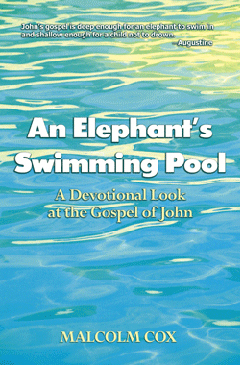
“They tell of the glory of your kingdom and speak of your might” (Psalm 145:11) Basic preaching and teaching course for men and women
In this course we will cover some of the basics of the preparation and presentation of biblical lessons.
The aim is to provide helpful examples and teaching for both the older and younger Christian.
Extra class: An introduction to the privilege of speaking God’s word
- How to choose what to speak on.
- How to explore the passage for yourself.
- How to use other resources like commentaries.
- How to select your point.
- How to choose a structure for your lesson.
- How to start your lesson.
- How to end your lesson.
- How to make your lesson memorable.
- How to make the most of congregational involvement.
- How to prepare yourself to speak.
Extra class: A summary of the course and suggestions for ongoing learning.
Class 4: How to select your point. * Introduction * You have chosen your text * You have explored it * You have mined other resources * Now you need to find the point * Sometimes this comes after the next class - finding structure. No need to be enslaved to one process.
-
The importance of one point
-
Sub points are allowed
- If you don’t know your point your audience certainly will not!
-
One phrase, sentence.
-
The point for this lesson
-
May not be the only possible point
- But the one for this time, place, congregation
-
Will most likely be the title of the lesson
-
Three perspectives
-
Why did it happen?
- Why did the author (and God ) want it recorded for all time?
-
What is its relevance for your audience at this time?
-
Pictures
-
Drawing can help
-
Mindmaps also
-
Persuasive or Practical?
-
Ask yourself if your point is persuasive or practical - at least primarily
-
Does this do justice to the passage?
-
Conclusion
- Question: What helps you to fid the point of your lesson?
-
Next time: How to select your point
-
“One generation commends your works to another; they tell of your mighty acts.” (Psalm 145:4 NIV11)
Please add your comments on this week’s topic. We learn best when we learn in community.
Do you have a question about teaching the Bible? Is it theological, technical, practical? Send me your questions or suggestions. Here’s the email: malcolm@malcolmcox.org.
If you’d like a copy of my free eBook on spiritual disciplines, “How God grows His people”, sign up at my website: http://www.malcolmcox.org.
Please pass the link on, subscribe, leave a review. “Worship the LORD with gladness; come before him with joyful songs.” (Psalms 100:2 NIV11) God bless, Malcolm PS: You might also be interested in my book: "An elephant's swimming pool", a devotional look at the Gospel of John
mccx, Malcolm Cox, Watford, Croxley Green, teaching, preaching, spiritual disciplines, public speaking, corporate worship, Sunday Sample, Corporate Worship Matters, Tuesday Teaching Tips, Quiet Time Coaching, coaching, coaching near me, coach, online coaching, savior, quiet time, devotion, God, Jesus, Pray, prayer, malcolm’s, cox,
Refreshment and renewal
Last weekend some of the lockdown restrictions were relaxed. It meant that I could go and visit my parents for the first time since March. It was a wonderful time although tinged with awkwardness. It was delightful to see them, but painful not to be able to hug them. At least my father I could shake hands - swiftly followed by a good hand washing! I will confess that I did give my mother a kiss by accident. I did it before I realised what I was doing. Then she told me off!
The picture at the top of this newsletter is one I took on this visit. It tells a story of renewal. When we moved into the family home 45 years ago the Oak tree depicted was not much larger than you see in the picture. It grew rapidly to become an enormous beautiful copper-coloured oak. When the sun rose it shimmered with colours gold and orange. In a storm last year a huge branch came crashing down into the orchard. The council determined that the rest of the tree was unstable. Workmen came to take it down to a stump. Only a few months later you can see the renewal. The way God has made the world in which we live includes, always, the potential for refreshment, renewal and growth.
I'm bearing this in mind as I go away for a personal spiritual retreat. The retreat runs from Sunday after church to Tuesday evening. now and again over the years I have gone away for an overnight retreat. The first time I did this was 2003. The church was in crisis and, frankly, so was I. the three days I spent in Wales and the surrounding areas were the perfect preparation for the years that followed. Without that time with God, focused and prayer-soaked I doubt I could have made it through the tough times that came.
A mix of circumstances including COVID-19 have persuaded me that now is the right time to go away with God. Please pray for me that I come back with a more powerful sense of God's love and presence, and, if it's his will, greater clarity about how I am to be, and what we are to do as a church post-COVID.
Hitting a nerve
As mentioned last week, I had the privilege of speaking on Acts 11.19-26 to the East region of the London International Church of Christ, the Thames Valley churches of Christ and the congregation in Uppsala, Sweden. I will bring the same message to the Watford church this weekend. It struck a nerve in all three places last Sunday. I haven't had a reaction to a sermon like that for a long time.
I don't know exactly what it was, but clearly the Spirit helped me to tap into the zeitgeist. If you get a chance to listen to it, I'd be grateful if you could help me to understand what it is that connected.
Until the next time, I hope and pray that you would be refreshed and renewed and find that God's word hits your nerve where it is needed!
God bless, Malcolm
My morning devotional reading from, "The virgin eye" by Robin Daniels, included this prayer by St Ignatius. I have updated the language:
"Fill me, I ask you, with your light and life that I may shine for your wondrous glory. Grant that your love may so fill my life that I may count nothing too small to do for you, and nothing too big to bear." Page 336
I spent a good proportion of my prayer times this week praying through that last phrase - that I would consider nothing too small to do for God, and nothing too big to bear. Small faith matters to him:
““If you have faith as small as a mustard seed, you can say to this mulberry tree, ‘Be uprooted and planted in the sea,’ and it will obey you.” (Luke 17:6 NIV11)
We have the strength to bear with anything:
“No testing has overtaken you that is not common to everyone. God is faithful, and he will not let you be tested beyond your strength, but with the testing he will also provide the way out so that you may be able to endure it.” (1 Corinthians 10:13 NRSV)
Nothing too small to do this week meant, for me, fixing some flickering lights in the lounge of my parents' home and a lampshade in one of the bedrooms. Small, inconsequential in many ways, but not too small as a way to show my love to my mother and father. Nothing too big to bear this week has meant, for me, listening to friends pour out their heart to me about very difficult experiences that caused tears to come into my eyes. It has also meant not reacting with inappropriate and hasty anger to situations that needed more prayer.
Question for the week: “Which Scriptures help you to act on the small things, and which Scriptures help you to trust God for the strength for the things that feel too big to bear?" Please add your comments on this week’s topic. We learn best when we learn in community. Do you have a question about teaching the Bible? Is it theological, technical, practical? Send me your questions or suggestions. Here’s the email: malcolm@malcolmcox.org. If you’d like a copy of my free eBook on spiritual disciplines, “How God grows His people”, sign up at my website: http://www.malcolmcox.org. Please pass the link on, subscribe, leave a review. “Worship the LORD with gladness; come before him with joyful songs.” (Psalms 100:2 NIV11) God bless, Malcolm PS: You might also be interested in my book: "An elephant's swimming pool", a devotional look at the Gospel of John mccx, Malcolm Cox, Watford, Croxley Green, teaching, preaching, spiritual disciplines, public speaking, corporate worship, Sunday Sample, Corporate Worship Matters, Tuesday Teaching Tips, Quiet Time Coaching, coaching, coaching near me, coach, online coaching, savior, quiet time, devotion, God, Jesus, Pray, prayer, malcolm’s, cox,
Class 3: “How to use other resources” Tuesday Teaching Tips - Episode 206 * Introduction * You have chosen your text * You have explored it * What other insights can you use? * These are important, but bonus
- Books etc.
- Bible software set up
- Alternative translations
- Formal equivalent - more literal
- NASB / RSV
- Mediating versions
- NIV
- Functional equivalents, Free
- Message
- Commentaries
- How to choose: https://youtu.be/xrkr0CDDeRM , 2016
- https://www.bestcommentaries.com/
- One author/book - specialists in that book
- Newer rather than older
- New commentary when start new project
- How to choose: https://youtu.be/xrkr0CDDeRM , 2016
- Bible dictionaries
- Dictionary of NT etc.
- IVP sett
- Biblical Theology
- Later NT
- Jesus and gospels
- Paul & letters
- Biblical imagery
- Atlas
- Timeline
- Photos
- Original languages
- Friends
- What do you think this passage is all about?
- Do you know any resources you suggest I try?
- “I’m thinking this is the point, what do you think?”
-
Internet
- Be discerning
-
Conclusion
- Question: What resources do you have available?
-
Question: How can you make best use of them?
-
Next time: how to select your point
-
“One generation commends your works to another; they tell of your mighty acts.” (Psalm 145:4 NIV11)
Please add your comments on this week’s topic. We learn best when we learn in community. Do you have a question about teaching the Bible? Is it theological, technical, practical? Send me your questions or suggestions. Here’s the email: malcolm@malcolmcox.org. If you’d like a copy of my free eBook on spiritual disciplines, “How God grows His people”, sign up at my website: http://www.malcolmcox.org. Please pass the link on, subscribe, leave a review. “Worship the LORD with gladness; come before him with joyful songs.” (Psalms 100:2 NIV11) God bless, Malcolm PS: You might also be interested in my book: "An elephant's swimming pool", a devotional look at the Gospel of John mccx, Malcolm Cox, Watford, Croxley Green, teaching, preaching, spiritual disciplines, public speaking, corporate worship, Sunday Sample, Corporate Worship Matters, Tuesday Teaching Tips, Quiet Time Coaching, coaching, coaching near me, coach, online coaching, savior, quiet time, devotion, God, Jesus, Pray, prayer, malcolm’s, cox,
"Wait for the Lord" retreat reborn
As most of you will know a group of us planned a spiritual retreat in March. COVID-19 put an end to all that! I am hoping to reorganise a similar event in the future. However, in a dream last night (no, I'm not joking I really did dream this), it came to me that we could do something online. Not a full-blown weekend retreat, but an experimental one-off spiritual devotional event.
So I'm testing the waters by asking if you would be interested in joining me for a one hour spiritual devotional on a Saturday morning. I don't have a format nailed down. I'm open to suggestions, but I would imagine it would be something like this:
- We each find a comfortable place where we can focus and concentrate for an hour without interruption.
- We create an atmosphere conducive to focused devotion on God.
- We include in this hour a mix of music, prayer, meditative contemplation on truths about God, perhaps spiritually inspired poetry, appropriate visuals, and Scripture and sharing.
If you would be at interested in attending, please let me know what would make it meaningful for you. In other words - imagine the end of the hour. You know in your spirit that this was helpful to you spiritually. What have you experienced, what has happened, how do you feel, and what helped you?
Depending on the responses I received, I will make a plan for an event later in July or early August.
A busy weekend!
I have the unusual privilege of preaching three times on Sunday (tomorrow). Mind you, one of those is pre-recorded. I shall be speaking for the East region of the London International Church of Christ in the morning via recording. Simultaneously, I shall be speaking live for the Thames Valley churches of Christ, and then in the afternoon speaking for the Uppsala group in Sweden.
All three sermons are centred on the same topic and text - Acts 11:19-26. We will be as discussing how the Spirit moves the church into uncomfortable, unexpected and unprecedented experiences. We shall be celebrating the initiative of those unnamed men from Cyprus and Cyrene who spoke to the Greeks in Antioch. We will be considering the impact on not just Antioch, but the whole of Asia Minor and Europe. Finally, we shall be looking at Barnabas as a model of how to approach potentially controversial initiatives. His example will inspire many of us, I believe, to become a Barnabas or seek one out to help us accomplish what the Spirit has given us to do. Tune in on Sunday, to one of those services, or catch up with it online later if you prefer. I have to tell you that I'm as excited about this topic and this text as any I have spoken on for a long time. Please pray for me to teach and preach well to the glory of God and the edification of the church.
Message in the mayhem reflections
I had a thoroughly inspiring meeting this morning with the people who helped put on the "Message in the mayhem" series. We spent a good amount of time talking over the feedback we received. We're going away to pray more and think about what we might put on in the future. Without any doubt there is a tremendous hunger for similar events.
Please pray for us that by the end of this coming week we will have a clear idea about what to do next. We'll be communicating some of our thoughts through various channels and on various platforms. Your feedback would be greatly appreciated. At the moment, our thinking is coalescing around the idea of how to think Biblically and Christianly about cultural issues that God brings to our attention.
God bless, Malcolm
"Psalms of Ascent Series", Quiet Time Coaching: Episode 232, Psalms of Ascent overview You have found a daily podcast based on the Psalms of Ascent (Psalms 120-134). They are designed to help our hearts and minds being a healthy place while the Covid 19 virus does its worst. “Since, then, you have been raised with Christ, set your hearts on things above, where Christ is, seated at the right hand of God. Set your minds on things above, not on earthly things. For you died, and your life is now hidden with Christ in God. When Christ, who is your life, appears, then you also will appear with him in glory.” (Colossians 3:1–4 NIV11) Each day we will meditate on a verse or two from these wonderful Psalms as we make our pilgrimage from confusion to hope, pain to peace, anxiety to joy. From Kedar to the Temple we have been on a life-changing pilgrimage. What has God shown you? How has he changed you? What can you celebrate today? Please add your comments on this week’s topic. We learn best when we learn in community.
Do you have a question about teaching the Bible? Is it theological, technical, practical? Send me your questions or suggestions. Here’s the email: malcolm@malcolmcox.org.
If you’d like a copy of my free eBook on spiritual disciplines, “How God grows His people”, sign up at my website: http://www.malcolmcox.org.
Please pass the link on, subscribe, leave a review.
“Worship the LORD with gladness; come before him with joyful songs.” (Psalms 100:2 NIV11) God bless, Malcolm
PS: You might also be interested in my book: "An elephant's swimming pool", a devotional look at the Gospel of John
mccx, Malcolm Cox, Watford, Croxley Green, teaching, preaching, spiritual disciplines, public speaking, corporate worship, Sunday Sample, Corporate Worship Matters, Tuesday Teaching Tips, Quiet Time Coaching, coaching, coaching near me, coach, online coaching, savior, quiet time, devotion, God, Jesus, Pray, prayer, malcolm’s, cox,
Class 2: How to explore the passage for yourself Introduction * You have chosen your text * Where do you start? * Soak yourself in the text * Before reading commentaries and other resources
- Print it out
- Mark it up
-
Pray it through
- What is emerging?
- Use voice memo app or drafts if out
- “Next sermon” folder in Evernote
-
Conclusion
-
Print it out
- Mark it up
- Pray it through
Question: What tools do you have to help you explore the passage? * Next time: How to use other resources
“One generation commends your works to another; they tell of your mighty acts.” (Psalm 145:4 NIV11) Please add your comments on this week’s topic. We learn best when we learn in community. Do you have a question about teaching the Bible? Is it theological, technical, practical? Send me your questions or suggestions. Here’s the email: malcolm@malcolmcox.org. If you’d like a copy of my free eBook on spiritual disciplines, “How God grows His people”, sign up at my website: http://www.malcolmcox.org. Please pass the link on, subscribe, leave a review. “Worship the LORD with gladness; come before him with joyful songs.” (Psalms 100:2 NIV11) God bless, Malcolm PS: You might also be interested in my book: "An elephant's swimming pool", a devotional look at the Gospel of John mccx, Malcolm Cox, Watford, Croxley Green, teaching, preaching, spiritual disciplines, public speaking, corporate worship, Sunday Sample, Corporate Worship Matters, Tuesday Teaching Tips, Quiet Time Coaching, coaching, coaching near me, coach, online coaching, savior, quiet time, devotion, God, Jesus, Pray, prayer, malcolm’s, cox,
"Psalms of Ascent Series", Quiet Time Coaching: Episode 230, Psalm 134v2 You have found a daily podcast based on the Psalms of Ascent (Psalms 120-134). They are designed to help our hearts and minds being a healthy place while the Covid 19 virus does its worst. “Since, then, you have been raised with Christ, set your hearts on things above, where Christ is, seated at the right hand of God. Set your minds on things above, not on earthly things. For you died, and your life is now hidden with Christ in God. When Christ, who is your life, appears, then you also will appear with him in glory.” (Colossians 3:1–4 NIV11) Each day we will meditate on a verse or two from these wonderful Psalms as we make our pilgrimage from confusion to hope, pain to peace, anxiety to joy. “Lift up your hands in the sanctuary and praise the LORD.” (Psalm 134:2)
Praise is the goal of the trip, not the arrival, or the distraction of being a ‘tourist’ in Jerusalem. Now you are here, bless God. Our praise is not dependant on our feelings. Praise helps us get our feeling back in the right place - our servants, not our masters, subjugated to God like all things we own. See Peterson, Obed, p195. “..your feelings might be flat, but you can control your muscles: lift up your hands.” Peterson, Obed, 195. Please add your comments on this week’s topic. We learn best when we learn in community.
Do you have a question about teaching the Bible? Is it theological, technical, practical? Send me your questions or suggestions. Here’s the email: malcolm@malcolmcox.org.
If you’d like a copy of my free eBook on spiritual disciplines, “How God grows His people”, sign up at my website: http://www.malcolmcox.org.
Please pass the link on, subscribe, leave a review.
“Worship the LORD with gladness; come before him with joyful songs.” (Psalms 100:2 NIV11) God bless, Malcolm
PS: You might also be interested in my book: "An elephant's swimming pool", a devotional look at the Gospel of John
mccx, Malcolm Cox, Watford, Croxley Green, teaching, preaching, spiritual disciplines, public speaking, corporate worship, Sunday Sample, Corporate Worship Matters, Tuesday Teaching Tips, Quiet Time Coaching, coaching, coaching near me, coach, online coaching, savior, quiet time, devotion, God, Jesus, Pray, prayer, malcolm’s, cox,
"Psalms of Ascent Series", Quiet Time Coaching: Episode 231, Psalm 134 v3 You have found a daily podcast based on the Psalms of Ascent (Psalms 120-134). They are designed to help our hearts and minds being a healthy place while the Covid 19 virus does its worst. “Since, then, you have been raised with Christ, set your hearts on things above, where Christ is, seated at the right hand of God. Set your minds on things above, not on earthly things. For you died, and your life is now hidden with Christ in God. When Christ, who is your life, appears, then you also will appear with him in glory.” (Colossians 3:1–4 NIV11) Each day we will meditate on a verse or two from these wonderful Psalms as we make our pilgrimage from confusion to hope, pain to peace, anxiety to joy. ‘bless’ appears in every verse of the Psalm - it is the key word. Earlier in the Psalm it is man blessing God, not the roles are reversed. The difference is that man can only give God what he already has, while God’s blessing gives man what he does not have, and makes him what he is not.
"When he ‘blesses’ us he reviews our needs and meets them; when we bless him we review his excellencies and worship him." New Bible Commentary: 21st Century Edition. Edited by Carson, D. A, R. T France, J. A. Motyer, and Gordon J. Wenham. Accordance electronic edition, version 1.1. Downers Grove: InterVarsity Press, 1994. Please add your comments on this week’s topic. We learn best when we learn in community.
Do you have a question about teaching the Bible? Is it theological, technical, practical? Send me your questions or suggestions. Here’s the email: malcolm@malcolmcox.org.
If you’d like a copy of my free eBook on spiritual disciplines, “How God grows His people”, sign up at my website: http://www.malcolmcox.org.
Please pass the link on, subscribe, leave a review.
“Worship the LORD with gladness; come before him with joyful songs.” (Psalms 100:2 NIV11) God bless, Malcolm
PS: You might also be interested in my book: "An elephant's swimming pool", a devotional look at the Gospel of John
mccx, Malcolm Cox, Watford, Croxley Green, teaching, preaching, spiritual disciplines, public speaking, corporate worship, Sunday Sample, Corporate Worship Matters, Tuesday Teaching Tips, Quiet Time Coaching, coaching, coaching near me, coach, online coaching, savior, quiet time, devotion, God, Jesus, Pray, prayer, malcolm’s, cox,
"Psalms of Ascent Series", Quiet Time Coaching: Episode 229, Psalm 134v1 You have found a daily podcast based on the Psalms of Ascent (Psalms 120-134). They are designed to help our hearts and minds being a healthy place while the Covid 19 virus does its worst. “Since, then, you have been raised with Christ, set your hearts on things above, where Christ is, seated at the right hand of God. Set your minds on things above, not on earthly things. For you died, and your life is now hidden with Christ in God. When Christ, who is your life, appears, then you also will appear with him in glory.” (Colossians 3:1–4 NIV11) Each day we will meditate on a verse or two from these wonderful Psalms as we make our pilgrimage from confusion to hope, pain to peace, anxiety to joy. “Praise the LORD, all you servants of the LORD who minister by night in the house of the LORD.” (Psalm 134:1 NIV11)
Minister, (lit.) ‘stand’, accepted and secure. Night, possibly priests and levites on night–duty in the House; or pilgrims devoutly keeping vigil by night; or (best of all) keeping the night festival of Passover (Ex. 12:42)." New Bible Commentary: 21st Century Edition. Edited by Carson, D. A, R. T France, J. A. Motyer, and Gordon J. Wenham. Accordance electronic edition, version 1.1. Downers Grove: InterVarsity Press, 1994. Please add your comments on this week’s topic. We learn best when we learn in community.
Do you have a question about teaching the Bible? Is it theological, technical, practical? Send me your questions or suggestions. Here’s the email: malcolm@malcolmcox.org.
If you’d like a copy of my free eBook on spiritual disciplines, “How God grows His people”, sign up at my website: http://www.malcolmcox.org.
Please pass the link on, subscribe, leave a review.
“Worship the LORD with gladness; come before him with joyful songs.” (Psalms 100:2 NIV11) God bless, Malcolm
PS: You might also be interested in my book: "An elephant's swimming pool", a devotional look at the Gospel of John
mccx, Malcolm Cox, Watford, Croxley Green, teaching, preaching, spiritual disciplines, public speaking, corporate worship, Sunday Sample, Corporate Worship Matters, Tuesday Teaching Tips, Quiet Time Coaching, coaching, coaching near me, coach, online coaching, savior, quiet time, devotion, God, Jesus, Pray, prayer, malcolm’s, cox,
Sermon for the Watford church of Christ.
Psalm 129 - “What victory means to a Christian”
Introduction Question: Examples of personal victory? Question: How does victory feel?
1. “The Victory of Survival”, vv1-2 Most nations look back to their victories - but Israel looks back at their survival! Question: victorious survivors in life or Bible? Sometimes survival is the victory for a Christian! i. Surviving Great Oppression, 2 Cor 1:1-11 God’s people kicked around over the centuries. We are not always strong, but we are hard to kill Paul is a great example of this - 2 Cor 11:23-29 ii. Surviving and Still Standing - my mother Key thing is to keep looking forward - Phil 3:12-14. “patience has a positive tonic effect on others; because of the presence of the patient person, they revive and go on, as if he were the gyroscope of the ship providing a stable ground. But the patient person himself does not enjoy it.” Patience a positive virus - catch it from one another Point: Oppression is temporary “What is victory for a Christian?” Victory for a Christian means surviving - and learning, growing, maturing in the process.
2. “The Victory of Freedom”, vv3-4 God puts us right with him and ourselves Freedom is victory - how do we handle it? i. Freedom from Painful Ploughing, Gal 5:13-6:5 No longer need suffer the pain of sin Nor cause others pain with our sin Instead help others with their sins - Gal 6:1-5 iii. Freedom from the Cords Our perseverance depends on God’s determined faithfulness to us He did this with Jesus and the cross. Point: Freedom is a gift from God “What is victory for a Christian?” Victory for a Christian means enjoying our freedom and using it to help others
CONCLUSION vv5-8
His honesty admirable - not sure all the feelings are! “The uppermost roof on the common dwelling places in Israel would have been constructed of beams laid across the walls intertwined with reeds and grasses. The whole roof would then be plastered with mud to fill in the gaps and make them somewhat watertight. Any lingering seeds in the grass or mud might briefly sprout but would quickly die for lack of roots." Real history! Where is imperial Egypt which enslaved Israel—or the Philistines, Assyrians or Babylonians?" For a Christian - Rome, all the prominent atheists of history, the Bible sceptics, Communism, etc. 1 Cor 15:54-57 Satan has been defeated, and he is empty because Jesus’s grave is empty: Therefore death has been emptied of its power Therefore sin has been emptied of its power Point: Satan is completely defeated Satan utterly defeated - shamed, empty, lonely
Please add your comments on this week’s topic. We learn best when we learn in community.
Do you have a question about teaching the Bible? Is it theological, technical, practical? Send me your questions or suggestions. Here’s the email: malcolm@malcolmcox.org.
If you’d like a copy of my free eBook on spiritual disciplines, “How God grows His people”, sign up at my website: http://www.malcolmcox.org.
Please pass the link on, subscribe, leave a review. “Worship the LORD with gladness; come before him with joyful songs.” (Psalms 100:2 NIV11) God bless, Malcolm PS: You might also be interested in my book: "An elephant's swimming pool", a devotional look at the Gospel of John
"Psalms of Ascent Series", Quiet Time Coaching: Episode 228, Psalm 134 overview You have found a daily podcast based on the Psalms of Ascent (Psalms 120-134). They are designed to help our hearts and minds being a healthy place while the Covid 19 virus does its worst. “Since, then, you have been raised with Christ, set your hearts on things above, where Christ is, seated at the right hand of God. Set your minds on things above, not on earthly things. For you died, and your life is now hidden with Christ in God. When Christ, who is your life, appears, then you also will appear with him in glory.” (Colossians 3:1–4 NIV11) Each day we will meditate on a verse or two from these wonderful Psalms as we make our pilgrimage from confusion to hope, pain to peace, anxiety to joy. “A song of ascents. Praise the LORD, all you servants of the LORD who minister by night in the house of the LORD. Lift up your hands in the sanctuary and praise the LORD. May the LORD bless you from Zion, he who is the Maker of heaven and earth.” Psalm 134:0–3 NIV11
The final Psalm of Ascent. We began in Kedar (Ps 120:5) and end in the temple where we bless God and He blesses us. Please add your comments on this week’s topic. We learn best when we learn in community.
Do you have a question about teaching the Bible? Is it theological, technical, practical? Send me your questions or suggestions. Here’s the email: malcolm@malcolmcox.org.
If you’d like a copy of my free eBook on spiritual disciplines, “How God grows His people”, sign up at my website: http://www.malcolmcox.org.
Please pass the link on, subscribe, leave a review.
“Worship the LORD with gladness; come before him with joyful songs.” (Psalms 100:2 NIV11) God bless, Malcolm
PS: You might also be interested in my book: "An elephant's swimming pool", a devotional look at the Gospel of John
mccx, Malcolm Cox, Watford, Croxley Green, teaching, preaching, spiritual disciplines, public speaking, corporate worship, Sunday Sample, Corporate Worship Matters, Tuesday Teaching Tips, Quiet Time Coaching, coaching, coaching near me, coach, online coaching, savior, quiet time, devotion, God, Jesus, Pray, prayer, malcolm’s, cox,
"Psalms of Ascent Series", Quiet Time Coaching: Episode 227, Psalm 133v3 You have found a daily podcast based on the Psalms of Ascent (Psalms 120-134). They are designed to help our hearts and minds being a healthy place while the Covid 19 virus does its worst. “Since, then, you have been raised with Christ, set your hearts on things above, where Christ is, seated at the right hand of God. Set your minds on things above, not on earthly things. For you died, and your life is now hidden with Christ in God. When Christ, who is your life, appears, then you also will appear with him in glory.” (Colossians 3:1–4 NIV11) Each day we will meditate on a verse or two from these wonderful Psalms as we make our pilgrimage from confusion to hope, pain to peace, anxiety to joy.
“It is as if the dew of Hermon were falling on Mount Zion. For there the LORD bestows his blessing, even life forevermore.” Psalm 133:3
Dew brings ‘life’ - Ex. 16:13-14; Is. 26:19; Ho. 14:5 Please add your comments on this week’s topic. We learn best when we learn in community.
Do you have a question about teaching the Bible? Is it theological, technical, practical? Send me your questions or suggestions. Here’s the email: malcolm@malcolmcox.org.
If you’d like a copy of my free eBook on spiritual disciplines, “How God grows His people”, sign up at my website: http://www.malcolmcox.org.
Please pass the link on, subscribe, leave a review.
“Worship the LORD with gladness; come before him with joyful songs.” (Psalms 100:2 NIV11) God bless, Malcolm PS: You might also be interested in my book: "An elephant's swimming pool", a devotional look at the Gospel of John
mccx, Malcolm Cox, Watford, Croxley Green, teaching, preaching, spiritual disciplines, public speaking, corporate worship, Sunday Sample, Corporate Worship Matters, Tuesday Teaching Tips, Quiet Time Coaching, coaching, coaching near me, coach, online coaching, savior, quiet time, devotion, God, Jesus, Pray, prayer, malcolm’s, cox,
Today, the day of writing, is my wife, Penny's birthday. "Thank you" to all of you who have sent her your best wishes. We had a delightful morning including a special breakfast and the opening of presents. I'm just taking a moment to tell you what I expect you already know, which is that I consider myself the luckiest guy alive. How on earth did I manage to land her?
Please do keep her in your prayers. She is on the frontline of response to the COVID-19 virus crisis. Amongst medical workers GPs, of which she is one, have the highest death rate. At the same time she has been battling severe back pain brought on by changed working practices. She is amazing, compassionate and creative. I have no idea what I would do without her! ___________________________________________ Most of the time church is the best place to be. God designed it that way. Jesus died to make it that way. The Holy Spirit was sent to keep it that way.
But occasionally, from time to time, it isn't. What then do we do? If we wish to hold onto our faith we cannot reject church. It's the bride of Christ. He loves it - “Husbands, love your wives, just as Christ loved the church and gave himself up for her” (Ephesians 5:25). Who are we to not love that which Jesus loves? Yet, it can be so painful. A leader turns out to be a hypocrite. A fellow church member gossips and slanders us. A disputable matter is made into a cast-iron membership requirement.
It's been said that is not helpful to look for the perfect church. If it existed, it wouldn't have you or me as a member! Much truth in that statement.
None of this is new, of course. Have a look at the New Testament and you will see many instances similar to these:
“I hear that when you come together as a church, there are divisions among you, and to some extent I believe it.” (1 Corinthians 11:18 NIV11)
“If you bite and devour each other, watch out or you will be destroyed by each other.” (Galatians 5:15 NIV11)
What do we do when the church is experienced more as a hindrance to faith than a help? Penny and I are putting together a resource page on this very topic. Our three decades plus of being in church has taught us many things. Some of them pleasant and exciting, some very unpleasant and discouraging. Nonetheless, we are still here - somehow - by the grace of God and have learned a few things along the way. Sometimes we have walked alone with only the Spirit for company. At other times we have had loving mentors. On occasions God has used websites, conferences and books as the means to maintain and strengthen our faith.
Penny and I passionately believe in the church. Not the institution. Not structures. But the power of a kingdom-minded community to display the love of Christ to this world. Despite our own hurts and those of friends we love we are determined to be the best we can be, and help others be the best they can be in God's spiritual family.
To this end, we are looking for resources that have helped other people to hold onto their faith and remain engaged with church. All of this will be going on a page of my website referenced below. Please drop me a line with any suggestions you have.
God bless, Malcolm
You have found a daily podcast based on the Psalms of Ascent (Psalms 120-134).
They are designed to help our hearts and minds being a healthy place while the Covid 19 virus does its worst.
“Since, then, you have been raised with Christ, set your hearts on things above, where Christ is, seated at the right hand of God. Set your minds on things above, not on earthly things. For you died, and your life is now hidden with Christ in God. When Christ, who is your life, appears, then you also will appear with him in glory.” (Colossians 3:1–4 NIV11)
Each day we will meditate on a verse or two from these wonderful Psalms as we make our pilgrimage from confusion to hope, pain to peace, anxiety to joy.
“It is like precious oil poured on the head,
running down on the beard,
running down on Aaron’s beard,
down on the collar of his robe.” (Psalm 133:2 NIV11)
"Banquet guests in the ancient world were often treated by a generous host to fine oils for anointing their foreheads. This provided not only a glistening sheen to their countenance but also would have added a fragrance to their persons and the room. … Oil preserved the complexion in the hot Middle Eastern climate. … Anointment of priests used the finest oil and would symbolise the gifts of God to the people and the responsibilities now laid on their leaders through this ceremony. In Israelite practice anointing was a sign of election and often closely related to endowment by the Spirit." Walton, John H., Victor H. Matthews, and Mark W. Chavalas. The IVP Bible Background Commentary: Old Testament. Accordance electronic edition, version 1.1. Downers Grove: InterVarsity Press, 2000.
Please add your comments on this week’s topic. We learn best when we learn in community.
Do you have a question about teaching the Bible? Is it theological, technical, practical? Send me your questions or suggestions. Here’s the email: malcolm@malcolmcox.org.
If you’d like a copy of my free eBook on spiritual disciplines, “How God grows His people”, sign up at my website: http://www.malcolmcox.org.
Please pass the link on, subscribe, leave a review.
“Worship the LORD with gladness; come before him with joyful songs.” (Psalms 100:2 NIV11)
God bless, Malcolm
PS: You might also be interested in my book: "An elephant's swimming pool", a devotional look at the Gospel of John
"Psalms of Ascent Series", Quiet Time Coaching: Episode 225, Psalm 133v1 You have found a daily podcast based on the Psalms of Ascent (Psalms 120-134). They are designed to help our hearts and minds being a healthy place while the Covid 19 virus does its worst. “Since, then, you have been raised with Christ, set your hearts on things above, where Christ is, seated at the right hand of God. Set your minds on things above, not on earthly things. For you died, and your life is now hidden with Christ in God. When Christ, who is your life, appears, then you also will appear with him in glory.” (Colossians 3:1–4 NIV11) Each day we will meditate on a verse or two from these wonderful Psalms as we make our pilgrimage from confusion to hope, pain to peace, anxiety to joy. Church “is not an option for those Christians who happen by nature to be more gregarious than others. It is part of the fabric of redemption.” Peterson, Obed, 175. “Creation itself was not complete until there was community, Adam needing Eve before humanity was whole.” 177 Please add your comments on this week’s topic. We learn best when we learn in community.
Do you have a question about teaching the Bible? Is it theological, technical, practical? Send me your questions or suggestions. Here’s the email: malcolm@malcolmcox.org.
If you’d like a copy of my free eBook on spiritual disciplines, “How God grows His people”, sign up at my website: http://www.malcolmcox.org.
Please pass the link on, subscribe, leave a review.
“Worship the LORD with gladness; come before him with joyful songs.” (Psalms 100:2 NIV11) God bless, Malcolm
PS: You might also be interested in my book: "An elephant's swimming pool", a devotional look at the Gospel of John
mccx, Malcolm Cox, Watford, Croxley Green, teaching, preaching, spiritual disciplines, public speaking, corporate worship, Sunday Sample, Corporate Worship Matters, Tuesday Teaching Tips, Quiet Time Coaching, coaching, coaching near me, coach, online coaching, savior, quiet time, devotion, God, Jesus, Pray, prayer, malcolm’s, cox,
"Psalms of Ascent Series", Quiet Time Coaching: Episode 224, Psalm 133 overview You have found a daily podcast based on the Psalms of Ascent (Psalms 120-134). They are designed to help our hearts and minds being a healthy place while the Covid 19 virus does its worst. “Since, then, you have been raised with Christ, set your hearts on things above, where Christ is, seated at the right hand of God. Set your minds on things above, not on earthly things. For you died, and your life is now hidden with Christ in God. When Christ, who is your life, appears, then you also will appear with him in glory.” (Colossians 3:1–4 NIV11) Each day we will meditate on a verse or two from these wonderful Psalms as we make our pilgrimage from confusion to hope, pain to peace, anxiety to joy.
“A song of ascents. Of David. How good and pleasant it is when God’s people live together in unity! It is like precious oil poured on the head, running down on the beard, running down on Aaron’s beard, down on the collar of his robe. It is as if the dew of Hermon were falling on Mount Zion. For there the LORD bestows his blessing, even life forevermore.” Please add your comments on this week’s topic. We learn best when we learn in community.
Do you have a question about teaching the Bible? Is it theological, technical, practical? Send me your questions or suggestions. Here’s the email: malcolm@malcolmcox.org.
If you’d like a copy of my free eBook on spiritual disciplines, “How God grows His people”, sign up at my website: http://www.malcolmcox.org.
Please pass the link on, subscribe, leave a review.
“Worship the LORD with gladness; come before him with joyful songs.” (Psalms 100:2 NIV11) God bless, Malcolm
PS: You might also be interested in my book: "An elephant's swimming pool", a devotional look at the Gospel of John
mccx, Malcolm Cox, Watford, Croxley Green, teaching, preaching, spiritual disciplines, public speaking, corporate worship, Sunday Sample, Corporate Worship Matters, Tuesday Teaching Tips, Quiet Time Coaching, coaching, coaching near me, coach, online coaching, savior, quiet time, devotion, God, Jesus, Pray, prayer, malcolm’s, cox,
**“They tell of the glory of your kingdom and speak of your might” (Psalm 145:11)
Introduction**What happens when you have the opportunity, but do not know what to speak about?
1.CircumstancesWorld
Church
Heart
Diary
Conversations
Feelings
Answered prayers
Photos
Quiet Time & devotional focus
If still stuck – pick a self-contained passage like a story, Psalm or parable, study it, live its message and share its fruit in your life!
**2. Prayer / Holy Spirit
- Speak to a direction**Towards something, not away from something
Against lukewarmness – towards devotion
Conclusion
Examine your world
Pray for insight
Find its application to your life
Live it
Share the fruit
“One generation commends your works to another; they tell of your mighty acts.” (PSALM 145:4 NIV11)Please add your comments on this week’s topic. We learn best when we learn in community.
Do you have a question about teaching the Bible? Is it theological, technical, practical? Send me your questions or suggestions. Here’s the email: malcolm@malcolmcox.org.
If you’d like a copy of my free eBook on spiritual disciplines, “How God grows His people”, sign up at my website: http://www.malcolmcox.org.
Please pass the link on, subscribe, leave a review.
“Worship the LORD with gladness; come before him with joyful songs.” (Psalms 100:2 NIV11)
God bless, Malcolm
PS: You might also be interested in my book: “An elephant’s swimming pool”, a devotional look at the Gospel of John
"Psalms of Ascent Series", Quiet Time Coaching: Episode 223, Psalm 132v18 You have found a daily podcast based on the Psalms of Ascent (Psalms 120-134). They are designed to help our hearts and minds being a healthy place while the Covid 19 virus does its worst. “Since, then, you have been raised with Christ, set your hearts on things above, where Christ is, seated at the right hand of God. Set your minds on things above, not on earthly things. For you died, and your life is now hidden with Christ in God. When Christ, who is your life, appears, then you also will appear with him in glory.” (Colossians 3:1–4 NIV11) Each day we will meditate on a verse or two from these wonderful Psalms as we make our pilgrimage from confusion to hope, pain to peace, anxiety to joy. Please add your comments on this week’s topic. We learn best when we learn in community.
Do you have a question about teaching the Bible? Is it theological, technical, practical? Send me your questions or suggestions. Here’s the email: malcolm@malcolmcox.org.
If you’d like a copy of my free eBook on spiritual disciplines, “How God grows His people”, sign up at my website: http://www.malcolmcox.org.
Please pass the link on, subscribe, leave a review.
“Worship the LORD with gladness; come before him with joyful songs.” (Psalms 100:2 NIV11) God bless, Malcolm
PS: You might also be interested in my book: "An elephant's swimming pool", a devotional look at the Gospel of John
mccx, Malcolm Cox, Watford, Croxley Green, teaching, preaching, spiritual disciplines, public speaking, corporate worship, Sunday Sample, Corporate Worship Matters, Tuesday Teaching Tips, Quiet Time Coaching, coaching, coaching near me, coach, online coaching, savior, quiet time, devotion, God, Jesus, Pray, prayer, malcolm’s, cox,
"Psalms of Ascent Series", Quiet Time Coaching: Episode 222, Psalm 132v17 You have found a daily podcast based on the Psalms of Ascent (Psalms 120-134). They are designed to help our hearts and minds being a healthy place while the Covid 19 virus does its worst. “Since, then, you have been raised with Christ, set your hearts on things above, where Christ is, seated at the right hand of God. Set your minds on things above, not on earthly things. For you died, and your life is now hidden with Christ in God. When Christ, who is your life, appears, then you also will appear with him in glory.” (Colossians 3:1–4 NIV11) Each day we will meditate on a verse or two from these wonderful Psalms as we make our pilgrimage from confusion to hope, pain to peace, anxiety to joy. Zech’s prophecy: Lk 1:67-71. Jesus as the strength of our salvation - he has all the strength, Rev 5:11-12. Please add your comments on this week’s topic. We learn best when we learn in community.
Do you have a question about teaching the Bible? Is it theological, technical, practical? Send me your questions or suggestions. Here’s the email: malcolm@malcolmcox.org.
If you’d like a copy of my free eBook on spiritual disciplines, “How God grows His people”, sign up at my website: http://www.malcolmcox.org.
Please pass the link on, subscribe, leave a review.
“Worship the LORD with gladness; come before him with joyful songs.” (Psalms 100:2 NIV11) God bless, Malcolm
PS: You might also be interested in my book: "An elephant's swimming pool", a devotional look at the Gospel of John
mccx, Malcolm Cox, Watford, Croxley Green, teaching, preaching, spiritual disciplines, public speaking, corporate worship, Sunday Sample, Corporate Worship Matters, Tuesday Teaching Tips, Quiet Time Coaching, coaching, coaching near me, coach, online coaching, savior, quiet time, devotion, God, Jesus, Pray, prayer, malcolm’s, cox,
Several events happened this week to remind me that initiative does not need permission.
The success of the "Is there a message in the mayhem?" series astonished me. Certainly I had high hopes. However, the global reach, the larger than expected numbers and the grateful feedback took me by surprise. The full session can be found here. We are planning more events for the future. Please keep us in your prayers and give us suggestions for topics and format.
Several aspects of the teaching series set it apart. One of which was that it was not a church-planned event. Simply a group of six friends hoping to inspire one another and help anyone else who might be interested. On the back of this series I have had two other conversations this week with people who had ideas but felt they needed permission. They were really good ideas. It makes sense to consulting the community, but initiative does not need permission.
The book of Acts reveals event after event and initiative after initiative taken by followers of Jesus prompted by the Spirit. Permission not sought nor required. It should go without saying I'm not talking about making foolish decisions without careful consideration and the advice of the wise. My point is that perhaps too often we are looking for permission rather than seeking to exercise our gifts and inspiration for whoever and wherever might be helpful.
What if Martin Luther King had waited for permission?
My new series on preaching and teaching was inspired by a request from Jose in the Philippines. The introductory class focuses on the locus of our confidence. Is it in my competence, or the power of the sword of the Spirit? If our confidence is in the Lord, we can move forward boldly and find successful ways to serve the kingdom and the lost without feeling we need permission. I wonder how many followers of Jesus are not flourishing because they are waiting for permission. I wonder how many of us who lead others are unintentionally stultifying the growth of the members and the advancement of the kingdom by creating or sustaining church cultures which imply the need for people to obtain permission for their heart-felt spiritual initiatives?
What if those early disciples had waited for permission before speaking to the Gentiles in Antioch? Acts 11.20.
The practice of controlling and containing initiative does not a healthy church grow. There might be more mess with more initiative, but there will also be more success. Success without mess is an impossibility. The Spirit can handle the mess. So can we church leaders, if we are in tune with the Spirit.
God bless, Malcolm
Sermon for the Watford church of Christ, 21 June 2020
Introduction, v1
Question: Who or what is it good to fear?
- Blessings galore! vv2-4
Fruit - security, vineyards
Vine - sexual charm
Olive shoots - vitality
A pre-vision of God’s great plan
The reanimation of the original blessing
“God blessed them and said to them, “Be fruitful and increase in number; fill the earth and subdue it. Rule over the fish in the sea and the birds in the sky and over every living creature that moves on the ground.”” (Genesis 1:28 NIV11)
To be fulfilled at return of Jesus and bringing of kingdom of heaven to earth.
God’s desire is for our joy!
- How to live in healthy fear of the Lord and walk in obedience to him, vv1, 4
A. Touched by fear
yare: origin, “to tremble” or be “short of breath.”
Question: Who can you think of who had this kind of experience?
Moses - Ex 3.6
Isaiah - Is 6.5
Paul - Acts 22.6-8
All had life-changing ‘yare’ experiences
What does it look like to walk in obedience?
B. Motivated to walk in obedience
Moses - Ex 3.6 - led the people the way God wanted
Isaiah - Is 6.5 - spoke God’s Word to people
Paul - Acts 22.6-8 - preached God’s Word to the Gentiles
Us - 1 Jn 2.3-6 - walking in a certain way
“They disciplined us for a little while as they thought best; but God disciplines us for our good, in order that we may share in his holiness.No discipline seems pleasant at the time, but painful. Later on, however, it produces a harvest of righteousness and peace for those who have been trained by it. Therefore, strengthen your feeble arms and weak knees.“Make level paths for your feet,” so that the lame may not be disabled, but rather healed.” (Hebrews 12:10–13 NIV11)
“If you go against the grain of the universe, you get splinters”. H. H. Farmer
Conclusion, v6b
God’s desire is that we live at peace.
For a Christian this is because Jesus is with us.
Please add your comments on this week’s topic. We learn best when we learn in community.
Do you have a question about teaching the Bible? Is it theological, technical, practical? Send me your questions or suggestions. Here’s the email: malcolm@malcolmcox.org.
If you’d like a copy of my free eBook on spiritual disciplines, “How God grows His people”, sign up at my website: http://www.malcolmcox.org.
Please pass the link on, subscribe, leave a review.
“Worship the LORD with gladness; come before him with joyful songs.” (Psalms 100:2 NIV11)
God bless, Malcolm
PS: You might also be interested in my book: "An elephant's swimming pool", a devotional look at the Gospel of John
Please add your comments on this week’s topic. We learn best when we learn in community.
Do you have a question about teaching the Bible? Is it theological, technical, practical? Send me your questions or suggestions. Here’s the email: malcolm@malcolmcox.org.
If you’d like a copy of my free eBook on spiritual disciplines, “How God grows His people”, sign up at my website: http://www.malcolmcox.org.
Please pass the link on, subscribe, leave a review. “Worship the LORD with gladness; come before him with joyful songs.” (Psalms 100:2 NIV11) God bless, Malcolm PS: You might also be interested in my book: "An elephant's swimming pool", a devotional look at the Gospel of John
mccx, Malcolm Cox, Watford, Croxley Green, teaching, preaching, spiritual disciplines, public speaking, corporate worship, Sunday Sample, Corporate Worship Matters, Tuesday Teaching Tips, Quiet Time Coaching, coaching, coaching near me, coach, online coaching, savior, quiet time, devotion, God, Jesus, Pray, prayer, malcolm’s, cox,
"Psalms of Ascent Series", Quiet Time Coaching: Episode 221, Psalm 132v16 You have found a daily podcast based on the Psalms of Ascent (Psalms 120-134). They are designed to help our hearts and minds being a healthy place while the Covid 19 virus does its worst. “Since, then, you have been raised with Christ, set your hearts on things above, where Christ is, seated at the right hand of God. Set your minds on things above, not on earthly things. For you died, and your life is now hidden with Christ in God. When Christ, who is your life, appears, then you also will appear with him in glory.” (Colossians 3:1–4 NIV11) Each day we will meditate on a verse or two from these wonderful Psalms as we make our pilgrimage from confusion to hope, pain to peace, anxiety to joy. We are the modern priests clothed with salvation and singing for joy. We are clothed with Christ, Gal 3:26-29, and as a result inherit the promise of salvation. We are singing for joy Eph 5:19, Col 3:16. Please add your comments on this week’s topic. We learn best when we learn in community.
Do you have a question about teaching the Bible? Is it theological, technical, practical? Send me your questions or suggestions. Here’s the email: malcolm@malcolmcox.org.
If you’d like a copy of my free eBook on spiritual disciplines, “How God grows His people”, sign up at my website: http://www.malcolmcox.org.
Please pass the link on, subscribe, leave a review.
“Worship the LORD with gladness; come before him with joyful songs.” (Psalms 100:2 NIV11) God bless, Malcolm
PS: You might also be interested in my book: "An elephant's swimming pool", a devotional look at the Gospel of John
mccx, Malcolm Cox, Watford, Croxley Green, teaching, preaching, spiritual disciplines, public speaking, corporate worship, Sunday Sample, Corporate Worship Matters, Tuesday Teaching Tips, Quiet Time Coaching, coaching, coaching near me, coach, online coaching, savior, quiet time, devotion, God, Jesus, Pray, prayer, malcolm’s, cox,
"Psalms of Ascent Series", Quiet Time Coaching: Episode 220, Psalm 132v14-15 You have found a daily podcast based on the Psalms of Ascent (Psalms 120-134). They are designed to help our hearts and minds being a healthy place while the Covid 19 virus does its worst. “Since, then, you have been raised with Christ, set your hearts on things above, where Christ is, seated at the right hand of God. Set your minds on things above, not on earthly things. For you died, and your life is now hidden with Christ in God. When Christ, who is your life, appears, then you also will appear with him in glory.” (Colossians 3:1–4 NIV11) Each day we will meditate on a verse or two from these wonderful Psalms as we make our pilgrimage from confusion to hope, pain to peace, anxiety to joy.
Allusion to manna? Poor in spirit, Matt 5:3, truly rich, James 2:5. Please add your comments on this week’s topic. We learn best when we learn in community.
Do you have a question about teaching the Bible? Is it theological, technical, practical? Send me your questions or suggestions. Here’s the email: malcolm@malcolmcox.org.
If you’d like a copy of my free eBook on spiritual disciplines, “How God grows His people”, sign up at my website: http://www.malcolmcox.org.
Please pass the link on, subscribe, leave a review.
“Worship the LORD with gladness; come before him with joyful songs.” (Psalms 100:2 NIV11) God bless, Malcolm
PS: You might also be interested in my book: "An elephant's swimming pool", a devotional look at the Gospel of John
mccx, Malcolm Cox, Watford, Croxley Green, teaching, preaching, spiritual disciplines, public speaking, corporate worship, Sunday Sample, Corporate Worship Matters, Tuesday Teaching Tips, Quiet Time Coaching, coaching, coaching near me, coach, online coaching, savior, quiet time, devotion, God, Jesus, Pray, prayer, malcolm’s, cox,
"Psalms of Ascent Series", Quiet Time Coaching: Episode 219, Psalm 132v13 You have found a daily podcast based on the Psalms of Ascent (Psalms 120-134). They are designed to help our hearts and minds being a healthy place while the Covid 19 virus does its worst. “Since, then, you have been raised with Christ, set your hearts on things above, where Christ is, seated at the right hand of God. Set your minds on things above, not on earthly things. For you died, and your life is now hidden with Christ in God. When Christ, who is your life, appears, then you also will appear with him in glory.” (Colossians 3:1–4 NIV11) Each day we will meditate on a verse or two from these wonderful Psalms as we make our pilgrimage from confusion to hope, pain to peace, anxiety to joy. We need reminding from time to time that this is all God’s. Even when he answers prayer and gives us blessings - they still belong to Him. He chose us. He is not to be exploited or manipulated to personal ends.
Chosen, Deut 9:4-6, Eph 1:11.
Good to remember past situation without God, Eph 2:12. Good to remember present situation with God, Eph 2:13, Eph 2:19-22. Please add your comments on this week’s topic. We learn best when we learn in community.
Do you have a question about teaching the Bible? Is it theological, technical, practical? Send me your questions or suggestions. Here’s the email: malcolm@malcolmcox.org.
If you’d like a copy of my free eBook on spiritual disciplines, “How God grows His people”, sign up at my website: http://www.malcolmcox.org.
Please pass the link on, subscribe, leave a review.
“Worship the LORD with gladness; come before him with joyful songs.” (Psalms 100:2 NIV11) God bless, Malcolm
PS: You might also be interested in my book: "An elephant's swimming pool", a devotional look at the Gospel of John
mccx, Malcolm Cox, Watford, Croxley Green, teaching, preaching, spiritual disciplines, public speaking, corporate worship, Sunday Sample, Corporate Worship Matters, Tuesday Teaching Tips, Quiet Time Coaching, coaching, coaching near me, coach, online coaching, savior, quiet time, devotion, God, Jesus, Pray, prayer, malcolm’s, cox,
"Psalms of Ascent Series", Quiet Time Coaching: Episode 218, Psalm 132v11-12 You have found a daily podcast based on the Psalms of Ascent (Psalms 120-134). They are designed to help our hearts and minds being a healthy place while the Covid 19 virus does its worst. “Since, then, you have been raised with Christ, set your hearts on things above, where Christ is, seated at the right hand of God. Set your minds on things above, not on earthly things. For you died, and your life is now hidden with Christ in God. When Christ, who is your life, appears, then you also will appear with him in glory.” (Colossians 3:1–4 NIV11) Each day we will meditate on a verse or two from these wonderful Psalms as we make our pilgrimage from confusion to hope, pain to peace, anxiety to joy. “We need roots in the past to give obedience ballast and breadth; we need a vision of the future to give obedience direction and goal.” Peterson, Obed, 170. A good memory of the past blessing wrought by obedience will fuel our hope for future promises of God to be honoured, and this will lead to a mature obedience in the present. At all times let us remember Jesus, 2 Tim 2:8. Please add your comments on this week’s topic. We learn best when we learn in community.
Do you have a question about teaching the Bible? Is it theological, technical, practical? Send me your questions or suggestions. Here’s the email: malcolm@malcolmcox.org.
If you’d like a copy of my free eBook on spiritual disciplines, “How God grows His people”, sign up at my website: http://www.malcolmcox.org.
Please pass the link on, subscribe, leave a review.
“Worship the LORD with gladness; come before him with joyful songs.” (Psalms 100:2 NIV11) God bless, Malcolm
PS: You might also be interested in my book: "An elephant's swimming pool", a devotional look at the Gospel of John mccx, Malcolm Cox, Watford, Croxley Green, teaching, preaching, spiritual disciplines, public speaking, corporate worship, Sunday Sample, Corporate Worship Matters, Tuesday Teaching Tips, Quiet Time Coaching, coaching, coaching near me, coach, online coaching, savior, quiet time, devotion, God, Jesus, Pray, prayer, malcolm’s, cox,
"Psalms of Ascent Series", Quiet Time Coaching: Episode 217, Psalm 132v10 You have found a daily podcast based on the Psalms of Ascent (Psalms 120-134). They are designed to help our hearts and minds being a healthy place while the Covid 19 virus does its worst. “Since, then, you have been raised with Christ, set your hearts on things above, where Christ is, seated at the right hand of God. Set your minds on things above, not on earthly things. For you died, and your life is now hidden with Christ in God. When Christ, who is your life, appears, then you also will appear with him in glory.” (Colossians 3:1–4 NIV11) Each day we will meditate on a verse or two from these wonderful Psalms as we make our pilgrimage from confusion to hope, pain to peace, anxiety to joy. The ‘anointed’ one - presumably Solomon - is looking back on the vows and work done by David, and about to call God’s attention to the promises He made to David. Please add your comments on this week’s topic. We learn best when we learn in community.
Do you have a question about teaching the Bible? Is it theological, technical, practical? Send me your questions or suggestions. Here’s the email: malcolm@malcolmcox.org.
If you’d like a copy of my free eBook on spiritual disciplines, “How God grows His people”, sign up at my website: http://www.malcolmcox.org.
Please pass the link on, subscribe, leave a review. “Worship the LORD with gladness; come before him with joyful songs.” (Psalms 100:2 NIV11) God bless, Malcolm PS: You might also be interested in my book: "An elephant's swimming pool", a devotional look at the Gospel of John
mccx, Malcolm Cox, Watford, Croxley Green, teaching, preaching, spiritual disciplines, public speaking, corporate worship, Sunday Sample, Corporate Worship Matters, Tuesday Teaching Tips, Quiet Time Coaching, coaching, coaching near me, coach, online coaching, savior, quiet time, devotion, God, Jesus, Pray, prayer, malcolm’s, cox,
“They tell of the glory of your kingdom and speak of your might” (Psalm 145:11) In this course we will cover some of the basics of the preparation and presentation of biblical lessons.
We will cover the following topics:
Extra class: An introduction to the privilege of speaking God’s word
- How to choose what to speak on.
- How to explore the passage for yourself.
- How to use other resources like commentaries.
- How to select your point.
- How to choose a structure for your lesson.
- How to start your lesson.
- How to end your lesson.
- How to make your lesson memorable.
- How to make the most of congregational involvement.
- How to prepare yourself to speak.
Extra class: A summary of the course and suggestions for ongoing learning.
Introduction
- Most people think preaching and teaching is about competency, knowledge and an exemplary Christian walk.
- It's about hunger, connection with God and compassion for people.
- ““Is not my word like fire,” declares the LORD, “and like a hammer that breaks a rock in pieces?” (Jeremiah 23:29 NIV11)
- “As the rain and the snow come down from heaven, and do not return to it without watering the earth and making it bud and flourish, so that it yields seed for the sower and bread for the eater, so is my word that goes out from my mouth: It will not return to me empty, but will accomplish what I desire and achieve the purpose for which I sent it.” (Isaiah 55:10–11 NIV11)
-
“For the word of God is alive and active. Sharper than any double-edged sword, it penetrates even to dividing soul and spirit, joints and marrow; it judges the thoughts and attitudes of the heart.” (Hebrews 4:12 NIV11)
-
He does not need the eloquent, but the willing.
-
He does not need the talented, but the humble.
-
Two things took me to where I am today (in addition to God’s patience!).
-
- Deep conviction that the most powerful thing we have is God’s word.
-
-
- People willing to give me a chance and train me.
-
Proceed on the assumption you are called to try to speak until someone tells you otherwise.
-
Question: Do you believe you can be effective in teaching and preaching God’s word?
-
Question: What would convince you either way?
-
Conclusion:
- Truth through personality
- God has no other method of bringing his truth to people (believers and nonbelievers) then through other people.
- You have a great privilege. Make the most of it.
-
“One generation commends your works to another; they tell of your mighty acts.” (Psalm 145:4 NIV11)
Please add your comments on this week’s topic. We learn best when we learn in community.
Do you have a question about teaching the Bible? Is it theological, technical, practical? Send me your questions or suggestions. Here’s the email: malcolm@malcolmcox.org.
If you’d like a copy of my free eBook on spiritual disciplines, “How God grows His people”, sign up at my website: http://www.malcolmcox.org.
Please pass the link on, subscribe, leave a review. “Worship the LORD with gladness; come before him with joyful songs.” (Psalms 100:2 NIV11) God bless, Malcolm PS: You might also be interested in my book: "An elephant's swimming pool", a devotional look at the Gospel of John
mccx, Malcolm Cox, Watford, Croxley Green, teaching, preaching, spiritual disciplines, public speaking, corporate worship, Sunday Sample, Corporate Worship Matters, Tuesday Teaching Tips, Quiet Time Coaching, coaching, coaching near me, coach, online coaching, savior, quiet time, devotion, God, Jesus, Pray, prayer, malcolm’s, cox,
"Psalms of Ascent Series", Quiet Time Coaching: Episode 216, Psalm 132v9 You have found a daily podcast based on the Psalms of Ascent (Psalms 120-134). They are designed to help our hearts and minds being a healthy place while the Covid 19 virus does its worst. “Since, then, you have been raised with Christ, set your hearts on things above, where Christ is, seated at the right hand of God. Set your minds on things above, not on earthly things. For you died, and your life is now hidden with Christ in God. When Christ, who is your life, appears, then you also will appear with him in glory.” (Colossians 3:1–4 NIV11) Each day we will meditate on a verse or two from these wonderful Psalms as we make our pilgrimage from confusion to hope, pain to peace, anxiety to joy. Rejoicing like David did - 2 Sam 6:14-15? “..obedience is not a stodgy plodding in the ruts of religion, it is a hopeful race toward God’s promises.” Peterson, Obed, 168. David’s first encounter with the ark began in carelessness and ended in tragedy (1 Chron 13:11f.). Things are different now. We can all sing! Please add your comments on this week’s topic. We learn best when we learn in community.
Do you have a question about teaching the Bible? Is it theological, technical, practical? Send me your questions or suggestions. Here’s the email: malcolm@malcolmcox.org.
If you’d like a copy of my free eBook on spiritual disciplines, “How God grows His people”, sign up at my website: http://www.malcolmcox.org.
Please pass the link on, subscribe, leave a review.
“Worship the LORD with gladness; come before him with joyful songs.” (Psalms 100:2 NIV11) God bless, Malcolm
PS: You might also be interested in my book: "An elephant's swimming pool", a devotional look at the Gospel of John
mccx, Malcolm Cox, Watford, Croxley Green, teaching, preaching, spiritual disciplines, public speaking, corporate worship, Sunday Sample, Corporate Worship Matters, Tuesday Teaching Tips, Quiet Time Coaching, coaching, coaching near me, coach, online coaching, savior, quiet time, devotion, God, Jesus, Pray, prayer, malcolm’s, cox,
For a third and final time we ask.... "Is there a message in the mayhem?" - Newsletter 14 June 2020; Episode 50
It's been a bumper week of inspiring news and challenging news. Like most weeks. In the last few days my mother has been in hospital. She came out and my father-in-law went in. Not the same hospital. The anguish of their hospitalisation without the ability to receive us as visitors has been tempered by the joy of their release from hospital.
Conversations in our fellowships around the black lives matter issue have created healing, understanding and hurt. The meaningfulness of such deep and rich conversations has been tempered by seeing the sadness and pain in both those who speak and those who listen.
Truly we are learning how to mourn with those who mourn and to rejoice with those who rejoice.
I recommend reading this article by my friend Obi Abuchi - "We can all be dangerously tribal"
Another helpful post comes from my buddy, Douglas Jacoby - "Reflections on Race"
What can one say, except God hates it when human beings visit injustice on other human beings. His hope is for healing. His hope is for his kingdom will to be done here on earth. My duty and all of ours is to do our part in living kingdom values in such a way as to disrupt and dismantle the values of this world.
In contrast with the agony of injustice, our third session of, "Is there a message in the mayhem?" took place this past Saturday. It was an unalloyed joy! About 120 people gathered online for talks by Dr Andy Boakye and myself.
The full session can be found here. And the pdf is here. What is next? We're sending out a survey in the next day or two seeking feedback. If you have any suggestions for future events including suggested topics and frequency, I'd love to hear from you.
God bless, Malcolm
"How to have a healthy ambition", Psalm 127
A sermon for the Watford church of Christ.
Please add your comments on this week’s topic. We learn best when we learn in community.
Do you have a question about teaching the Bible? Is it theological, technical, practical? Send me your questions or suggestions. Here’s the email: malcolm@malcolmcox.org.
If you’d like a copy of my free eBook on spiritual disciplines, “How God grows His people”, sign up at my website: http://www.malcolmcox.org.
Please pass the link on, subscribe, leave a review.
“Worship the LORD with gladness; come before him with joyful songs.” (Psalms 100:2 NIV11)
God bless, Malcolm
PS: You might also be interested in my book: "An elephant's swimming pool", a devotional look at the Gospel of John
mccx, Malcolm Cox, Watford, Croxley Green, teaching, preaching, spiritual disciplines, public speaking, corporate worship, Sunday Sample, Corporate Worship Matters, Tuesday Teaching Tips, Quiet Time Coaching, coaching, coaching near me, coach, online coaching, savior, quiet time, devotion, God, Jesus, Pray, prayer, malcolm’s, cox,
"Psalms of Ascent Series", Quiet Time Coaching: Episode 215, Psalm 132v8 You have found a daily podcast based on the Psalms of Ascent (Psalms 120-134). They are designed to help our hearts and minds being a healthy place while the Covid 19 virus does its worst. “Since, then, you have been raised with Christ, set your hearts on things above, where Christ is, seated at the right hand of God. Set your minds on things above, not on earthly things. For you died, and your life is now hidden with Christ in God. When Christ, who is your life, appears, then you also will appear with him in glory.” (Colossians 3:1–4 NIV11) Each day we will meditate on a verse or two from these wonderful Psalms as we make our pilgrimage from confusion to hope, pain to peace, anxiety to joy. “Arise, O Lord” was the phrase uttered when the ark set out in the time of Moses, Num 10:35. It had led the people in the wilderness, finding them resting places (Num 10:33) on their pilgimage to the promised land, now it was coming home to the end of its pilgimage, and this inspired the present pilgrim on their way up to Jerusalem. They were retracing the steps of the ark. We are doing likewise.
Please add your comments on this week’s topic. We learn best when we learn in community. Do you have a question about teaching the Bible? Is it theological, technical, practical? Send me your questions or suggestions. Here’s the email: malcolm@malcolmcox.org. If you’d like a copy of my free eBook on spiritual disciplines, “How God grows His people”, sign up at my website: http://www.malcolmcox.org. Please pass the link on, subscribe, leave a review. “Worship the LORD with gladness; come before him with joyful songs.” (Psalms 100:2 NIV11) God bless, Malcolm PS: You might also be interested in my book: "An elephant's swimming pool", a devotional look at the Gospel of John
mccx, Malcolm Cox, Watford, Croxley Green, teaching, preaching, spiritual disciplines, public speaking, corporate worship, Sunday Sample, Corporate Worship Matters, Tuesday Teaching Tips, Quiet Time Coaching, coaching, coaching near me, coach, online coaching, savior, quiet time, devotion, God, Jesus, Pray, prayer, malcolm’s, cox,
"Psalms of Ascent Series", Quiet Time Coaching: Episode 214, Psalm 132v7 You have found a daily podcast based on the Psalms of Ascent (Psalms 120-134). They are designed to help our hearts and minds being a healthy place while the Covid 19 virus does its worst. “Since, then, you have been raised with Christ, set your hearts on things above, where Christ is, seated at the right hand of God. Set your minds on things above, not on earthly things. For you died, and your life is now hidden with Christ in God. When Christ, who is your life, appears, then you also will appear with him in glory.” (Colossians 3:1–4 NIV11) Each day we will meditate on a verse or two from these wonderful Psalms as we make our pilgrimage from confusion to hope, pain to peace, anxiety to joy.
"First of all, it must be recognized that the ark of the covenant was considered the footstool of God’s invisible throne (see comment on Ex 25:10–22). Second, the footstool must be understood to be an integral part of the throne, representing the closest accessibility to the king. Third, the imagery of the footstool has significance because it is used to express the king’s subordination of his foes (see comment on Ps 110:1). Finally, worshiping at the footstool is another way of expressing the reverence that is shown by prostrating oneself at the feet of God or king. On the black stela of Shalmaneser III the Israelite king Jehu is portrayed kissing the ground before the Assyrian king. In Enuma Elish the tribunal of gods kisses the feet of Marduk after he has put down the rebellion and established himself as head of the pantheon. This was the common act of submission offered to kings and gods. Taking hold of the feet was a gesture of self-abasement and entreaty. This gesture occurs in a wide range of Akkadian literature as fugitives or supplicants take hold of the king’s feet to demonstrate their submission or surrender and make their petitions." Walton, John H., Victor H. Matthews, and Mark W. Chavalas. The IVP Bible Background Commentary: Old Testament. Accordance electronic edition, version 1.1. Downers Grove: InterVarsity Press, 2000. Please add your comments on this week’s topic. We learn best when we learn in community. Do you have a question about teaching the Bible? Is it theological, technical, practical? Send me your questions or suggestions. Here’s the email: malcolm@malcolmcox.org. If you’d like a copy of my free eBook on spiritual disciplines, “How God grows His people”, sign up at my website: http://www.malcolmcox.org. Please pass the link on, subscribe, leave a review. “Worship the LORD with gladness; come before him with joyful songs.” (Psalms 100:2 NIV11) God bless, Malcolm PS: You might also be interested in my book: "An elephant's swimming pool", a devotional look at the Gospel of John mccx, Malcolm Cox, Watford, Croxley Green, teaching, preaching, spiritual disciplines, public speaking, corporate worship, Sunday Sample, Corporate Worship Matters, Tuesday Teaching Tips, Quiet Time Coaching, coaching, coaching near me, coach, online coaching, savior, quiet time, devotion, God, Jesus, Pray, prayer, malcolm’s, cox,
"Psalms of Ascent Series", Quiet Time Coaching: Episode 213, Psalm 132v6 You have found a daily podcast based on the Psalms of Ascent (Psalms 120-134). They are designed to help our hearts and minds being a healthy place while the Covid 19 virus does its worst. “Since, then, you have been raised with Christ, set your hearts on things above, where Christ is, seated at the right hand of God. Set your minds on things above, not on earthly things. For you died, and your life is now hidden with Christ in God. When Christ, who is your life, appears, then you also will appear with him in glory.” (Colossians 3:1–4 NIV11) Each day we will meditate on a verse or two from these wonderful Psalms as we make our pilgrimage from confusion to hope, pain to peace, anxiety to joy.
Ephrathah is associated with Bethlehem, Gn. 35:16; Ru. 4:11; & identified in several passages as the home territory of David. It is also connected with the promise of a Messiah (Mi. 5:2, Matt 2:3-7). Jaar is an abbreviation for Kiriath-Jearim, 1 Sam 7:1-2, where the ark was housed while ‘lost’. Jaar means ‘wood’ or ‘thicket’ which draws attention to the incongruity of the ark being ‘lost’ there. Like lost in a wood. “Where is the ark?”, “It’s somewhere in the woods.” Even there it had an impact, as Samuel led the people in repentance that resulted in the Philistines being defeated, 1 Sam 7:3-14. Please add your comments on this week’s topic. We learn best when we learn in community.
Do you have a question about teaching the Bible? Is it theological, technical, practical? Send me your questions or suggestions. Here’s the email: malcolm@malcolmcox.org.
If you’d like a copy of my free eBook on spiritual disciplines, “How God grows His people”, sign up at my website: http://www.malcolmcox.org.
Please pass the link on, subscribe, leave a review. “Worship the LORD with gladness; come before him with joyful songs.” (Psalms 100:2 NIV11) God bless, Malcolm PS: You might also be interested in my book: "An elephant's swimming pool", a devotional look at the Gospel of John
mccx, Malcolm Cox, Watford, Croxley Green, teaching, preaching, spiritual disciplines, public speaking, corporate worship, Sunday Sample, Corporate Worship Matters, Tuesday Teaching Tips, Quiet Time Coaching, coaching, coaching near me, coach, online coaching, savior, quiet time, devotion, God, Jesus, Pray, prayer, malcolm’s, cox,
"Psalms of Ascent Series", Quiet Time Coaching: Episode 212, Psalm 132v3-5 You have found a daily podcast based on the Psalms of Ascent (Psalms 120-134). They are designed to help our hearts and minds being a healthy place while the Covid 19 virus does its worst. “Since, then, you have been raised with Christ, set your hearts on things above, where Christ is, seated at the right hand of God. Set your minds on things above, not on earthly things. For you died, and your life is now hidden with Christ in God. When Christ, who is your life, appears, then you also will appear with him in glory.” (Colossians 3:1–4 NIV11) Each day we will meditate on a verse or two from these wonderful Psalms as we make our pilgrimage from confusion to hope, pain to peace, anxiety to joy.
A place of permanent presence. But inadequate, 1 King 8:27-30 It is about God’s presence - something we need too, Jn 14:23. Do we always value his presence? Guilty hearts? 1 John 3:16-20. Jesus is in the presence of God, Heb 9:24-28. Now we can enter God’s presence with confidence, Heb 4:16. Please add your comments on this week’s topic. We learn best when we learn in community.
Do you have a question about teaching the Bible? Is it theological, technical, practical? Send me your questions or suggestions. Here’s the email: malcolm@malcolmcox.org.
If you’d like a copy of my free eBook on spiritual disciplines, “How God grows His people”, sign up at my website: http://www.malcolmcox.org.
Please pass the link on, subscribe, leave a review. “Worship the LORD with gladness; come before him with joyful songs.” (Psalms 100:2 NIV11) God bless, Malcolm PS: You might also be interested in my book: "An elephant's swimming pool", a devotional look at the Gospel of John
mccx, Malcolm Cox, Watford, Croxley Green, teaching, preaching, spiritual disciplines, public speaking, corporate worship, Sunday Sample, Corporate Worship Matters, Tuesday Teaching Tips, Quiet Time Coaching, coaching, coaching near me, coach, online coaching, savior, quiet time, devotion, God, Jesus, Pray, prayer, malcolm’s, cox,
"Psalms of Ascent Series", Quiet Time Coaching: Episode 211, Psalm 132v2 You have found a daily podcast based on the Psalms of Ascent (Psalms 120-134). They are designed to help our hearts and minds being a healthy place while the Covid 19 virus does its worst. “Since, then, you have been raised with Christ, set your hearts on things above, where Christ is, seated at the right hand of God. Set your minds on things above, not on earthly things. For you died, and your life is now hidden with Christ in God. When Christ, who is your life, appears, then you also will appear with him in glory.” (Colossians 3:1–4 NIV11) Each day we will meditate on a verse or two from these wonderful Psalms as we make our pilgrimage from confusion to hope, pain to peace, anxiety to joy.
"Heb: ‘avir’ = Mighty, the mighty One of. This word occurs only in poetical passages. The first is Jacob’s blessing on his son Joseph (Gen 49:24). The third stich of that verse, which contains this word, has the expression “the hands of the Mighty One,” which is paralleled in the preceding line by the expression “hands were made strong.” The following stich has “the stone of Israel” to parallel “the Mighty One of Jacob.” The word “stone” is ןֶבֶא which sounds something like ריִבָא “Mighty One” and emphasizes his strength further. The two appearances of the word ריִבָא in Ps 132 (vv. 2, 5) are paralleled by the divine name YHWH. The same is true of its three appearances in Isaiah (Isa 1:24; Is 49:26; Is 60:16). Notice the distribution of the term throughout this book, often trisected by critics. The name ריִבָא used as a substitute for deity may be compared with דַחַּפ the “Fear” of Isaac (q.v., Gen 31:42, Gen 31:53). This word “Fear” is also taken by some as a surrogate for deity used especially in patriarchal times. It is possible to be translated “Kinsman.” (Albright, FSAC, p. 248; Dahood, in AB, Psalms, I, p. 81.) Harris, R. Laird, Gleason L. Archer, and Bruce K. Waltke, eds. Theological Wordbook of the Old Testament. Accordance electronic edition, version 1.6. Chicago: Moody Press, 1980. Lk 1:48-49, Mary’s prayer. Please add your comments on this week’s topic. We learn best when we learn in community.
Do you have a question about teaching the Bible? Is it theological, technical, practical? Send me your questions or suggestions. Here’s the email: malcolm@malcolmcox.org.
If you’d like a copy of my free eBook on spiritual disciplines, “How God grows His people”, sign up at my website: http://www.malcolmcox.org.
Please pass the link on, subscribe, leave a review. “Worship the LORD with gladness; come before him with joyful songs.” (Psalms 100:2 NIV11) God bless, Malcolm PS: You might also be interested in my book: "An elephant's swimming pool", a devotional look at the Gospel of John
mccx, Malcolm Cox, Watford, Croxley Green, teaching, preaching, spiritual disciplines, public speaking, corporate worship, Sunday Sample, Corporate Worship Matters, Tuesday Teaching Tips, Quiet Time Coaching, coaching, coaching near me, coach, online coaching, savior, quiet time, devotion, God, Jesus, Pray, prayer, malcolm’s, cox,
"Psalms of Ascent Series", Quiet Time Coaching: Episode 210, Psalm 132v1 You have found a daily podcast based on the Psalms of Ascent (Psalms 120-134). They are designed to help our hearts and minds being a healthy place while the Covid 19 virus does its worst. “Since, then, you have been raised with Christ, set your hearts on things above, where Christ is, seated at the right hand of God. Set your minds on things above, not on earthly things. For you died, and your life is now hidden with Christ in God. When Christ, who is your life, appears, then you also will appear with him in glory.” (Colossians 3:1–4 NIV11) Each day we will meditate on a verse or two from these wonderful Psalms as we make our pilgrimage from confusion to hope, pain to peace, anxiety to joy.
"Bringing the Ark to Zion was not achieved without disappointment and suffering (2 Sa. 6:5-9), preparation, cost and loss (2 Sa. 6:12-23). The word, in its meaning ‘humiliations/deep humiliation’ could also refer to David being rejected as the temple–builder (2 Sa. 7:5, 2 Sam 7:13; 1 Ki. 5:3; 1 Ch. 22:8; 1 Ch. 28:3)." New Bible Commentary: 21st Century Edition. Edited by Carson, D. A, R. T France, J. A. Motyer, and Gordon J. Wenham. Accordance electronic edition, version 1.1. Downers Grove: InterVarsity Press, 1994. Please add your comments on this week’s topic. We learn best when we learn in community.
Do you have a question about teaching the Bible? Is it theological, technical, practical? Send me your questions or suggestions. Here’s the email: malcolm@malcolmcox.org.
If you’d like a copy of my free eBook on spiritual disciplines, “How God grows His people”, sign up at my website: http://www.malcolmcox.org.
Please pass the link on, subscribe, leave a review. “Worship the LORD with gladness; come before him with joyful songs.” (Psalms 100:2 NIV11) God bless, Malcolm PS: You might also be interested in my book: "An elephant's swimming pool", a devotional look at the Gospel of John
mccx, Malcolm Cox, Watford, Croxley Green, teaching, preaching, spiritual disciplines, public speaking, corporate worship, Sunday Sample, Corporate Worship Matters, Tuesday Teaching Tips, Quiet Time Coaching, coaching, coaching near me, coach, online coaching, savior, quiet time, devotion, God, Jesus, Pray, prayer, malcolm’s, cox,
"Psalms of Ascent Series", Quiet Time Coaching: Episode 209, Psalm 132 - Overview You have found a daily podcast based on the Psalms of Ascent (Psalms 120-134). They are designed to help our hearts and minds being a healthy place while the Covid 19 virus does its worst. “Since, then, you have been raised with Christ, set your hearts on things above, where Christ is, seated at the right hand of God. Set your minds on things above, not on earthly things. For you died, and your life is now hidden with Christ in God. When Christ, who is your life, appears, then you also will appear with him in glory.” (Colossians 3:1–4 NIV11) Each day we will meditate on a verse or two from these wonderful Psalms as we make our pilgrimage from confusion to hope, pain to peace, anxiety to joy.
A meditation on 2 Sam 7. David wanted to build God a house, but in fact God intends building David a house. Please add your comments on this week’s topic. We learn best when we learn in community.
Do you have a question about teaching the Bible? Is it theological, technical, practical? Send me your questions or suggestions. Here’s the email: malcolm@malcolmcox.org.
If you’d like a copy of my free eBook on spiritual disciplines, “How God grows His people”, sign up at my website: http://www.malcolmcox.org.
Please pass the link on, subscribe, leave a review. “Worship the LORD with gladness; come before him with joyful songs.” (Psalms 100:2 NIV11) God bless, Malcolm PS: You might also be interested in my book: "An elephant's swimming pool", a devotional look at the Gospel of John
mccx, Malcolm Cox, Watford, Croxley Green, teaching, preaching, spiritual disciplines, public speaking, corporate worship, Sunday Sample, Corporate Worship Matters, Tuesday Teaching Tips, Quiet Time Coaching, coaching, coaching near me, coach, online coaching, savior, quiet time, devotion, God, Jesus, Pray, prayer, malcolm’s, cox,
"Psalms of Ascent Series", Quiet Time Coaching: Episode 208, Psalm 132 - a reading You have found a daily podcast based on the Psalms of Ascent (Psalms 120-134). They are designed to help our hearts and minds being a healthy place while the Covid 19 virus does its worst. “Since, then, you have been raised with Christ, set your hearts on things above, where Christ is, seated at the right hand of God. Set your minds on things above, not on earthly things. For you died, and your life is now hidden with Christ in God. When Christ, who is your life, appears, then you also will appear with him in glory.” (Colossians 3:1–4 NIV11) Each day we will meditate on a verse or two from these wonderful Psalms as we make our pilgrimage from confusion to hope, pain to peace, anxiety to joy.
“A song of ascents. LORD, remember David and all his self-denial. He swore an oath to the LORD, he made a vow to the Mighty One of Jacob: “I will not enter my house or go to my bed, I will allow no sleep to my eyes or slumber to my eyelids, till I find a place for the LORD, a dwelling for the Mighty One of Jacob.” We heard it in Ephrathah, we came upon it in the fields of Jaar: “Let us go to his dwelling place, let us worship at his footstool, saying, ‘Arise, LORD, and come to your resting place, you and the ark of your might. May your priests be clothed with your righteousness; may your faithful people sing for joy.’ ” For the sake of your servant David, do not reject your anointed one. The LORD swore an oath to David, a sure oath he will not revoke: “One of your own descendants I will place on your throne. If your sons keep my covenant and the statutes I teach them, then their sons will sit on your throne for ever and ever.” For the LORD has chosen Zion, he has desired it for his dwelling, saying, “This is my resting place for ever and ever; here I will sit enthroned, for I have desired it. I will bless her with abundant provisions; her poor I will satisfy with food. I will clothe her priests with salvation, and her faithful people will ever sing for joy. “Here I will make a horn grow for David and set up a lamp for my anointed one. I will clothe his enemies with shame, but his head will be adorned with a radiant crown.”” (Psalm 132:0–18 NIV11) Please add your comments on this week’s topic. We learn best when we learn in community.
Do you have a question about teaching the Bible? Is it theological, technical, practical? Send me your questions or suggestions. Here’s the email: malcolm@malcolmcox.org.
If you’d like a copy of my free eBook on spiritual disciplines, “How God grows His people”, sign up at my website: http://www.malcolmcox.org.
Please pass the link on, subscribe, leave a review. “Worship the LORD with gladness; come before him with joyful songs.” (Psalms 100:2 NIV11) God bless, Malcolm PS: You might also be interested in my book: "An elephant's swimming pool", a devotional look at the Gospel of John
mccx, Malcolm Cox, Watford, Croxley Green, teaching, preaching, spiritual disciplines, public speaking, corporate worship, Sunday Sample, Corporate Worship Matters, Tuesday Teaching Tips, Quiet Time Coaching, coaching, coaching near me, coach, online coaching, savior, quiet time, devotion, God, Jesus, Pray, prayer, malcolm’s, cox,
"Psalms of Ascent Series", Quiet Time Coaching: Episode 207, Psalm 131v3
You have found a daily podcast based on the Psalms of Ascent (Psalms 120-134).
They are designed to help our hearts and minds being a healthy place while the Covid 19 virus does its worst.
“Since, then, you have been raised with Christ, set your hearts on things above, where Christ is, seated at the right hand of God. Set your minds on things above, not on earthly things. For you died, and your life is now hidden with Christ in God. When Christ, who is your life, appears, then you also will appear with him in glory.” (Colossians 3:1–4 NIV11)
Each day we will meditate on a verse or two from these wonderful Psalms as we make our pilgrimage from confusion to hope, pain to peace, anxiety to joy.
What is your greatest peace-challenge? Have you put it to one side long enough to find the peace God offers? A quiet place, a comfortable position, a Bible, a Psalm to pray through, a deliberate focus on God, Jesus, the Holy Spirit. Concerning ourselves with God, calming ourselves so He can speak to us - whisper it - “O Israel, put your hope in the LORD both now and forevermore.”
Please add your comments on this week’s topic. We learn best when we learn in community.
Do you have a question about teaching the Bible? Is it theological, technical, practical? Send me your questions or suggestions. Here’s the email: malcolm@malcolmcox.org.
If you’d like a copy of my free eBook on spiritual disciplines, “How God grows His people”, sign up at my website: http://www.malcolmcox.org.
Please pass the link on, subscribe, leave a review.
“Worship the LORD with gladness; come before him with joyful songs.” (Psalms 100:2 NIV11)
God bless, Malcolm
PS: You might also be interested in my book: "An elephant's swimming pool", a devotional look at the Gospel of John
mccx, Malcolm Cox, Watford, Croxley Green, teaching, preaching, spiritual disciplines, public speaking, corporate worship, Sunday Sample, Corporate Worship Matters, Tuesday Teaching Tips, Quiet Time Coaching, coaching, coaching near me, coach, online coaching, savior, quiet time, devotion, God, Jesus, Pray, prayer, malcolm’s, cox,
Please add your comments on this week’s topic. We learn best when we learn in community. Do you have a question about teaching the Bible? Is it theological, technical, practical? Send me your questions or suggestions. Here’s the email: malcolm@malcolmcox.org. If you’d like a copy of my free eBook on spiritual disciplines, “How God grows His people”, sign up at my website: http://www.malcolmcox.org. Please pass the link on, subscribe, leave a review.
“Worship the LORD with gladness; come before him with joyful songs.” (Psalms 100:2 NIV11)
God bless, Malcolm
PS: You might also be interested in my book: "An elephant's swimming pool", a devotional look at the Gospel of John
"Psalms of Ascent Series", Quiet Time Coaching: Episode 206, Psalm 131v2
You have found a daily podcast based on the Psalms of Ascent (Psalms 120-134).
They are designed to help our hearts and minds being a healthy place while the Covid 19 virus does its worst.
“Since, then, you have been raised with Christ, set your hearts on things above, where Christ is, seated at the right hand of God. Set your minds on things above, not on earthly things. For you died, and your life is now hidden with Christ in God. When Christ, who is your life, appears, then you also will appear with him in glory.” (Colossians 3:1–4 NIV11)
Each day we will meditate on a verse or two from these wonderful Psalms as we make our pilgrimage from confusion to hope, pain to peace, anxiety to joy.
The child is perhaps lying on the mother’s lap, but is weaned, not anxious for milk from the breast. It’s needs are satisfied. Now that we have rejected pride and haughtiness and have our hope in God (v3), we have no fears. Therefore peace is ours. True peace, not false hope, or the folly of believing there will be no further trials in this life, but a settled conviction that whatever happens God has our best interests at heart and that our soul is safe.
Please add your comments on this week’s topic. We learn best when we learn in community.
Do you have a question about teaching the Bible? Is it theological, technical, practical? Send me your questions or suggestions. Here’s the email: malcolm@malcolmcox.org.
If you’d like a copy of my free eBook on spiritual disciplines, “How God grows His people”, sign up at my website: http://www.malcolmcox.org.
Please pass the link on, subscribe, leave a review.
“Worship the LORD with gladness; come before him with joyful songs.” (Psalms 100:2 NIV11)
God bless, Malcolm
PS: You might also be interested in my book: "An elephant's swimming pool", a devotional look at the Gospel of John
mccx, Malcolm Cox, Watford, Croxley Green, teaching, preaching, spiritual disciplines, public speaking, corporate worship, Sunday Sample, Corporate Worship Matters, Tuesday Teaching Tips, Quiet Time Coaching, coaching, coaching near me, coach, online coaching, savior, quiet time, devotion, God, Jesus, Pray, prayer, malcolm’s, cox,
I have two things in my mind this week.
- The joy of participating with a hundred people in the, "Is there a message in the mayhem?" teaching event.
- The agony of witnessing the pain caused by the death of George Floyd - both to his family and to many others by extension.
As so often in life, joy and mourning go together. Let me start with the second issue and finish with the first.
What can one intelligibly and helpfully say about such difficult matters? Well, my remarks will be woefully inadequate, but it feels right to say something.
First of all, here's what I wrote (with the help of some friends) for the Facebook pages of the Thames Valley churches of Christ and the website:
*"So God created human beings in his own image. In the image of God he created them; male and female he created them.” (Genesis 1:27 NLT)
Dear friends, I am writing this around the time that the memorial service for George Floyd is wrapping up.
It is difficult to sum up in a short post the appalling nature of what happened to him. For now, I think we can safely say that the injustice of what happened to George, and similar experiences of injustice felt by others is an affront to the heart of God and his image in which we are made.
“Whoever sows injustice reaps calamity, and the rod they wield in fury will be broken.” (Proverbs 22:8 NIV11)
As a church we are considering our best response to this. Currently we are having conversations in the congregation and would like to hear from as many people as possible before taking the first step. What is the Spirit saying?
If you have any suggestions please send them to me, Tim or Shevvy.
God bless, Malcolm*
It was the Scripture from Proverbs which grabbed my attention - “Whoever sows injustice reaps calamity, and the rod they wield in fury will be broken.” (Proverbs 22:8). God truly hates injustice - no matter on whom it is perpetrated, nor the means used to so-called justify it.
I have had many helpful and enlightening conversations with people of different backgrounds this week. The men of the Watford church met on Wednesday evening to discuss what we are learning from the events surrounding the tragic death of George Floyd. I learned a great deal from the perspectives of these mature men who come from very different backgrounds and have very different experiences of prejudice in one form or another.
Here are my (limited and inadequate) takeaways is for now.
- I must accept that I will never fully understand someone different to myself. In other words, it is insulting ever to claim that I "understand you" as if that means I fully grasp somebody else's experience. I can, however grow in understanding. I need to catch myself when I am tempted to say "I understand". Instead, it will be more helpful for me to say something like, "I am beginning to understand… Thank you for helping me to understand better…". Which leads to my second thought.
- Curiosity is the cure for prejudice and misunderstanding. Curiosity motivated by love, not self-serving nosiness. If I can never say I fully understand people, but accept that my life will be enriched by better understanding others, then I have a duty to remain consistently curious all through my life. It was mentioned in our meeting on Wednesday that it seems easier to have an open mind when we are younger. I guess that's true, but as disciples of Jesus we must discipline ourselves - I must discipline myself - to remain curious. And how does that work? This leads me to my third thought.
- Loving curiosity is demonstrated, at least in part, by actively entering somebody else's world. Wasn't Jesus curious about our condition? Did not that motivate him to come into an alien environment and live our lives such that he gained a better understanding of what it meant to struggle in this world? Did not the Apostle Paul expend himself in the Gentile world so foreign to his upbringing as a Pharisee of Pharisees? I have been very blessed to travel more widely than most. Certainly it has broadened my mind. But I don't need to travel for that to happen. There are articles to read, videos to watch, and conversations to have which can help me learn and grow. I'll never forget conversations such as that I had with my friend Sharon who educated me on the challenges facing Caribbean men, or with my Irish friends who helped me to understand the deeper origins of the conflicts in their country. Those conversations were humbling because they exposed my ignorance and blind assumptions. They challenged my heart, but, ultimately, I learned to better love the people God had put in my life. And there are so many other experiences. Eating cow's foot prepared by a Nigerian family (I didn't like the food, but I am glad I had the experience!). Going to my first 'nine' night to mourn the death of Colin - a deeply moving experience. Seeing my daughter marry a Gujarati and being more fully exposed to that culture - colourful, vibrant and energetic! the list is long. The question for me today is, in what way I actively entering the worlds of people around me?
None of the above solves the global problems of prejudice. But, just because we cannot change the world does not mean we should not change our own world. And as we do so, we bring the light of the love of God to person after person. It may be uncomfortable, but it is worth it, it is Christ-like, it brings glory to God.
Briefly, now on to the second matter of the week. We kicked off our three-part series called, "Is there a message in the mayhem?" last Saturday. Chris Birtles and Simon Dinning were our first two speakers.
A hundred people turned up and, if the banter is anything to go by, had a good time! We had one or two technical glitches, but overall everything went very smoothly. The recording of the lessons is online. The handout is available on the dedicated page on my website.
This coming Saturday, six June, we move on to session 2 - "How do we respond?" How can we respond to what we’re seeing? What doors is God opening because of the virus? How do we best serve others and bring hope? We will look at what we can learn from the way the early church responded to times of trial, and consider how our prayers, gifts and resources can help bring hope. Session Coordinators: Andy Ezeilo and Robert Payne.
If you haven't yet registered for the second and third sessions you can do so by looking at the page mentioned above, or by going straight to the Eventbrite meeting page. There is no fee, but we are asking people to make a donation to HOPE worldwide if they are able to do so.
I do hope you can join us. If not, please do two things. Firstly, pass this information on to someone you think might be interested. Secondly, watch the videos at your own leisure and let me know any further questions or comments you have on the contents. That will help us as we plan the third session coming up next Saturday 13th June.
Finally, may I solicit your prayers for this event. We have never, as a group of friends, put on anything quite like this. We are very excited, if a little nervous!
God bless, Malcolm
"Psalms of Ascent Series", Quiet Time Coaching: Episode 205, Psalm 131v1 You have found a daily podcast based on the Psalms of Ascent (Psalms 120-134). They are designed to help our hearts and minds being a healthy place while the Covid 19 virus does its worst. “Since, then, you have been raised with Christ, set your hearts on things above, where Christ is, seated at the right hand of God. Set your minds on things above, not on earthly things. For you died, and your life is now hidden with Christ in God. When Christ, who is your life, appears, then you also will appear with him in glory.” (Colossians 3:1–4 NIV11) Each day we will meditate on a verse or two from these wonderful Psalms as we make our pilgrimage from confusion to hope, pain to peace, anxiety to joy.
Perhaps the author’s heart used to be proud, but incidents of God’s discipline have brought about a change of heart that has led to his understanding of the right attitude. Ambition has become a virtue in our culture. Does this blind us to its harmful side-effects? Do we not recognise the symptoms of corruption it brings into our hearts? “There have always been Faustian characters, people in the community who embarked on a way of arrogance and power; now our entire culture is Faustian.” Peterson, Obed, 152. Aspiration is not the same as selfish ambition / pride. Paul had goals - Phil 3:14. But they were very God-focussed. Please add your comments on this week’s topic. We learn best when we learn in community.
Do you have a question about teaching the Bible? Is it theological, technical, practical? Send me your questions or suggestions. Here’s the email: malcolm@malcolmcox.org.
If you’d like a copy of my free eBook on spiritual disciplines, “How God grows His people”, sign up at my website: http://www.malcolmcox.org.
Please pass the link on, subscribe, leave a review. “Worship the LORD with gladness; come before him with joyful songs.” (Psalms 100:2 NIV11) God bless, Malcolm PS: You might also be interested in my book: "An elephant's swimming pool", a devotional look at the Gospel of John
mccx, Malcolm Cox, Watford, Croxley Green, teaching, preaching, spiritual disciplines, public speaking, corporate worship, Sunday Sample, Corporate Worship Matters, Tuesday Teaching Tips, Quiet Time Coaching, coaching, coaching near me, coach, online coaching, savior, quiet time, devotion, God, Jesus, Pray, prayer, malcolm’s, cox,
"Psalms of Ascent Series", Quiet Time Coaching: Episode 204, Psalm 131 - overview You have found a daily podcast based on the Psalms of Ascent (Psalms 120-134). They are designed to help our hearts and minds being a healthy place while the Covid 19 virus does its worst. “Since, then, you have been raised with Christ, set your hearts on things above, where Christ is, seated at the right hand of God. Set your minds on things above, not on earthly things. For you died, and your life is now hidden with Christ in God. When Christ, who is your life, appears, then you also will appear with him in glory.” (Colossians 3:1–4 NIV11) Each day we will meditate on a verse or two from these wonderful Psalms as we make our pilgrimage from confusion to hope, pain to peace, anxiety to joy.
The whole tone of the Psalm reminds us of Matt 18:1-4 and the instructions of Jesus as to the qualities necessary for us to be ‘great’ in the kingdom. “Psalm 131 is a maintenance Psalm. It is functional to the person of faith as pruning is functional to the gardener; it gets rid of that which looks good to those who don’t know better, and reduces the distance between our hearts and their roots in God.” Peterson, Obed, 149. Spurgeon said it “..is one of the shortest psalms to read, but one of the longest to learn.” Please add your comments on this week’s topic. We learn best when we learn in community.
Do you have a question about teaching the Bible? Is it theological, technical, practical? Send me your questions or suggestions. Here’s the email: malcolm@malcolmcox.org.
If you’d like a copy of my free eBook on spiritual disciplines, “How God grows His people”, sign up at my website: http://www.malcolmcox.org.
Please pass the link on, subscribe, leave a review. “Worship the LORD with gladness; come before him with joyful songs.” (Psalms 100:2 NIV11) God bless, Malcolm PS: You might also be interested in my book: "An elephant's swimming pool", a devotional look at the Gospel of John
mccx, Malcolm Cox, Watford, Croxley Green, teaching, preaching, spiritual disciplines, public speaking, corporate worship, Sunday Sample, Corporate Worship Matters, Tuesday Teaching Tips, Quiet Time Coaching, coaching, coaching near me, coach, online coaching, savior, quiet time, devotion, God, Jesus, Pray, prayer, malcolm’s, cox,
"Psalms of Ascent Series", Quiet Time Coaching: Episode 203, Psalm 130v8 You have found a daily podcast based on the Psalms of Ascent (Psalms 120-134). They are designed to help our hearts and minds being a healthy place while the Covid 19 virus does its worst. “Since, then, you have been raised with Christ, set your hearts on things above, where Christ is, seated at the right hand of God. Set your minds on things above, not on earthly things. For you died, and your life is now hidden with Christ in God. When Christ, who is your life, appears, then you also will appear with him in glory.” (Colossians 3:1–4 NIV11) Each day we will meditate on a verse or two from these wonderful Psalms as we make our pilgrimage from confusion to hope, pain to peace, anxiety to joy.
The Psalm ends with hope - a hope it dared not express at the beginning. God takes the initiative - always has always will. Is 41:8-10, 1 Cor 1:9. Provided us with His own son, Heb 1:3. Please add your comments on this week’s topic. We learn best when we learn in community.
Do you have a question about teaching the Bible? Is it theological, technical, practical? Send me your questions or suggestions. Here’s the email: malcolm@malcolmcox.org.
If you’d like a copy of my free eBook on spiritual disciplines, “How God grows His people”, sign up at my website: http://www.malcolmcox.org.
Please pass the link on, subscribe, leave a review. “Worship the LORD with gladness; come before him with joyful songs.” (Psalms 100:2 NIV11) God bless, Malcolm PS: You might also be interested in my book: "An elephant's swimming pool", a devotional look at the Gospel of John
mccx, Malcolm Cox, Watford, Croxley Green, teaching, preaching, spiritual disciplines, public speaking, corporate worship, Sunday Sample, Corporate Worship Matters, Tuesday Teaching Tips, Quiet Time Coaching, coaching, coaching near me, coach, online coaching, savior, quiet time, devotion, God, Jesus, Pray, prayer, malcolm’s, cox,
"Psalms of Ascent Series", Quiet Time Coaching: Episode 202, Psalm 130v7 You have found a daily podcast based on the Psalms of Ascent (Psalms 120-134). They are designed to help our hearts and minds being a healthy place while the Covid 19 virus does its worst. “Since, then, you have been raised with Christ, set your hearts on things above, where Christ is, seated at the right hand of God. Set your minds on things above, not on earthly things. For you died, and your life is now hidden with Christ in God. When Christ, who is your life, appears, then you also will appear with him in glory.” (Colossians 3:1–4 NIV11) Each day we will meditate on a verse or two from these wonderful Psalms as we make our pilgrimage from confusion to hope, pain to peace, anxiety to joy. i. Unfailing love: see Lam 3:21-26. There ‘compassions’, is Heb racham; by extension, the womb (as cherishing the fetus); by implication, a maiden:—bowels, compassion, damsel, tender love, (great, tender) mercy, pity, womb. Unfailing love is dependent on God’s faithfulness - 2 Tim 2:13, our part is to be honest and confess, 1 Jn 1:9. ii. Full redemption - means nothing is lacking. Our redemption is not partial - I am as holy today as I’m going to get! I am sealed - Eph 1:13-14. The seal is protection, the inheritance is guaranteed. Therefore, I will bring my sin to God, I will trust Him for forgiveness and I will wait patiently for the day when my inheritance is received in all its fullness. Please add your comments on this week’s topic. We learn best when we learn in community.
Do you have a question about teaching the Bible? Is it theological, technical, practical? Send me your questions or suggestions. Here’s the email: malcolm@malcolmcox.org.
If you’d like a copy of my free eBook on spiritual disciplines, “How God grows His people”, sign up at my website: http://www.malcolmcox.org.
Please pass the link on, subscribe, leave a review. “Worship the LORD with gladness; come before him with joyful songs.” (Psalms 100:2 NIV11) God bless, Malcolm PS: You might also be interested in my book: "An elephant's swimming pool", a devotional look at the Gospel of John
mccx, Malcolm Cox, Watford, Croxley Green, teaching, preaching, spiritual disciplines, public speaking, corporate worship, Sunday Sample, Corporate Worship Matters, Tuesday Teaching Tips, Quiet Time Coaching, coaching, coaching near me, coach, online coaching, savior, quiet time, devotion, God, Jesus, Pray, prayer, malcolm’s, cox,
"Psalms of Ascent Series", Quiet Time Coaching: Episode 201, Psalm 130v6 You have found a daily podcast based on the Psalms of Ascent (Psalms 120-134). They are designed to help our hearts and minds being a healthy place while the Covid 19 virus does its worst. “Since, then, you have been raised with Christ, set your hearts on things above, where Christ is, seated at the right hand of God. Set your minds on things above, not on earthly things. For you died, and your life is now hidden with Christ in God. When Christ, who is your life, appears, then you also will appear with him in glory.” (Colossians 3:1–4 NIV11) Each day we will meditate on a verse or two from these wonderful Psalms as we make our pilgrimage from confusion to hope, pain to peace, anxiety to joy. God cares - therefore, by faith, we watch and wait. This adds up to hope. “Hoping does not mean doing nothing. It is not fatalistic resignation. It means going about our assigned tasks, confident that God will provide the meaning and the conclusions...It is the opposite of desperate and panicky manipulations, of scurrying and worrying.” Peterson, Obed, 144. Jn 15:2.
Please add your comments on this week’s topic. We learn best when we learn in community.
Do you have a question about teaching the Bible? Is it theological, technical, practical? Send me your questions or suggestions. Here’s the email: malcolm@malcolmcox.org.
If you’d like a copy of my free eBook on spiritual disciplines, “How God grows His people”, sign up at my website: http://www.malcolmcox.org.
Please pass the link on, subscribe, leave a review. “Worship the LORD with gladness; come before him with joyful songs.” (Psalms 100:2 NIV11) God bless, Malcolm PS: You might also be interested in my book: "An elephant's swimming pool", a devotional look at the Gospel of John
mccx, Malcolm Cox, Watford, Croxley Green, teaching, preaching, spiritual disciplines, public speaking, corporate worship, Sunday Sample, Corporate Worship Matters, Tuesday Teaching Tips, Quiet Time Coaching, coaching, coaching near me, coach, online coaching, savior, quiet time, devotion, God, Jesus, Pray, prayer, malcolm’s, cox,
“Where does joy come from?”, Psalm 126 Introduction * They are surprised - can this really be happening? * Joy is significant - fruit of Spirit, Gal 5.22-23 * Joy is different from pleasure * “All Joy reminds. It is never a possession, always a desire for something longer ago or further away or still “about to be.” CS Lewis
1. Joy comes from the LORD, vv1-3 A. What has he done? * Question: “What has the Lord done for you?” * They want the present to catch up with the past - perhaps we need this too….
B. Important to deliberately remember/recall * Take time to do this
C. Gone viral * Many reasons non-believers might talk about us as Christians, but perhaps joy is the best reason * Remembrance brings them joy and leads them to pray for a refreshed experience. * How do they live in the meantime?
2. Joy comes from faithfulness, vv4-6 A. Soberness * They live in the real world - tears, weeping * “Blessed are those who mourn, for they will be comforted.” Matthew 5:4. * Sometimes sorrow and joy go together
B. Active * They go out sowing
C. Patient * Waiting for the harvest * A confident patience - “will”
Conclusion * Remember & request - vision of the fruitfulness * Jesus: + Our sorrow turns to joy - John 16:22–24 + Hebrews 12:1-3.
Please add your comments on this week’s topic. We learn best when we learn in community.
Do you have a question about teaching the Bible? Is it theological, technical, practical? Send me your questions or suggestions. Here’s the email: malcolm@malcolmcox.org.
If you’d like a copy of my free eBook on spiritual disciplines, “How God grows His people”, sign up at my website: http://www.malcolmcox.org.
Please pass the link on, subscribe, leave a review. “Worship the LORD with gladness; come before him with joyful songs.” (Psalms 100:2 NIV11) God bless, Malcolm PS: You might also be interested in my book: "An elephant's swimming pool", a devotional look at the Gospel of John
"Psalms of Ascent Series", Quiet Time Coaching: Episode 200, Psalm 130v5 You have found a daily podcast based on the Psalms of Ascent (Psalms 120-134). They are designed to help our hearts and minds being a healthy place while the Covid 19 virus does its worst. “Since, then, you have been raised with Christ, set your hearts on things above, where Christ is, seated at the right hand of God. Set your minds on things above, not on earthly things. For you died, and your life is now hidden with Christ in God. When Christ, who is your life, appears, then you also will appear with him in glory.” (Colossians 3:1–4 NIV11) Each day we will meditate on a verse or two from these wonderful Psalms as we make our pilgrimage from confusion to hope, pain to peace, anxiety to joy.
Some waiting has a delight (hope) attached to it. Witness the painful delight of children as their birthday approaches, of the exquisite delight of the waiting for the wedding day for an engaged couple. Their waiting only increases the delight of the special day when the waiting is over. This is the kind of waiting experienced by the Psalmist. Please add your comments on this week’s topic. We learn best when we learn in community.
Do you have a question about teaching the Bible? Is it theological, technical, practical? Send me your questions or suggestions. Here’s the email: malcolm@malcolmcox.org.
If you’d like a copy of my free eBook on spiritual disciplines, “How God grows His people”, sign up at my website: http://www.malcolmcox.org.
Please pass the link on, subscribe, leave a review. “Worship the LORD with gladness; come before him with joyful songs.” (Psalms 100:2 NIV11) God bless, Malcolm PS: You might also be interested in my book: "An elephant's swimming pool", a devotional look at the Gospel of John
mccx, Malcolm Cox, Watford, Croxley Green, teaching, preaching, spiritual disciplines, public speaking, corporate worship, Sunday Sample, Corporate Worship Matters, Tuesday Teaching Tips, Quiet Time Coaching, coaching, coaching near me, coach, online coaching, savior, quiet time, devotion, God, Jesus, Pray, prayer, malcolm’s, cox,
Why does suffering happen?
Where is God in suffering? How can we grow and develop as we go through times of trial?
In this session, we will explore what key passages from the Bible say about these and other related questions – starting with the creation account. We continue by considering the ministry of Jesus, and how the writings of the apostles and prophets give us hope now and for the future as they point to the ultimate hope.
This is the audio of the Zoom workshop conducted on Saturday, 30 May 2020. Simon Dinning and Chris Birtles made presentations on the topic of suffering. Following that discussion groups explored the topic further.
This recording provides my introduction, the two talks and conclusion as well as prayers by Sandra and Claudine.
Two further sessions will follow on Saturday 6th and 13th of June. If you would like to register please go to my website where you will find all the details on the dedicated page.
Video of the session is available on my YouTube channel.
Please add your comments on this week’s topic. We learn best when we learn in community.
Do you have a question about teaching the Bible? Is it theological, technical, practical? Send me your questions or suggestions. Here’s the email: malcolm@malcolmcox.org.
If you’d like a copy of my free eBook on spiritual disciplines, “How God grows His people”, sign up at my website: http://www.malcolmcox.org.
Please pass the link on, subscribe, leave a review.
“Worship the LORD with gladness; come before him with joyful songs.” (Psalms 100:2 NIV11)
God bless, Malcolm
PS: You might also be interested in my book: "An elephant's swimming pool", a devotional look at the Gospel of John
mccx, Malcolm Cox, Watford, Croxley Green, teaching, preaching, spiritual disciplines, public speaking, corporate worship, Sunday Sample, Corporate Worship Matters, Tuesday Teaching Tips, Quiet Time Coaching, coaching, coaching near me, coach, online coaching, savior, quiet time, devotion, God, Jesus, Pray, prayer, malcolm’s, cox,
"Psalms of Ascent Series", Quiet Time Coaching: Episode 199, Psalm 130v4 You have found a daily podcast based on the Psalms of Ascent (Psalms 120-134). They are designed to help our hearts and minds being a healthy place while the Covid 19 virus does its worst. “Since, then, you have been raised with Christ, set your hearts on things above, where Christ is, seated at the right hand of God. Set your minds on things above, not on earthly things. For you died, and your life is now hidden with Christ in God. When Christ, who is your life, appears, then you also will appear with him in glory.” (Colossians 3:1–4 NIV11) Each day we will meditate on a verse or two from these wonderful Psalms as we make our pilgrimage from confusion to hope, pain to peace, anxiety to joy.
This fear is not seen as being in any way negative by the Psalmist - or else he would not have written vv 5 & 6! The Psalmist wants the LORD - not just his forgiveness. He wants a right relationship with God, and that is his hope. When we remember that the real point is to have a relationship with God, and that becomes our desire, then confessing our sins is no real problem. Let’s remember 1 Jn 1:8-10. Please add your comments on this week’s topic. We learn best when we learn in community.
Do you have a question about teaching the Bible? Is it theological, technical, practical? Send me your questions or suggestions. Here’s the email: malcolm@malcolmcox.org.
If you’d like a copy of my free eBook on spiritual disciplines, “How God grows His people”, sign up at my website: http://www.malcolmcox.org.
Please pass the link on, subscribe, leave a review. “Worship the LORD with gladness; come before him with joyful songs.” (Psalms 100:2 NIV11) God bless, Malcolm PS: You might also be interested in my book: "An elephant's swimming pool", a devotional look at the Gospel of John
mccx, Malcolm Cox, Watford, Croxley Green, teaching, preaching, spiritual disciplines, public speaking, corporate worship, Sunday Sample, Corporate Worship Matters, Tuesday Teaching Tips, Quiet Time Coaching, coaching, coaching near me, coach, online coaching, savior, quiet time, devotion, God, Jesus, Pray, prayer, malcolm’s, cox,
Yes, there is STILL only one thing I want to talk about at the moment.
Tomorrow morning we are kicking off our three-part series called, "Is there a message in the mayhem?". Chris Birtles and Simon Dinning are our first two speakers.
After their classes we will have somewhere between 20 and 30 minutes of discussion in breakout rooms.
Tomorrow's focus is, "Why do these things happen?" Why does suffering happen? Where is God in it? How can we grow and develop as we go through times of trial? In this session we will explore what key passages from the Bible say about these and other related questions – starting with the creation account. We continue by considering the ministry of Jesus, and how the writings of the apostles and prophets give us hope now and for the future as they point to the ultimate hope.
The handout is available on the dedicated page on my website.
The video of Chris's class can be found by clicking here. And Simon's class can be found by clicking here.
If you haven't yet registered you can do so by looking at the page mentioned above, or by going straight to the Eventbrite meeting page. As of the time of writing we are nudging up against 100 people who are planning to attend.
I do hope you can join us. If not, please do two things. Firstly, pass this information on to someone you think might be interested. Secondly, watch the videos at your own leisure and let me know any further questions or comments you have on the contents. That will help us as we plan the second and third sessions coming up next Saturday 6th June and the following Saturday, 13th June.
Finally, may I solicit your prayers for this event. We have never, as a group of friends, put on anything quite like this. We are very excited, if a little nervous!
God bless, Malcolm
Where are we going as a church post-COVID-19? Tim & Shevvy share some thoughts to help our discussions around what seems good to the Spirit and to us.
Please add your comments on this week’s topic. We learn best when we learn in community.
Do you have a question about teaching the Bible? Is it theological, technical, practical? Send me your questions or suggestions. Here’s the email: malcolm@malcolmcox.org.
If you’d like a copy of my free eBook on spiritual disciplines, “How God grows His people”, sign up at my website: http://www.malcolmcox.org.
Please pass the link on, subscribe, leave a review.
“Worship the LORD with gladness; come before him with joyful songs.” (Psalms 100:2 NIV11)
God bless, Malcolm
PS: You might also be interested in my book: "An elephant's swimming pool", a devotional look at the Gospel of John
"Psalms of Ascent Series", Quiet Time Coaching: Episode 198, Psalm 130v3 You have found a daily podcast based on the Psalms of Ascent (Psalms 120-134). They are designed to help our hearts and minds being a healthy place while the Covid 19 virus does its worst. “Since, then, you have been raised with Christ, set your hearts on things above, where Christ is, seated at the right hand of God. Set your minds on things above, not on earthly things. For you died, and your life is now hidden with Christ in God. When Christ, who is your life, appears, then you also will appear with him in glory.” (Colossians 3:1–4 NIV11) Each day we will meditate on a verse or two from these wonderful Psalms as we make our pilgrimage from confusion to hope, pain to peace, anxiety to joy.
Before the throne of God above I have a strong and perfect plea. A great high Priest whose Name is Love Who ever lives and pleads for me. My name is graven on His hands, My name is written on His heart. I know that while in Heaven He stands No tongue can bid me thence depart. Because He stands there, we can ‘stand’ before God in confidence, and we can walk into God’s presence any time any day to find the grace we need, Heb 4:16. This truth and this love makes all the difference when we come to God and are conscious of our sin. We need to bring our sin to him. He will keep no record of sin that is surrendered to him. Please add your comments on this week’s topic. We learn best when we learn in community.
Do you have a question about teaching the Bible? Is it theological, technical, practical? Send me your questions or suggestions. Here’s the email: malcolm@malcolmcox.org.
If you’d like a copy of my free eBook on spiritual disciplines, “How God grows His people”, sign up at my website: http://www.malcolmcox.org.
Please pass the link on, subscribe, leave a review. “Worship the LORD with gladness; come before him with joyful songs.” (Psalms 100:2 NIV11) God bless, Malcolm PS: You might also be interested in my book: "An elephant's swimming pool", a devotional look at the Gospel of John
mccx, Malcolm Cox, Watford, Croxley Green, teaching, preaching, spiritual disciplines, public speaking, corporate worship, Sunday Sample, Corporate Worship Matters, Tuesday Teaching Tips, Quiet Time Coaching, coaching, coaching near me, coach, online coaching, savior, quiet time, devotion, God, Jesus, Pray, prayer, malcolm’s, cox,
- Exploring the nature of God, the faithful response of Christ-followers and the future of the church in light of the COVID-19 virus crisis.
Six friends, three Saturdays, one hour each week
- 30th May, 6th June, 13th June
- 11 a.m.
Format: 2 X 15 minute talks, 30 minutes discussion groups Session 1: Chris Birtles (Thames Valley); Simon Dinning (Belfast) * Sat 30 May: Session 1 – Why do these things happen? * Why does suffering happen? Where is God in it? How can we grow and develop as we go through times of trial? * In this session we will explore what key passages from the Bible say about these and other related questions – starting with the creation account. We continue by considering the ministry of Jesus, and how the writings of the apostles and prophets give us hope now and for the future as they point to the ultimate hope.
Register on Eventbrite or my website - www.malcolmcox.org.
- Tell your friends
Please add your comments on this week’s topic. We learn best when we learn in community.
Do you have a question about teaching the Bible? Is it theological, technical, practical? Send me your questions or suggestions. Here’s the email: malcolm@malcolmcox.org.
If you’d like a copy of my free eBook on spiritual disciplines, “How God grows His people”, sign up at my website: http://www.malcolmcox.org.
Please pass the link on, subscribe, leave a review. “Worship the LORD with gladness; come before him with joyful songs.” (Psalms 100:2 NIV11) God bless, Malcolm PS: You might also be interested in my book: "An elephant's swimming pool", a devotional look at the Gospel of John
mccx, Malcolm Cox, Watford, Croxley Green, teaching, preaching, spiritual disciplines, public speaking, corporate worship, Sunday Sample, Corporate Worship Matters, Tuesday Teaching Tips, Quiet Time Coaching, coaching, coaching near me, coach, online coaching, savior, quiet time, devotion, God, Jesus, Pray, prayer, malcolm’s, cox,
"Psalms of Ascent Series", Quiet Time Coaching: Episode 197, Psalm 130v2 You have found a daily podcast based on the Psalms of Ascent (Psalms 120-134). They are designed to help our hearts and minds being a healthy place while the Covid 19 virus does its worst. “Since, then, you have been raised with Christ, set your hearts on things above, where Christ is, seated at the right hand of God. Set your minds on things above, not on earthly things. For you died, and your life is now hidden with Christ in God. When Christ, who is your life, appears, then you also will appear with him in glory.” (Colossians 3:1–4 NIV11) Each day we will meditate on a verse or two from these wonderful Psalms as we make our pilgrimage from confusion to hope, pain to peace, anxiety to joy.
We do not celebrate our suffering! We are not spiritual masochists. But our ministry as Christians to one another and the world is not to relieve all suffering, but to recognise it and thus to liberate people to find the meaning in the suffering. “God is personal so that we may have an intimate relation with him; God is redeemer so that we may be helped by Him.” Peterson, Obedience, 140. Please add your comments on this week’s topic. We learn best when we learn in community.
Do you have a question about teaching the Bible? Is it theological, technical, practical? Send me your questions or suggestions. Here’s the email: malcolm@malcolmcox.org.
If you’d like a copy of my free eBook on spiritual disciplines, “How God grows His people”, sign up at my website: http://www.malcolmcox.org.
Please pass the link on, subscribe, leave a review. “Worship the LORD with gladness; come before him with joyful songs.” (Psalms 100:2 NIV11) God bless, Malcolm PS: You might also be interested in my book: "An elephant's swimming pool", a devotional look at the Gospel of John
mccx, Malcolm Cox, Watford, Croxley Green, teaching, preaching, spiritual disciplines, public speaking, corporate worship, Sunday Sample, Corporate Worship Matters, Tuesday Teaching Tips, Quiet Time Coaching, coaching, coaching near me, coach, online coaching, savior, quiet time, devotion, God, Jesus, Pray, prayer, malcolm’s, cox,
"Psalms of Ascent Series", Quiet Time Coaching: Episode 196, Psalm 130v1 You have found a daily podcast based on the Psalms of Ascent (Psalms 120-134). They are designed to help our hearts and minds being a healthy place while the Covid 19 virus does its worst. “Since, then, you have been raised with Christ, set your hearts on things above, where Christ is, seated at the right hand of God. Set your minds on things above, not on earthly things. For you died, and your life is now hidden with Christ in God. When Christ, who is your life, appears, then you also will appear with him in glory.” (Colossians 3:1–4 NIV11) Each day we will meditate on a verse or two from these wonderful Psalms as we make our pilgrimage from confusion to hope, pain to peace, anxiety to joy.
Psalm 130 ‘sings’ through the suffering - acknowledging and not ignoring it. The suffering is not a skeleton in a closet, nor a puzzle to be explained. It is expressed. Often Christians feels as if suffering and pain should not exist. As if they are ‘wrong’ for a person of faith. This devalues the experience and value of suffering. It denies reality. “The gospel offers a different view of suffering: in suffering we enter the depths; we are at the heart of things; we are near to where Christ was on the cross.” Peterson, Obedience, 138. Please add your comments on this week’s topic. We learn best when we learn in community.
Do you have a question about teaching the Bible? Is it theological, technical, practical? Send me your questions or suggestions. Here’s the email: malcolm@malcolmcox.org.
If you’d like a copy of my free eBook on spiritual disciplines, “How God grows His people”, sign up at my website: http://www.malcolmcox.org.
Please pass the link on, subscribe, leave a review. “Worship the LORD with gladness; come before him with joyful songs.” (Psalms 100:2 NIV11) God bless, Malcolm PS: You might also be interested in my book: "An elephant's swimming pool", a devotional look at the Gospel of John
mccx, Malcolm Cox, Watford, Croxley Green, teaching, preaching, spiritual disciplines, public speaking, corporate worship, Sunday Sample, Corporate Worship Matters, Tuesday Teaching Tips, Quiet Time Coaching, coaching, coaching near me, coach, online coaching, savior, quiet time, devotion, God, Jesus, Pray, prayer, malcolm’s, cox,
"Psalms of Ascent Series", Quiet Time Coaching: Episode 195, Psalm 130 Overview You have found a daily podcast based on the Psalms of Ascent (Psalms 120-134). They are designed to help our hearts and minds being a healthy place while the Covid 19 virus does its worst. “Since, then, you have been raised with Christ, set your hearts on things above, where Christ is, seated at the right hand of God. Set your minds on things above, not on earthly things. For you died, and your life is now hidden with Christ in God. When Christ, who is your life, appears, then you also will appear with him in glory.” (Colossians 3:1–4 NIV11) Each day we will meditate on a verse or two from these wonderful Psalms as we make our pilgrimage from confusion to hope, pain to peace, anxiety to joy.
This is traditionally the sixth of the seven ‘penitential psalms’ - Psalms 6, 32, 38, 51, 102, 130, Ps 143 God’s name is used 8 times in the Psalm. In total these reference tell is that He: forgives sin, comes to those how wait and hope in him, is steadfast in love and redemption, makes a difference, acts positively towards His people, is not indifferent, not rejecting, not ambivalent, not arbitrary, not stingy etc.
This would make a great outline for a prayer time. Why not try it next time you pray? Please add your comments on this week’s topic. We learn best when we learn in community.
Do you have a question about teaching the Bible? Is it theological, technical, practical? Send me your questions or suggestions. Here’s the email: malcolm@malcolmcox.org.
If you’d like a copy of my free eBook on spiritual disciplines, “How God grows His people”, sign up at my website: http://www.malcolmcox.org.
Please pass the link on, subscribe, leave a review. “Worship the LORD with gladness; come before him with joyful songs.” (Psalms 100:2 NIV11) God bless, Malcolm PS: You might also be interested in my book: "An elephant's swimming pool", a devotional look at the Gospel of John
mccx, Malcolm Cox, Watford, Croxley Green, teaching, preaching, spiritual disciplines, public speaking, corporate worship, Sunday Sample, Corporate Worship Matters, Tuesday Teaching Tips, Quiet Time Coaching, coaching, coaching near me, coach, online coaching, savior, quiet time, devotion, God, Jesus, Pray, prayer, malcolm’s, cox,
"Psalms of Ascent Series", Quiet Time Coaching: Episode 194, Psalm 129v8 You have found a daily podcast based on the Psalms of Ascent (Psalms 120-134). They are designed to help our hearts and minds being a healthy place while the Covid 19 virus does its worst. “Since, then, you have been raised with Christ, set your hearts on things above, where Christ is, seated at the right hand of God. Set your minds on things above, not on earthly things. For you died, and your life is now hidden with Christ in God. When Christ, who is your life, appears, then you also will appear with him in glory.” (Colossians 3:1–4 NIV11) Each day we will meditate on a verse or two from these wonderful Psalms as we make our pilgrimage from confusion to hope, pain to peace, anxiety to joy.
This kind of greeting shows approval, inclusion and offers hope that God is with the person, Ruth 2:4.
"Those who hate Zion will prove transient (6), unsuccessful (7), unbefriended and excluded from the community of blessing (8)." New Bible Commentary: 21st Century Edition. Edited by Carson, D. A, R. T France, J. A. Motyer, and Gordon J. Wenham. Accordance electronic edition, version 1.1. Downers Grove: InterVarsity Press, 1994. Please add your comments on this week’s topic. We learn best when we learn in community.
Do you have a question about teaching the Bible? Is it theological, technical, practical? Send me your questions or suggestions. Here’s the email: malcolm@malcolmcox.org.
If you’d like a copy of my free eBook on spiritual disciplines, “How God grows His people”, sign up at my website: http://www.malcolmcox.org.
Please pass the link on, subscribe, leave a review. “Worship the LORD with gladness; come before him with joyful songs.” (Psalms 100:2 NIV11) God bless, Malcolm PS: You might also be interested in my book: "An elephant's swimming pool", a devotional look at the Gospel of John
mccx, Malcolm Cox, Watford, Croxley Green, teaching, preaching, spiritual disciplines, public speaking, corporate worship, Sunday Sample, Corporate Worship Matters, Tuesday Teaching Tips, Quiet Time Coaching, coaching, coaching near me, coach, online coaching, savior, quiet time, devotion, God, Jesus, Pray, prayer, malcolm’s, cox,
“How to be unshakeable”, Psalm 125 Answer: Trust in the LORD How and why……. Introduction, vv1-5
Question: what are their problems? * Mixed in with the wicked. * In danger of participating with unrighteous behaviour - bad character corrupts. * Fear may not be able to stay righteous for long enough. * Fear this will never end.
They are in danger of being shaken - so are we. * Wicked can be a category, not just individuals. * All that is corrupted, damaged by the fall et cetera.
1. Prayer: trust in God because he answers prayer, vv4-5 A. Question: give me a list of answered prayers in the Bible * Why are they there? inspiration and instruction. * Take an answered biblical prayer this week, examine it and ask yourself what is meant to inspire you, and what is meant to instruct you.
B. Specific * His prayer is specific, honest and personal - LORD * Asking God to honour his promises - v4 * Asking God to sort out the mess - v5. * Not agains the wicked - but to the LORD * Leaving things in his hands
- SPIRIT
- “In the same way, the Spirit helps us in our weakness. We do not know what we ought to pray for, but the Spirit himself intercedes for us through wordless groans. And he who searches our hearts knows the mind of the Spirit, because the Spirit intercedes for God’s people in accordance with the will of God.” (Rom. 8:26–27 NIV11)
-
JESUS
- “Who then is the one who condemns? No one. Christ Jesus who died—more than that, who was raised to life—is at the right hand of God and is also interceding for us.” (Rom. 8:34 NIV11)
-
We trust in God because he answers prayer. Sooner or later. Getting you out of the situation or getting you through it.
2. Passing: trust in God because trials are temporary, v3 * “remain”
A. Light and momentary * “For our light and momentary troubles are achieving for us an eternal glory that far outweighs them all.” (2 Cor. 4:17 NIV11) * We can handle it - but only with God * “Nothing counter to God’s justice has any eternity to it.” Peterson, Obedience, 89. * It is as if all evil has a sell-by date - we may not see the date, only God does, but it is there. * An expiry date exists.
B. Has a purpose. * Christ-likeness.
C. Jesus experienced this * He understands * “For we do not have a high priest who is unable to empathize with our weaknesses, but we have one who has been tempted in every way, just as we are—yet he did not sin. Let us then approach God’s throne of grace with confidence, so that we may receive mercy and find grace to help us in our time of need.” (Heb. 4:15–16 NIV11)
- We trust in God because our trials are temporary and they have a purpose.
3. Presence: trust in God because of his permanent and powerful presence, v2 A. Surrounded B. How do we access? * Silence and solitude. * ““Come to me, all you who are weary and burdened, and I will give you rest. Take my yoke upon you and learn from me, for I am gentle and humble in heart, and you will find rest for your souls. For my yoke is easy and my burden is light.”” (Matt. 11:28–30 NIV11) * We trust in God because he is with us every step of the way. Nothing that happens can destroy us.
Conclusion, v1 * Because he answers prayer. * Because our trials are passing and they have a purpose. * Because God is permanently present with us. * We trust God. * We are “mountain Christians” * Unshakeable because of Jesus * “Therefore, since we are receiving a kingdom that cannot be shaken, let us be thankful, and so worship God acceptably with reverence and awe, for our “God is a consuming fire.”” (Heb. 12:28–29 NIV11)
Please add your comments on this week’s topic. We learn best when we learn in community.
Do you have a question about teaching the Bible? Is it theological, technical, practical? Send me your questions or suggestions. Here’s the email: malcolm@malcolmcox.org.
If you’d like a copy of my free eBook on spiritual disciplines, “How God grows His people”, sign up at my website: http://www.malcolmcox.org.
Please pass the link on, subscribe, leave a review. “Worship the LORD with gladness; come before him with joyful songs.” (Psalms 100:2 NIV11) God bless, Malcolm PS: You might also be interested in my book: "An elephant's swimming pool", a devotional look at the Gospel of John
mccx, Malcolm Cox, Watford, Croxley Green, teaching, preaching, spiritual disciplines, public speaking, corporate worship, Sunday Sample, Corporate Worship Matters, Tuesday Teaching Tips, Quiet Time Coaching, coaching, coaching near me, coach, online coaching, savior, quiet time, devotion, God, Jesus, Pray, prayer, malcolm’s, cox,
"Psalms of Ascent Series", Quiet Time Coaching: Episode 193, Psalm 129vv6-7 You have found a daily podcast based on the Psalms of Ascent (Psalms 120-134). They are designed to help our hearts and minds being a healthy place while the Covid 19 virus does its worst. “Since, then, you have been raised with Christ, set your hearts on things above, where Christ is, seated at the right hand of God. Set your minds on things above, not on earthly things. For you died, and your life is now hidden with Christ in God. When Christ, who is your life, appears, then you also will appear with him in glory.” (Colossians 3:1–4 NIV11) Each day we will meditate on a verse or two from these wonderful Psalms as we make our pilgrimage from confusion to hope, pain to peace, anxiety to joy.
"The uppermost roof on the common dwelling places in Israel would have been constructed of beams laid across the walls intertwined with reeds and grasses. The whole roof would then be plastered with mud to fill in the gaps and make them somewhat watertight. Any lingering seeds in the grass or mud might briefly sprout but would quickly die for lack of roots." Walton, John H., Victor H. Matthews, and Mark W. Chavalas. The IVP Bible Background Commentary: Old Testament. Accordance electronic edition, version 1.1. Downers Grove: InterVarsity Press, 2000.
We too are like grass, Is 40:6-8, as against the word, 1 Pet 1:23ff.. So do our lives matter? Yes - 1 Jn 2:17. But not in anxiety. Instead our call is to trust God for our needs, Matt 6:28-34. Please add your comments on this week’s topic. We learn best when we learn in community.
Do you have a question about teaching the Bible? Is it theological, technical, practical? Send me your questions or suggestions. Here’s the email: malcolm@malcolmcox.org.
If you’d like a copy of my free eBook on spiritual disciplines, “How God grows His people”, sign up at my website: http://www.malcolmcox.org.
Please pass the link on, subscribe, leave a review. “Worship the LORD with gladness; come before him with joyful songs.” (Psalms 100:2 NIV11) God bless, Malcolm PS: You might also be interested in my book: "An elephant's swimming pool", a devotional look at the Gospel of John
mccx, Malcolm Cox, Watford, Croxley Green, teaching, preaching, spiritual disciplines, public speaking, corporate worship, Sunday Sample, Corporate Worship Matters, Tuesday Teaching Tips, Quiet Time Coaching, coaching, coaching near me, coach, online coaching, savior, quiet time, devotion, God, Jesus, Pray, prayer, malcolm’s, cox,
There is only one thing to talk about this week. Yes, I've had a very productive week of recording podcasts (interview with Ian Mohlie to be published in the future), making a YouTube video about the Lord's Supper, and many more fun and meaningful things.
But.
There is only one thing I want to talk about, and that is a special three-part teaching and discussion series coming up the next three Saturdays in a row. Who is involved? Let me explain.
I love the friendships I share with Rob Payne, Andy Ezeilo, Andy Boakye, Chris Birtles and Simon Dinning. These men enrich me. They inspire me. All have a commitment to being the most effective they can be as they teach and preach God's word. We meet online every month or so. The Spirit moved us to design a set of three classes/discussions about what God might be teaching us through the current COVID-19 crisis.
Follow the link to the dedicated page on my website, and the Eventbrite registration page. There you will find more information. We will be adding detail over the coming days, but you can register straightaway. We are not charging but we would be grateful for any donations to that wonderful charity Hope worldwide.
The approach we are taking is detailed on the pages mentioned above. Suffice it to say for the moment that our desire is to explore what this situation is teaching us about the nature and character of God, what this means for us now as we try to live out our lives as disciples of Christ, and what it might mean for the future of church services, modes of worship, methods of outreach and loving relationships.
In no sense are we planning to offer all the answers - simply some biblical perspectives that will help our discussions. Each session will feature roughly half an hour of teaching from two of the men and possibly some of their friends, and approximately half an hour of smaller group discussion.
We hope and pray that the meetings will be meaningful for members of our churches, the wider Christian community, and anyone interested in finding out a Christian perspective on these matters whether they are Christians themselves or not.The
Thames Valley church are sponsoring the events together with HOPE worldwide.
The dates are 30th May, 6th June, 13th June, all beginning at 11 AM.
I do hope you can join us, and whether you can or not, please pass information on to anybody amongst your friends who you think might be interested. Indeed, ask them to pass on to their friends and so on!
God bless, Malcolm
"Psalms of Ascent Series", Quiet Time Coaching: Episode 192, Psalm 129v5 You have found a daily podcast based on the Psalms of Ascent (Psalms 120-134). They are designed to help our hearts and minds being a healthy place while the Covid 19 virus does its worst. “Since, then, you have been raised with Christ, set your hearts on things above, where Christ is, seated at the right hand of God. Set your minds on things above, not on earthly things. For you died, and your life is now hidden with Christ in God. When Christ, who is your life, appears, then you also will appear with him in glory.” (Colossians 3:1–4 NIV11) Each day we will meditate on a verse or two from these wonderful Psalms as we make our pilgrimage from confusion to hope, pain to peace, anxiety to joy.
"And this is not a fictional reconstruction of history! Where is the imperial Egypt which enslaved Israel—or the Philistines, Assyrians or Babylonians?" New Bible Commentary: 21st Century Edition. Edited by Carson, D. A, R. T France, J. A. Motyer, and Gordon J. Wenham. Accordance electronic edition, version 1.1. Downers Grove: InterVarsity Press, 1994.
For a Christian one could add Rome, all the prominent atheists of history, the Bible sceptics, Communism, etc. The verbs in vv5-8 could be taken as prayer (what is being asked for), or prophecy (what is being foreseen). Please add your comments on this week’s topic. We learn best when we learn in community.
Do you have a question about teaching the Bible? Is it theological, technical, practical? Send me your questions or suggestions. Here’s the email: malcolm@malcolmcox.org.
If you’d like a copy of my free eBook on spiritual disciplines, “How God grows His people”, sign up at my website: http://www.malcolmcox.org.
Please pass the link on, subscribe, leave a review. “Worship the LORD with gladness; come before him with joyful songs.” (Psalms 100:2 NIV11) God bless, Malcolm PS: You might also be interested in my book: "An elephant's swimming pool", a devotional look at the Gospel of John
mccx, Malcolm Cox, Watford, Croxley Green, teaching, preaching, spiritual disciplines, public speaking, corporate worship, Sunday Sample, Corporate Worship Matters, Tuesday Teaching Tips, Quiet Time Coaching, coaching, coaching near me, coach, online coaching, savior, quiet time, devotion, God, Jesus, Pray, prayer, malcolm’s, cox,
Do you ever feel you’re not sure if you’ve got the balance right between the communion and the sermon? I have some ideas to help you think it through.
My contention is that a healthy worship event combines both sharing in the Word and sharing in the Lord’s Supper.
In the history of Christendom, reflected also in present-day denominations, there tends to be a greater emphasis on either the Word or the Lord’s Supper. I grew up in a tradition (Anglican) which emphasised the Eucharist over the preaching. The former took the larger share of the service time. In the tradition I now inhabit (church of Christ) our emphasis has been more the sermon than the communion.
We have no instructions from Scripture about the balance. Neither the book of Acts nor the Epistles give us any timings for lengths of sermons or communion talks!
With these thoughts in mind, let’s explore some of Erickson's points and see what relevance they may have for us locally.
-
Those who share in the Lord’s supper participate in the totality of Christ. As he says, “...the sacrament is a grand recapitulation of God’s redemptive activity.” As the Christian year progresses it illuminates different aspects of who Jesus is (Christology). These different emphases at Easter, Christmas and the like throw a different light on the taking of communion. Here are a couple of questions for you, “Do the topics of communion talks reflect the time of year and Christian season we are in? Or, are they pretty much the same all year round?” One reason communion talks are, frankly, at times, boring is not because we are repeating the same action every week, but because we are not reflecting the content of the Christian year or the text used for preaching. The preaching and teaching of the Word can be in harmony with, and enhance the taking of communion and vice versa.
-
Those who partake of the Holy Communion share in the totality of the church. Erickson says, “The Eucharist is a foretaste of the world that is to come. It is the messianic banquet, the eschatological feast.” When we take communion together with our local fellowship, we are in a very real yet mystical sense joining together with all those of faith gone before us, and those yet to come. A couple more questions, “Do our communion talks reflect the communal nature of the Supper? Is there an overemphasis on individual reflection and experience? Are we missing the grand banquet vision?” Much as the Word is both personal and communal in it’s sharing as a congregation, so is the communion. Since the value in both are enhanced by sharing in them, why not keep them in balance?
-
Those who together celebrate the Eucharist intercede as a royal priesthood for the whole world. In taking communion together we are celebrating the Lordship of Christ (Colossians 1:26; Ephesians 3:10-19). Another question, “Are we overemphasising the local elements of participation in the Lord supper by members, and missing the grand vision of the world benefiting from the life that is in the risen Christ?” “In what way are we proclaiming 'the Lord’s death until he comes’ 1 Cor 11.26?" In participating in the Lord’s Supper we are reminding ourselves and proclaiming to the world that there is a risen Lord. In doing so, we are reminded that it is this living Lord we are bringing to the world once we leave our time of communing together. Again, both the Word and the Lord’s Supper help us to proclaim Christ.
Erickson wonders whether competition exists between the powerful remembrance of Christ in the Lord’s Supper and the powerful proclamation of Christ in the preaching of the Word. His conclusion is, “..they are but two sides of the same coin: the proclamation of the one Word who is Jesus Christ.” I concur.
The value of holding these two elements of worship together lies in recognising that the preaching of the Word prevents the Lord’s Supper becoming something experiential without limitations. And the taking of the Lord's Supper helps prevent the preaching of the Word become a merely intellectual exercise. In this way the communion is “a more graphic and vivid representation of the Word. It closes the communication gap created by the inadequacy of the verbal medium to express the inexpressible mystery.”
It seems likely that most congregations will, on most occasions, tend to emphasise Word over communion or vice versa. The question for today, is where is your congregation? And, is there a need for adjustment? How have you arrived at your balance? Is it serving the purpose of the Word and of the Lord's Supper? Is it serving your congregation and the world?
What are you doing where you are? I would be very interested in your opinions as to what I have written, and the rationale behind your local practice.
Please add your comments on this week’s topic. We learn best when we learn in community.
Please pass the link on, subscribe, leave a review.
God bless, Malcolm
"Psalms of Ascent Series", Quiet Time Coaching: Episode 191, Psalm 129vv3-4 You have found a daily podcast based on the Psalms of Ascent (Psalms 120-134). They are designed to help our hearts and minds being a healthy place while the Covid 19 virus does its worst. “Since, then, you have been raised with Christ, set your hearts on things above, where Christ is, seated at the right hand of God. Set your minds on things above, not on earthly things. For you died, and your life is now hidden with Christ in God. When Christ, who is your life, appears, then you also will appear with him in glory.” (Colossians 3:1–4 NIV11) Each day we will meditate on a verse or two from these wonderful Psalms as we make our pilgrimage from confusion to hope, pain to peace, anxiety to joy.
‘Righteous’ meaning right in his dealings with people - it is a relationship concept, not a moral stance. Our perseverance depends more on God’s determined faithfulness to us, than on ours to Him. “Christian discipleship is a process of paying more and more attention to God’s righteousness and less and less attention to our own; finding the meaning of our lives not by probing our moods and motives and morals but by believing in God’s will and purposes; making a map of the faithfulness of God, not charting the rise and fall of our enthusiasms.” Peterson, 133.
The way God has treated us in the past gives us confidence for the future. Because of the heroes of Heb 11, we are able to take on board the call of Heb 12:1-3. God’s righteousness is made manifest by his rescuing acts, Ex 3:15, Ex 6:6. Please add your comments on this week’s topic. We learn best when we learn in community.
Do you have a question about teaching the Bible? Is it theological, technical, practical? Send me your questions or suggestions. Here’s the email: malcolm@malcolmcox.org.
If you’d like a copy of my free eBook on spiritual disciplines, “How God grows His people”, sign up at my website: http://www.malcolmcox.org.
Please pass the link on, subscribe, leave a review. “Worship the LORD with gladness; come before him with joyful songs.” (Psalms 100:2 NIV11) God bless, Malcolm PS: You might also be interested in my book: "An elephant's swimming pool", a devotional look at the Gospel of John
mccx, Malcolm Cox, Watford, Croxley Green, teaching, preaching, spiritual disciplines, public speaking, corporate worship, Sunday Sample, Corporate Worship Matters, Tuesday Teaching Tips, Quiet Time Coaching, coaching, coaching near me, coach, online coaching, savior, quiet time, devotion, God, Jesus, Pray, prayer, malcolm’s, cox,
"Psalms of Ascent Series", Quiet Time Coaching: Episode 190, Psalm 129v2 You have found a daily podcast based on the Psalms of Ascent (Psalms 120-134). They are designed to help our hearts and minds being a healthy place while the Covid 19 virus does its worst. “Since, then, you have been raised with Christ, set your hearts on things above, where Christ is, seated at the right hand of God. Set your minds on things above, not on earthly things. For you died, and your life is now hidden with Christ in God. When Christ, who is your life, appears, then you also will appear with him in glory.” (Colossians 3:1–4 NIV11) Each day we will meditate on a verse or two from these wonderful Psalms as we make our pilgrimage from confusion to hope, pain to peace, anxiety to joy. Perhaps the ‘youth’ refers to Exodus (Hos 11:1). God’s people of the old covenant and Christians and Christianity have been kicked around over the centuries. We are not always strong, but we are hard to kill, like a tough perennial, and like our Lord - Jesus see Is 53:1-3, & Is 53:10-11.
Please add your comments on this week’s topic. We learn best when we learn in community.
Do you have a question about teaching the Bible? Is it theological, technical, practical? Send me your questions or suggestions. Here’s the email: malcolm@malcolmcox.org.
If you’d like a copy of my free eBook on spiritual disciplines, “How God grows His people”, sign up at my website: http://www.malcolmcox.org.
Please pass the link on, subscribe, leave a review. “Worship the LORD with gladness; come before him with joyful songs.” (Psalms 100:2 NIV11) God bless, Malcolm PS: You might also be interested in my book: "An elephant's swimming pool", a devotional look at the Gospel of John
mccx, Malcolm Cox, Watford, Croxley Green, teaching, preaching, spiritual disciplines, public speaking, corporate worship, Sunday Sample, Corporate Worship Matters, Tuesday Teaching Tips, Quiet Time Coaching, coaching, coaching near me, coach, online coaching, savior, quiet time, devotion, God, Jesus, Pray, prayer, malcolm’s, cox,
"Psalms of Ascent Series", Quiet Time Coaching: Episode 189, Psalm 129v1 You have found a daily podcast based on the Psalms of Ascent (Psalms 120-134). They are designed to help our hearts and minds being a healthy place while the Covid 19 virus does its worst. “Since, then, you have been raised with Christ, set your hearts on things above, where Christ is, seated at the right hand of God. Set your minds on things above, not on earthly things. For you died, and your life is now hidden with Christ in God. When Christ, who is your life, appears, then you also will appear with him in glory.” (Colossians 3:1–4 NIV11) Each day we will meditate on a verse or two from these wonderful Psalms as we make our pilgrimage from confusion to hope, pain to peace, anxiety to joy.
“..patience has a positive tonic effect on others; because of the presence of the patient person, they revive and go on, as if he were the gyroscope of the ship providing a stable ground. But the patient person himself does not enjoy it.” Paul Goodman, quoted in Peterson, 124. Please add your comments on this week’s topic. We learn best when we learn in community.
Do you have a question about teaching the Bible? Is it theological, technical, practical? Send me your questions or suggestions. Here’s the email: malcolm@malcolmcox.org.
If you’d like a copy of my free eBook on spiritual disciplines, “How God grows His people”, sign up at my website: http://www.malcolmcox.org.
Please pass the link on, subscribe, leave a review. “Worship the LORD with gladness; come before him with joyful songs.” (Psalms 100:2 NIV11) God bless, Malcolm PS: You might also be interested in my book: "An elephant's swimming pool", a devotional look at the Gospel of John
mccx, Malcolm Cox, Watford, Croxley Green, teaching, preaching, spiritual disciplines, public speaking, corporate worship, Sunday Sample, Corporate Worship Matters, Tuesday Teaching Tips, Quiet Time Coaching, coaching, coaching near me, coach, online coaching, savior, quiet time, devotion, God, Jesus, Pray, prayer, malcolm’s, cox,
"Psalms of Ascent Series", Quiet Time Coaching: Episode 188, Psalm 129 - Overview You have found a daily podcast based on the Psalms of Ascent (Psalms 120-134). They are designed to help our hearts and minds being a healthy place while the Covid 19 virus does its worst. “Since, then, you have been raised with Christ, set your hearts on things above, where Christ is, seated at the right hand of God. Set your minds on things above, not on earthly things. For you died, and your life is now hidden with Christ in God. When Christ, who is your life, appears, then you also will appear with him in glory.” (Colossians 3:1–4 NIV11) Each day we will meditate on a verse or two from these wonderful Psalms as we make our pilgrimage from confusion to hope, pain to peace, anxiety to joy.
"Ps 129 is no trite statement of an easy faith or a shallow optimism. This song of confidence is an outgrowth of the prayer of lament in which distress was tearfully brought before Yahweh. God’s people, as they sang this song, were doubtless painfully aware not only of past ordeals but of present threats. They had learned both from ancient history and from recent experience that the light of salvation lies at the end of a dark tunnel of suffering. They sang this song in the night, as it were. By faith rather than sight they clung to God’s past self-revelation as champion of a particular city and people. With the courage that sprang from a real faith, they dared to assert that their divine help in ages past was their hope for years to come." Allen, Leslie C. Psalms 101–150. WBC 21. 2d; Accordance electronic edition, version 2.0. Grand Rapids: Zondervan, 2002. Please add your comments on this week’s topic. We learn best when we learn in community.
Do you have a question about teaching the Bible? Is it theological, technical, practical? Send me your questions or suggestions. Here’s the email: malcolm@malcolmcox.org.
If you’d like a copy of my free eBook on spiritual disciplines, “How God grows His people”, sign up at my website: http://www.malcolmcox.org.
Please pass the link on, subscribe, leave a review. “Worship the LORD with gladness; come before him with joyful songs.” (Psalms 100:2 NIV11) God bless, Malcolm PS: You might also be interested in my book: "An elephant's swimming pool", a devotional look at the Gospel of John
mccx, Malcolm Cox, Watford, Croxley Green, teaching, preaching, spiritual disciplines, public speaking, corporate worship, Sunday Sample, Corporate Worship Matters, Tuesday Teaching Tips, Quiet Time Coaching, coaching, coaching near me, coach, online coaching, savior, quiet time, devotion, God, Jesus, Pray, prayer, malcolm’s, cox,
"Psalms of Ascent Series", Quiet Time Coaching: Episode 187, Psalm 128v6 You have found a daily podcast based on the Psalms of Ascent (Psalms 120-134). They are designed to help our hearts and minds being a healthy place while the Covid 19 virus does its worst. “Since, then, you have been raised with Christ, set your hearts on things above, where Christ is, seated at the right hand of God. Set your minds on things above, not on earthly things. For you died, and your life is now hidden with Christ in God. When Christ, who is your life, appears, then you also will appear with him in glory.” (Colossians 3:1–4 NIV11) Each day we will meditate on a verse or two from these wonderful Psalms as we make our pilgrimage from confusion to hope, pain to peace, anxiety to joy.
The Psalmist’s prayer is not just to see the next two generations - but to see them catching the same faith - a faith that is grounded in fearing God and walking in His ways.
A life lived in the fear of the Lord will cause the next generation to see the wisdom of that. A life lived walking in God’s ways will inspire generations to come to walk in the same way. Please add your comments on this week’s topic. We learn best when we learn in community.
Do you have a question about teaching the Bible? Is it theological, technical, practical? Send me your questions or suggestions. Here’s the email: malcolm@malcolmcox.org.
If you’d like a copy of my free eBook on spiritual disciplines, “How God grows His people”, sign up at my website: http://www.malcolmcox.org.
Please pass the link on, subscribe, leave a review. “Worship the LORD with gladness; come before him with joyful songs.” (Psalms 100:2 NIV11) God bless, Malcolm PS: You might also be interested in my book: "An elephant's swimming pool", a devotional look at the Gospel of John
mccx, Malcolm Cox, Watford, Croxley Green, teaching, preaching, spiritual disciplines, public speaking, corporate worship, Sunday Sample, Corporate Worship Matters, Tuesday Teaching Tips, Quiet Time Coaching, coaching, coaching near me, coach, online coaching, savior, quiet time, devotion, God, Jesus, Pray, prayer, malcolm’s, cox,
“The Great Escape”, Psalm 124
IntroductionMany things God helps us escape from * Metaphors here: + Earthquake + Flood - Peterson, p74 + Beast of prey + Fowler * He speaks from having experienced the worst - chased by Saul, Philistines (2 Sam 5). * This is no theoretical piece of poetry, but a recalling of experience.
- Bible Examples
QUESTION: Examples of people in the Bible who escaped
-
Why do those stories resonate?
-
Personal Experience
QUESTION: What has God helped you escape from so far?
- i.e. What might well have happened if you had not decided to follow the Jesus way?
- How does that make you feel about situations at the moment you need to ‘escape’ from?
-
What things do you need help to escape from at the moment?
-
Future Hope
QUESTION: What helps us stay escaped?
- Powerful God - this Psalm, “By his power God raised the Lord from the dead, and he will raise us also.” (1 Corinthians 6:14), “Some trust in chariots and some in horses, but we trust in the name of the LORD our God.” (Psalm 20:7)
-
Sober about weaknesses -
-
“If we claim to be without sin, we deceive ourselves and the truth is not in us.If we confess our sins, he is faithful and just and will forgive us our sins and purify us from all unrighteousness.If we claim we have not sinned, we make him out to be a liar and his word is not in us.” (1 John 1:8–10)
-
“If they have escaped the corruption of the world by knowing our Lord and Saviour Jesus Christ and are again entangled in it and are overcome, they are worse off at the end than they were at the beginning.” (2 Peter 2:20)
-
Supportive and honest friends - “Then he said to them, “My soul is overwhelmed with sorrow to the point of death. Stay here and keep watch with me.”” (Matthew 26:38)
Conclusion
- Celebration is the tone of this Psalm
- Gratitude for what God has already done
- Communion helps
-
Words of “And can it be”
-
And can it be that I should gain An int’rest in the Saviour’s blood? Died He for me, who caused His pain? For me, who Him to death pursued? Amazing love! how can it be That Thou, my God, shouldst die for me? Amazing love! how can it be That Thou, my God, shouldst die for me?
- ’Tis mystery all! The Immortal dies! Who can explore His strange design? In vain the firstborn seraph tries To sound the depths of love Divine! ’Tis mercy all! let earth adore, Let angel minds inquire no more. ’Tis mercy all! let earth adore, Let angel minds inquire no more.
- He left His Father’s throne above, So free, so infinite His grace; Emptied Himself of all but love, And bled for Adam’s helpless race: ’Tis mercy all, immense and free; For, O my God, it found out me. ’Tis mercy all, immense and free; For, O my God, it found out me.
- Long my imprisoned spirit lay Fast bound in sin and nature’s night; Thine eye diffused a quickening ray, I woke, the dungeon flamed with light; My chains fell off, my heart was free, I rose, went forth, and followed Thee. My chains fell off, my heart was free, I rose, went forth, and followed Thee.
- No condemnation now I dread; Jesus, and all in Him, is mine! Alive in Him, my living Head, And clothed in righteousness Divine, Bold I approach the eternal throne, And claim the crown, through Christ my own. Bold I approach the eternal throne, And claim the crown, through Christ my own.
Please add your comments on this week’s topic. We learn best when we learn in community.
Do you have a question about teaching the Bible? Is it theological, technical, practical? Send me your questions or suggestions. Here’s the email: malcolm@malcolmcox.org.
If you’d like a copy of my free eBook on spiritual disciplines, “How God grows His people”, sign up at my website: http://www.malcolmcox.org.
Please pass the link on, subscribe, leave a review. “Worship the LORD with gladness; come before him with joyful songs.” (Psalms 100:2 NIV11) God bless, Malcolm PS: You might also be interested in my book: "An elephant's swimming pool", a devotional look at the Gospel of John
mccx, Malcolm Cox, Watford, Croxley Green, teaching, preaching, spiritual disciplines, public speaking, corporate worship, Sunday Sample, Corporate Worship Matters, Tuesday Teaching Tips, Quiet Time Coaching, coaching, coaching near me, coach, online coaching, savior, quiet time, devotion, God, Jesus, Pray, prayer, malcolm’s, cox,
"Psalms of Ascent Series", Quiet Time Coaching: Episode 186, Psalm 128v5 You have found a daily podcast based on the Psalms of Ascent (Psalms 120-134). They are designed to help our hearts and minds being a healthy place while the Covid 19 virus does its worst. “Since, then, you have been raised with Christ, set your hearts on things above, where Christ is, seated at the right hand of God. Set your minds on things above, not on earthly things. For you died, and your life is now hidden with Christ in God. When Christ, who is your life, appears, then you also will appear with him in glory.” (Colossians 3:1–4 NIV11) Each day we will meditate on a verse or two from these wonderful Psalms as we make our pilgrimage from confusion to hope, pain to peace, anxiety to joy.
It’s not just about us and our family, but our prosperity is bound up with the bigger picture. The prosperity of God’s special possession must mean everything to us. It is something we walk towards and work towards - we have a destination, Eph 1:13-14. Please add your comments on this week’s topic. We learn best when we learn in community.
Do you have a question about teaching the Bible? Is it theological, technical, practical? Send me your questions or suggestions. Here’s the email: malcolm@malcolmcox.org.
If you’d like a copy of my free eBook on spiritual disciplines, “How God grows His people”, sign up at my website: http://www.malcolmcox.org.
Please pass the link on, subscribe, leave a review. “Worship the LORD with gladness; come before him with joyful songs.” (Psalms 100:2 NIV11) God bless, Malcolm PS: You might also be interested in my book: "An elephant's swimming pool", a devotional look at the Gospel of John
mccx, Malcolm Cox, Watford, Croxley Green, teaching, preaching, spiritual disciplines, public speaking, corporate worship, Sunday Sample, Corporate Worship Matters, Tuesday Teaching Tips, Quiet Time Coaching, coaching, coaching near me, coach, online coaching, savior, quiet time, devotion, God, Jesus, Pray, prayer, malcolm’s, cox,
"Psalms of Ascent Series", Quiet Time Coaching: Episode 185, Psalm 128v4 You have found a daily podcast based on the Psalms of Ascent (Psalms 120-134). They are designed to help our hearts and minds being a healthy place while the Covid 19 virus does its worst. “Since, then, you have been raised with Christ, set your hearts on things above, where Christ is, seated at the right hand of God. Set your minds on things above, not on earthly things. For you died, and your life is now hidden with Christ in God. When Christ, who is your life, appears, then you also will appear with him in glory.” (Colossians 3:1–4 NIV11) Each day we will meditate on a verse or two from these wonderful Psalms as we make our pilgrimage from confusion to hope, pain to peace, anxiety to joy. God is not safe, but He is good. Our relationship grows healthily as we learn who He is - and that is best learned with proper respect for His ‘otherness’. We do not try to bring God down to our size, but gaze upon him. He is better described than defined.
Please add your comments on this week’s topic. We learn best when we learn in community.
Do you have a question about teaching the Bible? Is it theological, technical, practical? Send me your questions or suggestions. Here’s the email: malcolm@malcolmcox.org.
If you’d like a copy of my free eBook on spiritual disciplines, “How God grows His people”, sign up at my website: http://www.malcolmcox.org.
Please pass the link on, subscribe, leave a review. “Worship the LORD with gladness; come before him with joyful songs.” (Psalms 100:2 NIV11) God bless, Malcolm PS: You might also be interested in my book: "An elephant's swimming pool", a devotional look at the Gospel of John
mccx, Malcolm Cox, Watford, Croxley Green, teaching, preaching, spiritual disciplines, public speaking, corporate worship, Sunday Sample, Corporate Worship Matters, Tuesday Teaching Tips, Quiet Time Coaching, coaching, coaching near me, coach, online coaching, savior, quiet time, devotion, God, Jesus, Pray, prayer, malcolm’s, cox,
How many weeks have we been in lockdown now? I've lost count. In fact, I often struggle to figure out which day of the week it is.
I sat down the other day to try and figure out what some of the lessons might be for me and those of us of the Christian faith from all that is going on. What happens when we look at these events through the lens of the New Testament? I don't have all my thinking processed yet, but here are a few ideas.
Some lessons from the Spirit
- There are no barriers to his work.
- He acts so that we can grow through this time of testing.
- He is readily available and enough for us to be supported in what we need.
- He finds ways to connect us with our neighbours - especially those we might not have anticipated connecting with.
- He has shown us that we can be more flexible regarding our forms of church than we thought we could.
- He has made the vulnerable more visible to us.
No barriersLast week Simon Palmer was restored here in Watford. I heard recently that two teenagers had been baptised in this period in Belfast. Just yesterday a teenager was baptised in the sea down in Dorset. There are many, many stories like this going on not only in this country but around the world. It might be a truism, but it is vital to remember that our physical restrictions have no bearing whatsoever on the Spirit's effectiveness. In fact, in some ways the Spirit seems to have been more powerfully released because of what is going on.
The early churchA quick skim through the book of Acts reminds us that the church progressed, matured and expanded as a direct result of the unexpected actions of the Spirit. Whilst talking to a friend about this yesterday it occurred to me that on each occasion something unexpected happened to disrupt the life of the early church, our early brothers and sisters went through four phases. These were: surprise; wrestling; insight; cooperation.
Where are you and where is your congregation or family group in this process? Are you still in the surprise/chaos scenario? Are you fasting, praying and wrestling with God to make sense of things? Have you found a Spirit-inspired insight revealing God's purpose in this? Are you now consciously, intentionally and practically planning on cooperating with what the Spirit has shown you?
I would love to hear your thoughts on this and your stories of surprise, wrestling, insight and cooperation. For myself, different aspects of my personal spiritual life and church life are in different phases. Predominantly I have moved beyond the surprise phase, but some parts of what's going on cause me to continue to wrestle. I have some new insights regarding the value and effectiveness of online church, outreach and training. I sense that cooperation is on its way and has begun, but there is much more to do.
Could it be that one of the reasons God has allowed the current situation is to help us grasp something that the apostle Paul understood?
“I came to you in weakness with great fear and trembling. My message and my preaching were not with wise and persuasive words, but with a demonstration of the Spirit’s power, so that your faith might not rest on human wisdom, but on God’s power.” (1 Corinthians 2:3–5 NIV11)
If this period teaches us to rely on God's power more than our own wisdom, all of what we are experiencing will be worth it.
I hope you have a wonderful weekend, and that you are able to discern what the Spirit is showing you to his glory and your joy.
God bless, Malcolm
"Psalms of Ascent Series", Quiet Time Coaching: Episode 184, Psalm 128v3 You have found a daily podcast based on the Psalms of Ascent (Psalms 120-134). They are designed to help our hearts and minds being a healthy place while the Covid 19 virus does its worst. “Since, then, you have been raised with Christ, set your hearts on things above, where Christ is, seated at the right hand of God. Set your minds on things above, not on earthly things. For you died, and your life is now hidden with Christ in God. When Christ, who is your life, appears, then you also will appear with him in glory.” (Colossians 3:1–4 NIV11) Each day we will meditate on a verse or two from these wonderful Psalms as we make our pilgrimage from confusion to hope, pain to peace, anxiety to joy.
The emphasis here is on the results of faithful reverence and walking with God, but the clear implication is that the blessings that come from this are never intended to stop with that one person. A life lived walking in God’s way is a life geared at blessing others, Acts 20:35. Please add your comments on this week’s topic. We learn best when we learn in community.
Do you have a question about teaching the Bible? Is it theological, technical, practical? Send me your questions or suggestions. Here’s the email: malcolm@malcolmcox.org.
If you’d like a copy of my free eBook on spiritual disciplines, “How God grows His people”, sign up at my website: http://www.malcolmcox.org.
Please pass the link on, subscribe, leave a review. “Worship the LORD with gladness; come before him with joyful songs.” (Psalms 100:2 NIV11) God bless, Malcolm PS: You might also be interested in my book: "An elephant's swimming pool", a devotional look at the Gospel of John
mccx, Malcolm Cox, Watford, Croxley Green, teaching, preaching, spiritual disciplines, public speaking, corporate worship, Sunday Sample, Corporate Worship Matters, Tuesday Teaching Tips, Quiet Time Coaching, coaching, coaching near me, coach, online coaching, savior, quiet time, devotion, God, Jesus, Pray, prayer, malcolm’s, cox,
"Psalms of Ascent Series", Quiet Time Coaching: Episode 183, Psalm 128 v2 You have found a daily podcast based on the Psalms of Ascent (Psalms 120-134). They are designed to help our hearts and minds being a healthy place while the Covid 19 virus does its worst. “Since, then, you have been raised with Christ, set your hearts on things above, where Christ is, seated at the right hand of God. Set your minds on things above, not on earthly things. For you died, and your life is now hidden with Christ in God. When Christ, who is your life, appears, then you also will appear with him in glory.” (Colossians 3:1–4 NIV11) Each day we will meditate on a verse or two from these wonderful Psalms as we make our pilgrimage from confusion to hope, pain to peace, anxiety to joy.
Fearing God and walking in His ways demonstrates a willingness to allow Him to be God in our lives. It is a position of submissiveness on our part that places us in the position to receive what He plans to give to us.
For a Christian this idea is paralleled in 1 Jn 2:3-6. Please add your comments on this week’s topic. We learn best when we learn in community.
Do you have a question about teaching the Bible? Is it theological, technical, practical? Send me your questions or suggestions. Here’s the email: malcolm@malcolmcox.org.
If you’d like a copy of my free eBook on spiritual disciplines, “How God grows His people”, sign up at my website: http://www.malcolmcox.org.
Please pass the link on, subscribe, leave a review. “Worship the LORD with gladness; come before him with joyful songs.” (Psalms 100:2 NIV11) God bless, Malcolm PS: You might also be interested in my book: "An elephant's swimming pool", a devotional look at the Gospel of John
mccx, Malcolm Cox, Watford, Croxley Green, teaching, preaching, spiritual disciplines, public speaking, corporate worship, Sunday Sample, Corporate Worship Matters, Tuesday Teaching Tips, Quiet Time Coaching, coaching, coaching near me, coach, online coaching, savior, quiet time, devotion, God, Jesus, Pray, prayer, malcolm’s, cox,
"Psalms of Ascent Series", Quiet Time Coaching: Episode 182, Psalm 128 v1 You have found a daily podcast based on the Psalms of Ascent (Psalms 120-134). They are designed to help our hearts and minds being a healthy place while the Covid 19 virus does its worst. “Since, then, you have been raised with Christ, set your hearts on things above, where Christ is, seated at the right hand of God. Set your minds on things above, not on earthly things. For you died, and your life is now hidden with Christ in God. When Christ, who is your life, appears, then you also will appear with him in glory.” (Colossians 3:1–4 NIV11) Each day we will meditate on a verse or two from these wonderful Psalms as we make our pilgrimage from confusion to hope, pain to peace, anxiety to joy. The Hebrew word for fear is yare. Its origin comes from words that mean “to tremble” or be “short of breath.” So the word has been used to describe experiences that profoundly take your breath away. When you’re outside and a clap of thunder catches you off-guard, that’s an experience of yare. But so also is experiencing a miracle where God heals someone that everyone else has written off. That can be a yare experience too. This kind of fear recognizes God’s sovereignty over all that is. It’s a “Whoa! This must be a God-thing!” realization in the moment.
Please add your comments on this week’s topic. We learn best when we learn in community.
Do you have a question about teaching the Bible? Is it theological, technical, practical? Send me your questions or suggestions. Here’s the email: malcolm@malcolmcox.org.
If you’d like a copy of my free eBook on spiritual disciplines, “How God grows His people”, sign up at my website: http://www.malcolmcox.org.
Please pass the link on, subscribe, leave a review. “Worship the LORD with gladness; come before him with joyful songs.” (Psalms 100:2 NIV11) God bless, Malcolm PS: You might also be interested in my book: "An elephant's swimming pool", a devotional look at the Gospel of John
mccx, Malcolm Cox, Watford, Croxley Green, teaching, preaching, spiritual disciplines, public speaking, corporate worship, Sunday Sample, Corporate Worship Matters, Tuesday Teaching Tips, Quiet Time Coaching, coaching, coaching near me, coach, online coaching, savior, quiet time, devotion, God, Jesus, Pray, prayer, malcolm’s, cox,
"Psalms of Ascent Series", Quiet Time Coaching: Episode 181, Psalm 128 - overview You have found a daily podcast based on the Psalms of Ascent (Psalms 120-134). They are designed to help our hearts and minds being a healthy place while the Covid 19 virus does its worst. “Since, then, you have been raised with Christ, set your hearts on things above, where Christ is, seated at the right hand of God. Set your minds on things above, not on earthly things. For you died, and your life is now hidden with Christ in God. When Christ, who is your life, appears, then you also will appear with him in glory.” (Colossians 3:1–4 NIV11) Each day we will meditate on a verse or two from these wonderful Psalms as we make our pilgrimage from confusion to hope, pain to peace, anxiety to joy.
"Blessed (1) combines here the ideas of ‘under God’s blessing’ and ‘finding personal fulfilment/happiness’. The psalm pledges this experience in two areas of life: (i) the personal and present (2-4): the prospering of work and marital and domestic joy; (ii) public and future (5-6): lifelong, communal, and familial.
Please add your comments on this week’s topic. We learn best when we learn in community.
Do you have a question about teaching the Bible? Is it theological, technical, practical? Send me your questions or suggestions. Here’s the email: malcolm@malcolmcox.org.
If you’d like a copy of my free eBook on spiritual disciplines, “How God grows His people”, sign up at my website: http://www.malcolmcox.org.
Please pass the link on, subscribe, leave a review. “Worship the LORD with gladness; come before him with joyful songs.” (Psalms 100:2 NIV11) God bless, Malcolm PS: You might also be interested in my book: "An elephant's swimming pool", a devotional look at the Gospel of John
mccx, Malcolm Cox, Watford, Croxley Green, teaching, preaching, spiritual disciplines, public speaking, corporate worship, Sunday Sample, Corporate Worship Matters, Tuesday Teaching Tips, Quiet Time Coaching, coaching, coaching near me, coach, online coaching, savior, quiet time, devotion, God, Jesus, Pray, prayer, malcolm’s, cox,
I'm preaching on Psalm 124 this coming Sunday, 17 May 2020.
I'm looking for a bit of help with the preparation.
- What kind of attack do you think the writer is thinking of? It seems pretty severe!
- Also, how can we be confident the Lord is on our side without becoming proud?
- What do you think is the core point of the Psalm?
I would be really interested in your thoughts. Thanks for helping me out. If you would like to join as on Sunday, drop me a line and I'll send you the link.
“A song of ascents. Of David. If the LORD had not been on our side—let Israel say— if the LORD had not been on our side when people attacked us, they would have swallowed us alive when their anger flared against us; the flood would have engulfed us, the torrent would have swept over us, the raging waters would have swept us away. Praise be to the LORD, who has not let us be torn by their teeth. We have escaped like a bird from the fowler’s snare; the snare has been broken, and we have escaped. Our help is in the name of the LORD, the Maker of heaven and earth.” (Psalm 124:0–8 NIV11)
Please add your comments on this week’s topic. We learn best when we learn in community.
Do you have a question about teaching the Bible? Is it theological, technical, practical? Send me your questions or suggestions. Here’s the email: malcolm@malcolmcox.org.
If you’d like a copy of my free eBook on spiritual disciplines, “How God grows His people”, sign up at my website: http://www.malcolmcox.org.
Please pass the link on, subscribe, leave a review. “Worship the LORD with gladness; come before him with joyful songs.” (Psalms 100:2 NIV11) God bless, Malcolm PS: You might also be interested in my book: "An elephant's swimming pool", a devotional look at the Gospel of John
mccx, Malcolm Cox, Watford, Croxley Green, teaching, preaching, spiritual disciplines, public speaking, corporate worship, Sunday Sample, Corporate Worship Matters, Tuesday Teaching Tips, Quiet Time Coaching, coaching, coaching near me, coach, online coaching, savior, quiet time, devotion, God, Jesus, Pray, prayer, malcolm’s, cox,
"Psalms of Ascent Series", Quiet Time Coaching: Episode 179, Psalm 127v5 You have found a daily podcast based on the Psalms of Ascent (Psalms 120-134). They are designed to help our hearts and minds being a healthy place while the Covid 19 virus does its worst. “Since, then, you have been raised with Christ, set your hearts on things above, where Christ is, seated at the right hand of God. Set your minds on things above, not on earthly things. For you died, and your life is now hidden with Christ in God. When Christ, who is your life, appears, then you also will appear with him in glory.” (Colossians 3:1–4 NIV11) Each day we will meditate on a verse or two from these wonderful Psalms as we make our pilgrimage from confusion to hope, pain to peace, anxiety to joy. 'Happy’ is the man who has been rewarded with children - from God. It is vital parents remember that children are a gift, and not earned. Even on this pilgrimage (a worthy work) it would be possible to glory in the pilgrimage instead of the relationship with God and the relationships with others together on the pilgrimage.
Please add your comments on this week’s topic. We learn best when we learn in community.
Do you have a question about teaching the Bible? Is it theological, technical, practical? Send me your questions or suggestions. Here’s the email: malcolm@malcolmcox.org.
If you’d like a copy of my free eBook on spiritual disciplines, “How God grows His people”, sign up at my website: http://www.malcolmcox.org.
Please pass the link on, subscribe, leave a review. “Worship the LORD with gladness; come before him with joyful songs.” (Psalms 100:2 NIV11) God bless, Malcolm PS: You might also be interested in my book: "An elephant's swimming pool", a devotional look at the Gospel of John
mccx, Malcolm Cox, Watford, Croxley Green, teaching, preaching, spiritual disciplines, public speaking, corporate worship, Sunday Sample, Corporate Worship Matters, Tuesday Teaching Tips, Quiet Time Coaching, coaching, coaching near me, coach, online coaching, savior, quiet time, devotion, God, Jesus, Pray, prayer, malcolm’s, cox,
Introduction, v3-4
Question: “Can you think of people in the Bible who were treated with contempt/ridicule (who did not deserve it)?”
“Blessed are those who are persecuted because of righteousness, for theirs is the kingdom of heaven. “Blessed are you when people insult you, persecute you and falsely say all kinds of evil against you because of me.Rejoice and be glad, because great is your reward in heaven, for in the same way they persecuted the prophets who were before you.” (Matthew 5:10–12 NIV11)
‘mercy’, Hebrew: hanan = compassion for the miserable; take pity; be kind; implies acts of kindness, not simply feelings of pity.
- Look with confidence, v1
Question: “Who do you think of as the ultimate victorious person?”
A. Seated
“I lift up my eyes to the mountains—where does my help come from? My help comes from the LORD, the Maker of heaven and earth.” (Psalm 121:1–2)
B. Jesus, Ephesians 1.20
“That power is the same as the mighty strength he exerted when he raised Christ from the dead and seated him at his right hand in the heavenly realms, far above all rule and authority, power and dominion, and every name that is invoked, not only in the present age but also in the one to come.And God placed all things under his feet and appointed him to be head over everything for the church, which is his body, the fullness of him who fills everything in every way.” (Ephesians 1:19–23 NIV11)
Look with patience, v2
Question: Who do you know you can count on?
A. Decision to look
“Since, then, you have been raised with Christ, set your hearts on things above, where Christ is, seated at the right hand of God.Set your minds on things above, not on earthly things.For you died, and your life is now hidden with Christ in God. When Christ, who is your life, appears, then you also will appear with him in glory.” (Colossians 3:1–4 NIV11)
B. Attentive
Question: “What do you think the psalmist means by using this slave metaphor?”
“Then Jesus told his disciples a parable to show them that they should always pray and not give up.He said: “In a certain town there was a judge who neither feared God nor cared what people thought. And there was a widow in that town who kept coming to him with the plea, ‘Grant me justice against my adversary.’ “For some time he refused. But finally he said to himself, ‘Even though I don’t fear God or care what people think, yet because this widow keeps bothering me, I will see that she gets justice, so that she won’t eventually come and attack me!’ ” And the Lord said, “Listen to what the unjust judge says. And will not God bring about justice for his chosen ones, who cry out to him day and night? Will he keep putting them off? I tell you, he will see that they get justice, and quickly. ”” (Luke 18:1–8 NIV11)
“Listen to my words, LORD, consider my lament. Hear my cry for help, my King and my God, for to you I pray. In the morning, LORD, you hear my voice; in the morning I lay my requests before you and wait expectantly.” (Psalm 5:1–3 NIV11)
Conclusion, vv3-4
Move from conceptual to the personal - “the LORD” to “LORD have mercy”
Question: “When have you felt the need for God’s mercy most acutely?”
A. Show mercy as an imitation of the heart of God
“Blessed are the merciful, for they will be shown mercy.” (Matthew 5:7)
B. Anticipate your relief
“But we have this treasure in jars of clay to show that this all-surpassing power is from God and not from us. We are hard pressed on every side, but not crushed; perplexed, but not in despair; persecuted, but not abandoned; struck down, but not destroyed.We always carry around in our body the death of Jesus, so that the life of Jesus may also be revealed in our body.For we who are alive are always being given over to death for Jesus’ sake, so that his life may also be revealed in our mortal body. So then, death is at work in us, but life is at work in you. It is written: “I believed; therefore I have spoken.” Since we have that same spirit of faith, we also believe and therefore speak, because we know that the one who raised the Lord Jesus from the dead will also raise us with Jesus and present us with you to himself.All this is for your benefit, so that the grace that is reaching more and more people may cause thanksgiving to overflow to the glory of God. Therefore we do not lose heart. Though outwardly we are wasting away, yet inwardly we are being renewed day by day. For our light and momentary troubles are achieving for us an eternal glory that far outweighs them all. So we fix our eyes not on what is seen, but on what is unseen, since what is seen is temporary, but what is unseen is eternal.” 2Cor 4:7–18
Fix eyes on Jesus
“Therefore, since we are surrounded by such a great cloud of witnesses, let us throw off everything that hinders and the sin that so easily entangles. And let us run with perseverance the race marked out for us, fixing our eyes on Jesus, the pioneer and perfecter of faith. For the joy set before him he endured the cross, scorning its shame, and sat down at the right hand of the throne of God.Consider him who endured such opposition from sinners, so that you will not grow weary and lose heart.” (Heb 12:1–3
“Therefore he is able to save completely those who come to God through him, because he always lives to intercede for them.” (Hebrews 7:25 NIV11)
"Who then is the one who condemns? No one. Christ Jesus who died—more than that, who was raised to life—is at the right hand of God and is also interceding for us.Who shall separate us from the love of Christ? Shall trouble or hardship or persecution or famine or nakedness or danger or sword?As it is written: “For your sake we face death all day long; we are considered as sheep to be slaughtered.” No, in all these things we are more than conquerors through him who loved us.For I am convinced that neither death nor life, neither angels nor demons, neither the present nor the future, nor any powers, neither height nor depth, nor anything else in all creation, will be able to separate us from the love of God that is in Christ Jesus our Lord.” (Romans 8:34–39 NIV11)
Please add your comments on this week’s topic. We learn best when we learn in community.
Do you have a question about teaching the Bible? Is it theological, technical, practical? Send me your questions or suggestions. Here’s the email: malcolm@malcolmcox.org.
If you’d like a copy of my free eBook on spiritual disciplines, “How God grows His people”, sign up at my website: http://www.malcolmcox.org.
Please pass the link on, subscribe, leave a review.
“Worship the LORD with gladness; come before him with joyful songs.” (Psalms 100:2 NIV11)
God bless, Malcolm
PS: You might also be interested in my book: "An elephant's swimming pool", a devotional look at the Gospel of John
mccx, Malcolm Cox, Watford, Croxley Green, teaching, preaching, spiritual disciplines, public speaking, corporate worship, Sunday Sample, Corporate Worship Matters, Tuesday Teaching Tips, Quiet Time Coaching, coaching, coaching near me, coach, online coaching, savior, quiet time, devotion, God, Jesus, Pray, prayer, malcolm’s, cox,
"Psalms of Ascent Series", Quiet Time Coaching: Episode 178, Psalm 127v3-4 You have found a daily podcast based on the Psalms of Ascent (Psalms 120-134). They are designed to help our hearts and minds being a healthy place while the Covid 19 virus does its worst. “Since, then, you have been raised with Christ, set your hearts on things above, where Christ is, seated at the right hand of God. Set your minds on things above, not on earthly things. For you died, and your life is now hidden with Christ in God. When Christ, who is your life, appears, then you also will appear with him in glory.” (Colossians 3:1–4 NIV11) Each day we will meditate on a verse or two from these wonderful Psalms as we make our pilgrimage from confusion to hope, pain to peace, anxiety to joy.
Children are a gift, not an achievement. This is a contrast to the anxious work condemned above. “The entire miracle of procreation and reproduction requires our participation, but hardly in the form of what we call our work.” Peterson, Obedience, 110. Please add your comments on this week’s topic. We learn best when we learn in community.
Do you have a question about teaching the Bible? Is it theological, technical, practical? Send me your questions or suggestions. Here’s the email: malcolm@malcolmcox.org.
If you’d like a copy of my free eBook on spiritual disciplines, “How God grows His people”, sign up at my website: http://www.malcolmcox.org.
Please pass the link on, subscribe, leave a review. “Worship the LORD with gladness; come before him with joyful songs.” (Psalms 100:2 NIV11) God bless, Malcolm PS: You might also be interested in my book: "An elephant's swimming pool", a devotional look at the Gospel of John
mccx, Malcolm Cox, Watford, Croxley Green, teaching, preaching, spiritual disciplines, public speaking, corporate worship, Sunday Sample, Corporate Worship Matters, Tuesday Teaching Tips, Quiet Time Coaching, coaching, coaching near me, coach, online coaching, savior, quiet time, devotion, God, Jesus, Pray, prayer, malcolm’s, cox,
Victory can be a strange friend. Who doesn't want to be victorious? I have won a few things in my time. The odd singing competition, a go-kart race, a football trophy. I enjoyed each one. However, the aftermath is interesting. Am I defined by those victories? How do I handle the next time I am not victorious? What do I do with the anticlimax afterwards?
As of the day of writing, yesterday was VE day. In fact, the 75th anniversary. Bunting and flags adorned many houses on the street around us. Yesterday, neighbours were having tea and cake in the front gardens talking to each other with appropriate social distancing. One young girl was having her own tea party on the front lawn dressed as the Queen. Very cute!
My parents are still alive and remember the celebrations. Our neighbour Jan lives opposite us. She is 91 years old. VE day and the celebrations which followed are indelibly marked in her memory. In so many ways victory defined not only that generation, but one which came after it - mine. I was born 16 years after that day. I grew up in the aftermath, or perhaps the afterglow of the victory, but also the challenge of rebuilding and redefining who we were as a nation. It could well be said that the struggle continues even today.
Now is not the time or place to go into an analysis of the socio-political ramifications of the war. Instead, let's reflect for a few moments on the victory which comes to all of us who have come to know Jesus Christ. We have the ultimate victory. Where does it come from?
“....thanks be to God! He gives us the victory through our Lord Jesus Christ.” (1 Corinthians 15:57 NIV11)
It comes from God himself. Now this is a healthy origin for our victory. In other words, I didn't manufacture this victory myself. It depended upon, and was beautifully gifted to me by a generous God. If victory is going to remain meaningful, it will do so because we recognise it as a gift. Does that mean I have no part to play?
“To the one who is victorious, I will give the right to eat from the tree of life, which is in the paradise of God.” (Revelation 2:7 NIV11)
The word for victory here is 'nikaō' containing not only the traditional concept of victory, but also that of prevailing and overcoming. One aspect to our continued experience of victory in Jesus is that we persevere. Persevere in humility.
Penny and I watched the BBC celebrations on television last night. The one hour special which preceded the Queen's speech was, to my mind, a healthy balance of celebration, soberness and gratitude. Jingoism was muted. Thankfulness was the tone. Whatever our position on the rights or wrongs of waging war, it must always be right to reflect on the heroism and sacrifice of the people to whom we owe our freedoms and opportunities.
In the same way, we take communion every week as a catalyst to gratitude. A reminder that our freedom in Christ was bought at a price. In such a reminder is not creating us any despondency or guilt. Instead, it refreshes our thankfulness.
By the end of the programme last night my wife and I were both tearful. I pray that by the end of communion on Sunday, I might go the same. A tear- induced gratitude.
God bless, Malcolm
"Psalms of Ascent Series", Quiet Time Coaching: Episode 177, Psalm 127v2 You have found a daily podcast based on the Psalms of Ascent (Psalms 120-134). They are designed to help our hearts and minds being a healthy place while the Covid 19 virus does its worst. “Since, then, you have been raised with Christ, set your hearts on things above, where Christ is, seated at the right hand of God. Set your minds on things above, not on earthly things. For you died, and your life is now hidden with Christ in God. When Christ, who is your life, appears, then you also will appear with him in glory.” (Colossians 3:1–4 NIV11) Each day we will meditate on a verse or two from these wonderful Psalms as we make our pilgrimage from confusion to hope, pain to peace, anxiety to joy.
Babel is a great example of great endeavour frustrated by God, Gen 11:1-9.
The two halves of the Psalm parallel Genesis 11 - the vainglorious building followed by grace of God in giving Terah a family that lasts to this day, Gen 11:24-29.
The goal is not to do no work, but to do it without a sinful dependence on self. We must avoid the mistakes of Babel (ended in confusion) and the Pharisees (hypocritical self-righteousness). But there is work for Christians to do, 2 Thess 3:11-13 - see example of Paul, 1 Thess 2:9. Please add your comments on this week’s topic. We learn best when we learn in community.
Do you have a question about teaching the Bible? Is it theological, technical, practical? Send me your questions or suggestions. Here’s the email: malcolm@malcolmcox.org.
If you’d like a copy of my free eBook on spiritual disciplines, “How God grows His people”, sign up at my website: http://www.malcolmcox.org.
Please pass the link on, subscribe, leave a review. “Worship the LORD with gladness; come before him with joyful songs.” (Psalms 100:2 NIV11) God bless, Malcolm PS: You might also be interested in my book: "An elephant's swimming pool", a devotional look at the Gospel of John
mccx, Malcolm Cox, Watford, Croxley Green, teaching, preaching, spiritual disciplines, public speaking, corporate worship, Sunday Sample, Corporate Worship Matters, Tuesday Teaching Tips, Quiet Time Coaching, coaching, coaching near me, coach, online coaching, savior, quiet time, devotion, God, Jesus, Pray, prayer, malcolm’s, cox,
Have you heard of ‘panxiety’? I heard the term for the first time today.
It’s in an article by Rev Will Van Der Hart in Premier Christianity magazine. It describes the all-too-familiar sense of anxiety caused by the current pandemic. I liked his article and thought I would bring you some of his insights. As people of faith we don’t want to give in to fear. However, we also do not wish to be shallow and pretend as if everything is fine. It certainly is not. Last week my old GP died. Doubtless you are connected in some way or other with the trauma of tragedy currently around us. So what do we do when our fears feel more potent than our faith? Here are four suggestions. Four suggestions for yourself, but also to help other people. 1. One day at a time. Jesus said it best, “...do not worry about tomorrow, for tomorrow will worry about itself. Each day has enough trouble of its own.” (Matthew 6:34 NIV11). Hart says, “As tempting as it may be to dig yourself a nuclear fallout bunker in the back garden, don’t!” Certainly we should be responsible and prepare for the future. However, to be consumed by such preparations is not helpful. Indeed the consequences could be worse than the virus itself. Live today in God’s grace and let that be enough for today. 2. Take a media break. I check the news two or three times a day. Usually in the morning and evening as well as once during the day. As tempting as it is to keep in touch with 24-hour rolling news, it’s not helpful. For one thing the so-called, “breaking news” is usually not very important, and has been breaking for a long time. When we are anxious we reach out for all kinds of things to give us reassurance. You may think the media will provide such reassurance. That is not their function. As Hart says, “Accept that some media outlets are trying to sell newspapers, not give you a sensible overview of what is happening.” That’s not to say the media is evil as such, nor anything close, but its purpose is not to help you. Consider this scripture - “Surely the righteous will never be shaken; they will be remembered forever. They will have no fear of bad news; their hearts are steadfast, trusting in the LORD. Their hearts are secure, they will have no fear...” (Psalm 112:6–8). We don’t need to fear bad news, but we also don’t need to overwhelm ourselves with bad news. 3. Change the subject. Talking to our friends and family is helpful. Communicating is a superb antidote to isolation. However, make sure the conversation is about more than the virus. Focusing on it only leads to greater fear. As Hart says, “You may choose to use a capsule technique and decide that you aren’t going to talk about COVID-19 for more than 30 minutes a day.” Talk about it because it’s real. Just don’t overdo it. “Do not let any unwholesome talk come out of your mouths, but only what is helpful for building others up according to their needs, that it may benefit those who listen.” (Ephesians 4:29 NIV11) Unwholesome talk is not just gossip, slander or malicious conversation, it can also be about things which are simply not helping us. 4. Prayer-trigger. Why not allow thoughts and anxieties about the COVID virus situation to be triggers to pray. As Hart says, “Try to make every consideration about this illness a prompt to speak to your heavenly Father.” These verses from Philippians are familiar to us. They are oft quoted and helpful: “The Lord is near. Do not be anxious about anything, but in every situation, by prayer and petition, with thanksgiving, present your requests to God. And the peace of God, which transcends all understanding, will guard your hearts and your minds in Christ Jesus.” But then there is another step which may follow on from such prayerfulness. Our thinking changes. We will need to decide to think differently, but God will help us: "Finally, brothers and sisters, whatever is true, whatever is noble, whatever is right, whatever is pure, whatever is lovely, whatever is admirable—if anything is excellent or praiseworthy—think about such things. Whatever you have learned or received or heard from me, or seen in me—put it into practice. And the God of peace will be with you.” (Philippians 4:4–9 NIV11)
I am grateful for the article in the magazine, and I shall be reviewing these four tips for myself. Which ones help you? What questions do you have about how to handle your anxieties? Please add your comments on this week’s topic. We learn best when we learn in community. Do you have a question about teaching the Bible? Is it theological, technical, practical? Send me your questions or suggestions. Here’s the email: malcolm@malcolmcox.org.
If you’d like a copy of my free eBook on spiritual disciplines, “How God grows His people”, sign up at my website: http://www.malcolmcox.org. Please pass the link on, subscribe, leave a review. “Worship the LORD with gladness; come before him with joyful songs.” (Psalms 100:2 NIV11) God bless, Malcolm PS: You might also be interested in my book: "An elephant's swimming pool", a devotional look at the Gospel of John mccx, Malcolm Cox, Watford, Croxley Green, teaching, preaching, spiritual disciplines, public speaking, corporate worship, Sunday Sample, Corporate Worship Matters, Tuesday Teaching Tips, Quiet Time Coaching, coaching, coaching near me, coach, online coaching, savior, quiet time, devotion, God, Jesus, Pray, prayer, malcolm’s, cox,
"Psalms of Ascent Series", Quiet Time Coaching: Episode 176, Psalm 127v1 You have found a daily podcast based on the Psalms of Ascent (Psalms 120-134). They are designed to help our hearts and minds being a healthy place while the Covid 19 virus does its worst. “Since, then, you have been raised with Christ, set your hearts on things above, where Christ is, seated at the right hand of God. Set your minds on things above, not on earthly things. For you died, and your life is now hidden with Christ in God. When Christ, who is your life, appears, then you also will appear with him in glory.” (Colossians 3:1–4 NIV11) Each day we will meditate on a verse or two from these wonderful Psalms as we make our pilgrimage from confusion to hope, pain to peace, anxiety to joy. "127 covers three areas of human activity and potential anxiety—the house, the city (1) and the family (3-5)—and affirms that without the Lord we can do nothing." New Bible Commentary: 21st Century Edition. Edited by Carson, D. A, R. T France, J. A. Motyer, and Gordon J. Wenham. Accordance electronic edition, version 1.1. Downers Grove: InterVarsity Press, 1994.
The only one of the Psalms of Ascent to be composed by Solomon. As Kidner notes, “...like much of Solomon’s wisdom, the lessons of this Psalm, relevant as they are to his situation, were mostly lost on him.” Kidner, Ps, 440. See 1 King 9:10-19 (building), 1 King 11:7ff. (kingdom and marriages). Vital we pay attention to living what we preach, 1 Cor 9:27-10:2. See also James 1:22-25.
Please add your comments on this week’s topic. We learn best when we learn in community.
Do you have a question about teaching the Bible? Is it theological, technical, practical? Send me your questions or suggestions. Here’s the email: malcolm@malcolmcox.org.
If you’d like a copy of my free eBook on spiritual disciplines, “How God grows His people”, sign up at my website: http://www.malcolmcox.org.
Please pass the link on, subscribe, leave a review. “Worship the LORD with gladness; come before him with joyful songs.” (Psalms 100:2 NIV11) God bless, Malcolm PS: You might also be interested in my book: "An elephant's swimming pool", a devotional look at the Gospel of John
mccx, Malcolm Cox, Watford, Croxley Green, teaching, preaching, spiritual disciplines, public speaking, corporate worship, Sunday Sample, Corporate Worship Matters, Tuesday Teaching Tips, Quiet Time Coaching, coaching, coaching near me, coach, online coaching, savior, quiet time, devotion, God, Jesus, Pray, prayer, malcolm’s, cox,
"Psalms of Ascent Series", Quiet Time Coaching: Episode 175, Psalm 127 - overview You have found a daily podcast based on the Psalms of Ascent (Psalms 120-134). They are designed to help our hearts and minds being a healthy place while the Covid 19 virus does its worst. “Since, then, you have been raised with Christ, set your hearts on things above, where Christ is, seated at the right hand of God. Set your minds on things above, not on earthly things. For you died, and your life is now hidden with Christ in God. When Christ, who is your life, appears, then you also will appear with him in glory.” (Colossians 3:1–4 NIV11) Each day we will meditate on a verse or two from these wonderful Psalms as we make our pilgrimage from confusion to hope, pain to peace, anxiety to joy.
“A song of ascents. Of Solomon. Unless the LORD builds the house, the builders labor in vain. Unless the LORD watches over the city, the guards stand watch in vain. In vain you rise early and stay up late, toiling for food to eat— for he grants sleep to those he loves. Children are a heritage from the LORD, offspring a reward from him. Like arrows in the hands of a warrior are children born in one’s youth. Blessed is the man whose quiver is full of them. They will not be put to shame when they contend with their opponents in court.” (Psalm 127:0–5 NIV11-) Please add your comments on this week’s topic. We learn best when we learn in community.
Do you have a question about teaching the Bible? Is it theological, technical, practical? Send me your questions or suggestions. Here’s the email: malcolm@malcolmcox.org.
If you’d like a copy of my free eBook on spiritual disciplines, “How God grows His people”, sign up at my website: http://www.malcolmcox.org.
Please pass the link on, subscribe, leave a review. “Worship the LORD with gladness; come before him with joyful songs.” (Psalms 100:2 NIV11) God bless, Malcolm PS: You might also be interested in my book: "An elephant's swimming pool", a devotional look at the Gospel of John
mccx, Malcolm Cox, Watford, Croxley Green, teaching, preaching, spiritual disciplines, public speaking, corporate worship, Sunday Sample, Corporate Worship Matters, Tuesday Teaching Tips, Quiet Time Coaching, coaching, coaching near me, coach, online coaching, savior, quiet time, devotion, God, Jesus, Pray, prayer, malcolm’s, cox,
"Psalms of Ascent Series", Quiet Time Coaching: Episode 174, Psalm 126v6 You have found a daily podcast based on the Psalms of Ascent (Psalms 120-134). They are designed to help our hearts and minds being a healthy place while the Covid 19 virus does its worst. “Since, then, you have been raised with Christ, set your hearts on things above, where Christ is, seated at the right hand of God. Set your minds on things above, not on earthly things. For you died, and your life is now hidden with Christ in God. When Christ, who is your life, appears, then you also will appear with him in glory.” (Colossians 3:1–4 NIV11) Each day we will meditate on a verse or two from these wonderful Psalms as we make our pilgrimage from confusion to hope, pain to peace, anxiety to joy. The farming image is very different from the streams in the desert - “all its joys hard-won (cf. 2 Cor 9:6) and long-awaited (Gal 6:7-10, James 5:7f.).” Kidner, Ps, 440. Despite the hard work, the overriding feeling is one of joy.
Please add your comments on this week’s topic. We learn best when we learn in community.
Do you have a question about teaching the Bible? Is it theological, technical, practical? Send me your questions or suggestions. Here’s the email: malcolm@malcolmcox.org.
If you’d like a copy of my free eBook on spiritual disciplines, “How God grows His people”, sign up at my website: http://www.malcolmcox.org.
Please pass the link on, subscribe, leave a review. “Worship the LORD with gladness; come before him with joyful songs.” (Psalms 100:2 NIV11) God bless, Malcolm PS: You might also be interested in my book: "An elephant's swimming pool", a devotional look at the Gospel of John
mccx, Malcolm Cox, Watford, Croxley Green, teaching, preaching, spiritual disciplines, public speaking, corporate worship, Sunday Sample, Corporate Worship Matters, Tuesday Teaching Tips, Quiet Time Coaching, coaching, coaching near me, coach, online coaching, savior, quiet time, devotion, God, Jesus, Pray, prayer, malcolm’s, cox,
"Psalms of Ascent Series", Quiet Time Coaching: Episode 173, Psalm 126v5 You have found a daily podcast based on the Psalms of Ascent (Psalms 120-134). They are designed to help our hearts and minds being a healthy place while the Covid 19 virus does its worst. “Since, then, you have been raised with Christ, set your hearts on things above, where Christ is, seated at the right hand of God. Set your minds on things above, not on earthly things. For you died, and your life is now hidden with Christ in God. When Christ, who is your life, appears, then you also will appear with him in glory.” (Colossians 3:1–4 NIV11) Each day we will meditate on a verse or two from these wonderful Psalms as we make our pilgrimage from confusion to hope, pain to peace, anxiety to joy.
But we do not stay in sorrow, we are a people of joy too - like Jesus (Heb 12.2), and Paul (Phil 4.4-5) - written when he was in prison.
Joy does not come from feeling good about yourself, but from feeling good about God. Stop trying to make yourself feel good about yourself. Instead allow God to tell you how good he feels about you! That will change your day! Please add your comments on this week’s topic. We learn best when we learn in community.
Do you have a question about teaching the Bible? Is it theological, technical, practical? Send me your questions or suggestions. Here’s the email: malcolm@malcolmcox.org.
If you’d like a copy of my free eBook on spiritual disciplines, “How God grows His people”, sign up at my website: http://www.malcolmcox.org.
Please pass the link on, subscribe, leave a review. “Worship the LORD with gladness; come before him with joyful songs.” (Psalms 100:2 NIV11) God bless, Malcolm PS: You might also be interested in my book: "An elephant's swimming pool", a devotional look at the Gospel of John
mccx, Malcolm Cox, Watford, Croxley Green, teaching, preaching, spiritual disciplines, public speaking, corporate worship, Sunday Sample, Corporate Worship Matters, Tuesday Teaching Tips, Quiet Time Coaching, coaching, coaching near me, coach, online coaching, savior, quiet time, devotion, God, Jesus, Pray, prayer, malcolm’s, cox,
"Psalms of Ascent Series", Quiet Time Coaching: Episode 172, Psalm 126v4 You have found a daily podcast based on the Psalms of Ascent (Psalms 120-134). They are designed to help our hearts and minds being a healthy place while the Covid 19 virus does its worst. “Since, then, you have been raised with Christ, set your hearts on things above, where Christ is, seated at the right hand of God. Set your minds on things above, not on earthly things. For you died, and your life is now hidden with Christ in God. When Christ, who is your life, appears, then you also will appear with him in glory.” (Colossians 3:1–4 NIV11) Each day we will meditate on a verse or two from these wonderful Psalms as we make our pilgrimage from confusion to hope, pain to peace, anxiety to joy. The good memories do not leave the pilgim in the past, but propell him to pray for the present and the future with faith. Hope is in the air.
Please add your comments on this week’s topic. We learn best when we learn in community.
Do you have a question about teaching the Bible? Is it theological, technical, practical? Send me your questions or suggestions. Here’s the email: malcolm@malcolmcox.org.
If you’d like a copy of my free eBook on spiritual disciplines, “How God grows His people”, sign up at my website: http://www.malcolmcox.org.
Please pass the link on, subscribe, leave a review. “Worship the LORD with gladness; come before him with joyful songs.” (Psalms 100:2 NIV11) God bless, Malcolm PS: You might also be interested in my book: "An elephant's swimming pool", a devotional look at the Gospel of John
mccx, Malcolm Cox, Watford, Croxley Green, teaching, preaching, spiritual disciplines, public speaking, corporate worship, Sunday Sample, Corporate Worship Matters, Tuesday Teaching Tips, Quiet Time Coaching, coaching, coaching near me, coach, online coaching, savior, quiet time, devotion, God, Jesus, Pray, prayer, malcolm’s, cox,
TIME SENSITIVE REQUEST!
A group of friends and I are planning an on-line teaching day. This recording explains the thinking behind it and some initial planning. I would greatly value your feedback.
Please send it to me by Tuesday evening at the latest so that we can compile responses on Wednesday, refine them at the weekend and get something in the diary
Please add your comments on this week’s topic. We learn best when we learn in community.
Do you have a question about teaching the Bible? Is it theological, technical, practical? Send me your questions or suggestions. Here’s the email: malcolm@malcolmcox.org.
If you’d like a copy of my free eBook on spiritual disciplines, “How God grows His people”, sign up at my website: http://www.malcolmcox.org.
Please pass the link on, subscribe, leave a review.
“Worship the LORD with gladness; come before him with joyful songs.” (Psalms 100:2 NIV11)
God bless, Malcolm
PS: You might also be interested in my book: "An elephant's swimming pool", a devotional look at the Gospel of John
mccx, Malcolm Cox, Watford, Croxley Green, teaching, preaching, spiritual disciplines, public speaking, corporate worship, Sunday Sample, Corporate Worship Matters, Tuesday Teaching Tips, Quiet Time Coaching, Coach.me, coaching, coach me, coaching near me, coach, online coaching, savior, quiet time, devotion, God, Jesus, Pray, prayer, malcolm’s, cox,
"Psalms of Ascent Series", Quiet Time Coaching: Episode 171, Psalm 126v3 You have found a daily podcast based on the Psalms of Ascent (Psalms 120-134). They are designed to help our hearts and minds being a healthy place while the Covid 19 virus does its worst. “Since, then, you have been raised with Christ, set your hearts on things above, where Christ is, seated at the right hand of God. Set your minds on things above, not on earthly things. For you died, and your life is now hidden with Christ in God. When Christ, who is your life, appears, then you also will appear with him in glory.” (Colossians 3:1–4 NIV11) Each day we will meditate on a verse or two from these wonderful Psalms as we make our pilgrimage from confusion to hope, pain to peace, anxiety to joy. “Joy is a product of abundance; it is the overflow of vitality. It is life working together harmoniously. It is exuberance.” A Long Obedience, Peterson, 96.
Please add your comments on this week’s topic. We learn best when we learn in community.
Do you have a question about teaching the Bible? Is it theological, technical, practical? Send me your questions or suggestions. Here’s the email: malcolm@malcolmcox.org.
If you’d like a copy of my free eBook on spiritual disciplines, “How God grows His people”, sign up at my website: http://www.malcolmcox.org.
Please pass the link on, subscribe, leave a review. “Worship the LORD with gladness; come before him with joyful songs.” (Psalms 100:2 NIV11) God bless, Malcolm PS: You might also be interested in my book: "An elephant's swimming pool", a devotional look at the Gospel of John
mccx, Malcolm Cox, Watford, Croxley Green, teaching, preaching, spiritual disciplines, public speaking, corporate worship, Sunday Sample, Corporate Worship Matters, Tuesday Teaching Tips, Quiet Time Coaching, coaching, coaching near me, coach, online coaching, savior, quiet time, devotion, God, Jesus, Pray, prayer, malcolm’s, cox,
"Psalms of Ascent Series", Quiet Time Coaching: Episode 170, Psalm 126v2 You have found a daily podcast based on the Psalms of Ascent (Psalms 120-134). They are designed to help our hearts and minds being a healthy place while the Covid 19 virus does its worst. “Since, then, you have been raised with Christ, set your hearts on things above, where Christ is, seated at the right hand of God. Set your minds on things above, not on earthly things. For you died, and your life is now hidden with Christ in God. When Christ, who is your life, appears, then you also will appear with him in glory.” (Colossians 3:1–4 NIV11) Each day we will meditate on a verse or two from these wonderful Psalms as we make our pilgrimage from confusion to hope, pain to peace, anxiety to joy.
Joy is a characteristic of the Spirit, Gal 5.22-23. But it is a consequence of discipleship, not a requirement or a demand, nor dis it determined by our circumstances! Joy is what comes to us as we walk the Christian life in obedience and trust, Rom 15:13. Please add your comments on this week’s topic. We learn best when we learn in community.
Do you have a question about teaching the Bible? Is it theological, technical, practical? Send me your questions or suggestions. Here’s the email: malcolm@malcolmcox.org.
If you’d like a copy of my free eBook on spiritual disciplines, “How God grows His people”, sign up at my website: http://www.malcolmcox.org.
Please pass the link on, subscribe, leave a review. “Worship the LORD with gladness; come before him with joyful songs.” (Psalms 100:2 NIV11) God bless, Malcolm PS: You might also be interested in my book: "An elephant's swimming pool", a devotional look at the Gospel of John
mccx, Malcolm Cox, Watford, Croxley Green, teaching, preaching, spiritual disciplines, public speaking, corporate worship, Sunday Sample, Corporate Worship Matters, Tuesday Teaching Tips, Quiet Time Coaching, coaching, coaching near me, coach, online coaching, savior, quiet time, devotion, God, Jesus, Pray, prayer, malcolm’s, cox,
The first thing to say this week is a very hearty "thank you" to everybody who responded to my plea for help last week. I was looking for answers to some questions on Psalm 122. You significantly enriched my sermon. Thank you very much. You not only helped me, but you blessed the Watford church!
I'm continuing with the theme of greater collaboration in lesson preparation by asking you for some similar help for my next sermon on 10 May. More on that elsewhere in the newsletter and on my website. Suffice for now to say that the focus is the following Psalm, number 123.
This week has seen fewer videos made. I have focused on continuing the daily Psalms of Ascent devotional podcasts. It seems they are are finding their place. I've had a number of people message me saying how helpful they are. I'm very grateful that they are having a positive impact.
As mentioned last week, I've been doing my best to make sure that I am concentrating on the most important priorities. In line with that, I took some extra time to pray on Monday and do some planning for the month of May. I felt much more at peace and clearer having done that. Funnily enough, as I have attempted to get less done each day by focusing only on one, two or at most three major tasks, I have found myself getting a myriad of other things done by the by. Strange but true.
The biggest project this week was to write and record a song - continuing with my participation in the "12 Song challenge". I wrote a song called "Loving God" using words from the Christian Aid website. We will use it in the Watford and Thames Valley church services this Sunday. It could do with a bit more refining, but I think it's pretty much there. I might dare to release it to the general public in the near future!
As for my Bible study, I have been focusing on Psalm 23. I had thought that by now after studying it for a few weeks I would have exhausted it. Nothing could be further from the truth. It's reinforced my conviction that there are profound unexplored depths in even the most familiar texts. I plan to continue my study in Psalm 23 for a good while yet. I'm not sure when the sermon series will be ready, but when it is I am confident it will have a good deal of richness to it.
Tomorrow morning I'm meeting with some teacher-type friends to discuss plans for an online teaching day. We'll be discussing potential topics, format and suchlike. What topics would you like to see addressed at a teaching day? Please let me know. And, not only the topic, but why it matters. And also, what impact you might hope it would have.
In the meantime, I hope you have a wonderful weekend, stay safe, keep your distance from people not of your household, but get close, as close as you can to our wonderful Shepherd.
God bless, Malcolm
On 20th May I shall be speaking on Psalm 123. I have some questions about the text. Could you help me by sending me your thoughts? I'd be very grateful.
Please add your comments on this week’s topic. We learn best when we learn in community.
Do you have a question about teaching the Bible? Is it theological, technical, practical? Send me your questions or suggestions. Here’s the email: malcolm@malcolmcox.org.
If you’d like a copy of my free eBook on spiritual disciplines, “How God grows His people”, sign up at my website: http://www.malcolmcox.org.
Please pass the link on, subscribe, leave a review. “Worship the LORD with gladness; come before him with joyful songs.” (Psalms 100:2 NIV11) God bless, Malcolm PS: You might also be interested in my book: "An elephant's swimming pool", a devotional look at the Gospel of John
mccx, Malcolm Cox, Watford, Croxley Green, teaching, preaching, spiritual disciplines, public speaking, corporate worship, Sunday Sample, Corporate Worship Matters, Tuesday Teaching Tips, Quiet Time Coaching, coaching, coaching near me, coach, online coaching, savior, quiet time, devotion, God, Jesus, Pray, prayer, malcolm’s, cox,
"Psalms of Ascent Series", Quiet Time Coaching: Episode 169, Psalm 126v1 You have found a daily podcast based on the Psalms of Ascent (Psalms 120-134). They are designed to help our hearts and minds being a healthy place while the Covid 19 virus does its worst. “Since, then, you have been raised with Christ, set your hearts on things above, where Christ is, seated at the right hand of God. Set your minds on things above, not on earthly things. For you died, and your life is now hidden with Christ in God. When Christ, who is your life, appears, then you also will appear with him in glory.” (Colossians 3:1–4 NIV11) Each day we will meditate on a verse or two from these wonderful Psalms as we make our pilgrimage from confusion to hope, pain to peace, anxiety to joy.
We should reflect on what God has done for his people in the Bible. This is the definitive record of God’s faithfulness. Is 26:12; Is 63:7. It helps to do this when we are not in touch with what God has done for us - when something gets in the way of our seeing clearly. Please add your comments on this week’s topic. We learn best when we learn in community.
Do you have a question about teaching the Bible? Is it theological, technical, practical? Send me your questions or suggestions. Here’s the email: malcolm@malcolmcox.org.
If you’d like a copy of my free eBook on spiritual disciplines, “How God grows His people”, sign up at my website: http://www.malcolmcox.org.
Please pass the link on, subscribe, leave a review. “Worship the LORD with gladness; come before him with joyful songs.” (Psalms 100:2 NIV11) God bless, Malcolm PS: You might also be interested in my book: "An elephant's swimming pool", a devotional look at the Gospel of John
mccx, Malcolm Cox, Watford, Croxley Green, teaching, preaching, spiritual disciplines, public speaking, corporate worship, Sunday Sample, Corporate Worship Matters, Tuesday Teaching Tips, Quiet Time Coaching, coaching, coaching near me, coach, online coaching, savior, quiet time, devotion, God, Jesus, Pray, prayer, malcolm’s, cox,
"Psalms of Ascent Series", Quiet Time Coaching: Episode 168, Psalm 126 Overview You have found a daily podcast based on the Psalms of Ascent (Psalms 120-134). They are designed to help our hearts and minds being a healthy place while the Covid 19 virus does its worst. “Since, then, you have been raised with Christ, set your hearts on things above, where Christ is, seated at the right hand of God. Set your minds on things above, not on earthly things. For you died, and your life is now hidden with Christ in God. When Christ, who is your life, appears, then you also will appear with him in glory.” (Colossians 3:1–4 NIV11) Each day we will meditate on a verse or two from these wonderful Psalms as we make our pilgrimage from confusion to hope, pain to peace, anxiety to joy.
"After reversing a calamitous past, God could be relied upon to reverse a painful present, by sending rain of blessing, as it were, and crowning their metaphorical work of sowing with a welcome harvest." Allen, Leslie C. Psalms 101–150. WBC 21. 2d; Accordance electronic edition, version 2.0. Grand Rapids: Zondervan, 2002. Please add your comments on this week’s topic. We learn best when we learn in community.
Do you have a question about teaching the Bible? Is it theological, technical, practical? Send me your questions or suggestions. Here’s the email: malcolm@malcolmcox.org.
If you’d like a copy of my free eBook on spiritual disciplines, “How God grows His people”, sign up at my website: http://www.malcolmcox.org.
Please pass the link on, subscribe, leave a review. “Worship the LORD with gladness; come before him with joyful songs.” (Psalms 100:2 NIV11) God bless, Malcolm PS: You might also be interested in my book: "An elephant's swimming pool", a devotional look at the Gospel of John
mccx, Malcolm Cox, Watford, Croxley Green, teaching, preaching, spiritual disciplines, public speaking, corporate worship, Sunday Sample, Corporate Worship Matters, Tuesday Teaching Tips, Quiet Time Coaching, coaching, coaching near me, coach, online coaching, savior, quiet time, devotion, God, Jesus, Pray, prayer, malcolm’s, cox,
"Psalms of Ascent Series", Quiet Time Coaching: Episode 166, Psalm 125v5 You have found a daily podcast based on the Psalms of Ascent (Psalms 120-134). They are designed to help our hearts and minds being a healthy place while the Covid 19 virus does its worst. “Since, then, you have been raised with Christ, set your hearts on things above, where Christ is, seated at the right hand of God. Set your minds on things above, not on earthly things. For you died, and your life is now hidden with Christ in God. When Christ, who is your life, appears, then you also will appear with him in glory.” (Colossians 3:1–4 NIV11) Each day we will meditate on a verse or two from these wonderful Psalms as we make our pilgrimage from confusion to hope, pain to peace, anxiety to joy.
We are in a ‘crooked’ world, Phil 2:14-16, and we can be influenced by it like the people Paul talks about in 1 Tim 1:18-20. Is the Psalmist referring to people who are His, but who turn away? “Defection requires a deliberate, sustained and determined act of rejection.” Peterson, Obedience, 90. We may be influenced, but we do not have to give in.
Peace comes - but not by way of compromise. It comes by faith, trust, prayer and the way of righteousness. Please add your comments on this week’s topic. We learn best when we learn in community.
Do you have a question about teaching the Bible? Is it theological, technical, practical? Send me your questions or suggestions. Here’s the email: malcolm@malcolmcox.org.
If you’d like a copy of my free eBook on spiritual disciplines, “How God grows His people”, sign up at my website: http://www.malcolmcox.org.
Please pass the link on, subscribe, leave a review. “Worship the LORD with gladness; come before him with joyful songs.” (Psalms 100:2 NIV11) God bless, Malcolm PS: You might also be interested in my book: "An elephant's swimming pool", a devotional look at the Gospel of John
mccx, Malcolm Cox, Watford, Croxley Green, teaching, preaching, spiritual disciplines, public speaking, corporate worship, Sunday Sample, Corporate Worship Matters, Tuesday Teaching Tips, Quiet Time Coaching, coaching, coaching near me, coach, online coaching, savior, quiet time, devotion, God, Jesus, Pray, prayer, malcolm’s, cox,
"Psalms of Ascent Series", Quiet Time Coaching: Episode 165, Psalm 125v4 You have found a daily podcast based on the Psalms of Ascent (Psalms 120-134). They are designed to help our hearts and minds being a healthy place while the Covid 19 virus does its worst. “Since, then, you have been raised with Christ, set your hearts on things above, where Christ is, seated at the right hand of God. Set your minds on things above, not on earthly things. For you died, and your life is now hidden with Christ in God. When Christ, who is your life, appears, then you also will appear with him in glory.” (Colossians 3:1–4 NIV11) Each day we will meditate on a verse or two from these wonderful Psalms as we make our pilgrimage from confusion to hope, pain to peace, anxiety to joy. "Such a situation, where trust is challenged by circumstances, calls for prayer. Prayer is not directed against the wicked (5)—they are left to the Lord—but to the enriching of those who follow the Lord from the heart (4), his Israel (5), the true people within the professing people." New Bible Commentary: 21st Century Edition. Edited by Carson, D. A, R. T France, J. A. Motyer, and Gordon J. Wenham. Accordance electronic edition, version 1.1. Downers Grove: InterVarsity Press, 1994.
Please add your comments on this week’s topic. We learn best when we learn in community.
Do you have a question about teaching the Bible? Is it theological, technical, practical? Send me your questions or suggestions. Here’s the email: malcolm@malcolmcox.org.
If you’d like a copy of my free eBook on spiritual disciplines, “How God grows His people”, sign up at my website: http://www.malcolmcox.org.
Please pass the link on, subscribe, leave a review. “Worship the LORD with gladness; come before him with joyful songs.” (Psalms 100:2 NIV11) God bless, Malcolm PS: You might also be interested in my book: "An elephant's swimming pool", a devotional look at the Gospel of John
mccx, Malcolm Cox, Watford, Croxley Green, teaching, preaching, spiritual disciplines, public speaking, corporate worship, Sunday Sample, Corporate Worship Matters, Tuesday Teaching Tips, Quiet Time Coaching, coaching, coaching near me, coach, online coaching, savior, quiet time, devotion, God, Jesus, Pray, prayer, malcolm’s, cox,
"Psalms of Ascent Series", Quiet Time Coaching: Episode 164, Psalm 125v3 You have found a daily podcast based on the Psalms of Ascent (Psalms 120-134). They are designed to help our hearts and minds being a healthy place while the Covid 19 virus does its worst. “Since, then, you have been raised with Christ, set your hearts on things above, where Christ is, seated at the right hand of God. Set your minds on things above, not on earthly things. For you died, and your life is now hidden with Christ in God. When Christ, who is your life, appears, then you also will appear with him in glory.” (Colossians 3:1–4 NIV11) Each day we will meditate on a verse or two from these wonderful Psalms as we make our pilgrimage from confusion to hope, pain to peace, anxiety to joy.
“Danger and oppression are not too much for faith.” Peterson, Obedience, 88. See Job, Jeremiah & Jesus. “Nothing counter to God’s justice has any eternity to it.” Peterson, Obedience, 89.
It is as if all evil has a sell-by date - we may not see the date, only God does, but it is there. An expiry date exists. See 1 Cor 10:13. The end will come, 2 Pet 3:10, Matt 24:42, 1 Cor 15.24. Please add your comments on this week’s topic. We learn best when we learn in community.
Do you have a question about teaching the Bible? Is it theological, technical, practical? Send me your questions or suggestions. Here’s the email: malcolm@malcolmcox.org.
If you’d like a copy of my free eBook on spiritual disciplines, “How God grows His people”, sign up at my website: http://www.malcolmcox.org.
Please pass the link on, subscribe, leave a review. “Worship the LORD with gladness; come before him with joyful songs.” (Psalms 100:2 NIV11) God bless, Malcolm PS: You might also be interested in my book: "An elephant's swimming pool", a devotional look at the Gospel of John
mccx, Malcolm Cox, Watford, Croxley Green, teaching, preaching, spiritual disciplines, public speaking, corporate worship, Sunday Sample, Corporate Worship Matters, Tuesday Teaching Tips, Quiet Time Coaching, coaching, coaching near me, coach, online coaching, savior, quiet time, devotion, God, Jesus, Pray, prayer, malcolm’s, cox,
“Do you know where you are going?”, Psalm 122
(“We’re on a road to somewhere”)
Introduction, v0Question: “In what way has this crisis strengthened the UK community?”
1. Where are we going? vv1-2
A. To the ‘house’ of the LORD
Ps 120 - repentance, Ps 121 - trust, Ps 122 - worship.
B. To ‘Jerusalem’
(Ephesians 2:19–21), (1 Peter 2:4–5)
Literally, ‘Our feet have actually been standing within your gates!’
(John 14:1–4)
(Revelation 3:12) (Revelation 21:1–4)
2. What is it like where we are going? vv3-5
A. Safe/secure, v3
B. Unified
Gen 49, (Deut 33).
(Psalm 133:1–3)
C. Wrongs righted
(Matthew 18:15)
(John 17:20–23)
3. What shall we do on the way? vv6-9
A. Pray for peace - of the kingdom
‘Shalom’ - wholeness
What is it about our community that helps us be ‘secure’?
(Matthew 5:9)
B. Seek prosperity - of others
‘Shalwah’ - prosperity, tranquillity, ease
(Philippians 4:6–7)
Conclusion
(Hebrews 12:22–26, 28–29), (Hebrews 13:1–5)
What kind of community will be left behind in our congregation after the virus?
Please add your comments on this week’s topic. We learn best when we learn in community.
Do you have a question about teaching the Bible? Is it theological, technical, practical? Send me your questions or suggestions. Here’s the email: malcolm@malcolmcox.org.
If you’d like a copy of my free eBook on spiritual disciplines, “How God grows His people”, sign up at my website: http://www.malcolmcox.org.
Please pass the link on, subscribe, leave a review.
“Worship the LORD with gladness; come before him with joyful songs.” (Psalms 100:2 NIV11)
God bless, Malcolm
PS: You might also be interested in my book: "An elephant's swimming pool", a devotional look at the Gospel of John
mccx, Malcolm Cox, Watford, Croxley Green, teaching, preaching, spiritual disciplines, public speaking, corporate worship, Sunday Sample, Corporate Worship Matters, Tuesday Teaching Tips, Quiet Time Coaching, coaching, coaching near me, coach, online coaching, savior, quiet time, devotion, God, Jesus, Pray, prayer, malcolm’s, cox,
"Psalms of Ascent Series", Quiet Time Coaching: Episode 163, Psalm 125v2 You have found a daily podcast based on the Psalms of Ascent (Psalms 120-134). They are designed to help our hearts and minds being a healthy place while the Covid 19 virus does its worst. “Since, then, you have been raised with Christ, set your hearts on things above, where Christ is, seated at the right hand of God. Set your minds on things above, not on earthly things. For you died, and your life is now hidden with Christ in God. When Christ, who is your life, appears, then you also will appear with him in glory.” (Colossians 3:1–4 NIV11) Each day we will meditate on a verse or two from these wonderful Psalms as we make our pilgrimage from confusion to hope, pain to peace, anxiety to joy.
Jerusalem was in a saucer of hills surrounding it. Mountains reminded them of God, but did not replace God. Our spiritual blessings as Christians should always point us back to God. The fellowship, the church etc. are signs with an arrow pointing in a certain direction. We are safe, hiding with/in God, Ps 34:6-7, Ps 46:1, see also Ps 139:5, Jn 17:11-15. Jesus emphasises not being anxious, Matt 6:25-34. Please add your comments on this week’s topic. We learn best when we learn in community.
Do you have a question about teaching the Bible? Is it theological, technical, practical? Send me your questions or suggestions. Here’s the email: malcolm@malcolmcox.org.
If you’d like a copy of my free eBook on spiritual disciplines, “How God grows His people”, sign up at my website: http://www.malcolmcox.org.
Please pass the link on, subscribe, leave a review. “Worship the LORD with gladness; come before him with joyful songs.” (Psalms 100:2 NIV11) God bless, Malcolm PS: You might also be interested in my book: "An elephant's swimming pool", a devotional look at the Gospel of John
mccx, Malcolm Cox, Watford, Croxley Green, teaching, preaching, spiritual disciplines, public speaking, corporate worship, Sunday Sample, Corporate Worship Matters, Tuesday Teaching Tips, Quiet Time Coaching, coaching, coaching near me, coach, online coaching, savior, quiet time, devotion, God, Jesus, Pray, prayer, malcolm’s, cox,
I snapped this buzzy fella in our garden on Tuesday. I found him doing what he needed to do on the Bramley apple tree in our garden. He's pollenating his heart out.
My days are busier than ever. The Covid 19 virus has speeded up, complicated and multiplied my work. In all this busyness, am I doing the right things? Not just the things that keep me busy, give me swift satisfaction and keep people happy, but the things that matter most.
As Paul wrote: “It is fine to be zealous, provided the purpose is good,” (Galatians 4:18 NIV11) I may be taking the phrase slightly out of context, but the principles applies. Is the purpose good, really good - in fact the right priority?
I had a conversation with a friend today. He and I discussed this very topic. I have some decisions to make regarding a project. How involved should I be? At what level? He reminded me that a critical element of my effectiveness, is having enough margin to assess what my priorities are.
In all your busyness at the moment, are you taking time to step back long enough to consider if you are involved in the matters that really matter? Are the most important people in your life getting the attention they need? Are you focusing on your unique contribution to the kingdom of God?
I've been neglecting my "sabbath days". As a result, although I've been busy, I feel I've lost some of my vision. On Monday, I'm going to go off early, take a notebook and a flask of coffee, have a good long prayer walk, sit down somewhere, and consider life from a different angle. It's time to assess my priorities and look forward into the month of May with a clearer and hopefully cleaner view of my priorities.
If you can, make some time, some uninterrupted undistracted time to let God speak into your heart and clarify, and refine and inspire your priorities.
God bless, and stay safe, Malcolm
"Psalms of Ascent Series", Quiet Time Coaching: Episode 162, Psalm 125v1 You have found a daily podcast based on the Psalms of Ascent (Psalms 120-134). They are designed to help our hearts and minds being a healthy place while the Covid 19 virus does its worst. “Since, then, you have been raised with Christ, set your hearts on things above, where Christ is, seated at the right hand of God. Set your minds on things above, not on earthly things. For you died, and your life is now hidden with Christ in God. When Christ, who is your life, appears, then you also will appear with him in glory.” (Colossians 3:1–4 NIV11) Each day we will meditate on a verse or two from these wonderful Psalms as we make our pilgrimage from confusion to hope, pain to peace, anxiety to joy. “..as we learn that, we learn to live not by our feelings about God but by the facts of God. I refuse to believe my depressions; I choose to believe in God. If I break my leg I do not become less a person. My wife and children do not repudiate me. Neither when my faith fractures or my feelings bruise does God cast me off and reject me.” Peterson, Obedience, 87.
"Discipleship is a decision to live by what I know about God, not by what I feel about him or myself or my neighbours.” Peterson, Obedience, 87.
Heb 12.28-29.
Please add your comments on this week’s topic. We learn best when we learn in community.
Do you have a question about teaching the Bible? Is it theological, technical, practical? Send me your questions or suggestions. Here’s the email: malcolm@malcolmcox.org.
If you’d like a copy of my free eBook on spiritual disciplines, “How God grows His people”, sign up at my website: http://www.malcolmcox.org.
Please pass the link on, subscribe, leave a review. “Worship the LORD with gladness; come before him with joyful songs.” (Psalms 100:2 NIV11) God bless, Malcolm PS: You might also be interested in my book: "An elephant's swimming pool", a devotional look at the Gospel of John
mccx, Malcolm Cox, Watford, Croxley Green, teaching, preaching, spiritual disciplines, public speaking, corporate worship, Sunday Sample, Corporate Worship Matters, Tuesday Teaching Tips, Quiet Time Coaching, coaching, coaching near me, coach, online coaching, savior, quiet time, devotion, God, Jesus, Pray, prayer, malcolm’s, cox,
"Psalms of Ascent Series", Quiet Time Coaching: Episode 161, Psalm 125 overview
You have found a daily podcast based on the Psalms of Ascent (Psalms 120-134).
They are designed to help our hearts and minds being a healthy place while the Covid 19 virus does its worst.
“Since, then, you have been raised with Christ, set your hearts on things above, where Christ is, seated at the right hand of God. Set your minds on things above, not on earthly things. For you died, and your life is now hidden with Christ in God. When Christ, who is your life, appears, then you also will appear with him in glory.” (Colossians 3:1–4 NIV11)
Each day we will meditate on a verse or two from these wonderful Psalms as we make our pilgrimage from confusion to hope, pain to peace, anxiety to joy.
"This is a picture of a believing community, finding security in trust (1, 2); a threatened community, patiently waiting till the Lord remove the burden of wicked rule (3); a divided community in which the good and bad are mixed (4-5)."
New Bible Commentary: 21st Century Edition. Edited by Carson, D. A, R. T France, J. A. Motyer, and Gordon J. Wenham. Accordance electronic edition, version 1.1. Downers Grove: InterVarsity Press, 1994.
Please add your comments on this week’s topic. We learn best when we learn in community.
Do you have a question about teaching the Bible? Is it theological, technical, practical? Send me your questions or suggestions. Here’s the email: malcolm@malcolmcox.org.
If you’d like a copy of my free eBook on spiritual disciplines, “How God grows His people”, sign up at my website: http://www.malcolmcox.org.
Please pass the link on, subscribe, leave a review.
“Worship the LORD with gladness; come before him with joyful songs.” (Psalms 100:2 NIV11)
God bless, Malcolm
PS: You might also be interested in my book: "An elephant's swimming pool", a devotional look at the Gospel of John
mccx, Malcolm Cox, Watford, Croxley Green, teaching, preaching, spiritual disciplines, public speaking, corporate worship, Sunday Sample, Corporate Worship Matters, Tuesday Teaching Tips, Quiet Time Coaching, coaching, coaching near me, coach, online coaching, savior, quiet time, devotion, God, Jesus, Pray, prayer, malcolm’s, cox,
You have found a daily podcast based on the Psalms of Ascent (Psalms 120-134). They are designed to help our hearts and minds being a healthy place while the Covid 19 virus does its worst. “Since, then, you have been raised with Christ, set your hearts on things above, where Christ is, seated at the right hand of God. Set your minds on things above, not on earthly things. For you died, and your life is now hidden with Christ in God. When Christ, who is your life, appears, then you also will appear with him in glory.” (Colossians 3:1–4 NIV11) Each day we will meditate on a verse or two from these wonderful Psalms as we make our pilgrimage from confusion to hope, pain to peace, anxiety to joy. Every day we put faith, hope & love on the line and look to see what God will do. This is risky business. It is a humble approach to a relationship with God - and failing in love, faith or hope is better than succeeding in pride.
Please add your comments on this week’s topic. We learn best when we learn in community.
Do you have a question about teaching the Bible? Is it theological, technical, practical? Send me your questions or suggestions. Here’s the email: malcolm@malcolmcox.org.
If you’d like a copy of my free eBook on spiritual disciplines, “How God grows His people”, sign up at my website: http://www.malcolmcox.org.
Please pass the link on, subscribe, leave a review. “Worship the LORD with gladness; come before him with joyful songs.” (Psalms 100:2 NIV11) God bless, Malcolm PS: You might also be interested in my book: "An elephant's swimming pool", a devotional look at the Gospel of John
mccx, Malcolm Cox, Watford, Croxley Green, teaching, preaching, spiritual disciplines, public speaking, corporate worship, Sunday Sample, Corporate Worship Matters, Tuesday Teaching Tips, Quiet Time Coaching, coaching, coaching near me, coach, online coaching, savior, quiet time, devotion, God, Jesus, Pray, prayer, malcolm’s, cox,
Please add your comments on this week’s topic. We learn best when we learn in community.
Do you have a question about teaching the Bible? Is it theological, technical, practical? Send me your questions or suggestions. Here’s the email: malcolm@malcolmcox.org.
If you’d like a copy of my free eBook on spiritual disciplines, “How God grows His people”, sign up at my website: http://www.malcolmcox.org.
Please pass the link on, subscribe, leave a review.
“Worship the LORD with gladness; come before him with joyful songs.” (Psalms 100:2 NIV11)
God bless, Malcolm
PS: You might also be interested in my book: "An elephant's swimming pool", a devotional look at the Gospel of John