The Official Google Blog: Recent Episodes
None

The Google AI Professional Certificate is now the most popular gen AI program on Coursera, and we are expanding it with vibe coding.
Google Health is teaming up with Abbott to give more holistic views of metabolic and women’s health.
Here are five easy ways Google tools can help you make plans, explore, and create memories at the state fair.
Learn how new AI and agentic experiences across Google Ads and Google Analytics can simplify your marketing workflow.
Venmo is now available as a payment option on Google Play, giving you more flexibility at checkout.
Gemini Omni makes creating videos as easy as having a conversation. Here’s how five people use it to edit videos and visualize ideas.
Learn how Gemini provides personalized recommendations and creates custom travel itineraries when you ask it to plan a trip.
U.S. parents can set up a secure digital balance on Google Wallet for their kids to tap and pay using Android and Wear OS devices.
From agentic capabilities and real-time information to personalized recommendations, Ask Maps makes it easier than ever to get more done.
Today, Google and Alphabet CEO Sundar Pichai shared some changes with Google DeepMind teams.
Our new Austin office, Sail Tower, features flexible workspace for Googlers and a Google.org nonprofit venue for community members.
Kaggle’s AI Agents Intensive with Google brought learners together in a no-cost course to build and deploy the next frontier of AI.
Tired of starting your morning staring at bright screens and stressful notifications? Raph, a creative technologist at Google, built a custom app called Glanceboard with…
Gemini Drops is our regular monthly update on how to get the most out of the Gemini app.
Google Maps brings Street View to Kosovo, offering a virtual tour of its vibrant cities, UNESCO World Heritage site, and natural beauty.
An overview of the latest Gemini Spark updates, including new Chrome web browsing capabilities.
We’re sharing a look at the short films created by our latest group of artists in Google’s Flow Sessions program.
Gemini Robotics ER 2 is a step change in video understanding, tool orchestration, and multi-robot collaboration for robotic applications.
Custom images — generated from Google Earth satellite, aerial, and 3D imagery — help you redesign any location.
Signing the code reinforces our commitment to transparency and responsible AI development in Europe.
Unlock digital perks via our roadcase and Use tab, or join Google Play's live auction house in San Diego.
We’re releasing the first Activity, Task, Landscape, and Adoption Study (ATLAS) report, showing how people use Google’s AI tools.
Selfie video gives you more options if you’re ever locked out or don’t have access to your usual phone or computer.
Read an edited transcript of Sundar Pichai’s remarks from the Q2 2026 Alphabet earnings call.
Have you ever struggled to describe something you’re looking at? Whether it’s a complex manual, a blinking error code, or a unique object, sometimes you just need an exp…
A new migration experience built directly into Android 17 that lets you transfer more data wirelessly from an iPhone.
We shared how Samsung users can boost productivity and get time back on new foldables, watches, and glasses coming soon.
Building on a partnership that began in 2021, Waze is once again teaming up with Halo to celebrate the launch of Halo: Campaign Evolved, with a refreshed Halo experience…
Discover how college students can use Google AI tools, like Gemini and AI Mode, to prep for grad school, internships and fall courses.
We’re introducing new Gemini models, including Gemini 3.6 Flash, 3.5 Flash-Lite and 3.5 Flash Cyber.
Google is joining BlackRock, Carhartt and Ford to launch the Alliance for America’s Skilled Trades.
Launching a side business? Use Gemini to design your side hustle, conduct market research and automate logistics.
On World Emoji Day, go behind the scenes of Noto 3D to learn how we redesigned thousands of emoji for modern communication.
Relive 60 years of soccer history at Mexico City’s Aztec Stadium with Google Earth and the ICA Foundation.
Whether you're decorating, refreshing your wardrobe or picking up last-minute essentials, these shopping tools make all the difference.
College students are eager to turn their dull dorm rooms into cozy spaces. Here are the Google Search trends we’re seeing.
Google and the University of Waterloo’s Futures Lab is helping students build real-world AI tools and prepare for jobs of tomorrow.
NotebookLM is now Gemini Notebook: the same standalone product with deeper Google integration and a secure cloud computer.
BLACKPINK WORLD TOUR
 Flow now brings your images to life with speech. Plus, we’re expanding Flow and the Google AI Ultra plan to 76 more countries.
Today, we’re sharing the newest startups selected for the Google for Startups AI Academy: American Infrastructure.
Google Arts & Culture partnered with global researchers and cultural institutions so you can use your phone to easily learn about endangered languages.
 Here’s what’s new for Pixel:Veo 3 on Pixel: Pixel 9 Pro owners get a full year of our Google AI Pro subscription at no cost, giving them access to the latest features in…
We’re bringing new AI capabilities to Circle to Search, so you can dive deeper and ask follow-ups in AI Mode, and get gaming tips.
Today at Galaxy Unpacked we announced four AI on Android updates coming to Samsung’s latest devices, including the Galaxy Z Fold7, Z Flip7 and Watch8 series.
The National Gallery of Art is debuting an online collection including 16,000 newly-accessible images.
Declutter your inbox with the new “Manage Subscriptions” view in Gmail, where you can easily unsubscribe from unwanted emails.
This field guide and investment support AI’s potential in evidence-based mental health interventions and research.
 The latest episode of the Google AI: Release Notes podcast focuses on how Gemini was built from the ground up as a multimodal model — meaning a model that works with tex…
Today, we open sourced our Zero-Knowledge Proof (ZKP) libraries, fulfilling a promise and building on our partnership with Sparkasse to support EU age assurance.
 Google Play's Indie Games Fund in Latin America is returning for its fourth year. We're committing $2 million for another 10 indie game studios, bringing our total inves…
In Moving Archives, we’re bringing the iconic Harley-Davidson Museum archives to life with the help of Veo and Gemini.
 The lack of a reliable standard for safe, effective age checks across sites and apps online has long frustrated parents and companies. Google’s Credential Manager API — …
The Wallace Collection launches on Google Arts & Culture with an online experience featuring masterpieces, gigapixel details, AI Hotspots, rich stories, and a 3D art gallery.
Google's Commerce Media solutions connect retailers and brands, offering expanded reach and Google AI-driven performance with essential control and transparency. Here ar…
 The latest episode of the Google AI: Release Notes podcast focuses on how the Gemini team built one of the world’s leading AI coding models.Host Logan Kilpatrick chats w…
Read about new updates from Google Maps to help you get around Europe more sustainably.
 Today we announced a collaboration with CTC Global Corporation (CTC Global) to accelerate the deployment of next-generation transmission technology for the U.S. power gr…
Gemini 2.5 Flash and Pro are now generally available, and we’re introducing 2.5 Flash-Lite, our most cost-efficient and fastest 2.5 model yet.
A new Grow with Google partnership will help Marylanders learn AI skills, with a focus on supporting military students and veterans.
 YouTube creators provide direct access to engaged audiences for brands, driving influence and delivering business results. At Cannes Lions 2025, we announced open call, …
Universities and schools are redefining the boundaries of what’s possible in education with Google AI tools like NotebookLM and the Gemini app.
 Today, we’re launching a new Search experiment in Labs – Audio Overviews, which uses our latest Gemini models to generate quick, conversational audio overviews for certa…
We partnered with Darren Aronofsky, Eliza McNitt and a team of more than 200 to make ANCESTRA.
When you get a Chromebook Plus, you have a suite of exclusive (and ever-growing!) built-in features that can help you be creative, stay productive and simply make life easier and more fun. Here are just a few of our favorites.
Just as a playground needs different equipment for different ages, the internet needs tailored protections.
 Bringing you some milestones from the last decade, plus how we’re building for the future of work.
 Today Google DeepMind and Google Research are launching a public preview of Weather Lab, an interactive website for sharing our AI weather models, and debuting our newes…
Providing developers with Gemini 2.5 models, personalization capabilities and enhancements to chat.
Google Health and Google Cloud are collaborating with Taiwan’s National Health Insurance Administration.
Google for Nonprofits is expanding to 100 more countries, and introducing new Workspace for Nonprofits and Ad Grants AI features.
39 students in Ireland from underrepresented backgrounds have been awarded scholarships to study STEM courses, with Google.org support.
 Starting today, Gemini can now recall your past chats to provide more helpful responses. Whether you’re asking a question about something you’ve already discussed, or as…
 Google Pixel returns to NBA All-Star Weekend in San Francisco, California, with two interactive fan experiences.First, check out the Google Pixel House where you can dem…
Learn how Chrome Enterprise offers an extra layer of protection and control businesses can adapt to meet their needs.
 In December, we announced Veo 2, our latest video generation model that creates incredibly high-quality videos in a wide range of subjects and styles. Now, you can try i…
These founders were selected for the Google for Startups Growth Academy for how they’re using AI to make the world a safer place.
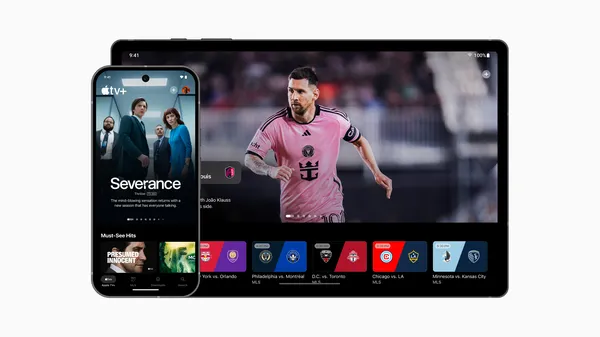 Since its launch in 2021, the Apple TV app for Google TV has given people the ability to stream award-winning original shows, like “Severance,” “Slow Horses,” “The Morni…
Here’s how Google built the I/O 2025 puzzle save the date, including a Gemini integration.
 We’ve received some questions about the holidays and moments that are displayed in Google Calendar. We want to clarify that we made this change last year, globally.Some …
Android Enterprise provides a high-quality suite of built-in accessibility tools that address the needs of employees with disabilities.
Google Family Link is introducing new features that help families foster healthy digital habits.
We’re bringing built-in protections to more kids and teens, and equipping parents with additional tools to support safer experiences.
Learn more about how Deutsche Bank partnered with Google Cloud to migrate its operations to the cloud.
Google and the Institute of Women's Cancers are embarking on a journey together to revolutionize the fight against women’s cancers.
 The countdown to Google I/O begins now! Join us live on May 20 and 21 from Shoreline Amphitheatre in Mountain View and online at io.google. At I/O, you’ll learn more abo…
 Since Whisk launched in December, people in the U.S. have been having a blast creating images with images as prompts to visualize and remix ideas. And starting today, pe…
Learn how advanced AI and machine learning models help Enhanced Protection mode of Safe Browsing keep you safe on the web.
Learn more about how Google for Education is focusing on digital safety for Safer Internet Day 2025.
 This year officially marks two decades of YouTube. In its 20 years, YouTube has transformed culture through video and built a thriving creative economy — and there’s mor…
In the U.S., the Geographic Names Information System (GNIS) has officially updated “Gulf of Mexico” to “Gulf of America.” As we announced two weeks ago and consistent wi…
 NotebookLM is a research and thinking companion designed to help you make the most of your information. You can upload material, summarize it, ask questions and transfor…
Today CEO Sundar Pichai spoke in Paris, France at the AI Action Summit. Read a transcript of his speech.
Campaign Manager 360 is helping advertisers and agencies navigate the evolving digital landscape with innovative tools and strategic partnerships.
The best of Google AI is now included in Workspace with significant nonprofit discounts.
 Starting this week, Google Photos will begin using SynthID (a technology that embeds an imperceptible, digital watermark directly into AI-generated images, audio, text o…
Google’s national big game ad and surrounding digital spots highlight Gemini Live on Pixel.
Google Maps looks back on 20 years with most-reviewed, most-photographed and other popular places.
 Starting today, Gemini app users can try 2.0 Flash Thinking Experimental. It’s currently ranked as the world’s best model, and it’s available at no cost. Built on the sp…
We’re announcing new updates to Gemini 2.0 Flash, plus introducing Gemini 2.0 Flash-Lite and Gemini 2.0 Pro Experimental.
Recap some of Google’s biggest AI news from 2024, including moments from Gemini, NotebookLM, Search and more.
Here are Google’s latest AI updates from December including Gemini 2.0, GenCast, and Willow.
Learn how Google Chrome’s autofill feature can reduce the time you spend filling out forms and make online checkouts a breeze.
 Last week, we announced updates to Project Astra, a research prototype for a universal AI assistant that can see, hear, and interact with people in real time. In the lat…
Today we filed Google's remedies proposal based on the actual findings in the Court’s decision — our agreements with partners to distribute search.
A look back at Google and its products in 2024, from AI advancements to top trending searches.
Grupo Petrópolis significantly boosted employee productivity and mobile device uptime by implementing Android Enterprise.
Google will stop serving political advertising in the EU ahead of new regulation in October 2025.
 Like many nations, Singapore faces rising rates of chronic diseases like hypertension and hyperlipidemia — as well as an aging population that increases pressures on the…
An overview of the new ways brands can stand out and make valuable connections on YouTube, including on Shorts and with creators.
An overview of Google’s work at APEC and the public-private partnerships expanding AI’s benefits to more people.
New features for Fitbit Ace LTE helps bring the family closer together and gives kids new ways to move.
This post explores the challenges UK IT and security teams face due to legacy tech and the rise of generative AI. Results reveal a surge in security incidents and burnout among professionals, underscoring the urgent need for modern security solutions.
London’s National Gallery is celebrating 200 years with newly digitised artworks, curated stories and an interactive AI experience connecting art and music on Google Arts & Culture.
Google is running a test to see what happens when news results are removed for 1% of users in Belgium, Croatia, Denmark, France, Greece, Italy, the Netherlands, Poland, and Spain.
Here are four new Chrome iOS features making it even easier to use this browser across devices.
 Google is committed to make benefits of AI more accessible and inclusive for everyone in the Middle East and North Africa.
We’re expanding flood forecasting to over 100 countries and making our breakthrough AI model available to researchers and partners.
An overview on how we’re honoring and supporting Veterans — and helping everyone benefit from their skills.
 Explore RIBA's online collection with Google Arts & Culture, featuring new virtual tours and stories.
Google Play announces the 10 indie games studios receiving a share of $2 million and hands-on support as a part of the Indie Games Fund 2024.
 Southeast Asia’s economy has rapidly expanded over recent years — and there’s no sign of slowing down. In fact, the GDP growth of Southeast Asia is projected to outpace …
Introducing enhanced agency tools and new curation capabilities for managing workflows, forecasting and direct deals with publishers.
Here's how we built adaptive audio in Meet, which transforms multiple laptops in close proximity into a unified audio system so you can create ad-hoc meeting spaces IRL.
Our new online platform and summit will help students learn more about product inclusion and equity.
Here are all the latest updates for Google Maps, Earth, Waze and our developer platforms.
From helping you explore even more with Immersive View to taking the stress out of your drive, here are updates on Google Maps you won’t want to miss.
Check out the latest developer updates for Google Earth and Google Maps Platform, including grounding with Maps.
Here are four AI voice models from Google Arts & Culture that offer a new way to experience and engage with art, history and culture.
For Cybersecurity Awareness Month, Warren Kumari, Google’s Director of Internet Standards, shares 3 easy steps to build a secure website.
At Google’s Responsible AI Summit in Paris, our VP of Trust & Safety Laurie Richardson spoke about our ongoing work to build responsible AI.
Check out Google Lens’ latest shopping edit which offers product details with one snap — plus, more tips for shopping what you see.
Voice input in Google Lens lets you make your voice heard as you search. Here’s how to use this new feature.
Introducing new ways to ask questions on Google and Lens to help you find what you need more effortlessly using AI.
With ads in AI Overviews and Google Lens, you can connect with the customers at the perfect moment from discovery to action.
We are expanding Gemini Live and extensions to over 40 languages so you can chat with Gemini in your preferred language.
This World Teachers’ Day, we’re spotlighting teacher stories around the world and showing how Google continues to support learning and education.
From funding organizations seeking to transform education to providing tech tools in the classroom, here’s how Google is helping teachers.
To celebrate World Teachers’ Day, we spotlight teacher stories on what it’s like to be in the profession today.
These three new AI features from Google Arts & Culture let you explore art through a personalized lens.
 Meet the latest cohort of startups, and learn more about our Google for Startups Growth Academy: AI for Cybersecurity program.
At Google for India, we shared how Google Health is supporting India’s digital health transformation.
We’re working with leaders in the fashion industry to bring product inclusion and equity to New York Fashion Week.
Gmail Cards extract the essential information from bills, purchases, events, and travel emails in a glanceable and actionable format.
We’re sharing some of our top tips for spotting email, phone, text and web scams, and what to do if you encounter one.
New Chromebook Plus computers with features powered by Google AI to help educators and education leaders.
Today we’re announcing two new Chromebooks, along with new software features that use Google AI to help you get more done.
New Google commissioned research states that Generative AI could add €1.2-1.4 trillion to the EU's GDP in 10 years and improve productivity across sectors. However, Europe must prioritize AI research, infrastructure, and training to fully realize these benefits and ensure everyone benefits.
 Join Thrall and drive with World of Warcraft on Waze
Learn more about the 21 startups from across EMEA selected for the Growth Academy: AI for Education program.
This week we finished making our case in the Department of Justice’s lawsuit about some of our advertising technology.
Today, we’re expanding the types of sources you can use with NotebookLM and giving you an easier way to share an Audio Overview.
Here’s one Googler’s story of discovering an unexpected and meaningful memory of his grandfather on Google Street View.
Be Internet Awesome World on Roblox will teach kids and teens online safety in an interactive and fun way.
Last week I participated in the President’s Lecture Series at Carnegie Mellon University and sat down for a fireside chat with CMU President Jahanian.
We’re sharing a first look of the upcoming Project Starline product and how companies can apply to be among the first to try it.
Billie Eilish is working with Google Maps to help fans make more sustainable choices around her upcoming tour.
Google Earth adds historical imagery and Street View expands to nearly 80 places in the latest update.
Gemini at Work, a Google Cloud event in Sunnyvale, discussed how businesses are using generative AI.
Hundreds of industry leaders joined us at Google Cloud Next ‘24. Here’s a snapshot of how some of them are using AI technologies.
Google Cloud customers are using generative AI across industries, from customer service to employee productivity and data analysis.
The UN is expanding the integration of Google’s Data Commons into a dozen additional agencies.
New home controls, AI-generated screensavers and easier ways to find and watch content are coming to all Google TV devices
The new Google TV Streamer is available on shelves tomorrow. Here are five features to try.
Updates from Google at the 79th United Nations General Assembly include new partnerships, investments in infrastructure, digital skills training, and more.
CEO Sundar Pichai's keynote address at the first-ever “UN Summit of the Future” in New York City.
To realise AI’s full potential in the UK, a comprehensive AI opportunity agenda will be required.
You can now save passkeys to Google Password Manager, making it easier to use passkeys across your devices.
Ancient rock art in Colombia's Amazon rainforest reveals a lost world. Now available on Google Arts & Culture, these works offer a glimpse into the past.
New Android features help you explore with confidence — from using offline maps from your wrist to getting earthquake alerts in more locations.
Android Earthquake Alerts is expanding to all 50 U.S. states, using phones to detect earthquakes and send early warnings to users.
Here’s how Google’s AI products and features can help students, educators, parents and guardians have their best back to school season yet.
Mexican Sports: More than a Game, a new project from Google Arts & Culture, explores the past, present and future of Mexican sports culture.
As Election Day nears, here’s an update on our latest initiatives, tools and safeguards, building on our existing efforts in the U.S.
We’re announcing the construction of our new data center in Canelones, Uruguay — our second data center in Latin America.
We’re sharing an update on suspected state-backed attacker APT29 and the use of exploits identical to those used by Intellexa and NSO.
 The APAC Sustainability Seed Fund 2.0, supported by Google.org and the Asian Development Bank (ADB), received $5 million USD in funding for 18 local sustainability-focus…
New updates for Gemini include custom Gems and improved image generation with Imagen 3.
At Google's Think Retail event, we'll share new tools to help retailers make quick decisions during the holiday, from jumping on trends quickly to simplifying their performance reports.
Google Essentials is a new app that makes it easier for you to discover and install Google services when setting up a new PC.
Google Search Ads 360 now supports Microsoft automated bidding, which can be included in bid strategies powered by Google AI.
Learn more about the design process behind the new Pixel 9 phones, Pixel Watch 3 and Pixel Buds Pro 2.
Our packaging for Pixel, Fitbit and Nest devices is 100% plastic free. Here’s how we made beautiful packaging that’s easy to recycle.
We’re announcing new collaborations with Energix Renewables and Swift Current Energy to support our clean energy commitments in the U.S.
Here's how our bioacoustic foundation model, Health Acoustic Representations (HeAR), may help improve health outcomes for people across India.
We’re bringing AI Overviews to six new countries, sharing more on our work to connect people to the web, and introducing updates for AI Overviews in Search Labs.
 At our second Safer with Google event, we touched on several of our security initiatives to keep Singaporeans safe in an AI-driven future.
Google’s Threat Analysis Group shares insights on APT42, an Iranian government-backed threat actor.
An updated calling experience and new features in Google Meet make connecting with friends and family more fun.
We are rolling out a new Trending Now experience with more local and up-to-date trends, and expanding it to over 100 countries.
Google Classroom celebrates its 10th anniversary with new features and tools for teachers.
Today Google launched the Pixel 9 Pro Fold, our thinnest foldable phone with our biggest display, supported by our most powerful Tensor G4 processor.
With AI at the core of Android, we’ve rebuilt Gemini and tailored it for your device, in a private and secure way.
Today we launched Pixel Buds Pro 2, with twice the noise cancellation in a design that’s smaller, lighter, more comfortable and secure.
Pixel Watch 3, the latest version of our flagship smartwatch, offers a stunning design combined with even better performance.
Take a look at our three latest Pixel phones that have upgraded cameras, improved performance and helpful AI.
At Made by Google, we shared how Gemini is evolving to provide AI-powered assistance that will be infinitely more helpful.
These new AI-powered features across Pixel and Android help make the world even more accessible.
Loss of Pulse Detection on Pixel Watch 3 can detect loss of pulse and automatically place a call to emergency services, potentially saving lives. Here’s how we created and tested this new feature.
Here’s a look at the upgraded cameras and AI photography features on the latest Pixel phones.
Here’s everything we announced across Gemini and Android — plus, how we’re bringing these new capabilities to our latest Pixel devices.
Learn more about AI-powered features for Google Pixel devices announced at Made By Google 2024.
Why we're supporting work to bring mental health resources to teenagers directly in their classrooms.
A tribute to early Googler and former YouTube CEO Susan Wojcicki, who died after two years of living with lung cancer.
Project Starline helps connect Team USA Olympic Athletes to their loved ones back home to share their favorite moments.
Mental health is a global issue. We look at four key ways to think about creating AI to expand access to education, assessment and intervention.
Google for Startups AI Academy: American Infrastructure provides mentorship, training, and resources to help founders scale solutions and benefit communities.
Google and the Tennessee Board of Regents provide access to Google Career Certificates and AI Essentials at over 37 colleges.
As summer break comes to an end and kids head back into the classroom, here are new ways Fitbit Ace LTE can foster independence and motivate movement.
 We're using Gemini models to make Nest cameras and Google Home experiences smarter and more helpful - and to make Google Assistant more natural and conversational on hom…
Today we’re announcing new settings and features to help parents, teens and families navigate safer experiences online.
How Google is supporting DARPA’s AI Cyber Challenge (AIxCC) Semifinal Competition at DEF CON 32.
With the help of Google’s latest AI models, you can now more easily search an image or video, find a website and compare different products when shopping in Chrome desktop.
Today we are announcing improvements and new policies to help people affected by explicit non-consensual fake content.
Google Maps now offers AR content at historical Parisian landmarks with Google Arts & Culture and Ubisoft.
We’re adding conversions to Performance Max asset reporting, improving image editing, expanding asset generation to new campaigns and more.
Google Photos AI editing tools are rolling out to all Google Photos users — learn more about how to use them.
Learn how we’re using AI to keep communities across Europe and Africa safe during wildfires.
Gemini in the Workspace side panel allows you to chat with Gemini across Gmail, Docs, Sheets, Slides and Drive — all without ever leaving the app you’re in.
Learn more about Project Green Light, Google’s initiative to cut down on stop-and-go emissions.
Formula E and Google Cloud broke a Guinness World Records™ title for the most participants in a generative AI hackathon, with 1,130 participants tackling real life challenges.
We’re bringing 1.5 Flash to Gemini, launching a new related content feature and expanding our Gemini for Teens experience.
 AI has the potential to benefit every sector in the UK, from helping teachers craft engaging lesson plans to improving small businesses’ customer service, and even helpi…
 Asia-Pacific is home to a vibrant developer community. The creative apps and games they’ve built reflects the region's diverse cultures, tech skills and avid love f…
The Museum of Modern Art of Bahia and Google Arts & Culture are bringing a vibrant collection of Bahian art to a global audience for the first time.
The biggest study of its kind using Fitbit devices shows how sleep affects people’s health.
The new Merchant Center will be available to all users in September, with gen AI tools, insights reports and a simplified interface.
Google Play introduces more ways to discover, game with more rewards and get content when you need it most.
Keep up with the 2024 Olympics across Search, Maps, Gemini, YouTube, Google TV and more.
Google joined several other U.S. technology companies in filing an amicus brief in Dada v NSO Group Technologies.
Google research teams spoke with high school students, parents and teachers to understand how AI can help support learning.
Google announces the Coalition for Secure AI (CoSAI) alongside founding member organizations.
We’re partnering with Team USA and NBCUniversal to showcase our features in NBCU’s coverage of the Olympics and Paralympics.
Artists in Residence at the Google Arts & Culture Lab are developing playful tools to inspire creativity with gen AI - discover how their latest experiments can be a source of inspiration and art teaching
Fitbit's Irregular Rhythm Notification feature is now available via Web API to healthcare providers with user permission.
New Circle to Search capabilities, Wear OS 5 and more are coming to Samsung’s latest devices.
Starting today, high risk users can use passkeys to enroll in the Advanced Protection Program.
The possibility to virtually explore the fantastic collection of marbles and sculpture from the Acropolis Museum on Google Arts & Culture
Researchers on our Connectomics team have completed the largest ever AI-assisted digital reconstruction of human brain tissue. Here’s why they’re taking on the mouse brain next.
Google Play Points members can catch exclusive perks and prizes at this year’s Pokémon GO Fest 2024.
For the first time, take a virtual journey to the world’s oldest known painted picture, recently discovered in a cave in Sulawesi, Indonesia.
Our 2024 Environmental Report looks at our use of technology to drive environmental change and operate our business sustainably.
We’re breaking down device tokens: what they are, how they work and why they make digital payments safer.
Gemma 2, our next generation of open models, is now available globally for researchers and developers.
Google Translate adds 110 new languages using AI, breaking down communication barriers for millions around the world.
We’re making it easier to search in Chrome on iOS and Android with shortcut suggestions, live sports cards and more.
How Googlers used Gemini to build the Crossword puzzle, showing developers what’s possible with generative AI.
New features in Google Analytics allow you to make better business decisions despite a continuously changing measurement landscape.
Testimony to the California Senate Judiciary Committee on June 25, 2024 by Jaffer Zaidi, Google VP of Global News Partnerships.
Today we're sharing 7 principles for responsible AI regulation, and endorsing 5 bills in Congress.
Today we are sharing updated insights about DRAGONBRIDGE, the most prolific IO actor Google’s Threat Analysis Group (TAG) tracks.
AI can enable startups to build transformative products and solve complex challenges, but founders need access to capital to realize this potential. Through the Google for Startups Founders Funds, we are proud to invest in promising Black and Latino founders who are leveraging AI technology to help address some of today’s most pressing issues. We are inspired by the groundbreaking work of these founders and their potential to shape the future of AI.
Today the Acropolis Museum marks its 15th anniversary in collaboration with Google Arts & Culture.
New features from Google for Education, including Gemini for teens and Chromebook Plus.
Google is responsibly bringing Gemini to teen students using their school accounts to help them learn confidently and empowering educators to enhance their impact with AI tools and more.
Does packing for holiday stress you out? Learn how to use Gemini to help you with your holiday preparation.
Our new report looks at how policymakers can leverage technology to accelerate climate solutions — particularly in developing markets.
Google has helped restore and enhance more than 750 acres of monarch butterfly and pollinator habitat across California.
How generative AI will enhance creativity and performance for marketers to unlock an infinite universe of ideas.
Google News Showcase is rolling out in the Baltic nations. Here’s how we are partnering with publishers.
Google launches GARA program to fund and support groundbreaking research in computing and technology, addressing global challenges.
Introducing the first 2024 cohort of Google for Startups Ukraine Support Fund recipients.
Use Google AI technology — like Immersive View, Google Lens and more — as you prep and plan for your next vacation.
Android Enterprise connects your Google products and services across Android, ChromeOS, Chrome Browser and Google Workspace.
Artist Felipe Pantone turns the world’s streets into his canvas, with Augmented Reality, in collaboration with Google Arts & Culture, Acute Art and Grand Palais Immersif.
NV Energy and Google partner to develop new solutions to bring clean, firm energy technology to Nevada.
Education Navigator: Get resources and learn how to use Google’s education tools to further teaching and learning.
The June Feature Drop brings updates to make your phone more helpful and adds safety features to Pixel Watch.
For the first time, Condé Nast opens the doors to the Vogue archive with a new Google Arts & Culture hub that includes over 15,000 images.
At Google for Brazil, we reaffirmed our commitment to the country, highlighting our 2023 economic impact, training initiatives and more.
Applications are open for two new Google for Startups Accelerator programs in Europe and Israel.
We’re introducing the Google TV network, a new CTV ads network that offers in-stream video inventory across more than 125 channels built into Google TV.
Text 911 reliably using RCS, and even share high-resolution pictures, your precise location and more.
Global Fishing Watch is releasing AI-powered datasets that map global ocean infrastructure and vessels not broadcasting on public systems.
NotebookLM, our AI-powered research and writing assistant, is getting new features and expanding to over 200 countries and territories.
We’re releasing the AI model SurfPerch, that is being deployed thanks to contributions from people around the world to our Calling in Our Corals platform
Here's one Googler's experience of experimenting our newest AI products and updates at Google I/O 2024.
Technology companies based in the U.S. can now apply for the new Google for Startups AI Academy: American Infrastructure program.
Our bulletin covering coordinated influence operation campaigns terminated on our platforms in Q2 2024.
We’re supporting more organizations to establish 15 new cybersecurity clinics across the U.S.
 Artificial intelligence can help take on tasks that range from the everyday to the extraordinary, whether it’s crunching numbers or curing diseases. But the only way to …
For Pride Month, we're sharing our product launches, announcements and features to celebrate the LGBTQ+ community.
Here’s what happened with AI Overviews, the feedback we've received, and the steps we’ve taken.
Grow with Google and the State of Oklahoma partner on skilling residents statewide via Google AI Essentials
Google News Showcase is rolling out in Cyprus. Here’s how we are partnering with publishers.
We are supporting the UK General Election by surfacing high-quality information, safeguarding our platforms and equipping campaigns with best-in-class security tools and training.
24 startups from across EMEA have been selected for the second Google for Startups Growth Academy: AI for Health program.
Embark on a virtual journey through the Polish region of legends and mysteries on Google Arts & Culture
Get more done in the classroom with the help of generative AI and our newest features for teachers.
 In the 25 years since Google was founded, technology has created significant transformations — and perhaps nowhere more so than in Asia-Pacific.Today, the region is home…
Learn how new Google AI on Android features can boost employee productivity, help developers to build smarter tools and improve business workflows.
Epic’s proposed changes to Android and Google Play would harm consumers, developers and device manufacturers.
This year, we are leveling up Google Play Points with exciting new perks and rewards to connect you with experiences you’ll love.
Google is co-founding Symbiosis, a coalition of companies committed to boosting the certainty and scale of nature-based carbon removal.
At GML we’re announcing new generative AI tools that help merchants market their brand and products more efficiently.
Google AI is helping marketers engage consumers with new creative features, immersive formats, and Search Ads opportunities.
How our Hamina data center in Finland will provide heat to local households, schools and public service buildings.
 For International Museum Day, we're sharing 3 simple but effective tips to help cultural partners reach more audiences across platforms.
Google invests $2 million in INSAIT, the Institute for Computer Science, Artificial Intelligence and Technology in Sofia, Bulgaria.
 Announcing the new €15M Google.org Impact Challenge
From Theft Detection Lock to casting on Rivian to Wear OS 5 updates, here’s what’s coming to Android 15 and its device ecosystem.
Android rolls out theft protection features to safeguard your data before, during and after a theft incident.
The FA is using Google Cloud gen AI to identify England's next football stars by analyzing scouting reports.
Sundar Pichai shares Google I/O news including updates across Gemini, Android, Search and Photos.
Today we’re introducing VideoFX, plus new features for ImageFX and MusicFX that are now available in 110 countries.
Ask Photos equips you with Google’s most capable AI, Gemini, to find exactly what you are looking for in your gallery.
We’re announcing new AI safeguards and new tools that use AI to make learning more engaging and accessible.
We’re sharing updates across our Gemini family of models and a glimpse of Project Astra, our vision for the future of AI assistants.
We introduced Veo for video generation, Imagen 3 for image generation, and released demos recordings from our AI music collaborations.
Four artists use Google DeepMind’s AI to reimagine the visual world of “Alice's Adventures in Wonderland.”
Gemini Advanced subscribers will get access to Gemini 1.5 Pro, a 1 million token context window and more personalized features.
Here’s more ways you can experience Google AI on Android. Learn how on-device AI is changing what your phone can do.
Today we’re updating Gemini 1.5 Pro, introducing 1.5 Flash, rolling out new Gemini API features and adding two new Gemma models.
Get more done across Workspace with Gemini 1.5 Pro in the side panel and new features in the Gmail mobile app.
LearnLM is our new Gemini-based family of models for better learning and teaching experiences.
We’re bringing AI Overviews to everyone in the U.S. and adding new gen AI experiences to take more of the legwork out of searching.
We’re partnering with HP to bring Starline, our breakthrough communication technology, out of the lab and into the market.
 We’re sharing an update on our investments and philanthropic contributions in Atlanta, including a new tech classroom at Morehouse College and collaborations with local …
New partnership with Community College of Philadelphia offers Google Career Certificates to students across Philadelphia.
Google researchers and Harvard neuroscientists have worked together to reveal incredible images of the human brain.
Learn about America’s Chinatowns in this new hub from Google Arts and Culture and the National Trust for Historic Preservation.
Our new AI model AlphaFold 3 can predict the structure and interactions of all life’s molecules with unprecedented accuracy.
Pixel 8a is the latest A-series phone, bringing you a phone packed with Google AI at an affordable price.
La Profesora Estadounidense del Año 2024 Missy Testerman, de Tennessee, comparte más sobre su historia y el compromiso de Google con el futuro de la educación.
Google shares ongoing commitment to education with an essay from 2024 Teacher of the Year, Missy Testerman.
 From Google Ads to Gemini, small businesses across the country use Google tools to reach customers, grow their client base and so much more.
Here are the winners of our Single-Use Plastics Challenge, and how these solutions help reduce the food and beverage industry’s plastic footprint.
Learn more about how we developed Pixel 8 Pro’s Video Boost feature as well as tips on how to use it.
For World Password Day, we’re sharing updates to passkeys across our products and sharing more ways we’re keeping people safe online.
May is Mental Health Awareness Month in the U.S. Here’s a look at how Google continues to support people in times of need.
 We’re celebrating five years since the launch of the .dev top-level domain with five exciting .dev websites and a special offer from our registrar partners.
Google Play Books celebrates reading with no-charge ebooks and digital stickers for kids, a new “Upcoming” section and audiobook previews on YouTube.
 Every May, Google recognizes a companywide event we call “Honoring Asian and Pasifika Ancestry Month.” This celebration builds on the broader observance of Asian Pacific…
Here’s a look at the work we’ve done in Nevada to support local water stewardship, data center water usage and regional economic impact.
Google’s productivity expert Laura Mae Martin’s new book details useful tips for getting things done while preserving your time.
Google NewFront updates to Display & Video 360: Streamline streaming ads, unlock first-party data, and make Google AI work for you.
 Over the past 18 months, AI has augmented and inspired the work of many creative professionals. At the same time, many are concerned about the effects of this technology…
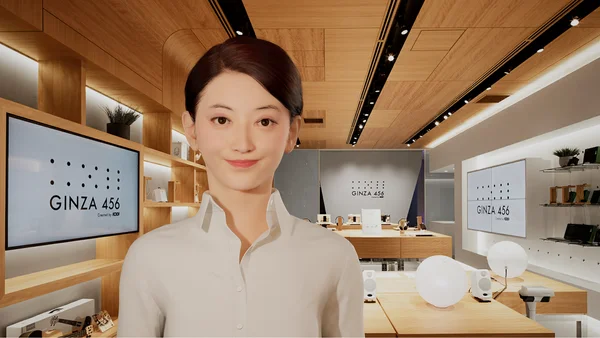 Virtual assistants with a conversational presence have been shown to increase trust — and consequently also engagement — compared to purely text-based chatbots. Virtual …
A new report from inaugural Technology & Society Visiting Fellow Andrew McAfee looks at the potential economic impacts of generative AI.
Over the next year, Keep reminders will automatically save to Google Tasks so you can also access them from Calendar, Tasks and Assistant.
Today, we opened Google Taiwan’s newest hardware office in the TPark campus in New Taipei City
For National Poetry Month, try these Google Play Books features to remember your favorite lines, organize your poetry books and more.
Combatting child sexual abuse and exploitation (CSAE) is profoundly important work for Google. We’ve invested significant resources in building detection technology, tra…
Learn more about Google's AI-powered tools that can help you explore the outdoors more.
For Earth Day, we’re sharing how Chromebooks can help support sustainability goals at your school by building a repair program and more.
The new Growth Academy: AI for Education program provides edtech startups with hands-on Google mentorship and technical support.
Google Books is home to beautiful illustrations of flowers. You can search and read more at books.google.com.
A note from Google and Alphabet CEO Sundar Pichai to employees, sharing a number of structural changes to improve velocity and execution across the company.
For Financial Literacy Month, we’re sharing a few ways Google Pay keeps your digital payment information safe.
Celebrate World Heritage Day, and learn about the United States’ Hopewell Earthworks and the most iconic places on earth.
From new apps to more digital car key support, here are new features coming to Android Auto and cars with Google built-in.
You can save time and energy when scheduling meetings with a new Gmail feature that helps you find slots to meet directly from your inbox, without even needing to naviga…
The Televisa Foundation will launch Technolochicas in the United States beginning this fall, starting in Houston, Los Angeles and Chicago.
A look at Data Commons, Google’s initiative to make publicly available data more useful for people working on solutions to societal challenges.
Just started a new job and need a photo for your work profile? Want a nice-looking photo for your ID badge that you’ll be happy to look at every day? For both instances,…
How you can use Google products to celebrate the Latino community during Hispanic Heritage Month.
Descubre cómo Google reconoce y celebra la cultura, la música y el liderazgo de Latinoamérica en este Mes de la Herencia Hispana.
Learn more about how Google worked with partners to turn massive buildings — and their massage data files — into 3D art.
A new project on Google Arts & culture, supported by the Biritsh Council, puts it all together in Pakistan's Museum of Food.
This bulletin includes coordinated influence operation campaigns terminated on our platforms in Q3 2023. It was last updated on September 8, 2023.
We put people first, and focus on getting them the services they need to find high-quality information easily and quickly.
The Google Visitor Experience in Mountain View is opening this fall to neighbors, visitors and Googlers.
Threat Analysis Group shares findings on a new campaign by North Korean actors targeting security researchers.
Chrome is ringing in 15 years with a desktop redesign, an updated Chrome Web Store and new search tools.
Black culture has had a profound impact on British music for centuries. From the earliest days of jazz to the latest grime and drill, Black British artists have pushed t…
We’ve partnered with the ASEAN Centre for Biodiversity to launch a new Google Arts & Culture exhibit
Since Google was founded, we’ve worked to answer hard questions, help people get answers to theirs, and move technology forward for the world.
This evolution of our visual identity better represents Android’s core ethos of being open, iterative and inclusive — and it’s fun, too.
We’re piloting a video series called The Play Report as a new way to discover apps and games on Google Play.
Ireland’s first long-term renewable energy deal brings us one step closer to our 24/7 carbon-free energy goal.
Eleven teams from APAC and North America have graduated from Google’s first accelerator program for circular economy startups.
As a working father with two kids who grew up in the digital era — and as a professional working in online safety outreach and engagement for the last 17 years — I’ve se…
We’re bringing generative AI capabilities in Search (SGE) to more people, making Search Labs available in India and Japan.
At Google Cloud Next 2023, thousands of people gathered in San Francisco to learn about the newest updates from Google Cloud.
Google, Governor Shapiro and PASSHE announced a new partnership to offer Google Career Certificates across the state of Pennsylvania.
AI is helping us transform Google products and businesses — and it’s how we help Google Cloud customers transform theirs.
Locked Folder now supports cloud backup, and is available on iOS devices and the web so you can access your photos and videos across more of your devices.
At Google Cloud Next 2023, we announced new updates to our products, including what's next in generative AI.
We’re introducing Google Cloud healthcare customers using Med-PaLM 2 and other generative AI solutions.
Alaa is a Women Techmakers Ambassador who is having an impact on gender equity in the tech industry.
Get new insights on the cheapest time to book your next flight and how far in advance to plan your trip.
The DSA will apply to VLOPs and VLOSEs as of August 28, 2023, across Google, we are engineering for compliance at scale.
We’re adding more than 25 new free channels from Google TV, plus full integration from NFL Sunday Ticket.
Google offices in New York, the Bay Area and parts of Europe operate on carbon-free energy. We asked a real estate expert how that works.
We’ve added even more features for safer digital learning in Google Workspace for Education, plus new tools to help parents and kids.
We have strict ads privacy protections in place on made for kids content, regardless of a user's age.
The Transparency Center is a central hub for quickly and easily learning about Google’s product policies.
Tech Equity Collective launches Black Genius Academy, a career discovery app that prepares aspiring Black talent for technical education programs.
New updates to Search Generative Experience (SGE) help people easily learn new things and understand key concepts while searching online.
The new Memories view in Google Photos is a scrapbook-like timeline for reliving, customizing and sharing your most memorable moments.
We have partnered with author Ajay Chowdhury to create a gamified murder mystery eBook, free for all UK commuters.
For hip-hop’s 50th birthday, Google Arts & Culture partnered with experts to celebrate the genre’s impact across American culture.
Check out 10 ways Bard can help you get things done, from brainstorming ideas to planning trip itineraries.
Announcing the top three winners of this year's GDSC Solution Challenge, as well as the people’s choice award.
We’re partnering with Arsenal and Liverpool Football Clubs to bring new content and experiences to fans.
Discover the redesigned Google Arts & Culture app now on Android. Send an AI-generated summer postcard to a friend with Poem Postcards.
We used AI to help airlines choose routes that are less likely to cause contrails, minimizing the environmental impact of flights.
Android Enterprise’s Zero Trust security model helps businesses secure devices with over 100 unique trust signals.
We’ve partnered with the Mongolian government to help provide Chromebooks, ChromeOS Flex and teacher training.
Following the announcement of a pilot for a national data research cloud by the UK Government and UK Research and Innovation (UKRI), there is unprecedented momentum towa…
We're rolling out new tools and protections to help you stay in control of your personal information, privacy and online safety.
The Google for Startups Women Founders Fund will provide equity-free funding and Google support to women-led AI startups in India, Japan and Korea.
The updated Fitbit app, coming later this fall, has a simpler design and more motivating content
Using Google News Initiative’s data journalism training, the BERNAMA team shares the impact of “stunting” in children in Malaysia through visual-centric explainers.
Jonny Cottom knows the juggle involved with running a start-up single handedly. Since launching BreakBottle, an eco-friendly water bottle brand, last year, he has been s…
See how six different creativity apps, from photo editing to sketching apps, made the most of the extra screen space on Android tablets.
For our midyear update, we’d like to share three of our best practices based on this guidance and what we’ve done in our pre-launch design, reviews and development of ge…
Unknown tracker alerts help keep you and your loved ones safe on Android with automatic alerts and manual scan.
The goal of this report is to analyze the exploits from the year as a whole, looking for trends, gaps, lessons learned, and successes.
To celebrate International Intern Day 2023, we’re spotlighting projects from Google interns around the world.
Here’s how to get the most of Android on the new Galaxy Z Flip5 and Z Fold5, Galaxy Watch6 series and Galaxy Tab S9 series.
Googlers Dan Valinotti and Noah Rubin share their expertise and passions while establishing their online identities.
Today, Google, Microsoft, OpenAI and Anthropic published a joint announcement establishing the Frontier Model Forum.
Try these seven Google tech tips to prepare for your next hiking, camping or backpacking trip.
We’ve added new games, expanded access to more than 60 new regions, and lowered the minimum PC specs to play Google Play Games.
On the eve of the 33rd anniversary of the ADA, we’re sponsoring the captions and audio description of a musical tribute to Judy Heumann.
New features on Search will make it easier to search for women’s sports, in time for the FIFA Women’s World Cup 2023.
A Google Maps power user shares 10 of her favorite tips to help people walk, drive, and plan trips more efficiently.
Take a look at how we’re reducing emissions and helping people make more sustainable choices.
Details on Google's work with other leading AI companies to advance responsible practices in the development of artificial intelligence.
Four Googlers share what it’s like to build next-generation hardware and software products at Google Taiwan.
Nearby Share for Windows makes it easier to share files between Windows PCs and Android devices.
In collaboration with the World Health Organization and artist Cristina Tarquini, interact with data sculptures on 4 invisible environmental issues.
We worked with TONL, a stock image company, to create more representative datasets to help teams build more inclusive products.
Keep up with the 2023 FIFA Women’s World Cup™ and play a mini-game on Google and YouTube.
Hampton Court Palace is an icon of English architecture, history and art, home to kings, queens, artists and thinkers since the Tudor times. As a heritage charity, Histo…
Knowledge is key to maintaining good health— so we take seriously our responsibility to make health information more accessible for individuals, caregivers, and communit…
Google and TAITO partner to release SPACE INVADERS: World Defense, a new immersive AR game that turns the world into a playground.
Google takes part in the White House's multi-factor authentication (MFA) symposium, supporting efforts to strengthen online security.
Homenajeamos a Eunice Newton Foot, científica pionera de la ciencia climática, y a 6 organizaciones beneficiarias de Google.org dirigidas por mujeres que construyen un f…
We’re celebrating climate science pioneer Eunice Newton Foote and six women-led Google.org grantees building a more sustainable future.
A new $5 million grant aims to help Woodwell Climate Research Center track Arctic permafrost thaw in near real-time.
Families can use Google Play to stay entertained and continue learning throughout the summer.
A new partnership with LUMA Arles presents a series of three commissions by artists Shahryar Nashat, Rachel Rose and Sara Sadik.
We’re announcing 46 new U.S. recipients of the Google for Startups Black and Latino Founders Funds.
Today we're expanding Bard to new languages and countries, and launching new features to help you get creative and boost your productivity.
We’re rolling out NotebookLM, an experimental offering from Google Labs to summarize information, complex ideas and brainstorm new connections.
Representatives from the ICCT and more will help oversee the Travel Impact Model, our methodology for predicting flight emissions.
Google customer engineer Phil Richardson shares how the company is supporting the UK armed forces.
At the Google Arts & Culture Lab, we use emerging technologies to create accessible experiences that connect us to culture in new ways online. Our latest experiment,…
In celebration of Disability Pride Month, we learn from four Googlers about what their identity means to them.
Android Enterprise helps DoorDash manage, deploy and secure merchant tablets around the world.
At our first Safer with Google event, we outlined several initiatives reaffirming our commitment to keep Singaporeans and businesses safer online.
The Women’s football tournament last summer was the most-watched ever, with more than 365 million estimated viewers globally. In the UK alone, 17.4 million people tuned …
Today marks the 75th birthday of the NHS. In 1948, the founders could not have envisioned the advances that have been made or the scale of the service, now treating 1.6 …
AI is the most profound technology that humanity is working on today. It’s a critical part of solving big societal challenges and helping to make our everyday lives bett…
28 institutions from around the world join forces to showcase Leonardo da Vinci's unparalleled legacy, blending art, science, and AI innovation
Check out new features that make it easier to message in Google Chat, like read receipts and message deletion.
Pixel is launching Pixel RePresents, a new content series highlighting five of hip-hop’s emerging female artists who will put their own stamp on a classic track.
We’re sharing an update on our commitment to help increase the Bay Area’s housing supply and support organizations addressing homelessness.
When efforts to support journalism conflict with the core principles of the open web and undermine our products, we have to adjust how we operate.
Google is expanding tools for academics, fact checkers, journalists and people interested in checking things for themselves.
As the Muslim community gets ready for Hajj and Eid al Adha this year, one Googler shares how Google products helped him experience this special season.
See how five different apps made the most of the extra screen space on Android foldable phones.
At our fifth Google for Brazil event in São Paulo, we announced an Economic Impact Report, a new Cloud office and a number of local partnerships.
Compare prices, virtually try on clothes and research complex purchases before you buy.
Being a football fan in 2023 is very different to what it was, even a few years ago. The modern football fan today is streaming matches on the move, breaking down the ta…
Google and Canvas8 research on the barriers preventing girls in Europe from choosing computer science as a career.
Google’s Yossi Matias and WMO Director of Infrastructure Anthony Rea discuss the Early Warnings For All Initiative.
Today at ISTE, we’re introducing new tools in Google Workspace for Education and Chromebooks.
We’re announcing new features like image to text on Chrome browser and updated safety controls for admins in Google Admin Console.
We’re announcing new Google for Education updates at ISTE, North America’s biggest edtech conference.
Check out Google Workspace for Education’s new teaching and learning features in Google Classroom, Drive, Meet and more.
Our new $20 million collaboration with the Consortium of Cybersecurity Clinics will expand and create cyber clinics across the US.
Discover how Arts Council England and Google Arts & Culture are collaborating to support the development of digital skills in creativity and culture.
Return to life as a cat mummy and help save the pharaoh’s journey of eternity in a race against time.
This 10-week program supports startups using AI in their core business through tailored training and mentoring by making use of the best of Google and its network.
Get the opportunity to work with partners who have been validated by the Android Enterprise team with the Android Enterprise Partner Program.
Metal Links bands for Google Pixel Watch join a wide assortment of accessories to match your every look and mood.
Googler Nina found herself leading a NGO in response to the outbreak of the war in Ukraine.
Google Books has a collection of public domain and free-to-read books that provide context around Emancipation and the celebration of Juneteenth.
The Google Career Certificates YouTube Channel launches a new video series to inspire and guide Gen Z job changers on their next career move.
Google is taking legal action against a bad actor for deceiving and scamming consumers.
Lens makes it easy to search what you see and explore the world around you — including the new ability to search for skin conditions.
Dive deeper into your Pixel’s custom settings to personalize exactly how your phone looks, sounds and works.
We’ve added new generative AI capabilities to make shopping and travel planning easier on Search.
To help with trip planning and exploration, we’re making updates to Maps like expanding Immersive View to new cities and landmarks and more.
These AI-powered Gmail features can make your email experience even faster, easier and more organized.
Our advertising technology tools help websites and apps make money and fund high-quality content online.
Google and YouTube’s new AI-powered solutions help advertisers multiply their creativity and generate demand.
New research from the UK in partnership with the NHS Confederation and conducted by Ipsos shows that consumers want to have more control over their health.
Google for Startups announces the 10 UK-based startups selected for the 2023 $4 million Black Founders Fund.
Ragamalika Karthikeyan, Editor at The News Minute, shares her story as a queer journalist and how her and her team are working on a project ‘Inqlusive Newsrooms’, to dri…
Today Google released released the Secure AI Framework to help collaboratively secure AI technology.
We’re announcing a number of new ways Google is investing in local news organizations in the U.S.
Google expands Confirming Gross Revenue to help publishers and buyers verify there aren’t hidden fees in ad tech.
Google Assistant provides hands-free help throughout the day, tailored to your needs. Here are three tips to personalize your Assistant.
Two improvements are launching in Bard to help you get more accurate responses and export to Google Sheets.
The Google Analytics 4 deadline is July 1, make your move before it’s too late and get AI-powered insights to improve your ROI.
More British businesses than ever before are maximising the opportunities created by the digital economy, whether that’s high-street bakeries using online ordering syste…
We’re making it easier to recycle and helping to reduce waste in our products and operations.
Thanks to a classical machine learning algorithm and the cEDA sensor, Fitbit’s Body Response feature can detect physical signs of stress.
For Pride Month, our latest #WeArePlay stories feature founders building apps for the LGBTQ+ community.
Make your smartwatch yours with these 5 ways to personalize your smartwatch: watch faces, tiles, complications, apps and more.
Android is announcing new features to help you get information quickly, have more fun and protect your devices.
Google Wallet introduces new features bringing even more convenience and security to accessing your everyday essentials.
Learn more about where designers and engineers found inspiration to create the new device’s very important piece.
Learn how Android Enterprise helped Leroy Merlin deploy 15,000 mobile devices across Spain.
Season 3 of the Where the Internet Lives podcast explores how data centers change the world around them in surprising and beneficial ways.
Here are the ways that Google products are celebrating the LGBTQ+ community for this year’s Pride.
Google AI researchers’ learnings from deploying an AI model for detecting diabetic eye disease into real clinics
Asian American Advancing Justice | AAJC is working to address inequities facing the Asian American community, with support from Google.
We’re expanding the Grow with Google Digital Coaches program to help more U.S. small businesses learn new skills to grow.
Today, we’re starting to open up access to SGE (Search Generative Experience), one of our first experiments in Search Labs.
Our collaboration with WHO will focus on providing credible health information to positively impact the health of billions of people.
Merchants can use Product Studio to create product imagery with generative AI and easily list their products on the new Merchant Center Next.
We’re using generative AI in ads to help advertisers manage complexity and improve performance.
By providing €10 million in funding, as well as mentoring and support, we’re helping entrepreneurs from underserved backgrounds develop transformative AI-solutions
 As part of our ongoing efforts to support cybersecurity capacity building in Europe, Google is outlining a number of initiatives to champion increased relevant skills in…
The new Google for Startups Growth Academy: AI for Health program for companies based in Europe, Middle East, and Africa.
 Thanks to a collaboration with Google Arts & Culture, audiences can deep-dive into the past ten years of museum and gallery innovation across the UK and see the shortlis…
 1,600 learners across 7 countries have participated in the Google Machine Learning Bootcamp.
For society to reap the benefits of AI, opportunity, responsibility, and national security strategies must be baked into that shared AI agenda.
Global Accessibility Awareness Day puts a focus on how we can make classrooms more accessible, no matter how students learn.
A $100k grant to the University of Florida enabled a professional development program for computer science and special education teachers.
 On Global Accessibility Awareness Day, here are product and feature updates built by and for people with disabilities
Over 50 museums curate collections at scale using our latest virtual 3D storytelling tool
These startups are using AI to decarbonize buildings, create sustainable agriculture, protect biodiversity, and remove carbon from the atmosphere.
In honor of Teacher Appreciation Week, 2023 Teacher of the Year Rebecka Peterson shares more about their story and how Google is committed to the future of education.
Today, we’re announcing the launch of the Google Cybersecurity Certificate, the newest addition to our Google Career Certificates program.
 Google is committed to fighting the spread of misinformation online. We take the task of providing access to high quality, trustworthy, and credible content very serious…
Checks takes the complexity out of compliance, using AI to help companies quickly discover, communicate and fix issues.
Google Registry is launching all new .dad, .phd, .prof, .esq, .foo, .zip, .mov, and .nexus top-level domains.
 For the first time, we’ve begun rolling out passkeys, the easiest and most secure way to sign in to apps and websites and a major step toward a “passwordless future.”
Four new online interactive artworks from Google Arts & Culture Lab artists in residence
The inside story of how the Google Meet team progressed background options from blur all the way to animated filters.
To celebrate Asian Pacific American Heritage Month, we’ve added 20 new Chrome themes by AAPI artists.
Details on how Google Ads plans to buy media on apps and an update on Google bidding with third-party app monetization platforms.
This week at the IAB NewFronts, we’re announcing new ways to introduce Shorts into your awareness campaigns to reach highly engaged YouTube audiences.
 The latest Google Doodle celebrates late British actor Alan Rickman and his impact on culture in the U.K. and around the world.
How you can use Google products to celebrate Asian and Pacific Islander culture for Asian Pacific American Heritage Month.
Obtén más información sobre las formas en las que puedes celebrar el Mes de la Herencia Asiático-estadounidense y de las islas del Pacífico con los productos y servicios de Google
The Google Photos app on Chromebooks now includes a movie editor, so you can create and edit videos.
Google.org’s 2023 Leaders to Watch list recognizes seven up-and-coming leaders behind social impact organizations.
We are building on our commitment to news by announcing the launch of Google News Showcase, our curated online news experience and licensing program, in Belgium.
Google Registry celebrates five years of .app with 50% off new or renewed .app top-level domains.
We’re introducing two programs with partners to help drive a more equitable clean energy transition.
Bard can now help with programming and software development tasks, across more than 20 programming languages.
We announced some changes that will accelerate our progress in AI and help us develop more capable AI systems more safely and responsibly.
A summary of Google’s presence at the International Journal Festival, including new partnerships across EMEA on supporting journalism.
 Updated guidance for publishers looking to experiment with monetization strategies
From price tracking to tab organizing, try out these seven Chrome features to plan your next trip.
To help reduce our plastic footprint in our food spaces, we’re launching the Single-Use Plastics Challenge.
 Waze on Google built-in arrives to Volvo Cars and Polestar carsWaze is now available on all Volvo and Polestar 2 cars with Google built-in, directly through the car’s in…
We provided over $700 billion in economic value in the U.S. last year — and helped people and businesses across the country.
Google's Threat Analysis Group shares first quarter cyber updates on the threat landscape from the war in Ukraine.
Discover four ways to redeem your Google Play Points, including for new partner offers and Google merchandise.
Thanks to AI, Pixel’s Night Sight mode got even faster. Here’s the inside scoop on how we did it.
New directory and report released on digital, independent media across over 40 countries in Europe.
Results of Google Ads’ experiments with privacy-preserving signals for interest-based audiences to help drive performance without 3p cookies.
Explore the rich collection of UNESCO World Heritage Sites on Google Arts & Culture for World Heritage Day.
Here’s how we’re supporting climate science and solutions to enable everyone to help the oceans
It’s time for marketers to schedule their upgrades ahead of next year’s planned shutdown of the previous Search Ads 360.
Google shares new research and initiatives to support improvements in vulnerability management across the industry.
Check out these tips for identifying and managing stress with Fitbit, Pixel, Google Pixel Watch and Nest Hub (2nd Gen).
Davina McCall on finding fitness that works for you, as her Own Your Goals Summer Sculpt Challenge becomes available on Fitbit Premium.
Registration for Google Marketing Live is now open. Get a front row seat on Tuesday, May 23, at 9 a.m. PT.
 Two new power purchase agreements in Belgium and the Netherlands are helping us move forward in our goal to run 24/7 on carbon-free energy by 2030.
Google TV brings hundreds of free TV channels to one place, organizing them by topic in one easy-to-use guide.
 Now you can find all the national park information you need in one place.
Beginning this summer, there’s a new way to log in to the Fitbit you know and love — with a Google Account. With a Google Account you’ll get more Fitbit experiences and all your historical data with the benefits of a Google Account.
A Google AI expert answers common questions about generative AI, large language models, machine learning and more.
Just in time for spring cleaning season, here are five ways you can organize your Chrome browser.
Here are some highlights of our latest sustainability achievements related to our consumer hardware products and services.
Announcing new advanced Google Career Certificates in business intelligence and advanced data analytics.
Google's Threat Analysis Group shares information on ARCHIPELAGO as well as the work to stop government-backed attackers.
 Why is Krakow so unique? The city of kings rarely sleeps! To inspire your next trip, Google Arts & Culture, together with 13 cultural institutions, launches Krakow-w…
We’re adding imagery from 2021-2022 to Timelapse in Google Earth, so you can see how the earth’s surface has changed over time.
How the founder and CEO of Zolli Candy used .boo domains to increase Easter and Halloween sales of its zero-sugar, allergy-friendly, gluten-free, vegan and keto treats.
 Learnings and achievements from the first year of the Google for Startups Ukraine Support Fund
A reviewer tested Google's Pixel Buds Pro for two weeks and shared 10 of the best features.
Learn how Android Enterprise helps Brink’s Brazil manage sensitive data and improve IT support for its employees.
These Search tools help you browse hotels, save money on your next flight and discover things to do
Maps and Lens features to help you plan your Summer travel and make the most of your vacation.
We are introducing Nearby Share Beta for Windows, an app that helps you share files between Android devices and Windows PCs.
 From new Search features to supporting fact-checking communities, Google is helping users in Asia Pacific look for the facts ahead of International Fact-Checking Day.
Google health experts share tips for getting a better night’s rest with Fitbit, Pixel Phones, Pixel Watch, Pixel Buds and Nest Hub (2nd Gen).
Katie Couric hosts Future Ready by Think with Google, a new interview series featuring experts in AI, cybersecurity and psychology.
We know that online scams are a growing concern for people everywhere. Some have experienced scams via phone calls, social media sites and even in text messages. Bad act…
 Meet three women founders using AI to rebuild the Ukrainian economy, with support from the Google for Startups Ukraine Support Fund.
On International Fact-Checking Day, Google announced new partnerships and Search features such as content advisories to help improve the quality of search results.
Google’s Threat Analysis Group (TAG) tracks actors involved in information operations (IO), government backed attacks and financially motivated abuse. For years, TAG has…
Today, we’re announcing the Ads Transparency Center to help you quickly and easily learn more about the ads you see on Search, Youtube and Display
We’re helping communities prepare for and adapt to the effects of rising heat — from new extreme heat alerts on Search to AI-powered tools for cities and governments.
AI can be hugely beneficial to society if citizens, educators, academics, civil society and governments unite to shape it responsibly.
Everyone should be empowered with the tools they need to find information they can trust.
At Bett 2023, we’re sharing our vision for the future of education, announcing new updates around Google Workspace, Chromebooks and Chrome, and discussing advances in AI and privacy and security.
Google for Education puts the safety, security and privacy needs of our users first, with new controls for Google Workspace for Education and ChromeOS.
Today we're announcing new Chromebooks for students and teachers, updates to Screencast and cast moderator, and new features like reading mode.
Check out Google Workspace for Education’s new teaching and learning features in Google Classroom, Docs, Slides, Meet and more.
Google joins governments, civil society and businesses at the White House’s Summit for Democracy.
Google Play Books offers several ways to find great deals and discounts on ebooks and audiobooks that are just right for you.
Work profile can help you prevent data breaches, easily manage devices and improve employee productivity.
Google Pixel and the NBA launch the all-new Pixel Arena, the ultimate fan experience in the NBA app
On April 1, we’re welcoming the public to New York’s newest dining, cultural, and educational destination: Pier 57.
Search for your next recipe, shop for helpful products and more this Ramadan, with help from Google.
Google News Showcase is launching in Mexico, with nearly 80 media outlets joining from all over the country.
Season 3 of the Where the Internet Lives podcast explores how data centers change the world around them in surprising & beneficial ways.
On World Water Day 2023, we’re sharing progress on three partnerships aimed at helping water scarcity and access in India.
A writer shares how she uses Chrome extensions to stay productive, from translating text to converting files and more.
The GNI Journalism Fellowship is in its 5th consecutive year and is one of the largest entry-level journalism fellowships in Europe.
Today’s selection of cybersecurity founders for the Google for Startups Growth Academy can help drive both cybersecurity and economic growth.
Tech Equity Collective, an initiative started by Google, announces the 16 grantees of the Tech Equity Collective Impact Fund.
Here are the tips one Googler uses to stay more focused and organized at work using Calendar, Chrome, Assistant and other tools.
The Google Carbon Removals Research Awards is a new initiative to support and accelerate exploration into promising tools for delivering carbon removals at a global scale.
 A new report shows how training in digital skills and advanced technologies can prepare the workforce in Asia-Pacific for the jobs of the future.
Bard is an early experiment from Google that lets you collaborate with generative AI. If you’re in the U.S. and U.K., you can sign up to try it.
A runner tested Google's new Pixel Watch on 100 miles of marathon training and reviewed the most helpful Fitbit features.
Today, we're announcing a 5 euro commitment to support NGOs in Europe and hosting a summit focused on internet safety for children.
Armed with a Pixel 7 Pro and lots of advice from the Pixel team, I was able to capture an incredible natural event.
These simple steps will help you keep using Google Maps offline when you don’t have an internet connection.
 The Daily Mail and General Trust and Independent Community News Network bring their journalism to Google News Showcase
Four in five small business advertisers say digital ads help them compete with larger businesses.
A recap of the updates and announcements made during the Google for Games Developer Summit from Google Play, Android, Google Ads, Cloud, and more.
Learn how features like Sleep Profiles, Smart Wake and cough and snore detection are powered by AI to help you get better sleep.
New research from Threat Analysis Group on Magniber's exploitation of Microsoft 0-day vulnerability.
Debbie Weinstein, Vice President of Google and Managing Director of Google UK & Ireland, recounts her first week in her role.
New product announcements from Google Ads and AdMob at the 2023 Google for Games Developer Summit for mobile game developers.
At The Check Up, we shared updates on our medical LLM research, partnerships and new ways AI can help with disease detection.
Google Health helping make people healthier, unveils new features across Search, YouTube and Fitbit as part of its annual Check Up event.
Today at The Check Up, we introduced Open Health Stack, a suite of open-source building blocks to help developers build digital health apps.
Introducing new generative AI capabilities in Google Cloud and Google Workspace, plus PaLM API and MakerSuite for developers.
 Technology can play an important role in helping us tackle some of the most pressing issues of our time. From using AI to detect wildfires to efficiently mapping cities&…
Google for Startups Black Founders Fund recipients in Europe share application tips and program benefits.
It’s that time again! Google I/O is May 10, and save the dates are out — and this year, we’re giving you a look at how we made them.
For International Women’s Day, our latest #WeArePlay stories feature inspirational women building apps and games.
Google One now includes VPN access on all plans, plus a dark web report for members in the U.S.
The Google Trends site has a fresh new look, so it’s easier than ever to find the trend data you’re looking for.
We’re launching the Taiwan News Digital Co-prosperity Fund to help Taiwanese publishers build a digital foundation and expand their reach.
Local Services Ads now supports more than 70 types of businesses, including those in five new categories.
Performance Max for travel goals can help hotels stand out to travelers in the important moments they’re planning trips.
Learn how Scottish law firm Brodies uses Android Enterprise to protect company data and employee privacy.
See how Google.org’s Ad Grants have helped nonprofits around the world over the past 20 years.
Google devices like the Pixel phone, Pixel Buds, Pixel Watch and Nest can help you sleep better.
 In 2021, Google.org announced the Impact Challenge for Women and Girls, a $25 million commitment to fund organizations around the world that are creating pathways to pro…
Learn about the ways Google products are embracing equity and celebrating women in honor of International Women’s Day.
Doodle for Google is back for its 15th year. Here’s how students can apply to get their artwork on the Google homepage.
Learn about the ongoing UNCF and Google partnership and how Ad Grants are helping connect the nonprofit to potential students and donors.
Learn about three ways we keep shoppers safe from suspicious content and merchants on Google.
Google Pixel Watch fall detection uses motion sensors and AI to get you the help you need if you take a hard fall.
Applications are now open for the Google for Startups Black Founders Fund in the US, Brazil, Africa, and Europe and for the Latino Founders Fund in the US.
Meet Google for Startups Black Founders Fund recipients from Africa, Brazil, Europe and the United States using Google AI technology to help people and society.
Explore the latest thinking and design behind our products and services with the people that build them.
At MWC Barcelona, we’re showcasing all different kinds of Android devices, and how we’re continuing to drop new updates.
From your phone to your smartwatch, find out how Android's latest features help you get more from all your devices.
Our latest updates on how we're supporting the people of Ukraine, including protections against cyber attacks, efforts to fight disinformation, and assistance to affected Ukrainians.
Magic Eraser and more enhanced editing features in Google Photos coming to Google One members and all Pixel users.
Learn about new features in Performance Max, including account-level negative keywords, campaign-level brand exclusions, and experiments.
Google TV is launching new ways to find your favorite entertainment with the Movies, Shows, Family and Español pages
 In elections and other democratic processes, people want access to authoritative information and a broad range of perspectives. High-quality information helps people mak…
Here are my tips for writing a novel in Google Docs, from formatting advice to accountability tools and beyond.
For the first time ever, our Quantum AI researchers have experimentally demonstrated it’s possible to reduce errors by increasing the number of qubits.
To celebrate the 70th armistice of the Korean War, Google Arts and Culture is launching a special hub to explore Korea’s demilitarized zone through its history, nature, and art.
Check out our all-new, immersive Street View collection of the McLaren Technology Center.
Google’s Nest Wifi and Nest Wifi Pro mesh networks can help combat Wi-Fi dead zones in your home.
Whether you’re using your Pixel to translate a foreign language, edit photos or take a phone call in a noisy area — AI is making everyday moments easier.
Kent Walker (Google President, Global Affairs) reflects on a year of dramatic changes in geopolitics and technology at MSC.
One year after the Russian invasion of Ukraine, we’re sharing insights into changes in the cyber threat landscape triggered by the war.
Features like price insights and coupon clipping can help you shop smarter and safer on Google.
See how three founders with diverse backgrounds discovered their purpose and created their companies.
We’re entering the next phase of the Privacy Sandbox initiative, rolling out the first Beta for Android to eligible devices.
New features in Display & Video 360 to help you plan, buy and measure your CTV campaigns.
These Valentine's Day-themed Google Trends explore search interest in date night activities, heart-shaped food and more.
 From fun days out to art-filled visits and outdoor adventures, go on a cultural road trip around the UK.
Google’s Super Bowl ad shows how Pixel is the most helpful phone for editing photos and fixing pictures, even ones taken on other devices.
We’re sharing a few new ways we’re applying our advancements in AI to make exploring information even more natural and intuitive.
Announcing the launch of immersive view, updates to Live View, new EV charging tools, and glanceable directions on Maps.
Google Translate adds contextual translation options, more accessible app features and a new design.
Explore how AI has been applied to the world of culture through 9 of Google Arts & Culture’s most intriguing projects.
You can recall an email on desktop or mobile in seconds with Gmail's Undo Send feature.
This Safer Internet Day, we’re sharing tips and best practices for online safety from Larry Magid, CEO of ConnectSafely.
 The internet is embedded in every part of our day-to-day life— from online classes to paying bills to shopping online. But as digital activity increases, unfortunately d…
12 organizations in North America and Asia Pacific will join the inaugural Google for Startups: Circular Economy Accelerator program.
Introducing Bard, Google's experimental conversational AI service powered by LaMDA — plus, new AI features in Search coming soon.
Inject new growth into your video advertising business in 2023 with actionable insights, optimized yield and flexible integrations.
In our second year of engagements on Content Responsibility at the Google Safety Engineering Center in Dublin, we look back on three popular misconceptions about the spread of illegal and harmful content online.
On this episode of Google TV's Watch With Me, Judd Apatow shares his favorite romantic comedies right in time for Valentine’s Day.
Google partners with the Department of Labor’s Employment Navigator & Partnership Pilot to provide Google Career Certificates and Google Cloud trainings and certifications.
Learn more about the ways Google is partnering with industry experts all year to celebrate Black culture.
Save the date for the virtual Google for Games Developer Summit on March 14 at 9 a.m. PT.
In honor of Data Privacy Day, we describe how our new Protected Computing approach technically ensures the privacy and safety of your data.
A look back at two years of GSEC Dublin's engagements with civil society, researchers, academics and policymakers on content responsibility in Europe.
Use different features from Google Books, Google Play, Android and more to read more books this year.
Learn how Ad Manager can help you deepen relationships with your audiences, create insights, and activate your data to deliver relevant ads and boost revenue.
Google Books solved a challenging logistical journey shipping books from the National Library of Israel to Munich by sea freight.
Researchers will receive Cloud credits, funding, Fitbit devices and Fitabase to support research to addresses critical health disparities
It’s important that you take steps to protect your online data. Use helpful Chrome tools like Privacy Guide, Safety Check and Google Password Manager.
In this post we recap the top recommendations from Google Marketing Platform for marketers going into 2023.
Happy Lunar New Year! Here’s how you can use Google products to celebrate the Year of the Rabbit or Year of the Cat.
Picking winners and losers in the advertising technology industry will drive up prices, reduce choice and hurt America’s small businesses.
4 strategies to help app developers and publishers to drive durable business growth in 2023.
 To start the year, we’re recapping some of our latest solutions and resources to help all publishers get the most from their advertising in 2023.
 Google is using AI to help people facing disease and natural disasters, and to provide new opportunities for underserved communities.
Today we published a paper outlining why we pursue AI. Read on for a preview, or visit ai.google to see the paper in full.
Commemorating our one-year anniversary of the launch of the GCC scholarships, we’re sharing our progress and updates to the program, positive experiences by GCC learners, and new announcements as a continuation of our GCC efforts in Singapore.
In this series of posts, we showcase how marketers can utilize Display & Video 360 to unify their media and maximize both workflow and budget efficiencies.
Looking back at Google’s 2022 progress in principled AI innovation and ahead to 2023 and beyond.
Applications now open for the Google for Startups Growth Academy for Cybersecurity, announced last fall in Madrid for European startups
Karamo Brown, best known for shows like “Queer Eye” and his talk show, “Karamo,” will help you kick off 2023 with a new perspective on driving.
Android for Cars is rolling out new updates across Android Auto, digital car key, and cars with Google built-in.
At CES 2023, we’ll share new experiences for bringing media with you across devices and our approach to helping devices work better together.
At CES 2023, we’re sharing our progress toward delivering helpful experiences across your devices, regardless of brand.
Three Google Career Certificate graduates share their tips for completing a certificate, finding your dream job and boosting your career.
How Fitbit, Google Nest and Pixel Watch can help you get better sleep, manage stress and work out smarter in 2023.
Display & Video 360 offers the largest reach of premium inventory, a unified buying experience, and ensures a measurable impact of your campaigns — all based on a privacy-forward approach.
Meet Jenny Sun, who is helping drive digital transformation at Google Cloud Greater China.
If your goal is to digitally declutter, Gmail has lots of ways to help you out for the new year.
Check out some of this year’s health and wellness features and initiatives from Search, YouTube, Fitbit and more
 Celebrating a year of clean energy growth, and looking ahead at our path to net-zero emissions
 At our seventh Google for Indonesia this year, we were pleased to host many of our partners from the government, public and private sectors. Throughout the day, we discu…
With Purchase Requests, it’s now easier for families to safely purchase both paid apps and in-app purchases.
Here are seven things I learned from trying Fitbit's Premium Sleep Profile — and how it impacted my rest.
Here are 22 tips for Google tools and products, including Maps, Gmail, Calendar, Chrome, Nest, Assistant and more.
Google’s exploreCSR Program is helping Kean University students Eric Ponte and Xavier Amparo change the face of pill detection.
A Google executive shares why we should all be paying more attention to the rise of antisemitism.
For the Guided Frame and Real Tone teams, testing Pixel’s camera features was rooted in making sure it works for everyone.
We're helping families manage their online experience with updates to products like Teacher Approved, Family Link and Assistant.
We're sharing key takeaways from our work to safeguard the integrity of online information in the 2022 U.S. midterms.
Our CEO reflects on his visit to India and the investments in AI that we shared at our Google for India event to make the country’s digital economy more inclusive, helpful, and safe.
Googlers share how they’re deepening DEI efforts to address critical issues and meet people where they are around the world.
How a little-known textbook scanned by Google Books changed the course of the pandemic.
We recommend Chrome extensions to help you be more productive at work, enjoy watching shows and learn new skills.
The Gorillaz band re-invents the music video and concert going experience using ARCore Geospatial API.
Here are a few ways you can use Google Search to find support and navigate financial hardship.
Check out 3 ways Google Photos can help you share holiday memories with your family and friends, no matter what type of phone they have.
We chat with Google experts about how the Web is becoming a great place for audio production, from recording podcasts to sharing music.
People across the world are developing and starting websites that everyone loves, no matter who, where, and how. See why.
Showcasing how Mercedes-Benz Germany increased performance with data-driven attribution, and introducing new ways to see success with this model.
Lessons learned when 10 legacy Black publishers came together and launched a digital startup focused on racial inequities in the U.S.
During the 2022 U.S.-Africa Leaders Summit, Google is reaffirming shared values and showcasing ongoing support for digital transformation.
Discover classical music like never before with a new ML experiment and arcade style game from Google Arts & Culture.
A team at Google Brain is using decades-old datasets mined by Google Books to combat insect-borne diseases.
We’re partnering with two of the country's largest university systems to provide students with access to the Google Career Certificates.
We’re adding new Chrome performance settings to keep tabs running smoothly, and to extend your device’s battery life when it’s getting low.
Two years after SolarWinds, our new research report on software supply chain security shares actionable insights for organizations.
Step inside the Czech Republic’s art, architecture and design scenes. Discover Alphonse Mucha, Toyen, Kupka and other great Czech artists.
News Showcase gives participating publishers in Slovenia more ways to engage with readers by giving them a way to curate important news.
Google’s Threat Analysis Group describes a new 0-day vulnerability attributed to North Korean government-backed actors known as APT37.
Join us in looking back at the moments and trends that defined 2022 with Year in Search.
Google for Startups is opening applications for two accelerator programs focused on climate change in North America and Europe.
Google's Startups for Sustainable Development program supports impact-driven startups who are building a more sustainable future.
We now have three site search shortcuts directly built into the Chrome address bar, starting with @tabs, @bookmarks and @history.
On this episode of Google TV's Watch With Me, Zooey Deschanel shares her favorite film and TV shows right in time for the holidays.
We’re making it easier to drill down or expand on a search by showing you helpful related topics and filters.
Earlier this year, we announced our third Asia Pacific Google News Initiative (GNI) Innovation Challenge— a program that supports innovative projects that help create a more sustainable and diverse news ecosystem.
Your devices keep getting better with feature drops across Pixel phones, Watch and Buds.
Learn more about how VPN by Google One gives you an extra layer of online protection for your phone or computer.
Google celebrates Computer Science Education Week with free learning resources and support for local organizations closing equity gaps in CS.
SMS has been around for 30 years, and Messages by Google has the perfect gift to celebrate: RCS.
Google announces a new UK R&D centre, speech recognition app and £1m funding to address the challenges people with disabilities face.
This bulletin includes coordinated influence operation campaigns terminated on our platforms in Q4 2022. It was last updated on December 1, 2022.
The holiday season has arrived, and we're celebrating with a bundle of new features from Android.
With energy costs on the rise, Nest thermostats can automatically help you save energy and money this winter.
Meet the third batch of Google for Startups Ukraine Support Fund recipients. This funding aims to support the Ukrainian startup ecosystem.
The Threat Analysis Group shares new information on the commercial spyware vendor Variston.
We’re announcing Google Play’s Best of 2022 Awards, celebrating the year’s best apps, games and more.
Chryssa Jones, Women Techmakers Ambassador, shares her story about moving into tech and advocating for equity and inclusion.
Today we are filing a lawsuit against scammers who sought to defraud hundreds of small businesses by impersonating Google.
Google is contributing up to $1M to the NBA Foundation to support career and development opportunities for Black youth
Google, YouTube and partners are joining with European policymakers, organizations and media in Brussels to discuss tackling misinformation.
Google and YouTube are announcing a $13.2 million grant to the International Fact-Checking Network to launch a new Global Fact Check Fund.
We’re partnering with Deaf West Theatre and Daniel Durant to share some of Google’s most helpful communication tools.
Our partnership with iCAD Inc. marks the first time we are licensing our mammography AI model in clinical practice.
Explore the rich and diverse Ukrainian culture, arts, and architecture, and the efforts underway to preserve it.
Some love it for its crispy golden crust, others for the fluffiness of its crumbs, but the French all agree that the baguette is their favorite loaf. Indeed it’s so embe…
Spain and UK cloud regions and offices are on track to operate at or near 90% carbon-free energy in 2025 thanks to two new clean energy projects.
As a tech-forward region that’s home to a large percentage of global youth, there’s good reason to believe that the innovation that’s needed to engage in climate action …
Learn about our climate-conscious data center cooling strategy and how it complements our existing sustainability commitments.
Google supports research in Latin America with the launch of PhD Fellowships, conference sponsorship and faculty funding and collaboration.
Our latest #WeArePlay film features Filipe, a former researcher who co-founded a game company to share Brazilian culture with the world.
A new report from the Geena Davis Institute, Google Research and USC uses AI to analyze representation in media.
Overview of the ruling in Google's nearly year-long legal battle against the Glupteba botnet.
Switching to a new Pixel phone has never been easier. Just connect, select and transfer to get started on your new Pixel.
Google Play reveals the 10 recipients of the Indie Games Fund, created to support small games studios in Latin America.
Check out ways you can use Google Assistant to easily spend time with loved ones this holiday season.
We’re announcing two new AR features on Google that make it easier to shop for foundation and sneakers.
Two Google foodies share how they're using tech to get their holiday meals on the table this season.
Google’s third annual Black-owned Friday encourages consumers to support, search for and shop from Black-owned businesses.
This Trans Awareness Week, we’re spotlighting TransTech Social, an incubator for LGBTQ talent, and trans-owned clothing brand Life on Mars.
Destination Cleveland is launching a new online destination dedicated to the city's arts & culture scene on Google Arts & Culture.
People around the world are using Google Wallet for everyday activities, from commuting to attending live events.
Google Health shares updates at the 2022 HLTH Conference from Google Cloud, Care Studio, and Health Connect and more.
Add attributes to your Business Profile to showcase all your great work, build your online profile and bring new customers through your door.
I don’t think I’ll ever forget the feeling of walking through the newly opened 28th floor of Google Korea. The space has been reimagined with a focus on “universal desig…
Location information lets us offer you a more helpful experience when you use our products. From Google Maps’ driving directions that show you how to avoid traffic, to G…
Meet Lieke, the first Responsible Innovation intern, and learn about her path to her current role and her key takeaways from the internship.
Three ways to help your hotel stand out and drive bookings during the holiday travel season and beyond.
As senior corporate counsel in Google Cloud, Maria also takes time to partner with Googlers and people in her community.
Three veterans at Google share how they pay it forward by helping to create pathways for service members to transition into civilian careers.
Tres veteranos de Google comparten cómo crean oportunidades para que los miembros del servicio hagan la transición a carreras civiles.
One of Threat Analysis Group’s (TAG) missions is to understand and disrupt coordinated information operations (IO) threat actors. Our research enables Google teams to make enforcement decisions backed by rigorous analysis. TAG’s investigations do not focus on making judgements about the content on Google platforms, but rather examining technical signals, heuristics, and behavioral patterns to make an assessment that activity is coordinated inauthentic behavior.
In this post, TAG is highlighting four case studies involving Russian IO tied to the Internet Research Agency (IRA) and its financier, Russian oligarch Yevgeny Prigozhin. In several cases, those campaigns served the dual purpose of promoting Russia’s agenda and Prigozhin’s business interests.
These examples underline broader trends we’re seeing: Russian IO groups are increasingly obscuring their role in influence operations, relying on stronger operational security and cutouts (intermediaries to mask their work) to dissociate themselves from user-facing activity. They launder their messages via local media brands, NGOs and PR firms that were in fact created by Russian shell companies. And in some cases, IRA-affiliated actors have responded to platforms’ enforcement efforts by moving to more permissive online spaces and platforms.
IO amplifying Prigozhin’s pro-Russian filmsPrigozhin has financed several movies through a partial ownership stake in the film company, Aurum LLC. The company’s movies show Russia — especially the Russian military and mercenaries — in a positive light. The films have high production values and fictionalize Russia’s actions abroad in the style of Hollywood action movies. Storylines in the films include depictions of Russian soldiers in the Central African Republic, soldiers defending native Russians in Ukraine, and even a satire about the IRA and its role in the 2016 US elections. In 2021, they released “Солнцепёк” (“Sunlight” or “Blazing Sun” in English), which takes place in eastern Ukraine and claims to be a story based on true events from 2014 of Russian mercenaries, connected to the paramilitary Wagner Group, protecting Russians in Ukraine against Ukrainian forces.
Shortly after Russia’s invasion of Ukraine, TAG identified several IRA-affiliated news sites hosting ads to drive traffic to the videos including sites like newinform[.]com and slovodel[.]com. While the film was an older release from 2021, the timing of this campaign was notable because the subject matter mirrored newly topical real world events in Ukraine in a way that portrayed Russia positively. Google terminated nine new IRA-linked accounts using Ads to advertise the film and 44 new IRA-linked YouTube channels hosting clips, the full-length film and related comments. Some accounts claimed to be officially affiliated with the film, while others presented themselves as fan accounts.
Advertisement for the movie “Sunlight” on an IRA-affiliated news site
IRA-linked IO campaigns in AfricaIn recent years, Russian IO actors tied to Prigozhin and the IRA, have peddled influence campaigns promoting the interests of Russia and Prigozhin’s Wagner Group in Africa. Researchers at Stanford, Graphika, and our colleagues at Meta have documented this trend going back to 2019. These campaigns involved creating NGOs, media brands and news agencies across Africa including a Ghanaian NGO, Sudan Daily, Peace Data and SADC News. These entities presented themselves as independent non-profit organizations and recruited local journalists and subject matter experts to publish content on topics like pro-Russia narratives, African pride and empowerment, and stories suggesting that Western imperialism is destroying Africa. Some authors likely did not realize they were working for a Russia-backed IO and genuinely believed in the content they wrote.
TAG’s investigations align with these earlier findings. Google terminated accounts and channels associated with the IRA’s fake media brands and NGOs throughout 2019 and 2020. This included IRA-linked accounts using Gmail to create profiles on non-Google social platforms, creating YouTube channels affiliated with the so-called news brands, and publishing content to Blogger.
In March 2021, Google shut down activity by several IRA-linked actors who published content promoting Wagner’s operations in Africa along with pro-Russia narratives. These articles appeared on Blogger and a number of non-Google blogging platforms such as Balalaika, Hashtap, Technowar and Voskhodinfo. The blogs amplified false narratives that the United Nations is funding terrorists in the Central African Republic and that Syrians need Wagner protection. The blogs were not backed by a social media presence.
Example of a blog posted by an IRA-affiliated account
Example of a blog posted by an IRA-affiliated account
In September 2022 Google terminated three IRA-linked YouTube channels that were sharing content in French and supportive of Russian policy objectives in Libya, including promoting a film in the Shugaley trilogy, another Aurum LLC film.
IRA influence operations concerning UkraineRussia’s agenda in Ukraine has also been a consistent, but not overwhelming, focal point for IRA-linked influence campaigns. In February 2022, Google terminated five YouTube channels and 21 Blogger blogs posting coordinated narratives on Blogger, YouTube and the Ukrainian blogging platform, Hashtap. In addition to domestically-focused content about Russia, several of the narratives focused on maligning Ukraine. These included allegations of Ukrainians deceiving Europe and stories of how Kyiv authorities failed to properly handle the Covid-19 pandemic. This activity spanned multiple blogging platforms and TAG observed the same IRA-linked accounts posted similar commentary across various news sites.
IRA-created blog on Blogger criticizing EU support for Ukraine
IRA IO targeting domestic Russian audiencesGoogle regularly disrupts activity by IRA-linked accounts targeting Russian domestic audiences. These are often clusters of related accounts that create YouTube channels, upload videos, and comment and upvote each other’s videos. The activity occurs during Russian work hours, with narratives focused on Russian domestic issues and typically targeting political dissidents. In October 2022, Google terminated a cluster of nearly 700 IRA-linked accounts that were posting YouTube Shorts. The Shorts were crafted for a Russian domestic audience, praising Russian soldiers in Ukraine, and had negligible views or subscribers.
Other campaigns have focused on blogs. In July 2021, Google terminated 28 Blogger blogs created by IRA-linked accounts. Narratives in the blogs focused on Russian domestic affairs, including stories dismissing protests supporting anti-corruption activist, Alexei Navalny, denigrating local opposition politicians, criticizing the mayor of St. Petersburg and praising the heroics of Wagner Group. IRA actors also mirrored the same content on Ukrainian blogging platform, Hashtap. In some cases, multiple Blogger profiles published very similar or near-identical content.
The evolution of the Russian IO landscapeThese case studies underscore several developments TAG observes in Russian IO activity. The accounts created lack well-developed, and backstopped personas, and increasingly are disrupted before they can gain traction. Russian IO actors also increasingly obscure their role, using stronger operational security and a range of intermediaries to conduct the actual user-facing activity. These proxies include third party PR firms, marketing agents, or unknowing local journalists and creators. Using well-selected proxies launders their legitimacy, and this provides an advantage compared to creating direct personas with little reach.
In our investigations of IRA-backed IO, we have also noted several cases where the narratives pushed by the IRA serve a dual purpose. Not only do they amplify messages supporting Russia, they also promote the business interests of oligarch, Yevgeny Prigozhin. Prigozhin has organized his empire around projects that directly and indirectly support the Russian state, and as the main financier of the IRA, he has cleverly leveraged his IO apparatus to amplify narratives that benefit not only Russia, but his own business interests as well.
In water-scarce regions like California, every last drop counts. Yet millions of gallons of water are lost every year to a common, yet easily preventable, cause of water waste: leaky toilets.
That's why we recently co-funded a pilot project to install water-saving technology in three multi-family buildings in Los Angeles. The tech takes aim at common leaks, like toilets that keep running water when not in use, which can add up over time. The pilot is on track to save 6.4 million gallons of water a year in the L.A. watershed where we operate, supporting our commitment to replenish 120% of the water we consume, on average, across our offices and data centers by 2030.
The pilot came together with partners from the California Water Action Collaborative (CWAC), a water stewardship network of over 25 organizations — including private companies like Google alongside environmental NGOs and nonprofits — that are committed to improving water security across the state.
Here's a look at how this project is saving water, money and energy, and at the potential for collective action models to make meaningful progress on rising water challenges.
Saving water, money and energyThe Los Angeles Department of Water and Power estimates that the average household loses up to 10,000 gallons of water every year to leaky toilets that go unnoticed. The good news is that while leaky toilets can be hard to detect, they’re easy to fix.
For the pilot project, CWAC members Pacific Institute and Bonneville Environmental Foundation tackled this challenge in three low-income multi-family housing buildings operated by nonprofit organizations, working alongside the Metropolitan Water District of Southern California and other local water utilities. Toilets in these buildings were equipped with small, low-cost, low-power sensors developed by Sensor Industries. When a toilet leaks, the sensors alert building management in real time that a toilet needs to be repaired. The fix is usually as simple as readjusting or replacing the toilet flapper.
This simple intervention resulted in serious savings of water, money and energy, according to estimates from the nonprofit Pacific Institute:
- Water: The pilots are reducing building water use by an estimated 15% to 25%. The expected savings of 6.4 million gallons of water per year is equivalent to the total annual water use of about 40 single-family homes. Those savings extend to other customers who get their water from the same public utility, reducing water demand — and improving water reliability and affordability — across the system.
- Cost: The water savings translate into cost savings on water and wastewater bills of the same 15% to 25%, amounting to tens of thousands of dollars a year. The nonprofit building operators who pay the water bills could use these savings to make building improvements, in effect passing the savings along to residents.
- Energy: Southern California imports much of its water from hundreds of miles away, and it takes a lot of energy to pump this water over the mountains surrounding the L.A. Basin and treat it for household use. By reducing the demand for that water, the project cuts back on the energy and associated greenhouse gas emissions embedded in the water system.
Pacific Institute points to several other advantages of this approach. Residents don’t have to do anything — the non-invasive system detects problems and notifies the building. Facility managers can see the likely reason for the leak (such as a stuck flapper), which helps them fix it faster. The nonprofit building operators can focus on more urgent issues and reduce time spent tracking down leaks.
Bringing the solution to more citiesTaking this pilot to other places has always been a goal, and that expansion effort is now underway. We’re funding work to bring this solution to a 225-unit building in San Francisco that shares a watershed with our local offices. Here we expect to save a little over 1 million gallons of water a year, based on the savings found in L.A.
In New York City, we’re exploring this approach in a building a few miles from our main local campus, and here too we expect to save roughly 1 million gallons of water a year. While this region is not currently in a drought, we expect the system to save significant amounts of energy, as New York City imports its water from far away. Additionally, this project can help reduce pressure on New York’s combined waste- and stormwater system, which can overflow into clean waterways during heavy storms.
In the face of difficult decisions around water resources and scarcity, it’s not easy to find meaningful wins that everyone can get behind. The pilots represent a solution that local utilities anywhere can adopt with the right partners.
Looking ahead, we’ll continue to support collective action around watershed health in the communities where we operate. A healthy, resilient water system takes all of us.
Related Article
Our commitment to water stewardshipWe’re committing to replenish 120% of the water we consume, on average, by 2030 and supporting water security in areas where we operate.
Read Article
Welcome to the latest edition of “My Path to Google,” where we talk to Googlers, interns and alumni about how they got to Google, what their roles are like and even some tips on how to prepare for interviews.
Today’s post is all about Sameer Sethi, a lead technical program manager on our Responsible AI team.
Can you tell us a little bit about yourself?
I was born and raised in a Punjabi family in Delhi, India. Growing up, my parents were my role models and the biggest pillars in my life. My passions are trying different foods and drinks and exploring the world with my wife, who I met while traveling.
Walk us through your path to Google.
After completing my Bachelor’s of Engineering in Dublin, I worked as a software engineer at various telecom companies in Ireland. Afterwards, I moved back to India to help take care of my father and ended up opening an Indo-European bakery. While I enjoyed running a small business (especially one dedicated to my love of food), I still wanted to find an outlet for my engineering skills and use them to create a positive impact. So I got my master’s degree in engineering and ventured back into the tech world as a product manager.
I partnered with Google on a project during that time, and having seen my work firsthand, my Google colleagues encouraged me to apply for an open position in Google Fiber. The role tapped into my passion for data engineering, and I could make a difference by helping to provide fast, reliable and fairly priced internet access to everyone. So I applied and got the job.
What’s your role at Google now?
Now, I’m a lead technical program manager on Google’s Responsible AI team. I work with researchers, ethicists and machine learning practitioners to help Google build responsible AI products guided by our AI Principles and the societal impacts of our work.
What do you wish you’d known when you started the interview process?
I read about Google’s interview process online and got the impression that it would be a nerve-racking experience. To my surprise, however, it was quite the opposite. While the interviews definitely required a lot of preparation, all of the interviewers were very friendly, and the process is designed to make you feel comfortable and help you do your best. Looking back, I would have been much less nervous knowing that the interviewers were friendly and there to help me succeed.
What resources would you recommend to prepare for a Google interview?
I’d suggest reading about the hiring process and checking out the Life at Google YouTube channel to hear directly from Googlers about what it’s like to work here, and how to best prepare to apply or interview. And remember, your recruiter is your best ally so take their recommendations. They know the Google hiring process inside out.
Any tips you’d like to share with aspiring Googlers?
I’ll second what many other Googlers have said: Always strive for your best, prepare well and understand that the interviewers are there to help you succeed. Don’t lose hope, and never stop dreaming.
The World Cup kick-off countdown is on! To make sure you don’t miss any major moments, here are new features that will help you stay up to date as 32 nations compete to win it all.
Get in on the action with SearchWhether you are a casual fan, soccer aficionado or hopping on the bandwagon, we’ve got you covered! To prepare for the tournament, search “World Cup” and follow your favorite teams. Simply click on the bell in the top-right-hand corner to opt-in to receive notifications about your squad. We know the best fans care deeply about the details like who is dominating the passing game. Now, when you look up a match you will be able to view in-depth stats, win probabilities and key events timelines.
You can also catch all the “ooh”, “ahh'' and “GOOAAAL” moments you might have missed with daily recap videos directly on Search from FIFA+ and official broadcasters including beIN SPORTS, BBC, ZDF and more. Dive even deeper and look up your favorite athletes to learn more about their stories and accomplishments.
No matter which player or team you are rooting for, soccer is all about community and a little friendly competition. On Search when you look up players, you’ll be able to rate players based on how you think they’ll perform and see how that rating stands up against the others. Soon you can also compete with fans in our multiplayer online game. People from around the world will work together to help their team score the most amount of goals to win. Once a real-life match is set, pick your team and work with other fans to score the most virtual goals before the match ends.
Find exciting content from the FIFA World Cup™ 2022 on YouTubeThere are even more ways to watch the biggest moments throughout the tournament on YouTube. World Cup fans can catch up on and rewatch the most exciting moments of every game on YouTube via FIFA and official broadcast channels. Starting November 20, YouTube TV subscribers can watch live the FIFA World Cup 2022™ on FOX and FS1, and make the most of their viewing experience with gameday features such as key plays to catch up on real-time highlights, stats, scores and standings. Members subscribed to the 4K Plus add-on can enjoy all 64 matches in ultra-high-definition. For those looking to tune in to the Spanish broadcast, Telemundo is included as part of the YouTube TV Base Plan. You can also find exclusive Shorts and long-form content for this year’s World Cup from creators like Deestroying, Rima, Cheeky Boyos, Jesser, Abo Flah and more. Relive and react to your favorite World Cup moments using the Remix feature in Shorts. Be sure to follow along using #ShortsFIFAWorldCup and join in the fun by using this hashtag when you upload your own content.
Catch the matches and highlights with Google TVWith your Google TV device, you'll be able to tune in to everything from the group stage to the finale. Jump straight into live matches featured in your For you tab. A new row lets you explore World Cup content like live games, highlights, recaps and more from FIFA+, ITV, Peacock, Telemundo, ViX and other broadcasters. These updates on Google TV are available on the new Chromecast with Google TV and other Google TV devices including Hisense, Philips, Sony and TCL.
Discover new places to see the actionWant to watch the game with other fans? A new label for businesses on Search will launch ahead of the games and help you do just that. Soon you can simply search for “Where to watch the world cup near me” within Search to find a nearby venue of your choice. Business owners should review their local rules about showing sporting events to the public before applying the new label.
Grow your knowledge about the World Cup with AssistantGoogle Assistant is helping long-time soccer fans and those new to the World Cup with an expanded collection of facts. Say "Give me a soccer fun fact" to learn about the first females to referee the tournament, the number of stadiums lined up to host the event and more. To chat about the game, ask Assistant, "Do you like soccer?" and "Who's your favorite soccer player?", or celebrate together with "It's game time" or "Say goal!"
This week, we kicked off our annual holiday giving campaign. I always look forward to this time of year because it gives Googlers — our employees — a chance to amplify their generosity by directing some of the company’s funds to causes that are important to them and can make an impact in their communities. Every year, food banks, along with schools, are among the most popular recipients for giving back. Our employees have given more than $43 million to U.S. food relief organizations with Google.org’s gift match, as part of our $2 billion in giving since 2017.
This year, food insecurity remains a big challenge for many families across the United States. According to the U.S. Department of Agriculture, more than 10% of Americans were food-insecure at some time in 2021 — meaning they couldn’t be sure that they would have enough food for their family to eat.
One of the best ways to support families is to equip food banks, especially as increasing food prices and global supply chain issues stretch them thin. That’s why today we’re launching a new partnership with Feeding America and its network of local food banks and pantries. Our goal is to deliver 50 million meals, while strengthening food banks’ technical infrastructure for the longer term. We’re also launching new features in Search and Maps that make finding food support easier.
Helping Feeding AmericaGoogle.org will contribute $10 million to Feeding America and 32 of its member food banks to help deliver 50 million meals to communities most in need. We’ll partner with these food banks throughout the month to host more than 20 volunteering events in communities across the country, to raise awareness and encourage those who can to give back. In one of those communities, Mesa, Arizona, Google.org has joined forces with Waymo to expand their food rescue program, and Googlers will help load a Waymo Via semi truck full of food to deliver to local food banks. Since May, Waymo Vias have helped transport more than 44,000 pounds of bread on behalf of nonprofits' food rescue efforts.
Volunteers at the local food bank in Fort Myers, Florida, help to unload fresh produce from a truck.
Google.org is also donating Search advertising to Feeding America and local food banks and pantries across the U.S. in order to connect them with people searching for resources or ways to give back.
Over the longer term, we'll continue to partner with Feeding America on its food bank network's technology infrastructure. This work will help improve things like inventory management tools — projects that are often deprioritized so food banks can meet immediate needs, yet are vital to ensuring that the right food gets to the right households at the right time. We’ll be lending our expertise to help close these gaps, creating volunteer opportunities for Googlers to put their skills to work.
Providing information through our productsOne of the biggest ways we can make a difference is by helping people find information about food support in their communities. Last year, we launched Search and Maps features that make it easier to locate verified local food banks. These features also enabled people to find out more about Supplemental Nutrition Assistance Program (SNAP) benefits. And now if you search for "how to apply for SNAP" you can find information about milestones in the application process, including important details on eligibility and documents required.
Once approved for SNAP, many people use Electronic Benefit Transfers (EBT) as a payment method, and you can now search for "EBT" to find your local program's website, check your balance and find contact information to get support. Searching on Google Maps for "grocery stores that accept EBT" surfaces more than 180,000 USDA-approved grocery stores, convenience stores, farmers’ markets and other nearby retailers that accept this payment method.
It will take a sustained and coordinated effort to address the challenge of food insecurity. Working with Feeding America and its partners, we’re committed to raising awareness of this ongoing crisis, and encourage others to help, this holiday season and all year round.
You’ve heard of Street View, but have you heard of Sheep View? As un-bahh-lievable as it may sound, these wooly creatures have helped us collect truly ewe-nique Street View imagery. That’s just one of the unexpected ways we’ve added imagery to our Street View collection. Through the years, we’ve captured images on remote islands, along rough terrain and underwater. Since we can’t reach all of those locations by car, we’ve naturally had to get creative. For a peek behind the curtain, here are 13 of the most creative ways we’ve collected Street View imagery — some of which have led to our favorite Street Views ever.
- By trike10:25During a coffee run in 2010, one of Google’s senior mechanical engineers spotted a pedi-cab riding through Mountain View. Inspired, he got to talking with the owner, and the Google Trike was born. The Street View Trike allowed Google to map locations that were previously inaccessible to our fleet of cars, making its debut collecting off-road imagery at California's LegoLand. Cyclists rode the modified pedicab in decorative Google jerseys through zoos, landmarks and universities.
We developed the Street View Trike to help us access off-road locations.
- By boat10:25Next, the team wanted to capture the beauty of the Amazon, but you can’t exactly cycle down the world’s largest river. Our solution was to put the Street View Trike onto a boat and see what happened. We ended up collecting imagery of the Rio Negro, an Amazon Forest trail and five river communities. Weeks after, when program manager Karin Tuxen-Bettman reviewed the footage, she was surprised to find it was partially obscured by a frog that had perched itself on the lens.
“I wasn't aware while it was happening, so there was nothing I could do to change it,” says Karin. “But I was delighted. It represents the unexpected, which we grew to expect on this imagery collection expedition.”
A frog landed on the lens during a Street View shoot of the Amazon, showing us it isn’t always smooth sailing.
- By snorkelers and scuba divers10:25Boats are great, but what about taking Street View pictures underwater? We’ve done that, too. The ocean covers 71% of the Earth's surface, yet only 5% has been explored. Over the years, our team has partnered with snorkelers and divers to bring underwater imagery to Street View. In ourGoogle Earth collection, you can swim by shipwrecks, reefs and coral gardens across the world.
Scuba diving and snorkeling allowed us to create underwater images.
- By snowmobile10:25Another one of our Street View goals was to make imagery of the ski slopes in Vancouver globally accessible in time for the 2010 Winter Olympics. We achieved this by introducing the Street View Snowmobile. After customizing a snowmobile by attaching a pole-mounted camera, we took to the slopes.
“I am originally from Poland, and I love skiing,” says Magdalena Filak, one of the Googlers leading operations for our Street View Special Collects at the time. “It was so much fun to map the ski resorts with the snowmobile, and then share the captured imagery with my friends and family to plan our skiing trips. The imagery that we captured was just so serene, calm and beautiful.”
There was snow much fun to be had while collecting these cool pictures.
- By backpack10:25Even with trikes and snowmobiles, there continued to be locations and landmarks we couldn’t access. That’s where the Street View Trekker came in. Originally introduced in 2012, the first Trekker featured a 360-degree camera system mounted onto a wearable backpack. This allowed wearers to collect images on foot. In 2018, the device got an upgrade with 140-megapixel cameras and laser sensors that can quickly create a digital map of the area.
The backpack Trekker provided flexibility and freedom, expanding Street View’s reach.
- By camelThe Trekker was fashioned onto a camel, gathering images as the animal walked through the desert.
Yes, you read that right. In order to capture the beauty of the Liwa desert, the Street View Trekker was mounted atop an Arabian one-humped camel, also known as a dromedary. Home to early settlers back in the Late Stone Age, the Liwa desert sand dunes reach a height of up to 131 feet. Using camels for the collection allowed us to collect authentic imagery and minimize our disruption of this fragile environment.
“I had never gone to a desert before, and although I adore animals, I had never been so fortunate to be near a camel,” says Valentina Frassi, a Googler who led some collections for the Middle East and North Africa region at the time. “Dealing with unconventional means of transport, like our stubborn camel friend Raffia, is not an everyday task.”
- By sheepWe worked with sheep, the local community and the Street View team to document the Faroe Islands.
Camels aren’t our only fuzzy photographer friends. Home to just 50,000 people, the Faroe Islands are an archipelago in the middle of the North Atlantic Ocean known for having more sheep than human residents. In 2016, a few of those sheep were equipped with solar powered cameras to collect Street View imagery, documenting the local islands.
- By astronaut10:25Reaching for the stars, our team partnered with astronaut Thomas Pesquet to give a tour of the International Space Station. Because of the constraints of working in space (and the whole zero gravity thing), Thomas couldn’t use just any equipment. Our team worked with NASA at the Johnson Space Center in Houston and Marshall Space Flight Center in Huntsville, Alabama, to design a gravity-free solution that used DSLR cameras and equipment already on the ISS. Then Thomas sent the pictures down to Earth where we stitched them together to create panoramic 360-degree imagery.
We worked with astronaut Thomas Pesquet, NASA and Marshall Space Flight Center to bring Street View to space.
-
By ATV10:25Made uninhabitable by its rough terrain and polar climate, Devon Island in Canada’s Arctic is an important site for researchers and scientists as its environment is the closest to Mars that can be found without leaving the planet. In 2019, we partnered with Dr. Pascal Lee, chairman of the Mars Institute and director of the Haughton-Mars Project, to get imagery on ATVs of “Mars on Earth.” Just like a trip to Mars, our trip to collect Street View imagery required careful planning and preparation. The team delegated tasks including leading explorations, packing supplies, cooking, handling ATV maintenance and collecting imagery. Dr. Lee’s dog even served as a lookout for polar bears.
-
By raftGoing with the flow, the Street View raft rode the tides of Atol das Rocas.
As part of a partnership with the federal institute for biodiversity in Brazil, ICMBio, we mounted a Street View camera onto a raft and floated out to a ring shaped island, or atoll, that is only accessible to crews with authorization from The Brazilian Navy and ICMBio. According to Tom Nora, a Googler who led the collection team, the raft was a useful solution to one of the team’s biggest challenges: the changing tides that caused the atoll to quickly fill and empty.
“Because of the tide changes, we had to stay in the atoll – which is pretty much an island without clean water – so no shower or sink,” says Tom. “The power on the island, coming from a local solar power plant, was not working. All three people that were living on the island were biologists, so they didn't know how to fix it. Since I'm an electrical engineer and had experience with power electronics, I was able to fix it for them. It was a great win-win situation.”
- By trolley* A wall covered in paintings, including a Van Gogh painting of flowersWith the Street View Trolley, we can collect 360-degree views of museums and cultural heritage sites.
- A hall of sculptures in Street ViewWith the Street View Trolley, we can collect 360-degree views of museums and cultural heritage sites.
-
An art gallery in Street View showing The Birth of VenusWith the Street View Trolley, we can collect 360-degree views of museums and cultural heritage sites. We created the Street View Trolley for art lovers with the goal of bringing the world’s most acclaimed museums to Maps. Since we can’t drive the Street View car indoors, our team designed a stable four-wheeled push cart that could bear a heavy load. We equipped it with a panoramic camera to collect 360-degree views, lasers to capture distances to walls, motion sensors to track Trolley’s position, a hard drive to store data and a laptop to operate the system.
-
By rappel* Climbers getting ready to rappel down a volcanoTo get some lava-ly shots, a team of explorers rappelled into an active volcano.
- A molten lava lake in Street ViewTo get some lava-ly shots, a team of explorers rappelled into an active volcano.
- A view of rappel lines along a volcano in Street ViewTo get some lava-ly shots, a team of explorers rappelled into an active volcano. Sometimes the best shots require some extra work, like when New Zealand Googler Matthew Davison came up with the idea of taking a Street View Trekker inside an active volcano. Matthew and a team of explorers rappelled over 1,300 feet into the Marum crater in the South Pacific island nation of Vanuatu, suspending over a molten lava lake the size of two football fields!
“When I came up with the idea, my colleagues thought it was an elaborate prank,” says Matthew, who leads volcano expeditions around the world as a hobby. “When volcanoes aren’t impacting people, they're a beautiful spectacle to look at. Capturing such a rare phenomenon and being able to share it with the world was a huge privilege.” It was also a huge responsibility, Matthew notes: “We had to use specialized heat suits to protect ourselves from the immense heat. Our most important priority was keeping everyone safe.”
- By model train10:25We’d traveled far and wide, but a 2016 Street View project in Hamburg, Germany presented a new challenge: shrinking down. The Miniatur Wunderland attraction features the world’s largest model railway with over 42,000 feet of track. Our team partnered with Ubilabs, a data and location technology company, to create our own miniature vehicles that could drive over train tracks and down the streets of the fictional town Knuffingen, one of Miniatur Wunderland’s “theme worlds.” Miniatur Wunderland was crafted with an eye for detail, with thousands of tiny citizens going about their days. Our Street View collection allows you to explore a rowdy Oktoberfest celebration, replicas of several famous landmarks across the world and even some details not visible to museum visitors.
Businesses all over the world rely on Chrome to get things done securely and collaboratively — both at home and in the office. And that’s due to the Googlers who work every day to make sure enterprise users stay safe online using Chrome.
We chatted with Robert Shield, a longtime Chrome Googler and the director of engineering on the Chrome Browser Enterprise team, to get an insider’s point of view on how Chrome evolved to become a secure browser for businesses.
Why did Chrome decide to invest in building a browser for businesses?Early on, we realized that businesses had specific needs for managing Chrome to a large workforce. Shortly after Chrome’s initial launch, we added a variety of enterprise management capabilities like Chrome Browser Cloud Management, and zero trust solutions like BeyondCorp Enterprise, to help with added security controls, distributing software and supporting legacy browsers.
How have businesses’ browser security needs changed over the years?The way we work has shifted quite drastically, from legacy systems connected over private networks to cloud-centric computing. Workers now need to access data from anywhere and on different types of devices. While this change brings more flexibility and productivity to organizations, it requires them to work even harder to secure their data.
What are some specific requests you get from IT and security professionals using Chrome in modern enterprise environments?Customers tell us they have a growing need to secure access to data hosted in the cloud, so we provide tools to prevent data loss right in the browser. We also make it easy for businesses to integrate Chrome with popular security solution providers, like Splunk, CrowdStrike and Palo Alto Networks. This allows customers to gain a deeper understanding of potentially harmful threats their users face on the web and be more proactive in their remediation efforts.
What are you working on that excites you most?We’re really focused on helping businesses safeguard their whole computing stack, from cloud services to the desktops, laptops and phones used by workers. With the move to cloud workloads accelerating over the coming years, we’re investing in tighter integrations between Chrome and the full slate of security tools and services that organizations use every day to provide complete end-to-end security for users and data. It’s exciting to see the browser evolve to play an active role in securing business environments.
With total streaming usage taking 36% of overall TV share, you can be sure to find your audience on connected TV (CTV). We’re committed to helping you deliver high quality ad experiences to all streamers by bringing the best of digital ad technology — like delivering the right message to the right audience — to the TV screen. That’s why earlier this year, we introduced Google Audiences to CTV campaigns in Display & Video 360.
Successful businesses lean into existing customer relationships and the information they willingly share to drive performance. This information, known as first-party data, can be the basis for privacy-preserving, future-proofed ways to connect with customers. Today we’re announcing new features to let you reach your first-party audience on CTV devices and automatically find more users who look like your core audience.
Engage with people you know as they watch CTV in the U.S.First, we’re making it possible for you to engage with your first-party audiences on connected TV devices. Now, when you select a first-party audience list for your Display and Video 360 campaign, the list will automatically be eligible to reach your most engaged customers as they stream connected TV content. This is an easy and effective way to ensure you reach people who already have a connection with your brand, on the device that they are using at the moment.
Let’s say you’re a cosmetic brand preparing for the holiday season and want to build on the direct relationship you have with customers who have downloaded your app. With Display & Video 360, you can now reach this first-party audience as they’re streaming their favorite shows on Disney, Tubi, or other premium publishers.
It’s easy to benefit from this new capability. All you have to do is select and add your first-party audience to your insertion order or line-item, in the same way you would have done for web and mobile devices. Display & Video 360 will automatically start reaching people who have an existing relationship with your brand when they are watching on CTV. This feature is available now to all advertisers in the United States, you can learn more about how it works by visiting our help center.
Reach more streamers similar to your first-party audience around the worldOnce you have engaged with your first-party audience, reaching additional people who have similar behaviors or characteristics to your core audiences helps you boost campaign performance.
We are also launching audience expansion for CTV. Audience expansion makes it easy to reach more people that matter to your business and achieve your marketing goals. By utilizing contextual and geo signals, Display and Video 360’s algorithm will create a model to find CTV streamers who are similar to your core audience.
Let’s go back to the example of the beauty brand trying to reach relevant seasonal shoppers. You could now apply audience expansion to your first-party audience and show CTV ads to streamers who are similar to those who have downloaded your app.
You’ll be able to activate audience expansion across all regions globally in Display and Video 360 early next year via controls available in Display & Video 360’s TV insertion order.
These new features are just some of the ways we’re helping businesses connect with their most engaged audience while respecting people’s privacy. As we invent fundamentally new audience solutions, we’ll ensure they seamlessly work on CTV and allow you to make the most of the streaming boom.
Achieving the right video ad frequency for both viewers and advertisers has always been a juggling act.
That challenge has only increased as linear TV viewership in the US has dropped from 100 million households in 2014 to a forecast of just 44 million by 2025. As reach declines, the number of times the audience sees an ad on TV is increasing. Seeing the same ad repeatedly can be a frustrating experience for viewers and proves wasteful for advertisers. On average, TV advertisers’ return on investment (ROI) decreased by 41% when frequency exceeded 6+ weekly impressions — which represents 46% of TV impressions served, according to a MMM meta analysis commissioned with Nielsen[539a59].
Almost half of the linear TV impressions in our study were considered waste but the same study from Nielsen shows that brands can increase their average weekly frequency from one to three on YouTube with a consistent ROI[78a842]. This is a huge opportunity for marketers to maximize their impact across the same set of people they are already reaching today.
At YouTube, we are helping advertisers deliver a better advertising experience for viewers without any compromise in ROI. Based on this commitment, earlier this year we announced our frequency management solution on Display and Video 360 that allows marketers to manage the number of times people see their ads across YouTube and third-party networks. We’re now taking that a step further to revolutionize reach and frequency-buying on YouTube.
To help marketers harness this impact, we’re announcing the launch of Target frequency globally for YouTube campaigns. This will help advertisers optimize towards more precise reach and frequency, while ensuring that we continue to provide a suitable advertising experience for viewers. Target frequency allows advertisers to select a frequency goal of up to four per week and our systems will optimize towards maximum unique reach at that desired frequency.
We recently partnered with Triscuit to see how the brand can drive incremental impact to its reach campaigns with a frequency target. Triscuit's goal was to ensure that the brand stays top-of-mind with the consumer. The brand set up a Video experiment to determine the incremental ad recall that a weekly frequency of two could deliver. The Target frequency campaign achieved a 93% higher absolute ad recall lift compared to the non-frequency optimized campaign, at a 40% cheaper cost per lifted user.
We're committed to improving the advertising experience for brands and viewersNow advertisers can select the frequency target and our systems will optimize towards maximum unique reach at the frequency goal. With our built-in capping, campaigns deliver within a tight distribution range so viewers don’t see the ads too many times. In fact, over 95% of Target frequency campaigns on YouTube successfully achieved their frequency goals when set up following recommended best practices.[162fd8]Not only do the campaigns deliver on their target frequency, but they drive brand impact as well.
To start using a frequency optimized campaign, create a new video reach campaign with the Target frequency goal and select the desired weekly frequency.
Europe is gearing up for a challenging winter - with rising prices and pressures on the European grid, driven by Russia’s illegal war in Ukraine, further driving the need for secure, reliable, sustainable and affordable energy sources.
We know that energy security and affordability are top of mind for many across Europe right now. People are turning to Google to ask questions about conserving energy and managing their costs. In the UK, a year ago just one in ten searches on the topic of energy prices was a ‘why’, ‘how’ or ‘when’ question - now it’s one in four. In Germany, we’ve seen search interest trending for queries like ‘how to save natural gas’, ‘heating cost’ and how to save energy - while in Belgium, searches for ‘how to save on gas’ are up more than 5,000% since this time last year.
In times of uncertainty, people turn to Google for help and information. As people look for new ways to stay on top of their energy consumption and keep costs manageable, we’re launching a new feature in 29 countries and 22 languages across Europe to enable people to find relevant and actionable information to help them navigate this crisis and save energy.
Starting today, when people search for information on the energy landscape in Europe, they'll see dedicated features with helpful and reliable information. When you search for things like ‘Europe energy crisis’ and ‘energy price’, you'll see news articles, local information including financial assistance that may be available, and recommended actions from the International Energy Agency to help conserve energy.
Whether it’s turning down the heat or adjusting the settings of your boiler, you will be able to see, at a glance, information about saving energy in your home. These information panels will surface alongside other relevant results from the open web.
The launch of the energy crisis feature is a further addition to products and tools we have already launched in Europe to help people learn more about accessing energy affordably, reliably, and efficiently. For example, earlier this year we launched updates to Google Maps that help you find more fuel-efficient routes to reduce emissions and costs when you need to drive.
Technology can contribute to addressing the challenges facing Europe today. We remain committed to connecting people with timely, relevant, and actionable information when they need it most.
The holidays are right around the corner, and chances are there’s an invite or two headed your way. Perhaps you’re planning a “friendsgiving” gathering, a New Year’s soiree or a milestone birthday bash. Starting today, you’ll be able to register .rsvp domain names for your event website. It’s the latest secure top-level domain from Google Registry. The .rsvp top-level domain is perfect for any event where you need guests to confirm their plans with you — or, as the French say, répondez, s'il vous plait.
For more inspiration as you start making plans, here are five companies already using .rsvp:
- Hike.rsvp: Urban Hiker SF offers small group, corporate and private walking tours in San Francisco. They’re using hike.rsvp to make it easy for anyone visiting the City by the Bay to book a tour.
- Events.rsvp: RSVPify powers marquee events around the globe with event management and ticketing software. You can learn more about RSVPify's event management solutions by heading to events.rsvp.
- Invitations.rsvp: Online invitations company Paperless Post helps over 175 million users celebrate all the moments that matter. They’re using invitations.rsvp to spread the word and get party planning.
- Wedding.rsvp: The Knot Guest List and RSVPs is a free wedding guest list tool that has everything you need to manage and talk to guests—from easy address collection to automatic RSVP tracking. They’re using wedding.rsvp as an easy way for planners to remind their guests.
- Party.rsvp: Partiful is a new social events platform using party.rsvp to make it easy to plan events and coordinate with groups of guests.
Right now, .rsvp domain names are available as part of our Early Access Program for an additional one-time fee. This fee decreases daily until November 15, when .rsvp domains will become publicly available at a base annual price through your registrar of choice. To learn more about pricing and our participating partners, visit get.rsvp.
Party people, event organizers and cat herders, this one’s for you. Here’s to making plans and creating memories.
Related Article
Spooky or sweet? 5 websites getting their .boo onIt’s your chance to register new .boo top-level domains this fall. See how these five websites are already getting their boo on.
Read ArticleRelated Article
Today is the .day.day, the latest top-level domain extension from Google Registry, helps you bring attention to any important day
Read ArticleRelated Article
How companies are using .new shortcutsVideo case studies on how Adobe, Glitch and Google Workspace are using the .new shortcut to engage their customers.
Read ArticleRelated Article
10 sites and apps to help you get ready for the holidaysTen websites and apps to help you get ready for the holiday season.
Read Article
As the most widely viewed and followed sport in the world, soccer (or, if you’re not American, football) is a global sensation. The sport unites communities in an epic competition that celebrates country pride and sportsmanship. And now, for the first time ever, Waze is giving drivers everywhere a way to get close to the soccer action and represent for their favorite team and country.
With voice navigation inspired by soccer commentating styles around the world, each turn, hazard and exit will feel like high-stakes action on the pitch. You’ll hear things like “Take the first exit. Then it’s onward to glory!” and “Hazard reported ahead. Getting through that defense could prove tricky.” In Brazil, we even voiced the experience by Luva de Pedreiro, a fan favorite and the most-followed soccer commentator on social media in the country.
Take a drive in the Automoball, a car outfitted for ultimate soccer fans. And don’t forget to share your national pride with a Mood representing your favorite country as they traverse the tournament rounds.
Score our soccer experience by tapping “My Waze” and “Drive with Luva de Pedreiro” for our Brazilian-based users, or “Drive with a commentator” for the rest of the world. Or you can use our links to access the Luva experience and our commentator experience (in English, French and Spanish).
It’s the most wonderful time of the year! Bustling shoppers, home-cooked meals and quality time with loved ones.
Even with all this holiday cheer, the season can feel overwhelming. To help you save time, money and your sanity, here are five must-know Google Maps tips and tricks to navigate the busy holiday season with ease.
Search for stops along your route 🔎Forgot something important for your holiday gathering? Start navigating to your destination and tap on the magnifying glass on the top right-hand side of the app. You’ll find grocery stores, rest stops, gas stations, hotels and more along the way so you can avoid a major detour.
Share your ETA ⌚Running late to the festivities? Let friends and family know you’re on your way by sharing your ETA right from Maps. When navigating, tap on the bottom screen and then on “Share trip progress.”
Drive sustainably and save money on gas ♻️Use eco-friendly routing to see and choose the most fuel or energy-efficient route to your destination — whether it’s an ice rink or a tree farm — whenever you navigate with Google Maps. You can also search for “gas prices'' to see the price of fuel at stations nearby so you can pick the cheapest option.
Find your way indoors fast with the Directory tab 🗺️If you’re planning to shop or travel this season, you can search for any mall, airport or transit station and tap on the “Directory” tab to see what businesses are inside — like if a specific car rental company is located at the airport. You’ll also see helpful details like what floor a place is on and if it’s open.
Avoid holiday crowds with busyness information 👯Nothing dampers a festive mood like long lines. Search for any place on Google Maps — like a bakery, grocery store or airport — and pull up its business page. Scroll down to see how busy it is at the moment or how busy it tends to be at a given day and hour to save time.
Still hungry for more? Check out these Google Maps traffic predictions, popular times, and activity trends — we promise they’re pumpkin to talk about!
Related Article
The best times for holiday travel and shopping, according to Maps dataNavigate the 2022 Holiday season with ease using Google Maps traffic, popular times, and activity trends to beat the rush and avoid crowds.
Read Article
The holidays are upon us once again. While we love the crinkle of wrapping paper and the smell of freshly baked gingerbread, the holiday season’s long lines and endless traffic are enough to turn anyone into a Scrooge. To help you navigate this holiday season like a pro, we’ve pulled together Google Maps traffic predictions, popular times and activity trends to get you out the door and on your merry way with ease.
The best times for Thanksgiving travelWhether you’re hitting the road early or heading out on Thanksgiving day, you can outsmart a potential slowdown by choosing the right time to leave. We took a look at last year’s Thanksgiving traffic patterns across more than 20 major U.S. cities to help you plan your trip and quit traffic cold turkey.
🚘 When to hit the road. The best time to get on the road before Thanksgiving is typically Monday at 8 p.m. local time. Try to avoid driving on Tuesday or Wednesday around 4 and 5 p.m., as that’s typically when Thanksgiving traffic hits its peak.
🦃 Turkey-day travels. Planning to make your turkey trot on Thanksgiving day? Try to hit the road before noon or after 5 p.m. Roads are typically more congested between 3-5 p.m., which could cause some ruffled feathers.
💳 Black Friday shopping. If you manage to emerge from your Thanksgiving food coma to shop ‘til you drop, there’s no sense in getting caught in traffic! On Black Friday, we typically see traffic pick up around noon and peak around 4 p.m. in most places across the U.S. You’ll see fewer cars on the road at 7 a.m., 10 a.m., and between 7-8 p.m.
👋 Home for the weekend. To make sure your journey home is all gravy after the festivities are over, try to avoid the roads at 4 p.m. on Saturday and Sunday. Typically the best times to leave are 6 a.m. or 8 p.m. local time.
The best times to travel, shop and run errandsHoliday crowds are snow joke. We looked at Popular Times information to determine the best and worst times to visit the places you need most during the holidays — so you can spend more time celebrating and less time waiting in line.
✈️ Airports. Turkeys aren’t the only ones trying to fly out of here! Airports in the U.S. are typically at their busiest on Saturdays at noon, so build in extra time if you’re traveling around then. Airports are at their least busy on Wednesdays around 8 p.m.
🥐 Bakeries. Looking for a sweet treat? You can expect to stand in line at the bakery on Saturday at 10 a.m., but you’ll have the best chance of avoiding the crowds if you visit on Monday at 3 p.m.
🥫 Grocery Stores. On a mission to get everything you need to be the hostess with the most-est? Grocery stores across the U.S. are typically busiest on Sunday at 1 p.m. and least busy on Tuesday at 9 a.m.
💌 Post Offices. We can’t all deliver our gifts in a sleigh, but you can slay your trip to the post office. Visit on Friday around noon to beat the crowds, and make sure you avoid the typical Tuesday 3 p.m. rush.
🛍️ Shopping Center. For when your presents is requested. Visit a local mall or shopping center around Monday at 3 p.m. and you’ll be in and out faster than you can say Kris Kringle, but visit on Saturday at 1 p.m. and yule surely be sorry.
The most popular holiday activitiesFrom Christmas tree farms and holiday markets to ice skating rinks, we took a look at how popular holiday activities compare in each state. Dive in for some tree-mendous activity trends!
🍔 Order up! The most popular chain restaurants people navigate to on Thanksgiving are McDonald’s, Starbucks, and Dunkin’, according to Google Maps data. Tennessee is the only state that doesn’t favor one of these three, opting for Cracker Barrel (Old) Country Store instead!
Among the most popular holiday activities are Christmas tree farms and ice skating rinks, according to Google Maps direction requests. Let’s see how they compare:
⛸️ Ice, ice baby. Ice skating rinks took the lead in 33 states: Alaska, Arizona, California, Colorado, Connecticut, Delaware, Florida, Georgia, Idaho, Illinois, Indiana, Kentucky, Maryland, Massachusetts, Michigan, Minnesota, Missouri, Montana, Nebraska, Nevada, New Hampshire, New Jersey, New Mexico, New York, North Dakota, Oklahoma, Rhode Island, South Dakota, Tennessee, Utah, Virginia, Texas and Wyoming.
🎄 Rockin’ around the Christmas tree. Christmas tree farms were the more popular activity in 17 states. The tree-huggin’ states are: Alabama, Arkansas, Hawaii, Iowa, Kansas, Louisiana, Maine, Mississippi, North Carolina, Ohio, Oregon, Pennsylvania, South Carolina, Vermont, Washington, West Virginia and Wisconsin.
Whether you’re traveling far and wide or welcoming friends and family to your home, we know you’ve got your work cut out for you. Check out these Google Maps tips and tricks for navigating the holidays with ease.
Related Article
5 Google Maps tips for less stress this holiday seasonNavigate the 2022 Holiday season with ease using expert Google Maps tips to save money, time, and your sanity.
Read Article
Last week marked the UNESCO Global Media and Information Literacy Week— perfect timing for our recently concluded Google News Initiative (GNI) Youth Verification Challenge.
The Challenge is for those aged 15 to 24 across the Asia Pacific region, and presents teams with a series of tutorials and quizzes on identifying online misinformation. This year, over 4,000 participants from 28 countries took part, learning about fact-checking tools used in the real world. Each team had the chance to hone their investigative skills and learn from experts.
We spoke with the winning team from India — made up of students Royal, Amitabh, and Rooka — about their thoughts on fact-checking. Royal attends the National Institute of Technology Karnataka, while Amitabh is a student at the Gaya College of Engineering, and Rooka studies at the Jawaharlal Nehru Technological University. Together they became the self-named team “Espionage Experts”, and experts they truly were! They had to solve more than 200 problems in order to win first place.
How can news be more engaging for a younger audience?
By providing a concise explanation of the story, news can definitely be enjoyable for younger audiences. Simple story formats, explainers and background context makes news easier to digest, but to truly engage younger audiences, media organizations need to consider more diverse points of view and experiment with different kinds of story-telling formats. They can give us a call if they want some tips!
How aware do you think Gen Z is when it comes to online misinformation?
We think the younger generation needs to be even more aware, as many people appear to be falling for misinformation online. Events like the Youth Verification Challenge are great initiatives that can be conducted to inform youths about how to discern true stories from misinformation in an engaging manner.
Why do you think fact-checking is important?
Fact-checking is very important in the present world. We believe that true stories should and must prevail. It is important for us to get into a habit of fact-checking, given the cognitive biases that make us (unfortunately) receptive to fake news. Fact-checking can help mitigate the threat that misinformation poses to factual accuracy.
How will the team continue to bring fact-checking skills in their daily routine?
We are really passionate about sharing our experiences and the skills we picked up from the Youth Verification Challenge, and aspire to help our communities get better at fact-checking, too. Beyond encouraging people around us to use fact-checking tools like Google’s Fact Check Explorer, we will also focus on developing new skills to adapt to external trends in today’s digital world. The tools and strategies we use now will change when technology and the world of disinformation inevitably changes. Things are evolving fast and we all have to keep up!
Through the Youth Verification Challenge, we hope to keep encouraging younger internet users to fight misinformation as they equip themselves with the tools to approach the internet with confidence.
Last week marked the UNESCO Global Media and Information Literacy Week— perfect timing for our recently concluded Google News Initiative (GNI) Youth Verification Challenge.
The Challenge is for those aged 15 to 24 across the Asia Pacific region, and presents teams with a series of tutorials and quizzes on identifying online misinformation. This year, over 4,000 participants from 28 countries took part, learning about fact-checking tools used in the real world. Each team had the chance to hone their investigative skills and learn from experts.
We spoke with the winning team from India — made up of students Royal, Amitabh, and Rooka — about their thoughts on fact-checking. Royal attends the National Institute of Technology Karnataka, while Amitabh is a student at the Gaya College of Engineering, and Rooka studies at the Jawaharlal Nehru Technological University. Together they became the self-named team “Espionage Experts”, and experts they truly were! They had to solve more than 200 problems in order to win first place.
How can news be more engaging for a younger audience?
By providing a concise explanation of the story, news can definitely be enjoyable for younger audiences. Simple story formats, explainers and background context makes news easier to digest, but to truly engage younger audiences, media organizations need to consider more diverse points of view and experiment with different kinds of story-telling formats. They can give us a call if they want some tips!
How aware do you think Gen Z is when it comes to online misinformation?
We think the younger generation needs to be even more aware, as many people appear to be falling for misinformation online. Events like the Youth Verification Challenge are great initiatives that can be conducted to inform youths about how to discern true stories from misinformation in an engaging manner.
Why do you think fact-checking is important?
Fact-checking is very important in the present world. We believe that true stories should and must prevail. It is important for us to get into a habit of fact-checking, given the cognitive biases that make us (unfortunately) receptive to fake news. Fact-checking can help mitigate the threat that misinformation poses to factual accuracy.
How will the team continue to bring fact-checking skills in their daily routine?
We are really passionate about sharing our experiences and the skills we picked up from the Youth Verification Challenge, and aspire to help our communities get better at fact-checking, too. Beyond encouraging people around us to use fact-checking tools like Google’s Fact Check Explorer, we will also focus on developing new skills to adapt to external trends in today’s digital world. The tools and strategies we use now will change when technology and the world of disinformation inevitably changes. Things are evolving fast and we all have to keep up!
Through the Youth Verification Challenge, we hope to keep encouraging younger internet users to fight misinformation as they equip themselves with the tools to approach the internet with confidence.
Nearly two years ago, Google launched Look to Speak, an Android app that allows people to use their eyes to select pre-written phrases and have them spoken aloud. Since then, the app has launched in 18 additional languages. Most recently, we made the app available in Ukrainian to help refugees and veterans of the war.
As a speech and language therapist working at Google, I’ve seen how technology can help people express their everyday needs, feelings and identity. To hear from someone about how Look to Speak can be particularly helpful in Ukraine where people are dealing with the injuries and side effects of war, I spoke with Oksana Lyalka, the founder and president of the Ukrainian Society for Speech and Language Therapy.
What is the situation like for veterans and refugees of the war in Ukraine who have speech and motor impairments?
Due to direct injuries and conditions caused by the war, the number of people with both motor and speech impairments are likely increasing. In addition, indirect impact like stress and malnutrition causes an increased risk of strokes, which can also lead to motor and speech impairments — and access to care remains limited. Also, for many refugees who left Ukraine and are in foreign countries, it’s difficult to get the help they need because many of them already have chronic impairments and their insurance does not cover therapy for communication disorders in another country. Plus, communication is a language-specific impairment. Meaning, it’s difficult to get the help they need in their native language outside of Ukraine.
What are the specific challenges that people are facing?
They are mainly left on their own with speech and motor impairments. Because: 1) There’s a shortage of speech language therapists. 2) There are even fewer who understand what these patients deal with. 3) Therapy is costly and not everyone has the resources to afford it, especially in war time.
How could a tool like Look to Speak be helpful in Ukraine?
When someone has only a speech disorder, they can still write to communicate. But when there are also motor disorders like we’ve discussed, people can end up with no way to communicate. With Look to Speak, even if someone can’t communicate using their mouth, they can communicate with their eyes. This allows caregivers and others in their environment to listen and understand in new ways. Communication is a two-way process, and the Look to Speak app can act as a bridge.
The First Lady of Ukraine Olena Zelenska on the Look to Speak app:
"One of everyone’s fundamental needs is the ability to communicate and interact with those around them. For most people, it is unnoticeable and automatic, similar to breathing. However, due to various factors, a person may lose this ability and be unable to talk or use a computer, tablet, mobile phone, or other devices. Especially now, in times when the war daily multiplies the chances of finding oneself in such conditions, we as a society must unite and help each other as much as we can to overcome these terrible circumstances. One of the examples of Ukraine's responsible cooperation with world technological leaders is the localization of Google’s Look to Speak app. It helps people with motor and speech impairments to communicate using their eye movements. It is good to know that Ukrainian public organizations in health care, medical institutions, and everyone who needs it can use advanced digital solutions now adapted to the needs of Ukrainian users. I am sure that initiatives like Look to Speak will not only provide new opportunities for our citizens but will also serve as a model for other technological companies that are now supporting Ukraine."
To learn more about Look to Speak in Ukraine, watch this video in Ukrainian.
Nearly two years ago, Google launched Look to Speak, an Android app that allows people to use their eyes to select pre-written phrases and have them spoken aloud. Since then, the app has launched in 18 additional languages. Most recently, we made the app available in Ukrainian to help refugees and veterans of the war.
As a speech and language therapist working at Google, I’ve seen how technology can help people express their everyday needs, feelings and identity. To hear from someone about how Look to Speak can be particularly helpful in Ukraine where people are dealing with the injuries and side effects of war, I spoke with Oksana Lyalka, the founder and president of the Ukrainian Society for Speech and Language Therapy.
What is the situation like for veterans and refugees of the war in Ukraine who have speech and motor impairments?
Due to direct injuries and conditions caused by the war, the number of people with both motor and speech impairments are likely increasing. In addition, indirect impact like stress and malnutrition causes an increased risk of strokes, which can also lead to motor and speech impairments — and access to care remains limited. Also, for many refugees who left Ukraine and are in foreign countries, it’s difficult to get the help they need because many of them already have chronic impairments and their insurance does not cover therapy for communication disorders in another country. Plus, communication is a language-specific impairment. Meaning, it’s difficult to get the help they need in their native language outside of Ukraine.
What are the specific challenges that people are facing?
They are mainly left on their own with speech and motor impairments. Because: 1) There’s a shortage of speech language therapists. 2) There are even fewer who understand what these patients deal with. 3) Therapy is costly and not everyone has the resources to afford it, especially in war time.
How could a tool like Look to Speak be helpful in Ukraine?
When someone has only a speech disorder, they can still write to communicate. But when there are also motor disorders like we’ve discussed, people can end up with no way to communicate. With Look to Speak, even if someone can’t communicate using their mouth, they can communicate with their eyes. This allows caregivers and others in their environment to listen and understand in new ways. Communication is a two-way process, and the Look to Speak app can act as a bridge.
The First Lady of Ukraine Olena Zelenska on the Look to Speak app:
"One of everyone’s fundamental needs is the ability to communicate and interact with those around them. For most people, it is unnoticeable and automatic, similar to breathing. However, due to various factors, a person may lose this ability and be unable to talk or use a computer, tablet, mobile phone, or other devices. Especially now, in times when the war daily multiplies the chances of finding oneself in such conditions, we as a society must unite and help each other as much as we can to overcome these terrible circumstances. One of the examples of Ukraine's responsible cooperation with world technological leaders is the localization of Google’s Look to Speak app. It helps people with motor and speech impairments to communicate using their eye movements. It is good to know that Ukrainian public organizations in health care, medical institutions, and everyone who needs it can use advanced digital solutions now adapted to the needs of Ukrainian users. I am sure that initiatives like Look to Speak will not only provide new opportunities for our citizens but will also serve as a model for other technological companies that are now supporting Ukraine."
To learn more about Look to Speak in Ukraine, watch this video in Ukrainian.
November is Native American Heritage Month in the U.S. and is an opportune time to educate and raise awareness about the achievements and unique challenges that Tribal Nations face — both historically and presently — and how tribal citizens have worked together to overcome those challenges. One such example is the impact the pandemic has had on tribal economies and Native American-owned businesses.
As the President of the National Congress of American Indians (NCAI) — a long-time partner of Google — I’ve met many Native artisans and small-business owners over the past two years, who once had thriving businesses but now struggle to transition to online platforms to keep their businesses afloat. According to the U.S. Census, Native American-owned businesses contribute over $35 billion to the economy and employ over 200,000 people, yet one in six businesses (16.7%) have reported complete revenue losses due to the lingering impacts of the pandemic. Now, more than ever, our businesses require adequate resources for them to thrive, and there is no denying that technology is helping create that pathway forward.
I’m thrilled to share that the Grow with Google Digital Coaches program, which equips businesses with robust digital skills to unlock growth opportunities, is expanding to train Native-led businesses with the help of a dedicated Digital Coach from the community. We’ll be able to further support Native-led businesses thanks to a new grant from Google.org to help NCAI strengthen digital skill training.
I’m honored to introduce Henry Jake Foreman as Grow with Google’s first-ever Indigenous Community Digital Coach. As a Digital Coach, Jake will empower tribal small businesses with monthly digital skills workshops, local hands-on coaching opportunities, and events for businesses to come together and learn from one another. Jake is an Absentee Shawnee citizen who resides in Albuquerque, New Mexico, and is a Program Director at New Mexico Community Capital. As a trainer for NCAI’s training program, incubated with support from Grow with Google, Jake has helped hundreds of Native American entrepreneurs in New Mexico develop skill sets to support and build their businesses. We’re excited to see Grow with Google build on the success of that collaboration as they expand the Digital Coaches program. Jake will now bring these trainings directly to tribal communities across Indian Country and partner with NCAI to host monthly national webinars beginning in 2023.
In addition, Google.org is providing a $750,000 grant to support NCAI’s own institutional capacity and positioning in the Indigenous digital skilling space. NCAI will directly invest this into IT capabilities to foster a community of learning and distill best IT practices to contribute toward the broader ecosystem. This investment builds on the previous $1.25M in grants used to help support Native-owned businesses — all done in service of helping more Indigenous people to achieve success and help bridge Indian Country’s digital divide.
Because Native-led businesses serve as the backbone for many tribal communities, it was a very special moment to first share this news with tribal leaders, NCAI members and Native youth at our NCAI 79th Annual Convention & Marketplace earlier this week. At the conference, we also had the pleasure of hosting Jake’s first digital skills workshop as a new Digital Coach. Undoubtedly, these tailored workshops and resources will help our businesses thrive online and grow tremendously. To learn more and sign up, visit g.co/grow/digitalcoachIC.
Related Article
Celebrate Native American artists in Chrome and ChromeOSTo celebrate Native American Heritage Month, we commissioned Native American artists to create a collection of themes for Chrome and ChromeOS.
Read Article
It’s Native American Heritage Month in the U.S., a time when we honor the history, traditions and contributions of Native Americans. As a citizen of the Cherokee Nation, I celebrate this month by taking time to reflect and express gratitude for my ancestors, the resilience of my tribe and other Indigenous people, and future generations carrying our tribal traditions forward.
As a product manager at Google, I’m also proud of how we’re celebrating across our products. On Google Assistant, for example, just say “Happy Native American Heritage Month” or “Give me a fact about Native American Heritage” throughout the month of November to hear a collection of historical facts and stories from the Native American community. Meanwhile, a recent Doodle on Google’s homepage celebrated the history of Stickball, a traditional sport created by Indigenous tribes.
We also commissioned five Native American artists to create a collection of themes for Chromebooks and Chrome browser. This collection has a special meaning to me because it showcases important traditions and reminds me of home. Richard D. York’s piece “ᎤᎧᏖᎾ (Uktena, or Horned Serpent)” in particular brings me back to my childhood listening to the stories of Uktena and other tales from my elders. A more solemn work, “A Lot Meant,” reminded me of growing up in Oklahoma and how historical policies like allotment impacted my family and so many others.
Now available globally, these themes reflect the unique experiences and identities of each artist. Here’s what they shared about their work:
- A Chromebook wallpaper showing three ravens — colored red, green and blue — flying against a crescent moon.“Primary Ravens” by Crystal Worl
“These three primary ravens of red, green and blue come together to create a broad array of colors. Together they are tricksters, mischievous, curious; on this snowy evening, they are perhaps scheming to create something new.” - A Chrome browser wallpaper showing a raven outlined in white against a red-orange background.“Yéil (Raven)” by James P. Johnson
“I belong to the Dakl'aweidi Clan (Killerwhale) and follow the Tlingit art form of my ancestors. Everything I do is inspired by my son Elias, who was born with a life-threatening genetic disorder called Cystic fibrosis. Gunalcheesh.” - A Chrome browser wallpaper showing a geometric box containing an image of a desert landscape against the horizon.“Yupkoyvi (Chaco Canyon)” by Michael Namingha
“I was inspired by the changing landscape of the West. Yupkoyvi, ‘the place beyond the horizon,’ is sacred to the Hopi and Puebloan people, and is under threat by oil and gas development. We have a duty to protect this land.” - A Chromebook wallpaper with an image of a coyote on a hillside with a constellation of stars in the background.“Constellation Mix” by Noah Lee
“In Diné folklore, the ‘Holy People’ are deities that created the constellations and the impatient coyote, a chaotic trickster, scattered the stars into a mess. In this theme, the milky way reflects a pathway from earth to heaven.” - A Chrome browser wallpaper with an abstract image of a dragon with shades of green, blue, yellow, purple and white.“ᎤᎧᏖᎾ (Horned Serpent)” by Richard D. York
“ᎤᎧᏖᎾ (Horned Serpent) is a malevolent dragon of Cherokee stories. Whoever captures its crystal becomes a great healer. Sequoyah, inventor of the Cherokee writing system, worked to help our people and preserve our culture. Saving our culture is like facing ᎤᎧᏖᎾ.” To apply one of these themes (or others from Black, Latino and LGBTQ+ artists) to your Chrome browser, visit the Chrome Web Store collection, select a theme and click "Add to Chrome." You can also open a new tab and click the “Customize Chrome” button on the bottom right to explore background collections. To apply one of these wallpapers to your Chromebook, right-click your desktop, choose "Set wallpaper and style," then select "Native American Artists.”
Related Article
Expanding opportunities for Indigenous communitiesGoogle is expanding opportunities for Indigenous communities through dedicated training and coaching for Indigenous business owners.
Read Article
November is Native American Heritage Month in the U.S. and is an opportune time to educate and raise awareness about the achievements and unique challenges that Tribal Nations face — both historically and presently — and how tribal citizens have worked together to overcome those challenges. One such example is the impact the pandemic has had on tribal economies and Native American-owned businesses.
As the President of the National Congress of American Indians (NCAI) — a long-time partner of Google — I’ve met many Native artisans and small-business owners over the past two years, who once had thriving businesses but now struggle to transition to online platforms to keep their businesses afloat. According to the U.S. Census, Native American-owned businesses contribute over $35 billion to the economy and employ over 200,000 people, yet one in six businesses (16.7%) have reported complete revenue losses due to the lingering impacts of the pandemic. Now, more than ever, our businesses require adequate resources for them to thrive, and there is no denying that technology is helping create that pathway forward.
I’m thrilled to share that the Grow with Google Digital Coaches program, which equips businesses with robust digital skills to unlock growth opportunities, is expanding to train Native-led businesses with the help of a dedicated Digital Coach from the community. We’ll be able to further support Native-led businesses thanks to a new grant from Google.org to help NCAI strengthen digital skill training.
I’m honored to introduce Henry Jake Foreman as Grow with Google’s first-ever Indigenous Community Digital Coach. As a Digital Coach, Jake will empower tribal small businesses with monthly digital skills workshops, local hands-on coaching opportunities, and events for businesses to come together and learn from one another. Jake is an Absentee Shawnee citizen who resides in Albuquerque, New Mexico, and is a Program Director at New Mexico Community Capital. As a trainer for NCAI’s training program, incubated with support from Grow with Google, Jake has helped hundreds of Native American entrepreneurs in New Mexico develop skill sets to support and build their businesses. We’re excited to see Grow with Google build on the success of that collaboration as they expand the Digital Coaches program. Jake will now bring these trainings directly to tribal communities across Indian Country and partner with NCAI to host monthly national webinars beginning in 2023.
In addition, Google.org is providing a $750,000 grant to support NCAI’s own institutional capacity and positioning in the Indigenous digital skilling space. NCAI will directly invest this into IT capabilities to foster a community of learning and distill best IT practices to contribute toward the broader ecosystem. This investment builds on the previous $1.25M in grants used to help support Native-owned businesses — all done in service of helping more Indigenous people to achieve success and help bridge Indian Country’s digital divide.
Because Native-led businesses serve as the backbone for many tribal communities, it was a very special moment to first share this news with tribal leaders, NCAI members and Native youth at our NCAI 79th Annual Convention & Marketplace earlier this week. At the conference, we also had the pleasure of hosting Jake’s first digital skills workshop as a new Digital Coach. Undoubtedly, these tailored workshops and resources will help our businesses thrive online and grow tremendously. To learn more and sign up, visit g.co/grow/digitalcoachIC.
Related Article
Celebrate Native American artists in Chrome and ChromeOSTo celebrate Native American Heritage Month, we commissioned Native American artists to create a collection of themes for Chrome and ChromeOS.
Read Article
It’s Native American Heritage Month in the U.S., a time when we honor the history, traditions and contributions of Native Americans. As a citizen of the Cherokee Nation, I celebrate this month by taking time to reflect and express gratitude for my ancestors, the resilience of my tribe and other Indigenous people, and future generations carrying our tribal traditions forward.
As a product manager at Google, I’m also proud of how we’re celebrating across our products. On Google Assistant, for example, just say “Happy Native American Heritage Month” or “Give me a fact about Native American Heritage” throughout the month of November to hear a collection of historical facts and stories from the Native American community. Meanwhile, a recent Doodle on Google’s homepage celebrated the history of Stickball, a traditional sport created by Indigenous tribes.
We also commissioned five Native American artists to create a collection of themes for Chromebooks and Chrome browser. This collection has a special meaning to me because it showcases important traditions and reminds me of home. Richard D. York’s piece “ᎤᎧᏖᎾ (Uktena, or Horned Serpent)” in particular brings me back to my childhood listening to the stories of Uktena and other tales from my elders. A more solemn work, “A Lot Meant,” reminded me of growing up in Oklahoma and how historical policies like allotment impacted my family and so many others.
Now available globally, these themes reflect the unique experiences and identities of each artist. Here’s what they shared about their work:
- A Chromebook wallpaper showing three ravens — colored red, green and blue — flying against a crescent moon.“Primary Ravens” by Crystal Worl
“These three primary ravens of red, green and blue come together to create a broad array of colors. Together they are tricksters, mischievous, curious; on this snowy evening, they are perhaps scheming to create something new.” - A Chrome browser wallpaper showing a raven outlined in white against a red-orange background.“Yéil (Raven)” by James P. Johnson
“I belong to the Dakl'aweidi Clan (Killerwhale) and follow the Tlingit art form of my ancestors. Everything I do is inspired by my son Elias, who was born with a life-threatening genetic disorder called Cystic fibrosis. Gunalcheesh.” - A Chrome browser wallpaper showing a geometric box containing an image of a desert landscape against the horizon.“Yupkoyvi (Chaco Canyon)” by Michael Namingha
“I was inspired by the changing landscape of the West. Yupkoyvi, ‘the place beyond the horizon,’ is sacred to the Hopi and Puebloan people, and is under threat by oil and gas development. We have a duty to protect this land.” - A Chromebook wallpaper with an image of a coyote on a hillside with a constellation of stars in the background.“Constellation Mix” by Noah Lee
“In Diné folklore, the ‘Holy People’ are deities that created the constellations and the impatient coyote, a chaotic trickster, scattered the stars into a mess. In this theme, the milky way reflects a pathway from earth to heaven.” - A Chrome browser wallpaper with an abstract image of a dragon with shades of green, blue, yellow, purple and white.“ᎤᎧᏖᎾ (Horned Serpent)” by Richard D. York
“ᎤᎧᏖᎾ (Horned Serpent) is a malevolent dragon of Cherokee stories. Whoever captures its crystal becomes a great healer. Sequoyah, inventor of the Cherokee writing system, worked to help our people and preserve our culture. Saving our culture is like facing ᎤᎧᏖᎾ.” To apply one of these themes (or others from Black, Latino and LGBTQ+ artists) to your Chrome browser, visit the Chrome Web Store collection, select a theme and click "Add to Chrome." You can also open a new tab and click the “Customize Chrome” button on the bottom right to explore background collections. To apply one of these wallpapers to your Chromebook, right-click your desktop, choose "Set wallpaper and style," then select "Native American Artists.”
Related Article
Expanding opportunities for Indigenous communitiesGoogle is expanding opportunities for Indigenous communities through dedicated training and coaching for Indigenous business owners.
Read Article
Consumers navigate a widening variety of digital content from text to image to video—and they choose to spend their time in the experiences that feel most natural and intuitive for them. Working with Ipsos, we've identified three ways to keep your audience engaged across platforms throughout the holiday season, plus new retail-ready formats and creative tools to help you drive growth into the new year.
- A carousel that shows three research insights about consumer behavior in Google feedsSource: Google/Ipsos, Consumer Feed Behavior Research, August 2022
- A carousel that shows three research insights about consumer behavior in Google feedsSource: Google/Ipsos, Consumer Feed Behavior Research, August 2022
- A carousel that shows three research insights about consumer behavior in Google feedsSource: Google/Ipsos, Consumer Feed Behavior Research, August 2022
- Create more tailored experiences for deeper engagementOver half of mobile consumers use Google and YouTube alongside other platforms when researching products or brands to try,[722e02]and 91% say they took action immediately after discovering new products or brands.[b8e752]Once they do, consumers also expect brands to deliver experiences that are relevant and helpful. In fact, two in five say they enjoy exploring Google feeds for shopping ideas because they are more personalized.[1fe581]
With product feeds for Discovery ads now available in beta, advertisers can show shoppers items based on their interests and intent. Specifically, individual retailers can now use lifestyle images and short text with their Google Merchant Center catalog to deliver more relevant ad experiences. For example, a consumer interested in fitness and fashion might see sneakers in a variety of colors and styles from a new brand in their content feed on YouTube or the Google app.
Video format not supportedAn example of ads for Puma across YouTube, Discover, and Gmail.
Puma switched to product feeds from standard Discovery ads to promote its catalog during key seasons, and saw a +46% increase in return-on-ad-spend while lowering costs by 19%. “Product feeds for Discovery ads offered more ways to expand our social-style assets across new platforms,” says Ashley Anderson, Senior Director of Digital Marketing at Puma. “Personalization and great performance made it easy to efficiently scale our spend.”
For tips to help you craft engaging Discovery ads with product feeds, see our creative best practices.
- Take an asset-first approach for bigger creative impactKeeping today's consumer engaged across platforms requires creative finesse at scale—and a multi-asset approach for campaigns like social and video to enable more visual and authentic storytelling. Nearly half of consumers say they are more likely to purchase a new product or brand they see in a video ad.[1adffc]
You can now scale your assets to Shorts, YouTube's new short-form video experience, to drive visual momentum with consumers watching everything from workout clips to recipe walkthroughs. You can make the most of this mobile canvas by bringing your best vertical video and image assets to the Shorts experience with Video action and now Discovery campaigns for images.
We've seen this asset-first creative approach across campaigns drive better results: more than 60% of advertisers who combine Video action campaigns with Discovery ads see incremental conversions at or below their original cost-per-action.[e34b92]
Source: Google/Ipsos, Consumer Feed Behavior Research, August 2022
- Upgrade your storytelling with authentic and diverse representationAnd last, but not least: building assets to scale doesn't have to mean relying on stock photos and generic visuals. 43% of consumers say that they are more likely to click on ads featuring people from a variety of backgrounds,[bd5d5d]and over half say that they are more likely to click on ads that feature people using a product.[094bee]For the biggest impact with your audience, frame your visuals and calls to action around the wide variety of consumers who reflect your market.
We're committed to helping you build more helpful and relevant ads that help consumers engage with your business. Check out our latest tools and resources below to learn how you can:
- Build compelling creative variations at scale with Ads Creative Studio.
- Adapt your existing assets for YouTube Shorts with our video creation and enhancement tools available in the Asset Library.
- Finally, get richer creative insights to help you optimize your assets for better performance with asset reporting and audience asset insights.
We hope these insights and creative tools help you drive growth now and in the new year with more effective, engaging ads.
Consumers navigate a widening variety of digital content from text to image to video—and they choose to spend their time in the experiences that feel most natural and intuitive for them. Working with Ipsos, we've identified three ways to keep your audience engaged across platforms throughout the holiday season, plus new retail-ready formats and creative tools to help you drive growth into the new year.
- A carousel that shows three research insights about consumer behavior in Google feedsSource: Google/Ipsos, Consumer Feed Behavior Research, August 2022
- A carousel that shows three research insights about consumer behavior in Google feedsSource: Google/Ipsos, Consumer Feed Behavior Research, August 2022
- A carousel that shows three research insights about consumer behavior in Google feedsSource: Google/Ipsos, Consumer Feed Behavior Research, August 2022
- Create more tailored experiences for deeper engagementOver half of mobile consumers use Google and YouTube alongside other platforms when researching products or brands to try,[722e02]and 91% say they took action immediately after discovering new products or brands.[b8e752]Once they do, consumers also expect brands to deliver experiences that are relevant and helpful. In fact, two in five say they enjoy exploring Google feeds for shopping ideas because they are more personalized.[1fe581]
With product feeds for Discovery ads now available in beta, advertisers can show shoppers items based on their interests and intent. Specifically, individual retailers can now use lifestyle images and short text with their Google Merchant Center catalog to deliver more relevant ad experiences. For example, a consumer interested in fitness and fashion might see sneakers in a variety of colors and styles from a new brand in their content feed on YouTube or the Google app.
Video format not supportedAn example of ads for Puma across YouTube, Discover, and Gmail.
Puma switched to product feeds from standard Discovery ads to promote its catalog during key seasons, and saw a +46% increase in return-on-ad-spend while lowering costs by 19%. “Product feeds for Discovery ads offered more ways to expand our social-style assets across new platforms,” says Ashley Anderson, Senior Director of Digital Marketing at Puma. “Personalization and great performance made it easy to efficiently scale our spend.”
For tips to help you craft engaging Discovery ads with product feeds, see our creative best practices.
- Take an asset-first approach for bigger creative impactKeeping today's consumer engaged across platforms requires creative finesse at scale—and a multi-asset approach for campaigns like social and video to enable more visual and authentic storytelling. Nearly half of consumers say they are more likely to purchase a new product or brand they see in a video ad.[1adffc]
You can now scale your assets to Shorts, YouTube's new short-form video experience, to drive visual momentum with consumers watching everything from workout clips to recipe walkthroughs. You can make the most of this mobile canvas by bringing your best vertical video and image assets to the Shorts experience with Video action and now Discovery campaigns for images.
We've seen this asset-first creative approach across campaigns drive better results: more than 60% of advertisers who combine Video action campaigns with Discovery ads see incremental conversions at or below their original cost-per-action.[e34b92]
Source: Google/Ipsos, Consumer Feed Behavior Research, August 2022
- Upgrade your storytelling with authentic and diverse representationAnd last, but not least: building assets to scale doesn't have to mean relying on stock photos and generic visuals. 43% of consumers say that they are more likely to click on ads featuring people from a variety of backgrounds,[bd5d5d]and over half say that they are more likely to click on ads that feature people using a product.[094bee]For the biggest impact with your audience, frame your visuals and calls to action around the wide variety of consumers who reflect your market.
We're committed to helping you build more helpful and relevant ads that help consumers engage with your business. Check out our latest tools and resources below to learn how you can:
- Build compelling creative variations at scale with Ads Creative Studio.
- Adapt your existing assets for YouTube Shorts with our video creation and enhancement tools available in the Asset Library.
- Finally, get richer creative insights to help you optimize your assets for better performance with asset reporting and audience asset insights.
We hope these insights and creative tools help you drive growth now and in the new year with more effective, engaging ads.
African culture is joyful, expressive and vivid, and intrinsically linked to color – from rallying shades of liberation to evocative hues of optimism, color is embraced as an unspoken language. With a vibrant palette and gift for storytelling, as Africans, we tell powerful stories through color, and it is this unique phenomenon that led to the development of the ‘Colors of Africa’ project. This ambitious initiative shares stories from Africa by Africans.
Design Indaba collaborated with Google Arts & Culture on this brand-new, cross-continental project. In order to tell the full story of such a diverse continent, we approached 60 African creatives and asked them each to create a unique work that depicts their home country through the symbolism of color.
At the same time we asked what being African meant to them. The resulting works and thoughts offer personal insights into African lived experience and add the ever evolving kaleidoscope that is the African continent.
The stories of each creative have been woven into a colorful tapestry which is available on Google Arts & Culture. And this bespoke, online exhibit dives into the artist’s experience of their country – as well as navigating the intricacies of life as an African. In addition to the exhibits, you can spin the kaleidoscope to explore and collect the colors of Africa. Experience the different countries and travel through Africa guided by the eyes of local artists.
Each work is a personal and completely unique experience of a country. Discover some of the colors of Africa below:
- Photo of artwork by Kenyan fashion designer Anyango Mpinga showing a many shaded purple dress in a large bell jar against a purple background of the same abstract print30 Shades of Purple by Kenyan fashion designer Anyango Mpinga
- Image showing a woman writing in a notebook, which is a still from a video by Egyptian artist Ghada Wali titled Red Cairo Rides where she takes viewers on a trip into Cairo and all its complexities and contradictions, through a red lens.Red Cairo Rides by Egyptian artist Ghada Wali (video)
- Image of an artwork titled Águ – the color(s) of water by architect Patti Anahoy depicting different shades of blue in a type of pixelated image.Águ – the color(s) of water by architect Patti Anahoy
- Still shot of video artwork by Selim Harbi depicting several nomadic/touareg people playing musical instruments.Colours of the Invisible by Selim Harbi
- Black and white photo depicting person with white cloth over them and a black background.White is the Spirit of Sudan by Sudanese designer Mayada Adil El Sayed I invite you to discover more about each artist and artwork on the dedicated hub on Google Arts & Culture, or travel through the kaleidoscope here and share your colors with the world.
African culture is joyful, expressive and vivid, and intrinsically linked to color – from rallying shades of liberation to evocative hues of optimism, color is embraced as an unspoken language. With a vibrant palette and gift for storytelling, as Africans, we tell powerful stories through color, and it is this unique phenomenon that led to the development of the ‘Colors of Africa’ project. This ambitious initiative shares stories from Africa by Africans.
Design Indaba collaborated with Google Arts & Culture on this brand-new, cross-continental project. In order to tell the full story of such a diverse continent, we approached 60 African creatives and asked them each to create a unique work that depicts their home country through the symbolism of color.
At the same time we asked what being African meant to them. The resulting works and thoughts offer personal insights into African lived experience and add the ever evolving kaleidoscope that is the African continent.
The stories of each creative have been woven into a colorful tapestry which is available on Google Arts & Culture. And this bespoke, online exhibit dives into the artist’s experience of their country – as well as navigating the intricacies of life as an African. In addition to the exhibits, you can spin the kaleidoscope to explore and collect the colors of Africa. Experience the different countries and travel through Africa guided by the eyes of local artists.
Each work is a personal and completely unique experience of a country. Discover some of the colors of Africa below:
- Photo of artwork by Kenyan fashion designer Anyango Mpinga showing a many shaded purple dress in a large bell jar against a purple background of the same abstract print30 Shades of Purple by Kenyan fashion designer Anyango Mpinga
- Image showing a woman writing in a notebook, which is a still from a video by Egyptian artist Ghada Wali titled Red Cairo Rides where she takes viewers on a trip into Cairo and all its complexities and contradictions, through a red lens.Red Cairo Rides by Egyptian artist Ghada Wali (video)
- Image of an artwork titled Águ – the color(s) of water by architect Patti Anahoy depicting different shades of blue in a type of pixelated image.Águ – the color(s) of water by architect Patti Anahoy
- Still shot of video artwork by Selim Harbi depicting several nomadic/touareg people playing musical instruments.Colours of the Invisible by Selim Harbi
- Black and white photo depicting person with white cloth over them and a black background.White is the Spirit of Sudan by Sudanese designer Mayada Adil El Sayed I invite you to discover more about each artist and artwork on the dedicated hub on Google Arts & Culture, or travel through the kaleidoscope here and share your colors with the world.
Does this scenario sound familiar? You spend hours shopping for the perfect gift, find a great deal and place the order. And as you wait for your package to arrive, you end up repeating the same steps: searching your inbox for the confirmation email, finding the tracking number and following a string of links to see your delivery status.
With the holiday season coming up fast, it won’t be long before your inbox is filled with more order and shipping confirmations, tracking numbers and even the occasional delay notification. So this year, Gmail is introducing new features to help you save time and stay on top of all your shipments.
In the coming weeks, Gmail will show a simple, helpful view of your package tracking and delivery information right in your inbox. For orders with tracking numbers, Gmail will prominently display your current delivery status in your inbox list view and in a summary card at the top of individual emails. Package tracking will be available across most major U.S. shipping carriers and will provide important details at a glance, such as estimated arrival date and status — like “Label created,” “Arriving tomorrow” or “Delivered today.”
You can opt in to receive package tracking updates right from your inbox or in Gmail settings. Gmail will then automatically look up order statuses using your tracking numbers and surface them in your inbox. You can opt out at any time through your Gmail settings.
We also know how it feels to be waiting on a package, only to discover that it was delayed. In the coming months, Gmail will help eliminate some of that surprise. It’ll proactively show a delay label and bring the email to the top of your inbox so you don’t miss a beat (or a package).
There’s a lot to keep track of during the holidays. But with these new features, and even more to come in Gmail, we hope to cross at least one of those to-do’s off your list — so you can spend less time waiting by the door and more time celebrating with your loved ones.
Does this scenario sound familiar? You spend hours shopping for the perfect gift, find a great deal and place the order. And as you wait for your package to arrive, you end up repeating the same steps: searching your inbox for the confirmation email, finding the tracking number and following a string of links to see your delivery status.
With the holiday season coming up fast, it won’t be long before your inbox is filled with more order and shipping confirmations, tracking numbers and even the occasional delay notification. So this year, Gmail is introducing new features to help you save time and stay on top of all your shipments.
In the coming weeks, Gmail will show a simple, helpful view of your package tracking and delivery information right in your inbox. For orders with tracking numbers, Gmail will prominently display your current delivery status in your inbox list view and in a summary card at the top of individual emails. Package tracking will be available across most major U.S. shipping carriers and will provide important details at a glance, such as estimated arrival date and status — like “Label created,” “Arriving tomorrow” or “Delivered today.”
You can opt in to receive package tracking updates right from your inbox or in Gmail settings. Gmail will then automatically look up order statuses using your tracking numbers and surface them in your inbox. You can opt out at any time through your Gmail settings.
We also know how it feels to be waiting on a package, only to discover that it was delayed. In the coming months, Gmail will help eliminate some of that surprise. It’ll proactively show a delay label and bring the email to the top of your inbox so you don’t miss a beat (or a package).
There’s a lot to keep track of during the holidays. But with these new features, and even more to come in Gmail, we hope to cross at least one of those to-do’s off your list — so you can spend less time waiting by the door and more time celebrating with your loved ones.
From virtual classes to in-person lessons, the best learning environments may look different. But they have a few things in common: inspiring teachers, engaged students and a safe space to learn.
Over the last few years, spurred by COVID-19, millions of new users have come online to collaborate, create and learn. Because we support millions of education users every day, we think a lot about creating safe, digital-learning environments. It's only when users are safe online that learning can begin. It’s why our products are safe and secure by design, and why we continue to invest in this area.
We commissioned Forrester Consulting to conduct a Total Economic Impact study around Google Workspace for Education Plus, our most comprehensive edition of Google Workspace for Education. The study took a look at the security, administrative benefits and cost savings associated with it, and this is what it found: Education Plus helps reduce cyber threats, and the time to remediate them, for educational institutions worldwide.
Additionally, Forrester found organizations using Education Plus were more efficient in administration, and eliminated the need to invest in other education technology providers. You can download The Total Economic Impact Study to read the entire report, and we’ve included some highlights below:
- 95% reduction in phishing incidents: Security and email filtering in Education Plus reduces phishing attempts by 95%, allowing IT staff to focus less on mitigating threats and more on optimizing security.
- 98% less time addressing phishing attacks: Quickly prevent, detect and remediate security incidents with our investigation tool. Email filtering in Education Plus helps IT staff focus on optimization instead of obstacles.
- 300 hours saved annually on administrative tasks: Education Plus helps administrators produce administrative, educational and security reports up to 80% faster with the investigation tool and Vault.
- $73,000 in time saved from improved security: The time usually spent searching for and deleting phishing emails and resolving incidents saved 35 weeks of IT time. Get hands-on with Education Plus, and understand the impactWant to see how Education Plus could benefit your organization? Check out our new Education Plus Impact Calculator to calculate potential benefits and cost savings. Simply answer a set of 10 questions and you’ll receive a downloadable, custom impact report for your institution.
And whether you’re just learning about Education Plus or an existing customer, we’re announcing a new product demo experience for the premium features of Google Workspace for Education. Available to anyone, experience the real product interface and how your institution could use premium features including the investigation tool, security dashboard, advanced admin controls, Google Meet and originality reports.
Ready to create a safer digital learning experience for your school? Learn more and calculate the potential benefits and cost savings with our Education Plus Impact Calculator and product demo experience.
From virtual classes to in-person lessons, the best learning environments may look different. But they have a few things in common: inspiring teachers, engaged students and a safe space to learn.
Over the last few years, spurred by COVID-19, millions of new users have come online to collaborate, create and learn. Because we support millions of education users every day, we think a lot about creating safe, digital-learning environments. It's only when users are safe online that learning can begin. It’s why our products are safe and secure by design, and why we continue to invest in this area.
We commissioned Forrester Consulting to conduct a Total Economic Impact study around Google Workspace for Education Plus, our most comprehensive edition of Google Workspace for Education. The study took a look at the security, administrative benefits and cost savings associated with it, and this is what it found: Education Plus helps reduce cyber threats, and the time to remediate them, for educational institutions worldwide.
Additionally, Forrester found organizations using Education Plus were more efficient in administration, and eliminated the need to invest in other education technology providers. You can download The Total Economic Impact Study to read the entire report, and we’ve included some highlights below:
- 95% reduction in phishing incidents: Security and email filtering in Education Plus reduces phishing attempts by 95%, allowing IT staff to focus less on mitigating threats and more on optimizing security.
- 98% less time addressing phishing attacks: Quickly prevent, detect and remediate security incidents with our investigation tool. Email filtering in Education Plus helps IT staff focus on optimization instead of obstacles.
- 300 hours saved annually on administrative tasks: Education Plus helps administrators produce administrative, educational and security reports up to 80% faster with the investigation tool and Vault.
- $73,000 in time saved from improved security: The time usually spent searching for and deleting phishing emails and resolving incidents saved 35 weeks of IT time. Get hands-on with Education Plus, and understand the impactWant to see how Education Plus could benefit your organization? Check out our new Education Plus Impact Calculator to calculate potential benefits and cost savings. Simply answer a set of 10 questions and you’ll receive a downloadable, custom impact report for your institution.
And whether you’re just learning about Education Plus or an existing customer, we’re announcing a new product demo experience for the premium features of Google Workspace for Education. Available to anyone, experience the real product interface and how your institution could use premium features including the investigation tool, security dashboard, advanced admin controls, Google Meet and originality reports.
Ready to create a safer digital learning experience for your school? Learn more and calculate the potential benefits and cost savings with our Education Plus Impact Calculator and product demo experience.
Google first laid down roots in Québec in 2004, when three engineers worked out of shared coworking spaces no larger than vestibules — including me, I’m employee number five in Montréal! Over the years Google expanded. For many years, we called McGill College home, and it became a place where team members shared milestones, forged community and built software that touches the lives of so many in Québec and around the globe.
Today, we’re proud to continue our commitment as we enter a new frontier for Google in Québec, by celebrating the official opening of Google Montréal Viger. Viger is a sustainability-focused office located in downtown Montréal, on the periphery of the city’s beloved Old Port. We’re also announcing $2.75 million towards Québec’s tech ecosystem and digital skills training.
The new office is home to a variety of teams that work on some of the most crucial products and services Google offers worldwide, including cybersecurity, AI research, Chrome and Cloud.
Explore Google Montréal’s Viger spaceMontréal is often referred to as a medley of neighbourhoods, each with its own distinct identity. The retrofitted historical building pays homage to Montréal by reflecting the essence of five of the city’s most beloved neighbourhoods — Little Italy, Le Village, Le Plateau, Chinatown and Old Port. Every inch of the office celebrates the spirit of this vibrant city from the Farine Five Roses style Google Montréal sign when you enter the lobby, to the playful nods, traditional elements and architectural detailing of historic neighborhoods like Chinatown's flock and damask, Little Italy's artisan markets, Old Port's industrial roots, and Le Village's festive spirit.
The building is equipped with the latest LEED Gold sustainability standards, and includes enhanced ventilation that helps conserve energy and sustainably sourced furniture and materials. Throughout the space you can discover carefully curated art from Québec artists, which aims to inspire employees and strengthen connections that Google maintains with local makers. Some of the artists featured include Nadia Myre, a Montréal-based member of the Kitigan Zibi Anishinabeg First Nation, and Bryan Beyung, a street artist and painter born in Montréal into a Chinese-Cambodian refugee family.
To acknowledge Indigenous connection and stewardship to the land where Google Montréal exists, and to help remind Google team members of this history, we named many of our meeting rooms after local tree species in the Kanienʼkéha (Mohawk) language. The name selection process was conducted in consultation with the nearby Mohawk community of Kahnawake. A native Kanienʼkéha speaker helped ensure spellings were correct, and traditions and cultural practices were respected.
Supporting Québec’s tech ecosystemToday, we are also excited to announce a commitment to Québec’s tech ecosystem of over $2.75 million. This funding will support curiosity-driven research that tackles some of the most important 21st century challenges and catalyze Québec’s future digital builders and innovators:
-
Google Canada is committed to pushing the boundaries of deep learning research and is renewing its collaboration with Mila by providing a $1.5M grant for 2023. The funding will help support fundamental AI research projects in areas like AI for Humanity, climate change and sustainable agriculture. Support will also be provided to increase successful participation of students and faculty from underrepresented groups in computing research careers. Google.org Support:
-
To create new opportunities for students across Québec looking to build digital skills, Google.org is providing a grant to Digital Moment (formerly Kids Code Jeunesse) to help their organization launch The Quebec Digital Literacy Project, a program aimed to equip teachers & students in grades 3-12 with digital skills.
- To help job seekers in Québec gain the technical and digital skills required in the current job market, Google is now offering the Project Management and IT Support Google Career Certificates in French. The courses will be available to the public on Coursera, a global online learning platform. Google.org will also provide a grant to NPower Canada to deliver the Google Career Certificates in Québec. NPower Canada will offer need-based scholarships to the programs that will be distributed through local workforce development nonprofitsLa Maison de l’Amitié and AIM CROIT.
- Google and Google.org are providing additional support to local Québec organizations, like Startup Montreal, Pathways to Education, E2 Adventures, UpstartED, AI4Good Lab and Resilience Montréal. These organizations work to tackle digital skilling, fostering startup communities, STEM education, job training and often support some of Québec’s most underrepresented communities. For over 16 years, I’ve watched our team in Québec grow and work on some of Google’s most beloved products. Today, I’m proud to continue this journey and expand our commitment to Québec’s tech ecosystem. I look forward to what the next 20 years brings.
Google first laid down roots in Québec in 2004, when three engineers worked out of shared coworking spaces no larger than vestibules — including me, I’m employee number five in Montréal! Over the years Google expanded. For many years, we called McGill College home, and it became a place where team members shared milestones, forged community and built software that touches the lives of so many in Québec and around the globe.
Today, we’re proud to continue our commitment as we enter a new frontier for Google in Québec, by celebrating the official opening of Google Montréal Viger. Viger is a sustainability-focused office located in downtown Montréal, on the periphery of the city’s beloved Old Port. We’re also announcing $2.75 million towards Québec’s tech ecosystem and digital skills training.
The new office is home to a variety of teams that work on some of the most crucial products and services Google offers worldwide, including cybersecurity, AI research, Chrome and Cloud.
Explore Google Montréal’s Viger spaceMontréal is often referred to as a medley of neighbourhoods, each with its own distinct identity. The retrofitted historical building pays homage to Montréal by reflecting the essence of five of the city’s most beloved neighbourhoods — Little Italy, Le Village, Le Plateau, Chinatown and Old Port. Every inch of the office celebrates the spirit of this vibrant city from the Farine Five Roses style Google Montréal sign when you enter the lobby, to the playful nods, traditional elements and architectural detailing of historic neighborhoods like Chinatown's flock and damask, Little Italy's artisan markets, Old Port's industrial roots, and Le Village's festive spirit.
The building is equipped with the latest LEED Gold sustainability standards, and includes enhanced ventilation that helps conserve energy and sustainably sourced furniture and materials. Throughout the space you can discover carefully curated art from Québec artists, which aims to inspire employees and strengthen connections that Google maintains with local makers. Some of the artists featured include Nadia Myre, a Montréal-based member of the Kitigan Zibi Anishinabeg First Nation, and Bryan Beyung, a street artist and painter born in Montréal into a Chinese-Cambodian refugee family.
To acknowledge Indigenous connection and stewardship to the land where Google Montréal exists, and to help remind Google team members of this history, we named many of our meeting rooms after local tree species in the Kanienʼkéha (Mohawk) language. The name selection process was conducted in consultation with the nearby Mohawk community of Kahnawake. A native Kanienʼkéha speaker helped ensure spellings were correct, and traditions and cultural practices were respected.
Supporting Québec’s tech ecosystemToday, we are also excited to announce a commitment to Québec’s tech ecosystem of over $2.75 million. This funding will support curiosity-driven research that tackles some of the most important 21st century challenges and catalyze Québec’s future digital builders and innovators:
-
Google Canada is committed to pushing the boundaries of deep learning research and is renewing its collaboration with Mila by providing a $1.5M grant for 2023. The funding will help support fundamental AI research projects in areas like AI for Humanity, climate change and sustainable agriculture. Support will also be provided to increase successful participation of students and faculty from underrepresented groups in computing research careers. Google.org Support:
-
To create new opportunities for students across Québec looking to build digital skills, Google.org is providing a grant to Digital Moment (formerly Kids Code Jeunesse) to help their organization launch The Quebec Digital Literacy Project, a program aimed to equip teachers & students in grades 3-12 with digital skills.
- To help job seekers in Québec gain the technical and digital skills required in the current job market, Google is now offering the Project Management and IT Support Google Career Certificates in French. The courses will be available to the public on Coursera, a global online learning platform. Google.org will also provide a grant to NPower Canada to deliver the Google Career Certificates in Québec. NPower Canada will offer need-based scholarships to the programs that will be distributed through local workforce development nonprofitsLa Maison de l’Amitié and AIM CROIT.
- Google and Google.org are providing additional support to local Québec organizations, like Startup Montreal, Pathways to Education, E2 Adventures, UpstartED, AI4Good Lab and Resilience Montréal. These organizations work to tackle digital skilling, fostering startup communities, STEM education, job training and often support some of Québec’s most underrepresented communities. For over 16 years, I’ve watched our team in Québec grow and work on some of Google’s most beloved products. Today, I’m proud to continue this journey and expand our commitment to Québec’s tech ecosystem. I look forward to what the next 20 years brings.
Communities around the world are facing the effects of climate change — from devastating floods and wildfires to challenges around food security. As global leaders meet in Egypt for COP27, a key area of focus will be on how we can work together to address the climate change crisis and implement sustainable solutions. At Google, we’re investing in technologies that can help communities prepare for and respond to climate-related disasters and threats.
Tools to alert people and governments about immediate risksNatural disasters are increasing in frequency and intensity due to climate change. As part of our Crisis Response efforts, we're working to bring trusted information to people in critical moments to keep them safe and informed. To do so, we rely on the research and development of our AI-powered technologies and longstanding partnerships with frontline emergency workers and organizations. Here’s a look at some of our crisis response efforts and new ways we’re expanding these tools.
-
Floods: Catastrophic damage from flooding affects more than 250 million people every year. In 2018, we launched our flood forecasting initiative that uses machine learning models to provide people with detailed alerts. In 2021, we sent 115 million flood alert notifications to 23 million people over Search and Maps, helping save countless lives. Today, we’re expanding our flood forecasts to river basins in 18 additional countries across Africa, Latin America and Southeast Asia. We’re also announcing the global launch of the new FloodHub, a platform that displays flood forecasts and shows when and where floods may occur to help people directly at risk and provide critical information to aid organizations and governments. This expansion in geographic coverage is possible thanks to our recent breakthroughs in AI-based flood forecasting models, and we’re committed to expanding to more countries. The new Google FloodHub at g.co/floodhub shows forecasts for riverine floods. Forecasts are now available in 18 additional countries: Brazil, Colombia, Sri Lanka, Burkina Faso, Cameroon, Chad, Democratic Republic of Congo, Ivory Coast, Ghana, Guinea, Malawi, Nigeria, Sierra Leone, Angola, South Sudan, Namibia, Liberia, South Africa.
-
Wildfires: Wildfires affect hundreds of thousands of people each year, and are increasing in frequency and size. I experienced firsthand the need for accurate information when wildfires occur and this inspired our crisis response work. We detect wildfire boundaries using new AI models based on satellite imagery and show their real-time location in Search and Maps. Since July, we’ve covered more than 30 big wildfire events in the U.S. and Canada, helping inform people and firefighting teams with over 7 million views in Search and Maps. Today, wildfire detection is now available in the U.S., Canada, Mexico and parts of Australia. The location of the Pukatawagan fire in Manitoba, Canada.
-
Hurricanes: Access to authoritative forecasts and safety information about hurricanes can be life-saving. In the days before a hurricane in North America or a typhoon in Japan, detailed forecasts from authoritative sources appear on SOS Alerts in Search and Maps to show a storm’s predicted trajectory. We're also using machine learning to analyze satellite imagery after disasters and identify which areas need help. When Hurricane Ian hit Florida in September, this technology was deployed in partnership with Google.org grantee GiveDirectly to quickly allocate aid to those most affected.
Managing current and future climate impactsClimate change poses a threat to our world's natural resources and food security. We’re working with governments, organizations and communities to provide information and technologies to help address these changes.
- Keeping cities greener and healthier: Extreme temperatures and poor air quality are increasingly common in cities and can impact public health. To mitigate this, our Project Green Light uses AI to optimize traffic lights at intersections around the world with the aim to help minimize congestion and related pollution. Project Air View also brings detailed air quality maps to scientists, policymakers and communities. And we’re working to expand our Environmental Insights Explorer’s Tree Canopy Insights tool to hundreds of cities by the end of this year so they can use trees to lower street-level temperatures and improve quality of life.
- Meeting the world’s growing demand for food: Mineral — a project from X, Alphabet’s moonshot factory — is working to build a more sustainable and productive food system. The team is joining diverse data sets in radically new ways — from soil and weather data to drone and satellite images — and using AI to reveal insights never before possible about what’s happening with crops. As part of our Startups For Sustainable Development program, we’re also supporting startups addressing food security. These include startups like OKO, which provides crop insurance to keep farmers in business in case of adverse weather events and has reached tens of thousands of farmers in Mali and Uganda.
- Helping farmers protect their crops: Pest infestations can threaten entire crops and impact the livelihoods of millions. In collaboration with InstaDeep and the Food and Agriculture Organization of the United Nations, our team at the Google AI Center in Ghana is using AI to better detect locust outbreaks so that it's possible to implement control measures. In India, Google.org Fellows worked with Wadhwani AI to create an AI-powered app that helps identify and treat infestations of pests, resulting in a 20% reduction in pesticide sprays and a 26% increase in profit margins for farmers. Google Cloud is also working with agricultural technology companies to use machine learning and cloud services to improve crop yields.
- Analyzing a changing planet: Using Google Cloud and Google Earth Engine, organizations and businesses can better assess and manage climate risks. For example, the U.S. Forest Service uses these tools to analyze land-cover changes to better respond to new wildfire threats and monitor the impacts of invasive insects, diseases and droughts. Similarly, the Bank of Montreal is integrating climate data — like precipitation trends — into its business strategy and risk management for clients.
AI already plays a critical role in addressing many urgent, climate-related challenges. It is important that we continue to invest in research and raise awareness about why we are doing this work. Google Arts & Culture has collaborated with artists on the Culture meets Climate collection so everyone can explore more perspectives on climate change. And at COP27 we hope to generate more awareness and engage in productive discussions about how to use AI, innovations, and shared data to help global communities address the changing climate.
Related Article
Accelerating climate action at Google and beyondA new paper we published today shares updates on the work we have been doing as part of our third decade of climate action.
Read Article
Communities around the world are facing the effects of climate change — from devastating floods and wildfires to challenges around food security. As global leaders meet in Egypt for COP27, a key area of focus will be on how we can work together to address the climate change crisis and implement sustainable solutions. At Google, we’re investing in technologies that can help communities prepare for and respond to climate-related disasters and threats.
Tools to alert people and governments about immediate risksNatural disasters are increasing in frequency and intensity due to climate change. As part of our Crisis Response efforts, we're working to bring trusted information to people in critical moments to keep them safe and informed. To do so, we rely on the research and development of our AI-powered technologies and longstanding partnerships with frontline emergency workers and organizations. Here’s a look at some of our crisis response efforts and new ways we’re expanding these tools.
-
Floods: Catastrophic damage from flooding affects more than 250 million people every year. In 2018, we launched our flood forecasting initiative that uses machine learning models to provide people with detailed alerts. In 2021, we sent 115 million flood alert notifications to 23 million people over Search and Maps, helping save countless lives. Today, we’re expanding our flood forecasts to river basins in 18 additional countries across Africa, Latin America and Southeast Asia. We’re also announcing the global launch of the new FloodHub, a platform that displays flood forecasts and shows when and where floods may occur to help people directly at risk and provide critical information to aid organizations and governments. This expansion in geographic coverage is possible thanks to our recent breakthroughs in AI-based flood forecasting models, and we’re committed to expanding to more countries. The new Google FloodHub at g.co/floodhub shows forecasts for riverine floods. Forecasts are now available in 18 additional countries: Brazil, Colombia, Sri Lanka, Burkina Faso, Cameroon, Chad, Democratic Republic of Congo, Ivory Coast, Ghana, Guinea, Malawi, Nigeria, Sierra Leone, Angola, South Sudan, Namibia, Liberia, South Africa.
-
Wildfires: Wildfires affect hundreds of thousands of people each year, and are increasing in frequency and size. I experienced firsthand the need for accurate information when wildfires occur and this inspired our crisis response work. We detect wildfire boundaries using new AI models based on satellite imagery and show their real-time location in Search and Maps. Since July, we’ve covered more than 30 big wildfire events in the U.S. and Canada, helping inform people and firefighting teams with over 7 million views in Search and Maps. Today, wildfire detection is now available in the U.S., Canada, Mexico and parts of Australia. The location of the Pukatawagan fire in Manitoba, Canada.
-
Hurricanes: Access to authoritative forecasts and safety information about hurricanes can be life-saving. In the days before a hurricane in North America or a typhoon in Japan, detailed forecasts from authoritative sources appear on SOS Alerts in Search and Maps to show a storm’s predicted trajectory. We're also using machine learning to analyze satellite imagery after disasters and identify which areas need help. When Hurricane Ian hit Florida in September, this technology was deployed in partnership with Google.org grantee GiveDirectly to quickly allocate aid to those most affected.
Managing current and future climate impactsClimate change poses a threat to our world's natural resources and food security. We’re working with governments, organizations and communities to provide information and technologies to help address these changes.
- Keeping cities greener and healthier: Extreme temperatures and poor air quality are increasingly common in cities and can impact public health. To mitigate this, our Project Green Light uses AI to optimize traffic lights at intersections around the world with the aim to help minimize congestion and related pollution. Project Air View also brings detailed air quality maps to scientists, policymakers and communities. And we’re working to expand our Environmental Insights Explorer’s Tree Canopy Insights tool to hundreds of cities by the end of this year so they can use trees to lower street-level temperatures and improve quality of life.
- Meeting the world’s growing demand for food: Mineral — a project from X, Alphabet’s moonshot factory — is working to build a more sustainable and productive food system. The team is joining diverse data sets in radically new ways — from soil and weather data to drone and satellite images — and using AI to reveal insights never before possible about what’s happening with crops. As part of our Startups For Sustainable Development program, we’re also supporting startups addressing food security. These include startups like OKO, which provides crop insurance to keep farmers in business in case of adverse weather events and has reached tens of thousands of farmers in Mali and Uganda.
- Helping farmers protect their crops: Pest infestations can threaten entire crops and impact the livelihoods of millions. In collaboration with InstaDeep and the Food and Agriculture Organization of the United Nations, our team at the Google AI Center in Ghana is using AI to better detect locust outbreaks so that it's possible to implement control measures. In India, Google.org Fellows worked with Wadhwani AI to create an AI-powered app that helps identify and treat infestations of pests, resulting in a 20% reduction in pesticide sprays and a 26% increase in profit margins for farmers. Google Cloud is also working with agricultural technology companies to use machine learning and cloud services to improve crop yields.
- Analyzing a changing planet: Using Google Cloud and Google Earth Engine, organizations and businesses can better assess and manage climate risks. For example, the U.S. Forest Service uses these tools to analyze land-cover changes to better respond to new wildfire threats and monitor the impacts of invasive insects, diseases and droughts. Similarly, the Bank of Montreal is integrating climate data — like precipitation trends — into its business strategy and risk management for clients.
AI already plays a critical role in addressing many urgent, climate-related challenges. It is important that we continue to invest in research and raise awareness about why we are doing this work. Google Arts & Culture has collaborated with artists on the Culture meets Climate collection so everyone can explore more perspectives on climate change. And at COP27 we hope to generate more awareness and engage in productive discussions about how to use AI, innovations, and shared data to help global communities address the changing climate.
Related Article
Accelerating climate action at Google and beyondA new paper we published today shares updates on the work we have been doing as part of our third decade of climate action.
Read Article
I was first introduced to neural networks as an undergraduate in 1990. Back then, many people in the AI community were excited about the potential of neural networks, which were impressive, but couldn’t yet accomplish important, real-world tasks. I was excited, too! I did my senior thesis on using parallel computation to train neural networks, thinking we only needed 32X more compute power to get there. I was way off. At that time, we needed 1 million times as much computational power.
A short 21 years later, with exponentially more computational power, it was time to take another crack at neural networks. In 2011, I and a few others at Google started training very large neural networks using millions of randomly selected frames from videos online. The results were remarkable. Without explicit training, the system automatically learned to recognize different objects (especially cats, the Internet is full of cats). This was one transformational discovery in AI among a long string of successes that is still ongoing — at Google and elsewhere.
I share my own history of neural networks to illustrate that, while progress in AI might feel especially fast right now, it’s come from a long arc of progress. In fact, prior to 2012, computers had a really difficult time seeing, hearing, or understanding spoken or written language. Over the past 10 years we’ve made especially rapid progress in AI.
Today, we’re excited about many recent advances in AI that Google is leading — not just on the technical side, but in responsibly deploying it in ways that help people around the world. That means deploying AI in Google Cloud, in our products from Pixel phones to Google Search, and in many fields of science and other human endeavors.
We’re aware of the challenges and risks that AI poses as an emerging technology. We were the first major company to release and operationalize a set of AI Principles, and following them has actually (and some might think counterintuitively) allowed us to focus on making rapid progress on technologies that can be helpful to everyone. Getting AI right needs to be a collective effort — involving not just researchers, but domain experts, developers, community members, businesses, governments and citizens.
I’m happy to make announcements in three transformative areas of AI today: first, using AI to make technology accessible in many more languages. Second, exploring how AI might bolster creativity. And third, in AI for Social Good, including climate adaptation.
- Supporting 1,000 languages with AILanguage is fundamental to how people communicate and make sense of the world. So it’s no surprise it’s also the most natural way people engage with technology. But more than 7,000 languages are spoken around the world, and only a few are well represented online today. That means traditional approaches to training language models on text from the web fail to capture the diversity of how we communicate globally. This has historically been an obstacle in the pursuit of our mission to make the world’s information universally accessible and useful.
That’s why today we’re announcing the 1,000 Languages Initiative, an ambitious commitment to build an AI model that will support the 1,000 most spoken languages, bringing greater inclusion to billions of people in marginalized communities all around the world. This will be a many years undertaking – some may even call it a moonshot – but we are already making meaningful strides here and see the path clearly. Technology has been changing at a rapid clip – from the way people use it to what it’s capable of. Increasingly, we see people finding and sharing information via new modalities like images, videos, and speech. And our most advanced language models are multimodal – meaning they’re capable of unlocking information across these many different formats. With these seismic shifts come new opportunities.
As part of our this initiative and our focus on multimodality, we’ve developed a Universal Speech Model — or USM — that’s trained on over 400 languages, making it the largest language coverage seen in a speech model to date. As we expand on this work, we’re partnering with communities across the world to source representative speech data. We recently announced voice typing for 9 more African languages on Gboard by working closely with researchers and organizations in Africa to create and publish data. And in South Asia, we are actively working with local governments, NGOs, and academic institutions to eventually collect representative audio samples from across all the regions’ dialects and languages.
- Empowering creators and artists with AIAI-powered generative models have the potential to unlock creativity, helping people across cultures express themselves using video, imagery, and design in ways that they previously could not.
Our researchers have been hard at work developing models that lead the field in terms of quality, generating images that human raters prefer over other models. We recently shared important breakthroughs, applying our diffusion model to video sequences and generating long coherent videos for a sequence of text prompts. We can combine these techniques to produce video — for the first time, today we’re sharing AI-generated super-resolution video:
Video format not supportedWe’ll soon be bringing our text-to-image generation technologies to AI Test Kitchen, which provides a way for people to learn about, experience, and give feedback on emerging AI technology. We look forward to hearing feedback from users on these demos in AI Test Kitchen Season 2. You’ll be able to build themed cities with “City Dreamer” and design friendly monster characters that can move, dance, and jump with “Wobble” — all by using text prompts.
In addition to 2D images, text-to-3D is now a reality with DreamFusion, which produces a three-dimensional model that can be viewed from any angle and can be composited into any 3D environment. Researchers are also making significant progress in the audio generation space with AudioLM, a model that learns to generate realistic speech and piano music by listening to audio only. In the same way a language model might predict the words and sentences that follow a text prompt, AudioLM can predict which sounds should follow after a few seconds of an audio prompt.
We're collaborating with creative communities globally as we develop these tools. For example, we're working with writers using Wordcraft, which is built on our state-of-the-art dialog system LaMDA, to experiment with AI-powered text generation. You can read the first volume of these stories at the Wordcraft Writers Workshop.
- Addressing climate change and health challenges with AIAI also has great potential to address the effects of climate change, including helping people adapt to new challenges. One of the worst is wildfires, which affect hundreds of thousands of people today, and are increasing in frequency and scale.
Today, I’m excited to share that we’ve advanced our use of satellite imagery to train AI models to identify and track wildfires in real time, helping predict how they will evolve and spread. We’ve launched this wildfire tracking system in the U.S., Canada, Mexico, and are rolling out in parts of Australia, and since July we’ve covered more than 30 big wildfire events in the U.S. and Canada, helping inform our users and firefighting teams with over 7 million views in Google Search and Maps.
We’re also using AI to forecast floods, another extreme weather pattern exacerbated by climate change. We’ve already helped communities to predict when floods will hit and how deep the waters will get — in 2021, we sent 115 million flood alert notifications to 23 million people over Google Search and Maps, helping save countless lives. Today, we’re sharing that we’re now expanding our coverage to more countries in South America (Brazil and Colombia), Sub-Saharan Africa (Burkina Faso, Cameroon, Chad, Democratic Republic of Congo, Ivory Coast, Ghana, Guinea, Malawi, Nigeria, Sierra Leone, Angola, South Sudan, Namibia, Liberia, and South Africa), and South Asia (Sri Lanka). We’ve used an AI technique called transfer learning to make it work in areas where there’s less data available. We’re also announcing the global launch of Google FloodHub, a new platform that displays when and where floods may occur. We’ll also be bringing this information to Google Search and Maps in the future to help more people to reach safety in flooding situations.
Finally, AI is helping provide ever more access to healthcare in under-resourced regions. For example, we’re researching ways AI can help read and analyze outputs from low-cost ultrasound devices, giving parents the information they need to identify issues earlier in a pregnancy. We also plan to continue to partner with caregivers and public health agencies to expand access to diabetic retinopathy screening through our Automated Retinal Disease Assessment tool (ARDA). Through ARDA, we’ve successfully screened more than 150,000 patients in countries like India, Thailand, Germany, the United States, and the United Kingdom across deployed use and prospective studies — more than half of those in 2022 alone. Further, we’re exploring how AI can help your phone detect respiratory and heart rates. This work is part of Google Health’s broader vision, which includes making healthcare more accessible for anyone with a smartphone.
AI in the years aheadOur advancements in neural network architectures, machine learning algorithms and new approaches to hardware for machine learning have helped AI solve important, real-world problems for billions of people. Much more is to come. What we’re sharing today is a hopeful vision for the future — AI is letting us reimagine how technology can be helpful. We hope you’ll join us as we explore these new capabilities and use this technology to improve people’s lives around the world.
I was first introduced to neural networks as an undergraduate in 1990. Back then, many people in the AI community were excited about the potential of neural networks, which were impressive, but couldn’t yet accomplish important, real-world tasks. I was excited, too! I did my senior thesis on using parallel computation to train neural networks, thinking we only needed 32X more compute power to get there. I was way off. At that time, we needed 1 million times as much computational power.
A short 21 years later, with exponentially more computational power, it was time to take another crack at neural networks. In 2011, I and a few others at Google started training very large neural networks using millions of randomly selected frames from videos online. The results were remarkable. Without explicit training, the system automatically learned to recognize different objects (especially cats, the Internet is full of cats). This was one transformational discovery in AI among a long string of successes that is still ongoing — at Google and elsewhere.
I share my own history of neural networks to illustrate that, while progress in AI might feel especially fast right now, it’s come from a long arc of progress. In fact, prior to 2012, computers had a really difficult time seeing, hearing, or understanding spoken or written language. Over the past 10 years we’ve made especially rapid progress in AI.
Today, we’re excited about many recent advances in AI that Google is leading — not just on the technical side, but in responsibly deploying it in ways that help people around the world. That means deploying AI in Google Cloud, in our products from Pixel phones to Google Search, and in many fields of science and other human endeavors.
We’re aware of the challenges and risks that AI poses as an emerging technology. We were the first major company to release and operationalize a set of AI Principles, and following them has actually (and some might think counterintuitively) allowed us to focus on making rapid progress on technologies that can be helpful to everyone. Getting AI right needs to be a collective effort — involving not just researchers, but domain experts, developers, community members, businesses, governments and citizens.
I’m happy to make announcements in three transformative areas of AI today: first, using AI to make technology accessible in many more languages. Second, exploring how AI might bolster creativity. And third, in AI for Social Good, including climate adaptation.
- Supporting 1,000 languages with AILanguage is fundamental to how people communicate and make sense of the world. So it’s no surprise it’s also the most natural way people engage with technology. But more than 7,000 languages are spoken around the world, and only a few are well represented online today. That means traditional approaches to training language models on text from the web fail to capture the diversity of how we communicate globally. This has historically been an obstacle in the pursuit of our mission to make the world’s information universally accessible and useful.
That’s why today we’re announcing the 1,000 Languages Initiative, an ambitious commitment to build an AI model that will support the 1,000 most spoken languages, bringing greater inclusion to billions of people in marginalized communities all around the world. This will be a many years undertaking – some may even call it a moonshot – but we are already making meaningful strides here and see the path clearly. Technology has been changing at a rapid clip – from the way people use it to what it’s capable of. Increasingly, we see people finding and sharing information via new modalities like images, videos, and speech. And our most advanced language models are multimodal – meaning they’re capable of unlocking information across these many different formats. With these seismic shifts come new opportunities.
As part of our this initiative and our focus on multimodality, we’ve developed a Universal Speech Model — or USM — that’s trained on over 400 languages, making it the largest language coverage seen in a speech model to date. As we expand on this work, we’re partnering with communities across the world to source representative speech data. We recently announced voice typing for 9 more African languages on Gboard by working closely with researchers and organizations in Africa to create and publish data. And in South Asia, we are actively working with local governments, NGOs, and academic institutions to eventually collect representative audio samples from across all the regions’ dialects and languages.
- Empowering creators and artists with AIAI-powered generative models have the potential to unlock creativity, helping people across cultures express themselves using video, imagery, and design in ways that they previously could not.
Our researchers have been hard at work developing models that lead the field in terms of quality, generating images that human raters prefer over other models. We recently shared important breakthroughs, applying our diffusion model to video sequences and generating long coherent videos for a sequence of text prompts. We can combine these techniques to produce video — for the first time, today we’re sharing AI-generated super-resolution video:
Video format not supportedWe’ll soon be bringing our text-to-image generation technologies to AI Test Kitchen, which provides a way for people to learn about, experience, and give feedback on emerging AI technology. We look forward to hearing feedback from users on these demos in AI Test Kitchen Season 2. You’ll be able to build themed cities with “City Dreamer” and design friendly monster characters that can move, dance, and jump with “Wobble” — all by using text prompts.
In addition to 2D images, text-to-3D is now a reality with DreamFusion, which produces a three-dimensional model that can be viewed from any angle and can be composited into any 3D environment. Researchers are also making significant progress in the audio generation space with AudioLM, a model that learns to generate realistic speech and piano music by listening to audio only. In the same way a language model might predict the words and sentences that follow a text prompt, AudioLM can predict which sounds should follow after a few seconds of an audio prompt.
We're collaborating with creative communities globally as we develop these tools. For example, we're working with writers using Wordcraft, which is built on our state-of-the-art dialog system LaMDA, to experiment with AI-powered text generation. You can read the first volume of these stories at the Wordcraft Writers Workshop.
- Addressing climate change and health challenges with AIAI also has great potential to address the effects of climate change, including helping people adapt to new challenges. One of the worst is wildfires, which affect hundreds of thousands of people today, and are increasing in frequency and scale.
Today, I’m excited to share that we’ve advanced our use of satellite imagery to train AI models to identify and track wildfires in real time, helping predict how they will evolve and spread. We’ve launched this wildfire tracking system in the U.S., Canada, Mexico, and are rolling out in parts of Australia, and since July we’ve covered more than 30 big wildfire events in the U.S. and Canada, helping inform our users and firefighting teams with over 7 million views in Google Search and Maps.
We’re also using AI to forecast floods, another extreme weather pattern exacerbated by climate change. We’ve already helped communities to predict when floods will hit and how deep the waters will get — in 2021, we sent 115 million flood alert notifications to 23 million people over Google Search and Maps, helping save countless lives. Today, we’re sharing that we’re now expanding our coverage to more countries in South America (Brazil and Colombia), Sub-Saharan Africa (Burkina Faso, Cameroon, Chad, Democratic Republic of Congo, Ivory Coast, Ghana, Guinea, Malawi, Nigeria, Sierra Leone, Angola, South Sudan, Namibia, Liberia, and South Africa), and South Asia (Sri Lanka). We’ve used an AI technique called transfer learning to make it work in areas where there’s less data available. We’re also announcing the global launch of Google FloodHub, a new platform that displays when and where floods may occur. We’ll also be bringing this information to Google Search and Maps in the future to help more people to reach safety in flooding situations.
Finally, AI is helping provide ever more access to healthcare in under-resourced regions. For example, we’re researching ways AI can help read and analyze outputs from low-cost ultrasound devices, giving parents the information they need to identify issues earlier in a pregnancy. We also plan to continue to partner with caregivers and public health agencies to expand access to diabetic retinopathy screening through our Automated Retinal Disease Assessment tool (ARDA). Through ARDA, we’ve successfully screened more than 150,000 patients in countries like India, Thailand, Germany, the United States, and the United Kingdom across deployed use and prospective studies — more than half of those in 2022 alone. Further, we’re exploring how AI can help your phone detect respiratory and heart rates. This work is part of Google Health’s broader vision, which includes making healthcare more accessible for anyone with a smartphone.
AI in the years aheadOur advancements in neural network architectures, machine learning algorithms and new approaches to hardware for machine learning have helped AI solve important, real-world problems for billions of people. Much more is to come. What we’re sharing today is a hopeful vision for the future — AI is letting us reimagine how technology can be helpful. We hope you’ll join us as we explore these new capabilities and use this technology to improve people’s lives around the world.
Earlier this week, I was in the kitchen watching my kids — at the (very fun) ages of seven and 11 — engaged in a conversation with our Google Assistant. My son, who has recently discovered a love of karaoke, asked it to play music so he could practice singing along to his favorite band, BTS. He and his sister ask it all kinds of questions: “How tall is the Eiffel Tower?” “How much do elephants weigh?” “Where was the Declaration of Independence signed?”
Whether we’re dictating a text message in the car or starting a timer while cooking at home, one thing is true: Voice plays an increasingly important role in the way we get things done — not just for us, but for our kids, too. It allows them to indulge their curiosities, learn new things and tap into their creative, inquisitive minds — all without having to look at a screen. As a mom, I see firsthand how kids’ relationship with technology starts by discovering the power of their own voice. And as today’s kids grow up in a world surrounded by technology, we want to help them have safer, educational and natural conversational experiences with Assistant. Here’s how we’re doing it.
Parental controls for safer, age-appropriate contentSince we know kids — like my own — tend to use their families’ shared devices, we take very seriously our responsibility to help parents protect them from harmful and inappropriate content. Building on that long-standing commitment, we’re rolling out a number of new features that will make it safer for your kids to interact with Assistant.
To give parents more control and peace of mind over the interactions their children have on Google speakers and smart displays, we’re introducing parental controls for Google Assistant. In the coming weeks through the Google Home, Family Link and Google Assistant apps on Android and iOS, you can modify media settings, enable or disable certain Assistant functionality and set up downtime for your kids.
After selecting your child’s account, you can choose the music and video providers they can access — such as YouTube Kids, YouTube and YouTube Music — and your kids will only be able to explore content from those pre-selected providers. You can also decide whether you want your children to listen to news and podcasts on their devices.
Through parental controls, you can also control the specific Assistant features your kids can use — like restricting them from making phone calls or choosing what kind of answers they get from Assistant. And to encourage a healthy relationship between kids and technology, just say, “Hey Google, open Assistant settings.” From there, navigate to parental controls, and you can block off time when they shouldn’t use their devices, just like you can do on personal Android devices and Chromebooks. Whether you have parental controls turned on or not, we always make sure you’re in control of your privacy settings.
Educational and fun conversations with Kids Dictionary“What does telescope mean?” “What is the definition of ‘fluorescent’?”
Kids are naturally inquisitive and often turn to their Assistant to define words like these when they’re not sure what they mean. To help make those interactions even more engaging, we're introducing Kids Dictionary, which gives simplified and age-appropriate answers across speakers, smart displays and mobile devices.
With Kids Dictionary, children’s interactions with Assistant can be both educational and fun, allowing them to fuel their interests and learn new things. When your child is voice matched and Assistant detects their voice asking about a definition, it will automatically respond using this experience in Kids Dictionary.
Whether they’re doing their homework or simply curious about a new word they saw in a book, they’re only a “Hey Google” away from a little more help.
Kid-friendly voices for more engaging interactionsKids today are growing up with technology, so it’s important that their experiences are developmentally appropriate. In addition to our increased efforts around safety and education, we’re also introducing four new kid-friendly voices. These new voices, which we designed alongside kids and parents, were developed with a diverse range of accents to reflect different communities and ways of speaking. And like a favorite teacher, these voices speak in slower and more expressive styles to help with storytelling and aid comprehension.
To activate one of Assistant’s new kid-friendly voices, kids can simply say, “Hey Google, change your voice!” Parents can also help their child navigate to Assistant settings, where they can select a new voice from the options available.
Like all parents, I’m always amazed by my kids’ insatiable curiosity. And every day, I see that curiosity come to life in the many questions they ask our Assistant. We’re excited to not only provide a safer experience, but an educational and engaging one, too — and to continue our work to truly build an Assistant for everyone.
10:25
Earlier this week, I was in the kitchen watching my kids — at the (very fun) ages of seven and 11 — engaged in a conversation with our Google Assistant. My son, who has recently discovered a love of karaoke, asked it to play music so he could practice singing along to his favorite band, BTS. He and his sister ask it all kinds of questions: “How tall is the Eiffel Tower?” “How much do elephants weigh?” “Where was the Declaration of Independence signed?”
Whether we’re dictating a text message in the car or starting a timer while cooking at home, one thing is true: Voice plays an increasingly important role in the way we get things done — not just for us, but for our kids, too. It allows them to indulge their curiosities, learn new things and tap into their creative, inquisitive minds — all without having to look at a screen. As a mom, I see firsthand how kids’ relationship with technology starts by discovering the power of their own voice. And as today’s kids grow up in a world surrounded by technology, we want to help them have safer, educational and natural conversational experiences with Assistant. Here’s how we’re doing it.
Parental controls for safer, age-appropriate contentSince we know kids — like my own — tend to use their families’ shared devices, we take very seriously our responsibility to help parents protect them from harmful and inappropriate content. Building on that long-standing commitment, we’re rolling out a number of new features that will make it safer for your kids to interact with Assistant.
To give parents more control and peace of mind over the interactions their children have on Google speakers and smart displays, we’re introducing parental controls for Google Assistant. In the coming weeks through the Google Home, Family Link and Google Assistant apps on Android and iOS, you can modify media settings, enable or disable certain Assistant functionality and set up downtime for your kids.
After selecting your child’s account, you can choose the music and video providers they can access — such as YouTube Kids, YouTube and YouTube Music — and your kids will only be able to explore content from those pre-selected providers. You can also decide whether you want your children to listen to news and podcasts on their devices.
Through parental controls, you can also control the specific Assistant features your kids can use — like restricting them from making phone calls or choosing what kind of answers they get from Assistant. And to encourage a healthy relationship between kids and technology, just say, “Hey Google, open Assistant settings.” From there, navigate to parental controls, and you can block off time when they shouldn’t use their devices, just like you can do on personal Android devices and Chromebooks. Whether you have parental controls turned on or not, we always make sure you’re in control of your privacy settings.
Educational and fun conversations with Kids Dictionary“What does telescope mean?” “What is the definition of ‘fluorescent’?”
Kids are naturally inquisitive and often turn to their Assistant to define words like these when they’re not sure what they mean. To help make those interactions even more engaging, we're introducing Kids Dictionary, which gives simplified and age-appropriate answers across speakers, smart displays and mobile devices.
With Kids Dictionary, children’s interactions with Assistant can be both educational and fun, allowing them to fuel their interests and learn new things. When your child is voice matched and Assistant detects their voice asking about a definition, it will automatically respond using this experience in Kids Dictionary.
Whether they’re doing their homework or simply curious about a new word they saw in a book, they’re only a “Hey Google” away from a little more help.
Kid-friendly voices for more engaging interactionsKids today are growing up with technology, so it’s important that their experiences are developmentally appropriate. In addition to our increased efforts around safety and education, we’re also introducing four new kid-friendly voices. These new voices, which we designed alongside kids and parents, were developed with a diverse range of accents to reflect different communities and ways of speaking. And like a favorite teacher, these voices speak in slower and more expressive styles to help with storytelling and aid comprehension.
To activate one of Assistant’s new kid-friendly voices, kids can simply say, “Hey Google, change your voice!” Parents can also help their child navigate to Assistant settings, where they can select a new voice from the options available.
Like all parents, I’m always amazed by my kids’ insatiable curiosity. And every day, I see that curiosity come to life in the many questions they ask our Assistant. We’re excited to not only provide a safer experience, but an educational and engaging one, too — and to continue our work to truly build an Assistant for everyone.
10:25
As a software engineer at Google, Daniele Midi spends most of his time working on developing smart home products. But every week he also sets aside time to help Googlers learn something new from a surprising classroom: the bathroom. Daniele is the editor-in-chief of Learning on the Loo (LotL), a volunteer-driven series of one-page lessons that show up in Google bathrooms in every office across the globe. The “episodes," as they're called, hang inside each restroom and cover subjects from productivity tips for Gmail to avoiding bias in decision making.
The ultimate mission of LotL is to improve Googlers’ lives at work. Daniele first got involved as an intern in 2015, helping with distributing new episodes in his office. Soon after, he joined the small editorial team, and eventually stepped up to lead it. Today, LotL releases new episodes twice a month, on topics that deal with productivity, career and personal development.
LotL launched in 2007 and drew inspiration from Testing on the Toilet (TotT), another Google institution, but a more tailored one. TotT began after a group of Googlers wanted to get input on how engineers could write better tests to ensure their code was working. One of those Googlers somewhat jokingly suggested posting tips about writing better tests in bathrooms. The idea caught on. Today, engineer Andrew Trenk heads up TotT, which now covers topics like coding best practices in addition to testing.
TotT and LotL have a few things in common — for instance, the length. “A challenge is often getting everything to fit on one page,” Andrew says. “This also happens to be what makes the content so useful: Authors are forced to limit themselves to only their most critical points.” And like TotT, LotL aims to be actionable, with quick tips Googlers can use right away.
One example episode: “Effective meetings,” published May 17, 2022, written by Oded Niv. This episode shares tips for what to do and why, both before the meeting starts (“set a prioritized list of goals and activities”) and during the meeting (“politely keep the focus on the agenda”).
An episode titled “Are you writing clearly?” was published August 2, 2022, and written by Nancy Fann-Im. Tips include “Less is more,” “Write like you speak” and “Be direct.” “Even executives appreciate brevity over jargon,” Nancy writes.
All Googlers can submit LotL episode ideas via a form that asks things like whether their lesson is applicable to Googlers everywhere and what the takeaways are. It also includes the note that at least one image or meme is required. Daniele and his team of three other Googlers read through the submissions. Once they accept a proposal, the author or authors work on the one-page copy, edited by the LotL team.
“I think people would be surprised at the level of scrutiny each episode goes through,” Daniele says. LotL even began an open editing group, so any Googler can give suggestions on upcoming episodes via Google Docs. “It’s particularly helpful to get feedback on whether a lesson makes sense globally,” Daniele explains. “Local office culture in the U.S., for example, is different from office culture in Korea.”
Once the LotL team finalizes an episode, they send it to a cadre of Googler volunteers and local facilities teams across the globe who print and distribute it. (Each LotL is also available online and via email for Googlers.) From submission to launch day, the process takes a minimum of three to four weeks.
Like so much about work, LotL had to evolve once the pandemic started. When people began working from home in 2020, LotL went entirely digital, and the content shifted. LotL proposals focusing on everything from at-home office setup to coping with the ongoing stress of the COVID-19 pandemic poured in. “It was a challenging time, for sure, but it was really wonderful to see how many Googlers wanted to share ideas to help each other, too,” Daniele says.
Learning on the Loo remains a source of common ground for Googlers everywhere — and according to Daniele, it’s one that receives an encouraging amount of positive attention. “We recently added a short feedback form to our site,” Daniele says. “People will drop us emails that say, ‘Hey, I loved this, thank you so much!’ I just think that’s really, really cool.”
As a software engineer at Google, Daniele Midi spends most of his time working on developing smart home products. But every week he also sets aside time to help Googlers learn something new from a surprising classroom: the bathroom. Daniele is the editor-in-chief of Learning on the Loo (LotL), a volunteer-driven series of one-page lessons that show up in Google bathrooms in every office across the globe. The “episodes," as they're called, hang inside each restroom and cover subjects from productivity tips for Gmail to avoiding bias in decision making.
The ultimate mission of LotL is to improve Googlers’ lives at work. Daniele first got involved as an intern in 2015, helping with distributing new episodes in his office. Soon after, he joined the small editorial team, and eventually stepped up to lead it. Today, LotL releases new episodes twice a month, on topics that deal with productivity, career and personal development.
LotL launched in 2007 and drew inspiration from Testing on the Toilet (TotT), another Google institution, but a more tailored one. TotT began after a group of Googlers wanted to get input on how engineers could write better tests to ensure their code was working. One of those Googlers somewhat jokingly suggested posting tips about writing better tests in bathrooms. The idea caught on. Today, engineer Andrew Trenk heads up TotT, which now covers topics like coding best practices in addition to testing.
TotT and LotL have a few things in common — for instance, the length. “A challenge is often getting everything to fit on one page,” Andrew says. “This also happens to be what makes the content so useful: Authors are forced to limit themselves to only their most critical points.” And like TotT, LotL aims to be actionable, with quick tips Googlers can use right away.
One example episode: “Effective meetings,” published May 17, 2022, written by Oded Niv. This episode shares tips for what to do and why, both before the meeting starts (“set a prioritized list of goals and activities”) and during the meeting (“politely keep the focus on the agenda”).
An episode titled “Are you writing clearly?” was published August 2, 2022, and written by Nancy Fann-Im. Tips include “Less is more,” “Write like you speak” and “Be direct.” “Even executives appreciate brevity over jargon,” Nancy writes.
All Googlers can submit LotL episode ideas via a form that asks things like whether their lesson is applicable to Googlers everywhere and what the takeaways are. It also includes the note that at least one image or meme is required. Daniele and his team of three other Googlers read through the submissions. Once they accept a proposal, the author or authors work on the one-page copy, edited by the LotL team.
“I think people would be surprised at the level of scrutiny each episode goes through,” Daniele says. LotL even began an open editing group, so any Googler can give suggestions on upcoming episodes via Google Docs. “It’s particularly helpful to get feedback on whether a lesson makes sense globally,” Daniele explains. “Local office culture in the U.S., for example, is different from office culture in Korea.”
Once the LotL team finalizes an episode, they send it to a cadre of Googler volunteers and local facilities teams across the globe who print and distribute it. (Each LotL is also available online and via email for Googlers.) From submission to launch day, the process takes a minimum of three to four weeks.
Like so much about work, LotL had to evolve once the pandemic started. When people began working from home in 2020, LotL went entirely digital, and the content shifted. LotL proposals focusing on everything from at-home office setup to coping with the ongoing stress of the COVID-19 pandemic poured in. “It was a challenging time, for sure, but it was really wonderful to see how many Googlers wanted to share ideas to help each other, too,” Daniele says.
Learning on the Loo remains a source of common ground for Googlers everywhere — and according to Daniele, it’s one that receives an encouraging amount of positive attention. “We recently added a short feedback form to our site,” Daniele says. “People will drop us emails that say, ‘Hey, I loved this, thank you so much!’ I just think that’s really, really cool.”
Next week at COP27, global leaders will gather in Egypt to build momentum for climate action. Climate change is one of humanity’s most urgent challenges, and this decade is critical in setting the world on a path to a sustainable future. Google is committed to reducing our own emissions and using technology to help everyone make sustainable choices.
Today, we’re releasing a paper that shares updates on the work we have been doing as part of our third decade of climate action. Here’s a look at our progress and ambitions.
Built to be sustainableSustainability has always been a core value for Google, and we know taking action starts with operating our business more sustainably.
Last year we announced our goal of achieving net-zero emissions across our operations and value chain — including our consumer hardware products — by 2030. We aim to reduce 50% of our combined scope 1[dd5395], scope 2[c32b8a], and scope 3[19a617]absolute emissions (versus our 2019 baseline) before 2030, and plan to invest in nature-based and technology-based carbon removal solutions to neutralize our remaining emissions. There are three ways we are working towards this goal: advancing carbon-free energy (CFE), reducing emissions within our value chain, and addressing our residual emissions with carbon removal and other solutions.
Our net zero goal builds on two decades of climate action at Google. We started purchasing renewable energy in 2010, and in 2017 we became the first major company to match 100% of our annual electricity use with renewable energy purchases. We have continued to do so for five consecutive years, and in 2020 we set the even more ambitious goal of operating our data centers and office campuses on 24/7 CFE by 2030.
Accelerate action through partnersWhile we’re committed to reaching our goals, our impact is far greater when we work together. That’s why we collaborate with thousands of partners across multiple industries — from cities and governments to companies and nonprofits — to advance sustainability and climate progress.
Over half of the global population lives in cities, and urban areas account for over two-thirds of global energy consumption and more than 70% of global carbon emissions. To help reduce these emissions, we aim to help more than 500 cities and local governments reduce an aggregate of 1 gigaton of carbon emissions annually by 2030. We are working to achieve this through tools like our Environmental Insights Explorer, which empowers cities and regions with actionable data and insights to reduce global emissions, and Project Green Light, an AI tool that provides recommendations for city planners to optimize traffic light timing to reduce stop-and-go traffic.
Likewise, many of the world’s biggest brands are working to operate more sustainably. Through Google Cloud, we’re helping customers minimize environmental impact. This summer we announced Google Cloud Ready - Sustainability designation to showcase partners that are committed to helping organizations accelerate their sustainability programs.
We are also building tools to strengthen communities’ response to extreme weather events. For example, our forecasting initiative provides flood alerts and information to at-risk communities. During Pakistan’s severe flooding this year, we provided nationwide SOS alerts with links to the latest information from government authorities.
Empowering everyone to make more sustainable choicesThe billions of people who use our products and services are looking for ways to live more sustainably, and we want to make it easier for them to do so. In 2022, Google searches reached all-time highs for terms including “rooftop solar power,” “solar energy,” “electric bicycles,” and “electric cars.”
Last year, we rolled out eco-friendly routing on Google Maps in the U.S. and Canada, and this year it expanded to 40 countries across Europe. This tool gets people to their destinations as quickly as possible while minimizing fuel consumption. Already it has helped avoid an estimate of more than half a million metric tons of carbon emissions — that’s equivalent to taking approximately 100,000 fuel-based cars off the road[31542c].
As of this month, anyone with an eligible Nest thermostat in the continental U.S. can join Nest Renew, which can automatically shift their energy consumption to the times of day when grid electricity is cleaner or less expensive.
As we work to provide products and services that help people make sustainable choices and reduce their carbon footprints, we’ll continue improving our ability to measure the individual and collective impact of these decisions. This is important not only for Google, but also for the growing number of companies offering solutions to help their customers reduce emissions.
A more sustainable future, for allThis year, we’ve seen major steps forward on climate policy in the U.S., Europe, and other regions. We are excited about the potential of new policy measures and corporate commitments that will help us reach historic emissions reductions in the next decade. The conversations at COP27 will be a critical moment to continue building momentum and move from pledges to progress.
Our aim is to make every day more sustainable through our operations, partnerships and products. We’re energized by the progress we’ve made so far, and more motivated than ever to do our part to accelerate the transition to a more sustainable future for all.
The holiday season is upon us, and many are already getting into the (shopping) spirit. Deals are particularly top of mind this year: Among Americans planning to shop for the holidays, 43% are planning to look for deals and sales more than last year.[72d1b6]So we’re sharing a few new features to help you easily find those discounts and get the perfect gift at the right price.
New labels for coupons and promotionsCoupon codes are a great way to save, but finding them — and making sure they work — can be challenging. To help shoppers save money and time, we’re bringing promotions front and center in product searches.
Our new promotion badge will show up in Search on items running a promotion (like “15% off with coupon code HOLIDAYS”). While in the past we’ve shown when items are on sale or the price has dropped, you can now see specific promotions and compare them to others right in Search.
We’re also adding a new coupon clipping feature, which allows you to easily copy promo codes when you’re ready to buy. These new features will roll out in the coming weeks.
Compare deals side by sideFor the past year, more than half of U.S. shoppers have visited multiple websites before settling on what and where to buy.[6b9a3d]We’re bringing you a new, easy way to cut down on all that research time and compare shopping deals across retailers.
If you search for a women’s puffer coat, for example, we’ll show you a side-by-side comparison of available puffer coat deals right in your results. This new view will roll out in the U.S. this month, just in time for the holidays.
Get price insightsWhile it’s easy to get enticed by holiday sales, it can be hard to tell whether something is a good value. So we’re bringing our price insights feature to Search to help shoppers understand the prices they see and make better buying decisions. Now, you’ll quickly see how one merchant’s price compares to others’ and whether it’s low, typical or high for that product.
And merchants, don’t forget you can always see how your deals are performing and review your business’ promotions wherever you manage your product listings on Google.
These new features will make it easier to find great prices and check everything off your list this season.
Next week at COP27, global leaders will gather in Egypt to build momentum for climate action. Climate change is one of humanity’s most urgent challenges, and this decade is critical in setting the world on a path to a sustainable future. Google is committed to reducing our own emissions and using technology to help everyone make sustainable choices.
Today, we’re releasing a paper that shares updates on the work we have been doing as part of our third decade of climate action. Here’s a look at our progress and ambitions.
Built to be sustainableSustainability has always been a core value for Google, and we know taking action starts with operating our business more sustainably.
Last year we announced our goal of achieving net-zero emissions across our operations and value chain — including our consumer hardware products — by 2030. We aim to reduce 50% of our combined scope 1[dd5395], scope 2[c32b8a], and scope 3[19a617]absolute emissions (versus our 2019 baseline) before 2030, and plan to invest in nature-based and technology-based carbon removal solutions to neutralize our remaining emissions. There are three ways we are working towards this goal: advancing carbon-free energy (CFE), reducing emissions within our value chain, and addressing our residual emissions with carbon removal and other solutions.
Our net zero goal builds on two decades of climate action at Google. We started purchasing renewable energy in 2010, and in 2017 we became the first major company to match 100% of our annual electricity use with renewable energy purchases. We have continued to do so for five consecutive years, and in 2020 we set the even more ambitious goal of operating our data centers and office campuses on 24/7 CFE by 2030.
Accelerate action through partnersWhile we’re committed to reaching our goals, our impact is far greater when we work together. That’s why we collaborate with thousands of partners across multiple industries — from cities and governments to companies and nonprofits — to advance sustainability and climate progress.
Over half of the global population lives in cities, and urban areas account for over two-thirds of global energy consumption and more than 70% of global carbon emissions. To help reduce these emissions, we aim to help more than 500 cities and local governments reduce an aggregate of 1 gigaton of carbon emissions annually by 2030. We are working to achieve this through tools like our Environmental Insights Explorer, which empowers cities and regions with actionable data and insights to reduce global emissions, and Project Green Light, an AI tool that provides recommendations for city planners to optimize traffic light timing to reduce stop-and-go traffic.
Likewise, many of the world’s biggest brands are working to operate more sustainably. Through Google Cloud, we’re helping customers minimize environmental impact. This summer we announced Google Cloud Ready - Sustainability designation to showcase partners that are committed to helping organizations accelerate their sustainability programs.
We are also building tools to strengthen communities’ response to extreme weather events. For example, our forecasting initiative provides flood alerts and information to at-risk communities. During Pakistan’s severe flooding this year, we provided nationwide SOS alerts with links to the latest information from government authorities.
Empowering everyone to make more sustainable choicesThe billions of people who use our products and services are looking for ways to live more sustainably, and we want to make it easier for them to do so. In 2022, Google searches reached all-time highs for terms including “rooftop solar power,” “solar energy,” “electric bicycles,” and “electric cars.”
Last year, we rolled out eco-friendly routing on Google Maps in the U.S. and Canada, and this year it expanded to 40 countries across Europe. This tool gets people to their destinations as quickly as possible while minimizing fuel consumption. Already it has helped avoid an estimate of more than half a million metric tons of carbon emissions — that’s equivalent to taking approximately 100,000 fuel-based cars off the road[31542c].
As of this month, anyone with an eligible Nest thermostat in the continental U.S. can join Nest Renew, which can automatically shift their energy consumption to the times of day when grid electricity is cleaner or less expensive.
As we work to provide products and services that help people make sustainable choices and reduce their carbon footprints, we’ll continue improving our ability to measure the individual and collective impact of these decisions. This is important not only for Google, but also for the growing number of companies offering solutions to help their customers reduce emissions.
A more sustainable future, for allThis year, we’ve seen major steps forward on climate policy in the U.S., Europe, and other regions. We are excited about the potential of new policy measures and corporate commitments that will help us reach historic emissions reductions in the next decade. The conversations at COP27 will be a critical moment to continue building momentum and move from pledges to progress.
Our aim is to make every day more sustainable through our operations, partnerships and products. We’re energized by the progress we’ve made so far, and more motivated than ever to do our part to accelerate the transition to a more sustainable future for all.
The holiday season is upon us, and many are already getting into the (shopping) spirit. Deals are particularly top of mind this year: Among Americans planning to shop for the holidays, 43% are planning to look for deals and sales more than last year.[72d1b6]So we’re sharing a few new features to help you easily find those discounts and get the perfect gift at the right price.
New labels for coupons and promotionsCoupon codes are a great way to save, but finding them — and making sure they work — can be challenging. To help shoppers save money and time, we’re bringing promotions front and center in product searches.
Our new promotion badge will show up in Search on items running a promotion (like “15% off with coupon code HOLIDAYS”). While in the past we’ve shown when items are on sale or the price has dropped, you can now see specific promotions and compare them to others right in Search.
We’re also adding a new coupon clipping feature, which allows you to easily copy promo codes when you’re ready to buy. These new features will roll out in the coming weeks.
Compare deals side by sideFor the past year, more than half of U.S. shoppers have visited multiple websites before settling on what and where to buy.[6b9a3d]We’re bringing you a new, easy way to cut down on all that research time and compare shopping deals across retailers.
If you search for a women’s puffer coat, for example, we’ll show you a side-by-side comparison of available puffer coat deals right in your results. This new view will roll out in the U.S. this month, just in time for the holidays.
Get price insightsWhile it’s easy to get enticed by holiday sales, it can be hard to tell whether something is a good value. So we’re bringing our price insights feature to Search to help shoppers understand the prices they see and make better buying decisions. Now, you’ll quickly see how one merchant’s price compares to others’ and whether it’s low, typical or high for that product.
And merchants, don’t forget you can always see how your deals are performing and review your business’ promotions wherever you manage your product listings on Google.
These new features will make it easier to find great prices and check everything off your list this season.
Helping to create a more resilient Europe
When Ukraine was invaded in February, a group of 15 Google employees dropped everything to do what they did best — write code. But unlike their day jobs of helping to build Google Maps or improve Google Search, this team of Google.org Fellows assisted the International Rescue Committee (IRC) to build out ‘United for Ukraine,’ an information service aimed squarely at helping the people fleeing Ukraine connect with critical information about food, water, and shelter. This project has since helped more than 200,000 people access critical information, includingmatching over 10,000 refugees to temporary accommodations. Ensuring that they’re prepared for the next crisis, the IRC team, with support from Google.org Fellows, also worked to shorten the time required to launch future versions of the site, meaning people impacted by a crisis can get potentially lifesaving information much faster.
This is the kind of transformational innovation that a team of Google engineers working alongside issue area experts at nonprofits can achieve. We’ve seen how this combination of funding and the right technical expertise can support organisations using tech solutions to combat some of Europe’s biggest challenges, such as developing afree carbon emissions calculator for businesses of all sizes, building a new digital platform for jobseekers, and incorporating machine learning to automaticallyflag false claims online.
This is what has inspired us to launch a new €15M Google.org Impact Challenge: Tech for Social Good. European nonprofits, civic entities, academic and research institutions, and social enterprises can, for the first time, apply to receive pro bono technical help from a team of Google.org Fellows for up to six months, helping them transform their organisation’s work.
For this new Impact Challenge, we’re particularly interested in seeing submissions from organisations focused on sustainability, economic opportunity, and cyber security — projects that will help to combat the threats of climate change, economic challenges, and the spread of online disinformation across Europe.
10:25When asked to reflect on the International Rescue Committee experience working with Google.org Fellows, IRC CEO David Miliband said: “With help from Google.org Fellows, we were able to rapidly broaden the reach of a digital platform for Ukrainian refugees, at a time when there was no time to spare. In just 3 months they helped us achieve half of our entire roadmap for the next 5 years.”
We’re now asking your organisation for the most ambitious and impactful technical project that you’ve never had the time nor the resources to pursue, and to imagine what would be possible if you had a team of Google.org Fellows working pro bono for six months full-time, as well as up to €3M in funding to make your project a reality.
Learn more about the selection criteria and process here. We look forward to seeing organisations apply with their bold ideas for a more prosperous, green, and secure Europe.
Helping to create a more resilient Europe
When Ukraine was invaded in February, a group of 15 Google employees dropped everything to do what they did best — write code. But unlike their day jobs of helping to build Google Maps or improve Google Search, this team of Google.org Fellows assisted the International Rescue Committee (IRC) to build out ‘United for Ukraine,’ an information service aimed squarely at helping the people fleeing Ukraine connect with critical information about food, water, and shelter. This project has since helped more than 200,000 people access critical information, includingmatching over 10,000 refugees to temporary accommodations. Ensuring that they’re prepared for the next crisis, the IRC team, with support from Google.org Fellows, also worked to shorten the time required to launch future versions of the site, meaning people impacted by a crisis can get potentially lifesaving information much faster.
This is the kind of transformational innovation that a team of Google engineers working alongside issue area experts at nonprofits can achieve. We’ve seen how this combination of funding and the right technical expertise can support organisations using tech solutions to combat some of Europe’s biggest challenges, such as developing afree carbon emissions calculator for businesses of all sizes, building a new digital platform for jobseekers, and incorporating machine learning to automaticallyflag false claims online.
This is what has inspired us to launch a new €15M Google.org Impact Challenge: Tech for Social Good. European nonprofits, civic entities, academic and research institutions, and social enterprises can, for the first time, apply to receive pro bono technical help from a team of Google.org Fellows for up to six months, helping them transform their organisation’s work.
For this new Impact Challenge, we’re particularly interested in seeing submissions from organisations focused on sustainability, economic opportunity, and cyber security — projects that will help to combat the threats of climate change, economic challenges, and the spread of online disinformation across Europe.
10:25When asked to reflect on the International Rescue Committee experience working with Google.org Fellows, IRC CEO David Miliband said: “With help from Google.org Fellows, we were able to rapidly broaden the reach of a digital platform for Ukrainian refugees, at a time when there was no time to spare. In just 3 months they helped us achieve half of our entire roadmap for the next 5 years.”
We’re now asking your organisation for the most ambitious and impactful technical project that you’ve never had the time nor the resources to pursue, and to imagine what would be possible if you had a team of Google.org Fellows working pro bono for six months full-time, as well as up to €3M in funding to make your project a reality.
Learn more about the selection criteria and process here. We look forward to seeing organisations apply with their bold ideas for a more prosperous, green, and secure Europe.
We are continuing our broad program of complying with Article 15 of the 2019 European Directive on Copyright in the Digital Single Market by striking licensing agreements with owners of press publications. Alongside these efforts, we’re constantly updating our products to help people find information by linking to news sites and other websites.
Since my last message (see below), I am happy to say we’ve made more progress on our commitment to license press publisher content under the new law. We now have licensing agreements that cover more than 1,000 publications across eleven European countries, with many more discussions ongoing.
We also announced the recipients of the Google News Initiative’s Innovation Challenge for Europe. Forty seven recipients across 21 countries in Europe are now embarking on innovation projects ranging from audience engagement to community building. This demonstrates a new wave of news innovation in Europe that’s focused on building relationships with readers, listeners or viewers.
When I wrote that last message, below, we were testing a new tool in Germany and Hungary to help us reach press publishers. We explain how this works in the previous blog post below. We have since rolled it out in Romania, Estonia, Lithuania, Ireland and the Netherlands, with expansion to additional EU countries planned over the coming months.
Our licensing program under the 2019 European Directive on Copyright in the Digital Single Market will eventually cover all countries that transpose the Directive, and considers variances in language, cross-border usage, and the needs of publishers large and small. We’re encouraged by the progress that’s already been made, but know that plenty of work remains to be done. And we’re motivated by our publisher partners who are innovating and growing, as we continue to play our part in building a thriving European news ecosystem.
Previous post, published May 2022
For many years, Google has helped people find information by linking to news and other websites, and supported publishers and journalists through products, advertising technology and funding. Over the past year, we have also launched a licensing programme called Google News Showcase, working with more than 750 publications across Europe.
Alongside these efforts, we have been negotiating with news publishers to license content under the European Copyright Directive, which EU countries are in the process of implementing into national law. So far, we have agreements that cover more than 300 national, local and specialist news publications in Germany, Hungary, France, Austria, the Netherlands and Ireland, with many more discussions ongoing.
We are now announcing the launch of a new tool to make offers to thousands more news publishers, starting in Germany and Hungary, and rolling out to other EU countries over the coming months.
How it worksThe Directive allows search engines like Google to freely link to, and use “very short extracts” of press publishers' content. The law also creates new rights for publishers when longer previews of their content are used online - but without defining what exactly a short extract or a longer preview is.
Despite this uncertainty, we announced last year that we will pay news publishers for content which goes beyond links and short extracts, as we are already doing in countries such as Germany.
Through this new tool, which will be available via Search Console, publishers will be offered an Extended News Preview (ENP) agreement with Google for this content. This will include information about what the offer is for, how to sign up and how to provide feedback.
All offers are based on consistent criteria which respect the law and existing copyright guidance, including how often a news website is displayed and how much ad revenue is generated on pages that also display previews of news content.
As always, publishers continue to have full control over whether or not their content appears in Google Search and how that content can be previewed. Publishers can change their preferences and enroll in the ENP program at any time.
Alongside our negotiations, we will continue to invest in products and programs to provide even more support for journalism in Europe and around the world. We recently announced the Innovation Challenge for Europe and the Google News Initiative Subscriptions Academy which provides publishers with an intense 8-month program focused on digital growth. We look forward to working with publishers and journalists on all these efforts in the coming months, building on our long track record of support for journalism.
We are continuing our broad program of complying with Article 15 of the 2019 European Directive on Copyright in the Digital Single Market by striking licensing agreements with owners of press publications. Alongside these efforts, we’re constantly updating our products to help people find information by linking to news sites and other websites.
Since my last message (see below), I am happy to say we’ve made more progress on our commitment to license press publisher content under the new law. We now have licensing agreements that cover more than 1,000 publications across eleven European countries, with many more discussions ongoing.
We also announced the recipients of the Google News Initiative’s Innovation Challenge for Europe. Forty seven recipients across 21 countries in Europe are now embarking on innovation projects ranging from audience engagement to community building. This demonstrates a new wave of news innovation in Europe that’s focused on building relationships with readers, listeners or viewers.
When I wrote that last message, below, we were testing a new tool in Germany and Hungary to help us reach press publishers. We explain how this works in the previous blog post below. We have since rolled it out in Romania, Estonia, Lithuania, Ireland and the Netherlands, with expansion to additional EU countries planned over the coming months.
Our licensing program under the 2019 European Directive on Copyright in the Digital Single Market will eventually cover all countries that transpose the Directive, and considers variances in language, cross-border usage, and the needs of publishers large and small. We’re encouraged by the progress that’s already been made, but know that plenty of work remains to be done. And we’re motivated by our publisher partners who are innovating and growing, as we continue to play our part in building a thriving European news ecosystem.
Previous post, published May 2022
For many years, Google has helped people find information by linking to news and other websites, and supported publishers and journalists through products, advertising technology and funding. Over the past year, we have also launched a licensing programme called Google News Showcase, working with more than 750 publications across Europe.
Alongside these efforts, we have been negotiating with news publishers to license content under the European Copyright Directive, which EU countries are in the process of implementing into national law. So far, we have agreements that cover more than 300 national, local and specialist news publications in Germany, Hungary, France, Austria, the Netherlands and Ireland, with many more discussions ongoing.
We are now announcing the launch of a new tool to make offers to thousands more news publishers, starting in Germany and Hungary, and rolling out to other EU countries over the coming months.
How it worksThe Directive allows search engines like Google to freely link to, and use “very short extracts” of press publishers' content. The law also creates new rights for publishers when longer previews of their content are used online - but without defining what exactly a short extract or a longer preview is.
Despite this uncertainty, we announced last year that we will pay news publishers for content which goes beyond links and short extracts, as we are already doing in countries such as Germany.
Through this new tool, which will be available via Search Console, publishers will be offered an Extended News Preview (ENP) agreement with Google for this content. This will include information about what the offer is for, how to sign up and how to provide feedback.
All offers are based on consistent criteria which respect the law and existing copyright guidance, including how often a news website is displayed and how much ad revenue is generated on pages that also display previews of news content.
As always, publishers continue to have full control over whether or not their content appears in Google Search and how that content can be previewed. Publishers can change their preferences and enroll in the ENP program at any time.
Alongside our negotiations, we will continue to invest in products and programs to provide even more support for journalism in Europe and around the world. We recently announced the Innovation Challenge for Europe and the Google News Initiative Subscriptions Academy which provides publishers with an intense 8-month program focused on digital growth. We look forward to working with publishers and journalists on all these efforts in the coming months, building on our long track record of support for journalism.
Marketers are investing more in their apps. In fact, 81% of retailers and 75% of e-commerce companies plan to increase their investment in promoting their mobile apps over the next 12 months.[770168]That’s why we’re introducing new tools to help you more accurately measure cross-platform conversions, strengthen campaign performance with privacy-focused measurement and adapt to shifts in platform standards on iOS and Android.
Set up cross-platform conversion measurementVideo format not supportedPeople search across various sites and apps before taking action, with the average consumer switching five times between mobile web and apps in a 30 minute-session[8a20ef]. Without cross-platform conversion tracking, you’ll have measurement gaps and limit optimization across your web and app campaigns. To help advertisers more easily set up conversion tracking, we’ve been alpha testing Web to App Connect, a toolkit that guides advertisers through the process step by step.
It’s also essential to prioritize frictionless web-to-app experiences for customers that already have your app — which you can do with deep linking. For example, let’s say a customer is searching for new shoes on her mobile browser and sees your ad. With deep linking, she will land on the in-app product page and can check out faster, improving the customer experience and driving better campaign performance. On average, advertisers who have implemented deep linking are seeing over 2X uplift in conversion rate.[1ebf67]Creating this smooth experience requires technical implementation, and Web to App Connect offers tools to help simplify this workflow.
Canadian Tire, one of the leading retailers in Canada, has already seen success implementing optimized experiences with Web to App Connect.
Web to App Connect made it easier for my team to collaborate with our developers to ensure our app users aren’t having clunky experiences. Vera Bondareva
Marketing Manager, Canadian TireWeb to App Connect will be available in beta early next year. You can express interest in being a part of the upcoming beta today and explore this guide to learn more about the toolkit.
Optimize performance with privacy-focused measurementTo be set up for long-term success, today’s leading marketers should prioritize measurement solutions that both deliver performance and protect user privacy. Google Analytics for Firebase, our privacy-forward measurement solution, provides powerful cross-platform measurement capabilities to help you understand how your users engage with your app and optimize your App campaign attribution, reach and performance.
Vinted, a European marketplace for secondhand clothing, wanted to improve app performance by achieving more in-app actions and optimizing their cost per in-app action. After implementing and bidding on conversions from Google Analytics for Firebase, they were able to achieve 128% more in-app actions on iOS compared to their existing measurement solution, increase installs by 92%, and decrease their cost-per-engagement by 22%.
After the transfer, we saw an immediate iOS performance impact and unlocked new opportunities. Ali Mehrabiyan
Digital Marketing Manager, VintedWhen you implement Google Analytics for Firebase, you also unlock exclusive features like audience management and tROAS bidding for App campaigns. And over the next few months we’re rolling out additional benefits, including:
- Maximized performance: You’ll have the ability to use additional consented, signed-in data to automatically improve App campaign ramp up and modeling to more efficiently reach consumers.
- Expanded inventory: Connected TV continues to grow in viewership, and by early next year, advertisers will get access to this key channel and the ability to measure performance across devices.
- New audience lists: You’ll have the ability to more easily engage existing app users who have not been reached with push notifications. Adapt to shifts in platform standards on iOS and AndroidUser expectations for privacy continue to grow, and updates such as last year’s rollout of the AppTrackingTransparency (ATT) framework on iOS have made measurement more complex. That’s why we’re supporting solutions that help advertisers navigate these changes, including the new version 4.0 updates to SKAdNetwork, Apple’s measurement API.
Throughout 2023, we’re improving modeled reporting consistency for iOS app installs across measurement platforms in Google Ads. Next year, we’ll also release tools for advertisers using the Google Analytics for Firebase SDK, which streamline setting up SKAdNetwork conversion values and help better optimize their campaigns for in-app actions.
Developing these new solutions will take time, but you can start taking steps today to get ahead. For example, to enhance conversion modeling and reporting accuracy, you can adopt on-device conversion measurement, a privacy-preserving solution we released earlier this year. With on-device conversion measurement, user interactions with app ads can be matched to app conversions in a way that prevents user-identifying information from leaving a user's device. You can also start setting up SKAdNetwork conversion values yourself or work with a measurement partner, such as our App Attribution Partners. Lastly, explore this guide to learn more best practices for your iOS App campaigns.
And while nothing is changing today for Android App campaigns, we recently provided an update on our participation in the Privacy Sandbox on Android initiative. We regularly share feedback with Android about its public proposals so that the new privacy-preserving technologies can help you reach the right audiences, and more accurately measure your campaign results with less reliance on tracking identifiers. And we’ll be sharing what we’ve learned throughout 2023 on the experiments we participate in.
Marketers are investing more in their apps. In fact, 81% of retailers and 75% of e-commerce companies plan to increase their investment in promoting their mobile apps over the next 12 months.[770168]That’s why we’re introducing new tools to help you more accurately measure cross-platform conversions, strengthen campaign performance with privacy-focused measurement and adapt to shifts in platform standards on iOS and Android.
Set up cross-platform conversion measurementVideo format not supportedPeople search across various sites and apps before taking action, with the average consumer switching five times between mobile web and apps in a 30 minute-session[8a20ef]. Without cross-platform conversion tracking, you’ll have measurement gaps and limit optimization across your web and app campaigns. To help advertisers more easily set up conversion tracking, we’ve been alpha testing Web to App Connect, a toolkit that guides advertisers through the process step by step.
It’s also essential to prioritize frictionless web-to-app experiences for customers that already have your app — which you can do with deep linking. For example, let’s say a customer is searching for new shoes on her mobile browser and sees your ad. With deep linking, she will land on the in-app product page and can check out faster, improving the customer experience and driving better campaign performance. On average, advertisers who have implemented deep linking are seeing over 2X uplift in conversion rate.[1ebf67]Creating this smooth experience requires technical implementation, and Web to App Connect offers tools to help simplify this workflow.
Canadian Tire, one of the leading retailers in Canada, has already seen success implementing optimized experiences with Web to App Connect.
Web to App Connect made it easier for my team to collaborate with our developers to ensure our app users aren’t having clunky experiences. Vera Bondareva
Marketing Manager, Canadian TireWeb to App Connect will be available in beta early next year. You can express interest in being a part of the upcoming beta today and explore this guide to learn more about the toolkit.
Optimize performance with privacy-focused measurementTo be set up for long-term success, today’s leading marketers should prioritize measurement solutions that both deliver performance and protect user privacy. Google Analytics for Firebase, our privacy-forward measurement solution, provides powerful cross-platform measurement capabilities to help you understand how your users engage with your app and optimize your App campaign attribution, reach and performance.
Vinted, a European marketplace for secondhand clothing, wanted to improve app performance by achieving more in-app actions and optimizing their cost per in-app action. After implementing and bidding on conversions from Google Analytics for Firebase, they were able to achieve 128% more in-app actions on iOS compared to their existing measurement solution, increase installs by 92%, and decrease their cost-per-engagement by 22%.
After the transfer, we saw an immediate iOS performance impact and unlocked new opportunities. Ali Mehrabiyan
Digital Marketing Manager, VintedWhen you implement Google Analytics for Firebase, you also unlock exclusive features like audience management and tROAS bidding for App campaigns. And over the next few months we’re rolling out additional benefits, including:
- Maximized performance: You’ll have the ability to use additional consented, signed-in data to automatically improve App campaign ramp up and modeling to more efficiently reach consumers.
- Expanded inventory: Connected TV continues to grow in viewership, and by early next year, advertisers will get access to this key channel and the ability to measure performance across devices.
- New audience lists: You’ll have the ability to more easily engage existing app users who have not been reached with push notifications. Adapt to shifts in platform standards on iOS and AndroidUser expectations for privacy continue to grow, and updates such as last year’s rollout of the AppTrackingTransparency (ATT) framework on iOS have made measurement more complex. That’s why we’re supporting solutions that help advertisers navigate these changes, including the new version 4.0 updates to SKAdNetwork, Apple’s measurement API.
Throughout 2023, we’re improving modeled reporting consistency for iOS app installs across measurement platforms in Google Ads. Next year, we’ll also release tools for advertisers using the Google Analytics for Firebase SDK, which streamline setting up SKAdNetwork conversion values and help better optimize their campaigns for in-app actions.
Developing these new solutions will take time, but you can start taking steps today to get ahead. For example, to enhance conversion modeling and reporting accuracy, you can adopt on-device conversion measurement, a privacy-preserving solution we released earlier this year. With on-device conversion measurement, user interactions with app ads can be matched to app conversions in a way that prevents user-identifying information from leaving a user's device. You can also start setting up SKAdNetwork conversion values yourself or work with a measurement partner, such as our App Attribution Partners. Lastly, explore this guide to learn more best practices for your iOS App campaigns.
And while nothing is changing today for Android App campaigns, we recently provided an update on our participation in the Privacy Sandbox on Android initiative. We regularly share feedback with Android about its public proposals so that the new privacy-preserving technologies can help you reach the right audiences, and more accurately measure your campaign results with less reliance on tracking identifiers. And we’ll be sharing what we’ve learned throughout 2023 on the experiments we participate in.
Ads Data Hub helps advertisers, agencies and measurement partners do customized analysis of campaigns while protecting user privacy. More than 3,000 brands, agencies, and measurement partners use cloud-based Ads Data Hub to perform analyses for their specific business objectives.
Customers of Ads Data Hub have different needs, so we’ve created more specialized entry points to get started. Marketers require tools to quantify a consumer’s path to purchase and the ability to activate new audiences. At the same time, measurement partners conduct third-party assessment of metrics such as video viewability and audience reach.
To offer a more tailored experience, we are introducing an evolution to the Ads Data Hub core platform by introducing two dedicated solutions: Ads Data Hub for Marketers and Ads Data Hub for Measurement Partners.
New solutions for more catered needsAds Data Hub for Marketers offers a new way for advertisers and agencies to analyze their data. With this solution, they can seamlessly access insights to better inform the way they purchase media. This means a simplified experience for marketers running queries and activating their first-party data.
Riot Games, for example, used Ads Data Hub for richer marketing analyses. The company centralized their insights and combined them with Display & Video 360 and Campaign Manager 360 data. This let Riot Games attribute credit to various ad touch points, accurately measure return on ad spend (ROAS), and establish a new benchmark showing that for every $1 Riot Games spent on Google media, it received $2 in revenue. Marketers, like Riot Games, perform these analyses regularly, with hundreds of thousands of queries run in 2022 alone.
Over time, new query templates, automated workflows, and updates to reporting will reduce the need for additional technical resources and decrease time to generate insights - with plans to implement Publisher Advertiser Identity Reconciliation, also known as PAIR. In addition to these improvements, marketers will soon be able to activate their audience segments on new inventory, including YouTube. As privacy expectations evolve, we will continue to build more solutions that enable advertisers and agencies to measure and activate their first-party data with Ads Data Hub for Marketers.
Ads Data Hub for Measurement Partners gives partners a new access point to provide YouTube measurement services on behalf of marketers, advertisers, agencies, or publishers. With this launch, it’ll be easier for partners to offer accurate measurement and deliver near real-time insights. For marketers, this means they can work with independent third-party partners to calculate and report on YouTube ad performance across devices, formats, and metrics.
These third-party independent measurement services are available to marketers via our growing partner ecosystem. With Dynata, and other vendors, we have expanded measurement services on Ads Data Hub to enable cross-media solutions for YouTube. Customers will be able to analyze the performance of YouTube campaigns relative to other media channels (including linear TV, streaming TV, or online video sources). Another partner, DoubleVerify, has earned YouTube Video Viewability accreditation by the Media Rating Council (MRC), in addition to Ads Data Hub’s own accreditation announced last year.
In 2023 we plan to integrate with new partners such as iSpot and VideoAmp, joining the list of measurement partners already available with Ads Data Hub.
Commitment to a privacy-centric futureMarketers and measurement partners will benefit from rigorous privacy checks that protect the personal data of users online while still being able to perform comprehensive analytics. These analyses, in addition to insight generation and audience activation, can all be performed with Ads Data Hub users only having access to aggregated data. By investing in privacy-centric solutions that address the specific needs of marketers and measurement partners, we've simplified the path to accurate measurement across YouTube and Google campaigns.
Ads Data Hub helps advertisers, agencies and measurement partners do customized analysis of campaigns while protecting user privacy. More than 3,000 brands, agencies, and measurement partners use cloud-based Ads Data Hub to perform analyses for their specific business objectives.
Customers of Ads Data Hub have different needs, so we’ve created more specialized entry points to get started. Marketers require tools to quantify a consumer’s path to purchase and the ability to activate new audiences. At the same time, measurement partners conduct third-party assessment of metrics such as video viewability and audience reach.
To offer a more tailored experience, we are introducing an evolution to the Ads Data Hub core platform by introducing two dedicated solutions: Ads Data Hub for Marketers and Ads Data Hub for Measurement Partners.
New solutions for more catered needsAds Data Hub for Marketers offers a new way for advertisers and agencies to analyze their data. With this solution, they can seamlessly access insights to better inform the way they purchase media. This means a simplified experience for marketers running queries and activating their first-party data.
Riot Games, for example, used Ads Data Hub for richer marketing analyses. The company centralized their insights and combined them with Display & Video 360 and Campaign Manager 360 data. This let Riot Games attribute credit to various ad touch points, accurately measure return on ad spend (ROAS), and establish a new benchmark showing that for every $1 Riot Games spent on Google media, it received $2 in revenue. Marketers, like Riot Games, perform these analyses regularly, with hundreds of thousands of queries run in 2022 alone.
Over time, new query templates, automated workflows, and updates to reporting will reduce the need for additional technical resources and decrease time to generate insights - with plans to implement Publisher Advertiser Identity Reconciliation, also known as PAIR. In addition to these improvements, marketers will soon be able to activate their audience segments on new inventory, including YouTube. As privacy expectations evolve, we will continue to build more solutions that enable advertisers and agencies to measure and activate their first-party data with Ads Data Hub for Marketers.
Ads Data Hub for Measurement Partners gives partners a new access point to provide YouTube measurement services on behalf of marketers, advertisers, agencies, or publishers. With this launch, it’ll be easier for partners to offer accurate measurement and deliver near real-time insights. For marketers, this means they can work with independent third-party partners to calculate and report on YouTube ad performance across devices, formats, and metrics.
These third-party independent measurement services are available to marketers via our growing partner ecosystem. With Dynata, and other vendors, we have expanded measurement services on Ads Data Hub to enable cross-media solutions for YouTube. Customers will be able to analyze the performance of YouTube campaigns relative to other media channels (including linear TV, streaming TV, or online video sources). Another partner, DoubleVerify, has earned YouTube Video Viewability accreditation by the Media Rating Council (MRC), in addition to Ads Data Hub’s own accreditation announced last year.
In 2023 we plan to integrate with new partners such as iSpot and VideoAmp, joining the list of measurement partners already available with Ads Data Hub.
Commitment to a privacy-centric futureMarketers and measurement partners will benefit from rigorous privacy checks that protect the personal data of users online while still being able to perform comprehensive analytics. These analyses, in addition to insight generation and audience activation, can all be performed with Ads Data Hub users only having access to aggregated data. By investing in privacy-centric solutions that address the specific needs of marketers and measurement partners, we've simplified the path to accurate measurement across YouTube and Google campaigns.
Editor’s note from Ludovic Blecher, Head of Google News Initiative Innovation:The GNI Innovation Challengeprogram, is designed to stimulate forward-thinking ideas for the news industry. The story below by Mungo Soggot, CEO of Scrolla, is part of an innovator seriessharing inspiring stories and lessons from funded projects.
The costs associated with paying for mobile phone data in many African countries are often incredibly high, making it prohibitive for lower income readers to access news. As our mission is to bring high quality news on mobile phones to underserved communities, we set out to create a new product for Scrolla.Africa which is light on data use. The new platform is called Scrolla Data Lite.
Our core readers are pay-as-you-go mobile users, who make up about 75% of the market in South Africa. We found that people on these expensive pay-as-you-go data services were extremely cautious about downloading anything or surfing online. So beyond using data for messaging services, the idea of browsing on mobiles for news is regarded as a privilege.
As a mobile-only investigative and political reporting outlet, we were operating on a shoestring budget when we launched, so the data use issue was not something we had the technical capacity to address. We decided it had to wait until we had evolved the prototype and our editorial colleagues — Everson Luhanga and Phillip van Niekerk — had established Scrolla’s editorial ethos.
Our big break came when we were selected for the Google News Initiative Innovation Challenge for the Middle East, Turkey and Africa in 2021. We had a rough outline of how we would design a separate “Data Lite” site, which we used as the basis for our application. The Data Lite site doesn’t contain video or audio, and has stripped back features allowing for faster scrolling. The goals were to compress stories and images as much as possible and to automate the process so that our small team didn’t have to learn a new Content Management System (CMS). As a recipient of funding, we could build a Data Lite site far quicker and better than would have otherwise been possible, and bring in external engineering expertise to design the new platform.
The site ended up saving readers 90% on the data costs of our “full fat” site, when we compare the 100 kilobytes on page downloads on Data Lite to our usual 1 megabyte. And this meant the Data Lite site gave us about a sixfold increase in traffic compared with the full data site. We couldn’t use video or audio on the new Data Lite site, which remains its only drawback. When it came to images, we gave the editorial team strict guidelines to minimize data use without compromising user experience. This left room for error, so we then built in additional automated safeguards which ensured that uploaded images didn’t risk leaving readers with a spike in data costs.
Alongside data costs, language is an additional barrier in South Africa, so we publish in Zulu as well as English. Crucially, the GNI funding allowed us to design a system where we could include our Zulu content, together with English (a second language in South Africa), on one platform. The site had to be super easy to navigate and allow users to toggle between English and Zulu.
A screengrab of the Scrolla app featuring the Zulu language.
The biggest lesson we learned is it’s impossible to underestimate what a big deal these data costs are: to the extent that many readers are wary of downloading apps or touching the sort of advertisements which typically require a lot of data such as those with video. The GNI enabled us to build the site, and we're open to sharing the technology with other like-minded publications in Africa and beyond.
Editor’s note from Ludovic Blecher, Head of Google News Initiative Innovation:The GNI Innovation Challengeprogram, is designed to stimulate forward-thinking ideas for the news industry. The story below by Mungo Soggot, CEO of Scrolla, is part of an innovator seriessharing inspiring stories and lessons from funded projects.
The costs associated with paying for mobile phone data in many African countries are often incredibly high, making it prohibitive for lower income readers to access news. As our mission is to bring high quality news on mobile phones to underserved communities, we set out to create a new product for Scrolla.Africa which is light on data use. The new platform is called Scrolla Data Lite.
Our core readers are pay-as-you-go mobile users, who make up about 75% of the market in South Africa. We found that people on these expensive pay-as-you-go data services were extremely cautious about downloading anything or surfing online. So beyond using data for messaging services, the idea of browsing on mobiles for news is regarded as a privilege.
As a mobile-only investigative and political reporting outlet, we were operating on a shoestring budget when we launched, so the data use issue was not something we had the technical capacity to address. We decided it had to wait until we had evolved the prototype and our editorial colleagues — Everson Luhanga and Phillip van Niekerk — had established Scrolla’s editorial ethos.
Our big break came when we were selected for the Google News Initiative Innovation Challenge for the Middle East, Turkey and Africa in 2021. We had a rough outline of how we would design a separate “Data Lite” site, which we used as the basis for our application. The Data Lite site doesn’t contain video or audio, and has stripped back features allowing for faster scrolling. The goals were to compress stories and images as much as possible and to automate the process so that our small team didn’t have to learn a new Content Management System (CMS). As a recipient of funding, we could build a Data Lite site far quicker and better than would have otherwise been possible, and bring in external engineering expertise to design the new platform.
The site ended up saving readers 90% on the data costs of our “full fat” site, when we compare the 100 kilobytes on page downloads on Data Lite to our usual 1 megabyte. And this meant the Data Lite site gave us about a sixfold increase in traffic compared with the full data site. We couldn’t use video or audio on the new Data Lite site, which remains its only drawback. When it came to images, we gave the editorial team strict guidelines to minimize data use without compromising user experience. This left room for error, so we then built in additional automated safeguards which ensured that uploaded images didn’t risk leaving readers with a spike in data costs.
Alongside data costs, language is an additional barrier in South Africa, so we publish in Zulu as well as English. Crucially, the GNI funding allowed us to design a system where we could include our Zulu content, together with English (a second language in South Africa), on one platform. The site had to be super easy to navigate and allow users to toggle between English and Zulu.
A screengrab of the Scrolla app featuring the Zulu language.
The biggest lesson we learned is it’s impossible to underestimate what a big deal these data costs are: to the extent that many readers are wary of downloading apps or touching the sort of advertisements which typically require a lot of data such as those with video. The GNI enabled us to build the site, and we're open to sharing the technology with other like-minded publications in Africa and beyond.
Google for Startups is on a mission to support a global startup community that is inclusive, accessible, and equitable—not only because it is the right thing to do, but because diversity drives innovation and opportunity. The founders we support through programs like the Google for Startups Latino Founders Fundare often using their unique perspectives to solve problems and build generational wealth within their communities. After helping us ring in Hispanic Heritage Month at the NASDAQ Opening Bell, some of the first 50 recipients of the Latino Founders Fundshared how they are leveraging tech and support from the program to create opportunity within the Latino community and beyond. If you’re a Latino entrepreneur or know a great Latino-led startup and would like to be informed about future opportunities to apply for the Google for Startups Latino Founders Fund, please visit this interest form.
Conoce a emprendedores Latinos que Google for Startups está ayudando a crecerGoogle for Startups tiene la misión de apoyar una comunidad global de empresas emergentes que sea inclusiva, accesible y equitativa, no solo porque es lo correcto, sino porque la diversidad impulsa la innovación y las oportunidades. Los fundadores que apoyamos a través de programas como el Fondo de Fundadores Latinos de Google for Startupsa menudo usan sus perspectivas únicas para resolver problemas y generar riqueza generacional dentro de sus comunidades. Después de ayudarnos a celebrar el Mes de la Herencia Hispana sonando la campana de apertura de NASDAQ, algunos de los primeros 50 beneficiarios del Fondo para Fundadores Latinoscompartieron cómo están aprovechando la tecnología y el apoyo del programa para impulsar el crecimiento económico dentro de la comunidad Latina y más allá. Si eres un emprendedor Latino o conoces una gran empresa emergente liderada por Latinos y deseas recibir información sobre oportunidades futuras de cómo aplicar para el Fondo de Fundadores Latinos de Google for Startups, entra a este formulario de interés.
Google for Startups is on a mission to support a global startup community that is inclusive, accessible, and equitable—not only because it is the right thing to do, but because diversity drives innovation and opportunity. The founders we support through programs like the Google for Startups Latino Founders Fundare often using their unique perspectives to solve problems and build generational wealth within their communities. After helping us ring in Hispanic Heritage Month at the NASDAQ Opening Bell, some of the first 50 recipients of the Latino Founders Fundshared how they are leveraging tech and support from the program to create opportunity within the Latino community and beyond. If you’re a Latino entrepreneur or know a great Latino-led startup and would like to be informed about future opportunities to apply for the Google for Startups Latino Founders Fund, please visit this interest form.
Conoce a emprendedores Latinos que Google for Startups está ayudando a crecerGoogle for Startups tiene la misión de apoyar una comunidad global de empresas emergentes que sea inclusiva, accesible y equitativa, no solo porque es lo correcto, sino porque la diversidad impulsa la innovación y las oportunidades. Los fundadores que apoyamos a través de programas como el Fondo de Fundadores Latinos de Google for Startupsa menudo usan sus perspectivas únicas para resolver problemas y generar riqueza generacional dentro de sus comunidades. Después de ayudarnos a celebrar el Mes de la Herencia Hispana sonando la campana de apertura de NASDAQ, algunos de los primeros 50 beneficiarios del Fondo para Fundadores Latinoscompartieron cómo están aprovechando la tecnología y el apoyo del programa para impulsar el crecimiento económico dentro de la comunidad Latina y más allá. Si eres un emprendedor Latino o conoces una gran empresa emergente liderada por Latinos y deseas recibir información sobre oportunidades futuras de cómo aplicar para el Fondo de Fundadores Latinos de Google for Startups, entra a este formulario de interés.
Have you ever wondered what goes into the design of your phone camera? How to keep your personal information secure on your mobile device? Or what it means to build a sustainable tech device?
Our new Made by Google podcast starts with questions like these to explore the latest thinking and design ideas behind Google devices.
Made by Google Podcast TrailerAs a former broadcast journalist, I’m excited to pick up my microphone again and talk to my fellow Googlers to explore the how, what and why of topics such as phone cameras, security, sustainability, smart homes and wearable devices.
The first episode, out today, asks how the phone camera went from a fairly useless feature to one of the most important tools we all rely on daily. I talk to Isaac Reynolds, a Pixel camera product manager, about the evolution of the phone camera and what he predicts for the future. Along the way, we get into selfies, geek out about video, and talk about our favourite features in the brand new Pixel 7 and Pixel 7 Pro. Isaac happens to be a professional photographer, and offers some unexpected photography insights and tips.
To listen and subscribe to future episodes, just search for Made by Google wherever you get your podcasts. New episodes will be released every week. Next time we’ll be getting the answers to questions about mobile security: Do we actually need to worry about cyber criminality? How does Google design devices to protect the people who use them? What steps do we need to take to protect ourselves?
Trailer transcript
Have you ever wondered what goes into the design of your phone camera? How to keep your personal information secure on your mobile device? Or what it means to build a sustainable tech device?
Our new Made by Google podcast starts with questions like these to explore the latest thinking and design ideas behind Google devices.
Made by Google Podcast TrailerAs a former broadcast journalist, I’m excited to pick up my microphone again and talk to my fellow Googlers to explore the how, what and why of topics such as phone cameras, security, sustainability, smart homes and wearable devices.
The first episode, out today, asks how the phone camera went from a fairly useless feature to one of the most important tools we all rely on daily. I talk to Isaac Reynolds, a Pixel camera product manager, about the evolution of the phone camera and what he predicts for the future. Along the way, we get into selfies, geek out about video, and talk about our favourite features in the brand new Pixel 7 and Pixel 7 Pro. Isaac happens to be a professional photographer, and offers some unexpected photography insights and tips.
To listen and subscribe to future episodes, just search for Made by Google wherever you get your podcasts. New episodes will be released every week. Next time we’ll be getting the answers to questions about mobile security: Do we actually need to worry about cyber criminality? How does Google design devices to protect the people who use them? What steps do we need to take to protect ourselves?
Trailer transcript
As digital advertising changes, it's essential for advertisers to stay ahead of the curve while meeting people's expectations. Consumers want privacy but they also want relevant ads. In fact, 62% of consumers in the US consider it important to have a personalized experience with a brand.[96be74]We don’t believe this should be rocket science for programmatic advertisers. This is why we are building simple, off-the-shelf solutions in Display & Video 360 with first-party data and machine learning. We’re announcing two of these solutions today, optimized targeting and Exchange Provided Identifiers.
Optimized targeting helps advertisers expand reach across relevant audiences and increase return on investment with the touch of just a button. Exchange Provided Identifier, also known as EPID, provides Display & Video 360 with new signals which will be used to automatically future-proof frequency management tools. In the future, EPIDs will be powering a variety of other marketing use cases in Display & Video 360 with no action required by advertisers.
Programmatic buys automatically powered with publishers’ dataAdvertisers increasingly rely on publishers' first-party data to enrich their marketing strategies. That’s why we’re evolving our programmatic technology to organically inform Display & Video 360 solutions with those valuable signals.
You may be familiar with Publisher Provided Identifiers, also known as PPIDs, which became available for publishers to use programmatically last year. PPID allows publishers to send Google Ad Manager a first-party identifier for marketing use-cases. EPID expands on this technology. It makes it available to more exchanges, publishers, or vendors looking to share their first-party identifiers with Display & Video 360’s backend to improve the quality of programmatic ads served on their respective properties. EPIDs from a given exchange or publisher cannot be used to inform marketing strategies outside of that publisher’s inventory. This protects people from being tracked across the web.
Earlier this year, we started testing this feature and receiving EPIDs from several publishers and exchanges, including Magnite. Based on partner feedback, we began improving this feature. We’re excited to grow our list of partners and progressively enhance advertisers’ programmatic campaigns with these new durable signals.
In the coming months, EPID will be used to inform Display & Video 360 users’ frequency management solutions. This will ensure brands can continue avoiding ad repetition while maximizing reach efficiency even when third-party cookies go away. Advertisers won’t have to make any changes in their account since EPIDs will be organically embedded in Display & Video’s technology. Brands and agencies will automatically benefit from EPID when setting frequency goals.
In the near future, EPID will be used as a signal for building Google audience segments in Display & Video 360. This will give advertisers a chance to deliver more personalized ads on publishers’ sites for which EPIDs are received. Down the line, EPID will also help brands unlock other core advertising functionalities, like cross-device reach on a domain by domain basis, and invalid traffic prevention in a privacy-safe way.
Expand reach across audiences more easilyReaching the right people with a message is one thing. But to be successful, advertisers have to reach enough of these people and scale their audience strategy. This is where machine learning and optimized targeting come in.
Optimized targeting lets advertisers find new and relevant customers likely to convert within their campaign goals. Campaign settings, such as manually-selected audiences including first-party data and Google audiences, influence the machine learning algorithm. Optimized targeting then uses machine learning to expand reach across other relevant groups without relying on third-party cookies.
Because it uses the same goals as our automated and custom bidding solutions, optimized targeting reaches people most likely to drive impressions, clicks, or conversions as defined and customized by the advertiser to drive business outcomes. This ultimately leads to better performance and increased conversions. In our early tests, we found that advertisers who use optimized targeting in Display & Video 360 can see, on average, a 25% improvement in their campaign objectives when using Google audiences and can see, on average, a 55% improvement when using first-party data.[4f8fcc]
In Display & Video 360, optimized targeting is currently available for YouTube Video Action campaigns and will expand beyond YouTube to all display and video campaigns in the coming months. Once launched, new eligible display and video campaigns will be opted into optimized targeting with the ability to opt out.
We are continuing to create Display & Video 360 solutions that will allow marketers to successfully reach and influence their most relevant audiences, while ensuring consumers feel safe online. EPID and optimized targeting are two of many new audience tools and features we are building for programmatic buyers.
As digital advertising changes, it's essential for advertisers to stay ahead of the curve while meeting people's expectations. Consumers want privacy but they also want relevant ads. In fact, 62% of consumers in the US consider it important to have a personalized experience with a brand.[96be74]We don’t believe this should be rocket science for programmatic advertisers. This is why we are building simple, off-the-shelf solutions in Display & Video 360 with first-party data and machine learning. We’re announcing two of these solutions today, optimized targeting and Exchange Provided Identifiers.
Optimized targeting helps advertisers expand reach across relevant audiences and increase return on investment with the touch of just a button. Exchange Provided Identifier, also known as EPID, provides Display & Video 360 with new signals which will be used to automatically future-proof frequency management tools. In the future, EPIDs will be powering a variety of other marketing use cases in Display & Video 360 with no action required by advertisers.
Programmatic buys automatically powered with publishers’ dataAdvertisers increasingly rely on publishers' first-party data to enrich their marketing strategies. That’s why we’re evolving our programmatic technology to organically inform Display & Video 360 solutions with those valuable signals.
You may be familiar with Publisher Provided Identifiers, also known as PPIDs, which became available for publishers to use programmatically last year. PPID allows publishers to send Google Ad Manager a first-party identifier for marketing use-cases. EPID expands on this technology. It makes it available to more exchanges, publishers, or vendors looking to share their first-party identifiers with Display & Video 360’s backend to improve the quality of programmatic ads served on their respective properties. EPIDs from a given exchange or publisher cannot be used to inform marketing strategies outside of that publisher’s inventory. This protects people from being tracked across the web.
Earlier this year, we started testing this feature and receiving EPIDs from several publishers and exchanges, including Magnite. Based on partner feedback, we began improving this feature. We’re excited to grow our list of partners and progressively enhance advertisers’ programmatic campaigns with these new durable signals.
In the coming months, EPID will be used to inform Display & Video 360 users’ frequency management solutions. This will ensure brands can continue avoiding ad repetition while maximizing reach efficiency even when third-party cookies go away. Advertisers won’t have to make any changes in their account since EPIDs will be organically embedded in Display & Video’s technology. Brands and agencies will automatically benefit from EPID when setting frequency goals.
In the near future, EPID will be used as a signal for building Google audience segments in Display & Video 360. This will give advertisers a chance to deliver more personalized ads on publishers’ sites for which EPIDs are received. Down the line, EPID will also help brands unlock other core advertising functionalities, like cross-device reach on a domain by domain basis, and invalid traffic prevention in a privacy-safe way.
Expand reach across audiences more easilyReaching the right people with a message is one thing. But to be successful, advertisers have to reach enough of these people and scale their audience strategy. This is where machine learning and optimized targeting come in.
Optimized targeting lets advertisers find new and relevant customers likely to convert within their campaign goals. Campaign settings, such as manually-selected audiences including first-party data and Google audiences, influence the machine learning algorithm. Optimized targeting then uses machine learning to expand reach across other relevant groups without relying on third-party cookies.
Because it uses the same goals as our automated and custom bidding solutions, optimized targeting reaches people most likely to drive impressions, clicks, or conversions as defined and customized by the advertiser to drive business outcomes. This ultimately leads to better performance and increased conversions. In our early tests, we found that advertisers who use optimized targeting in Display & Video 360 can see, on average, a 25% improvement in their campaign objectives when using Google audiences and can see, on average, a 55% improvement when using first-party data.[4f8fcc]
In Display & Video 360, optimized targeting is currently available for YouTube Video Action campaigns and will expand beyond YouTube to all display and video campaigns in the coming months. Once launched, new eligible display and video campaigns will be opted into optimized targeting with the ability to opt out.
We are continuing to create Display & Video 360 solutions that will allow marketers to successfully reach and influence their most relevant audiences, while ensuring consumers feel safe online. EPID and optimized targeting are two of many new audience tools and features we are building for programmatic buyers.
As part of our latest offering of Google devices this fall, we’re officially unveiling our first full-featured premium smartwatch: Google Pixel Watch. A natural extension of the Pixel family, the Google Pixel Watch combines the smarts and helpfulness you know and love from Google with Fitbit’s health and fitness expertise, all in an elegant design.
A design you can truly make your ownDesigned with comfort and durability in mind, the Google Pixel Watch is sophisticated for a night out or a business meeting, can endure your activities and workouts, and is pleasant to sleep in. The bold, circular 3D domed glass blends seamlessly into the stainless steel body giving it a slim look on the wrist. It is both water-resistant (up to 5 ATM/50 meters) and scratch-resistant, meant to be worn all day and night. Inspired by a classic timepiece, the tactile crown controls on-screen scrolling, accesses shortcuts and initiates the app tray to get you the helpful information you need. The side button subtly above the crown opens your most-recently used apps, so favorites are just a click away.
Wrapped in a stainless steel body and slim, sophisticated design, Google Pixel Watch has your favorite features just a swipe away.
The unique band attach mechanism — inspired by how a camera lens attaches to a camera body — makes it easy to change bands to transform the overall look of the watch. Switch up your style with 20 available band choices, and choose from a wide assortment of classic or modern bands in woven, stretch, active and leather styles, with metal coming next spring.[0a45c7]
And the comprehensive family of 19 customizable watch faces, each with many personalization options – from the colors to the layout and the information you need most – provide thousands of options. You can even set your favorite photos as your watch face with Google Photos.
- Video image of the active band being attached to the Google Pixel Watch bezel, showcasing the easy band attachment mechanism.Google Pixel Watch’s unique band attach mechanism makes it easy to change bands to transform the overall look of the watch.
- Google Pixel Watch lineup with a variety of accessory bands, including active, woven, stretch, two-tone leather, crafted leather, and metal mesh and metal links (both coming in Spring 2023).Whether it’s a new watch face or accessory band, Google Pixel Watch offers thousands of combinations to personalize your look.
- A grouping of more than 35 watch faces with various on-screen designs appear in several rows.Switch up your day-to-day look with a family of 19 customizable watch faces to choose from. Google help goes with youGoogle Pixel Watch is powered with Wear OS by Google (Wear OS 3.5) and delivers the information you need at a glance, making tasks more convenient and providing help whenever and wherever you need it. Interaction is extremely smooth, responsive and easy to use. With tiles and watch faces you can easily customize to be full of information or minimal – the experience is uniquely yours to choose what you see at a glance. With Google Assistant built in, your personalized help on the go is quick and hands-free. You can easily control your smart home devices through the Google Home app or just say “Hey, Google” to your watch to adjust the thermostat, turn on or off the lights, and get notifications from your Nest doorbell when a person or package is at the door (with compatible smart devices).
From adjusting the thermostat to turning off the lights, Google Pixel Watch offers various features with the Google Home app to make life more convenient.
Check your notifications from Gmail and Google Calendar, make contactless payments in stores and at transit with Google Wallet, and get turn-by-turn directions with Maps, including an interactive view that makes it easy to see where you are and where you’re going. Enjoy access to over 100 million songs with YouTube Music Premium (three months included), and cache your favorite playlists using ample 32GB of on-device storage, or streaming phone-free over built-in 4G LTE-cellular. And access even more apps with Google Play Store right on your wrist, including Adidas Running, Calm, Spotify, MyFitnessPal and Strava.
- A man uses his Google Pixel Watch to pay at a train turnstile.No matter where you are or where you’re going, Google Pixel Watch is easy to set up and keep you going.
- A man checks his Google Pixel Watch while waiting at a crosswalk on his bike.No matter where you are or where you’re going, Google Pixel Watch is easy to set up and keep you going.
- A woman stands on the sidewalk smiling after checking her Google Pixel Watch notifications.No matter where you are or where you’re going, Google Pixel Watch is easy to set up and keep you going.
- A woman in a black tank top uses Pixel Buds and a Google Pixel Watch.No matter where you are or where you’re going, Google Pixel Watch is easy to set up and keep you going.
- A runner sits on a track in a spot of light wearing a Google Pixel Watch.No matter where you are or where you’re going, Google Pixel Watch is easy to set up and keep you going.
- A man at a coffee shop uses a Pixel 7, Pixel Buds and a Google Pixel Watch near a Nest Hub.No matter where you are or where you’re going, Google Pixel Watch is easy to set up and keep you going. The Google Pixel Watch is a great companion to the Pixel devices you already love. With Fast Pair, your Pixel Buds will automatically connect to your watch once paired with your phone, and you can start a call on the watch and conveniently transition to your phone once in reach. You get music playback controls and turn-by-turn directions on your watch, even if you start them on the phone.
Google Pixel Watch is a great companion to the Pixel family and will work seamlessly with the products you know and love.
To give you added peace of mind, Google Pixel Watch is equipped with an Emergency SOS feature to alert emergency responders or trusted contacts when you’re in an emergency or feeling unsafe. Fall detection (coming in 2023) can sense if you’ve taken a hard fall, connecting you to emergency services and even auto-dialing if you’re unresponsive.
Health and fitness favorites from FitbitGoogle Pixel Watch has deep integration with Fitbit to provide leading health and fitness features, including our most accurate heart rate tracking yet. With on-device machine learning and deep optimization down to the processor level, it gives you an accurate measurement of your heart rate continuously tracking at once per second. The Fitbit experience is completely redesigned for Google Pixel Watch, with 40 exercise modes available to track your favorite workouts and all-day activities including steps, distance with built-in GPS and Active Zone Minutes, to help you push for that extra rep during workouts.
Continuously tracking at once per second, Google Pixel Watch offers an accurate measurement of your heart rate all day long.
It helps you keep tabs on your health with an ECG app to detect signs of Atrial Fibrillation (AFib), better understand your sleep with Sleep Score and Sleep Stages, and receive guidance powered by Fitbit’s 20 billion nights tracked.[7eb3e3]Get insights into key metrics like your breathing rate, heart rate variability and more — all on the Health Metrics Dashboard in the Fitbit app. With Fitbit Premium, you get deeper insights and access to features like Daily Readiness Score so you know when to go all-out in your workout or prioritize rest. More than 1,000 workouts and 400 mindfulness sessions are available to help you take action and approach each day based on what your body is telling you.
Keep your health information right at your fingertips, both on your Google Pixel Watch face and in the Fitbit app.
Getting started is easyIn addition to compatibility with Pixel phones, Google Pixel Watch also works with other Android 8.0+ phones and is available in two connectivity configurations: built-in 4G LTE for phone-free convenience or Bluetooth/Wi-Fi only. Google Fi subscribers can even set up LTE without additional line fees on most plans. Fast Pair makes it easy to set-up your Google Pixel Watch with your Pixel phone, plus existing Fitbit users can pick up where they left off from their current device and won’t lose any stats or personal data.
Google Pixel Watch keeps you going through the day reliably with up to 24 hours of battery life, even with all-day continuous per second heart rate, and health and activity tracking.[fb9cb7]And when you do need a quick charge, get back 50% battery life in just 30 minutes, ideal for pre-bedtime charging for your sleep tracking.[1d7c22]
Google Pixel Watch is available for $349 for Bluetooth/Wi-Fi, and $399 for 4G LTE, including six months of Fitbit Premium and three months of YouTube Music Premium (available in applicable markets). Accessory bands range from $49-$199.
Beginning today, pre-order Google Pixel Watch online at the Google Store, Fitbit.com and select global retailers and your favorite carriers, with availability in nine countries, including US, Canada, United Kingdom, Ireland, Germany, France, Japan, Australia and Taiwan, starting October 13.
Pre-order the Google Pixel Watch of your choice starting today.
With phones getting smarter and faster every year, it’s easy to forget why we ever started carrying them around in the first place: phone calling and texting. Let’s take a look at the newest Messages and Phone features on Pixel 7 and Pixel 7 Pro that make it easier than ever to stay connected.
Video format not supportedIt can be frustrating when you can’t hear the person on the other side of an important phone call, like when you’re on a work call with your team, or while Mom’s giving you directions to the family reunion. So we improved the audio experience for Pixel 7 and Pixel 7 Pro users with Clear Calling, rolling out in the coming months. It uses machine learning to automatically filter out background noise and enhance the voice on the other end of the line, so it’s easier to hear the person you’re talking to, even if they’re on a windy street or in a noisy restaurant.
Video format not supportedIf you have your hands full, you can send and receive calls and messages from your Google Pixel Watch too. The watch works with your phone to display Caller ID and spam warnings from incoming callers, so you don’t have to pull out your phone every time it rings. Plus, your watch will intelligently route the audio where you want it. So if you’re listening to a podcast on your Pixel Buds Pro and you answer a call from your watch, no problem — the audio will automatically connect to your earbuds.
Save time when you call a businessPixel solves some of life’s most tedious tasks by using Google’s AI to make your phone calls more helpful.
Direct My Call, powered by Google’s Duplex technology, helps you navigate automated phone menus by transcribing the menu options and showing them on your screen for you to tap, so you don’t need to listen to or memorize them. Since launch, it has helped Pixel users navigate over 50 million calls with businesses. The new Pixel 7 and Pixel 7 Pro take this even further by showing you the menu options right away, before they’re even spoken, so you get to the right department even faster.
You can expect to see the menu options ahead of time when you call many of the most popular toll-free numbers in the U.S., and we're bringing this experience to more business numbers over time.
Security by designWe know privacy is top of mind for Pixel users. That’s why we designed these features to work on your Pixel device itself – the audio data never leaves the phone or is sent to anyone, including Google, unless you explicitly decide to share it to help improve these features. Your conversations stay private.
Together with existing features like Call Screen, Wait Times, and Hold For Me, these updates on the new Pixel 7 and Pixel 7 Pro help you communicate and connect, whether by avoiding missing key moments with those closest to you, or by saving your precious time and patience, so you can focus on more important things in your life. Both devices launch today.
Today, we’re introducing a true portfolio of Pixel products for the first time: the new Pixel 7 and Pixel 7 Pro, and the very first Google Pixel Watch. Every Pixel device is designed to deliver a level of personal intelligence that turns day to day problems into truly delightful experiences. All of this is brought to life thanks to our combination of foundational technologies, artificial intelligence, Android and Google Tensor.
This is what we have been building up to for a while: delivering a lineup of beautifully designed Pixel phones, watches and earbuds that work together to understand your needs and deliver the helpfulness you expect from Google. We believe Pixel isn't only a phone experience, it's a personal, intelligent, cohesive computing experience.
The latest products from GoogleAs the Pixel portfolio expands the phone is at the center of it all. The new Pixel 7 and Pixel 7 Pro take all the helpfulness and personal intelligence people love about Pixel, and make them even better. The design is the ultimate refinement of Pixel, simplifying the parts and construction to make phones that are sophisticated and distinct.
Underneath, they’re powered by the second-generation Google Tensor G2, the only processor that makes it possible to bring Google’s artificial intelligence and machine learning directly to the phone. The new Pixel phones are great for photography, with features that can sharpen your photos and shoot cinema-quality videos. Pixel Call Assist is a new suite of features that helps with everything from making calls to avoiding them. They also provide fast, accurate voice assistance with Live Translate and Assistant voice typing.
Pixel 7 is engineered to understand you and your world, putting Google’s personalized intelligence right in your hand. And Pixel 7 Pro is Google’s most powerful phone. It brings serious performance, and an upgraded telephoto lens, for people who want an even better zoom experience.
Our new Google Pixel Watch, is the first smartwatch to provide the best of Google and Fitbit, and it’s the perfect companion to our Pixel phones. Pixel Watch features a beautiful, custom-developed 3-D coverglass that’s durable and scratch resistant, with three distinct jewelry inspired stainless steel finishes in black, silver and gold. Watches are so personal, so we offer many watch bands — active, stretch and woven, metal and leather — along with customizable watch faces and an easily personalizable user interface. Google Pixel Watch helps simplify your life by integrating with your favorite Google apps, to listen to music, manage your smart home, get directions, make payments and more. Google Pixel Watch is the first WearOS device that combines Google's helpfulness with best health and fitness insights from Fitbit.
Earlier this year at I/O, we previewed plans to build an Android tablet powered by our custom Tensor G2 processor. And today, we shared more about our vision for making the PixelTablet the most helpful tablet whether you’re at home or on the go.[d0af56]We’re taking years of everything we’ve learned from making products for the home and Pixel and combining that experience into one device. Pixel Tablet pairs with a charging Speaker Dock to keep your device fully charged. It offers a terrific audio experience, while bringing some of the best features from a smart display to your tablet. Pixel Tablet is designed to seamlessly transition from an at home display to an entertainment device you can take anywhere - making it one of the most versatile tablets that easily adapts to you. We’ll share more details when it launches next year.
From their design to the high-tech features, these latest products embody the best of Google. You can learn more about them and pre-order the new Pixel phones and the new Google Pixel Watch in the Google Store, or from our partners around the world. In fact, we're expanding the availability of Pixel phones to more places, including Denmark, Netherlands, Norway, and Sweden for the first time. Google now has a comprehensive portfolio of devices and services, for your home and for on the go, and we hope you’ll love this latest generation of products.
The redesigned Pixel 7 and Pixel 7 Pro are here. Powered by our next-generation Google Tensor G2 processor and shipping with Android 13, these phones are at the center of our ever-expanding hardware portfolio that also includes a watch, tablet[569c9d]and earbuds. All of these devices come with the smarts you expect from Google and work together to help you.
Our sleekest design yetPixel 7 and Pixel 7 Pro are sleek, sophisticated and durable. Plus the aluminum enclosure for both phones is made of 100% recycled content.[1a177c]
With a 6.3-inch display and smaller bezels, Pixel 7 is purposefully more compact than Pixel 6 — packing more features and improvements into a smaller profile. Its new zirconia-blasted aluminum feels silky in your hand, and you can choose from three colors to suit your personal style: Snow, Obsidian and brand new Lemongrass.
Pixel 7 Pro has a 6.7-inch immersive display, a beautiful polished aluminum frame and a camera bar that’s perfectly complemented by the three color options: Snow, Obsidian and a new Hazel color.
Android 13 on Pixel 7Android 13 on Pixel 7 brings you the best Android experience yet. It’s fast, smart and secure. Plus, the fresh new style and customization capabilities make it feel unique to you. You can recolor the look of your app icons to match the aesthetic of your phone’s wallpaper, and even assign specific languages to individual apps.
An even better camera (if you can believe it)Say hello to the best picture-taking experience on a Pixel phone yet. Here are five camera features you don’t want to miss:
- Extend your range with our next-generation Super Res Zoom up to 8x on Pixel 7 and up to 30x on Pixel 7 Pro.[3ce020]You’ll be able to get sharp, quality images from a distance, so your friends will think you were courtside when you show them the pictures you took of your sports hero in action. We’ve also achieved optical quality similar to a dedicated 2x telephoto lens for Pixel 7 and a 10x telephoto lens for Pixel 7 Pro,[efd7cd]so you have the flexibility to creatively frame your shot at multiple magnifications while maintaining high quality.
- Photo taken with Pixel 7 Pro at 1x
- Photo taken with Pixel 7 Pro at 0x
- Photo taken with Pixel 7 Pro at 5x
- Photo taken with Pixel 7 Pro at 10x
- Photo taken with Pixel 7 Pro at 30x
-
Use Pixel 7 Pro to get even closer with Macro Focus, which delivers Pixel HDR+ photo quality from as close as three centimeters away. Take photos of flower petals, raindrops, feathers and other tiny details with full sharpness and vivid color. Photo taken with Macro Focus on Pixel 7 Pro
-
Bring your blurry photos back to life with Photo Unblur, a Google Photos feature only on Pixel 7 and Pixel 7 Pro.[dd77fe]Photo Unblur uses machine learning to improve your blurry pictures — even old ones. With just a few taps, remove blur and visual noise so you can relive the moment as clearly as you remember it. And you can also touch up those photos and easily remove distractions with Magic Eraser.[dd77fe] Photo Unblur Before
Photo Unblur After
- We all love taking selfies. With Guided Frame, those who are blind or low-vision are now able to capture selfies with a combination of precise audio guidance, high-contrast visual animations and haptic feedback. Because selfies should be for everyone.
- Videos are getting an upgrade with new 10-bit HDR. Record brighter, higher contrast videos with wider color ranges. And Cinematic Blur lets you shoot cinema-like videos with beautiful, shallow depth-of-field. We’ve also made updates to the things you already love about Pixel’s camera, our most inclusive camera to date. Real Tone’s camera algorithms have been trained with more than 10,000 additional portraits of people of color from our image expert partners to make sure that Pixel Camera consistently renders skin tones authentically. With this, we’ve improved Real Tone to work in low-light settings including Night Sight. And Night Sight now only needs half of the normal exposure time to produce beautiful low-light images that are sharper than before. You can read a recap of all of our new camera features here.
Image before improving Real Tone and Night Sight
Image after improving Real Tone and Night Sight
Smarts and speechGoogle’s smarts and intelligence is a big part of what makes a Pixel, a Pixel, and Pixel 7 is no different. With Google Tensor G2, we've improved almost every major subsystem in the chip, and we’ve designed them to work really well together to handle the nuanced and complex nature of our software and machine learning. So your smartphone is even smarter, especially when it comes to understanding speech and language.[7e2194]
It can be frustrating when you call a business and have to memorize all the options for the extension you need, which is why we launched Direct My Call last year.[e6c745]This feature just got better with Pixel 7: For many of the most-called businesses, you’ll now be able to see a list of menu options before they’re even spoken, so you can cancel that flight or file an insurance claim even faster.
Texting just got more fun with Assistant voice typing, which now automatically suggests emojis that are relevant to your messages. You can also search for emojis with your voice.[ee3736]Don’t worry if you don’t know the name of the emoji you’re looking for. It’s forgiving, so “hey emoji” 👋, “winky emoji” 😜 or “LOL emoji” 😂, for example, will work just fine. Plus, Assistant voice typing is now available in French, Italian and Spanish, in addition to English, German, and Japanese.
Video format not supportedVoice messages are great, but you’re not always in a great place to listen to one. With Pixel 7’s speech recognition technology, your phone can now transcribe voice messages on Google’s Messages app, so you can easily read them as soon as you receive them.
Safe and secure with 7As always, your personal information is protected with Pixel. With Google Tensor G2 and the Titan M2 security chip, Pixel is built with multiple layers of security to help keep you safe and secure. Titan M2 makes your phone more resilient to sophisticated attacks.[cd021f]And later this year, Pixel 7 and Pixel 7 Pro will get VPN by Google One[974b15]at no extra cost, so your online activity is protected no matter what app or web browser you use.
Pixel 7 and Pixel 7 Pro’s fast and secure under-display fingerprint reader makes unlocking your phone a breeze. And now, you’ll have the added convenience of Face Unlock thanks to advanced machine learning models for face recognition, so you can quickly access what you need with just a glance.
Get yoursPre-order Pixel 7 today starting at $599 and Pixel 7 Pro from $899. The phones will be available on store shelves with all major U.S. carriers starting on October 13. You can see all the countries Pixel is available in here —and we’re excited to be expanding Pixel into Denmark, the Netherlands, Norway, and Sweden for the first time. You can also order cases Made by Google or from a wide assortment of Made for Google partners, all available at both the Google Store and our retail channels.
Today, we’re introducing a true portfolio of Pixel products for the first time: the new Pixel 7 and Pixel 7 Pro, and the very first Google Pixel Watch. Every Pixel device is designed to deliver a level of personal intelligence that turns day to day problems into truly delightful experiences. All of this is brought to life thanks to our combination of foundational technologies, artificial intelligence, Android and Google Tensor.
This is what we have been building up to for a while: delivering a lineup of beautifully designed Pixel phones, watches and earbuds that work together to understand your needs and deliver the helpfulness you expect from Google. We believe Pixel isn't only a phone experience, it's a personal, intelligent, cohesive computing experience.
The latest products from GoogleAs the Pixel portfolio expands the phone is at the center of it all. The new Pixel 7 and Pixel 7 Pro take all the helpfulness and personal intelligence people love about Pixel, and make them even better. The design is the ultimate refinement of Pixel, simplifying the parts and construction to make phones that are sophisticated and distinct.
Underneath, they’re powered by the second-generation Google Tensor G2, the only processor that makes it possible to bring Google’s artificial intelligence and machine learning directly to the phone. The new Pixel phones are great for photography, with features that can sharpen your photos and shoot cinema-quality videos. Pixel Call Assist is a new suite of features that helps with everything from making calls to avoiding them. They also provide fast, accurate voice assistance with Live Translate and Assistant voice typing.
Pixel 7 is engineered to understand you and your world, putting Google’s personalized intelligence right in your hand. And Pixel 7 Pro is Google’s most powerful phone. It brings serious performance, and an upgraded telephoto lens, for people who want an even better zoom experience.
Our new Google Pixel Watch, is the first smartwatch to provide the best of Google and Fitbit, and it’s the perfect companion to our Pixel phones. Pixel Watch features a beautiful, custom-developed 3-D coverglass that’s durable and scratch resistant, with three distinct jewelry inspired stainless steel finishes in black, silver and gold. Watches are so personal, so we offer many watch bands — active, stretch and woven, metal and leather — along with customizable watch faces and an easily personalizable user interface. Google Pixel Watch helps simplify your life by integrating with your favorite Google apps, to listen to music, manage your smart home, get directions, make payments and more. Google Pixel Watch is the first WearOS device that combines Google's helpfulness with best health and fitness insights from Fitbit.
Earlier this year at I/O, we previewed plans to build an Android tablet powered by our custom Tensor G2 processor. And today, we shared more about our vision for making the PixelTablet the most helpful tablet whether you’re at home or on the go.[d0af56]We’re taking years of everything we’ve learned from making products for the home and Pixel and combining that experience into one device. Pixel Tablet pairs with a charging Speaker Dock to keep your device fully charged. It offers a terrific audio experience, while bringing some of the best features from a smart display to your tablet. Pixel Tablet is designed to seamlessly transition from an at home display to an entertainment device you can take anywhere - making it one of the most versatile tablets that easily adapts to you. We’ll share more details when it launches next year.
From their design to the high-tech features, these latest products embody the best of Google. You can learn more about them and pre-order the new Pixel phones and the new Google Pixel Watch in the Google Store, or from our partners around the world. In fact, we're expanding the availability of Pixel phones to more places, including Denmark, Netherlands, Norway, and Sweden for the first time. Google now has a comprehensive portfolio of devices and services, for your home and for on the go, and we hope you’ll love this latest generation of products.
The redesigned Pixel 7 and Pixel 7 Pro are here. Powered by our next-generation Google Tensor G2 processor and shipping with Android 13, these phones are at the center of our ever-expanding hardware portfolio that also includes a watch, tablet[569c9d]and earbuds. All of these devices come with the smarts you expect from Google and work together to help you.
Our sleekest design yetPixel 7 and Pixel 7 Pro are sleek, sophisticated and durable. Plus the aluminum enclosure for both phones is made of 100% recycled content.[1a177c]
With a 6.3-inch display and smaller bezels, Pixel 7 is purposefully more compact than Pixel 6 — packing more features and improvements into a smaller profile. Its new zirconia-blasted aluminum feels silky in your hand, and you can choose from three colors to suit your personal style: Snow, Obsidian and brand new Lemongrass.
Pixel 7 Pro has a 6.7-inch immersive display, a beautiful polished aluminum frame and a camera bar that’s perfectly complemented by the three color options: Snow, Obsidian and a new Hazel color.
Android 13 on Pixel 7Android 13 on Pixel 7 brings you the best Android experience yet. It’s fast, smart and secure. Plus, the fresh new style and customization capabilities make it feel unique to you. You can recolor the look of your app icons to match the aesthetic of your phone’s wallpaper, and even assign specific languages to individual apps.
An even better camera (if you can believe it)Say hello to the best picture-taking experience on a Pixel phone yet. Here are five camera features you don’t want to miss:
- Extend your range with our next-generation Super Res Zoom up to 8x on Pixel 7 and up to 30x on Pixel 7 Pro.[3ce020]You’ll be able to get sharp, quality images from a distance, so your friends will think you were courtside when you show them the pictures you took of your sports hero in action. We’ve also achieved optical quality similar to a dedicated 2x telephoto lens for Pixel 7 and a 10x telephoto lens for Pixel 7 Pro,[efd7cd]so you have the flexibility to creatively frame your shot at multiple magnifications while maintaining high quality.
- Photo taken with Pixel 7 Pro at 1x
- Photo taken with Pixel 7 Pro at 0x
- Photo taken with Pixel 7 Pro at 5x
- Photo taken with Pixel 7 Pro at 10x
- Photo taken with Pixel 7 Pro at 30x
-
Use Pixel 7 Pro to get even closer with Macro Focus, which delivers Pixel HDR+ photo quality from as close as three centimeters away. Take photos of flower petals, raindrops, feathers and other tiny details with full sharpness and vivid color. Photo taken with Macro Focus on Pixel 7 Pro
-
Bring your blurry photos back to life with Photo Unblur, a Google Photos feature only on Pixel 7 and Pixel 7 Pro.[dd77fe]Photo Unblur uses machine learning to improve your blurry pictures — even old ones. With just a few taps, remove blur and visual noise so you can relive the moment as clearly as you remember it. And you can also touch up those photos and easily remove distractions with Magic Eraser.[dd77fe] Photo Unblur Before
Photo Unblur After
- We all love taking selfies. With Guided Frame, those who are blind or low-vision are now able to capture selfies with a combination of precise audio guidance, high-contrast visual animations and haptic feedback. Because selfies should be for everyone.
- Videos are getting an upgrade with new 10-bit HDR. Record brighter, higher contrast videos with wider color ranges. And Cinematic Blur lets you shoot cinema-like videos with beautiful, shallow depth-of-field. We’ve also made updates to the things you already love about Pixel’s camera, our most inclusive camera to date. Real Tone’s camera algorithms have been trained with more than 10,000 additional portraits of people of color from our image expert partners to make sure that Pixel Camera consistently renders skin tones authentically. With this, we’ve improved Real Tone to work in low-light settings including Night Sight. And Night Sight now only needs half of the normal exposure time to produce beautiful low-light images that are sharper than before. You can read a recap of all of our new camera features here.
Image before improving Real Tone and Night Sight
Image after improving Real Tone and Night Sight
Smarts and speechGoogle’s smarts and intelligence is a big part of what makes a Pixel, a Pixel, and Pixel 7 is no different. With Google Tensor G2, we've improved almost every major subsystem in the chip, and we’ve designed them to work really well together to handle the nuanced and complex nature of our software and machine learning. So your smartphone is even smarter, especially when it comes to understanding speech and language.[7e2194]
It can be frustrating when you call a business and have to memorize all the options for the extension you need, which is why we launched Direct My Call last year.[e6c745]This feature just got better with Pixel 7: For many of the most-called businesses, you’ll now be able to see a list of menu options before they’re even spoken, so you can cancel that flight or file an insurance claim even faster.
Texting just got more fun with Assistant voice typing, which now automatically suggests emojis that are relevant to your messages. You can also search for emojis with your voice.[ee3736]Don’t worry if you don’t know the name of the emoji you’re looking for. It’s forgiving, so “hey emoji” 👋, “winky emoji” 😜 or “LOL emoji” 😂, for example, will work just fine. Plus, Assistant voice typing is now available in French, Italian and Spanish, in addition to English, German, and Japanese.
Video format not supportedVoice messages are great, but you’re not always in a great place to listen to one. With Pixel 7’s speech recognition technology, your phone can now transcribe voice messages on Google’s Messages app, so you can easily read them as soon as you receive them.
Safe and secure with 7As always, your personal information is protected with Pixel. With Google Tensor G2 and the Titan M2 security chip, Pixel is built with multiple layers of security to help keep you safe and secure. Titan M2 makes your phone more resilient to sophisticated attacks.[cd021f]And later this year, Pixel 7 and Pixel 7 Pro will get VPN by Google One[974b15]at no extra cost, so your online activity is protected no matter what app or web browser you use.
Pixel 7 and Pixel 7 Pro’s fast and secure under-display fingerprint reader makes unlocking your phone a breeze. And now, you’ll have the added convenience of Face Unlock thanks to advanced machine learning models for face recognition, so you can quickly access what you need with just a glance.
Get yoursPre-order Pixel 7 today starting at $599 and Pixel 7 Pro from $899. The phones will be available on store shelves with all major U.S. carriers starting on October 13. You can see all the countries Pixel is available in here —and we’re excited to be expanding Pixel into Denmark, the Netherlands, Norway, and Sweden for the first time. You can also order cases Made by Google or from a wide assortment of Made for Google partners, all available at both the Google Store and our retail channels.
When we launched Google Assistant six years ago, we envisioned a world in which you could control lights and thermostats with your voice, naturally communicate with your devices in multiple languages, and simplify your daily tasks with voice controls and proactive reminders. Fast forward to today, and every month more than 700 million people in over 95 countries – and across 29 languages! – get things done reliably with their Assistant. As voice has become a primary way we engage with technology, Assistant makes it easy to get things done across different devices, whether you're at home or on the go.
Today at Made by Google, we shared some of our latest improvements to Assistant’s powerful AI capabilities, including new ways to interact more naturally with Assistant across Pixel 7 and the Google Pixel Watch. Here’s a look at a few of our favorites.
Use your voice to get things done faster and more easilySend messages faster with Assistant voice typingWith Assistant voice typing, you can easily talk to Google to type, edit and send messages on average 2.5x faster than typing on the keyboard, and now in more languages – Spanish, Italian and French. It’s also getting more fun! When you’re writing a message, Assistant voice typing can now suggest emojis relevant to your messages and lets you search the emoji to insert with your voice even without knowing the exact name for it. Just say “LOL emoji” and Assistant will know what you mean 😂.
Video format not supportedAssistant voice typing with emoji suggestions and search
Discover more delightful calling and messaging experiences powered by AssistantAt Made by Google, we shared some ways Google is creating a more delightful calling and texting experience on Android-powered devices and how Assistant’s speech models are helping to make it even easier to communicate:
- Call Screen helps you avoid unwanted calls and it has handled over 600 million calls for users last year.
- Direct My Call, powered by Duplex, will now show call menu options right away, so you can tap to get where you need without waiting to hear lengthy recorded menus and has helped Pixel users navigate over 50 million calls with businesses.
- Voice Message Transcription enables users to easily read audio messages on Google’s Messages app when you’re not in a great place to listen to one. Launched last year on Pixel 6, quick phrases give you hands-free help on specific tasks, without needing to say “Hey Google.” On Pixel 7, you can now say “Silence” to dismiss incoming calls when you are not ready to pick up. And soon the Recorder app on Pixel 7 will include Speaker labels to differentiate and transcribe each speaker’s words separately, allowing you to capture meeting and interview notes with ease.
Direct My Call shows you call menu options right away before they were spoken
Bringing proactive intelligence directly to your screenAt a Glance on Pixel helps get what you need, when you need it – before you have to ask – right on your home or lock screen. If it’s going to rain or snow in your area in the next hour, At a Glance can proactively show you an update right on your phone so you can plan accordingly. Wondering if your package arrived? Get a video feed preview from your Nest doorbell. Traveling? Simply see flight or baggage information and your destination’s weather forecast.
- Image of a smartphone showing weather forecastAt a Glance shows you timely precipitation alerts
- Image of a smartphone alerting of a package deliveryAt a Glance gives you a video feed preview from your Nest doorbell
- An image of a smartphone with information on baggage claimAt a Glance shows you the baggage claim carousel for your flight Experience the best of Google Assistant on your new Pixel devicesWith Assistant, you can use your voice in new and exciting ways on the sleek, new Pixel Watch. Take quick actions like sending messages, setting a timer, controlling your connected home devices and starting your run. Or when you’re wearing your Pixel Buds, you can say “Hey Google, play my workout playlist” to power through your cardio session. We also announced the Google Pixel Tablet, coming next year, which is designed to be helpful in your hand and in your home. With the Pixel Tablet and the Charging Speaker Dock, you can enjoy hands-free help from Assistant or a photo frame of your memories.
Whether you’re using Assistant to send a message from your Pixel Watch, glancing at useful information on your Pixel 7 lock screen, or asking “Hey Google, find my phone” right from your watch, we want Assistant to be your go-to conversation helper. One that moves with you throughout your day – whether you’re at home or on the go – to make life easier and give you time to focus on what matters most.
As part of our latest offering of Google devices this fall, we’re officially unveiling our first full-featured premium smartwatch: Google Pixel Watch. A natural extension of the Pixel family, the Google Pixel Watch combines the smarts and helpfulness you know and love from Google with Fitbit’s health and fitness expertise, all in an elegant design.
A design you can truly make your ownDesigned with comfort and durability in mind, the Google Pixel Watch is sophisticated for a night out or a business meeting, can endure your activities and workouts, and is pleasant to sleep in. The bold, circular 3D domed glass blends seamlessly into the stainless steel body giving it a slim look on the wrist. It is both water-resistant (up to 5 ATM/50 meters) and scratch-resistant, meant to be worn all day and night. Inspired by a classic timepiece, the tactile crown controls on-screen scrolling, accesses shortcuts and initiates the app tray to get you the helpful information you need. The side button subtly above the crown opens your most-recently used apps, so favorites are just a click away.
Wrapped in a stainless steel body and slim, sophisticated design, Google Pixel Watch has your favorite features just a swipe away.
The unique band attach mechanism — inspired by how a camera lens attaches to a camera body — makes it easy to change bands to transform the overall look of the watch. Switch up your style with 20 available band choices, and choose from a wide assortment of classic or modern bands in woven, stretch, active and leather styles, with metal coming next spring.[0a45c7]
And the comprehensive family of 19 customizable watch faces, each with many personalization options – from the colors to the layout and the information you need most – provide thousands of options. You can even set your favorite photos as your watch face with Google Photos.
- Video image of the active band being attached to the Google Pixel Watch bezel, showcasing the easy band attachment mechanism.Google Pixel Watch’s unique band attach mechanism makes it easy to change bands to transform the overall look of the watch.
- Google Pixel Watch lineup with a variety of accessory bands, including active, woven, stretch, two-tone leather, crafted leather, and metal mesh and metal links (both coming in Spring 2023).Whether it’s a new watch face or accessory band, Google Pixel Watch offers thousands of combinations to personalize your look.
- A grouping of more than 35 watch faces with various on-screen designs appear in several rows.Switch up your day-to-day look with a family of 19 customizable watch faces to choose from. Google help goes with youGoogle Pixel Watch is powered with Wear OS by Google (Wear OS 3.5) and delivers the information you need at a glance, making tasks more convenient and providing help whenever and wherever you need it. Interaction is extremely smooth, responsive and easy to use. With tiles and watch faces you can easily customize to be full of information or minimal – the experience is uniquely yours to choose what you see at a glance. With Google Assistant built in, your personalized help on the go is quick and hands-free. You can easily control your smart home devices through the Google Home app or just say “Hey, Google” to your watch to adjust the thermostat, turn on or off the lights, and get notifications from your Nest doorbell when a person or package is at the door (with compatible smart devices).
From adjusting the thermostat to turning off the lights, Google Pixel Watch offers various features with the Google Home app to make life more convenient.
Check your notifications from Gmail and Google Calendar, make contactless payments in stores and at transit with Google Wallet, and get turn-by-turn directions with Maps, including an interactive view that makes it easy to see where you are and where you’re going. Enjoy access to over 100 million songs with YouTube Music Premium (three months included), and cache your favorite playlists using ample 32GB of on-device storage, or streaming phone-free over built-in 4G LTE-cellular. And access even more apps with Google Play Store right on your wrist, including Adidas Running, Calm, Spotify, MyFitnessPal and Strava.
- A man uses his Google Pixel Watch to pay at a train turnstile.No matter where you are or where you’re going, Google Pixel Watch is easy to set up and keep you going.
- A man checks his Google Pixel Watch while waiting at a crosswalk on his bike.No matter where you are or where you’re going, Google Pixel Watch is easy to set up and keep you going.
- A woman stands on the sidewalk smiling after checking her Google Pixel Watch notifications.No matter where you are or where you’re going, Google Pixel Watch is easy to set up and keep you going.
- A woman in a black tank top uses Pixel Buds and a Google Pixel Watch.No matter where you are or where you’re going, Google Pixel Watch is easy to set up and keep you going.
- A runner sits on a track in a spot of light wearing a Google Pixel Watch.No matter where you are or where you’re going, Google Pixel Watch is easy to set up and keep you going.
- A man at a coffee shop uses a Pixel 7, Pixel Buds and a Google Pixel Watch near a Nest Hub.No matter where you are or where you’re going, Google Pixel Watch is easy to set up and keep you going. The Google Pixel Watch is a great companion to the Pixel devices you already love. With Fast Pair, your Pixel Buds will automatically connect to your watch once paired with your phone, and you can start a call on the watch and conveniently transition to your phone once in reach. You get music playback controls and turn-by-turn directions on your watch, even if you start them on the phone.
Google Pixel Watch is a great companion to the Pixel family and will work seamlessly with the products you know and love.
To give you added peace of mind, Google Pixel Watch is equipped with an Emergency SOS feature to alert emergency responders or trusted contacts when you’re in an emergency or feeling unsafe. Fall detection (coming in 2023) can sense if you’ve taken a hard fall, connecting you to emergency services and even auto-dialing if you’re unresponsive.
Health and fitness favorites from FitbitGoogle Pixel Watch has deep integration with Fitbit to provide leading health and fitness features, including our most accurate heart rate tracking yet. With on-device machine learning and deep optimization down to the processor level, it gives you an accurate measurement of your heart rate continuously tracking at once per second. The Fitbit experience is completely redesigned for Google Pixel Watch, with 40 exercise modes available to track your favorite workouts and all-day activities including steps, distance with built-in GPS and Active Zone Minutes, to help you push for that extra rep during workouts.
Continuously tracking at once per second, Google Pixel Watch offers an accurate measurement of your heart rate all day long.
It helps you keep tabs on your health with an ECG app to detect signs of Atrial Fibrillation (AFib), better understand your sleep with Sleep Score and Sleep Stages, and receive guidance powered by Fitbit’s 20 billion nights tracked.[7eb3e3]Get insights into key metrics like your breathing rate, heart rate variability and more — all on the Health Metrics Dashboard in the Fitbit app. With Fitbit Premium, you get deeper insights and access to features like Daily Readiness Score so you know when to go all-out in your workout or prioritize rest. More than 1,000 workouts and 400 mindfulness sessions are available to help you take action and approach each day based on what your body is telling you.
Keep your health information right at your fingertips, both on your Google Pixel Watch face and in the Fitbit app.
Getting started is easyIn addition to compatibility with Pixel phones, Google Pixel Watch also works with other Android 8.0+ phones and is available in two connectivity configurations: built-in 4G LTE for phone-free convenience or Bluetooth/Wi-Fi only. Google Fi subscribers can even set up LTE without additional line fees on most plans. Fast Pair makes it easy to set-up your Google Pixel Watch with your Pixel phone, plus existing Fitbit users can pick up where they left off from their current device and won’t lose any stats or personal data.
Google Pixel Watch keeps you going through the day reliably with up to 24 hours of battery life, even with all-day continuous per second heart rate, and health and activity tracking.[fb9cb7]And when you do need a quick charge, get back 50% battery life in just 30 minutes, ideal for pre-bedtime charging for your sleep tracking.[1d7c22]
Google Pixel Watch is available for $349 for Bluetooth/Wi-Fi, and $399 for 4G LTE, including six months of Fitbit Premium and three months of YouTube Music Premium (available in applicable markets). Accessory bands range from $49-$199.
Beginning today, pre-order Google Pixel Watch online at the Google Store, Fitbit.com and select global retailers and your favorite carriers, with availability in nine countries, including US, Canada, United Kingdom, Ireland, Germany, France, Japan, Australia and Taiwan, starting October 13.
Pre-order the Google Pixel Watch of your choice starting today.
When we launched Google Assistant six years ago, we envisioned a world in which you could control lights and thermostats with your voice, naturally communicate with your devices in multiple languages, and simplify your daily tasks with voice controls and proactive reminders. Fast forward to today, and every month more than 700 million people in over 95 countries – and across 29 languages! – get things done reliably with their Assistant. As voice has become a primary way we engage with technology, Assistant makes it easy to get things done across different devices, whether you're at home or on the go.
Today at Made by Google, we shared some of our latest improvements to Assistant’s powerful AI capabilities, including new ways to interact more naturally with Assistant across Pixel 7 and the Google Pixel Watch. Here’s a look at a few of our favorites.
Use your voice to get things done faster and more easilySend messages faster with Assistant voice typingWith Assistant voice typing, you can easily talk to Google to type, edit and send messages on average 2.5x faster than typing on the keyboard, and now in more languages – Spanish, Italian and French. It’s also getting more fun! When you’re writing a message, Assistant voice typing can now suggest emojis relevant to your messages and lets you search the emoji to insert with your voice even without knowing the exact name for it. Just say “LOL emoji” and Assistant will know what you mean 😂.
Video format not supportedAssistant voice typing with emoji suggestions and search
Discover more delightful calling and messaging experiences powered by AssistantAt Made by Google, we shared some ways Google is creating a more delightful calling and texting experience on Android-powered devices and how Assistant’s speech models are helping to make it even easier to communicate:
- Call Screen helps you avoid unwanted calls and it has handled over 600 million calls for users last year.
- Direct My Call, powered by Duplex, will now show call menu options right away, so you can tap to get where you need without waiting to hear lengthy recorded menus and has helped Pixel users navigate over 50 million calls with businesses.
- Voice Message Transcription enables users to easily read audio messages on Google’s Messages app when you’re not in a great place to listen to one. Launched last year on Pixel 6, quick phrases give you hands-free help on specific tasks, without needing to say “Hey Google.” On Pixel 7, you can now say “Silence” to dismiss incoming calls when you are not ready to pick up. And soon the Recorder app on Pixel 7 will include Speaker labels to differentiate and transcribe each speaker’s words separately, allowing you to capture meeting and interview notes with ease.
Direct My Call shows you call menu options right away before they were spoken
Bringing proactive intelligence directly to your screenAt a Glance on Pixel helps get what you need, when you need it – before you have to ask – right on your home or lock screen. If it’s going to rain or snow in your area in the next hour, At a Glance can proactively show you an update right on your phone so you can plan accordingly. Wondering if your package arrived? Get a video feed preview from your Nest doorbell. Traveling? Simply see flight or baggage information and your destination’s weather forecast.
- Image of a smartphone showing weather forecastAt a Glance shows you timely precipitation alerts
- Image of a smartphone alerting of a package deliveryAt a Glance gives you a video feed preview from your Nest doorbell
- An image of a smartphone with information on baggage claimAt a Glance shows you the baggage claim carousel for your flight Experience the best of Google Assistant on your new Pixel devicesWith Assistant, you can use your voice in new and exciting ways on the sleek, new Pixel Watch. Take quick actions like sending messages, setting a timer, controlling your connected home devices and starting your run. Or when you’re wearing your Pixel Buds, you can say “Hey Google, play my workout playlist” to power through your cardio session. We also announced the Google Pixel Tablet, coming next year, which is designed to be helpful in your hand and in your home. With the Pixel Tablet and the Charging Speaker Dock, you can enjoy hands-free help from Assistant or a photo frame of your memories.
Whether you’re using Assistant to send a message from your Pixel Watch, glancing at useful information on your Pixel 7 lock screen, or asking “Hey Google, find my phone” right from your watch, we want Assistant to be your go-to conversation helper. One that moves with you throughout your day – whether you’re at home or on the go – to make life easier and give you time to focus on what matters most.
With phones getting smarter and faster every year, it’s easy to forget why we ever started carrying them around in the first place: phone calling and texting. Let’s take a look at the newest Messages and Phone features on Pixel 7 and Pixel 7 Pro that make it easier than ever to stay connected.
Video format not supportedIt can be frustrating when you can’t hear the person on the other side of an important phone call, like when you’re on a work call with your team, or while Mom’s giving you directions to the family reunion. So we improved the audio experience for Pixel 7 and Pixel 7 Pro users with Clear Calling, rolling out in the coming months. It uses machine learning to automatically filter out background noise and enhance the voice on the other end of the line, so it’s easier to hear the person you’re talking to, even if they’re on a windy street or in a noisy restaurant.
Video format not supportedIf you have your hands full, you can send and receive calls and messages from your Google Pixel Watch too. The watch works with your phone to display Caller ID and spam warnings from incoming callers, so you don’t have to pull out your phone every time it rings. Plus, your watch will intelligently route the audio where you want it. So if you’re listening to a podcast on your Pixel Buds Pro and you answer a call from your watch, no problem — the audio will automatically connect to your earbuds.
Save time when you call a businessPixel solves some of life’s most tedious tasks by using Google’s AI to make your phone calls more helpful.
Direct My Call, powered by Google’s Duplex technology, helps you navigate automated phone menus by transcribing the menu options and showing them on your screen for you to tap, so you don’t need to listen to or memorize them. Since launch, it has helped Pixel users navigate over 50 million calls with businesses. The new Pixel 7 and Pixel 7 Pro take this even further by showing you the menu options right away, before they’re even spoken, so you get to the right department even faster.
You can expect to see the menu options ahead of time when you call many of the most popular toll-free numbers in the U.S., and we're bringing this experience to more business numbers over time.
Security by designWe know privacy is top of mind for Pixel users. That’s why we designed these features to work on your Pixel device itself – the audio data never leaves the phone or is sent to anyone, including Google, unless you explicitly decide to share it to help improve these features. Your conversations stay private.
Together with existing features like Call Screen, Wait Times, and Hold For Me, these updates on the new Pixel 7 and Pixel 7 Pro help you communicate and connect, whether by avoiding missing key moments with those closest to you, or by saving your precious time and patience, so you can focus on more important things in your life. Both devices launch today.
Welcome to the latest edition of “My Path to Google,” where we talk to Googlers, interns, apprentices and alumni about how they got to Google, what their roles are like and even some tips on how to prepare for interviews.
Today’s post is all about Frances Wang, a test engineering director for the Google Pixel team based in Taiwan.
Can you tell us a bit about yourself?
I grew up in Taiwan and moved to Canada to pursue my bachelor’s degree in life science. After working in the mobile industry for 22 years, I returned to Taiwan to do an Executive MBA, and then started a new chapter of my career here. I enjoy outdoor activities like cycling and golfing, so it’s great to be in Taiwan. There are so many places here where I’m immersed in nature, and I find myself growing in confidence through conquering steeper and longer gradient rides.
Frances enjoying a bike ride.
What’s your role at Google?
I am a Test Engineering Director in our Google Pixel software test team. We’re involved in phone software testing, enhancing test efficiency and effectiveness through automation. My goal every day is to keep our team focused on delivering quality products and improving efficiency. It’s a mix of meetings, project reviews and communicating with other Googlers.
What inspires you to come in (or log on) every day?
Google is growing rapidly in Asia Pacific, and Taiwan is the company’s hub for software and hardware innovation. We have the largest engineering site in APAC and the second largest tech site outside of the US. It’s great to know I am contributing to this growth and working on products used by billions of people around the world.
I’m passionate about product quality and creating a great customer experience. The mobile phone industry is always evolving and as part of the Pixel team, it’s exciting to see how the products and technologies we work on help solve real problems and make people’s lives better. It’s a big plus to work in an environment that encourages innovation while still focusing on data and technical expertise.
How would you describe Google’s culture in Taiwan?
We have an inclusive culture and innovative approach to problem solving. The people here are driven, open and truly find success in collaboration. Google Taiwan is a place for talented people to challenge themselves and maximize their potential.
What advice do you have for someone thinking about applying to Google?
Be ready to deal with ambiguity and solve problems differently. If you’re looking for opportunities in both software and hardware, and you want to work on product used by people around the world, this is the place for you.
Welcome to the latest edition of “My Path to Google,” where we talk to Googlers, interns, apprentices and alumni about how they got to Google, what their roles are like and even some tips on how to prepare for interviews.
Today’s post is all about Frances Wang, a test engineering director for the Google Pixel team based in Taiwan.
Can you tell us a bit about yourself?
I grew up in Taiwan and moved to Canada to pursue my bachelor’s degree in life science. After working in the mobile industry for 22 years, I returned to Taiwan to do an Executive MBA, and then started a new chapter of my career here. I enjoy outdoor activities like cycling and golfing, so it’s great to be in Taiwan. There are so many places here where I’m immersed in nature, and I find myself growing in confidence through conquering steeper and longer gradient rides.
Frances enjoying a bike ride.
What’s your role at Google?
I am a Test Engineering Director in our Google Pixel software test team. We’re involved in phone software testing, enhancing test efficiency and effectiveness through automation. My goal every day is to keep our team focused on delivering quality products and improving efficiency. It’s a mix of meetings, project reviews and communicating with other Googlers.
What inspires you to come in (or log on) every day?
Google is growing rapidly in Asia Pacific, and Taiwan is the company’s hub for software and hardware innovation. We have the largest engineering site in APAC and the second largest tech site outside of the US. It’s great to know I am contributing to this growth and working on products used by billions of people around the world.
I’m passionate about product quality and creating a great customer experience. The mobile phone industry is always evolving and as part of the Pixel team, it’s exciting to see how the products and technologies we work on help solve real problems and make people’s lives better. It’s a big plus to work in an environment that encourages innovation while still focusing on data and technical expertise.
How would you describe Google’s culture in Taiwan?
We have an inclusive culture and innovative approach to problem solving. The people here are driven, open and truly find success in collaboration. Google Taiwan is a place for talented people to challenge themselves and maximize their potential.
What advice do you have for someone thinking about applying to Google?
Be ready to deal with ambiguity and solve problems differently. If you’re looking for opportunities in both software and hardware, and you want to work on product used by people around the world, this is the place for you.
“Design is about solving problems,” says Ivy Ross who leads the team that creates how a Google product — including new products announced today at our Made by Google event — looks, feels and acts when you hold it in your hands. When designing this new line of products her team had to solve a whole host of choices — from designing a WiFi router you actually want to put on your shelf to deciding what Google's first-ever watch should look like.
We chatted with Ivy — along with Isabelle Olsson, who leads design for home and wearable products and our team that develops colors, materials and finishes for hardware products, and Claude Zellweger, who leads industrial design for Pixel phones — to get the scoop on 10 design details in our latest hardware products that were made with you in mind.
- Image of a woman holding the new Pixel phone up to her ear and wearing a watch in a matching colorThe Pixel 7 in the new energizing Lemongrass color.
- Close up of two phones showing the front and back camerasThe horizontal camera bars blend into the frame.
- The edge of the Pixel phone tapping up against the Google Pixel Watch face.Color combos and finishes you can coordinate across products.
- A silhouette of the Google Pixel Watch set agains a light pink backgroundInspired by water droplets, the smooth domed glass face of the Google Pixel Watch. Colors to calm youPixel 7 Pro comes in a fresh new color: Hazel. The nature-inspired greenish hue is soothing, and the warm gold metal finish adds some polish. The Pixel 7 comes in a new energizing color: Lemongrass. “We wanted to create colors that are calming, yet also surprising,” Isabelle says. If being matchy-matchy is the kind of look that calms your mood, you’ll be happy to see matching color combos and finishes across products.
Line up the lensesBoth phones have horizontal camera bars that now blend seamlessly into the frames — and the aluminum in the housing and camera bar is 100% recycled content.[ba4e13]This simplified design reduces the number of parts to make the phone, and just feels better in your hand thanks to its fluid and smooth surfaces. “At the core of it, we wanted to bring more emphasis to the camera,” Claude says.
Silky to the touchPixel 7 has a silky smooth feel thanks to our new zirconia-blasted matte finish. Meanwhile, Pixel 7 Pro has a high-polished aluminum finish that takes inspiration from jewelry and watches.
You bezel believe itThe phones feature a bezel that’s even thinner than the Pixel 6 phones. With a thinner bezel — which is the frame on the front of the device that isn’t the screen — you can look at more content that’s relevant to you as opposed to extraneous borders.
A smartwatch dripping with inspirationInspired by water droplets, the smooth domed glass face of the Google Pixel Watch keeps it from snagging on your shirts or sleeves. But that design choice was more than just a functional one. “A smartwatch first and foremost is a watch,” says Ivy, who pulled from her background as a jeweler and her love for collecting traditional watches to help design this watch. “The round design represents the ancient shape of time and balances the fact that we fit all of the modern smarts of Google and health and wellness features from Fitbit into the watch.”
- The Google Pixel Watch with a soft green band against a green backgroundThe Google Pixel Watch up close.
- An overhead shot of watch bands in the process of being designedThe team thoughtfully chose materials and colors for the watch bands.
- A line of images showing how a plastic fork ends up as a watch bandThe woven band accessory is made with recycled materials .
- The Nest Wifi Pro sitting on a shelfThe Nest WiFi Pro is designed to look good out in the open.
- A photo of the hardware portfolio in neutral colorsThe neutral tones and subtle hues match any vibe.
- A close up of the Nest Wifi Pro showing the soft edges and high-gloss finishThe high-gloss finish was inspired by ceramics and glassware. Bands that click with any moodFrom casual to formal to active, there’s a watch band designed for all your moods and needs. Plus, according to Isabelle, the way the bands click into place to attach is incredibly easy and satisfying.
A color combo to rule them allTo get the perfect mix of colors for the woven fabric watch band accessory — which is made of recycled plastic yarn[4cefda]— the team tested at least 200 different color combos in one week. The result is a band that looks simple and understated from far away, but catches people’s attention up close.
A shelf-worthy designYou’ll want to give some countertop real estate to the new Nest WiFi Pro, which was designed to look good out in the open. “The areas where WiFi routers go — like countertops, side tables and shelves — usually have beautiful collected items from people's lives like a flower vase, a sculpture or a stack of books,” Isabelle says. To make sure the Nest WiFi Pro fits in with people’s treasured objects, the team chose a high-gloss finish — inspired by ceramics and glassware — and subtle hues that match any vibe.
Good things come in small packagesYou might notice that the Pixel phone packaging has less plastic — the packaging is now 99% plastic free. The team ditched extraneous materials and created a box the phones fit safely and snugly inside.
Sustainability as the guideFrom choosing recycled materials for our packaging and products to coming up with designs that create less waste and are built to last — sustainability is built into so many of the decisions our designers make. Because of these thoughtful choices, we’ve used even more recycled materials in our newest products, like the Nest Wifi Pro which is made of more than 60% recycled materials. And it doesn’t stop here. By 2025, we aim to use recycled or renewable materials for at least 50% of the plastic used across our hardware products. And we’re on track to eliminate plastic from our packaging by that same time. Each of these goals is another challenge our design team is ready to tackle.
“Design is about solving problems,” says Ivy Ross who leads the team that creates how a Google product — including new products announced today at our Made by Google event — looks, feels and acts when you hold it in your hands. When designing this new line of products her team had to solve a whole host of choices — from designing a WiFi router you actually want to put on your shelf to deciding what Google's first-ever watch should look like.
We chatted with Ivy — along with Isabelle Olsson, who leads design for home and wearable products and our team that develops colors, materials and finishes for hardware products, and Claude Zellweger, who leads industrial design for Pixel phones — to get the scoop on 10 design details in our latest hardware products that were made with you in mind.
- Image of a woman holding the new Pixel phone up to her ear and wearing a watch in a matching colorThe Pixel 7 in the new energizing Lemongrass color.
- Close up of two phones showing the front and back camerasThe horizontal camera bars blend into the frame.
- The edge of the Pixel phone tapping up against the Google Pixel Watch face.Color combos and finishes you can coordinate across products.
- A silhouette of the Google Pixel Watch set agains a light pink backgroundInspired by water droplets, the smooth domed glass face of the Google Pixel Watch. Colors to calm youPixel 7 Pro comes in a fresh new color: Hazel. The nature-inspired greenish hue is soothing, and the warm gold metal finish adds some polish. The Pixel 7 comes in a new energizing color: Lemongrass. “We wanted to create colors that are calming, yet also surprising,” Isabelle says. If being matchy-matchy is the kind of look that calms your mood, you’ll be happy to see matching color combos and finishes across products.
Line up the lensesBoth phones have horizontal camera bars that now blend seamlessly into the frames — and the aluminum in the housing and camera bar is 100% recycled content.[ba4e13]This simplified design reduces the number of parts to make the phone, and just feels better in your hand thanks to its fluid and smooth surfaces. “At the core of it, we wanted to bring more emphasis to the camera,” Claude says.
Silky to the touchPixel 7 has a silky smooth feel thanks to our new zirconia-blasted matte finish. Meanwhile, Pixel 7 Pro has a high-polished aluminum finish that takes inspiration from jewelry and watches.
You bezel believe itThe phones feature a bezel that’s even thinner than the Pixel 6 phones. With a thinner bezel — which is the frame on the front of the device that isn’t the screen — you can look at more content that’s relevant to you as opposed to extraneous borders.
A smartwatch dripping with inspirationInspired by water droplets, the smooth domed glass face of the Google Pixel Watch keeps it from snagging on your shirts or sleeves. But that design choice was more than just a functional one. “A smartwatch first and foremost is a watch,” says Ivy, who pulled from her background as a jeweler and her love for collecting traditional watches to help design this watch. “The round design represents the ancient shape of time and balances the fact that we fit all of the modern smarts of Google and health and wellness features from Fitbit into the watch.”
- The Google Pixel Watch with a soft green band against a green backgroundThe Google Pixel Watch up close.
- An overhead shot of watch bands in the process of being designedThe team thoughtfully chose materials and colors for the watch bands.
- A line of images showing how a plastic fork ends up as a watch bandThe woven band accessory is made with recycled materials .
- The Nest Wifi Pro sitting on a shelfThe Nest WiFi Pro is designed to look good out in the open.
- A photo of the hardware portfolio in neutral colorsThe neutral tones and subtle hues match any vibe.
- A close up of the Nest Wifi Pro showing the soft edges and high-gloss finishThe high-gloss finish was inspired by ceramics and glassware. Bands that click with any moodFrom casual to formal to active, there’s a watch band designed for all your moods and needs. Plus, according to Isabelle, the way the bands click into place to attach is incredibly easy and satisfying.
A color combo to rule them allTo get the perfect mix of colors for the woven fabric watch band accessory — which is made of recycled plastic yarn[4cefda]— the team tested at least 200 different color combos in one week. The result is a band that looks simple and understated from far away, but catches people’s attention up close.
A shelf-worthy designYou’ll want to give some countertop real estate to the new Nest WiFi Pro, which was designed to look good out in the open. “The areas where WiFi routers go — like countertops, side tables and shelves — usually have beautiful collected items from people's lives like a flower vase, a sculpture or a stack of books,” Isabelle says. To make sure the Nest WiFi Pro fits in with people’s treasured objects, the team chose a high-gloss finish — inspired by ceramics and glassware — and subtle hues that match any vibe.
Good things come in small packagesYou might notice that the Pixel phone packaging has less plastic — the packaging is now 99% plastic free. The team ditched extraneous materials and created a box the phones fit safely and snugly inside.
Sustainability as the guideFrom choosing recycled materials for our packaging and products to coming up with designs that create less waste and are built to last — sustainability is built into so many of the decisions our designers make. Because of these thoughtful choices, we’ve used even more recycled materials in our newest products, like the Nest Wifi Pro which is made of more than 60% recycled materials. And it doesn’t stop here. By 2025, we aim to use recycled or renewable materials for at least 50% of the plastic used across our hardware products. And we’re on track to eliminate plastic from our packaging by that same time. Each of these goals is another challenge our design team is ready to tackle.
Our recently announced Pixel 7 and Pixel 7 Pro phones deliver the best photo and video experience we’ve ever had on a Pixel phone. There’s a lot of hardware, software and machine learning that go into our computational photography features. Here’s a look at 10 new things Pixel Camera can do and how we made them happen.
- Take great shots of everyone — no matter their skin tone.Real Tone makes our camera work more equitably for people of every skin tone. With the help of partners around the world, we’ve created over 10,000 new portraits on Pixel 7 to improve Real Tone, and we’ve worked with Diversify Photo to evaluate our progress. Thanks to them, Pixel 7 and Pixel 7 Pro have the most inclusive smartphone camera.[d191a5]
Real Tone on Pixel 7 & Pixel 7 Pro
- Snap a selfie with confidence.For people who are blind or low-vision, Guided Frame provides a combination of audio cues with high-contrast animations and haptic feedback — that slight vibration you feel when tapping things on your phone — to help capture a selfie.
Guided Frame on Pixel 7 & Pixel 7 Pro
- Remove blur from old, blurry photos.Now with Photo Unblur in Google Photos you can bring your blurry photos back to life and make your most treasured shots look as great as you remember — even if you took them on a different camera.
Photo Unblur on Pixel 7 & Pixel 7 Pro
- Low light, no problem.In the darkest scenes, Night Sight photos are sharper than ever. Using updates to HDR+ with Bracketing and new ML techniques to reduce noise, your low-light photos will have less motion blur since exposures can be half as long as before.[341905]So go ahead and capture those nighttime portraits, city nightscapes and more.
Night Sight on Pixel 7 and Pixel 7 Pro
-
Get creative with a wider lens and Macro Focus.The Pixel 7 Pro has an upgraded ultrawide lens that is 21% wider than Pixel 7’s so you can fit more in the frame. Plus the ultrawide lens has autofocus, which powers Macro Focus. Simply move your phone close to your subject — like a flower — and the camera will automatically transition from the main camera to the ultrawide. This will allow Pixel 7 Pro to focus on a subject as close as three centimeters away, making small objects look life-size.
-
A photo of a purple floweMacro Focus on Pixel 7 Pro
- A photo of drops of water on a leaf
- A photo of a person’s eye and eyebrow
- Find the perfect composition with high-quality zoom options.Super Res Zoom uses the inner crop of the 50-megapixel sensor, remosaicing, and HDR+ with Bracketing to create 12.5MP photos at 2x on both Pixel 7 and Pixel 7 Pro. The 2x photos are sharp with low noise and high resolution — similar to what a dedicated 2x telephoto camera would capture.[f741a2]
2x Super Res Zoom on Pixel 7 and Pixel 7 Pro
- Zoom in even farther.On the Pixel 7 Pro, the new 48-megapixel telephoto camera kicks in at 5x zoom, and Super Res Zoom — which uses the same process as above — creates stunning 12-megapixel photos at 10x, which look similar to what you’d get with a 10x optical zoom camera.[f741a2]At 15x and beyond, you can take handheld photos without a tripod with Zoom Stabilization, which uses many of Pixel’s advances in video stabilization to keep the phone steady. Instead of trying to tame your natural hand movements – which can turn small changes into large swings in the viewfinder – you can focus on composing and taking the perfect photo. At 20x, Google Tensor G2 powers a new machine learning upscaler that increases your photo’s resolution even more, resulting in zoom photos up to 30x on Pixel 7 Pro — the furthest zoom magnification ever on a Pixel.
30x Super Res Zoom on Pixel 7 Pro
- Get the in-between shot.But sometimes the perfect composition calls for a zoom magnification that’s in between your smartphone’s optical cameras (1x and 5x for Pixel 7 Pro). What if you want a high-quality photo at 3x or 4x on Pixel 7 Pro? Traditionally, smartphone cameras perform digital zoom to cover these zoom magnifications, and this frequently results in lower-quality photos. To help you get great photos — even between the lenses — Pixel 7 Pro combines the next generation of Super Res Zoom’s 2x camera technologies described above, bonafide super resolution techniques, and a new ML model, which fills in the innermost section of the photo with detail from the 5x telephoto camera. The result is stunning photos – even if you’re taking them at 3x or 4x, which is before Pixel 7 Pro’s 5x telephoto lens would normally kick in.
Multi-camera Super Res Zoom on Pixel 7 Pro
- Shoot even better videos.Pixel 7 Pro and Pixel 7 can record in 4K60 FPS on all of the cameras — even the front one — while also using Speech Enhancement to isolate the person speaking, as if they had a lapel mic. With so many improvements and refinements to video, including our third version of Active Stabilization, Pixel is an amazing tool for creators to achieve cinematic video, audio, and color in all kinds of lighting. Give the new Cinematic Blur mode a whirl, which uses similar technology as Portrait Mode to artfully blur the background in videos to keep your audience’s attention on the subject, or try capturing your memories in 10-bit HDR video, which is the perfect format for sunsets and fashion shoots with its smooth color gradients and high contrast. ‘
10:2510. Share your videos.We’ve partnered with Snap so you can capture ultrawide front and rear photos and videos, and your videos will use video stabilization. Plus, you can use a new feature called Dual — that’s only on Pixel 7 and select Android phones — to simultaneously record video on your front and rear cameras to capture yourself and the scene in front of you.
Our recently announced Pixel 7 and Pixel 7 Pro phones deliver the best photo and video experience we’ve ever had on a Pixel phone. There’s a lot of hardware, software and machine learning that go into our computational photography features. Here’s a look at 10 new things Pixel Camera can do and how we made them happen.
- Take great shots of everyone — no matter their skin tone.Real Tone makes our camera work more equitably for people of every skin tone. With the help of partners around the world, we’ve created over 10,000 new portraits on Pixel 7 to improve Real Tone, and we’ve worked with Diversify Photo to evaluate our progress. Thanks to them, Pixel 7 and Pixel 7 Pro have the most inclusive smartphone camera.[d191a5]
Real Tone on Pixel 7 & Pixel 7 Pro
- Snap a selfie with confidence.For people who are blind or low-vision, Guided Frame provides a combination of audio cues with high-contrast animations and haptic feedback — that slight vibration you feel when tapping things on your phone — to help capture a selfie.
Guided Frame on Pixel 7 & Pixel 7 Pro
- Remove blur from old, blurry photos.Now with Photo Unblur in Google Photos you can bring your blurry photos back to life and make your most treasured shots look as great as you remember — even if you took them on a different camera.
Photo Unblur on Pixel 7 & Pixel 7 Pro
- Low light, no problem.In the darkest scenes, Night Sight photos are sharper than ever. Using updates to HDR+ with Bracketing and new ML techniques to reduce noise, your low-light photos will have less motion blur since exposures can be half as long as before.[341905]So go ahead and capture those nighttime portraits, city nightscapes and more.
Night Sight on Pixel 7 and Pixel 7 Pro
-
Get creative with a wider lens and Macro Focus.The Pixel 7 Pro has an upgraded ultrawide lens that is 21% wider than Pixel 7’s so you can fit more in the frame. Plus the ultrawide lens has autofocus, which powers Macro Focus. Simply move your phone close to your subject — like a flower — and the camera will automatically transition from the main camera to the ultrawide. This will allow Pixel 7 Pro to focus on a subject as close as three centimeters away, making small objects look life-size.
-
A photo of a purple floweMacro Focus on Pixel 7 Pro
- A photo of drops of water on a leaf
- A photo of a person’s eye and eyebrow
- Find the perfect composition with high-quality zoom options.Super Res Zoom uses the inner crop of the 50-megapixel sensor, remosaicing, and HDR+ with Bracketing to create 12.5MP photos at 2x on both Pixel 7 and Pixel 7 Pro. The 2x photos are sharp with low noise and high resolution — similar to what a dedicated 2x telephoto camera would capture.[f741a2]
2x Super Res Zoom on Pixel 7 and Pixel 7 Pro
- Zoom in even farther.On the Pixel 7 Pro, the new 48-megapixel telephoto camera kicks in at 5x zoom, and Super Res Zoom — which uses the same process as above — creates stunning 12-megapixel photos at 10x, which look similar to what you’d get with a 10x optical zoom camera.[f741a2]At 15x and beyond, you can take handheld photos without a tripod with Zoom Stabilization, which uses many of Pixel’s advances in video stabilization to keep the phone steady. Instead of trying to tame your natural hand movements – which can turn small changes into large swings in the viewfinder – you can focus on composing and taking the perfect photo. At 20x, Google Tensor G2 powers a new machine learning upscaler that increases your photo’s resolution even more, resulting in zoom photos up to 30x on Pixel 7 Pro — the furthest zoom magnification ever on a Pixel.
30x Super Res Zoom on Pixel 7 Pro
- Get the in-between shot.But sometimes the perfect composition calls for a zoom magnification that’s in between your smartphone’s optical cameras (1x and 5x for Pixel 7 Pro). What if you want a high-quality photo at 3x or 4x on Pixel 7 Pro? Traditionally, smartphone cameras perform digital zoom to cover these zoom magnifications, and this frequently results in lower-quality photos. To help you get great photos — even between the lenses — Pixel 7 Pro combines the next generation of Super Res Zoom’s 2x camera technologies described above, bonafide super resolution techniques, and a new ML model, which fills in the innermost section of the photo with detail from the 5x telephoto camera. The result is stunning photos – even if you’re taking them at 3x or 4x, which is before Pixel 7 Pro’s 5x telephoto lens would normally kick in.
Multi-camera Super Res Zoom on Pixel 7 Pro
- Shoot even better videos.Pixel 7 Pro and Pixel 7 can record in 4K60 FPS on all of the cameras — even the front one — while also using Speech Enhancement to isolate the person speaking, as if they had a lapel mic. With so many improvements and refinements to video, including our third version of Active Stabilization, Pixel is an amazing tool for creators to achieve cinematic video, audio, and color in all kinds of lighting. Give the new Cinematic Blur mode a whirl, which uses similar technology as Portrait Mode to artfully blur the background in videos to keep your audience’s attention on the subject, or try capturing your memories in 10-bit HDR video, which is the perfect format for sunsets and fashion shoots with its smooth color gradients and high contrast. ‘
10:2510. Share your videos.We’ve partnered with Snap so you can capture ultrawide front and rear photos and videos, and your videos will use video stabilization. Plus, you can use a new feature called Dual — that’s only on Pixel 7 and select Android phones — to simultaneously record video on your front and rear cameras to capture yourself and the scene in front of you.
Google opened our first office outside the United States in Shibuya, a neighborhood in Tokyo, back in 2001. Last year marked 20 years in the city — and in the Asia-Pacific region more broadly — and I am excited to be back this week. While here, I helped launch our new Pixel devices and met with leaders to share more about how Google can support Japan’s digital future.
Sundar presenting at the Tokyo Pixel launch.
Something that’s always inspired me on my visits to Japan is how people of all ages are using technology to improve their lives and help others. The last time I was here, I helped open our Campus for Startups, part of our efforts to support generations of entrepreneurs. And today I met with student developers from local universities. Some have already started their own companies, and others are using Pixel and Android to bring their ideas to life.
Our goal is to ensure everyone benefits from the innovation happening in Japan. Today, I was pleased to share the details of our new Japan Digitization Initiative with Prime Minister Kishida. We’re expanding our commitment to build infrastructure, provide digital training and opportunity, and support partners and nonprofits working to bring the benefits of technology to more people.
Investing in technical infrastructureWe’ll be opening our first data center in Japan — in Inzai City, Chiba — in 2023. This will give people in Japan faster, more reliable access to our tools and services, support economic activity and jobs, and connect Japan to the rest of the global digital economy.
The Chiba data center is part of a $730 million investment in infrastructure that began last year and will continue through 2024. That includes the Topaz subsea cable, which we expect to be ready for service in 2023, and will become the first fiber cable to connect Japan with the west coast of Canada. Our existing Google Cloud Platform regions, in Tokyo and Osaka, provide storage and services for Japanese businesses. And according to a recent Analysys Mason study, Google’s network infrastructure investments in Japan, both past and present, could enable an additional $303 billion in GDP between 2022 and 2026.
Google’s first data center in Japan is in Inzai City, Chiba Prefecture.
As we build this infrastructure, we’ll keep working to support Japanese businesses in other ways. Our Tokyo startups campus is helping Japanese founders build new kinds of businesses, many motivated by solving social and economic challenges — like helping with health diagnoses or increasing access to education.
Providing digital training and opportunityWe want to help Japanese people learn the skills they need to use technology confidently. Since 2019, we’ve supported 10 million people in Japan through Grow with Google, and adapted our training programs to people and businesses affected by the pandemic.
We’ve seen in Japan and around the world how the pandemic has accelerated the need for skills in specific, high-growth jobs, and we’ve created new kinds of training models to meet the increased demand. That includes the Japan Reskilling Consortium, which we launched in June. It’s a collaboration between business, governments and the nonprofit sector, providing skills training in areas like artificial intelligence and digital marketing and a job-matching service to help trainees find work opportunities. The consortium already offers more than 300 training programs with more than 90 partners.
We’ve also launched a new program to help Japanese companies develop a workplace culture that fosters innovation — with support from Google tailored to different businesses’ needs. We’ll keep building on these initiatives and partnerships from here.
Expanding the benefits of technologyThrough Google.org, Google’s philanthropic arm, we’re committing $6 million to support Japanese nonprofits working to expand the benefits of technology.
As part of this effort, we’re providing grant funding to the Japan Foundation for Aging and Health to help them reach 50,000 older people, with a mix of programs focused on digital training, community building and employment support. We’re also supporting the Safer Internet Association in its efforts to increase media literacy in Japanese communities. Other organizations to receive support will be announced soon.
These new commitments complement the important work our teams in Japan do every day. We’ll continue to bring the best of our products, platforms and devices to the millions of Japanese people who use them, from making Google Maps more immersive to helping Japanese developers on Google Play. And we’ll continue our partnerships with Japanese governments and institutions harnessing AI to confront challenges like climate change and disease.
We look forward to helping more people in Japan benefit from the opportunities technology brings, over the decade ahead and beyond.
Google opened our first office outside the United States in Shibuya, a neighborhood in Tokyo, back in 2001. Last year marked 20 years in the city — and in the Asia-Pacific region more broadly — and I am excited to be back this week. While here, I helped launch our new Pixel devices and met with leaders to share more about how Google can support Japan’s digital future.
Sundar presenting at the Tokyo Pixel launch.
Something that’s always inspired me on my visits to Japan is how people of all ages are using technology to improve their lives and help others. The last time I was here, I helped open our Campus for Startups, part of our efforts to support generations of entrepreneurs. And today I met with student developers from local universities. Some have already started their own companies, and others are using Pixel and Android to bring their ideas to life.
Our goal is to ensure everyone benefits from the innovation happening in Japan. Today, I was pleased to share the details of our new Japan Digitization Initiative with Prime Minister Kishida. We’re expanding our commitment to build infrastructure, provide digital training and opportunity, and support partners and nonprofits working to bring the benefits of technology to more people.
Investing in technical infrastructureWe’ll be opening our first data center in Japan — in Inzai City, Chiba — in 2023. This will give people in Japan faster, more reliable access to our tools and services, support economic activity and jobs, and connect Japan to the rest of the global digital economy.
The Chiba data center is part of a $730 million investment in infrastructure that began last year and will continue through 2024. That includes the Topaz subsea cable, which we expect to be ready for service in 2023, and will become the first fiber cable to connect Japan with the west coast of Canada. Our existing Google Cloud Platform regions, in Tokyo and Osaka, provide storage and services for Japanese businesses. And according to a recent Analysys Mason study, Google’s network infrastructure investments in Japan, both past and present, could enable an additional $303 billion in GDP between 2022 and 2026.
Google’s first data center in Japan is in Inzai City, Chiba Prefecture.
As we build this infrastructure, we’ll keep working to support Japanese businesses in other ways. Our Tokyo startups campus is helping Japanese founders build new kinds of businesses, many motivated by solving social and economic challenges — like helping with health diagnoses or increasing access to education.
Providing digital training and opportunityWe want to help Japanese people learn the skills they need to use technology confidently. Since 2019, we’ve supported 10 million people in Japan through Grow with Google, and adapted our training programs to people and businesses affected by the pandemic.
We’ve seen in Japan and around the world how the pandemic has accelerated the need for skills in specific, high-growth jobs, and we’ve created new kinds of training models to meet the increased demand. That includes the Japan Reskilling Consortium, which we launched in June. It’s a collaboration between business, governments and the nonprofit sector, providing skills training in areas like artificial intelligence and digital marketing and a job-matching service to help trainees find work opportunities. The consortium already offers more than 300 training programs with more than 90 partners.
We’ve also launched a new program to help Japanese companies develop a workplace culture that fosters innovation — with support from Google tailored to different businesses’ needs. We’ll keep building on these initiatives and partnerships from here.
Expanding the benefits of technologyThrough Google.org, Google’s philanthropic arm, we’re committing $6 million to support Japanese nonprofits working to expand the benefits of technology.
As part of this effort, we’re providing grant funding to the Japan Foundation for Aging and Health to help them reach 50,000 older people, with a mix of programs focused on digital training, community building and employment support. We’re also supporting the Safer Internet Association in its efforts to increase media literacy in Japanese communities. Other organizations to receive support will be announced soon.
These new commitments complement the important work our teams in Japan do every day. We’ll continue to bring the best of our products, platforms and devices to the millions of Japanese people who use them, from making Google Maps more immersive to helping Japanese developers on Google Play. And we’ll continue our partnerships with Japanese governments and institutions harnessing AI to confront challenges like climate change and disease.
We look forward to helping more people in Japan benefit from the opportunities technology brings, over the decade ahead and beyond.
Sitewide tags are the building blocks of a strong measurement foundation. They help advertisers understand how customers are interacting with their website and ads. But, it’s historically been difficult to set up and manage tags without technical expertise or a tag management platform like Google Tag Manager. To address this, we recently rolled out a single, reusable Google tag so you can do more across different Google products and accounts without changing your website code. Now we’re unveiling another set of capabilities that provide more visibility into your site’s measurement coverage and simplify the setup.
Whether it’s through the Google tag or Google Tag Manager, proper sitewide tagging is essential to successfully measure and act on your data. One company that has shown measurement excellence through tagging is The North Face, a retail brand that’s advancing exploration through innovative thinking, design, and technology. Using our enterprise tag management solution, Google Tag Manager 360, the brand has been able to unlock customer insights that influence everything from future campaigns to product offerings and website design. “Tagging is the backbone of our consumer experience. Rather than forecasting by putting a finger to the wind, we can make data-driven decisions using real-time and historical data.” shares Sarah Kleinman, VP of Digital Experiences.
Increase your measurement accuracyAs your digital presence grows, it can be easy to miss pages or overlook new site sections. With the new Tag coverage summary, you can quickly determine whether your Google tag has been implemented on all of your website pages.
Video format not supportedUse the Tag coverage summary to see which pages of your website have the Google tag installed and quickly identify pages that are not tagged
You’ll see where your tags are implemented in suggested pages, which can be added to your summary to understand your tag coverage on these pages later. And, if the suggestions don’t include all of your website pages, quickly add the URLs by entering them or uploading a CSV file. You can also click the Tag Assistant icon next to each page to investigate whether your tags are implemented properly.
Simplify setup with less codeIn the coming weeks, we'll be integrating the Google tag into the account setup and conversion setup flows in Google Ads and Google Analytics — product interfaces you’re already familiar with — for a more centralized and intuitive experience. These new features will make it faster and easier to set up conversion measurement. You won’t need to add more code to your website, which often relies on technical expertise or assistance from other departments.
You’ll be directed to set up the Google tag or reuse an existing one during account setup
For customers using popular content management systems or website builders, you’ll now be able to install a new Google tag across your website without making manual changes to the site code. You can also now reuse your existing gtag.js implementation or create a new Google tag to deploy without making changes to your website code. You can do this directly in your CMS within the Ads and Analytics account setup flows. CMS instructions are shown on your installation screen for the following platforms that are integrated with the Google tag.
Advertisers using a content management system can set up a Google tag without making changes to their website code
If you’re still using Universal Analytics, we recently shared that now it’s time to make the move to Google Analytics 4. If you have gtag.js for Google Ads or Universal Analytics on your website, you will be able to do this directly in the setup assistant in Google Analytics by choosing an existing Google tag. If you don't have a Google tag on your site or are using an analytics.js tag, you’ll need to create a new tag before you can get started, which you can do within the same, simplified workflow.
Set up your Google tag directly in the Google Analytics setup assistant
With so much at stake when it comes to performance and privacy, it’s more important than ever to ensure you have a strong measurement foundation. We’re with you every step of the way and these new features make it easier to set up and manage your tagging infrastructure within the product interfaces you’re already familiar with.
Sitewide tags are the building blocks of a strong measurement foundation. They help advertisers understand how customers are interacting with their website and ads. But, it’s historically been difficult to set up and manage tags without technical expertise or a tag management platform like Google Tag Manager. To address this, we recently rolled out a single, reusable Google tag so you can do more across different Google products and accounts without changing your website code. Now we’re unveiling another set of capabilities that provide more visibility into your site’s measurement coverage and simplify the setup.
Whether it’s through the Google tag or Google Tag Manager, proper sitewide tagging is essential to successfully measure and act on your data. One company that has shown measurement excellence through tagging is The North Face, a retail brand that’s advancing exploration through innovative thinking, design, and technology. Using our enterprise tag management solution, Google Tag Manager 360, the brand has been able to unlock customer insights that influence everything from future campaigns to product offerings and website design. “Tagging is the backbone of our consumer experience. Rather than forecasting by putting a finger to the wind, we can make data-driven decisions using real-time and historical data.” shares Sarah Kleinman, VP of Digital Experiences.
Increase your measurement accuracyAs your digital presence grows, it can be easy to miss pages or overlook new site sections. With the new Tag coverage summary, you can quickly determine whether your Google tag has been implemented on all of your website pages.
Video format not supportedUse the Tag coverage summary to see which pages of your website have the Google tag installed and quickly identify pages that are not tagged
You’ll see where your tags are implemented in suggested pages, which can be added to your summary to understand your tag coverage on these pages later. And, if the suggestions don’t include all of your website pages, quickly add the URLs by entering them or uploading a CSV file. You can also click the Tag Assistant icon next to each page to investigate whether your tags are implemented properly.
Simplify setup with less codeIn the coming weeks, we'll be integrating the Google tag into the account setup and conversion setup flows in Google Ads and Google Analytics — product interfaces you’re already familiar with — for a more centralized and intuitive experience. These new features will make it faster and easier to set up conversion measurement. You won’t need to add more code to your website, which often relies on technical expertise or assistance from other departments.
You’ll be directed to set up the Google tag or reuse an existing one during account setup
For customers using popular content management systems or website builders, you’ll now be able to install a new Google tag across your website without making manual changes to the site code. You can also now reuse your existing gtag.js implementation or create a new Google tag to deploy without making changes to your website code. You can do this directly in your CMS within the Ads and Analytics account setup flows. CMS instructions are shown on your installation screen for the following platforms that are integrated with the Google tag.
Advertisers using a content management system can set up a Google tag without making changes to their website code
If you’re still using Universal Analytics, we recently shared that now it’s time to make the move to Google Analytics 4. If you have gtag.js for Google Ads or Universal Analytics on your website, you will be able to do this directly in the setup assistant in Google Analytics by choosing an existing Google tag. If you don't have a Google tag on your site or are using an analytics.js tag, you’ll need to create a new tag before you can get started, which you can do within the same, simplified workflow.
Set up your Google tag directly in the Google Analytics setup assistant
With so much at stake when it comes to performance and privacy, it’s more important than ever to ensure you have a strong measurement foundation. We’re with you every step of the way and these new features make it easier to set up and manage your tagging infrastructure within the product interfaces you’re already familiar with.
In recent years, scammers continue to deploy new fraudulent practices in order to take advantage of people. According to UK Finance’s latest figures, over £1.3 billion was stolen through fraud in 2021, up from £1.26 billion the year before.
To combat this concerning trend, Google continues to invest in teams, new policies and better enforcement capabilities. In 2021, we blocked or removed 58.9 million financial services bad ads globally to protect the advertising ecosystem.
Today, we are announcing a significant additional measure to protect both consumers and legitimate advertisers in the UK. The Google Ads Financial Products and Services policy will be updated to require that all advertisers be FCA (Financial Conduct Authority) authorised for debt adjusting and debt counselling in order to show debt services advertisements starting from 6 December 2022. Insolvency practitioners, including those licensed by a recognized professional body, will no longer be allowed to advertise for these services. Advertisers must successfully complete the updated verification process by the time enforcement begins on 16 January 2023. The policy update also allows advertisers that are included on the FCA Financial Services Register as ‘exempt professional firms’ or recognised investment exchanges to be verified as UK FCA-authorised advertisers.
Our financial services certification policy, launched initially in 2021, has led to a pronounced decline in reports of ads promoting financial scams, and has subsequently been rolled out across Google platforms in Australia, Singapore, Taiwan, Indonesia, India, Portugal, Brazil, France, Spain and Germany. A problem of this scale needs cross-industry effort, so we are pleased to see other tech companies now commit to introducing similar policies in the UK.
Today’s announcement builds on longstanding and robust financial products and services policies and engagement with industry in order to deliver a safer experience for users, publishers and advertisers.
Further collaborative industry progress to dateIn addition to ongoing policy reviews and updates, we continue to adapt and collaborate with industry and government organisations to tackle these evolving tactics by scammers. Last year, Google was the first major technology company to join Stop Scams UK, an industry-led collaboration of responsible businesses from across the banking, telecoms and technology sectors who have come together to develop best practices to stop scams at the source.
We also pledged $5 million in advertising credits to support public awareness campaigns in the UK, helping to ensure that consumers are better informed about how to spot the tactics of scammers both online and offline. We encourage businesses and consumers to refer to industry resources from trusted sources and Google partners including Stop Scams, UK Finance’s ‘Take 5’ campaign and the Advertising Standards Authority to stay up to date with the latest solutions we can all adopt to operate safely online.
In recent years, scammers continue to deploy new fraudulent practices in order to take advantage of people. According to UK Finance’s latest figures, over £1.3 billion was stolen through fraud in 2021, up from £1.26 billion the year before.
To combat this concerning trend, Google continues to invest in teams, new policies and better enforcement capabilities. In 2021, we blocked or removed 58.9 million financial services bad ads globally to protect the advertising ecosystem.
Today, we are announcing a significant additional measure to protect both consumers and legitimate advertisers in the UK. The Google Ads Financial Products and Services policy will be updated to require that all advertisers be FCA (Financial Conduct Authority) authorised for debt adjusting and debt counselling in order to show debt services advertisements starting from 6 December 2022. Insolvency practitioners, including those licensed by a recognized professional body, will no longer be allowed to advertise for these services. Advertisers must successfully complete the updated verification process by the time enforcement begins on 16 January 2023. The policy update also allows advertisers that are included on the FCA Financial Services Register as ‘exempt professional firms’ or recognised investment exchanges to be verified as UK FCA-authorised advertisers.
Our financial services certification policy, launched initially in 2021, has led to a pronounced decline in reports of ads promoting financial scams, and has subsequently been rolled out across Google platforms in Australia, Singapore, Taiwan, Indonesia, India, Portugal, Brazil, France, Spain and Germany. A problem of this scale needs cross-industry effort, so we are pleased to see other tech companies now commit to introducing similar policies in the UK.
Today’s announcement builds on longstanding and robust financial products and services policies and engagement with industry in order to deliver a safer experience for users, publishers and advertisers.
Further collaborative industry progress to dateIn addition to ongoing policy reviews and updates, we continue to adapt and collaborate with industry and government organisations to tackle these evolving tactics by scammers. Last year, Google was the first major technology company to join Stop Scams UK, an industry-led collaboration of responsible businesses from across the banking, telecoms and technology sectors who have come together to develop best practices to stop scams at the source.
We also pledged $5 million in advertising credits to support public awareness campaigns in the UK, helping to ensure that consumers are better informed about how to spot the tactics of scammers both online and offline. We encourage businesses and consumers to refer to industry resources from trusted sources and Google partners including Stop Scams, UK Finance’s ‘Take 5’ campaign and the Advertising Standards Authority to stay up to date with the latest solutions we can all adopt to operate safely online.
10:25In the fourth episode of our Publisher Privacy Q&A series, we talk about what publishers should be prioritizing and focused on right now to prepare their businesses for ongoing and upcoming privacy changes.
Stay tuned for the fifth Publisher Privacy Q&A episode coming soon. In the meantime, check out episodes 1, 2, and 3 of this series.
10:25In the fourth episode of our Publisher Privacy Q&A series, we talk about what publishers should be prioritizing and focused on right now to prepare their businesses for ongoing and upcoming privacy changes.
Stay tuned for the fifth Publisher Privacy Q&A episode coming soon. In the meantime, check out episodes 1, 2, and 3 of this series.
“The transformation of education begins with teachers” is the theme for World Teachers' Day 2022. For Ukraine’s teachers, who have had to transform the way they work and teach over the last seven months, these words take on an entirely different meaning.
Ukrainian teachers and children continue to be impacted by the war - whether they’re refugees abroad, displaced in their own country, or trapped in areas under fire. According to the authorities, 2,292 education institutions have been damaged and 309 destroyed since the Russian offensive began in February.
This has meant that two out of three children who were living in Ukraine at the beginning of this year have had their education disrupted, with some of these children out of education completely. Given the experiences of these children, and what they have witnessed, many are also traumatized. The classroom, whether virtual or otherwise, can help children to heal by being a place of security through which normality, curiosity and play can return.
Supporting Ukraine’s teachersTo support Ukrainian teachers to keep teaching, and students to keep learning, Google.org are providing UNESCO with €1.2M to train and equip 50,000 teachers in Ukraine with psychosocial skills to support the mental health of their students. This will help Ukrainian teachers with some critical tools they need to continue teaching – including into the longer term – in these challenging circumstances. This latest support builds on the over $40 million in cash donations and $5 million of in-kind support for humanitarian relief efforts provided by Google.org and Google employees.
Providing the toolsEarlier this year, we announced our partnership with organisations including the Ukrainian Ministry of Education and Science and UNESCO to provide Chromebooks to schools - helping teachers connect with their students, wherever they are now based.
Since then, for many teachers the challenges have escalated. This academic year started with more than 40% of Ukrainian schools giving classes online to increasing numbers of displaced and traumatized children.
To help teachers connect with their students, wherever they and their students are, we've increased our commitment to provide Chromebooks from 43,000 to 50,000. Thanks to our close collaboration with UNESCO and the Ukraine Ministry of Education and Science, these Chromebooks have started to arrive. They are currently being distributed to teachers in and around the Dnipro region, and will be provided throughout the country in the weeks ahead.
Of course, university and college students have been impacted by the war in Ukraine too - with many unable to attend their classes in person or in real-time. To help support them continue in their education, we’ve now given 250 universities and colleges six months’ free access to our premium Google Workspace for Education features. These features support higher education online learning, allowing universities to host meetings for up to 250 students and record them in Drive.
Providing the resourcesTo help Ukraine’s teachers adapt to giving lessons purely online, Google is working with local partners to deliver training in online tools, such as Google Workspace for Education, through a series of workshops and resources. We’ve recently increased our goal from 50,000 to 200,000 teachers trained by June 2023.
We’ll continue to search for ways we can partner with Ukraine’s Ministry of Education and Science, and those of bordering countries, to help those impacted by the war in Ukraine - including the millions of school and university students trying to access education in this trying and difficult time.
“The transformation of education begins with teachers” is the theme for World Teachers' Day 2022. For Ukraine’s teachers, who have had to transform the way they work and teach over the last seven months, these words take on an entirely different meaning.
Ukrainian teachers and children continue to be impacted by the war - whether they’re refugees abroad, displaced in their own country, or trapped in areas under fire. According to the authorities, 2,292 education institutions have been damaged and 309 destroyed since the Russian offensive began in February.
This has meant that two out of three children who were living in Ukraine at the beginning of this year have had their education disrupted, with some of these children out of education completely. Given the experiences of these children, and what they have witnessed, many are also traumatized. The classroom, whether virtual or otherwise, can help children to heal by being a place of security through which normality, curiosity and play can return.
Supporting Ukraine’s teachersTo support Ukrainian teachers to keep teaching, and students to keep learning, Google.org are providing UNESCO with €1.2M to train and equip 50,000 teachers in Ukraine with psychosocial skills to support the mental health of their students. This will help Ukrainian teachers with some critical tools they need to continue teaching – including into the longer term – in these challenging circumstances. This latest support builds on the over $40 million in cash donations and $5 million of in-kind support for humanitarian relief efforts provided by Google.org and Google employees.
Providing the toolsEarlier this year, we announced our partnership with organisations including the Ukrainian Ministry of Education and Science and UNESCO to provide Chromebooks to schools - helping teachers connect with their students, wherever they are now based.
Since then, for many teachers the challenges have escalated. This academic year started with more than 40% of Ukrainian schools giving classes online to increasing numbers of displaced and traumatized children.
To help teachers connect with their students, wherever they and their students are, we've increased our commitment to provide Chromebooks from 43,000 to 50,000. Thanks to our close collaboration with UNESCO and the Ukraine Ministry of Education and Science, these Chromebooks have started to arrive. They are currently being distributed to teachers in and around the Dnipro region, and will be provided throughout the country in the weeks ahead.
Of course, university and college students have been impacted by the war in Ukraine too - with many unable to attend their classes in person or in real-time. To help support them continue in their education, we’ve now given 250 universities and colleges six months’ free access to our premium Google Workspace for Education features. These features support higher education online learning, allowing universities to host meetings for up to 250 students and record them in Drive.
Providing the resourcesTo help Ukraine’s teachers adapt to giving lessons purely online, Google is working with local partners to deliver training in online tools, such as Google Workspace for Education, through a series of workshops and resources. We’ve recently increased our goal from 50,000 to 200,000 teachers trained by June 2023.
We’ll continue to search for ways we can partner with Ukraine’s Ministry of Education and Science, and those of bordering countries, to help those impacted by the war in Ukraine - including the millions of school and university students trying to access education in this trying and difficult time.
There’s a ninth-century Buddhist temple at the heart of an ancient city in Myanmar that’s constructed from red brick and adorned with exquisite plaster moldings softened by weather and age. When a 6.8-magnitude earthquake hit the area in 2016, its walls collapsed and the plaster crumbled. And this is just one temple amongst more than 3,000 pagodas, temples and monasteries in a vast archeological site that sprawls over 65 square kilometers, so assessing the scale of the damage — and how to repair it — was a huge and complex task.
Luckily, the team at CyArk, a Google Arts and Culture partner, were in a position to help. Six months before the earthquake, they had gathered a series of detailed 3D laser scans – or “digital twins” – of Bagan’s cultural sites for a UNESCO conservation project. By creating another set of “twins” in the earthquake’s aftermath, they could compare before and after in precise detail. For the engineers and conservators tasked with repairing Bagan, the data was invaluable.
According to John Ristevski, CEO and chairman of CyArk, the project was one dramatic example of “putting data to work to solve problems.” As the Bagan Lab Experiment shows, the data also served another purpose: bringing ancient heritage to life for new audiences around the world. Google Arts and Culture sat down with John to learn more about how this kind of 3D laser scanning technology, also known as LiDAR, can help preserve cultural heritage, tell captivating stories and make history more accessible.
John, tell us a bit more about LiDAR devices and how they work.Ben Kacyra, who founded CyArk in 2003 to preserve and celebrate cultural heritage, developed the first mobile LiDAR devices in the mid-nineties. LiDAR stands for Light Detection and Ranging, and these devices use lasers to create incredibly detailed and accurate 3D representations of places that would be hard to describe using other means. Think of the inside of a submarine or an oil refinery, for instance – it would take forever to measure and map these places using traditional methods. A LiDAR device can gather many millions of data points per second.
So it’s safe to say that LiDAR beats a measuring tape and a pencil – but is it enough?At Bagan, we also used aerial drone photography and photogrammetry, a technique that allows us to build 3D reconstructions that capture the colors and textures of the pagodas and temples in photo-realistic detail. Alongside these, we collected interviews, audio soundscapes and 360-degree video to evoke the atmosphere and history of Bagan.
Members of CyArk, Myanmar's Department of Archaeology, Carleton University and Yangon Technological University during a 3D documentation workshop at Bagan, 2016.
Google Arts and Culture lends itself to pulling all these different pieces together to present coherent, interactive experiences, pushing the boundaries of how to tell these stories online. Open Heritage or Resilience of the Redwoods are two examples of that.
What threatens world heritage sites today and how can 3D models help?The number one threat is climate change. Rising sea levels, desertification, rainfall events and so on are affecting sites and monuments that are not designed to withstand them. The Bagan earthquake was a dramatic, one-off event. But climate change is more insidious and it’s often harder to pin down its effects. By helping us understand how heritage sites are changing, 3D data can support efforts to preserve them which we’ve been doing with Heritage on the Edge.
What does the future hold for Bagan, and for LiDAR technology?In 2019, Bagan was added to the UNESCO World Heritage list. Careful restoration work is ongoing to protect and preserve its statues, soaring temples and hand-painted frescoes, and it continues to be an active site of pilgrimage and worship.
CyArk team members on a fieldwork trip to Rapa Nui, 2020.
Looking ahead, our hope for LiDAR technology is not just to document the world's cultural heritage ourselves, but to share these techniques and methods with others. A good example of this is our work in Rapa Nui, or Easter Island. Its unique moai stone statues are threatened by storms, rising sea levels and coastal erosion. Local people have now acquired their own LiDAR equipment to help preserve the island's cultural heritage for generations to come.
There’s a ninth-century Buddhist temple at the heart of an ancient city in Myanmar that’s constructed from red brick and adorned with exquisite plaster moldings softened by weather and age. When a 6.8-magnitude earthquake hit the area in 2016, its walls collapsed and the plaster crumbled. And this is just one temple amongst more than 3,000 pagodas, temples and monasteries in a vast archeological site that sprawls over 65 square kilometers, so assessing the scale of the damage — and how to repair it — was a huge and complex task.
Luckily, the team at CyArk, a Google Arts and Culture partner, were in a position to help. Six months before the earthquake, they had gathered a series of detailed 3D laser scans – or “digital twins” – of Bagan’s cultural sites for a UNESCO conservation project. By creating another set of “twins” in the earthquake’s aftermath, they could compare before and after in precise detail. For the engineers and conservators tasked with repairing Bagan, the data was invaluable.
According to John Ristevski, CEO and chairman of CyArk, the project was one dramatic example of “putting data to work to solve problems.” As the Bagan Lab Experiment shows, the data also served another purpose: bringing ancient heritage to life for new audiences around the world. Google Arts and Culture sat down with John to learn more about how this kind of 3D laser scanning technology, also known as LiDAR, can help preserve cultural heritage, tell captivating stories and make history more accessible.
John, tell us a bit more about LiDAR devices and how they work.Ben Kacyra, who founded CyArk in 2003 to preserve and celebrate cultural heritage, developed the first mobile LiDAR devices in the mid-nineties. LiDAR stands for Light Detection and Ranging, and these devices use lasers to create incredibly detailed and accurate 3D representations of places that would be hard to describe using other means. Think of the inside of a submarine or an oil refinery, for instance – it would take forever to measure and map these places using traditional methods. A LiDAR device can gather many millions of data points per second.
So it’s safe to say that LiDAR beats a measuring tape and a pencil – but is it enough?At Bagan, we also used aerial drone photography and photogrammetry, a technique that allows us to build 3D reconstructions that capture the colors and textures of the pagodas and temples in photo-realistic detail. Alongside these, we collected interviews, audio soundscapes and 360-degree video to evoke the atmosphere and history of Bagan.
Members of CyArk, Myanmar's Department of Archaeology, Carleton University and Yangon Technological University during a 3D documentation workshop at Bagan, 2016.
Google Arts and Culture lends itself to pulling all these different pieces together to present coherent, interactive experiences, pushing the boundaries of how to tell these stories online. Open Heritage or Resilience of the Redwoods are two examples of that.
What threatens world heritage sites today and how can 3D models help?The number one threat is climate change. Rising sea levels, desertification, rainfall events and so on are affecting sites and monuments that are not designed to withstand them. The Bagan earthquake was a dramatic, one-off event. But climate change is more insidious and it’s often harder to pin down its effects. By helping us understand how heritage sites are changing, 3D data can support efforts to preserve them which we’ve been doing with Heritage on the Edge.
What does the future hold for Bagan, and for LiDAR technology?In 2019, Bagan was added to the UNESCO World Heritage list. Careful restoration work is ongoing to protect and preserve its statues, soaring temples and hand-painted frescoes, and it continues to be an active site of pilgrimage and worship.
CyArk team members on a fieldwork trip to Rapa Nui, 2020.
Looking ahead, our hope for LiDAR technology is not just to document the world's cultural heritage ourselves, but to share these techniques and methods with others. A good example of this is our work in Rapa Nui, or Easter Island. Its unique moai stone statues are threatened by storms, rising sea levels and coastal erosion. Local people have now acquired their own LiDAR equipment to help preserve the island's cultural heritage for generations to come.
Last year our CEO, Sundar Pichai, announced that Google would invest $1 billion in Africa over the next five years to support a range of initiatives, from improved connectivity to investment in startups, to help boost Africa’s digital transformation.
Africa’s internet economy has the potential to grow to $180 billion by 2025 – 5.2% of the continent’s GDP. To support this growth, over the last year we’ve made progress on helping to enable affordable access and on building products for every African user – helping businesses build their online presence, supporting entrepreneurs spur next-generation technologies, and helping nonprofits to improve lives across the continent.
We’d like to share how we’re delivering on our commitment and partnering with others – policymakers, non-profits, businesses and creators – to make the internet more useful to more people in Africa.
Introducing the first Google Cloud region in AfricaToday we’re announcing our intent to establish a Google Cloud region in South Africa – our first on the continent. South Africa will be joining Google Cloud’s global network of 35 cloud regions and 106 zones worldwide.
The future cloud region in South Africa will bring Google Cloud services closer to our local customers, enabling them to innovate and securely deliver faster, more reliable experiences to their own customers, helping to accelerate their growth. According to research by AlphaBeta Economics for Google Cloud, the South Africa cloud region will contribute more than a cumulative USD 2.1 billion to the country’s GDP, and will support the creation of more than 40,000 jobs by 2030.
Niral Patel, Director for Cloud in Africa announces Google's intention to establish Google's first Cloud region in Africa
Along with the cloud region, we are expanding our network through the Equiano subsea cable and building Dedicated Cloud Interconnect sites in Johannesburg, Cape Town, Lagos and Nairobi. In doing so, we are building full scale Cloud capability for Africa.
Supporting African entrepreneursWe continue to support African entrepreneurs in growing their businesses and developing their talent. Our recently announced second cohort of the Black Founders Fund builds on the success of last year’s cohort, who raised $97 million in follow-on funding and have employed more than 500 additional staff since they were selected. We’re also continuing our support of African small businesses through the Hustle Academy and Google Business Profiles, and helping job seekers learn skills through Developer Scholarships and Career Certifications.
We’ve also continued to support nonprofits working to improve lives in Africa, with a $40 million cash and in-kind commitment so far. Over the last year this has included:
- $1.5M investment in Career Certifications this year bringing our total Google.org funding to more than $3M since 2021
- A $3 million grant to support AirQo in expanding their work monitoring air quality from Kampala to ten cities in five countries on the continent;
- A team of Googlers who have joined the Tony Elumelu Foundation for 6 months, full-time and pro-bono. The team helped build a new training web and app interface to support the next million African entrepreneurs to grow and fund their businesses.
Across all our initiatives, we continue to work closely with our partners – most recently with the UN to launch the Global Africa Business Initiative (GABI), aimed at accelerating Africa’s economic growth and sustainable development.
Building more helpful products for AfricaWe recently announced plans to open the first African product development centre in Nairobi. The centre will develop and build better products for Africans and the world.
Today, we’re launching voice typing support for nine more African languages (isiNdebele, isiXhosa, Kinyarwanda, Northern Sotho, Swati, Sesotho, Tswana, Tshivenda and Xitsonga) in Gboard, the Google keyboard – while 24 new languages are now supported on Google Translate, including Lingala, which is spoken by more than 45 million people across Central Africa.
To make Maps more useful, Street View imagery in Kenya, South Africa, Senegal and Nigeria has had a refresh with nearly 300,000 more kilometres of imagery now helping people virtually explore and navigate neighbourhoods. We’re also extending the service to Rwanda, meaning that Street View is now available in 11 African countries.
In addition to expanding the AI Accra Research Center earlier this year, theOpen Buildings Project, which mapped buildings across the African continent using machine learning and satellite imagery, is expanding to South and Southeast Asia and is a great example of the AI centre creating solutions for Africa that are useful across the world.
Delivering on our promiseWe remain committed to working with our partners in building for Africa together, and helping to unlock the benefits of the digital economy for more people by providing useful products, programmes and investments. We’re doing this by partnering with African organisations, businesses and entrepreneurs. It’s the talent and drive of the individuals in the countries, communities and businesses of Africa that will power Africa’s economic growth.
Last year our CEO, Sundar Pichai, announced that Google would invest $1 billion in Africa over the next five years to support a range of initiatives, from improved connectivity to investment in startups, to help boost Africa’s digital transformation.
Africa’s internet economy has the potential to grow to $180 billion by 2025 – 5.2% of the continent’s GDP. To support this growth, over the last year we’ve made progress on helping to enable affordable access and on building products for every African user – helping businesses build their online presence, supporting entrepreneurs spur next-generation technologies, and helping nonprofits to improve lives across the continent.
We’d like to share how we’re delivering on our commitment and partnering with others – policymakers, non-profits, businesses and creators – to make the internet more useful to more people in Africa.
Introducing the first Google Cloud region in AfricaToday we’re announcing our intent to establish a Google Cloud region in South Africa – our first on the continent. South Africa will be joining Google Cloud’s global network of 35 cloud regions and 106 zones worldwide.
The future cloud region in South Africa will bring Google Cloud services closer to our local customers, enabling them to innovate and securely deliver faster, more reliable experiences to their own customers, helping to accelerate their growth. According to research by AlphaBeta Economics for Google Cloud, the South Africa cloud region will contribute more than a cumulative USD 2.1 billion to the country’s GDP, and will support the creation of more than 40,000 jobs by 2030.
Niral Patel, Director for Cloud in Africa announces Google's intention to establish Google's first Cloud region in Africa
Along with the cloud region, we are expanding our network through the Equiano subsea cable and building Dedicated Cloud Interconnect sites in Johannesburg, Cape Town, Lagos and Nairobi. In doing so, we are building full scale Cloud capability for Africa.
Supporting African entrepreneursWe continue to support African entrepreneurs in growing their businesses and developing their talent. Our recently announced second cohort of the Black Founders Fund builds on the success of last year’s cohort, who raised $97 million in follow-on funding and have employed more than 500 additional staff since they were selected. We’re also continuing our support of African small businesses through the Hustle Academy and Google Business Profiles, and helping job seekers learn skills through Developer Scholarships and Career Certifications.
We’ve also continued to support nonprofits working to improve lives in Africa, with a $40 million cash and in-kind commitment so far. Over the last year this has included:
- $1.5M investment in Career Certifications this year bringing our total Google.org funding to more than $3M since 2021
- A $3 million grant to support AirQo in expanding their work monitoring air quality from Kampala to ten cities in five countries on the continent;
- A team of Googlers who have joined the Tony Elumelu Foundation for 6 months, full-time and pro-bono. The team helped build a new training web and app interface to support the next million African entrepreneurs to grow and fund their businesses.
Across all our initiatives, we continue to work closely with our partners – most recently with the UN to launch the Global Africa Business Initiative (GABI), aimed at accelerating Africa’s economic growth and sustainable development.
Building more helpful products for AfricaWe recently announced plans to open the first African product development centre in Nairobi. The centre will develop and build better products for Africans and the world.
Today, we’re launching voice typing support for nine more African languages (isiNdebele, isiXhosa, Kinyarwanda, Northern Sotho, Swati, Sesotho, Tswana, Tshivenda and Xitsonga) in Gboard, the Google keyboard – while 24 new languages are now supported on Google Translate, including Lingala, which is spoken by more than 45 million people across Central Africa.
To make Maps more useful, Street View imagery in Kenya, South Africa, Senegal and Nigeria has had a refresh with nearly 300,000 more kilometres of imagery now helping people virtually explore and navigate neighbourhoods. We’re also extending the service to Rwanda, meaning that Street View is now available in 11 African countries.
In addition to expanding the AI Accra Research Center earlier this year, theOpen Buildings Project, which mapped buildings across the African continent using machine learning and satellite imagery, is expanding to South and Southeast Asia and is a great example of the AI centre creating solutions for Africa that are useful across the world.
Delivering on our promiseWe remain committed to working with our partners in building for Africa together, and helping to unlock the benefits of the digital economy for more people by providing useful products, programmes and investments. We’re doing this by partnering with African organisations, businesses and entrepreneurs. It’s the talent and drive of the individuals in the countries, communities and businesses of Africa that will power Africa’s economic growth.
Voice-activated technologies, like Google Home or the Google Assistant, can help people do things like make a phone call to someone, adjust the lighting in their house, or play a favorite song — all with the sound of their voice. But these technologies may not work as well for the millions of people around the world who have non-standard speech. In 2019 we launched our research initiative Project Euphonia with the aim of finding ways to leverage AI to make speech recognition technology more accessible.
Today, we’re expanding this commitment to accessibility through our involvement in the Speech Accessibility Project, a collaboration between researchers at the University of Illinois Urbana-Champaign and five technology companies, including Google. The university is working with advocacy groups, like Team Gleason and the Davis Phinney Foundation, to create datasets of impaired speech that can help accelerate improvements to automated speech recognition (ASR) for the communities these organizations support.
Since the launch of Project Euphonia, we’ve had the opportunity to work with community organizations to compile a collection of speech samples from over 2,000 people. This collection of utterances has allowed Project Euphonia researchers to adapt standard speech recognition systems to understand non-standard speech more accurately, and ultimately reduce median word error rates by an average of more than 80%. These promising results created the foundation for Project Relate, an Android app that allows people to submit samples of their voice and receive a personalized speech recognition model that more accurately understands their speech. It also encouraged the expansion of Project Euphonia to include additional languages like French, Japanese, and Spanish.
There’s still a lot to be done to develop ASR systems that can understand everyone’s voice — regardless of speech pattern. However, it’s clear that larger, more diverse datasets and collaboration with the communities we want to reach will help get us to where we want to go. That is why we’re making it easy for Project Euphonia participants to share copies of their recordings to the Speech Accessibility Project. Our hope is that by making these datasets available to research and development teams, we can help improve communication systems for everyone, including people with disabilities.
Voice-activated technologies, like Google Home or the Google Assistant, can help people do things like make a phone call to someone, adjust the lighting in their house, or play a favorite song — all with the sound of their voice. But these technologies may not work as well for the millions of people around the world who have non-standard speech. In 2019 we launched our research initiative Project Euphonia with the aim of finding ways to leverage AI to make speech recognition technology more accessible.
Today, we’re expanding this commitment to accessibility through our involvement in the Speech Accessibility Project, a collaboration between researchers at the University of Illinois Urbana-Champaign and five technology companies, including Google. The university is working with advocacy groups, like Team Gleason and the Davis Phinney Foundation, to create datasets of impaired speech that can help accelerate improvements to automated speech recognition (ASR) for the communities these organizations support.
Since the launch of Project Euphonia, we’ve had the opportunity to work with community organizations to compile a collection of speech samples from over 2,000 people. This collection of utterances has allowed Project Euphonia researchers to adapt standard speech recognition systems to understand non-standard speech more accurately, and ultimately reduce median word error rates by an average of more than 80%. These promising results created the foundation for Project Relate, an Android app that allows people to submit samples of their voice and receive a personalized speech recognition model that more accurately understands their speech. It also encouraged the expansion of Project Euphonia to include additional languages like French, Japanese, and Spanish.
There’s still a lot to be done to develop ASR systems that can understand everyone’s voice — regardless of speech pattern. However, it’s clear that larger, more diverse datasets and collaboration with the communities we want to reach will help get us to where we want to go. That is why we’re making it easy for Project Euphonia participants to share copies of their recordings to the Speech Accessibility Project. Our hope is that by making these datasets available to research and development teams, we can help improve communication systems for everyone, including people with disabilities.
For my Texan family, anything is an opportunity to barbecue: a long weekend, some good weather, or just a good day in general. For years, a barbecue has been our simple way to get our loved ones together — and there wouldn’t be much planning involved.
We’d have an invitation sent around with a date and a suggested time, and that’s about it. Yet after years of barbecues, questions like “who’s coming again?” and “can someone send me the group photos?” still circled the picnic table. Somehow we didn’t have a system for our tradition, which got frustrating when we started having more guests than space.
I decided to do something about it. Encouraged by memories of our growing tradition (and the chance to become the favorite grandchild), I started researching tools to plan family gatherings. Thanks to lessons from Google’s Applied Digital Skills program, I’ve learned how to add some coordination to our barbecues. Now, I can easily keep track of plans and many of my family’s memories using some of my favorite apps in Google Workspace. Here’s how to do it when you’re planning your own family barbecue or reunion picnic.
Kick off your planning with Google CalendarThe most important part of any family reunion is… family! If it’s your responsibility to invite them, you want to let them know early, even though you might not have all the details finalized. Thankfully, Calendar lets you send modifiable invitations. So if later you decide to hold the picnic in your aunt’s backyard instead of the park, you can easily change the location in the invite and send an email update to guests.
And to make sure you’re on top of everything, Calendar helps you remember events and things on your to-do list through notifications and Google Tasks. To learn how to use both features, I took the Organize Your Day with Google Calendar and Create Task in Calendar lessons. Afterwards, I knew how to customize notifications that only alerted me about an event when it was most helpful for me. I also learned about calendar entries called Tasks that you can use to prompt yourself to remember small things like “pick up groceries for the family reunion.” Like events, you can even make these entries repeat for the tasks that require frequent attention.
Video format not supportedHow to make a Task repeat in Google Calendar
Use folders in Google Drive to organize your memories and documentsOnce you’ve scheduled everything, you’ll want a place to store your important documents and memories. Fortunately, Drive offers a place to keep all of your family reunion files, and a way to organize them through folders, subfolders and color coding.
With so many options, I took the Use Google Drive to Organize Files and Folders lesson to learn the best way to organize my family’s memories. I needed a system that made the Google Sheet with everyone’s contact information and all of the photos from the barbecue easy to find. I started with one overall folder to share with my family and then created color-coded subfolders to separate order receipts from recipes and nostalgic videos. Before I knew it, our family reunion folder started to resemble a digital scrapbook. As pictures of my grandpa as a child, a candid photo of my mom hugging my sister, and my grandma’s pound cake recipe poured into the folder, my heart began to melt. And with the option to star files that especially remind me of home, I’m able to easily revisit those memories when I miss family.
Video format not supportedA folder to hold family reunion files with color-coded subfolders
Use Gmail to stay in touchWhether it’s to organize the potluck or make travel arrangements, you’ll need to send information to family members. Gmail can help you keep up with all your communication. Worried that everything might get buried in your inbox? The Communicate Using Email lesson teaches you how to label and look up emails so you can keep up with it all.
With labels, you can tag emails so they’re organized into folders where you can easily find them later. You can also search for an email by subject line, contact name or even a keyword. This comes in handy when you’re looking for all those pesky order confirmations. And when the reunion is over, you can archive all of the emails you don’t need anymore to take them out of your inbox. But they’ll still be available in a folder named “All Mail” if you need to look at them again.
Keep making memoriesSince I’ve taken the Applied Digital Skills lessons, I’ve taught my family to use Google Workspace to keep track of guests, events and memories. It’s become a way to digitally log our growing family interactions. If you want to learn even more about Calendar, Drive and Gmail, check out the Google Calendar for Beginners, Google Drive for Beginners and Gmail for Beginners in the Google Workspace for Beginners collection.
In 2009, Google created the PhD Fellowship Program to recognize and support graduate students who are doing exceptional research in Computer Science and related fields, and who are poised to shape the future of technology. Since our first awardee cohort 13 years ago, these PhD Fellowships have helped support 654 graduate students from around the world across Africa, Australia & New Zealand, East Asia, Europe, India, North America and Southeast Asia.
Over the past 14 award cycles, our PhD Fellows have made some incredible contributions to their fields, and today we're checking in with three of our past alumni.
- Flora Tasse — Head of CV/AR Research at Streem specializing in AI applied to Computer Graphics and Vision problems faced in AR/VR
- Minsuk Kahng — Assistant Professor of Computer Science at Oregon State University whose research focuses on designing and developing novel visual analytics tools for people to interpret and interact with machine learning systems that use massive datasets
- Nicolas Papernot — Assistant Professor of Computer Engineering and Computer Science at the University of Toronto whose research interests span the security and privacy of machine learning What was your motivation to apply to the program?
Flora: I started my PhD with the mission to seize every opportunity to surround myself with the best in the field and broaden my horizons. I was on the lookout for Fellowships that could provide that, and help me make an impact in my area of research. When I heard about the Google PhD Fellowship, I was impressed with all the support that went well beyond the financial. I was initially hesitant to apply because it is such a prestigious program. Thankfully, I did submit my application and it is one the best things I have ever done for my career.
Minsuk: Receiving a Google PhD Fellowship is a great honor for computer science PhD students. I deeply appreciated that Google recognized my research. I was particularly interested in applying for Google’s Fellowship program because Google researchers have been actively conducting research on human-centered approaches to Artificial Intelligence (AI), which is something I’m passionate about. The program provided me with an exciting opportunity to interact with them.
Nicolas: At the time, there were very few people working on my research topic (adversarial examples) so I wanted to apply to the Google Fellowship to find mentors and colleagues to discuss my ideas with. The Fellowship was a great accelerator for my research because it allowed me to meet with a number of people who ended up shaping my understanding of machine learning. This increased the pace of my research and led me to discover new areas of research that I am passionate about.
What impact did the Google PhD Fellowship have on your career trajectory and on technology?
Flora: The Google PhD Fellowship was a turning point in my career. It not only validated the research work I was doing, but also gave me visibility and support that opened so many doors. Through this experience, I formed valuable collaborations and expanded my professional network which proved fruitful in building my career. Thanks to my internship at Google Zurich, I gained valuable insights into innovation and the productization of research. I currently apply my research skills at Streem, where we are making the phone's camera intelligent. Acquired by Streem, my start-up Selerio was building AI agents that could understand images/videos and augment them with relevant interactive objects. This technology made a tangible difference in remote collaboration between experts and consumers to solve product issues which was particularly impactful at the height of the Covid-19 pandemic.
Minsuk: The Fellowship has allowed me to have a wonderful career. Thanks to invaluable advice from my mentors at Google, I completed my PhD with a Dissertation Award from Georgia Tech. I have recently decided to join Google’s People + AI Research (PAIR) team after working as faculty for three years. I have been developing data visualization tools for people to interpret AI systems. Along with my colleagues at Google I’ve created and open-sourced GAN Lab, an interactive tool for people to learn the inner-workings of deep learning models. It significantly broadens people's education access to AI, as learners can use it just with their browsers without the need for specialized backend. I look forward to pursuing research that can help people everywhere.
Nicolas: The Google PhD Fellowship gave me a lot of freedom to pursue my own research ideas, spend time developing the CleverHans library, and collaborate with researchers at different universities and in other research communities. The opportunities I've had to work on differential privacy and machine learning with leading researchers at Google Brain were transformative to my career, and fundamental to bootstrapping my academic career at the University of Toronto and Vector Institute. During the program, I was able to implement privacy-preserving algorithms that are now used by product teams with lots of users. This was a great opportunity to have an immediate impact on technology. More generally, my research is by design seeking to understand the limitations of machine learning so that society can better trust it.
What advice do you have for current and future Google PhD Fellows?
Flora: Take advantage of the opportunities it provides, apply to Google internships, go to more conferences, collaborate and meet PhD Fellows in other fields. By becoming a Google PhD Fellow, you are joining a community of incredibly talented researchers and gaining influential mentors. As for the PhD, you will still go through the ups and downs of doctoral research. But it will be much easier as a Fellow. Stay the course. If you are an undergraduate considering a PhD pathway, invest energy and time in figuring out if there is a problem or a field that you care enough about to dedicate many years of your life to it.
Minsuk: My advice is to look for opportunities to cross the boundaries between disciplines. My work was made possible by collaborating with people across multiple research areas, such as information visualization, machine learning, human-computer interaction and databases. While research from different fields might seem unrelated at first, combinations of ideas can create unique research opportunities. Before starting my PhD, I conducted research on making recommendation algorithms more accurate, but found myself being much more motivated by different flavors of research. This experience led me to find my research direction and vigorously pursue it in my PhD.
Nicolas: I recommend that you do not optimize for short term rewards (like publishing papers) but instead focus on solving the problems that you find the most interesting. Research is often a random process and it is hard to predict what work will have an impact, so optimizing for short term rewards can quickly remove the “fun” out of doing research. While an undergraduate student, you have many opportunities to learn about topics that are diverse and possibly far away from the topic you will eventually choose to work on if you start a PhD. This breadth of knowledge will not only make you a more interesting person but help you in your research, because the most interesting research questions are often the ones that require an interdisciplinary approach to find an answer.
Announcing the 2022 Google PhD FellowsSince 2009, the Google PhD Fellows have represented some of the best and brightest computer science researchers from around the globe, and we’re honored to support them as they make their mark on the world. Congratulations to all of this year’s awardees! See the complete list of Google PhD Fellowship recipients for 2022.
There’s a lot to take in when you visit Google’s Bay View campus. There are the dragonscale solar panels, the grassy wetlands surrounding the building and…the elevators. Yes, the elevators.
Bay View is a three-building campus composed of large, pavilion-like canopy structures, the highest point of which stands at 126 feet. Inside the two office buildings, there are multiple free-standing elevators that take Googlers to the upper floors designed for team focus. Nine of these elevators aren’t just elevators; they’re also works of art.
Google’s Artist in Residence program worked with local artists to commission work in Google spaces and turn the side panels of the elevators into giant murals. “Bay View is one of our larger projects,” says Josette Melchor, who’s part of Google’s Real Estate and Workplace Services team and oversees the Artist in Residence program’s efforts. “The idea was to create these inner courtyards throughout Bay View that reflect the ecology of the area.” The elevator shafts, which each stand between 32 and 37 feet high, are part of this; mural artists were given five “biomes,” or biological themes, to work with — grasslands, scrubs, dunes, oak savanna and tidal/marsh. The biomes also form courtyards that naturally help visitors find their way around Bay View.
Josette says from start to finish — from the concept stage to the final brushstrokes — the process of working with the mural artists took about a year and a half. “There’s a lot that goes into it that people might not think about,” says Andrea Ceseña, the project producer and curator who worked with the Bay View artists. For instance, all of the artists had to become scissor lift-certified so they could be lifted up to paint the entirety of the elevators. Artists also worked on their murals while occasionally surrounded by the people who would be seeing them everyday — Googlers who work in the Bay View building. People who were working on finishing Bay View also took in the art, Andrea says, which was rather unusual for an art project at Google. “It was about expanded the audience that artists normally have when they’re working on something,” Andrea says. “Everyone was so excited to see the artwork while it was in production.”
But instead of just telling you about these impressive projects, let’s take a quick tour of them — and meet the artists behind them.
Mural title: UntitledArtist: Brett Flanigan Theme: Dunes
When you first walk into Bay View’s main entrance and make it through the front lobby area, you’ll notice Brett Flanigan’s elevator shaft mural to your left. Brett is a self-taught artist who says his degree in biology influences his work. “I first consider the initial conditions, including the surface and shape of the wall,” Brett says. “These inform the rules and algorithms I then use to create patterns, as geological events create the specific conditions for the formation of sand dunes.”
- A photograph of Brett's mural on the elevator, an abstract representation of dunes.Brett Flanigan. Photos via Margaret Austin Photography.
- A photograph of Brett's mural on the elevator, an abstract representation of dunes.Brett Flanigan. Photos via Margaret Austin Photography.
- A sketch of Brett's dune-themed mural.An early sketch of Brett's mural. Mural title: “Megalith”Artist: Carmen McNall Theme: Oak savanna
Continuing around the space clockwise, you’ll next run into Carmen McNall’s mural, which uses carved wood grain patterns and various neutral shades to suggest the feeling of looking up the trunk of a tree. “I was excited to create a piece that was so vertical and wrapped around the structure,” Carmen says. “I thought about it as a sculptural piece in a way, because it would be seen from many different angles.”
She tried to bring her biome theme — oak savanna, a sparsely forested grassland — to life by incorporating structure into the mural. “I thought about the oak savanna and how all the elements in this environment are so delicately balanced, yet they withstand and regrow despite the threat of fire,” she says. “I decided to incorporate hand carved pieces of wood, which represent the textures and patterns of the oak savanna.”
Carmen McNall
This was the largest piece Carmen had worked on, both literally and in a project management sense. “Working on a 30-foot tall piece was a really empowering experience and I can’t wait to do more projects at this scale — or larger!” she says.
Mural title: “Tidal Moves”Artist: Rachel Kaye Theme: Tidal/marsh
After making your way through the first building, you’re on to the next. Here you’ll spot Rachel Kaye’s mural. “I did some research on plant forms in tidal habitats and played around with their shapes until I got a composition that flowed and played around the elevator shaft,” Rachel says of her mural, which was her largest to date and took her two full weeks to paint. She used interior house paint for the mural, as well. "Nothing fancy." Rachel’s mural took inspiration from the tidal/marsh theme, though she hopes people who see it can interpret it however they like. “I try not to steer the viewer in one direction of thinking. I like my work to feel open-ended.”
- A photograph of Rachel's mural on an elevator. Various abstract shapes primarily in blue and green shades suggest water and grasses.Rachel Kaye. Photos via Margaret Austin Photography.
- A photograph of Rachel's mural on an elevator. Various abstract shapes primarily in blue and green shades suggest water and grasses.Rachel Kaye. Photos via Margaret Austin Photography.
- An illustration of various blue, green, brown, and coral shapes suggestions water and plants.An early sketch of Rachel's mural. Mural title: “Coastline”Artist: Tess Rubinstein Theme: Tidal/marsh
Next comes Tess Rubinstein’s work. “Initially I had a hard time conceptualizing what the elevator shaft would look like,” Tess says. “It’s such a new format, painting a multi-dimensional space instead of a flat wall. It wasn’t until I visited the site that I fully grasped the shape and size of the project.” Tess’s mural was assigned the tidal theme, which was perfect for the artist. “I had just received my California naturalist training and had been learning all about seaweed and how vital it is for the health of our oceans,” she says. “I also live near the coast and spend a good deal of time at the beach, drawing the seaweed and shells that wash ashore.”
Tess focused on the seaweed in her mural because she wanted to pay homage to something that’s incredibly important to the ocean, but often overlooked. “I hope that people feel soothed by the color palette and forms,” she says. “Beyond that, I hope that it provides a moment of reflection on the beauty and value of our surrounding ecosystems.”
- A photograph of Tess's mural on an elevator. The mural has a blue background with illustrations of birds and grasses against it.Tess Rubinstein. Photos via Margaret Austin Photography.
- A photograph of Tess's mural on an elevator. The mural has a blue background with illustrations of birds and grasses against it.Tess Rubinstein. Photos via Margaret Austin Photography.
- A illustration of the mural. It has a blue background with white, yellow and darker blue objects suggesting birds and marshland.An early sketch of Tess's mural.
Mural title: “Saltgrass”Artist: Laurel Picklum
Theme: Tidal/marsh
Closely following Tess’s tidal mural is Laurel Picklum’s, also based on the same biological theme. She used Bay View’s surrounding marshes as inspiration, and her upbringing and career path certainly show up in her work. Laurel was raised by nature-loving scientists and completed the Natural Science Illustration program from the University of Washington. “There are lots of wonderful, precious species living in the Bay Area’s tidal marshes, but saltgrass caught my eye because it looks like plain grass when you’re walking by it,” Laurel says. “But crouch down to take a closer look and you see the intricacies and delicate nature of the plant and its salt jewelry. I wanted to celebrate this little plant and bring the viewer down into that space where it becomes something magnificent.” She calls saltgrass a "testament to adaptability."
Laurel freehanded the layout of the mural onto the wall rather than projecting or gridding out parts of it. “I had to change the final layout from my mockup a bit because of the location of the arrows at the top of the elevator shaft and because I couldn’t reach part of the upper wall,” she explains. “I ended up free handing the grass shapes onto the wall with chalk. I wouldn’t have done it this way if it was a more complex composition, but it worked out well with the saltgrass imagery.”
- A photograph of the elevator mural. It has a blue background with a green, spiky grass in the foreground.Laurel Picklum. Photos via Margaret Austin Photography.
- A photograph of the elevator mural. It has a blue background with a green, spiky grass in the foreground.Laurel Picklum. Photos via Margaret Austin Photography.
- An illustration of the mural. It shows a dark blue background with a green plant, saltgrass, sprouting from the base.An early sketch of Laurel's mural.
Mural title: “Natural Attraction”Artist: Amandalynn
Theme: Grasslands
In the center of the building, you’ll spot Amandalynn’s mural. She typically works on projects of this size, though there were some unique aspects to this particular mural. “The challenge for me was more the fact that it was indoor with a lot more rules around movement and timing,” she says. The Grasslands' theme was perfect for Amandalynn, who says she enjoys incorporating the local ecology into her work. “I also almost always try to paint on a bright green background, so when I was asked to paint the Grasslands area with the theme color of green, the design came quickly.” It took Amandalynn about five days to paint her mural; she began with a charcoal outline of her piece then used all water-based acrylic paints in thin washes. “I’ve found this technique creates a nice sense of fine art within my murals and it uses less material, which lessens the environmental impact of the final product.”
- A photograph of Amandalynn's elevator mural, which has a black background with green plants and red and pink flowers as well as butterflies.Amandalynn. Photos via Margaret Austin Photography.
- A photograph of Amandalynn's elevator mural, which has a black background with green plants and red and pink flowers as well as butterflies.Amandalynn. Photos via Margaret Austin Photography.
- An illustration of plants, flowers, and butterflies.An early sketch of Amandalynn's mural.
Mural title: “Mothership Mountain and the Many Moons”Artist: Victoria Wagner
Theme: Scrubs
On to elevator number seven, featuring Victoria Wagner’s work. Victoria was inspired by the rolling lavender fields of California and other native plants, like yellow yarrow and tumbleweed. “Growing up in the high desert at the foot of the Sierras, it wasn’t a stretch for me to envision the mountains, blooming yellow sage flowers and the sharp light of my youth in that high elevation landscape.”
She uses that idea of elevation in her work. “You cannot help but look up at Bay View! The gift of looking skyward, pausing and allowing your posture to draw up and your chest to fill with air, is a subtle invitation to be at one with the vibration of land, sea and heavens,” Victoria says. “My hope is that the murals invite this kind of engagement and reverie.”
- A photograph of the mural. There is a low-hanging harvest moon behind the mountains and various circular abstract shapes in the sky.Victoria Wagner. Photos via Margaret Austin Photography.
- A photograph of the mural. There is a low-hanging harvest moon behind the mountains and various circular abstract shapes in the sky.Victoria Wagner. Photos via Margaret Austin Photography.
- A sketch of the mural; it has a yellow background with a mountainscape against it. There is a low-hanging harvest moon behind the mountains and various circular abstract shapes in the sky.An early sketch of Victoria's mural.
Mural title: “Clouds on Earth”Artist: Mariangela Le Thanh
Theme: Scrubs
The next mural belongs to Mariangela Le Thanh. “I’ve painted some murals in the past but I’ve never worked on anything this large before — most of my paintings are around 10-by-10 inches,” Mariangela says. She said this bigger scale required more planning, and was a learning experience. She took inspiration from her home to create the mural. “I really wanted to paint the landscape that surrounds my home in Northern California. Since the image wraps around itself, I was inspired to paint lives immersed in cycles of clouds and flowers,” Mariangela says. “I hope people are reminded of a nice summer afternoon from their childhood when they look at my mural.”
- A photograph of Mariangela's mural. The mural shows a sky with pink, fluffy clouds and yellow grasslands and cartoonish green trees.Mariangela le Thanh. Photos via Margaret Austin Photography.
- A photograph of a woman wearing a hard hat and neon vest standing in front of a mural showing yellow grasslands and a cartoon person sitting next to a cartoon dog.Mariangela le Thanh standing in front of her mural.
- A sketch of the mural. Pink clouds float across a blue sky, yellow grasslands are in the foreground beneath it. Various cartoon people and animals are scattered in the field.An early sketch of Mariangela's mural.
Mural title: “Love Story of Hummingbirds and Ancestors”Artist: Adrian Arias
Theme: Scrubs
And mural number nine is by Adrian Arias. He was inspired by a hummingbird that visited his window one day and, surprisingly, settled for a moment. “My connection with hummingbirds is ancestral; it is part of my culture,” Adrian says. “Hummingbirds are sacred messengers between life and death, between what must be transformed to stay alive.” Adrian completed his mural in about four days, and he enjoyed it when construction workers who were working on the building would ask him questions or talk to him while he was painting.
- A photograph of the mural showing a yellow background with black and white drawings of hummingbirds.Adrian Arias. Photos via Margaret Austin Photography.
- A photograph of the mural showing a yellow background with black and white drawings of hummingbirds.Adrian Arias. Photos via Margaret Austin Photography.
- A sketch of the mural showing a yellow background with black and white drawings of hummingbirds and an anatomical heart.An early sketch of Adrian's mural. Like many of the artists, Adrian hopes that his mural leaves visitors with a sense of wonder. “I hope they have the feeling of wanting to know more about the images they see.”
Responsible AI is an emerging field. While AI enables us to solve problems in exciting new ways, the scale of its impact raises new challenges. As a result, it’s important to develop AI responsibly so that it can empower and be helpful to everyone.
As the next generation of technologists prepares to enter the field, the demands of education are changing accordingly. Computer science education has historically been synonymous with learning to code. But today, as advanced technology and AI begin to impact almost every facet of our lives — from college admissions, medical diagnosis, social media, to credit limits — it’s necessary for technologists to be educated and prepared to not only understand the societal impacts of technology, but also do so from a diverse set of perspectives, cultures and communities.
The Responsible Innovation Fellowship (RIF) program was designed by Google’s Responsible Innovation team members Cherish Molezion and Kendra Schultz to contribute to this progress. The fellowship supports career exploration and equips students with the knowledge and skills they need to enter the field of responsible innovation. RIF encourages students from currently underrepresented backgrounds — including students from Minority Serving Institutions, such as Historically Black Colleges & Universities (HBCUs), Hispanic-Serving Institutions (HSIs), and Historically Women’s Colleges (HWCs) — to apply. Additionally, the program fosters collaboration between technical and non-technical fields, demonstrating the need for both perspectives in technology. RIF welcomes applications from humanities and social sciences students as well as computer science students.
As Cherish explains, RIF aims to “provide equitable opportunity and community for budding technologists to exercise their ethical imaginations. Through diversifying the makeup of the responsible technology landscape by expanding across all regions, we can truly uphold our mission to build for everyone.”
This spring, the RIF team welcomed the inaugural cohort, engaging 20 students during the 5-week fellowship. The program covered topics from human and social ethics in AI, socio-technical harms, and synthetic media, and ended in a final capstone presentation where students applied the methods they learned to assess ethical considerations for a hypothetical AI application of their choosing. “My team and I are inspired by the students’ ingenuity,” says Jen Gennai, Google’s Director of Responsible Innovation. “We learned from their distinct lived experiences and perspectives.”
The students are now bringing their learnings back to their schools and communities. April LaGrone, a public health student at Western Michigan University, plans to apply her responsible AI learnings in the health field. “I’m passionate about equitable research, ensuring research study participants have control, power and a voice,” she says.” In the same way that AI literacy is important, we need to focus on health literacy so people understand what their rights are, become educated on their health care options, and are able to advocate for themselves. Explainability and health literacy go hand-in-hand.”
José C. Sánchez Curet, a student at the University of Puerto Rico, Río Piedras, hopes to share his learnings with other students. José is working with leaders in his university’s computer science department. “I hope to teach seminars about AI ethics and foster conversations where we can collaborate on possible improvements to responsible technology development.”
Christina Carpenter, an elementary education student at Bay Path University – and a mom – hopes to apply RIF insights to her career and also everyday life. “We’re creating the next generation of innovators, and I hope to teach little minds how to be responsible with technology and the negative impacts of certain types of technology use.” With her son heading off to middle school soon, Christina is mindful that “he’s grown up with electronics his whole life, and this is when he needs to learn how to be responsible with technology.”
To celebrate the lessons learned and accomplishments of the entire cohort, we’ve put together a Responsible Innovation Fellowship Yearbook, where you can read about all of the Fellows and how they plan on applying what they learned to their careers.
The Responsible Innovation Fellowship program will soon be accepting applications for future cohorts — join the mailing list.
Welcome to the latest edition of “My Path to Google,” where we talk to Googlers, interns, apprentices and alumni about how they got to Google, what their roles are like and even some tips on how to prepare for interviews.
Today’s post is all about Kevin Lozandier, a user experience engineer (UXE) based in San Francisco who has overcome personal obstacles and made it to Google on his second try.
How would you describe your role?
As a UX engineer on the Responsible Innovation team, I have a background in design and programming. This helps me work with designers and engineers so they can better understand each other. I can clarify the intent of a design to an engineer or explain technical constraints of an idea to a designer. But my main responsibility is advocating for our users. My role requires me to think through every way a person might use a product so we can make it better.
Kevin takes a selfie while holding up a peace sign
Can you tell us a bit more about your background?
I grew up as a child of first-generation Haitian immigrants in Denver but by high school was designated an independent student. While at times I felt isolated waking up in foster homes and even a homeless shelter, I found comfort in surrounding myself with good people to keep me motivated. My troubled youth encouraged me to take a “no stone unturned” approach to life, creating every opportunity I could for myself.
In elementary school, Denver’s Gifted and Talented program provided tutoring sessions with a web developer that taught me to code and helped me discover my passion for programming. Then, the summer before sixth grade, I was part of a tech education program that taught me the basics of building a desktop and allowed me to keep the computer afterward. I didn’t otherwise have access to a computer at home, so this enabled me to build my web and UX skills throughout my youth. In college, I focused on learning how people interact with products through classes on consumer behavior, sociology, digital entrepreneurship, web technologies and psychology. But I also worked on my web development skills and taught others to web develop through two coding communities. Beyond that, I attended conferences where I met mentors who shared helpful industry insights. These mentors also provided me with invaluable freelancing and consulting experience.
Did you plan on getting a bit more work experience after college before you applied to Google?
No, I actually applied to Google in the middle of college as a front-end software engineer. But I didn’t make it past the application stage. My first year and a half after college was difficult. I surfed couches while I waited for my first gig in tech. Thankfully, I finally got a break working for a web design agency that helped businesses improve their products through extensive user research and their popular front-end framework library. Although I was barely making ends meet, I was able to learn about modern user interface (UI) concepts and network with web developers who helped me get referred to Google the second time I applied.
Kevin in a gray hoodie at his home
What encouraged you to apply to Google again, and what was the experience like?
A Googler I met at a conference introduced me to the UXE role and later, referred me for it. During the interview, my experience working at agencies had well prepared me for the questions. The modern UI and programming techniques I learned even allowed me to teach my interviewer something new. I knew I aced the interview, but it wasn’t until I finally got the offer letter that I felt a sense of relief. I had become a Googler at 26, only one year later than I ambitiously planned.
Any tips for aspiring Googlers?
In any role, prioritize empathizing with users so you can advocate for them. As a UXE specifically, being curious and open-minded as I collaborate with people has been so rewarding. I constantly remind myself that the hardest problems require a solution focused on people rather than technology — the people I work with and the people I’m doing my best to provide with a delightful user experience.
Finally, embrace continuous learning and evolving. My life is a prime example that it doesn’t matter where you begin, but where you end up.
Editor’s note:Today’s post is authored by Brandon Nicholson, PhD, an Oakland, California native and the founding Executive Director of The Hidden Genius Project, a Google.org grantee. Brandon has dedicated his life to promoting equity in the public realm, particularly in the education space.
The mission of The Hidden Genius Project is to train and mentor Black male youth in technology creation, entrepreneurship and leadership skills to transform their lives and communities. Our vision is to be a global leader in this work and an incubator of dynamic young technologists (who we call Geniuses). Through our comprehensive support model, starting with our 15-month Intensive Immersion Program, The Hidden Genius Project works to bolster both workforce development as well as youth-driven leadership, resulting in stronger economies and more equitable communities.
Today, The Hidden Genius Project received a $3 million Google.org grant to expand our program to two additional cities and reveal hundreds of more Geniuses. This will afford us the resources to join arms with a broader array of communities to support and elevate the potential of our Black boys and young men.
We first connected with Google.org in 2015, when we were a finalist for the Google.org Bay Area Impact Challenge. I thought it was a long shot, but taking the risk of applying has opened up many pathways for us. After we found out we received funding, we partnered with TEAM Inc. to create the Tech Slam series, a program that introduces youth to the intersection of sports and technology. We have since hosted a dozen Tech Slam events across three continents.
Fast forward seven years and nearly 8,500 young people served globally, the impact of our work became clear when some of our Genius alumni recently visited Google’s Bay Area campus. These young men first visited Google as high school students, where they were closely coached through the experience. This time, they were confident, rising entrepreneurs capable of commanding a room.
Alumni and staff from The Hidden Genius Project met with Googlers during a recent event.
Young men like Sir McMillan (from our inaugural Los Angeles cohort) pitched their business ideas to Google CEO Sundar Pichai. Sir bounced marketing ideas for his business off Google CMO Lorraine Twohill, and he and his Genius brothers shared their thoughts on Android OS with Hiroshi Lockheimer, Senior Vice President of Platforms & Ecosystems. The experience signaled the richness of our progress over the past decade. We’re so excited to see where we go next.
Our alumni will continue to drive our organization forward — not only through their accomplishments, but also through their direct contributions as educators, mentors and ambassadors. For example, our alumni have served as the primary content facilitators for all our Tech Slam events, regularly inspiring others around the world, including each other. Kyron Loggins (from our fourth Oakland, California cohort) shares, “From student to alumni to employee, it’s just great to be able to experience this growing and scaling because it’s such a positive thing for the community of Black people everywhere.”
Looking ahead, and as we celebrate our 10-year anniversary, we now have the opportunity to expand to new communities. And we are fortunate to be able to lean on a wide range of supporters — including our alumni and funders — to ensure our success.
In the last few months, voters have participated in elections around the world, including recently in France, Kenya, Colombia, Australia and primaries across the U.S. Our products and services have helped people find election information and protect the accounts of campaigns and election officials. We are continuing these efforts in Brazil, the U.S. general election and other elections globally.
Today, we’re sharing an update on our ongoing work related to the U.S. midterms. Our work is centered around connecting voters to the latest election information, helping campaigns and people working on elections improve their cybersecurity and protecting our users and platforms from abuse.
Making election information easily accessibleIn the lead-up to elections, voters search for useful and relevant information to help them navigate the electoral process. That’s why we build features that show data from nonpartisan organizations to make it easier for people to get helpful election information.
As we’ve done for many previous elections, we’re rolling out features on Google Search to connect voters with accurate information about voter registration and how to vote. In the coming weeks, when people search for “how to vote'' in both English and Spanish they’ll find election information panels sourced from Democracy Works, a nonpartisan and nonprofit data provider, which works directly with state election administrators to aggregate information about how they can vote in their state, along with key dates and deadlines, and guidance for options like voting early, in-person or by mail. The information panels will also link to state government official websites, which provide more information. And as with previous U.S. elections, we’re working with The Associated Press to present authoritative election results on Google.
We’re also making it easier to find authoritative news coverage on local elections from a range of sources. In addition to helping people find election news from their own communities, we're launching a new feature that will help readers discover local and regional news from different states so they can better understand the election coverage of races they most care about. The feature will be launched in the coming weeks.
An example of how our new feature will show local and regional news from different states. Depending on the amount of coverage, readers may see a carousel or list of articles.
On YouTube, our systems are prominently recommending content from authoritative news sources, while limiting the spread of harmful election misinformation. We’ll also be showing relevant election information panels at the top of YouTube search results and underneath videos about the midterms to provide people with additional context about elections. Learn more about how YouTube is supporting the U.S. midterms here.
Supporting election security and trainingEvery election comes with increased cybersecurity risks. In fact, a recent survey shows that more than 41% of people working in politics and journalism had their digital accounts hacked or accessed without their permission in 2021. We understand this reality and are offering these high-risk users best-in-class security tools and resources.
To train and protect the security of people working on elections, we’ve been partnering with organizations like Defending Digital Campaigns, which has provided free security keys to over 300 national committees, state parties and political campaigns in all 50 states. To ensure the strongest account and site-level protections, we offer our free Advanced Protection Program and free Project Shield service to safeguard against digital attacks. Through our Campaign Security Project, we’ve teamed up with organizations across the political spectrum to train over 4,000 campaign and election officials on security best practices, including products and tools they can use to stay safe online.
Additionally, the Google News Initiative has continued to support a number of election-related trainings for journalists and newsrooms on identifying and combating misinformation. This year, in a partnership with the National Association of Black Journalists, we are helping to train over 700 journalists from publications across the country by the end of 2022. And we're working with Poynter to provide additional tools and resources for hundreds of Spanish-speaking reporters and other news outlets as they prepare to cover the midterms.
Protecting our users and platformsPreventing abuse on our platforms — such as account hijackings, phishing attempts or orchestrated disinformation campaigns — is always a top priority, especially during sensitive times like elections. Our Trust and Safety teams and Threat Analysis Group are working around the clock to monitor and stop these kinds of digital threats, and we’ve continued to make significant investments in our global operations to ensure our products remain safe and secure.
We also have longstanding policies that prohibit election-related abuse on our platforms. This continues to include policies to combat the spread of election misinformation and demonstrably false claims that could significantly undermine participation or trust in the electoral process, such as false information about polling locations, means of voting, candidate eligibility or election results. As always, we will continue to apply these policies in a neutral and apolitical way.
When it comes to election advertising, we want to make sure voters have confidence in the ads content they may see on our platforms. That's why we require all advertisers to complete averification process and enforce strict ads policies, such as limiting the way advertisers can target election ads. We've also made significant investments in enhancing transparency around election advertising. In fact, earlier this year we updated our Political Ads Transparency Report, creating a new user interface and adding new tools for accessing and filtering information about targeting, location and formats for specific election ads and advertisers. The new report also includes a more granular breakdown of advertiser data — giving users and researchers greater insight into ad spending and impressions based on the latest Congressional redistricting information. And globally, we’re expanding our election ads verification policies and transparency tools to more countries, including Argentina and Brazil.
We’re committed to helping people navigate the electoral process around the world, and we will continue to share updates about our ongoing work.
Earlier this summer, I had the chance to meet alumni of The Hidden Genius Project, an Oakland-based international nonprofit that provides Black male youth with training and mentoring in technology, entrepreneurship and leadership. Many of these graduates had no formal computer science education in their curriculum before joining the organization. Thanks to the technical and coding skills they learned through The Hidden Genius Project, they are now using technology to build their own businesses. One graduate, James, learned how to wire frame, which he’s using to launch an app-based shoe restoration business. Another graduate, Jeremiah, is using the digital skills he learned to increase his company’s online presence and reach more customers for his cleaning services company.
For these young men and for so many other students, computer science (CS) education is providing a foundation in the skills they’ll need for their future careers. Yet there remain deep opportunity gaps in education that prevent everyone from accessing those skills equally.
At Google, we believe educational opportunities should be available regardless of socioeconomic status, background, race or geography. So today, we’re building on our long-time support for nonprofits with an additional $20 million commitment to expand CS education access to more than 11 million students across the U.S. — including more support for The Hidden Genius Project. This brings our total commitment to CS education to more than $240 million since 2004.
Sundar talks with The Hidden Genius Project alum Ian Bundy-Weiss during the program’s visit to Mountain View in June 2022. Ian founded My Drip, a platform for fashion designers.
We’ll focus our efforts on supporting national and local organizations who reach underserved students in major urban centers and rural communities, and who help governments and educators implement CS education plans nationwide.
In addition to The Hidden Genius Project, we’ll provide support for local nonprofits across the country, with a focus on Atlanta, Chicago, New York, Washington D.C. and Los Angeles. We’re looking forward to helping advance programs like the Computing Integrated Teacher Education project at the City University of New York, to incorporate CS education into the curriculum for new teachers, and supporting CodePath in Chicago and Atlanta, to help students from underrepresented communities work towards tech-based careers.
Sundar Pichai and 4-H President and CEO Jennifer Sirangelo join students in a coding activity at a 4-H computer science education event in Mayes County, Oklahoma, in 2019.
To widen access to CS education for students in rural and under-resourced communities, we’re extending our commitment to4-H. With our support, since 2019, 4-H has introduced1.4 million students to CS education pathways, 65% of them in rural communities. The new grant we're providing will support 4-Hers throughCooperative Extension's programs and resources, helping 6 million young people and more than 3,500 educators.
Finally, we’ll provide funding to the Expanding Computing Education Pathways (ECEP) Alliance, a national network coordinated by the Texas Advanced Computing Center at The University of Texas at Austin, which aims to increase participation in CS education through state-level reforms. This funding will enable ECEP to partner with policymakers, educators and others on systemic changes that will help more students from a wider range of backgrounds pursue computing-related degrees. It will also support the addition of five new states to the ECEP Alliance, laying the foundation for a national framework.
Today’s announcement is part of our Grow with Google initiative and includes funding from Google.org. It builds on a lot of other good work underway. Earlier this year, Google partnered with the American Farm Bureau Foundation for Agriculture to train 2,000 teachers on digital skills, enabling them to reach 200,000 rural students by the end of the 2023 school year. And this summer, I joined other CEOs to send a message in support of making computer science a basic part of every K-12 classroom.
Of course, access to computing skills and digital knowledge is important for adults, too. More than 9 million people in the U.S. have already learned new skills through Grow with Google — including Google Career Certificates, which prepare people for jobs in growing fields. We’re building new financing models to extend these programs to more people and drive wage gains for workers. And we’ll continue to partner with organizations to provide local training opportunities, especially in marginalized communities.
We believe Google and other companies have a responsibility to help people get the skills they need to get a good job, start a new business, and provide a solid foundation for their families — no matter what their age or where they live. Computer science education is an important piece of this, and we look forward to working with our partners to unleash the talent and drive of millions of people in communities across the U.S.
When you think of a doorbell, a particular sound probably comes to mind — for me, it’s the classic “ding dong.” When we launched Nest Doorbell (wired) in 2018, formerly known as Nest Hello, we introduced a new take on the quintessential doorbell sound with a single chime. And it got us thinking — what if we created even more options? And ones that would add a bit more magic around the house?
So we started creating doorbell ringtones you can download seasonally through the Google Home app, like a ghost or witch’s voice for Halloween or a beloved carol for Christmas. There are also options available year-round, like everyday chimes and a birthday tune.
Halloween WitchWe feature a handful of ringtones every Halloween, like this witch’s cackle to spook trick-or-treaters.
This year, we’re adding even more to our seasonal collection, with ringtones for Lunar New Year, Diwali and other global celebrations coming soon. A new ringtone for Oktoberfest is up next, which will be available from September 5 to October 5.
But how exactly do you create a doorbell ringtone? As an audio designer on the Google Nest team, it’s my job to figure that out. Today, I’m taking you behind the scenes to show you exactly how I do it — from researching different sounds to composing the final ringtone you download in your Google Home app.
Hit the right noteA lot of teams work together to decide new doorbell ringtone themes for the year. Our goal is always to create themes that are inclusive, meaningful and entertaining to people around the world.
To do that, there are a few factors we need to consider. First off, ringtones need to be pretty short — our rule is no more than 10 seconds — so your visitors don’t get impatient waiting at the door. And to be universally accessible and understandable, they can’t have any speech or lyrics. We can also only use musical pieces that are either original compositions or in the public domain (meaning, they were composed before 1926).
From there, we typically design ringtones in one of two ways. We either base it off a short musical riff, like “Jingle Bells” for Christmas. Or, if there aren’t many musical options for the occasion, we’ll create a version of the “ding-dong” sound with a sound effect. For example, in our Thanksgiving ringtone, you’ll hear the traditional “ding dong” followed by a turkey gobble.
Thanksgiving GobbleGreet your hungry Thanksgiving guests at the door with a turkey gobble.
Put a ring on itOnce we’ve landed on a moment and overall design, we’re ready to create our ringtone. Let’s take a look at how we made the new one for Oktoberfest.
The first step? Research. I listened to and analyzed the musical arrangements and styles of a variety of traditional polka songs.
My home recording studio, where I do all my composing and audio editing.
Then, I composed a simple, original melody on the piano (at a rather slow tempo), along with separate harmony and bass lines. Using audio production software, I replaced each of the piano tracks with a digital sample of a traditional German accordion, and sped up the tempo so it was doorbell-friendly.
Oktoberfest Accordion PolkaOur new Oktoberfest ringtone, which features a short, original composition arranged for an accordion.
In some cases, like the Oktoberfest ringtone, I can use traditional instruments. Other ringtones require some more… creative solutions. Take the Thanksgiving ringtone. Because many recordings of turkey gobbles aren’t very clear (real turkey sounds are pretty muddy and outdoor sounds mixed in can make them even harder to hear), I recorded them using my own voice. I now know way too much about the intricacies of a turkey gobble.
Once I compose, edit (and edit some more), I share the ringtone with different teams for feedback and test how it sounds on the Nest doorbell speaker. After making any final changes, we name the ringtone and post it so people can easily download it from the Google Home app.
Since we started creating these doorbell ringtones, they’ve been a nice surprise for Nest users and a fun project for our team. There are a lot more ringtones in the works, so keep an eye out for announcements. In the meantime, I hope this new ringtone whisks you away, even just for a moment, to an Oktoberfest celebration somewhere in Germany!
The democratic process is one of the foundations of our society, and people around the world turn to Google to ask important questions about election candidates and their positions on various topics. We’ve built products and programs to help journalists and voters engage with democratic processes in several elections, including the U.S., Germany, U.K., and others.
Google partnered up with Brazilian broadcaster Band TV to bring Search trends to the first presidential debate for the 2022 elections in Brazil. To support this effort, we have looked into Google Trends data on search interest to help inform the electorate on regional trends for presidential candidates and themes.
This map shows Search interest in Brazil for the most relevant topics in the 2022 elections.
The partnership is part of the Google News Initiative, Google's effort to help journalism thrive in the digital age. We've worked with multiple teams to bring real-time insights from Google Trends during the debate through tailor-made visualizations for TV, and an online data hub that users can use as a second screen.
This list shows Google Search interest in Brazil presidential candidates.
One of the highlighted features of the online hub is a pre-debate dashboard with information about each candidate, topics of interest, and region trends. The dashboard was built focused on mobile screens using Google Data Studio and Google Trends data.
Our goal with the pre-debate dashboard is to allow journalists to interact with the data to find interesting trends for specific candidates and themes throughout 2022. But we also want to give context into how the debate will alter the trends.
With those goals in mind, we built a dashboard that allows journalists and the public in general to see trends about the candidates since the beginning of the year, and breakdowns per region and themes, which can be viewed through the data studio interface.
This dashboard shows the most relevant metrics comparing the candidates participating in the 2022 presidential debate in Brazil.
In addition, we also launched aTrends hub with real-time data on the electoral cycle, providing Search trends around presidential candidates, parties and top questions on topics related to the campaign.
By making data more accessible through Google Data Studio and Google Trends initiatives, we hope to help journalists and voters engage with the democratic process in Brazil.
Holiday travel is just around the corner, and for many people, affordability is top of mind. From April to August this year, searches for “cheapest airline tickets” surged more than 240% in the U.S. During this same period, the top-searched questions related to air travel included “when is the best time to book a flight?” and “how to find cheap flights?”.
To answer these questions and more, the Google Flights team analyzed five years’ worth of historical airfare data to look for any reliable patterns in the data[605951]— here’s what we found to guide you along the way.
Cheapest days to flyHistorically, it’s been cheaper to fly in the middle of the week than on the weekend — especially Sundays. On average, flights that depart on Monday, Tuesday, or Wednesday have been 12% cheaper than weekend departures. If you exclude international destinations, the potential savings jump even higher to 20%.
Nonstop flight versus taking a layoverWillingness to take a layover is one of your best bets to save money when you fly. On average, nonstop fares have been 20% higher than a flight with stops.
Best day of the week to book your plane ticketsThere isn’t much value in purchasing your tickets on a certain day of the week — sorry, Tuesday! If you shop for flights on Tuesdays, Wednesdays, or Thursdays instead of Saturdays or Sundays, prices have only been 1.9% cheaper on average over the past five years. So if your trip is just a couple of weeks away, don’t wait for Tuesday to roll around — book your flight now in case the price goes up.
The ideal number of days before departure to book a flightFor U.S. domestic flights, prices have usually been their lowest 21-60 days out, with average prices bottoming out 44 days before departure. But keep in mind that these patterns may not hold true for your specific route, so planning and booking early is usually a good idea (this also applies to the other scenarios listed below).
Best time to book flights for Thanksgiving or Christmas. For domestic Thanksgiving travel, you’ll want to plan a bit further ahead. In the past, the lowest prices have usually been found 36-74 days before departure, hitting their lowest point 52 days out.
For domestic trips around Christmas, the lowest average prices have been 22 days before departure, but that may be cutting it close. Prices have tended to drop anywhere between 20 and 88 days before departure.
Best time to buy spring break flights. Ready for some fun after the winter doldrums? For domestic trips beginning in March or April, prices have typically been lowest 23-59 days before departure, and 38 days out is when they’ve hit their low point.
Best time to book flights for summer vacation. School’s out and summer’s in. For domestic trips beginning in July or August, prices have been lower 14-44 days before departure, and the lowest average prices are usually 21 days out.
Best time to book a flight from the U.S. to Europe. For trips to Europe from the U.S., prior trends suggest you’ll want to book on the earlier side. The best deals were usually found 129 days before departure and prices tend to be lower anywhere between 50 and 179 days out.
Best time to book flights from the U.S. to Mexico or the Caribbean. In prior years, average airfares from the U.S. to Mexico or the Caribbean have been lowest between 37 and 87 days before departure, and 59 days out is when they’ve hit their lowest point.
3 more ways Google Flights can help you find a good dealSee if today’s prices are low, typical or high. Search for your origin and destination and you’ll see price insights to let you know whether the current price is a good deal, compared to prices we’ve cataloged over the past 12 months for similar flights. On select searches, we’ll also let you know if prices are predicted to change significantly in the future.
Turn on price tracking so you don’t miss out. Toggle on tracking for your destination and dates of travel, and we’ll email you if prices change substantially. Or, if you’re more flexible on when to travel, you can turn on tracking for ‘Any dates’ to get notified of price drops for flights departing in the next 3 to 6 months.
Use the calendar view, date grid and price graph to see how fares change. The calendar view and date grid let you see how much you can save if you’re flexible on your departure and return dates. The price graph shows you what prices look like for an ‘X day’ long trip, depending on the departure date.
Our new Bay View campus is on track to be the largest development project in the world to achieve Water Petal certification from the Living Building Challenge, meaning it will meet that program’s definition of being “net water positive.” But what exactly does “water positive” mean at Bay View? District Systems Water Lead Drew Wenzel dove into that question head first.
Let’s get right to it: What does “water positive” mean?
“Water positive” at Bay View means we will produce more non-potable water than we have demand for at the Bay View site.
Hmm, let’s back up: What’s non-potable water again?
There are a couple of types of water. There is potable water, which is suitable for human contact and consumption, and there is non-potable water, which is not drinking quality but can be used for other water demands like flushing toilets or irrigation.
Typically, buildings use potable water for everything. At Bay View, we have an opportunity to match the right quality of water with the right demand, and only use potable water when it's necessary. And by over-producing non-potable water, we can share such excess with surrounding areas that might otherwise rely on potable water for non-potable needs.
So basically, are we helping the water system save high-quality water?
Right. In California, we’re years into our most recent drought. We're only going to see increasing pressure on water resources. Regional and State water agencies are working hard to secure the potable water supply. We believe we can best support these public-sector efforts and increase potable water supply by using non-potable water where we can.
How did we get to water positive for Bay View?
This may be surprising, but it actually all starts with the geothermal energy system. Typically, removing heat from a building is done through evaporating a lot of water via cooling towers. At Bay View, instead of doing that, the geothermal system removes almost all heat by transferring it into the soil beneath the building. This system eliminates at least 90% of the water needed for cooling, or about 5 million gallons of water per year.
OK, we start by reducing water use. What’s next?
After improving the water efficiency as much as we could through the geothermal system and other measures, we looked at the water resources we have on site. By collecting all of our stormwater and wastewater and treating it for reuse, we are able to meet all of our onsite non-potable demands.
How do we treat it?
Stormwater treatment starts with the retention ponds that collect rain. Water from these ponds is slowly drawn down and pumped to a central treatment plant, where it goes through several stages of filtration, treatment and disinfection.
All of the wastewater — from our cafes, restrooms and showers — is collected and sent to the central plant, where it undergoes two stages of filtration and treatment. From there, the water goes out to a field of reeds that naturally pull out nutrients, creating a perennial green landscape that supports local wildlife. Finally, the water is sent back to the plant again for final treatment and disinfection.
The final output from both stormwater and wastewater treatment processes is recycled water that meets State regulations for non-potable use.
What happens if we don’t have enough non-potable water at any given time?
If our recycled water tank doesn’t have enough non-potable water to meet campus needs, it will fill up with potable water. At that point, everything in the tank would be considered non-potable because it has been mixed. Again, this isn’t the best use of high-quality potable water, and it’s something we’ll work to avoid.
If we create extra non-potable water, how can we share it?
This is something we’re thinking through, and there are a few ways we could go about it. The easiest way would be to export it to adjacent properties for irrigation to water something like a baseball field. That would require a relatively minimal effort of adding pipes.
Another way would involve potentially working with a local municipality that has a recycled water system, creating additional redundancy and resiliency within that system.
Aside from sharing extra water, Bay View already helps by treating and reusing its own water instead of adding demands to municipal systems. That leaves capacity on the system for the rest of the community and allows water providers to focus their time and resources on other needs across the water system.
Thinking beyond Bay View, is “water positive” important in places that aren’t in a drought?
Definitely. There are many cities that have combined sewer and stormwater systems that can be overwhelmed by excess water from buildings or large storm events. That can cause back-ups and flooding into the streets. Water positive systems, like the one at Bay View, can help communities and developers avoid placing additional pressure on municipal water systems.
Can any development site be water positive?
While a system like Bay View’s might not make sense for every project, there are different scales and variations of onsite water capture, treatment and reuse that are valuable, even if a building doesn't get to official water positive status. Every little bit is going to help.
Read Article
Bay View is open — the first campus built by GoogleTake a look inside Bay View — the first campus we developed that explores workplace design and takes green building up a notch.
Read Article
The holiday season is the most beautiful time of the year and, for retailers, it’s also the busiest. This year has been particularly challenging for retailers and shoppers, alike, with the presence of global uncertainties like supply chain disruptions. Still, holiday shopping is poised to surge and retailers can turn to Google to drive sales.
This past holiday season, 54% of shoppers used five or more channels, like video and social media, to shop over a two-day period.[209121]With Google's full range of promotional channels, retailers can show up across the shopping journey and stay top-of-mind for consumers. Here are a few tips to set you up for success this holiday season.
For more holiday insights, tune into Think Retail on Air at 10 a.m. PDT later today and check out in-depth recommendations in our Holiday Best Practices guide.
Show up to the party earlyThe countdown is officially on as holiday shopping kicks off earlier in the year. In May, we found that, on average, 17% of consumers in surveyed markets have started their holiday shopping and more than a third (36%) say they already have ideas for gifts they are going to buy.[b6dc7b]Get ready to reach these shoppers with the following Google Ads insights and tools.
Make your grand entrance with demand forecasts on the Insights page. This predicts upcoming trends relevant to your business so you can adjust your budget and bidding strategy to capture growing demand. Additionally, use Performance Planner to understand how these changes to your advertising spend will impact your predicted clicks, conversions and conversion values.
Beyond optimizing your campaign settings, you’ll also need to get your product feed in shape. Product-specific insights are now at your disposal at the account level in the Google Ads products tab. These insights let you spot underperforming offers, identify products with missing feed attributes and compare your bidding strategy with your top competitors’.
Review product-specific insights on the products tab in Google Ads
Make the roundsWith more ways to shop than ever, it can be difficult to keep up with complex purchasing journeys. Last holiday, we saw that shoppers who used at least five channels to inform their decisions and complete their holiday shopping reported making two times more purchases and spending twice as much, on average, compared to those who just used one or two channels.[c8c668]With the best of Google automation at your fingertips, you can stand out to shoppers across the full range of Google Ads channels.
It starts with Search where people conduct billions of searches every day.[d6b18a]Maximize your reach by showing your ads to shoppers who search for terms related to your keywords using broad match and Smart Bidding. Then use responsive search ads to tailor your messaging based on shoppers’ search terms.
But Search is just one part of the equation. Complement keyword-based Search campaigns with Performance Max, which finds even more converting customers across channels like YouTube, Display, Search, Discover, Gmail and Maps.[84e8c1]As the next generation of Smart Shopping and Local campaigns, Performance Max connects with your product feed to drive sales both online and in-store. Keep an eye out for seasonal templates launching this fall. They’ll help you create video ads in a matter of minutes for Performance Max campaigns.
Round off your advertising strategy by inspiring shoppers when they least expect it. For example, 60 percent of people say they often or sometimes get prompted to buy something even when they weren’t actively shopping.[184b9b]You can now harness the power of your Google Merchant Center product feed with YouTube Video action campaigns and Discovery ads, which present new shoppable opportunities for your brand in moments of inspiration and discovery.
Finally, don’t forget about your mobile-first shoppers. In the next 2-3 years, 68% of retail marketers anticipate increasing apps use as a primary means of increasing customer loyalty.[8e7b4e]Promote your app to shoppers across Google’s largest properties such as Search, Google Play, YouTube and more with App campaigns and give users a seamless web-to-app purchase experience by setting up deep links.
Be scroll-stoppingGive shoppers a reason to turn from browsers to buyers wherever they may be. More than half a million online businesses use Google Merchant Center to show their products for free across Google websites and apps.[99e10e]Join them by listing your products on Google to unlock access to different levers that can make your products shine during the holidays.
More than half (55%) of holiday shoppers across surveyed countries are planning to hold off on buying gift items until they are on sale.[a90cb9]Fuel demand by adding your sales and promotions early. The Content API is also now available to make it even easier for you to upload and manage your deals at scale.
Like last year, shoppers are still anxious about getting what they need in time where 3 in 10 consumers are shopping for things they don’t need until later because of stock concerns.[828740]Keep stockings stuffed by adding estimated delivery times such as “Get it by 12/20”, and help shoppers stay worry-free by highlighting your flexible return policies like “Free 90-day returns.”
View sales price annotations and shipping and return options (US example)
Take it offlineYour audience won’t just be shopping online. In-store shopping has made a big comeback this year, as searches for "store open" have grown globally by over 400% YoY.[a8c784]Offering a seamless experience between brick-and-mortar and online shopping will be key to winning shoppers.
Make it easy for shoppers to find you by updating your Business Profile with store hours, location and images. Then grow in-store foot traffic and sales by promoting your location to online shoppers in the area with Performance Max campaigns for store goals, such as in-store promotions or seasonal specials. You now have more control over your Smart Bidding to meet your store visits or store sales goals this holiday season.
And for last-minute shoppers or shoppers who prefer to browse in-person, you can use local inventory ads to promote your in-store inventory online and convenient curbside or in-store pickup options.
Join the conversation at Think Retail on AirWe’re here for you this season to help you hit your holiday milestones, so make Think Retail on Air your next stop to get more insights. We will be going live today at 10 a.m. PDT. For more recommendations, visit the Holiday Best Practices guide.
It’s time for another round of our Savepoint series, where we recap the new games, features and updates available on Stadia.
10:25Several new titles launched on the Stadia store in July for players to explore and stream across their favorite devices. Fans of ‘80s action movies and cyberpunk warfare jumped into Far Cry 3: Blood Dragon, an open-world adventure set in the distant future. Meanwhile, canine lovers flew to the rescue in DC League of Super-Pets: The Adventures of Krypto & Ace, a new action-adventure game featuring superhero dogs within the DC Universe. Valiant Hearts: The Great War also launched in July, drawing players into a story of friendship, love, sacrifice and tragedy during the First World War.
Active Stadia Pro subscribers could claim seven new games in July from a growing library of more than 50 titles. That included the worldwide launch of Time on Frog Island, a sandbox adventure on a vast island. Subscribers also claimed Five Nights at Freddy’s: Security Breach, Centipede: Recharged, Those Who Remain, Worms W.M.D., Roguebook and Fast and Furious: Spy Racers Rise of SH1FT3R. It’s easy to try out new games like these in the Pro library, especially since creating a new Stadia account includes an offer for a one-month trial of Stadia Pro.
Last month, Stadia also launched an update to make it easier to navigate your TV using the Stadia Controller. Now, you can scroll through content on your Chromecast with Google TV or other compatible Android TV OS devices using your Stadia Controller, even outside the Stadia app.
Stadia Pro updates* Seven new games were added to the Stadia Pro library in July. * Today, there are 52 games to explore in Stadia Pro: HITMAN, Darksiders Genesis, Journey to the Savage Planet, PixelJunk Raiders, Terraria, Darkwood, ARK: Survival Evolved, Wave Break, Legend of Keepers: Career of a Dungeon Manager, Cake Bash, Control Ultimate Edition, Saints Row IV: Re-Elected, Hundred Days - Winemaking Simulator, Wavetale, Destroy All Humans!, Wreckfest, Bloodstained: Ritual of the Night, Merek’s Market, PHOGS!, Dawn of the Monsters, Adam Wolfe, Race with Ryan Road Trip Deluxe Edition, World War Z: Aftermath, City Legends: The Curse of the Crimson Shadow Collector’s Edition, Ys IX: Monstrum Nox, Chicken Police - Paint it RED!, OUTRIDERS, Lumote: The Mastermote Chronicles, PAW Patrol The Movie: Adventure City Calls, Kaze and the Wild Masks, Cities: Skylines, Deliver Us the Moon, Lake, DEATHRUN TV, Through The Darkest of Times, Golf With Your Friends, TOHU, Ben 10: Power Trip, Five Nights at Freddy’s: Security Breach, Centipede: Recharged, Those Who Remain, Worms W.M.D., Roguebook, Fast and Furious: Spy Racers Rise of SH1FT3R, Time on Frog Island, Saints Row®: The Third™ - Remastered, Monster Jam Steel Titans 2, Calico, Shantae: Half-Genie Hero Ultimate Edition, Murder by Numbers, Welcome to Elk. * There are ongoing discounts for all players — check out the web or mobile Stadia store for the latest.
July content launches on Stadia:* DC League of Super-Pets: The Adventures of Krypto & Ace * Far Cry 3: Blood Dragon * Neighbours back From Hell * The Forgotten City * Time on Frog Island * Valiant Hearts: The Great War
Stadia announcements in July:* Far Cry 3: Blood Dragon * Far Cry 4 * Skull and Bones * Valiant Hearts: The Great War
As always, we’ll be back next month to share another recap. In the meantime, keep an eye on the Stadia Community Blog, Facebook, YouTube and Twitter for the latest on new games, features and updates.
This bulletin includes coordinated influence operation campaigns terminated on our platforms in Q3 2022. It was last updated on August 26, 2022.
April* We terminated 138 YouTube channels and 2 Ads accounts as part of our investigation into coordinated influence operations linked to Russia. The campaign was linked to a Russian consulting firm and was sharing content in Russian that was supportive of Russia’s actions in Ukraine and Russian President Vladimir Putin and critical of NATO, Ukraine, and Ukrainian President Volodymyr Zelenskyy. * We terminated 44 YouTube channels and 9 Ads accounts as part of our investigation into coordinated influence operations linked to Russia. The campaign was linked to the Internet Research Agency (IRA) and was sharing content in Russian, French, Arabic, and Chinese that was supportive of Russia’s 2014 invasion of Crimea and the Wagner Group’s activity in Ukraine and Africa. * We terminated 6 YouTube channels as part of our investigation into coordinated influence operations linked to Russia. The campaign was linked to Russian state-sponsored entities and was sharing content in Russian that was supportive of pro-Russian activity in Ukraine and critical of Russian opposition politician Alexei Navalny. * We terminated 3 YouTube channels and 1 AdSense account and blocked 1 domain from eligibility to appear on Google News surfaces and Discover as part of our investigation into coordinated influence operations linked to Slovakia and Germany. The campaign was sharing content in Slovak that was supportive of Russian President Vladimir Putin and Russia’s claimed justifications for its invasion of Ukraine. We received leads from Mandiant that supported us in this investigation. * We terminated 37 YouTube accounts and 1 Ads account and blocked 2 domains from eligibility to appear on Google News surfaces and Discover as part of our investigation into coordinated influence operations linked to Costa Rica. The campaign was linked to Noelix Media and was sharing content in Spanish that was critical of Costa Rican and Salvadoran politicians and political parties. Our findings are similar to findings reported by Meta. * We terminated 1,546 YouTube channels as part of our ongoing investigation into coordinated influence operations linked to China. These channels mostly uploaded spammy content in Chinese about music, entertainment, and lifestyle. A very small subset uploaded content in Chinese and English about China and U.S. foreign affairs. These findings are consistent with our previous reports.
May* We terminated 20 YouTube channels as part of our investigation into coordinated influence operations linked to Russia. The campaign was linked to a Russian consulting firm and was sharing content in Russian that was supportive of Russia’s actions in Ukraine and Russian President Vladimir Putin and critical of NATO, Ukraine, and Ukrainian President Volodymyr Zelenskyy. * We terminated 5 YouTube channels, 1 AdSense account, and 1 Blogger blog as part of our investigation into coordinated influence operations linked to Russia. The campaign was linked to Russian state-sponsored entities and was sharing content in Russian and Bulgarian that was supportive of separatist movements in the disputed regions of Ukraine and critical of Ukraine and the West. * We terminated 14 YouTube channels as part of our investigation into coordinated influence operations linked to Russia. The campaign was linked to the Internet Research Agency (IRA) and was sharing content in Russian that was critical of Ukrainian politicians. * We blocked 1 domain from eligibility to appear on Google News surfaces and Discover as part of our investigation into coordinated influence operations linked to Iran. The campaign was linked to Endless Mayfly and was sharing content in English about a variety of topics including US and global current events. We received leads from Mandiant that supported us in this investigation. * We terminated 3 YouTube channels as part of our investigation into coordinated influence operations linked to China. The campaign was sharing content in English about the origins of COVID-19. * We terminated 4067 YouTube channels as part of our ongoing investigation into coordinated influence operations linked to China. These channels mostly uploaded spammy content in Chinese about music, entertainment, and lifestyle. A very small subset uploaded content in Chinese and English about China and U.S. foreign affairs. These findings are consistent with our previous reports.
June* We terminated 4 YouTube channels and 1 AdSense account as part of our investigation into coordinated influence operations linked to Russia and Azerbaijan. The campaign was sharing sensational content in Russian about the war in Ukraine. We believe this operation was financially motivated. * We terminated 1,556 YouTube channels as part of our ongoing investigation into coordinated influence operations linked to China. These channels mostly uploaded spammy content in Chinese about music, entertainment, and lifestyle. A very small subset uploaded content in Chinese and English about China and U.S. foreign affairs. These findings are consistent with our previous reports.
July* We terminated 7 YouTube channels as part of our investigation into coordinated influence operations linked to Russia. The campaign was linked to a Russian consulting firm and was sharing content in Russian that was supportive of Russia and critical of Ukraine and the U.S. * We terminated 7 YouTube channels and 3 AdSense accounts as part of our investigation into coordinated influence operations linked to China. The campaign was sharing content in English and Chinese that was supportive of the Chinese semiconductor and tech industries and critical of the U.S. semiconductor industry and U.S. sanctions on Chinese tech companies. * We terminated 2,150 YouTube channels as part of our ongoing investigation into coordinated influence operations linked to China. These channels mostly uploaded spammy content in Chinese about music, entertainment, and lifestyle. A very small subset uploaded content in Chinese and English about China and U.S. foreign affairs. These findings are consistent with our previous reports.
In the past few years, startups throughout South East Asia and Pakistan have been steadily growing and taking on the regions’ most pressing challenges. From agriculture to healthcare, these startups are building digital solutions to tackle their area of focus.
Recently, the digital audiences in these regions have expanded significantly. In South East Asia alone, 80 million new users have come online since March 2020, boosting activity for startups developing digital products and services across a variety of industries. And we’ve seen that growth as venture funding reached new heights in both South East Asia and Pakistan. In South East Asia, deal activity hit a record US$11.5 billion in the first half of 2021. Meanwhile in Pakistan, startups raised US$350 million in funding in 2021, five times the amount in 2020.
One explanation for this acceleration is that Pakistan and South East Asia both have a thriving youth population. More than half of the population of South East Asia is under 30 years old. In Pakistan too, the median age is only 22. These young people tend to be tech-savvy, have an interest in entrepreneurship, and are more in tune with global trends. With that mindset, they’re often more inclined to use emerging technologies like artificial intelligence and blockchain to solve problems and build digital products.
Government support across the regions has certainly helped as well, as local governments have recognised the critical role of startups in their economies — specifically in digital transformation and creating job opportunities. Government-driven initiatives like Thailand 4.0, Indonesia’s 1000 startups, Singapore’s Startup SG Founders, as well as Pakistan’s Prime Minister’s Youth Program, will continue to help aspiring founders get their startups off the ground.
Google is excited to nurture this next wave of tech startup founders with the Google for Startups Accelerator (South East Asia and Pakistan), particularly those that are focused on e-commerce, finance, healthcare, SME-focused B2B solutions, education, agriculture and logistics.
We’re looking for 10 to 15 startups based in Indonesia, Malaysia, Pakistan, Philippines, Singapore, Thailand or Vietnam, that are in the seed or Series A stage. The Accelerator will support these startups by providing the best of Google’s resources: Googler mentors, a network of new contacts to help them on their journeys, and the most cutting edge technology.
Interested startups are encouraged to applyby Oct 7, 2022.
Dr. Von Nguyen’s career centers around helping people be healthier. As a primary care physician and epidemiologist, he’s worked in sub-Saharan Africa and India, developed policies for U.S. government agencies, and led health strategy for Blue Cross North Carolina. Dr. Nguyen joined Google in 2021 as the clinical lead for public and population health. We chatted with him to learn about his work in public health and his team’s next focus: climate change.
What drew you to working in public health?When I was in medical school, I received a Fulbright Fellowship and worked on HIV/AIDS and malaria in Kisumu, Kenya. I was able to move beyond individual patient care to serving entire communities through educational campaigns about HIV/AIDS and distributing insecticide-treated bed nets. This experience opened my eyes to how people in other parts of the world live, and I knew I wanted my career to focus on making a difference in the health of populations globally.
Fast forward to today, what does your role at Google focus on?As the clinical lead for population health, I work closely with our product teams to help improve the health of communities. One of those teams is focused on public and environmental health, so they look at how factors in a community like air quality, extreme weather events, or availability of green spaces and healthcare services impact health and wellbeing.
Our public and environmental health team played a huge role in Google’s COVID-19 response. What were some of the biggest lessons learned?During COVID-19, it quickly became clear technology has an important role to play in the public health response. People turn to Google every day for information, so we need that information to be trustworthy and actionable. Throughout the pandemic, our teams helped support individuals, researchers, and policymakers with data, tools, and funds.
Through this work, people were easily able to find trustworthy information on Search, YouTube and Maps, like vaccine side effects or their nearest testing site. Public health and academics used aggregated Search trends on symptoms and vaccines to better understand the pandemic and concerns within communities. Organizations used our mapping capabilities to help public health officials identify “vaccine deserts” where people had little or no convenient access to vaccinations.
For me, the biggest lesson learned was: Think globally, act locally. While communities all over the world used Search to learn about scientific advances with mRNA vaccines, individuals also used Search to find where they could get a vaccine. With our Access to Vaccines dataset in partnership with Ariadne Labs at Harvard and Boston Children’s Hospital, we needed to think about more than where sites were located, and account for community habits and modes of transportation to assess how easy it would be to reach a site.
What other public health challenges are top of mind?My team and I are thinking a lot about the health implications of climate change, and how we can contribute to research and interventions. We’re beginning to see patterns and associations between climate, weather and health. Air pollution, for example, can be extremely hazardous, and is linked to chronic diseases and even cancer. Floods can cause injuries, hypothermia, infection, and healthcare resource constraints, impacting communities almost instantly. Globally, Google Search interest in heat wave, heat stroke and heat exhaustion reached record highs in July this year.
I’m asking myself, how can we provide information to scientists and policymakers that helps them address the issue globally, while also helping individuals act locally? Things like helping people find nearby public spaces — like libraries or community centers — to take refuge from the heat; or helping cities create better access to parks and green spaces that provide shade, lower temperatures and contribute to cleaner air.
How does this relate to Google’s existing sustainability work?Addressing climate change is a top priority for Google, and we’ve made deep investments in reducing our own emissions, plus arming our partners with sustainability data and tools. We’re using machine learning to help forecast floods and alert communities before a flood reaches their area, and offering organizations a tool called Google Cloud Carbon Footprint to measure and manage their gross carbon emissions.
What is Google doing to help at the intersection of climate change and health?Google already provides data to over 42,000 cities to help them make climate action plans. Air Quality Insights and Tree Canopy lab can help cities better plan to provide shade and prepare for extreme heat events. I’m excited to build on this existing work and apply our tools to help reduce harmful health impacts.
Extreme heat is affecting many communities globally right now, so we’re working on several pilots to explore how we can help. One way that we think we can be helpful is by providing data and insights to local governments to better understand their communities' needs during extreme heat events. Our work will focus on learning how we can best support cities as they develop response plans and new interventions.
Let’s face it — Google is one part of a much larger ecosystem to improve the public’s health. Looking ahead, my team and I are identifying ways to bring Google’s strengths to policymakers, scientists and consumers in their hunt for useful information to improve public health.
As AI technologies continue to advance, they have the potential to unlock new experiences that support more natural human-computer interactions. We see a future where you can find the information you’re looking for in the same conversational way you speak to friends and family. While there’s still lots of work to be done before this type of human-computer interaction is possible, recent research breakthroughs in generative language models — inspired by the natural conversations of people — are accelerating our progress. One of our most promising models is called LaMDA (Language Model for Dialogue Applications), and as we move ahead with development, we feel a great responsibility to get this right.
That’s why we introduced an app called AI Test Kitchen at Google I/O earlier this year. It provides a new way for people to learn about, experience, and give feedback on emerging AI technology, like LaMDA. Starting today, you can register your interest for the AI Test Kitchen as it begins to gradually roll out to small groups of users in the US, launching on Android today and iOS in the coming weeks.
Our goal is to learn, improve and innovate responsibly on AI together.
Similar to a real test kitchen, AI Test Kitchen will serve a rotating set of experimental demos. These aren’t finished products, but they’re designed to give you a taste of what’s becoming possible with AI in a responsible way. Our first set of demos explore the capabilities of our latest version of LaMDA, which has undergone key safety improvements. The first demo, “Imagine It,” lets you name a place and offers paths to explore your imagination. With the “List It” demo, you can share a goal or topic, and LaMDA will break it down into a list of helpful subtasks. And in the “Talk About It (Dogs Edition)” demo, you can have a fun, open-ended conversation about dogs and only dogs, which explores LaMDA’s ability to stay on topic even if you try to veer off-topic.
Evaluating LaMDA’s potential and its risksAs you try each demo, you’ll see LaMDA’s ability to generate creative responses on the fly. This is one of the model’s strengths, but it can also pose challenges since some responses can be inaccurate or inappropriate. We’ve been testing LaMDA internally over the last year, which has produced significant quality improvements. More recently, we’ve run dedicated rounds of adversarial testing to find additional flaws in the model. We enlisted expert red teaming members — product experts who intentionally stress test a system with an adversarial mindset — who have uncovered additional harmful, yet subtle, outputs. For example, the model can misunderstand the intent behind identity terms and sometimes fails to produce a response when they’re used because it has difficulty differentiating between benign and adversarial prompts. It can also produce harmful or toxic responses based on biases in its training data, generating responses that stereotype and misrepresent people based on their gender or cultural background. These areas and more continue to be under active research.
In response to these challenges, we’ve added multiple layers of protection to the AI Test Kitchen. This work has minimized the risk, but not eliminated it. We’ve designed our systems to automatically detect and filter out words or phrases that violate our policies, which prohibit users from knowingly generating content that is sexually explicit; hateful or offensive; violent, dangerous, or illegal; or divulges personal information. In addition to these safety filters, we made improvements to LaMDA around quality, safety, and groundedness — each of which are carefully measured. We have also developed techniques to keep conversations on topic, acting as guardrails for a technology that can generate endless, free-flowing dialogue. As you’re using each demo, we hope you see LaMDA’s potential, but also keep these challenges in mind.
Responsible progress, togetherIn accordance with our AI Principles, we believe responsible progress doesn’t happen in isolation. We’re at a point where external feedback is the next, most helpful step to improve LaMDA. When you rate each LaMDA reply as nice, offensive, off topic, or untrue, we’ll use this data — which is not linked to your Google account — to improve and develop our future products. We intend for AI Test Kitchen to be safe, fun, and educational, and we look forward to innovating in a responsible and transparent way together.
One day, Annabel Angwenyi was running errands in Nairobi, Kenya when her car refused to start. She called her usual mechanic, but he was busy helping another customer on the opposite side of town. She knew there must be another mechanic close by, but because many local businesses don’t have an online presence, she had trouble finding and contacting someone else. Annabel was frustrated — but she also saw an opportunity to solve a problem.
After a lot of research, hard work and perseverance, she and her co-founder Patrick launched Ziada, an app that connects people across Kenya to local service providers. Today, Ziada has a team of seven people and over 60,000 downloads on Google Play.
Annabel is one of the founders featured in #WeArePlay, which spotlights the people behind Google Play’s apps and games. We chatted with Annabel to learn more about how she got Ziada up and running with no tech experience, and the impact it’s had on the local community.
How did you turn your idea into an app?
Patrick and I didn’t have any tech experience — we’re both business people. So in 2017, we partnered with a software developer who believed in our dream and helped us create the app. After a lot of hard work, we published the first version of Ziada on Google Play that same year. But it didn’t really take off. We weren’t sure if the Kenyan market was ready for something like this, so we took a break.
Then when the pandemic started in 2020, we noticed people wanted to access more things on demand and online, like food delivery and taxi services. So we rebranded the app, including improving the user interface to better reflect how we could help, and launched again. Now, our app has over 60,000 downloads on Google Play and is helping service providers across Kenya find new customers.
What impact has your app had on the community?
Kenya is an entrepreneurial nation, with people just like us wanting to build something for themselves. Having owned small businesses in the past, we knew the app had potential to help others grow their businesses. And it makes us so happy to see this actually happening. I’m also really proud of how we’re helping women — who make up 38% of service providers on Ziada — create their own income. I believe when you empower women, you empower the whole community. It’s something that’s really close to our hearts at Ziada. Most of our team are women, and many of us mentor young girls in the community. In fact, two of our mentees are joining Ziada as software developers.
Any advice for someone starting their own app or game business?
Just jump in. I think that initial leap of faith is the hardest one to make — it definitely was for me. The app or game will never be 100% perfect, and if you wait for that moment, the train may have already left (both in terms of user needs and market share).
If you have a working prototype or early version of your app, get it on Google Play and build hype around it. I was surprised at how patient our users were with Ziada in its early days, even with all its shortcomings. But that’s because they wanted it to work. If you’re providing a good solution to a problem, the adopters will come.
What’s next for Ziada?
We’re always working on new services, like helping contractors rent equipment and tools to complete jobs or providing coaching through our upcoming business advisory service. We also want to keep partnering with growing, local businesses and expand our user base — not just in Kenya, but across the African continent. There’s so much potential here, and we’re only just getting started.
Read more about Annabel and other app and game founders featured in #WeArePlay.
Today’s customer journey is rarely a straight line. Consumers are constantly moving between touchpoints and channels, and brands need the right tools to keep up. Digital out-of-home is an increasingly popular option that brings the best of digital technology to a traditional advertising medium. It helps brands engage shoppers at moments when they make key decisions or take certain actions such as walking in a shopping mall or lining up at the grocery store checkout.
Today, we’re making digital out-of-home ads available to all Display & Video 360 users so that they can reach people out in their real-world journey with the efficiency of programmatic technology. This includes screens in public places such as stadiums, airports, bus stops, shopping centers, elevators, taxis and more.
The best of out-of-home and digital combinedWith digital out-of-home ads in Display & Video 360, brands can combine the emotional power and captivating formats of traditional out-of-home advertising with the efficiency of other digital channels. With a single plan, they can reach people on screens of all shapes and sizes. And, it can be done rapidly and efficiently. Marketers can activate, pause, and optimize digital out-of-home campaigns in near real time. They can tackle everything from strategy and activation to reporting and optimization all in one place.
Centralizing buys and automating out-of-home campaigns is particularly effective for brands with international footprints. It gives them a chance to reach their global audience using a single tool. Today Display & Video 360 already partners with exchanges Hivestack, Magnite, Place Exchange, Ströer SSP, VIOOH and Vistar Media. These exchanges give access to large media owners around the world like Clear Channel Outdoor, Intersection, JCDecaux, Lamar and Ströer. All of this inventory can be secured via programmatic deals.
Another benefit to programmatic digital out-of-home is the flexibility it provides. While traditional buying tactics are usually geared toward one general region, digital out-of-home allows brands to run different versions of their messaging based on location of the screen or time of day.
Effective, contextual adsDigital out-of-home ads placed through Display & Video 360 are not personalized, and we do not use individual identifiers or any user location data. Instead, advertisers can reach people based on contextual information of the screen location, like a traditional out-of-home ad, but with the flexibility and ease of programmatic. For example, a fast food spot can quickly advertise on a billboard in a bustling business district during the lunch hour for office workers to see. Later that day, the same billboard can promote an upcoming performance at a nearby concert venue.
When measuring ad impact, publishers provide Display & Video 360 with an impression multiplier, which estimates the number of people who may have seen an ad. This estimate, which isn’t based on an individual’s data, helps advertisers properly measure the impact of their digital out-of-home campaigns. Display & Video 360 vets all publishers to ensure they follow measurement methodologies defined by industry-recognized vendors like Geopath. Publishers that self-measure are not supported.
ASOS finds its fit with digital out-of-home in Display & Video 360ASOS, one of the world’s leading online fashion retailers, wanted to find new and engaging ways to create fame on the high street whilst staying true to its digital roots. ASOS’ marketing team decided to use digital billboards in heavy footfall areas to generate awareness for their brand and drive passersby to visit their online store.
ASOS used Display & Video 360 to quickly select digital billboards with the map UI and arrange relevant Programmatic Guaranteed deals with leading publishers like Intersection in the U.S. and JCDecaux in the U.K. This streamlined approach allowed the brand to lean on a central platform to buy, implement and measure their campaign. As a result, the team fast tracked the process of booking hundreds of digital billboards, generating 22 million viewed impressions across the two countries.
Making our out-of-home inventory available through DSPs such as Display & Video 360 enables marketers to plan and optimize all digital channels in one place. It gives brands like ASOS more control which can improve brand and performance metrics. Dom Kozak
Head of Programmatic, JCDecaux UKThe retailer then conducted a geo experiment with JCDecaux’s measurement partners to evaluate the impact of digital out-of-home ads on brand metrics. They observed a 14% increase in brand awareness and a 22% increase in brand consideration in exposed vs control areas.
Find out more about how to get your message out with digital out-of-home in Display & Video 360.