Christopher Wallace is the Co-Founder and President of InnerView, which is a marketing consulting firm that helps companies effectively transfer their brand strategy to their customer-facing employees and partners. Chris builds upon previous success as an entrepreneur in the sales consulting and coaching space, as well as his more than 15 years of sales, marketing and corporate leadership. Chris’ primary professional focus is to help companies better align the strategies of the board room with the daily execution at the front lines. Beyond his work with clients, Chris is able to apply his passions as a teacher and author. He has taught as an adjunct MBA professor at Temple’s Fox School of Business and has been published in outlets such as Harvard Business Review and Chief Marketer and is a contributor to publications including Inc.com and Forbes.com. Chris received a B.A. in Public Relations from Syracuse University’s Newhouse School and his MBA from Temple University. He lives in Villanova, PA with his family.
Questions
- Could you share with us how you ended up in this particular field? Marketing and brand recognition and brand consulting.
- What are some of the key indicators are facets that business owner would need to consider in order to pretty much pioneer, hold or navigate how the shaping of their brand is going to be perceived by others.
- What is brand dilution?
- Could you explain to us why is it that you believe that many companies fall into the dilution and are they disillusioned or are they diluted in thinking that there's a communication breakdown or is it that a team members who are actually serving the customers are not clear on what it is that they're supposed to be delivering?
- Could you give us one or two metrics that organizations could look at even if they're a small business with just say two or three people employed to them versus an organization with two or 300 people and employed to them?
- Could you share with us how you stay motivated every day as a marketer, as an entrepreneur, as a teacher?
- Could you share with us what's the one online resource, tool, website or app that you absolutely can't live without in your business?
- Could you share with us what books have had the biggest impact on you?
- We have a lot of listeners who are business owners and managers who feel they have great products and services, but they lack the constantly motivated human capital. If you were sitting across the table from that person, what's the one piece of advice that you would give them to have a successful business?
- What's the one thing that's going on in your life right now that you're really excited about - either something that you are working on to develop yourself or your people?
- Where can our listeners find you online?
- What's one quote or saying that during times of adversity or challenge, they like to kind of revert to this quote or saying it kind of helps them to refocus to re-strategize and just remember what they're working towards. Do you have one of those?
Highlights
-
Christopher shared that just like anybody's story, it's a long and winding path, but he’s a salesperson by DNA, not by career, by DNA. It sort of runs in the family and after a career in sales or having a career in sales with a number of big, recognizable brands, he found himself at a crossroads and had the opportunity to essentially work with one of the companies that he had been employed by for a number of years and sort of flipped over into a contract and consulting role. And was sort of an overnight entrepreneur, an accidental entrepreneur as he likes to call it. But what he was asked to do was to take some new products and new services that the company he used to work for was launching to their frontline teams, launching into the market, bringing to market to their customers and really help get their frontline sales teams, their customer service representatives, in a number of different teams really up to speed on what these things were. But it was a lot less training and a lot more just dialogue, how to talk about it, how to position it, how to relay the value and sort of that opportunity being at that crossroads led to this career in really helping organizations to understand how to align the things that they want to bring to market their products and their services with the people who have to talk about them.
-
Christopher stated that it doesn't matter if an organization is big or small; your brand is your promise. What is your promise? That's really what it comes down to. What is the promise that you're making to your customers? What value do you bring to them? What makes you stand out? That's the brand story that we're talking about. Occasionally, the word brand can scare people, it sounds like a big concept, and it sounds like something for the Nike's of the world or the Coca-Cola's of the world. But the reality is people have personal brands, smaller organizations have brands and that brand simply comes back down to the what your promise is to the customer regardless of who your customer is and any organization needs to take the time to really sit down and figure out what that promise is before you go out and start advertising it or whatever the case may be. You have to understand really what it is and internalize it first.
-
Christopher shared that brand dilution is and thinking about the topic of the show and customer experience, brand dilution is the difference between what you tell your customers you're going to do and what the customer actually experiences. It's really the breakdown in that promise, the breakdown in that message and they did a research study earlier this year with 250 marketing and customer experience executives and what they found was, he would say astonishingly, but it's not really that astonishing. Two thirds of marketers believe that their brands’ messaged, through their key brand story is breaking down between their office and the people to front lines. So, they believe that there's a misaligned message inside their company. People are telling, however, many different versions of that story, of that brand promise. And if the organization promises one thing through their advertising and their marketing and they experienced something different when they show up, that's a big problem for most brands. So, that's really what we talk about with the dilution, it's that gap between what is promised through external marketing and what the customer actually experiences.
Yanique shared - It's interesting that you say that it's a breakdown because marketing and advertising costs a whole lot of money and organizations have extensive budgets dedicated to marketing and advertising their businesses every single year. Whether as you said, they're large, medium or even small organizations, you will allocate quite a percentage of your income or reserves or capital to ensure that the business marketed and advertised.
- Christopher shared that he thinks it's both. And the research that they did, the study they published earlier this year with a market research firm called Focus Vision at a consumer insights company called Focus Vision. What they found was it’s really twofold. The organization is attempting to sort of spread this story via the main methods they use are email and product training, those were the top two things that rose to the top of the list each time and how they asked them, they were really communicating and engaging their people. And ultimately when they looked at the data, that wasn't driving results, that wasn't driving alignment, it was a set of other tactics that were really driving the companies who were good at this to be successful and just sending things out via email or doing a product training that's not going to drive the customer experience that you want, it's not getting through, it's not cutting through the noise. So, he thinks that on one hand you have the organization who's probably not doing as much as they should to get it downstream and get the message out to their front lines and then you have the people, the front line to use the phrase disillusion, he doesn’t think they're disillusioned. He just thinks that their organizations have failed to equip them in an interesting and compelling way. And he thinks that people at the front lines, whether you're on the phone, in the retail store, whatever that looks like, you need to be engaged in a new way, you've got a lot of things being thrown at you and if the organization is not treating you as a consumer of the information and just treating you like kind of a link in the chain, then that dilution is bound to be there.
Yanique stated that basically you're kind of reinforcing the fact that customer experience starts from within.
Christopher agreed and mentioned that their slogan is, “Win From Within.” So, they're big believers that the customer experience needs tremendous attention, it needs tremendous investment and it's an investment that pays off in a big way.
Yanique asked - Do you have any statistics, I know you said you used Focus Vision was the name of the company that does insight intelligence. Do you have any research that pretty much supports the ratio of how much companies invest to market and advertise per year versus how much they invest in training and development and customer experience training?
Christopher shared that they don't specifically on that, but he can tell you this, when they asked the executives in their study, what they thought the value of a consistent brand message was. So, they asked specifically for those people that thought that their organization was pretty well aligned in their brand message throughout their company, what was that worth to their organization? 62% of those people valued it at more $10 Million Dollars annually. So, nearly two thirds put an actual revenue tag, a revenue price tag on an align brand story at more than $10 Million Dollars a year. So, they look at that and say, “Organizations don't realize necessarily how much money is slipping through the cracks.” One interaction here, one interaction there but when we asked these folks point blank, they said, “Well yeah, actually the success of our marketing plan, the success of our brand really does depend on winning one conversation at a time.” And when you start to add up with the losses, it was more than $10 Million Dollars, that was the category they selected, was more than $10 Million Dollars annually. Who knows how much it could actually be for the organizations they studied, it could be 10 to 20, it could be $50 Million Dollars or more depending on the size of the organization.
Yanique stated that not because they're not measuring it doesn't mean that there isn't something slipping through the cracks.
Christopher agreed and shared that he thinks that it's one of those things where he’s sure Yanique knows and from the guests that she’s had on measuring it. Measuring it he thinks is perceived to be hard, measuring the impact of customer experiences perceived to be hard. He doesn't think it's that hard, every engagement that they do, they focus on very tangible revenue based metrics around just improving the quality of the interaction between the frontline team member that what they call a brand representative and the customer. If you improve their ability to tell your brand story, you are going to earn more business and if you just measure it the right way and you look at the right metrics, it's not that hard to quantify.
- Christopher shared that metrics; it really depends on the type of business. Conversion is sort of the mother of all metrics that we work with. So, when you think about even as a small business, small business owner or an entrepreneur, looking at your pipeline, regardless of what you sell and really determining what percentage of those deals, what percentage of those opportunities you're able to convert into a sale, and really getting that to be a metric that you track over time. This is all about, like he said, winning one conversation at a time. If you win one more deal here, one more deal there, he knows for him as an entrepreneur that matters but if you think about these larger organizations, and that's really who they work with mostly is these larger organizations. One conversation here, one conversation across, in some cases tens of thousands of representatives or retail employees, that adds up really quickly and it adds up to a lot of money. So, he would say conversion is really the number one metric to be tracking.
Yanique asked - Do you think there's one question that you think all companies should ask their customers about their experience?
Christopher stated that that's a tough question. He knows the one that they pay a lot of money to ask, “How how likely are you to recommend this product or service to a friend or family?”That’s the NPS. They worked closely with some NPS customers as Fred Reichheld would call it, “The Ultimate Question” that's the title of his book. But in terms of asking, it's so hard to say that one question can actually capture it. He’s going to answer a question with a question. He’s going to say that when they talk to organizations, there's a question that they ask their executives. They asked the question, “How confident are you that the people who represent your brand can tell this story the way that you built it?”And that's sort of their measure of trying to figure out if they have alignment issues with their brand internally. How confident are you that the people who represent your brand can tell this story the way that you built it? And if you're talking to a product owner or a brand owner or somebody in consumer marketing, the answer to that is it's kind of a moment of truth question for them and they rarely hear that there's a lot of confidence. So, he would say to any business owner, if you have other people out representing you, other than just yourself, ask yourself that question. How confident are you that the people representing you can do it the way that you want it done every single time?
Yanique shared that that's a very good question, bills a lot of introspect for you to really think about the individual or the company or the set of people that are representing you and the platform that they are representing you on and are they really telling the story that how you built it to be told.
-
When asked how he stays motivated, Christopher shared that he’s thought about this a lot so he feels like he has a good answer to this question, at least he knows the answer. The motivation for him and he'll tell a quick story. When he was getting his MBA, he had a project that was being done toward the end of the program that was all about; you had to do a map out, a strategy for your career. You had to treat yourself as the client and you had to map out a strategy for your career and the leader of that class, the professor asked him what he wanted to do what, what his strategy was and he said he wanted to manage people and he said, well, where or how or how many? And I said, he doesn't know, just as many as he can. And so, his answer is he thinks about the team that he’s constructed, the team that he’s built, and what motivates him is the chance to add somebody else to their team, it's really that simple. He’s offering somebody the opportunity to come and work with them, bringing them into the fold for the family that they're building here is really, really motivating to him. That's what he works for every day and when he sell, he look at it as an opportunity to develop a new client and work with a prospect, any new client that he can bring on is a potential chance for him to add more people to his team, so, that's what motivates him every day.
-
Christopher shared that he’s going to give his CRM a plug. They have Zoho, Zoho CRM Plus, is their CRM and it's a wide ranging platform for those aren't familiar with Zoho. It’s a great software package, you can do a lot with it beyond CRM things like some sales automation, some marketing automation, but they use that tool and not being a process oriented person himself, he’s really become attached to going in, updating the CRM, working the pipeline, running the reports, things like that. So, adding some discipline around that has made it a pretty indispensable tool.
-
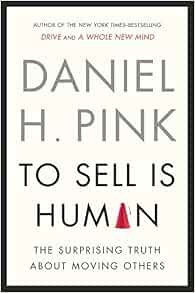
When asked about books that has had the biggest impact, Christopher stated that he would say the one that he thinks really motivated him the most to really build around what they're doing as a career and really commit to it was when he read To Sell Is Human: The Surprising Truth About Moving Others by Daniel Pink. For the listeners who aren't familiar, Daniel Pink is part of the new age authors that's really, really talking about a lot of similar things to like the Malcolm Gladwell's of the world does, Simon Sinek's sort of a new age management thinker and his premise and to sell is human, is everybody is selling in some way, shape or form. And whether it's as an entrepreneur or in your personal life, you're selling all day long and just about every role and really embracing that and figuring out how to tap into the ability that everybody has, to the need that everybody has to be able to influence and reach those around them. He thought it was a very straightforward, easy to digest concept, but one that many, many people in our line of work resist the idea that they're in sales and they try to help, make them a little bit more comfortable with it. That book is a great way to do it.
-
Christopher shared that he would say the number one thing and the number one piece of advice that they give to prospects, to listeners, they have their own podcast as well is the best thing you can do if you want to get somebody to do something, the best thing you can do is start by listening to them and you think about sales for those of you who are good salespeople and have gotten some training and consultative selling, everything's about learning, it's about asking questions, it's about identifying needs, it's not about talking. So, he would say it's a simple answer, but the best thing you can do if you want to motivate somebody is start by asking them questions, ask them what they think, ask them what they care about, ask them their viewpoint because if you can understand them, you can find the ways to connect with that individual and get them to really line up behind your mission, behind the tasks that you want them to do.
Yanique reiterated – So, listen to the person that you're speaking to whether it's your team member or your employee and after listening, you need to ask really good questions to understand what they want and where they're coming from because those things will help you to be more developed in figuring out what is motivating them, which nine out of 10 times is not only financial.
Christopher 100% agreed and stated that there is such a huge misconception that people are, as they say, coin operated. You put in another quarter and people will do what you want them to do. But the reality is, the intrinsic motivation is much higher. When people talk about engagement and engaging employees and things like that, he doesn't think most people know what that actually means. Engagement is that people feel part of something, it's that they feel like they're part of the process, they're part of the mission, they just want to feel like the work that they're doing is impacting something bigger and they want to feel like it's happening with them, not to them. And the best way to build that relationship and that trust is start by asking them things and asking their point of view and genuinely being curious to hear the answer. It can't be, it can't be an outcome in mind, and it has to be with true curiosity.
-
Christopher shared that he gets excited about a lot of things that they are doing. He would say that probably the thing that gets him most excited day to day is they are really trying to define the experience. You talk about customer experience, they're a boutique consulting company but they have spent a lot of time as a team talking about what experience they want to deliver for their clients and he and his partner have challenged their team to really look at that and internalize what it is that they want them to say, how they want them to feel and really find ways to deliver that experience and really think outside of the norm. Really think of new ways to do that. And they're developing a new set of sort of criteria for how they interact with their clients. That is probably, he would say that as an entrepreneur the most energizing conversation he has ever had was when they sat down. They had a team offsite earlier this year and they asked the team to think through how they wanted the customer to feel, what they wanted them to say. And then the ideas that came out of that for showing their clients how much they appreciate them, that's going to really take shape toward the end of this year and into next year. And he just can't wait to see that come together because it's all about them being genuine and treating their clients in a way that feels like them and he can't wait to see that come together.
-
Christopher shared listeners can find him at –
www.innerviewgroup.com
LinkedIn @christopherewallace
- Christopher shared that there's a quote that motivates him. So, he’s a big music lover and there's a band that a little bit obscure, probably not the most mainstream band in the world, but there's a quote in one of their songs that says, “It's all been luck until now.”And he really internalized that quote, anytime he looks at successes or challenges that he face as an entrepreneur, as an individual, he really goes back to that idea of treat everything as if you just got lucky to this point because it motivates him to keep working hard. So, it's all been luck until now, maybe the luck will run out and you'll have to rely on your hard work and your skills, so he sort of treat every day as if every day previous to that was luck and now it's time for him to focus on continuing to work hard, so, that motivates him every day.
Links
- To Sell Is Human: The Surprising Truth About Moving Others by Daniel Pink