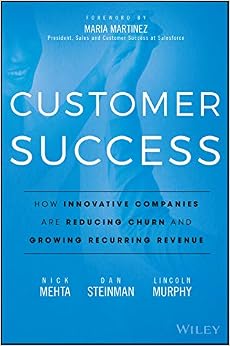
Nick Mehta is CEO of Gainsight, the Customer Success company. He works with a team of nearly 700 people who together have created the customer success category that's currently taking over the SAAS business model worldwide. Nick has been named one of the Top SAAS CEO’s by the Software report three years in a row, one of the Top CEO’s of 2018 by Comparably, he was a finalist for EY’s Entrepreneur of the Year, and holds one of highest Glassdoor approval ratings for CEO’s. On top of all that, he was recently rated the #1 CEO in the world (the award committee was just his mom, but the details are irrelevant). He also co-authored “Customer Success: How Innovative Companies Are Reducing Churn and Growing Recurring Revenue,” the authoritative book on this field. He is passionate about family, football, philosophy, physics, fashion, feminism, SAAS customer success and people have told him it’s impossible to combine all of those interests, but Nick has made it his life’s mission to try.
Questions
- Tell us a little bit about yourself and your journey?
- Could you just explain a little bit more about what Gainsight can do for their company? And you can just use an example, maybe you pick an organization and tell us if they had that type of company, as a client of Gainsight, what would that add value for their company?
- How do you see customer experience evolving in the next 5 to 10 years versus where we're coming for from in the last 5 to 10 years?
- Could you share with us how do you stay motivated everyday?
- Can you tell us if there isone online resource tool, website or app that you absolutely can’t live without in your business?
- Could you share with us some of the books that have had the biggest impact on you?
- Could you share with us one thing that’s going on in your life right now that you are really excited about – either something that you are working on to develop yourself or people?
- Where can our listeners find you online?
- Do you have a quote or saying that you kind of revert to, to kind of help you to refocus and get back on that path to what you’re workings towards?
Highlights
-
Nick shared that he is very excited to be in this journey and be with here today. He has been working in business for a few decades, so definitely dates him a little bit. His journey into kind of customer success actually started way back in his childhood, because he does have a memory when he was a kid, he grew up in the East Coast of the U.S in Pittsburgh, Pennsylvania and his dad was an entrepreneur, but this is back in the days of selling big computers and software that was running on people's servers and all that. He remembers him saying that, if you ever go into business, one of the things you need to do, this was when he was little kid is make sure you're either the person building the product or the person selling the product because once you sold the customer then your job is over, you can move onto the next one. And those two, building and selling are kind of what a lot of companies really focused on for a long time. And in his early part of his career, he worked at a large traditional enterprise software company, a great company but at that time the company was very much focused on building and selling and so the idea of the customer experience and customer success, it was certainly something people would talk about in speeches and you'll say nice things about but if we fast forward into 2008 when he took his first CEO job where he was running a cloud SAAS company. A company called Live Office and he didn't know anything of the new cloud worlds, so he came in with that old playbook of building and selling and just really focusing on sales and kind of customer success, customer experience honestly was more of a necessary evil. Came into this company and ended up with the power of subscription, allows all to come or go anytime they want, every month or every year. He actually as a CEO, his whole schedule changes where he needs to spend the most time on customer experience and customer success and so he got very passionate about it at his last company and actually he got quite curious that nobody's solved this problem. And obviously that inspired Gainsight with customer success, they've been doing this about six and a half years and it's been real joy to see many CEOs kind of wake up to the idea that on nowadays, when you think about the growth of your company and the core of your company, customer success and customer experience is right at that core.
-
Nick stated that many folks that are listening probably have had experiences with customers where sometimes your clients are so happy and everything you're doing is great and other times they are not happy and sometimes they leave you or they say not nice things about you and review sites or social media. And so, the question is fundamentally how do we drive customers to be more happy, more successful, and then spend more money with you over time either by coming back to your business or buying more from you or recommending you to a friend. That's what we all aspire to. And the real question is, what's the difference between those ones that go great and the ones that don't, and he'd argue that a core difference is - “Are you waiting for a customer to come to you with their issues, with their problems or are you analyzing and anticipating their needs and are you proactive with that customer?”And in the old world of business, when we didn't have, online interactions and we didn't have a lot of data about our customers, it was hard to be proactive because frankly you couldn't guess what your customer was thinking when they weren't in your store. But nowadays with all this stuff, whether it's loyalty programmes or ecommerce sites or your customer relationship management systems, or maybe a mobile application they're using, there's so much more that you can be seeing about what your customers are doing so you can actually anticipate their needs. That's the core, can you anticipate their needs and be proactive with them. So, Gainsight is all about taking the data that you have about your customers and really anticipating where they are in their journey with you and doing as much as you can to be proactive so that they're likely to stay with you and spend more money over time.
-
So, giving an example. Adobe is a big customer of Gainsight and many people on the call probably have used Adobe Photoshop before, which is like the world's leading photo editing software. And Adobe has hundreds of thousands of small businesses that use Adobe's Photoshop in a suite they call creative cloud. Creative cloud is a suite of solutions for designers to basically be able to build better products and experiences. And creative cloud is sold as a subscription, so you sign onto it and you pay a certain amount per year based on the number of people in your company and Adobe had a challenge. We'd said, okay, we sell them that subscription and then at the end of that term, they either stay with us or they go and how do we anticipate how they're doing and what more we should be doing for them. So, they created a team that is working with these customers, looking at the data about how often they're using their software and whether they have kind of gone through the training or not, things like that as kind of signals, think of them as like kind of a footprints of the customer's body language. And you're basically figuring out, okay, where are they in their journey? And then in some cases, do we need to intervene? Do we need to reach out to them and say,
…………“Hey, can I help you learn about the product?
………….Can I help you learn how to use this new feature?
…………Can I be more proactive with you?”
And so, Gainsight's all about helping our customers use data to be proactive with their customers, to basically help them be more satisfied but also spend more money over time. They do that in a lot of different ways, they can do that if you've got big customers and where you're like managing them in a more kind of a human fashion, they can also do that in a way where Gainsight can be kind of embedded inside your website or your experience kind of like nudging the customer to do the right things in a more digital way. “Humanizing the Digital Experience!”
- Nick shared that there's a few different things that have changed the expectation of customers and that's kind of continuing to drive evolution in their thinking. He thinks comes down to at the end of the day, what people experience in their lives as consumers and kind of that sets the bar for everything we all do. So, obviously when we use applications online, those applications are very personalized to our needs, they're automatically anticipating our needs, they're delightful to use and they have to watch out for privacy, which is obviously the modern issue but they really use data to the advantage both of the company as well as the customer, personalize what you see and what you do. And he thinks that's what we experienced when we work with the big tech companies, whether it's a Lyft or an Uber or it's an Airbnb or anyone else and that sets the bar for a while. “Everyone I work with should know what I need, they shouldn't be asking me, they shouldn't have to ask me how happy I am, they should know that. They shouldn't have to ask me for what products I bought, they should know that.”And so, that's one thing is kind of their expectation on the experience. The other thing is and nowadays when we buy new products and services, at the end of the day we're buying, we'd argue not a product or service, but an outcome.
Outcome meaning, “I have a goal, I'm trying to achieve something.” And you can think of car ride as an example. He’s not trying to buy a car, he’s not even trying to rent a car, he’s trying to get from place A to place B, that's the outcome. And Uber, Lyft, other companies helps him achieve that outcome. With Airbnb, he’s trying to have a great experience with his family on travel, Airbnb delivers that outcome. And so, he’s not thinking as much about booking a hotel or booking reservations, he’s thinking about getting this outcome. And so, that concept of the vendor, the company being responsible for both a very personalized experience as well as owning the outcome. And think of the old world with the car, you buy a car and you buy a physical car and at the end of the day, it's your job whether you driving it or not, whether you know how to get to place A to place B, whether you get lost, whether you take the right route, it's your job. But when you hire Uber, Lyft, anyone else, it's their job to own the outcome, they have to make sure you have a good experience, they have to be price competitive, but they own the outcome. So, the thing that's changed is vendors are expected of very personalized experiences and to truly own the outcome in this new world.
Yanique stated that that's a mighty revolution there that were experiencing.
Nick stated that it’s huge and he thinks it's actually hard because it's a totally different mindset. You used to say like, “Hey, I make this widow, I deliver this service.”But now it's like, “No, I deliver this outcome.”And it's a higher bar, it can be stressful sometimes, but also very rewarding if you do it right.
Yanique agreed. Because the flip side is if you're really doing what you're doing right, then it means that your customers will walk and speak great things about you and they're going to talk about their personalized experience, they're going to talk about from top to bottom and everything in between and a lot of times none of your marketing captures all of that.
Nick agreed and thinks that that's so much bigger now because that advocacy, that informal word of mouth and because of social digital, it's everything. He'd argue nowadays it's very unlikely that a customer's going to buy from you without having talked to somebody who's worked with you before, either informally or through a review site, like a Yelp or something else. So, your customers are your growth engine now in this new world.
- When asked how he stays motivated, Nick shared that number one is of course is a big pot of coffee, which is on his desk right now. There's no substitute for that. There's a few things that for them keeps them motivated he thinks are probably true for a lot of people. Number one is he does think that there's a lot of purpose in this philosophy of like humanizing business and really not thinking of your customers as a transaction, but thinking of them as a human being on the other end and how you can have a mutually beneficial relationship, a lot of companies do that with their customers. So, there's sort of two layers of that and that's definitely the purpose is very motivating. Now when you talk about our customers and like you said, we have to do all practice what we preach. What motivates him is a few things. Number one, on the constructive side, he loves hearing the feedback on what we can do better because to him, when a client tells you what you can do better versus be silent, they believe that you can be better. It's like anyone that gives you feedback, the thing that they're telling you as well, you can be better. It's actually sad if somebody doesn't give you feedback because they're saying implicitly you can't be better. He thinks that what's motivating, if you listened to it the right ways,is feedback is a gift that's saying that you have a chance to be better, you're not your best yet and he hopes that throughout his life he’s never at a point where he’s at my best because that means there's all this better to be come in the future. Now on the flip side, he thinks it's important to also recognize that the job of working with customers can be tiring and especially if you're in a call center or you're dealing with a lot of customers in some way, it can be tiring to only hear those constructive feedback. So, it's nice to also hear some of the good things that you're doing and that's why he encourages his team and customers to also spend time with customers, their clients that they are doing well because you don't want to get an artificial sample of the challenges. So, he thinks it's really coffee, it's some constructive criticism and it's compliments every now and then. Those three things can, can keep you motivated.
Yanique mentioned, customer service, I've picked up what you said a while ago in terms of it's really hard and how I even got into this whole podcasting thing is that I'm a customer service trainer and I figured, okay, podcasting is really becoming popular and so this is a good way for me to have a platform where I can reach more people and bring greater awareness to customer experience. And so, one of the things I say to my participants in the training is customer service is one of the hardest jobs that you can ever do because the biggest part of any organization is the people. And it's funny because yes, data is so important and we're driven by data nowadays and things are digital, but I just don't see us getting to that point in customer experience where people aren't going to want to deal with another human being. Even with the rise of digitization, what's your thoughts on that?
Nick agreed, there's these sorts of two trends that are happening that can be kind of at odds with each other, but he thinks they're synergistic. There's this obviously amazing data and automation version of the future where we don't have a role on the planet anymore or we're merged with the robots or whatever, maybe that'll be fun who knows. But he thinks that with any trend, there's a countertrend the end of the Yang and the Yang is that people actually value human connection maybe more than ever, perhaps because it's a little bit more sparse nowadays because he has young kids at home and his oldest is 13, and just as is well documented, you'll see how little time they spend with people face to face anymore and so there's this sort of pure digital experience, which is great, but it means that all the human experiences are so much more special. And so, to him what that means in the field that folks in this podcast are in is that job of humanizing the experience has never been more important. Now you start to leverage the data, leverage the automation, you don't have to do all the busy work anymore, but your ability to put a human being in front of that is he thinks it's still as important as ever and he thinks one of the things that's interesting is as you probably see in your work too, call centers, some of them are switching back to like, “We're going to put a human on that first ray.” The automated stuff is great and sometimes some of that automation is allowing us to have certain customers that we're going to just put a human being there so they can have that human experience and he thinks that that's never been more important. He also thinks that on the flip side, we need to acknowledge that for our workforce, because frankly, otherwise these jobs become super demoralizing and he thinks we have to acknowledge the humanity in our workforce and leverage that and really celebrate that, not just treat them. The expression he loves to try to eliminate is employees are our greatest assets, which is implying that their assets, which they're not, they're not on your balance sheet, they're human beings and so really kind of trying to humanize the relationship with employees, which he thinks in the last 30 years as a society predicament America, we've gotten wrong where we've sort of thought of the employees much more as just a cog in the system.
Yanique agrees. Without the employee, the business really cannot function because you need people for the business to function.
-
Nick shared that for work, as much as it's sometimes gives him funny and annoying, because you get a lot of spam messages, LinkedIn is actually a really powerful tool because you're talking about human connection and all that. And he thinks it’s allowed a little bit more humanization in business. The reality is that we can kind of look each other up on LinkedIn, understand a little bit more context of who you are, who I am. We can have a better conversation that way, we can find common connections. LinkedIn actually tends to be as a businessperson, a great way to engage socially with your customers, they get a lot of engagement when they post on LinkedIn. So, LinkedIn is probably the one that on a work setting, is sort of invaluable. Of course, I couldn't live my life without my ride sharing apps I also use Uber and Lyft but for work, it's on LinkedIn.
-
When asked about books that have had the biggest impact, Nick shared that there's a great book called The Five Dysfunctions of a Team: A Leadership Fableand it's pretty interesting because he’s sometimes skeptical of business books, we both had that experience that they can be very high level, you can actually pick up a lot of the information in 5 minutes in a summary and so he gets a little bit skeptical of, “Okay, is this really going to be worth my time?” And so, with some trepidation read this book called The Five Dysfunctions of a Team recommended by a friend, is a very famous business book and it's about this kind of a parable about a management team and isn't able to connect, it doesn't really have trust, that's the foundational issue. And it's funny because you start reading this, “I'm the CEO, I run a 700-person company and I'm like, oh great, this is going to be cool cause I get to see a company totally different from mine.”And he started reading it, he’s like,“Oh my gosh, this is like us. It's not just us, it's not 100 percent us but there's so many parallels.”They had their management team read it and they all felt the same thing, they're like, wow, there's so much we can learn by looking at it, maybe a little bit of an exaggeration, but there's so many things that without trust in a team you can end up really struggling with. And so, that's the one that he thinks is for him, it really stuck with him.
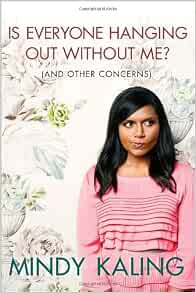
Nick shared that he highly recommends it, it's a quick read, but definitely an eye because you realize how much more you can do. He thinks if you open your eyes to how you can create trust in your team. The second book he'd recommend, another one that was very influential from the business side, it's called The Hard Thing About Hard Things: Building a Business When There Are No Easy Answer, it's by a venture capitalist named Ben Horowitz, who is a CEO as well previously. And it's a great book because he realizes there's not any like book you can write about just being a CEO or being a leader that has transferable lessons because every situation is different. So instead, he talks about basically how everything is hard, and you have to sort of accept that and maybe there's some kind of therapy and he'll talk to you about the challenges. So, he talked about all these challenges in his company as it almost fell apart but ended up being very successful. So, those are two he thinks on the work side that he'd recommend. On the personal side, he will say, admitting something about himself, he’s big on vulnerability and he'll say that one of his many flaws is he has a massive fear of missing out. He’s always wondering what somebody else is doing right now at any given point, whether it's at work or otherwise and FOMO as people call it and there's a very funny book by Mindy Kaling who's a comedian in the U.S called Is Everyone Hanging Out Without Me? (And Other Concerns)and it absolutely captures his sentiment at most times, which is, “Is everyone doing something fun and I'm not invited?”So, that's a little bit more into the window of who he is.
-
When asked about something that is going on that he’s really excited about, Nick shared that he'll share both. At work, one of the things he really believe if you're a leader and he thinks especially if you're a CEO, but he thinks true for any kind of leader or the leader that the organization needs this year, whether it's a small business or it's a big company is different than the leader it needed last year because every year your business evolves, your strategy evolves, your goals evolve and Gainsight, every year has different goals and strategies. So, every year Gainsight, his company needs a new CEO and he hopes it can be him. So, he hopes that he gets the job again. Now, that's not a formal thing that they do at review every year, but he thinks about it himself, what kind of CEO does our company need now? And they are kind of going through some exciting new things. They've moved into kind of a multiproduct strategies, they have multiple things they do for their customers and they are about 700 people and so, there's a general question of how do you run a company that's almost like a portfolio products instead of just doing one thing or doing multiple things and so, that's something he’s working on is what does it take and how can he learn from other companies to make that transition, that's on the work side. And then on the personal side, he'll say with the three young kids, their daughter literally today just started high school. So, he’s learning what it's like to be the parent of a high schooler, their oldest is a high schooler and that's absolutely a big joy but also a little bit of melancholy at the time passing by.
-
Nickshared listeners can find him at –
www.gainsight.com
Twitter - @nrmehta
LinkedIn – Nick Mehta
- Nick shared that he loves the philosophy that many boxers have espoused of, “It's not about how many times you get knocked down, it’s about how many times you get up.”That concept of resilience is very powerful. So, he thinks that that is probably something that does motivate him and sort of like when you're in those times of challenge that later on you're going to look back on that challenge as one of the proudest moments when you overcame it. And actually, he was talking to another CEO, much, much bigger company, very successful CEO and he said, despite the fact that his company's very successful, the most fond memories he has in the history of the company are the times of challenge because you all kind of work together and hunker down. And so, he thinks that's one of the biggest things that motivates him. And then the other one, which is always remembering that these are the good times, like right now, these are the good times that later on in life we'll look back on and some times in the moment you don't appreciate that, but kind of doing that thought experiment of being 30 years older and hopefully still being around and you're looking at weeks and months, which sometimes can feel like a grind and remembering that those are going to be the things we look back on with fondness and really appreciating that.
Yanique re-confirms, so, basically gratitude to appreciate what you're going through and also just to be persistent and resilient in anything that you're doing and just never give up.
Links
- Customer Success: How Innovative Companies Are Reducing Churn and Growing Recurring Revenue by Nick Mehta and Dan Steinman
- The Five Dysfunctions of a Team: Leadership Fable by Patrick Lencioni
- The Hard Thing About Hard Things: Building a Business When There Are No Easy Answers by Ben Horowitz
- Is Everyone Hanging Out Without Me? (And Other Concerns) by Mindy Kaling