Joshua March is the founder and CEO of Conversocial a cloud solution that enables businesses to deliver customer service over Social Media at a large-scale. Conversocial is used in the contact centers of hundreds of major retailers, banks, telcos and other brands to enable them to manage the high volumes of complaints and questions they're receiving through social networks like Facebook and Twitter, including Google, Hertz, Tesco, Barclaycard, Hyatt hotels and many more.
Questions
- Tell us a little bit about yourself and your journey
- Your company caters more to organizations that are serving customers on a large scale, can the service also be provided to persons who are not serving customers on a large scale?
- What are some of the things based on the line of business that you are in that you see coming into play in the near future in terms of customer service and what do you see coming as things that we need to prepare ourselves for more as businesses?
- Is there a formula that exits out there to measure effort?
- How do you stay motivated every day?
- What is one online resource, website, tool or app that you absolutely cannot live without in your business?
- What are some of the books that have had the biggest impact on you?
- What is the one thing in your life right now that you are really excited about – something that you are working on to develop yourself or people?
- Where can our listeners find you online?
- What is one quote or saying that you live by or that inspires you in times of adversity?
Highlights
-
Joshua stated that he has been working in the social media space for many years. His previous company was called iPlatform and they were one of the first ever companies building applications on top of Facebook for brands back in 2007/2008, the early days and while he was really excited about the use of the app platforms which you may remember back then like Farmville and stuff like that. He was really excited about how those platforms could be used by brands to engage with their customers. What he pretty quickly realized was that the really, really big change that was happening wasn’t in just how people were communicating and that there was this big shift going on which pretty much happened now but it's continuing to happen away from other types of digital communication and into Social Media and mobile messaging primarily on And the he included mobile messaging within the Social Media, Facebook Messenger, Twitter DM, now What’s App, coming up We Chat, so it's not just the public, it's the private side as well. He really saw that as the future of how everyone individually would be communicating with each other and he really believed that as these channels became the dominant communication channels then that would change how businesses had to communicate with their customers too and it would be really important to customer service and that suddenly happened. The start of that was really people turning to the public side of Social Media to kind of escalate complaints about a business and get a response. And while that still goes on it's actually transitioned now to be much more about businesses just investing into the private side, private messaging with these channels. The preferred customer service channels and that's all the reasons for that. A - It's much better from a consumer side, it's so effortless and easy for someone to pull out their phone and message your brand, it means that you get really high customer satisfaction if you promote it as a service channel and from a business perspective it's great to get that customer satisfaction but it's also a great efficient channel, you can manage these digital messaging channels and in an asynchronous way that’s highly efficient from an agent workflow perspective. And with the launch of the bot platform is much easier to automate and so it's just become this channel that is really much better than anything else out there from a cost perspective and customer satisfaction perspective.
-
Joshua stated that the background to that was that they’ve been going 5/6 years now and their (Conversocial) software is from real customer service software, they spend a lot of time building a real case management system into the ability to have automated routing and workflows dashboards where you can see exactly what your agents are doing. Now all of those kinds of functionality become really useful as soon as you have a team of agents. Now if you go back 3, 4, 5 years ago, the volume of people who were coming through and complaining through Social Media and mobile messaging was only really a couple of percent of all of your inbound volume. And what that meant was that for a small, medium sized businesses, it was it really wasn't a lot of volume and it was something that probably just some agents or have a couple of agents maybe they're just doing that on the side. But if you're a big business even 2% it's still a lot. And so, the big businesses even in those early days were still setting up 10, 20, 30 full time agents to do customer service through Social Media and mobile messaging. And they are really kind of catering to that audience. Now today it's actually starting to shift a bit because as you start really promoting, if you stop promoting like message us as your main customer service channel or if you're using the new Facebook Messenger customer champ plugin which allows you to actually paddle Web chat on your site using Facebook Messenger. They have customers who are doing that and Facebook Messenger is now responsible for 44% of all of that service volume including phone Nino and so once the volume start getting that high which they do if you're promoting it, even if you have a much smaller team of agents you're still going to need multiple agents just handling social messaging. And then a platform like Conversocial becomes extremely valuable. So, you still need to have a team but the companies that need a team of that size for social messaging becoming smaller and smaller as the volumes keep getting bigger and bigger.
Yanique mentioned that his business caters to the type of customer that needs the information now. Gone are the days when you'd write a letter and submit it to the organization through the mail and a couple of weeks or months later you get back our response plans. The clients that we're dealing with nowadays there’re in the now age.
Joshua agreed and stated that we live in an in the moment world where people are expecting almost real-time response to everything. And if you're going to take days to respond, they're probably just going to phone you at that point, people need an answer or they'll just go to a competitor, that's the reality. But on the flip side, one of the great things about digital messaging and asynchronous messaging as opposed to traditional web chat is that it's more like texting a friend and texting a friend it's pretty much real time that they're responding in 5 minutes. And if there is occasionally a message it takes a little bit longer and some are shorter and that's fine. And the traditional web chat world that doesn't work because the web chat world is like sitting there with the chat box open when waiting for a response and so you have to have current agents online responding within seconds. But with an asynchronous messaging you can even out those bums most a lot more easily and you can have a smaller number of agents handling a much larger number of customers as a result. Because as soon as you respond that pops up as a notification on their phone, they don't have to be sitting there paying attention all the time. So, it's very convenient for both the customers and for customer service agents.
- Joshua stated that messaging is really what's growing, it’s going to dominate the industry and depending where you are, there are different messaging platforms. Now the one that's very exciting from people in many areas of the world especially Europe, U.K, South America is WhatsApp. WhatsApp is just such a dominant messaging platform that has completely replaced SMS in many parts of the world via internet. They're just starting to experiment with business accounts and the word on the street is that some point this year probably early this year. They're going to be releasing business tools and releasing an API which allows platforms like theirs to help their customers manage them. And he thinks that as soon as that happens it's going to become a huge, huge business to consumer channel. He thinks a lot of businesses are desperate for it, a lot of clients, customers would love it, it’s super convenient. People are using all the time already, so, he thinks that's going to release load this year. There is one which is very interesting, probably not going to explode in the same way because they're going to be much more careful and constrained about how they release it is Apple Business Chat, so this is Apple's business chat solution built on top of IMessages. Apple's nesting system is completely integrated with text messaging, so it’s used on iPhone and it goes blue and that's with IMessaging and getting more capabilities so that they're enabling brands to have business accounts. And what's exciting about this, there are two main exciting things. One is security, they're very well-known for privacy and security similar to WhatsApp in that regard. The other thing is discoverability and this is where they're going to really have a very interesting advantage over other messaging platforms. And there are two parts to it, one is in maps. So, if you are in apple maps looking at a local restaurant or a coffee shop there will be a button that says message them and you'll be able to just message them straight away and be like, “Hey, I want to order this or I want to order that” tightly integrated with Apple Pay, you could pay seamlessly and then go pick it up or they deliver it. And that could actually act as a kind of intermediary problem like the kind of post mates and stuff like, where at the moment of sitting in between and potentially this can make it super easy to go straight to a restaurant. And that's one area of discoverability and the maps the other area is with Siri the voice system. And this is where it gets really cool especially for big brands. We will acquire hotels, if you want to like message them saying you want to extend your stay for the night, how do you do that today, you have to look them up. You could message them on Facebook if you know about that and you have the app, you could DM them on Twitter there is always things that they're promoting in interesting ways but with business chat you’ll just be able to say, “Hey Siri, message Hyatt tell them I want to stay another night.” It's done, no app needed. Nothing else. It just like sends that message and Hyatt can respond over text, you can even pay using Apple Pay on your phone if you wanted. That's a pretty cool and like seamlessly integrated experience and will potentially bring voice assistance into like how people are into engaging with businesses for the first time. Apple is going to be very careful in how they roll that out and the brands they work with, they want to make sure they create really nice experiences. He thinks there's some really exciting stuff with that and could be pretty meaningful.
Yanique mentioned that a big part of what she heard in a lot of what Joshua said was convenience. She thinks convenience is definitely one of the key differentiators that businesses who are disrupting the whole customer experience platform, they're really killing it in that area and making life more convenient for their customers because that to her is just a very convenient.
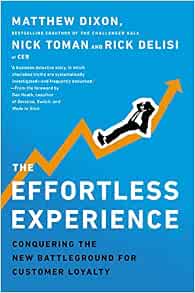
Joshua stated that there is a huge amount of data which talks about the benefits for this, his favorite book on this subject is The Effortless Experience : Conquering the New Battleground for Customer Loyalty by Matthew Dixon, Nicholas Toman and Rick Delisi of CEB, who is now part of Gartner and it's a book that’s given to lot of a lot of his clients and Effortless Experience costly had a huge amount of data from years like large studies and it shows that the most important thing that affects customer loyalty after a service interaction is the effort that they have to put in to getting their true result. When someone has a problem or a complaint or an issue, they just want that issue to be solved as soon as possible, as easily as possible and it's very hard to increase their loyalty following any service interaction even if you really go crazy go above and beyond. They had an issue and you solved it great, they're not going to be ecstatic, maybe they'll be a little bit happier, what happens in the majority of cases, is that their loyalty is reduced and the data shows that if you do anything that makes it harder for them to get their issue solved; it has a massive negative impact on loyalty. If you make them jump through any hoops to speaks with an agent that they have to repeat themselves, they have to tell one person one thing and then they have to speak to someone else and tell them the same thing again. Anything like that which is just annoying and hassle or puts a delay, puts them on hold has a really, really negative impact. And so, if you can just reduce that effort, then you could have a massive impact on Customer Loyalty. He thinks this is the core of what makes social messaging so powerful is that it’s just so effortless. He spent the last year writing a book as well which is going to be coming out this quarter which he’s excited about and it's going to be called “Message Me”, it's all about the future of customer service and looks at the impact of messaging and he talks a lot about effortless experience in that book because he thinks that in many ways they kind of figured out the foundation and they could have asked this question, “How do you make it effortless?” And he doesn’t think that technology was really there at the time when they wrote book to actually implement it. But he thinks that with messaging, we finally do have the technology to implement a service channel which really can be completely effortless for consumers and that's super exciting.
Yanique stated that one of the things that she’s most amazed about as it relates to customer experience as well is regardless of where you are from in the world or however you are socialized, whether you're from Europe, North America, South America or the Caribbean, at the end of the day because we're all human beings, we're all yearning for that connection we're all yearning for some basic needs to be met. As Joshua said, she agreed that if you have to put in less effort you are more likely to go along with that particular service provider because they make life much easier for you. You have so many hurdles to jump over on a daily basis, whereas, if you're running a business, you're a family maker, you have a husband to take care of or a wife, kids up and down, just so many things pulling in all different directions. So, if you can do business with an organization that is looking out for you in that aspect and they're pulling you in less directions and they make it super easy kind of like Amazon, you can sit down in the convenience of your own home and basically order whatever you'd like to order and it's delivered to you, you don't have to go into the store and stress yourself out walking up and do figuring out which aisle it is in. Everything can be purchased with the click of a button, it really does definitely drive you to be loyal to that organization because you look back on those experiences and that's what would make you continue doing business with them.
Joshua agreed and stated that it’s important and he thinks not enough businesses really pay attention to it today. People are used to the point of looking at measuring customer satisfaction and empty apps. I actually love to see more and more businesses measuring customer satisfaction and NPS but he would actually love to see more and more businesses people measuring effort and measure how convenient, how effortless was it for them to get help, he thinks that would be really impactful for a lot of businesses.
- Joshua stated that in measuring effort, there isn't a standard kind of well-known way in the same way that you have NPS for example. There's a great case study from one of their customers British Telecom, telecoms company in the UK where they took this pretty seriously and they created what they call a Net Easy Score and very simple, they just asked people after service interaction, “How do you find that experience? How hard or easy was it to resolve the experience?” and it was just three answers. It was easy to resolve, it was it was difficult or it was kind of mutual. So, super simple question and they rolled that out across all of their service channels and they started tracking customer retention and the retention of the customers who'd reported that they had an easy service experience versus the customers that said they had a hard service experience and they found a huge difference. They found the customers who'd had a hard service experience were difficult to resolve their issue was 40% more likely to churn over the next three months, 40% more likely which is a huge number. So, they made a massive impact on whether those customers would stay as customers or not and when they actually looked at the different kind of Net Easy Score as they call it for different channels they found that social media and messaging and webchat that were the easiest channels by a long way, they were easier than phone by 4 to 1 and they were easier than email and cell service by 2 to 1. So, a huge impact for online business from understanding that and these are pretty simple way of asking a question.
Yanique asked if this question is asked after every interaction with their business or is it a question that they ask maybe on a yearly basis based on the customers who are their clients.
Joshua stated that they did the actual, so, before they started working with them so he doesn’t know exactly how they do it. The way that they help their clients do surveys today through social and messaging is that your after-service interaction has been closed and resolved, then they send out an automatic survey inside the messaging thread from the Facebook Messenger or Twitter that ask them whatever question they want to have set up. So, it's after every service interaction, he thinks that's the best way to get that kind of data.
Yanique agreed and mentioned that people do remember the experience that they have had within the first 24 hours and then after that if it's not super great or really bad, they really don't remember the details. So, that question should be asked after each interaction.
Joshua mention that they see that the faster you get out after the issue has been resolved, the higher the response rate.
-
Joshua stated that he is a pretty highly motivated person in general. His overall motivation is really about the stuff that they want to achieve as a business. And when he set out starting the business, he had this kind of very clear vision, he was like, “There's a reason that everyone is switching to these channels from a consumer perspective.” That's because it's a better channel, it's more efficient, it's easier, it's more convenient, it’s on everyone's phone, the way the messaging organizes communication which is by people instead of subjects is more natural, this is just a better way of communicating. And he really believed and still believe that if companies switch to these forms of communication then it's better for them and better for the customers. And they kind of set out their vision and they set out this clear mission of saying, “Yes, we want to really build the next generation of customer service software.” It's all focused around these new channels which they really believe are better. He gets a huge amount of motivation from seeing them and make that vision become a reality. Every company that they sign up has a customer who then starts more actively promoting these channels and increasing the volume of service issues that’s dealing with messaging instead of phone and email. All of that really gets him excited. He loves to see that continuing success and performance and the things that they’re achieving as a business. He’s kind of prepared to do whatever it takes to help them make that vision become a reality, he doesn’t really think too much about specifically what he enjoys doing during the day or not, it's really just about what he needs to do in order to help them be successful and that's what really gets him excited.
-
Joshua stated that the app that we cannot live without would have to be Twitter. They have to use lots of different technology in the business, they love of using different technology. Twitter has this incredible network and he uses it a lot personally, tied to it for the news these days. But they use it huge amount for business as well, they connect with a lot of their customers on there, we connect to a lot of influences, a lot of thought leaders, they do a lot of thought leadership and share a lot of thought leadership through it. So, it's just added such value to his life and to the business.
-
Joshua mentioned that The Effortless Experience: Conquering the New Battleground for Customer Loyalty by Matthew Dixon, Nicholas Toman and Rick Delisi certainly from an approach to customer service perspective. From a management perspective, The Hard Thing About Hard Things: Building a Business When There Are No Easy Answers by Ben Horowitz is one of his favorite and has been the most impactful book from a management perspective, kind of entrepreneur’s journey, how to really scale a business and manage a management team and very raw and very real, a lot of really valuable insight. So, that has been one of his favorite books. The other than that, he loves reading Sci-Fi, he’s a huge fan of Sci-Fi which he thinks actually gives him tons of business ideas and ideas about the future. So, he thinks it’s actually super valuable for anyone especially entrepreneurs working in technology should absolutely read a lot of Sci-Fi.
Yanique mentioned that reading Sci-Fi is a very unusual genre of books to read but she can see where Joshua is coming from with it because it kind of opens your mind to the impossible and that's where we're heading.
Joshua agreed and stated that if you're interested in customer service, the future of customer service, you should read his book “Message Me” which is going to be coming out pretty soon which he mentioned earlier as well.
-
Joshua stated that something that he’s excited about right now, the book Message Me was the kind of his main passion project over the last year. He really wanted to kind of get down on paper two things, both his thoughts as to what businesses need to be doing today to really benefit from messaging, benefit from automation, how they really need to structure customer service teams, how to train agents how to promote these things in the right way. But then also, his vision for how messaging and automation intelligence are really going to change customer service in the years ahead. So that's been a big labor of love actually he just went to the printers a few days ago. So, he’s pretty excited about that, so that's a really big one. Outside of that, he’s also a big fan of personal development, he’s been getting more and more into meditation over the last year and in a few weeks, he’s actually about to go do his first Meditation Retreat where he’ll be on a silent meditation retreat for 10 days. So, he’s excited about that and slightly nervous.
-
Joshua shared listeners can find him at –
Twitter - @joshuamarch
www.conversocial.com
Twitter - @conversocial
LinkedIn - Joshua March
- Joshua shared that a quote that comes to mind is the quote from Winston Churchill, “When going through hell, keep going” he really loves that quote, the key for any entrepreneur but is really true for anyone trying to achieve anything big in life is really persistence and grit, whatever you do and whatever you try to do and the bigger the thing you trying to do, the more ambitious it is, the harder it’s going to be. The more road blocks you’re going to face, the more mistakes you’re going to make and failures you’re going to have, every single person no matter how successful has those failures, in fact, the more successful you are, the more failures you’ve had and the key throughout all of it is to never give up and to keep going, pick yourself up, learn from your mistakes, keep evolving and that’s really the only thing that will get you anywhere in life.
Links
- The Effortless Experience: Conquering the New Battleground for Customer Loyalty by Matthew Dixon
The Hard Thing About Hard Things: Building a Business When There Are No Easy Answers by Ben Horowitz